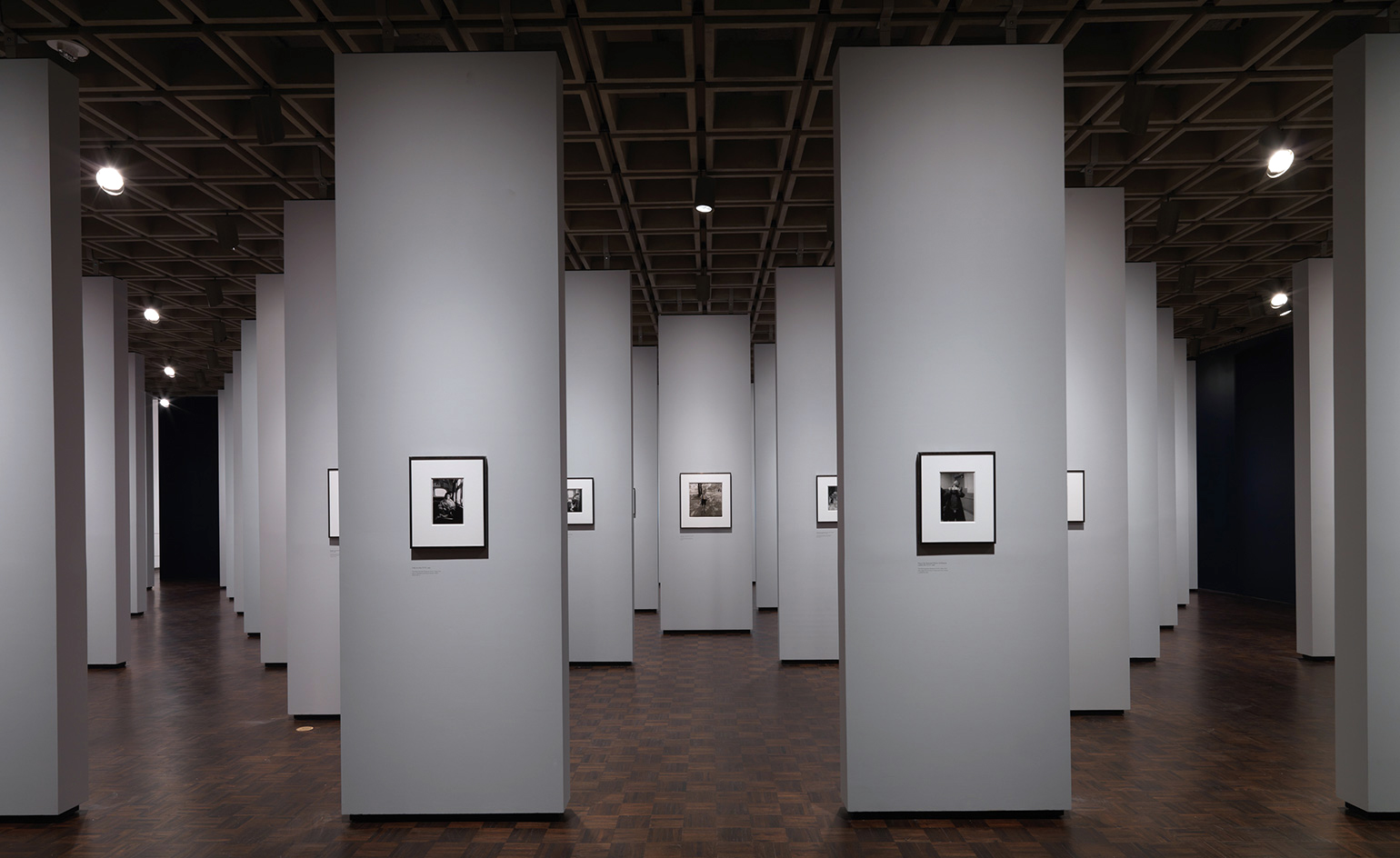
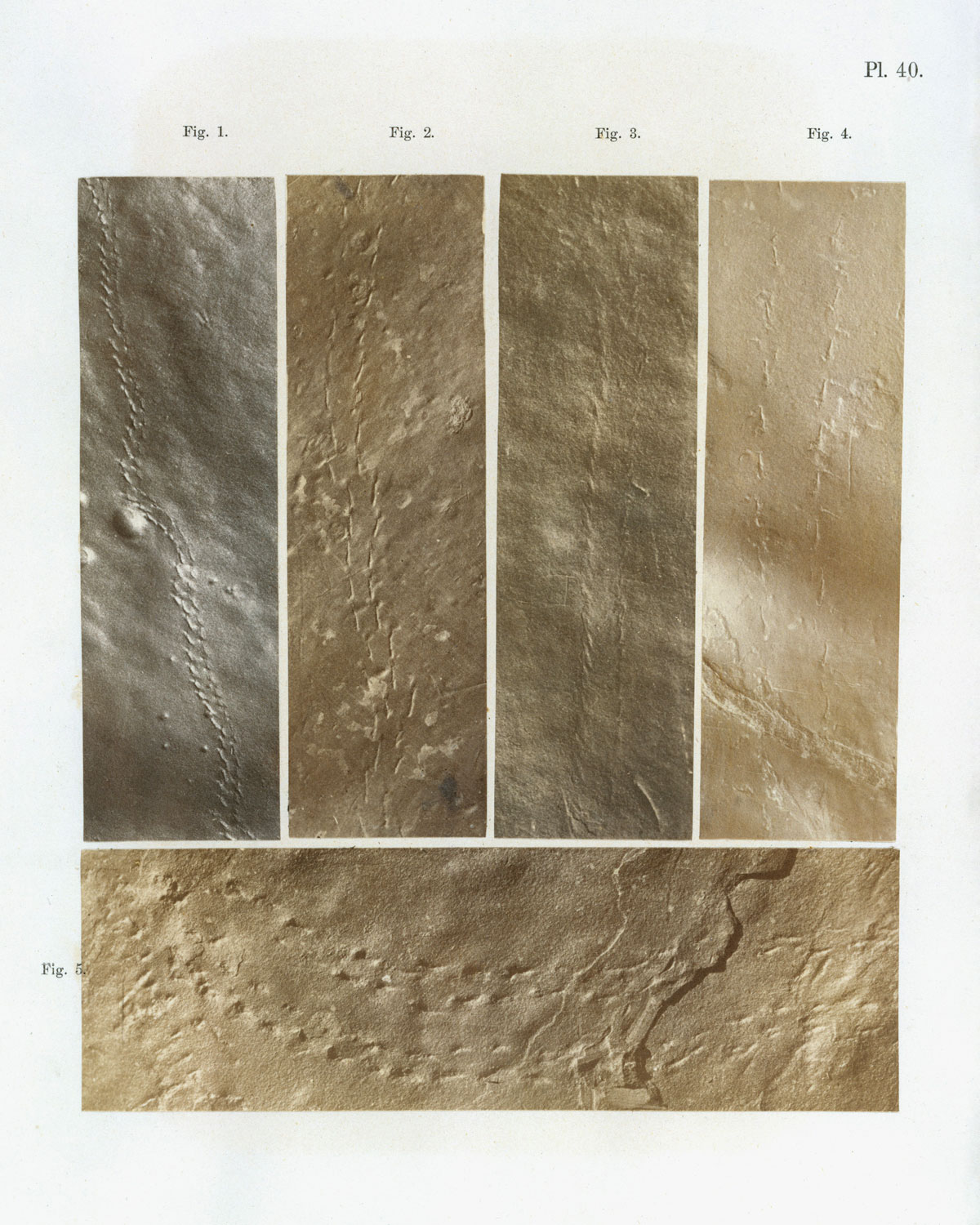
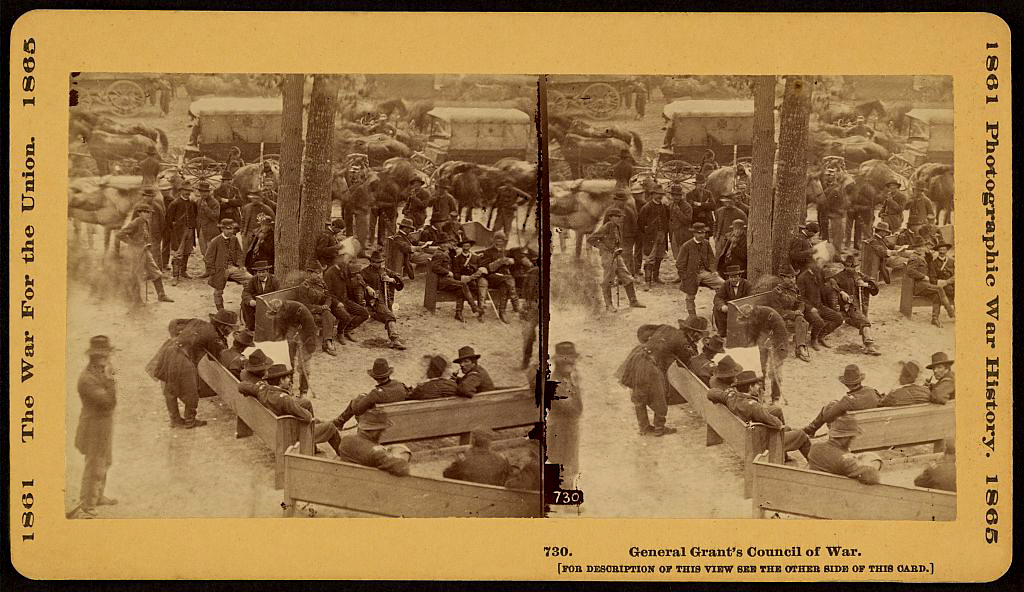
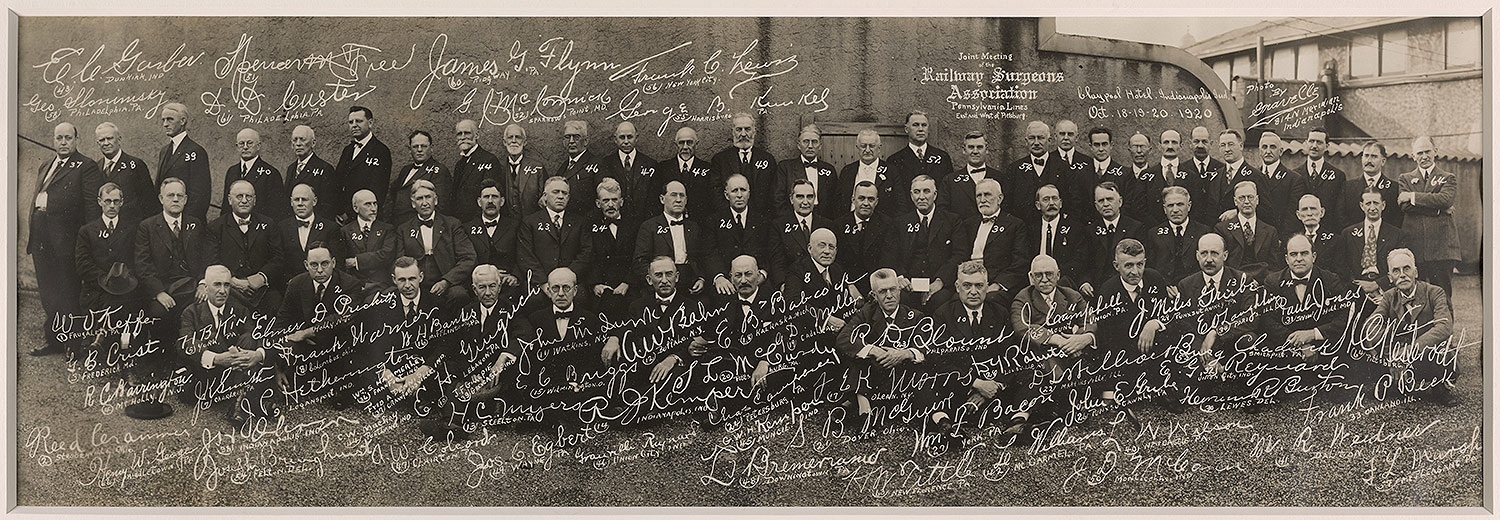
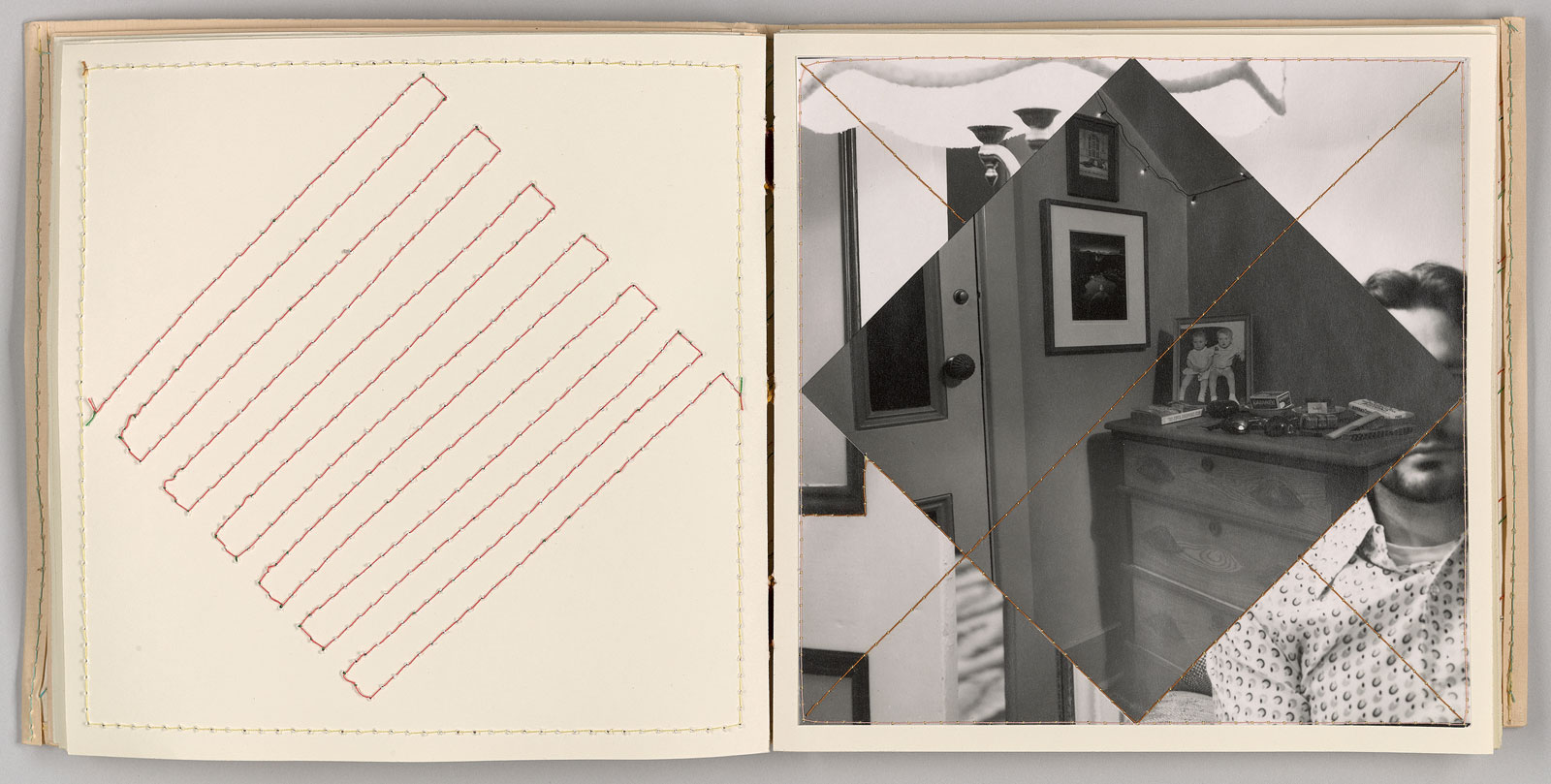
Exhibition: ‘Patrick Pound: The Great Exhibition’ as part of the NGV Festival of Photography at NGV Australia, Melbourne Part 1

Exhibition dates: 31st March – 30th July, 2017

Individual art works from the NGV collection (in artist alphabetical order) appearing in Patrick Pound: The Great Exhibition at NGV Australia


” … from an air guitar to Being and nothingness … “
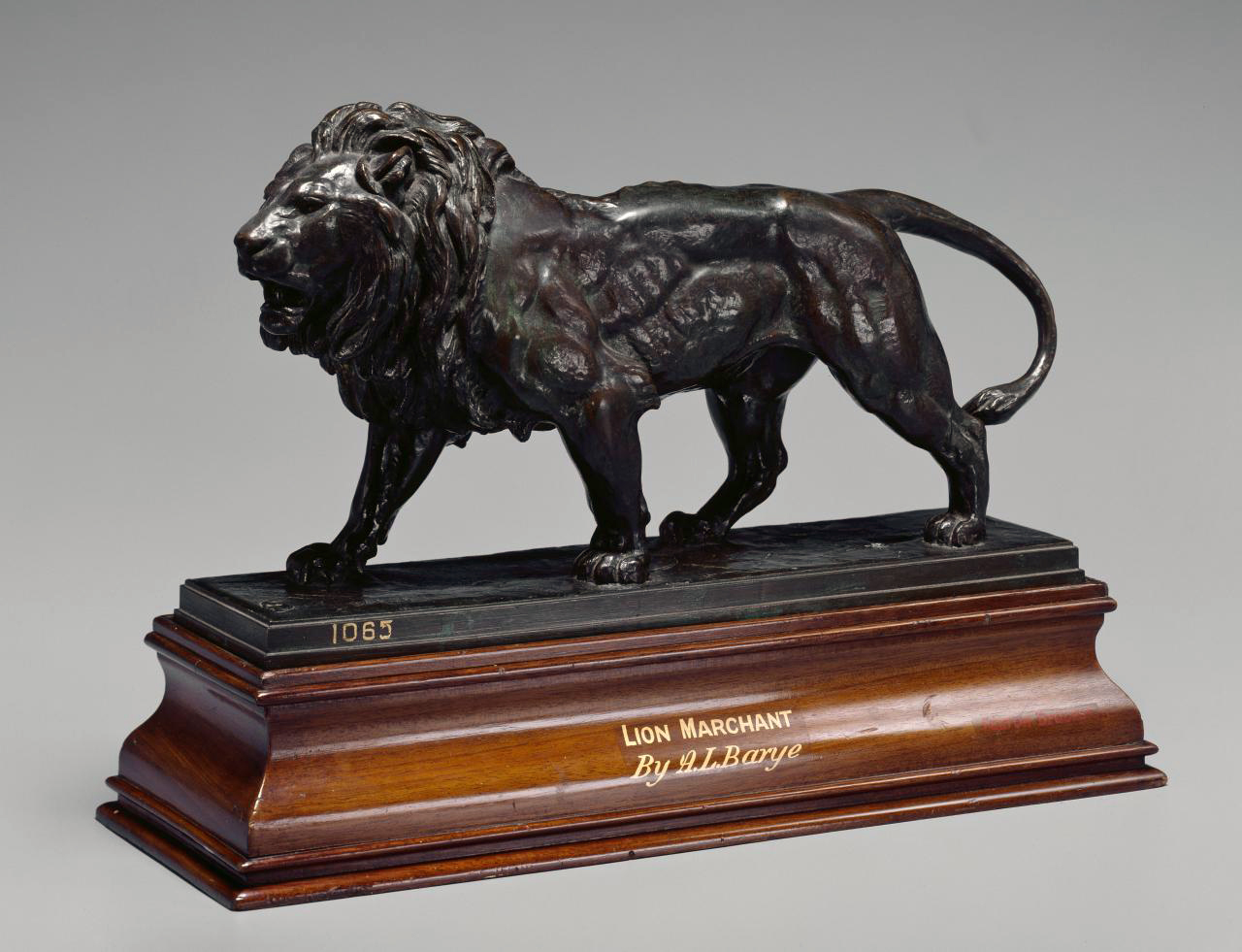
 

Antoine-Louis Barye (France, 1796-1875) 'Walking lion' c. 1840 from the exhibition 'Patrick Pound: The Great Exhibition' as part of the NGV Festival of Photography at NGV Australia, Melbourne, March - July, 2017


Antoine-Louis Barye (French, 1796-1875)
Walking lion
Lion qui marche
c. 1840, cast 1900
Bronze
National Gallery of Victoria
Felton Bequest, 1927


Part 1 of this bumper posting. See Part 2 of the posting with my review of the exhibition.

My hand is progressing slowly. A return to part-time work in the next couple of weeks, for which I will be grateful. It has been tough road dealing with this injury.

Dr Marcus Bunyan


Many thankx to the National Gallery of Victoria for allowing me to publish the photographs in the posting. Please click on the photographs for a larger version of the image.
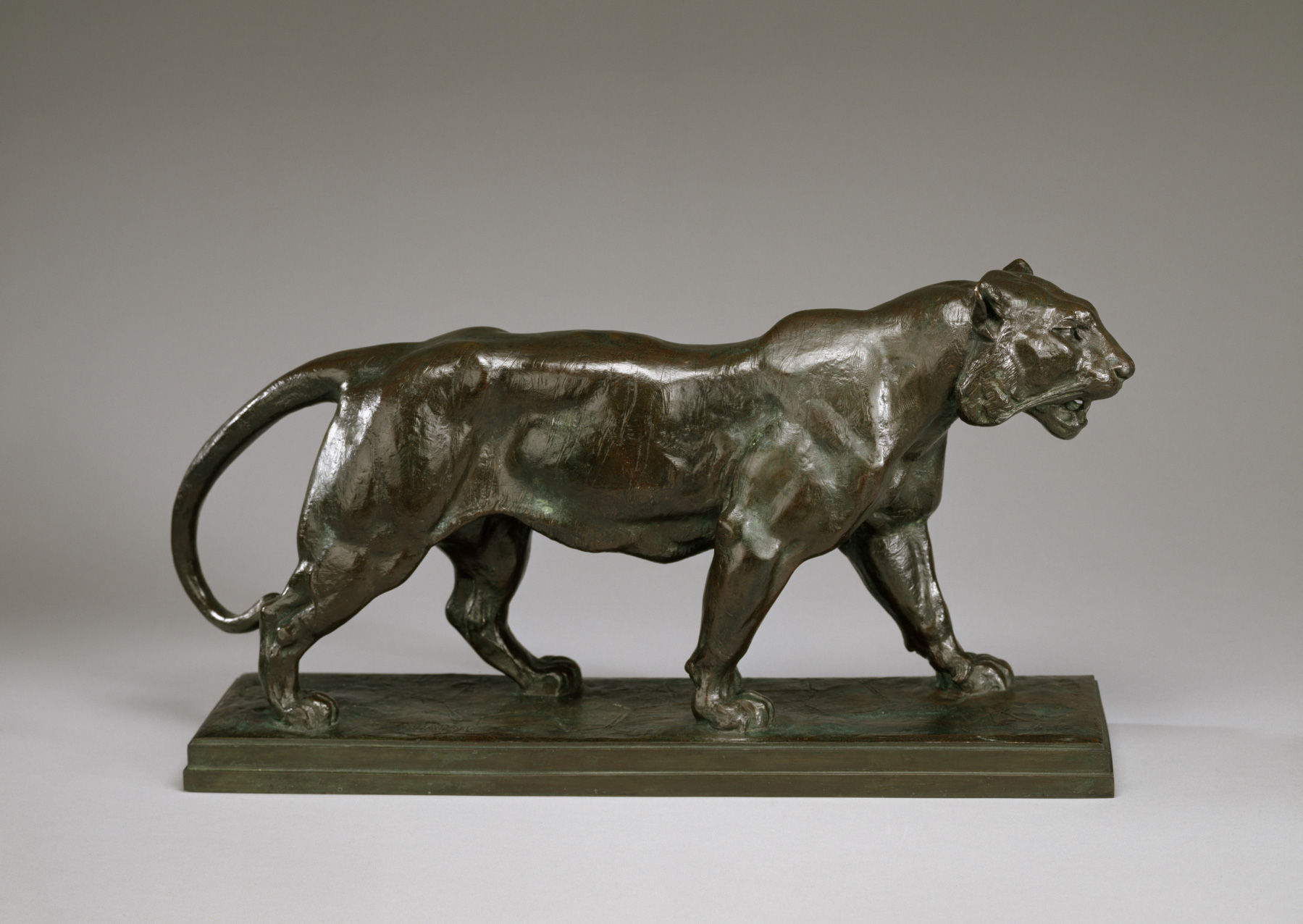


Antoine-Louis Barye (French, 1796-1875) 'Walking tiger' c. 1841 from the exhibition 'Patrick Pound: The Great Exhibition' as part of the NGV Festival of Photography at NGV Australia, Melbourne, March - July, 2017


Antoine-Louis Barye (French, 1796-1875)
Walking tiger
Tigre qui marche
c. 1841, cast 1900
Bronze
National Gallery of Victoria
Felton Bequest, 1927


John Armstrong (English, 1893-1973) 'Invocation' 1938 from the exhibition 'Patrick Pound: The Great Exhibition' as part of the NGV Festival of Photography at NGV Australia, Melbourne, March - July, 2017


John Armstrong (English, 1893-1973)
Invocation
1938
Tempera on plywood
National Gallery of Victoria
Purchased with funds donated by Ian Hicks AM and Dorothy Hicks, 2006


Invocation is one of a series of paintings, which John Armstrong begun in the 1930’s as a direct statement against the rise of Fascism in Europe. John Armstrong observed Fascism in Italy at first hand and became an active left wing campaigner against the proliferation of nuclear weapons. He was commissioned as an official war artist, designing a cover for a leaflet in the 1945 election campaign and contributed occasional articles and poetry to left wing journals. In his painting Victory, he imagined the result of a nuclear holocaust, which attracted the attention at the Royal Academy Summer Exhibition in 1958.

Text from the Leicester Galleries website [Online] Cited 17/07/2017. No longer available online


Eugène Atget (French, 1857-1927) 'Eclipse' 1911, printed 1956- early 1970s


Eugène Atget (French, 1857-1927)
Eclipse
1911, printed 1956- early 1970s
Gelatin silver photograph
National Gallery of Victoria
Purchased, 1978


Surrogates and the Surreal

Atget’s photograph Pendant l’éclipse (During the eclipse) was featured on the cover of the seventh issue of the Parisian Surrealists’ publication La Révolution surréaliste, with the caption Les Dernières Conversions (The last converts), in June 1926. The picture was uncredited, as were the two additional photographs reproduced inside. Although Atget firmly resisted the association, his work – in particular his photographs of shop windows, mannequins, and the street fairs around Paris – had captured the attention of artists with decidedly avant-garde inclinations, such as Man Ray and Tristan Tzara. Man Ray lived on the same street as Atget, and the young American photographer Berenice Abbott (working as Man Ray’s studio assistant) learned of the French photographer and made his acquaintance in the mid-1920s – a relationship that ultimately brought the contents of Atget’s studio at the time of his death (in 1927) to The Museum of Modern Art almost forty years later.

Text from Art Blart posting Eugène Atget: “Documents pour artistes” at the Museum of Modern Art (MoMA), New York


Pierre Bonnard (France, 1867-1947) 'Siesta' 1900


Pierre Bonnard (France, 1867-1947)
Siesta
La Sieste
1900
Oil on canvas
National Gallery of Victoria
Felton Bequest, 1949
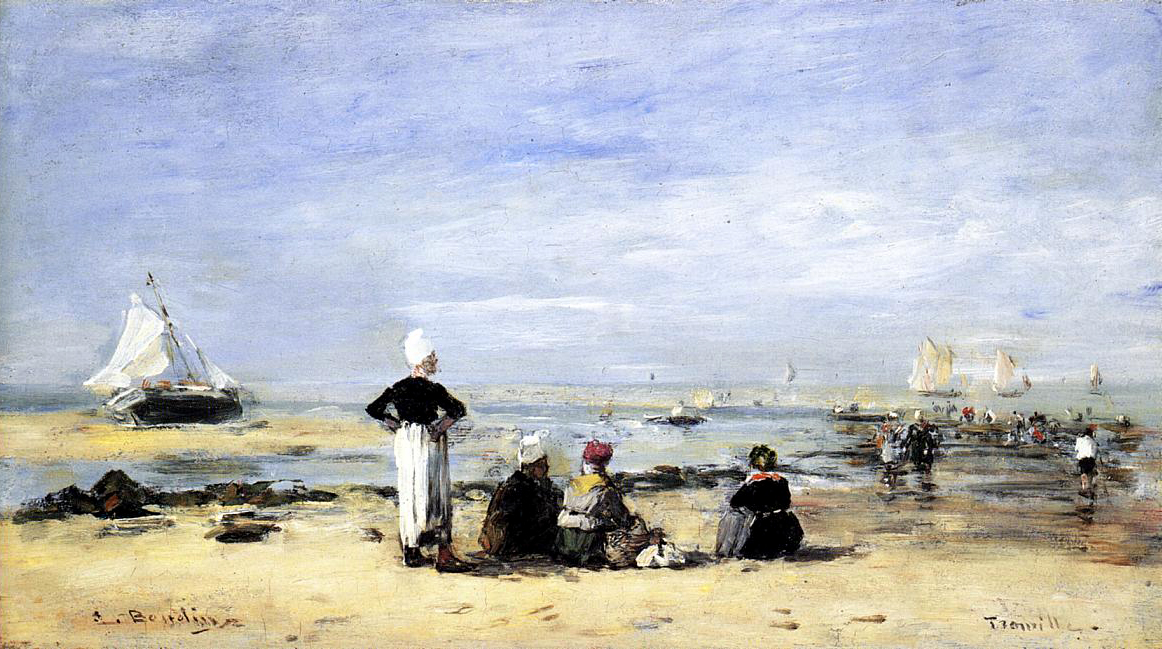
 

Eugène Boudin (French, 1824-1998) 'Low tide at Trouville' 1894


Eugène Boudin (French, 1824-1998)
Low tide at Trouville
Trouville, Mareé basse
1894
Oil on canvas
National Gallery of Victoria
Felton Bequest, 1939


John Brack (Australian, 1920-1999) 'Self-portrait' 1955


John Brack (Australian, 1920-1999)
Self-portrait
1955
Melbourne, Victoria
Oil on canvas
National Gallery of Victoria
Purchased with the assistance of the National Gallery Women’s Association, 2000


Striking in its candour, with its subject stripped of vanity and dressed in early-morning attire, Self portrait is a piercing study of a man engaged in the intimacy of shaving. Although images of women at their toilette have been frequently depicted by both male and female Australian artists, it is unusual for men to be shown or to show themselves in this context. Modest in scale, Brack’s image is conceived in a complex yet subtle colour scheme, applied with clarity and precision.

Geoffrey Smith. “John Brack’s Self Portrait,” on the National Gallery of Victoria website 4th June 2014 [Online] Cited 21/12/2021
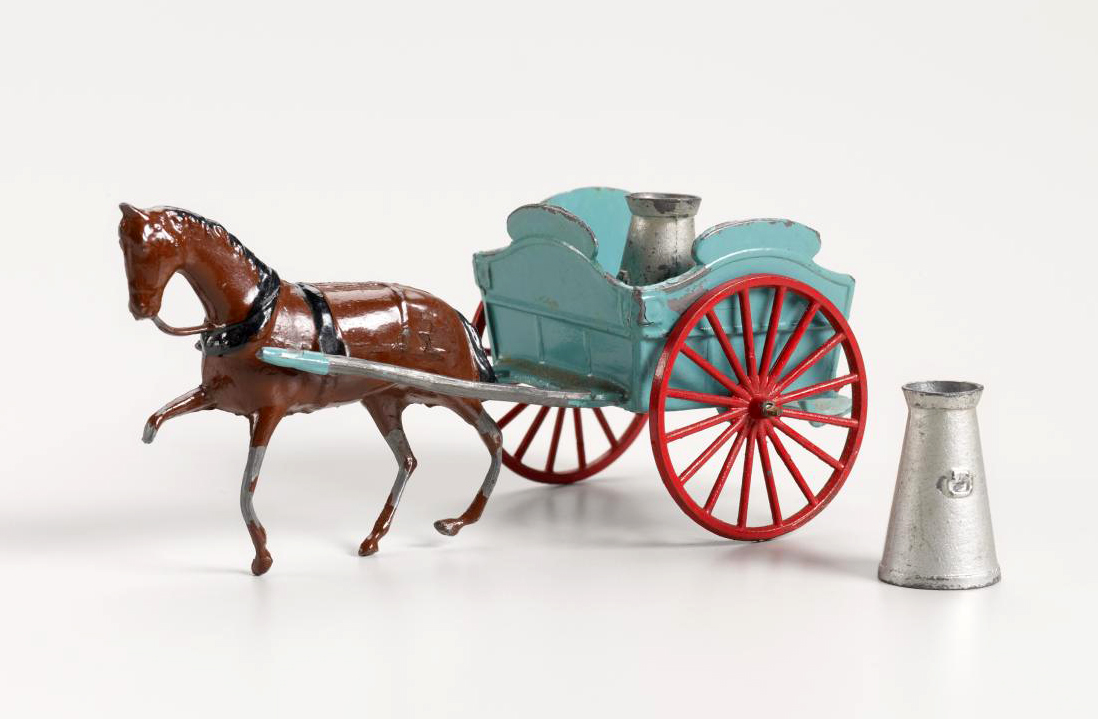
 

Britains Ltd, London manufacturer (English, 1860-1997) 'Milk float and horse' c. 1950


Britains Ltd, London manufacturer (English, 1860-1997)
Milk float and horse
no. 45F from the Model home farm series 1921-1961
c. 1950
Painted lead alloy
National Gallery of Victoria
Presented by Miss Lucy Kerley and her nephew John Kerley, 1982


Jacques Callot (French, 1592-1635) 'The firing squad' 1633


Jacques Callot (French, 1592-1635)
The firing squad
L’Arquebusade
Plate 12 from Les Misères et les malheurs de la guerre
The miseries and misfortunes of war series
1633
Etching, 2nd of 3 states
National Gallery of Victoria
Purchased, 1950


Paul Caponigro (American, 1932-2024) 'Nahant, Massachusetts' 1965


Paul Caponigro (American, 1932-2024)
Nahant, Massachusetts
1965
Gelatin silver photograph
National Gallery of Victoria
Purchased with the assistance of the National Gallery Society of Victoria, 1977
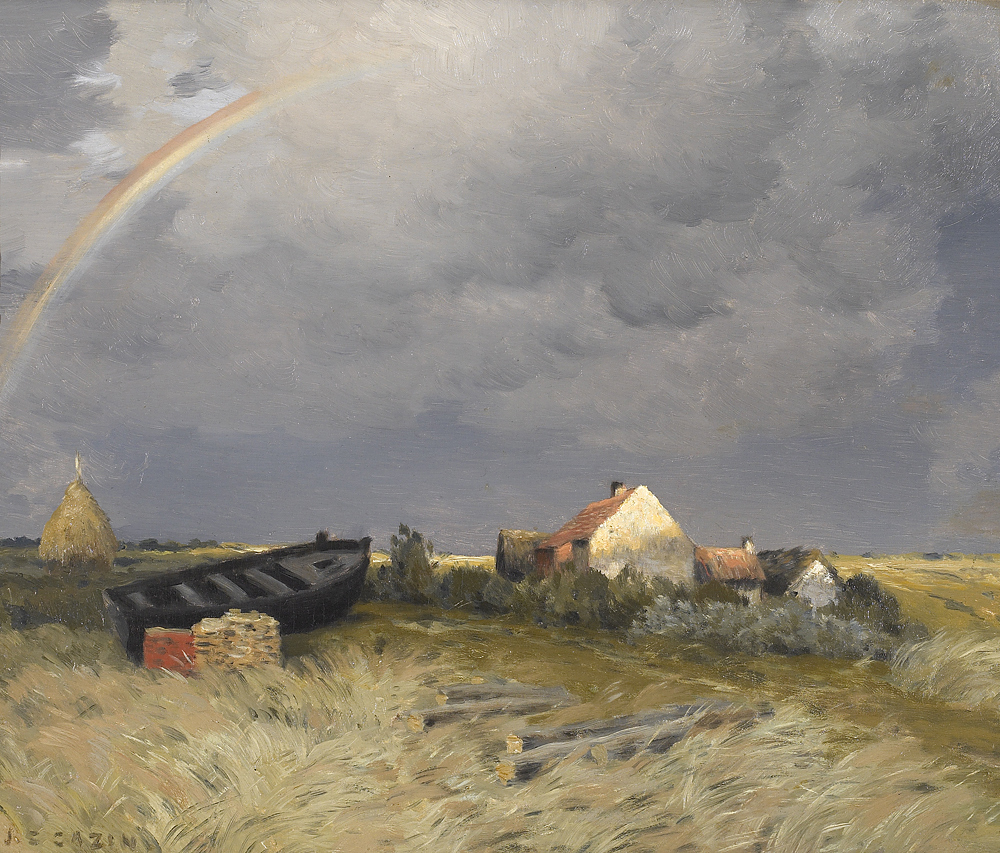
 

Jean Charles Cazin (French, 1841-1901, lived in England 1871-1875) 'The rainbow' late 1880s


Jean Charles Cazin (French, 1841-1901, lived in England 1871-1875)
The rainbow
L’Arc-en-ciel
late 1880s
Oil on canvas
National Gallery of Victoria
Felton Bequest, 1913
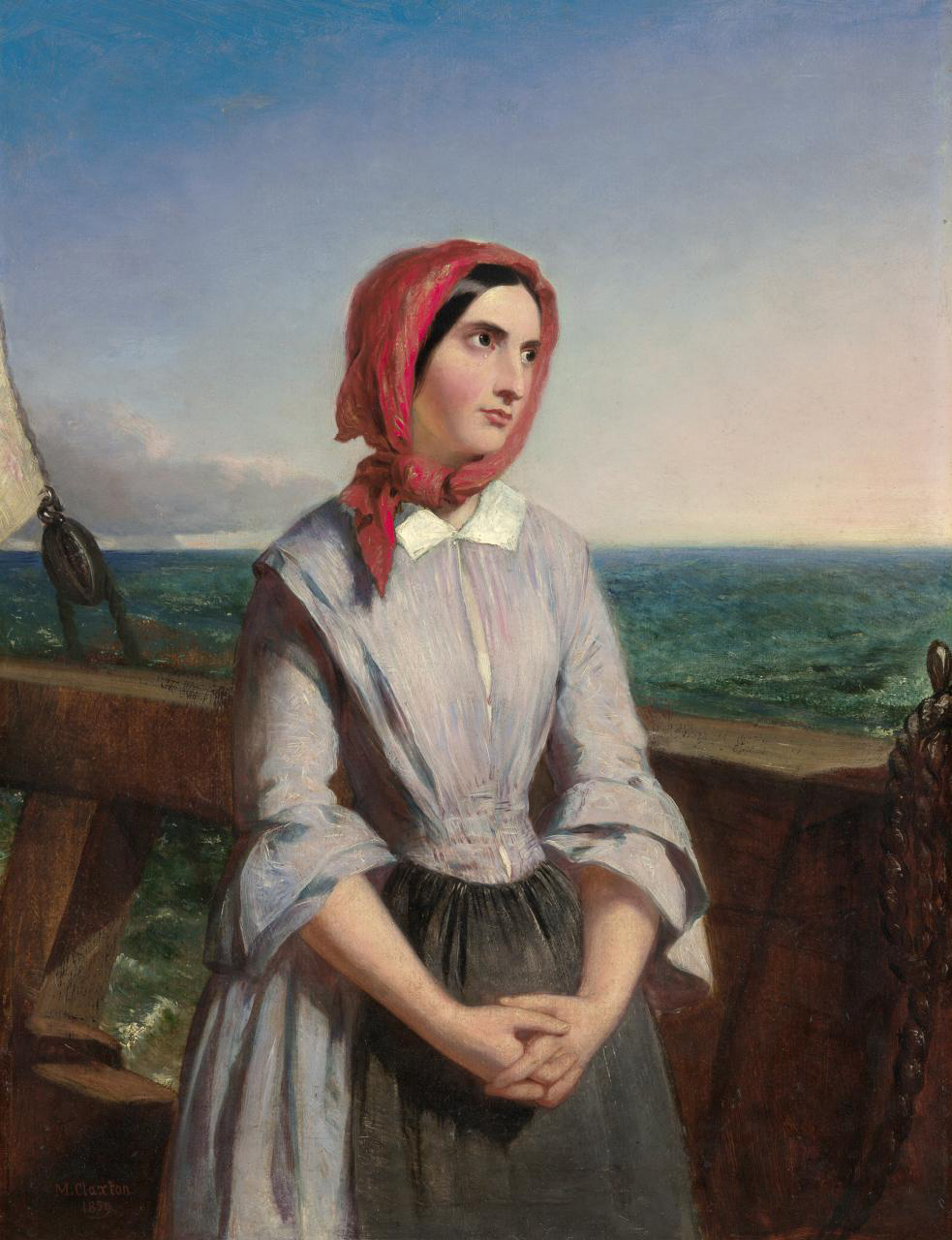
 

Marshall Claxton (English, 1813-1881, lived in Australia 1850-1854) 'An emigrant's thoughts of home' 1859


Marshall Claxton (English, 1813-1881, lived in Australia 1850-1854)
An emigrant’s thoughts of home
1859
Oil on cardboard
National Gallery of Victoria
Presented by the National Gallery Women’s Association, 1974


Marshall Claxton’s painting An emigrant’s thoughts of home (1859) belongs to a clutch of works, both fine and popular, both pictorial and literary, that for an Australasian audience are perhaps the most resonant of the many products of Victorian culture. Emigration, a social and political phenomenon for mid-nineteenth-century Britain, and the essential lubricant of British imperialism, inspired a profusion of paintings, prints, novels, plays, poems, essays and letters that speak eloquently about the realities and myths of Victorian Britain and its role in the world, engaging concepts of the family, womanhood, the artist’s role and function and, indeed, the meaning of life.

Pamela Gerrish Nunn. “Look homeward Angel: Marshall Claxton’s emigrant,” on the National Gallery of Victoria website 18th June 2014 [Online] Cited 21/12/2021


Olive Cotton (Australian, 1911-2003) 'Teacup ballet' 1935, printed 1992


Olive Cotton (Australian, 1911-2003)
Teacup ballet
1935, printed 1992
Gelatin silver photograph
National Gallery of Victoria
Purchased from Admission Funds, 1992


Among Cotton’s most famous photographs, Teacup ballet has very humble origins. It was taken after hours in the Dupain studio and used a set of cheap cups and saucers Cotton had earlier bought from a Woolworths store for use around the studio. As she later recounted: ‘Their angular handles suggested to me the position of “arms akimbo” and that led to the idea of a dance pattern’. The picture uses a range of formal devices that became common to Cotton’s work, especially the strong backlighting used to create dramatic tonal contrasts and shadows. The picture achieved instant success, and was selected for exhibition in the London Salon of Photography for 1935.

Text © National Gallery of Australia, Canberra
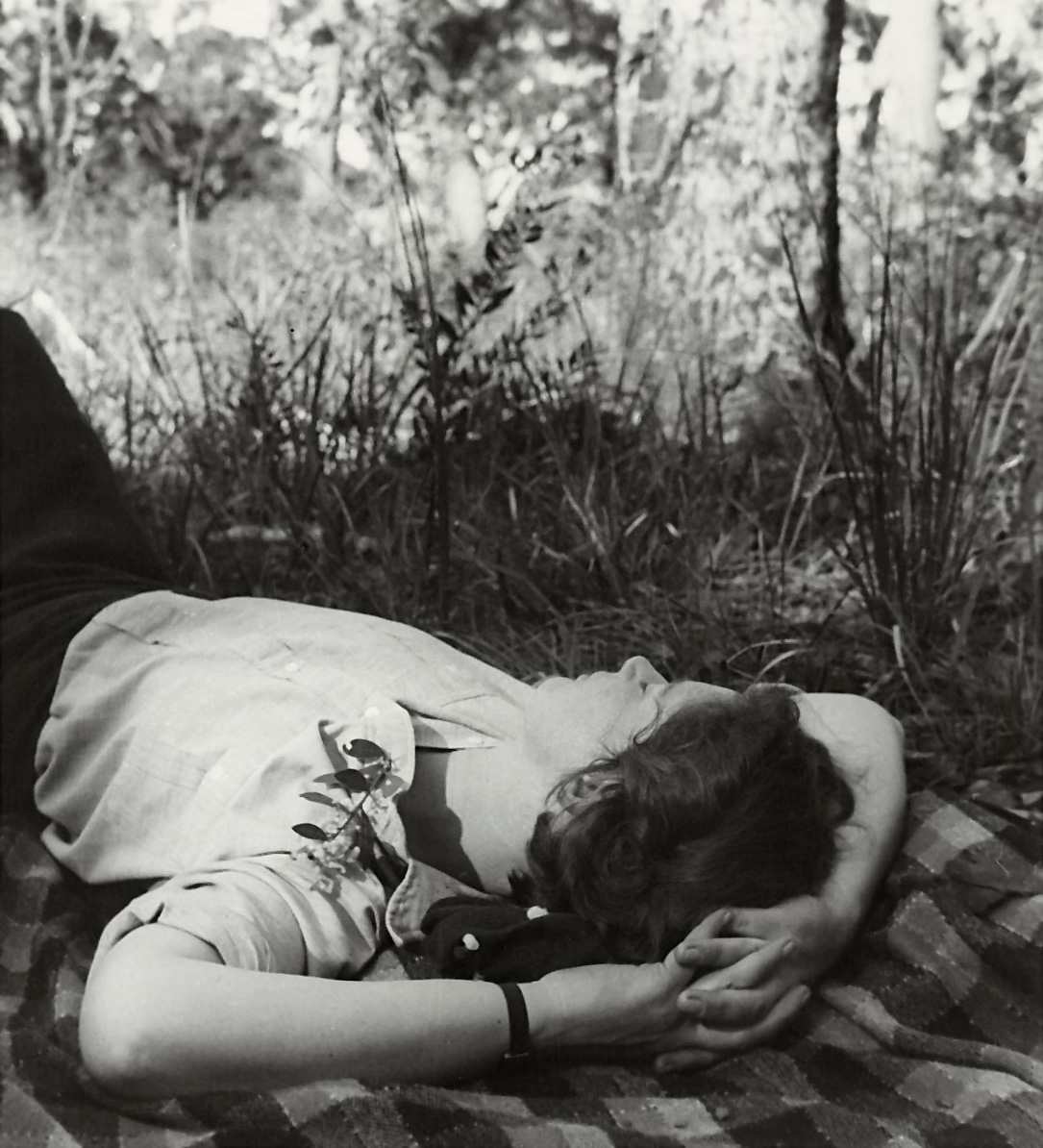
 

Olive Cotton (Australian, 1911-2003) 'The sleeper' 1939, printed 1992


Olive Cotton (Australian, 1911-2003)
The sleeper
1939, printed 1992
Gelatin silver photograph, ed. 4/25
National Gallery of Victoria
Purchased from Admission Funds, 1992


The sleeper 1939, Olive Cotton’s graceful study of her friend Olga Sharp resting while on a bush picnic, made around the same time as Max Dupain’s Sunbaker, presents a different take upon the enjoyment of life in Australia. The woman is relaxed, nestled within the environment. The mood is one of secluded reverie.

Text © National Gallery of Australia, Canberra
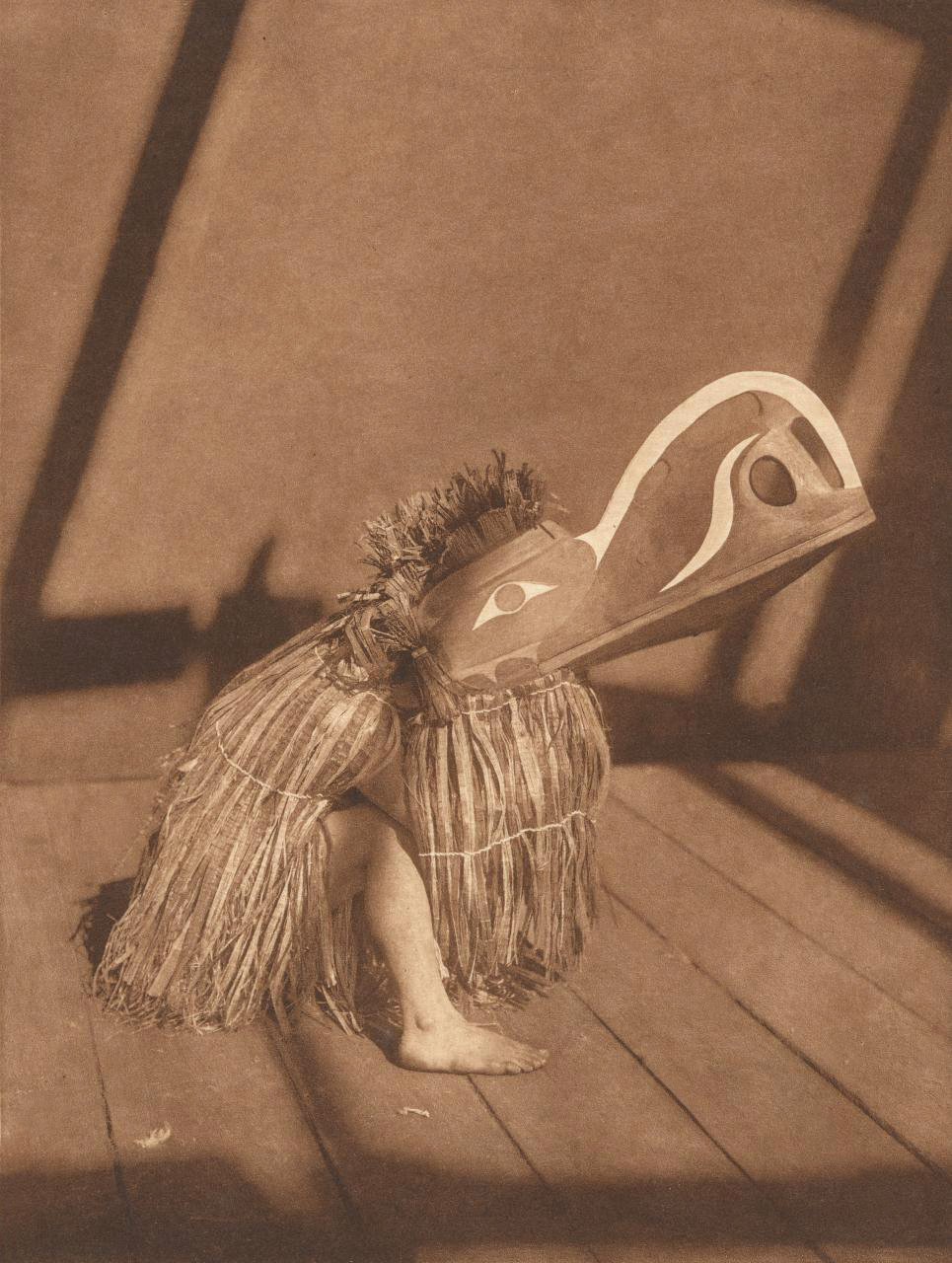
 

Edward Curtis (American, 1868-1952) 'Kalóqutsuis - Qágyuhl' 1914, printed 1915


Edward Curtis (American, 1868-1952)
Kalóqutsuis – Qágyuhl
1914, printed 1915
Photogravure
National Gallery of Victoria
Gift of Ms Christine Godden, 1991


Not only was he one of the greatest ethnographic photographers of all time (as well as being an ethnographer recording more than 10,000 songs on a primitive wax cylinder, and writing down vocabularies and pronunciation guides for 75 languages) … he was also an aesthetic photographer. Looking at his photographs you can feel that he adhered to the principles of the nature and appreciation of beauty situated within the environment of the Native American cultures and peoples. He had a connection to the people and to the places he was photographing…

Curtis created a body of work unparrallleled in the annals of photography – an ethnographic study of an extant civilisation before it vanished (or so they thought at the time). Such a project stretched over thirty years, producing 45-50 thousand negatives “many of them on glass and some as large as fourteen by seventeen inches” of which 2,200 original photographs appeared in his magnum opus, The North American Indian…

While all great photographers have both technical skill and creative ability it is the dedication of this artist to his task over so many years that sets him apart. That dedication is critically coupled with his innate ability to capture the “spirit” of the Native American cultures and peoples, their humanity.

Dr Marcus Bunyan from a posting on the Palm Springs Art Museum exhibition Edward S. Curtis: One Hundred Masterworks 2016


Frances Derham (Australian, 1894-1987) 'Building the bridge' 1929


Frances Derham (Australian, 1894-1987)
Building the bridge
1929
Colour linocut on Japanese paper
National Gallery of Victoria
Gift of Mr Richard Hodgson Derham, 1988
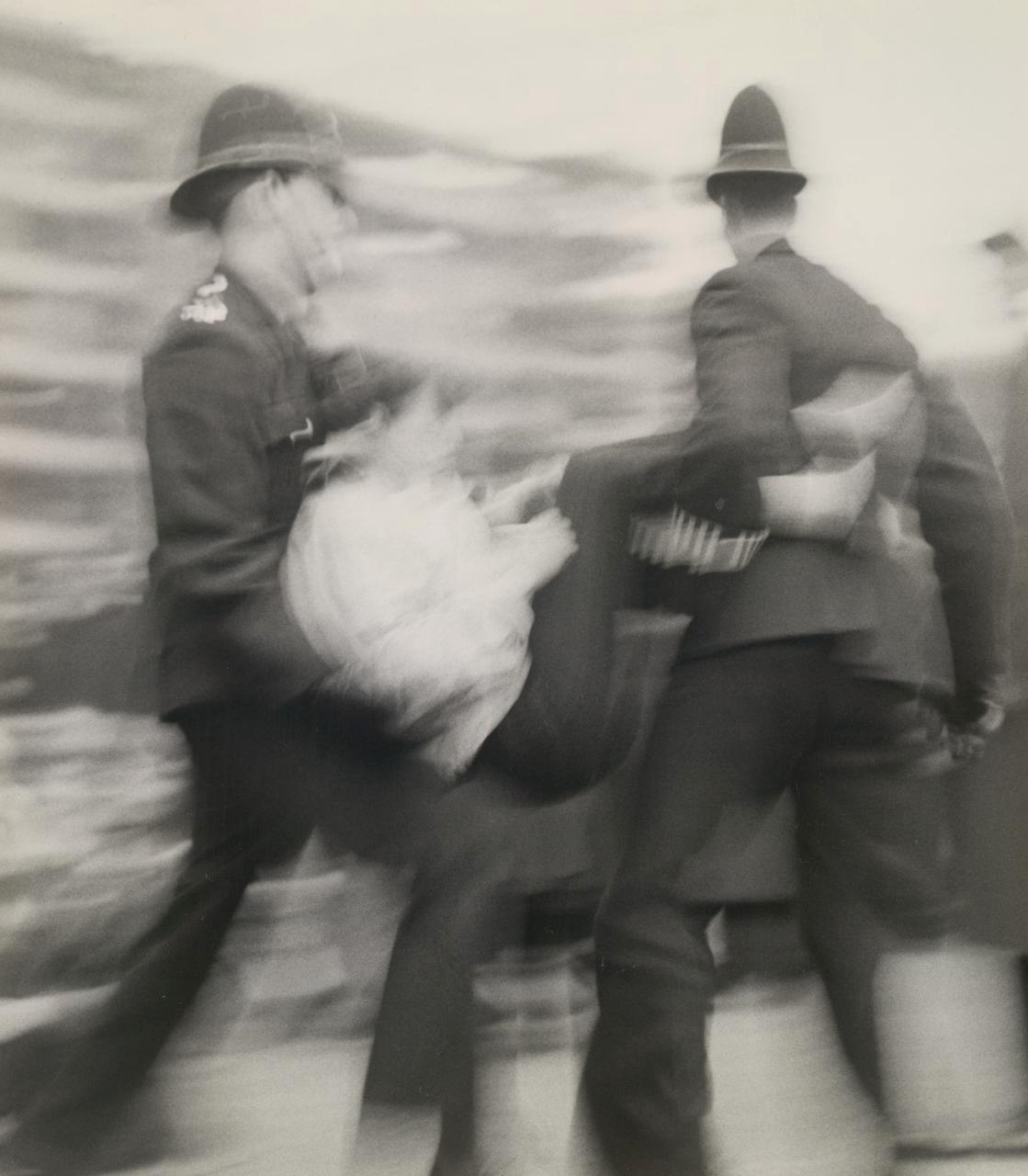
 

Kerry Dundas (Australian, b. 1931, lived in Europe 1958-1967) 'A girl is carried away under arrest' 1961-1963


Kerry Dundas (Australian, b. 1931, lived in Europe 1958-1967)
A girl is carried away under arrest
From the Youth against the Bomb series
1961-1963
Gelatin silver photograph
National Gallery of Victoria
Purchased 1971


Max Dupain (Australian, 1911-1992) 'Bondi' 1939


Max Dupain (Australian, 1911-1992)
Bondi
1939
Gelatin silver photograph
30.3 × 29.5cm
National Gallery of Victoria
Purchased with the assistance of the Visual Arts Board, 1976


Walker Evans (American, 1903-1975) 'Hitchhikers, near Vicksburg, Mississippi' 1936, printed c. 1975


Walker Evans (American, 1903-1975)
Hitchhikers, near Vicksburg, Mississippi
1936, printed c. 1975
Gelatin silver photograph
National Gallery of Victoria
Purchased 1975


Walker Evans (American, 1903-1975) 'Auto dump, near Easton, Pennsylvania' 1935, printed c. 1975


Walker Evans (American, 1903-1975)
Auto dump, near Easton, Pennsylvania
1935, printed c. 1975
Gelatin silver photograph
National Gallery of Victoria
Purchased 1975


William Frater (born Scotland 1890, arrived Australia 1913, died 1974) 'The blue nude' c. 1934


William Frater (born Scotland 1890, arrived Australia 1913, died 1974)
The blue nude
c. 1934
Oil on canvas on cardboard
National Gallery of Victoria
Gift of Mrs Lina Bryans 1969


His contribution to art in Australia was, however, as a painter who introduced Post-Impressionist principles and challenged the notion that art was an imitation of nature.

Frater’s oeuvre developed between 1915 and 1920 towards a simplification of design, an interplay of massed lights and shadows, and sonorous low-keyed colour that reflected his interest in the classical seventeenth century painters in interaction with the analytical tonal theory of Max Meldrum. Notable examples of his predominantly figure and portrait paintings are ‘The artist’s wife reading’ (1915) and ‘Portrait of artist’s wife’ (1919). An experimental Colourist phase followed in the next decade. His first solo exhibition was held in May 1923 at the Athenaeum, Melbourne, and he exhibited with the Twenty Melbourne Painters from the late 1920s, and the Contemporary Group of Melbourne in the 1930s.

His approach in the 1930s was markedly indebted to Cézanne, especially in the portraits which predominated until his retirement… Frater gave aggressive leadership to the small group of modernists in the 1920s. His example, teaching, lecturing and crusty style of polemic did much to disrupt the academic style as the arbiter of pictorial values and to pioneer a change of taste in the community.

L. J. Course. “Frater, William (1890-1974),” on the Australian Dictionary of Biography website, published first in hardcopy 1981 [Online] Cited 23 December 2021


Emmanuel Frémiet (French, 1824-1910) 'Gorilla carrying off a woman' 1887


Emmanuel Frémiet (French, 1824-1910)
Gorilla carrying off a woman
Gorille enlevant une femme
1887
Bronze
National Gallery of Victoria
Gift of the artist 1907


Lee Friedlander (American, b. 1934) 'Hillcrest, New York' 1970, printed c. 1977


Lee Friedlander (American, b. 1934)
Hillcrest, New York
1970, printed c. 1977
Gelatin silver photograph
National Gallery of Victoria
Purchased 1977


Lee Friedlander (American, b. 1934) 'Mount Rushmore' 1969, printed c. 1977


Lee Friedlander (American, b. 1934)
Mount Rushmore
1969, printed c. 1977
Gelatin silver photograph
National Gallery of Victoria
Purchased 1977


The ‘tourist gaze’

As Grundberg notes, Friedlander’s terse depiction shows both the sight and the tourists themselves, being brought into existence through the effects of looking, reflecting, framing and imaging. These, he adds, are all linked to the general project of culturally appropriating the natural world. ‘Natural site has become acculturated sight’ (Grundberg 1990: 15).

As the image makes clear, the ‘sight’ or the ‘site’ is a ‘seeing’ without a subject, for it pre-exists the arrival and activity of any individual tourist-photographer, who, once located there, is framed as much as framing. The sight is not so much an object to be viewers an already structured condition of seeing, a situation which places the sightseer even as he or she freely choose to look or shoot.

The effects of photography’s presence in the tourist system merely completed a process under way before photography’s birth. As tourists, even at the moment of photographing, even if touring cameraless, we are not so much looking as looking at images, or looking for images. Tourism provides us less with experience than with events to be seen, Or rather, events to look at. The privileging of the visual grants us separation from our own experience… We look on or look in through the distancing arrangements of the camera or through eyes educated to see with the same ontological remoteness. The world of the tourist is ‘over there’, in the past-present, in the exotic-ordinary. It is framed off, the object of imaging or description, in some spectacular distance, or set back as performance (Greenwood in Smith 1989).

Peter Osborne. Traveling Light: Photography, Travel and Visual Culture. Manchester University Press, 2000, pp. 81-82.
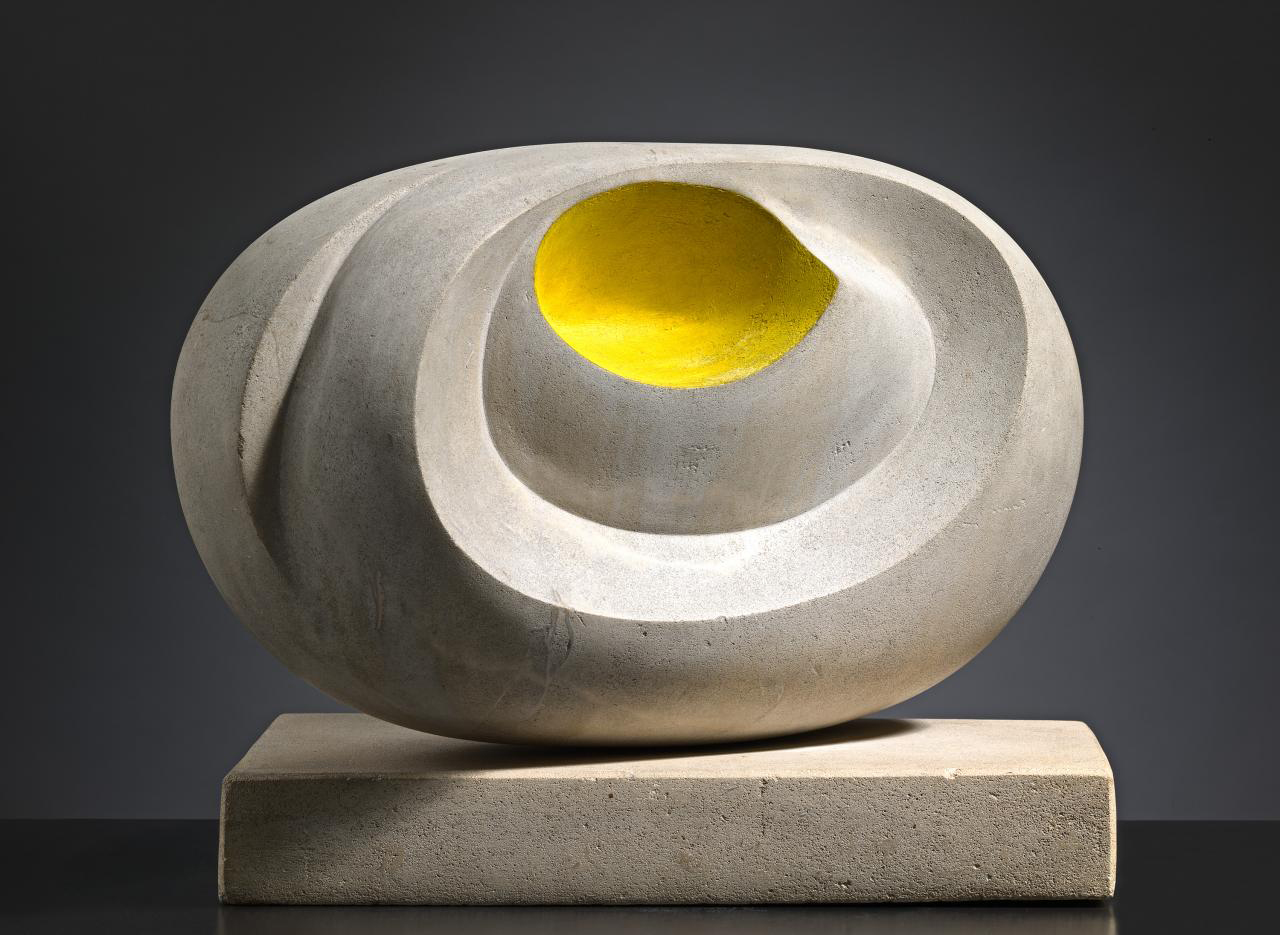
 

Barbara Hepworth (English, 1903-1975) 'Eidos' 1947


Barbara Hepworth (English, 1903-1975)
Eidos
1947
Stone, synthetic polymer paint
National Gallery of Victoria
Purchased with the assistance of the Samuel E. Wills Bequest to commemorate the retirement of Dr E. Westbrook, Director of Arts for Victoria, 1981


Eidos a Greek term meaning “form” “essence”, “type” or “species”. The early Greek concept of form precedes attested philosophical usage and is represented by a number of words mainly having to do with vision, sight, and appearance. The words, εἶδος (eidos) and ἰδέα (idea) come from the Indo-European root *weid-, “see”. Eidos (though not idea) is already attested in texts of the Homeric era, the earliest Greek literature. This transliteration and the translation tradition of German and Latin lead to the expression “theory of Ideas.” The word is however not the English “idea,” which is a mental concept only.

The meaning of the term εἶδος (eidos), “visible form”, and related terms μορφή (morphē), “shape”, and φαινόμενα (phainomena), “appearances”, from φαίνω (phainō), “shine”, Indo-European *bhā-, remained stable over the centuries until the beginning of philosophy, when they became equivocal, acquiring additional specialised philosophic meanings.

“Theory of forms” on the Wikipedia website
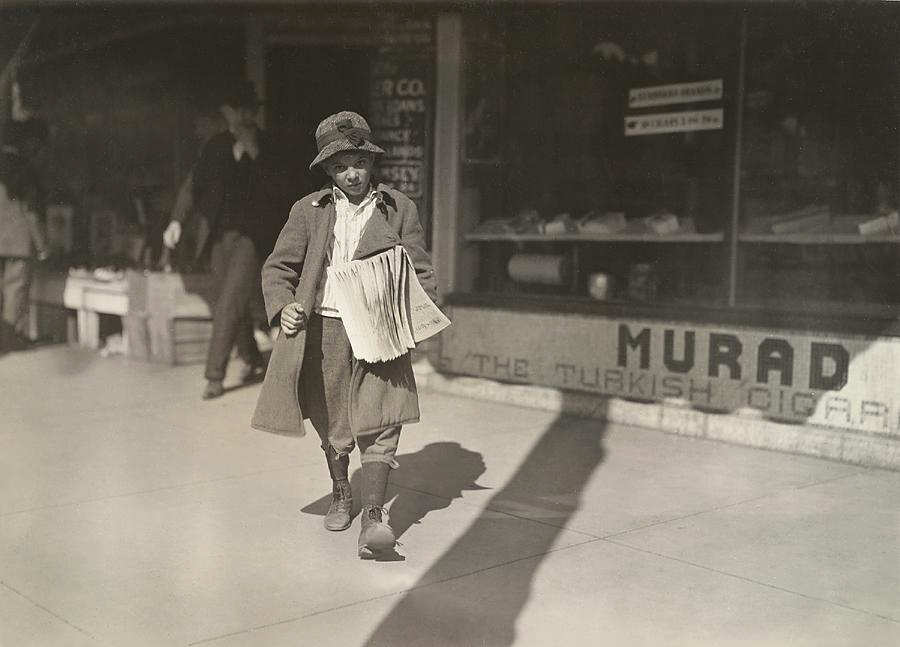
 

Lewis Hine (American, 1874-1940) 'Sam Pine, 8 year old truant newsboy who lives at 717 West California Street' 1917


Lewis Hine (American, 1874-1940)
Sam Pine, 8 year old truant newsboy who lives at 717 West California Street
1917
Gelatin silver photograph
National Gallery of Victoria
Purchased 1980
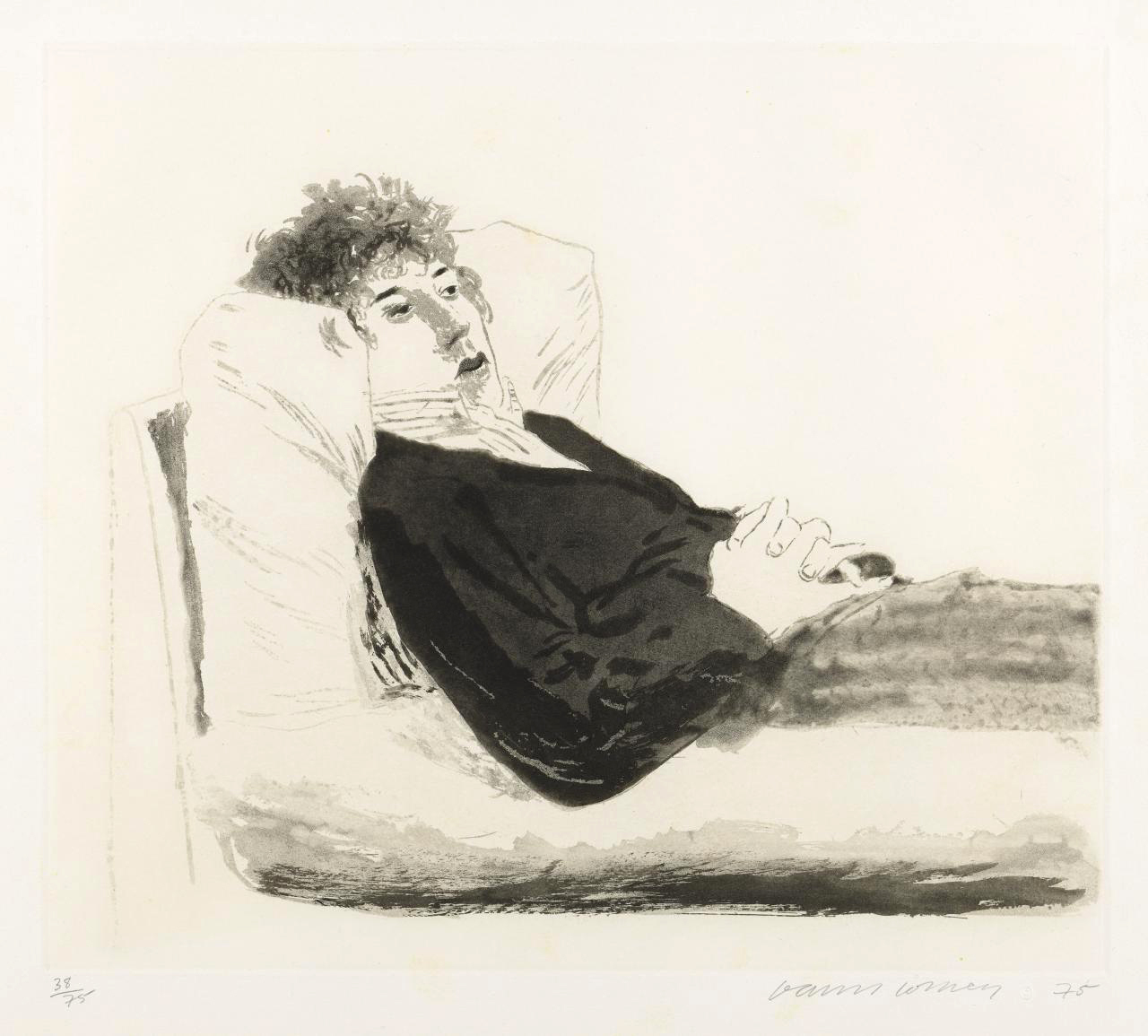
 

David Hockney (born England 1937, worked in United States 1964-1968, 1975- ) 'Reclining figure' 1975


David Hockney (born England 1937, worked in United States 1964-1968, 1975- )
Reclining figure
1975
Etching and liftground etching, ed. 38/75
National Gallery of Victoria
Gift of Margaret Toll 2006


Edmond-François Aman-Jean (French, 1860-1936) 'Woman resting' c. 1904


Edmond-François Aman-Jean (French, 1860-1936)
Woman resting
La Femme couchée
c. 1904
Oil on canvas
National Gallery of Victoria
Felton Bequest 1905
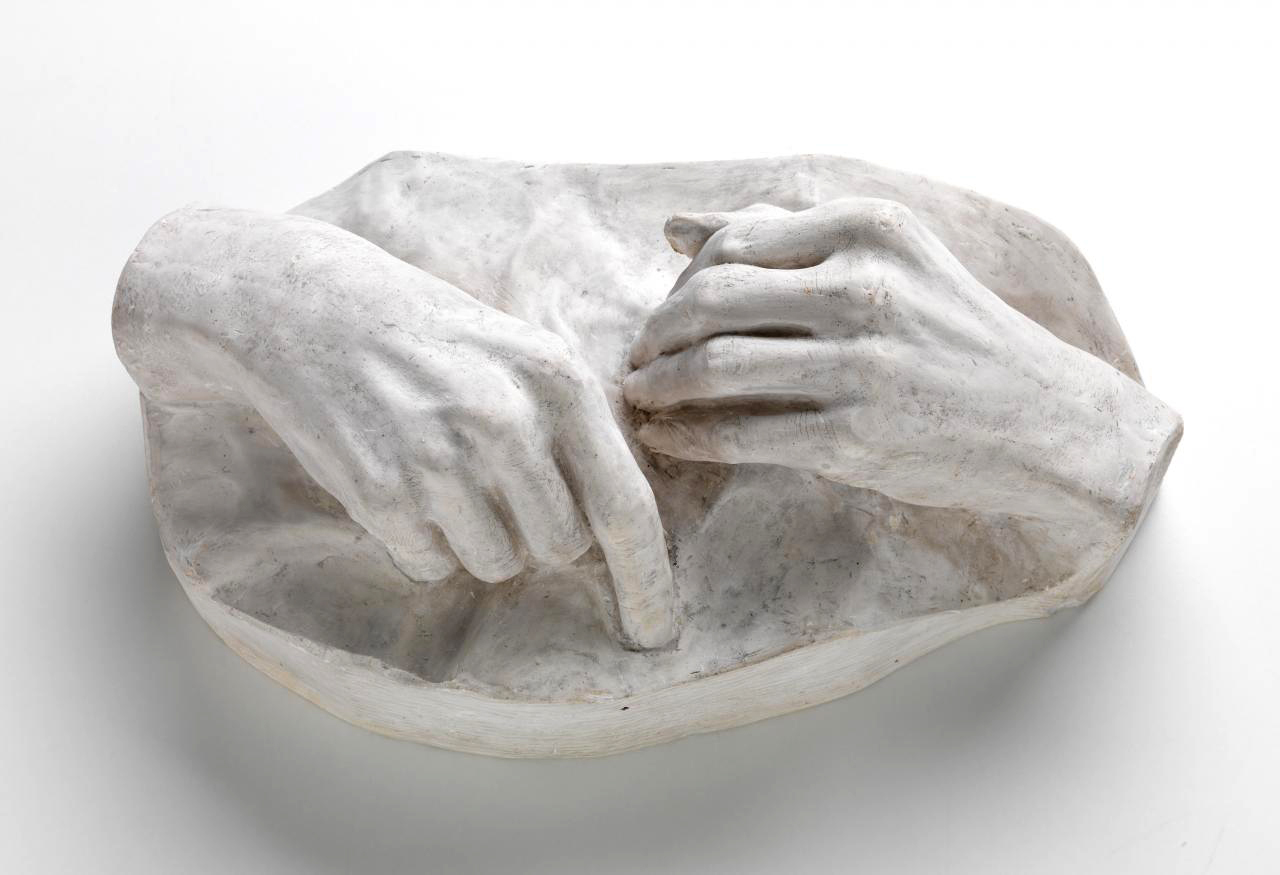
 

Max Klinger (German, 1857-1920) 'Cast of artist's hands' 1920


Max Klinger (German, 1857-1920)
Cast of artist’s hands
1920
plaster
National Gallery of Victoria
Gift of Mrs Marcelle Osins, 1994


Fred Kruger (Australian born Germany, 1831-1888) 'Coast scene, Mordialloc Creek, near Cheltenham' c. 1871


Fred Kruger (Australian born Germany, 1831-1888)
Coast scene, Mordialloc Creek, near Cheltenham
c. 1871
Albumen silver photograph
National Gallery of Victoria
Gift of Mrs Beryl M. Curl, 1979


The best of the landscape photographs have nothing to do with Arcadian, pastoral life at all. For me, Kruger’s photographs only start to come alive when he is photographing gum trees against the sky. Anyone who has tried to photograph the Australian bush knows how difficult it is to evince a “feeling” for the bush and Kruger achieves this magnificently in a series of photographs of gum trees in semi-cleared land, such as Bush scene near Highton (c. 1879). These open ‘park-like’ landscapes are not sublime nor do they picture the spread of colonisation but isolate the gum trees against the sky. They rely on the thing itself to speak to the viewer, not a constructed posturing or placement of figures to achieve a sterile mise-en-scène.

Dr Marcus Bunyan from a posting on the NGV exhibition Fred Kruger: Intimate Landscapes 2012


Kusakabe Kimbei (Japanese, 1841-1934) 'No title (Couple with a cabinet photograph and ghost in background)' 1880s


Kusakabe Kimbei (Japanese, 1841-1934)
No title (Couple with a cabinet photograph and ghost in background)
1880s
Albumen silver photograph, colour dyes
National Gallery of Victoria
Purchased 2004


Kimbei Kusakabe arrived in Yokohama in 1856 and became Felice Beato’s pupil, hand-colouring his photographs until 1863. In 1881, he opened his own studio and promptly became one of the most prosperous and influential photographers of his generation, rivalling the Western artists that had until then dominated the market. With his coloured portraits, everyday scenes and landscapes, he is the purveyor of souvenir images for Westerners visiting Japan. Kimbei Kusakabe depicted men in serene social and economic contexts while women – his favourite subjects – were represented in romantic portraits as well as domestic and cultural scenes. The young mysterious and submissive geisha was particularly appealing to Western audiences and the Japanese photographer helped establish their visual identity as icons of feminine beauty and social etiquette. Kimbei Kusakabe’s rare images are a rich resource for the comprehension of a Japan that has now disappeared.

Text from The Red List website [Online] Cited 17/07/2017. No longer available online


Kusakabe Kimbei worked with Felice Beato and Baron Raimund von Stillfried as a photographic colourist and assistant before opening his own workshop in Yokohama in 1881, in the Benten-dōri quarter, and from 1889 operating in the Honmachi quarter. He also opened a branch in the Ginza quarter of Tokyo. Around 1885, he acquired the negatives of Felice Beato and of Stillfried, as well as those of Uchida Kuichi. Kusakabe also acquired some of Ueno Hikoma’s negatives of Nagasaki. He stopped working as a photographer in 1912-1913.

Text from the Wikipedia website
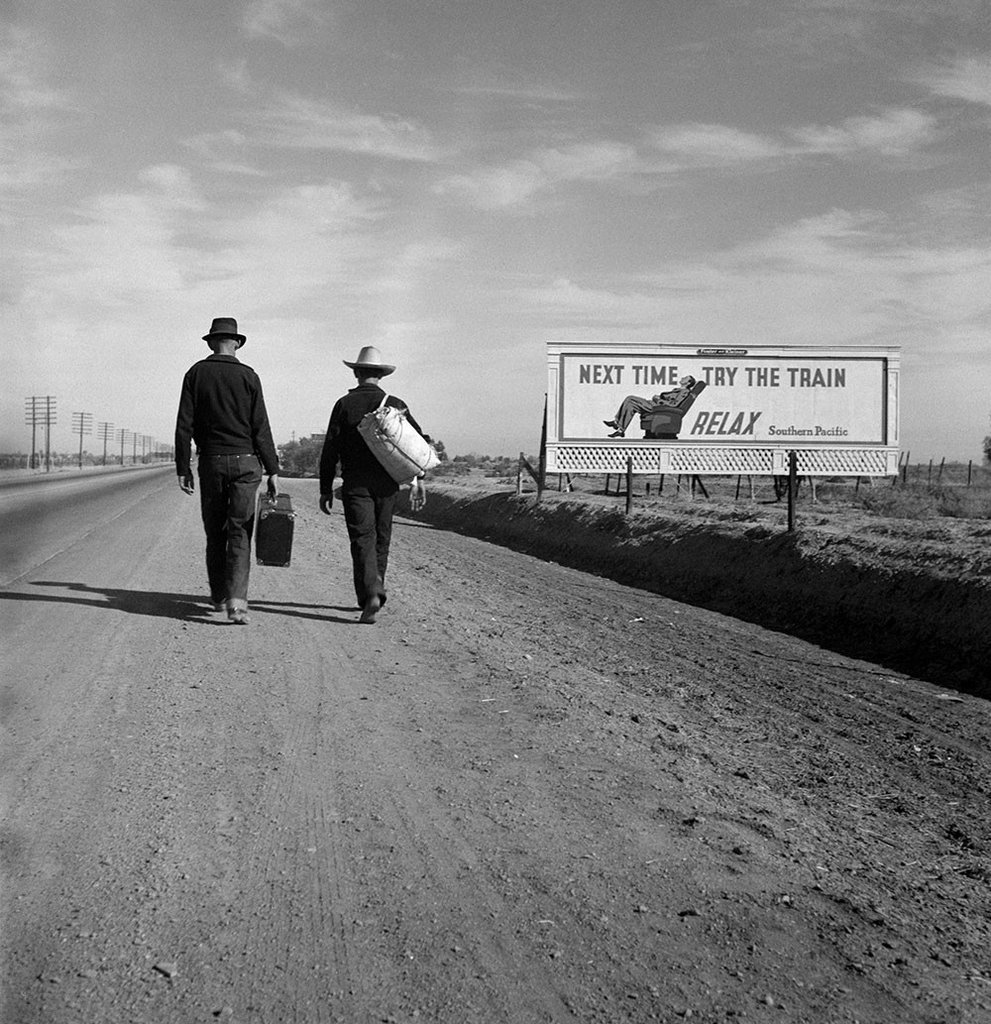
 

Dorothea Lange (American, 1895-1965) 'Towards Los Angeles, California' 1936, printed c. 1975


Dorothea Lange (American, 1895-1965)
Towards Los Angeles, California
1936, printed c. 1975
Gelatin silver photograph
National Gallery of Victoria
Purchased 1975


Dorothea Lange (American, 1895-1965) 'Ditched, stalled and stranded, San Joaquin Valley, California' 1935, printed c. 1975


Dorothea Lange (American, 1895-1965)
Ditched, stalled and stranded, San Joaquin Valley, California
1935, printed c. 1975
Gelatin silver photograph
National Gallery of Victoria
Purchased 1975
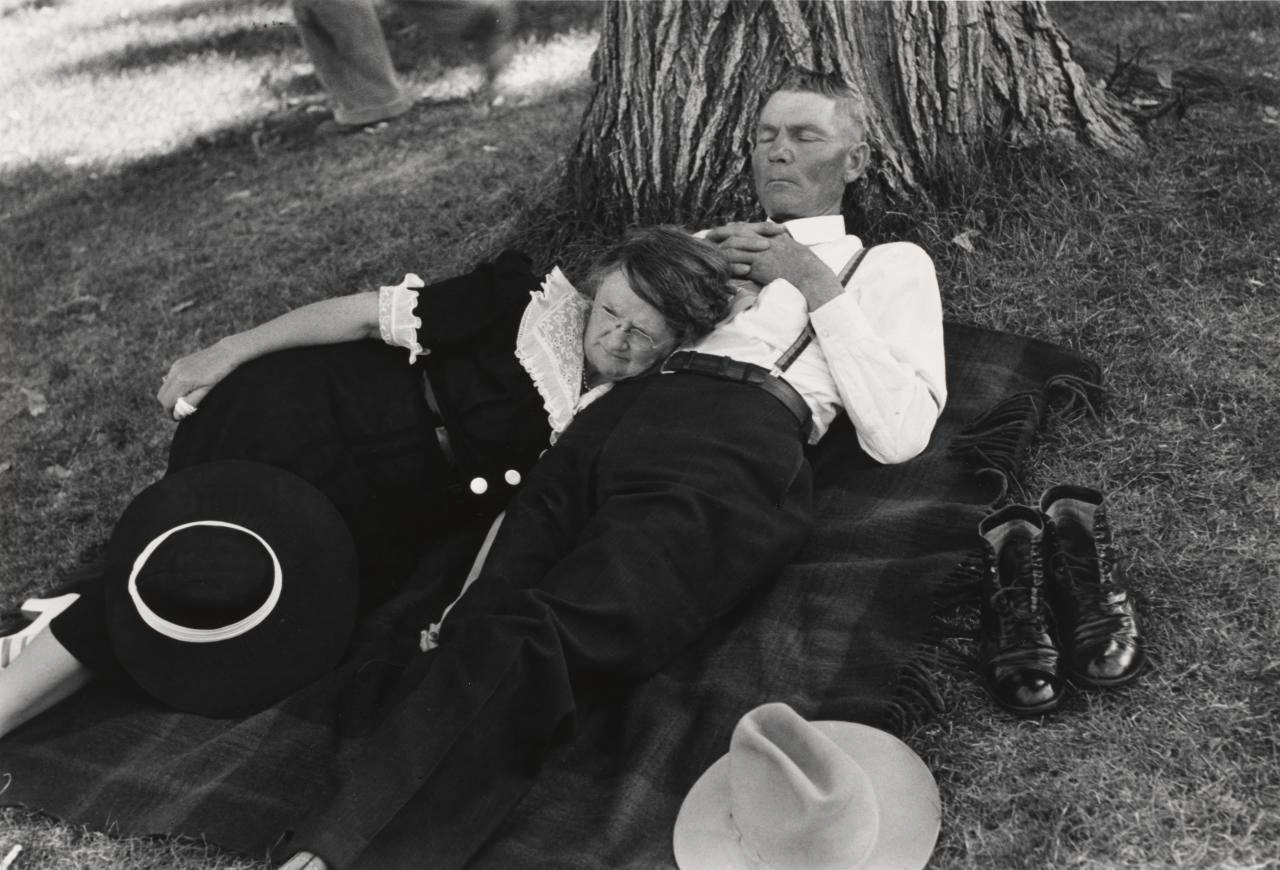
 

Russell Lee (American, 1903-1986) 'Interlude, after watching the Fourth of July Parade, Vale, Oregon' 1941, printed c. 1975


Russell Lee (American, 1903-1986)
Interlude, after watching the Fourth of July Parade, Vale, Oregon
1941, printed c. 1975
Gelatin silver photograph
National Gallery of Victoria
Purchased 1975


José López (born Cuba 1941, lived in United States c. 1961-1992, died United States 1992) Luis Medina (born Cuba 1942, lived in United States 1961-1985, died United States 1985) 'Boy asleep by the beach' 1976


José López (born Cuba 1941, lived in United States c. 1961-1992, died United States 1992)
Luis Medina (born Cuba 1942, lived in United States 1961-1985, died United States 1985)
Boy asleep by the beach
1976
Gelatin silver photograph
National Gallery of Victoria
Purchased 1978


Ruth Maddison (Australian, b. 1945) 'No title (Woman collecting a Christmas present from the car)' 1977-1978


Ruth Maddison (Australian, b. 1945)
No title (Woman collecting a Christmas present from the car)
from the Christmas Holidays with Bob’s Family, Mermaid Beach, Queensland series
1977-1978, printed 1979
Gelatin silver photograph, coloured pencils and fibre tipped pen, ed. 1/5
National Gallery of Victoria
Purchased 1980


This was a very hands on process, an observation confirmed by artist Ruth Maddison. “The process was like hand watering your garden, an intense exchange and engagement with the object. When I started I was completely untrained, but I loved the process. I just experimented in order to understand what medium does what on what paper surface. There was the beauty of its object and its physicality. I just loved the object.” Her series Christmas holiday with Bob’s family, Mermaid Beach, Queensland (1977-1978), photographed over Christmas Day and several days afterwards, evidences this magical transformation. Vernacular photographs of a typical Australia Christmas holiday become something else, transformed into beautiful, atypical representations of family, friendship, celebration and life.

Dr Marcus Bunyan commenting on the National Gallery of Australia exhibition Colour My World: Handcoloured Australia Photography 2015
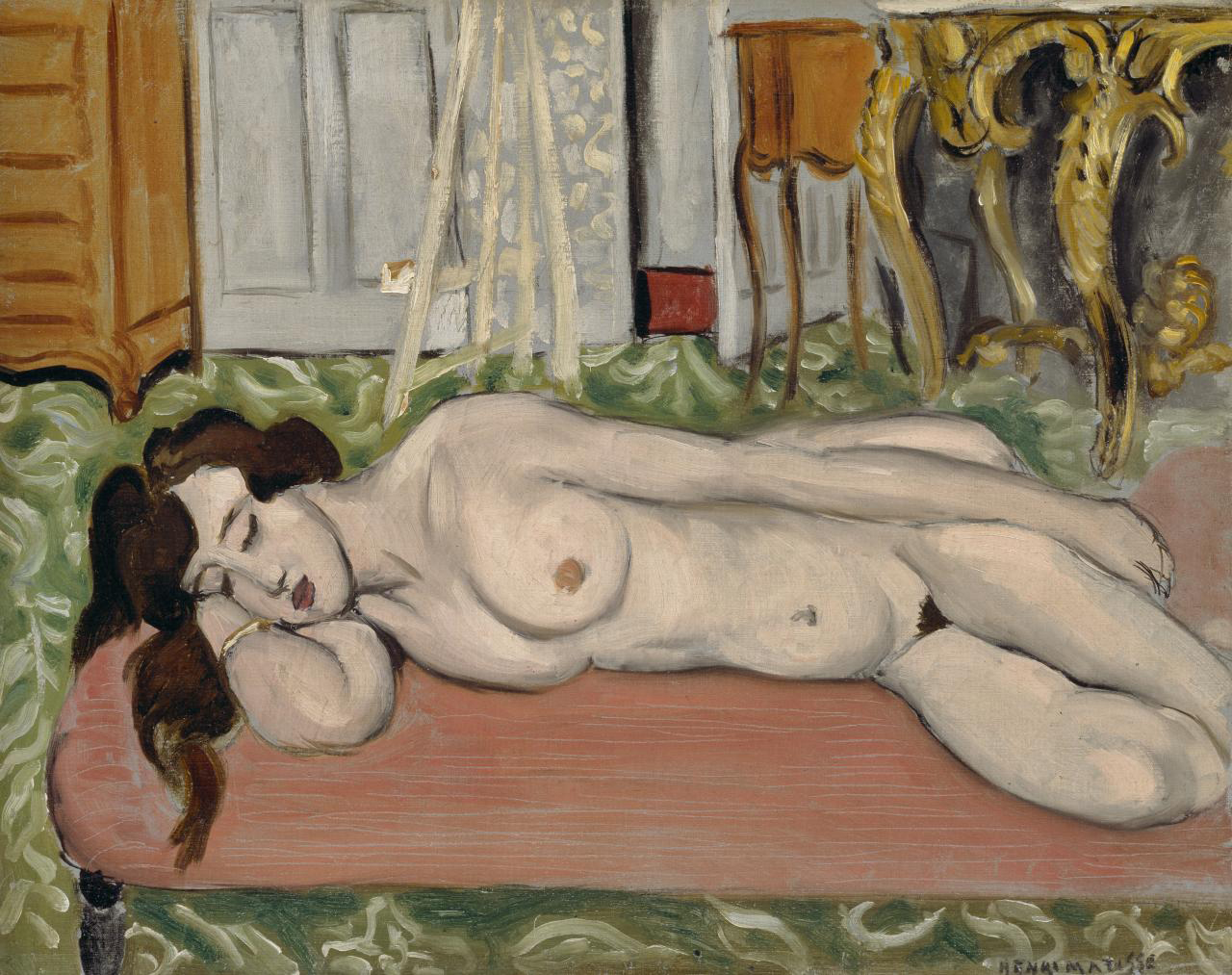
 

Henri Matisse (France, 1869-1954) 'Reclining nude on a pink couch' 1919


Henri Matisse (France, 1869-1954)
Reclining nude on a pink couch
Nu couché sur canapé rose
1919
Oil on canvas
National Gallery of Victoria
Felton Bequest 1952


Amedeo Modigliani (born Italy 1884, lived in France 1906-1920, died France 1920) 'Nude resting' c. 1916-1919


Amedeo Modigliani (born Italy 1884, lived in France 1906-1920, died France 1920)
Nude resting
c. 1916-1919
Pencil on buff paper; laid down
National Gallery of Victoria
Felton Bequest 1948


László Moholy-Nagy (born Hungary 1895, lived in Germany 1920-1934, lived in United States 1935-1937, United States 1937-1946, died United States 1946) 'Helsinki' 1927, printed 1973


László Moholy-Nagy (born Hungary 1895, lived in Germany 1920-1934, lived in United States 1935-1937, United States 1937-1946, died United States 1946)
Helsinki
1927, printed 1973
Gelatin silver photograph
National Gallery of Victoria
Purchased 1975


David Moore (Australian, 1927-2003) 'Migrants arriving in Sydney' 1966


David Moore (Australian, 1927-2003)
Migrants arriving in Sydney
1966
Gelatin silver photograph
National Gallery of Victoria
Purchased 1991


In this evocative image Moore condenses the anticipation and apprehension of immigrants into a tight frame as they arrive in Australia to begin a new life. The generational mix suggests family reconnections or individual courage as each face displays a different emotion.

Moore’s first colour image Faces mirroring their expectations of life in the land down under, passengers crowd the rail of the liner Galileo Galilei in Sydney Harbour was published in National Geographic in 1967.1 In that photograph the figures are positioned less formally and look cheerful. But it is this second image, probably taken seconds later, which Moore printed in black-and-white, that has become symbolic of national identity as it represents a time when Australia’s rapidly developing industrialised economy addressed its labour shortage through immigration. The strength of the horizontal composition of cropped figures underpinned by the ship’s rail is dramatised by the central figure raising her hand – an ambiguous gesture either reaching for a future or reconnecting with family. The complexity of the subject and the narrative the image implies ensured its public success, which resulted in a deconstruction of the original title, ‘European migrants’, by the passengers, four of whom it later emerged were Sydneysiders returning from holiday, alongside two migrants from Egypt and Lebanon.2 Unintentionally Moore’s iconic image has become an ‘historical fiction’, yet the passengers continue to represent an evolving Australian identity in relation to immigration.

1/ Max Dupain and associates: Accessed 17/06/2006. No longer available online
2/ Thomas D & Sayers A 2000, From face to face: portraits by David Moore, Chapter & Verse, Sydney

© Art Gallery of New South Wales Photography Collection Handbook, 2007

From a posting on the exhibition The Photograph and Australia at the Art Gallery of New South Wales.
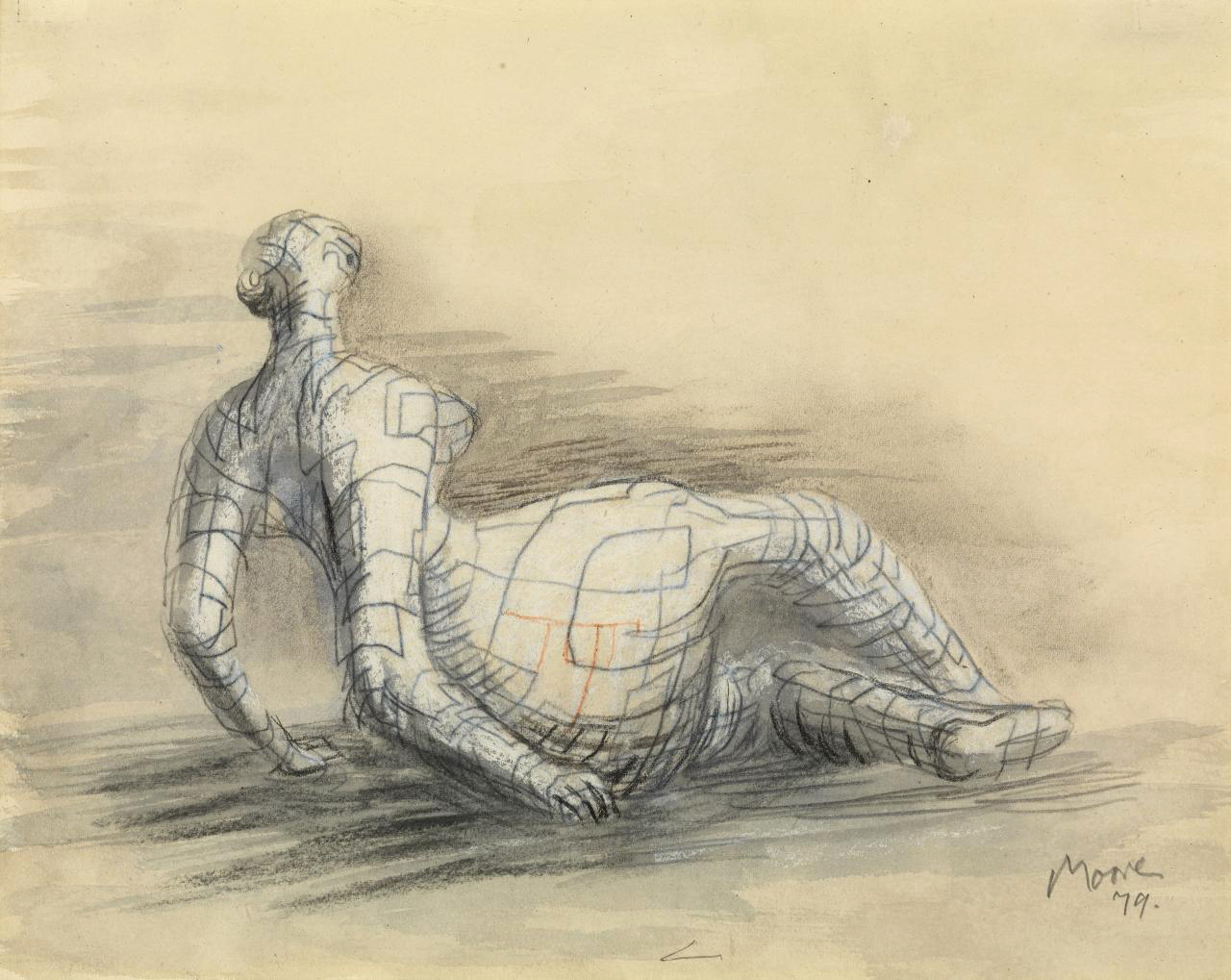
 

Henry Moore (English, 1898-1986) 'Reclining figure distorted - Sectional line' 1979


Henry Moore (English, 1898-1986)
Reclining figure distorted – Sectional line
1979
Chalk, charcoal, wax crayon, ballpoint pen and watercolour over pencil
National Gallery of Victoria
Gift of Ginny Green, Sandra Bardas OAM family, Vicki Vidor OAM and Bindy Koadlow in memory of their parents Loti Smorgon AO and Victor Smorgon AC through the Australian Government’s Cultural Gifts Program, 2014


William De Morgan (designer, England 1839-1917) 'Startled tigers, dish' c. 1880


William De Morgan & Co., London (manufacturer, England 1872-1911)
William De Morgan (designer, England 1839-1917)
Startled tigers, dish
c. 1880
Earthenware
National Gallery of Victoria
Felton Bequest 1980
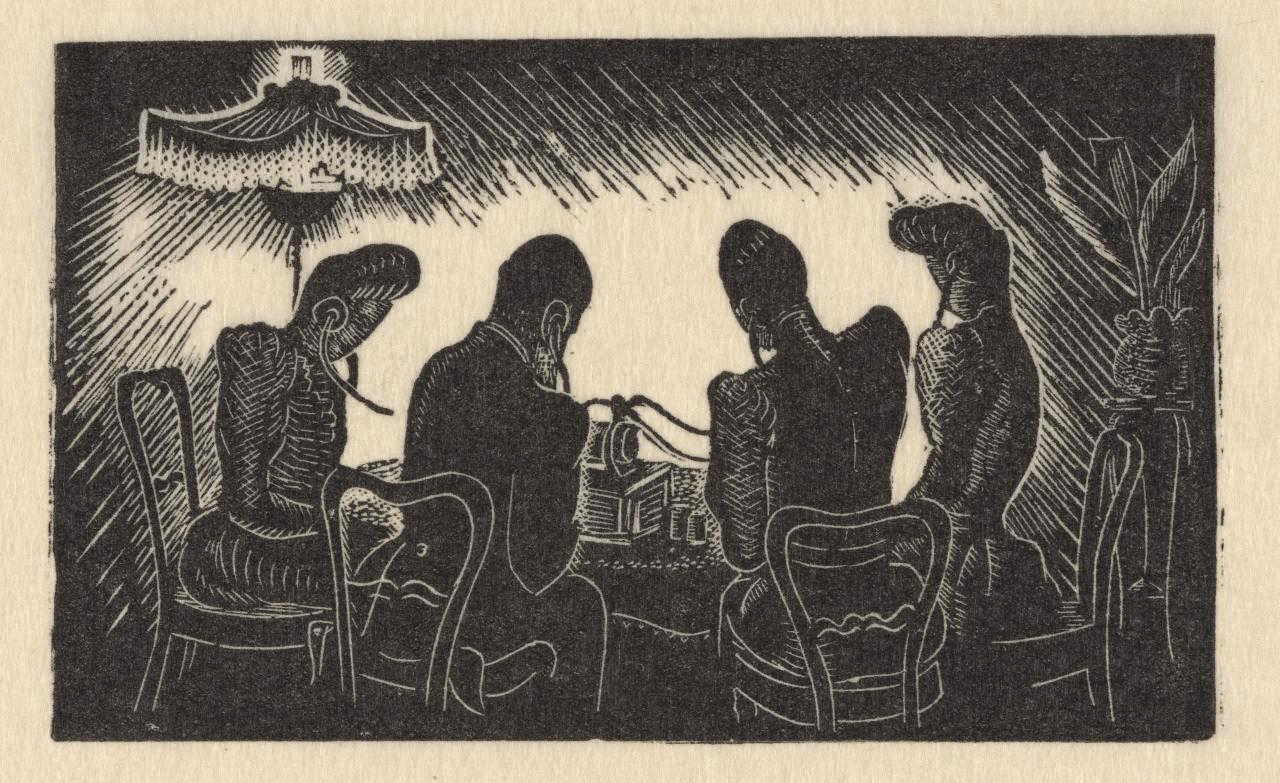
 

Helen Ogilvie (Australian, 1902-1993) '(Four figures seated at a table listening to a phonograph through earpieces)' c. 1947


Helen Ogilvie (Australian, 1902-1993)
(Four figures seated at a table listening to a phonograph through earpieces)
Illustration to Flinders Lane: recollections of Alfred Felton by Russell Grimwade. Melbourne University Press, Carlton, 1947
c. 1947
Wood-engraving on Japanese paper, proof
National Gallery of Victoria


“What interested me I think were the English wood engravers. I would have seen them in reproductions in books … I think it appealed to me as an artistic expression because it was done so directly with the hand. I know that when a painter is painting the hand is connected with the brain. But with wood engraving it seemed to me it was almost more so. And I got very worked up about it, but I had no way of learning … I know how I got started. Eric Thake was the man who said to me, “I’ll show you how to use your tool.”‘

from Anne Ryan, ‘Australian etchings and engravings 1880s-1930s from the Gallery’s collection’, AGNSW, Sydney 2007
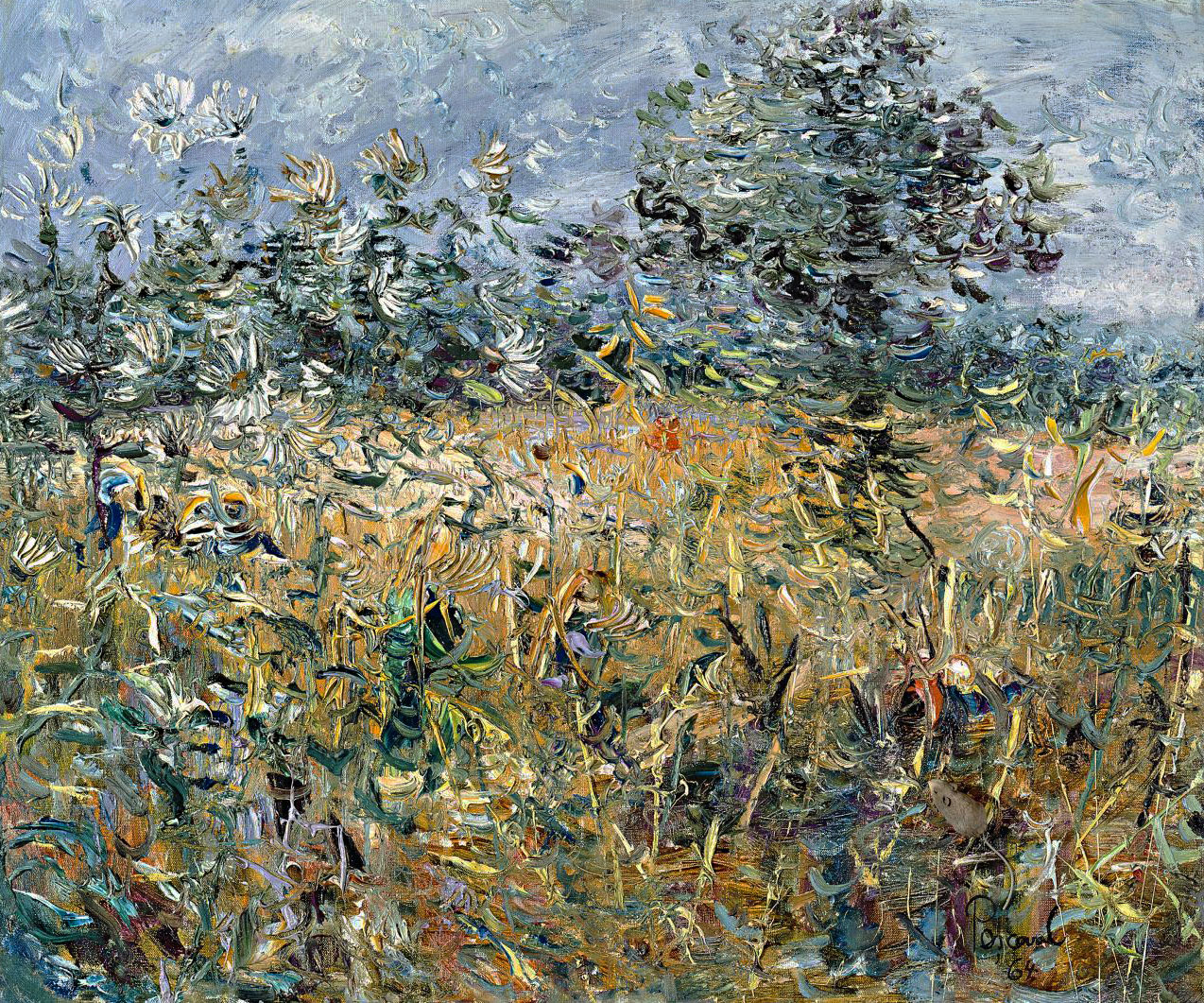
 

John Perceval (Australian, 1923-2000) 'Lover's walk in the corn, summer, England' 1964


John Perceval (Australian, 1923-2000)
Lover’s walk in the corn, summer, England
1964
Oil and toy mouse on canvas
National Gallery of Victoria
Presented through The Art Foundation of Victoria by Fingal Pastoral Property Limited, Fellow, 1997


Peter Peryer (New Zealand, 1941-2018) 'Seeing' 1989


Peter Peryer (New Zealand, 1941-2018)
Seeing
1989
Gelatin silver photograph
National Gallery of Victoria
Purchased 1996
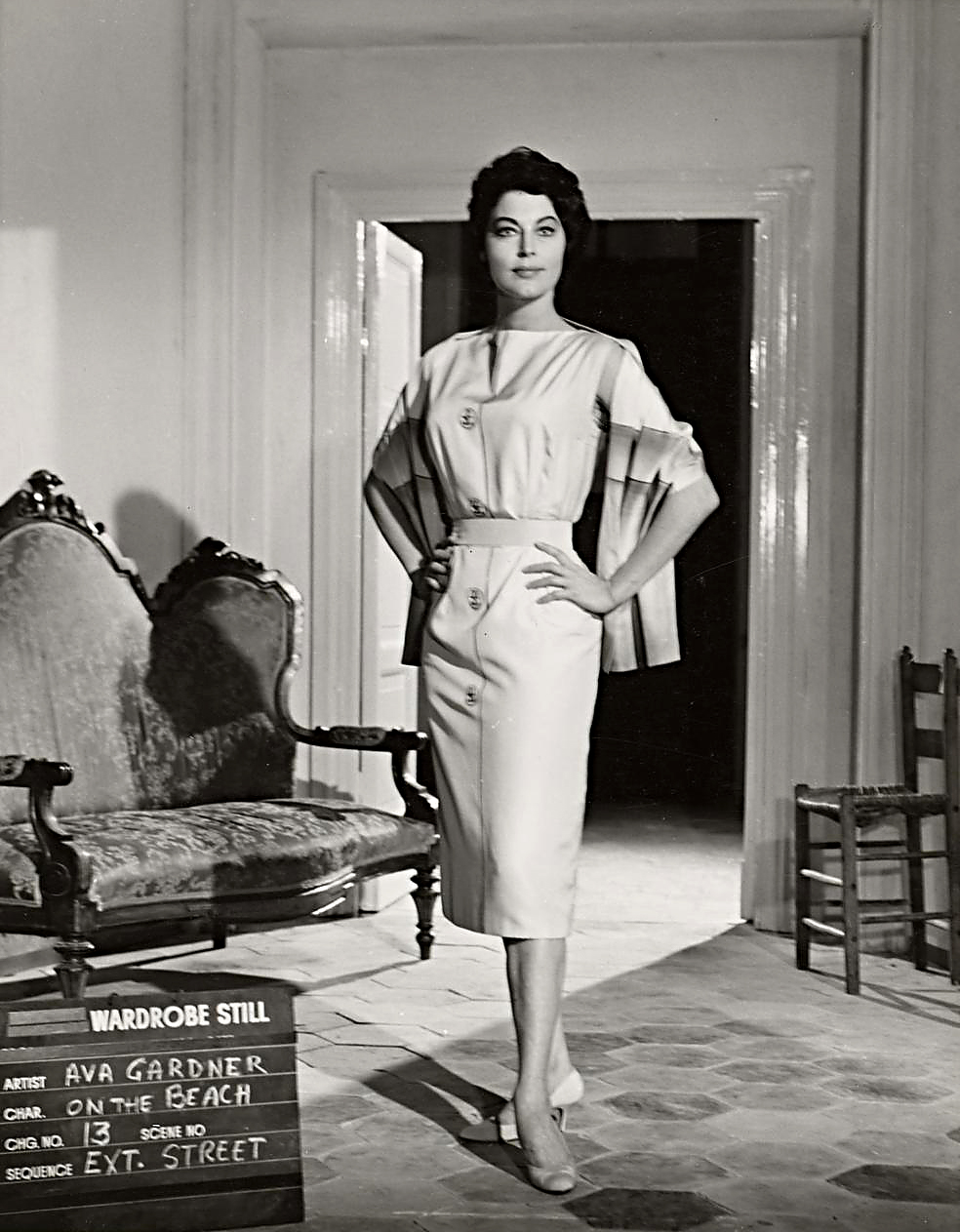
 

G. B. Poletto (Italian, 1915-1988) 'No title (Ava Gardner in wardrobe still for On the beach: Street)' 1957


G. B. Poletto (Italian, 1915-1988)
No title (Ava Gardner in wardrobe still for On the beach: Street)
1957
Gelatin silver photograph
National Gallery of Victoria
Purchased 2003


David Potts (Australian, 1926-2012, lived in England 1950-1955) 'Cat show, London' 1953


David Potts (Australian, 1926-2012, lived in England 1950-1955)
Cat show, London
1953
Gelatin silver photograph
National Gallery of Victoria
Purchased through the KODAK (Australasia) Pty Ltd Fund 1975
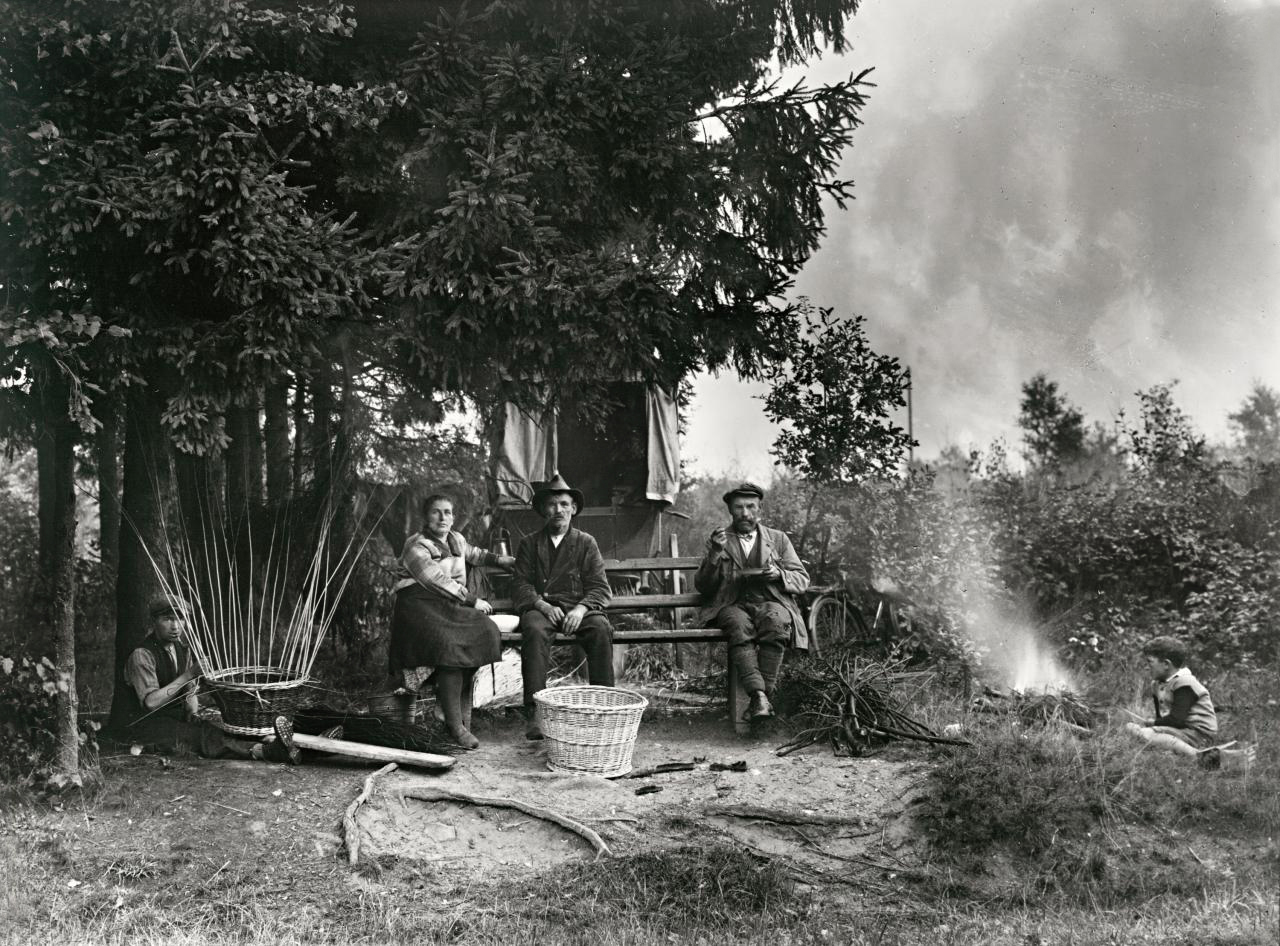
 

August Sander (German, 1876-1964) 'Itinerant basket makers' 1929


August Sander (German, 1876-1964)
Itinerant basket makers
from the People of the Twentieth Century project
1929, printed 1973
Gelatin silver photograph
National Gallery of Victoria
Purchased 1974


Nomadism

In the literature on nomadism, there is considerable disagreement over the range of societies that should be designated as “nomadic,” but there is some consensus that at least three categories of mobile peoples should be recognised. The first category, to which many wish to restrict the term “nomadic,” is that of pastoral nomads… The second broad category of nomads is that of hunter-gatherers, whose mode of subsistence sets them apart from both pastoralists and sedentary farmers…

The third basic category is that of Gypsies, itinerant basket-makers, tinkers, weavers, mimes, magicians, musicians, horse dealers, nostrum traders, carnival people, circus performers, and so on. Characterised the variously as “service nomads,” “economic nomads,” “commercial nomads,” “craftsman nomads,” “non-food producing nomads,” “floating industrial populations,” “peripatetic tribes,” “peripatetic peoples” or plain “peripatetics,” these are spatially mobile peoples who primarily exploit resources in the social environment. They exploit what Berland and Salo call a distinct peripatetic niche: “the regular demand for specialised goods and/or services that more sedentary or pastoral communities cannot, or will not, support on a permanent basis.”

Ronald Bogue. Deleuze’s Way: Essays in Transverse Ethics and Aesthetics. London and New York: Routledge, 2007, pp. 114-115.


Ben Shahn (born Lithuania 1898, lived in United States c. 1925-1969, died United States 1969) 'A deputy with a gun on his hip during the September 1935 strike in Morgantown, West Virginia' 1935, printed c. 1975


Ben Shahn (born Lithuania 1898, lived in United States c. 1925-1969, died United States 1969)
A deputy with a gun on his hip during the September 1935 strike in Morgantown, West Virginia
1935, printed c. 1975
Gelatin silver photograph
National Gallery of Victoria
Purchased, 1975


Athol Shmith (Australian, 1914-1990) 'Misses Mary and Rae Plotkin, bridesmaids at the wedding of Mrs Edith Sheezel' 1940


Athol Shmith (Australian, 1914-1990)
Misses Mary and Rae Plotkin, bridesmaids at the wedding of Mrs Edith Sheezel
1940
Hand-coloured gelatin silver photograph
National Gallery of Victoria
Gift of Mary Lipshut through the Australian Government’s Cultural Gift’s Program, 2012


Baron Raimund von Stillfried (Austrian, 1839-1911, lived throughout Europe and Asia 1871-1910) 'No title (Tattooed bettōs, porters)' c. 1875, printed c. 1877-1880


Baron Raimund von Stillfried (Austrian, 1839-1911, lived throughout Europe and Asia 1871-1910)
No title (Tattooed bettōs, porters)
c. 1875, printed c. 1877-1880
Albumen silver photograph, colour dyes
National Gallery of Victoria
Purchased through the NGV Foundation with the assistance of The Herald & Weekly Times Limited, Fellow, 2001


“There are two employments which I have mentioned among those of domestic servants because they would be so classed by us, but which in Japan rank among the trades. The jinrikisha man and the groom belong, as a rule, to a certain class at the bottom of the social ladder, and no samurai would think of entering either of these occupations, except under stress of severest poverty. The bettōs, or grooms, are a hereditary class and a regular guild, and have a reputation, among both Japanese and foreigners, as a betting, gambling, cheating, good-for-nothing lot. An honest bettō is a rare phenomenon.”

Alice Mabel Bacon. Japanese Girls and Women. Boston and New York: Houghton Mifflin Company The Riverside Press, 1891, p. 319.


Hiroshi Sugimoto (born Japan 1948, lived in United States and Japan 1976- ) 'Winnetka Drive-In, Paramount' 1993


Hiroshi Sugimoto (born Japan 1948, lived in United States and Japan 1976- )
Winnetka Drive-In, Pb  aramount
1993
Gelatin silver photograph, ed. 8/25
National Gallery of Victoria
Bowness Family Fund for Contemporary Photography, 2009


Hiroshi Sugimoto’s famous series Theaters is represented in the exhibition by the work Winnetka Drive-In, Paramount (1993) where  Sugimoto “photographs auditoriums of American movie theaters, and drive-in movies, during showings. The exposure time used for the photograph corresponds with the projection time of the film. This allows him to save the duration of the entire film in a single shot. What remains visible of the film’s time-compressed, individual images is the bright screen of the movie theater, which illuminates the architecture of the space. That its content retreats into the background makes the actual film a piece of information, manifesting itself in the (movie theater) space. As a result, instead of a content-related event, film presents itself here as the relationship between time and spatial perception.”3

If we think of the camera lens as being fully open, like an eye without blinking, for the duration of the length of the film then the shutter of the lens has to be set on “B” for Bulb which allows for long exposure times under the direct control of the photographer. “The term bulb is a reference to old-style pneumatically actuated shutters; squeezing an air bulb would open the shutter and releasing the bulb would close it… It appears that when instantaneous shutters were introduced, they included a B setting so that the familiar bulb behaviour could be duplicated with a cable release.”4 In other words light waves, reflecting from the surface of objects, are controlled by the photographer over an indefinite period (not the short “snap” of the freeze frame / the decisive moment), accumulating light from thousands of years in the past through the lens of the camera onto the focal plane, coalescing into a single image, controlled and constructed by the photographer.

Dr Marcus Bunyan from a review of the NGV exhibition Light Works 2012

3/ Kellein, Thomas and Sugimoto, Hiroshi. Time Exposed. Thames & Hudson, First edition, 1995, p. 91, quoted in Heike Helfert. “Hiroshi Sugimoto “Theaters”,” on the Media Art Net website Nd [Online] Cited 08/09/2012.
4/ Anonymous. “Bulb (photography),” on the Wikipedia website Nd [Online] Cited 08/09/2012.
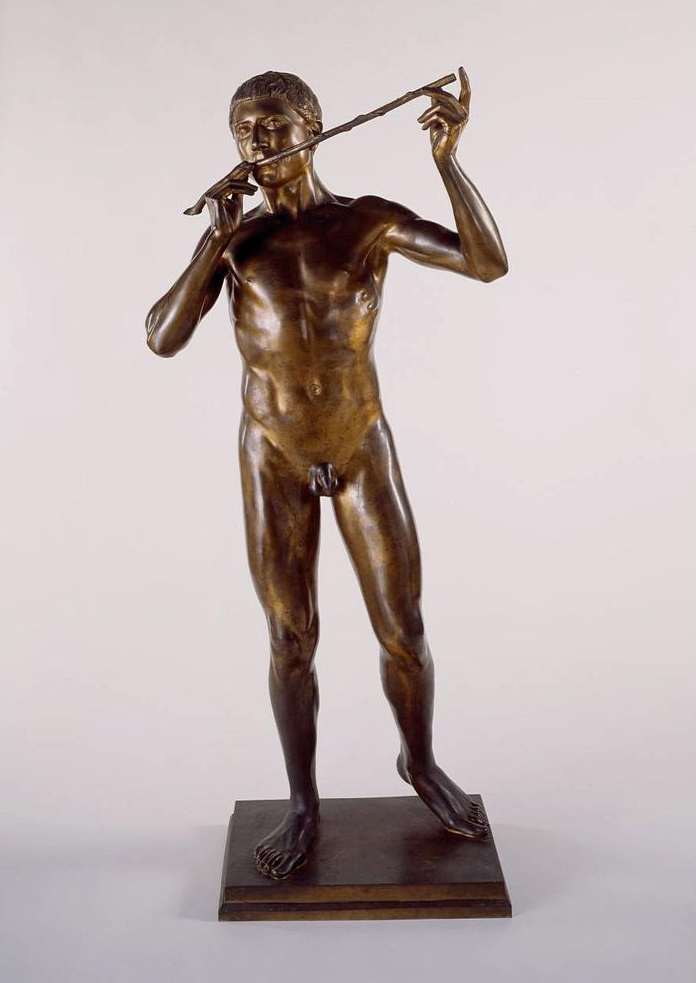
 

James Thomas (English, 1854-1921, lived in Italy 1889-1906) 'Thyrsis' 1914


James Thomas (English, 1854-1921, lived in Italy 1889-1906)
Thyrsis
1914
Bronze, patina
National Gallery of Victoria
Felton Bequest, 1915
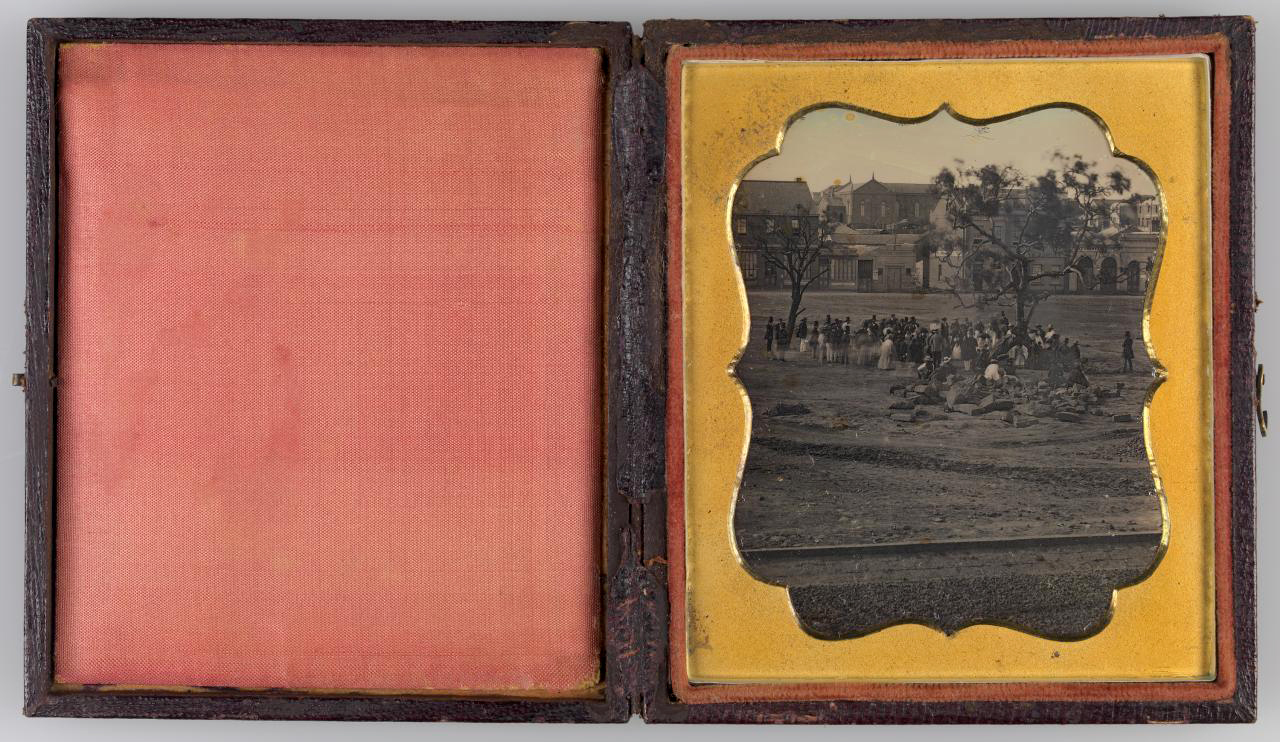
 

Joseph Turner (active in Australia 1856-1880s) 'No title (Laying the foundation stone of the Geelong clock tower)' 1856


Joseph Turner (active in Australia 1856-1880s)
No title (Laying the foundation stone of the Geelong clock tower)
1856
Daguerreotype leather, wood, silk, gilt metal and glass (case)
National Gallery of Victoria
Purchased, 1974


Market Square was a town square located in the centre of Geelong, Victoria, Australia. Consisting of eight acres (2.9 hectares) of land, the area was reserved by Governor Sir George Gipps as a town square during the initial surveying of Geelong. The area later became a produce market, before being progressively built upon. Today the Market Square Shopping Centre occupies the site, having been opened in 1985 by the City of Geelong…

A clock tower was built in the centre of the square in 1856. It was the idea of the second mayor of Geelong James Austin, who offered to pay for a clock tower in Geelong to mark his term as mayor. The clock was featured in The Illustrated London News in March 1855. Components for the clock arrived in Geelong on November 13, 1855 from England, but the location for the clock had yet to be decided. Suggestions of high ground at top of Moorabool, Yarra or Gheringhap Streets were put forward at the time, the indecision lasting into early 1856. In July 1857 a decision was made, and the foundation stone was finally laid in the Market Square…

The clock tower remained until October 1923 when it was demolished to make way for the CML Building. There was a public outcry, and no one was willing to demolish it. However, it was deemed too impractical to move intact, and was brought down by steel cables attached to traction engine. The site of the clock tower is marked by a plaque in the Market Square Shopping Centre.

Text from the Wikipedia website


William Wegman (American, b. 1943) 'Horned hound' 1991


William Wegman (American, b. 1943)
Horned hound
1991
Polaroid photograph
National Gallery of Victoria
Purchased, 1992


The Ian Potter Centre: NGV Australia
Federation Square
Corner of Russell and 
Flinders Streets, Melbourne

Opening hours:
Daily 10am – 5pm

National Gallery of Victoria website

LIKE ART BLART ON FACEBOOK

Back to top

Exhibition: ‘The Radical Eye: Modernist Photography from the Sir Elton John Collection’ at Tate Modern, London

Exhibition dates: 10th November, 2016 – 7th May, 2017

Curators: Shoair Mavlian with Simon Baker and Newell Harbin, Director of The Sir Elton John Photography Collection


Paul Strand (American, 1890-1976) 'Wall Street, New York' 1915 from the exhibition 'The Radical Eye: Modernist Photography from the Sir Elton John Collection' at Tate Modern, London, Nov 2016 - May 2017


Paul Strand (American, 1890-1976)
Wall Street, New York
1915
Silver gelatin print
The Sir Elton John Photographic Collection


Many thankx to Tate Modern for allowing me to publish the photographs in the posting. Please click on the photographs for a larger version of the image.

“This is a once-in-a-lifetime chance to see one of the world’s greatest private collections of photography, drawn from the classic modernist period of the 1920s-50s. An incredible group of Man Ray portraits are exhibited together for the first time, having been brought together by Sir Elton John over the past twenty-five years, including portraits of Matisse, Picasso, and Breton. With over 70 artists and nearly 150 rare vintage prints on show from seminal figures including Brassai, Imogen Cunningham, André Kertész, Dorothea Lange, Tina Modotti, and Aleksandr Rodchenko, this is a chance to take a peek inside Elton John’s home and delight in seeing such masterpieces of photography.”

Text from the Tate Modern website


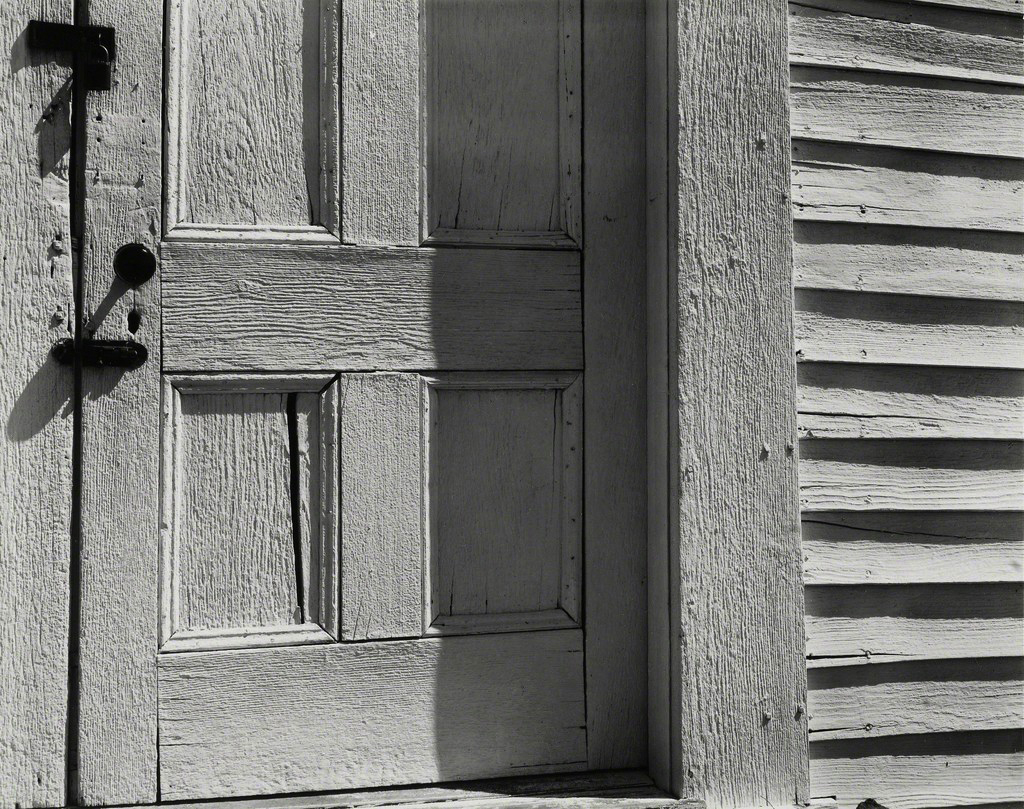
Edward Weston (American, 1886-1958) 'White Door, Hornitos, California' 1940 from the exhibition 'The Radical Eye: Modernist Photography from the Sir Elton John Collection' at Tate Modern, London, Nov 2016 - May 2017


Edward Weston (American, 1886-1958)
White Door, Hornitos, California
1940
Silver gelatin print
The Sir Elton John Photographic Collection


Tate Modern presents a major new exhibition, The Radical Eye: Modernist Photography from the Sir Elton John Collection, drawn from one of the world’s greatest private collections of photography. This unrivalled selection of classic modernist images from the 1920s to the 1950s features almost 200 works from more than 60 artists, including seminal figures such as Berenice Abbott, André Kertész, Man Ray, Alexandr Rodchenko and Edward Steichen among many others. The exhibition consists entirely of rare vintage prints, all created by the artists themselves, offering a unique opportunity to see remarkable works up close. The quality and depth of the collection allows the exhibition to tell the story of modernist photography in this way for the first time in the UK. It also marks the beginning of a long term relationship between Tate and The Sir Elton John Collection, as part of which Sir Elton and David Furnish have agreed to give important works to the nation.

The Radical Eye introduces a crucial moment in the history of photography – an exciting rupture often referred to as the ‘coming of age’ of the medium, when artists used photography as a tool through which they could redefine and transform visions of the modern world. Technological advancements gave artists the freedom to experiment and test the limits of the medium and present the world through a new, distinctly modern visual language. This exhibition reveals how the timeless genres of the portrait, nude and still life were reimagined through the camera during this period, also exploring photography’s unique ability to capture street life and architecture from a new perspective.

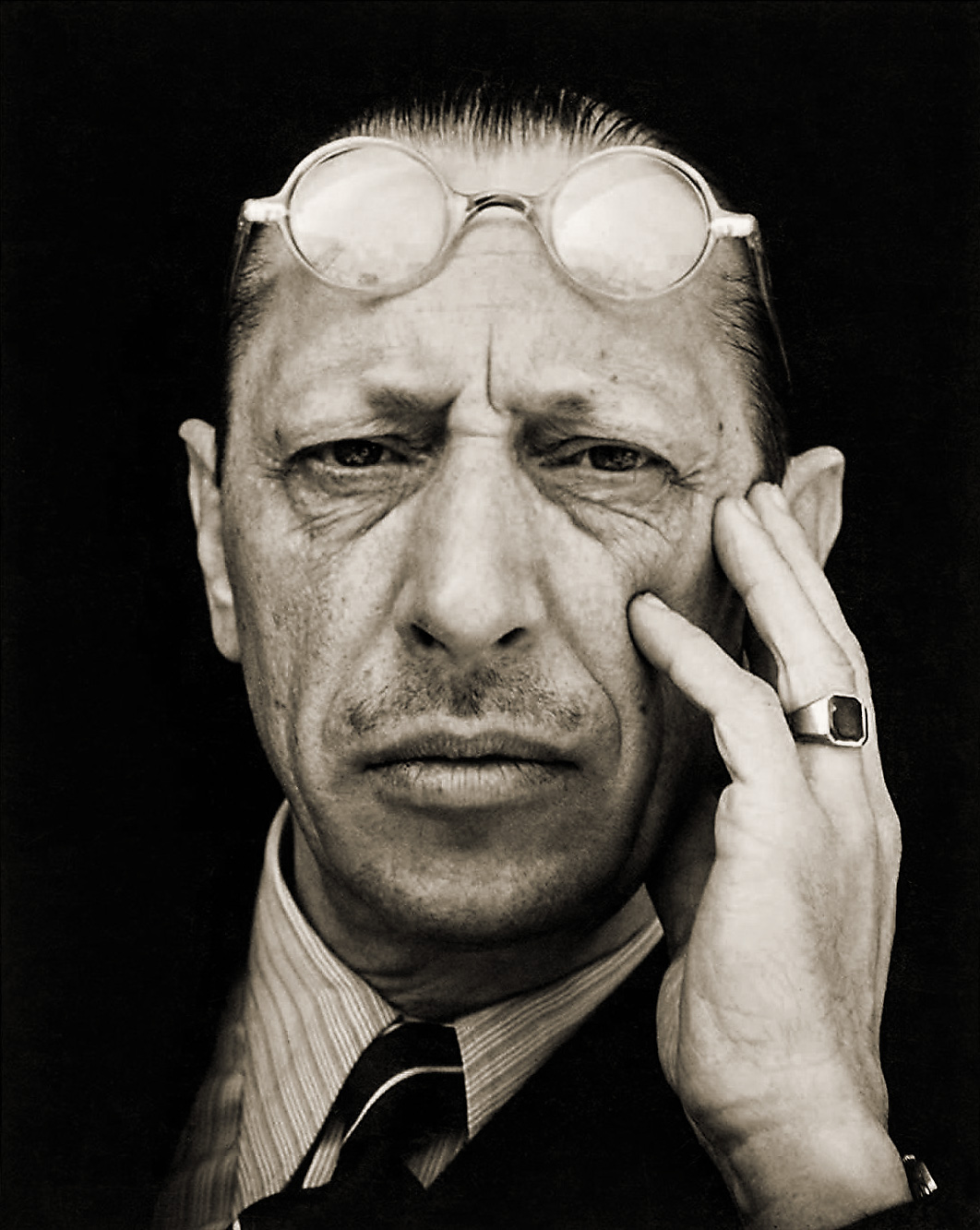
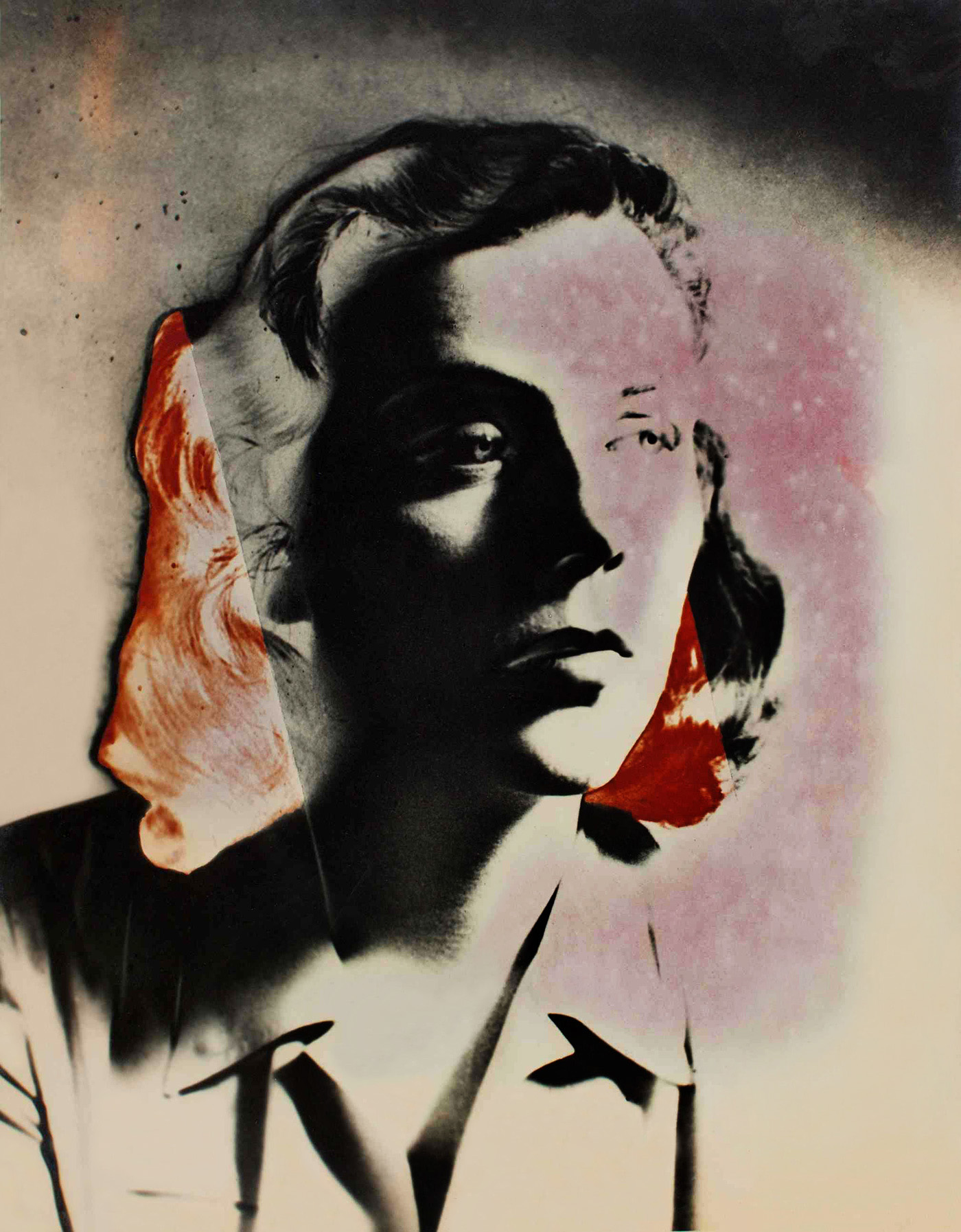
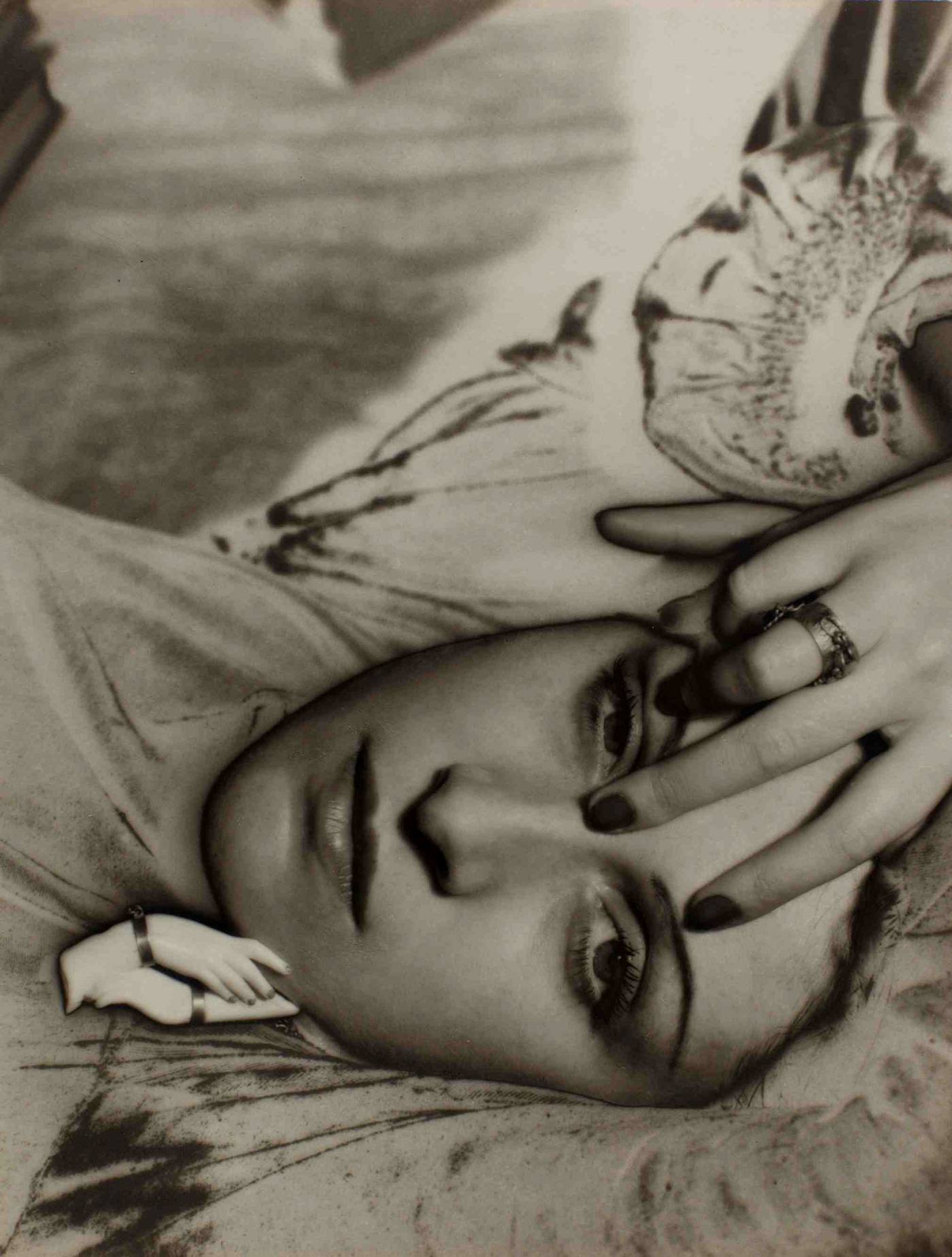
Featuring portraits of great cultural figures of the 20th century, including Georgia O’Keeffe by Alfred Stieglitz, Edward Weston by Tina Modotti, Jean Cocteau by Berenice Abbott and Igor Stravinsky by Edward Weston, the exhibition gives insight into the relationships and inner circles of the avant-garde. An incredible group of Man Ray portraits are exhibited together for the first time, having been brought together by Sir Elton John over the past twenty-five years, depicting key surrealist figures such as Andre Breton and Max Ernst alongside artists including Henri Matisse, Pablo Picasso and Dora Maar. Ground-breaking experimentation both in the darkroom and on the surface of the print, such as Herbert Bayer’s photomontage and Maurice Tabard’s solarisation, examine how artists pushed the accepted conventions of portraiture.

As life underwent rapid changes in the 20th century, photography offered a new means to communicate and represent the world. Alexandr Rodchenko, László Moholy-Nagy and Margaret Bourke-White employed the ‘worm’s eye’ and ‘bird’s eye’ views to create new perspectives of the modern metropolis – techniques associated with constructivism and the Bauhaus. The move towards abstraction is also explored, from isolated architectural elements to camera-less photography such as Man Ray’s rayographs and Harry Callahan’s light abstractions.

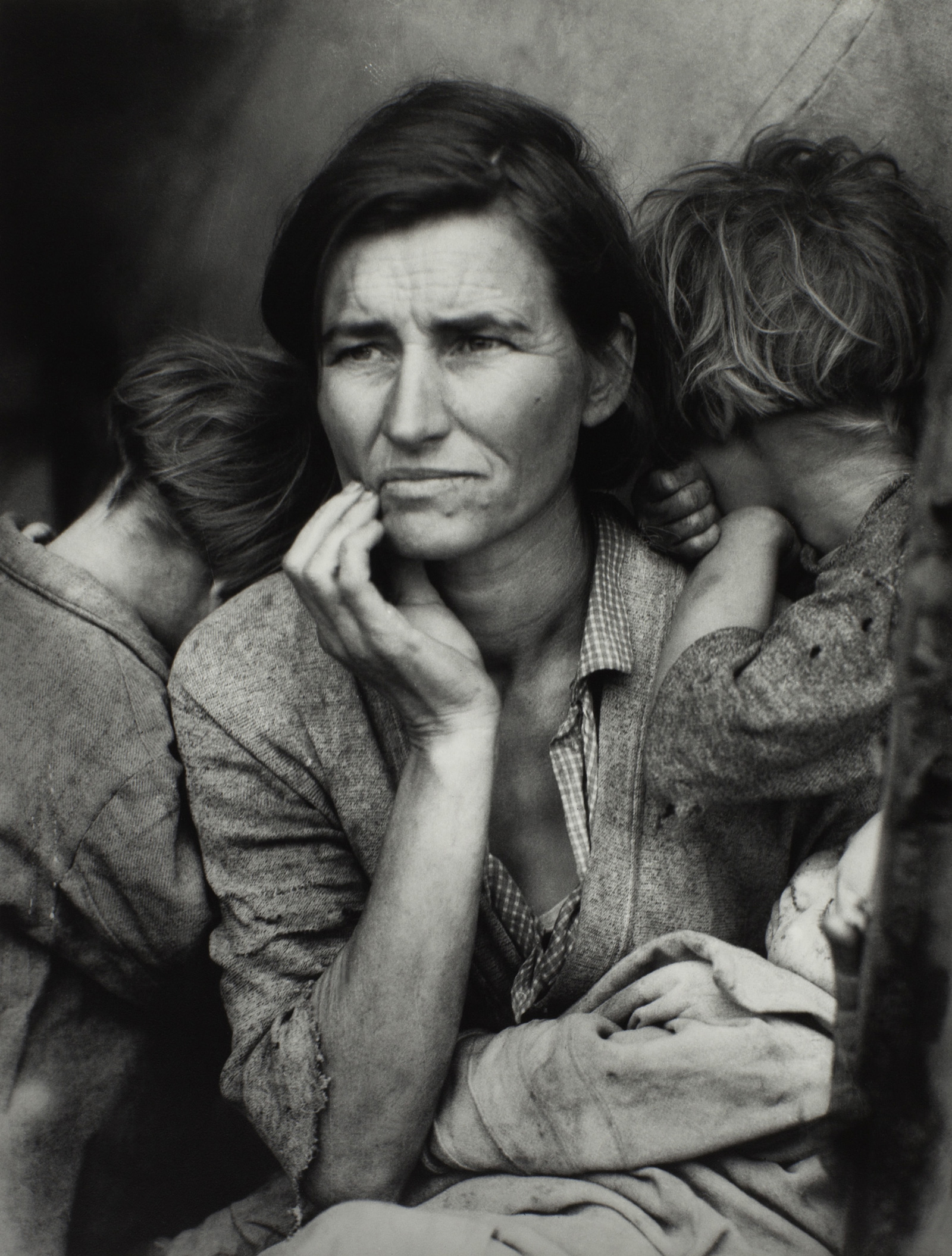
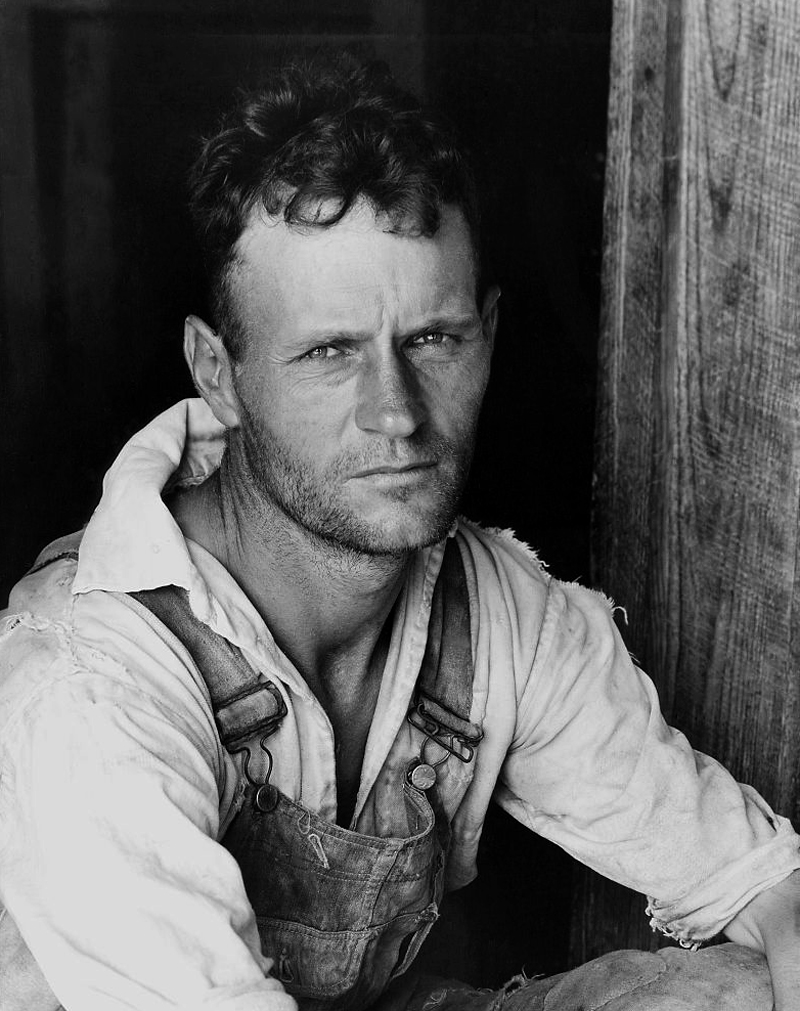
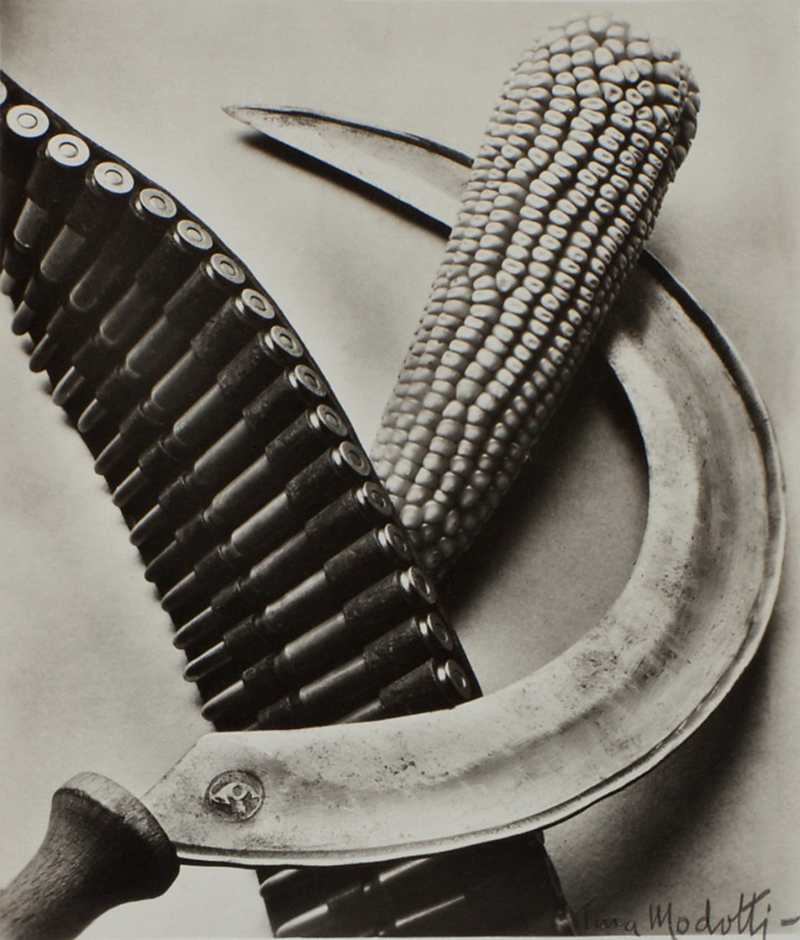
A dedicated section of the exhibition looks at the new approaches that emerged in capturing the human form, highlighted in rare masterpieces such as André Kertész’s Underwater Swimmer, Hungary 1917, while Imogen Cunningham’s Magnolia Blossom, Tower of Jewels 1925 and Tina Modotti’s Bandelier, Corn and Sickle 1927 feature in a large presentation dedicated to the Still Life. The important role of documentary photography as a tool of mass communication is demonstrated in Dorothea Lange’s Migrant Mother 1936 and Walker Evans’ Floyde Burroughs, Hale County, Alabama 1936, from the Farm Security Administration project.

The Radical Eye: Modernist Photography from the Sir Elton John Collection is at Tate Modern from 10 November 2016 until 7 May 2017. It is curated by Shoair Mavlian with Simon Baker and Newell Harbin, Director of The Sir Elton John Photography Collection. The exhibition is accompanied by an exclusive audio tour of the exhibition featuring commentary from Sir Elton John, and a major new catalogue from Tate Publishing including an interview with Sir Elton John by Jane Jackson.

Press release from Tate Modern


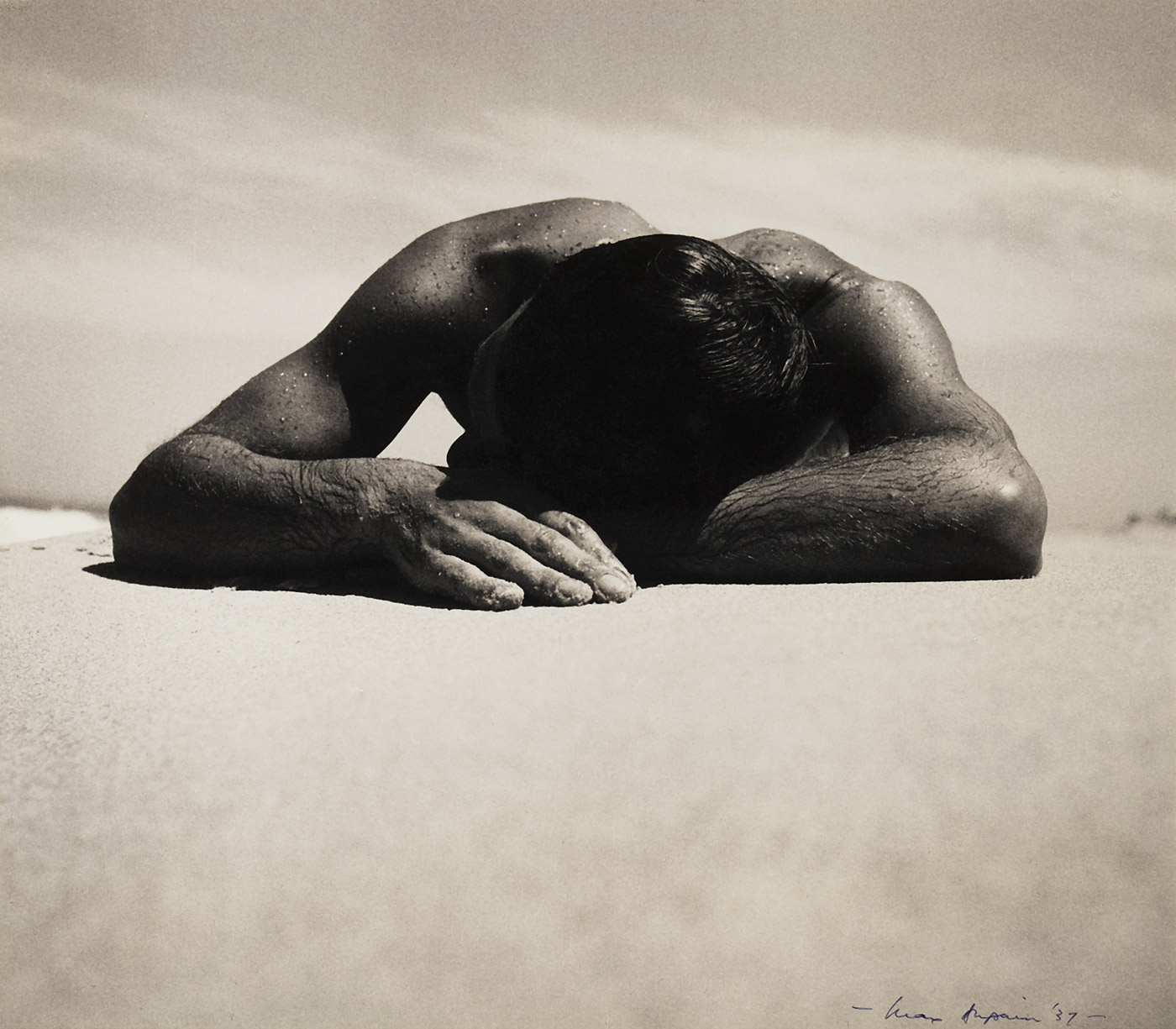
Max Dupain (Australian, 1911-1992) 'Sunbaker' 1937


Max Dupain (Australian, 1911-1992)
Sunbaker
1937
Silver gelatin print
The Sir Elton John Photographic Collection


“We possess an extraordinary instrument for reproduction. But photography is much more than that. Today it is … bringing something entirely new into the world.”


László Moholy-Nagy, 1932


Artists in the modernist period explored what the camera could do that the human eye alone could not, and how this could be harnessed to present a new modern perspective on the world. Artist and theorist László Moholy-Nagy proclaimed that photography could radically change not just what, but how we see. He called this the ‘new vision’. Rather than emulating other art forms, photography began to embrace qualities unique to itself, from its ability to reproduce the world in sharp detail to its capacity to create new realities through the manipulation of light, chemicals and paper.

This re-evaluation of photography coincided with a period of upheaval. War, revolution and economic depression led to mass movements of people and great social change. The idea of the avant-garde took hold and dada and surrealism emerged, challenging both the art and social norms that had come before. At the same time, new art schools such as the Bauhaus in Germany and Vkhutemas in Russia fostered the role of the professional artist and challenged divisions between art and design.

The Radical Eye is arranged thematically and charts a changing emphasis from the subject of an image to the visual qualities of the photograph itself, irrespective of what it represents. The many vintage prints in this exhibition – made soon after the photographs were taken – give a rare insight into the artists’ processes and creative decisions, and foreground the photograph as a physical object. All works are shown in the frames in which they are displayed in the home of Sir Elton John and David Furnish.

Together, the works in this exhibition show how photography pushed the boundaries of the possible, changing the world through the ways in which it was seen and understood. ‘Knowledge of photography is just as important as that of the alphabet. The illiterates of the future will be ignorant of the use of camera and pen alike,’ wrote Moholy-Nagy in 1927, foreseeing the cultural dominance of the photographic image. This extraordinary period still impacts how we, the photo-literate future, read and create images today.


Alfred Stieglitz (American, 1864-1946) 'Georgia O'Keeffe' 1922


Alfred Stieglitz (American, 1864-1946)
Georgia O’Keeffe
1922
Silver gelatin print
The Sir Elton John Photographic Collection


“They collect themselves. Carefully, as if tying a cravat, they compose their features. Insolent, serious and conscious of their looks they turn around to face the world.”

From ‘Men before the Mirror’, published alongside portraits by Man Ray, 1934


Portraits

Modernist portraiture harnessed photography’s capacity to render an accurate likeness in clear, sharp focus and detail. But at the same time, artists and sitters pushed the conventions of portraiture with innovations in pose, composition and cropping.

Many of the portraits in this room are of artists, writers and musicians, giving a cross section of key cultural players of the time. Issues of control and collaboration arise particularly when the subject is an artist, raising the question of who is responsible for conveying the sitter’s persona. The modernist period also saw a boom of the illustrated press. Magazines reproduced photographic portraits of well-known figures which were instrumental in shaping their public images.


Man Ray (American, 1890-1976) 'Nusch Éluard' 1928


Man Ray (American, 1890-1976)
Nusch Éluard
1928
Silver gelatin print
The Sir Elton John Photography Collection
Photograph: Man Ray Trust/ADAGP, Paris and DACS, London 2016


Nusch Éluard (born Maria Benz; June 21, 1906 – November 28, 1946) was a French performer, model and surrealist artist…

Nusch arrived in France as a stage performer, variously described as a small-time actress, a traveling acrobat, and a “hypnotist’s stooge”. She met Paul Éluard in 1930 working as a model, married him in 1934, produced surrealist photomontage and other work, and is the subject of “Facile,” a collection of Éluard’s poetry published as a photogravure book, illustrated with Man Ray’s nude photographs of her.

She was also the subject of several cubist portraits and sketches by Pablo Picasso in the late 1930s, and is said to have had an affair with him. Nusch worked for the French Resistance during the Nazi occupation of France during World War II. She died in 1946 in Paris, collapsing in the street due to a massive stroke.

Text from the Wikipedia website


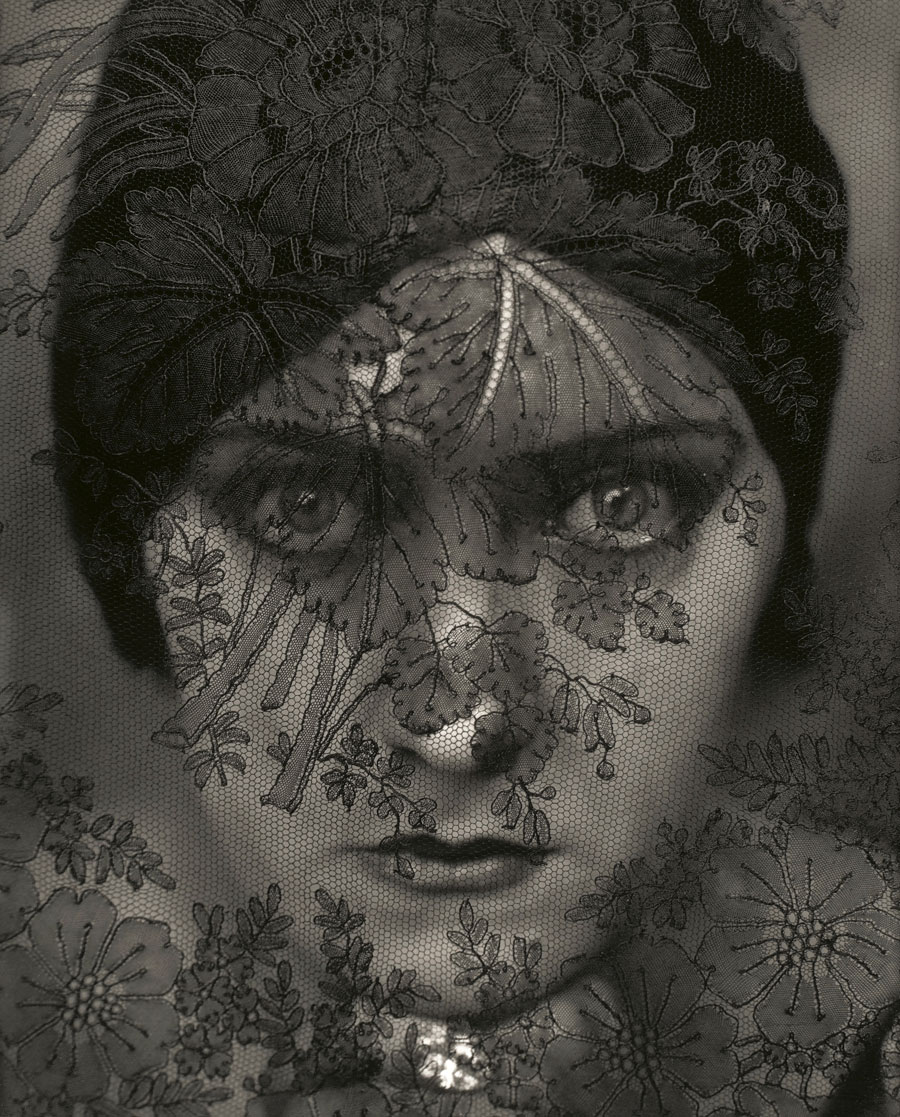
Edward Steichen (American 1879-1973, emigrated to United States 1881, worked in France 1906-23) 'Actress Gloria Swanson' 1924


Edward Steichen (American 1879-1973, emigrated to United States 1881, worked in France 1906-1923)
Actress Gloria Swanson
1924
Silver gelatin print
The Sir Elton John Photography Collection
© 1924 Condé Nast Publications


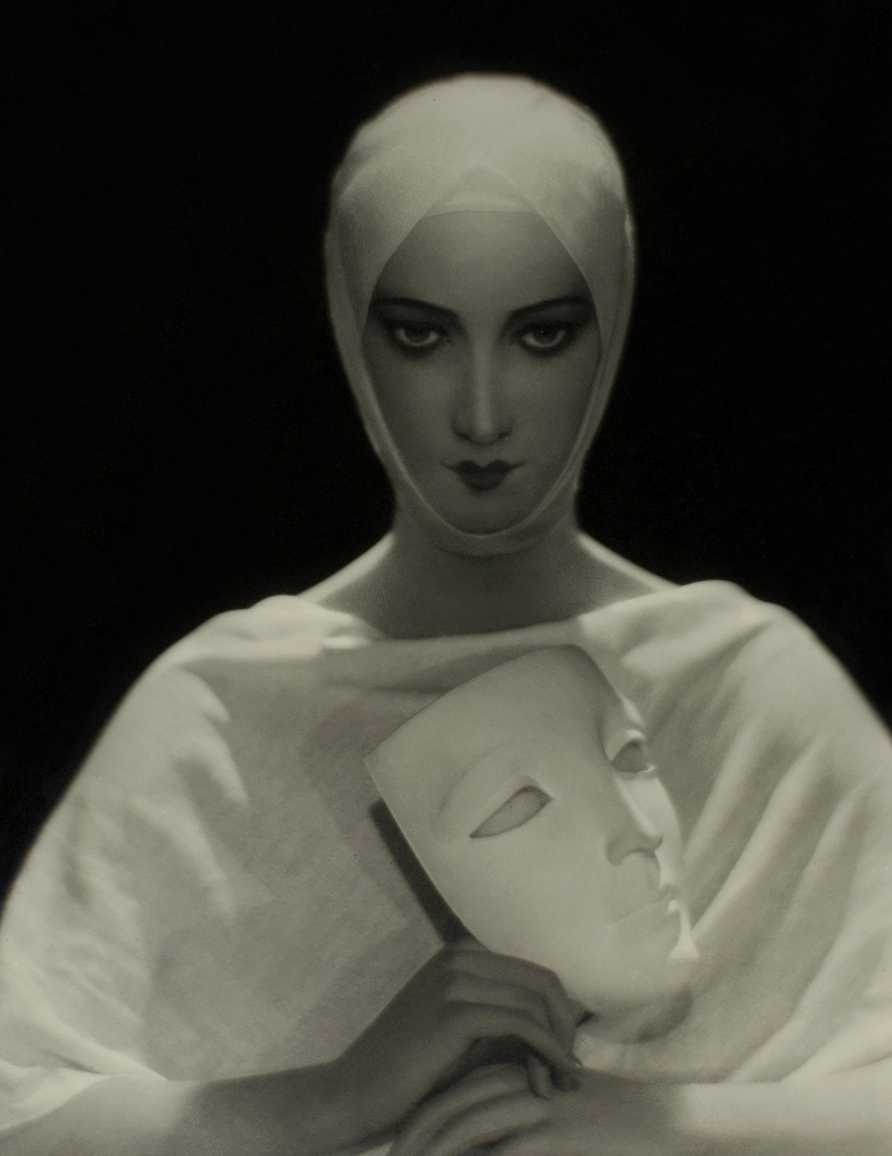
Adolph de Meyer (European / American, 1868-1946) 'For Elizabeth Arden (The Wax Head)' 1931


Adolph de Meyer (European / American, 1868-1946)
For Elizabeth Arden (The Wax Head)
1931
Silver gelatin print
The Sir Elton John Photography Collection


Edward Weston (American, 1886-1958) 'Igor Stravinsky' 1935


Edward Weston (American, 1886-1958)
Igor Stravinsky
1935
Silver gelatin print
© 1981 Center for Creative Photography


George Platt Lynes (American, 1907-1955) 'A Forgotten Model' c. 1937


George Platt Lynes (American, 1907-1955)
A Forgotten Model
c. 1937
Silver gelatin print
The Sir Elton John Photography Collection


Man Ray (American, 1890-1976) 'Juliet and Margaret Nieman in Papier-Mâché Masks' c. 1945


Man Ray (American, 1890-1976)
Juliet and Margaret Nieman in Papier-Mâché Masks
c. 1945
Gelatin silver print
The Sir Elton John Photography Collection
Photograph: © Man Ray Trust/ADAGP, Paris and DACS, London 2016


Irving Penn (American, 1917-2009) 'Salvador Dali in New York' 1947


Irving Penn (American, 1917-2009)
Salvador Dali in New York
1947
Silver gelatin print
The Sir Elton John Photography Collection
Photograph: The Irving Penn Foundation


“The enemy of photography is convention, the fixed rules ‘how to do’. The salvation of photography comes from the experiment.”


László Moholy-Nagy, c. 1940


Experiments

This was not a period of discovery but of rediscovery. Artists were rewriting the preceding century’s rules of photographic technique, harnessing ‘mistakes’ such as distortions and double exposures, or physically manipulating the printed image, cutting, marking and recombining photographs. These interventions could occur at any point in the process, from taking the image to the final print.

Used in portraiture, such experiments allowed for more psychologically charged representations. However, the transformative power of a particular technique often becomes much more important than the particular subject of the image. Above all, the rich creative possibilities of the photographic process come to the fore. While artists were seriously investigating the medium, the results are often surprising and playful.


Herbert Bayer (American born Austria, 1900-1985) 'Self-Portrait' 1932


Herbert Bayer (American born Austria, 1900-1985)
Self-Portrait
1932
Silver gelatin print
The Sir Elton John Photographic Collection
© DACS 2016


Otto Umbehr (German, 1902-1980) "Katz" – Cat 1927


Otto Umbehr (German, 1902-1980)
“Katz” – Cat
1927
Silver gelatin print
The Sir Elton John Photographic Collection
© Phyllis Umbehr/Galerie Kicken Berlin/DACS 2016


Josef Breitenbach (German, 1896-1984) 'Patricia, New York' c. 1942


Josef Breitenbach (German, 1896-1984)
Patricia, New York
c. 1942
Silver gelatin print
The Sir Elton John Photography Collection
Photograph: Josef and Yaye Breitenbach Charitable Foundation, Courtesy Gitterman Gallery


“The camera should be used for a recording of life, for rendering the very substance and quintessence of the thing itself, whether it be polished steel or palpitating flesh.”


Edward Weston, 1924


Bodies

Experimental approaches to shooting, cropping and framing could transform the human body into something unfamiliar. Photographers started to focus on individual parts of the body, their unconventional crops drawing attention to shape and form, accentuating curves and angles. Fragmented limbs and flesh were depersonalised and could be treated like a landscape or still life, dissolving distinctions between different genres. Thanks to faster shutter speeds and new celluloid roll film, photographers could also freeze the body in motion outside of the studio for the first time, capturing dancers and swimmers with a clarity impossible for the naked eye.


André Kertész (Hungarian, 1894-1985) 'Underwater Swimmer, Esztergom, Hungary, 30 June 1917' 1917


André Kertész (Hungarian, 1894-1985)
Underwater Swimmer, Esztergom, Hungary, 30 June 1917
1917
The Sir Elton John Photography Collection
© Estate of André Kertész/Higher Pictures


Rudolph Koppitz (Austrian, 1884-1936) 'Movement Study' 1925


Rudolph Koppitz (Austrian, 1884-1936)
Movement Study
1925
Gelatin silver print
The Sir Elton John Photography Collection
Photograph: ADAGP, Paris and DACS London 2016


Man Ray (American, 1890-1976) 'Noire et Blanche' 1926


Man Ray (American, 1890-1976)
Noire et Blanche
1926
Silver gelatin print
The Sir Elton John Photography Collection
Photograph: Man Ray Trust/ADAGP, Paris and DACS, London 2016


Man Ray (American, 1890-1976) 'Glass Tears (Les Larmes)' 1932


Man Ray (American, 1890-1976)
Glass Tears (Les Larmes)
1932
Gelatin silver print on paper
229 x 298 mm
Collection Elton John
© Man Ray Trust/ADAGP, Paris and DACS, London 2016


Edward Weston (American, 1886-1958) 'Nude' 1936


Edward Weston (American, 1886-1958)
Nude
1936
Silver gelatin print
The Sir Elton John Photography Collection
Photograph: 1981 Center for Creative Photography, Arizona Board of Regents


Man Ray (American, 1890-1976) 'Dora Maar' 1936


Man Ray (American, 1890-1976)
Dora Maar
1936
Silver gelatin print
The Sir Elton John Photography Collection
Photograph: Man Ray Trust/ADAGP, Paris and DACS, London 2016


Nino Migliori (Italian, b. 1926) 'Il Tuffatore' (The Diver) 1951


Nino Migliori (Italian, b. 1926)
Il Tuffatore (The Diver)
1951
Silver gelatin print
The Sir Elton John Photography Collection


“The documentary photographer is trying to speak to you in terms of everyone’s experience.”


Dorothea Lange, 1934


Documents

During the 1930s, photographers refined the formula for what we now know as social documentary. To compel the public to look at less palatable aspects of contemporary society they married creative manipulation with an appeal to viewers’ trust in the photograph as an objective visual record. This combination proved itself uniquely capable of eliciting empathy but is fraught with artistic and ethical complexity. These works highlight the vexed position of documentary photographs: historical evidence, instruments of propaganda and, latterly, works of art.

The development of new technology – particularly the portable camera and roll film – allowed photographers to capture spontaneous moments unfolding in the everyday world. Taking viewers into neighbourhoods where they might never set foot, street photography and documentary opened up new perspectives socially as much as visually.


Dorothea Lange (American, 1895-1965) 'Migrant Mother' 1936


Dorothea Lange (American, 1895-1965)
Migrant Mother
1936
Silver gelatin print
The Sir Elton John Photographic Collection


Walker Evans (American, 1903-1975) 'Floyde Burroughs, a cotton sharecropper, Hale County, Alabama' 1936


Walker Evans (American, 1903-1975)
Floyde Burroughs, a cotton sharecropper, Hale County, Alabama
1936
Silver gelatin print
The Sir Elton John Photography Collection


Dorothea Lange (American, 1895-1965) 'A young girl living in a shack town near Oklahoma City, Oklahoma' 1936


Dorothea Lange (American, 1895-1965)
A young girl living in a shack town near Oklahoma City, Oklahoma
1936
Silver gelatin print
The Sir Elton John Photography Collection


Walker Evans (American, 1903-1975) 'Christ or Chaos?' 1946


Walker Evans (American, 1903-1975)
Christ or Chaos?
1946
Gelatin silver print
The Sir Elton John Photography Collection
Photograph: Walker Evans Archives, The Metropolitan Museum of Art


“Contradictions of perspective. Contrasts of light. Contrasts of form. Points of view impossible to achieve in drawing and painting.”


Aleksandr Rodchenko, 1920s


Objects, Perspectives, Abstractions

The subjects and approaches of modernist photography vary widely, but are united by a fascination with the medium itself. Every image asks what photography is capable of and how it can be pushed further. This final room brings together three interlinked approaches. It shows the still life genre reimagined by photographers who used the technical capabilities of the camera to reveal the beauty of everyday things. Objects captured at unconventional angles or extreme close-up become strange, even unrecognisable.

A similar effect of defamiliarisation was accomplished by taking photographs from radically new perspectives, positioning a camera at the point of view of the ‘worm’s eye’ or ‘bird’s eye’. This created extreme foreshortening that transformed photographs from descriptive images of things into energetic compositions hovering between abstraction and representation.

Abstraction pushes against photography’s innate ability to record objectively. Radical techniques such as cameraless image-making simplified the medium to the point of capturing the play of light on photosensitive paper. By stripping it back to its most basic components, artists celebrated photography, not as a tool for reproduction, but as a creative medium capable of producing new imagery.


Alexander Rodchenko (Russian, 1891-1956) 'Shukov Tower' 1920


Alexander Rodchenko (Russian, 1891-1956)
Shukov Tower
1920
Silver gelatin print
The Sir Elton John Photographic Collection
© A. Rodchenko & V. Stepanova Archive, DACS, RAO 2016


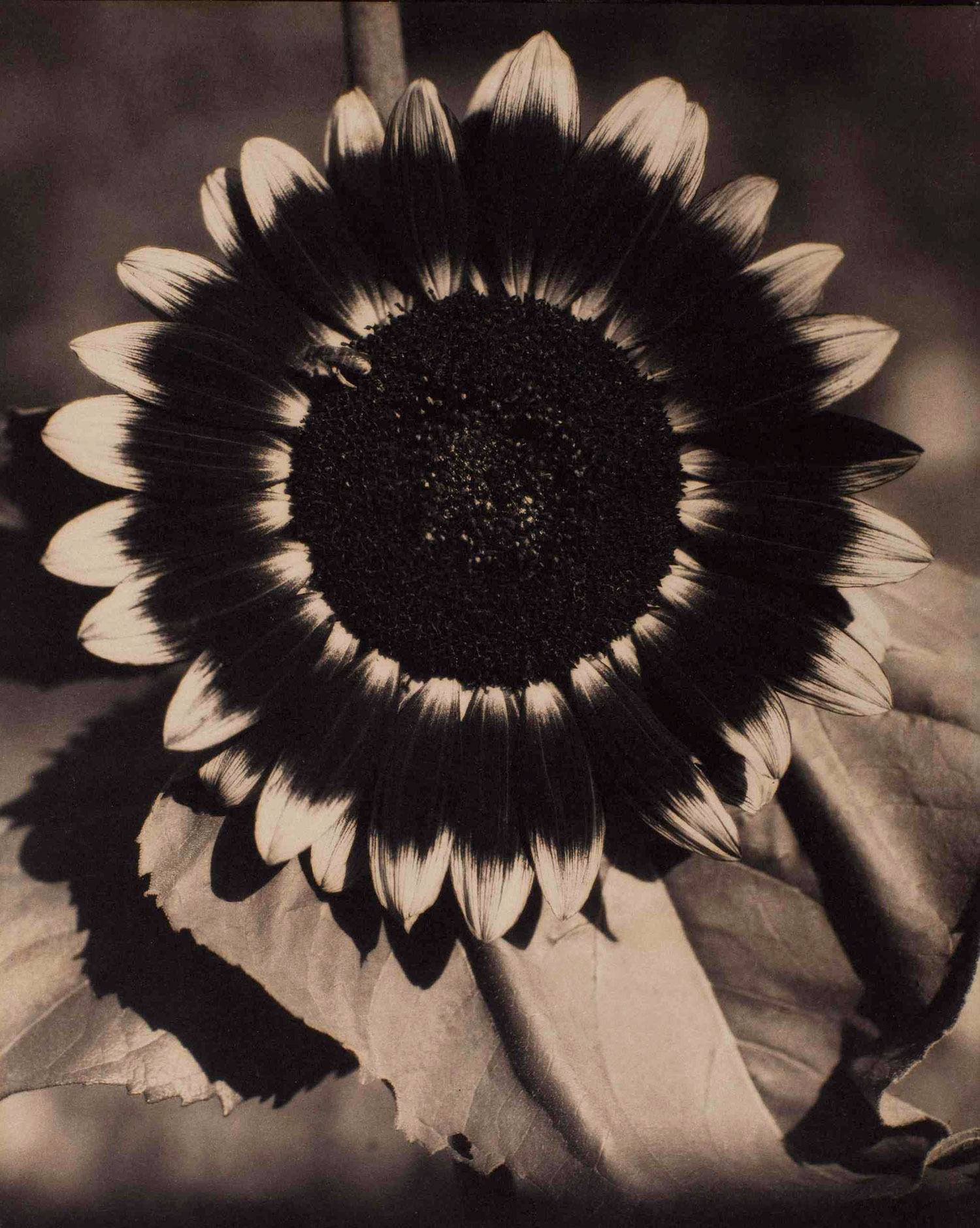
Edward Steichen (American, 1879-1973) 'A Bee on a Sunflower' c. 1920


Edward Steichen (American, 1879-1973)
A Bee on a Sunflower
c. 1920
Gelatin silver print
The Sir Elton John Photography Collection


Man Ray (American, 1890-1976) "Rayograph" 1923


Man Ray (American, 1890-1976)
“Rayograph”
1923
Silver gelatin print
The Sir Elton John Photography Collection
Photograph: Man Ray Trust/ADAGP, Paris and DACS, London 2016


André Kertész (Hungarian, 1894-1985) 'Mondrian's Glasses and Pipe' 1926


André Kertész (Hungarian, 1894-1985)
Mondrian’s Glasses and Pipe
1926
Gelatin silver print
The Sir Elton John Photography Collection
© Estate of André Kertész/Higher Pictures


Tina Modotti (Italian American, 1896-1942) 'Bandelier, Corn and Sickle' 1927


Tina Modotti (Italian American, 1896-1942)
Bandelier, Corn and Sickle
1927
Silver gelatin print
The Sir Elton John Photographic Collection


Werner Mantz. 'Staircase Ursuliner Lyzeum Cologne 1928'


Werner Mantz (German, 1901-1983)
Staircase Ursuliner Lyzeum Cologne 1928
1928
Silver gelatin print
The Sir Elton John Photography Collection


Margaret Bourke-White (American, 1904-1971) 'George Washington Bridge' 1933


Margaret Bourke-White (American, 1904-1971)
George Washington Bridge
1933
Silver gelatin print
The Sir Elton John Photography Collection


László Moholy-Nagy (Hungarian, 1895-1946) 'View from the Berlin tower' 1928


László Moholy-Nagy (Hungarian, 1895-1946)
View from the Berlin tower
1928
Silver gelatin print
The Sir Elton John Photographic Collection


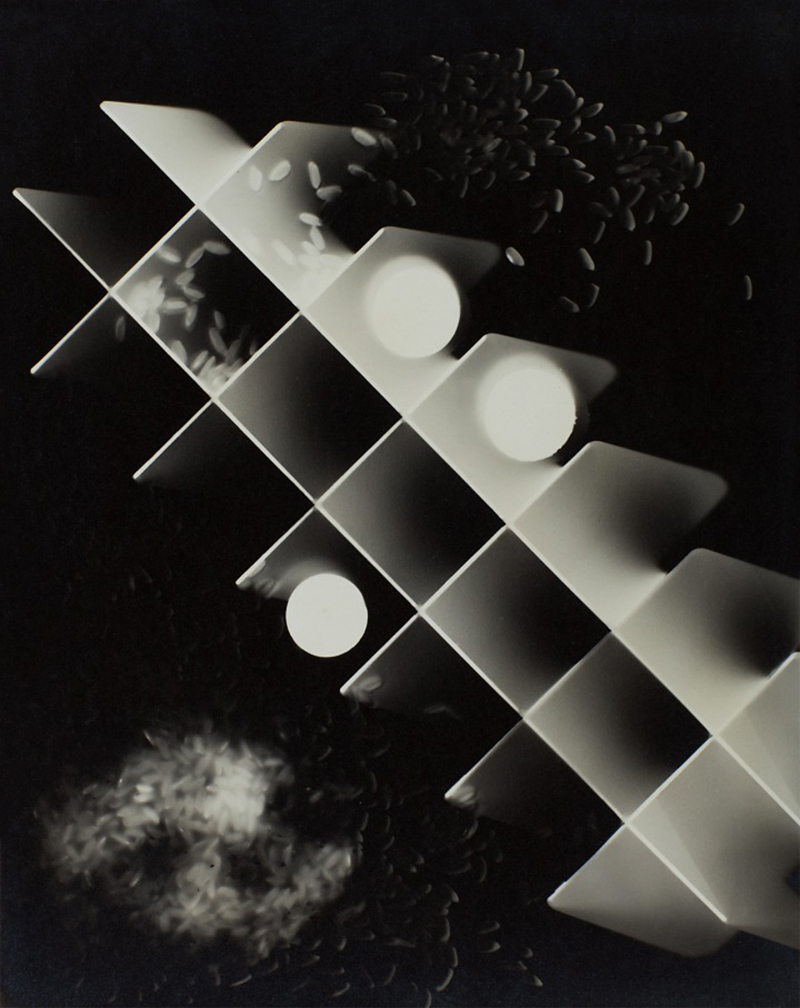
Margaret de Patta (American, 1903-1964) 'Ice Cube Tray with Marbles and Rice' 1939


Margaret de Patta (American, 1903-1964)
Ice Cube Tray with Marbles and Rice
1939
The Sir Elton John Photographic Collection
© Estate of Margaret de Patta


Tate Modern
Bankside
London SE1 9TG
United Kingdom

Opening hours:
Sunday – Thursday 10.00 – 18.00
Friday – Saturday 10.00 – 22.00

Tate Modern website

LIKE ART BLART ON FACEBOOK

Back to top

Exhibition: ‘Peter Hujar: Speed of Life’ at Fundación MAPFRE, Barcelona

Exhibition dates: 27th January – 30th April, 2017

Curator: Joel Smith, “Richard L. Menschel Curator” and Director of the Department of Photography at the Morgan Library & Museum

Peter Hujar: Speed of Life has been organised by Fundación MAPFRE, Barcelona, and The Morgan Library & Museum, New York. The exhibition and its travelling schedule have been made possible by the Terra Foundation for American Art.


Peter Hujar (American, 1934-1987) 'Horse in West Virginia Mountains' 1969 from the exhibition 'Peter Hujar: Speed of Life' at Fundación MAPFRE, Barcelona, Jan - April, 2017


Peter Hujar (American, 1934-1987)
Horse in West Virginia Mountains
1969
Gelatina de plata
Colección de Richard y Ronay Menschel
© The Peter Hujar Archive, LLC. Cortesía Pace/MacGill Gallery, Nueva York, and Fraenkel Gallery, San Francisco


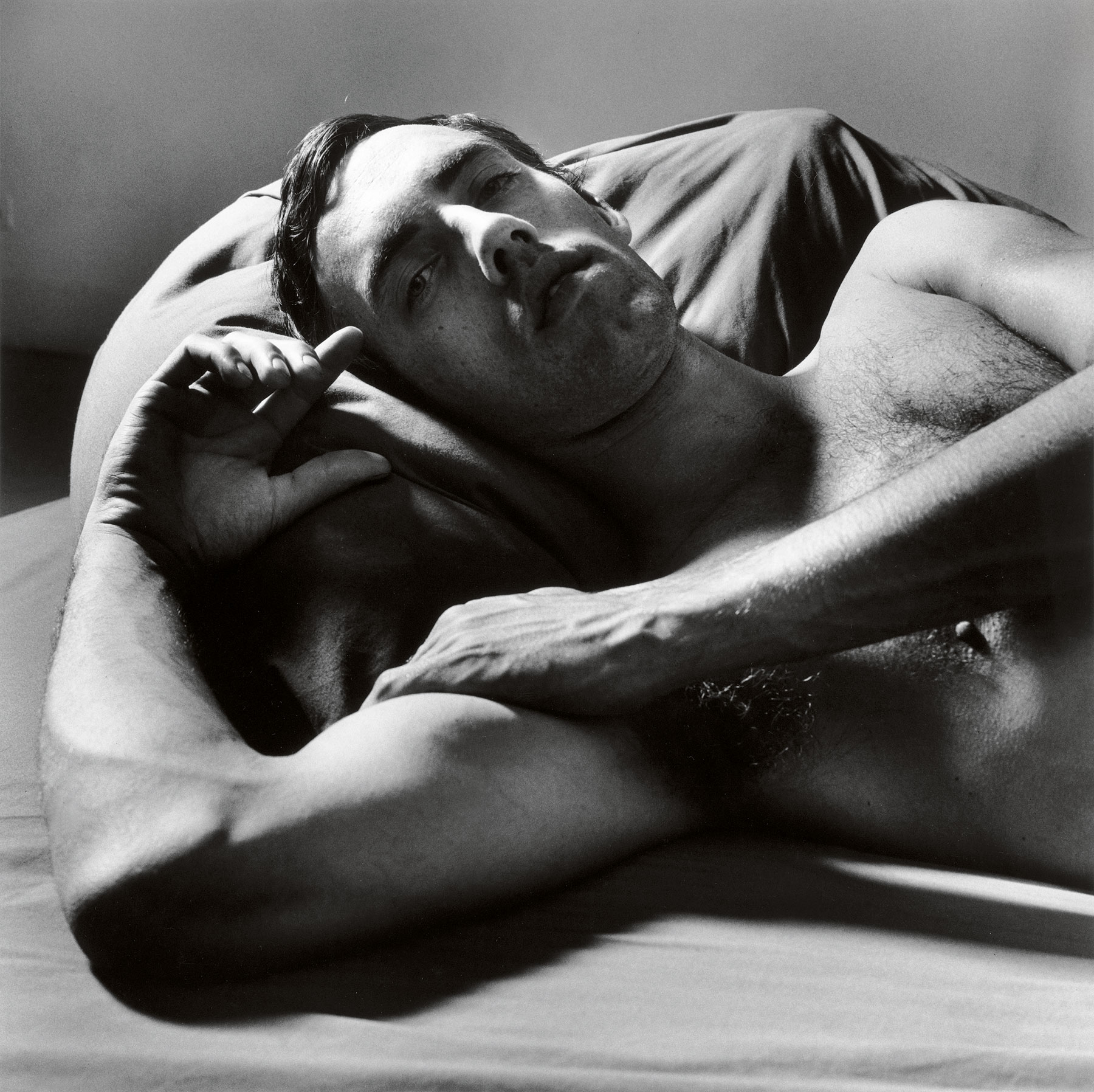
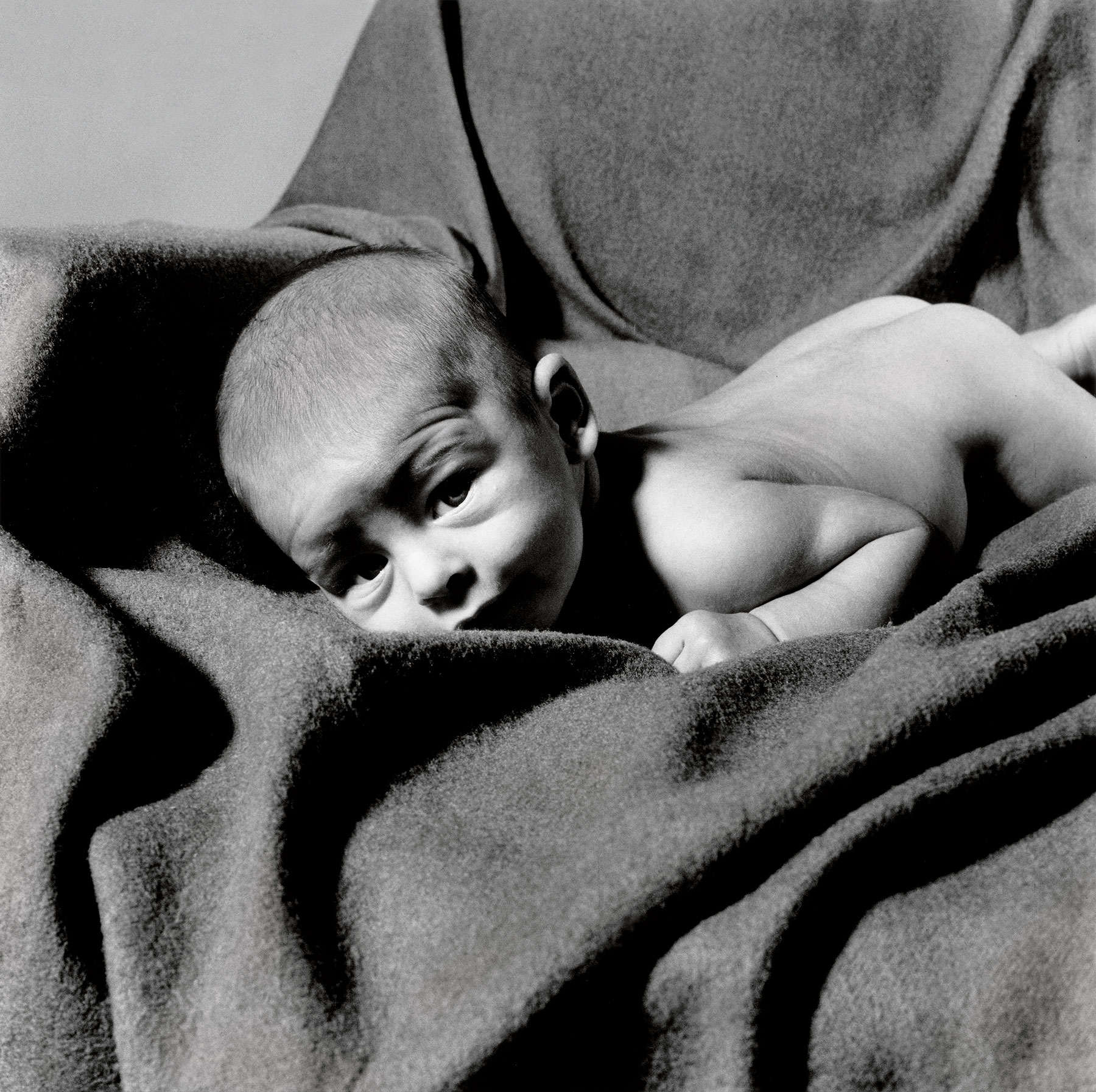
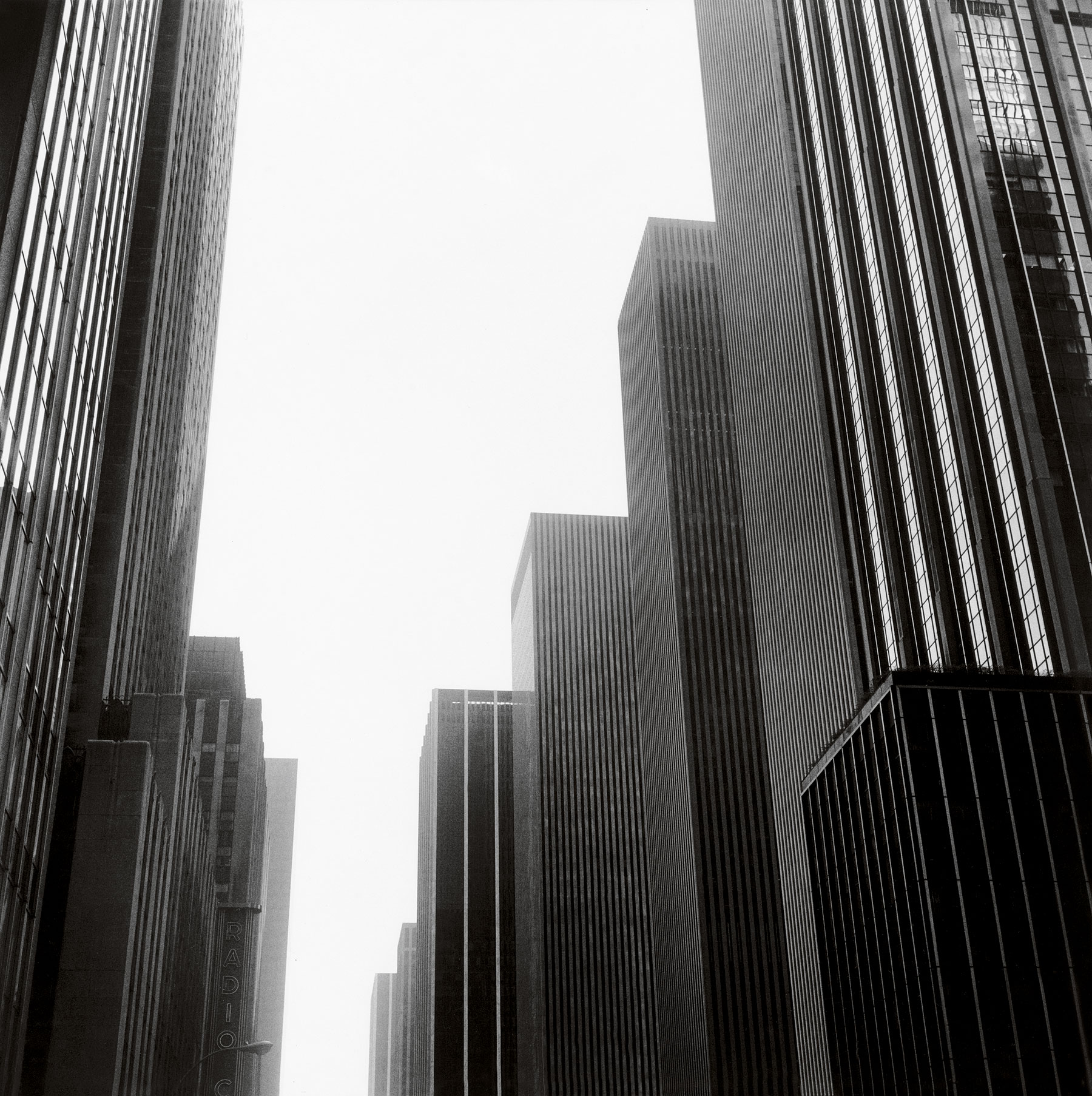
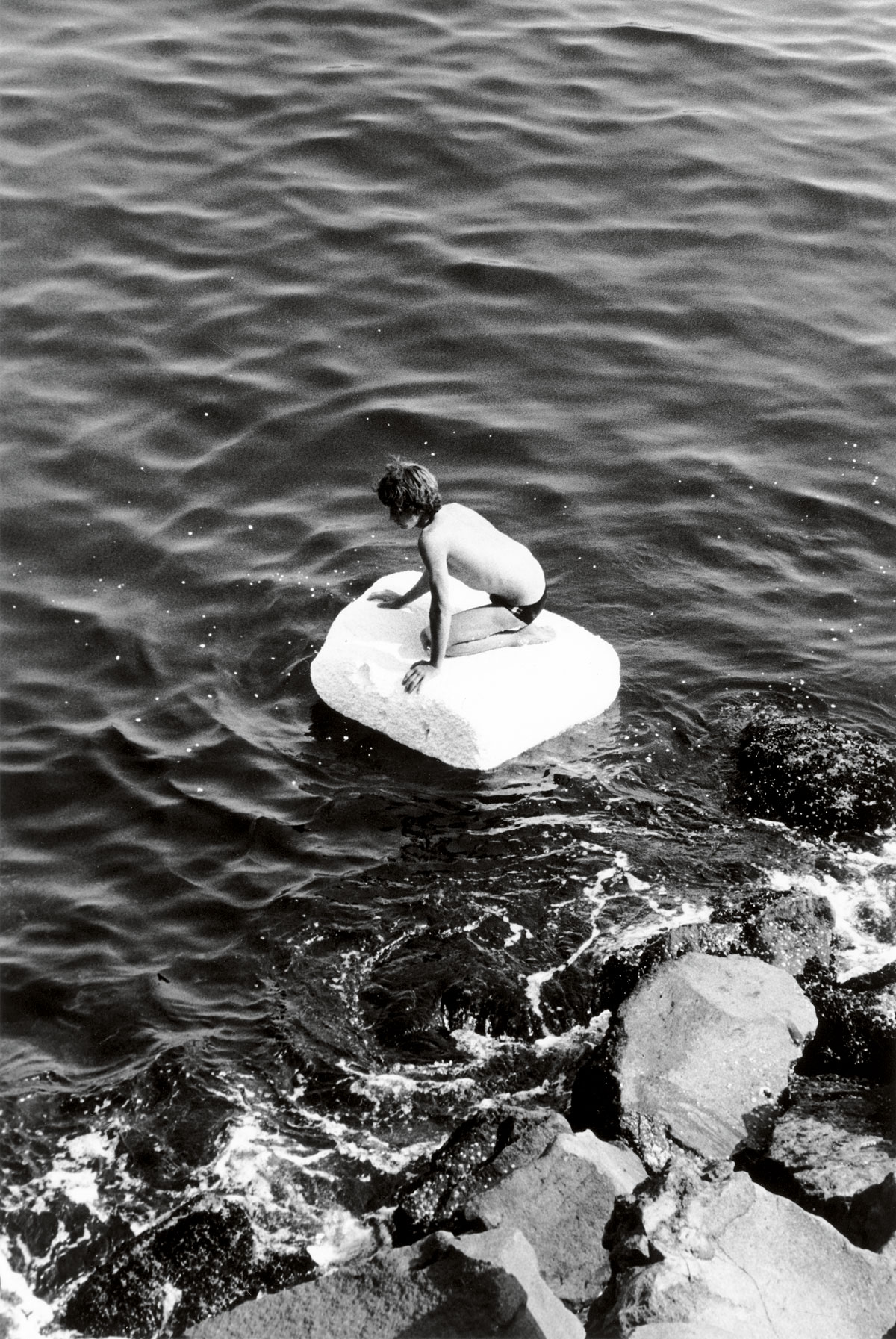
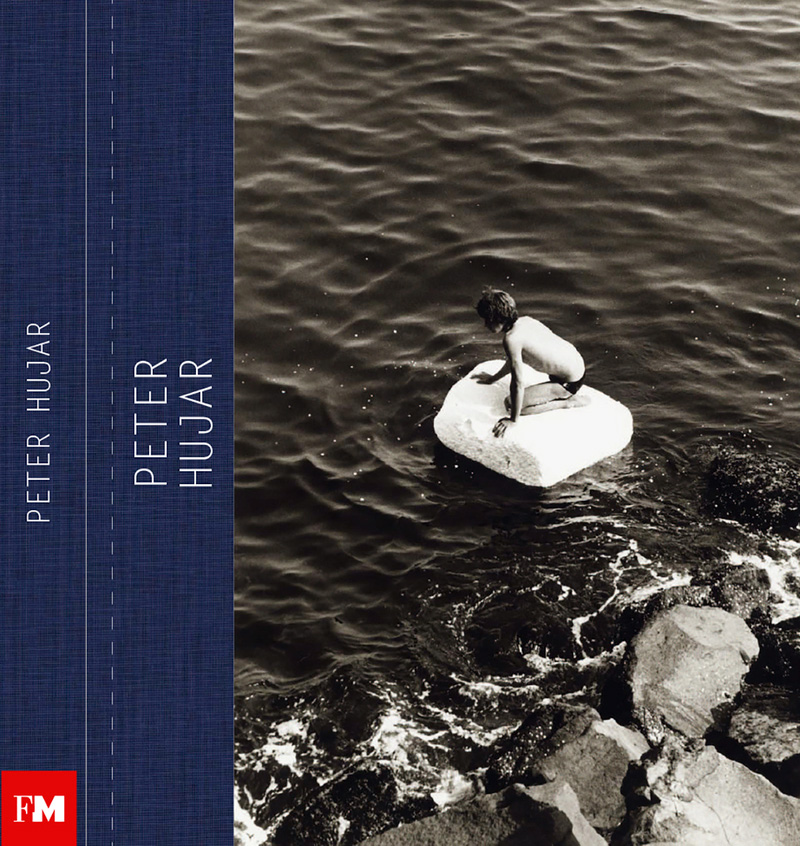
A love letter to Peter Hujar


You jumped so high

the boy on a raft

saluting the sky

absorbed in his craft


Of rhythm and eros

you offer no excess

just intimacy, connection

a timeless … transience


The line of skyscrapers, the lines of a thinker

the gaze of a baby, the eyes of a dreamer

two cows look direct, as direct as can be

and chrysanthemums and roses lay death near thee


Contortions and compression

of time and space

the twist of a wrist, the surge of a river

a certain, poignant – tenderness


In love with photography

and the stories it tells

A troubled man

brought out of his shell


You left us too soon

you beautiful spirit

your portraits of life

loved, immortal – never finished


Dr Marcus Bunyan


Many thankx to Fundación MAPFRE for allowing me to publish the photographs in the posting. Please click on the photographs for a larger version of the image.

See more Peter Hujar images on The Guardian website.


I want you to talk about me in a low voice. When people talk about me, I want them to do it by whispering.


Peter Hujar


He was charismatic and complicated and, it turned out, deeply insecure, with a damaging family history he kept mostly to himself… Peter was, in a way, at his most moving when taking photographs. He was so absorbed by it. Peter was in many ways a very tortured man, and I felt like when he was taking photographs, he wasn’t. I had other friends who were photographers, but not like Peter. Peter was so profoundly absorbed and engaged by it. He was never not a photographer.


Vince Aletti


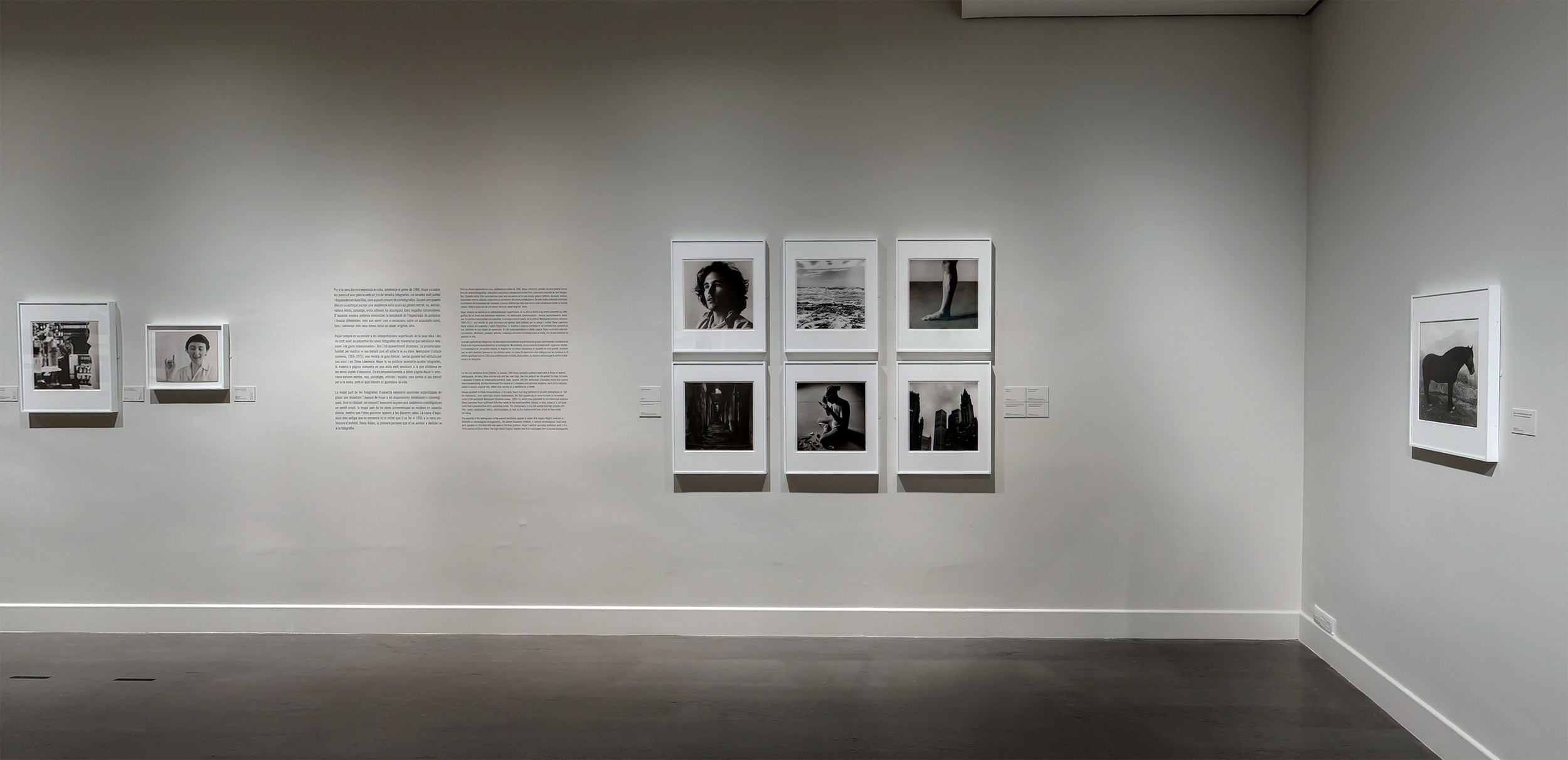
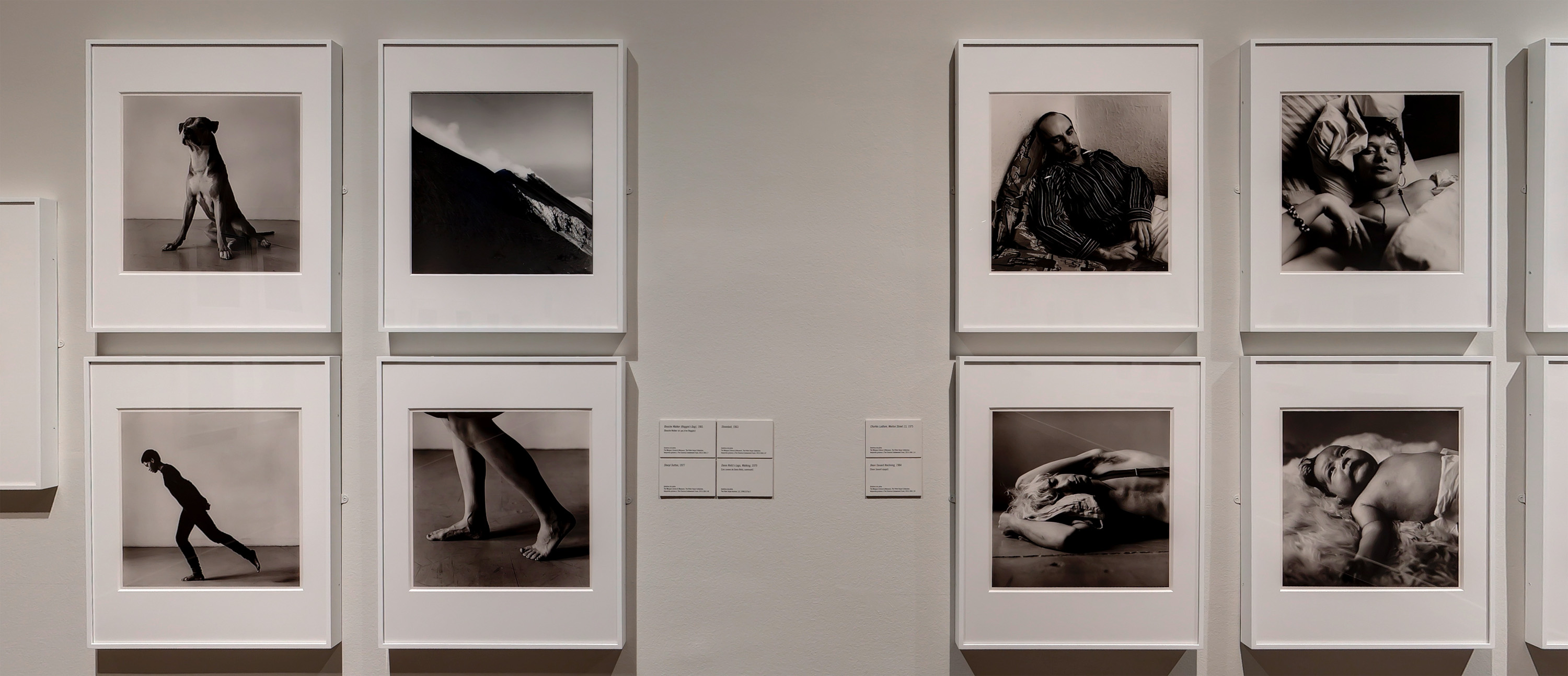
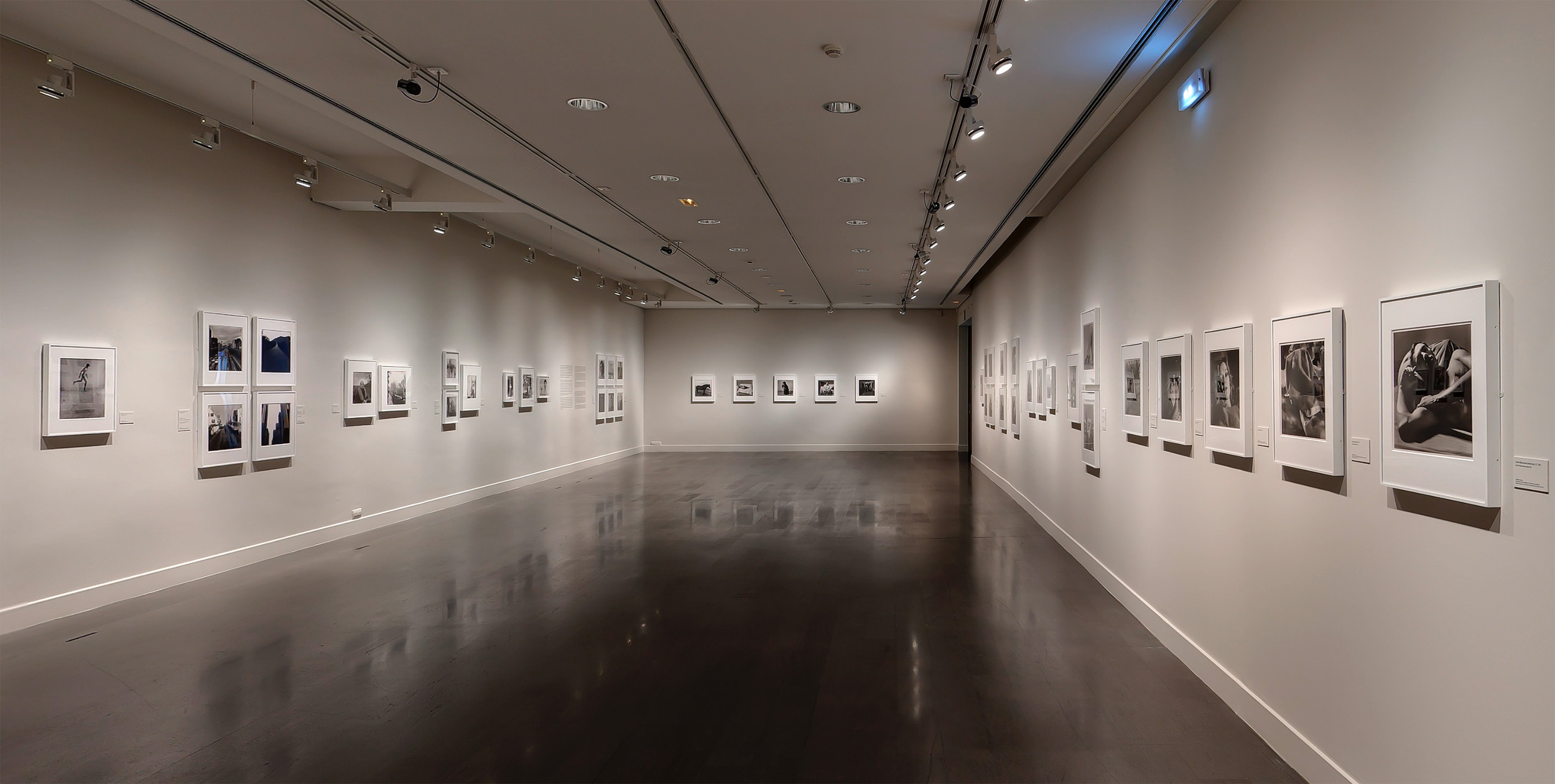
Installation view of 'Peter Hujar: Speed of Life' at Fundación MAPFRE, Barcelona

Installation view of 'Peter Hujar: Speed of Life' at Fundación MAPFRE, Barcelona

Installation view of 'Peter Hujar: Speed of Life' at Fundación MAPFRE, Barcelona

Installation view of 'Peter Hujar: Speed of Life' at Fundación MAPFRE, Barcelona

Installation view of 'Peter Hujar: Speed of Life' at Fundación MAPFRE, Barcelona

Installation view of 'Peter Hujar: Speed of Life' at Fundación MAPFRE, Barcelona

Installation view of 'Peter Hujar: Speed of Life' at Fundación MAPFRE, Barcelona

Installation view of 'Peter Hujar: Speed of Life' at Fundación MAPFRE, Barcelona

Installation view of 'Peter Hujar: Speed of Life' at Fundación MAPFRE, Barcelona

Installation view of 'Peter Hujar: Speed of Life' at Fundación MAPFRE, Barcelona

Installation view of 'Peter Hujar: Speed of Life' at Fundación MAPFRE, Barcelona


Installation views of Peter Hujar: Speed of Life at Fundación MAPFRE, Barcelona


Fundación MAPFRE is delighted to be presenting Peter Hujar: Speed of Life, a retrospective exhibition on the American photographer Peter Hujar. Offering the most detailed account of the artist’s work to date, from the 1950s to his death in New York in 1987, it will be on display between January 27 and April 30, 2017 at the Fundación MAPFRE’s Casa Garriga i Nogués exhibition space (Calle Diputació, 250) in Barcelona.

Hujar was a portraitist in everything he did. Regardless of the subject of the work – a lover, an underground theatre actor, a goose, the surface of the Hudson River, or the placid features of his own face – what moved and motivated him was the spark of encounter and exchange between artist and other. Hujar’s serene, meditative, square-format photographs confer gravity on the object of his attention, granting it an eternal moment’s pause within the rush of passing time.

Little recognised during his own lifetime, Hujar published only one book of photographs, Portraits in Life and Death, but his output is today recognised as distinctive. His portraits combine disclosure and secrecy, ferocity and peace. Hujar’s career involved both a quest for recognition in the world of fashion photography – the photographers he admired most were Irving Penn and Richard Avedon – and a more solitary, almost completely uncompensated body of work in which he depicted the creative and intellectual New York that he knew and admired.

The present exhibition follows Peter Hujar’s method of presenting his work. Rather than show his photographs in isolation or in an linear or chronological arrangements, he preferred to present them in dynamic, surprising and sometimes disconcerting juxtapositions.

Press release from Fundación MAPFRE


Four keys

Peter Hujar’s work falls within the photographic tradition of portraiture: he was a portraitist in everything he did. Whatever the subject – a lover, an actor, a horse, the surface of the Hudson River, or the gentle features of his own face – what moved and motivated Hujar was the spark in the encounter and the exchange between the artist and his subject, establishing a direct relationship with whatever he portrayed thereby revealing its true nature.

One of the themes reflected in Hujar’s work is homosexuality. These were the years of the first Gay Liberation movements and the famous Stonewall riots. Hujar lived close to the Stonewall Inn, and his partner at the time, Jim Fouratt, came onto the scene the night of the police raid and founded the Gay Liberation Front. Hujar was not an activist, though he attended the group’s first meeting and contributed his well-known photograph which would become the image for the Gay Liberation Front Poster, 1970.

The route followed by the exhibition reflects the preferences of the artist, who systematically chose to present his photographs in vibrant, surprising and sometimes disturbing Most of the photographs are grouped into sets, some of which reflect the artist’s recurrent concerns, while others exemplify his interest in emphasising diversity and the internal contradictions in his work.

A distinguishing feature of his art is the invisibility of technique in his photographs and yet simultaneously his preoccupation with and care over it. Hujar produced his own copies and was also considered a good printer.

Text from the Fundación MAPFRE website


Peter Hujar (American, 1934-1987) 'La Marchesa Fioravanti' 1958 from the exhibition 'Peter Hujar: Speed of Life' at Fundación MAPFRE, Barcelona, Jan - April, 2017


Peter Hujar (American, 1934-1987)
La Marchesa Fioravanti
1958
Gelatina de plata
The Peter Hujar Archive
© The Peter Hujar Archive, LLC. Cortesía Pace/MacGill Gallery, Nueva York, and Fraenkel Gallery, San Francisco


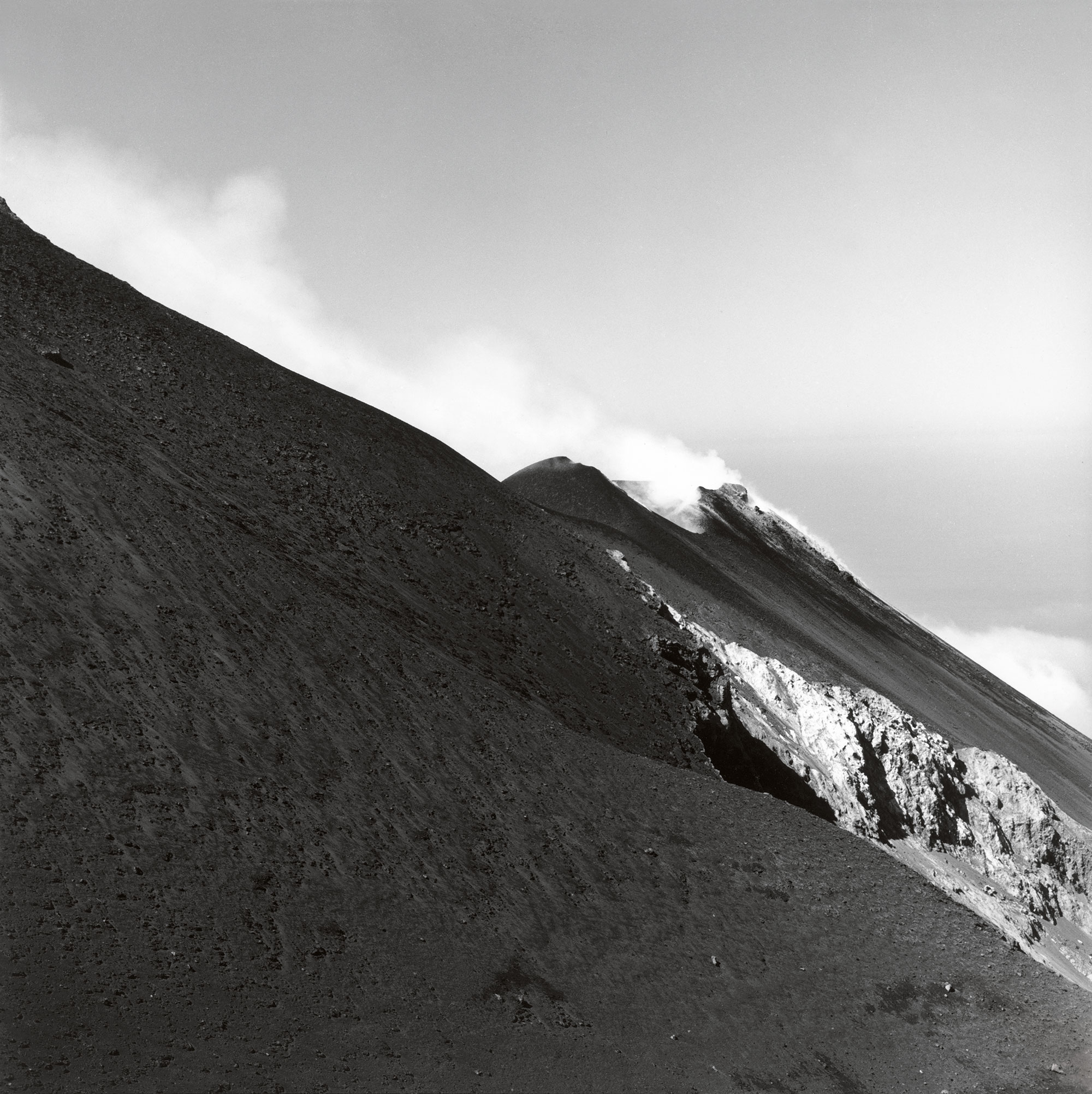
Peter Hujar (American, 1934-1987) 'Stromboli' 1963


Peter Hujar (American, 1934-1987)
Stromboli
1963
Gelatina de plata
The Morgan Library & Museum, The Peter Hujar Collection
Adquirida gracias a The Charina Endowment Fund
© The Peter Hujar Archive, LLC. Cortesía Pace/MacGill Gallery, Nueva York, and Fraenkel Gallery, San Francisco


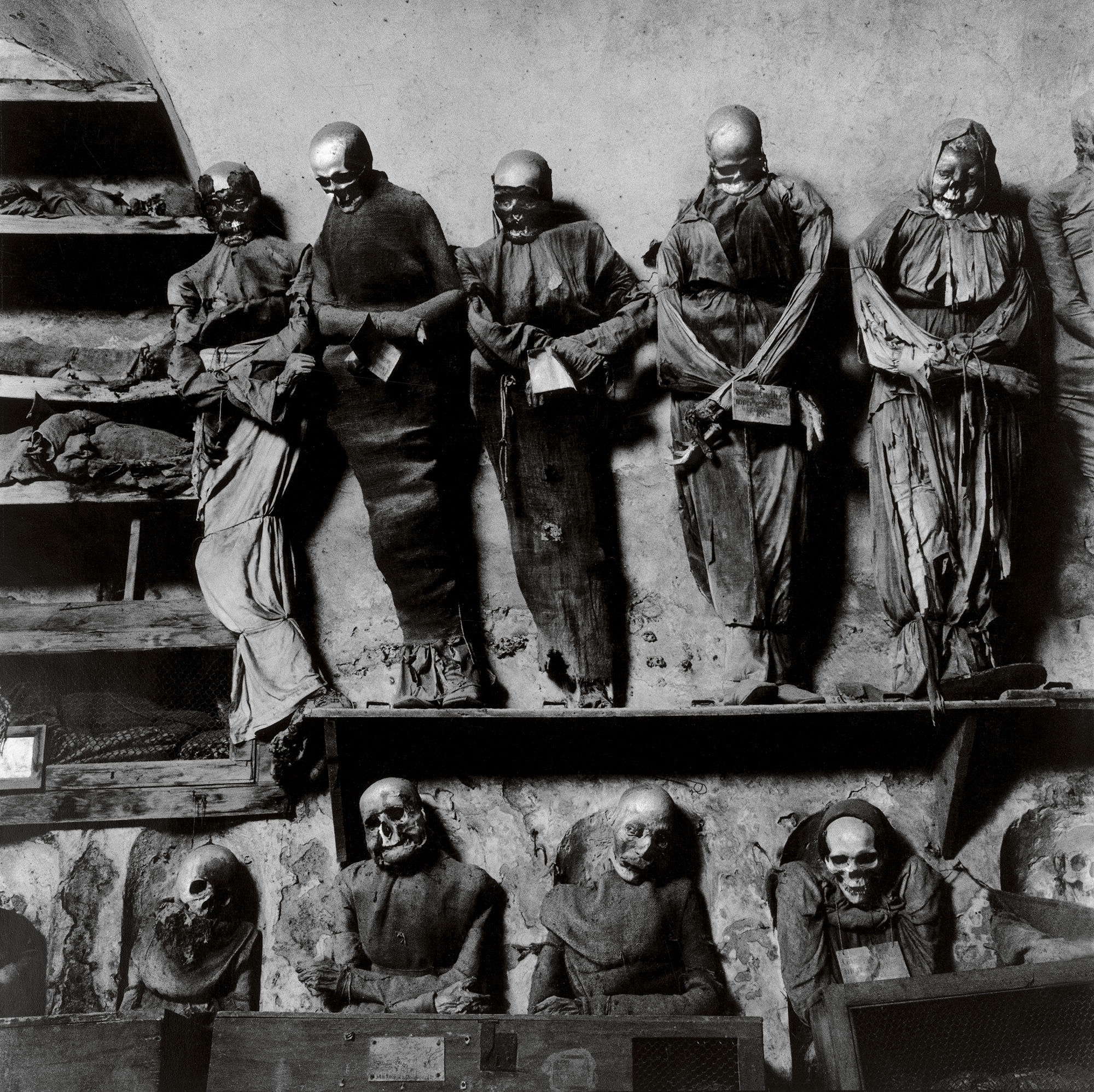
Peter Hujar (American, 1934-1987) 'Palermo Catacombs (11)' 1963


Peter Hujar (American, 1934-1987)
Palermo Catacombs (11)
1963
Gelatina de plata
Colección de Allen Adler and Frances Beatty Adler
© The Peter Hujar Archive, LLC. Cortesía Pace/MacGill Gallery, Nueva York, and Fraenkel Gallery, San Francisco


Peter Hujar (American, 1934-1987) 'St. Patrick's, Easter Sunday' 1976


Peter Hujar (American, 1934-1987)
St. Patrick’s, Easter Sunday
1976
Gelatina de plata
The Morgan Library & Museum, The Peter Hujar Collection
Adquirida gracias a The Charina Endowment Fund
© The Peter Hujar Archive, LLC. Cortesía Pace/MacGill Gallery, Nueva York, and Fraenkel Gallery, San Francisco


Artist biography

Peter Hujar was born in Trenton, New Jersey, in 1934 and grew up in the countryside with his Polish immigrant grandparents. When he was eleven his mother, a waitress, brought him to live with her in Manhattan.

Interested in photography from childhood, after graduating from high school in 1953 Hujar worked as an assistant in the studios of magazine professionals and aspired to work in fashion like his idols Lisette Model, Irving Penn, and Richard Avedon.

Between 1958 and 1963 Hujar lived mainly in Italy with two successive partners, artists Joseph Raffael and Paul Thek. After studying for a year at a filmmaking school in Rome he returned to Manhattan, where he moved in the circles of writer Susan Sontag and Andy Warhol’s Factory. From 1968 to 1972 he pursued a freelance career in fashion photography, publishing over a dozen features in Harper’s Bazaar and GQ before concluding that the hustle of magazine work “wasn’t right for me.”

In 1973 Hujar definitively renounced his professional aspirations for a life of creative poverty in New York’s East Village. Living in a loft above a theatre at Twelfth Street and Second Avenue, he took paying jobs only when necessary in order to focus on the work that truly motivated him. He photographed the artists he knew and respected, animals, the nude body, and New York as he knew it, a city then in serious economic decline. In his book Portraits in Life and Death (1976) he combined intimate studies of his rarefied downtown coterie (painters, performers, choreographers, and writers such as Sontag and William S. Burroughs) with portraits  of mummies in the Palermo Catacombs that he had made during a visit with Thek thirteen years earlier. His focus on mortality would intensify and find its purpose in the 1980s, when the AIDS epidemic ravaged gay populations in New York and worldwide.

Briefly a lover and subsequently a mentor to the young artist David Wojnarowicz, in his last seven years Hujar continued chronicling a creative downtown subculture that was fast becoming unsustainable in the context of the increasing power of money. His most frequent subject in these years was his neighbour and friend Ethyl Eichelberger, a drag performer whom he called “the greatest actor in America.” With Wojnarowicz, Hujar made expeditions to the depressed areas around New York, photographing industrial ruins in Queens, neighbourhoods of Newark, New Jersey, that had been destroyed in the riots of the late 1960s, and the abandoned Hudson River piers of lower Manhattan, sites of sexual exploits by night and guerilla art installations by day. Hujar died in New York on Thanksgiving Day, 1987, around eleven months after being diagnosed with AIDS.

Throughout his life Hujar stubbornly aligned himself with what he called the “All-In people”: artists committed to a creative course all their own, unconcerned with mass-market acclaim. At the same time he both disdained and bitterly wished for public recognition such as that achieved by his famous contemporaries Diane Arbus – eleven years his senior and respected by him – and Robert Mapplethorpe, who was twelve years younger and whom he considered a facile operator. During the thirty years since Hujar’s death the highly localised downtown public that knew his work has all but completely passed into history, while a vastly expanded photography audience around the world has become familiar with specific facets of his work, such as his indelible 1973 image Candy Darling on her Deathbed, and his soulful portraits of animals. In Peter Hujar: Speed of Life what comes to light is a broader assessment of his unique oeuvre, which was diverse and enduring. Many of the subjects populating this retrospective are familiar, even iconic faces of their era, but what can be seen more clearly today is the vision of the artist who unites them, himself a great and singular talent of the post-war decades in American art.


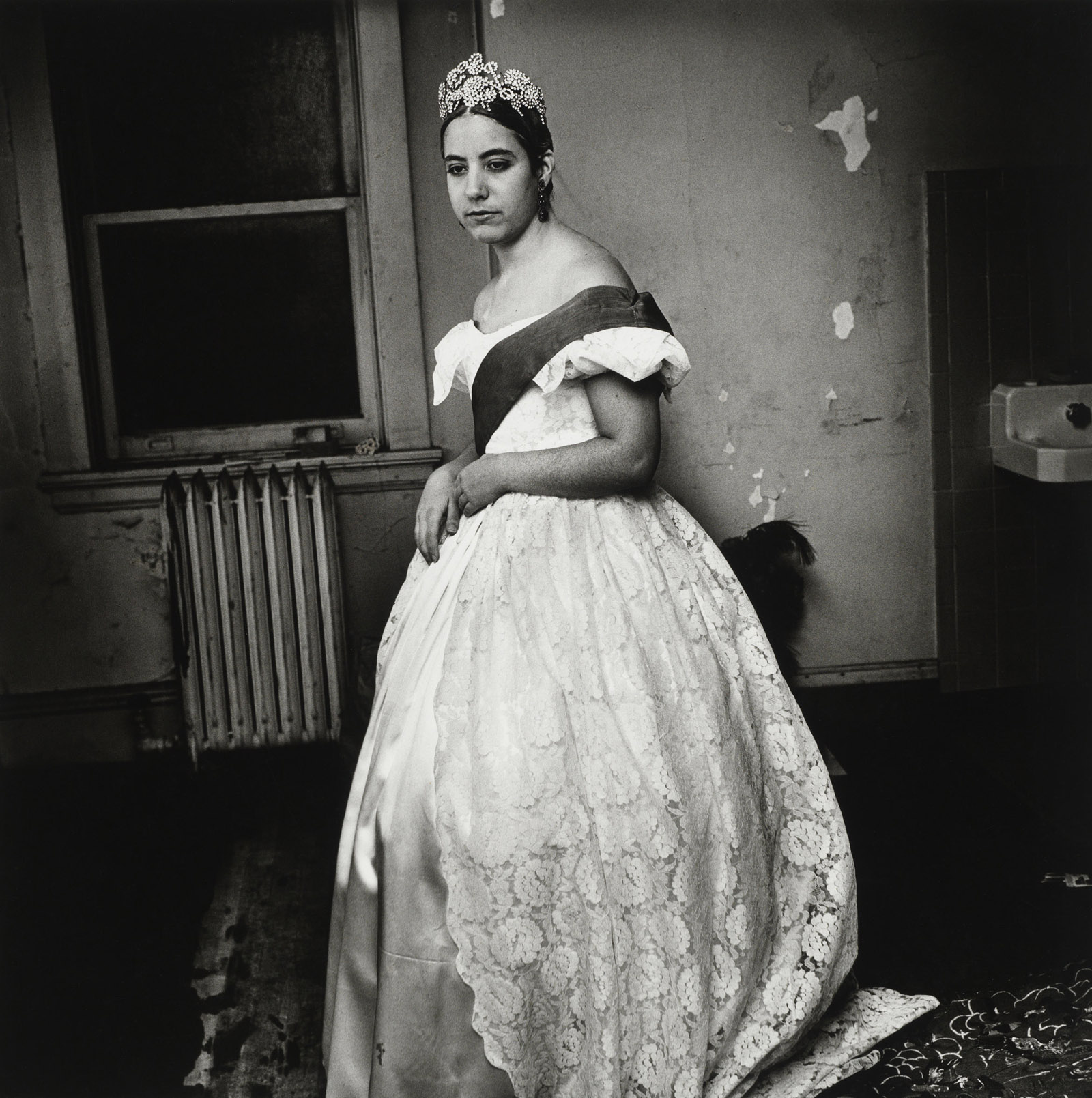
Peter Hujar (American, 1934-1987) 'Cindy Luba as Queen Victoria' 1973


Peter Hujar (American, 1934-1987)
Cindy Luba as Queen Victoria
1973
Gelatina de plata
The Morgan Library & Museum, The Peter Hujar Collection
© The Peter Hujar Archive, LLC. Cortesía Pace/MacGill Gallery, Nueva York, and Fraenkel Gallery, San Francisco


Peter Hujar (American, 1934-1987) 'David Warrilow (1)' 1985


Peter Hujar (American, 1934-1987)
David Warrilow (1)
1985
Gelatina de plata
The Morgan Library & Museum, The Peter Hujar Collection
© The Peter Hujar Archive, LLC. Cortesía Pace/MacGill Gallery, Nueva York, and Fraenkel Gallery, San Francisco


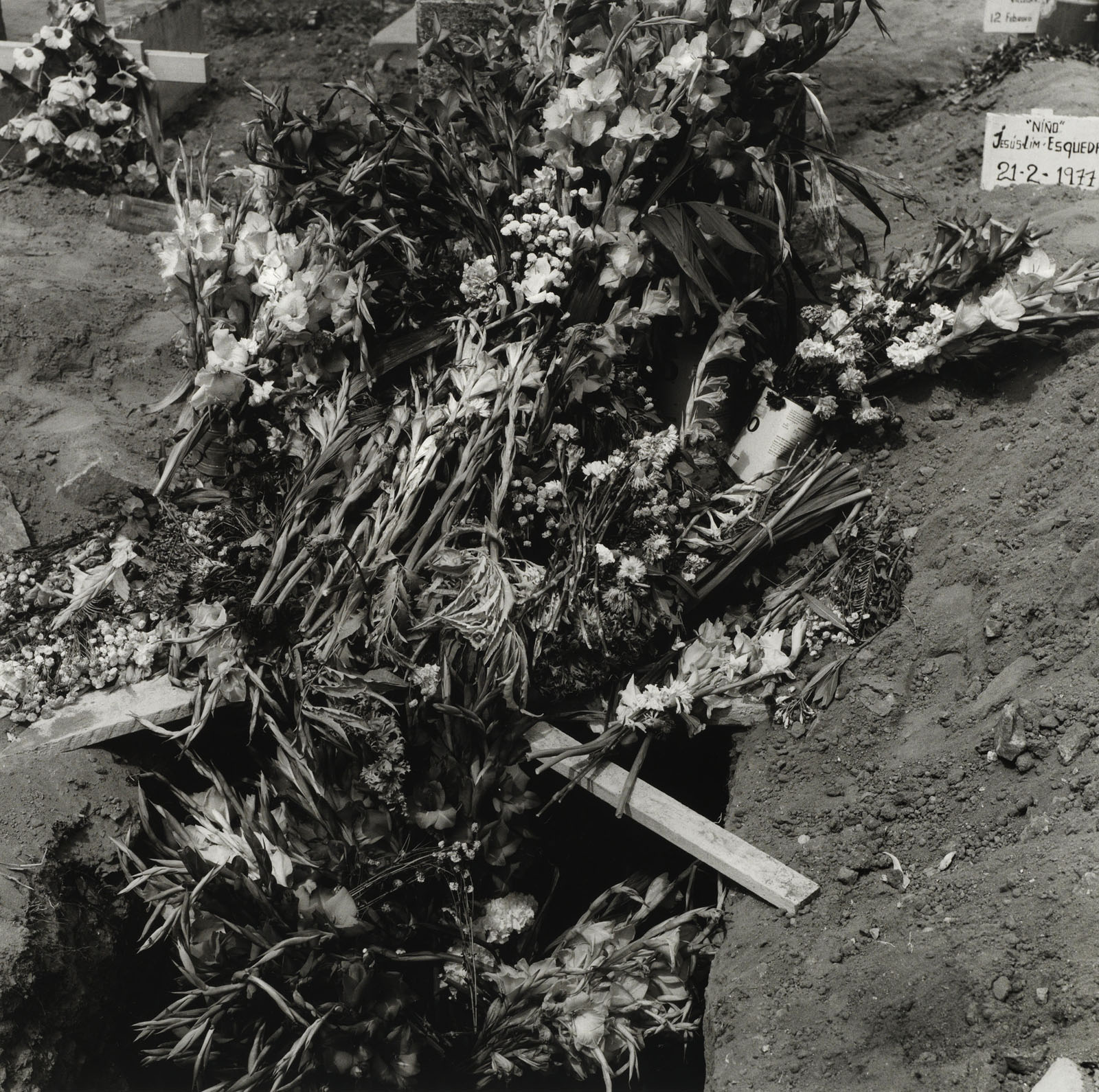
Peter Hujar (American, 1934-1987) 'Flowers for the Dead, Mazatlán, Mexico (2)' 1977


Peter Hujar (American, 1934-1987)
Flowers for the Dead, Mazatlán, Mexico (2)
1977
Gelatina de plata
The Morgan Library & Museum, The Peter Hujar Collection
© The Peter Hujar Archive, LLC. Cortesía Pace/MacGill Gallery, Nueva York, and Fraenkel Gallery, San Francisco


Peter Hujar (American, 1934-1987) 'Pascal Imbert Scarred Abdomen' 1980


Peter Hujar (American, 1934-1987)
Pascal Imbert Scarred Abdomen
1980
Gelatina de plata
The Morgan Library & Museum, The Peter Hujar Collection
© The Peter Hujar Archive, LLC. Cortesía Pace/MacGill Gallery, Nueva York, and Fraenkel Gallery, San Francisco


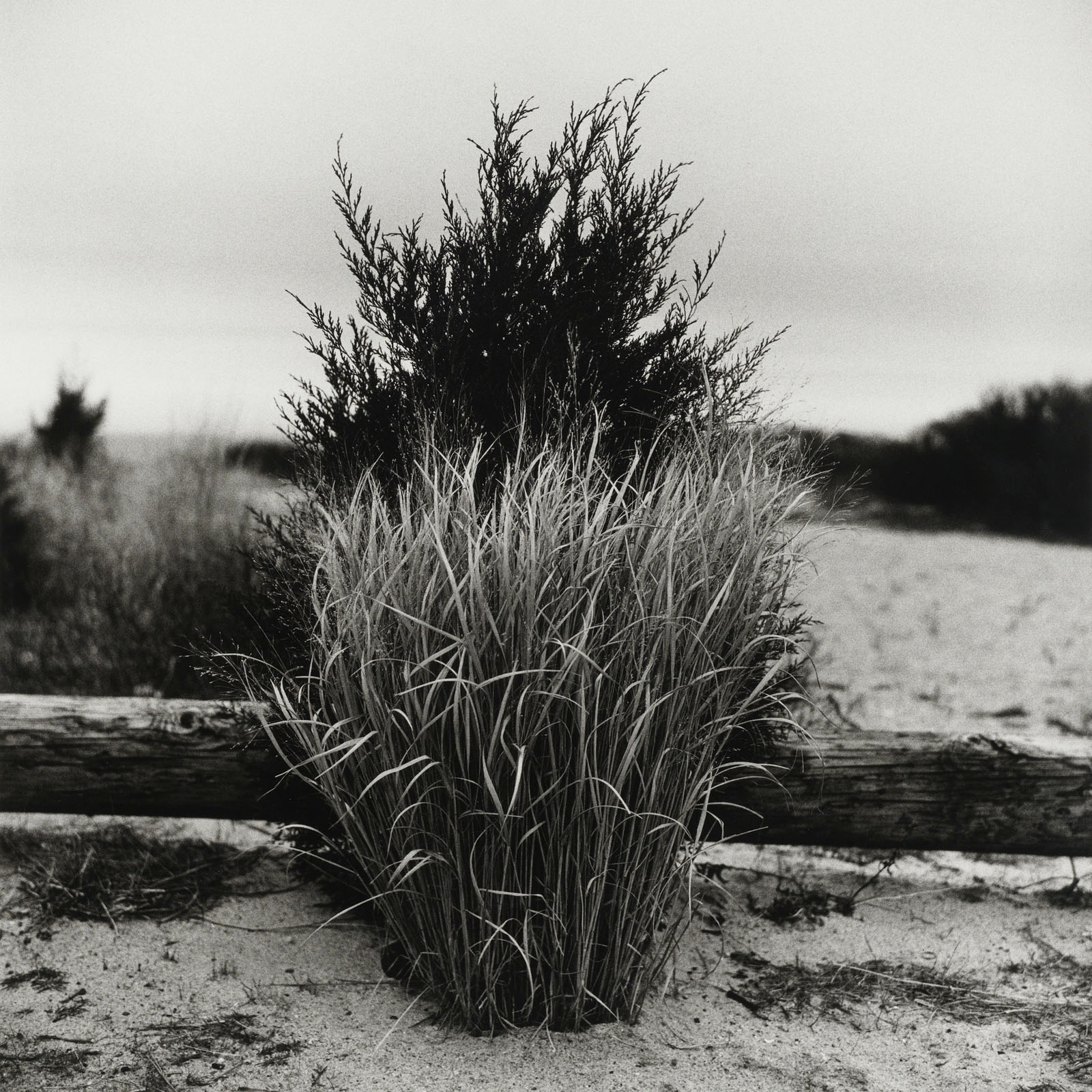
Peter Hujar (American, 1934-1987) 'Grass, Port Jefferson, New York' 1984


Peter Hujar (American, 1934-1987)
Grass, Port Jefferson, New York
1984
Gelatina de plata
The Morgan Library & Museum, The Peter Hujar Collection
© The Peter Hujar Archive, LLC. Cortesía Pace/MacGill Gallery, Nueva York, and Fraenkel Gallery, San Francisco


Peter Hujar (American, 1934-1987) 'Paul Hudson (Leg)' 1979


Peter Hujar (American, 1934-1987)
Paul Hudson (Leg)
1979
Gelatina de plata
The Morgan Library & Museum, The Peter Hujar Collection
© The Peter Hujar Archive, LLC. Cortesía Pace/MacGill Gallery, Nueva York, and Fraenkel Gallery, San Francisco


Peter Hujar (American, 1934-1987) 'Robyn Brentano (1)' 1975


Peter Hujar (American, 1934-1987)
Robyn Brentano (1)
1975
Gelatina de plata
The Morgan Library & Museum, The Peter Hujar Collection
© The Peter Hujar Archive, LLC. Cortesía Pace/MacGill Gallery, Nueva York, and Fraenkel Gallery, San Francisco


Structure of the exhibition

The exhibition includes 160 photographs that offer an exploration of the career of this American photographer, with works loaned from the collection of the Morgan Library & Museum and nine other collections. The result is the most detailed account of Peter Hujar’s work presented to date.

In its structure the exhibition takes account of Hujar’s preference for presenting his photographs in vivid, startling, and even puzzling juxtapositions. Although following a broadly chronological order, with formative work from the 1950s and 1960s concentrated in the first half and later photographs at the end, the visual and creative continuities that spanned the duration of Hujar’s artistic life are emphasised as the visitor follows the sequence of works.

Most of the photographs are presented in groups of three to eight images, some of which showcase enduring preoccupations of the artist while others exemplify his desire to stress the diversity and internal contradictions of his work.

Thus, for the final exhibition of his life, held at the Gracie Mansion Gallery in the East Village in January 1986, Hujar spent several days arranging seventy photographs into thirty-five tightly spaced vertical pairs, taking care not to let any single genre of image appear twice in a row. At the start of the present exhibition, a six-photograph grid pays homage to this method by presenting a checkerboard-format conversation between three images made in controlled indoor conditions and three exterior views. The subjects, in order, are: a man’s bare leg with the foot planted firmly on the studio floor; waves rolling in on an ocean beach; a portrait of an unidentified young man; the World Trade Center at sunset; Ethyl Eichelberger applying makeup before a performance; and a dark burned-out hallway in the ruins of the Canal Street pier.

The catalogue

The catalogue that accompanies the exhibition includes texts by its curator Joel Smith and by Philip Gefter and Steve Turtell, making it a reference work for a detailed knowledge of Peter Hujar’s work from the 1950s until his death in 1987.


Peter Hujar (American, 1934-1987) 'Peggy Lee' 1974


Peter Hujar (American, 1934-1987)
Peggy Lee
1974
Gelatina de plata
The Peter Hujar Archive
© The Peter Hujar Archive, LLC. Cortesía Pace/MacGill Gallery, Nueva York, and Fraenkel Gallery, San Francisco


Peter Hujar (American, 1934-1987) 'Hudson River' 1975


Peter Hujar (American, 1934-1987)
Hudson River
1975
Gelatina de plata
The Morgan Library & Museum, The Peter Hujar Collection
Adquirida gracias a The Charina Endowment Fund
© The Peter Hujar Archive, LLC. Cortesía Pace/MacGill Gallery, Nueva York, and Fraenkel Gallery, San Francisco


Peter Hujar (American, 1934-1987) 'Mural at Piers' 1983


Peter Hujar (American, 1934-1987)
Mural at Piers
1983
Gelatina de plata
The Peter Hujar Archive
© The Peter Hujar Archive, LLC. Cortesía Pace/MacGill Gallery, Nueva York, and Fraenkel Gallery, San Francisco


Peter Hujar (American, 1934-1987) 'Ethyl Eichelberger as Minnie the Maid' 1981


Peter Hujar (American, 1934-1987)
Ethyl Eichelberger as Minnie the Maid
1981
Gelatina de plata
The Morgan Library & Museum, The Peter Hujar Collection
Adquirida gracias a The Charina Endowment Fund
© The Peter Hujar Archive, LLC. Cortesía Pace/MacGill Gallery, Nueva York, and Fraenkel Gallery, San Francisco


Peter Hujar (American, 1934-1987) 'Steel Ruins 13' 1976


Peter Hujar (American, 1934-1987)
Steel Ruins 13
1976
Gelatina de plata
The Morgan Library & Museum, The Peter Hujar Collection
Adquirida gracias a The Charina Endowment Fund
© The Peter Hujar Archive, LLC. Cortesía Pace/MacGill Gallery, Nueva York, and Fraenkel Gallery, San Francisco


Peter Hujar (American, 1934-1987) 'Gary in Contortion (1)' 1979


Peter Hujar (American, 1934-1987)
Gary in Contortion (1)
1979
Gelatina de plata
The Morgan Library & Museum, The Peter Hujar Collection
Adquirida gracias a The Charina Endowment Fund
© The Peter Hujar Archive, LLC. Cortesía Pace/MacGill Gallery, Nueva York, and Fraenkel Gallery, San Francisco


Peter Hujar (American, 1934-1987) 'Self-Portrait Jumping (1)' 1974


Peter Hujar (American, 1934-1987)
Self-Portrait Jumping (1)
1974
Gelatina de plata
The Morgan Library & Museum, The Peter Hujar Collection
Adquirida gracias a The Charina Endowment Fund
© The Peter Hujar Archive, LLC. Cortesía Pace/MacGill Gallery, Nueva York, and Fraenkel Gallery, San Francisco


Peter Hujar (American, 1934-1987) 'Candy Darling on Her Deathbed' 1973


Peter Hujar (American, 1934-1987)
Candy Darling on Her Deathbed
1973
Gelatina de plata
Colección de Richard and Ronay Menschel
© The Peter Hujar Archive, LLC. Cortesía Pace/MacGill Gallery, Nueva York, and Fraenkel Gallery, San Francisco


Peter Hujar (American, 1934-1987) 'Chloe Finch' 1981


Peter Hujar (American, 1934-1987)
Chloe Finch
1981
Gelatina de plata
The Morgan Library & Museum, The Peter Hujar Collection
Adquirida gracias a The Charina Endowment Fund
© The Peter Hujar Archive, LLC. Cortesía Pace/MacGill Gallery, Nueva York, and Fraenkel Gallery, San Francisco


Peter Hujar (American, 1934-1987) 'Butch and Buster' 1978


Peter Hujar (American, 1934-1987)
Butch and Buster
1978
Gelatina de Plata
Colección de John Erdman and Gary Schneider
© The Peter Hujar Archive, LLC. Cortesía Pace/MacGill Gallery, Nueva York, and Fraenkel Gallery, San Francisco


Peter Hujar (American, 1934-1987) 'David Wojnarowcz Reclining (2)' 1981


Peter Hujar (American, 1934-1987)
David Wojnarowcz Reclining (2)
1981
Gelatina de plata
The Morgan Library & Museum, The Peter Hujar Collection
Adquirida gracias a The Charina Endowment Fund
© The Peter Hujar Archive, LLC. Cortesía Pace/MacGill Gallery, Nueva York, and Fraenkel Gallery, San Francisco


Peter Hujar (American, 1934-1987) 'John McClellan' 1981


Peter Hujar (American, 1934-1987)
John McClellan
1981
Gelatina de plata
The Morgan Library & Museum, The Peter Hujar Collection
Adquirida gracias a The Charina Endowment Fund
© The Peter Hujar Archive, LLC. Cortesía Pace/MacGill Gallery, Nueva York, and Fraenkel Gallery, San Francisco


Peter Hujar (American, 1934-1987) 'Susan Sontag' 1975


Peter Hujar (American, 1934-1987)
Susan Sontag
1975
Gelatina de plata
The Morgan Library & Museum, The Peter Hujar Collection
Adquirida gracias a The Charina Endowment Fund
© The Peter Hujar Archive, LLC. Cortesía Pace/MacGill Gallery, Nueva York, and Fraenkel Gallery, San Francisco


Peter Hujar (American, 1934-1987) 'New York: Sixth Avenue (1)' 1976


Peter Hujar (American, 1934-1987)
New York: Sixth Avenue (1)
1976
Gelatina de plata
The Morgan Library & Museum, The Peter Hujar Collection
Adquirida gracias a The Charina Endowment Fund
© The Peter Hujar Archive, LLC. Cortesía Pace/MacGill Gallery, Nueva York, and Fraenkel Gallery, San Francisco


Peter Hujar (American, 1934-1987) 'Boy on Raft' 1978


Peter Hujar (American, 1934-1987)
Boy on Raft
1978
Gelatina de plata
The Morgan Library & Museum, The Peter Hujar Collection
© The Peter Hujar Archive, LLC. Cortesía Pace/MacGill Gallery, Nueva York, and Fraenkel Gallery, San Francisco


Cover of the catalogue for the exhibition 'Peter Hujar: Speed of Life' at Fundación MAPFRE, Barcelona featuring the Peter Hujar image 'Boy on Raft' (1978)


Cover of the catalogue for the exhibition Peter Hujar: Speed of Life at Fundación MAPFRE, Barcelona featuring the Peter Hujar image Boy on Raft (1978)


Fundación MAPFRE – Instituto de Cultura
Casa Garriga i Nogués exhibition space
Calle Diputació, 250
Barcelona

Opening hours:
Tuesday to Sundays (and holidays): 11am – 7pm
Closed Mondays

Fundación MAPFRE website

The Peter Hujar Archive

LIKE ART BLART ON FACEBOOK

Back to top

Exhibition: ‘Life and Labor: The Photographs of Milton Rogovin’ at the San Jose Museum of Art, San Jose, CA

Exhibition dates: 18th August, 2016 – 19th March, 2017

Curator: Marja van der Loo, curatorial assistant at SJMA


Milton Rogovin (American, 1909-2011) 'Untitled' from the series 'Lower West Side, Buffalo' 1973 from the exhibition 'Life and Labor: The Photographs of Milton Rogovin' at the San Jose Museum of Art, San Jose, CA, Aug 2016 - March 2017


Milton Rogovin (American, 1909-2011)
Untitled from the series Lower West Side, Buffalo
1973
Gelatin silver print
8 x 10 inches
Gift of Mr and Mrs Jon Vein


I will be limiting my postings to one every 5 days because I am resting my injured hands.

From the lineage of Jacob Riis and Lewis Hine, Walker Evans and Margaret Bourke-White merges the work of Milton Rogovin, an artist who I had never heard of before. It is a blessing in my life that I do now. His gift to us, his job of seeing, was to document the lives of blue collar workers, working class neighbourhoods and multi-ethnic communities.

“Rogovin shed light on important social issues of the time: the plight of miners; the decline of the once-robust steel industry in upstate New York; the everyday struggles of the poor and working class in Buffalo, New York, where he lived. He spent more than three decades creating naturalistic portraits of the working class in the Lower West Side of Buffalo, photographing people in their homes, at work, and on the street.” He produced, “compelling narratives of the people he photographed. He believed deeply in photography’s ability to be an agent of social change.” Yes!

He was a social-documentary photographer and proud of it.

His powerful, classical portraits, often grouped in diptychs and triptychs, expound narrative in a single image and over time. They compress time intimately… and by that I mean the viewer is engaged in a conversation with the subject, where we can imagine that we live those lives AS THEY DO (transcending time), the lives of what Rogovin called “the forgotten ones.” He makes their countenance, their physicality, the hardships they endure, and their narrative, directly and intimately compelling. We are made to feel their plight (unlike so much contemporary photography) in the now and the forever. For these photographs are as relevant, if not more so, now as then.

The world needs artists like Rogovin, gifted and attentive image makers who possess a social conscience. Image makers who live, and picture, their egalitarian ideals. Respect.

Dr Marcus Bunyan


Definition of egalitarianism
1: a belief in human equality especially with respect to social, political, and economic affairs.
2: a social philosophy advocating the removal of inequalities among people.


Many thankx to the San Jose Museum of Art for allowing me to publish the photographs in the posting. Please click on the photographs for a larger version of the image.


“The rich ones have their own photographers.”


Milton Rogovin


Milton Rogovin (American, 1909-2011) 'Untitled' from the series 'Lower West Side, Buffalo, Felix & Wife' 1974 from the exhibition 'Life and Labor: The Photographs of Milton Rogovin' at the San Jose Museum of Art, San Jose, CA, Aug 2016 - March 2017


Milton Rogovin (American, 1909-2011)
Untitled from the series Lower West Side, Buffalo, Felix & Wife
1974
Gelatin silver print
8 x 10 inches
Gift of Mr and Mrs Jon Vein


Milton Rogovin (American, 1909-2011) 'Untitled' from the series 'Lower West Side, Buffalo, Felix & Wife' 1985


Milton Rogovin (American, 1909-2011)
Untitled from the series Lower West Side, Buffalo, Felix & Wife
1985
Gelatin silver print
8 x 10 inches
Gift of Mr and Mrs Jon Vein


Milton Rogovin (American, 1909-2011) 'Untitled' from the series 'Lower West Side, Buffalo, Felix & Wife' 1992


Milton Rogovin (American, 1909-2011)
Untitled from the series Lower West Side, Buffalo, Felix & Wife
1992
Gelatin silver print
8 x 10 inches
Gift of Mr and Mrs Jon Vein


In the early 1970s, Milton Rogovin set out to document the neighbourhood near his house. He made a series of portraits of working-class people in Buffalo’s Lower West Side. Then he returned to photograph the same people in the early 1980s and again in the 1990s. The result is this remarkable and moving portrait of time and place in America. Here are fifty of an acclaimed photographer’s engaging Triptychs – a visual chronicle of change, ageing, endurance, and finally survival. As Robert Coles writes in his foreword, “These photographs constitute a major contribution to the American documentary tradition. They represent the insistence of one careful, gifted, attentive photographer upon seeing through, as it were, his self-assigned job of seeing.” Here we see working people who, like most Americans, find partners, have children and grandchildren, sometimes separate, and sometimes die early. Some age considerably in the ten years between photographs, others almost not at all. Some lose children, change partners and houses, and some visibly change lifestyles. What remains constant is the passing of time and its effects upon his subjects, so evident in Rogovin’s work. These are among the themes observed and discussed in Stephen Jay Gould’s illuminating introduction.

Text from the Amazon website


Milton Rogovin (American, 1909-2011) 'Untitled' from the series 'Lower West Side, Buffalo' 1972


Milton Rogovin (American, 1909-2011)
Untitled from the series Lower West Side, Buffalo
1972
Gelatin silver print on paper
10 x 8 inches
Gift of Mr and Mrs William Braunstein


Milton Rogovin (American, 1909-2011) 'Untitled' from the series 'Lower West Side, Buffalo' 1973


Milton Rogovin (American, 1909-2011)
Untitled from the series Lower West Side, Buffalo
1973
Gelatin silver print on paper
10 x 8 inches
Gift of Mr and Mrs William Braunstein


Milton Rogovin (American, 1909-2011) 'Untitled' from the series 'Lower West Side, Buffalo' 1992


Milton Rogovin (American, 1909-2011)
Untitled from the series Lower West Side, Buffalo
1992
Gelatin silver print on paper
10 x 8 inches
Gift of Mr and Mrs William Braunstein


Milton Rogovin (1909-2011) was proud to call himself a “social-documentary photographer.” For more than four decades, he photographed those whom he referred to as “the forgotten ones.” He was working as an optometrist in Manhattan in the early 1930s when he became increasingly involved in leftist causes. Distressed by the rampant social upheaval and widespread poverty caused by the Great Depression, Rogovin attended night classes sponsored by the New York Workers School and became an advocate for social equity. He read the Communist Party newspaper The Daily Worker and was introduced to the social-documentary photographs of Jacob Riis and Lewis Hine. In 1957, he was called before the House Un-American Activities Committee, whose hearings had led to the blacklisting and public persecution of many artists. A year later, he devoted himself full-time to photography: his art became the vehicle for his egalitarian ideals.

Drawn entirely from the permanent collection of the San Jose Museum of Art, this exhibition presents thirty-eight photographs from three series: “Lower West Side, Buffalo” (1972-1984), “Working People” (1976-1987), and “Family of Miners” (1988-1989). Rogovin shed light on important social issues of the time: the plight of miners; the decline of the once-robust steel industry in upstate New York; the everyday struggles of the poor and working class in Buffalo, New York, where he lived. He spent more than three decades creating naturalistic portraits of the working class in the Lower West Side of Buffalo, photographing people in their homes, at work, and on the street. He later photographed in places such as Appalachian towns in Alabama, Kentucky, and West Virginia; Isla Negra, Chile; and later in China, Cuba, Czechoslovakia, France, Germany, Greece, Mexico, Scotland, Spain, and Zimbabwe. He photographed miners in many of these places and created the series “Family of Miners.”

Life and Labor marks the public debut of these photographs, which were gifted to the Museum’s collection in 2011. Rogovin often grouped his pictures into diptychs and triptychs to produce compelling narratives of the people he photographed. He believed deeply in photography’s ability to be an agent of social change. In addition to their aesthetic value, Rogovin’s photographs serve as important records of the changing working class neighbourhoods and multi-ethnic communities he documented over the course of many decades, until well into his 90s. Rogovin’s powerful and provocative portraits raise questions that remain equally prescient today, amid current concerns over employment and income gaps.

“Rogovin believed deeply in photography’s ability to be an agent of social change,” said Marja van der Loo, curatorial assistant at SJMA and curator of the exhibition. “In addition to their aesthetic value, his photographs represent his egalitarian ideals and serve as important records of the changing neighbourhoods and communities he documented over the course of many decades.”

Press release from the San Jose Museum of Art


Milton Rogovin (American, 1909-2011) 'Untitled' from the series 'Working People: Ford' 1977-1978


Milton Rogovin (American, 1909-2011)
Untitled from the series Working People: Ford
1977-1978
Gelatin silver print on paper
10 × 8 inches
Gift of Dr Philip Greider


Milton Rogovin (American, 1909-2011) 'Untitled' from the series 'Working People: Shenango' 1978-1981


Milton Rogovin (American, 1909-2011)
Untitled from the series Working People: Shenango
1978-1981
8 x 10 inches
Gelatin silver print on paper
Gift of Dr Philip Greider


Milton Rogovin (American, 1909-2011) 'Untitled' from the series 'Working People: Shenango' 1978-1981


Milton Rogovin (American, 1909-2011)
Untitled from the series Working People: Shenango
1978-1981
8 x 10 inches
Gelatin silver print on paper
Gift of Mr and Mrs Jon Vein


Milton Rogovin (American, 1909-2011) 'Untitled' from the series 'Working People: Shenango' 1978-1981


Milton Rogovin (American, 1909-2011)
Untitled from the series Working People: Shenango
1978-1981
8 x 10 inches
Gelatin silver print on paper
Gift of Mr and Mrs Jon Vein


Milton Rogovin (American, 1909-2011) 'Untitled' from the series 'Family of Miners: Cuba' 1989


Milton Rogovin (American, 1909-2011)
Untitled from the series Family of Miners: Cuba
1989
Gelatin silver print
8 x 10 inches
Gift of Mr and Mrs Jon Vein


Milton Rogovin (American, 1909-2011) 'Untitled' from the series 'Family of Miners: Cuba' 1989


Milton Rogovin (American, 1909-2011)
Untitled from the series Family of Miners: Cuba
1989
Gelatin silver print
8 x 10 inches
Gift of Mr and Mrs Jon Vein


Milton Rogovin (American, 1909-2011) 'Untitled' from the series 'Family of Miners: Mexico' 1988


Milton Rogovin (American, 1909-2011)
Untitled from the series Family of Miners: Mexico
1988
Gelatin silver print on paper
10 × 8 inches
Gift of Mr and Mrs William Braunstein


Milton Rogovin (American, 1909-2011) 'Untitled' from the series 'Working People: Amherst Foundry' 1979


Milton Rogovin (American, 1909-2011)
Untitled from the series Working People: Amherst Foundry
1979
Gelatin silver print
8 x 10 inches
Gift of Mr and Mrs Jon Vein


Milton Rogovin (American, 1909-2011) 'Untitled' from the series 'Working People: Amherst Foundry' 1979


Milton Rogovin (American, 1909-2011)
Untitled from the series Working People: Amherst Foundry
1979
Gelatin silver print
8 x 10 inches
Gift of Mr and Mrs Jon Vein


Milton Rogovin (American, 1909-2011) 'Untitled' from the series 'Working People: Atlas, Jose' 1976


Milton Rogovin (American, 1909-2011)
Untitled from the series Working People: Atlas, Jose
1976
Gelatin silver print on paper
10 × 8 inches
Gift of Mr. and Mrs. Jon Vein


Milton Rogovin (American, 1909-2011) 'Untitled' from the series 'Working People: Atlas, Jose' 1978-1979


Milton Rogovin (American, 1909-2011)
Untitled from the series Working People: Atlas, Jose
1978-1979
Gelatin silver print on paper
10 × 8 inches
Gift of Mr and Mrs Jon Vein


Milton Rogovin (American, 1909-2011) 'Untitled' from the series 'Working People: Atlas, Jose' 1978-1979


Milton Rogovin (American, 1909-2011)
Untitled from the series Working People: Atlas, Jose
1978-1979
Gelatin silver print on paper
10 × 8 inches
Gift of Mr and Mrs Jon Vein


Milton Rogovin (American, 1909-2011) 'Untitled' from the series 'Working People: Atlas Steel, Frank Andrzewski' 1978-1979


Milton Rogovin (American, 1909-2011)
Untitled from the series Working People: Atlas Steel, Frank Andrzewski
1978-1979
Gelatin silver print on paper
10 x 8 inches
Gift of Dr Philip Greider


Milton Rogovin (American, 1909-2011) 'Untitled' from the series 'Working People: Atlas Steel, Frank Andrzewski' 1978-1979


Milton Rogovin (American, 1909-2011)
Untitled from the series Working People: Atlas Steel, Frank Andrzewski
1978-1979
Gelatin silver print on paper
10 x 8 inches
Gift of Dr Philip Greider


Milton Rogovin (American, 1909-2011) 'Untitled' from the series 'Working People: Atlas Steel, Frank Andrzewski' 1978-1979


Milton Rogovin (American, 1909-2011)
Untitled from the series Working People: Atlas Steel, Frank Andrzewski
1978-1979
Gelatin silver print on paper
10 x 8 inches
Gift of Dr Philip Greider


Milton Rogovin (American, 1909-2011) 'Untitled' from the series 'Working People, Chevy' 1977-1978


Milton Rogovin (American, 1909-2011)
Untitled from the series Working People, Chevy
1977-1978
Gelatin silver print on paper
10 x 8 inches
Gift of Mr and Mrs William Braunstein


Milton Rogovin (American, 1909-2011) 'Untitled' from the series 'Working People, Chevy' 1977-1978


Milton Rogovin (American, 1909-2011)
Untitled from the series Working People, Chevy
1977-1978
Gelatin silver print on paper
10 x 8 inches
Gift of Mr and Mrs William Braunstein


San Jose Museum of Art
110 South Market Street
San Jose, CA 95113

Opening hours:
Thursday: 4 – 9pm
Friday: 11am – 9pm
Saturday – Sunday: 11am – 6pm
Closed Monday – Wednesday

San Jose Museum of Art website

LIKE ART BLART ON FACEBOOK

Back to top

Exhibition: ‘Multitude, Solitude: The Photographs of Dave Heath’ at The Nelson-Atkins Museum of Art, Kansas City

Exhibition dates: 19th November, 2016 – 19th March, 2017

Curator: Keith F. Davis, Senior Curator, Photograph


Dave Heath (Canadian born United States, 1931-2016) 'Carl Dean Kipper, Korea' 1953-1954 from the exhibition 'Multitude, Solitude: The Photographs of Dave Heath' at The Nelson-Atkins Museum of Art, Kansas City, Nov 2016 - March 2017


Dave Heath (Canadian born United States, 1931-2016)
Carl Dean Kipper, Korea
1953-1954
Gelatin silver print
6 3/4 x 9 3/4 inches
The Nelson-Atkins Museum of Art, Kansas City, Missouri
Gift of Hallmark Cards, Inc.


Triumph of the spirit

Abandoned by both parents at age 4, he grew up in foster homes and an orphanage in Philadelphia.

High contrast images – burnt in backgrounds and then bleached back faces.

Raw, loneliness, love, sadness, homesick, Christ figure (Carl Dean Kipper) bringing out emotion.

Establishment of relationships contrasted with isolation and loneliness.

Sense of inner self – faces and forms. Sensitivity. Unpretentious.

A deeply humane approach to being witness to the human condition.

The condition of becoming.

Dr Marcus Bunyan


Many thankx to the The Nelson-Atkins Museum of Art for allowing me to publish the photographs in the posting. Please click on the photographs for a larger version of the image.


Heath has always, and instinctively, understood the power of sympathetic vision. His photographs of people are infused with a special emotional directness and power. They reflect a fundamental, and almost tactile, need to connect.


Keith F. Davis, Senior Curator, Photography at The Nelson-Atkins Museum of Art


Dave Heath, (Canadian born United States, 1931-2016) 'Central Park, New York City' 1957 from the exhibition 'Multitude, Solitude: The Photographs of Dave Heath' at The Nelson-Atkins Museum of Art, Kansas City, Nov 2016 - March 2017


Dave Heath (Canadian born United States, 1931-2016)
Central Park, New York City
1957
Gelatin silver print
6 3/8 x 9 1/2 inches
The Nelson-Atkins Museum of Art, Kansas City, Missouri
Gift of the Hall Family Foundation


Dave Heath, (Canadian born United States, 1931-2016) 'Rochester, New York' 1958 from the exhibition 'Multitude, Solitude: The Photographs of Dave Heath' at The Nelson-Atkins Museum of Art, Kansas City, Nov 2016 - March 2017


Dave Heath (Canadian born United States, 1931-2016)
Rochester, New York
1958
Gelatin silver print
6 1/2 x 9 3/4 inches
The Nelson-Atkins Museum of Art, Kansas City, Missouri
Gift of Hallmark Cards, Inc.


Dave Heath (Canadian born United States, 1931-2016) 'Washington Square, New York City' 1958


Dave Heath (Canadian born United States, 1931-2016)
Washington Square, New York City
1958
Gelatin silver print
12 1/2 x 8 3/8 inches
The Nelson-Atkins Museum of Art, Kansas City, Missouri
Gift of Hallmark Cards, Inc.


Dave Heath, (Canadian born United States, 1931-2016) 'Seven Arts Coffee Gallery, New York City' 1958


Dave Heath (Canadian born United States, 1931-2016)
Seven Arts Coffee Gallery, New York City
1958
Gelatin silver print
9 3/4 x 6 5/8 inches
The Nelson-Atkins Museum of Art, Kansas City, Missouri
Gift of Hallmark Cards, Inc.


Dave Heath, (Canadian born United States, 1931-2016) 'New York City' c. 1960


Dave Heath (Canadian born United States, 1931-2016)
New York City
c. 1960
Gelatin silver print
9 1/4 x 7 3/8 inches
The Nelson-Atkins Museum of Art, Kansas City, Missouri
Gift of the Hall Family Foundation


Dave Heath, (Canadian born United States, 1931-2016) 'New York City' 1962


Dave Heath (Canadian born United States, 1931-2016)
New York City
1962
Gelatin silver print
11 1/16 x 8 1/2 inches
The Nelson-Atkins Museum of Art, Kansas City, Missouri
Gift of the Hall Family Foundation


Dave Heath, (Canadian born United States, 1931-2016) 'Erin Freed, New York City' 1963


Dave Heath (Canadian born United States, 1931-2016)
Erin Freed, New York City
1963
Gelatin silver print
7 1/4 x 8 3/4 inches
The Nelson-Atkins Museum of Art, Kansas City, Missouri
Gift of the Hall Family Foundation


A major exhibition showcasing the work of Dave Heath, one of the most original photographers of the last half of the 20th century, opened at The Nelson-Atkins Museum of Art in Kansas City on Nov. 19. Multitude, Solitude: The Photographs of Dave Heath is curated by Keith F. Davis, Senior Curator, Photography, who wrote a widely acclaimed catalogue of the same title to accompany the exhibition. The Nelson-Atkins has the largest holding of Heath’s work in the United States, and the exhibition was entirely assembled from the museum’s collection. A smaller version of the show opened at the Philadelphia Museum of Art in September 2015 to critical praise.

“Dave Heath has had one of the most important careers in modern photography,” said Julián Zugazagoitia, Menefee D. and Mary Louise Blackwell CEO and Director of the Nelson-Atkins. “With little formal training, he applied his determination and curiosity to learning about photography and the history of art. And we see the result in this exhibition: the flowering of one of the greatest talents of his generation.”

The exhibition spans the full breadth of Heath’s creative career, from the late 1940s into the 21st-century. It begins with his earliest pictures, his first book prototypes, his first audio-visual artistic work (“Beyond the Gates of Eden,” 1969), and concludes with his colour street pictures of 2001-2007. The exhibition centres on Heath’s 1965 photo-book A Dialogue with Solitude, a sequence of 82 photographs widely considered his defining achievement.

Heath’s photographs are a powerful expression of his emotional life, his concern for interpersonal contact and communion. Abandoned by both parents at age 4, he grew up in foster homes and an orphanage in Philadelphia. This experience shaped his creative vision, an expression of a profound sense of pain, loneliness, alienation, longing, joy, and hope. Guided by an entirely personal expressive need, Heath used the camera to understand himself and the society around him.

“Heath has always, and instinctively, understood the power of sympathetic vision,” said Davis. “His photographs of people are infused with a special emotional directness and power. They reflect a fundamental, and almost tactile, need to connect.”

Heath’s interest in photography was sparked in 1947, when he saw Ralph Crane’s photo-essay “Bad Boy’s Story”, about an alienated boy in an orphanage, in Life magazine. He identified with Crane’s subject and grasped the power of the photograph to transcend simple reportage. Largely self-taught, Heath studied for a year at the Philadelphia College of Art before working for a commercial photo studio in Chicago. He came to national attention after his move to New York City in 1957. He was awarded a Guggenheim Fellowship in 1963 and his work was included in major exhibits at the Museum of Modern Art, the Art Institute of Chicago, and elsewhere. He taught from 1965 to 1996, with 36 of those years spent at Ryerson University, Toronto, Ontario.

Heath died on his 85th birthday, June 27, 2016, knowing that his work had reached wider audiences and recognised for his individual and powerful voice.

Press release from The Nelson-Atkins Museum of Art


Dave Heath (Canadian born United States, 1931-2016) 'Vengeful Sister, Chicago' 1956


Dave Heath (Canadian born United States, 1931-2016)
Vengeful Sister, Chicago
1956
Gelatin silver print
7 3/16 x 8 7/8 inches
The Nelson-Atkins Museum of Art, Kansas City, Missouri
Gift of the Hall Family Foundation


Dave Heath, (Canadian born United States, 1931-2016) 'Chicago' 1956


Dave Heath (Canadian born United States, 1931-2016)
Chicago
1956
Gelatin silver print
12 1/2 x 8 1/2 inches
The Nelson-Atkins Museum of Art, Kansas City, Missouri
Gift of the Hall Family Foundation


Dave Heath, (Canadian born United States, 1931-2016) 'Greenwich Village, New York City' 1957


Dave Heath, (Canadian born United States, 1931-2016)
Greenwich Village, New York City
1957
Gelatin silver print
12 1/2 x 9 1/2 inches
The Nelson-Atkins Museum of Art, Kansas City, Missouri
Gift of the Hall Family Foundation


Dave Heath, (Canadian born United States, 1931-2016) 'Santa Barbara, California' 1964


Dave Heath, (Canadian, born United States, 1931-2016)
Santa Barbara, California
1964
Gelatin silver print
5 x 7 9/16 inches
The Nelson-Atkins Museum of Art, Kansas City, Missouri
Gift of the Hall Family Foundation


Dave Heath, (Canadian born United States, 1931-2016) 'Berkeley, California' 1964


Dave Heath, (Canadian born United States, 1931-2016)
Berkeley, California
1964
Gelatin silver print
4 5/8 x 6 13/16 inches
The Nelson-Atkins Museum of Art, Kansas City, Missouri
Gift of Elizabeth and Jeffrey Klotz and family


Dave Heath, (Canadian born United States, 1931-2016) 'Kansas City, Kansas' 1967


Dave Heath, (Canadian born United States, 1931-2016)
Kansas City, Kansas
1967
Gelatin silver print
7 3/8 x 10 3/4 inches
The Nelson-Atkins Museum of Art, Kansas City, Missouri
Gift of the Hall Family Foundation


Dave Heath, (Canadian born United States, 1931-2016) 'New York City' September 19, 2004


Dave Heath, (Canadian born United States, 1931-2016)
New York City
September 19, 2004 (printed January 25, 2008)
Inkjet print
11 7/8 × 18 1/16 inches
Gift of the Hall Family Foundation


Dave Heath, (Canadian born United States, 1931-2016) 'New York City' October 5, 2005


Dave Heath, (Canadian born United States, 1931-2016)
New York City
October 5, 2005 (printed January 25, 2008)
Inkjet print
11 7/8 × 18 1/16 inches
Gift of the Hall Family Foundation


Dave Heath, (Canadian born United States, 1931-2016) 'Toronto' October 20, 2007


Dave Heath, (Canadian born United States, 1931-2016)
Toronto
October 20, 2007
Inkjet print (printed December 18, 2007)
11 7/8 × 18 1/16 inches
Gift of the Hall Family Foundation


The Nelson-Atkins Museum of Art
4525 Oak Street
Kansas City, MO 64111

Opening hours:
Thursday – Monday 10am – 5pm
Closed Tuesdays and Wednesdays

The Nelson-Atkins Museum of Art website

LIKE ART BLART ON FACEBOOK

Back to top

Exhibition: ‘Nan Goldin: The Ballad of Sexual Dependency’ at the Museum of Modern Art (MoMA), New York

Exhibition dates: 11th June, 2016 – 12th February, 2017


Nan Goldin (American, born 1953) 'Trixie on the Cot, New York City' 1979 from the exhibition 'Nan Goldin: The Ballad of Sexual Dependency' at the Museum of Modern Art (MoMA), New York, June 2016 - Feb 2017


Nan Goldin (American, b. 1953)
Trixie on the Cot, New York City
1979
Silver dye bleach print, printed 2008
15 1/2 x 23 1/8″ (39.4 x 58.7cm)
The Museum of Modern Art, New York
Acquired through the generosity of Marian and James H. Cohen in memory of their son Michael Harrison Cohen
© 2016 Nan Goldin


This “seminal” body of work by Nan Goldin allegedly changed the course of photography. In my opinion, not for the better.

There is little love and tenderness here, little magic or generosity of spirit. Goldin’s attitude to the world at the time seems to be one of hostility and resentment. It’s all very well portraying the underbelly of society – the depravity, violence and degradation – but if your point of departure is one of anger and animosity, this is always going to be reflected in your art. I remember going out with my friends partying in the 1980s, the drugs, the sex, the pushing it to the edge, but you know what – we cared about each other. Nothing could be further from the truth in Goldin’s hedonistic (not heuristic) approach to her aura.

Shooting indiscriminately, hoping to find the rough diamond of an image, cuts both ways. In the arbitrary voyeurism of this work – do I snap now or a second later, what is happening outside of the frame – you never know what you are missing. Often you get nothing, or you get a reflection of yourself that is not very appealing. (Today is a very different world from the 1980s, we just snap and upload everything. These images are very of their time). There is so much more that could have been said other than through this controlling, diaristic approach to the subject matter.

I repeat, there seems to be a less than generous spirit captured in this work, of how Goldin looked at the world at that time, and it is reflected back to us in her images. Nothing to do with HIV / AIDS, nothing to do with bohemianism – everything to do with the spirit of the artist.

Dr Marcus Bunyan

PS. The minimal hang of the exhibition adds nothing to the energy of the photographs, isolated as they are in the white walled gallery spaces.


Many thankx to the Museum of Modern Art for allowing me to publish the photographs in the posting. Please click on the photographs for a larger version of the image.


“Since David Armstrong and I were young he always referred to photography as “diving for pearls.” If you took a million pictures you were lucky to come out with one or two gems. … I never learned control over my machines. I made every mistake in the book. But the technical mistakes allowed for magic. … Random psychological subtexts that I never would have thought to intentionally create. The subconscious made visible – though whether mine or the camera’s I don’t know …”


Nan Goldin. “Diving for Pearls,” quoted in Hilton Als. “Nan Goldin’s Life in Progress,” on The New Yorker website, July 4, 2016 [Online] Cited 18/11/2021


Installation view of the exhibition 'Nan Goldin: The Ballad of Sexual Dependency' at the Museum of Modern Art (MoMA), New York, June 2016 - February 2017


Installation views of the exhibition Nan Goldin: The Ballad of Sexual Dependency at the Museum of Modern Art (MoMA), New York, June 2016 – February 2017


Nan Goldin (American, born 1953) 'Buzz and Nan at the Afterhours, New York City' 1980 from the exhibition 'Nan Goldin: The Ballad of Sexual Dependency' at the Museum of Modern Art (MoMA), New York, June 2016 - Feb 2017


Nan Goldin (American, b. 1953)
Buzz and Nan at the Afterhours, New York City
1980
Silver dye bleach print, printed 2008
15 1/2 x 23 1/4″ (39.4 x 59cm)
The Museum of Modern Art, New York
Purchase
© 2016 Nan Goldin


Nan Goldin (American, born 1953) 'Nan and Dickie in the York Motel, New Jersey' 1980


Nan Goldin (American, b. 1953)
Nan and Dickie in the York Motel, New Jersey
1980
Silver dye bleach print, printed 2008
15 1/2 x 23 1/8″ (39.4 x 58.7cm)
The Museum of Modern Art, New York
Purchase
© 2016 Nan Goldin


Nan Goldin (American, born 1953) 'Self-Portrait in Blue Bathroom, London' 1980


Nan Goldin (American, b. 1953)
Self-Portrait in Blue Bathroom, London
1980
Silver dye bleach print, printed 2016
20 x 24″ (50.8 x 61cm)
The Museum of Modern Art, New York
Gift of Nan Goldin
© 2016 Nan Goldin


Nan Goldin (American, born 1953) 'Heart-Shaped Bruise, New York City' 1980


Nan Goldin (American, b. 1953)
Heart-Shaped Bruise, New York City
1980
Silver dye bleach print, printed 2006
20 x 24″ (50.8 x 61cm)
The Museum of Modern Art, New York
Gift of Nan Goldin
© 2016 Nan Goldin


Nan Goldin (American, born 1953) 'David and Butch Crying at Tin Pan Alley, New York City' 1981


Nan Goldin (American, b. 1953)
David and Butch Crying at Tin Pan Alley, New York City
1981
Silver dye bleach print, printed 2009
15 1/2 x 23 1/8″ (39.4 x 58.7cm)
The Museum of Modern Art, New York
Purchase
© 2016 Nan Goldin


Nan Goldin (American, born 1953) 'Nan on Brian's Lap, Nan's Birthday, New York City' 1981


Nan Goldin (American, b. 1953)
Nan on Brian’s Lap, Nan’s Birthday, New York City
1981
Silver dye bleach print, printed 2008
15 1/2 x 23 1/8″ (39.3 x 58.7cm)
The Museum of Modern Art, New York
Purchase
© 2016 Nan Goldin


Nan Goldin (American, born 1953) 'Rise and Monty Kissing, New York City' 1980


Nan Goldin (American, b. 1953)
Rise and Monty Kissing, New York City
1980
Silver dye bleach print, printed 2008
15 1/2 x 23 1/8″ (39.4 x 58.7cm)
The Museum of Modern Art, New York
Purchase
© 2016 Nan Goldin


Nan Goldin (American, born 1953) 'Philippe H. and Suzanne Kissing at Euthanasia, New York City' 1981


Nan Goldin (American, b. 1953)
Philippe H. and Suzanne Kissing at Euthanasia, New York City
1981
Silver dye bleach print, printed 2008
15 1/2 x 23 1/8″ (39.4 x 58.7cm)
The Museum of Modern Art, New York
Purchase
© 2016 Nan Goldin


Nan Goldin (American, born 1953) 'Max and Richard, New York City' 1983


Nan Goldin (American, b. 1953)
Max and Richard, New York City
1983
Silver dye bleach print, printed 2006
15 9/16 x 23 1/16″ (39.6 x 58.5cm)
The Museum of Modern Art, New York. The Family of Man Fund
© 2016 Nan Goldin


Nan Goldin (American, born 1953) 'Nan and Brian in Bed, New York City' 1983


Nan Goldin (American, b. 1953)
Nan and Brian in Bed, New York City
1983
Silver dye bleach print, printed 2006
15 1/2 x 23 3/16″ (39.4 x 58.9cm)
The Museum of Modern Art, New York
Acquired through the generosity of Jon L. Stryker
© 2016 Nan Goldin


Nan Goldin (American, born 1953) 'Nan One Month After Being Battered' 1984


Nan Goldin (American, b. 1953)
Nan One Month After Being Battered
1984
Silver dye bleach print, printed 2008
15 1/2 x 23 1/8″ (39.4 x 58.7cm)
The Museum of Modern Art, New York
Purchase
© 2016 Nan Goldin


Nan Goldin (American, born 1953) 'The Parents' Wedding Photo, Swampscott, Massachusetts' 1985


Nan Goldin (American, b. 1953)
The Parents’ Wedding Photo, Swampscott, Massachusetts
1985
Silver dye bleach print, printed 2006
15 1/2 x 23 1/8″ (39.4 x 58.7cm)
The Museum of Modern Art, New York
Acquired through the generosity of Richard O. Rieger
© 2016 Nan Goldin


Comprising almost 700 snapshot-like portraits sequenced against an evocative music soundtrack, Nan Goldin’s The Ballad of Sexual Dependency is a deeply personal narrative, formed out of the artist’s own experiences around Boston, New York, Berlin, and elsewhere in the late 1970s, 1980s, and beyond. Titled after a song in Bertolt Brecht and Kurt Weill’s The Threepenny Opera, Goldin’s Ballad is itself a kind of downtown opera; its protagonists – including the artist herself – are captured in intimate moments of love and loss. They experience ecstasy and pain through sex and drug use; they revel at dance clubs and bond with their children at home; and they suffer from domestic violence and the ravages of AIDS.

The Ballad of Sexual Dependency is the diary I let people read,” Goldin wrote. “The diary is my form of control over my life. It allows me to obsessively record every detail. It enables me to remember.”

The Ballad developed through multiple improvised live performances, for which Goldin ran through the slides by hand and friends helped prepare the soundtrack – from Maria Callas to The Velvet Underground – for an audience not unlike the subjects of the pictures. The Ballad is presented in its original 35mm format, along with photographs from the Museum’s collection that also appear as images in the slide show. Introducing the installation is a selection of materials from the artist’s archive, including posters and flyers announcing early iterations of The Ballad. Live performances will periodically accompany The Ballad during the course of the Museum’s presentation; performance details will be announced during the course of the exhibition presentation.

Press release from MoMA


Nan Goldin (American, born 1953) 'C.Z. and Max on the Beach, Truro, Massachusetts' 1976


Nan Goldin (American, b. 1953)
C.Z. and Max on the Beach, Truro, Massachusetts
1976
Silver dye bleach print, printed 2006
23 1/8 x 15 1/2″ (58.7 x 39.4cm)
The Museum of Modern Art, New York
Acquired through the generosity of Jon L. Stryker
© 2016 Nan Goldin


Nan Goldin (American, born 1953) 'The Hug, New York City' 1980


Nan Goldin (American, b. 1953)
The Hug, New York City
1980
Silver dye bleach print, printed 2008
23 1/8 x 15 1/2″ (58.7 x 39.4cm)
The Museum of Modern Art, New York. Purchase
© 2016 Nan Goldin


Janet Stein (designer) 'Poster for 'The Ballad of Sexual Dependency', slide show by Nan Goldin, with 'Desperate Living', a film by John Waters' O.P. Screening Room, New York, March 29, 1982


Janet Stein (designer)
Poster for ‘The Ballad of Sexual Dependency’, slide show by Nan Goldin, with ‘Desperate Living’, a film by John Waters
O.P. Screening Room, New York, March 29, 1982
Photocopy
11 × 8 1/2″ (27.9 × 21.6cm)
Collection Nan Goldin


The Museum of Modern Art
11 West 53 Street
New York, NY 10019
Phone: (212) 708-9400

Opening hours:
10.30am – 5.30pm
Open seven days a week

MoMA website

LIKE ART BLART ON FACEBOOK

Back to top

Exhibition: ‘diane arbus: in the beginning’ at the Metropolitan Museum of Art, New York

Exhibition dates: 12th July – 27th November, 2016

Curator: Jeff L. Rosenheim, Curator in Charge of the Department of Photographs at The Met


Diane Arbus (American, 1923-1971) 'Taxicab driver at the wheel with two passengers, N.Y.C. 1956' 1956 from the exhibition 'diane arbus: in the beginning' at the Metropolitan Museum of Art, New York, July - Nov, 2025


Diane Arbus (American, 1923-1971)
Taxicab driver at the wheel with two passengers, N.Y.C. 1956
1956
Silver gelatin print
© Diane Arbus/The Estate of Diane Arbus LLC


#1

This looks to be a fascinating exhibition, presenting as it does images from the first seven years of Arbus’ career as an independent artist. I wish I could see it.

What strikes one when viewing the 35mm photographs is how loose they are in terms of the framing and composition. Most of them could do with a good crop to tighten the image frame. Stripper with Bare Breasts Sitting in Her Dressing Room, Atlantic City, N.J. 1961 would have worked better if the focus had been tightened on the central figure. Similarly, Lady on a Bus, N.Y.C. 1957 works much better as a square image as seen in the feature image for the exhibition (below). Gone is the extraneous frontal detritus which adds nothing to the image. But just feel the intensity of the withering look of the women being projected out of the photograph – it’s as if she could bit your head off at any moment. She’s not a happy camper at being photographed.

This is Arbus experimenting, feeling out the medium and trying to find her signature voice as an artist. All the later, well known elements are there: keen observation; wonderful timing; a love of intimacy and a formal, visual relationship with the subject; strong central characters; a respect for outsiders; an understanding of the pain of others; and “the poignancy of a direct personal encounter … [and] a passionate interest in the individual.”

My favourite photographs in this posting are the two images Boy stepping off the curb, N.Y.C. 1957-58 and Girl with schoolbooks stepping onto the curb, N.Y.C., 1957. There is a marvellous insouciance about these photographs, “the divineness in ordinary things” embedded in the innocence of youth. We could be these people caught half-stride in their young lives, lightly stepping onto the pavement of the future. The reciprocal gaze makes us stare, and stare again… for even as those photographs are glimpses, glances of a life they become so much more, long lasting archetypes to which we can all relate. As Arthur Lubow observes citing John Szarkowski, a longtime director of photography at the Museum of Modern Art, “The reciprocal gaze that marks her early photographs would be furthered and intensified in the collaborative form of portraiture in her mature work, done with a medium-format camera. Szarkowski, for one, believed that the sharpness that larger film offered was in keeping with her aim to be both particular and mythic.”

Particular and mythic. How magical.

Not only did her work need the sharpness that medium format film offered, what a lot of people forget is that using a medium format camera like a Rollei is a totally different way of seeing the world. This is something that hardly anybody mentions. With a 35mm camera you bring the camera to your face and look through the viewfinder; with a medium format camera such as Arbus’ Rolleiflex or her Mamiya C330 (seen around her neck in a portrait of her in Central Park, below), the camera is held at waist level and you look down into the viewing prism of the camera… and everything is seen in reverse. I remember travelling around the world in 2000 and using a Mamiya C220 and thinking to myself, this is the most amazing experience staring down at the world, moving the camera left and right and the image moving the opposite way to what you think it will move, and then having to account for for parallax in the framing (where the image seen in the viewfinder is not framed the same as the image seen through the lens, because the viewfinder is in a slightly different position to the lens). Even with the one medium format image featured in this posting, I can just feel the different relationship of the camera and photographer to the world – in the format, in the cropping and in the previsualisation of the image. Looking down, back up to the subject, back down into the camera – instead of a horizontal perspective, both a horizontal, vertical and square perspective on the world. It’s all about feeling (in) her work. And you couldn’t really miss her if she wanted to take your photograph… look at all the equipment slung around her neck in her portrait in Central Park: twin lens hoods to stop glare, boom and large flash. She wanted you to know that she was there, to acknowledge her presence.

Arbus intuitively knew what she wanted – the presence of the person and the presence of the photographer acknowledged through a circular, two-way relationship. And we, the viewer, understand that process and acknowledge it. Hence, these photographs are not “apparently artless”, they are the very antithesis of that. They are both a thinking and feeling person’s photography. All of her photographs are intelligent investigations of the human condition which produce an empathic response in the viewer. They are a form of empathic vision in which the viewer is drawn into that magical and transcendent relationship. In my opinion, there has never been anyone like her, before or since: no devotees, followers or disciples (except, perhaps, Mary Ellen Mark). Arbus is one of a kind. She will always be my #1.

Dr Marcus Bunyan


Many thankx to the Metropolitan Museum of Art for allowing me to publish the photographs in the posting. Please click on the photographs for a larger version of the image.


The photographs from her early career reveal that the salient characteristics of her work – its centrality, boldness, intimacy and apparent artlessness – were present in her pictures since the very beginning. Arbus’s creative life in photography after 1962 is well documented and already the stuff of legend; now, for the first time, we can properly examine its origins.


'diane arbus: in the beginning' book cover


“The camera is cruel, so I try to be as good as I can to make things even.”

“I do feel I have some slight corner on something about the quality of things. I mean it’s very subtle and a little embarrassing to me but I really believe there are things which nobody would see unless I photographed them.”

“One thing that struck me early is that you don’t put into a photograph what’s going to come out. Or, vice versa, what comes out is not what you put in.”

“…I would never choose a subject for what it means to me. I choose a subject and then what I feel about it, what it means, begins to unfold.”


Diane Arbus


“I think Arbus was suggesting that just as people are looking at us and we’re looking at them every day, the pictures made us introspective as viewers. They forced us to confront our own identity. And that’s a really beautiful switch, that switcheroo. We’re looking at somebody else but we’re mindful of our voyeurism, and we’re mindful of how we ourselves are presenting. ‘How am I different? How did I become the person I am?’ That’s one of the qualifying elements of an Arbus photograph: that you feel something about you, often something that might not be comfortable.”

“Arbus’s early photographs are wonderfully rich in achievement and perhaps as quietly riveting and ultimately controversial as the iconic images for which she is so widely known. She brings us face-to-face with what she had first glimpsed at the age of 16 – “the divineness in ordinary things” – and through her photographs we begin to see it too.”


Exhibition curator Jeff L. Rosenheim


Installation view of the exhibition 'diane arbus: in the beginning' at the Metropolitan Museum of Art, New York

Installation view of the exhibition 'diane arbus: in the beginning' at the Metropolitan Museum of Art, New York

Installation view of the exhibition 'diane arbus: in the beginning' at the Metropolitan Museum of Art, New York


Installation views of the exhibition diane arbus: in the beginning at the Metropolitan Museum of Art, New York


This landmark exhibition features more than 100 photographs that together redefine Diane Arbus (American, 1923-1971), one of the most influential and provocative artists of the 20th century. It focuses on the first seven years of her career, from 1956 to 1962, the period in which she developed the idiosyncratic style and approach for which she has been recognised praised, criticised, and copied the world over.

Arbus made most of her photographs in New York City, where she lived and died, and where she worked in locations such as Times Square, the Lower East Side, and Coney Island. Her photographs of children and eccentrics, couples and circus performers, female impersonators and Fifth Avenue pedestrians are among the most intimate and surprising images of the era.

The majority of the photographs in the exhibition have never before been seen and are part of the Museum’s Diane Arbus Archive, acquired in 2007 by gift and promised gift from the artist’s daughters, Doon Arbus and Amy Arbus. It was only when the archive came to The Met that this remarkable early work came to be fully explored. Arbus’s creative life in photography after 1962 is well documented and already the stuff of legend; now, for the first time, we can properly examine its origins.


Diane Arbus (American, 1923-1971) 'Boy above a crowd, N.Y.C., 1957' 1957 from the exhibition 'diane arbus: in the beginning' at the Metropolitan Museum of Art, New York, July - Nov, 2025


Diane Arbus (American, 1923-1971)
Boy above a crowd, N.Y.C., 1957
1957
Silver gelatin print
© Diane Arbus/The Estate of Diane Arbus LLC


Diane Arbus (American, 1923-1971) 'Girl with a pointy hood and white schoolbag at the curb, N.Y.C. 1957' 1957


Diane Arbus (American, 1923-1971)
Girl with a pointy hood and white schoolbag at the curb, N.Y.C. 1957
1957
Silver gelatin print
© Diane Arbus/The Estate of Diane Arbus LLC


Diane Arbus (American, 1923-1971) 'Empty snack bar, N.Y.C., 1957' 1957


Diane Arbus (American, 1923-1971)
Empty snack bar, N.Y.C., 1957
1957
Silver gelatin print
© Diane Arbus/The Estate of Diane Arbus LLC


Diane Arbus (American, 1923-1971) 'Windblown headline on a dark pavement, N.Y.C., 1956' 1956


Diane Arbus (American, 1923-1971)
Windblown headline on a dark pavement, N.Y.C., 1956
1956
Silver gelatin print
© Diane Arbus/The Estate of Diane Arbus LLC


Diane Arbus (American, 1923-1971) 'Screaming woman with blood on her hands, 1961' 1961


Diane Arbus (American, 1923-1971)
Screaming woman with blood on her hands, 1961
1961
Silver gelatin print
© Diane Arbus/The Estate of Diane Arbus LLC


“This is a shot inside a theater, of a movie called ‘Horrors of the Black Museum.’ The woman is using binoculars and when she focuses, daggers come out and blind her.”


As part of the inaugural season at The Met Breuer, diane arbus: in the beginning will open on July 12, featuring more than 100 photographs that together will redefine one of the most influential and provocative artists of the 20th century. This landmark exhibition will highlight never-before-seen early work of Diane Arbus (1923-1971), focusing on the first seven years of her career, from 1956 to 1962 – the period in which she developed the idiosyncratic style and approach for which she has been recognised, praised, criticised, and copied the world over. The exhibition is made possible by the Alfred Stieglitz Society. Additional support is provided by The Horace W. Goldsmith Foundation and the Art Mentor Foundation Lucerne.

“It is a rare privilege to present an exhibition this revelatory, on an artist of Arbus’s stature. More than two-thirds of these works have never before been exhibited or published,” said Thomas P. Campbell, Director and CEO of The Met. “We sincerely thank the Estate of Diane Arbus for entrusting us to show an unknown aspect of this remarkable artist’s legacy with the camera.”

Jeff Rosenheim, Curator in Charge of the Department of Photographs, added, “Arbus’s early photographs are wonderfully rich in achievement and perhaps as quietly riveting and ultimately controversial as the iconic images for which she is so widely known. She brings us face-to-face with what she had first glimpsed at the age of 16 – ‘the divineness in ordinary things’ – and through her photographs we begin to see it too.”

diane arbus: in the beginning focuses on seven key years that represent a crucial period of the artist’s genesis, showing Arbus as she developed her style and honed her practice. Arbus was fascinated by photography even before she received a camera in 1941 at the age of 18 as a present from her husband, Allan, and made photographs intermittently for the next 15 years while working with him as a stylist in their fashion photography business. But in 1956 she numbered a roll of 35mm film #1, as if to claim to herself that this moment would be her definitive beginning. Through the course of the next seven years (the period in which she primarily used a 35mm camera), an evolution took place – from pictures of individuals that sprang out of fortuitous chance encounters to portraits in which the chosen subjects became engaged participants, with as much stake in the outcome as the photographer. This greatly distinguishes Arbus’s practice from that of her peers, from Walker Evans and Helen Levitt to Garry Winogrand and Lee Friedlander, who believed that the only legitimate record was one in which they, themselves, appear to play little or no role. In almost complete opposition, Arbus sought the poignancy of a direct personal encounter.

Arbus made most of her photographs in New York City, where she was born and died, and where she worked in locations such as Times Square, the Lower East Side, Coney Island, and other areas. Her photographs of children and eccentrics, couples and circus performers, female impersonators and Fifth Avenue pedestrians are among the most intimate and surprising images of the era. From the beginning, Arbus believed fully that she had something special to offer the world, a glimpse of its many secrets: “I do feel I have some slight corner on something about the quality of things. I mean it’s very subtle and a little embarrassing to me but I really believe there are things which nobody would see unless I photographed them.”

Nearly half of the photographs that Arbus printed during her lifetime were made between 1956 and 1962, the period covered by this exhibition. At the time of her death in 1971, much of this work was stored in boxes in an inaccessible corner of her basement darkroom at 29 Charles Street in Greenwich Village. These prints remained undiscovered for several years thereafter and were not even inventoried until a decade after her death. The majority of the photographs included in the exhibition are part of the Museum’s vast Diane Arbus Archive, acquired in 2007 by gift and promised gift from the artist’s daughters, Doon Arbus and Amy Arbus. It was only when the archive – a treasury of photographs, negatives, notebooks, appointment books, correspondence, and collections – came to The Metropolitan Museum of Art in 2007 that this seminal early work began to be fully explored.

Among the highlights in the exhibition are lesser-known published works such as Lady on a bus, N.Y.C. 1957, Boy stepping off the curb, N.Y.C. 1957-58, The Backwards Man in his hotel room, N.Y.C. 1961, and Jack Dracula at a bar, New London, Conn. 1961, as well as completely unknown additions to her oeuvre, such as Taxicab driver at the wheel with two passengers, N.Y.C. 1956, Woman with white gloves and a pocket book, N.Y.C. 1956, Female impersonator holding long gloves, Hempstead, L.I. 1959, and Man in hat, trunks, socks and shoes, Coney Island, N.Y. 1960. Included among the selection of six square-format photographs from 1962 is the iconic Child with a toy hand grenade in Central Park, N.Y.C. 1962, a photograph that signals the moment when Arbus turned away from the 35mm camera and started working with the 2 1/4 inch square format Rolleiflex camera, a format that remained a distinctive attribute of her work for the rest of her life. The photographs from her early career reveal that the salient characteristics of her work – its centrality, boldness, intimacy, and apparent artlessness – were present in her pictures since the very beginning. Arbus’s creative life in photography after 1962 is well documented and already the stuff of legend; now, for the first time, we can properly examine its origins.

diane arbus: in the beginning is curated by Jeff L. Rosenheim, Curator in Charge of the Department of Photographs at The Met.

Press release from the Metropolitan Museum of Art


Diane Arbus (American, 1923-1971) 'Child teasing another, N.Y.C., 1960' 1960


Diane Arbus (American, 1923-1971)
Child teasing another, N.Y.C., 1960
1960
Silver gelatin print
© Diane Arbus/The Estate of Diane Arbus LLC


Diane Arbus (American, 1923-1971) 'Boy at the pool hall, N.Y.C., 1959' 1959


Diane Arbus (American, 1923-1971)
Boy at the pool hall, N.Y.C., 1959
1959
Silver gelatin print
© Diane Arbus/The Estate of Diane Arbus LLC


Diane Arbus (American, 1923-1971) 'Child in a nightgown, Wellfleet, Mass., 1957' 1957


Diane Arbus (American, 1923-1971)
Child in a nightgown, Wellfleet, Mass., 1957
1957
Silver gelatin print
© Diane Arbus/The Estate of Diane Arbus LLC


Diane Arbus (American, 1923-1971) 'Woman wearing a mink stole and bow shoes, N.Y.C., 1956' 1956


Diane Arbus (American, 1923-1971)
Woman wearing a mink stole and bow shoes, N.Y.C., 1956
1956
Silver gelatin print
© Diane Arbus/The Estate of Diane Arbus LLC


Diane Arbus (American, 1923-1971) 'Woman with white gloves and a pocket book, N.Y.C. 1956' 1956


Diane Arbus (American, 1923-1971)
Woman with white gloves and a pocket book, N.Y.C. 1956
1956
Silver gelatin print
© Diane Arbus/The Estate of Diane Arbus LLC


“We’re in the isolationist ’50s, and here’s a glamorous woman on Fifth Avenue, wearing gloves, with her pocketbook, but with this anxiety on her face.”


Diane Arbus (American, 1923-1971) 'Lady on a Bus, N.Y.C. 1957' 1957


Diane Arbus (American, 1923-1971)
Lady on a Bus, N.Y.C. 1957
1957
Gelatin silver print
8 1/2 x 5 3/4 in. (21.6 x 14.6cm)
The Metropolitan Museum of Art, New York, Gift of Danielle and David Ganek, 2005
© Diane Arbus/The Estate of Diane Arbus LLC


Jeff L. Rosenheim curator: There are many pictures from her first 50 rolls of film in the show. And you can see for yourself that she is already isolating individuals, pedestrians on Fifth Avenue. She is approaching people, and in almost every instance, it’s one image and the subject is addressing the camera. Arbus did not want to do what almost every one of her peers was doing, which she was highly aware of – she was well versed in the history of the medium; she was taking classes from Lisette Model and she had studied with Berenice Abbott and Alexey Brodovitch. What she took away from that training was this feeling that she could find her subject and they could find her in equal measure. She allowed herself to be vulnerable enough. Helen Levitt used a right-angle viewfinder so her subjects couldn’t see what she was doing. Walker Evans used the folds of his coat to hide his camera on the subway. The style of documentary photography was that you wanted to see but you didn’t want to be seen, and Arbus had a completely different method. It was to use the camera as an expressive device that allows the viewer of the photograph to be implicated by the subject looking directly at the artist.

Randy Kennedy. “The Diane Arbus You’ve Never Seen,” on the New York Times website 26 May 2016 [Online] Cited 25/10/2021


“Arbus is not without her critics and, where some people praise her ability to celebrate the marginalized and glorify the unusual, others see her work as cruel and exploitative. Lubow, however, claims that both stances oversimplify the real complexity of her work, which is perhaps where both he and Jeff Rosenheim, the curator in charge of photography at the Met, take a stab at redefining Arbus, because if we define her solely by the people she photographed, we’re missing the point.

“I think both Jeff and I realized that from the beginning she wanted to capture a moment where she was seeing and being seen, she wanted a reciprocal look,” Lubow says. “Jeff is doing that formally, and showing you that she needed it as an artist, and I’ve tried to show that she needed it as a person. She was motivated to feel and to record the response of her subject to her. That was how she felt real, this was how she felt alive.””

Krystal Grow. “Diane Arbus and the Art of Exchange,” on the Popular Photography website July 15, 2016 [Online] Cited 25/10/2021


“From the very beginning of her career, she was taking photographs to obtain a vital proof – a corroboration of her own existence. The pattern was set early. When she was 15, she described to a friend how she would undress at night in her lit bathroom and watch an old man across the courtyard watch her (until his wife complained). She not only wanted to see, she needed to be seen. As a street photographer, she dressed at times in something attention-grabbing, like a fake leopard-skin coat. She didn’t blend into the background, she jumped out of it. And she fascinated her subjects. “People were interested in Diane, just as interested in her as she was in them,” John Szarkowski, a longtime director of photography at the Museum of Modern Art, once told me…

Diane had a talent for friendship, and she maintained long-term connections with all sorts of people – eccentrics in rooming houses, freaks in sideshows, socialites on Park Avenue. She needed those relationships. But she also relied on filmed verification of her impact on others. The reciprocal gaze that marks her early photographs would be furthered and intensified in the collaborative form of portraiture in her mature work, done with a medium-format camera. Szarkowski, for one, believed that the sharpness that larger film offered was in keeping with her aim to be both particular and mythic.”

Arthur Lubow. “How Diane Arbus Became ‘Arbus’,” on the New York Times website May 26, 2016 [Online] Cited 25/10/2021


Diane Arbus (American, 1923-1971) 'Boy stepping off the curb, N.Y.C. 1957-58' 1957-1958


Diane Arbus (American, 1923-1971)
Boy stepping off the curb, N.Y.C. 1957-58
1957-1958
Silver gelatin print
© Diane Arbus/The Estate of Diane Arbus LLC


Diane Arbus (American, 1923-1971) 'Girl with schoolbooks stepping onto the curb, N.Y.C., 1957' 1957


Diane Arbus (American, 1923-1971)
Girl with schoolbooks stepping onto the curb, N.Y.C., 1957
1957
Silver gelatin print
© Diane Arbus/The Estate of Diane Arbus LLC


Diane Arbus (American, 1923-1971) 'Kid in a hooded jacket aiming a gun, N.Y.C., 1957' 1957


Diane Arbus (American, 1923-1971)
Kid in a hooded jacket aiming a gun, N.Y.C., 1957
1957
Silver gelatin print
© Diane Arbus/The Estate of Diane Arbus LLC


Diane Arbus (American, 1923-1971) 'Man in hat, trunks, socks and shoes, Coney Island, N.Y. 1960' 1960


Diane Arbus (American, 1923-1971)
Man in hat, trunks, socks and shoes, Coney Island, N.Y. 1960
1960
Silver gelatin print
© Diane Arbus/The Estate of Diane Arbus LLC


Diane Arbus (American, 1923-1971) 'The Backwards Man in his hotel room, N.Y.C. 1961' 1961


Diane Arbus (American, 1923-1971)
The Backwards Man in his hotel room, N.Y.C. 1961
1961
Silver gelatin print
© Diane Arbus/The Estate of Diane Arbus LLC


Diane Arbus (American, 1923-1971) 'Stripper with Bare Breasts Sitting in Her Dressing Room, Atlantic City, N.J. 1961' 1961


Diane Arbus (American, 1923-1971)
Stripper with Bare Breasts Sitting in Her Dressing Room, Atlantic City, N.J. 1961
1961
Silver gelatin print
© Diane Arbus/The Estate of Diane Arbus LLC


Diane Arbus (American, 1923-1971) 'Female impersonator holding long gloves, Hempstead, L.I., 1959' 1959


Diane Arbus (American, 1923-1971)
Female impersonator holding long gloves, Hempstead, L.I., 1959
1959
Silver gelatin print
© Diane Arbus/The Estate of Diane Arbus LLC


Diane Arbus (American, 1923-1971) 'Jack Dracula at a bar, New London, Conn. 1961' 1961


Diane Arbus (American, 1923-1971)
Jack Dracula at a bar, New London, Conn. 1961
1961
Silver gelatin print
© Diane Arbus/The Estate of Diane Arbus LLC


I think Arbus was suggesting that just as people are looking at us and we’re looking at them every day, the pictures made us introspective as viewers. They forced us to confront our own identity. And that’s a really beautiful switch, that switcheroo. We’re looking at somebody else but we’re mindful of our voyeurism, and we’re mindful of how we ourselves are presenting. ‘How am I different? How did I become the person I am?’ That’s one of the qualifying elements of an Arbus photograph: that you feel something about you, often something that might not be comfortable.

Randy Kennedy. “The Diane Arbus You’ve Never Seen,” on the New York Times website 26 May 2016 [Online] Cited 25/10/2021


Diane Arbus (American, 1923-1971) 'Elderly Woman Whispering to Her Dinner Partner, Grand Opera Ball, N.Y.C. 1959' 1959


Diane Arbus (American, 1923-1971)
Elderly Woman Whispering to Her Dinner Partner, Grand Opera Ball, N.Y.C. 1959
1959
Silver gelatin print
© Diane Arbus/The Estate of Diane Arbus LLC


Diane Arbus (American, 1923-1971) 'Fire Eater at a Carnival, Palisades Park, N.J. 1957' 1957


Diane Arbus (American, 1923-1971)
Fire Eater at a Carnival, Palisades Park, N.J. 1957
1957
Silver gelatin print
© Diane Arbus/The Estate of Diane Arbus LLC


Diane Arbus (American, 1923-1971) 'Little man biting woman's breast, N.Y.C.' 1958


Diane Arbus (American, 1923-1971)
Little man biting woman’s breast, N.Y.C.
1958
Silver gelatin print
© Diane Arbus/The Estate of Diane Arbus LLC


Diane Arbus (American, 1923-1971) 'Old woman with hands raised in the ocean, Coney Island, N.Y.C.' 1960


Diane Arbus (American, 1923-1971)
Old woman with hands raised in the ocean, Coney Island, N.Y.C.
1960
Silver gelatin print
© Diane Arbus/The Estate of Diane Arbus LLC


Diane Arbus (American, 1923-1971) 'Blonde receptionist behind a picture window, N.Y.C.' 1962


Diane Arbus (American, 1923-1971)
Blonde receptionist behind a picture window, N.Y.C.
1962
Silver gelatin print
© Diane Arbus/The Estate of Diane Arbus LLC


“This is the transition year, when she changed to square format. The receptionist is in a kind of diorama, not one made by the woman but by the culture.”


Diane Arbus in Central Park with her Mamiya Camera in 1967


Diane Arbus in Central Park with her Mamiya Camera (330?) in 1967


Diane Arbus (American, 1923-1971) 'Child with a toy hand grenade in Central Park, N.Y.C. 1962'


Diane Arbus (American, 1923-1971)
Child with a toy hand grenade in Central Park, N.Y.C. 1962
1962
Silver gelatin print


The Metropolitan Museum of Art
1000 Fifth Avenue at 82nd Street
New York, New York 10028-0198
Phone: 212-535-7710

Opening hours:
Sunday – Tuesday and Thursday: 10am – 5pm
Friday and Saturday: 10am – 9pm
Closed Wednesday

The Metropolitan Museum of Art website

LIKE ART BLART ON FACEBOOK

Back to top

Exhibition: ‘Danny Lyon: Message to the Future’ at the Whitney Museum of American Art, New York

Exhibition dates: 17th June – 25th September, 2016

Curator: Julian Cox


Danny Lyon (American, b. 1942) 'Self-portrait, Chicago' 1965/1995  from the exhibition 'Danny Lyon: Message to the Future' at the Whitney Museum of American Art, New York, June - Sept, 2016


Danny Lyon (American, b. 1942)
Self-portrait, Chicago
1965/1995
Gelatin silver print montage
Image: 31.2 x 27.8cm (12 1/4 x 10 15/16 in.)
Mount: 50.8 x 40.6cm (20 x 16 in.)
Collection of the artist


This man is a living legend. What a strong body of socially conscious work he has produced over a long period of time. Each series proposes further insight into the human condition – and adds ‘value’ to series that have gone before. It is a though the artist possesses the intuition for a good story and the imagination to photograph it to best advantage, building the story over multiple encounters and contexts to form a thematic whole.

In a press release for a currently showing parallel exhibition titled Journey at Edwynn Houk Gallery the text states, “Continuing in the tradition of Walker Evans and Robert Frank, Lyon forged a new style of realistic photography, described as “New Journalism,” where the photographer immerses himself in his subject’s world.” This reference to immersion is reinforced by the second quotation below, where “the power of Lyon’s work has often derived from his willingness of immerse himself entirely in the cultures and communities he documents.”

While the observation is correct that the artist immerses himself in the cultures and communities he documents, this is different to the tradition of Robert Frank and to a lesser extent, Walker Evans. Frank was a Swiss man who imaged his impressions of America on a road trip across the country. His “photographs were notable for their distanced view of both high and low strata of American society” which pictured the culture as both alienating and strange, “skeptical of contemporary values and evocative of ubiquitous loneliness”. This is why The Americans had so much power and caused so much consternation when it was first released in 1959 in America, for it held up a mirror to an insular society, one not used to looking at itself especially from the position of an “outsider” – where the tone of the book was perceived as derogatory to national ideals – and it didn’t like what it saw. The American Walker Evans was also an outsider photographing outsiders, journeying through disparate towns and communities documenting his impressions how I can I say, subjectively with an objective focus, at one and the same time. He never immersed himself in the culture but was an active observer and documenter, never an insider.

Lyon was one of the first “embedded” social documentary photographers of the American street photography movement of the 1960s who had the free will and the social conscience to tell it like it is. His self-proclaimed “advocacy journalism” is much more than just advocacy / journalism. It is a vitality of being, of spirit, an inquiry of the mind that allows the artist to get close, both physically and emotionally, to the problems of others through becoming one with them – and then to picture that so that others can see their story, so that he can “change history and preserve humanity.” But, we must acknowledge, that humanity is mainly (good looking) males: outlaw motorcycle clubs, mainly male prisons, mainly male civil rights, tattoo shops, and male Uptown, Chicago. Women are seemingly reduced to bit-players at best, singular portraits or standing in the background at funerals. This is a man’s world and you better not forget it…

Having said that, can you imagine living the life, spending four years as a member of the Chicago Outlaw Motorcycle Club. How exhilarating, how enmeshed with the culture you would become – the people, the travel, the ups and downs, the life, the danger – and then when you get photographs like Funny Sonny Packing with Zipco, Milwaukee (1966, below) with the manic look in Funny Sonny’s eyes, how your heart would sing. If I had to nominate one image that is for me the epitome of America in the 1960s it would be this: Crossing the Ohio River, Louisville (1966, below): all Easy Rider (an 1969 American road movie) encapsulated in one image. The structure and modernism / of the two bridges frames / the speeding / wicked bike / helmet lodged over the headlight; the man / wearing a skull and crossbones emblazoned jacket / helmet-less / head turned / behind / hair flying in the wind / not looking where / he is going / as though his destiny: unknown.

Danny Lyon IS one of the great artists working in photography today. He is a rebel with his own cause. Through his vital and engaging images his message to the future is this: everyone has their own story, their own trials and tribulations, each deserving of empathy, compassion, and non-judgemental acceptance. Prejudice has no voice here, a lesson never more pertinent than for America today as it decides who to elect – a woman who has fought every inch of the way or a narcissistic megalomaniac who preaches hate to minorities.

Dr Marcus Bunyan


Many thankx to the Whitney Museum of American Art for allowing me to publish the photographs in the posting. Please click on the photographs for a larger version of the image.


“Closeness, both physical and emotional, is a recurring theme throughout the 175 works in “Message to the Future,” Lyon’s Whitney Museum retrospective, a quietly brilliant affair curated with panache by Julian Cox. (Later this year, the show will travel to the Fine Arts Museums in San Francisco, which organized it; Elisabeth Sussman oversaw the Whitney installation.) We see here a photographer who was witness to a changing America and, occasionally, other places in the world. Since the early ’60s, Lyon has been infiltrating outsider groups – talking to and photographing bikers, Texas prison inmates, and hippies, and learning from them by becoming close with them. It’s as if Lyon has no sense of personal space. That, as this revelatory show proves, is his greatest attribute…

Lyon is a deft stylist who cares deeply about his subjects, to the point of exchanging letters with them for years after taking their pictures. What results is something more intimate, more political, and, in some ways, better than traditional photojournalism – a fuller portrait of America since the ’60s.”


Alex Greenberger. “Close Encounters: The Danny Lyon Retrospective at the Whitney Museum Is Quietly Brilliant,” on the ARTnews website August 17, 2016 [Online] Cited 16/02/2023


“Self-taught, and driven by his twin passions for social change and the medium of photography, the power of Lyon’s work has often derived from his willingness of immerse himself entirely in the cultures and communities he documents. This was evident early on in his series ‘Bikeriders’ (1968; reissued in 2003 by Chronicle Books), which evolved from four years spent as a member of the Chicago Outlaw Motorcycle Club. And ‘Conversations with the Dead’ derived from his close study of the Texas prison system; it also revealed Lyon’s novel and distinctive approach to the photobook, which often sees him splicing images with texts drawn from various sources, including interviews, letters, and even fiction.”


Text from the Edwynn Houk Gallery website [Online] Cited 21/09/2016. No longer available online


Danny Lyon (American, b. 1942) 'Self-Portrait, New Orleans 1964' 1964 'Danny Lyon: Message to the Future' at the Whitney Museum of American Art, New York


Danny Lyon (American, b. 1942)
Self-Portrait, New Orleans, 1964
1964
Gelatin silver print
18.2 x 12.2cm (7 3/16 x 4 13/16 in.)
Collection of the artist


In his 1981 book, “Danny Lyon: Pictures From the New World,” he wrote of starting out in the early ’60s. “Photography then seemed new and exciting, and all America, which I regarded with mystery and reverence, lay before me.”

That sense of newness and excitement fills the show. What we’re discovering now, Lyon was discovering then – not just seeing or observing, but discovering, with the sense of revelation that brings. Mystery and reverence are here, too, but complicatedly. Framing them – debating with them? – are the clarity of precision the camera affords and a skepticism born of a forthrightly ’60s sensibility. Several photographs of the Occupy movement attest to how vigorous that sensibility remains…

He was working as a documentarian but not a photojournalist. That’s an important distinction. These images are implicitly polemical – inevitably polemical, too. Rarely in our nation’s history has the distinction between what’s right and what’s wrong been as clear cut. Yet then as now, people matter more to Lyon than any ideological stance. Outsiders attract Lyon and populate the show: civil rights demonstrators, transgender people (in Galveston, Texas, of all places), lower Manhattan demolition crews, inmates, undocumented workers, Indians, Appalachian whites transplanted to Chicago, motorcycle gangs…

Enclosure and entrapment are not for Lyon – nor, for that matter, is the absence of people (a very rare condition in his work). A larger restlessness in Lyon’s career reflects the energy so often evident within the frame – within the frame being another form of enclosure and entrapment. The South, Chicago, lower Manhattan, Texas, New Mexico, China, Haiti, Latin America share space in the show. Even so, sense of place doesn’t signify as much for Lyon as a sense of a place’s inhabitants. More likely he’d say that the two are indistinguishable. Looking at his pictures, you can see why he’d think so.”

Mark Feeney. “Outsiders fill compelling Danny Lyon photography show,” on the Boston Globe website 8th July 2016 [Online] Cited 10/09/2016


Danny Lyon (American, b. 1942) 'Arrest of Eddie Brown, Albany, Georgia' 1962


Danny Lyon (American, b. 1942)
Arrest of Eddie Brown, Albany, Georgia
1962
Gelatin silver print
Image: 22 x 31.7cm (8 5/8 x 12 1/2 in.)
Sheet: 27.9 x 35.6cm (11 x 14 in.)
Collection of the artist


Eddie Brown former gang leader and movement activist is arrested.

“The first sit-in arrests I see and photograph are those of Eddie Brown, a former Albany gang leader, and a visitor from the North. Both have volunteered to be arrested for the photographs. The picture of Eddie Brown, calmly being carried off by the Albany police, is widely distributed as the image of the classic non-violent arrest, Georgia.”

~ Danny Lyon


“Eddie Charles Brown, Jr., a great-souled human being committed to fighting the oppression of all people from Mississippi to South Africa, died at his home on November 23, 2011. In political circles, Ed was respected for his enduring commitment to our people. As a consequence of his tireless devotion to, and success in advancing the culture and economic progress of poor black folk, Ed Brown was widely recognised as among the most, incorruptible, responsible, resourceful and effective of the activist leaders of the Movement. As his SNCC colleagues said of him, “More than most, Ed’s life embodies and exemplifies to a remarkable degree, the principle of undying love for our people both here and in the Motherland.” …

A native of Louisiana, Ed was born on August 19, 1941, in New Orleans and raised in Baton Rouge to Thelma Warren and Eddie Charles Brown, Sr. Ed’s historical efforts to fight segregation and all forms of oppression as well as to empower Black people started in 1960 as a young student at Louisiana’s Southern University. He and 16 other classmates confronted the University and staged a sit-in protesting the racial segregation prevalent in Louisiana at the time. After he and the others were arrested, expelled and banned from enrolling in any university in Louisiana Ed began the ongoing struggle for justice, which would define his entire life. This expulsion led Ed to Howard University in Washington, D.C. in 1961, where he landed on the front line of the Civil Rights Movement. Ed was an active member of the Nonviolent Action Group, the SNCC affiliate at Howard.

As a leader and field secretary for the Student Nonviolent Coordinating Committee (SNCC) he fought to win constitutional rights for Blacks and all disenfranchised people. Ed always proclaimed that he was “fighting fire with a feather,” but he knew he would prevail because he often said, ironically, he was protected by “asbestos gloves.””

Anonymous. “In Memoriam: Eddie Charles Brown, Jr.,” on the SNCC Legacy Project website Nd [ONline] Cited 04/04/2024


The most comprehensive retrospective of the work of American photographer, filmmaker, and writer Danny Lyon in twenty-five years debuts at the Whitney on June 17, 2016. The first major photography exhibition to be presented in the Museum’s downtown home, Danny Lyon: Message to the Future is organised by the Fine Arts Museums of San Francisco, where it will make its West Coast debut at the de Young Museum on November 5, 2016. The exhibition assembles approximately 175 photographs and is the first to assess the artist’s achievements as a filmmaker. The presentation also includes a rare look at works from Lyon’s archives, including vintage prints, unseen 16mm film footage made inside Texas prisons, and his personal photo albums. A leading figure in the American street photography movement of the 1960s, Lyon has distinguished himself by the personal intimacy he establishes with his subjects and the inventiveness of his practice.

Photographer, filmmaker, and writer Danny Lyon (b. 1942) has over the past five decades presented a charged alternative to the sanitised vision of American life presented in the mass media. Throughout, he has rejected the standard detached humanism of the traditional documentary approach in favour of a more immersive, complicated involvement with his subjects. “You put a camera in my hand,” he has explained, “I want to get close to people. Not just physically close, emotionally close, all of it.” In the process he has made several iconic bodies of work, which have not only pictured recent history but helped to shape it.

Lyon committed intensively to photography from the beginning. In 1962, while still a student at the University of Chicago, he hitchhiked to the segregated South to make a photographic record of the civil rights movement. He went on to photograph biker subcultures, explore the lives of the incarcerated, and document the architectural transformation of Lower Manhattan. He has travelled to Latin America and China, and has lived for years in New Mexico; the work he has made throughout these journeys demonstrates his respect for the people he photographs on the social and cultural margins.

Message to the Future, shaped in collaboration with the artist, incorporates seldom-exhibited materials from Lyon’s archive, including rare vintage prints, previously unseen 16mm film footage made inside the Texas prisons, his personal photo albums, and related documents and ephemera. In his roles as a photographer, filmmaker, and writer, Lyon has reinvented the expectations for how the still photographic image can be woven together with journalism, books, films, and collage to present a diverse record of social customs and human behaviour. His work, which he continues to make today, reveals a restless idealist, digging deep into his own life and those of his subjects to uncover the political in the personal and the personal in the political.

Text from the Whitney Museum of American Art


Civil rights

In the summer of 1962, Lyon hitchhiked to Cairo, Illinois, to witness demonstrations and a speech by John Lewis, chairman of the Student Nonviolent Coordinating Committee (SNCC), one of the most important organisations driving the civil rights movement of the early 1960s. Inspired to see the making of history firsthand, Lyon then headed to the South to participate in and photograph the civil rights movement. There, SNCC executive director James Forman recruited Lyon to be the organisation’s first official photographer, based out of its Atlanta headquarters. Traveling throughout the South with SNCC, Lyon documented sit-ins, marches, funerals, and violent clashes with the police, often developing his negatives quickly in makeshift darkrooms.

Lyon’s photographs were used in political posters, brochures, and leaflets produced by SNCC to raise money and recruit workers to the movement. Julian Bond, the communications director of SNCC, wrote of Lyon’s pictures, “They put faces on the movement, put courage in the fearful, shone light on darkness, and helped make the movement move.”


Danny Lyon (American, b. 1942) 'Student Nonviolent Coordinating Committee (SNCC) Sit-In, Atlanta' 1963


Danny Lyon (American, b. 1942)
Student Nonviolent Coordinating Committee (SNCC) Sit-In, Atlanta
1963
Gelatin silver print
Image: 16.1 x 24cm (6 3/8 x 9 1/2 in.)
Sheet: 20.3 x 25.4cm (8 x 10 in.)
Collection of the artist


Danny Lyon (American, b. 1942) 'The Leesburg Stockade, Leesburg, Georgia' 1963


Danny Lyon (American, b. 1942)
The Leesburg Stockade, Leesburg, Georgia
1963
Gelatin silver print
Image: 17.5 x 26cm (6 7/8 x 10 3/16 in.)
Sheet: 27.9 x 35.6cm (11 x 14 in.)
Collection of the artist


Danny Lyon (American, b. 1942) 'Abernathy, Shuttlesworth (SCLC), King and Wilkinson (NAACP)' 1963


Danny Lyon (American, b. 1942)
Abernathy, Shuttlesworth (SCLC), King and Wilkinson (NAACP)
1963
Gelatin silver print


Danny Lyon (American, b. 1942) 'Voting Rights Demonstration, Organized by the Student Nonviolent Coordinating Committee (SNCC), Selma, Alabama' October 7, 1963


Danny Lyon (American, b. 1942)
Voting Rights Demonstration, Organized by the Student Nonviolent Coordinating Committee (SNCC), Selma, Alabama
October 7, 1963
Gelatin silver print
Image: 18.3 x 26.8cm (7 3/16 x 10 9/16 in.)
Sheet: 27.8 x 35.4cm (10 15/16 x 13 15/16 in.)
Whitney Museum of American Art, New York; purchase with funds from the Photography Committee


Danny Lyon (American, b. 1942) 'Sheriff Jim Clark Arresting Demonstrators, Selma, Alabama' October 7, 1963


Danny Lyon (American, b. 1942)
Sheriff Jim Clark Arresting Demonstrators, Selma, Alabama
October 7, 1963
Gelatin silver print
Image: 18.4 x 27cm (7 1/4 x 10 5/8 in.)
Sheet: 27.8 x 35.4cm (10 15/16 x 13 15/16 in.)
Whitney Museum of American Art, New York; purchased with funds from the Photography Committee


Danny Lyon (American, b. 1942) 'Stokely Carmichael, Confrontation with National Guard, Cambridge, Maryland' 1964


Danny Lyon (American, b. 1942)
Stokely Carmichael, Confrontation with National Guard, Cambridge, Maryland
1964
Gelatin silver print
Image: 16.5 x 22.2cm (6 1/2 x 8 3/4 in.)
Sheet: 20.3 x 25.4cm (8 x 10 in.)
Collection of the High Museum of Art, Atlanta; purchase with funds from Joan N. Whitcomb


Danny Lyon (American, b. 1942) 'Woman Holds Off a Mob, Atlanta' 1963


Danny Lyon (American, b. 1942)
Woman Holds Off a Mob, Atlanta
1963
Gelatin silver print


Danny Lyon (American, b. 1942) 'Bob Dylan behind the SNCC office, Greenwood, Mississippi' 1963


Danny Lyon (American, b. 1942)
Bob Dylan behind the SNCC office, Greenwood, Mississippi
1963
Gelatin silver print


Danny Lyon (American, b. 1942) 'Arrest of Taylor Washington, Atlanta' 1963


Danny Lyon (American, b. 1942)
Arrest of Taylor Washington, Atlanta
1963
Gelatin silver print
24 x 16cm (9 7/16 x 6 1/4 in.)
Collection of the artist


Atlanta, Georgia. High school student Taylor Washington is arrested at Lebs Delicatessen. His eighth arrest.

“One of Taylor Washington’s numerous arrests is immortalised as he yells while passing before me. The photograph became the cover of SNCC’s photo book, The Movement, and was reproduced in the former Soviet Union in Pravda, captioned “Police Brutality USA.””

~ Danny Lyon


The Civil Rights movement of the 1960’s was a widespread effort to end racial segregation and discrimination against African Americans. News coverage of sit-ins and freedom rides dominated the cultural and political landscape of the United States. At this time Danny Lyon was in his early 20s and an undergraduate student at the University of Chicago. After meeting John Lewis, the chairman of the Student Nonviolent Coordinating Committee’s (SNCC’s) in Cairo, Illinois, Lyon then traveled to Mississippi, to cover voter registrations, and soon he was present at almost all of the major SNCC events during the movement. Lyon served as SNCC’s photographer from 1962 to 1964 and later documented his experiences in his book Memories of the Southern Civil Rights Movement.

Text from the Minneapolis Institute of Art Collection website


Danny Lyon (American, b. 1942) 'The March on Washington' August 28, 1963


Danny Lyon (American, b. 1942)
The March on Washington
August 28, 1963
Gelatin silver print
29.8 x 20.8cm (11 3/4 x 8 3/16 in.)
Museum of Modern Art, New York; Gift of Anne Ehrenkranz


Galveston


Danny Lyon (American, b. 1942) 'Pumpkin and Roberta, Galveston, Texas' 1967


Danny Lyon (American, b. 1942)
Pumpkin and Roberta, Galveston, Texas
1967
Gelatin silver print
Image: 23.8 x 16.1cm (6 3/8 x 9 3/8 in.)
Sheet: 20.3 x 25.4cm (8 x 10 in.)
Collection of the artist


Prisons

In 1967, Lyon applied to the Texas Department of Corrections for access to the state prisons. Dr. George Beto, then director of the prisons, granted Lyon the right to move freely among the various prison units, which he photographed and filmed extensively over a fourteen-month period. The result is a searing record of the Texas penal system and, symbolically, of incarceration everywhere.

Lyon’s aim was to “make a picture of imprisonment as distressing as I knew it to be in reality.” This meant riding out to the fields to follow prisoners toiling in the sun, as well as visiting the Wynne Treatment Centre, which housed primarily convicts with mental disabilities. He befriended many of the prisoners, listening to their stories and finding the humanity in their experiences, and still maintains contact with some of them.


Danny Lyon (American, b. 1942) 'Weight Lifters, Ramsey Unit, Texas' 1968


Danny Lyon (American, b. 1942)
Weight Lifters, Ramsey Unit, Texas
1968
Gelatin silver print
Image: 22.4 x 33.2cm (8 7/8 x 13 1/16 in.)
Sheet: 27.7 x 35.6cm (11 x 14 in.)
Collection of the artist


Danny Lyon (American, b. 1942) 'New Arrivals from Corpus Christi, The Walls, Texas' 1968


Danny Lyon (American, b. 1942)
New Arrivals from Corpus Christi, The Walls, Texas
1968
Gelatin silver print
Image: 21.4 x 32cm (8 7/16 x 12 5/8 in.)
Sheet: 27.9 x 35.6cm (11 x 14 in.)
Collection of the artist


Danny Lyon (American, b. 1942) 'Contents of Arriving Prisoner’s Wallet, Diagnostic Unit, The Walls, Huntsville, Texas' 1968


Danny Lyon (American, b. 1942)
Contents of Arriving Prisoner’s Wallet, Diagnostic Unit, The Walls, Huntsville, Texas
1968
Gelatin silver print
Image: 24.3 x 17.5cm (9 9/16 x 6 3/4 in.)
Sheet: 25.4 x 20.3cm (10 x 8 in.)
Collection of the artist


Danny Lyon (American, b. 1942) 'Six-Wing Cell Block, Ramsey Unit, Texas' 1968


Danny Lyon (American, b. 1942)
Six-Wing Cell Block, Ramsey Unit, Texas
1968
Gelatin silver print
Image: 16 x 24cm (6 5/16 x 9 7/16 in.)
Sheet: 20.3 x 25.4cm (8 x 10 in.)
Collection of the artist


Danny Lyon (American, b. 1942) 'Charlie Lowe, Ellis Unit, Texas' 1968


Danny Lyon (American, b. 1942)
Charlie Lowe, Ellis Unit, Texas
1968
Gelatin silver print
Image: 16.2 x 23.8cm (6 3/8 x 9 3/8 in.)
Sheet: 20.3 x 25.4cm (8 x 10 in.)
Collection of the artist


Danny Lyon (American, b. 1942) 'Shakedown, Ellis Unit, Texas' 1968


Danny Lyon (American, b. 1942)
Shakedown, Ellis Unit, Texas
1968
Gelatin silver print
21.6 x 31.3cm (8 1/2 x 12 1/4 in.)
Museum of Modern Art, New York; purchase


Danny Lyon (American, b. 1942) 'Shakedown, Ramsey Unit, Texas' 1968


Danny Lyon (American, b. 1942)
Shakedown, Ramsey Unit, Texas
1968
Gelatin silver print
Image: 17 x 24.2cm (6 5/8 x 9 9/16 in.)
Sheet: 20.3 x 25.4cm (8 x 10 in.)
Collection of the artist


Danny Lyon (American, b. 1942) 'Convict With a Bag of Cotton, Texas' 1968


Danny Lyon (American, b. 1942)
Convict With a Bag of Cotton, Texas
1968
Gelatin silver print


Danny Lyon (American, b. 1942) 'Two Inmates, Goree Unit, Texas' 1968


Danny Lyon (American, b. 1942)
Two Inmates, Goree Unit, Texas
1968
Gelatin silver print
Image: 16.8 x 24cm (6 5/8 x 9 91/6 in.)
Sheet: 20.3 x 25.4cm (8 x 10 in.)
Collection of the artist


The destruction of Lower Manhattan

In late 1966 and into the summer of 1967, starting from his loft at the corner of Beekman and William Streets near City Hall Park, Lyon documented the demolition of some sixty acres of predominantly nineteenth-century buildings below Canal Street in lower Manhattan. With funding from the New York State Council on the Arts, he photographed most of the buildings that would be torn down to make way for the World Trade Center. Lyon recalled later: “I wanted to inhabit [the buildings] with feelings and give them and their demise a meaning.”

Moving from the outside of the buildings to their deserted interiors, Lyon also took pictures of the workers involved in the demolition. The photographs, together with Lyon’s journal entries, became a book, published by Macmillan in 1969 and dedicated to his close friend, sculptor Mark di Suvero. The volume’s significance lies in part in its depiction of a city – and, more broadly, a culture – cannibalising its own architectural history for the sake of development.


Danny Lyon (American, b. 1942) 'View South from 100 Gold Street, New York' 1967


Danny Lyon (American, b. 1942)
View South from 100 Gold Street, New York
1967
Gelatin silver print
18.3 x 18.2cm (7 1/4 x 7 3/16 in.)
Collection of Melissa Schiff Soros and Robert Soros


Danny Lyon (American, b. 1942) 'Self-Portrait in Susquehanna Hotel, Third-Floor Room with Grass, New York' 1967


Danny Lyon (American, b. 1942)
Self-Portrait in Susquehanna Hotel, Third-Floor Room with Grass, New York
1967
Gelatin silver print
18.2 x 18.2cm (7 3/16 x 7 3/16 in.)
Collection of Melissa Schiff Soros and Robert Soros


Danny Lyon (American, b. 1942) 'Ruins of 100 Gold Street, New York' 1967


Danny Lyon (American, b. 1942)
Ruins of 100 Gold Street, New York
1967
Gelatin silver print
23.6 x 23.4cm (9 5/16 x 10 7/16 in.)
Collection of Melissa Schiff Soros and Robert Soros


The Bikeriders

Lyon purchased his first motorcycle – a 1953 Triumph TR6 – in 1962, after spending weekends watching college friend and motorcycle racer Frank Jenner compete at informal dirt track races across the Midwest. When he returned to Chicago in 1965 after leaving SNCC, Lyon joined the hard-riding, hard-drinking Chicago Outlaws Motorcycle Club and began making photographs with a goal to “record and glorify the life of the American bike rider.” With clubs like the Hells Angels making headlines for their criminal and vigilante activities at the time, bike riders were simultaneously feared for their anarchism and romanticised for their independence.

Riding with the Outlaws, Lyon attempted to capture their way of life from the inside out. Their unapologetic pursuit of freedom and libertine pleasures compelled him to get close to them as people. Lyon’s images are intimate and familiar, whether taken during rides or at clubhouse meetings. He also used a tape recorder to document the bikers speaking for themselves, unobtrusively capturing their collective voice. The resulting photographs were gathered into the now classic book of the same name, published in 1968, combining his pictures with an edited transcription of the interviews.


Danny Lyon (American, b. 1942) 'Racer, Schererville, Indiana' 1965


Danny Lyon (American, b. 1942)
Racer, Schererville, Indiana
1965
Gelatin silver print
13.9 x 20.3cm (5 1/2 x 8 in.)
Silverman Museum Collection


Danny Lyon (American, b. 1942) 'Crossing the Ohio River, Louisville' 1966


Danny Lyon (American, b. 1942)
Crossing the Ohio River, Louisville
1966
Gelatin silver print
20.3 x 31.8cm (8 x 12 1/2 in.)
Silverman Museum Collection


Danny Lyon (American, b. 1942) 'Route 12, Wisconsin' 1963


Danny Lyon (American, b. 1942)
Route 12, Wisconsin
1963
Gelatin silver print
15.6 x 23.8cm (6 1/8 x 9 1/8 in.)
Silverman Museum Collection


Danny Lyon (American, b. 1942) 'Sparky and Cowboy, Schererville, Indiana' 1965


Danny Lyon (American, b. 1942)
Sparky and Cowboy, Schererville, Indiana
1965
Gelatin silver print
Image: 16.1 x 23.9cm (6 3/8 x 9 3/8 in.)
Sheet: 20.3 x 25.4cm (8 x 10 in.)
Collection of the artist


Danny Lyon (American, b. 1942) 'Untitled (Close Up of Cal on the Road)' 1966


Danny Lyon (American, b. 1942)
Untitled (Close Up of Cal on the Road)
1966
Gelatin silver print


Danny Lyon (American, b. 1942) 'Renegade's funeral, Detroit' 1966


Danny Lyon (American, b. 1942)
Renegade’s funeral, Detroit
1966
Gelatin silver print


Danny Lyon (American, b. 1942) 'Funny Sonny Packing with Zipco, Milwaukee' 1966


Danny Lyon (American, b. 1942)
Funny Sonny Packing with Zipco, Milwaukee
1966
Gelatin silver print


Danny Lyon (American, b. 1942) 'Kathy, Chicago' 1965 (printed 1966)


Danny Lyon (American, b. 1942)
Kathy, Chicago
1965 (printed 1966)
Gelatin silver print
25.8 x 25.5cm (10 1/8 x 10 1/16 in.)
Collection of the artist


Danny Lyon (American, b. 1942) 'Cal on the Springfield Run, Illinois' 1966 (printed 2003)


Danny Lyon (American, b. 1942)
Cal on the Springfield Run, Illinois
1966 (printed 2003)
Cibachrome print
Image: 22.8 x 32.5cm (9 x 13 1/4 in.)
Sheet: 27.9 x 35.6cm (11 x 14 in.)
Collection of the artist


Danny Lyon (American, b. 1942) 'Cowboy, Rogue's Picnic, Chicago' 1966


Danny Lyon (American, b. 1942)
Cowboy, Rogue’s Picnic, Chicago
1966
Gelatin silver print
Image: 23.5 x 15.9cm (9 1/4 x 6 1/4 in.)
Mount: 50.8 x 40.6cm (20 x 16 in.)
Collection of the artist


Danny Lyon (American, b. 1942) 'Benny, Grand and Division, Chicago' 1965


Danny Lyon (American, b. 1942)
Benny, Grand and Division, Chicago
1965
Gelatin silver print
24.5 x 17.2cm (9 5/8 x 6 3/4 in.)
Collection of the artist


New Mexico and the West

Lyon headed west from New York in 1969. Tired of the hectic pace of the big city and in search of new surroundings, he settled in Sandoval County, New Mexico. He developed a great admiration for the region’s close knit communities of Native Americans and Chicanos. Lyon’s photographs and, increasingly, his films reflected his growing understanding of the cross-cultural flow between these disparate groups and how they interacted with the geography of the Southwest.

With the help of his good friend, a migrant labourer named Eduardo Rivera Marquez, Lyon built a traditional adobe home for his family in Bernalillo, in the Rio Grande Valley just north of Albuquerque. As Lyon’s family grew, his children also became a frequent subject, often depicted against the dramatic Western landscape. Though Lyon moved back to New York in 1980, New Mexico would remain a centre of gravity for the artist, who returned every summer with his family to photograph and make films.


Danny Lyon (American, b. 1942) 'Eddie, New Mexico' 1972


Danny Lyon (American, b. 1942)
Eddie, New Mexico
1972
Gelatin silver print
Image: 23 x 34.5cm (9 x 13 5/8 in.)
Sheet: 27.9 x 35.6cm (11 x 14 in.)
Collection of the artist


Danny Lyon (American, b. 1942) 'Navajo Boy, Gallup, New Mexico' 1971


Danny Lyon (American, b. 1942)
Navajo Boy, Gallup, New Mexico
1971
Gelatin silver print
Image: 23.3 x 33.8cm (9 1/8 x 13 5/16 in.)
Sheet: 27.9 x 35.6cm (11 x 14 in.)
Collection of the artist


Danny Lyon (American, b. 1942) 'Maricopa County, Arizona' 1977


Danny Lyon (American, b. 1942)
Maricopa County, Arizona
1977
Gelatin silver print
Image: 22.8 x 33.5cm (9 x 13 3/16 in.)
Sheet: 27.9 x 35.6cm (11 x 14 in.)
Collection of the artist


Danny Lyon (American, b. 1942) 'Stephanie, Sandoval County, New Mexico' 1969/1975


Danny Lyon (American, b. 1942)
Stephanie, Sandoval County, New Mexico
1969/1975
Gelatin silver print (decorated)
Image: 16.7 x 25cm (6 9/16 x 9 3/4 in.)
Sheet: 27.9 x 35.6cm (11 x 14 in.)
Collection of the artist


Danny Lyon (American, b. 1942) 'El Paso, Texas' 1975 (printed 2015)


Danny Lyon (American, b. 1942)
El Paso, Texas
1975 (printed 2015)
Pigmented inkjet print
Image: 27.9 x 40.6cm (11 x 16 in.)
Sheet: 33 x 45.7cm (13 x 18 in.)
Collection of the artist


Danny Lyon (American, b. 1942) 'El Paso, Texas' 1975


Danny Lyon (American, b. 1942)
El Paso, Texas
1975


Films and montages

Lyon started making 16mm films in earnest in the 1970s, focusing on marginalised communities and injustice as he had in his photographs. His subjects included Colombian street kids in Los Niños Abandonados (1975) and undocumented workers from Mexico in El Mojado (1974) and El Otro Lado (1978). Lyon has explained that after leaving the Texas prisons he struggled to move forward, feeling that there were “no more worlds to conquer” in creating photography books. Filmmaking became the means by which he could continue to make sense of the beauty and inequality he saw in the world around him.

Lyon did not give up photography completely, however. He turned to assembling family albums and creating collaged works that he describes as montages, referencing the filmmaking practice of juxtaposing disparate images to form a continuous whole. Lyon’s montages combine multiple images and materials sourced from his archives. Initially meant as vehicles for reflection and, in the case of the albums, as family heirlooms, these deeply personal works bridge past generations of his family with his present.


Danny Lyon (American, b. 1942)
Los Niños Abandonados
1975


Danny Lyon (American, b. 1942)
El Mojado
1974
New Mexico, colour, 14 minutes [The Wetback]
English and Spanish with subtitles
A portrait of a hard-working undocumented labourer from Mexico produced by J.J. Meeker


Danny Lyon (American, b. 1942)
El Otro Lado
1978
Mexico and Arizona, colour, 60 minutes [The Other Side]
Spanish with English subtitles
An honest film infused with poignant beauty, without political rhetoric


Danny Lyon (American, b. 1942)
Dear Mark
1981, New York and France, colour and b&w, 15 minutes
A comedy in which the artist’s voice has been replaced by Gene Autry’s
Lyon’s homage to his friend, sculptor Mark di Suvero, from footage shot in 1965 and 1975.


Danny Lyon (American, b. 1942)
Soc Sci 127
1969
Houston, color and b&w, 21 minutes
A comedy – Danny Lyon’s first film with the late great Bill Sanders and his “painless” tattoo shop.


Danny Lyon (American, b. 1942)
Willie
1985
New Mexico, color, b&w, 82 minutes
Willie is a realistic film made in Bernalillo, home of Willie Jaramillo and filmmakers Danny and Nancy Weiss Lyon
Defiantly individual and implacable in the face of authority, Willie is repeatedly thrown into jail for relatively minor offences. The filmmakers gain access to jail cells, day rooms, lunatic wards, and the worst cellblock in the penitentiary where Willie is locked up next to his childhood friend and convicted murderer, Michael Guzman.


Knoxville


Danny Lyon (American, b. 1942) 'Knoxville' 1967


Danny Lyon (American, b. 1942)
Knoxville
1967
Gelatin silver print


Danny Lyon (American, b. 1942) 'Knoxville, Tennessee' 1967


Danny Lyon (American, b. 1942)
Knoxville, Tennessee
1967
Gelatin silver print


Danny Lyon (American, b. 1942) 'Leslie, Downtown Knoxville' 1967


Danny Lyon (American, b. 1942)
Leslie, Downtown Knoxville
1967
Gelatin silver print
Image: 28.7 x 19.1cm (11 1/4 x 7 1/2 in.)
Mount: 56.2 x 45.7cm (22 1/8 x 18 in.)
Art Institute of Chicago; gift of Mr. Danny Lyon


Tattoo


Danny Lyon (American, b. 1942) 'Bill Sanders, Tattoo Artist, Houston, Texas' 1968


Danny Lyon (American, b. 1942)
Bill Sanders, Tattoo Artist, Houston, Texas
1968
Gelatin silver print
Image: 20.7 x 20.7cm (8 3/16 x 8 3/16 in.)
Sheet: 35.6 x 27.9cm (14 x 11 in.)
Collection of the artist


Chicago


Danny Lyon (American, b. 1942) 'Two youths in Uptown, Chicago, Illinois, a neighborhood of poor white southerners' 1974


Danny Lyon (American, b. 1942)
Two youths in Uptown, Chicago, Illinois, a neighborhood of poor white southerners
1974


Danny Lyon (American, b. 1942) 'Children at an apartment entrance' 1965


Danny Lyon (American, b. 1942)
Children at an apartment entrance
1965
From series Uptown, Chicago
Gelatin silver print


Danny Lyon (American, b. 1942) 'Kathy, Uptown, Chicago' 1965


Danny Lyon (American, b. 1942)
Kathy, Uptown, Chicago
1965
Gelatin silver print
Image: 24.1 x 23.9cm (9 1/2 x 9 3/8 in.)
Sheet: 35.6 x 27.9cm (14 x 11 in.)
Collection of the artist


Danny Lyon (American, b. 1942) 'Uptown, Chicago' 1965


Danny Lyon (American, b. 1942)
Uptown, Chicago
1965
Gelatin silver print
Image: 16.4 x 16.4cm (6 1/2 x 6 1/2 in.)
Mount: 50.8 x 40.6cm (20 x 16 in.)
Collection of the artist


New York


Danny Lyon (American, b. 1942) 'Subway, New York' 1966 (printed 2015)


Danny Lyon (American, b. 1942)
Subway, New York
1966 (printed 2015)
Pigmented inkjet print
Image: 23.7 x 24.1cm (9 5/16 x 9 1/2 in.)
Sheet: 28.8 x 29.2cm (11 5/16 x 11 1/2 in.)
Collection of the artist


Danny Lyon (American, b. 1942) 'Self-Portrait in Mary Frank’s Bathroom, New York' 1969


Danny Lyon (American, b. 1942)
Self-Portrait in Mary Frank’s Bathroom, New York
1969
Gelatin silver print
Image: 15.6 x 23.5cm (6 1/8 x 9 1/4 in.)
Sheet: 20.3 x 25.2cm (8 x 9 15/16 in.)
Whitney Museum of American Art, New York; purchase with funds from Joanna Leonhardt Casullo, Niko Elmaleh, Lauren DePalo, Julia Macklowe, and Fern Kaye Tessler


Danny Lyon (American, b. 1942) 'John Lennon and Danny Seymour, The Bowery, New York' 1969 (printed c. 2005)


Danny Lyon (American, b. 1942)
John Lennon and Danny Seymour, The Bowery, New York
1969 (printed c. 2005)
Gelatin silver print, printed later
Image: 22.3 x 33.3cm (8 13/16 x 13 1/8 in.)
Sheet: 27.6 x 35.4cm (11 x 14 in.)
Collection of the artist


Danny Lyon (American, b. 1942) 'Mark di Suvero and Danny Lyon, Hyde Park, Chicago' 1965


Danny Lyon (American, b. 1942)
Mark di Suvero and Danny Lyon, Hyde Park, Chicago
1965
Gelatin silver print
Image: 23.9 x 16.2cm (9 3/8 x 6 3/8 in.)
Sheet: 25.4 x 20.3cm (10 x 8 in.)
Collection of the artist


Colombia


Danny Lyon (American, b. 1942) 'Mary, Santa Marta, Colombia' 1972


Danny Lyon (American, b. 1942)
Mary, Santa Marta, Colombia
1972
Gelatin silver print
Image: 17.1 x 25.3cm (6 3/4 x 10 in.)
Sheet: 27.9 x 35.6cm (11 x 14 in.)
Collection of the artist


Danny Lyon (American, b. 1942) 'Tesca, Cartagena, Colombia' 1966 (printed 2008)


Danny Lyon (American, b. 1942)
Tesca, Cartagena, Colombia
1966 (printed 2008)
Cibachrome print
Image: 25.7 x 25.7cm (10 1/8 x 10 1/8 in.)
Sheet: 35.6 x 27.9cm (14 x 11 in.)
Collection of the artist


The most comprehensive retrospective of the work of American photographer, filmmaker, and writer Danny Lyon in twenty-five years debuted at the Whitney on June 17, 2016. The first major photography exhibition to be presented in the Museum’s downtown home, Danny Lyon: Message to the Future is organised by the Fine Arts Museums of San Francisco, where it will make its West Coast debut at the de Young Museum on November 5, 2016.

The exhibition assembles approximately 175 photographs and is the first to assess the artist’s achievements as a filmmaker as well as a photographer. The presentation also includes many objects that have seldom or never been exhibited before and offers a rare look at works from Lyon’s archives, including vintage prints, unseen 16mm film footage made inside Texas prisons, and his personal photo albums.

A leading figure in the American street photography movement of the 1960s, Lyon has distinguished himself by the personal intimacy he establishes with his subjects and the inventiveness of his practice. With his ability to find beauty in the starkest reality, Lyon has presented a charged alternative to the vision of American life presented in the mass media. Throughout, he has rejected the traditional documentary approach in favour of a more immersive, complicated involvement with his subjects. “You put a camera in my hand,” he has explained, “I want to get close to people. Not just physically close, emotionally close, all of it.” In the process he has made several iconic bodies of work, which have not only pictured recent history, but helped to shape it.

“We are delighted to partner with the Fine Arts Museums of San Francisco on Danny Lyon: Message to the Future,” stated Adam D. Weinberg, the Alice Pratt Brown Director of the Whitney Museum of American Art. “Since the early 1960s, Lyon’s photographs and films have upturned conventional notions of American life. The Whitney has long championed Lyon’s work and we are thrilled to present this retrospective, which encompasses more than half a century of important work.”

In 1962, while still a student at the University of Chicago, Lyon hitchhiked to the segregated South to make a photographic record of the Civil Rights movement. His other projects have included photographing biker subcultures, exploring the lives of individuals in prison, and documenting the architectural transformation of Lower Manhattan. Lyon has lived for years in New Mexico, and his commitment to personal adventure has taken him to Mexico and other countries in Latin America, China, and the less-traveled parts of the American West.

“Danny Lyon is one of the great artists working in photography today,” said Julian Cox, Founding Curator of Photography for the Fine Arts Museums of San Francisco and Chief Curator at the de Young Museum. “Lyon’s dedication to his art and his conviction to produce work underpinned by strong ethical and ideological motivations sets him apart from many of his peers.

Press release from the Whitney Museum of American Art


Ongoing activism

Lyon’s first encounter with Latin America was through a trip to Colombia in February 1966, during which he photographed extensively in and around Cartagena. In the 1970s and 1980s, Lyon’s self-described “advocacy journalism” took him to Bolivia, where he captured the hard lives of rural miners; Mexico, where he photographed undocumented workers moving back and forth across the U.S. – Mexico border; back to Colombia, where he made the film Los Niños Abandonados, chronicling the lives of street children; and to Haiti, where he witnessed firsthand the violent revolution overthrowing Jean-Claude Duvalier’s dictatorship.

More recently, Lyon made six trips between 2005 and 2009 to Shanxi province in northeast China. Aided by a guide, he photographed the people living in this highly polluted coal-producing region. As in his work in the civil rights movement and the Texas prisons, Lyon’s photographs from his travels are examples of his advocacy journalism, part of his effort to “change history and preserve humanity.”


Danny Lyon (American, b. 1942) 'Boulevard Jean-Jacques Dessalines, Port-au-Prince, Haiti' February 7, 1986


Danny Lyon (American, b. 1942)
Boulevard Jean-Jacques Dessalines, Port-au-Prince, Haiti
February 7, 1986
Gelatin silver print
Image: 21.3 x 32.1cm (8 3/8 x 12 5/8 in.)
Sheet: 27.9 x 35.6cm (11 x 14 in.)
Collection of the artist


Occupy


Danny Lyon (American, b. 1942) 'Occupy Demonstration on Broadway, Los Angeles' 2011


Danny Lyon (American, b. 1942)
Occupy Demonstration on Broadway, Los Angeles
2011
Inkjet print
Image: 24.5 x 32.9cm (9 5/8 x 12 15/16 in.)
Sheet: 32.7 x 40cm (13 x 15 3/4 in.)
Collection of the artist


Danny Lyon (American, b. 1942) 'Occupy Oakland, City Hall, Oakland' 2011


Danny Lyon (American, b. 1942)
Occupy Oakland, City Hall, Oakland
2011
Pigmented inkjet print
Image: 24.6 x 33cm (9 3/4 x 13 in.)
Sheet: 27.3 x 38cm (10 3/4 x 15 in.)
Collection of the artist


Whitney Museum of American Art
99 Gansevoort Street
New York, NY 10014
Phone: (212) 570-3600

Opening hours:
Wednesday – Monday: 10.30am – 6pm
Tuesdays: Closed

Whitney Museum of American Art website

LIKE ART BLART ON FACEBOOK

Back to top

Exhibition: ‘Sight Reading: Photography and the Legible World’ at the Morgan Library & Museum, New York

Exhibition dates: 19th February – 30th May, 2016

Co-curators: Joel Smith, the Morgan’s Richard L. Menschel Curator and Department Head of Photography, and Lisa Hostetler, Curator in Charge of Photography at the Eastman Museum


Timothy H. O'Sullivan (American born Ireland, 1840-1882) 'Historic Spanish Record of the Conquest, South Side of Inscription Rock' 1873 from the exhibition 'Sight Reading: Photography and the Legible World' at the Morgan Library & Museum, New York, Feb - May, 2016


Timothy H. O’Sullivan (American born Ireland, 1840-1882)
Historic Spanish Record of the Conquest, South Side of Inscription Rock
1873
From the album Geographical Explorations and Surveys West of the 100th Meridian
Albumen silver print
George Eastman Museum, purchase


In 1873 O’Sullivan joined Lieutenant George Wheeler’s Geographic Survey in New Mexico and Arizona. At El Morro, a sandstone promontory covered with ancient petroglyphs and historic-era inscriptions, the photographer singled out this handsomely lettered sentence to record and measure. It states: By this place passed Ensign Don Joseph de Payba Basconzelos, in the year in which he held the Council of the Kingdom at his expense, on the 18th of February, in the year 1726. Nearby, the rock record now bears another inscription that reads T. H. O’Sullivan.


This looks to be a fascinating exhibition. I wish I could see it.

While Sight Reading cuts across conventional historical and geographic divisions, with the exhibition being organised into nine “conversations” among diverse sets of works, we must always remember that these “themes” are not exclusory to each other. Photographs do cross nominally defined boundaries and themes (as defined by history and curators) so that they can become truly subversive works of art.

Photographs can form spaces called heterotopia, “a form of concept in human geography elaborated by philosopher Michel Foucault, to describe places and spaces that function in non-hegemonic conditions. These are spaces of otherness, which are neither here nor there, that are simultaneously physical and mental, such as the space of a phone call or the moment when you see yourself in the mirror… Foucault uses the term “heterotopia” (French: hétérotopie) to describe spaces that have more layers of meaning or relationships to other places than immediately meet the eye.”1

In photographs, there is always more than meets the eye. There is the association of the photograph to multiple places and spaces (the histories of that place and space); the imagination of the viewer and the memories they bring to any encounter with a photograph, which may change from time to time, from look to look, from viewing to viewing; and the transcendence of the photograph as it brings past time to present time as an intimation of future time. Past, present and future spacetime are conflated in the act of just looking, just being. Positioning this “‘annihilation of time and space’ as a particular moment in a dynamic cycle of rupture and recuperation enables a deliberate focus on the process of transition.”2 And that transition, Doreen Massey argues, ignores often-invisible contingencies that define spaces those relations that have an effect upon a space but are not visible within it.3

Photographs, then, form what Deleuze and Guattari call assemblages4, where the assemblage is “the processes by which various configurations of linked components function in an intersection with each other, a process that can be both productive and disruptive. Any such process involves a territorialization; there is a double movement where something accumulates meanings (re-territorialization), but does so co-extensively with a de-territorialization where the same thing is disinvested of meanings. The organization of a territory is characterized by such a double movement … An assemblage is an extension of this process, and can be thought of as constituted by an intensification of these processes around a particular site through a multiplicity of intersections of such territorializations.”5 In other words, when looking at a photograph by William Henry Fox Talbot or Timothy H. O’Sullivan today, the meaning and interpretation of the photograph could be completely different to the reading of this photograph in the era it was taken. The photograph is a site of both de-territorialization and re-territorialization – it both gains and looses meaning at one and the same time, depending on who is looking at it, from what time and from what point of view.

Photographs propose that there are many heterotopias in the world, many transitions and intersections, many meanings lost and found, not only as spaces with several places of/for the affirmation of difference, but also as a means of escape from authoritarianism and repression. We must remember these ideas as we looking at the photographs in this exhibition.

Dr Marcus Bunyan


Footnotes

1/ Heterotopia (space) on the Wikipedia website [Online] Cited 27/05/2016.

2/ McQuire, Scott. The Media City. London: Sage Publications, 2008, p. 14.

3/ Massey, Doreen. Space, Place and Gender. Cambridge: Polity Press, 1994, p. 5 in Wood, Aylish. “Fresh Kill: Information technologies as sites of resistance,” in Munt, Sally (ed.,). Technospaces: Inside the New Media. London: Continuum, 2001, pp. 163-164.

4/ Deleuze, Gilles and Guattari, Felix. A Thousand Plateaus: Capitalism and Schizophrenia. Minneapolisand London: University of Minneapolis Press, 1987.

5/ Wood, Aylish. “Fresh Kill: Information technologies as sites of resistance,” in Munt, Sally (ed.,). Technospaces: Inside the New Media. London: Continuum, 2001, p.166


Many thankx to the Morgan Library & Museum for allowing me to publish the text and photographs in the posting. Please click on the photographs for a larger version of the image.


'Sight Reading: Photography and the Legible World' exhibition sections


Sight Reading: Photography and the Legible World exhibition sections


As its name declares, photography is a means of writing with light. Photographs both show and tell, and they speak an extraordinary range of dialects.

Beginning February 19 the Morgan Library & Museum explores the history of the medium as a lucid, literate – but not always literal – tool of persuasion in a new exhibition, Sight Reading: Photography and the Legible World. A collaboration with the George Eastman Museum of Film and Photography, the show features more than eighty works from the 1840s to the present and reveals the many ways the camera can transmit not only the outward appearance of its subject but also narratives, arguments, and ideas. The show is on view through May 30.

Over the past 175 years, photography has been adopted by, and adapted to, countless fields of endeavour, from art to zoology and from fashion to warfare. Sight Reading features a broad range of material – pioneering x-rays and aerial views, artefacts of early photojournalism, and recent examples of conceptual art – organised into groupings that accentuate the variety and suppleness of photography as a procedure. In 1936, artist László Moholy-Nagy (1895-1946) defined “the  illiterate of the future” as someone “ignorant of the use of the camera as well as the pen.” The JPEG and the “Send” button were decades away, but Moholy-Nagy was not the first observer to argue that photography belonged to the arts of commentary and persuasion. As the modes and motives of camera imagery have multiplied, viewers have continually learned new ways to read the information, and assess the argument, embodied in a photograph.

“Traditional narratives can be found throughout the Morgan’s collections, especially in its literary holdings,” said Colin B. Bailey, director of the Morgan. “Sight Reading encourages us to use a critical eye to read and discover the stories that unfold through the camera lens and photography, a distinctly modern, visual language. We are thrilled to collaborate with the Eastman Museum, and together unravel a rich narrative, which exemplifies photography’s deep involvement in the stories of modern art, science, and the printed page.”

The exhibition

Sight Reading cuts across conventional historical and geographic divisions. Featuring work by William Henry Fox Talbot (1800-1877), Eadweard Muybridge (1830-1904), John Heartfield (1891-1968), Lewis Hine (1874-1940), Harold Edgerton (1903-1990), John Baldessari (1931-2020), Sophie Calle (b. 1953), and Bernd and Hilla Becher (1931-2007; 1934-2015), among many others, the exhibition is organised into nine “conversations” among diverse sets of works.

I. The Camera Takes Stock

Photography’s practical functions include recording inventory, capturing data imperceptible to the human eye, and documenting historical events. In the first photographically illustrated publication, The Pencil of Nature (1845), William Henry Fox Talbot used his image Articles of China to demonstrate that “the whole cabinet of a … collector … might be depicted on paper in little more time than it would take him to make a written inventory describing it in the usual way.” Should the photographed collection suffer damage or theft, Talbot speculated, “the mute testimony of the picture … would certainly be evidence of a novel kind” before the law.

A century later, Harold Edgerton, an electrical engineer at the Massachusetts Institute of Technology, used the pulsing light of a stroboscope to record states of matter too fleeting for the naked eye. Gun Toss, an undated image of a spinning pistol, is not a multiple exposure: the camera shutter opened and closed just once. But during that fraction of a second, seven bright flashes of light committed to film a seven-episode history of the gun’s trajectory through space.


William Henry Fox Talbot (British, 1800-1877) 'Articles of China' c. 1843, printed c. 1845 from the exhibition 'Sight Reading: Photography and the Legible World' at the Morgan Library & Museum, New York, Feb - May, 2016


William Henry Fox Talbot (British, 1800-1877)
Articles of China
c. 1843, printed c. 1845
Salted paper print from calotype negative
Collection of Richard and Ronay Menschel


In The Pencil of Nature (1845), the first photographically illustrated publication, Talbot used Articles of China to demonstrate that “the whole cabinet of a … collector … might be depicted on paper in little more time than it would take him to make a written inventory describing it in the usual way.” Should the collection suffer damage or theft, Talbot added, “the mute testimony of the picture … would certainly be evidence of a novel kind” before the law.


Harold Edgerton (American, 1903-1990) 'Gun Toss' 1936-1950


Harold Edgerton (American, 1903-1990)
Gun Toss
1936-1950
Gelatin silver print
Collection of Richard and Ronay Menschel


Edgerton, an electrical engineer, used the rapidly pulsing light of a stroboscope to record states of matter too fleeting to be perceived by the naked eye. This image of a spinning pistol is not a multiple exposure: the camera shutter opened and closed just once. But during that fraction of a second, seven bright flashes of light committed to film a seven-episode history of the gun’s trajectory through space.


John Pfahl (American, 1939-2020) 'Wave Theory I–V, Puna Coast, Hawaii, March 1978' 1978


John Pfahl (American, 1939-2020)
Wave Theory I-V, Puna Coast, Hawaii, March 1978
1978
From the series Altered Landscapes
Chromogenic development (Ektacolor) process prints, 1993
George Eastman Museum, purchase


In this sequence, Pfahl twisted the conventions of photographic narrative into a perceptual puzzle. The numbered views appear to chronicle a single event: a wave breaking on the shore. Close inspection, however, reveals that the numeric caption in each scene is made of string laid on the rock in the foreground. The exposures, then, must have been made over a span of at least several minutes, not seconds – and in what order, one cannot say.


II. Crafting A Message

The camera is widely understood to be “truthful,” but what photographs “say” is a product of many procedures that follow the moment of exposure, including page layout, captioning, and cropping of the image. During World War I, military personnel learned to interpret the strange, abstract looking images of enemy territory made from airplanes. Their specialised training fundamentally altered the nature of wartime reconnaissance, even as the unusual perspective unique to aerial photography introduced a new dialect into the expanding corpus of modern visual language. An Example of an Annotated Photograph with Local Names of Trenches Inserted (1916), on view in the exhibition, shows that the tools of ground strategy soon included artificial bunkers and trenches, designed purely to fool eyes in the sky.

In László Moholy-Nagy’s photocollages of the late 1920s, figures cut out of the plates in mass market magazines appear in new configurations to convey messages of the artist’s devising. Images such as Massenpsychose (Mass Psychosis) (1927) propose a new kind of visual literacy for the machine age. To contemporary eyes, Moholy’s collages seem to foreshadow cut-and-paste strategies that would later characterise the visual culture of cyberspace.


László Moholy-Nagy (American born Hungary, 1895-1946) 'Massenpsychose' (Mass Psychosis) 1927


László Moholy-Nagy (American born Hungary, 1895-1946)
Massenpsychose (Mass Psychosis)
1927
Collage, pencil, and ink
George Eastman Museum, Purchased with funds provided by Eastman Kodak Company


To make his photocollages of the late 1920s, Moholy-Nagy cut figures out of photographs and photomechanical reproductions and arranged them into new configurations that convey messages of his own devising. By extracting the images from their original context and placing them into relationships defined by drawn shapes and volumes, he suggested a new visual literacy for the modern world. In this world – one in which images course through mass culture at a psychotic pace – a two-dimensional anatomical drawing acquires sufficient volume to cast a man’s shadow and a circle of bathing beauties cues up for a pool sharp. To contemporary eyes, the language of Moholy-Nagy’s photo collages seems to foreshadow strategies common to the visual culture of cyberspace.


Unidentified maker. 'An Example of an Annotated Photograph with Local Names of Trenches Inserted' c. 1916


Unidentified maker
An Example of an Annotated Photograph with Local Names of Trenches Inserted
c. 1916
Gelatin silver print
George Eastman Museum


During World War I, aerial photography progressed from a promising technological experiment to a crucial strategic operation. As advances in optics and engineering improved the capabilities of cameras and aircraft, military personnel learned to identify topographic features and man-made structures in the images recorded from above. Such training fundamentally altered the significance and practice of wartime reconnaissance. At the same time, the unusual perspective unique to aerial photography introduced a new dialect into the expanding corpus of modern visual language.


PhotoMetric Corporation, 1942-1974 'PhotoMetric Tailoring' c. 1942-1948


PhotoMetric Corporation, 1942-1974
PhotoMetric Tailoring
c. 1942-1948
Gelatin silver prints
George Eastman Museum


In an effort to streamline the field of custom tailoring, textile entrepreneur Henry Booth devised a method for obtaining measurements by photographing customers with a special camera and angled mirrors. The system was said to be foolproof, making it possible for any sales clerk to operate it. The resulting slides were sent to the manufacturer along with the customer’s order. A tailor translated the images into physical measurements using a geometric calculator, and the company mailed the finished garment to the customer.


III. Photographs in Sequence

Photography’s debut in the late 1830s happened to coincide with the birth of the modern comic strip. Ultimately the narrative photo sequence would lead to the innovations that gave rise to cinema, another form of storytelling altogether. Exact contemporaries of one another, Eadweard J. Muybridge in the United States and Étienne-Jules Marey (1830-1904) in France both employed cameras to dissect human movement. Muybridge used a bank of cameras positioned to record a subject as it moved, tripping wires attached to the shutters. The result was a sequence of “stop-action” photographs that isolated gestures not otherwise visible in real time. Beginning in 1882, Marey pursued motion studies with a markedly different approach. In the works for which he is best known, he exposed one photographic plate multiple times at fixed intervals, recording the arc of movement in a single image.


Étienne Jules Marey (French, 1830-1904) 'Chronophotographic study of man pole vaulting' c. 1890


Étienne Jules Marey (French, 1830-1904)
Chronophotographic study of man pole vaulting
c. 1890
Albumen silver print
George Eastman Museum, Exchange with Narodni Technical Museum


Exact contemporaries, Muybridge and Marey (the former in the United States, the latter in France) both employed cameras to dissect human movement. Muybridge used a bank of cameras positioned and timed to record a subject as it moved, tripping wires attached to the shutters. The result was a sequence of “stop-action” photographs that isolated gestures not otherwise visible in real time. Beginning in 1882, Marey took a markedly different approach. In the works for which he is best known – such as the image of the man pole-vaulting – he exposed a single photographic plate multiple times at fixed intervals, recording the arc of movement in a single image. In Marey’s chronophotograph of a man on a horse, the action reads from bottom to top. The convention of arranging sequential photographic images from left to right and top to bottom, on the model of written elements on a page, was not yet firmly established.


William N. Jennings (American, b. England, 1860-1946) 'Notebook pages with photographs of lightning' c. 1887


William N. Jennings (American, b. England, 1860-1946)
Notebook pages with photographs of lightning
c. 1887
Gelatin silver prints mounted onto bound notepad paper
George Eastman Museum, Gift of 3M Foundation; Ex-collection of Louis Walton Sipley


With his first successful photograph of a lightning bolt on 2 September 1882, Jennings dispelled the then widely held belief – especially among those in the graphic arts – that lightning traveled toward the earth in a regular zigzag pattern. Instead, his images revealed that lightning not only assumed an astonishing variety of forms but that it never took the shape that had come to define it in art.


Bernd Becher (German, 1931-2007) Hilla Becher (German, 1934-2015) 'Industriebauten' 1968

Bernd Becher (German, 1931-2007) Hilla Becher (German, 1934-2015) 'Industriebauten' 1968


Bernd Becher (German, 1931-2007)
Hilla Becher (German, 1934-2015)
Industriebauten
1968
Gelatin silver prints in presentation box
George Eastman Museum, Purchase


The photographs in this portfolio were made only a few years into what would become the Bechers’ decades-long project of systematically documenting industrial architecture in Europe and the United States. The straightforward and rigidly consistent style of their work facilitates side-by-side comparison, revealing the singularity of structures that are typically understood to be generic.


IV. The Legible Object

Some photographs speak for themselves; others function as the amplifier for objects that can literally be read through the image. In her series Sorted Books, American artist Nina Katchadourian (b. 1968) composes statements by combining the titles of books drawn from the shelves of libraries and collections. Indian History for Young Folks, 2012, shows three books from the turn of the twentieth century that she found in the Delaware Art Museum’s M.G. Sawyer Collection of Decorative Bindings. The viewer’s eye silently provides punctuation: “Indian history for young folks: Our village; your national parks.” Though at first glance it appears merely to arrange words into legible order, Katchadourian’s oblique statement – half verbal, half visual – would be incomplete if divorced from the physical apparatus of the books themselves.


David Octavius Hill (Scottish, 1802-1870) Robert Adamson (Scottish, 1821-1848) 'The Artist and the Gravedigger (Denistoun Monument, Greyfriars Churchyard, Edinburgh)' c. 1845


David Octavius Hill (Scottish, 1802-1870)
Robert Adamson (Scottish, 1821-1848)
The Artist and the Gravedigger (Denistoun Monument, Greyfriars Churchyard, Edinburgh)
c. 1845
Salted paper print from calotype negative
George Eastman Museum, Gift of Alvin Langdon Coburn


Hill, his two nieces, and an unidentified man pose for the camera at the tomb of Robert Denistoun, a seventeenth-century Scottish ambassador. Contemplative poses helped the sitters hold still during the long exposure, even while turning them into sculptural extensions of the monument. Hill puts pen to paper, perhaps playing the part of a graveyard poet pondering mortality. Above him, the monument’s Latin inscription begins: “Behold, the world possesses nothing permanent!”


Robert Cumming (American, 1943-2021) 'Submarine cross-section; feature film, "Gray Lady Down" - Stage #12, March 14, 1977' 1977


Robert Cumming (American, 1943-2021)
Submarine cross-section; feature film, “Gray Lady Down” – Stage #12, March 14, 1977
1977
Inkjet print
George Eastman Museum, Gift of Nash Editions


In the Studio Still Lifes he photographed on the backlots of Universal Studios, Cumming sought to portray the mechanisms behind cinema vision “in their real as opposed to their screen contexts.” Admiring yet subversive, his documents use strategies native to the still camera – distance, point of view, and clear-eyed testimony – to translate Hollywood’s familiar illusions into worksites where “marble is plywood, stone is rubber, … rooms seldom have ceilings, and when the sun shines indoors, it casts a dozen shadows.”


Nina Katchadourian (American, b. 1968) 'Indian History for Young Folks' 2012


Nina Katchadourian (American, b. 1968)
Indian History for Young Folks
2012
From Once Upon a Time in Delaware / In Quest of the Perfect Book
Chromogenic print
The Morgan Library Museum, Purchase, Photography Collectors Committee


In her ongoing series Sorted Books, Katchadourian composes statements by combining the titles of books from a given library – in this case, the M. G. Sawyer Collection of Decorative Bindings at the Delaware Art Museum. Though her compositions are driven by the need to arrange words in a legible order, Katchadourian’s oblique jokes, poems, and koans would be incomplete if divorced from the cultural information conveyed by the physical books themselves.


V. The Photograph Decodes Nature

As early as 1840, one year after photography’s invention was announced, scientists sought to deploy it in their analysis of the physical world. Combining the camera with the microscope, microphotographs recorded biological minutiae, leading to discoveries that would have been difficult, if not impossible, to obtain by observing subjects in real time. Similarly, the development of X-ray technology in 1895 allowed scientists to see and understand living anatomy to an unprecedented degree. Such innovations not only expanded the boundaries of the visible world but also introduced graphic concepts that would have a profound impact on visual culture. In other ways, too, nature has been transformed in human understanding through the interpretive filter of the lens, as seen in Sight Reading in the telescopic moon views of astronomers Maurice Loewy (1833-1907) and Pierre Henri Puiseux (1855-1928) and in the spellbinding aerial abstractions of William Garnett (1916-2006).


William Garnett (American, 1916-2006) 'Animal Tracks on Dry Lake' 1955


William Garnett (American, 1916-2006)
Animal Tracks on Dry Lake
1955
Gelatin silver print
The Morgan Library & Museum, Purchased on the Charina Endowment Fund


After making films for the U.S. Signal Corps during World War II, Garnett used GI-Bill funding to earn a pilot’s license. By the early 1950s, he had the field of artistic aerial landscape virtually to himself. This print, showing the ephemeral traces of wildlife movement on a dry lake bed, appeared in Diogenes with a Camera IV (1956), one in a series of exhibitions at the Museum of Modern Art that highlighted the great variety of ways in which artists used photography to invent new forms of visual truth.


William Henry Jackson (American, 1843-1942) '"Tea Pot" Rock' 1870


William Henry Jackson (American, 1843-1942)
“Tea Pot” Rock
1870
Albumen silver print
George Eastman Museum, Purchase


Jackson made this photograph as a member of the survey team formed by Ferdinand V. Hayden to explore and document the territory now known as Yellowstone National Park. Hayden’s primary goal was to gather information about the area’s geological history, and Jackson’s photographs record with precision and clarity the accumulated layers of sediment that allow this natural landmark to be fit into a geological chronology. The human figure standing at the left of the composition provides information about the size of the rock, demonstrating that photographers have long recognised the difficulty of making accurate inferences about scale based on photographic images.


Dr. Josef Maria Eder (Austrian, 1855-1944) Eduard Valenta (Austrian, 1857-1937) 'Zwei Goldfische und ein Seefisch (Christiceps argentatus)' 1896


Dr Josef Maria Eder (Austrian, 1855-1944)
Eduard Valenta (Austrian, 1857-1937)
Zwei Goldfische und ein Seefisch (Christiceps argentatus)
Two goldfish and a sea fish (Christiceps argentatus)
1896
From the book Versuche über Photographie mittelst der Röntgen’schen Strahlen (Experiments on photography using X-rays)
Photogravure
George Eastman Museum, Gift of Eastman Kodak Company; Ex-collection of Josef Maria Eder


As early as 1840 – a year after photography’s invention was announced – scientists sought to deploy it in their analysis of the physical world. Combining the camera with the microscope, microphotographs recorded biological minutiae, leading to discoveries that would have been difficult, if not impossible, to obtain by observing subjects in real time. Similarly, the development of x-ray technology in 1895 allowed doctors to study living anatomy to an unprecedented degree. Such innovations not only expanded the boundaries of the visible world but also introduced graphic concepts that would have a profound impact on visual culture.


Dr James Deane (American, 1801-1858) 'Ichnographs from the Sandstone of Connecticut River' 1861


Dr James Deane (American, 1801-1858)
Ichnographs from the Sandstone of Connecticut River
1861
Book illustrated with 22 salted paper prints and 37 lithographs
George Eastman Museum, Gift of Alden Scott Boyer


These photographs, which depict traces of fossils discovered in a sandstone quarry, illustrate a book written by Massachusetts surgeon James Deane, who was the author of texts on medicine as well as natural history. Published posthumously using his notes and photographs as a guide, the volume is an early demonstration of photography’s potential as a tool of scientific investigation.


VI. The Photograph Decodes Culture

The photograph not only changed but to a great extent invented the modern notion of celebrity. Modern-age celebrities live apart from the general public, but their faces are more familiar than those of the neighbours next door. Since the mid-nineteenth century, viewers have come to “know” the famous through accumulated photographic sightings, which come in formats and contexts that vary as much as real-life encounters do. In four images that would have communicated instantly to their intended viewers in 1966, Jean-Pierre Ducatez (b. 1970) portrayed the Beatles through closeups of their mouths alone. The graphic shorthand employed by Jonathan Lewis in his series The Pixles is of a more recent variety, but he, too, relies on the visual familiarity conferred by tremendous celebrity. Each print in the series reproduces the iconic art of a Beatles album cover at life size (12 x 12 inches) but extremely low resolution (12 x 12 pixels). Like celebrities themselves, perhaps, the images look more familiar to the eye at a distance than close-up.


Unidentified maker. 'U. S. Grant' c. 1862


Unidentified maker
U. S. Grant
c. 1862
Albumen silver print
George Eastman Museum, Purchase


Timothy H. O'Sullivan (American born Ireland, 1840-1882) 'A Council of War at Massaponax Church, Va. 21st May, 1864. Gens. Grant and Meade, Asst. Sec. of War Dana, and Their Staff Officers' 1864


Timothy H. O’Sullivan (American born Ireland, 1840-1882)
A Council of War at Massaponax Church, Va. 21st May, 1864. Gens. Grant and Meade, Asst. Sec. of War Dana, and Their Staff Officers
1864
From the series Photographic Incidents of the War
Albumen silver print stereograph
George Eastman Museum, Gift of Albert Morton Turner


Modern celebrities live apart from the general public, yet their faces are more familiar than those of the neighbors next door. Since the mid-nineteenth century, viewers have come to “know” the famous through accumulated photographic sightings, which come in formats and contexts that vary as much as real-life encounters do. First as a Union hero in the American Civil War and later as president, Ulysses S. Grant (1822-1885) lived in the public imagination through news images, popular stereographs, campaign buttons, and ultimately the (photo-based) face on the $50 bill. Grant was even a subject for Francois Willème’s patented process for generating a sculpted likeness out of photographs made in the round – an early forerunner to the technology of 3-D printing.


Jonathan Lewis (British, b. 1970) 'Abbey Road' 2003


Jonathan Lewis (British, b. 1970)
Abbey Road
2003
From The Pixles
Inkjet print
George Eastman Museum, By exchange with the artist


Jonathan Lewis (British, b. 1970) 'Please Please Me' 2003


Jonathan Lewis (British, b. 1970)
Please Please Me
2003
From The Pixles
Inkjet print
George Eastman Museum, By exchange with the artist


Jonathan Lewis (British, b. 1970) 'Rubber Soul' 2003


Jonathan Lewis (British, b. 1970)
Rubber Soul
2003
From The Pixles
Inkjet print
George Eastman Museum, By exchange with the artist


Synecdoche is a poetic device in which a part stands in for the whole. (In the phrase “three sails set forth,” sails mean ships.) In four images that would have communicated instantly to their intended viewers in 1966, Ducatez portrayed the Beatles solely through close-ups of their mouths. The graphic shorthand Lewis employs in his series The Pixles is of a more recent variety, though he, too, relies on the visual familiarity conferred by tremendous celebrity. Each print in the series reproduces a Beatles album cover at life size (12 x 12 inches) but extremely low resolution (12 x 12 pixels).


VII. Meaning is on the Surface

Photographs are not just windows onto the world but pieces of paper, which can themselves be inscribed or otherwise altered in ways that enrich or amend their meaning. The group portrait Joint Meeting of the Railway Surgeons Association, Claypool Hotel, Indianapolis (1920) is contact printed, meaning that the negative was the same size as the print. After the portrait sitting, the photographer appears to have presented the developed film to the sixty-four sitters for signing during the three days they were assembled for their convention. The result is a document that unites two conventional signifiers of character: facial features and the autograph.


Gravelle Studio, Indianapolis (American, active 1920) 'Joint Meeting of the Railway Surgeons Association, Claypool Hotel, Indianapolis' 1920


Gravelle Studio, Indianapolis (American, active 1920)
Joint Meeting of the Railway Surgeons Association, Claypool Hotel, Indianapolis
1920
Gelatin silver print
The Morgan Library & Museum, Purchased as the gift of Peter J. Cohen


Panoramic group portraits such as this are made using a banquet camera, which admits light through a narrow vertical slit while rotating on its tripod. This image was contact printed, meaning the negative was the same size as the print. The photographer appears to have presented the developed film to the sixty-four sitters for signing during the three days they were assembled. The result is a document that unites two conventional signifiers of character: facial features and the autograph.


Keith Smith (American, b. 1938) 'Book 151' 1989


Keith Smith (American, b. 1938)
Book 151
1989
Bound book of gelatin silver prints, thread, and leather
Collection of Richard and Ronay Menschel


This unique object unites the arts of photography, quilting, and bookmaking. The composite image on each right-hand page appears to be made of prints cut apart and sewn together. In fact, Smith began by printing patchwork-inspired photomontages in the darkroom. He then stitched along many of the borders where abutting images meet, creating the illusion of a photographic crazy quilt.


VIII. Photography and the Page

News of the world took on a newly visual character in the 1880s, when the technology of the halftone screen made it practical, at last, to render photographs in ink on the printed page.

Among the earliest examples of photojournalism is Paul Nadar’s (1820-1910) “photographic interview” with Georges Ernest Boulanger, a once-powerful French politician. The article’s introduction explains that the photographs were printed alongside the text in order to provide evidence of the encounter and to illustrate Boulanger’s dynamic body language during the conversation.


Stephen Henry Horgan (American, 1854-1941) 'Shanty Town' April 1880


Stephen Henry Horgan (American, 1854-1941)
Shanty Town
April 1880
Photomechanical printing plate A Scene in Shantytown, New York, c. 1928
Lithograph
George Eastman Museum, Gift of 3M Foundation; Ex-collection of Louis Walton Sipley


Paul Nadar (French, 1856-1939) 'Interview with Georges Ernest Jean Marie Boulanger' 1889


Paul Nadar (French, 1856-1939)
Interview with Georges Ernest Jean Marie Boulanger
1889
Le Figaro, 23 November 1889
Photomechanical reproduction
George Eastman Museum, gift of Eastman Kodak Company; ex-collection Gabriel Cromer


Among the earliest examples of photojournalism is Nadar’s “photographic interview” with Georges Ernest Boulanger, a once-powerful French politician who had fallen out of public favour by the time this was published. The article’s introduction explains that the photographs were printed alongside the text in order to provide evidence of the encounter and to illustrate Boulanger’s body language during the conversation.


Lewis W. Hine (American, 1874-1940) 'Italian Family Looking for Lost Baggage, Ellis Island' 1905


Lewis W. Hine (American, 1874-1940)
Italian Family Looking for Lost Baggage, Ellis Island
1905
Ellis Island Group, 1905
Gelatin silver print
George Eastman Museum, Gift of Photo League Lewis Hine Memorial Committee


In an effort to counter American xenophobia in the early years of the twentieth century, Hine photographed immigrants as they arrived at Ellis Island, composing his images to stir sympathy and understanding among viewers. He understood the importance of disseminating his photographs and actively sought to publish them in newspapers, magazines, and pamphlets. The white outline in the photograph on the right instructs the designer and printer where to crop the image for a photomontage featuring figures from multiple portraits.


Claude Cahun (French, 1894-1954) 'La Poupée' (Puppet) 1936


Claude Cahun (French, 1894-1954)
La Poupée (Puppet)
1936
Gelatin silver print
Collection of Richard and Ronay Menschel


John Heartfield (German, 1891-1968) 'Hurrah, die Butter ist alle!' (Hooray, the Butter Is Finished!) 1935


John Heartfield (German, 1891-1968)
Hurrah, die Butter ist alle! (Hooray, the Butter Is Finished!)
1935
Rotogravure
George Eastman Museum, purchase


This is one of 237 photomontages that Heartfield created between 1930 and 1938 for the antifascist magazine Arbeiter-Illustrierte-Zeitung (Worker’s Pictorial Newspaper). It is a parody of the “Guns Before Butter” speech in which Hermann G.ring exhorted German citizens to sacrifice necessities in order to aid the nation’s rearmament. The text reads: “Iron ore has always made an empire strong; butter and lard have at most made a people fat.” Heartfield combined details from several photographs to conjure the image of a German family feasting on tools, machine parts, and a bicycle in a swastika-laden dining room, complete with a portrait of Hitler, a framed phrase from a popular Franco-Prussian war-era song, and a throw pillow bearing the likeness of recently deceased president Paul von Hindenburg.


Unidentified maker. 'Certificate of Marriage between Daniel W. Gibbs and Matilda B. Pierce' c. 1874


Unidentified maker
Certificate of Marriage between Daniel W. Gibbs and Matilda B. Pierce
c. 1874
Tintypes in prepared paper mount
George Eastman Museum, Purchase


Graphic cousins to one other, these wedding certificates are equipped with precut windows for photographs of the bride, groom, and officiant. The portraits, in partnership with the printed and inscribed text on the forms, contribute both to the documentary specificity of the certificates and to their value as sentimental souvenirs.


IX. Empire of Signs

The plethora of signs, symbols, and visual noise endemic to cities has attracted photographers since the medium’s invention. Their records of advertisers’ strident demands for attention, shopkeepers’ alluring displays, and the often dizzying architectural density of metropolitan life chronicle sights that are subject to change without notice. The photographer’s perspective on contemporary social life – whether it is anecdotal, as in John Thompson’s (1837-1921) Street Advertising from Street Life in London (1877), or haunting, as in Eugène Atget’s (1857-1927) Impasse des Bourdonnais (c. 1908) – is embedded in each image.


John Thomson (Scottish, 1837-1921) 'Street Advertising' 1877


John Thomson (Scottish, 1837-1921)
Street Advertising
1877
From Street Life in London, 1877
Woodburytype
George Eastman Museum, Gift of Alden Scott Boyer


Eugène Atget (French, 1857-1927) 'Impasse des Bourdonnais' c. 1908


Eugène Atget (French, 1857-1927)
Impasse des Bourdonnais
c. 1908
Albumen silver print
George Eastman Museum, Purchase


Margaret Bourke-White (American, 1904-1971) 'At the Time of the Louisville Flood' 1937


Margaret Bourke-White (American, 1904-1971)
At the Time of the Louisville Flood
1937
Gelatin silver print
George Eastman Museum


The plethora of signs, symbols, and visual noise endemic to cities has attracted photographers since the medium’s invention. Their records of advertisers’ strident demands for attention, shopkeepers’ alluring displays, and the often dizzying architectural density of metropolitan life chronicle sights that are subject to change without notice. The photographer’s perspective on contemporary social life – whether it is ironic, as in Margaret Bourke-White’s image of a line of flood victims before a billboard advertising middle-class prosperity, or bemused, as in Ferenc Berko’s photograph of columns of oversized artificial teeth on the street – is embedded in each image.


Ferenc Berko (American born Hungary, 1916-2000) 'Rawalpindi, India' 1946


Ferenc Berko (American born Hungary, 1916-2000)
Rawalpindi, India
1946
Gelatin silver print
George Eastman House, Gift of Katharine Kuh


Aaron Siskind (American, 1903-1991) 'New York 6' 1951


Aaron Siskind (American, 1903-1991)
New York 6
1951
Gelatin silver print
The Morgan Library & Museum, Gift of Richard and Ronay Menschel


Alex Webb (American, b. 1952) 'India' 1981


Alex Webb (American, b. 1952)
India
1981
Chromogenic development print
George Eastman Museum, Purchased with funds from Charina Foundation


The Morgan Library & Museum
225 Madison Avenue, at 36th Street
New York, NY 10016-3405
Phone: (212) 685-0008

Opening hours:
Tuesday – Thursday, Saturday – Sunday: 10.30am – 5pm
Friday: 10.30am – 7pm
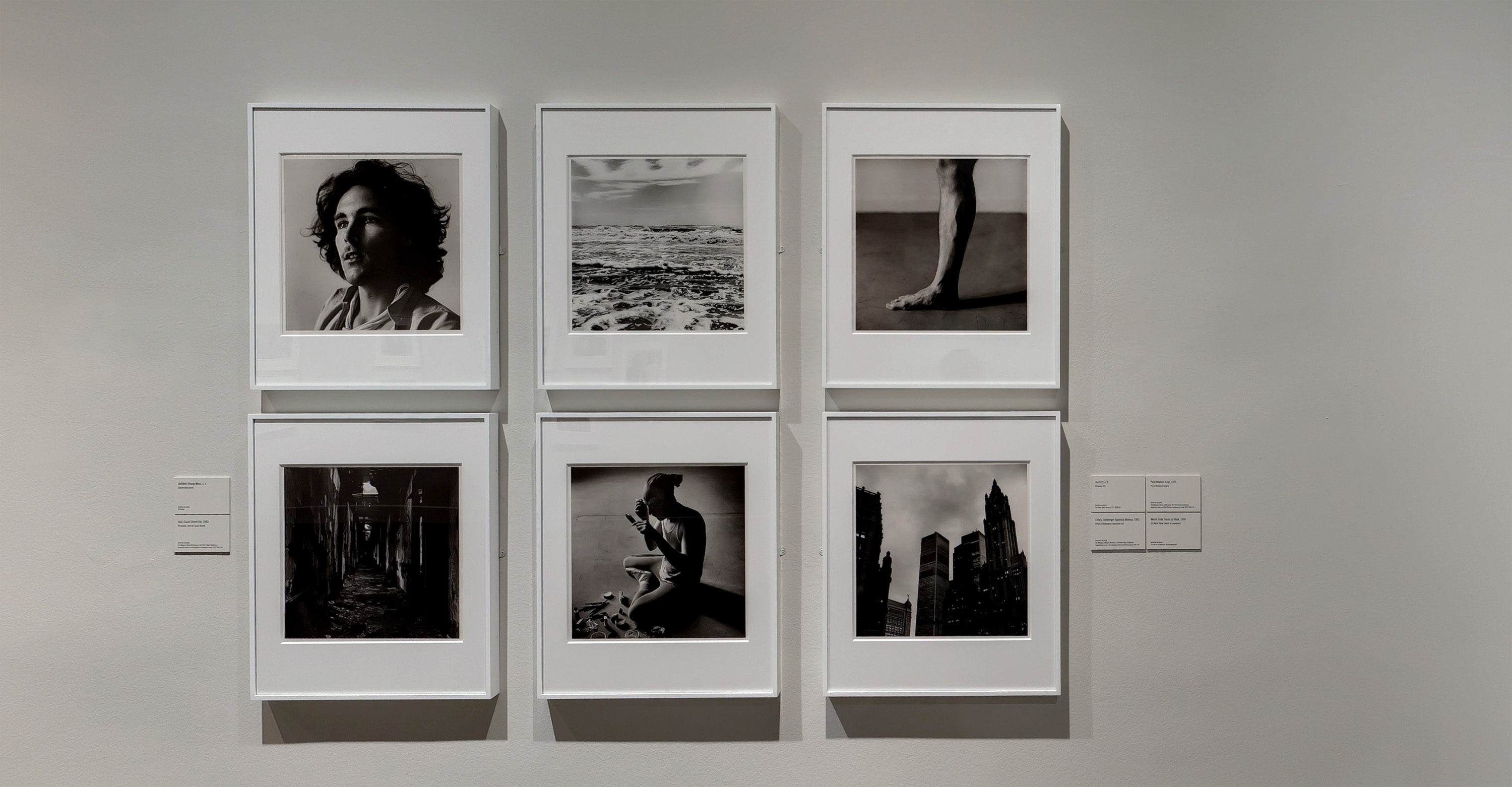
Closed Mondays

The Morgan Library & Museum website

LIKE ART BLART ON FACEBOOK

Back to top