Exhibition: ‘Time Exposures: Picturing a History of Isleta Pueblo in the 19th Century’ at the National Museum of the American Indian, New York

Exhibition dates: 17th September 2011 – 10th June 2012

George Gustav Heye Center, New York


Photographer unknown. 'Albuquerque Indian School Boys with Flags' c. 1900


Photographer unknown
Albuquerque Indian School Boys with Flags
c. 1900
9 x 12cm
Courtesy of the National Archives and Records Center


Another glorious, eclectic posting with a couple of knockout photographs, including Sumner Matteson’s Simon Zuni (1900, below) and George Wharton James’s Selling goods along tracks (late 1880s to early 1900s, below). The latter is a masterpiece of early modernist photography. Observe the spatial construction of the picture: open and yet closed at the same time. What do I mean by this? The image allows the eye to wander, to meander if you like among the structures while always having an escape into the sky, into the distance of the partially blocked vanishing point. The objects flow across the image plane like music; at left the dark shape and its shadow falling on the railway tracks hold in that side of the image. If the shape wasn’t there your eye would fall out of that side of the photograph, it would not be enclosed. It is this enclosure which forces your gaze into the distance. An asymmetrical balance is achieved with the train car at right, this time with the added punctum of the limply hanging flag to hold the viewer’s attention.

Most stunning of all is the composition in the centre, with changes in scale, orientation and direction – frontal, angled, away – and the commensurate shadows thrown from a setting sun. Reinforcing this flow is the chiaroscuro of the people selling goods – the white of the dress and the dark of the shawl, with the wonderfully raised arm breaking up the vanishing point / vertical composition. The shape of the dog lopping away parallel to the train tracks would normally lead us to an empty vista, the vanishing point on the horizon line of the image. Partially it still does, but the photographers skill in orientating his camera, in previsualising this tableaux (which must have been seen in a split second) is that the box car denies the eye an easy exit point. A series of telegraph poles at left hint at further human encroachment into the landscape, while at right the eye can finally leave the ground an ascend into the sky and escape into the beyond.

This is quite the most exquisite photograph I have seen in a long time.

Dr Marcus Bunyan


Many thankx to the National Museum of the American Indian, New York for allowing me to publish the photographs in the posting. Please click on the photographs for a larger version of the image.


Charles Lummis (American, 1859-1928) 'Cacique Bautista Chivira, with his wife and daughter Lupe Chivira and Rafaelita Chivira Charles' September 21, 1892


Charles Lummis (American, 1859-1928)
Cacique Bautista Chivira, with his wife and daughter Lupe Chivira and Rafaelita Chivira Charles
September 21, 1892
30.5 x 48cm
Courtesy of the Autry National Center/Southwest Museum, Los Angeles


Charles Lummis (American, 1859-1928) 'Group portrait' c. 1890's


Charles Lummis (American, 1859-1928)
Group portrait
c. 1890’s
15.425 x 24cm
Courtesy of the Autry National Center/Southwest Museum, Los Angeles


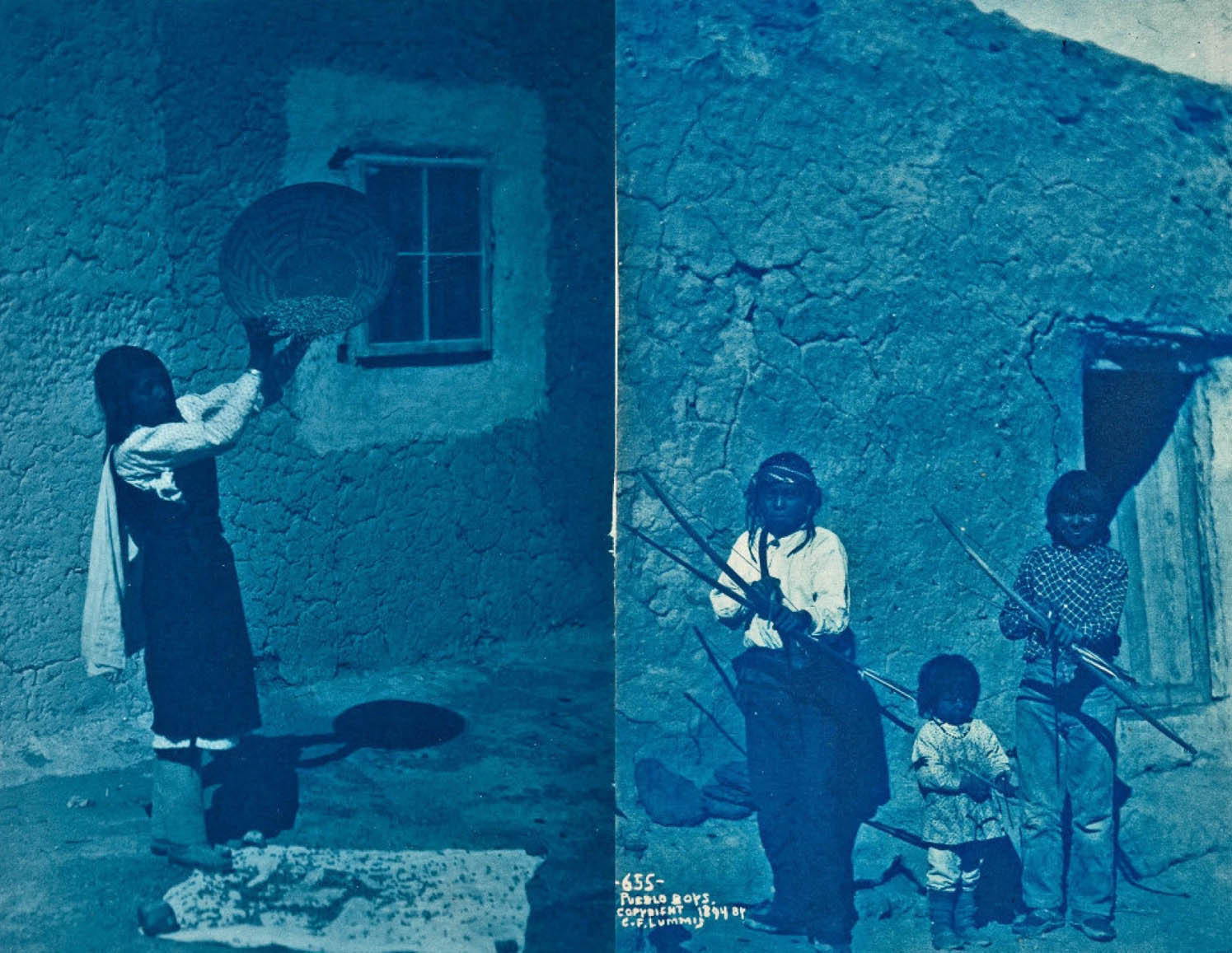
Charles Lummis (American, 1859-1928) 'Photograph of an Isleta girl winnowing beans, Isleta Pueblo, New Mexico' 1890 and Charles Lummis (American, 1859-1928) 'Photograph of three Isleta boys with bows and arrows, Isleta Pueblo, New Mexico' 1894


(Left)

Charles Lummis (American, 1859-1928)
Photograph of an Isleta girl winnowing beans, Isleta Pueblo, New Mexico
1890
Cyanotype
8 in x 5 in.
Courtesy of the Braun Research Library Collection, Autry Museum of the American West

(Right)

Charles Lummis (American, 1859-1928)
Photograph of three Isleta boys with bows and arrows, Isleta Pueblo, New Mexico
1894
Cyanotype
8 in x 5 in.
Courtesy of the Braun Research Library Collection, Autry Museum of the American West


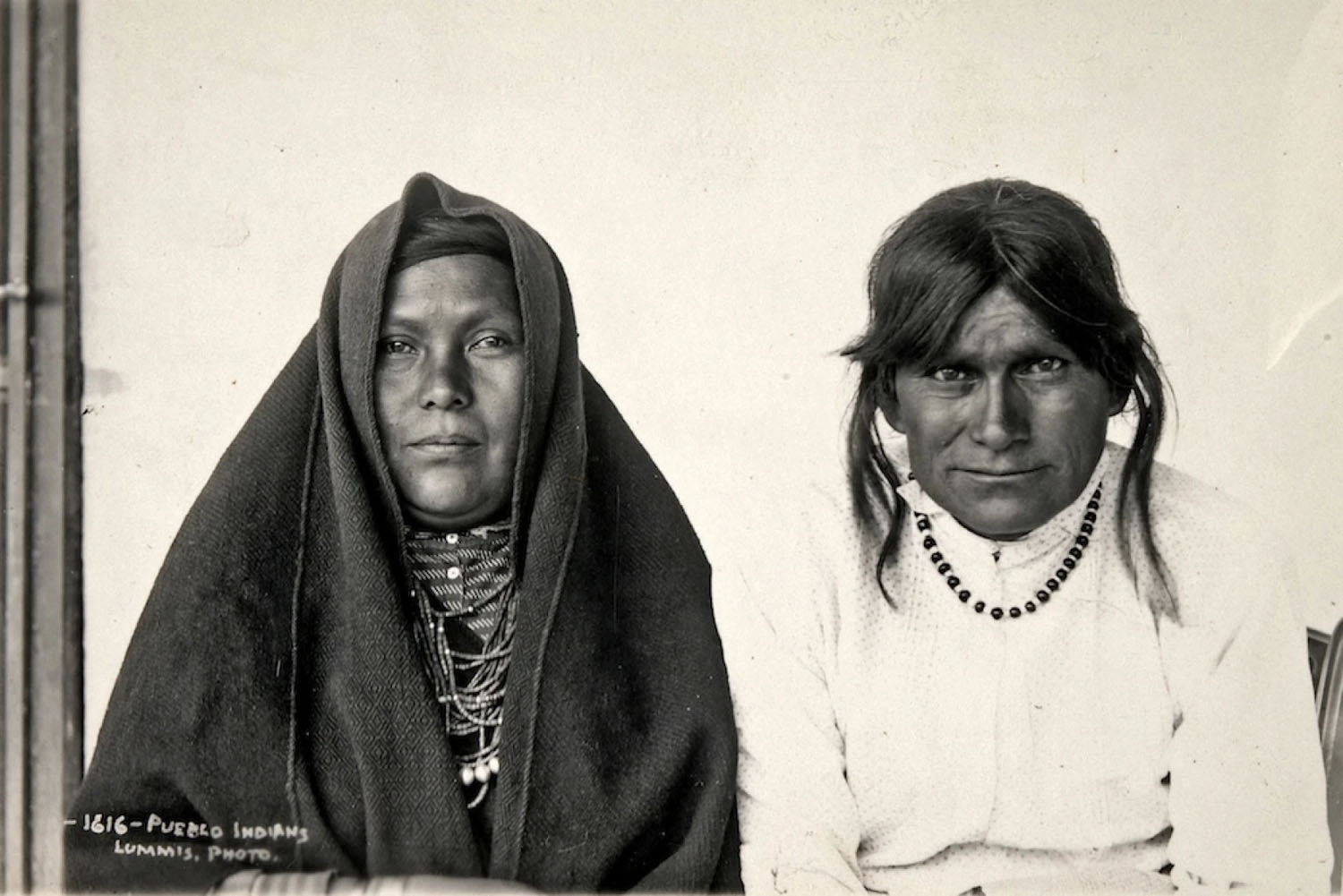
Charles Lummis (American, 1859-1928) 'Photograph of a Pueblo couple (probably Isleta or Taos), New Mexico' April 27, 1896


Charles Lummis (American, 1859-1928)
Photograph of a Pueblo couple (probably Isleta or Taos), New Mexico
April 27, 1896
5 in x 7 in.
Courtesy of the Braun Research Library Collection, Autry Museum of the American West


Charles Lummis (American, 1859-1928) 'Photograph of spectators watching races, Isleta Pueblo, New Mexico' April 19, 1896


Charles Lummis (American, 1859-1928)
Photograph of spectators watching races, Isleta Pueblo, New Mexico
April 19, 1896
5 in x 7 in.
Courtesy of the Braun Research Library Collection, Autry Museum of the American West


Charles Lummis (American, 1859-1928) 'Cyanotype photograph album: Bits of New Mexico and Arizona, Vol. 2' Nd


Charles Lummis (American, 1859-1928)
Cyanotype photograph album: Bits of New Mexico and Arizona, Vol. 2
Nd 
5.25″ x 9.25″
Courtesy of the Autry National Center/Southwest Museum, Los Angeles


The rapid changes forced on the Native American peoples of the American southwest are documented in Time Exposures: Picturing a History of Isleta Pueblo in the 19th Century. With more than 80 images and objects that detail life on the Isleta Pueblo Reservation after the arrival of the railroads in 1881, the exhibition opens Saturday, Sept. 17, at the Smithsonian’s National Museum of the American Indian in New York, the George Gustav Heye Center, and continues through Sunday, June 10, 2012.

In 1881, the railroad companies forcibly took land in the centre of Isleta Pueblo in the Rio Grande Valley and the rail lines built there brought scores of tourists. Prominent non-Native artists and photographers, such as Edward Curtis and Ben Wittick, traveled there to capture everyday Pueblo life. Organised by the people of Isleta Pueblo, Time Exposures portrays their lives before the arrival of tourists and other visitors, the changes imposed over the following decades and the ways in which the people of Isleta Pueblo worked to preserve their way of life.

Time Exposures is divided into three parts. In the first section, the cycle of the Isleta traditional year as it was observed in the mid-19th century is detailed. The second section describes the arrival of the Americans and the how this disrupted the Isleta way of living. In the third section, the exhibit examines the photos themselves as products of an outside culture. While exploring the underlying ideas and values of the photos, the exhibition questions their portrayal of Isleta people and ways. “In this exhibition, Native people respond to the stereotypical images of their lives that have been circulated by outsiders for centuries,” said Kevin Gover (Pawnee), director of the museum. “It is an opportunity for us all to learn the realities behind some of these popular and enduring photographs.”

“These photographs tell such an important story,” said John Haworth (Cherokee), director of the Heye Center. “The people of Isleta Pueblo fought to maintain their traditions despite radical and dramatic disruptions.”

Included in the exhibition are images by photographers Edward Curtis, A.C. Vroman, Karl Moon, John Hillers, Charles Lummis, Carlos Vierra, Sumner Matteson, Albert Sweeney, Josef Imhof and Ben Wittick. Time Exposures: Picturing a History of Isleta Pueblo in the 19th Century was organised by the people of the Pueblo of Isleta. A committee of Isleta Pueblo traditional leaders oversaw the development, writing and design of the exhibition. Time Exposures originally appeared at the Albuquerque Museum of Art and History in New Mexico.

Press release from the National Museum of the American Indian, New York website


George Wharton James (American, 1858-1923) 'Selling goods along tracks' late 1880s to early 1900s


George Wharton James (American, 1858-1923)
Selling goods along tracks
late 1880s to early 1900s
40 x 27cm
Courtesy of the Autry National Center/Southwest Museum, Los Angeles


Sumner Matteson (American, 1867-1920) 'Simon Zuni' 1900


Sumner Matteson (American, 1867-1920)
Simon Zuni
1900
46 x 33 cm
Photograph Courtesy of the Milwaukee Public Museum, Sumner W. Sumner Matteson Collection


In Time Exposures, we the people of Isleta Pueblo, a Native American community in New Mexico, tell our own story about this time and its lasting effects on our life today. Using a selection of over 300 historic photographs and an array of artefacts, the exhibit portrays our lives before the arrival of the Americans, the changes imposed over the following decades, and the ways in which our people worked to preserve our way of life. Through this process, the exhibit explains how we came to be who we are today.

The exhibit is divided into three parts. In the first section, we describe the cycle of our traditional year as it was observed in the mid-19th century. As a community, our lives were organised according to the seasons, farming, hunting and gathering practices and a regular sequence of ceremonies and rituals. Much has changed for us, but the cycles described here still define the contours of a parallel life we live today.

The second section of the exhibition describes the arrival of the Americans and the many ways in which this influx disrupted our way of living. The new authority took our lands and waters, prohibited hunts, and severely limited our access to plants and other resources. The exhibit shows how our people fought these changes and how we learned to become members of America on our own terms.

In the third section of the show, the exhibit examines the photographs themselves as products of white culture. The exhibit explores the underlying ideas and values of the photos, and asks what kind of record they truly represent of our people and our ways.

Text from the Time Exposures exhibition catalogue


Unknown photographer. 'Jose S. Abeita, bronco buster, in Magdalena' c. 1920


Unknown photographer
Jose S. Abeita, bronco buster, in Magdalena
c. 1920
25 x 40cm
Courtesy of the Autry National Center/Southwest Museum, Los Angeles


Charles Lummis (American, 1859-1928) 'Young Isleta Girl' Nd 


Charles Lummis (American, 1859-1928)
Young Isleta Girl
Nd 
Cabinet card
Courtesy of the Library of Congress


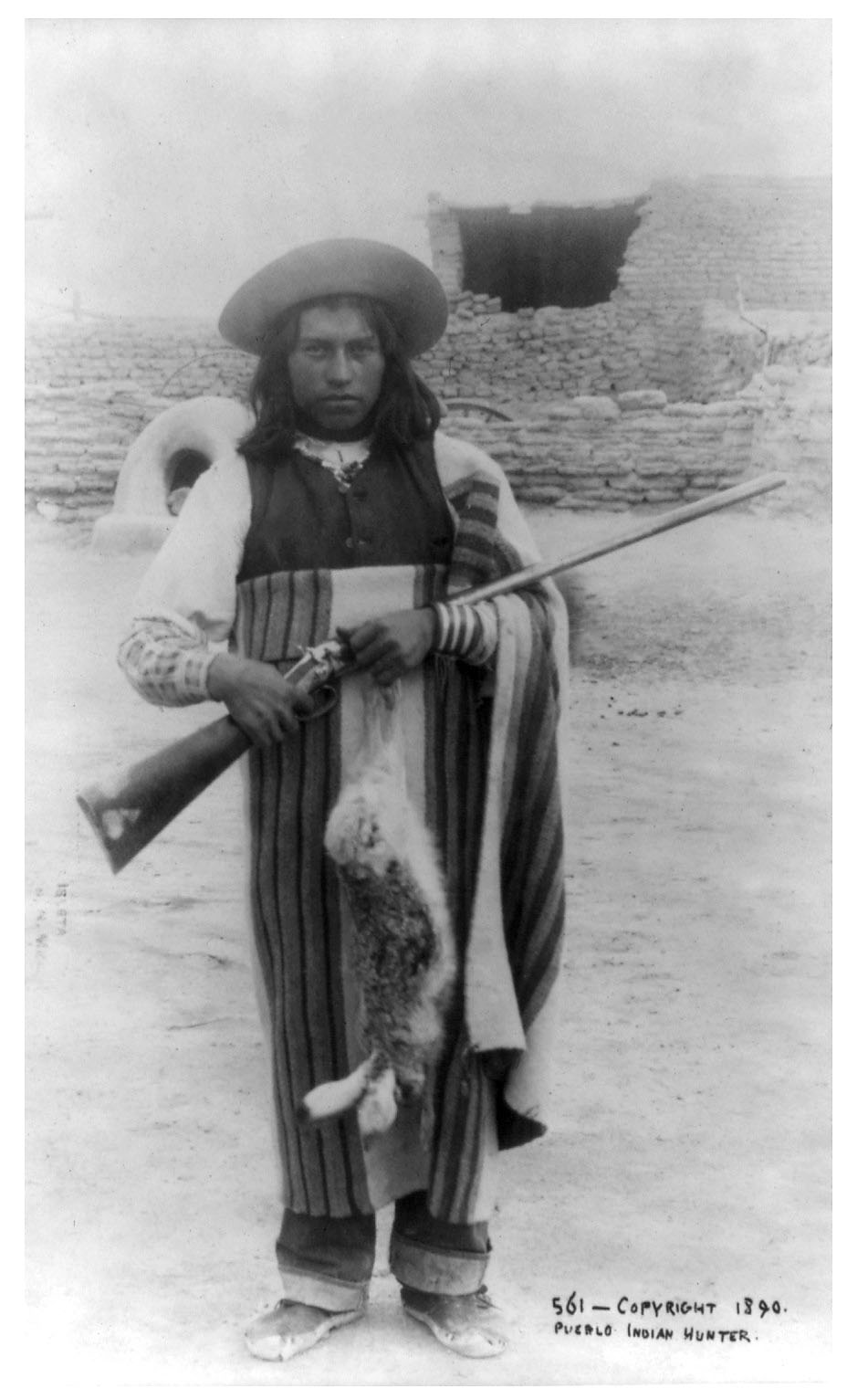
Charles Lummis (American, 1859-1928) 'Isleta hunter, Juan Diego' 1890


Charles Lummis (American, 1859-1928)
Isleta hunter, Juan Diego
1890
Courtesy of the Autry National Center/Southwest Museum, Los Angeles


Smithsonian National Museum of the American Indian
The George Gustav Heye Center
One Bowling Green, Battery Park, New York City
Phone: (212) 514-3700

Opening hours:
Every day from 10am – 5pm
Thursdays until 8pm

National Museum of the American Indian website

LIKE ART BLART ON FACEBOOK

Back to top

Exhibition: ‘Pieter Hugo: This must be the place’ at The Hague Museum of Photography, The Netherlands

Exhibition dates: 3rd March – 20th May 2012


Pieter Hugo (South African, b. 1976) 'Mallam Mantari Lamal with Mainasara, Abuja' From the series 'The Hyena & Other Men' 2005-2007


Pieter Hugo (South African, b. 1976)
Mallam Mantari Lamal with Mainasara, Abuja
2005-2007 
From the series The Hyena & Other Men
© Courtesy of Stevenson Gallery, Kaapstad / Yossi Milo, New York


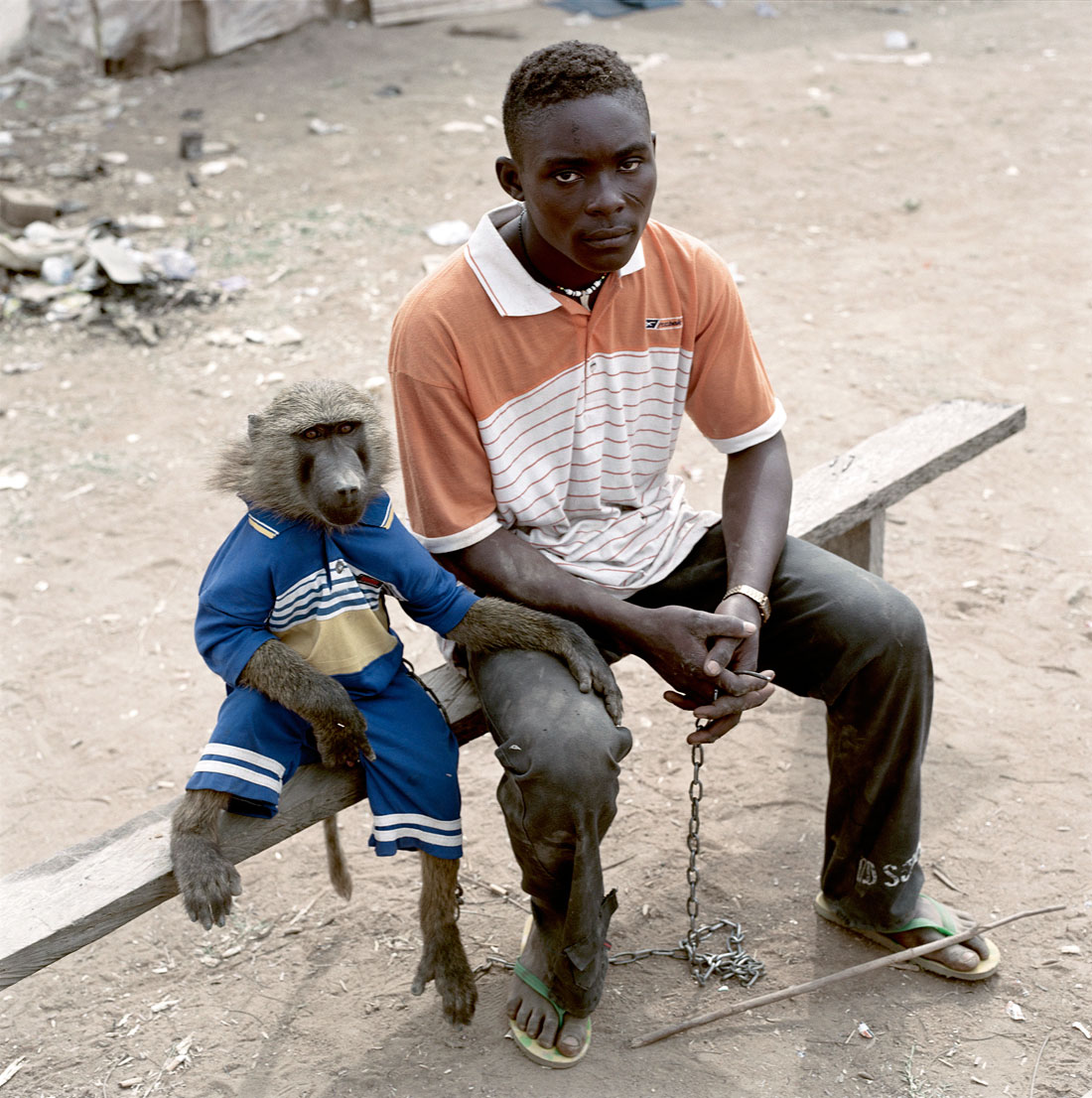
Sexy, scary and very sad.

The hand of the monkey Clear on the thigh of Dayaba Usman (see second photograph below) – and the look on his face – makes one wonder who is really in chains.

Marcus


Many thankx to the Hague Museum of Photography for allowing me to publish the photographs in the posting. Please click on the photographs for a larger version of the image.


Pieter Hugo (South African, b. 1976) 'Dayaba Usman with the monkey Clear, Abuja' From the series 'The Hyena & Other Men' 2005-2007


Pieter Hugo (South African, b. 1976)
Dayaba Usman with the monkey Clear, Abuja
2005-2007
From the series The Hyena & Other Men
© Courtesy of Stevenson Gallery, Kaapstad / Yossi Milo, New York


Pieter Hugo (South African, b. 1976) 'Mummy Ahmadu and a snake charmer with a rock python, Abuja' From the series 'The Hyena & Other Men' 2005-2007


Pieter Hugo (South African, b. 1976)
Mummy Ahmadu and  a snake charmer with a rock python, Abuja
2005-2007
From the series The Hyena & Other Men
© Courtesy of Stevenson Gallery, Kaapstad / Yossi Milo, New York


The South African photographer Pieter Hugo’s (1976) monumental photographs, centred around contemporary Africa, are now well known around the world. He has already won numerous awards including the KLM Paul Huf award in 2008 and was recently nominated for the Deutsche Börse Photography Prize 2012. The Hague Museum of Photography will be the first museum to exhibit a comprehensive survey of Hugo’s work from 2002-2011. Together with many previously unseen works, the exhibition will include a curated selection of his most well-known series: The Hyena & Other Men, the bizarre Nollywood and the striking Permanent Error. His impressive portraits tell personal stories about recurring themes throughout his oeuvre, namely those people who inhabit the margins of society in Sub-Saharan Africa. 

The differences between the West and Africa, rich and poor, white and black are confronted in Hugo’s vivid compositions. Many of his series are prompted by newspaper articles, or radio and television pieces, which he finds compelling. He came in contact, for instance with the group of men who travel around Nigeria with hyenas and pythons, through an image sent via cell phone camera by a friend. He decided to accompany the group on their travels, and the outcome of this experience is The Hyena & Other Men (2005-2007), a series of portraits from a travelling group of street performers, who together with their – sometimes forcefully – tamed animals earn money to continue travelling.

In the series Permanent Error (2009-2010) he offers portraits of young men and woman who live amidst an immense waste dump of broken computers, mother boards and keyboards. To earn money these young people burn the computers dumped here as a means to extract valuable metals. The dangerous and poisonous vapours produce a hell on earth, where the quality of life is already challenging. The people who pose for Hugo stand in front of the camera with a defiant self-confidence.

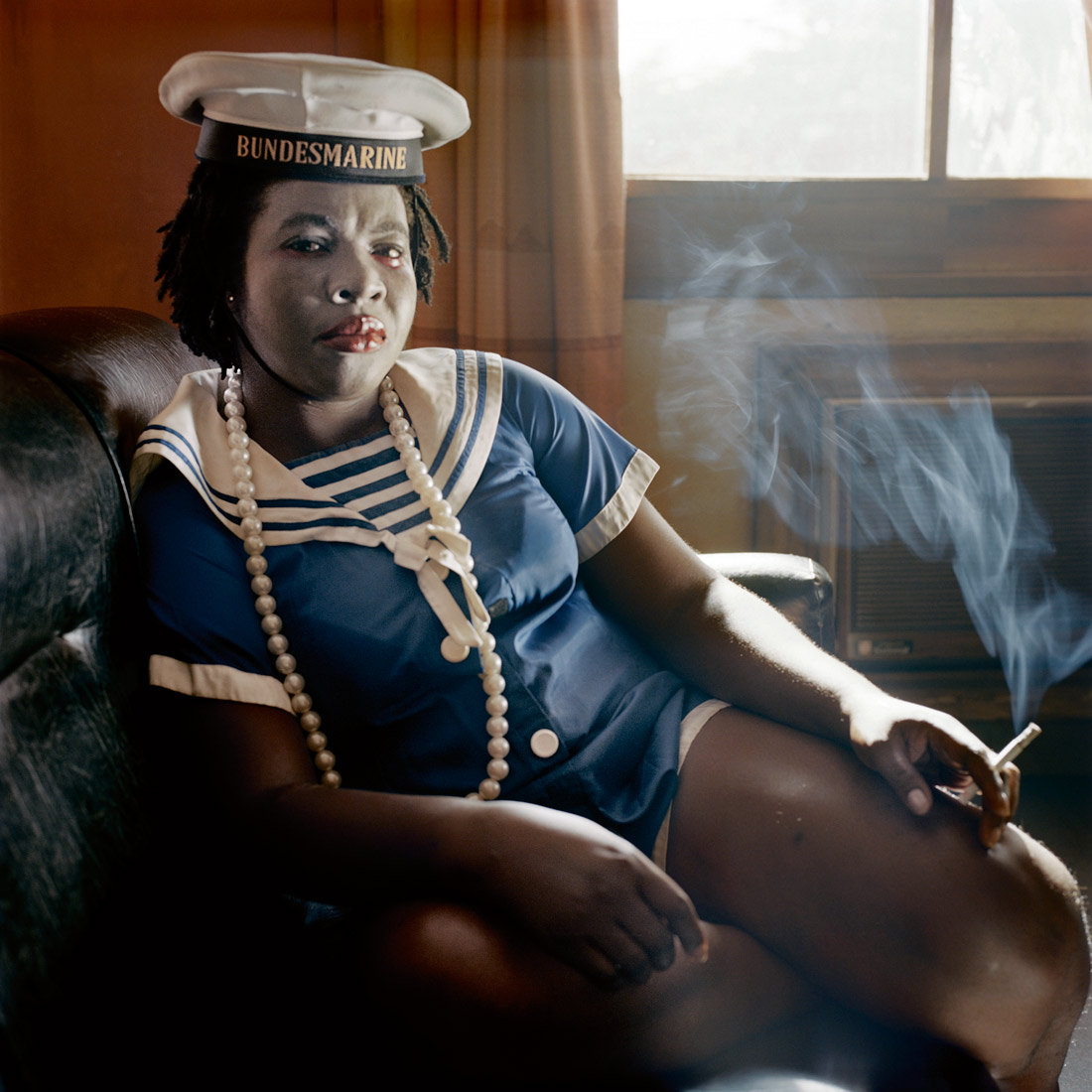
From a different perspective comes his series about Nollywood (2008-2009) in Nigeria, the biggest film industry in the world after Hollywood and Bollywood. Here, stories that have for centuries been part of an oral tradition are told in dramatic films in which a central role is reserved for themes such as romance, witchcraft, bribery and prostitution. It is this world, where the everyday and the surreal exist simultaneously, that Hugo finds fascinating. In this series Hugo depicts actors and assistants posing in the role of movie characters. The result is an absurd tableau such as a photo of a half-naked woman sitting on a bed with a bloody knife stuck between her breasts. All the while she stares blankly at the camera. In another image, a woman well-dressed in Nigerian clothing sits completely unfazed by the man next to her made-up as the devil.

Press release from The Hague Museum of Photography website


Pieter Hugo (South African, b. 1976) 'Escort Kama, Enugu' From the series 'Nollywood' 2008-2009


Pieter Hugo (South African, b. 1976)
Escort Kama, Enugu
2008-2009
From the series Nollywood
© Courtesy of Stevenson Gallery, Kaapstad / Yossi Milo, New York


Pieter Hugo (South African, b. 1976) 'Obechukwu Nwoye, Enugu' From the series 'Nollywood' 2008-2009


Pieter Hugo (South African, b. 1976)
Obechukwu Nwoye, Enugu
2008-2009
From the series Nollywood
© Courtesy of Stevenson Gallery, Kaapstad / Yossi Milo, New York


Pieter Hugo (South African, b. 1976) 'Abdulai Yahaya, Agbogbloshie Market, Accra' From the series 'Permanent Error', 2009-2010


Pieter Hugo (South African, b. 1976)
Abdulai Yahaya, Agbogbloshie Market, Accra
2009-2010
From the series Permanent Error
© Courtesy of Stevenson Gallery, Kaapstad / Yossi Milo, New York


Pieter Hugo (South African, b. 1976) 'Abdulai Yahaya, Agbogbloshie Market, Accra' 2009-2010 From the series 'Permanent Error'


Pieter Hugo (South African, b. 1976)
Abdulai Yahaya, Agbogbloshie Market, Accra
2009-2010
From the series Permanent Error
© Courtesy of Stevenson Gallery, Kaapstad / Yossi Milo, New York


Pieter Hugo (South African, b. 1976) 'David Akore, Agbogbloshie Market, Accra' 2009-2010 From the series 'Permanent Error'


Pieter Hugo (South African, b. 1976)
David Akore, Agbogbloshie Market, Accra
2009-2010
From the series Permanent Error
© Courtesy of Stevenson Gallery, Kaapstad / Yossi Milo, New York


The Hague Museum of Photography
Stadhouderslaan 43
2517 HV Den Haag
Phone: 31 (0)70 – 33 811 44

Opening hours:
Tuesday – Sunday, 11am – 5pm
Closed Mondays

The Hague Museum of Photography website

LIKE ART BLART ON FACEBOOK

Back to top

Exhibition: ‘Andy Warhol: Polaroids / MATRIX 240’ at Berkeley Art Museum and Pacific Film Archive, University of California

Exhibition dates: 27th January – 20th May 2012

PLEASE NOTE: This posting contains nude photographs. If you do not like please do not look!


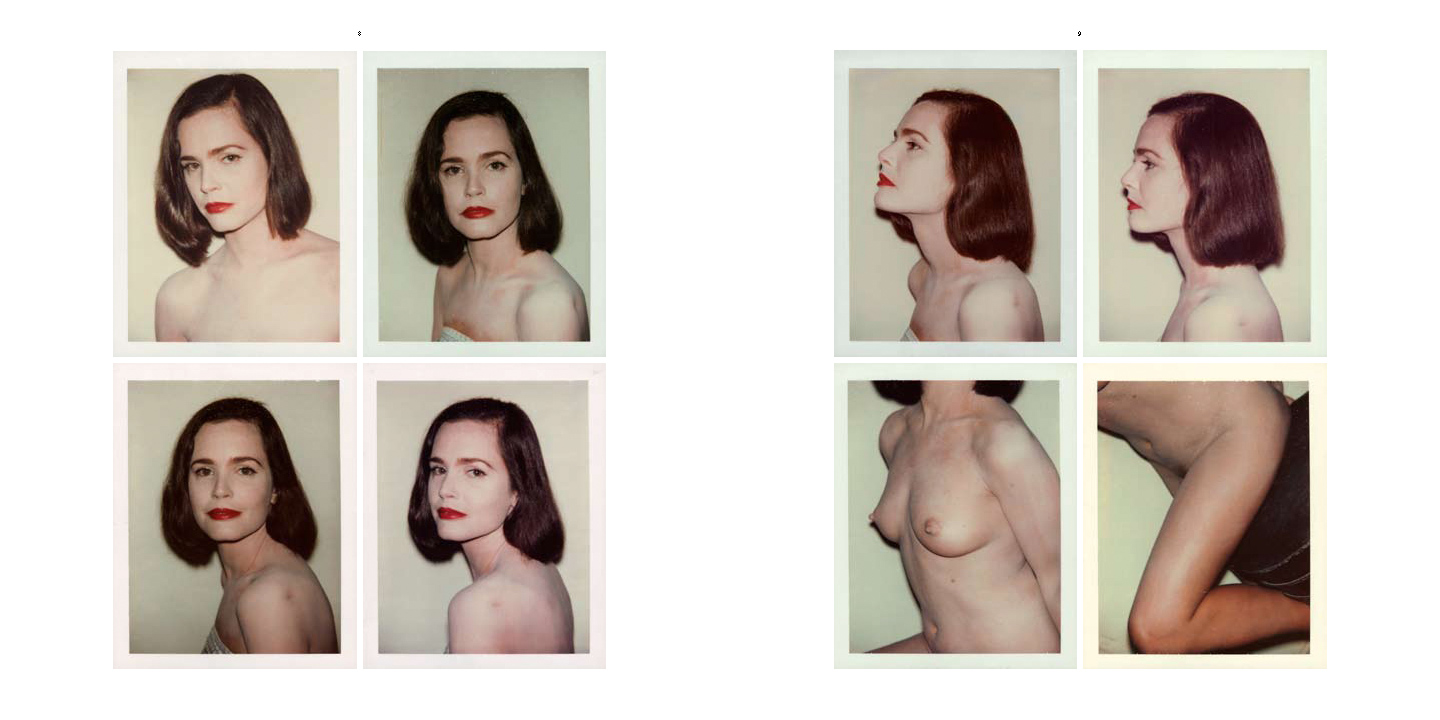
Andy Warhol (American, 1928-1987) 'Untitled' Pages 8 and 9 of The Andy Warhol Photographic Legacy Program, Vol. III


Andy Warhol (American, 1928-1987)
Untitled
Pages 8 and 9 of The Andy Warhol Photographic Legacy Program, Vol. III
of The Andy Warhol Foundation for the Visual Arts Twenty-Year Report, 1987–2007


ONE PERSON has found one of the images below offensive; so just for them please note that his posting has a PENIS and A-RRRRRR-SE rating. For all others, enjoy another spectacular Andy posting!

Marcus


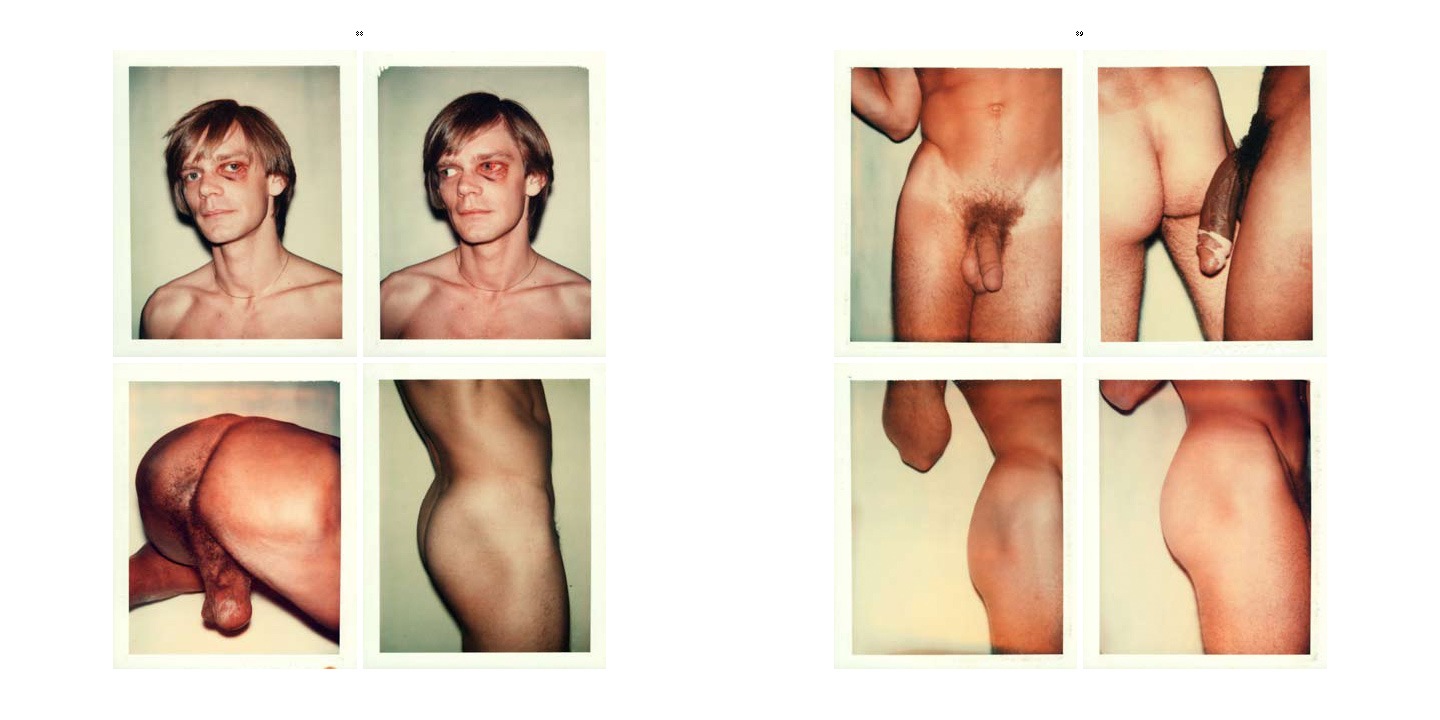
Many thankx to BAM/PFA for allowing me to publish the photographs in the posting. Please click on the photographs for a larger version of the image (especially the two images directly below). View the complete The Andy Warhol Photographic Legacy Program Vol. III as a pdf (3.7Mb pdf)


“I’ve never met a person I couldn’t call a beauty.”


Andy Warhol


Andy Warhol (American, 1928-1987) 'Untitled' Pages 38 and 39 of The Andy Warhol Photographic Legacy Program, Vol. III


Andy Warhol (American, 1928-1987)
Untitled
Pages 38 and 39 of The Andy Warhol Photographic Legacy Program, Vol. III
of The Andy Warhol Foundation for the Visual Arts Twenty-Year Report, 1987–2007


The University of California, Berkeley Art Museum and Pacific Film Archive presents Andy Warhol: Polaroids / MATRIX 240. The exhibition features a selection of Warhol’s Polaroid portraits drawn from an extraordinary gift of The Andy Warhol Foundation for the Visual Arts to the museum. From 1970 to 1987, Warhol, armed with his Polaroid Big Shot camera, captured a wide range of individuals – the royalty, rock stars, executives, artists, patrons of the arts, and athletes who epitomised seventies and eighties high society, but also as many unknown subjects. From January 27 through May 20, 2012, BAM/PFA will feature a group of approximately forty of these photographs, including portraits of Caroline, Princess of Monaco; Diane von Furstenberg; and O.J. Simpson.

Famous for his contributions to Pop Art, Warhol used photography as a central part of his art-making process. Before turning to fine art, Warhol worked in advertising and commercial art, experiences that informed his approach to portraiture. In 1962, he debuted his first silkscreen paintings of celebrities, serialising pictures he pulled from magazines and press photos. In addition to using found images, Warhol eventually incorporated his own photography into his practice. In 1969 he launched inter/View magazine, which featured his photos of celebrities. By the 1970s and 1980s, portrait commissions were a major source of his income, and many of his Polaroids would serve as the basis for these works.

While each of the images in Andy Warhol: Polaroids is unique, the consistency of composition, poses, and plain white backdrop equalises the superstars and lesser-known subjects. To Warhol, they were all beautiful people. But even within this uniform staging, we see the artist finding numerous ways to create memorable, varied, and iconic compositions. Though these photos may be small in size, together the Warhol Polaroids provide a glimpse into the artistic process of one of the twentieth century’s most important artists.

From 1970 to 1987 Andy Warhol took scores of Polaroid and black-and-white photographs, the vast majority of which were never seen by the public. These images often served as the basis for his commissioned portraits, silk-screen paintings, drawings, and prints. In 2007, to commemorate its twentieth anniversary, the Andy Warhol Foundation for the Visual Arts launched the Andy Warhol Photographic Legacy Program. Designed to give a broad public greater access to Warhol’s photographs, the program donated over 28,500 of Warhol’s original Polaroids and gelatin silver prints to more than 180 college and university museums and galleries across the country. Each institution received a curated selection of over one hundred Polaroids and fifty black-and-white prints.

The number of images he took at each session varied as greatly as the figures he photographed. Repetition, a recurring motif in Warhol’s paintings, plays both a conceptual and practical role in his photography. By making several Polaroids, he had more material from which to work. By shooting at length, more about the sitter was exposed. Seen all together, the Polaroids destabilise the iconic status that a Warhol image assumes when displayed singly. On its own, a Polaroid image is fully identified with the artwork that ultimately grew out of it; the face depicted becomes a kind of signifier for larger cultural concepts of beauty, power, and worth.

Text adapted from “Andy Warhol’s Photographic Legacy,” in The Andy Warhol Photographic Legacy Program, Vol. III of The Andy Warhol Foundation for the Visual Arts Twenty-Year Report, 1987-2007 (New York: The Andy Warhol Foundation for the Visual Arts, Inc, 2007), 4-5.

View the complete Vol. III as a pdf (3.7Mb pdf)

Text and press release from the BAM/PFA website


Andy Warhol (American, 1928-1987) 'Billy Squier' 1982


Andy Warhol (American, 1928-1987)
Billy Squier
1982
Polacolor 2
4 1/4 x 3 3/8 in
Gift of the The Andy Warhol Center for the Visual Arts
© The Andy Warhol Center for the Visual Arts


Andy Warhol (American, 1928-1987) 'Daryl Lillie' 11/1978


Andy Warhol (American, 1928-1987)
Daryl Lillie
11/1978
Polacolor 2
4 14 x 3 3/8 in
© The Andy Warhol Center for the Visual Arts


Andy Warhol (American, 1928-1987) 'Heather Watts' after June 1986


Andy Warhol (American, 1928-1987)
Heather Watts
after June 1986
Polacolor ER
4 1/4 x 3 3/8 in
© The Andy Warhol Center for the Visual Arts


From 1970 to 1987 Andy Warhol took thousands of Polaroid pictures, the vast majority of which were never seen by the public. These images often served as the basis for his commissioned portraits, silkscreen paintings, drawings, and prints. Warhol captured a wide range of individuals with his Polaroid Big Shot camera. The royalty, rock stars, industrialists, artists, patrons of the arts, and athletes who epitomised 1970s and 1980s high society, as well as unknown sitters, are represented with a sense of dignity and verve. Warhol was interested in a new definition of “Society” that emerged in this period. In the introduction to the 1979 publication Andy Warhol’s Exposures, the artist wrote:

“Now it doesn’t matter if you came over on the Mayflower, so long as you can get into Studio 54. Anyone rich, powerful, beautiful, or famous can get into Society. If you’re a few of those things you can really get to the top.”1

Warhol’s images not only documented, but participated in, the creation of this new social world, satisfying both the need of his subjects to be seen and the desire of the viewer to gain access to this milieu through the act of looking. Warhol worked in advertising and commercial art before turning to fine art, experiences that informed his approach to portraiture. In 1962, he debuted his first silk-screen paintings of celebrities, serialising pictures appropriated from magazines or press photos of the time. In addition to employing found images, Warhol eventually incorporated photography into his practice and, in 1969, started a magazine (originally called inter/VIEW) that often featured his own photographs of celebrities. By the 1970s and 1980s, portrait commissions became a main source of his income.

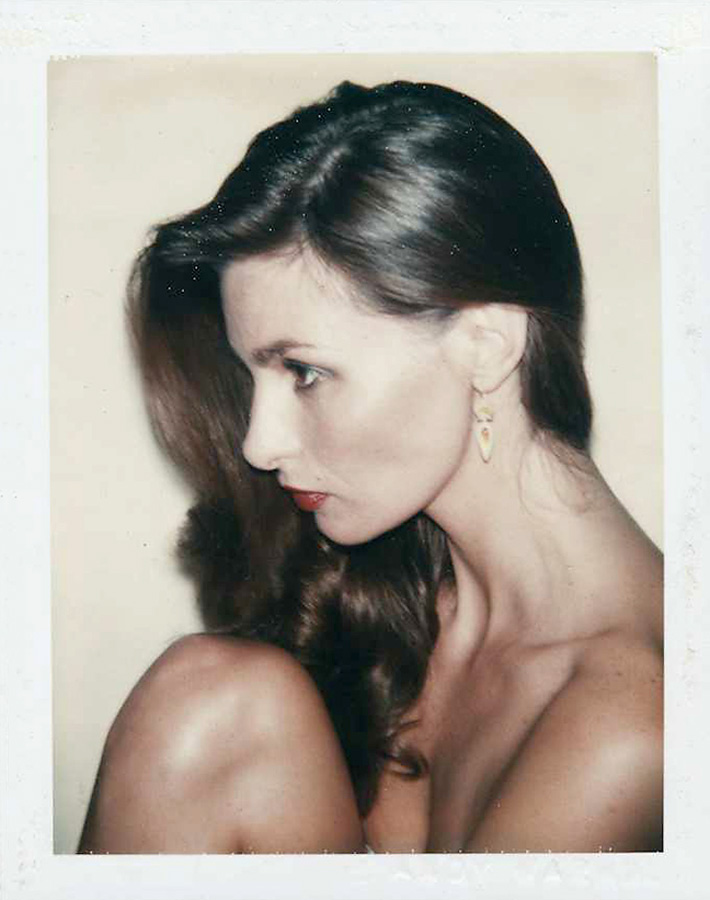
Warhol’s Polaroids are strikingly intimate, an effect achieved in part by his personal relationship with the sitters and in part by formal aspects of the images. The artist often provided a luncheon in advance of the photo session, establishing a bond with his subject and a tone for the shoot. In the resulting Polaroids, the sitter is in direct eye contact with Warhol and the camera. The strong sense of immediacy created by the sitter’s open gaze is enhanced by the tight compositions in which the subject, pressed up close to the picture plane, is isolated from any context. A feeling of vulnerability appears in some of the portraits (as suggested by the bared shoulders of Unidentified woman (blond with bangs), for example), indicating a willingness to be exposed as well as the seductive nature of the artist and the photo shoot itself. The closeness forged between photographer and sitter and captured by the camera offers an illusion of sharing these private moments and of entering into Warhol’s circle of beautiful people and their glamorous lives.

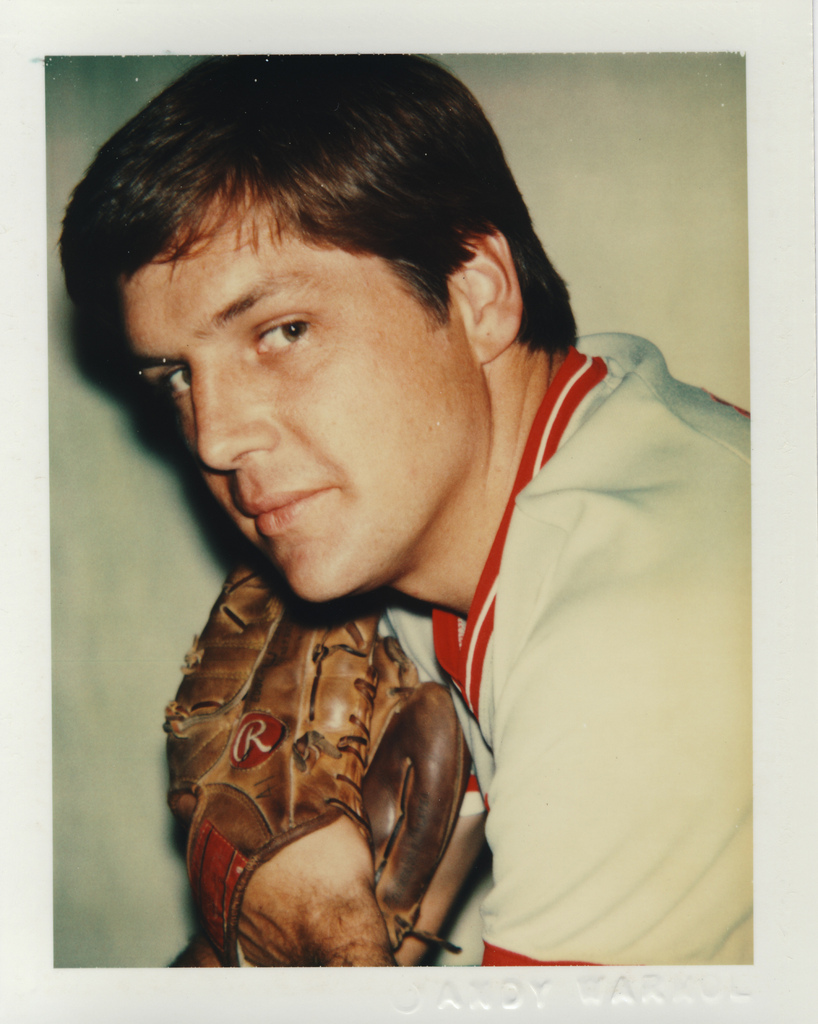
While each image is unique, the consistency of composition, poses, and plain white backdrop equalises the celebrities and the unknown subjects of Warhol’s Polaroids. After all, to Warhol, they were all beautiful people. Polaroids of individuals who are not immediately recognisable pique our curiosity. Who is the enigmatic Frau Buch? Like many of Warhol’s subjects, she is photographed with a prop. The small dog that she hugs may not identify her, but it suggests a dimension of her personality. In other Polaroids, Warhol used props as identifying elements like the attributes in Renaissance portraiture – major-league baseball pitcher Tom Seaver is shown with his mitt and NFL legend O.J. Simpson clutches a football. The teddy bear in the arms of the subject of Unidentified girl (blue t-shirt with teddy bear) represents an aspect childhood that everyone can relate to, although the girl is actually a scion of the new high society: Jade, the daughter of Mick and Bianca Jagger.

Warhol’s Polaroids were designed to be source material for his canvases. He would direct the sitter in a series of poses, which gave the artist ample material from which to create the subsequent silkscreen portraits. Subjects such as fashion designer Diane Von Furstenberg and patron of the arts Daryl Lillie are photographed wearing thick white makeup, black eyeliner, and bright red lipstick that evoke the stage or a high-fashion photo shoot; however, the makeup also served to flatten the images for a smooth effect in the screen-print transfer. The Polaroid Big Shot’s strong flash overexposes many images and increases the contrast, an effect Warhol deployed in the subsequent silkscreens; the flash also seems to catch each sitter – celebrities and unknowns alike – in the sudden glare of a paparazzo’s camera.

Warhol’s Polaroids borrow from paparazzi and high-fashion photography and at the same time elevate an inexpensive, everyday medium to the realm of high art. Warhol embossed his name in capital letters in the lower right-hand border of most of the Polaroids, marking them as a painter would sign a canvas. For Warhol, coming from the world of advertising, this was also a kind of branding. He wrote of Jade Jagger: “She never calls me Andy always Andywarhol, as if it were one word – or a brand name, which I wish it were.”2 Warhol’s portraits confuse the boundaries of advertising and art, high and low, celebrity portraiture and the depiction of everyday people, and even photography and painting. His subjects are perpetually illuminated by the afterimage of a flashbulb, their faces immortalised by Warhol’s style

Fabian Leyva-Barragan, Curatorial Intern
Stephanie Cannizzo, Assistant Curator


1/ Warhol, Andy and Colacello, Bob . Andy Warhol’s Exposures (New York: Andy Warhol Books / Grosset & Dunlop, Inc., 1979), p. 19

2/ Ibid., pp. 28-29


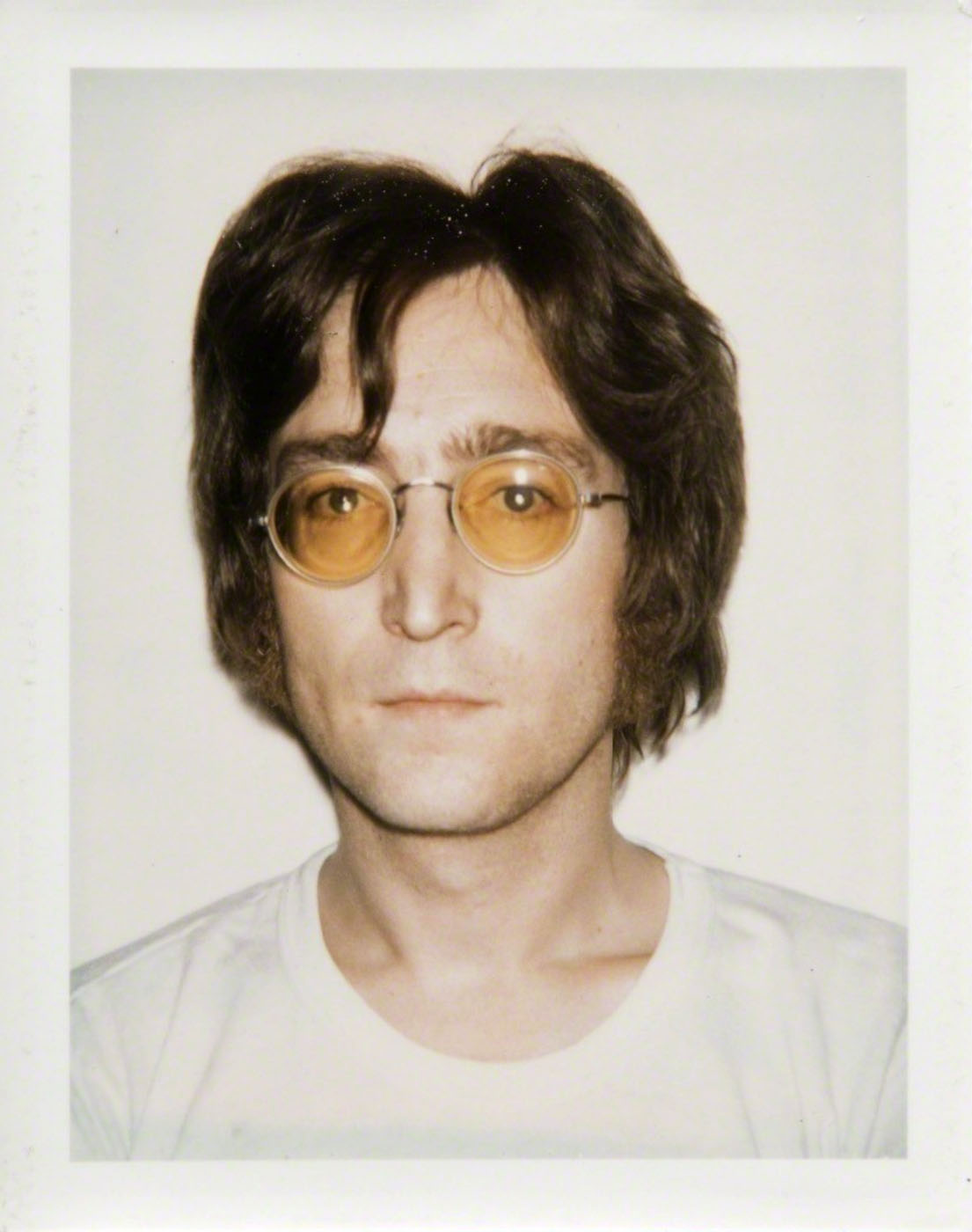
Andy Warhol (American, 1928-1987) 'John Lennon' 1971


Andy Warhol (American, 1928-1987)
John Lennon
1971
Polacolor ER
4 1/4 x 3 3/8 in
Gift of the The Andy Warhol Center for the Visual Arts
© The Andy Warhol Center for the Visual Arts


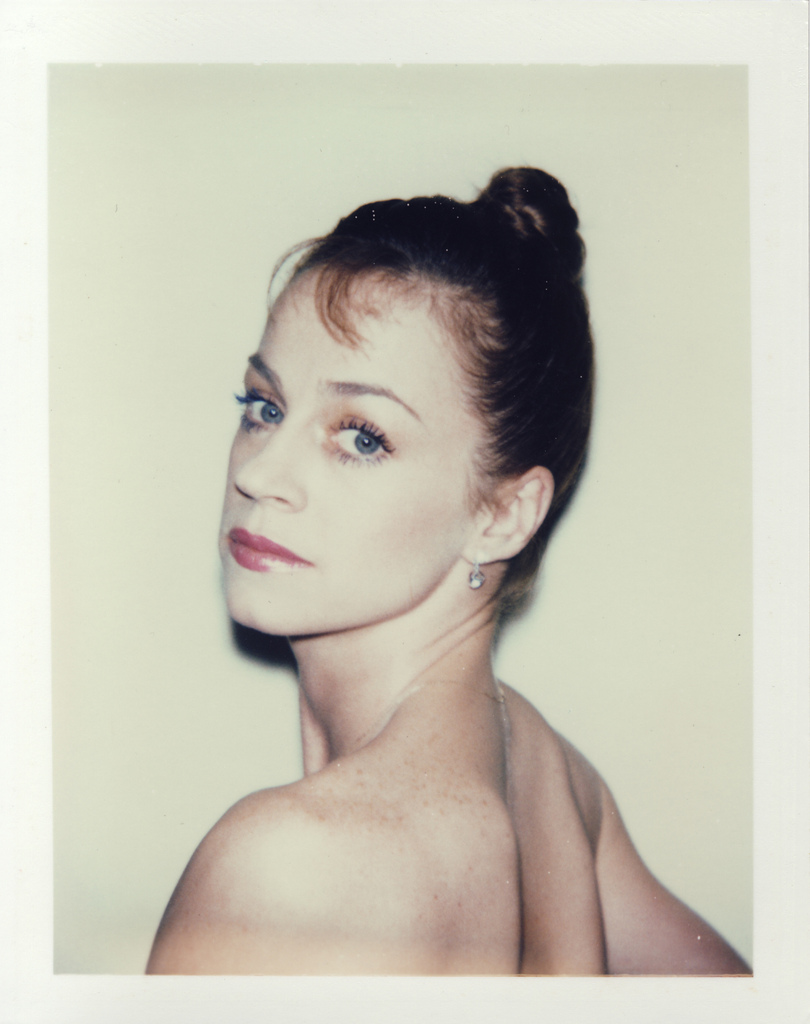
Andy Warhol (American, 1928-1987) 'Apollonia Von Ravenstein' c. 1979


Andy Warhol (American, 1928-1987)
Apollonia Von Ravenstein
c. 1979
Polacolor ER
4 1/4 x 3 3/8 in
Gift of the The Andy Warhol Center for the Visual Arts
© The Andy Warhol Center for the Visual Arts


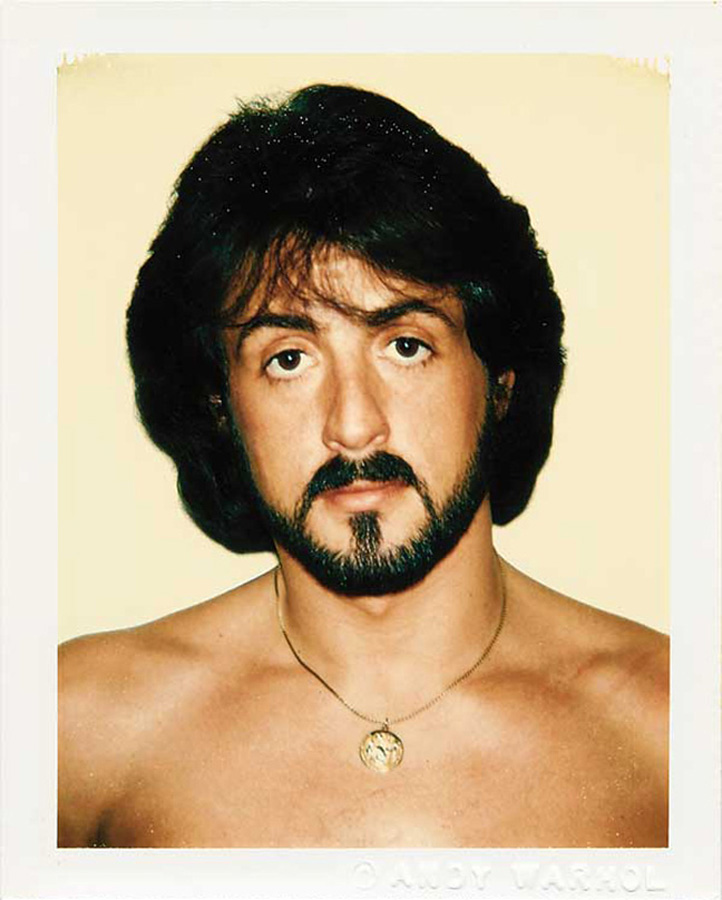
Andy Warhol (American, 1928-1987) 'Sylvester Stallone' 2/1980


Andy Warhol (American, 1928-1987)
Sylvester Stallone
2/1980
Polacolor ER
4 1/4 x 3 3/8 in
Gift of the The Andy Warhol Center for the Visual Arts
© The Andy Warhol Center for the Visual Arts


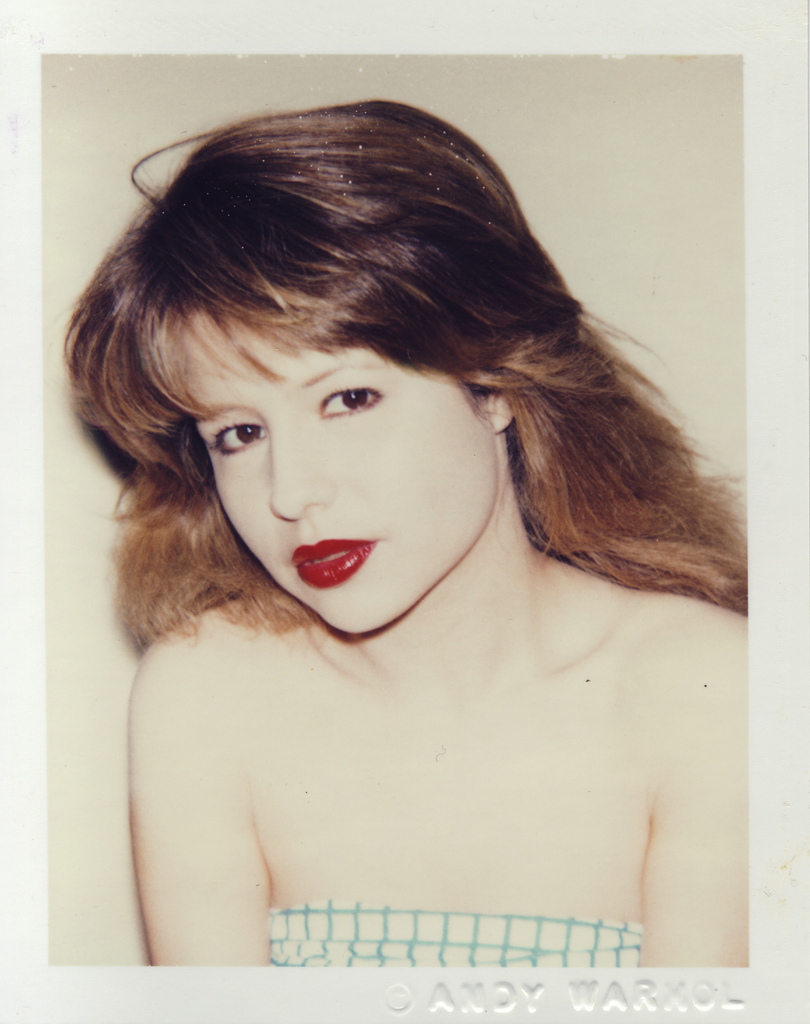
Andy Warhol (American, 1928-1987) 'Pia Zadora' 1983


Andy Warhol (American, 1928-1987)
Pia Zadora
1983
Polacolor ER
4 1/4 x 3 3/8 in
Gift of the The Andy Warhol Center for the Visual Arts
© The Andy Warhol Center for the Visual Arts


Andy Warhol (American, 1928-1987) 'Tom Seaver' 1977


Andy Warhol (American, 1928-1987)
Tom Seaver
1977
Polacolor Type 108
4 14 x 3 3/8 in
Gift of the The Andy Warhol Center for the Visual Arts
© The Andy Warhol Center for the Visual Arts


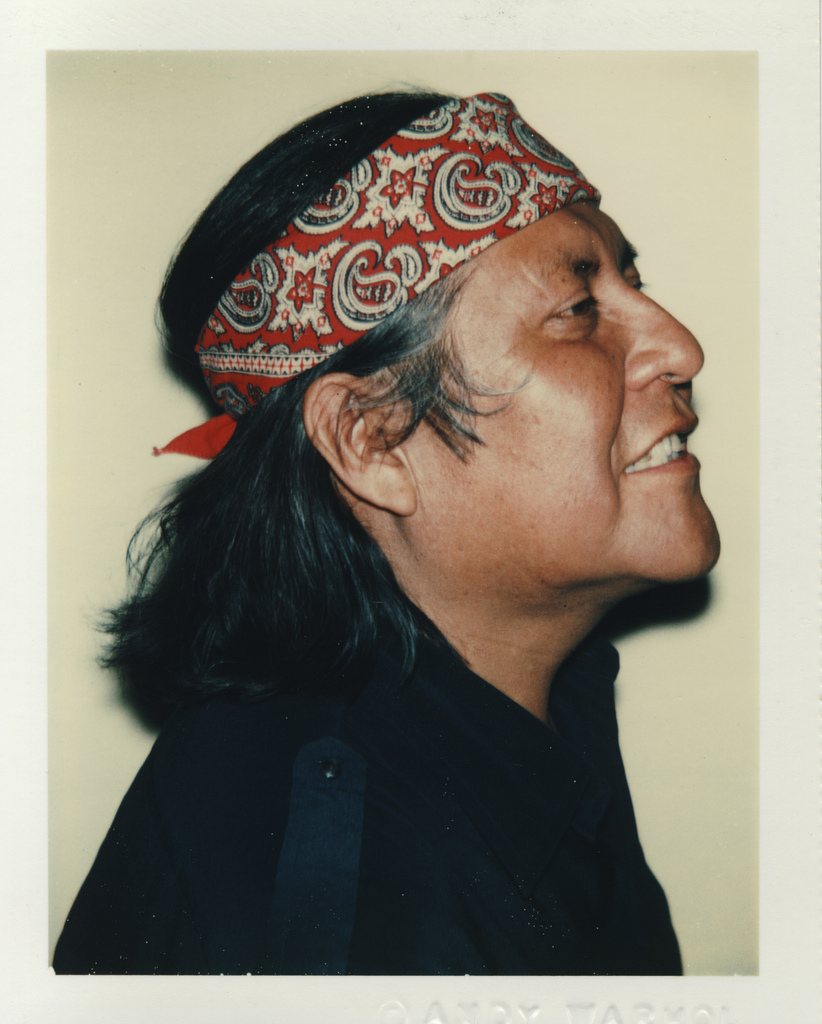
Andy Warhol (American, 1928-1987) 'R.C. Gorman' 1979


Andy Warhol (American, 1928-1987)
R.C. Gorman
1979
Polacolor Type 108
4 1/4 x 3 3/8 in
© The Andy Warhol Center for the Visual Arts


Berkeley Art Museum and Pacific Film Archive

BAMPFA is located at 2155 Center Street
between Oxford Street and Shattuck Avenue, in downtown Berkeley
Phone: (510) 642-0808

Opening hours:
Wednesday – Sunday, 11am – 7pm
Closed Mondays and Tuesdays

Berkeley Art Museum and Pacific Film Archive website

LIKE ART BLART ON FACEBOOK

Back to top

Exhibition: ‘A New Vision: Modernist Photography’ at the Currier Museum of Art, Manchester, New Hampshire

Exhibition dates: 4th February – 13th May 2012


Minor White (American, 1908-1976) 'Birdlime and Surf, Point Lobos, California' 1951


Minor White (American, 1908-1976)
Bird Lime and Surf, Point Lobos, CA
1951
Gelatin silver print
8 1/4 in. x 10 3/8 in. (20.96 x 26.35cm)
Currier Museum of Art, Manchester, New Hampshire
Gift of Edith Vallarino


The conceptual idea of Modernist photography is “look at this,” look at how photography interprets the world: through light, lens, glass, film, paper, brain and eye. Early Modernist photography occurred in the first two decades of the twentieth century (through the vision of Alfred Steiglitz, Paul Strand, Edward Steichen et al) before it was even named “Modernism” and led to radically different forms of artistic expression that broke the pictorialist conventions of the era. Gritty realism was the order of the day, clean lines, repetition of form, strange viewpoints where the photographers observation of the subject is as important as the subject itself. Look at how I, and the camera, see the world: that is all there is, the indexical relation to the word of truth.

“Artists and photographers began looking at the photographs used in mass culture, to develop an aesthetic true to the intrinsic qualities of photographic materials: the accurate rendition of visible reality; framing that crops into a larger spatial and temporal context; viewpoints and perspectives generated by modern lenses and typically modern spatial organisations (for example, tall buildings); and sharp, black-and-white images. This objective, mechanised vision became art by foregrounding not its subject matter, but its formal structure as an image.”1

Steiglitz and Strand, “often abstracted reality by eliminating social or spatial context; by using viewpoints that flattened pictorial space, acknowledging the flatness of the picture plane; and by emphasising shape and tonal rendition in highlights and shadows as much as in the actual subject matter.”2 Such use of highlights and shadows can be seen in the most famous work by the photographer Helmar Lerski, Transformation Through Light (1937), a photograph of which is presented below. Have a look on Google Images to see the changes wrought on the same face just through the use of light.

It is interesting to note the inclusion of photographers such as Paul Caponigro and Brett Weston in this exhibition as later examples of artists influenced by language of Modernism. While this may be partially true by the mid-1970s the mechanised vision of early Modernism (with its link to the indexicality of the image, its documentary authority and ability to express the individuality of the artist) had dissipated with the advent of the seminal exhibition New Topographics: Photographs of a Man-Altered Landscape (International Museum of Photography at the George Eastman House, 1975). “The pictures were stripped of any artistic frills and reduced to an essentially topographic state, conveying substantial amounts of visual information but eschewing entirely the aspects of beauty, emotion and opinion.” These typologies, often shown in grids, “depicted urban or suburban realities under changes in an allegedly detached approach… casting a somewhat ironic or critical eye on what American society had become.” (Wikipedia) While the photographs by Weston and Caponigro do show some allegiance to Modernist Photography they are of an altogether different order of things, one that is not predicated on what the object is or what the artist says it is (its reality), but also, what else it can be.

Of course, this leads into more critical readings on the meaning of photographs that emerged in the late 1970s-80s. As Patrizia di Bello has insightfully written,

“John Tagg, in The Burden of Representation (1988), argues that the indexical nature of the photograph does not explain its meanings. “What makes the link between the pre-photographic referent and the sign is a discriminatory technical, cultural and historical process in which particular optical and chemical devices are set to work to organise experience and desire and produce a new reality – the paper image which, through further processes, may become meaningful in all sorts of ways.” Rather than being a guarantor of realism, the camera is itself an ideological construct, producing an all-seeing spectator and effacing the means of its production. Analyses of who has possessed the means to represent and who has been represented reveal that photography has been profoundly implicated in issues of political, cultural, and sexual domination. This area of investigation has especially drawn upon Michel Foucault’s (1926-84) reflections on the emergence of forms of knowledge; on the modern notion of the subject; and on practices of power which produce subjects actively participating in the dominant disciplinary order. Particularly influential have been his rejection of the notion of a pre-given self or human nature, and his insistence that every system of power and knowledge also creates possibilities of resistance. The role of critics then becomes the deconstruction of dominant assumptions within and about representations, to identify works embodying the possibility of resistance.”3

The camera as ideological construct. Photography as profoundly implicated in issues of political, cultural, and sexual domination. In other words who is looking, at what, what is being pictured or excluded, who has control over that image (and access to it), who understands the language of that representation and controls its meaning (this picturing of a version of reality), and who resists the dominant assumptions within and about its representations.

Modernist Photography does indeed have a lot to answer for.

Dr Marcus Bunyan


1/ Patrizia di Bello. “Modernsim and Photography,” on Answers.com website [Online] Cited 03/08/2012 no longer available online

2/ Ibid.,

3/ Ibid.,


Many thankx to the Currier Museum of Art for allowing me to publish the photographs in the posting. Please click on the photographs for a larger version of the image.


Paul Caponigro (American, 1932-2024) 'Two Pears, Cushing, ME' 1999


Paul Caponigro (American, 1932-2024)
Two Pears, Cushing, ME
1999
Gelatin silver print
7 9/16 x 9 11/16 in
Currier Museum of Art, Manchester, New Hampshire
Gift of Paul Caponigro, photographer


Captured from above, the still-life Two Pears, Cushing, ME by Paul Caponigro is composed of two pieces of fruit nestled in a wooden bowl. The oval bowl is centrally located in the horizontal composition and is surrounded by a black background. The composition is roughly symmetrical, except for the stems of the pears, which break the central axis and create a diagonal frame. The pears hold a complementary position with relation to each other, reminiscent of a yin-yang symbol.

The pears glow a brilliant white in stark contrast to the black background. The fruit seems impossibly smooth, as though carved from marble, with the subtlest of grays suggesting vaguely corporeal curves. The smooth texture is juxtaposed with the rough natural bark that lines the edge of the wooden bowl. The interior of the bowl shows the subtle patterns, striations and concentric rings, of the tree from which the bowl was carved. …

Context and Analysis

Though primarily known as a landscape photographer, Caponigro also focuses on still-life. One of his favourite subjects is fruit. Caponigro began producing dramatic, black-and-white images of apples and pears in the 1960s. Devoid of their characteristic colour, the close-up images become abstract studies in form and, more important, pattern.

Many of Caponigro’s fruit still-lifes from the 1960s focus on the marks and patterns on the skin of the fruit. This is particularly true in Galaxy Apple, New York (1964), a high-contrast image that highlights the natural white markings on the dark surface of an apple, creating an effect reminiscent of stars in the night sky. Documenting decay in fruit still-life pictures is a tradition dating back hundreds of years, as seen in such works as Balthasar Van der Ast’s 1617 oil painting Still Life with Fruit on a Kraak Porcelain Dish (Currier, 2004.15 ). Still-life compositions are often about the passage of time. In the late-career photograph Two Pears, Cushing, ME, Caponigro instead presents the fruit as near-perfect and timeless.

Connections

Caponigro studied with pioneering photographer Minor White, whose work is also represented in the Currier’s collection. White and Caponigro shared an interest in modernist techniques and in ways of conveying the passage of time by using the natural world as subject matter. White’s 1963 photograph Bird Lime and Surf, Point Lobos, CA (Currier, 1992.15.13, above) shows a rock spotted with bright white bird droppings, traces of the birds gathering and flying along the shoreline.

Jane Seney. “Two Pears, Cushing, ME,” on the Currier Museum of Art website Nd [Online] Cited 17/10/2024


Paul Caponigro (American, 1932-2024) 'San Sebastian, New Mexico' 1980


Paul Caponigro (American, 1932-2024)
San Sebastian, New Mexico
1980
gelatin silver print
9 3/4 in. x 13 11/16 in. (24.77 x 34.77cm)
Currier Museum of Art, Manchester, New Hampshire
Henry Melville Fuller Fund


Brett Weston (American, 1911-1993) '(Untitled) Tide Pool and Kelp' c. 1980


Brett Weston (American, 1911-1993)
(Untitled) Tide Pool and Kelp
c. 1980
Gelatin silver print
10 9/16 x 13 11/16 in
Currier Museum of Art, Manchester, New Hampshire
Gift from the Christian K. Keesee Collection
© The Brett Weston Archive


Brett Weston (American, 1911-1993) '(Untitled) Branches and Snow' c. 1975


Brett Weston (American, 1911-1993)
(Untitled) Branches and Snow
c. 1975
Gelatin silver print
12 3/4 x 10 5/8 in
Currier Museum of Art, Manchester, New Hampshire
Gift from the Christian K. Keesee Collection
© The Brett Weston Archive


Helmar Lerski (Swiss, 1871-1956) 'Metamorphosis through Light #587' 1935-36


Helmar Lerski (Swiss, 1871-1956)
Metamorphosis through Light #587
1935-1936
Vintage gelatin silver print
11 1/2 x 9 1/4 in
Currier Museum of Art, Manchester, New Hampshire


Helmar Lerski (18 February 1871, Strasbourg – 19 September 1956, Zürich) was a photographer who laid some of the important foundations of modern photography. He focused mainly on portraits and the technique of photography with mirrors. Lerski concentrated on archetypal characteristics rather than on individual features, favouring extreme close-ups and tight cropping, and he became renowned for his experiments with multiple light sources.

Lerski was involved concurrently in the two major, emergent mediums of his time: film and photography. Born in Alsace in the then German city of Strausburg, he became involved in the theatre and, in 1896, moved to New York to pursue a career in acting, eventually working at the Irving Place Theater and later the German Pabst Theater. It was in this setting that Lerski first became aware of the unique visual effects achievable with stage lighting. Drawing from his acting experience, he began investigating photography as an artistic medium after meeting his wife, also a photographer. While photographing their colleagues, Lerski experimented with a series of portraits that severely manipulated the lighting effects. The resulting images formed a base for his later success in both commercial and art photography… This body of work upholds the artist’s declaration that “in every human being there is everything; the question is only what the light falls on.”

In 1937 he created his masterpiece, Transformation Through Light, on a rooftop terrace in Tel Aviv, in which he projected 175 different images of a single model, altered using multiple mirrors to direct intense sunlight towards his face at various angles and intensities. Siegfried Kracauer wrote about this series in his Theory of Film (Oxford University Press, 1960, p. 162):

“His model, he [Lerski] told me in Paris, was a young man with a nondescript face who posed on the roof of a house. Lerski took over a hundred pictures of that face from a very short distance, each time subtly changing the light with the aid of screens. Big close-ups, these pictures detailed the texture of the skin so that cheeks and brows turned into a maze of inscrutable runes reminiscent of soil formations, as they appear from an airplane. The result was amazing. None of the photographs recalled the model; and all of them differed from each other…

Out of the original face there arose, evoked by the varying lights, a hundred different faces, among them those of a hero, a prophet, a peasant, a dying soldier, an old woman, a monk. Did these portraits, if portraits they were, anticipate the metamorphoses which the young man would undergo in the future? Or were they just plays of light whimsically projecting on his face dreams and experiences forever alien to him? Proust would have been delighted in Lerski’s experiment with its unfathomable implications.”

Text from Wikipedia, Weimar Blog and Articles and Texticles websites


Margaret Bourke-White (American, 1904-1971) 'Turbine, Niagara Falls Power Co.,' 1928


Margaret Bourke-White (American, 1904-1971)
Turbine, Niagara Falls Power Co.,
1928
Gelatin silver print
13 1/2 x 9 1/2 in
Currier Museum of Art, Manchester, New Hampshire
Photo © Estate of Margaret Bourke-White/Licensed by VAGA, New York, NY


The Currier Museum of Art’s latest special exhibition traces the development of the modernist movement from the 1920s to its impact on artists today. Featuring more than 150 works displayed in three expansive galleries, A New Vision: Modernist Photography reflects the international nature of modernism, and includes American photographers such as Ansel Adams, Edward and Brett Weston, Margaret Bourke-White, Man Ray and Charles Sheeler, as well as European artists including Lotte Jacobi, László Moholy-Nagy, Helmar Lerski and Imre Kinszki…

[Marcus: Imre Kinszki (1901-1944) was a pioneer of modernist photography in Hungary, and a founder member of the group called Modern Hungarian Photographers. His son died in Buchenwald while he died on a death march to Sachsenhausen in 1944. See a moving video on YouTube where his daughter, who survived the ghetto, Judit Kinszki Talks About Her Father. The heartbreaking quotation below comes from the Articles and Texticles website which is no longer available online. It makes me very angry and very sad.

“In the ghetto we didn’t know anything about Auschwitz and what happened to those in forced labor service. It didn’t even occur to us that my father might not be alive. My mother and I went every day to the Keleti railroad station and went up to everybody who got off and asked them. Once my mother found a man who had been in the same group, and he remembered my father. He said that their car had been unhooked and the train went on towards Germany. They got off somewhere and went on foot towards Sachsenhausen – this was a death march. They spent the night on a German farm, in a barn on straw, and the man [who came back] said his legs had been so full of injuries that he couldn’t go on, and had decided that he would take his chances: he wormed himself into the straw. He did it, they didn’t find him, and that’s how he survived. He didn’t know about the others. We never found anyone else but this single man. So it’s clear that somewhere between this farm and Sachsenhausen everyone had been shot. But we interpreted this news in such a way that all we knew about him was that he would arrive sometime soon. We didn’t have news of my brother for a long time, then my mother found a young man who had worked with my brother. He told us that when they arrived in Buchenwald in winter, they were driven out of the wagon, and asked them what kind of qualifications they had. My brother told them that he was a student. This young man told us that the Germans immediately tied him up, it was a December morning, and they hosed him down with water just to watch him freeze to death. Those who didn’t have a trade were stripped of their clothes and hosed with cold water until they froze. I think that at that moment something broke in my mother. She was always waiting for my father, she refused to declare him dead even though she would have been eligible for a widow’s pension. But she waited for my father until the day she died. She couldn’t wait for my brother, because she had to believe what she had heard. Why would that young man have said otherwise?”]


Boris Ignatovich’s 1930s Tramway Handles and Margaret Bourke-White’s 1928 photo Turbine, Niagara Falls Power Co. [see below] showcase modernist images of isolated elements from the manmade world. While close-ups of nature, such as Brett Weston’s 1980 (Untitled) Tide Pool and Kelp, reveal striking abstract compositions that emphasise the repetition of patterns and dramatic contrast of light and shade. This new vision shared by modernist photographers makes form and composition as important as subject matter in their photographs.

“This exhibition illustrates the diversity of the modernist movement and its important contribution to the art of the 20th and 21st centuries,” said Kurt Sundstrom, curator of the exhibition. Adding, “Modernist photographers expanded the visual vocabulary of art – making everyday objects – from grass, drying laundry, machinery and lumber to details of the human body – subjects worthy of artistic interest.”

Contemporary New England photographers are still building upon the artistic language that their predecessors developed. Paul Caponigro, who lives in Cushing, Maine, Carl Hyatt of Portsmouth, New Hampshire and Arno Minkkinen of Andover, MA all clearly connect to modernism and are part of A New Vision.

A New Vision also explores the reciprocal influences among all media that shaped the modern art movement. Artists in the varied media shared a common vision; to illustrate this interconnectedness, paintings by Marsden Hartley, Georgia O’Keeffe, Charles Sheeler and Childe Hassam are paired with photographs in this exhibition.

Press release from the Currier Museum of Art website


Boris Ignatovich (Russian, 1899-1976) 'Tramway Handles' 1930s (printed 1955)


Boris Ignatovich (Russian, 1899-1976)
Tramway Handles
1930s (printed 1955)
Gelatin silver print
9 1/2 x 6 3/8 in
Currier Museum of Art, Manchester, New Hampshire
Art © Estate of Boris Ignatovich/RAO, Moscow/VAGA, New York.


Boris Ignatovich, born in Lutsk, Ukraine in 1899, was a Soviet photographer and a member of the Russian avant-garde movement. Ignatovich began his career in 1918, first working as a journalist and a newspaper editor before taking up photography in 1923. In the early 1920s he worked for a number of publications, most notably, Bednota (Poverty), Krasnaya Niva (Red Field) and Ogonyok. Ignatovich’s first photographic success was a documentary series about villagers in the Ramenskoe’s Workers’ settlement, which coincided with the first 5-year plan after Stalin’s victory. Ignatovich tried to alter the traditional format of documentary photography by using very low and very high unconventional angles, developing new perspectives, and including birds-eye constructions, which rendered the landscape as an abstract composition. In 1926 Ignatovich participated at the exhibition of the Association of Moscow Photo-Correspondents, and later became one of its leaders. In 1927, he photographed power plants and factories for Bednota and developed close association with Alexander Rodchenko, as they photographed for Dajosch together. Ignatovich’s famous photo stories also included the first American tractors in the USSR and aerial photographs of Leningrad and Moscow. In 1928, Ignatovich participated in the exhibition 10 Years of Soviet Photography, in Moscow and Leningrad, which was organized by the State Academy of Artistic Sciences. Due to his companionship with Rodchenko, Ignatovich was greatly influenced by his style and unconventional techniques. Both became members of the distinguished Oktiabr, the October group, which was a union of artists, architects, film directors, and photographers. In February of 1930, a photographic section of the October group was organised. Rodchenko was the head of the section and wrote its program. Other members include Dmitrii Debabov; Boris, Ol’ga, and Elizaveta Ignatovich; Vladimir Griuntal’; Roman Karmen; Eleazar Langman; Moriakin; Abram Shterenberg; and Vitalii Zhemchuzhnyi. The October group, whose styles favored fragmentary techniques and the distortion of images in an avant-garde manner, captured the idea of a world in dynamic form and rhythms.

First general October exhibition opened at Gorky Park, a park of culture and rest named after Gorky in Moscow. The photography section, organised by Rodchenko and Stepanova, includes the magazine Radioslushatel, designed by Stepanova and illustrated with photographs by Griuntal, Ignatovich, and Rodchenko. When Rodchenko was expelled from the October group for his formalist photography, Ignatovich took over as head of the photographic section of the group until the group was dissolved in 1932 by governmental decree.  Apart from October, Ignatovich worked on documentary films from 1930 to 1932. As a movie cameraman, Ignatovich worked on the first sound film, Olympiada of the Arts. After 1932 he began to pioneer ideas such as the theory of collectivism in photojournalism at the Soyuzfoto agency where he developed specific rules and laws of photography, so much so that the photographers working under him were obliged to follow and jointly credit their work to Ignatovich by signing their photographs “Ignatovich Brigade.” Ignatovich participated in 1935 Exhibition of the Work of the Masters of Soviet Photography as well as the All-Union Exhibition of Soviet photography at the State Pushkin Museum in 1937. During the 1930s, Ignatovich also contributed photographs to the USSR In Construction, and in 1941, worked as a war photo correspondent on the front. After the War, Ignatovich concentrated on landscape and portraiture, experimenting with the use of symbols, picture captions, and ideas of collectivism, particularly at the Soyuzfoto agency where he continued to work as a photojournalist until he died in 1976.

Text from the Nailya Alexander Gallery website


Man Ray (American, 1890-1976) 'Mr. and Mrs. Woodman' c. 1930


Man Ray (American, 1890-1976)
Mr. and Mrs. Woodman
c. 1930
Rayograph
Currier Museum of Art, Manchester, New Hampshire


Paul Strand (American, 1890-1976) 'Akeley Motion Picture Camera' 1923, printed 1976


Paul Strand (American, 1890-1976)
Akeley Motion Picture Camera
1923, printed 1976
Gelatin silver print
9 1/2 in. x 7 5/8 in. (24.13 x 19.37cm)
Currier Museum of Art, Manchester, New Hampshire
Gift of Edith Vallarino


The Currier’s Akeley Motion Picture Camera is one of the machine-inspired photographs that distinguished Strand early in his career. In the summer of 1922 Strand purchased an Akeley motion picture camera for the purpose of making freelance newsreel and documentary films. Fascinated by the camera’s complex construction, he made it the subject of a series of close-up photographs. In these works, Strand explored the expressive possibilities of abstract form and composition while simultaneously celebrating the technological achievement of the dawning machine age.

Avoiding anecdotal associations that might arise from showing the motion picture camera within a larger pictorial context, Strand adopts a close-up view that makes it difficult to identify the machine or its purpose. The resulting composition is a nearly abstract presentation that expresses the spirit of all machinery rather than the facts of a particular model of motion picture camera. Here the viewer is presented with an assemblage of interlocking parts, each polished and gleaming. Although it is unclear as to each part’s specific function, one cannot help but admire the precision with which each is made and fitted together. Taking the viewer’s gaze past an array of complex shapes and forms -disks, cylinders, spiral springs, and others more organic in nature- Strand points to the ingenuity of the engineers, draftsmen, and manufacturers behind their making. Like the Precisionist paintings of Strand’s friend Charles Sheeler, the image is one of newness, cleanliness, and logical rigor. Epitomizing the efficiency and purity of the modern machine, Akeley Motion Picture Camera becomes a metaphor for modernism itself, and a key to understanding Strand’s own philosophy as an artist.

Anonymous. “Akeley Motion Picture Camera,” on the Currier Museum of Art website Nd [Online] Cited 17/10/2024


Lotte Jacobi (American, 1896-1990) 'Kaiser Wilhelm Memorial Church, Berlin' 1932


Lotte Jacobi (American, 1896-1990)
Kaiser Wilhelm Memorial Church, Berlin
1932
Gelatin silver print
9 1/2 in. x 7 1/2 in. (24.13 x 19.05cm)
Currier Museum of Art, Manchester, New Hampshire
Gift of Mr. and Mrs. Richard Thorner in honor of Kurt Sundstrom


Emerging out of the enveloping darkness, a large church stands out from the background with a sense of imposing volume. The burned-in whites of the street lamps, the lights of the cars, and the bright reflections on the rain-streaked streets are all emphasised by the photographer’s use of a long exposure. Looking carefully, one can notice the trail of light left by a moving car, which also suggests a long exposure.

Photographer Lotte Jacobi chose to angle her camera slightly downward. In doing so, she enlarged the foreground space and enhanced the scale of the church by lowering the horizon line and emphasising the leading lines of the streetcar tracks. The massive medieval shapes of the church contrast in form and theme with the modernity of the lamps, cars, and streetcar tracks.

Context and Analysis

Jacobi is best known for her expressive portraits and also for her abstract “photogenic” series, but she photographed other subjects as well. Her body of work includes cityscapes of Berlin, Germany, her native city, and photographs documenting her trip to the Soviet Union in 1932-33.

Kaiser Wilhelm Memorial Church, Berlin is a modernist experiment with the expressive power of nighttime photography. Jacobi’s use of dramatic light and shadows recalls Brassaï’s nocturnal photographs of Paris from the same era. Jacobi would later explain: “I am involved in seeing.” In this photograph she created a dramatic record of her vision.

Although its architecture appears to be from the Middle Ages, with stone towers, arches, and stained-glass windows, Kaiser Wilhelm Memorial Church was actually built in the late 1800s in the Romanesque Revival architectural style. Designed by architect Franz Schwechten, it was constructed between 1891 and 1906. The church was dedicated to Kaiser Wilhelm I by his grandson, Kaiser Wilhelm II. Wilhelm I had achieved the unification of Germany, becoming the first German emperor. After Germany’s loss in World War I, Wilhelm II abdicated, and the German Empire was replaced by the Weimar Republic.

Eleven years after Jacobi made this photograph, the church was irreparably damaged by Allied bombing in World War II, one of many culturally significant buildings destroyed in that war. In the early 1960s a modern church was built around the site, preserving the ruins of the old structure.

Martin Fox. “Kaiser Wilhelm Memorial Church, Berlin,” on the Currier Museum of Art website Nd [Online] Cited 17/10/2024


Brett Weston (American, 1911-1993) '(Untitled) Fremont Bridge, Portland' 1971


Brett Weston (American, 1911-1993)
(Untitled) Fremont Bridge, Portland
1971
Gelatin silver print
13 1/4 x 10 1/2 in
Currier Museum of Art, Manchester, New Hampshire. Gift from the Christian K. Keesee Collection
© The Brett Weston Archive


Currier Museum of Art
150 Ash Street, Manchester
New Hampshire 03104
Phone: 603.669.6144

Opening hours:
Wednesday – Sunday 10am – 5pm
Closed Mondays and Tuesdays

The Currier Museum of Art website

LIKE ART BLART ON FACEBOOK

Back to top

Review: ‘Jane Brown / Australian Gothic’ at Edmund Pearce Gallery, Melbourne

Exhibition dates: 25th April – 12th May 2012


Jane Brown (Kuwait, Australia, b. 1967) 'Big Trout, New South Wales' 2010


Jane Brown (Kuwait, Australia, b. 1967)
Big Trout, New South Wales
2010
Museo silver rag print
59 x 46cm


As you should know by now, this blog tries to promote the work of less well known artists and subject matter. So instead of concentrating on the wonderful aerial bushfire photographs of the well-known artist John Gollings (showing in the same gallery in different spaces with the work of Michael Norton) I have decided to do a posting on the exhibition Australian Gothic by Jane Brown.

This is a good exhibition of small, darkly hewn, traditionally printed silver gelatin photographs, beautifully hung in the small gallery at Edmund Pearce and lit in the requisite, ambient manner. There are some outstanding photographs in the exhibition. The strongest works are the surrealist tinged, film noir-ish mise-en-scènes, the ones that emphasise the metaphorical darkness of the elements gathered upon the stage. Photographs such as Big TroutThe Female Factory, Adelong, New South Wales and Captain’s Flat Hotel, New South Wales really invoke a feeling of unhomely (or unheimlich), where nature is out of kilter. These images unsettle our idea of Oztraliana, our perceived sense of Self and our place in the world. They disrupt normal transmission; they transmutate the seen environment, transforming appearance, nature and form. Less successful in this quest are the bushfire landscapes. I feel these add little to the narrative thread of the exhibition and could have easily been left out in a judicious cull of the photographs. This would have made the overarching story line stronger still.

One of the best photographs in the exhibition is Lathamstowe (2011, below). This dark, brooding, intense photograph is a beautifully realised visualisation, one that balances scale, tone, light, form and darkness to create a haunting image that stays with you a long time after you have seen it. This one images says it all: the artist has talent. More please!

Dr Marcus Bunyan


Many thankx to Edmund Pearce Gallery for allowing me to publish the photographs in the posting. Please click on the photographs for a larger version of the image.


Jane Brown (Kuwait, Australia, b. 1967) 'Bushfire Landscape I' 2011


Jane Brown (Kuwait, Australia, b. 1967)
Bushfire Landscape I
2011
Fibre based, silver gelatin print
16.5 x 20.5cm


Jane Brown (Kuwait, Australia, b. 1967) 'Bushfire Landscape II, Lake Mountain, Victoria' 2010


Jane Brown (Kuwait, Australia, b. 1967)
Bushfire Landscape II, Lake Mountain, Victoria
2010
Fibre based, silver gelatin print
16.5 x 19.5cm


Jane Brown (Kuwait, Australia, b. 1967) 'The Female Factory (convict women’s prison), Ross, Tasmania' 2009


Jane Brown (Kuwait, Australia, b. 1967)
The Female Factory (convict women’s prison), Ross, Tasmania
2009
Fibre based, silver gelatin print
15.8 x 19.5cm


Jane Brown (Kuwait, Australia, b. 1967) 'Front Bar, Wonthaggi Hotel, Victoria' 2012


Jane Brown (Kuwait, Australia, b. 1967)
Front Bar, Wonthaggi Hotel, Victoria
2012
Fibre based, selenium toned, gelatin silver print


Jane Brown (Kuwait, Australia, b. 1967) 'Bush Christmas, Victoria' 2011


Jane Brown (Kuwait, Australia, b. 1967)
Bush Christmas, Victoria
2011
Fibre based, selenium toned, gelatin silver print


Jane Brown (Kuwait, Australia, b. 1967) 'Lathamstowe' 2011


Jane Brown (Kuwait, Australia, b. 1967)
Lathamstowe
2011
Fibre based, silver gelatin print
16.5 x 16.5cm


“I find it interesting how monochrome is used to differentiate the living and the dead, the past and the present. It has an ability to transcend the constraints of time, memory and death. I examine this a lot in my work – landscapes seem to have vestiges or traces of past life and memorials become otherworldly.”


Jane Brown. ‘Weekend Australian Review’, August 2011


“The antipodes was seen as a world of reversals, the dark subconscious of Britain. It was for all intents and purposes Gothic par excellence.”


Gary Turcotte. “Australian Gothic,” in Marie Mulvey-Roberts (ed.). The Handbook to Gothic Literature. 1998


Comprising photographs taken in rural New South Wales, the ACT, Victoria and Tasmania, this exhibition takes its cue from the gothic imaginings of colonial Australia. We see images of a convict past, the bush Christmas, unforgiving landscapes and melancholic hotels. It carries echoes of the cinema of Wake in Fright (1971) and the Cars that Ate Paris (1974)Rendering visible the themes of the melancholic and the uncanny, Australian Gothic manifests itself in rural isolation – where the homely becomes unhomely (or unheimlich) and where nature is out of kilter.


Jane Brown (Kuwait, Australia, b. 1967) 'Adelong, New South Wales' 2011


Jane Brown (Kuwait, Australia, b. 1967)
Adelong, New South Wales
2011
Fibre based, silver gelatin print
16.5 x 20.5cm


Jane Brown (Kuwait, Australia, b. 1967) 'Tumbarumba, New South Wales' 2012


Jane Brown (Kuwait, Australia, b. 1967)
Tumbarumba, New South Wales
2012
Fibre based, silver gelatin print
16.5 x 19.5cm


Jane Brown (Kuwait, Australia, b. 1967) 'One Way, Hobart, Tasmania' 2009


Jane Brown (Kuwait, Australia, b. 1967)
One Way, Hobart, Tasmania
2009
Fibre based, silver gelatin print
16.5 x 19.5cm


Jane Brown (Kuwait, Australia, b. 1967) 'Unheimlich, French Island, Victoria' 2010


Jane Brown (Kuwait, Australia, b. 1967)
Unheimlich, French Island, Victoria
2010
Fibre based, silver gelatin print
19 x 16cm


Jane Brown (Kuwait, Australia, b. 1967) 'Captain’s Flat Hotel, New South Wales' 2012


Jane Brown (Kuwait, Australia, b. 1967)
Captain’s Flat Hotel, New South Wales
2012
Fibre based, silver gelatin print
21.5 x 17.5cm


Edmund Pearce Gallery

This gallery has now closed.

LIKE ART BLART ON FACEBOOK

Back to top

Exhibition: ‘Songs of the Future: Canadian Industrial Photographs, 1858 – Today’ at the Art Gallery of Ontario, Canada

Exhibition dates: 20th August 2011 – 29th April 2012


Isabelle Hayeur (Canadian, b. 1969) 'Jade' 2004


Isabelle Hayeur (Canadian, b. 1969)
Jade
2004
From the series Model Homes, 2004-2007
Chromogenic print
107 x 160cm
Gift of Paul Bain, 2008
Image courtesy the Art Gallery of Ontario / AGO Image Resources
© 2011 Art Gallery of Ontario


Another eclectic photography exhibition. I do love them for their interesting subject matter. Much as Australian photography may seem slightly obscure to the rest of the world so Canadian photography is little known in Australia. One of the important briefs of this blog is to promote all photography in its many forms, including Australian, to the four corners of the globe.

Dr Marcus Bunyan


Many thankx to the Art Gallery of Ontario for allowing me to publish the photographs in the posting. Please click on the photographs for a larger version of the image.


“Oh the song of the future has been sung / All the battles have been won
On the mountain tops we stand / All the world at our command
We have opened up her soil / With our teardrops and our toil”


Gordon Lightfoot, “Canadian Railroad Trilogy”


E. Haanel Cassidy (Canadian, 1903-1980) 'Man on Tower' 1940


E. Haanel Cassidy (Canadian, 1903-1980)
Man on Tower
1940
From the series Canadian Industry – Grain Elevator
Gelatin silver print
23.7 x 35.3cm
Gift of Sylvia Platt, 2002
Image courtesy the Art Gallery of Ontario / AGO Image Resources
© 2011 Art Gallery of Ontario


George Hunter (Canadian, 1921-2013) 'Dofasco and Stelco steel mills, Hamilton, Ontario' 1954


George Hunter (Canadian, 1921-2013)
Dofasco and Stelco steel mills, Hamilton, Ontario
1954
Dye transfer print
31.2 x 42.1cm
Gift of George Hunter, R.C.A, 2010
Image courtesy the Art Gallery of Ontario / AGO Image Resources
© 2011 Art Gallery of Ontario


The practice of photography in Canada closely parallels the development of its industries. As railroad tracks were laid and bridges were built to allow access to remote forests and mineral-rich territories, photographers followed, as they did when mining and lumber interests developed. These industrial activities have undeniably shaped the Canadian landscape – for better and for worse. And photographs of these activities – whether made on commission by those eager to document their contribution to national progress, or for the photographer’s own interest – continue to feed our imaginations, shape our opinions and make us aware of what is at stake.

Songs of Future: Canadian Industrial Photographs, 1858 to Today includes more than 100 photographs – by such figures as William Notman, Alexander Henderson, Richard Maynard, J.C.M. Hayward, John Vanderpant, E. Haanel Cassidy, George Hunter, Bill Vazan, Ralph Greenhill, Geoffrey James, Edward Burtynsky, Peter MacCallum, Steven Evans, Jesse Boles, and Isabelle Hayeur – most drawn from the AGO’s permanent collection, and many of which have never been shown. Featuring sites from the west coast to the Maritimes, the exhibition showcases this other landscape tradition in Canadian art and the Canadian photographers who have described, evoked, celebrated, and cast a critical eye on our industrial landscapes for more than 150 years.

Depicting railway and bridge building, quarries and mines, and the lumber, pulp and paper, and concrete industries in Canada, Songs of the Future traces the shifting perspectives on industry and the Canadian landscape from the Industrial Revolution to today. The exhibition highlights the ways in which the photographers’ perspectives on industry have shifted along with those of society at large, as celebratory images of human domination over nature give way to more critical views of industrial impact.

The exhibition is curated by Sophie Hackett, the AGO’s assistant curator of photography, who integrates works from various periods into thematic concentrations, including images featuring: the construction of the Victoria Bridge over the St. Lawrence River in the late 1850s; the building of the Anglo-Newfoundland Development Company, a pulp-and-paper mill located in Grand Falls, Newfoundland, in 1912; and the development of the railroad in Canada.

“The exhibition explores the history of Canadian photography through the topic of industrial imagery,” says Hackett. “Featuring sites from the Maritimes to the west coast, and rooted in the fundamentally Canadian genre of landscape, the photographs bear witness to the various aesthetic techniques and styles emphasised by Canadian photographers over the past 150 years.”

Press release from the AGO website


Alexander Henderson (British-Canadian, 1831-1913) 'Miramichi Bridges: Southwest Branch, View of Pier G, completed September 15, 1873'


Alexander Henderson (British-Canadian, 1831-1913)
Miramichi Bridges: Southwest Branch, View of Pier G, completed September 15, 1873
1873
Albumen print
25.3 x 30.5cm
Gift of Mr. and Mrs. Carl Berger, 2008
Image courtesy the Art Gallery of Ontario / AGO Image Resources
© 2011 Art Gallery of Ontario


J.C.M. Hayward (Canadian) 'Wood Pile' 1912


J.C.M. Hayward (Canadian)
Wood Pile
1912
Gelatin silver print
From the album Operations of the Anglo-Newfoundland Development Company
Album: 48 gelatin silver prints on brown pages with dark brown leather cover
47 x 34.5 x 3cm
Art Gallery of Ontario
Anonymous Gift, 2008
Image courtesy the Art Gallery of Ontario / AGO Image Resources
© 2011 Art Gallery of Ontario


Edward Burtynsky (Canadian, b. 1955) 'C.N. Track, Thompson River #002, British Columbia' 1985


Edward Burtynsky (Canadian, b. 1955)
C.N. Track, Thompson River #002, British Columbia
1985
From the series Railcuts
Chromogenic print
121.9 x 147.3cm
Gift of Harry and Ann Malcolmson, 2008
Image courtesy the Art Gallery of Ontario / AGO Image Resources
© 2011 Art Gallery of Ontario


Roy Arden (Canadian, b. 1957) 'Landfill, Richmond, BC' 1991


Roy Arden (Canadian, b. 1957)
Landfill, Richmond, BC
1991
Chromogenic print
Image courtesy the Art Gallery of Ontario / AGO Image Resources
© 2011 Art Gallery of Ontario


Peter MacCallum (Canadian, b. 1947) 'Finishing Mill Department, St. Marys Cement, Bowmanville, Ontario' 1999


Peter MacCallum (Canadian, b. 1947)
Finishing Mill Department, St. Marys Cement, Bowmanville, Ontario
1999
From the series Concrete Industries, 1998-2004
Gelatin silver print
50.8 x 40.6cm
Purchase, funds donated by James Lahey and Pym Buitenhuis, 2008
Image courtesy the Art Gallery of Ontario / AGO Image Resources
© 2011 Art Gallery of Ontario


Ralph Greenhill (Canadian) 'Prince of Wales Bridge, Ottawa, Ontario' 1977


Ralph Greenhill (Canadian)
Prince of Wales Bridge, Ottawa, Ontario
1977
Gelatin silver print
22.6 x 17.4cm
Gift of Av Isaacs, 2008
Image courtesy the Art Gallery of Ontario / AGO Image Resources
© 2011 Art Gallery of Ontario


John Vanderpant (Dutch-Canadian, 1884-1939) 'No.2, Towers in White', around 1934


John Vanderpant (Dutch-Canadian, 1884-1939)
No.2, Towers in White
c. 1934
Gelatin silver print
34.4 x 27cm
Purchase, donated funds in memory of Eric Steiner, 2002
Image courtesy the Art Gallery of Ontario / AGO Image Resources
© 2011 Art Gallery of Ontario


Art Gallery of Ontario
Musée des beaux-arts de l’Ontario

317 Dundas Street West
Toronto Ontario Canada M5T 1G4

Opening hours:
Tuesday – Sunday 10.30am – 5.00pm
Closed Mondays

Art Gallery of Ontario website

LIKE ART BLART ON FACEBOOK

Back to top

Exhibition: ‘Berenice Abbott (1898-1991), Photographs’ at Jeu de Paume, Paris

Exhibition dates: 21st February – 29th April 2012

Curator: Gaëlle Morel


Berenice Abbott (American, 1898-1991) 'New York Stock Exchange, New York City' 1933


Berenice Abbott (American, 1898-1991)
New York Stock Exchange, New York City
1933
Gelatin silver print
24 x 19cm
Ronald Kurtz / Commerce Graphics
© Berenice Abbott / Commerce Graphics Ltd, Inc.


It is not her portraits or the road trip photographs, nor her scientific work for which Berenice Abbott will be remembered. Firstly, she will always be remembered as the person who photographed Eugene Atget in 1927 just before he died and who bought the remainder of his negatives (after the French government had bought over 2,000 in 1920 and another 2,000 had been sold after his death). She then tirelessly promoted Atget’s work helping him gain international recognition until her sale of the archive to the Museum of Modern Art in 1968. Secondly, she is remembered for her magnificent photographs of New York City and its urban environs, photographs that show the influence of Atget in their attention to detail and understanding of the placement of the camera, and imaging of old and new parts of the city (much as Atget had photographed old Paris before it was destroyed). However, these photographs are uniquely her own, with their modernist New Vision aesthetic, bold perspectives and use of deep chiaroscuro to enhance form within the photograph. Abbott’s best known project, Changing New York (1935-1939) eventually consisted of 305 photographs that document the buildings of Manhattan, some of which are now destroyed. As the text on Wikipedia insightfully notes:

“Abbott’s project was primarily a sociological study imbedded within modernist aesthetic practices. She sought to create a broadly inclusive collection of photographs that together suggest a vital interaction between three aspects of urban life: the diverse people of the city; the places they live, work and play; and their daily activities. It was intended to empower people by making them realise that their environment was a consequence of their collective behaviour (and vice versa). Moreover, she avoided the merely pretty in favour of what she described as “fantastic” contrasts between the old and the new, and chose her camera angles and lenses to create compositions that either stabilised a subject (if she approved of it), or destabilised it (if she scorned it).”


In the text below Gaëlle Morel observes, “Rather than the kind of nostalgic approach often brought to bear on a city’s landmarks and typical sites, this ensemble offers an exploration of the nature of modernity and focuses on the ways in which the past and future are temporarily linked together. Seeking to reinvent the forms and functions of photography in relation to the practice of documentary, Abbott sets out to capture the “disappearance of the moment” by juxtaposing motifs from a city subject to an unprecedented process of demolition and reconstruction.”

While Abbott’s photographs are definitely modernist in nature I believe that today they can also be seen as deeply nostalgic, emerging as they do in the period after the Great Depression when the economy was on the move again, a peaceful time before the oncoming armageddon of the Second World War, closely followed by the fear of nuclear annihilation and the threat of communist indoctrination. They are timeless portraits of a de/reconstructed city. The images seem to float in the air, breathe in the shadows. This is the disappearance of the moment into the enigma of past, present, future – where the photograph becomes eternal, where the best work of both Atget and Abbott resides.

Dr Marcus Bunyan


Many thankx to Jeu de Paume for allowing me to publish the photographs in the posting. Please click on the photographs for a larger version of the image.


Berenice Abbott (American, 1898-1991) 'Treasury Building, New York City' 1933


Berenice Abbott (American, 1898-1991)
Treasury Building, New York City
1933
Gelatin silver print
51 x 40.5cm
Ronald Kurtz / Commerce Graphics
© Berenice Abbott / Commerce Graphics Ltd, Inc.


Architecture

“The tempo of the city is not that of eternity, nor that of time, but that of the ephemeral. That is why recording it is so important, in both documentary and artistic terms.”

“All the photographs of New York took a long time to make, because the camera had to be carefully positioned. There is nothing fortuitous about these photographs.”


The exhibition features a substantial collection from Abbott’s best known project, Changing New York (1935-1939). Commissioned by the Roosevelt administration as part of its response to the nationwide economic crisis, Abbott saw this piece of work as both a way of documenting the City and as a personal work of art. Eighty of the 305 photographs taken by Abbott are on show here, along with various documents providing insight into the background of this major photographic undertaking, including posters and views of the exhibition organised by the Museum of the City of New York in 1937, sketches and historical notes made by the team of journalists working with Abbott on the project, and proofs and dummies of the layout made by the photographer before she started work.

Abbott homes in on the contrasts between old and new elements in the City’s structure. Her images alternate between a New Vision aesthetic, characterised by an emphasis on details and bold perspectives, and a more documentary style that is frontal and neutral. Rather than the kind of nostalgic approach often brought to bear on a city’s landmarks and typical sites, this ensemble offers an exploration of the nature of modernity and focuses on the ways in which the past and future are temporarily linked together. Seeking to reinvent the forms and functions of photography in relation to the practice of documentary, Abbott sets out to capture the “disappearance of the moment” by juxtaposing motifs from a city subject to an unprecedented process of demolition and reconstruction.

In 1938, hoping to take advantage of the fifty million visitors expected at the New York World’s Fair of 1939, the publisher, E.P. Dutton, offered to bring out a selection of one hundred images from the project accompanied by a text by the renowned art critic Elizabeth McCausland, who also happened to be Abbott’s companion and staunch supporter. Going against the women’s original ideas for an art book, Dutton produced a more standard tourist guide, breaking the City down into a series of tours, from south to north and from the centre outwards. The text, too, was shorn of its poetic and pedagogical dimensions, leaving only informative entries about the buildings in the pictures.

In the exhibition, this set of architectural photographs is rounded out by a selection of pictures of vernacular architecture taken by Abbott during a journey in the southern states of the US in the 1930s and when she was travelling along Route 1 in the 1950s. Here, portraits of farmers and wooden houses alternate with pictures of streets and local events.

Berenice Abbott Petit Journal

With over 120 photographs, plus a selection of books and documents never shown before, this is the first exhibition in France to cover the many different facets of the American photographer Berenice Abbott (1898-1991), who is also famous for her international advocacy of Eugène Atget. She came to Paris in 1921 where she learnt her craft from Man Ray before opening her own studio and embarking on a successful career as a portraitist. Returning to New York City in 1929, she conceived what remains her best‑known project, Changing New York (1935-1939). This was financed by the Works Progress Administration as part of its response to the economic crisis sweeping the country. The photographs she took in 1954 when travelling along the US East Coast on Route 1 (the exhibition presents a previously unseen selection of these images) reflect her ambition to represent the whole of what she called the “American scene.” Furthermore, in the 1950s, she also worked on a set of images for the Massachusetts Institute of Technology (MIT) designed to illustrate the principles of mechanics and light for educational purposes.

A committed member of the avant‑garde from the early 1920s, and a staunch opponent of Pictorialism and the school of Alfred Stieglitz, Abbott spent the whole of her career exploring the limits and nature of documentary photography and photographic realism. This exhibition shows the rich array of her interests and conveys both the unity and diversity of her work.

Portraits

Berenice Abbott moved to New York City in the early 1920s and went about becoming a sculptor. Mixing in the bohemian circles of Greenwich Village, she met writers and artists such as Djuna Barnes, Sadakichi Hartmann and Marcel Duchamp. She also posed for Man Ray. Economic hardship at home and the allure of what then seemed the cultural Eldorado of Europe impelled several of these artists to try their luck in Paris, and Abbott herself joined this group of American expatriates in 1921.

In 1923 she became the assistant of Man Ray, who had opened a portrait studio shortly after his arrival in France in 1921. While a fair portion of the studio’s clients were American tourists, Abbott found herself at the heart of the avant-garde scene – especially that of the Surrealists. Between 1923 and 1926 she thus learnt about darkroom techniques and portrait photography while at the same time picking up a broader intellectual and artistic education. She produced her portraits in Man Ray’s studio before opening her own in 1926. Success soon followed. Her clientele was a mixture of French cultural figures and American expatriates, of bourgeois, bohemians and literary types. Her portraits were on occasion manifestly influenced by Surrealism, and more generally show an interest in masquerade, play and disguise, but sometimes even in their use of overprinting and distortion.

The female models express a kind of sexual ambiguity, notably by their masculine haircut or clothes, deliberately exuding a sense of uncertainty with regard to their identity. In composing her portraits, Abbott developed a distinctive aesthetic, far removed from the usual commercial conventions. The absence of a set, with the background usually no more than a plain wall, helped to focus on the sitter and their posture, the position of their body and their facial expression. The use of a tripod and long-focus lenses placed at eye-height allowed her to avoid distortions and thus heighten the physical presence of the models. In early 1929 Abbott left Paris for New York City. Back in America she continued with the same activities, opening a new portrait studio and taking part in exhibitions of modernist photography, while also promoting the work of Eugène Atget, having bought part of his estate in 1928.

New York City

In the early 1930s, Abbott set about her project for a great documentary portrait of the City of New York, but had no luck when she approached institutions such as the Museum of the City of New York and the New York Historical Society for funding. She assembled her first efforts in an album (eight pages of which are exhibited here) in order to convey the scale of her ambitious undertaking, and in 1934 exhibited her photographs of the City at the Museum of the City of New York in the hope of attracting sponsors. In 1935, support was at last forthcoming from the Federal Art Project, a programme set up to aid artists by the Works Progress Administration as part of the New Deal; she now had the support of a team of researchers who produced an information pack with text and drawings to accompany each image. Entitled Changing New York, she conceived this commission as both a vast documentary record of the City and a personal work of art. Eighty of the 305 photographs constituting this project have been selected for the exhibition. These are accompanied by documents – a poster, exhibition views, sketches and historical notes, proofs, pages from the preparatory album and original editions – that help to convey the concerns and ambitions behind this major photographic undertaking.

Abbott focused on the contrasts and links between old and new in the City’s structure. Her images alternate between a New Vision aesthetic, characterised by an emphasis on details and bold perspectives, and a more documentary style that is frontal and neutral. Rather than the kind of nostalgic approach often brought to bear on a city’s landmarks and typical sites, this ensemble offers an exploration of the nature of modernity and focuses on the ways in which the past and future are temporarily linked together. Seeking to reinvent the forms and functions of photography in relation to the practice of documentary, Abbott sets out to capture the “vanishing instant” by juxtaposing motifs from a city subject to an unprecedented process of demolition and reconstruction.

The upshot of all this work was the publication of a book, Changing New York, in 1939. But there was considerable tension between the publisher, whose concerns were commercial, and the photographer, with her artistic ambitions. In 1938, hoping to take advantage of the fifty million visitors expected at the New York World’s Fair of 1939, the publishing house E.P. Dutton proposed to bring out a selection of one hundred images from the project accompanied by a text from the renowned art critic Elizabeth McCausland, who also happened to be Abbott’s companion and unfailing supporter. Straying far from the project originally envisaged by the two women, Dutton changed the presentation of the photographs and produced what was a standard tourist guide, breaking the City down into a series of tours, from south to north and from the centre outwards. The text, too, was shorn of its poetic and pedagogical dimensions, leaving only information about the buildings in the pictures.

The “American scene”

This set of architectural images is completed by a selection of vernacular photographs. In the summer of 1935, Berenice Abbott went on a road trip down to the Southern US in order to create a portrait of a rural world in crisis. Choosing the kind of documentary style that would be the hallmark of the photographic survey launched by the Farm Security Administration (FSA) that same year, she focused on the modest wooden houses and the farmers. Driving around these states with Elizabeth McCausland, Abbott took some two hundred photographs which the two women saw as part of an ambitious photographic portrait of America in book form, although in the end this was never published. A similar fate befell Abbott’s piece on the small towns and villages along Route 1, which she travelled in 1954. Covering approximately 6,500  kilometres as she followed this road along the East Coast of the US, she took some 2,400 photographs, taking in stalls, shops, portraits of farmers, diners and bars and dance halls. Her photography alternated between the documentary aesthetic and Street Photography. With Route 1, Abbott continued to pursue her ambition of representing the whole of the “American scene.”

Science

Abbott started photographing scientific phenomena in 1939. In 1944 she was recruited by the journal Science Illustrated, where she published some of her own pictures, as head of its photography department. Abbott took a committed, pedagogical approach, seeing her images as a vital bridge between modern science and the general public. In 1957, as a result of the anxiety about national science stirred by the Soviet launch of the Sputnik into outer space, at the height of the Cold War, the National Science Foundation set up a Physical Science Study Committee at Massachusetts Institute of Technology. Its role was to develop new textbooks for the teaching of science in schools and to use innovative photographs to illustrate the principles of quantum mechanics. Abbott was hired by MIT to produce photographs for the popularisation and teaching of the sciences. Using abstract forms to visually express complex mechanical concepts and invisible mechanical laws, she used black grounds to reveal principles such as gravity and light waves. The exhibition features a score of Abbott’s scientific and experimental images, as well as some of the books for which they were used. Harking back to the experiments of the avant-gardes, and in particular the Rayogram technique, she was able to produce visually attractive and surprising images that were also rich in discovery, thus combining documentary information with a sense of wonder.”

Text by Gaëlle Morel, curator of the exhibition, on the Jeu de Paume website


Presentation of the exhibition Berenice Abbott

The exhibition “Berenice Abbott (1898-1991), photographies” reveals for the first time in France the different stages of the career of this American photographer. This retrospective offers more than 120 photographs, original works and a series of unpublished documents. By presenting portraits, architectural photographs and scientific shots, the exhibition shows the multiple facets of a work often reduced to a few images.


Berenice Abbott (American, 1898-1991) 'Triborough Bridge, East 125th Street Approach, New York City, June 29, 1937'


Berenice Abbott (American, 1898-1991)
Triborough Bridge, East 125th Street Approach, New York City, June 29, 1937
1937
Gelatin silver print
24.5 x 19cm
Museum of the City of New York. Gift of the Metropolitan Museum of Art
© Berenice Abbott / Commerce Graphics Ltd, Inc.


Berenice Abbott (American, 1898-1991) 'Broadway to the Battery, New York City, May 4, 1938' 1938


Berenice Abbott (American, 1898-1991)
Broadway to the Battery, New York City, May 4, 1938
1938 
Gelatin silver print
17.5 x 24cm
Museum of the City of New York
Museum Purchase with funds from the Mrs. Elon Hooker Acquisition Fund
© Berenice Abbott / Commerce Graphics Ltd, Inc.


Berenice Abbott (American, 1898-1991) 'Flat Iron Building, Broadway and Fifth Avenue, New York City' 1938


Berenice Abbott (American, 1898-1991)
Flat Iron Building, Broadway and Fifth Avenue, New York City
1938
Gelatin silver print
101.5 x 76cm
Ronald Kurtz / Commerce Graphics
© Berenice Abbott / Commerce Graphics Ltd, Inc.


Berenice Abbott (American, 1898-1991) 'Blossom Restaurant, 103 Bowery, New York City, October 24, 1935' 1935


Berenice Abbott (American, 1898-1991)
Blossom Restaurant, 103 Bowery, New York City, October 24, 1935
1935
Gelatin silver print
19 x 24.5cm
Museum of the City of New York
Gift of the Metropolitan Museum of Art
© Berenice Abbott / Commerce Graphics Ltd, Inc.


Berenice Abbott (American, 1898-1991) 'Sunoco Station, Trenton, New Jersey' 1954


Berenice Abbott (American, 1898-1991)
Sunoco Station, Trenton, New Jersey
1954
Gelatin silver print
19 x 24.5cm
Ronald Kurtz / Commerce Graphics
© Berenice Abbott / Commerce Graphics Ltd, Inc.


Berenice Abbott (American, 1898-1991) 'Park Avenue and 39th Street, New York' 1936


Berenice Abbott (American, 1898-1991)
Park Avenue and 39th Street, New York
1936
Gelatin silver print
19 x 24.5cm
© Berenice Abbott / Commerce Graphics Ltd, Inc.


Berenice Abbott (American, 1898-1991) 'Gunsmith and Police Department Headquarters, 6 Centre Market Place and 240 Centre Street, New York City, February 4, 1937' 1937


Berenice Abbott (American, 1898-1991)
Gunsmith and Police Department Headquarters, 6 Centre Market Place and 240 Centre Street, New York City, February 4, 1937
1937 
Gelatin silver print
19 x 24.5cm
Museum of the City of New York
Gift of the Metropolitan Museum of Art
© Berenice Abbott / Commerce Graphics Ltd, Inc.


Berenice Abbott (American, 1898-1991) 'Happy's Refreshment Stand, Daytona Beach, Florida' 1954


Berenice Abbott (American, 1898-1991)
Happy’s Refreshment Stand, Daytona Beach, Florida
1954
Gelatin silver print
29.5 x 28cm
Ronald Kurtz / Commerce Graphics
© Berenice Abbott / Commerce Graphics Ltd, Inc.


Berenice Abbott. 'Miner, Greenview, West Virginia' 1935


Berenice Abbott (American, 1898-1991)
Miner, Greenview, West Virginia
1935
Gelatin silver print
25 x 19cm
Ronald Kurtz / Commerce Graphics
© Berenice Abbott / Commerce Graphics Ltd, Inc.


Berenice Abbott (American, 1898-1991) 'Jean Cocteau with a revolver' 1926


Berenice Abbott (American, 1898-1991)
Jean Cocteau with a revolver
1926
Gelatin silver print
35.5 x 28cm
Ronald Kurtz / Commerce Graphics.
© Berenice Abbott / Commerce Graphics Ltd, Inc.


Berenice Abbott (American, 1898-1991) 'Eugène Atget' 1927


Berenice Abbott (American, 1898-1991)
Eugène Atget
Paris, 1927
Gelatin silver print
© Berenice Abbott/Commerce Graphics.


Jeu de Paume
1, place de la Concorde
75008 Paris
métro Concorde
Phone: 01 47 03 12 50

Opening hours:
Tuesday – Friday: 12am – 8pm
Saturday and Sunday: 11am – 7pm
Closed Monday

Jeu de Paume website

LIKE ART BLART ON FACEBOOK

Back to top

Exhibition: ‘Cy Twombly: Photographs 1951-2010’ at the Centre for Fine Arts, Brussels

Exhibition dates: 1st February – 29th April 2012


Cy Twombly (American, 1928-2011) 'Foundry, Rome' 2000


Cy Twombly (American, 1928-2011)
Foundry, Rome
2000
Dryprint on cardboard
43.1 x 27.9cm
© Schirmer/Mosel Verlag – Nicola Del Roscio Foundation


“In a certain sense, Twombly operates like the Pictorialists: his photographs look almost like paintings in which light is captured in brushstrokes.”

Text from the press release


Many thankx to the Centre for Fine Arts, Brussels for allowing me to publish the photographs in the posting. Please click on the photographs for a larger version of the image.


Cy Twombly (American, 1928-2011) 'Untitled (Rome)' 1966


Cy Twombly (American, 1928-2011)
Untitled (Rome)
1966
Oil, wall paint, grease crayon on canvas
190 x 200cm
Sammlung Lambrecht-Schadeberg / Rubenspreisträger der Stadt Siegen im Museum für Gegenwartskunst


Cy Twombly (American, 1928-2011) 'Yard Sale, Lexington' 2008


Cy Twombly (American, 1928-2011)
Yard Sale, Lexington
2008
Dryprint on cardboard
43.1 x 27.9cm
© Schirmer/Mosel Verlag – Nicola Del Roscio Foundation


Cy Twombly (American, 1928-2011) 'Untitled, Lexington' 2008


Cy Twombly (American, 1928-2011)
Untitled, Lexington
2008
Dryprint on cardboard
43.1 x 27.9cm
© Schirmer/Mosel Verlag – Fondazione Nicola del Roscio


Cy Twombly (American, 1928-2011) 'The Artist's Shoes, Lexington' 2005


Cy Twombly (American, 1928-2011)
The Artist’s Shoes, Lexington
2005
Dryprint on cardboard
43.1 x 27.9cm
© Schirmer/Mosel Verlag – Nicola Del Roscio


As a tribute to the recently deceased artist, the Centre for Fine Arts is turning the spotlight on a less familiar aspect of his oeuvre. The exhibition includes more than 100 dryprint Polaroid photographs (selected by Twombly himself), along with a selection of other works by Twombly and a film portrait by Tacita Dean.

Cy Twombly (who was born in Lexington in 1928 and died in Rome in 2011) was one of the most important US artists of his generation. He made his name with large-scale abstract paintings whose free form and spontaneous dynamism recall calligraphy and graffiti. In his work Twombly often referred to the myths of Classical Greek and Roman Antiquity, to literature and to art history.

The exhibition focuses on a less familiar aspect of Twombly’s oeuvre: his photographic work. The photographs are an addition to the artist’s creative world and throw new light on it. At the request of the publishers Schirmer / Mosel, Twombly selected more than 100 never previously published Polaroid photographs for a catalogue that was published just before his death on 5 July 2011. This selection is the subject of a travelling exhibition that has already been seen in Germany at the Museum Brandhorst (in Munich) and the Museum für Gegenwartskunst (in Siegen). At the Centre for Fine Arts the exhibition is being expanded, in collaboration with Dr. Hubertus von Amelunxen, who wrote an essay for the Twombly catalogue and who has made a selection for BOZAR of drawings and paintings by Twombly that reveal in greater depth the interplay of lines and light in his work. In addition, the exhibition is complemented by the screening of Tacita Dean’s intimate film portrait “Edwin Parker” (which takes its name from Twombly’s official given names).

Twombly and photography

Twombly took up photography back in his student days in the 1950s and continued to take photographs throughout his career. It was only in the 1990s, however, that he went public with his photographic work in gallery exhibitions and publications.

All the photographs in the exhibition were taken with a Polaroid camera, enlarged, printed using a special kind of dryprint, and reproduced in limited editions. This procedure, developed by Twombly himself, gives the photographs a hazy glow and a coarse grain. Twombly further reinforced this impression of blurring by playing with light and shade, by overexposure and sophisticated colour saturation, and by employing extreme close-ups. The lack of definition gives his photographs a certain indefinable quality and a poetic dimension. Our attention is no longer drawn to the subject, but to the texture of the picture. In a certain sense, Twombly operates like the Pictorialists: his photographs look almost like paintings in which light is captured in brushstrokes.

The subjects of his Polaroid photographs are extremely diverse. There are traditional still lifes with tulips, lemon leaves, and angel trumpets, alongside photographs of temples and atmospheric landscapes. Twombly surprises the viewer with intimate images of everyday objects such as his slippers, a detail from a painting, his brushes, a snapshot of his studio, etc.

The photographs are fascinating because they throw new light on Twombly’s creative spirit and visual language. These intangible, fragile images are permeated by the same themes that inspired the artist’s paintings, drawings, sculptures, and graphic art. The atmospheric colours and diffuse motifs of his photographs are an unexpected addition to his creative universe. Twombly’s oeuvre, moreover, is all about light – and is photography not the medium of light par excellence?

Tacita Dean

In the course of the exhibition circuit visitors can see an intimate film portrait of Twombly, Edwin Parker by the British artist Tacita Dean. The film takes its title from Twombly’s official given names (“Cy” is a traditional nickname in his family). The publicity-shy Twombly had become a mythical figure in the world of contemporary art. Dean’s film offers a rare insight into the artist’s life. The camera follows Twombly as he looks at his pictures in his studio, reads letters, looks through the louvres at the traffic in the city of his birth, or sits around a table with old friends and orders a meal. Tacita Dean is a British contemporary artist, known above all for her films. Her latest work to date is FILM, a 35 mm film continuously projected on a 13-metre-high monolith, which can be seen in the Turbine Hall at Tate Modern until 11 March 2012.

Press release from the Centre for Fine Arts website


Cy Twombly (American, 1928-2011) 'Brushes, Lexington' 2005


Cy Twombly (American, 1928-2011)
Brushes, Lexington
2005
Dryprint on cardboard
43.1 x 27.9cm
© Schirmer/Mosel Verlag – Nicola Del Roscio Foundation


Cy Twombly (American, 1928-2011) 'Tulips, Rome' 1985


Cy Twombly (American, 1928-2011)
Tulips, Rome
1985
Dryprint on cardboard
43.1 x 27.9cm
© Schirmer/Mosel Verlag – Nicola Del Roscio Foundation


Cy Twombly (American, 1928-2011) 'Cabbages, Gaeta' 1998


Cy Twombly (American, 1928-2011)
Cabbages, Gaeta
1998
Dryprint on cardboard
43.1 x 27.9cm
© Schirmer/Mosel Verlag – Nicola Del Roscio Foundation


Cy Twombly (American, 1928-2011) 'Painting detail of Roses, Gaeta' 2009


Cy Twombly (American, 1928-2011)
Painting detail of Roses, Gaeta
2009
Dryprint on cardboard
43.1 x 27.9cm
© Schirmer/Mosel Verlag – Fondazione Nicola del Roscio


Cy Twombly (American, 1928-2011) 'Sunset, Gaeta' 2009


Cy Twombly (American, 1928-2011)
Sunset, Gaeta
2009
Dryprint on cardboard
43.1 x 27.9cm
© Schirmer/Mosel Verlag – Nicola Del Roscio Foundation


Cy Twombly (American, 1928-2011) 'Painting Detail and "By the Ionian Sea" Sculpture, Bassano in Teverina' 1992


Cy Twombly (American, 1928-2011)
Painting Detail and “By the Ionian Sea” Sculpture, Bassano in Teverina
1992
Dryprint on cardboard
43.1 x 27.9cm
© Schirmer/Mosel Verlag – Nicola Del Roscio Foundation


Cy Twombly (American, 1928-2011) 'Interior, Rome' 1980


Cy Twombly (American, 1928-2011)
Interior, Rome
1980
Dryprint on cardboard
43.1 x 27.9cm
© Schirmer/Mosel Verlag – Fondazione Nicola del Roscio


Centre for Fine Arts
Rue Ravenstein 23
1000 Bruxelles
Info and Tickets 02 507 82 00

Opening hours:
Tuesday – Sunday 10am – 6pm
Closed Mondays

BOZAR website

LIKE ART BLART ON FACEBOOK

Back to top

Exhibition: ‘Gerhard Richter. Atlas’ at the Staatliche Kunstsammlungen Dresden

Exhibition dates: 4th February – 22nd April 2012


Installation photograph of 'Gerhard Richter. Atlas' at Kunsthalle im Lipsiusbau, Staatliche Kunstsammlungen Dresden 2012


Installation photograph of Gerhard Richter. Atlas
Kunsthalle im Lipsiusbau
Photograph: David Brandt, 2012
© Gerhard Richter Archive, Staatliche Kunstsammlungen Dresden


Meaning arises out of context – or the lack of it. Unlike the grids of the Bechers which promote multiple ways of seeing and construct narrative tension these images do not increase the photographic narrative. They are like the parrots, finches or scarab beetles in a display case at a natural history museum – part of a taxonomic classification system, where one out of a thousand is the most impressive beetle, the bird with the brightest plumage, where the composition is the most surprising. Multiples as collected here are fascinating but emerge from a slightly obsessive mind (which any collectors mind is!)

This photomontage of impressions, ground and movement blurs the history and memory embedded in each photograph. The assemblage of all these visions ranges far and wide but ultimately collapses time and space into one huge universal snapshot. As in advertising imagery the individual documentary-style images mean relatively little – it is the overall impression that impinges on the consciousness. If you watch MTV and stop to analyse the individual images in a pop video you soon acknowledge their vacuousness. The context of the singular image is lost. In this display the grid controls the photographs position relative to each other and the viewer – a compositional design matrix that has a symbolic function. The grid both decontextualises and recontextualises the floating signifier.

Richter obviously uses them as an aide-memoire. Some remind me of the folded photographs found in Francis Bacon’s studio; others Bacon’s portraits of blurred bodies; yet more, ethnographic mappings of Indigenous bodies or criminals cut out of newspapers. Others remind me of Surrealist experiments and the colour photographs the paintings of Gerhard Richter. Funny about that…

They may be the source material of a great artist but in this regimented form of prosaic knowledge they become like bugs caught in amber.

Dr Marcus Bunyan


Many thankx to the Staatliche Kunstsammlungen Dresden for allowing me to publish the photographs in the posting. Please click on the photographs for a larger version of the image.


“I see countless landscapes, photograph barely one in 100,000, and paint barely 1 in 100 of those that I photograph,”


Gerhard Richter, 1986


“If the grids of art are about arrangement, synchronic vision, connections and knowledge, a standing back to grasp a pattern, then the grids of life are just as much about chance, disconnections among the connections, and the inability of the elements within the grid to perceive, and know, the larger patterns of which they are a part, so that it is only a ‘higher’ consciousness standing outside the grid that will be able to see it all (with or without understanding it). How you know and form a grid depends on whether you are inside or outside it. You can ‘form’ a grid both actively and passively, wittingly and unwittingly – either by simply being part of a grid or by actually assembling one… The grid becomes a potentially totalizing system with which reality (the real of experience as well as the real of the mind), another totalizing system, must endlessly play its games of elusiveness and containment, chaos and order, freedom and necessity.”


Aveek Sen. “The Grid and More,” in ‘What We Talk About When We Talk About Photography,’ on the Fotomuseum Winterthur website, 7th April 2012


Gerhard Richter. Atlas

The film for the special exhibition!

The ATLAS occupies an outstanding position in Gerhard Richter’s entire work. It is both the basis of his painterly oeuvre and an independent work. As a so-called work in progress, the artist, who was born on February 9, 1932 in Dresden, has repeatedly revised and supplemented the ATLAS for more than four decades.

The ATLAS was on display in a special exhibition at the Gerhard Richter Archive of the Dresden State Art Collections.


Installation photograph of 'Gerhard Richter. Atlas' at Kunsthalle im Lipsiusbau, Staatliche Kunstsammlungen Dresden 2012


Installation photograph of Gerhard Richter. Atlas
Kunsthalle im Lipsiusbau
Photograph: David Brandt, 2012
© Gerhard Richter Archive, Staatliche Kunstsammlungen Dresden


Gerhard Richter (German, b. 1932) 'Atlas. Plate 68. Photo experiment' 1969


Gerhard Richter (German, b. 1932)
Atlas. Plate 68. Photo experiment
1969
© Gerhard Richter 2011


Portrait of Gerhard Richter 1966


Portrait of Gerhard Richter
1966
© Gerhard Richter, Köln 2012


In celebration of Gerhard Richter’s 80th birthday, the Gerhard Richter Archive of the Staatliche Kunstsammlungen Dresden presents the ATLAS of the artist in the Kunsthalle im Lipsiusbau. The ATLAS takes a prominent role in the oeuvre of Gerhard Richter. It is the basis of many of his paintings just as it is an artwork in its own right. The ATLAS consists of approximately 800 framed panels with more than 15,000 photographs, newspaper clippings, sketches and designs, which Richter had accumulated for work in his studio from the early 1960s onwards. In 1972, he ordered and arranged the collection on boards and presented it under the title ATLAS for the first time. Ever since then, he has continuously added new material. The conceptual character of the ATLAS offers unique insights into the mindset of the artist, into the development of some ideas for works as well as into the creational process of several of his paintings.

Gerhard Richter’s ATLAS merits a special place within his oeuvre as a whole. It not only forms the basis of his entire work as a painter but is also an autonomous artwork in its own right. Born in Dresden on 9th February 1932, Richter has been constantly revising and augmenting this “work in progress” for more than four decades.

ATLAS may be seen as an accompaniment, commentary and extension of the entire oeuvre of Gerhard Richter, for it also develops its own perspectives and poses its own questions. ATLAS is Richter’s reflection not only on his own work but also on the everyday world of images that he himself has documented photographically in their thousands. “I see countless landscapes, photograph barely one in 100,000, and paint barely 1 in 100 of those that I photograph,” Richter wrote in 1986. This photographed, yet and seemingly inexhaustible flood of images has afforded Richter a concentrated, ready accessibility of motifs for his future works. Indeed, for some of his paintings, he has been able to draw upon old motifs in his ATLAS, some of them dating back more than a decade.

The accompanying artist’s book “ATLAS” is not just intended as a means of documenting the exhibition. Gerhard Richter sees it as an alternative presentation to the exhibited panels, one that permits an additional, different, non-linear approach to the material. By 1964, Richter had collected a vast amount of pictorial source material for his painting, first keeping it in drawers and portfolios. Five years later he began to sift through this material with a critical eye, grouping the individual photographs, reproductions and sketches into different themes and pasting them onto separate panels. Richter then soon recognised the intrinsic artistic quality of these collections of source material and, in 1972, framed the panels and exhibited them at the Museum Hedendaagse Kunst in Utrecht under the title ATLAS. Meanwhile this repository of source material has grown from its original 343 panels to its present 783, with more than 8,000 individual motifs.

Press release from the Staatliche Kunstsammlungen Dresden website


Gerhard Richter (German, b. 1932) 'Atlas. Tafel 5. Album Photos' 1962-1968


Gerhard Richter (German, b. 1932)
Atlas. Plate 9. Photographs of papers and books etc
1962-1968
© Gerhard Richter 2011


Gerhard Richter (German, b. 1932) 'Atlas. Plate 5. Album Photos' 1962-1968


Gerhard Richter (German, b. 1932)
Atlas. Plate 5. Album Photos
1962-1968
© Gerhard Richter 2011


Gerhard Richter (German, b. 1932) 'Atlas. Plate 58. Double exposure' Nd


Gerhard Richter (German, b. 1932)
Atlas. Plate 58. Double exposure
Nd
© Gerhard Richter 2011


Gerhard Richter (German, b. 1932) 'Atlas. Plate 422. Baysricher forest' 1982


Gerhard Richter (German, b. 1932)
Atlas. Plate 422. Baysricher forest
1982
© Gerhard Richter 2011


Gerhard Richter (German, b. 1932) 'Atlas. Plate 13. Photographs of papers and books etc' 1964-67


Gerhard Richter (German, b. 1932)
Atlas. Plate 13. Photographs of papers and books etc
1964-1967
© Gerhard Richter 2011


Gerhard Richter (German, b. 1932) 'Atlas. Plate 651. Reichstag' 1998


Gerhard Richter (German, b. 1932)
Atlas. Plate 651. Reichstag
1998
© Gerhard Richter 2011


Gerhard Richter (German, b. 1932) 'Atlas. Plate 31 for 48 Portraits' 1971


Gerhard Richter (German, b. 1932)
Atlas. Plate 31 for 48 Portraits
1971
© Gerhard Richter 2011


Staatliche Kunstsammlungen Dresden
Residenzschloss Taschenberg 2
01067 Dresden Germany

Kunsthalle im Lipsiusbau opening hours:
Daily 10am – 6pm
Closed Mondays

Staatliche Kunstsammlungen Dresden website

LIKE ART BLART ON FACEBOOK

Back to top

Exhibition: ‘C’est la vie. Press photography since 1940’ at the Swiss National Museum, Zurich

Exhibition dates: 11th January – 22nd March 2012


Anonymous photographer. 'Frozen Lake Biel' 1941


Anonymous photographer
Frozen Lake Biel
1941
© Swiss National Museum


Another fascinating, quirky photography exhibition. The photographs from the 1940s are poignant, especially when we remember what was happening in the rest of Europe at this time. Contrary to popular opinion, the Swiss did not have an easy time of it during the Second World War: threatened with invasion by Hitler on one the hand, this landlocked country relied heavily on imports to survive. Many of its citizens were near starvation during the course of the war but they became more self sufficient, growing their own food. They also built up their military (ironically using pre-war German assembled Messerschmitt planes as a basis for their air force). The Germans knew that Switzerland would be a hard country to conquer so they did not force the issue. For an in depth look at the fate of neutral countries during the Second World War see the excellent book The Neutrals by Denis J. Fodor (Volume 35 of World War Two: Time-Life Books, 1982) which includes “chapters on Switzerland, Sweden, Norway, Finland, Netherlands, Belgium, Ireland, Turkey, and others including their success or lack of success in maintaining their neutrality.” (Neal A. Wellons) There is also a picture essay on Switzerland. An absorbing read.

The photograph Swimming lessons for schoolchildren at the Wollishofen lakeside swimming area, Zurich (1943, below) is especially foreboding of the conflict that was swirling around Switzerland in 1943, the child’s heads in a noose as he tries to stay afloat a metaphor for the conflagration that was occurring all around. One slip for Switzerland, and the world, and it was over. Chilling.

Dr Marcus Bunyan


Many thankx to the Swiss National Museum for allowing me to publish the photographs in the posting. Please click on the photographs for a larger version of the image.


Anonymous photographer. 'Using boats to transport wood and stone on Lake Lugano' 1940. © Swiss National Museum


Anonymous photographer
Using boats to transport wood and stone on Lake Lugano
1940
© Swiss National Museum


Anonymous photographer. 'Swimming lessons for schoolchildren at the Wollishofen lakeside swimming area, Zurich' 1943


Anonymous photographer
Swimming lessons for schoolchildren at the Wollishofen lakeside swimming area, Zurich
1943
© Swiss National Museum


Anonymous photographer. 'Walter Diggelmann repairs a tyre during the Tour de Suisse' 1950


Anonymous photographer
Walter Diggelmann repairs a tyre during the Tour de Suisse
1950
© Swiss National Museum


Walter Diggelmann (Zürich, 11 August 1915 – Guntalingen, 5 March 1999) was a Swiss professional road bicycle racer. Diggelmann won one stage in the 1952 Tour de France.


For the first time, the Swiss National Museum in Zurich presents its extensive archive of press photographs. The exhibition looks at recent Swiss history from the perspective of the press photographer and reveals how, in the second half of the 20th century, press photography developed into the photojournalism we know today.

Housed in three original pavilions by the designer and engineer Jean Prouvé from the 1940s, C’est la vie includes meticulously composed photographs depicting political events, episodes from everyday life, unforgettable moments, candid pictures of well-known personalities and portraits of everyday heroes. It also shows how the extensive photo reportages of the early years were superseded by individual snapshots – initially still in black and white, then in colour. New methods of image transfer and printing technologies enabled ever-increasing numbers of up-to-the-minute photos to appear in the daily press. From the 1960s onwards, the illustrated weekly press went into decline. The exhibition illustrates this process by juxtaposing an analogue picture agency from the 1940s with its present-day digital counterpart.

In 2006 the Swiss National Museum acquired the archives of the press photo agencies Presse Diffusion Lausanne and Actualité Suisse Lausanne, which together comprise millions of negatives, paper prints and transparencies from 1940 (foundation of PDL) to 2000 (closure of ASL). The archives are an ideal complement to the photographs taken by private individuals that previously formed the core of the Swiss National Museum’s photography collection. An examination of the archives soon revealed a wealth of treasures. The diversity, breadth and aesthetic quality of the photographic material are remarkable and exceptional. The new holdings will also be an invaluable source of visual material for the Swiss National Museum’s research activities.

Press release from the Swiss National Museum website


Anonymous photographer. 'Two brothers in the Rhine harbour at Kleinhüningen, Basel' c. 1939


Anonymous photographer
Two brothers in the Rhine harbour at Kleinhüningen, Basel
c. 1939
© Swiss National Museum


Anonymous photographer. 'Passenger in the dining car of the “Compagnie Suisse des Wagons-Restaurants”' c. 1940


Anonymous photographer
Passenger in the dining car of the “Compagnie Suisse des Wagons-Restaurants”
c. 1940
© Swiss National Museum


Anonymous photographer. 'Elderly lady in a restaurant, Lausanne' 1959


Anonymous photographer
Elderly lady in a restaurant, Lausanne
1959
© Swiss National Museum


Anonymous photographer. 'Italian guest workers arriving in Switzerland' 1956


Anonymous photographer
Italian guest workers arriving in Switzerland
1956
© Swiss National Museum


Swiss National Museum
Landesmuseum Zürich
Museumstrasse 2
8021 Zurich
Phone: +41 (0)44 218 65 11

Opening hours:
Tuesday – Sunday 10am – 5pm
Thursday 10 am – 7pm
Closed Mondays
Open on public holidays

Swiss National Museum website
LIKE ART BLART ON FACEBOOK

Back to top