*PLEASE NOTE THIS POSTING CONTAINS ART PHOTOGRAPHS OF MALE NUDITY – IF YOU DO NOT LIKE PLEASE DO NOT LOOK, FAIR WARNING HAS BEEN GIVEN*
Marcus Bunyan (Australian born England, b. 1958) Untitled 1995-1996 From the series Sleep/Wound Gelatin silver print
Time is but the stream I go a-fishing in. I drink at it; but while I drink, I see the sandy bottom and detect how shallow it is. Its thin current slides away, but eternity remains. I would drink deeper; fish in the sky, whose bottom is pebbly with stars.
Thoreau, Walden
The series Sleep/Wound appeared in my solo exhibition titled The Cleft in Words, The Words As Flesh, at Stop 22 Gallery, St Kilda, Melbourne in 1996.
The series consists of ethereal, intimate photographs of my partner and myself in sleep positions, taken on infra-red film, the only time I ever used such film. I was fascinated (and still am) with the positions of the body in space, and how it moves in different environments.
The second part of the series are photographs of a performance, that of the cutting of my partners back. Paul and I held a dance party at a house on Punt Road in South Yarra where our friend Woody (David J. Wood of Bent Metal fame) was being evicted. The party, naturally enough called Eviction, was held to raise money for HIV/AIDS. Paul and I decorated the house, painting large, colourful kundalini symbols such as snakes and mandalas on the walls. In one room, painted with the seven colours of the main chakras, and to ambient music connected to earth, spirit and cosmos – I cut my partners back. Half the people fled, but the other half recognised the powerful spiritual connection that was happening in the performance (remember at this time, blood in terms of being gay, was tainted because of HIV/AIDS infection). I then smeared Paul’s blood on the walls of the house with my hands, crossing the boundary of the taboo by touching a bodily fluid whist acknowledging something that is essential to human life.
After packing up all the equipment from the party, we both headed to the Tasty nightclub (if any of you remember the Tasty raid) to have a good dance, with the blood still drying on Paul’s back. People were shocked at seeing his cut back. When we got back home at 6am in the morning I took out my trusty Mamiya RZ67 and took these beautiful photographs of one of the most connected, spiritual experiences of my life.
My thankx go to Paul as always for being my muse and partner without whom these experiences and photographs would never have been possible.
Dr Marcus Bunyan
I am scanning my negatives made during the years 1991-1997 to preserve them in the form of an online archive as a process of active memory, so that the images are not lost forever. These photographs were images of my life and imagination at the time of their making, the ideas I was thinking about and the people and things that surrounded me.
Photographs are available from this series for purchase. As a guide, a vintage 8″ x 10″ silver gelatin print costs $700 plus tracked and insured shipping. For more information please see my Store web page.
Marcus Bunyan (Australian born England, b. 1958) Untitled 1995-1996 From the series Sleep/Wound Gelatin silver print
Marcus Bunyan (Australian born England, b. 1958) Untitled 1995-1996 From the series Sleep/Wound Gelatin silver print
Marcus Bunyan (Australian born England, b. 1958) Untitled 1995-1996 From the series Sleep/Wound Gelatin silver print
Marcus Bunyan (Australian born England, b. 1958) Untitled 1995-1996 From the series Sleep/Wound Gelatin silver print
Marcus Bunyan (Australian born England, b. 1958) Untitled 1995-1996 From the series Sleep/Wound Gelatin silver print
Marcus Bunyan (Australian born England, b. 1958) Untitled 1995-1996 From the series Sleep/Wound Gelatin silver print
Marcus Bunyan (Australian born England, b. 1958) Untitled 1995-1996 From the series Sleep/Wound Gelatin silver print
Marcus Bunyan (Australian born England, b. 1958) Untitled 1995-1996 From the series Sleep/Wound Gelatin silver print
Marcus Bunyan (Australian born England, b. 1958) Untitled 1995-1996 From the series Sleep/Wound Gelatin silver print
Marcus Bunyan (Australian born England, b. 1958) Untitled 1995-1996 From the series Sleep/Wound Gelatin silver print
Marcus Bunyan (Australian born England, b. 1958) Untitled 1995-1996 From the series Sleep/Wound Gelatin silver print
Marcus Bunyan (Australian born England, b. 1958) Untitled 1995-1996 From the series Sleep/Wound Gelatin silver print
Marcus Bunyan (Australian born England, b. 1958) Untitled 1995-1996 From the series Sleep/Wound Gelatin silver print
Marcus Bunyan (Australian born England, b. 1958) Untitled 1995-1996 From the series Sleep/Wound Gelatin silver print
Marcus Bunyan (Australian born England, b. 1958) Untitled 1995-1996 From the series Sleep/Wound Gelatin silver print
Marcus Bunyan (Australian born England, b. 1958) Untitled 1995-1996 From the series Sleep/Wound Gelatin silver print
Marcus Bunyan (Australian born England, b. 1958) Untitled 1995-1996 From the series Sleep/Wound Gelatin silver print
Marcus Bunyan (Australian born England, b. 1958) Untitled 1995-1996 From the series Sleep/Wound Gelatin silver print
Marcus Bunyan (Australian born England, b. 1958) Untitled 1995-1996 From the series Sleep/Wound Gelatin silver print
Marcus Bunyan (Australian born England, b. 1958) Untitled 1995-1996 From the series Sleep/Wound Gelatin silver print
Marcus Bunyan (Australian born England, b. 1958) Untitled 1995-1996 From the series Sleep/Wound Gelatin silver print
Curator: Sarah Hermanson Meister, with River Bullock, Beaumont & Nancy Newhall Curatorial Fellow, assisted by Madeline Weisburg, Modern Women’s Fund Twelve-Month Intern, Department of Photography, The Museum of Modern Art.
Dorothea Lange (American, 1895-1965) Six Tenant Farmers without Farms, Hardeman County, Texas 1937, printed 1965 Gelatin silver print 12 15/16 × 16 5/8″ (32.9 × 42.2cm) The Museum of Modern Art, New York. Purchase
This image appeared in Land of the Free and later in Lange and Paul Taylor’s documentary photobook An American Exodus: A Record of Human Erosion (1941), where Lange cropped out the sixth, smaller man, perhaps to simplify the idea of strength and virility conveyed there.
Dorothea Lange (American, 1895-1965) A Half-Hour Later, Hardeman County, Texas 1937, printed 1965 Gelatin silver print 12 1/8 × 15 3/16″ (30.8 × 38.6cm) The Museum of Modern Art, New York. Purchase
“All photographs – not only those that are so-called ‘documentary,’ … can be fortified by words.”
“And the assignment was… see what was really there. What does it look like, what does it feel like, what actually is the human condition.”
Dorothea Lange
“Lange took so many memorable photographs that it is challenging to shortlist them. One of the greatest is at the entrance to the MoMA show: “Migratory Cotton Picker, Eloy, Arizona” (1940). The farmworker’s hands are close to the lens of the camera. One hand is holding a wooden beam; it could be the implement of his impending crucifixion. The other hand, with its open palm and splayed fingers, covers his mouth. Unforgettably powerful, the photograph resembles self-portraits by Austrian expressionist painter Egon Schiele, who shared Lange’s interest in extremities – hands and feet, and also, wretched misery.”
Arthur Lubow
Closer and closer
While MoMA has closed temporarily due to the novel coronavirus (COVID-19) pandemic, I believe it is important to document and write about those exhibitions that would have been running during this distressing time, as a form of social inclusion, social connection if you like, in the virtual world. I know that I am feeling particularly isolated at the moment, fighting off depression, with a lack of my usual routine and coffee with friends.
Great art always inspires, engages me, makes me feel and care about the world around me. In these photographs by that most excellent of photographers Dorothea Lange, of another desperate time, The Great Depression, we can feel her sincerity and intensity, that resolute gift of seeing the world clearly, despite the abject misery that surrounds her. Fast forward future, and we see the lines of the newly unemployed, desperate, penniless, snaking around the block of the social security buildings here in Australia, this very day.
Lange’s photographs don’t need words. Words are never enough.
The faces weary, furrowed, parched under baking sun, rutted like the land, Tractored Out, Childress County, Texas (1938). Dark eyes pierce the marrow, astringent lines, heavy eyebrows, mirror, set above, tight, tight mouth, Young Sharecropper, Macon County, Georgia (July 1937). I feel what, his pain? his sadness? his despair? Hands, arms, feet, form an important part of Lange’s visual armoury, arm/ory, amour. The hand to chin of Migrant Mother, Nipomo, California (March 1936); the bony arms of Woman of the High Plains, Texas Panhandle (June 1938); hand obscuring face, steely gaze, Funeral Cortege, End of an Era in a Small Valley Town, California (1938); weathered, beaten hands, beaten, Migratory Cotton Picker, Eloy, Arizona (November 1940). These extremities are expressions not just of her subjects, but of herself. A virtual self-portrait.
“One of the greatest is at the entrance to the MoMA show: “Migratory Cotton Picker, Eloy, Arizona” (1940). The farmworker’s hands are close to the lens of the camera. One hand is holding a wooden beam; it could be the implement of his impending crucifixion. The other hand, with its open palm and splayed fingers, covers his mouth. Unforgettably powerful, the photograph resembles self-portraits by Austrian expressionist painter Egon Schiele, who shared Lange’s interest in extremities – hands and feet, and also, wretched misery.” (Press release)
Lange “is a key link in a chain of photographic history. From Evans, she learned how to frame precise images of clapboard churches. But unlike Evans, who usually preferred to keep a distance and capture a building’s architectural integrity, Lange always wanted, as she said when describing how she made “Migrant Mother,” to move “closer and closer”.” Moving closer, her photographs possess an un/bridled intimacy with troubled creatures. Moving closer, seeing clearly. Closer and closer, till death, parts.
Dr Marcus Bunyan
Many thankx to MoMA for allowing me to publish the photographs in posting. Please click on the photographs for a larger version of the image.
Dorothea Lange: Words & Pictures MoMA exhibition
Dorothea Lange: Words & Pictures introduction text
Dorothea Lange (American, 1895-1965) White Angel Bread Line, San Francisco 1933 Gelatin silver print 10 3/4 x 8 7/8″ (27.3 x 22.6cm) The Museum of Modern Art, New York. Gift of Albert M. Bender
About this photograph, one of the first made outside her studio, Lange recalled, “I was just gathering my forces and that took a little bit because I wasn’t accustomed to jostling about in groups of tormented, depressed and angry men, with a camera.”
“We use the camera as a tool of research. Upon a tripod of photographs, captions, and text we rest themes evolved out of long observations in the field.”
Dorothea Lange and Paul Taylor, 1939
Dorothea Lange (American, 1895-1965) Funeral Cortege, End of an Era in a Small Valley Town, California 1938, printed c. 1958 Gelatin silver print 9 7/16 × 8″ (24 × 20.3cm) The Museum of Modern Art, New York. Purchase
Dorothea Lange (American, 1895-1965) Grayson, San Joaquin Valley, California 1938, printed 1965 Gelatin silver print 10 3/8 x 16 15/16″ (26.3 x 43cm) The Museum of Modern Art, New York. Purchase
Regarding this picture, Dorothea Lange’s field notes report: “Grayson was a migratory agricultural labourers’ shack town. It was during the season of the pea harvest. Late afternoon about 6 o’clock. Boys were playing baseball in the road that passes this building, which was used as a church. Otherwise, this corpse, lying at the church, was alone, unattended, and unexplained.” The full negative she made there represents not just this doorway but the entire whitewashed gabled façade. The concrete steps in front of the entrance and foundation blocks are visible. Apparently the form in the doorway was what drew Lange to the scene, however; it has been suggested that she later realised this central feature was important enough to carry the composition and proceeded to concentrate on the portion of the negative with the shallow portal holding the body. She published an even more severely cut-down version in the 1940 US Camera Annual. Bearing the title Doorstep Document, it eliminates the three plain boards that frame the doorway, making the depth of the threshold less evident and the wrapped figure and worn double doors more prominent and funereal.
It is not known why Lange identified the form as a corpse rather than a homeless person. Today we are more inclined to think the latter, since such scenes are common. The relaxed, uncovered pose of the feet indicates a voluntary reclining position. Lange was also some distance away when she made the exposure. One of the playing children may have suggested the corpse idea to test its shock value, and perhaps Lange adopted it for future propaganda purposes. Grayson was just a small town southwest of Modesto, and this church was probably one of the few places of refuge it offered.
It would seem peculiar for the feet of a dead person to be exposed. Here they represent the life, the personality, of this anonymous citizen. Always sensitive to the appearance and performance of others’ feet, due to her own deformity, Lange made hundreds of photographs on the theme. This one is among the most melancholy.
Dorothea Lange (American, 1895-1965) Ex-Slave with Long Memory, Alabama c. 1937, printed 1965 Gelatin silver print 15 3/16 × 11 15/16″ (38.5 × 30.3cm) The Museum of Modern Art, New York. Purchase
Dorothea Lange (American, 1895-1965) Archibald Macleish (American, 1892-1982) Land of the Free 1938 Letterpress open: 9 7/16 x 13 1/8″ (24 x 33.4cm) The Museum of Modern Art Library, New York
Open at Lange’s Ditched, Stalled and Stranded, San Joaquin Valley, California February 1936
FOR THE ENTIRE second half of Dorothea Lange’s life, a quotation from the English philosopher Francis Bacon floated in her peripheral vision: “The contemplation of things as they are, without error or confusion, without substitution or imposture, is in itself a nobler thing than a whole harvest of invention.” She pinned a printout of these words up on her darkroom door in 1933. It remained there until she died, at 70, in 1965 – three months before her first retrospective opened at the Museum of Modern Art in New York and three decades after she took the most iconic photograph in the medium’s history.
Alice Gregory. “How Dorothea Lange Defined the Role of the Modern Photojournalist,” on the The New York Times Style Magazine website Feb. 10, 2020 [Online] Cited 25/02/2020
Dorothea Lange (American, 1895-1965) Migrant Mother, Nipomo, California March 1936 Gelatin silver print 11 1/8 x 8 9/16″ (28.3 x 21.8cm) The Museum of Modern Art, New York. Purchase
The captions used to describe Migrant Mother are as varied as the publications in which they appeared: “A destitute mother, the type aided by the WPA.” “A worker in the ‘peach bowl.'” “Draggin’-around people.” “In a camp of migratory pea-pickers, San Luis Obispo County, California.” Even in ostensibly factual settings such as newspapers, government reports, or a museum cataloguing sheet, no fixed phrase or set of words was associated with the image until 1952, when it was published as Migrant Mother.
Dorothea Lange (American, 1895-1965) Sunlit Oak c. 1957, printed 1965 Gelatin silver print 30 7/8 × 41 1/8″ (78.4 × 104.5cm) The Museum of Modern Art, New York. Purchase
Dorothea Lange (American, 1895-1965) Kern County, California 1938 Gelatin silver print 12 7/16 x 12 1/2″ (31.6 x 31.7cm) The Museum of Modern Art, New York. Purchase
Dorothea Lange (American, 1895-1965) Western Addition, San Francisco, California 1951, printed 1965 Gelatin silver print 7 3/16 × 6″ (23.8 × 17.4cm) The Museum of Modern Art, New York. Purchase
Dorothea Lange (American, 1895-1965) Crossroads Store, North Carolina July 1939, printed 1965 Gelatin silver print 9 11/16 × 13 9/16″ (24.6 × 34.4cm) The Museum of Modern Art, New York. Purchase
Dorothea Lange (American, 1895-1965) Tractored Out, Childress County, Texas 1938 Gelatin silver print 9 5/16 x 12 13/16″ (23.6 x 32.6cm) The Museum of Modern Art, New York. Purchase
Lange and Taylor’s captions in An American Exodus consider the human impact of environmental crises. The one for this image reads, “Tractors replace not only mules but people. They cultivate to the very door of the houses of those whom they replace.”
Dorothea Lange (American, 1895-1965) The Road West, New Mexico 1938, printed 1965 Gelatin silver print 9 5/8 × 13 1/16″ (24.5 × 33.2cm) The Museum of Modern Art, New York. Purchase
The image was memorialised later by Robert Frank
A seminal work in documentary studies, with powerful photographs of the Depression era made by the wife and husband team of Dorothea Lange and Paul Taylor. They were hired by the Farm Security Administration to document the 300,000 strong, Depression era exodus from rural America, and the struggles these migrant workers overcame in search of basic necessities. The documentary photographer and social scientist’s goal was to “use the camera as a tool of research. Upon a tripod of photographs, captions, and text we rest themes evolved out of long observations in the field. We adhere to the standards of documentary photography as we have conceived them. Quotations which accompany photographs report what the persons photographed said, not what we think might be their unspoken thoughts.” p. 6.
Text from the Abe Books website [Online] Cited 24/02/2020
Dorothea Lange (American, 1895-1965) Woman of the High Plains, Texas Panhandle June 1938, printed 1965 Gelatin silver print 29 3/4 × 24″ (75.6 × 61cm) The Museum of Modern Art, New York. Purchase
“IF YOU DIE, YOU’RE DEAD – THAT’S ALL”
When it was published in An American Exodus, this portrait was captioned “If you die, you’re dead – that’s all.” This line was taken from Lange’s field notes, which quote the woman at greater length: “‘We made good money a pullin’ bolls, when we could pull. But we’ve had no work since March. … You can’t get no relief here until you’ve lived here a year. This county’s a hard country. They won’t help bury you here. If you die, you’re dead, that’s all.'”
Dorothea Lange (American, 1895-1965) Young Sharecropper, Macon County, Georgia July 1937, printed 1965 Gelatin silver print 11 3/4 × 11 3/4″ (29.8 × 29.9cm) The Museum of Modern Art, New York. Purchase
Dorothea Lange (American, 1895-1965) Jobless on the Edge of a Peafield, Imperial Valley, California February 1937, printed 1965 Gelatin silver print 16 15/16 × 15 3/4″ (43 × 40.1cm) The Museum of Modern Art, New York. Purchase
Dorothea Lange and Paul S. Taylor An American Exodus. A Record of Human Erosion New York: Reynal & Hitchcock, 1939 First edition. Hardcover Letterpress open: 10 1/4 x 15 3/8″ (26 x 39.1cm) The Museum of Modern Art Library, New York
Empathy and Artistry: Rediscovering Dorothea Lange
John Szarkowski was about 13 when he saw an image by Dorothea Lange that “enormously impressed” him. After he had become the powerful director of photography at the Museum of Modern Art, he would recall that he took it to be a “picture of the hard-faced old woman, looking out of the handsome oval window of the expensive automobile with her hand to her face as if the smell of the street was offending her, and I thought, ‘Isn’t that marvellous?’ That a photographer can pin that specimen to the board as some kind of exotic moth and show her there in her true colours.”
A quarter of a century after his initial encounter with the photo, working in 1965 with Lange on his first one-artist retrospective at MoMA, he read her full caption for “Funeral Cortege, End of an Era in a Small Valley Town, California,” and realised that the fancy car belonged to an undertaker and that the expression he took for haughtiness was grief.
The wry confession of his mistake, which Szarkowski made in 1982 to an interviewer, is not mentioned in “Dorothea Lange: Words and Pictures,” which opened Sunday at MoMA. But it illustrates the curatorial theme: Lange’s pictures require verbal commentary to be read legibly.
Curiously, though, the strength of Lange’s photographs at MoMA undercuts the exhibition’s concept. With or without the support of words, Dorothea Lange (1895-1965), created some of the greatest images of the unsung struggles and overlooked realities of American life. Her most iconic photograph, which came to be called “Migrant Mother,” portrays a grave-faced woman in ragged clothing in Nipomo, Calif., in 1936, with two small children burying their faces against her shoulders, and a baby nestled in her lap. It is one of the most famous pictures of all time.
Yet Lange was not simply a Depression photographer. As this revelatory, heartening exhibition shows, she was an artist who made remarkable pictures throughout a career that spanned more than four decades. The photos she took in 1942 of interned Japanese-Americans (which the government suppressed until 1964) display state-administered cruelty with stone-cold clarity: One dignified man in a three-piece suit and overcoat is wearing a tag, like a steer, while disembodied white hands on either side examine and prod him. Her prescient photographs of environmental degradation portray the human cost of building a dam that flooded the Berryessa Valley near Napa. Her empathetic portraits of African-American field hands shine a light on a system of peonage that predated and outlasted the 1930s.
Nevertheless, her fame rests largely on the indelible images she made, starting in 1935, as an employee of the Resettlement Administration and its successor, the Farm Security Administration, both under the leadership of Roy Stryker. Lange endured a fractious relationship with Stryker, who seemed deeply discomfited by a strong-minded woman. He fired her in 1940, saying she was “uncooperative.” To his credit, however, he always acknowledged that “Migrant Mother” was the key image of the Depression.
Seeking a deeper understanding of the economic crisis, Lange and her collaborators in the field interviewed her subjects, and she incorporated their words into her captions. She was the first photographer to do that systematically. The show’s curator, Sarah Hermanson Meister, who drew from the museum’s collection of more than 500 Lange prints, includes many of the captions in the wall labels, in an installation that is patterned after Szarkowski’s 1966 Lange show. (The artist died of esophageal cancer before it opened.)
…
Lange took so many memorable photographs that it is challenging to shortlist them. One of the greatest is at the entrance to the MoMA show: “Migratory Cotton Picker, Eloy, Arizona” (1940). The farmworker’s hands are close to the lens of the camera. One hand is holding a wooden beam; it could be the implement of his impending crucifixion. The other hand, with its open palm and splayed fingers, covers his mouth. Unforgettably powerful, the photograph resembles self-portraits by Austrian expressionist painter Egon Schiele, who shared Lange’s interest in extremities – hands and feet, and also, wretched misery. …
Many wonderful Lange photographs are not overtly political. “Bad Trouble Over the Weekend” (1964) is a close-up of a woman’s hands folded over her face; one hand bears a wedding band and holds an unlit cigarette. (The subject was her daughter-in-law.) And Lange photographed multi-trunked oaks with the same acuity as fingered hands.
The fame of “Migrant Mother” has cropped Lange’s reputation unfairly. She is a key link in a chain of photographic history. From Evans, she learned how to frame precise images of clapboard churches. But unlike Evans, who usually preferred to keep a distance and capture a building’s architectural integrity, Lange always wanted, as she said when describing how she made “Migrant Mother,” to move “closer and closer.” Her 1938 photograph, “Death in the Doorway,” of a church entrance in the San Joaquin Valley reveals a blanketed corpse that someone, probably unable to afford a burial, has deposited. Evans would never have gone there.
In turn, Lange was revered by the documentary photographers who followed her. The greatest of them, Robert Frank, paid her direct homage in “The Americans,” shooting from the same vantage point the New Mexico highway that Lange had memorialised in “An American Exodus.”
But photography was heading off in a different direction. A year after his Lange exhibition, Mr. Szarkowski mounted “New Documents,” which introduced a younger generation of American photographers: Diane Arbus, Lee Friedlander and Garry Winogrand. Speaking to me in 2003, he explained that these photographers were “rejecting Dorothea’s attitude” that “documentary photography was supposed to do some good” and instead using the camera “to explore their own experience and their own life and not to persuade somebody else what to do or what to work for.” That notion was hardly foreign to Lange. In a picture of a lame person, “Walking Wounded, Oakland” (1954), she found, as did the New Documents artists, a real-life subject that mirrored her own life.
One happy consequence of our dismal political moment is a rediscovery of Lange. In 2018, a major exhibition from her archive was staged at the Barbican Center in London and the Jeu de Paume in Paris.
Perhaps now younger photographers will be inspired to pick up her banner. The need is all too apparent. Where is the photographer of clear eyed empathy and consummate artistry to depict the disquiet, hopelessness and desperate fortitude that riddle the American body politic of today? Who will bring us our “Migrant Mother”?
Arthur Lubow. “Empathy and Artistry: Rediscovering Dorothea Lange,” on The New York Times website Feb. 13, 2020 [Online] Cited 24/03/2020.
Dorothea Lange (American, 1895-1965) Migratory Cotton Picker, Eloy, Arizona November 1940 Gelatin silver print 19 15/16 × 23 13/16″ (50.7 × 60.5cm) The Museum of Modern Art, New York. Purchase
Dorothea Lange (American, 1895-1965) Edwin Rosskam (American, 1903-1985) Richard Wright (American, 1908-1960) 12 Million Black Voices: A Folk History of the Negro in the United States 1941 Offset lithography open: 10 1/4 x 14 1/2″ (26 x 36.8cm) The Museum of Modern Art Library
Dorothea Lange (American, 1895-1965) Richmond, California 1942 Gelatin silver print 9 3/4 x 7 11/16″ (24.7 x 19.5cm) The Museum of Modern Art, New York. Purchase
Dorothea Lange (American, 1895-1965) Richmond, California 1942, printed 1965 Gelatin silver print 10 7/16 × 13 3/16″ (26.5 × 33.5cm) The Museum of Modern Art, New York. Purchase
During World War II, at the height of antiJapanese sentiment, Lange documented an explicitly racist billboard advertising the Southern Pacific railroad company. Rather than portraying the billboard in isolation, she disrupted the frame with a handmade sign that seems to undermine the commodification of such political sentiments.
Dorothea Lange (American, 1895-1965) One Nation Indivisible, San Francisco 1942 Gelatin silver print 13 1/8 × 9 13/16″ (33.4 × 25cm) The Museum of Modern Art, New York. Purchase
Dorothea Lange (American, 1895-1965) Just About to Step into the Bus for the Assembly Center, San Francisco April 6, 1942, printed 1965 Gelatin silver print 10 3/8 × 9 13/16″ (26.3 × 25cm) The Museum of Modern Art, New York. Purchase
The Museum of Modern Art presents Dorothea Lange: Words & Pictures, the first major solo exhibition at the Museum of the photographer’s incisive work in over 50 years. On view from February 9 through May 9, 2020, Dorothea Lange: Words & Pictures includes approximately 100 photographs drawn entirely from the Museum’s collection. The exhibition also uses archival materials such as correspondence, historical publications, and oral histories, as well as contemporary voices, to examine the ways in which words inflect our understanding of Lange’s pictures. These new perspectives and responses from artists, scholars, critics, and writers, including Julie Ault, Wendy Red Star, and Rebecca Solnit, provide fresh insight into Lange’s practice. Dorothea Lange: Words & Pictures is organised by Sarah Meister, Curator, with River Bullock, Beaumont & Nancy Newhall Curatorial Fellow, assisted by Madeline Weisburg, Modern Women’s Fund Twelve-Month Intern, Department of Photography, The Museum of Modern Art.
Toward the end of her life, Dorothea Lange (1895-1965) remarked, “All photographs – not only those that are so-called ‘documentary,’ and every photograph really is documentary and belongs in some place, has a place in history – can be fortified by words.” Organised loosely chronologically and spanning her career, the exhibition groups iconic works together with lesser known photographs and traces their varied relationships to words: from early criticism on Lange’s photographs to her photo-essays published in LIFE magazine, and from the landmark photobook An American Exodus to her examination of the US criminal justice system. The exhibition also includes groundbreaking photographs of the 1930s – including Migrant Mother (1936) – that inspired pivotal public awareness of the lives of sharecroppers, displaced families, and migrant workers during the Great Depression. Through her photography and her words, Lange urged photographers to reconnect with the world – a call reflective of her own ethos and working method, which coupled an attention to aesthetics with a central concern for humanity.
“It seems both timely and urgent that we renew our attention to Lange’s extraordinary achievements,” said Sarah Meister. “Her concern for less fortunate and often overlooked individuals, and her success in using photography (and words) to address these inequities, encourages each of us to reflect on our own civic responsibilities. It reminds me of the unique role that art – and in particular photography – can play in imagining a more just society.”
The exhibition begins in 1933, when Lange, then a portrait photographer, first brought her camera outside into the streets of San Francisco. Lange’s increasing interest in the everyday experience of people she encountered eventually led her to work for government agencies, supporting their objective to raise public awareness and to provide aid to struggling farmers and those devastated by the Great Depression. During this time, Lange photographed her subjects and kept notes that formed the backbone of government reports; these and other archival materials will be represented alongside corresponding photographs throughout the exhibition. Lange’s commitment to social justice and her faith in the power of photography remained constant throughout her life, even when her politics did not align with those who were paying for her work. A central focus of the exhibition is An American Exodus, a 1939 collaboration between Lange and Paul Schuster Taylor, her husband and an agricultural economist. As an object and as an idea, An American Exodus highlights the voices of her subjects by pairing first-person quotations alongside their pictures. Later, Lange’s photographs continued to be useful in addressing marginalised histories and ongoing social concerns. Throughout her career as a photographer for the US Government and various popular magazines, Lange’s pictures were frequently syndicated and circulated outside of their original context. Lange’s photographs of the 1930s helped illustrate Richard Wright’s 12 Million Black Voices (1941), and her 1950s photographs of a public defender were used to illustrate Minimizing Racism in Jury Trials (1969), a law handbook published after Black Panther Huey P. Newton’s first trial during a time of great racial strife.
This collection-based exhibition would not be possible had it not been for Lange’s deep creative ties to the Museum during her lifetime. MoMA’s collection of Lange photographs was built over many decades and remains one of the definitive collections of her work. Her relationship to MoMA’s Department of Photography dates to her inclusion in its inaugural exhibition, in 1940 which was curated by the department’s director, Edward Steichen. Lange is a rare artist in that both Steichen and his successor, John Szarkowski, held her in equally high esteem. More than a generation after her first retrospective, organised by Szarkowski at MoMA in 1966, Dorothea Lange: Words & Pictures uses both historical and contemporary words to encourage a more nuanced understanding of words and pictures in circulation.
Press release from MoMA website
Dorothea Lange (American, 1895-1965) Richmond, California 1942 Gelatin silver print 7 3/8 x 6 5/8″ (18.8 x 16.9cm) The Museum of Modern Art, New York. Purchase
Dorothea Lange (American, 1895-1965) Café near Pinole, California 1956, printed 1965 Gelatin silver print 11 15/16 × 16 7/8″ (30.3 × 42.8cm) The Museum of Modern Art, New York. Purchase
Dorothea Lange (American, 1895-1965) “Guilty, Your Honor,” Alameda County Courthouse, California 1955-1957, printed 1965 Gelatin silver print 17 1/16 × 14 15/16″ (43.3 × 37.9cm) The Museum of Modern Art, New York. Purchase
Dorothea Lange (American, 1895-1965) The Defendant, Alameda County Courthouse, California 1957 Gelatin silver print 12 3/8 x 10 1/8″ (31.4 x 25.8cm) The Museum of Modern Art, New York. Purchase
Dorothea Lange (American, 1895-1965) The Witness, Alameda County Courthouse, California 1955-1957, printed c. 1958 Gelatin silver print 10 5/16 × 8 1/2″ (26.2 × 21.6cm) The Museum of Modern Art, New York. Gift of the artist
Dorothea Lange (American, 1895-1965) Walking Wounded, Oakland 1954, printed c. 1958 Gelatin silver print 7 1/2 × 9 1/2″ (19 × 24.2cm) The Museum of Modern Art, New York. Gift of the artist
Lange’s choice of title for this image was almost certainly influenced by her own experience with disability. As a child she had contracted polio, which left her with a permanent limp. Toward the end of her life she reflected, “No one who hasn’t lived the life of a semi-cripple knows how much that means. I think it perhaps was the most important thing that happened to me, and formed me, guided me, instructed me, helped me, and humiliated me. All those things at once. I’ve never gotten over it and I am aware of the force and the power of it.”
Dorothea Lange (American, 1895-1965) Man Stepping from Cable Car, San Francisco 1956 Gelatin silver print 9 3/4 x 6 7/16″ (24.8 x 16.4cm) The Museum of Modern Art, New York. Purchase
Dorothea Lange (American, 1895-1965) Woman in Purdah, Upper Egypt 1963, printed 1965 Gelatin silver print 12 7/16 × 15 15/16″ (31.6 × 40.5cm) The Museum of Modern Art, New York. Purchase
Dorothea Lange (American, 1895-1965) Bad Trouble Over the Weekend 1964, printed 1965 Gelatin silver print 7 3/16 × 5 3/4″ (18.2 × 14.6cm) The Museum of Modern Art, New York. Purchase
Lange grappled extensively with the titles of the photographs included in her 1966 MoMA retrospective. In a letter to the curator, John Szarkowski, she wrote, “I propose also to caption each print separately, beyond time and place, sometimes with two or three words, sometimes with a quotation, sometimes with a brief commentary. This textual material I shall be working on for some time, on and of.” Rather than identify the subject of this photo as her daughter-in-law, Lange’s title extends the image’s affective reach.
The Museum of Modern Art 11 West 53 Street New York, NY 10019 Phone: (212) 708-9400
Opening hours: 10.30am – 5.30pm Open seven days a week
Exhibition dates: 20th November 2019 – 15th March 2020
Curators: Dora Maar is curated by Karolina Ziebinska-Lewandowska, Curator, Centre Pompidou, Paris, Damarice Amao, Assistant Curator, Centre Pompidou, Paris and Amanda Maddox, Associate Curator, the J. Paul Getty Museum, Los Angeles with Emma Lewis, Assistant Curator, Tate Modern. The Tate Modern presentation is curated by Emma Lewis, Assistant Curator with Emma Jones, Curatorial Assistant, Tate Modern.
What a creative woman. But yet another abused by the ego of a male, that of her lover, Picasso.
Beth Gersh-Nesic observes, “Was Dora Maar’s brilliant career cut short by the typical conflicts facing professional women in the 1930s, and even today? Or was she a victim of Picasso’s psychological abuse, which chipped away at her original confidence? Was she compromised to the point that she only wanted to please the man she loved? According to art historian John Richardson, Dora Maar sacrificed her gifts on the altar of her art god, her idol, Picasso. Based on the early Surrealist photographs we see in her retrospective, one can only wish she hadn’t taken up with Picasso, for it seems she might have achieved far more in her lifetime without him.”
What we can say is that Maar left behind a strong body of photographic work – from fashion and commercial, to restrained, classical formalism with surrealist inflections; from street photography to “the stuff of delirium and nightmare, [which] taps into the unconscious, internalised sublime”, her Portrait of Ubu (1936, below) reminding me strongly of William Blake’s painting The Ghost of a Flea (c. 1819). Ubu is “a ghastly being of indeterminate origin and melancholy aspect… [an idea] something like l’informe, the concept Maar’s lover Georges Bataille coined to describe his fellow-Surrealists’ admiration for all things larval and grotesquely about-to-be.” Ubu is a her dark notion of a street “urchin”.
Her warped photomontages are technical marvels. “”She captures the mysterious,” Caws wrote, “in a combination of the unresolved and the sharply angled. This frequently creates a sense of ambiguity, even menace.” Caws notes that Dora Maar responded to Louis Aragon’s invocation “for each person there is one image to find that will disturb the whole universe.” Maar’s images managed to “disturb and reveal” with a bit of the macabre mixed in.”
But her images are more than a bit of this and a bit of that. They possess a utilitarian feeling in the enunciation of their menace, which makes them all the more effective when impinging on our waking dreams. Susan Sontag notes, “Photographs are perhaps the most mysterious of all the objects that make up, and thicken, the environment we recognise as modern” (Sontag, On Photography, p. 2). Thicken is the critical word. Maar’s photographs thicken our atmospheric (and mental) miasma, prescient of our modern world full of dark passages: pitch black sewers, fatbergs, drone strikes, bush fire skies, virus, murder and mayhem. In the back of my head. My eyes. Roll, roll, roll. Skewered. Roasted.
Dr Marcus Bunyan
Many thankx to the Tate Britain for allowing me to publish the photographs in the posting. Please click on the photographs for a larger version of the image.
The most accomplished examples of Maar’s art are the photomontages of 1935 and 1936. There were already many vaults and arches in her Mont-Saint-Michel pictures; now she took the cloistral galleries of the Orangerie at Versailles, upended them so that they looked like sewers, and populated them with cryptic beings engaged in arcane rituals or dramas. In “The Simulator,” [below] a boy from one of her street photographs is bent backward at an obscene angle; Maar has retouched his eyes so that they roll back in his head toward us, like one of those thrashing hysterics photographed in the nineteenth century. In “29 Rue d’Astorg” (below) – of which Maar made several versions, black-and-white and hand-coloured – a human figure with a curtailed, avian head is seated beneath arches that have been subtly warped in the darkroom.
During the 1930s, Dora Maar’s provocative photomontages became celebrated icons of surrealism.
Her eye for the unusual also translated to her commercial photography, including fashion and advertising, as well as to her social documentary projects. In Europe’s increasingly fraught political climate, Maar signed her name to numerous left-wing manifestos – a radical gesture for a woman at that time.
Her relationship with Pablo Picasso had a profound effect on both their careers. She documented the creation of his most political work, Guernica 1937. He painted her many times, including Weeping Woman 1937. Together they made a series of portraits combining experimental photographic and printmaking techniques.
In middle and later life Maar withdrew from photography. She concentrated on painting and found stimulation and solace in poetry, religion, and philosophy, returning to her darkroom only in her seventies.
This exhibition will explore the breadth of Maar’s long career in the context of work by her contemporaries.
Installation views of the exhibition Dora Maar at Tate Modern, 2019 showing, in the bottom image, the photographs Untitled (Nude) 1930s (left) and Untitled (Nude) c. 1938 (right)
Dora Maar (French, 1907-1997) Assia 1934 Gelatin silver print 26.4 x 19.5cm
This autumn, Tate Modern presents the first UK retrospective of the work of Dora Maar (1907-1997) whose provocative photographs and photomontages became celebrated icons of surrealism. Featuring over 200 works from a career spanning more than six decades, this exhibition shows how Maar’s eye for the unusual also translated to her commercial commissions, social documentary photographs, and paintings – key aspects of her practice which have, until now, remained little known.
Born Henriette Théodora Markovitch, Dora Maar grew up between Argentina and Paris and studied decorative arts and painting before switching her focus to photography. In doing so, Maar became part of a generation of women who seized the new professional opportunities offered by advertising and the illustrated press. Tate Modern’s exhibition will open with the most important examples of these commissioned works. Around 1931, Maar set up a studio with film set designer Pierre Kéfer specialising in portraiture, fashion photography and advertising. Works such as Untitled (Les années vous guettent) c. 1935 – believed to be an advertising project for face cream that Maar made by overlaying two negatives – will reveal Maar’s innovative approach to constructing images through staging, photomontage and collage. Striking nude studies such as that of famed model Assia Granatouroff will also reveal how women photographers like Maar were beginning to infiltrate relatively taboo genres such as erotica and nude photography.
During the 1930s, Maar was active in left-wing revolutionary groups led by artists and intellectuals. Reflecting this, her street photography from this time shot in Barcelona, Paris and London captured the reality of life during Europe’s economic depression. Maar shared these politics with the surrealists, becoming one of the few photographers to be included in the movement’s exhibitions and publications. A major highlight of the show will be outstanding examples of this area of Maar’s practice, including Portrait d’Ubu 1936, an enigmatic image thought to be an armadillo foetus, and the renowned photomontages 29, rue d’Astorg c. 1936 and Le Simulateur 1935. Collages and publications by André Breton, Georges Hugnet, Paul and Nusch Eluard, and Jacqueline Lamba will place Maar’s work in context with that of her inner circle.
In the winter of 1935-1936 Maar met Pablo Picasso and their relationship of around eight years had a profound effect on both their careers. She documented the creation of his most political work Guernica 1937, offering unprecedented insight into his working process. He in turn immortalised her in the motif of the ‘weeping woman’. Together they made a series of portraits that combined experimental photographic and printmaking techniques, anticipating her energetic return to painting in 1936. Featuring rarely seen, privately-owned canvases such as La Conversation 1937 and La Cage 1943, and never-before exhibited negatives from the Dora Maar collection at the Musée National d’art Moderne, the exhibition will shed new light on the dynamic between these two artists during the turbulent wartime years.
After the Second World War, Maar began dividing her time between Paris and the South of France. During this period, she explored diverse subject matter and styles before focusing on gestural, abstract paintings of the landscape surrounding her home. Though these works were exhibited to acclaim in London and Paris into the 1950s, Maar gradually withdrew from artistic circles. As a result, the second half of her life became shrouded in mystery and speculation. The exhibition will reunite over 20 works from this little-known – yet remarkably prolific – period. Dora Maar concludes with a substantial group of camera-less photographs that she made in the 1980s when, four decades after all but abandoning the medium, Maar returned to her darkroom.
Dora Maar is curated by Karolina Ziebinska-Lewandowska, Curator, Centre Pompidou, Paris, Damarice Amao, Assistant Curator, Centre Pompidou, Paris and Amanda Maddox, Associate Curator, the J. Paul Getty Museum, Los Angeles with Emma Lewis, Assistant Curator, Tate Modern. The Tate Modern presentation is curated by Emma Lewis, Assistant Curator with Emma Jones, Curatorial Assistant, Tate Modern.
The exhibition will be accompanied by a fully-illustrated catalogue jointly published by Tate and the J. Paul Getty Museum and a programme of talks and events in the gallery.
Press release from Tate Britain [Online] Cited 16/11/2019
Installation views of the exhibition Dora Maar at Tate Modern, 2019 showing at second left, Untitled (Study of Beauty) (c. 1931, below)
Dora Maar (French, 1907-1997) Portrait of Lise Deharme, chez elle devant sa cage a oiseaux Portrait of Lise Deharme, at home in front of her birdcage 1936 Gelatin silver print
Associated with Pierre Kéfer from 1930 to 1934, she collaborated in 1931 on the photographic illustration of the art historian Germain Bazin’s book Le Mont Saint-Michel (1935). She then shared a studio with Brassaï, after which Emmanuel Sougez, the spokesman for the New Photography movement, became her mentor. Her work met the aesthetic criteria of the time: close-ups of flowers and objects, and photograms in the style of Man Ray. She also took portraits, original publicity shots, and fashion and erotic photographs. In 1934, while traveling alone in Spain, Paris and London, she shot a vast number of urban views (posters, shop windows, ordinary people). Both a passionate lover and committed intellectual, she became the mistress of the filmmaker Louis Chavance and of the writer Georges Bataille, whom she met in a left-wing activist group. She signed the Contre-Attaque manifesto and rubbed shoulders with the agitprop artistic group Octobre. A close friend of Jacqueline Lamba, who became Breton’s wife, she was fully involved in the surrealist group, of whose members she made many portraits. At the height of her creativity in 1935-1936, she composed strange and bold photomontages, the most famous being 29, rue d’Astorg and The Simulator (both below). Some of her compositions verge on eroticism, like the photomontage showing fingers crawling out of a shell and sensually digging into the sand (Untitled, 1933-1934, top). She also used her city photographs as backdrops for unsettling scenes: her Portrait of Ubu (1936, below) – in fact the picture of an armadillo foetus – conforms to the surrealists’ fascination for macabre and deformity.
Anne Reverseau. “Dora Maar,” from the Dictionnaire universel des créatrices on the Archives of Women Artists Research & Exhibitions website [Online] Cited 16/11/2019
When Maar began her career, the illustrated press was expanding quickly. This created a growing market for experimental photography. Maar embraced this opportunity, exploring the creative potential of staged images, darkroom experiments, collage and photomontage.
Most of Maar’s work had one thing in common: an uncanny atmosphere. Her connection to the surrealists led her to create fantastical images. This included using photomontage to bring together contrasting images and reflect the workings of the unconscious mind.
Unlike many other photomontage creators of this time, Maar did not use photographs taken from illustrated newspapers or magazines. Instead the images often came from her own work, including both street and landscape photography. This experimentation and obvious construction became a defining feature of Maar’s work.
Anonymous text from “Seven Things to Know: Dora Maar,” on the Tate website [Online] Cited 16/11/2019
Installation view of the exhibition Dora Maar at Tate Modern, 2019 showing at second left, Arcade (1934, see below)
Dora Maar (French, 1907-1997) Arcade 1934 Photomontage
Dora Maar (French, 1907-1997) Danger 1936 Gelatin silver print
Maar’s early photomontages look almost as modish and styled as her fashion work. From a shell resting on sand, a dummy hand protrudes, with delicate fingers and painted nails, just like Maar’s own (see top image). In a way, the image could be by one of many photographers of the period – Cecil Beaton, say, or Angus McBean – who politely surrealised their pictures, as if the artistic movement were merely a visual style. Except: there is something ominously self-involved about this hybrid thing. The shell and hand recall Bataille’s obsessions with crustaceans, mollusks, and orphaned or butchered body parts. The hand rhymes with similar ones in the photographs of Claude Cahun, where they sometimes have masturbatory implications. And what are we to make of the storm-lit, gothic sky that looms over this auto-curious object?
The most accomplished examples of Maar’s art are the photomontages of 1935 and 1936. There were already many vaults and arches in her Mont-Saint-Michel pictures; now she took the cloistral galleries of the Orangerie at Versailles, upended them so that they looked like sewers, and populated them with cryptic beings engaged in arcane rituals or dramas. In “The Simulator,” (above) a boy from one of her street photographs is bent backward at an obscene angle; Maar has retouched his eyes so that they roll back in his head toward us, like one of those thrashing hysterics photographed in the nineteenth century. In “29 Rue d’Astorg” (above) – of which Maar made several versions, black-and-white and hand-coloured – a human figure with a curtailed, avian head is seated beneath arches that have been subtly warped in the darkroom.
Dora Maar also participated in the Surrealists’ group exhibitions, such as the one at Charles Ratton’s Gallery in 1936, wherein her Portrait of Ubu became the “icon of Surrealism,” according to her biographer Mary Ann Caws in her exceptional book Picasso’s Weeping Woman: The Life and Art of Dora Maar (2000). “She captures the mysterious,” Caws wrote, “in a combination of the unresolved and the sharply angled. This frequently creates a sense of ambiguity, even menace.” (p. 20) Caws notes that Dora Maar responded to Louis Aragon’s invocation “for each person there is one image to find that will disturb the whole universe.” Maar’s images managed to “disturb and reveal” with a bit of the macabre mixed in. (p. 71)
Installation view of the exhibition Dora Maar at Tate Modern, 2019 showing Maar’s photographs Portrait of Ubu (1936, left), Untitled (Hand-Shell) (1934, top middle) and Danger (1936, bottom right) Photo: Tate (Andrew Dunkley)
In 1936, at the summit of her celebrity as a photographic artist, Dora Maar showed her picture “Portrait of Ubu” in the International Surrealist Exhibition, at the New Burlington Galleries, London. Named after a scatological, ur-Surrealist play by Alfred Jarry, from 1896, the black-and-white photograph shows a ghastly being of indeterminate origin and melancholy aspect. Maar would never say what the clawed, scaly creature was, nor where she had come across it. Her Ubu has elements of Jarry’s porcine, louse-like original, and, with its doleful eye and drooping ears, it also resembles an ass or an elephant. Scholars generally agree that the monster is in fact an armadillo foetus, preserved in a specimen jar. It is also an idea: something like l’informe, the concept Maar’s lover Georges Bataille coined to describe his fellow-Surrealists’ admiration for all things larval and grotesquely about-to-be.
To produce this complex image, Maar sandwiched together two negatives of the same model, one frontal and one profile, scavenged from a magazine assignment on springtime hats, and painted the background and hat (or decomposing halo?) onto the negative. Softening the emulsion, she scraped and lifted it off, techniques that involve destruction and suggest disintegration. The face evokes Picasso’s depictions of female faces, especially his 1938 paintings of weeping women for which Maar was the model. Although the divided face is not Maar’s, it is tempting to interpret it as a reflection of her emotional state at the time, torn between her career and independence and Picasso’s demands and potent personality. frontal and one profile, scavenged from a magazine assignment on springtime hats, and painted the background and hat (or decomposing halo?) onto the negative. Softening the emulsion, she scraped and lifted it off, techniques that involve destruction and suggest disintegration. The face evokes Picasso’s depictions of female faces, especially his 1938 paintings of weeping women for which Maar was the model. Although the divided face is not Maar’s, it is tempting to interpret it as a reflection of her emotional state at the time, torn between her career and independence and Picasso’s demands and potent personality.
Text from The Cleveland Museum of Art website [Online] Cited 16/11/2019
Maar became involved with the surrealists from 1933 and was one of the few artists – and even fewer women – to be included in the surrealists’ exhibitions. She became close to the group because of their shared left-wing politics at a time of social and civil unrest in France.
Maar’s photography and photomontages explore surrealist themes such as eroticism, sleep, the unconscious and the relationship between art and reality. Cropped frames, dramatic angles, unexpected juxtapositions and extreme close-ups are used to create surreal images. Contrasting with the idea of a photograph as a factual record, Maar’s scenes disorientate the viewer and create new worlds altogether.
Anonymous text from “Seven Things to Know: Dora Maar,” on the Tate website [Online] Cited 16/11/2019
Installation view of the exhibition Dora Maar at Tate Modern, 2019 showing Maar’s photographs Portrait of Nusch Éluard (1935, left) and Les années vous guettent (The Years are Waiting for You) (1932, right)
Dora Maar (French, 1907-1997) Portrait of Nusch Éluard 1935 Gelatin silver print
Dora Maar (French, 1907-1997) Untitled c. 1940 Gelatin silver print
Eileen Agar (British-Argentinian, 1899-1991) Photograph of Dora Maar and Pablo Picasso on the beach September 1937 Gelatin silver print 68 x 60 mm Taken in Juan-les-pins, France Tate Archive Presented to Tate Archive by Eileen Agar in 1989 and transferred from the photograph collection in 2012
Eileen Agar (British-Argentinian, 1899-1991) Photograph of Dora Maar, Nusch Éluard, Pablo Picasso and Paul Éluard on the beach September 1937 Gelatin silver print 66 x 66 mm Taken in Juan-les-pins, France Tate Archive Presented to Tate Archive by Eileen Agar in 1989 and transferred from the photograph collection in 2012
Pablo Picasso (Spanish, 1881-1973) Portrait of Dora Maar 1937 Musée National Picasso-Paris Copyright RMN-Grand Palais, Mathieu Rabeau and Succession Picasso, 2018
Dora Maar (French, 1907-1997) Guernica May-June, 1937 Gelatin silver print Musée National Picasso-Paris Copyright RMN-Grand Palais, Mathieu Rabeau and Succession Picasso, 2018
Dora Maar (French, 1907-1997) Picasso working on “Guernica” 1937 Gelatin silver print Courtesy VEGAP / Museo Nacional Centro de Arte Reina Sofia
Dora Maar (French, 1907-1997) Picasso working on “Guernica” 1937 Gelatin silver print Courtesy VEGAP / Museo Nacional Centro de Arte Reina Sofia
Installation view of the exhibition Dora Maar at Tate Modern, 2019 showing Maar’s painting The Conversation 1937 Photo: Tate (Andrew Dunkley)
“I must dwell apart in the desert,” the artist and surrealist photographer Dora Maar once said. “I want to create an aura of mystery about my work. People must long to see it.
“I’m still too famous as Picasso’s mistress to be accepted as a painter.”
These words form part of a conversation recorded by Maar’s friend, the art writer James Lord, in his memoir “Picasso and Dora.” During the exchange, the French artist also explains how she rationalised the work of her later years, given that she rarely exhibited and was not in demand. …
With its deliberate focus on their art, the exhibition doesn’t address certain troubling questions about the pair’s unequal personal relationship. In her memoirs, Picasso’s later lover, Françoise Gilot, recounted the brutal bullying to which the artist subjected Maar. Picasso once described the time that Maar and a previous lover, Marie-Thérèse Walter, came to blows in his studio as one of his “choicest memories.”
It’s a subject Maar didn’t shy away from in her art, painting herself alongside Walter in “The Conversation,” one of the works on show at the Tate Modern. Maar is depicted facing away while Walter looks directly at the viewer.
During the aforementioned exchange with James Lord, Maar told the writer that Picasso’s portraits of her were “lies.” But the struggle for recognition she went on to describe is more insightful – that she had to survive in the “desert” to be celebrated on her own terms.
Pablo Picasso (Spanish, 1881-1973) Dora Maar seated 1938 Ink, gouache and oil paint on paper on canvas Support: 689 x 625 mm Frame: 925 x 685 x 120 mm Tate Purchased 1960
In late 1935 or early 1936, Maar met Pablo Picasso. They became lovers soon afterwards. She was at the height of her career, while he was emerging from what he described as ‘the worst time of my life’. He had not sculpted or painted for months.
Their relationship had a huge affect on both their careers. Maar documented the creation of Picasso’s most political work, Guernica 1937, encouraged his political awareness and educated him in photography. Specifically, Maar taught Picasso the cliché verre technique – a complex method combining photography and printmaking.
Picasso painted Maar in numerous portraits, including Weeping Woman 1937. However, Maar explained that she felt this wasn’t a portrait of her. Instead it was a metaphor for the tragedy of the Spanish people. Picasso also encouraged Maar to return to painting. The flattened features and bold outlines of the cubist-style portraits Maar made at this time suggest Picasso’s influence. By 1940 her passport listed her profession as ‘photographer-painter’.
Anonymous text from “Seven Things to Know: Dora Maar,” on the Tate website [Online] Cited 16/11/2019
Installation view of the exhibition Dora Maar at Tate Modern, 2019 showing portraits of the artist by numerous artists, some of which you can see below
Dora Maar (French, 1907-1997) Self-portrait with Fan 1930 Gelatin silver print
Emmanuel Sougez (French, 1889-1972) Dora Maar Paris, 1934 Gelatin silver print
Dora Maar considered the French commercial photographer Emmanuel Sougez (1889-1972) her mentor. Her first commission was a book on Mont-Saint-Michel written by art critic Germain Bazin. She collaborated with the stage-set designer Pierre Kéfer in 1931. From that experience they formed a business partnership, set up at first in his parents’ garden in Neuilly and then moving to their own studio at 9 rue Campagne-Première, lent by the Polish photographer Harry Ossip Meerson (1910-1991), younger brother of the cinema art director Lazare Meerson (1900-1938), who had worked with Kéber at Film Albatros studio in the mid-1920s. Harry Meerson also lent out his darkroom to the Hungarian photographer Brassai (Gyula Halász, 1899-1984), who became Dora Maar’s close friend. Her contact with Brassai brought her into the Surrealist circle.
The Kéfer-Dora Maar studio produced glamorous, innovative images for advertising and portraits, becoming part of the booming industry of commercial photography in glossy magazines. It was a fertile context for Dora Maar’s imagination. Her perspective on the modern women of the 1930s produced models oozing with elegant sensuality. Cool, natural, sometimes athletic, sometimes aristocratic, the Kéfer-Dora Maar female gave off a whiff of eroticise insouciance that emanated from Dora’s own disposition. This conceptualisation of contemporary beauty fed the appetite for luxury and leisure time activities, despite the Great Depression. It was a fantasy for some, a reality for others. During this period of working intensely with Pierre Kéfer, Dora had affairs with the filmmaker Louis Chavance (c. 1932-1933) and the erotically transgressive writer Georges Bataille (late 1933-1934). The Kéfer-Dora Maar studio closed in 1934.
Israëlis Bidermanas (17 January 1911 in Marijampolė – 16 May 1980 in Paris), who worked under the name of Izis, was a Lithuanian-Jewish photographer who worked in France and is best known for his photographs of French circuses and of Paris.
Upon the liberation of France at the end of World War II, Izis had a series of portraits of maquisards (rural resistance fighters who operated mainly in southern France) published to considerable acclaim. He returned to Paris where he became friends with French poet Jacques Prévert and other artists. Izis became a major figure in the mid-century French movement of humanist photography – also exemplified by Brassaï, Cartier-Bresson, Doisneau, Sabine Weiss and Ronis – with “work that often displayed a wistfully poetic image of the city and its people.”
For his first book, Paris des rêves (Paris of Dreams), Izis asked writers and poets to contribute short texts to accompany his photographs, many of which showed Parisians and others apparently asleep or daydreaming. The book, which Izis designed, was a success. Izis joined Paris Match in 1950 and remained with it for twenty years, during which time he could choose his assignments.
Although the late works are not as significant contributions to the history of art as her Surrealist photomontages, they inform our knowledge of this Parisian artist’s accomplishments in general and beg the question: Was Dora Maar’s brilliant career cut short by the typical conflicts facing professional women in the 1930s, and even today? Or was she a victim of Picasso’s psychological abuse, which chipped away at her original confidence? Was she compromised to the point that she only wanted to please the man she loved? According to art historian John Richardson, Dora Maar sacrificed her gifts on the altar of her art god, her idol, Picasso. Based on the early Surrealist photographs we see in her retrospective, one can only wish she hadn’t taken up with Picasso, for it seems she might have achieved far more in her lifetime without him.
The 1940s brought a series of traumas. Maar’s father left Paris for Argentina, her mother and best friend Nusch Eluard both died suddenly, her relationship with Picasso ended, and friends went into exile. The difficulty of this time is reflected in some of her work from this period.
Maar was included in many group and solo exhibitions in the 1940s and 1950s. In the mid-1940s she began to spend more time in rural surroundings of Ménerbes in the south of France. Here she regained her confidence as a painter and developed her own style of abstract landscapes. Exhibited across Europe, this work received very positive reviews.
In the 1980s, Maar returned to photography. However, she was no longer interested in photographing life on the street. Instead, Maar was interested in what she could create in the darkroom and experimented with hundreds of photograms (camera-less photographs).
Dora Maar died on July 16, 1997, at 89 years old. Throughout her life she created a vast and varied range of work, much of which was only discovered after her death.
Anonymous text from “Seven Things to Know: Dora Maar,” on the Tate website [Online] Cited 16/11/2019
Artists: Gordon Bennett, Polly Borland, Pat Brassington, Eric Bridgeman, Jeff Carter, Nanette Carter, Jack Cato, Zoë Croggon, Sharon Danzig, Rennie Ellis, Elizabeth Gertsakis, Christine Godden, Alfred Gregory, Craig Holmes, Tracey Moffatt, Derek O’Connor, Jill Orr, Deborah Paauwe, David Rosetzky, Damien Shen, Wesley Stacey, Christian Thompson, Lyndal Walker, Justene Williams, Anne Zahalka.
Installation view of the exhibition Dressing Up at the Monash Gallery of Art, Melbourne showing at centre right, Deborah Paauwe’s Foreign body (2004) Photo: Marcus Bunyan
Making an appearance
There are some stimulating and challenging works in this first exhibition curated by new MGA Associate Curator Gareth Syvret, who was parachuted into the project at the last moment. The curator has pulled together work that examines the complex interweaving of “cultural scenarios,” “interpersonal scripts,” and “intrapsychic scripts” that ground how the camera, and the photographer, picture our relationship to dressing up… and how we see ourselves pictured by the camera.
In various ways, the works interrogate how clothes (or the lack of them) reinforce the postmodern fragmentation of the individual or group, the self being decentred and multiple, as when we change from work clothes, to drag, to leather, to wearing our footy beanie and scarf… and how these e/facements, these everyday performances (for that is what they are), camouflage or reveal our “true” nature. Do we dress up to fit in (to a tribe or group, or representation), or do we rebel against the status quo, as did that enfant terrible who refused all categorisation throughout his life, the Australian fashion pioneer Leigh Bowery. How do we turn our face towards, or away from, the camera? (turning away is a re/action to the power of representation, even if a negative one)
Firstly we must recognise that “cultural forms do not have single determinate meanings – people make sense of them in different ways, according to the cultural (including sub-cultural) codes available to them.” And secondly, we must acknowledge that, “the analysis of images always needs to see how any given instance is embedded in a network of other instances”1 through intertexuality – where we, reality, our representation, and the image, are just nodes within a network whose unity is variable and relative.
“Critical to understanding the construction of these constantly shifting networks in contemporary society are the concepts of weaving and intertexuality. Intertextuality is the concept that texts do not live in isolation, ‘caught up as they are in a system of references to other books, other texts, other sentences: it is a node within a network… Its unity is variable and relative’ (Foucault, 1973). In other words the network is decentred and multiple allowing the possibility of transgressive texts or the construction of a work of art through the techniques of assemblage [Deleuze and Guattari] – a form of fluid, associative networking that is now the general condition of art production.”2
This weaving of surfaces disrupts histories and memories that are already narrativised, already textualised. It disrupts this marking, the continual reiteration of norms, by weaving a lack of fixity into objects, namely how we see ourselves, how we pictures ourselves. Through dress, and the camera, through a constant process of reconceptualisation of space and matter, we can redefine the significations of the body of the animal in the fold of inscription, through a process of materialisation. The production of this materialisation (the matériel, or arms, of sartorial elegance) – of this signified – is open to struggle, the simulation “by virtue of its being referent-free invites a reading of a different order: it is a perpetual examination of the code.”3 A code which, Julia Kristeva notes, is not simply the product of a single author, but of its relationship to other texts and to the structures of language itself. “[A]ny text,” she argues, “is constructed of a mosaic of quotations; any text is the absorption and transformation of another.”4 And this is what is happening in this exhibition – work, and images, which are a mosaic of quotations fighting over unity and fragmentation, reality and representation… and the construction of identity.
What this exhibition, and this materialisation, does not, and cannot answer, is the critical question: why do we dress up in the first place? What is the overriding reason for this ritualistic, performative enactment, this action, which happens time after time, day after day. And what is that face that we present to the camera during this performance? As Roland Barthes lucidly observes in Camera Lucida, “The PORTRAIT-PHOTOGRAPH is a closed field of forces. Four image-repertoires intersect here, oppose and distort each other. In front of the lens, I am at the same time: the one I think I am, the one I want others to think I am, the one the photographer thinks I am, and the one he makes use of to exhibit his art.”5
So, who I am?
Dr Marcus Bunyan
1/ Dyer, Richard. The Matter of Images: Essays on Representations. London: Routledge, 1993, pp. 2-3
2/ Foucault, Michel cited in Thumlert, Kurt. Intervisuality, Visual Culture, and Education. Nd [Online] Cited 01/04/2011 no longer available online
3/ Tseëlon, E. The Masque of Femininity: The Representation of Women in Everyday Life. London: Sage, 1995, pp. 128-130
4/ Kristeva, Julia. “Word, Dialog and Novel”, in Moi, Toril (ed.,). The Kristeva Reader, New York: Columbia University Press, 1986, p, 37 quoted in Keep, Christopher; McLaughlin, Tim and Parmar, Robin. “Intertextuality,” on The Electronic Labyrinth website [Online] Cited 07/02/2020
5/ Barthes, Roland. Camera Lucida, London, 1984, p. 13
Dress and clothing are so much a part of the way people present themselves to the camera and this subject provides a strong theme through which to explore MGA’s extraordinary collection. Some photographs in the exhibition are well known, others have not previously been shown. All are equally compelling in showing the way photographers record and manipulate dress to tell their stories.
Gareth Syvret, MGA Associate Curator
As cultural hybrids, images are used as if they simultaneously block and unveil truth, reality, ways of seeing and understanding.
Ron Burnett. Cultures of Vision: Images, Media, & the Imaginary. Bloomington: Indiana University Press, 1995, p. 237
The meanings of clothes may usefully be divided into two types, ‘denotation’ and ‘connotation’, each working in its own way on its own level. … Denotation is sometimes called a first order of signification or meaning. It is the literal meaning of a word or image… Connotation is sometimes called a second order of signification or meaning. It may be described as the things that the word to the image makes a person think or feel, or as the associations that a word or an image has for someone…
Barnard, Malcolm. Fashion as Communication. London: Routledge, 1996
Installation views of the exhibition Dressing Up at the Monash Gallery of Art, Melbourne with at left in the bottom image, Gordon Bennett’s Self-portrait (Nuance II) (1994) and at right, Deborah Paauwe’s Foreign body (2004) Photos: Marcus Bunyan
Gordon Bennett (Australian, 1955-2014) Self-portrait (Nuance II) 1994 Gelatin silver prints 50.8 x 40.6cm (each) Photographer: Leanne Bennett Monash Gallery of Art, City of Monash Collection acquired 1995 Courtesy of the Estate of Gordon Bennett and Sutton Gallery (Melbourne)
Gordon Bennett’s Self -portrait (nuance II) performance was staged for the camera rather than a live audience. The artist prepared for the performance by painting his face with polyvinyl acetate glue. The process of peeling away the pale skin, created by the dry glue, was then documented in a series of photographs. This work is a subtle critique of simplistic oppositions between people who have light skin and people who have dark skin. Bennett discovered that he was of Aboriginal descent when he was 11 years old, but he resisted identifying as an Indigenous Australian for another 20 years. Conceived as a self-portrait, this work alludes to Bennett’s own process of ‘coming out’ as an Aboriginal man; removing his white mask. But, rather than representing this process in terms of a simple opposition, the photographs emphasise the nuanced ambiguities and transitory nature of identity.
Deborah Paauwe (Australian, b. 1972) Foreign body 2004 From the series Chinese whispers Chromogenic print 120 x 120cm Monash Gallery of Art, City of Monash Collection acquired 2004 Courtesy of the artist, GAGPROJECTS Greenaway Art Gallery (Adelaide) and Michael Reid (Sydney)
Deborah Paauwe’s photographs are loaded and coded psychosexual puzzles. In this photograph Foreign body, who are the subjects and what is their relation? What is the nature of the embrace Paauwe concocts: eroticism or comfort? In their opposition as clothed and naked Paauwe’s models perform a drama, on desire, for the camera in which dress is figured as a method for revealing or concealing the body as the border between eye and flesh.
Installation view of the exhibition Dressing Up at the Monash Gallery of Art, Melbourne showing at left, Eric Bridgeman’s Woman from settlement with boobs (2010) and at right, two photographs from Tracey Moffatt’s series Scarred for life Photo: Marcus Bunyan
Installation view of the exhibition Dressing Up at the Monash Gallery of Art, Melbourne showing two photographs from Tracey Moffatt’s series Scarred for life Photo: Marcus Bunyan
Tracey Moffatt (Australian, b. 1960) Job hunt 1976 1994 From the series Scarred for life Off-set print 80 x 60cm Monash Gallery of Art, City of Monash Collection acquired 1998 Courtesy of the artist and Roslyn Oxley9 Gallery (Sydney)
Scarred for life is a series of works based on true stories about traumatic childhood experiences. In response to each story, Moffatt has staged and photographed a scene that illustrates the tragic tale. The photographs have been made to look like snapshots from a family album, emphasising the everyday nature of the incidents and their ongoing significance as memories. The photographs have been presented in a way that mimics the format of the 1960s American magazine, Life, which was well known for publishing photo-essays in this captioned format. Moffatt often draws on the story-telling conventions of magazines, cinema and other popular forms of visual communication in ways that give her photographs a heightened sense of drama. In Job hunt the tension between the fictive nature of Moffatt’s artistry and the ordinariness of the subject’s dress as a schoolboy dramatises the everyday. This effect is explored further in The Wizard of Oz where the awkwardness of Moffatt’s casting of a boy in a dress as Dorothy in her own fiction is heightened by his father’s overblown gesture.
Installation views of the exhibition Dressing Up at the Monash Gallery of Art, Melbourne showing at left, Christian Thompson’s Gods and kings (2015) and at right, Damien Shen’s Ventral aspect of a male #1 and #2 (2014) Photos: Marcus Bunyan
Christian Thompson (Australian / Bidjara, b. 1978) Gods and kings 2015 From the series Imperial relic Chromogenic print 100.0 x 100.0cm Monash Gallery of Art, City of Monash Collection acquired 2018 Courtesy of the artist and Michael Reid (Sydney + Berlin)
In this photograph by Christian Thompson the artist wears a makeshift hooded cape fashioned out of multiple maps of Australia charting different and conflicting Indigenous and colonial histories. The melding of these narratives through a careful but fragmented process of folding references the instrumentality of the map as a weapon of territoriality to challenge the idea of colonial power predicated on the designation of Australia as terra nullius. Describing his use of portraiture Thompson says, ‘I don’t think of them as being ‘myself’, because I think of my works as conceptual portraits. I’m really just the armature to layer ideas on top of … I really like the idea of wearing history, I like the idea of adorning myself in references to history.’ By wearing his cloak of maps, Thompson transfigures his body into a terrain where difficult histories are re-explored.
Damien Shen (Australian / Ngarrindjeri, b. 1976) Ventral aspect of a male #1 2014 From the series On the fabric of the Ngarrindjeri body – volume II Pigment ink-jet print 59.4 x 42.0cm Photographer: Richard Lyons Monash Gallery of Art, City of Monash Collection acquired 2016 Courtesy of the artists and MARS Gallery (Melbourne)
This work is from Shen’s series On the fabric of the Ngarrindjeri body – volume II (2014), which comprises 12 black-and-white photographs showing the artist and his uncle, a Ngarrindjeri elder known as Major Sumner. Across the series, the two subjects are shown from different angles, either together or individually. Their bodies have been painted in the traditional Ngarrindjeri way and they perform in front of the camera in a studio setting. While the majority of the images were taken in front of the studio backdrop, four of the images document Major Sumner ‘behind the scenes’.
This series is typical of Shen’s practice in that it explores his Indigenous identity and family history through portraiture. For Shen this series is extremely personal, as it documents his uncle sharing his cultural knowledge and experience with him. However, the series was also created to more broadly document Ngarrindjeri culture and the history of his ancestors. Furthermore, Shen’s use of a plain studio backdrop and sepia toning, along with his prosaic titles, directly reference 19th-century ethnographic portraiture, drawing attention to the history of the representation of Indigenous people. The candid backstage images are not sepia toned and have been juxtaposed with the staged portraits in a way that further highlights the artificiality of the studio setting.
Damien Shen (Australian / Ngarrindjeri, b. 1976) Ventral aspect of a male #2 2014 From the series On the fabric of the Ngarrindjeri body – volume II Pigment ink-jet print 59.4 x 42.0cm Photographer: Richard Lyons Monash Gallery of Art, City of Monash Collection acquired 2016 Courtesy of the artists and MARS Gallery (Melbourne)
Installation views of the exhibition Dressing Up at the Monash Gallery of Art, Melbourne showing at left, Jill Orr’s Lunch with the birds (1979) and at centre, Zoë Croggon’s Lucia (2018) and at centre right, Justene Williams Blue foto (2005) Photos: Marcus Bunyan
Jill Orr (Australian, b. 1952) Lunch with the birds #3 1979 Ink-jet print, printed 2007 Photographer: Elizabeth Campbell 30 x 44cm Monash Gallery of Art, City of Monash Collection acquired 2008 Courtesy of the artist
Jill Orr’s Lunch with the birds performance took place on St Kilda beach on a wintery day in 1979. It was conceived as a shamanistic ritual that would provide an antidote to the junk food that is often thrown to scavenging seagulls. Dressed in her mother’s wedding gown, Orr lay on the beach surrounded by a meal of whole bread, fresh fish and pure grain, and waited for the birds to come and commune with her on the foreshore. Apart from the photographer Elizabeth Campbell, who had been commissioned to document the event, there was no human audience on the beach. Like other performances that Orr has enacted in the landscape, nature itself is the primary audience for this ritual. All the same, Orr is quite conscious of using photography to share the performance with gallery audiences. Working with the photographic documentation after the event, Orr composed the images as a narrative sequence (from which these works are taken) and presented them on black mount boards to suggest a filmstrip.
Zoë Croggon (Australian, b. 1989) Lucia 2018 From the series Luce Rossa Pigment ink-jet print 65 x 79cm Monash Gallery of Art, City of Monash Collection acquired 2019 Courtesy of the artist and Daine Singer Gallery (Melbourne)
Zoë Croggon uses collage techniques to explore spatial relationships between the human form, architecture and the physical world. Her practice is informed by her experience of studying ballet and dance. In many of Croggon’s works, found photographs of the human body are cut out and re-placed, in tension, against surface and structure to explore the politics and poetics of space. For the series Lucia Rossa, the source materials are derived from Italian pornography, eroctica and fashion magazines. Although it is not overtly depicted, this work responds to the ways that the female body is ‘arranged, fragmented and presented for consumption…’ As such, ‘Lucia’ considers the condition of fabric, clothing and dress as a space for the body, laden with the politics of sexuality.
Installation views of the exhibition Dressing Up at the Monash Gallery of Art, Melbourne showing at left, Justene Williams Blue foto (2005) and at right, Christine Godden’s photographs Photo: Marcus Bunyan
Christine Godden (Australian, b. 1947) Untitled 1976 Gelatin silver print 15.3 x 22.8cm Monash Gallery of Art, City of Monash Collection acquired with the assistance of The Robert Salzer Foundation 2015 Courtesy of the artist
Christine Godden’s photographic work is a highly personal and poetic form of documentary practice, which is informed by a feminist interest in developing distinctly female perspectives on the world. Godden’s familiarity with the tradition of fine art photography in North America is evident in her commitment to high quality printing, which accentuates the sensuality of her subject matter. This photograph is from a body of Untitled works that was originally exhibited in 1976 at George Paton Gallery, Melbourne and the Australian Centre for Photography, Sydney. This tightly organised sequence of 44 photographs intended to show ‘how women see [and] how women think.’ The photographs present fragments or tightly cropped glimpses of textures and bodies (usually of women) that, with their combination of tenderness and formal rigour, take the appearance of being ‘female,’ while at the same time unpicking or unhinging the logic of a feminine imagery or style.
Christine Godden (Australian, b. 1947) Untitled 1976 Gelatin silver print 15.3 x 22.8cm Monash Gallery of Art, City of Monash Collection acquired with the assistance of The Robert Salzer Foundation 2015 Courtesy of the artist
Christine Godden (Australian, b. 1947) Untitled 1976 Gelatin silver print 15.3 x 22.8cm Monash Gallery of Art, City of Monash Collection acquired with the assistance of The Robert Salzer Foundation 2015 Courtesy of the artist
Installation views of the exhibition Dressing Up at the Monash Gallery of Art, Melbourne showing at left in the bottom image, Christine Godden’s photographs; at middle left David Rosetzky’s photographs; and at far right Sharon Danzig’s No escape (2004) Photos: Marcus Bunyan
David Rosetzky (Australian, b. 1970) Hamish 2004 Chromogenic prints 50 x 61cm Monash Gallery of Art, City of Monash Collection acquired 2005 Reproduction courtesy of the artist and Sutton Gallery (Melbourne)
This work by David Rosetzky is an early examples of cut-out and collaged photographic portraits that he has been producing periodically since 2004. To create these images, Rosetzky produces slick studio portraits of young models, referencing the style of photography prevalent in advertising and fashion magazines. He then layers a number of portraits on top of each other before hand-cutting sections to reveal parts of the underlying prints. Through this method of image making he seeks to represent the identity of his subjects as multi-layered, shifting and often concealed.
Installation views of the exhibition Dressing Up at the Monash Gallery of Art, Melbourne showing at second left in the bottom image, Sharon Danzig’s No escape (2004) and at right, the work of Pat Brassington Photos: Marcus Bunyan
Installation views of the exhibition Dressing Up at the Monash Gallery of Art, Melbourne showing work from Elizabeth Gertsakis’ series Innocent reading for origin (1987) Photos: Marcus Bunyan
Elizabeth Gertsakis (Australian, b. 1954) Innocent reading for origin 1987 Gelatin silver prints 74.0 x 48.5cm (each) Monash Gallery of Art, City of Monash Collection acquired 1994 Courtesy of the artist
For the series Innocent reading for origin, Elizabeth Gertsakis uses photographs of her family taken at the time of their migration to Australia from Florina, Greece, her birthplace, when she was an infant. These photographs are presented with typescripts of her readings and observations about the photographs. As viewers we are witness to how the images form the artist’s words and, placed alongside them, how her words form the images. The dress of the people in the photographs is particularly significant for their interpretation and description and the ways that these images operate on the artist and the viewer. Gertsakis is concerned here with how photographs transmit memory and meaning in private and public. By shifting the format and scale of family photographs from shoebox to gallery wall, Gertsakis calls into question the status of the medium as vernacular and/or fine art.
Elizabeth Gertsakis (Australian, b. 1954) Innocent reading for origin 1987 Gelatin silver prints 74.0 x 48.5cm (each) Monash Gallery of Art, City of Monash Collection acquired 1994 Courtesy of the artist
As necessity or luxury, to integrate or rebel, in freedom or oppression, dress is the nexus of selfhood. Photography and dress are forever entwined; from its inception in the 1840s one of photography’s main objectives has been the making of portraits. Clothing has been imaged by photographers ever since. In documentary mode, photography provides a record of the ways we dress and how clothing has changed over time. As an instrument of empire photography was used for the purpose of recording the dress and appearance of Indigenous people. Since the early twentieth century the practice of fashion photographers has posed body and garment to create brands and promote lifestyle choices to sell us the clothes we wear.
This exhibition draws together photographs from the MGA collection that feature dress or clothing as a significant element in their making. Some of the photographers included have produced works with documentary intent. For many, a classification of their practice is not so clear cut. These artists photograph dress, clothing and the body to actively question appearances. They use photography as a tactic for testing the nature of consumer culture, challenging social norms or protesting histories of colonisation and discrimination. Shaping and shaped by the individual, our clothes can conceal, reveal and transform who we are. Like the photographs in this exhibition they are the bearers of memory, emotion and time.
Text from the Monash Gallery of Art website [Online] Cited 22/12/2019
Installation view of the exhibition Dressing Up at the Monash Gallery of Art, Melbourne showing the work of Polly Borland from her Bunny series (2004-2005) Photo: Marcus Bunyan
Polly Borland (Australian, b. 1959) Untitled XXIII 2004-2005 From the series Bunny Chromogenic print, printed 2008 25.3 x 17.1cm Monash Gallery of Art, City of Monash Collection acquired 2008 Courtesy of the artist and Murray White Room (Melbourne)
This photograph is from Polly Borland’s Bunny series, which consists of more than 50 images. Borland worked over an extended period of time in close collaboration with actress Gwendoline Christie as the subject of the photographs. The Bunny series plays upon the physicality of its model – who is extraordinarily tall – rendering tense, awkward and absurd poses. The surreal character of Bunny created through gestures of masking and dressing up acts as a darkly playful riposte to the objectification of the Playboy centrefold. Through a process of costuming explored between photographer and subject these images lampoon the fetishism of the glamour shot, supplanting it with their own fantasies both revealed and concealed.
Installation views of the exhibition Dressing Up at the Monash Gallery of Art, Melbourne showing at left in the bottom image, the work of Alfred Gregory, at centre the work of Jack Cato (1930s-1940s), and at right Lyndal Walker’s Lachlan sprucing by the hearth (2013) from the series Modern romance. Photo: Marcus Bunyan
Installation views of the exhibition Dressing Up at the Monash Gallery of Art, Melbourne showing the work of Jeff Carter with at left in the bottom image: Saturday arvo, Cronulla Beach (1960) and Clan gathering, Wangaratta (1955); and at right, Rennie Ellis’ Richmond fans, Grand Final, MCG (1974) Photos: Marcus Bunyan
Jeff Carter (Australian, 1928-2010) Saturday arvo, Cronulla Beach 1960 Gelatin silver print 26.8 x 38.0cm Monash Gallery of Art, City of Monash Collection acquired 1992 Courtesy of the artist
Jeff Carter (Australian, 1928-2010) Clan gathering, Wangaratta 1955 Gelatin silver print 29.1 x 31.9cm Monash Gallery of Art, City of Monash Collection acquired 1992 Courtesy of the artist
Rennie Ellis (Australian, 1940-2003) Richmond fans, Grand Final, MCG 1974 Chromogenic print 26.7 x 40.7cm Monash Gallery of Art, City of Monash Collection acquired 2007 Courtesy of the Rennie Ellis Photographic Archive (Melbourne)
This is one of the most famous photographs of the most important date in the Australian football calendar: Grand Final Day. Ellis turned his lens off the field onto the fans of the winning side on 28 September 1974, the Richmond Tigers. Ellis’s photograph encapsulates the centrality of clothing and colour to the tribalism of football fandom – in particular among ‘cheer squads’ – some of it official merchandise, some adapted or homemade. The image brilliantly exemplifies the unique ability of still photography to render human physicality and a moment in time.
Installation views of the exhibition Dressing Up at the Monash Gallery of Art, Melbourne showing at left in the bottom image, Derek O’Connor’s Untitled (1981-1984) and at right, four Rennie Ellis photographs (see below). Photos: Marcus Bunyan
Rennie Ellis (Australian, 1940-2003) Confrontation, Gay Pride Picnic, Botanic Gardens 1973 Selenium-toned gelatin silver print 22.8 x 34.3cm Monash Gallery of Art, City of Monash Collection acquired 2016 Courtesy of the Rennie Ellis Photographic Archive (Melbourne)
Rennie Ellis (Australian, 1940-2003) Drag queens and security guard 1973 Selenium-toned gelatin silver print 30 x 44cm Monash Gallery of Art, City of Monash Collection acquired 2016 Courtesy of the Rennie Ellis Photographic Archive (Melbourne)
In 1973 the Australian Gay Liberation movement instigated a series of Gay Pride festivals in Adelaide, Brisbane, Melbourne and Sydney. This was a time when homosexual sex was classified as a criminal act across Australia, and the Gay Pride events sought to challenge these repressive laws and openly celebrate gay and lesbian culture in public spaces.
Rennie Ellis, one of the most prolific photojournalists of Australian society during the 1970s and 1980s, documented Melbourne’s Gay Pride Week with his characteristic warmth and candour. Commissioned to photograph the event for the National Review, Ellis captured everything from transgressive cross-dressers and camped up political banners to same-sex couples enjoying romantic interludes on the lawns of the Botanic Gardens.
Ellis made the only substantial visual record of Melbourne’s first gay and lesbian festival. These photographs show the importance of dress as a method for open expression of gay and queer identities. Since the making of these photographs, significant progress has been made on this issue, most notably with the Marriage Amendment (Definition and Religious Freedoms) Bill, 2017 providing equal rights to same sex couples. Continued work and education towards the eradication of discrimination on the basis of sexual orientation, however, remains imperative.
Installation views of the exhibition Dressing Up at the Monash Gallery of Art, Melbourne showing at left, Derek O’Connor’s Untitled (1981-1984) and at right, two photographs by Wesley Stacey, both Untitled (1973) from the series Friends Photo: Marcus Bunyan
Derek O’Connor (Australian born England, b. 1959) Untitled (installation view) 1981-1984 From the series Amata Image 2 of a series of 4 Gelatin silver print 50.8 x 61.2cm Monash Gallery of Art, City of Monash Collection acquired 2007 Courtesy of the artist Photo: Marcus Bunyan
Derek O’Connor took this series of photographs in the early 1980s while he was living at Amata, an Aboriginal community situated in the Anangu Pitjantjatjara / Yankunyjatjara Lands in the far northwest of South Australia. They show a group of Aboriginal youths congregating around a campfire on the outskirts of the township, casually incorporating various elements of capitalist culture into their own communal space: second-hand ’70s clothing, a portable cassette player, a tin can with a Hans Heysen label, and petrol.
Photographs of this sort, which represent Aboriginal people as fringe-dwellers on the margins of White Australia, date back to the nineteenth century. Early examples of this genre typically cast Aboriginal people as a dying race, whose way of life was rapidly being undermined by the colonial regime. In O’Connor’s photographs, however, the Aboriginal youths personify a sense of persistent vitality, in spite of their circumstances. As O’Connor explains, ‘there is no self-pity or passive resignation in the way they face the camera. Their quiet defiance has a palpable sense of integrity.’
Monash Gallery of Art 860 Ferntree Gully Road, Wheelers Hill Victoria 3150 Australia Phone: + 61 3 8544 0500
Exhibition dates: 11th September, 2019 – 2nd February, 2020 Visited October 2019 posted February 2020
Curators: Martin Myrone, Senior Curator, pre-1800 British Art, and Amy Concannon, Curator, British Art 1790-1850
Room 3 continued…
Patronage and independence
Installation views of the exhibition William Blake at Tate Britain, London showing twelve large colour prints Photos: Marcus Bunyan
Visions of divine damnation
I believe. I am a believer… a person who believes in the truth and/or existence of something, that ineffable something, that is the magic of the art of William Blake.
I believe that it would take a lifetime of scholarship to begin to fully understand the mythology, symbolism, and poetry of this man. I do not possess that knowledge. What I do posses is the ability to look at these images, process their form, colour, movement and, possibly, feel their spirit.
From academic beginnings Blake develops a unique artistic language. The rebellious, radical symbolism of his books, humanist veins, tap into the un/bound scrimmage of pleasure and pain, f(l)ights of good and evil told through visual poems, paeans to the diabolical munificence of the cosmos.
When I look at Blake I am swept along in the sensuous, writhing curves of the body. I feel their lyrical movement, whether they are partner to themes of childhood and morality, or suffering and social injustice for example. I feel that they touch my soul, deeply. Suffused with melancholy, damnation, joy, redemption and forgiveness his forms raise me up from the everyday. They challenge me to understand… to understand the work, myself and the world in which I live. They have as much relevance today as they ever did. They are revelatory.
The startling a/symmetry and interweaving of forms that characterises so much of his work is particularly affective. The symmetry of the hands in Small Book of Designs: Plate 11, Gowned Male Seen from behind (1794) with the diagonal sweep of the leg; the interwoven leg and arms of The Great Red Dragon and the Beast from the Sea (c. 1805); and the glorious design for The Angel Rolling away the Stone (c. 1805) with its suffused colour scheme and ethereal light are three examples in this rich tapestry of creation. His work seems to float as if a breathless cloud, suffused with sex and spiritual ecstasy, imbibing of the realm of the sublime and the imagination.
In this second part of the posting, most impressive were the twelve large colour prints (below), a series of 12 large ‘frescos’ as Blake called them. To stand in a gallery and be surrounded by such powerful images was incredible. One after the other took your breath away through their musical form and colour. The binary opposites of The Good and Evil Angels (1795 – c. 1805), the Active Evil angel – “strong, muscular, agile; but dirty, indolent and trifling” – with his sightless eyes transfixing you. The hybrid of man and beast that is Nebuchadnezzar (1795 – c. 1805), “crawling the Earth on his hands and knees, skin like hide, toes turning into griffin’s talons.” Or the question mark of the form that is Newton (1795 – c. 1805), which shows “the mathematician and physicist completely absorbed in a geometrical problem, oblivious to the wondrous rock on which he sits.” Blind to the wonders of the world, here scientific rationalism is seen to be inadequate without the imagination and the creativity of the artist. Just a small detail, but the colouration of the rocks behind Newton will long live in my memory for its delicacy and radiance – a colour print enhanced with additional watercolour on paper, almost sponged on, like the under/world sponges at the bottom of the sea.
Other highlights in the second half of the exhibition was a recreation of Blake’s 1809 solo exhibition at his home at 28 Broad Street, London. Even though the paintings have darkened significantly over the years, the installation gave you an idea of how the paintings, highlighted with gold leaf, would have looked through the filtered light of Georgian windows, or would have shimmered under candlelight, as your eyes strained to see the forms of his paradise / lost. Another physiognomic “vision” – “the stuff of delirium and nightmare, [which] taps into the unconscious, internalised sublime” – was the painting The Ghost of a Flea (c. 1819) used to illustrate John Varley’s Treatise on Zodiacal Physiognomy (1828). In studying the work of Blake for this posting, I found it instructive to look at Blake’s preparatory sketches for his works which can be found online. They give you a good idea of the spontaneity of the drawing and the ideas that arise, transformed into the finished work. Here in the graphite on paper drawing of The Ghost of a Flea we can see Blake’s initial vision, a more static, pensive figure with serrated wings which morphs into a muscular, blood sucking monster set on a cosmic stage, of life framed by curtains and a shooting star. As the vision appeared to Blake he is said to have cried out: ‘There he comes! his eager tongue whisking out of his mouth, a cup in his hand to hold blood, and covered with a scaly skin of gold and green.’
My favourite works in this exhibition were Blake’s two exquisite large paintings, The Virgin and Child in Egypt (1810) and An Allegory of the Spiritual Condition of Man (? 1811). Bearing in mind that these two paintings would have darkened over time and the colours have changed, I was completely mesmerised by the intimacy of these images. The Mannerist hands and beatific nature of the first, and the Ascension of the figures in the second were completely sublime. His largest surviving canvases are RADIANT, all triangular structure, shimmering paint and Buddhist, Northern European iconography. That’s something that I did notice that hardly anyone talks about – how some of his figures echo the Zen-like quality of Buddhist painting.
His celestial bodies seem to exist in a place outside of this world, but they speak to us today as strongly as ever, of the trials and tribulations of our contemporary world – the struggle for the existence of life, of the animals and creatures of this planet, against the avarice of the rich and powerful, of nations and corporations that rape and pillage. Blake was an artist of the imagination rather than reason, a champion of creativity and feeling. Humanity, nature, creatures and creation are still the stuff of life on earth. Our life on earth.
I was so fully immersed in Blake’s world I did not want to leave. The spirit of this man and his work places him at the pinnacle of artistic creation, up there with Michelangelo and Rembrandt. At the time that Blake was working (and was considered a crackpot and mad), Beethoven was still conducting his own symphonies and dedicating his ‘Eroica’ (heroic) symphony to the tyrant Napoleon in 1804 before, in a fit of rage, scrubbing out Napoleon’s name after he ignominiously named himself Emperor. Both Blake and Beethoven were inspired by the ideals of the French Revolution and the liberty of the common man. Just think about that.
“The curators of this colossal survey, the first on such a scale in nearly 20 years, are wise to point out the almost impenetrable complexities of Blake’s thinking from the start. Their aim is to throw the focus on his works as images, as opposed to emblems – tiny, teeming visions of gods, monsters and wild scenarios taking place at the bottom of the ocean or outer space, but above all in the free world of Blake’s imagination. …
And Blake’s art remains irreducibly strange. Familiarity cannot diminish the utter singularity of his home-grown aesthetic: heads floating on columns of transparent Lycra-like material, rippling up towards multicoloured skies or gathering in tumultuous spirals. Saints diving through the firmament, devils flickering like fire, angels back-crawling through transparent seas. Lone bodies are shown in convulsion, drowning, paralysed or hunched tight as padlocks. Unbound, they appear spreadeagled, levitating, or hurtling upwards like the bellowed flames up a chimney.”
Blake made these prints using a form of experimental monotype. This involved painting tacky ink onto a board and transferring it through pressure onto paper. He enhanced the basic printed image with ink and watercolour. The end result is very painterly, but with textures impossible to achieve by hand. Blake referred to these works as ‘frescos’. This reflects his wish to imitate the grand wall paintings of the ancient world and medieval times.
Thomas Butts purchased eight of these prints from Blake in 1805, and probably owned a full set. The subject matter comes from the Bible, Shakespeare and Milton, as well as Blake’s imagination. There is no definitive sequence. Scholars have connected the prints in many different, inventive ways.
Wall text
A collection of twelve large prints by William Blake have been brought together at Tate Britain. Over 200 years old, these fragile works are normally only shown in small groups for short periods of time, making this an unmissable opportunity to see the remarkable full series together. The striking prints were sold by Blake as a group in 1805 and included one of his most iconic images, Newton 1795 – c. 1805. Produced using an experimental form of monotype printing that was enhanced with ink and watercolour, they appear painterly but with some extraordinary textures which would be impossible to achieve by hand. The collection draws inspiration from the world of science, the Bible, Shakespeare and Milton, as well as Blake’s own mind. Scholars have connected the prints in many different, inventive ways, but each image remains open to the viewers’ imagination.
Text from Tate Britain
William Blake (British, 1757-1827) The Good and Evil Angels (installation views) 1795 – c. 1805 Colour print, ink and watercolour on paper Tate. Presented by W. Graham Robertson 1939 Photos: Marcus Bunyan
William Blake (British, 1757-1827) The Good and Evil Angels 1795 – c. 1805 Colour print, ink and watercolour on paper 445 × 594 mm Tate. Presented by W. Graham Robertson 1939
In his annotations to a text by Lavater, Blake claimed that ‘Active Evil is better than Passive Good’, rendering the figures in this picture somewhat ambiguous. Perhaps the chain attached to the ‘evil’ angel’s ankle suggests the curtailing of energy by misguided rational thought?
In constructing his figures, Blake evokes conventional eighteenth century stereotypes. The heavy build and darker skin of the ‘evil’ angel suggest a non-European character, described by Lavater as ‘strong, muscular, agile; but dirty, indolent and trifling’, while the fair hair and light skin of the ‘good’ angel are consonant with ideas of physical – and intellectual – perfection.
Gallery label, March 2011
William Blake (British, 1757-1827) The Good and Evil Angels (installation views details) 1795 – c. 1805 Colour print, ink and watercolour on paper Tate. Presented by W. Graham Robertson 1939 Photos: Marcus Bunyan
Installation view of the exhibition William Blake at Tate Britain, London showing at left, Christ Appearing to the Apostles after the Resurrection (c. 1795) and at right, Nebuchadnezzar (1795 – c. 1805) Photo: Marcus Bunyan
William Blake (British, 1757-1827) Nebuchadnezzar (installation views) 1795 – c. 1805 Colour print, ink and watercolour on paper Tate. Presented by W. Graham Robertson 1939 Photos: Marcus Bunyan
William Blake (British, 1757-1827) Nebuchadnezzar 1795 – c. 1805 Colour print, ink and watercolour on paper 54.3 x 72.5cm Tate. Presented by W. Graham Robertson 1939 Gift of Mrs. Robert Homans Wikipedia Commons, Public Domain
William Blake (British, 1757-1827) Nebuchadnezzar (installation view details) 1795 – c. 1805 Colour print, ink and watercolour on paper Tate. Presented by W. Graham Robertson 1939 Photos: Marcus Bunyan
The king of Babylon is a terrible warning to us all: “those that walk in pride, the Lord can abase”. Blake’s Nebuchadnezzar has been so abased it is by now a hybrid of man and beast, crawling the Earth on his hands and knees, skin like hide, toes turning into griffin’s talons.
William Blake (British, 1757-1827) Newton (installation views) 1795 – c. 1805 Colour print, ink and watercolour on paper Tate. Presented by W. Graham Robertson 1939 Photos: Marcus Bunyan
Newton (1795 – c. 1805), the first impression, is another of Blake’s most famous images. It shows the brilliant mathematician and physicist completely absorbed in a geometrical problem, oblivious to the wondrous rock on which he sits. Its standard interpretation is that Newton’s scientific rationalism was inadequate without imagination and the creativity of the artist – a negative view of the man who is still considered a towering genius.
William Blake (British, 1757-1827) Newton 1795 – c. 1805 Colour print, ink and watercolour on paper 460 x 600 mm Tate. Presented by W. Graham Robertson 1939
In this work Blake portrays a young and muscular Isaac Newton, rather than the older figure of popular imagination. He is crouched naked on a rock covered with algae, apparently at the bottom of the sea. His attention is focused on a diagram which he draws with a compass. Blake was critical of Newton’s reductive, scientific approach and so shows him merely following the rules of his compass, blind to the colourful rocks behind him.
Gallery label, October 2018
William Blake (British, 1757-1827) Newton (installation view detail) 1795 – c. 1805 Colour print, ink and watercolour on paper Tate. Presented by W. Graham Robertson 1939 Photo: Marcus Bunyan
Tate Britain has reimagined Blake’s paintings on the grand scale he envisioned, alongside recreating the humble reality of the only exhibition he staged in his lifetime. For the first time, The Spiritual Form of Nelson Guiding Leviathan c. 1805-1809 and The Spiritual Form of Pitt Guiding Behemoth c. 1805 have been digitally enlarged to be projected onto the gallery wall. The original paintings are shown nearby in a reconstruction of Blake’s ill-fated exhibition of 1809.
William Blake had grand ambitions as a visual artist and proposed vast frescos that were never realised. The artist suggested that Nelson and Pitt be executed 100-feet-high, following in the tradition of Renaissance masters such as Michelangelo and Raphael. Blake was confident he would ‘receive a national commission to execute these two pictures on a scale that was suitable to the grandeur of the nation’. However, the subjects he chose were ambiguous. Although depicting great British heroes of the time, each figure is shown commanding a vicious biblical beast, hinting at Blake’s own liberal and anti-war politics.
Blake first exhibited these images in 1809 above his family’s hosiery business in Soho. The architectural details of this small domestic space have been recreated at Tate Britain, allowing visitors to see the original works in context. The 1809 exhibition was a critical and commercial disaster and Blake consequently withdrew from public life. Attracting few visitors, the only review described ‘a few wretched pictures … a farrago of nonsense, unintelligibleness, and egregious vanity, the wild effusions of a distempered brain’.
Martin Myrone, Senior Curator, pre-1800 British Art, Tate said: “We are thrilled to celebrate Blake as a true visionary and to finally realise the full scale of his ambitions as a visual artist. It’s also important to set him in context, considering the reception of his work and how it was experienced by his contemporaries. Through the re-staging of the 1809 exhibition, as well as through the rare display of his illuminated books in their original bindings, visitors will be able to encounter Blake’s works as they were first seen over 200 years ago.”
Text from Tate Britain
Short Biography
William Blake (28 November 1757 – 12 August 1827) was an English poet, painter, and printmaker. Largely unrecognised during his lifetime, Blake is now considered a seminal figure in the history of the poetry and visual arts of the Romantic Age. What he called his prophetic works were said by 20th-century critic Northrop Frye to form “what is in proportion to its merits the least read body of poetry in the English language”. His visual artistry led 21st-century critic Jonathan Jones to proclaim him “far and away the greatest artist Britain has ever produced”. In 2002, Blake was placed at number 38 in the BBC’s poll of the 100 Greatest Britons. While he lived in London his entire life, except for three years spent in Felpham, he produced a diverse and symbolically rich œuvre, which embraced the imagination as “the body of God” or “human existence itself”.
Although Blake was considered mad by contemporaries for his idiosyncratic views, he is held in high regard by later critics for his expressiveness and creativity, and for the philosophical and mystical undercurrents within his work. His paintings and poetry have been characterised as part of the Romantic movement and as “Pre-Romantic”. A committed Christian who was hostile to the Church of England (indeed, to almost all forms of organised religion), Blake was influenced by the ideals and ambitions of the French and American Revolutions. Though later he rejected many of these political beliefs, he maintained an amiable relationship with the political activist Thomas Paine; he was also influenced by thinkers such as Emanuel Swedenborg. Despite these known influences, the singularity of Blake’s work makes him difficult to classify. The 19th-century scholar William Michael Rossetti characterised him as a “glorious luminary”, and “a man not forestalled by predecessors, nor to be classed with contemporaries, nor to be replaced by known or readily surmisable successors”.
Text from the Wikipedia website
William Blake (British, 1757-1827) Pity (installation views) c. 1795 Colour print, ink and watercolour on paper 425 x 539 mm Tate. Presented by W. Graham Robertson 1939 Photos: Marcus Bunyan
This image is taken from Macbeth: ‘pity, like a naked newborn babe / Striding the blast, or heaven’s cherubim horsed / Upon the sightless couriers of the air’. Blake draws on popularly-held associations between a fair complexion and moral purity. These connections are also made by Lavater, who writes that ‘the grey is the tenderest of horses, and, we may here add, that people with light hair, if not effeminate, are yet, it is well known, of tender formation and constitution’. Blake’s interest in the characters of different horses can also be seen in his Chaucer’s Canterbury Pilgrims.
Gallery label, March 2011
And pity, like a naked new-born babe, Striding the blast, or heaven’s cherubim, horsed Upon the sightless couriers of the air, Shall blow the horrid deed in every eye, That tears shall drown the wind. …
Act 1 Scene 7 of Shakespeare’s tragedy Macbeth
William Blake (British, 1757-1827) Pity c. 1795 Colour print, ink and watercolour on paper 425 x 539 mm Tate. Presented by W. Graham Robertson 1939
Installation view of the exhibition William Blake at Tate Britain, London showing at left, Satan Exulting over Eve (c. 1795) and at right, Lamech and his Two Wives (1795) Photo: Marcus Bunyan
Installation view of the exhibition William Blake at Tate Britain, London showing at left, Lamech and his Two Wives (1795) and at right, Naomi Entreating Ruth and Orpah to Return to the Land of Moab (c. 1795) Photos: Marcus Bunyan
William Blake (British, 1757-1827) Naomi Entreating Ruth and Orpah to Return to the Land of Moab (installation views) c. 1795 Colour print finished in pen and ink, shell gold and Chinese white on paper 42.5 x 60cm Victoria and Albert Museum. Given by J. E. Taylor, Esq, London Photos: Marcus Bunyan
Naomi Entreating Ruth and Orpah to Return to the Land of Moab (c. 1795) is another first impression, showing a slightly more familiar Biblical narrative from the book of Ruth, chapter 1, verses 11-17. Naomi, seen at the left in a black robe, and her two daughters-in-law have become widowed. She decides to leave the land of Moab to return to her kin in Judah. Ruth, who is embracing her, remains devoted to Naomi, and returns with her, but Orpah, walking off to the right, decides to stay. Interestingly, because of her place in the lineage of David and so that of Jesus, Blake gives Naomi a halo, but not Ruth.
William Blake (British, 1757-1827) The House of Death (installation views) 1795 – c.1805 Colour print, ink and watercolour on paper Tate. Presented by W. Graham Robertson 1939 Photos: Marcus Bunyan
Blake produced a number of designs relating to plague, war, fire and disaster … This design has been linked to the poet John Milton’s vision of a ‘Lazar House’ – a hospital for infectious diseases – from Paradise Lost (1664).
The English poet John Milton, who died in 1674, was viewed by Blake as England’s greatest poet, worthy of emulation but by no means above criticism. It was inevitable that in the large colour prints, his most important printing project, Blake would include Miltonic subjects.This print illustrates lines from Book XI of Milton’s poem Paradise Lost. The Archangel Michael shows Adam the misery that will be inflicted on Man now he has eaten the Forbidden Fruit. In a vision of ‘Death’s ‘grim Cave” Adam sees a ‘monstrous crew’ of men afflicted by ‘Diseases dire’.
Gallery label, August 2004
The House of Death (1795 – c. 1805), sometimes known as The Lazar House (a lazar is someone afflicted with a disease), is the first impression. It is a rather grim image taken from Milton’s Paradise Lost book 11, lines 477-493. There, the Archangel Michael shows Adam the afflictions that man will suffer in the form of disease, now that he has eaten the Forbidden Fruit. So rather than the bodies being dead, they are in the throes of suffering the diseases which have been unleashed following the Fall.
The similarity of the figure, who should (by Milton) be the Archangel Michael, to Blake’s images of Urizen, is clear, and may refer back to his illuminated books, and to the French Revolution.
William Blake (British, 1757-1827) The House of Death 1795 – c.1805 Colour print, ink and watercolour on paper Tate. Presented by W. Graham Robertson 1939
William Blake (British, 1757-1827) Elohim Creating Adam (installation views) 1795 – c. 1805 Colour print, ink and watercolour on paper Tate. Presented by W. Graham Robertson 1939 Photos: Marcus Bunyan
Elohim is a Hebrew name for God. This picture illustrates the Book of Genesis: ‘And the Lord God formed man of the dust of the ground’. Adam is shown growing out of the earth, a piece of which Elohim holds in his left hand.
For Blake the God of the Old Testament was a false god. He believed the Fall of Man took place not in the Garden of Eden, but at the time of creation shown here, when man was dragged from the spiritual realm and made material.
Gallery label, May 2003
Elohim Creating Adam (1795, c 1805) is the only surviving impression of this work, which appears to have been listed by Blake as God Creating Adam. It is based on the book of Genesis chapter 2 verse 7:
And the Lord God formed man of the dust of the ground, and breathed into his nostrils the breath of life; and man became a living soul.
Blake shows this fairly literally, with Adam’s body still being formed out of the earth, and a large worm (not a serpent) is coiled around his left leg. The worm is also a symbol of mortality.
Blake’s mythology for Elohim, the Hebrew word for God and judge, is different from the ‘standard’ Christian concept of God, and distinct from Urizen too. I am not convinced that Blake intended to show his Elohim or Urizen here, and therefore the work may better be titled simply as God Creating Adam.
William Blake (British, 1757-1827) Elohim Creating Adam (installation views) 1795 – c. 1805 Colour print, ink and watercolour on paper Tate. Presented by W. Graham Robertson 1939
Installation view of the exhibition William Blake at Tate Britain, London showing The Horse c. 1805 Photos: Marcus Bunyan
Quote above The Horse
“For when Los joind with me he took me in his firy whirlwind My Vegetated portion was hurried from Lambeths shades He set me down in Felphams Vale & prepard a beautiful Cottage for me that in three years I might write all these Visions To display Natures cruel holiness: the deceits of Natural Religion Walking in my Cottage Garden, sudden I beheld The Virgin Ololon & address’d her as a Daughter of Beulah.”
William Blake, from ‘Milton a Poem’, c. 1804-1811
William Blake (British, 1757-1827) The Horse (installation view) c. 1805 Tempera and ink on copper engraving plate Yale Center for British Art, Paul Mellon Collection Photo: Marcus Bunyan
Room 4
Independence and despair
The Enquiry in England is not whether a Man has Talents. & Genius – But whether he is Passive & Polite & a Virtuous Ass
This gallery traces a particularly tumultuous period in Blake’s life, from 1805 to 1812. In 1805 he secured work illustrating Robert Blair’s poem The Grave. Published in 1808, his designs were a critical success, praised by many leading artists and patrons. But Blake was disappointed that he did not get the work of engraving the illustrations as well as designing them. He also suspected the publisher, Robert Cromek, of stealing his idea to do an engraving of the pilgrims from Chaucer’s Canterbury Tales.
In 1809 Blake organised a retrospective exhibition of his work. This was held in Broad Street, Soho, in the family home where his brother was now running the hosiery business. The exhibition catalogue set out his highly personal ideas about art and his ambitions as a painter of large-scale frescos. This room includes a recreation of the 1809 exhibition where you can experience Blake’s work as it would have been seen in Broad Street. There is also a projection showing his paintings at the gigantic scale he hoped to realise them.
The exhibition of 1809 was, however, a critical and commercial disaster. Blake was bitterly disappointed and felt betrayed by his friends in the art world. Having made big claims about restoring ‘the grand style of Art’, he exhibited for the last time in 1812. He then withdrew from the public gaze for several years.
Installation views of the exhibition William Blake at Tate Britain, London Photos: Marcus Bunyan
William Blake (British, 1757-1827) The Death of the Good Old Man (installation views) 1805 Pen and ink and watercolour over traces of graphite on paper Collection of Robert N. Essick Photos: Marcus Bunyan
William Blake (British, 1757-1827) Death of the Strong Wicked Man (installation views) 1805 Ink, watercolour and graphite on paper Paris, Musée du Louvre, Départment of Arts graphiques Photos: Marcus Bunyan
The materials gathered here relate to Blake’s work for an edition of Robert Blair’s poem, The Grave, published in 1808. Blake scholars have not given these images as much attention as illustrations of his original writings. But he took this project seriously, and it secured him a degree of acclaim at a difficult time in his career.
The illustrations were commissioned by Robert Cromek in 1805. This was the first publishing venture of Cromek, an engraver. Blake quickly produced the 20 drawings. He may have been invigorated by the themes of Blair’s poem, a reflection on death and the afterlife.
Cromek promoted The Grave tirelessly, taking Blake’s work to new places and new publics. As well as displaying them at his London house, Cromek toured Blake’s designs to Birmingham and Manchester. The illustrations were generally well received, but Blake came to feel betrayed by Cromek, who employed the fashionable engraver Luigi Schiavonetti to produce the prints.
Wall text from the exhibition William Blake
William Blake (British, 1757-1827) A Title Page for The Grave (installation views) 1806 Ink and blue watercolour on paper 238 × 200 mm The Huntington Library, Art Collections, and Botanical Gardens Photos: Marcus Bunyan
The 1809 Exhibition
The space opposite evokes the upstairs rooms at 28 Broad Street, Soho, where Blake held his one-man exhibition in 1809. This was an ordinary London town-house, built in the 1730s. The Blake family had lived there since the 1750s. We know the proportions of the front room on the first floor from archival records and images. Visitors probably gained access to the exhibition through the hosiery shop downstairs. In 1809 this was being run by Blake’s brother, James. This was a strange setting for an art exhibition.
It was even stranger given the visionary character of Blake’s works and the gigantic ambitions he expressed in the accompanying Descriptive Catalogue. There were only a handful of visitors, and a single published review which dismissed Blake as ‘an unfortunate lunatic’. Every 20 minutes two works in this recreated exhibition will be virtually ‘restored’. They will be illuminated so you can see how they would have looked in 1809. You will also hear Blake’s words about these pictures, expressing his ambition to be a painter of large-scale wall paintings. Blake’s words are spoken by the actor Kevin Eldon.
The projection shows details from two of Blake’s paintings at the scale Blake hoped his work might one day be seen. They depict the ‘spiritual forms’ of the Prime Minster, William Pitt, and the naval hero, Admiral Nelson. In the catalogue of his 1809 exhibition, Blake wrote of his ambition to execute these and other paintings 30 metres high or more, for display in public buildings.
Many artists in Blake’s time aspired to such ambitious paintings, inspired by the high-minded rhetoric of the Royal Academy. But Blake himself observed: ‘The Painters of England are unemployed in Public Works’. There was no state support for artists, and little patronage from the monarchy or Church of England. Artists were instead freelancers, dependent on the market.
Despite his aspirations, Blake must have known that his dreams would never be fulfilled. After the failure of his one-man show in 1809 he became increasingly withdrawn and bitter.
William Blake (British, 1757-1827) The Penance of Jane Shore in St Paul’s Church c. 1793 Ink, watercolour and gouache on paper 245 × 295 mm Tate Presented by the executors of W. Graham Robertson through the Art Fund 1949 Creative Commons CC-BY-NC-ND (3.0 Unported)
Jane Shore was a mistress of King Edward IV. After his death in 1483 she was accused of being a harlot and condemned to do public penance in St Paul’s Cathedral. The ‘golden glow’ of this watercolour comes from a very thick, now-yellowed glue layer that was almost certainly applied as a varnish by Blake. He varnished his temperas in a similar way. Once it had yellowed someone else added a picture varnish on top. This also went yellow but has since been removed. The subtle colouring of Blake’s painting is suppressed by the glue varnish.
Gallery label, September 2004
William Blake (British, 1757-1827) Christ in the Sepulchre, Guarded by Angels c. 1805 Ink and watercolour on paper 42.0 x 30.2 cm Lent by the Victoria and Albert Museum, London Wikipedia Commons, Public Domain
William Blake (British, 1757-1827) Ruth the Dutiful Daughter in Law 1803 Wash, graphite, and coloured chalk on paper Southampton City Art Gallery
Blake’s one-man exhibition was organised during a period of war and social upheaval. His imagery is spiritual and allegorical. It may appear disconnected from contemporary politics. But Blake imagined a public role for art. In connection with his watercolour of angels hovering over the body of Christ, on display here, he wrote: ‘The times require that every one should speak out boldly; England expects that every man should do his duty, in Arts, as well as in Arms, or in the Senate’.
Installation view of the exhibition William Blake at Tate Britain, London showing the recreation of the 1809 exhibition. From left to right on the wall were: Satan calling up his Legions (1800-1805, out of shot); The Spiritual Form of Nelson Guiding Leviathan (c. 1805-1809); The Spiritual Form of Pitt Guiding Behemoth (1805); and The Bard, from Gray (? 1809) Photo: Marcus Bunyan
Frederick Adcock (British, 1864-1930) William Blake’s house, Soho, London 1912 Wikipedia Commons, Public Domain
Birthplace of William Blake at No. 28 Broad (now Broadwick) Street, Soho, London. Demolished to make way for a block of flats.
28 Broad Street
Blake’s exhibition was held in the first-floor rooms of 28 Broad Street. The plasterwork and window surrounds were later 19th-century additions. In 1809 Blake’s sister, brother and his wife lived at this address and ran the hosiery and haberdashery shop on the ground floor.
“The execution of my Designs, being all in Water-colours, (that is in Fresco) are regularly refused to be exhibited by the Royal Academy, and the British Institution has, this year, followed its example, and has effectually excluded me by this Resolution … it is therefore become necessary that I should exhibit to the Public, in an Exhibition of my own, my Designs, Painted in Watercolours. If Italy is enriched and made great by RAPHAEL, if MICHAEL ANGELO is its supreme glory, if Art is the glory of a Nation, if Genius and Inspiration are the great Origin and Bond of Society, the distinction my Works have obtained from those who best understand such things, calls for my Exhibition as the greatest of Duties to my Country.”
William Blake, from ‘[Advertisement of] Exhibition of Paintings in Fresco, Poetical and Historical Inventions’, 1809
William Blake (British, 1757-1827) Satan calling up his Legions (from John Milton’s Paradise Lost) (installation views) 1800-1805 Tempera and gold leaf on canvas 533 × 496 mm National Trust Collections, Petworth House, (The Egremont Collection) Photos: Marcus Bunyan
William Blake (British, 1757-1827) The Spiritual Form of Nelson Guiding Leviathan c. 1805-9 Tempera and gold on canvas 762 x 625 mm Tate. Purchased 1914
Blake showed this painting in his 1809 exhibition. It was exhibited alongside The Spiritual Form of Pitt Guiding Behemoth. He provided a long commentary on his ‘spiritual forms’ of both Pitt and Nelson. The recently-deceased Prime Minster William Pitt and naval hero Admiral Nelson had both led Britain in the war against France. Blake shows these national figures guiding biblical monsters bringing chaos and destruction to the world. The symbolism used is complex. In the picture of Nelson ‘The Nations of the Earth’ are shown as contorted figures enveloped by the serpent. A figure of colour in chains lies collapsed at the bottom. He appears to be freed of the serpent’s coils, perhaps suggesting that such destruction could also lead to new freedoms and spiritual rebirth.
This work is cracked and damaged because Blake used a thin canvas and chalk-based ground. The ground layer has darkened due to the conservation treatment of ‘glue’ lining; this is only suitable for oil paintings. Layers of glue in some of Blake’s paints have also darkened. The orange tonality comes from remnants of a discoloured varnish. The contraction of the glue-rich layers and the movement of the thin canvas has created stress, causing cracking.
Gallery label, October 2019
Blake provided a long commentary on his ‘spiritual forms’ of Pitt and Nelson. The recently deceased Prime Minister William Pitt and naval hero Admiral Nelson had both led Britain in the war against France. Blake shows these national figures guiding biblical monsters bringing chaos and destruction to the world. The symbolism is complex. In the picture of Nelson ‘The Nations of the Earth’ are show as contorted figures enveloped by the serpent. A figure of colour in chains lies collapsed at the bottom. He appears to be freed of the serpent’s coils, perhaps suggesting that such destruction could also lead to new freedoms and spiritual rebirth.
Wall text
William Blake (British, 1757-1827) The Spiritual Form of Pitt Guiding Behemoth 1805 Tempera and gold on canvas 740 x 627 mm Tate. Purchased 1882
William Blake (British, 1757-1827) The Spiritual Form of Pitt Guiding Behemoth 1805 Tempera and gold on canvas 740 x 627 mm Tate. Purchased 1882 Wikipedia Commons, Public Domain
The subject of this picture is the prime minister, William Pitt. Blake showed this work in his exhibition in 1809, describing Pitt as ‘that Angel who, pleased to perform the Almighty’s orders, rides on the whirlwind, directing the storms of war.’
Pitt had led Britain into war against France after the 1789 Revolution. Blake saw him as one ‘ordering the Reaper to reap the Vine of the Earth, and the Plowman to plow up the Cities and Towers’. The words reflect Blake’s apocalyptic vision of war. The huge beast, Behemoth, is under Pitt and at his command.
Gallery label, December 2004
Installation views of the exhibition William Blake at Tate Britain, London showing paintings from the 1809 exhibition Photos: Marcus Bunyan
Understanding the objectives behind Blake’s exhibition is far from straightforward. Although this display of sixteen works could be considered as a retrospective exhibition, Blake seems to have had several principal aims. Both the exhibition advertisement issued by Blake and the text of the Descriptive Catalogue itself make clear that the works on display were for sale. At the same time Blake was promoting and seeking subscriptions for his engraving of the Canterbury Pilgrims (issued in 1810). Moreover, the exhibition displayed Blake’s painting of Chaucer’s Canterbury Pilgrims (Pollok House, Glasgow) as a deliberate challenge to Thomas Stothard’s rival version of the same subject, The Pilgrimage to Canterbury 1806-1807 (Tate). Blake complained that his works were not accepted by the two most important exhibition venues of the time, the Royal Academy and the British Institution, because they were in the form of watercolours (rather than oil paintings). That might seem to be motivation for setting up this independent show. However, his works had been accepted at the Royal Academy on six different occasions, the last time being the year before his 1809 exhibition. And the exhibition was promoting what Blake called his latest invention: the ‘portable fresco’ (a kind of tempera painting). Blake explained that he could enlarge such fresco works and decorate public buildings. The Spiritual Form of Nelson and The Spiritual Form of Pitt (nos. I and II in the Descriptive Catalogue) were intended as monuments to the heroes of his country. This aspiration, expressed amidst the Napoleonic wars, at a time of rampant nationalism when several public monuments were commissioned and executed by sculptors, shows that Blake was hoping to gain a state commission. He thus associated his fresco productions with patriotic works and the advancement of the English School of art.
Above all, however, I believe that Blake’s exhibition was intended to present Blake as a painter, and the ‘inventor’ of subjects and techniques. He asserted unequivocally that this was an exhibition of ‘paintings’ or ‘pictures’ and designated them as ‘poetical and historical inventions’. His portable fresco, for example, as Aileen Ward has argued, was Blake’s attempt, ‘to circumvent the Academy prejudice against watercolour’ in the hope of being elected at the Academy as a painter.
Extract from Kostantinos Stefanis. “Reasoned Exhibitions: Blake in 1809 and Reynolds in 1813,” in Tate Papers no.14 Autumn 2010 on the Tate website [Online] Cited 26/01/2020
William Blake (British, 1757-1827) The Bard, from Gray (installation view) ? 1809 Tempera and gold on canvas Tate. Purchased 1920 Photo: Marcus Bunyan
A bad iPhone photo I know but it gives you an idea of how dark these paintings were
William Blake (British, 1757-1827) The Bard, from Gray ? 1809 Tempera and gold on canvas Tate. Purchased 1920
This tempera has greatly altered since it was painted. Blake used a very thin, white, preparatory layer of chalk and glue. This was impregnated with more glue during a conservation ‘lining’ treatment more appropriate to an oil painting. This reduced the effect of transparent colours over a white background, and displaced some details painted in shell gold. Blake’s paint medium has also darkened greatly. The opaque red vermilion used for the line of blood, glazed over with madder lake, has survived better than blue areas.
Gallery label, September 2004
Installation views of the exhibition William Blake at Tate Britain, London showing Blake’s work The Virgin and Child in Egypt (1810) Photos: Marcus Bunyan
William Blake (British, 1757-1827) The Virgin and Child in Egypt (installation views) 1810 Tempera on canvas Lent by the Victoria and Albert Museum, London Photos: Marcus Bunyan
This painting demonstrates Blake’s enduring ambition to work on a larger scale. He adopted the ‘Tüchlein’ technique of 16th-century Netherlandish painting, using tempera (glue-based paint) on linen. Blake had seen such paintings on the London art market. It is one of four life-size figure paintings done for Thomas Butts in 1810.
William Blake (British, 1757-1827) The Virgin and Child in Egypt 1810 Tempera on canvas Lent by the Victoria and Albert Museum, London
Installation views of the exhibition William Blake at Tate Britain, London showing Blake’s work An Allegory of the Spiritual Condition of Man (? 1811) Photo: Marcus Bunyan
William Blake (British, 1757-1827) An Allegory of the Spiritual Condition of Man (installation views) ? 1811 Ink and tempera on canvas The Syndics of the Fitzwilliam Museum, University of Cambridge Photos: Marcus Bunyan
This is the largest surviving painting by Blake. The title is not Blake’s, and the subject matter remains open to interpretation. The symmetrical composition evokes large-scale European church paintings of the Middle Ages and Renaissance.
A new kind of man
After years of obscurity, Blake enjoyed a burst of creativity in the last ten years of his life. In 1818 he met a younger, more business-savvy artist, John Linnell. Together with fellow artists Samuel Palmer and John Varley, Linnell provided Blake with employment, friendship and a new sense of recognition.
Buoyed by their material and moral support, Blake produced some of his most extraordinary works. He completed his last and most ambitious illuminated book, Jerusalem, in 1820. He also found new purchasers for his older books and relief-etchings. He created a series of ‘visionary heads’ to indulge Varley’s spiritualist interests. For Linnell he made a long series of large and vivid watercolours illustrating Dante’s Divine Comedy and engravings for the biblical Book of Job, undertaken in the antiquated style he had always admired.
Blake spent his last years living with Catherine in modest accommodation in Fountain Court off the Strand, with a view onto the Thames. For the younger, more materially successful artists who gathered around him, he represented an ideal of creative integrity and spiritual authenticity. Their memories of him have been crucial in shaping modern perceptions of the artist. An influential 1863 biography drew on Blake’s followers’ recollections of him as ‘a new kind of man, wholly original’.
Text from the Tate website
Installation views of the exhibition William Blake at Tate Britain, London showing in bottom image at second right, Capaneus the Blasphemer (1824-1827) and at fourth right, Cerberus (1824-1827) Photos: Marcus Bunyan
William Blake (British, 1757-1827) Capaneus the Blasphemer 1824-1827 Illustration for The Divine Comedy by Dante Alighieri (Inferno XIV, 46-72) Pen and ink and watercolour over pencil and black chalk, with sponging and scratching out 374 x 527 mm National Gallery of Victoria, Melbourne
William Blake (British, 1757-1827) Cerberus 1824-1827 From Illustrations to Dante’s Divine Comedy Graphite, ink and watercolour on paper Tate. Purchased with the assistance of a special grant from the National Gallery and donations from the Art Fund, Lord Duveen and others, and presented through the the Art Fund 1919 Creative Commons CC-BY-NC-ND (3.0 Unported)
Cerberus, the terrifying three-headed monster, guards the circle of Hell where gluttons are punished.
Blake drew this design with charcoal as well as pencil and, later, pen and ink. The distant flames of Hell are contrasts of deep red vermilion, a brownish-pink lake pigment that is probably brazilwood, and yellow gamboge. Brazilwood was one of the cheaper and less popular red/pink lake colours. Blake was always careful not to overlay colours or drawing media. This served him in good stead here because, as he undoubtedly knew, charcoal tends to absorb a lot of colour from red lakes.
Gallery label, September 2004
Cerberus is the horrifying three-headed canine monster shown in Blake’s late illustrations to Dante’s Divine Comedy, painted between 1824-27. This refers to Dante’s Inferno, canto 6 verses 12-24, where Dante and Virgil enter the Third Circle, in which gluttons are punished. Blake is true to his source, except that he adds a cave to signify the weight of the material world. There are two versions of this painting: this in the Tate, and another in The National Gallery of Victoria in Melbourne, Australia.
Cerberus is a good example of the redeployment of pre-Christian mythology into Christian beliefs: it was originally the guardian of the Underworld, and prevented those within from escaping back to the earthly world. It even features in the twelve labours of Heracles (Hercules), in which he captured Cerberus. Dante – with Virgil’s explicit involvement – incorporates it into his Christian concepts of the afterlife.
Most recently, Cerberus has been used in a more faithful transliteration from the Greek as Kerberos, a computer network authentication protocol. Such are the changes that have taken place in human mythology.
Hoakley. “Tyger’s eye: the paintings of William Blake, 16 – A miscellany,” on The Electric Light Company website December 28, 2016 [Online] Cited 18/01/2020
Cerberus, cruel monster, fierce and strange, Through his wide threefold throat, barks as a dog Over the multitude immersed beneath. His eyes glare crimson, black his unctuous beard, His belly large, and claw’d the hands, with which He tears the spirits, flays them, and their limbs Piecemeal disparts. Howling there spread, as curs, ~ Under the rainy deluge, with one side The other screening, oft they roll them round, A wretched, godless crew.
The Divine Comedy
The last three years of Blake’s life were dominated by a major commission from Linnell. This was to illustrate The Divine Comedy by medieval Italian poet Dante Alighieri. This epic poem describes a journey through Hell, Purgatory and Paradise.
Blake threw himself into the task and apparently learned Italian especially. The young artist Samuel Palmer observed him at work on the watercolours, ‘hard working on a bed covered with books… like one of the Antique patriarchs, or a dying Michael Angelo.’
In his designs Blake uses colour to convey the transition from dark, menacing Hell to luminous Paradise. No other British artist since Flaxman had attempted to illustrate the poem in its entirety. Sadly the project, totalling 102 watercolours and seven engravings, remained unfinished at Blake’s death. Even in its unfinished state, this series demonstrates the power of Blake’s imagination, his unceasing creative energy and technical skill.
Wall text from the exhibition
Installation view of the exhibition William Blake at Tate Britain, London showing work from Blake’s The Divine Comedy Photo: Marcus Bunyan
William Blake (British, 1757-1827) The Inscription over the Gate (installation view) 1824-1827 From Illustrations to Dante’s Divine Comedy Graphite, ink and watercolour on paper 527 × 374 mm Tate Photo: Marcus Bunyan
Here Dante and his guide, the Roman poet Virgil, stand before the gates of Hell. The sublime landscape is populated by souls trapped in alternating circles of fire and ice.
Three quarters of Blake’s Divine Comedy illustrations depict Hell. Displayed nearby are Blake’s interpretations of its resident beasts and the various painful fates suffered by sinners. A corrupt Pope is plunged into a fiery pit, and a thief, Agnello Brunelleschi, undergoes a grotesque mutation, becoming half-man, half-serpent.
Wall text from the exhibition
William Blake (British, 1757-1827) The Inscription over the Gate 1824-1827 From Illustrations to Dante’s Divine Comedy Graphite, ink and watercolour on paper 527 × 374 mm Tate
In his Divine Comedy, Dante describes the pilgrimage he made with the poet Virgil, travelling into Hell, up the Mountain of Purgatory to reach Paradise at last. Entering the Gate of Hell was a moment when Dante (in red) wept with fear.
Dante describes the ‘dim’ colours which contribute to his terror. Blake’s dark shadows of pure black pigment next to areas of unpainted white paper contribute to this. He used Prussian blue for the blue areas, and indigo blue mixed with yellow for the green foliage, so that they contrast. The blue, green and vermilion red do not overlap.
Gallery label, September 2004
Through me you pass into the city of woe: Through me you pass into eternal pain: Through me among the people lost for aye. Justice the founder of my fabric moved: To rear me was the task of Power divine, Supremest Wisdom, and primeval Love. Before me things create were none, save things Eternal, and eternal I endure. All hope abandon, ye who enter here.
Such characters, in colour dim, I mark’d Over a portal’s lofty arch inscribed.
Dante is being led by Virgil, the Roman poet, through Hell, Purgatory and Paradise. Here they are shown entering the Gate of Hell. Once inside, they shall first pass through the region where the souls of the uncommitted (those who lived their lives without doing anything notably good or bad) reside. They shall then be ferried by Charon across the river Acheron into Hell proper. Virgil is the right-hand figure in blue, Dante the left-hand one in grey.
Notice how the greenery framing the outside of the gate contrasts with the bleak panorama of fire and ice inside. If you look carefully you can see tiny figures in torment on the hills. These successive hills represent the different circles of hell, where the souls of people guilty of different sins are punished in an appropriate manner. Those guilty of the sin of lust, for example, are buffeted about by the winds of passion and desire in the second circle.
Text from “William Blake’s illustrations to Dante’s Divine Comedy,” on the Tate website [Online] Cited 27/01/2020
William Blake (British, 1757-1827) The Serpent Attacking Buoso Donati (installation view) 1824-1827 From Illustrations to Dante’s Divine Comedy Ink and watercolour on paper Tate. Purchased with the assistance of a special grant from the National Gallery and donations from the Art Fund, Lord Duveen and others, and presented through the the Art Fund 1919 Photo: Marcus Bunyan
William Blake (British, 1757-1827) The Serpent Attacking Buoso Donati 1824-1827 From Illustrations to Dante’s Divine Comedy Ink and watercolour on paper Tate. Purchased with the assistance of a special grant from the National Gallery and donations from the Art Fund, Lord Duveen and others, and presented through the the Art Fund 1919 Creative Commons CC-BY-NC-ND (3.0 Unported)
In Hell, Dante and Virgil see a thief, in the guise of a serpent ‘all on fire’, preparing to attack another thief, named Buoso de’Donati.
Here Blake’s figures show subtle effects of light and shade, particularly in their flesh tones. He used small brushstrokes of red, blue and black for this, laying the colours side by side rather than mixing them. The robber Donati (right) is about to be punished by being turned into a serpent. Blake’s technique and colour give form to his figure, but the blue also shows human life draining away into coldness.
Gallery label, August 2004
William Blake (British, 1757-1827) The Lawn with the Kings and Angels (installation view) 1824-1827 Illustration for The Divine Comedy by Dante Alighieri (Purgatorio VII, 64-90 and VIII, 22-48 and 94-108) Ink and watercolour over black chalk and traces of graphite, with sponging on paper National Gallery of Victoria, Melbourne, Felton Bequest, 1920 through the the Art Fund 1919 Photo: Marcus Bunyan
William Blake (British, 1757-1827) The Lawn with the Kings and Angels 1824-1827 Illustration for The Divine Comedy by Dante Alighieri (Purgatorio VII, 64-90 and VIII, 22-48 and 94-108) Ink and watercolour over black chalk and traces of graphite, with sponging on paper National Gallery of Victoria, Melbourne, Felton Bequest, 1920
Purgatorio VII, 64-90 and VIII, 22-48 and 94-108. The poets are now accompanied by Virgil’s fellow Mantuan, the poet Sordello and have come to a lawn scooped out from the mountainside. Here they see a group of Negligent Rulers singing sacred songs. Two angels appear with blunted, flaming swords to guard the kings from a serpent. Dante describes the richly coloured grass and flowers, but Blake shows the kings in a grove of trees, the symbol of error.
William Blake (British, 1757-1827) Matilda and Dante on the Banks of the Lethe with Beatrice on the Triumphal Chariot (installation views) 1824-1827 From Illustrations to Dante’s Divine Comedy Graphite, ink and watercolour on paper Lent by The British Museum, London Photos: Marcus Bunyan
In Dante’s Divine Comedy, Matilda is a beautiful woman who represents the active life of the soul. She stands on the Earthly Paradise side of the river Lethe, and offers to answer Dante’s questions. She tells him to look at Beatrice’s procession, which can be seen in Blake’s painting behind Matilda. Blake illustrated Dante’s Divine Comedy in 1824, a commission he undertook in 1824 at the request of John Linnell. A reverse Newtonian rainbow hangs above the scene.
John Linnell (British, 1792-1882) William Blake wearing a hat c. 1825 Graphite on paper The Syndics of the Fitzwilliam Museum, University of Cambridge Photos: Marcus Bunyan
Linnell made this seemingly spontaneous portrait of Blake during one of their regular walks on Hampstead Heath, to the north of London. Linnell, who lived by the Heath, was Blake’s most important friend during his final years. Their families became close and through Linnell Blake’s social circle expanded. He met landscape artist John Constable at Linnell’s house. Looking at Constable’s drawing of trees on Hampstead Heath, Blake exclaimed that it was ‘not drawing, but inspiration!‘
Wall text
John Linnell (British, 1792-1882) and John Varley (British, 1778-1842) The Blake / Varley Sketchbook (installation view) 1819 Book Private collection
Varley gave Blake sketchbooks to record his nocturnal visions. This page shows Rowena, a Saxon queen renowned for her beauty.
The ‘Visionary Heads’
In October 1819 Blake began a series of extraordinary sketches of spirits. He claimed to have seen and even spoken with the spirits in ‘visions’. John Varley encouraged him. He provided Blake with drawing materials to make these so-called ‘Visionary Heads’. He also attended the séance-like sessions when the spirits appeared to Blake. Varley described sitting with Blake ‘from ten at night till three in the morning sometimes slumbering and sometimes waking, but Blake never slept’. According to Linnell, Varley believed in Blake’s visions ‘more than even Blake himself’.
Over a period of about six years Blake made over 100 ‘Visionary Heads’. They depict real historical figures such as medieval kings, as well as legendary characters like Merlin and a range of imagined beasts. Blake’s contemporaries debated whether his nocturnal visions were a sign of mental ill health or a charming quirk.
Wall text from the exhibition
William Blake (British, 1757-1827) The Ghost of a Flea (installation views) c. 1819 Tempera heightened with gold on mahogany 214 x 162 mm Tate. Bequeathed by W. Graham Robertson 1949 Photos: Marcus Bunyan
William Blake (British, 1757-1827) The Ghost of a Flea c. 1819 Tempera heightened with gold on mahogany 214 x 162 mm Tate. Bequeathed by W. Graham Robertson 1949
The Ghost of a Flea is one of Blake’s most bizarre and famous characters. As the vision appeared to Blake he is said to have cried out: ‘There he comes! his eager tongue whisking out of his mouth, a cup in his hand to hold blood, and covered with a scaly skin of gold and green.’ John Varley watched Blake make the original sketch of this character. He also owned this painting showing the creature on a stage, flanked by curtains with a shooting star behind. Varley was a keen astrologer. He paid Linnell to engrave Blake’s drawings, including the Flea, to illustrate his Treatise on Zodiacal Physiognomy (1828).
Wall text from the exhibition
Artist and astrologer John Varley encouraged Blake to sketch the figures, called ‘visionary heads’, who populated his visions. This image is the best known. While sketching the flea, Blake claimed it told him that fleas were inhabited by the souls of bloodthirsty men, confined to the bodies of insects because, if they were the size of horses, they would literally drain the population. Their bloodthirsty nature is shown by the eager tongue flicking at the ‘blood’ cup it carries. This intense disorientating image, the stuff of delirium and nightmare, taps into the unconscious, internalised sublime.
William Blake, “The Ghost of a Flea c. 1819-20,” in Nigel Llewellyn and Christine Riding (eds.), The Art of the Sublime, Tate Research Publication, January 2013
William Blake (British, 1757-1827) The Ghost of a Flea c. 1819 Graphite on paper Private collection Photo: Marcus Bunyan
William Blake (British, 1757-1827) The Creation of Eve 1822 Illustration for Paradise Lost by John Milton (VIII, 452-77) Pen and brown and black ink and watercolour over pencil and black chalk, with stippling and sponging 50.4 × 40.7cm (sheet) National Gallery of Victoria, Melbourne, Felton Bequest, 1920
William Blake (British, 1757-1827) The Creation of Eve (installation views) 1822 Illustration for Paradise Lost by John Milton (VIII, 452-77) Pen and brown and black ink and watercolour over pencil and black chalk, with stippling and sponging 50.4 × 40.7cm (sheet) National Gallery of Victoria, Melbourne, Felton Bequest, 1920 Photos: Marcus Bunyan
William Blake (British, 1757-1827) Satan Smiting Job with Sore Boils(installation views) c. 1826 Ink and tempera on mahogany Tate. Presented by Miss Mary H. Dodge through the Art Fund 1918 Photos: Marcus Bunyan
William Blake (British, 1757-1827) Satan Smiting Job with Sore Boils c. 1826 Ink and tempera on mahogany Tate. Presented by Miss Mary H. Dodge through the Art Fund 1918 Creative Commons CC-BY-NC-ND (3.0 Unported)
The first owner of this tempera was George Richmond, a member of the ‘Ancients’. This was a circle of young artists who gathered around Blake in the 1820s.
In the biblical text this work refers to, Satan is given permission by God to torture Job in order to test the limits of his faith. The Body of Abel Found by Adam and Eve and the set of engravings to the Old Testament Book of Job (displayed nearby) reprise work that Blake had made for Thomas Butts 20 years earlier.
Wall text from the exhibition
The biblical ‘Book of Job’ addresses the existence of evil and suffering in a world where a loving, all-powerful God exists. It has been described as ‘the most profound and literary work of the entire Old Testament’. In ‘Job’, God and Satan discuss the limits of human faith and endurance. God lets Satan force Job to undergo extreme trials and tribulations, including the destruction of his family. Despite this, as God predicted, Job’s faith remains unshaken and he is rewarded by God with the restoration of his health, wealth and family. Here Blake shows Satan torturing Job with boils.
William Blake, “Satan Smiting Job with Sore Boils c. 1826,” in Nigel Llewellyn and Christine Riding (eds.), The Art of the Sublime, Tate Research Publication, January 2013.
William Blake (British, 1757-1827) The Body of Abel Found by Adam and Eve (installation views) c. 1826 Ink, tempera and gold on mahogany Tate. Bequeathed by W. Graham Robertson 1949 Photos: Marcus Bunyan
In the 1820s Blake’s work took on a richer appearance. He began to use more vibrant colour and to apply gold leaf more frequently. Another new practice was his use of a mahogany support. These innovations were perhaps inspired by Northern European art of the late 15th century, which adapted ideas of the Italian Renaissance. Blake and Linnell often visited such works in private and public collections across London. Blake’s use of gold may have been facilitated by the fact that one of his Fountain Court neighbours was a gilder.
Wall text
William Blake (British, 1757-1827) The Body of Abel Found by Adam and Eve c. 1826 Ink, tempera and gold on mahogany Tate. Bequeathed by W. Graham Robertson 1949 Creative Commons CC-BY-NC-ND (3.0 Unported)
Pilgrim’s Progress
John Bunyan’s The Pilgrim’s Progress from This World, to That Which Is to Come (1678) was a popular religious text in Blake’s day. It is not known why Blake embarked on this series of illustrations. They were left unfinished at his death.
Pilgrim’s Progress tells the story of a challenging journey. Taking place in the realm of a dream, it follows the character Christian as he travels from the City of Destruction (earth) to the Celestial City (heaven) in the hope of unburdening himself of his sins.
Although it contains some of Blake’s most imaginative and original imagery, Pilgrim’s Progress has not received the same level of attention as his other late projects. One reason for this may be that Catherine, Blake’s wife, is thought to have been involved in colouring the illustrations. For nearly all their married life Catherine helped Blake to print and hand-colour his works. Her creative and practical influence is only beginning to be fully appreciated.
Wall text from the exhibition
William Blake (British, 1757-1827) Christian in the Arbour 1824-1827 Illustration to Pilgrim’s Progress Watercolour and ink over graphite and chalk on paper Private collection
Reader! lover of books! lover of heaven, And of that God from whom all books are given, Who in mysterious Sinais awful cave To Man the wond’rous art of writing gave, Again he speaks in thunder and in fire! Thunder of Thought, & flames of fierce desire: Even from the depths of Hell his voice I hear, Within the unfathomd caverns of my Ear. Therefore I print; nor vain my types shall be: Heaven, Earth & Hell, henceforth shall live in harmony I must Create a System, or be enslav’d by another Mans
I will not Reason & Compare: my business is to Create
William Blake
William Blake (British, 1757-1827) Jerusalem, plate 28, proof impression, top design only 1820 Relief etching with pen and black ink and watercolour on medium, smooth wove paper 111 x 159 mm Yale Center for British Art (New Haven, USA)
William Blake (British, 1757-1827) The Sea of Time and Space (installation views) 1821 Ink, watercolour and body colour on gesso ground on paper National Trust Collections, Arlington Court (The Chichester Collection) Photos: Marcus Bunyan
The subject of this detailed and richly coloured painting is a mystery. It appears to relate to the theme of choice. The kneeling figure has been identified as divine inspiration and imagination. Its title comes from Blake’s poem Vala, or the Four Zoas and was only applied in 1949.
It is shown in its original frame, which was made by John Linnell’s father, the framer James Linnell. It is thought that Colonel John Palmer Chichester, of Arlington Court, may have purchased it directly from Blake.
Wall text from the exhibition
William Blake (British, 1757-1827) ‘Europe’ Plate i: Frontispiece, ‘The Ancient of Days’ (installation views) 1827 Relief etching with ink and watercolour on paper 232 x 120mm The Whitworth, The University of Manchester Photos: Marcus Bunyan
William Blake (British, 1757-1827) ‘Europe’ Plate i: Frontispiece, ‘The Ancient of Days’ 1827 Relief etching with ink and watercolour on paper 232 x 120mm The Whitworth, The University of Manchester
Tate Britain’s major William Blake retrospective ends with what is believed to be the artist’s final work. On his deathbed, Blake is said to have coloured this impression of Ancient of Days 1827, claiming with satisfaction that it was ‘the best I have ever finished’. This ominous figure was created as a frontispiece for Blake’s 1794 prophetic book Europe a Prophecy. Along with its partner publication America, a Prophecy 1793, these epic and highly symbolic texts relate to the French revolution and revolutionary war in America respectively. Blake created several known versions of the work in his lifetime, including one thought coloured by his wife Catherine. One of Blake’s own favourite works, the image has since been embraced in popular culture and has been used to cover books and albums in recent years. It is reported that upon finishing this version the artist turned to Catherine, a constant source of support and inspiration, and proclaimed ‘you have ever been an angel to me’. He died only days later on 12 August 1827.
Text from Tate Britain
In his final days Blake is said to have coloured an impression of this work. He is reported to have claimed it ‘the best I have ever finished’. Though small in size it has become one of Blake’s best-known images. Its central figure is Urizen. He represents the scientific quest for answers. Urizen measures the world below with his golden compass. This act symbolises a threat to freedom of thought, imagination and creativity. For Blake, these were the cornerstones of human happiness.
Wall text from the exhibition
The divine white-beard, reaching down from his burning disc to measure the Earth below with his shining dividers. For all the force and similarity, this is not in fact God but Blake’s Urizen, the despised personification of Reason and Science.
Exhibition dates: 11th September, 2019 – 2nd February, 2020 Visited October 2019 posted January 2020
Curators: Martin Myrone, Senior Curator, pre-1800 British Art, and Amy Concannon, Curator, British Art 1790-1850
Installation view of the exhibition William Blake at Tate Britain, London Photo: Marcus Bunyan
This first of two parts of this humongous posting. This exhibition has to be one of the highlights of my (art) life. The techniques, the colours, the forms and the MAGIC of Blake’s compositions brought me to tears.
“Every page is a window open in Heaven … interwoven designs companion the poems, and gold and yellow tints diffuse themselves over the page like summer clouds. The poems [of Songs of Innocence] are the morning song of Blake’s genius.”
W.B. Yeats
“Blake sang of the ideal world, of the truth of the intellect, and of the divinity of the imagination. … The only writer to have written songs for children with the soul of a child … he holds, in my view, a unique position because he unites intellectual sharpness with mystic sentiment.”
Tate Britain presents the largest survey of work by William Blake (1757-1827) in the UK for a generation. A visionary painter, printmaker and poet, Blake created some of the most iconic images in the history of British art and has remained an inspiration to artists, musicians, writers and performers worldwide for over two centuries. This ambitious exhibition brings together over 300 remarkable and rarely seen works and rediscovers Blake as a visual artist for the 21st century.
Tate Britain reimagines the artist’s work as he intended it to be experienced. Blake’s art was a product of his tumultuous times, with revolution, war and progressive politics acting as the crucible of his unique imagination, yet he struggled to be understood and appreciated during his life. Now renowned as a poet, Blake also had grand ambitions as a visual artist and envisioned vast frescos that were never realised. For the first time, The Spiritual Form of Nelson Guiding Leviathan c. 1805-1809 and The Spiritual Form of Pitt Guiding Behemoth c. 1805 have been enlarged and projected onto the gallery wall on the huge scale that Blake imagined. The original artworks are displayed nearby in a re-staging of Blake’s ill-fated exhibition of 1809, the artist’s only significant attempt to create a public reputation for himself as a painter. Tate has recreated the domestic room above his family hosiery shop in which the show was held, allowing visitors to encounter the paintings exactly as people did over 200 years ago.
The exhibition also provides a vivid biographical framework in which to consider Blake’s life and work. There is a focus on London, the city in which he was born and lived for most of his life. The burgeoning metropolis was a constant source of inspiration for the artist, offering an environment in which harsh realities and pure imagination were woven together. Blake’s creative freedom was also dependent on the unwavering support of those closest to him: his friends, family and patrons. Tate Britain highlights the vital presence of his wife Catherine Blake who offered both practical assistance and became an unacknowledged hand in the production of the artist’s engravings and illuminated books. The exhibition showcases a series of illustrations to Pilgrim’s Progress 1824-1827 and a copy of the book The Complaint, and the Consolation, or, Night Thoughts 1797, now thought to be coloured by Catherine.
William Blake was a staunch defender of the fundamental role of art in society and the importance of artistic freedom. Shaped by his personal struggles in a period of political terror and oppression, his technical innovation, and his political commitment, these beliefs have inspired the generations that followed and remain pertinent today. Tate Britain’s exhibition opens with Albion Rose c. 1793, an exuberant visualisation of the mythical founding of Britain, created in contrast to the commercialisation, austerity and crass populism of the times. A section of the exhibition is also dedicated to his illuminated books such as Songs of Innocence and of Experience 1794, his central achievement as a radical poet.
Additional highlights include some of Blake’s best-known works including Newton 1795 – c. 1805 and Ghost of a Flea c. 1819-1820. This intricate painting was inspired by a séance-induced vision and is shown alongside a rarely seen preliminary sketch. The exhibition closes with The Ancient of Days 1827, an illustration for an edition of Europe: A Prophecy, completed only days before the artist’s death.
William Blake at Tate Britain is curated by Martin Myrone, Senior Curator, pre-1800 British Art, and Amy Concannon, Curator, British Art 1790-1850. The exhibition is accompanied by a catalogue from Tate Publishing and a programme of talks and events in the gallery.
Text from Tate Britain
William Blake (British, 1757-1827) Albion Rose (installation views) c. 1793 Colour engraving 250 x 211 mm Courtesy of the Huntington Art Collections Photos: Marcus Bunyan
This image exemplifies how any single work by Blake might have multiple meanings. It can be related to several different strands within Blake’s poetry and thought. The figure has been reinterpreted many times, as a symbol of youthful rebellion, spiritual freedom and of creativity.
Wall text from the exhibition
William Blake (British, 1757-1827) Albion Rose c. 1793 Colour engraving 250 x 211 mm Courtesy of the Huntington Art Collections
William Blake
The art and poetry of William Blake have influenced generations. He has inspired many creative people, political radicals and independent minds. His images and words are admired around the world for their originality and spirituality.
Blake lived at a time of radical thought, war and global unrest. The British Empire was expanding. New ideas about social justice developed alongside rapid industrialisation. Blake created imaginative images and texts that resonated with this changing world. They drew on his deeply felt religious beliefs and personal struggles.
The exhibition is organised chronologically. It takes us through the ups and downs of Blake’s creative and professional life. The full range of Blake’s work is on display here. His commercial engravings, original prints, his unique ‘illuminated books’ and paintings are all included. These have been drawn from public and private collections from around the world. To preserve these rarely seen objects, the light levels across the exhibition are deliberately low.
Blake’s art and poetry have appealed to many kinds of people, for different reasons. His work has provoked diverse interpretations. This exhibition does not try to explain Blake’s imagery and symbolism in a definitive way.
Instead it considers the reception of his art and how it was experienced by his contemporaries. It sets out the personal and social conditions in which it was made. In doing so we hope to reveal the circumstances that gave Blake the freedom to create such innovative works.
Wall text
Room 1
The art and poetry of William Blake have influenced generations. He has inspired many creative people, political radicals and independent minds. His images and words are admired around the world for their originality and spirituality.
Blake lived at a time of radical thought, war and global unrest. The British Empire was expanding. New ideas about social justice developed alongside rapid industrialisation. Blake created imaginative images and texts that resonated with this changing world. They drew on his deeply felt religious beliefs and personal struggles.
The exhibition is organised chronologically. It takes us through the ups and downs of Blake’s creative and professional life. The full range of Blake’s work is on display here. His commercial engravings, original prints, his unique ‘illuminated books’ and paintings are all included. These have been drawn from public and private collections from around the world. To preserve these rarely seen objects, the light levels across the exhibition are deliberately low.
Blake’s art and poetry have appealed to many kinds of people, for different reasons. His work has provoked diverse interpretations. This exhibition does not try to explain Blake’s imagery and symbolism in a definitive way. Instead it considers the reception of his art and how it was experienced by his contemporaries. It sets out the personal and social conditions in which it was made. In doing so we hope to reveal the circumstances that gave Blake the freedom to create such innovative works.
William Blake (British, 1757-1827) Joseph Making himself Known to his Brethren (installation views) 1784-1785 India ink and watercolour over graphite on paper The Syndics of the Fitzwilliam Museum, University of Cambridge Photos: Marcus Bunyan
Installation view of the exhibition William Blake at Tate Britain, London showing at left, Blake’s Joseph’s Brethren Bowing down before him (1784-1785) and at right, Joseph Ordering Simeon to be Bound (1784-1785) Photo: Marcus Bunyan
The story of Joseph
Blake’s bitter view of the contemporary art world has its origins in the disappointments and frustrations he experienced early in his career.
In 1785 Blake exhibited these three watercolour designs showing the biblical story of Joseph. Blake showed them at the annual exhibition at the Royal Academy of Arts, the main showcase for contemporary art.
Students at the Academy were encouraged to depict serious, dramatic subject matter in a classical style. But these exhibitions were filled with more commercial artworks. The exhibition catalogue, also on display here, shows the dominance of portraits, landscapes and light-hearted ‘fancy’ subjects. Being watercolours, Blake’s designs were shown in a separate space where they got less public attention than the oil paintings in the main gallery.
Wall text from the exhibition
William Blake (British, 1757-1827) Joseph’s Brethren Bowing down before him (installation views) 1784-1785 India ink and watercolour over graphite on paper The Syndics of the Fitzwilliam Museum, University of Cambridge Photos: Marcus Bunyan
Installation view of the exhibition William Blake at Tate Britain, London with at bottom middle, Drawing of the legs of Cincinnatus (c. 1779-1780) Photo: Marcus Bunyan
William Blake wall text
William Blake (British, 1757-1827) Drawing of the legs of Cincinnatus (installation view) c. 1779-1780 Ink and wash over graphite on paper Bolton Museum and Archive Photo: Marcus Bunyan
This intimate and apparently casually-drawn portrait shows Catherine Blake (née Boucher, 1762-1831). William and Catherine were married from 1782 until Blake’s death in 1827. Catherine played a huge part in Blake’s creative and commercial work. She helped him with printing and colouring his works, even finishing some of his drawings. Blake’s extraordinary vision depended on his partnership with Catherine.
Wall text
William Blake (British, 1757-1827) Catherine Blake (installation view) 1805 Graphite on paper 286 x 221 mm Tate. Bequeathed by Miss Alice G.E. Carthew 1940 Photo: Marcus Bunyan
William Blake (British, 1757-1827) Catherine Blake 1805 Graphite on paper 286 x 221 mm Tate. Bequeathed by Miss Alice G.E. Carthew 1940
A portrait of William Blake, thought to be his only self-portrait, will be exhibited in the UK for the first time in a major survey of his work at Tate Britain. In the 200 years since its creation, the detailed pencil drawing only been shown once before and never in the artist’s own country. It offers a unique insight into the visionary painter, printmaker and poet responsible for some of Britain’s best loved artwork and will be displayed alongside a sketch of Blake’s wife Catherine from the same period, highlighting her vital contribution to his life and work.
Created when Blake was around 45 years old, the work is thought to present an idealised likeness. Rather than showing Blake as a painter or engraver, signs of his creative intensity are conveyed in his direct hypnotic gaze. This compelling image was produced after 1802, at a turning-point in Blake’s life. Having lived in Sussex for three years and been falsely accused of treason, Blake returned to his native city of London and was re-establishing himself as an artist. The portrait shows Blake as an isolated and misunderstood figure.
A crucial presence in Blake’s life, Catherine offered both practical assistance and became an unacknowledged hand in the production of his engravings and illuminated books. His visual art and poetry began to develop in original ways only after their marriage in 1782. At the time she was illiterate but learnt to read and write with her husband and became an accomplished printmaker in her own right. Together, these rare examples of Blake’s portraiture highlight the ways in which his extraordinary vision was dependent on the domestic stability of his life with Catherine.
Text from the Tate Britain website
William Blake (British, 1757-1827) Portrait of William Blake (installation view) c. 1802 Graphite with black, white and grey washes on paper Collection of Robert N. Essick Photo: Marcus Bunyan
This is probably a self-portrait drawn by Blake when he was in his 40s. It does not present him in the act of writing or drawing. Instead, the image invites us to see his intense gaze as a sign of his creative force. This perhaps reflects his claim that he saw visions. Blake’s art and personal behaviour divided contemporary opinion. A few friends and supporters accepted him as a genius. Many others considered him eccentric or questioned his mental health.
Wall text from the exhibition
William Blake (British, 1757-1827) Portrait of William Blake (installation view) c. 1802 Graphite with black, white and grey washes on paper Collection of Robert N. Essick Photo: Marcus Bunyan
‘Blake be an artist!’
Blake was born in London in 1757, the son of a fairly successful shopkeeper in Broad Street, Soho. Blake wanted to be an artist from an early age. His family indulged his passion. They bought prints and plaster casts for him to copy, paid for drawing lessons and funded his training as an apprentice engraver. In 1779 he enrolled as a student at the Royal Academy of Arts. This gallery explores the art he created in the years that followed. It was during this time that he developed his ambitions as an original artist and poet.
The Royal Academy encouraged its students to imitate the great art of the past. They were expected to copy antique sculptures and look to Renaissance artists like Michelangelo and Raphael for inspiration.
Blake later rejected the more rigid ideas associated with Academic teaching. He sought to create a more personal vision and began to identify with the ‘Gothic’ artists of the medieval past. He felt the Academy was being taken over by portrait painters motivated by self-interest. But he did admire some ambitious and individualistic figures there. These included James Barry and Henry Fuseli. Blake took seriously their ideas about painting great public works full of moral purpose and drama. The conflict between such aims and the realities of a cynical and market-driven art world would be a shaping force in Blake’s creative life.
Wall text from the exhibition
William Blake (British, 1757-1827) Academy Study (installation view) 1779-1780 Graphite on paper Lent by the British Museum, London Photo: Marcus Bunyan
Installation view of the exhibition William Blake at Tate Britain, London Photo: Marcus Bunyan
Early drawings and watercolours
Blake’s earliest drawings typically used sweeping lines and areas of grey washed ink or watercolour. His figures make grand gestures in bare, even abstract, settings.
His style was based on the innovative art of the 1760s and 1770s, especially the drawings of James Barry, Henry Fuseli, and John Flaxman. They became well known for creating works with strong visual and emotional impact and communicating ideas in a bold way.
Blake’s subjects were often drawn from history, literature and the Bible. This was in keeping with the teaching of the Royal Academy and traditional ideas about ‘high art’. However, Blake’s subject matter from these early years is sometimes unclear. Spiritual forms, ghosts and visions start to appear. This means that the story and meaning of his individual works can be difficult to decipher.
Wall text from the exhibition
Installation view of the exhibition William Blake at Tate Britain, London showing Blake’s Age Teaching Youth (c. 1785-1790) Photo: Marcus Bunyan
William Blake (British, 1757-1827) An Allegory of the Bible (installation view) c. 1780-1785 Graphite, ink and watercolour on paper Tate, Bequeathed by Miss Rachel M. Dyer 1969 Photo: Marcus Bunyan
Blake started using more colours in the mid-1780s. The mysterious subject matter of this design is new as well. The title is not the artist’s own. It was added by later commentators, as is often the case with Blake’s symbolic designs.
Wall text from the exhibition
William Blake (British, 1757-1827) An Allegory of the Bible c. 1780-1785 Graphite, ink and watercolour on paper Tate, Bequeathed by Miss Rachel M. Dyer 1969
The title of this work is not Blake’s, but its theme seems to be the revelation of knowledge.
Unusually, the foreground and background were both painted initially with a single base colour. The figures and the screen behind those in the background were applied straight onto the white paper. The screen and the lower half of the sky behind it were originally painted a deep rose, with a red lake pigment that is probably brazilwood. This has lost so much colour, except at the edges, that it gives the unintended effect of a flat brown base tone to the whole screen.
Gallery label, September 2004
Installation view of the exhibition William Blake at Tate Britain, London showing Blake’s The Good Farmer, Probably the Parable of the Wheat and the Tares (c. 1780-1785) Photo: Marcus Bunyan
This is an illustration of one of Christ’s parables, which appears in several biblical sources.
William Blake (British, 1757-1827) The Good Farmer, Probably the Parable of the Wheat and the Tares (installation view) c. 1780-1785 Ink and watercolour on paper Tate. Bequeathed by Miss Alice G.E. Carthew 1940 Photo: Marcus Bunyan
Installation views of the exhibition William Blake at Tate Britain, London Photos: Marcus Bunyan
Tiriel
In the late 1780s Blake had established a reputation as a designer and poet among a small circle of friends. He began writing an epic poem, which he also intended to illustrate. It is not clear how Blake would have funded the production of an illustrated edition and it was not published.
Blake’s manuscript and many of the surviving drawings are displayed here. The story combined elements of Greek tragedy and Shakespeare. It also drew on supposedly ancient Gaelic stories (actually composed by the Scottish writer James Macpherson in the 1760s). The narrative concerns a king, now blind, his arguments with his sons and daughters, and his encounter with his elderly parents, Har and Heva. The language is dramatic, with exaggerated imagery suggesting surging emotions, ‘Thunder & fire & pestilence’.
The project represents the culmination of Blake’s early efforts as a painter and poet. It also exposes how his ambitions to combine epic images and texts were frustrated by conventional publishing techniques.
Wall text from the exhibition
Installation view of the exhibition William Blake at Tate Britain, London Photo: Marcus Bunyan
William Blake (British, 1757-1827) Oberon, Titania and Puck with Fairies Dancing c. 1786 Watercolour and graphite on paper Support: 475 × 675 mm Tate. Presented by Alfred A. de Pass in memory of his wife Ethel 1910 Creative Commons CC-BY-NC-ND (3.0 Unported)
The subject is from Shakespeare’s A Midsummer Night’s Dream illustrating Titania’s instruction to her fairy train in the last scene:
Hand in hand, with fairy grace, Will we sing, and bless this place.
Oberon and Titania, King and Queen of the fairies, are on the left. Puck, the perplexer of mortals, faces us. The fairies Moth and Peaseblossom are easily identifiable.
During the 1780s there was a growing taste for Shakespeare illustrations. Blake had formed a print-publishing partnership in 1784. If the approximate dating of this work is correct, it may represent an attempt by Blake to break into this market.
Supernatural and fantastical subject matter like this enjoyed great popularity in Blake’s time.
Wall text from the exhibition and gallery label, August 2004
William Blake (British, 1757-1827) Oberon, Titania and Puck with Fairies Dancing (installation view details) c. 1786 Watercolour and graphite on paper Support: 475 × 675 mm Tate. Presented by Alfred A. de Pass in memory of his wife Ethel 1910 Photos: Marcus Bunyan
Installation views of the exhibition William Blake at Tate Britain, London Photos: Marcus Bunyan
William Blake (British, 1757-1827) Europe, A Prophecy (Copy E) (installation views) 1794 Book, 17 plates on 10 leaves Open to plates 17: Ethinius queen of waters... and 18 Shot from the heights of Enitharrnon Relief and white-line etching with colour printing and hand colouring Library of Congress. Lessing J. Rosenwald collection, 1806 Photos: Marcus Bunyan
William Blake (British, 1757-1827) Europe, A Prophecy (Copy A) (installation views) 1794 Book, 17 plates on 17 leaves Open to Plate 2, title page Colour-printed relief etching in dark brown with pen and black ink, oil and watercolour on paper Photos: Marcus Bunyan
Europe, A Prophecy relates contemporary historical events – specifically the French Revolution – in an epic, symbolic form. As Blake’s biographer Alexander Gilchrist (1828-1861) observed of the book: ‘It is hard to describe poems wherein the dramatis personae are giant shadows, gloomy phantoms; the scene, the realms of space; the time, of such corresponding vastness, that eighteen hundred years pass as a dream’. Catherine Blake is likely to have coloured many of the plates in this copy, including the title page. This copy, may be that bought from Blake by the painter George Romney (1734-1802).
Label text
William Blake (British, 1757-1827) First Book of Urizen pl. 6 ‘I sought Pleasure & found Pain, Unntennable’ 1796, printed c. 1818 Etching with paint, watercolour and ink on paper Tate. Purchased with funds provided by the Art Fund, Tate Members, Tate Patrons, Tate Fund and individual donors 2009 Creative Commons CC-BY-NC-ND (3.0 Unported)
William Blake (British, 1757-1827) The First Book of Urizen (Copy G) (installation views) 1794, printed c. 1818 27 leaves, open to plate number 14 Relief etching printed in yellow brown with watercolour and gold Library of Congress. Lessing J. Rosenwald collection, 1807 Photos: Marcus Bunyan
During his lifetime, Blake’s books were appreciated by collectors for their visual qualities far more than for their political and literary content. The First Book of Urizen was first printed in 1794. It was already strongly visual. In this new copy, printed in around 1818, Blake has enhanced this full-page image with intense colouring and gold.
Label text
William Blake (British, 1757-1827) The Marriage of Heaven and Hell (Copy H) (installation view) c. 1790 Book, 27 plates on 15 leaves Open to title page Relief etching with hand-colouring The Syndics of the Fitzwilliam Museum, University of Cambridge Photo: Marcus Bunyan
William Blake (British, 1757-1827) The Marriage of Heaven and Hell (Copy B) (installation views) c. 1790 Book, 27 plates on 15 leaves Open to A Memorable Fancy Relief etched plates in coloured inks with glue-based pigments and hand-colouring paper Bodlieian Libraries, University of Oxford Photos: Marcus Bunyan
A Memorable Fancy describes Blake’s invention of relief etching in symbolic terms. His text does little to explain his process practically. Blake’s commitment to individualism and rebellious nature are present in this description of art-making as an experimental and inspired process. This copy belonged to the scholar and collector Francis Douce (1757-1834) and may be in his original binding.
Label text
Relief etching
Blake conceived his technique of relief etching in around 1788. He claimed this was under the inspiration of his brother Robert, who had died in 1787. The technical details of his method have long fascinated and frustrated scholars and collectors and remain debated.
Engraving and etching involve making lines in a copper plate which are filled with ink to create the printed image. Relief etching, on the other hand, involves using acid to eat away areas of the plate that you want to leave unprinted. The remaining surfaces are inked and printed. Relief etching allowed Blake to combine hand-written texts and images on a single plate. These were normally entirely separate processes. Blake also experimented in printing with colours, and added pen and ink, watercolour and later on gold to create more dense, painterly images.
Wall text from the exhibition
William Blake (British, 1757-1827) There is no Natural Religion (Copy B) (installation view) c. 1788 (composition date) c. 1794 (print date) Book, 11 plates on 11 leaves Open to Plate 10. I Mans Perceptions are not Bounded… Colour-printed relief etching on paper Yale Center for British Art, Paul Mellon Collection Photo: Marcus Bunyan
This collection of short philosophical statements was one of Blake’s first experiments in relief etching. This copy, printed in coloured inks, was produced in 1794.
Label text
Room 2
Making prints, making a living
“I curse & bless Engraving alternately because it takes so much time & is so untractable. tho capable of such beauty & perfection” ~ William Blake
Blake was trained as a reproductive engraver. This exacting craft involved copying an image by cutting fine lines onto a metal plate so that it could be printed and reproduced many times. Blake enjoyed the precision of this work. He gained a good reputation and engraving provided him with an income throughout his life. He was sometimes employed to design as well as engrave illustrations, and for a short period from 1784 ran his own print publishing business with his friend and fellow engraver James Parker.
While Blake admired the uncompromising qualities of older prints, the market favoured more obviously decorative techniques. Blake could adapt his style, but he found the limitations of commercial work frustrating.
Around 1788 Blake invented a new form of printmaking, ‘relief etching’. He described the technique in poetic rather than practical terms so his exact methods remain mysterious. The process allowed Blake to print in colour and combine texts and images. Blake used the technique to create a succession of visionary books. These engaged with the most pressing moral and political questions of the day, including revolution, sexual freedom and the slave trade. Blake’s illuminated books combined poetry and images in experimental ways. His images rarely illustrate the text directly. He also printed some of the images separately without words. Later in life Blake continued to print copies for fellow artists and rare book collectors, adding richer colours and gold to make them more visually enticing.
Wall text from the exhibition
William Blake (British, 1757-1827) Joseph of Arimathea among the Rocks of Albion (installation view) c. 1810 Engraving using carbon ink on paper The Syndics of the Fitzwilliam Museum, University of Cambridge Photo: Marcus Bunyan
William Blake (British, 1757-1827) Joseph of Arimathea among the Rocks of Albion (installation view) c. 1810 Engraving using carbon ink on paper The Syndics of the Fitzwilliam Museum, University of Cambridge Photo: Marcus Bunyan
William Blake (British, 1757-1827) Los and Orc c. 1792-1793 Ink and watercolour on paper 217 × 295 mm Tate. Presented by Mrs Jane Samuel in memory of her husband 1962 Creative Commons CC-BY-NC-ND (3.0 Unported)
This watercolour represents a turning-point in Blake’s art because it depicts a subject taken from his invented mythology which he used across the illuminated books. The figures appear to be the characters Los, representing imagination, and the chained Orc, the spirit of rebellion.
Wall text from the exhibition
William Blake (British, 1757-1827) Hell beneath is Moved for thee, to Meet thee at thy Coming (installation view) Isaiah, xiv, 9 c. 1780-1785 Ink and grey wash on toned paper Lent by her Majesty The Queen Photo: Marcus Bunyan
William Blake (British, 1757-1827) Lucifer and the Pope in Hell (installation view) c. 1794-1796 Etching or engraving printed in colour with gum or glue-based pigments and hand-finished with watercolours and ink on paper The Huntington Library, Art Collections, and Botanical Gardens Photo: Marcus Bunyan
This image was produced using Blake’s relief etching method, printed in colour with additional pen and ink and watercolour, to create a dense, painterly effect. It is based on an earlier drawing.
Wall text from the exhibition
William Blake (British, 1757-1827) Frontispiece to ‘Visions of the Daughters of Albion’ (installation view) c. 1795 Relief etching, ink and watercolour on paper Tate
William Blake (British, 1757-1827) Plate 4 of ‘Visions of the Daughters of Albion’ (installation view) c. 1795 Relief etching, ink and watercolour on paper Tate Photo: Marcus Bunyan
William Blake (British, 1757-1827) Frontispiece to ‘Visions of the Daughters of Albion’ (installation view) c. 1795 Relief etching, ink and watercolour on paper Tate Photo: Marcus Bunyan
William Blake (British, 1757-1827) Small Book of Designs: Plate 7, ‘Of life on his forsaken mountains’ (installation view) 1794 Colour-printed relief etching with hand-colouring, on paper Lent by the British Museum, London
William Blake (British, 1757-1827) Small Book of Designs: Plate 8, ‘dark seascape with figure in water’ (installation view) 1794 Colour-printed relief etching with hand-colouring, on paper Lent by the British Museum, London Photo: Marcus Bunyan
William Blake (British, 1757-1827) Small Book of Designs: Plate 7, ‘Of life on his forsaken mountains’ (installation view) 1794 Colour-printed relief etching with hand-colouring, on paper Lent by the British Museum, London Photo: Marcus Bunyan
William Blake (British, 1757-1827) A Small Book of Designs copy A object 7 The First Book of Urizen plate 23 1796 Colour-printed relief etching with hand-colouring, on paper The William Blake Archive, The British Museum Wikipedia Commons, Public Domain
William Blake (British, 1757-1827) Small Book of Designs: Plate 8, ‘dark seascape with figure in water’ (installation view) 1794 Colour-printed relief etching with hand-colouring, on paper Lent by the British Museum, London Photo: Marcus Bunyan
William Blake (British, 1757-1827) Small Book of Designs: Plate 9, ‘Lo, a shadow of horror’ (installation view) 1794 Colour-printed relief etching with hand-colouring, on paper Lent by The British Museum, London Photo: Marcus Bunyan
William Blake (British, 1757-1827) Small Book of Designs: Plate 11, ‘Gowned Male Seen from behind’ (installation view) 1794 Colour-printed relief etching with hand-colouring, on paper Lent by The British Museum, London Photo: Marcus Bunyan
William Blake (British, 1757-1827) The Book of Thel, Plate 6 ‘Doth God take Care of these’ (installation views) 1796, c. 1818 Etching with paint, watercolour and ink on paper Tate. Purchased with funds provided by the Art Fund, Tate Members,Tate Patrons, Tate Fund and individual donors 2009 Photos: Marcus Bunyan
William Blake (British, 1757-1827) Copy A, Plate 7 in ‘The First Book of Urizen’ (installation view) 1794 Colour relief etching predominantly in black, grey and pink, with hand-colouring, on paper Lent by The British Museum, London Photo: Marcus Bunyan
William Blake (British, 1757-1827) Copy A, plate 12, Design from ‘Preludium’ in ‘The First Book of Urizen’ (installation view) 1794 Colour-printed relief etchings with hand-colouring, on paper Lent by The British Museum, London Photo: Marcus Bunyan
William Blake (British, 1757-1827) First Book of Urizen, Plate 10 ‘Every thing is an attempt, To be Human’ (installation views) 1796, c. 1818 Etching with paint, watercolour and ink on paper Tate. Purchased with funds provided by the Art Fund, Tate Members, Tate Patrons, Tate Fund and individual donors 2009 Photos: Marcus Bunyan
William Blake (British, 1757-1827) First Book of Urizen, Plate 10 ‘Every thing is an attempt, To be Human’ 1796, c. 1818 Etching with paint, watercolour and ink on paper Tate. Purchased with funds provided by the Art Fund, Tate Members, Tate Patrons, Tate Fund and individual donors 2009 Creative Commons CC-BY-NC-ND (3.0 Unported)
“I was in a Printing house in Hell, & saw the method in which knowledge is transmitted from generation to generation.”
William Blake, ‘The Marriage of Heaven and Hell’ c. 1790
William Blake (British, 1757-1827) First Book of Urizen, Plate 15 (installation views) 1796, c. 1818 Etching with paint, watercolour and ink on paper Tate. Purchased with funds provided by the Art Fund, Tate Members, Tate Patrons, Tate Fund and individual donors 2009 Photos: Marcus Bunyan
William Blake (British, 1757-1827) First Book of Urizen, Plate 15 ‘Vegetating in fibres of Blood’ 1796, c. 1818 Etching with paint, watercolour and ink on paper Tate. Purchased with funds provided by the Art Fund, Tate Members, Tate Patrons, Tate Fund and individual donors 2009 Creative Commons CC-BY-NC-ND (3.0 Unported)
William Blake (British, 1757-1827) First Book of Urizen, Plate 17 ‘Is the Female Death, Become new Life’ (installation views) 1796, c. 1818 Etching with paint, watercolour and ink on paper Tate. Purchased with funds provided by the Art Fund, Tate Members, Tate Patrons, Tate Fund and individual donors 2009 Photos: Marcus Bunyan
William Blake (British, 1757-1827) First Book of Urizen, Plate 17 ‘Is the Female Death, Become new Life’ 1796, c. 1818 Etching with paint, watercolour and ink on paper Tate. Purchased with funds provided by the Art Fund, Tate Members, Tate Patrons, Tate Fund and individual donors 2009 Creative Commons CC-BY-NC-ND (3.0 Unported)
Songs of Innocence and of Experience
Songs of Innocence (1789), Songs of Experience (1793) and the combined Songs of Innocence and of Experience (1794) are the best known of Blake’s illuminated books. He sold more copies of these books than any other (although he probably printed no more than 30 in his lifetime).
The poems deal with themes of childhood and morality, and include striking observations about suffering and social injustice. The visual style is highly decorative. The dense crowding of texts and borders is suggestive of illustrations to children’s books or even embroidered samplers.
Wall text
Installation view of the exhibition William Blake at Tate Britain, London Photo: Marcus Bunyan
Installation view of the exhibition William Blake at Tate Britain, London Photo: Marcus Bunyan
William Blake (British, 1757-1827) America, A Prophecy (Copy M) Plate 13, ‘Fiery the Angels Rose…’ (installation view) 1793 18 plates on 18 leaves, disbound Colour-printed relief etching in brown with ink and watercolour on paper Yale Center for British Art, Paul Mellon Collection Photo: Marcus Bunyan
The American War of Independence (1775-1783) was the key historical event of Blake’s youth. It shattered the British elite’s assumptions that they could rule over a global, English-speaking empire. For many others, including Blake, it was a heroic overturning of the oppressive old order. Blake’s poem deals with historical events in mythical terms. The central character is Orc, the spirit of revolution, who pursues the ‘shadowy daughter of Urthona’. It was produced at a time when the French Revolution inspired both hope and fear that revolution would spread across Europe.
Wall text
Room 3
Patronage and independence
Throughout his life Blake depended upon the support of family and friends. These included several fellow-artists and amateurs, including John and Ann Flaxman, Thomas Stothard and George Cumberland. In the 1790s Blake started selling works to Thomas Butts, a senior civil servant. Butts became his most important patron, eventually owning up to 200 works by the artist. The Rev. Joseph Thomas also commissioned series of watercolours illustrating Milton and Shakespeare. The wealthy poet William Hayley was another important supporter. In 1800-1803 Blake went to work for Hayley, moving with Catherine to Sussex.
The move opened up new connections, with the Rev. John Johnson and Elizabeth Ilive, Countess of Egremont. The support of Flaxman, Butts, Hayley and their friends gave Blake a degree of financial stability. Blake’s patrons were well-off and socially established, much more so than the artist. They admired the artist’s unconventional character and independent spirit. But Blake resented being their employee and the advice they sometimes offered. As a result these relationships often became strained.
Wall text from the exhibition
Edward Young (British, 1683-1765) Night Thoughts (installation view) 1797 Book, 43 plates on 43 leaves Engravings with hand-colouring By courtesy of the Trustees of Sir John Soane’s Museum, London Photo: Marcus Bunyan
Blake produced over 530 watercolours for Edward Young’s long poem on ‘life, death and immortality’. He created bold designs in large margins around each sheet of the printed text. These often give literal form to ideas in the text. Publisher Richard Edwards commissioned Blake, but later abandoned the project and closed down his business. Blake had asked for over £100 for the designs but was paid only £21. He despaired, writing in 1799: ‘I am laid by in a corner as if I did not Exist’. This copy was hand-coloured by Blake or by Catherine Blake.
Label text
William Blake (British, 1757-1827) The Christ Child Asleep on the Cross (installation view) 1799-1800 Tempera on canvas Lent by the Victoria and Albert Museum, London Photo: Marcus Bunyan
William Blake (British, 1757-1827) Christ Blessing the Little Children (installation views) 1799 Tempera on canvas Tate. Presented by the executors of W. Graham Robertson through the Art Fund 1949 Photos: Marcus Bunyan
William Blake (British, 1757-1827) Christ Blessing the Little Children 1799 Tempera on canvas Tate. Presented by the executors of W. Graham Robertson through the Art Fund 1949 Creative Commons CC-BY-NC-ND (3.0 Unported)
This painting is from of a group of fifty illustrations to the Bible commissioned by Blake’s patron, Thomas Butts. Its subject is taken from chapter 10 of St Mark’s Gospel. Christ, seated beneath a spreading tree, blesses children brought to him while he was preaching. To the left is one of his disciples, who tries to send the children away. Christ tells the disciples:
Suffer the little children to come unto me, and forbid them not: for of such is the kingdom of God… Whosoever shall not receive the kingdom of God as a little child, he shall not enter therein.
Gallery label, August 2004
William Blake (British, 1757-1827) The Body of Christ Borne to the Tomb (installation views) c. 1799-1800 Tempera on canvas mounted onto cardboard Tate. Presented by Francis T. Palgrave 1884 Photos: Marcus Bunyan
The frame is original and may even have been chosen by Blake.
William Blake (British, 1757-1827) The Body of Christ Borne to the Tomb c. 1799-1800 Tempera on canvas mounted onto cardboard Tate. Presented by Francis T. Palgrave 1884 Creative Commons CC-BY-NC-ND (3.0 Unported)
This tempera is very well preserved, mainly because it was painted on thin linen canvas, stuck onto thin cardboard. This is stiff enough to reduce the cracking that develops on flexible canvas. It also made it unnecessary to add the animal glue lining which has spoilt the opaque white effect of Blake’s chalk preparatory layer in many temperas. As a result, Blake’s delicate painted details can still be seen as he intended.
This is the only Blake tempera in this room in a frame dating from the time it was painted. Blake may have chosen the frame design himself.
Gallery label, August 2004
William Blake (British, 1757-1827) The Great Red Dragon and the Beast from the Sea (installation views) c. 1805 Ink with watercolour over graphite on paper National Gallery of Art, Washington, Rosenwald Collection, 1943 Photos: Marcus Bunyan
William Blake (British, 1757-1827) The Great Red Dragon and the Beast from the Sea c. 1805 Ink with watercolour over graphite on paper National Gallery of Art, Washington, Rosenwald Collection, 1943 Wikipedia Commons, Public Domain
William Blake (British, 1757-1827) The Number of the Beast is 666 (installation views) c. 1805 Ink and watercolour on paper The Rosenbach, Philadelphia Photos: Marcus Bunyan
William Blake (British, 1757-1827) The Number of the Beast is 666 c. 1805 Ink and watercolour on paper The Rosenbach, Philadelphia Wikipedia Commons, Public Domain
William Blake (British, 1757-1827) Satan in his Original Glory: ‘Thou wast Perfect till Iniquity was Found in Thee’ (installation views) c. 1805 Ink and watercolour on paper Tate. Presented by the executors of W. Graham Robertson through the Art Fund 1949 Photos: Marcus Bunyan
This watercolour shows how such works have changed over time. There is a strip of much stronger blue colour at the bottom right edge, in an area which had been masked from the light in the past.
This watercolour shows Satan as he once was, a perfect part of God’s creation, before his fall from grace. His orb and sceptre symbolise his role as Prince of this World. It is also an extreme example of the damaging effects of over-exposure to light. The sky was originally an intense blue, now only visible at the lower right edge. The only colours which have survived unaltered are the vermilion red Blake used for the flesh, and red ochre in Satan’s wings. The paper has yellowed considerably. There is no evidence left of any yellow gamboge or pinkish red lakes.
Gallery label, September 2004
William Blake (British, 1757-1827) Christ Girding Himself with Strength (installation view) c. 1805 Chalk and watercolour over pencil on paper 280 × 325 mm Bristol Culture: Bristol Museums & Art Gallery Photo: Marcus Bunyan
William Blake (British, 1757-1827) David Delivered out of Many Waters c. 1805 Ink and watercolour on paper Tate. Presented by George Thomas Saul 1878 Creative Commons CC-BY-NC-ND (3.0 Unported)
This work shows how Blake responded visually to textual sources. It is an illustration to Psalm 18, in which David (at the bottom of the image with his arms stretched wide) calls out to God for salvation from his enemies. Christ appears above, riding upon seven cherubim (angels), not one as in the text. Blake’s gentle, linear style, formal composition and free interpretation of a written source made him attractive to many modern artists. Paul Nash saw Blake as representing a British imaginative tradition.
Gallery label, August 2004
William Blake (British, 1757-1827) The Crucifixion: ‘Behold Thy Mother’ c. 1805 Ink and watercolour on paper Tate. Presented by the executors of W. Graham Robertson through the Art Fund 1949 Creative Commons CC-BY-NC-ND (3.0 Unported)
Blake often treated subjects from Jerusalem’s history. Christian thought is centred on Christ’s crucifixion at Calvary outside the city, when he died to redeem mankind. His cross, his resurrection and return to earth three days after his death are central to Stanley Spencer’s Resurrection of the Soldiers altarpiece at Sandham; sketches for this are shown in the display case to your left.
Spencer believed that the soldiers had a ‘perfect understanding’ of the sacrifice they had to make. This suggests that both Blake’s ‘Mental Fight’ to build the Jerusalem of peace in England, and the soldiers’ physical fight are equally valid.
Gallery label, July 2008
William Blake (British, 1757-1827) The Magdalene at the Sepulchre (installation views) c. 1805 Pen, ink and watercolour on paper 427 × 311 mm Yale Center for British Art, Paul Mellon Collection Photos: Marcus Bunyan
William Blake (British, 1757-1827) The Angel Rolling away the Stone c. 1805 Watercolour on paper Victoria and Albert Museum, London, the Morse gift
Two angels in white the one at the head, and the other at the feet / Matw. cn. 28th v. 2nd And below there was a great earthquake, for the angel of the Lord descended from heaven, and came and rolled back the stone from the door. /17.
William Blake (British, 1757-1827) The Angel Rolling away the Stone (detail) c. 1805 Watercolour on paper Victoria and Albert Museum, London, the Morse gift
William Blake (British, 1757-1827) Illustrations to Milton’s ‘Paradise Lost’ Plate 1: ‘Satan Arousing the Rebel Angels’ (Thomas set) (installation views) 1807 12 designs on 12 sheets Ink and watercolour on paper The Huntington Library, Art Collections, and Botanical Gardens Photos: Marcus Bunyan
John Milton’s epic poem describes Adam and Eve’s banishment from the Garden of Eden. Satan, the rebellious fallen angel, is a major character. Blake made these illustrations for the Rev. Joseph Thomas, following an introduction from Flaxman.
There are three sets: the Thomas set (1807), the Butts set (1808) and the incomplete Linnell set (1822).
The Thomas set
The paintings of the Thomas set are each approximately 10x 8.25 inches. They were commissioned by the Reverend Joseph Thomas at an unrecorded date, sometime before 1807. Although the sheets were trimmed at some time, obliterating the date from several, some still retain the date of 1807, establishing the year of their completion. Thomas’ grandson inherited them from his father, and sold them at Sotheby’s in 1872. By 1876 they were in the collection of Alfred Aspland, who by 1885 took them to Sotheby’s again, dispersing the set among several buyers. Henry Huntington reunited the works in 1914, and today they are still in the collection of the Huntington Library.
Text from the Wikipedia website
Reverend Joseph Thomas
The Rev. Joseph Thomas of Epsom, Surrey, was a clergyman and friend of Flaxman. Flaxman put him and Blake in touch, leading to a series of commissions. Thomas had married an heiress, Millicent Pankhurst. He held no church appointment and was free to pursue his artistic and scholarly interests.
Blake produced several series of watercolours for Thomas illustrating the poetry of the 17th-century writer John Milton, and Shakespeare’s plays. Thomas also purchased a few published works by Blake.
Wall text from the exhibition
William Blake (British, 1757-1827) Illustrations to Milton’s ‘Paradise Lost’ Plate 1: ‘Satan Arousing the Rebel Angels’ (Thomas set) 1807 12 designs on 12 sheets Ink and watercolour on paper The Huntington Library, Art Collections, and Botanical Gardens Google Art Project, Wikipedia Commons, Public Domain
William Blake (British, 1757-1827) Illustrations to Milton’s ‘Paradise Lost’ Plate 2: ‘Satan, Sin, and Death: Satan Comes to the Gates of Hell’ (Thomas set) 1807 12 designs on 12 sheets Ink and watercolour on paper The Huntington Library, Art Collections, and Botanical Gardens Google Art Project, Wikipedia Commons, Public Domain
William Blake (British, 1757-1827) Illustrations to Milton’s ‘Paradise Lost’ Plate 4: ‘Satan Spying on Adam and Eve’s Descent into Paradise’ (Thomas set) 1807 12 designs on 12 sheets Ink and watercolour on paper The Huntington Library, Art Collections, and Botanical Gardens Google Art Project, Wikipedia Commons, Public Domain
William Blake (British, 1757-1827) Illustrations to Milton’s ‘Paradise Lost’ Plate 7: ‘The Rout of the Rebel Angels’ (Thomas set) (installation view) 1807 12 designs on 12 sheets Ink and watercolour on paper The Huntington Library, Art Collections, and Botanical Gardens Photo: Marcus Bunyan
William Blake (British, 1757-1827) Illustrations to Milton’s ‘Paradise Lost’ Plate 7: ‘The Rout of the Rebel Angels’ (Thomas set) 1807 12 designs on 12 sheets Ink and watercolour on paper The Huntington Library, Art Collections, and Botanical Gardens Google Art Project, Wikipedia Commons, Public Domain
William Blake (British, 1757-1827) Illustrations to Milton’s ‘Paradise Lost’ Plate 8: ‘The Creation of Eve’ (Thomas set) (installation views) 1807 12 designs on 12 sheets Ink and watercolour on paper The Huntington Library, Art Collections, and Botanical Gardens Photos: Marcus Bunyan
William Blake (British, 1757-1827) Illustrations to Milton’s ‘Paradise Lost’ Plate 8: ‘The Creation of Eve’ (Thomas set) 1807 12 designs on 12 sheets Ink and watercolour on paper The Huntington Library, Art Collections, and Botanical Gardens Google Art Project, Wikipedia Commons, Public Domain
William Blake (British, 1757-1827) Illustrations to Milton’s Hymn ‘On the Morning of Christ’s Nativity’ Plate 2: ‘The Angels appearing to the Shepherds’ (installation views) 1809 6 designs on 6 sheets Graphite, ink and watercolour on paper The Whitworth, The University of Manchester Photos: Marcus Bunyan
Blake was paid two pounds for each of these six designs by Thomas, twice what he was paid by Butts for the individual Bible watercolours. He made another set of these illustrations for Thomas Butts. Milton’s poem celebrates the birth of Christ, and the retreat of pagan and evil forces.
William Blake (British, 1757-1827) Illustrations to Milton’s Hymn ‘On the Morning of Christ’s Nativity’ Plate 3: ‘The Descent of Typhon and the Gods into Hell’ (installation views) 1809 6 designs on 6 sheets Graphite, ink and watercolour on paper The Whitworth, The University of Manchester Photos: Marcus Bunyan
Tate Britain Millbank, London SW1P 4RG United Kingdom Phone: +44 20 7887 8888
Duane Michals is one of the greatest photographic storytellers of the twentieth century. His parables – seemingly simple stories used to illustrate a moral or spiritual lesson – resonate, vibrate, with energy, and insight into, the human condition. They are as profound as the air we breathe but cannot see – expressing the invisible, presencing the spiritual. I feel, I know these stories, intimately. Those things-for-which-there-are-no-words.
“Presencing. In 1885, Van Gogh, wrote a letter to his brother Theo: ‘Rembrandt goes so deep into the mysterious that he says things for which there are no words in any language. It is with justice that they call Rembrandt – [a] magician.’ (Letter from Vincent van Gogh to Theo van Gogh [letter 534], on or about 10 October 1885, in Leo Jansen, Luijten and Nienke Bakker (eds.,). Vincent van Gogh: The Letters. Van Gogh Museum and the Huygens Institute, Amsterdam, 2009 [Online] Cited 11/10/2019)
The things-for-which-there-are-no-words remain hidden when approached with conceptual thought. They need to be experienced to be known. The currency of this experience, as we have seen, is deeply personal, but in allowing it we can touch on truth, perhaps even the truth.”1
There are things here not seen in this photograph. The spirit leaves the body. William Blake and Duane Michals. Enchanted melancholy. The mysterious / music. In swift embrace. In love. In memory. In death. The fluidity of the line of the artist. Things are queer. The world implodes and ravages itself. Paradise is reborn. The letter, and love, from my father that I, also, never did receive. The nature of reality. Truth?
“I’m completely overwhelmed by the nature of our reality,” he is quoted as saying in the exhibition catalog about human evolution. “We’ve been working on this version of man for a thousand years. He lives longer, he’s healthier, but he’s still an unproven product. Still the same greedy little bastard.”
“For Michals, photography is not documentary in nature but theatrical and fictive: the camera is one of many tools humanity uses to construct a comprehensible version of reality. In his imaginative, visually rich photographs, the artist exploits the medium’s storytelling capacity,” says the press release. Isobel Crombie suggests the ‘medium’ of photography has ‘The ability to speak to us across time and to connect to the mind and the heart.’2
When I was young. What was time?
Dr Marcus Bunyan
1/ Kim Devereux. “Me and My Muse,” in the NGV Magazine Issue 19 Nov – Dec 2019, p. 55
2/ Isobel Crombie. “One Suggestive Moment,” in the NGV Magazine Issue 19 Nov – Dec 2019, p. 33
Many thankx to The Morgan Library & Museum for allowing me to publish the photographs in the posting. Please click on the photographs for a larger version of the image.
“I write with this photograph not to tell you what you can see, rather to express what is invisible.”
Duane Michals 1966 in Johnson, B. (ed.,) 2004, ‘Photography speaks: 150 photographers on their art’, Aperture, New York p. 150
“I think photographs should be provocative and not tell you what you already know. It takes no great powers or magic to reproduce somebody’s face in a photograph. The magic is in seeing people in new ways.”
Duane Michals
Duane Michals uses visual narrative, symbolism and metaphysical imagery to interpret the human condition. His photographic sequences have a film-like appearance and represent intangible elements of dreams, imagination, death, time, myth and spirit. A freelance commercial photographer, Michals began experimenting with sequence works in the 1960s, later adding text to illuminate emotion and philosophical ideas and following in the tradition of painters such as René Magritte and Giorgio de Chirico whom he greatly admired. His staged, fictive tableaux vivants are intimate scenes that explore the atmosphere of the invisible and metaphysical…
Robert Wiles Evelyn Francis McHale May 1, 1947 1947 Gelatin silver print Overall: 9 1/2 × 8 in. (24.1 × 20.3cm) Purchased on the Goldsmith Fund for Americana The Morgan Library & Museum
“At the bottom of Empire State Building the body of Evelyn McHale reposes calmly in grotesque bier her falling body punched into the top of a car.”
LIFE Magazine caption
“On May Day, just after leaving her fiancé, 23-year-old Evelyn McHale wrote a note. “He is much better off without me. … I wouldn’t make a good wife for anybody,” she wrote. Then she crossed it out. She went to the observation platform of the Empire State Building. Through the mist she gazed at the street, 86 floors below. Then she jumped. In her desperate determination she leaped clear of the setbacks and hit a United Nations limousine parked at the curb. Across the street photography student Robert Wiles heard an explosive crash. Just four minutes after Evelyn McHale’s death Wiles got this picture of death’s violence and its composure.”
LIFE Magazine description
On 30 April she visited her fiancée in Easton presumably to celebrate his 24th birthday and boarded a train back to NYC at 7 a.m., 1 May 1947. Barry [Rhodes] stated to reporters that “When I kissed her goodbye she was happy and as normal as any girl about to be married.”
Of course we’ll never know what went through Evelyn’s mind on 66 mi train ride home. But after she arrived in New York she went to the Governor Clinton Hotel where she wrote a suicide note and shortly before 10:30 a.m. bought a ticket to the 86th floor observation deck of the Empire State Building.
Around 10:40 am Patrolman John Morrissey, directing traffic at Thirty-fourth Street and Fifth Avenue, noticed a white scarf floating down from the upper floors of the building. Moments later he heard a crash and saw a crowd converge on 34th street. Evelyn had jumped, cleared the setbacks, and landed on the roof of a United Nations Assembly Cadillac limousine parked on 34th street, some 200 ft west of Fifth Ave.
Across the street, Robert C. Wiles, a student photographer, also noticed the commotion and rushed to the scene where he took several photos, including this one, some four minutes after her death. Later, on the observation deck, Detective Frank Murray found her tan (or maybe gray, reports differ) cloth coat neatly folded over the observation deck wall, a brown make-up kit filled with family pictures and a black pocketbook with the note which read:
“I don’t want anyone in or out of my family to see any part of me. Could you destroy my body by cremation? I beg of you and my family – don’t have any service for me or remembrance for me. My fiance asked me to marry him in June. I don’t think I would make a good wife for anybody. He is much better off without me. Tell my father, I have too many of my mother’s tendencies.”
Duane Michals (American, b. 1932) The Spirit Leaves the Body 1968 Gift of Richard and Ronay Menschel The Morgan Library & Museum
Duane Michals (American, b. 1932) I Build a Pyramid 1978 6 (5 x 7 inch) silver gelatin prints with hand-applied text The Morgan Library & Museum
ILLUSION
Francesco Salviati (Italian, 1510-1563) Emblematic Design with Two-Headed Horse and Moth c. 1550-1563 Pen and brown ink, brown wash, on paper; framing lines at upper left and right edges in pen and brown ink Overall: 7 1/2 × 7 3/8 in. (19.1 × 18.7cm) Gift of János Scholz The Morgan Library & Museum
William Blake (British, 1757-1827) Satan Smiting Job with Boils c. 1805-1810 Pen and black and grey ink, grey wash, and watercolour, over faint indications in pencil, on paper Overall: 9 3/16 x 11 inches (233 x 280 mm) Purchased by Pierpont Morgan (1837-1913) in 1909 The Morgan Library & Museum
Jehan Georges Vibert (French, 1840-1902) A Cardinal in Profile 1880 Watercolour on paper Overall: 4 7/8 × 3 3/8 in. (12.4 × 8.6cm) Gift of John M. Thayer The Morgan Library & Museum
Henry Pearson (American, 1914-2006) 128th Psalm (Study for “Five Psalms”) 1968 Chinese ink on heavy paper Overall: 23 1/2 × 18 in. (59.7 × 45.7cm) Gift of Regina and Lawrence Dubin, M.D The Morgan Library & Museum
Duane Michals (American, b. 1932) The Illuminated Man 1968 Gelatin silver print, unique print Image: 15 5/8 x 22 7/8 inches The Morgan Library & Museum
When Michals arrived in New York from Pittsburgh in the early 1950s, the city provided not only freedom from the strict conventions of his Catholic upbringing, but an opening to worlds of ideas and experiences that extended in all directions. By the early 1960s, he was living with his life partner, the architect Frederick Gorree (who passed away in 2017) and experimenting with the photographic image beyond the single frame, often including handwritten texts.
“Duane cut photography’s umbilical cord,” Smith said about the photographer’s contributions to the medium. “He saw there’s no reason to limit the camera to what you find in the world; it should be part of the history of expressing ideas.” Michals’s 1970 one-man show at the Museum of Modern Art confirmed his significance in establishing a new genre.
In the 1960s, he became interested in Buddhism and meditation, further expanding his artistic concerns. At the Morgan, Michals walked over to a large, eye-popping ink drawing by Henry Pearson, an abstract artist loosely associated with the Op Art movement. Pearson’s “128th Psalm (Study for ‘Five Psalms’)” from 1968, is a light-bulb-shaped form with lines emanating from the center like electrified nerve endings and pulsating out beyond the frame.
“This drawing is pure energy,” he said. That same year, Michals – who had not known Pearson’s work – made “The Illuminated Man,” a photograph of a male figure facing the camera, his head emanating light, suggesting enlightenment. “The Illuminated Man” and “128th Psalm” share the theme of spiritual radiance.
Michals cited a 1937 painting by René Magritte not in the Morgan Collection called “The Pleasure Principle.” It is a portrait of the poet Edward James, a patron of Surrealist art, his head a glowing light bulb. “I only discovered the painting later,” he said, after he had made his own photographic homage, in 1965, in which Magritte appears ghostlike in double exposure, against a canvas on an easel, behind an empty chair. “I was very proud to have had a similar idea to one of my deities,” he said.
“The nature of consciousness is always the central question,” he asserted. In The Human Condition, his panel of six photographs from 1969 begins with a man standing on the 14th Street subway platform; the train arrives and he is bathed in a halo of light; the light becomes a swirl and in the last frame he is swept into a white disc the size of a galaxy passing through the night sky. From the immediate to the universal in six frames.
Duane Michals (American, b. 1932) The Bewitched Bee 1986 Gelatin silver print Gift of Duane Michals The Morgan Library & Museum
IMAGE AND WORD
Duane Michals (American, b. 1932) There Are Things Here Not Seen in This Photograph 1977 10 15/16 x 13 7/8 inches The Morgan Library & Museum
Duane Michals (American, b. 1932) I Remember Pittsburgh 8 1982 Gelatin silver print The Morgan Library & Museum
Ciro Ferri (Italian, 1634-1689) Fame Painting a Portrait Held by Religion 17th century Brush and brown and white gouache, pen and and brown ink, over black chalk, on brown toned paper Overall: 11 x 7 9/16 inches (279 x 192 mm) Purchased as the gift of the Fellows The Morgan Library & Museum
Design for a frontispiece engraved by Gérard Audran for a volume of portraits of cardinals published by Giovanni Giacomo de’ Rossi
Irving Penn (American, 1917-2009) Giorgio de Chirico, Rome Rome, 1944 (negative), 1946-1947 (print) Gelatin silver print on paper; mounted to cardstock Image And Sheet: 7 1/16 × 7 3/8 in. Gift of Irving Penn, 2006 The Morgan Library & Museum
Duane Michals (American, b. 1932) Andy Warhol 1958 Gelatin silver print 8 × 10 inches (20.3 × 25.4cm) Collection of Richard and Ronay Menschel The Morgan Library & Museum
Duane Michals (American, b. 1932) René Magritte at His Easel 1965 77/8 × 97/8 inches (20 × 25.1cm) Collection of Richard and Ronay Menschel The Morgan Library & Museum
Florian, Marquis de (1755-1794) Red leather portfolio [realia] – Portefeuille de Monsieur de Voltaire and Donné à Monsieur de Florian “Voltaire’s briefcase” 18th century Leather, gold clasp Stamped on front: “Portefeuille de Monsieur / de Voltaire”; on back: “Donné a Monsieur / de Florian” Overall: 16 15/16 × 12 5/8 in. (43 × 32cm) Purchased by Pierpont Morgan, 1911 Pierpont Morgan Library Dept. of Literary and Historical Manuscripts The Morgan Library & Museum
Voltaire gave this briefcase to the marquis de Florian, the husband of his niece Elisabeth Mignot. Her sister, Marie-Louise Mignot, Mme Denis, was Voltaire’s companion for the last twenty-nine years of his life. With extensive decorative gold tooling. Exhibited numerous times at the Morgan Library as “Voltaire’s briefcase.”
“The things we chose from the collection were so close to what my instincts are,” he said to Joel Smith, the curator of photography at the Morgan, who organised the show with Michals.
The photographer was referring to the kinship between things he chose and the irreverent nature of his own work. “I’m completely overwhelmed by the nature of our reality,” he is quoted as saying in the exhibition catalog about human evolution. “We’ve been working on this version of man for a thousand years. He lives longer, he’s healthier, but he’s still an unproven product. Still the same greedy little bastard.”
To illustrate the point, he reached for Voltaire’s briefcase among the holdings in the Morgan’s collection. It dates from the 1700s and is decorated with gold-leaf filigree on its red leather casing.
Smith recalled that Michals was so “wowed at the thought of Voltaire’s ideas living inside it and amused by the showbiz of its provenance” that he went home and painted a portrait of Candide on an old tintype, adding Voltaire’s bitterly ironic refrain in white block letters: “This Is the Best of All Possible Worlds.” The briefcase and Candide, 2019 are both in the show.
Yet, Michals doesn’t share Voltaire’s bleak view of existence. His own work is often characterised by an iconoclastic wit, imbued with serious metaphysical inquiry – a “curiosity about the nature of reality, in a much more profound sense than just a bunch of atoms.”
Auguste Rodin (French, 1840-1917) Lucifer c. 1900 Pencil and watercolour, on paper Overall: 9 3/8 × 12 7/16 in. (23.8 × 31.6cm) Gift of Alexandre P. Rosenberg The Morgan Library & Museum
Egon Schiele (Austrian, 1890-1918) Embrace 1914 Graphite on wove paper Overall: 19 1/8 × 12 3/4 in. (48.6 × 32.4cm) Bequest of Fred Ebb The Morgan Library & Museum
[Looks at Egon Schiele’s drawing Embrace (p. 22)] There’s so much emotion in this; it’s so immediate. There’s a few things happening: physical entanglement, then you see the look on his face, registering some kind of emotional response. I love the idea: Schiele had no thought that in a hundred years we’d be standing here or how we’d be talking about it. Art is not really about the future.
Duane Michals in Illusions of the Photographer: Duane Michals at the Morgan exhibition catalogue 2019, p. 21
In this depiction of the artist in the arms of an unidentified companion, the jagged, seemingly erratic contours suggest a psychological agitation characteristic of Schiele’s self-portraits. A feeling of tension derives from the position of the artist’s head-turned away from the woman embracing him – as well as from the placement of the couple to the left of the sheet, with the figure of the woman cropped. The resulting asymmetry conveys the artist’s emotional unbalance and emphasises his egocentric character while demonstrating the amazing technical agility he brought to bear to express a wide range of emotions.
Text from The Morgan Library & Museum website
Duane Michals (American, b. 1932) A Letter from My Father 1960 (image), 1975 (text) 15 3/4 × 19 7/8 inches (40 × 50.5cm) Gift of Duane Michals The Morgan Library & Museum
The Morgan Library & Museum proudly presents an exhibition combining a six-decade retrospective of Duane Michals with an artist’s-choice selection of works from all corners of the permanent collection. Michals is known for his picture sequences, inscribed photographs, and, more recently, films that pose emotional, conceptual, and cosmic questions beyond the scope of the lone camera image. Illusions of the Photographer: Duane Michals at the Morgan (October 25, 2019 to February 2, 2020) takes viewers on a tour of the artist’s mind, putting work from his expansive career in conversation with Old Master and modern drawings, books, manuscripts, and historical objects.
The first retrospective on Michals to be mounted by a New York City institution, the exhibition is organised around animating themes in the artist’s work: Theatre, Reflection, Love and Desire, Playtime, Image and Word, Nature, Immortality, Time, Death, and Illusion. It showcases his storytelling instincts, both in stand-alone staged photographs and in sequences. The exhibition also includes screenings of short films, Michals’s preferred medium in recent years.
For Michals, photography is not documentary in nature but theatrical and fictive: the camera is one of many tools humanity uses to construct a comprehensible version of reality. In his imaginative, visually rich photographs, the artist exploits the medium’s storytelling capacity. For example, the six images in I Build a Pyramid (1978) find the artist in Egypt, stacking stones in a modest pile that, from the camera’s perspective, appears to rival the scale of the ancient pharaohs’ monuments. Michals reveals that the scenario echoes his childhood habit of building cities from stones in his backyard in McKeesport, Pennsylvania. In the exhibition, Michals’s staged scenes are juxtaposed with those of his creative heroes, who include William Blake, Edward Lear, and Saul Steinberg. In his dual role as artist and curator he matches wits with writers, stage designers, toy makers, and his fellow portraitists of the past and the present.
Since 2015 Michals has focused his creative efforts on filmmaking, a natural outgrowth of his directorial habits as a photographer. On a screen in the exhibition, three short films are featured amid a cycle of over 200 photographs from the series Empty New York (1964-1965), the project through which the artist first recognised his theatrical vision of reality. Michals will host two special programs of film screenings in the Morgan’s Gilder Lehrman Hall, introducing films that have never been screened publicly before.
Illusions of the Photographer revives the format of the 2015 exhibition Hidden Likeness: Emmet Gowin at the Morgan, which The New York Times said “all but redefined the genre” of the collection dive curated by a contemporary artist. The present project is a personal one for Michals, who explains, “The Morgan literally is my favourite museum in New York. I always learn something at the Morgan. I’m so thrilled about this show, because it’s probably going to be the very last time to see me there, with all my resources and touchstones. I’m … archaic, in a way. I’m eighty-seven! I’m of my generation. My references are not at all to what people are talking about today. I’m comfortable there, that’s where I belong – and that’s what I contribute.”
Joel Smith, the Morgan’s Richard L. Menschel Curator and Department Head, says “Duane Michals’s art is contemplative, confessional, and comedic. It transcends the conventional bounds, and audience, of photography. Through narration and sequencing he reorients the camera towards timeless human dilemmas; he derives poetic effects from technical errors such as double exposure and motion blur. His originality and intimacy as an artist come through in the discoveries he brings to light from the Morgan’s collection.”
Illusions of the Photographer: Duane Michals at the Morgan is accompanied by an 88-page softcover catalogue featuring a wide-ranging interview with the artist and illustrations of seventy works, including his selections from the Morgan’s collection and the previously unpublished 1969 title sequence.
About Duane Michals
Duane Michals (b. February 18, 1932, McKeesport, Pennsylvania) is an American photographer who often combines images with text in a format that recalls cinematic storytelling. Michals received his BA from the University of Denver in 1953. He began photographing for magazines in 1960 and became a prolific portraitist of artists such as Andy Warhol, René Magritte, and Marcel Duchamp. His first solo exhibition was held at the Museum of Modern Art, New York, in 1970. Michals lives and works in New York City.
Press release from The Morgan Library & Museum [Online] Cited 14/11/2019
NATURE
James Jacques Joseph Tissot (French, 1836-1902) God Creating the World c. 1900-1902 Gouache on board 7 3/4 x 5 1/4 inches (201 x 135 mm) Morgan Family Collection
James Jacques Joseph Tissot (French, 1836-1902) God Creates Eve while Adam is Asleep c. 1900-1902 Gouache on board 12 x 9 1/8 inches (305 x 233 mm) Morgan Family Collection
James Jacques Joseph Tissot (French, 1836-1902) Adam and Eve in the Garden of Eden c. 1900-1902 Gouache on board 11 x 8 inches (279 x 203 mm) Morgan Family Collection
James Jacques Joseph Tissot (French, 1836-1902) Adam and Eve Perceive their Nakedness c. 1900-1902 Gouache on board 12 1/8 x 8 3/4 inches (308 x 221 mm) Morgan Family Collection
Duane Michals (American, b. 1932) Paradise Regained 1968 6 silver gelatin prints with hand-applied text
… He picked up a panel of gouache drawings from around 1900 by French illustrator James Jacques Joseph Tissot titled “God Creating the World,” a biblical morality tale in a series of lighthearted scenes depicting the creation of Adam; then Eve; the two of them frolicking; Eve eating the apple; and their banishment from paradise. The Tissot sequence is among nearly 60 works in his final selection for the current exhibition Illusions of the Photographer: Duane Michals at the Morgan, through Feb. 2. His pick of drawings, paintings and artefacts resides in dialogue with 38 of Michals’s photographic works – his narrative sequences as well as stand-alone prints, projected images from a series titled “Empty New York,” and several of his recent short films.
He pointed out a link between the Tissot drawings and his own “Paradise Regained,” from 1968: a suite of six images that begins with a well-dressed young couple sitting and facing the camera in an empty apartment. With each frame they get progressively undressed, and more and more plants fill up the space behind them. In the final image, they are naked amid a lush, domestic Eden.
“I had been looking at a lot of Rousseau paintings when I made the sequence,” Michals said, referring to the jungle scenes of the French Post-Impressionist. While he loves the Tissot panel, he admitted, “I’m a raging atheist,” distancing himself from its religious message. “I was a pretend Catholic and then I stopped pretending.” The spiritual dimension of “Paradise Regained” is balanced by the artist’s tongue-in-cheek view of urban life, where men and women only return to a natural state indoors, where everything is unnatural.
Jacob Hoefnagel (Flemish, 1573 – c. 1632) Orpheus Charming the Animals 1613 Watercolour and gouache, heightened with white gouache, over traces of black chalk, on vellum mounted to panel; bordered in gold Overall: 6 9/16 × 8 5/16 in. (16.7 × 21.1cm) Purchased on the Sunny Crawford von Bülow Fund 1978 Morgan Family Collection
Duane Michals (American, b. 1932) Warren Beatty 1967 Gelatin silver print 8 × 9 15/16 inches (20.3 × 25.2cm) Purchased on the Photography Acquisition Fund The Morgan Library & Museum
PLAYTIME
Duane Michals (American, b. 1932) Things Are Queer 1973 Nine gelatin silver prints Images: 5 × 7 inches (12.7 × 17.8cm) each Gift of Duane Michals The Morgan Library & Museum
REFLECTION
Wallace Studio, Manchester, New Hampshire Untitled (Mirror) c. 1880s Cabinet card with rounded corners Mount: 6 7/16 × 4 3/16 in. (16.4 × 10.6cm) Print: 5 11/16 × 4 in. (14.4 × 10.2cm) Gift of Adam Fuss The Morgan Library & Museum
Carlo Galli Bibiena (1728 – c. 1778) Interior of a Gallery 1750s Pen and black ink and grey and brown wash Sheet is framed by an overmount of paper that leaves around 8 5/8 x 11 7/8 inches visible Overall: 9 1/4 × 12 13/16 in. (23.5 × 32.5cm) Thaw Collection The Morgan Library & Museum
John F. Collins (American, 1888-1990) Multiple Self-Portrait 1935 Gelatin silver print Image: 13 3/4 × 10 9/16 in. (34.9 × 26.8cm) Purchase on the Photography Collectors Committee Fund The Morgan Library & Museum
Duane Michals (American, b. 1932) A Story About a Story 1989 15 7/8 x 19 3/4 inches (40.3 × 50.2cm) Purchased on the Photography Collectors Committee Fund The Morgan Library & Museum
In Michals work, the immediate and the infinite spar. In the show is a single image by a little-known photographer named John F. Collins. The 1935 self-portrait shows Collins looking at us while holding a large photograph of himself; in that photograph he is looking down at the same photograph of himself. In each subsequent picture within a picture, he is looking out, and then into the photograph he is holding, into a spiralling infinity.
It is a striking parallel to Michals’ “A Story Within a Story” of 1989, in which a man leans against a mirror in the corner of the frame and faces a mirror in which his reflection echoes repeatedly as it recedes behind him. “This is a story about a man telling a story about a man. …” starts his text.
N. Institoris (d. 1845) Interior of a Prison c. 1825-1845 Pen and black ink, with grey wash, over pencil, on paper; verso contains slight sketch of a building, in graphite. 13 x 17 1/2 inches (330 x 445 mm) Gift of Mrs. Donald M. Oenslager, 1982 The Morgan Library & Museum
Gabriel Pierre Martin Dumont (French, 1720-1791) Perspective View of the Mechanical Works and Construction of a Theater. Verso: Sketch of an elevation of a colonnade 18th century Pen and black ink, with grey wash, over graphite, on paper; verso: graphite 12 1/4 x 14 9/16 inches (310 x 369 mm) Purchased as the gift of Mrs. Donald M. Oenslager in memory of her husband The Morgan Library & Museum
Eugène Atget (French, 1857-1927) Cour de Rouen 1898 Albumen print Overall: 8 × 6 3/4 in. (20.3 × 17.1cm) Purchased on the Photography Collectors Committee Fund The Morgan Library & Museum
Louis Faurer (American, 1916-2001) Penn Station Lovers 1946-1947, printed c. 1981 Gelatin silver print 14 x 11 in. (sheet) Purchased as the gift of Elaine Goldman The Morgan Library & Museum
Duane Michals (American, b. 1932) Empty New York, Subway Interior c. 1964 Gelatin silver print 8 × 10 inches (20.3 × 25.4cm) Collection of Nancy and Burt Staniar The Morgan Library & Museum
Duane Michals (American, b. 1932) Empty New York, Dry cleaners upper East side c. 1964 Gelatin silver print 8 × 10 inches (20.3 × 25.4cm) Collection of Nancy and Burt Staniar The Morgan Library & Museum
Duane Michals (American, b. 1932) From the series Empty New York c. 1964 Gelatin silver prints 8 × 10 inches (20.3 × 25.4cm) Collection of Nancy and Burt Staniar The Morgan Library & Museum
TIME
Herbert Matter (American born Switzerland, 1907-1984) Alexander Calder hanging mobile in motion 1936 Gelatin silver print with additions by hand 5 9/16 × 6 3/16 in. (14.13 × 15.72cm) Purchased as the gift of Richard and Ronnie Grosbard The Morgan Library & Museum
Herbert Matter (April 25, 1907 – May 8, 1984) was a Swiss-born American photographer and graphic designer known for his pioneering use of photomontage in commercial art. The designer’s innovative and experimental work helped shape the vocabulary of 20th-century graphic design.
Biography
Born in Engelberg, Switzerland, Matter studied painting at the École des Beaux-Arts in Geneva [fr] and at the Académie Moderne in Paris under the tutalge of Fernand Léger and Amédée Ozenfant. He worked with Adolphe Mouron Cassandre, Le Corbusier and Deberny & Peignot. In 1932, he returned to Zurich, where he designed posters for the Swiss National Tourist Office and Swiss resorts. The travel posters won instant international acclaim for his pioneering use of photomontage combined with typeface.
He went to the United States in 1936 and was hired by legendary art director Alexey Brodovitch. Work for Harper’s Bazaar, Vogue and other magazines followed. In the 1940s, photographers, including Irving Penn, at Vogue’s studios at 480 Lexington Avenue often used them for shooting the advertising work commissioned by outside clients. The practice was at first tolerated, but by 1950 it was banned on the grounds that it “has interfered with our own interests and has been a severe handicap to our editorial operations”. In response Matter and three other Condé Nast photographers Serge Balkin, Constantin Joffé and Geoffrey Baker left to establish Studio Enterprises Inc. in the former House & Garden studio on 37th Street (Penn stayed on but also left in 1952).
From 1946 to 1966 Matter was design consultant with Knoll Associates. He worked closely with Charles and Ray Eames. From 1952 to 1976 he was professor of photography at Yale University and from 1958 to 1968 he served as design consultant to the Solomon R. Guggenheim Museum in New York and the Museum of Fine Arts in Houston. He was elected to the New York Art Director’s Club Hall of Fame in 1977, received a Guggenheim Fellowship in photography in 1980 and the AIGA medal in 1983.
As a photographer, Matter won acclaim for his purely visual approach. A master technician, he used every method available to achieve his vision of light, form and texture. Manipulation of the negative, retouching, cropping, enlarging and light drawing are some of the techniques he used to achieve the fresh form he sought in his still lifes, landscapes, nudes and portraits. As a filmmaker, he directed two films on his friend Alexander Calder: “Sculptures and Constructions” in 1944 and “Works of Calder” (with music by John Cage) for the Museum of Modern Art in 1950.
Close friends of Matter and his wife Mercedes were the painters Jackson Pollock, Willem de Kooning, fellow Swiss photographer Robert Frank and Alberto Giacometti. Matter’s wife Mercedes was the daughter of the American modernist painter Arthur Beecher Carles, and was herself the chief founder of the New York Studio School.
“The absence of pomposity was characteristic of this guy”, said another designer, Paul Rand, about Matter. His creative life was devoted to narrowing the gap between so-called fine and applied arts. Matter died on May 8, 1984, in Southampton, New York.
Saul Steinberg (American born Romania, 1914-1999) Untitled (Cat and wheel of time) 1965 Ink (black, blue, red, green, brown) and pencil on laid Strathmore 19 × 25 in. (48.26 × 63.5cm) Gift of the Saul Steinberg Foundation The Morgan Library & Museum
Saul Steinberg defined drawing as “a way of reasoning on paper,” and he remained committed to the act of drawing. Throughout his long career, he used drawing to think about the semantics of art, reconfiguring stylistic signs into a new language suited to the fabricated temper of modern life. Sometimes with affection, sometimes with irony, but always with virtuoso mastery, Saul Steinberg peeled back the carefully wrought masks of 20th-century civilisation.
Text from The Morgan Library & Museum website
Duane Michals (American, b. 1932) When He Was Young 1979 8 x 9 15/16 inches (20.3 × 25.2cm) Purchased on the Photography Collectors Committee Fund The Morgan Library & Museum
Duane Michals (American, b. 1932) What is Time? 1994 Gelatin silver print 16 × 19 7/8 inches (40.6 × 50.5cm) Gift of Duane Michals The Morgan Library & Museum
Included in his selection from the Morgan is an amusing drawing by Saul Steinberg, “Cat and the Wheel of Time,” 1965, in which the months of the year, the days of the week, and the hours of the day are written in circles inside a large wheel following a small cat down a hill. “Time has always been central to so much of my thinking,” Michals said. Smith handed him his text and image piece, What Is Time? from 1994, in which an eternally handsome young man holds an old-fashioned round clock to his ear. The text beneath it begins, “Time is the duration of everything, and life is an event, a fluttering of wings … the moment is the interval between now and then and, then, again.”
Installation view of the exhibition Peter Hujar: Speed of Life at Jeu de Paume, Paris
“I photograph those who push themselves to any extreme, and people who cling to the freedom to be themselves.”
Peter Hujar
Free your mind
A huge posting to finish what has been a bumper year on Art Blart: two book chapters published, a photographic research trip to Europe in which I saw some incredible exhibitions and took over 7000 photographs for my art work, lots of postings and writing and, sadly, the loss of two friends – my mother in Australia, the bohemian photographer and poet Joyce Evans and vision impaired photographer Andrew Follows.
I couldn’t think of a better posting to finish the year than with a photographer who put it all on the line: Peter Hujar. Not for him the world of Apollonian perfection, wishing for fortune and fame, relying on some big time backer to promote him. Hujar stuck to his craft, carving images, performances if you like, from dystopian contexts and Dionysian revellers. “Hujar was the instigator of the performances captured in his portraits, as much as a director as a photographer.”
Paraphrasing Mark Durant, we might say that Hujar was a poet of the urban nocturne, a photographer of subjective desire known for his gritty, erotic, sentimental yet (im)personal images. Philip Gefter observes that, “A hallmark of Hujar’s portraiture is the invisibility of technique – a kind of visual innocence – as if the camera were not present and the subject had been happened upon.” Richard Woodward says that Hujar, “observed his companions in this outlaw life with what might be called warm objectivity.” Photographer Duane Michals says that, “Hujar was a pioneer, years ahead of Mapplethorpe in his sexual candor, as well as an artist whose photographs are less swank and less affected.”
Ah! what a time it was to be an artist and to be gay in New York, with the likes of Hujar, Warhol, Mapplethorpe, Wojnarowicz, Haring, Arthur Tress, and Duane Michals, to name but a few. A time of sexual liberation, followed by a period of disease and death. Hujar pictures this “scene” – the flowering of gay life and then the AIDS crisis of the 1980s. He pictures the constellations as they swirl around him. He allows the viewer to enter his world without judgement, just showing it how it was – a world of avant-garde dance, music, art, and drag performance; “glowing skyscrapers, assorted rubble, discarded rugs, boys in drag, and girls passed out in his doorway.” This is it he is saying, this is how I live, this is who surrounds me, suck it up and breathe it in. He allows the viewer to enter his world of ideas and possible metaphors. No judgement is offered nor accepted.
As my appreciation of his photographs grows, I reflect on the skill that it takes to make these photographs look effortless. Hujar, “a student of Lisette Model, admirer of August Sander, and friend of Diane Arbus, made his photographs distinctly his own: a perfect and unmistakable mirror of his own body and milieu.” A mirror of strength and determination / of friendship / of love – his pictures gather, together, a feeling for – the freedom of people, and places, to be themselves. Do places have feelings? yes they do! (I remember visiting the Coliseum in Rome and having to leave after 20 minutes the energy of the place was so bad; and then visiting the Loretta Sanctuary in Prague and feeling, such calm and peace in that place, that I have rarely felt before).
Hujar’s photographs are memorable. Nan Goldin and Vince Aletti said that his work, “like that of so few photographers, can’t be forgotten and becomes even deeper and more compelling over time.” His work is so compelling it’s like you can’t take tear your eyes away from the photographs. They demand repeat viewing. They seem possessed of an awareness of their own making. That is Hujar’s music, his signature.
Like any great artist, his images reveal themselves over time, expounding his love of life and his intimate and free engagement with the world. Hujar was, is, and always will be… a watcher, a dreamer, a cosmic spirit.
Dr Marcus Bunyan
Many thankx to Jeu de Paume for allowing me to publish the photographs in the posting. Many thankx to David for the iPhone installation images. Please click on the photographs for a larger version of the image.
The life and art of Peter Hujar (1934-1987) were rooted in downtown New York. Private by nature, combative in manner, well-read, and widely connected, Hujar inhabited a world of avant-garde dance, music, art, and drag performance. His mature career paralleled the public unfolding of gay life between the Stonewall uprising in 1969 and the AIDS crisis of the 1980s.
In his loft studio in the East Village, Hujar focused on those who followed their creative instincts and shunned mainstream success. He made, in his words, “uncomplicated, direct photographs of complicated and difficult subjects,” immortalising moments, individuals, and subcultures passing at the speed of life.
What was Hujar’s truth, his photographic truth? Hujar understood and utilized photography’s tension between document and theatricality. In the act of photographing there is a performance, not only on the part of the subject, but for the photographer as well. For Hujar, to photograph was a balancing act between fierce observation and manifesting his devotion. As Jennifer Quick observes in her essay for the catalogue, This Will Have Been: Art, Love & Politics in the 1980s, “While Arbus and Mapplethorpe are known for their detached postures, Hujar’s silent, tacit presence pervades his work. Like Avedon, Hujar was the instigator of the performances captured in his portraits, as much as a director as a photographer.” That Hujar is considered in the same company of Avedon, Arbus, and Mapplethorpe, reminds us that the retrospective Speed of Life is long overdue.
Hujar’s restlessness led him to wander beyond the confines of the studio. Like Brassai, Hujar was a poet of the urban nocturne, prowling the streets with his camera as the day unraveled. Brassai’s Paris is gritty, erotic, sentimental, yet impersonal. Hujar’s photographs of New York’s streets at night embrace emptiness and furtive gestures, glowing skyscrapers, assorted rubble, discarded rugs, boys in drag, and girls passed out in his doorway. His nighttime images of the Hudson river are disquieting, suggesting powerful currents not fully understood by the dappled surfaces. The thrill and danger of an anonymous sexual encounter is manifested in the 1981 image, Man Leaning Against Tree. It is the moment for Hujar to surveille and assess, when the object of desire is seen but has not yet turned his head to return the gaze. There is a little bit of softness in the image, due, perhaps, to the dim light or the camera moving while the shutter remained open. This image is as much a document of Hujar’s habits of looking as it is about the man leaning against the tree. Despite claims of photography’s objectivity or passive observation, the photographer, consciously or not, visually manifests subjective desire, and Hujar was masterful in this regard. …
While all photographs are tethered to mortality, there is something exemplary in Hujar’s cool acceptance of our temporality. He was fully engaged with his moment yet unsentimental in his attachment. Whether he was photographing a lover or an abandoned dog as elegant as it is scruffy, we can sense that Hujar’s interest was intellectual and physical in equal measure. He may not have been comfortable with the world as it was, but he embraced and even loved what was in front of his camera. “My work comes out of my life, the people I photograph are not freaks or curiosities to me,” he said. “I like people who dare.”
Hujar put his art to political use in 1969. In late June, a police raid inspired fierce resistance from the patrons of the Stonewall Inn, in the West Village. Hujar’s boyfriend at the time, Jim Fouratt, arrived on the scene to organise for the Gay Liberation Front (GLF), the first political group to cite homosexuality in its name. Hujar agreed to make a photograph for a GLF poster. Early one Sunday morning that fall, members of the group assembled and ran back and forth past the photographer on Nineteenth Street, west of Broadway. The poster, bearing the slogan COME OUT!!, appeared in late spring 1970 in advance of the gay liberation march that marked the first anniversary of Stonewall.
In September 1973, transgender Warhol Superstar Candy Darling (born James Lawrence Slattery) was hospitalised for lymphoma. She asked Hujar to make a portrait of her “as a farewell to my fans.” Out of several dozen exposures, Hujar chose to print this languorous pose. As rendered in the print, Candy’s banal, fluorescent-lit hospital room looks as elegant as the studio props in a Hollywood starlet’s portrait. Hujar later wrote that his style cues came from Candy, who was “playing every death scene from every movie.” The image, first seen in print in the New York Post after Candy’s death six months later, became the most widely reproduced of Hujar’s works during his lifetime.
Jeu de Paume presents a selection of 150 photographs of this singular artist from October 15th, 2019 to January 19th, 2020. The exhibition follows Hujar’s work from the beginnings mid 1950 until the 1980s, shaping a portrait of the underground New York City.
The life and art of Peter Hujar (1934-1987) were rooted in downtown New York. Private by nature, combative in manner, well-read, and widely connected, Hujar inhabited a world of avant-garde dance, music, art, and drag performance. His mature career paralleled the public unfolding of gay life between the Stonewall uprising* in 1969 and the AIDS crisis of the 1980s.
After graduating from high school in 1953, Hujar worked as an assistant to commercial photographers until 1968. Five years of contributing features to mass-market magazines convinced him that a fashion career “wasn’t right for me” and in 1973 he opted for an autonomous, near-penniless life as an artist. In his loft studio above a theater in the East Village, Hujar focused on those who obeyed their creative instincts and shunned mainstream success.
At age forty-two, he published his only monograph, Portraits in Life and Death, and opened his first solo gallery show. The searching intimacy he achieved as a portraitist carried over into unsentimental photographs of animals and plants, landscapes, buildings, and the unique features of nude bodies.
Hujar’s brief affair in 1981 with the young artist David Wojnarowicz evolved into a mentoring bond that changed both their lives. On their excursions to blighted areas around New York, Hujar crafted the portrait of a city in free fall, complementing Wojnarowicz’s dark vision of Reagan-era America.
Peter Hujar died of AIDS-related pneumonia in November 1987.
Press release from Jeu de Paume
Early years
In 1953, Peter Hujar finished high school in Manhattan, where he had studied photography. He then worked for some fifteen years as an assistant to commercial photographers. Punctuating those years were two long periods in Italy, buoyed by scholarships – a first one that was obtained by a boyfriend (1958-1959) and then his own (1962-1963). From 1968 to 1972, he tried to make it as a freelancer in the mass-market world of fashion, music, and advertising photography. The hustle “wasn’t right for me,” and he turned his back on the commercial mainstream. From this time on he lived on almost nothing, squeaking by on small jobs, taking paying jobs only when necessary and focusing on the subjects he found compelling. In 1973, he moved to the crumbling East Village, into a loft that would become the setting for his mature studio work, most notably the vast majority of his portraits.
Portraits
Portraiture was central to Hujar’s practice. The subjects of his art, Hujar wrote, were “those who push themselves to any extreme” and those who “cling to the freedom to be themselves.” “In a sense, I am still a fashion photographer. These people are chic but in a dark kind of way. Most of them are unknown or maybe known to just a few, but they have all been creative adventurers and possess a certain spirit.”
Most of his portraits were posed, but Hujar often expected his models to perform in front of the camera, which made many of the shoots truly collaborative ventures. Disguises and props were often incorporated, and his subjects were sometimes veiled, simultaneously revealing and masking themselves.
The reclining portrait is a photographic genre Hujar made his own. The pose features extensively in his 1976 monograph Portraits in Life and Death, and he continued to rely on it as a means of capturing something unique in his sitter: to face a camera lens from a reclining position is an unfamiliar and provoking experience.
New York
“The happiest times with Peter, when he wasn’t photographing, were walking around Manhattan, looking at the crowns of buildings, and the fantasies about ‘living there,'” remembers Gary Schneider, one of his close friends.
Born in New Jersey, Hujar spent all his life in New York, and more specifically in Manhattan, whose buildings, streets, and piers he started photographing more extensively in the second half of the 1970s. Divided between Downtown’s derelict areas and Midtown’s skyscrapers, Hujar’s New York is often a nocturnal city: a place of abandoned structures, night-time cruising, and early-dawn vistas. A few journeys outside New York, during the summer months, to the beaches of Fire Island in the Hamptons, and, in the early 1980s, to the countryside around Germantown, forty miles north of New York, along the Hudson River, offer other glimpses of Peter Hujar’s personal geography, testifying to the variety of subjects that he found worth photographing.
Bodies
Portraiture of bodies was another focal point of Hujar’s last decade of work. In 1978, some of his works were included in The Male Nude: A photographic Survey at the Marcuse Pfeifer Gallery in New York.
Bodies, he suggested, could be read as freely as faces for character, emotion, or life story.
He photographed bodies in the extremes of youth and old age, bodies displaying unique features, and bodies in transient states, notably pregnancy and arousal.
Whether photographing faces or bodies, Hujar was attentive to the characteristics conferred by time and experience, such as Manny Vasquez’s spinal tap scar and the imprint left by socks on Randy Gilberti’s ankles. “I want people to feel the picture and smell it,” he said of his nudes, which he contrasted to the idealised bodies in Robert Mapplethorpe’s work.
Gracie Mansion Gallery, 1986
When exhibiting his work, Hujar employed two distinct methods. He displayed prints either in isolation (notably in his loft, where just one photograph at a time was on view) or in large groupings, two images high, as on this wall. For the last exhibition during his lifetime, in January 1986 in New York, Hujar covered the walls of the Gracie Mansion Gallery with a frieze of seventy photographs in no apparent order. He fine-tuned the layout for days until no one type of image (portrait, nude, animal, still life, landscape, cityscape) appeared twice consecutively. Each of his subjects thus preserved its own identity and singularity rather than serving as a variation on an imposed theme.
The arrangement highlighted his inventive range, created echoes among seemingly unrelated images, and drew attention to preoccupations that had recurred throughout his career. The display in this room centres on images taken in the 1980s and is freely inspired by that 1986 exhibition.
Andy Warhol
In 1964 Peter Hujar was a regular visitor to The Factory, Andy Warhol’s studio at 231 East 47th Street in New York. He posed four times for Screen Tests, brief portraits filmed by Warhol and screened in slow motion. Together with his friend Paul Thek, Hujar was chosen as one of the “Thirteen Most Beautiful Boys”, whose film portraits were regularly shown at the Factory and at parties and events elsewhere. Among the other personalities figuring in the Screen Tests in 1964-1965 were the actor-directors Dennis Hopper and Jack Smith, together with writer-critic Susan Sontag and poet John Ashbery – both of whom would later pose for Hujar.
A hallmark of Hujar’s portraiture is the invisibility of technique – a kind of visual innocence – as if the camera were not present and the subject had been happened upon, discovered there, as Ludlam appears to be, in medias res.
“Hermetic appeal and an identification with psychic damage came together in Hujar’s last important relationship, with the meteoric younger artist David Wojnarowicz, who was a ravaged hustler when they met at a bar in late 1980 and who died from AIDS in 1992. They were lovers briefly, then buddies and soul mates. Wojnarowicz said that Hujar “was like the parent I never had, like the brother I never had.” In return, he inspired fresh energies in Hujar’s life and late work. In a breathtakingly intimate portrait of Wojnarowicz with a cigarette and tired eyes, from 1981, the young man’s gaze meets that of the camera, with slightly wary – but willing and plainly reciprocated – devotion: love, in a way. Their story could make for a good novel or movie – as it well may, in sketched outline in your mind, while you navigate this aesthetically fierce, historically informative, strangely tender show.”
Hujar observed his companions in this outlaw life with what might be called warm objectivity. Whatever the portrait subject – doll maker and transgender pioneer Greer Lankton, model Bruce St. Croix sitting naked on a chair and handling his huge erection, Warhol superstar Candy Darling on her death bed, or a pair of cows in a muddy field – he photographed them directly with his 2 1/4, often at close range, without props or gauzy lighting.
He began as a street photographer, on the prowl for unrehearsed gestures, as can be seen in a 1958 picture in Italy of a well-dressed young man touching his thick coif of dark hair and standing next to a pudgy boy in a cap who has his hands in his pockets.
Hujar’s indelible portraits of famous avant-garde artists and drag queens, and his curiously gothic landscapes and animal pictures, are so fastidiously exquisite, so fussily exact, so representative of a period past (“Speed of Life” is a very odd title) that they immediately summon the ratty hauteur, the necessary obsessions, and the cold-eyed dignity that helped most gay men survive, and not survive, in the early gay lib and AIDS years. …
… His portraits often combine the freakish curiosity of Arbus and the monumental candidness of his mentor Richard Avedon into something resembling momento mori portraits suitable for displaying atop a casket. They are unmistakably contemporary but they feel historic, as if burned to silver plates. (Not for nothing did Hujar make his own display prints.) That doesn’t mean there’s no life in those portraits; far from it, these are the essences of his subjects so well-distilled that there’s really no need to go on. We see nostalgia washing over the present.
Just putting this out there in the ether of the cosmos because you never know, its spirit might hear you.
I am looking for a research fellowship or postdoc work in photography anywhere in the world.
I have been working at Faculty of Arts at the University of Melbourne for years, 4 days a week making websites. This is because of my bipolar and anxiety disorder. It has been a job to get me through the tough times. But after my recent photographic research trip to Europe, I realise that I need more stimulus – to fully concentrate on photography at an elite level. To research and write a book on photography.
In 2021 I will have been an artist for 30 years and my first writings date from 1998. I have been writing Art Blart now for 10 years… a lot of research and writing for this cultural memory archive, perhaps used as the basis for a book on the spirit of photography in the 21st century. But I am open to any research project. I have to do something to be able to immerse myself fully in photography.
If you have any ideas or knowledge of friends with connections please let me know at bunyanth@netspace.net.au.
Thank you!
Marcus
New work
All photographs are from a new body of art work I am working on for 2020, provisionally titled ‘(How I) Wish You Were Here’, taken during my recent European research trip. These are difficult photographs to understand but please take the time (critical in looking at photographs) to feel them.
My mentor and friend Ian Lobb said: “This is the most difficult work to organise yet. There is something to see in every picture – but it is so subtle – not everyone will see it, but it is for people who look at pictures a lot. MG0028 (the yellow entrance with stone pillars) is lovely – the entrance painted a warm sickish colour, a sort of terrible colour aesthetically – and the cropping is just a little brutal: what is it really showing at this camera to subject distance?
But it all works brilliantly, and they are all like that – there are subtle things that can’t be traced: i.e. are they the photographer: or are they the camera or are they just inevitable in this world? It is a type of anti-spirituality meets spirituality… and any number of other meeting points.”
And my friend Elizabeth Gertsakis said: “Spatial as well as surface tactile. Fascinated randomness. The human figure appears as a singular frozen device. Post-apocalyptic as well.”
I said: the spirit has left the earth, the body; something NQR. Eventually, the whole purpose of the series is not to tell the viewer where they are in the world, just give little clues as the viewer moves through time and space… something that photography is very good at: disrupting time and space.
Marcus
Please click on the photographs for a larger version of the image.
Exhibition dates: 29th May – 17th November, 2019 Visited August 2019 posted November 2019
Installation view of the exhibition Ara Güler: Two Archives, One Selection: Tracing Ara Güler’s Footsteps in Istanbul at the Istanbul Museum of Modern Art Photo: Istanbul Museum of Modern Art
“A moment of experience”
This is the first of my catch up postings on exhibitions and art I saw during my European art and photographic research tour.
I know very little about the history of Turkish photography, and knew nothing of the work of “The eye of Istanbul”, Ara Güler, before I saw this exhibition.
Visually, Güler’s images are atmospheric renditions of people and place, grounding the representation of a city in the people who live and work there. They share a mainly male gaze, a patriarchal perspective on the treasured secrets of Istanbul, for this perspective is how the culture at that time (and possibly now?) was structured.
Güler’s visual histories of rare and subtle perception, “make visible the unseen, the unknown, and the forgotten.”1 They implicate “the urban discourse as a system in which culture enlists the medium (of photography) for representational tasks – nation building, identity construction, city scapes2,” highlighting photography’s ineradicable role for interpretation in the construction of knowledge and memory.3
As the press release states, Güler’s photographs have made a very significant contribution to the formation of the public’s collective imagination and memories of the city, but these memories of the city can only ever be reflections of concepts of identity that have developed across the social spectrum from within the self, within the culture, and within the political arena. One informs the other.
Güler’s cityscapes can only be a partial representation of what a city was and what it was moving to become. Paraprashing Eyelet Carmi when she talks of Sally Mann’s landscape photographs of the Deep South of America, we might say that the urban landscape, the photograph shows us, is never a neutral space. It is always historically constructed, politically used and emotionally complex.4 It is where national history is mediated by and intertwines with patriarchal assumptions, emotions, memories and personal experiences of everyday life. The personal is national and vice versa, for “the notion of home and place (national and personal alike) is inevitably unfixed, unstable and partial.”5
In an erudite and instructive piece of writing by Zeynep Uğur, “After Ara Güler: Capturing the Feeling of Loss in Modernizing Istanbul”, an extract of which is presented below, Uğur expertly places Güler’s photographs in the era of their composition, filling in the cultural background that surrounds their creation… depictions of the urban poor and their small routines – smoking, having a cup of tea, coffee, or an alcoholic drink – mainly men in their coffee shops and old fashioned bars, enacting traditions that have not changed for centuries, swept up in the modernisation of the city. “An emotional relation is established between people and the space they inhabit by enacting the space in the body and the body in the public sphere, hence humanising the city and spatially contextualising the people. As Jacques Lecoq announces in his pedagogy of movement in theater, only the body engaged in the work can feel, and thus reflect the evidence of the space. Güler’s urban poor portrayed in their work express the social reality with their bodies.”6
Where I disagree with Uğur is in her proposal that that these men, who are “waiting” instead of actively circulating or producing, proffer “a sense of disbelonging, being removed from the context, being out of place, a sense of invisibility, immobility and arbitrariness.”7 In other words, a sense of alienation from the existence and surroundings in which they find themselves (alienation of the individual in modernity is a trope that goes back to the beginnings of Romanticism). Uğur proposes that Güler’s photographs possess hüzün, “a feeling of melancholia, nostalgia and loss in a multilayered city where multiple spatialities and temporalities are superposed. Guler’s photography reflects this singularity of Istanbul, its vibe and the ambiance experienced when wandering in the city.”8
This idea of a singularity is a very modernist way of perceiving the world. In this singular world a unified self can be easily alienated from itself (through concepts such as social alienation, the alienated body (Sartre), the phenomenologists’ ‘body for others’, the objectified body, the social body), and objectified by the gaze and discourse of others.9 “… Marx expresses his conceptualization of the state of alienation as a loss of sensuous fulfilment, poorly replaced by a pride of possession, and a lack of self-consciousness and hence actualization of one’s own real desires and abilities.”10 Leading to the feelings of melancholia, nostalgia and loss allegedly seen in the work of Ara Güler.
Postmodernism on the other hand sees no decentering of the self from the centre to the periphery for there is no centre, no periphery, only fragmentation. Fredric Jameson wrote that, “in the postmodern world, the subject is not alienated but fragmented. He explained that the notion of alienation presumes a centralized, unitary self who could become lost to himself or herself. But if, as a postmodernist sees it, the self is decentred and multiple, the concept of alienation breaks down. All that is left is an anxiety of identity.”11 Through the fragmentation of the subject the “existential model of “authenticity” and “inauthenticity” is thus challenged.”12 When there is no centre, no periphery – where one cannot move to the centre because there is no unified centre – there can be no unified self and therefore no alienation or, alien nation. There is no unified self, no appeal to nostalgia and melancholy, for the people in the photographs just are: and this is my point here, Güler was a visual archivist who documented life as it exists, not how we now look back on those times through the misty eyes of loss.
All we are left with, then, is the fact that Güler’s photographs are “a moment of experience” which document change not loss. His photographs document people and places that are not being lost (for that proposes a unified perspective), but images which picture an anxiety (and presence) in their radical potential, in their political context, which is both then and now – the receiver (the subject) and the viewer recognising the categories of perception and appreciation as it applies to him or her.13 An experience, existence and anxiety that is both then and now. As Garry Winogrand has observed, “The photograph isn’t what was photographed. It’s something else. It’s a new fact.” Time after time, again and again.
1/ Marianne Fulton, Eyes of Time: Photojournalism in America, Boston: Little, Brown, 1988, p. 107
2/ -scape. a combining form extracted from landscape, with the meaning “an extensive view, scenery,” or “a picture or representation” of such a view, as specified by the initial element: cityscape; moonscape
3/ Alison Winter, Memory: Fragments of a Modern History. Chicago and London: University of Chicago Press, 2012, p. 5
4/ Ayelet Carmi, “Sally Mann’s American vision of the land,” in Journal of Art Historiography Number 17 December 2017, p. 25
9/ Jean-Paul Sartre, Being and Nothingness. London: Methuen, 1969, pp. 339-351
10/ Harry Brod, “Pornography and the Alienation of Male Sexuality,” in Kimmel, Michael and Messner, Michael. Men’s Lives. Boston: Allyn and Bacon, 1989, p. 397
11/ Sherry Turkle, Life on The Screen: Identity in the Age of the Internet. New York: Simon and Schuster, 1995, p. 49
12/ Katarzyna Marciniak, “Introduction,” in Fredric Jameson. Postmodernism, or the Cultural Logic of late Capitalism. Duke University Press, 1991
13/ Pierre Bourdieu, Distinction: A Social Critique of the Judgement of Taste. (trans. Richard Nice). London: Routledge and Kegan Paul, 1986, p. 207
‘I believe that photography is a form of magic by which a moment of experience is seized for transmission to future generations,’ Güler once said when asked to explain his art
Anonymous photographer Ara Güler Nd Gelatin silver print Photo: Istanbul Museum of Modern Art
Installation views of the exhibition Ara Güler: Two Archives, One Selection: Tracing Ara Güler’s Footsteps in Istanbul at the Istanbul Museum of Modern Art Photos: Istanbul Museum of Modern Art
Installation views of the exhibition Ara Güler: Two Archives, One Selection: Tracing Ara Güler’s Footsteps in Istanbul at the Istanbul Museum of Modern Art Photos: Marcus Bunyan
Istanbul Modern, in collaboration with the Ara Güler Museum, presents an exhibition of works by Ara Güler, “the man who writes history with his camera.” Titled “Two Archives, One Selection: Tracing Ara Güler’s Footsteps in Istanbul” the exhibition follows the changes that have taken place in the city since the 1950s, and is open to public between May 29 – November 17, 2019.
A collaboration between Istanbul Modern and the Ara Güler Museum, the exhibition draws on the archives of both institutions to portray the changes that have taken place in the city from the mid-20th century to the present.
It also shows the influential role of Ara Güler’s photographs in the development of the public’s collective memory of Istanbul following these changes.
All signed by him
The exhibition brings together photographs from different periods that were signed by him, as well as various dark room prints, objects and ephemera from the archives of the Istanbul Modern Photography Collection and the Ara Güler Museum, and maps that situate the works in different neighbourhoods and angles. As a whole, the exhibition aims to address the relationship between photography and a photographer’s subjectivity through the works of Güler, who defines himself as a photojournalist and photojournalists as “people who write history with their cameras.”
When it comes to Istanbul, Ara Güler’s photographs have made a very significant contribution to the formation of the public’s collective imagination and memories of the city. The exhibition combines Ara Güler’s photographs, which invite viewers to look at them again and again, with archival materials in order to highlight Güler’s practice as well as his role in the creation of our perception of Istanbul.
Curated by Demet Yıldız, Photography Department Manager at the Istanbul Museum of Modern Art, with Umut Sülün, Manager of the Ara Güler Museum and Research Center, acting as consultant, the exhibition can be visited until November 17. Throughout the duration of the exhibition, there will be talks and various programs that focus on the city and collective memory.
About Ara Güler
As a youth he was greatly influenced by the cinema, and while in high school he worked at film studios in every branch of the industry. In 1951 Güler graduated from the Getronagan Armenian High School and began training in theatre and acting under Muhsin Ertugrul, aspiring to be either a director or a scriptwriter. At that time, some of his stories were published in literary magazines and Armenian newspapers. He continued his education in the Faculty of Economics at Istanbul University. However, on deciding to become a photojournalist, he left the university and completed his military service.
He began his journalism career with the newspaper Yeni İstanbul in 1950. He became a photojournalist for Time Life in 1956, and for Paris Match and Stern in 1958. Around the same time, the Magnum Agency started distributing his photographs internationally. One of his first features was on the ruins of Noah’s Ark, and more than one hundred of those photographs were distributed by Magnum. Also during these years he reported on Mount Nemrut, introducing it to the world. Another of his important features was on the rediscovery of the forgotten city of Aphrodisias, through which it likewise was revealed to the world.
From 1956 until 1961 Güler headed the photography section of Hayat magazine. In the 1961 edition of the British Journal of Photography Year Book, he was named one of the seven best photographers in the world. That same year he was accepted as a member of the ASMP (American Society of Media Photographers) and was its only Turkish member. In 1962 he received the Master of Leica award in Germany and was the subject of a special issue of the journal Camera, then the most important photography publication in the world. His works were exhibited at the “Man and His World” show in Canada in 1967; and at the Photokina Fair in Cologne in 1968. He took the photographs for Lord Kinross’s book about Hagia Sophia, published in 1971.
His photograph was on the cover of the English, French, and German editions of the book Picasso: Métamorphose et Unité, published by Skira on the occasion of Picasso’s ninetieth birthday. In 1974 Güler was invited to the United States, where he photographed many famous personalities; the images were later exhibited under the title Creative Americans in many cities around the world. Also in 1974 he made a documentary film called End of a Hero about the scrapping of the battle cruiser Yavuz. His photographs on art and art history were used in articles in Time-Life, Horizon, and Newsweek, and published around the world by Skira. Starting in 1989 Güler joined the project A Day in the Life of… and collaborated with some the world’s most famous photographers in Indonesia, Malaysia, and Brunei.
In 1992 his photographs of the great architect Mimar Sinan’s works, which he had been working on for many years, were published under the title Sinan, Architect of Süleyman the Magnificent in France by Editions Arthaud, and in the United States and the UK by Thames & Hudson. In the same year his book Living in Turkey was published by Thames & Hudson in the United States and the UK, in Singapore by Archipelago under the title Turkish Style, and as Demeures Ottomanes de Turquie by Albin Michel in France.
In 2002, France decorated Güler with the Legion d’Honneur Officier des Arts et des Lettres, and in 2009 he received La Médaille de la Ville Paris from the city of Paris. He was awarded honorary doctorates by Yıldız Technical University in 2004, Mimar Sinan Fine Art University in 2013, and Boğaziçi University in 2014; the Presidential Culture and Arts Grand Award in 2005; the Award for Service to Culture and the Arts of the Ministry of Culture and Tourism in 2008; and the Outstanding Service Award of the Grand National Assembly of Turkey in 2009. Also in 2009 he received a lifetime achievement award from the Lucie Foundation in the United States.
Hundreds of exhibitions all over the world have featured Güler’s work, and his images have been published in dozens of books. Güler interviewed and photographed numerous celebrities, from Bertrand Russell and Winston Churchill to Arnold Toynbee, Pablo Picasso, and Salvador Dalí. As an outcome of the partnership created between Güler and Doğuş Group, two art institutions, Ara Güler Museum and Ara Güler Archives and Research Center, have opened their doors to visitors in Istanbul.
Ara Güler passed away on October 17, 2018, at the age of ninety.
Text from the Istanbul Modern Photography Gallery website
Installation view of the exhibition Ara Güler: Two Archives, One Selection: Tracing Ara Güler’s Footsteps in Istanbul at the Istanbul Museum of Modern Art Photo: Marcus Bunyan
Ara Güler (Turkish, 1928-2018) Taşlıtarla, Gaziosmanpaşa 1959 Gelatin silver print Ara Güler Archive and Research Center Collection Photo: Istanbul Museum of Modern Art
Ara Güler (Turkish, 1928-2018) Feriköy (installation view) 1985 Gelatin silver print Ara Güler Archive and Research Center Collection Photo: Marcus Bunyan
Ara Güler (Turkish, 1928-2018) Galata (installation view) 1950 Gelatin silver print Ara Güler Archive and Research Center Collection Photo: Marcus Bunyan
Ara Güler (Turkish, 1928-2018) Hallç, Vapuru’nda (In the Golden Horn Ferry) (installation view) 1969 Gelatin silver print Ara Güler Archive and Research Center Collection Photo: Marcus Bunyan
Wall text from the exhibition Ara Güler: Two Archives, One Selection: Tracing Ara Güler’s Footsteps in Istanbul at the Istanbul Museum of Modern Art Photo: Marcus Bunyan
Ara Güler (Turkish, 1928-2018) Persembe Pazan, Karaköy (Thursday Market, Karaköy) (installation view) 1957 Gelatin silver print Istanbul Museum of Modern Art Photography Collection Photo: Marcus Bunyan
Ara Güler (Turkish, 1928-2018) Persembe Pazan, Karaköy (Thursday Market, Karaköy) 1957 Gelatin silver print Istanbul Museum of Modern Art Photography Collection Photo: Istanbul Museum of Modern Art
Wall text from the exhibition Ara Güler: Two Archives, One Selection: Tracing Ara Güler’s Footsteps in Istanbul at the Istanbul Museum of Modern Art Photo: Marcus Bunyan
Ara Güler (Turkish, 1928-2018) Hazzopulo Pasajl, Beyoglu (Hazzopulo Passage, Beyoglu) (installation view) 1958 Gelatin silver print Istanbul Museum of Modern Art Photography Collection Photo: Marcus Bunyan
Ara Güler (Turkish, 1928-2018) Hazzopulo Pasajl, Beyoglu (Hazzopulo Passage, Beyoglu) 1958 Gelatin silver print Istanbul Museum of Modern Art Photography Collection Photo: Istanbul Museum of Modern Art
Ara Güler (Turkish, 1928-2018) Eyüp Sultan Camii (Eyüp Sultan Mosque) (installation view) 1965 Gelatin silver print Istanbul Museum of Modern Art Photography Collection Photo: Marcus Bunyan
Ara Güler (Turkish, 1928-2018) Eyüp Sultan Camii (Eyüp Sultan Mosque) 1965 Gelatin silver print Istanbul Museum of Modern Art Photography Collection Photo: Istanbul Museum of Modern Art
Ara Güler (Turkish, 1928-2018) Tarlabaşi (installation view) 1965 Gelatin silver print Istanbul Museum of Modern Art Photography Collection Photo: Marcus Bunyan
Installation view of the exhibition Ara Güler: Two Archives, One Selection: Tracing Ara Güler’s Footsteps in Istanbul at the Istanbul Museum of Modern Art Photo: Marcus Bunyan
Wall text from the exhibition Ara Güler: Two Archives, One Selection: Tracing Ara Güler’s Footsteps in Istanbul at the Istanbul Museum of Modern Art Photo: Marcus Bunyan
Ara Güler (Turkish, 1928-2018) Sirkeci (installation view) 1956 Gelatin silver print Istanbul Museum of Modern Art Photography Collection Photo: Marcus Bunyan
Ara Güler (Turkish, 1928-2018) Sirkeci 1956 Gelatin silver print Istanbul Museum of Modern Art Photography Collection Photo: Istanbul Museum of Modern Art Photography
Ara Güler (Turkish, 1928-2018) Cagaloglu Hamami (installation view) 1965 Gelatin silver print Ara Güler Archive and Research Center Collection Photo: Marcus Bunyan
Ara Güler (Turkish, 1928-2018) Sokollu Mehmet Paşa Camii, Kadirga (Sokollu Mehmet Pasha Mosque, Kadirga) (installation view) 1988 Gelatin silver print Ara Güler Archive and Research Center Collection Photo: Marcus Bunyan
Installation view of the exhibition Ara Güler: Two Archives, One Selection: Tracing Ara Güler’s Footsteps in Istanbul at the Istanbul Museum of Modern Art Photo: Marcus Bunyan
Ara Güler (Turkish, 1928-2018) Kandilli (A Bosphorus passenger boat leaving the European shores of Istanbul for the Asian shore) 1965 Gelatin silver print Istanbul Museum of Modern Art Photography Collection Photo: Istanbul Museum of Modern Art Photography
Ara Güler (Turkish, 1928-2018) Büyükdere (installation view) 1972 Gelatin silver print Ara Güler Archive and Research Center Collection Photo: Marcus Bunyan
Ara Güler (Turkish, 1928-2018) Büyükdere (installation view) 1972 Gelatin silver print Ara Güler Archive and Research Center Collection Photo: Istanbul Museum of Modern Art Photography
Ara Güler (Turkish, 1928-2018) Kandilli (installation view) 1985 Gelatin silver print Ara Güler Archive and Research Center Collection Photo: Marcus Bunyan
Installation view of the exhibition Ara Güler: Two Archives, One Selection: Tracing Ara Güler’s Footsteps in Istanbul at the Istanbul Museum of Modern Art Photo: Marcus Bunyan
Ara Güler (Turkish, 1928-2018) Kapaliçarsi (The Grand Bazaar) (installation view) 1972 Gelatin silver print Photo: Marcus Bunyan
Ara Güler (Turkish, 1928-2018) Eminönü (installation view) 1954 Gelatin silver print Istanbul Museum of Modern Art Photography Collection Photo: Marcus Bunyan
Ara Güler (Turkish, 1928-2018) Eminönü 1954 Gelatin silver print Istanbul Museum of Modern Art Photography Collection Photo: Istanbul Museum of Modern Art
Ara Güler (Turkish, 1928-2018) Sehzadebaşı 1958 Gelatin silver print Ara Güler Archive and Research Center Collection Photo: Istanbul Museum of Modern Art
Ara Güler (Turkish, 1928-2018) Tahtakale (installation view) 1966 Gelatin silver print Photo: Marcus Bunyan
Ara Güler (Turkish, 1928-2018) Zeyrek (installation view) 1974 Gelatin silver print Photo: Marcus Bunyan
Ara Güler (Turkish, 1928-2018) Zeyrek (installation view) 1960 Gelatin silver print Photo: Marcus Bunyan
Ara Güler (Turkish, 1928-2018) Nightfall in the district of Zeyrek, Istanbul 1960 Gelatin silver print
Wall text from the exhibition Ara Güler: Two Archives, One Selection: Tracing Ara Güler’s Footsteps in Istanbul at the Istanbul Museum of Modern Art Photo: Marcus Bunyan
Installation view of the exhibition Ara Güler: Two Archives, One Selection: Tracing Ara Güler’s Footsteps in Istanbul at the Istanbul Museum of Modern Art Photo: Marcus Bunyan
Ara Güler (Turkish, 1928-2018) Tophane (installation view) 1959 Gelatin silver print Istanbul Museum of Modern Art Photography Collection Photo: Marcus Bunyan
Ara Güler (Turkish, 1928-2018) A drunk man at a bar in Tophane 1959 Gelatin silver print Istanbul Museum of Modern Art Photography Collection
Ara Güler (Turkish, 1928-2018) Tophane (Atrium of a house) (installation view) 1954 Gelatin silver print Ara Güler Archive and Research Center Collection Photo: Marcus Bunyan
Ara Güler (Turkish, 1928-2018) Tophane (Atrium of a house) 1954 Gelatin silver print Ara Güler Archive and Research Center Collection
Ara Güler (Turkish, 1928-2018) Galata (installation view) 1955 Gelatin silver print Istanbul Museum of Modern Art Photography Collection Photo: Marcus Bunyan
Extract from “After Ara Güler: Capturing the Feeling of Loss in Modernizing Istanbul”
…
Our focus is Güler’s portrayal of Istanbul in black and white in 1950s and 1960s, where Istanbul appears as a metropole “in progress”, or under construction. As described by the sociologist Nilüfer Göle, in the context of non-Western countries modernisation, involves a cultural shift, a process of changing habitus, aesthetic norms, values, and lifestyles in the public sphere. The economic development of the country goes along with this social and cultural transformation. In 1950s and 60s Turkey, the construction of highways and railways connected the national periphery to the centre. Istanbul received a mass wave of migration and expanded with slums during this improvised, unplanned urbanisation process. The city became the scene where centre and periphery, modern and traditional lifestyles encountered, confronted, and transformed one another and found ways to coexist. Urban poverty became an issue with this contrast becoming more and more visible in the city. …
Güler starts from the micro level, photographing people in their small routines: working, smoking, having a cup of tea, coffee, or an alcoholic drink. These people can be defined as the urban poor, not synchronised with the rapid urban growth and the modern ideal of progress. They are portrayed in the public sphere rather than in the intimacy of their private sphere. Their eyes, facial expressions, hands, and postures incarnates their poverty, highlighting modes of being that contrast sharply with the Westernising public sphere they have entered. An emotional relation is established between people and the space they inhabit by enacting the space in the body and the body in the public sphere, hence humanising the city and spatially contextualising the people. As Jacques Lecoq announces in his pedagogy of movement in theatre, only the body engaged in the work can feel, and thus reflect the evidence of the space. Güler’s urban poor portrayed in their work express the social reality with their bodies. …
People are also photographed in coffee shops and old fashioned bars where they socialise. Coffee shops have a particular significance in Istanbul’s urban culture, as they emerged as alternative public spheres to mosques in the 16th century. Coffee houses became popular by offering a venue for social occasions including leisure and political dialogue between men in the Ottoman world, thus creating a public culture, as noted by the historian Cemal Kafadar. As gender-mixed modern coffee houses gained popularity, traditional kahvehane became considered places of unproductive time pass activity. These alternative spaces, in turn, become a shelter for men alienated from the emerging modern public sphere and lifestyles. Güler’s men in coffee houses are “waiting”, as the opposite of circulating or producing that increasingly characterised the fast rhythm of the modern city.
In the absence of plans in the present and for the deferred future, a temporal slowing manifests itself. Hence, it points out to a suspension referring to the interruption of social ties, the feeling of being cut-off, a sense of disbelonging, being removed from the context, being out of place, a sense of invisibility, immobility and arbitrariness. These traits resonate with people waiting in the photographs, who seem slightly erased, detached from the space and time surrounding them. Güler’s choice of décor, the Ottoman ruins, emphasises this detachment by fixing our regard on the remains of the past embodied in the present and the obsolete corners of the city, not “illuminated” yet by the city lights.
Perhaps this is the very reason why Güler’s Istanbul appears as the visual reflection of the Nobel winning author Orhan Pamuk’s description of the grayscale Istanbul, marked by the feeling of hüzün. Comparable to Baudelaire’s description of Paris Spleen, hüzün is a feeling of melancholia, nostalgia and loss in a multilayered city where multiple spatialities and temporalities are superposed. Guler’s photography reflects this singularity of Istanbul, its vibe and the ambiance experienced when wandering in the city. Given that urban heritage is never patrimonialised and the events of the imperial and republican past haven’t been confronted, they haunt city’s present. …
Ara Güler might be referred as a Proustian in search of lost time, however his madeleine would be persons; the urban poor in the streets of Istanbul. His quest to seize what is being lost is not an interior process of romanticisation, but comes from the external world. He always insisted that he is not an artist who proposes an interpretation of reality, but a visual archivist who documents life as it exists. In his photographs, it is the people who craft the urban sphere by sitting, waiting, settling, investing, appropriating it. Güler composes the cityscape of Istanbul by parting from the margins to join the center, the core of the city. This composition identifies the singularity of Istanbul, hüzün, a feeling of loss of firm ground, a loss of an emotional root, which opens up a wide range of emotions and experiences.
Wall text from the exhibition Ara Güler: Two Archives, One Selection: Tracing Ara Güler’s Footsteps in Istanbul at the Istanbul Museum of Modern Art Photo: Marcus Bunyan
Ara Güler (Turkish, 1928-2018) Children playing in Tophane, Istanbul 1986 Gelatin silver print Istanbul Museum of Modern Art Photography Collection
Istanbul Museum of Modern Art Asmalımescit Mahallesi, Meşrutiyet Caddesi, No: 99, Beyoğlu, 34430 İstanbul



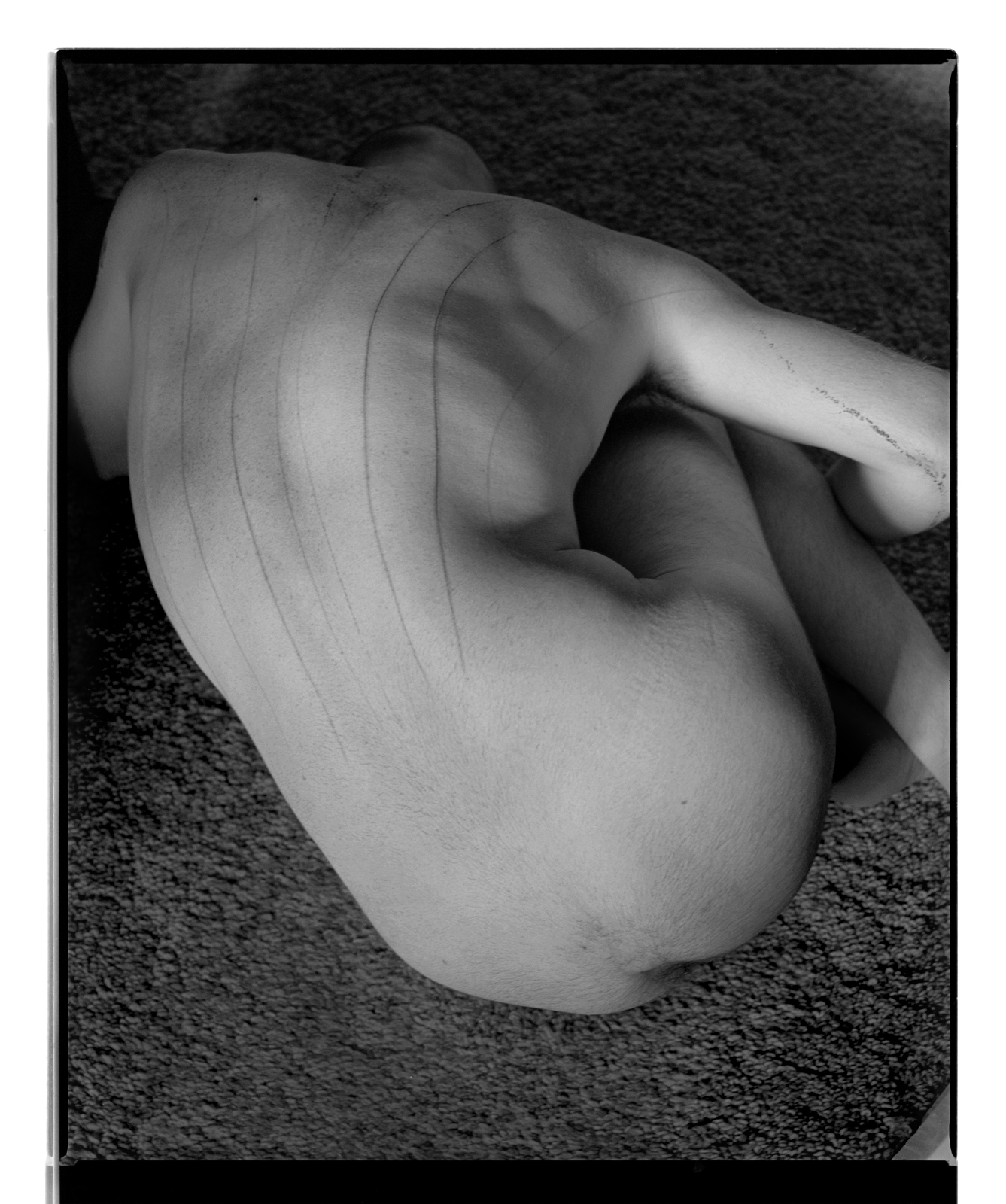
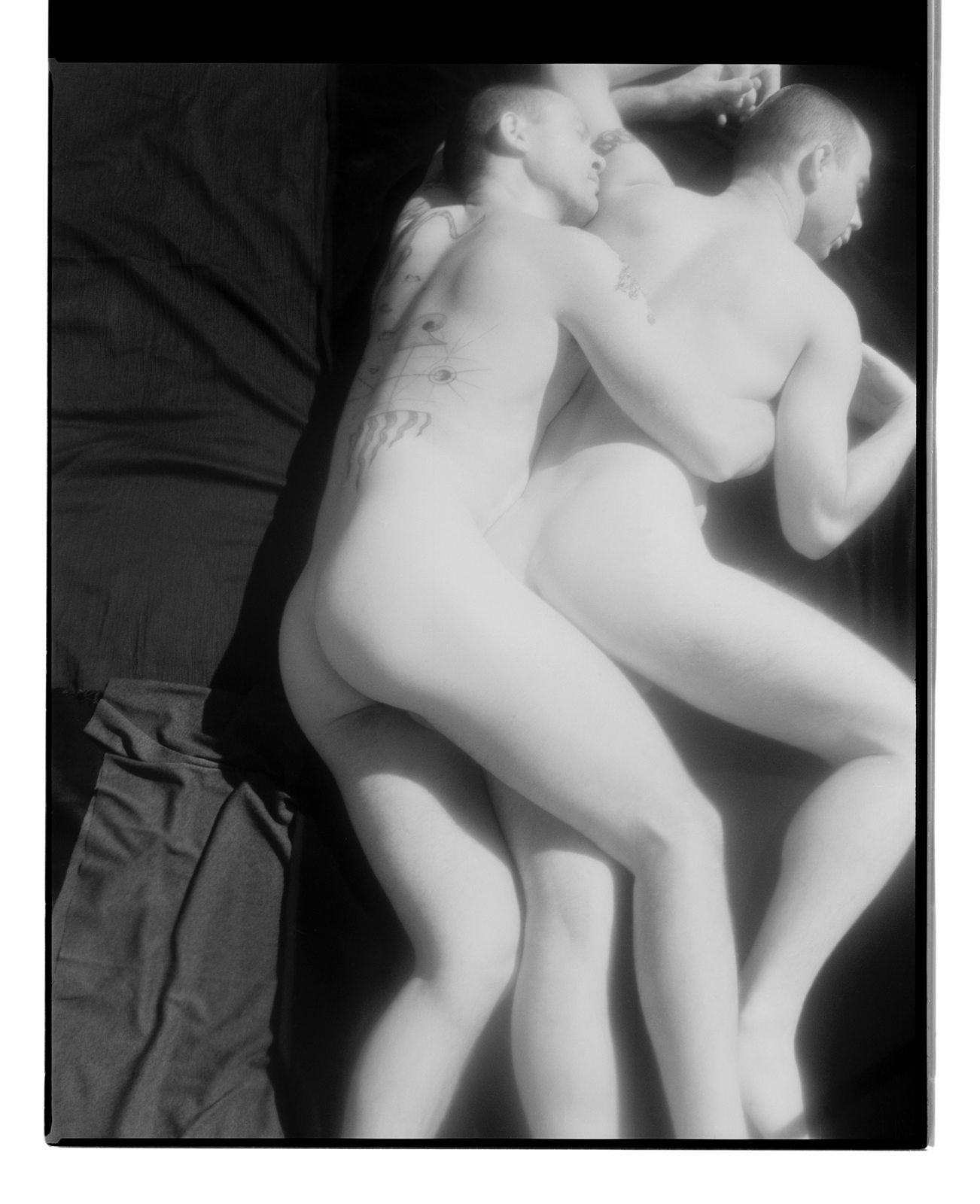


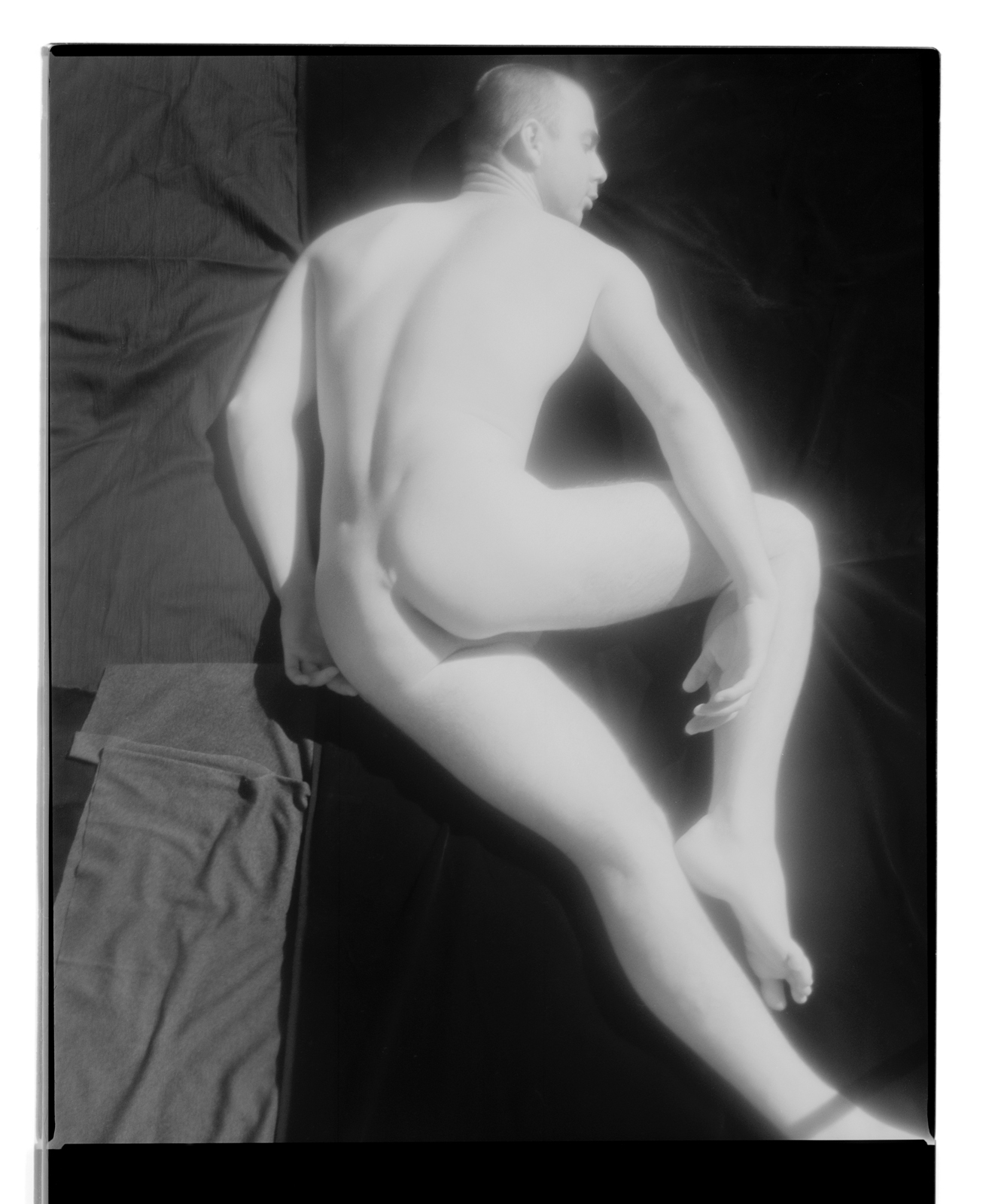


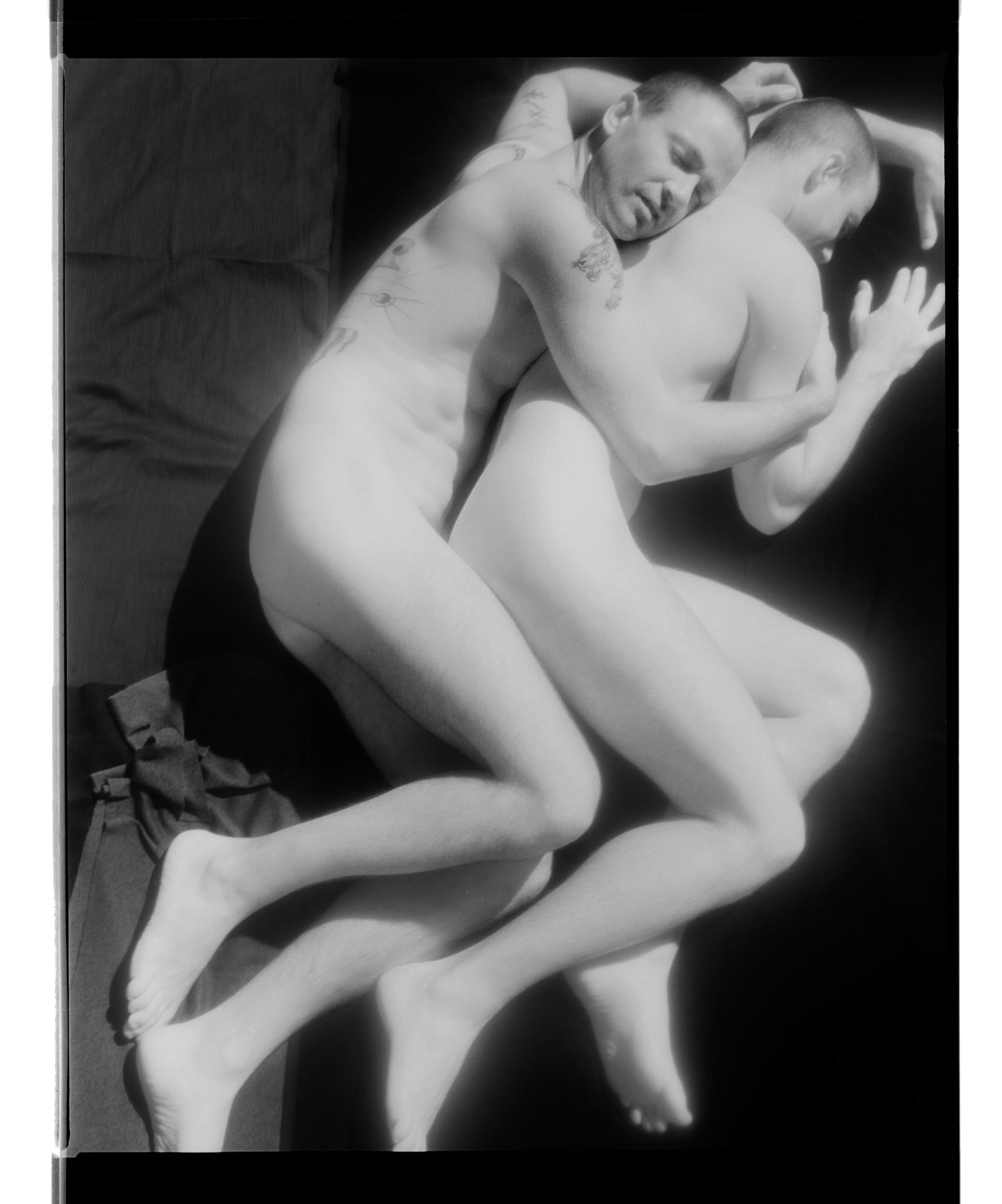


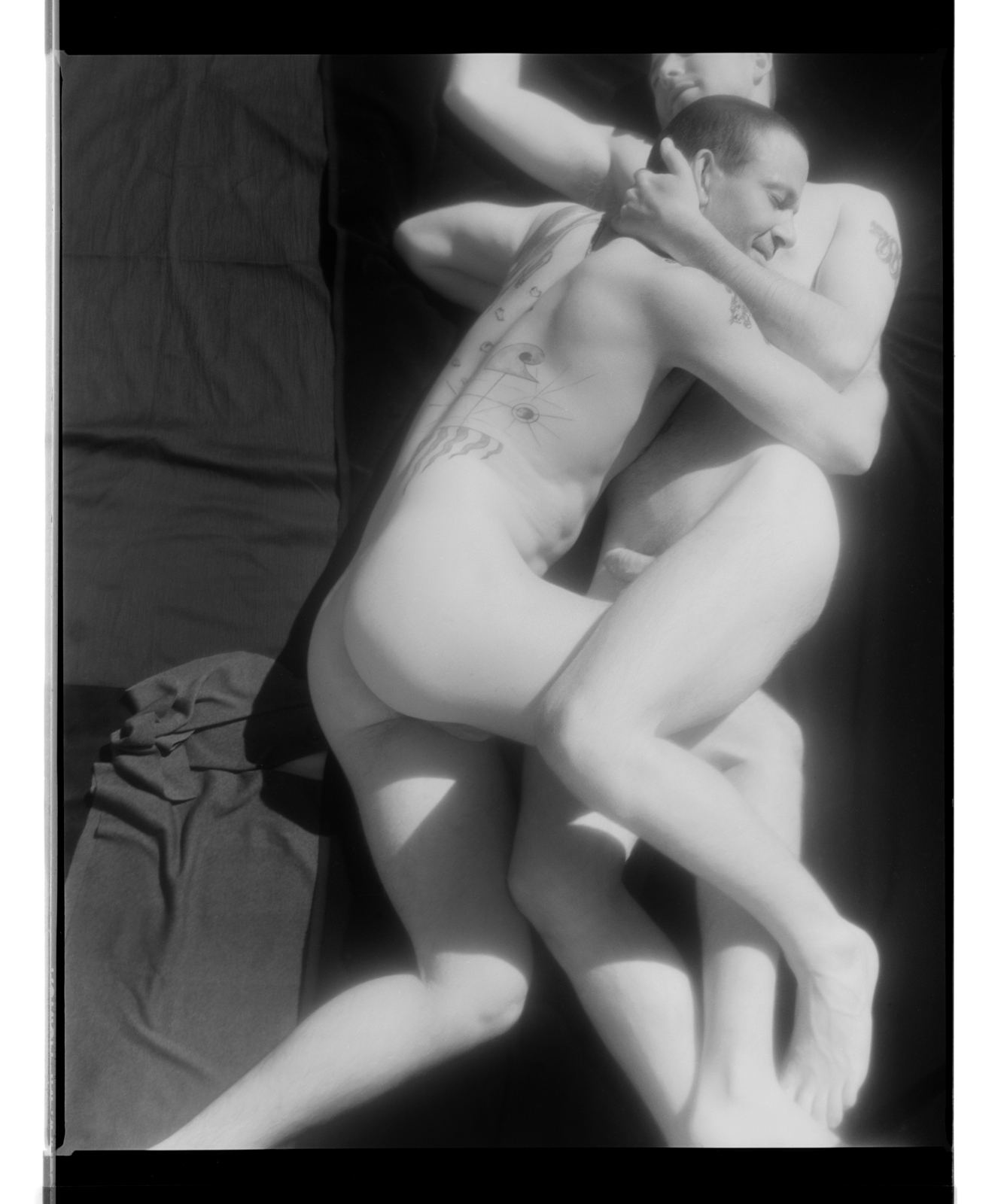


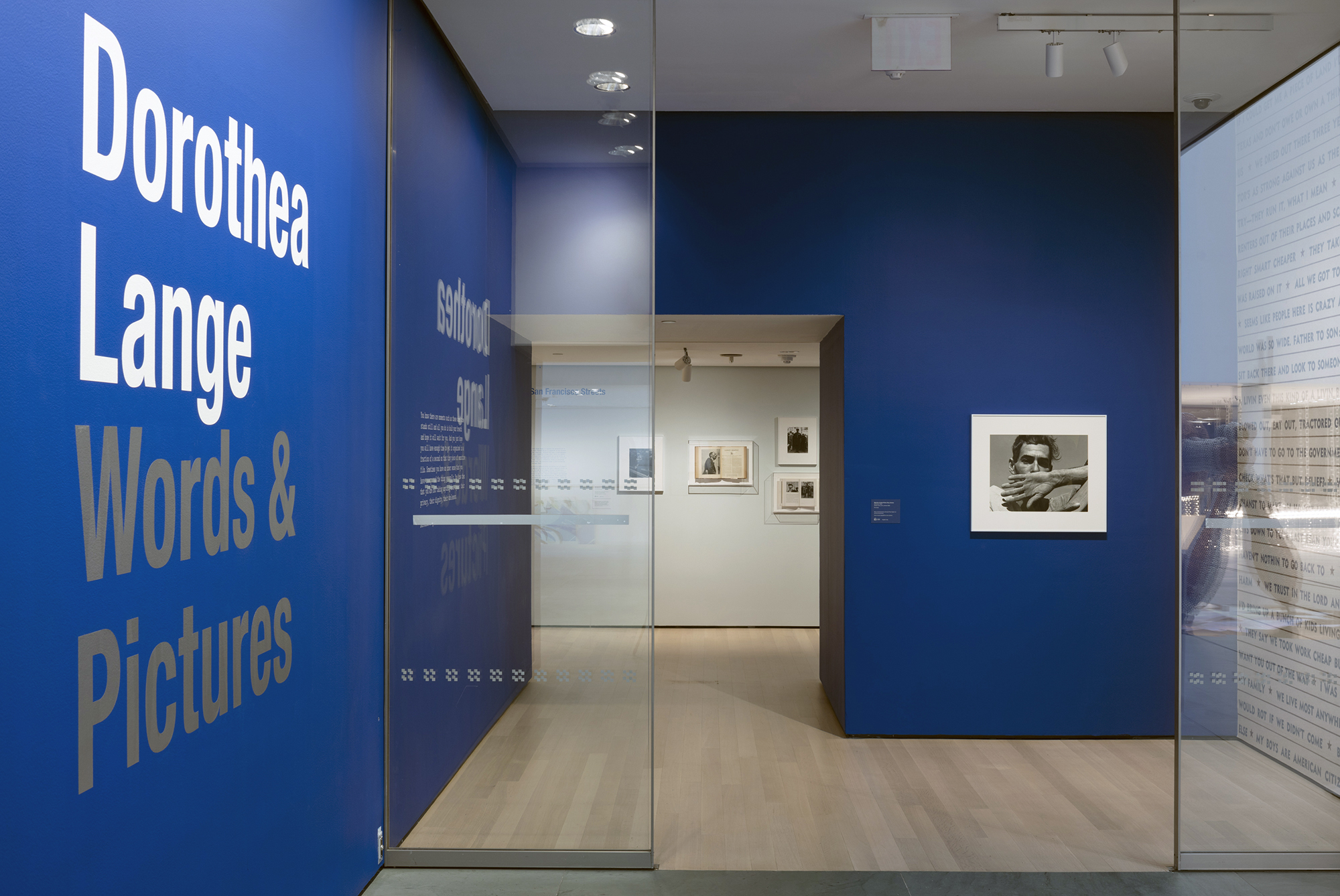
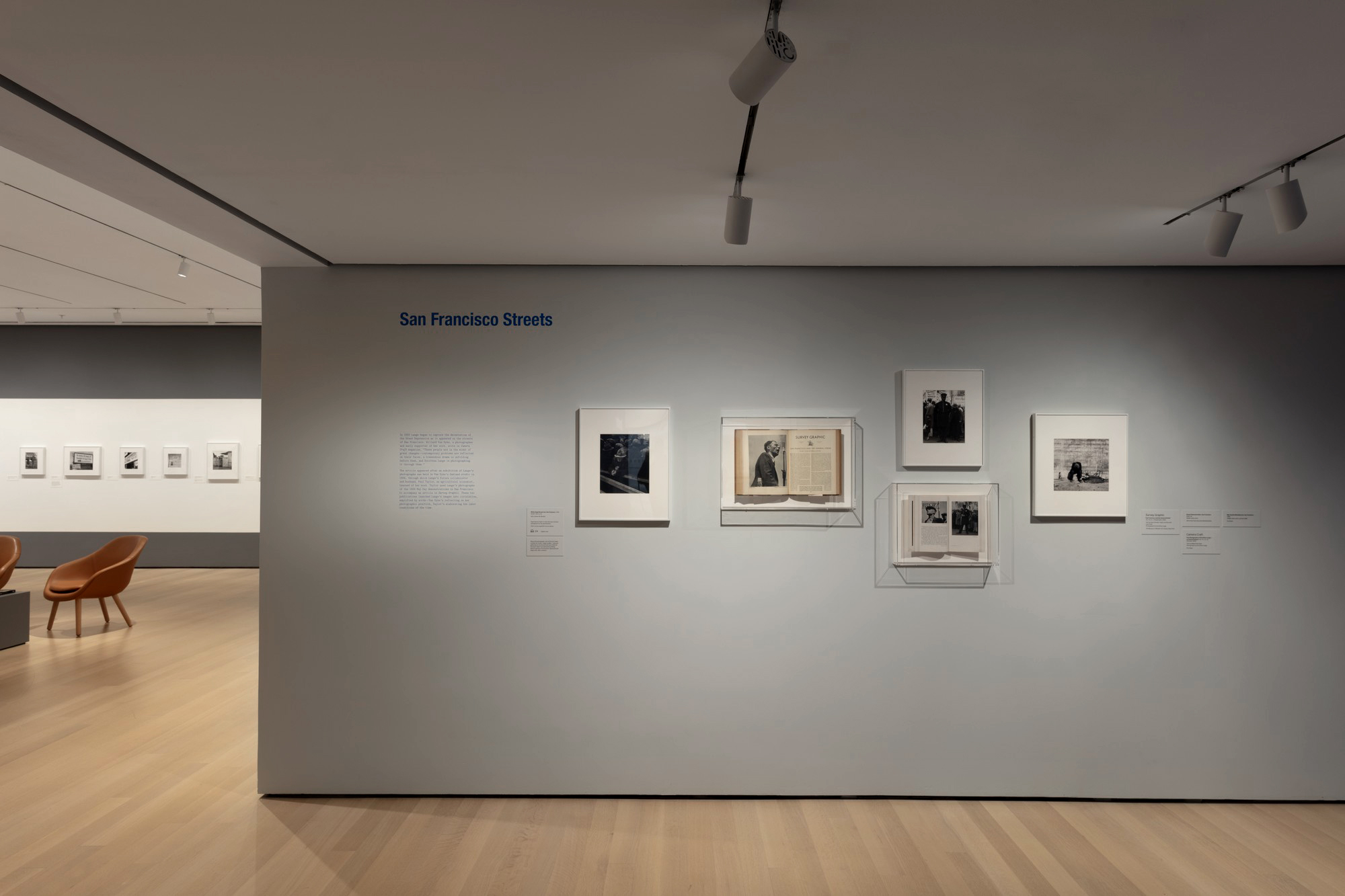


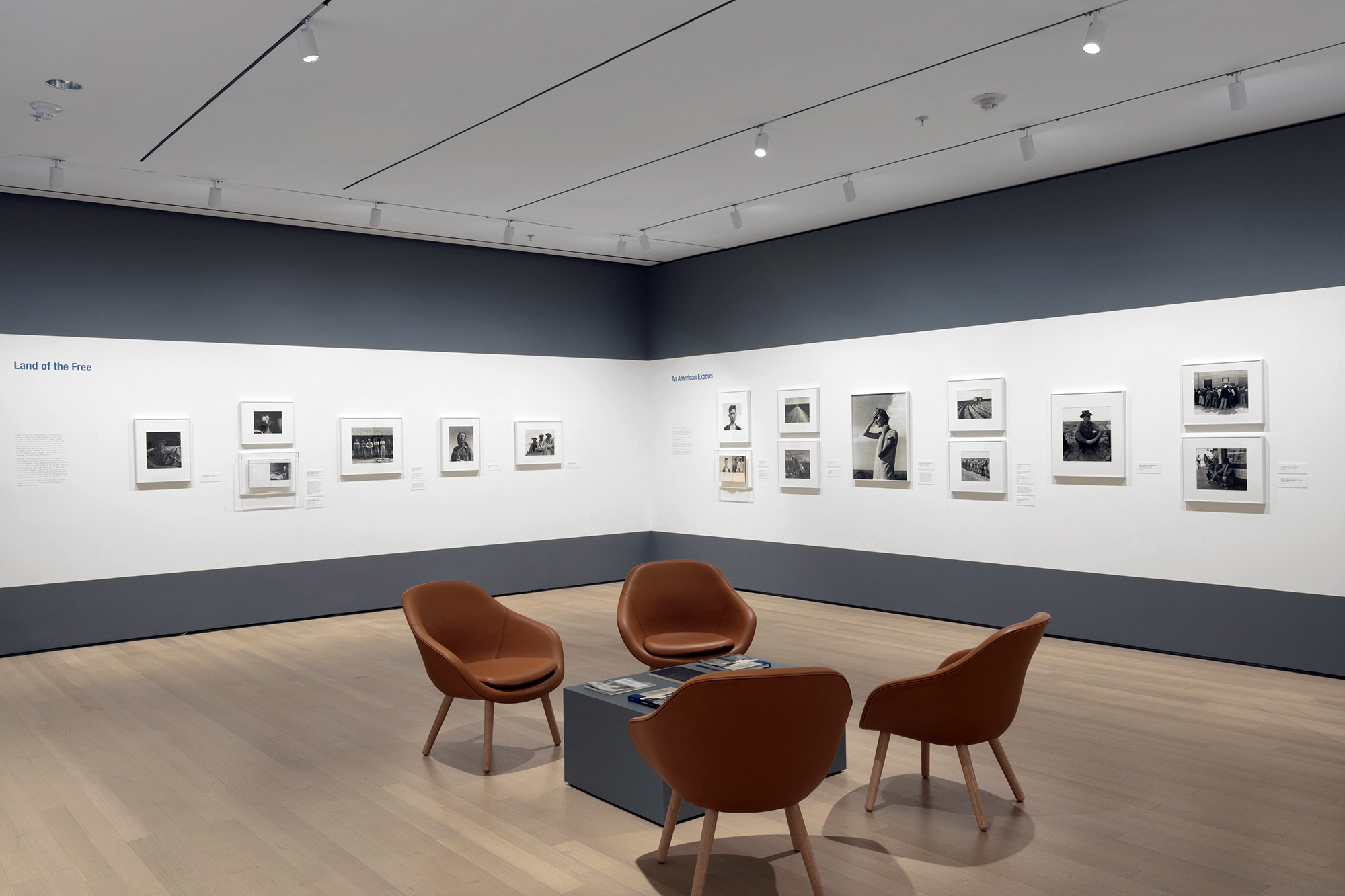


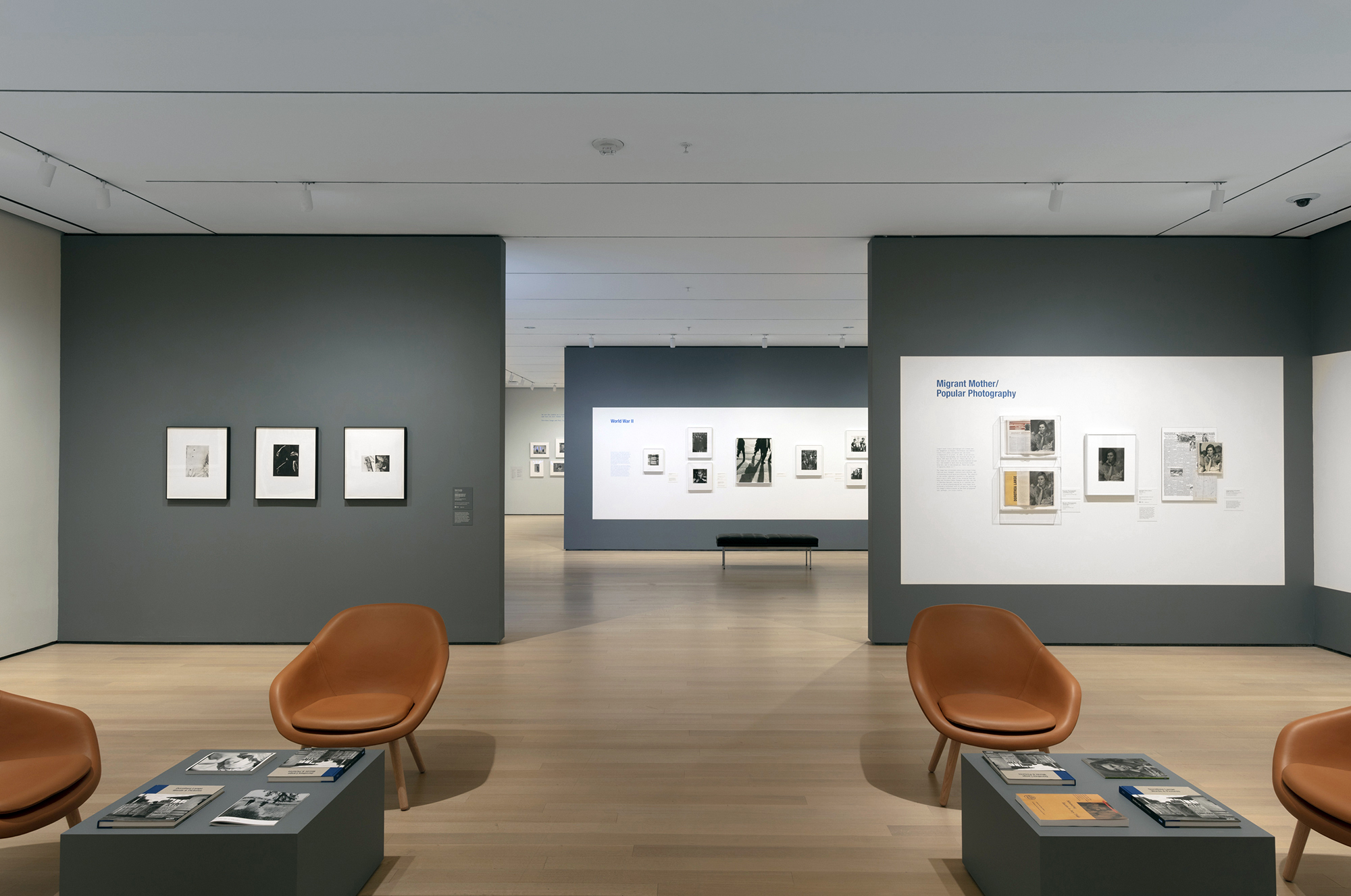
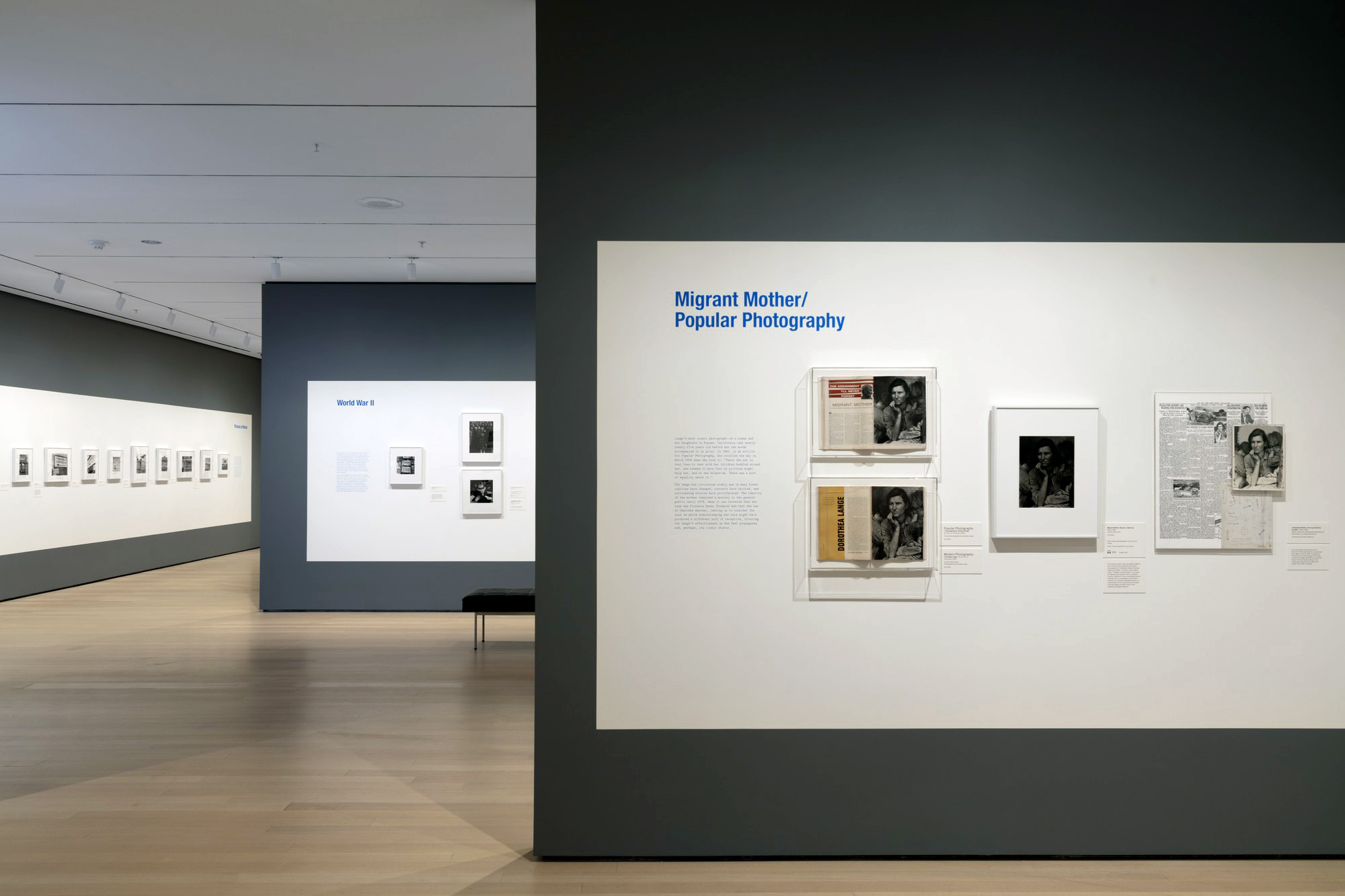
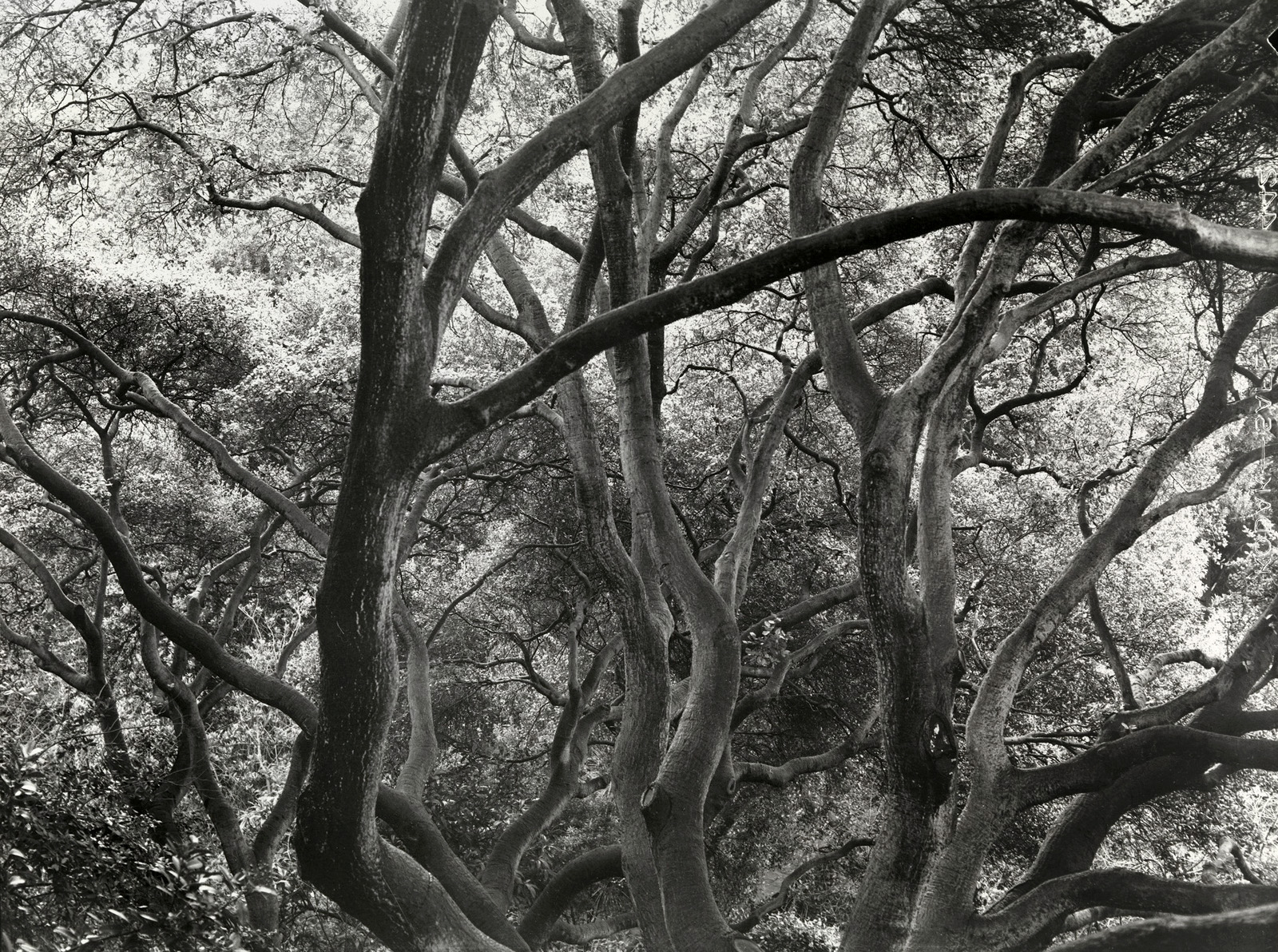


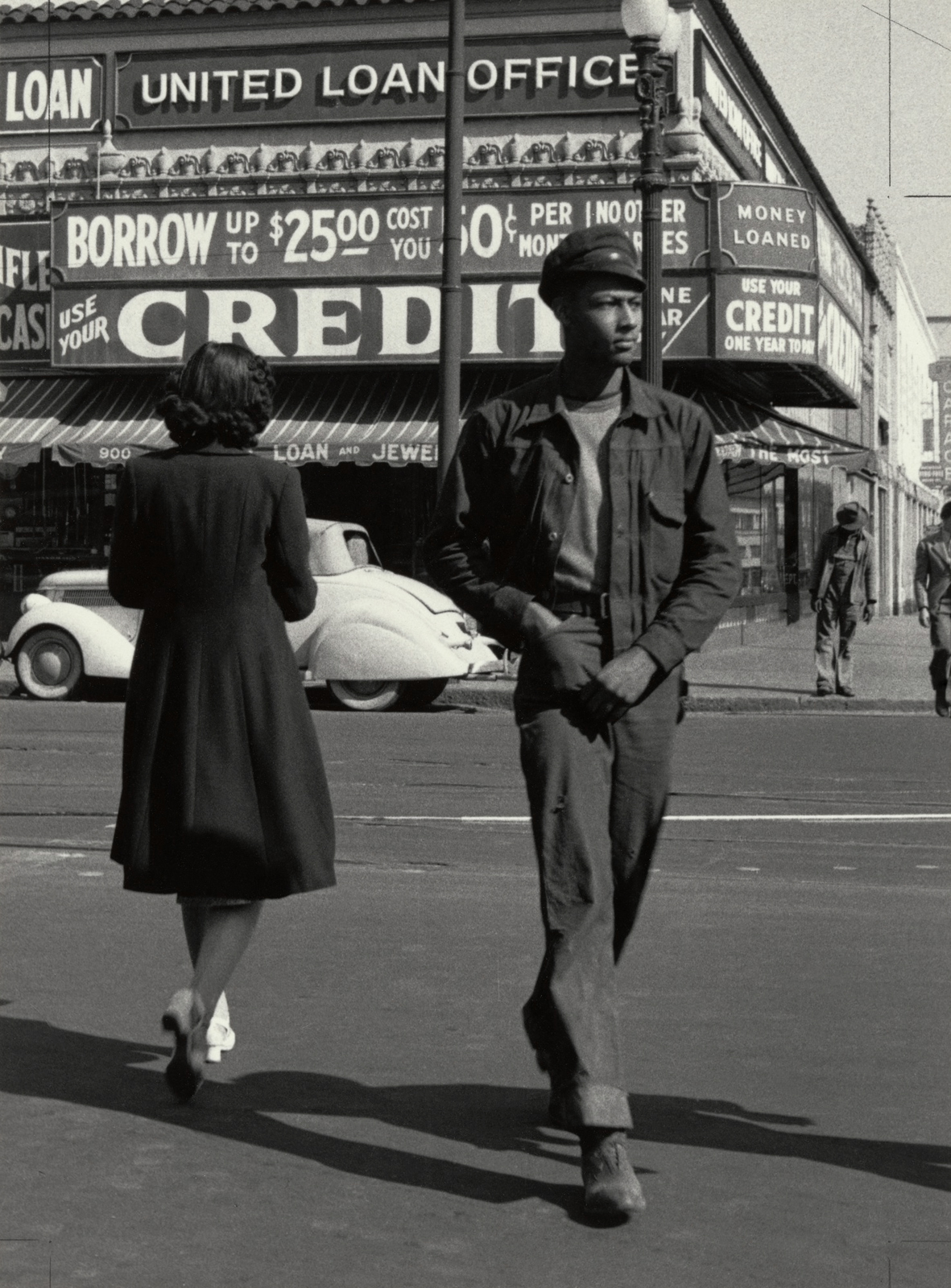




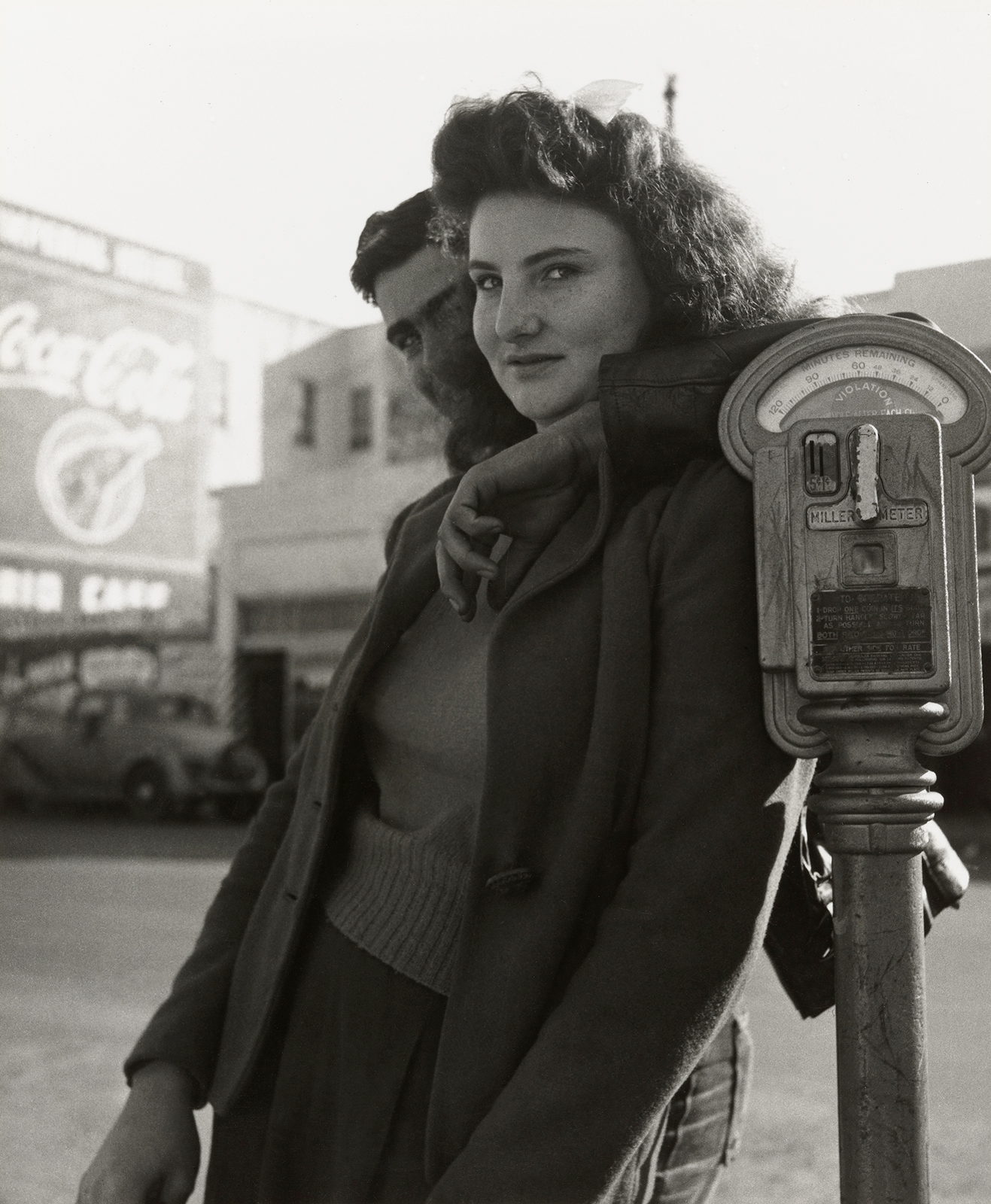


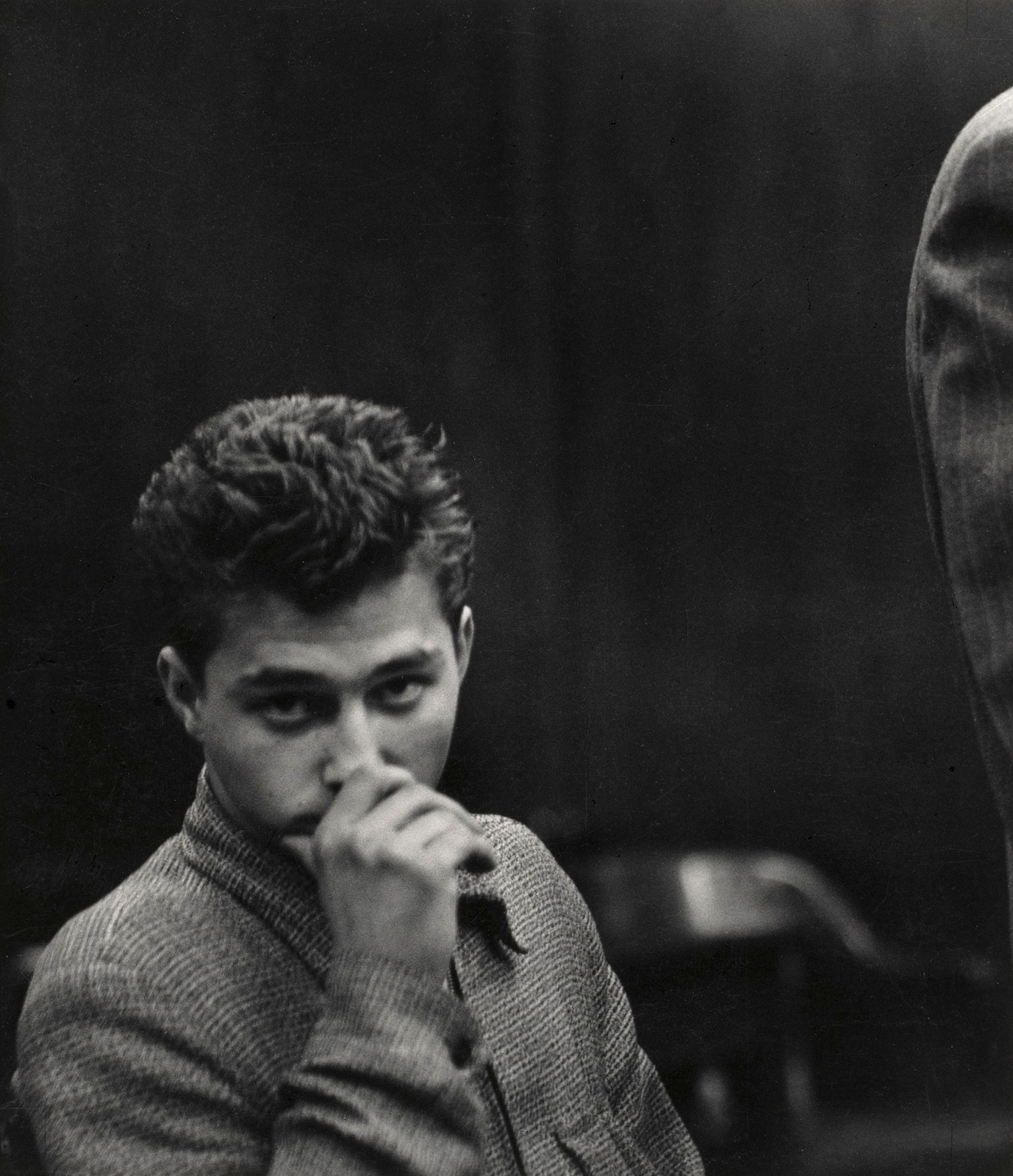


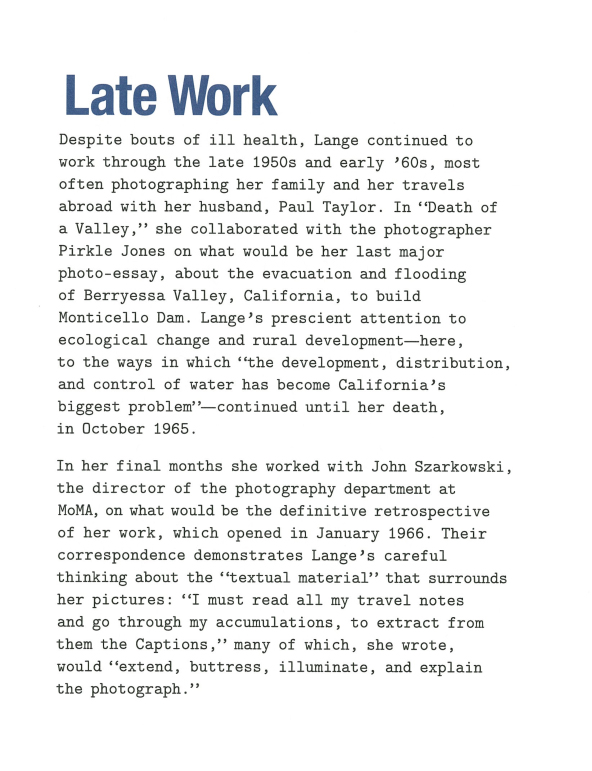
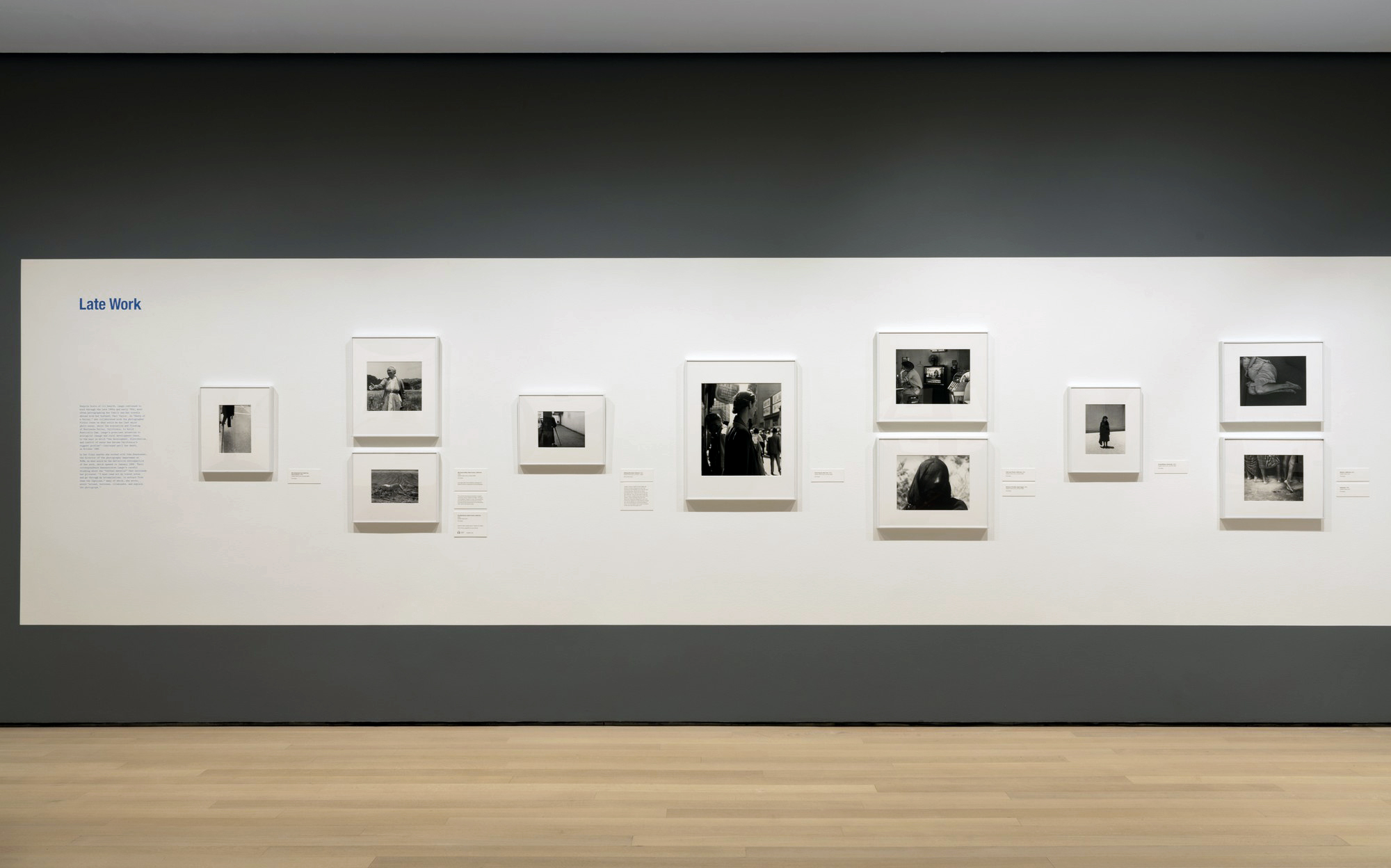
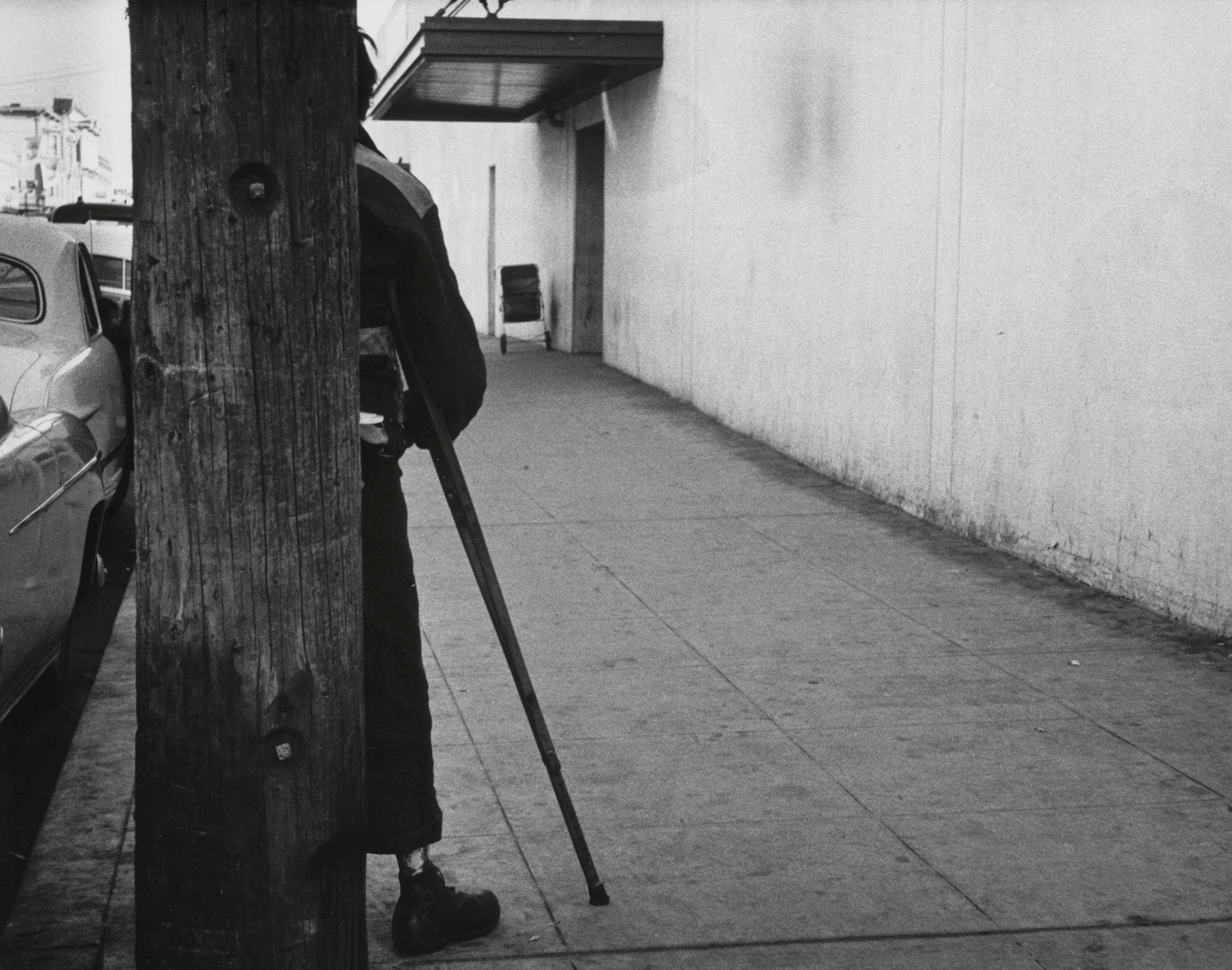

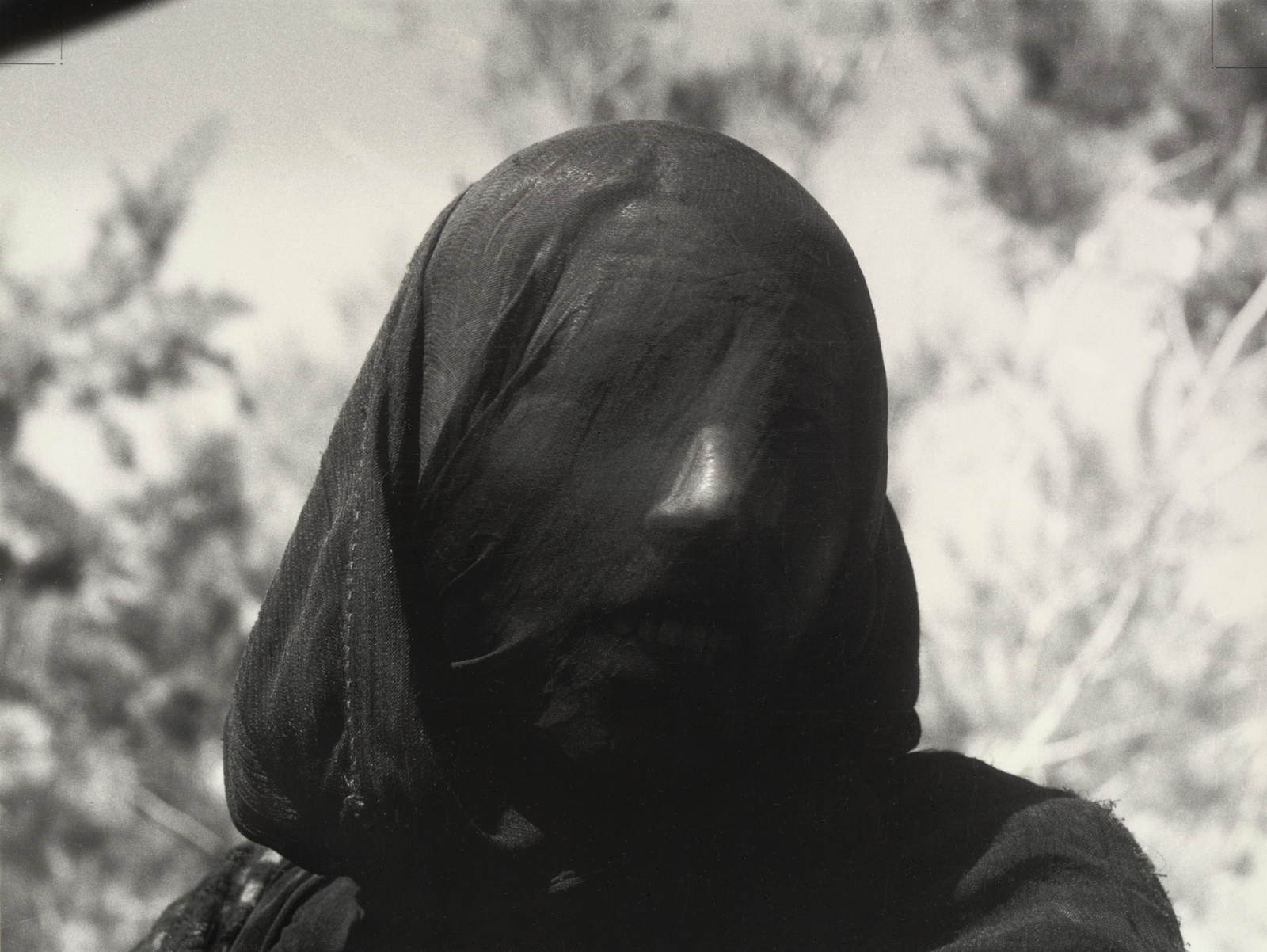


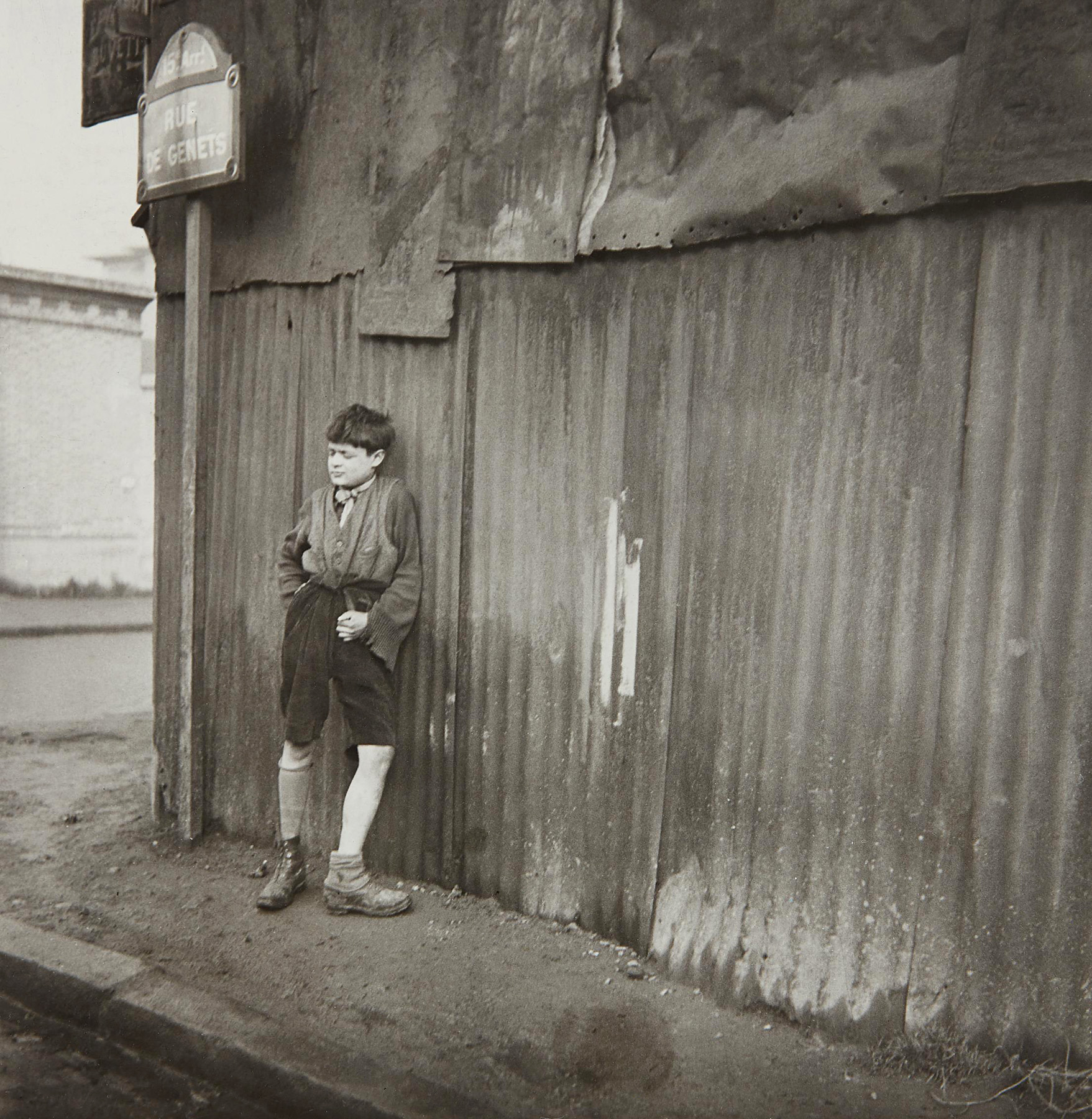

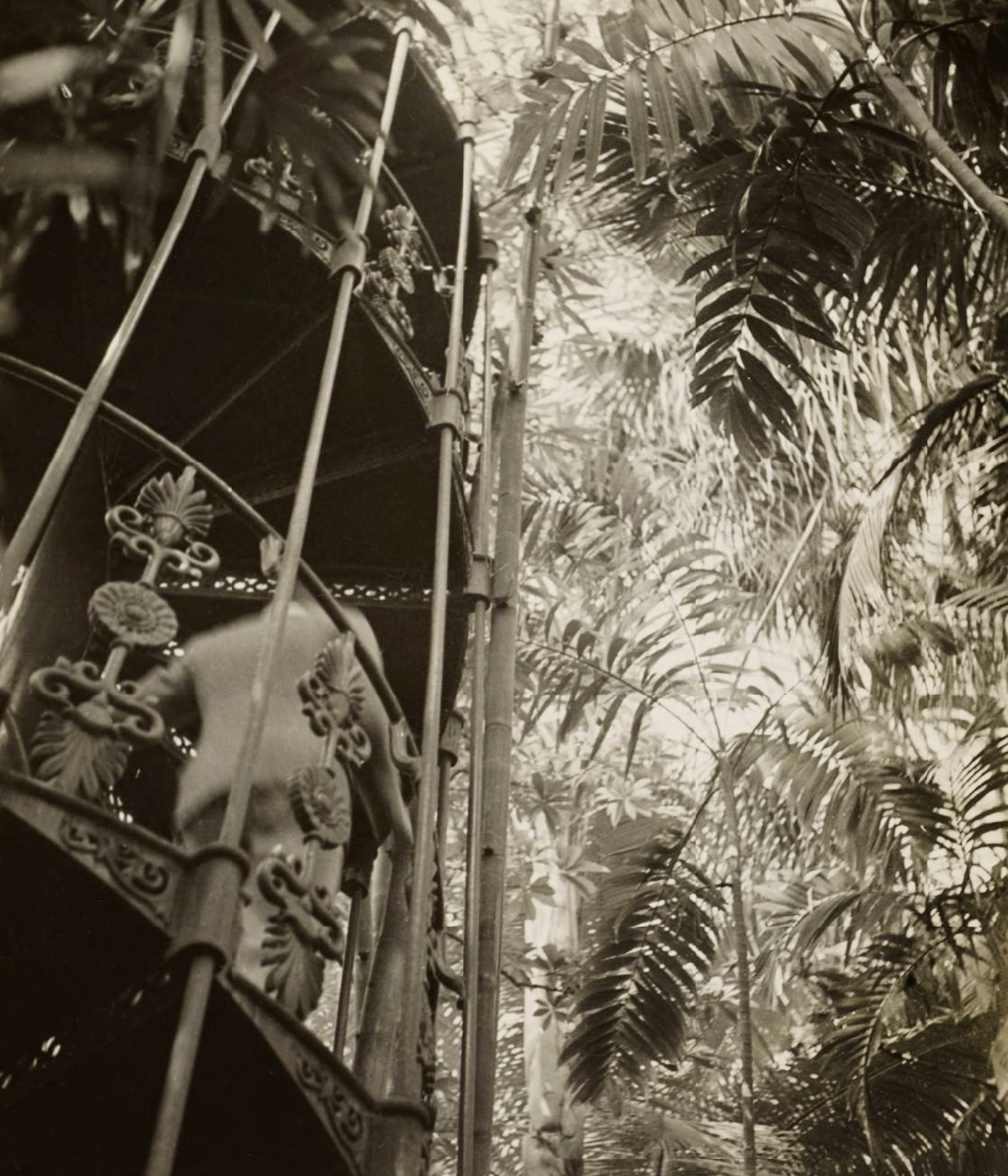
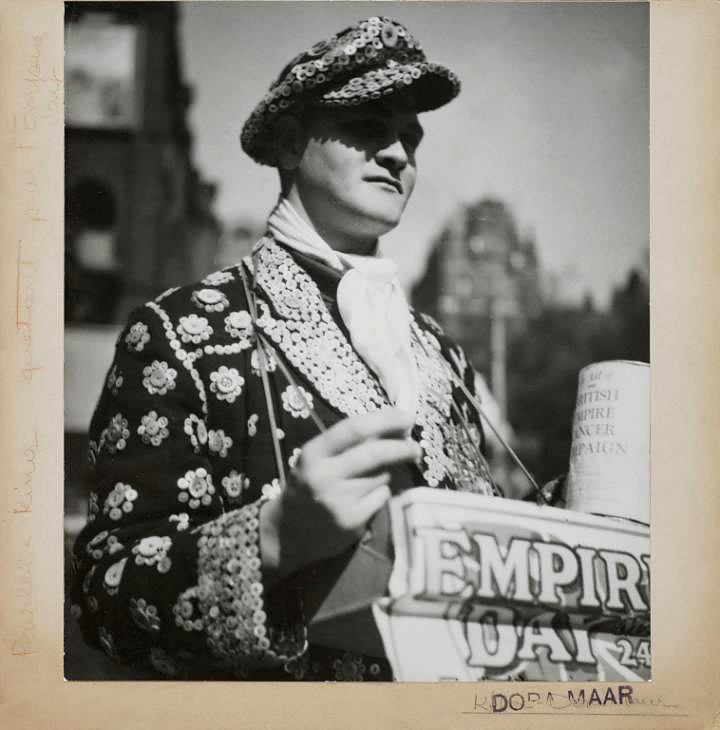

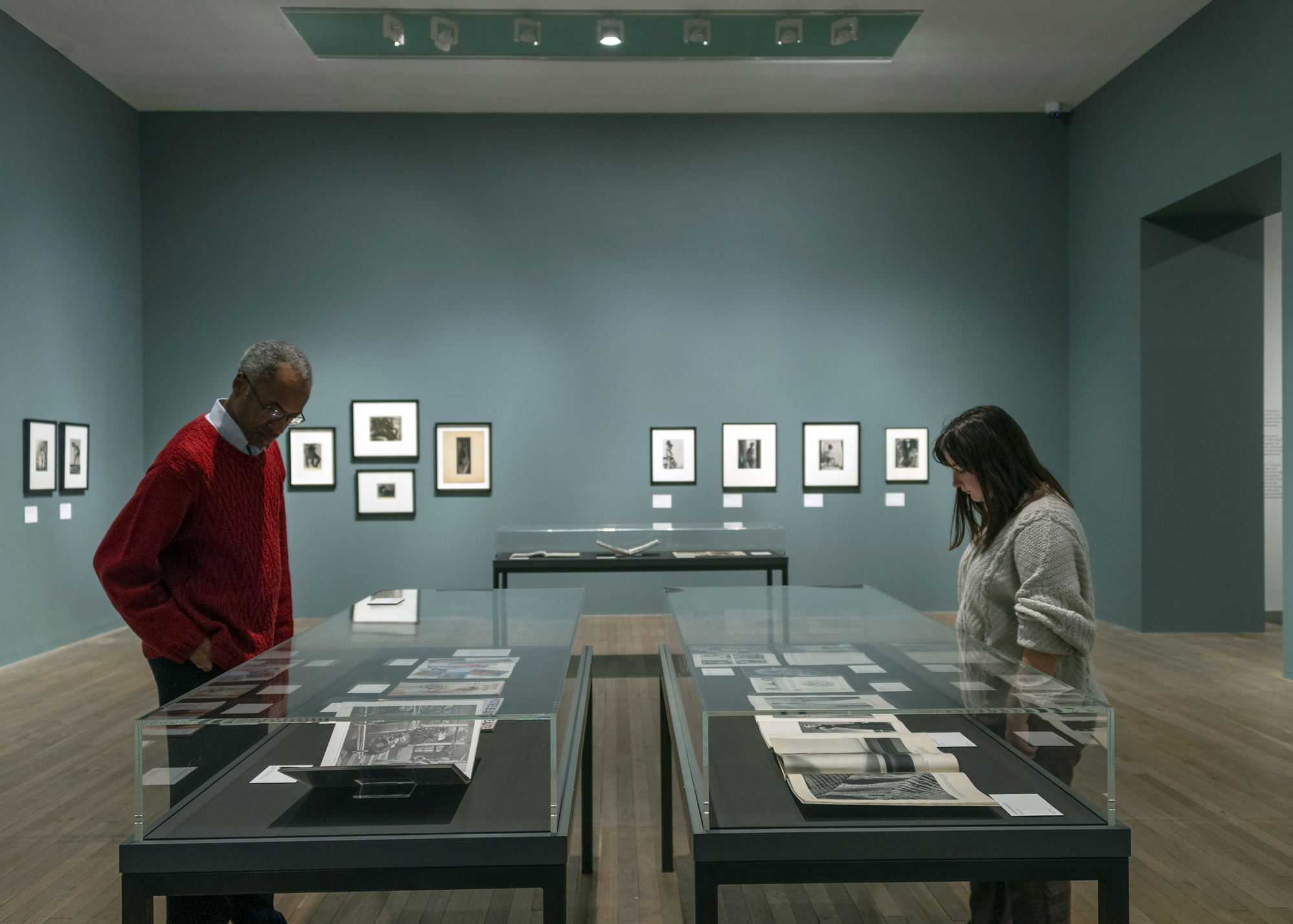

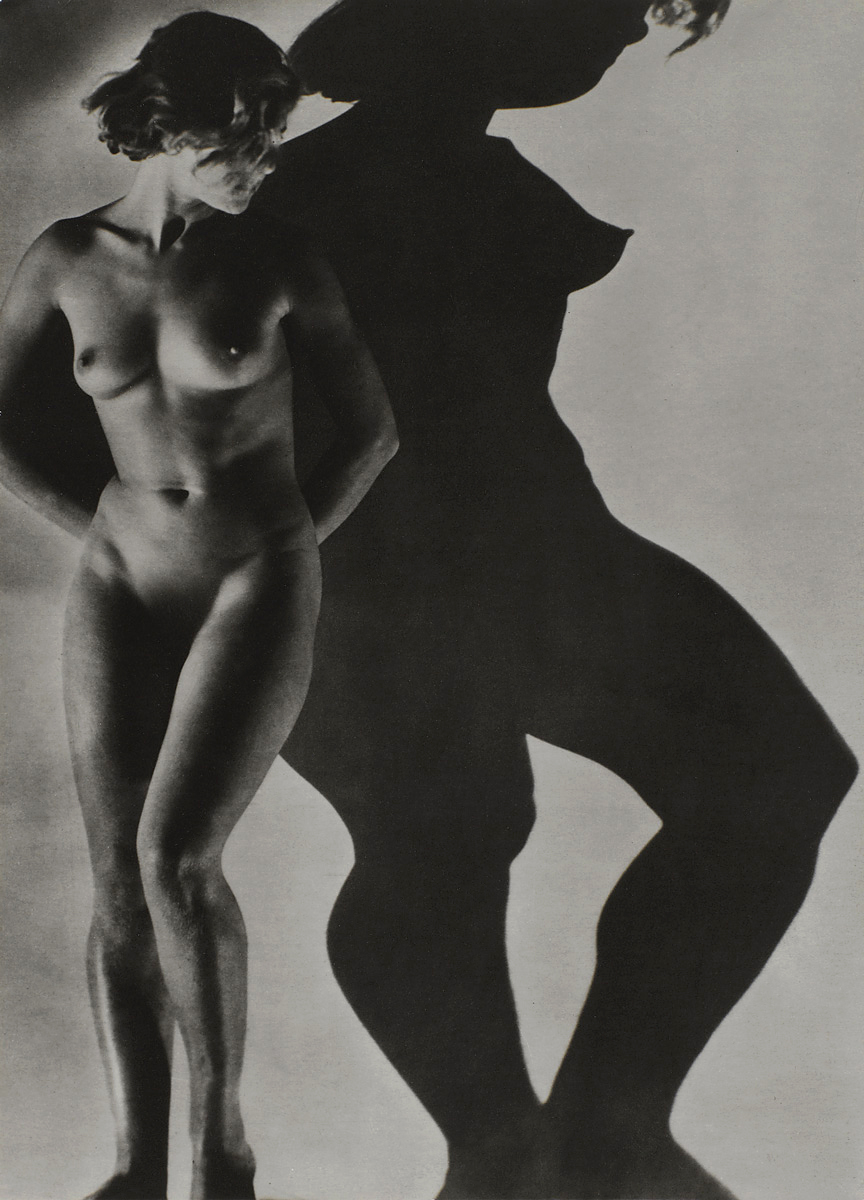


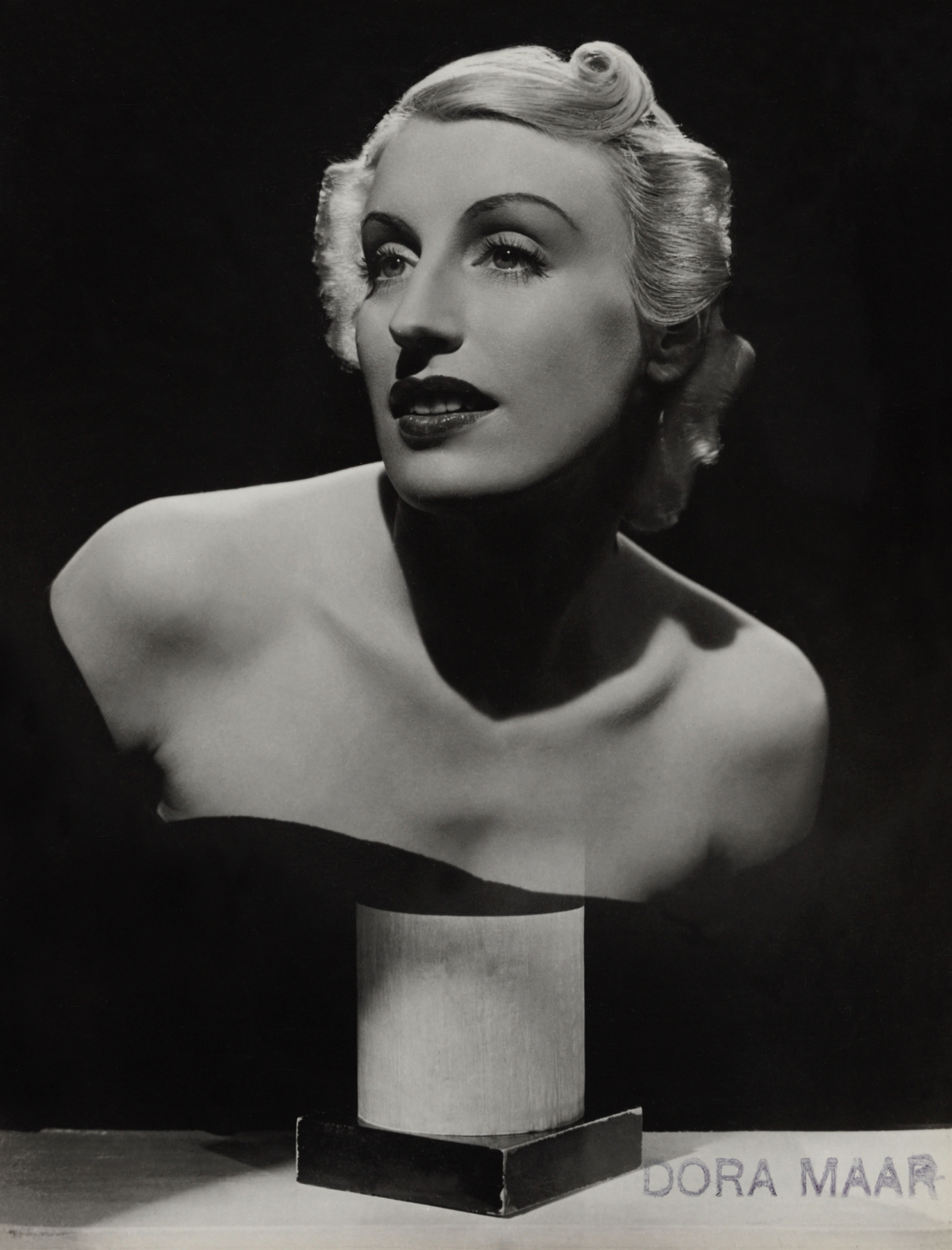
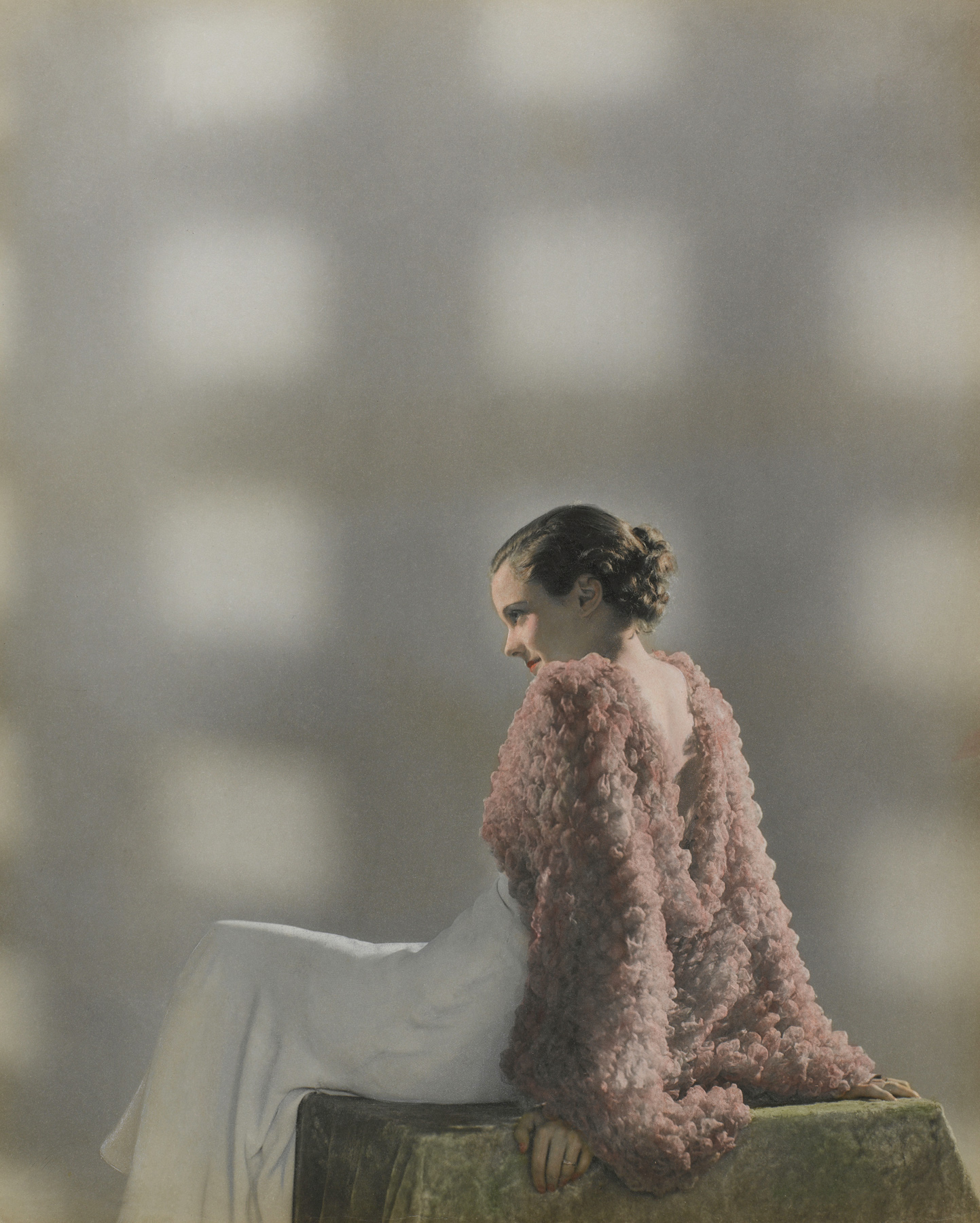
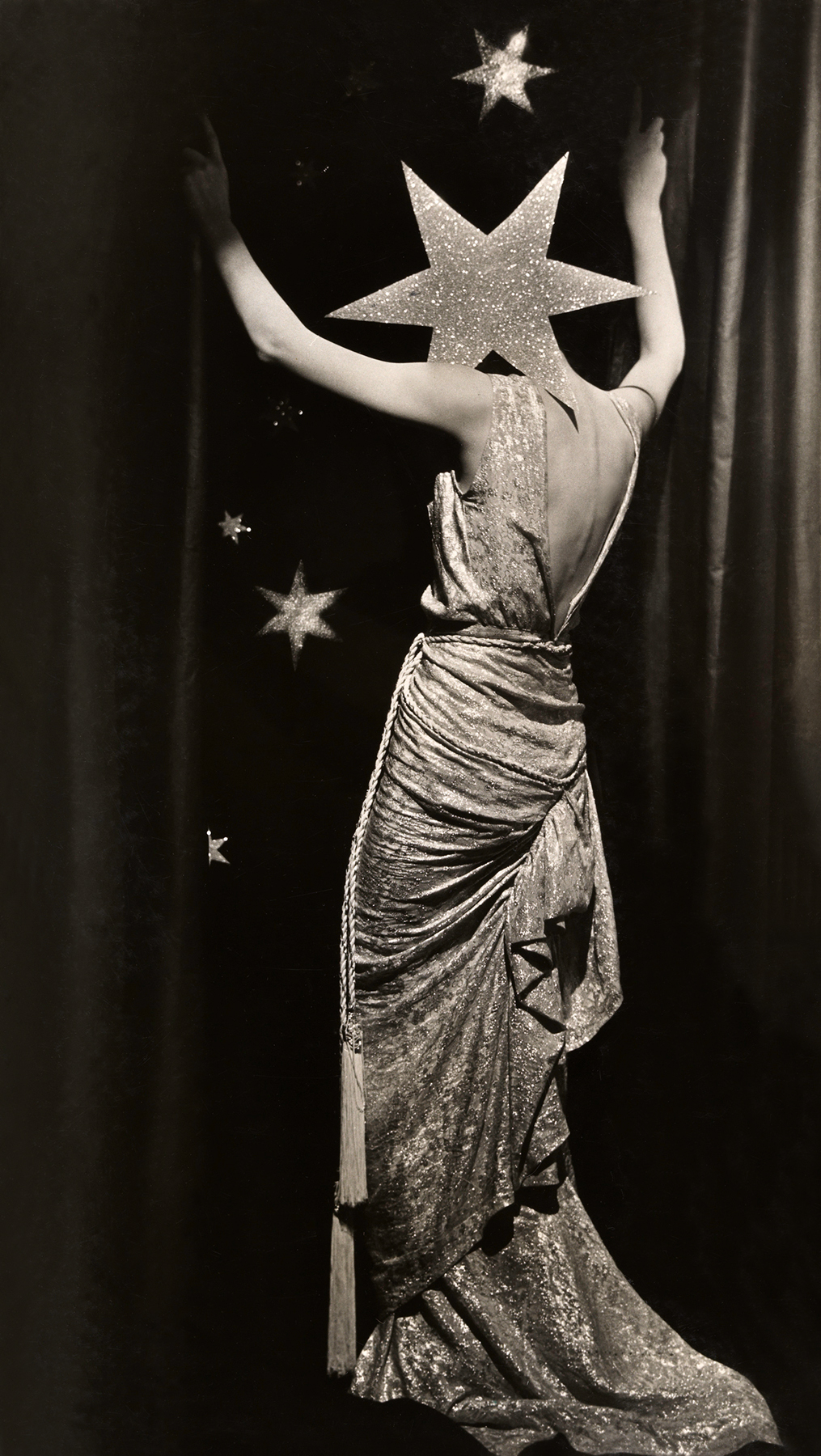
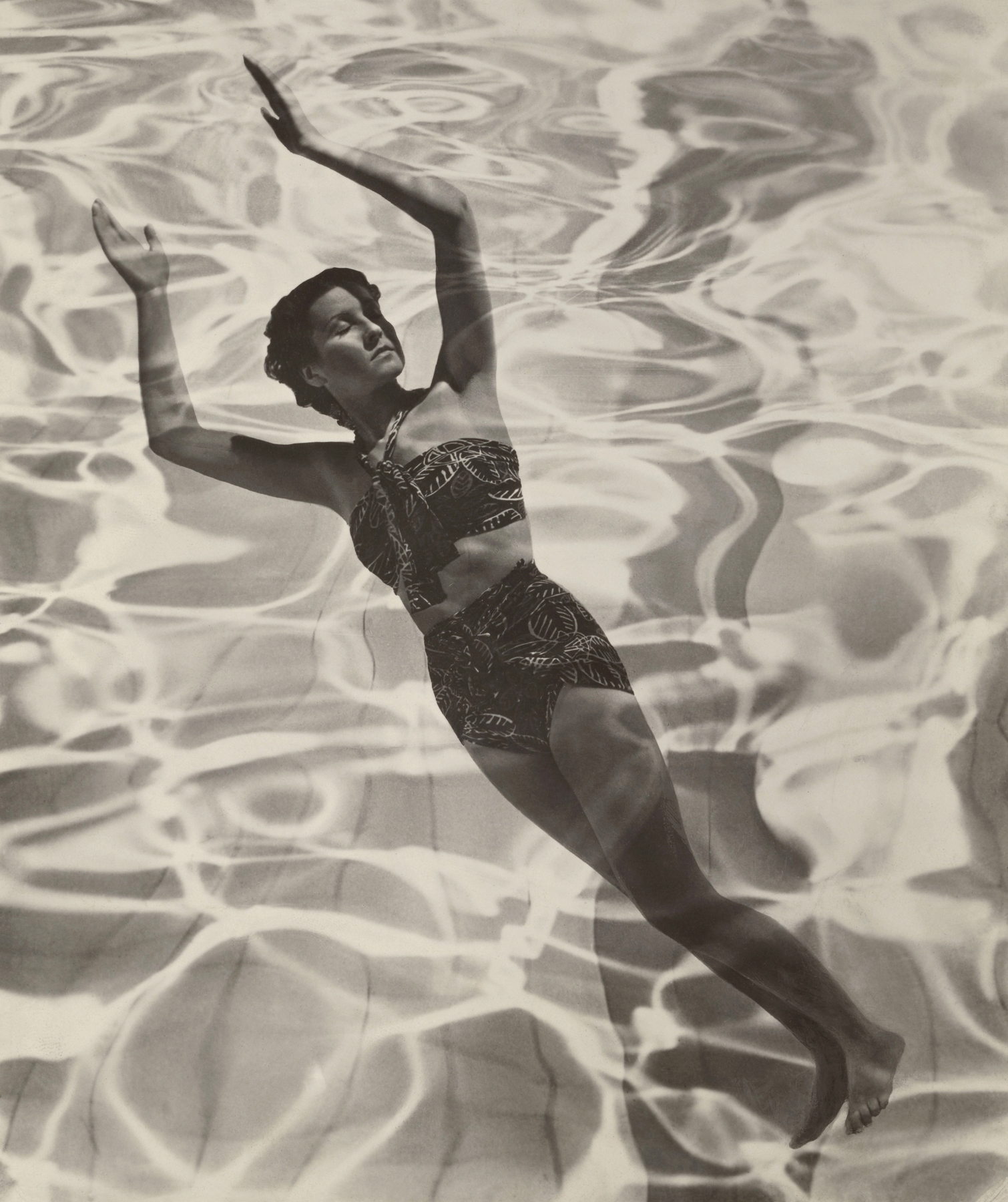
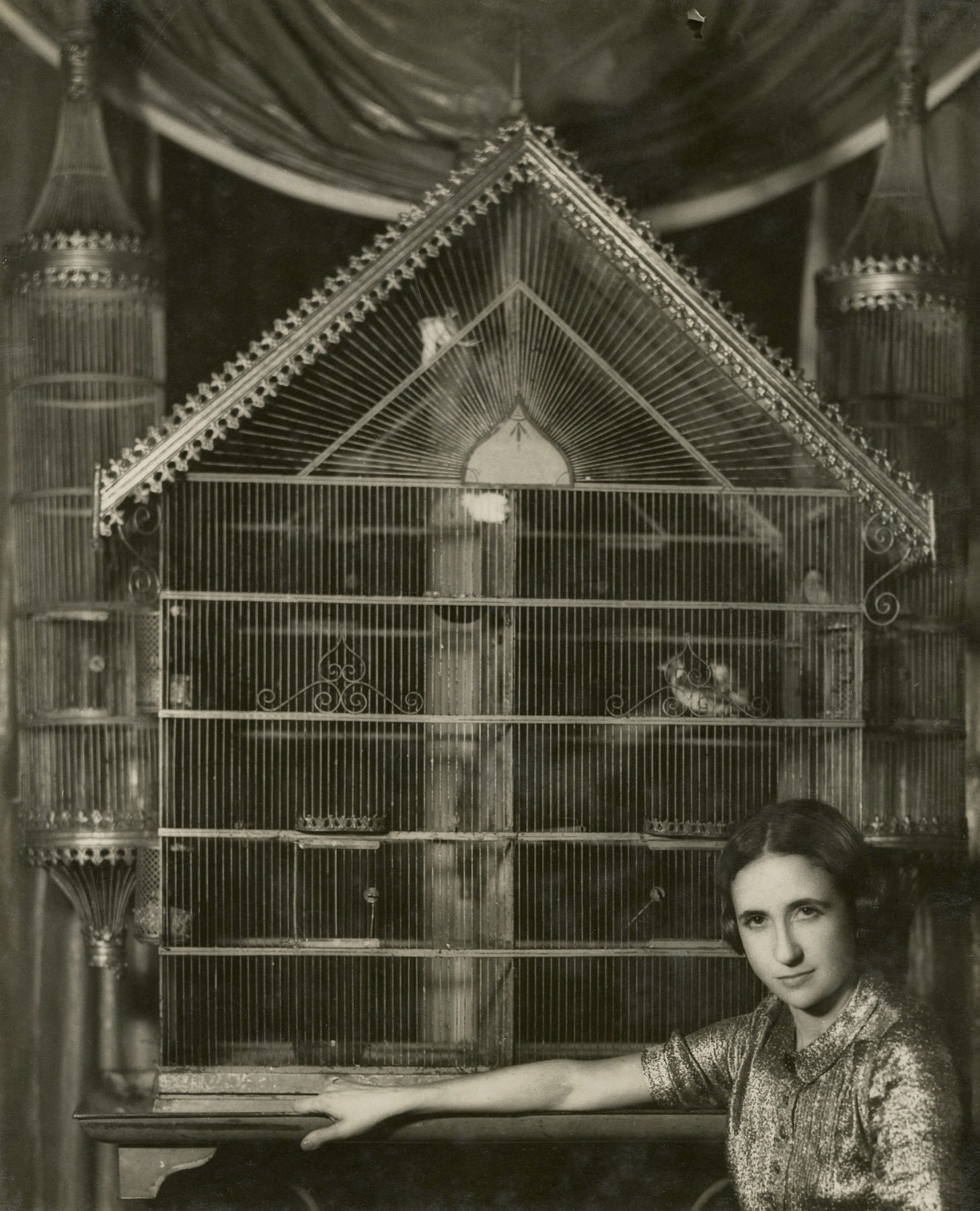
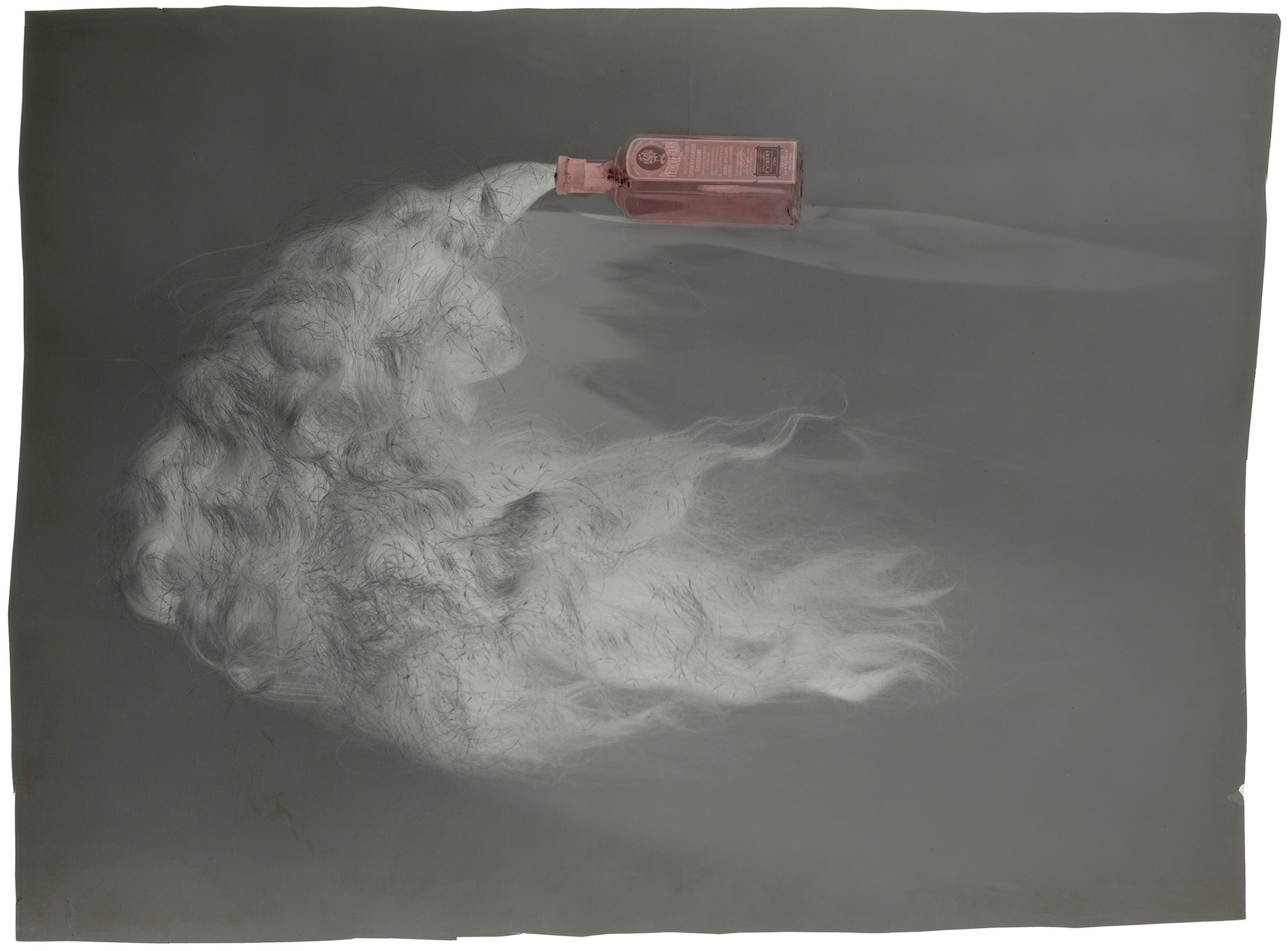
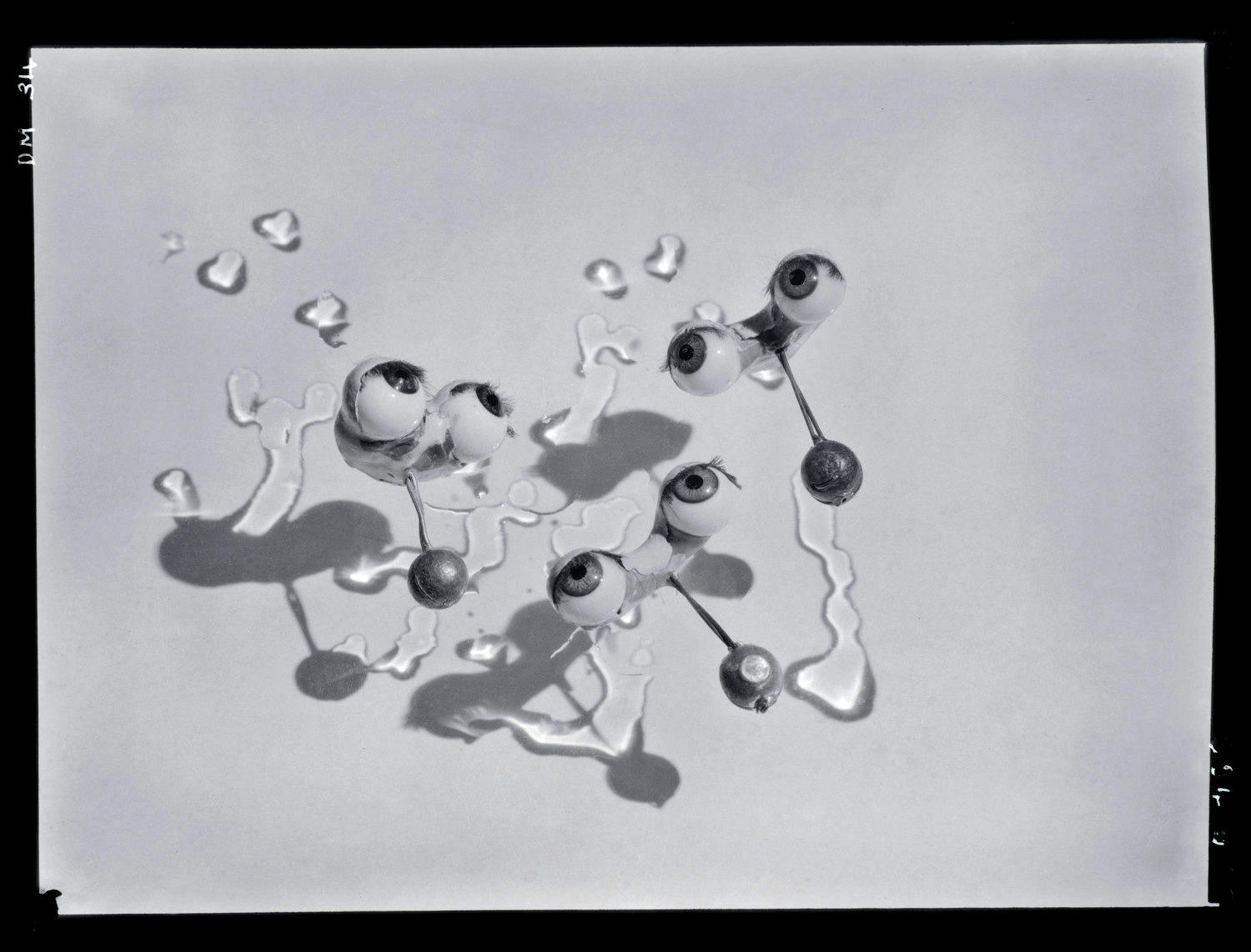
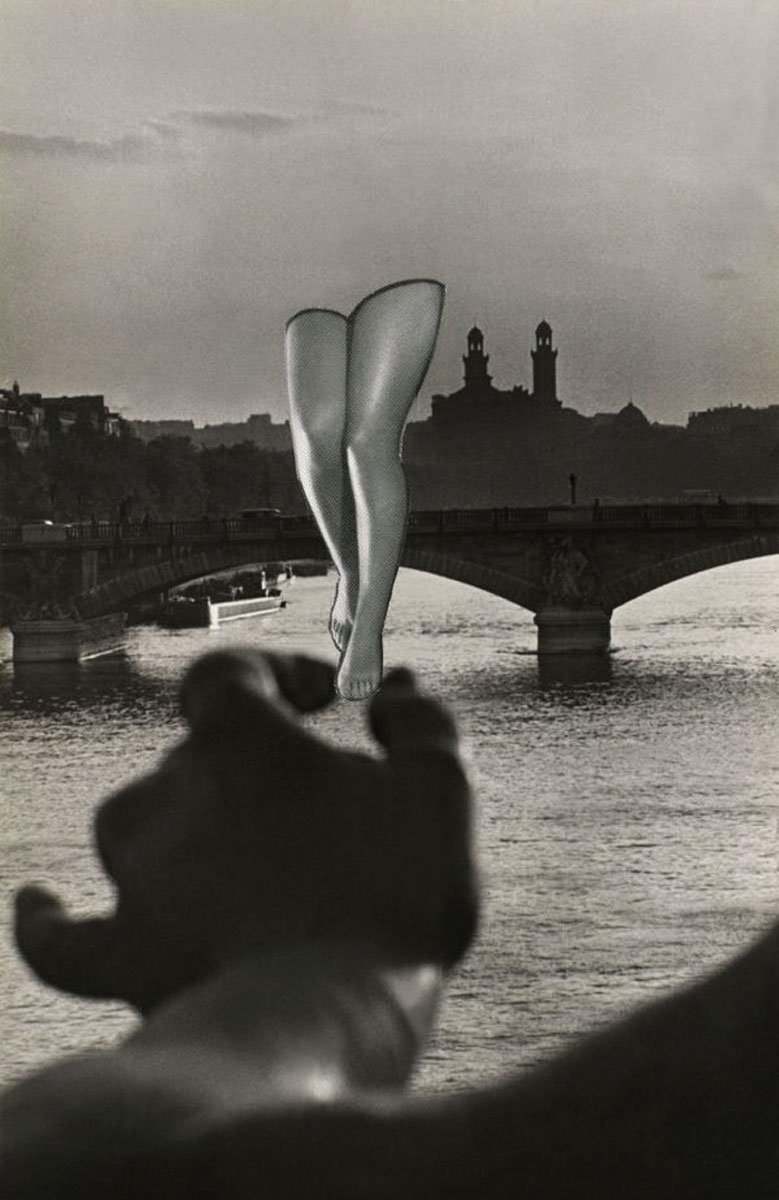
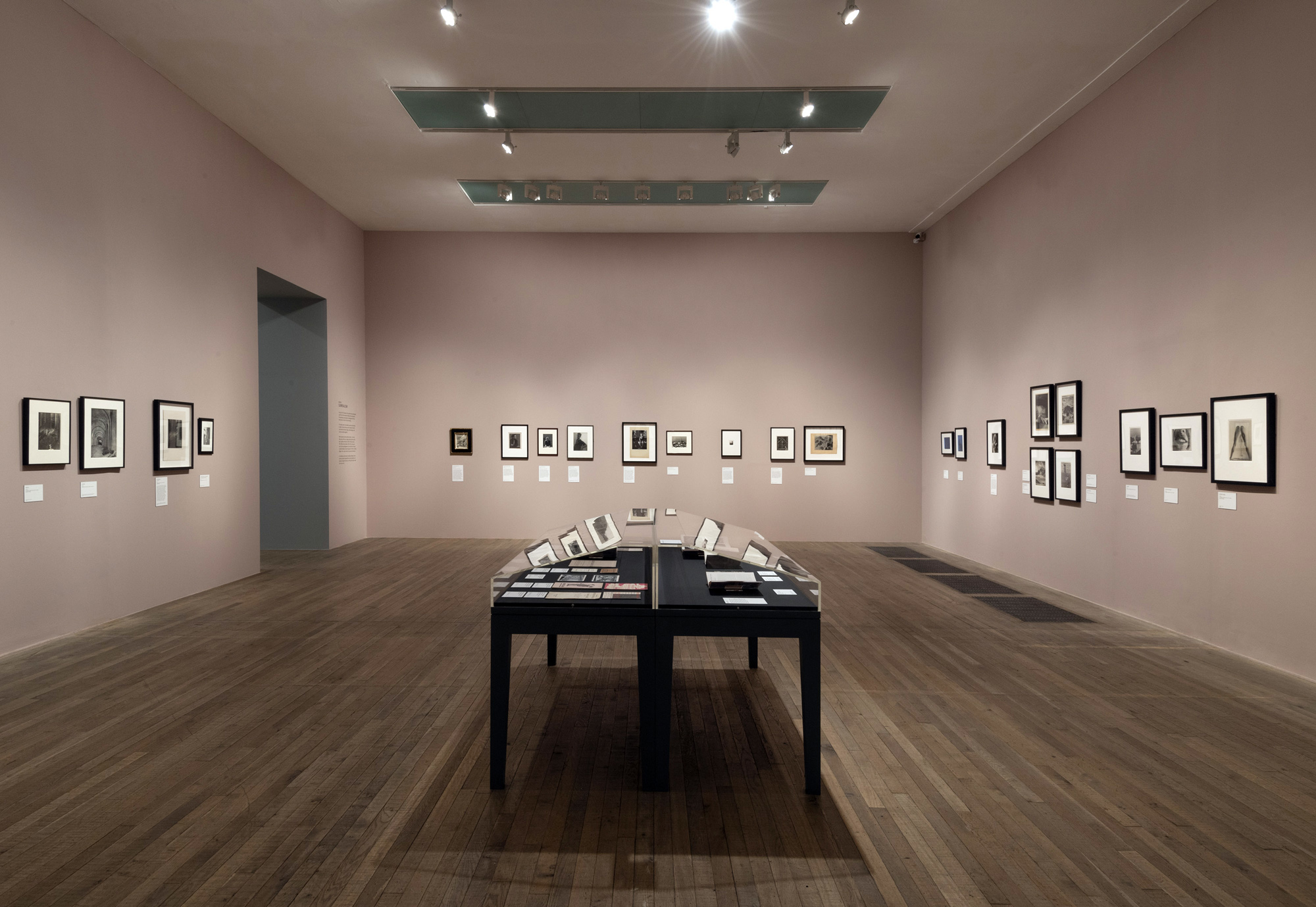
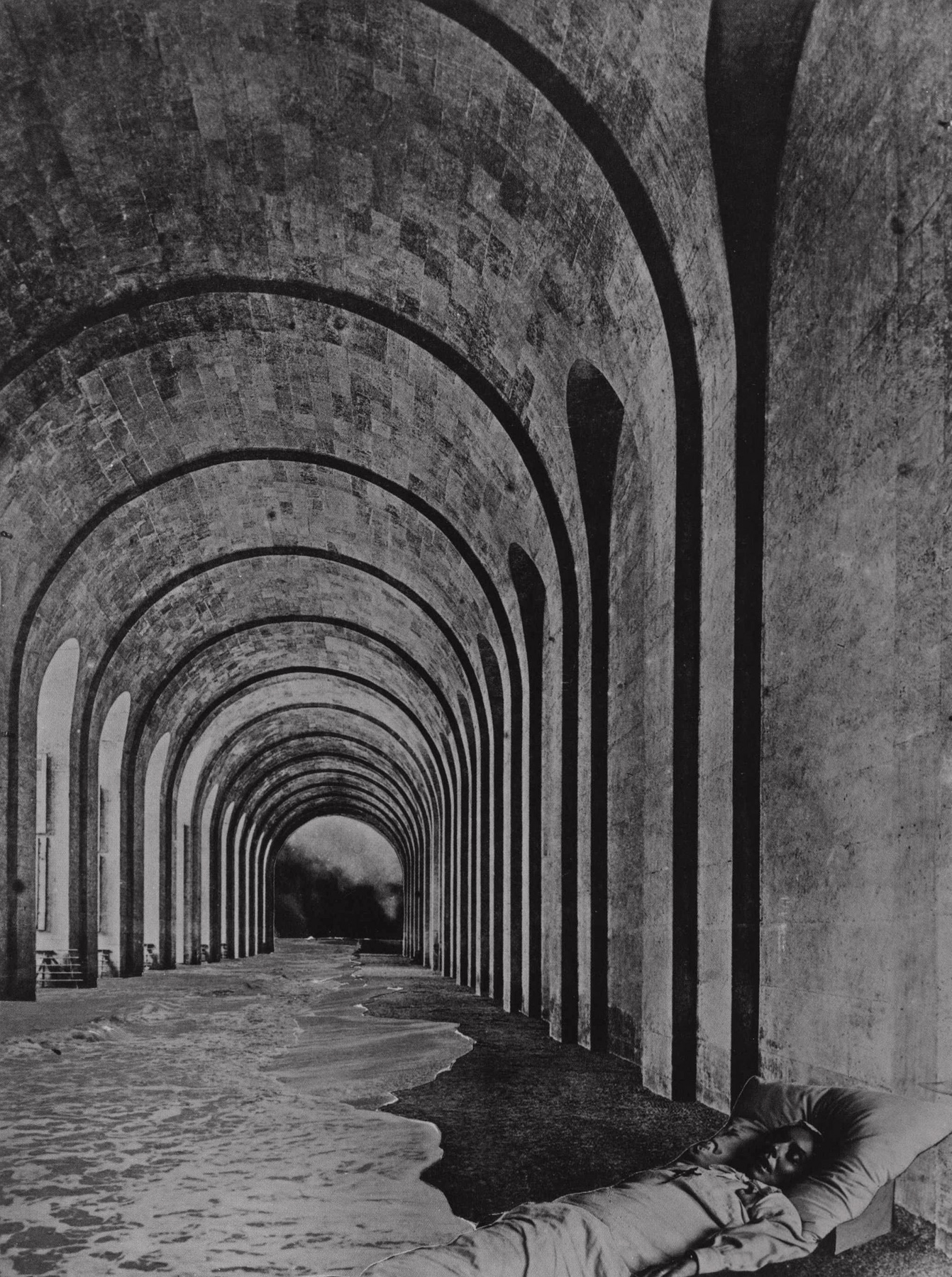
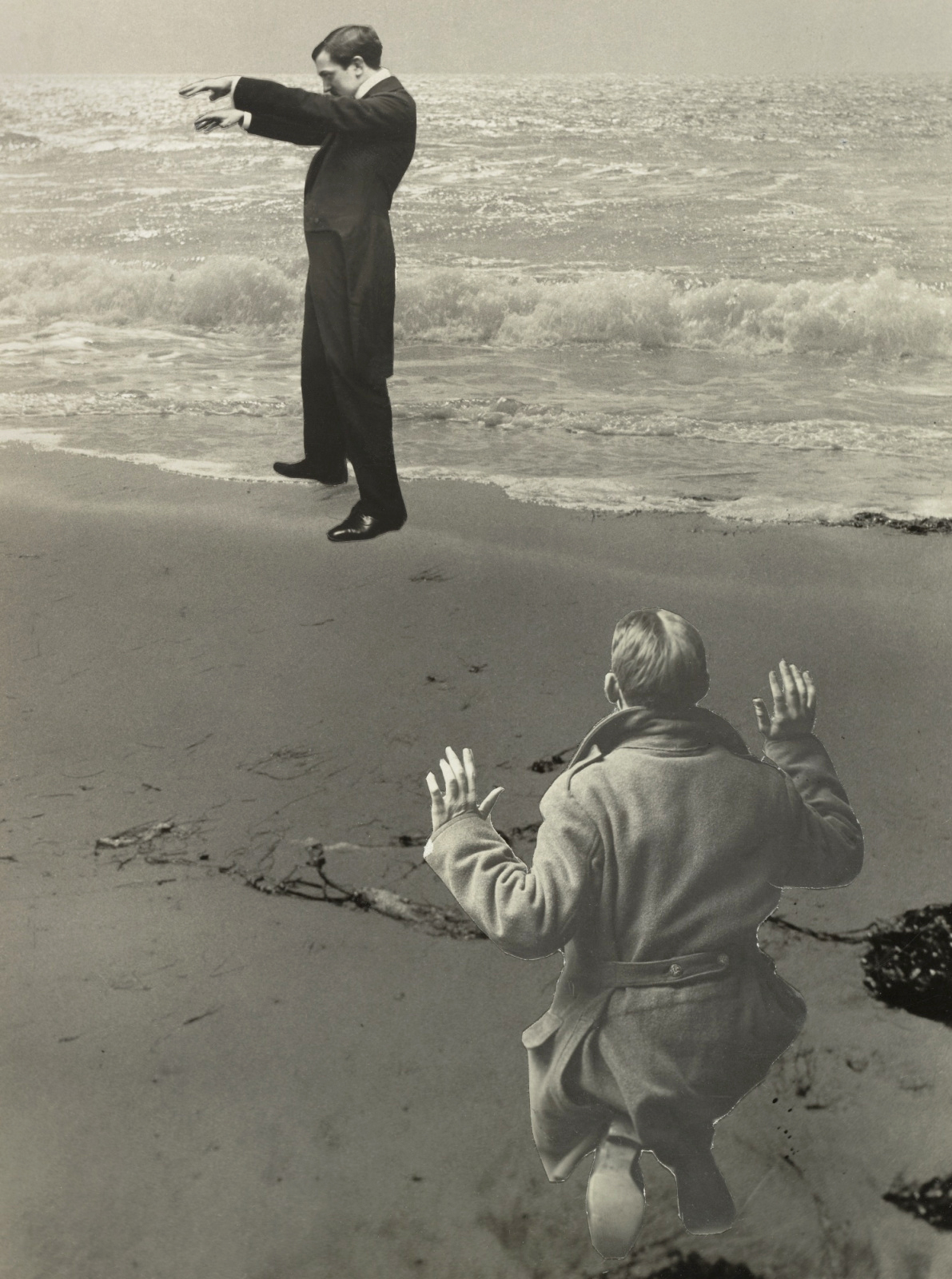


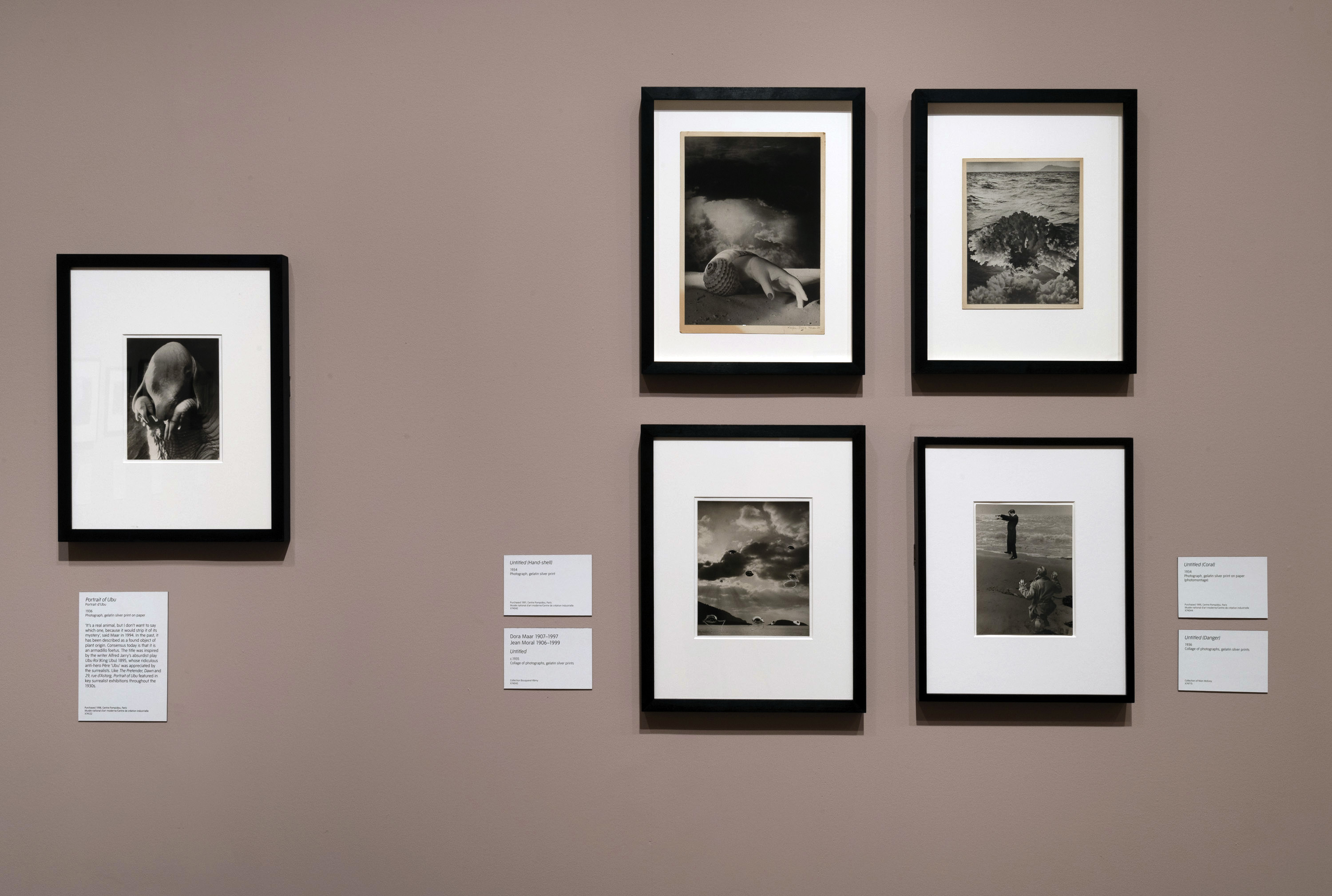
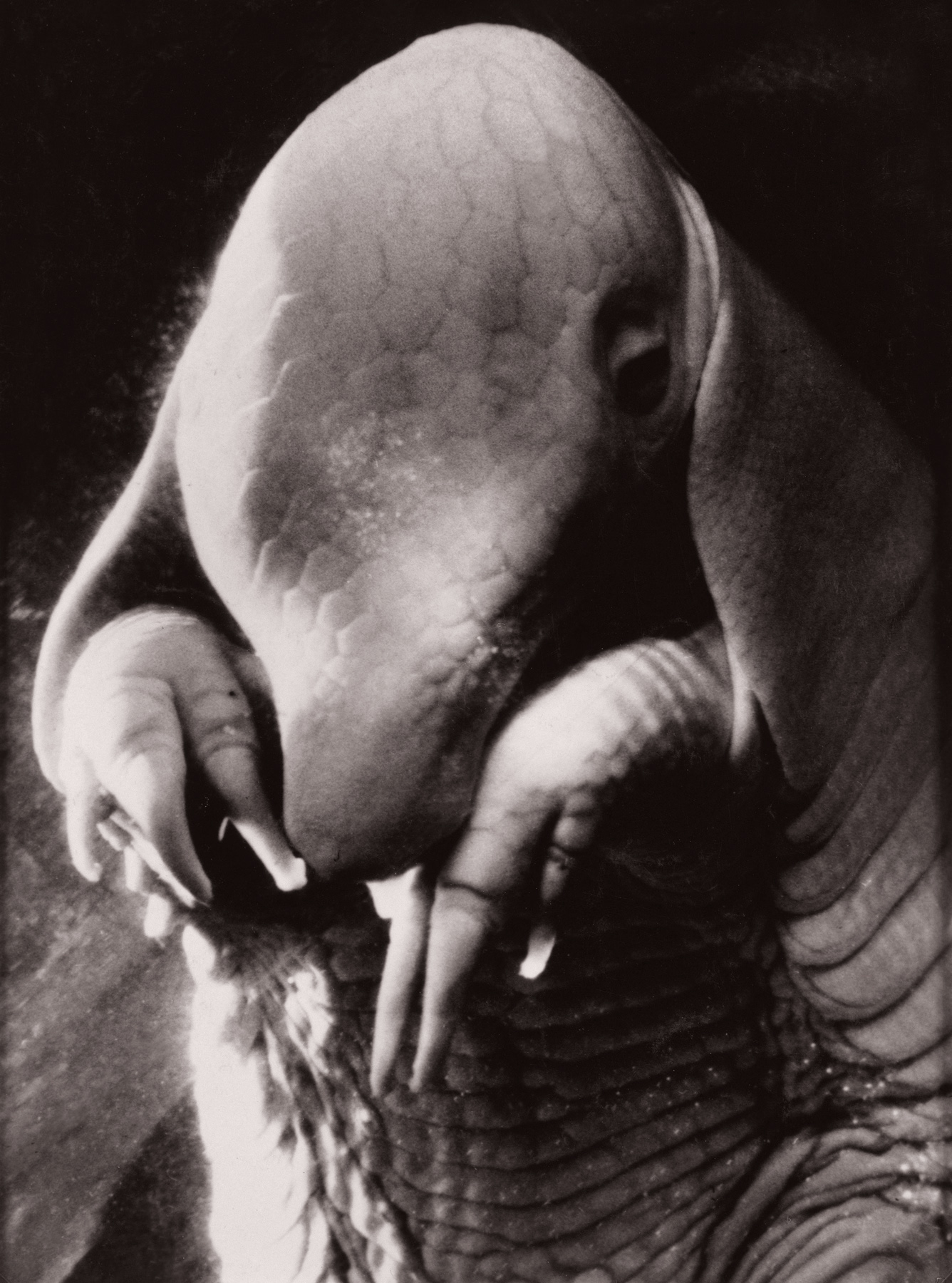

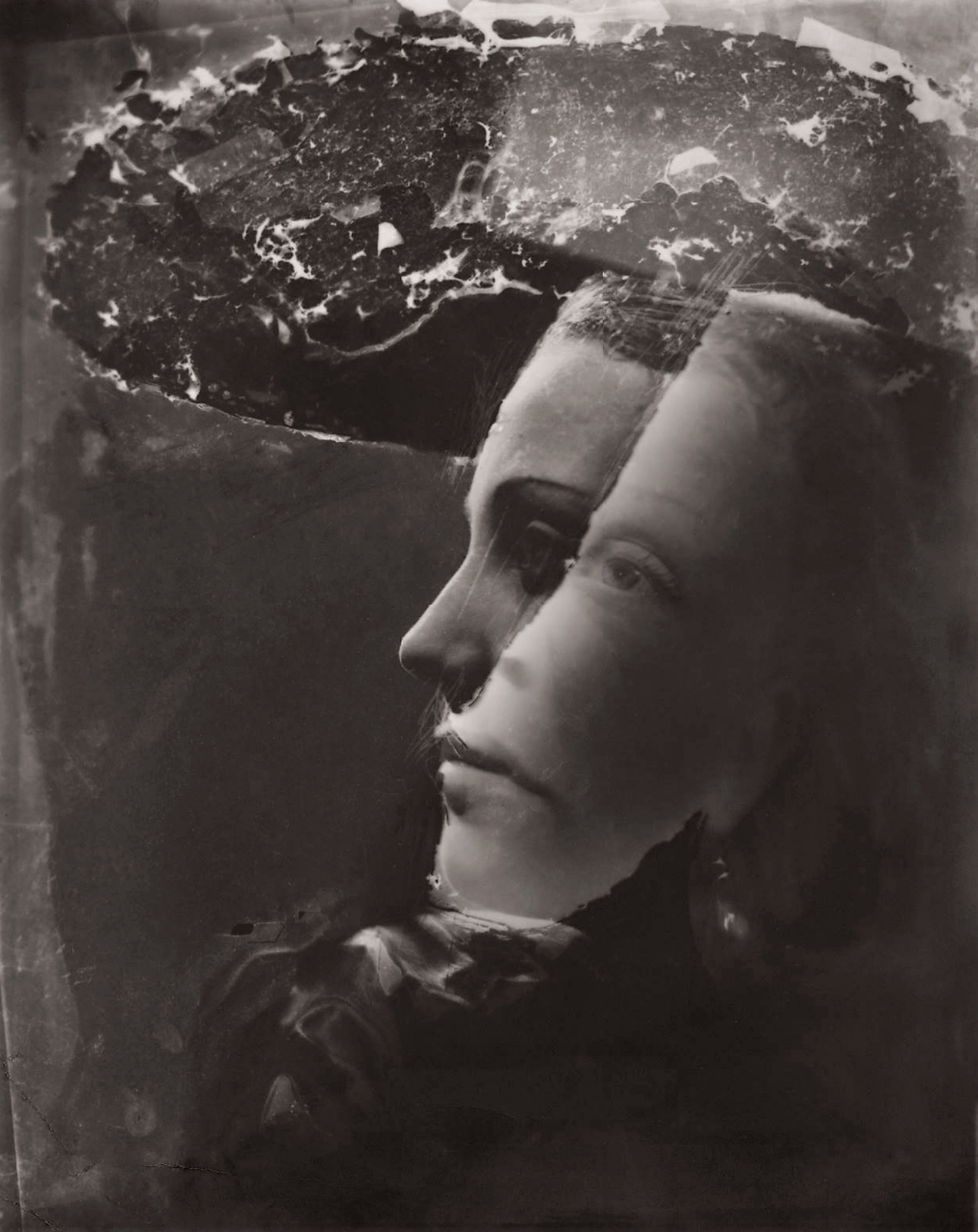


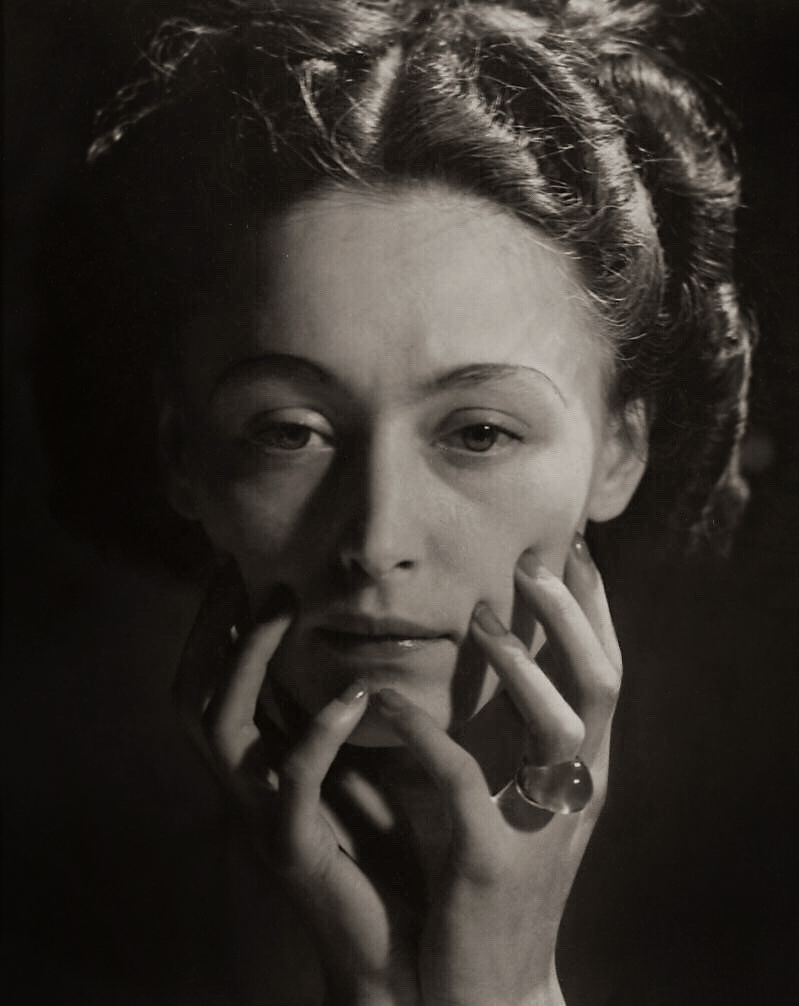
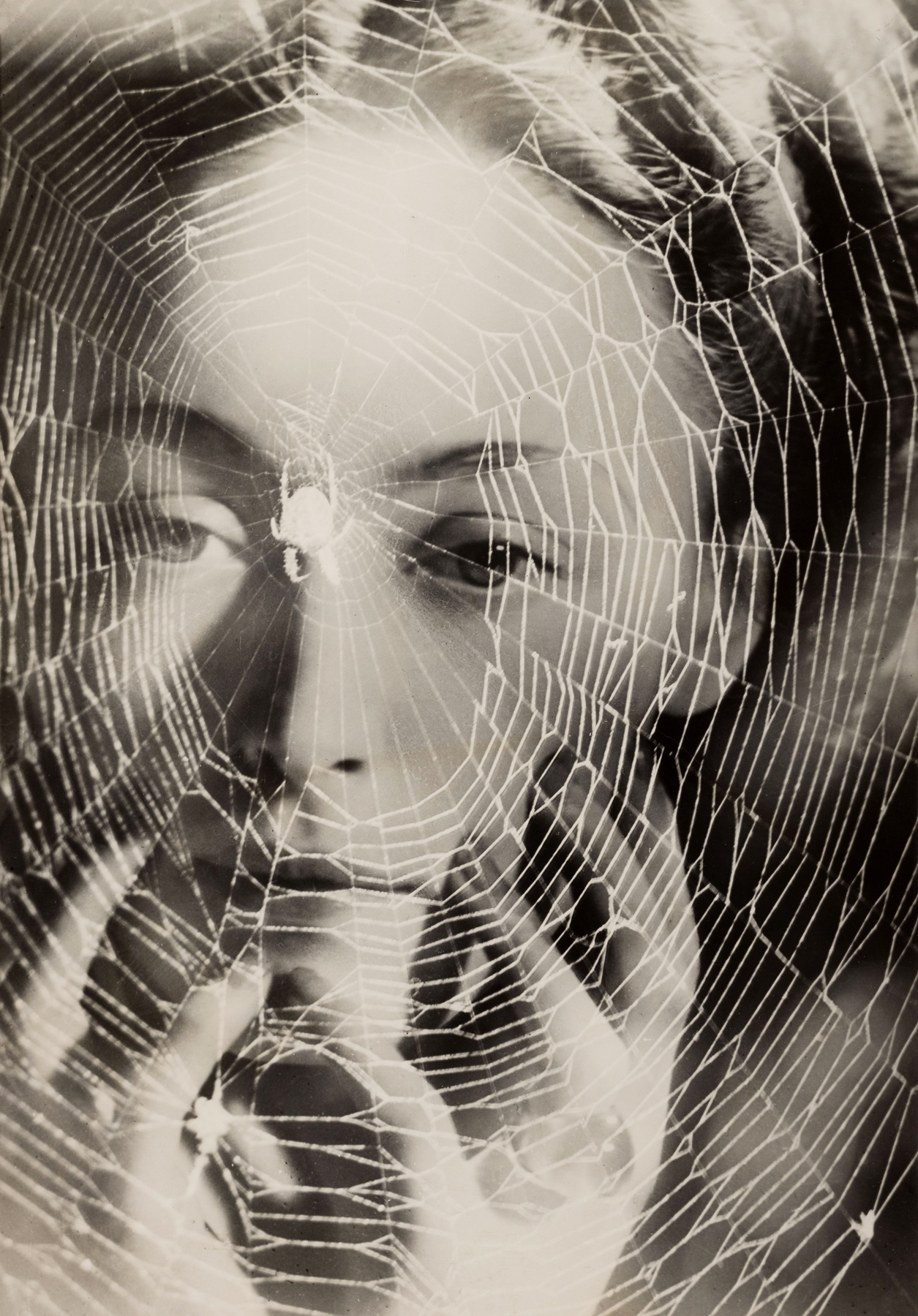

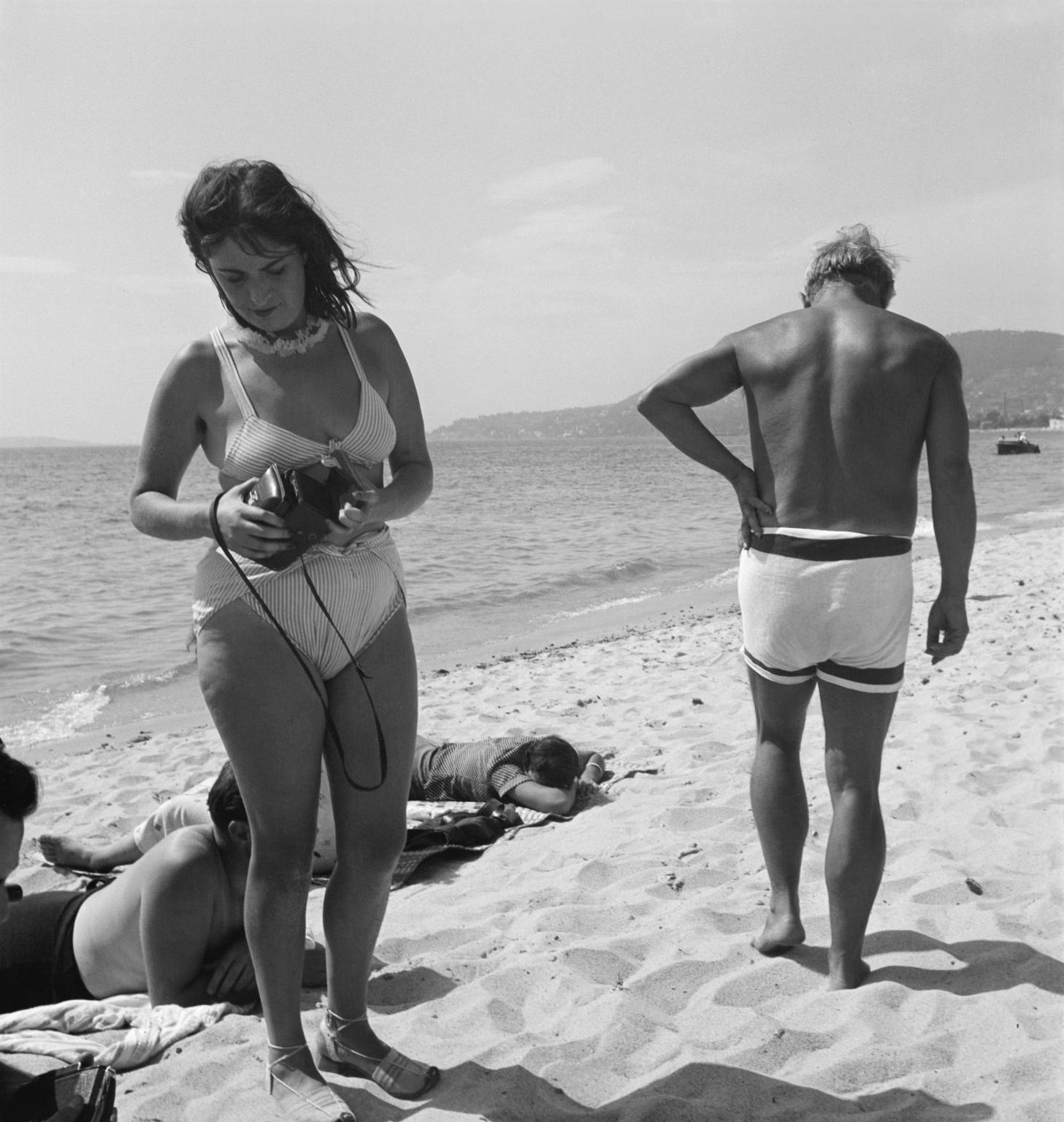
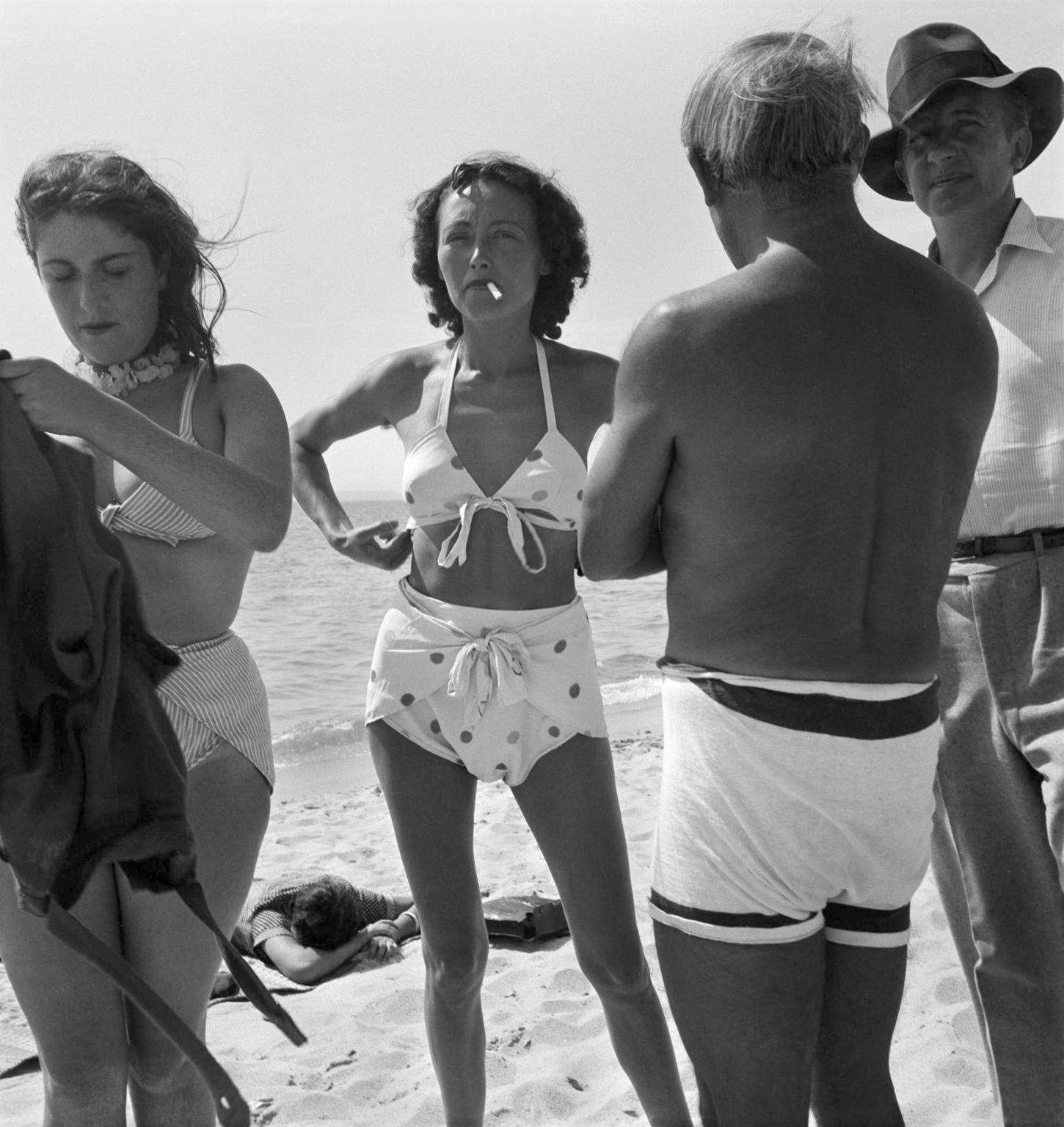
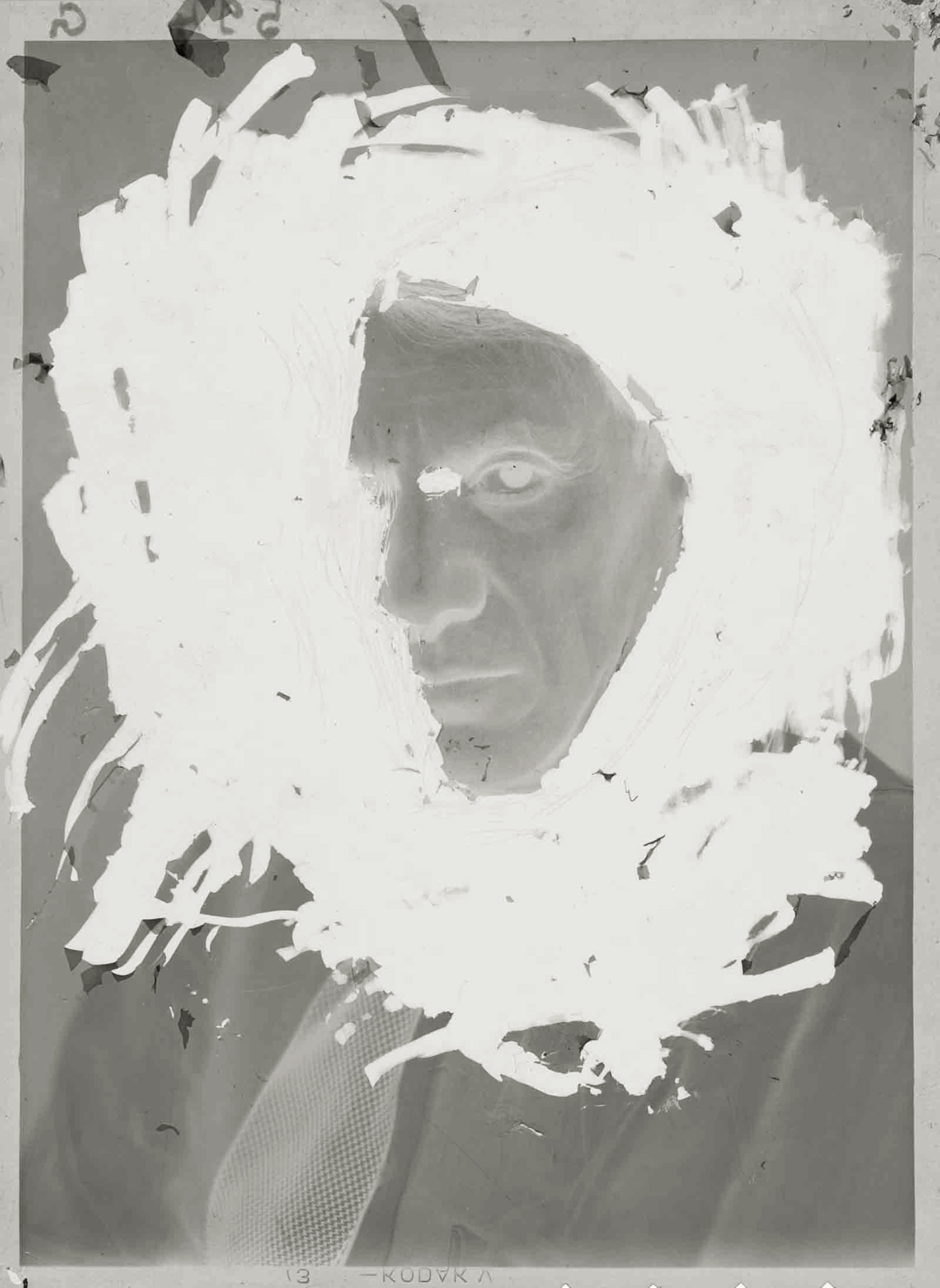
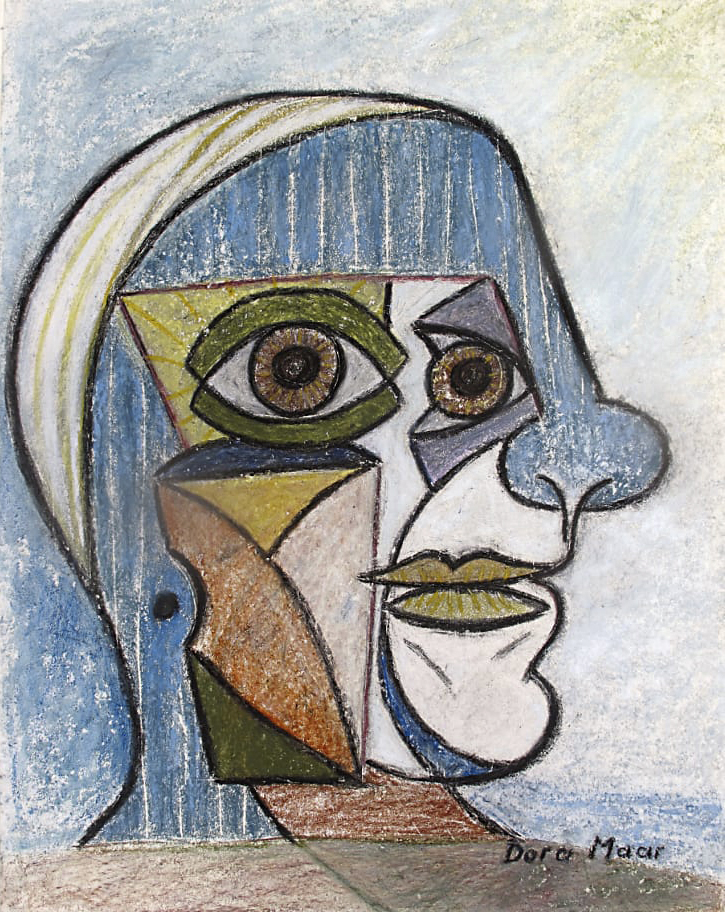
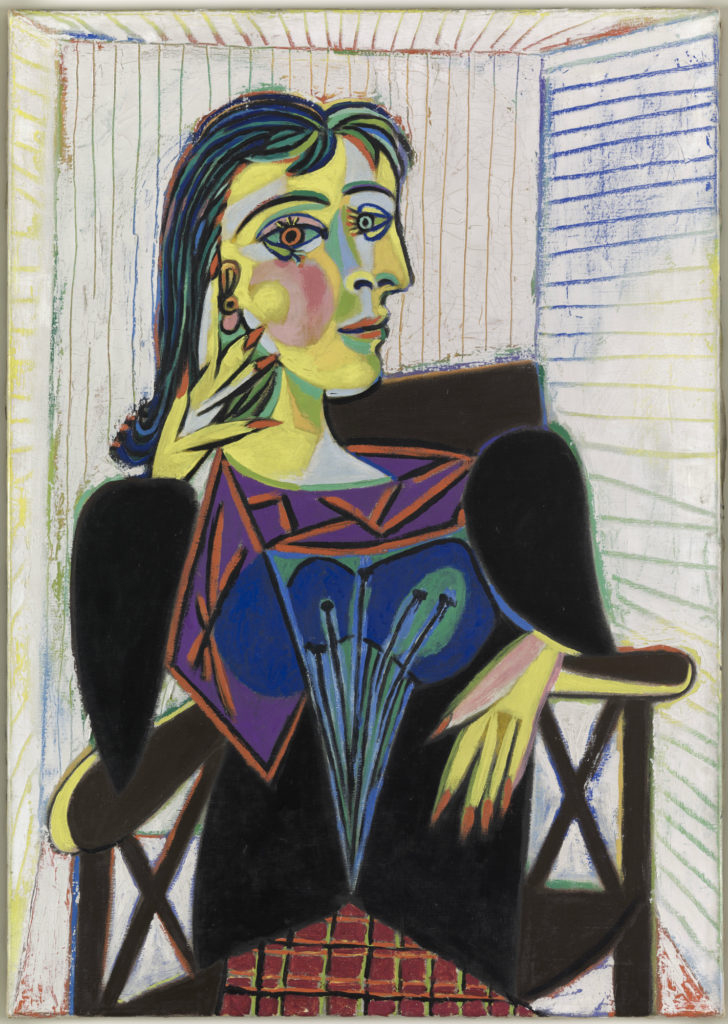
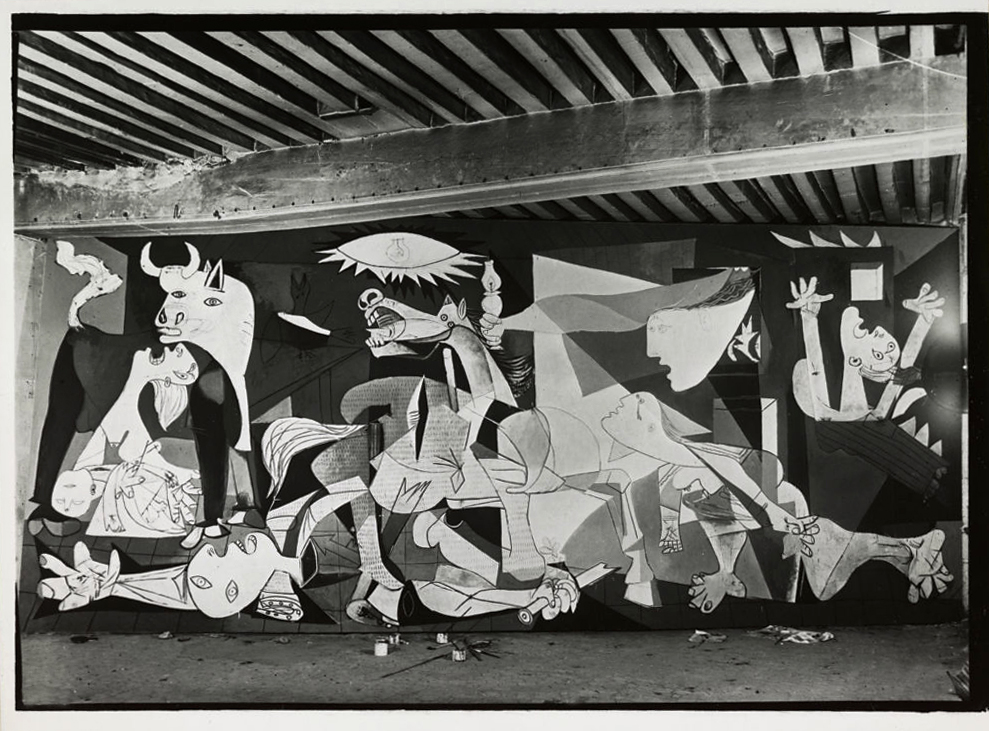
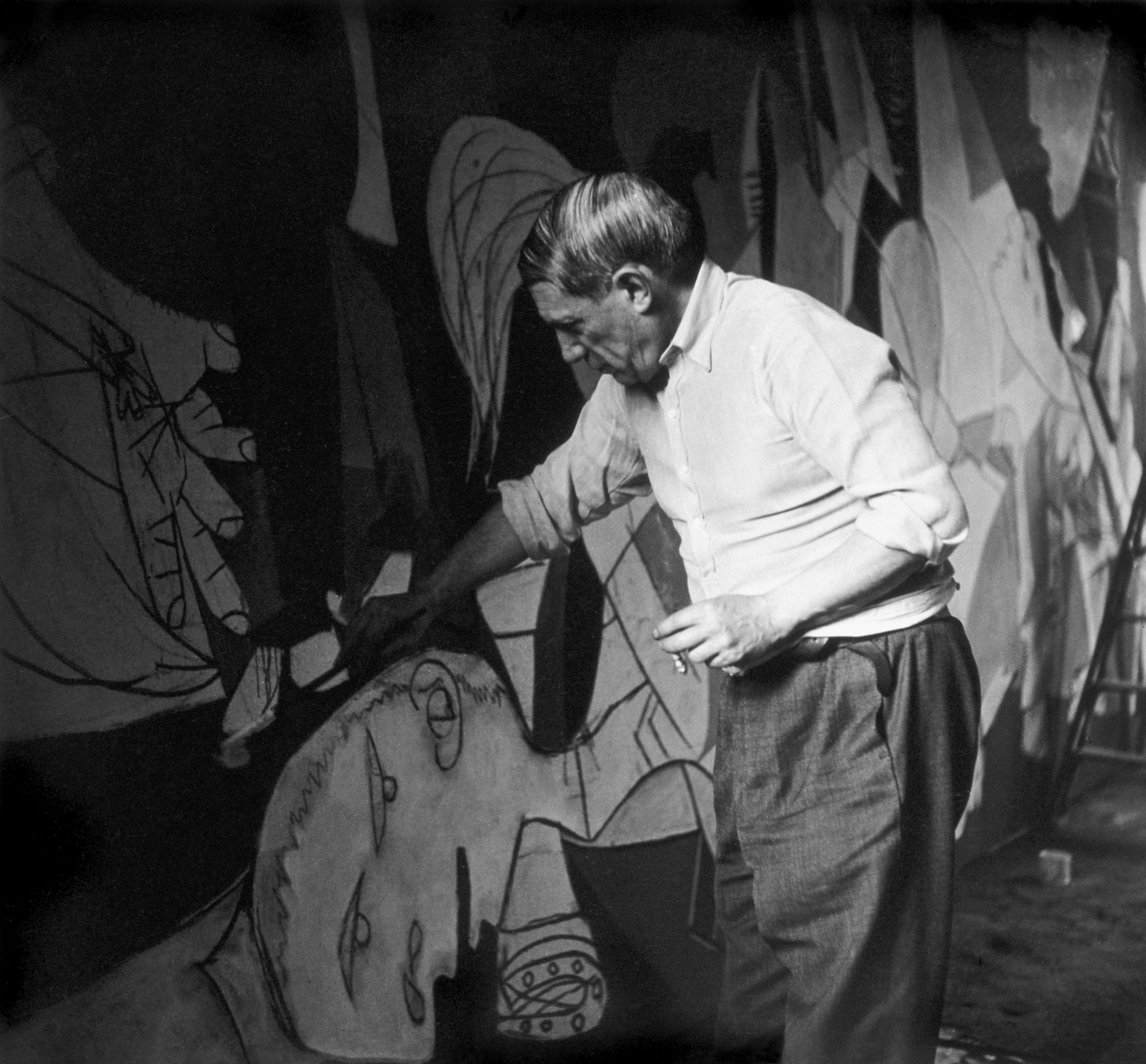
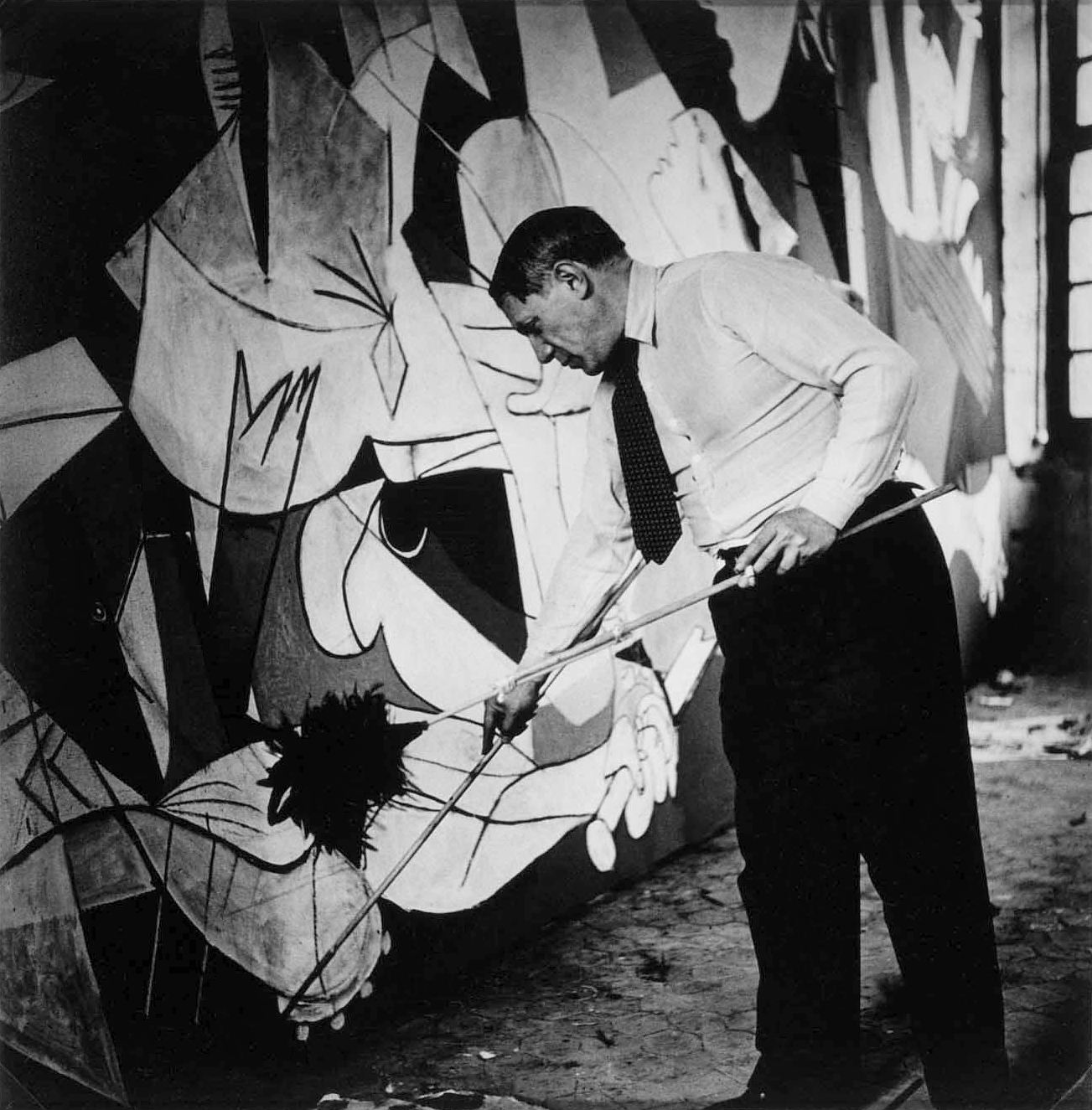
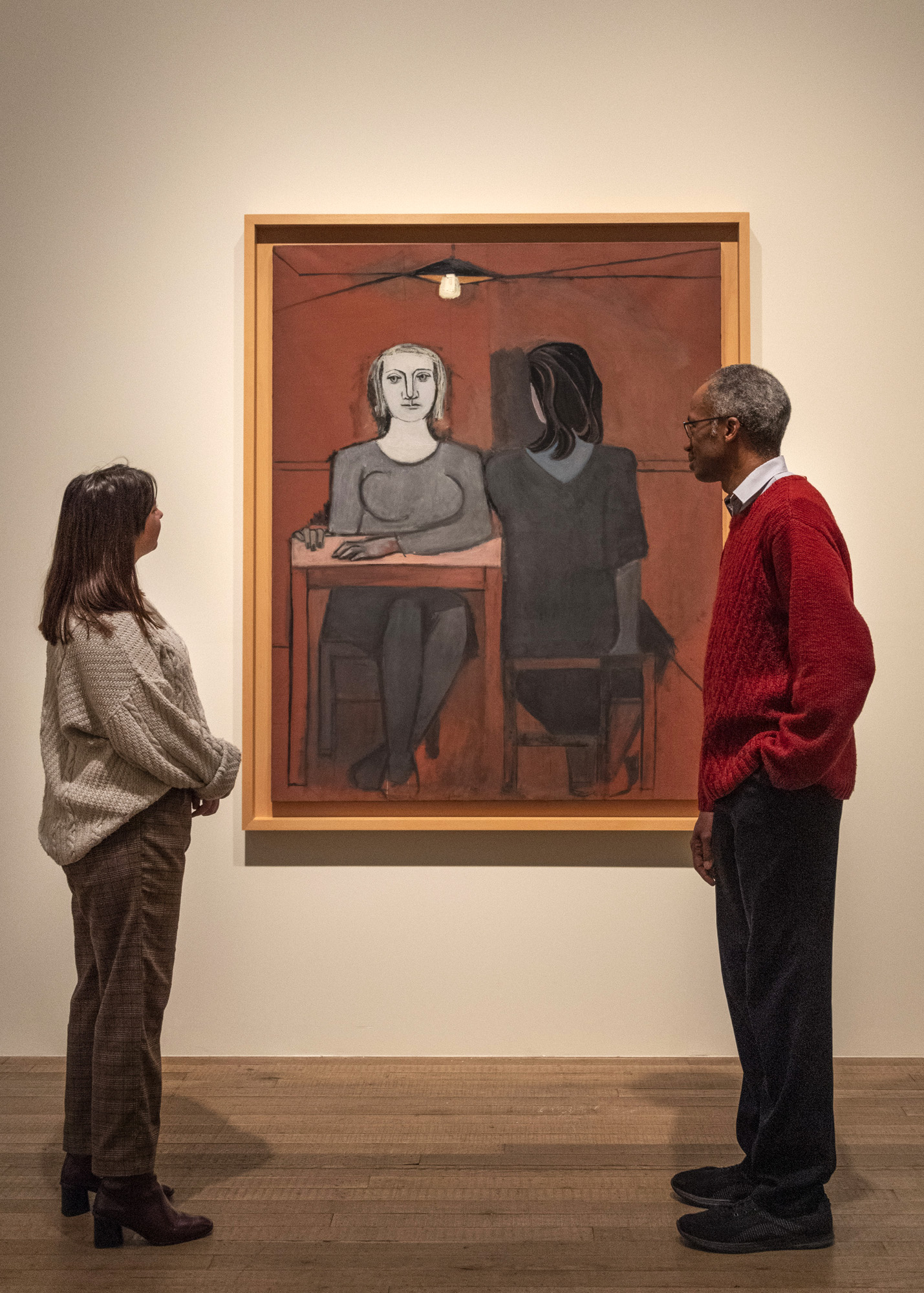
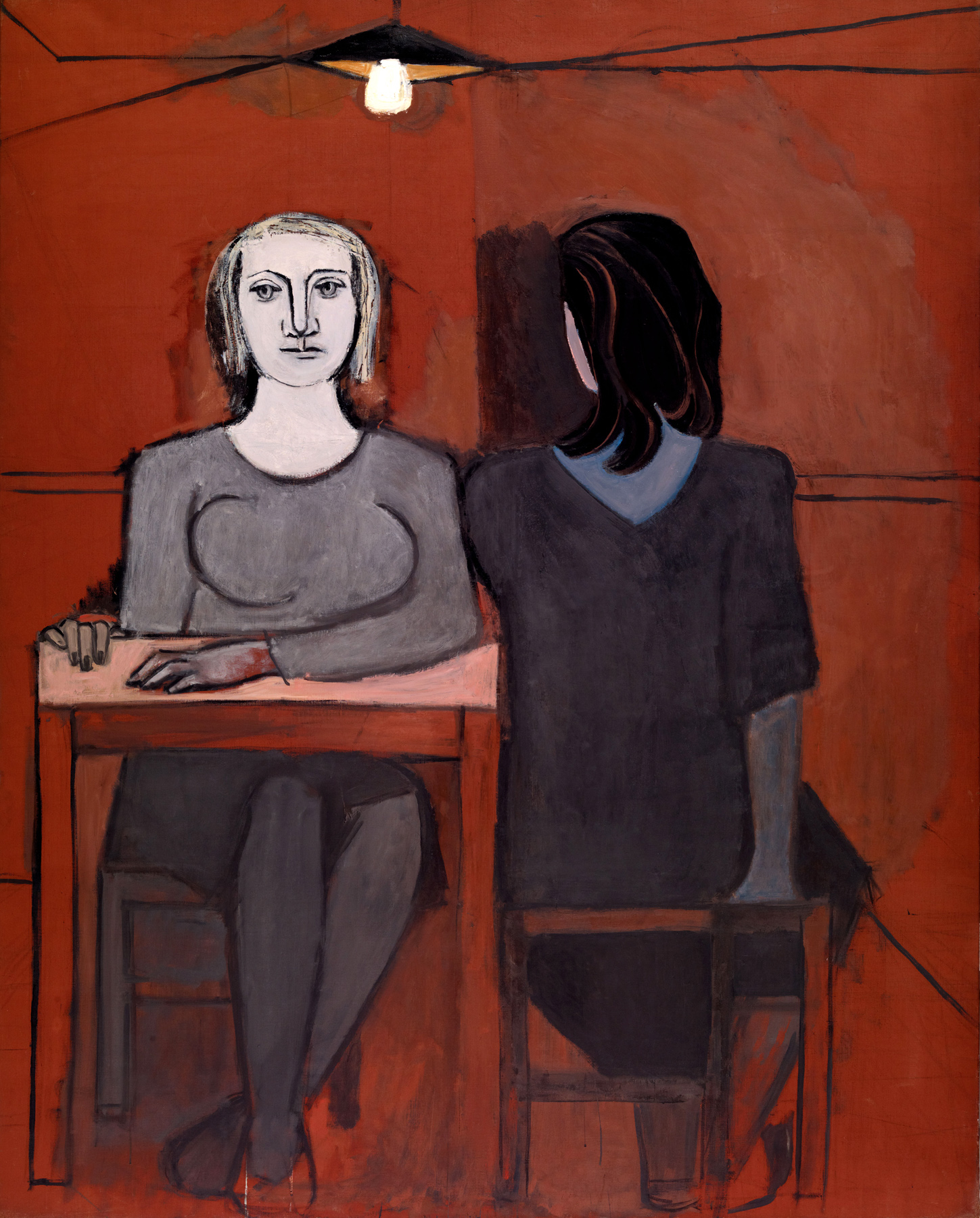
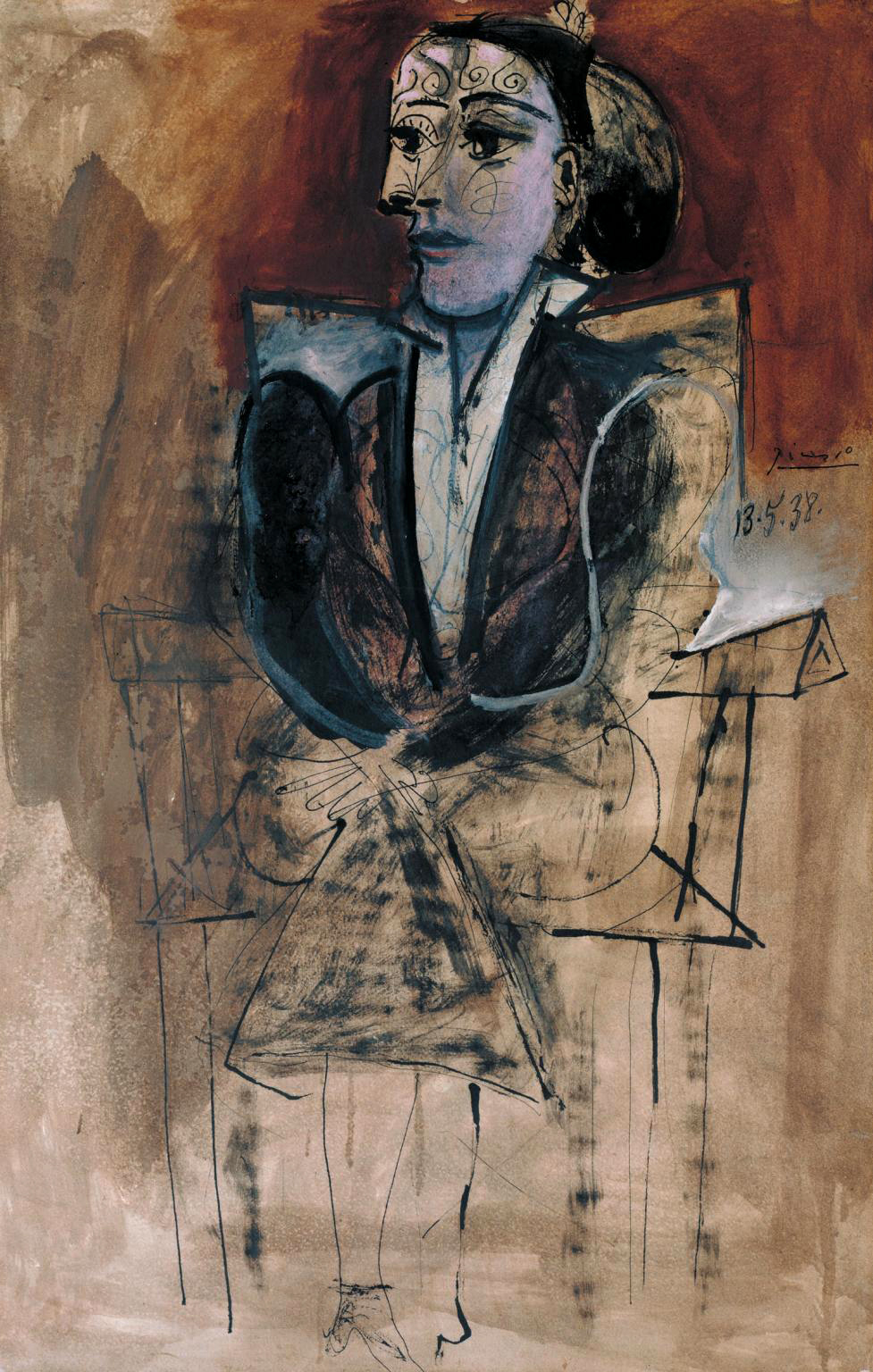
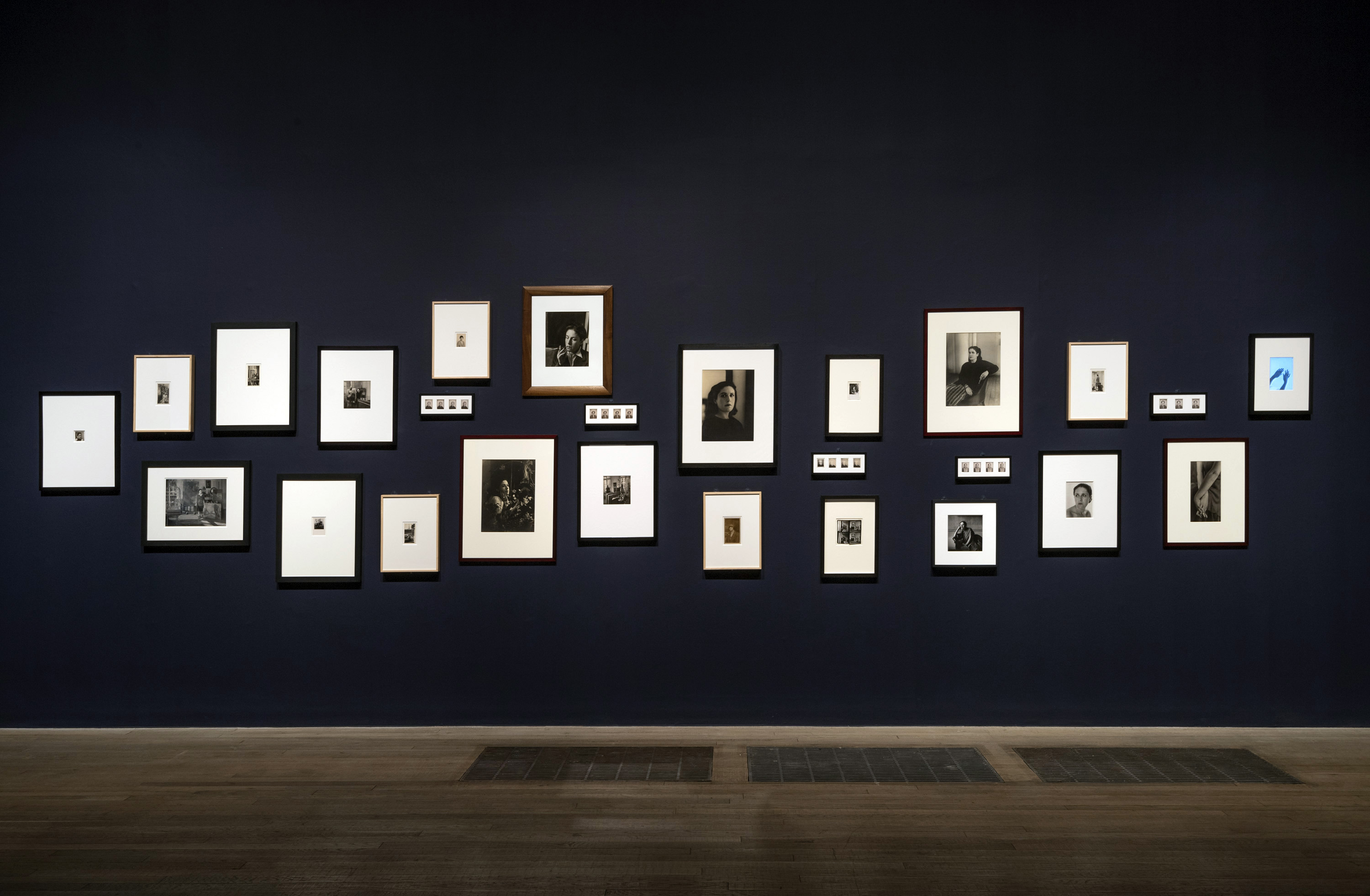
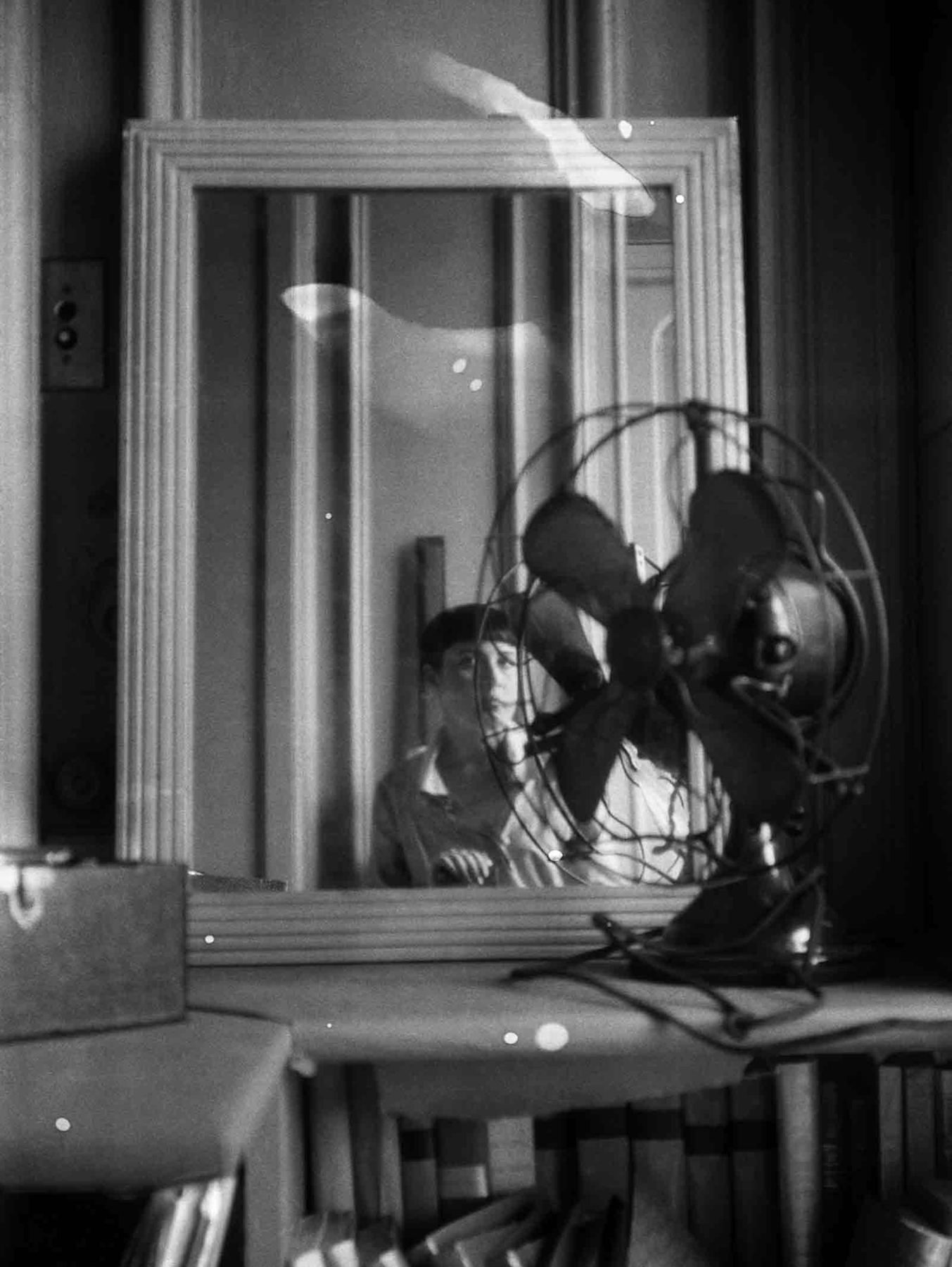
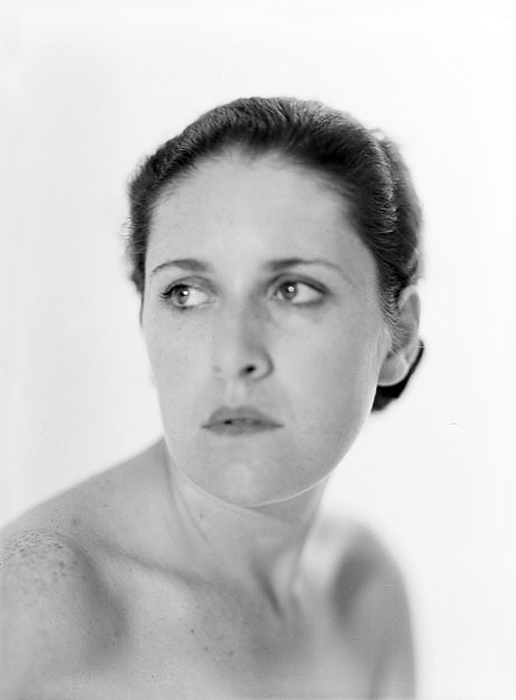
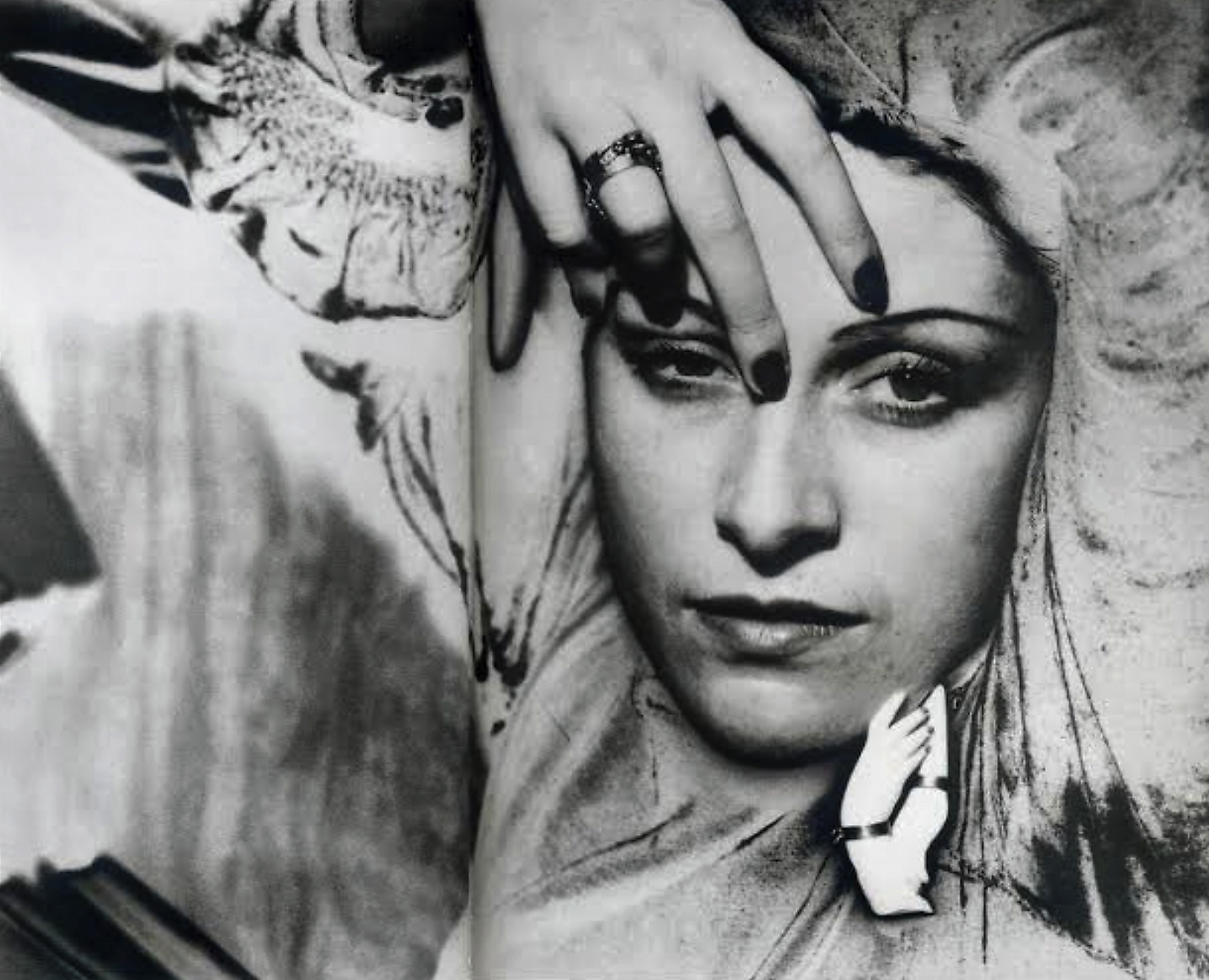
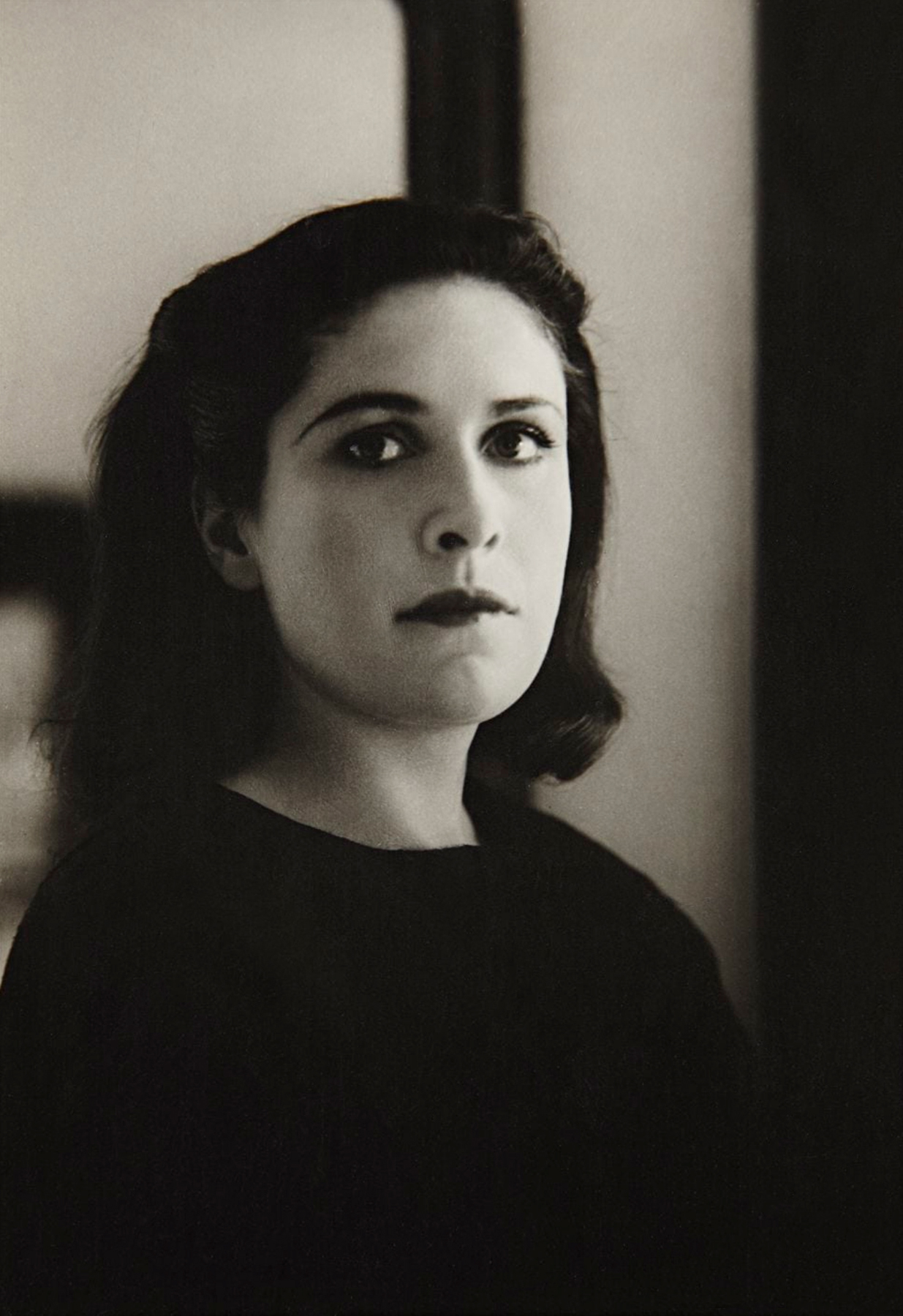
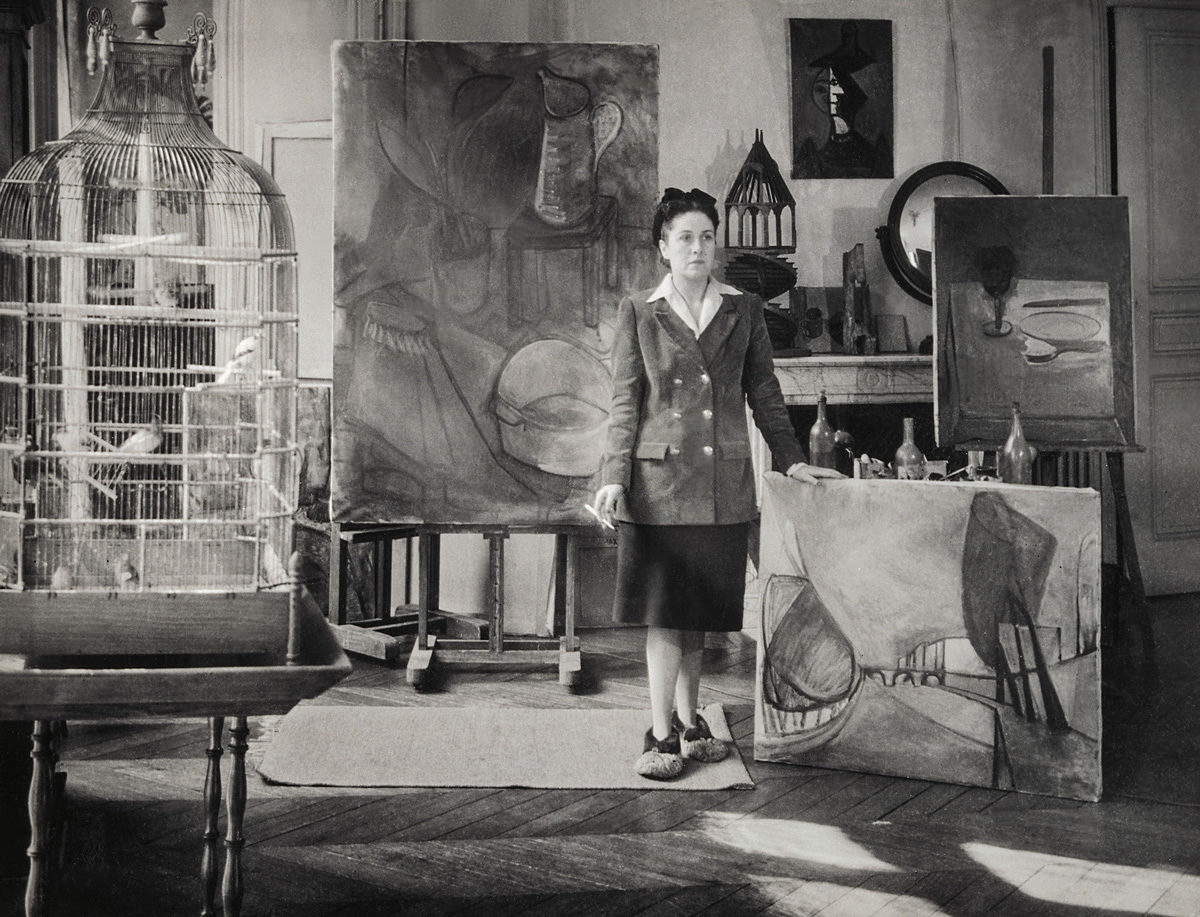
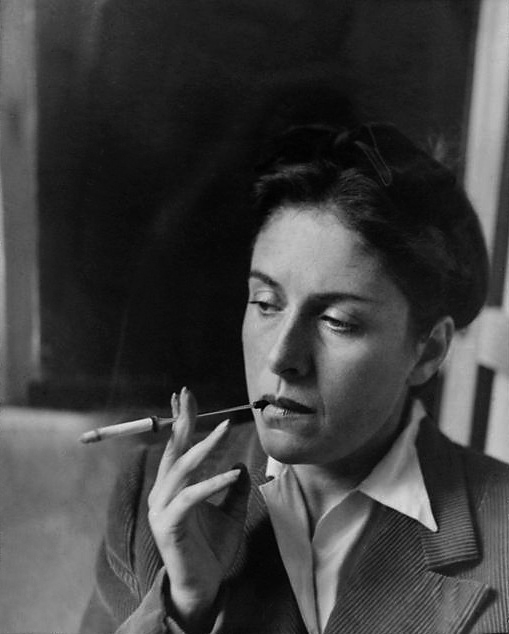

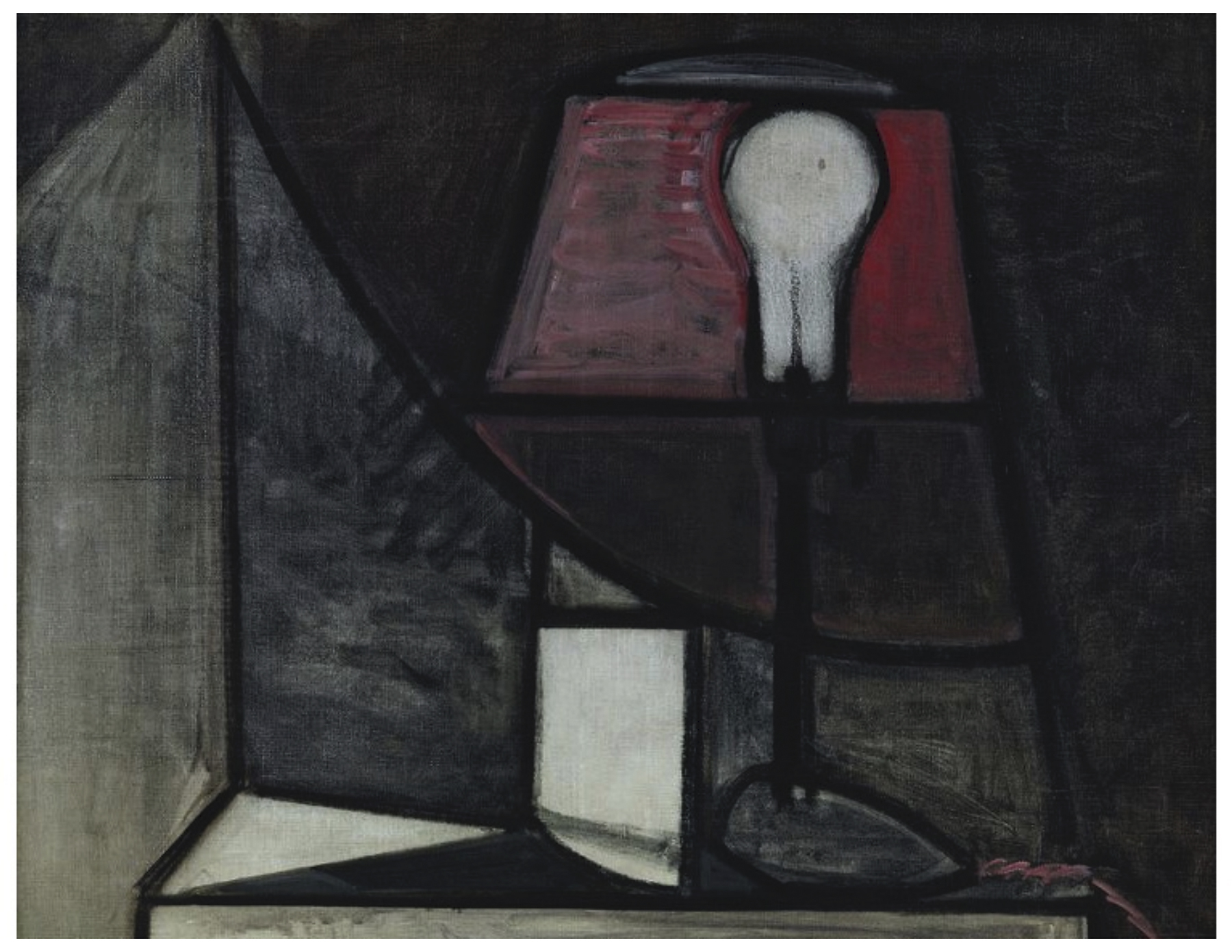
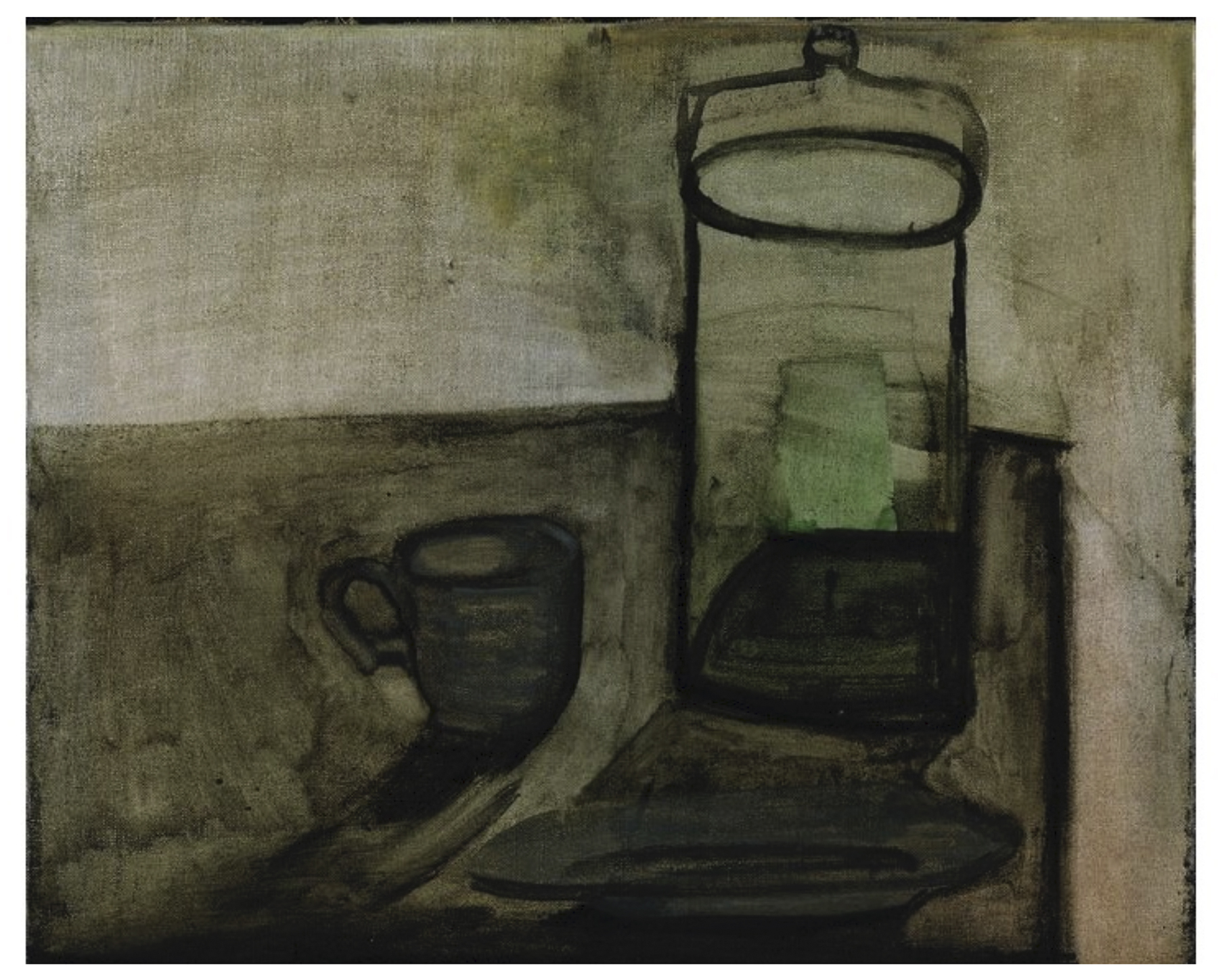

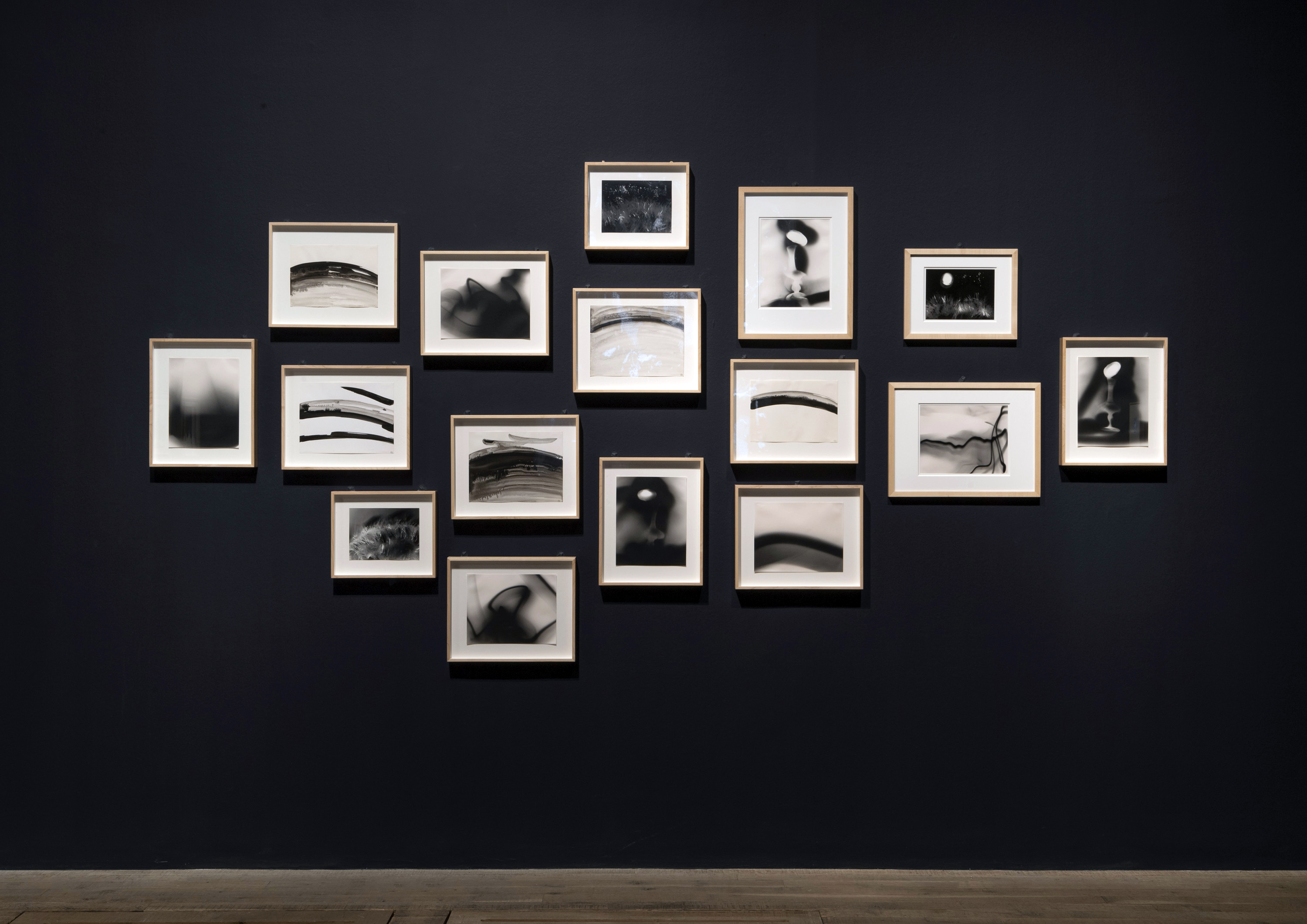
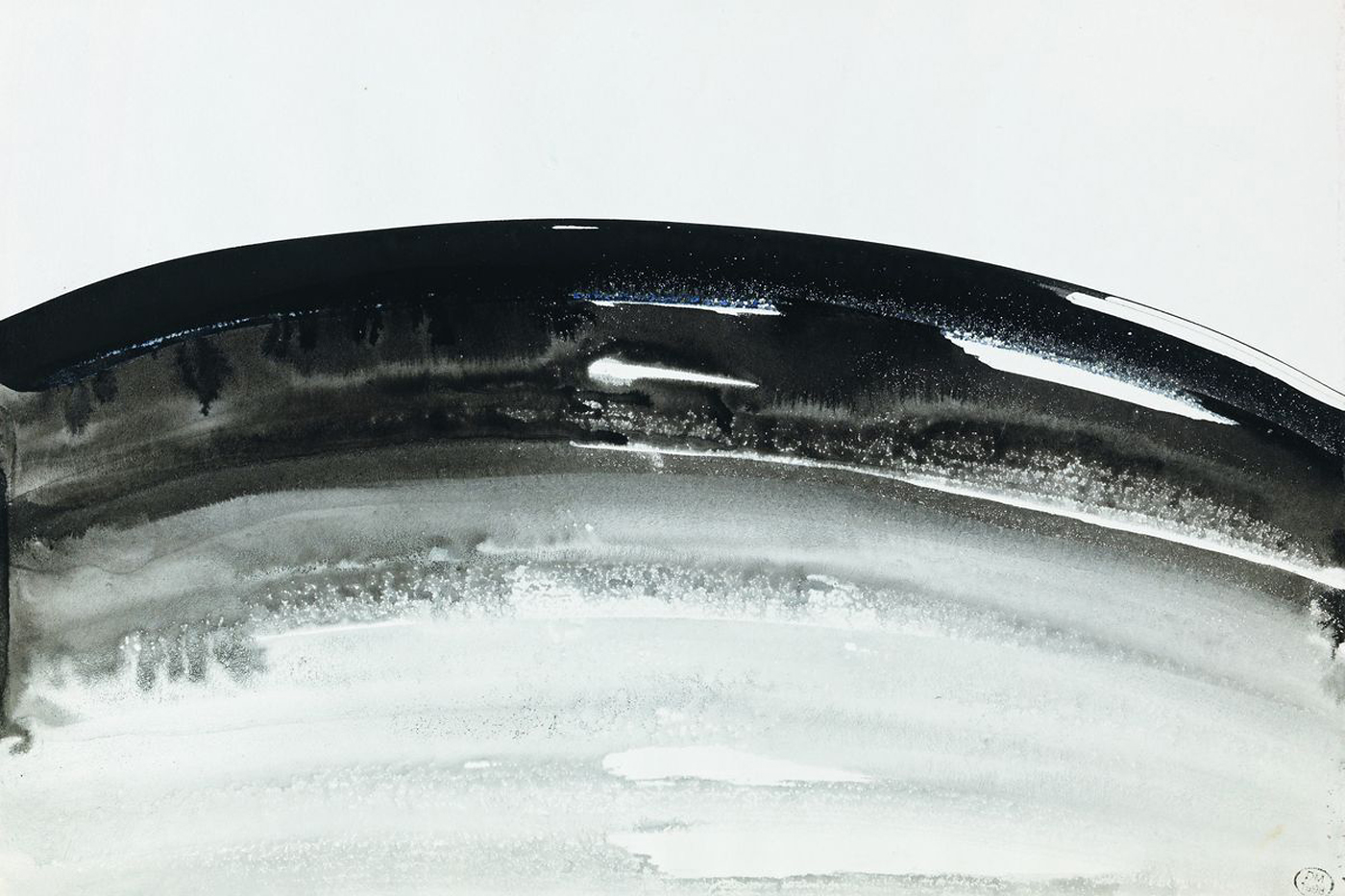
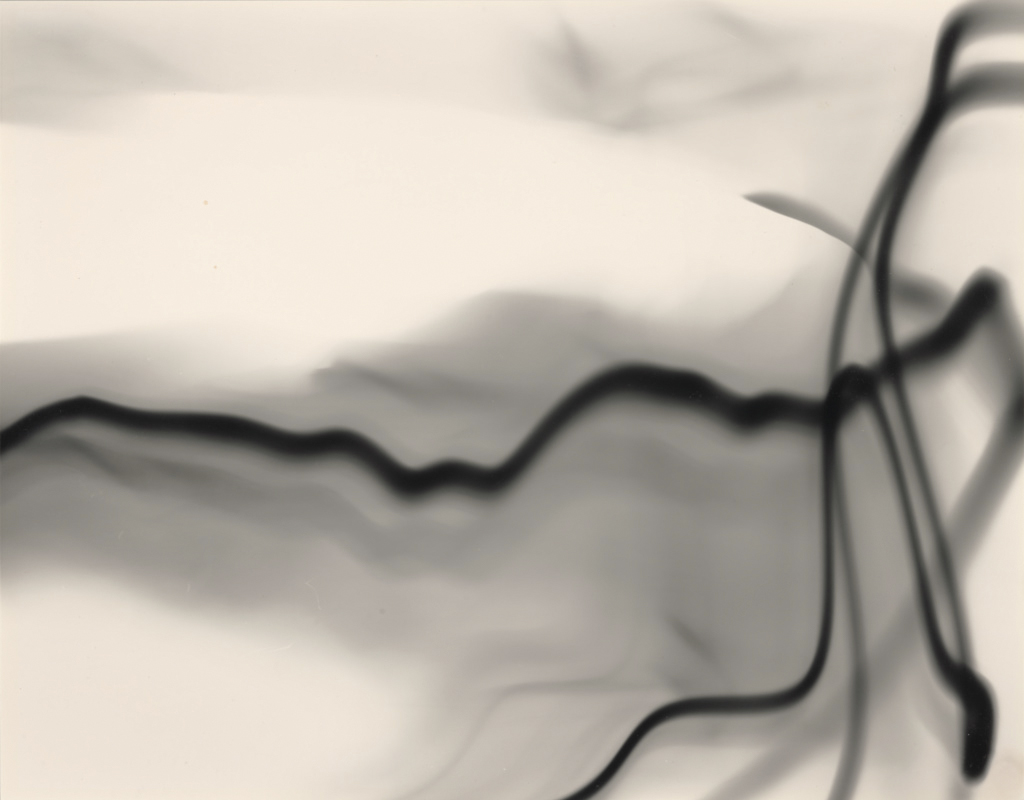
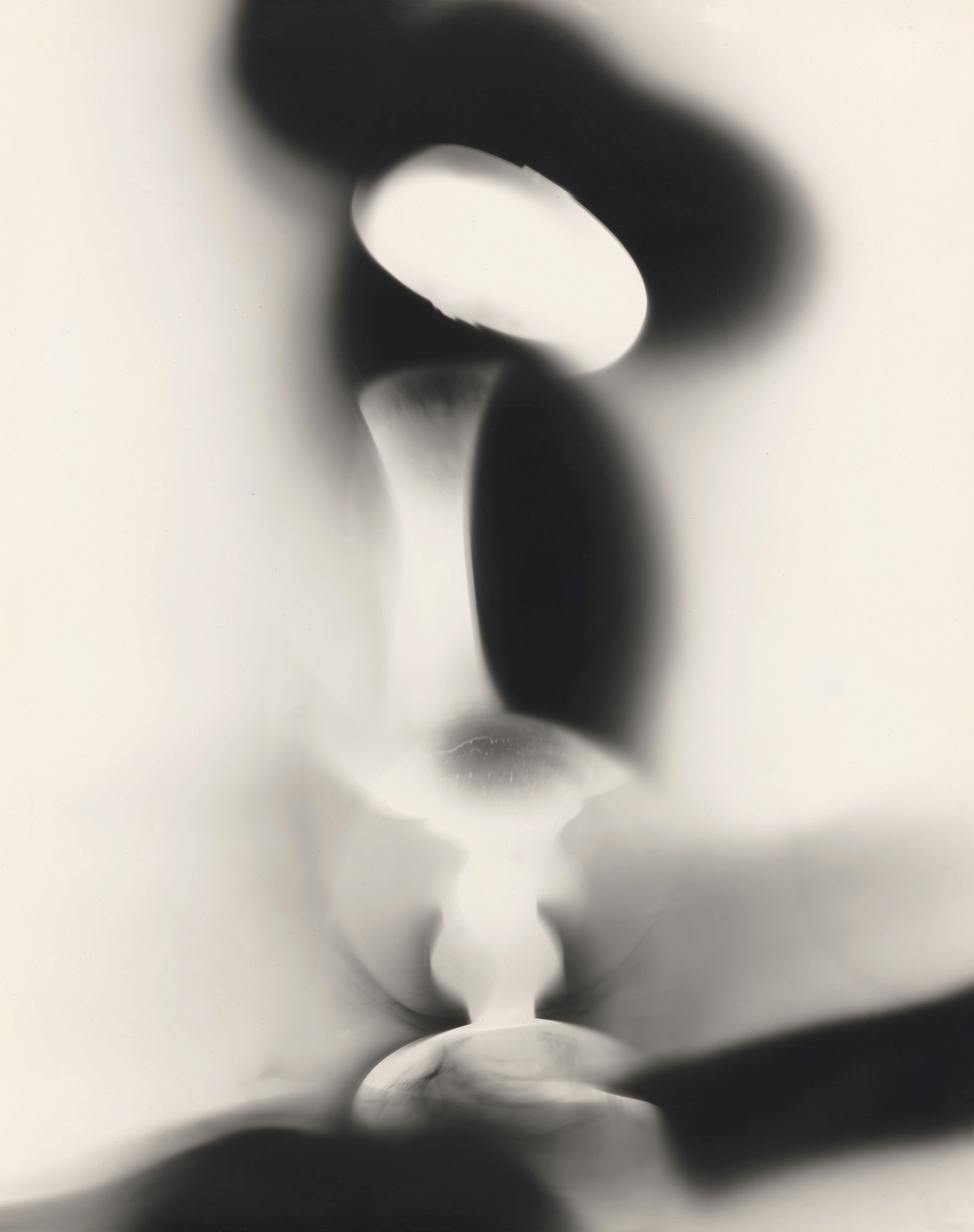

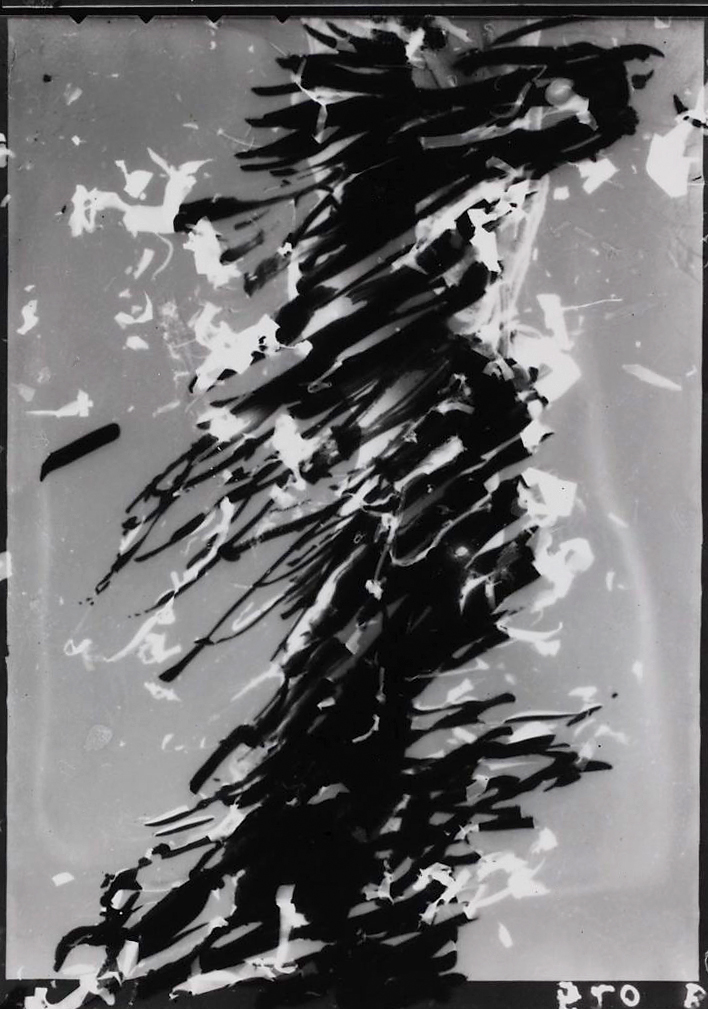
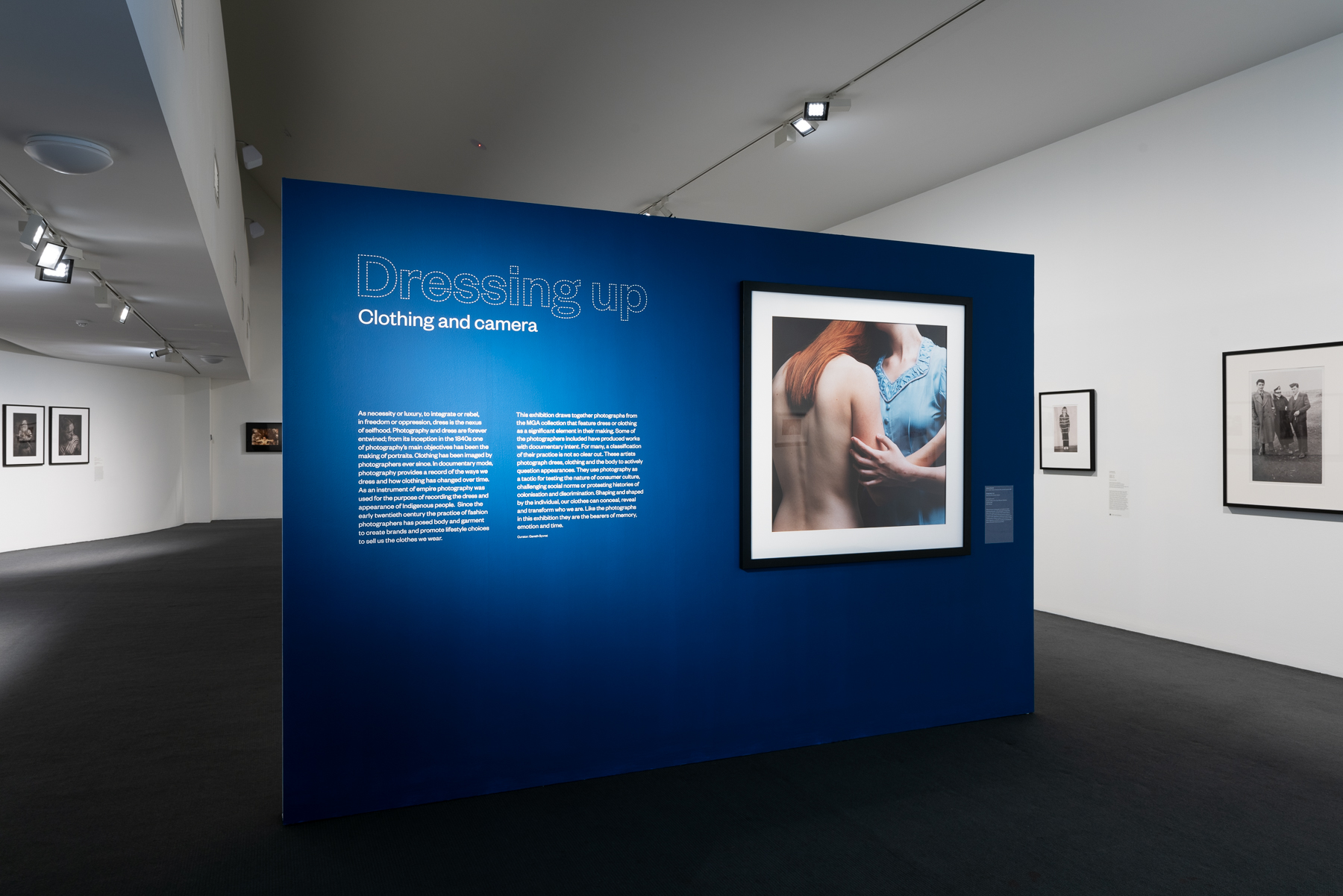
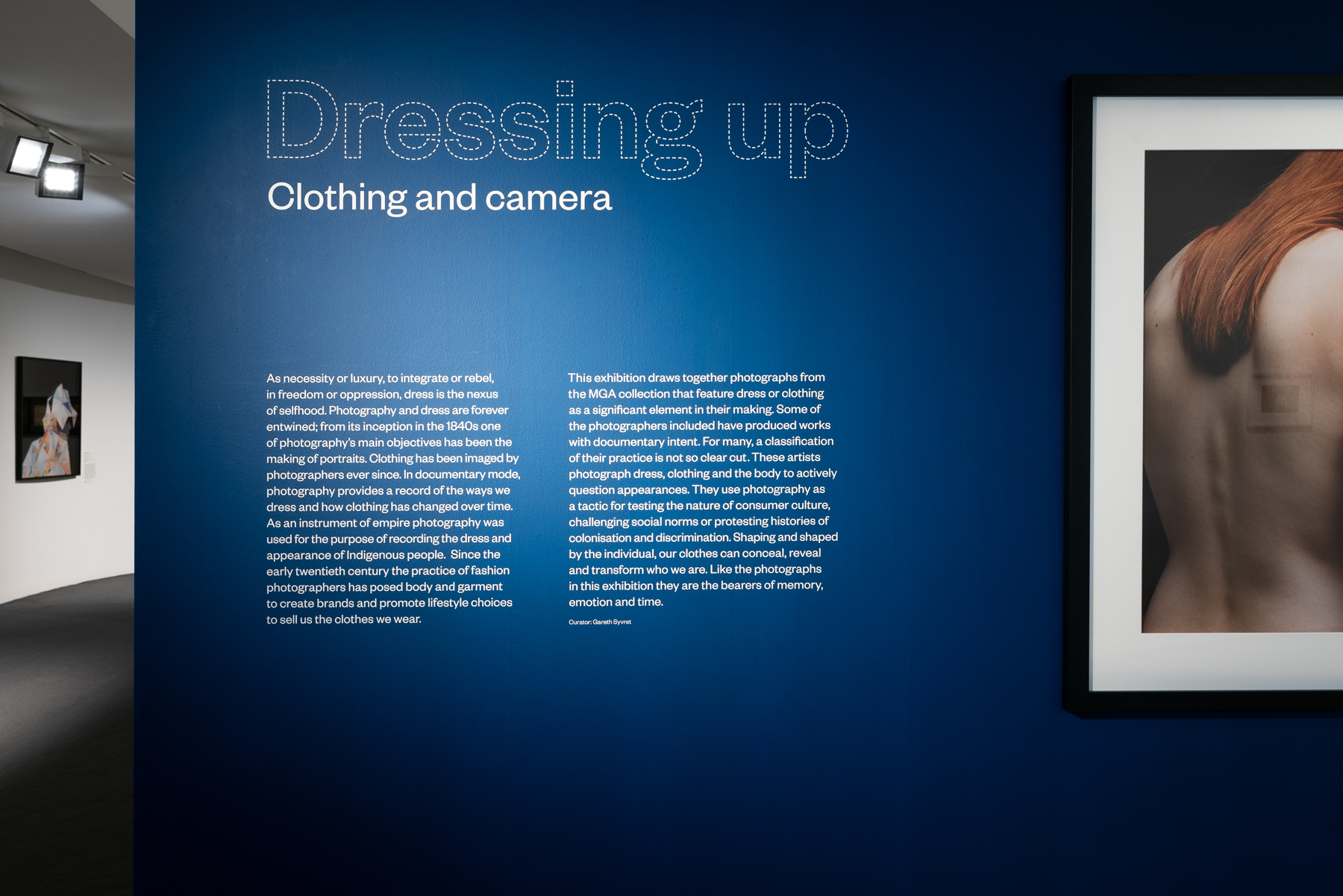

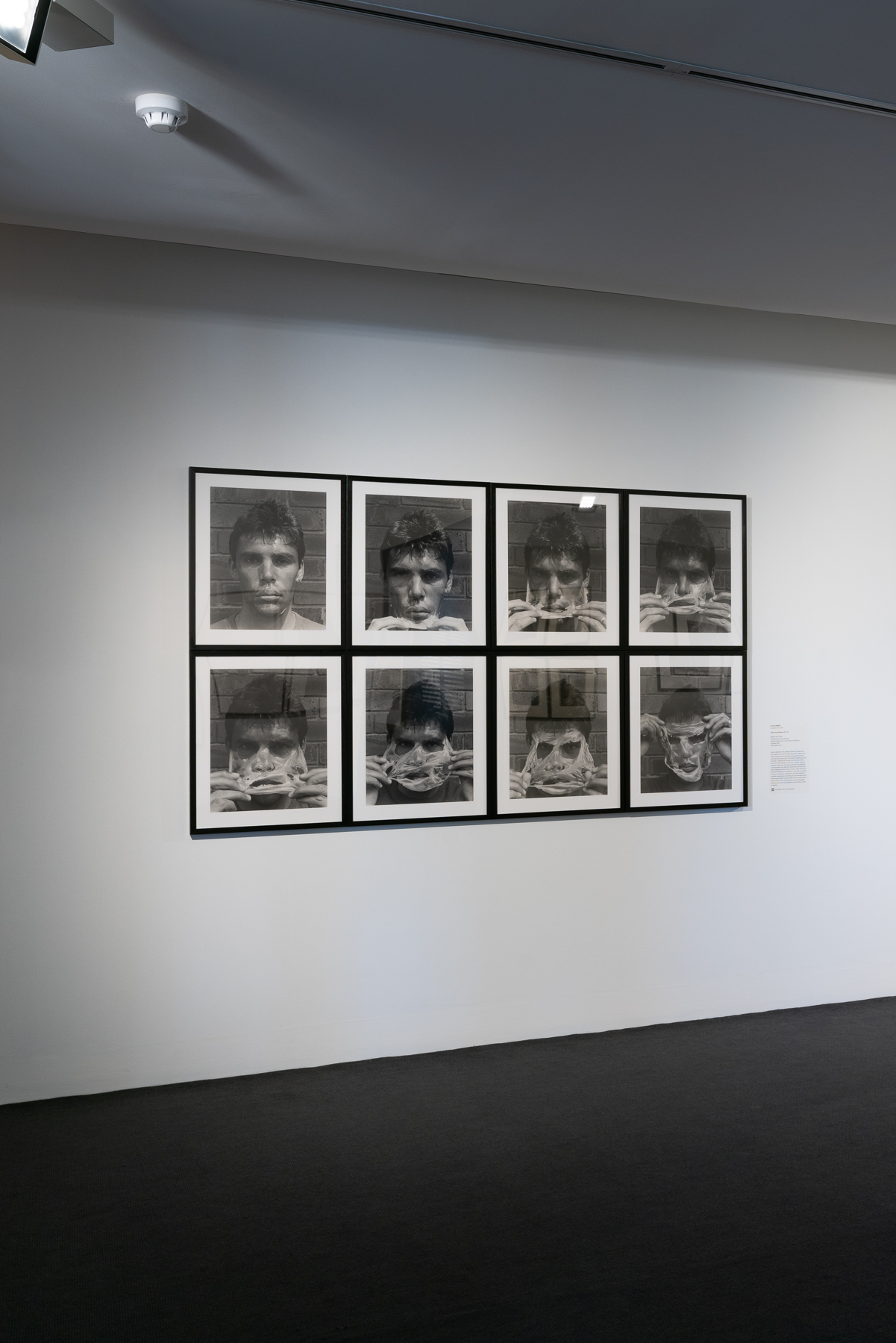
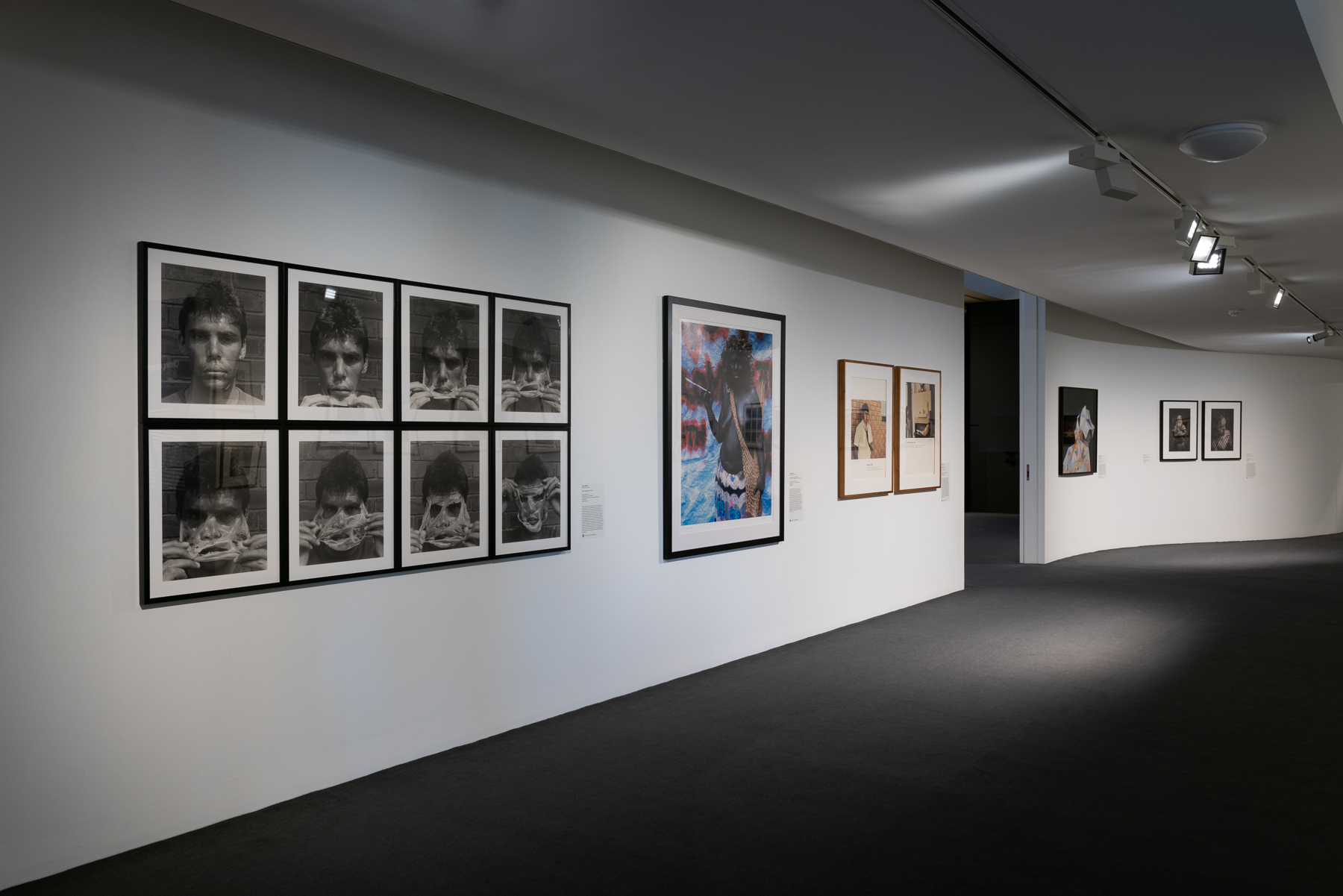
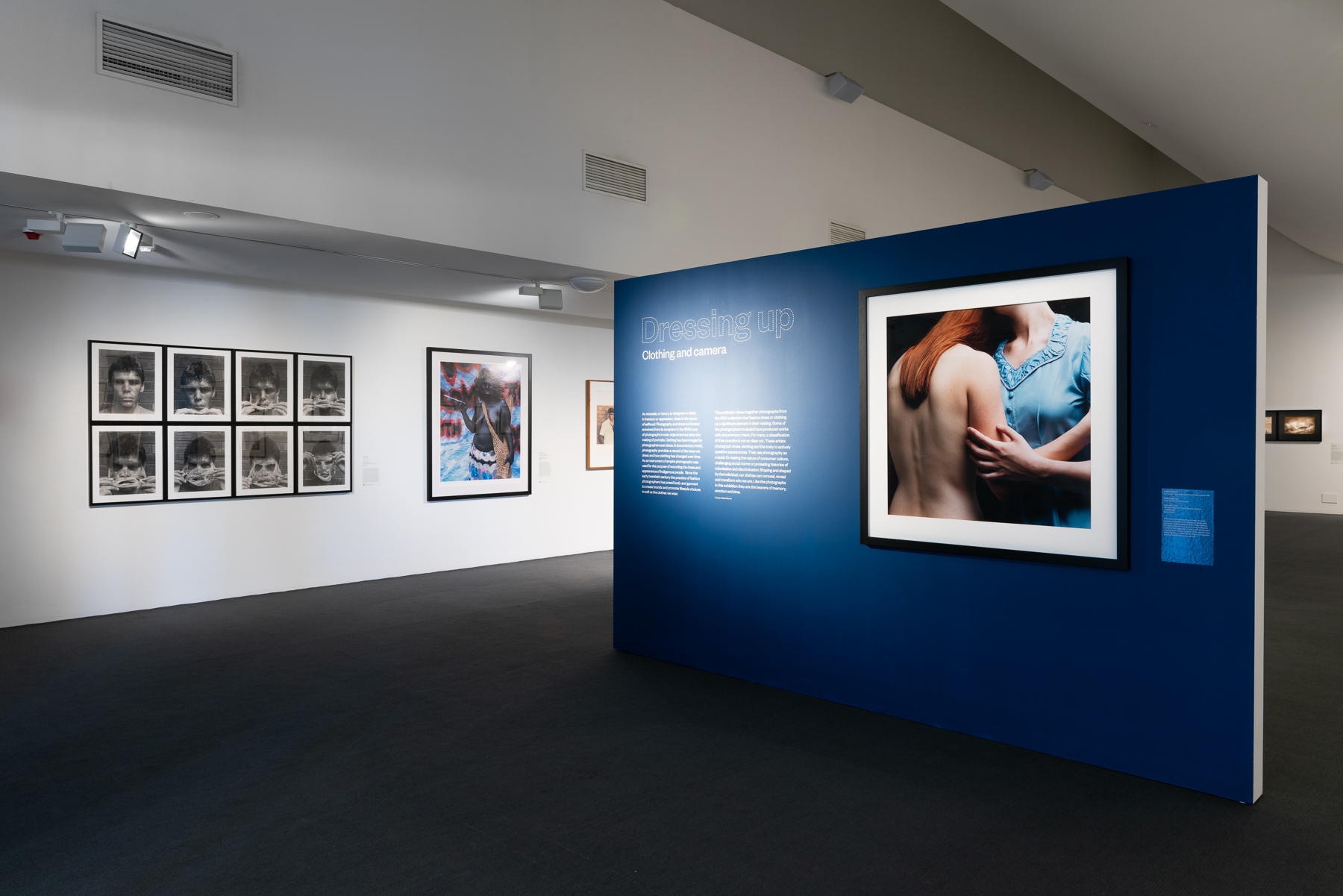
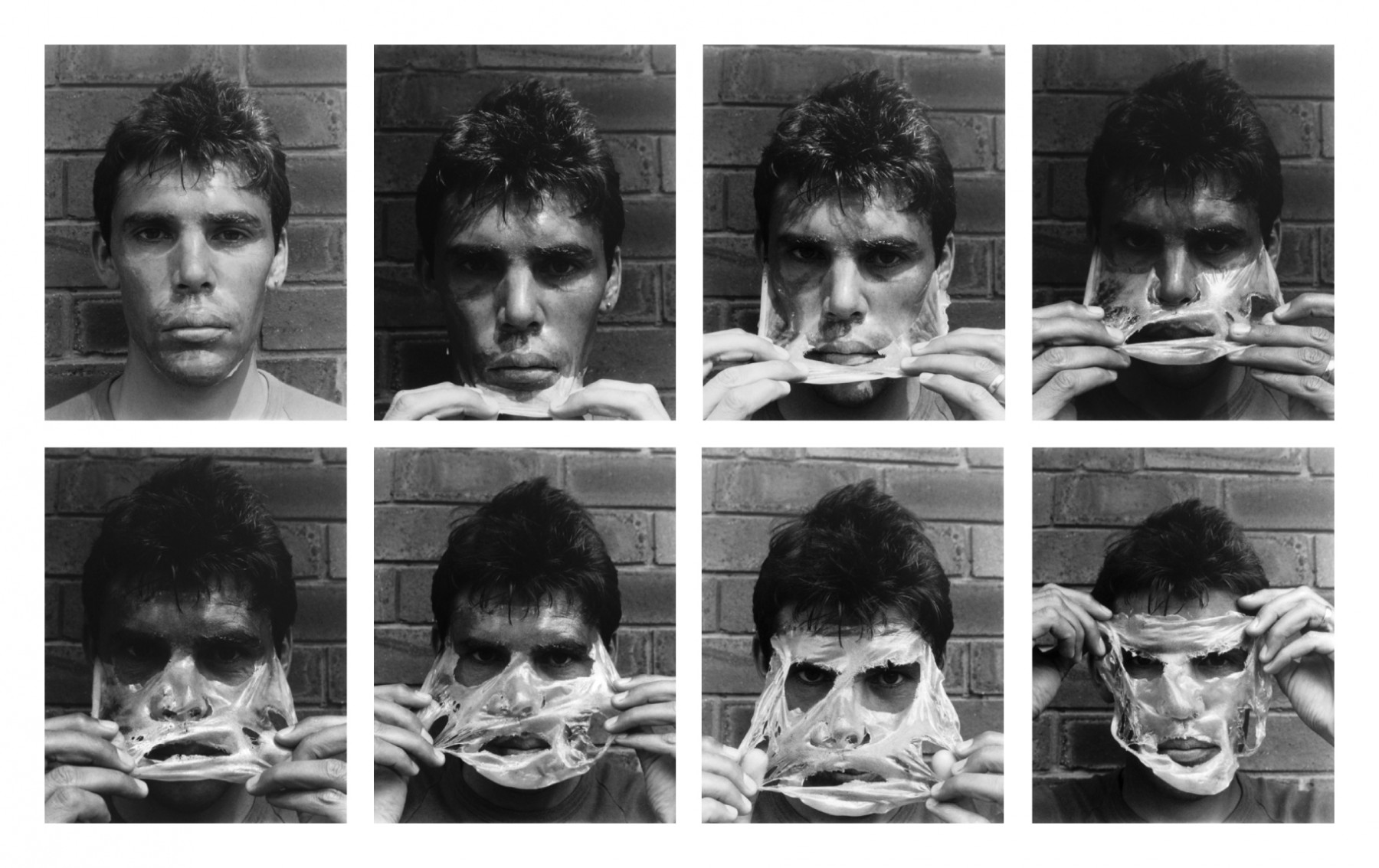
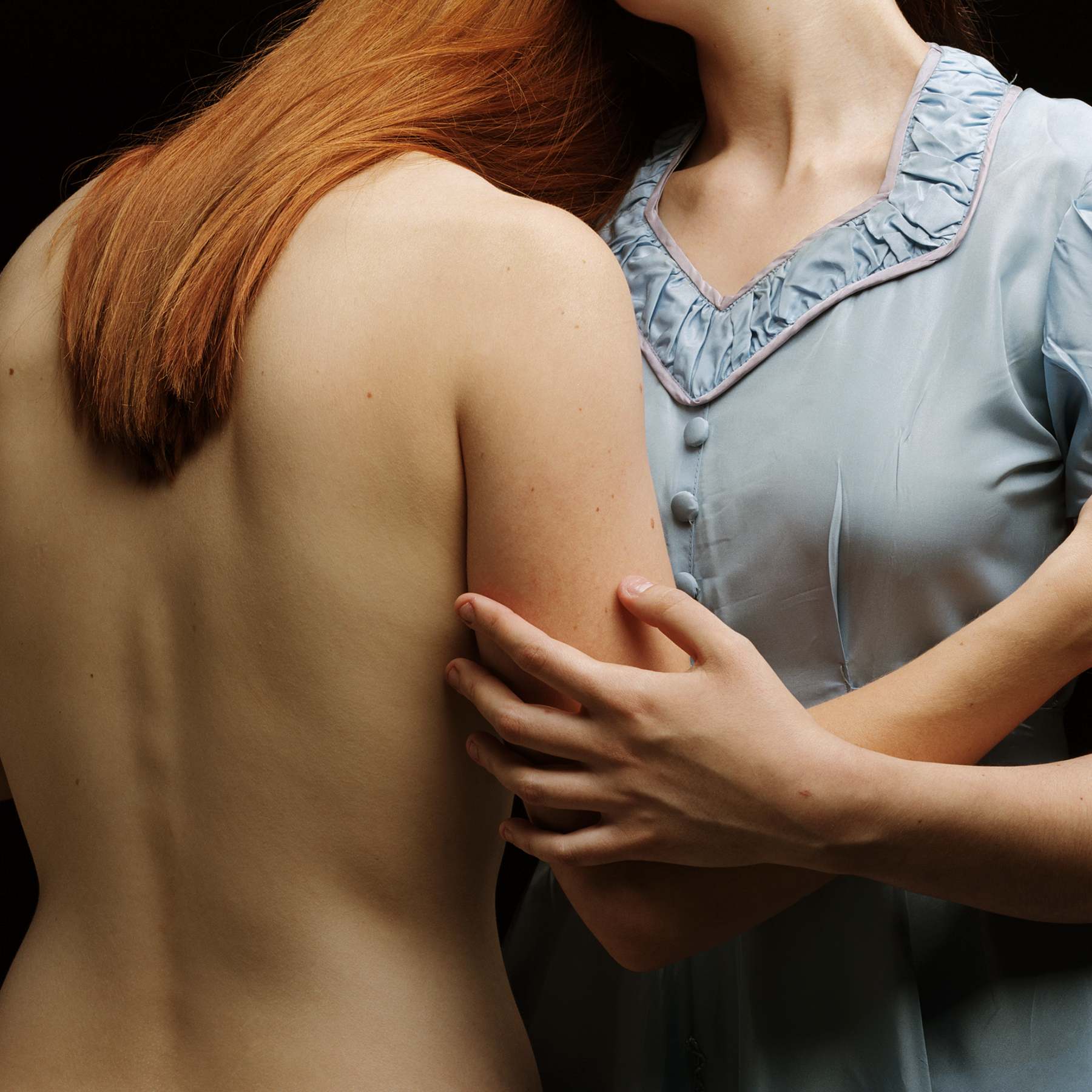
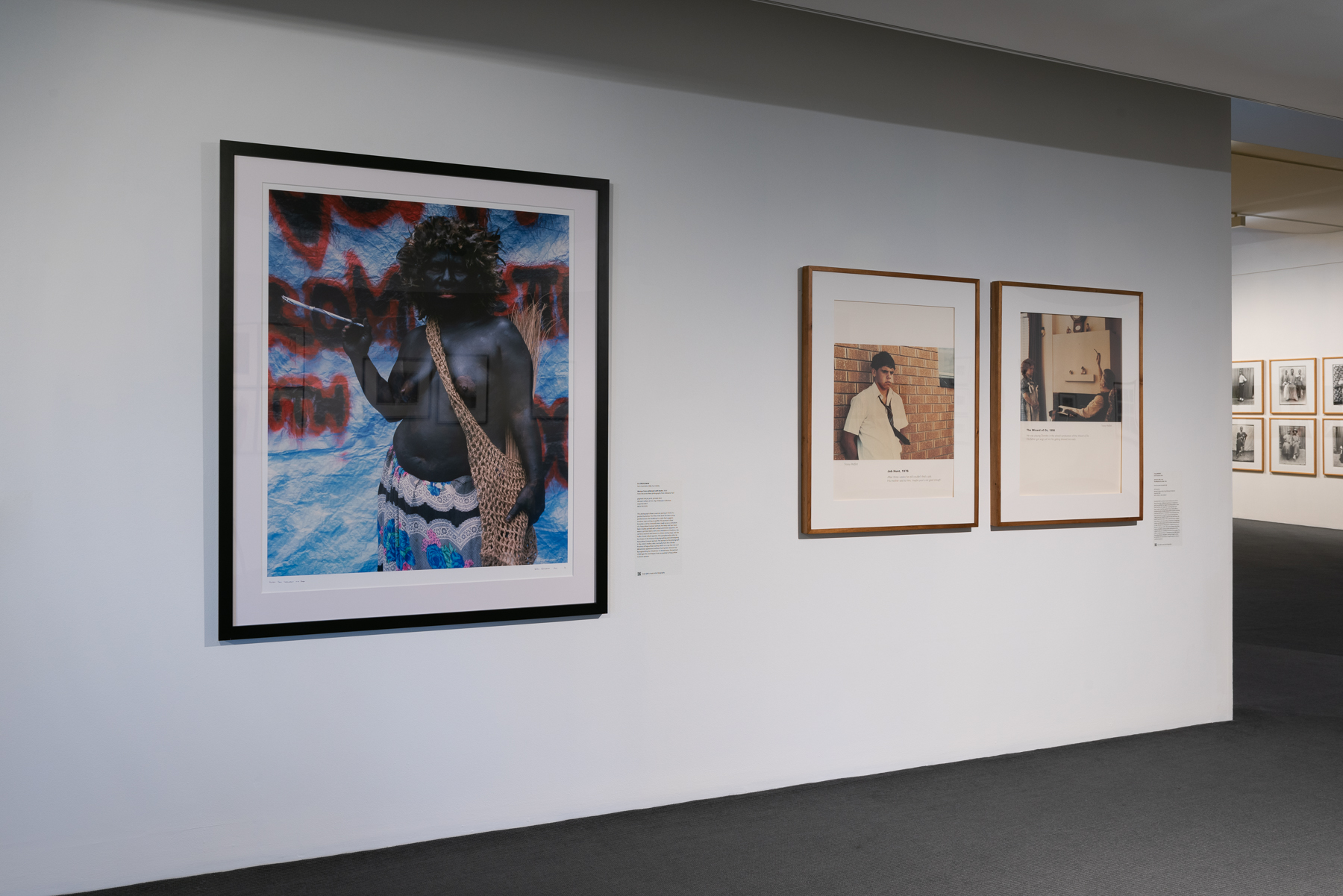


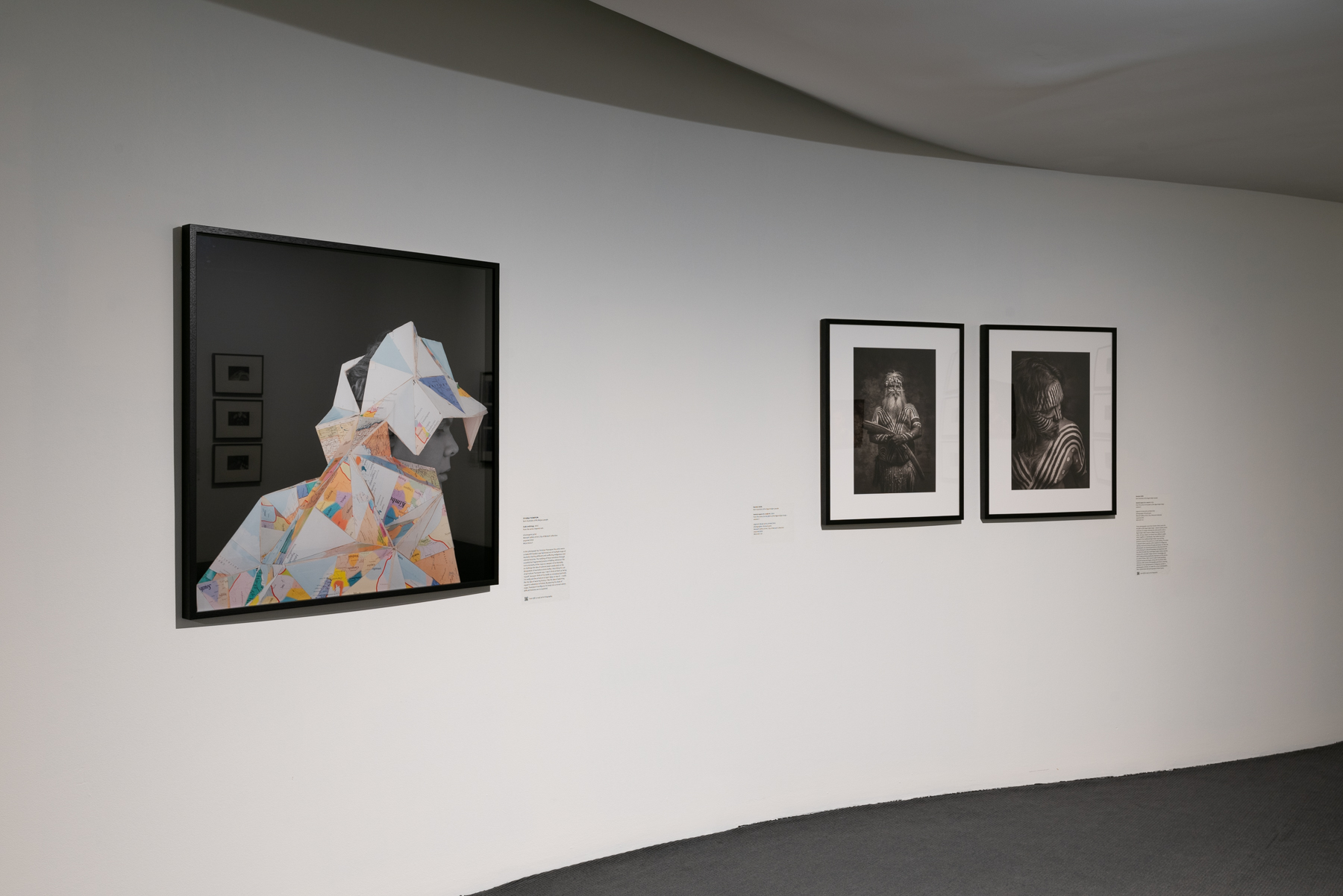
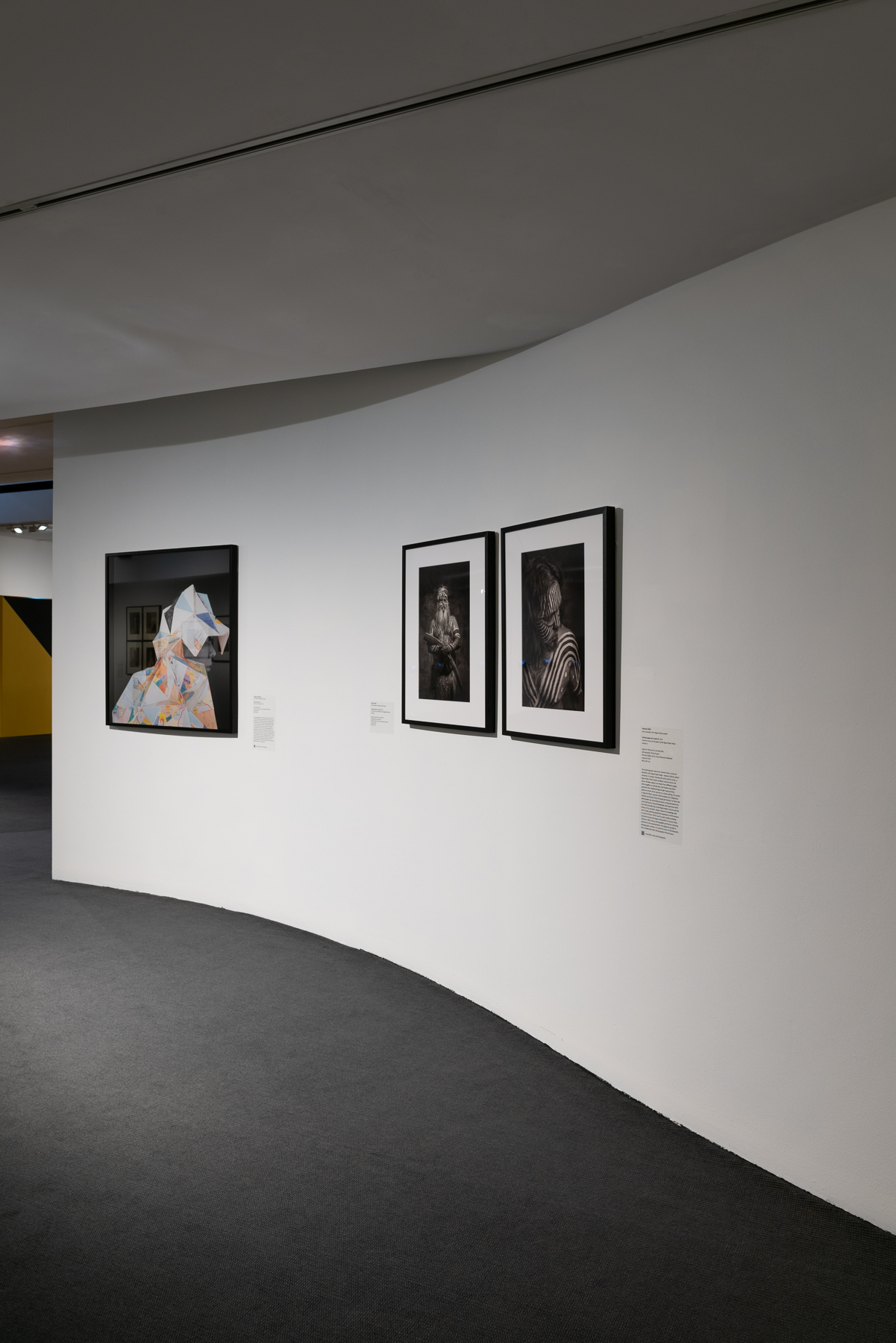
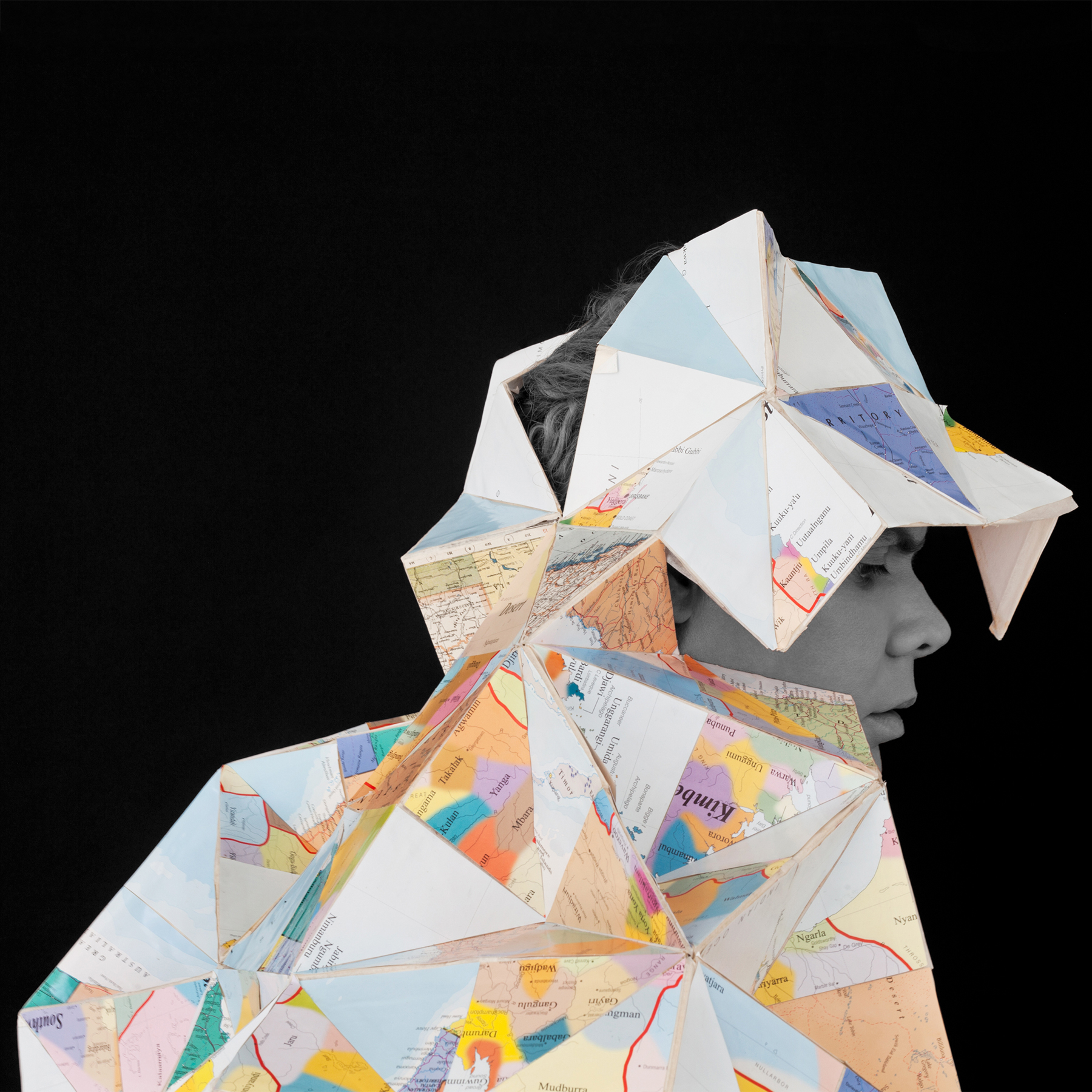


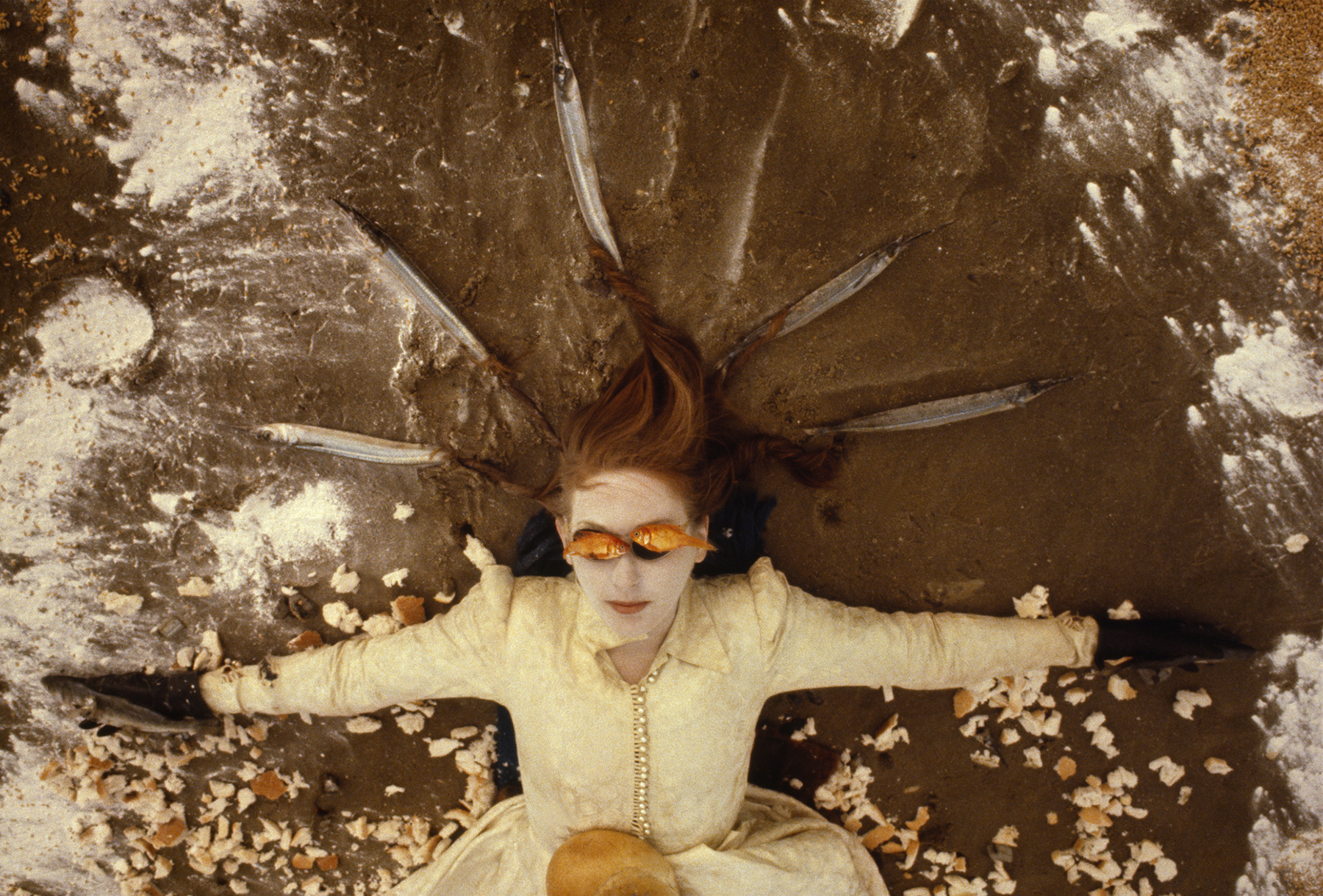


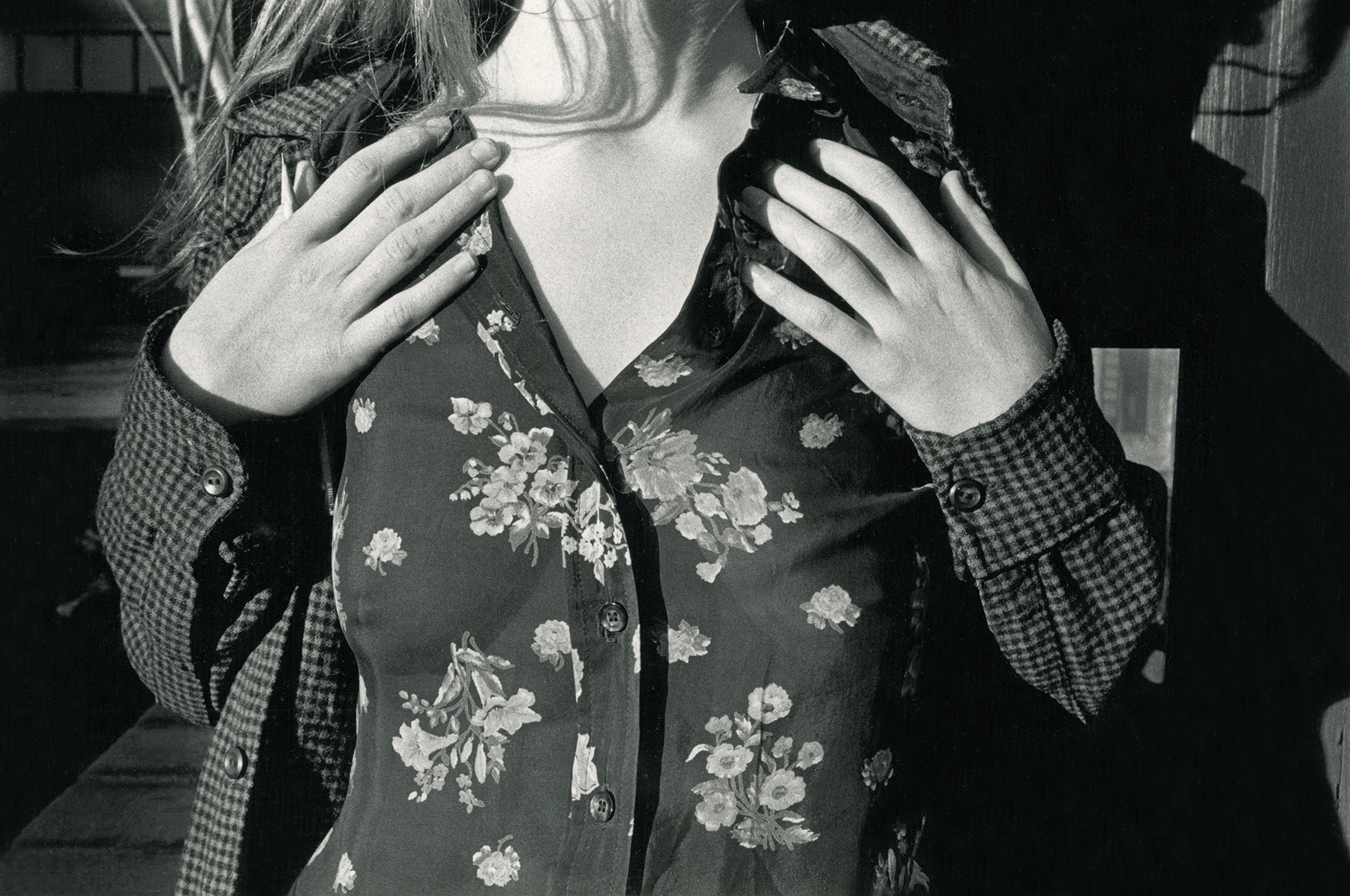
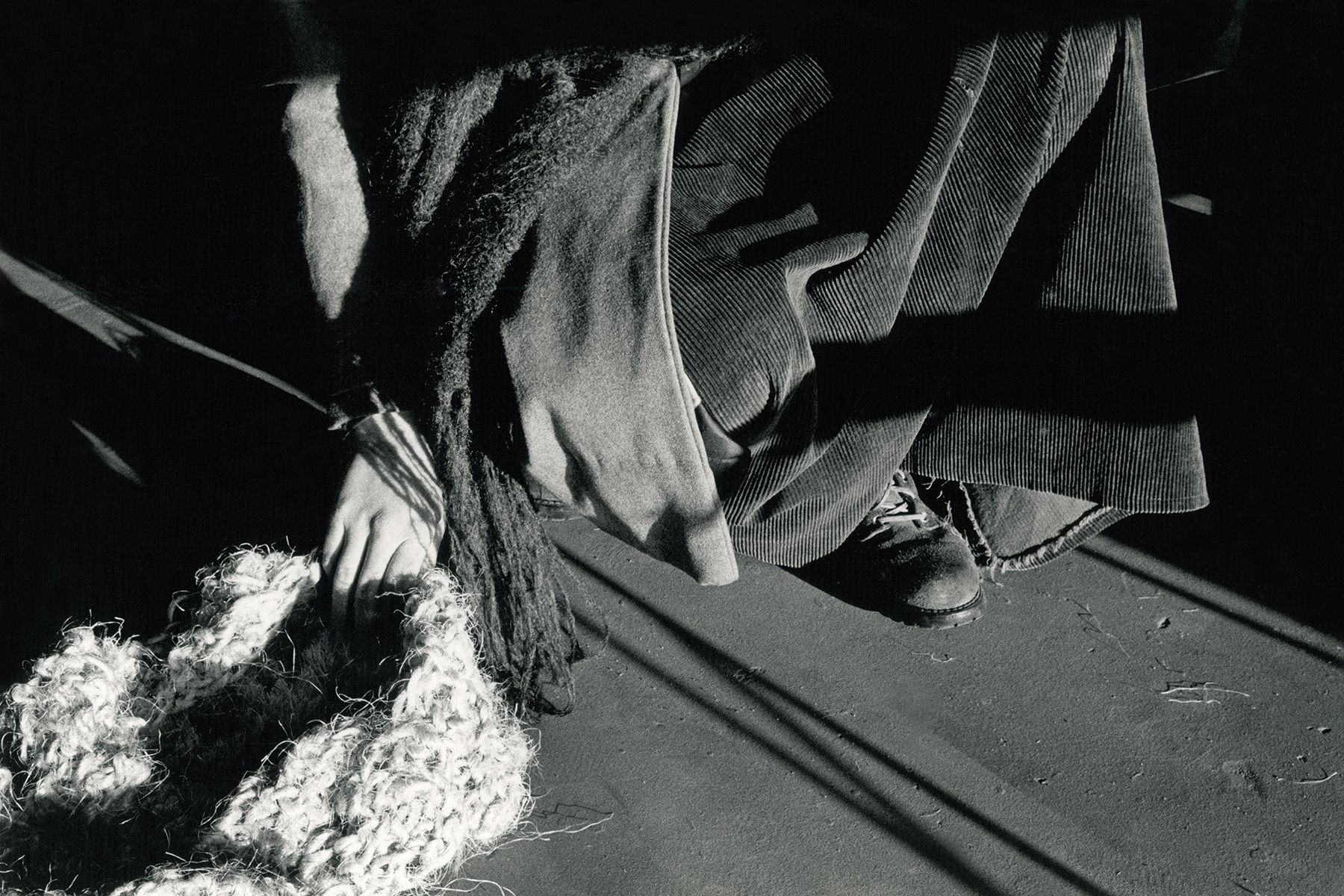
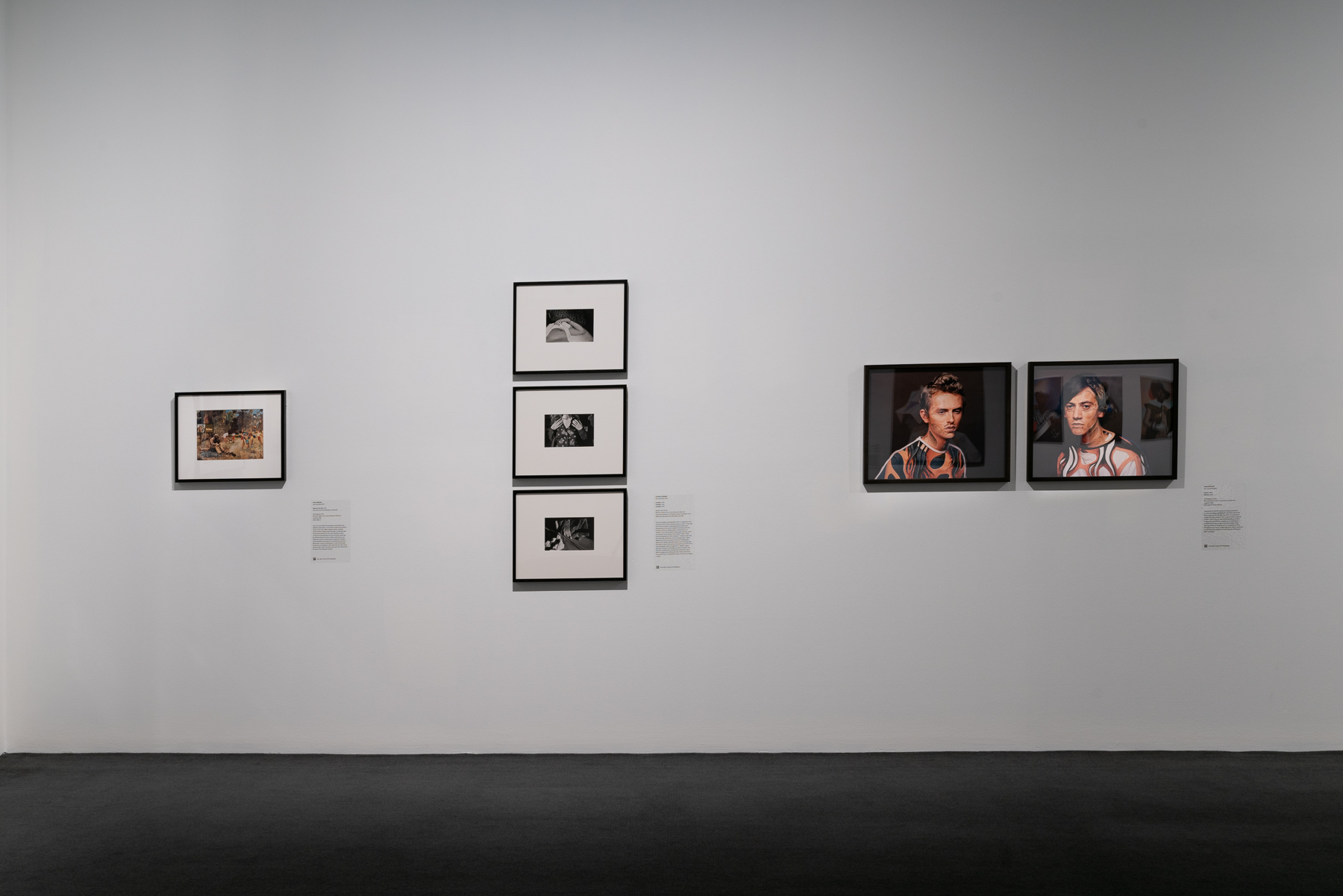
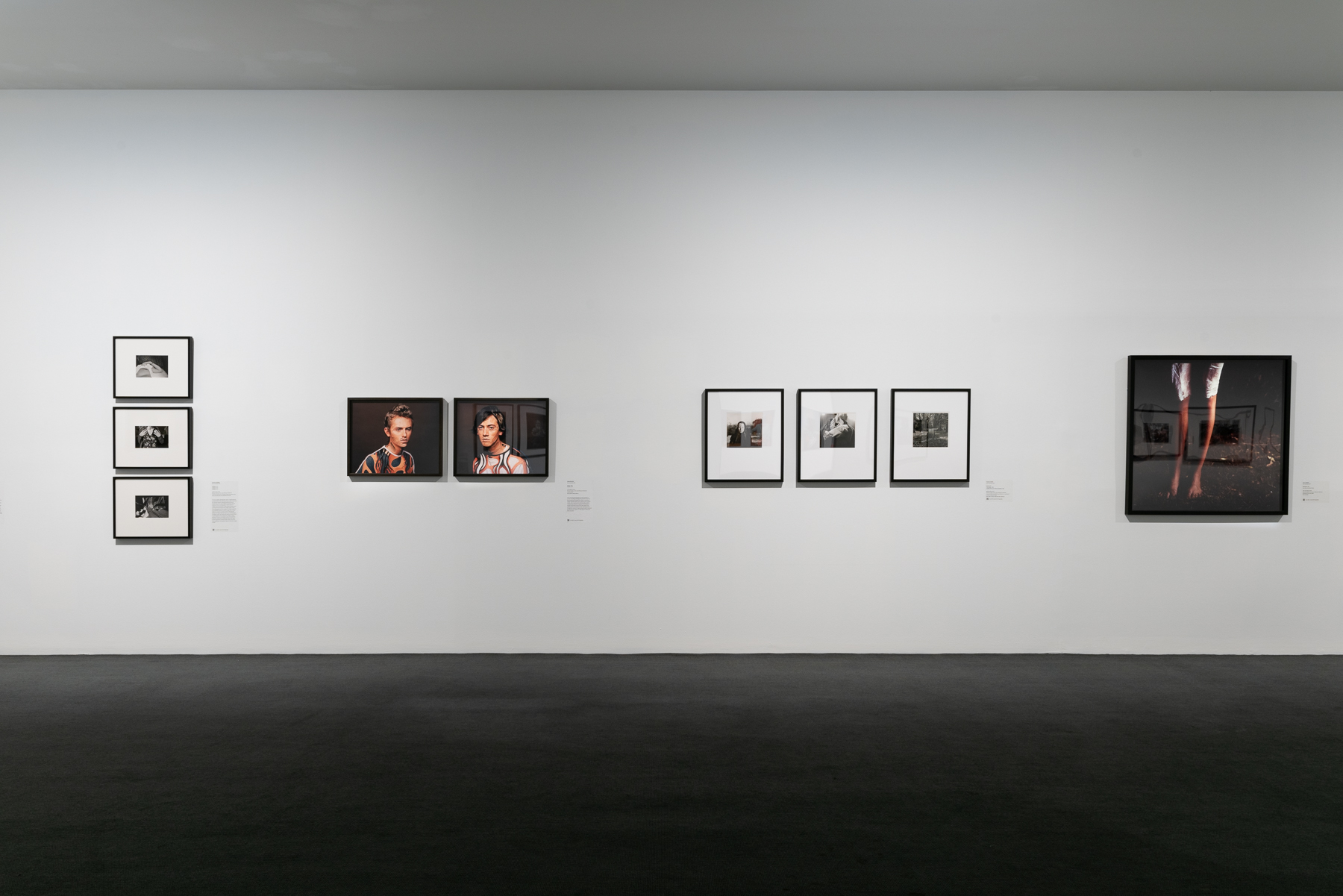


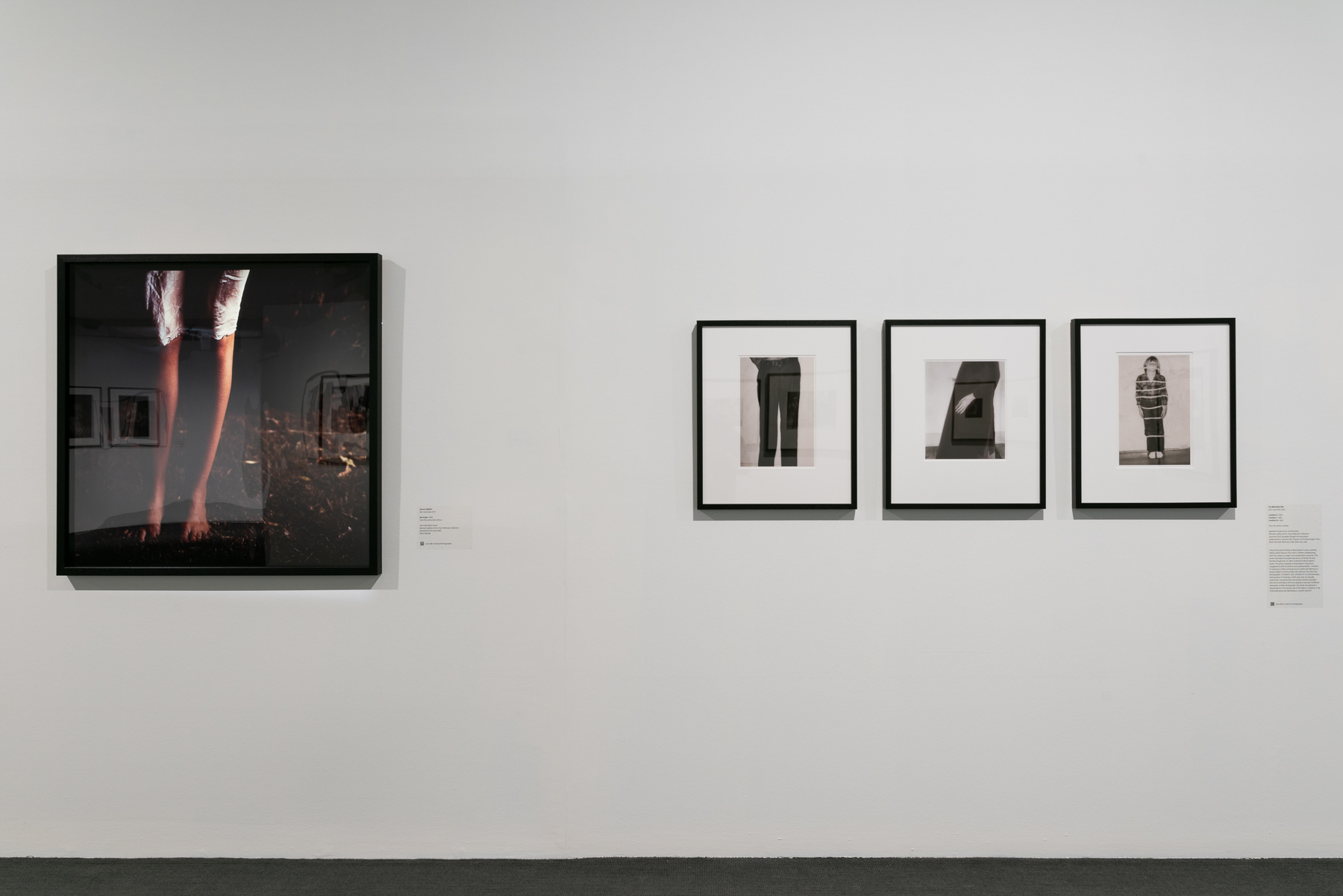
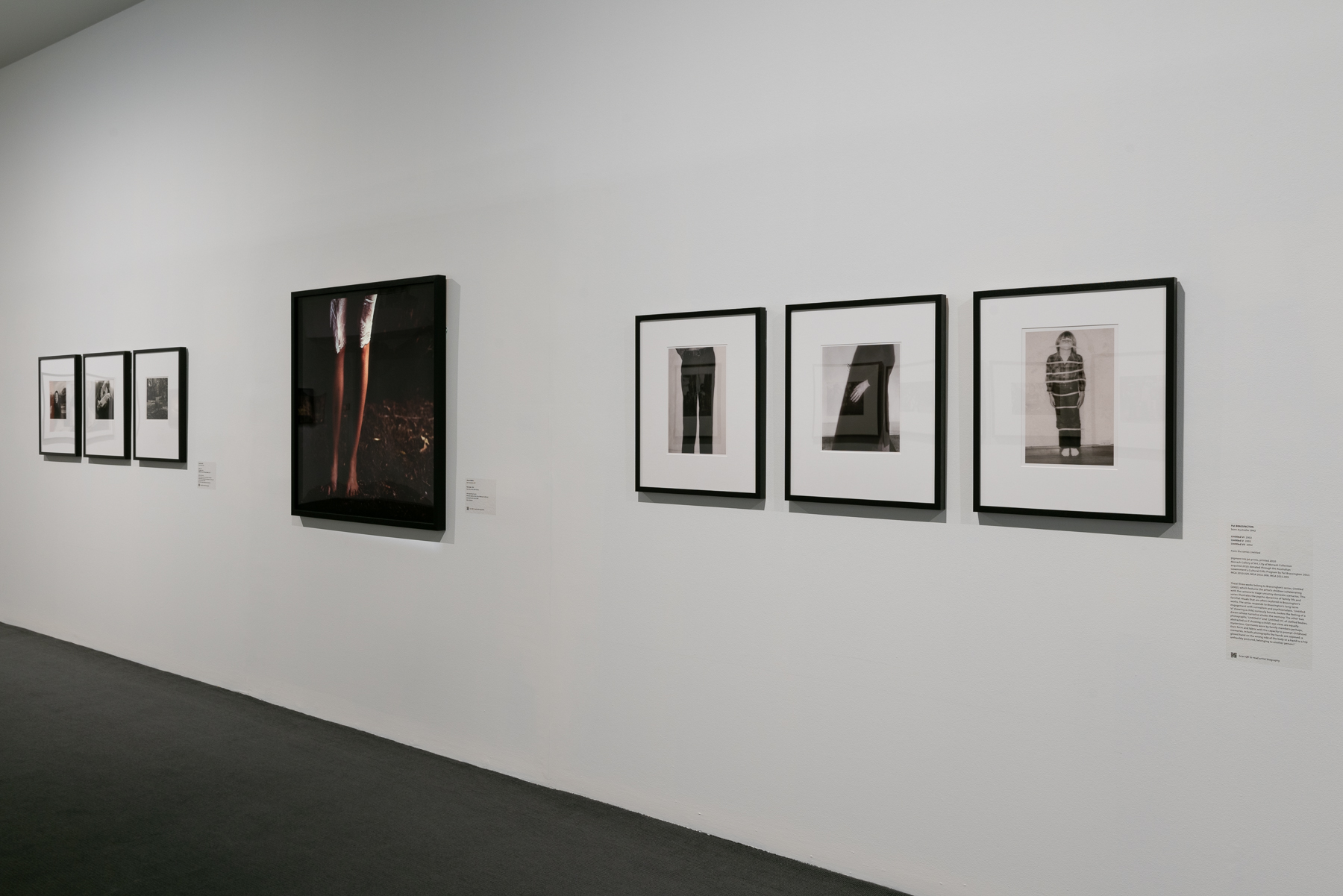

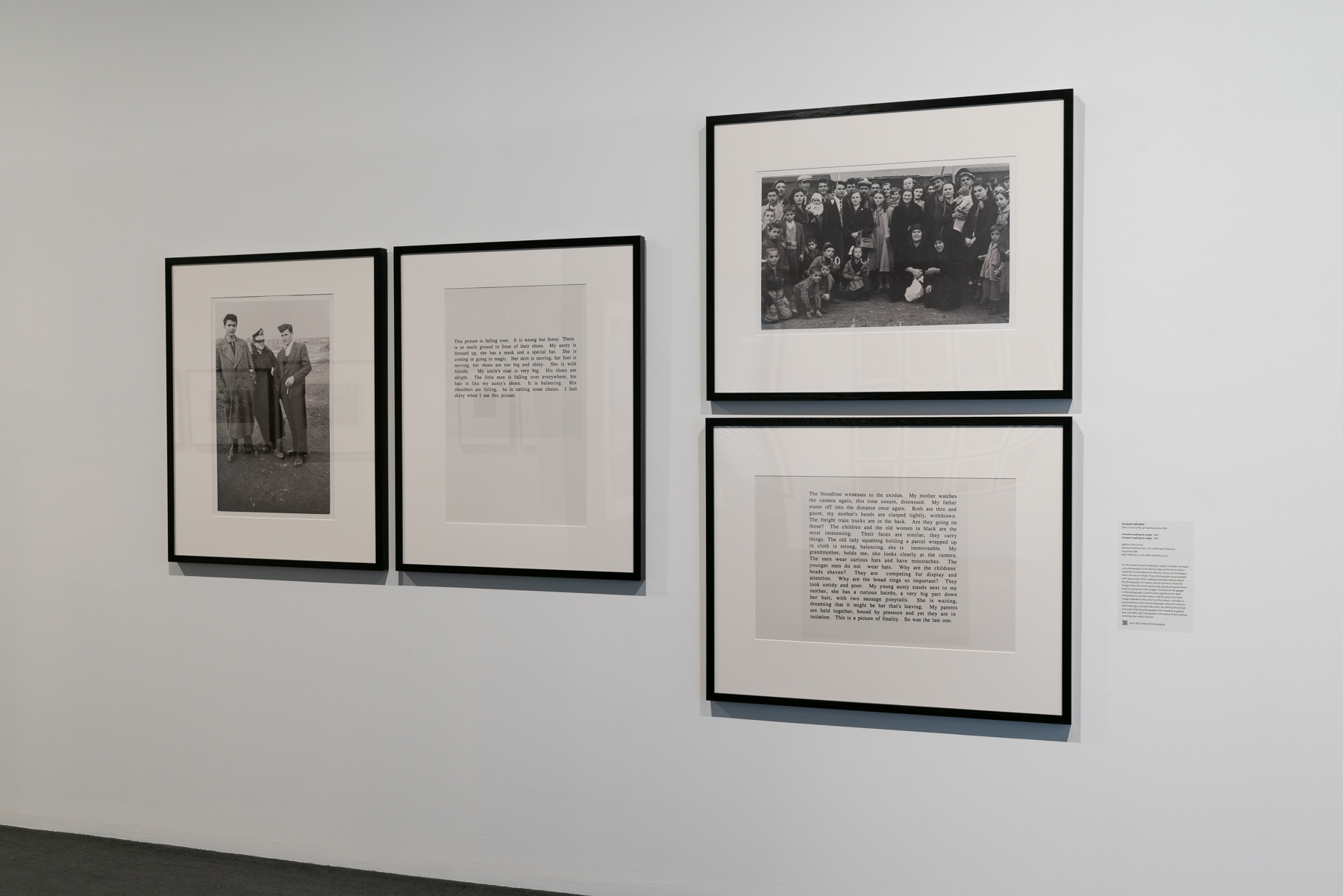
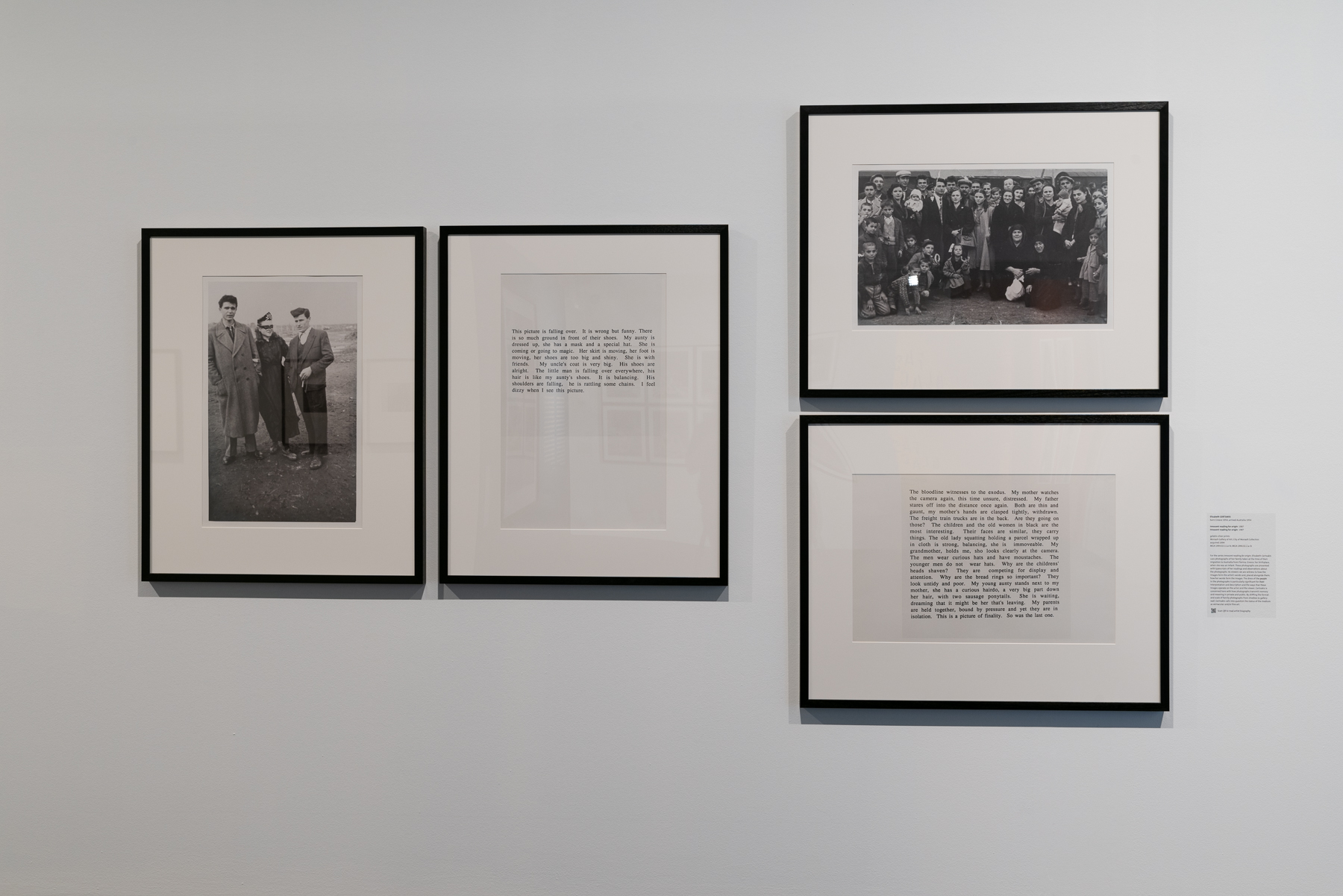
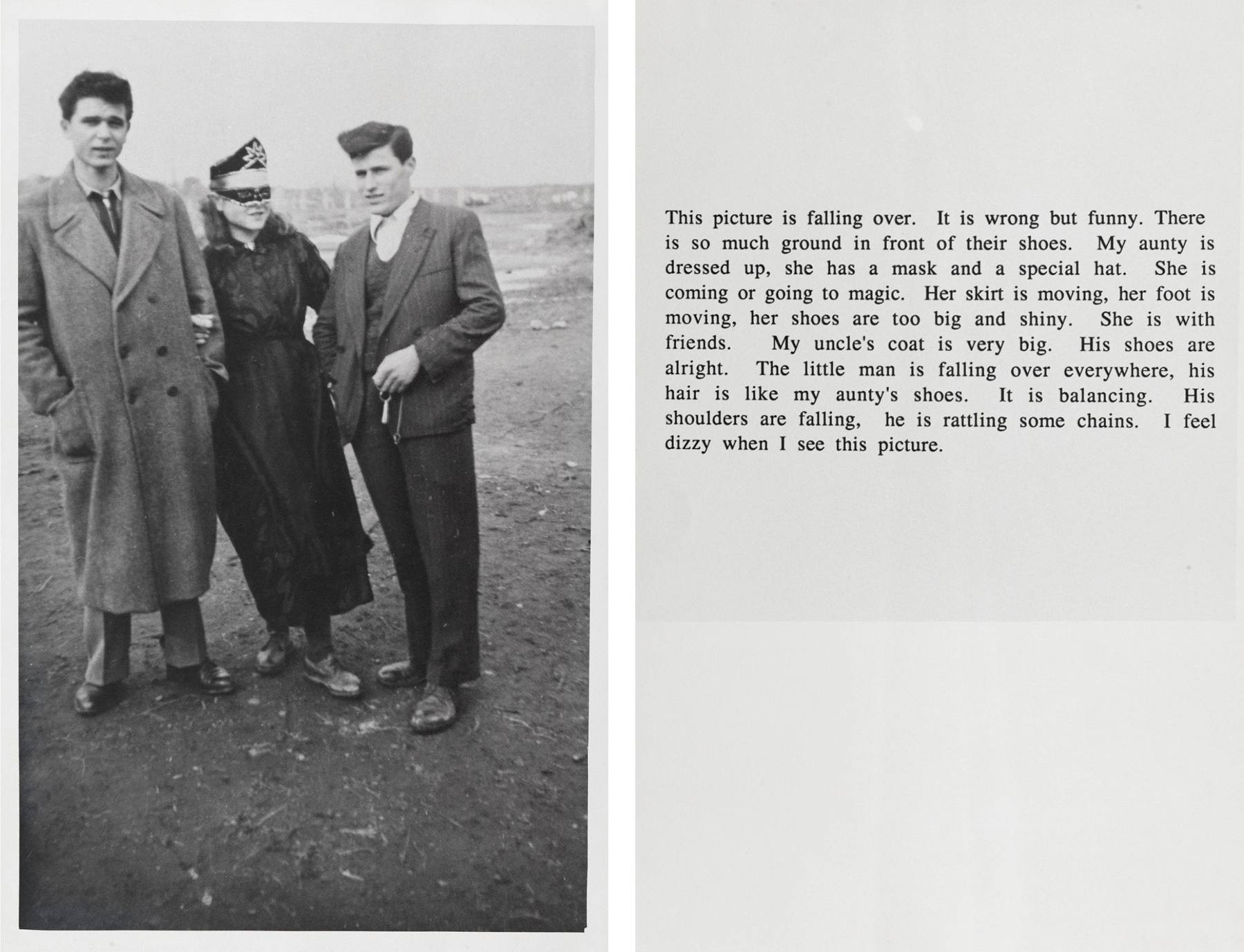
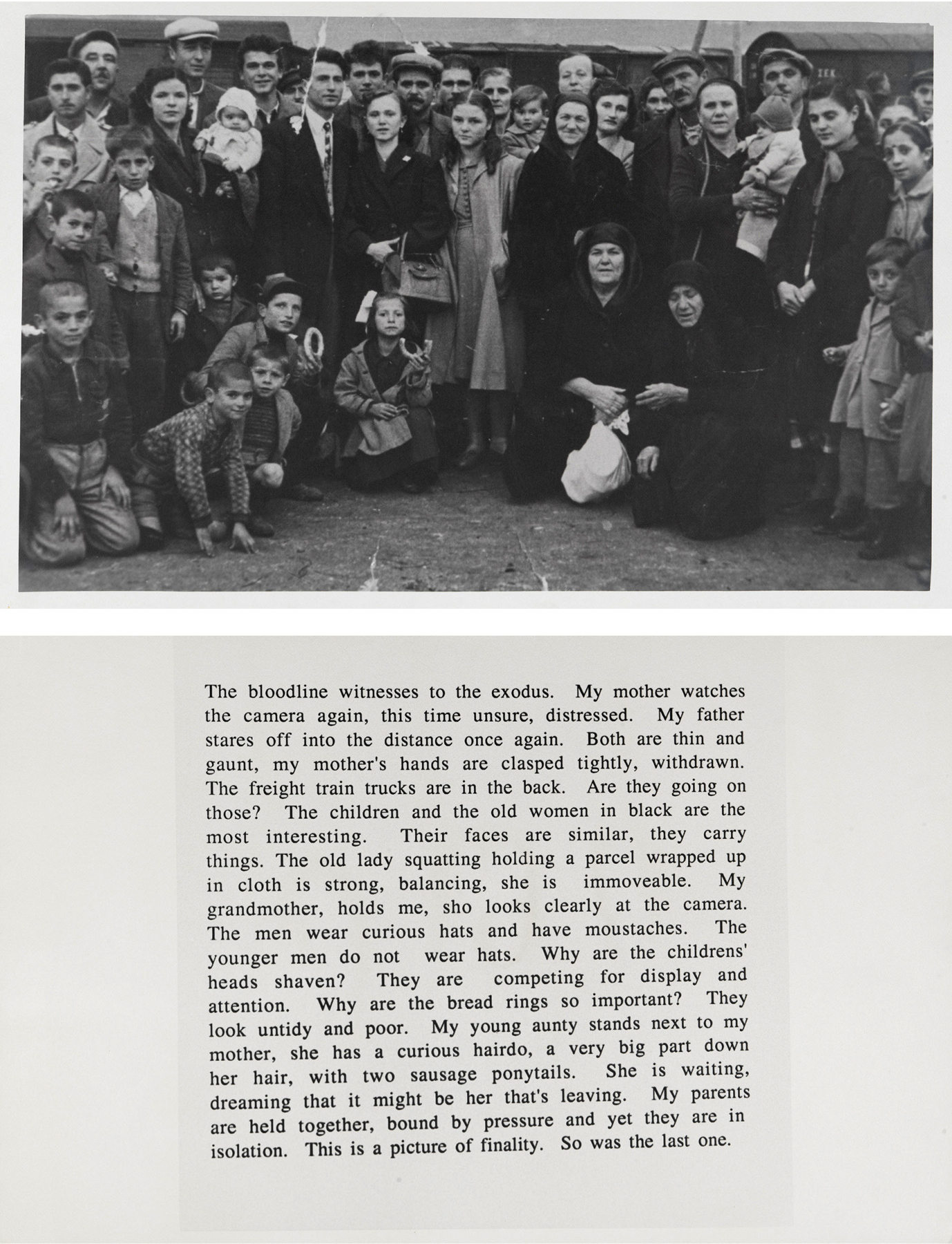
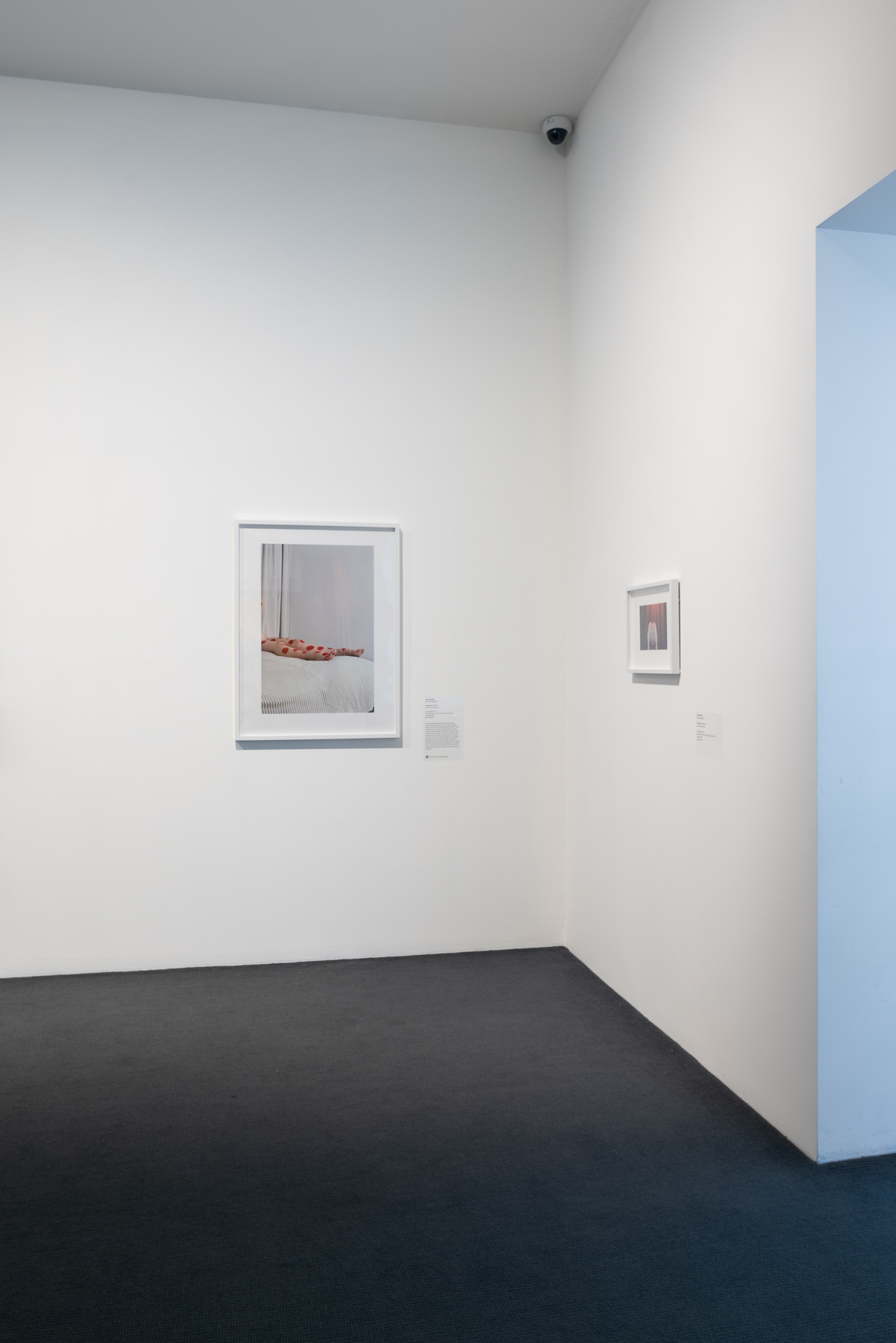
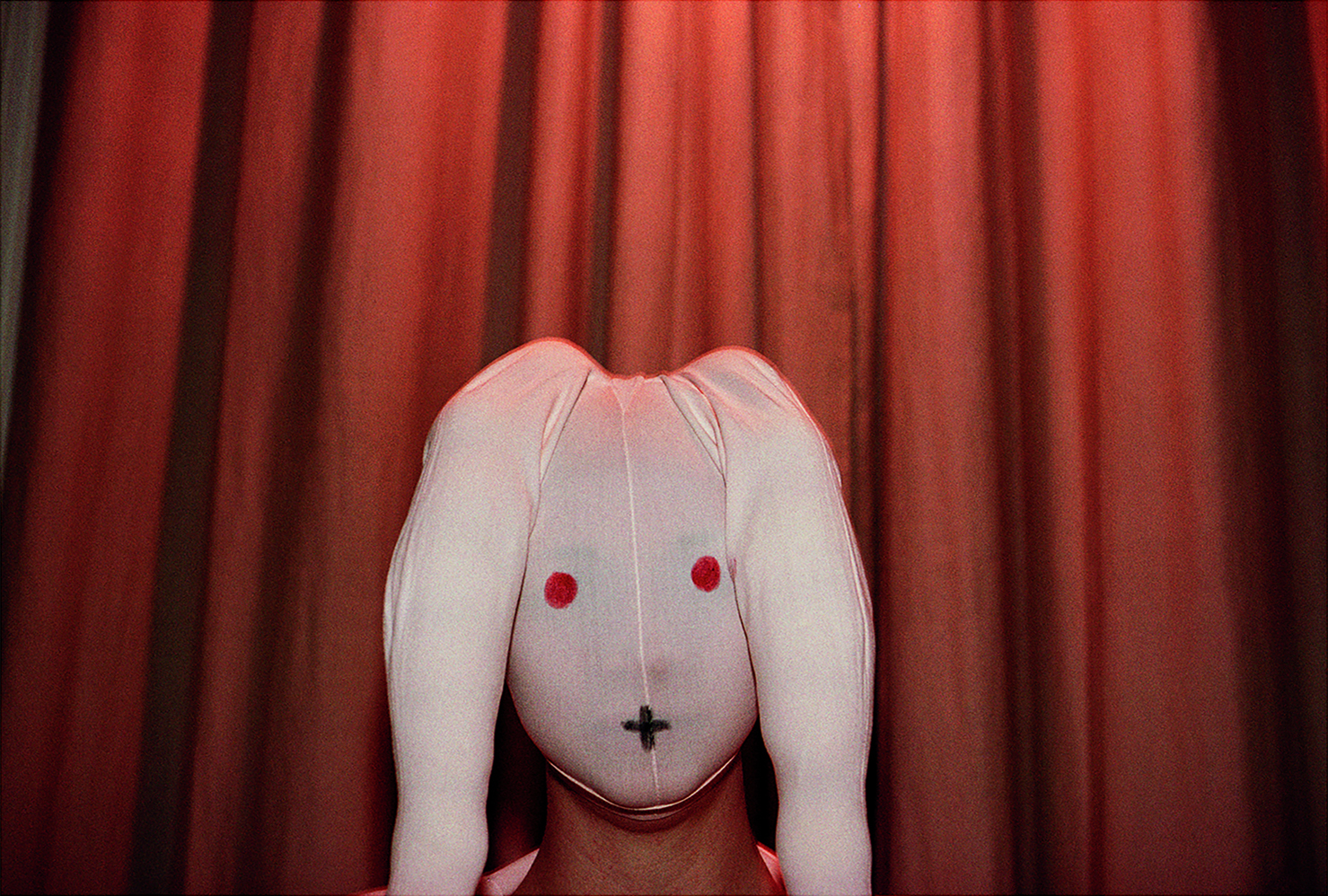
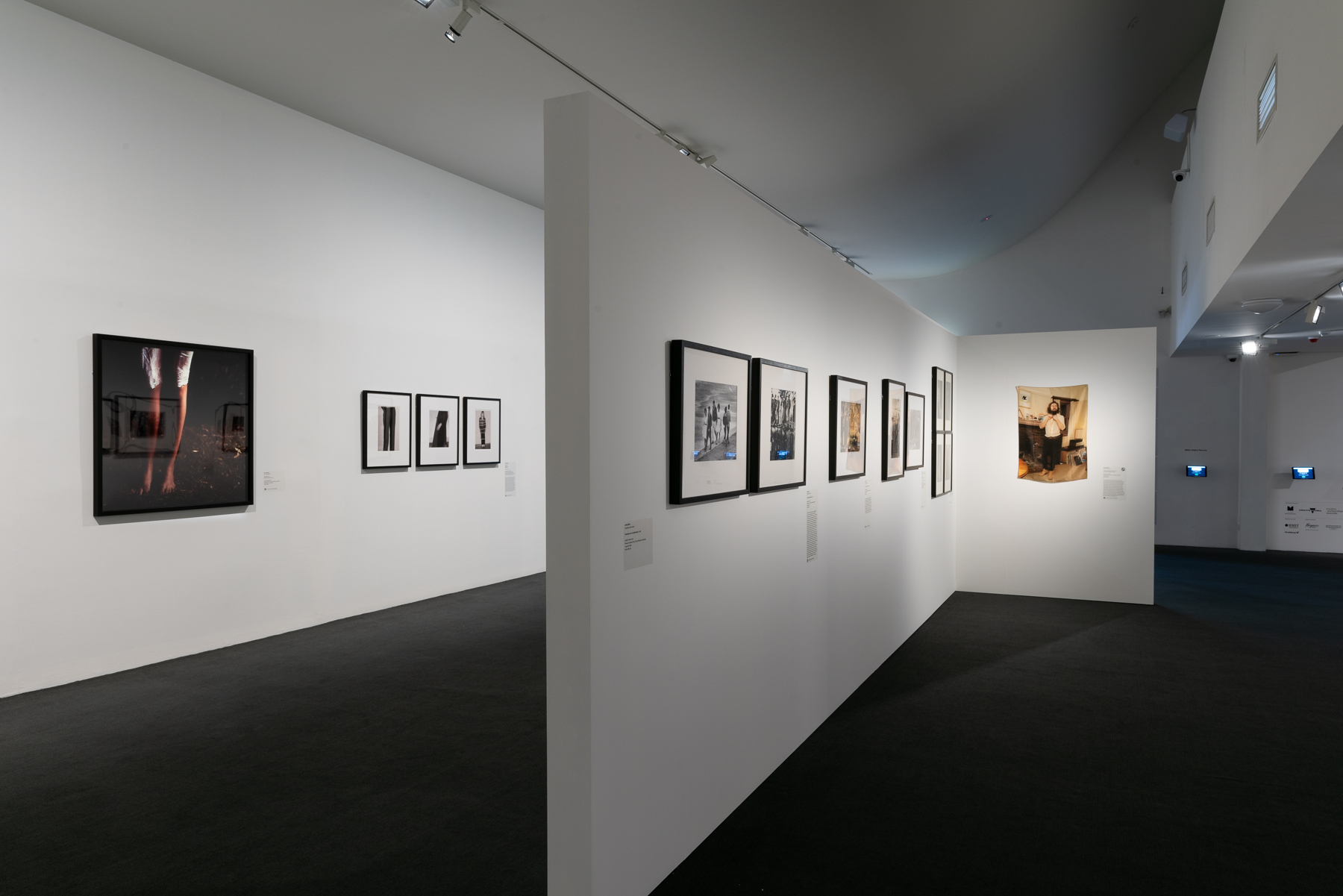
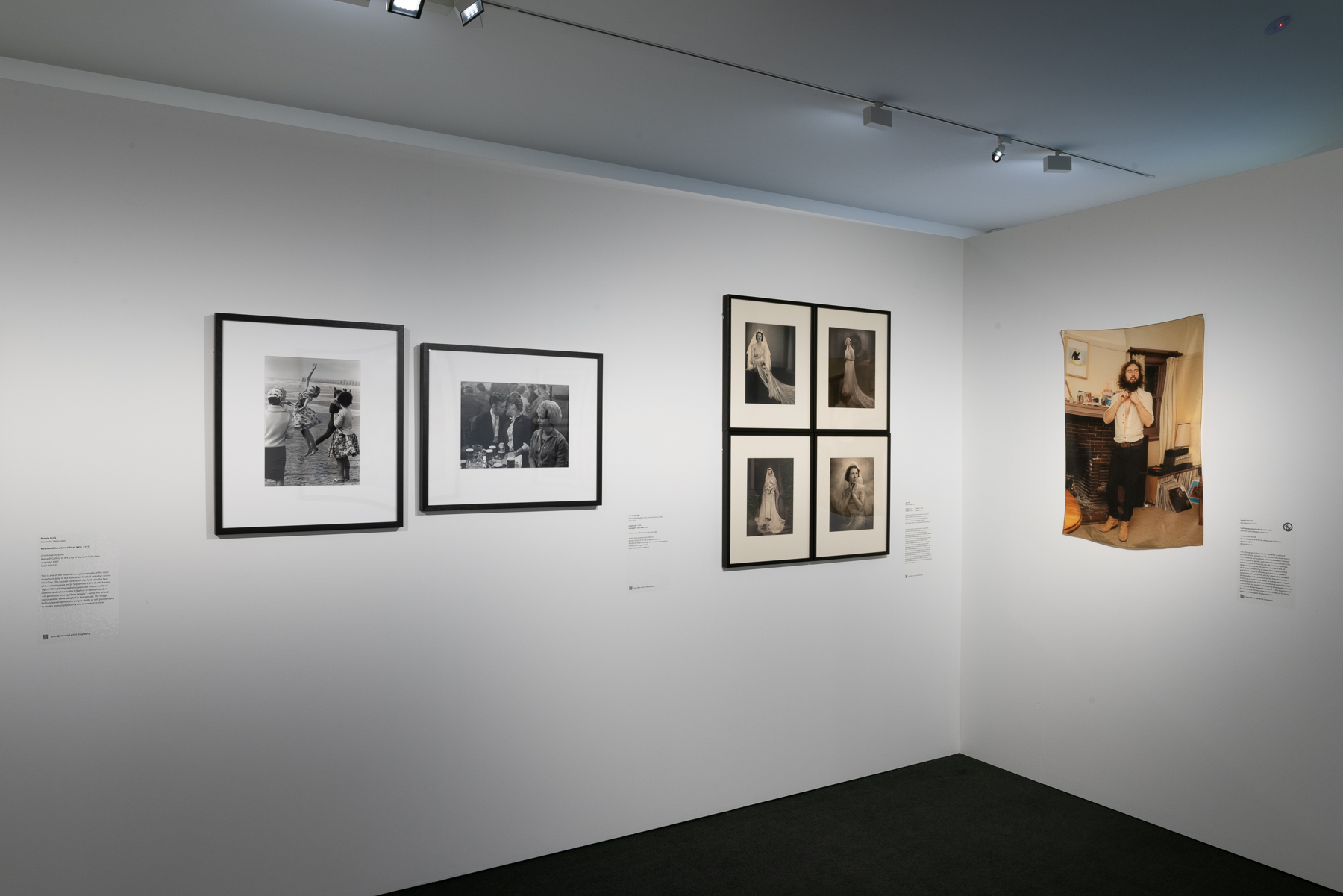




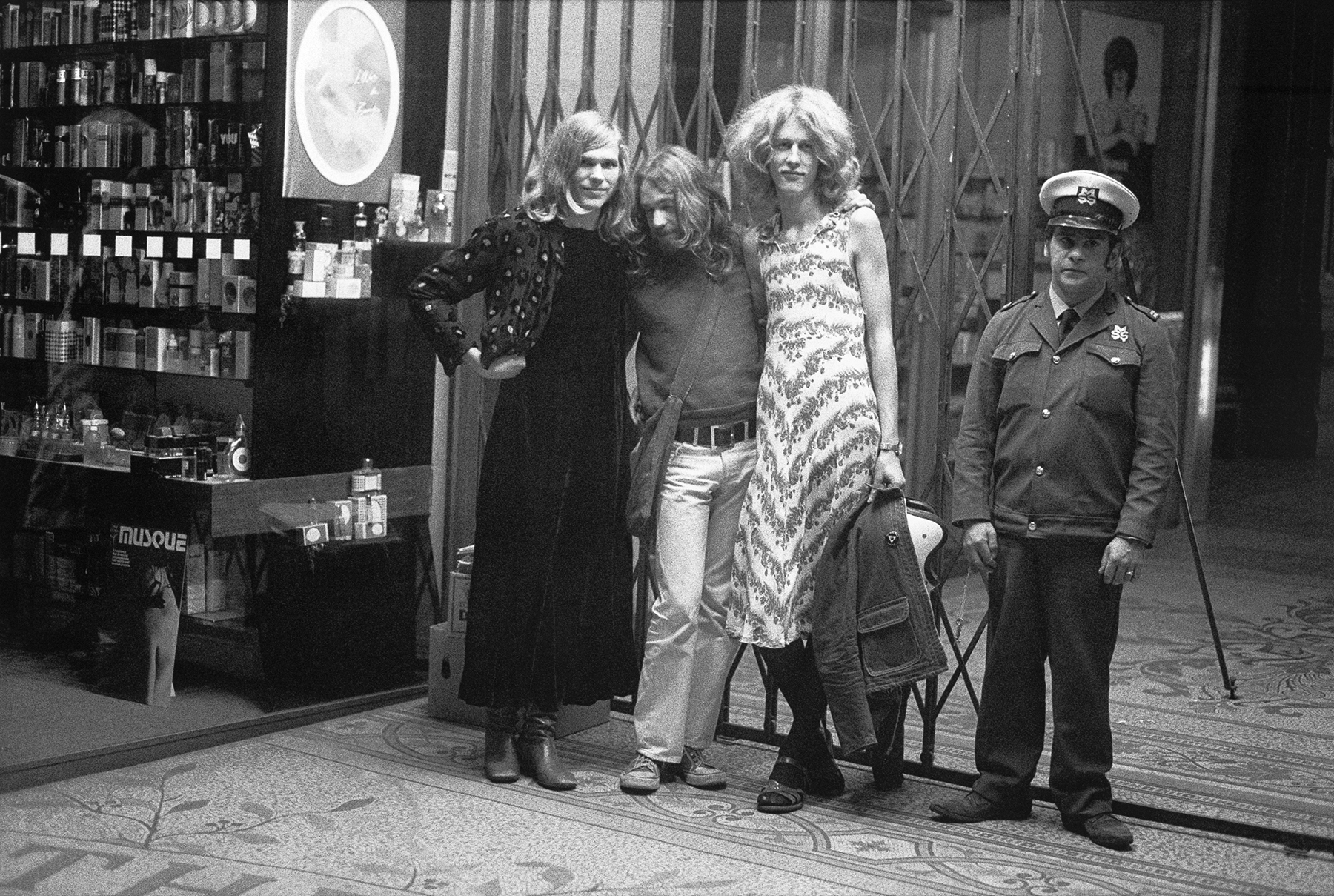
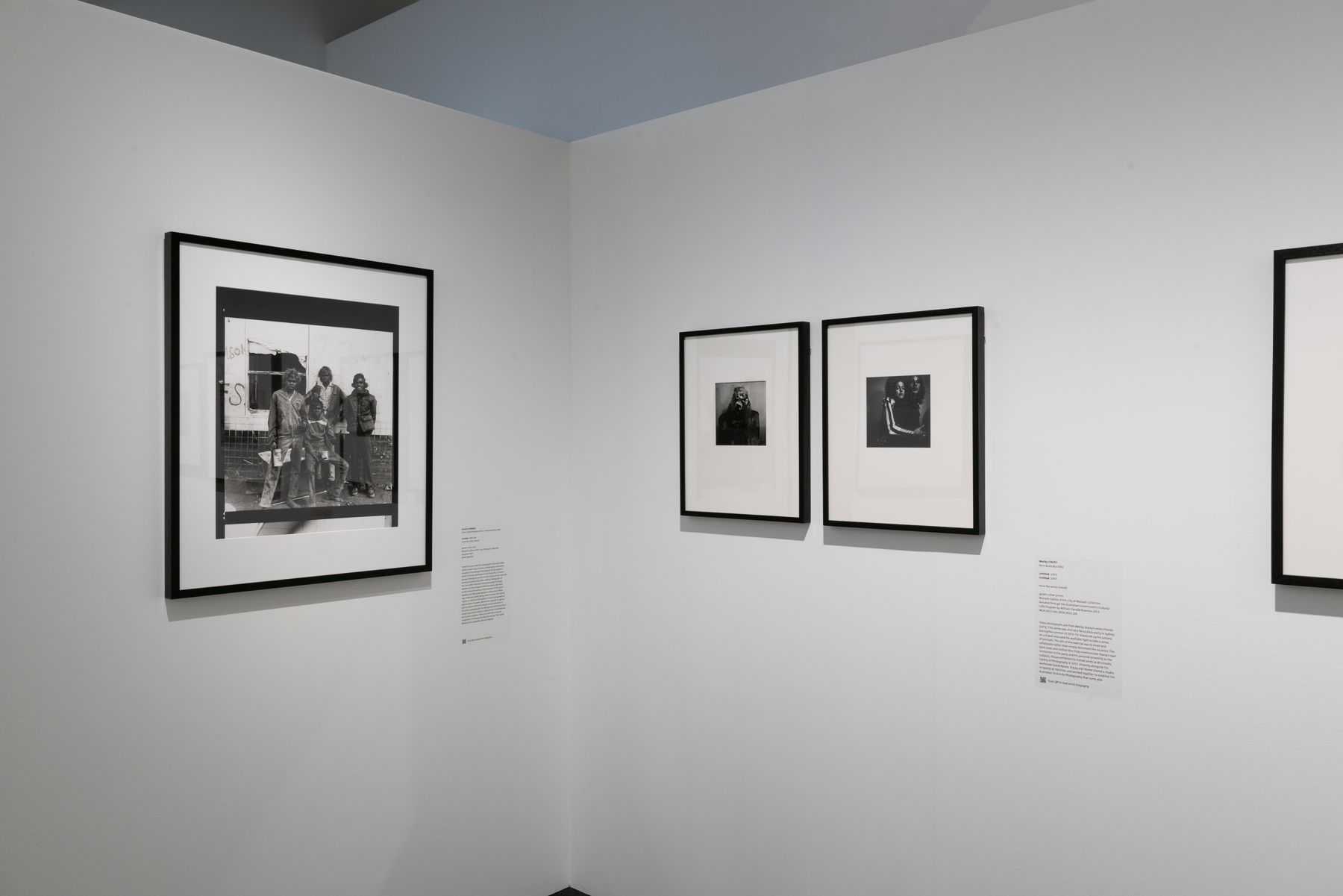


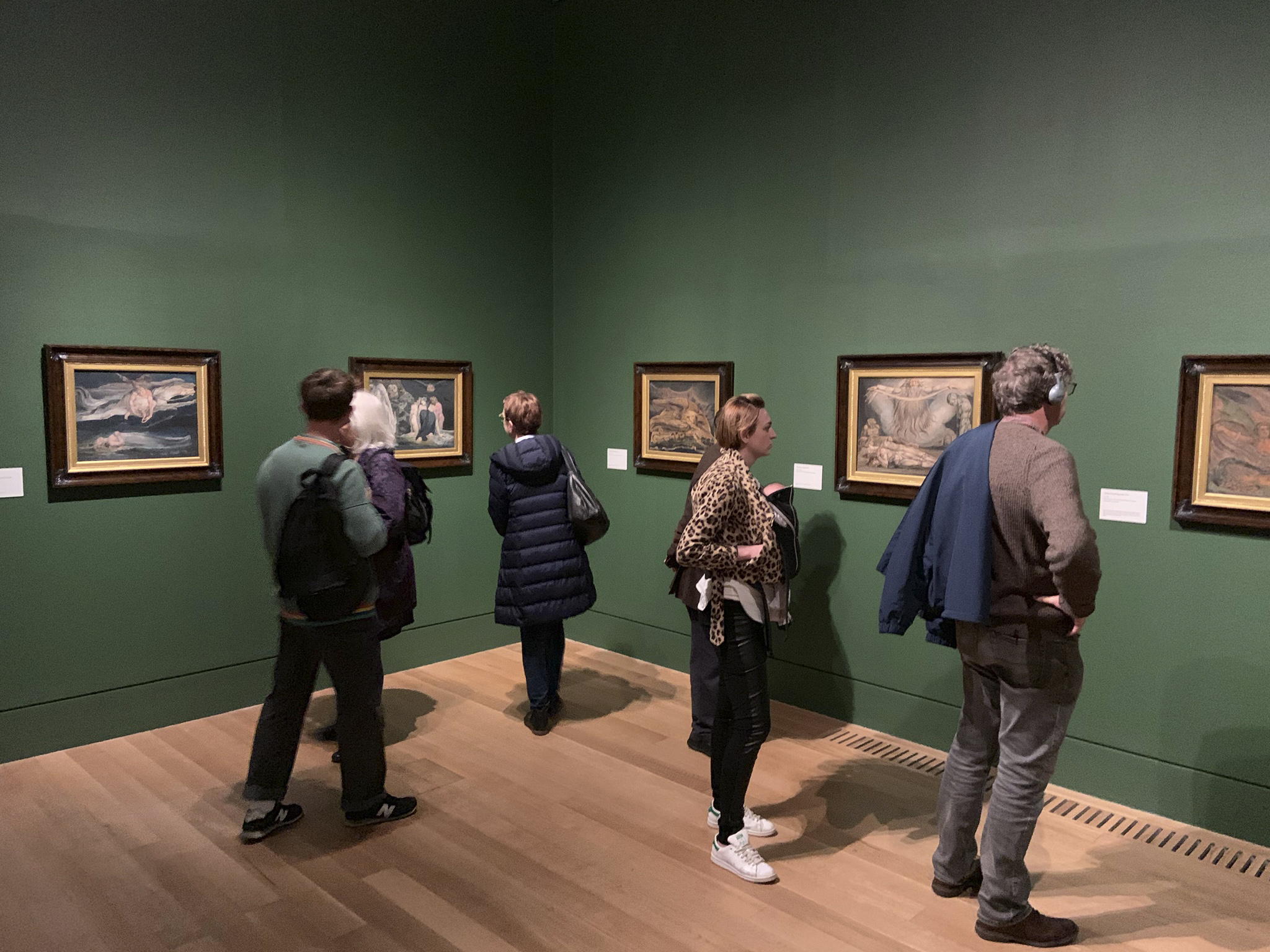
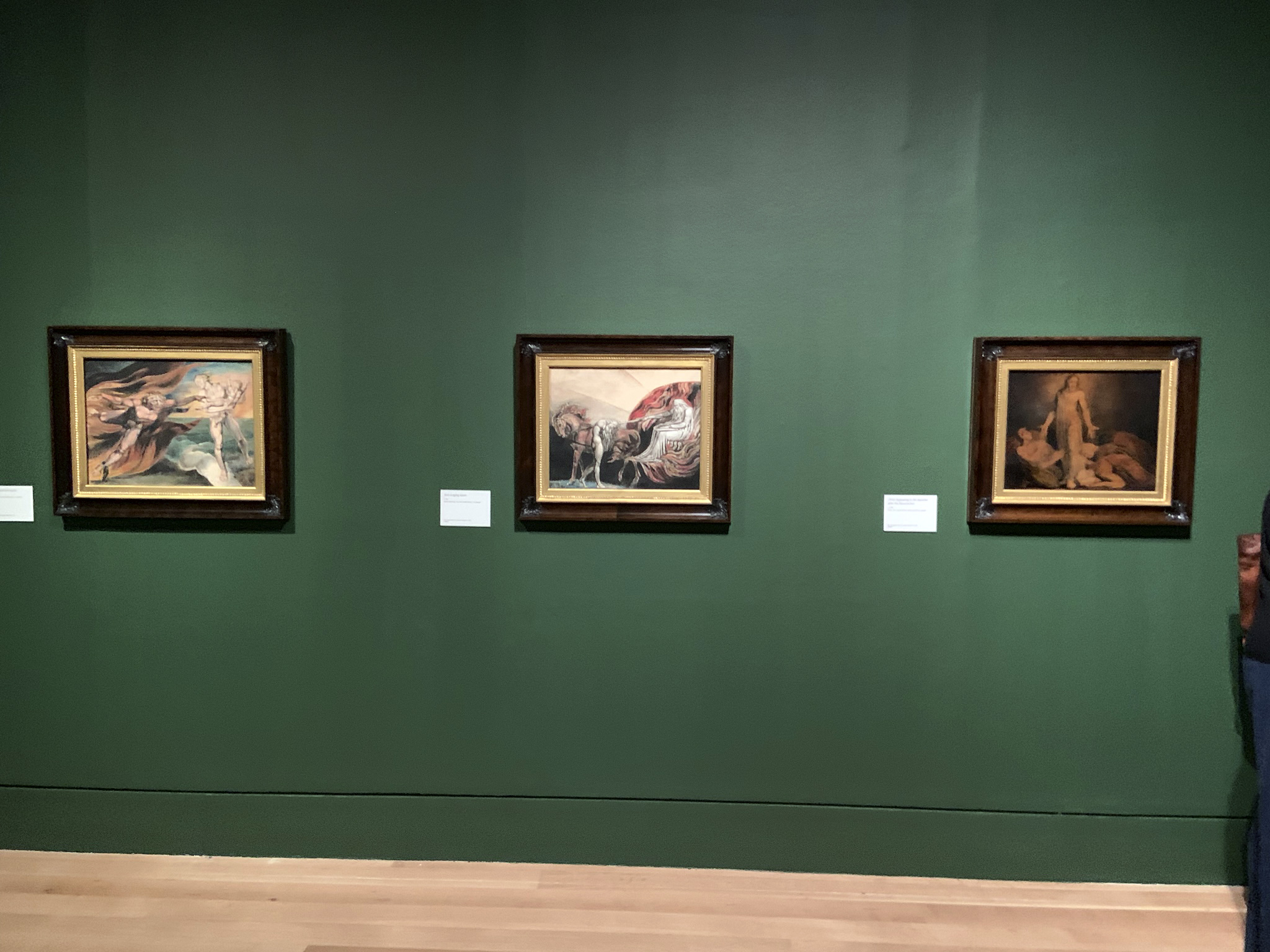




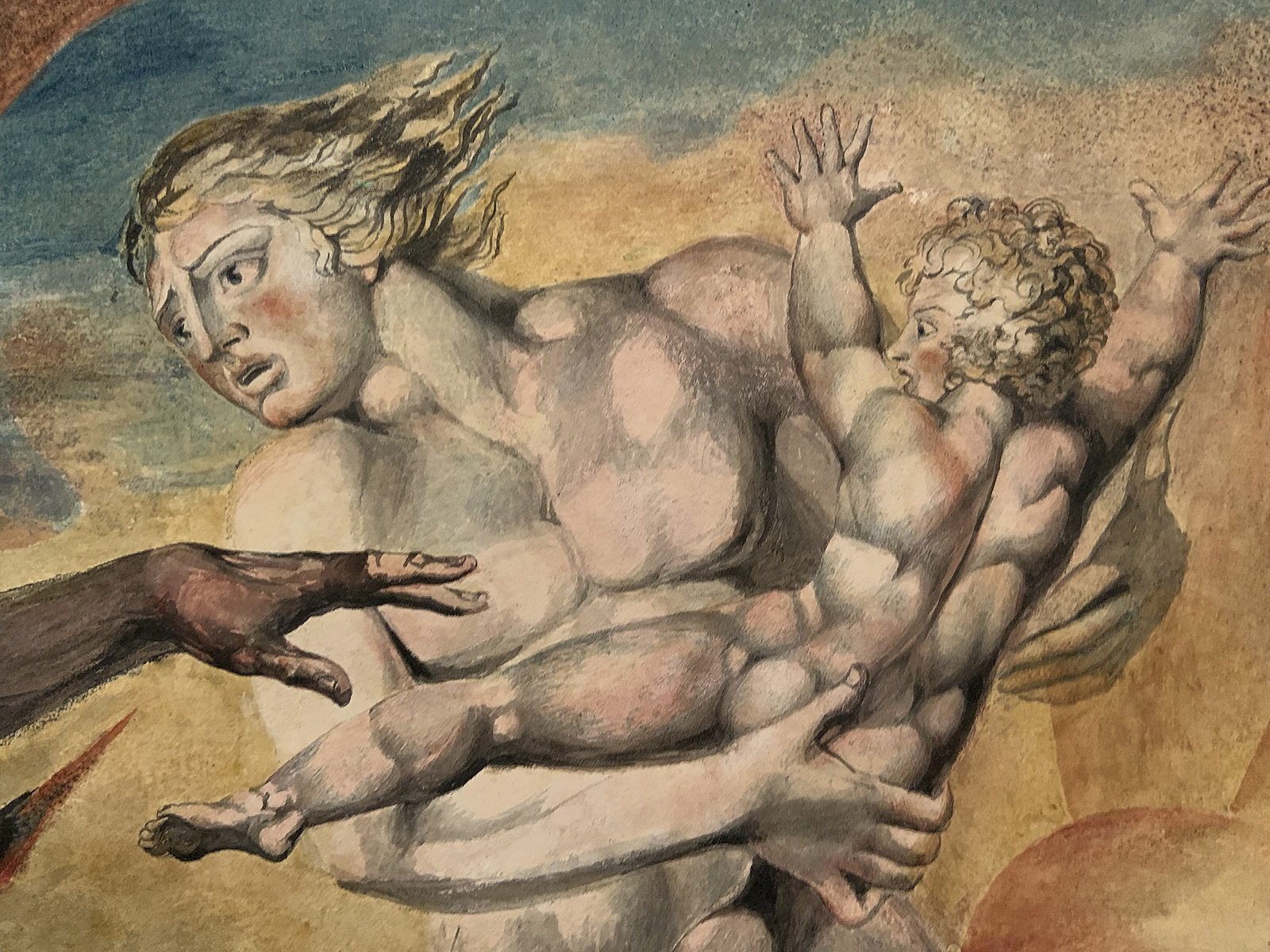


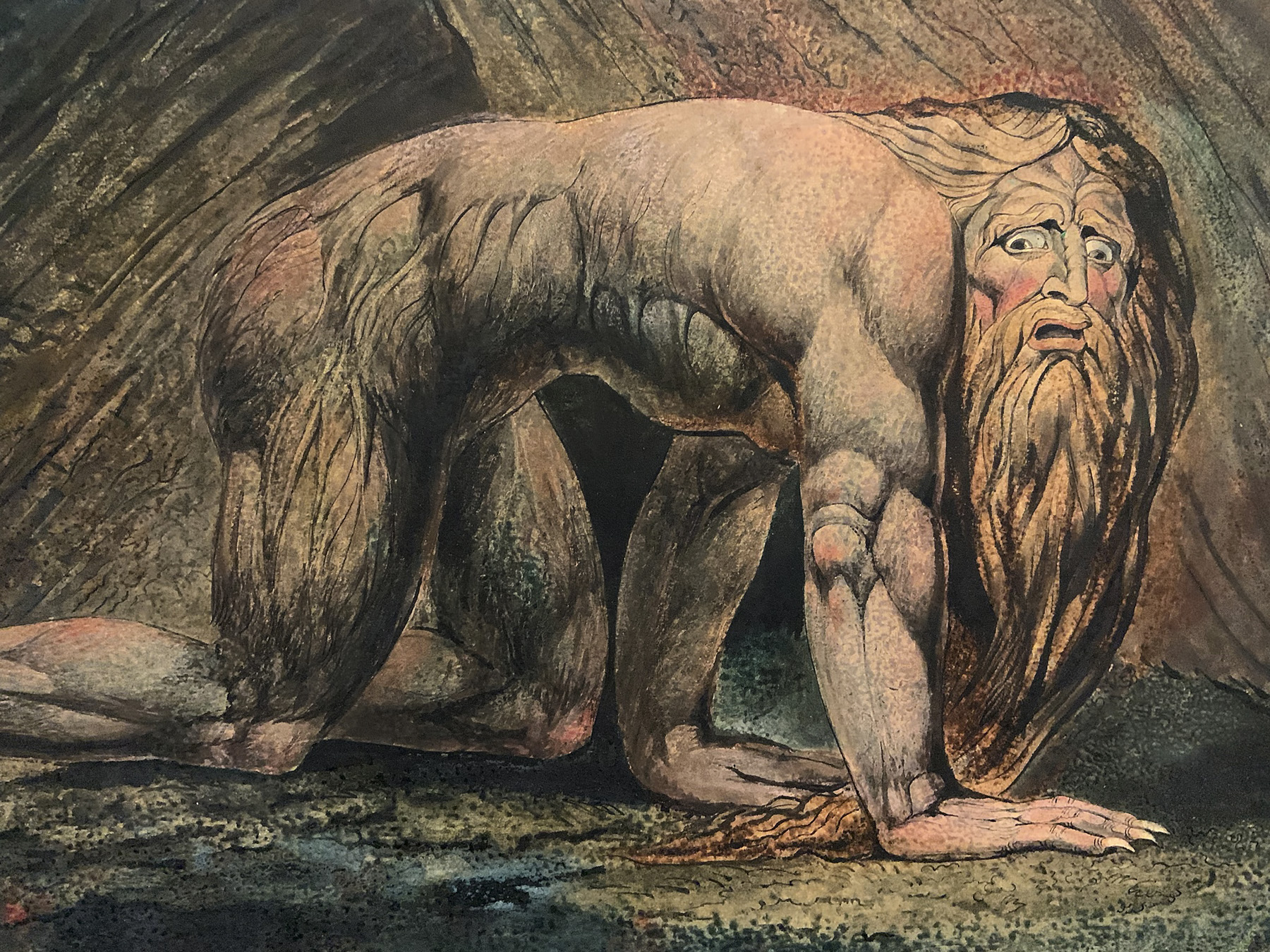
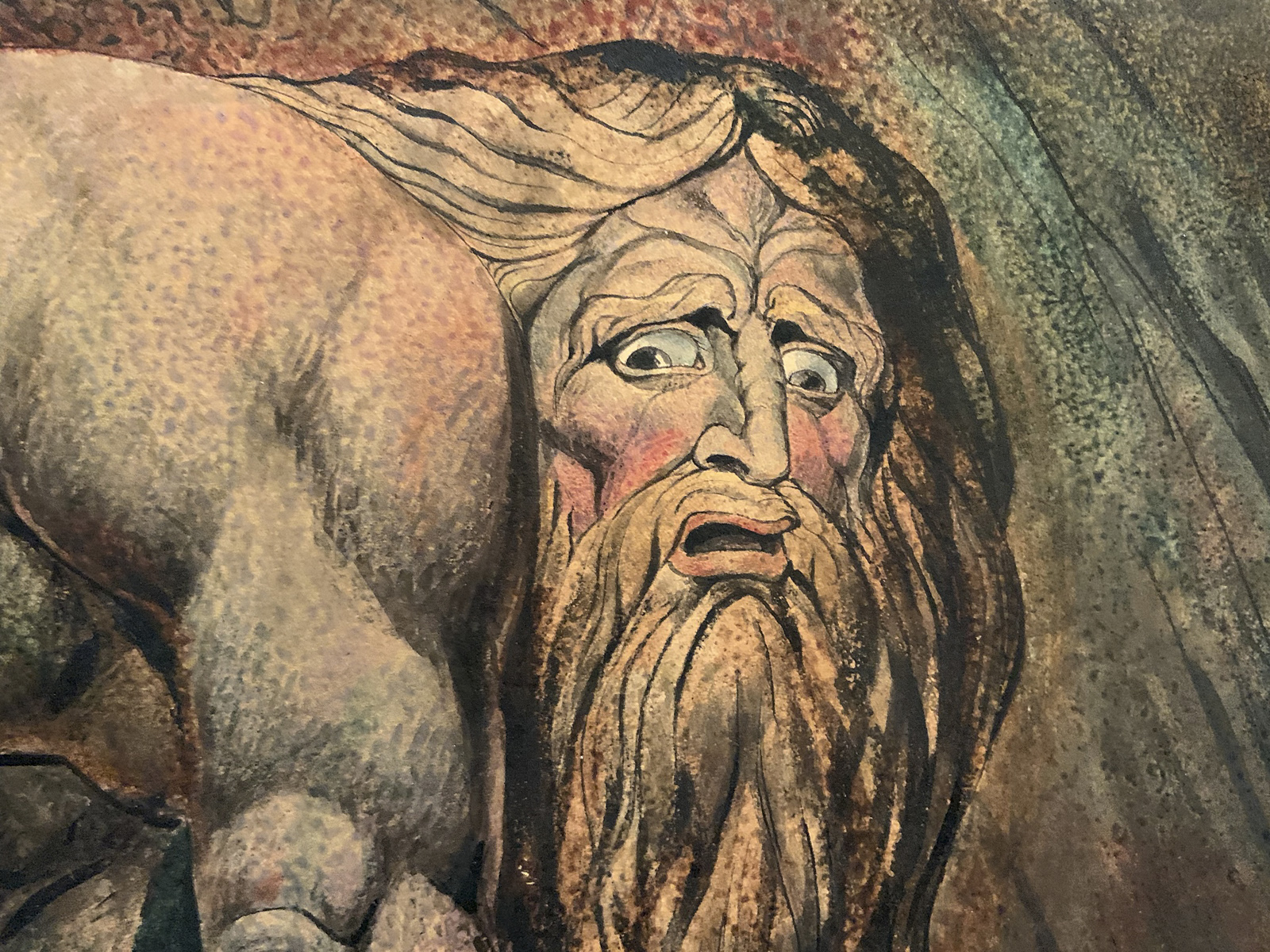



























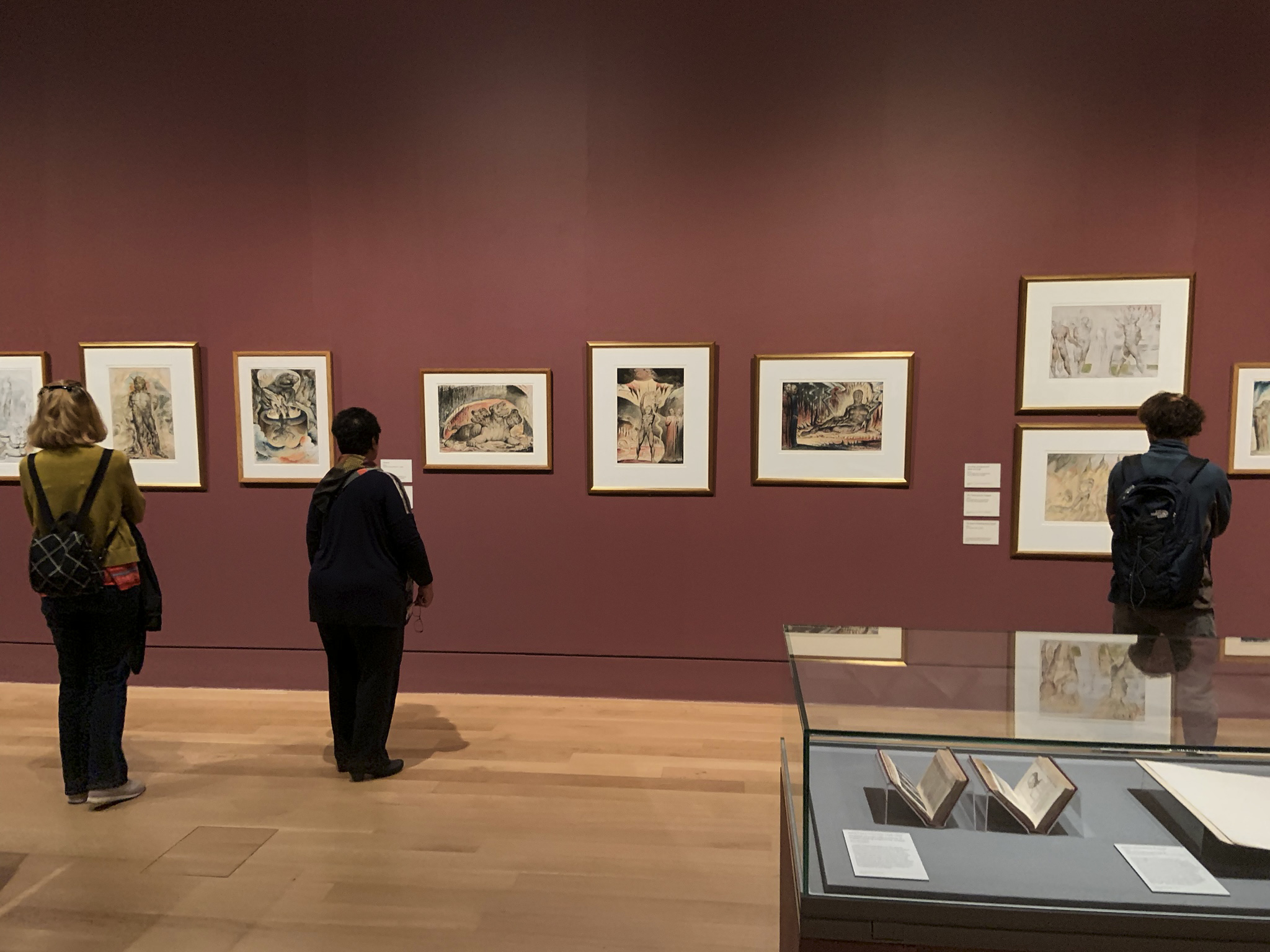


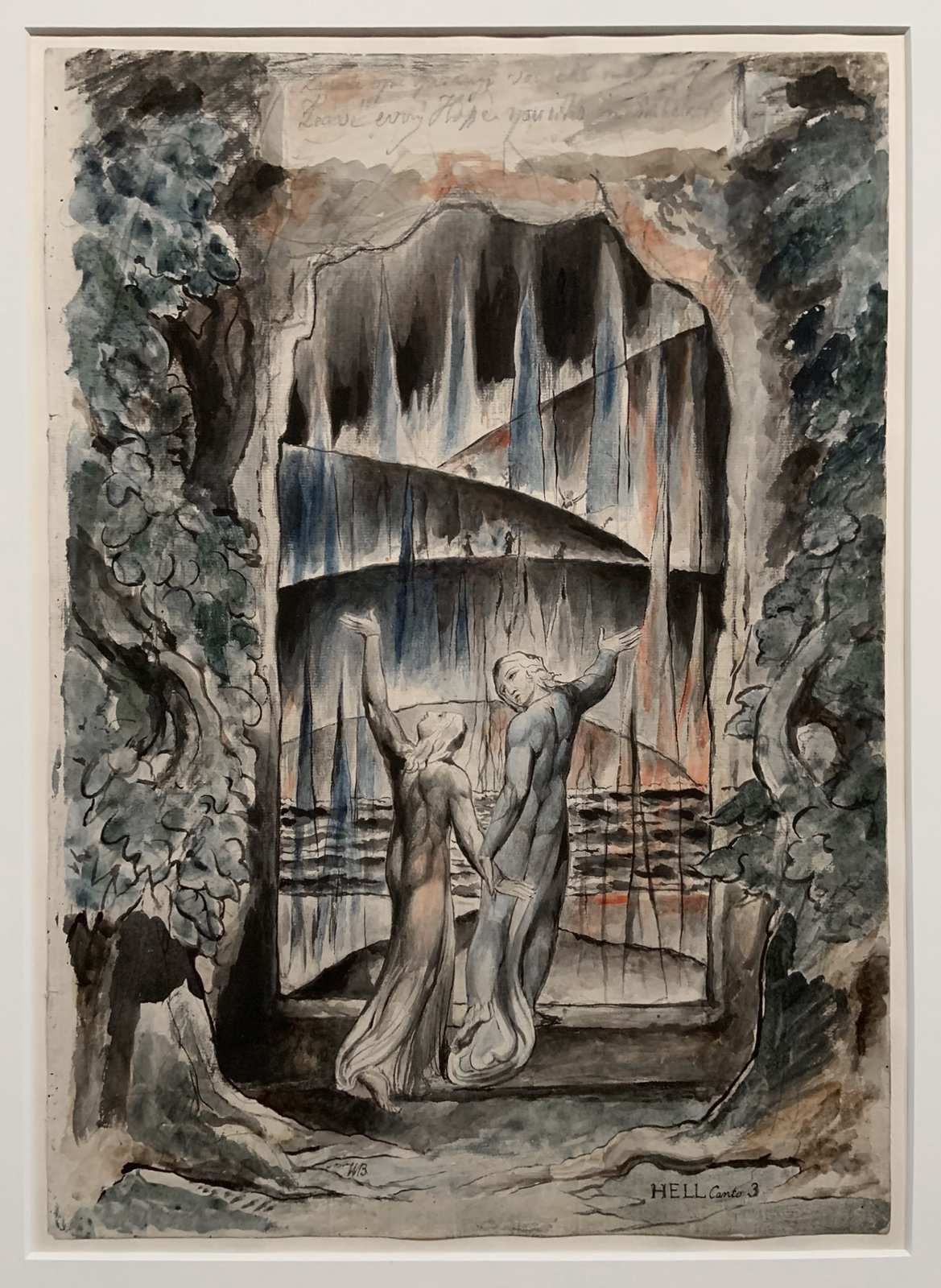


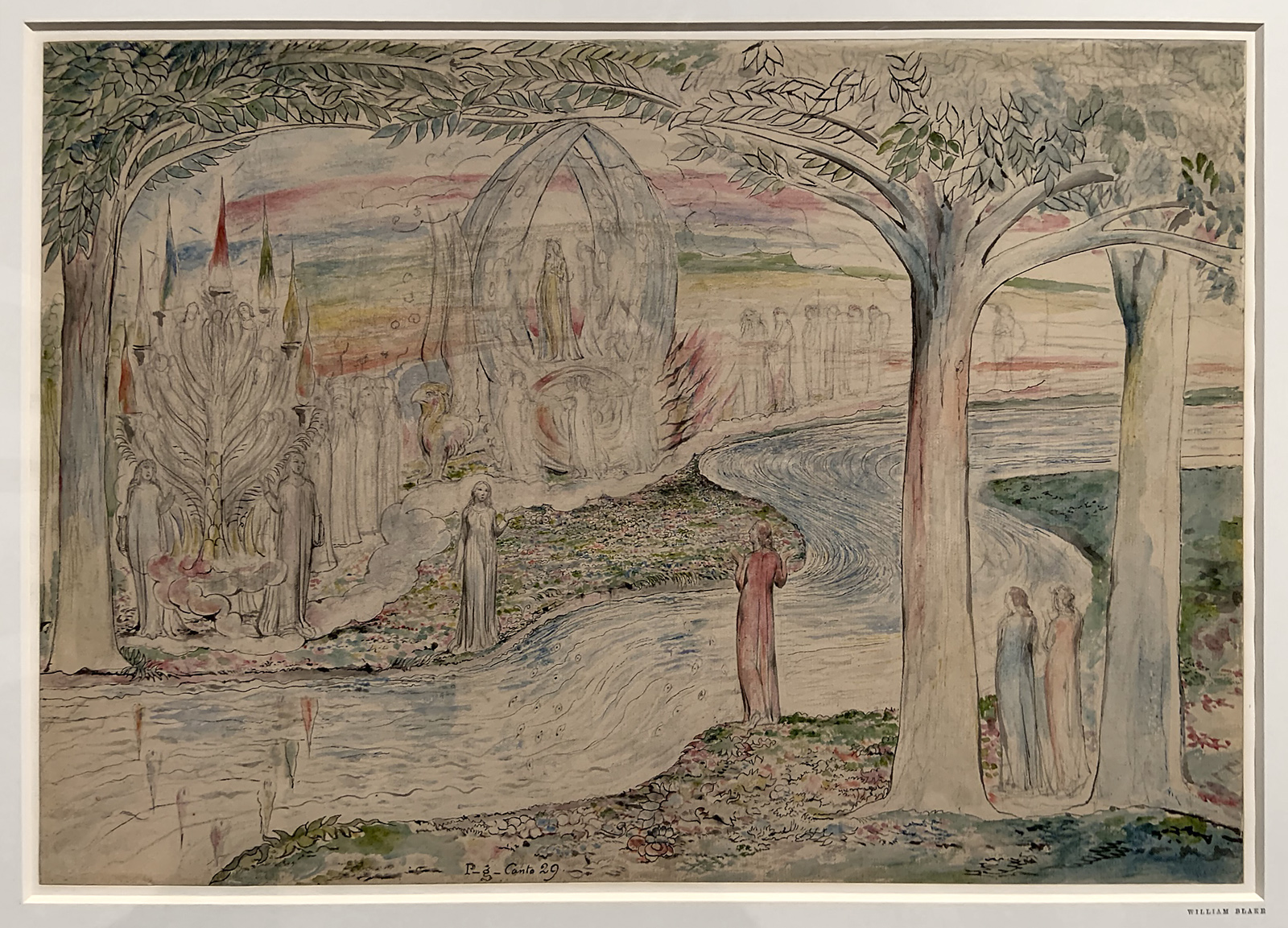

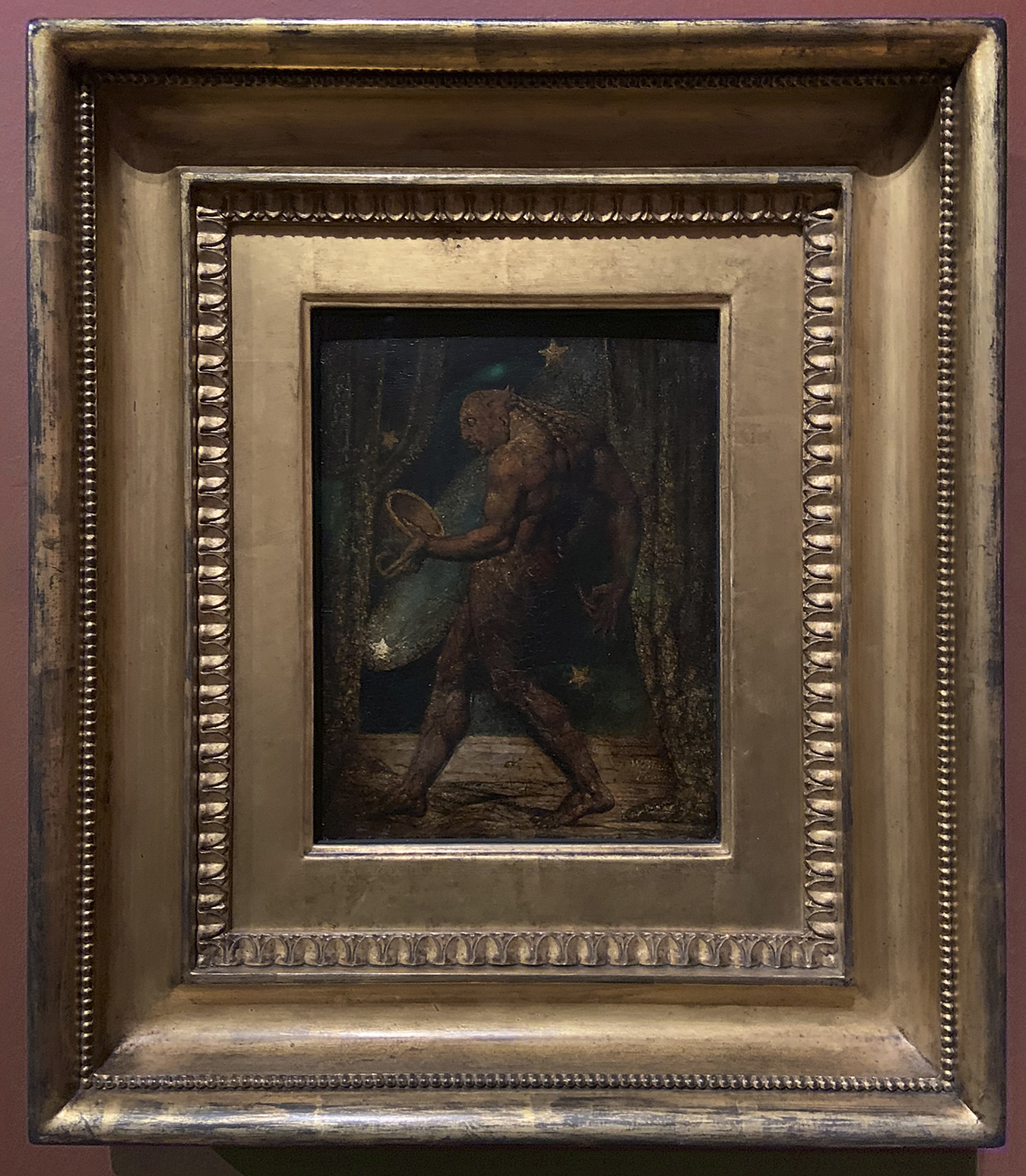
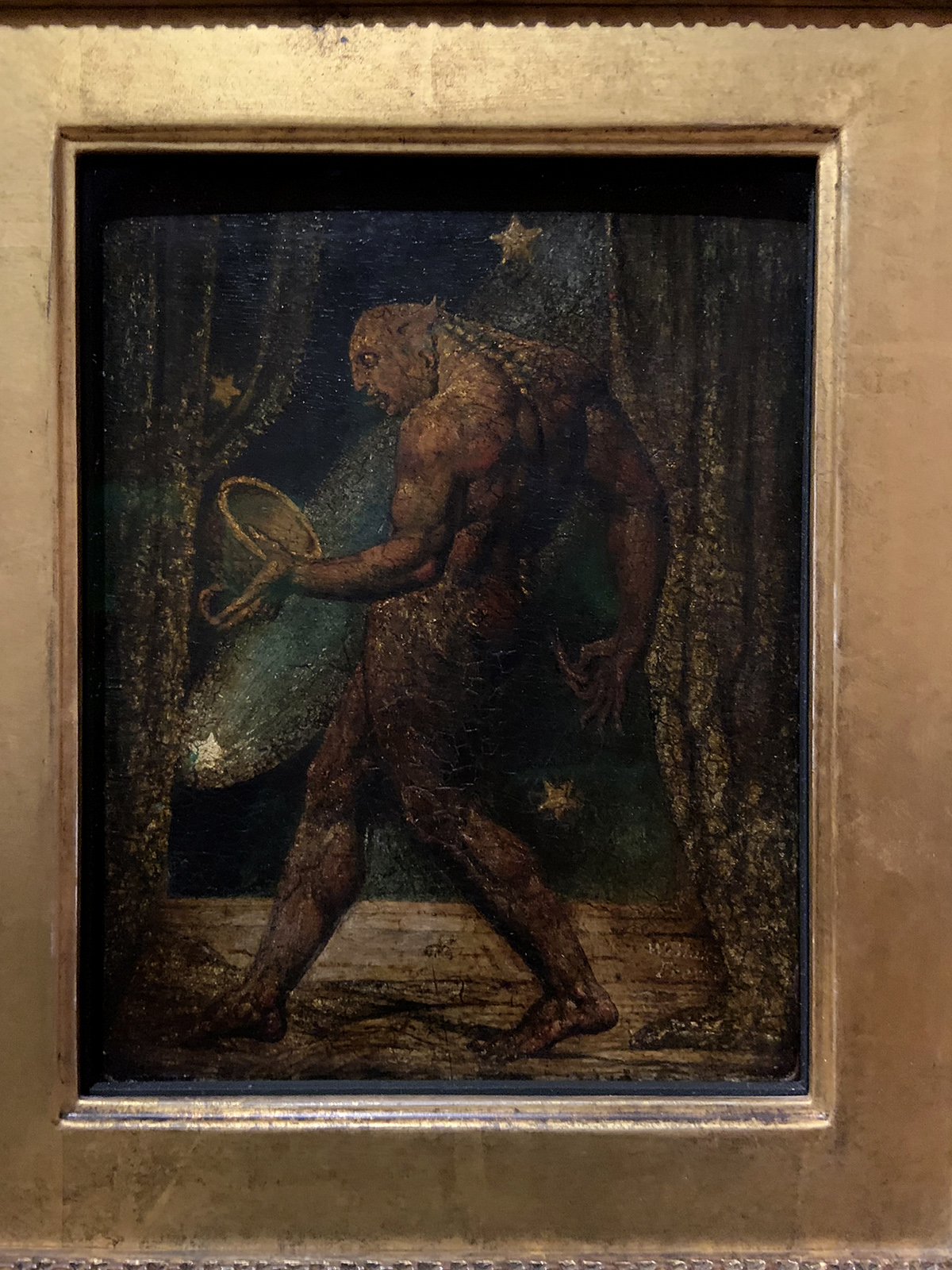
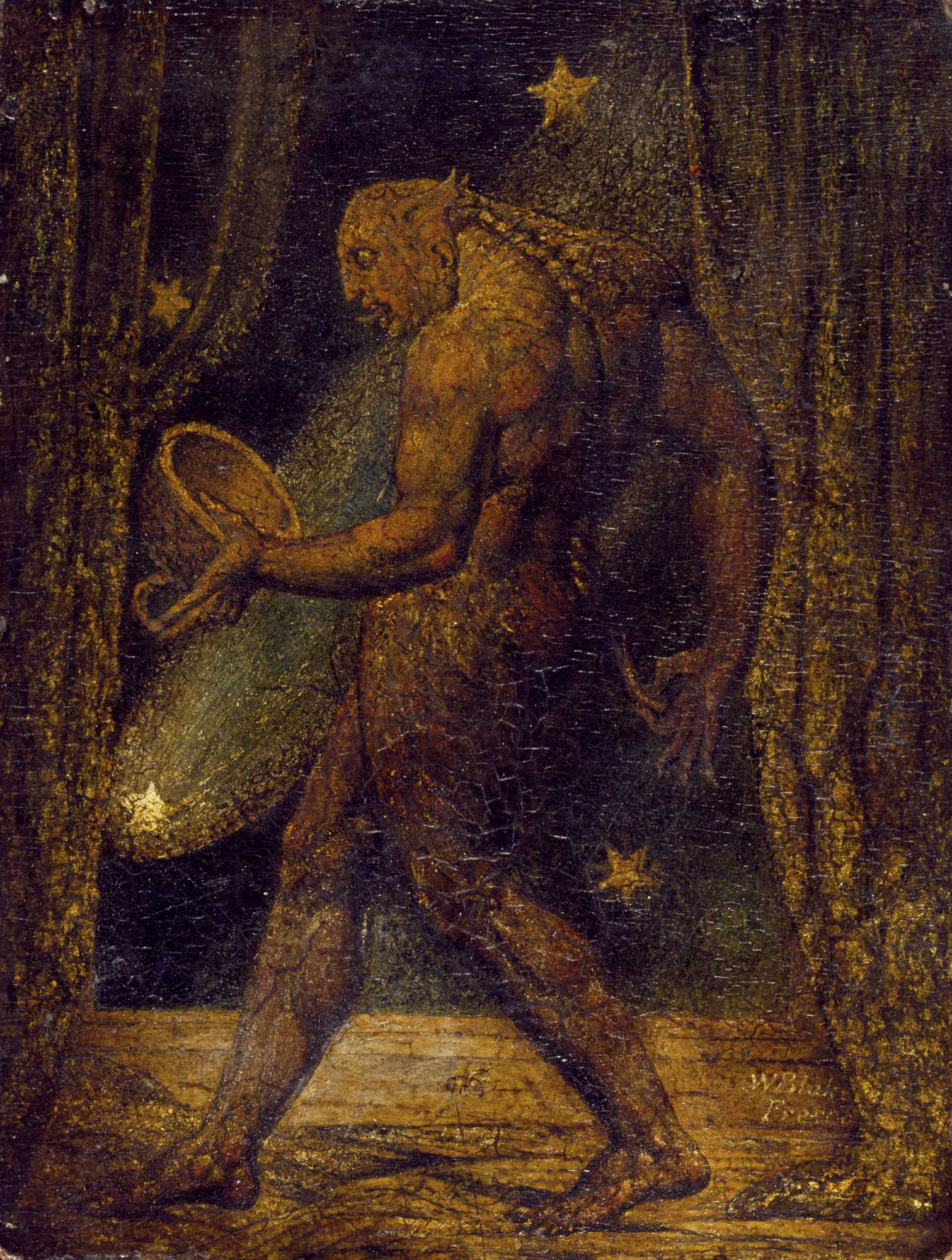





























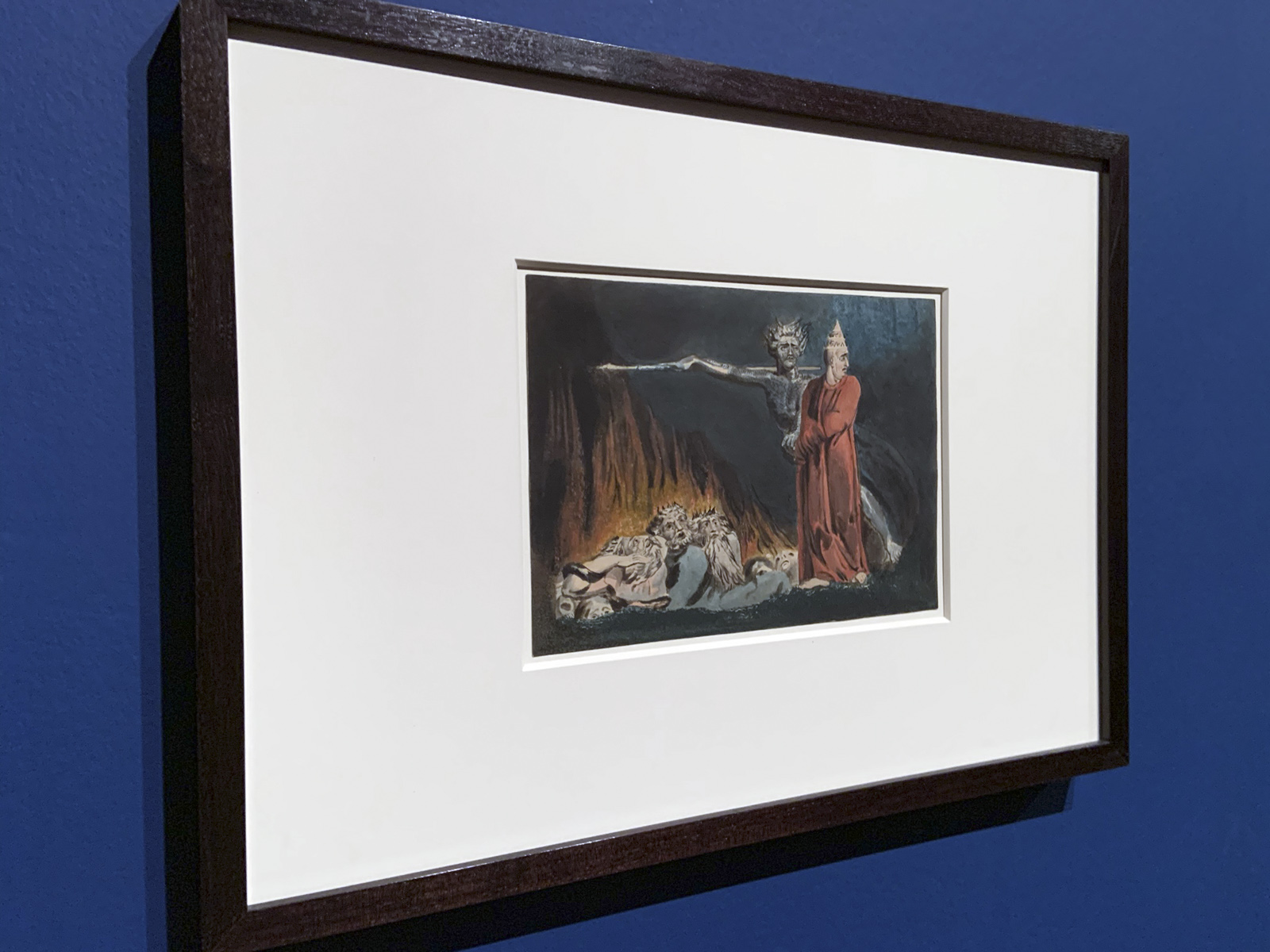
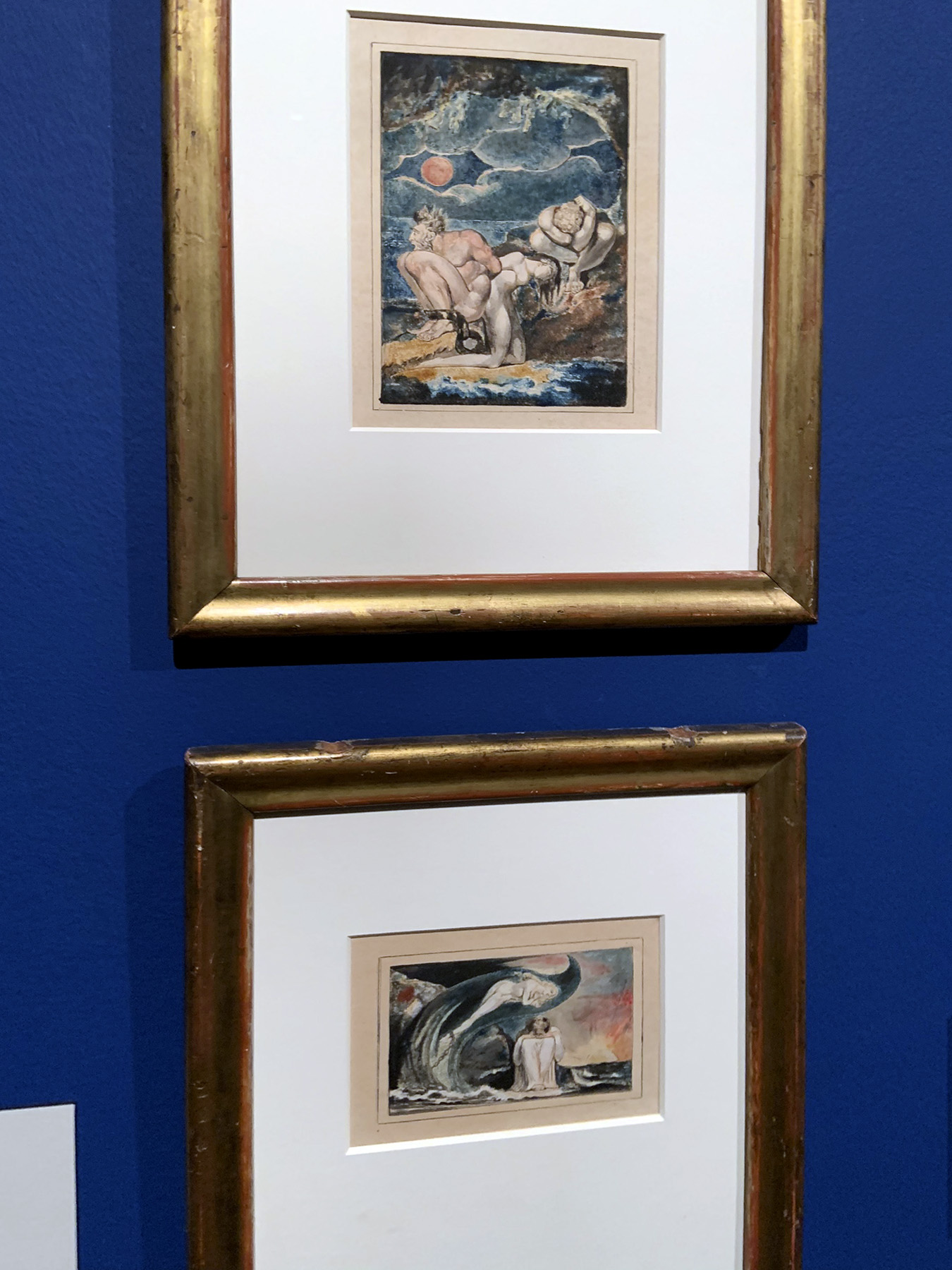
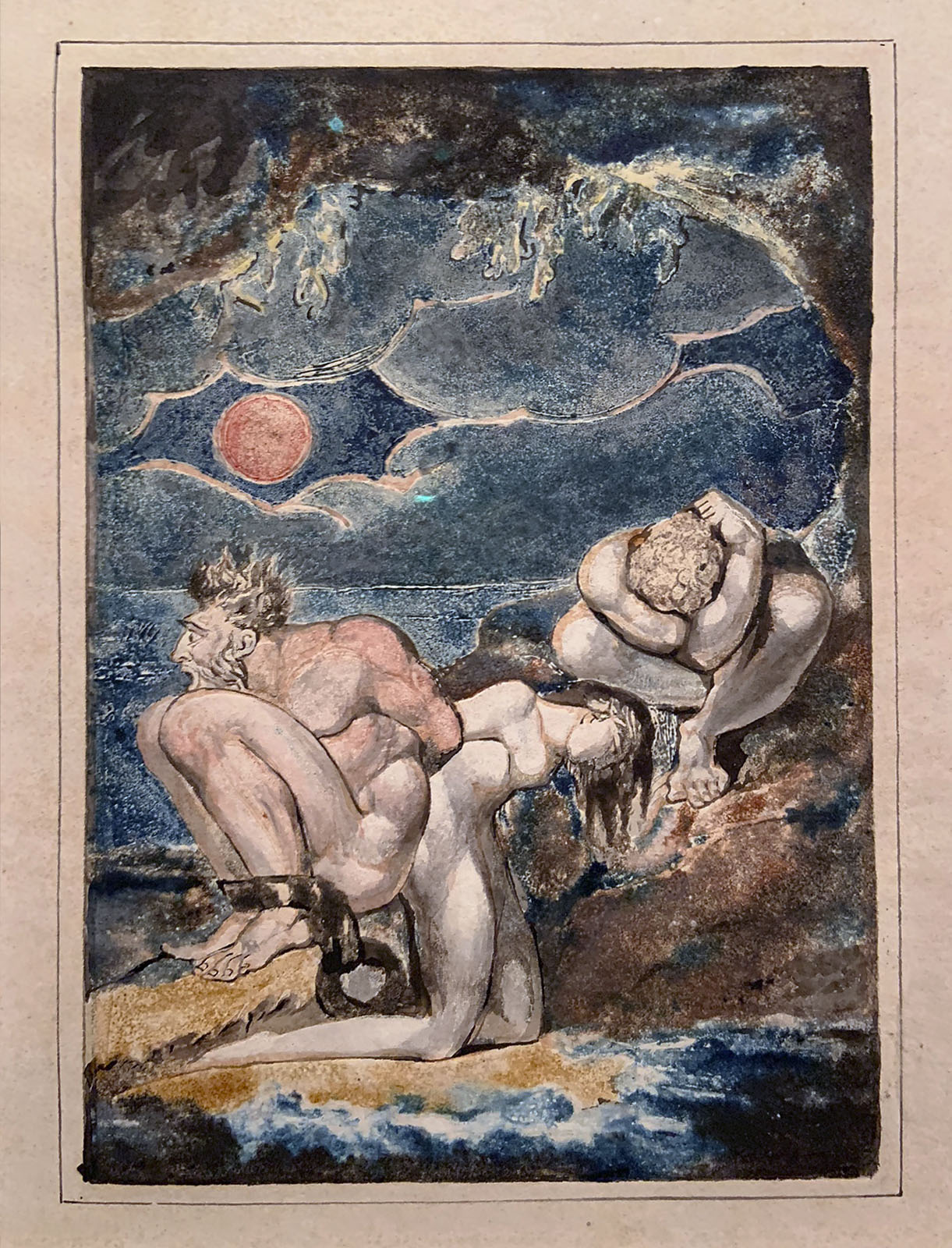


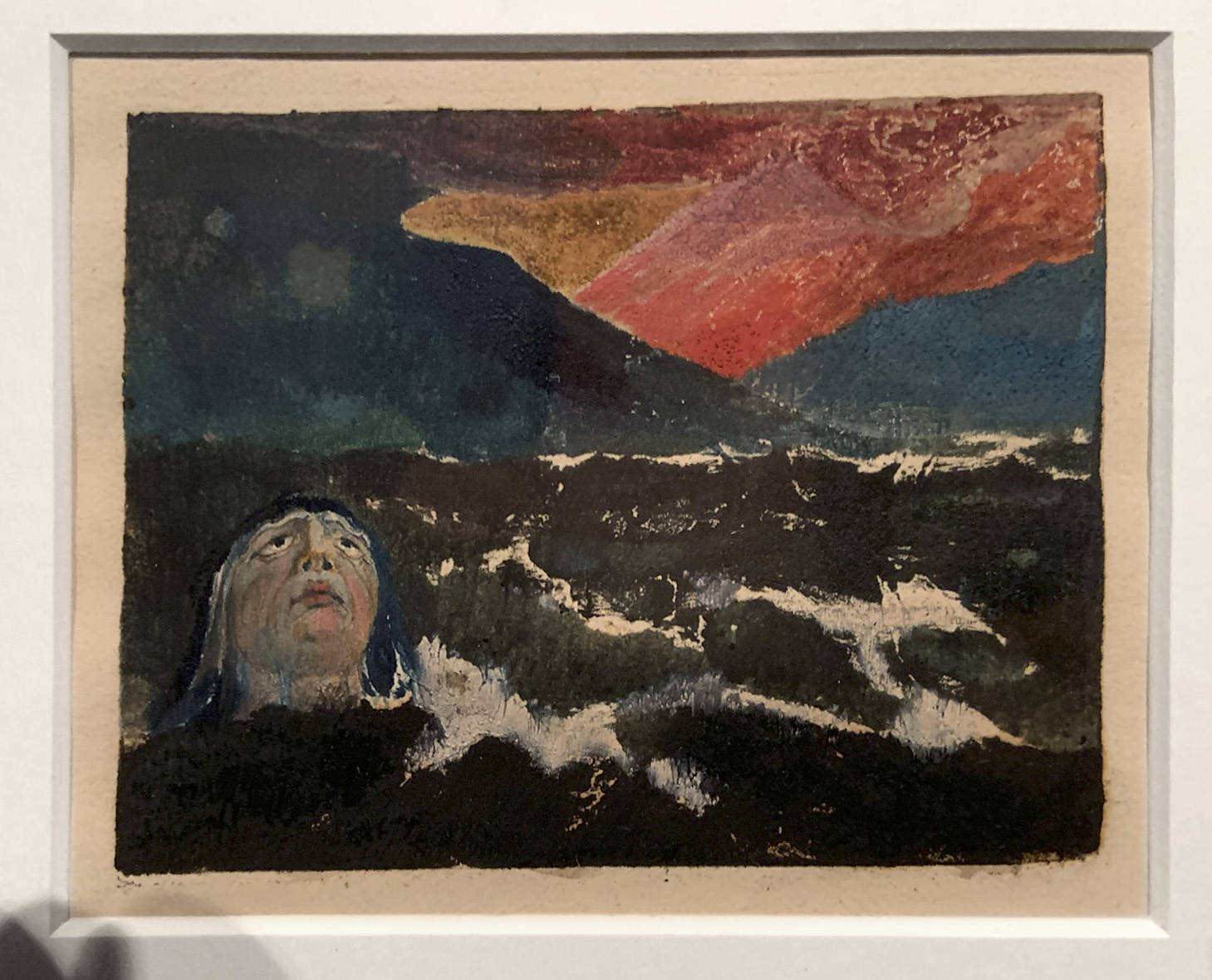






























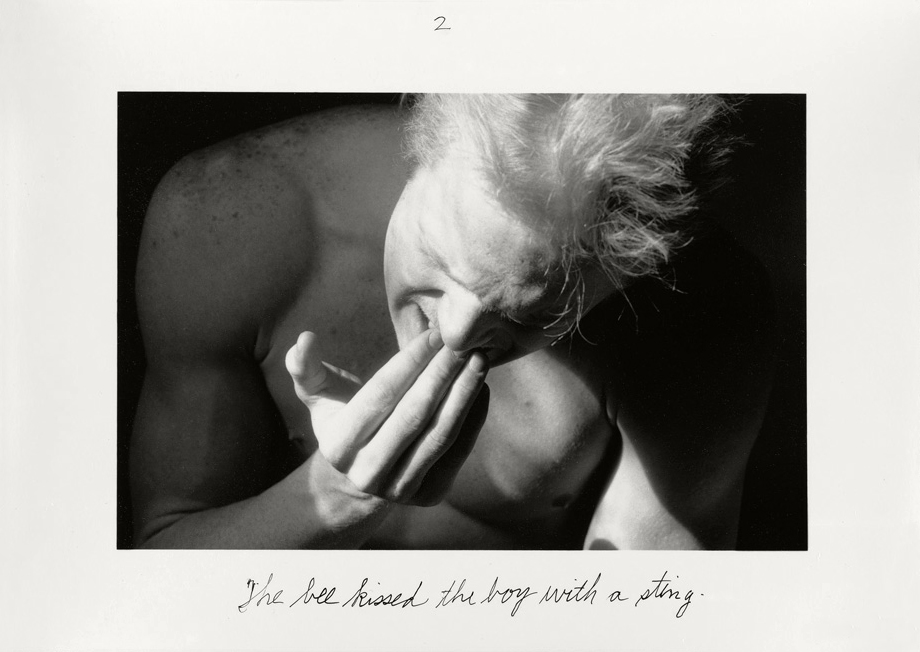




![Florian, Marquis de (1755-1794) 'Red leather portfolio [realia]' 18th century](https://artblart.com/wp-content/uploads/2019/11/voltaire-briefcase.jpg "Florian, Marquis de (1755-1794) 'Red leather portfolio [realia]' 18th century")




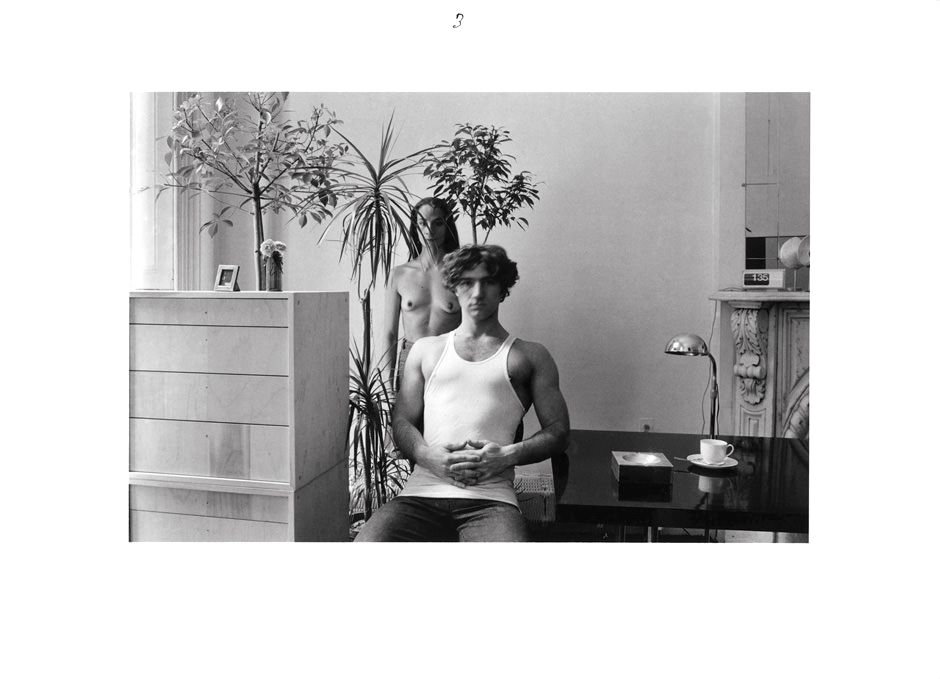














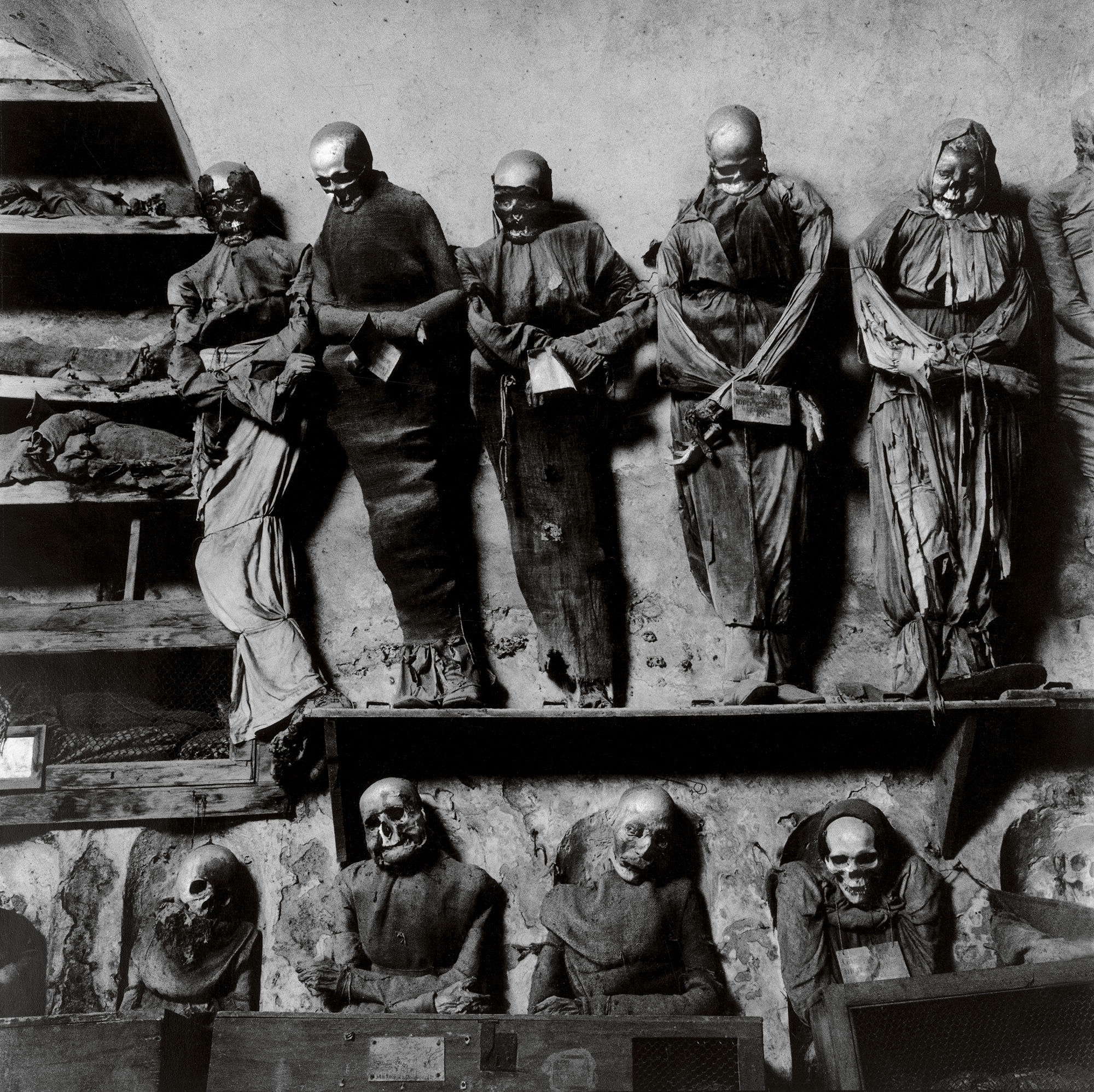


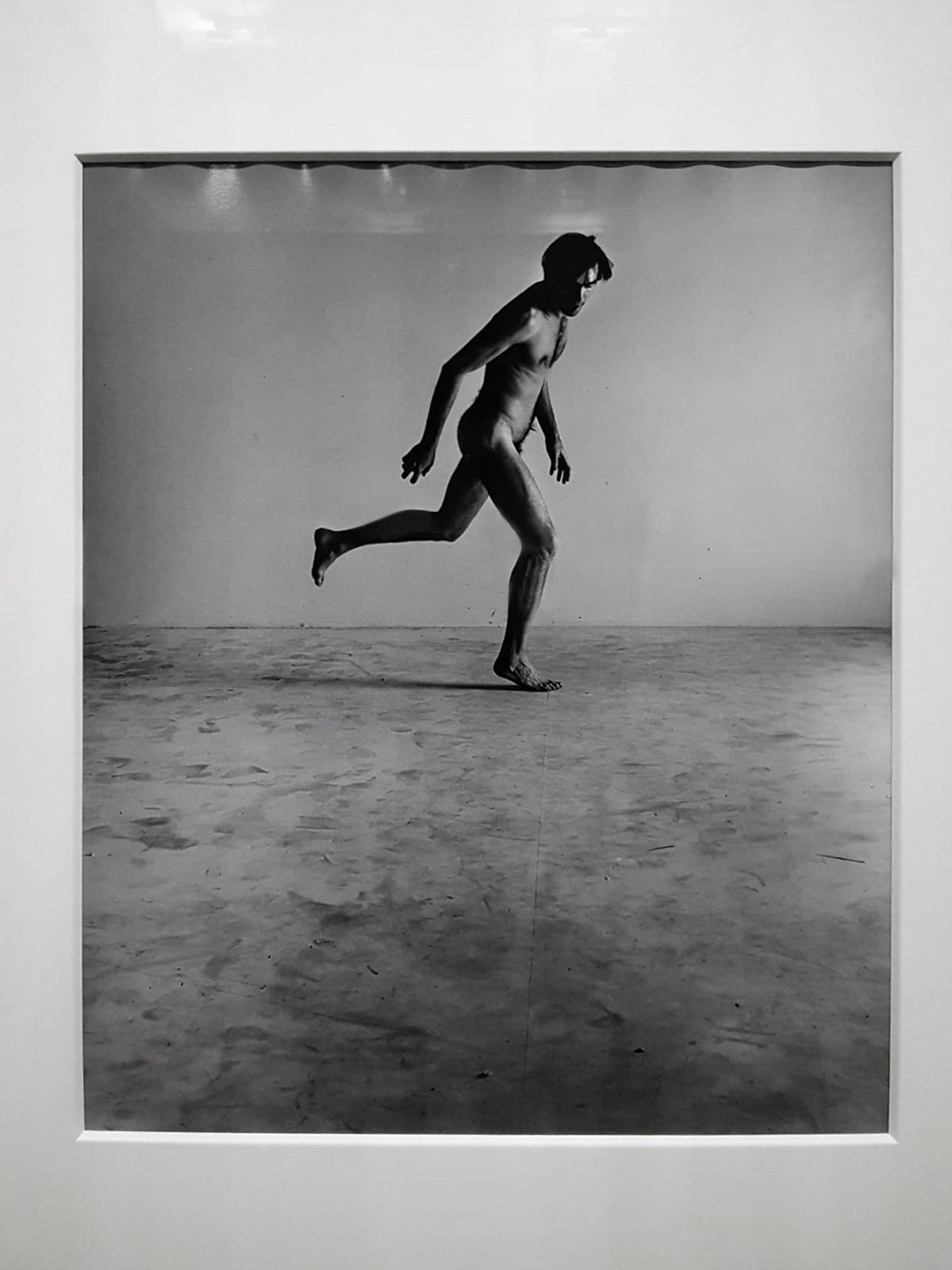


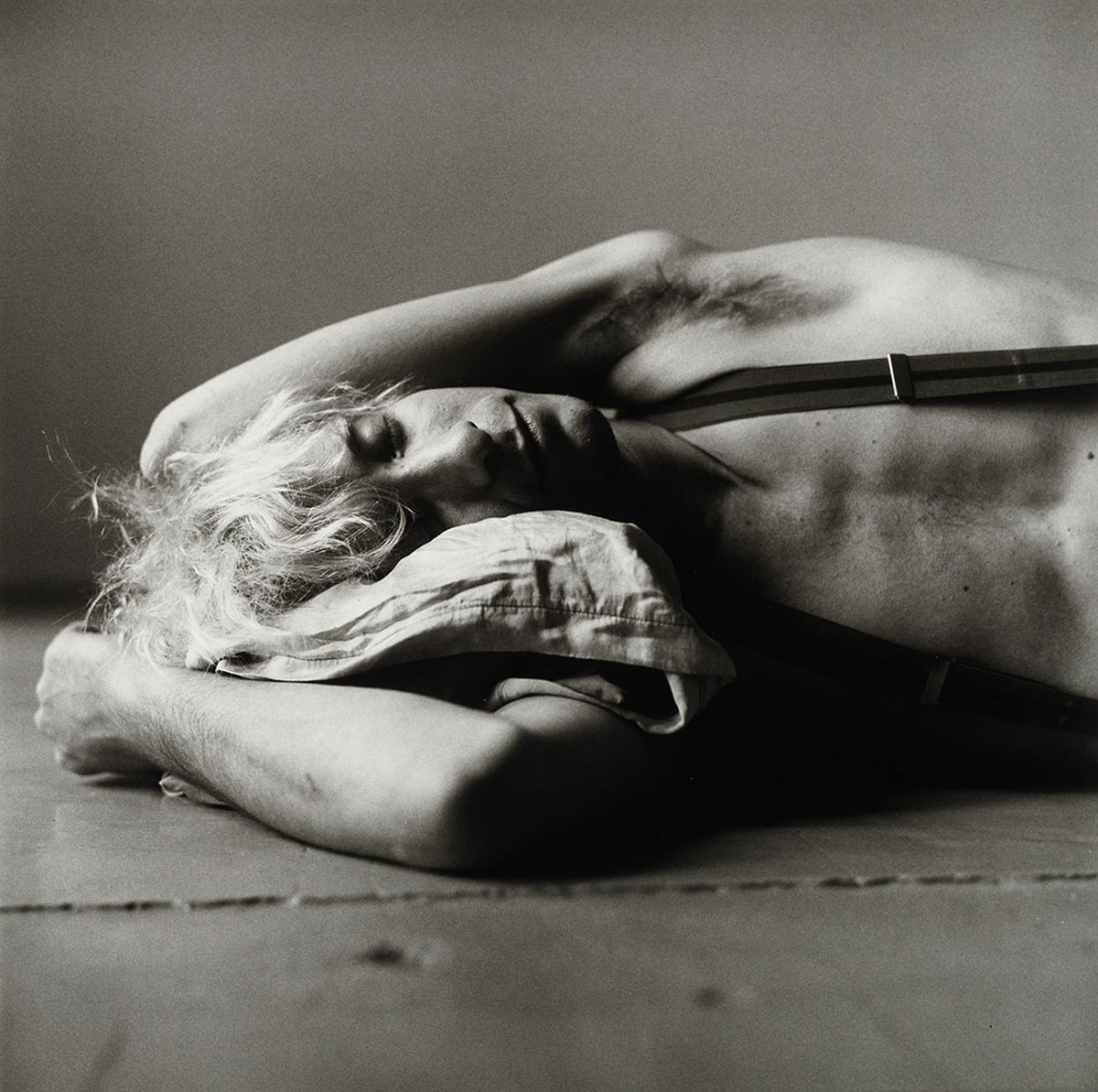


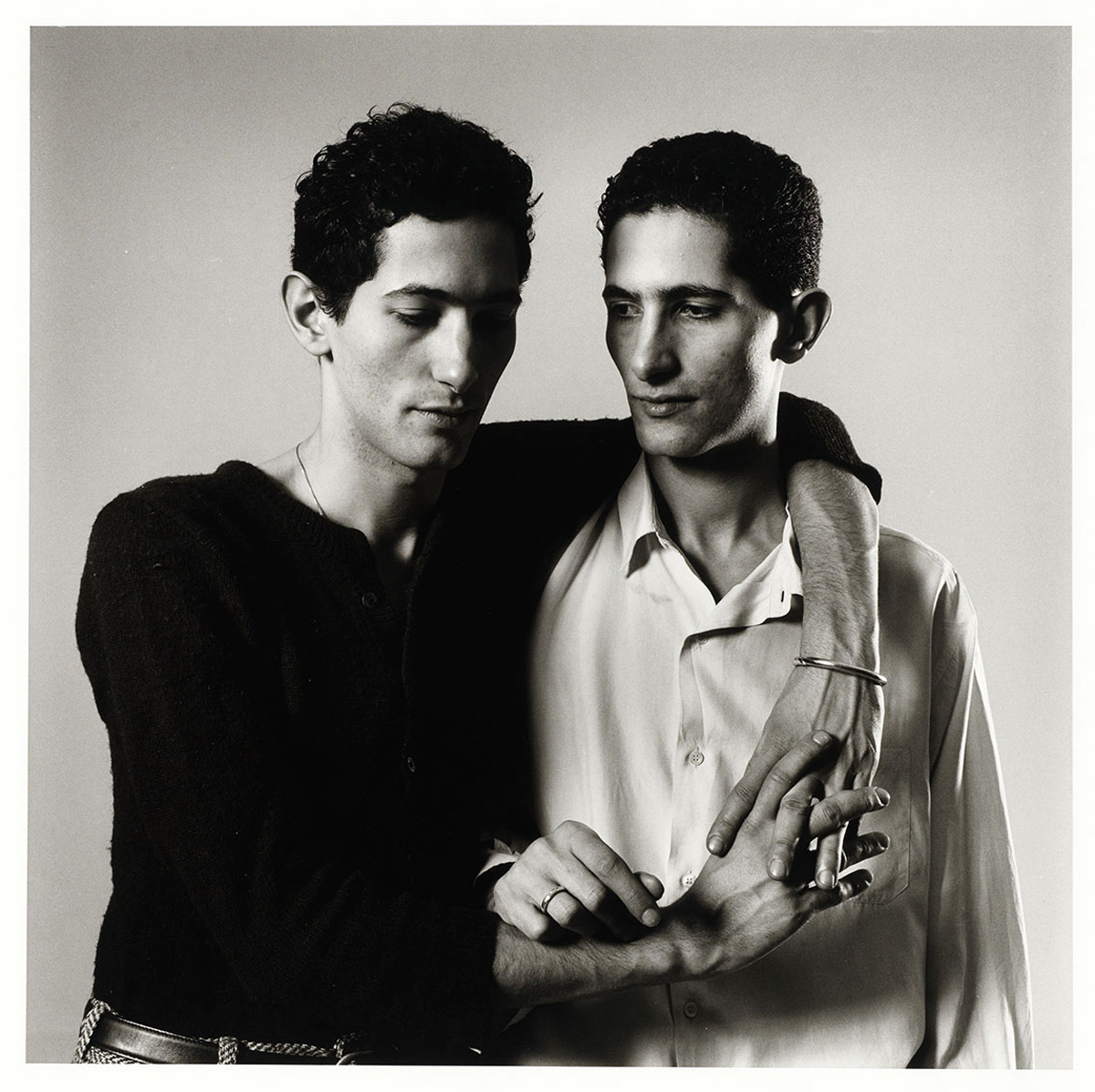


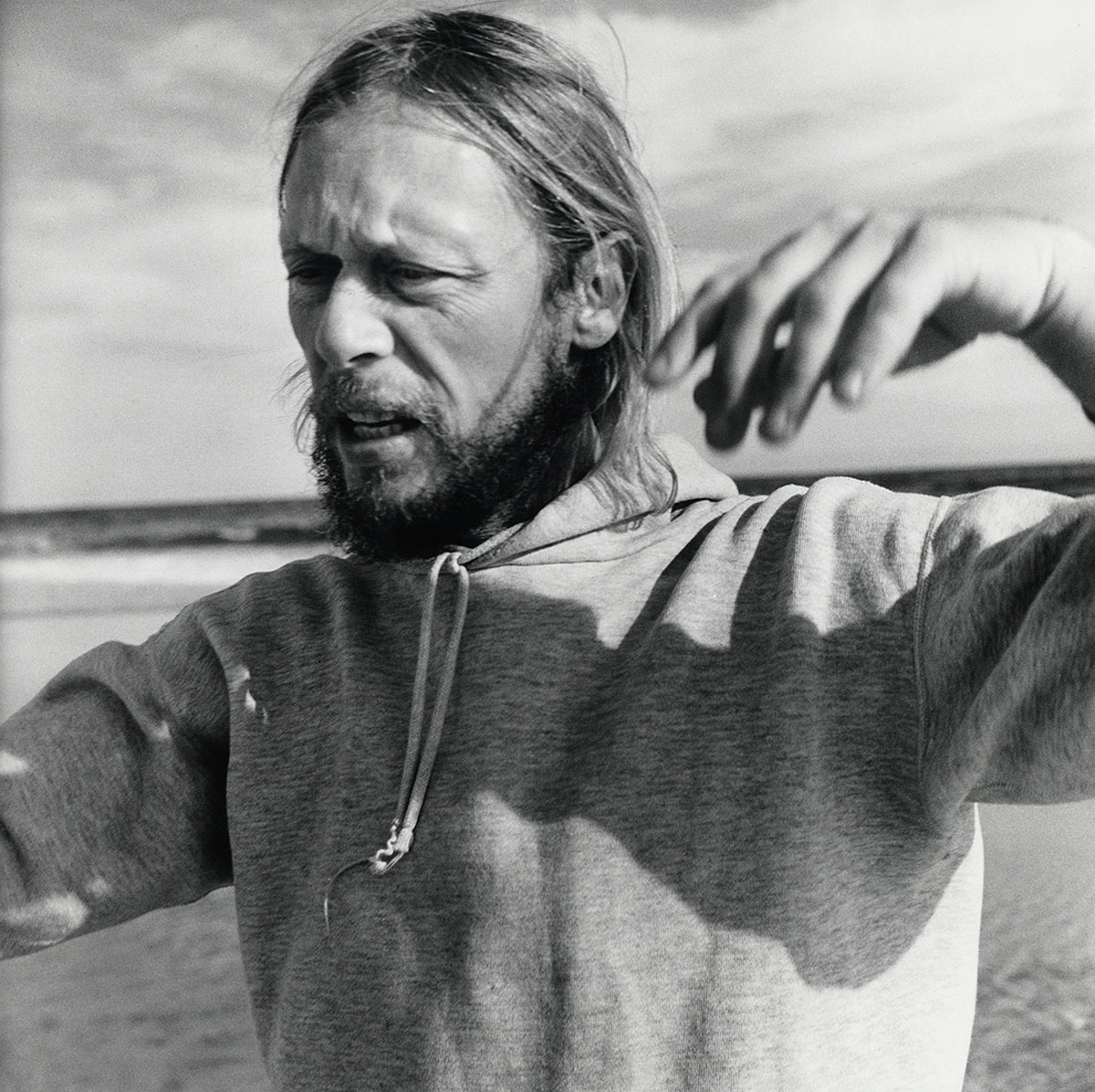



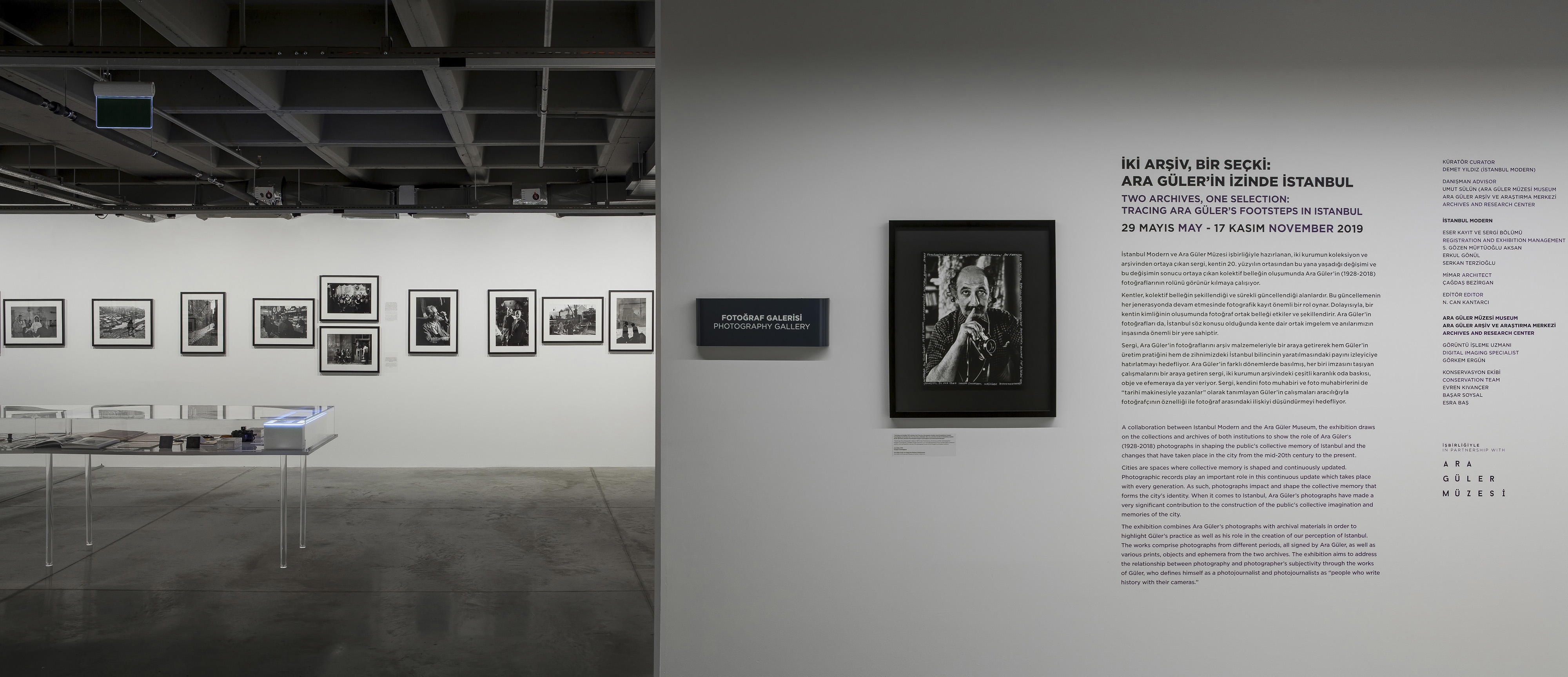
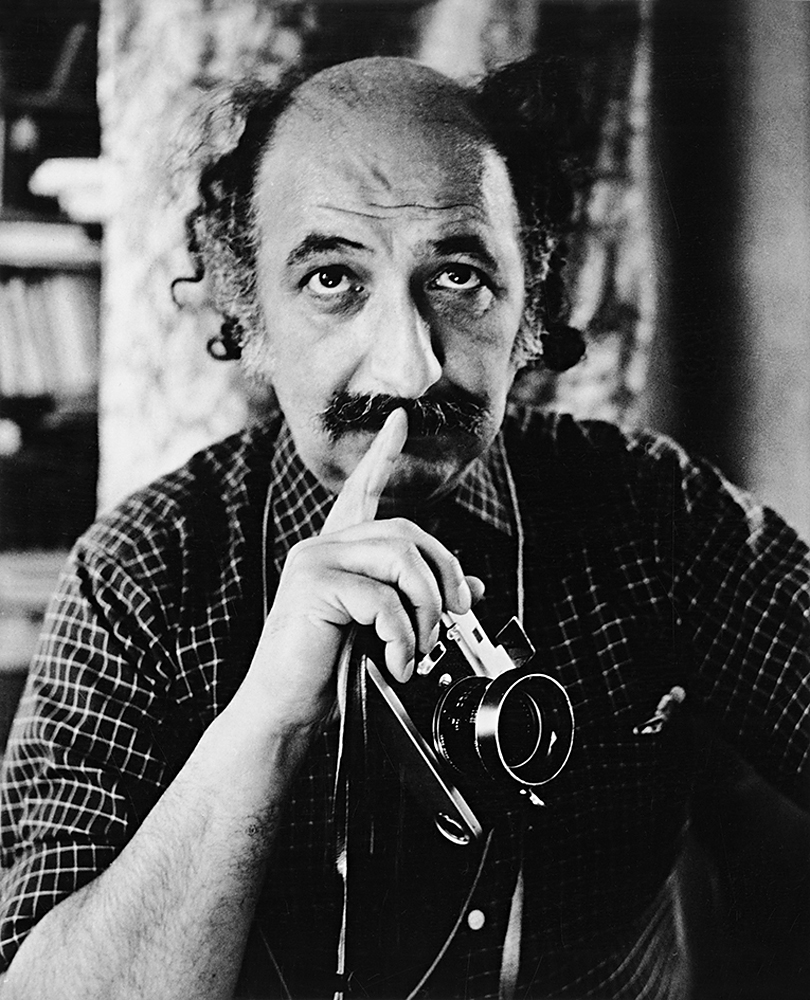
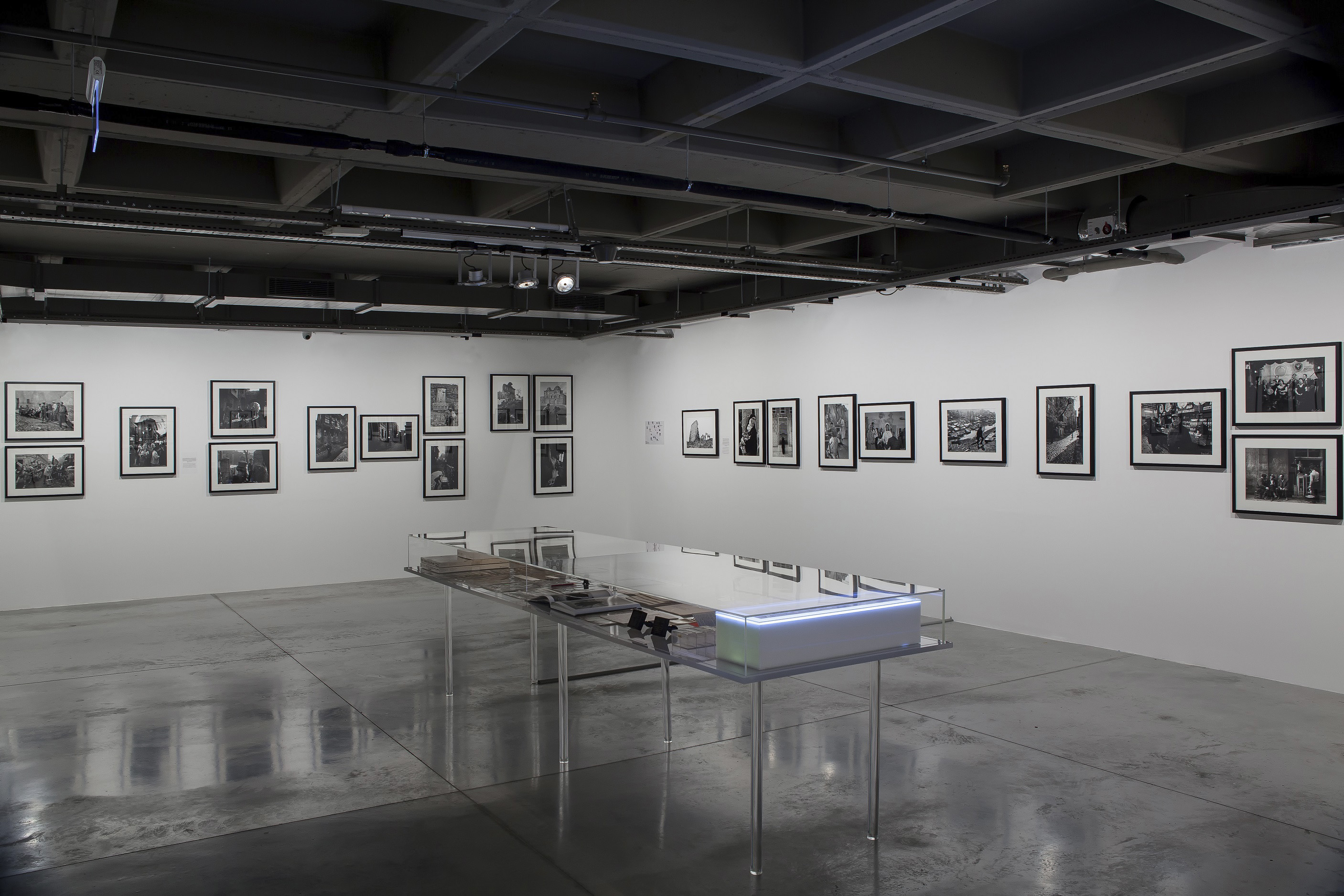
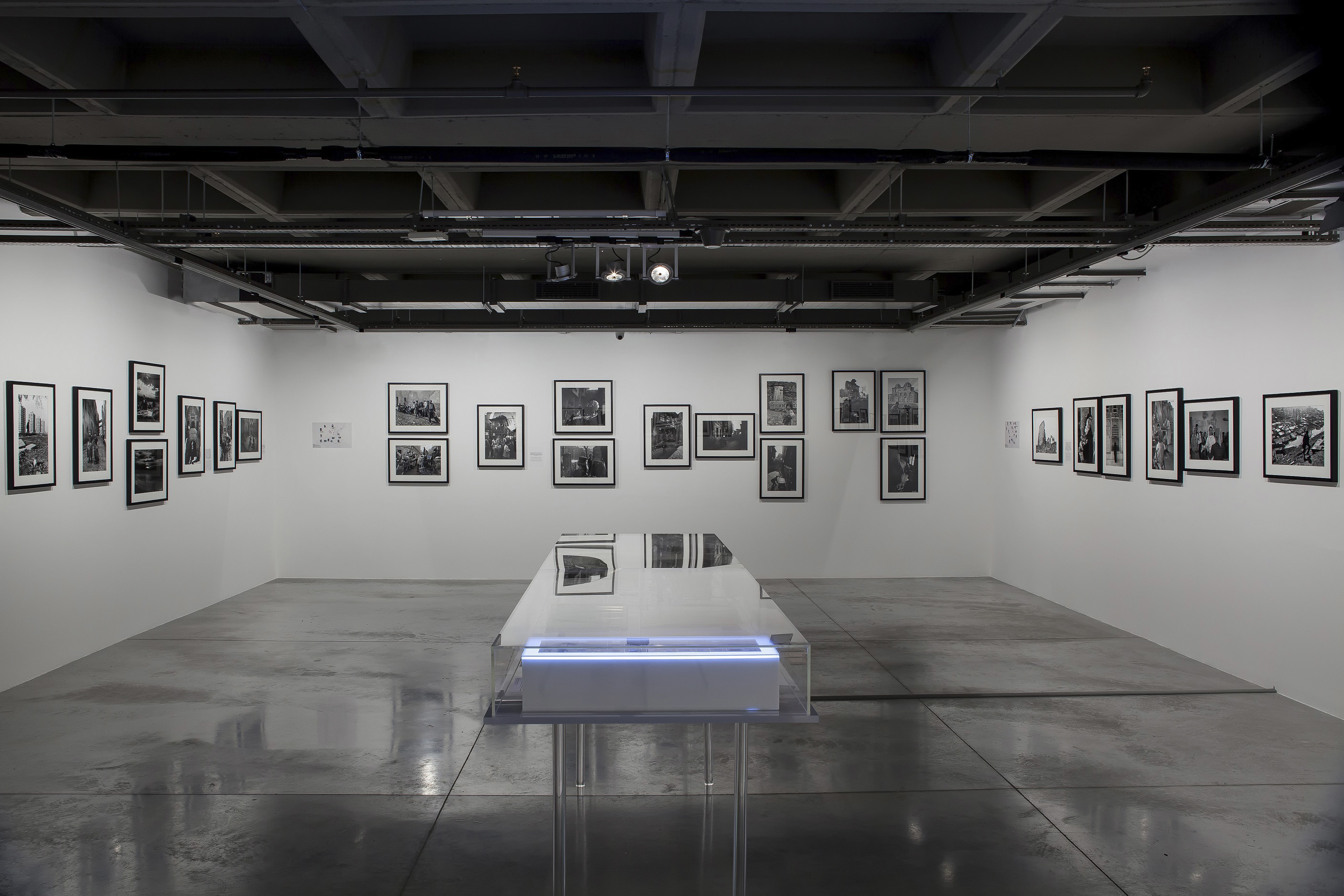
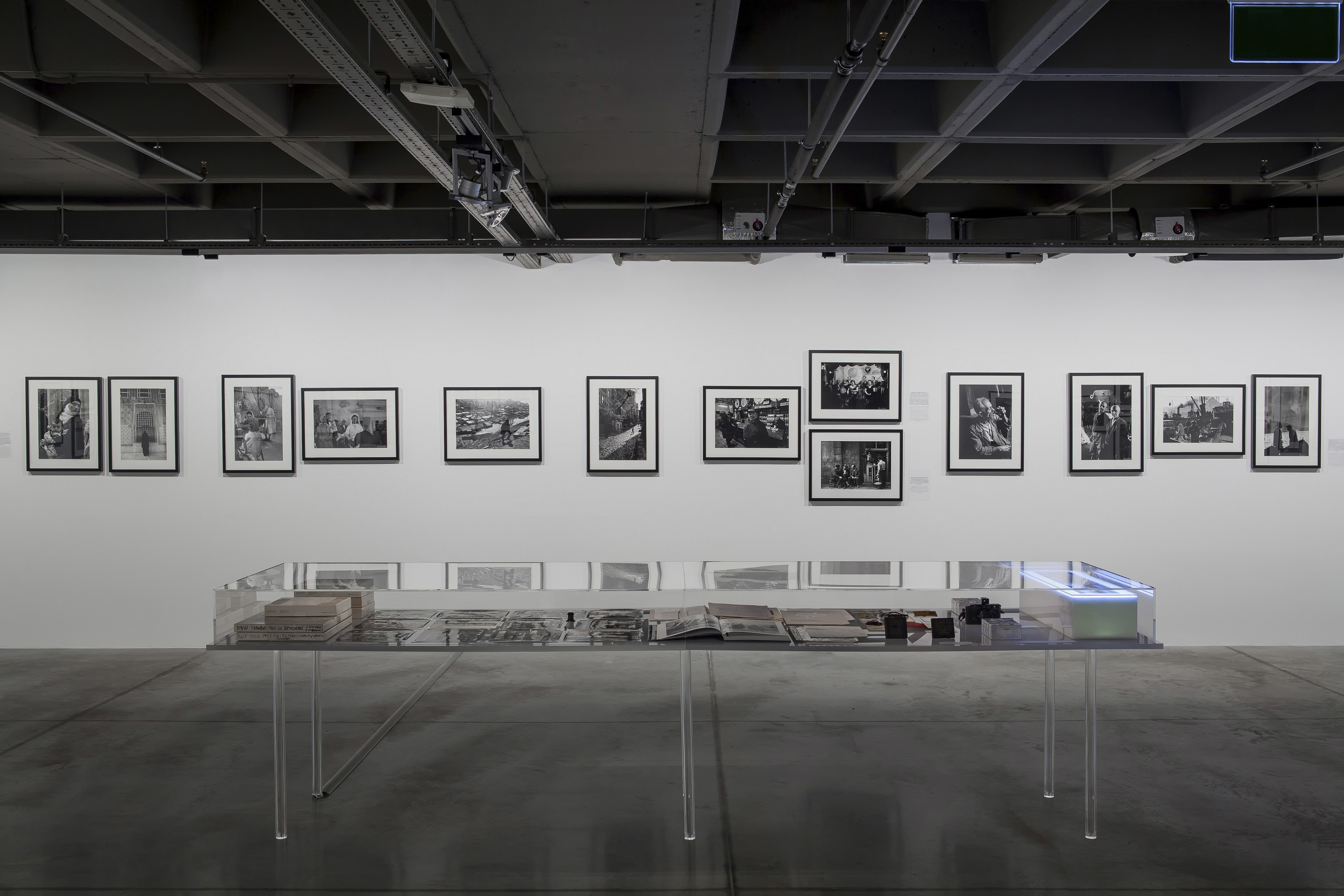

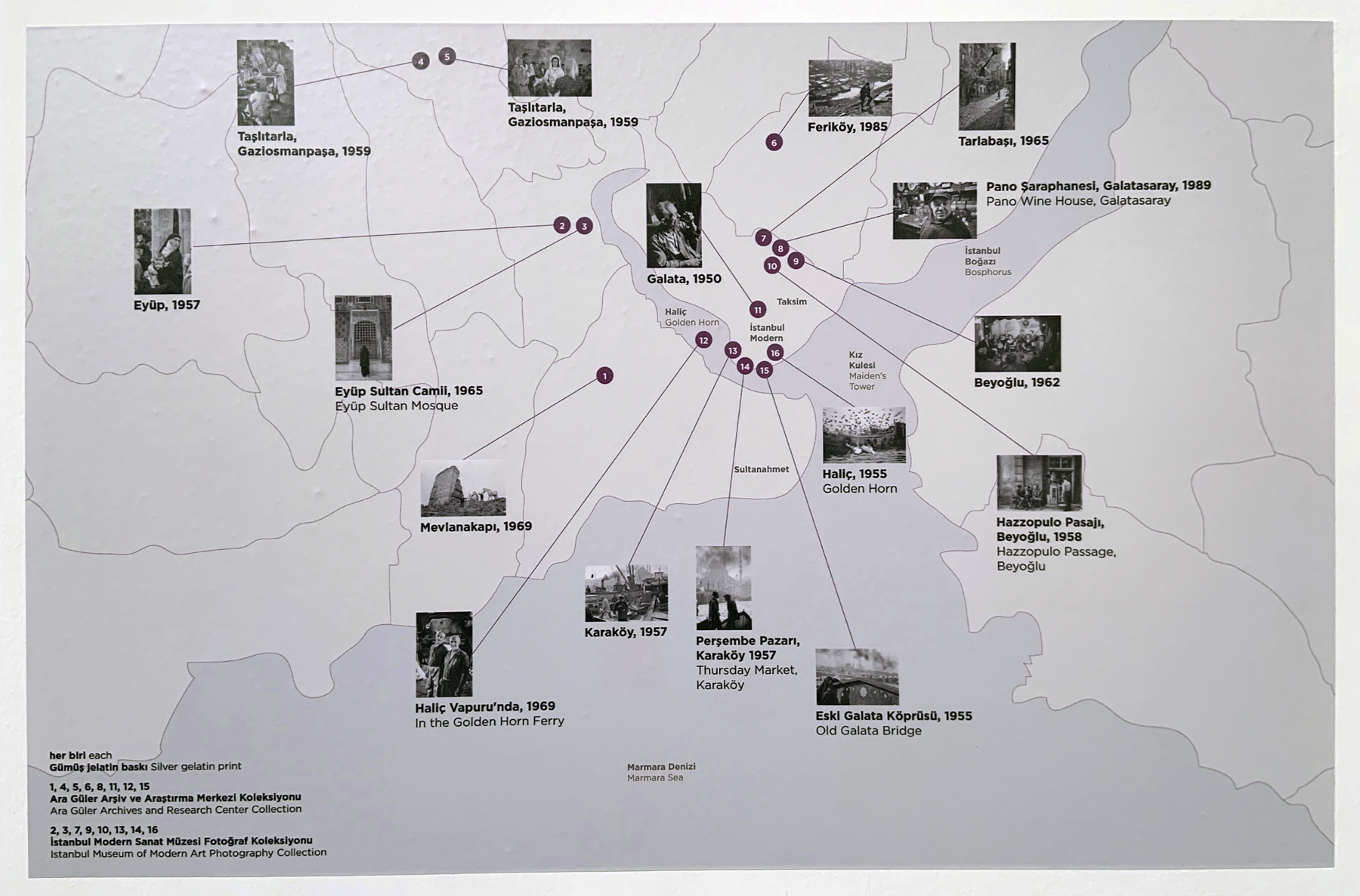
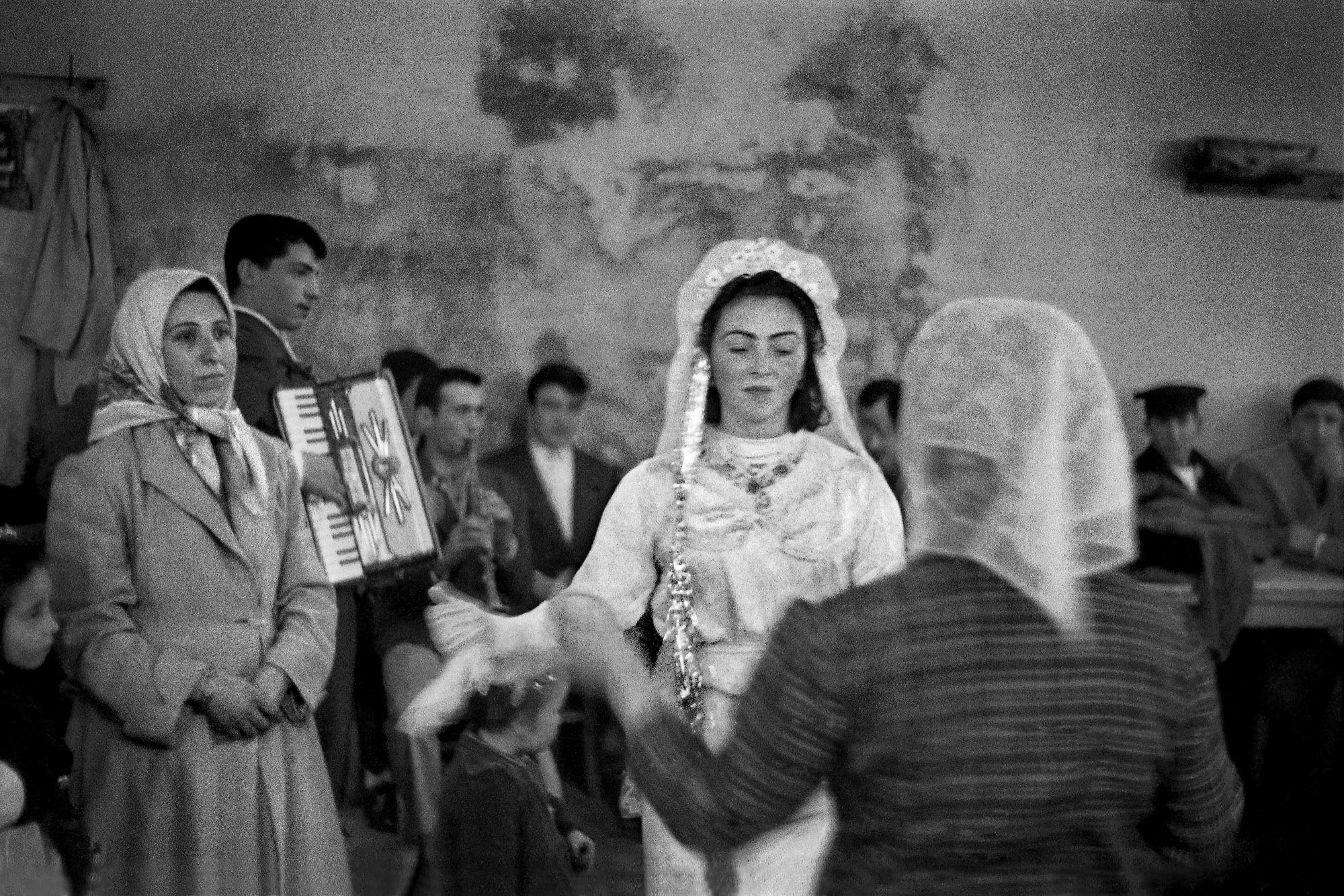

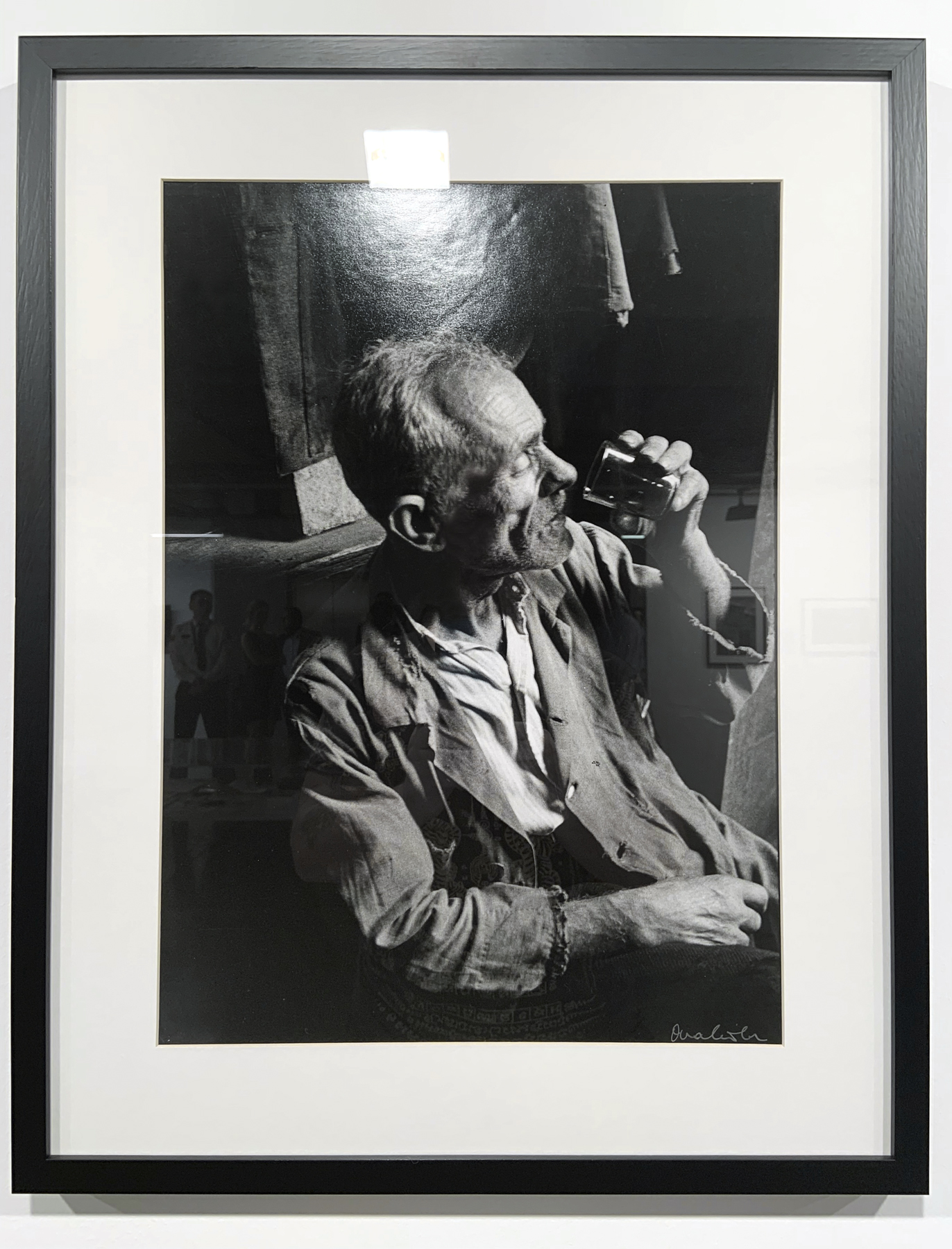
![Ara Güler (Turkish, 1928-2018) 'Hallç, Vapuru'nda [In the Golden Horn Ferry]' 1969 (installation view)](https://artblart.com/wp-content/uploads/2019/10/guller-x-web.jpg "Ara Güler (Turkish, 1928-2018) 'Hallç, Vapuru'nda [In the Golden Horn Ferry]' 1969 (installation view)")

![Ara Güler (Turkish, 1928-2018) 'Persembe Pazan, Karaköy [Thursday Market, Karaköy]' 1957 (installation view)](https://artblart.com/wp-content/uploads/2019/10/guller-v-web.jpg "Ara Güler (Turkish, 1928-2018) 'Persembe Pazan, Karaköy [Thursday Market, Karaköy]' 1957 (installation view)")
![Ara Güler (Turkish, 1928-2018) 'Persembe Pazan, Karaköy [Thursday Market, Karaköy]' 1957](https://artblart.com/wp-content/uploads/2019/10/guller-v2-web.jpg "Ara Güler (Turkish, 1928-2018) 'Persembe Pazan, Karaköy [Thursday Market, Karaköy]' 1957")

![Ara Güler (Turkish, 1928-2018) 'Hazzopulo Pasajl, Beyoglu [Hazzopulo Passage, Beyoglu]' 1958 (installation view)](https://artblart.com/wp-content/uploads/2019/10/guller-t-web.jpg "Ara Güler (Turkish, 1928-2018) 'Hazzopulo Pasajl, Beyoglu [Hazzopulo Passage, Beyoglu]' 1958 (installation view)")
![Ara Güler (Turkish, 1928-2018) 'Hazzopulo Pasajl, Beyoglu [Hazzopulo Passage, Beyoglu]' 1958](https://artblart.com/wp-content/uploads/2019/10/guler-hazzopulo-pasajl-beyoglu-web.jpg "Ara Güler (Turkish, 1928-2018) 'Hazzopulo Pasajl, Beyoglu [Hazzopulo Passage, Beyoglu]' 1958")
![Ara Güler (Turkish, 1928-2018) 'Eyüp Sultan Camii [Eyüp Sultan Mosque]' 1965 (installation view)](https://artblart.com/wp-content/uploads/2019/10/guller-p-web.jpg "Ara Güler (Turkish, 1928-2018) 'Eyüp Sultan Camii [Eyüp Sultan Mosque]' 1965 (installation view)")
![Ara Güler (Turkish, 1928-2018) 'Eyüp Sultan Camii [Eyüp Sultan Mosque]' 1965](https://artblart.com/wp-content/uploads/2019/10/guler-eyucc88p-sultan-camii-web.jpg "Ara Güler (Turkish, 1928-2018) 'Eyüp Sultan Camii [Eyüp Sultan Mosque]' 1965")
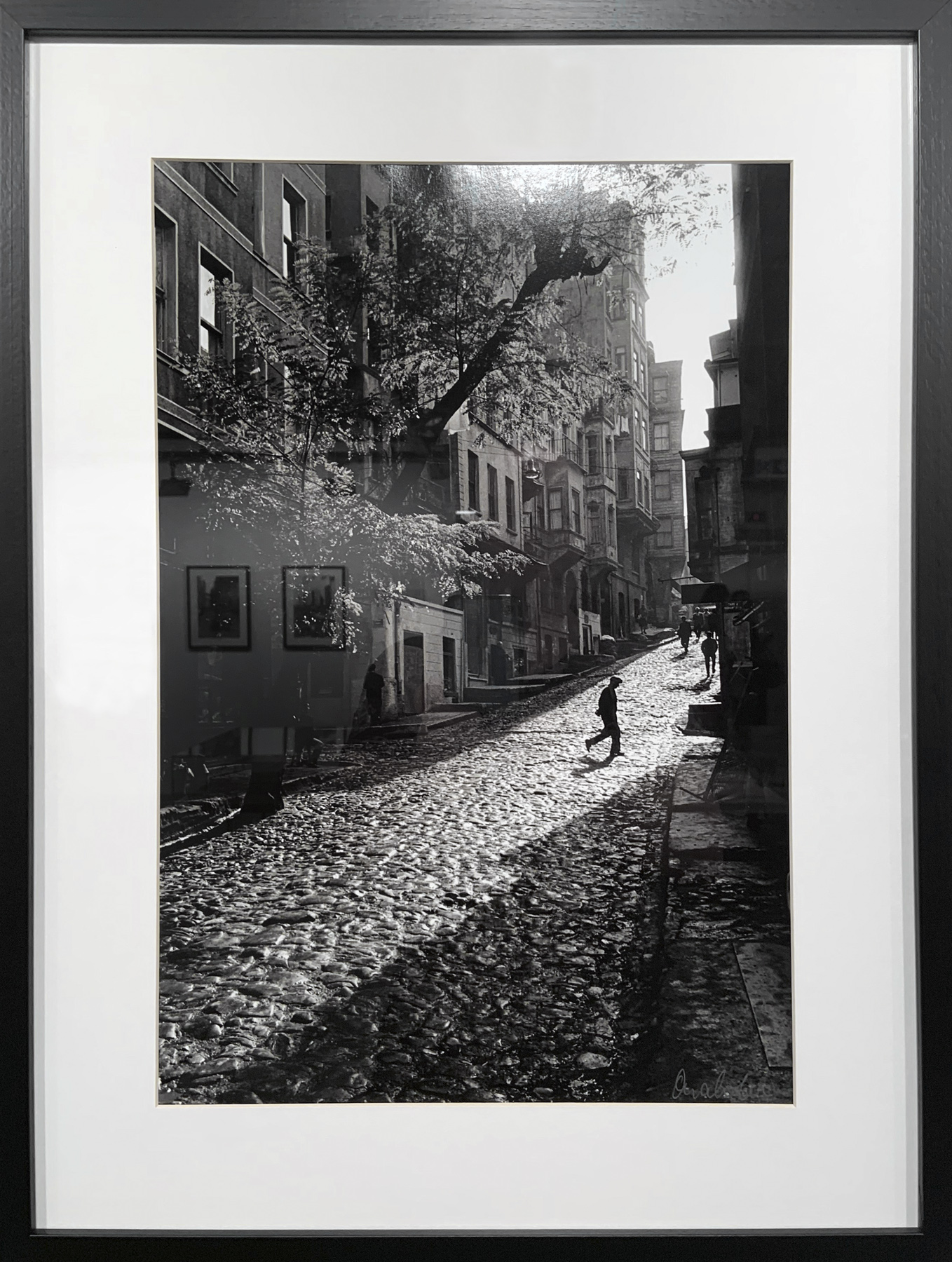
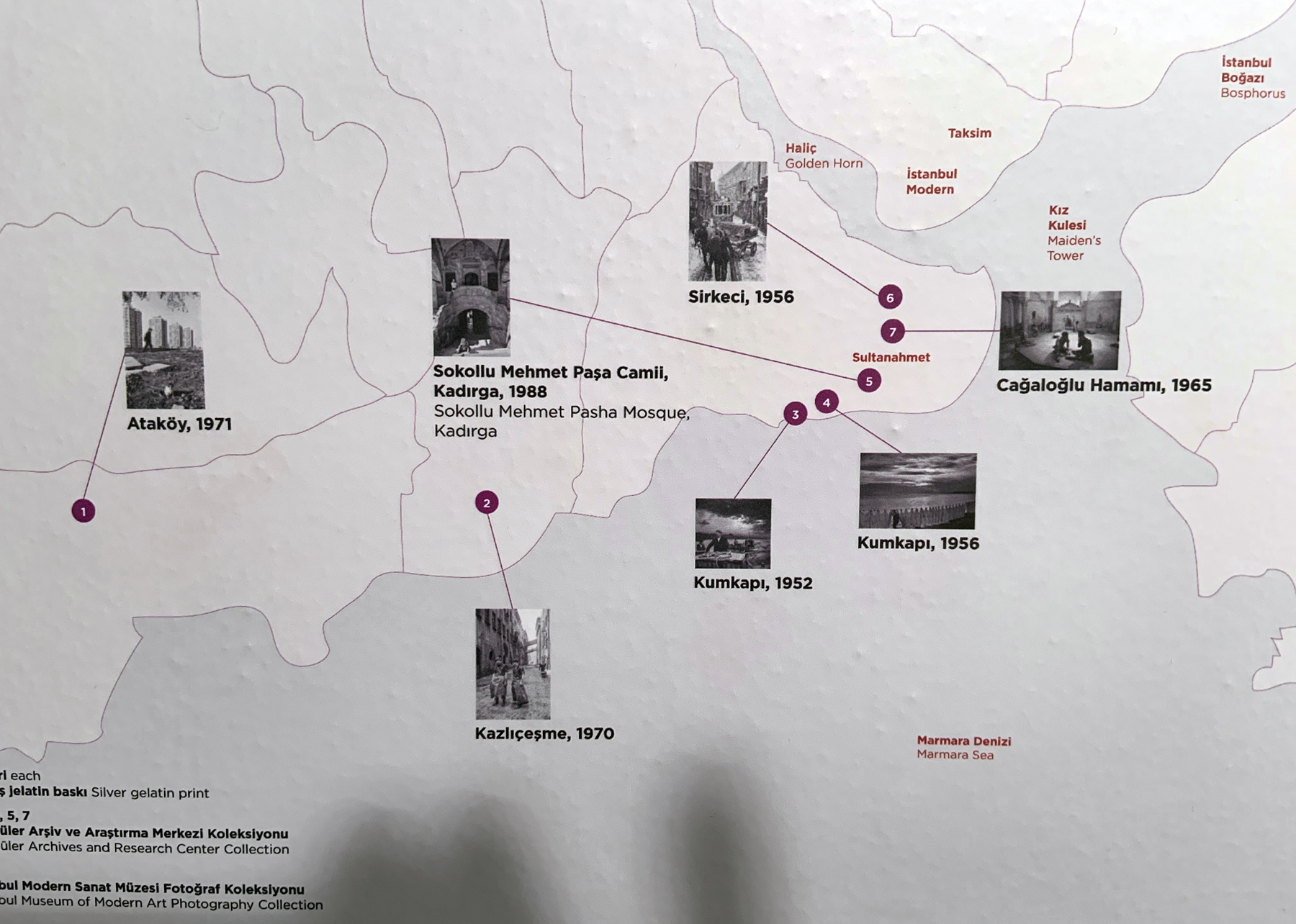
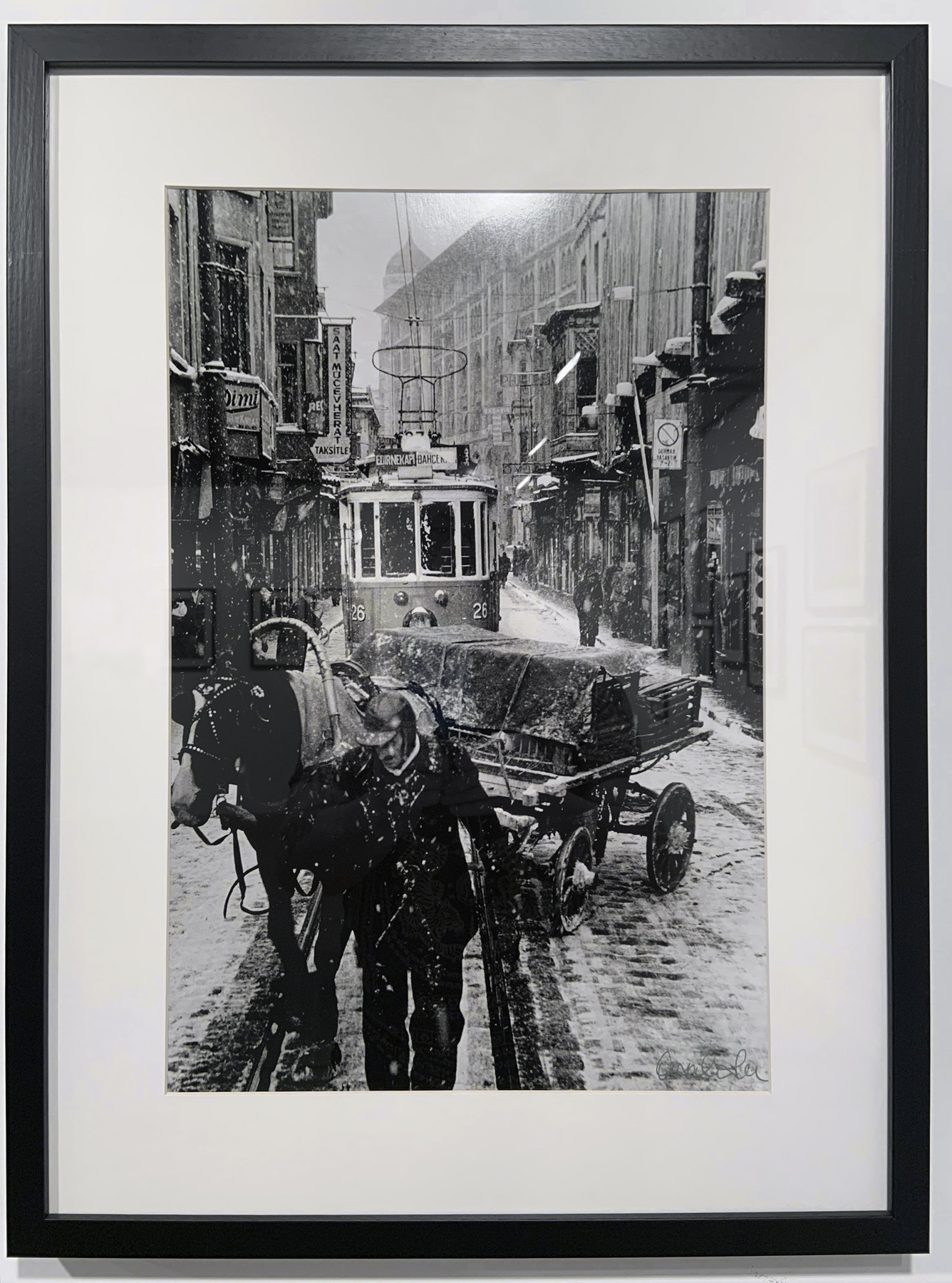

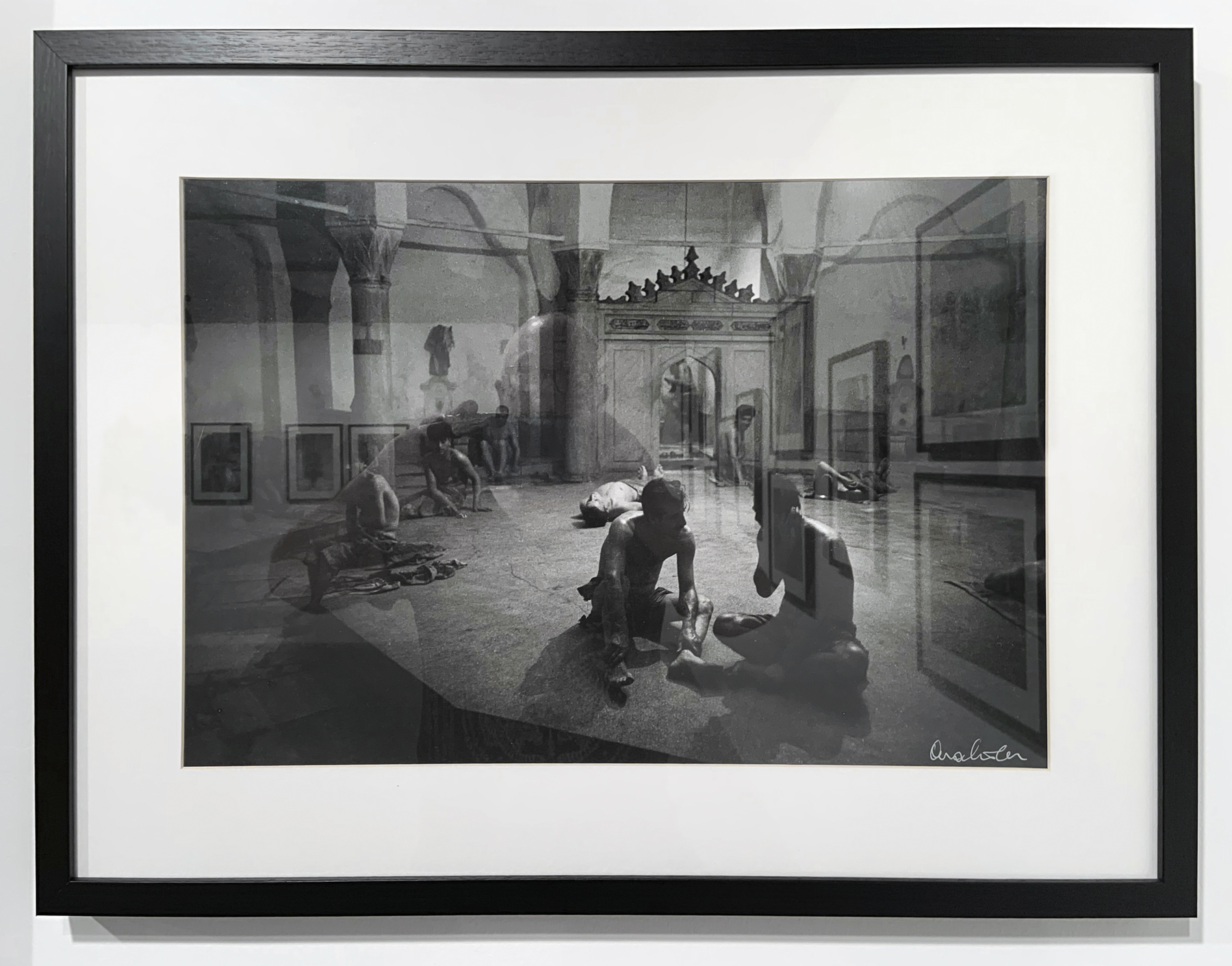
![Ara Güler (Turkish, 1928-2018) 'Sokollu Mehmet Paşa Camii, Kadirga [Sokollu Mehmet Pasha Mosque, Kadirga]' 1988 (installation view)](https://artblart.com/wp-content/uploads/2019/10/guller-a-web.jpg "Ara Güler (Turkish, 1928-2018) 'Sokollu Mehmet Paşa Camii, Kadirga [Sokollu Mehmet Pasha Mosque, Kadirga]' 1988 (installation view)")
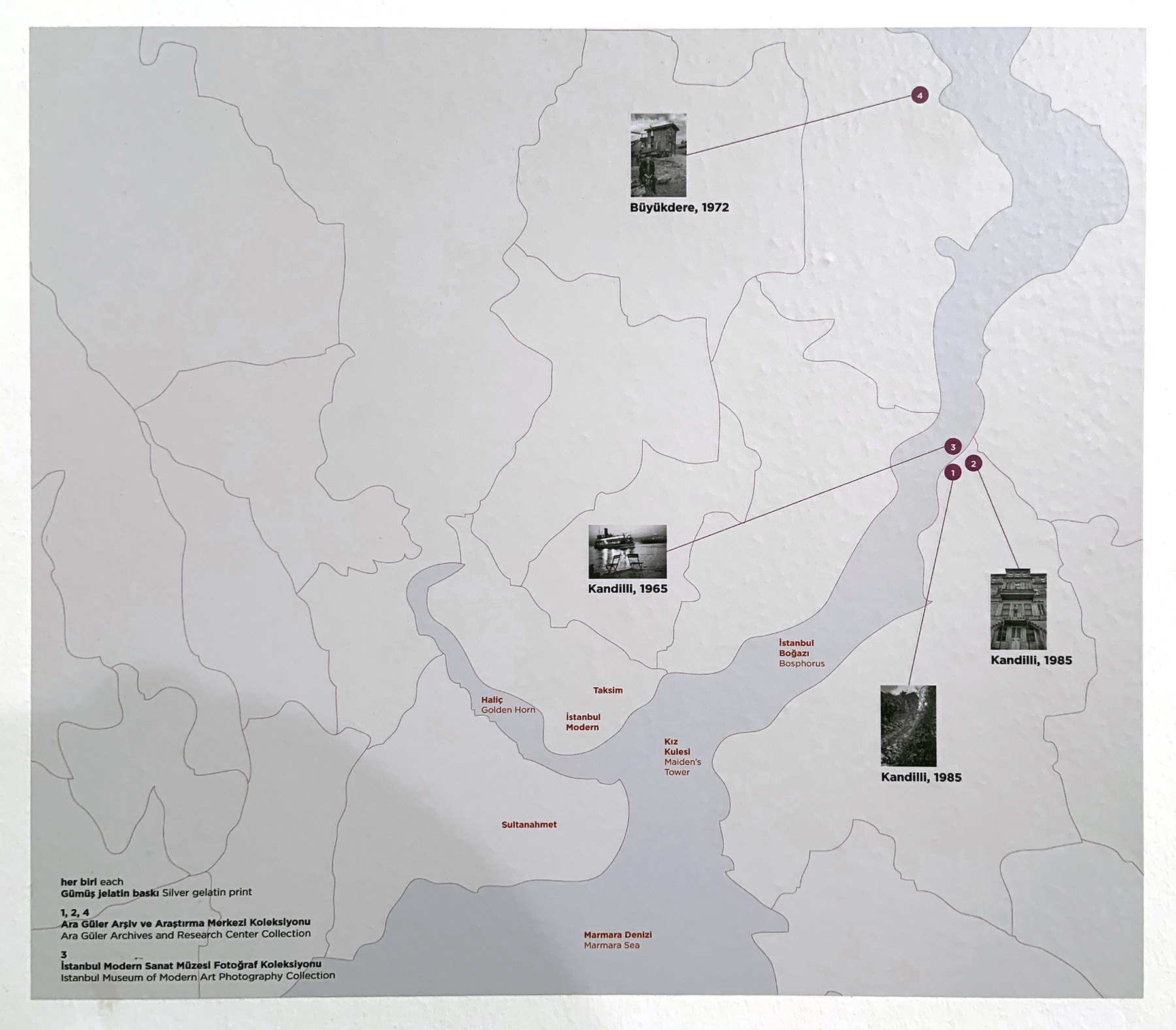
![Ara Güler (Turkish, 1928-2018) 'Kandilli [A Bosphorus passenger boat leaving the European shores of Istanbul for the Asian shore]' 1965](https://artblart.com/wp-content/uploads/2019/10/guler-kandilli-web.jpg "Ara Güler (Turkish, 1928-2018) 'Kandilli [A Bosphorus passenger boat leaving the European shores of Istanbul for the Asian shore]' 1965")


![Ara Güler (Turkish, 1928-2018) 'Kapaliçarsi [The Grand Bazaar]' 1972 (installation view)](https://artblart.com/wp-content/uploads/2019/10/guller-e-web.jpg "Ara Güler (Turkish, 1928-2018) 'Kapaliçarsi [The Grand Bazaar]' 1972 (installation view)")


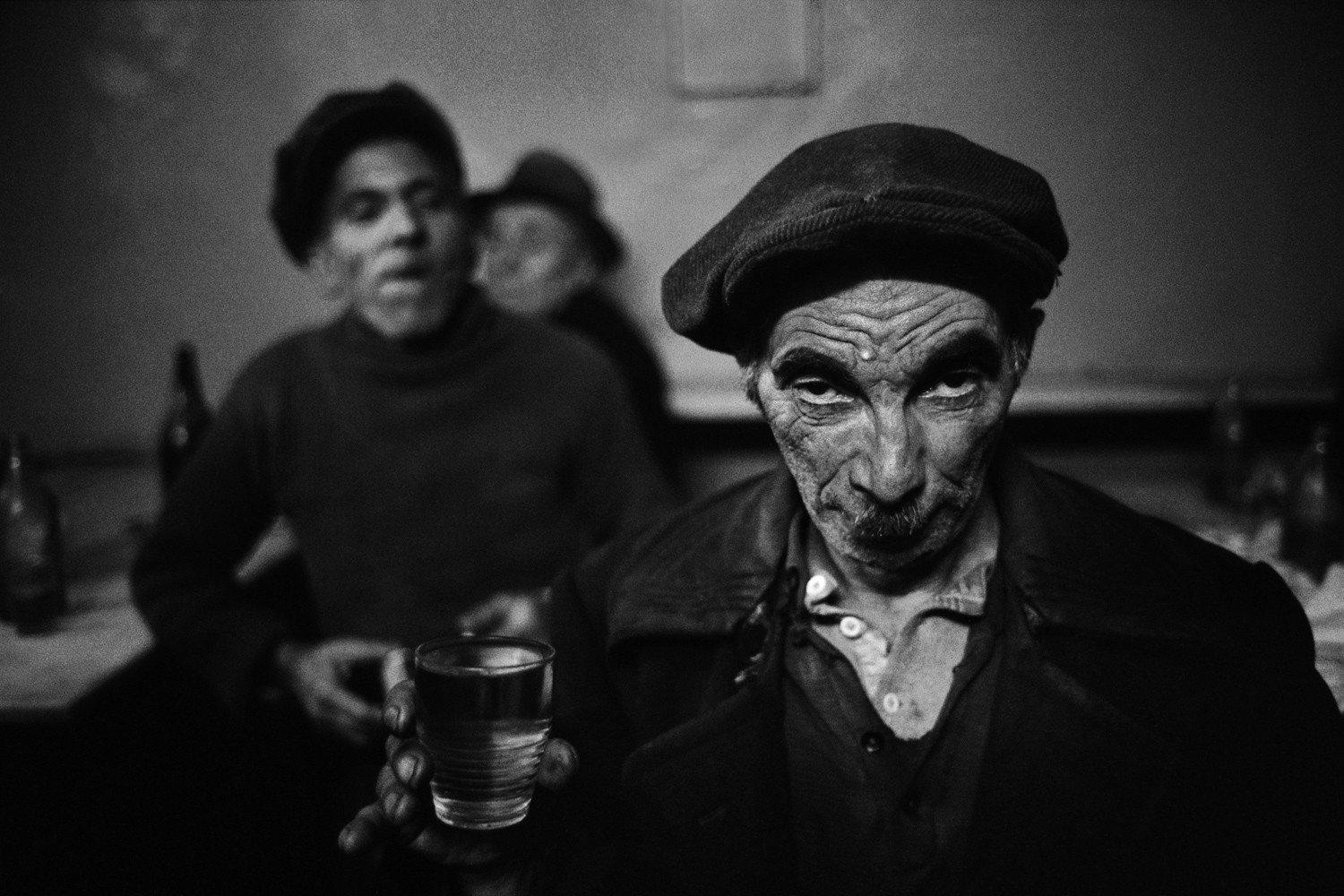
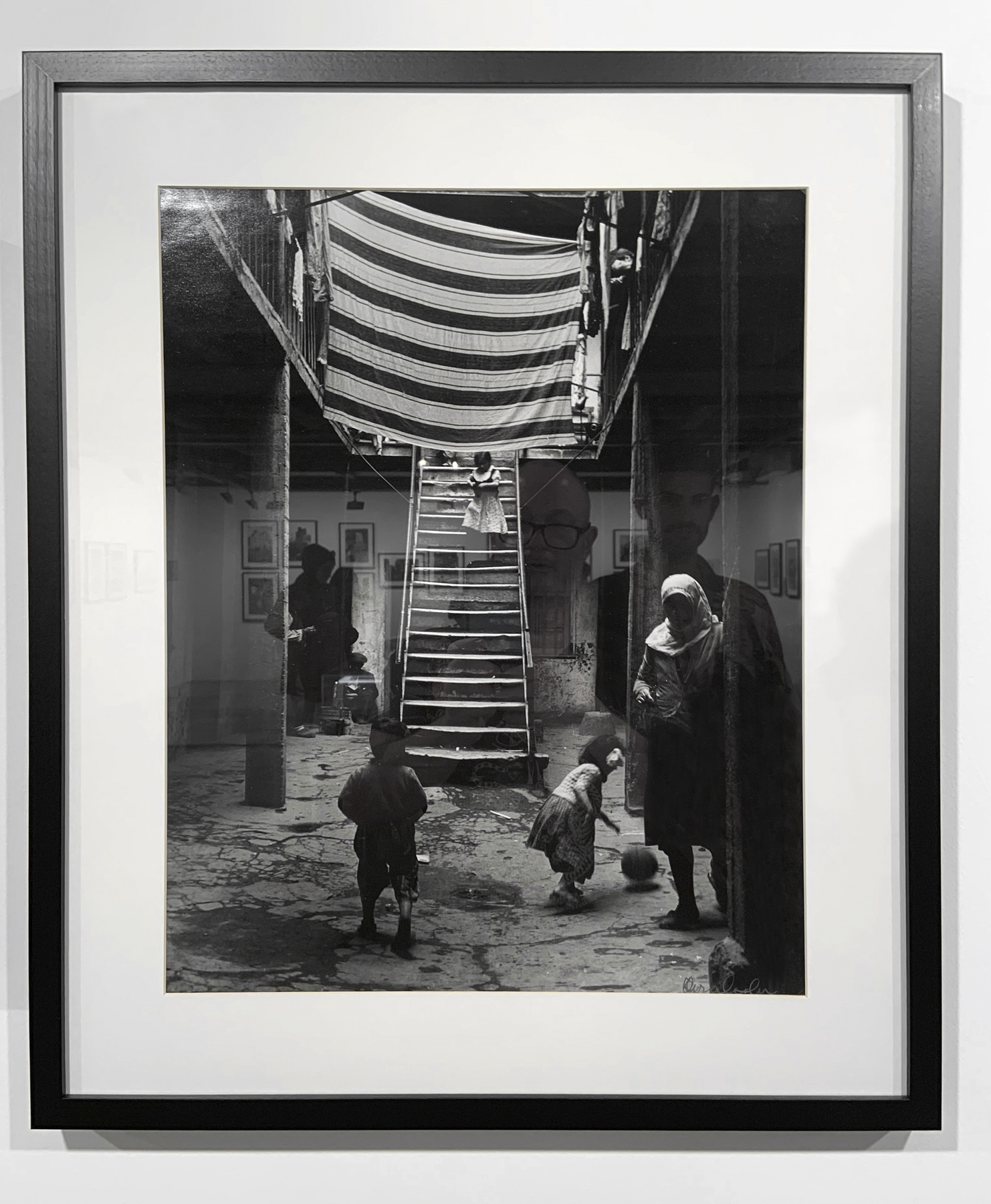
![Ara Güler (Turkish, 1928-2018) 'Tophane [Atrium of a house]' 1954](https://artblart.com/wp-content/uploads/2019/10/guler-tophane-web.jpg "Ara Güler (Turkish, 1928-2018) 'Tophane [Atrium of a house]' 1954")
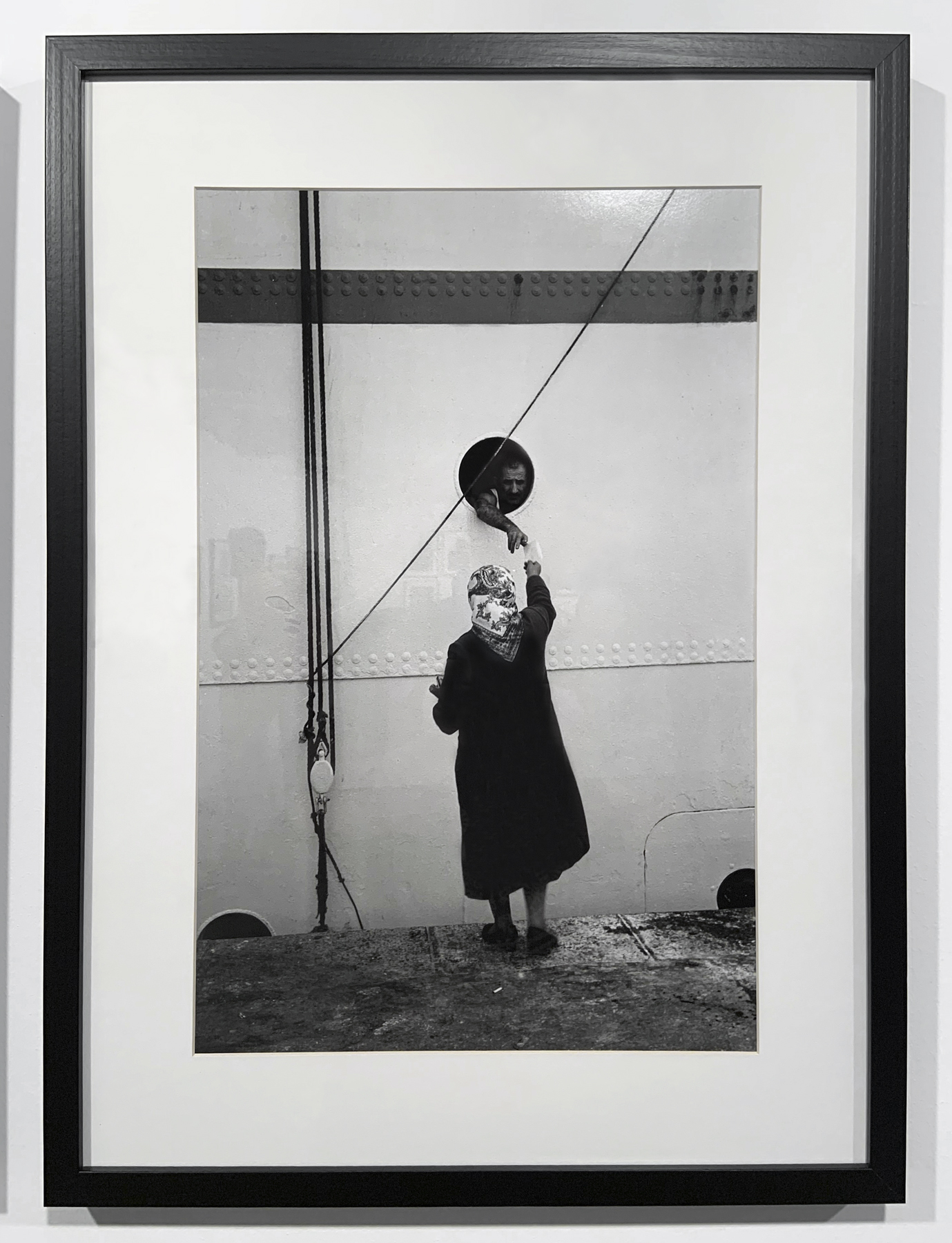
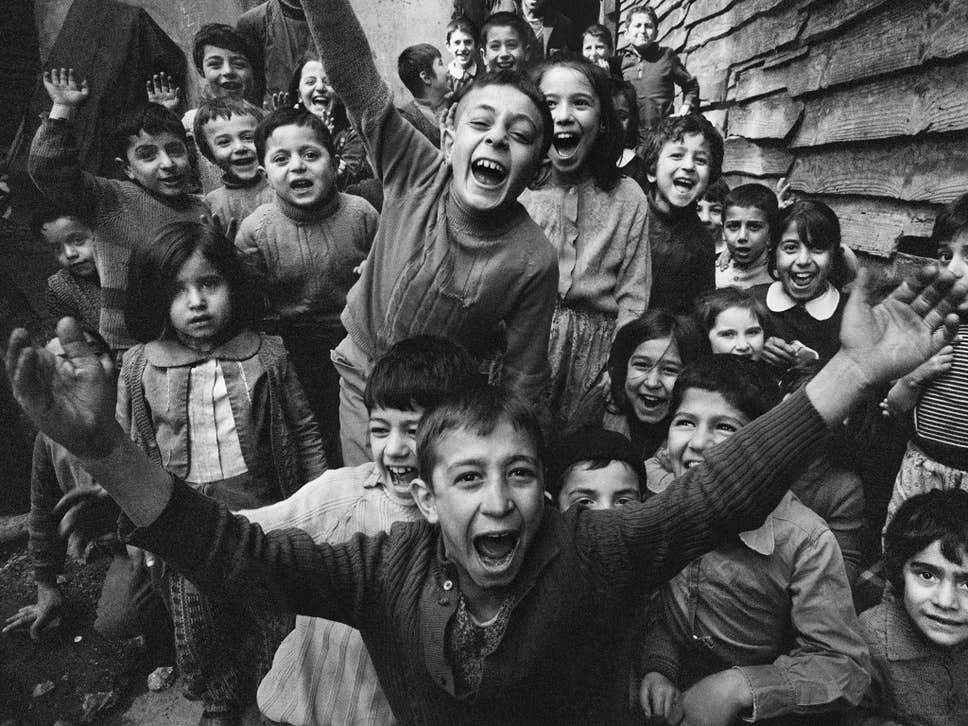
 Art Blart _ art and cultural memory archive
You must be logged in to post a comment.