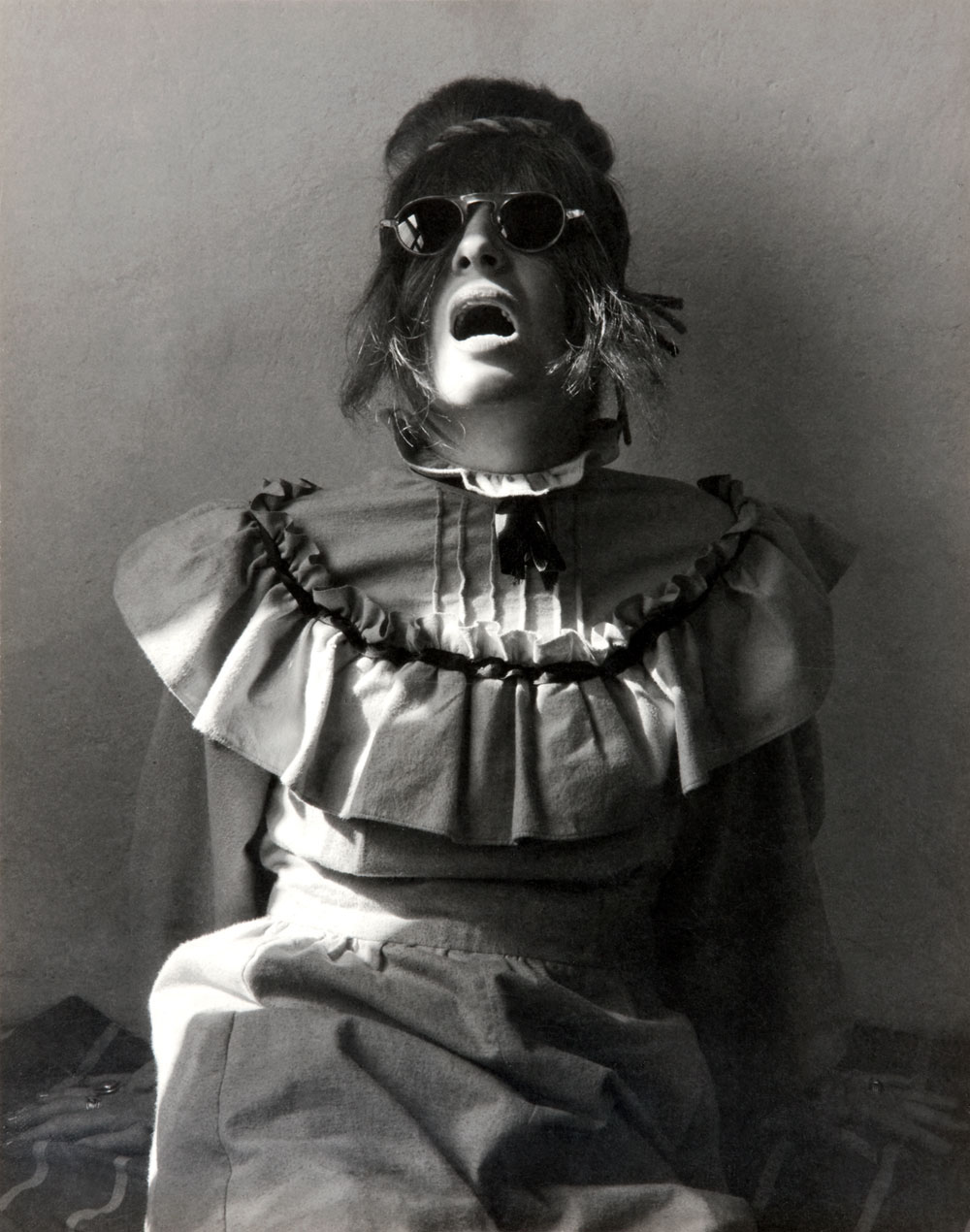
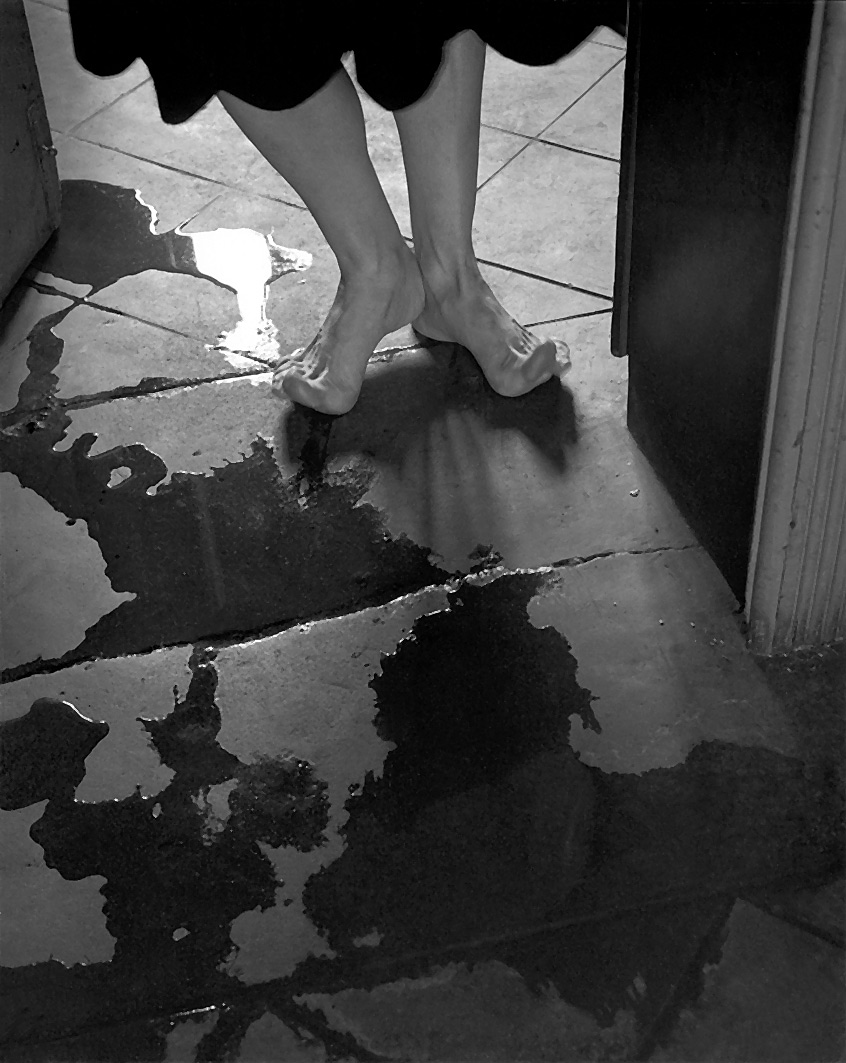
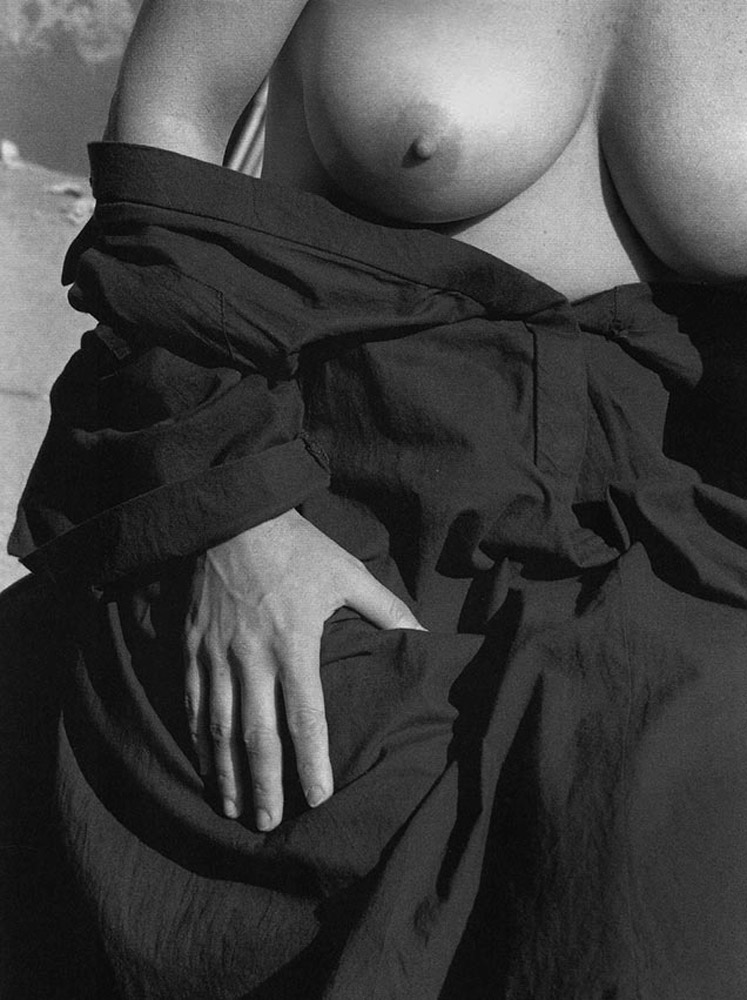
Exhibition: ‘Lorna Simpson’ at Jeu de Paume, Paris

Exhibition dates: 28th May – 1st September 2013


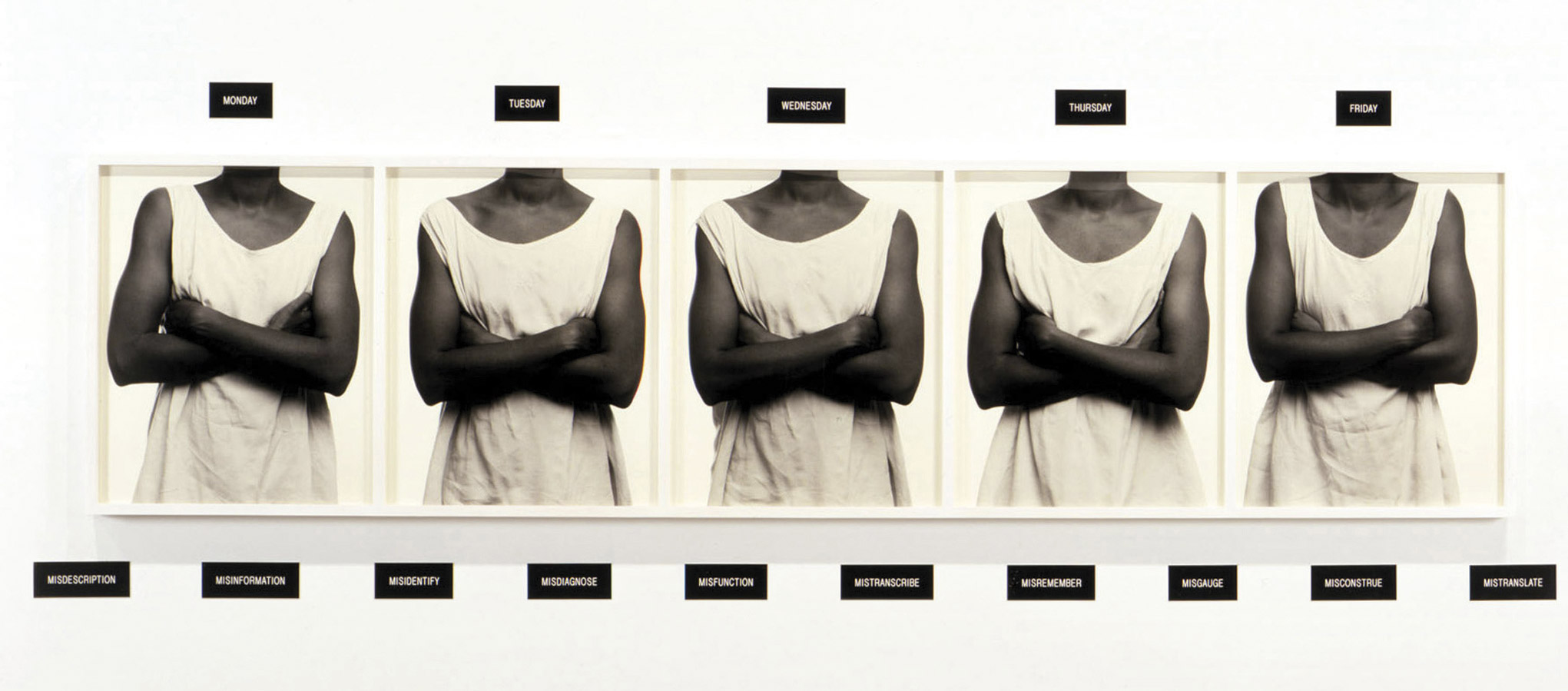
Lorna Simpson (American, b. 1960) 'Five Day Forecast (Prévisions à cinq jours)' 1988


Lorna Simpson (American, b. 1960)
Five Day Forecast (Prévisions à cinq jours)
1988
5 gelatin silver prints in a frame, 15 plates engraved plastic
24 1/2 x 97 in (62.2 x 246.4cm) overall
Lillian and Billy Mauer Collection
© Lorna Simpson


A fascinating practice!

Identity, memory, gender, representation, the body, the subject, felt, text, images, video, gesture, reenactment, concept and performance, all woven together seamlessly like a good wig made of human hair…

Dr Marcus Bunyan


Many thankx to Jeu de Paume for allowing me to publish the photographs in the posting. Please click on the photographs for a larger version of the image.


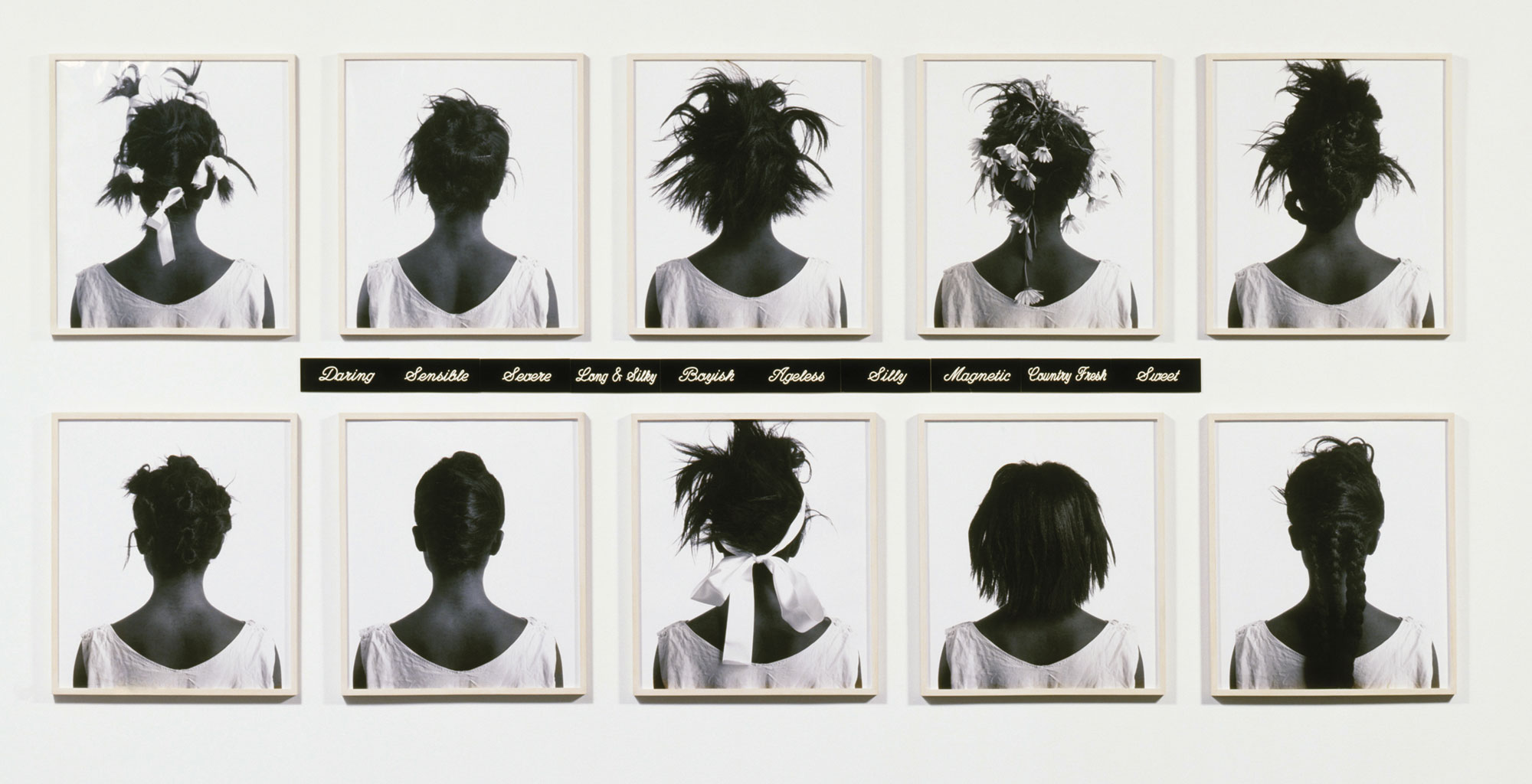
Lorna Simpson (American, b. 1960) 'Stereo Styles (Styles stéréo)' 1988


Lorna Simpson (American, b. 1960)
Stereo Styles (Styles stéréo)
1988
10 dye-diffusion black-and-white Polaroid prints, 10 engraved plastic plaques
57 3/4 x 125 1/4 x 1 3/8 in (146.7 x 318.1 x 3.5cm) overall
Collection of Melva Bucksbaum and Raymond Learsy
© Lorna Simpson


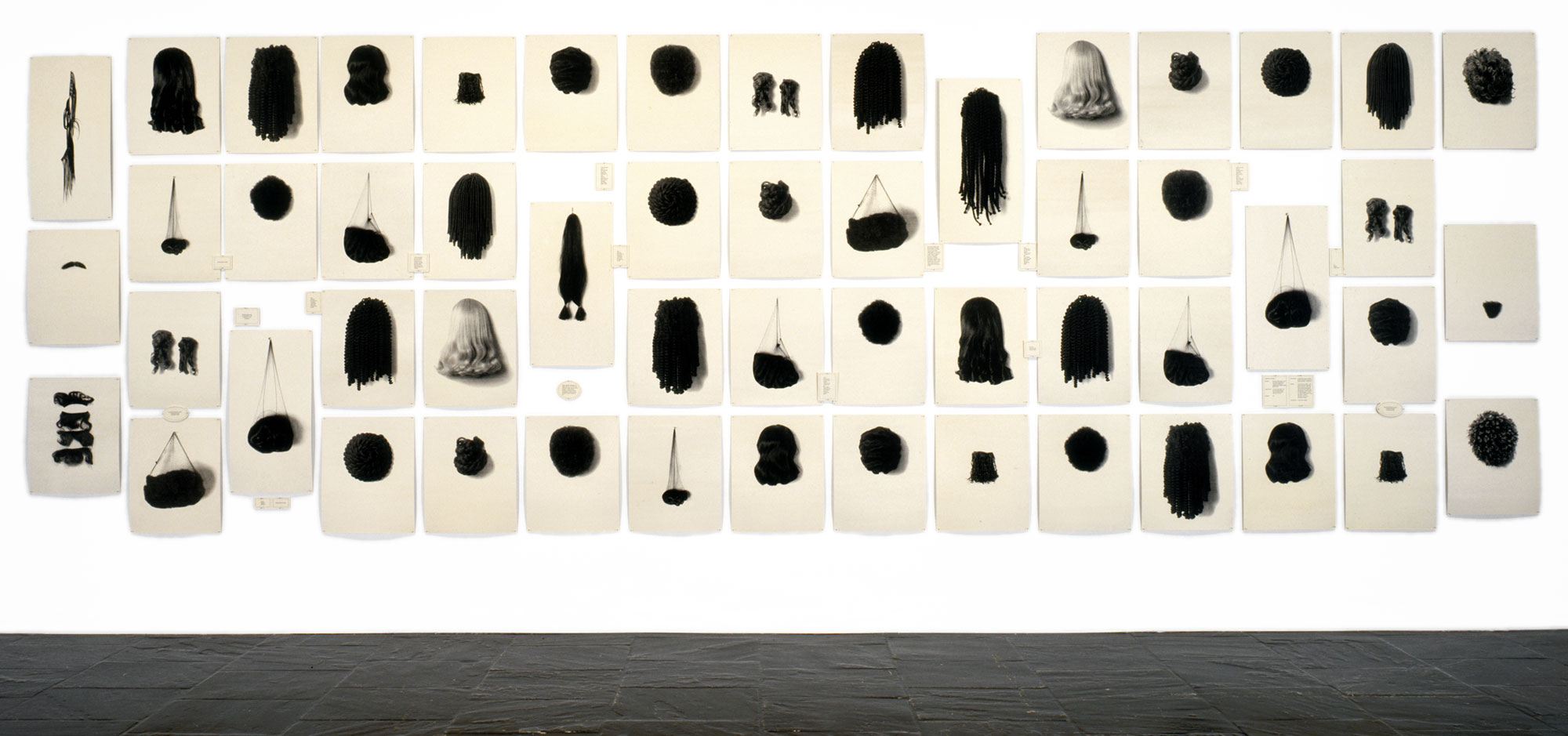
Lorna Simpson (American, b. 1960) 'Wigs II' 1994-2006


Lorna Simpson (American, b. 1960)
Wigs II
1994-2006
Serigraph on 71 felt panels (images and text)
98 x 265 in (248.9 x 673.1cm) overall
Courtesy the artist; Salon 94, New York; and Galerie Nathalie Obadia, Paris/Brussels
© Lorna Simpson


Lorna Simpson surprised her audiences in 1994 when she began to print her photographs on felt, inspired by its materiality after seeing an exhibition of the sculpture of Joseph Beuys in Paris “where the piano and walls were covered for a beautiful installation.” Simpson questioned whether the medium might be appropriate in a far different way for her work given the perspective afforded her by the passage of time. With the felt pieces, Simpson turned away from photography’s traditional paper support, magnified the already larger-than-life-size of the images within her large photo-text pieces to extremely large-scale multi-part works, and, most critically, absented the figure, in particular, the black woman in a white shift facing away from the camera for which she had received critical acclaim.

Ever-present, nevertheless, were her thematic concerns. The first felts offered surrogates for the body in a taxonomy of her own photographs of Wigs, with voicings “in and around gender,” and expanded upon the investigation of the role of coiffure in the construction of identity in Simpson’s photo-texts (such as Stereo Styles, Gallery 1). In the mid-1990s, such felts were succeeded by a series of photographs of interior and exterior scenes that were accompanied by long text passages printed on separate small felts. In these works the figure was replaced, as Okwui Enwezor wrote, “by the rumour of the body.”


Lorna Simpson (American, b. 1960) 'Please remind me of who I am' 2009 (detail)


Lorna Simpson (American, b. 1960)
Please remind me of who I am (detail)
2009
50 found photo booth portraits, 50 ink drawings on paper, 100 bronze elements
Overall installation dimensions variable
Collection of Isabelle and Charles Berkovic
© Lorna Simpson


For each multi-part photo-booth piece, Simpson sets in bronze frames these small inexpensive shots as well as her drawings of selected details of the photographs. Self-styled and performed, these photographs were used for a variety of purposes by their now anonymous sitters, ranging from sober, formal ID photos to glamorous, often theatrically playful mementos. Encompassing photo booth shots of different sizes from the 1920s to the 1970s (a few in colour), Simpson’s constellations of many images for each work offer a collective portrait of self-portraiture (Gather, 2009) and continue her ongoing explorations of identity and memory, explicitly phrased in the title of one of them: Please remind me of who I am (2009).


Lorna Simpson (American, b. 1960) 'Waterbearer [Porteuse d'eau]' 1986


Lorna Simpson (American, b. 1960)
Waterbearer (Porteuse d’eau)
1986
Gelatin silver print, vinyl letters
59 x 80 x 2 1/2 in (149.9 x 203.2 x 5.7cm) overall
Courtesy the artist; Salon 94, New York; and Galerie Nathalie Obadia, Paris / Brussels
© Lorna Simpson


Waterbearer shows a woman from the back, pouring water from an elegant silvery metallic pitcher in one hand and from an inexpensive plastic jug in the other, echoing art historical renderings of women at wells or in the domestic settings of Dutch still-life paintings. As if balancing the scales of justice, this figure also symbolically offers disjunctions of means and class. In the accompanying text, Simpson explicitly addresses memory and the agency of speakers: “She saw him disappear by the river, they asked her to tell what happened, only to discount her memory.”


For her first European retrospective, the Jeu de Paume presents thirty years of Lorna Simpson’s work. For this Afro-American artist, born in Brooklyn, New York, in 1960, the synthesis between image and text is profound and intimate. If one were to consider Lorna Simpson as a writer, the textual element of her works could have an autonomous life as prose poems, very short stories or fragments of scripts. And yet, her texts are inseparable from her images; there is a dynamic between the two that is both fragile and energising, which links them unfailingly. Lorna Simpson became known in the 1980s and 90s for her photographs and films that shook up the conventions of gender, identity, culture and memory.

Throughout her work, the artist tackles the complicated representation of the black body, using different media, while her texts add a significance that always remains open to the spectator’s imagination. In her recent work, Lorna Simpson has integrated archive images, which she reinvents by positioning herself in them as subject. As the artist underlines: “The theme I turn to most often is memory. But beyond this subject, the underlying thread is my relationship to text and ideas about representation.” (Lorna Simpson)

This retrospective reveals the continuity in her conceptual and performative research. In her works linking photography and text, as well as in her video installations, she integrates – while continually shaking them up – the genres of fixed and moving images, using them to ask questions about identity, history, reality and fiction. She introduces complexity through her use of photography and film, in her exploitation of found objects, in the processes she develops to take on the challenges she sets herself and to spectators.

The exhibition gathers her large format photo-texts of the mid 1980s, which brought her to the attention of the critics (Gestures / Reenactments, Waterbearer, Stereo Styles), her work in screenprints on felt panels since the 1990s (Wigs, The Car, The Staircase, Day Time, Day Time (gold), Chandelier), a group of drawings (Gold Headed, 2013), and also her “Photo Booths,” ensembles of found photos and drawings (Gather, Please remind me of who I am…). The exhibition is also an opportunity to discover her video installations: multivalent narratives that question the way in which experience is created and perceived more or less falsely (Cloudscape, 2004, Momentum, 2010), among them, Playing Chess, a new video installation made especially for the occasion.


About the exhibition

Joan Simon

In her critically acclaimed body of work spanning more than thirty years, Lorna Simpson questions identity and memory, gender and history, fact and fiction, playing eye and ear in tandem if not in synchrony to prompt consideration of how meaning is constructed. That she has often described herself as an observer and a listener informs an understanding of both her approach and her subjects. In her earliest black-and-white documentary street photographs (1978-1980), Simpson isolated gestures that bespoke an intimacy between those framed in her viewfinder, recording what was less a decisive moment than one of coming into relation. Some of these photographs seem to capture crossed glances, pauses in an ongoing conversation. Others are glimpses of occasions, transitional events identifiable by a white confirmation or wedding dress, which convey a sense of palpable silence in exchanges between people just out of earshot.

When Simpson began to stage her own photographs in 1985 and to write accompanying texts, she came in closer. She allowed us to see a carefully framed black body, abstracted in gesture and in white clothing, yet also permitted us to read seemingly overheard comments that redirected and recomplicated the view. While her images captured gestures, her narratives imbued these images frozen in a never-changing present with memory, a past. The title of her first photo-text work, made in 1985, and of the exhibition of that year in which it was first exhibited was Gestures / Reenactments, and one can argue that all Simpson’s work is built on the juxtaposition of gestures and reenactments, creating meaning in the resonant gap between the two. It is a gap that invites the viewer / reader to enter, all the while requiring an active reckoning with some inalienable truths: seeing is not necessarily believing, and what we might see is altered not only by our individual experiences and assumptions but also, critically, by what we might hear.

The exhibition

Whether for still or moving picture productions, Lorna Simpson (b. 1960) uses her camera as catalyst to question identity and gender, genres and history, race and class, fact and fiction, memory and meanings. Assumptions of photographic “truth” are challenged and qualified – indeed redirected – by the images she creates that are inseparable from the texts she writes to accompany them, by the soundings she chooses  for videos, or by her pairings of vintage photographs with newly made renderings. The Jeu de Paume presents lorna Simpson’s first large-scale exhibition in Europe beginning with her earliest photo-text pieces of the 1980s through her newest video installation, Chess, 2013, which makes its debut in Paris.

Works in the exhibition show the artist drawing on traditional photo techniques such as gelatin silver prints in an intimate synthesis with speakerly texts (Gallery 1). They also show Simpson’s creation of new combines, among them serigraphs on felt with writings and images invoking film noir (Gallery 2), a video installation of three projections based on historic photographs and her own prior still photos (Gallery 3), constellations of recuperated photo-booth photos with her drawings isolating details from them as well as vintage photographs together with those re-staged by the artist (Gallery 4), and a video focusing on performance as well as time itself and its reversal (Gallery 5).

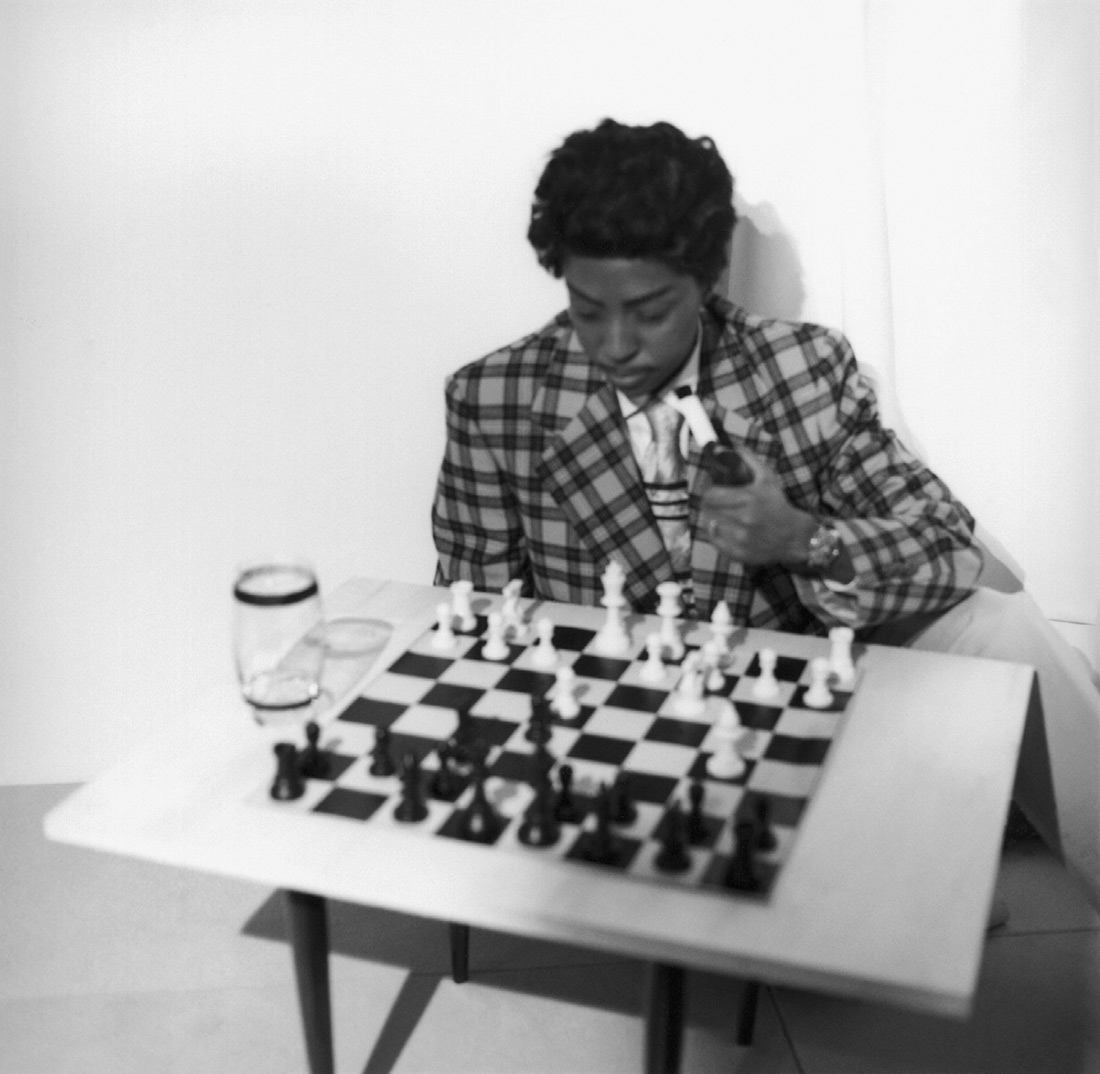
The exhibition’s parcours [route] reveals turning points in Simpson’s oeuvre as well as thematic continuities. The earliest pieces in the show are Simpson’s performative proto-cinematic photo-texts, beginning with the 1985 Gestures/ Reeactments, a title literally evocative of the work’s visual / verbal aspect while also paradigmatically descriptive of what would be her conceptual practice for the next three decades. Simpson herself makes a rare appearance in her work in two related pieces in the show: the 2009 epic still photo work 1957-2009 (Gallery 4), for which the artist re-enacted scenes from vintage photos, and Chess, 2013, (Gallery 3), which features re-enactments of some of the same photos.

.
Gallery 1 introduces the artist’s signature, indeed iconic early images of the 1980s – a black figure in white clothing, face turned away from the camera or cropped out of the frame – accompanied by precisely crafted, allusive texts that recomplicate what is seen by what is heard in these voicings. The intention to deny a view of a face, as Simpson says, “was related to the idea that the one thing that people gravitate to in photography is the face and reading the expression and what that says about the person pictured, an emotional state, who they are, what they look like, deciphering and measuring. Who is being pictured, what is actually the subject? Photographing from the back was a way to get viewers’ attention as well as to consciously withdraw what they might expect to see.”

The performative photo-text works in Gallery 1 are Gestures / Reenactments, 1985 (created as part of her thesis project for her MFA at the University of California, San Diego), Waterbearer and Twenty Questions (A Sampler) (the first works that Simpson made when she moved to New York in 1986), as well as Five Day Forecast, 1988, and Stereo Styles, 1988. Beginning with Waterbearer, all of these except Gestures / Reenactments (which features a black male) show a black female in a white shift played by artist Alva Rogers, who was often mistaken for Simpson herself.

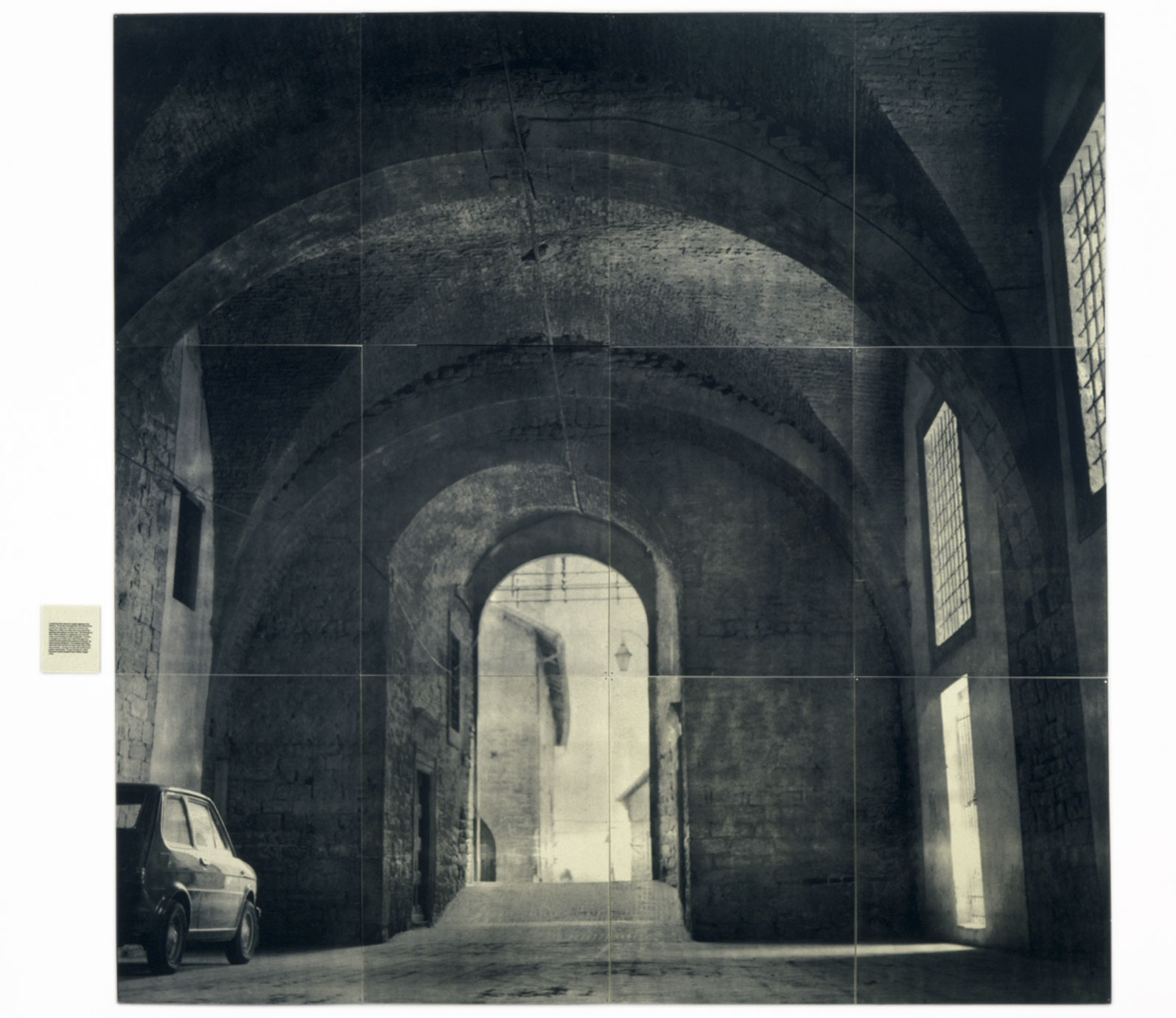
Gallery 2 marks important changes the artist made during the ’90s, most notably Simpson’s surprising shift to printing her photographs on felt and absenting the human figure. At first she used surrogates for the body, seen in the many and various wigs she photographed and which she accompanied with texts that continued to address ideas of identity and gender (Wigs, 1994-2006). She used photographs taken during her travels for the next series of felt works, which were interior and exterior scenes (The Car, 1995, The Rock, 1995, The Staircase, 1998) that in both imagery and texts invoked film noir. These works led almost inevitably to the start of Simpson’s film and video work in 1997. (Her earliest photo-texts will be recognised by the viewer as proto-cinematic with their multiple frames and conversational voices.)

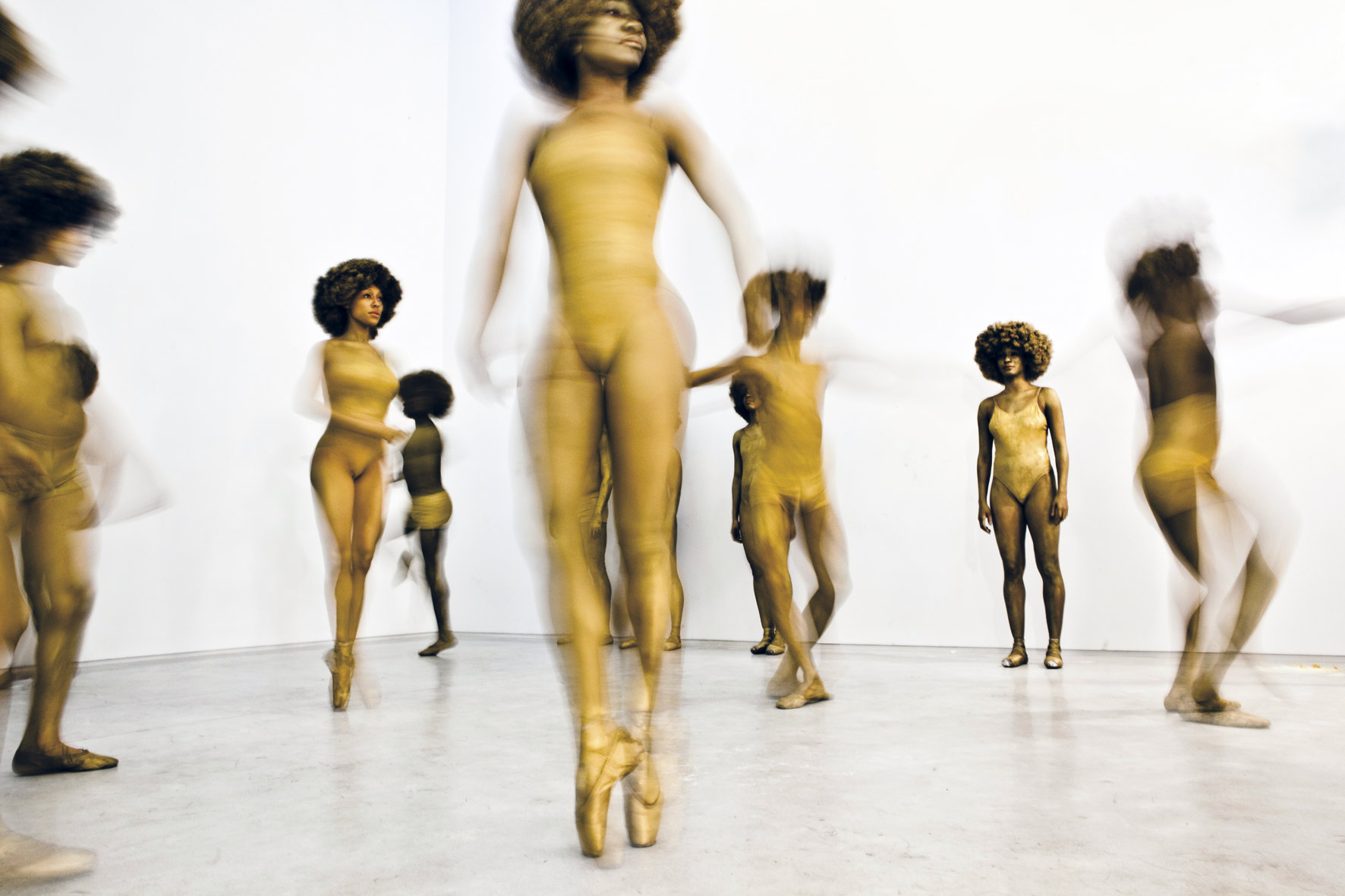
This gallery also reveals how Simpson continues to use her felt medium and returns to her own archive of images   as well as found objects. Three related works, though no longer using text, nevertheless “comment” on each other:  a video of a performance (Momentum, 2010) inspired by an early 1970s performance at Lincoln Center generated felt works based on vintage photographs of this famous New York theatre – Chandelier, 2011, Daytime, 2011, and Daytime (gold), 2011 – as well as the Gold Headed (2013) drawings, based on the dancers costumed head to foot in gold. Drawings are perhaps the least known medium in Simpson’s practice, and while they reveal the fluid gestures of her hand, visitors will recognise in these gold heads turned from the viewer an echo of the position of the figures  in Gallery 1.

Gallery 3 is devoted to Simpson’s newest video, Chess, 2013, which is based on historic photos as well as her own earlier photographic piece, 1957-2009 (Gallery 4), in which she restaged found vintage photographs. Chess and 1957-2009 mark the rare instances in which Simpson has herself appeared in her work.

Gallery 4 presents reenactments that use quotidian photographic genres to explore constructions of identity and that offer a collective portrait of photographic portraiture over time. All of the works in this gallery are based on found photographs Simpson purchased on eBay and each depicts anonymous subjects performing for the camera. 1957-2009 is based on photographs in a vintage album; Gather and Please remind me of who I am are constellations of bronze-framed found photo-booth images (from the 1920s to the 1970s) accompanied by Simpson’s similarly framed drawings of details from the photographs.

Gallery 5 offers Simpson’s video installation Cloudscape, 2004, which focuses on performance itself and the soundings of a body, that of artist Terry Adkins whistling a hymn. Embodying memory (and the distortions of it) as she did in her earliest photo-works but playing also with the particularities of video, Simpson loops the video to play forward and backward. In this process a new melody is created even as the stationary figure appears same but different.


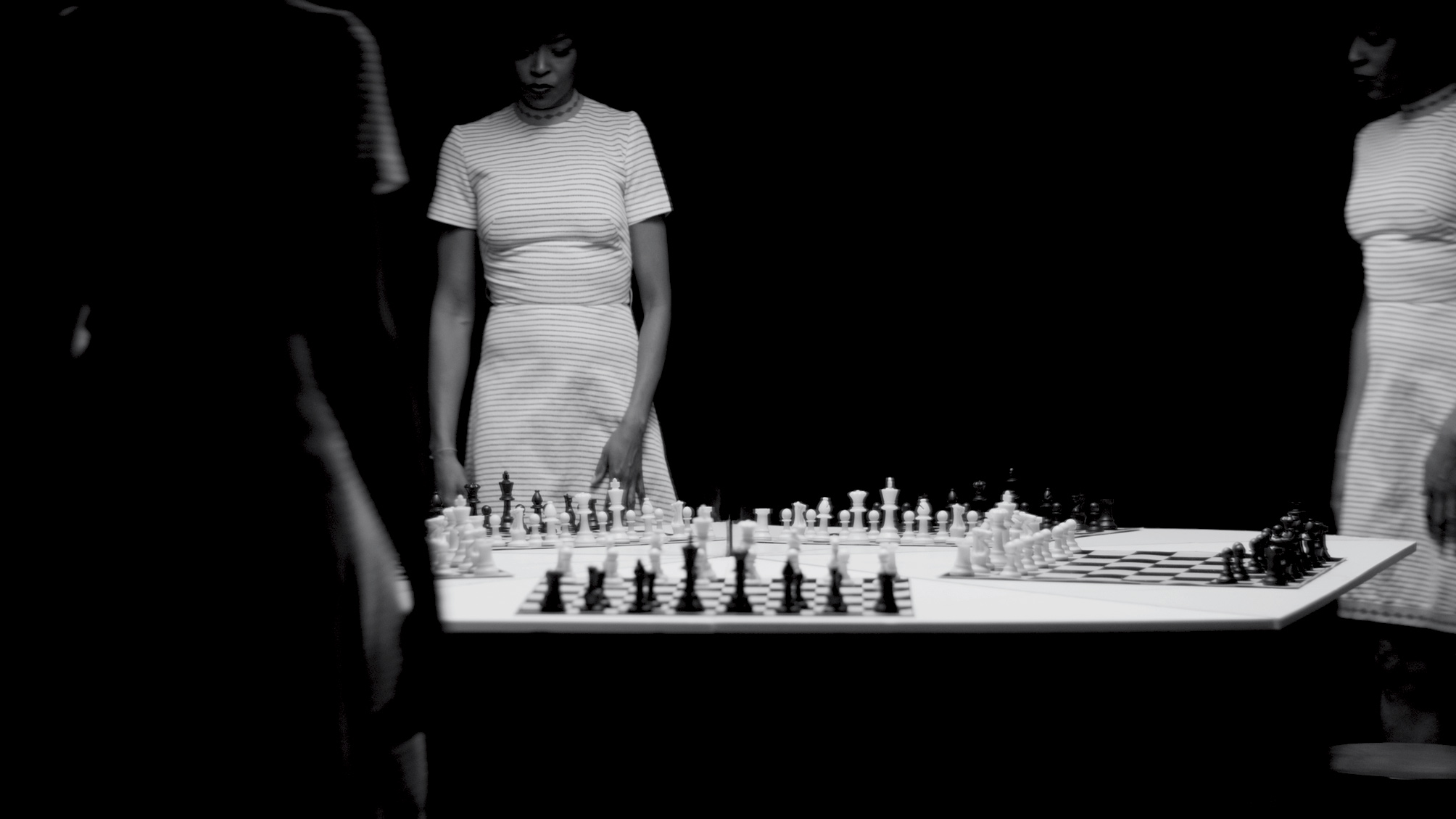
Lorna Simpson (American, b. 1960) 'Chess (Échecs)' 2013


Lorna Simpson (American, b. 1960)
Chess (Échecs)
2013
HD video installation with three projections, black & white, sound
10:25 minutes (loop)
Score and performance by Jason Moran
Courtesy the artist; Salon 94, New York; and Galerie Nathalie Obadia, Paris/Brussels
© Lorna Simpson


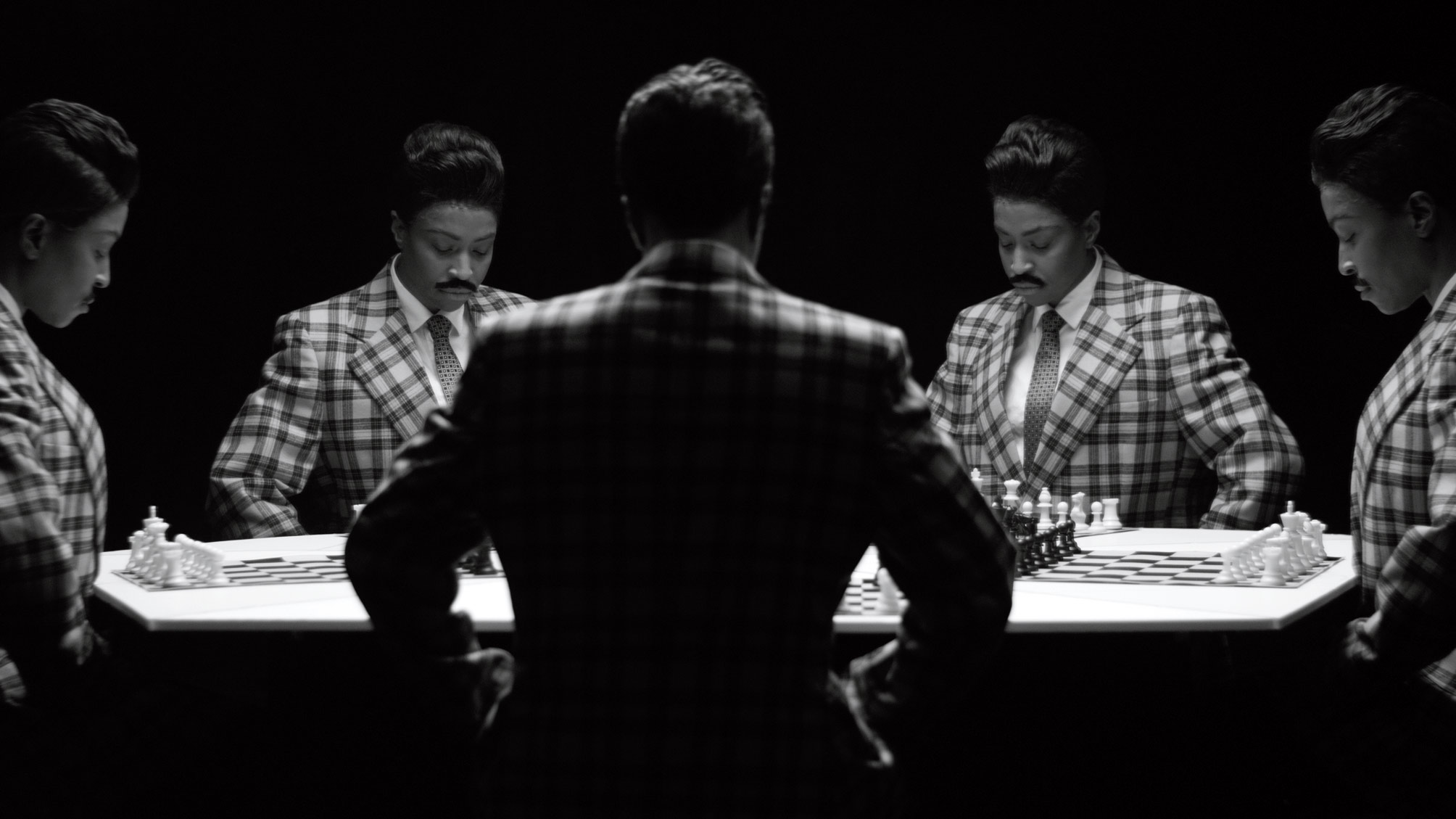
Lorna Simpson (American, b. 1960) 'Chess (Échecs)' 2013


Lorna Simpson (American, b. 1960)
Chess (Échecs)
2013
HD video installation with three projections, black & white, sound
10:25 minutes (loop)
Score and performance by Jason Moran
Courtesy the artist; Salon 94, New York; and Galerie Nathalie Obadia, Paris/Brussels
© Lorna Simpson


“Gestures” and “reenactments” could both be described as the underlying methods of Simpson’s practice for the decades to follow. Whether working with photographs she herself staged, found photographs, or archival film footage, her images captured gestures (as in her earliest documentary photographs of 1978-1980) while her series of multiple images, accompanied by texts, proposed simultaneous (if not synchronous) reenactments. This method also applied to works in which she replicated found images, whether turning images from her films into drawings, or using herself to re-play roles depicted by anonymous figures she had discovered in vintage photographs, either for staged still photographs (as in 1957-2009, 2009), or for moving pictures (as in the video Chess, 2013).

Chess, 2013, Simpson’s video installation made expressly for this exhibition, draws on images from 1957-2009, her still photograph ensemble of 2009 (on view in Gallery 4). For both, in a departure from her earlier videos and prior staged photographs, Simpson herself performs. In 1957-2009, by reenacting scenes from found vintage prints with which they are shown, Simpson is “mirroring both the male and  the female character, in dress, pose, expression, and setting. When I would mention the idea of working with mirrors [for the Chess video] people would often mention the famous portraits of Picasso and Picabia taken at a photo studio in New York by an anonymous photographer who placed the subject at a table in front of two mirrored panels at seventy-degree angles. The result is a five-way portrait that includes views that are not symmetrical and that offer slightly different angles: a surrealist trope of trick photography.”

Though the artist first rejected the idea of working with the mirror device used in these historic portraits, which she had seen many times, she decided to take it on fully and reconstruct it in her studio for this new video project after  art historian and sociologist Sarah Thornton sent her “a beautiful image of an unknown man of African descent in a white straw hat, which had been in an exhibition at MoMA [catalogue page 61]. It was a five-way portrait probably taken by the same photographer who had taken the portraits of Picasso and Picabia. I could no longer resist or dismiss this idea. I felt that it was demanding my attention.”

Shot in Simpson’s studio over the weekend of December 8, 2012, Chess is comprised of three video projections. For two of them Simpson again plays both female and male chess-players, and with the help of makeup and hair assistants, she now allows her characters to age. The third projection shows pianist Jason Moran performing his improvised score for this project, which was inspired by discussions between artist and composer about “mirroring in music,” especially “in the work of musician Cecil Taylor, who employs mirroring in his compositions.”


Lorna Simpson (American, b. 1960) 'The Car' 1995


Lorna Simpson (American, b. 1960)
The Car
1995
Serigraph on 12 felt panels with felt text panel
102 x 104 in (259.1 x 264.2cm)
Courtesy the artist; Salon 94, New York; and Galerie Nathalie Obadia, Paris/Brussels
© Lorna Simpson


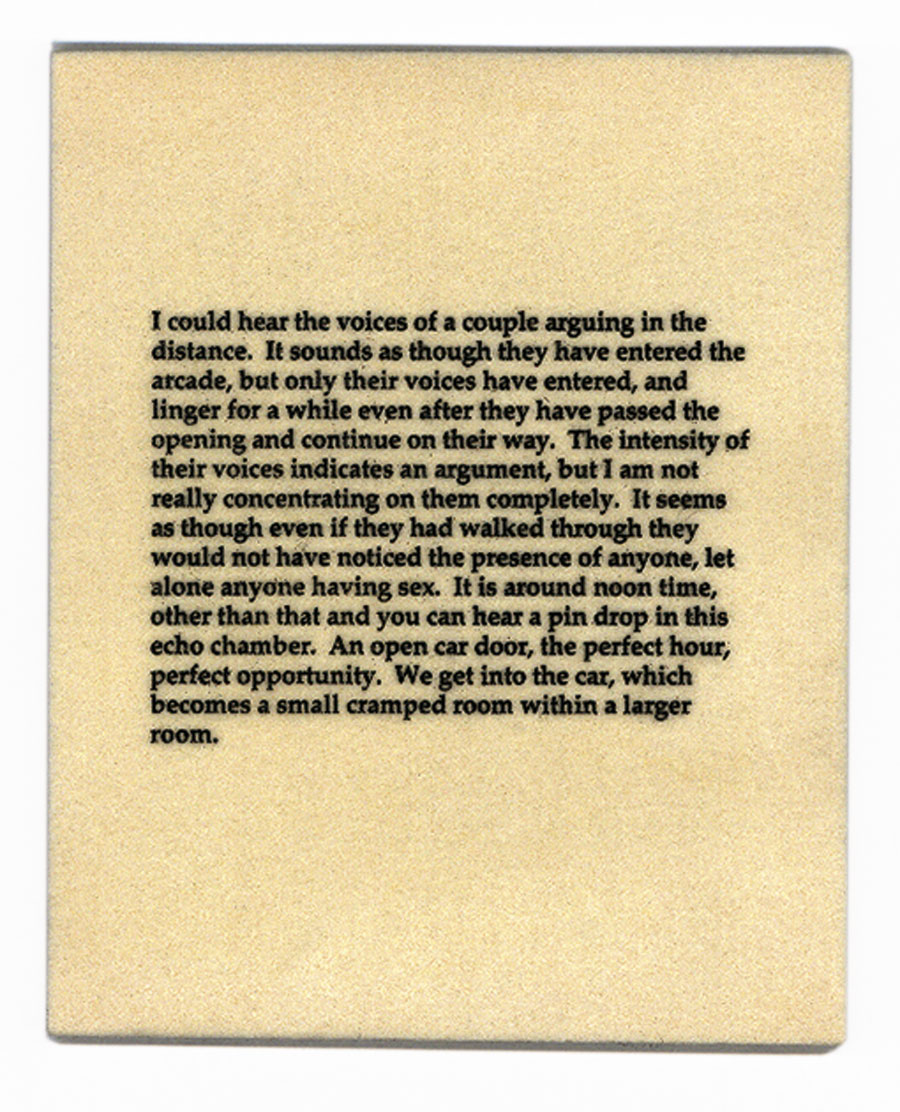
Lorna Simpson (American, b. 1960) 'The Car' 1995 (detail)


Lorna Simpson (American, b. 1960)
The Car (detail)
1995
Serigraph on 12 felt panels with felt text panel
102 x 104 in (259.1 x 264.2cm)
Courtesy the artist; Salon 94, New York; and Galerie Nathalie Obadia, Paris/Brussels
© Lorna Simpson


Lorna Simpson (American, b. 1960) '1957-2009' 2009 (detail)


Lorna Simpson
1957-2009 (detail)
2009
299 gelatin silver prints, framed
5 x 5 in. (12.7 x 12.7cm) each (image size)
Rennie Collection, Vancouver
© Lorna Simpson


While collecting photo booth images on eBay, Simpson found the first of the vintage photographs – a woman in a tight sweater-dress leaning on a car – that would generate 19572009 (2009). The artist subsequently bought the entire album and in 2009 restaged these photographs of an anonymous black woman and sometimes a man performing for their camera between June and August 1957 in Los Angeles, which they may have done in the hope of gaining movie work in Hollywood or as an independent project of self-invention. For 1957-2009, Simpson reenacted both female and male roles, and the 299 images are comprised of both the 1957 originals and Simpson’s 2009 remakes. Simpson again reenacted a selection of these vignettes for her video installation Chess, 2013.


Lorna Simpson (American, b. 1960) 'Cloudscape (Paysage nuageux)' 2004


Lorna Simpson (American, b. 1960)
Cloudscape (Paysage nuageux)
2004
Video projection, black & white, sound
3:00 minutes (loop)
Centre national des arts plastiques, purchase in 2005
Photo courtesy the artist; Salon 94, New York; and Galerie Nathalie Obadia, Paris/Brussels
© Lorna Simpson/Centre national des arts plastiques


Lorna Simpson’s video installation Cloudscape (2004) isolates one man, Simpson’s friend, the artist and musician Terry Adkins, in a dark room, spotlighted as he whistles a hymn and is enveloped in fog. Focusing on the ephemerality of performance, the artist employs a technique afforded by her medium to play with time as well. Simpson runs the video forward and then also backward in a continuous loop, creating new visual and oral / aural permutations of gesture and reenactment. In the reversal of the time sequence, the image remains somewhat familiar while the tune turns into something else, a different melody.


Lorna Simpson (American, b. 1960) 'Momentum' 2010


Lorna Simpson (American, b. 1960)
Momentum
2010
HD video, color, sound
6:56 minutes
Courtesy the artist; Salon 94, New York; and Galerie Nathalie Obadia, Paris/Brussels
© Lorna Simpson


As Simpson explored new mediums, such as film and video starting in 1997 or found photographs in  the late 1990s, she continued to work in parallel with her felt serigraphs. In this gallery are three related sets of works that, unlike her earlier photo-text pieces, are all based on a personal memory: performing as a youngster, age 12, in gold costume, wig, and body paint in a ballet recital at New York’s Lincoln Center. Simpson re-staged such a performance for her video Momentum (2010).


Jeu de Paume
1, Place de la Concorde
75008 Paris
métro Concorde
Phone: 01 47 03 12 50

Opening hours:
Tuesday – Friday: 12am – 8pm
Saturday and Sunday: 11am – 7pm
Closed Monday

Jeu de Paume website

Lorna Simpson website

LIKE ART BLART ON FACEBOOK

Back to top

Exhibition: ‘Bill Brandt: Shadow and Light’ at The Museum of Modern Art, New York

Exhibition dates: 6th March – 12th August 2013


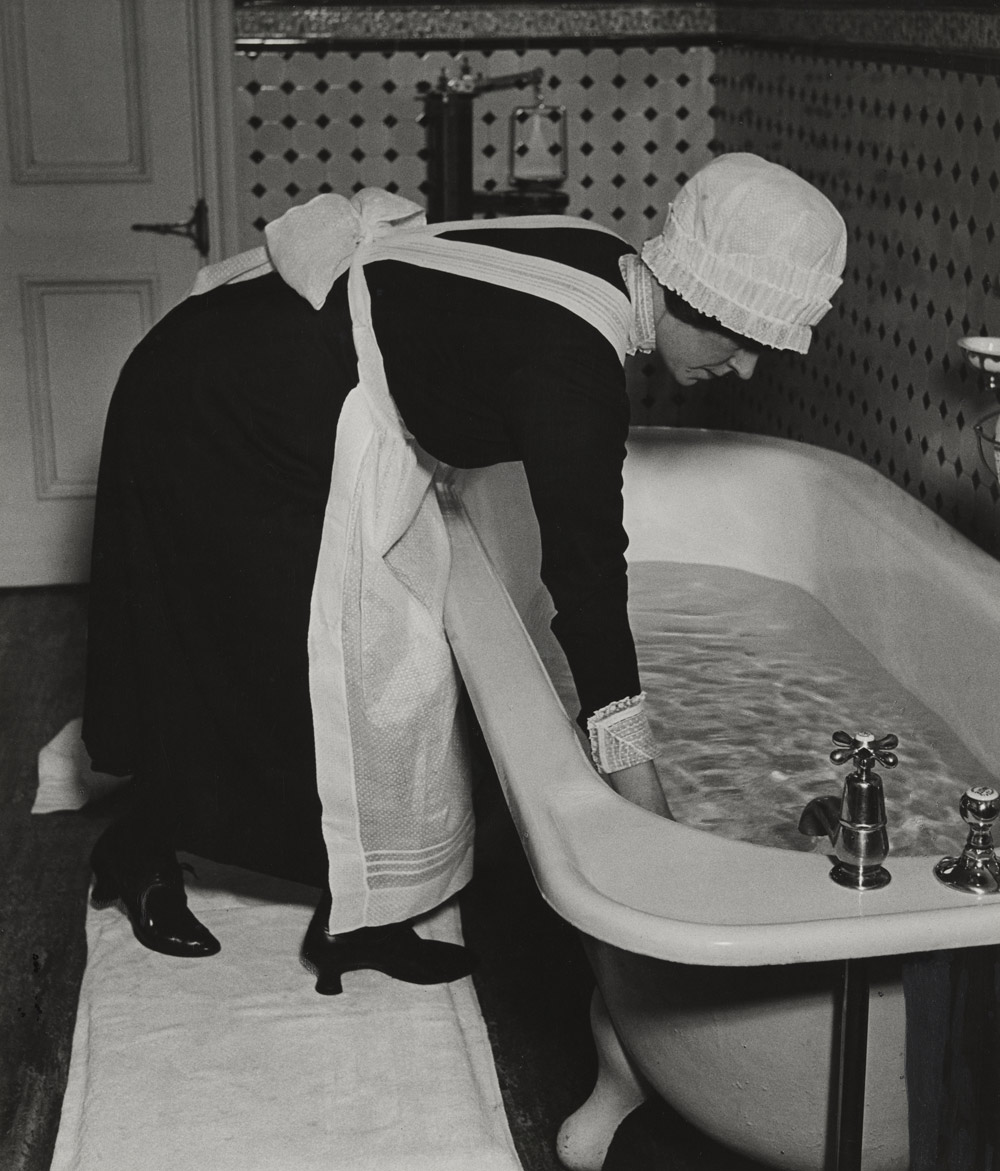
Bill Brandt (British born Germany, 1904-1983) 'Parlourmaid Preparing a Bath before Dinner' c. 1936


Bill Brandt (British born Germany, 1904-1983)
Parlourmaid Preparing a Bath before Dinner
c. 1936
Gelatin silver print
9 1/16 x 7 11/16″ (23 x 19.5cm)
The Museum of Modern Art. Horace W. Goldsmith Fund through Robert B. Menschel
© 2012 Bill Brandt Archive Ltd.


“Brandt ranks among the visionaries who, in the diversity of their approach, established the creative potential of photography based on observation of the world around them. Brandt’s distinctive vision – his ability to present the mundane world as fresh and strange – emerged in London in the 1930s, and drew from his time in the Paris studio of Man Ray. His visual explorations of the society, landscape, and literature of England are indispensable to any understanding of photographic history and, arguably, to our understanding of life in Britain during the middle of the 20th century.”


Text from the press release


Along with Julia Margaret Cameron, Bill Brandt is the greatest British photographer of all time.

Why is it so?

1/ There is the diversity of his approach over decades of artistic endeavour, from social documentary, portrait and landscape photography to nudes.

2/ There is a consistency to this enquiry. He is concerned with the same ideas in the 1930s as the 1960s, only expressed in a different form.

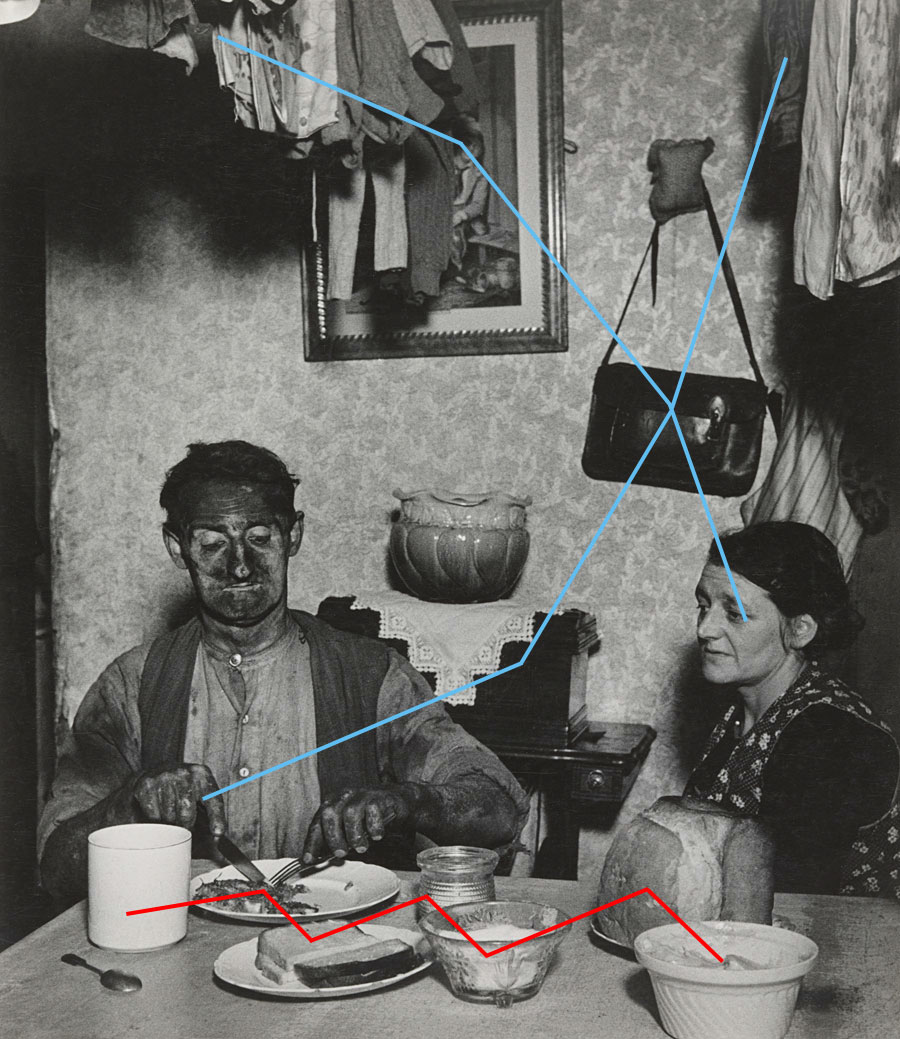
3/ There is a subtle ambiguity to all his work, no doubt influenced by his time in the Paris studio of Man Ray. For example, in the portrait of Northumbrian Miner at His Evening Meal (1937, below), there is an odd sense of surrealism to the mise-en-scène.

Notice the placement of the objects on the table, the positioning of both people’s heads with the jardiniere between, and the askance attitude of the satchel and framed image covered by drying, hanging clothes on the wall behind. And then, just to emphasise this pictorial disjunction, we notice that the miner is leaning one way and, in the framed image, another man with a tie is leaning the other, peering around  the edge of the drying clothes. The man and wife and the framed man for a triangle within the pictorial plane

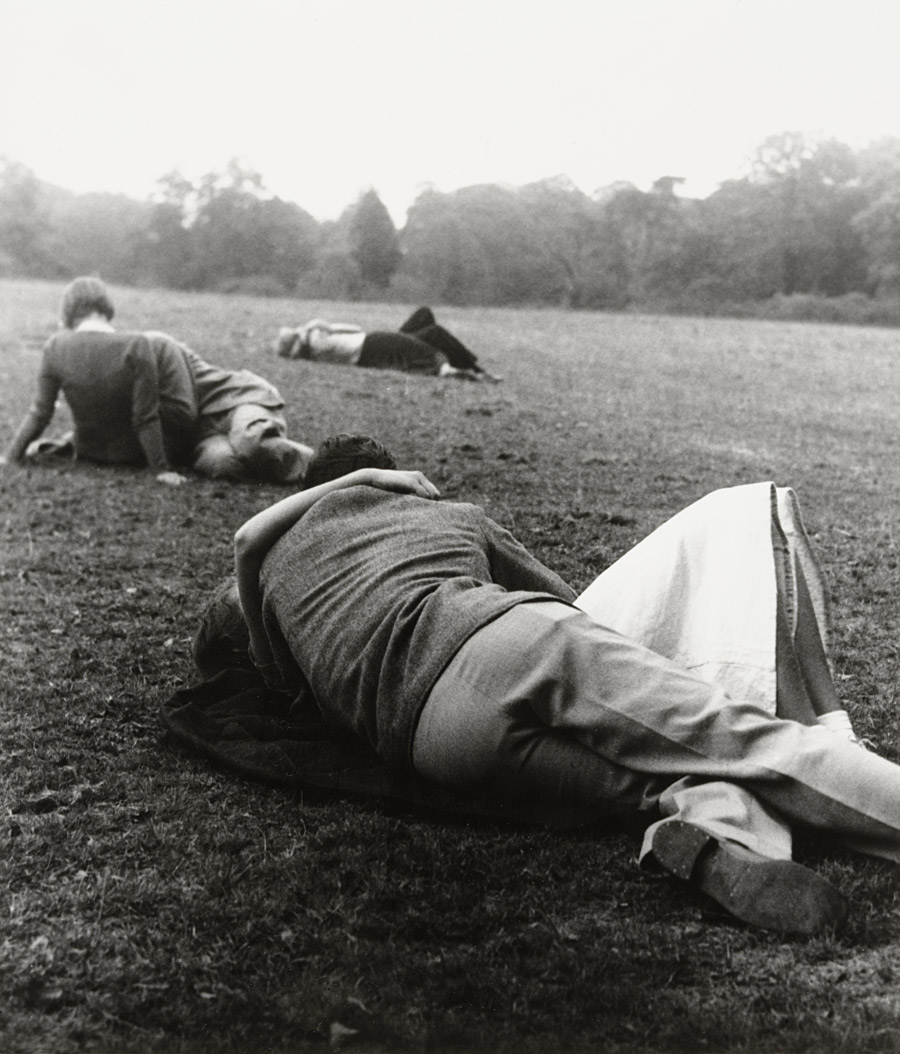
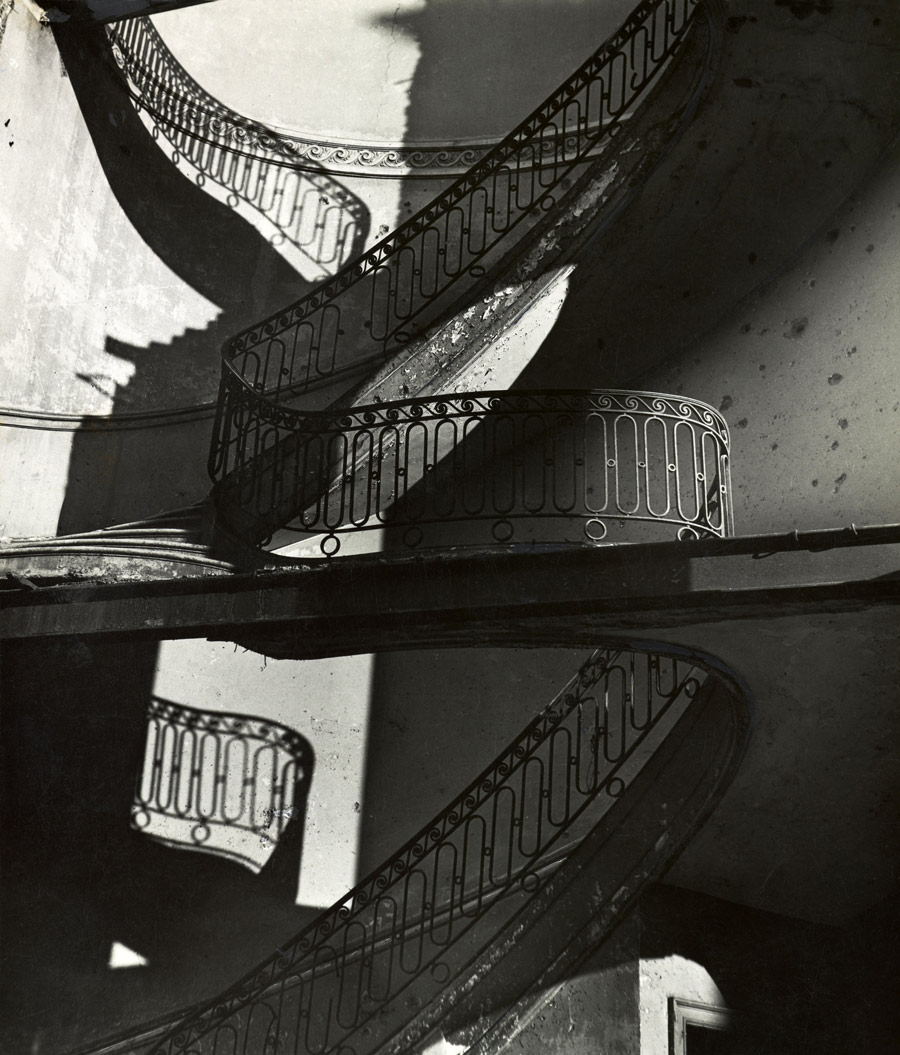
4/ There is his understanding of light. Look at any of the images in this posting – Bombed Regency Staircase, Upper Brook Street, Mayfair (c. 1942, below), Evening in Kenwood (c. 1934, below) etc… and marvel at Brandt’s “ability to present the mundane world as fresh and strange.” Looking at the light of the world with a sense of wonder!

5/ And his understanding of “perspective”.

Brandt is not afraid of the out of focus photograph as long as it gives him the “feeling” that he wants from the image. For example, see Losing at the Horse Races, Auteuil, Paris (c. 1932, below), shot from below, quickly, to capture the pensiveness of loosing money.

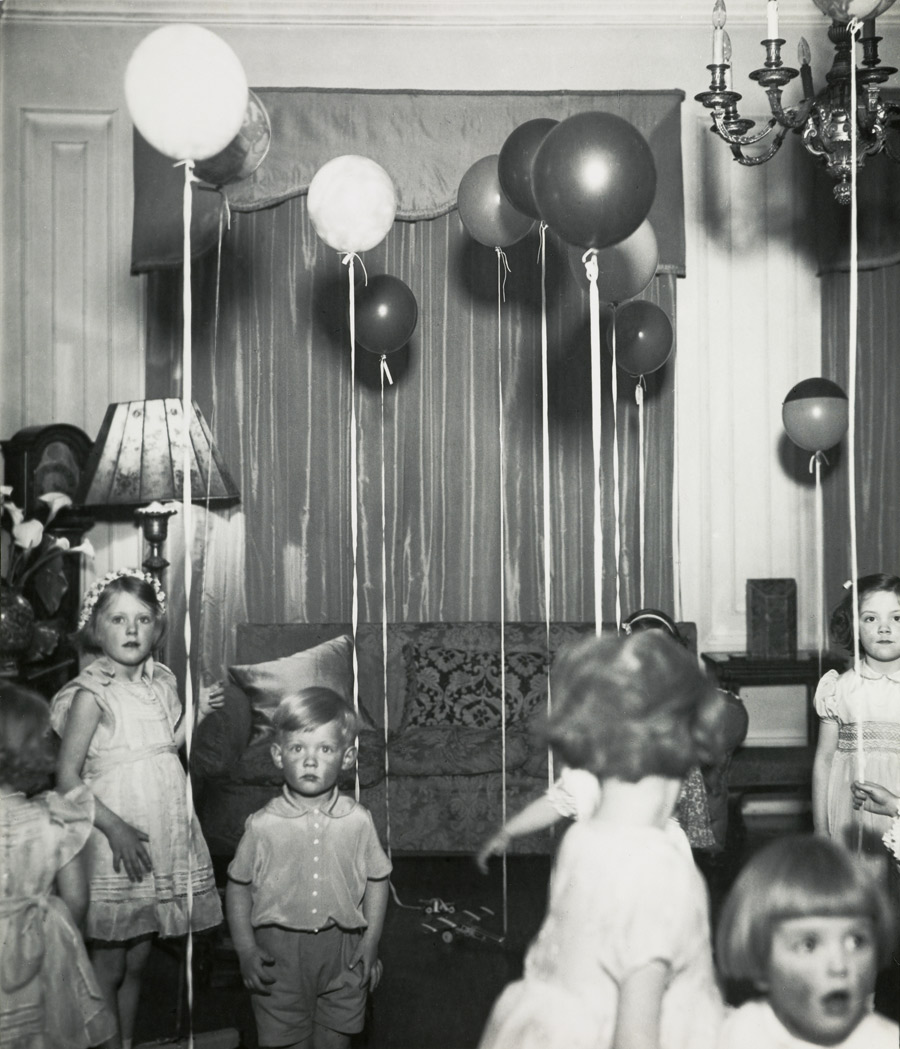
Brandt is not afraid of foreshortening as in the photographs Evening in Kenwood (c. 1934, below) or A Snicket in Halifax (1937, below), where the use of this device leads the viewers eye into the body of the image. Brandt is also not afraid of a shallow depth of field or of placing objects or people right in the forefront of the image in order to create a complex picture plane. For example, in Kensington Children’s Party (c. 1934, below) the two children at bottom right are completely out of focus but hold up that corner of the image and give the image the stability and energy it needs to lead the eye into the small, frontal boy and the suspended balloons.

Notice the really shallow depth of field, as only the girl at extreme right and a small number of balloons are in focus. Another later and more extreme example is the photograph Seaford, East Sussex Coast (1957, below) and the distortions in his book Perspective of Nudes (1961) – “a series that is both personal and universal, sensual and strange… rendering what might otherwise have been hopelessly clichéd aspects of the female form unfamiliar and surprising.


Brandt’s skewed perspectives are not only literal but also have psychological undertones. His work challenges traditional ideas of identity, place and time and makes the mundane seem fresh and strange. Over and over again. These photographs remain as fresh today as the day they were taken BECAUSE OF THE COMPLEXITY OF THOUGHT THAT LIES BEHIND EACH IMAGE.

Many a photographer could do no better than study the work of this incredible artist. I see so many images in Melbourne and from around the world that really say nothing and go nowhere, because of a lack of understanding of what is POSSIBLE when making a photograph, when telling a story. Rules are there to be broken, out of focus, shallow depth of field, complex pictures, complex thoughts succinctly and elegantly told. For Brandt in any photograph, the artifice necessary to make a work was irrelevant so long as he felt the picture rang true. That does not mean lazy story telling, poor conceptualisation, bland visual construction.

As a good friend of mine artist Joyce Evans is fond of saying, “There is no excuse for bad photography.”

Dr Marcus Bunyan


Many thankx to the Museum of Modern Art for allowing me to publish the photographs in the posting. Please click on the photographs for a larger version of the image.


Bill Brandt (British born Germany, 1904-1983) 'Northumbrian Miner at His Evening Meal' 1937


Bill Brandt (British born Germany, 1904-1983)
Northumbrian Miner at His Evening Meal
1937
Gelatin silver print
8 3/4 x 7 3/8″ (22.2 x 18.8cm)
The Museum of Modern Art. John Parkinson III Fund
© 2012 Bill Brandt Archive Ltd.


Analysis of Brandt's visual exploration in 'Northumbrian Miner at His Evening Meal' (1937)


Analysis of Brandt's visual exploration in 'Northumbrian Miner at His Evening Meal' (1937)


Analysis of Brandt’s visual exploration in Northumbrian Miner at His Evening Meal (1937)


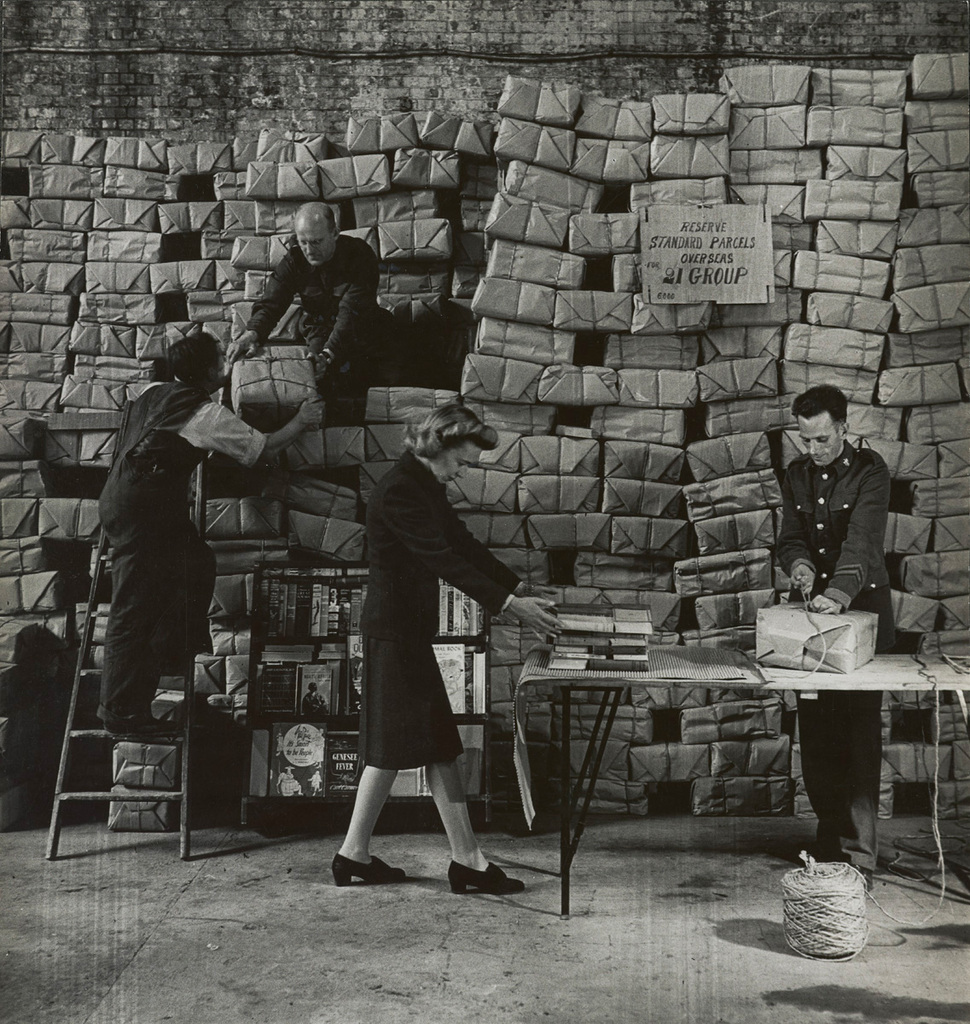
Bill Brandt (British born Germany, 1904-1983) 'Packaging Post for the War' c. 1942


Bill Brandt (British born Germany, 1904-1983)
Packaging Post for the War
c. 1942
Gelatin silver print
8 3/16 x 7 13/16″ (20.8 x 19.9cm)
Acquired through the generosity of Mark Levine
© 2013 Estate of Bill Brandt


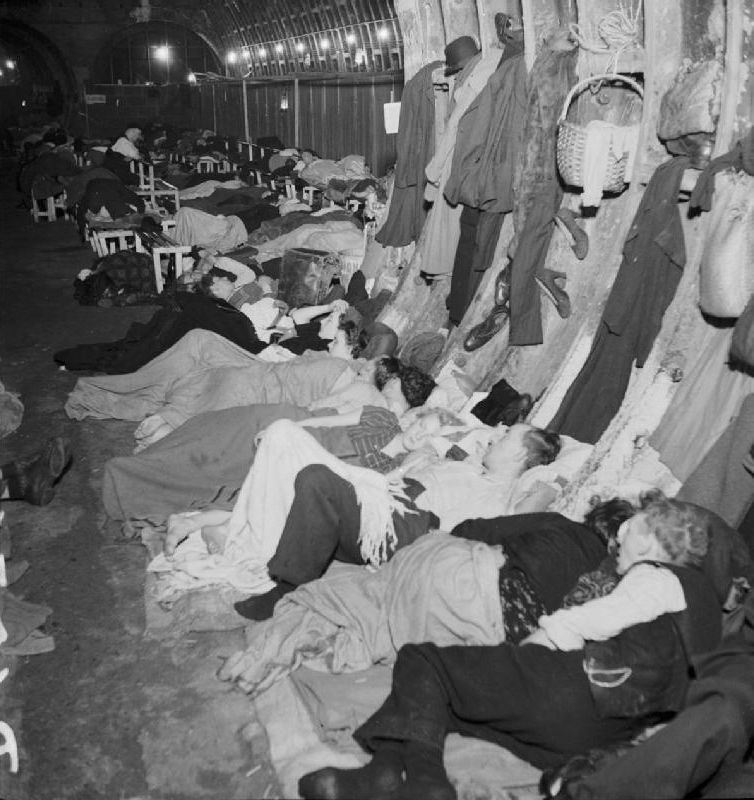
Bill Brandt (British born Germany, 1904-1983) 'Liverpool Street Underground Station Shelter' 1940


Bill Brandt (British born Germany, 1904-1983)
Liverpool Street Underground Station Shelter
1940
Gelatin silver print
11 11/16 x 9 11/16″ (29.7 x 24.6cm)
© 2013 Estate of Bill Brandt


Bill Brandt (British born Germany, 1904-1983) 'Kensington Children's Party' c. 1934


Bill Brandt (British born Germany, 1904-1983)
Kensington Children’s Party
c. 1934
Gelatin silver print
8 5/8 x 7 3/16″ (21.9 x 18.3cm)
The Museum of Modern Art. Gift of David Dechman and Michel Mercure
© 2012 Estate of Bill Brandt


Bill Brandt (British born Germany, 1904-1983) 'Evening in Kenwood' c. 1934


Bill Brandt (British born Germany, 1904-1983)
Evening in Kenwood
c. 1934
Gelatin silver print
9 x 7 3/4″ (22.9 x 19.7cm)
The Museum of Modern Art. Acquired through the generosity of David Dechman and Michel Mercure and the Committee on Photography Fund.
© 2012 Bill Brandt Archive Ltd.


The Museum of Modern Art presents Bill Brandt: Shadow and Light, a major critical reevaluation of the heralded career of Bill Brandt (British born Germany, 1904-1983) from March 6 to August 12, 2013. A founding figure in photography’s modernist traditions, Brandt ranks among the visionaries who, in the diversity of their approach, established the creative potential of photography based on observation of the world around them. Brandt’s distinctive vision – his ability to present the mundane world as fresh and strange – emerged in London in the 1930s, and drew from his time in the Paris studio of Man Ray. His visual explorations of the society, landscape, and literature of England are indispensable to any understanding of photographic history and, arguably, to our understanding of life in Britain during the middle of the 20th century. Bill Brandt: Shadow and Light is organised by Sarah Meister, Curator, with Drew Sawyer, Beaumont and Nancy Newhall Curatorial Fellow, Department of Photography.

The impressive breadth of Brandt’s career, which suggests his restless experimental impulse, and the dramatic transformations of his printing style have often confounded those seeking to understand the link between the highly celebrated and seemingly unrelated chapters of his oeuvre. The exhibition brings together more than 150 works divided into six sections, each corresponding with a distinct aspect of Brandt’s achievement: London in the Thirties; Northern England; World War II; Portraits; Landscapes; and Nudes. Beginning with a highly selective display of albums and prints made around the European continent as Brandt was forming his artistic identity, the exhibition presents an opportunity to understand Brandt in a new light: one that establishes a chronological trajectory of his career, with an expanded consideration of his activity during World War II. In addition, a closer look at his printing methods with the finest known prints from across the range of Brandt’s career will clarify how the artist, whose early work is characterised by the muted, wistful portrait of a young housewife scrubbing the threshold to her home (East End Morning, 1937), would come to create a bold and unpredictable series of nudes on the rocky English coast (East Sussex Coast, 1957).

Brandt established his reputation before the Second World War with the publication of The English at Home (1936) and A Night in London (1938), books that distilled his early photographic studies of life in Britain. Noted works from this period on view include: Parlourmaid Preparing a Bath before Dinner (c. 1936); Soho Bedroom (1934); Street Scene, London (1936); and Losing at the Horse Races, Auteuil, Paris (c. 1932), which Brandt later re-titled Racegoers in Sandown Park in order to present it in the context of his English pictures, an expression of his disdain for slavish adherence to facts.

During this same period, Brandt ventured to several industrial towns in northern England to witness firsthand the impact of the Depression. Striking images from this group, including Snicket in Halifax (1937), Coal-Searcher Coming Home from Jarrow (1937), and Northumbrian Miner at His Evening Meal (1937), bear unequivocal witness to the devastating unemployment that plagued the region at the time, but there is a subtle ambiguity to many of these images that suggests Brandt found the artistic potential of these soot-blackened structures and faces competing for his attention.

Brandt’s activity during the Second World War – long distilled by Brandt and others to a handful of now-iconic pictures of moonlit London during the Blackout and improvised shelters during the Blitz – are presented for the first time in the context of his assignments for the leading illustrated magazines of his day, establishing a key link between his pre- and postwar work. In addition to photographs such as Liverpool Street Underground Station Shelter (1940) and Deserted Street in Bloomsbury (1942), this section includes lesser-known works from the period such as: Bombed Regency Staircase, Upper Brook Street, Mayfair (c. 1942); Packaging Post for the War (c. 1942); and a suite of extraordinary wartime portraits.

Brandt’s assignments for Picture Post and Lilliput magazines, as well as Harper’s Bazaar (UK and US), led variously into extended investigations of portraiture and landscape photography, with a strong emphasis on contemporary literary figures in Britain and the country’s rich literary heritage. A solemn, vaguely distracted expression became a hallmark of Brandt’s portraiture, and notable examples on view include Dylan Thomas, Norman Douglas, Evelyn Waugh, Reg Butler, Harold Pinter, Martin Amis, Tom Stoppard, Vanessa Redgrave, Barbara Hepworth, Henry Moore, and Francis Bacon.

Brandt’s crowning artistic achievement – published as Perspective of Nudes in 1961 – is a series that is both personal and universal, sensual and strange, collectively exemplifying the “sense of wonder”, to quote Brandt, that is paramount in his photographs. His extended investigation of the female nude remains his most original and memorable work, defying preconceived notions of the genre with his choice of settings (inhospitably barren seashores or prim Victorian interiors that conflated the domestic and the sexual in lieu of sterile, but safe, studios), as well as the extreme exaggeration of his distortions, cropping, and printing styles, rendering what might otherwise have been hopelessly clichéd aspects of the female form unfamiliar and surprising. On view are over 40 photographs from this period, including four prints of his iconic London (1952), which together suggest Brandt’s willingness to reinterpret even the most supremely resolved images in his oeuvre.

Through a rigorous analysis of each chapter of Brandt’s career across a half century of work, the exhibition clarifies the achievement of this towering figure in photography’s modernist tradition.

Press release from the MoMA website


Bill Brandt (British born Germany, 1904-1983) 'Bombed Regency Staircase, Upper Brook Street, Mayfair' c. 1942


Bill Brandt (British born Germany, 1904-1983)
Bombed Regency Staircase, Upper Brook Street, Mayfair
c. 1942
Gelatin silver print
9 x 7 5/8″ (22.8 x 19.4cm)
The Museum of Modern Art. Acquired through the generosity of Clarissa A. Bronfman
© 2012 Bill Brandt Archive Ltd.


Bill Brandt (British born Germany, 1904-1983) 'A Snicket in Halifax' 1937


Bill Brandt (British born Germany, 1904-1983)
A Snicket in Halifax
1937
Gelatin silver print
9 x 7 11/16″ (22.9 x 19.6cm)
Carl Jacobs Fund
© 2013 Estate of Bill Brandt


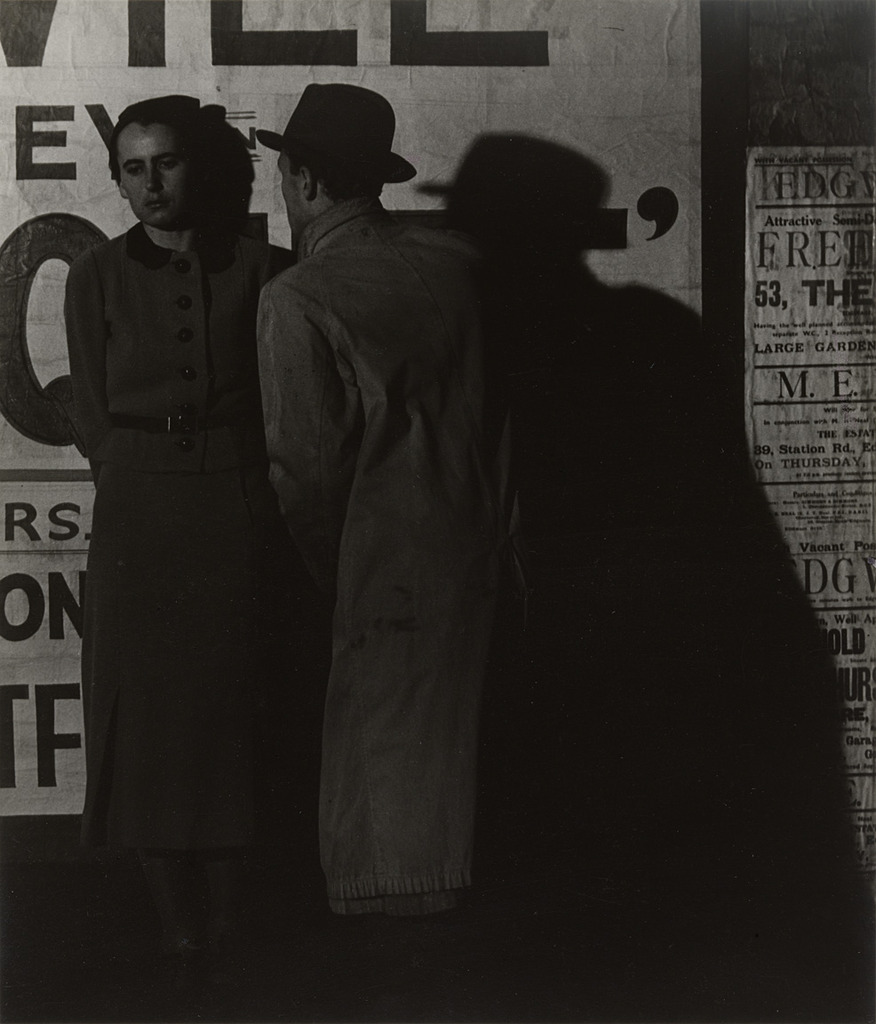
Bill Brandt (British born Germany, 1904-1983) 'Street Scene, London' 1936


Bill Brandt (British born Germany, 1904-1983)
Street Scene, London
1936
Gelatin silver print
9 1/16 x 7 11/16″ (23 x 19.6cm)
© 2013 Estate of Bill Brandt


This picture, first published in Brandt’s book A Night in London in 1938, recalls the work of the Hungarian-born photographer Brassaï, who had a particular talent for capturing illicit, marginalised, or unconventional activity in the lamplit streets of Paris. Many of Brandt’s pictures, however, feature his family members playing roles. Here he placed his brother and sister-in-law, Rolf and Esther Brandt, in front of a large poster. Using a nearby streetlight or perhaps his own floodlight, Brandt cast Rolf’s profile in melodramatic shadow. The artifice necessary to make a work was irrelevant for Brandt so long as he felt the picture rang true.

Text from MoMA website


Bill Brandt (British born Germany, 1904-1983) 'Soho Bedroom' 1934


Bill Brandt (British born Germany, 1904-1983)
Soho Bedroom
1934
Gelatin silver print
8 3/4 x 7 9/16″ (22.2 x 19.2cm)
Acquired through the generosity of Michèle Gerber Klein
© 2013 Estate of Bill Brandt


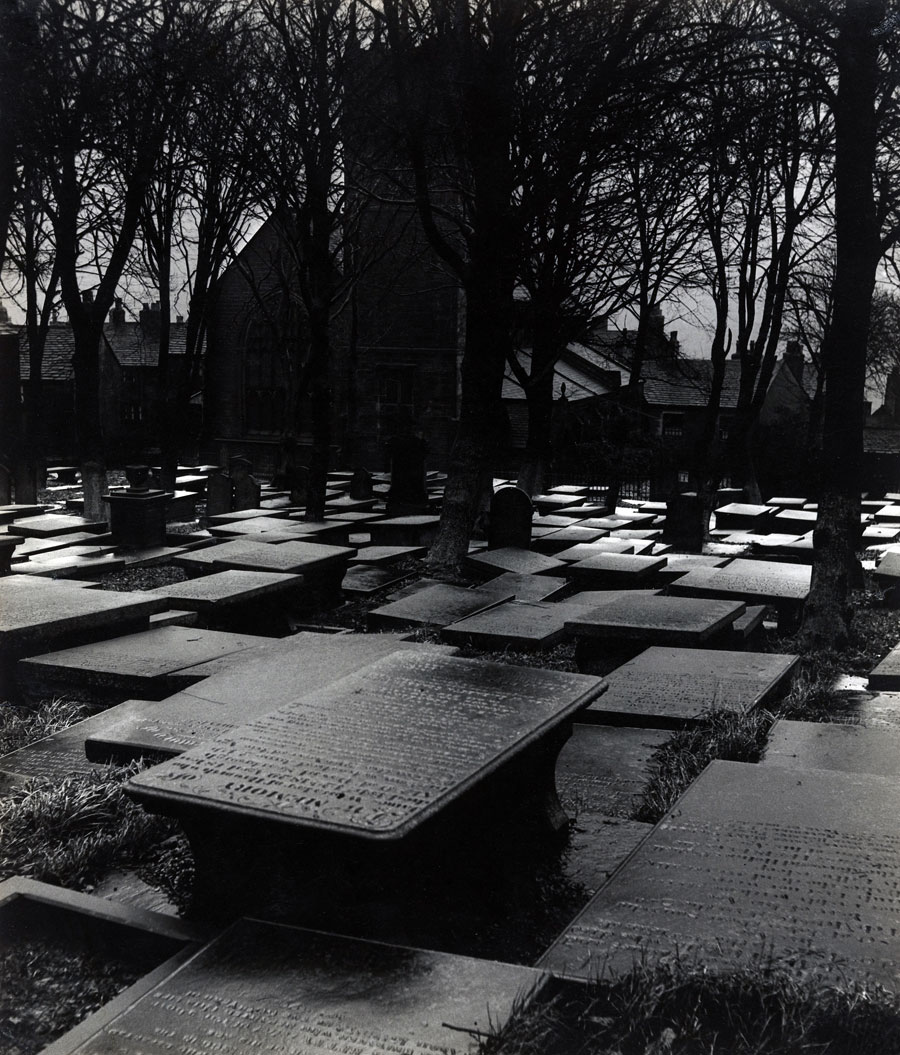
Bill Brandt (British born Germany, 1904-1983) 'Haworth Churchyard' 1945


Bill Brandt (British born Germany, 1904-1983)
Haworth Churchyard
1945
Gelatin silver print
8 15/16 x 7 11/16″ (22.7 x 19.5cm)
The Museum of Modern Art. Acquired through the generosity of Jon L. Stryker
© 2012 Bill Brandt Archive Ltd.


Bill Brandt (British born Germany, 1904-1983) 'Losing at the Horse Races, Auteuil, Paris' c. 1932


Bill Brandt (British born Germany, 1904-1983)
Losing at the Horse Races, Auteuil, Paris
c. 1932
Gelatin silver print
8 3/8 x 6 15/16″ (21.3 x 17.6cm)
The Museum of Modern Art. Gift of Edwynn Houk
© 2012 Bill Brandt Archive Ltd.


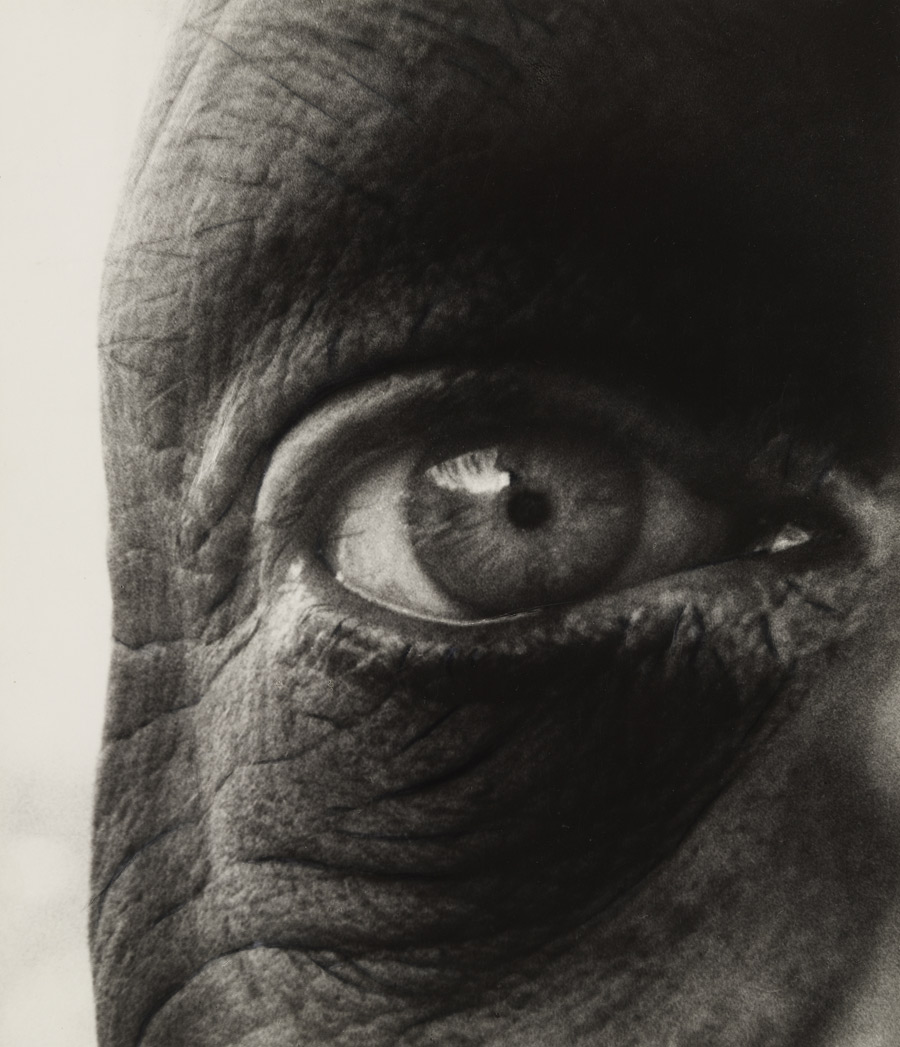
Bill Brandt (British born Germany, 1904-1983) 'Jean Dubuffet' 1960


Bill Brandt (British born Germany, 1904-1983)
Jean Dubuffet
1960
Gelatin silver print
8 3/8 x 7 1/4″ (21.3 x 18.4cm)
The Museum of Modern Art. John Parkinson III Fund
© 2012 Bill Brandt Archive Ltd.


Bill Brandt (British born Germany, 1904-1983) 'London' 1954


Bill Brandt (British born Germany, 1904-1983)
London
1954
Gelatin silver print
9 1/8 x 7 3/4″ (23.1 x 19.7cm)
The Museum of Modern Art. Acquired through the generosity of Clarissa Alcock Bronfman and Richard E. Salomon
© 2012 Bill Brandt Archive Ltd.


Bill Brandt A Perspective of Nudes 1961

A book that looks back to Kertesz’s Distortions and forward to the psychedelia of the late 60s. As Vince Aletti writes in The Book of 101 Books, Brandt “conjure[d] a dream world of skewed perspectives in which his nude female subjects appeared to float unanchored or loom like giants.” Parr and Badger writing in The Photobook: A History, vol. 1, assert that these images “rewrote the language of nude photography in not one, but several quarters… [they are] as interesting for their psychological undertones as for the wealth of unexpected forms he conjured… Brandt pictured a world of faded grandeur, of Edwardian bourgeois homes metamorphosing into 1940s bedsit land – cavernous refuges for European émigrés or bohemian nonconformists.”


Bill Brandt (British born Germany, 1904-1983) 'Seaford, East Sussex Coast' 1957


Bill Brandt (British born Germany, 1904-1983)
Seaford, East Sussex Coast
1957
Gelatin silver print
9 x 7 11/16″ (22.9 x 19.5cm)
The Museum of Modern Art. Gift of David Dechman and Michel Mercure
© 2012 Bill Brandt Archive Ltd.


The Museum of Modern Art
11 West 53 Street
New York, NY 10019
Phone: (212) 708-9400

Opening hours:
10.30am – 5.30pm daily

MOMA website

LIKE ART BLART ON FACEBOOK

Back to top

Exhibition: ‘Gilles Caron, The Conflict Within’ at The Musée de l’Elysée, Lausanne

Exhibition dates: 30th January – 12th May 2013


Gilles Caron (French, 1939-1970) 'Battle of Dak To, Vietnam, November 1967' 1967


Gilles Caron (French, 1939-1970)
Battle of Dak To, Vietnam, November 1967
1967
© Fondation Gilles Caron


Dead at 30

Died so young

Probably at the barrel of a snub nosed gun.

Guilt, narcissism, parody or irony

Doesn’t matter now

He’s dead…

Photos live on


Many thankx to the Musée de l’Elysée Lausanne for allowing me to publish the photographs in the posting. Please click on the photographs for a larger version of the image.


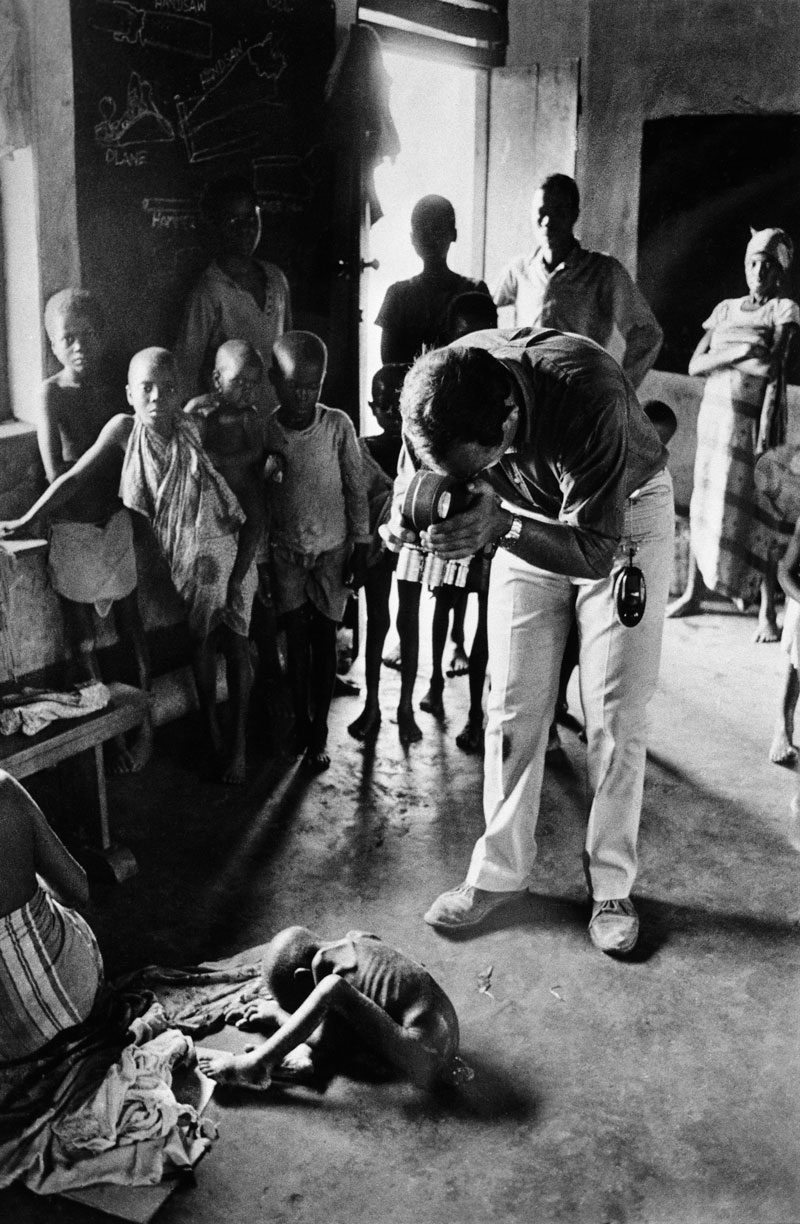
Gilles Caron (French, 1939-1970) 'Transport of a victim of the famine of the Civil War in Biafra, July 1968' 1968


Gilles Caron (French, 1939-1970)
Transport of a victim of the famine of the Civil War in Biafra, July 1968
1968
© Fondation Gilles Caron


Gilles Caron (French, 1939-1970) 'Protest rue Saint-Jacques, Paris, 6 May 1968' 1968


Gilles Caron (French, 1939-1970)
Protest rue Saint-Jacques, Paris, 6 May 1968
1968
© Fondation Gilles Caron


Gilles Caron (French, 1939-1970) 'Demonstration at the first anniversary of the Soviet repression of "Spring in Prague", Czechoslovakia, 21 August, 1969' 1969


Gilles Caron (French, 1939-1970)
Demonstration at the first anniversary of the Soviet repression of “Spring in Prague”, Czechoslovakia, 21 August, 1969
1969
© Fondation Gilles Caron


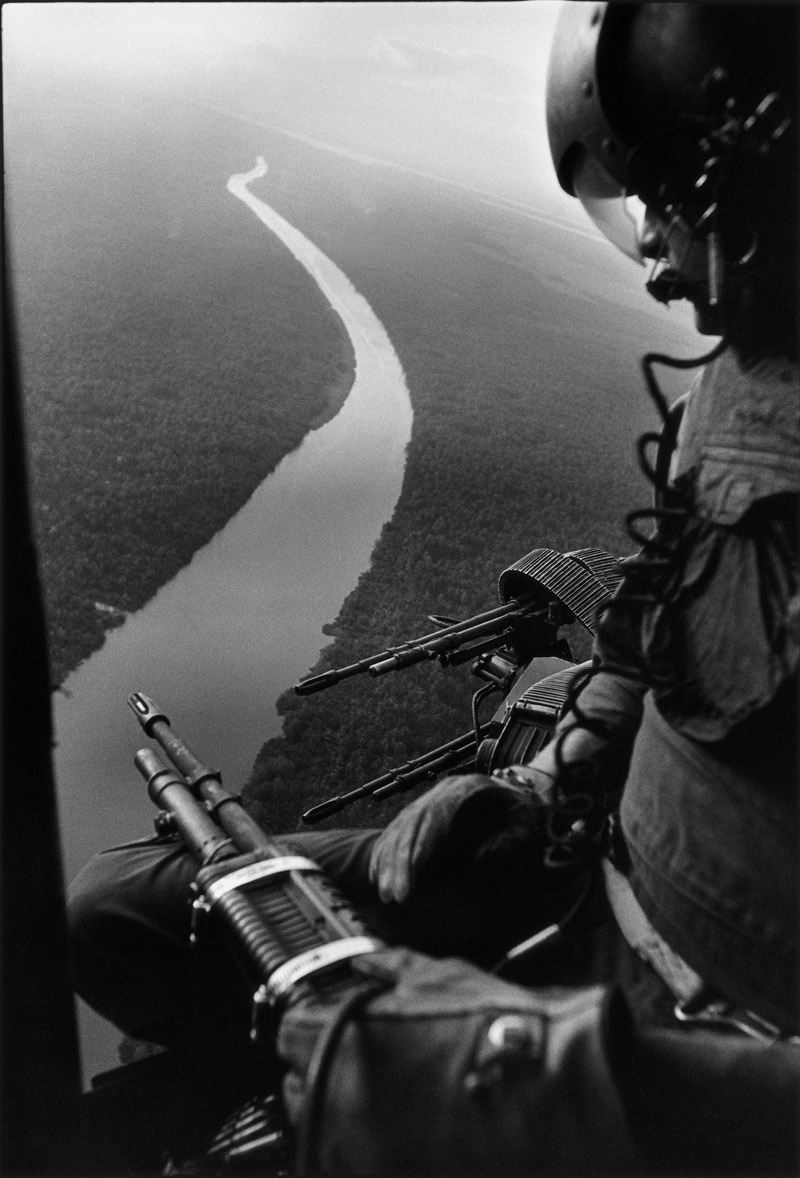
Gilles Caron (French, 1939-1970) 'American Patrol during the Vietnam War 1967' 1967


Gilles Caron (French, 1939-1970)
American Patrol during the Vietnam War 1967
1967
© Fondation Gilles Caron


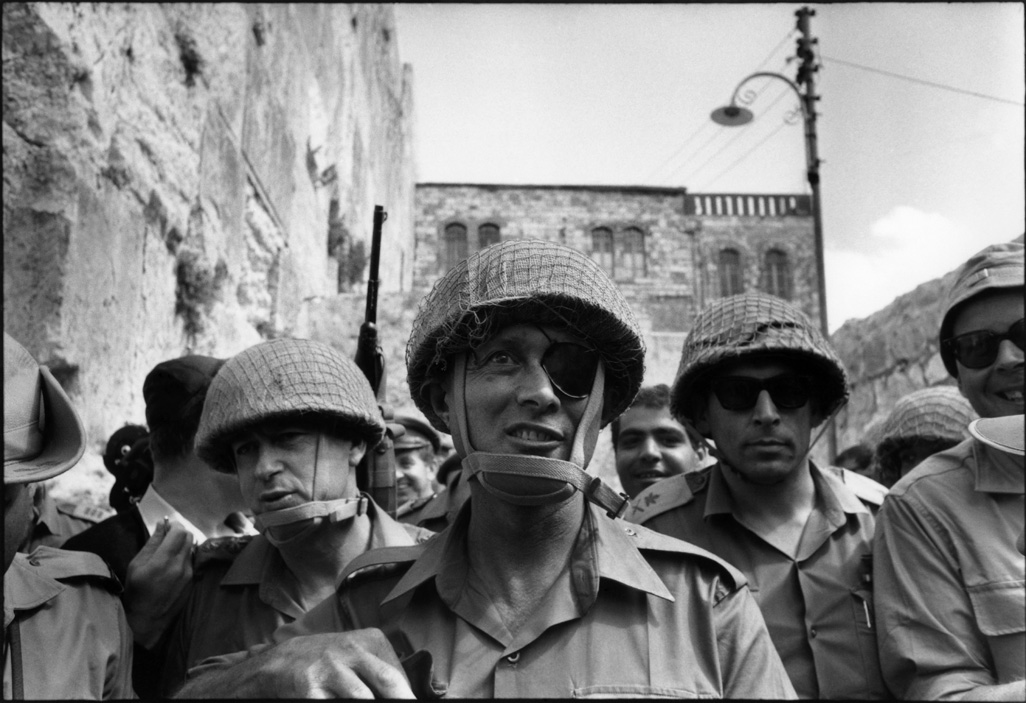
Gilles Caron (French, 1939-1970) 'Israeli Soldiers at the Wailing Wall at the end of the Six Day War in 1967' 1967


Gilles Caron (French, 1939-1970)
Israeli Soldiers at the Wailing Wall at the end of the Six Day War in 1967
1967
© Fondation Gilles Caron


Gilles Caron (French, 1939-1970) 'General Moshe Dayan June 1967' 1967


Gilles Caron (French, 1939-1970)
General Moshe Dayan June 1967
1967
© Fondation Gilles Caron


Visual memory of an epoch, Gilles Caron (1939-1970) has chronicled the greatest contemporary conflicts through his images (Six-Day War, Vietnam War, Biafra and Northern Ireland conflicts, May 68, Prague Spring…), a commitment that eventually cost him his life while on assignment in Cambodia. Called up as a parachutist to serve in the Algerian War, Caron became a witness to the brutality inflicted on civilians. Through photojournalism, he sought to cross to the other side in order to contribute to a better understanding of how populations caught up in the spiral of war were living.

His initial heroic vision of war photography soon turned into a reflection on the purpose of his job: can the role of witness, mere spectator, be satisfying? He is one of the first photographers to suffer symptoms from this inner moral conflict, and one of the first to practice a form of introspective disenchantment that led the reporter to gradually turn his camera on him, to become the object of the photographic narrative.

In the early stages of his career, during the Six-Day War and in Vietnam, he chose to focus on inactive figures, soldiers or prisoners absorbed in their thoughts, writing or meditating. During the Biafra War, Caron seemed particularly compassionate for the condition of children and other victims. In May 68 and in Northern Ireland, he was mainly interested in emblematic actors – demonstrators throwing stones or Molotov cocktails – as incarnations of urban guerilla. His inventiveness was never more visible than in his reports on street fighting where, through his lens, demonstrations seemed transformed into choreographies.

A war reporter, regularly exposed to extreme conditions, Caron was however not indifferent to the spectacle of the sixties, the Nouvelle Vague and the young musical scene. He would on occasion photograph on the film sets of Godard or Truffaut and even worked as a fashion photographer. These ventures into cinema and fashion might seem quite remote from the rest of his work but they clearly influenced his formal language, as demonstrated in his reports on the protests in the Latin Quarter or Ulster. The exhibition ends with an anti-heroic portrait of the photojournalist. Essential for the history of photojournalism, this conclusion proves that Caron’s conscience, along that of other photojournalists, became quite an unhappy one at the end of the 60s. Guilt, narcissism, parody or irony… In the end, it is difficult to figure out what image of themselves reporters are making.


Gilles Caron (French, 1939-1970) 'Battle of Dak To, Vietnam, November - December 1967' 1967


Gilles Caron (French, 1939-1970)
Battle of Dak To, Vietnam, November – December 1967
1967
© Fondation Gilles Caron


Gilles Caron (French, 1939-1970) 'Daniel Cohn-Bendit facing a CRS in front of the Sorbonne, Paris, 6 May 1968' 1968


Gilles Caron (French, 1939-1970)
Daniel Cohn-Bendit facing a CRS in front of the Sorbonne, Paris, 6 May 1968
1968
© Fondation Gilles Caron


Compagnies Républicaines de Sécurité

The Compagnies républicaines de sécurité, abbreviated CRS, are the general reserve of the French National Police. They are primarily involved in general security missions but the task for which they are best known is crowd and riot control.


Gilles Caron (French, 1939-1970) 'Protest rue Saint-Jacques, Paris, 6 May 1968' 1968


Gilles Caron (French, 1939-1970)
Protest rue Saint-Jacques, Paris, 6 May 1968
1968
© Fondation Gilles Caron


The exhibition presented at the Musée de l’Elysée is Caron’s first major retrospective. Comprising 150 prints and archival documents from the Fondation Gilles Caron, the collection of the Musée de l’Elysée and private collections, the exhibition is an opportunity to rediscover in six parts one of the major photojournalists of the 20th century through an original approach.

1. Heroism

Here and Now: Named the “French Capa” by Henri Cartier-Bresson, Caron’s images highlighting the different scenes of military operations are evidence to his audacity and talents as a reporter.

2. Making History?

The contemplative soldier: This section illustrates a recurring theme in Caron’s work of individuals who are absorbed, and/or made fragile and vulnerable by their surrounding events: military prisoners, civilian victims, soldiers shown reading or in reflection, become iconographic images of unedited, and spontaneous moments of stillness.

3. Sympathy

Compassionate Icons: In these photographs, beginning with the war in Biafra and extending across Caron’s travels one sees the deep sensibility of the photographer unfold in his images as Caron must face the very real pain of others. The images of children, starving and void of childhood innocence whom have been sacrificed in conflict mark the beginning of concerned photographic iconography.

4. Demonstrations and guerrilla

The iconography of revolt: In the images of revolt, be that workers, farmers, or students, Caron gives particular iconic importance to the figure of the “lanceur”: like David against Goliath. This representation of the body in action is like a repeated choreography which is performed spontaneously across the fronts of rebellion in Paris, on May 1968, Londonderry (Northern Ireland) and Prague.

5. Nouvelle Vague

Young and passionate in the 60s: In addition to his work in areas of conflict, famine, and war, Caron also gives photography a unique view of the youth of the 1960’s. With images of famous muses (actresses and singers) as well as of university students, and youth on the street, Caron shows his talents for fashion photography and film stills developed during his work with Truffaut and Godard.

6. The last image

Looking at the reporter: After Biafra and Chad, doubt took hold of Caron. The lens of the camera turns back upon the reporter, and these images document the work of the photojournalist in the field. These portraits leave viewers with a mixed message, this is his own profession but the images are in no way heroic portrayals of the work of the photojournalist.


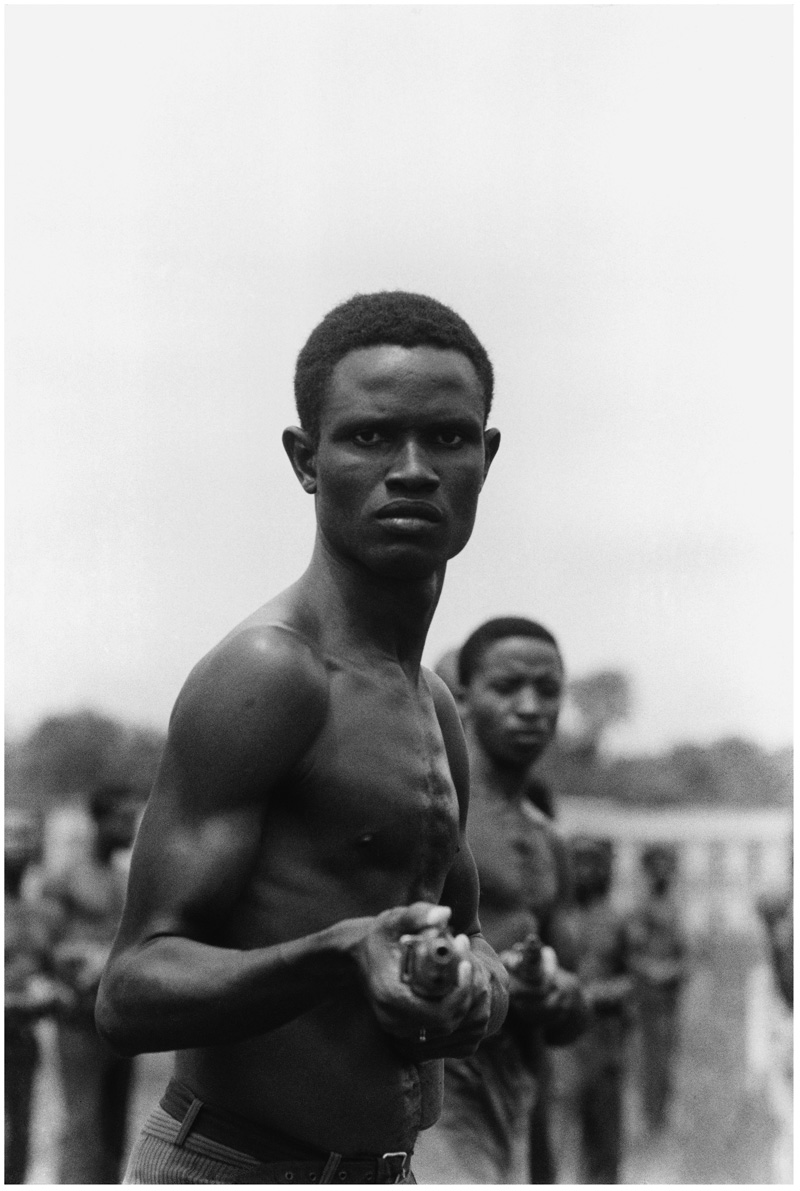
Gilles Caron (French, 1939-1970) 'Civil War in Biafra, Nigeria, November 1968' 1968


Gilles Caron (French, 1939-1970)
Civil War in Biafra, Nigeria, November 1968
1968
© Fondation Gilles Caron


Gilles Caron (French, 1939-1970) 'Vietnam, November 1967' 1967


Gilles Caron (French, 1939-1970)
Vietnam, November 1967
1967
© Fondation Gilles Caron


Gilles Caron (French, 1939-1970) 'Filmmaker and photographer Raymond Depardon, during the Civil War in Biafra, Nigéria, August 1968' 1968


Gilles Caron (French, 1939-1970)
Filmmaker and photographer Raymond Depardon, during the Civil War in Biafra, Nigéria, August 1968
1968
© Fondation Gilles Caron


The Musée de l’Elysée 
18, avenue de l’Elysée
CH – 1014 Lausanne
Phone: + 41 21 316 99 11

Opening hours:
Wednesday – Monday, 10am – 6pm
Closed Tuesdays

The Musée de l’Elysée website

LIKE ART BLART ON FACEBOOK

Back to top

Exhibition: ‘Laure Albin Guillot: The Question of Classicism’ at Jeu de Paume, Paris

Exhibition dates: 26th February – 12th May 2013

PLEASE NOTE: THIS POSTING CONTAINS ART PHOTOGRAPHS OF MALE AND FEMALE NUDITY – IF YOU DO NOT LIKE PLEASE DO NOT LOOK, FAIR WARNING HAS BEEN GIVEN


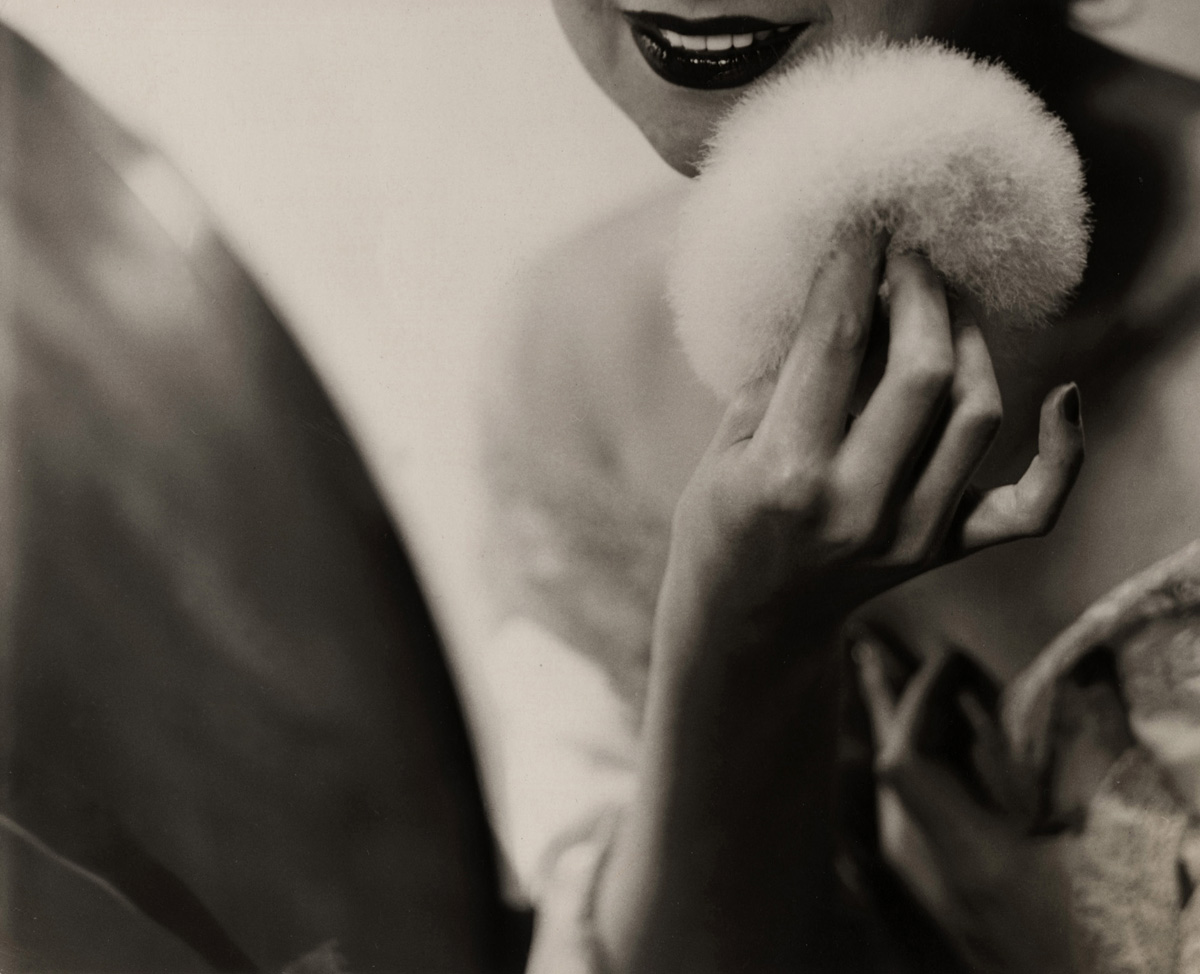
Laure Albin Guillot (French, 1879-1962) 'Estampe pour F. Marquis chocolatier-confiseur, Paris [Print for F. Marquis chocolate maker, Paris]' sans date (without date)


Laure Albin Guillot (French, 1879-1962)
Estampe pour F. Marquis chocolatier-confiseur, Paris (Print for F. Marquis chocolate maker, Paris)
Sans date (without date)
Collection particulière, Paris


The ravishing sensuality of the nudes make all the hours spent assembling this archive worthwhile!

Marcus


Many thankx to Jue de Paume for allowing me to publish the photographs in the posting. Please click on the photographs for a larger version of the image.


Laure Albin Guillot (French, 1879-1962) 'Étude publicitaire' sans date (without date)


Laure Albin Guillot (French, 1879-1962)
Étude publicitaire (Advertising study)
Sans date (without date)
Collection Musée Nicéphore Niépce, Ville de Chalon-sur-Saône


Laure Albin Guillot (French, 1879-1962) 'Les tierces alternées, illustration pour les Préludes de Claude Debussy [The third alternative, illustration for Claude Debussy Preludes]' 1948


Laure Albin Guillot (French, 1879-1962)
Les tierces alternées, illustration pour les Préludes de Claude Debussy (The third alternative, illustration for Claude Debussy Preludes)
1948
© Laure Albin Guillot / Roger-Viollet


Laure Albin Guillot (French, 1879-1962) 'Publicité pour la pommade-vaccin Salantale' 1942


Laure Albin Guillot (French, 1879-1962)
Publicité pour la pommade-vaccin Salantale (Advertisement for Salantale ointment vaccine)
1942
Bibliothèque nationale de France


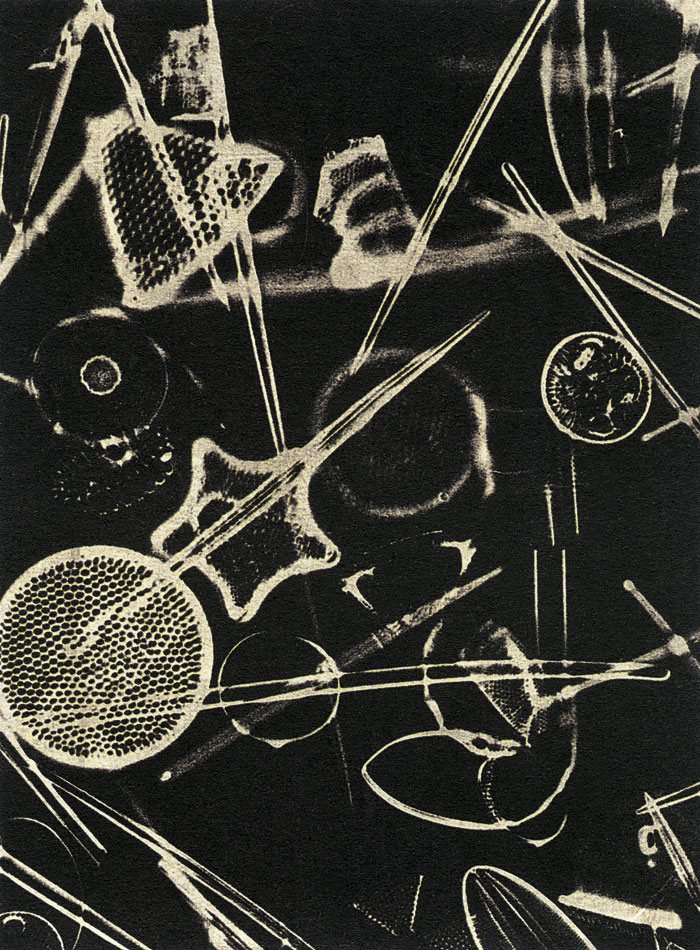
Laure Albin Guillot (French, 1879-1962) 'Micrographie' 1929


Laure Albin Guillot (French, 1879-1962)
Micrographie
1929
Collection particulière, Paris
© Laure Albin Guillot / Roger-Viollet


Laure Albin Guillot (French, 1879-1962) 'Micrographie, bourgeon de Frêne (coupe)' 1930


Laure Albin Guillot (French, 1879-1962)
Micrographie, bourgeon de Frêne (coupe)
1930
Collection Société française de photographie
© Laure Albin Guillot / Roger-Viollet


Laure Albin Guillot (French, 1879-1962) 'Micrographie' 1929


Laure Albin Guillot (French, 1879-1962)
Micrographie
1929
Collections Roger-Viollet / Parisienne de Photographie
© Laure Albin Guillot / Roger-Viollet


Laure Albin Guillot (Paris, 1879-1962), a “resounding name that should become famous”, one could read just after World War II. Indeed, the French photographic scene in the middle of the century was particularly marked by the signature and aura of this artist, who during her lifetime was certainly the most exhibited and recognised, not only for her talent and virtuosity but also for her professional engagement.

Organised in four parts, the exhibition, Laure Albin Guillot: The Question of Classicism allows one to discover her art of portraiture and the nude, her active role in the advertising world, her printed work and, at last, a significant gathering of her “micrographies décoratives”, stupefying photographs of microscopic preparations that made her renown in 1931. The exhibition presented at the Jeu de Paume gathers a significant collection of 200 original prints and books by Laure Albin Guillot, as well as magazines and documents of the period from public and private collections, such as the Parisienne de Photographie, the Musée National d’Art Moderne, the Bibliothèque Nationale de France, the Musée Nicéphore Niépce (Chalon-sur-Saône) and the Musée Français de la Photographie (Bièvres).

A large number of the original prints and documents on show come from the collections of the Agence Roger-Viollet, which acquired Laure Albin Guillot’s studio stock in 1964. This archive, which now belongs to the City of Paris, recently became accessible after a long inventory process. Made up of 52,000 negatives and 20,000 prints, this source has made it possible to question the oeuvre and the place that the photographer really occupies in history. The photographer’s work could appear as a counter-current to the French artistic scene of the 1920s to 40s, whose modernity and avant-garde production attract our attention and appeal to current tastes. It is however this photography, incarnating classicism and a certain “French style” that was widely celebrated at the time.

If Laure Albin Guillot’s photography was undeniably in vogue between the wars, her personality remains an enigma. Paradoxically, very little research has been carried out into the work and career of this artist. Her first works were seen in the salons and publications of the early 1920s, but it was essentially during the 1930s and 40s that Laure Albin Guillot, artist, professional and institutional figure, dominated the photographic arena. As an independent photographer, she practised several genres, including portraiture, the nude, landscape, still life and, to a lesser degree, documentary photography. Technically unrivalled, she raised the practice to a certain elitism. A photographer of her epoch, she used the new means of distribution of the image to provide illustrations and advertising images for the press and publishing industry.

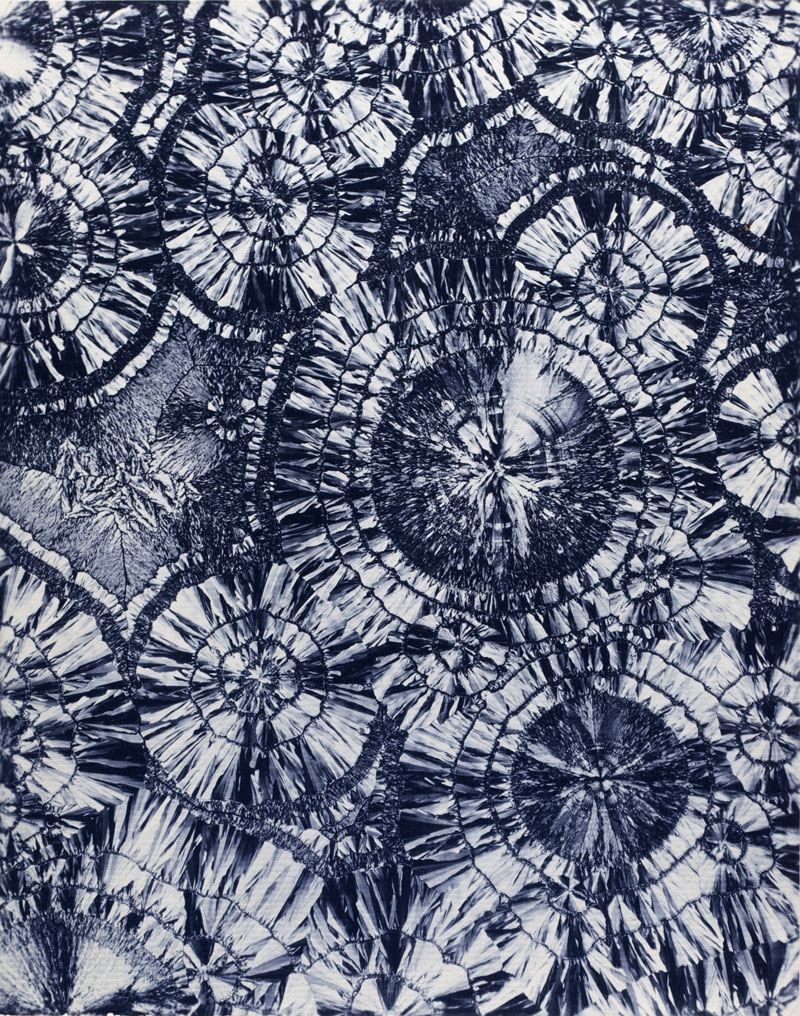
She was notably one of the first in France to consider the decorative use of photography through her formal research into the infinitely tiny. With photomicrography, which she renamed “micrographie”, Laure Albin Guillot thus offered new creative perspectives in the combination of art and science. Finally, as member of the Société des artistes décorateurs, the Société Française de Photographie, director of photographic archives for the Direction générale des Beaux-Arts (forerunner of the Ministry of Culture) and first curator of the Cinémathèque nationale, president of the Union Féminine des Carrières Libérales, she emerges as one of the most active personalities and most aware of the photographic and cultural stakes of the period.

Press release from the Jeu de Paume website


Laure Albin Guillot (French, 1879-1962) 'Illustration pour 'Le Narcisse' de Paul Valéry' 1936


Laure Albin Guillot (French, 1879-1962)
Illustration pour ‘Le Narcisse’ de Paul Valéry
1936
Collection particulière, Paris
© Laure Albin Guillot / Roger-Viollet


Laure Albin Guillot (French, 1879-1962) 'Lucienne Boyer' 1935


Laure Albin Guillot (French, 1879-1962)
Lucienne Boyer
1935
Collections Roger-Viollet / Parisienne de Photographie
© Laure Albin Guillot / Roger-Viollet


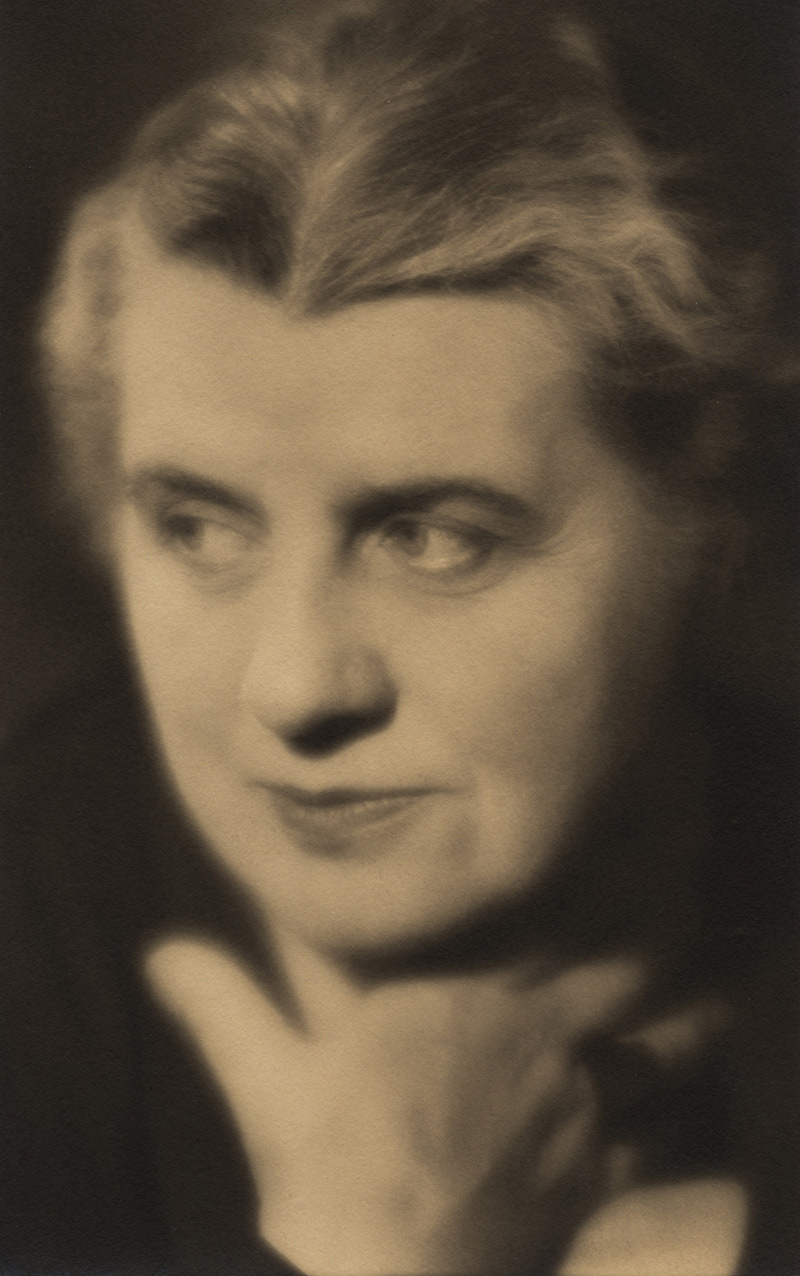
Laure Albin Guillot (French, 1879-1962) 'Autoportrait' 1935
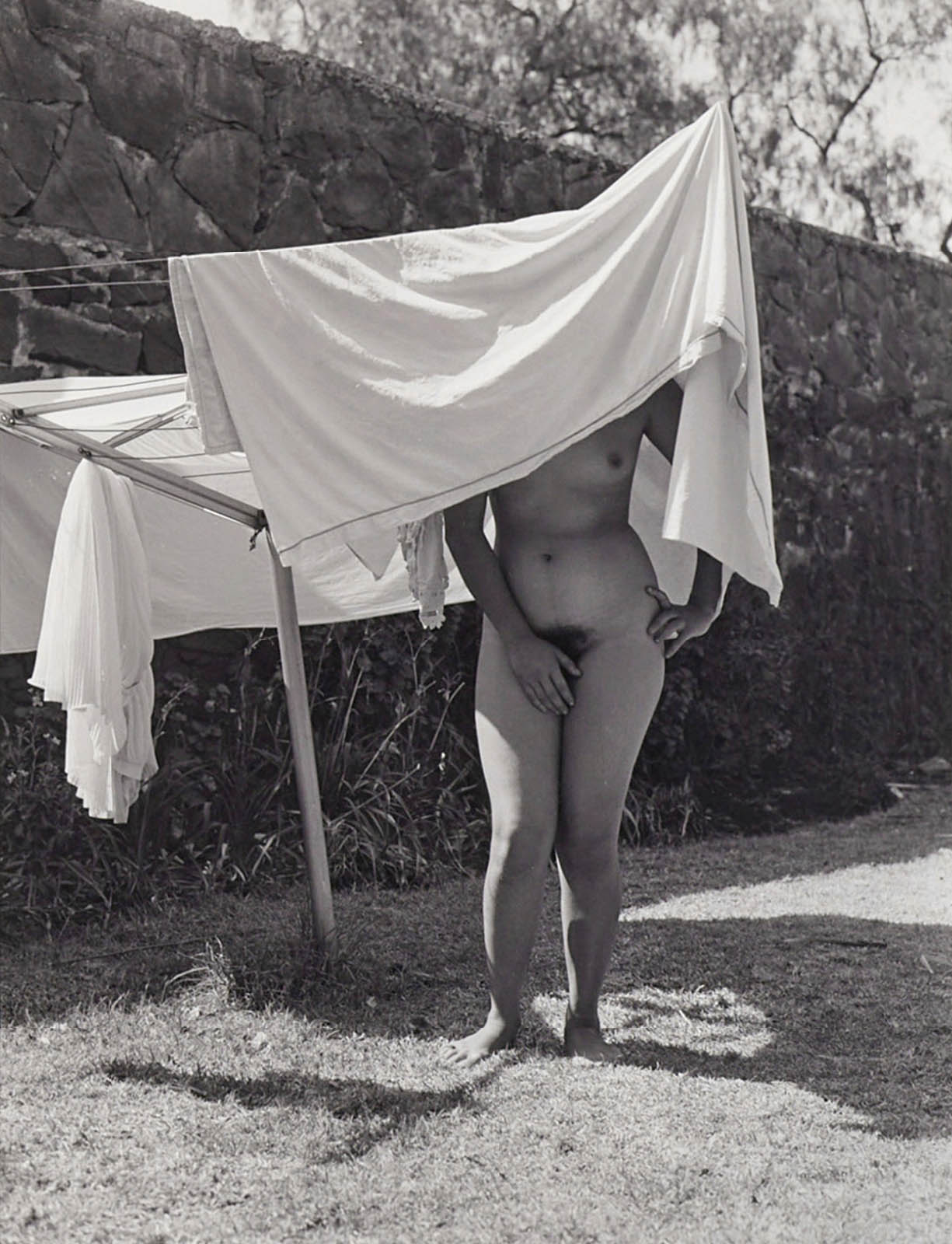
 

Laure Albin Guillot (French, 1879-1962)
Autoportrait
1935
Collection Musée Nicéphore Niépce, Ville de Chalon-sur-Saône
© Laure Albin Guillot / Roger-Viollet


Laure Albin Guillot (French, 1879-1962) 'Jean Cocteau' 1939


Laure Albin Guillot (French, 1879-1962)
Jean Cocteau
1939
© Laure Albin Guillot / Roger-Viollet


Laure Albin Guillot (French, 1879-1962) 'Hubert de Givenchy' 1948


Laure Albin Guillot (French, 1879-1962)
Hubert de Givenchy
1948
© Laure Albin Guillot / Roger-Viollet


Laure Albin Guillot (French, 1879-1962) 'Étude de nu' 1930s


Laure Albin Guillot (French, 1879-1962)
Étude de nu
1930s
© Laure Albin Guillot / Roger-Viollet


Laure Albin Guillot (French, 1879-1962) 'Étude de nu' 1939


Laure Albin Guillot (French, 1879-1962)
Étude de nu
1939
© Laure Albin Guillot / Roger-Viollet


Laure Albin Guillot (French, 1879-1962) 'Étude de nu' 1939


Laure Albin Guillot (French, 1879-1962)
Étude de nu
1939
Bibliothèque nationale de France.
© Laure Albin Guillot / Roger-Viollet


Laure Albin Guillot (French, 1879-1962) 'Nudite de Jeune Femme [Nude of a Young Woman]' c. 1950


Laure Albin Guillot (French, 1879-1962)
Nudite de Jeune Femme (Nude of a Young Woman)
c. 1950
© Laure Albin Guillot / Roger-Viollet


Laure Albin Guillot (French, 1879-1962) 'Étude de nu' 1935


Laure Albin Guillot (French, 1879-1962)
Étude de nu
1935
Collections Roger-Viollet / Parisienne de Photographie
© Laure Albin Guillot / Roger-Viollet


Laure Albin Guillot (French, 1879-1962) 'Sans titre [women with crossed legs on a plinth]' 1937


Laure Albin Guillot (French, 1879-1962)
Sans titre [women with crossed legs on a plinth]
1937
Collection musée Nicéphore Niépce, Ville de Chalon-sur-Saône


Jeu de Paume
1, Place de la Concorde
75008 Paris
métro Concorde
Phone: 01 47 03 12 50

Opening hours:
Tuesday: 11am – 9pm
From Wednesday to Sunday: 11am – 7pm
Closed Monday

Jeu de Paume website

LIKE ART BLART ON FACEBOOK

Back to top

Exhibition: ‘Faking It: Manipulated Photography Before Photoshop’ at The National Gallery of Art, Washington

Exhibition dates: 17th February – 5th May 2013


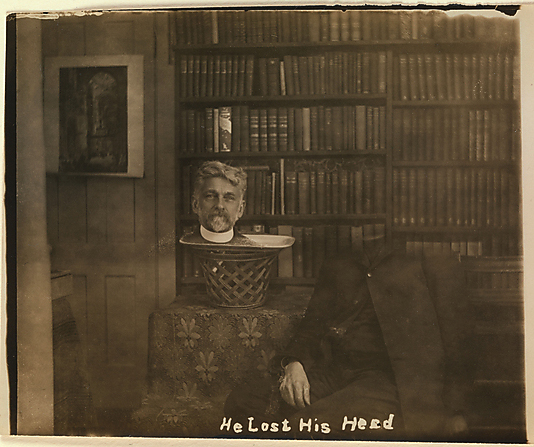
Unknown photographer (American). 'He Lost His Head' Nd


Unknown photographer (American)
He Lost His Head
Nd


Further images from this impressive exhibition devoted to the art of photographic manipulation before the advent of digital imagery from its second stop, at The National Gallery of Art, Washington.

See the first posting on this exhibition.

Dr Marcus Bunyan


Many thankx to the National Gallery of Art for allowing me to publish the photographs in the posting. Please click on the photographs for a larger version of the image.


Henry Peach Robinson (English, 1830-1901) 'Fading Away' 1858


Henry Peach Robinson (English, 1830-1901)
Fading Away
1858
Albumen silver print from glass negatives


“I am far from saying that a photograph must be an actual, literal, and absolute fact … but it must represent truth. Truth and fact are not only two words, but, in art at least, they represent two things. A fact is anything done or that exists – a reality. Truth is conformity to fact or reality – absence of falsehood. So that truth in art may exist without an absolute observance of facts.”

~ Henry Peach Robinson


Henry Peach Robinson (British, 1830-1901) 'She Never Told Her Love' 1857


Henry Peach Robinson (British, 1830-1901)
She Never Told Her Love
1857
Albumen silver print from glass negative
18 x 23.2cm (7 1/16 x 9 1/8in.)
Gilman Collection, Purchase, Jennifer and Joseph Duke Gift, 2005


Consumed by the passion of unrequited love, a young woman lies suspended in the dark space of her unrealised dreams in Henry Peach Robinson’s illustration of the Shakespearean verse “She never told her love, / But let concealment, like a worm i’ the bud, / Feed on her damask cheek” (Twelfth Night II, iv, 111-13). Although this picture was exhibited by Robinson as a discrete work, it also served as a study for the central figure in his most famous photograph, Fading Away, of 1858.

Purportedly showing a young consumptive surrounded by family in her final moments, Fading Away was hotly debated for years. On the one hand, Robinson was criticised for the presumed indelicacy of having invaded the death chamber at the most private of moments. On the other, those who recognised the scene as having been staged and who understood that Robinson had created the picture through combination printing (a technique that utilised several negatives to create a single printed image) accused him of dishonestly using a medium whose chief virtue was its truthfulness.

Text from the Metropolitan Museum of Art website


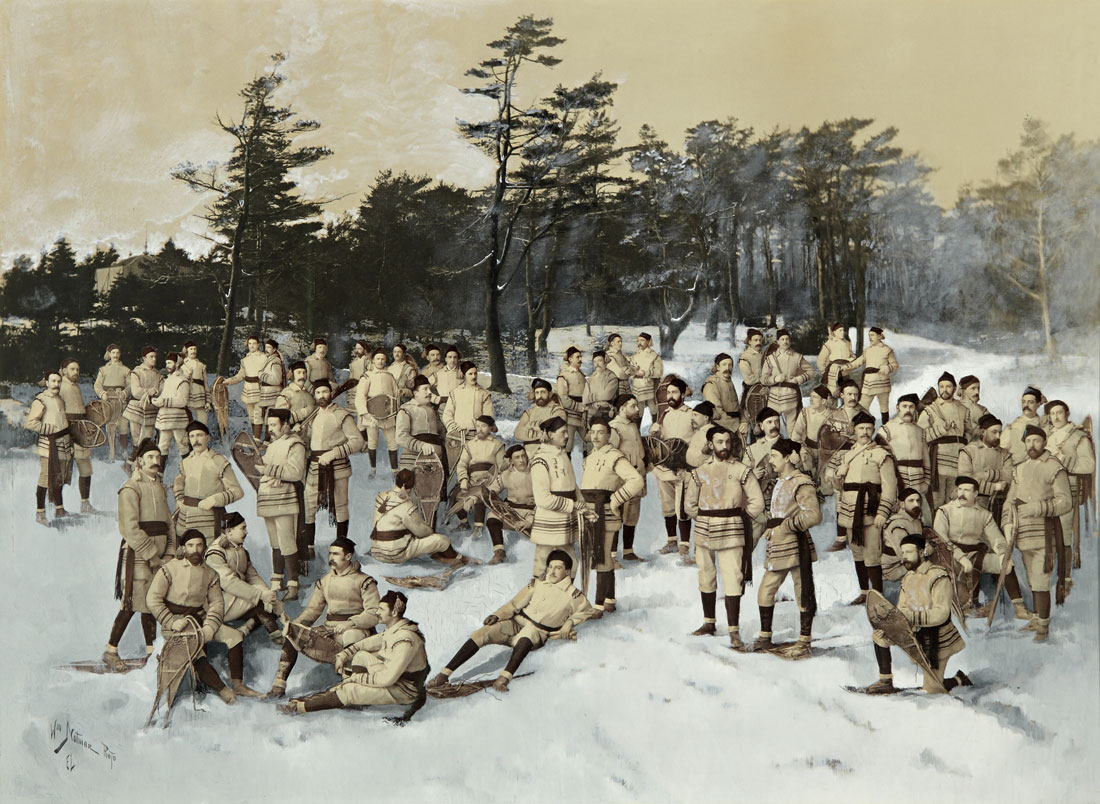
Wm. Notman & Son, Montreal, Eugène L'Africain, William Notman. 'Red Cap Snow Shoe Club, Halifax, Nova Scotia' c. 1888


Wm. Notman & Son, Montreal, Eugène L’Africain, William Notman
Red Cap Snow Shoe Club, Halifax, Nova Scotia
c. 1888
Collage of albumen prints with applied media
71.1 x 83.8cm (28 x 33 in.)
McCord Museum, Montreal


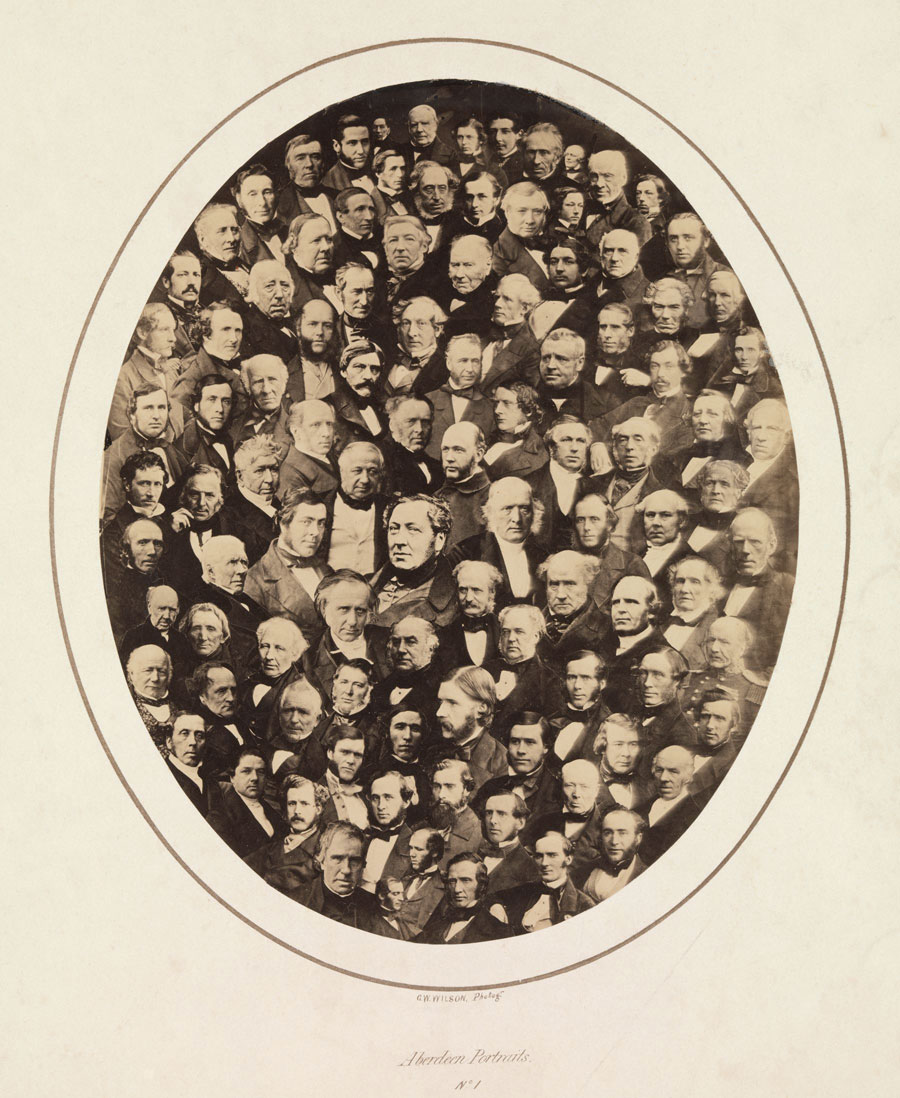
Notman established his first photography studio in Montreal in 1856 and relentlessly expanded his operations over the next two decades. At its peak, his company had twenty-four branches throughout Canada and New England, making it the most successful photographic enterprise in North America at the time. Notman specialised in composite portraits of large groups, including sporting clubs, trade associations, family gatherings, clergymen, and college graduates, some featuring more than four hundred figures. Each figure in a group was photographed separately in the studio then printed at the proper scale and pasted onto a painted background, as in this portrait of a Nova Scotia snowshoe club. The entire collage was then re-photographed. The final, relatively seamless tableau could then be printed and sold in a variety of sizes and formats.

Text from the Metropolitan Museum of Art website


Edward Steichen (American, 1879-1973) 
'The Pond – Moonrise' 1904


Edward Steichen (American, 1879-1973)

The Pond – Moonrise
1904
Platinum print with applied colour
 image
39.7 x 48.2cm (15 5/8 x 19 in.)
Lent by The Metropolitan Museum of Art, Alfred Stieglitz Collection, 1933
© The Metropolitan Museum of Art/ Permission Estate of Edward Steichen. All rights reserved


Using a painstaking technique of multiple printing, Steichen achieved prints of such painterly seductiveness they have never been equaled. This view of a pond in the woods at Mamaroneck, New York is subtly coloured as Whistler’s Nocturnes, and like them, is a tone poem of twilight, in-distinction, and suggestiveness. Commenting on such pictures in 1910, Charles Caffin wrote in Camera Work: “It is in the penumbra, between the clear visibility of things and their total extinction into darkness, when the concreteness of appearances becomes merged in half-realised, half-baffled vision, that spirit seems to disengage itself from matter to envelop it with a mystery of soul-suggestion.”

Text from the Metropolitan Museum of Art website


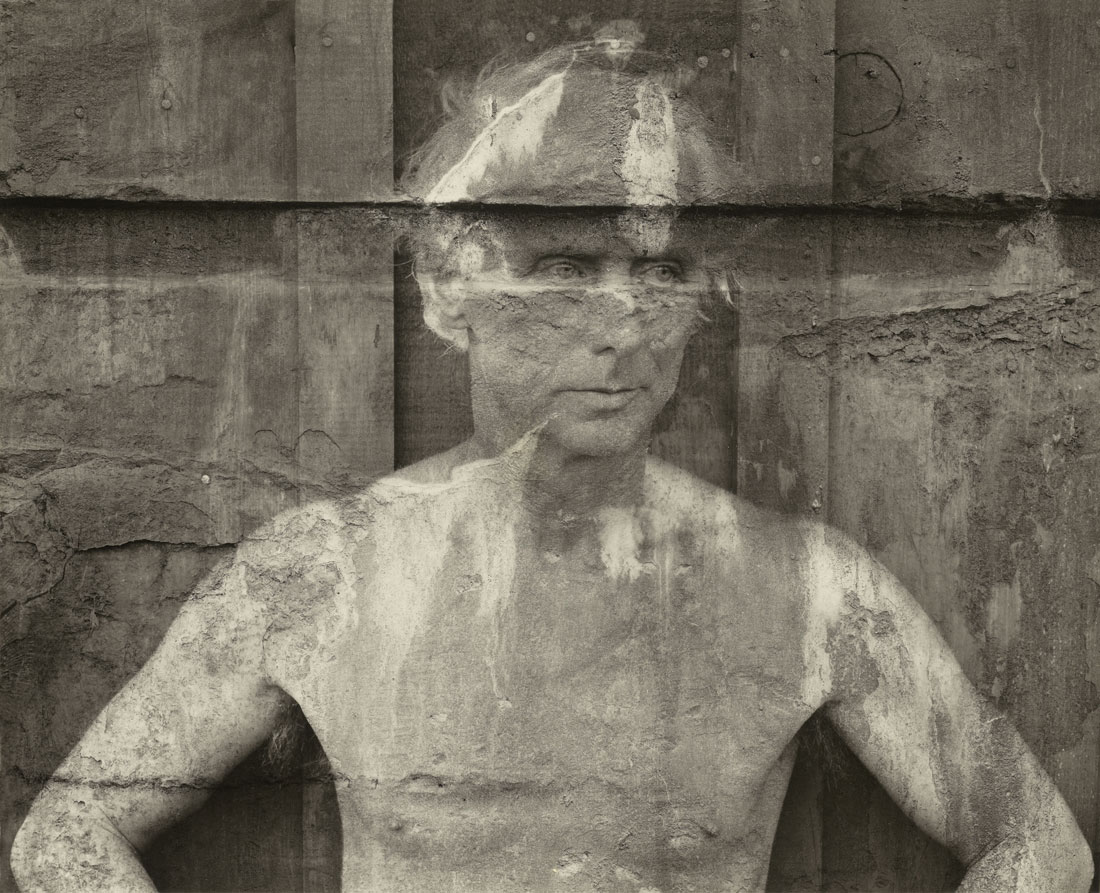
Frederick Sommer (American, 1905-1999) 'Max Ernst' 1946


Frederick Sommer (American, 1905-1999)
Max Ernst
1946
Gelatin silver print
19.2 x 23.97cm (7 9/16 x 9 7/16 in.)
The J. Paul Getty Museum, Los Angeles
© Frederick and Frances Sommer Foundation


The National Gallery of Art presents the first major exhibition devoted to the art of photographic manipulation before the advent of digital imagery. Faking It: Manipulated Photography before Photoshop will be on view in the West Building’s Ground Floor galleries from February 17 through May 5, 2013, following its debut at the Metropolitan Museum of Art (from October 11, 2012, through January 27, 2013). In June it travels to the Museum of Fine Arts, Houston.

“Following in its tradition of exhibiting and collecting the finest examples of photography, the Gallery is pleased to present some 200 photographs from the 1840s through the 1980s demonstrating the medium’s complicated relationship to truth in representation,” said Earl A. Powell III, director, National Gallery of Art. “We are grateful to the many lenders, both public and private, who have generously shared works from their collections – especially the Metropolitan Museum of Art, the largest lender and the organiser of this fascinating exhibition.”

The Exhibition

This is the first major exhibition devoted to the history of manipulated photography before the digital age. While the widespread use of Adobe® Photoshop® software has brought about an increased awareness of the degree to which photographs can be doctored, photographers – including such major artists as Gustave Le Gray, Edward Steichen, Weegee, and Richard Avedon – have been fabricating, modifying, and otherwise manipulating camera images since the medium was first invented. This exhibition demonstrates that today’s digitally manipulated images are part of a continuum that extends back to photography’s first decades. Through visually captivating pictures created in the service of art, politics, news, entertainment, and commerce, Faking It not only traces the medium’s complex and changing relationship to visual truth, but also significantly revises our understanding of photographic history.

Organised thematically, the exhibition begins with some of the earliest instances of photographic manipulation – those attempting to compensate for the new medium’s technical limitations. In the 19th century, many photographers hand tinted portraits to make them appear more vivid and lifelike. Others composed large group portraits by photographing individuals separately in the studio and creating a collage by pasting them onto painted backgrounds depicting outdoor scenes. As the art and craft of photography grew increasingly sophisticated, photographers devised a staggering array of techniques with which to manipulate their images, including combination printing, photomontage, overpainting, ink and airbrush retouching, sandwiched negatives, multiple exposures, and other darkroom magic.

The exhibition presents a superb selection of manually altered photographs created under the mantle of art, including 19th-century genre scenes composed of multiple negatives, stunning Pictorialist landscapes from the turn of the 19th century, and the pre-digital dreamscapes of surrealist photographers in the 1920s and 1930s. A section of doctored images made for political or ideological ends includes faked composite photographs of the 1871 Paris Commune massacres, anti-Nazi photomontages by John Heartfield, and falsified images from Stalin-era Soviet Russia. The show also explores popular uses of photographic manipulation such as spirit photography, tall-tale and fantasy postcards, advertising and fashion spreads, and doctored news images.

The final section features the work of contemporary artists – including Duane Michals, Jerry Uelsmann, and Yves Klein – who have reclaimed earlier techniques of image manipulation to creatively question photography’s presumed objectivity. By tracing the history of photographic manipulation from the 1840s to the present, Faking It vividly demonstrates that photography is – and always has been – a medium of fabricated truths and artful lies.

Press release from the National Gallery of Art website


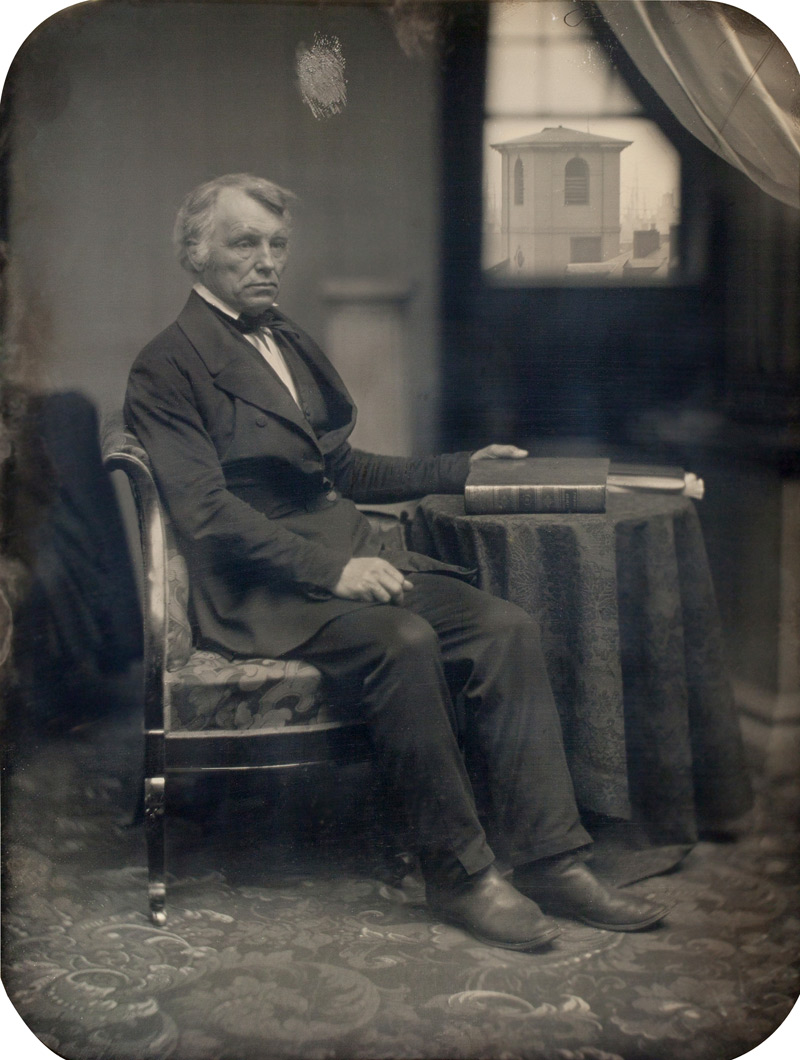
Albert Sands Southworth (American, 1811-1894) and Josiah Johnson Hawes (American, 1808-1901) 'Seated man with Brattle Street Church seen through window' 1850s


Albert Sands Southworth (American, 1811-1894) and Josiah Johnson Hawes (American, 1808-1901)
Seated man with Brattle Street Church seen through window
1850s
Daguerreotype
21.6 x 16.5cm (8 1/2 x 6 1/2 in.)
The Isenburg Collection at AMC Toronto


George Washington Wilson. 'Aberdeen Portraits No. 1' 1857


George Washington Wilson (Scottish, 1823-1893)
Aberdeen Portraits No. 1
1857
Albumen silver print from glass negative


Unknown (American) '[Decapitated Man with Head on a Platter]' c. 1865


Unknown (American)
[Decapitated Man with Head on a Platter]
c. 1865
Tintype with applied colour
8.4 x 6cm (3 5/16 x 2 3/8 in.)
© International Center of Photography, Gift of Steven Kasher and Susan Spungen Kasher, 2008


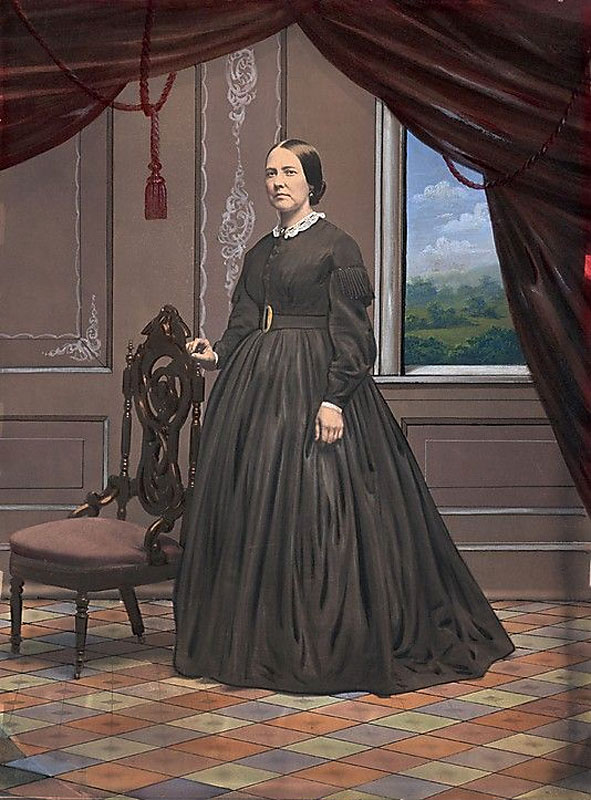
Unidentified photographer (American) 'Susan M. Davis' 1865


Unidentified photographer (American)
Susan M. Davis
1865
Salted paper print from glass negative, with applied color


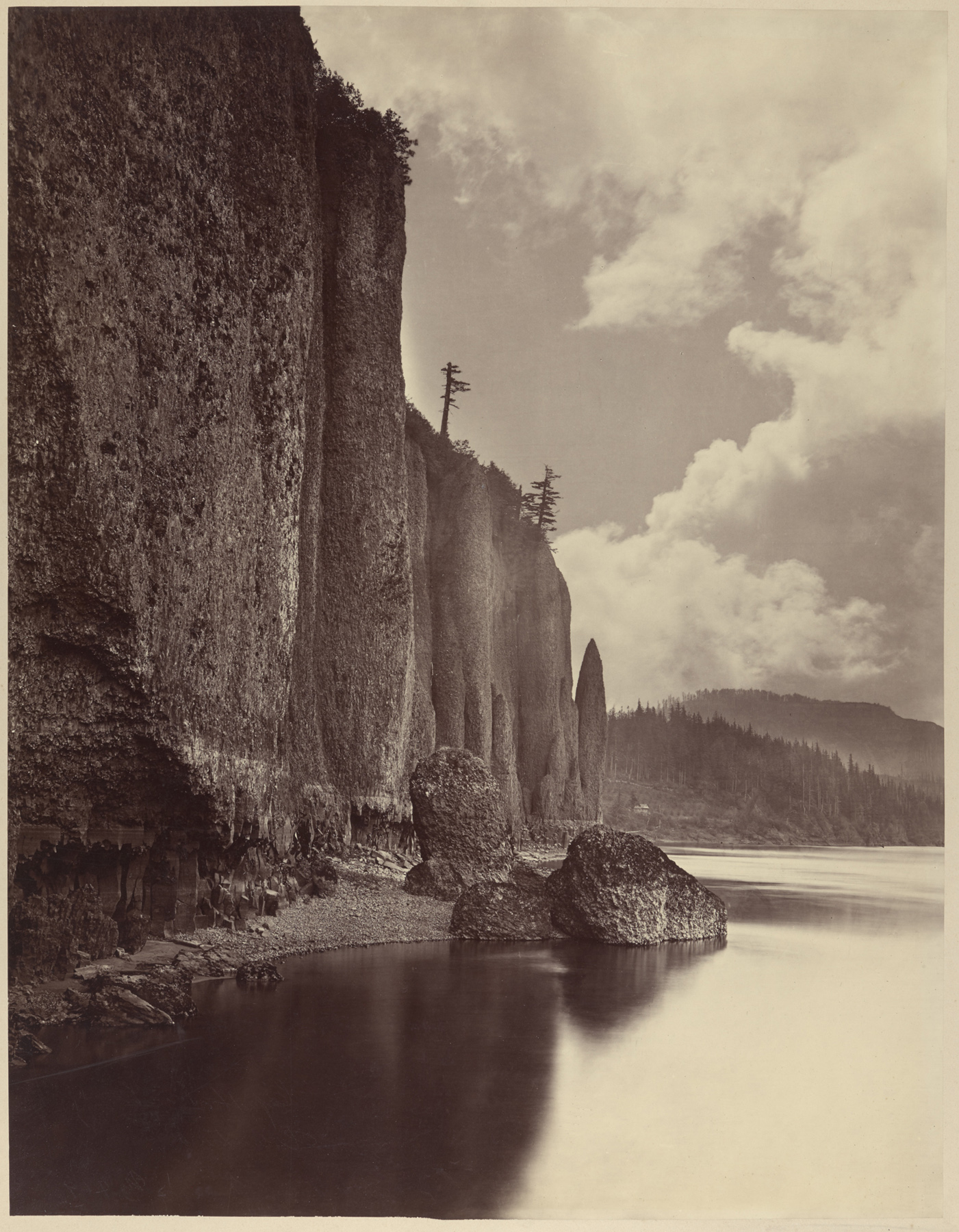
Carleton E. Watkins (American, 1829-1916) 'Cape Horn, Columbia River, Oregon' 1867


Carleton E. Watkins (American, 1829-1916)
Cape Horn, Columbia River, Oregon
1867, printed 1880-1890
Albumen silver print from glass negatives
52.3 x 40.4cm (20 9/16 x 15 7/8 in.)
© George Eastman House, International Museum of Photography and Film, Rochester


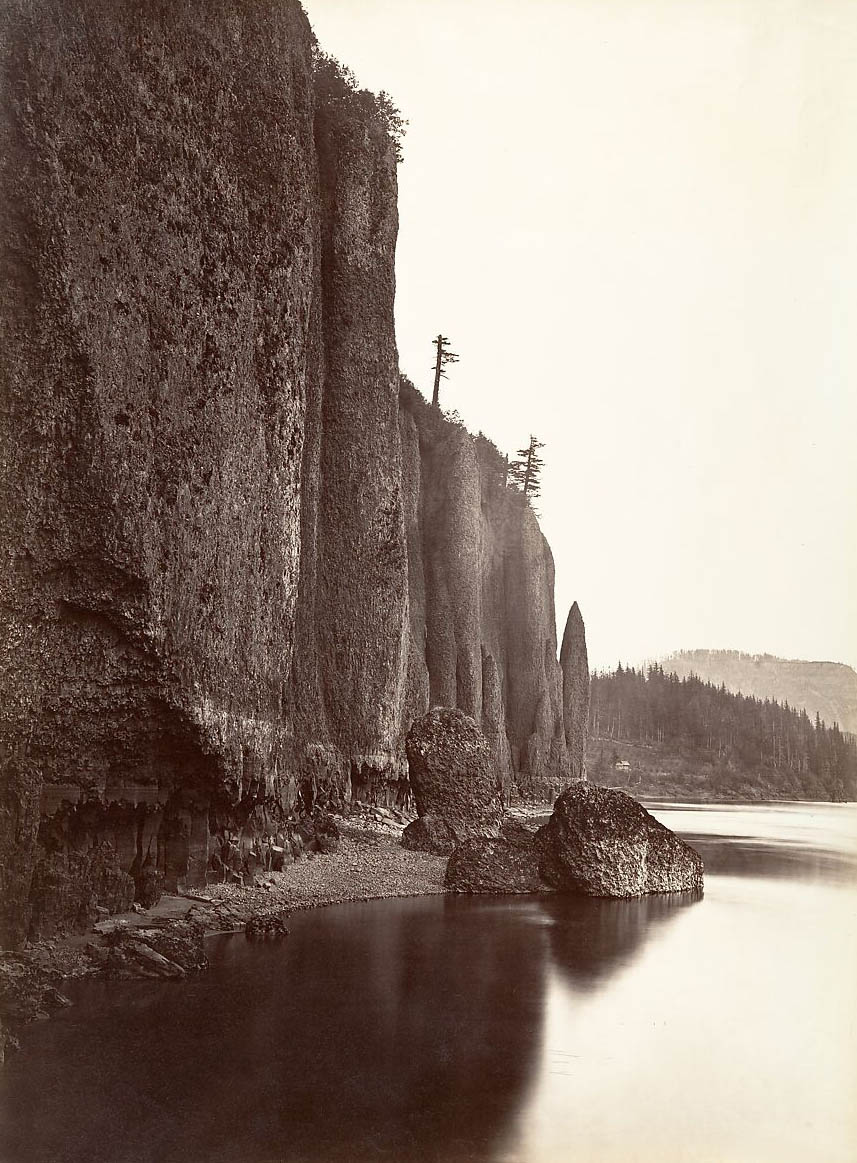
Watkins, the consummate photographer of the American West, combined a virtuoso mastery of the difficult wet plate negative process with a rigorous sense of pictorial structure. For large-format landscape work such as Watkins produced along the Columbia River in Oregon, the physical demands were great. Since there was as yet no practical means of enlarging, Watkins’s glass negatives had to be as large as he wished the prints to be, and his camera large enough to accommodate them. Furthermore, the glass negatives had to be coated, exposed, and developed while the collodion remained tacky, requiring the photographer to transport a traveling darkroom as he explored the rugged virgin terrain of the American West. The crystalline clarity of Watkins’s remarkable “mammoth” prints is unmatched in the work of any of his contemporaries and is approached by few artists working today. Here the clouds have been printed in (compare to the work below)

Text from the Metropolitan Museum of Art website


Carleton E. Watkins (American, 1829-1916) 'Cape Horn, Columbia River, Oregon' 1867


Carleton E. Watkins (American, 1829-1916)
Cape Horn, Columbia River, Oregon
1867
Albumen silver print from glass negative
52.1 x 39cm (20 1/2 x 15 3/8 in.)


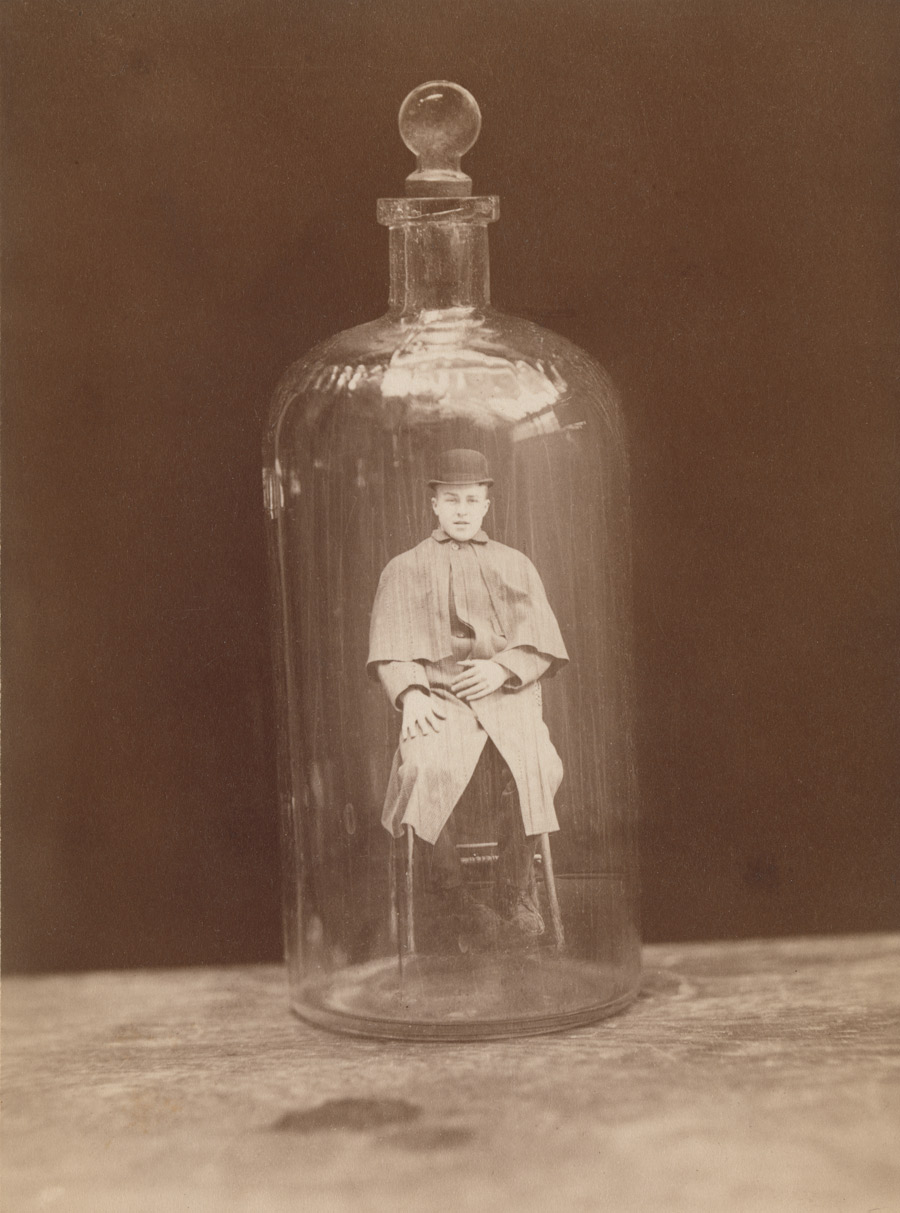
J.C. Higgins and Son (American) 'Man in bottle' c. 1888


J.C. Higgins and Son (American)
Man in bottle
c. 1888
Albumen print
13.5 x 10cm (5 5/16 x 3 15/16 in.)
Lent by The Metropolitan Museum of Art, Purchase, Susan and Thomas Dunn Gift, 2011


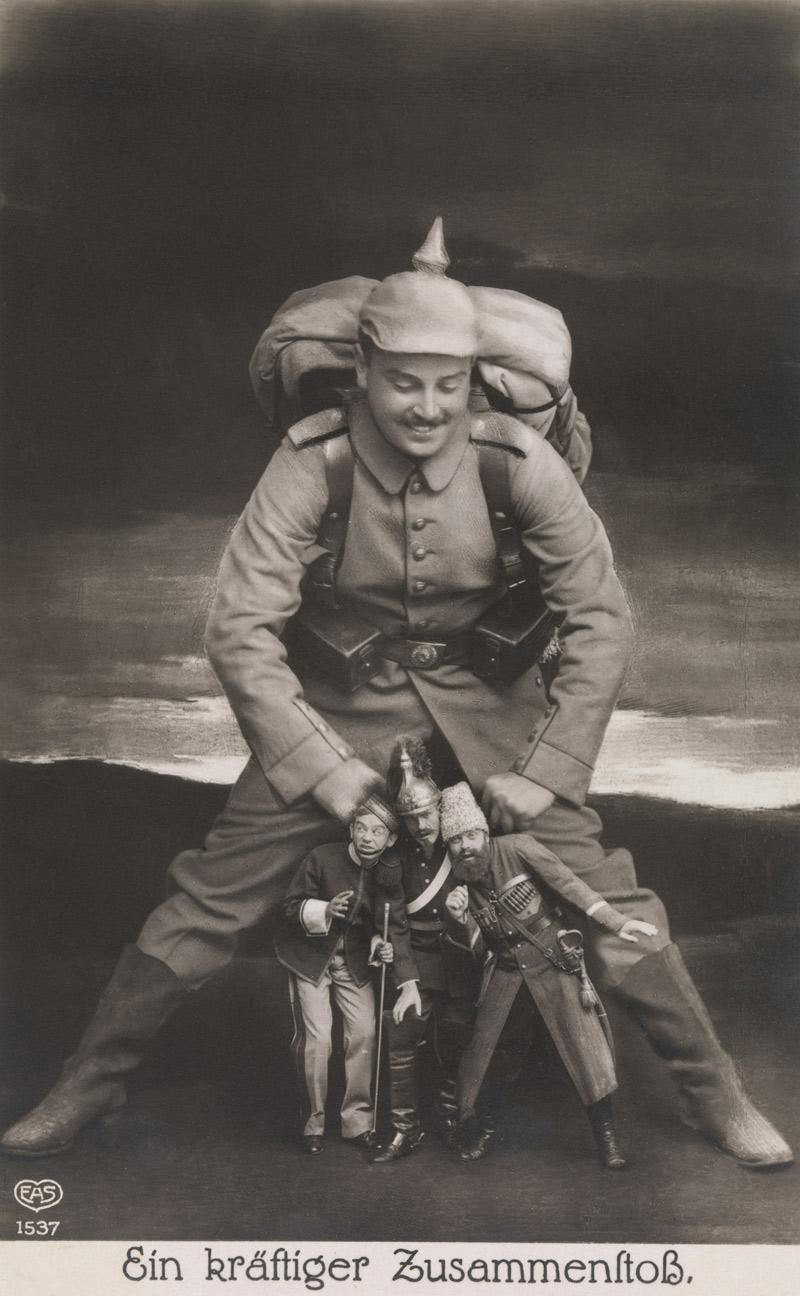
Unknown Photographer (German) 'Ein kräftiger Zusammenstoss (A Powerfull Collision)' 1914


Unknown Photographer (German)
Ein kräftiger Zusammenstoss (A Powerfull Collision)
1914
Gelatin silver print
8.7 x 13.7cm (3 7/16 x 5 3/8 in.)
Lent by The Metropolitan Museum of Art, Twentieth-Century Photography Fund, 2010


Dora Maar (French, 1907-1997) 'The Simulator' 1936


Dora Maar (French, 1907-1997)
Le simulateur
1936
Gelatin silver print
29.2 x 22.9cm (11 1/2 x 9 in.)
Collection of The Sack Photographic Trust for the San Francisco Museum of Modern Art


Maar’s haunting photomontages of the mid-1930s evoke a mood of oneiric ambiguity. Here, the world is turned literally upside-down: a boy bends sharply backward, echoing the curve of the vaulted ceiling on which he stands. On the print, Maar scratched out the figure’s eyes, exploiting Surrealism’s strong association of blindness with inner sight.


Bill Brandt (English born Germany, 1904-1983) 'London (Multiple Exposure Nude)' 1956


Bill Brandt (English born Germany, 1904-1983
London (Multiple Exposure Nude)
1956
Gelatin silver print with applied media


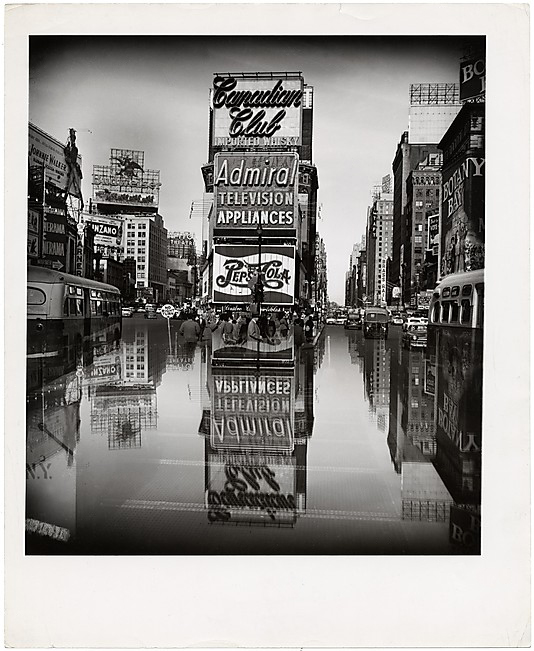
Arthur Felig - Weegee (American born Hungary, 1899-1968) 'Times Square, New York' 1952-1959


Weegee (Arthur Felig) (American born Hungary, 1899-1968)
Times Square, New York
1952-1959
Gelatin silver print
20.3 x 17.8cm (8 x 7 in.)
© International Center of Photography, Bequest of Wilma Wilcox, 1993


Famous for his gritty tabloid crime photographs, Weegee devoted the last twenty years of his life to what he called his “creative work.” He experimented prolifically with distorting lenses and comparable darkroom techniques, producing photo caricatures of politicians and Hollywood celebrities, novel variations on the man-in-the-bottle motif, and uncanny doublings and reflections, such as this striking image, which he described as “Times Square under 10 feet of water on a sunny afternoon.”


Jerry N. Uelsmann (American, 1934-2022) 'Untitled' 1976


Jerry N. Uelsmann (American, 1934-2022)
Untitled
1976
Gelatin silver print
49.3 x 36cm (19 7/16 x 14 3/16 in.)
Lent by The Metropolitan Museum of Art, David Hunter McAlpin Fund, 1981
© The Metropolitan Museum of Art/ © Jerry N. Uelsmann


Jerry Norman Uelsmann (June 11, 1934 – April 4, 2022) was an American photographer.

As an emerging artist in the 1960s, Jerry Uelsmann received international recognition for surreal, enigmatic photographs (photomontages) made with his unique method of composite printing and his dedication to revealing the deepest emotions of the human condition. Over the next six decades, his contributions to contemporary photography were firmly established with important exhibitions, prestigious awards and numerous publications. Among his awards were a Guggenheim Fellowship, National Endowment, Royal Photographic Society Fellowship, and Lucie Award.

Uelsmann described his creative process as a journey of discovery in the darkroom (visual research laboratory). Going against the established practice of previsualization (Ansel Adams, Edward Weston and others), he coined a new term, post-visualization. He decided the contents of the final print after rather than before pressing the shutter button. Uelsmann constructed his dreams like a visual poet with results that often seemed emotionally more real than the factual world. By the 1980s he became one of the most collected photographers in America. His work influenced generations of both analog and digital photographers. Although he admired digital photography, he remained completely dedicated to the alchemy of film photography in the black and white darkroom.

Text from the Wikipedia website


Kathy Grove (American, b. 1948) 'The Other Series (After Kertész)' 1989-90


Kathy Grove (American, b. 1948)
The Other Series (After Kertész)
1989-1990
Gelatin silver print
19.7 x 15.2cm (7 3/4 x 6 in.)
Purchase, Charina Foundation Inc. Gift, 2010
© Kathy Grove


In the late 1980s Grove, an artist who supports herself as a professional photo retoucher, began seamlessly altering images of famous works of art, using bleach, dyes, and airbrush to remove the female figure from each image and leaving the rest of the scene intact. Her cunning excisions mimic the process by which art historians, echoing the culture at large, have erased the achievements of actual women while enshrining Woman as a blank screen upon which the ideas and desires of both artist and viewer are projected. If photographs are presumed to represent the truth, Grove’s pictures remind us to ask: Whose truth?


National Gallery of Art
National Mall between 3rd and 7th Streets
Constitution Avenue NW, Washington

Opening hours:
Daily 10am – 5pm

National Gallery of Art website

LIKE ART BLART ON FACEBOOK

Back to top

Exhibition: ‘The Shaping of New Visions: Photography, Film, Photobook’ at the Museum of Modern Art (MoMA), New York

Exhibition dates: 18th April 2012 – 29th April 2013


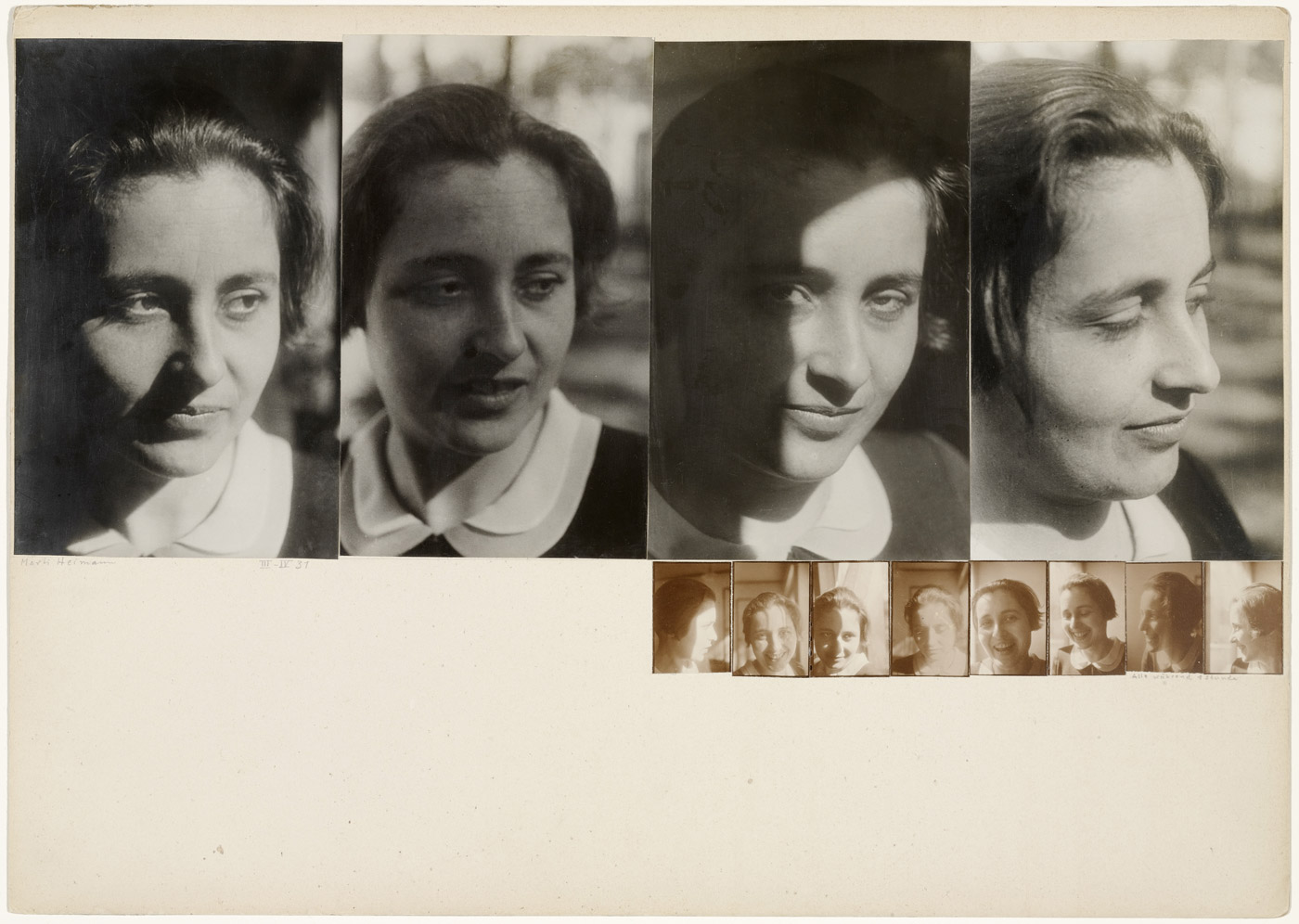
Josef Albers (German, 1888-1976) 'Marli Heimann, Alle während 1 Stunde (Marli Heimann, All During an Hour)' 1931


Josef Albers (German, 1888-1976)
Marli Heimann, Alle während 1 Stunde (Marli Heimann, All During an Hour)
1931
Twelve gelatin silver prints
Overall 11 11/16 x 16 7/16″ (29.7 x 41.8cm)
The Museum of Modern Art, New York
Gift of The Josef Albers Foundation, Inc.
© 2012 The Josef and Anni Albers Foundation / Artists Rights Society (ARS), New York


Another fascinating exhibition and a bumper posting to boot (pardon the pun!)

A panoply of famous photographers along with a few I had never heard of before (such as Georges Hugnet) are represented in this posting. As the press blurb states, through “key photographic projects, experimental films, and photobooks, The Shaping of New Visions offers a critical reassessment of photography’s role in the avant-garde and neo-avant-garde movements, and in the development of contemporary artistic practices.”

The large exhibition seems to have a finger in every pie, wandering from the birth of the 20th-century modern metropolis, through “New Vision” photography in the 1920s, experimental film, Surrealism, Constructivism and New Objectivity, Dada, Rayographs, photographic avant-gardism, photocollages, photomontages, street photography of the  1960s, colour slide projection performance, through New Topographics, self-published books, and conceptual photography, featuring works that reevaluate the material and contextual definitions of photography. “The final gallery showcases major installations by a younger generation of artists whose works address photography’s role in the construction of contemporary history.”

Without actually going to New York to see the exhibition (I wish!!) – from a distance it does seem a lot of ground to cover within 5 galleries even if there are 250 works. You could say this is a “meta” exhibition, drawing together themes and experiments from different areas of photography with rather a long bow. Have a look at the The Shaping of New Visions exhibition checklist to see the full listing of what’s on show and you be the judge. There are some rare and beautiful images that’s for sure. From the photographs in this posting I would have to say the distorted “eyes” have it…

Dr Marcus Bunyan


Many thankx to MoMA for allowing me to publish the photographs in the posting. Please click on the photographs for a larger version of the image.


Paul Strand (American, 1890-1976) and Charles Sheeler (American, 1883-1965)
Manhatta
1921
Film
Courtesy of the Museum of Modern Art, New York
© Aperture Foundation Inc., Paul Strand Archive


In 1920 Paul Strand and artist Charles Sheeler collaborated on Manhatta, a short silent film that presents a day in the life of lower Manhattan. Inspired by Walt Whitman’s book Leaves of Grass, the film includes multiple segments that express the character of New York. The sequences display a similar approach to the still photography of both artists. Attracted by the cityscape and its visual design, Strand and Sheeler favoured extreme camera angles to capture New York’s dynamic qualities. Although influenced by Romanticism in its view of the urban environment, Manhatta is considered the first American avant-garde film.


Man Ray (American, 1890-1976) 'Rayograph' 1922


Man Ray (American, 1890-1976)
Rayograph
1922
Gelatin silver print (photogram)
9 3/8 x 11 3/4″ (23.9 x 29.9cm)
The Museum of Modern Art, New York
Gift of James Thrall Soby
© 2012 Man Ray Trust / Artists Rights Society (ARS), New York / ADAGP, Paris


Aleksandr Rodchenko (Russian, 1891-1956) 'Sovetskoe foto (Soviet Photo)' No. 10 October 1927


Aleksandr Rodchenko (Russian, 1891-1956)
Sovetskoe foto (Soviet Photo) No. 10
October 1927
Letterpress
10 3/8 x 7 1/4″ (26.3 x 18.4cm)
Publisher: Ogonek, Moscow
The Museum of Modern Art, New York. Gift of the Judith Rothschild Foundation


August Sander (German, 1876-1964) 'Das rechte Auge meiner Tochter Sigrid (The Right Eye of My Daughter Sigrid)' 1928


August Sander (German, 1876-1964)
Das rechte Auge meiner Tochter Sigrid (The Right Eye of My Daughter Sigrid)
1928
Gelatin silver print
7 1/16 x 9″ (17.9 x 22.9cm)
The Museum of Modern Art, New York
Gift of the photographer
© 2012 Artists Rights Society (ARS), New York / VG Bild-Kunst, Bonn


Claude Cahun (French, 1894-1954) 'Untitled' c. 1928


Claude Cahun (French, 1894-1954)
Untitled
c. 1928
Gelatin silver print
4 9/16 x 3 1/2″ (10 x 7.6cm)
The Museum of Modern Art, New York
Purchase and anonymous promised gift
© 2012 Estate of Claude Cahun


Dziga Vertov (Russian, 1896-1954) 'Chelovek s kinoapparatom (Man with a Movie Camera)' (still) 1929


Dziga Vertov (Russian, 1896-1954)
Chelovek s kinoapparatom (Man with a Movie Camera) (still)
1929
35mm film
65 min ( black and white, silent)
The Museum of Modern Art, New York
Department of Film


Excerpt from a camera operators diary
ATTENTION VIEWERS:
This film is an experiment in cinematic communication of real events
Without the help of Intertitles
Without the help of a story
Without the help of theatre
This experimental work aims at creating a truly international language of cinema based on its absolute separation from the language of theatre and literature


Man with a Movie Camera (Russian: Человек с киноаппаратом (Chelovek s kinoapparatom) is an experimental 1929 silent documentary film, with no story and no actors by Soviet-Russian director Dziga Vertov, edited by his wife Elizaveta Svilova.

Vertov’s feature film, produced by the film studio VUFKU, presents urban life in the Soviet cities of Kiev, Kharkov, Moscow and Odessa. From dawn to dusk Soviet citizens are shown at work and at play, and interacting with the machinery of modern life. To the extent that it can be said to have “characters,” they are the cameramen of the title, the film editor, and the modern Soviet Union they discover and present in the film.

This film is famous for the range of cinematic techniques Vertov invents, deploys or develops, such as double exposure, fast motion, slow motion, freeze frames, jump cuts, split screens, Dutch angles, extreme close-ups, tracking shots, footage played backwards, stop motion animations and self-reflexive visuals (at one point it features a split-screen tracking shot; the sides have opposite Dutch angles).

In the British Film Institute’s 2012 Sight & Sound poll, film critics voted Man with a Movie Camera the 8th best film ever made. In 2014 Sight & Sound also named it the best documentary of all time.

Text from the YouTube website


László Moholy-Nagy (Hungarian, 1895-1946)
Ein Lichtspiel: schwarz weiss grau (A Lightplay: Black White Gray) (excerpt)
1930


This short film made by László Moholy-Nagy is based on the shadow patterns created by his Light-Space Modulator, an early kinetic sculpture consisting of a variety of curved objects in a carefully choreographed cycle of movements. Created in 1930, the film was originally planned as the sixth and final part of a much longer work depicting the new space-time.


Raoul Hausmann (Austrian, 1886-1971) 'Untitled' February 1931


Raoul Hausmann (Austrian, 1886-1971)
Untitled
February 1931
Gelatin silver print
5 3/8 x 4 7/16″ (13.6 x 11.2cm)
The Museum of Modern Art, New York
Thomas Walther Collection Gift of Thomas Walther
© 2012 Raoul Hausmann / Artists Rights Society (ARS), New York / ADAGP, Paris


Georges Hugnet (French, 1906-1974) 'Untitled [Surrealist beach collage]' c. 1935


Georges Hugnet (French, 1906-1974)
Untitled [Surrealist beach collage]
c. 1935
Collage of photogravure, lithograph, chromolithograph and gelatin silver prints on gelatin silver print
11 7/8 x 9 7/16″ (30.2 x 24cm)
The Museum of Modern Art, New York
Gift of Timothy Baum in memory of Harry H. Lunn, Jr.


Grete Stern (German-Argentinian, 1904-1999) No. 1 from the series 'Sueños' (Dreams) 1949


Grete Stern (German-Argentinian, 1904-1999)
No. 1 from the series Sueños (Dreams)
1949
Gelatin silver print
10 1/2 x 9″ (26.6 x 22.9cm)
Latin American and Caribbean Fund through gift of Marie-Josée and Henry R. Kravis in honor of Adriana Cisneros de Griffin
© 2012 Horacio Coppola


Berenice Abbott (American, 1898-1991) 'Portrait of the Artist as a Young Woman' Negative c. 1930/Distortion c. 1950


Berenice Abbott (American, 1898-1991)
Portrait of the Artist as a Young Woman
Negative c. 1930/Distortion c. 1950
Gelatin silver print
12 3/4 x 10 1/8″ (32.6 x 25.7cm)
The Museum of Modern Art, New York
Frances Keech Fund in honor of Monroe Wheeler
© 2012 Berenice Abbott/Commerce Graphics


William Klein (American, 1928-2022) 'Gun, Gun, Gun, New York' 1955


William Klein (American, 1928-2022)
Gun, Gun, Gun, New York 
1955
Gelatin silver print
10 1/4 x 13 5/8″ (26 x 34.6cm)
The Museum of Modern Art, New York
Gift of Arthur and Marilyn Penn


Martha Rosler (American, b. 1943) 'Red Stripe Kitchen' 1967-1972


Martha Rosler (American, b. 1943)
Red Stripe Kitchen
1967-1972
From the series Bringing the War Home: House Beautiful 
Pigmented inkjet print, printed 2011
23 3/4 x 18 1/8″ (60.3 x 46cm)
The Museum of Modern Art, New York
Purchase and The Modern Women’s Fund


Eleanor Antin (American, b. 1935) '100 Boots' 1971-1973

Eleanor Antin (American, b. 1935) '100 Boots' 1971-1973

Eleanor Antin (American, b. 1935) '100 Boots' 1971-1973


Eleanor Antin (American, b. 1935)
100 Boots
1971-1973
Photographed by Philip Steinmetz
Halftone reproductions on 51 cards
4 1/2 x 7 in. each
Courtesy Ronald Feldman Fine Arts, New York
© Eleanor Antin


The Museum of Modern Art draws from its collection to present the exhibition The Shaping of New Visions: Photography, Film, Photobook on view from April 18, 2012, to April 29, 2013. Filling the third-floor Edward Steichen Photography Galleries, this installation presents more than 250 works by approximately 90 artists, with a focus on new acquisitions and groundbreaking projects by Man Ray, László Moholy-Nagy, Aleksandr Rodchenko, Germaine Krull, Dziga Vertov, Gerhard Rühm, Helen Levitt, Robert Frank, Daido Moriyama, Robert Heinecken, Edward Ruscha, Martha Rosler, Bernd and Hilla Becher, Philip-Lorca diCorcia, Paul Graham, and The Atlas Group / Walid Raad. The exhibition is organised by Roxana Marcoci, Curator, Department of Photography, The Museum of Modern Art.

Punctuated by key photographic projects, experimental films, and photobooks, The Shaping of New Visions offers a critical reassessment of photography’s role in the avant-garde and neo-avant-garde movements, and in the development of contemporary artistic practices. The shaping of what came to be known as “new vision” photography in the 1920s bore the obvious influence of “lens-based” and “time-based” works. The first gallery begins with photographs capturing the birth of the 20th-century modern metropolis by Berenice Abbott, Edward Steichen, and Alfred Stieglitz, presented next to the avant-garde film Manhatta (1921), a collaboration between Paul Strand and Charles Sheeler.

The 1920s were a period of landmark constructions and scientific discoveries all related to light – from Thomas Edison’s development of incandescent light to Albert Einstein’s theory of relativity and light speed. Man Ray began experimenting with photograms (pictures made by exposing objects placed on photosensitive paper to light) – which he renamed “rayographs” after himself – in which light was both the subject and medium of his work. This exhibition presents Man Ray’s most exquisite rayographs, alongside his first short experimental film, Le Retour à la raison (Return to Reason, 1923), in which he extended the technique to moving images.

In 1925, two years after he joined the faculty of the Bauhaus school in Weimar Germany, László Moholy-Nagy published his influential book Malerei, Fotografie, Film (Painting, Photography, Film) – part of a series that he coedited with Bauhaus director Walter Gropius – in which he asserted that photography and cinema are heralding a “culture of light” that has overtaken the most innovative aspects of painting. Moholy-Nagy extolled photography and, by extension, film as the quintessential medium of the future. Moholy-Nagy’s interest in the movement of objects and light through space led him to construct Light-Space Modulator, the subject of his only abstract film, Ein Lichtspiel: schwarz weiss grau (A Lightplay: Black White Gray, 1930), which is presented in the exhibition next to his own photographs and those of Florence Henri.

The rise of photographic avant-gardism from the 1920s to the 1940s is traced in the second gallery primarily through the work of European artists. A section on Constructivism and New Objectivity features works by Paul Citroën, Raoul Hausmann, Florence Henri, Germaine Krull, El Lissitzky, Albert Renger-Patzsch, and August Sander. A special focus on Aleksandr Rodchenko underscores his engagement with the illustrated press through collaborations with Vladimir Mayakovsky and Sergei Tretyakov on the covers and layouts of Novyi LEF, the Soviet avant-garde journal of the “Left Front of the Arts,” which popularised the idea of “factography,” or the manufacture of innovative aesthetic facts through photomechanical processes. Alongside Rodchenko, film director Dziga Vertov redefined the medium of still and motion-picture photography with the concept of kino-glaz (cine-eye), according to which the perfectible lens of the camera led to the creation of a novel perception of the world. The exhibition features the final clip of Vertov’s 1929 experimental film Chelovek s kinoapparatom (Man with a Movie Camera), in which the eye is superimposed on the camera lens to form an indivisible apparatus fit to view, process, and convey reality, all at once. This gallery also features a selection of Dada and Surrealist works, including rarely seen photographs, photocollages, and photomontages by Hans Bellmer, Claude Cahun, George Hugnet, André Kertész, Jan Lukas, and Grete Stern, alongside such avant-garde publications as Documents and Littérature.

The third gallery features artists exploring the social world of the postwar period. On view for the first time is a group of erotic and political typo-collages by Gerhard Rühm, a founder of the Wiener Gruppe (1959-1960), an informal group of Vienna-based writers and artists who engaged in radical visual dialogues between pictures and texts. The rebels of street photography – Robert Frank, William Klein, Daido Moriyama, and Garry Winogrand – are represented with a selection of works that refute the then prevailing rules of photography, offering instead elliptical, off-kilter styles that are as personal and controversial as are their unsparing views of postwar society. A highlight of this section is the pioneering slide show Projects: Helen Levitt in Color (1971-1974). Capturing the lively beat, humour, and drama of New York’s street theatre, Levitt’s slide projection is shown for the first time at MoMA since its original presentation at the Museum in 1974.

Photography’s tradition in the postwar period continues in the fourth gallery, which is divided into two sections. One section features “new topographic” works by Robert Adams, Bernd and Hilla Becher, Stephen Shore, and Joel Sternfeld, along with a selection of Edward Ruscha’s self-published books, in which the use of photography as mapmaking signals a conceptual thrust. This section introduces notable works from the 1970s by artists who embraced photography not just as a way of describing experience, but as a conceptual tool. Examples include Eleanor Antin’s 100 Boots (1971-1973), Mel Bochner’s Misunderstandings (A theory of photography) (1970), VALIE EXPORT’s Einkreisung (Encirclement) (1976), On Kawara’s I Got Up… (1977), and Gordon Matta-Clark’s Splitting (1974), all works that reevaluate the material and contextual definitions of photography. The other section features two major and highly experimental recent acquisitions: Martha Rosler’s political magnum opus Bringing the War Home (1967-1972), developed in the context of her anti-war and feminist activism, for which the artist spliced together images of domestic bliss clipped from the pages of House Beautiful with grim pictures of the war in Vietnam taken from Life magazine; and Sigmar Polke’s early 1970s experiments with multiple exposures, reversed tonal values, and under-and-over exposures, which underscore the artist’s idea that “a negative is never finished.” The unmistakably cinematic turn that photography takes in the 1980s and early 1990s is represented with a selection of innovative works ranging from Robert Heinecken’s Recto/Verso (1988) to Philip-Lorca diCorcia’s breakthrough Hustler series (1990-1992).

The final gallery showcases major installations by a younger generation of artists whose works address photography’s role in the construction of contemporary history. Tapping into forms of archival reconstitution, The Atlas Group / Walid Raad is represented with My Neck Is Thinner Than a Hair: Engines (1996-2004), an installation of 100 pictures of car-bomb blasts in Beirut during the Lebanese civil war (1975-1990) that provokes questions about the factual nature of existing records, the traces of war, and the symptoms of trauma. A selection from Harrell Fletcher’s The American War (2005) brings together bootlegged photojournalistic pictures of the U.S. military involvement in Southeast Asia, throwing into sharp focus photography’s role as a documentary and propagandistic medium in the shaping of historical memory. Jules Spinatsch’s Panorama: World Economic Forum, Davos (2003), made of thousands of still images and three surveillance video works, chronicles the preparations for the 2003 World Economic Forum, when the entire Davos valley was temporarily transformed into a high security zone. A selection of Paul Graham’s photographs from his major photobook project a shimmer of possibility (2007), consisting of filmic haikus about everyday life in today’s America, concludes the exhibition.

Press release from the MoMA website


Daido Moriyama. 'Entertainer on Stage, Shimizu' 1967


Daido Moriyama (Japanese, b. 1938)
Entertainer on Stage, Shimizu
1967
Gelatin silver print
18 7/8 x 28″ (48.0 x 71.2cm)
The Museum of Modern Art, New York
Gift of the photographer
© 2012 Daido Moriyama


Martha Rosler (American, b. 1943) 'Hands Up / Makeup' 1967-1972


Martha Rosler (American, b. 1943)
Hands Up / Makeup
1967-1972
From the series Bringing the War Home: House Beautiful
Pigmented inkjet print, printed 2011
23 3/4 x 13 15/16″ (60.4 x 35.4cm)
The Museum of Modern Art, New York
Purchase and The Modern Women’s Fund
© 2012 Martha Rosler


Helen Levitt (American, 1913-2009) 'Projects: Helen Levitt in Color' 1971-1974 (detail)

Helen Levitt (American, 1913-2009) 'Projects: Helen Levitt in Color' 1971-1974 (detail)


Helen Levitt (American, 1913-2009)
Projects: Helen Levitt in Color (detail)
1971-1974
40 colour slides shown in continuous projection
Originally presented at The Museum of Modern Art, New York, September 26-October 20, 1974


On Kawara (Japanese, 1932-2014) 'I Got Up At...' 1974-1975


On Kawara (Japanese, 1932-2014)
I Got Up At…
1974-1975
(Ninety postcards with printed rubber stamps)


The semi autobiographical I Got Up At… by On Kawara is a series of postcards sent to John Baldessari. Each card was sent from his location that morning detailing the time he got up. The time marked on each card varies drastically from day to day, the time stamped on each card is the time he left his bed as opposed to actually waking up. Kawara’s work often acts to document his existence in time, giving a material form to which is formally immaterial. The series has been repeated frequently sending the cards to a variety of friends and colleagues.


Sigmar Polke (German, 1941-2010) 'Untitled (Mariette Althaus)' c. 1975


Sigmar Polke (German, 1941-2010)
Untitled (Mariette Althaus)
c. 1975
Gelatin silver print (red toned)
9 1/4 x 11 13/16″ (23.5 x 30cm)
The Museum of Modern Art, New York
Acquired through the generosity of Edgar Wachenheim III and Ronald S. Lauder
© 2012 Estate of Sigmar Polke / Artists Rights Society (ARS), New York / VG Bild-Kunst, Bonn, Germany


VALIE EXPORT (Austrian, b. 1940) 'Einkreisung (Encirclement)' 1976


VALIE EXPORT (Austrian, b. 1940)
Einkreisung (Encirclement)
1976
From the series Körperkonfigurationen (Body Configurations)
Gelatin silver print with red ink
14 x 23 7/16″ (35.5 x 59.6cm)
The Museum of Modern Art, New York
Carl Jacobs Fund
© 2012 VALIE EXPORT / Artists Rights Society (ARS), New York / VBK, Austria


Robert Heinecken (American, 1931-2006) 'Recto/Verso #2' 1988


Robert Heinecken (American, 1931-2006)
Recto/Verso #2
1988
Silver dye bleach print
8 5/8 x 7 7/8″ (21.9 x 20cm)
The Museum of Modern Art, New York
Mr. and Mrs. Clark Winter Fund
© 2012 The Robert Heinecken Trust


Philip-Lorca diCorcia (American, b. 1951) 'Marilyn; 28 Years Old; Las Vegas, Nevada; $30' 1990-1992


Philip-Lorca diCorcia (American, b. 1951)
Marilyn; 28 Years Old; Las Vegas, Nevada; $30
1990-1992
Chromogenic colour print
24 x 35 15/16″ (61 x 91.4cm)
The Museum of Modern Art, New York
E.T. Harmax Foundation Fund
© 2012 Philip-Lorca diCorcia, courtesy David Zwirner, New York


Atlas Group, Walid Raad. 'My Neck is Thinner Than a Hair: Engines' 1996-2004 (detail)


Atlas Group, Walid Raad
My Neck is Thinner Than a Hair: Engines (detail)
1996-2004
100 pigmented inkjet prints
9 7/16 x 13 3/8″ (24 x 34cm) each
The Museum of Modern Art, New York
Fund for the Twenty-First Century


The Museum of Modern Art
11 West 53 Street
New York, NY 10019
Phone: (212) 708-9400

Opening hours:
10.30am – 5.30pm
Open seven days a week

MoMA website

LIKE ART BLART ON FACEBOOK

Back to top

Exhibition: ‘Treasures of the Alfred Stieglitz Center: Photographs from the Permanent Collection’ at the Philadelphia Museum of Art

Exhibition dates: 22nd December 2012 – 7th April 2013


Many thankx to the Philadelphia Museum of Art for allowing me to publish the photographs in the posting. Please click on the photographs for a larger version of the image.


William Henry Fox Talbot (British, 1800-1877) 'Group of Persons Selling Fruit and Flowers' 1845


William Henry Fox Talbot (British, 1800-1877)
Group of Persons Selling Fruit and Flowers
1845
Salted paper print from a paper negative
6 11/16 x 8 1/4 inches (17 x 21cm)
Philadelphia Museum of Art, Purchased with the Robert A. Hauslohner Fund, 1967


Felice Beato (English born Italy, 1825-1913) 'Confucius, Canton, April 1860 April' 1860


Felice Beato (English born Italy, 1825-1913)
Confucius, Canton, April 1860
April 1860
Albumen silver print
10 x 12 inches (25.4 x 30.5cm)
Philadelphia Museum of Art, Purchased with funds contributed by Dr. Chaoying Fang, Harvey S. Shipley Miller and J. Randall Plummer, and with the Alice Newton Osborn Fund, 1978


Dorothy Norman (American, 1905-1997) 'Harbor II, (Osterville), Cape Cod' 1930s


Dorothy Norman (American, 1905-1997)
Harbor II, (Osterville), Cape Cod
1930s
Gelatin silver print
Sheet: 2 7/8 x 3 7/8 inches (7.3 x 9.8cm)
Philadelphia Museum of Art, From the Collection of Dorothy Norman, 1980


Edward Weston (American, 1886-1958) 'Dunes, Oceano' 1936


Edward Weston (American, 1886-1958)
Dunes, Oceano
1936
Gelatin silver print
Philadelphia Museum of Art


Louise Lawler (American, b. 1947) 'Living Room Corner Arranged by Mr. and Mrs. Burton Tremaine, Sr.,' 1984


Louise Lawler (American, b. 1947)
Living Room Corner Arranged by Mr. and Mrs. Burton Tremaine, Sr.,
1984
Dye destruction print
Sheet: 18 1/4 x 23 3/4 inches (46.4 x 60.3cm)
Philadelphia Museum of Art, Gift of Henry S. McNeil, Jr., 1988


Richard Misrach (American, b. 1949) 'Pink Lightning, Salton Sea' 1985


Richard Misrach (American, b. 1949)
Pink Lightning, Salton Sea
1985
Chromogenic print
18 5/16 x 23 1/16 inches (46.5 x 58.6cm)
Philadelphia Museum of Art, Gift of the Friends of the Philadelphia Museum of Art, 1986


Joachim Koester (Danish active United States, b. 1962) 'Room of Nightmares #1' 2005


Joachim Koester (Danish active United States, b. 1962)
Room of Nightmares #1
2005
Chromogenic print
18 7/8 x 23 7/8 inches (47.9 x 60.6cm)
Philadelphia Museum of Art, Gift of Lynne and Harold Honickman


This exhibition presents a survey of photographs from the permanent collection and includes an important group of works by Dorothy Norman and her mentor Alfred Stieglitz, one of the greatest figures in twentieth-century American art. There are also early masterworks by Gustave Le Gray, whose images of light and motion inspired the Impressionists; Edward Weston; Julia Margaret Cameron; and Charles Aubry. These striking images are complemented by an array of modern and contemporary works that trace the medium’s history as a visual art form, including recent acquisitions by artists such as Florence Henri, Roy DeCarava, and Hiroh Kikai, many on view for the first time in Philadelphia.

The mainly black-and-white photographs reflect the strengths of the Museum’s photography collection, ranging from the 1840s to 2005. Nineteenth-century photographs include works by William Henry Fox Talbot, an early inventor of photography; a group of views from Felice Beato’s 1860 album China; and Rue des Prêtres SaintÉtienne, de la rue Descartes by Charles Marville, who documented the narrow quarters of nineteenth-century Paris.

Post-World War II American and Japanese photography is seen through a number of works by Robert Frank including Jehovah’s Witness, Los Angeles (1955), Diane Arbus’s Untitled (6) (1970-71), and Masahisa Fukase’s Untitled (1976). The exhibition continues with contemporary photography by a broad range of international artists, including Joachim Koester’s Room of Nightmares #1 (2005) and Gerhard Richter’s Guildenstern (Rhombus II) (1998), a cunning investigation of the shared terrain between painting and photography.

The works by Norman and Stieglitz were made during the years of their creative exchange, from 1929 until Stieglitz’s death in 1946. These include a number of portraits, such as Norman’s cropped close-up Alfred Stieglitz IX, New York (1933); cityscapes and landscapes, as seen in Stieglitz’s New York from the Shelton (1935), showing the interplay of light and shadow on the skyscrapers of a changing New York skyline; and Norman’s Harbor II, Osterville, Cape Cod (1930s), a study in line and composition. These images are complemented by photographs made by their contemporaries, including Man Ray’s surrealist Marquise Casati (1922) and Florence Henri’s Portrait (c. 1930).

Press release from the Philadelphia Museum of Art website


Charles Marville (French, 1816-1879) 'Rue des Prêtres Saint-Étienne, de la rue Descartes' c. 1865


Charles Marville (French, 1816-1879)
Rue des Prêtres Saint-Étienne, de la rue Descartes
c. 1865
Albumen silver print
Image and sheet: 12 13/16 x 10 3/8 inches (32.5 x 26.4cm)
Philadelphia Museum of Art, Purchased with the Lola Downin Peck Fund, 2009


Man Ray (American, 1890-1976) 'Marquise Casati' 1922


Man Ray (American, 1890-1976)
Marquise Casati
1922
Gelatin silver print
Image and sheet: 8 1/2 x 6 9/16 inches (21.6 x 16.7cm)
Philadelphia Museum of Art, Gift of Carl Van Vechten, 1949
© Man Ray Trust / Artists Rights Society (ARS), New York / ADAGP, Paris


Dorothy Norman (American, 1905-1997) 'Alfred Stieglitz IX, New York' 1933


Dorothy Norman (American, 1905-1997)
Alfred Stieglitz IX, New York
1933
Gelatin silver print
Sheet: 2 5/8 x 2 11/16 inches (6.7 x 6.8cm)
Philadelphia Museum of Art, From the Collection of Dorothy Norman, 1968


Alfred Stieglitz (American, 1864-1946) 'New York from the Shelton' 1935


Alfred Stieglitz (American, 1864-1946)
New York from the Shelton
1935
Gelatin silver print
Image and sheet: 9 5/8 x 7 9/16 inches (24.4 x 19.2cm)
Philadelphia Museum of Art, From the Collection of Dorothy Norman, 1997
© The Georgia O’Keeffe Foundation / Artists Rights Society (ARS), New York


Robert Frank (American, 1924-2019) 'Jehovah's Witness. Los Angeles' 1955


Robert Frank (American, 1924-2019)
Jehovah’s Witness, Los Angeles
1955
Gelatin silver print
Philadelphia Museum of Art


Diane Arbus (American, 1923-1971 'Untitled (6)' 1970-1971


Diane Arbus (American, 1923-1971
Untitled (6)
1970-71
Gelatin silver print
Philadelphia Museum of Art


Philadelphia Museum of Art
26th Street and the Benjamin Franklin Parkway
Philadelphia, PA 19130

Opening hours:
Tuesday through Sunday: 10am – 5pm

Philadelphia Museum of Art website

LIKE ART BLART ON FACEBOOK

Back to top

Exhibition: ‘WAR/PHOTOGRAPHY: Images of Armed Conflict and Its Aftermath’ at the Museum of Fine Arts, Houston – Posting Part 3

Exhibition dates: 11th November 2012 – 3rd February 2013


Walter Astrada, (Argentinean, b. 1974) 'Congolese women fleeing to Goma' 2008


Walter Astrada, (Argentinean, b. 1974)
Congolese women fleeing to Goma
2008
From the series Violence against women in Congo, Rape as weapon of war in DRC
Chromogenic print (printed 2010)
The Museum of Fine Arts, Houston, museum purchase with funds provided by Photo Forum 2010
© Walter Astrada


“War is, above all, grief.”

Dmitri Baltermants


“Violence is the last refuge of the incompetent”


Salvor Hardin in Isaac Asimov’s ‘Foundation’ series


Part three of the biggest posting on one exhibition that I have ever undertaken on Art Blart!

As befits the gravity of the subject matter this posting is so humongous that I have had to split it into 4 separate postings. This is how to research and stage a contemporary photography exhibition that fully explores its theme. The curators reviewed more than one million photographs in 17 countries, locating pictures in archives, military libraries, museums, private collections, historical societies and news agencies; in the personal files of photographers and service personnel; and at two annual photojournalism festivals producing an exhibition that features 26 sections (an inspired and thoughtful selection) that includes nearly 500 objects that illuminate all aspects of WAR/PHOTOGRAPHY.

I have spent hours researching and finding photographs on the Internet to support the posting. It has been a great learning experience and my admiration for photographers of all types has increased. I have discovered the photographs and stories of new image makers that I did not know and some enlightenment along the way. I despise war, I detest the state and the military that propagate it and I surely hate the power, the money and the ethics of big business that support such a disciplinarian structure for their own ends. I hope you meditate on the images in this monster posting, an exhibition on a subject matter that should be consigned to the history books of human evolution.

**Please be aware that there are graphic photographs in all of these postings.** Part 1Part 2Part 4

Dr Marcus Bunyan


Many thankx to the Museum of Fine Arts, Houston for allowing me to publish some of the photographs in the posting. Please click on the photographs for a larger version of the image.


Civilians

21. Civilians spans World War II through 2008. The subsection “Dead and Wounded” includes Grief, Kerch, Crimea, by Dmitri Baltermants, of civilians in 1942 searching the bodies of Russian Jewish family members who had been executed by Germans soldiers as they retreated. A 2003 photograph, taken by Ahmed Jadallah for the news agency Reuters while he lay wounded from shrapnel, shows bodies in the street in the largest refugee camp in the Gaza Strip. “Daily Life” shows a Congolese woman breastfeeding as a tank rolls by, in a 2008 image by Walter Astrada; Londoners sleeping in an underground train station in 1940, by Bill Brandt; a woman eating bread in Amsterdam during the Hongerwinter famine of 1944, by Cas Oorthuys; a 1940/1941 meeting in New York of members of the Bund, an American Nazi party, by Otto Hagel; a monk burning himself in Saigon in 1963, in protest against alleged religious persecution by the South Vietnamese government, by Malcolm Browne; and a man uncovering an anti-personnel land mine in Angola in 2004, by Sean Sutton. Pictures of civilian “Grief” are common, and the images here include a woman in Tehran inspecting photographs of the missing, by Gilles Peress; a man at an airport, grieving alone and holding a folded American flag, by Harry Benson; a father digging a grave for his daughter in a soccer field in Somalia, by Howard Castleberry; and a woman mourning in Afghanistan in 1996, at the grave of her brother who was killed by a Taliban rocket, by James Nachtwey. (46 images)


Otto Hagel (American born Germany, 1909-1973) 'German-Americans at a meeting in New Jersey of the Deutsche Bund' 1940-41


Otto Hagel (American born Germany, 1909-1973)
German-Americans at a meeting in New Jersey of the Deutsche Bund
1940-1941
Silver gelatin print


Dmitri Baltermants (Russian born Poland, 1912-1990) 'Grief, Kerch, Crimea' Spring 1942


Dmitri Baltermants (Russian born Poland, 1912-1990)
Grief, Kerch, Crimea
Spring 1942
Silver gelatin print


“War, is, above all, grief. I photographed non-stop for years and I know that in all that time I produced only five or six real photographs. War is not for photography. If, heaven forbid, I had to photograph war again, I would do it quite differently. I agonise now at the thought of all the things that I did not photograph.”

Dmitri Baltermants quoted in “The Russian War, 1941-1945” (J. Cape, London, 1978)


Cas Oorthuys (Dutch, 1908-1975) 'Portrait of starving woman in the hunger winter, Amsterdam' 1944-1945


Cas Oorthuys (Dutch, 1908-1975)
Portrait of starving woman in the hunger winter, Amsterdam
1944-1945
Silver gelatin print


Malcolm Browne (American, 1931-2012) 'Burning Monk - The Self-Immolation' 1963


Malcolm Browne (American, 1931-2012)
Burning Monk – The Self-Immolation
1963
Gelatin silver print


Harry Benson (Scottish, b. 1929) 'Grieving man, holding flag' 1971


Harry Benson (Scottish, b. 1929)
Grieving man, holding flag
1971
Gelatin silver print


Children

22. Children have been consistently photographed during wartime as both victims and soldiers. Images in this section include Sir Cecil Beaton’s Three-year-old Eileen Dunne in Hospital for Sick Children, England (1940); children viewing the bodies of other children who were hanged as collaborators in Russia in the 1940s, by Mark Redkin; Philip Jones Griffiths’ image of a young boy, Called “Little Tiger” for killing two “Vietcong women cadre” – his mother and teacher, it was rumored (1968); children playing “execution” in Italy, by Enzo Sellerio; two orphaned boys smoking cigarettes in post-World War II Japan, by Hayashi Tadahiko; a father home on leave reading the newspaper with his son, who wears his dad’s helmet, by Andrea Bruce; and the 2005 photograph, by Chris Hondros, of a blood-splattered Iraqi girl whose family was mistakenly ambushed by U.S. troops. (13 images) 


Cecil Beaton (British, 1904-1980) 'Eileen Dunne, aged three, sits in bed with her doll at Great Ormond Street Hospital for Sick Children, after being injured during an air raid on London in September 1940' 1940


Cecil Beaton (British, 1904-1980)
Eileen Dunne, aged three, sits in bed with her doll at Great Ormond Street Hospital for Sick Children, after being injured during an air raid on London in September 1940
1940
Gelatin silver print
© IWM (MH 26395)


Philip Jones Griffiths (Welsh, 1936-2008) 'Called "Little Tiger” for killing two "Vietcong women cadre” - his mother and teacher, it was rumored, Vietnam' 1968


Philip Jones Griffiths (Welsh, 1936-2008)
Called “Little Tiger” for killing two “Vietcong women cadre” – his mother and teacher, it was rumored, Vietnam
1968
Gelatin silver print
The Philip Jones Griffiths Foundation, courtesy of Howard Greenberg Gallery
© Philip Jones Griffiths / Magnum Photos


Andrea Bruce (American, b. 1973) 'Untitled [A father home on leave reading the newspaper with his son, who wears his dad’s helmet]' 2006


Andrea Bruce (American, b. 1973)
Untitled [A father home on leave reading the newspaper with his son, who wears his dad’s helmet]
2006
From the series When the War Comes Home
Gelatin silver print


Portraits

23. Portraits are the most common type of photograph made during conflicts. Dispersed throughout the exhibition, lining the main walkway through the galleries, are the faces of leaders, the enlisted, heroes and war criminals, as well as group portraits. One of the earliest prints in the exhibition is a daguerreotype from the Mexican-American War of a high-ranking officer. Matthew Brady, one of the most famous photographers of the 19th century, was renowned for coverage of the Civil War; his MajorGeneral Joseph Hooker, c. 1863, is on view. Among the most recent is a self-portrait by American Cpl. Reynaldo Leal USMC. Leal – who was born and grew up in Edinburg, Texas, and now lives in El Paso – served in Iraq conducting combat patrols through the villages along the Euphrates. (40 images)


Matthew B. Brady (American, 1823-1896) 'Colonel William Gates, believed to have been taken upon his return from the Mexican War' c. 1848


Matthew B. Brady (American, 1823-1896)
Colonel William Gates, believed to have been taken upon his return from the Mexican War
c. 1848
Half plate daguerreotype, gold toned
Library of Congress


Mathew B. Brady (American, 1823-1896) 'Major-General Joseph Hooker' c. 1863


Mathew B. Brady (American, 1823-1896)
Major-General Joseph Hooker
c. 1863
Salted paper print, hand coloured
The Museum of Fine Arts, Houston, museum purchase with funds provided by the S. I. Morris Photography Endowment


Corporal Reynaldo Leal USMC (American, b. 1983) 'Self‑portrait after a Patrol' c. 2004-2006


Corporal Reynaldo Leal USMC (American, b. 1983)
Self‑portrait after a Patrol
c. 2004-2006
Inkjet print
13 1/2 × 9 in. (34.3 × 22.9cm)
The Museum of Fine Arts, Houston
Museum purchase with funds provided by Will Michels and Clinton T. Willour
© Reynaldo Leal


War’s End

24. War’s End is identifiable at the moment a photograph is taken. The subsection “Victory/Defeat” is the visual manifest of the outcome of war, from the Japanese signing peace documents on board the USS Missouri, by Carl Mydans; to German generals discussing terms of surrender in the woods just four days after Adolf Hitler committed suicide in 1945, by E. G. Malindine; and the raising of the Hammer and Sickle over the Reichstag in Berlin in 1945, by Evgeny Khaldey. Also included is Simon Norfolk’s Victory arch built by the Northern Alliance at the entrance to a local commander’s headquarters in Bamiyan. The empty niche housed the smaller of the two Buddhas, destroyed by the Taliban in 2001, from the series Afghanistan: Chronotopia. “Retribution” contains a 1945 image, by Lee Miller, of a concentration-camp guard who was beaten by prisoners after their liberation; and a photograph by Robert Capa of a Frenchwoman who had been impregnated by a German soldier, as she walks through a jeering crowd with her head shaved in punishment and carrying her baby. The photographs in “Homecoming” establish an emotive connection: a family reunion on the tarmac at an Air Force base in California in 1973, by Sal Veder; a mother and son embracing at the Ben-Gurion Airport in Israel in 1976, by Micha Bar-Am; and a man who has returned from duty in Bosnia in 1995 to discover that his home and everyone in it is gone, by Ron Haviv. (23 images)


Robert Capa (Hungarian-American, 1913-1954) 'Collaborator woman who had a German soldier's child, Chartres, 18 August 1944' 1944


Robert Capa (Hungarian-American, 1913-1954)
Collaborator woman who had a German soldier’s child, Chartres, 18 August 1944
1944
Gelatin silver print
33 x 49cm


Evgeny Khaldey (Russian, 1917-1997) 'The Flag of Victory' 1945


Evgeny Khaldey (Russian, 1917-1997)
The Flag of Victory
1945
Gelatin silver print


E. G. Malindine (British, 1906-1970) 'German Military Forces Seek Surrender Terms, May 1945'


E. G. Malindine (British, 1906-1970)
No 5 Army Film & Photographic Unit, Malindine E G (Capt), Morris (Sgt)
German Military Forces Seek Surrender Terms, May 1945
1945
Gelatin silver print
Public domain


Field Marshal Sir Bernard Montgomery with the German delegates outside his headquarters at 21st Army Group


Carl Mydans (American, 1907-2004) 'Japanese signing peace documents on board the USS Missouri' 1945


Carl Mydans (American, 1907-2004)
Japanese signing peace documents on board the ‘USS Missouri’
1945
Gelatin silver print


Sal Velder (American, b. 1926) 'Released prisoner of war Lt. Col. Robert L. Stirm is greeted by his family at Travis Air Force Base in Fairfield, California on March 17, 1973, as he returns home from the Vietnam War' 1973


Sal Velder (American, b. 1926)
Released prisoner of war Lt. Col. Robert L. Stirm is greeted by his family at Travis Air Force Base in Fairfield, California on March 17, 1973, as he returns home from the Vietnam War
1973
Silver gelatin print
© Sal Velder


Micha Bar-Am (Israeli born Germany, 1930-2022) 'The return from Entebbe, Ben-Gurion Airport, Israel' 1976


Micha Bar-Am (Israeli born Germany, 1930)
The return from Entebbe, Ben-Gurion Airport, Israel
1976
From the series Promised Land
Inkjet print
Courtesy of the artist and Andrea Meislin Gallery, New York
© Micha Bar-Am / Magnum Photos


Ron Haviv (American, b.1965) 'A Bosnian soldier stands on what is believed to be a mass grave outside his destroyed home. He was the sole survivor of 69 people' 1995


Ron Haviv (American, b. 1965)
A Bosnian soldier stands on what is believed to be a mass grave outside his destroyed home. He was the sole survivor of 69 people
1995
Inkjet print
Courtesy of Ron Haviv/VII
© Ron Haviv


Simon Norfolk (British born Nigeria, b. 1963)
'Victory arch built by the Northern Alliance at the entrance to a local commander’s headquarters in Bamiyan. The empty niche housed the smaller of the two Buddhas, destroyed by the Taliban in 2001' 2001


Simon Norfolk (British born Nigeria, b. 1963)
Victory arch built by the Northern Alliance at the entrance to a local commander’s headquarters in Bamiyan. The empty niche housed the smaller of the two Buddhas, destroyed by the Taliban in 2001
2001
From the series Afghanistan: Chronotopia


Museum of Fine Arts, Houston
1001 Bissonnet Street
Houston, TX 77005

Opening hours:
Wednesday 11am – 5pm
Thursday 11am – 9pm
Friday 11am – 6pm
Saturday 11am – 6pm
Sunday 12.30pm – 6pm
Monday Closed
Tuesday Closed

Museum of Fine Arts, Boston website

LIKE ART BLART ON FACEBOOK

Back to top

Exhibition: ‘Manuel Álvarez Bravo. A Photographer on the Watch (1902-2002)’ at Jeu de Paume, Paris

Exhibition dates: 16th October 2012 – 20th January 2013

Please note: This posting contains photographs of nudity. If you do not like please do not look


Manuel Álvarez Bravo (Mexican, 1902-2002) 'Waves of paper (Ondas de papel / Vagues de papier)' c. 1928


Manuel Álvarez Bravo (Mexican, 1902-2002)
Waves of paper (Ondas de papel / Vagues de papier)
c. 1928
Vintage silver gelatin photograph
Collection Colette Urbajtel / Archivo Manuel Álvarez Bravo, s.c.
© Colette Urbajtel / Archivo Manuel Álvarez Bravo, s.c.


What a dazzling, sensual (sur)realist Manuel Álvarez Bravo was, one of my favourite photographers of all time. What an eye, what an artist! The beauty of some of his images simply takes my breath away – such as The daughter of the dancers (La hija de los danzantes / La Fille des danseurs) (1933, below). Álvarez Bravo was one of a triumvirate of photographers that greatly influenced me when I started to study photography, along with Eugene Atget and Minor White. I feel a special affinity to him as we share the same initials.

The posting also includes two colour photographs, the first I have ever seen of Manuel Álvarez Bravo. Unfortunately the quality of some of the media photographs was again incredibly poor and I had to spend an inordinate amount of time repairing damage to the scans in order to bring them to you in this posting. Enjoy.

Dr Marcus Bunyan

PS. Please see my posting Photography in Mexico: Selected Works from the Collections of SFMOMA and Daniel Greenberg and Susan Steinhauser for a discussion of Manuel Álvarez Bravo and contemporary Mexican photography.


Many thankx to the Jeu de Paume, Paris for allowing me to publish the photographs in the posting. Please click on the photographs for a larger version of the image.


Manuel Álvarez Bravo au Jeu de Paume

Developed over eight decades, the photographic work of Manuel Álvarez Bravo (Mexico City, 1902-2002) constitutes an essential milestone in 20th-century Mexican culture. Both strange and fascinating, his photography has often been perceived as the imaginary product of an exotic country, or as an eccentric drift of the surrealist avant-garde.


Manuel Álvarez Bravo (Mexican, 1902-2002) 'Colchón / Mattress' 1927


Manuel Álvarez Bravo (Mexican, 1902-2002)
Colchón / Mattress
1927
Gelatin silver print
Collection Familia González Rendón
© Colette Urbajtel / Archivo Manuel Álvarez Bravo, s.c.


Manuel Álvarez Bravo (Mexican, 1902-2002) 'Concrete triptych 2 / La Tolteca (Tri'ptico cemento-2 / La Tolteca / Triptyque béton-2 / La Tolteca)' 1929


Manuel Álvarez Bravo (Mexican, 1902-2002)
Concrete triptych 2 / La Tolteca (Tri’ptico cemento-2 / La Tolteca. Triptyque béton-2 / La Tolteca)
1929
Vintage gelatin silver print
Collection Familia González Rendón
© Colette Urbajtel / Archivo Manuel Álvarez Bravo, s.c.


Manuel Álvarez Bravo (Mexican, 1902-2002) 'Bicycle Heaven (Bicicleta al cielo / Bicyclette au ciel)' 1931


Manuel Álvarez Bravo (Mexican, 1902-2002)
Bicycle Heaven (Bicicleta al cielo / Bicyclette au ciel)
1931
Modern silver gelatin photograph
Collection Colette Urbajtel / Archivo Manuel Álvarez Bravo, s.c.
© Colette Urbajtel / Archivo Manuel Álvarez Bravo, s.c.


Manuel Álvarez Bravo (Mexican, 1902-2002) 'El Soñador' (The dreamer) 1931


Manuel Álvarez Bravo (Mexican, 1902-2002)
El Soñador (The dreamer)
1931
Silver gelatin photograph
Collection Colette Urbajtel / Archivo Manuel Álvarez Bravo, s.c.
© Colette Urbajtel / Archivo Manuel Álvarez Bravo, s.c.


“When will we have sleeping logicians, sleeping philosophers? I would like to sleep, in order to surrender myself to the dreamers….,” wrote André Breton in the first Surrealist manifesto of 1924. Alvarez Bravo, a compatriot of Breton and the Surrealists in Mexico City during the 1920s and ’30s (although he was not an official member of the movement), made photographs that consistently seem to conjure Breton’s wish. His deep appreciation for the folklore and popular history of his native country-in which common objects were often imbued with a mystical symbolism of life and death and daily situations could easily assume political significance-produced moving images that seem to bask in sensuality while maintaining a connection to the intellectual process of metaphor. In this photograph, these seemingly paradoxical elements are solidly in evidence. Alvarez Bravo wrote of it: “There at number 20 Calle de Guatemala, I saw many things that marked me forever. I walked a lot through the adjoining streets; I especially liked to watch the customs porters in Santiago Tlatelolco station, who after work would fall asleep exhausted on the sidewalk. I felt great compassion for them. … I am happy to have lived in those streets. There everything was food for my camera, everything had an inherent social content; in life everything has social content.” His ability to render in this image Mexican life’s visceral confluence of pleasure, exhaustion, vulnerability, and reverie at the intersection of everyday life and the world of dreams is exceptional.

Text from the Metropolitan Museum of Art website


Manuel Álvarez Bravo (Mexican, 1902-2002) 'Muchacha viendo pájaros' (Girl watching birds) 1931


Manuel Álvarez Bravo (Mexican, 1902-2002)
Muchacha viendo pájaros (Girl watching birds)
1931
Silver gelatin photograph
Collection Colette Urbajtel / Archivo Manuel Álvarez Bravo, s.c.
© Colette Urbajtel / Archivo Manuel Álvarez Bravo, s.c.


Manuel Álvarez Bravo (Mexican, 1902-2002) 'Paisaje Y Galope' (Landscape and Gallop) 1932


Manuel Álvarez Bravo (Mexican, 1902-2002)
Paisaje Y Galope (Landscape and Gallop)
1932
Gelatin silver print
Collection Colette Urbajtel / Archivo Manuel Álvarez Bravo, s.c.
© Colette Urbajtel / Archivo Manuel Álvarez Bravo, s.c.


Manuel Álvarez Bravo (Mexican, 1902-2002) 'Striking Worker, Assassinated (Obrero en huelga, asesinado / Ouvrier en grève, assassiné)' 1934


Manuel Álvarez Bravo (Mexican, 1902-2002)
Striking Worker, Assassinated (Obrero en huelga, asesinado / Ouvrier en grève, assassiné)
1934
Vintage silver gelatin photograph
Collection Colette Urbajtel / Archivo Manuel Álvarez Bravo, s.c.
© Colette Urbajtel / Archivo Manuel Álvarez Bravo, s.c.


Manuel Álvarez Bravo (Mexican, 1902-2002) 'The Good Reputation Sleeping (La buena fama durmiendo / La Bonne Renommée endormie)' 1938


Manuel Álvarez Bravo (Mexican, 1902-2002)
The Good Reputation Sleeping (La buena fama durmiendo / La Bonne Renommée endormie)
1938
Vintage silver gelatin photograph
Collection Colette Urbajtel / Archivo Manuel Álvarez Bravo, s.c.
© Colette Urbajtel / Archivo Manuel Álvarez Bravo, s.c.


Manuel Álvarez Bravo (Mexican, 1902-2002) 'La desvendada #2' (The Unbandaged #2) 1939


Manuel Álvarez Bravo (Mexican, 1902-2002)
La desvendada #2 (The Unbandaged #2)
1939
Silver gelatin photograph
Collection Colette Urbajtel / Archivo Manuel Álvarez Bravo, s.c.
© Colette Urbajtel / Archivo Manuel Álvarez Bravo, s.c.


Manuel Álvarez Bravo (Mexican, 1902-2002) 'Que Chiquito es el Mundo' (How Small is the World) 1942


Manuel Álvarez Bravo (Mexican, 1902-2002)
Que Chiquito es el Mundo (How Small is the World)
1942
Silver gelatin photograph
Collection Colette Urbajtel / Archivo Manuel Álvarez Bravo, s.c.
© Colette Urbajtel / Archivo Manuel Álvarez Bravo, s.c.


Manuel Álvarez Bravo (Mexican, 1902-2002) 'Algo alegre' 1942


Manuel Álvarez Bravo (Mexican, 1902-2002)
Algo alegre
1942
Silver gelatin photograph
Collection Colette Urbajtel / Archivo Manuel Álvarez Bravo, s.c.
© Colette Urbajtel / Archivo Manuel Álvarez Bravo, s.c.


Manuel Álvarez Bravo (Mexican, 1902-2002) 'Boy in a triangle' (Running Boy) 1950


Manuel Álvarez Bravo (Mexican, 1902-2002)
Boy in a triangle (Running Boy)
1950
Silver gelatin photograph
Collection Colette Urbajtel / Archivo Manuel Álvarez Bravo, s.c.
© Colette Urbajtel / Archivo Manuel Álvarez Bravo, s.c.


Manuel Álvarez Bravo (Mexican, 1902-2002) 'Bicicletas en Domingo' 1966


Manuel Álvarez Bravo (Mexican, 1902-2002)
Bicicletas en Domingo
1966
Vintage silver gelatin photograph
Collection Colette Urbajtel / Archivo Manuel Álvarez Bravo, s.c.
© Colette Urbajtel / Archivo Manuel Álvarez Bravo, s.c.


Manuel Álvarez Bravo (Mexican, 1902-2002) 'The Colour (El color / La Couleur)' 1966


Manuel Álvarez Bravo (Mexican, 1902-2002)
The Colour (El color / La Couleur)
1966
Vintage chromogenic print
Collection Colette Urbajtel / Archivo Manuel Álvarez Bravo, s.c.
© Colette Urbajtel / Archivo Manuel Álvarez Bravo, s.c.


Manuel Álvarez Bravo (Mexican, 1902-2002) 'Castillo en el Barrio del Niño' (Fireworks for the Child Jesus) 1970


Manuel Álvarez Bravo (Mexican, 1902-2002)
Castillo en el Barrio del Niño (Fireworks for the Child Jesus)
1970
Silver gelatin photograph
Collection Colette Urbajtel / Archivo Manuel Álvarez Bravo, s.c.
© Colette Urbajtel / Archivo Manuel Álvarez Bravo, s.c.


Manuel Álvarez Bravo (Mexican, 1902-2002) 'Current, Texcoco (Corriente, Texcoco / Courant, Texcoco)' 1974-1975


Manuel Álvarez Bravo (Mexican, 1902-2002)
Current, Texcoco (Corriente, Texcoco / Courant, Texcoco)
1974-1975
Vintage chromogenic print
Collection Colette Urbajtel / Archivo Manuel Álvarez Bravo, s.c.
© Colette Urbajtel / Archivo Manuel Álvarez Bravo, s.c.


Getting away from the stereotypes about exotic Surrealism and the folkloric vision of Mexican culture, this exhibition of work by Manuel Álvarez Bravo at Jeu de Paume offers a boldly contemporary view of this Mexican photographer.

The photographic work done by Manuel Álvarez Bravo (Mexico City, 1902-2002) over his eight decades of activity represent an essential contribution to Mexican culture in the 20th century. His strange and fascinating images have often been seen as the product of an exotic imagination or an eccentric version of the Surrealist avant-garde. This exhibition will go beyond such readings. While not denying the links with Surrealism and the clichés relating to Mexican culture, the selection of 150 photographs is designed to bring out a specific set of iconographic themes running through Álvarez Bravo’s practice: reflections and trompe-l’œil effects in the big city; prone bodies reduced to simple masses; volumes of fabric affording glimpses of bodies; minimalist, geometrically harmonious settings; ambiguous objects, etc.

The exhibition thus takes a fresh look at the work, without reducing it to a set of emblematic images and the stereotyped interpretations that go with them. This approach brings out little-known aspects of his art that turn out to be remarkably topical and immediate. Images become symbols, words turn into images, objects act as signs and reflections become objects: these recurring phenomena are like visual syllables repeated all through his œuvre, from the late 1920s to the early 1980s. They give his images a structure and intentional quality that goes well beyond the fortuitous encounter with the raw magical realism of the Mexican scene. Indeed, Álvarez Bravo’s work constitutes an autonomous and coherent poetic discourse in its own right, one that he patiently built up over the years. For it is indeed time that bestows unity on the imaginary fabric of Álvarez Bravo’s photographs. Behind these disturbing and poetic images, which are like hieroglyphs, there is a cinematic intention which explains their formal quality and also their sequential nature. Arguably, Álvarez Bravo’s photographs could be viewed as images from a film. The exhibition explores this hypothesis by juxtaposing some of his most famous pictures with short experimental films made in the 1960s, taken from the family archives. The show also features some late, highly cinematic images, and a selection of colour prints and Polaroids. By revealing the photographer’s experiments, this presentation shows how the poetic quality of Álvarez Bravo’s images is grounded in a constant concern with modernity and language. Subject to semantic ambiguity, but underpinned by a strong visual syntax, his photography is a unique synthesis of Mexican localism and the modernist project, and shows how modernism was a multifaceted phenomenon, constructed around a plurality of visions, poetics and cultural backgrounds, and not built on one central practice.

Press release from the Jue de Paume website


Manuel Álvarez Bravo (Mexican, 1902-2002) 'Caballo de madera' (Wooden horse) c. 1928


Manuel Álvarez Bravo (Mexican, 1902-2002)
Caballo de madera (Wooden horse)
c. 1928
Vintage platinum palladium photograph
Collection Colette Urbajtel / Archivo Manuel Álvarez Bravo, s.c.
© Colette Urbajtel / Archivo Manuel Álvarez Bravo, s.c.


Manuel Álvarez Bravo (Mexican, 1902-2002) 'Maniquí tapado (Mannequin couvert)' 1931


Manuel Álvarez Bravo (Mexican, 1902-2002)
Covered Mannequin (Maniquí tapado / Mannequin couvert)
1931
Vintage platinum palladium photograph
Collection Colette Urbajtel / Archivo Manuel Álvarez Bravo, s.c.
© Colette Urbajtel / Archivo Manuel Álvarez Bravo, s.c.


Manuel Álvarez Bravo (Mexican, 1902-2002) 'Optic Parable' (Parábola óptica) 1931


Manuel Álvarez Bravo (Mexican, 1902-2002)
Optic Parable (Parábola óptica)
1931
Silver gelatin photograph
Collection Colette Urbajtel / Archivo Manuel Álvarez Bravo, s.c.
© Colette Urbajtel / Archivo Manuel Álvarez Bravo, s.c.


Manuel Álvarez Bravo (Mexican, 1902-2002) 'The Daughter of the Dancers' (La hija de los danzantes) 1933


Manuel Álvarez Bravo (Mexican, 1902-2002)
The Daughter of the Dancers (La hija de los danzantes)
1933
Gelatin silver print
Collection Colette Urbajtel / Archivo Manuel Álvarez Bravo, s.c.
© Colette Urbajtel / Archivo Manuel Álvarez Bravo, s.c.


Manuel Álvarez Bravo (Mexican, 1902-2002) 'The daughter of the dancers (La hija de los danzantes / La Fille des danseurs)' 1933


Manuel Álvarez Bravo (Mexican, 1902-2002)
The daughter of the dancers (La hija de los danzantes / La Fille des danseurs)
1933
Vintage platinum / palladium photograph
Collection Colette Urbajtel / Archivo Manuel Álvarez Bravo, s.c.
© Colette Urbajtel / Archivo Manuel Álvarez Bravo, s.c.


Manuel Álvarez Bravo (Mexican, 1902-2002) 'Cuando la buena fama despierta' (when good reputation awakens) 1938


Manuel Álvarez Bravo (Mexican, 1902-2002)
Cuando la buena fama despierta (when good reputation awakens)
1938
Gelatin silver print
Collection Colette Urbajtel / Archivo Manuel Álvarez Bravo, s.c.
© Colette Urbajtel / Archivo Manuel Álvarez Bravo, s.c.


Manuel Álvarez Bravo (Mexican, 1902-2002) 'Hair on Patterned Floor (Mechón / Mèche)' 1940


Manuel Álvarez Bravo (Mexican, 1902-2002)
Hair on Patterned Floor (Mechón / Mèche)
1940
Modern silver gelatin photograph
Collection Colette Urbajtel / Archivo Manuel Álvarez Bravo, s.c.
© Colette Urbajtel / Archivo Manuel Álvarez Bravo, s.c.


Manuel Alvarez Bravo’s photograph of a long lock of wavy hair lying on a geometrically patterned floor juxtaposes texture and materials, dreams and taboos, and invokes questions about the drama taking place outside the photograph. Was this hair placed on the floor intentionally, or did it fall accidentally? The natural presumption is that the hair belonged to a woman, but could it have belonged to a man? Stripped of a luxurious mane, so symbolic of power and passion, is its one-time “owner” now weak and indifferent? This complex image has led one writer to assert that “in theme and form, the photograph is divided between the hint of seduction and that of punishment.”


Manuel Álvarez Bravo (Mexican, 1902-2002) 'Ways to Sleep (De las maneras de dormir / Des manières de dormir)' c. 1940


Manuel Álvarez Bravo (Mexican, 1902-2002)
Ways to Sleep (De las maneras de dormir / Des manières de dormir)
c. 1940
Modern silver gelatin photograph
Collection Colette Urbajtel / Archivo Manuel Álvarez Bravo, s.c.
© Colette Urbajtel / Archivo Manuel Álvarez Bravo, s.c.


Manuel Álvarez Bravo (Mexican, 1902-2002) 'Unpleasant portrait (Retrato desagradable / Portrait désagréable)' 1945


Manuel Álvarez Bravo (Mexican, 1902-2002)
Unpleasant portrait (Retrato desagradable / Portrait désagréable)
1945
Vintage silver gelatin photograph
Collection Colette Urbajtel / Archivo Manuel Álvarez Bravo, s.c.
© Colette Urbajtel / Archivo Manuel Álvarez Bravo, s.c.


Manuel Álvarez Bravo (Mexican, 1902-2002) 'El umbral' / The Threshold 1947


Manuel Álvarez Bravo (Mexican, 1902-2002)
El umbral / The Threshold
1947
Gelatin silver print
Collection Colette Urbajtel / Archivo Manuel Álvarez Bravo, s.c.
© Colette Urbajtel / Archivo Manuel Álvarez Bravo, s.c.


Manuel Álvarez Bravo (Mexican, 1902-2002) 'Tentaciones en casa de Antonio' (The Temptation of Antonio) 1970


Manuel Álvarez Bravo (Mexican, 1902-2002)
Tentaciones en casa de Antonio (The Temptation of Antonio)
1970
Gelatin silver print
Collection Colette Urbajtel / Archivo Manuel Álvarez Bravo, s.c.
© Colette Urbajtel / Archivo Manuel Álvarez Bravo, s.c.


Manuel Álvarez Bravo (Mexican, 1902-2002) 'El trapo negro, Coyoacán, Ciudad de México' 1986


Manuel Álvarez Bravo (Mexican, 1902-2002)
El trapo negro, Coyoacán, Ciudad de México
1986
Gelatin silver print
Collection Colette Urbajtel / Archivo Manuel Álvarez Bravo, s.c.
© Colette Urbajtel / Archivo Manuel Álvarez Bravo, s.c.


Jeu de Paume
1, Place de la Concorde
75008 Paris
métro Concorde
Phone: 01 47 03 12 50

Opening hours:
Tuesday – Friday 12 – 8pm
Saturday – Sunday 11am – 7pm
Closed on Mondays

Jeu de Paume website

LIKE ART BLART ON FACEBOOK

Back to top

Exhibition: ‘Edouard Baldus and the Modern Landscape. Important Salt Prints of Paris from the 1850s’ at James Hyman Gallery, London

Exhibition dates: 12th October – 9th November 2012


Edouard Baldus (French, 1813-1889) 'Vue generale de Paris pont neuf' c. 1855


Edouard Baldus (French, 1813-1889)
Vue generale de Paris pont neuf
c. 1855
Salt print mounted on card
33.6 x 43.9cm (13.20 x 17.25 ins)
Negative: Lower left inscribed in negative: no 82 Mount: Lower right beneath negative: stamped E. Baldus Lower left bottom: Vue generales des Paris pont neuf


A beautiful, complimentary post to the last one on the exhibition Eugène Atget: Old ParisIt is interesting to compare the styles of the two photographers and the change in photography that takes place between the 1850s and the 1890s. Baldus’ photographs are eloquent in their grandeur and frontality, tonality and texture. Atget’s photographs on the other hand are slightly claustrophobic in their intensity, the camera obliquely placed to capture old buildings, narrow cobbled streets and distant vanishing points. Both, in their own way, are very modern photographers. Baldus’ legacy, as Dr James Hyman correctly notes, was his influence on his German compatriots such as the Bechers, Thomas Struth and, to a lesser extent, Andreas Gursky. His rigorous frontality (the photographing of the thing itself) gives his photographs the simplicity of diagrams and emphasises their topographical state, while their density of detail offers encyclopaedic richness. This straightforward “objective” point of view was most notably used by Bernd and Hilla Becher in contemporary photography. Atget’s photographs, on the other hand, aroused an immediate interest “among the Surrealists because of the composition, ghosting, reflections, and its very mundanity.”

Conversely, it is the subjective signature of both artists that make their work truly great – not the mundanity, not the topographic objectivity but their intimate vision of this city, Paris. As I noted in an earlier posting on the Bechers,

“These are subjective images for all their objective desire. The paradox is the more a photographer strives for objectivity, the more ego drops away, the more the work becomes their own: subjective, beautiful, emotive… What makes great photographers, such as Eugène Atget, Walker Evans, August Sander and the Bechers, is the idiosyncratic “nature” of their vision: how Atget places his large view camera – at that particular height and angle to the subject – leaves an indelible feeling that only he could have made that image, to reveal the magic of that space in a photograph. It is their personal, unique thumbprint, recognisable in an instant.”

The same can be said of Baldus and these magnificent, ethereal photographs.

Dr Marcus Bunyan


Many thankx to James Hyman Gallery for allowing me to publish the photographs in the posting. Please click on the photographs for a larger version of the image.


Edouard Baldus (French, 1813-1889) 'Le Nouveau Louvre' c. 1857


Edouard Baldus (French, 1813-1889)
Le Nouveau Louvre
c. 1857
Salt print mounted on card
31.6 x 44.3cm (12.42 x 17.41 ins)
Le Nouveau Louvre series: 1855-1857 Negative: Lower left inscribed in negative: no 107 Mount: Lower right beneath negative: stamped E. Baldus Lower left bottom: Le Nouveau Louvre


Mid-nineteenth century Paris was a city in the midst of modernisation, and as such, was ripe for documentation of its changing landscape. Counted as one of the premier photographers of his day, Edouard Baldus captured the aesthetic of the Second Empire’s ideology in his monumental views of both old and new Parisian landmarks. In 1855, Baldus received his largest commission, to document the construction of the Musee du Louvre. This rich salt print is a survey of the project as it nears almost full completion. Baldus produced over two thousand images of each part of the new Louvre, from large pavilions to small decorative statue. This photograph, however, takes a step back from the individual pieces of the lengthy project, and allows the viewer to appreciate the endeavour as a whole.


Edouard Baldus (French, 1813-1889) 'Le Pantheon' 1853


Edouard Baldus (French, 1813-1889)
Le Pantheon
1853
Salt print mounted on card
33.8 x 43.5cm (13.28 x 17.10 ins)
Negative: Lower left inscribed in negative: Le Pantheon Lower right inscribed in negative: Baldus Mount: Lower right beneath negative: stamped E. Baldus Lower left bottom: Le Pantheon


Due to the strength of his architectural imagery and work with the Mission Heliographique, Baldus would go on to gain the support of a government commission, Les Villes de France Photographies, which focused on the landmarks of Paris in particular, such as the Pantheon. Similar in style to the frontal views of the Louvre pavilions, this image is a precursor to that project, and also includes Saint Etienne du Mont in its background. The Pantheon is one of Paris’ best-known landmarks, and was originally built as a church dedicated to Saint Genevieve. Looking out over the whole of the city, it is now a mausoleum that houses the remains of distinguished French citizens.


Edouard Baldus (French, 1813-1889) 'Arc de Caroussel' c. 1853


Edouard Baldus (French, 1813-1889)
Arc de Caroussel
c. 1853
Salt print mounted on card
34.1 x 44.3 cms (13.40 x 17.41 ins)
Negative: Lower left inscribed in negative: signature of E.Baldus Lower right inscribed in negative: no.81 Mount: Lower right beneath negative: stamped E.Baldus Lower left bottom: Arc de Caroussel
Mount: 43.9 x 61 cms
Image: 34.1 x 44.3 cms


One of Baldus’ greatest projects was to provide a photographic inventory of the New Louvre and adjoing Tuilleries. A number of these works are of particular interest, expecially those of the Tuilleries Palace, which would be burnt down in 1870-1871. All that remains today is the central triumphal arch, the Caroussel, which is depicted here, still with the palace visible in the background. Built between 1806 and 1808, the Arc de Caroussel is a monument commemorating Napolean’s military victories, with Peace riding a triumphal chariot atop the central archway. Two guards flank the sides of the arch, each atop their own horse, which not only provide for a sense of scale, but, being slightly blurred, also hint at the length of Baldus’ exposure. This enhances the effects of the delicately carved sculptures that adorn the archway, presented here with a clarity that defined the standard Baldus set with his architectural images.


James Hyman is proud to present a loan exhibition of one of the greatest photographers of the nineteenth century, Edouard Baldus. Remarkably, this is the first major exhibition of Edouard Baldus ever to be staged in London. Baldus was famed for his monumental photographs of the buildings of Paris at a time of massive transition under Napoleon III, Baron Haussman and Viollet Le Duc, as well as the depiction of the contemporary landscape of France. Acclaimed as the greatest architectural photographer of the nineteenth century, Baldus’s prints were some of the largest photographs in existence and pioneered an aesthetic of presenting modernity and the modern city that would have a profound influence on later photographers from the Bechers to John Davies.

Baldus was one of the great calotypists of the 1850s, producing works of an unprecedented range and scale. He moved to Paris in 1838 to study painting alongside other future photographers such as Le Gray, Le Secq, and Negre. He frequently retouched his paper negatives, adding pencil and ink, to add clouds or clarify details, then printing his own large-scale negatives. He was also adept at stitching several negatives together to re-create architectural views, most famously in his views of the cloisters of Saint Trophime.

Famed especially for his depiction of architecture, Baldus not only documented the modernisation of Paris but also travelled widely through France recording modernity and new construction – including new railways and aqueducts, as well as the building of the new Louvre. In 1851 the Commission des Monuments Historiques cited Baldus as one of the five best architectural photographers and he was commissioned to record the monuments of France for what became known as the Mission heliographic. His beginnings in photography are not well documented before his participation in the Mission heliographique, although it is known that he took photographs of Montmajour in 1849.

In 1852 he began Villes de France photographies to which the minister of Beaux-Arts subscribed until 1860. In 1854 he travelled with his student Petiot-Groffier in Auvergne and in 1855 the Baron James de Rothschild commissioned him to photograph the new Northern train line from Paris to Boulogne as a gift, in the form of a commemorative album, for Queen Victoria before her visit to the Exposition Universelle. Later, in his commission to document the reconstruction of the Louvre, Baldus took more than two thousand views in a period of three years. His last big commission was from 1861-1863 documenting the Paris-Lyon-Mediterranean train line illustrating seventy views of the train’s track. After this, Baldus tried to provide more commercial alternatives to his large-format works, creating smaller prints and heliogravures of his earlier work. Unfortunately, the effort was unsuccessful and Baldus passed away in bankruptcy and relative obscurity.

Press release from the James Hyman website


Edouard Baldus (French, 1813-1889) 'Pavillon Colbert, Nouveau Louvre, Paris' c.1855


Edouard Baldus (French, 1813-1889)
Pavillon Colbert, Nouveau Louvre, Paris
c. 1855
Salt print mounted on card
43.2 x 34.1cm (16.98 x 13.40 ins)
Stamped ‘E. Baldus’ on the lower right of the mount and titled lower left ‘Pavillon Colbert Nouveau Louvre’


Of the many photographs Baldus took of the Louvre during the period 1855-1857, it is his large-format photographs of the main pavilions that best demonstrate the stretch of his artistic achievements. Commissioned by the French government once again, Baldus was charged with documenting every aspect of the new Palace’s construction, which was to be the Second Empire’s largest building project. Consequently, over the course of two years, it also evolved into the largest photographic commission to date, and Baldus took over two thousand photographs ranging in subject matter from individual statuary to the grand frontal views of each completed pavilion, such as this example of the Pavillon Colbert.

This particular photograph is an astounding example of the precision and clarity wet plate negatives afforded Baldus in capturing the texture of New Louvre’s stonework. Each part of the façade, from the temple relief statuary to the columns flanking the entryway, is bathed in a bright light that emphasises the three-dimensionality of the new pavilion. The sense of crisp stonework evident in this image is only heightened by the blurred tree in the bottom left corner, as well as the trace of a ghostly figure in the foreground – a horse and cart that paused long enough to be captured, just barely, in Baldus’ long exposure.

The subject of this picture brings to bear the importance of the symbolism of the architecture of the Nouveau Louvre for the reign of Napoleon III. The relief and figures on the façade of the Pavillon Colbert highlight France’s greatest realms of achievement, from the conquering of nature through to industry. The upmost relief represents Earth and Water, while the figures to either side personify Science and Industry. Baldus has also ensured that a human figure on the right-hand side of the central entrance has stood still long enough to provide the viewer with a sense of the imposing scale of the statuary, as well as the entire façade. The result is a striking image that is sharper than any contemporary enlargement, exemplary of Baldus’ ability to isolate and capture architecture while giving a slight hint to the life that continued to move around it.


Edouard Baldus (French, 1813-1889) 'Pavillon de la Bibliotheque, Rue de Rivoli, Paris' c. 1855


Edouard Baldus (French, 1813-1889)
Pavillon de la Bibliotheque, Rue de Rivoli, Paris
c. 1855
Salt print mounted on card
43.2 x 34.3cm (16.98 x 13.48 ins)
Inscribed ‘no 103’ in the negative, lower left. Stamped E. Baldus on the lower right of the mount and titled lower left ‘Nouveau Louvre Rue Rivoli’


Edouard Baldus (French, 1813-1889) 'Pavillon Richelieu, Nouveau Louvre, Paris' c. 1855


Edouard Baldus (French, 1813-1889)
Pavillon Richelieu, Nouveau Louvre, Paris
c. 1855
Salt print mounted on card
45 x 34.5cm (17.69 x 13.56 ins)
Inscribed ‘no 79’ in the negative, lower left and signed in the negative lower right ‘E. Baldus’ Stamped E. Baldus on the lower right of the mount and titled lower left ‘Pavillon Richelieu Nouveau Louvre’


An image that the Metropolitan Museum of Art describes as “among the most spectacular of all Baldus photographs,” it is clear that Baldus took full advantage of the opportunity to use larger equipment, which was necessary to capture his tremendous subject. The technical advantages afforded by glass plate negatives allowed him to create equally large contact prints without joining separate negatives, as was his practice with many of his earlier images. Here, the resulting photograph depicts the Pavillon Richelieu in a striking range of tonality, from the crisp texture of the street to the glowing reflection of the pavilion’s new tiled roof.


Edouard Baldus (French, 1813-1889) 'Pavillon Sully, Nouveau Louvre, Paris' c. 1857


Edouard Baldus (French, 1813-1889)
Pavillon Sully, Nouveau Louvre, Paris
c. 1857
Salt print mounted on card
44.5 x 34.5cm (17.49 x 13.56 ins)
Inscribed ‘no 92’ in the negative, lower left. Stamped E. Baldus on the lower right of the mount and titled lower left ‘Pavillon Sully Nouveau Louvre’


Baldus returned to this particular pavilion numerous times, his earliest images of the structure produced while he was photographing for the Mission Heliographique. The Pavillon Sully was originally built during the Classical Period of Louis XIV in 1625, and served as a model for the Second Empire additions. One of the grandest of all the completed facades, the Pavillon Sully acquired many sculptural additions during the reconstruction, but the central clock from which the pavilion derived its original name (Pavillon de l’Horloge) remained central.

Taking an elevated view, Baldus depicted the Pavillon Sully with exemplary precision that is sharper than any contemporary enlargement. The result is one of the most imposing images of the Nouveau Louvre pavilions, giving the entire façade a commanding sense of presence as it rises above trees in the foreground, which are just blurred enough to reveal Baldus’ long exposure.


Dr James Hyman text


Edouard Baldus (French, 1813-1889) 'Saint Etienne du Mont, Paris' c. 1858


Edouard Baldus (French, 1813-1889)
Saint Etienne du Mont, Paris
c. 1858
Salt print mounted on card
44.1 x 34.2cm (17.33 x 13.44 ins)
Stamped E Baldus on the lower right of the mount and titled lower left ‘St Etienne du Mont’
Mount: 61 x 43.9 cms
Image: 44.1 x 34.2 cms


Edouard Baldus (French, 1813-1889) 'Notre Dame, Facade Principale, Paris' 1857


Edouard Baldus (French, 1813-1889)
Notre Dame, Facade Principale, Paris
1857
Salt print mounted on card
44.5 x 34.2cm (17.49 x 13.44 ins)
Inscribed ‘no 34’ in the negative, lower right. Stamped E. Baldus on the lower right of the mount and titled lower left ‘Notre Dame Facade Principal’
Dimensions Mount: 61 x 44 cms Image: 44.5 x 34.2 cms


This iconic image of Notre Dame embodies the direct and frontal style that came to define Baldus’ architectural images. Here, he has captured the majesty of one of Paris’ most notable landmarks by elevating his vantage point and placing the viewer at eye level with its magnificent rose window. This print is a carefully executed example of the type of balance and symmetry Baldus aimed to capture while working on this commission.


James Hyman Gallery
16 Savile Row
London W1S 3PL
Telephone 020 7494 3857

Opening hours:
By appointment

James Hyman Gallery website

LIKE ART BLART ON FACEBOOK

Back to top