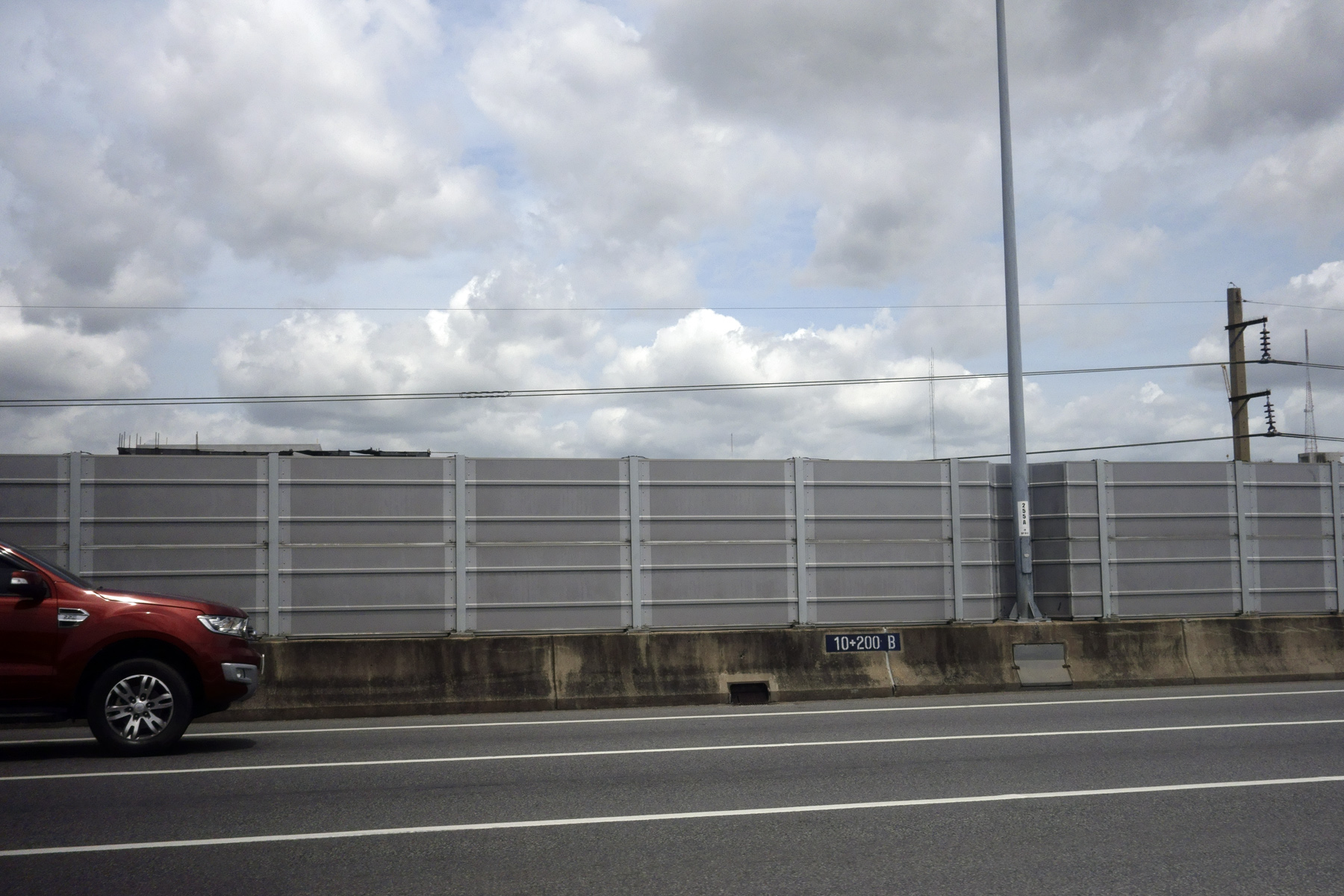
Marcus Bunyan (Australian born England, b. 1958) Untitled 2019 From the series Oblique Digital colour photograph
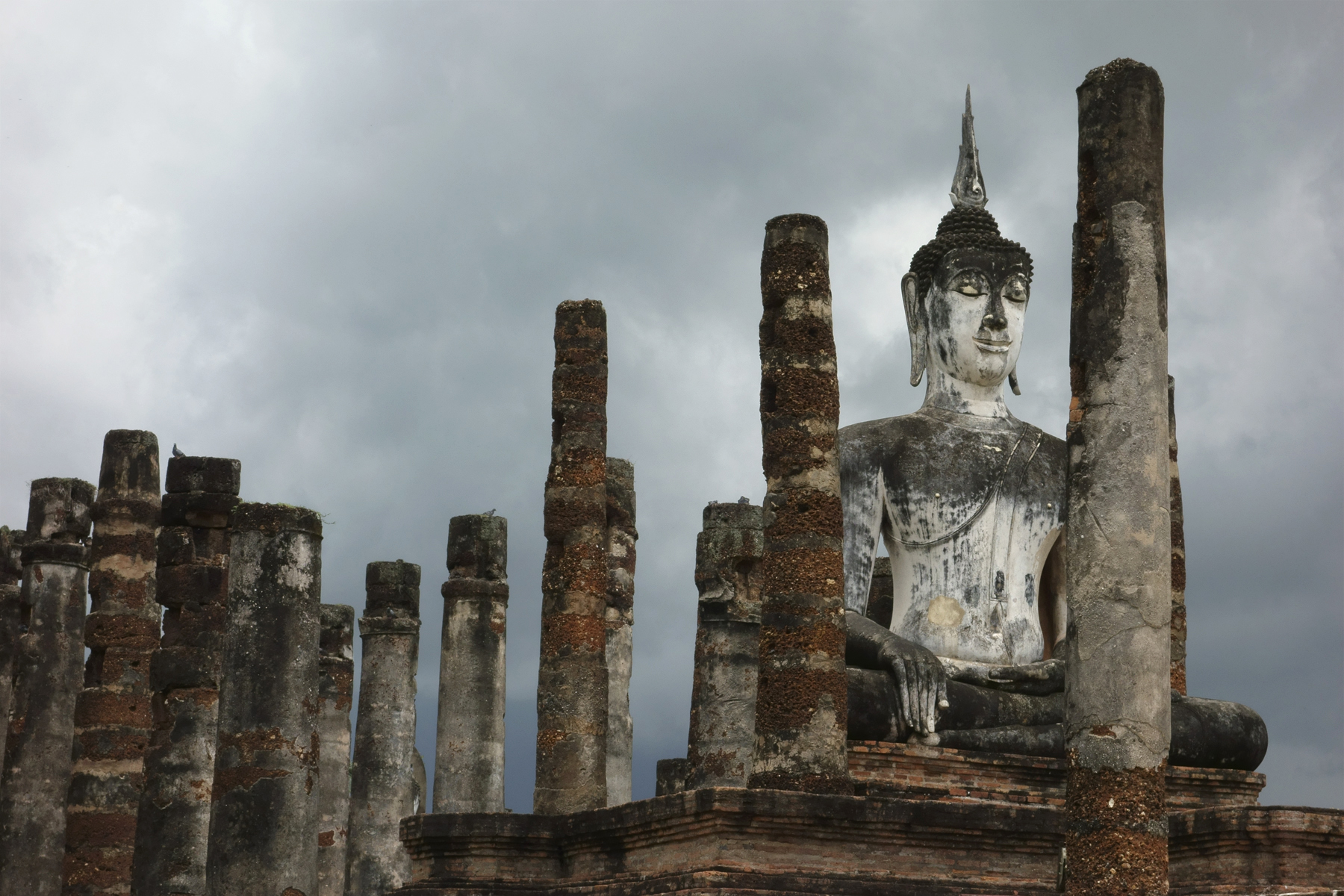
Here is a body of work shot mainly from moving taxi windows in Bangkok and surrounds, interspersed with still, Zen-like images.
With the moving images, you have to anticipate by a couple of seconds the movement of the taxi and the release of the shutter so you have no idea what the image will actually be. Your sense of previsualisation is completed on feel and instinct. You trust the world to provide the image which you are looking for. I enjoy them, they give me pleasure and contentment in their creation.
Oblique
In terms of defining the concept of the oblique we can say that: “The oblique is fundamentally interested in how a body physically experiences a space.”
In this case, both physically and spiritually.
The series investigates the concept through images of movement and stillness, fleeting glimpses of urban life intertwined with Zen-like images. The series is constructed not as a sequence, but as a “volume” where there is no beginning, no middle and no end. It is like a jewel that can be turned around and looked at from different perspectives, where no one perspective is the correct interpretation. Each volume has its own validity, its own uniqueness.
The images can also be read as a protest against death – no beginning, no middle, no end – where everything is connected to everything else. As Goethe observes in his Conversations with Eckermarm (5 June 1825):
“In nature we never see anything isolated, but everything in connection with something else which is before it, beside it, under it, and over it.”
Please note: the series is best viewed on a desktop computer with a large screen. Please click on the photographs to see a larger version of the image.
Photographs are available from this series for purchase. As a guide, a digital colour 16″ x 20″ costs $1000 plus tracked and insured shipping. For more information please see my Store web page.
The 66 images of Oblique (2019). Please click on the photograph to see a larger version of the work
Marcus Bunyan (Australian born England, b. 1958) Untitled 2019 From the series Oblique Digital colour photograph
Curator: Mia Fineman, Assistant Curator in the Department of Photographs at The Metropolitan Museum of Art
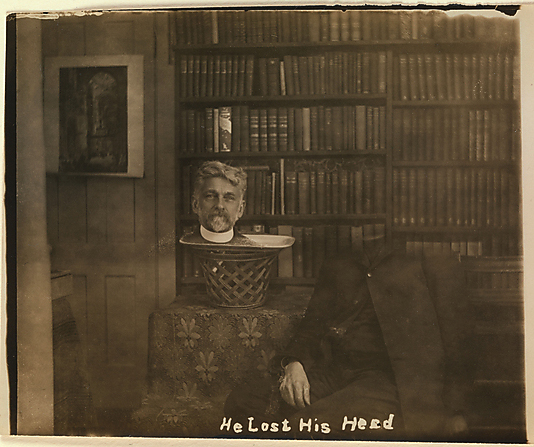
Unknown photographer (American) He Lost His Head Nd
Further images from this impressive exhibition devoted to the art of photographic manipulation before the advent of digital imagery from its second stop, at The National Gallery of Art, Washington.
Many thankx to the National Gallery of Art for allowing me to publish the photographs in the posting. Please click on the photographs for a larger version of the image.
Henry Peach Robinson (English, 1830-1901) Fading Away 1858 Albumen silver print from glass negatives
“I am far from saying that a photograph must be an actual, literal, and absolute fact … but it must represent truth. Truth and fact are not only two words, but, in art at least, they represent two things. A fact is anything done or that exists – a reality. Truth is conformity to fact or reality – absence of falsehood. So that truth in art may exist without an absolute observance of facts.”
~ Henry Peach Robinson
Henry Peach Robinson (British, 1830-1901) She Never Told Her Love 1857 Albumen silver print from glass negative 18 x 23.2cm (7 1/16 x 9 1/8in.) Gilman Collection, Purchase, Jennifer and Joseph Duke Gift, 2005
Consumed by the passion of unrequited love, a young woman lies suspended in the dark space of her unrealised dreams in Henry Peach Robinson’s illustration of the Shakespearean verse “She never told her love, / But let concealment, like a worm i’ the bud, / Feed on her damask cheek” (Twelfth Night II, iv, 111-13). Although this picture was exhibited by Robinson as a discrete work, it also served as a study for the central figure in his most famous photograph, Fading Away, of 1858.
Purportedly showing a young consumptive surrounded by family in her final moments, Fading Away was hotly debated for years. On the one hand, Robinson was criticised for the presumed indelicacy of having invaded the death chamber at the most private of moments. On the other, those who recognised the scene as having been staged and who understood that Robinson had created the picture through combination printing (a technique that utilised several negatives to create a single printed image) accused him of dishonestly using a medium whose chief virtue was its truthfulness.
Text from the Metropolitan Museum of Art website
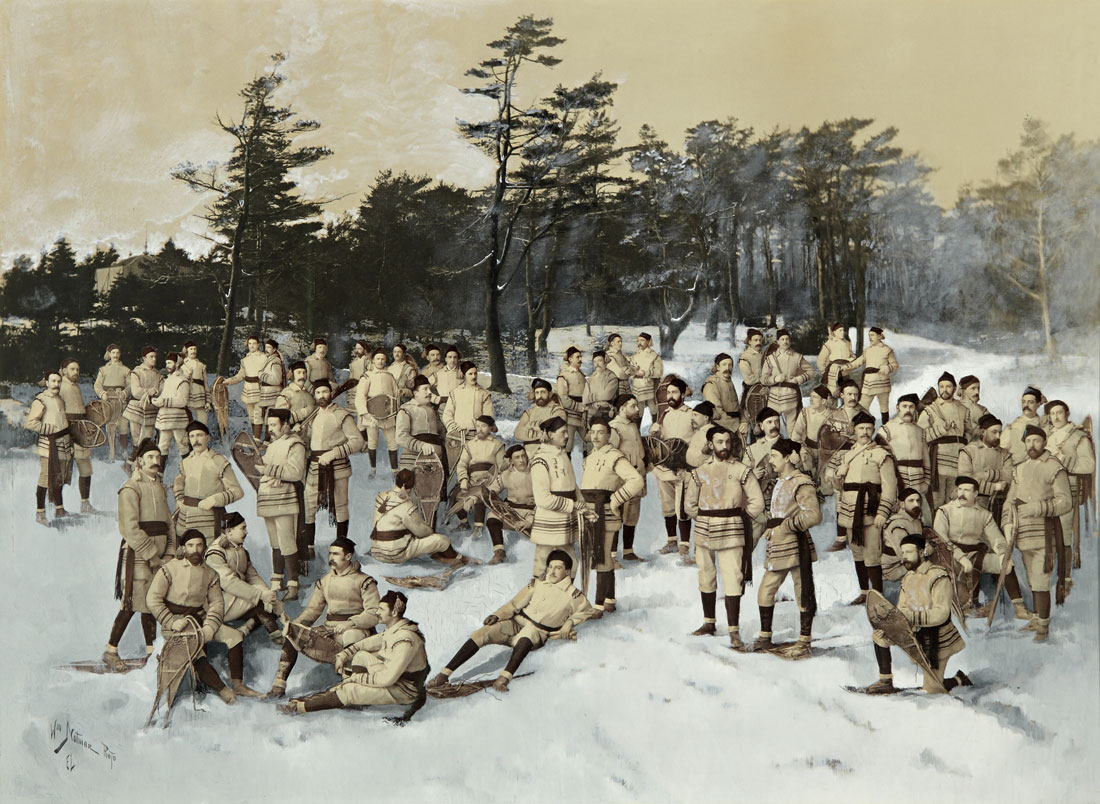
Wm. Notman & Son, Montreal, Eugène L’Africain, William Notman Red Cap Snow Shoe Club, Halifax, Nova Scotia c. 1888 Collage of albumen prints with applied media 71.1 x 83.8cm (28 x 33 in.) McCord Museum, Montreal
Notman established his first photography studio in Montreal in 1856 and relentlessly expanded his operations over the next two decades. At its peak, his company had twenty-four branches throughout Canada and New England, making it the most successful photographic enterprise in North America at the time. Notman specialised in composite portraits of large groups, including sporting clubs, trade associations, family gatherings, clergymen, and college graduates, some featuring more than four hundred figures. Each figure in a group was photographed separately in the studio then printed at the proper scale and pasted onto a painted background, as in this portrait of a Nova Scotia snowshoe club. The entire collage was then re-photographed. The final, relatively seamless tableau could then be printed and sold in a variety of sizes and formats.
Using a painstaking technique of multiple printing, Steichen achieved prints of such painterly seductiveness they have never been equaled. This view of a pond in the woods at Mamaroneck, New York is subtly coloured as Whistler’s Nocturnes, and like them, is a tone poem of twilight, in-distinction, and suggestiveness. Commenting on such pictures in 1910, Charles Caffin wrote in Camera Work: “It is in the penumbra, between the clear visibility of things and their total extinction into darkness, when the concreteness of appearances becomes merged in half-realised, half-baffled vision, that spirit seems to disengage itself from matter to envelop it with a mystery of soul-suggestion.”
The National Gallery of Art presents the first major exhibition devoted to the art of photographic manipulation before the advent of digital imagery. Faking It: Manipulated Photography before Photoshop will be on view in the West Building’s Ground Floor galleries from February 17 through May 5, 2013, following its debut at the Metropolitan Museum of Art (from October 11, 2012, through January 27, 2013). In June it travels to the Museum of Fine Arts, Houston.
“Following in its tradition of exhibiting and collecting the finest examples of photography, the Gallery is pleased to present some 200 photographs from the 1840s through the 1980s demonstrating the medium’s complicated relationship to truth in representation,” said Earl A. Powell III, director, National Gallery of Art. “We are grateful to the many lenders, both public and private, who have generously shared works from their collections – especially the Metropolitan Museum of Art, the largest lender and the organiser of this fascinating exhibition.”
The Exhibition
This is the first major exhibition devoted to the history of manipulated photography before the digital age. While the widespread use of Adobe® Photoshop® software has brought about an increased awareness of the degree to which photographs can be doctored, photographers – including such major artists as Gustave Le Gray, Edward Steichen, Weegee, and Richard Avedon – have been fabricating, modifying, and otherwise manipulating camera images since the medium was first invented. This exhibition demonstrates that today’s digitally manipulated images are part of a continuum that extends back to photography’s first decades. Through visually captivating pictures created in the service of art, politics, news, entertainment, and commerce, Faking It not only traces the medium’s complex and changing relationship to visual truth, but also significantly revises our understanding of photographic history.
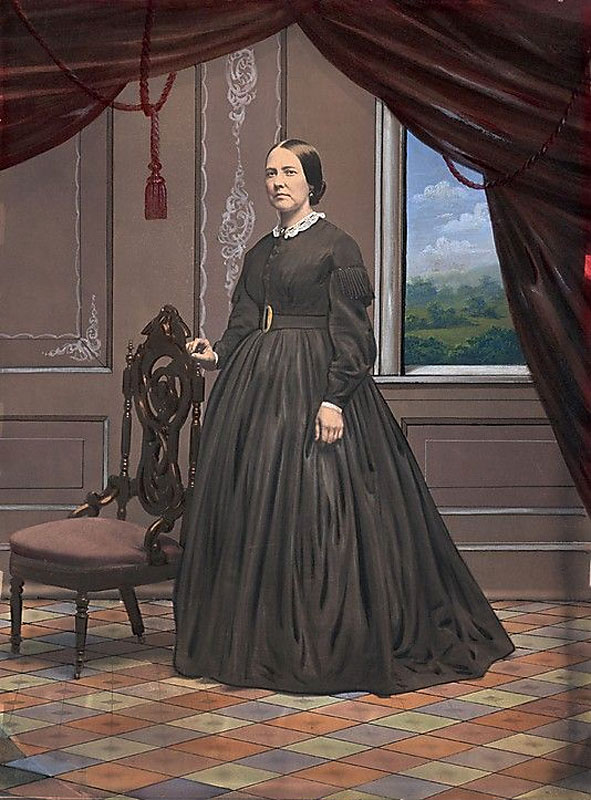
Organised thematically, the exhibition begins with some of the earliest instances of photographic manipulation – those attempting to compensate for the new medium’s technical limitations. In the 19th century, many photographers hand tinted portraits to make them appear more vivid and lifelike. Others composed large group portraits by photographing individuals separately in the studio and creating a collage by pasting them onto painted backgrounds depicting outdoor scenes. As the art and craft of photography grew increasingly sophisticated, photographers devised a staggering array of techniques with which to manipulate their images, including combination printing, photomontage, overpainting, ink and airbrush retouching, sandwiched negatives, multiple exposures, and other darkroom magic.
The exhibition presents a superb selection of manually altered photographs created under the mantle of art, including 19th-century genre scenes composed of multiple negatives, stunning Pictorialist landscapes from the turn of the 19th century, and the pre-digital dreamscapes of surrealist photographers in the 1920s and 1930s. A section of doctored images made for political or ideological ends includes faked composite photographs of the 1871 Paris Commune massacres, anti-Nazi photomontages by John Heartfield, and falsified images from Stalin-era Soviet Russia. The show also explores popular uses of photographic manipulation such as spirit photography, tall-tale and fantasy postcards, advertising and fashion spreads, and doctored news images.
The final section features the work of contemporary artists – including Duane Michals, Jerry Uelsmann, and Yves Klein – who have reclaimed earlier techniques of image manipulation to creatively question photography’s presumed objectivity. By tracing the history of photographic manipulation from the 1840s to the present, Faking It vividly demonstrates that photography is – and always has been – a medium of fabricated truths and artful lies.
Press release from the National Gallery of Art website
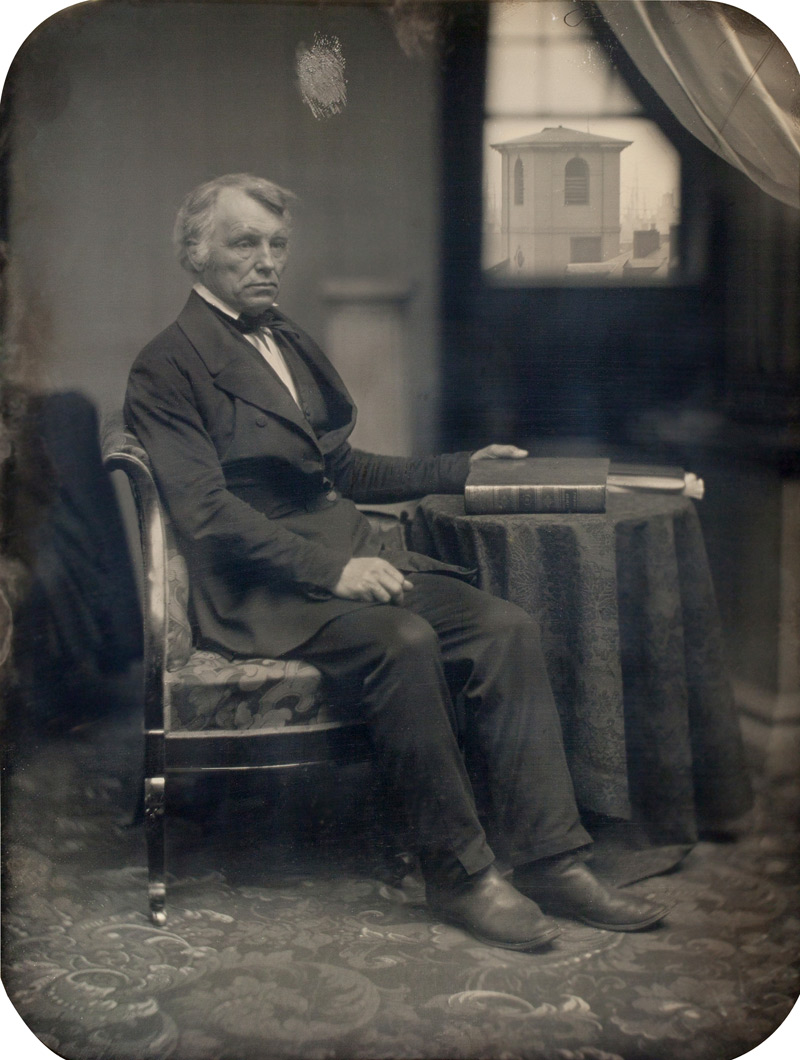
Albert Sands Southworth (American, 1811-1894) and Josiah Johnson Hawes (American, 1808-1901) Seated man with Brattle Street Church seen through window 1850s Daguerreotype 21.6 x 16.5cm (8 1/2 x 6 1/2 in.) The Isenburg Collection at AMC Toronto
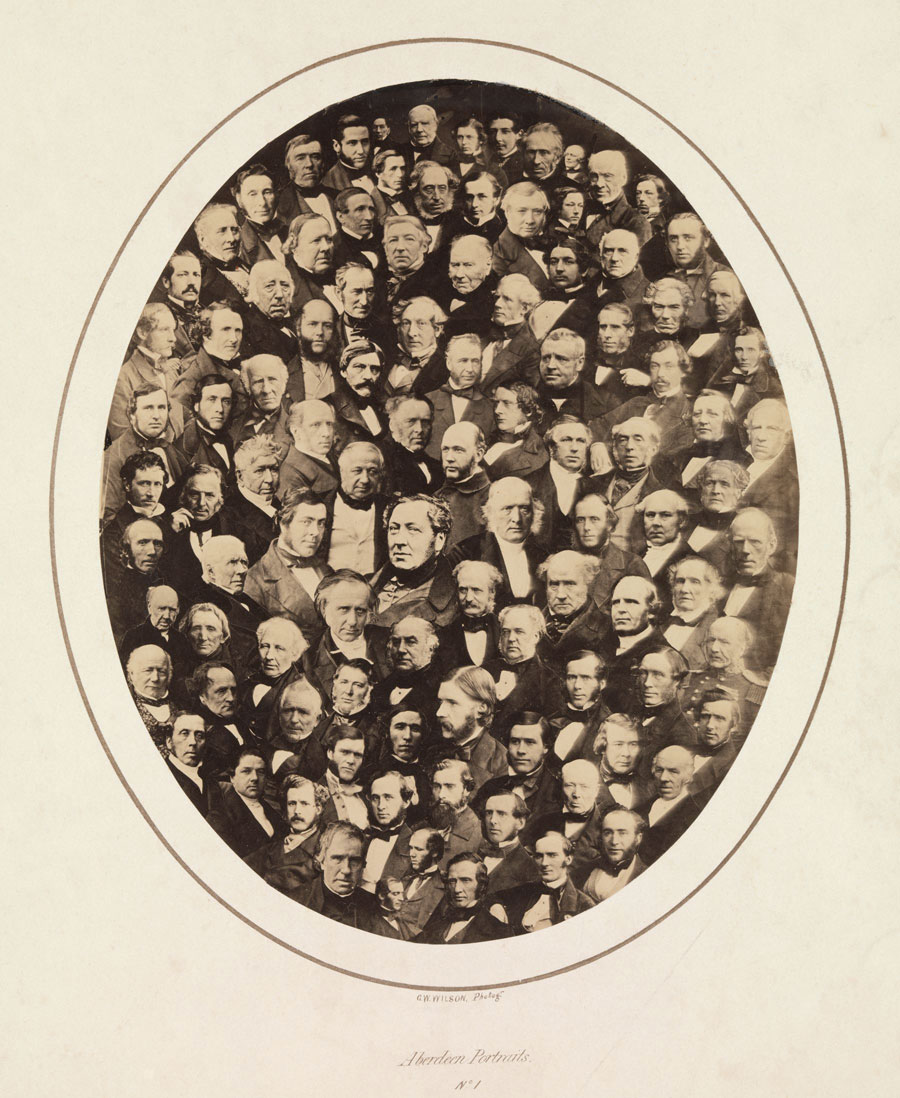
George Washington Wilson (Scottish, 1823-1893) Aberdeen Portraits No. 1 1857 Albumen silver print from glass negative
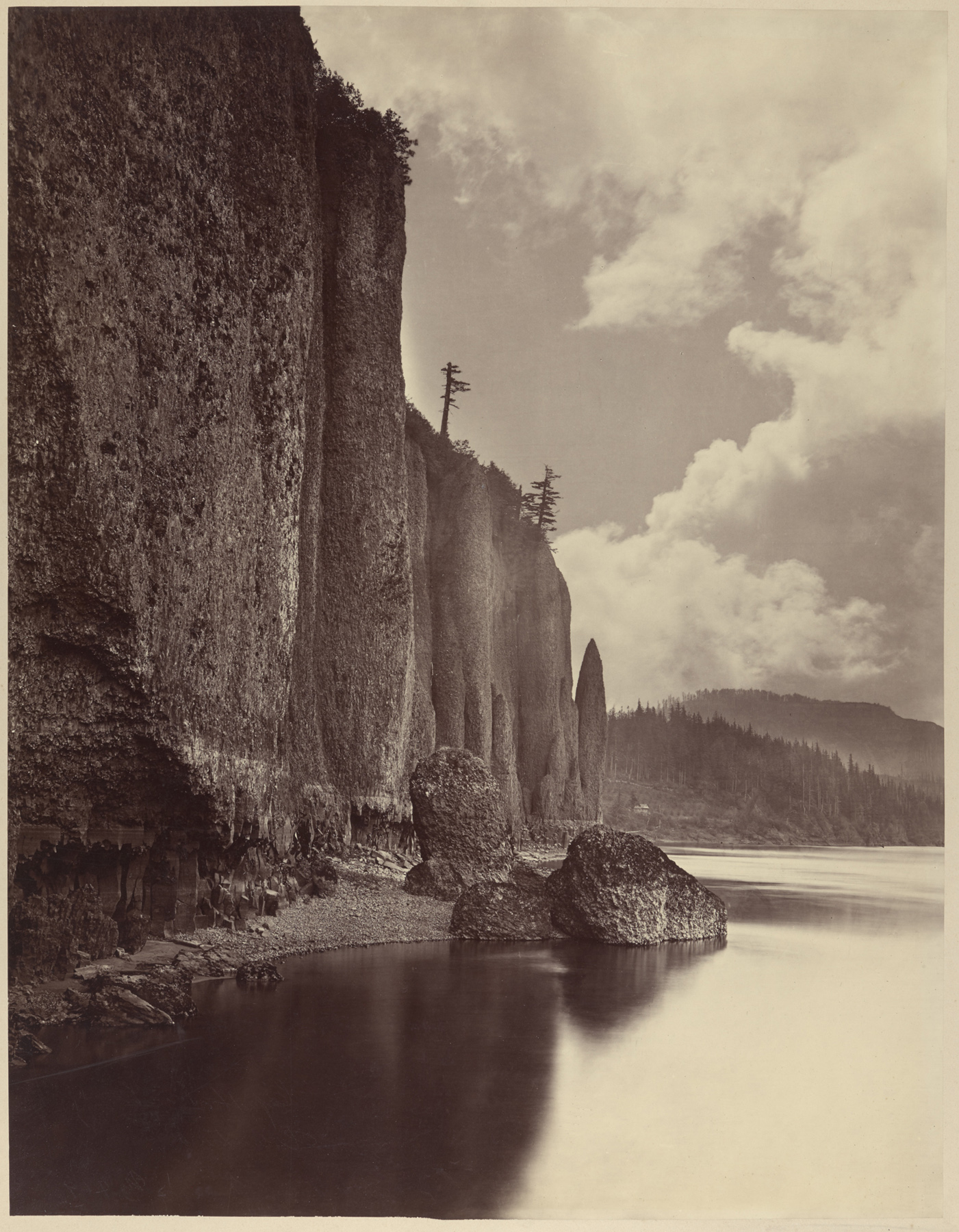
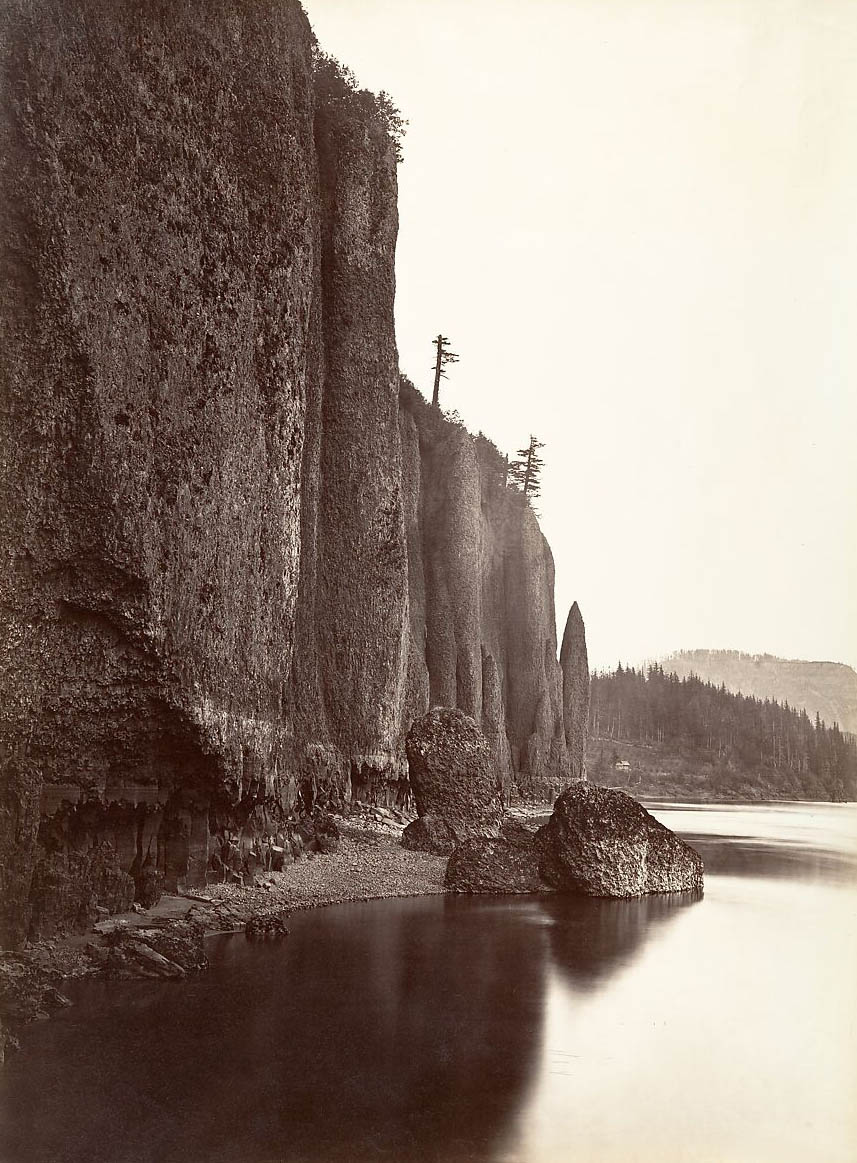
Watkins, the consummate photographer of the American West, combined a virtuoso mastery of the difficult wet plate negative process with a rigorous sense of pictorial structure. For large-format landscape work such as Watkins produced along the Columbia River in Oregon, the physical demands were great. Since there was as yet no practical means of enlarging, Watkins’s glass negatives had to be as large as he wished the prints to be, and his camera large enough to accommodate them. Furthermore, the glass negatives had to be coated, exposed, and developed while the collodion remained tacky, requiring the photographer to transport a traveling darkroom as he explored the rugged virgin terrain of the American West. The crystalline clarity of Watkins’s remarkable “mammoth” prints is unmatched in the work of any of his contemporaries and is approached by few artists working today. Here the clouds have been printed in (compare to the work below)
Carleton E. Watkins (American, 1829-1916) Cape Horn, Columbia River, Oregon 1867 Albumen silver print from glass negative 52.1 x 39cm (20 1/2 x 15 3/8 in.)
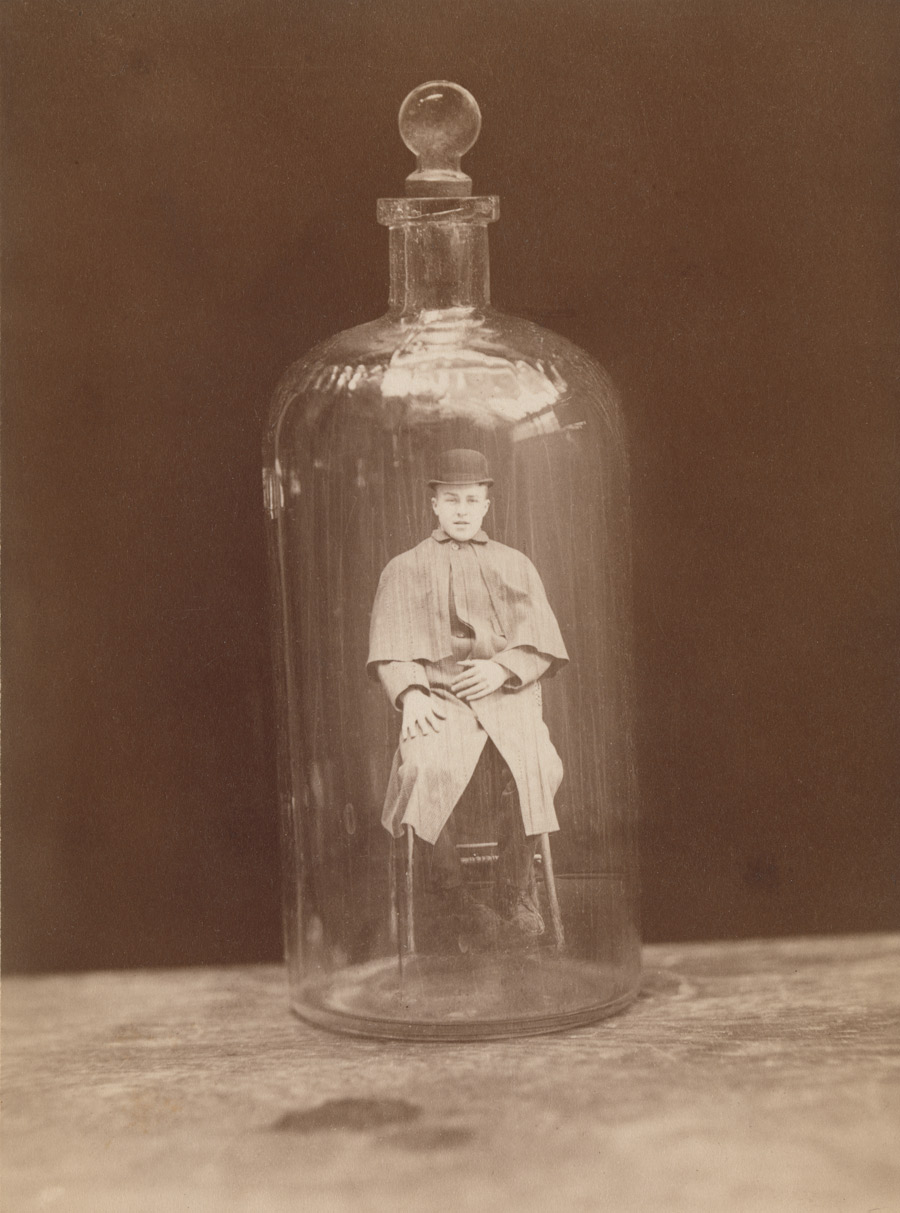
J.C. Higgins and Son (American) Man in bottle c. 1888 Albumen print 13.5 x 10cm (5 5/16 x 3 15/16 in.) Lent by The Metropolitan Museum of Art, Purchase, Susan and Thomas Dunn Gift, 2011
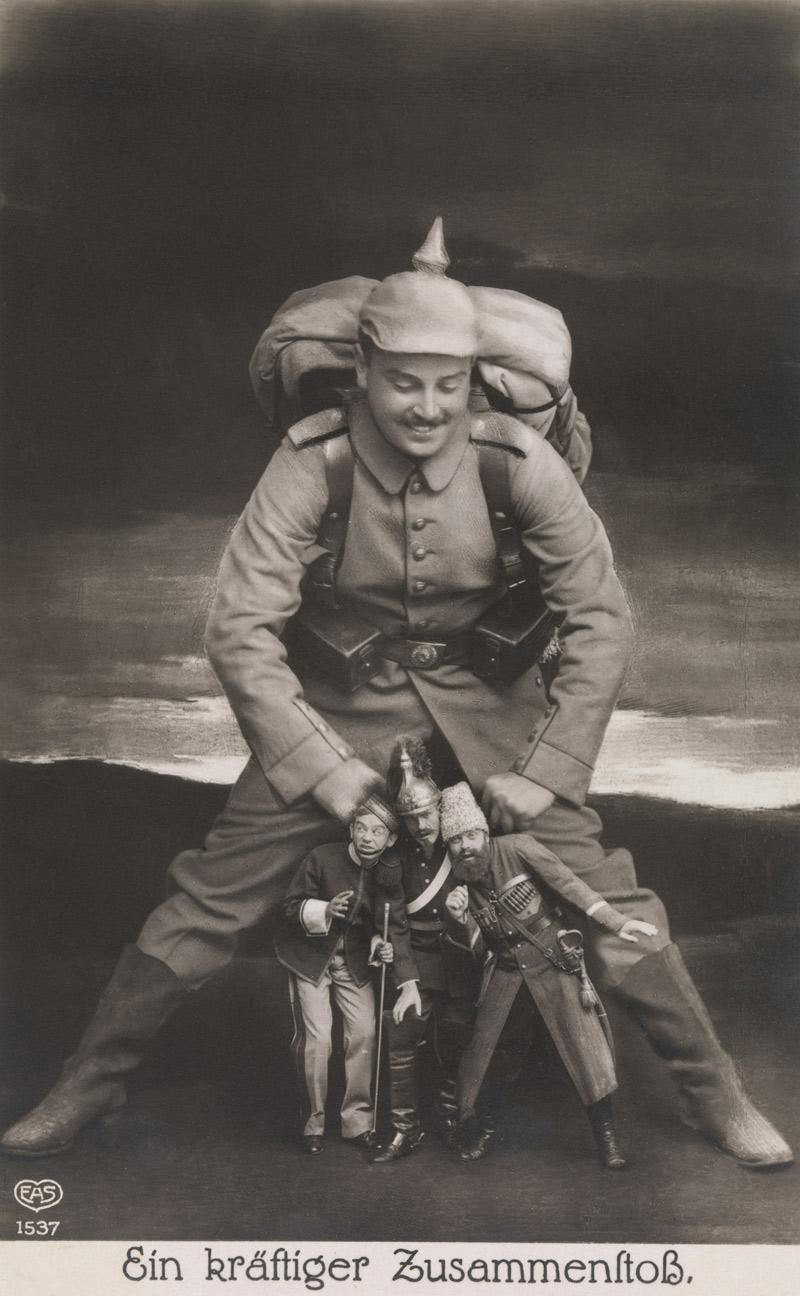
Unknown Photographer (German) Ein kräftiger Zusammenstoss (A Powerfull Collision) 1914 Gelatin silver print 8.7 x 13.7cm (3 7/16 x 5 3/8 in.) Lent by The Metropolitan Museum of Art, Twentieth-Century Photography Fund, 2010
Dora Maar (French, 1907-1997) Le simulateur 1936 Gelatin silver print 29.2 x 22.9cm (11 1/2 x 9 in.) Collection of The Sack Photographic Trust for the San Francisco Museum of Modern Art
Maar’s haunting photomontages of the mid-1930s evoke a mood of oneiric ambiguity. Here, the world is turned literally upside-down: a boy bends sharply backward, echoing the curve of the vaulted ceiling on which he stands. On the print, Maar scratched out the figure’s eyes, exploiting Surrealism’s strong association of blindness with inner sight.
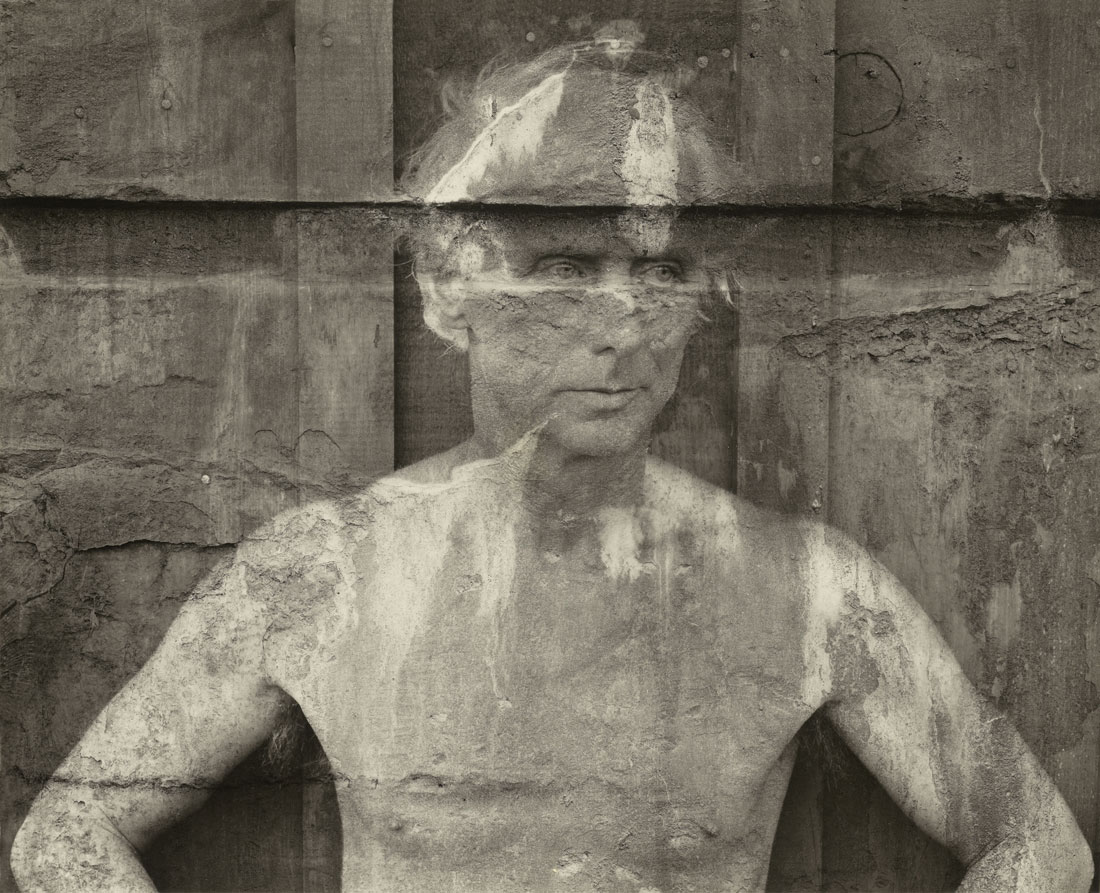
Bill Brandt (English born Germany, 1904-1983 London (Multiple Exposure Nude) 1956 Gelatin silver print with applied media
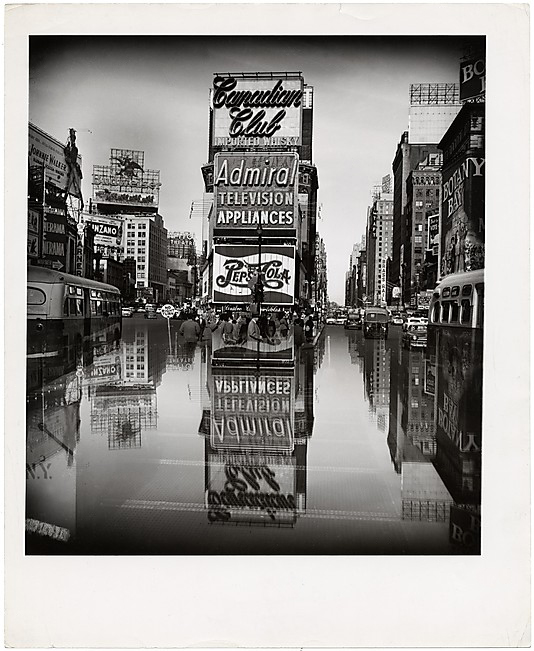
Famous for his gritty tabloid crime photographs, Weegee devoted the last twenty years of his life to what he called his “creative work.” He experimented prolifically with distorting lenses and comparable darkroom techniques, producing photo caricatures of politicians and Hollywood celebrities, novel variations on the man-in-the-bottle motif, and uncanny doublings and reflections, such as this striking image, which he described as “Times Square under 10 feet of water on a sunny afternoon.”
Jerry Norman Uelsmann (June 11, 1934 – April 4, 2022) was an American photographer.
As an emerging artist in the 1960s, Jerry Uelsmann received international recognition for surreal, enigmatic photographs (photomontages) made with his unique method of composite printing and his dedication to revealing the deepest emotions of the human condition. Over the next six decades, his contributions to contemporary photography were firmly established with important exhibitions, prestigious awards and numerous publications. Among his awards were a Guggenheim Fellowship, National Endowment, Royal Photographic Society Fellowship, and Lucie Award.
Uelsmann described his creative process as a journey of discovery in the darkroom (visual research laboratory). Going against the established practice of previsualization (Ansel Adams, Edward Weston and others), he coined a new term, post-visualization. He decided the contents of the final print after rather than before pressing the shutter button. Uelsmann constructed his dreams like a visual poet with results that often seemed emotionally more real than the factual world. By the 1980s he became one of the most collected photographers in America. His work influenced generations of both analog and digital photographers. Although he admired digital photography, he remained completely dedicated to the alchemy of film photography in the black and white darkroom.
In the late 1980s Grove, an artist who supports herself as a professional photo retoucher, began seamlessly altering images of famous works of art, using bleach, dyes, and airbrush to remove the female figure from each image and leaving the rest of the scene intact. Her cunning excisions mimic the process by which art historians, echoing the culture at large, have erased the achievements of actual women while enshrining Woman as a blank screen upon which the ideas and desires of both artist and viewer are projected. If photographs are presumed to represent the truth, Grove’s pictures remind us to ask: Whose truth?
National Gallery of Art National Mall between 3rd and 7th Streets Constitution Avenue NW, Washington





![Unknown photographer (American) '[Decapitated Man with Head on a Platter]' c. 1865](https://artblart.com/wp-content/uploads/2013/02/unknown-american-decapitated-man-with-head-on-a-platter-c-1865.jpg "Unknown photographer (American) '[Decapitated Man with Head on a Platter]' c. 1865")



 Art Blart _ art and cultural memory archive
You must be logged in to post a comment.