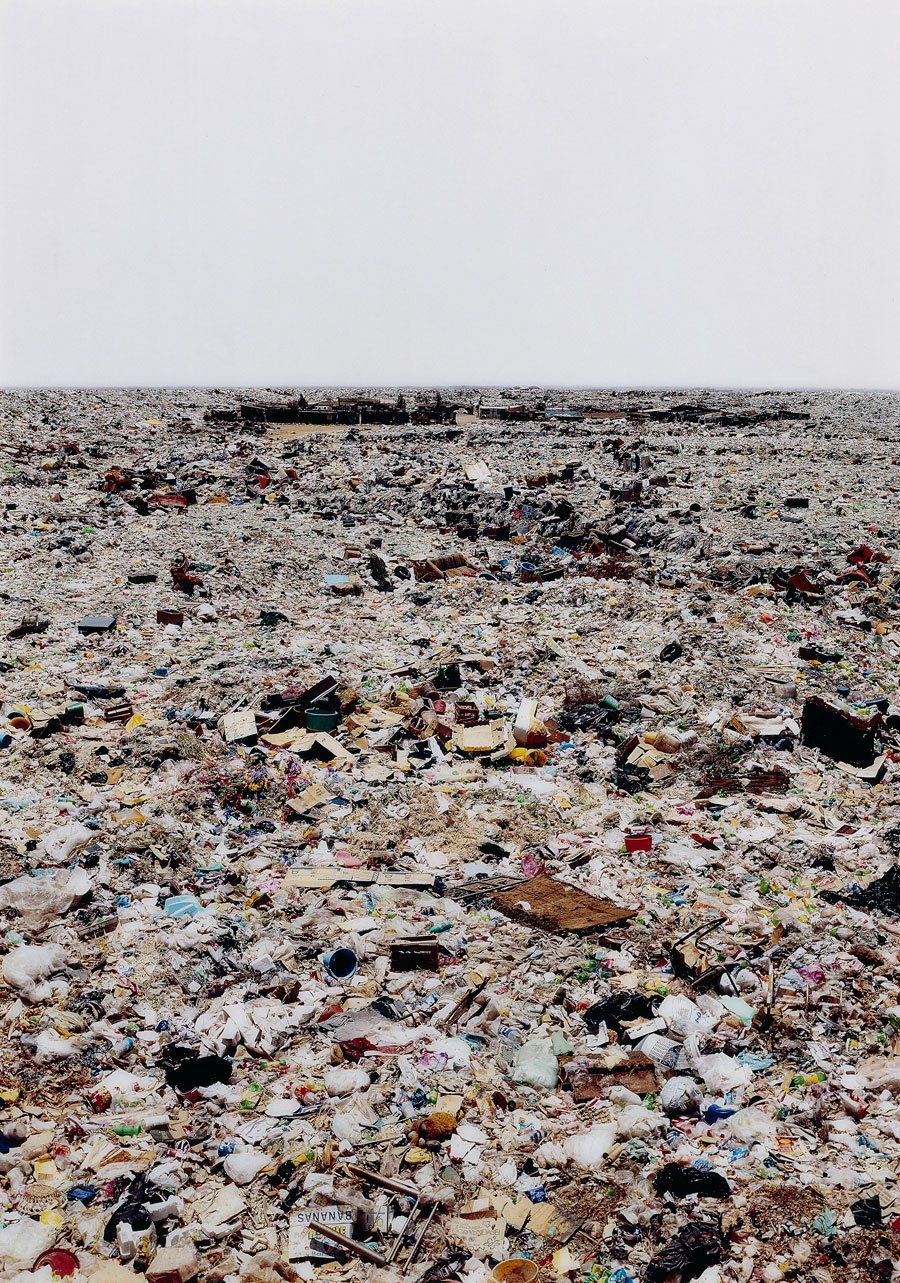
Exhibition: ‘Famous in the Fifties: Photographs by Daniel Farson’ at the National Portrait Gallery, London

Exhibition dates: 19th March – 16th September 2012


Daniel Farson (British, 1927-1997) 'Adam Faith' 1962


Daniel Farson (British, 1927-1997)
Adam Faith
1962
Silver gelatin photograph
© Estate of Daniel Farson


My god, how beautiful the young Adam Faith was!

Since I didn’t know some of these people I have posted brief biographies. From the biographies we find that most mingled in the same artistic and theatrical circles in Soho, where Farson also hung out. Farson’s photographs are candid and show a deep affection for the subject being photographed: strong, vibrant characters that lived life to the full. He had a good eye did Daniel Farson. The photograph of Shelagh Delaney (1959, below) is a beauty, perfectly capturing one of those dank English days, where the mist envelopes the earth and chills one to the bone, standing outside pebble-dashed council houses in some windswept part of England. I remember it only too well.

Dr Marcus Bunyan

.
Many thankx to the National Portrait Gallery for allowing me to publish the photographs in the posting. Please click on some of the photographs for a larger version of the image. All photographs © Estate of Daniel Farson and the National Portrait Gallery.


Terence Nelhams Wright (23 June 1940 – 8 March 2003), known as Adam Faith, was an English singer, actor, and financial journalist. As a British rock and roll teen idol, he scored consecutive No. 1 hits on the UK Singles Chart with “What Do You Want?” (1959) and “Poor Me” (1960). He became the first UK artist to lodge his initial seven hits in the top 5, and was ultimately one of the most charted acts of the 1960s. He was also one of the first UK acts to record original songs regularly.

Faith also maintained an acting career, appearing as Dave in the teen exploitation film Beat Girl (1960), the eponymous lead in the ITV television series Budgie (1971-1972) and Frank Carver in the BBC comedy drama Love Hurts (1992-1994).

Text from the Wikipedia website


Daniel Farson (British, 1927-1997) 'Cyril Connolly and Lady Caroline Blackwood' c. 1953


Daniel Farson (British, 1927-1997)
Cyril Connolly and Lady Caroline Blackwood
c. 1953
Silver gelatin photograph
© Michael Parkin / National Portrait Gallery, London


Cyril Vernon Connolly (10 September 1903 – 26 November 1974) was an English intellectual, literary critic and writer. He was the editor of the influential literary magazine Horizon (1940-1949) and wrote Enemies of Promise (1938), which combined literary criticism with an autobiographical exploration of why he failed to become the successful author of fiction that he had aspired to be in his youth.

Connolly did his best work as a critic. Like Edmund Wilson in the United States, he wielded enormous influence. An astute and often witty commentator, with great gifts for often cruel mimicry, Connolly informed the thinking and attitudes of a generation. In The Unquiet Grave he writes: “Approaching forty, sense of total failure: … Never will I make that extra effort to live according to reality which alone makes good writing possible: hence the manic-depressiveness of my style, – which is either bright, cruel and superficial; or pessimistic; moth-eaten with self-pity.”

As editor of Horizon, Connolly gave a platform to a wide range of distinguished and emerging writers. He was robust in his criticism of the decline of the Mandarin and perhaps too effusive in his welcome of the New Vernacular. Kenneth Tynan, writing in the March 1954 Harper’s Bazaar, praised Connolly’s style as “one of the most glittering of English literary possessions.”


The Lady Caroline Maureen Hamilton-Temple-Blackwood (16 July 1931 – 14 February 1996) was a writer and artist’s muse, and the eldest child of the 4th Marquess of Dufferin and Ava and the brewery heiress Maureen Guinness.

A well-known figure in the literary world through her journalism and her novels, Caroline Blackwood was equally well known for her high-profile marriages, first to the artist Lucian Freud, then to the composer Israel Citkowitz and finally to the poet Robert Lowell, who described her as “a mermaid who dines upon the bones of her winded lovers.” Her novels are known for their wit and intelligence, and one in particular is scathingly autobiographical in describing her unhappy childhood.

Text from the Wikipedia website


Daniel Farson (British, 1927-1997) 'Nina Hamnett' 1952


Daniel Farson (British, 1927-1997)
Nina Hamnett
1952
Silver gelatin photograph
© Michael Parkin / National Portrait Gallery, London


Nina Hamnett (14 February 1890 – 16 December 1956) was a Welsh artist and writer, and an expert on sailors’ chanteys, who became known as the Queen of Bohemia.

Flamboyantly unconventional, and openly bisexual, Nina Hamnett once danced nude on a Montparnasse café table just for the “hell of it”. She drank heavily, was sexually promiscuous, and kept numerous lovers and close associations within the artistic community. Very quickly, she became a well-known bohemian personality throughout Paris and modeled for many artists. Her reputation soon reached back to London, where for a time, she went to work making or decorating fabrics, clothes, murals, furniture, and rugs at the Omega Workshops, which was directed by Roger Fry, Vanessa Bell, and Duncan Grant.

Her artistic creations were widely exhibited during World War I including at the Royal Academy in London as well as the Salon d’Automne in Paris. Back in England, she taught at the Westminster Technical Institute from 1917 to 1918. After divorcing Kristian, she took up with another free spirit, composer E. J. Moeran. From the mid 1920s until the end of World War II, the area known as Fitzrovia was London’s main Bohemian artistic centre. The place took its name from the popular Fitzroy Tavern on the corner of Charlotte and Windmill Streets that formed the area’s centre. Home of the café life in Fitzrovia, it was Nina Hamnett’s favourite hangout as well as that of her friend from her home town, Augustus John, and later another Welshman, the poet Dylan Thomas.

In 1932 Hamnett published Laughing Torso, a tale of her bohemian life, which became a bestseller in the United Kingdom and United States. The notorious occultist Aleister Crowley unsuccessfully sued her and the publisher for libel over allegations of Black Magic made in her book. Although she won the case, the situation profoundly affected her for the remainder of her life. Alcoholism would soon overtake her many talents and the tragic Queen of the Fitzroy spent a good part of the last few decades of her life at the bar, (usually that of the Fitzroy Tavern in Fitzrovia), trading anecdotes for drinks.

Nina Hamnett died in 1956 from complications after falling out her apartment window and being impaled on the fence forty feet below. The great debate has always been whether or not it was a suicide attempt or merely a drunken accident. Her last words were, “Why don’t they let me die?”

Text from the Wikipedia website


Daniel Farson (British, 1927-1997) 'Lucian Freud and Brendan Behan' 1952


Daniel Farson (British, 1927-1997)
Lucian Freud and Brendan Behan
1952
Silver gelatin photograph
© Estate of Daniel Farson


Lucian Michael Freud (8 December 1922 – 20 July 2011) was a German-born British painter. Known chiefly for his thickly impastoed portrait and figure paintings, he was widely considered the pre-eminent British artist of his time. His works are noted for their psychological penetration, and for their often discomforting examination of the relationship between artist and model.

From the 1950s, he began to work in portraiture, often nudes (though his first full length nude was not painted until 1966), to the almost complete exclusion of everything else, and by the middle of the decade developed a much more free style using large hogs-hair brushes, with an intense concentration of the texture and colour of flesh, and much thicker paint, including impasto. With this technique, he would often clean his brush after each stroke when painting flesh, so that the colour remained constantly variable. He also started to paint standing up, which continued until old age, when he switched to a high chair. The colours of non-flesh areas in these paintings are typically muted, while the flesh becomes increasingly highly and variably coloured. By about 1960, Freud had established the style that he would use, with some changes, for the rest of his career. The portraits in the new style often used an over life-size scale from the start, but were mostly relatively small heads or half-lengths. Later portraits were often very much larger, and appealed to galleries and collectors. In his late career he often followed a portrait by producing an etching of the subject in a different pose, drawing directly onto the plate, with the sitter in his view.

Freud’s portraits often depict only the sitter, sometimes sprawled naked on the floor or on a bed or alternatively juxtaposed with something else, as in Girl With a White Dog (1951-52) and Naked Man With Rat (1977-78). According to Edward Chaney, “The distinctive, recumbent manner in which Freud poses so many of his sitters suggests the conscious of unconscious influence both of his grandfather’s psychoanalytical couch and of the Egyptian mummy, his dreaming figures, clothed or nude, staring into space until (if ever) brought back to health and/or consciousness. The particular application of this supine pose to freaks, friends, wives, mistresses, dogs, daughters and mother alike (the latter regularly depicted after her suicide attempt and eventually, literally mummy-like in death), tends to support this hypothesis.”

“I paint people,” Freud said, “not because of what they are like, not exactly in spite of what they are like, but how they happen to be.”


Brendan Francis Behan (9 February 1923 – 20 March 1964) was an Irish poet, short story writer, novelist, and playwright who wrote in both English and Irish.

In 1954, Behan’s first play The Quare Fellow was produced in Dublin. It was well received, however, it was the 1956 production at Joan Littlewood’s Theatre Workshop in Stratford, London, that gained Behan a wider reputation – this was helped by a famous drunken interview on BBC television. In 1958, Behan’s play in the Irish language An Giall had its debut at Dublin’s Damer Theatre. Later, The Hostage, Behan’s English language adaptation of An Giall, met with great success internationally. Behan’s autobiographical novel, Borstal Boy, was published the same year and became a worldwide best seller. Behan was known for his drink problem, which resulted in him suffering from diabetes, which ultimately resulted in his death on 20 March 1964.

“There’s no bad publicity except an obituary,” he once said.

Text from the Wikipedia website


Daniel Farson (British, 1927-1997) 'Robert Graves' 1954


Daniel Farson (British, 1927-1997)
Robert Graves
1954
Silver gelatin photograph
© Estate of Daniel Farson


Robert von Ranke Graves (also known as Robert Ranke Graves and most commonly Robert Graves) (24 July 1895 – 7 December 1985) was an English poet, scholar / translator / writer of antiquity specialising in Classical Greece and Rome, and novelist. During his long life he produced more than 140 works. Graves’s poems – together with his translations and innovative analysis and interpretations of the Greek myths, his memoir of his early life, including his role in the First World War, Good-Bye to All That, and his speculative study of poetic inspiration, The White Goddess – have never been out of print.

He earned his living from writing, particularly popular historical novels such as I, ClaudiusKing JesusThe Golden Fleece, and Count Belisarius. He also was a prominent translator of Classical Latin and Ancient Greek texts; his versions of The Twelve Caesars and The Golden Ass remain popular today for their clarity and entertaining style. On 11 November 1985, Graves was among 16 Great War poets commemorated on a slate stone unveiled in Westminster Abbey’s Poet’s Corner. The inscription on the stone was written by friend and fellow Great War poet Wilfred Owen. It reads: “My subject is War, and the pity of War. The Poetry is in the pity.” Of the 16 poets, Graves was the only one still living at the time of the commemoration ceremony.

Text from the Wikipedia website


A new display of photographs by legendary Soho figure, Daniel Farson will open at the National Portrait Gallery on 19 March. Famous in the Fifties: Photographs by Daniel Farson will celebrate the multi-faceted career of Farson who worked as a Picture Post photographer, television presenter, and writer.

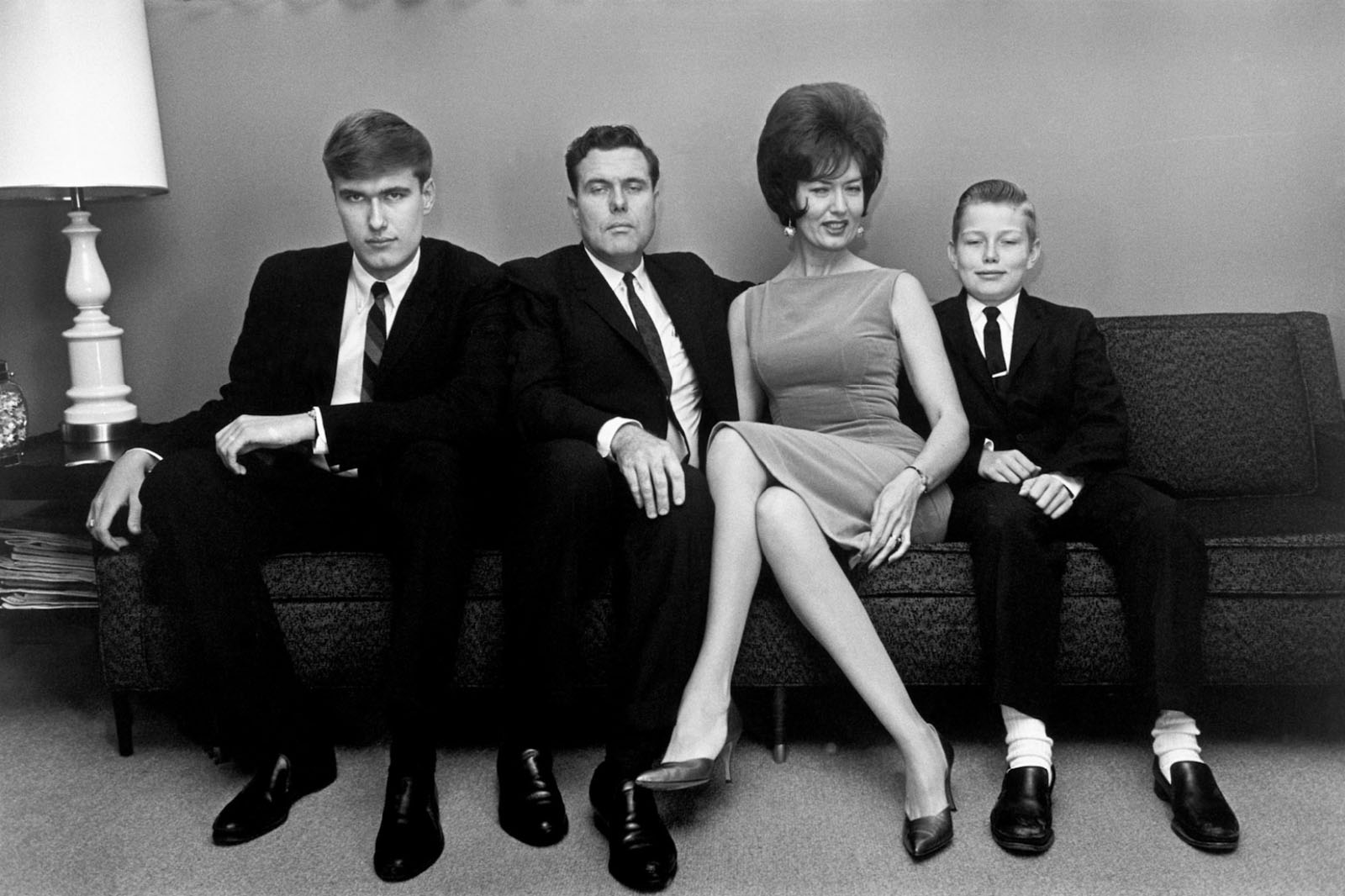
The sixteen portraits on display include artist Lucian Freud and writer Brendan Behan in Dublin, Cyril Connolly and Lady Caroline Blackwood on Old Compton Street in Soho, artist and illustrator Nina Hamnett, actress Barbara Windsor, artist Graham Sutherland and actor Richard Burton. Writer Anthony Carson, critic John Davenport, photographer John Deakin and poet David Wright are all photographed opposite the French pub in Soho where Farson was a regular. An unpublished photograph of Kingsley Amis and his family is included along with a copy of Panorama, the magazine established by Farson at the University of Cambridge. The jackets of five books written by Farson will be displayed alongside his portraits of their subjects including Graham Sutherland and Gilbert and George. A portrait of Adam Faith inscribed by Farson, ‘I put him on TV first’, illustrates his impact as a pioneering television interviewer. The last exhibition of Farson’s work was in 1997, the year of his death, organised by Robin Muir for Roy Miles. This will be the first solo display of photographs by Farson at the National Portrait Gallery.

Born in Kensington in 1927, Farson was the only child of American-born journalist and adventurer, Negley Farson, and his wife, Enid Eveleen a niece of the author Bram Stoker. He became a political correspondent for the Central Press Agency in Fleet Street at the age of just seventeen and in 1947 he enlisted in the American Army Air Corps gaining experience on the army’s Stars and Stripes magazine supplement. Whilst attending Cambridge University in 1949, Farson established the magazine Panorama which in turn helped him secure a job as a staff photographer for Picture Post in 1951. In the early 1950s he began his affiliation with Soho, where he found acceptance of his homosexuality and later struggled with alcoholism. In 1956 Farson joined commercial television in its infancy, presented his own series and became a television personality. He was under contract with Associated-Rediffusion for eight years, which he described as, ‘one of the busiest and happiest times of my life’. In 1962 Farson bought a pub, the Waterman’s Arms, on the Isle of Dogs where he successfully revived music hall acts. However, this did not prevent bankruptcy and in 1964 Farson moved to his parents’ former home in north Devon. It was here and later in Appledore, Devon, that Farson wrote twenty-seven books, including biographies of his great uncle, Bram Stoker, and his autobiography Never a Normal Man (1997), published in the year in which he died.

Press release from the National Portrait Gallery website


Daniel Farson (British, 1927-1997) 'Richard Burton' 1954


Daniel Farson (British, 1927-1997)
Richard Burton
1954
Silver gelatin photograph
© National Portrait Gallery, London


Daniel Farson’s multifaceted career as a Picture Post photographer, television presenter, writer and legendary Soho figure is celebrated with this showcase display.

The son of an English mother and the renowned American foreign correspondent, Negley Farson, Daniel Farson first became interested in photography working for the US Army’s Stars and Stripes magazine supplement. On display is an issue of Panorama, the magazine he established at Cambridge University, which helped Farson secure a job as a staff photographer for Picture Post.

Farson’s association with bohemia is demonstrated by intimate portraits of Lucian Freud and Brendan Behan and a group of writers shown with lifelong friend John Deakin, photographed in Soho, Farson’s haunt of many years.

A portrait of Adam Faith inscribed by Farson, ‘I put him on TV first’, illustrates Farson’s impact on television, presenting programmes including Out of Step (series, 1957) and Living for Kicks (1960). His portrait of Joan Littlewood is one of a group that relates to the theatre. In 1967 Littlewood produced Farson’s play about Marie Lloyd, a venture which followed his revival of music hall acts as the landlord of The Waterman’s Arms on the Isle of Dogs.

From 1964 Farson lived in Devon and became the author of 27 books. Four book jackets are shown alongside his portraits of those he wrote about including Graham Sutherland and Gilbert and George.

Text from the National Portrait Gallery website


Daniel Farson (British, 1927-1997) 'Joan Littlewood' 1963


Daniel Farson (British, 1927-1997)
Joan Littlewood
1963
Silver gelatin photograph
© National Portrait Gallery, London


Joan Maud Littlewood (6 October 1914 – 20 September 2002) was an English theatre director, noted for her work in developing the left-wing Theatre Workshop. She has been called “The Mother of Modern Theatre.” Littlewood and her company lived and slept in the Theatre Royal while it was restored. Productions of The Alchemist and Richard II, the latter of which starred Harry H. Corbett as the King, established the reputation of the company. The works for which she is now best remembered are probably Shelagh Delaney’s A Taste of Honey (1958), which gained critical acclaim, and the satirical musical Oh, What a Lovely War! (1965), her stage adaptation of a work for radio by Charles Chilton. Both were subsequently made into films. Theatre Workshop also championed the work of Irish playwright Brendan Behan, and Littlewood is often rumoured to have a significant role in his work. She also conceived and developed along with architect Cedric Price the Fun Palace, an experimental model of participatory social environment that, although never realized, has become an important influence in Architecture of the 20th and 21st Centuries.

Text from the Wikipedia website


Daniel Farson (British, 1927-1997) 'Barbara Windsor' 1963


Daniel Farson (British, 1927-1997)
Barbara Windsor
1963
Silver gelatin photograph
© National Portrait Gallery, London


Daniel Farson (British, 1927-1997) 'Shelagh Delaney' 1959


Daniel Farson (British, 1927-1997)
Shelagh Delaney
1959
Silver gelatin photograph
© Estate of Daniel Farson


Shelagh Delaney (25 November 1938 – 20 November 2011) was an English dramatist and screenwriter, best known for her debut work, A Taste of Honey (1958). A Taste of Honey, first performed on 27 May 1958, is set in her native Salford. “I had strong ideas about what I wanted to see in the theatre. We used to object to plays where the factory workers came cap in hand and call the boss ‘sir’. Usually North Country people are shown as gormless, whereas in actual fact, they are very alive and cynical.”

Reuniting the original cast, the play subsequently enjoyed a run of 368 performances in the West End from January 1959; it was also seen on Broadway, with Joan Plowright as Jo and Angela Lansbury as her mother. It is “probably the most performed play by a post-war British woman playwright.” Breaking new ground in touching on issues like homosexuality “this earthily realistic, moving story of a reluctant teenage mother-to-be … raises issues which were later to become prime concerns of feminist writers.”

Text from the Wikipedia website


Daniel Farson (British, 1927-1997) 'Gilbert & George' 1990


Daniel Farson (British, 1927-1997)
Gilbert & George
1990
Silver gelatin photograph
© Estate of Daniel Farson


National Portrait Gallery
St Martin’s Place
London, WC2H 0HE

Opening hours:
Closed until 2023

National Portrait Gallery website

LIKE ART BLART ON FACEBOOK

Back to top

Review: ‘Light Works’ at NGV International, Melbourne

Exhibition dates: 23rd March – 16th September 2012


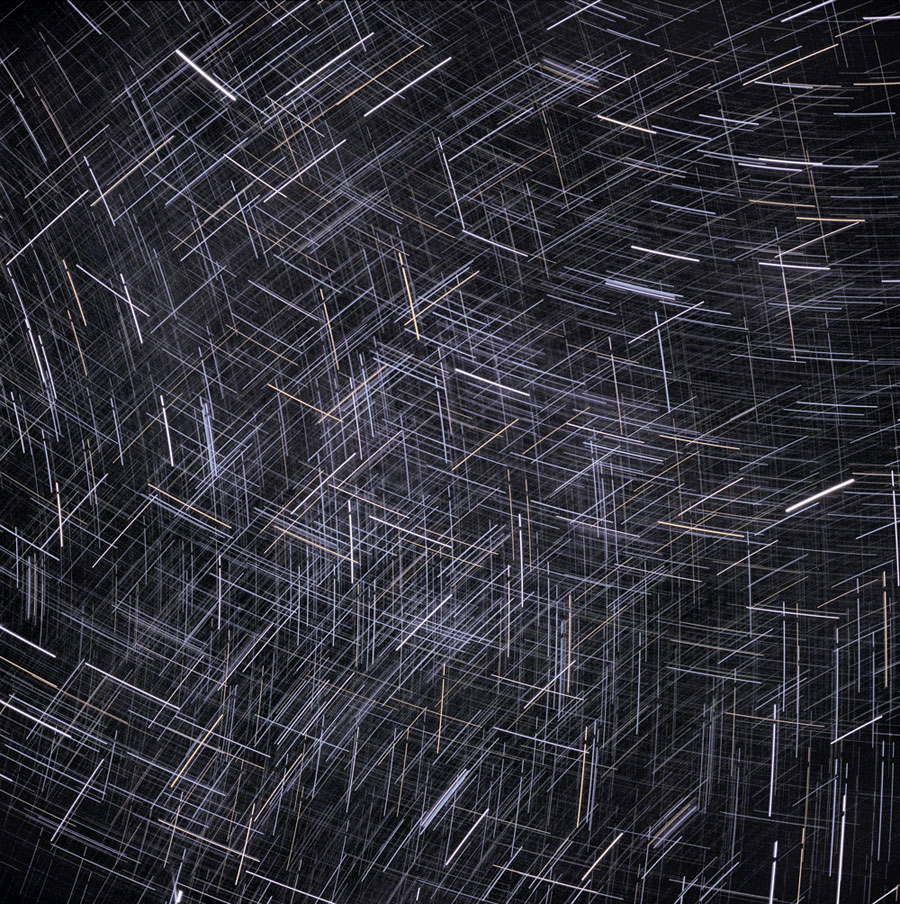
David Stephenson (Australian, b. 1955) 'Star Drawing 1996/402' 1996


David Stephenson (Australian, b. 1955)
Star Drawing 1996/402
1996
40 x 40″
Cibachrome Print
National Gallery of Victoria, Melbourne
Purchased, 1997
© Courtesy of the artist


This is an intimate and stimulating photographic exhibition at the NGV International featuring the work of artists Mike and Doug Starn, David Stephenson, Hiroshi Sugimoto, Bill Henson, Adam Fuss, Simone Douglas, Park Hong-Chun, Eugenia Raskopoulos, Sam Shmith, Christoph Dahlhausen and Patrick Bailly-Maitre-Grand. It is fantastic to see an exhibition of solely contemporary photographs at the National Gallery of Victoria taken from their collection (with nary a vintage silver gelatin photograph in sight!), one which examines the orchestration of light from which all photography emanates – used by different photographers in the creation, and there is the key word, of their work. Collectively, the works seem to ooze a mysterious inner light, a facing towards the transcendent divine – both comforting, astonishing and terrifying in part measure.

Works included range from photograms (camera-less images), large scale installations and photographs produced using digital light-based technologies. Every one of the fifteen works on display is worthy of inclusion, worthy of study at significant length so that the viewer may obtain insight into this element and its capture (by the camera, or not) on photographic paper, orthographic film and by the retina of the eye. What afterimage does this light leave, in the mind’s eye, in our subconscious thought?

The two Bill Henson photographs are evocative of the Romantic ideals of the nineteenth century where twilight possesses a luminescence that reveals shifting forms and meaning only through contemplation. As with all Henson the “mood” of the photographs is constructed as much by the artist as the thing being photographed. It is his understanding of the reflection of light from that object and the meaning of that reflection that creates the narrative “reality,” that allows the viewer the space for contemplation. In Sam Shmith’s photograph Untitled (In spates 2) (2011, below), Shimth turns day into night, creating his own reality by digitally compositing “30-40 photographs per pictorial narrative” taken during the day and then digitally darkened to form one single photographic instance. As a spectral ‘body’ the photograph works to create a new form of hallucination, one that haunts and perturbs the mind, like a disturbing psychological thriller. The viewer is (not really) flying, (not really) floating above the clouds contemplating the narrative, creating a visual memory of things. Spectral luminescences, not-quite-right perspectives, the photograph as temporal / temporary hallucination. The image takes me to other spaces and memories, opening up new vistas in my imagination (see more of my thoughts on Shmith’s work and the digital punctum).

Beginning in 1988, Adam Fuss began to explore studies of abstracted light and colour which “involved placing the paper in a tray of water and recording the concentric circles caused by disturbing the water or dripping droplets of water into the trays. These pieces, done between 1988-1990, have an eerie, spatial quality. Infused with bright, vibrant colours and blinding white light, they resemble some hitherto unknown solar system. [Here] Fuss is concerned with the metaphorical qualities of light.

In an interview with Ross Bleckner conducted in 1992, Fuss explained the role of light in his imagery: “Light is a physical sensation. If you look at it with purely scientific eyes, its a particle that behaves like a wave or a wave that behaves like a particle. No one knows exactly what it is. It travels very fast. It has something to do with our perception of time… When one works with the idea of light, one’s working with a metaphor that’s endless and huge and unspecific. because you’re talking about something that’s almost just an idea, we can think about it but we can never grasp it. The light of the sun represents life on Earth. Light represents the fuel that is behind our existence… It’s a mystery.”1

Another beautiful photograph is Eugenia Raskopoulos’ elegiac requiem to the dis/appearance of language and the body, Diglossia #8 (2009, below). Diglossic is defined as a situation in which two languages (or two varieties of the same language) are used under different conditions within a community, often by the same speakers, with one variety of speech being more prestigious or formal and the other more suited to informal conversation or taken as a mark of lower social status or less education. As Victoria Lynn states of the series, “Each of these images carries within it a letter from the Greek alphabet. There is a word in there somewhere, but the order has been disrupted. This word, or name, has been cut, and its pieces are now before us as fragments that refuse to re-collect themselves into meaning. As such, the relationship between the letters also becomes temporal, fluid, and heterogeneous opening up the question of translation between one language to another, and one culture to another.

The images have been created using the gesture of a hand writing on a steamed up mirror. The photograph is taken very quickly, before the image, the letter and the mark of the artist disappears. We have to ask, what is disappearing here? Is it the language, the name, the aura of the photograph (in the Benjaminian sense) or indeed the body? For behind each letter we can detect a human presence – the artists’ naked body as she makes the photograph. The apparatus of photography is revealed, undressed and made naked.”2

Sol Invictus (1992, below) by the Starn Twins overwhelms in the brute force of the installation, something that cannot really be captured in the two-dimensional representation posted here (go and see the real thing!). The layering and curving of orthographic film relates to the curvature of the sun, the film held in place by screw clamps as though the artist’s were trying to contain, to fix, to regulate the radiation of the sun. Sol Invictus (here is the paradox, it means “unconquered sun” even as the Starn Twins seek to tie it down) explores the metaphorical, scientific and religious properties that gives life to this Earth. A very powerful installation that had me transfixed. Hiroshi Sugimoto’s famous series Theaters is represented in the exhibition by the work Winnetka Drive-In, Paramount (1993, below) where  Sugimoto “photographs auditoriums of American movie theaters, and drive-in movies, during showings. The exposure time used for the photograph corresponds with the projection time of the film. This allows him to save the duration of the entire film in a single shot. What remains visible of the film’s time-compressed, individual images is the bright screen of the movie theater, which illuminates the architecture of the space. That its content retreats into the background makes the actual film a piece of information, manifesting itself in the (movie theater) space. As a result, instead of a content-related event, film presents itself here as the relationship between time and spatial perception.”3

If we think of the camera lens as being fully open, like an eye without blinking, for the duration of the length of the film then the shutter of the lens has to be set on “B” for Bulb which allows for long exposure times under the direct control of the photographer. “The term bulb is a reference to old-style pneumatically actuated shutters; squeezing an air bulb would open the shutter and releasing the bulb would close it… It appears that when instantaneous shutters were introduced, they included a B setting so that the familiar bulb behaviour could be duplicated with a cable release.”4 In other words light waves, reflecting from the surface of objects, are controlled by the photographer over an indefinite period (not the short “snap” of the freeze frame / the decisive moment), accumulating light from thousands of years in the past through the lens of the camera onto the focal plane, coalescing into a single image, controlled and constructed by the photographer.

My favourite works in the exhibition are David Stephenson’s two Star Drawings (1996, below) which use the same Bulb technique to capture star trails travelling across the night sky. Stephenson says that drawing the stars at night by long time exposures, “are a contemporary expression of the sublime – a transcendental experience of awe with the vast space and time of existence” (DS, 1998). The photographs map our position and help us understand our space in the world, that we are all made of stars, every last one of us. As far as being expressions of the sublime, these almost Abstract Expressionist, geometric light drawings are only achieved through the tilting of the camera at certain points doing the exposure and the opening and closing of the shutter, to make the intricate patterns. Man and stars combine to create a spiritual force that emanates from everything and everyone. Stephenson tilts the axis of meaning. When we look at these photographs the light that has emanated from these stars may no longer exist. It had travelled thousands of light years from the past to the present to be embedded in the film at the time of exposure and is then projected into the future so that the viewer may acknowledge it a hundred years from now.


Emanation > recognition > existence . . . . . . . . . . ∞
. . . . . . . . . . . . . . . . . . . . . .  . .. .  . . . . .  . .. . . . . . . . . . death


How Light Works

In a truly inspired piece of writing, artist and author Pablo Helguera muses on the nature of light falling on a landscape in his piece How to Understand the light on a Landscape (2005). In the text he examines qualities of light such as experiential light, home light, ghost light, the light of the deathbed (think Emmet Gowin’s photograph of Rennie Booher in her casket, “dead now and committed to mystery,” as Gowin puts it), rain light, protective light, artificial light, the light of the truly blind, the light of adolescence, sunday light, hotel light, used light, narrated light, transparent light, the light of the last day and after light.

“The conjunction of a random site, the accumulated data in the body’s memory that is linked to emotion, and the general behaviour of light form experience. Experience is triggered by light, but not exclusively by the visible light of the electromagnetic spectrum. What the human eye is incapable to perceive is absorbed by other sensory parts of the body, which contribute to the perception that light causes an effect that goes beyond the merely visual.”5

This is the crux of the “matter.” As much as photography is a dialogue between the natural and the unnatural, it is also an invocation to the gods (inside each of us and all around us). It is the breaking down of subjective and objective truths so that the myth of origin becomes fluid in this light. It is the light of creation that goes beyond the merely visual, that is an expression of an individualism that rises above the threshold of visibility – to stimulate sensory experience; to prick the imagination and memory; to make us aware and recognise the WAVELENGTH of creation. It is the LIGHT OF EXPERIENCE.

Helguera concludes, “The intersection of our body with the light and the landscape and the coded form of language that we have to construct by ourselves and explain to ourselves is our daily ordeal, and we are free to choose to ignore and live without it, because there is nothing we can do with this language other than talking to ourselves. There is no point in trying to explain it to others because it is not designed to be this way, other than remaining a remote, if equivalent, language.

Some for that reason prefer to construct empty spaces with nondescript imagery, and thus be free of the seductive and nostalgic indecipherability of the landscape and the light. Or we may choose to openly embrace the darkness of light, and thus let ourselves through the great gates of placehood, where we can finally accept the unexplainable concreteness of our moments for what they are.”6


I believe this is the role of artists, to embrace the darkness of light and the trace of experience and to show it to people that may not recognise it or have turned away from the light of experience. So many people walk through life as if in a dream, neither recognising their energy nor the good or bad that emanates from that light. As Helguera notes it causes us to create our own coded form of language to explain the LIGHT OF LIFE to ourselves. We can choose to ignore it (at out peril!) but we can also embrace light in an act of recognition, awareness, forgiveness. We can banish the empty spaces and nondescript imagery in our own lives and make connection to others so that they make gain insight into their own existence and being.

Dr Marcus Bunyan


1/ Halpert, Peter. “Adam Fuss: Light and Darkness,” in Art Press International, July/August 1993 on the Peter Hay Halpert Fine Art website. Nd. [Online] Cited 08/09/2012 No longer available online

2/ Lynn, Victoria. “Writing Towards Disappearance,” on the Eugenia Raskopoulos website. Nd. [Online] Cited 08/09/2012 No longer available online

3/ Kellein, Thomas Sugimoto, Hiroshi. Time Exposed. Thames & Hudson, First edition, 1995, p. 91, quoted in Heike Helfert. “Hiroshi Sugimoto “Theaters”,” on the the Media Art Net website Nd [Online] Cited 08/09/2012.

4/ Anon. “Bulb (photography),” on the Wikipedia website. Nd. [Online] Cited 08/09/2012

5/ Helguera, Pablo. How to Understand the Light on a Landscape (video, 15 min., 2005) is a work that simulates a scientific documentary about light to discuss the experiential aspects of light as triggered by memory. The images and text, taken from the video, are part of the book by Patt,Lise (ed.). Searching for Sebald: Photography After W.G. Sebald. Institute of Cultural Inquiry, 2007, pp. 110-119

6/ Ibid.,


Many thankx to the National Gallery of Victoria for allowing me to publish the photographs in the posting.  Please click on the photographs for a larger version of the image.


“Light is a scientific fact, a metaphorical construct and even a spiritual force. It is considered an agent of truth, authenticity and revelation just as the absence of light signals mystery, danger and disorder. Light is also fundamental in the creation of photographs.”


Dr Isobel Crombie, Senior Curator, Photography NGV, 2012


“Light is a metaphor: where you have a dark place, and where that place becomes illuminated; where darkness becomes visible and one can see. The darkness is me, is my being. Why am I here? What am I here for? What is this experience I’m having? This is darkness. Light produces understanding.”


Adam Fuss 1990


Hiroshi Sugimoto (Japanese, b. 1948, worked in United States 1972- ) 'Winnetka Drive-In, Paramount' 1993


Hiroshi Sugimoto (Japanese, b. 1948, worked in United States 1972- )
Winnetka Drive-In, Paramount
1993
Gelatin silver photograph
42.3 x 54.1cm
National Gallery of Victoria, Melbourne
Purchased with funds donated by the Bowness Family Fund for Contemporary Photography, 2009
© Hiroshi Sugimoto, courtesy The Pace Gallery, New York


Simone Douglas (Australian) 'Surrender (Collision) III' 1998 (detail)


Simone Douglas (Australian)
Surrender (Collision) III (detail)
1998
Type C photograph
45.9 x 64.0cm
National Gallery of Victoria, Melbourne
© Simone Douglas


Sam Shmith (Australian born London, b. 1980) 'Untitled (In spates 2)' 2011


Sam Shmith (Australian born London, b. 1980)
Untitled (In spates 2)
2011
from the In spates series 2011
Inkjet print
75.0 x 124.8cm
National Gallery of Victoria, Melbourne
Purchased, Victorian Foundation for Living Australian Artists, 2011
© Sam Shmith, courtesy Arc One Gallery, Melbourne


On March 23, the National Gallery of Victoria will open Light Works, a contemporary photography exhibition that explores various artists’ approaches to light – a fundamental element in the creation of photography. Drawn from the NGV’s Collection, the fifteen works on display show how photographers have exploited the creative potentials of natural and artificial light in their artworks.

Dr Isobel Crombie, Senior Curator, Photography NGV said: “Light is a scientific fact, a metaphorical construct and even a spiritual force. It is considered an agent of truth, authenticity and revelation just as the absence of light signals mystery, danger and disorder. Through a careful selection of works by international and Australian artists the emotive potential and scientific capacities of light are explored.”

Dr Gerard Vaughan, Director, NGV said: “Light Works is an exhibition that has broad appeal as it will intrigue those who are artistically, spiritually, technologically or scientifically minded. The works on display demonstrate the diverse and limitless depiction of this vital element. This exhibition also provides visitors with an opportunity to see works by some of the most important contemporary global and local photography artists – a must-see exhibition for 2012.”

Works included range from photograms (camera-less images), large scale installations and photographs produced using digital light-based technologies highlighting the depth of the NGV’s remarkable photography collection. On display are works by Mike and Doug Starn, David Stephenson, Hiroshi Sugimoto, Bill Henson, Adam Fuss, Simone Douglas, Park Hong-Chun, Eugenia Raskopoulos, Sam Shmith, Christoph Dahlhausen and Patrick Bailly-Maitre-Grand.

Text from the NGV website


Eugenia Raskopoulos (Australian, b. 1959) 'Diglossia #8' 2009


Eugenia Raskopoulos (Australian, b. 1959)
Diglossia #8
2009
from the Diglossia series 2009
Inkjet print
139.5 x 93.3cm
National Gallery of Victoria, Melbourne
Purchased, Victorian Foundation for Living Australian Artists, 2009
© Eugenia Raskopoulos


This photograph shows a letter from the Greek alphabet which has been marked by hand onto a foggy mirror.


Mike Starn (American, b. 1961) and Doug Starn (American, b. 1961) 'Sol Invictus' 1992


Mike Starn (American, b. 1961)
Doug Starn (American, b. 1961)
Sol Invictus
1992
Orthographic film, silicon, pipe clamps, steel and adhesive tape
175.0 x 200.0 x 35.0cm
National Gallery of Victoria, Melbourne
Purchased with funds donated by the National Gallery Women’s Association, 1994
© Doug Starn, Mike Starn/ARS, New York. Licensed by VISCOPY, Sydney


Adam Fuss (English, b. 1961, worked in Australia 1962-1982, United States 1982- ) 'Untitled' 1991


Adam Fuss (English, b. 1961, worked in Australia 1962-1982, United States 1982- )
Untitled
1991
Cibachrome photograph
164.3 x 125.0cm
National Gallery of Victoria, Melbourne
Purchased through The Art Foundation of Victoria with the assistance of the Rudy Komon Fund, Governor, 1992
© Adam Fuss. Courtesy Cheim & Read, New York


NGV International
180 St Kilda Road

Opening hours:
Open daily 10am – 5pm

National Gallery of Victoria website
David Stephenson website
Hiroshi Sugimoto website
Starn Studio website
Sam Shmith website

LIKE ART BLART ON FACEBOOK

Back to top

Exhibition: ‘Irving Penn: Diverse Worlds’ at Moderna Museet Malmö, Sweden

Exhibition dates: 16th June 2012 – 9th September 2012


Many thankx to the Moderna Museet Malmö for allowing me to publish the photographs in the posting. Please click on the photographs for a larger version of the image.


Irving Penn (American, 1917-2009) 'Balenciaga Little Great Coat (Lisa Fonssagrives-Penn), Paris, 1950' 1950
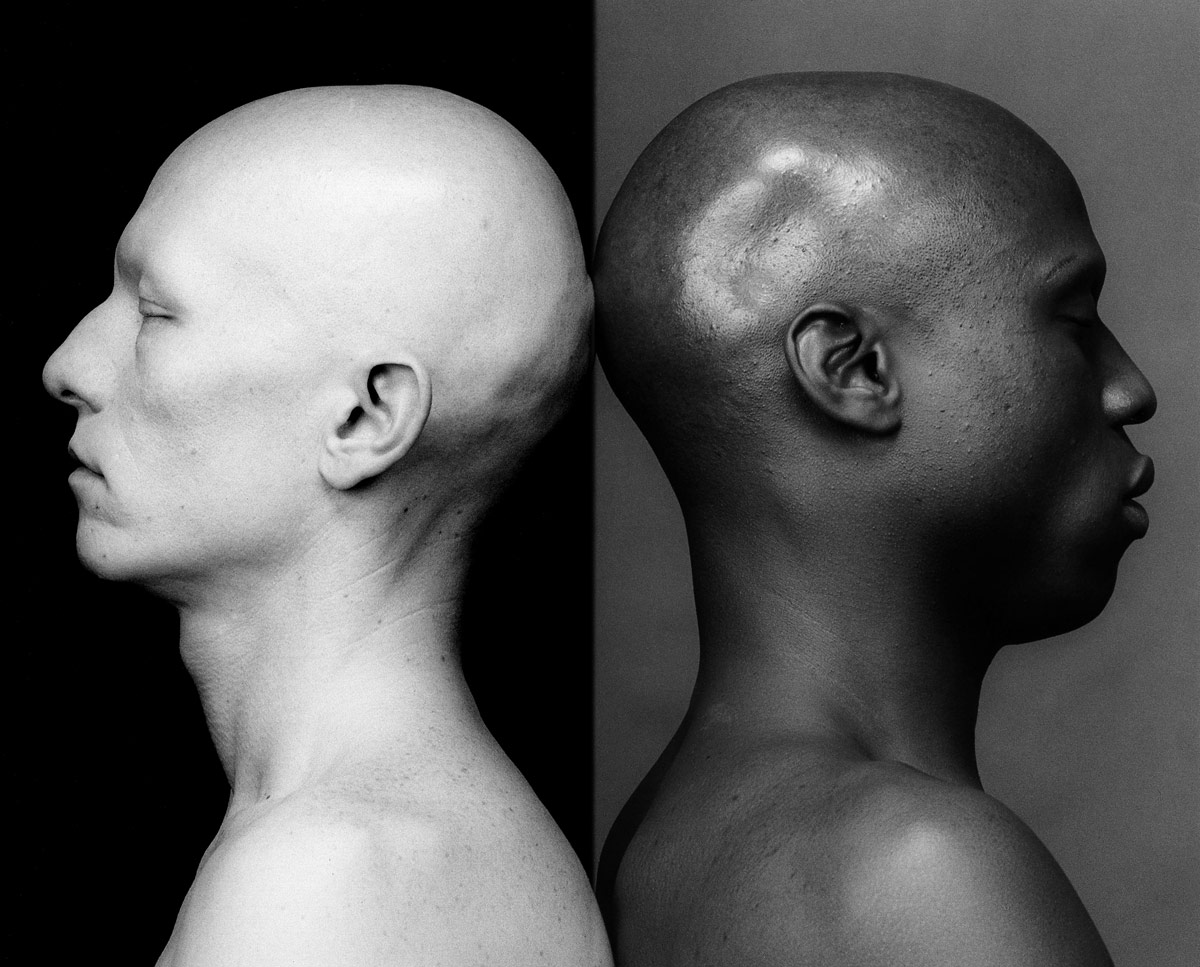
 

Irving Penn (American, 1917-2009)
Balenciaga Little Great Coat (Lisa Fonssagrives-Penn), Paris, 1950
1950
© Copyright by The Irving Penn Foundation


Irving Penn (American, 1917-2009) 'Truman Capote (1 of 2)' New York, 1965


Irving Penn (American, 1917-2009)
Truman Capote (1 of 2), New York
1965
© Copyright by The Irving Penn Foundation


Irving Penn (American, 1917-2009) 'Ingmar Bergman (1 of 4), Stockholm, 1964' 1964


Irving Penn (American, 1917-2009)
Ingmar Bergman (1 of 4), Stockholm, 1964
1964
© Copyright by The Irving Penn Foundation


“A good photograph is one that communicates a fact, touches the heart, and leaves the viewer a changed person for having seen it; it is in one word, effective.”


Irving Penn


For the first time in the Öresund region, a rich selection of Irving Penn’s photographs from some of his most famous serial photography are being presented. His innovative fashion features, portraits and still-lifes made Irving Penn one of the leading photographers of our time. Spanning more than 60 years, his career is characterised by a cool, minimalist approach to the medium. With a selection of nearly 90 works and samples from his assignments for numerous publications, the exhibition at Moderna Museet Malmö covers a broad spectrum of Irving Penn’s oeuvre.

Irving Penn (1917-2009) is regarded as one of the leading photographers of our time. He was active in both the commercial and artistic fields. In 1985, he won the prestigious Hasselblad Award. In his terse serial works, Irving Penn developed a style that is distinguished by its sharpness, detail, meticulousness and minimalist imagery. The exhibition Diverse Worlds presents photographs from his most famous series and spans more than half a century. Most of these works were donated to Moderna Museet in 1995 by Penn himself, in memory of his wife, Swedish-born Lisa Fonssagrives-Penn.

Diverse Worlds is a broad resumé of Irving Penn’s oeuvre, revealing clearly the consistent style that is characteristic of his photographs. His output is typically imbued with an inquisitive eye and attention to detail, whatever the subject matter. A discussion of the commercial-artistic dichotomy seems rather pointless in the case of Irving Penn, who balanced constantly between the two, allowing one to benefit the other. His experience and background as a painter, for instance, came in handy when he was commissioned by established fashion houses to create their advertisements for publications such as Vogue – a magazine Penn worked for throughout most of his career.

In post-war New York, many cultural celebrities visited Irving Penn’s studio. The turmoil that prevailed after the Second World War was illustrated by portraying these ostensibly immortal icons trapped in a narrow corner. Penn has also related how this corner was created in his studio to counteract his own feelings of inferiority in relation to the celebs he portrayed. The less famed were also captured by Irving Penn’s camera, including small tradesmen in London and Paris, and members of Hell’s Angels in San Francisco. Life’s transience is distinctly visualised in many of the still-lifes Penn made in his career – often commissioned by fashion houses but also as part of his own projects.

Despite the variation in these pictorial series, Irving Penn’s oeuvre, and the presentation in Diverse Worlds, reveals a consistent curiosity and desire, and a wish to depict the divergent subjects in the same sensitive and detailed way. He achieved this by placing them all in the same setting. Different image worlds meet and are literally constructed in the same neutral space – Irving Penn’s studio.

Press release from the Moderna Museet Malmö website


Irving Penn (American, 1917-2009) 'Nude No. 72' 1949-50, printed 1949-1950


Irving Penn (American, 1917-2009)
Nude No. 72
1949-1950, printed 1949-1950
© Copyright by The Irving Penn Foundation


Irving Penn (American, 1917-2009) 'Large Sleeve (Sunny Harnett), New York' 1951, printed 1984


Irving Penn (American, 1917-2009)
Large Sleeve (Sunny Harnett), New York
1951, printed 1984
© Copyright by The Irving Penn Foundation


Irving Penn. 'Fishmonger, London, 1950' 1950


Irving Penn (American, 1917-2009)
Fishmonger, London, 1950
1950
© by Condé Nast Publications Ltd.


Irving Penn (American, 1917-2009) 'Cat Woman, New Guinea, 1970' 1970


Irving Penn (American, 1917-2009)
Cat Woman, New Guinea, 1970
1970
© Copyright by The Irving Penn Foundation


Irving Penn (American, 1917-2009) 'Mud Glove, New York' 1975


Irving Penn (American, 1917-2009)
Mud Glove, New York


Irving Penn (American, 1917-2009) 'Bird Bones, (Sweden)' 1980


Irving Penn (American, 1917-2009)
Bird Bones, (Sweden)
1980


Irving Penn (American, 1917-2009) 'Frozen Foods with String Beans, New York, 1977' 1977


Irving Penn (American, 1917-2009)
Frozen Foods with String Beans, New York, 1977
1977
© Copyright by The Irving Penn


Irving Penn (American, 1917-2009) 'Mouth (for L'Oréal), New York' 1986


Irving Penn (American, 1917-2009)
Mouth (for L’Oréal), New York
1986
© Copyright by The Irving Penn


Moderna Museet Malmö
Gasverksgatan 22 in Malmö

Moderna Museet Malmö is located in the city centre of Malmö. Ten minutes walk from the Central station, five minutes walk from Gustav Adolfs torg and Stortorget.

Opening hours:
Tuesday – Sunday 11 – 17
Mondays closed

Moderna Museet Malmö website

LIKE ART BLART ON FACEBOOK

Back to top

Exhibition: ‘Home Front: Wartime Sydney 1939-45’ at the Museum of Sydney

Exhibition dates: 31st March – 9th September 2012


Sam Hood (Australian, 1872-1953) '6th division AIF troops waving from troop-train carriage, 13 September 1940' 1940


Sam Hood (Australian, 1872-1953)
6th division AIF troops waving from troop-train carriage, 13 September 1940
1940
© Australian War Memorial


Some poignant photographs in this posting of young Australian men setting off to fight in the early stages of the Second World War. The message scrawled in chalk on the side of the train (below, at left) reads, “Berlin first stop. Look out Hitler, we’ll be there soon.” Little did they know it would be five long, hard years of fighting and countless deaths before that aphorism would come true. The 6th division AIF troops first fought in North Africa against the Italians at Tobruk and was then sent to Greece to fight the German advance. About 39 per cent of the Australian troops in Greece on 6 April 1941 were either killed, wounded or became prisoners of war. The division then fought in the Pacific War on the Kokoda Trail campaign in the New Guinea theatre until the end of the war.

I wonder how many of the men, smiling and leaning out of the train carriage or departing on a troop ship, returned to these shores?

The last photograph in the posting is so very eloquent it actually moved me to tears. The women being hoisted aloft to kiss her loved one last time – clutching her handbag, complete with rumpled, lumpy stockings. To the right (and this is what caught my eye), a man looks straight at the camera while another right next to him has this distant melancholy look on his face as though he is not actually there. A portent of things to come. Brave men, fighting in the only war that Australians have had to fight for their own freedom, not at the whim of a colonial power or overseas ally in some far of distant land. Brave men and women – we wouldn’t be here without them.

Dr Marcus Bunyan


Many thankx to the Museum of Sydney for allowing me to publish the photographs in the posting. Please click on the photographs for a larger version of the image.


Installation view of the exhibition 'Home Front: Wartime Sydney 1939-45' at the Museum of Sydney 

Installation view of the exhibition 'Home Front: Wartime Sydney 1939-45' at the Museum of Sydney 

Installation view of the exhibition 'Home Front: Wartime Sydney 1939-45' at the Museum of Sydney 

Installation view of the exhibition 'Home Front: Wartime Sydney 1939-45' at the Museum of Sydney

Installation view of the exhibition 'Home Front: Wartime Sydney 1939-45' at the Museum of Sydney


Installation view of the exhibition Home Front: Wartime Sydney 1939-45 at the Museum of Sydney
Historic Houses Trust of NSW
Photos: Jenni Carter


Anonymous photographer. 'Troops of the 6th Division wave goodbye, Sydney 1940' 1940


Anonymous photographer
Troops of the 6th Division wave goodbye, Sydney 1940
1940
© Australian War Memorial


Anonymous photographer. 'Men of the 6th Division returning from Wewak crowd the deck of HMS Implacable, 18 Dec 1945' 1945


Anonymous photographer
Men of the 6th Division returning from Wewak crowd the deck of HMS Implacable, 18 Dec 1945
1945
© Australian War Memorial


Anonymous photographer. 'An Australian built DAP Bristol Beaufort VIII aircraft, serial no A9-700, in flight over Sydney Harbour near the Bridge' c. 1944


Anonymous photographer
An Australian built DAP Bristol Beaufort VIII aircraft, serial no A9-700, in flight over Sydney Harbour near the Bridge
c. 1944
© Australian War Memorial


Anonymous photographer. 'Partly submerged RAN accommodation ship damaged during the unsuccessful Japanese midget submarine attack 1 June 1942' 1942


Anonymous photographer
Partly submerged RAN accommodation ship damaged during the unsuccessful Japanese midget submarine attack 1 June 1942
1942
© Australian War Memorial


Anonymous photographer. 'Two women donning gas masks as part of an air raid drill' Nd


Anonymous photographer
Two women donning gas masks as part of an air raid drill
Nd
© Argus Newspaper Collection of Photographs, State Library of Victoria


Installation view of the exhibition 'Home Front: Wartime Sydney 1939-45' at the Museum of Sydney showing at centre, a detail of 'Members of the Wardens' Women's Auxiliary making for the scene of an incident' (c. 1943) by an anonymous photographer


Installation view of the exhibition Home Front: Wartime Sydney 1939-45 at the Museum of Sydney showing at centre, a detail of Members of the Wardens’ Women’s Auxiliary making for the scene of an incident (c. 1943, below) by an anonymous photographer
Historic Houses Trust of NSW
Photo: Jenni Carter


Anonymous photographer. 'Members of the Wardens' Women's Auxiliary making for the scene of an incident' c. 1943


Anonymous photographer
Members of the Wardens’ Women’s Auxiliary making for the scene of an incident
c. 1943
© Argus Newspaper Collection of Photographs, State Library of Victoria


In May 1942 three Japanese midget submarines entered Sydney Harbour in an attempt to sink allied ships, bringing the once far away war to the shores of the harbourside city and shaking the country to its core. Coinciding with the 70th anniversary of the Japanese attack on Sydney Harbour, Home Front: Wartime Sydney 1939-45 a new exhibition opening 31 March at the Museum of Sydney, explores the experience of the women, men and children who rallied together to support the war effort from home.

Unprepared for another world war, Australians initially referred to the conflict as ‘the phoney war’, however it wasn’t long before propaganda posters were plastered around Sydney, censorship and food rationing became the norm, and tank traps and barbed wire replaced bronzed bodies on Sydney beaches. For six long years the world seemed to come to Sydney as soldiers, sailors and airmen from many nations called Sydney home, making wartime an exciting and thrilling period for some, while for others it was a long and lonely time interrupted by the occasional letter from a loved one serving overseas.

Almost 40,000 Australians lost their lives with the war leaving a lasting impact at home and transforming the lives of generations of Australians, in particular the lives of women, says Curator Annie Campbell. “As well as having to cope with war related anxieties and stress, many women were ‘manpowered’ to work in wartime industries such as ammunitions factories and aircraft construction. Everyone had to make sacrifices on the home front, however despite wartime shortages and rationing, women were expected and actively encouraged to look smart, which often involved some innovative thinking. One of my favourite objects in the exhibition is a wedding dress made out of parachute silk and mosquito net for a war bride, later worn by her sister and two girlfriends on their special days.

While the troops were busy on the battlefields, Sydneysiders prepared for the possibility of an enemy invasion on home soil. An anti-submarine boom net was installed across Sydney Harbour to keep out attacking forces, bomb shelters were constructed in Hyde Park and protective timbers were placed around landmark buildings. In 1942 blackout restrictions were introduced to limit the effectiveness of air raids, all Sydney lights were switched off and car, train and tram headlights were masked, giving the city a sinister feel. But it wasn’t all doom and gloom, large numbers of people were ready to have fun in Sydney and the Trocadero on George Street became a mecca for white American servicemen, while the Booker T Washington Club in Albion Street Surry Hills serviced the African-American GI’s,” says Campbell.

Highlights of the exhibition include the microphone used by Prime Minister Robert Menzies to announce that Australia was at war, remnants of the Japanese midget submarines that attacked Sydney, over 100 photographs and artworks depicting wartime Sydney, and a short documentary featuring historic footage. Over 200 wartime Sydney mementoes will also feature in the exhibition including propaganda posters, warden’s memorabilia, letters from soldiers serving overseas and a selection of wartime fashions.

Press release from the Museum of Sydney website


Anonymous photographer. 'Sydney kindergarten children wearing air raid headgear designed to muffle sounds and prevent them from biting tongues' Nd


Anonymous photographer
Sydney kindergarten children wearing air raid headgear designed to muffle sounds and prevent them from biting tongues
Nd
© Mitchell Library, State Library of NSW


Anonymous photographer. 'Eve Holliman, Hilda Jamieson and Vera Thurlow converting a car into an ambulance' Nd


Anonymous photographer
Eve Holliman, Hilda Jamieson and Vera Thurlow converting a car into an ambulance
Nd
© Argus Newspaper Collection of Photographs, State Library of Victoria


Anonymous photographer. 'Woman war worker' 1944


Anonymous photographer
Woman war worker
1944
© Mitchell Library, State Library of NSW


Anonymous designer and photographer. 'Change Over to a Victory Job propaganda poster' Nd


Anonymous designer and photographer
Change Over to a Victory Job propaganda poster
Nd
© Australian War Memorial


Anonymous designer and photographer. 'Advertisement for Ponds' 1945


Anonymous designer and photographer
Advertisement for Ponds
1945
© National Library of Australia


Weaver Hawkins (English, 1893-1977) 'Jitterbugs' 1945


Weaver Hawkins (English, 1893-1977)
Jitterbugs
1945
Oil on canvas, Art Gallery of New South Wales
© Estate of H F Weaver Hawkins
Photograph Jenni Carter


Sam Hood (Australian, 1872-1953) 'Sydney embarkation, 13 September 1940' 1940


Sam Hood (Australian, 1872-1953)
Sydney embarkation, 13 September 1940
1940
© Australian War Memorial


Sam Hood (Australian, 1872-1953) 'Sydney embarkation, 13 September 1940' 1940 (detail)


Sam Hood (Australian, 1872-1953)
Sydney embarkation, 13 September 1940 (detail)
1940
© Australian War Memorial


Museum of Sydney
Cnr Bridge and Phillip Streets
Sydney, NSW 2000
Phone: (02) 9251 5988

Opening hours:
Daily 10am – 5pm
Closed Good Friday and Christmas Day

Museum of Sydney website

LIKE ART BLART ON FACEBOOK

Back to top

Exhibition: ‘Weegee: Murder Is My Business’ at the International Center of Photography, New York

Exhibition dates: 20th January – 2nd September 2012


Weegee (Arthur Fellig) (American, 1899-1968) 'Untitled [Anthony Esposito, booked on suspicion of killing a policeman, New York]' January 16, 1941


Weegee (Arthur Fellig) (American, 1899-1968)
Untitled [Anthony Esposito, booked on suspicion of killing a policeman, New York]
January 16, 1941
Silver gelatin photograph
© Weegee/International Center of Photography


If you want a good read about the life and times of Weegee then Mark Svetov’s ‘Life and Death (Mostly Death) in the Streets’ (2010) on American Suburb X website is the way to go. I can’t really add much to this excellent piece of writing in terms of the history of the man and the social milieu in which he surrounded himself. What I can comment on are my personal feelings about his photographs.

Weegee’s photographs are no masterpiece of fine art printing, they are rough and direct, and I love them all the more for this quality. Their roughness – all sellotaped over, edges cut at odd angles, drawn and written on – only adds to their power and immediacy. If you can call photographs of dead bodies in the street vibrant and alive, then these photographs are just that. Svetov sees Weegee as the quintessential noir photographer; I see him not so much as that but as a sensitive, formalist photographer, a wonderful collagist and an artist who is a precursor to the pop art of the mid-late 1950s (think Warhol’s screen prints of the electric chair, or his mangled car crash series).

In the installation photographs of the exhibition Weegee: Murder Is My Business at the Photo League, New York (1941, see below) you get a sense of this master of assemblage, the animator and promoter (another pop trait!) at work. The large prints are casually pinned to the back board, surrounded by drawings of guns with smoke emanating from their barrels, cause of death certificates, photographs of Weegee himself “On the Spot”, Weegee’s press pass, newspaper clippings about the man and his work (including a photograph of his tiny bedroom) where Weegee “introduces” himself to his audience. The photographs flow around the room, from Faces, to Murder and Society. People are drawn into the aura of these photographs, you can see them leaning forward to take in every detail. They peer intently at the them trying to decipher every nuance of the narrative being told (the frequent hats lying about, the discarded pistols, the hand emerging from underneath the draped sheet).

As Svetov notes, Weegee’s news pictures were never haphazard snapshots, for they always seem perfectly arranged. Underneath the spontaneity and the humanism imparted by the artist is that fact that Weegee is a master of formalism. He knows exactly how to structure the picture plane as a classical pianist knows how to bring alive the themes of a Mozart sonata. Usually arriving before any other photographer because he lived opposite the police station and had a police radio in his car, Weegee “cased the joint” as I would put it, prowling quickly around the scene to get the best angle, the best shot before other photographers arrived or the scene was closed off by police. This instinctive framing only comes through having a good eye and training that eye so that what to shoot and how to crop the scene “in camera” becomes second nature.

Evidence of the formal structure implicit in Weegee’s photographs can be seen in my analysis of two photographs Line-Up for Night Court (c. 1941, below) and Police officer and assistant removing body of Reception Hospital ambulance driver Morris Linker from East River, New York (August 24, 1943, below). In the first image the epicentre (or the enigma if you like) of the photograph is the dance of hands at the lower centre of the image, formed by two triangles and emphasised by two radial diagonals. The top points of the upper triangle are anchored by the men and women at both windows (see detail photographs), the patriarchal men in suit and tie at one window – a detective, a chief of police? – separated from the woman at another. Weegee’s splits this triangle with his frieze of faces showing the depths of human despair, despondency and ambivalence.

The second image has a much more complicated structure. In the first analysis we observe the different horizontal, vertical and diagonal planes as they march up the photograph. The “heart” of this image, where the yellow lines cross, is actually a point of absence. Look at the real photograph: it is the heart shaped empty space between the man’s outstretched hands that form the emotional centre of the image. In the second analysis we can simplify this down into a zigzagging line that passes directly through this point. To see this, to assess this and visualise the flowing movement in a split second is in any visual language outstanding. Weegee wasn’t averse to manipulating his images to achieve the desired result. The photograph Hold up man killed (November 24, 1941, below) shows his notations over the top of the image, the crop he envisaged and the words “Take out hat” and “Make sock black” so that he achieved the desired dynamic within the photograph.

Weegee was a master of flash and the use of foreshortening – to create atmosphere in the first instance and used as a visual entre into the photographs in the second. Sometimes he combines both. The policeman at left in Line-Up for Night Court is both out of focus and the highlights (his face) are blown out by the flash. Does this matter: not one iota, for the policeman “grounds” the whole left hand side of the image. Again, in Murder (c. 1940, below) the backside of the policeman is blown out by the flash but this only leads the eye of the viewer to the foreshortened body of the murder victim nestled in the crook of his knee and then onto the starkly lit pram, beyond. Finally, in Hold up man killed (November 24, 1941, below) the feet of the hold up man actually lead the viewer into the space between the two policeman’s shoes were the Surgeon from Gouverneur Hospital crouches over the body. Weegee also loved to weave detail into his images, so that even though the story is about human content, as Svetov observes, it is just as much about human materiality as well: notice the reflection of people in the car bonnet in At an East Side Murder (1943, below) at lower left and then the procession of worn shoes and the bagginess of the trousers – I didn’t realised they wore their trousers so baggy in the 1940s!

Svetlov sees Weegee’s photographs as containing an almost sacred squalor, a brash but anguished cry in an endless nightscape with nothing judgemental or distanced about them. I concur with the last part for Weegee was a man of the people whom he photographed. On the other points I am less sure: to me they are about light not darkness. They are about the aftermath of atrocity, of living, human beings dealing with death and its consequences. I see nothing sacred about this squalor. The photographs are about shining a light into darkness, the darkness that every human being must confront: the fact that we all have to die, somewhere, sometime, in the end.

Dr Marcus Bunyan


Many thankx to the International Center of Photography for allowing me to publish the photographs in the posting. Please click on the photographs for a larger version of the image.


“People are so wonderful that a photographer has only to wait for that breathless moment to capture what he wants on film… and when that split second of time is gone, it’s dead and can never be brought back.”

“For the pictures… I was on the scene; sometimes drawn there by some power I can’t explain, and I caught the New Yorkers with their masks off… not afraid to Laugh, Cry, or Make Love. What I felt I photographed, laughing and crying with them.”


Arthur Fellig (aka Weegee, 1899-1968)


“Weegee’s work is connected by an umbilical cord to darkness; his images emerged from Gotham City’s nocturnal penumbra, spectrally streaked by streetlights, lit brightly only where there was a human focus, a tabloid John Alton at work.

Weegee called it his “Rembrandt light” as he caught the human protagonists in the white glare of his photo flash, the scene otherwise enveloped in darkness. Weegee’s news pictures were never haphazard snapshots, albeit they were taken by a man who had happenstance and chance as his helpmates; he and his camera, with its flash, seem to have a fateful meeting with his human subjects; pictures seem perfectly arranged, and what we focus on is their human content. Weegee is the quintessential noir photographer.”


Mark Svetov. “Life and Death (Mostly Death) in the Streets (2010)” on American Suburb X website May 2012 [Online] Cited 28/08/2012


Weegee (Arthur Fellig) (American, 1899-1968) 'The dead man's wife arrived... and then she collapsed' c. 1940


Weegee (Arthur Fellig) (American, 1899-1968)
The dead man’s wife arrived… and then she collapsed
c. 1940
Silver gelatin photograph
© Weegee/International Center of Photography


Weegee (Arthur Fellig) (American, 1899-1968) 'Girl jumped out of car, and was killed, on Park Ave.,' c. 1938


Weegee (Arthur Fellig) (American, 1899-1968)
Girl jumped out of car, and was killed, on Park Ave.,
c. 1938
Silver gelatin photograph
© Weegee/International Center of Photography


Weegee (Arthur Fellig) (American, 1899-1968) 'Untitled [Installation view of "Weegee: Murder Is My Business" at the Photo League, New York]' 1941

Weegee (Arthur Fellig) (American, 1899-1968) 'Untitled [Installation view of "Weegee: Murder Is My Business" at the Photo League, New York]' 1941

Weegee (Arthur Fellig) (American, 1899-1968) 'Untitled [Installation view of "Weegee: Murder Is My Business" at the Photo League, New York]' 1941

Weegee (Arthur Fellig) (American, 1899-1968) 'Untitled [Installation view of "Weegee: Murder Is My Business" at the Photo League, New York]' 1941


Weegee (Arthur Fellig) (American, 1899-1968)
Untitled [Installation view of “Weegee: Murder Is My Business” at the Photo League, New York]
1941
Silver gelatin photographs
© Weegee/International Center of Photography


Text and captions from the original Murder Is My Business exhibition:

~ “Introducing Weegee”
~ “Due to an increase in MURDERS The Photo League presents 2nd Edition of “MURDER IS MY BUSNESS” by Weegee”
~ “Weegee Lives For His Work And Thinks Before Shooting” (newspaper headline on the “Weegee” board at left)
~ “This space reserved for the latest muders”
~ “MURDER Manhattan bloodbath”
~ “Arthur Fellig Photographer / Do not disturbe / Except in case of Fire, Murder or Snow Storm” (caption underneath photograph)
~ “Why did you kill your Sweetie”?  (caption underneath photograph)
~ “HUMAN BODY MINUS HEAD FOUND ON STREET” (caption underneath photograph)
~ “Cop & human head in package” (caption underneath photograph)
~ “Killed her husband after drinking brawl” (caption underneath photograph)
~ “Just a cheap murder” (caption underneath photograph)
~ “My man” (caption underneath photograph)
~ “Who done that” (caption underneath photograph)


“Weegee’s captions provided a visceral vernacular for the almost-sacred squalor of his imagery (see “Weegee’s Words” for a sampling). Taken together, they packed more than a mere punch; they were a brash but anguished cry in an endless nightscape. More than mere documents of a violent era, they also exuded a humanity that could only come from the photographer himself. There was nothing judgmental or distanced in Weegee’s work; he was the antithesis of the “slickers” who worked for glossy magazines. He remained a man essentially from the same New York working-class as the people he chose to photograph.”


Mark Svetov. “Life and Death (Mostly Death) in the Streets (2010)” on American Suburb X website May 2012 [Online] Cited 28/08/2012


Weegee (Arthur Fellig) (American, 1899-1968) 'Untitled ["Ruth Snyder Murder" wax display, Eden Musée, Coney Island, New York]' c. 1941


Weegee (Arthur Fellig) (American, 1899-1968)
Untitled [“Ruth Snyder Murder” wax display, Eden Musée, Coney Island, New York]
c. 1941
Silver gelatin photograph
© Weegee/International Center of Photography


Unidentified Photographer. 'On the Spot' December 9, 1939


Unidentified Photographer
On the Spot
December 9, 1939
© Weegee/International Center of Photography


Weegee (Arthur Fellig) (American, 1899-1968) 'Line-Up for Night Court' c. 1941


Weegee (Arthur Fellig) (American, 1899-1968)
Line-Up for Night Court
c. 1941
Silver gelatin photograph
© Weegee/International Center of Photography


Construction of the pictorial plane in 'Line-Up for Night Court'


Construction of the pictorial plane in Line-Up for Night Court


Weegee (Arthur Fellig) (American, 1899-1968) 'Line-Up for Night Court' c. 1941 (detail)

Weegee (Arthur Fellig) (American, 1899-1968) 'Line-Up for Night Court' c. 1941 (detail)


Weegee (Arthur Fellig) (American, 1899-1968)
Line-Up for Night Court (details)
c. 1941
Silver gelatin photograph
© Weegee/International Center of Photography


Weegee (Arthur Fellig) (American, 1899-1968) 'At an East Side Murder' 1943


Weegee (Arthur Fellig) (American, 1899-1968)
At an East Side Murder
1943
Silver gelatin photograph
© Weegee/International Center of Photography


Weegee (Arthur Fellig) (American, 1899-1968) 'At an East Side Murder' 1943 (detail)

Weegee (Arthur Fellig) (American, 1899-1968) 'At an East Side Murder' 1943 (detail)

Weegee (Arthur Fellig) (American, 1899-1968) 'At an East Side Murder' 1943 (detail)


Weegee (Arthur Fellig) (American, 1899-1968)
At an East Side Murder (details)
1943
Silver gelatin photograph
© Weegee/International Center of Photography


Weegee (Arthur Fellig) (American, 1899-1968) 'Untitled [Hats in a pool room, Mulberry Street, New York]' c. 1943


Weegee (Arthur Fellig) (American, 1899-1968)
Untitled [Hats in a pool room, Mulberry Street, New York]
c. 1943
© Weegee/International Center of Photography


Gangland murders, gruesome car crashes, and perilous tenement fires were for the photographer Weegee (1899-1968) the staples of his flashlit black-and-white work as a freelance photojournalist in the mid­-1930s. Such graphically dramatic and sometimes sensationalistic photographs of New York crimes and news events set the standard for what has since become known as tabloid journalism. In fact, for one intense decade, between 1935 and 1946, Weegee was perhaps the most relentlessly inventive figure in American photography. A surprising new exhibition at the International Center of Photography (1133 Avenue of the Americas at 43rd Street), titled Weegee: Murder Is My Business and organised by ICP Chief Curator Brian Wallis, will present some rare examples of Weegee’s most famous and iconic images, and will consider his early work in the context of its original presentation in historical newspapers and exhibitions, as well as Weegee’s own books and films.

Taking its title from Weegee’s self-curated exhibition at the Photo League in 1941, Murder Is My Business looks at the urban violence and mayhem that was the focus of his early work. As a freelance photographer at a time when New York City had at least eight daily newspapers and when wire services were just beginning to handle photos, Weegee was challenged to capture unique images of newsworthy events and distribute them quickly. He worked almost exclusively at night, setting out from his small apartment across from police headquarters when news of a new crime came chattering across his police-band radio receiver. Often arriving before the police themselves, Weegee carefully cased each scene to discover the best angle. Murders, he claimed, were the easiest to photograph because the subjects never moved or got temperamental.

Weegee’s rising career as a news photographer in the 1930s coincided with the heyday of Murder Inc., the Jewish gang from Brownsville who served as paid hitmen for The Syndicate, a confederation of mostly Italian crime bosses in New York. As a wave of governmental and legal crackdowns swept the city between 1935 and 1941, the rate of organised murders of small-time wiseguys and potential stool pigeons increased dramatically. Weegee often worked closely with the police but also befriended high-profile criminals like Bugsy Siegel, Lucky Luciano, and Legs Diamond. Weegee called himself the “official photographer for Murder Inc.” and claimed to have covered 5,000 murders, a count that is perhaps only slightly exaggerated. In asserting the true nature of his business, Weegee proudly displayed his check stub from LIFE magazine that paid him $35 for two murders, slightly more, he said, for the one that used more bullets.

Selling his photographs to a variety of New York newspapers in the 1930s, and later working as a stringer for the short-lived daily newspaper PM (1940-1948), Weegee established a highly subjective approach to both photographs and texts that was distinctly different from that promoted in most dailies and picture magazines. Utilising other distribution venues, Weegee also wrote extensively (including his autobiographical Naked City, published in 1945) and organised his own exhibitions at the Photo League, the influential photographic organisation that promoted politically committed pictures, particularly of the working classes. In 1941, Weegee installed two back-to-back exhibitions in the League’s headquarters. This visibility helped promote Weegee’s growing reputation as a news photographer, and he began stamping his prints “Weegee the Famous.” The general acceptance of his punchy photographic style, which did not shy away from lower-class subjects and humanistic narratives, led to the acquisition of his work by the Museum of Modern Art and inclusion in two group shows there, in 1943 and 1945.

“Weegee has often been dismissed as an aberration or as a naive photographer, but he was in fact one of the most original and enterprising photojournalists of the 1930s and ’40s. His best photographs combine wit, daring, and surprisingly original points of view, particularly when considered in light of contemporaneous press photos and documentary photography. He favoured unabashedly low-culture or tabloid subjects and approaches, but his Depression-era New York photographs need to be considered seriously alongside other key documentarians of the thirties, such as Dorothea Lange, Robert Capa, Walker Evans, and Berenice Abbott,” said Wallis.

The exhibition will feature over 100 original photographs, drawn primarily from the comprehensive Weegee Archive of over 20,000 prints at ICP, as well as period newspapers, magazines, and films. It will also include partial reconstructions of Weegee’s studio and his Photo League exhibition. The four galleries will each feature a touch-screen monitor allowing visitors to explore further details regarding the images and artefacts in that room.

Press release from the ICP


Weegee (Arthur Fellig) (American, 1899-1968) 'Untitled [Body of Dominick Didato, Elizabeth Street, New York]' August 7, 1936


Weegee (Arthur Fellig) (American, 1899-1968)
Untitled [Body of Dominick Didato, Elizabeth Street, New York]
August 7, 1936
Silver gelatin photograph
© Weegee/International Center of Photography


Weegee (Arthur Fellig) (American, 1899-1968) 'Murder' c. 1940


Weegee (Arthur Fellig) (American, 1899-1968)
Murder
c. 1940
Silver gelatin photograph
© Weegee/International Center of Photography


Weegee (Arthur Fellig) (American, 1899-1968) 'Untitled [Police officer and lodge member looking at blanket-covered body of woman trampled to death in excursion-ship stampede, New York]' August 18, 1941


Weegee (Arthur Fellig) (American, 1899-1968)
Untitled [Police officer and lodge member looking at blanket-covered body of woman trampled to death in excursion-ship stampede, New York]
August 18, 1941
Silver gelatin photograph
© Weegee/International Center of Photography


Weegee (Arthur Fellig) (American, 1899-1968) 'Hold up man killed' November 24, 1941


Weegee (Arthur Fellig) (American, 1899-1968)
Hold up man killed
November 24, 1941
Silver gelatin photograph
© Weegee/International Center of Photography


Weegee (Arthur Fellig) (American, 1899-1968) 'Untitled [Police officer and assistant removing body of Reception Hospital ambulance driver Morris Linker from East River, New York]' August 24, 1943


Weegee (Arthur Fellig) (American, 1899-1968)
Untitled [Police officer and assistant removing body of Reception Hospital ambulance driver Morris Linker from East River, New York]
August 24, 1943
Silver gelatin photograph
© Weegee/International Center of Photography


Pictorial construction of Police officer and assistant removing body of Reception Hospital ambulance driver Morris

Pictorial construction of Police officer and assistant removing body of Reception Hospital ambulance driver Morris


Pictorial construction of Police officer and assistant removing body of Reception Hospital ambulance driver Morris


International Center of Photography
79 Essex Street, New York, NY 10002
between Delancey Street and Broome Street

Opening hours:
Wednesday – Monday 11am – 7pm
Tuesday closed

International Center of Photography website

LIKE ART BLART ON FACEBOOK

Back to top

Exhibition: ‘Timothy H. O’Sullivan: The King Survey Photographs’ at the Nelson-Atkins Museum of Art, Kansas City

Exhibition dates: 7th April – 2nd September 2012


Timothy H. O'Sullivan (American born Ireland, 1840-1882) 'Sand Dunes, Carson Desert, Nevada' 1867


Timothy H. O’Sullivan (American born Ireland, 1840-1882)
Sand Dunes, Carson Desert, Nevada
1867
Albumen print
Nelson-Atkins Museum of Art
Gift of Hallmark Cards, Inc.


Of all the photographers who accompanied the Western surveys of this era, O’Sullivan remains the most admired, studied and debated. This is a result of the distinctly individual quality of his seeing – his particular union of fact and point of view; his understanding of what it meant to make a documentary photograph. O’Sullivan’s work remains inspiring and instructive: the clues it holds – to the nature of photography, 19th-century visual culture and the construction of photographic history – challenge and enlarge each new generation of viewers. ~ Press release


About the only decent sized Timothy O’Sullivan photographs online are here on Art Blart – in this posting and one I did earlier of Framing the West: The Survey Photographs of Timothy H. O’Sullivan at the Smithsonian American Art Museum. Although some of the photographs from the earlier posting are reproduced again here there are also four new ones, and for that we should be thankful for there are so few quality images to look at on the web.

Following my last posting where I ruminated on the nature of photography, we note that O’Sullivan’s understanding of what it meant to make a documentary photograph was embodied in his distinctly individual way of seeing. As the above quotation observes, this was “his particular union of fact and point of view.” With this in mind, the photograph I would like you to focus on in this posting is the last one: a prescient abstract expressionist photograph almost eighty years before their advent. The fallen beams remind me of huge ice crystals in a rock cave and then you notice the pick axe at top left and leg and booted foot at right. Hang on a minute, there is another foot tucked underneath!

To have the temerity to photograph this scene in this way and this point in time in the history of photography is outstanding. Imagine being O’Sullivan coming upon this vista, framing the cave-in with beams at left and right of the image plane and detritus at the bottom. He could have left it at that, but no, he hints at the presence of a man, out of frame, doing what exactly we don’t know. It is this plaisir and jouissance that give this photograph its pleasure and pain. The knowledge that we know this scene, as the subject knows himself or herself, gives the photograph its pleasure; the fact that we don’t know what is beyond the edge of the frame, who the man is and what he is doing, fractures these structures and challenges the readers position as subject. As the viewer transgresses the act of pleasurable looking, of enjoying the formal characteristics and textures of the photograph, doubt sets in – what is the man doing, why is he there? As we transgress the pleasure principle the painful principle of what Lacan calls jouissance kicks in. The viewer suffers a crisis of doubt and, conversely, the pattern of the fallen beams of wood and the axe now create a more threatening, claustrophobic atmosphere.

Dr Marcus Bunyan


Many thankx to the Nelson-Atkins Museum of Art for allowing me to publish the photographs in the posting. Please click on the photographs for a larger version of the image.


Timothy H. O'Sullivan (American born Ireland, 1840-1882) 'Pyramid and Domes, Pyramid Lake, Nevada' 1867


Timothy H. O’Sullivan (American born Ireland, 1840-1882)
Pyramid and Domes, Pyramid Lake, Nevada
1867
Albumen print
Overall: 7 3/4 x 10 5/8 inches (19.69 x 26.99 cm)
Mat (exhibition): 20 × 24 inches (50.8 × 60.96 cm)
Framed: 23 3/8 × 27 1/2 × 1 5/8 inches (59.37 × 69.85 × 4.13 cm)
Nelson-Atkins Museum of Art
Gift of Hallmark Cards, Inc.


Timothy H. O'Sullivan (American born Ireland, 1840-1882) 'Tufa formation, Anaho Island, Pyramid Lake, Nevada' 1867


Timothy H. O’Sullivan (American born Ireland, 1840-1882)
Tufa formation, Anaho Island, Pyramid Lake, Nevada
1867
Albumen print
Overall: 7 3/4 x 10 5/8 inches (19.69 x 26.99cm)
Mat (exhibition): 20 × 24 inches (50.8 × 60.96cm)
Framed: 23 3/8 × 27 1/2 × 1 5/8 inches (59.37 × 69.85 × 4.13cm)
Nelson-Atkins Museum of Art
Gift of Hallmark Cards, Inc.


Timothy H. O'Sullivan (American born Ireland, 1840-1882) 'Geyser Mouth in Ruby Valley, Nevada' 1868


Timothy H. O’Sullivan (American born Ireland, 1840-1882)
Geyser Mouth in Ruby Valley, Nevada
1868
Albumen print
7 7/8 x 10 5/8 inches (20 x 26.99cm)
Nelson-Atkins Museum of Art
Gift of Hallmark Cards, Inc..


Timothy H. O'Sullivan (American born Ireland, 1840-1882) 'Obsidian hill, Mono Lake, California' 1868


Timothy H. O’Sullivan (American born Ireland, 1840-1882)
Obsidian hill, Mono Lake, California
1868
Albumen print
Overall: 7 3/4 x 10 5/8 inches (19.69 x 26.99cm)
Mat (exhibition): 20 × 24 inches (50.8 × 60.96cm)
Framed: 23 3/8 × 27 1/2 × 1 5/8 inches (59.37 × 69.85 × 4.13cm)
Nelson-Atkins Museum of Art
Gift of Hallmark Cards, Inc.


Timothy H. O'Sullivan (American born Ireland, 1840-1882) 'Mono Lake, California' 1868


Timothy H. O’Sullivan (American born Ireland, 1840-1882)
Mono Lake, California
1868
Albumen print
Overall: 7 3/4 x 10 5/8 inches (19.69 x 26.99cm)
Mat (exhibition): 20 × 24 inches (50.8 × 60.96cm)
Framed: 23 3/8 × 27 1/2 × 1 5/8 inches (59.37 × 69.85 × 4.13cm)
Nelson-Atkins Museum of Art
Gift of Hallmark Cards, Inc.


Timothy H. O'Sullivan (American born Ireland, 1840-1882) 'Shoshone Falls, Idaho' 1868


Timothy H. O’Sullivan (American born Ireland, 1840-1882)
Shoshone Falls, Idaho
1868
Albumen print
Overall: 7 3/4 x 10 5/8 inches (19.69 x 26.99cm)
Mat (exhibition): 20 × 24 inches (50.8 × 60.96cm)
Framed: 23 3/8 × 27 1/2 × 1 5/8 inches (59.37 × 69.85 × 4.13cm)
Nelson-Atkins Museum of Art
Gift of Hallmark Cards, Inc.


Timothy O'Sullivan (American, 1842-1882) 'Cañon de Chelle, Walls of the Grand Canon about 1200 feet in height' 1873


Timothy O’Sullivan (American, 1842-1882)
Cañon de Chelle, Walls of the Grand Canon about 1200 feet in height
1873
Albumen print
Smithsonian American Art Museum
Museum purchase, from the Charles Isaacs Collection made possible in part, by the Luisita L. and Franz H. Denghausen Endowment


The photographs made by Timothy H. O’Sullivan as part of the United States Geological Exploration of the Fortieth Parallel, or King Survey, comprise an iconic and richly varied body of work. The first of the great post-Civil War Western expeditions, the King Survey was organised under the authority of the U.S. Army Topographical Engineers. Between 1867 and 1872, Clarence King, the geologist in charge, and his party studied a vast swath of terrain, approximately 100 by 800 miles, encompassing the path of the soon-to-be-completed transcontinental railroad, from the border of California eastward to Cheyenne, Wyoming.

The survey’s official photographer, Timothy H. O’Sullivan, was talented, resourceful and imaginative. In four seasons with King’s group – 1867, 1869 and 1872 – he created a diverse body of photographs: geological studies, landscapes, views of miners and mining operations, records of cities and settlements, studies of the survey itself and self-reflexive meditations on his own presence in the West.

Of all the photographers who accompanied the Western surveys of this era, O’Sullivan remains the most admired, studied and debated. This is a result of the distinctly individual quality of his seeing – his particular union of fact and point of view; his understanding of what it meant to make a documentary photograph. O’Sullivan’s work remains inspiring and instructive: the clues it holds – to the nature of photography, 19th-century visual culture and the construction of photographic history – challenge and enlarge each new generation of viewers.

The King Survey of the Great Basin, from 1867 to 1872, was the model for the other “great surveys” of the 19th-century American West. Rare and iconic works by Timothy H. O’Sullivan, the King Survey’s official photographer, will be featured in an exhibition at The Nelson-Atkins Museum of Art from April 7 through Sept. 2. Keith F. Davis and Jane L. Aspinwall, respectively senior and assistant curators of photography at the Nelson-Atkins, organised Timothy O’Sullivan: The King Survey Photographs.

“There is good reason that O’Sullivan remains so influential after all these years,” said Davis. “Visually speaking, he was the world’s greatest poker player. He always kept his cards close to his vest. His images are at once boldly straightforward and deeply mysterious, a perfect combination of intuition and calculation. His genius lies, in part, in making such originality appear so effortless.”

There are 60 photographs in the exhibition. Nine were borrowed from the American Geographical Society in Milwaukee, WIS; and the remainder are from the holdings of the Nelson-Atkins. Accompanying the exhibition is a major book, co-authored by Davis and Aspinwall, with contributions by three esteemed scholars: John P. Herron, Francois Brunet, and Mark Klett.

“O’Sullivan continues to influence generations of photographers because of his purely individual melding of fact and point of view,” said Aspinwall. “He was a complicated character, a hearty adventurer, a photographic explorer and innovator, with a bit of the daredevil thrown in the mix.” The book emphasises the context of O’Sullivan’s photographs: his best known images in relation to the complete body of his survey work, the function of the photographs within the survey enterprise, and the scientific and cultural importance of the survey itself. In creating the book, Davis and Aspinwall became engaged in their own kind of “survey,” working from opposite ends of the subject back toward a common centre.

“Jane focused on the evidence of the photographs themselves, tracking down every view and putting them into chronological order,” said Davis. “I began with an overview of the history of western exploration and then attempted to describe the King Survey and O’Sullivan’s career in detail. The meeting point, the crux of the whole project, was O’Sullivan’s remarkable photographs.” Davis became fascinated with O’Sullivan’s work 40 years ago, and his respect for the richness and longevity of his work has increased over the years. “Someone once said that writing a biography usually entails a process of ‘falling out of love’ with one’s subject,” said Davis. “That’s absolutely not true in this case. This exhibition and book have resulted in a newer and deeper admiration for a truly one-of-a-kind photographic achievement. That’s O’Sullivan’s gift to us – and we want to share it. Timothy H. O’Sullivan: The King Survey Photographs gives visitors a new appreciation of the visual history of the 19th-century American West, while presenting some of the museum’s rarest treasures for public view.

Press release and text from the Nelson-Atkins website


Timothy H. O'Sullivan (American born Ireland, 1840-1882) 'Long Ravine Bridge, CPRR, California' 1867


Timothy H. O’Sullivan (American born Ireland, 1840-1882)
Long Ravine Bridge, CPRR, California
1867
Albumen print
Overall: 7 3/4 x 10 5/8 inches (19.69 x 26.99cm)
Mat (exhibition): 20 × 24 inches (50.8 × 60.96cm)
Framed: 23 3/8 × 27 1/2 × 1 5/8 inches (59.39 × 69.85 × 4.14cm)
Nelson-Atkins Museum of Art
Gift of Hallmark Cards, Inc.


Timothy H. O'Sullivan (American born Ireland, 1840-1882) 'Montezuma Silver Works, Oreana, Nevada' 1867


Timothy H. O’Sullivan (American born Ireland, 1840-1882)
Montezuma Silver Works, Oreana, Nevada
1867
Albumen print
Overall: 7 3/4 x 10 5/8 inches (19.69 x 26.99cm)
Mat (exhibition): 20 × 24 inches (50.8 × 60.96cm)
Framed: 23 3/8 × 27 1/2 × 1 5/8 inches (59.37 × 69.85 × 4.13cm)
Nelson-Atkins Museum of Art
Gift of Hallmark Cards, Inc.


Timothy H. O'Sullivan (American born Ireland, 1840-1882) 'Sioux Hot Springs, near Humboldt Salt Marsh, Nevada' 1867


Timothy H. O’Sullivan (American born Ireland, 1840-1882)
Sioux Hot Springs, near Humboldt Salt Marsh, Nevada
1867
Albumen print
Overall: 7 3/4 x 10 5/8 inches (19.69 x 26.99 cm)
Mat (exhibition): 20 × 24 inches (50.8 × 60.96 cm)
Framed: 23 3/8 × 27 1/2 × 1 5/8 inches (59.37 × 69.85 × 4.13 cm)
Nelson-Atkins Museum of Art
Gift of Hallmark Cards, Inc.


Timothy H. O'Sullivan (American born Ireland, 1840-1882) 'Steamboat Springs, Nevada' 1868


Timothy H. O’Sullivan (American born Ireland, 1840-1882)
Steamboat Springs, Nevada
1868
Albumen print
Overall: 7 3/4 x 10 5/8 inches (19.69 x 26.99cm)
Mat (exhibition): 20 × 24 inches (50.8 × 60.96cm)
Framed: 23 3/8 × 27 1/2 × 1 5/8 inches (59.37 × 69.85 × 4.13cm)
Nelson-Atkins Museum of Art
Gift of Hallmark Cards, Inc.


Timothy H. O'Sullivan (American born Ireland, 1840-1882) 'Quartzites, Summit, East Humboldt Mountains, Nevada' 1868


Timothy H. O’Sullivan (American born Ireland, 1840-1882)
Quartzites, Summit, East Humboldt Mountains, Nevada
1868
Albumen print
Overall: 7 3/4 x 10 5/8 inches (19.69 x 26.99cm)
Mat (exhibition): 20 × 24 inches (50.8 × 60.96cm)
Framed: 23 3/8 × 27 1/2 × 1 5/8 inches (59.37 × 69.85 × 4.13cm)
Nelson-Atkins Museum of Art
Gift of Hallmark Cards, Inc.


Timothy H. O'Sullivan (American born Ireland, 1840-1882) 'Fissure, Steamboat Springs, Nevada' 1868


Timothy H. O’Sullivan (American born Ireland, 1840-1882)
Fissure, Steamboat Springs, Nevada
1868
Albumen print
Image: 8 3/4 x 11 7/16 inches (22.23 x 29.05 cm)
Mat (exhibition): 20 × 24 inches (50.8 × 60.96 cm)
Framed: 23 3/8 × 27 1/2 × 1 5/8 inches (59.37 × 69.85 × 4.13 cm)
Nelson-Atkins Museum of Art
Gift of the Hall Family Foundation


Timothy H. O'Sullivan (American born Ireland, 1840-1882) 'Longitude Butte, Ruby Valley, Nevada' 1868


Timothy H. O’Sullivan (American born Ireland, 1840-1882)
Longitude Butte, Ruby Valley, Nevada
1868
Albumen print
Overall: 7 3/4 x 10 5/8 inches (19.69 x 26.99 cm)
Mat (exhibition): 20 × 24 inches (50.8 × 60.96 cm)
Framed: 23 3/8 × 27 1/2 × 1 5/8 inches (59.37 × 69.85 × 4.13 cm)
Nelson-Atkins Museum of Art
Gift of Hallmark Cards, Inc.


Timothy H. O'Sullivan (American born Ireland, 1840-1882) 'Sugar Loaf Mountain, near Virginia City, Nevada' 1868


Timothy H. O’Sullivan (American born Ireland, 1840-1882)
Sugar Loaf Mountain, near Virginia City, Nevada
1868
Albumen print
Overall: 7 3/4 x 10 5/8 inches (19.69 x 26.99 cm)
Mat (exhibition): 20 × 24 inches (50.8 × 60.96 cm)
Framed: 23 3/8 × 27 1/2 × 1 5/8 inches (59.37 × 69.85 × 4.13 cm)
Nelson-Atkins Museum of Art
Gift of Hallmark Cards, Inc.


Timothy H. O'Sullivan (American born Ireland, 1840-1882) 'Shaft of Savage Mine, Virginia City, Nevada' 1868


Timothy H. O’Sullivan (American born Ireland, 1840-1882)
Shaft of Savage Mine, Virginia City, Nevada
1868
Albumen print
Nelson-Atkins Museum of Art
Gift of Hallmark Cards, Inc.


Timothy H. O'Sullivan (American born Ireland, 1840-1882) 'Cave-in, Gould & Curry Mine, Virginia City, Nevada' 1868


Timothy H. O’Sullivan (American born Ireland, 1840-1882)
Cave-in, Gould & Curry Mine, Virginia City, Nevada
1868
Albumen print
Overall: 7 × 7 1/2 inches (17.78 × 19.05cm)
Mat (exhibition): 20 × 24 inches (50.8 × 60.96cm)
Framed: 23 3/8 × 27 1/2 × 1 5/8 inches (59.37 × 69.85 × 4.13cm)
Nelson-Atkins Museum of Art
Gift of Hallmark Cards, Inc.


Timothy H. O'Sullivan (American born Ireland, 1840-1882) 'Clarence King in Uinta Mountains, Utah' 1869


Timothy H. O’Sullivan (American born Ireland, 1840-1882)
Clarence King in Uinta Mountains, Utah
1869
Albumen print
Overall: 11 1/8 × 8 1/8 inches (28.26 × 20.64cm)
Mat (exhibition): 24 × 20 inches (60.96 × 50.8cm)
Framed: 27 1/2 × 23 3/8 × 1 5/8 inches (69.85 × 59.37 × 4.13cm)
Nelson-Atkins Museum of Art
Gift of Hallmark Cards, Inc.


Timothy H. O'Sullivan (American born Ireland, 1840-1882) 'Cottonwood Lake, Wasatch Mountains, Utah' 1869


Timothy H. O’Sullivan (American born Ireland, 1840-1882)
Cottonwood Lake, Wasatch Mountains, Utah
1869
Albumen print
Overall: 7 3/4 x 10 1/2 inches (19.69 x 26.67cm)
Mat (exhibition): 20 × 24 inches (50.8 × 60.96cm)
Framed: 23 3/8 × 27 1/2 × 1 5/8 inches (59.37 × 69.85 × 4.13cm)
Nelson-Atkins Museum of Art
Gift of Hallmark Cards, Inc.


Timothy H. O'Sullivan (American born Ireland, 1840-1882) 'Lake in Conejos Cañon, Colorado' 1874


Timothy H. O’Sullivan (American born Ireland, 1840-1882)
Lake in Conejos Cañon, Colorado
1874
Albumen print
Library of Congress, Prints and Photographs Division


The Nelson-Atkins Museum of Art
4525 Oak Street
Kansas City, MO 64111

Opening hours:
Thursday – Monday 10am – 5pm
Closed Tuesdays and Wednesdays

The Nelson-Atkins Museum of Art website

LIKE ART BLART ON FACEBOOK

Back to top

Exhibition: ‘Portraits of Renown: Photography and the Cult of Celebrity’ at the J. Paul Getty Museum, Los Angeles

Exhibition dates: 3rd April – 26th August 2012


Marie Cosindas (American, 1925-2017) 'Yves Saint Laurent, Paris' 1968


Marie Cosindas (American, 1925-2017)
Yves Saint Laurent, Paris
1968
Dye colour diffusion [Polaroid ®] print
The J. Paul Getty Museum, Los Angeles
© Marie Cosindas


On the Nature of Photography


“To get from the tangible to the intangible (which mature artists in any medium claim as part of their task) a paradox of some kind has frequently been helpful. For the photographer to free himself of the tyranny of the visual facts upon which he is utterly dependent, a paradox is the only possible tool. And the talisman paradox for unique photography is to work “the mirror with a memory” as if it were a mirage, and the camera is a metamorphosing machine, and the photograph as if it were a metaphor… Once freed of the tyranny of surfaces and textures, substance and form [the photographer] can use the same to pursue poetic truth.”


Minor White quoted in Beaumont Hewhall (ed.,). The History of Photography. Boston: Little, Brown, and Co., 1982, p. 281


“Carol Jerrems and I taught at the same secondary school in the 1970’s. In a classroom that was unused at that time, I remember having my portrait taken by her. She held her Pentax to her eye. Carols’ portraits all seemed to have been made where the posing of her subjects was balanced by an incisive naturalness (for want of a better description). As a challenge to myself I tried to look “natural”, but kept in my consciousness that I was having my portrait taken. Minutes passed and neither she nor her camera moved at all.

Then the idea slipped from my mind for just a moment, and I was straightaway bought back by the sound of the shutter. What had changed in my face? – probably nothing, or 1 mm of muscle movement. Had she seen it through the shutter? Or something else – I don’t know.”


Australian artist Ian Lobb on being photographed by the late Carol Jerrems


There is always something that you can’t quite put your finger on in an outstanding portrait, some ineffable other that takes the portrait into another space entirely. I still haven’t worked it out but my thoughts are this: forget about the pose of the person. It would seem to me to be both a self conscious awareness by the sitter of the camera and yet at the same time a knowing transcendence of the visibility of the camera itself. In great portrait photography it is almost as though the conversation between the photographer and the person being photographed elides the camera entirely. Minor White, in his three great mantras, the Three Canons, observes:


Be still with yourself
Until the object of your attention
Affirms your presence

Let the Subject generate its own Composition

When the image mirrors the man
And the man mirrors the subject
Something might take over


Freed from the tyranny of the visual facts something else emerges.

Celebrities know only too well how to “work” the camera but the most profound portraits, even of celebrities, are in those moments when the photographer sees something else in the person being photographed, some unrecognised other that emerges from the shadows – a look, a twist of the head, the poignancy of the mouth, the vibrancy of the dancer Josephine Baker, the sturdiness of the gaze of Walt Whitman with hands in pockets, the presence of the hands (no, not the gaze!) of Picasso. I remember taking a black and white portrait of my partner Paul holding a wooden finial like a baby among some trees, a most beautiful, revealing photograph. He couldn’t bear to look at it, for it stripped him naked before the lens and showed a side of himself that he had never seen before: vulnerable, youthful, beautiful.

Why do great portrait photographers make so many great portraits? Why can’t this skill be shared or taught? Why can’t Herb Ritts (for example) make a portrait that goes beyond a caricature? Why is it that what can be taught is so banal that it has no value?

In photography, maybe we edit out what is expected and then it seems that photography does something that goes beyond language; it goes beyond function that can be described as a part of speech, metonym or metaphor. When this something else takes over I think it is truly “unrecognised” in the best portraits (and landscape / urban photographs) – and it is fantastic and wonderful.

This is my understanding, then, of perception and vision (when spirit takes over) – [which is] the ability to see this certain something in the mind (previsualisation) before seeing it through the viewfinder and to then be able to reveal it in the physicality of the print. It is a liminal moment in time and space.

I believe this is the reality of photography itself in its absolute essential form – and here I am deliberately forgetting about post-photography, post-modernism, modernism, pictorialism, ism, ism – getting down to why I really like photography:

the BEYOND visualisation of a world, the transcendence of time and space that leads, in great photographs, to a recognition of the discontinuous nature of life but in the end, to its ultimate persistence.

This is as close as I have got so far…

Dr Marcus Bunyan
August 2012


Many thankx to the J. Paul Getty Museum for allowing me to publish the photographs in the posting. Please click on the photograph for a larger version of the image.


Mariana Cook (American, b. 1955) 'Barack and Michelle Obama, Chicago' May 26, 1996


Mariana Cook (American, b. 1955)
Barack and Michelle Obama, Chicago
May 26, 1996
Selenium-toned gelatin silver print
The J. Paul Getty Museum, Los Angeles


Marie Cosindas (American, 1925-2017) 'Andy Warhol' 1966


Marie Cosindas (American, 1925-2017)
Andy Warhol
1966
Dye colour diffusion [Polaroid ®] print
11.4 x 8.9cm
The J. Paul Getty Museum, Los Angeles
© Marie Cosindas


Marie Cosindas (American, 1925-2017) 'Yves St Laurent' 1968


Marie Cosindas (American, 1925-2017)
Yves St Laurent
1968
Dye colour diffusion [Polaroid ®] print
11.4 x 8.9cm
The J. Paul Getty Museum, Los Angeles
© Marie Cosindas


Andy Warhol (American, 1928-1987) 'Grace Jones' 1984


Andy Warhol (American, 1928-1987)
Grace Jones
1984
Polaroid Polacolor print
9.5 x 7.3cm
The J. Paul Getty Museum, Los Angeles
© 2011 The Andy Warhol Foundation for the Visual Arts / Artists Rights Society (ARS), New York


Edward Weston (American, 1889-1958) 'Igor Stravinsky' 1935


Edward Weston (American, 1889-1958)
Igor Stravinsky
1935
Gelatin silver print
The J. Paul Getty Museum, Los Angeles


Coy Watson Jr. (American, 1912-2009) 'Joe Louis – “The Brown Bomber”, Los Angeles, February 1935'


Coy Watson Jr. (American, 1912-2009)
Joe Louis – “The Brown Bomber”, Los Angeles, February 1935
1935
Gelatin silver print
The J. Paul Getty Museum, Los Angeles


Edward Steichen (American, 1879-1973) 'Gloria Swanson' 1924


Edward Steichen (American, 1879-1973)
Gloria Swanson
1924
Gelatin silver print
27.8 x 21.6cm (10 15/16 x 8 1/2 in.)
The J. Paul Getty Museum, Los Angeles
© Permission Joanna T. Steichen


Portraits of Renown surveys some of the visual strategies used by photographers to picture famous individuals from the 1840s to the year 2000. “This exhibition offers a brief visual history of famous people in photographs, drawn entirely from the Museum’s rich holdings in this genre,” says Paul Martineau, curator of the exhibition and associate curator of photographs at the J. Paul Getty Museum. “It also provides a broad historical context for the work in the concurrent exhibition Herb Ritts: L.A. Style, which includes a selection of Ritts’s best celebrity portraits.”

Photography’s remarkable propensity to shape identities has made it the leading vehicle for representing the famous. Soon after photography was invented in the 1830s, it was used to capture the likenesses and accomplishments of great men and women, gradually supplanting other forms of commemoration. In the twentieth century, the proliferation of photography and the transformative power of fame have helped to accelerate the desire for photographs of celebrities in magazines, newspapers, advertisements, and on the Internet. The exhibition is arranged chronologically to help make visible some of the overarching technical and stylistic developments in photography from the first decade of its invention to the end of the twentieth century.

A wide range of historical figures are portrayed in Portraits of Renown. A photograph by Alexander Gardner of President Lincoln documents his visit to the battlefield of Antietam during the Civil War. Captured by Nadar, a portrait of Alexander Dumas, best known for his novels The Count of Monte Cristo and The Three Musketeers, shows the author with an energetic expression, illustrating the lively personality that made his writing so popular. Baron Adolf De Meyer’s portrait of Josephine Baker, an American performer who became an international sensation at the Folies Bergère in Paris, showcases her comedic charm, a trait that proved central to her popularity as a performer. An iconic portrait of the silent screen actress, Gloria Swanson, created by Edward Steichen for Vanity Fair reveals both the intensity of its sitter and the skill of the artist. A picture of Pablo Picasso by his friend Man Ray portrays the master of Cubism with a penetrating gaze.

Yves St. Laurent, Andy Warhol, and Grace Jones are among the contemporary figures included in the exhibition. Fashion designer Yves St. Laurent was photographed by Marie Cosindas using instant color film by Polaroid. The photograph, made the year his first boutique in New York opened, graced the walls of the store for ten years. A Cosindas portrait of Andy Warhol shows the artist wearing dark sunglasses, which partially conceal his face. Warhol, who was fascinated by celebrity, delighted in posing public personalities like Grace Jones for his camera.

Press release from the J. Paul Getty Museum website


Man Ray (American, 1890-1976) 'Pablo Picasso' 1934


Man Ray (American, 1890-1976)
Pablo Picasso
1934
Gelatin silver print
25.2 x 20cm
The J. Paul Getty Museum, Los Angeles
© Man Ray Trust ARS-ADAGP


Berenice Abbott (American, 1898-1991) 'James Joyce' 1928


Berenice Abbott (American, 1898-1991)
James Joyce
1928
Gelatin silver print
The J. Paul Getty Museum, Los Angeles


Baron Adolf De Meyer (American born France, 1868-1946) 'Portrait of Josephine Baker' 1925


Baron Adolf De Meyer (American born France, 1868-1946)
Portrait of Josephine Baker
1925
Collotype print
39.1 x 39.7cm
The J. Paul Getty Museum, Los Angeles


In 1925 Josephine Baker, an American dancer from Saint Louis, Missouri, made her debut on the Paris stage in La Revue nègre (The Black Review) at the Théâtre des Champs-Elysées, wearing nothing more than a skirt of feathers and performing her danse sauvage (savage dance). She was an immediate sensation in Jazz-Age France, which celebrated her perceived exoticism, quite the opposite of the reception she had received dancing in American choruses. American expatriate novelist Ernest Hemingway called Baker “the most sensational woman anybody ever saw – or ever will.”

Baron Adolf de Meyer, a society and fashion photographer, took this playful portrait in the year of Baker’s debut. Given the highly sexual nature of her stage persona, this portrait is charming and almost innocent; Baker’s personality is suggested by her face rather than her famous body.

Text from the J. Paul Getty website


Edward Steichen (American, 1879-1973) 'John Barrymore as Hamlet' 1922


Edward Steichen (American, 1879-1973)
John Barrymore as Hamlet
1922
Gelatin silver print
The J. Paul Getty Museum, Los Angeles


Alfred Stieglitz (American, 1964-1946) 'Georgia O'Keeffe: A Portrait' 1918


Alfred Stieglitz (American, 1964-1946)
Georgia O’Keeffe: A Portrait
1918
Gelatin silver print
The J. Paul Getty Museum, Los Angeles


Arnold Genthe (American born Germany, 1869-1942) 'Anna Pavlowa' about 1915


Arnold Genthe (American born Germany, 1869-1942)
Anna Pavlowa
about 1915
Gelatin silver print
33.5 × 25.2cm (13 3/16 × 9 15/16 in.)
The J. Paul Getty Museum, Los Angeles


The Russian ballerina Anna Pavlowa (or Pavlova) so greatly admired Arnold Genthe’s work that she made the unusual decision to visit his studio, rather than have him come to her rehearsals. The resulting portrait of the prolific dancer, leaping in mid-air, is the only photograph to capture Pavlowa in free movement. Genthe regarded this print as one of the best dance photographs he ever made.

Text from the J. Paul Getty website


Alvin Langdon Coburn (British born United States, 1882-1966) 'Mark Twain (Samuel Langhorne Clemens)' Negative December 21, 1908; print 1913


Alvin Langdon Coburn (British born United States, 1882-1966)
Mark Twain (Samuel Langhorne Clemens)
Negative December 21, 1908; print 1913
Photogravure
20.6 × 14.8cm (8 1/8 × 5 13/16 in.)
The J. Paul Getty Museum, Los Angeles


Alfred Stieglitz (American, 1864-1946) '[Self-Portrait]' Negative 1907; print 1930


Alfred Stieglitz (American, 1864-1946)
[Self-Portrait]
Negative 1907; print 1930
Gelatin silver print
24.8 × 18.4cm (9 3/4 × 7 1/4 in.)
The J. Paul Getty Museum, Los Angeles


Edward Steichen (American 1879-1973) 'Rodin The Thinker' 1902


Edward Steichen (American, 1879-1973)
Rodin – Le Penseur (The Thinker)
1902
Gelatin-carbon print
The J. Paul Getty Museum, Los Angeles


Sarah Choate Sears (American, 1858-1935) '[Julia Ward Howe]' about 1890


Sarah Choate Sears (American, 1858-1935)
[Julia Ward Howe]
about 1890
Platinum print
23.5 × 18.6cm (9 1/4 × 7 5/16 in.)
The J. Paul Getty Museum, Los Angeles


Julia Ward Howe (May 27, 1819 – October 17, 1910) was an American poet and author, known for writing “The Battle Hymn of the Republic” and the original 1870 pacifist Mother’s Day Proclamation. She was also an advocate for abolitionism and a social activist, particularly for women’s suffrage.


Sarah Choate Sears (American, 1858-1935) 'John Singer Sargent' about 1890


Sarah Choate Sears (American, 1858-1935)
John Singer Sargent
about 1890
Gelatin silver print
The J. Paul Getty Museum, Los Angeles


Although John Singer Sargent was the most famous American portrait painter of his time, he apparently did not like to be photographed. The few photographs that exist show him at work, as he is here, sketching and puffing on a cigar. His friend Sarah Choate Sears, herself a painter of some note, drew many of her sitters for photographs from the same aristocratic milieu as Sargent did for his paintings.

Text from the J. Paul Getty website


Nadar [Gaspard Félix Tournachon] (French, 1820-1910) '[Sarah Bernhardt as the Empress Theodora in Sardou's "Theodora"]' Negative 1884; print and mount about 1889


Nadar (Gaspard Félix Tournachon) (French, 1820-1910)
[Sarah Bernhardt as the Empress Theodora in Sardou’s “Theodora”]
Negative 1884; print and mount about 1889
Albumen silver print
14.6 × 10.5 cm (5 3/4 × 4 1/8 in.)
The J. Paul Getty Museum, Los Angeles


J. Wood (American, active New York, New York 1870s-1880s) 'L.P. Federmeyer' 1879


J. Wood (American, active New York, New York 1870s-1880s)
L.P. Federmeyer
1879
Albumen silver print
14.8 × 10 cm (5 13/16 × 3 15/16 in.)
The J. Paul Getty Museum, Los Angeles


Julia Margaret Cameron (British born India, 1815-1879) 'Ellen Terry at Age Sixteen' 1864


Julia Margaret Cameron (British born India, 1815-1879)
Ellen Terry at Age Sixteen
Negative 1864; print about 1875
Carbon print
24.1cm (9 1/2 in.)
The J. Paul Getty Museum, Los Angeles


This image of Ellen Terry (1847-1928) is one of the few known photographs of a female celebrity by Julia Margaret Cameron. Terry, the popular child actress of the British stage, was sixteen years old when Cameron made this image. This photograph was most likely taken just after she married the eccentric painter, George Frederick Watts (1817-1904), who was thirty years her senior. They spent their honeymoon in the village of Freshwater on the Isle of Wight where Cameron resided.

Cameron’s portrait echoes Watt’s study of Terry titled Choosing (1864, National Portrait Gallery, London). As in the painting, Terry is shown in profile with her eyes closed, an ethereal beauty in a melancholic dream state. In this guise, Terry embodies the Pre-Raphaelite ideal of womanhood rather than appearing as the wild boisterous teenager she was known to be. The round (“tondo”) format of this photograph was popular among Pre-Raphaelite artists.

Cameron titled another print of this image Sadness (see 84.XZ.186.52), which may suggest the realisation of a mismatched marriage. Terry’s anxiety is plainly evident – she leans against an interior wall and tugs nervously at her necklace. The lighting is notably subdued, leaving her face shadowed in doubt. In The Story of My Life (1909), Terry recalls how demanding Watts was, calling upon her to sit for hours as a model and giving her strict orders not to speak in front of distinguished guests in his studio.

This particular version was printed eleven years after Cameron first made the portrait. In order to distribute this image commercially, the Autotype Company of London rephotographed the original negative after the damage had been repaired. The company then made new prints using the durable, non-fading carbon print process. Thus, this version is in reverse compared to Sadness. Terry’s enduring popularity is displayed by the numerous photographs taken of her over the years. Along with the two portraits by Cameron, the Getty owns three more of Terry by other photographers.

Adapted from Julian Cox. Julia Margaret Cameron, In Focus: Photographs from the J. Paul Getty Museum (Los Angeles: J. Paul Getty Museum, 1996), 12. ©1996 The J. Paul Getty Museum; with additions by Carolyn Peter, J. Paul Getty Museum, Department of Photographs, 2019.


Charles DeForest Fredricks (American, 1823-1894) '[Mlle Pepita]' 1863


Charles DeForest Fredricks (American, 1823-1894)
[Mlle Pepita]
1863
Albumen silver print
9 × 5.4cm (3 9/16 × 2 1/8 in.)
The J. Paul Getty Museum, Los Angeles


André Adolphe-Eugène Disdéri (French, 1819-1889) '[Rosa Bonheur]' 1861-1864


André Adolphe-Eugène Disdéri (French, 1819-1889)
[Rosa Bonheur]
1861-1864
Albumen silver print
8.4 × 5.2cm (3 5/16 × 2 1/16 in.)
The J. Paul Getty Museum, Los Angeles


Rosa Bonheur, born Marie-Rosalie Bonheur (16 March 1822 – 25 May 1899), was a French artist, mostly a painter of animals (animalière) but also a sculptor, in a realist style. Her best-known paintings are Ploughing in the Nivernais, first exhibited at the Paris Salon of 1848, and now at the Musée d’Orsay in Paris, and The Horse Fair (in French: Le marché aux chevaux), which was exhibited at the Salon of 1853 (finished in 1855) and is now in the Metropolitan Museum of Art, in New York City. Bonheur was widely considered to be the most famous female painter of the nineteenth century.

Text from the Wikipedia website


Mathew B. Brady (American, about 1823-1896) 'Walt Whitman' about 1870


Mathew B. Brady (American, about 1823-1896)
Walt Whitman
about 1870
Albumen silver print
14.6 x 10.3cm
The J. Paul Getty Museum, Los Angeles


Mathew B. Brady (American, about 1823-1896) 'Robert E. Lee' 1865


Mathew B. Brady (American, about 1823-1896)
Robert E. Lee
1865
Albumen silver print
The J. Paul Getty Museum, Los Angeles


John Robert Parsons (British, about 1826-1909) '[Portrait of Jane Morris (Mrs. William Morris)]' Negative July 1865; print after 1900


John Robert Parsons (British, about 1826-1909)
[Portrait of Jane Morris (Mrs. William Morris)]
Negative July 1865; print after 1900
Gelatin silver print
22.9 × 19.2cm (9 × 7 9/16 in.)
The J. Paul Getty Museum, Los Angeles


Nadar [Gaspard Félix Tournachon] (French, 1820-1910) 'George Sand (Amandine-Aurore-Lucile Dupin), Writer' c. 1865


Nadar (Gaspard Félix Tournachon) (French, 1820-1910)
George Sand (Amandine-Aurore-Lucile Dupin)
about 1865
Albumen silver print
The J. Paul Getty Museum, Los Angeles


Amandine-Aurore-Lucile Dudevant, née Dupin, took the pseudonym George Sand in 1832. She was a successful Romantic novelist and a close friend of Nadar, and during the 1860s he photographed her frequently. Her writing was celebrated for its frequent depiction of working-class or peasant heroes. She was also a woman as renowned for her romantic liaisons as her writing; here she allowed Nadar to photograph her, devoid of coquettish charms but nevertheless a commanding presence.

This portrait is a riot of textural surfaces. The sumptuous satin of Sand’s gown and silken texture of her hair have a rich tactile presence. Her shimmering skirt melts into the velvet-draped support on which she leans, creating a visual triangle with the careful centre part of her wavy hair. The portrait details the exquisite laces, beads, and buttons of her gown, but her face, the apex of the triangle, is out of focus. Sand was apparently unable to remain perfectly still throughout the exposure, and the slight blurring of her facial features erases the unforgiving details that the years had drawn upon her.

Text from the J. Paul Getty website


Alexander Gardner (American born Scotland, 1821-1882) 'President Lincoln, United States Headquarters, Army of the Potomac, near Antietam, October 4, 1862'


Alexander Gardner (American born Scotland, 1821-1882)
President Lincoln, United States Headquarters, Army of the Potomac, near Antietam, October 4, 1862
1862
Albumen silver print
21.9 x 19.7cm (8 5/8 x 7 3/4 in.)
The J. Paul Getty Museum, Los Angeles


Twenty-six thousand soldiers were killed or wounded in the Battle of Antietam on September 17, 1862, after which Confederate General Robert E. Lee was forced to retreat to Virginia. Just two weeks after the victory, President and Commander-in-Chief Abraham Lincoln conferred with General McClernand and Allan Pinkerton, Chief of the nascent Secret Service, who had organised espionage missions behind Confederate lines.

Lincoln stands tall, front and centre in his stovepipe hat, his erect and commanding posture emphasised by the tent pole that seems to be an extension of his spine. The other men stand slightly apart in deference to their leader, in postures of allegiance with their hands covering their hearts. The reclining figure of the man at left and the shirt hanging from the tree are a reminder that, although this is a formally posed picture, Lincoln’s presence did not halt the camp’s activity, and no attempts were made to isolate him from the ordinary circumstances surrounding the continuing military conflict.

Text from the J. Paul Getty website


Alexander Gardner (American born Scotland, 1821-1882) 'President Lincoln, United States Headquarters, Army of the Potomac, near Antietam, October 4, 1862' (detail)


Alexander Gardner (American born Scotland, 1821-1882)
President Lincoln, United States Headquarters, Army of the Potomac, near Antietam, October 4, 1862 (detail)
1862
Albumen silver print
21.9 x 19.7cm (8 5/8 x 7 3/4 in.)
The J. Paul Getty Museum, Los Angeles


Pierre Louis Pierson (French, 1822-1913) 'Napoleon III and the Prince Imperial' about 1859


Pierre Louis Pierson (French, 1822-1913)
Napoleon III and the Prince Imperial
about 1859
Albumen silver print from a wet collodion glass negative
21 × 16cm (8 1/4 × 6 5/16 in.)
The J. Paul Getty Museum, Los Angeles


The Prince Imperial, son of Napoleon III, sits strapped securely into a seat on his horse’s back, a model subject for the camera. An attendant at the left steadies the horse so that the little prince remains picture-perfect in the centre of the backdrop erected for the photograph. The horse stands upon a rug that serves as a formalising element, making the scene appear more regal. The Emperor Napoleon III himself stands off to the right in perfect profile, supervising the scene with his dog and forming a framing mirror-image of the horse and attendant on the other side.

Pierre-Louis Pierson placed his camera far enough back from the Prince to capture the entire scene and all the players, but this was not the version sold as a popular carte-de-visite. The carte-de-visite image was cropped so that only the Prince upon his horse was visible.

Text from the J. Paul Getty website


Nadar [Gaspard Félix Tournachon] (French, 1820-1910) 'Alexander Dumas [père] (1802-1870) / Alexandre Dumas' 1855


Nadar (Gaspard Félix Tournachon) (French, 1820-1910)
Alexander Dumas [père] (1802-1870) / Alexandre Dumas
1855
Salted paper print
Image (rounded corners): 23.5 x 18.7cm (9 1/4 x 7 3/8 in.)
The J. Paul Getty Museum, Los Angeles
Public domain


The writer Alexander Dumas was Nadar’s boyhood idol. Nadar’s father had published Dumas’s first novel and play, and a portrait of Dumas hung in young Nadar’s room. The son of a French revolutionary general and a black mother, Dumas arrived in Paris from the provinces in 1823, poor and barely educated. Working as a clerk, he educated himself in French history and began to write. In 1829 he met with his first success; with credits including The Three Musketeers and The Count of Monte Cristo, published in 1844 and 1845, respectively, his fame and popularity were assured.

Nadar was the first photographer to use photography to enhance the sitter’s reputation. Given Dumas’s popularity, this mounted edition print, signed and dedicated by him, was likely intended for sale.

Dumas is represented as a lively, vibrant man. The self-restraint of his crossed hands, resting on a chair that disappears into the shadows, seems like an attempt to contain an undercurrent of boundless energy that threatened to ruin the necessary stillness of the pose and appears to have found an outlet through Dumas’s hair. Around the time of this sitting, the prolific Dumas and Nadar were planning to collaborate on a theatrical spectacle, which was ultimately never staged.

Text from the J. Paul Getty website


Unknown maker (American) 'Portrait of Edgar Allan Poe' late May - early June 1849


Unknown maker (American)
Portrait of Edgar Allan Poe
1849
Daguerreotype
The J. Paul Getty Museum, Los Angeles
Public domain


“A noticeable man clad in black, the fashion of the times, close-buttoned, erect, forward looking, something separate in his bearing … a beautifully poetic face.” ~ Basil L. Gildersleeve to Mary E. Phillips, 1915 (his childhood recollection of Poe)


Many of Edgar Allan Poe’s contemporaries described him as he appears in this portrait: a darkly handsome and intelligent man who possessed an unorthodox personality. Despite being acknowledged as one of America’s greatest writers of poetry and short stories, Poe’s life remains shrouded in mystery, with conflicting accounts about poverty, alcoholism, drug use, and the circumstances of his death in 1849. Like his life, Poe’s poems and short stories are infused with a sense of tragedy and mystery. Among his best-known works are: The RavenAnnabel Lee, and The Fall of the House of Usher.

This daguerreotype was made several months before Poe’s death at age 40. After his wife died two years earlier in 1847, Poe turned to two women for support and companionship. He met Annie Richmond at a poetry lecture that he gave when visiting Lowell, Massachusetts. Although she was married, they developed a deep, mutual affection. Richmond is thought to have arranged and paid for this portrait sitting. Poe is so forcibly portrayed that historians have described his appearance as disheveled, brooding, exhausted, haunted, and melancholic.

For reasons that are not entirely clear, relatively few daguerreotypes of notable poets, novelists, or painters have survived from the 1840s, and some of the best we have are by unknown makers. The art of the daguerreotype was one in which the sitter’s face usually took priority over the maker’s name, and many daguerreotypists failed to sign their works. This is the case with the Getty’s portrait of Poe.

Adapted from getty.edu, Interpretive Content Department, 2009; and Weston Naef, The J. Paul Getty Museum Handbook of the Photographs Collection (Los Angeles: J. Paul Getty Museum, 1995), 35. © 1995 The J. Paul Getty Museum.


Charles Richard Meade (American, 1826-1858) 'Portrait of Louis-Jacques-Mandé Daguerre' 1848


Charles Richard Meade (American, 1826-1858)
Portrait of Louis-Jacques-Mandé Daguerre
1848
Daguerreotype, hand-coloured
The J. Paul Getty Museum, Los Angeles
Public domain


By New Year’s Day of 1840 – little more than one year after William Henry Fox Talbot had first displayed his photogenic drawings in London and just four to five months after the first daguerreotypes had been exhibited in Paris at the Palais d’Orsay in conjunction with a series of public demonstrations of the process – Daguerre’s instruction manual had been translated into at least four languages and printed in at least twenty-one editions. In this way, his well-kept secret formula and list of materials quickly spread to the Americas and to provincial locations all over Europe. Photography became a gold rush-like phenomenon, with as much fiction attached to it as fact.

Nowhere was the daguerreotype more enthusiastically accepted than in the United States. Charles R. Meade was the proprietor of a prominent New York photographic portrait studio. He made a pilgrimage to France in 1848 to meet the founder of his profession and while there became one of the very few people to use the daguerreotype process to photograph the inventor himself.

A daguerreotype was (and is) created by coating a highly polished silver plated sheet of copper with light sensitive chemicals such as chloride of iodine. The plate is then exposed to light in the back of a camera obscura. When first removed from the camera, the image is not immediately visible. The plate must be exposed to mercury vapours to “bring out” the image. The image is then “fixed” (or “made permanent on the plate”) by washing it in a bath of hyposulfite of soda. Finally it is washed in distilled water. Each daguerreotype is a unique image; multiple prints cannot be made from the metal plate.

Adapted from Weston Naef, The J. Paul Getty Museum Handbook of the Photographs Collection (Los Angeles: J. Paul Getty Museum, 1995), 33, © 1995 The J. Paul Getty Museum; with additions by Carolyn Peter, J. Paul Getty Museum, Department of Photographs, 2019.


The J. Paul Getty Museum
1200 Getty Center Drive
Los Angeles, California 90049

Opening hours:
Daily 10am – 5pm

The J. Paul Getty Museum website

LIKE ART BLART ON FACEBOOK

Back to top

Exhibition: ‘Status – 24 Contemporary Documents’ at Fotomuseum Winterthur, Zurich

Exhibition dates: 9th June – 26th August 2012

Participating artists: Lara Almarcegui, Dimitry Astakhov, Sammy Baloji, Walead Beshty, Ursula Biemann, Fernando Brito, Moyra Davey, Lukas Einsele, Cédric Eisenring / Thomas Julier, Michael Elmgreen / Ingar Dragset, Alfredo Jarr, Jérôme Leuba, Market Photo Workshop, Erica Overmeer, Trevor Paglen, Willem Popelier, Gosha Rubchinskiy, Jules Spinatsch, Hiroshi Sugimoto, Fiona Tan, Jonas Unger, Unknown Taliban, Lidwien van de Ven, wearethe99percent


Elmgreen & Dragset.
 'Untitled (Prada Marfa)' 2007


Elmgreen & Dragset
Untitled (Prada Marfa)
2007
C-print
160 x 204cm
© Michael Elmgreen & Ingar Dragset / Courtesy Galerie Perrotin, Paris


The word status (noun) can mean the position of an individual in relation to another or others, especially in regard to social or professional standing. The word derives from the Latin posture, from stãre to stand. What is the standing of these photographs (as documents)? What does their posturing suggest, when the time of contemporary photographs has become but a series of disconnected presents/presence.

Mike Featherstone observes that, “Postmodern everyday culture is a culture of stylistic diversity and heterogeneity (comprising different parts or qualities), of an overload of imagery and simulations which lead to a loss of the referent or sense of reality. The subsequent fragmentation of time into a series of presents through a lack of capacity to chain signs and images into narrative sequences leads to a schizophrenic emphasis on vivid, immediate, isolated, affect-charged experiences of the presentness of the world – of intensities.“1

It is these intensities that we confront in the (Facebook) frenzy of contemporary photography. It is this schizophrenic inability to sustain a coherent identity that the photographs in this posting address. The words embedded in the media statement give ample latitude for the exploration of these immediacies: complex network, loose associations, immediate relationships, current status, apparent jumps and various themes to name but a few. But Annette Kuhn notes, “The truth / authenticity potential of photography is tied in with the idea that seeing is believing. Photography draws on an ideology of the visible as evidence. The eye of the camera is neutral, it sees the world as it is: we look at a photograph and see a slice of the world. To complete the circuit of recording, visibility and truth set up by the photograph, there has to be someone looking at it …”2 Kuhn continues, “A photograph, however much it may pretend to authenticity, must always in the final instance admit that it is not real, in the sense that what is in the picture is not here, but elsewhere.”3

The photograph evacuates its own meaning, its status as document; its posturing lies elsewhere. This very quality of absence may augment the voyeuristic pleasure of the spectator’s look.4 We return again and again to look at these fleeting, fetishistic images, to confirm their documentary status, that they do exist – to confirm our pleasure, the scopophilic desire for pleasurable looking. In the end we can ask, what do the photographs of a fake Prada shop in the desert, the perfect pink circles of identity / identical absence represent?

What are we really seeing? Do they really exist, do we really exist. Is living really believing?

Dr Marcus Bunyan


1/ Featherstone, Mike. Consumer Culture and Postmodernism. London: Sage Publications, 1991, p. 124
2/ Kuhn, Annette. The Power of the Image: Essays on Representation and Sexuality. London: Routledge and Kegan Paul, 1985, pp. 27-28
3/ Ibid., pp. 30-31
4/ Ibid., pp. 30-31


Many thanx to Fotomuseum Winterthur for allowing me to publish the photographs in the posting. Please click on the photograph for a larger version of the image.


Jérôme Leuba (Swiss, b. 1970) 'Battlefield #60, Goldmine' 2009


Jérôme Leuba (Swiss, b. 1970)
Battlefield #60, Goldmine
2009
C-print
40 x 58cm
© Jérôme Leuba / Courtesy Blancpain Art Contemporain, Geneva


Willem Popelier (Netherlands, b. 1982) 'Showroom Girls' 2011
 (detail)


Willem Popelier (Netherlands, b. 1982)
Showroom Girls (detail)
2011
5 Inkjet prints
128 x 90.5cm each
© Willem Popelier


Photographer Willem Popelier (Eindhoven, 1982) found by accident 91 photographs and two films made by two girls on a publicly accessible computer. This was the start of a long-running project in which Popelier researched the role of photography on the internet and in social media. The result is the exhibition, Showroom Girls, an intimate portrait of one of the girls in the form of pictures and texts by her hand that Popelier found online.

Webcam

Whilst working on another project, Showroom,  Popelier was looking for showroom computers which visitors use to take pictures of themselves by using the computer’s webcam. He discovered that people leave these pictures on the computer in the shop. Popelier started to collect these images. Photographs of anonymous people who portray themselves in the public domain and upon occasion rather obsessively.

On one particular computer Popelier found almost a hundred pictures made by two girls. After more research he discovered that the girls had produced around two hundred images in almost an hour. A large number of these shots were removed, but the girls had left a number on purpose. One of the girls wore a necklace stating her name. Popelier started to look for her on the internet and found both girls on various websites such as Hyves, Facebook and Twitter. Via the internet Popelier got access to the tweets of one of the girls, but also managed to find her address and even her school results. And all of this he found legally, without hacking into any secret or inaccessible data. With all the collected material he put together the exhibition Showroom Girls.

Text from the Foam website


wearethe99percent.tumblr.com
 Tumblr website, since August 2011


wearethe99percent.tumblr.com

Tumblr website, since August 2011


A few years after the digital turn the shift from analog to digital image production and archiving, Foto­museum Winterthur explores the current state of the document and the documentary image in the exhibition Status – 24 Contemporary Documents. Whereas the term “status” used to have a thoroughly positive connotation, indicating a confident display of one’s own condition or state, today we ask about the “status” of things almost with a sense of apprehension, knowing full well that situations are often uncertain, precarious, and usually in flux. This uncertainty carries over into the field of photography. The rapid dissemination and availability of images and videos in print media, on the Internet, on social platforms such as Facebook, Google, Twitter, or Flickr have led to new forms of communication through documentary images. Often we do not know who took the picture, nor do we know how the picture has made its way to us. How are these photographic documents to be understood? How do the schemata of seeing, understanding, deleting, and saving function in our contemporary multi-media environment?

The 24 exemplary “documents” selected for this exhibition come together in a complex network of loose associations and immediate relationships, which attempts to capture the current status of the documentary image. The apparent jumps between various themes and media formats, between official press images (Vladimir Putin fishing) and anthropological studies of the family image (the Vox Populi work by Fiona Tan) correspond to our current viewing experience as alternating between high and low, surface and depth. The conquest of unknown territory and the quiet contemplation of a personal theme form two poles of the exhibition. Whereas Trevor Paglen uses meticulous, scientific precision to offer proof of hidden US satellites operating in the night sky, Sammy Baloji, Jérôme Leuba, and Lara Almarcegui rescue removed sites or unusual biographies from oblivion. In 2009 Almarcegui was able to photograph the overgrown lots in East London that have now been built up and will be the sites of the Summer Olympics 2012.

The exhibition Status – 24 Contemporary Documents pursues the traces photography leaves behind, travelling at both analog and digital speeds. Through her video camera, Moyra Davey delves into a volume of photographs that is important to her, Portraits in Life and Death by Peter Hujar, and thereby creates a parable of decelerated reading and looking. Willem Popelier examines the shifting identities and presentations of the self through his work Showroom Girls, which offers an exemplary reflection on a younger generation’s behaviour in social networks. Conceived and realised by Jules Spinatsch, the 24-hour panorama of the trading floor of the German stock exchange in Frankfurt – a site highly familiar from media images – enables us to witness the simultaneous recording, receiving, and saving of information in the form of a 14-meter wall installation, whose individual components will come together at Fotomuseum Winterthur over the course of the opening day of the exhibition on June 8, 2012 and depict a complete calendar day.

The exhibition is organised by Thomas Seelig, curator at Fotomuseum Winterthur.

Press release from the Fotomuseum Winterthur website


Anonymous photographer.
 'Taliban' 2001


Anonymous photographer
Taliban
2001
C-print
9 x 13cm
© Collection Thomas Dworzak / Courtesy Magnum Photos, Paris


Jonas Unger (German, b. 1975)
 'Gérard Depardieu' 2010


Jonas Unger (German, b. 1975)
Gérard Depardieu
2010
C-print
60 x 40cm
© Jonas Unger


Trevor Paglen (American, b. 1974) 'LACROSSE/ONYX II Radar Imaging Reconnaissance Satellite Passing Through Draco (USA 69)' 2007


Trevor Paglen (American, b. 1974)
LACROSSE/ONYX II Radar Imaging Reconnaissance Satellite Passing Through Draco (USA 69)
2007
From the series: A Compendium of Secrets
C-print
152 x 122cm
© Trevor Paglen / Courtesy Galerie Thomas Zander, Cologne


Fotomuseum Winterthur
Grüzenstrasse 44 + 45
CH-8400
Winterthur (Zürich)

Opening hours:
Tuesday to Sunday 11.00 – 18.00
Wednesday 11.00 – 20.00
Closed on Mondays

Fotomuseum Winterthur website

LIKE ART BLART ON FACEBOOK

Back to top

Exhibition: ‘Before Color: William Eggleston’ at Nederlands Fotomuseum, Rotterdam

Exhibition dates: 16th June – 26th August 2012


William Eggleston (American, b. 1939) 'Untitled' 1960


William Eggleston (American, b. 1939)
Untitled
1960
Courtesy Cheim & Read, New York and Peder Lund, Oslo
Eggleston Artistic Trust
Photo Courtesy Vegard Kleven, Oslo


“As these rediscovered prints reveal, the man who made colour photography into an artform worked brilliantly in monochrome – and his eye for unsettling detail is every bit as sharp”


Sean O’Hagan


These are magnificent, intelligent photographs. They are works from the master that show that Eggleston found his own style early on. His understanding of the “quietness” of space and form within the picture plane is already fully developed and his aesthetic decision to use grainy, black and white high speed film just adds to the stillness and eeriness of the photographs. His signature style, his unique messianic voice, really shines through in these recently discovered images which could be seen to be BC – before the beginning of colour (photography) as eulogised by the museum establishment.

Highlights in these photographs include:

~ The pose of the women caught mid-stride, about to put the telephone back in its cradle

~ The man and the woman frozen mid-conversation in a minimal hotel lobby(?) with the shroud of a dark man on the plaque behind

~ The barren hotel room with old air conditioner, vinyl chair, floral bedspread and newspapers strewn over the floor (remeniscent of the spaces of so many of his later colour photographs)

~ And my favourite, Untitled (1960, below), the bulk of the heavy car looming out of the murk at the bottom of the picture frame, the intransigent windscreen wipers, the rain and the blurred traffic moving behind. You can almost touch and taste the atmosphere of this moment, in this day, of that year…

.
The wondrous thing is that Eggleston’s voice transfers beautifully through into the saturation of his later colour dye-transfer prints. His pared down vision of “Southern” life and world become unmistakably his own in the colour photographs. Unlike the Japanese photographer Daido Moriyama, whose panache in his black and white photographs is matched only by the shallowness of his colour work, here Eggleston lays the ground work for the rest of his monumental career.

Great to see these early photographs. I’m so glad they found them!

Dr Marcus Bunyan


Many thankx to the Nederlands Fotomuseum for allowing me to publish the photographs in the posting. Please click on the photographs to view a larger version of the image.


William Eggleston (American, b. 1939) 'Untitled' 1960


William Eggleston (American, b. 1939)
Untitled
1960
Courtesy Cheim & Read, New York and Peder Lund, Oslo
Eggleston Artistic Trust
Photo Courtesy Cheim & Read, New York


William Eggleston (American, b. 1939) 'Untitled' 1966


William Eggleston (American, b. 1939)
Untitled
1966
Private collection, Oslo. Courtesy Peder Lund
Eggleston Artistic Trust
Photo Courtesy Cheim & Read, New York


The American photographer William Eggleston (1939) is known as one of the first major pioneers of artistic colour photography. His book William Eggleston’s Guide was one of the most influential photography books of the 20th century and still inspires many today. Eggleston’s black-and-white photographs are less well-known. In Before Color, the Nederlands Fotomuseum highlights this famous photographer’s earliest work, which was only recently discovered. The photographs show that Eggleston found his own style early on. Inspired by Henri Cartier-Bresson, Eggleston used a 35mm camera and fast black-and-white film to photograph the American way of life in the early 1960s. We see his own surroundings: suburban Memphis, with its diners, car parks and supermarkets, as well as the houses and domestic interiors of the people who lived there. Before Color by William Eggleston will be on display from 16 June until 26 August.

Black-and-white snapshots

When Eggleston started taking photographs in the early 1960s, he was particularly inspired by the French photographer Henri Cartier-Bresson and his book The Decisive Moment from 1952. Contrary to the big names in American photography at the time – who were preoccupied with the stunning landscape, like Ansel Adams – Cartier-Bresson took snapshots of everyday life. Eggleston found this approach very appealing. Using a 35mm camera and fast black-and-white film he began photographing his own surroundings. These were predominantly shaped by suburban Memphis, with its diners, car parks and supermarkets, but he also focused on the houses and domestic interiors of the people who lived there.

Breaking a tradition

At the same time Eggleston experimented with colour photography. Together with Joel Meyerowitz, Joel Sternfeld and others, he broke the long tradition of black-and-white photography by working in colour and focusing on subjects from daily life. In 1972 he completed an extensive series of 2,200 photographs entitled Los Alamos, which provided a unique picture of life in America in the ’60s and early ’70s. He discovered the deep and saturated colours of the so-called dye-transfer printing technique, originally a commercial application that he perfected and that would become his international trademark. His first solo exhibition in 1976 was also the first exhibition in the Museum of Modern Art devoted to colour photography. The exhibition was accompanied by what would become the acclaimed and influential book William Eggleston’s Guide.

Before color

Eggleston would later abandon black-and-white film altogether and his earliest work was forgotten. So it was a surprise when a box of his black-and-white photographs was recently found in the archives of the William Eggleston Artistic Trust in Memphis. The photographs were exhibited for the first time in 2010 at the Cheim & Read Gallery in New York and published in the book Before Color (Steidl, 2010).

Before Color exhibition

This is the first time that Before Color has been exhibited in the Netherlands and includes nearly 40 photographs from William Eggleston’s early career. The images show that Eggleston found his personal style and photographic motifs early on and provide a wonderful picture of the American way.

Press release from the Nederlands Fotomuseum website


William Eggleston (American, b. 1939) 'Untitled' 1960


William Eggleston (American, b. 1939)
Untitled
1960
Courtesy Cheim & Read, New York and Peder Lund, Oslo
Eggleston Artistic Trust
Photo Courtesy Cheim & Read, New York


William Eggleston (American, b. 1939) 'Untitled' Nd


William Eggleston (American, b. 1939)
Untitled
Nd
Courtesy Cheim & Read, New York and Peder Lund, Oslo
Eggleston Artistic Trust
Photo Courtesy Cheim & Read, New York


William Eggleston (American, b. 1939) 'Untitled' 1960


William Eggleston (American, b. 1939)
Untitled
Nd
Courtesy Cheim & Read, New York and Peder Lund, Oslo
Eggleston Artistic Trust
Photo Courtesy Cheim & Read, New York


William Eggleston (American, b. 1939) 'Untitled' Nd


William Eggleston (American, b. 1939)
Untitled
Nd
Courtesy Cheim & Read, New York and Peder Lund, Oslo
Eggleston Artistic Trust
Photo Courtesy Cheim & Read, New York


William Eggleston (American, b. 1939) 'Untitled' Nd


William Eggleston (American, b. 1939)
Untitled
Nd
Courtesy Cheim & Read, New York and Peder Lund, Oslo
Eggleston Artistic Trust
Photo Courtesy Cheim & Read, New York


William Eggleston (American, b. 1939) 'Untitled' Nd


William Eggleston (American, b. 1939)
Untitled
Nd
Courtesy Cheim & Read, New York and Peder Lund, Oslo
Eggleston Artistic Trust
Photo Courtesy Cheim & Read, New York


William Eggleston (American, b. 1939) 'Untitled' Nd


William Eggleston (American, b. 1939)
Untitled
Nd
Courtesy Cheim & Read, New York and Peder Lund, Oslo
Eggleston Artistic Trust
Photo Courtesy Cheim & Read, New York


William Eggleston (American, b. 1939) 'Untitled' Nd


William Eggleston (American, b. 1939)
Untitled
Nd
Courtesy Cheim & Read, New York and Peder Lund, Oslo
Eggleston Artistic Trust
Photo Courtesy Cheim & Read, New York


The history of the “South” and what it is to be “Southern” cannot easily be separated from its horrific legacy of abject cruelty and malevolence against African Americans… of slavery, lynching, segregation, Jim Crow laws and lasting prejudice…

William Eggleston: Before Color is then surely a tour into this menace and heinous history and into the “Southern” legacy. In fact with the absence of color in this work, it is a significantly stronger embodiment of this history and of this malice. Although 90% of the book is absent of African American subjects, one can’t help but “feel” them in almost all of the pictures. The photographs, mainly consisting of white Memphis residents in the 1950-60’s, and their homes, cars and places, are also then filled by a default and implication with blacks. There is also a palpable undertone and a foreshadowing of the socio-economic decay that will fall on to this city and much of the South. As you look at the pictures, you “see” what “they” have done and the legacy that has been created, what has and what will occur. The atmosphere is dreary and ugly, there is no “Southern charm”. In photographs of newly constructed houses for example, through Eggleston’s gaze, the places are already giving hints to coming decay. It is as if the legacy has become an omen and what has been reaped, for generations now, everyone will sow.

Doug Rickard. “William Eggleston – “Before Color” (2010),” on the ASX website January 12, 2013 [Online] Cited 22/01/2013


William Eggleston (American, b. 1939) 'Untitled' 1960


William Eggleston (American, b. 1939)
Untitled
1960
Private collection, Oslo. Courtesy Peder Lund
Eggleston Artistic Trust
Photo Courtesy Cheim & Read, New York


William Eggleston (American, b. 1939) 'Untitled' 1960


William Eggleston (American, b. 1939)
Untitled
1960
Private collection, Oslo. Courtesy Peder Lund
Eggleston Artistic Trust
Photo Courtesy Cheim & Read, New York


William Eggleston (American, b. 1939) 'Untitled' c. 1968


William Eggleston (American, b. 1939)
Untitled
c. 1968
William Eggleston/2010 Eggleston Artistic Trust
Courtesy Cheim & Read, New York


William Eggleston (American, b. 1939) 'Untitled' c. 1970


William Eggleston (American, b. 1939)
Untitled
c. 1970
William Eggleston/2010 Eggleston Artistic Trust. Courtesy Cheim & Read, New York


William Eggleston (American, b. 1939) 'Untitled' c. 1970


William Eggleston (American, b. 1939)
Untitled
c. 1970
William Eggleston/2010 Eggleston Artistic Trust. Courtesy Cheim & Read, New York


Nederlands Fotomuseum
Wilhelminakade 332
3072 AR Rotterdam
The Netherlands

Opening hours
Tuesday – Sunday 11am – 5pm

Nederlands Fotomuseum website

LIKE ART BLART ON FACEBOOK

Back to top

Exhibition: ‘Naoya Hatakeyama: Natural Stories’ at the San Francisco Museum of Modern Art (SFMoMA)

Exhibition dates: 28th July – 4th November 2012


Many thankx to SFMoMA for allowing me to publish the photographs in the posting. Please click on the photographs for a larger version of the image.


Naoya Hatakeyama (Japan, b. 1958) 'Lime Hills #12801' 1986


Naoya Hatakeyama (Japan, b. 1958)
Lime Hills #12801
1986
Chromogenic print
11 13/16 in. x 14 15/16 in (30 cm x 38cm)
Tokyo Metropolitan Museum of Photograph
© Naoya Hatakeyama, courtesy Taka Ishii Gallery


Naoya Hatakeyama (Japan, b. 1958) 'Lime Hills #12801' 1986 'Lime Hills #22916' 1988


Naoya Hatakeyama (Japan, b. 1958)
Lime Hills #22916
1988
Chromogenic print
11 13/16 in. x 14 15/16 in (30 cm x 38cm)
Tokyo Metropolitan Museum of Photography
© Naoya Hatakeyama, courtesy Taka Ishii Gallery


Naoya Hatakeyama (Japan, b. 1958) 'Lime Hills #23514' 1988


Naoya Hatakeyama (Japan, b. 1958)
Lime Hills #23514
1988
Chromogenic print
11 13/16 in. x 14 15/16 in (30 cm x 38cm)
Tokyo Metropolitan Museum of Photography
© Naoya Hatakeyama, courtesy Taka Ishii Gallery


Naoya Hatakeyama (Japan, b. 1958) 'Lime Hills #27403' 1989


Naoya Hatakeyama (Japan, b. 1958)
Lime Hills #27403
1989
Chromogenic print
11 13/16 in. x 14 15/16 in (30cm x 38cm)
Tokyo Metropolitan Museum of Photography
© Naoya Hatakeyama, courtesy Taka Ishii Gallery


Naoya Hatakeyama (Japan, b. 1958) 'Lime Hills #29211' 1990


Naoya Hatakeyama (Japan, b. 1958)
Lime Hills #29211
1990
Chromogenic print
11 13/16 in. x 14 15/16 in (30 cm x 38cm)
Tokyo Metropolitan Museum of Photography
© Naoya Hatakeyama, courtesy Taka Ishii Gallery


Naoya Hatakeyama (Japan, b. 1958) 'Lime Hills #29214' 1990


Naoya Hatakeyama (Japan, b. 1958)
Lime Hills #29214
1990
Chromogenic print
11 13/16 in. x 14 15/16 in (30cm x 38cm)
Tokyo Metropolitan Museum of Photography
© Naoya Hatakeyama, courtesy Taka Ishii Gallery


Lime Hills (Quarry Series), 1986-1991

Each year nearly two hundred million tons of limestone – virtually the only natural resource in Japan – are cut to produce the cement necessary to build the nation’s many cities, as well as to make additives used in paper, medicine, and food products. Hatakeyama was drawn to this industrial subject from a young age; his first artistic explorations took the form of paintings of the cement factory that he passed each day as a child. For Lime Hills, his earliest photographic series, Hatakeyama returned to the area near his hometown on the northeastern coast of Japan to investigate the nearby limestone quarries and their corresponding factories. Over the next five years he broadened his scope to include mines throughout Japan, from Hokkaido in the north to Okinawa in the south. Reflecting on the physical connection between these sites and civilisation, the artist later noted: “If the concrete buildings and highways that stretch to the horizon are all made from limestone dug from the hills, and if they should all be ground to dust and this vast quantity of calcium carbonate returned to its precise points of origin, why then, with the last spoonful, the ridge lines of the hills would be restored to their original dimensions.”

These small-scale photographs offer visions of the excavated land that at first glance seem idyllic. Often shooting in the golden evening light with a large-format camera, Hatakeyama captured the sculptural contours of the processed earth, infusing it with the luminous glow seen in many Romantic landscape paintings of the nineteenth century. Yet the Romantic tradition, which highlighted the awesome terror of nature, is upended in Hatakeyama’s pictures, which instead uncover unexpected pleasures in the tamed and built environment, ultimately suggesting the artificiality of conventional notions of beauty.

Wall text from the exhibition


Naoya Hatakeyama (Japan, b. 1958) 'Sollac Méditerranée, Fos-sur-Mer, #06709' 2003


Naoya Hatakeyama (Japan, b. 1958)
Sollac Méditerranée, Fos-sur-Mer, #06709
2003
From the series Atmos
Chromogenic print
27 9/16 in. x 35 7/16 in (70 cm x 90cm)
Courtesy the artist
© Naoya Hatakeyama, courtesy Taka Ishii Gallery


Naoya Hatakeyama (Japan, b. 1958) 'Sollac Méditerranée, Fos-sur-Mer, #06709' 2003


Naoya Hatakeyama (Japan, b. 1958)
Sollac Méditerranée, Fos-sur-Mer, #06709
2003
From the series Atmos
Chromogenic print
27 9/16 in. x 35 7/16 in (70 cm x 90cm)
Courtesy the artist
© Naoya Hatakeyama, courtesy Taka Ishii Gallery


Naoya Hatakeyama (Japan, b. 1958) 'Sollac Méditerranée, Fos-sur-Mer, #12209' 2003


Naoya Hatakeyama (Japan, b. 1958)
Sollac Méditerranée, Fos-sur-Mer, #12209
2003
From the series Atmos
Chromogenic print
27 9/16 in. x 35 7/16 in (70 cm x 90cm)
Courtesy the artist
© Naoya Hatakeyama, courtesy Taka Ishii Gallery


Atmos, 2003

In 2003 Hatakeyama was invited to the Camargue, near Fos-sur-Mer, France, to photograph the landscape surrounding a steel factory located on the eastern edge of the Rhône delta. He worked from two perspectives, shooting on the factory grounds as well as from the surrounding landscape, much of which is conserved as a nature park. His photographs contrast the idyllic serenity of the flat plains where the Rhône river meets the Mediterranean Sea with the dramatic clouds of steam – formed when the coke used in steel making is doused in cool water – that often rise above this terrain.

Upon discovering this impressive phenomenon the artist reflected: “The etymology of ‘atmosphere’ is the ancient Greek words for vapor (atmos) and sphere (sphaira). Once I learned this, the air that filled the Camargue and the steam from the factory seemed to fuse into one before my eyes. It no longer felt strange to see signs of humanity in the sky and the land, or to sense nature in the cloud of steam from the factory. And I began to feel that it would no longer be possible to draw a clear line at the border between nature and the artificial.” Through Hatakeyama’s lens, the factory seems at once tranquil and volatile, surrounded by the golden light, billowing pastel clouds, and thick atmosphere found in many early twentieth-century paintings of industrial sites. Like the Impressionists, who embraced modern life by finding their subjects in new technologies, Hatakeyama presents new landscapes that complicate the conventional boundaries between nature and industry.”

Wall text from the exhibition


From July 28 through November 4, 2012, the San Francisco Museum of Modern Art (SFMOMA) will present the work of one of Japan’s most important contemporary photographers in the exhibition Naoya Hatakeyama: Natural Stories. This will be the artist’s first solo exhibition in a U.S. museum and the first presentation of his work on the West Coast.

Organised by the Tokyo Metropolitan Museum of Photography in association with SFMOMA, the exhibition gathers work spanning Naoya Hatakeyama’s entire career, including more than 100 photographs and two video installations, offering viewers new insight into the artist’s practice and place in the rich history of Japanese photography. The presentation at SFMOMA, the sole U.S. venue for this internationally traveling retrospective, is overseen by Lisa J. Sutcliffe, assistant curator of photography.

Hatakeyama is known for austere and beautiful large-scale color pictures that capture the extraordinary powers routinely deployed to shape nature to our will – and, in the case of his photographs made after the 2011 Tohoku earthquake and tsunami, the equally powerful impact of natural forces on human activities. Whether photographing factories, quarries, mines, or tsunami-swept landscapes, Hatakeyama has developed a thorough and analytical method for observing the ways in which the human and natural worlds have both coexisted and clashed. “For the past 25 years Naoya Hatakeyama has made pictures that focus on the complicated relationship between man and nature,” says Sutcliffe. “Approaching his subjects from diverse perspectives and across time, he redefines the ways in which we visualize the natural world.”

Hatakeyama has long been interested in the relationship between human industry and the natural environment. His early series of photographs of limestone quarries, Lime Hills (1986-91), references the Romantic painterly tradition of the sublime, but links it to the relentless pursuit of raw materials for modern development. After observing that “the quarries and the cities are like negative and positive images of a single photograph,” Hatakeyama began to investigate urban centers built from limestone and concrete. In Underground (1999), he explores the pitch-black depths of Tokyo’s underbelly from the tunnels of the Shibuya River, revealing the ecosystems of the city’s sewer network that often go unseen. Nearly a decade later he returned to the subject, photographing the remnants of decaying limestone quarries underneath Paris in Ciel Tombé (2007).

Several of Hatakeyama’s photographic series capture scenes of destruction with calm precision. Contemplating the abandoned structures surrounding a disused coal mine, Zeche Westfalen I/II Ahlen (2003/2004) includes images of a German factory hall seemingly suspended in midair at the moment of its demolition. For the Blast series (2005), the photographer used a high-speed motor-driven camera to document explosions in an open-cast limestone mine, framing the instant of impact in a series of still photographs. The exhibition will present the U.S. debut of Twenty-Four Blasts (2011), a video installation of his still photographs from Blast that transforms these explosions into a found sculptural event.

Hatakeyama has applied his measured and unsentimental method of observation to landscapes in transition around the world. In the series Atmos (2003), his representations of tranquil French landscapes include steam clouds generated by steelworks. Also made in France, the series Terrils (2009-10) pictures the massive conical hills created by coal mining, documenting landscapes transformed by the human exploitation of natural resources. Considering a different type of human impact on the natural world, Hatakeyama observes the conquest of the Swiss Alps by tourism in Another Mountain (2005), invoking the sublime both through choice of subject matter and through the contrast in scale between man and nature.

The most recent series in the exhibition, Rikuzentakata (2011), records the aftermath of the 2011 Tohoku earthquake and tsunami that devastated northeastern Japan. For Hatakeyama, the disaster struck very close to home: his hometown of Rikuzentakata in Iwate Prefecture was left in ruins, his mother was killed, and the house he grew up in was destroyed. Although these are some of the most personal photographs the artist has ever exhibited, they are remarkably unsentimental, displaying the same clarity and refinement that mark the rest of his work. The video installation Kesengawa (2002-10), named after the river that flows through Rikuzentakata, presents his personal photographs of the area made before the tsunami, creating a poignant dialogue with the 2011 series.

Press release from the SFMOMA website


Naoya Hatakeyama (Japan, b. 1958) 'A BIRD/Blast #130' 2006


Naoya Hatakeyama (Japan, b. 1958)
A BIRD/Blast #130
2006
Chromogenic print
8 in. x 10 in (20.32cm x 25.4cm)
Courtesy of Tokyo Metropolitan Museum of Photography and Taka Ishii Gallery
© Naoya Hatakeyama, courtesy Taka Ishii Gallery


Naoya Hatakeyama (Japan, b. 1958) 'A BIRD/Blast #130' 2006


Naoya Hatakeyama (Japan, b. 1958)
A BIRD/Blast #130
2006
#7 from a series of 17 chromogenic prints
8 in. x 10 in (20.32cm x 25.4cm)
San Francisco Museum of Modern Art, promised gift of Kurenboh
© Naoya Hatakeyama, courtesy Taka Ishii Gallery


Naoya Hatakeyama (Japan, b. 1958) 'A BIRD/Blast #130' 2006


Naoya Hatakeyama (Japan, b. 1958)
A BIRD/Blast #130
2006
#15 from a series of 17 chromogenic prints
8 in. x 10 in (20.32cm x 25.4cm)
San Francisco Museum of Modern Art, promised gift of Kurenboh
© Naoya Hatakeyama, courtesy Taka Ishii Gallery


Naoya Hatakeyama (Japan, b. 1958) Still from 'Twenty-Four Blasts' 2011


Naoya Hatakeyama (Japan, b. 1958)
Still from Twenty-Four Blasts
2011
HD video installation from a sequence of 35 mm film
Courtesy the artist
© Naoya Hatakeyama, courtesy Taka Ishii Gallery


Naoya Hatakeyama (Japan, b. 1958) Still from 'Twenty-Four Blasts' 2011


Naoya Hatakeyama (Japan, b. 1958)
Still from Twenty-Four Blasts
2011
HD video installation from a sequence of 35 mm film
Courtesy of Tokyo Metropolitan Museum of Photography and Taka Ishii Gallery
© Naoya Hatakeyama, courtesy Taka Ishii Gallery


Blast, 1995
Zeche Westfalen I/II, Ahlen, 2003-2004

While photographing Japanese quarries and factories for Lime Hills, Hatakeyama became intrigued by the regular explosions designed to free limestone from the cliffs. He was interested in the violence and force of the blasts as well as in the engineers’ deep understanding of the “nature” of the rock. Working with these experts, he was able to calculate exactly how close he could place his remote controlled, motorised camera to the blast to capture the explosion in still frames. The striking large-scale photographs this method produced dramatise the tension between the slow geologic formation of the rocks and the split-second detonation that destroys them. Distilling his study to a series of frozen moments of intense scrutiny, Hatakeyama emphasises the volatile character of the blast, offering a perspective that cannot be seen by the naked eye. In the video projection Twenty-Four Blasts, presented in the next room, these explosions are set to motion, serving as documentation of the mining process while also reflecting an understanding of the blast as a sculptural event.

In Zeche Westfalen I/II, Ahlen, a series taken in Germany, Hatakeyama used a remote-controlled camera shutter to photograph the destruction of the Zeche Westfalen coal plant at the time of detonation. An industrial centre since the mid-nineteenth century, the area is experiencing new development as mines are destroyed to make way for commercial and residential growth. These pictures serve as a record of one such transition, trapping the building as it hovers in midair in the moments just before its destruction. Although photography is often used to capture an image of something before it is gone, these pictures reveal Hatakeyama’s interest in documenting destruction analytically and in real time, as a celebration of the future rather than an elegy to the past.


Naoya Hatakeyama (Japan, b. 1958) 'Ciel Tombé #219'
1991, printed 2011


Naoya Hatakeyama (Japan, b. 1958)
Ciel Tombé #219
1991, printed 2011
chromogenic print
7 7/8 × 3 7/8 in. (20 × 10cm)
Collection SFMOMA
Gift of the Kurenboh Collection
© Naoya Hatakeyama


Naoya Hatakeyama (Japan, b. 1958) 'Underground #7109' 1999


Naoya Hatakeyama (Japan, b. 1958)
Underground #7109
1999
Chromogenic print
19 5/16 in. x 19 5/16 in (49 cm x 49cm)
Collection of Michael and Jeanne Klein
© Naoya Hatakeyama, courtesy Taka Ishii Gallery


Naoya Hatakeyama (Japan, b. 1958) 'Underground #6302' 1999


Naoya Hatakeyama (Japan, b. 1958)
Underground #6302
1999
Chromogenic print
19 5/16 in. x 19 5/16 in (49 cm x 49cm)
Collection of Michael and Jeanne Klein
© Naoya Hatakeyama, courtesy Taka Ishii Gallery


Naoya Hatakeyama (Japan, b. 1958) 'Underground #7001' 1999


Naoya Hatakeyama (Japan, b. 1958)
Underground #7001
1999
Chromogenic print
19 5/16 in. x 19 5/16 in (49 cm x 49cm)
Collection of Michael and Jeanne Klein
© Naoya Hatakeyama, courtesy Taka Ishii Gallery


Underground, 1999 / Ciel Tombé, 2007

After photographing the limestone quarries around Japan, Hatakeyama realised that the urban fabric of Tokyo resembles a mirror image of the excavated earth when viewed from above. As he later wrote, “the quarries and the cities are like negative and positive images of a single photograph.” This revelation led him to photograph the city from great heights and, later, to document the tunnels snaking beneath it. The Shibuya River, diverted beneath Tokyo like a sewer, echoes the chambers Hatakeyama observed within the quarries, yet it is shrouded in darkness and mystery. His abstract and often theatrically lit pictures of the underground river, illuminated by a strobe at the centre of each composition, investigate the process of photographing complete darkness.

Long interested in exploring the subterranean landscapes of France, where limestone was quarried in the carrières below Paris beginning in the thirteenth century, Hatakeyama followed his Tokyo pictures with a Parisian series. For Ciel Tombé he photographed the tunnels beneath the Bois de Vincennes, a wooded park to the east of the city. The series title, which translates literally as “fallen sky,” is a term often used to describe the collapsed ceilings in Parisian underground tunnels. The resulting pictures, which share the dramatic lighting of his Shibuya River series, emphasise the fragility of a built environment exposed to the ravages of time. Hatakeyama has remarked that in these tunnels, “the sky has now become an ancient layer of earth permeating below the city [in which] we live.”


Naoya Hatakeyama (Japan, b. 1958) 'Noyelles-sous-Lens, #07729' 2009


Naoya Hatakeyama (Japan, b. 1958)
Noyelles-sous-Lens, #07729
2009
From the series Terrils
Chromogenic print
23 5/8 in. x 29 1/2 in (60 cm x 75cm)
Courtesy the artist
© Naoya Hatakeyama, courtesy Taka Ishii Gallery


Naoya Hatakeyama (Japan, b. 1958) 'Loos-en-Gohelle, #02607' 2009


Naoya Hatakeyama (Japan, b. 1958)
Loos-en-Gohelle, #02607
2009
From the series Terrils
Chromogenic print
23 5/8 in. x 29 1/2 in (60 cm x 75cm)
Courtesy the artist
© Naoya Hatakeyama, courtesy Taka Ishii Gallery


Terrils, 2009-2010

During 2009 and 2010 Hatakeyama was a photographer in residence in the Nord-Pas de Calais, a region in northern France along the Belgian border. A historically contested area often in the path of wars between France and its neighbours, the Nord became a major centre for industry in the nineteenth century due to its wealth of coal mines, steel mills, and textile factories. Today the landscape is marked by terrils, slag heaps composed of waste products from the mining process, which in the context of the region’s current economic troubles serve as monumental reminders of a prosperous industrial past.

Hatakeyama’s photographs explore the terrain from different perspectives, with conical towers of slag looming in nearly every picture. While some of the pictures expose the burnt orange soil just beneath the earth’s surface, others soften the mining site with a wintry, atmospheric haze. By transforming this man-made wasteland to the point that the viewer can no longer determine its contours, Hatakeyama reveals a complex natural environment that incorporates human developments. According to the artist, “history is not simply a list of events, but a human narrative which weaves together time and memory. The interweaving of passing time and the memory of events creates the fabric where History appears as a pattern from which each individual perceives his own personal story.” In these pictures Hatakeyama maps the traces of one such story on the landscape through the conical forms of the mining deposits. These “hills” not only serve as reminders of the ways in which the land has been used but also evoke the long-established cultural role of mountains as mythological symbols.

Wall text from the exhibition


Naoya Hatakeyama (Japan, b. 1958) 'Bern #06201' 2005


Naoya Hatakeyama (Japan, b. 1958)
Bern #06201
2005
Chromogenic print
Courtesy of Tokyo Metropolitan Museum of Photography and Taka Ishii Gallery
© Naoya Hatakeyama, courtesy Taka Ishii Gallery


Naoya Hatakeyama (Japan, b. 1958) 'Yoneasaki-cho 2011.5.1' 2011


Naoya Hatakeyama (Japan, b. 1958)
Yoneasaki-cho 2011.5.1
2011
From the series Rikuzentakata
Chromogenic print
8 3/8 in. x 10 3/8 in. (21.2 cm x 26.3cm)
Courtesy the artist and Taka Ishii Gallery, Tokyo
© Naoya Hatakeyama


Naoya Hatakeyama’s series Rikuzentakata (2011) documents the devastating aftermath of the 2011 Tohoku earthquake and tsunami in Japan. Throughout the series of sixty C-prints, Hatakeyama’s photographs depict scenes of torn landscapes and levelled homes, demolished villages and massive piles of detritus pummelled beyond recognition. The images serve as records of disaster, seemingly driven by an intense need to bear witness to collective trauma. Hatakeyama’s photographs, however, emerged from a painful and personal grief: the series focuses on the near-destruction of the artist’s hometown, an event which resulted in both his mother’s death and the deaths of many friends and neighbours. Rikuzentakata bears the ethical weight and responsibility of photojournalism even as its genesis comes out of a deeply felt loss and the ambiguity of survivor’s guilt. Hatakeyama suggests that what’s lost can never be fully recovered, but that with time, those wounds can slowly heal and life can begin again.

Anonymous. “Naoya Hatakeyama, 2011.4.4 Kesen-cho (Rikuzentakata series),” on the Kadist website Nd [Online[ Cited 07/09/2024


Naoya Hatakeyama (Japan, b. 1958) 'Takata-cho 2011.5.2'  2011


Naoya Hatakeyama (Japan, b. 1958)
Takata-cho 2011.5.2 
2011
From the series Rikuzentakata
Chromogenic print
8 3/8 in. x 10 3/8 in. (21.2 cm x 26.3cm)
Courtesy the artist and Taka Ishii Gallery, Tokyo
© Naoya Hatakeyama


San Francisco Museum of Modern Art
151 Third Street
San Francisco, CA 94103

Opening hours:
Friday – Tuesday 10am – 6pm
Wednesday 10am – 5pm
Thursday 10am – 9.30pm

San Francisco Museum of Modern Art website

LIKE ART BLART ON FACEBOOK

Back to top