Exhibition: ‘Into the Sunset: Photography’s Image of the American West’ at The Museum of Modern Art (MoMA), New York

Exhibition dates: 29th March – 8th June, 2009

Curator: Eva Respini, Associate Curator, Department of Photography, The Museum of Modern Art


Carelton Watkins (American, 1829-1916) 'View from the Sentinel Dome, Yosemite' 1865-1866 from the exhibition 'Into the Sunset: Photography's Image of the American West' at The Museum of Modern Art (MoMA), New York, March - June, 2009

Carelton Watkins (American, 1829-1916) 'View from the Sentinel Dome, Yosemite' 1865-1866

Carelton Watkins (American, 1829-1916) 'View from the Sentinel Dome, Yosemite' 1865-1866


Carelton Watkins (American, 1829-1916)
Views from the Sentinel Dome, Yosemite
1865-1866
Albumen silver prints from glass negatives
Museum of Modern Art, New York


The Museum of Modern Art presents Into the Sunset: Photography’s Image of the American West, a survey of 138 photographic works dating from 1850 to 2008 that chart the West’s complex, rich, and often compelling mythology via photography. The exploration of a large part of the American West in the mid-nineteenth century by European Americans coincided with the advent of photography, and photography and the West came of age together. The region’s seemingly infinite bounty and endless potential symbolised America as a whole, and photography, with its ability to construct persuasive and seductive images, was the perfect medium with which to forge a national identity. This relationship has resulted in a complex association that shapes the perception of the West’s social and physical landscape to this day. With political, cultural, and social attitudes constantly shifting in the region over the last 150 years, Into the Sunset further examines the way photographers have responded to these changes. The exhibition is organised by Eva Respini, Associate Curator, Department of Photography, The Museum of Modern Art, and is on view in the Special Exhibitions Gallery on the third floor from March 29 to June 8, 2009.

Organised thematically rather than chronologically, Into the Sunset brings together the work of over 70 photographers, including Robert Adams, John Baldessari, Dorothea Lange, Timothy O’Sullivan, Cindy Sherman, Joel Sternfeld, Carleton E. Watkins, and Edward Weston, among others. The exhibition draws extensively from MoMA’s collection, along with private and public collections in the United States, and features new acquisitions from Adam Bartos, Katy Grannan, and Dennis Hopper, with each work also on view for the first time at the Museum.

Ms. Respini states: “Ranging from grand depictions of paradise to industrial development, from pictures taken on the road to prosaic suburban scenes, the photographs included in Into the Sunset do not all picture the West from the same point of view, or even perhaps, picture the same West. Rather, each is one part in a continually shifting and evolving composite image of a region that has itself been growing and changing since the opening of the frontier.”

Into the Sunset begins with the birth of photography and the American West. In the mid-nineteenth century, the region’s seemingly infinite bounty and endless potential symbolised America as a whole, and Carleton E. Watkins (American, 1829-1916) captured the grand depictions of an American paradise in his photographs of Yosemite Valley in California. Arguably the world’s first renowned landscape photographer, Watkins made his first photographs there in 1861 – large sized prints made with an 18-by-22-inch mammoth plate camera, well suited to the grandeur of the land. Included are the three contiguous photographs that make up his extraordinarily detailed View from the Sentinel Dome (1865-1866).

The exhibition balances the early work of landscape photographers with the twentieth century focus on the failure of the West’s promised bounty. In Joel Sternfeld’s (American, b. 1944) After a Flash Flood, Rancho Mirage, California (1979), the photographer documents the impact of a natural disaster, specifically a landslide, shot with neutral tones softly camouflaging the extent of flash flood on this suburban neighbourhood. And in Karin Apollonia Müller’s (German, b. 1963) Civitas (1997), the photographer shows a very different view of California than that of Watkins, with Müller revealing a contemporary Los Angeles as a littered wasteland of freeways and anonymous glass towers.

As highways and interstate travel became more prevalent, the automobile and the open road became synonymous with the region, with Edward Weston (American, 1886-1958) as the first great photographer of these open roads. Included is Weston’s iconic Hot Coffee, Mojave Desert (1937), a humorous black-and-white photograph of a road sign revealing a greater thematic shift to the highway and its signage as an inescapable element in picturing the West in the twentieth century.

Once the West became more populated, photographers began to showcase humans’ effects on the land, including images of industrial development. In the 1950s William Garnett (American, 1916-2006) was hired by a real estate company to record the efficiency of mass-produced housing. For this series, Lakewood, California (1950), Garnett took photographs of the neighbourhood from an airplane, resulting in images that are completely devoid of people and focus on the progress of mass-produced construction. However, the series subsequently came to represent all that was wrong with such development and the massive sprawl of the West in the eyes of its critics.

Photographs of the people of the West represent a diversity of archetypes: gold miners and loggers, Native Americans, cowboys, suburbanites, city dwellers, starlets, dreamers, and drifters. Into the Sunset explores these archetypes, and their mutability into the twenty-first century. Included is Half Indian / Half Mexican (1991), from the photographer James Luna (Native American, Pooyukitchum / Luiseno, b. 1950), an artist of Native American ancestry. This tongue-in-cheek self-portrait captures in profile both an identity photograph and a mug shot, and works as a counterpoint to the tokenised portrayals of Native Americans from the past 150 years.

A similar reevaluation of past archetypes occurs in Richard Prince’s (American, b. 1949) Cowboy series from 1980, with one work from the series included in the exhibition. For that series Prince famously photographed Marlboro advertisements, cutting out the text, cropping the images, and enlarging them, highlighting the artifice of the virile image of the cowboy and its potency as a deeply ingrained figure in American mythology.

The suburbs and their inhabitants have been a rich subject for photographers of the West, and included are Larry Sultan’s (American, b. 1946) Film Stills from the Sultan Family Home Movies (1943-1972), in which Sultan chose individual frames from his family’s home movies and enlarged them. Although the images feature the activities that epitomise suburban life, a sense of unease lurks beneath the surface of these images; cropped and grainy, they resemble surveillance or evidence photographs.

Into the Sunset concludes with the theme of the failed promise of Western migration. Dorothea Lange’s well-known 1936 photograph Migrant Mother, Nipomo, California, photographed when Lange was employed by the Farm Security Administration, is included and documents the conditions of the West in rural areas during the Great Depression. Her photographs had a humanist purpose and resulted in putting a face on the hardships of that era.

This tradition of capturing the downtrodden of the West continues into this century with Katy Grannan (American, b. 1969), a photographer who recently completed a series of new pioneers, individuals struggling to define themselves in the West of today. In Nicole, Crissy Field Parking Lot (I) (2006), a woman, “Nicole,” poses seductively on a gravel parking lot, with her makeup-streaked face and harsh light alluding to her perilous existence on the fringe of society.”

Text from the MoMA website [Online] Cited 12/04/2009. No longer available online. Used under fair use conditions for the purposes of education and research


Many thankx to MoMA for allowing me to publish the photographs in the posting. Please click on the photographs for a larger version of the image.


Installation view of the exhibition 'Into the Sunset: Photography's Image of the American West' at The Museum of Modern Art (MoMA), New York showing Ed Ruscha's 'Every Building on the Sunset Strip' 1966


Installation view of the exhibition Into the Sunset: Photography’s Image of the American West at The Museum of Modern Art (MoMA), New York showing Ed Ruscha’s Every Building on the Sunset Strip 1966


Joel Sternfeld (American, b. 1944) 'After a Flash Flood, Rancho Mirage, California' 1979 from the exhibition 'Into the Sunset: Photography's Image of the American West' at The Museum of Modern Art (MoMA), New York, March - June, 2009


Joel Sternfeld (American, b. 1944)
After a Flash Flood, Rancho Mirage, California
1979
Chromogenic colour print, printed 1987
15 15/16 x 20″ (40.5 x 50.8cm)
Museum of Modern Art, New York
Gift of Beth Goldberg Nash and Joshua Nash


During the 1970s, Joel Sternfeld’s work reflected a trend towards a newly dispassionate, less idealised approach to nature and culture. His photographs have a seductive beauty, even though they often focus on those places where the natural and man-made worlds come together in uncomfortable ways. Working with a large-format camera and luminous colour to create images that are frequently ironic or even humorous, his compositions appear simple but in fact are surprisingly complex and often unsettling. In this photograph of a suburban California neighbourhood in the aftermath of a flash flood, the lovely monochrome tones trick us into not immediately seeing the car that has toppled into the gaping sinkhole or realising that the buildings above could be on the verge of falling, too.

Text from the Museum of Fine Arts Boston website


Apollonia Müller (German, b. 1963) 'Civitas' 1997


Apollonia Müller (German, b. 1963)
Civitas
1997
From Angels in Fall
Chromogenic colour print
19 3/4 x 24 1/2″ (50.1 x 62.2cm)
Gift of Howard Stein
Museum of Modern Art, New York
© 2018 Karin Apollonia Müller
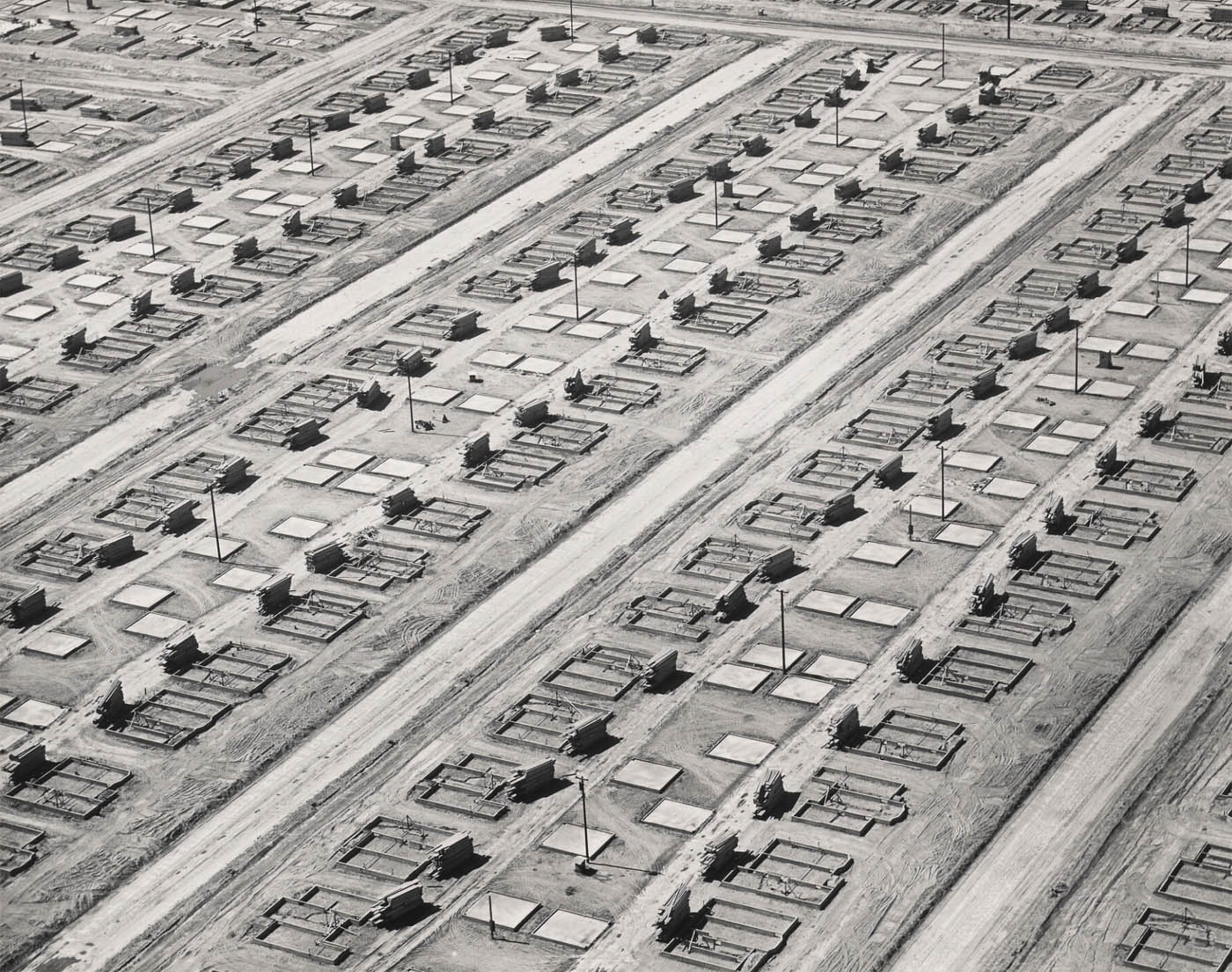
 

William A. Garnett (American, 1916-2006) 'Foundations and Slabs, Lakewood, California' 1950


William A. Garnett (American, 1916-2006)
Foundations and Slabs, Lakewood, California
1950
Gelatin silver print
18.9 x 23.8cm (7 7/16 x 9 3/8 in.)
© J. Paul Getty Museum


William A. Garnett (American, 1916-2006) 'Grading, Lakewood, California' 1950


William A. Garnett (American, 1916-2006)
Grading, Lakewood, California
1950
Gelatin silver print
18.9 x 24cm (7 7/16 x 9 7/16 in.)
© J. Paul Getty Museum
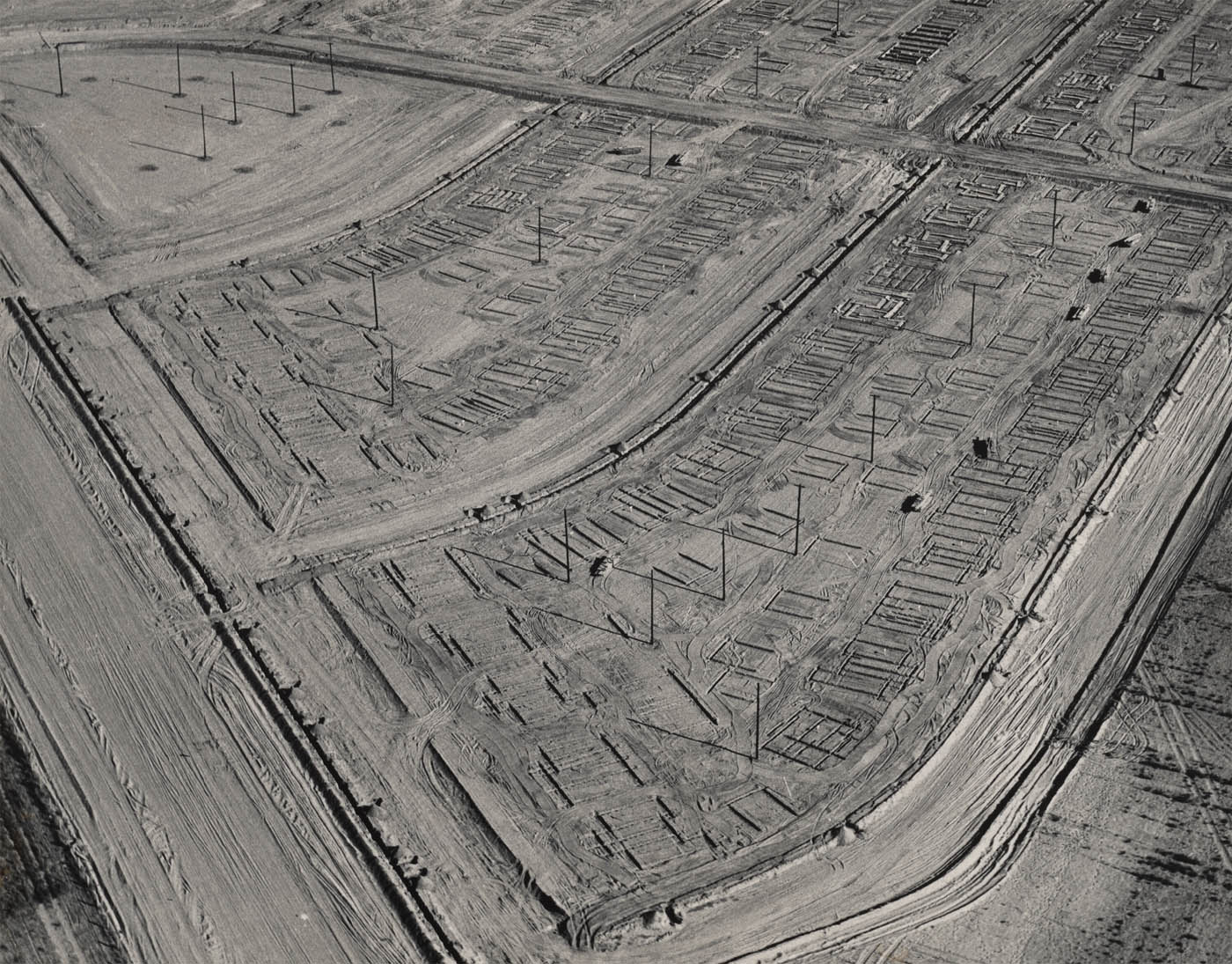
 

William A. Garnett (American, 1916-2006) 'Trenching, Lakewood, California' 1950


William A. Garnett (American, 1916-2006)
Trenching, Lakewood, California
1950
Gelatin silver print
7 5/16 x 9 7/16 in.
© J. Paul Getty Museum


“I was hired commercially to illustrate the growth of that housing project. I didn’t approve of what they were doing. Seventeen thousand houses with five floor plans, and they all looked alike, and there was not a tree in sight when they got through.”

“I was discharged and heard you could hitchhike on the transport taking GIs home. The airplane was full, but the captain let me sit in the navigator’s seat so I had a command view. I was amazed at the variety and beauty of these United States. I had never seen anything like that – in a book, in school, or since then. So I changed my career.”


William A. Garnett


Lakewood, located on the outskirts of Los Angeles, was the location for the second major postwar housing development built in the United States. Some 17,500 tract houses were constructed assembly-line style on 3,500 acres of cleared farmland. Mass production made the houses affordable, so a greater number of people could take part in the American dream of home ownership. The developers hired William Garnett to document different phases of the subdivision’s construction from his Cessna airplane. He often photographed his subjects early in the day, so the angled light would emphasise their otherwise flat-looking forms. The photographs serve a utilitarian purpose but also demonstrate Garnett’s impeccable sense of design. In Trenching Lakewood, California, stacked lumber appears for the foundations, utility poles are installed, and the main roads are carved out. …

William Garnett took his first cross-country flight after serving as a United States Army Signal Corps cameraman during World War II. What he saw below inspired him to learn how to pilot a plane so he could photograph the American landscape. Garnett’s aerial photographs resemble abstract expressionist paintings or views through a microscope. As landscapes, they do not have the conventional grounding of a horizon line. All reveal astonishing patterns that are not seen from the ground. Garnett honed his elegant design sensibility well before earning a pilot’s license. Before the war, he attended Art Center College of Design in Los Angeles. Later, he headed the Pasadena Police Department’s photography lab. In the 1940s and 1950s, he began to rack up flying hours around Los Angeles, speaking out about the area’s increasing air pollution. He illustrated Nathaniel Owings’s American Aesthetic, a book about land-use practices. During ten thousand hours of flying, Garnett simultaneously piloted a plane while photographing out the window – traveling above every state and many parts of the world. His light 1956 Cessna plane allowed him to fly to just the right location to capture subjects with precision. At first, he experimented with a variety of camera formats and films but found that two 35mm cameras (one loaded with black-and-white film, the other with colour film) best suited his needs. Garnett’s work defies the stereotype of aerial photography as purely scientific and devoid of artistry. He became the first aerial photographer to earn a prestigious Guggenheim fellowship.

Anonymous. “Historical Witness, Social Messaging,” from the J. Paul Getty Museum Education Department [Online] Cited 13/01/2019. Used under fair use conditions for the purposes of education and research
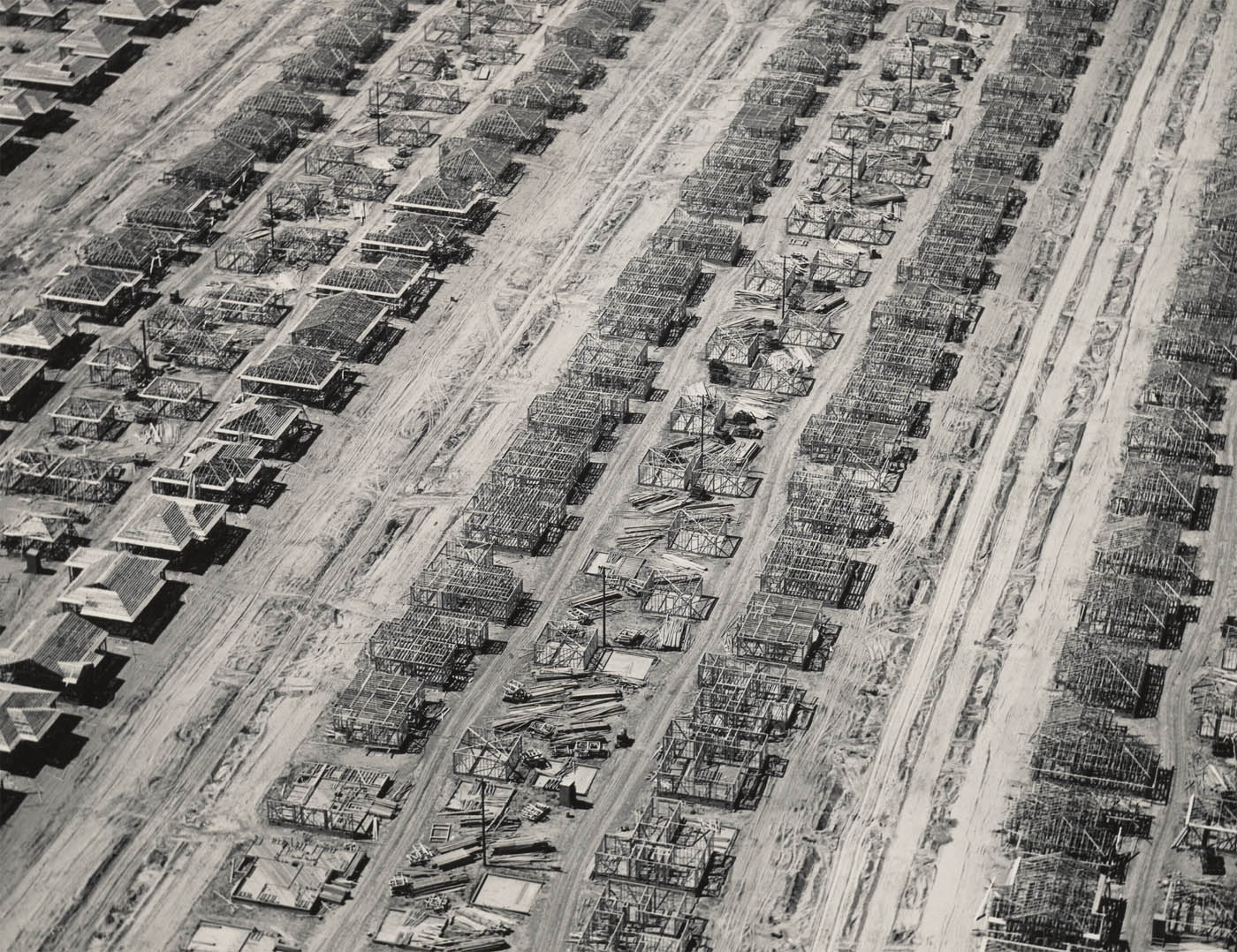
 

William A. Garnett (American, 1916-2006) 'Framing, Lakewood, California' 1950


William A. Garnett (American, 1916-2006)
Framing, Lakewood, California
1950
Gelatin silver print
18.4 x 24.1cm (7 1/4 x 9 1/2 in.)
© J. Paul Getty Museum
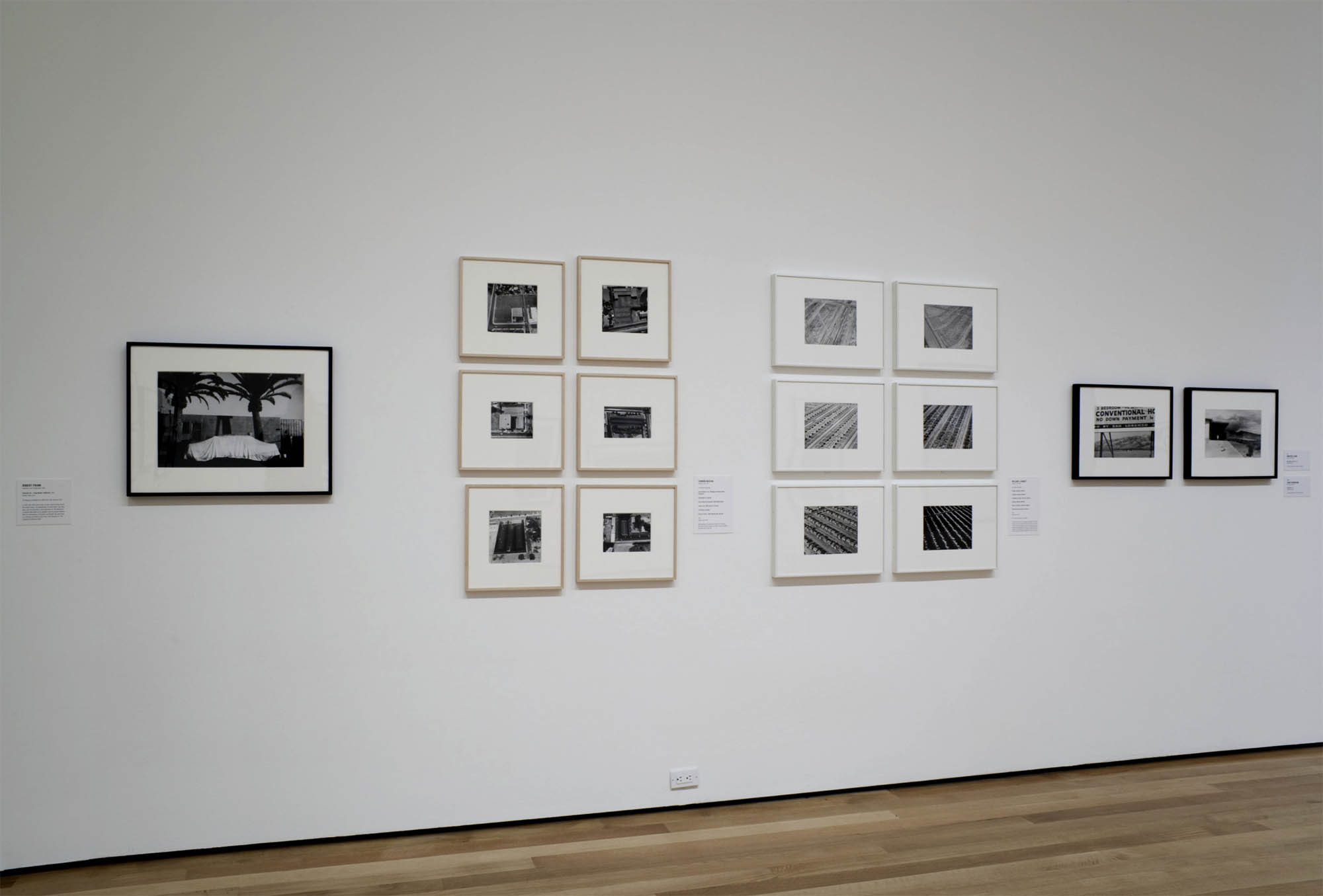
 

Installation view of the exhibition 'Into the Sunset: Photography's Image of the American West' at The Museum of Modern Art (MoMA), New York showing at left, Robert Frank's 'Covered Car - Long Beach, California' (1956); and at centre right, photographs by William A. Garnett


Installation view of the exhibition Into the Sunset: Photography’s Image of the American West at The Museum of Modern Art (MoMA), New York showing at left, Robert Frank’s Covered Car – Long Beach, California (1956, below); and at centre right, photographs by William A. Garnett (above)
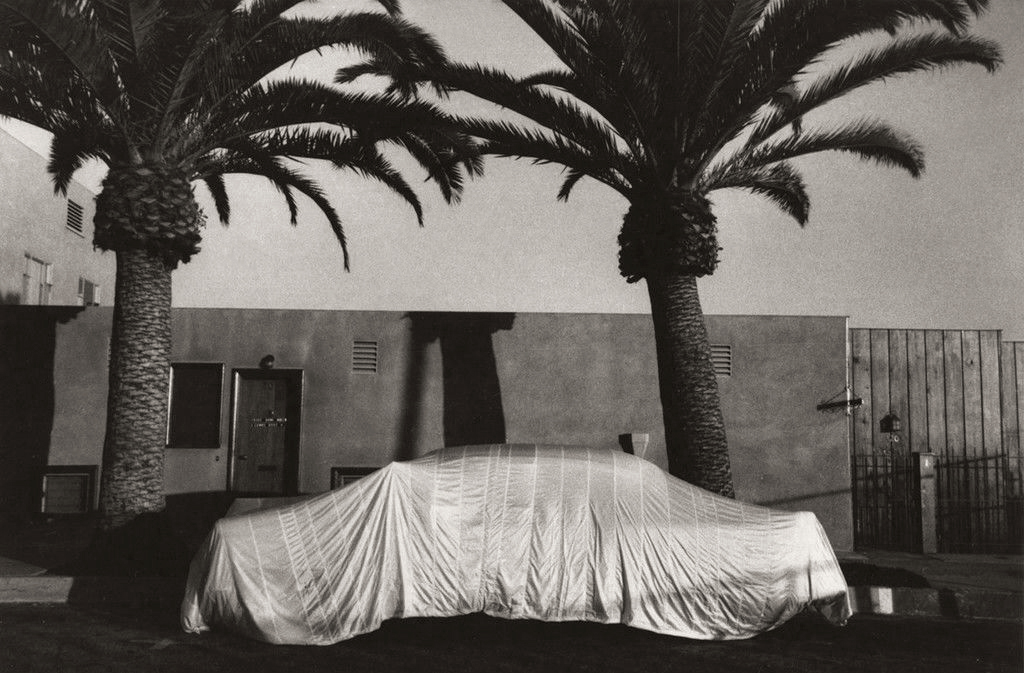
 

Robert Frank (American, 1924-2019) 'Covered Car - Long Beach, California' 1956


Robert Frank (American, 1924-2019)
Covered Car – Long Beach, California
1956
From The Americans (1955-1956)
Gelatin silver print
Museum of Modern Art, New York
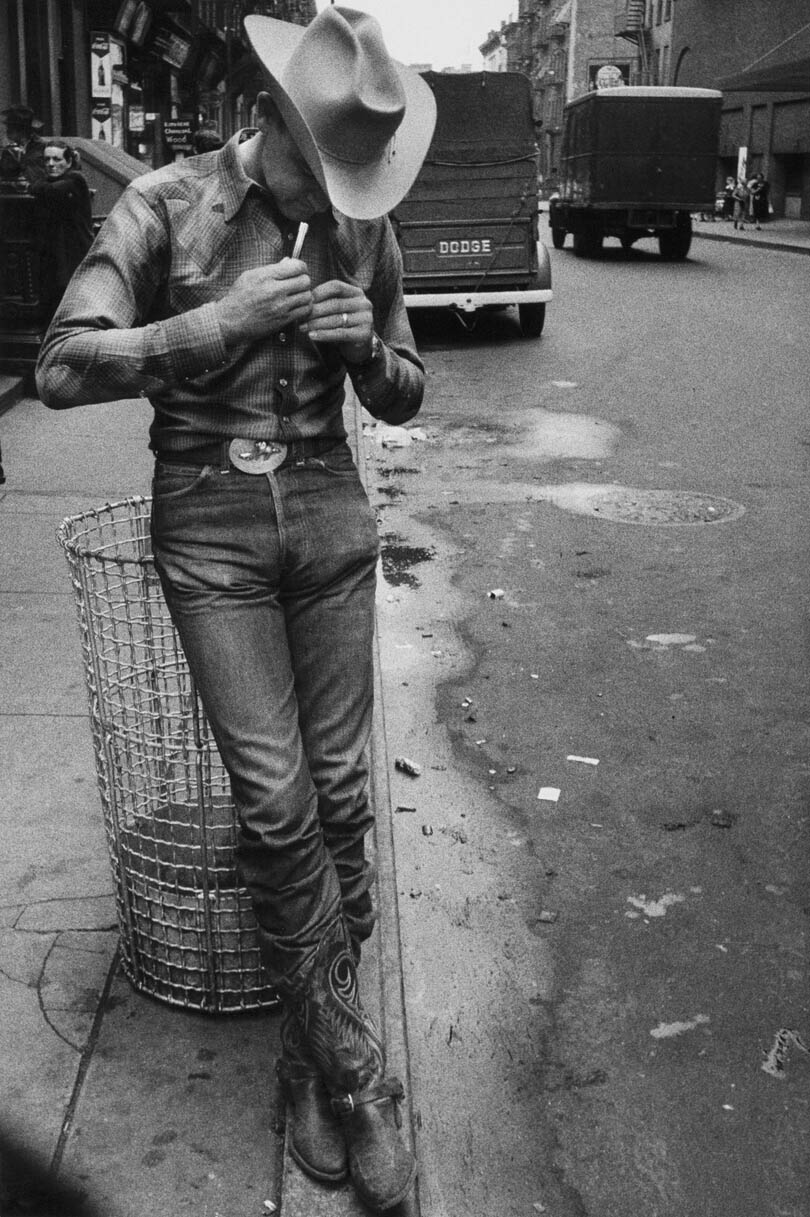
 

Robert Frank (American, 1924-2019) 'Rodeo - New York City' 1954


Robert Frank (American, 1924-2019)
Rodeo – New York City
1954
From The Americans (1955-1956)
Gelatin silver print
Museum of Modern Art, New York


Dorothea Lange (American, 1895-1965) 'Migrant Mother, Nipomo, California' 1936


Dorothea Lange (American, 1895-1965)
Migrant Mother, Nipomo, California
1936
Gelatin silver print
11 1/8 x 8 9/16″ (28.3 x 21.8cm)
Museum of Modern Art, New York


Dorothea Lange took this photograph on assignment for the U.S. government’s Farm Security Administration (FSA) program, formed during the Great Depression to provide aid to impoverished farmers. FSA photographers documented the conditions that Americans faced throughout the course of the Great Depression, a period of economic crisis. Lange’s photograph suggests the impact of these harsh conditions on a 32-year-old mother of seven. She took a number of pictures of the mother with her children and chose this image as the most effective. Her keen sense of composition and attentiveness to the power of historical images of the Madonna and Child have helped this photograph transcend its original documentary function and become an iconic work of art.

Text from the MoMA website
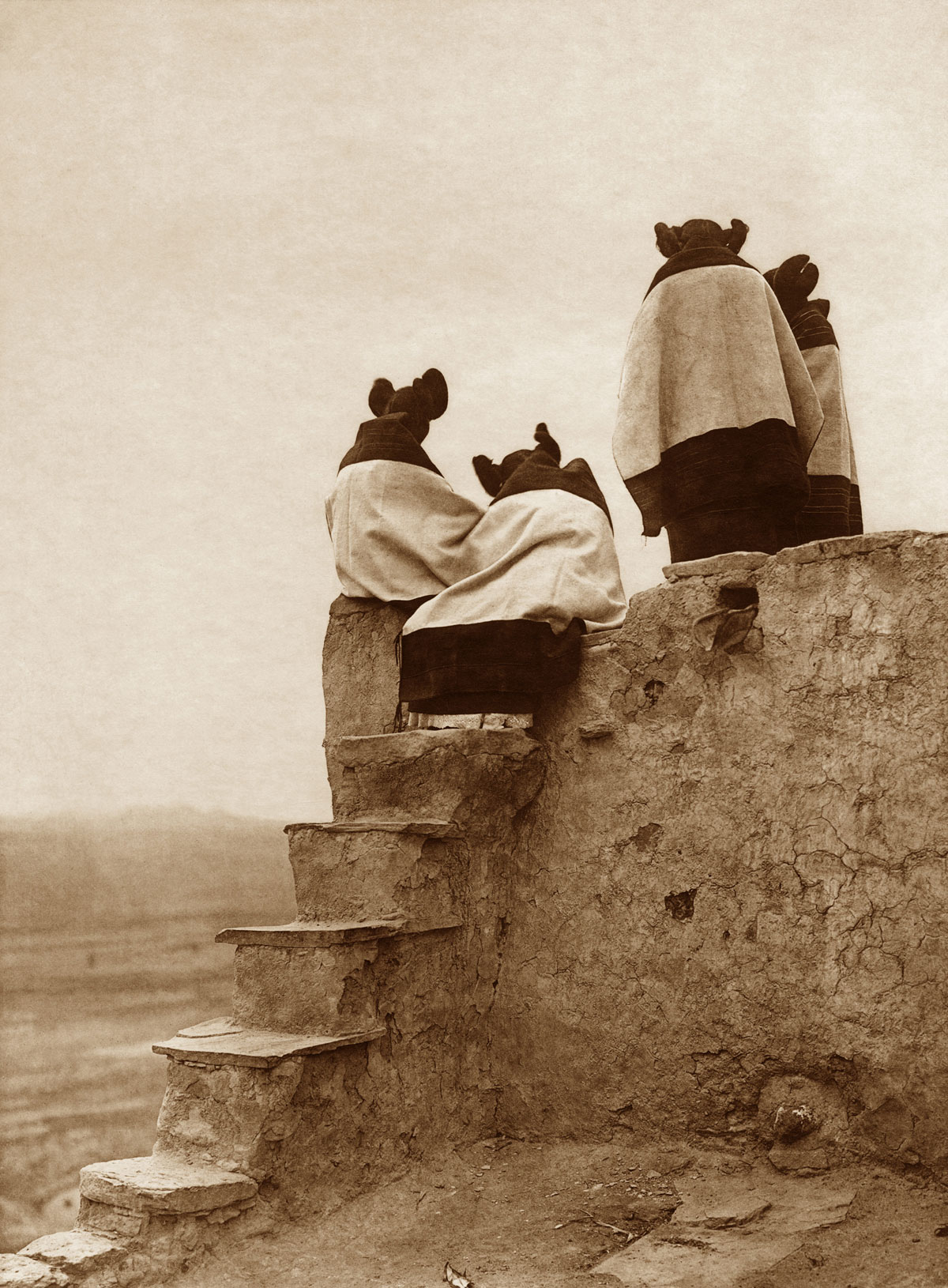
 

Edward S. Curtis (1868 - 1952) 'Watching the Dancers' 1906


Edward S. Curtis (American, 1868-1952)
Watching the Dancers
1906
Photogravure
Museum of Modern Art, New York


James Luna (American, 1950-2018) 'Half Indian/Half Mexican' 1991


James Luna (American, 1950-2018)
Half Indian/Half Mexican (installation view)
1991
Gelatin silver print


James Luna (February 9, 1950 – March 4, 2018) was a Payómkawichum, Ipi, and Mexican-American performance artist, photographer and multimedia installation artist. His work is best known for challenging the ways in which conventional museum exhibitions depict Native Americans. With recurring themes of multiculturalism, alcoholism, and colonialism, his work was often comedic and theatrical in nature. In 2017 he was awarded a Guggenheim Fellowship.


Richard Prince (American, b. 1949) 'Untitled (Cowboy)' 1989


Richard Prince (American, b. 1949)
Untitled (Cowboy)
1989
Chromogenic print
127 x 177.8cm (50 x 70in.)
The Metropolitan Museum of Art
Purchase, The Horace W. Goldsmith Foundation Gift, through Joyce and Robert Menschel, and Jennifer and Joseph Duke Gift, 2000
© Richard Prince


In the mid-1970s Prince was an aspiring painter who earned a living by clipping articles from magazines for staff writers at Time-Life Inc. What remained at the end of the day were the advertisements, featuring gleaming luxury goods and impossibly perfect models; both fascinated and repulsed by these ubiquitous images, the artist began rephotographing them, using a repertoire of strategies (such as blurring, cropping, and enlarging) to intensify their original artifice. In so doing, Prince undermined the seeming naturalness and inevitability of the images, revealing them as hallucinatory fictions of society’s desires.

“Untitled (Cowboy)” is a high point of the artist’s ongoing deconstruction of an American archetype as old as the first trailblazers and as timely as then-outgoing president Ronald Reagan. Prince’s picture is a copy (the photograph) of a copy (the advertisement) of a myth (the cowboy). Perpetually disappearing into the sunset, this lone ranger is also a convincing stand-in for the artist himself, endlessly chasing the meaning behind surfaces. Created in the fade-out of a decade devoted to materialism and illusion, “Untitled (Cowboy)” is, in the largest sense, a meditation on an entire culture’s continuing attraction to spectacle over lived experience.

Text from the Metropolitan Museum of Art website
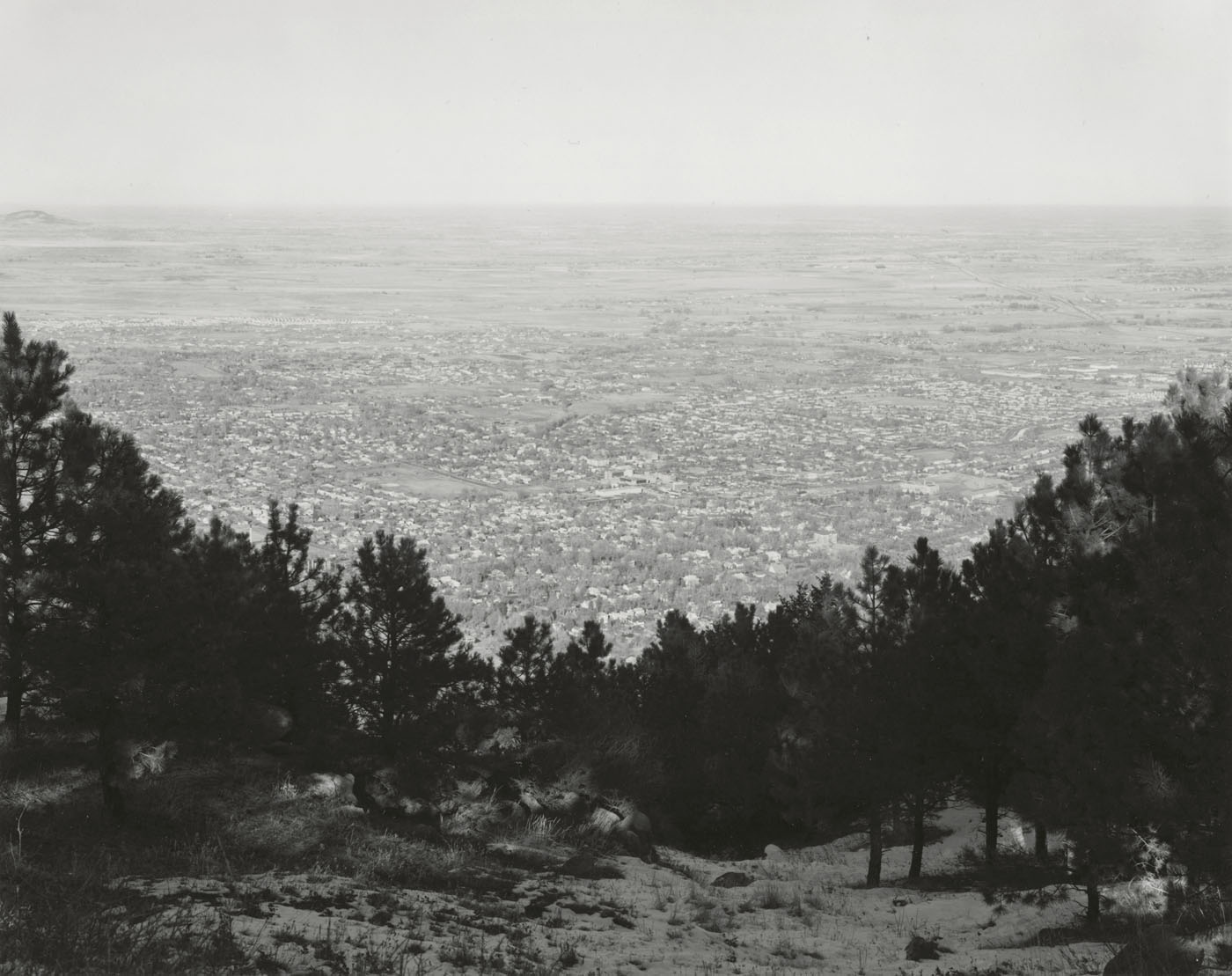
 

Robert Adams (American, b. 1937) 'East from Flagstaff Mountain, Boulder County, Colorado' 1975


Robert Adams (American, b. 1937)
East from Flagstaff Mountain, Boulder County, Colorado
1975
Gelatin silver print
Museum of Modern Art, New York
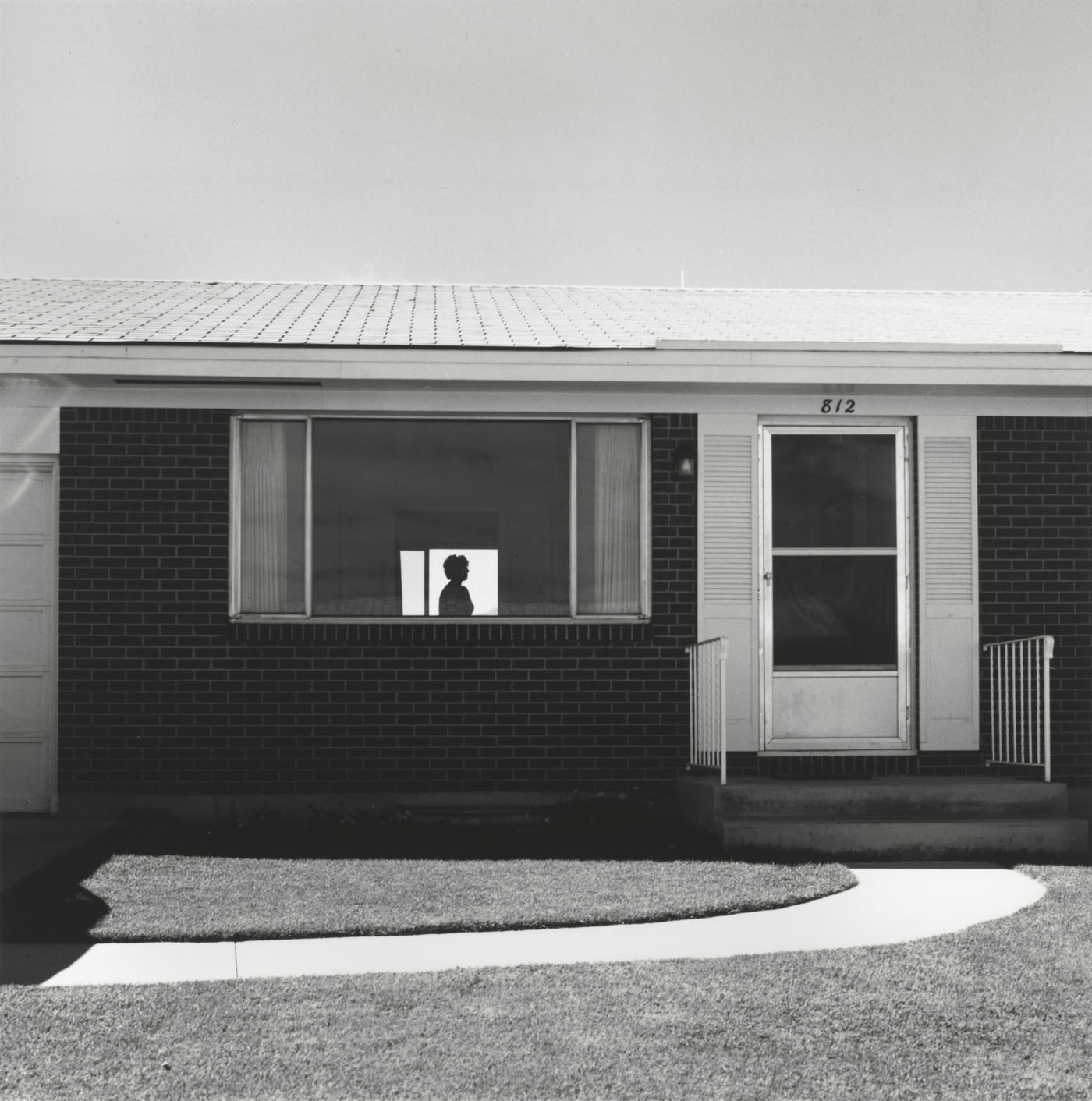
 

Robert Adams (American, b. 1937) 'Colorado Springs' 1968


Robert Adams (American, b. 1937)
Colorado Springs
1968
Gelatin silver print
Museum of Modern Art, New York


Robert Adams (American, b. 1937)
'Burning oil sludge, north of Denver, Colorado' 1973-1974


Robert Adams (American, b. 1937)
Burning oil sludge, north of Denver, Colorado
1973-1974
Gelatin silver print
Museum of Modern Art, New York


Stephen Shore (American, b. 1947) 'Beverly Boulevard and La Brea Avenue, Los Angeles, California, June 21, 1975' From the series 'Uncommon Places', 1973-1986


Stephen Shore (American, b. 1947)
Beverly Boulevard and La Brea Avenue, Los Angeles, California, June 21, 1975
1975
From the series Uncommon Places, 1973-1986
Museum of Modern Art, New York


Katy Grannan (American, b. 1969) 'Nicole, Crissy Field Parking Lot (I)' 2006


Katy Grannan (American, b. 1969)
Nicole, Crissy Field Parking Lot (I)
2006
Pigmented inkjet print
40 x 50″ (101.6 x 127cm)
Cornelius N. Bliss Memorial Fund
Museum of Modern Art, New York
© Katy Grannan


Cindy Sherman (American, b. 1954) 'Untitled Film Still #43' 1979


Cindy Sherman (American, b. 1954)
Untitled Film Still #43
1979
Gelatin silver print
7 9/16 x 9 7/16″ (19.2 x 24cm)
Acquired through the generosity of Sid R. Bass
Museum of Modern Art, New York


Cindy Sherman’s Untitled Film Stills is a suite of seventy black-and-white photographs in which the artist posed in the guises of various generic female film characters, among them, ingénue, working girl, vamp, and lonely housewife. Staged to resemble scenes from 1950s and ’60s Hollywood, film noir, B movies, and European art-house films, the printed images mimic in format, scale, and quality the often-staged “stills” used to promote films. By photographing herself in such roles, Sherman inserts herself into a dialogue about stereotypical portrayals of women. Whether she was the one to release the camera’s shutter or not, she is considered the author of the photographs. However, the works in Untitled Film Stills are not considered self-portraits.

Text from the MoMA website


Bill Owens (American, b. 1938) 'We're really happy. Our kids are healthy, we eat good food, and we have a really nice home' 1972


Bill Owens (American, b. 1938)
We’re really happy. Our kids are healthy, we eat good food, and we have a really nice home
1972
Gelatin silver print
8 1/16 x 9 15/16″ (20.4 x 25.3cm)
Gift of the photographer
Museum of Modern Art, New York
© Bill Owens


Richard Avedon (American, 1923-2004) 'Carl Hoefert, unemployed blackjack dealer, Reno, Nevada', from the series 'In the American West' August 30, 1983


Richard Avedon (American, 1923-2004)
Carl Hoefert, unemployed blackjack dealer, Reno, Nevada
August 30, 1983
From the series In the American West
Gelatin silver print
Museum of Modern Art, New York


The Museum of Modern Art
11 West 53 Street
New York, NY 10019
Phone: (212) 708-9400

Opening hours:
Sun – Fri 10.30am – 5.30pm
Sat 10.30am – 7.00pm

Monday mornings from 10.30am to 1.00pm are reserved exclusively for members and their guests.

MoMA website

LIKE ART BLART ON FACEBOOK

Back to top

Josef Sudek: Master of Photography

April 2009


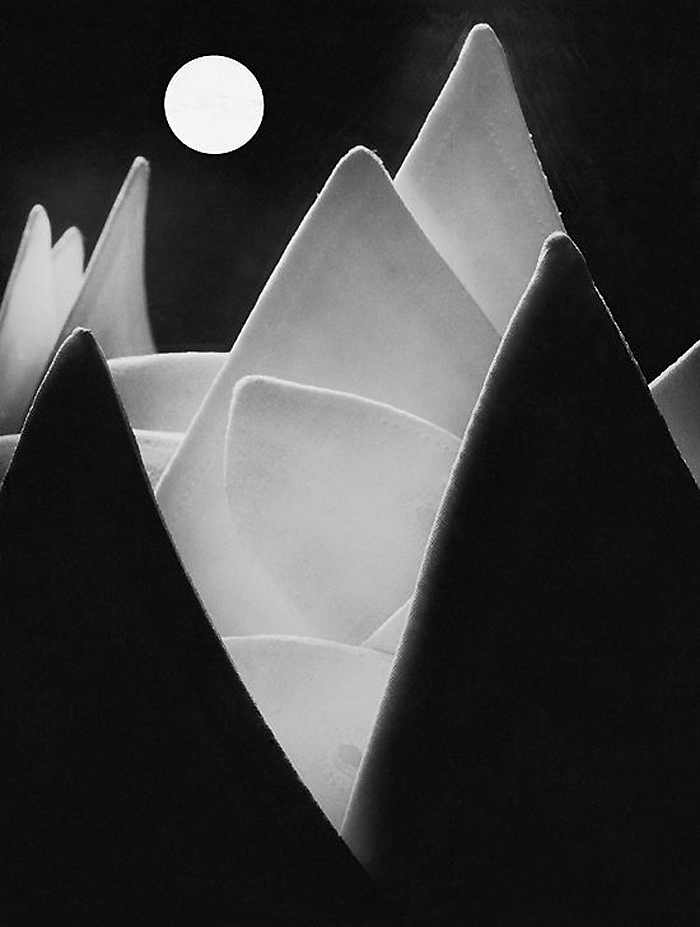
Josef Sudek (Czech, 1896-1976) 'A Summer Shower in the Magic Garden' 1954-1959


Josef Sudek (Czech, 1896-1976)
A Summer Shower in the Magic Garden
1954-1959
Gelatin silver print


Further to the last post I have collected some images from the Czech photographer Josef Sudek (1896-1976), one of my favourite photographers.

The images of this master photographer are a delight. Like the photographs of Eugène Atget they evince generosity in the understanding of light, space and humanity.

Insightful writing on Josef Sudek by Charles Sawyer is included in the post.

A good collection of Josef Sudek photographs can be found on the Museum of Fine Arts Boston website. Go to the site and enter ‘Josef Sudek’ in the Collection Search box to the right and then click on the arrow.

Dr Marcus Bunyan


Please click on the photographs for a larger version of the image.


“Everything around us, dead or alive, in the eyes of a crazy photographer mysteriously takes on many variations, so that a seemingly dead object comes to life through light or by its surroundings. And if the photographer has a bit of sense in his head maybe he is able to capture some of this – and I suppose that’s lyricism.”

“I believe a lot in instinct. One should never dull it by wanting to know everything. One shouldn’t ask too many questions but do what one does properly, never rush, and never torment oneself.”

“It would have bored me extremely to have restricted myself to one specific direction for my whole life, for example, landscape photography. A photographer should never impose such restrictions upon himself.”


Josef Sudek


Josef Sudek (Czech, 1896-1976) 'In the enchanted garden' 1954-1959


Josef Sudek (Czech, 1896-1976)
In the enchanted garden
1954-1959
From the series Remembrances
Gelatin silver print


Josef Sudek (Czech, 1896-1976) 'Untitled' 1967


Josef Sudek (Czech, 1896-1976)
Untitled
1967
Gelatin silver print


“The systematic approach, and the dogged aesthetic experimentation of Sudek are akin to the working habits of Cezanne. But these alone are insufficient to make great art or even good art. On the contrary, if these are all one sees in a work, then the cumulative burden of so much plain labor would be unbearable. Sudek’s devotion to work may have integrated his shattered life but it could not have offered him the spiritual redemption he was seeking; only his aesthetic quest could bring this. It is the struggle for spiritual redemption through his aesthetic quest that gives Sudek’s best photographs their true power. Two qualities characterise his best work: a rich diversity of light values in the low end of the tonal scale, and the representation of light as a substance occupying its own space. The former, the diversity of light values, requires very delicate treatment of the materials, especially the negative, but also the paper (Sudek used silver halide papers in the main). The latter, the portrayal of light as substance, is a more original trait than his tonal palette, which one sees in occasional prints of other photographers. Flaubert once expressed an ambition to write a book which would have no subject, “a book dependent on nothing external … held together by the strength of its style.” Photographers have sometimes expressed parallel aspirations to make light itself the subject of their photographs, leaving the banal, material world behind. Both ideals are, of course, unobtainable, but nonetheless they may be worth pursuing. (Artists, in their pursuit of the unobtainable, are not so likely to be called pathological as others, of us, though recent developments in the philosophy of science tend to view the scientist’s quest for truth as equally quixotic).

Sudek has come closer than any other photographer to catching this illusive goal. His devices for this effect are simple and highly poetic: the dust he raised in a frenzy when the light was just right, a gossamer curtain draped over a chair back, the mist from a garden sprinkler, even the ambient moisture in the atmosphere when the air is near dew point. The eye is usually accustomed to seeing not light but the surfaces it defines; when light is reflected from amorphous materials, however, perception of materiality shifts to light itself. Sudek looked for such materials everywhere. And then he usually balanced the ethereal luminescence with the contra-bass of his deep shadow tonalities. The effect is enchanting, and strongly conveys the human element which is the true content of his photographs. For, throughout all his photography, there is one dominant mood, one consistent viewpoint, and one overriding philosophy. The mood is melancholy and the point of view is romanticism. And overriding all this is a philosophic detachment, an attitude he shares with Spinoza. The attitude of detachment that characterises Sudek’s art accounts for both its strength and weakness: the strength which lies in the ideal of utter tranquility and the weakness which is found in the paucity of human intimacy. Some commentators find Sudek’s photos mysterious but I think this is a mistake: the air of mystery vanishes once we see in Sudek’s photography a person’s private salvation from despair.”

Charles Sawyer. “Josef Sudek” in Creative Camera April 1980, Number 190 [Online] Cited 14/04/2009. No longer available online. Used under fair use conditions for the purposes of education and research


Josef Sudek (Czech, 1896-1976) From the series 'Vanished Statues in Mionsi' 1969


Josef Sudek (Czech, 1896-1976)
From the series Vanished Statues in Mionsi
1969
Gelatin silver print


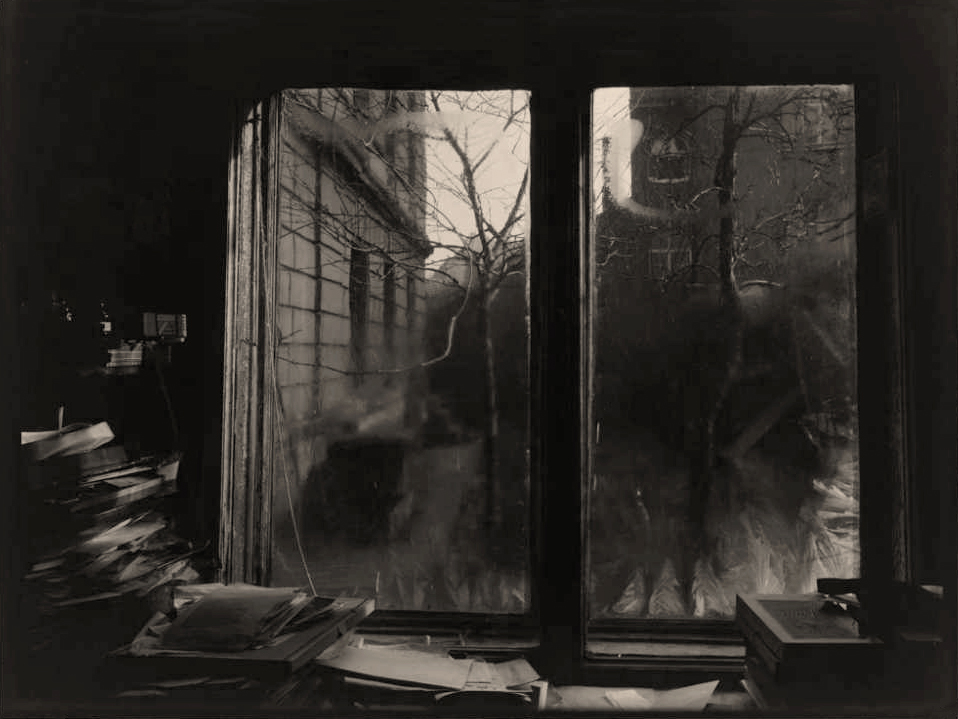
Josef Sudek (Czech, 1896-1976) 'The Window of My Atelier' 1969


Josef Sudek (Czech, 1896-1976)
The Window of My Atelier
1969
Gelatin silver print


Josef Sudek (Czech, 1896-1976) 'Still-life after Caravaggio, Variation No 2 (or a night-time Variation)' 1956


Josef Sudek (Czech, 1896-1976)
Still-life after Caravaggio, Variation No 2 (or a night-time Variation)
1956
Gelatin silver print


Josef Sudek (Czech, 1896-1976) 'Untitled (Still Life According to Caravaggio)' 1956


Josef Sudek (Czech, 1896-1976)
Untitled (Still Life According to Caravaggio)
1956
Gelatin silver print


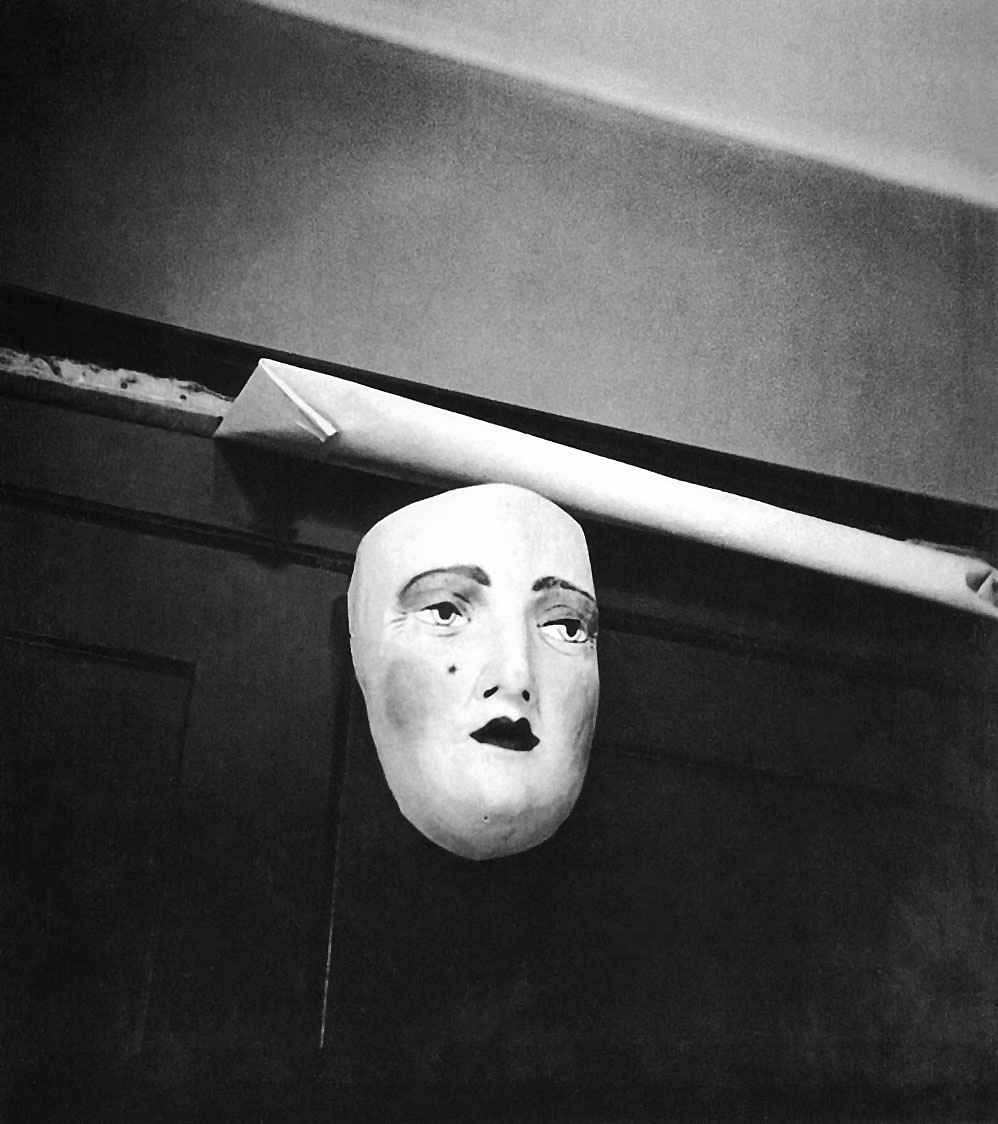
Josef Sudek (Czech, 1896-1976) 'Remembrance of Mr. Magician (the garden of architect Rothmayer)' 1959


Josef Sudek (Czech, 1896-1976)
Remembrance of Mr. Magician (the garden of architect Rothmayer)
1959
Gelatin silver print


Otto Rothmayer (architect)

Otto Rothmayer was born during 1892 into a family of carpenters. He took up that trade, following in his father’s footsteps. Rothmayer studied at the Academy of Applied Arts in Prague under Jože Plečník’s guidance, and the Slovenian architect would inspire Rothmayer throughout his entire life. In fact, the design of the Rothmayer Villa was greatly influenced by Plečník’s Villa Stadion in Ljubljana. Rothmayer’s skill at carpentry came in handy as he designed much furniture. He made furniture for the gurus of Czech Cubism, architects Pavel Janák and Josef Gočár. Furniture he designed that does not fall under the category of Cubism but is rather simple and practical can be found in his villa and garden, for instance. His white chairs forged from rough steel were a big hit.

Work at Prague Castle

Plečník would not only be Rothmayer’s mentor but also his colleague. Rothmayer started working as Plečník’s assistant architect at Prague Castle in 1921, when Tomáš G. Masaryk was president of a young, democratic Czechoslovakia. Rothmayer even built a spiral staircase at Prague Castle, using what was then a new material – faux marble. When Plečník left his Castle post after 1930, Rothmayer continued to draw plans for the Castle until his retirement in 1958.

Other projects and the academic world

Rothmayer’s résumé does not only include his tenure at Prague Castle. He took up other projects, too. For instance, he designed three family houses and a side altar for a church in the Vinohrady district of Prague. He also designed museum exhibitions. Rothmayer went into teaching as well. He held the post of Professor of Interior Design at Prague’s Academy of Applied Arts in the late 1940s and early 1950s, when he left for political reasons. Rothmayer also was friends with photographer Josef Sudek, who took many snapshots at Otto’s Břevnov residence. Sudek’s photos set in the villa’s garden are particularly impressive. Otto Rothmayer died in 1966.

Tracy A. Burns. “The Rothmayer Villa: A gem of modern architecture,” on the Private Prague Guide website [Online] Cited 11/01/2019. Used under fair use conditions for the purposes of education and research


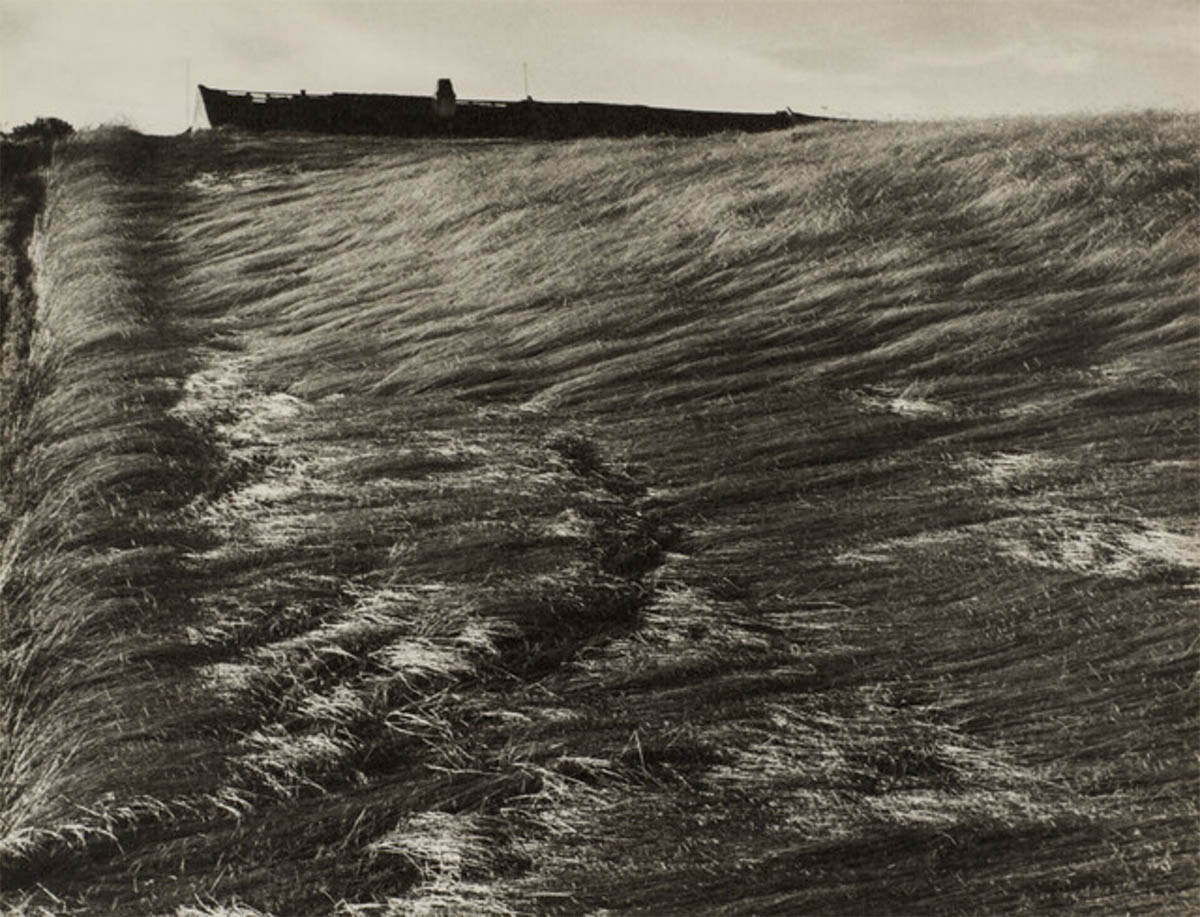
Josef Sudek (Czech, 1896-1976) 'Labyrinths' 1969


Josef Sudek (Czech, 1896-1976)
Labyrinths
1969
Gelatin silver print


Josef Sudek (Czech, 1896-1976) 'Labyrinth of Spring' 1968


Josef Sudek (Czech, 1896-1976)
Labyrinth of Spring
1968
Gelatin silver print
22.5 x 28.7cm (8 7/8 x 11 1/4 in)


Josef Sudek (Czech, 1896-1976) 'Remembrances of Architect Rothmayer, Mr. Magician' 1960


Josef Sudek (Czech, 1896-1976)
Remembrances of Architect Rothmayer, Mr. Magician
1960
Gelatin silver print


LIKE ART BLART ON FACEBOOK

Back to top

Exhibition: ‘Czech Photography of the 20th Century’ at the Exhibition Hall of the Federal Republic of Germany, Bonn

Exhibition dates: 13th March – 26th July, 2009

Co-curators: Vladimir Birgus, photography professor and head of the Institute of Creative Photography at Silesian University in Opava, and Jan Mlčoch, the curator of the Photography Collection at the Museum of Decorative Arts in Prague


Jindřich Štreit (Czech, b. 1946) 'Arnoltice' 1985 from the exhibition 'Czech Photography of the 20th Century' at the Exhibition Hall of the Federal Republic of Germany, Bonn,  March - July, 2009


Jindřich Štreit (Czech, b. 1946)
Arnoltice
1985
From the Village Life series
Gelatin silver print


Jindřich Štreit (born 5 September 1946 in Vsetín) is a Czech photographer and pedagogue known for his documentary photography. He concentrates on documenting the rural life and people of Czech villages. He is considered one of the most important exponents of Czech documentary photography.


This looks like to be an interesting exhibition. I wish I had been able to see it.

Wouldn’t it be such a grand job flying around the world, reviewing photography exhibitions and bringing you my thoughts.

I can only wish…

Dr Marcus Bunyan


Many thankx to the Exhibition Hall of the Federal Republic of Germany for allowing me to publish the photographs in the posting. Please click on the photographs for a larger version of the image.


František Drtikol (Czech, 1883-1961) 'Wave' 1925 from the exhibition 'Czech Photography of the 20th Century' at the Exhibition Hall of the Federal Republic of Germany, Bonn,  March - July, 2009


František Drtikol (Czech, 1883-1961)
Wave
1925
Gelatin silver print


Czech photography produced and produces leading figures in all areas of photography – from classical documentary photojournalism to surrealism, realism or avant-garde works. From 13 March 2009 on, the Art and Exhibition Hall of the Federal Republic of Germany is presenting over 400 photographic works, a historical mosaic of Czech photography from 1900 until the late 20th century that underlines the international reputation enjoyed by Czech photography today. That reputation is not only apparent in the outstanding contributions by such renowned artists as Josef Sudek, Karel Hájek, Václav Jírů, Vilém Reichmann, Jan Reich, Jindřich Štreit, Frantisek Drtikol, Jaromír Funke, Jaroslav Rossler, Josef Koudelka and Jan Saudek, but also in works from a host of younger photographers. The exhibition does not only showcase famous names but also less well-known photographers, providing an overall impression of the variation and innovation in Czech photography.

From Surrealism and other avant-garde experimentation to realism and classic photo reportage, Czech photographers have long played a key role in all areas of photography and continue to do so to this day.

This exhibition is the first in Germany to present the history and development of Czech photography from 1900 to the turn of the millennium. Beginning with Art Nouveau-inspired Pictorialism, the comprehensive survey traces the rise of avant-garde photography and the development of photo montage in the 1920s to the 1940s. It examines the influence of ideological pressure on photography during the Second World War, the Stalinist 1950s and the period of Communist ‘normalisation’ after the occupation in 1968 and introduces the visitor to the multifaceted range of contemporary trends.

Text from the Exhibition Hall of the Federal Republic of Germany website [Online] Cited 10/04/2009. No longer available online. Used under fair use conditions for the purposes of education and research


František Drtikol (Czech, 1883-1961) 'Nude' 1927


František Drtikol (Czech, 1883-1961)
Nude
1927
Gelatin silver print


František Drtikol (3 March 1883, Příbram – 13 January 1961, Prague) was a Czech photographer of international renown. He is especially known for his characteristically epic photographs, often nudes and portraits.

From 1907 to 1910 he had his own studio, until 1935 he operated an important portrait photostudio in Prague on the fourth floor of one of Prague’s remarkable buildings, a Baroque corner house at 9 Vodičkova, now demolished. Jaroslav Rössler, an important avant-garde photographer, was one of his pupils. Drtikol made many portraits of very important people and nudes which show development from pictorialism and symbolism to modern composite pictures of the nude body with geometric decorations and thrown shadows, where it is possible to find a number of parallels with the avant-garde works of the period. These are reminiscent of Cubism, and at the same time his nudes suggest the kind of movement that was characteristic of the futurism aesthetic.

Text from the Wikipedia website


Eugen Wiskovsky (Czech, 1888-1964) 'Lunar Landscape or Collars' 1929


Eugen Wiskovsky (Czech, 1888-1964)
Lunar Landscape or Collars
1929
Gelatin silver print


The oeuvre of the leading Czech avant-garde photographer Eugen Wiskovsky (1888-1964) is not large in size or subject range, but it is noteworthy in its originality, depth of ideas, and mastery. Wiskovsky’s early New Objectivist works, from the late 1920s and early 1930s, sought artistic effect in apparently non-aesthetic objects: His inventive lighting and cropping allowed their elementary lines to stand out, to lose their worldly associations and take on potential metaphorical meanings. In his dynamic diagonal compositions, Wiskovsky was among the most radical practitioners of Czech Constructivism. His landscape work is similarly distinctive.


Jaroslav Rössler (Czech, 1902-1990) 'Untitled' 1931


Jaroslav Rössler (Czech, 1902-1990)
Untitled
1931
Gelatin silver print


Jaroslav Rössler (25 May 1902, Smilov – 5 January 1990, Prague) was a pioneer of Czech avant-garde photography and a member of the association of Czech avant-garde artists Devětsil (Butterbur).

Rössler was born to the Czech-German father, Eduard Rössler, and a Czech mother, Adela Nollova. From 1917 to 1920, Rössler studied in the atelier of the company owned by renowned Czech photographer František Drtikol. Subsequently, he worked with the company as a laboratory technician. As a 21 years old, he began collaboration with the art theorist Karel Teige, who assigned him to create typographic layout for magazines Pásmo, Disk, Stavba and ReD (Revue Devětsilu). While working on these tasks, Rössler deepened his knowledge of photographic methods. In his works he utilised and combined the techniques of photogram, photomontage, collage and drawing. The beginnings of his photographic work were influenced by Cubism and Futurism, but he also attempted to create the first abstract photographs. In 1923, he became a member of the avant-garde association Devětsil.

In 1925, he went on a six-month study visit to Paris. The same year he began working as a photographer in the Osvobozené divadlo in Prague. Before his second departure to Paris, he co-worked as a commercial photographer with the pictorial magazine Pestrý týden.

In 1927, Rössler moved to Paris together with his wife, Gertruda Fischerová (1894-1976). Initially, he focused on commercial photography. He collaborated with the experimental studio of Lucien Lorell, and worked on commissions for notable companies such as Michelin and Shell. However, later he found an interest in the “street life” of Paris, which influenced his future stay in the city. During a demonstration, he encountered the protesters and took photographs of the event. Shortly after that he was arrested, and after a six-month imprisonment he was expelled from the country, in 1935. The alleged reason for his expulsion was his German-sounding surname.

After his return from Paris, Rössler and his wife resided in Prague, Žižkov. He opened a small photographic atelier, but difficulties associated with the management of the studio caused a significant gap in his artistic work, lasting for almost two decades.

In the 1950s, he resumed his previous activities and again began experimenting with the camera and photographic techniques. He created so-called “prizmata” (prisms), photographs taken through a birefringent prism. Additionally, he experimented with solarisation and explored the possibilities of the Sabatier effect.

Text from the Wikipedia website


Jindřich Štyrský (Czech, 1899-1942) From the 'Man with Blinkers' series 1934


Jindřich Štyrský (Czech, 1899-1942)
From the Man with Blinkers series
1934
Museum of Decorative Arts, Prague


Eugen Wiskovsky (Czech, 1888-1964) 'Disaster' 1939


Eugen Wiskovsky (Czech, 1888-1964)
Disaster
1939
Gelatin silver print


Josef Sudek (Czech, 1896-1976) 'The Last Rose' 1956


Josef Sudek (Czech, 1896-1976)
The Last Rose from the Rose series
1956
Gelatin silver print


Josef Sudek (17 March 1896, Kolín, Bohemia – 15 September 1976, Prague) was a Czech photographer, best known for his photographs of Prague.

Sudek was originally a bookbinder. During the First World War he was drafted into the Austro-Hungarian Army in 1915 and served on the Italian Front until he was wounded in the right arm in 1916 which led to the limb being amputated at the shoulder. After the war he studied photography for two years in Prague under Jaromir Funke. His army disability pension gave him leeway to make art, and he worked during the 1920s in the romantic Pictorialist style. Always pushing at the boundaries, a local camera club expelled him for arguing about the need to move forwards from ‘painterly’ photography. Sudek then founded the progressive Czech Photographic Society in 1924. Despite only having one arm, he used large, bulky cameras with the aid of assistants.

Sudek’s photography is sometimes said to be modernist. But this is only true of a couple of years in the 1930s, during which he undertook commercial photography and thus worked “in the style of the times”. Primarily, his personal photography is neo-romantic.

Text from the Wikipedia website


Josef Sudek was a Czech photographer best known for his elegiac black-and-white images of Prague, interiors, still lifes, and the landscapes of Bohemian forests. Many of Sudek’s most memorable images were taken from the window of his small studio, documenting his humble courtyard during changing weather and light conditions. “Everything around us, dead or alive, in the eyes of a crazy photographer mysteriously takes on many variations,” he explained, “so that a seemingly dead object comes to life through light or by its surroundings.”

Text from the artnet website [Online] Cited 10/01/2019


Jan Saudek (Czechoslovakia, b. 1935) 'Life' 1966


Jan Saudek (Czech, b. 1935)
Life
1966
Gelatin silver print


Josef Koudelka (Czech, b. 1938) 'France' 1987


Josef Koudelka (Czech, b. 1938)
France
1987
Gelatin silver print


The Art and Exhibition Hall of the Federal Republic of Germany
Museumsmeile Bonn
Helmut-Kohl-Allee 4
53113 Bonn
Telephone: +49 228 9171-200

Opening hours:
Thursday – Sunday and Tuesday 10am – 7pm
Closed Mondays

Exhibition Hall of the Federal Republic of Germany website

LIKE ART BLART ON FACEBOOK

Back to top

Jeff Gusky photographs from the exhibition ‘Of Life and Loss: The Polish Photographs of Roman Vishniac and Jeffrey Gusky’ at the Detroit Institute of Arts

Exhibition dates: 15th April – 12th July, 2009

Curator: Karen Sinsheimer, curator of photographs at the Santa Barbara Museum of Art


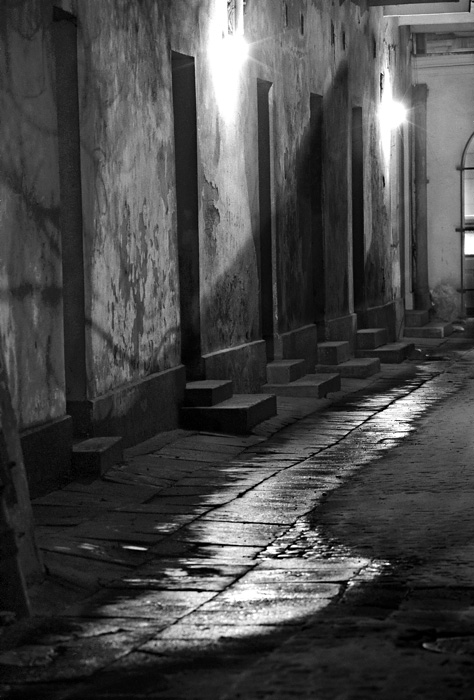
Jeff Gusky. 'Corridor in Kazimierz (Former Jewish District)' Cracow, Poland 1996


Jeff Gusky (American)
Corridor in Kazimierz (Former Jewish District)
Cracow, Poland 1996


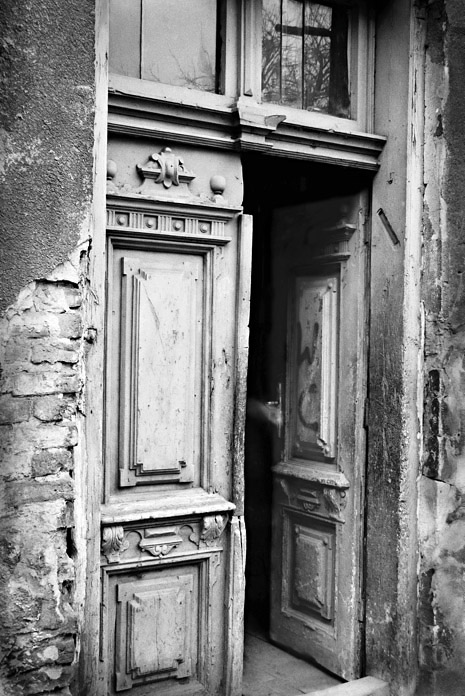
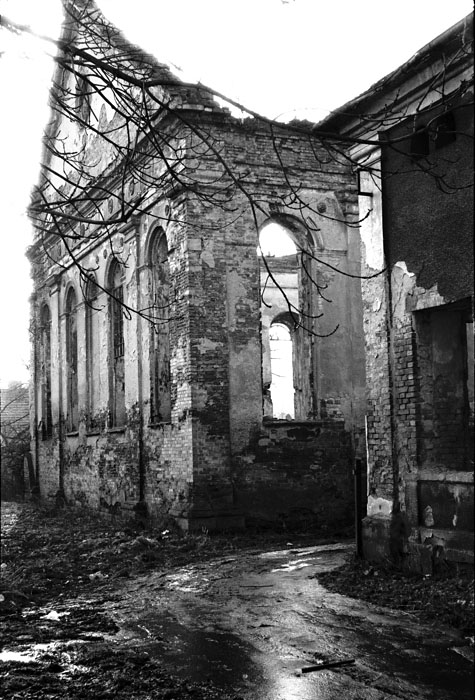
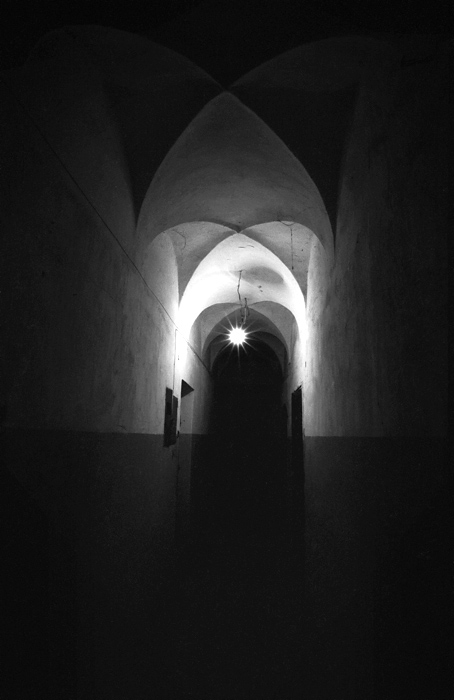
As promised photographs by Jeff Gusky from the exhibition Of Life and Loss: The Polish Photographs of Roman Vishniac and Jeffrey Gusky.

Many thanks to Jeff for making them available to me.

I have tried to form a small narrative from some of the photographs that Jeff sent me, like a piece of music.

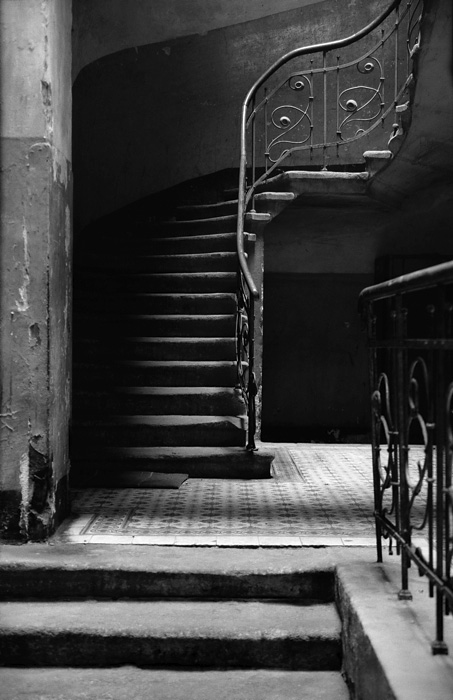
The flow through passageways and doorways forming rivers of light and dark ends in the ascending stairs that hold the possibility of deliverance and redemption. This holistic image is reminiscent of photographs by Eugène Atget.

The most beautiful video and music (see below) is entirely appropriate for this post: Gorecki Symphony No. 3 “Sorrowful Songs” – Lento e Largo.

Dr Marcus Bunyan


Jeff Gusky. 'Former Jewish Home in Use as a Public Toilet' Dzialoszyce, Poland 1996


Jeff Gusky (American)
Former Jewish Home in Use as a Public Toilet
Dzialoszyce, Poland 1996


Jeff Gusky. 'Desecrated Synagogue and Jewish School' Dzialoszyce, Poland 1999


Jeff Gusky (American)
Desecrated Synagogue and Jewish School
Dzialoszyce, Poland 1999


Jeff Gusky. 'Lublin Corridor #1' Lublin, Poland 1999


Jeff Gusky (American)
Lublin Corridor #1
Lublin, Poland 1999


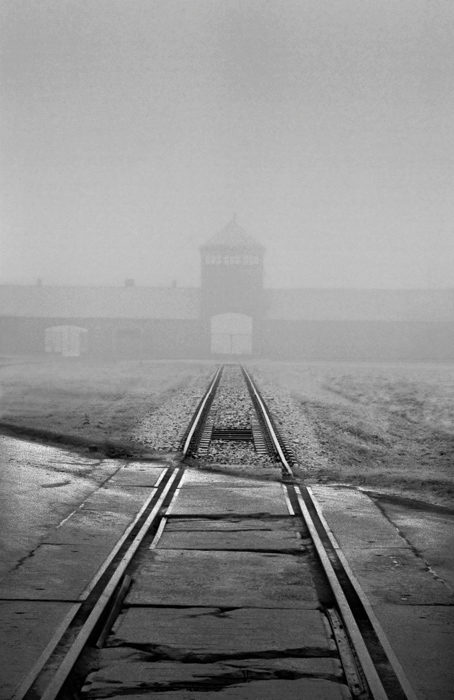
Jeff Gusky. 'Birkenau Silhouette' Auschwitz, Poland 1996


Jeff Gusky (American)
Birkenau Silhouette
Auschwitz, Poland 1996


Jeff Gusky. 'Where They Lived #4' Cracow, Poland 2001


Jeff Gusky (American)
Where They Lived #4
Cracow, Poland 2001


Gorecki Symphony No. 3 “Sorrowful Songs” – Lento e Largo


Detroit Institute of Arts
5200 Woodward Avenue
Detroit, Michigan 48202
Phone: 313.833.7900

Opening hours:
Tuesday – Thursday 9am – 4pm
Friday 9am – 9pm
Saturday – Sunday 10am – 5pm
Monday Closed

Detroit Institute of the Arts website

LIKE ART BLART ON FACEBOOK

Back to top

Exhibition: ‘William Kentridge: Five Themes’ at San Francisco Museum of Modern Art (SFMOMA)

“His work is moving and compassionate as all great art should be.” Dr Marcus Bunyan

Exhibition dates: 14th March – 31st May, 2009

Curator: Curator of Media Arts Rudolf Frieling and Mark Rosenthal, adjunct curator of contemporary art at the Norton Museum of Art


William Kentridge (South African, b. 1955) 'Drawing for the film 'Stereoscope [Felix Crying]'' 1998-1999 from the exhibition 'William Kentridge: Five Themes' at San Francisco Museum of Modern Art (SFMOMA), March - May, 2009


William Kentridge (South African, b. 1955)
Drawing for the film Stereoscope [Felix Crying]
1998-1999


One of my favourite artists in the world.

His technique – the palimpsestic nature of his practice where the history, memories and spaces of previous drawings are overwritten again and again on a single piece of paper without their ever being lost (unlike traditional animation techniques) – is amazing.

His use of drawing, animation and the camera to record narratives of connection always has personal and archetypal themes – love, loss, bigotry, big business, persecution, reconciliation and social conflict in the stories of his homeland South Africa.

His perspective on the world, his knowledge of books and philosophy, his understanding that stories exist as faint, legible remains completes the perception that he is an artist drawn to the line of the world.

His work is moving and compassionate as all great art should be.

Dr Marcus Bunyan


Many thankx to the San Francisco Museum of Modern Art for allowing me to publish the art work in the posting.


Combining the political with the poetic, William Kentridge’s work has made an indelible mark on the contemporary art scene. Dealing with subjects as sobering as apartheid and colonialism, Kentridge often imbues his art with dreamy, lyrical undertones or comedic bits of self-deprecation, making his powerful messages both alluring and ambivalent. Perhaps best known for his stop-motion films of charcoal drawings, the internationally renowned South African artist also works in etching, collage, sculpture, and the performing arts, opera in particular. This exhibition explores five primary themes that have engaged Kentridge over the last three decades through a comprehensive selection of his work from the 1980s to the present. Concentrating on his most recent production and including many pieces that have not been seen in the United States, the exhibition reveals as never before the full arc of his distinguished career.

Text from the SFMOMA website [Online] Cited 01/04/2009. No longer available online. Used under fair use conditions for the purposes of education and research


William Kentridge (South African, b. 1955)
“Invisible Mending” from 7 Fragments for Georges Méliès
2003
35-mm and 16-mm animation film


William Kentridge: Five Themes, a comprehensive survey of the contemporary South African artist’s work, will premiere at the San Francisco Museum of Modern Art (SFMOMA) on March 14, 2009. Featuring more than 75 works in a range of media – including animated films, drawings, prints, theater models, sculptures, and books – the exhibition is co-organised by SFMOMA and the Norton Museum of Art in West Palm Beach, Florida. The San Francisco presentation, overseen by SFMOMA Curator of Media Arts Rudolf Frieling, will be on view through May 31, 2009.

Curated by Mark Rosenthal, adjunct curator of contemporary art at the Norton Museum of Art, in close collaboration with the artist, the exhibition explores five primary themes that have engaged Kentridge over the past three decades. Although the exhibition highlights projects completed since 2000 (many of which have not been seen in the United States), it will also present, for the first time, Kentridge’s most recent work alongside his earlier projects from the 1980s and 1990s – revealing as never before the full arc of his distinguished career.

Following its debut at SFMOMA, the survey will travel to the Modern Art Museum of Fort Worth, the Norton Museum of Art, and The Museum of Modern Art in New York. Plans for the European tour – which will tentatively include Galerie nationale du Jeu de Paume in Paris, the Stedelijk Museum in Amsterdam, the Albertina Museum in Vienna, and the Israel Museum in Jerusalem – are being finalised. Accompanying the exhibition is a richly illustrated catalogue, complete with a DVD produced by the artist for this special occasion. The San Francisco presentation of William Kentridge: Five Themes is made possible by the generous support of the Koret Foundation and Doris and Donald Fisher.

William Kentridge is one of today’s most influential artists, and with this exhibition, SFMOMA continues its commitment to bringing such groundbreaking artists as Olafur Eliasson, Richard Tuttle, and Jeff Wall to local and international audiences,” says SFMOMA Director Neal Benezra, who co-curated the last major retrospective of the artist’s work in the United States in 2001. “Although Kentridge is primarily recognised for his animated films, he has devoted most of his time to making works on paper. The drawn line is completely inseparable from his work in other media, informing everything he creates. His transformation of drawing into animated film reflects his deep interest in how content evolves from process, how meaning accrues through making.”

Exhibition curator Rosenthal adds, “Even as Kentridge has established his reputation as a master draftsman, printmaker, and one of the preeminent artist–filmmakers of our time, he has also expanded the traditional notion of political art, evolving the genre from a conventional depiction of horrors to a more nuanced portrayal of the psychological effects of political events upon those who observe them, whether they be perpetrators, victims, or onlookers.”

Born in 1955 in Johannesburg, where he continues to live and work, Kentridge has earned international acclaim for his interdisciplinary practice, which often fuses drawing, film, and theater. Known for engaging with the social landscape and political background of his native South Africa, he has produced a searing body of work that explores themes of colonial oppression and social conflict, loss and reconciliation, and the ephemeral nature of both personal and cultural memory.

Kentridge first gained recognition in 1997, when his work was included in Documenta X in Kassel, Germany, and in the Johannesburg and Havana Biennials, which were followed by prominent solo exhibitions internationally. His art was widely introduced to American audiences in 2001 through a traveling retrospective – co-curated by Neal Benezra when he served as deputy director of the Art Institute of Chicago – which primarily included works made before 2000. William Kentridge: Five Themes brings viewers up to date on the artist’s work over the past decade, exploring how his subject matter has evolved from the specific context of South Africa to more universal stories. In recent years, Kentridge has dramatically expanded both the scope of his projects (such as recent full-scale opera productions) and their thematic concerns, which now include his own studio practice, colonialism in Namibia and Ethiopia, and the cultural history of post-revolutionary Russia. His newer work is based on an intensive exploration of themes connected to his own life experience, as well as the political and social issues that most concern him.

Although his hand-drawn animations are often described as films, Kentridge himself prefers to call them “drawings for projection.” He makes them using a distinctive technique in which he painstakingly creates, erases, and reworks charcoal drawings that are photographed and projected as moving image. Movement is generated within the image, by the artist’s hand; the camera serves merely to record its progression. As such, the animations explore a tension between material object and time-based performance, uniquely capturing the artist’s working process while telling poignant and politically urgent stories.

Concerning the artist’s innovative film installations of the past ten years, Rudolf Frieling adds: “Kentridge has been considered primarily as an artist who draws for projections. Yet his recent installation-based films explore an expanded cinema space and question the very foundation of what it means to produce and perceive a moving image.”

In light of SFMOMA’s history with Kentridge – in 2004 the museum acquired the artist’s landmark film Tide Table (2003) and a set of related drawings – and the rich holdings of his work in private Bay Area collections, the occasion to present the first major exhibition of his work in San Francisco has particular resonance and reflects the museum’s ongoing commitment to his art. In conjunction with the exhibition, SFMOMA will bring the artist’s multimedia opera The Return of Ulysses to San Francisco for performances at Project Artaud Theater from March 25 through 29, 2009. Kentridge will also present his lecture-format solo performance I am not me, the horse is not mine at SFMOMA on March 14, 2009.

The Five Themes

“Parcours d’Atelier: Artist in the Studio” 

The first section of the exhibition examines a crucial turning point in Kentridge’s work, one in which his own art practice became a subject. According to the artist, many of these projects are meant to reflect the “invisible work that must be done” before beginning a drawing, film, or sculpture. This theme is epitomised by the large-scale multiscreen projection 7 Fragments for Georges Méliès (2003), an homage to the early French film director, who, like Kentridge, often combined performance with drawing. The suite of seven films – each depicting Kentridge at work in his studio or interacting with his creations – has only been shown once before in the United States and will be accompanied by a rarely seen group of related drawings, forming an intimate portrayal of the artist’s process.

“Thick Time: Soho and Felix” 

A second section of the exhibition is dedicated to Kentridge’s best-known fictional characters, Soho Eckstein, a domineering industrialist and real estate developer whose troubled conscience reflects certain miens of contemporary South Africa, and his sensitive alter ego, Felix Teitlebaum, who pines for Soho’s wife and often functions as a surrogate for the artist himself. The centrepiece of this section, an ongoing work entitled 9 Drawings for Projection, comprises nine short animated films: Johannesburg, 2nd Greatest City after Paris (1989), Monument (1990), Sobriety, Obesity & Growing Old (1991), Mine (1991), Felix in Exile (1994), History of the Main Complaint (1996), WEIGHING … and WANTING (1998), Stereoscope (1999), and Tide Table (2003). These projections, along with a key selection of related drawings, follow the lives of Soho and Felix as they struggle to navigate the political and social climate of Johannesburg during the final decade of apartheid. According to Kentridge, the Soho and Felix films were made without a script or storyboards and are largely about his own process of discovery.

“Occasional and Residual Hope: Ubu and the Procession” 

In 1975 Kentridge acted in Ubu Rex (an adaptation of Ubu Roi, Alfred Jarry’s satire about a corrupt and cowardly despot), and he subsequently devoted a large body of work to the play. He began with a series of eight etchings, collectively entitled Ubu Tells the Truth (1996), and in 1997 made an animated film of the same name, as well as a number of related drawings. These works also deal with the South African experience, specifically addressing the Truth and Reconciliation Commission hearings set up by the nation’s government in 1995 to investigate human rights abuses during apartheid. Other highlights in this grouping include the film Shadow Procession (1999), in which Kentridge first utilises techniques of shadow theatre and jointed-paper figures; the multi-panel collage Portage (2000); a large charcoal-and-pastel-on-paper work entitled Arc Procession (Smoke, Ashes, Fable) (1990); and some of the artist’s rough-hewn bronze sculptures.


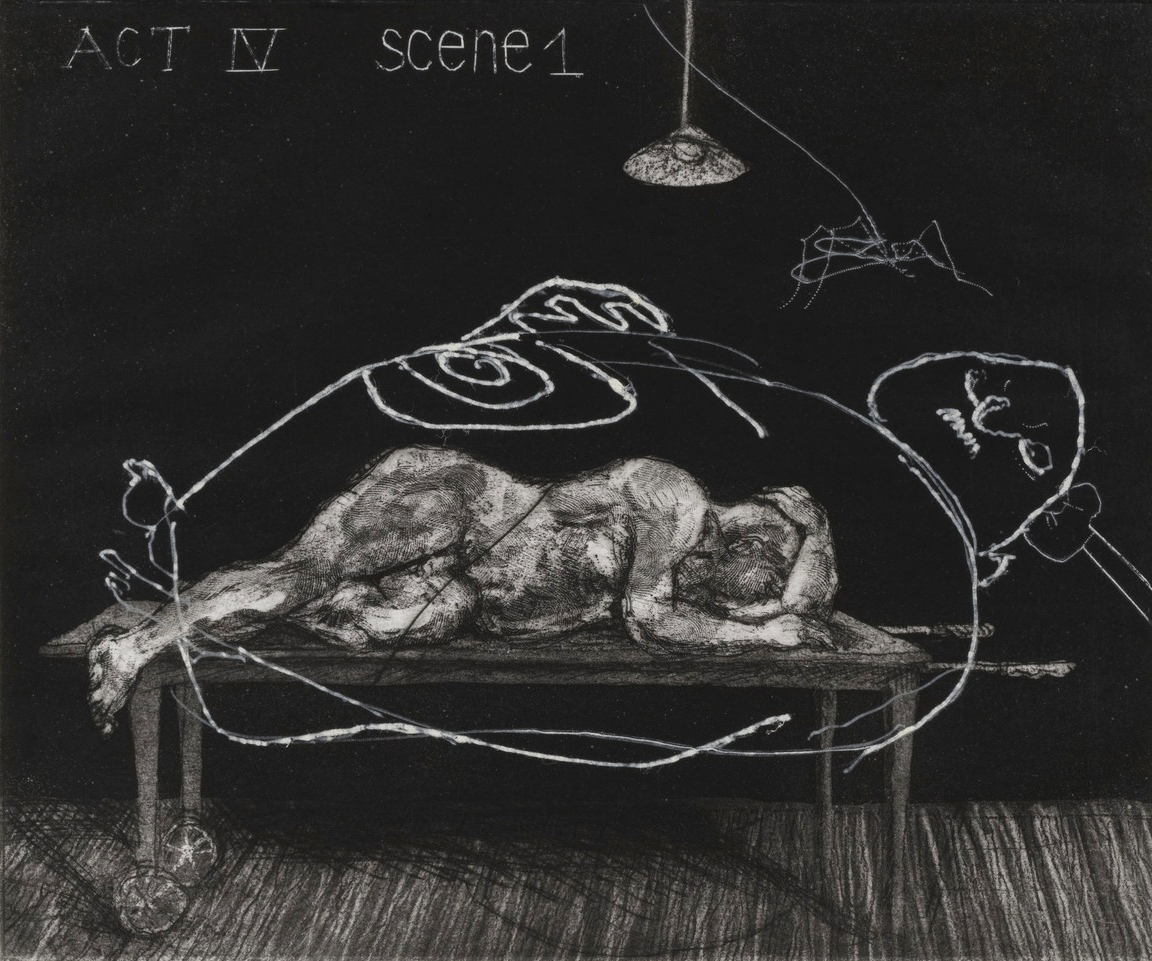
William Kentridge (South African, b. 1955) 'Act IV Scene I from Ubu Tells the Truth' 1996-1997 from the exhibition 'William Kentridge: Five Themes' at San Francisco Museum of Modern Art (SFMOMA), March - May, 2009


William Kentridge (South African, b. 1955)
Act IV Scene I from Ubu Tells the Truth
1996-1997


“Sarastro and the Master’s Voice: The Magic Flute” 

A selection of Kentridge’s drawings, films, and theatre models inspired by his 2005 production of the Mozart opera The Magic Flute for La Monnaie, the leading opera house in Belgium, will be a highlight of the exhibition. The artist’s video projection Learning the Flute (2003), which started the Flute project, shifts between images of black charcoal drawings on white paper and white chalk drawings projected onto a blackboard, forming a meditation on darkness and light. Preparing the Flute (2005) was created as a large-scale maquette within which to test projections central to the production of the opera. Another theatre model, Black Box/Chambre Noire (2006), which has never been seen in the United States, addresses the opera’s themes, specifically through an examination of the colonial war of 1904 in German South-West Africa, and of the genocide of the Herero people. What Will Come (has already come) (2007), a consideration of colonialism in Ethiopia, presents an anamorphic film installation in which intentionally distorted images projected onto a tabletop right themselves only when reflected in a cylindrical mirror. This work was recently acquired, under the guidance of Rosenthal, by the Norton Museum of Art.

“Learning from the Absurd: The Nose” 

The fifth section comprises a multichannel projection made in preparation for Kentridge’s forthcoming staging of The Nose, a Metropolitan Opera production that will premiere in New York in March 2010. The Nose – a 1930 Dmitri Shostakovich opera based on Nikolai Gogol’s absurdist short story of 1836 – concerns a Russian official whose nose disappears from his face, only to turn up, in uniform, as a higher-ranking official moving in more respected circles. Kentridge’s related work, I am not me, the horse is not mine (2008), on view in the United States for the first time, is a room-size installation of projected films that use Gogol’s story as the basis for examining Russian modernism and the suppression of the Russian avant-garde in the 1920s and 1930s.

Related Performances 

Acknowledging the profound importance of theatrical work in Kentridge’s oeuvre, SFMOMA will bring the artist’s opera The Return of Ulysses to San Francisco in conjunction with the exhibition. First performed in Brussels in 1998, Kentridge’s acclaimed reinterpretation of Claudio Monteverdi’s classic 1640 opera (based on Homer’s epic poem) is transposed to a mid-20th-century Johannesburg setting. This limited-engagement performance features live actors and musicians, as well as 13 life-size, artisan-crafted wooden puppets and projections of Kentridge’s animated charcoal drawings. The Return of Ulysses will run at Project Artaud Theater from Tuesday, March 24, through Saturday, March 28 (preview March 24, opening March 25), and is a production of Pacific Operaworks, in Seattle, incorporating puppeteers from Kentridge’s longtime collaborator, the Handspring Puppet Company of Cape Town, in South Africa.

In a special opening-night event on March 14, Kentridge will present a lecture-format solo performance of I am not me, the horse is not mine, which premiered at the 16th Biennale of Sydney in June 2008 (and shares the same title of the related multichannel projection making its U.S. debut with the exhibition). This live performance focuses on the development process of Kentridge’s upcoming opera production, The Nose.

Definitive Publication with Companion DVD

To coincide with the exhibition, SFMOMA and the Norton Museum of Art, in association with Yale University Press, will publish a richly illustrated catalogue (hardcover, $50). In the catalogue’s principal essay, exhibition curator Mark Rosenthal presents a portrait of the artist, showing the interrelationship between aspects of Kentridge’s character and the protagonists that populate his work. Carolyn Christov-Bakargiev, chief curator at the Castello di Rivoli Museum of Contemporary Art, examines the artist’s themes and iconography in closer detail, addressing Kentridge’s working methods as he moves freely between disciplines. Rudolf Frieling demonstrates that although Kentridge is not typically discussed as an installation artist, there are compelling reasons to consider him as such. Cornelia H. Butler, Judith B. Hecker, and Klaus Biesenbach, curators at the Museum of Modern Art, New York, explore the subject of performance in Kentridge’s work. Finally, a conversation between Kentridge and Michael Auping, chief curator at the Modern Art Museum of Fort Worth, focuses on the artist’s drawing practice. In addition, the artist has written texts to introduce each of the book’s five plate sections.

For the first time, Kentridge will produce a DVD for distribution with the publication, making the catalogue unique among existing literature on the artist. Combining intimate studio footage of the artist at work with fragments from significant film projects, the DVD offers a fascinating look at how Kentridge’s ideas evolve from raw concept to finished work.

Press release from the San Francisco Museum of Modern Art


William Kentridge (South African, b. 1955)
Johannesburg
1989


William Kentridge (South African, b. 1955) 'Felix in Exile' 1994 from the exhibition 'William Kentridge: Five Themes' at San Francisco Museum of Modern Art (SFMOMA), March - May, 2009


William Kentridge (South African, b. 1955)
Drawing for the projection Felix in Exile
1994


William Kentridge (South African, b. 1955)
Felix in Exile
1994


More videos of William Kentridge’s work are available on You Tube


San Francisco Museum of Modern Art
151 Third Street
San Francisco CA 94103
Phone: 415.357.4000

Opening hours:
Monday 10am – 5pm
Tuesday and Wednesday Closed
Thursday 1pm – 8pm
Friday – Sunday 10am – 5pm

SFMOMA website

William Kentridge on Wikipedia

LIKE ART BLART ON FACEBOOK

Back to top

Review: ‘En Plein Air’ photographs by Siri Hayes at Gallerysmith, Melbourne

Exhibition dates: 12th March – 18th April, 2009

Curator: the artist and the gallery


Siri Hayes (Australian, b. 1977) 'Gunnai man land' 2008 from the exhibition 'En Plein Air' photographs by Siri Hayes at Gallerysmith, Melbourne, March - April, 2009


Siri Hayes (Australian, b. 1977)
Gunnai man land
2008


A handsome group of large photographs in crisp white frames is displayed in the large space of Gallerysmith, Melbourne. Undoubtably they are well taken and printed photographs but conceptually their thematic development is confused. The photographs purport to investigate how industrialisation has changed the Gippsland landscape since colonisation whilst referencing human interactions that ‘are sometimes’ associated with Western art.

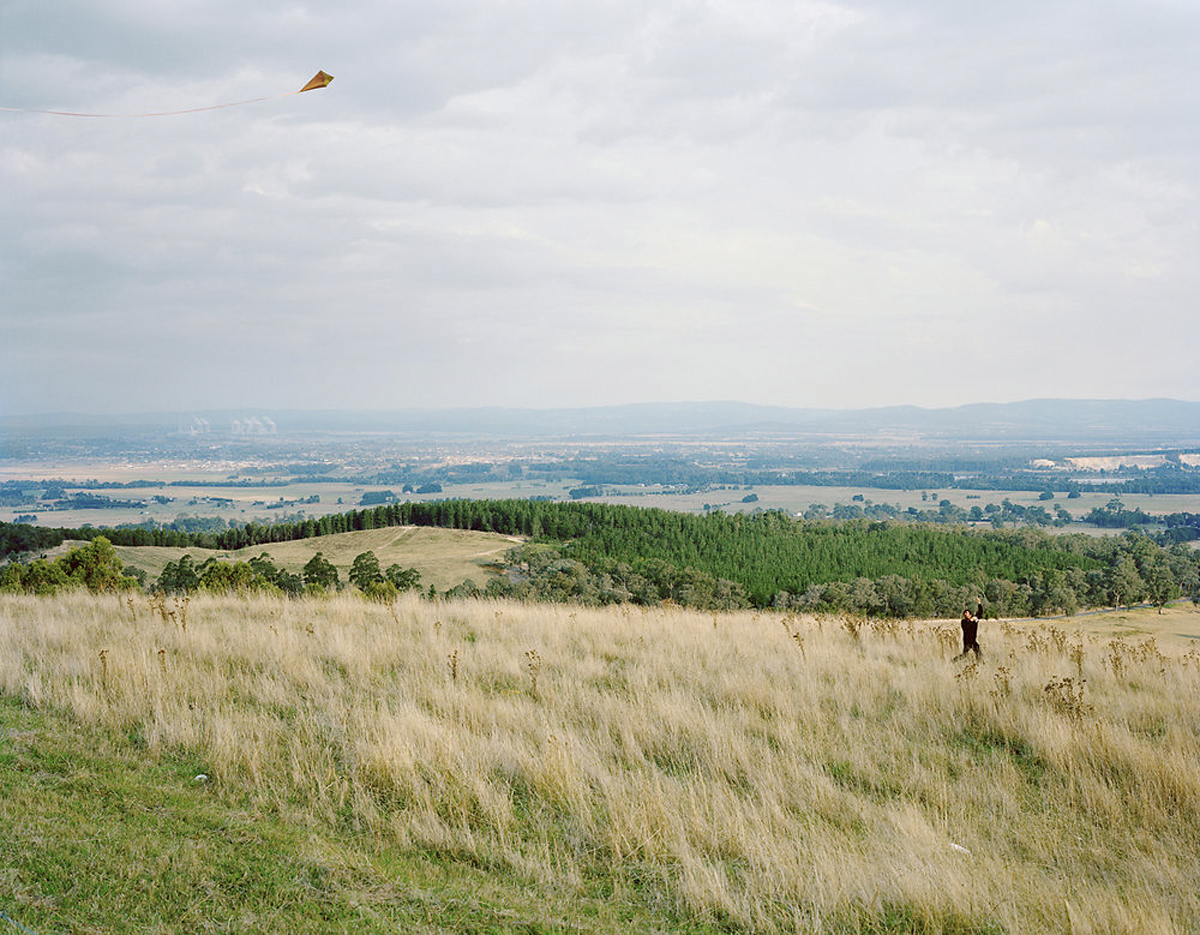
Gunnai land man (above) is very effective in this quest juxtaposing as it does an Indigenous Australian and fallen tree on a bare track with a smoke billowing power station (symbolic of the industrialisation of the area) looming in the background. Other photographs are less successful. What a man flying a kite has to do with the pre-colonial Gippsland landscape is beyond me and the juxtapositional incongruity sought by the artist simply does not work, despite the presence of the power station on the plains in the distance. The symbology has more to do with Japanese art than it has to do with Western art.

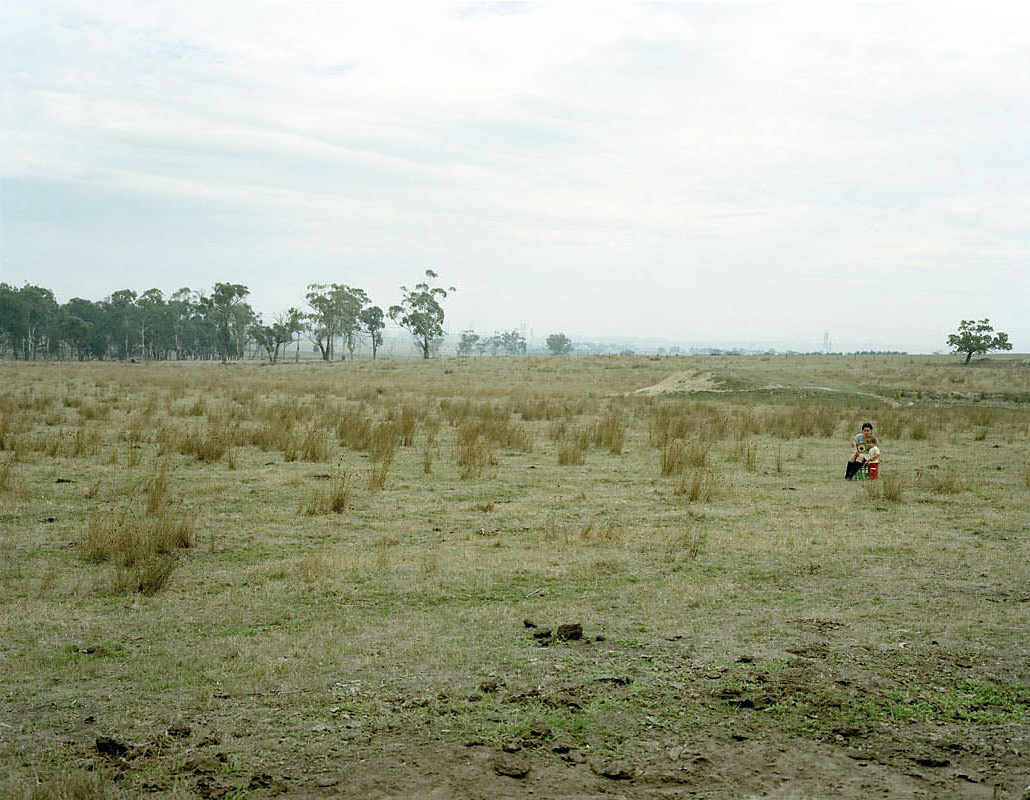
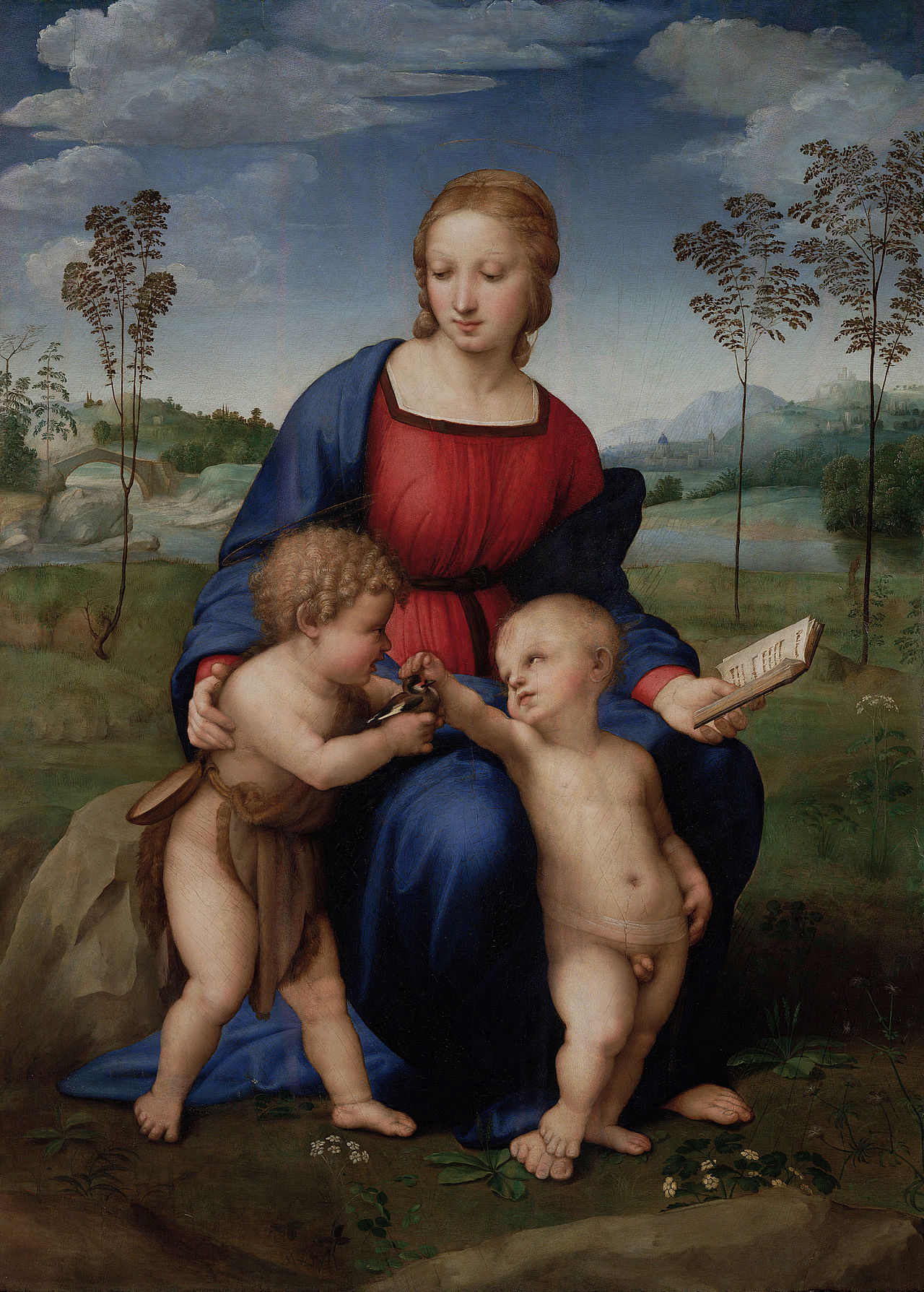
The conceptual narrative of the photograph Moe Madonna (below) works only partially as well. The destruction of the landscape has been caused by pastoralisation not industrialisation. In the image that Hayes is referencing the Madonna is front and centre set in an idyllic landscape. In the work by Hayes the incongruity has to be explained, has to be verbalised in text for the association to be didactically made. The interpretation leaves no room for personal reflection and when I looked at this image, the mother and child were so small in the landscape, the placement so obviously constructed that there incongruity turned to disbelief: namely that I simply did not believe the mise en scène being created.

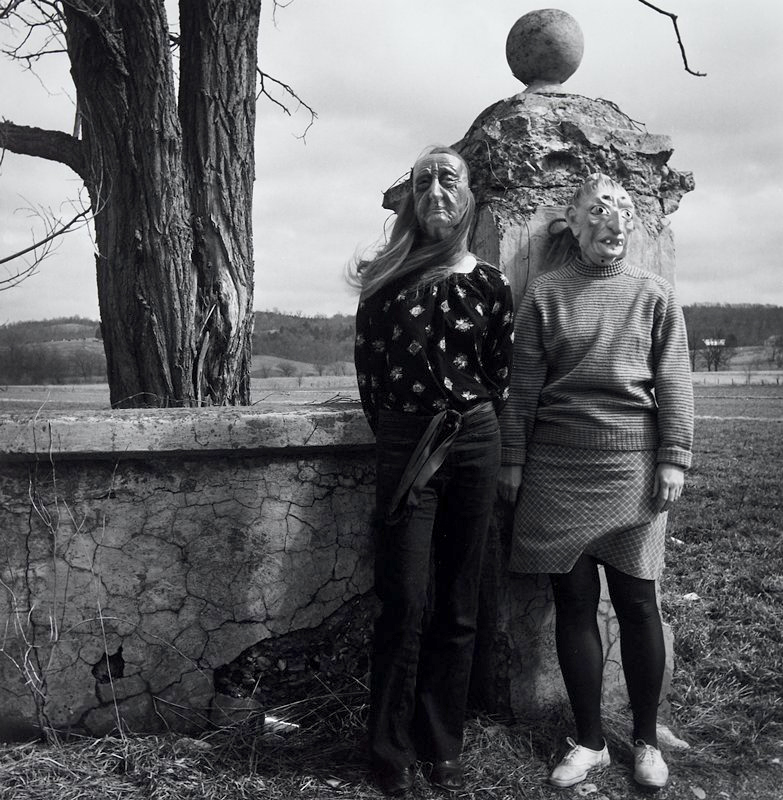
Other narratives are equally confusing. In Paper bag lovers (below) I had to ask the gallery director what was going on in the photograph because the bodies where so small in the landscape (in fact it looks like one body) and you can’t really see the paper bags on their heads because the bodies are just an amorphous mass containing no detail at all (you can just see the body in the photograph below in the mid distance just below the large central tree). Why paper bags anyway? If something intentionally odd and incongruous is sought to be portrayed in the landscape perhaps Hayes should look at the work of Eugene Meatyard (see below) to see a real subversion of the body/landscape dichotomy.

The one standout photograph of the exhibition is Plein air explorers (below). This is confirmed in the sales of the show as all six prints of this photograph have been sold. One can see why!

The title is perfect, the construction of the image faultless. The naked white man stands proudly surveying his conquered domain, the land, whilst around him artists (reminding me of the dilettantes of the Victorian age going on day trips), hunker down into the ground with their easels oblivious to the desiccated trees around them. Here the photographer just observes, doesn’t construct, the incongruity of it all. The artists draw the white man based on direct observation of him and not on their conceptions or conventional images or memories of him while ignoring their surroundings.

Here is the paradox, the ironic perfect storm that the artist was conceptually seeking: the representation of landscape based upon direct observation “in the open air” ignored for a perfect white arse while on the horizon smoke stacks of a power station stand in silent witness to the present and imminent destruction of the world.

What a photograph! Can I have one now please?

Dr Marcus Bunyan


Many thankx to Gallerysmith for allowing me to publish the photographs in the posting. Please click on the photographs for a larger version of the image.


Siri Hayes (Australian, b. 1977) 'Moe Madonna' 2008 from the exhibition 'En Plein Air' photographs by Siri Hayes at Gallerysmith, Melbourne, March - April, 2009


Siri Hayes (Australian, b. 1977)
Moe Madonna
2008


Siri Hayes (Australian, b. 1977) 'Kite' 2008


Siri Hayes (Australian, b. 1977)
Kite
2008


Raphael (Italian, 1483-1520) 'Madonna of the Goldfinch' 1505-1506


Raphael (Italian, 1483-1520)
Madonna of the Goldfinch
1505-1506
Oil on panel
107 x 77cm
Galleria degli Uffizi


Siri Hayes (Australian, b. 1977) 'Paper Bag Lovers' 2008


Siri Hayes (Australian, b. 1977)
Paper Bag Lovers
2008


Eugene Meatyard (American, 1925-1972) 'Lucybelle Crater & her 15-year-old son's friend, Lucybelle Crater' 1970-1971


Eugene Meatyard (American, 1925-1972)
Lucybelle Crater & her 15-year-old son’s friend, Lucybelle Crater
1970-1971


I have predominantly focused on the parts of the Gippsland landscape that have been impacted by white settlement. I have composed various human interactions that are sometimes associated with Western art and its construction. For example, Moe Madonna references Raphael’s Goldfinch Madonna. The narratives are intentionally odd and incongruous with the surrounding location. My son and I seem out-of-place in a barren paddock while the autumn mist shrouds distant gum trees and electricity pylons. The soil here has been compacted beyond repair by cattle hooves – an inappropriate animal in Australia’s delicate ecosystems. As we sit on this barren plain, I read to Oliver from a European pre-schooler book titled Autumn, creating an interesting juxtaposition with the antipodean equivalent season.

The work in this exhibition considers the pre-colonial Gippsland landscape and how industrial ‘progress’ has altered it. Hopefully it provides pause for thought.

Siri Hayes exhibition notes. March 2009


Siri Hayes (Australian, b. 1977) 'Plein air explorers' 2008


Siri Hayes (Australian, b. 1977)
Plein air explorers
2008


Gallerysmith
170-174 Abbotsford St,
North Melbourne,
Victoria, 3051 Australia

Opening hours:
Tuesday to Saturday, 11am – 5pm

Gallerysmith website

Siri Hayes website

LIKE ART BLART ON FACEBOOK

Back to top

Around the galleries: Derek O’Connor at Karen Woodbury Gallery, Peter Cole ‘Elements + Memories’ at John Buckley Gallery, Melbourne

April 2009


In a mad dash around town I managed to see the Derek O’Connor and Peter Cole exhibitions before they finished and also the Siri Hayes En Plein Air exhibition of photographs at Gallerysmith (see next post).

Dr Marcus Bunyan


Please click on the art work for a larger version of the image.


Derek O’Connor paintings at Karen Woodbury Gallery

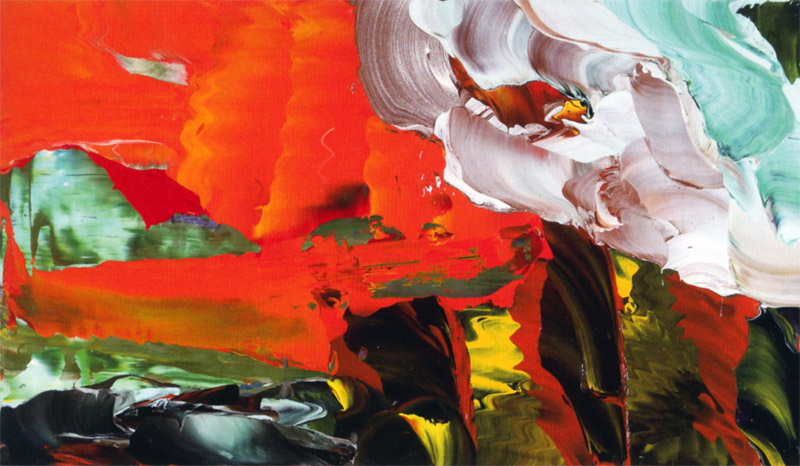
An intense show of small oil paintings that really draw you into their composition. They are paintings of tremendous energy and layering, the surface being in a constant state of flux. The paintings become metaphors for the bodies existence in space, corporeal landscapes full of sensation ‘neither rational nor cerebral’. They become a mediation and a meditation upon life itself – complex, convulsive, concentrated energy that focuses the viewers attention so that they cannot look away.


Derek O'Connor (Australian born England, b. 1959) 'Horizontal' 2008 from the exhibition Derek O'Connor paintings at Karen Woodbury Gallery


Derek O’Connor (Australian born England, b. 1959)
Horizontal
2008


Derek O'Connor (Australian born England, b. 1959) 'Horizontal' 2008 from the exhibition Derek O'Connor paintings at Karen Woodbury Gallery


Derek O’Connor (Australian born England, b. 1959)
Horizontal
2008


“Working with his tools of palette knives and brushes, he sets into motion a train of repetitions, of speeds and slowness1 applying and scrapping paint away in an attempt to move from a position of not knowing towards knowing. He brings … an intense physical and mental awareness to the rhythms of his own movements, his own body. At such moments time seems to expand – to become infinite.

In erasing from his project the world of appearances, Derek O’Connor embraces something else – the realm of ‘sensation’. Sensation is an open painterly expression which resists definition. The Modernist painter Paul Cezanne described sensation as a “logic of the senses” which is neither rational nor cerebral2 … For Derek, the subject of his painting appears to be the act of making itself. Here subject and object collapse (folding into itself) so that sensation is experienced through the materiality of paint, via the movements of the artists’ body to affect the bodies of others.”

Paul Uhlmann from the catalogue essay


1/ Deleuze, G. and Guattari, F. A Thousand Plateaus. London: Continuum, 1987, pp. 292-300
2/ Deleuze, G. The Logic of Sensation. London: Continuum, 2003, p. 42


Derek O'Connor (Australian born England, b. 1959) 'Irregular' 2008


Derek O’Connor (Australian born England, b. 1959)
Irregular
2008


Karen Woodbury Gallery

This gallery has closed.


Peter Cole ‘Elements + Memories’ at John Buckley Gallery 18th March – 9th April 2009

A decidedly underwhelming show by Peter Cole at John Buckley Gallery only redeemed by the amazing Elemental Landscape series of 64 small sculptural pieces displayed as a frieze (see below).

The large free standing sculptural works fail to impress with their minimalist Ikea-esque cut out style – especially when viewed from the rear of the work. One would have thought that a sculptor, making several free standing pieces that are going to be walked around in a gallery space, would have designed the work to be viewed ‘in the round’.

As it is all the perfection of the clinical front of the works is undone by brackets and screws holding the whole thing together when viewed from the flattened rump. This is pretty, surface work that lacks substance and insight, pretty shapes and cut outs and targets that allude to memory but are just stylised glossy magazine representations of it.

On the other hand the Elemental Landscape series of sculptures is just magical – playful, ever inventive, wonderfully contemporary, beautifully resolved in concept and manufacture, in their use and bending of geometric shapes, the sculptures really are fantastic when seen ‘in situ’ as a whole. Visit the exhibition just to see this work – buy some pieces and make your own elemental landscape!

Dr Marcus Bunyan


Peter Cole (Australian, b. 1947) 'Elements + Memories' installation views at John Buckley Gallery, Melbourne


Peter Cole (Australian, b. 1947)
Elements + Memories installation views at John Buckley Gallery, Melbourne (first and second image)
Bar 4 – Shibuya 2009 (third image)
Garden – Yoyogi 2009 (fourth image)


In Peter D Cole’s stunning and ambitious exhibition Elements + Memories he creates a playful interactive work titled Elemental Landscape. Utilising his highly stylised modernist and reductionist technique – influenced at an early age by studies of Miro and Calder – Cole presents 64 small sculptural pieces of varying colour and shape of which the audience is encouraged to create their own compositions. Cole also presents three large-scale sculptures drawing on memories of his times in Japan.

Cole’s distinct skill of distilling the landscape and architecture into separate elements and symbols is in itself evocative of traditional minimal Japanese aesthetic and he has created a series of works which draw upon Japanese interiors and streetscapes and the gardens of the Sakura Matsuri (Cherry Blossom festival).

Text from John Buckley Gallery website [Online] Cited 01/04/2009. No longer available online. Used under fair use conditions for the purposes of education and research


Peter Cole. 'Elemental Landscape' 2009

Peter Cole (Australian, b. 1947) 'Elemental Landscape' 2009

Peter Cole (Australian, b. 1947) 'Elemental Landscape' 2009

Peter Cole (Australian, b. 1947) 'Elemental Landscape' 2009


Peter Cole (Australian, b. 1947)
Elemental Landscape
2009


John Buckley Gallery

This gallery has closed.

LIKE ART BLART ON FACEBOOK

Back to top

Exhibition: ‘Picturing America: Photorealism in the 1970s’ at Deutsche Guggenheim, Berlin

Exhibition dates: 7th March – 10th May, 2009

Curator: Valerie L. Hillings, Assistant Curator at the Solomon R. Guggenheim Museum


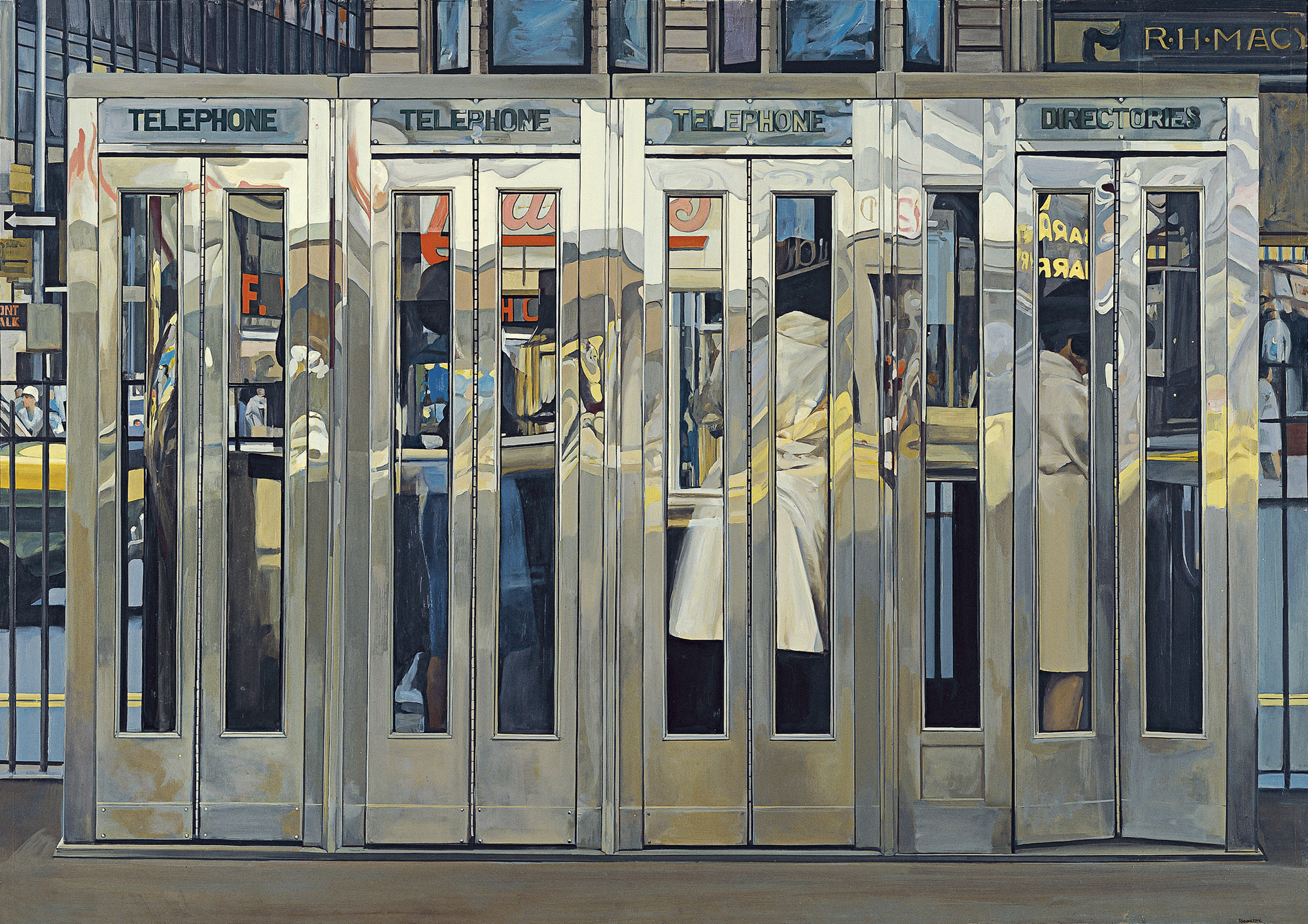
Richard Estes (American, b. 1932) 'Telephone Booths' 1967 from the exhibition 'Picturing America: Photorealism in the 1970s' at Deutsche Guggenheim, Berlin, March - May, 2009


Richard Estes (American, b. 1932)
Telephone Booths
1967


Many thankx to the Deutsche Guggenheim for allowing me to publish the art work in the posting. Please click on the artwork for a larger version of the image.


“My paintings are about light, about the way things look in their environment and especially about how things look painted. Form, colour and space are at the whim of reality, their discovery and organisation is the assignment of the realist painter.”


Ralph Goings


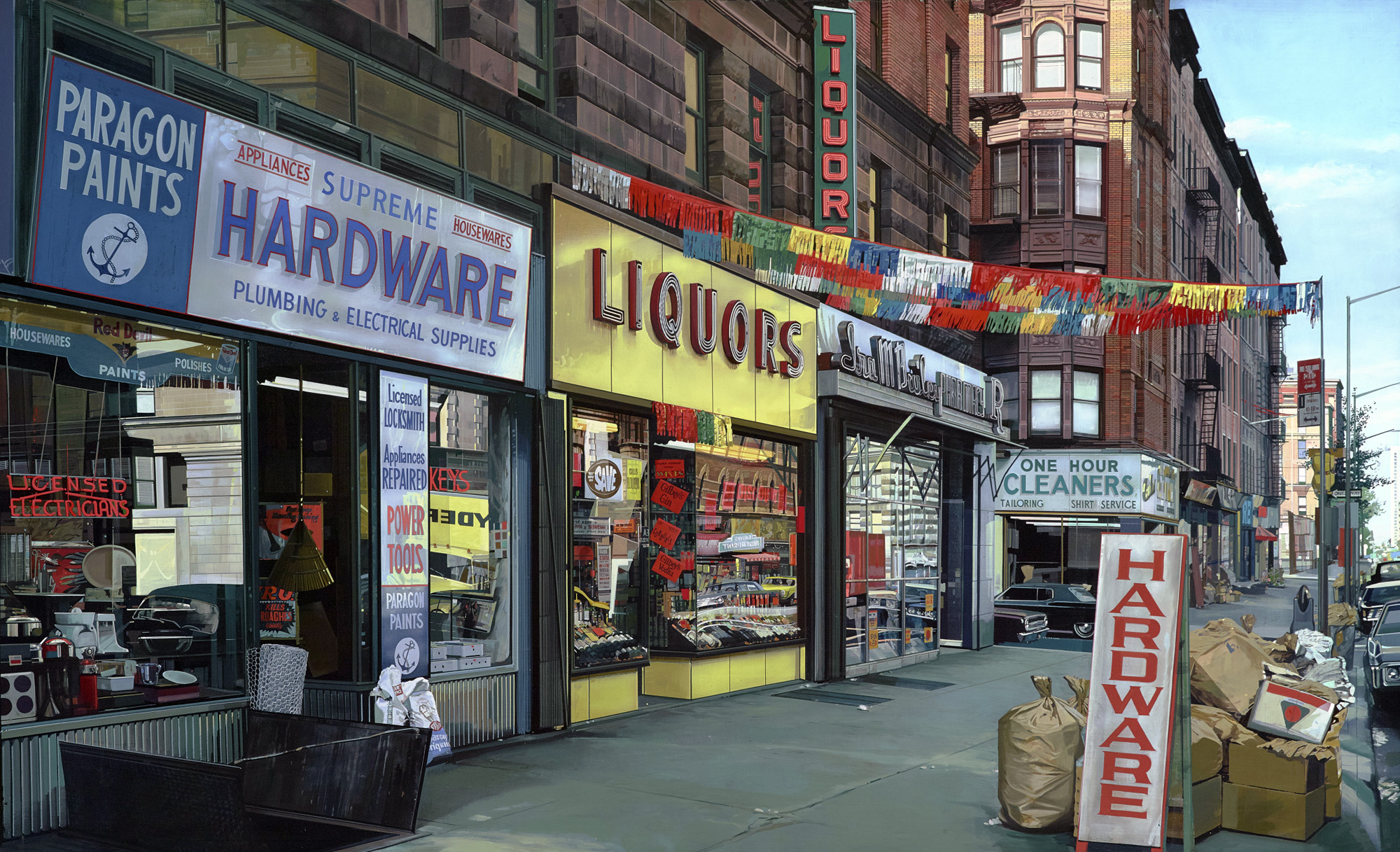
Richard Estes (American, b. 1932) 'Supreme Hardware' 1974 from the exhibition 'Picturing America: Photorealism in the 1970s' at Deutsche Guggenheim, Berlin, March - May, 2009


Richard Estes (American, b. 1932)
Supreme Hardware
1974


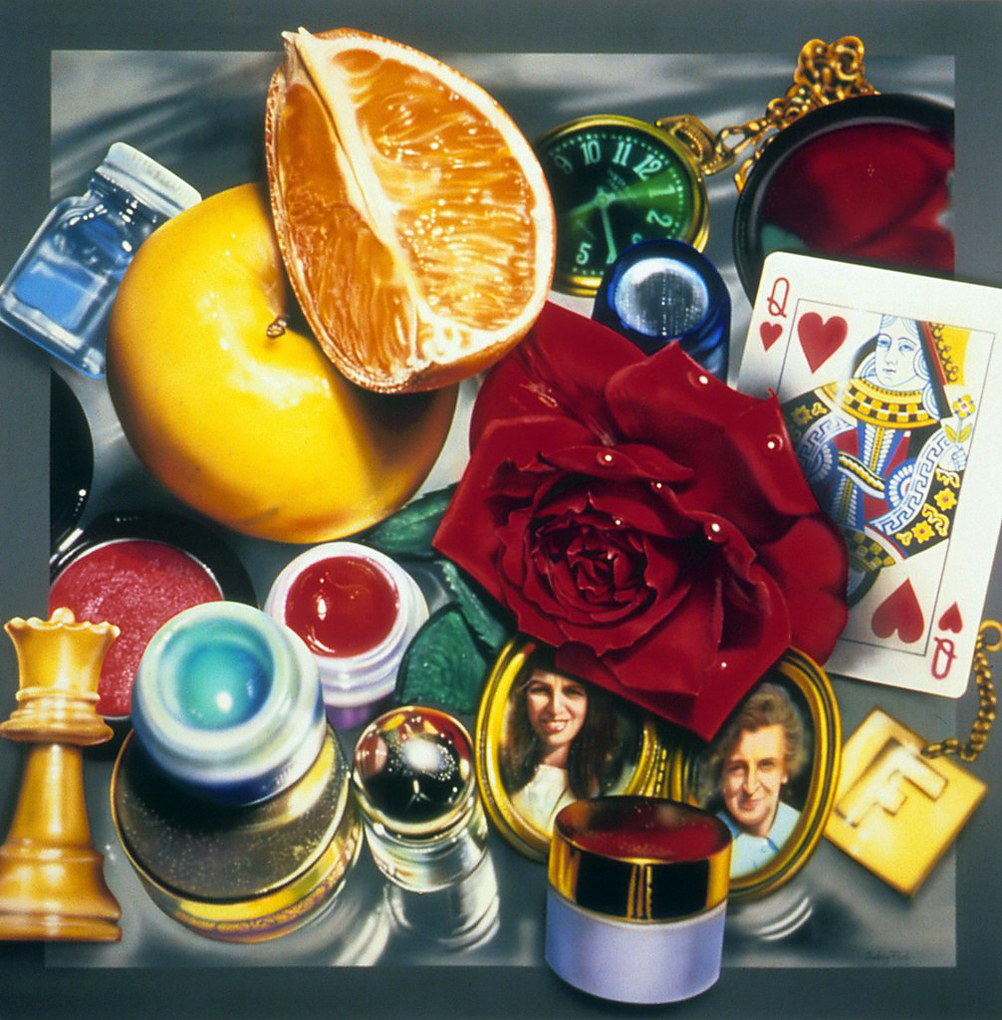
Audrey Flack (American, b. 1931) 'Queen' 1976


Audrey Flack (American, 1931-2024)
Queen
1976


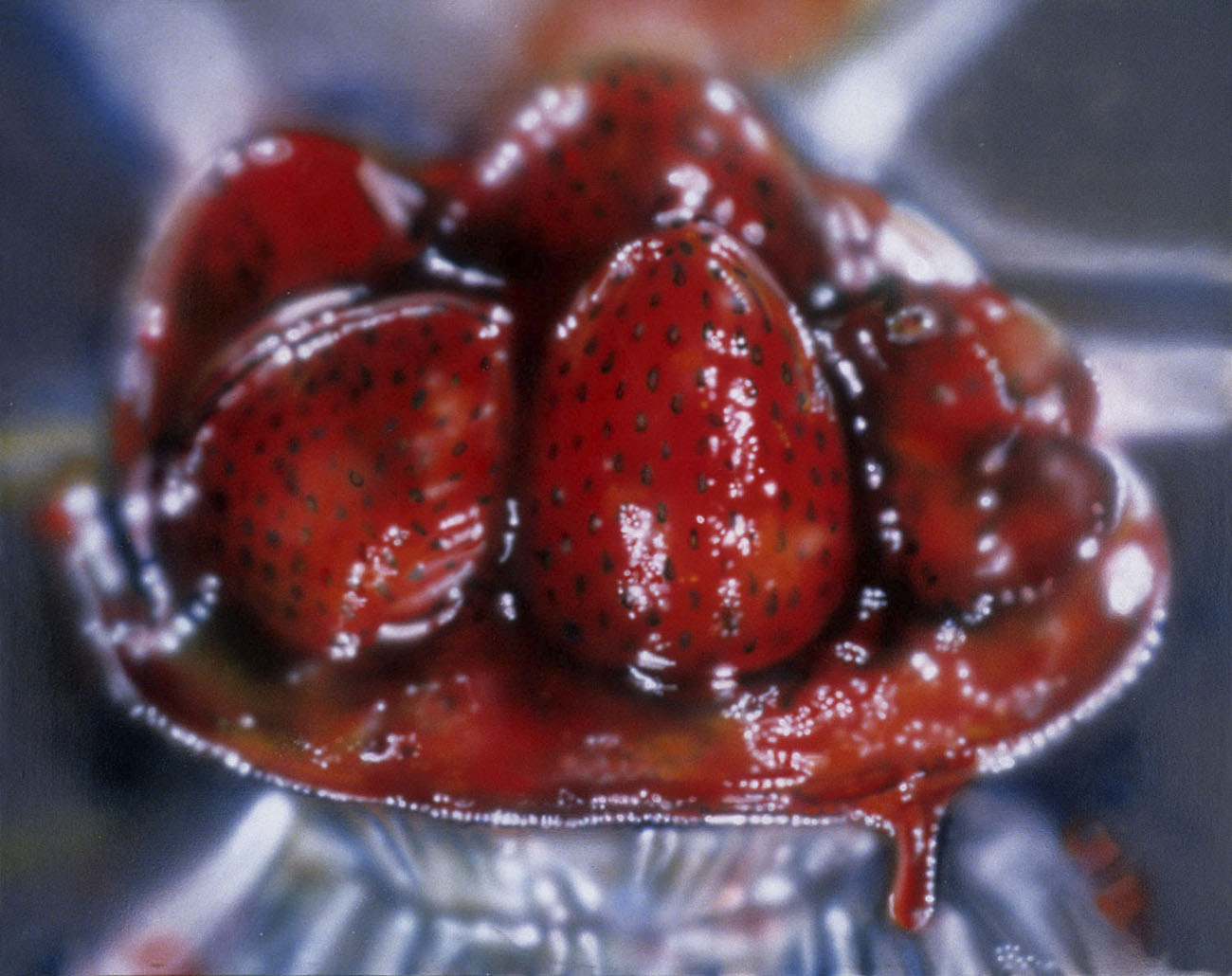
Audrey Flack (American, 1931-2024) 'Strawberry Tart' 1974


Audrey Flack (American, 1931-2024)
Strawberry Tart
1974
Oil on canvas
24 x 30 inches


Don Eddy (American, b. 1944) 'Untitled' 1971


Don Eddy (American, b. 1944)
Untitled
1971


Chuck Close (American, 1940-2021) 'Leslie' 1973


Chuck Close (American, 1940-2021)
Leslie
1973


Ralph Goings (American, 1928-2016) 'McDonalds Pick Up' 1970 (installation view)


Ralph Goings (American, 1928-2016)
McDonalds Pick Up (installation view)
1970
41 x 41 inches
Oil on canvas
Collection of Marilyn and Ivan Karp


Ralph Goings (American, 1928-2016) 'Airstream' 1970


Ralph Goings (American, 1928-2016)
Airstream
1970


Ralph Goings (American, 1928-2016) 'Dicks Union General' 1971


Ralph Goings (American, 1928-2016)
Dicks Union General
1971
Oil on canvas


By the end of the 1960s, a number of young artists working in the United States had begun making large-scale realist paintings directly from photographs. With often meticulous detail, they portrayed the objects, places, and people that defined urban and suburban everyday life in America. In contrast to the Pop artists, they did not present their ubiquitous, often mundane, subject matter in a glamorised or ironic manner. They sought instead to achieve a great degree of objectivity and precision in the execution of their work in an effort to stay more or less faithful to the mechanically generated images that served as their source material. They developed various means of systematically translating photographic information onto canvas. In prioritising the way the camera sees over the way the eye sees, they underscored the complexity of the relationship between the reproduction and the reproduced as well as the impact of photography on the perception of both daily life and reality in general.

A number of terms were proposed in quick succession to describe this novel approach to painting, chief among them Super-Realism, Hyperrealism, and Photorealism. The artists identified as Photorealists neither formed a coherent group nor considered themselves to be part of a movement, and a number of them actively challenged their association with the label. Nevertheless, in the late 1960s and 1970s, the seventeen artists in Picturing America: Photorealism in the 1970s – Robert Bechtle, Charles Bell, Tom Blackwell, Chuck Close, Robert Cottingham, Don Eddy, Richard Estes, Audrey Flack, Franz Gertsch, Ralph Goings, Ron Kleemann, Richard McLean, Malcolm Morley, Stephen Posen, John Salt, Ben Schonzeit, and Paul Staiger – were exploring a related set of issues, methods, and subjects that led critics, curators, and art historians to both exhibit and write about their work as a coherent trend in contemporary art. Picturing America focuses on this formative, defining period in the history of Photorealism.

The exhibition includes thirty-one paintings, a number of them the most iconic and masterful works of 1967-1982, for example Richard Estes’s Telephone Booths (1967, above) and Chuck Close’s Leslie (1973, above). Picturing America is divided into four sections, three exploring key themes of Photorealist painting during the 1970s – Reflections on the City, Culture of Consumption, and American Life – and a fourth dedicated to a portfolio of ten lithographs made on the occasion of Documenta 5 in 1972, which featured the first major group showing of Photorealism.

Text from the Deutsche Guggenheim website


Picturing Americas – American Photorealism in the 70s

Vernissage video of “Picturing Americas”, an art exhibition about American Photorealism in the 1970s, presented in Berlin by Deutsche Guggenheim, a joint venture between Deutsche Bank and the Solomon R. Guggenheim Foundation in New York. The exhibition (March – May 2009) was the first major showing of American Photorealism in Germany since “documenta 5” in 1972.

The video includes interviews of Valerie Hillings, Assistant Curator, Solomon R. Guggenheim Museum, and interviews with the following artists: Ron Kleemann, Robert Bechtle, Tom Blackwell. You can also enjoy stills of selected pictures shown at the exhibition. Video courtesy of VernissageTV (VTV).

Text from the YouTube website


Robert Bechtle (American, 1932-2020) 'Foster's Freeze, Escalon' 1975


Robert Bechtle (American, 1932-2020)
Foster’s Freeze, Escalon
1975


Charles Bell (American, 1935-1995) 'Gum Ball No. 10: "Sugar Daddy"'
1975


Charles Bell (American, 1935-1995)
Gum Ball No. 10: “Sugar Daddy”
1975
Oil on canvas
66 x 66 inches


Charles Bell was born in 1935 in Tulsa, Oklahoma. Although Bell became interested in art at a young age, he never received formal training. In 1957, he completed a BBA at the University of Oklahoma, Norman, and did not decide to pursue an artistic career until the early 1960s after touring in the U.S. Navy. At this point in time, he was working in the San Francisco Bay Area, where he was drawn to the vibrantly colored paintings of Richard Diebenkorn and Wayne Thiebaud. Other artistic influences Bell has cited range from Pop art to the realisms of Jan Vermeer and Salvador Dalí. It was through the painter Donald Timothy Flores, however, that Bell learned technique, most notably trompe l’oeil, while working in the former’s San Francisco studio. Under Flores, Bell painted mostly small-scale landscapes and still lifes, which earned him the Society of Western Artists Award in 1968.

In 1967 Bell relocated to New York, where he set up his first studio. Two years later he began showing at New York’s Meisel Gallery run by Louis K. Meisel, who popularized the term “Photorealism” and helped establish the style as a movement. Bell embraced a photo-based technique in his work not only for the way it renders imperceptible details visible, but also for how he saw the close-up photographic view as emblematic of contemporary visual experience steeped in a daily bombardment of media imagery. Bell carried out his Photorealist works by photographing his subjects in still-life compositions and painting from his image. 

Although Photorealism emerged as a national phenomenon, certain general qualities distinguish the coastal approaches to the movement. While the majority of the West Coast Photorealists preferred landscapes, particularly images of cars, trucks, and homes within an overall landscape, Bell, like many of the New York–based Photorealists, focused on still life. Bell transformed everyday subject matter by enlarging ordinary objects like Raggedy Ann dolls and gumball machines to an unusually grand scale. His subjects are typically familiar objects associated with childhood, consumer culture, and play, and thus capable of resonating with a broad audience. By focusing on larger-than-life subjects, Bell’s paintings also deny narrative readings of his work. He has described his approach to selecting subject matter as more of an emotional than intellectual process. The hyperrealistic precision of his technique, combined with an exaggerated scale, produces a sensation that oscillates between familiarity and unfamiliarity, thus engaging the viewer sensually and emotionally. The exploration of light remains a persistent theme throughout Bell’s oeuvre, from his earliest treatments of light on mostly opaque surfaces to his interest in reflected and refracted light on transparent materials, as seen in the gumball machine series (1971-77). These investigations gave way to his subsequent interest in objects illuminated from within, such as pinball machines, which he began in 1977.

Text from the Guggenheim website [Online] Cited 01/04/2009. Used under fair use conditions for the purposes of education and research


Robert Bechtle (American, 1932-2020) 'Alameda Gran Torino' 1974


Robert Bechtle (American, 1932-2020)
Alameda Gran Torino
1974


Ron Kleemann (American, 1937-2014) 'Big Foot Cross' 1977-1978


Ron Kleemann (American, 1937-2014)
Big Foot Cross
1977-1978
Acrylic on canvas
54 x 78 inches


Deutsche Guggenheim

This museum closed in 2013.

LIKE ART BLART ON FACEBOOK

Back to top

Book: ‘Thomas Ruff: jpegs’ from Aperture Foundation

“Ruff is aware, while so many of us are unaware. He is fully conscious and observant of the processes and effects of contemporary digital photography. And yet. And yet, these fractured images approach the sublime in some mysterious way.” Dr Marcus Bunyan

March 2009

Book available from the Amazon website


Thomas Ruff (German, b. 1958) 'jpeg sh01' 2005


Thomas Ruff (German, b. 1958)
jpeg sh01
2005
C-print
© Thomas Ruff


I greatly admire this series of work. It takes a very special artist and a very special person to look at the world – and specifically how the world is represented and presented to us in scrappy, low quality jpgs – and recognise a different perspective, an alternate reality that is staring us in the face, that is confronting us every single day. No body but Ruff did.

Great artists are always ahead of their time, always probing beyond, offering up a mirror to an inchoate, uninformed society. Robert Frank did it with The Americans in the 1950s, and the Americans didn’t like what they were being shown by an outsider, a foreigner. Lee Friedlander did it in the 1970s with his segmented images and reflections, his informality and perspicacity. Now Ruff abstracts an already abstracted and distracted world, a world flooded with meaningless images. He makes giant the landscape, war, eruption, disruption and destruction until when we approach too close… the image dissolves before our eyes. Into nothingness. We retreat in confusion.

Ruff is aware, while so many of us are unaware. He is fully conscious and observant of the processes and effects of contemporary digital photography. And yet. And yet, these fractured images approach the sublime in some mysterious way.

Dr Marcus Bunyan


Thomas Ruff (German, b. 1958) 'jpeg ca02' 2004


Thomas Ruff (German, b. 1958)
jpeg ca02
2004
C-print
© Thomas Ruff


“How much visual information is needed for image recognition? A pretty small quantity of data will go a long way for the brain and the computer, both of which take shortcuts for the sake of speedy comprehension. In the Jpegs series, German photographer Thomas Ruff exploits this imprecision in digital technology, locating online JPEGs and enlarging them until the pixels emerge in a chessboard pattern of near abstraction. A closer look at these images reveals that, in addition to the degeneration of the image into a digital grid, the colour and brightness generated by the algorithms of the compression also become visible. Many of Ruff’s works in this series focus on idyllic, seemingly untouched landscapes, or conversely, on scenes of war and nature disturbed by human manipulation – subjects ill suited to disruptive pixelation, and therefore perfect for Ruff’s purposes. Taken together, these images constitute an encyclopaedic compendium of contemporary visual culture that also engages the history of landscape painting. A fittingly deluxe and oversize volume, Jpegs is the first monograph dedicated exclusively to this monumental series.”

Text from the Amazon website


Thomas Ruff (German, b. 1958) 'jpeg cdf01' 2004


Thomas Ruff (German, b. 1958)
jpeg cdf01
2004
C-print
69 5/8 x 87 3/4 in. (177 x 223cm)
© Thomas Ruff


Thomas Ruff (German, b. 1958) 'jpeg bb03' 2007


Thomas Ruff (German, b. 1958)
jpeg bb03
2007
C-print
72 7/8 x 98 1/4 in. (185.1 x 249.56cm)
© Thomas Ruff


Thomas Ruff (German, b. 1958) 'jpeg ny02' 2004


Thomas Ruff (German, b. 1958)
jpeg ny02
2004
C-print
© Thomas Ruff


Thomas Ruff is among the most important international photographers to emerge in the last fifteen years, and one of the most enigmatic and prolific of Bernd and Hilla Becher’s former students, a group that includes Andreas Gursky, Thomas Struth, Candida Höfer, and Axel Hutte. In 2007, Ruff completed his monumental and very timely Jpegs series in which he explores the distribution and reception of images in the digital age. Starting with images he culls primarily from the Web, Ruff enlarges them to a gigantic scale, which exaggerates the pixel patterns, until they become sublime geometric displays of colour. A fittingly deluxe and oversized volume, Jpegs (Aperture, June 2009) is the first monograph dedicated exclusively to the publication of Ruff’s remarkable series.

When viewed up close the images in Jpegs look abstract; as you move away they merge into decipherable photographic images. Like Impressionistic paintings, Ruff’s photographs require the viewer’s active participation and shift in perspective in order to make a complete assessment of the image content. The work ranges from idyllic, seemingly untouched landscapes and popular tourist spots, to scenes of war and nature disturbed by human manipulation. Places and global events that have defined the visual media world of recent decades are represented, including the familiar, almost iconic pictures of atomic bomb tests; 9/11; scenes of warfare in Baghdad, Beirut, and Grozny; the killing fields of Cambodia; and the ravaged Asian coasts after the 2004 tsunami, among others. Taken together, these masterworks create an encyclopaedic compendium of contemporary visual culture that also actively engages the history of landscape painting. Jpegs is a testament to the effects of the digital age on the medium of photography.

Text from Artdaily.org website


Thomas Ruff (German, b. 1958) 'jpeg soi01' 2005


Thomas Ruff (German, b. 1958)
jpeg soi01
2005
C-print
© Thomas Ruff


Thomas Ruff (German, b. 1958) 'jpeg msh01' 2004


Thomas Ruff (German, b. 1958)
jpeg msh01
2004
C-print
© Thomas Ruff


Thomas Ruff (German, b. 1958) 'jpeg ny01' 2004


Thomas Ruff (German, b. 1958)
jpeg ny01
2004
C-print
276 × 188cm
© Thomas Ruff


Thomas Ruff (German, b. 1958) 'jpeg td02' 2006


Thomas Ruff (German, b. 1958)
jpeg td02
2006
C-print
261 × 188cm
© Thomas Ruff


Thomas Ruff (German, b. 1958) 'Jpeg rl104' 2007


Thomas Ruff (German, b. 1958)
Jpeg rl104
2007
C-print
© Thomas Ruff


Thomas Ruff (German, b. 1958) 'Jpeg icbm05' 2007


Thomas Ruff (German, b. 1958)
Jpeg icbm05
2007
C-print
© Thomas Ruff


Book available from the Amazon website

LIKE ART BLART ON FACEBOOK

Back to top

Review: ‘reENLIGHTENMENT’ exhibition by Peter James Smith at Gallery 101, Melbourne

Exhibition dates: 18th March – 4th April, 2009


Peter James Smith. 'reENLIGHTENMENT' installation view 2009

Peter James Smith. 'reENLIGHTENMENT' installation view 2009


Peter James Smith (New Zealand, b. 1954)
reENLIGHTENMENT installation views
2009


“Every passion borders on the chaotic, but the collector’s passion borders on the chaos of memories. More than that: the chance, the fate, that suffuse the past before my eyes are conspicuously present in the accustomed confusion of these books. For what else is this collection but a disorder to which habit has accommodated itself to such an extent that it can appear as order?”


Walter Benjamin1


“Thus the claim is that texts themselves can actually be intrinsically ‘genuine’, but that authenticity is a ‘social construct’. In other words, a certain kind of authenticity is created through the interaction of the users, situations and the texts.”


Winnie Yuk-Chun Lee2


Peter James Smith links the culture of science and of human experience, bringing together mathematics and the power of nature in realist imagery that is balanced by strong mark making and text. Redolent still life and landscape images juxtapose with astronomical, poetic and historical observations in the painted images. Handwritten citations, notes, jottings, diagrams and erasures float on the loosely painted surfaces of stretched linen, paper collage and found pieces which bring a Beuysian sense of the charismatic object. A sunset, a violin, a book of verse, an installation of old bells or delicate Jasperware porcelain provide a resonant foil for the artist and viewer – and create a space for the imagination, for mathematical wonder and contemplation.

“Beyond painting, in the current work there is a sense of history allowing us to privilege its objects, their collecting and their housing on walls, in vitrines, on shelves and on plinths. Like any true collector I am keen to bring them to an audience, to show them in a revelatory way. If they are inflected by hand markings it is to personalise the revelation. There are no plastic imitations: the Jasperware vases are authentic collected Wedgwood; the small Greek Pelike is indeed a c 300 BC vase; the Roman glass is a c 300 AD; the collected Wollemi pine needles are indeed from this prehistoric plant. These and other antiquities have a long museological tradition. The narratives of Wedgwood blue and white Jasperware designs are of Greek antiquity – the firing of the white clay over a cobalt blue base (in around) 1772 was a triumph of chemistry over alchemy. With these objects, it is not a postmodernist kitsch that is revealed, but rather the resuscitated fabric of authenticity. I am re-enlightened by their tactile physical presence that has a timeless beauty. To render such things as a painted image is to engage in a different act, with different rules referring to different histories.”

~ Peter James Smith, 2009. Notes from the exhibition catalogue.

 
Enlightenment, Romanticism, reason, authenticity, revelation.

I am a collector like Peter James Smith. I display my collection of early 20th century English vases. I have a collection of 300 ties that span from the 1930s to the 1970s. I have eight rare 1940s suits, those suits that Humphrey Bogart used to wear with the wide lapels that nearly reach the seam of the sleeve.

Rare, fragile, beautiful, genuine.

In this exhibition Smith appeals not to the genuineness of the objects but to the authenticity of the objects he displays: “There are no plastic imitations … With these objects, it is not a postmodernist kitsch that is revealed, but rather the resuscitated fabric of authenticity.” He wants to show these objects in a revelatory way, for us to once more appreciate their authenticity.

To make order out of disorder.

But then Smith wants to personalise this revelation and overlays the objects with texts that re-order the taxonomy through a re-inscription that is both a de-territorialization and re-territorialization of meaning, a loss of original meaning and the production of new meanings. This is the faint silver flicker of re-enlightenment the artist seeks. It is above all authentication as individual spectacle, as social construct.

“Authenticity is an issue for us today because of a widespread sense that there is something inauthentic in the way we experience the modern world.”3

In some of the works this process is effective and in other works it falls flat on it’s proverbial, intertextual backside. The process works well in the less cerebral works. The use of black paint in Paradise Lost IV (below) is particularly effective as the re-inscription of paint invades and threatens the motifs of the classical figures with the text and cross reinforcing the idea of a lost paradise. Cathedral (2009, below) is also a stunning installation of different bells hung at various heights within a locked cabinet, complicit in their silence as they would not be inside a cathedral. For me this was probably the best piece in the show for its simplicity of thought, eloquence of execution and understanding of how the installation re-enlightens the viewers socially constructed authenticity in a revelatory way. No double marking is needed – a zen balance is proposed and achieved in the quietness of the viewers mind.

Other pieces are less successful. Amphora in grey terracotta Han Dynasty c 100BC (2008), the amphora inscribed with text sitting on a painted black video recorder is particularly unappealing – there is no revelatory experience to be had here. The Greek Pileke (see below) inscribed with lines from John Keats Ode on a Grecian Urn seems an appropriate intervention but sometimes in this exhibition one just longs to appreciate the sanctity of the object, it’s presence, in silence without the personalising of the revelation by the hand of the artist. To see the object clearly for what it is.

The large installation reELIGHTENMENT (2009 below, and installation photo at top) falls into darkness. The use of the doors as a metaphor is clumsy, book covers have been more successfully used by other artists and the black paint is heavy and oppressive.

More interesting are some of the paintings, for example The slow dance of an astronomical twilight (2009, below) where the poem of William Wordsworth

… a sense sublime
Of something far more deeply interfused,
Whose dwelling is the light of setting suns

illuminates the poetry of the painting, adding an insightful double meaning to the universal revelation. A vibration of spirit is present both in the landscape and the markings upon the landscape. Unfortunately all too often in this exhibition access to the sublime is denied. Appeals to neo-authenticity fall on deaf ears. The motifs of this exhibition are universal, archetypal but the elements that go to make up this exhibition are too many and lack focus. Sometimes in art less is more and this exhibition is a classic example of this fact. There are some interesting elements but overall the whole is not the sum of its parts.

As John Donne observed

“All mankind is of one author, and is one volume; when one man dies, one chapter is not torn out of the book, but translated into a better language; and every chapter must be so translated … No man is an island, entire of itself; every man is a piece of the continent, a part of the main.”4

Our authentic place in the world, our spiritual space, our re-enlightenment needed to be better defined, more lucidly enunciated in this exhibition NOT IN CAPITAL LETTERS but in the quietness of our hearts.

Dr Marcus Bunyan


1/ Benjamin, Walter. “Unpacking my Library: A Talk about Book Collecting,” in Illuminations. English translation. London: Fontana, 1982, pp. 59-60

2/ Lee, W. “Authenticity revisited: text authenticity and learner authenticity,” in ELT Journal, 49(4). 1995, pp. 323-328 cited in Shomoossi, Nematullah and Ketabi, Saeed. “A Critical Look at the Concept of Authenticity,” in Electronic Journal of Foreign Language Teaching, 2007, Vol. 4, No. 1, pp. 149-155 [Online] cited on 29th March, 2009 at http://e-flt.nus.edu.sg/v4n12007/shomoossi.pdf

3/ McClure, Christoper. The Concept of Authenticity in Charles Taylor and Martin Heidegger. [Online] cited on March 29th, 2009 (no longer available online)

4/ Donne, John. Devotions Upon Emergent Occasions, Meditation XVII: Nunc Lento Sonitu Dicunt, Morieris. 1624.


Variously

Wedgwood Jasperware, Roman glass, Greek Pileke, books, doors, texts, paintings, bells, video, video machine, wooden boxes, black paint, crosses, albatross, Wollemi Pine needles, Paradise Lost, astronomy, linen, stars, photography, Chinese porcelain, collage, mathematical equations, mirrors, Amphora from the Han Dynasty, a violin, a sunset, a book of verse, notes, shelves, jottings, citations.

Notes to myself

~ Golden ratio
~ The archive
~ Topographical markings, inscriptions and decodings
~ The ‘nature’ of authenticity
~ The ‘voice’ of revelation
~ Re-possession of clarity and logic
~ Re-production of mystery, tenderness and love
~ Reverence for the object itself
~ Referentiality between image and text
~ The colour black: transcendent, the depths of the night sky but also the closing in of darkness at the end of days
~ Never one truth but many truths
~ Less is more


Many thankx to Gallery 101 for allowing me to publish the photographs in the posting. Please click on the photographs for a larger version of the image.


Peter James Smith (New Zealand, b. 1954) 'The slow dance of an astronomical twighlight' 2009 from the exhibition 'reENLIGHTENMENT' exhibition by Peter James Smith at Gallery 101, Melbourne, March - April, 2009


Peter James Smith (New Zealand, b. 1954)
The slow dance of an astronomical twighlight
2009


Peter James Smith (New Zealand, b. 1954) 'Paradise Lost IV' 2008 from the exhibition 'reENLIGHTENMENT' exhibition by Peter James Smith at Gallery 101, Melbourne, March - April, 2009


Peter James Smith (New Zealand, b. 1954)
Paradise Lost IV
2008


Peter James Smith (New Zealand, b. 1954) 'Ode on a Grecian Urn' 2008


Peter James Smith (New Zealand, b. 1954)
Ode on a Grecian Urn
2008


Peter James Smith (New Zealand, b. 1954) 'Cathedral' 2009


Peter James Smith (New Zealand, b. 1954)
Cathedral
2009


Peter James Smith (New Zealand, b. 1954) 'reENLIGHTENMENT' 2009


Peter James Smith (New Zealand, b. 1954)
reENLIGHTENMENT
2009


Gallery 101

This gallery is now closed.

LIKE ART BLART ON FACEBOOK

Back to top