Exhibition dates: 7th June – 1st September, 2019 Visited September 2019 posted November, 2019
Curators: Martine Ravache and Gabriella Csizek
Installation view of the exhibition Lartigue: Life in Color at the Robert Capa Contemporary Photography Center, Budapest Photo: Marcus Bunyan
A posting on this exhibition with some iPhone images I took in Budapest. I was lucky enough to see the exhibition the day before it closed.
What struck me most was Lartigue’s restrained use of colour. Mainly family portraits and landscapes, these photographs integrate a reduced colour palette with the line and form of the image. Subtle yet dynamic, the whimsical and poetic Ektachrome photographs were a revelation. You could say that there is seemingly nothing unusual about any of these photographs but just look – look at the light that radiates across Florette in Venice, the donkey and the washing, the green umbrella and tree laden with snow or the boys looking around to stare at the camera – and there is, indeed, something uncanny in the everyday. Just to see those two birds flying towards you in The Appian Way, Rome, Italy, January 1960 and to raise your camera to capture them mid-flight perfectly framed between the trees – what a moment!
While the original transparencies have faded, digital technology and restoration allows us to see them in all their glory: sometimes low depth of field, but always with a strong visual structure, these photographs form a holistic feeling as a body of images, a portrait of life in colour. Lartigue’s sense of fun is also evident in many images. There is no sense of the ego of the photographer in any of these images… they are, just so. Considered, concise and in colour (which is unusual for this time period) they possess an inimitable joie de vivre. This posting also features Lartigue’s early Autochromes which were interesting but nowhere as important as his later Ektachromes.
With a careful eye for composition, colour, and geometry, Lartigue’s background (in which he saw everything with his painter’s eye) is clearly translated in the pictorial construction of these sublime photographs.
Jacques Henri Lartigue (1894-1986) was the best-known “amateur” in the history of photography, famously discovered by the art world and given an exhibition at MoMA in New York when he was in his late sixties. He began by recording the pastimes and customs of his wealthy Parisian milieu, indulging his fascination with sports and aviation, and throughout his long life he was never without his camera. His friendships extended to the superstars of French culture, but he also made thousands of photographs of his family, wives, and lovers. His work was irresistibly warm and engaging.
Although known for his black-and-white work, Lartigue loved colour film, experimenting with the Autochrome process in the teens and twenties and embracing Ektachrome in the late 1940s. His colour work, reproduced here for the first time, is astonishingly fresh: the French countryside, the women in his life, famous friends (Picasso, Fellini), and glimpses from his travels all come alive in this delightful book.
Installation views of the exhibition Lartigue: Life in Color at the Robert Capa Contemporary Photography Center, Budapest Photos: Marcus Bunyan
Jacques Henri Lartigue (French, 1894-1986) Around Pau (installation view) France, December 1912 Autochrome 6 x 13cm Photo: Marcus Bunyan
Jacques Henri Lartigue (French, 1894-1986) Mrs Folletête, Rico, me, Sim, Manik and Mummy (installation view) Rouzat, France, September 16, 1913 Automchrome, triggered 6 x 13cm Photo: Marcus Bunyan
Jacques Henri Lartigue (French, 1894-1986) M. Folletête and Henry Lartigue (installation view) La Baule, France, May 1915 Autochrome 6 x 13cm Photo: Marcus Bunyan
Jacques Henri Lartigue (French, 1894-1986) Bibi at the Château de la Garoupe (installation view) Cap d’Antibes, France, 1920 Autochrome 6 x 13cm Photo: Marcus Bunyan
Jacques Henri Lartigue (French, 1894-1986) Bibi (installation view) Cap d’Antibes, France, May 1920 Autochrome 6 x 13cm Photo: Marcus Bunyan
Jacques Henri Lartigue (French, 1894-1986) Bibi (installation view) Rouzat, France, 1920 Autochrome 6 x 13cm Photo: Marcus Bunyan
Jacques Henri Lartigue (French, 1894-1986) Bibi and Germaine Chalom (installation view) Cannes, France, 1927 Autochrome 6 x 13cm Photo: Marcus Bunyan
Lartigue’s autochromes comprise a colourful reunion with all our favourite characters. We recognise Lartigue’s older brother Zissou with his glider (1914), and his beloved cousin Simone in her (blue!) bobsled wearing a stylish green ensemble (1913). But the plane is no longer airborne. And Simone is keeping still not to ruin the picture, instead of crashing down a gravel road with her tongue out, like she would in sepia. Due to the long exposure time dictated by the autochrome, Lartigue’s relatives are stalled in their playful banter to accommodate the sluggishness of the early color process.
“Is this still Lartigue? Are we disfiguring an artist?” curator Martine Ravache asks in the accompanying exhibition catalogue Lartigue: Life in Color, recently published by Abrams. Apart from the occasional leaping dog or bobsled, the subject matter is often quaint, even sentimental. The colour prints display exactly the pictorial quality for which Lartigue’s black-and-white work had been deemed antithetical. This realisation, which is as fascinating as it is uncomfortable, is downplayed by presenting Lartigue as a painter at heart who proclaimed to “see everything with my painter’s eye.”
Yet the picturesque subject matter is not enough to undermine his status as the lovechild of modernity – on the contrary. From the pink pastel of Bibi’s dainty hands (1921) to the fiery red nails of Florette and her glossy magazine (1961), the prints testify to Lartigue’s eagerness to experiment with any new photographic process he could get his hands on. The colour work constitutes more than the diaristic musings of a man in love. Marcelle “Coco” Paolucci is conspicuous by her absence, a hiatus that speaks more to the stalled development of colour photography than disaffection for his second wife. Discouraged by the sluggishness of the autochrome process, Lartigue stopped photographing in colour in 1927. He did not start again until 1949, after two world wars and the development of Ektachrome film. …
Tracing the incremental disclosure of Lartigue’s albums since Szarkowski reveals the making of an artist through careful curation. And so the exhibition texts about Lartigue’s love for the seasons or his relationship with God sidestep the more uneasy subtext: the jerky trajectory of Lartigue’s colour photographs from the amateur album to the museum wall.
Hinde Haest is a photography curator based in Amsterdam.
Hinde Haest. “Lartigue: Life in Color,” on the Aperture website February 3rd, 2016 [Online] Cited 08/11/2019
Installation view of the exhibition Lartigue: Life in Color at the Robert Capa Contemporary Photography Center, Budapest showing original Ektachrome transparencies Photo: Marcus Bunyan
Jacques Henri Lartigue (French, 1894-1986) Cycling race between Nice-La Turbie (installation view) France, March 1954 Ektachrome 6 x 6cm Photo: Marcus Bunyan
Jacques Henri Lartigue (French, 1894-1986) Florette, Venice, May 1954 Ektachrome 6 x 6cm
Jacques Henri Lartigue (French, 1894-1986) Havanna, Cuba, 1957 Ektachrome 6 x 6cm
Jacques Henri Lartigue (French, 1894-1986) Cádiz, Spain, 1957 (during his trip to Cuba) (installation view) Ektachrome 6 x 6cm Photo: Marcus Bunyan
Jacques Henri Lartigue (French, 1894-1986) Saint-Dalmas de Tende, France, 1958 (installation view) Ektachrome 6 x 6cm Photo: Marcus Bunyan
Jacques Henri Lartigue (French, 1894-1986) Manfredonia, Italy, February 1958 (installation view) Ektachrome 6 x 6cm Photo: Marcus Bunyan
Jacques Henri Lartigue (French, 1894-1986) Via del Mandrione, Rome, Italy 1958 (installation view) Ektachrome 6 x 6cm Photo: Marcus Bunyan
Jacques Henri Lartigue (French, 1894-1986) Ascoli Piceno, Italy 1958 (installation view) Ektachrome 6 x 6cm Photo: Marcus Bunyan
Jacques Henri Lartigue (French, 1894-1986) Ascoli Piceno, Italy 1958 Ektachrome 6 x 6cm
Jacques Henri Lartigue (French, 1894-1986) Vendeé, France 1958 (installation view) Ektachrome 6 x 6cm Photo: Marcus Bunyan
Jacques Henri Lartigue (French, 1894-1986) San Sebastian, Spain, 1958 (installation view) Ektachrome 6 x 6cm Photo: Marcus Bunyan
One of the surprise-oeuvres of photography is that of the French painter Jacques Henri Lartigue (1894-1986), who was born 125 years ago. He became a world-renowned photographer at the age of 69, following his extremely successful solo exhibition showcased at the Museum of Modern Art (MoMA) in New York, immediately becoming unavoidable in the history of photography.
He was documenting his life from the age of 6, keeping an “optical notebook.” He is interested in everything, his curiosity knows no limits. He is mesmerised by the possibility of capturing the one-time, unreproducible experiences, situations, and the observed visual interrelations in his photographs. He is not only seized by the joy of seeing, or the creation of images, but also by using the technical device itself, the camera, and the vast repository of possibilities it offers.
His main subjects were the achievements of technical innovation, flying, car races, speed, social life, women, beauty, and traveling. He magically turned the small miracles of everyday life, the enchanting conjunctions of objects and lights into a common memory for all of us. He disregarded photographic conventions; he followed his heart when taking photographs, he enjoyed observation, photography, and life itself.
Lartigue is a photographer of the bright side of life, whose visual diary reveals a history of the 20th century filled with beauty and joyful moments.
His full photographic oeuvre consists of 120,000 negatives, glass plates, slides, moving pictures, and 126 photo albums with the accompanying texts.
The Life in Color exhibition showcases a selection of the colour images making up about one-third of the oeuvre, providing an overview of not only the most determining relationships he had, his journeys and his everyday life, but also his experimentation with the various techniques of colour photography.
Gabriella Csizek, curator
Text from the Robert Capa Contemporary Photography Center website [Online] Cited 09/11/2019
Jacques Henri Lartigue (French, 1894-1986) The Appian Way, Rome, Italy, January 1960 (installation view) Ektachrome 6 x 6cm Photo: Marcus Bunyan
Jacques Henri Lartigue (French, 1894-1986) Florette (installation view) Piozzo, Italy, 1960 Ektachrome 6 x 6cm Photo: Marcus Bunyan
Jacques Henri Lartigue (French, 1894-1986) Park Bagatelle, Paris, France, June 1960 (installation view) Ektachrome 6 x 6cm Photo: Marcus Bunyan
Jacques Henri Lartigue (French, 1894-1986) Étretat, France, June 1960 (installation view) Ektachrome 6 x 6cm Photo: Marcus Bunyan
Jacques Henri Lartigue (French, 1894-1986) Sylvana Empain, Juan-les-Pins France, 1960 Ektachrome 6 x 6cm
Jacques Henri Lartigue (French, 1894-1986) Brittany, 1960 Ektachrome 6 x 6cm
Driven by his curiosity and his perpetual search for innovation, Lartigue adopts colour processes shortly after their commercialisation. The Kodachromes (24 x 36) and the Ektachromes (6 x 6) followed the autochromes of its beginnings (dated 1912), which delighted 20th century photographers, both amateurs and professionals. Colour therefore adds a new dimension to the speed and immediacy that are at the heart of Lartigue’s work. His painter’s eye finds in this practice, which allows him to take visual “notes” to rework afterwards, a formidable transcription of his pictorial research.
His predilection goes to the subjects of his immediate environment: his life within his family, his games at the castle of Rouzat, sports of all kinds. Fascinated by nature as a whole, and particularly by flowers, the artist continually fixes its changing nuances, both on canvas and on film. This obsession is also found in the repetition of the views from his window in Opio (Alpes-Maritimes), and in the many images of Florette, his wife for forty years.
Little by little, Lartigue opens himself to other subjects, applying himself to testify to the daily life of the privileged and the more popular classes. This coincided with a period of openness to the world: from 1955, Lartigue multiplied his travels, discovering new landscapes and confronting the unknown. Leaving the seaside resorts where he used to spend his holidays (Basque Country, French Riviera or Normandy), it is Italy, Venezuela, Mexico and Cuba which are photographed in turn in black and white and in colors by Jacques Henri Lartigue.
Extract from the press release from the Musée de l’Elysée
Jacques Henri Lartigue (French, 1894-1986) Florette’s hands, Brie-le-Néflier France, June 1961 Ektachrome 6 x 6cm
Jacques Henri Lartigue (French, 1894-1986) Puerto Cabello, Venezuela, February 1962 (installation view) Ektachrome 6 x 6cm Photo: Marcus Bunyan
Jacques Henri Lartigue (French, 1894-1986) On board the Christoforo Colombo during the New York-Cannes trip (installation view) May 1962 Ektachrome 6 x 6cm Photo: Marcus Bunyan
Jacques Henri Lartigue (French, 1894-1986) Opio, France, 1963 (installation view) Ektachrome 6 x 6cm Photo: Marcus Bunyan
Jacques Henri Lartigue (French, 1894-1986) Florette (installation view) 1964 Ektachrome 6 x 6cm Photo: Marcus Bunyan
Jacques Henri Lartigue (French, 1894-1986) Parma, Italy 1965 (installation view) Ektachrome 6 x 6cm Photo: Marcus Bunyan
Jacques Henri Lartigue (French, 1894-1986) Bretagne, France, 1965 (installation view) Ektachrome 6 x 6cm Photo: Marcus Bunyan
Jacques Henri Lartigue (French, 1894-1986) Florette and Stéphanie (installation view) Opio, France, Spring 1964 Ektachrome 6 x 6cm Photo: Marcus Bunyan
Jacques Henri Lartigue (French, 1894-1986) Florette, Megève, March 1965 Ektachrome 6 x 6cm
Jacques Henri Lartigue (French, 1894-1986) Brittany, 1965 Ektachrome 6 x 6cm
Jacques Henri Lartigue (French, 1894-1986) Brittany, 1970 Ektachrome 6 x 6cm
Robert Capa Contemporary Photography Center, Budapest 8 Nagymező Street, 1065 Budapest, Hungary Phone: +36 1 413 1310
Just putting this out there in the ether of the cosmos because you never know, its spirit might hear you.
I am looking for a research fellowship or postdoc work in photography anywhere in the world.
I have been working at Faculty of Arts at the University of Melbourne for years, 4 days a week making websites. This is because of my bipolar and anxiety disorder. It has been a job to get me through the tough times. But after my recent photographic research trip to Europe, I realise that I need more stimulus – to fully concentrate on photography at an elite level. To research and write a book on photography.
In 2021 I will have been an artist for 30 years and my first writings date from 1998. I have been writing Art Blart now for 10 years… a lot of research and writing for this cultural memory archive, perhaps used as the basis for a book on the spirit of photography in the 21st century. But I am open to any research project. I have to do something to be able to immerse myself fully in photography.
If you have any ideas or knowledge of friends with connections please let me know at bunyanth@netspace.net.au.
Thank you!
Marcus
New work
All photographs are from a new body of art work I am working on for 2020, provisionally titled ‘(How I) Wish You Were Here’, taken during my recent European research trip. These are difficult photographs to understand but please take the time (critical in looking at photographs) to feel them.
My mentor and friend Ian Lobb said: “This is the most difficult work to organise yet. There is something to see in every picture – but it is so subtle – not everyone will see it, but it is for people who look at pictures a lot. MG0028 (the yellow entrance with stone pillars) is lovely – the entrance painted a warm sickish colour, a sort of terrible colour aesthetically – and the cropping is just a little brutal: what is it really showing at this camera to subject distance?
But it all works brilliantly, and they are all like that – there are subtle things that can’t be traced: i.e. are they the photographer: or are they the camera or are they just inevitable in this world? It is a type of anti-spirituality meets spirituality… and any number of other meeting points.”
And my friend Elizabeth Gertsakis said: “Spatial as well as surface tactile. Fascinated randomness. The human figure appears as a singular frozen device. Post-apocalyptic as well.”
I said: the spirit has left the earth, the body; something NQR. Eventually, the whole purpose of the series is not to tell the viewer where they are in the world, just give little clues as the viewer moves through time and space… something that photography is very good at: disrupting time and space.
Marcus
Please click on the photographs for a larger version of the image.
Exhibition dates: 29th May – 17th November, 2019 Visited August 2019 posted November 2019
Installation view of the exhibition Ara Güler: Two Archives, One Selection: Tracing Ara Güler’s Footsteps in Istanbul at the Istanbul Museum of Modern Art Photo: Istanbul Museum of Modern Art
“A moment of experience”
This is the first of my catch up postings on exhibitions and art I saw during my European art and photographic research tour.
I know very little about the history of Turkish photography, and knew nothing of the work of “The eye of Istanbul”, Ara Güler, before I saw this exhibition.
Visually, Güler’s images are atmospheric renditions of people and place, grounding the representation of a city in the people who live and work there. They share a mainly male gaze, a patriarchal perspective on the treasured secrets of Istanbul, for this perspective is how the culture at that time (and possibly now?) was structured.
Güler’s visual histories of rare and subtle perception, “make visible the unseen, the unknown, and the forgotten.”1 They implicate “the urban discourse as a system in which culture enlists the medium (of photography) for representational tasks – nation building, identity construction, city scapes2,” highlighting photography’s ineradicable role for interpretation in the construction of knowledge and memory.3
As the press release states, Güler’s photographs have made a very significant contribution to the formation of the public’s collective imagination and memories of the city, but these memories of the city can only ever be reflections of concepts of identity that have developed across the social spectrum from within the self, within the culture, and within the political arena. One informs the other.
Güler’s cityscapes can only be a partial representation of what a city was and what it was moving to become. Paraprashing Eyelet Carmi when she talks of Sally Mann’s landscape photographs of the Deep South of America, we might say that the urban landscape, the photograph shows us, is never a neutral space. It is always historically constructed, politically used and emotionally complex.4 It is where national history is mediated by and intertwines with patriarchal assumptions, emotions, memories and personal experiences of everyday life. The personal is national and vice versa, for “the notion of home and place (national and personal alike) is inevitably unfixed, unstable and partial.”5
In an erudite and instructive piece of writing by Zeynep Uğur, “After Ara Güler: Capturing the Feeling of Loss in Modernizing Istanbul”, an extract of which is presented below, Uğur expertly places Güler’s photographs in the era of their composition, filling in the cultural background that surrounds their creation… depictions of the urban poor and their small routines – smoking, having a cup of tea, coffee, or an alcoholic drink – mainly men in their coffee shops and old fashioned bars, enacting traditions that have not changed for centuries, swept up in the modernisation of the city. “An emotional relation is established between people and the space they inhabit by enacting the space in the body and the body in the public sphere, hence humanising the city and spatially contextualising the people. As Jacques Lecoq announces in his pedagogy of movement in theater, only the body engaged in the work can feel, and thus reflect the evidence of the space. Güler’s urban poor portrayed in their work express the social reality with their bodies.”6
Where I disagree with Uğur is in her proposal that that these men, who are “waiting” instead of actively circulating or producing, proffer “a sense of disbelonging, being removed from the context, being out of place, a sense of invisibility, immobility and arbitrariness.”7 In other words, a sense of alienation from the existence and surroundings in which they find themselves (alienation of the individual in modernity is a trope that goes back to the beginnings of Romanticism). Uğur proposes that Güler’s photographs possess hüzün, “a feeling of melancholia, nostalgia and loss in a multilayered city where multiple spatialities and temporalities are superposed. Guler’s photography reflects this singularity of Istanbul, its vibe and the ambiance experienced when wandering in the city.”8
This idea of a singularity is a very modernist way of perceiving the world. In this singular world a unified self can be easily alienated from itself (through concepts such as social alienation, the alienated body (Sartre), the phenomenologists’ ‘body for others’, the objectified body, the social body), and objectified by the gaze and discourse of others.9 “… Marx expresses his conceptualization of the state of alienation as a loss of sensuous fulfilment, poorly replaced by a pride of possession, and a lack of self-consciousness and hence actualization of one’s own real desires and abilities.”10 Leading to the feelings of melancholia, nostalgia and loss allegedly seen in the work of Ara Güler.
Postmodernism on the other hand sees no decentering of the self from the centre to the periphery for there is no centre, no periphery, only fragmentation. Fredric Jameson wrote that, “in the postmodern world, the subject is not alienated but fragmented. He explained that the notion of alienation presumes a centralized, unitary self who could become lost to himself or herself. But if, as a postmodernist sees it, the self is decentred and multiple, the concept of alienation breaks down. All that is left is an anxiety of identity.”11 Through the fragmentation of the subject the “existential model of “authenticity” and “inauthenticity” is thus challenged.”12 When there is no centre, no periphery – where one cannot move to the centre because there is no unified centre – there can be no unified self and therefore no alienation or, alien nation. There is no unified self, no appeal to nostalgia and melancholy, for the people in the photographs just are: and this is my point here, Güler was a visual archivist who documented life as it exists, not how we now look back on those times through the misty eyes of loss.
All we are left with, then, is the fact that Güler’s photographs are “a moment of experience” which document change not loss. His photographs document people and places that are not being lost (for that proposes a unified perspective), but images which picture an anxiety (and presence) in their radical potential, in their political context, which is both then and now – the receiver (the subject) and the viewer recognising the categories of perception and appreciation as it applies to him or her.13 An experience, existence and anxiety that is both then and now. As Garry Winogrand has observed, “The photograph isn’t what was photographed. It’s something else. It’s a new fact.” Time after time, again and again.
1/ Marianne Fulton, Eyes of Time: Photojournalism in America, Boston: Little, Brown, 1988, p. 107
2/ -scape. a combining form extracted from landscape, with the meaning “an extensive view, scenery,” or “a picture or representation” of such a view, as specified by the initial element: cityscape; moonscape
3/ Alison Winter, Memory: Fragments of a Modern History. Chicago and London: University of Chicago Press, 2012, p. 5
4/ Ayelet Carmi, “Sally Mann’s American vision of the land,” in Journal of Art Historiography Number 17 December 2017, p. 25
9/ Jean-Paul Sartre, Being and Nothingness. London: Methuen, 1969, pp. 339-351
10/ Harry Brod, “Pornography and the Alienation of Male Sexuality,” in Kimmel, Michael and Messner, Michael. Men’s Lives. Boston: Allyn and Bacon, 1989, p. 397
11/ Sherry Turkle, Life on The Screen: Identity in the Age of the Internet. New York: Simon and Schuster, 1995, p. 49
12/ Katarzyna Marciniak, “Introduction,” in Fredric Jameson. Postmodernism, or the Cultural Logic of late Capitalism. Duke University Press, 1991
13/ Pierre Bourdieu, Distinction: A Social Critique of the Judgement of Taste. (trans. Richard Nice). London: Routledge and Kegan Paul, 1986, p. 207
‘I believe that photography is a form of magic by which a moment of experience is seized for transmission to future generations,’ Güler once said when asked to explain his art
Anonymous photographer Ara Güler Nd Gelatin silver print Photo: Istanbul Museum of Modern Art
Installation views of the exhibition Ara Güler: Two Archives, One Selection: Tracing Ara Güler’s Footsteps in Istanbul at the Istanbul Museum of Modern Art Photos: Istanbul Museum of Modern Art
Installation views of the exhibition Ara Güler: Two Archives, One Selection: Tracing Ara Güler’s Footsteps in Istanbul at the Istanbul Museum of Modern Art Photos: Marcus Bunyan
Istanbul Modern, in collaboration with the Ara Güler Museum, presents an exhibition of works by Ara Güler, “the man who writes history with his camera.” Titled “Two Archives, One Selection: Tracing Ara Güler’s Footsteps in Istanbul” the exhibition follows the changes that have taken place in the city since the 1950s, and is open to public between May 29 – November 17, 2019.
A collaboration between Istanbul Modern and the Ara Güler Museum, the exhibition draws on the archives of both institutions to portray the changes that have taken place in the city from the mid-20th century to the present.
It also shows the influential role of Ara Güler’s photographs in the development of the public’s collective memory of Istanbul following these changes.
All signed by him
The exhibition brings together photographs from different periods that were signed by him, as well as various dark room prints, objects and ephemera from the archives of the Istanbul Modern Photography Collection and the Ara Güler Museum, and maps that situate the works in different neighbourhoods and angles. As a whole, the exhibition aims to address the relationship between photography and a photographer’s subjectivity through the works of Güler, who defines himself as a photojournalist and photojournalists as “people who write history with their cameras.”
When it comes to Istanbul, Ara Güler’s photographs have made a very significant contribution to the formation of the public’s collective imagination and memories of the city. The exhibition combines Ara Güler’s photographs, which invite viewers to look at them again and again, with archival materials in order to highlight Güler’s practice as well as his role in the creation of our perception of Istanbul.
Curated by Demet Yıldız, Photography Department Manager at the Istanbul Museum of Modern Art, with Umut Sülün, Manager of the Ara Güler Museum and Research Center, acting as consultant, the exhibition can be visited until November 17. Throughout the duration of the exhibition, there will be talks and various programs that focus on the city and collective memory.
About Ara Güler
As a youth he was greatly influenced by the cinema, and while in high school he worked at film studios in every branch of the industry. In 1951 Güler graduated from the Getronagan Armenian High School and began training in theatre and acting under Muhsin Ertugrul, aspiring to be either a director or a scriptwriter. At that time, some of his stories were published in literary magazines and Armenian newspapers. He continued his education in the Faculty of Economics at Istanbul University. However, on deciding to become a photojournalist, he left the university and completed his military service.
He began his journalism career with the newspaper Yeni İstanbul in 1950. He became a photojournalist for Time Life in 1956, and for Paris Match and Stern in 1958. Around the same time, the Magnum Agency started distributing his photographs internationally. One of his first features was on the ruins of Noah’s Ark, and more than one hundred of those photographs were distributed by Magnum. Also during these years he reported on Mount Nemrut, introducing it to the world. Another of his important features was on the rediscovery of the forgotten city of Aphrodisias, through which it likewise was revealed to the world.
From 1956 until 1961 Güler headed the photography section of Hayat magazine. In the 1961 edition of the British Journal of Photography Year Book, he was named one of the seven best photographers in the world. That same year he was accepted as a member of the ASMP (American Society of Media Photographers) and was its only Turkish member. In 1962 he received the Master of Leica award in Germany and was the subject of a special issue of the journal Camera, then the most important photography publication in the world. His works were exhibited at the “Man and His World” show in Canada in 1967; and at the Photokina Fair in Cologne in 1968. He took the photographs for Lord Kinross’s book about Hagia Sophia, published in 1971.
His photograph was on the cover of the English, French, and German editions of the book Picasso: Métamorphose et Unité, published by Skira on the occasion of Picasso’s ninetieth birthday. In 1974 Güler was invited to the United States, where he photographed many famous personalities; the images were later exhibited under the title Creative Americans in many cities around the world. Also in 1974 he made a documentary film called End of a Hero about the scrapping of the battle cruiser Yavuz. His photographs on art and art history were used in articles in Time-Life, Horizon, and Newsweek, and published around the world by Skira. Starting in 1989 Güler joined the project A Day in the Life of… and collaborated with some the world’s most famous photographers in Indonesia, Malaysia, and Brunei.
In 1992 his photographs of the great architect Mimar Sinan’s works, which he had been working on for many years, were published under the title Sinan, Architect of Süleyman the Magnificent in France by Editions Arthaud, and in the United States and the UK by Thames & Hudson. In the same year his book Living in Turkey was published by Thames & Hudson in the United States and the UK, in Singapore by Archipelago under the title Turkish Style, and as Demeures Ottomanes de Turquie by Albin Michel in France.
In 2002, France decorated Güler with the Legion d’Honneur Officier des Arts et des Lettres, and in 2009 he received La Médaille de la Ville Paris from the city of Paris. He was awarded honorary doctorates by Yıldız Technical University in 2004, Mimar Sinan Fine Art University in 2013, and Boğaziçi University in 2014; the Presidential Culture and Arts Grand Award in 2005; the Award for Service to Culture and the Arts of the Ministry of Culture and Tourism in 2008; and the Outstanding Service Award of the Grand National Assembly of Turkey in 2009. Also in 2009 he received a lifetime achievement award from the Lucie Foundation in the United States.
Hundreds of exhibitions all over the world have featured Güler’s work, and his images have been published in dozens of books. Güler interviewed and photographed numerous celebrities, from Bertrand Russell and Winston Churchill to Arnold Toynbee, Pablo Picasso, and Salvador Dalí. As an outcome of the partnership created between Güler and Doğuş Group, two art institutions, Ara Güler Museum and Ara Güler Archives and Research Center, have opened their doors to visitors in Istanbul.
Ara Güler passed away on October 17, 2018, at the age of ninety.
Text from the Istanbul Modern Photography Gallery website
Installation view of the exhibition Ara Güler: Two Archives, One Selection: Tracing Ara Güler’s Footsteps in Istanbul at the Istanbul Museum of Modern Art Photo: Marcus Bunyan
Ara Güler (Turkish, 1928-2018) Taşlıtarla, Gaziosmanpaşa 1959 Gelatin silver print Ara Güler Archive and Research Center Collection Photo: Istanbul Museum of Modern Art
Ara Güler (Turkish, 1928-2018) Feriköy (installation view) 1985 Gelatin silver print Ara Güler Archive and Research Center Collection Photo: Marcus Bunyan
Ara Güler (Turkish, 1928-2018) Galata (installation view) 1950 Gelatin silver print Ara Güler Archive and Research Center Collection Photo: Marcus Bunyan
Ara Güler (Turkish, 1928-2018) Hallç, Vapuru’nda (In the Golden Horn Ferry) (installation view) 1969 Gelatin silver print Ara Güler Archive and Research Center Collection Photo: Marcus Bunyan
Wall text from the exhibition Ara Güler: Two Archives, One Selection: Tracing Ara Güler’s Footsteps in Istanbul at the Istanbul Museum of Modern Art Photo: Marcus Bunyan
Ara Güler (Turkish, 1928-2018) Persembe Pazan, Karaköy (Thursday Market, Karaköy) (installation view) 1957 Gelatin silver print Istanbul Museum of Modern Art Photography Collection Photo: Marcus Bunyan
Ara Güler (Turkish, 1928-2018) Persembe Pazan, Karaköy (Thursday Market, Karaköy) 1957 Gelatin silver print Istanbul Museum of Modern Art Photography Collection Photo: Istanbul Museum of Modern Art
Wall text from the exhibition Ara Güler: Two Archives, One Selection: Tracing Ara Güler’s Footsteps in Istanbul at the Istanbul Museum of Modern Art Photo: Marcus Bunyan
Ara Güler (Turkish, 1928-2018) Hazzopulo Pasajl, Beyoglu (Hazzopulo Passage, Beyoglu) (installation view) 1958 Gelatin silver print Istanbul Museum of Modern Art Photography Collection Photo: Marcus Bunyan
Ara Güler (Turkish, 1928-2018) Hazzopulo Pasajl, Beyoglu (Hazzopulo Passage, Beyoglu) 1958 Gelatin silver print Istanbul Museum of Modern Art Photography Collection Photo: Istanbul Museum of Modern Art
Ara Güler (Turkish, 1928-2018) Eyüp Sultan Camii (Eyüp Sultan Mosque) (installation view) 1965 Gelatin silver print Istanbul Museum of Modern Art Photography Collection Photo: Marcus Bunyan
Ara Güler (Turkish, 1928-2018) Eyüp Sultan Camii (Eyüp Sultan Mosque) 1965 Gelatin silver print Istanbul Museum of Modern Art Photography Collection Photo: Istanbul Museum of Modern Art
Ara Güler (Turkish, 1928-2018) Tarlabaşi (installation view) 1965 Gelatin silver print Istanbul Museum of Modern Art Photography Collection Photo: Marcus Bunyan
Installation view of the exhibition Ara Güler: Two Archives, One Selection: Tracing Ara Güler’s Footsteps in Istanbul at the Istanbul Museum of Modern Art Photo: Marcus Bunyan
Wall text from the exhibition Ara Güler: Two Archives, One Selection: Tracing Ara Güler’s Footsteps in Istanbul at the Istanbul Museum of Modern Art Photo: Marcus Bunyan
Ara Güler (Turkish, 1928-2018) Sirkeci (installation view) 1956 Gelatin silver print Istanbul Museum of Modern Art Photography Collection Photo: Marcus Bunyan
Ara Güler (Turkish, 1928-2018) Sirkeci 1956 Gelatin silver print Istanbul Museum of Modern Art Photography Collection Photo: Istanbul Museum of Modern Art Photography
Ara Güler (Turkish, 1928-2018) Cagaloglu Hamami (installation view) 1965 Gelatin silver print Ara Güler Archive and Research Center Collection Photo: Marcus Bunyan
Ara Güler (Turkish, 1928-2018) Sokollu Mehmet Paşa Camii, Kadirga (Sokollu Mehmet Pasha Mosque, Kadirga) (installation view) 1988 Gelatin silver print Ara Güler Archive and Research Center Collection Photo: Marcus Bunyan
Installation view of the exhibition Ara Güler: Two Archives, One Selection: Tracing Ara Güler’s Footsteps in Istanbul at the Istanbul Museum of Modern Art Photo: Marcus Bunyan
Ara Güler (Turkish, 1928-2018) Kandilli (A Bosphorus passenger boat leaving the European shores of Istanbul for the Asian shore) 1965 Gelatin silver print Istanbul Museum of Modern Art Photography Collection Photo: Istanbul Museum of Modern Art Photography
Ara Güler (Turkish, 1928-2018) Büyükdere (installation view) 1972 Gelatin silver print Ara Güler Archive and Research Center Collection Photo: Marcus Bunyan
Ara Güler (Turkish, 1928-2018) Büyükdere (installation view) 1972 Gelatin silver print Ara Güler Archive and Research Center Collection Photo: Istanbul Museum of Modern Art Photography
Ara Güler (Turkish, 1928-2018) Kandilli (installation view) 1985 Gelatin silver print Ara Güler Archive and Research Center Collection Photo: Marcus Bunyan
Installation view of the exhibition Ara Güler: Two Archives, One Selection: Tracing Ara Güler’s Footsteps in Istanbul at the Istanbul Museum of Modern Art Photo: Marcus Bunyan
Ara Güler (Turkish, 1928-2018) Kapaliçarsi (The Grand Bazaar) (installation view) 1972 Gelatin silver print Photo: Marcus Bunyan
Ara Güler (Turkish, 1928-2018) Eminönü (installation view) 1954 Gelatin silver print Istanbul Museum of Modern Art Photography Collection Photo: Marcus Bunyan
Ara Güler (Turkish, 1928-2018) Eminönü 1954 Gelatin silver print Istanbul Museum of Modern Art Photography Collection Photo: Istanbul Museum of Modern Art
Ara Güler (Turkish, 1928-2018) Sehzadebaşı 1958 Gelatin silver print Ara Güler Archive and Research Center Collection Photo: Istanbul Museum of Modern Art
Ara Güler (Turkish, 1928-2018) Tahtakale (installation view) 1966 Gelatin silver print Photo: Marcus Bunyan
Ara Güler (Turkish, 1928-2018) Zeyrek (installation view) 1974 Gelatin silver print Photo: Marcus Bunyan
Ara Güler (Turkish, 1928-2018) Zeyrek (installation view) 1960 Gelatin silver print Photo: Marcus Bunyan
Ara Güler (Turkish, 1928-2018) Nightfall in the district of Zeyrek, Istanbul 1960 Gelatin silver print
Wall text from the exhibition Ara Güler: Two Archives, One Selection: Tracing Ara Güler’s Footsteps in Istanbul at the Istanbul Museum of Modern Art Photo: Marcus Bunyan
Installation view of the exhibition Ara Güler: Two Archives, One Selection: Tracing Ara Güler’s Footsteps in Istanbul at the Istanbul Museum of Modern Art Photo: Marcus Bunyan
Ara Güler (Turkish, 1928-2018) Tophane (installation view) 1959 Gelatin silver print Istanbul Museum of Modern Art Photography Collection Photo: Marcus Bunyan
Ara Güler (Turkish, 1928-2018) A drunk man at a bar in Tophane 1959 Gelatin silver print Istanbul Museum of Modern Art Photography Collection
Ara Güler (Turkish, 1928-2018) Tophane (Atrium of a house) (installation view) 1954 Gelatin silver print Ara Güler Archive and Research Center Collection Photo: Marcus Bunyan
Ara Güler (Turkish, 1928-2018) Tophane (Atrium of a house) 1954 Gelatin silver print Ara Güler Archive and Research Center Collection
Ara Güler (Turkish, 1928-2018) Galata (installation view) 1955 Gelatin silver print Istanbul Museum of Modern Art Photography Collection Photo: Marcus Bunyan
Extract from “After Ara Güler: Capturing the Feeling of Loss in Modernizing Istanbul”
…
Our focus is Güler’s portrayal of Istanbul in black and white in 1950s and 1960s, where Istanbul appears as a metropole “in progress”, or under construction. As described by the sociologist Nilüfer Göle, in the context of non-Western countries modernisation, involves a cultural shift, a process of changing habitus, aesthetic norms, values, and lifestyles in the public sphere. The economic development of the country goes along with this social and cultural transformation. In 1950s and 60s Turkey, the construction of highways and railways connected the national periphery to the centre. Istanbul received a mass wave of migration and expanded with slums during this improvised, unplanned urbanisation process. The city became the scene where centre and periphery, modern and traditional lifestyles encountered, confronted, and transformed one another and found ways to coexist. Urban poverty became an issue with this contrast becoming more and more visible in the city. …
Güler starts from the micro level, photographing people in their small routines: working, smoking, having a cup of tea, coffee, or an alcoholic drink. These people can be defined as the urban poor, not synchronised with the rapid urban growth and the modern ideal of progress. They are portrayed in the public sphere rather than in the intimacy of their private sphere. Their eyes, facial expressions, hands, and postures incarnates their poverty, highlighting modes of being that contrast sharply with the Westernising public sphere they have entered. An emotional relation is established between people and the space they inhabit by enacting the space in the body and the body in the public sphere, hence humanising the city and spatially contextualising the people. As Jacques Lecoq announces in his pedagogy of movement in theatre, only the body engaged in the work can feel, and thus reflect the evidence of the space. Güler’s urban poor portrayed in their work express the social reality with their bodies. …
People are also photographed in coffee shops and old fashioned bars where they socialise. Coffee shops have a particular significance in Istanbul’s urban culture, as they emerged as alternative public spheres to mosques in the 16th century. Coffee houses became popular by offering a venue for social occasions including leisure and political dialogue between men in the Ottoman world, thus creating a public culture, as noted by the historian Cemal Kafadar. As gender-mixed modern coffee houses gained popularity, traditional kahvehane became considered places of unproductive time pass activity. These alternative spaces, in turn, become a shelter for men alienated from the emerging modern public sphere and lifestyles. Güler’s men in coffee houses are “waiting”, as the opposite of circulating or producing that increasingly characterised the fast rhythm of the modern city.
In the absence of plans in the present and for the deferred future, a temporal slowing manifests itself. Hence, it points out to a suspension referring to the interruption of social ties, the feeling of being cut-off, a sense of disbelonging, being removed from the context, being out of place, a sense of invisibility, immobility and arbitrariness. These traits resonate with people waiting in the photographs, who seem slightly erased, detached from the space and time surrounding them. Güler’s choice of décor, the Ottoman ruins, emphasises this detachment by fixing our regard on the remains of the past embodied in the present and the obsolete corners of the city, not “illuminated” yet by the city lights.
Perhaps this is the very reason why Güler’s Istanbul appears as the visual reflection of the Nobel winning author Orhan Pamuk’s description of the grayscale Istanbul, marked by the feeling of hüzün. Comparable to Baudelaire’s description of Paris Spleen, hüzün is a feeling of melancholia, nostalgia and loss in a multilayered city where multiple spatialities and temporalities are superposed. Guler’s photography reflects this singularity of Istanbul, its vibe and the ambiance experienced when wandering in the city. Given that urban heritage is never patrimonialised and the events of the imperial and republican past haven’t been confronted, they haunt city’s present. …
Ara Güler might be referred as a Proustian in search of lost time, however his madeleine would be persons; the urban poor in the streets of Istanbul. His quest to seize what is being lost is not an interior process of romanticisation, but comes from the external world. He always insisted that he is not an artist who proposes an interpretation of reality, but a visual archivist who documents life as it exists. In his photographs, it is the people who craft the urban sphere by sitting, waiting, settling, investing, appropriating it. Güler composes the cityscape of Istanbul by parting from the margins to join the center, the core of the city. This composition identifies the singularity of Istanbul, hüzün, a feeling of loss of firm ground, a loss of an emotional root, which opens up a wide range of emotions and experiences.
Wall text from the exhibition Ara Güler: Two Archives, One Selection: Tracing Ara Güler’s Footsteps in Istanbul at the Istanbul Museum of Modern Art Photo: Marcus Bunyan
Ara Güler (Turkish, 1928-2018) Children playing in Tophane, Istanbul 1986 Gelatin silver print Istanbul Museum of Modern Art Photography Collection
Istanbul Museum of Modern Art Asmalımescit Mahallesi, Meşrutiyet Caddesi, No: 99, Beyoğlu, 34430 İstanbul
There are some heartbreaking images (in particular by French/Brazilian photographer Henri Ballot), but in Parks photographs we never seem to hear Flavio’s voice – just his representation through the image. Despite Parks coming from a similar background of poverty and disenfranchisement and wanting the best for the boy, one can only wonder about the psychological effects of showing him the promised land and then having it all taken away.
The only time we come close to hearing Flavio’s wishes and his voice is in a snippet: “In spite of his wish to remain in the United States, Flávio was sent back to Brazil in 1963. Now 70 years old, he has never returned to the United States.”
Dr Marcus Bunyan
Many thankx to the J. Paul Getty Museum for allowing me to publish the photographs in the posting. Please click on the photographs for a larger version of the image.
On assignment to document poverty in Brazil for Life magazine, American photographer Gordon Parks encountered one of the most important subjects of his career: Flávio da Silva. Parks featured the resourceful, ailing boy from an impoverished Rio favela (Portuguese for shantytown) and his family in the heart-rending 1961 photo essay “Freedom’s Fearful Foe.” It resulted in donations from Life readers but sparked controversy in Brazil. This exhibition explores the celebrated photo essay, tracing the extraordinary chain of events it triggered and Parks’ representation of Flávio over several decades.
Paulo Muniz (Brazilian, 1918-1994) Untitled (Gordon Parks and Flávio da Silva at Airport, Soon to Fly to United States), Rio de Janeiro, Brazil Negative July 5, 1961, printed later Gelatin silver print Framed: 72.9 × 57.6cm (28 11/16 × 22 11/16 in.) The Gordon Parks Foundation Courtesy of the artist’s estate/IMS
The J. Paul Getty Museum announced today an exhibition of photographs by celebrated artist Gordon Parks (American, 1912-2006). On view July 9-November 10, 2019 at the J. Paul Getty Museum, Getty Center, Gordon Parks: The Flávio Story explores one of the most important photo essays Parks produced for Life magazine and traces how its publication prompted an extraordinary sequence of events over several decades. The exhibition is co-organised by the Getty and the Ryerson Image Centre in Toronto, Canada in partnership with Instituto Moreira Salles, Brazil, and The Gordon Parks Foundation, New York.
“Gordon Parks’ photographs chronicling social justice, civil rights, and the African-American experience in the United States are both a vital historical document and a compelling body of artistic work,” says Timothy Potts, director of the J. Paul Getty Museum. “And, of all his varied projects, Parks considered the photographs of Flávio among his most important achievements. The great impact that it had, and still has today, can only be appreciated by presenting these photographs in their full socio-political context, which is what this exhibition does for the first time.”
An accomplished filmmaker, composer, writer and poet, Parks is best remembered for his prolific career as a photographer. He became the first African-American photographer on staff at Life magazine, where he covered subjects ranging from fashion to social injustice. In 1961 the magazine sent him to Brazil with a specific assignment: to document poverty in Rio de Janeiro for a special series on Latin America. Told to photograph the hardworking father of a large, impoverished household, Parks all but disregarded these instructions and turned his attention instead to one resident in particular – an industrious, severely asthmatic twelve-year-old boy named Flávio da Silva who lived in Catacumba, one of Rio’s working class neighbourhoods known as favelas.
Over the course of several weeks Parks photographed Flávio as he performed household chores and entertained his seven brothers and sisters – daily activities that were often interrupted by debilitating asthma attacks. Having himself grown up in abject poverty in Kansas, Parks felt deep sympathy for his subject and forged an emotional bond with him. Ultimately Parks advocated for a comprehensive photo essay dedicated to Flávio’s story in the pages of Life; editors responded by publishing a twelve-page piece, titled “Freedom’s Fearful Foe: Poverty,” in June 1961. The exhibition will include images from this spread, as well as outtakes from the assignment.
Within days of its publication in the magazine, Flávio’s story emerged as a blockbuster. Moved by Parks’ heartbreaking coverage, Life‘s readers wrote thousands of letters and spontaneously donated money to support the da Silva family and the revitalisation of the favela. Upon seeing the images, the president of the Children’s Asthma Research Institute and Hospital (CARIH) in Denver, Colorado offered to treat Flávio as a patient, free of charge. In July 1961, Life sent Parks back to Rio as part of the magazine’s follow-up efforts. After helping to move the da Silva family from Catacumba, Parks accompanied Flávio from Rio to the United States. For the next two years Flávio lived and received treatment at CARIH but spent most weekends with a Portugeuse-speaking host family who introduced him to various aspects of American culture.
Anticipating a compelling story about Flávio’s medical progress and experience in the U.S., Life assigned a local photographer, Hikaru “Carl” Iwasaki, to document the boy’s arrival in Denver, admission to the hospital, and acclimation at school. A selection of these images will be on view in the exhibition, including some that Life never published, alongside snapshots made by Flávio’s host father in Denver, José Gonçalves. In spite of his wish to remain in the United States, Flávio was sent back to Brazil in 1963. Now 70 years old, he has never returned to the United States.
When published in 1961, “Freedom’s Fearful Foe: Poverty” was also met with criticism, particularly within the Brazilian press. Outraged and determined to retaliate against Life‘s negative portrayal of the Catacumba favela and its residents, the Brazilian magazine O Cruzeiro sent staff photographer Henri Ballot to report on poverty in New York, where Life was headquartered. While exploring the Lower East Side in Manhattan, Ballot documented an immigrant family from Puerto Rico – Felix and Esther Gonzalez and their children – who lived in a derelict one-bedroom apartment. Arguing that poverty was equally endemic in the United States, O Cruzeiro published Ballot’s photographs in October 1961 in the photo essay “Nôvo recorde americano: Miséria” (New American Record: Misery). Photographs from this story, as well as from an investigative exposé on Parks’ reportage also published in O Cruzeiro in 1961, will be on view in the exhibition.
Over the years Parks periodically returned to Flávio as a subject. In 1976 he published Flávio, which recounted and updated the story through words and pictures. In the book’s introduction, Parks provided insight into his own conflicted engagement with certain photographic assignments that focused on people like the da Silva family, acknowledging that he “was perhaps playing God” by digging “deeper and deeper into the privacy of these lives, hoping … to reshape their destinies into something much better.” Following this admission, Parks returned to Brazil only once in the 1990s; it marked the last time Parks and Flávio saw each other prior to Parks’ death in 2006.
“Parks regarded poverty as ‘the most savage of all human afflictions,’ in no small part because he was born into destitution,” says Amanda Maddox, co-curator of the exhibition and an associate curator at the Getty Museum. “As a photographer he consciously wielded his camera as a weapon – his chosen term – in an attempt to combat economic and racial inequality. Viewed in this context, his documentation of Flávio da Silva – for Life and beyond – reveals the complexity of his empathetic approach and the inherent difficulties of representing someone else’s personal story – a story that resonated with many people over many years – in any form.”
In addition to more than 100 photographs, the exhibition will also include original issues of Life that featured Flávio’s story, previously unseen ephemera related to Flávio’s time in Denver, and private memos, correspondence, and records held by Life and Parks.
Gordon Parks: The Flávio Story is on view July 9-November 10, 2019 at the J. Paul Getty Museum, Getty Center. The exhibition is co-curated by Amanda Maddox, associate curator of photographs at the J. Paul Getty Museum, and Paul Roth, director of the Ryerson Image Centre. An accompanying book is available, published by Steidl Verlag, with essays by Maddox and Roth, as well as Sergio Burgi, curator at Instituto Moreira Salles; Beatriz Jaguaribe, professor of comparative communications, School of Communications, Universidade Federal do Rio de Janeiro; and Maria Alice Rezende de Carvalho, professor of sociology, Catholic University of Rio de Janeiro.
Press release from the J. Paul Getty Museum Cited 27/10/2019
Henri Ballot (French / Brazilian, 1921-1997) Ely-Samuel Gonzalez on His Bed, Manhattan, New York 1961 Gelatin silver print Image: 23.5 × 15.8cm (9 1/4 × 6 1/4 in.) Henri Ballot/Instituto Moreira Salles Collection
Henri Ballot (French/Brazilian, 1921-1997) Apartment Building Where the Gonzalez Family lives, Manhattan, New York 1961 Gelatin silver print Image: 16 × 23.9cm (6 5/16 × 9 7/16 in.) Henri Ballot/Instituto Moreira Salles Collection
Henri Ballot (French/Brazilian, 1921-1997) Child Playing Surrounded by Trash, Manhattan, New York 1961 Gelatin silver print Image: 16 × 24cm (6 5/16 × 9 7/16 in.) Henri Ballot/Instituto Moreira Salles Collection
Henri Ballot (French/Brazilian, 1921-1997) Bedroom in the Gonzalez Family Apartment, Manhattan, New York 1961 Gelatin silver print Image: 18.3 × 24cm (7 3/16 × 9 7/16 in.) Henri Ballot/Instituto Moreira Salles Collection
Henri Ballot (French/Brazilian, 1921-1997) Child Crying at the Window, Manhattan, New York 1961 Gelatin silver print Image: 24.2 × 18cm (9 1/2 × 7 1/16 in.) Henri Ballot/Instituto Moreira Salles Collection
Henri Ballot (French/Brazilian, 1921-1997) Photographer Henri Ballot with Ely-Samuel (on the Left) and His Brothers, Manhattan, New York 1961 Gelatin silver print Image: 17.8 × 24.4cm (7 × 9 5/8 in.) Henri Ballot/Instituto Moreira Salles Collection
Henri Ballot (French/Brazilian, 1921-1997) Maria Penha da Silva, Flávio’s Grandmother, and Her Other Grandchildren, Reading ‘Life’, Guadalupe, Rio de Janeiro, Brazil 1961 Gelatin silver print Image: 16 × 24cm (6 5/16 × 9 7/16 in.) Henri Ballot/Instituto Moreira Salles Collection
Henri Ballot (French/Brazilian, 1921-1997) Aracy, a Neighbour of the da Silva Family, Pointing out Where the Photographs for Gordon Parks’s Reportage Were Taken in the da Silvas’ Former Home, Catacumba Hill, Rio de Janeiro, Brazil 1961 Gelatin silver print Image: 23.8 × 15.9cm (9 3/8 × 6 1/4 in.) Henri Ballot/Instituto Moreira Salles Collection
Many thankx to University of Otago academics Chris Brickell and Judith Collard for inviting me to write a chapter for this important book… about my glorious punk jacket of the late 1980s (with HIV/AIDS pink triangle c. 1989). Aaah, the memories!
Please come along to the Australian launch of the book at Hares Hyenas bookshop (63 Johnston Street, Fitzroy, Melbourne) on Wednesday, November 6, 2019 at 6pm – 7.30pm. The book is to be launched by Jason Smith (Director Geelong Gallery). Click on the photographs for a larger version of the image.
Marcus
“Gay and lesbian identity (and, by extension, queer identity) is predicated on the idea that, as sexualities, they are invisible, because sexuality is not a visible identity in the ways that race or sex are visible. Only by means of individual expression are gay and lesbian sexualities made discernible.”
Ari Hakkarainen. “‘The Urgency of Resistance’: Rehearsals of Death in the Photography of David Wojnarowicz” 2018
Punk Jacket
I arrived in Melbourne in August 1986 after living and partying in London for 11 years. I had fallen in love with an Australian skinhead boy in 1985. After we had been together for a year and a half together his visa was going to expire and he had to leave Britain to avoid deportation. So I gave up my job, packed up my belongings and went to Australia. All for love.
We landed in Melbourne after a 23-hour flight and I was driven down Swanston Street, the main drag (which in those days was open to traffic) and I was told this was it; this was the centre of the city. Bought at a milk bar, the Australian version of the corner shop, the first thing I ever ate in this new land was a Violet Crumble, the Oz equivalent of a Crunchie. Everything was so strange: the light, the sounds, the countryside.
I felt alienated. My partner had all his friends and I was in a strange land on my own. I was homesick but stuck it out. As you could in those days, I applied for gay de facto partnership status and got my permanent residency. But it did not last and we parted ways. Strange to say, though, I did not go back to England: there was an opportunity for a better life in Australia. I began a photography course and then went to university. I became an artist, which I have now been for over 30 years.
Melbourne was totally different then from the international city of today: no café culture, no big events, no shopping on Sundays, everything shut down early. At first living there was a real culture shock. I was the only gay man in town who had tattoos and a shaved head, who wore Fred Perrys, braces and Doc Martens. All the other gay men seemed to be stuck in the New Romantics era. In 1988 I walked into the Xchange Hotel on Commercial Road, then one of the pubs on the city’s main gay drag, and said to the manager, Craig, ‘I’m hungry, I’m starving, give me a job’, or words to that effect. He thought a straight skinhead had come to rob the place, but he gave me a job, sweet man. He later died of AIDS.
I went to my first Mardi Gras in Sydney the same year, when the party after the parade was in the one pavilion, the Horden at the showgrounds, and there were only 3000 people there. I loved it. Two men, both artists who lived out in Newtown, picked me up and I spent the rest of the weekend with them, having a fine old time. I still have the gift Ian gave me from his company, Riffin Drill, the name scratched on the back of the brass belt buckle that was his present. I returned the next year and the party was bigger. I ventured out to Newtown during the day, when the area was a haven for alternatives, punks and deviants (not like it is now, all gentrified and bland) and found an old second-hand shop quite a way up from the train station. And there was the leather jacket, unadorned save for the red lapels. It fitted like a glove. Somehow it made its way back with me to Melbourne. Surprise, surprise!
Then I started making the jacket my own. Studs were added to the red of the lapel and to the lower tail at the back of the jacket with my initials MAB (or MAD as I frequently referred to myself) as part of the design. A large, Gothic Alchemy patch with dragon and cross surrounded by hand-painted designs by my best mate and artist, Frederick White, finished the back of the jacket. Slogans such as ‘One Way System,’ ‘Oh Bondage, Up Yours!’ and ‘Anarchy’ were stencilled to both arms and the front of the jacket; cloth patches were pinned or studded to the front and sides: Doc Martens, Union Jack, Southern Cross … and Greenpeace. I added metal badges from the leather bar, The Gauntlet, and a British Skins badge with a Union Jack had pride of place on the red lapel. And then there was one very special homemade badge. Made out of a bit of strong fabric and coloured using felt-tip pens, it was attached with safety pins to the left arm. It was, and still is, a pink triangle. And in grey capital letters written in my own hand, it says, using the words of the Latin proverb, ‘SILENCE IS THE VOICE OF COMPLICITY’.
I have been unable to find this slogan anywhere else in HIV/AIDS material, but that is not to say it has not been used. This was my take on the Silence = Death Collective’s protest poster of a pink triangle with those same words, ‘Silence = Death’ underneath, one of the most iconic and lasting images that would come to symbolise the Aids activist movement. Avram Finkelstein, a member of the collective who designed the poster, comments eloquently on the weight of the meaning of ‘silence’: ‘Institutionally, silence is about control. Personally, silence is about complicity.’1 In a strange synchronicity, in 1989 I inverted the pink triangle of the ‘Silence = Death’ poster so that it resembled the pink triangle used to identify gay (male) prisoners sent to Nazi concentration camps because of their homosexuality; the Pink Triangles were considered the ‘lowest’ and ‘most insignificant’ prisoners. It is estimated that the Nazis killed up to 15,000 homosexuals in concentration camps. Only in 2018, when writing this piece, did I learn that Avram Finkelstein was a Jew. He relates both variants of the pink triangle to complicity because ‘when you see something happening and you are silent, you are participating in it, whether you want to or not, whether you know it or not’.2
Finishing the jacket was a labour of love that took several years to reach its final state of being. I usually wore it with my brown, moth-eaten punk jumper, bought off a friend who found it behind a concert stage. Chains and an eagle adorned the front of it, with safety pins holding it all together. On the back was a swastika made out of safety pins, to which I promptly added the word ‘No’ above the symbol, using more safety pins, making my political and social allegiances very clear. Both the jumper and the jacket have both been donated to the Australian Lesbian and Gay Archives.
By 1993 I had a new boyfriend and was at the beginning of a 12-year relationship that would be the longest of my life. We were both into skinhead and punk gear, my partner having studied fashion design with Vivienne Westwood in London. We used to walk around Melbourne dressed up in our gear, including the jacket, holding hands on trams and trains, on the bus and in the street. Australia was then such a conservative country, even in the populated cities, and our undoubtedly provocative actions challenged prevailing stereotypes of masculinity. We wore our SHARP (Skinheads Against Racial Prejudice) T-shirts with pride and opposed any form of racism, particularly from neo-fascists.3
Why did we like the punk and skinhead look so much? For me, it had links to my working-class roots growing up in Britain. I liked the butch masculinity of the shaved head and the Mohawk, the tattoos, braces, Docs and Perrys – but I hated the racist politics of straight skinheads. ‘SHARPs draw inspiration from the biracial origins of the skinhead subculture … [they] dress to project an image that looks hard and smart, in an evolving continuity with style ideals established in the middle-to-late 1960s. They remain true to the style’s original purpose of enjoying life, clothes, attitude and music. This does not include blanket hatred of other people based on their skin colour.’4
By the very fact of being a ‘gay’ punk and skinhead, too, I was effectively subverting the status quo: the hetero-normative, white patriarchal society much in evidence in Australia at the time. I was subverting a stereotypical masculinity, that of the straight skinhead, by turning it ‘queer’. Murray Healy’s excellent book, Gay Skins: Class, Masculinity and Queer Appropriation, was critical to my understanding of what I was doing intuitively. Healy looks into the myths and misapprehensions surrounding gay skins by exploring fascism, fetishism, class, sexuality and gender. Queer undercurrents ran through skinhead culture, and shaven heads, shiny DMs and tight Levis fed into fantasies and fetishes based on notions of hyper-masculinity. But Healy puts the boot into those myths of masculinity and challenges assumptions about class, queerness and real men. Tracing the historical development of the gay skin from 1968, he assesses what gay men have done to the hardest cult of them all. He asks how they transformed the gay scene in Britain and then around the world, and observes that the ‘previously sublimated queerness of working class youth culture was aggressively foregrounded in punk. Punk harnessed the energies of an underclass dissatisfied with a sanitised consumer youth culture, and it was from the realm of dangerous sexualities that it appropriated its shocking signifiers.’5 There is now a whole cult of gay men who like nothing better than displaying their transformative sexuality by shaving their heads and putting on their Docs to go down the pub for a few drinks. Supposedly as hard as nails and as gay as fuck, the look is more than a costume, as much leatherwear has become in recent years: it is a spiritual attitude and a way of life. It can also signify a vulnerable persona open to connection, passion, tenderness and togetherness.
In 1992 I took this spiritual belonging to a tribe to a new level. For years I had suffered from depression and self-harm, cutting my arms with razor blades. Now, in an act of positive energy and self-healing, skinhead friend Glenn performed three and a half hours of cutting on my right arm as a form of tribal scarification. There was no pain: I divorced my mind from my body and went on a journey, a form of astral travel. It was the most spiritual experience of my life. Afterwards we both needed a drink, so we put on our gear and went down to the Exchange Hotel on Oxford Street in Sydney with blood still coming from my arm. I know the queens were shocked – the looks we got reflected, in part, what blood meant to the gay community in that era – but this is who I then was. The black and white photograph in this chapter (below) was taken a day later. Paraphrasing Leonard Peltier, I was letting who I was ring out and resonate in every deed. I was taking responsibility for my own being. From that day to this, I have never cut myself again.
These tribal belongings and deviant sexualities speak of a desire to explore the self and the world. They cross the prohibition of the taboo by subverting gender norms through a paradoxical masculinity that ironically eroticises the desire for traditional masculinity. As Brian Pronger observes,
“Paradoxical masculinity takes the traditional signs of patriarchal masculinity and filters them through an ironic gay lens. Signs such as muscles [and gay skinheads], which in heterosexual culture highlight masculine gender by pointing out the power men have over women and the power they have to resist other men, through gay irony emerge as enticements to homoerotic desire – a desire that is anathema to orthodox masculinity. Paradoxical masculinity invites both reverence for the traditional signs of masculinity and the violation of those signs.”6
Violation is critical here. Through violation gay men are brought closer to a physical and mental eroticism. I remember going to dance parties with my partner and holding each other at arm’s length on the pumping dance floor, rubbing our shaved heads together for what seemed like minutes on end among the sweaty crowd, and being transported to another world. I lost myself in another place of ecstatic existence. Wearing my punk jacket, being a gay skinhead and exploring different pleasures always took me out of myself into another realm – a sensitive gay man who belonged to a tribe that was as sexy and deviant as fuck.
Dr Marcus Bunyan
Marcus Bunyan. “Punk Jacket,” in Chris Brickell and Judith Collard (eds.,). Queer Objects. Manchester University Press, 2019, pp. 342-349.
Word count: 2,055
Endnotes
1/ Anonymous. ‘The Artist Behind the Iconic Silence = Death Image’, University of California Press Blog, 1 June 2017 [Online] Cited 30th October 2019. No longer available online
Featured photographers: Wolfgang Schulz, Hans Christian Adam, Dörte Eißfeldt, Verena von Gagern, André Gelpke, Dagmar Hartig, Andreas Horlitz, Reinhard Matz, Angela Neuke, Heinrich Riebesehl, Wilhelm Schürmann, Holger Stumpf, Petra Wittmar, and Miron Zownir
I love this gritty, inventive, subversive German photography from the late 1970s – early 1980s. Challenge me. Take me bleak places. Tell it like it is, baby…
Marcus
Many thankx to the Museum für Kunst und Gewerbe Hamburg for allowing me to publish the photographs in the posting. Please click on the photographs for a larger version of the image.
As part of its exhibition series Reconsidering Photography, the Museum für Kunst und Gewerbe Hamburg is undertaking a survey of the German photography scene around the year 1980. The springboard for the examination is the journal Fotografie. Zeitschrift internationaler Fotokunst, published by Wolfgang Schulz (b. 1944) between 1977 and 1985. On the occasion of the exhibition, MKG is inviting photography experts Reinhard Matz (Cologne), Steffen Siegel (Folkwang University Essen), and Bernd Stiegler (University of Konstanz) to relate their research project on the 1980s to the historical photographs in the MKG collection. The aim of the collaboration is to create a historical archaeology of German photography around 1980 based on the example of the journal Fotografie and its protagonists. The exhibition will show some 150 photos by Wolfgang Schulz, Hans Christian Adam, Dörte Eißfeldt, Verena von Gagern, André Gelpke, Dagmar Hartig, Andreas Horlitz, Reinhard Matz, Angela Neuke, Heinrich Riebesehl, Wilhelm Schürmann, Holger Stumpf, Petra Wittmar, and Miron Zownir, together with the journal itself, accompanied by a series of interviews conducted with contemporary witnesses expressly for the exhibition.
Something remarkable happened in the field of photography between 1975 and 1985: important galleries were established and photography increasingly became a coveted item on the art market. Suddenly, collecting and exhibiting photographs in museums was no longer the exception. Photography really stepped into the limelight in style at the so-called Mediendocumenta in 1977. Basic academic reference books were published and a large number of journals were founded. These include both periodicals that since that time have dominated the scholarly discourse, such as History of Photography and Fotogeschichte, as well as magazines designed for the broader public with an interest in photography, including Camera Austria, European Photography, Volksfoto, and Fotokritik.
Among this second group was a journal that was published between 1977 and 1985 with a total of 40 issues, for which its editor, Wolfgang Schulz, who had studied physics and then taught himself photography, chose a name that was as concise as it was ambitious: Fotografie. Zeitschrift internationaler Fotokunst (later Fotografie: Kultur jetzt). Today, this journal seems to have been almost completely forgotten. And yet the achievements of the editor and the contributing authors and photographers surely deserve a closer look. The mix of images and texts they came up with is an important resource for exploring a photography scene that, around 1980, was working hard to establish the medium as an independent art form. At the same time, the 40 issues of Fotografie exude the charm of the open-ended and were shaped by the personal predilections of their editor. An in-depth study of the journal lets us return to the origins of recent photographic history in Germany, which today – surprisingly enough – seem largely to have been buried in the dust of the past.
The exhibition is divided into four sections. It pays tribute to the photographic work of Wolfgang Schulz from the period around 1980, presents works by photographers that for the most part found their way into the MKG collection during that era, displays all 40 issues of the journal Fotografie (unfurling an impressive creative panorama), and lets contemporary witnesses have their say in video interviews as a kind of “oral history.”
Wolfgang Schulz was not merely one of the first journal editors to set himself the task of presenting “a complete overview of contemporary photography with a focus on German photography” but also a notable photographer in his own right. In his photography, as in his editorial work, Schulz tried to evade established norms, while also trying his hand at different styles and subjects. In his Ireland pictures, for example, he followed the narrative tradition of pictorial reportage but simultaneously created a strictly documentary-seeming typology of barns and their various manifestations. With a series of shots of undergrowth, he turned his attention to the unspectacular, and he also portrayed the protagonists on the photography scene who crossed his threshold. For the first time ever, the exhibition is showing his photographic works from the period around 1980.
The images in the MKG collection give an idea of the broad scope covered by art photography in the 1980s. The selection is based on the photo spreads published in Fotografie and thus undoubtedly reveals the preferences of its editor, who seems to have been interested neither in the circle around Bernd and Hilla Becher nor in Michael Schmidt, and who deliberately set out to provoke his readers. Heinrich Riebesehl (1938-2010) explored the North German landscape in his documentary series Agrarlandschaften (Agricultural Landscapes). In a similarly factual style, Wilhelm Schürmann (b. 1946) devoted himself to a highly subjective theme: his childhood surroundings on Steinhammerstrasse in Dortmund. These images are supplemented by his photographs of urban landscapes and residential architecture. Riebesehl and Schürmann both sought their motifs in the realities of life in West Germany that confronted them everywhere they looked. André Gelpke (b. 1947) for his part explored Hamburg’s St. Pauli entertainment district for an independent series he called Sex Theater. He conveys here his view of erotic theatre as a mirror of society that tellingly reveals the audience’s double standards. Wolfgang Schulz also printed Miron Zownir’s pictures of New York’s underground SM, queer, and transsexual scene. These photo spreads reflect the editor’s interest in non-establishment subcultures and in people living on the margins of society.
The photography scene around 1980 was predominantly male: of 147 portfolios published in Fotografie, only 24 presented female photographers. One of the privileged few, Dörte Eißfeldt (b. 1950), combined in her work Große Liebe (True Love, 1980) photographic montage techniques with the serial principle, creating in the darkroom photograms with motifs from her own daily life. Her approach might be dubbed “poetic photography,” the term used by photographer Verena von Gagern (b. 1946) to describe the “representation of private realities.” Von Gagern made pictures in the late 1970s within the “emotional realm” of her own family, among them the image Barbara (1978). Petra Wittmar (b. 1955) pursued by contrast a stricter documentary concept. In her series Spielplätze (Playgrounds, 1979), she takes a critical look at the dreary world of the modern metropolis.
Press release from the Museum für Kunst und Gewerbe Hamburg
Alfred Stieglitz (American, 1864-1946) Georgia O’Keeffe: A Portrait 1918 Gelatin silver print Image: 11.4 × 8.6cm (4 1/2 × 3 3/8 in.) The J. Paul Getty Museum, Los Angeles
Some fabulous photographs in series in this posting, which document transformations in landscapes or intimate portraits of people at different times in their lives… and some challenging ones as well. My favourite photographs in series are not represented: Duane Michals narrative fairytales; Cindy Sherman’s Untitled Film Stills; and Nicholas Nixon’s The Brown Sisters.
Dr Marcus Bunyan
Many thanks to the J. Paul Getty Museum for allowing me to publish the photographs in the posting. Please click on the photographs for a larger version of the image.
Photographers often record change through images in series, registering transformations in the world around them. Artists featured in the exhibition photographed faces and places over minutes, months, or years. Historical and contemporary photographs prompt reflection on the ways the passage of time impacts how we see people and spaces.
Alfred Stieglitz (American, 1864-1946) Georgia O’Keeffe: A Portrait 1923 Gelatin silver print Image: 8.9 × 11.7cm (3 1/2 × 4 5/8 in.) The J. Paul Getty Museum, Los Angeles
Alfred Stieglitz (American, 1864-1946) Georgia O’Keeffe: A Portrait 1933 Gelatin silver print Image: 8.9 × 11.4cm (3 1/2 × 4 1/2 in.) The J. Paul Getty Museum, Los Angeles
Artists have long used cameras to record change, documenting transformations in landscapes or intimate portraits of people at different times in their lives. Once. Again. Photographs in Series, on view July 9 – November 10, 2019 at the J. Paul Getty Museum, Getty Center, features historical and contemporary artists who have revisited people and places to make extended photographic series, prompting reflection on the impact of the passage of time – on photographers as well as their subjects.
The exhibition, drawn primarily from the collection of the Getty Museum, takes its cue from artist Gordon Parks’ trips to Brazil over several decades to document the life of Flávio da Silva. Parks’ photographs are on view in Gordon Parks: The Flávio Story, installed in the adjacent galleries of the Center for Photographs.
Photographing friends and family is a familiar pastime for many, and the exhibition includes the work of several artists who made masterful portraits of loved ones over the course of many years. Alfred Stieglitz photographed artist Georgia O’Keeffe frequently during their tumultuous 30 year relationship, and the photographs on view expose shifts in their rapport as well as changes in Stieglitz’s photographic style over time. Series by Harry Callahan of his wife Eleanor, Paul Strand of his wife, artist Rebecca Salsbury, and Julia Margaret Cameron of her niece Julia Jackson similarly offer fascinating reflections on the changes in relationships over time.
The exhibition also includes compelling contemporary portraits, including photojournalist Seamus Murphy’s record of the physical and emotional toll inflicted upon a family living in Afghanistan under rule of the Taliban, and Donna Ferrato’s documentation of a woman who fled an abusive relationship. Both series register the struggles as well as triumphs.
A number of artists in the exhibition document seasonal and man-made changes in the landscape. In a 1953 series by William A. Garnett, aerial photography is used to capture a walnut grove before and after the trees were felled to make way for a housing development. The startling perspective of Garnett’s images came to play an important role in the burgeoning environmental movement. Richard Misrach used his move to a new home in the hills above Berkeley, California, as an opportunity to take hundreds of photographs of the astonishing range of colours and atmospheric conditions surrounding the Golden Gate Bridge at sunset each evening. Several of his richly saturated sunset images are featured in the exhibition. Works by Roni Horn, Jem Southam, and Josef Sudek also trace changes in the natural world, to both political and poetic effect.
Transformations in the built environment also reveal the profound effects of the passage of time. LaToya Ruby Frazier documented the painful process of clearing the rooms of her family home in a series of self-portraits in which she cloaked herself in the familiar belongings of her loved ones. In order to spotlight socioeconomic changes in American neighbourhoods, Camilo José Vergara photographed the dramatic transformation of a single Harlem storefront over 40 years, as it changed hands, changed facades, and split into two establishments. Other artists in the exhibition, including John Divola and William Christenberry, chronicle the disintegration of architecture over time, creating evocative meditations on deterioration.
“‘Once again’ is a phrase repeated in a poem by William Wordsworth,” says Mazie Harris, assistant curator of photographs at the Getty Museum and curator of the exhibition. “He was fascinated by the powerful feeling that arises when revisiting a familiar place. He’s experiencing his surroundings in real time and yet is constantly aware of his memories of being there before. The photographers in this exhibition conjure that same sensation. They offer us the opportunity to see people and places afresh, even as we track the powerful changes wrought by time.”
Once. Again. Photographs in Series, is on view July 9-November 10, 2019 at the J. Paul Getty Museum, Getty Center. The exhibition is curated by Mazie Harris, assistant curator of photographs at the Getty Museum.
Press release from the J. Paul Getty Museum website [Online] Cited 11/08/2019
Exhibition curators: Dr Simone Förster together with Anna Volz
Aenne Biermann (German, 1898-1933) Self-Portrait with Silver Ball 1931 Gelatin silver print Museum für Kunst und Gewerbe, Hamburg
Another strong woman, another inspirational female avant-garde 1930s photographer. Just look at the darkness of the pear in her photograph Fruit Basket (1931, below). The photographer proclaims the beauty and decay of nature. Magnificent.
Marcus
Many thankx to the Pinakothek der Moderne for allowing me to publish the photographs in the posting. Please click on thep hotographs for a larger version of the image.
For the autodidact Aenne Biermann (1898-1933) the camera was a means of closing in on things and situations in her immediate environment. From the mid 1920s onwards she found great pleasure in capturing unfamiliar and unexpected views of everyday experiences and events in her photographs. Although Aenne Biermann worked in relative isolation with regard to the avant-garde developments in larger cities, comprehensive displays of her work were shown at all major modern photographic exhibitions from 1929 onwards. Her oeuvre, created within just a few years – Aenne Biermann died in 1933 following an illness – is now regarded as one of the most important within the Neues Sehen (New Vision) movement in photography and New Objectivity.
The exhibition comprises some 100 original photographs from the holdings of the Ann and Jürgen Wilde Foundation that boasts one of the most extensive collections of Aenne Biermann’s work. Selected works from public and private collections, together with records and archival documents, illuminate the artist’s work and career.
Aenne Biermann (German, 1898-1933) Ficus elastica 1926-1928 Silver gelatine print 46.7 x 35cm Ann and Jürgen Wilde Foundation, Pinakothek der Moderne, Munich Photo: Sibylle Forster
An avid amateur mineralogist, it was through her collection of rocks that in 1926 she met the geologist Rudolf Hundt, who commissioned her to photograph his specimens the following year for his scientific work. Her photographs of minerals transformed her practice from the early personal views of her children to the close-up, direct studies of form that would define her photographs of plants and people that followed and make her a central figure in New Objectivity photography. Thus 1926 began a period of intense productivity for Biermann that lasted until her untimely death, from liver disease, at the age of thirty-five, in 1933.
Mitra Abbaspour on the Museum of Modern Art website Nd [Online] Cited 03/08/2019
Aenne Biermann (German, 1898-1933) Finale before October 1928 Silver gelatine print 47.4 x 34.8cm Ann and Jürgen Wilde Foundation, Pinakothek der Moderne, Munich Photo: Sibylle Forster
Aenne Biermann (German, 1898-1933) A Child’s Hands 1928 Silver gelatine print 12.3 x 16.6cm Ann and Jürgen Wilde Foundation, Pinakothek der Moderne, Munich Photo: Sibylle Forster
Aenne Biermann (German, 1898-1933) Lady with Monocle 1928/1929 Silver gelatine print 17 x 12.6 cm Ann and Jürgen Wilde Foundation, Pinakothek der Moderne, Munich Photo: Sibylle Forster
Aenne Biermann (German, 1898-1933) View from my Studio Window 1929 Silver gelatine print 23.6 x 17.3cm Ann and Jürgen Wilde Foundation, Pinakothek der Moderne, Munich Photo: Sibylle Forster
Today, Aenne Biermann (1898-1933) is considered one of the major proponents of ‘New Photography’. Although she was only active as a photographer for a few years and, unlike her female colleagues Florence Henri, Germaine Krull and Lucia Moholy, for example, had neither an artistic training nor moved within the avant-garde circles of major urban centres, Aenne Biermann developed her own markedly modern pictorial style that established her position as a representative of contemporary avant-garde photography within a very short time. Clear structures, precise compositions with light and shadow, as well as cropped images focussing on specific details are characteristic of Aenne Biermann’s photography. They elicit a unique poetry from the people and objects in her everyday surroundings and establish an ‘intimacy with things’, as Aenne Biermann wrote in 1930.
Growing up in a Jewish factory owner’s family on the Lower Rhine, Aenne Biermann did not move on to higher education; instead, her musical skills were furthered and she was given piano lessons. Following her marriage to the merchant Herbert Biermann in 1920, she moved to Gera / Thuringia and became part of an upper-middle class, intellectual society that was extremely open to modern movements in art and culture and cultivated these within its own local radius. For Aenne Biermann, the starting point for her close involvement with photography was the birth of her children Helga (1920) and Gerd (1923). Initially used merely as a medium to document her children’s progress, from the mid 1920s Aenne Biermann developed her own, creative sphere in her photographic work. She focussed her camera on plants, objects, people and everyday situations and used the medium as an artistic means to access her own personal surroundings.
In 1928 the art critic Franz Roh arranged for the photographer’s first solo exhibition to be held at the Graphisches Kabinett Günther Franke in Munich and presented her work in Das Kunstblatt, a trend-setting monthly magazine for contemporary art in Germany. This led to her participation in numerous major exhibitions of modern photography, such as Film und Foto (1929), and solo exhibitions in Oldenburg, Jena and Gera. Aenne Biermann’s pictures received awards in photographic competitions and were published in books, art magazines and illustrated journals. In 1930 her photographs appeared in Franz Roh’s Fototek series of books: Aenne Biermann. 60 Fotos is one of the rare monographs of a photographer’s work of the time.
As a result of the artist’s early death and the family’s forced emigration in the 1930s, a large part of the photographer’s archive was lost. Its whereabouts remains unknown to this day. In more than forty years of extensive and intense research Ann and Jürgen succeeded in assembling a large number of images that give a representative picture of Aenne Biermann’s œuvre and now form one of the largest collections of the photographer’s work.
The presentation comprises more than 100 original photographs, 73 of which are, in part, large-format exhibition prints from the holdings of the Ann and Jürgen Wilde Foundation. Loans from the Museum Folkwang, Essen, the Museum für Angewandte Kunst Gera, the Museum Ludwig, Cologne, the Staatliche Museen zu Berlin / Kunstbibliothek, the Münchner Stadtmuseum, the Galerie Berinson, Berlin, the Franz Roh Estate and the Dietmar Siegert Collection, Munich, as well as the Ann and Jürgen Wilde Archive, Zülpich, complement the exhibition.
Press release from the Pinakothek der Moderne [Online] Cited 28/07/2019
Aenne Biermann (German, 1898-1933) Contemplation 1930 Silver gelatine print 58 × 42cm Ann and Jürgen Wilde Foundation, Pinakothek der Moderne, Munich Photo: Sibylle Forster
Aenne Biermann (German, 1898-1933) Repair 1930/31 Silver gelatine print 24.8 x 18cm Ann and Jürgen Wilde Foundation, Pinakothek der Moderne, Munich Photo: Sibylle Forster
Aenne Biermann (German, 1898-1933) Rail Tracks 1932 Silver gelatine print 24.1 x 17.5cm Ann and Jürgen Wilde Foundation, Pinakothek der Moderne, Munich Photo: Sibylle Forster
Aenne Biermann (German, 1898-1933) Fruit Basket 1931 Silver gelatin print 16.6 x 23.6 cm Ann and Jürgen Wilde Foundation, Pinakothek der Moderne, Munich Photo: Sibylle Forster
Aenne Biermann (German, 1898-1933) Eggs 1931 Silver gelatin print 17 x 23.9cm Ann and Jürgen Wilde Foundation, Pinakothek der Moderne, Munich Photo: Sibylle Forster
PLEASE NOTE: Postings will be limited over the next 2 months as I travel to see photographic prints and exhibitions in Europe: August Sander, Brassai, Kertesz, Josef Sudek, Fortepan and more.
“Im Grunde ist es nichts anderes als die Welt seiner Bilder, die in den Bühnenschöpfungen Schlemmers Gestalt gewinnt. […] Es ist eine künstliche, aber auch eine in hohem Maße künstlerische Welt, die ihren Eindruck auf ein formenempfindliches Auge nicht verfehlen wird.” (Curt Glaser: Schlemmers Bühnenentwürfe, 1932). / “Essentially, it is nothing but the world of his pictures that takes form in Schlemmer’s stage creations. […] It is an artificial, but also to a high degree artistic world which cannot fail to make an impression on an eye that is sensitive to form.” (Curt Glaser: Schlemmer’s Stage Designs, 1932).
A COSMIC posting of all that is good about the Neues Sehen (New Vision) photographic movement (Neues Sehen considered photography to be an autonomous artistic practice with its own laws of composition and lighting, through which the lens of the camera becomes a second eye for looking at the world. This new way of seeing was based on the use of unexpected framings, the search for contrast in form and light, the use of high and low camera angles, etc… Moholy-Nagy, László, (1932) The new vision, from material to architecture. New York: Brewer, Warren & Putnam).
Many thankx to the Museum of Photography, Berlin for allowing me to publish the photographs in the posting, and to Nick Henderson for the installation photographs. Please click on the photographs for a larger version of the image.
László Moholy-Nagy (Hungarian, 1895-1946) O.T. (Am Strand) / No title (on the shore) (installation view) c. 1929 Gelatin silver print
Die Aufnahme war 1929 auf der FiFo in Stuttgart zu sehen. “Ich habe fast nie einen vorbedachten plan bei meinen fotos. Sie sind aber auch nicht zufallsergebnisse. Ich habe – seitdem ich fotografiere – gelernt, eine gegebene situation rasch zu erfassen. Wenn mich dabei die verhältnisse von licht und schatten stark beeindrucken, fixiere ich den am günstigsten erscheinenden ausschnitt. Das strandbild ist auch auf diese weise entstanden.” (László Moholy-Nagy in: Uhu, 1929) / This photo was on view in 1929 at FiFo in Stuttgart. “With my photos, I almost never have a predetermined plan. Nor however are they the result of happenstance. I have learned – ever since I began making photographs – to grasp a given situation quickly. When I am also strongly impressed by relationships of light and shadow, I record the framed view that seems most favorable. The beach picture was also produced in this way.” László Moholy-Nagy in: Uhu, 1929)
Max de Esteban (Spanish, b. 1959) TOUCH ME NOT: Fleeing the Presence of Death 2013 Inkjet print Courtesy of Max de Esteban
In Touch Me Not (2013), Max de Esteban focuses on microelectronic de-vices: CDs, plastic boxes, and electronic circuit boards derived from computers. As data carriers that are X-rayed, the metal surfaces and structures do not reveal any information and refuse to be read.
Bauhaus and Photography catalogue cover
Installation views of the exhibition Bauhaus and Photography at the Museum für Fotografie, Berlin
International Exhibition of the Deutscher Werkbund Film und Foto (FiFo) at Städtische Ausstellungshallen
Poster for Film und Foto 1929 Offset lithograph 33 x 23 1/8″ (84 x 58.5cm)
To mark the centenary of the founding of the Bauhaus, this exhibition opens up a dialogue between contemporary art and the photographic avant-garde of the 1930s.
The Bauhaus is not just a key figure in the history of twentieth-century design and art, but also of photography. How are the innovations that were made then still influencing the evolution of the visual language of today’s photography and contemporary aesthetic concepts? What role does the photographic avant-garde of circa 1930 play for contemporary artists? This exhibition juxtaposes works by artists such as László Moholy-Nagy, Lucia Moholy, Man Ray, Jan Tschichold, Hedda Walther, Florence Henri, Hans Robertson and Erich Consemüller with groups of works by Thomas Ruff, Dominique Teufen, Daniel T. Braun, Wolfgang Tillmans, Doug Fogelson, Max de Esteban, Viviane Sassen, Stephanie Seufert, Kris Scholz, Taiyo Onorato & Nico Krebs, Antje Hanebeck and Douglas Gordon.
The historical reference point of the exhibition is the Werkbund exhibition Film and Photo, which was shown in Stuttgart, Berlin and Zurich, among other locations in 1929/1930. The Berlin leg was put together by the Kunstbibliothek. The Hungarian artist László Moholy-Nagy (1895-1946), who had already made a name for himself with his experimental photographic works, curated one room on the history of photography, and one on the future. The Bauhaus artist was interested in conducting a systematic investigation of Neues Sehen (New Vision) in photography. The historical exhibition, which functioned as a kind of manifesto, intervening in the debates of the time around the position of photography in the hierarchy of art, is reconstructed virtually with over 300 exhibits. Additionally, there will be a recreation of part of the Berlin exhibition. The reconstruction of the original exhibition design will be complemented by numerous vintage prints from the holdings of the Kunstbibliothek and a presentation of films from the 1920s. In combination with photographic works by contemporary artists, the exhibition opens up a dialogue between this historical event and the present moment.
Students from the design department at the Darmstadt University of Applied Sciences and the faculty of design at Nuremberg Tech offer a glimpse into the future, presenting their own forward-looking designs, which also incorporate digital media.
Text from the Museum für Fotografie website [Online] Cited 03/08/2019
David Octavius Hill / Robert Adamson (Scottish, 1802-1870 / 1821-1848) Lady Mary Hamilton (Campbell) Ruthven 1843 / Reprint 1890-1900 by James Craig Annan Pigment print
David Octavius Hill / Robert Adamson (Scottish, 1802-1870 / 1821-1848) Newhaven Fisherman. John Henning and Alex H. Ritchie 1843 / Reprint 1890-1900 by James Craig Annan Oil/bromide transfer print or pigment print
Eugène Atget (French, 1857-1927) Au Franc Pinot, quai Bourbon, 1 1902 Aus der Folge / From the series L’Art dans le Vieux Paris Albumen print
Atget, der sich selbst als Dokumentarfotograf verstand, wurde auf der FiFo als Erneuerer der Fotografie vorgestellt. / Atget, who saw himself as a documentary photographer, was presented at FiFo as a renewer of photography.
Das Fotogramm war 1929 auf der FiFo in Stuttgart und Berlin zu sehen. Die Motivvorlage ist 1929 in Moholy-Nagys Buch von material zu architektur abgebildet: “spielzeug / durch die bewegung erzeugtes, virtuelles volumen – optische auflösung des festen materials […] spielzeuge sind in vielen fällen die zeitgemäßen plastiken. Sie enthalten oft geistreiche übersetzungen technischer ideen, die meist mehr von dem wesen technischer vorgänge vermitteln als gelehrte vorträge.” / The photogram was on view in 1929 at FiFo in Stuttgart and Berlin. The template for this motif is reproduced in Moholy-Nagy’s book from material towards architecture (1929): “toy / through the virtual volumes generated by movement – optical dissolution of the solid material […] toys are in many cases contemporary sculptures. They often contain ingenious translations of technical ideas, most convey more concerning the nature of technical procedures than learned lectures.”
In 1927, Consemüller was commissioned by Gropius to photographically document Bauhaus’s activities and people. This resulted in the creation of around 300 photographs documenting the school’s work and environment. “Bauhaus Scene,” a frequently reproduced photograph of his, combines three works by Bauhaus artists in one photo. It depicts a woman sitting in Breuer’s Wassily Chair, wearing a theatrical mask made by Oskar Schlemmer and a dress designed by Lis Volger-Beyer [de]. Other notable photographs of his feature Bauhaus architecture, often with figures interposed.
“Eines der wundervollsten Fotos, das überhaupt in unserer Zeit entstanden ist, ist die Rengersche Orchideenblüte […]. Hier ist ein fotografischer Bildraum entstanden, der mehr räumlich als plastisch lebendig ist.” (Die Form, 1929) / “One of the most marvellous photographs produced during our time is the orchid blossom by Renger […]. Emerging here is a photographic picture space that is more lively in spatial than in sculptural terms.” (Die Form, 1929)
Albert Renger-Patzsch (German, 1897-1966) Bügeleisen für Schuhfabrikation. Fagus-Werk Benscheidt in Alfeld / Flat iron for shoe fabrication. Fagus-Werk Benscheidt in Alfeld 1926 Gelatin silver print
Albert Renger-Patzsch (German, 1897-1966) Gebirgsforst im Winter / Montane woods in winter 1926 Gelatin silver print
Das Plakat war 1929 im Raum 1 der FiFo in Berlin zu sehen. “Zu den elementaren Mitteln neuer Typographie gehört in der heutigen, auf Optik eingestellten Welt auch das exakte Bild: die Photographie.” (Jan Tschichold: Elementare Typographie, 1925). / The poster was shown in 1929 in Room 1 at FiFo in Berlin. “In the contemporary world, with its orientation toward optics, among the elementary resources of the new typography is the exact image: photography.” (Jan Tschichold: Elementary Typography, 1925).
Jan Tschichold (2 April 1902 Leipzig, Germany – 11 August 1974 Locarno, Switzerland) (born as Johannes Tzschichhold, also Iwan Tschichold, Ivan Tschichold) was a calligrapher, typographer and book designer. He played a significant role in the development of graphic design in the 20th century – first, by developing and promoting principles of typographic modernism, and subsequently (and ironically) idealising conservative typographic structures. His direction of the visual identity of Penguin Books in the decade following World War II served as a model for the burgeoning design practice of planning corporate identity programs. He also designed the much-admired typeface Sabon.
Eine ähnliche Aufnahme der Fotografin Charlotte Rudolph von Palucca bildete László Moholy-Nagy 1925 in dem Buch Malerei Photographie Film ab. / This shot of Palucca by the photographer Charlotte Rudolph was reproduced by László Moholy-Nagy in the book Painting Photography Film in 1925.
László Moholy-Nagy – Bauhaus artist and pioneer of media art – co-curated the legendary exhibition Film und Foto (FiFo) in 1929, which was set up by the Deutscher Werkbund in the exhibition halls on Interimtheaterplatz in Stuttgart. The FiFo, which subsequently travelled to Zurich, Berlin, Gdansk, Vienna, Agram, Munich, Tokyo and Osaka, presented a total of around 200 artists with 1200 works and showed the creations of the international film and photography scene of those years. Moholy-Nagy curated the hall, which reflected the history and present of photography. His artistic perspective on the history of photography and his efforts to provide a comprehensive overview of the contemporary fields of photo-graphic application were fundamental. At the exit of the large hall, Moholy-Nagy suggestively posed the question of the future of photographic development. On the basis of extensive scientific research, the Moholy-Nagy room was virtually reconstructed with approximately 300 exhibits.
The exhibition Film und Foto took its starting point in 1929 in Stuttgart, but was opened only a short time later in the Kunstgewerbemuseum (today: Gropius Bau) in Berlin. In the inner courtyard of the museum, large partition walls were erected to present the numerous photo exhibits. The hanging concept, handed down through three documentary photos, apparently deviated from the Stuttgart hanging. A corner situation, mainly showing photographs by Lucia Moholy and László Moholy-Nagy, was restored in a 1:1 reconstruction. In this way, the curatorial concept of comparative contemplation, as envisioned by Moholy-Nagy, can be re-experienced.
Play with Images
The rooms organised by László Moholy-Nagy at FiFo illustrated the continuity between the formal and optical qualities of photography, as well as the forward-looking influence of technical image media on contemporary culture. Moholy-Nagy’s works were interpretable as exemplifying visual modernism. They comprised close-up portrait fragments, architectural photographs using unconventional perspectives, and playful photo collages. Appearing entirely new at the time were the technical and material qualities of these photographs, as well as the aesthetic principles upon which they functioned. This was true in particular for the boldly configured light spaces of his photograms. These cameraless photographs embodied Moholy-Nagy’s artistic intentions in a very special way, and the medium offered him maximal autonomy in the use of light as a creative resource.
As examples of the photography of the Neue Sehen (New Vision), his works also entered the Kunstbibliothek, which – as the organiser of the Berlin FiFo – also acquired works by other artists from the show. The selection on view here evokes the comparative play with images and with modes of perception and use that was instigated by Moholy-Nagy, while confronting photographs from the 1920s with those from the 19th century. The form of presentation using passe-partouts and frames, prescribed by museum custom, renders the material and formal properties of each individual original print sensuously graspable.
A New Way of Seeing: An Homage to Film und Foto
In the exhibition Film und Foto, the camera emerged as the key to an expanded perception of the world, and as a mediator of new modes of seeing. In conjunction with photographic and cinematic experimentation, the New Objectivity and the New Vision came to epitomise avant-garde production. The central role of film for 20th-century culture was now recognised and manifested for the first time. Today, devices that can produce photographs or filmic scenes depending upon the chosen setting are at our disposal. This medial juxtaposition was conceptualised for the first time at FiFo – not coincidentally in 1929, the year sound film was inaugurated. Questions such as: “What is a photograph?” “What is a cinematic image?” “What is a technically produced image?” were investigated. In the Russian room, El Lissitzky hung photographs in open frames that were reminiscent of filmstrips, and ran excerpts from Soviet films on continuous loops from daylight projectors directly adjacent to them. The presentation of both media in both tandem and on equal terms was realised for the first time here in a modern dispositive. The program The Good Film, assembled by Victor Schamoni, ran at the former Kunstgewerbemuseum, today the GropiusBau, and at other Berlin cinemas, establishing cinema as an art form.
Daniel T. Braun
Daniel T. Braun describes his pictorial work as performative form research. Behind this lies an actionist stubbornness that wrestles unknown facets from the analogue forms of photography. The work group of Rocketograms may serve as an apt example. Following the action forms of action painting, Braun brings light-sensitive colour photographic paper into physical contact with burning pyrotechnics. With the uncommon use of magnesium torches, he refers to undertakings largely forgotten today, which were used for lighting in the early days of photography. In addition, the artefacts created in this way have an emphatically expressive effect. The moment of explosion is inscribed in the unique pieces in a virtually picture-creative way. Referring to Susan Sontag, Braun explicitly directs his goal “not to the creation of harmony, but to the overexpansion of the medium through destructive processes.”
A material-based exploration of light is also reflected in several sculptures, which Daniel T. Braun has transferred into another aspect of being through nuanced lighting and rotations in the studio. In the photographic image, the recorded light traces of the objects develop a strange independence. They seem to elude the observer’s gaze and yet are present in a peculiar way.
Max de Esteban
In the photographic works of Max de Esteban we encounter references critical of civilisation. His digital photo collages are designed as visual textures. They are inscribed with a skepticism based on media theory. He already indicates the vertigo that the works can trigger in their titles: Heads Will Roll is the name of a series of works from 2014. Fragments of perception from the media world are transformed into a visual totality. A spectrum of constructive forms and colour surfaces, as handed down from Modernism, is combined with individual motif elements from the image pool of mass media. In the sense of Zygmunt Bauman, the motifs of Heads Will Roll represent the unredeemed world of a “retrotopia”.
In Touch Me Not (2013), Max de Esteban focuses on microelectronic devices: CDs, plastic boxes, and electronic circuit boards derived from computers. As data carriers that are X-rayed, the metal surfaces and structures do not reveal any information and refuse to be read.
Doug Fogelson
For his series Forms & Records, the American artist Doug Fogelson visited a historically significant site of the New Bauhaus. His analogue black-and-white and colour photographs were taken in the darkroom of the IIT Institute of Design (ID) photography school in Chicago, which was founded by László Moholy-Nagy.
Fogelson’s graphically adept pictorial inventions can be understood as an expression of visual archaeology. He uses architectural models, vinyl singles, film and tape strips from the immediate post-war era as found motifs. In doing so, he refers to concepts of recording, designing, documenting and ephemerality in order to find his way back from a historical distance to the basics of form-finding with light. In addition, Moholy-Nagy’s series also refers to suggestions published in 1922 in his essay “New Plasticism in Music. Possibilities of the Gramophone”. The Bauhaus teacher there implements his ideas on the manipulative use of wax records with the intention of creating new sounds.
Douglas Gordon
In an obsessive way, the video and photographic works of Douglas Gordon wrestle with the receptive parameters of New Vision. His passionate engagement reveals itself in the leitmotif of the eye. For the artist’s book Punishment Exercise in Gothic (2001), the Scottish Turner Prize winner portrays himself in a black-and-white photograph, which shows his bleached portrait in cut. The fragmented cyclopean gaze is directed straight at the viewer and can be interpreted ambiguously. The motif is based on Max Burchartz’s photograph Lotte (eye), a key image of photo-graphic modernism presented in 1929 at the Stuttgart exhibition Film und Foto. In the book, the artist repeats his self-portrait no less than 118 times.
Antje Hanebeck
Antje Hanebeck dedicates her artistic photography to the architecture of post-war Modernism and the present. A moment of the documentary does not apply to her. Instead, she operates with a coarse-grained, tonal black-and-white aesthetic that seems pre-modern in an confounding way. Graphic and photographic elements are subtly intertwined and contrasted with the captured buildings, which retain their strictly constructive character. “Her pictures are picture puzzles, riddles, question marks, which – also – resist any temporal classification” (Hans-Michael Koetzle). This also applies to the large-format work Borough (2008). Hanebeck’s motif refers to photographs taken by László Moholy-Nagy in 1928 on the viewing platform of the Berlin Radio Tower. However, her spectacular downward gaze leads to a new irritation of perception. The irritation can only be resolved by a change of view – a 90 degree turn of the head to the left. Of course, the artist’s intervention is not limited to the formal. “The Borough motif undergoes transformation into a newly created, utopian, urban land-scape through a rotation.” (Ellen Maurer Zilioli).
Behind the poetic name of the work Desert Rose lies the National Museum of Qatar, designed by Jean Nouvel, which is due to open in March 2019. The French star architect develops his representative buildings from various stylistic concepts, including Bauhaus modernist architecture. It is not uncommon for the buildings to be symbolically formulated. In her horizontal-format photographs, Hanebeck exposes a section of the constructive sub-layers of the “desert rose”. She interprets the functional longwall system of the steel pillars as a deeply vital, vibrating fabric.
Taiyo Onorato & Nico Krebs
“The enemy of photography is the convention, the fixed rules, the ‘how to do it’. The rescue of photography takes place through experimentation.” Programmatically, this quotation by László Moholy-Nagy is prefixed in a catalogue on the works of Taiyo Onorato and Nico Krebs. The Swiss artist duo, who have been working together since 2003, is interested in the shifting of photo-technical boundaries, in a productive confusion of the perception of things and their representation. Onorato & Krebs act inventively, ironically and always with analogue means in their image findings. For their work group Color Spins, created in 2012, they have developed their own rotational apparatuses. The dynamic light sculptures, which are captured by colour photography, create a surprising illusionism. With a wink, the figurations recall the famous ensembles that Oskar Schlemmer developed more than a hundred years ago and later performed on the Bauhaus stage in Dessau.
The ephemeral light sculptures of the black-and-white series Ghost from 2012, on the other hand, step in front of the dreary backdrop of a piece of woodland. A disturbing surreality emanates from the appearances. The medium of photography still retains its magical character in the works of Onorato & Krebs.
Thomas Ruff
The phg series by Thomas Ruff is characterised by digital processes. They can be interpreted as an homage. The work phg.05_II, in its spiral form, recites one of László Moholy-Nagy’s most famous photograms from 1922. The three-letter abbreviation, which recalls the name of a file format, refers to a contemporary approach to image generation. The process is completely virtualised. Both the generation of the objects and the simulation of the shadows on the paper take place in an immaterial space.
“With phg, Ruff transfers an analogue technique into virtual space – and at the same time questions all attributes assigned to the photogram, such as immediacy and objectivity, as they were relevant to Moholy-Nagy’s ‘Photography of New Vision'” (Martin Germann). But the phg series can also be thought of in the opposite way. By radically erasing the analogue essence of the photogram, but retaining the terminology of the photograms, Ruff redeems a central doctrine of photography for the digital present. As early as 1928, László Moholy-Nagy brought the doctrine to a formula: “Photography is the shaping of light.”
Viviane Sassen
What is photography? Viviane Sassen understands the imaging process as a peculiar “art of darkening”. Umbra (Latin: “shadow”) is the title of her group of works created in 2014. In it, the Dutch fashion and art photographer explores in a number of variations the effect aspects of semi-transparent colour surfaces placed in desert sceneries. For the three-part work Vlei, Viviane Sassen locates square plates of coloured glass in a hollow. In their form and colour, these plates are reminiscent of the abstract paintings by Bauhaus master Josef Albers. The surfaces of the Umbra series are also partly captured in perspective foreshortening. They, too, assert themselves as an autonomous, colour-shaded picture within the picture. Sassen’s arrangements always retain a slight contradictoriness. Moments of realism and abstraction are equally effective in them.
The artist’s book Umbra from 2015 brings together eleven coloured shadow motifs in the form of a loose-leaf collection. The motifs once again operate with variations of gaze and reflections. Sassen’s artistic oeuvre often contains feminist references to modernist photography. The work Marte #03, for example, is based on Germaine Krull’s experimental self-portraits.
Kris Scholz
In the age of the digital, there can be no question of a demand for ahistoricity, as evoked by the New Vision. This is documented by the series Marks and Traces by Kris Scholz. His large-format colour photographs show worn floors, floor boards, and tabletops from German, Spanish, Moroccan and Chinese studios and art academies. One may initially classify the motifs as pictorial documents. “But just as important is the question of who left these markings and traces. As documents, his pictures ‘fail’ because they hardly provide any information” (Gérard A. Goodrow). The perceptual perspective of the pictures is based on a radically lowered gaze that was already applied by Umbo and László Moholy-Nagy in the 1920s. Scholz also uses stretched linen as a medium for his highly abstract large formats, which, despite their sharpness of detail, are, from a greater distance, perceived as painterly artefacts.
Stefanie Seufert
The works of Stefanie Seufert show an architectural reference. Her sculptures from 2016 are titled Towers. Photographic papers serve as the start-ing point for her experimental exploration. In the darkroom, these papers are edited by elaborate folding and exposure processes. From the respective layers and trace-like superimpositions, a materiality of its own is formulated, which the artist consciously expands into space. “Fragile, strangely monumental and oddly alien to themselves, they arise from a folding of the picture, which now occupies a space, encloses a space and suggests the idea of an (interior) space of the pictures themselves” (Ma-en Lübbke-Tidow). As tower-like artefacts, Seufert’s Towers, which are reminiscent of contemporary high-rise buildings, literally stand in the way of the viewer. Like an ensemble of materialised metaphors, they insist on autonomy that includes both alienation and abstraction.
Dominique Teufen
The artistic works of Dominique Teufen are characterised by an expansive drive of photography towards the genres of sculpture and architecture. Her group of Blitzlicht-Skulpturen (flashlight sculptures) was created in 2013. The setting follows a strict arrangement. Like architectural models, glass structures composed of shapes of cubes, slabs, and pyramids are positioned on the stage of a black plinth or white table. Something theatrical happens on it. The camera flashes. Reflective surfaces reflect the light onto the walls, catch these light forms again and connect the perspectival surfaces and lines to an illusion: the concrete moves into the background, the light as a sculpture enters the room; as soon as the eye suspects it, only the photograph remains as a witness to its existence. Teufen’s tableaus explore border areas. What already is architecture? What is sculpture? What, in turn, is photography?
In an ironic way, a catalogue of questions opens up in Teufen’s installation Selfiepoint from 2016. The expansive work formulates the invitation to shoot a selfie with the smartphone and thus to practice a central iconic gesture of our time. The backdrop of a mountain landscape quickly turns out to be a whimsically composed mountain of paper. It originated solely from the copier. What remains is a creative desire for self-reflection. Selfiepoint reminds us that the snapshot aesthetics of amateur photography have already been tried out by the students at the Bauhaus. At that time, the students were already playfully exploring new ways of presenting individual and group portraits with the 35 mm camera.
Wolfgang Tillmans
To what extent was the Bauhaus politically oriented? With a view to photography, the question still arises today as to the degree to which New Vision can be assigned to an artistic avant-garde of Modernism. Because the latter “aims, beyond the aesthetic, at radical social change […] which hardly applies to the protagonists of the New Vision. They were interested in little more than new perspectives from which they put people and things into the picture” (Timm Starl). The accusation of aestheticism arises. It contradicts the thesis that a reflexive visual process already provides political impulses itself. For the self-conception of contemporary art, however, the integration of political fields of thought and action has gained central importance. Both aspects of the political can be found exemplarily in the work of Wolfgang Tillmans. In June 2016, the artist launched an Anti-Brexit campaign for which he designed a 25-part poster series and called for Great Britain to remain in the EU. Tillmans does not want his project to be understood as an art action. He uses images from his Vertical Landscapes, which is a group of motifs of heavens and horizons. His photo-graphs are used as a form of agitation and placed in a tradition of image propaganda. Think, for example, of the collages by John Heartfield.
An edition realised by Wolfgang Tillmans in 2016 at the invitation of Tate Modern in London acts with a different field of photography. The occasion is the reopening of the Switch House, a brick building apse by Swiss architects Herzog & de Meuron. The sequence of images shows the still empty room areas of the museum on colour photocopies. Even this materiality undermines the auratic charge of the building. In their limited colour spectrum, Tillmans’ pictures produce “patterns and reductions that are literally subtracted from the naturalistic image” (Heinz Schütz). Paradoxically enough, the reproductions are transformed back into unique pieces through alienating colour shifts.

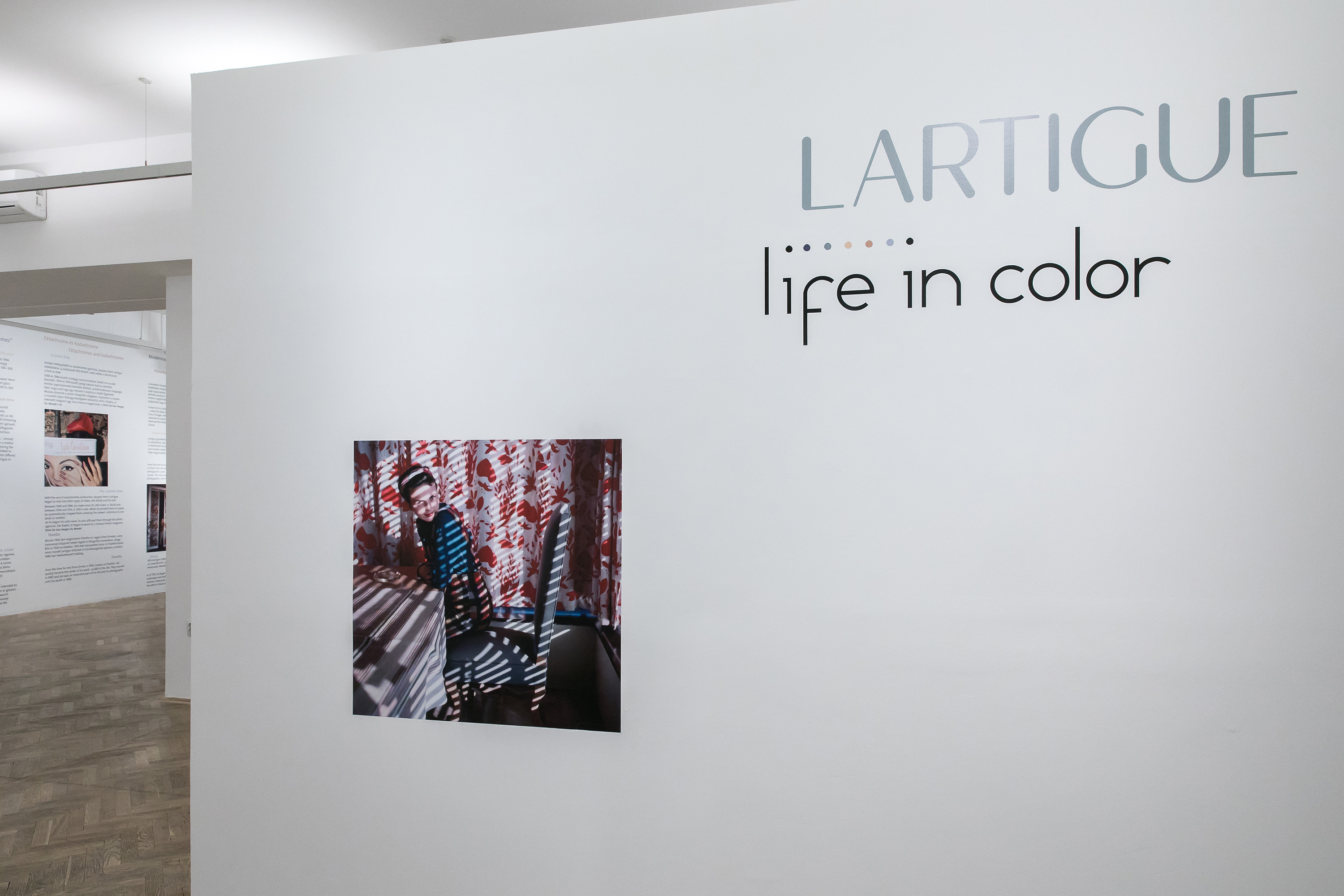
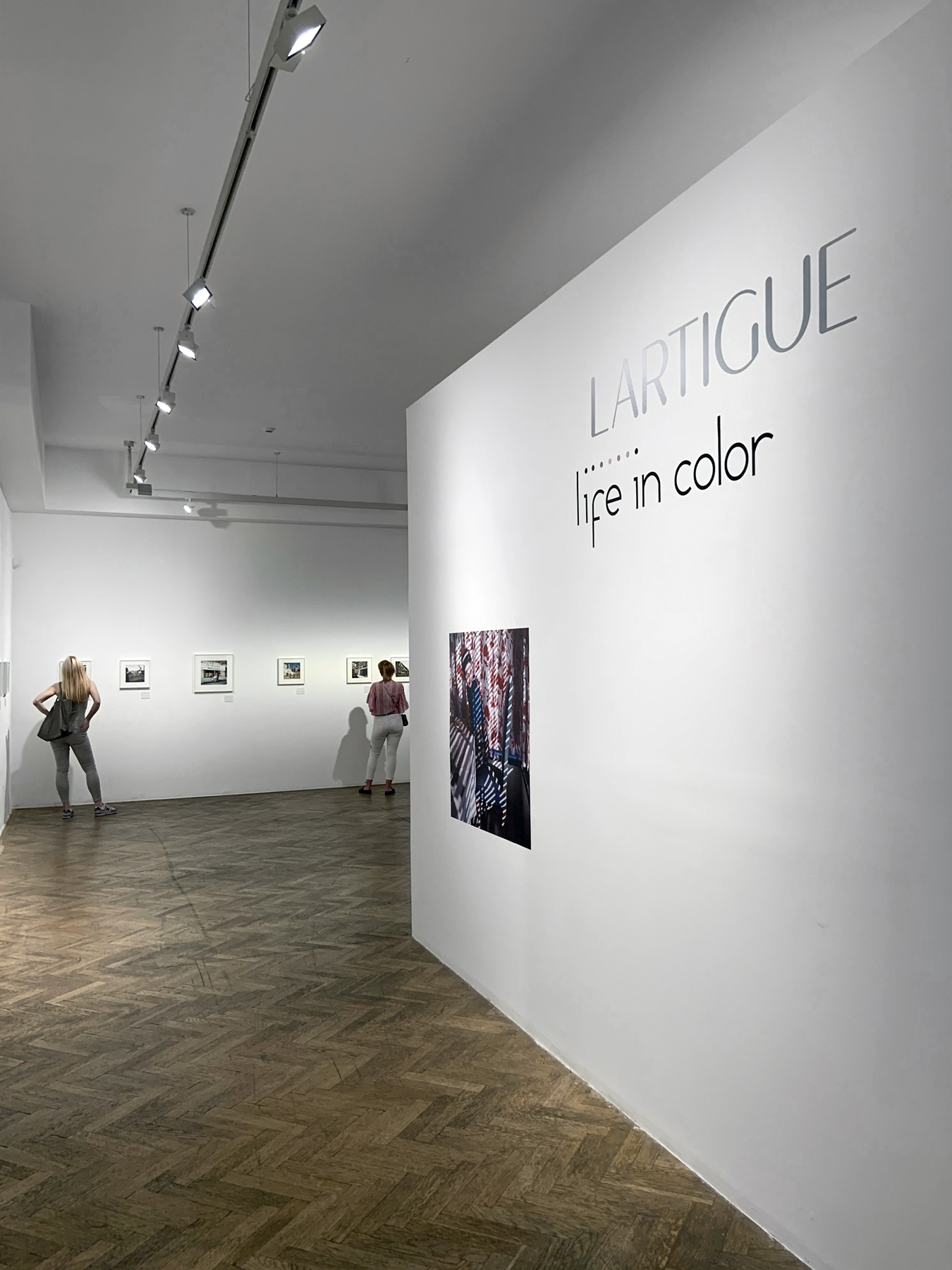
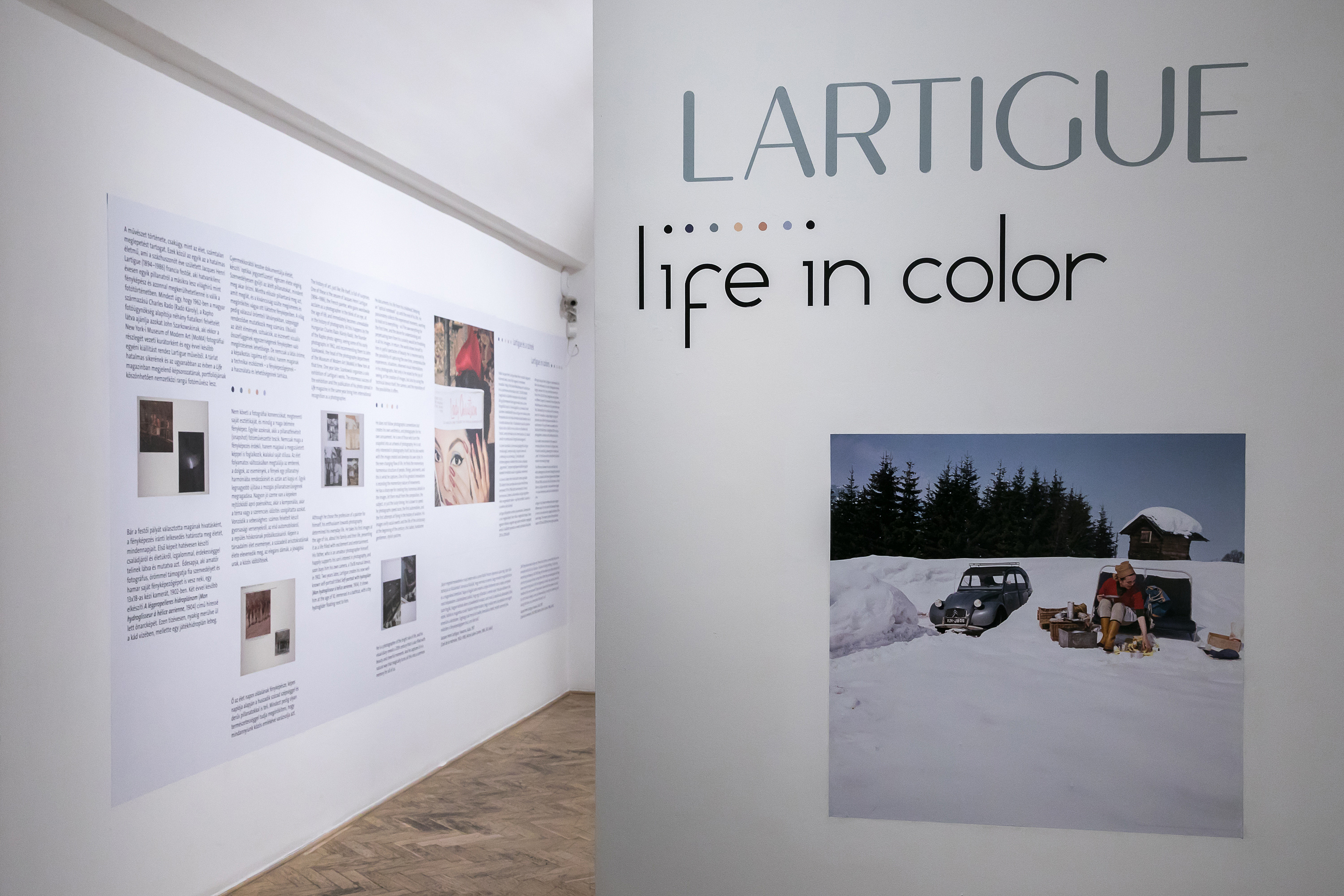
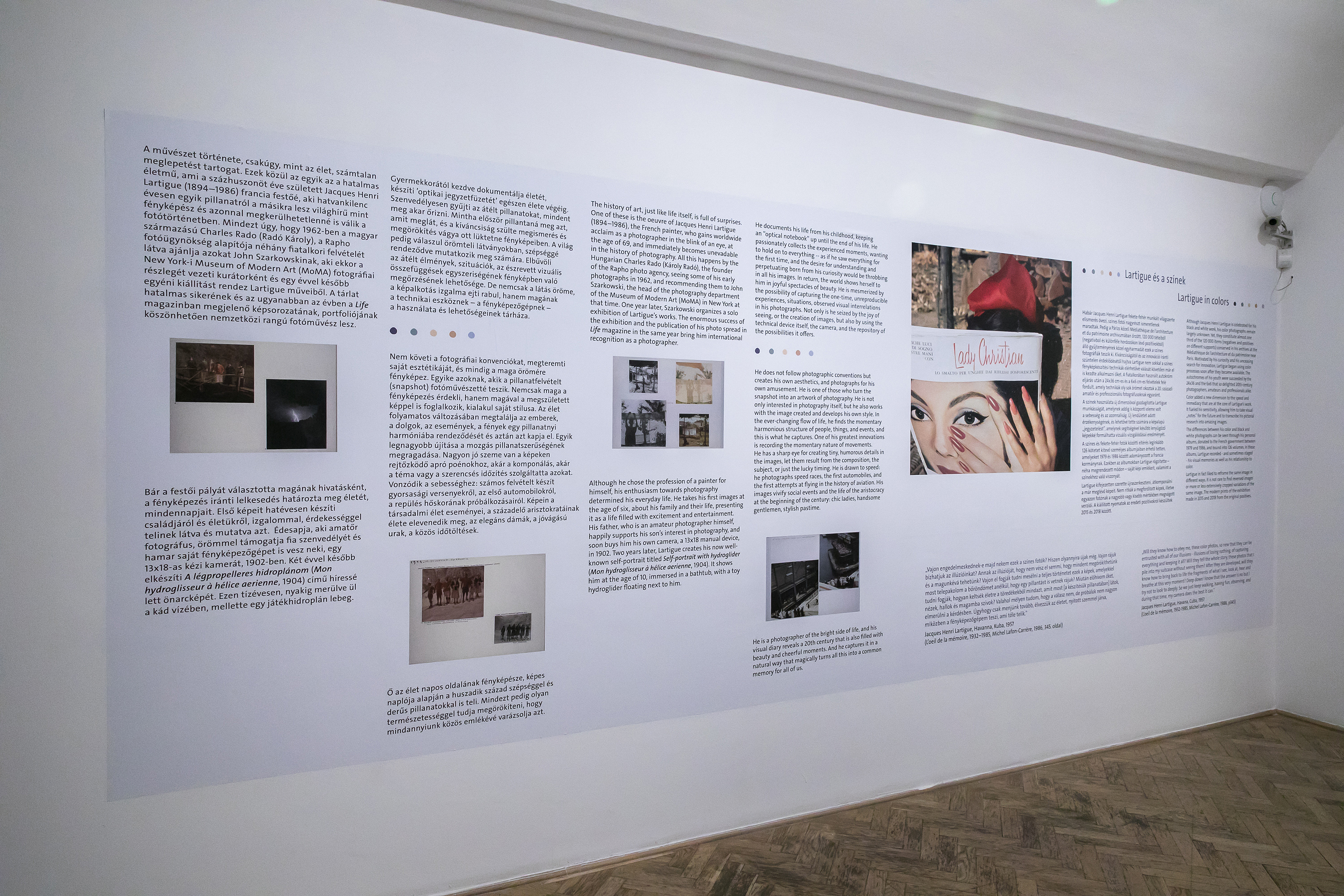
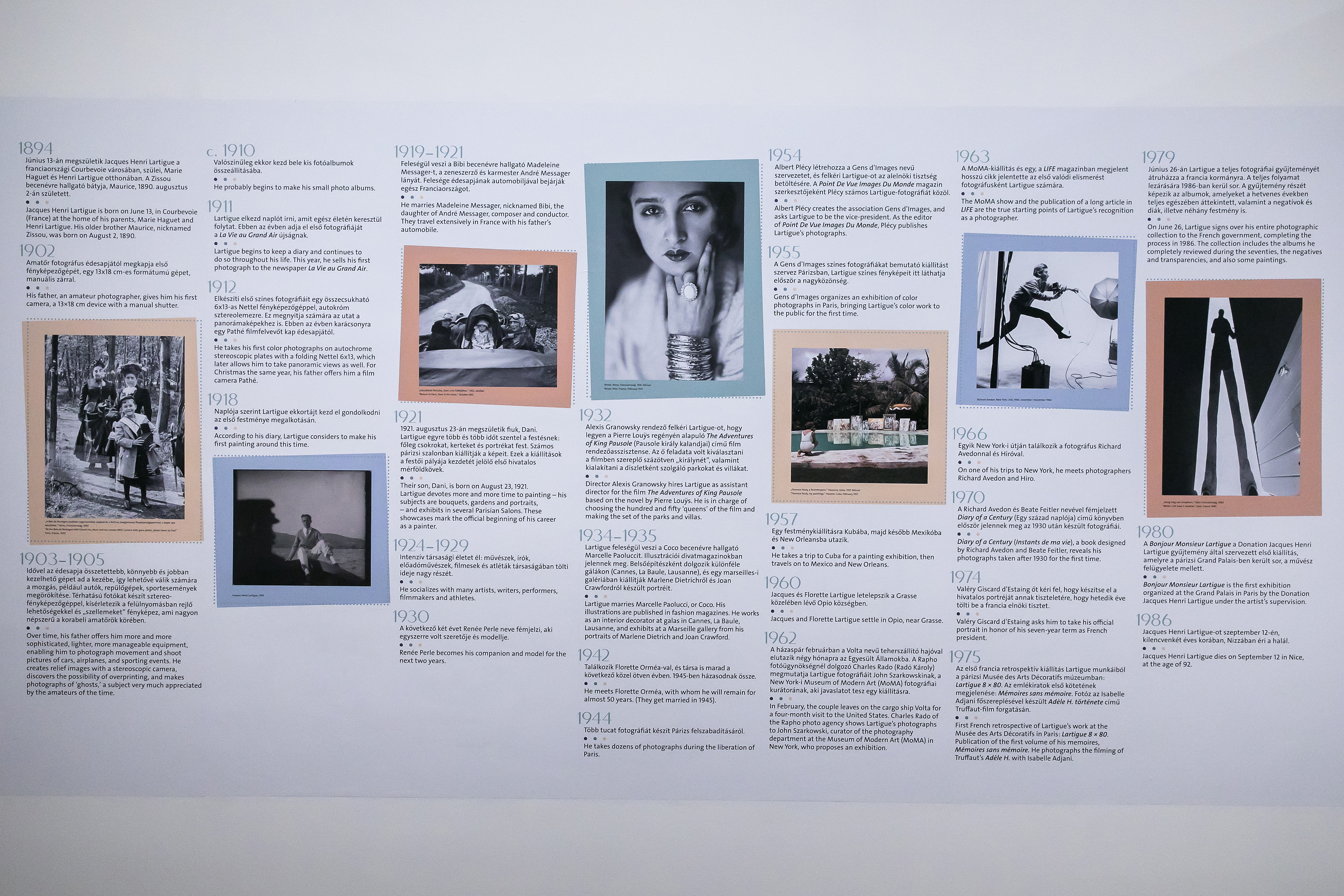
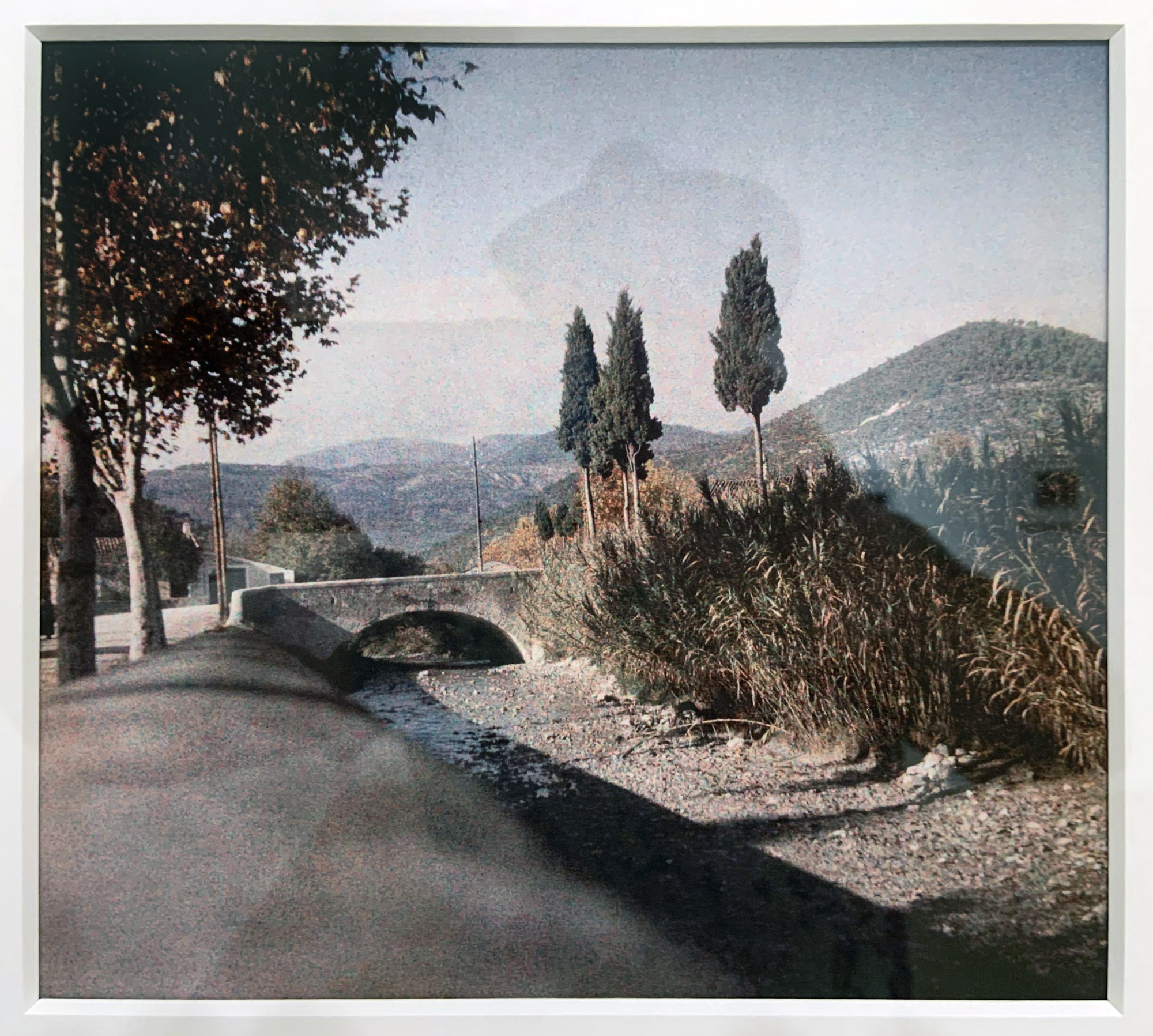
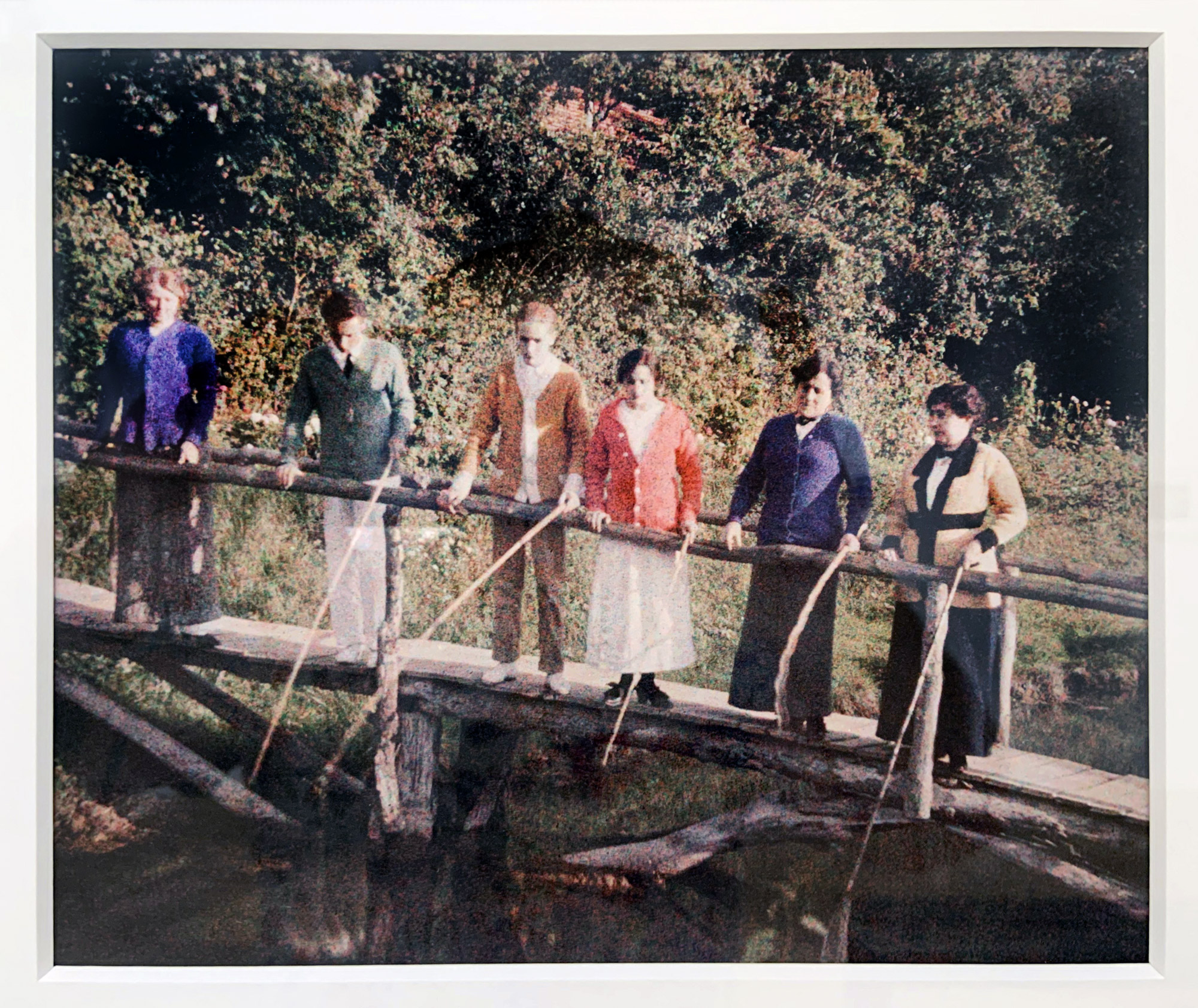
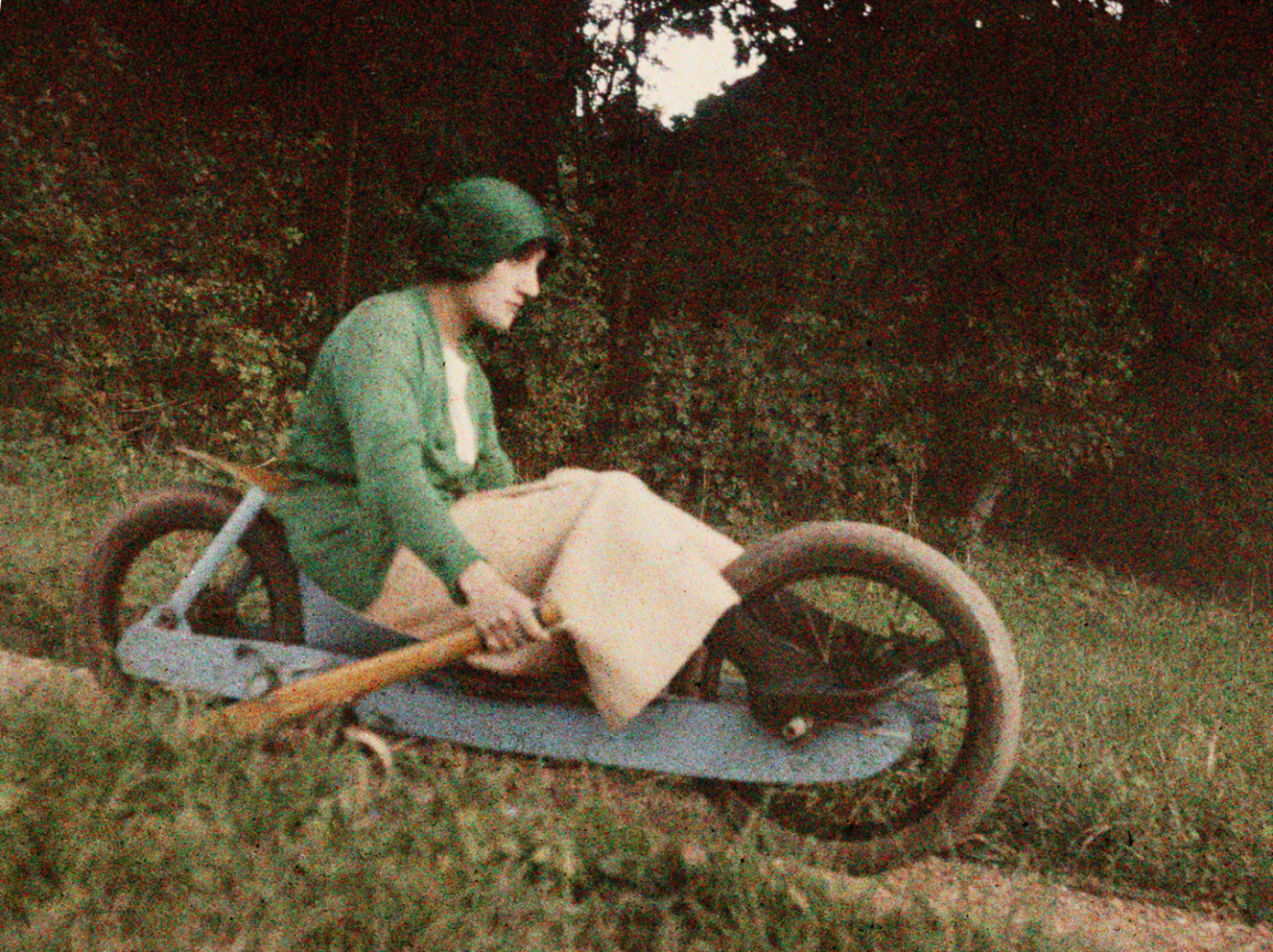
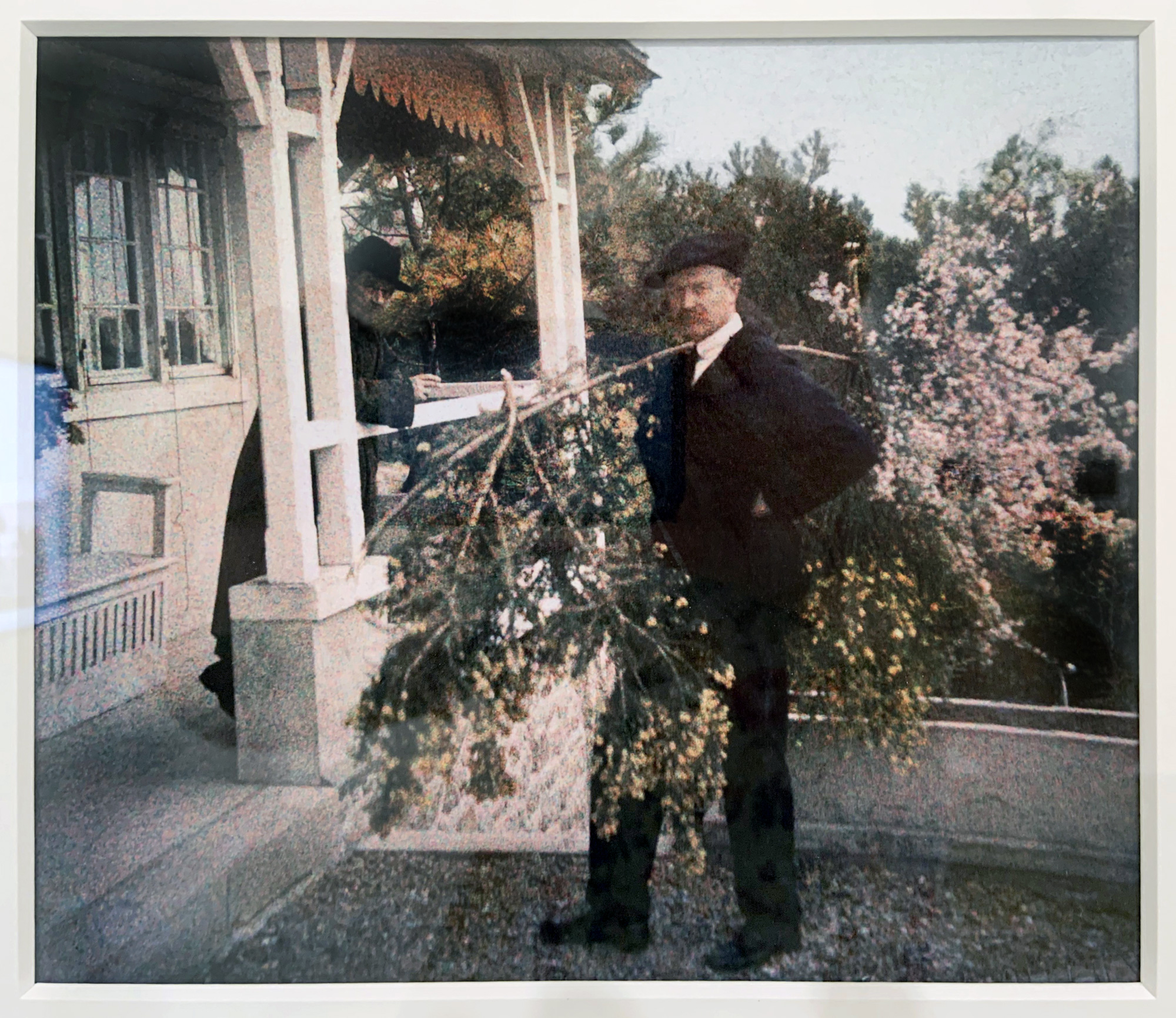
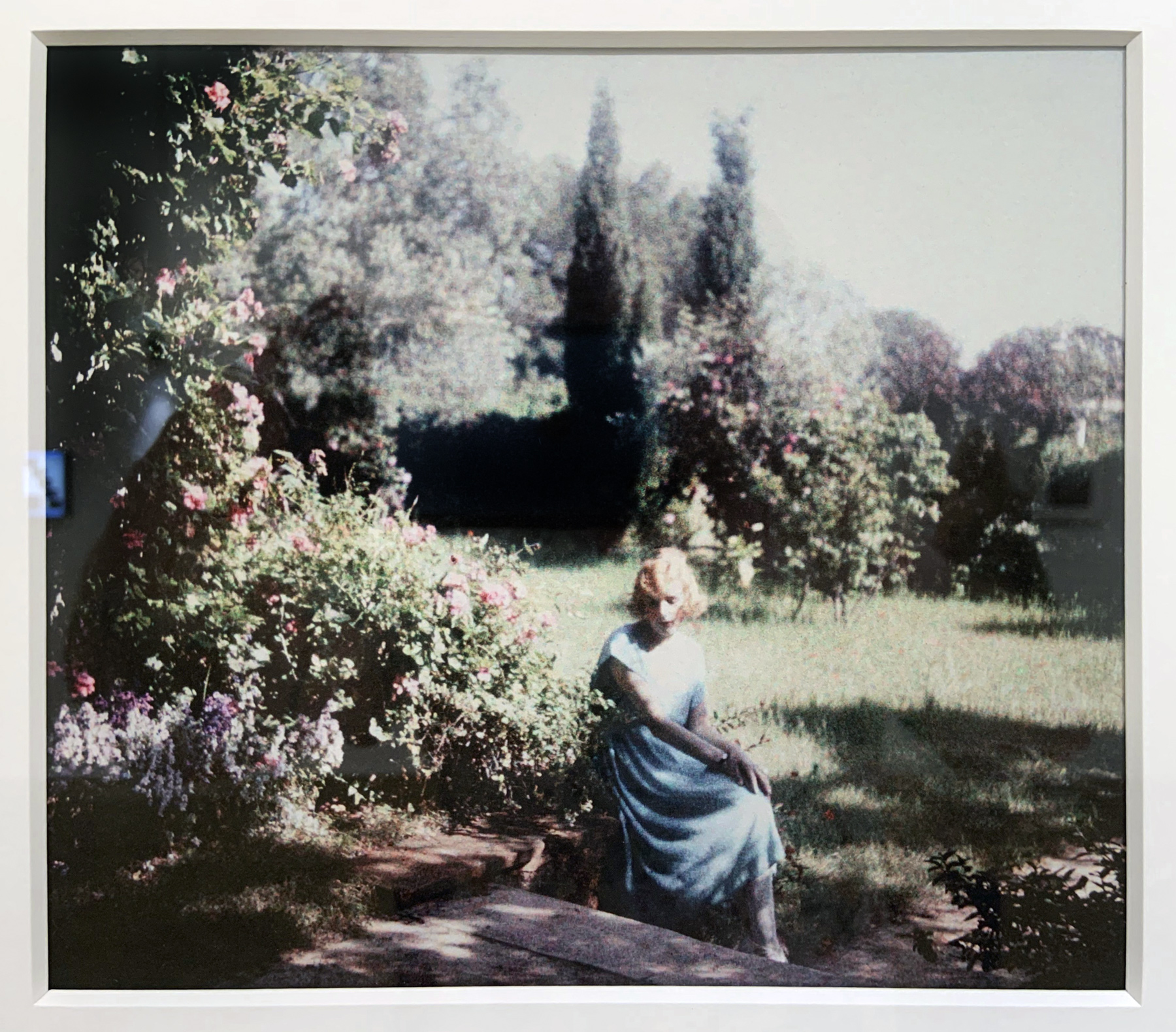
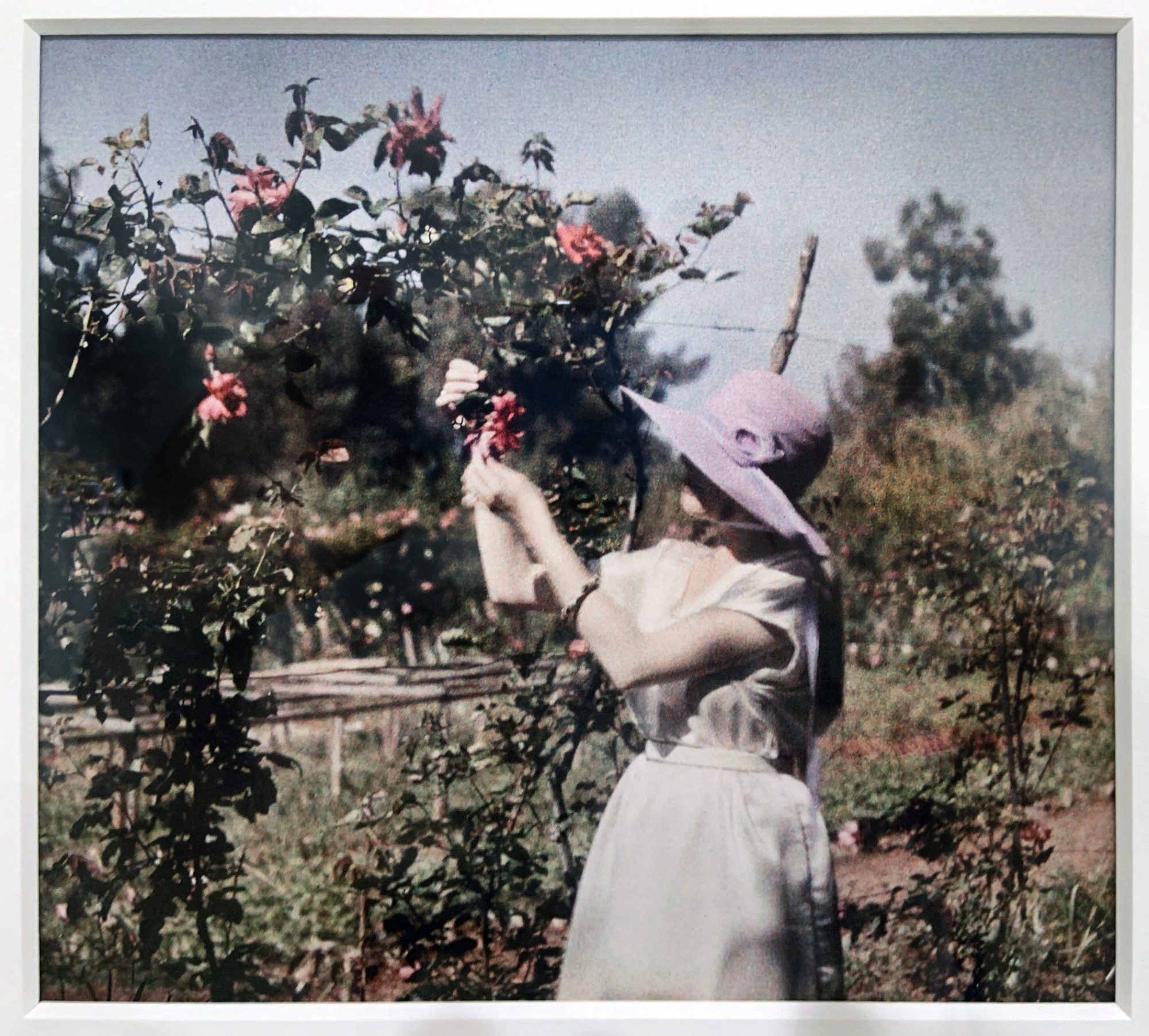
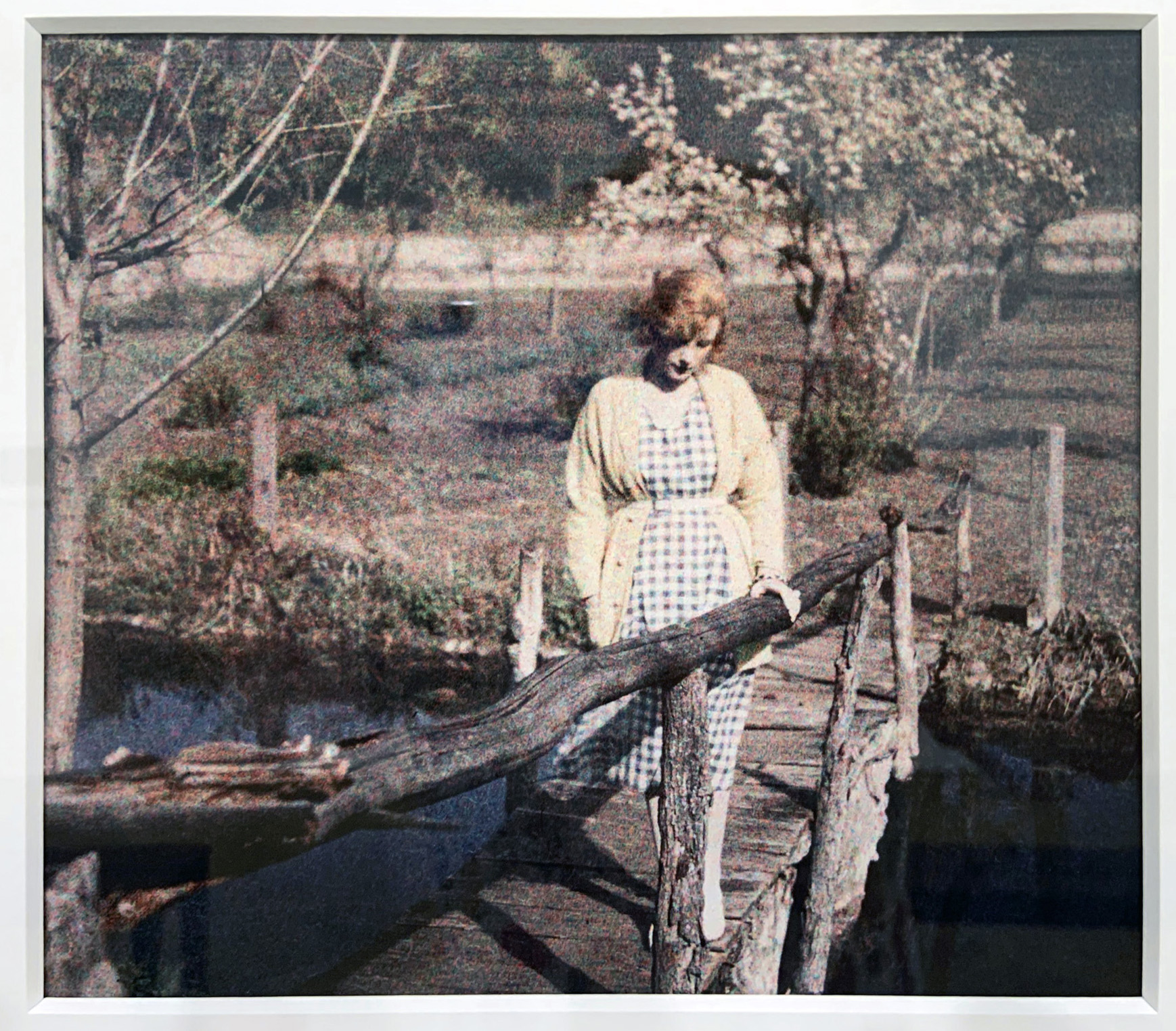
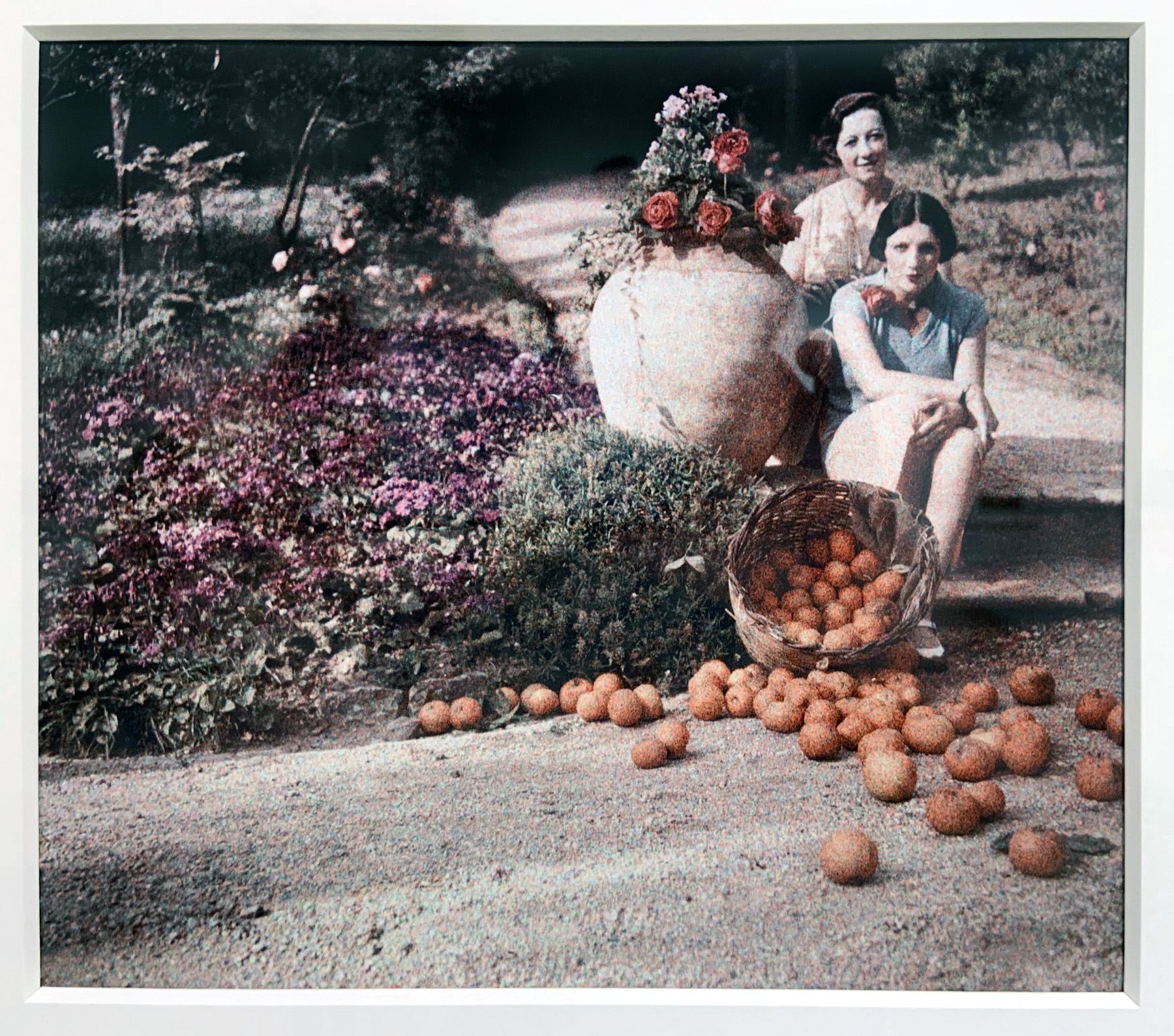
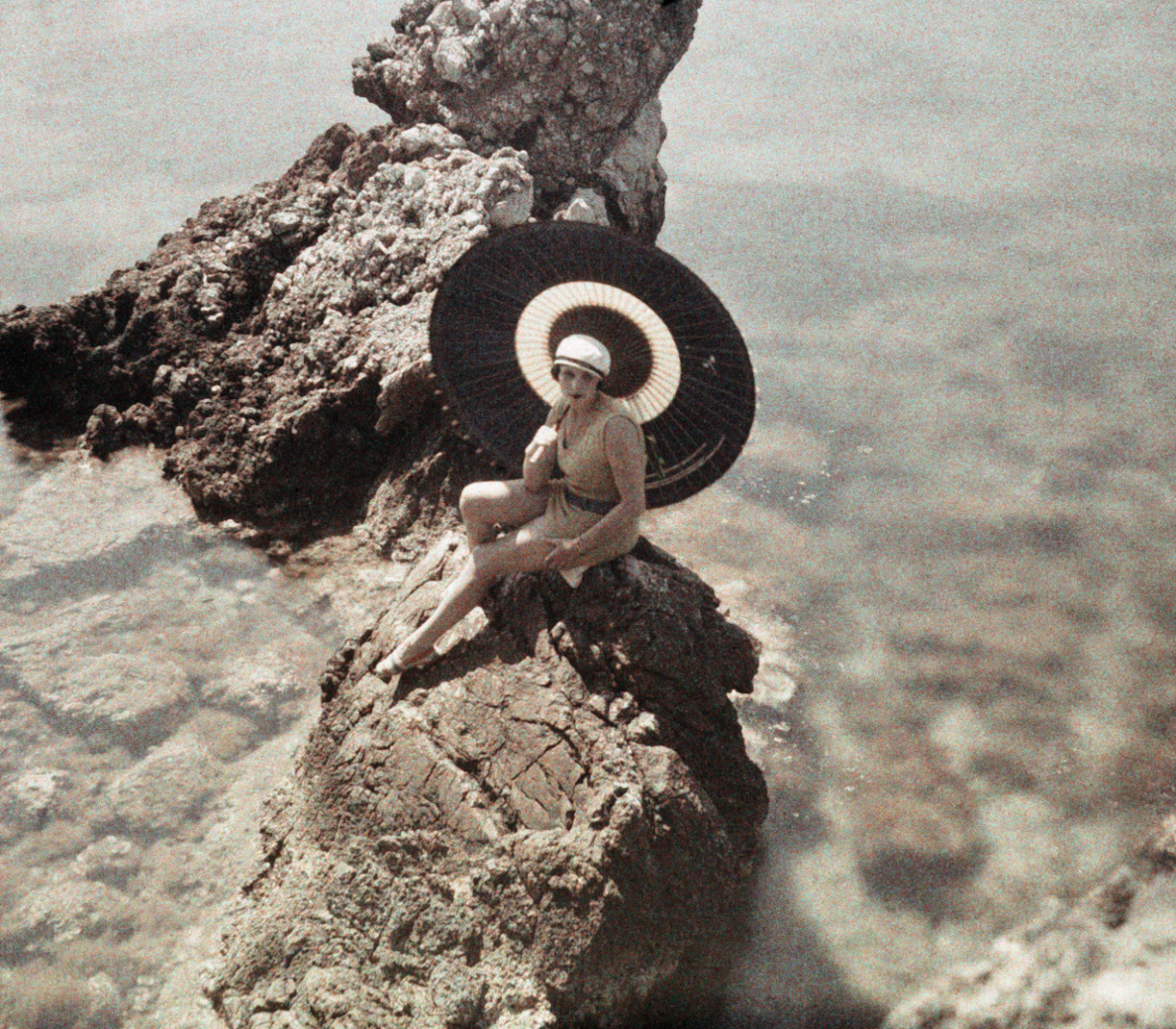
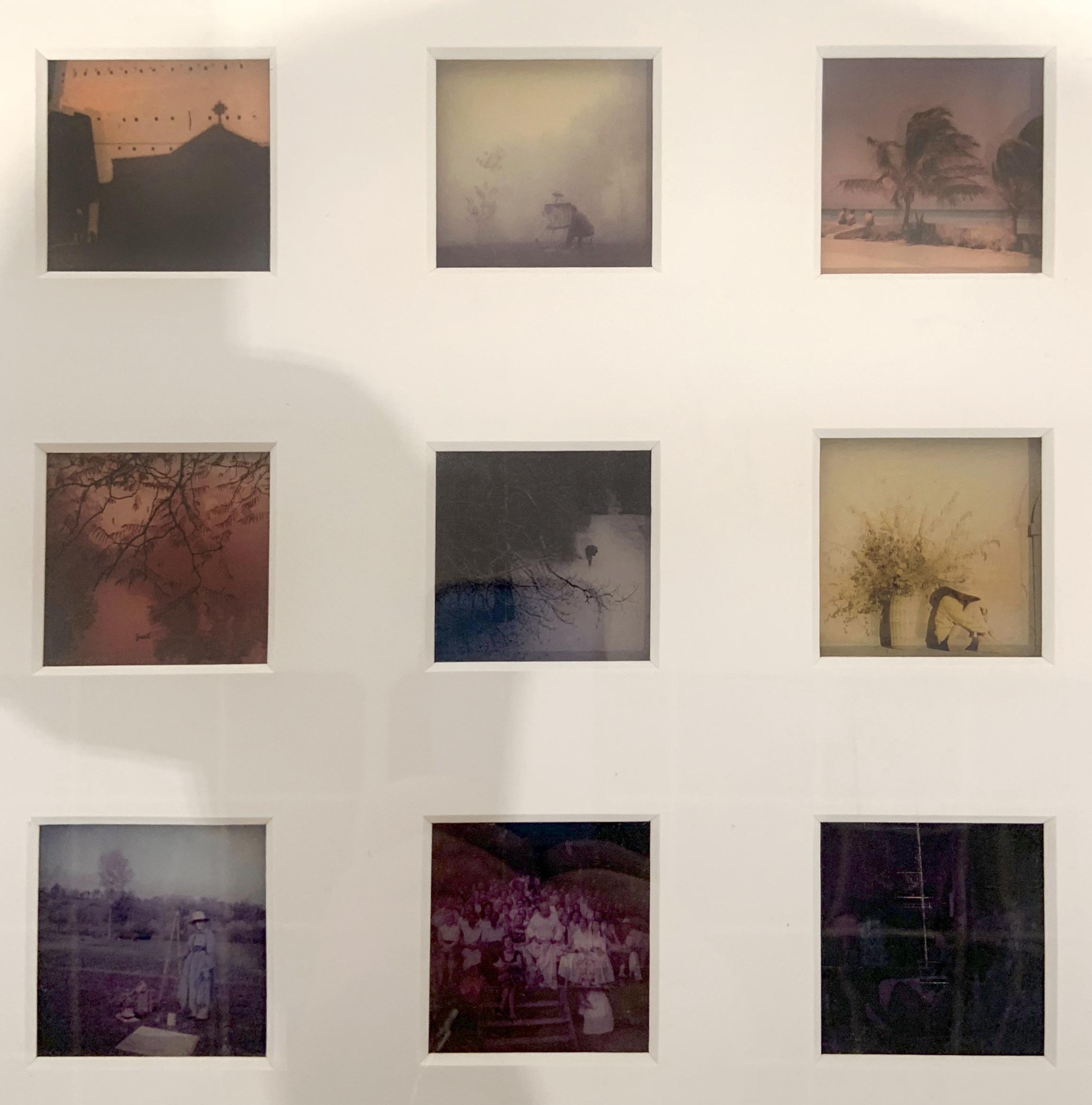
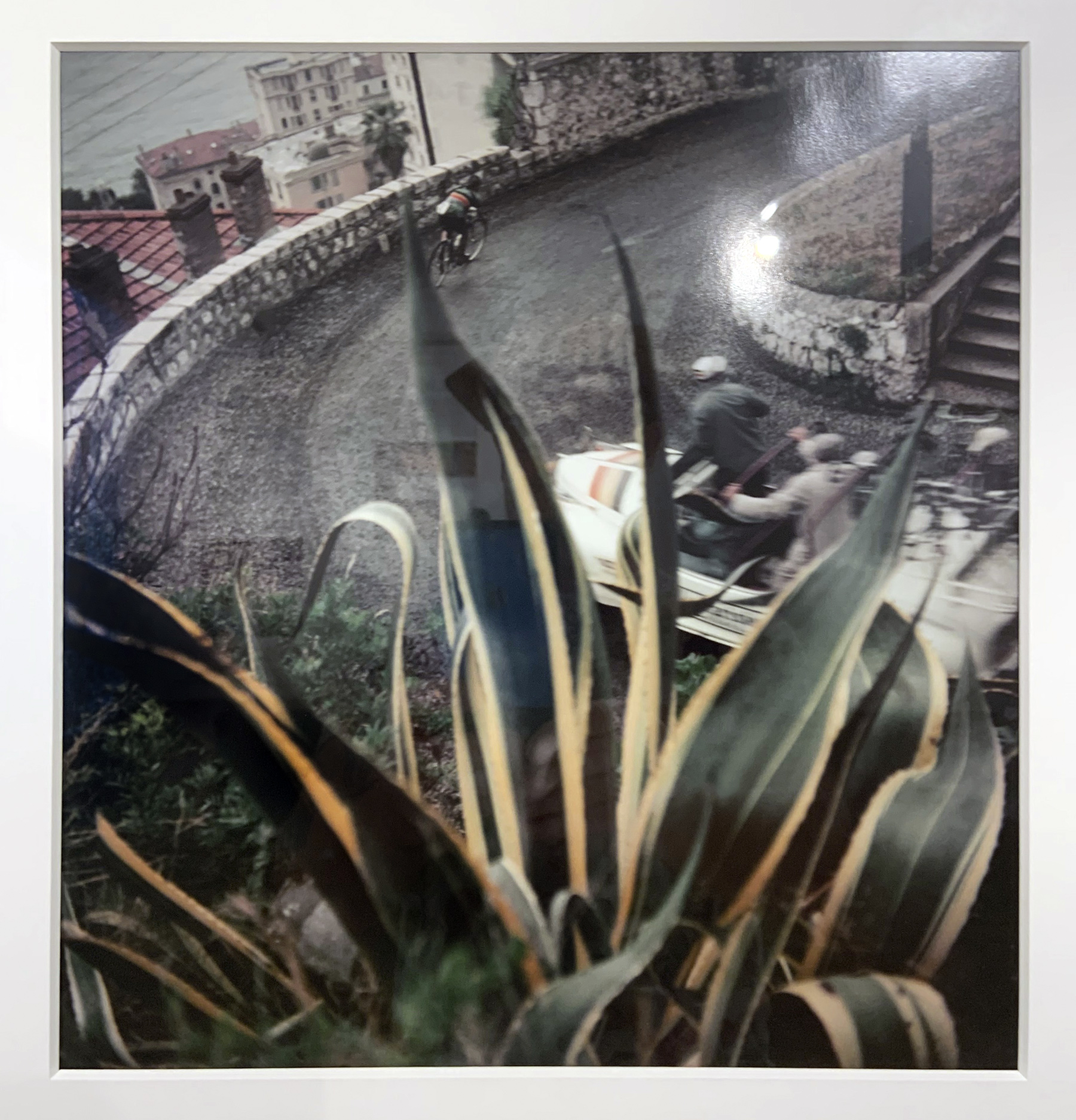
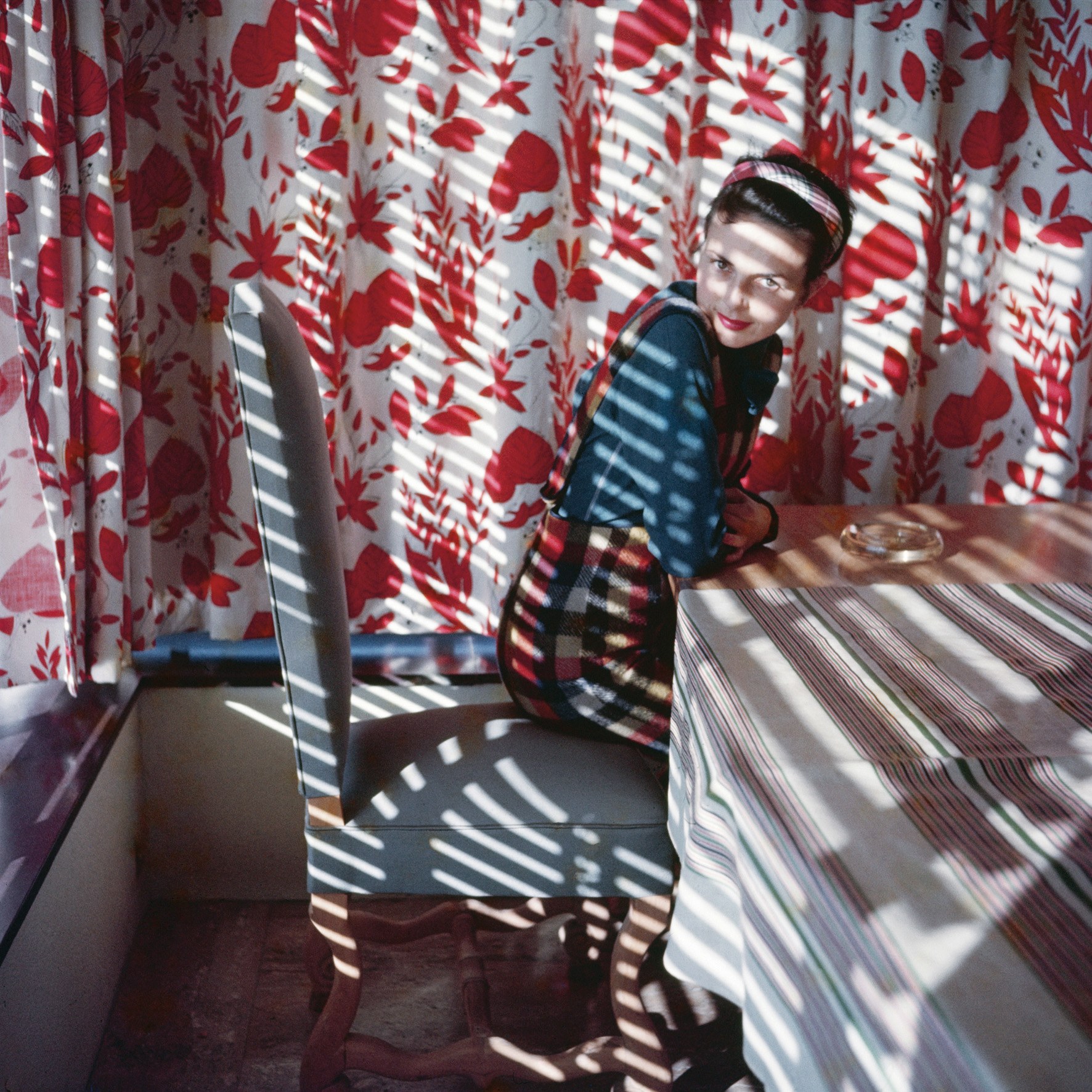
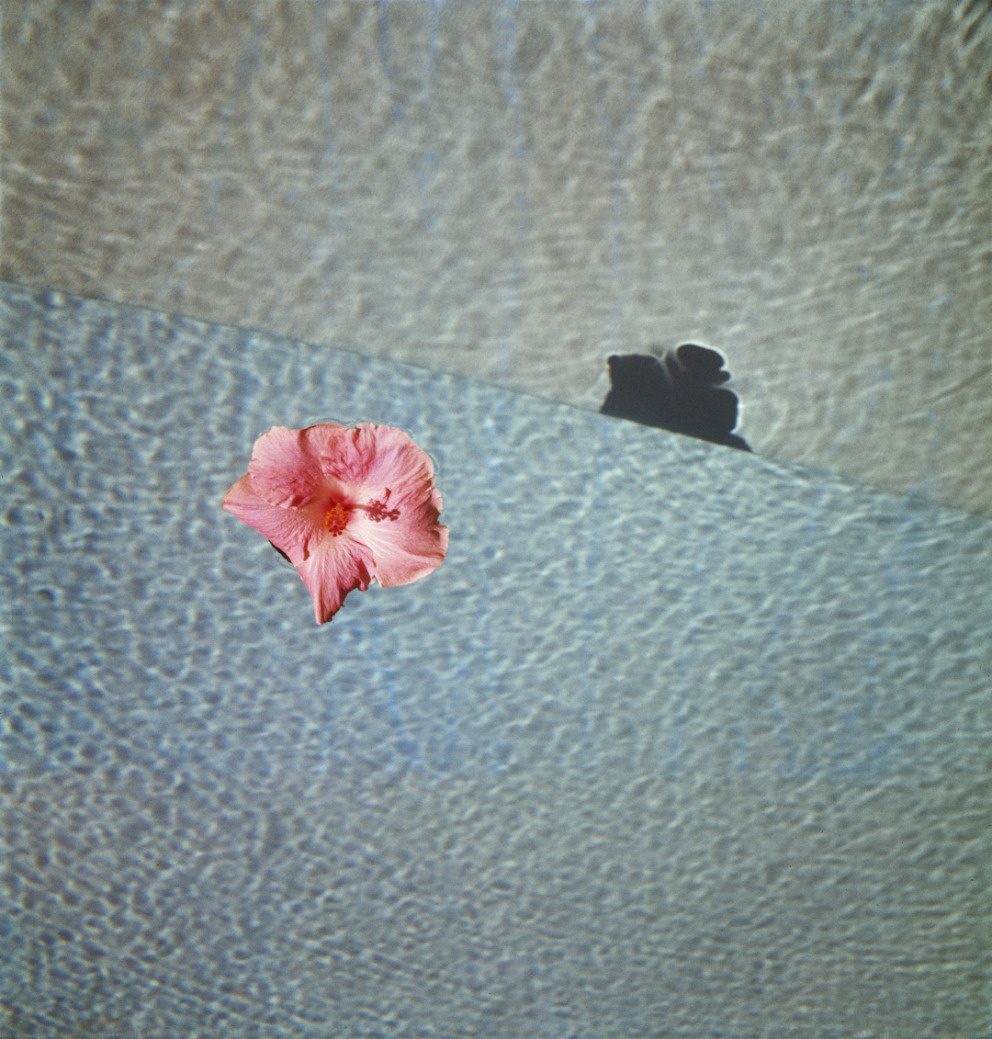
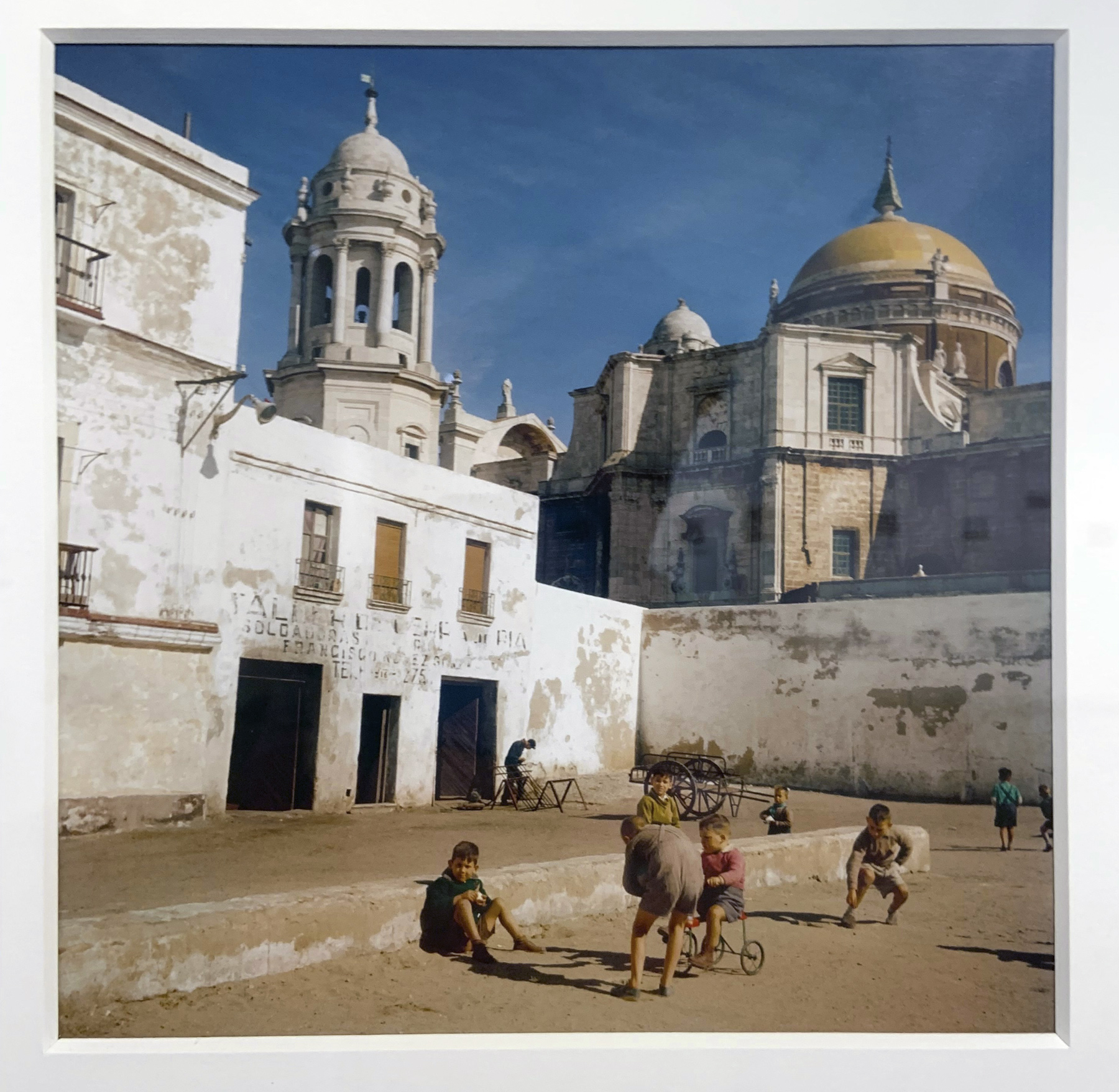
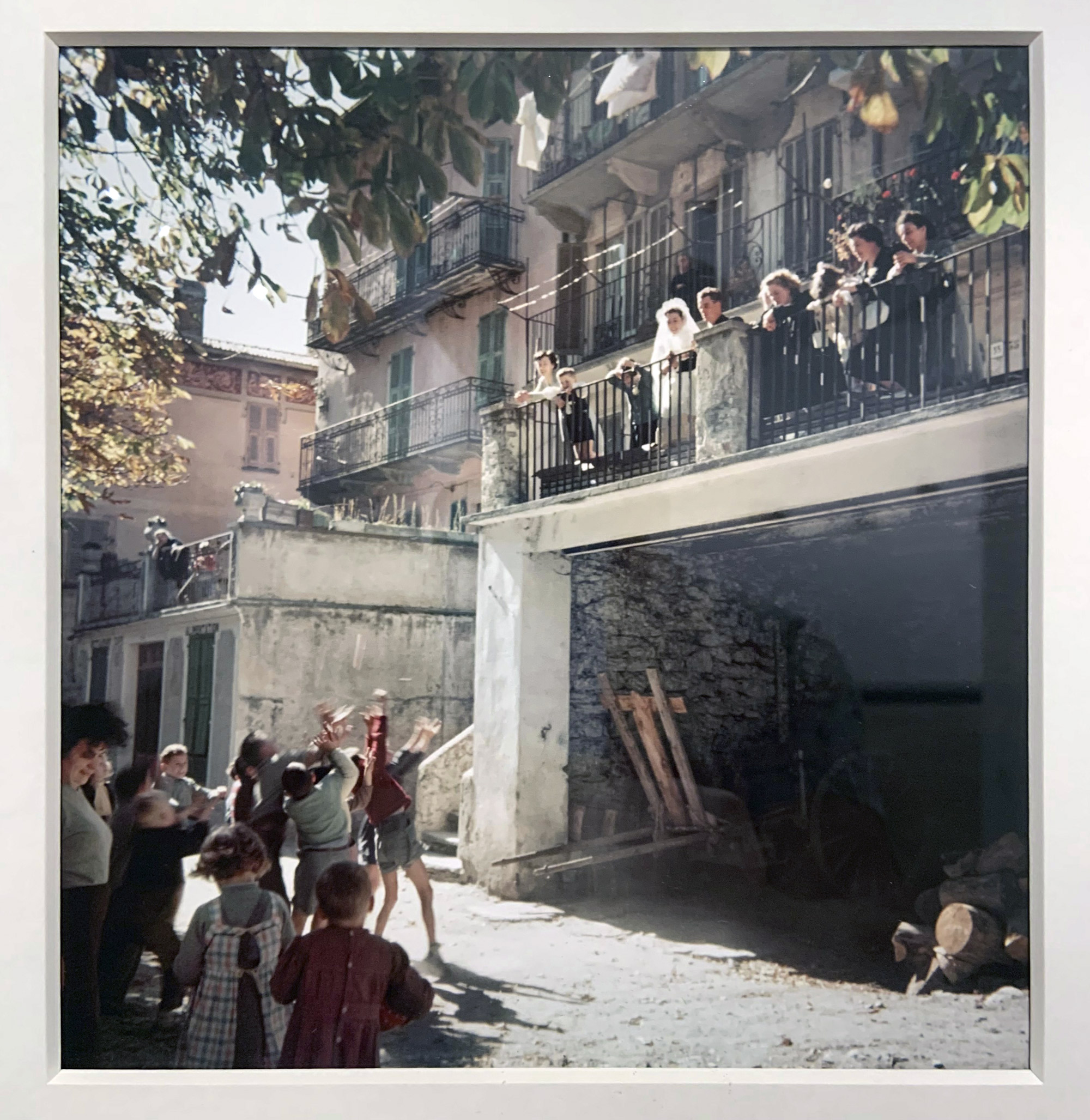
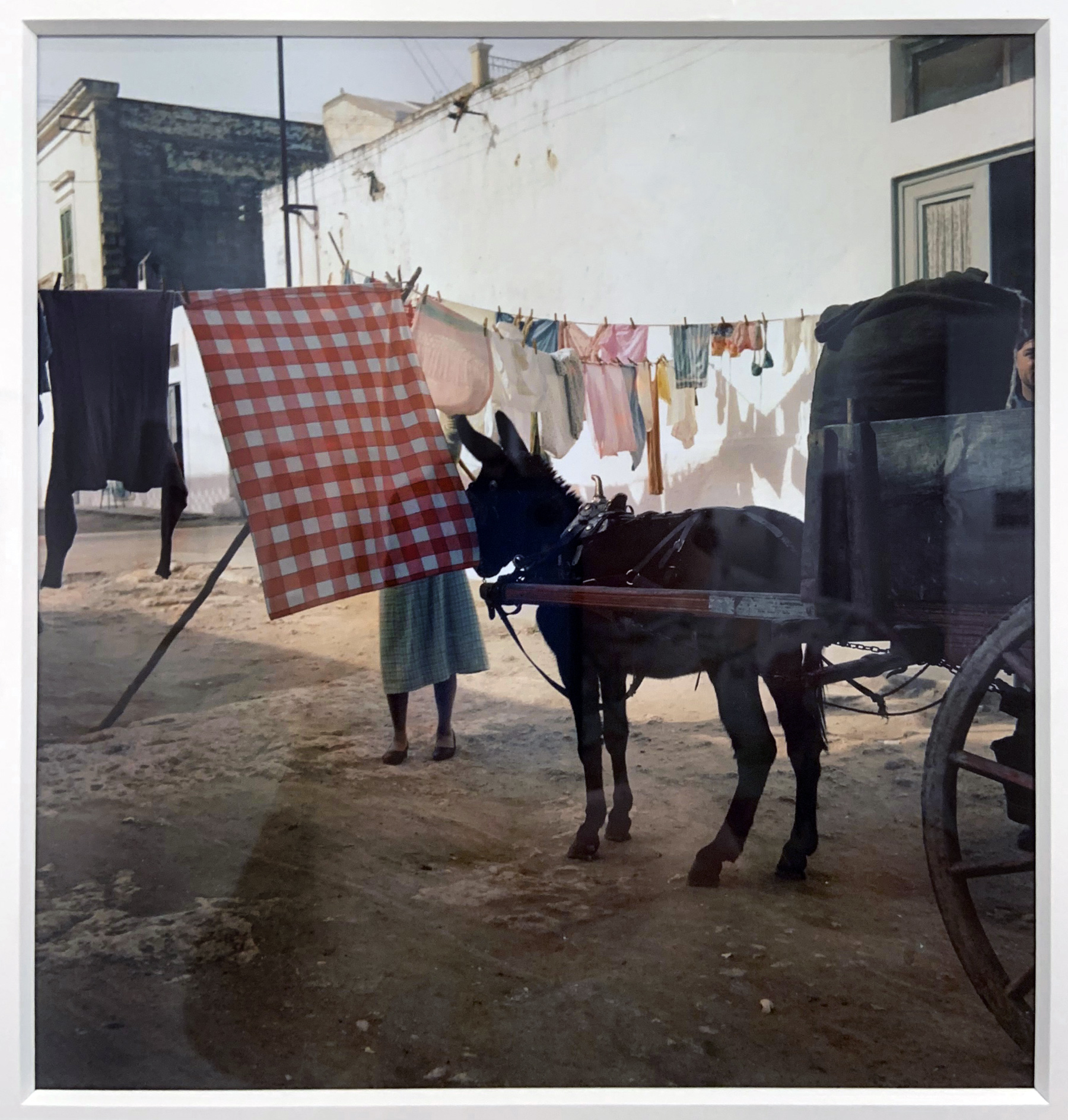
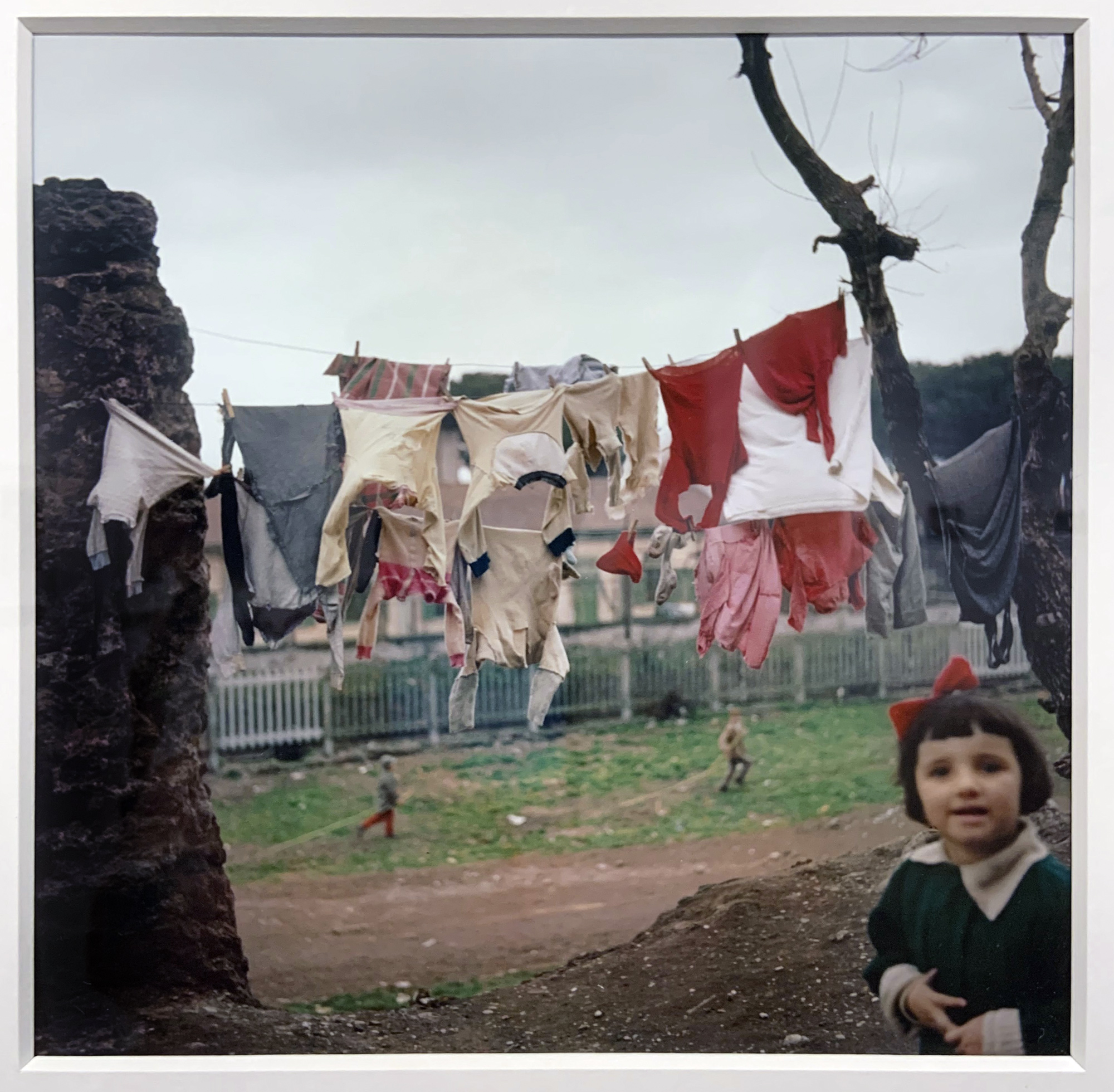
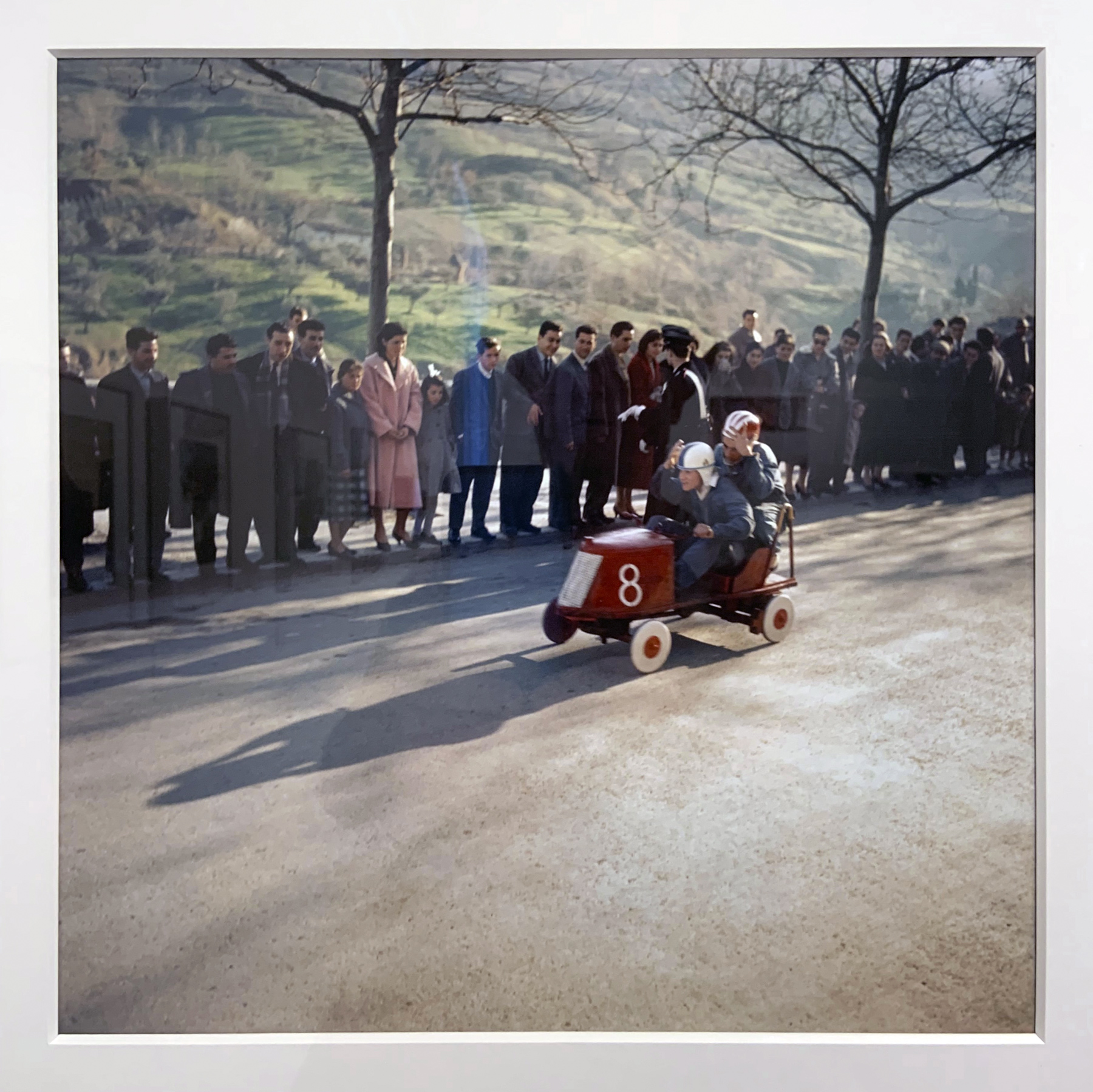
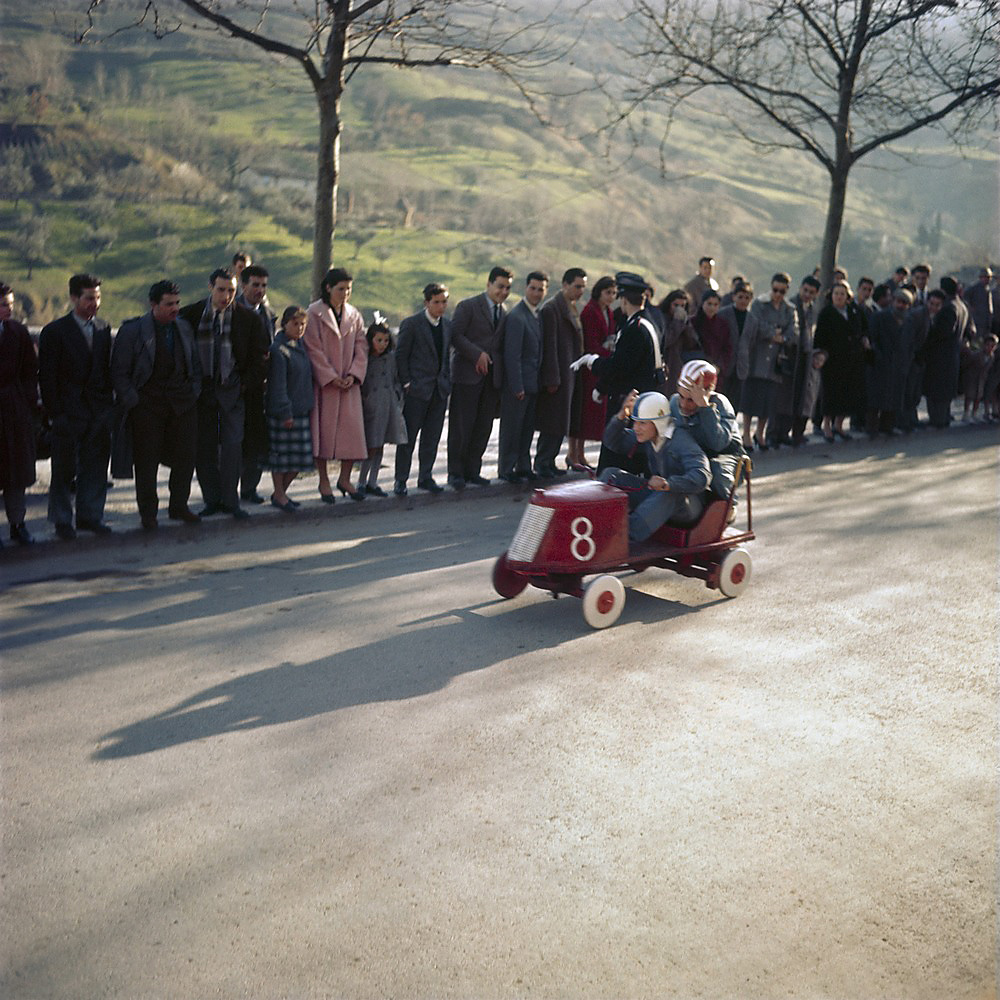
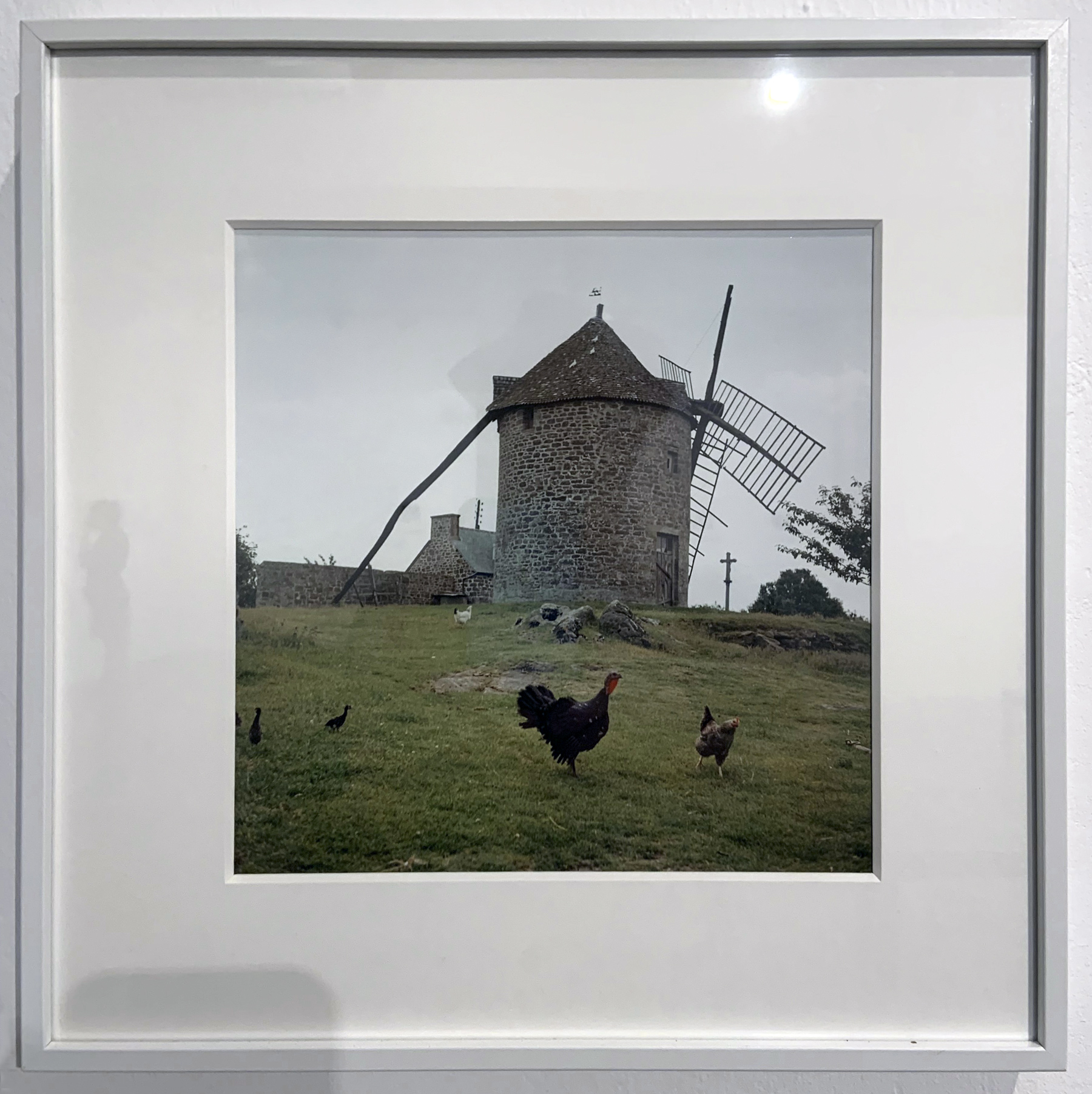
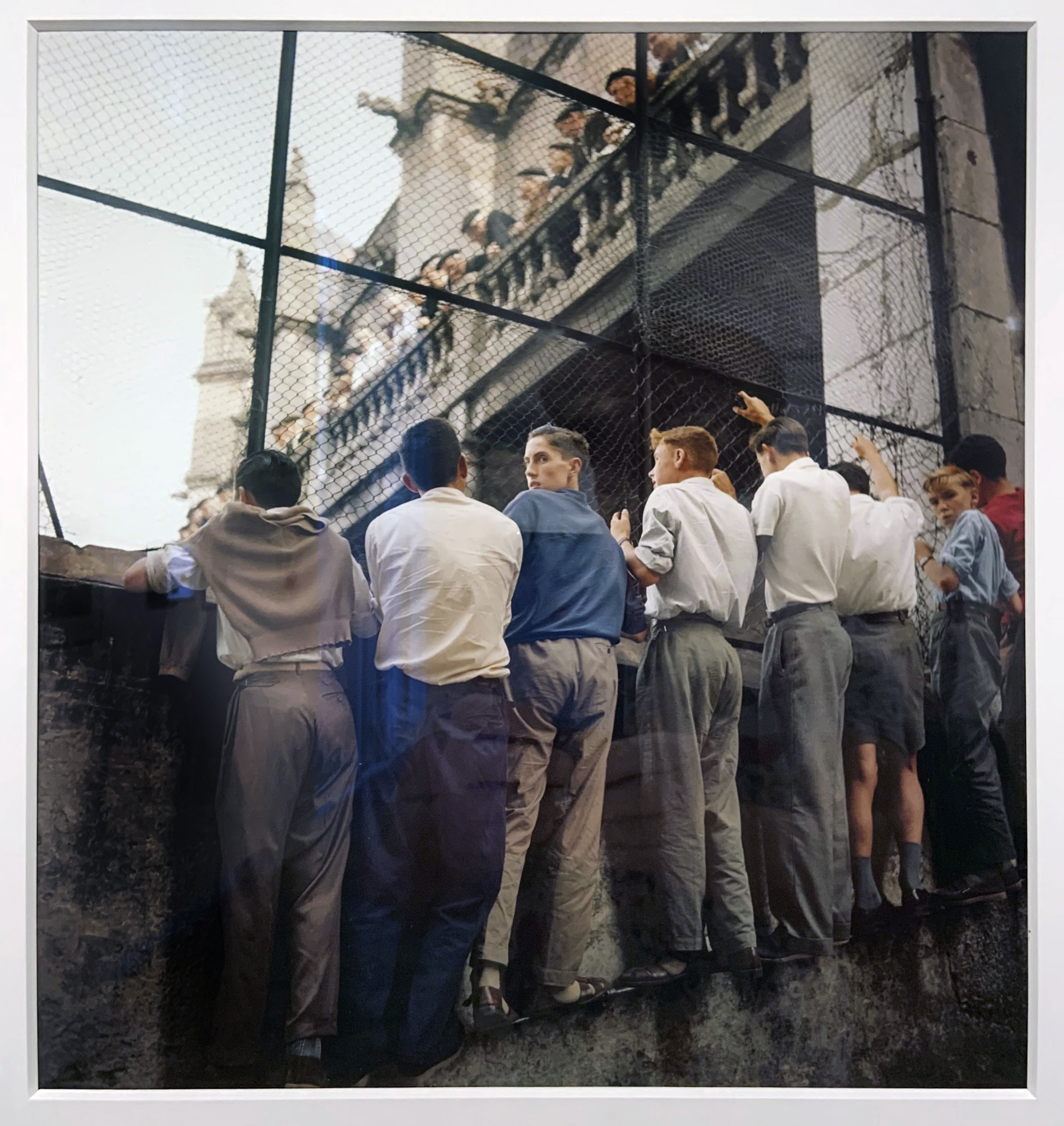
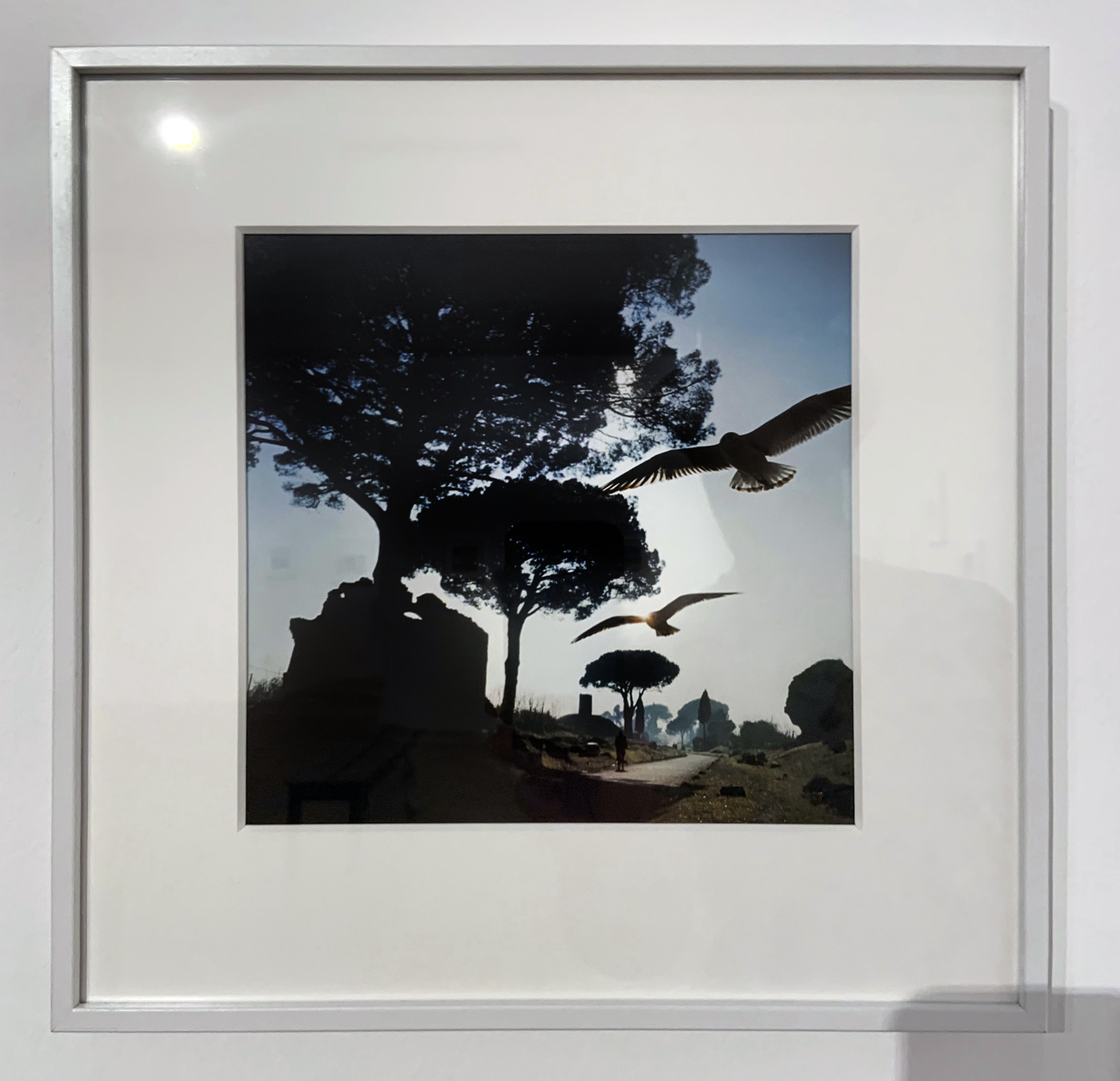
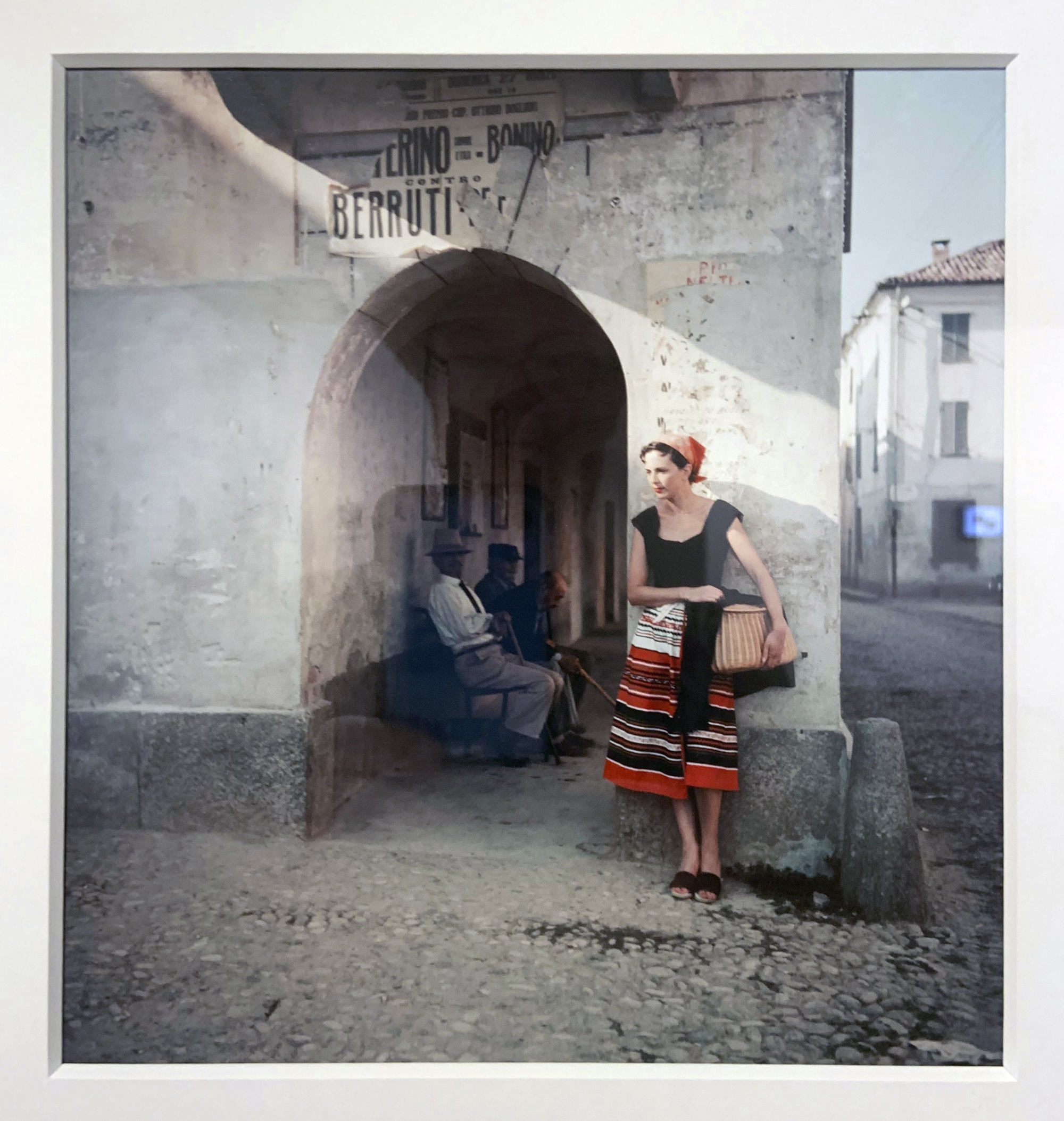
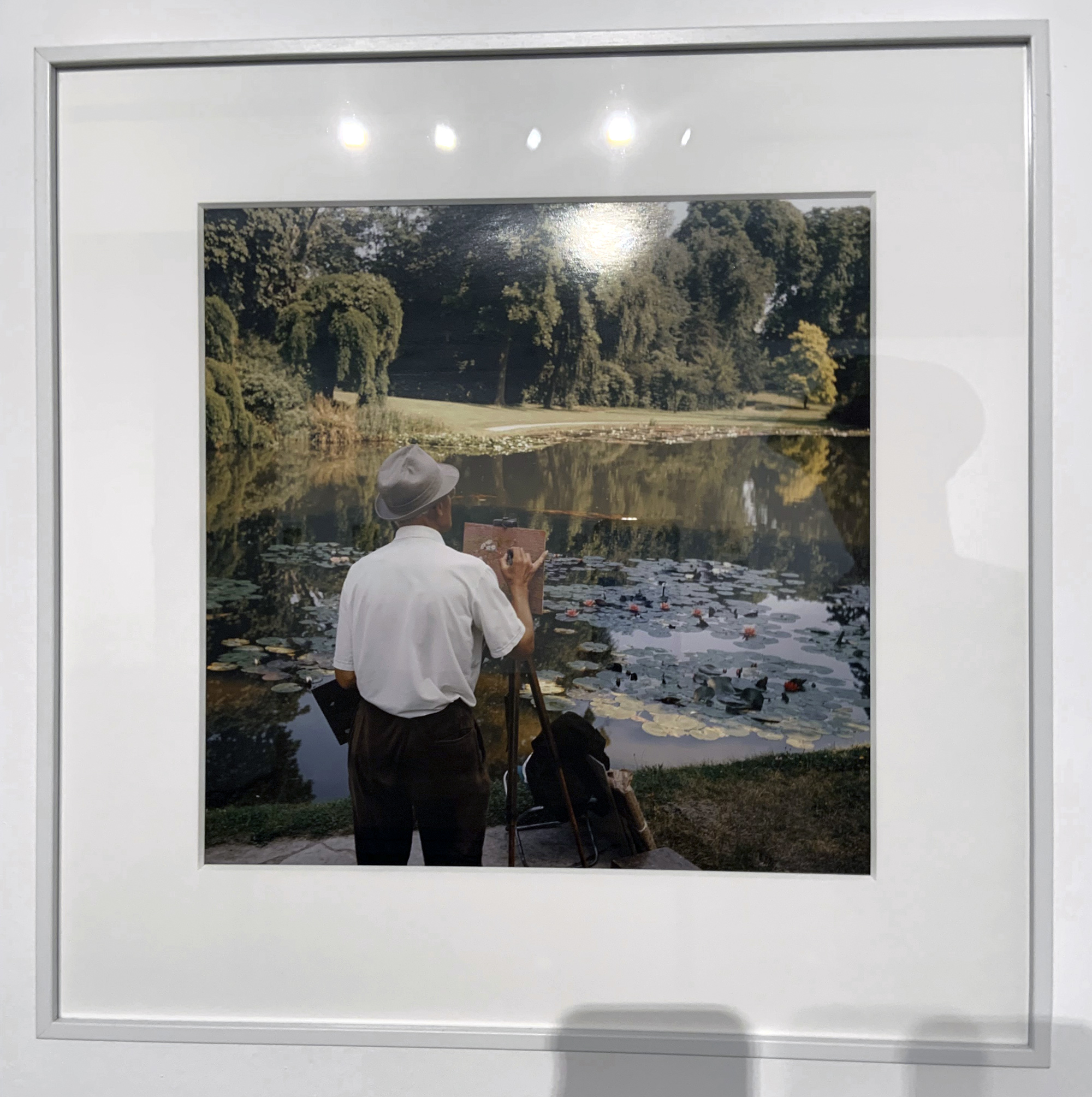
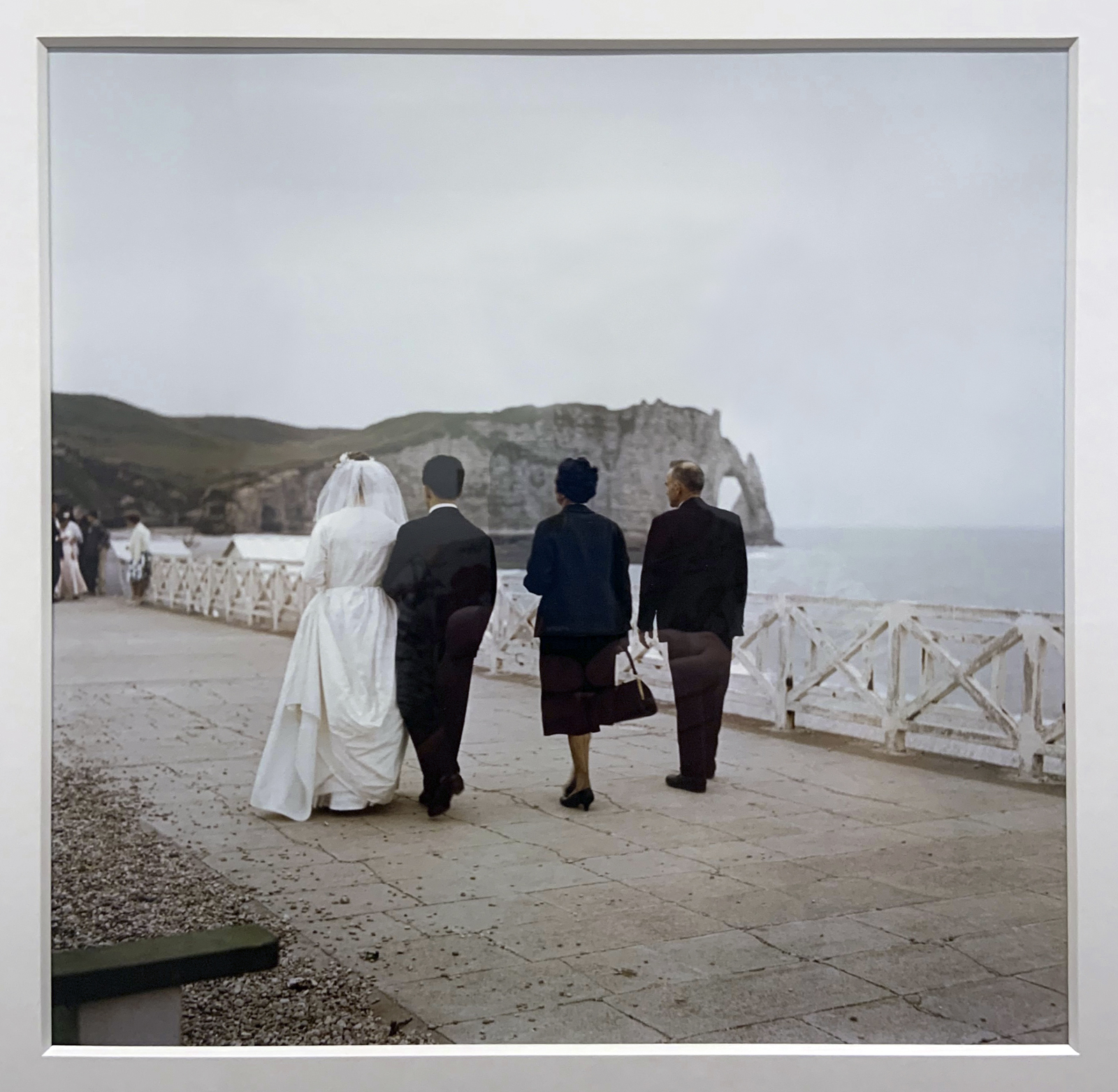
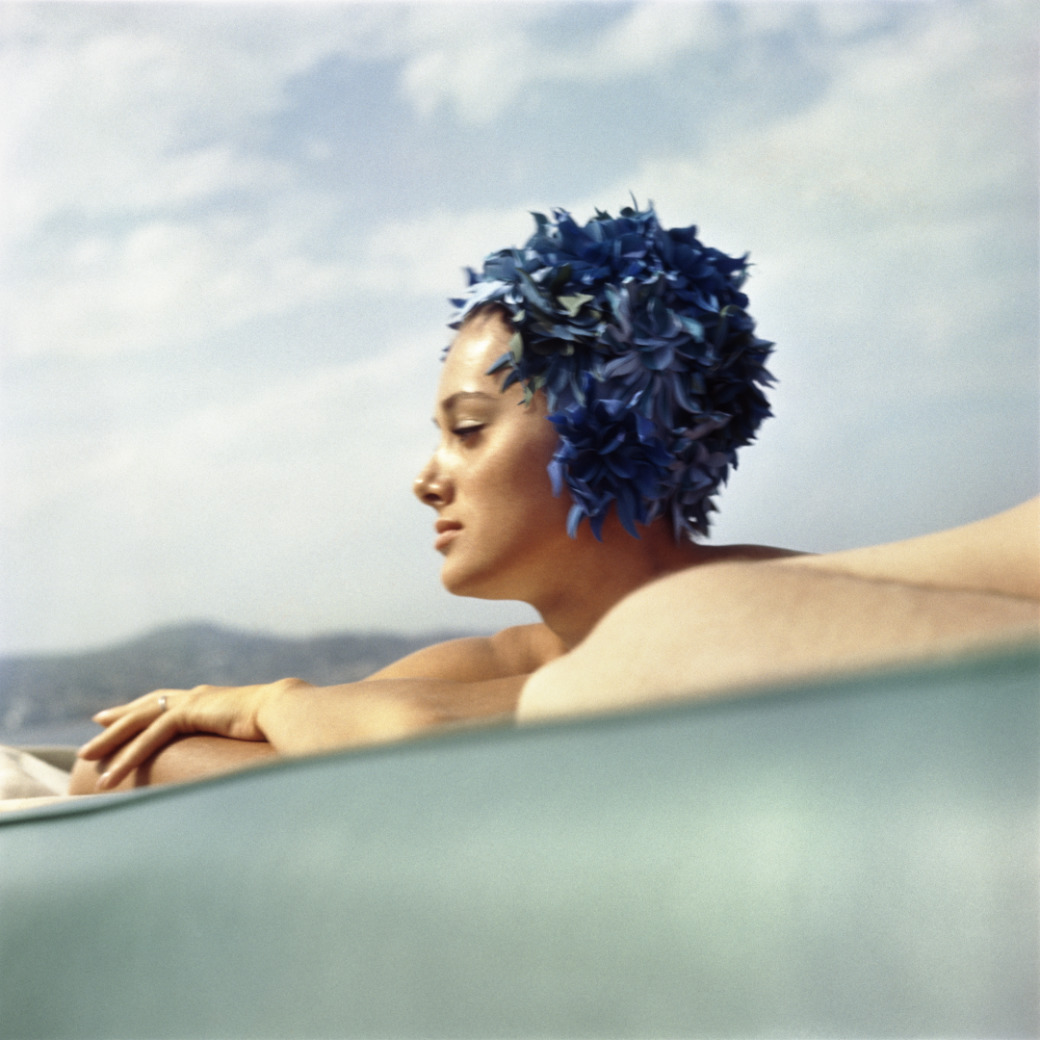
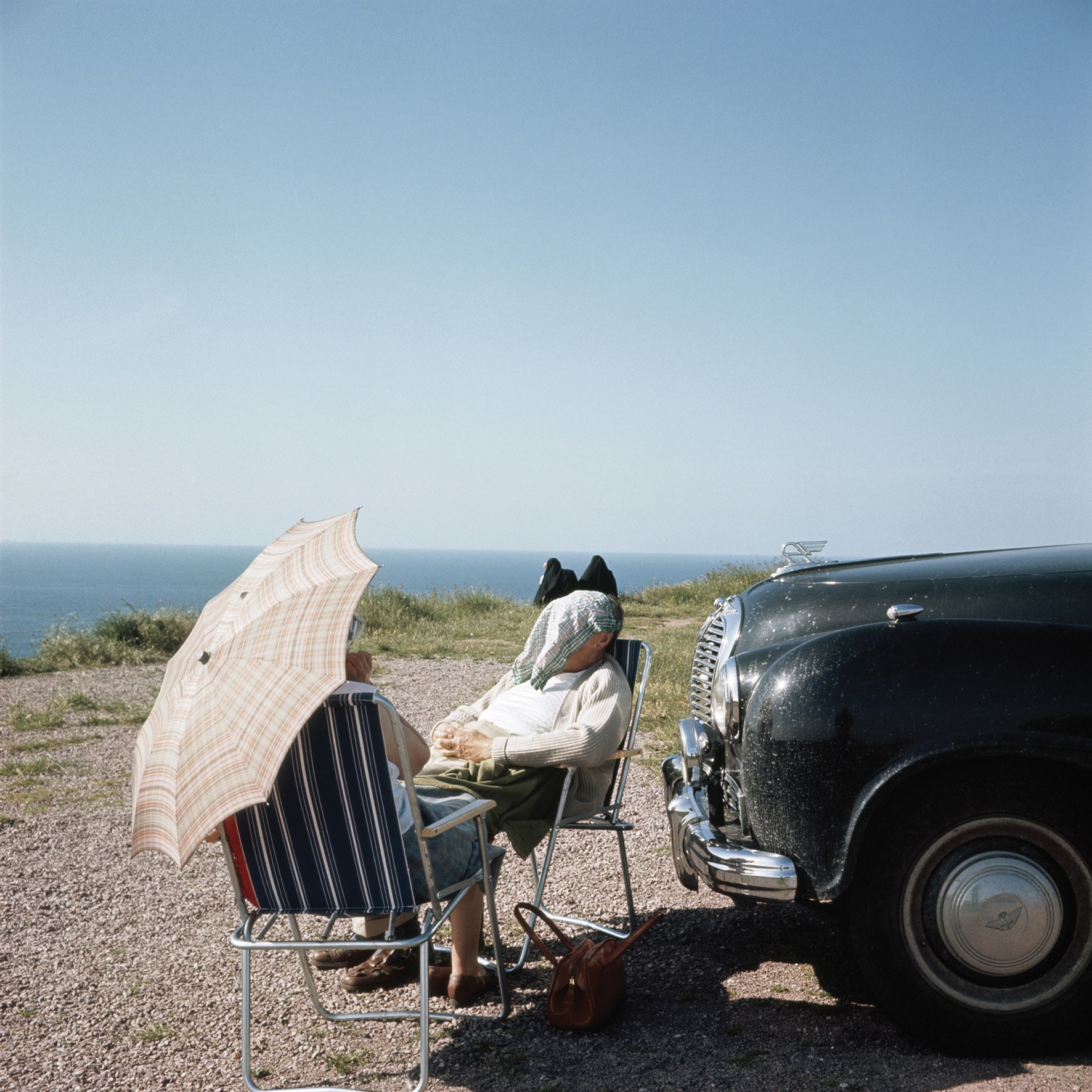
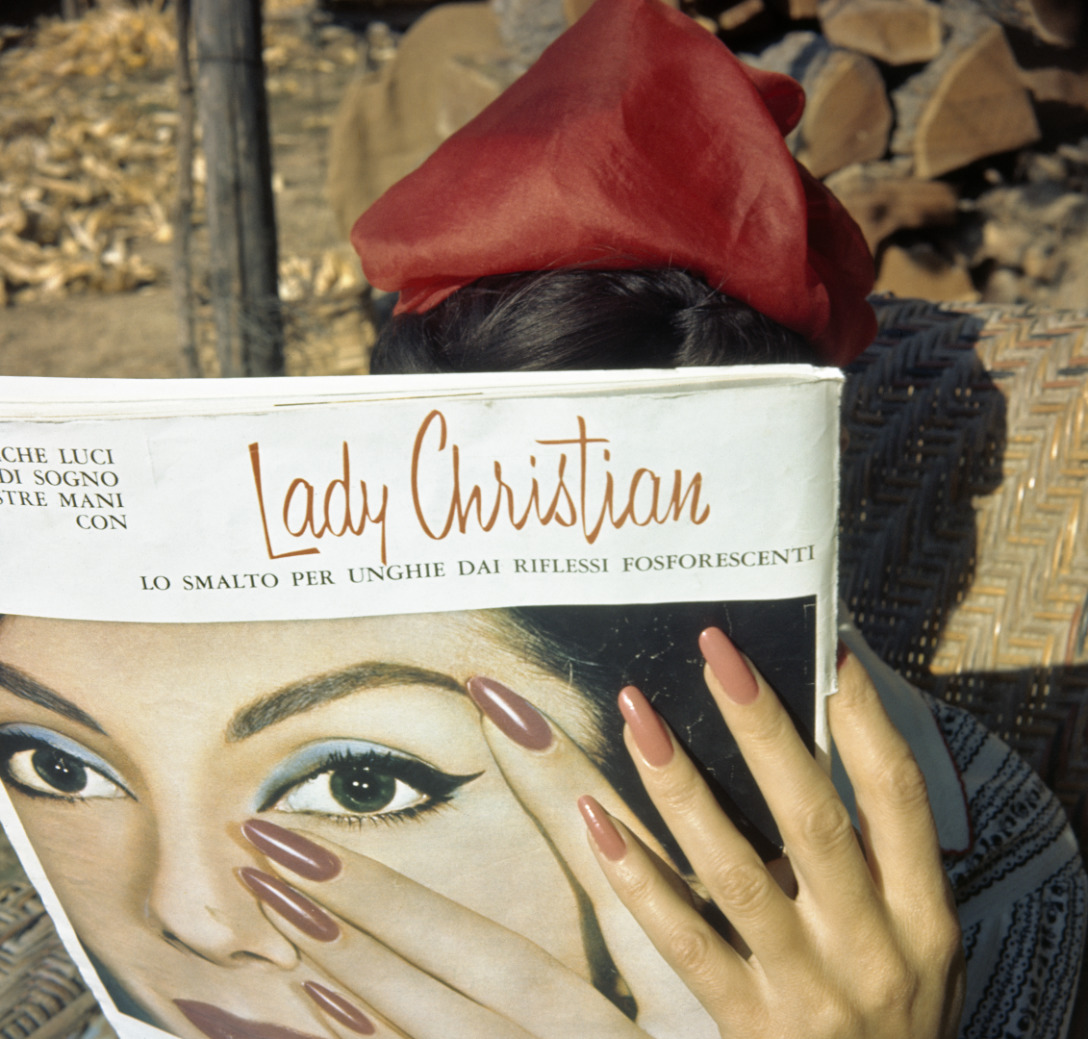
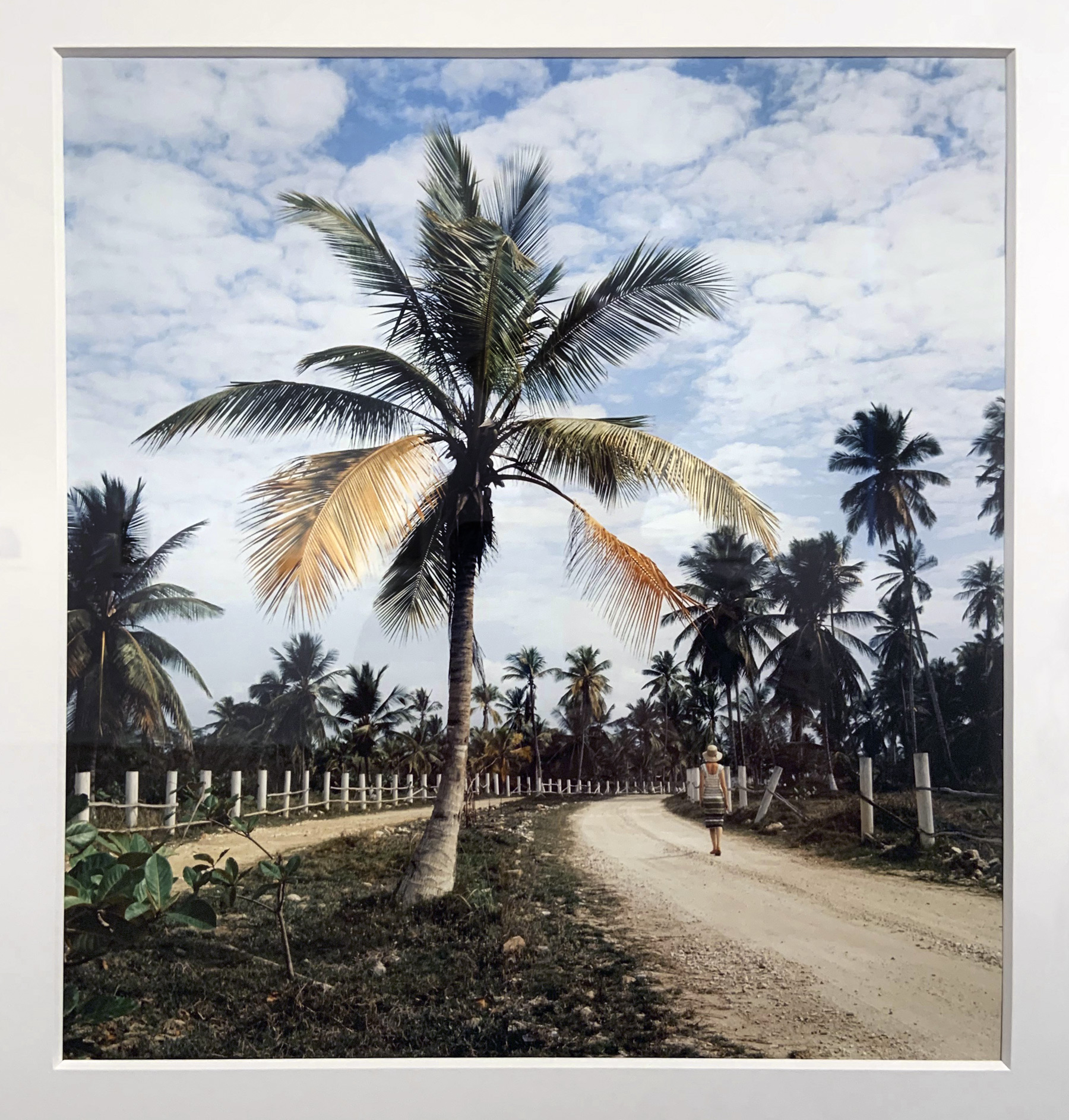
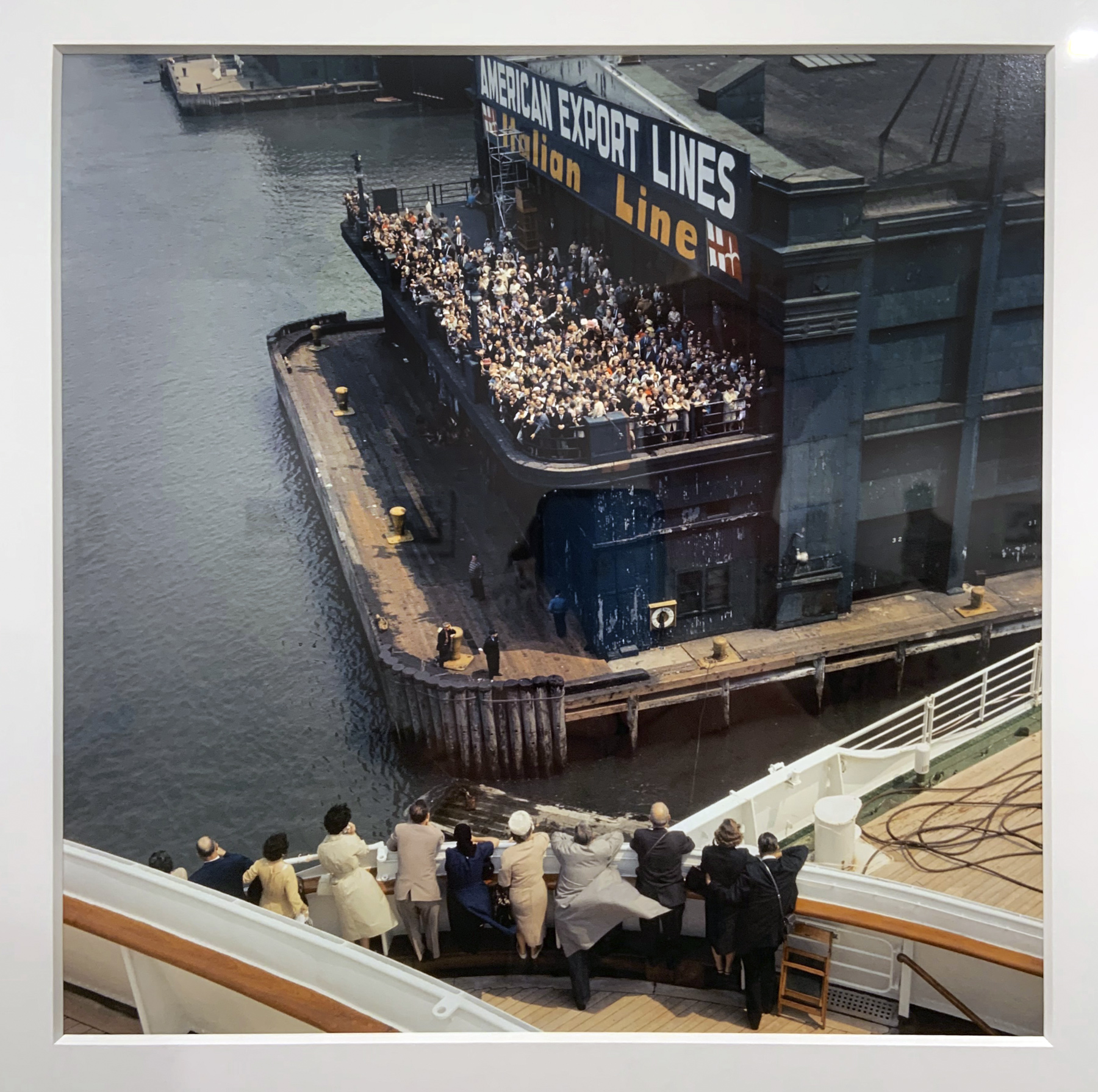
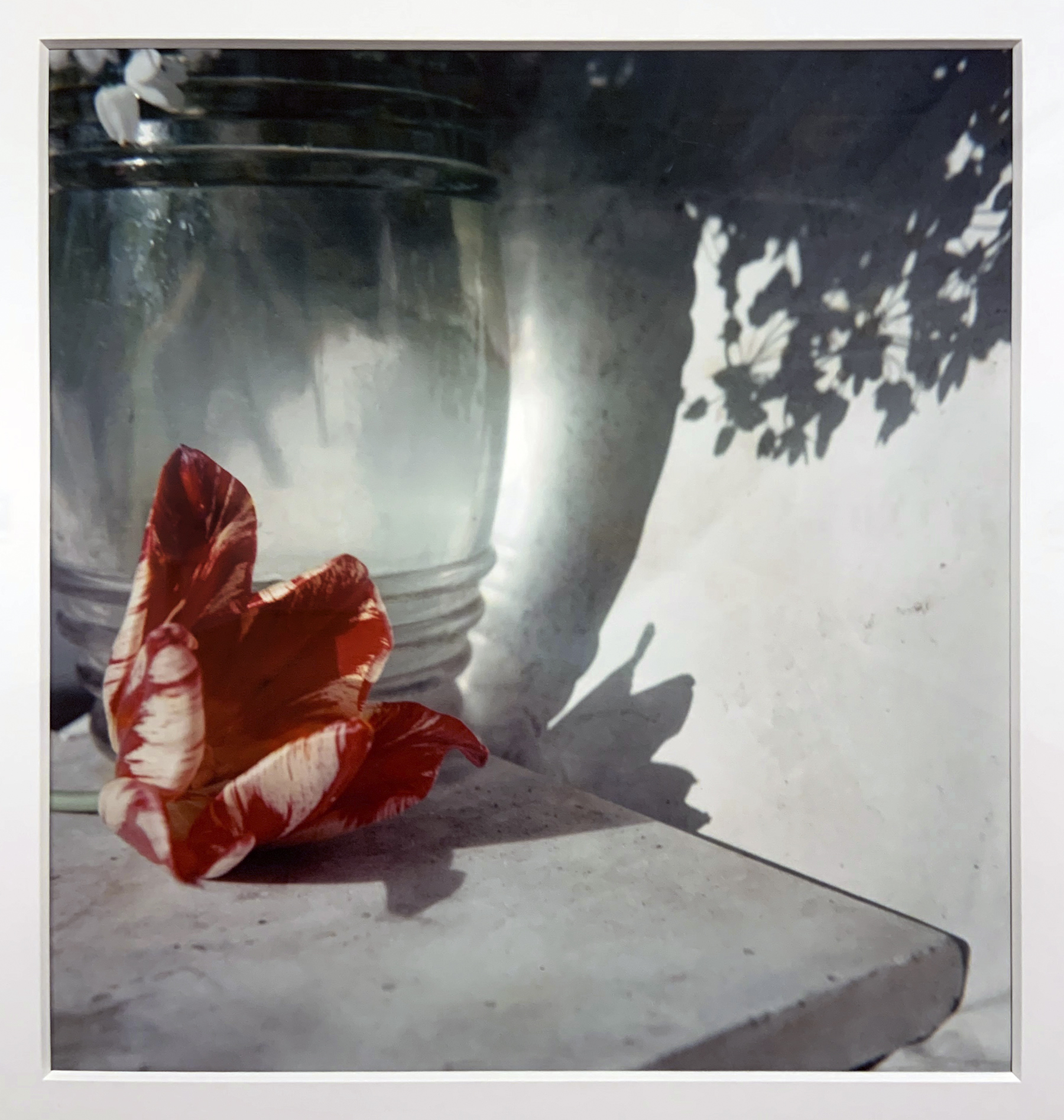
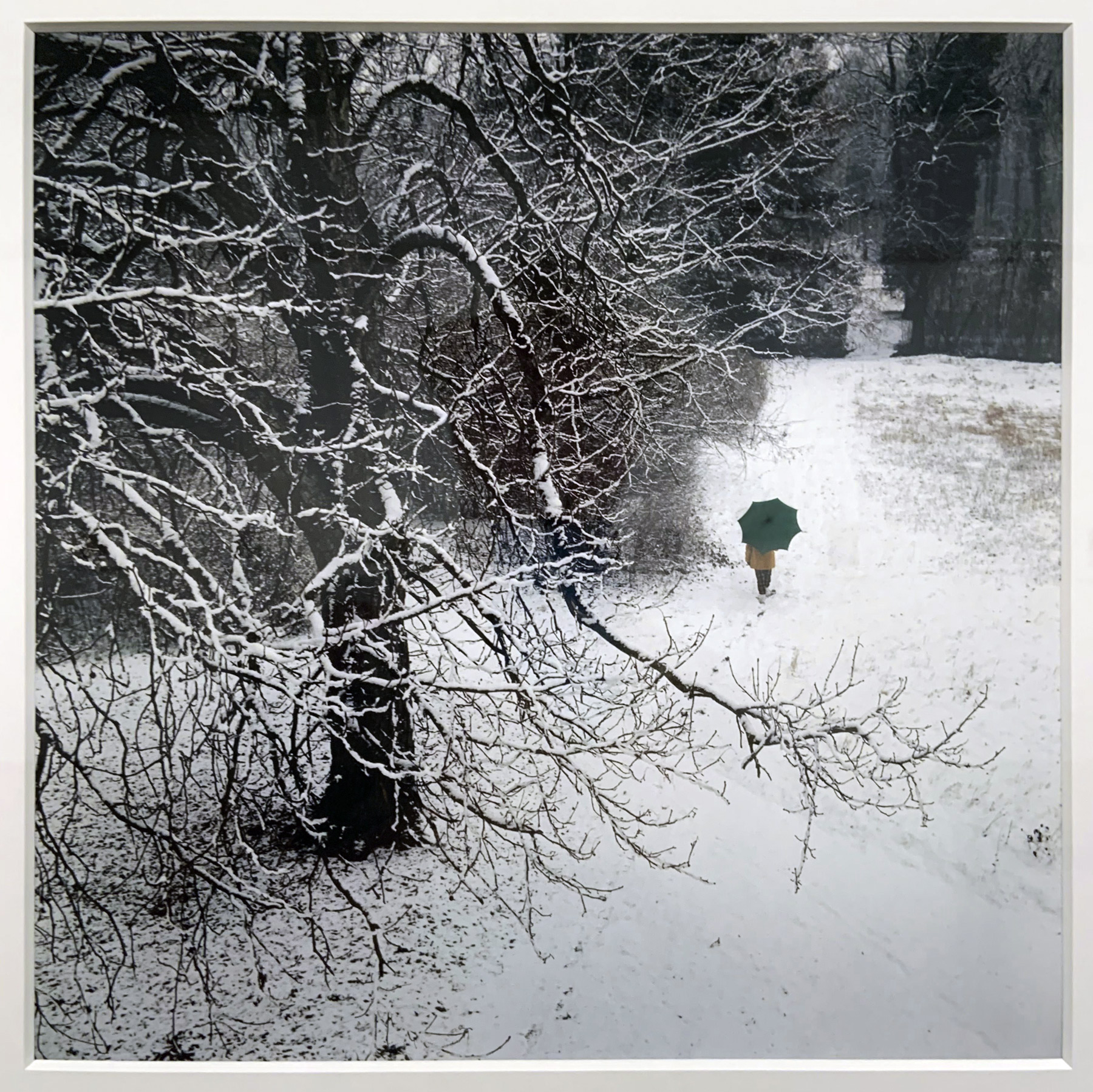
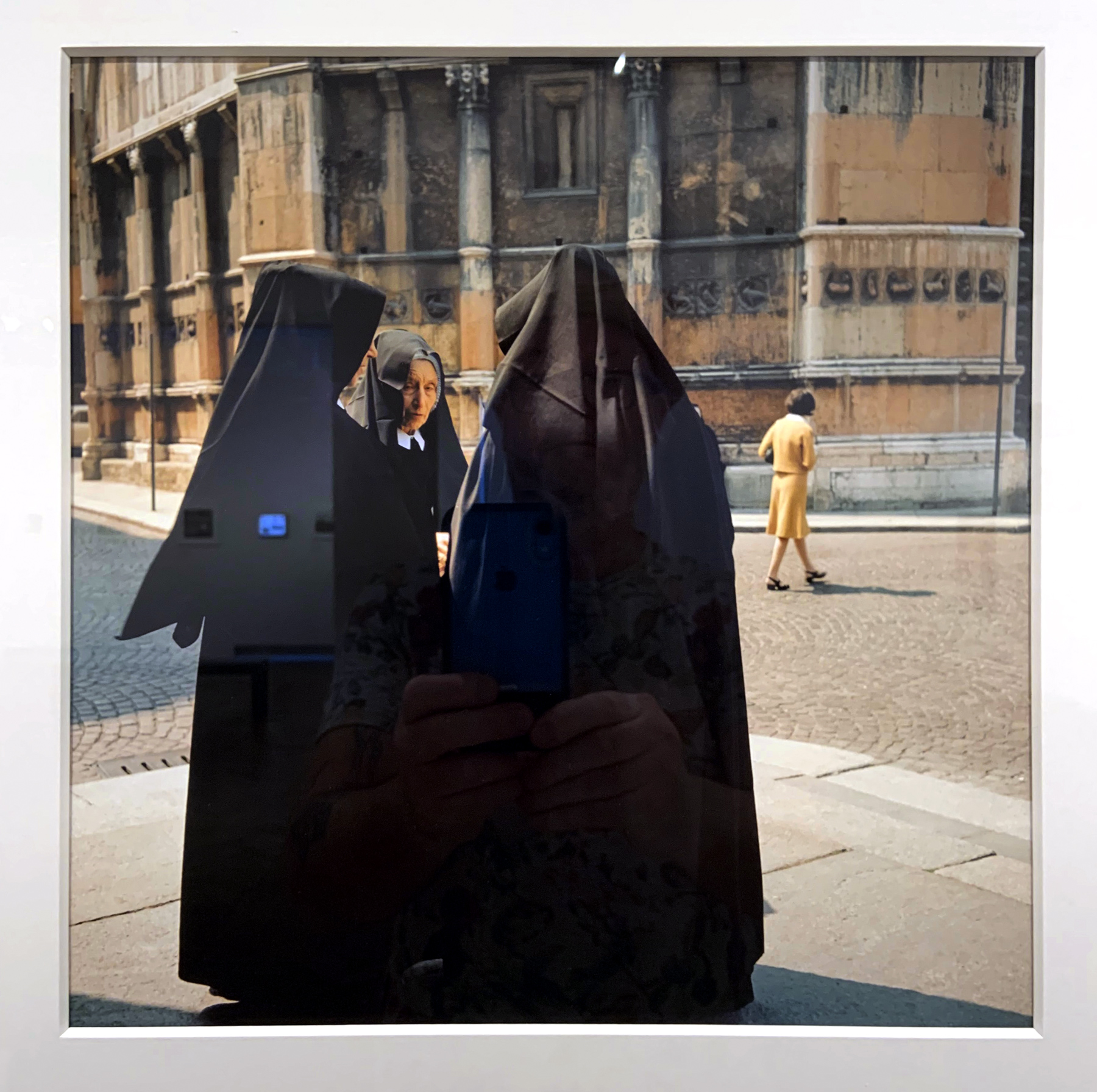
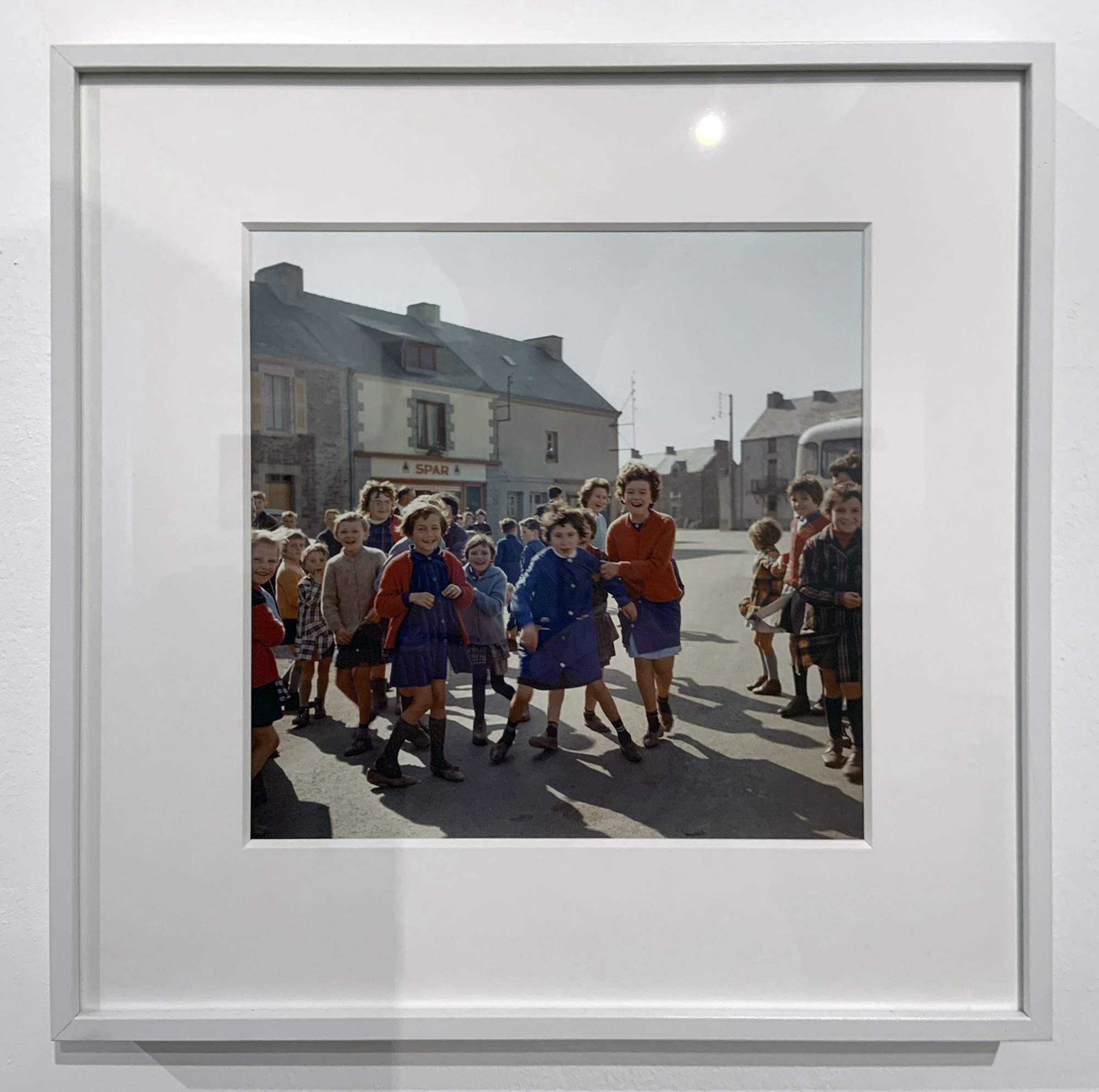
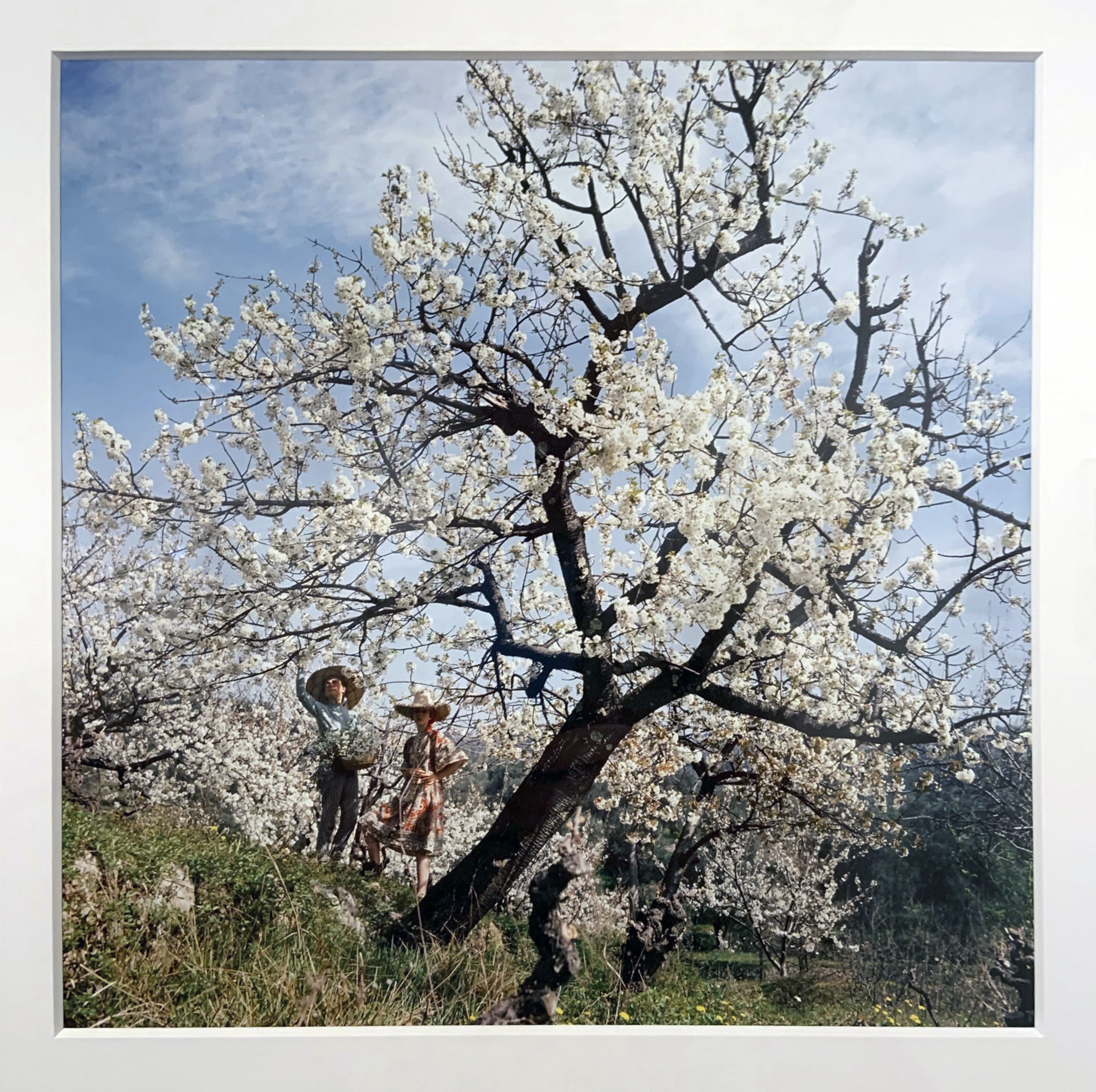
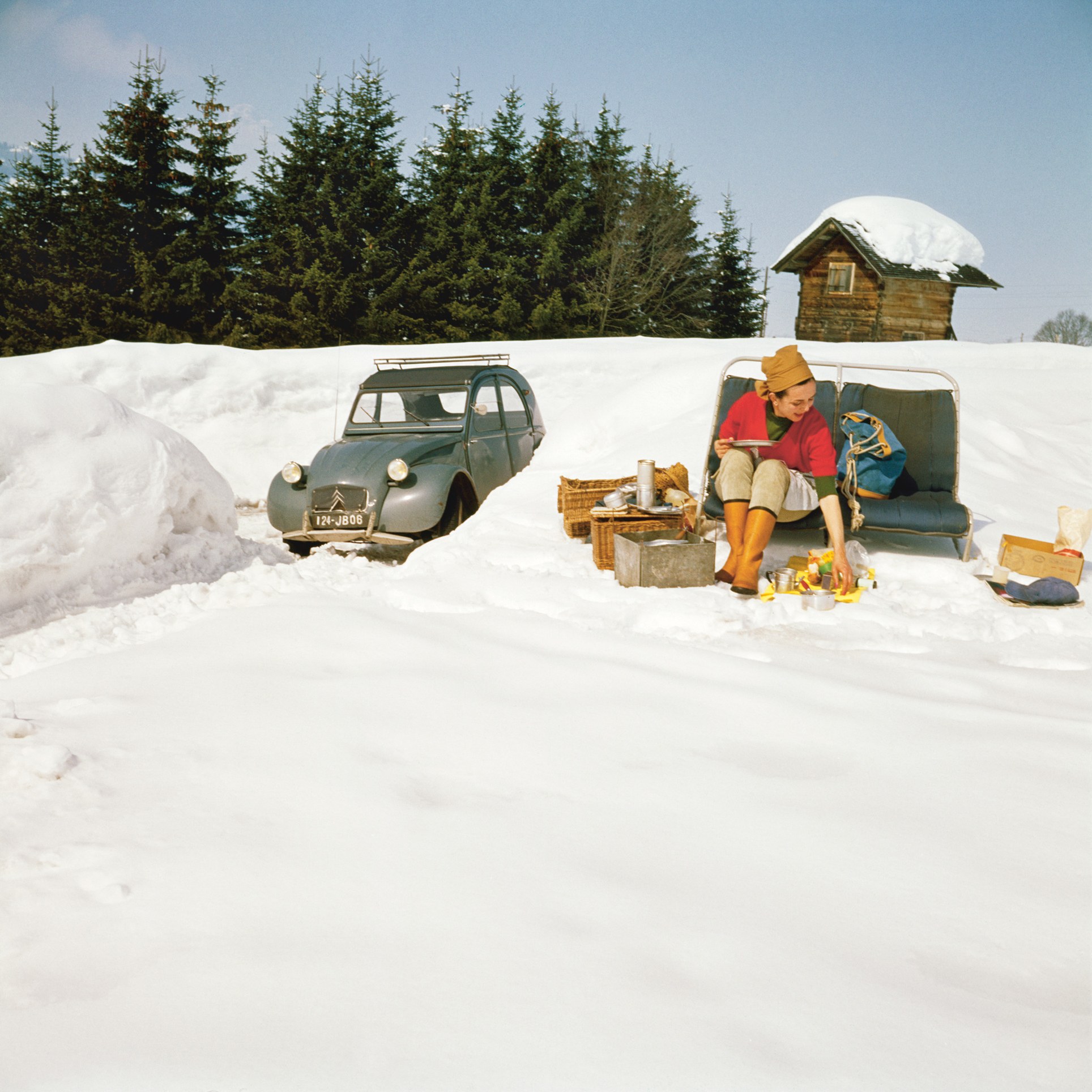
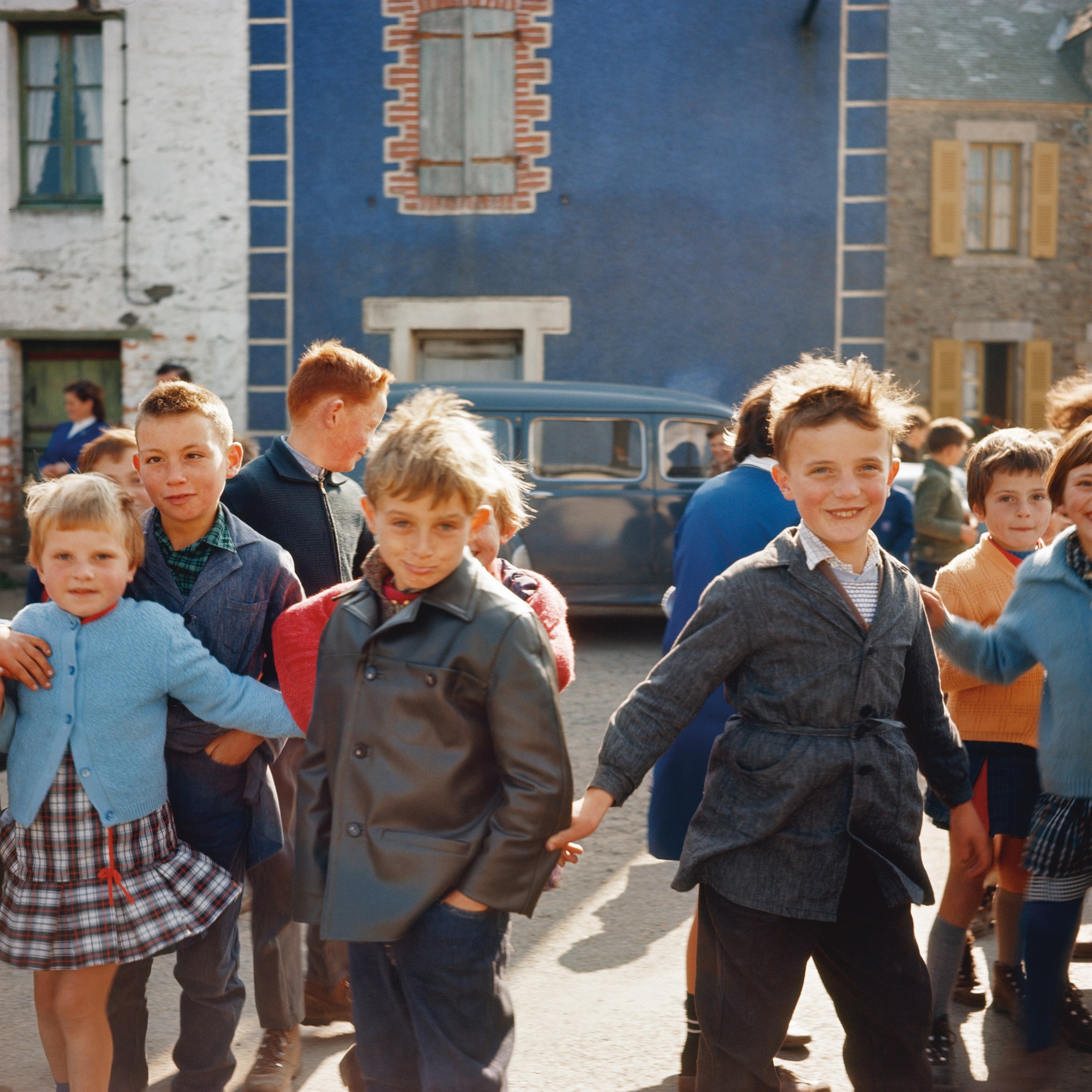
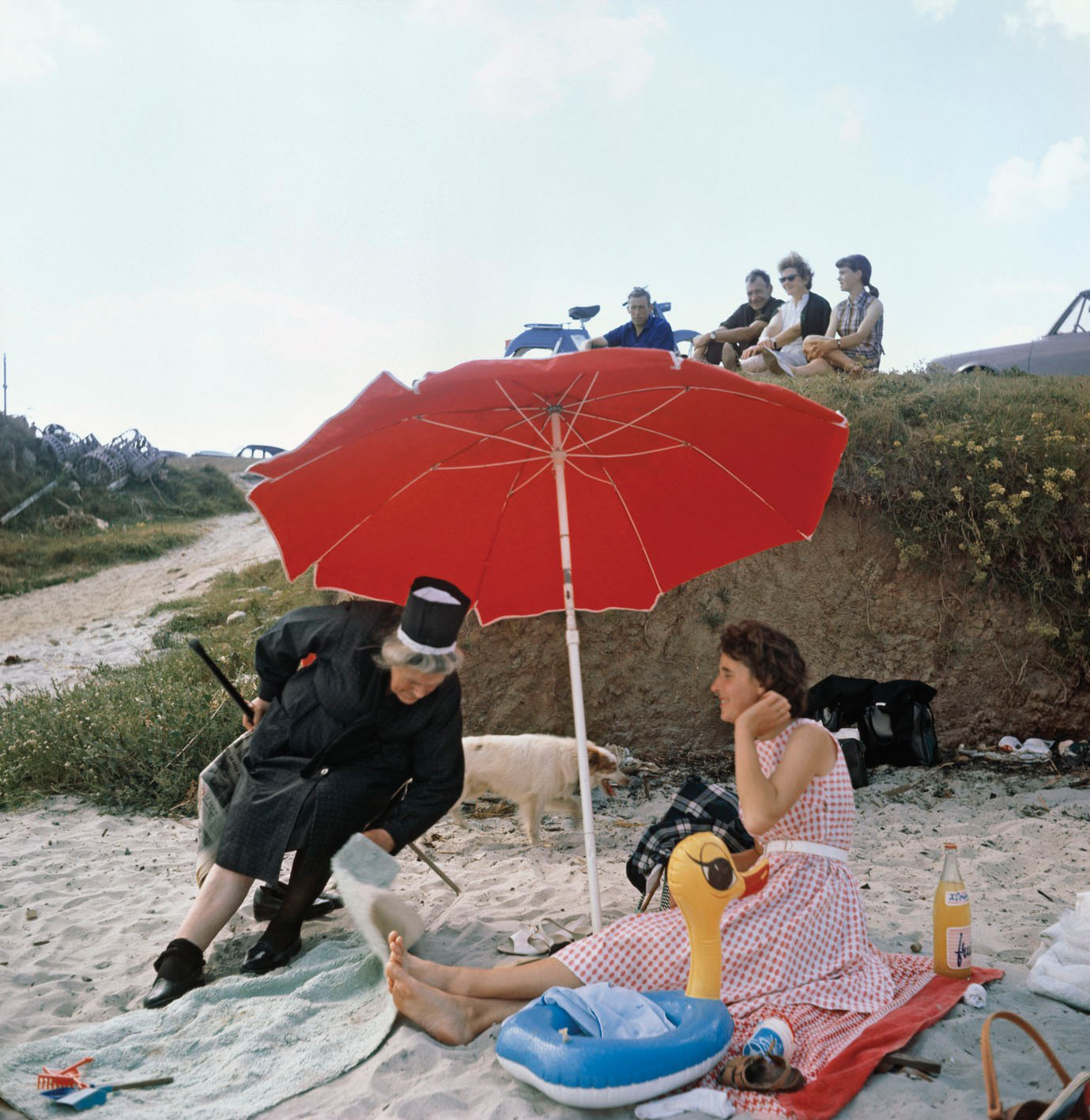
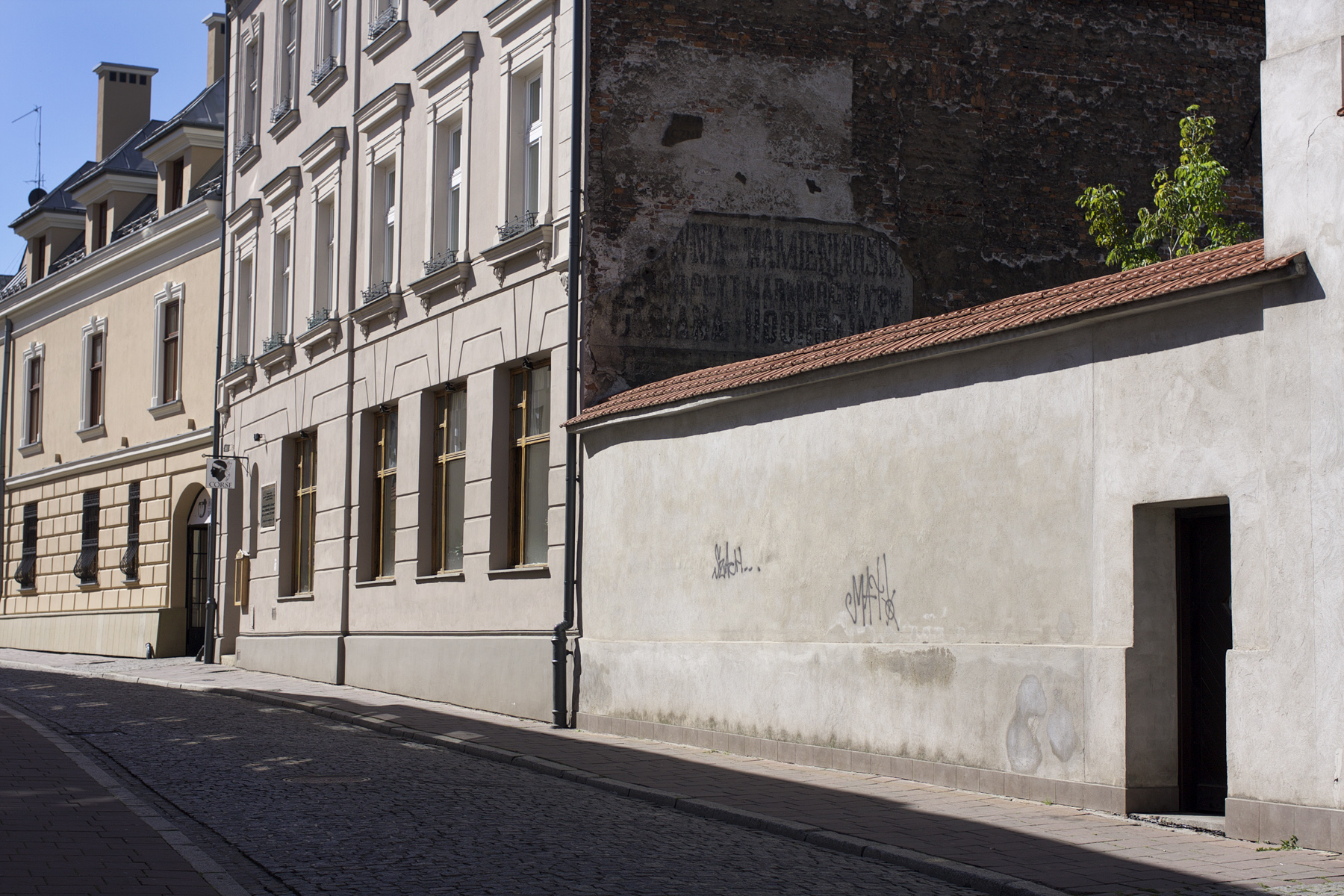

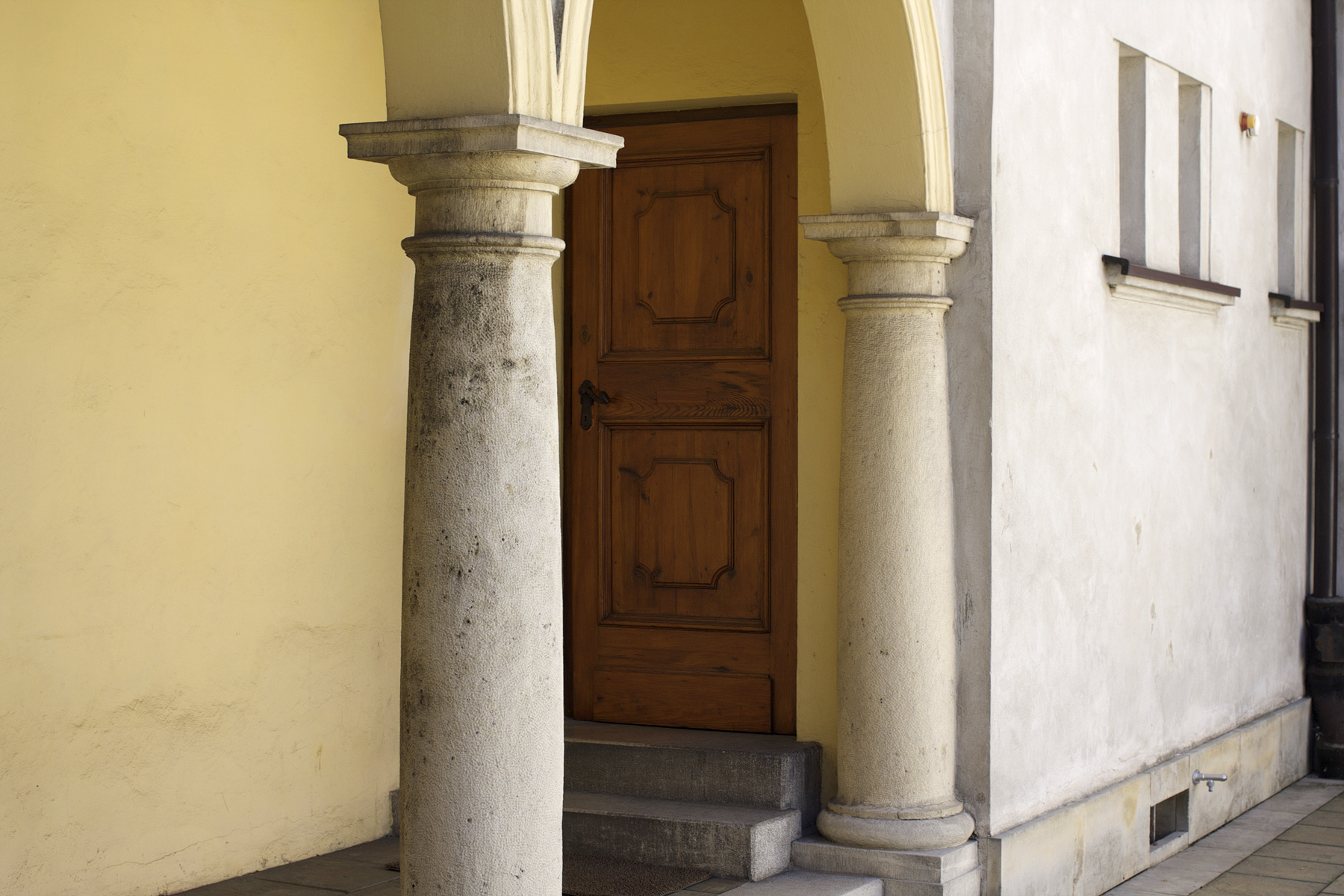
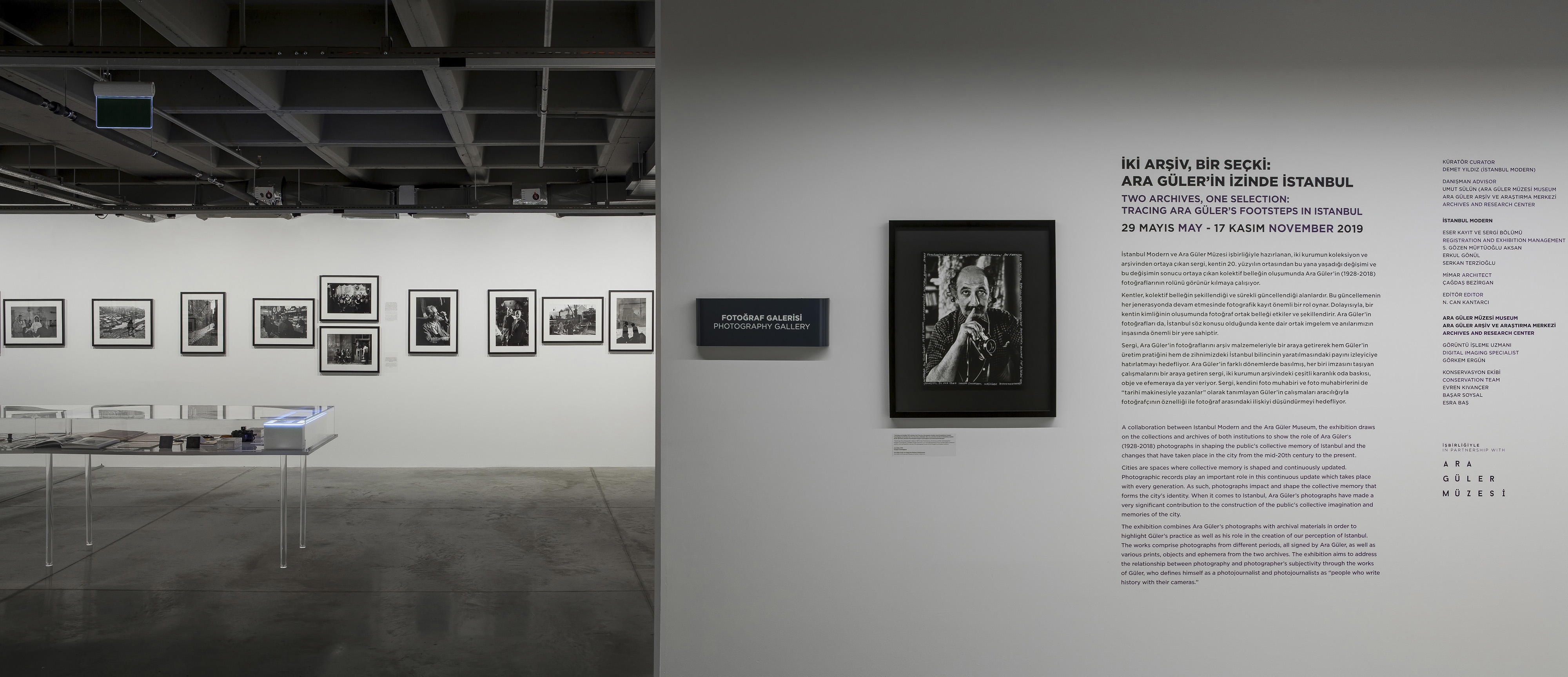
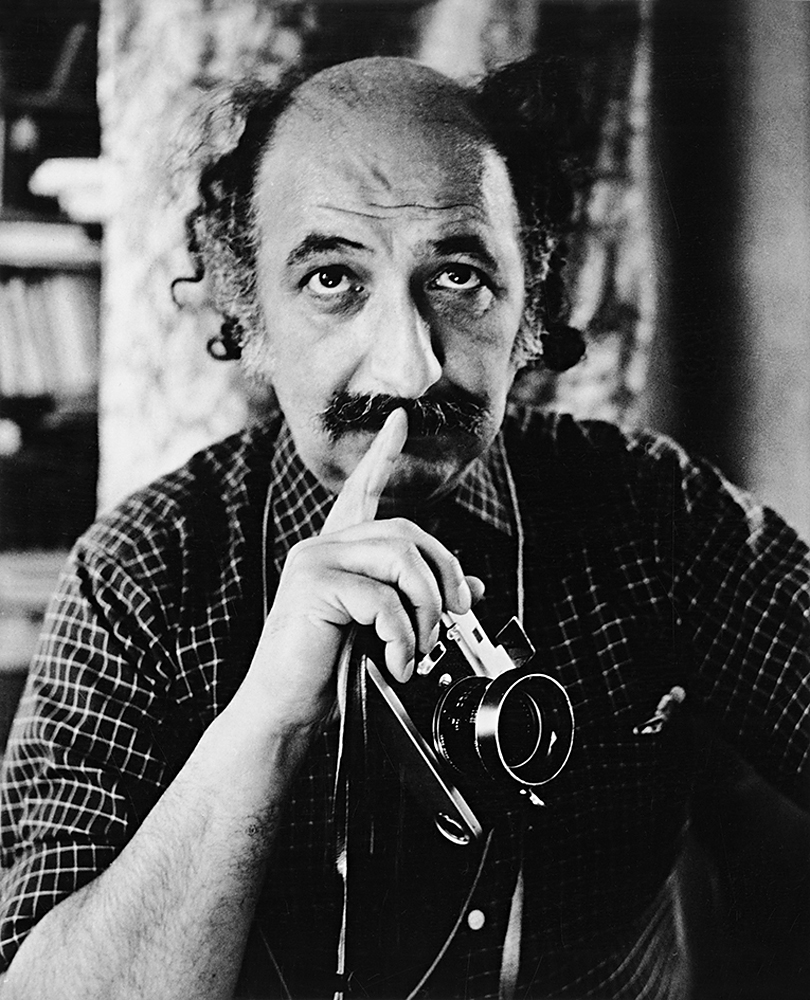
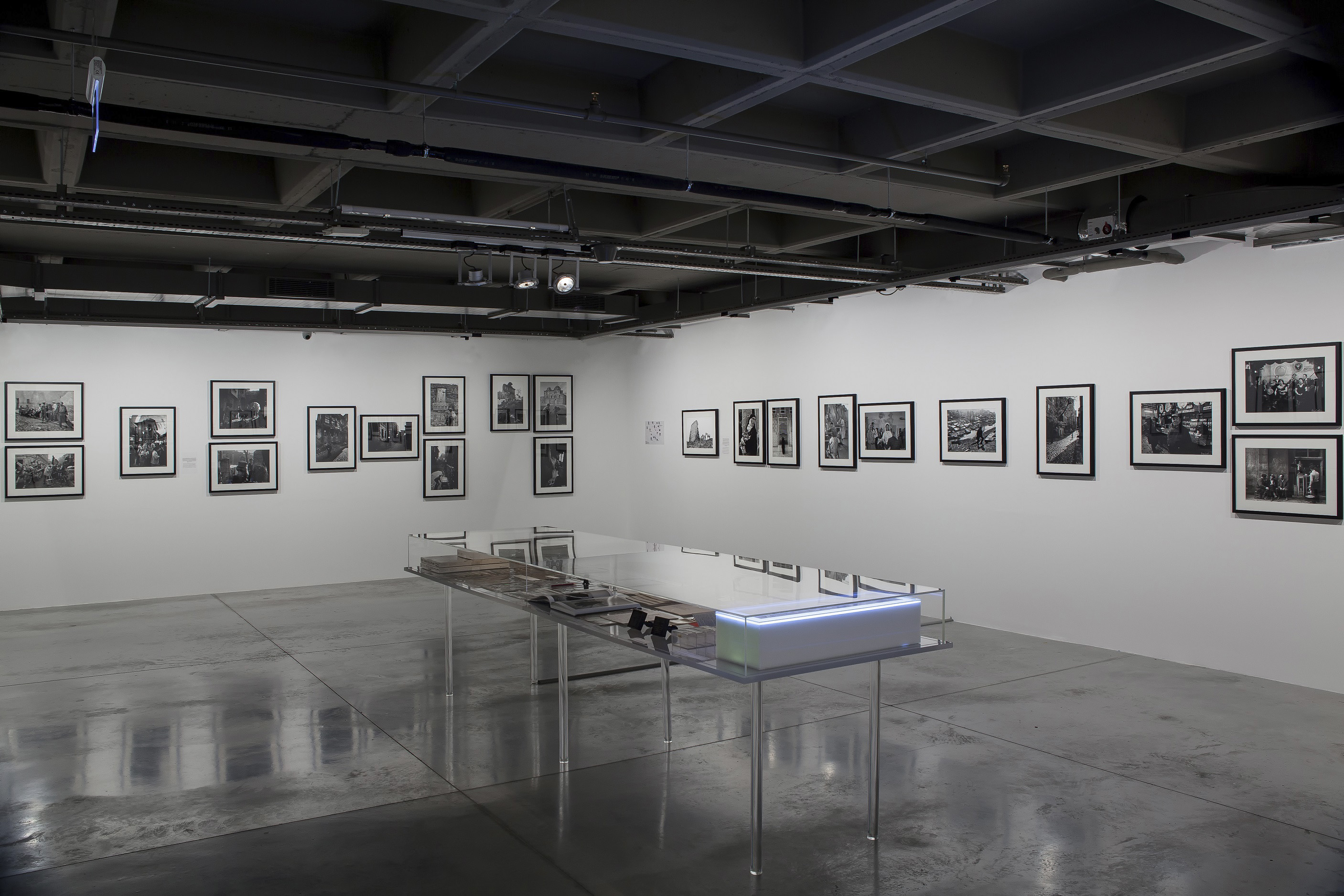
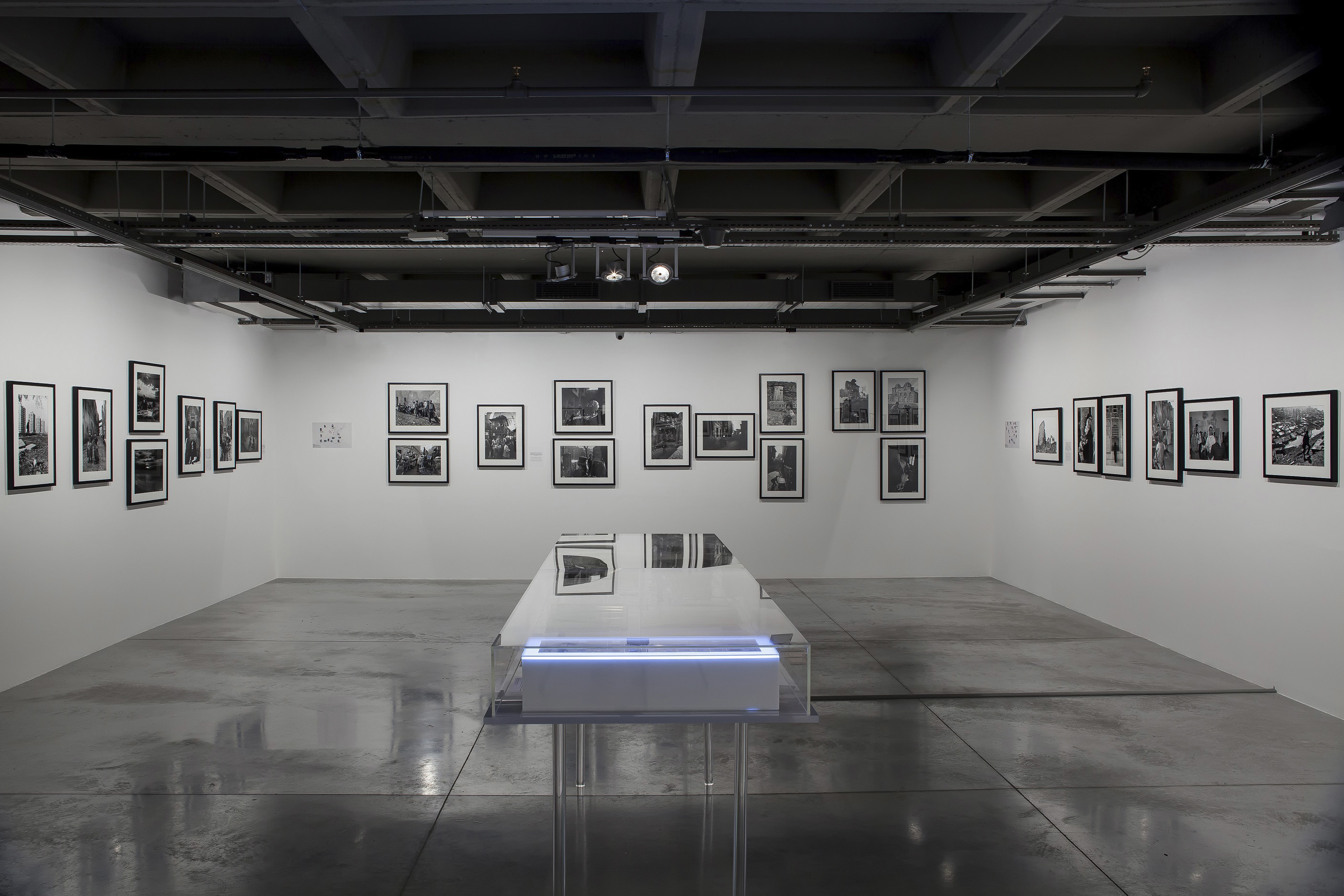
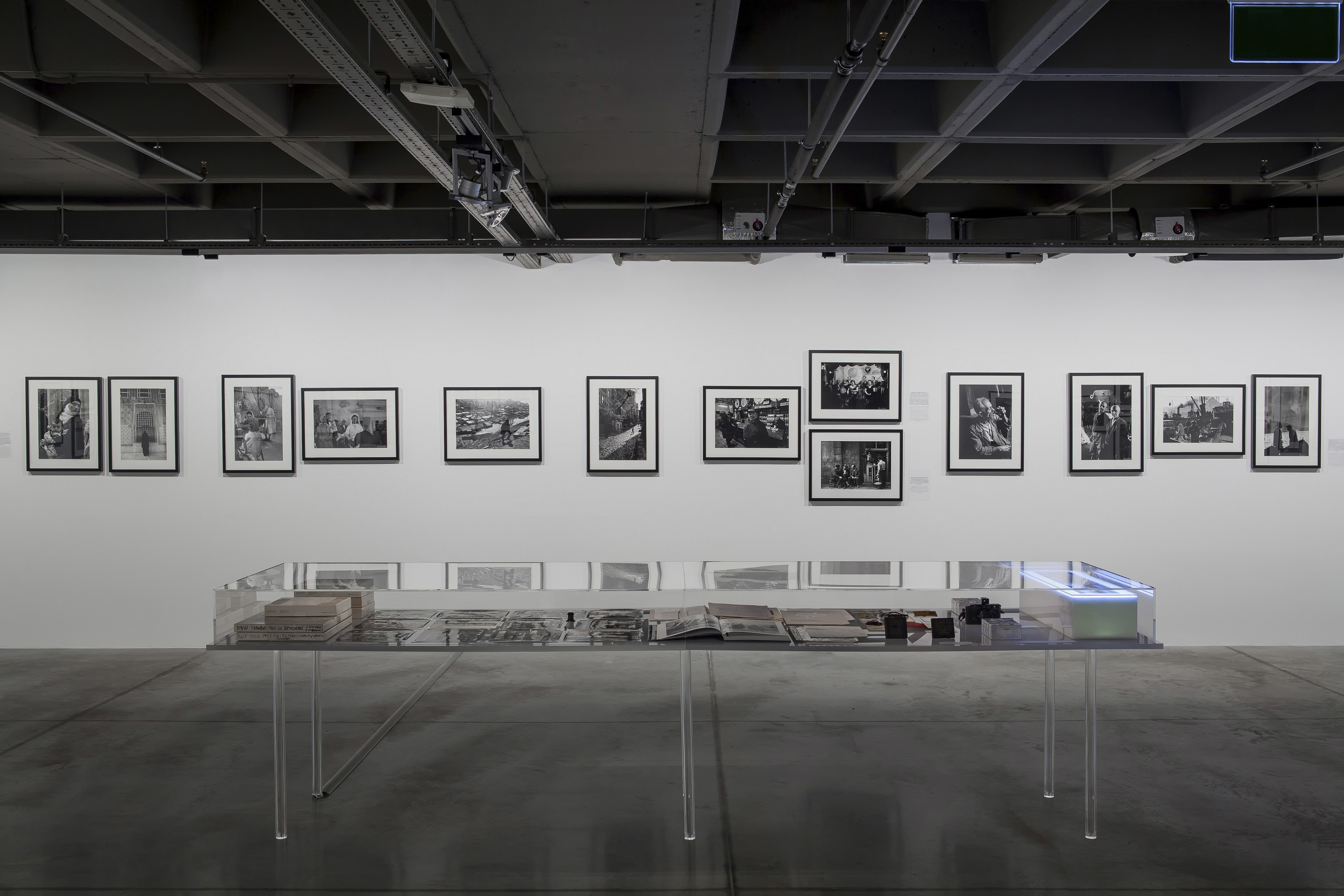
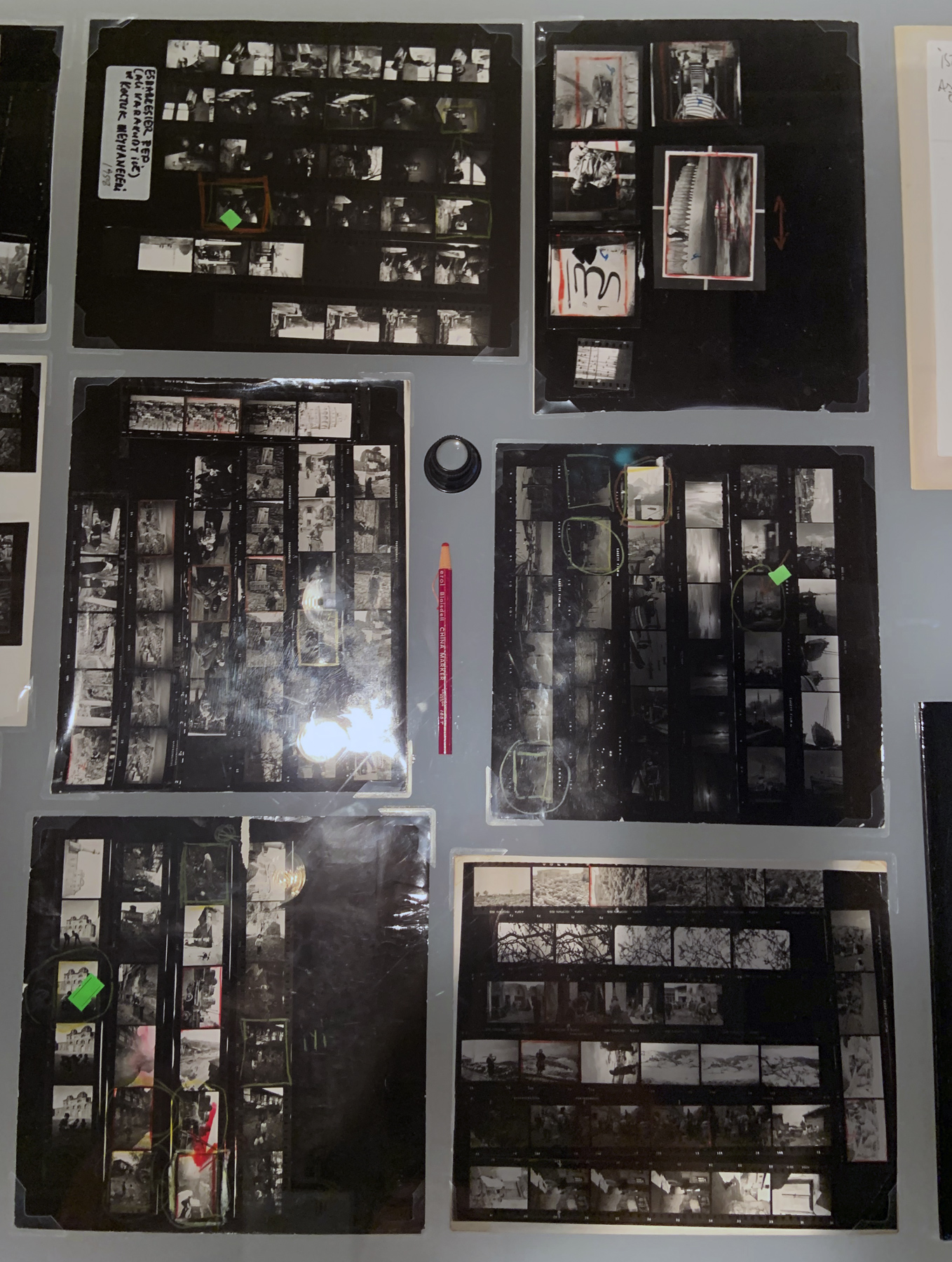

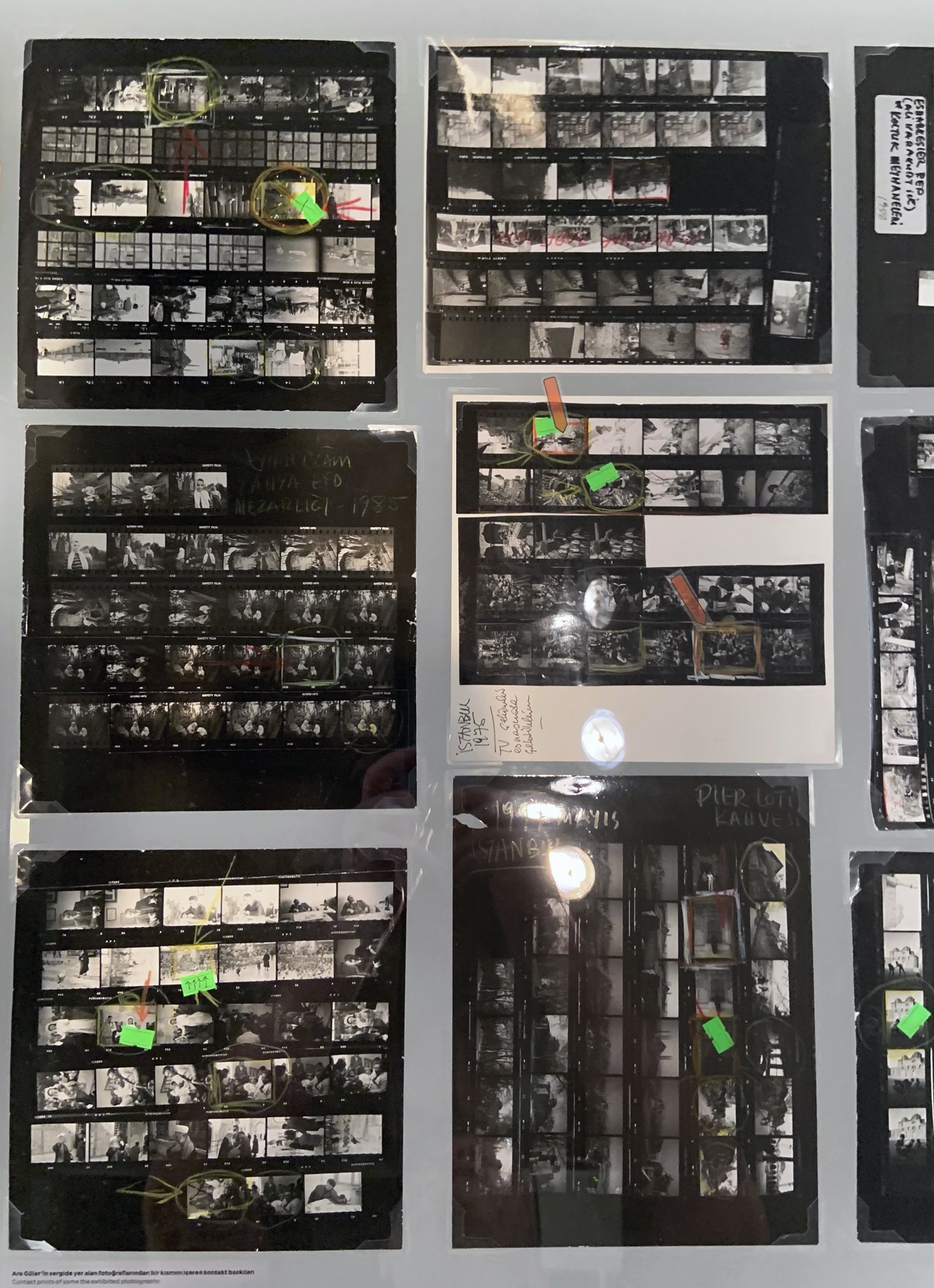
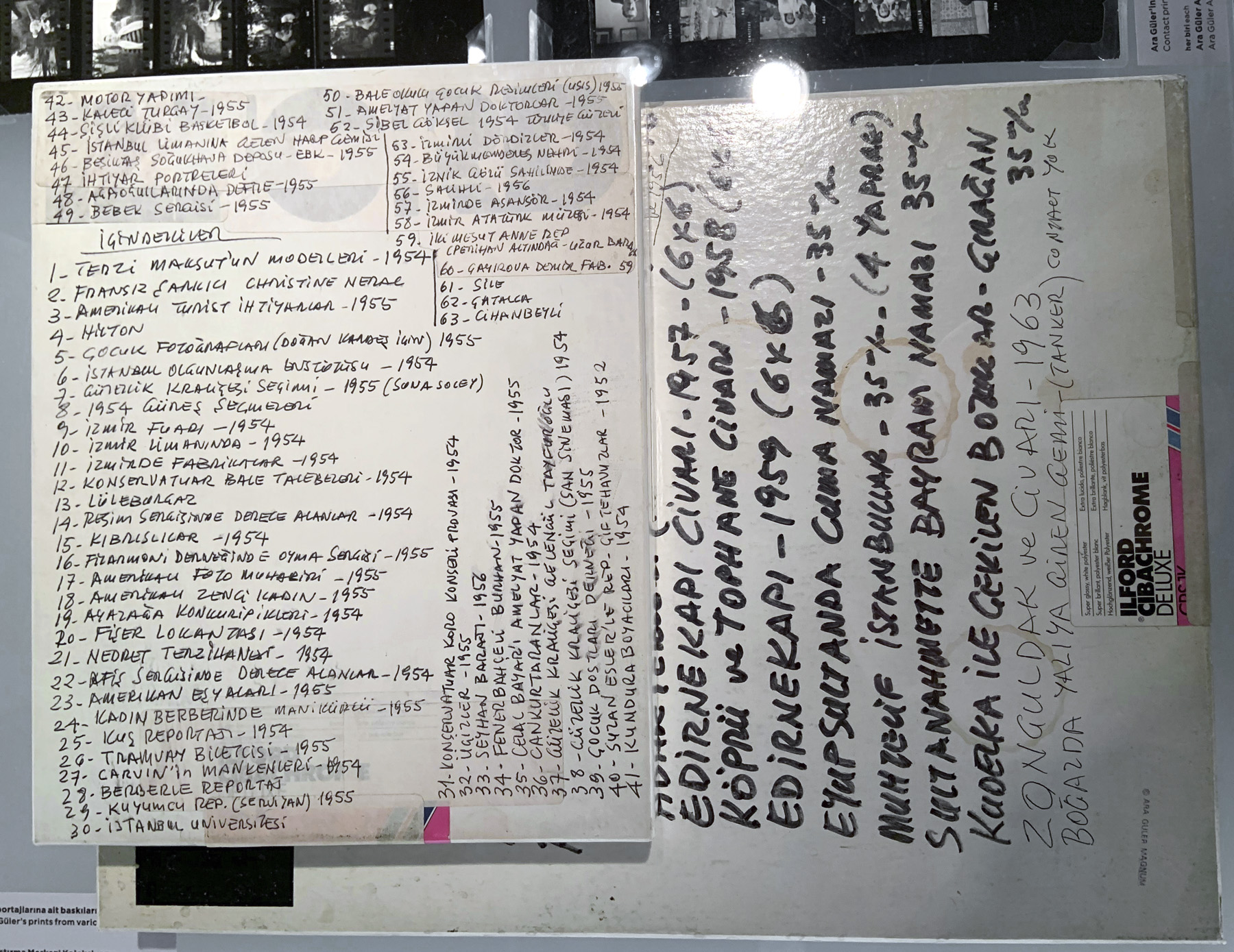
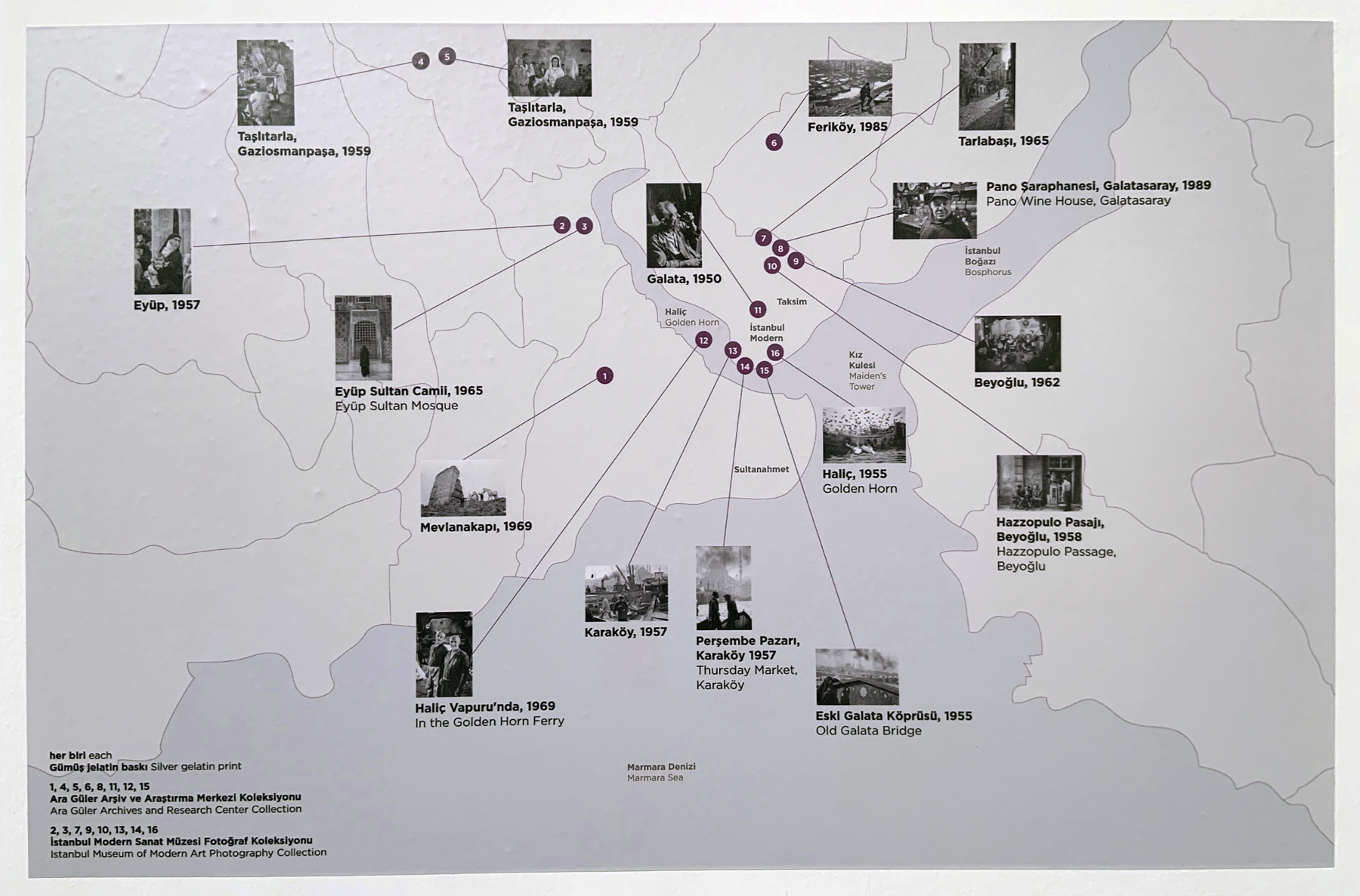
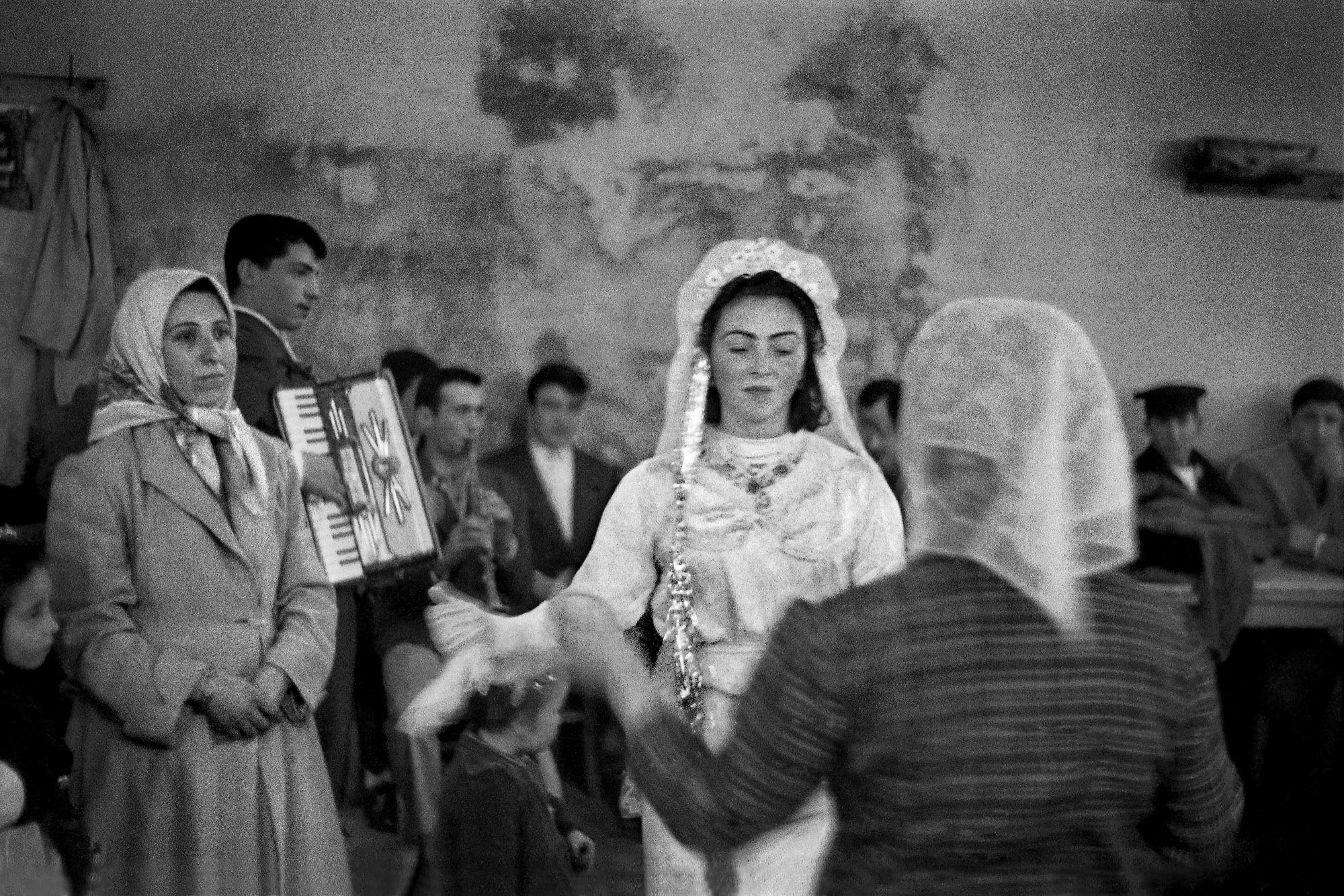

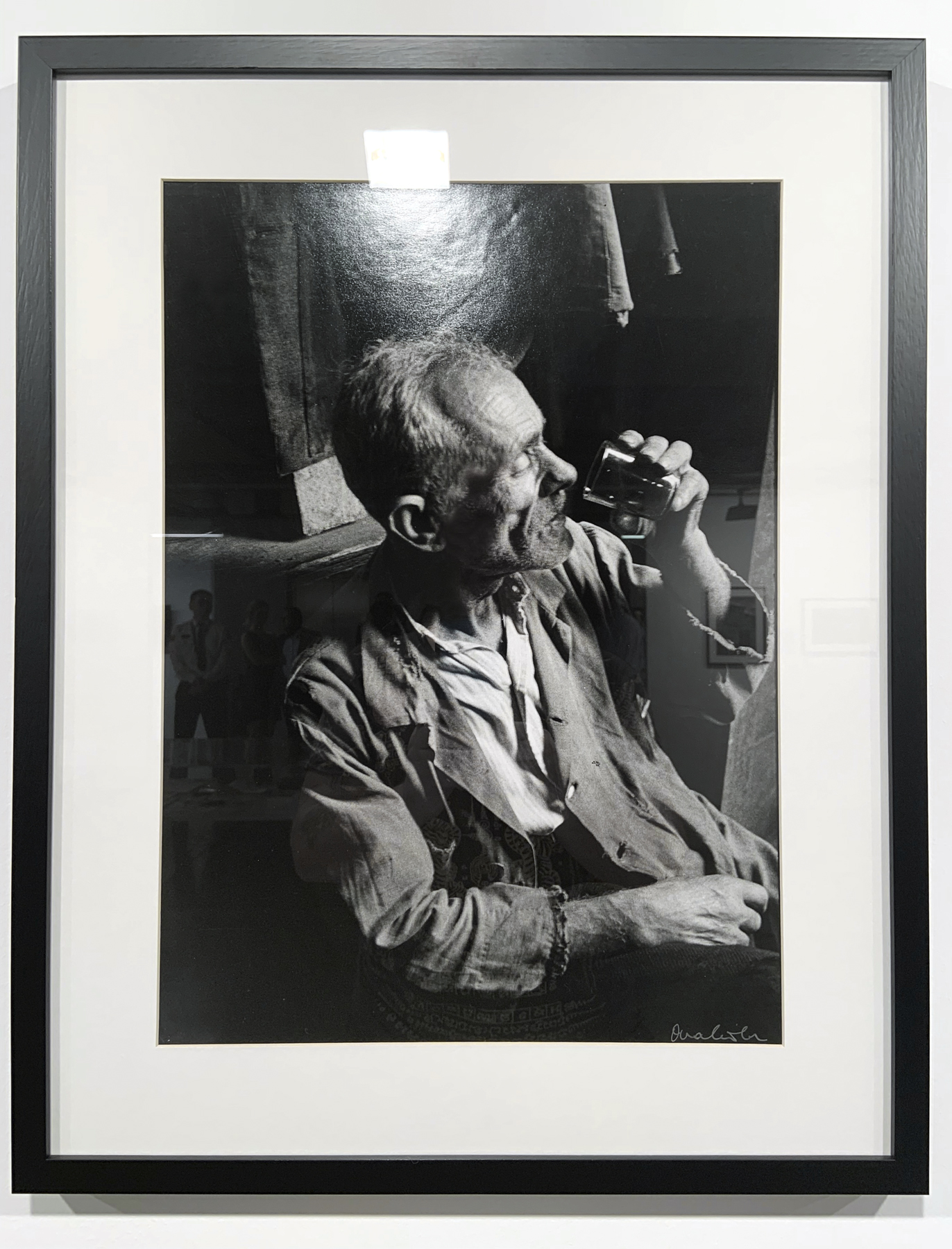
![Ara Güler (Turkish, 1928-2018) 'Hallç, Vapuru'nda [In the Golden Horn Ferry]' 1969 (installation view)](https://artblart.com/wp-content/uploads/2019/10/guller-x-web.jpg "Ara Güler (Turkish, 1928-2018) 'Hallç, Vapuru'nda [In the Golden Horn Ferry]' 1969 (installation view)")

![Ara Güler (Turkish, 1928-2018) 'Persembe Pazan, Karaköy [Thursday Market, Karaköy]' 1957 (installation view)](https://artblart.com/wp-content/uploads/2019/10/guller-v-web.jpg "Ara Güler (Turkish, 1928-2018) 'Persembe Pazan, Karaköy [Thursday Market, Karaköy]' 1957 (installation view)")
![Ara Güler (Turkish, 1928-2018) 'Persembe Pazan, Karaköy [Thursday Market, Karaköy]' 1957](https://artblart.com/wp-content/uploads/2019/10/guller-v2-web.jpg "Ara Güler (Turkish, 1928-2018) 'Persembe Pazan, Karaköy [Thursday Market, Karaköy]' 1957")

![Ara Güler (Turkish, 1928-2018) 'Hazzopulo Pasajl, Beyoglu [Hazzopulo Passage, Beyoglu]' 1958 (installation view)](https://artblart.com/wp-content/uploads/2019/10/guller-t-web.jpg "Ara Güler (Turkish, 1928-2018) 'Hazzopulo Pasajl, Beyoglu [Hazzopulo Passage, Beyoglu]' 1958 (installation view)")
![Ara Güler (Turkish, 1928-2018) 'Hazzopulo Pasajl, Beyoglu [Hazzopulo Passage, Beyoglu]' 1958](https://artblart.com/wp-content/uploads/2019/10/guler-hazzopulo-pasajl-beyoglu-web.jpg "Ara Güler (Turkish, 1928-2018) 'Hazzopulo Pasajl, Beyoglu [Hazzopulo Passage, Beyoglu]' 1958")
![Ara Güler (Turkish, 1928-2018) 'Eyüp Sultan Camii [Eyüp Sultan Mosque]' 1965 (installation view)](https://artblart.com/wp-content/uploads/2019/10/guller-p-web.jpg "Ara Güler (Turkish, 1928-2018) 'Eyüp Sultan Camii [Eyüp Sultan Mosque]' 1965 (installation view)")
![Ara Güler (Turkish, 1928-2018) 'Eyüp Sultan Camii [Eyüp Sultan Mosque]' 1965](https://artblart.com/wp-content/uploads/2019/10/guler-eyucc88p-sultan-camii-web.jpg "Ara Güler (Turkish, 1928-2018) 'Eyüp Sultan Camii [Eyüp Sultan Mosque]' 1965")
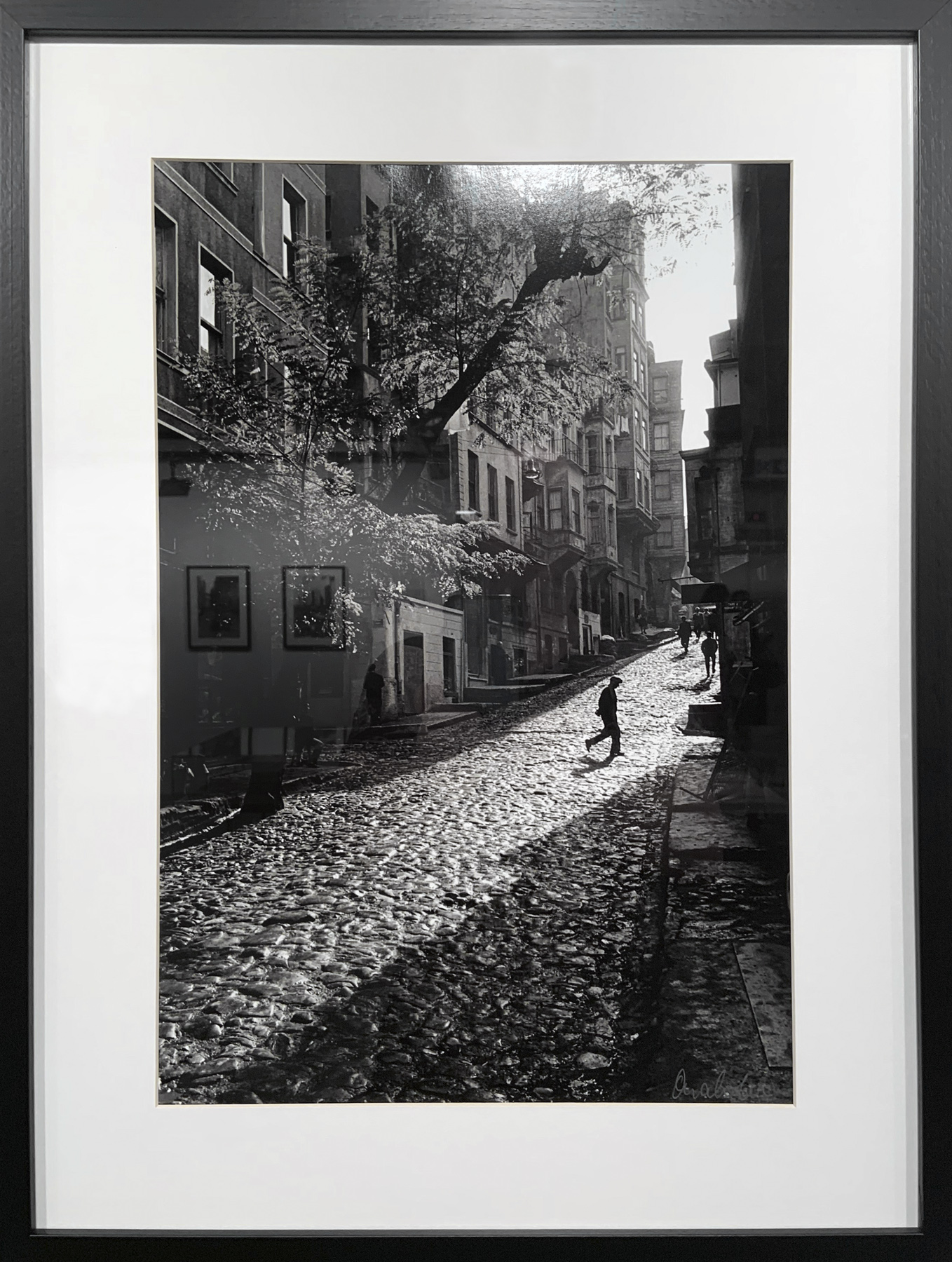
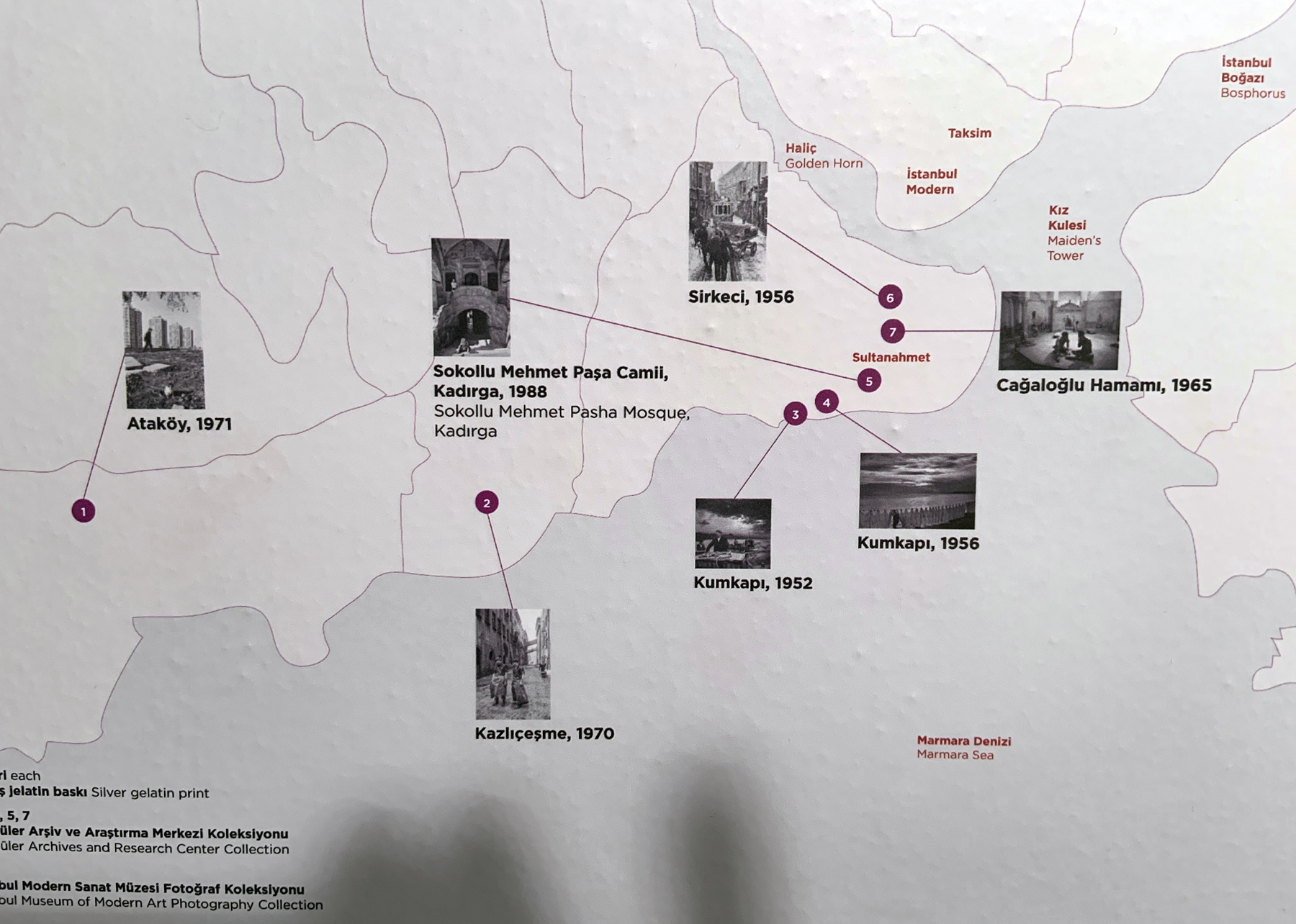
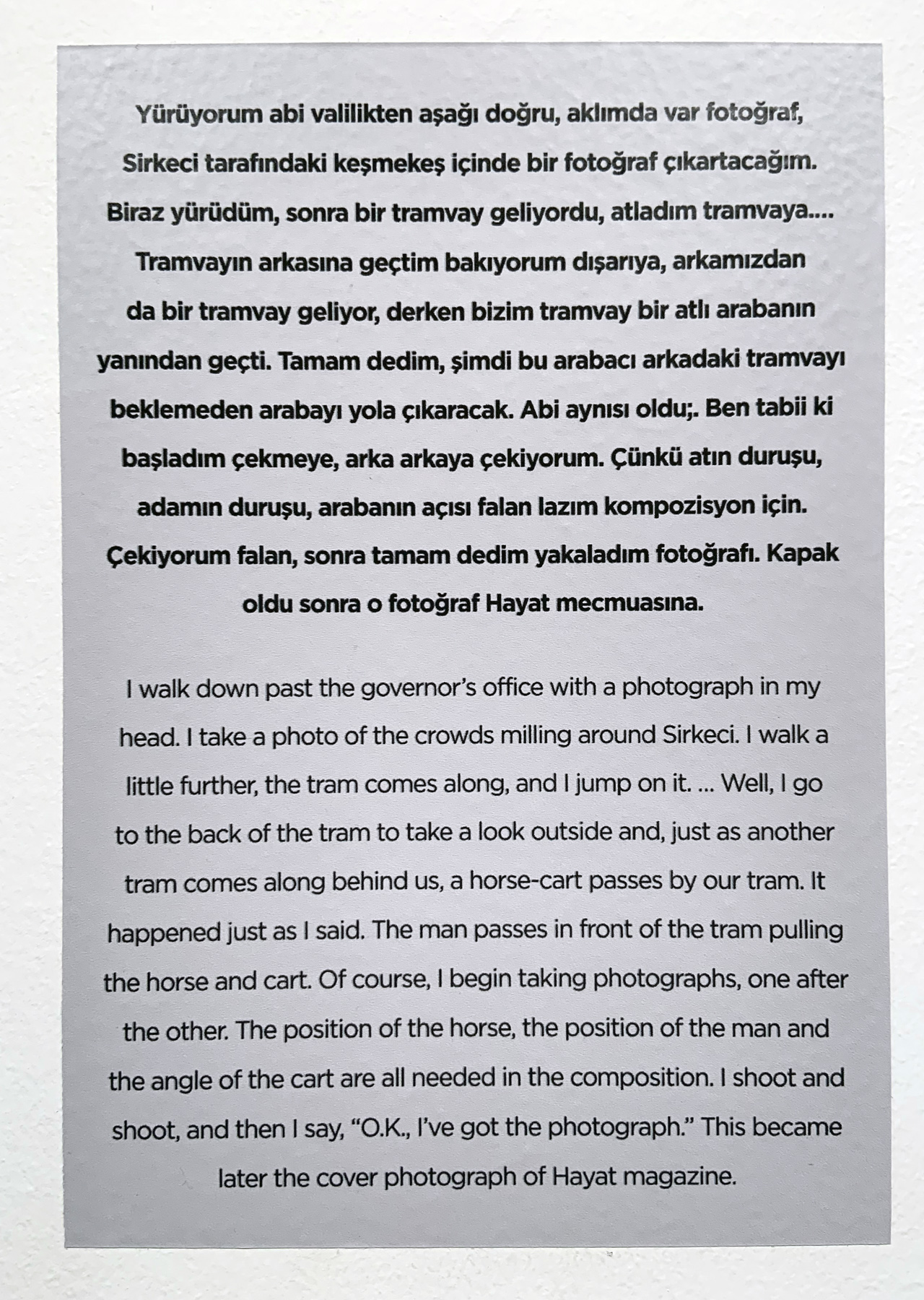
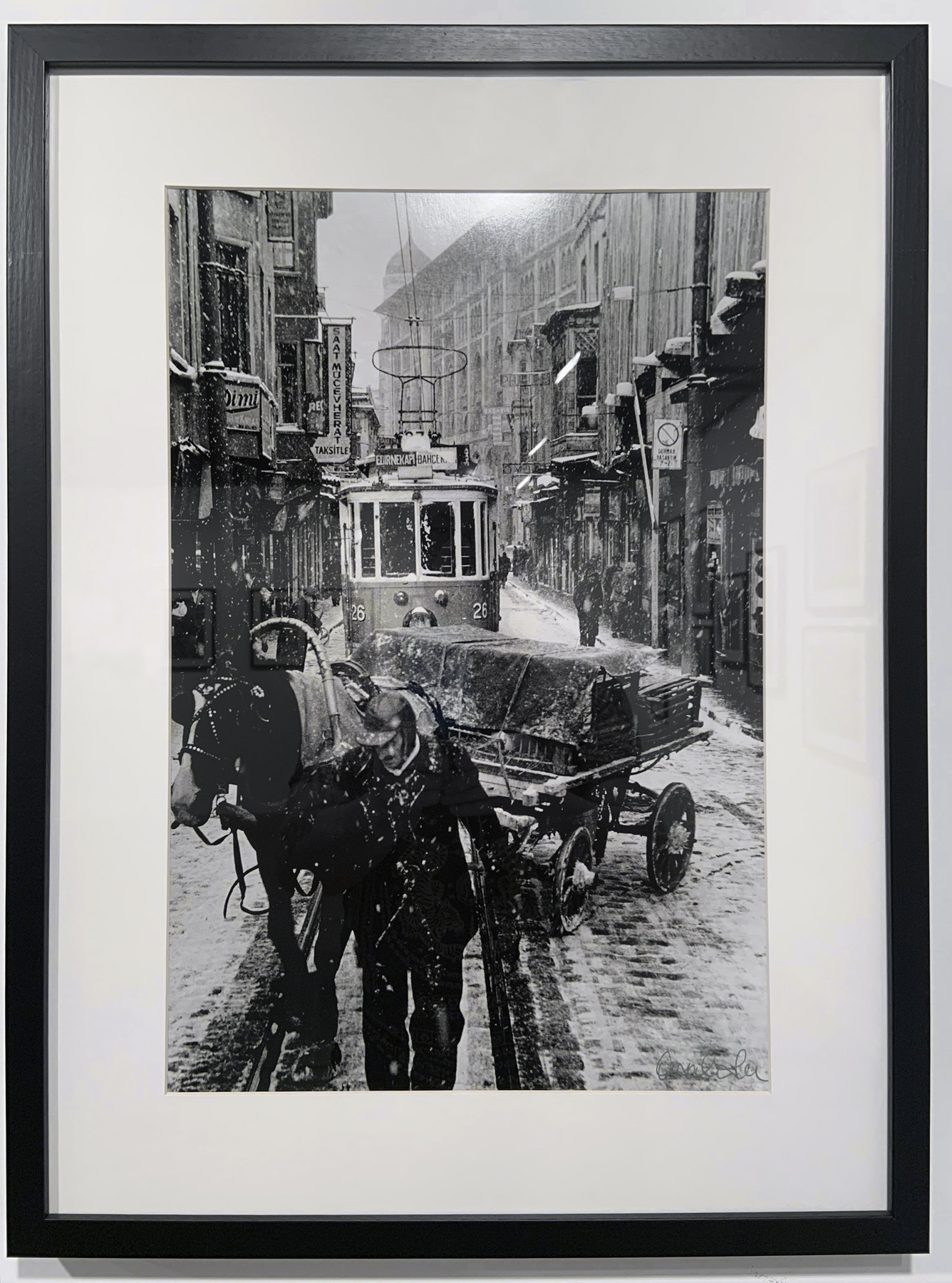

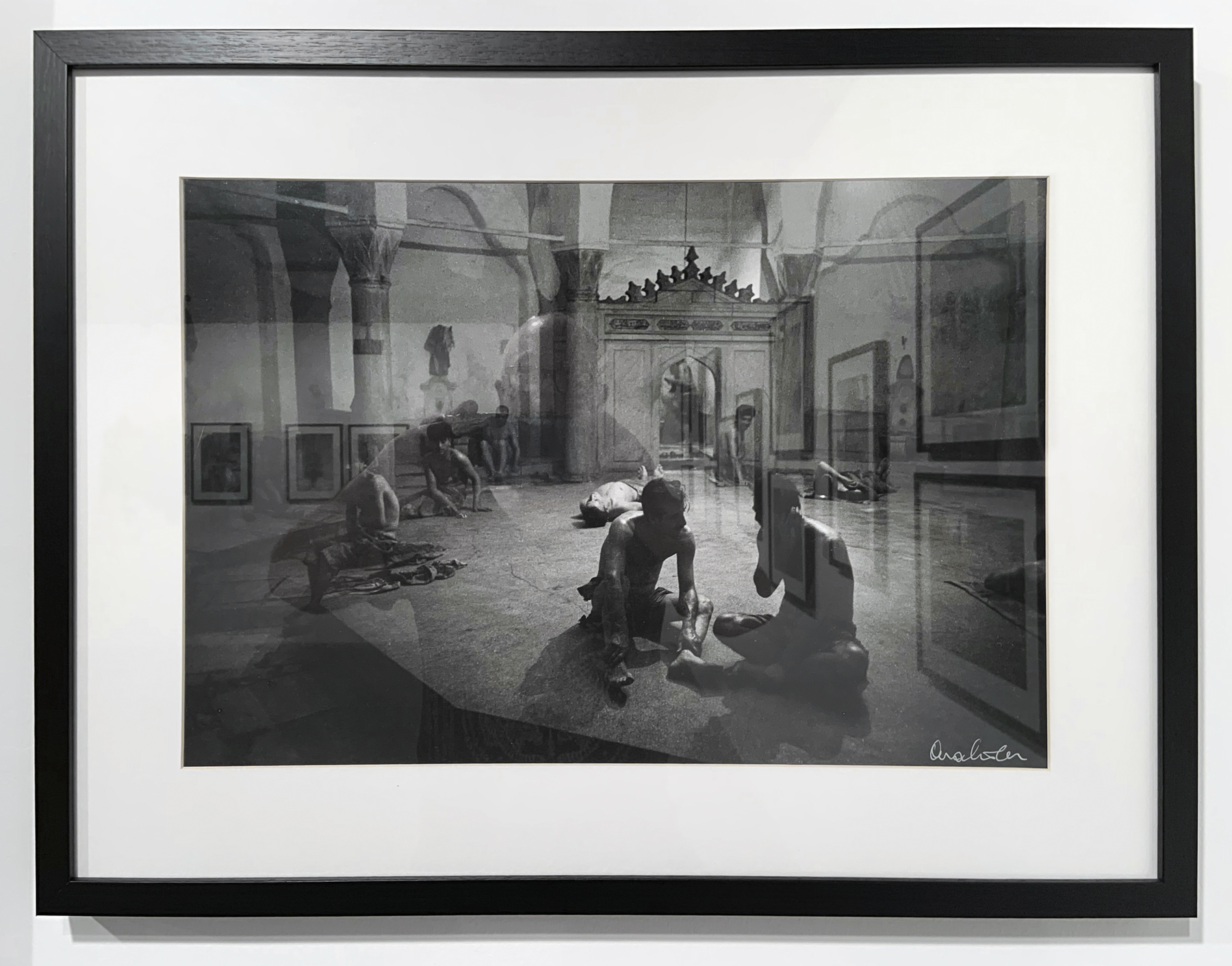
![Ara Güler (Turkish, 1928-2018) 'Sokollu Mehmet Paşa Camii, Kadirga [Sokollu Mehmet Pasha Mosque, Kadirga]' 1988 (installation view)](https://artblart.com/wp-content/uploads/2019/10/guller-a-web.jpg "Ara Güler (Turkish, 1928-2018) 'Sokollu Mehmet Paşa Camii, Kadirga [Sokollu Mehmet Pasha Mosque, Kadirga]' 1988 (installation view)")
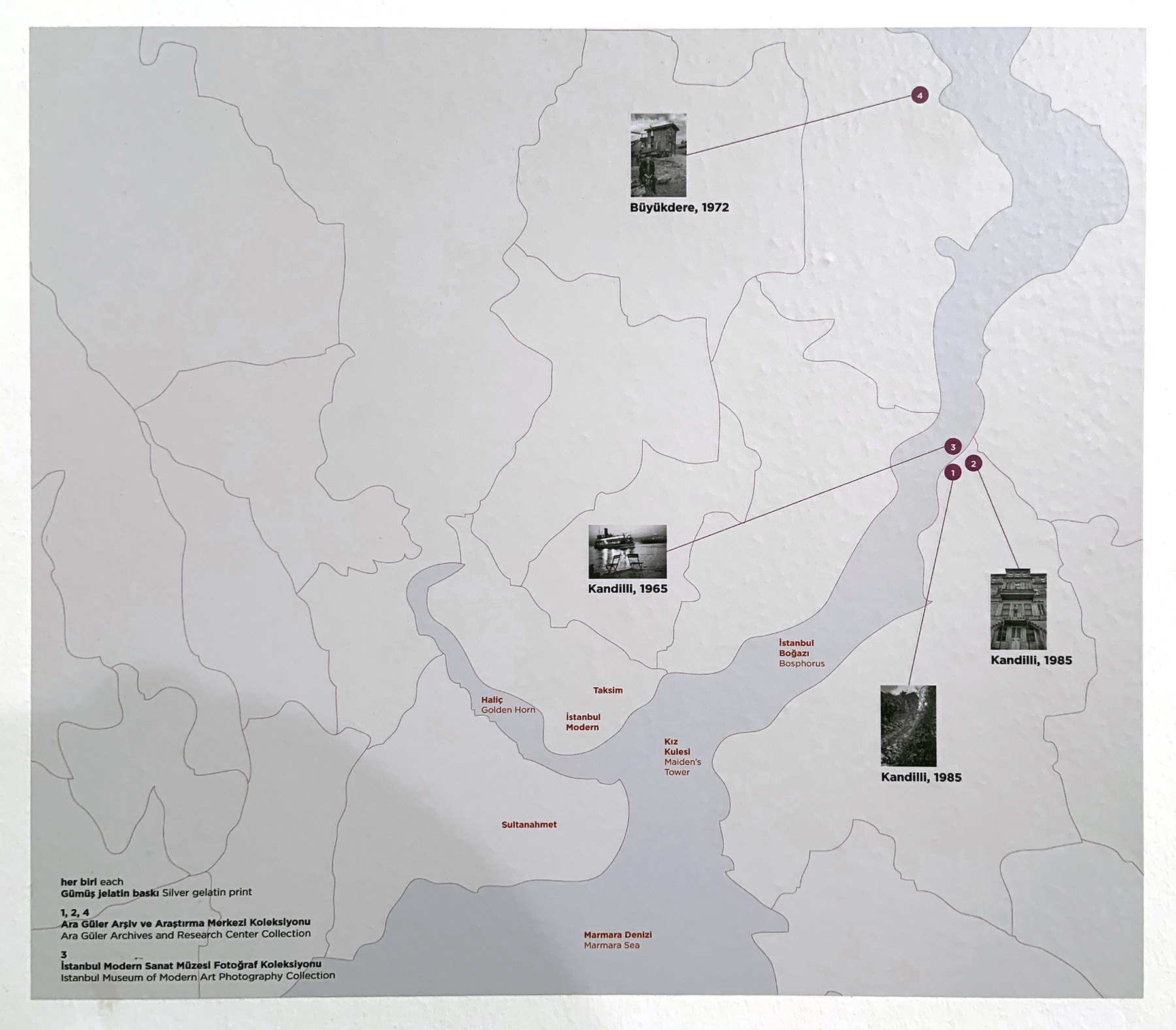
![Ara Güler (Turkish, 1928-2018) 'Kandilli [A Bosphorus passenger boat leaving the European shores of Istanbul for the Asian shore]' 1965](https://artblart.com/wp-content/uploads/2019/10/guler-kandilli-web.jpg "Ara Güler (Turkish, 1928-2018) 'Kandilli [A Bosphorus passenger boat leaving the European shores of Istanbul for the Asian shore]' 1965")
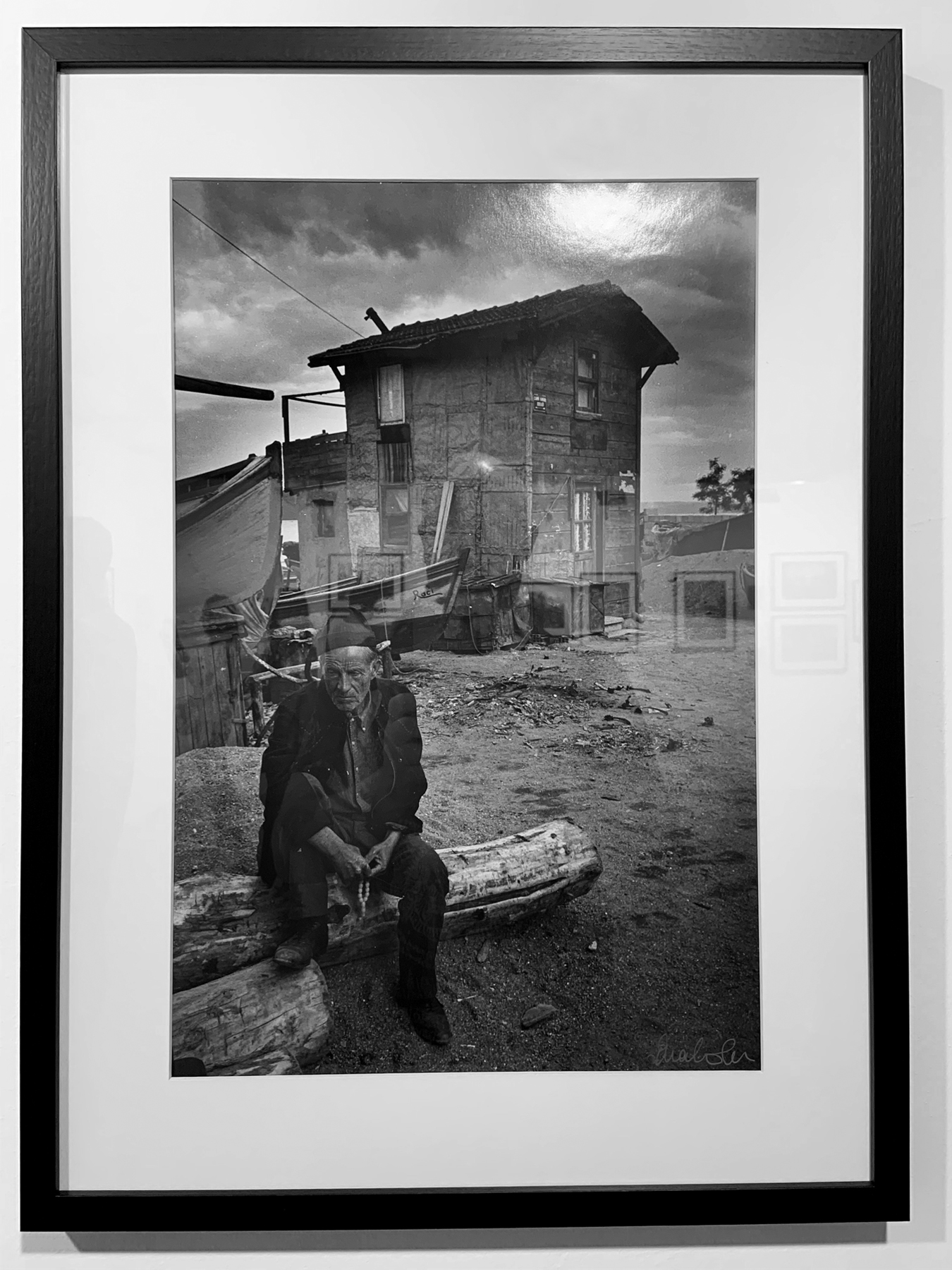
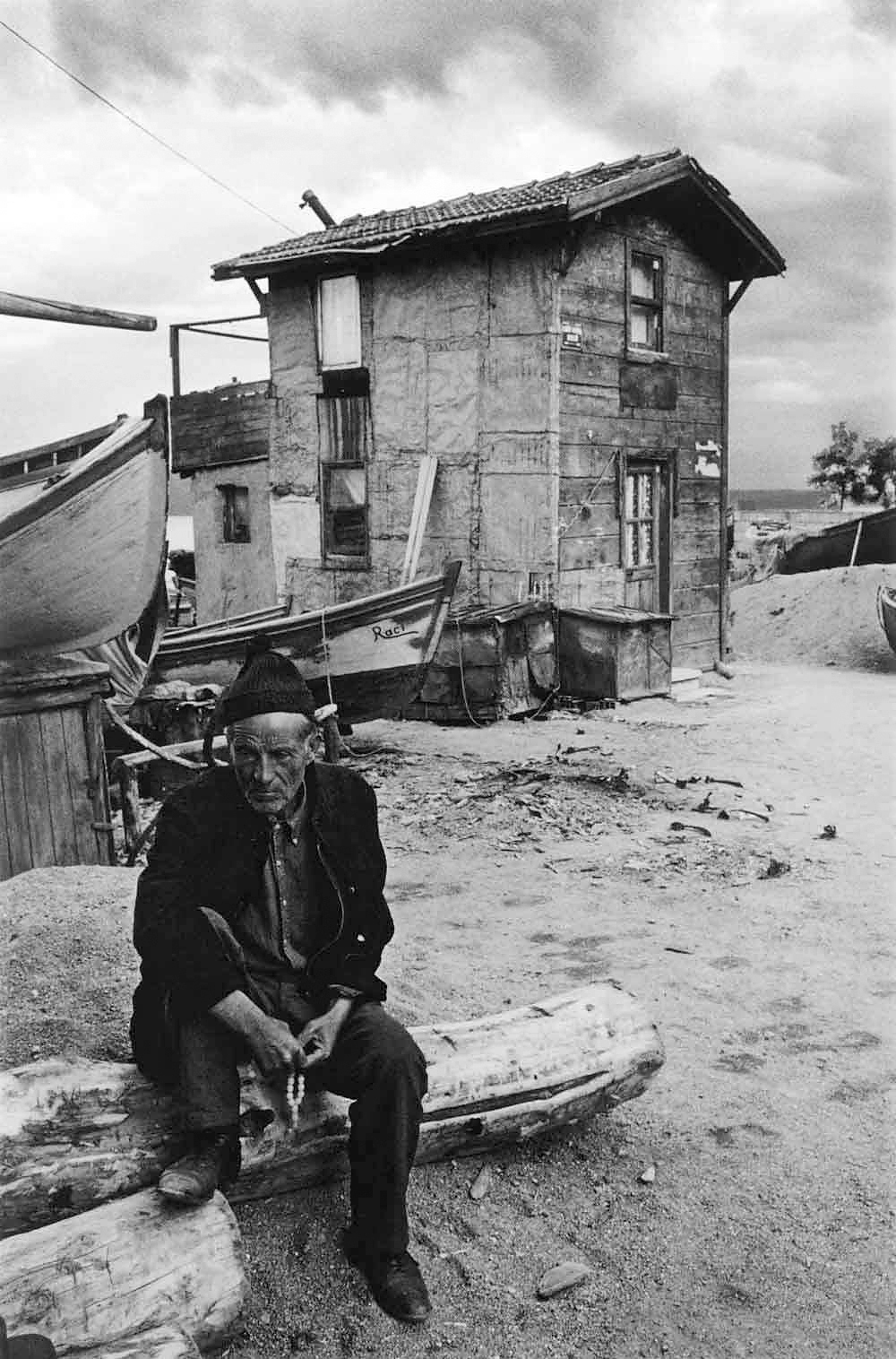


![Ara Güler (Turkish, 1928-2018) 'Kapaliçarsi [The Grand Bazaar]' 1972 (installation view)](https://artblart.com/wp-content/uploads/2019/10/guller-e-web.jpg "Ara Güler (Turkish, 1928-2018) 'Kapaliçarsi [The Grand Bazaar]' 1972 (installation view)")
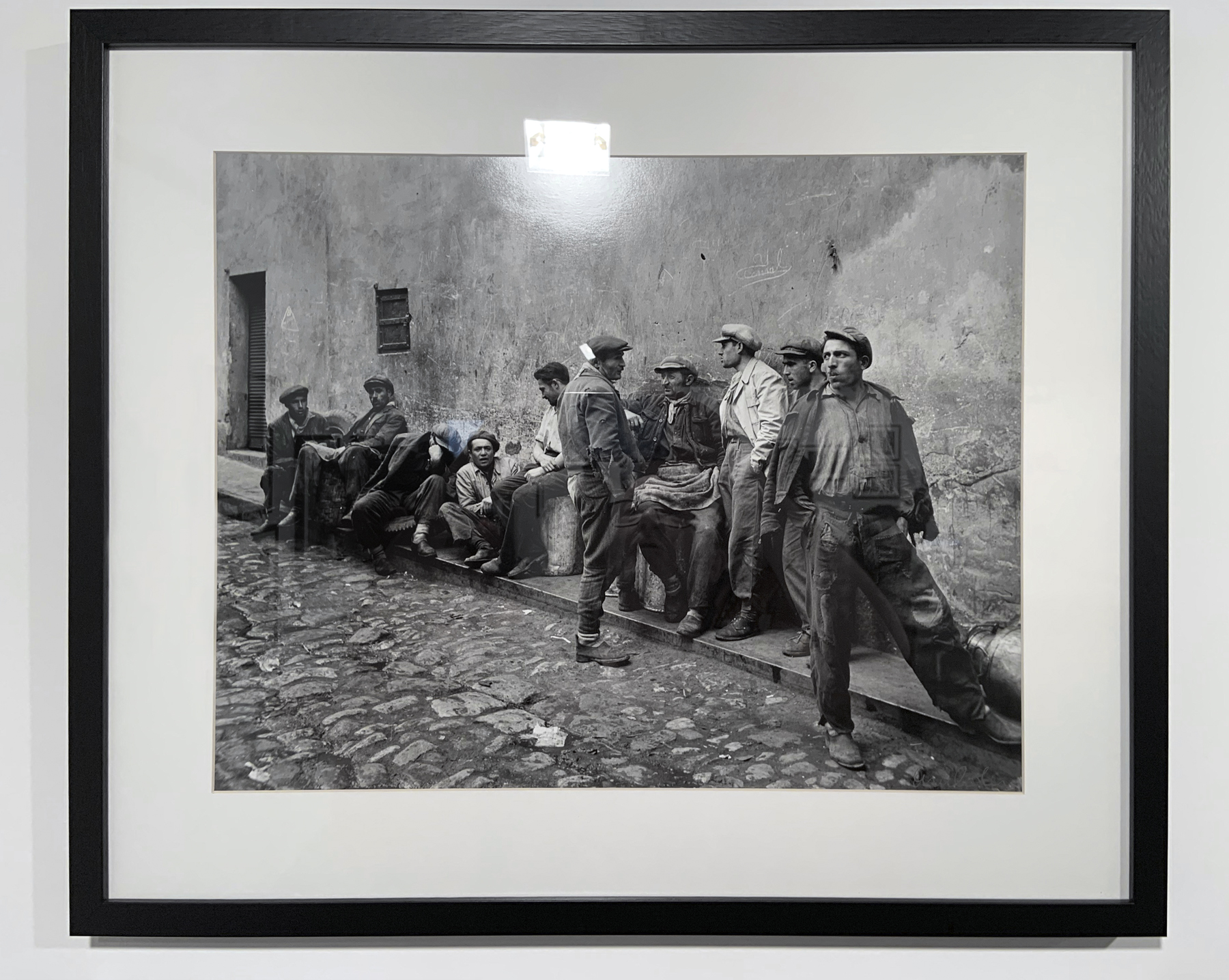
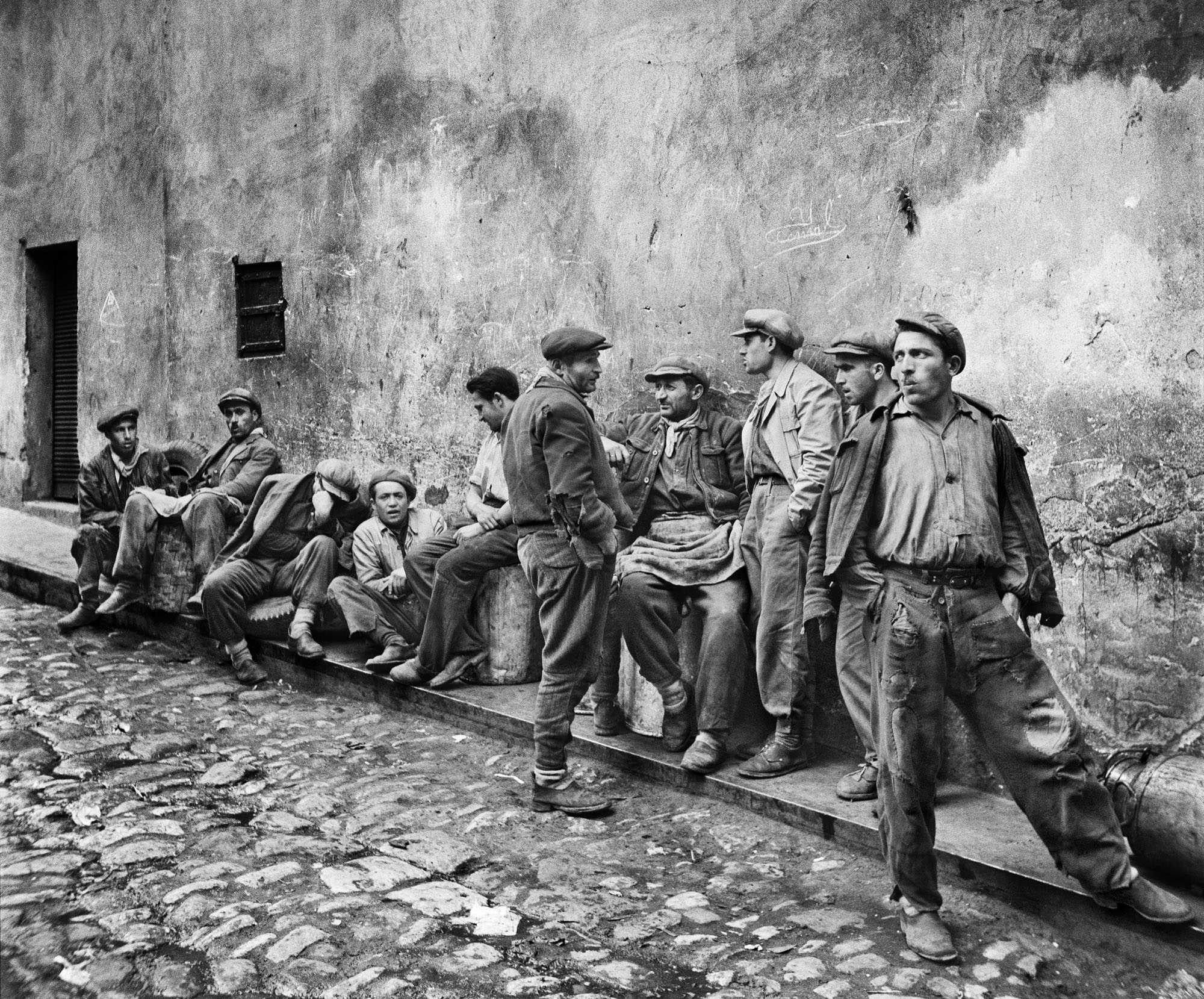
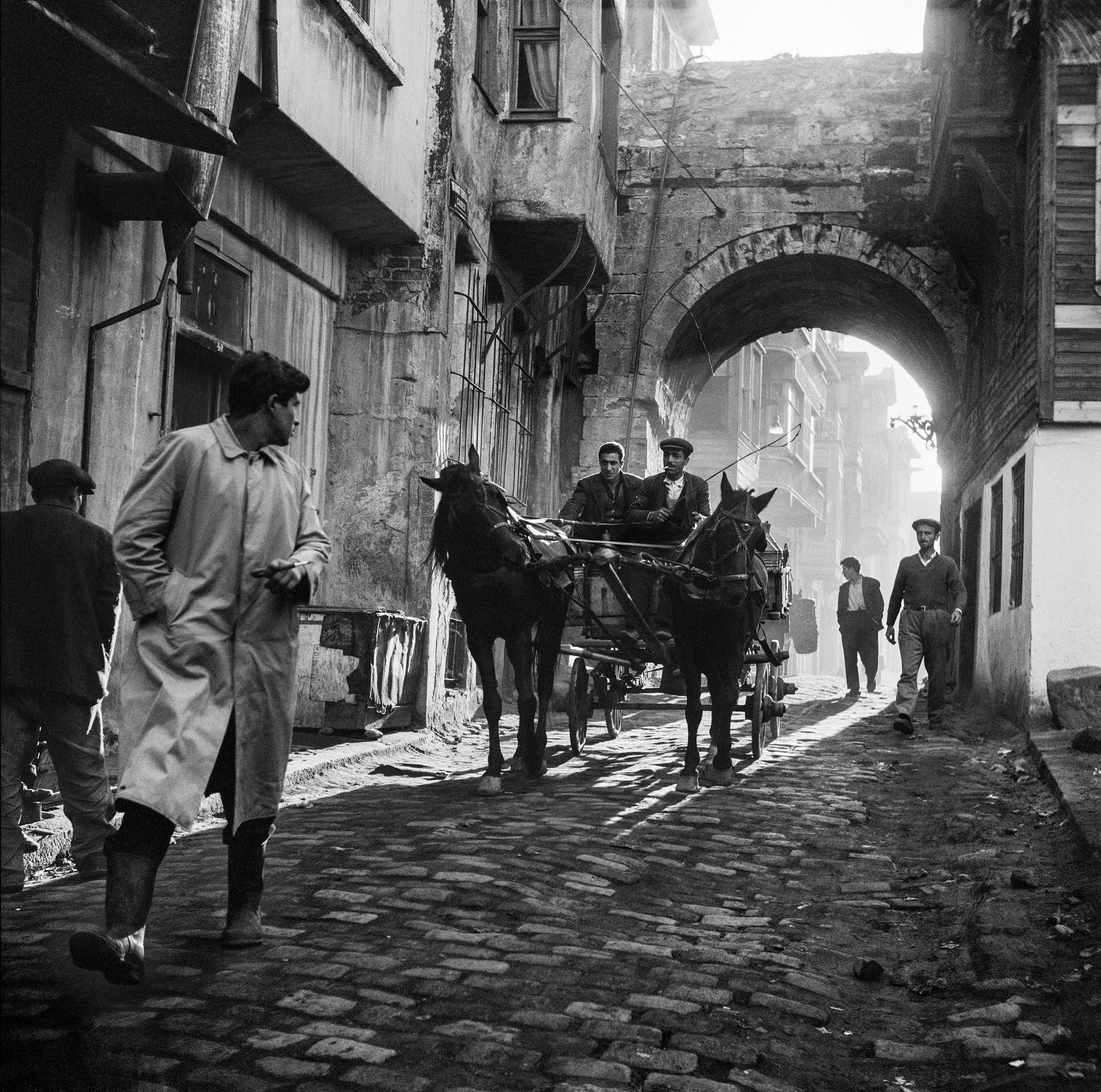

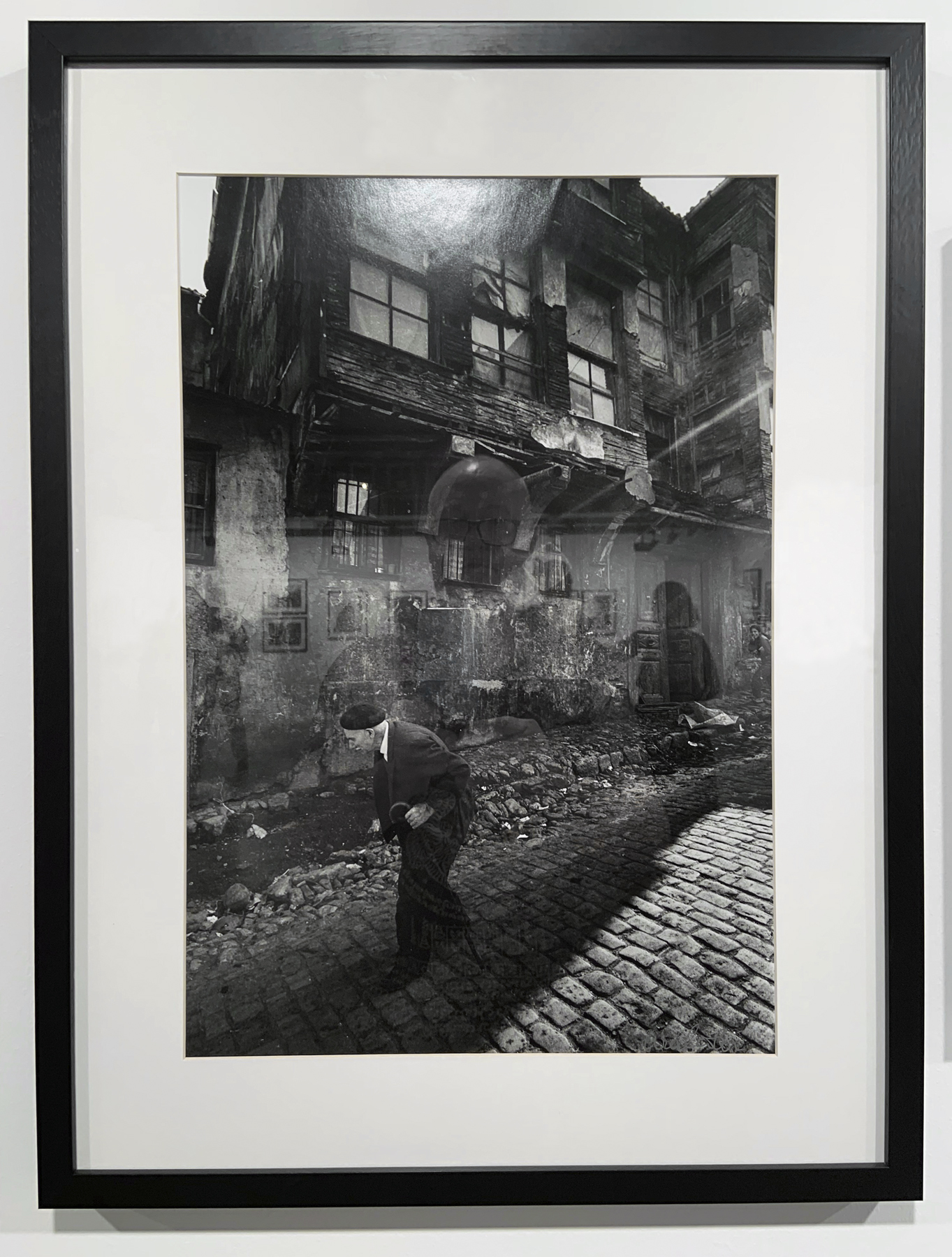
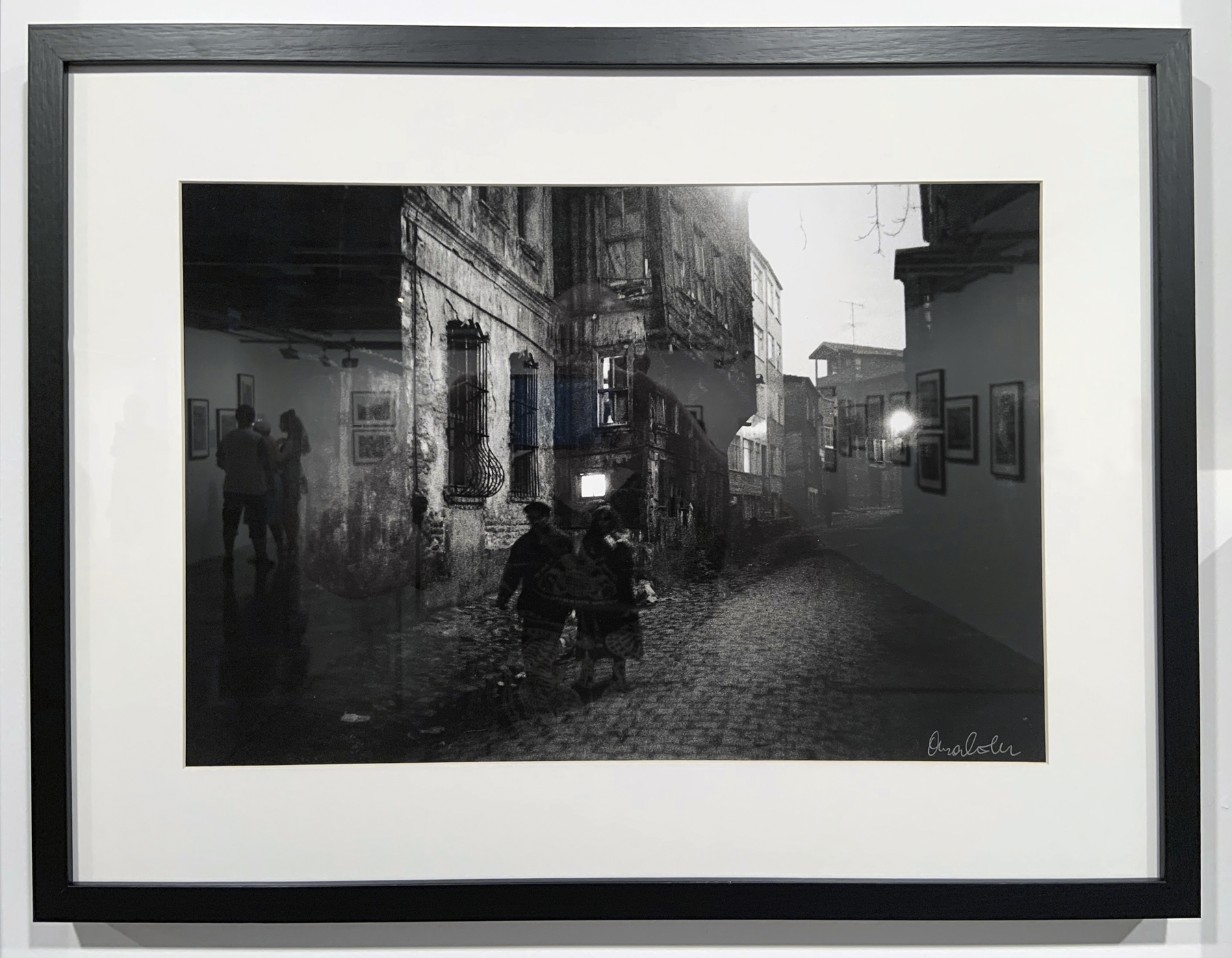
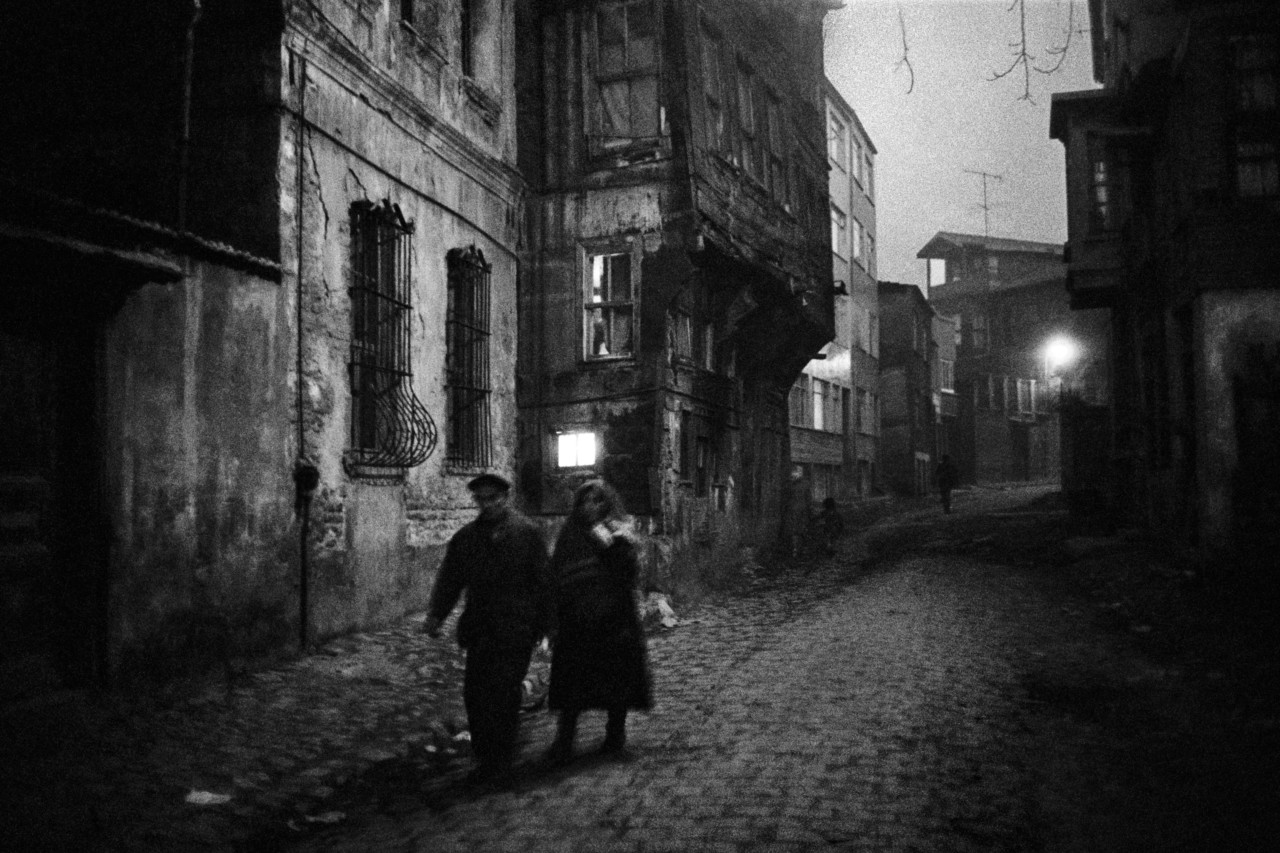
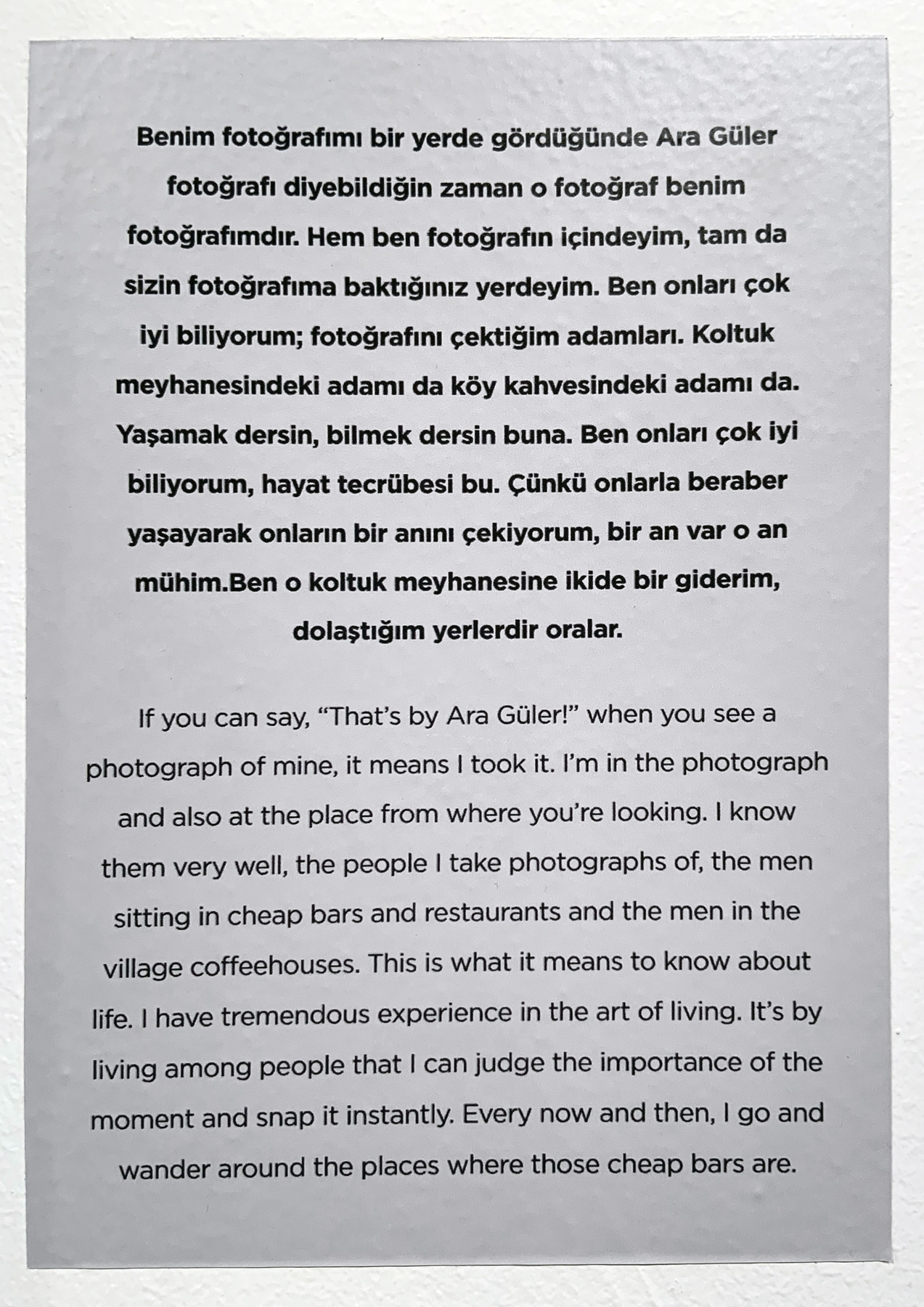
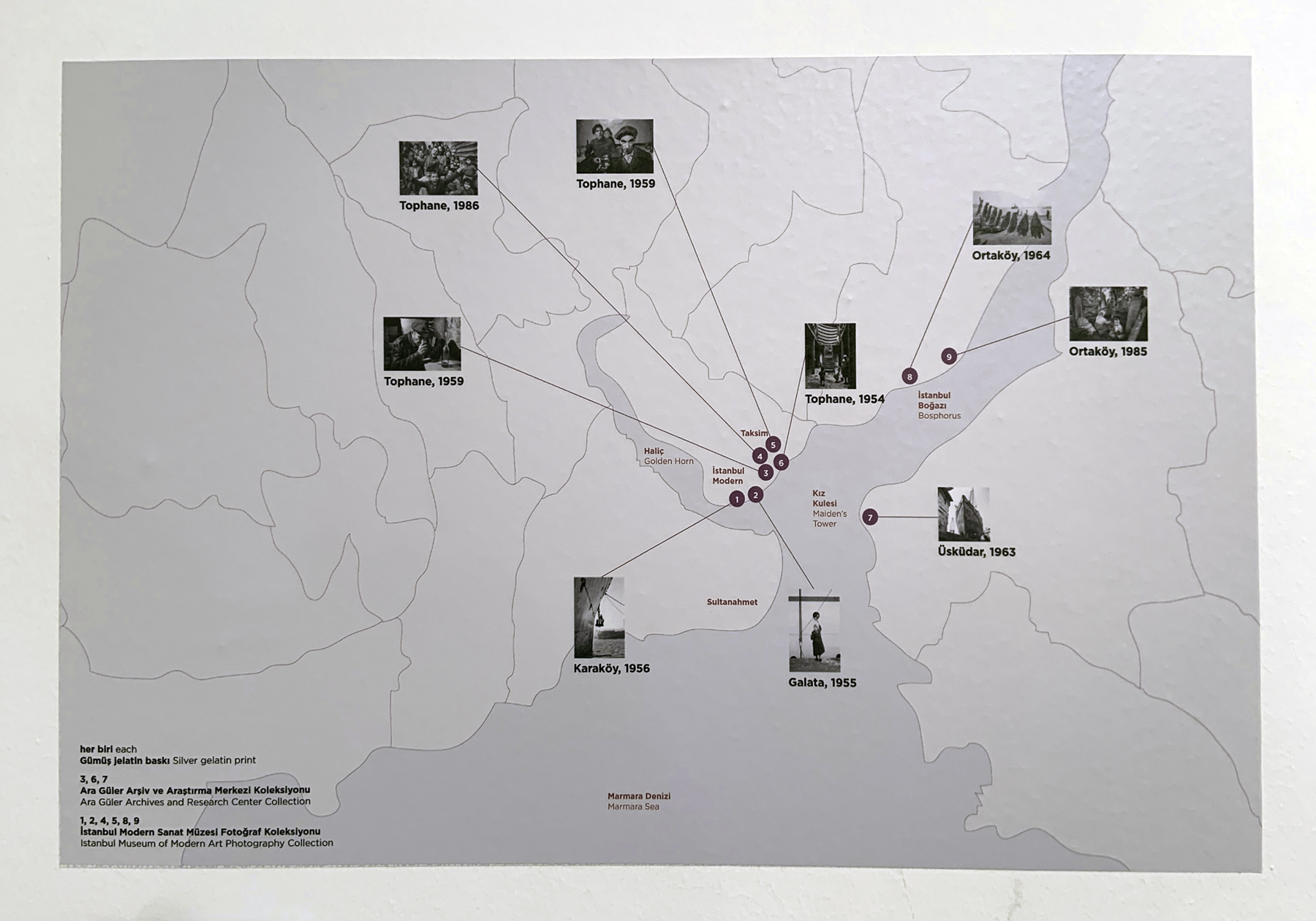

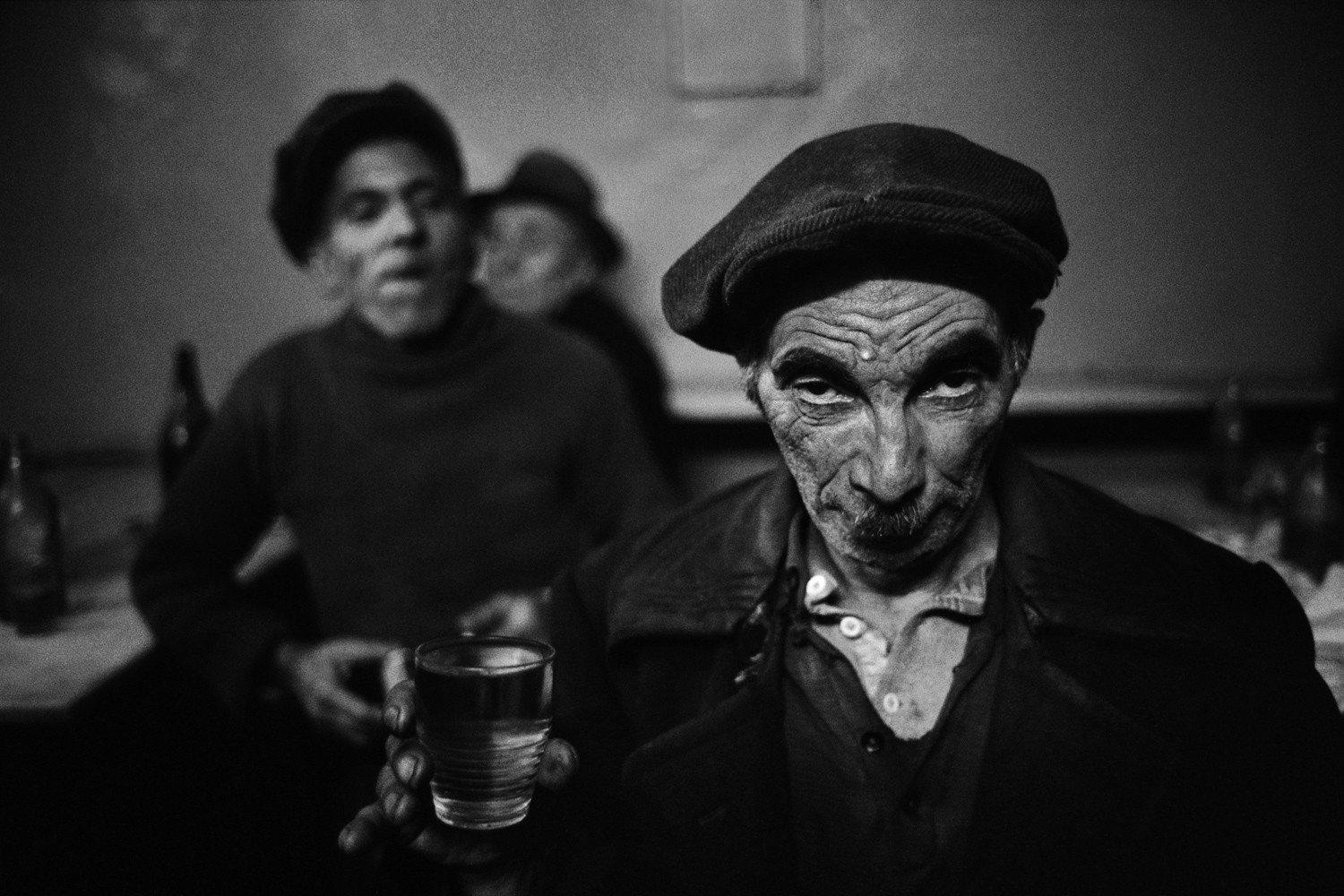
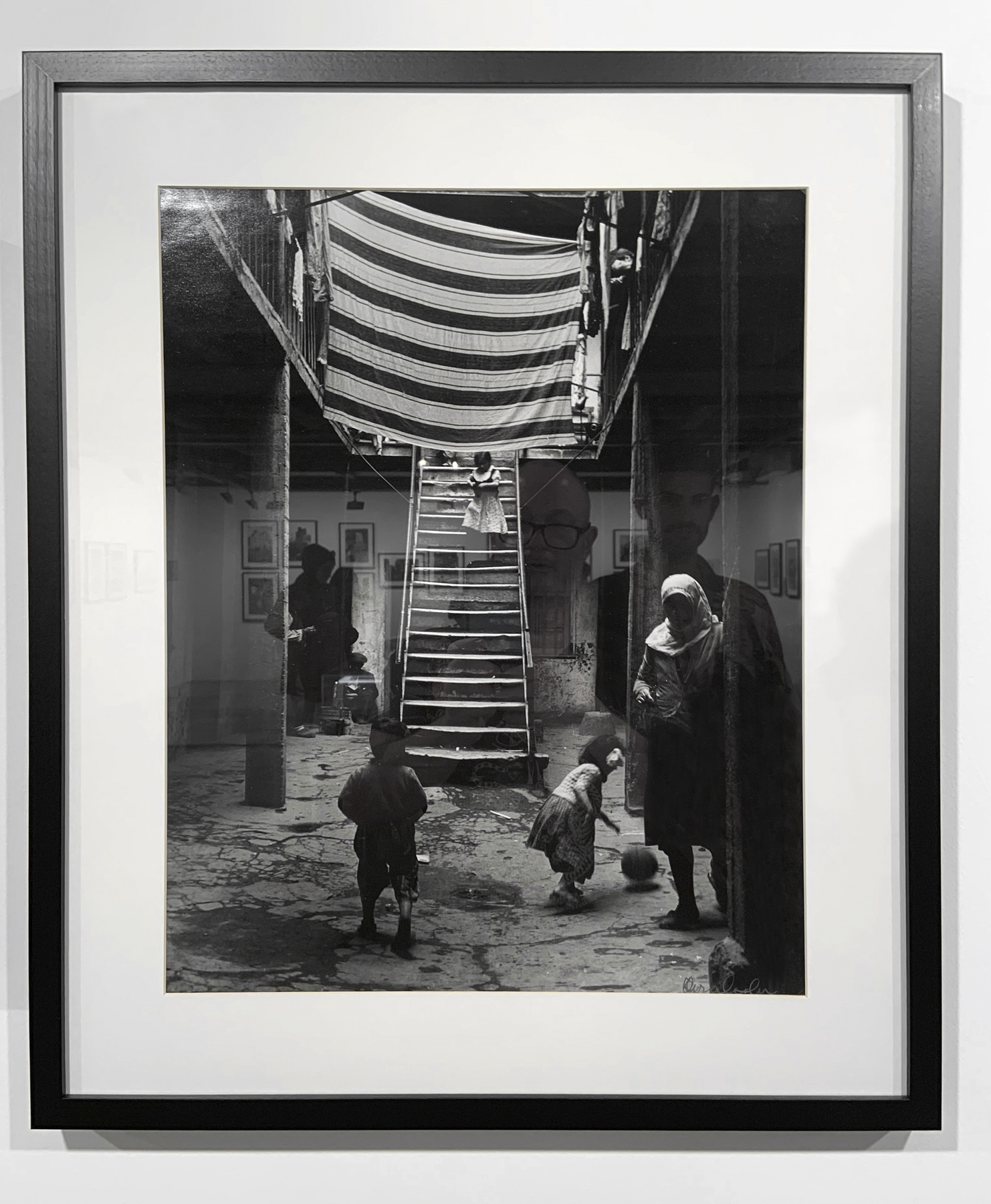
![Ara Güler (Turkish, 1928-2018) 'Tophane [Atrium of a house]' 1954](https://artblart.com/wp-content/uploads/2019/10/guler-tophane-web.jpg "Ara Güler (Turkish, 1928-2018) 'Tophane [Atrium of a house]' 1954")
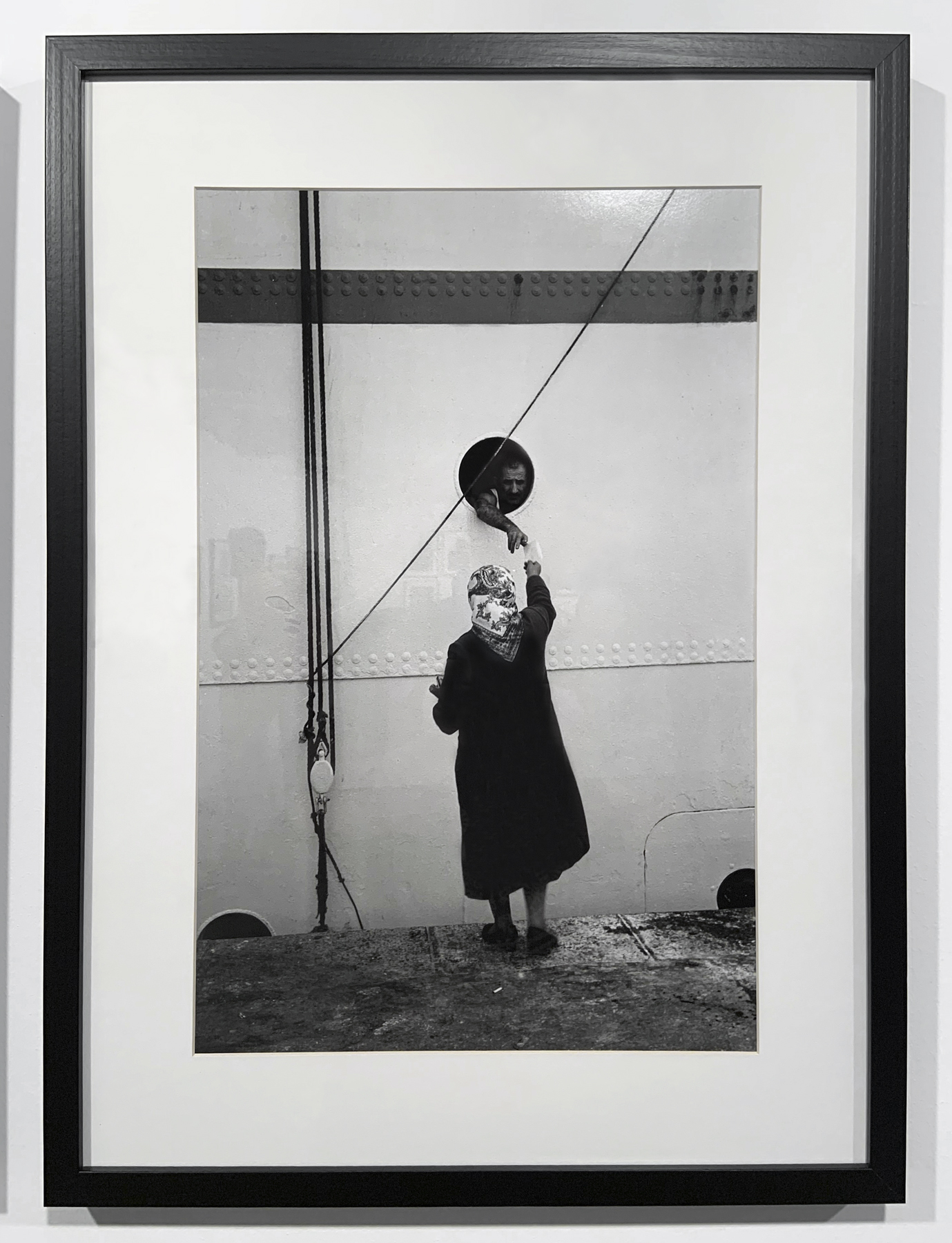
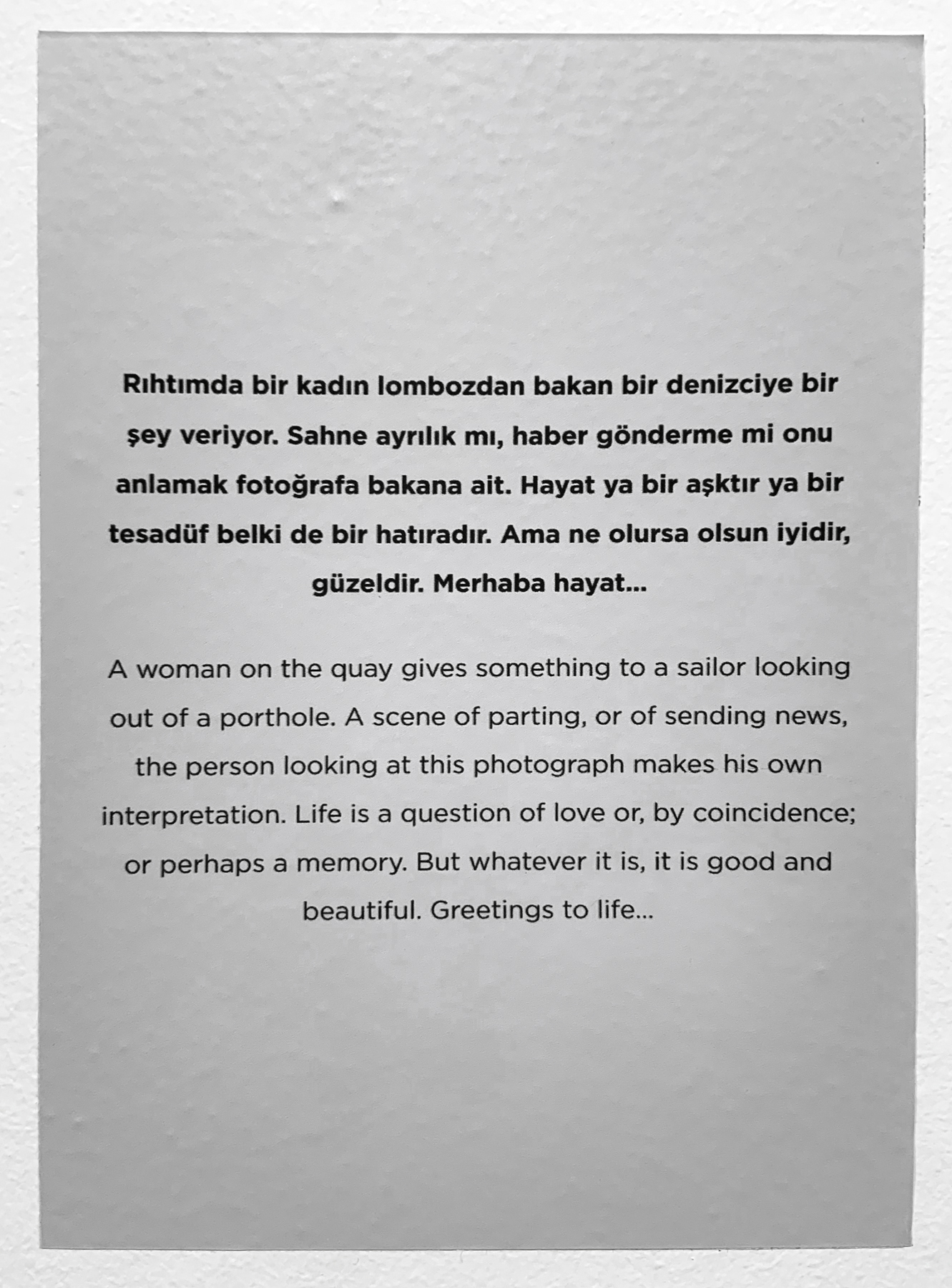
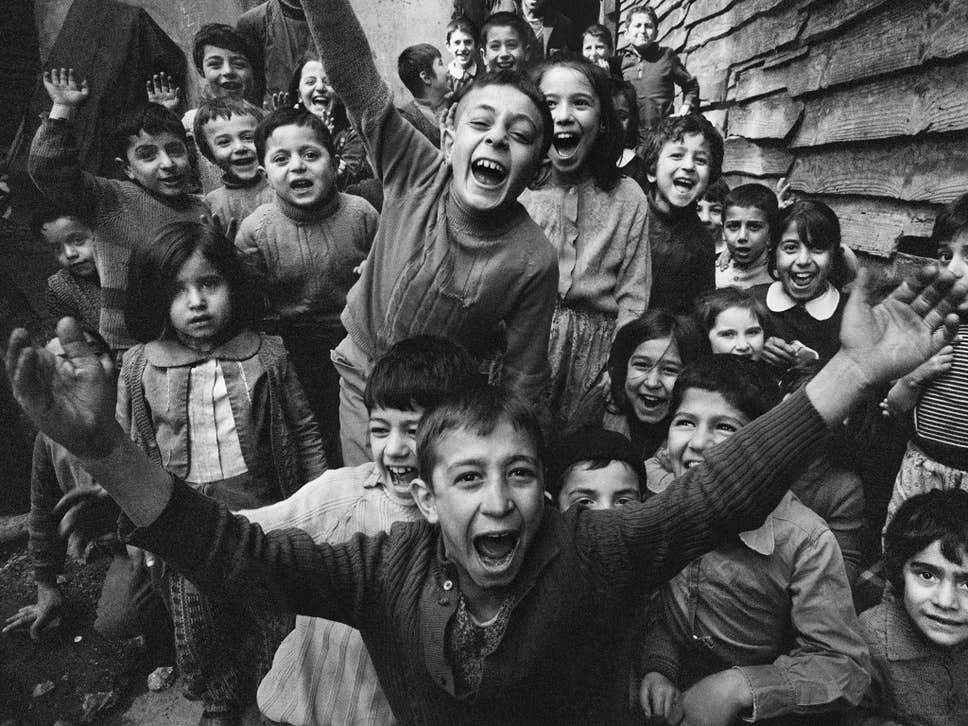


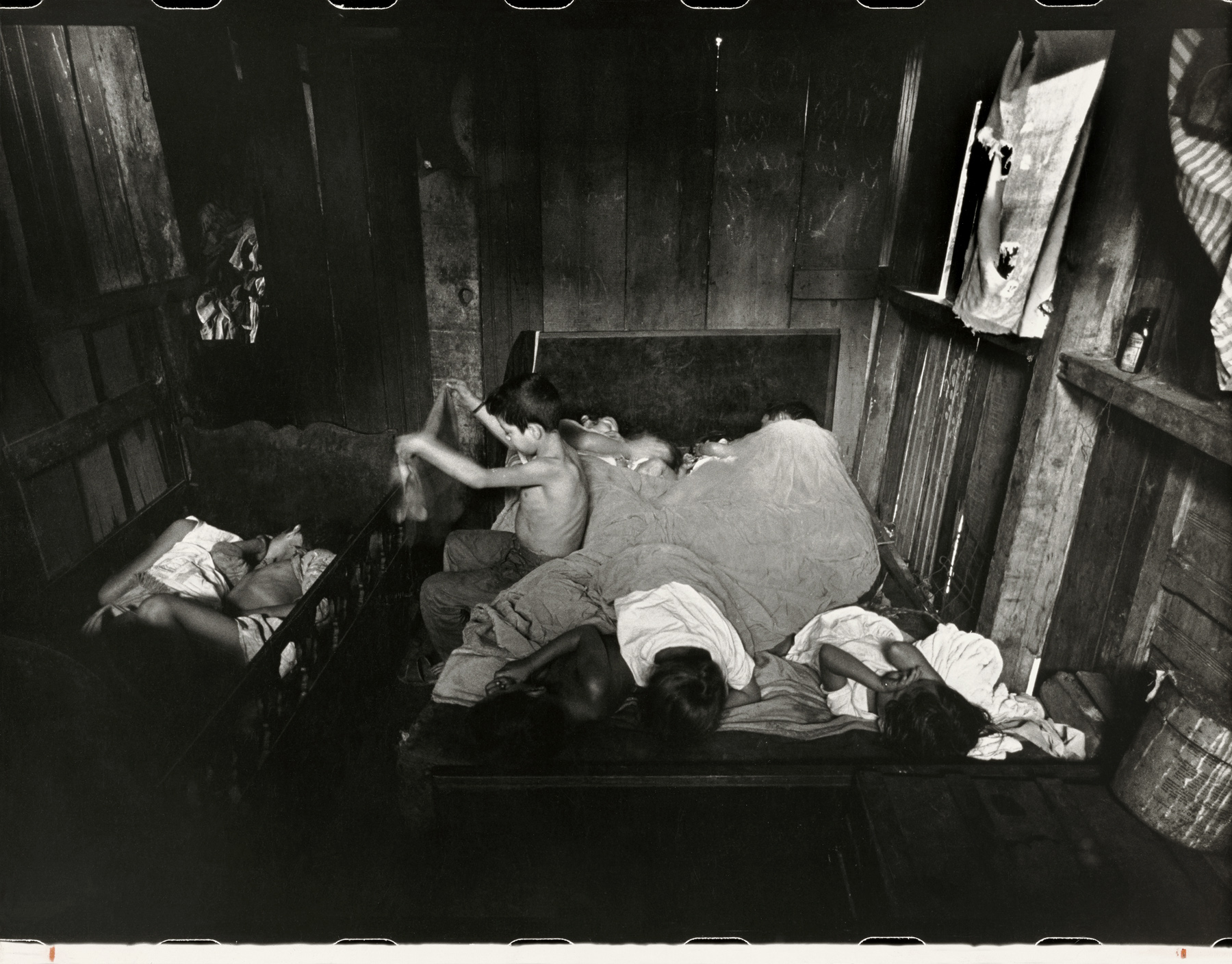


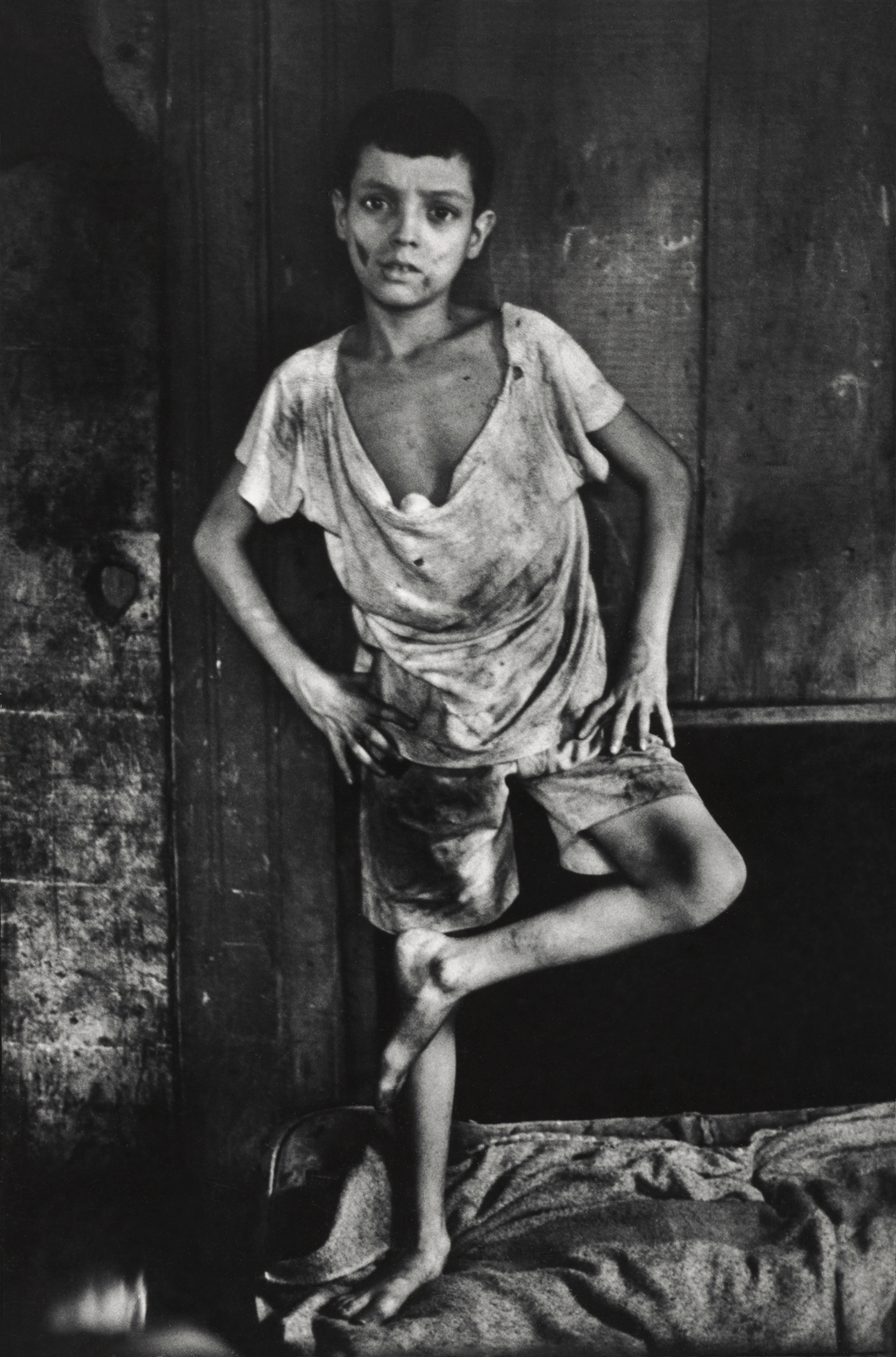


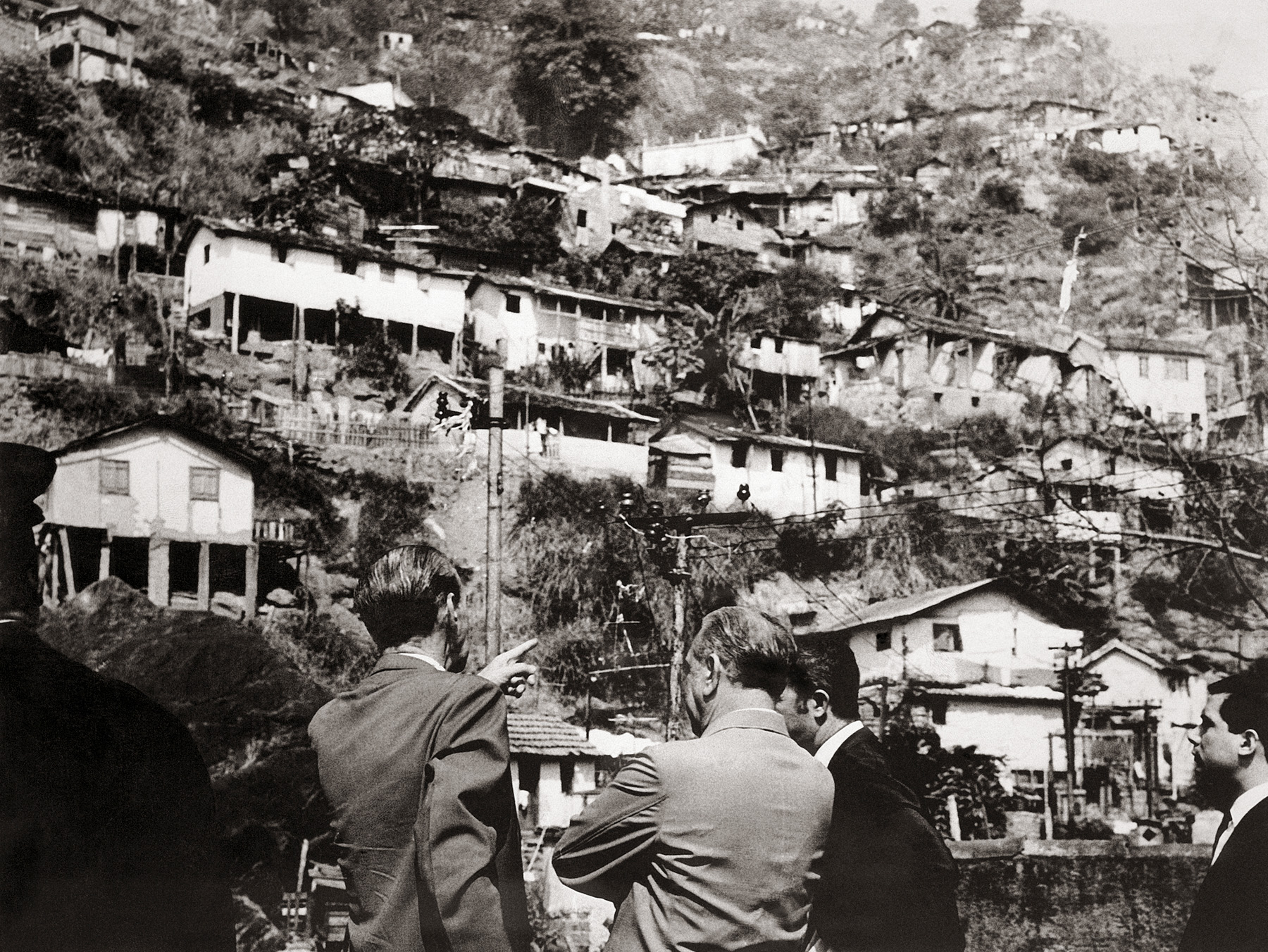


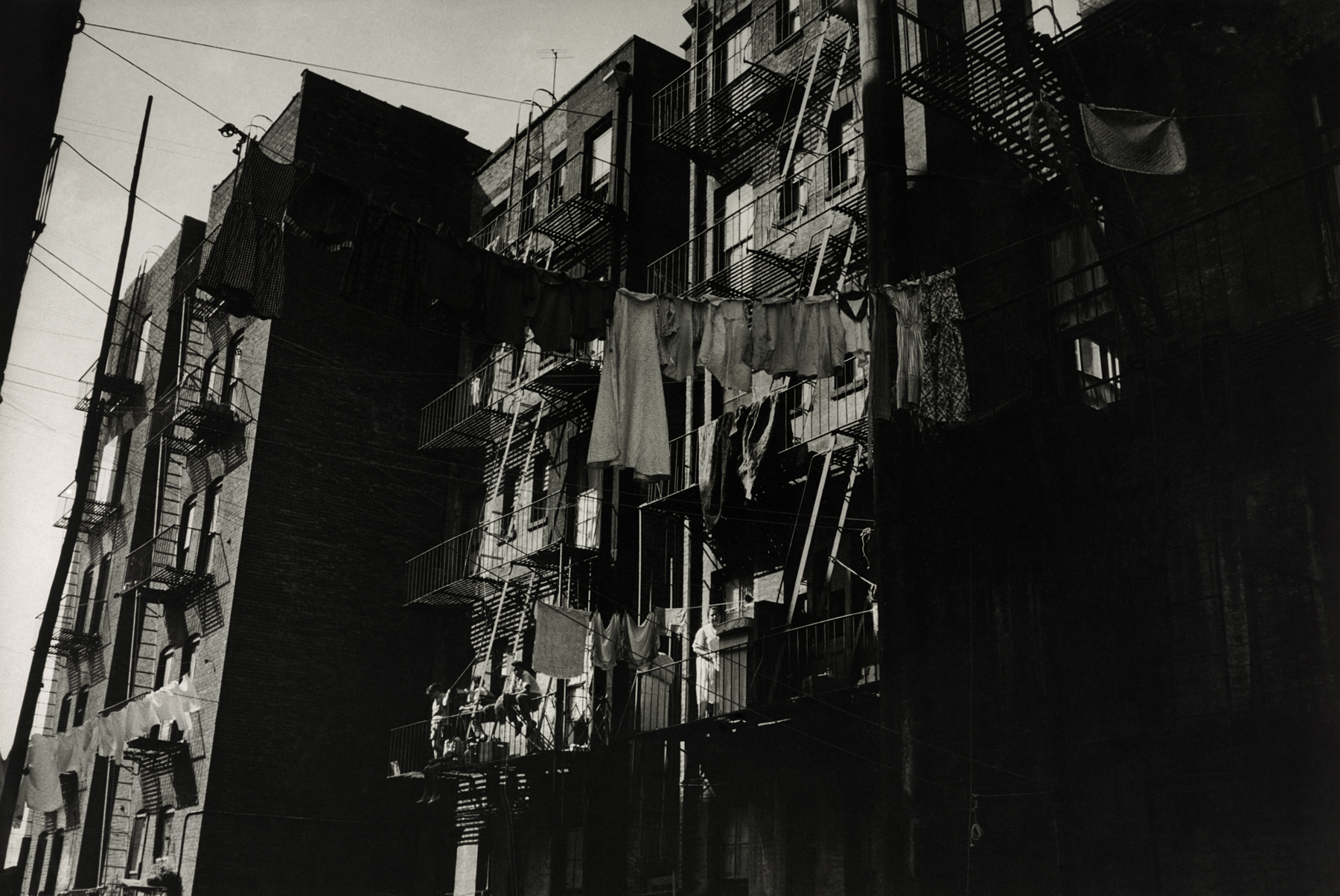


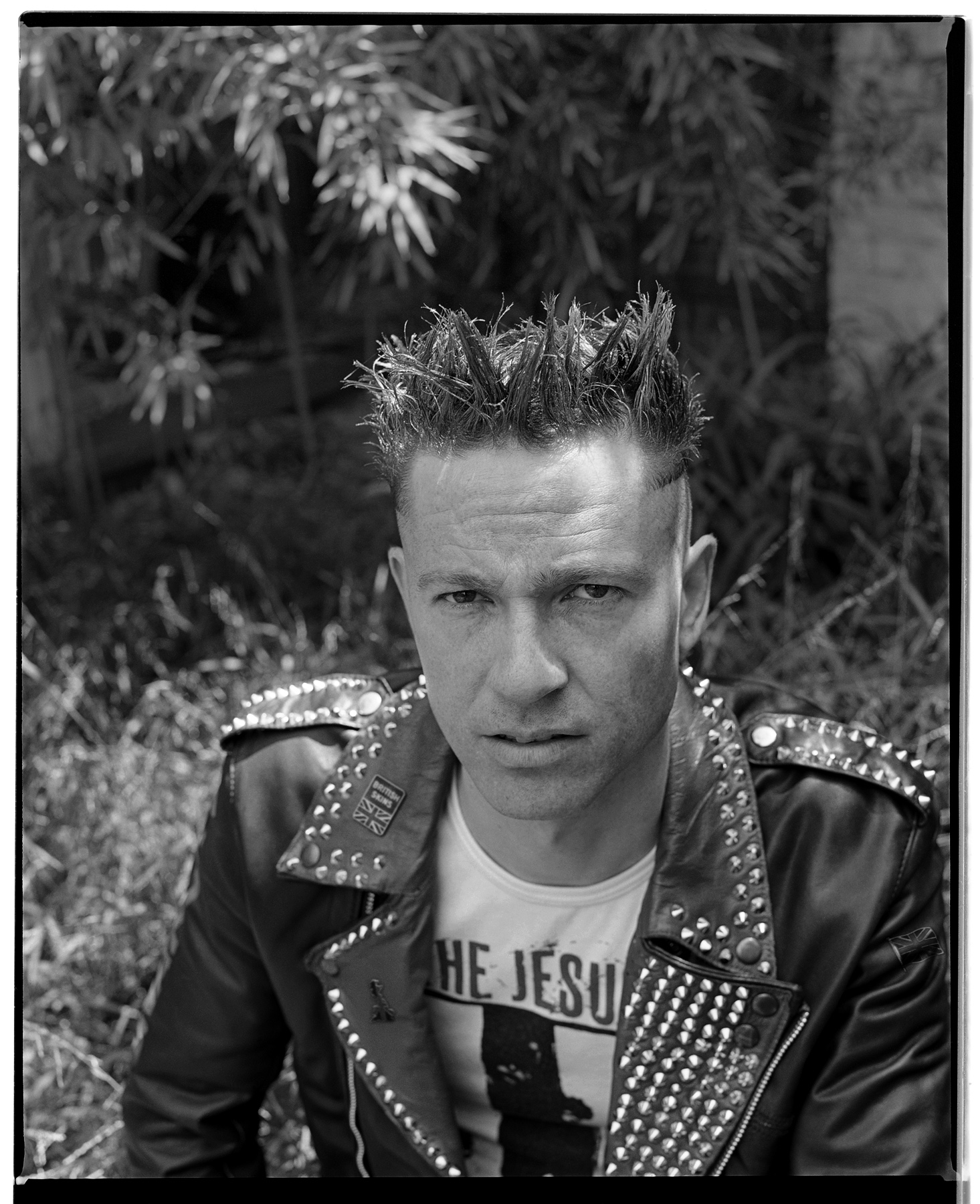

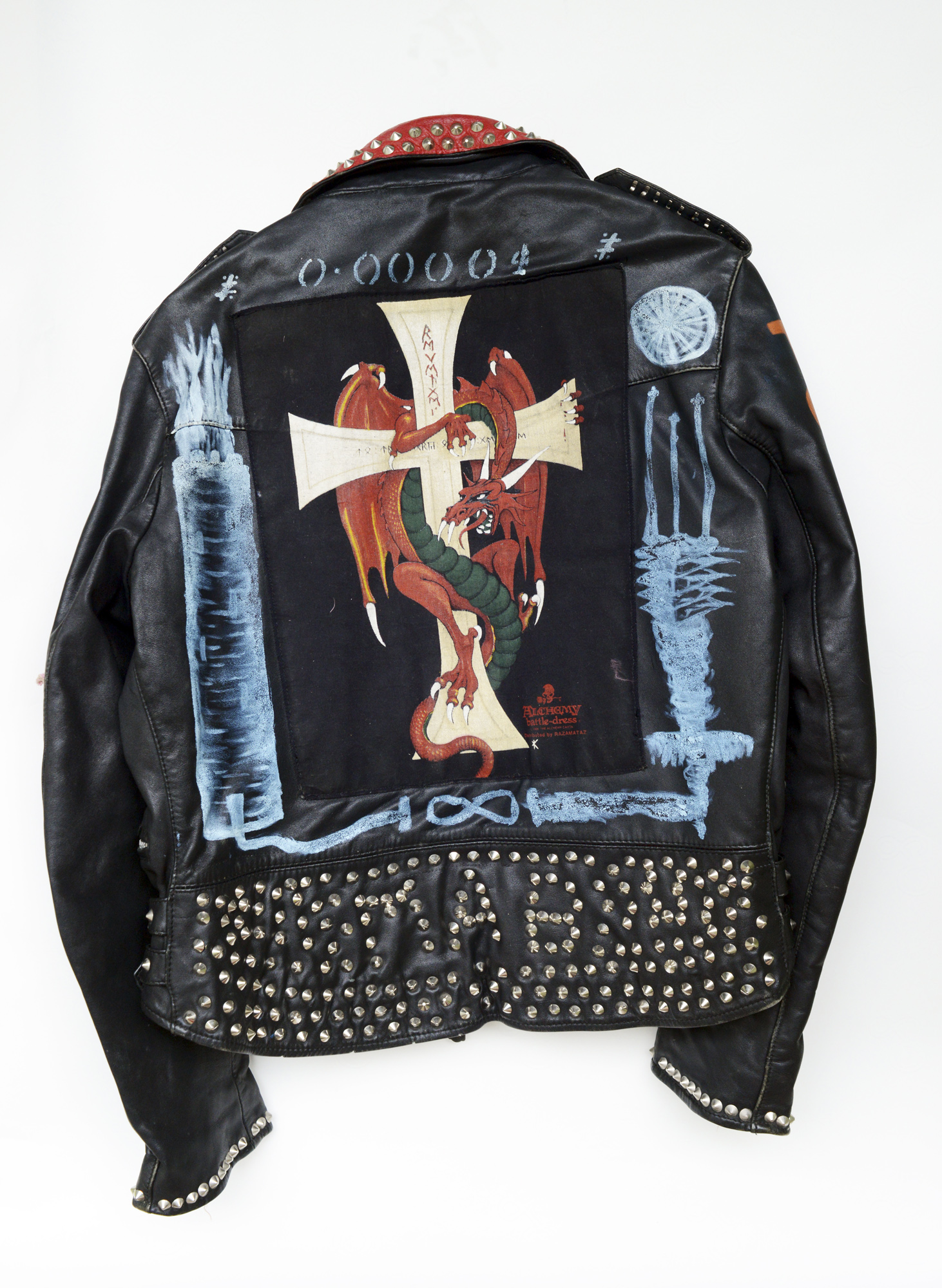
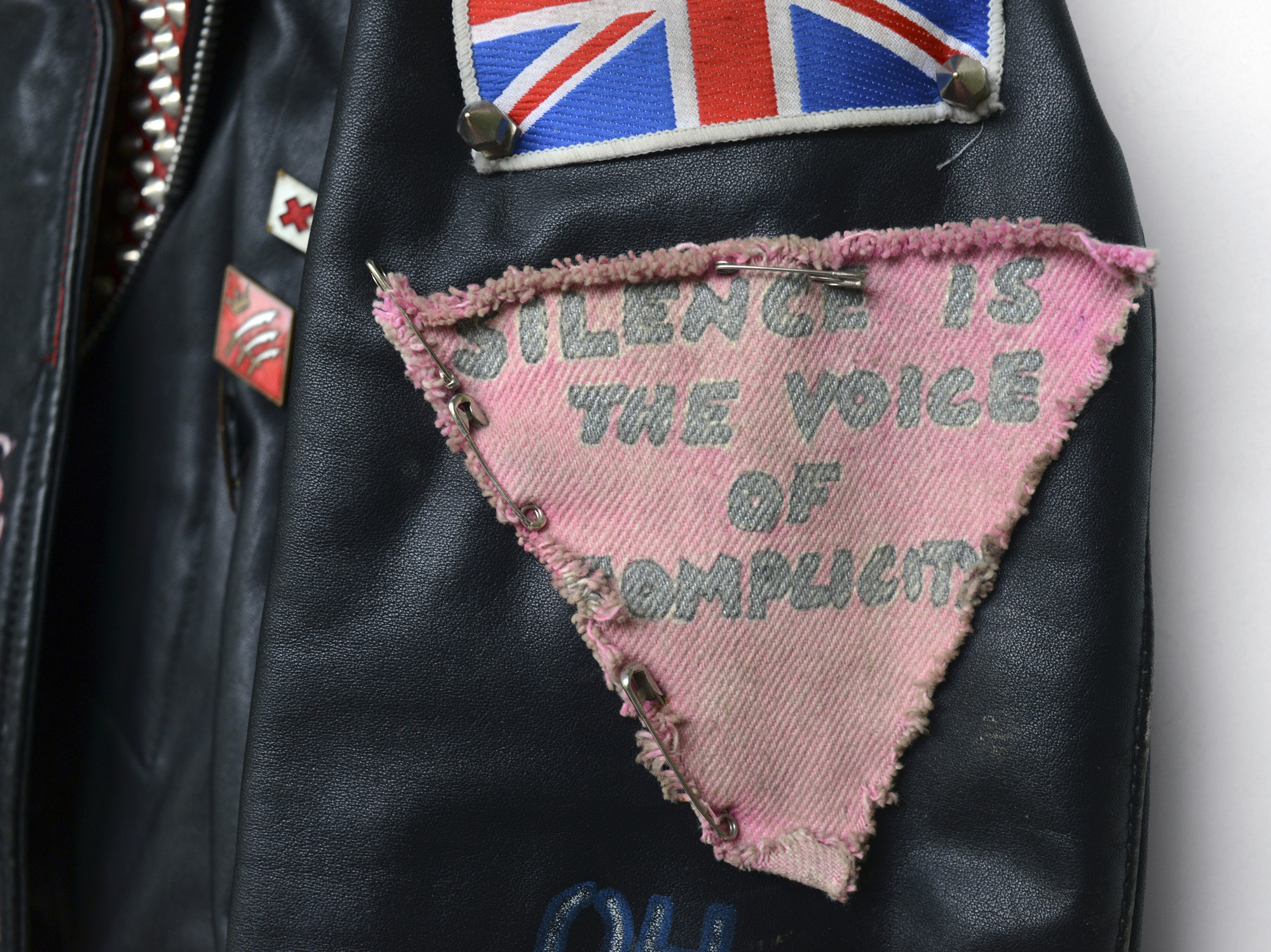
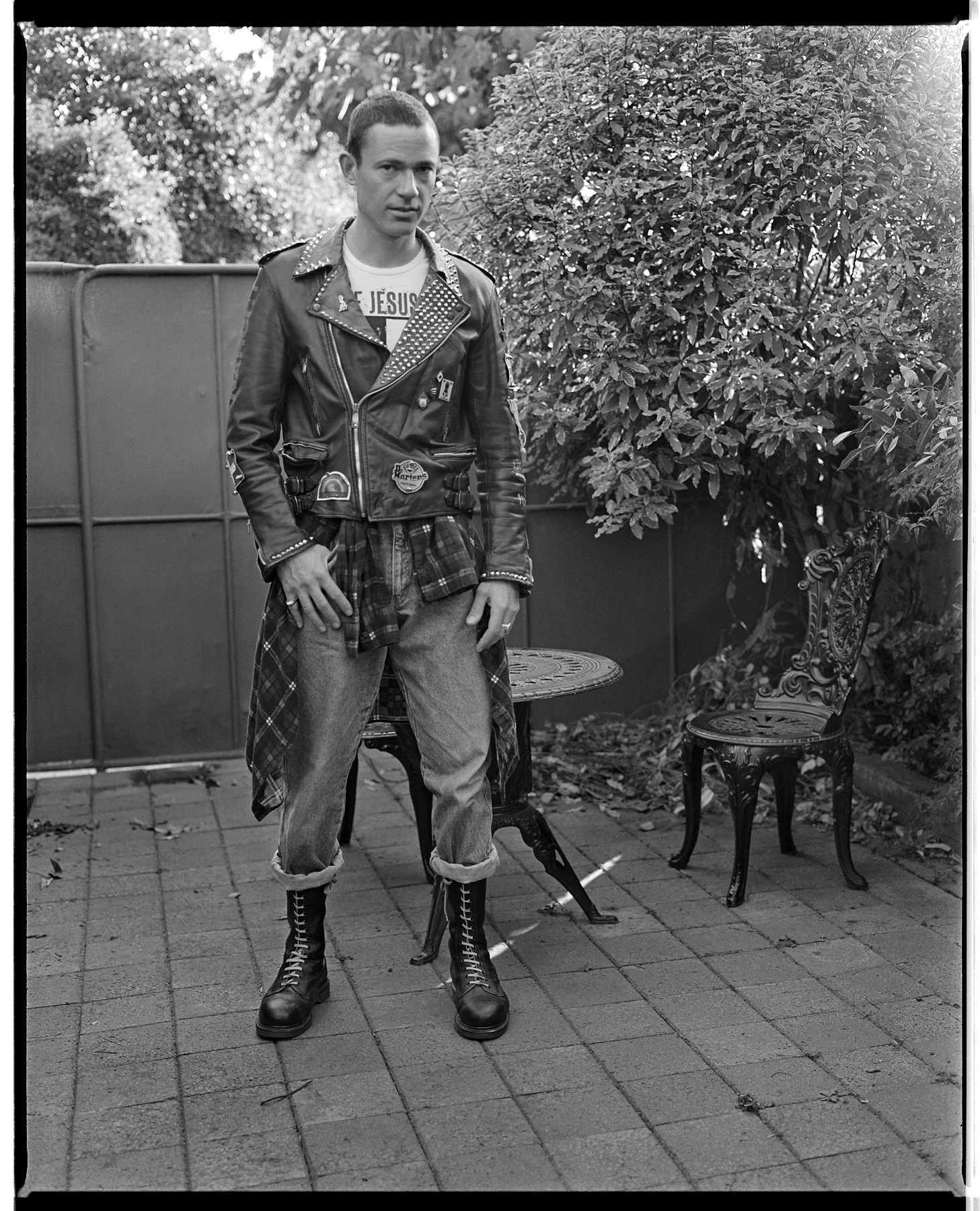
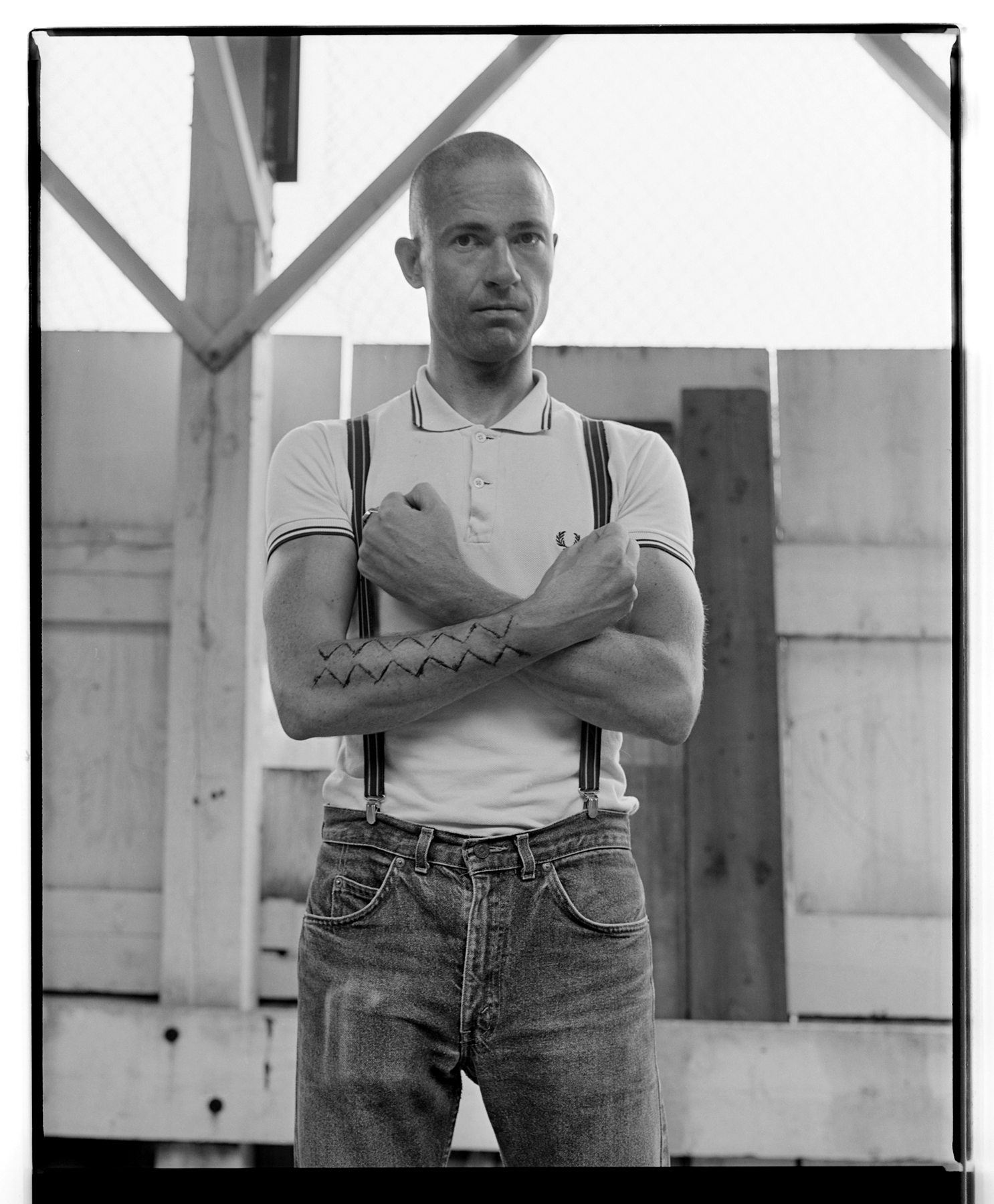

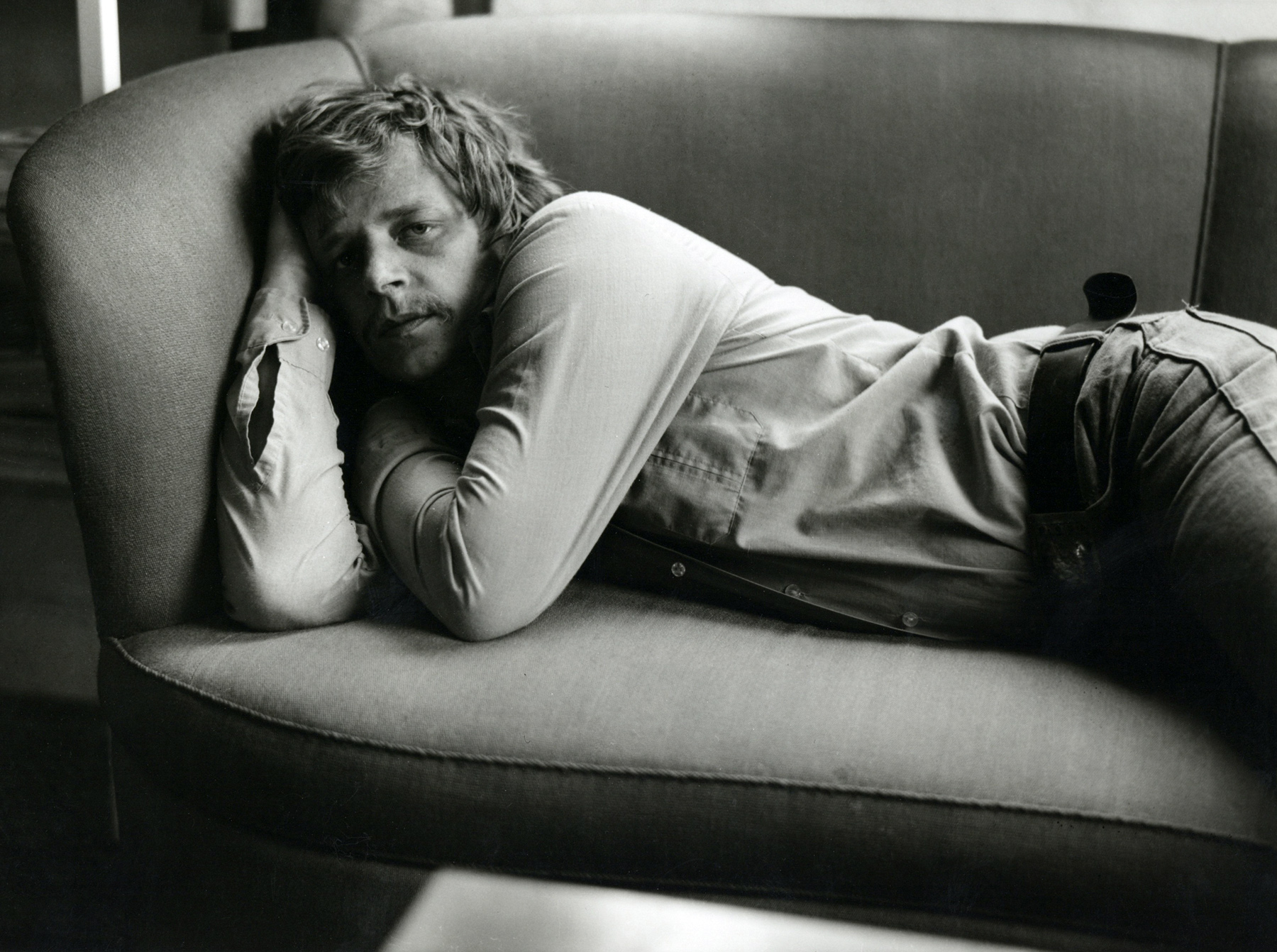
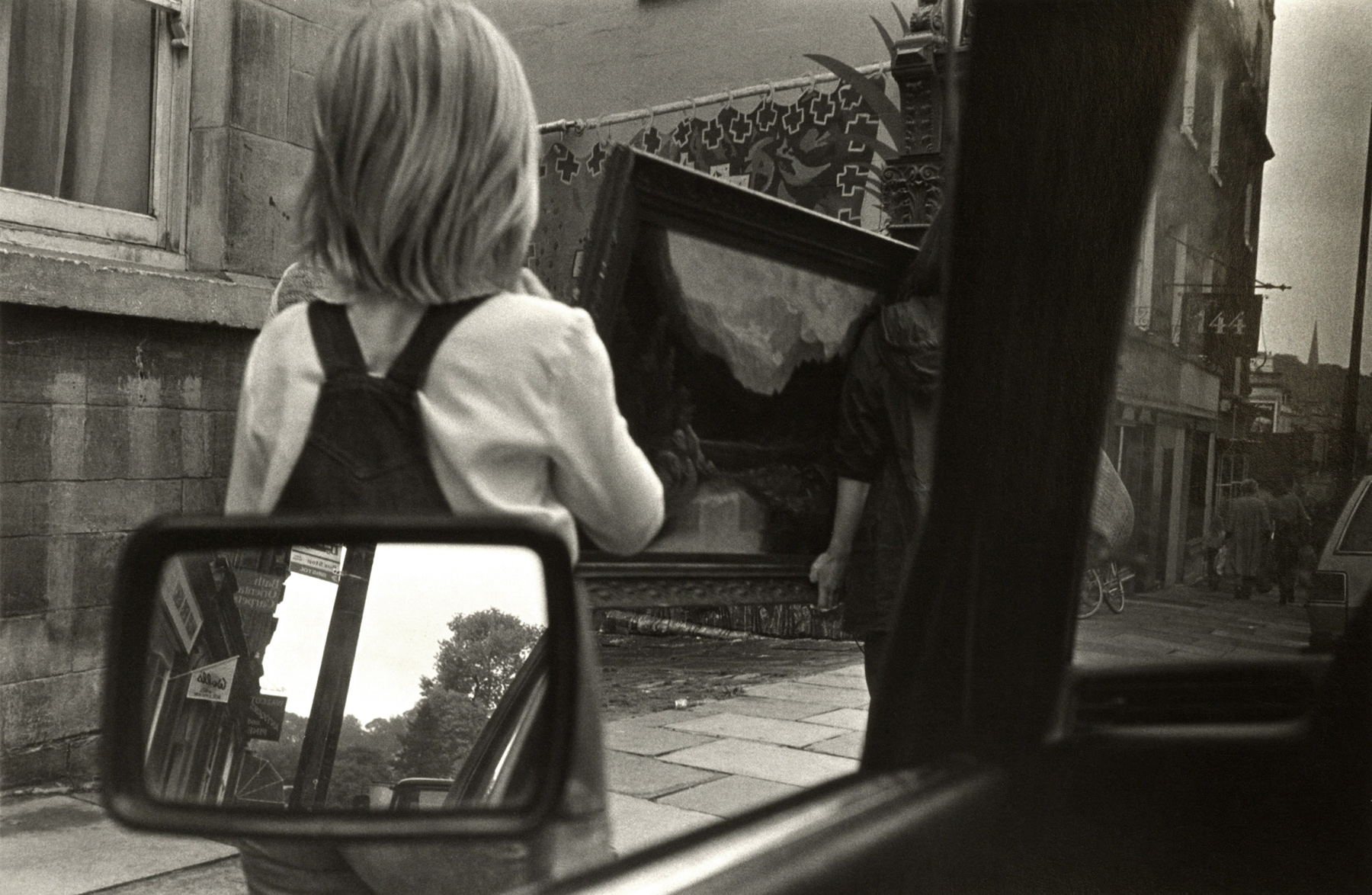
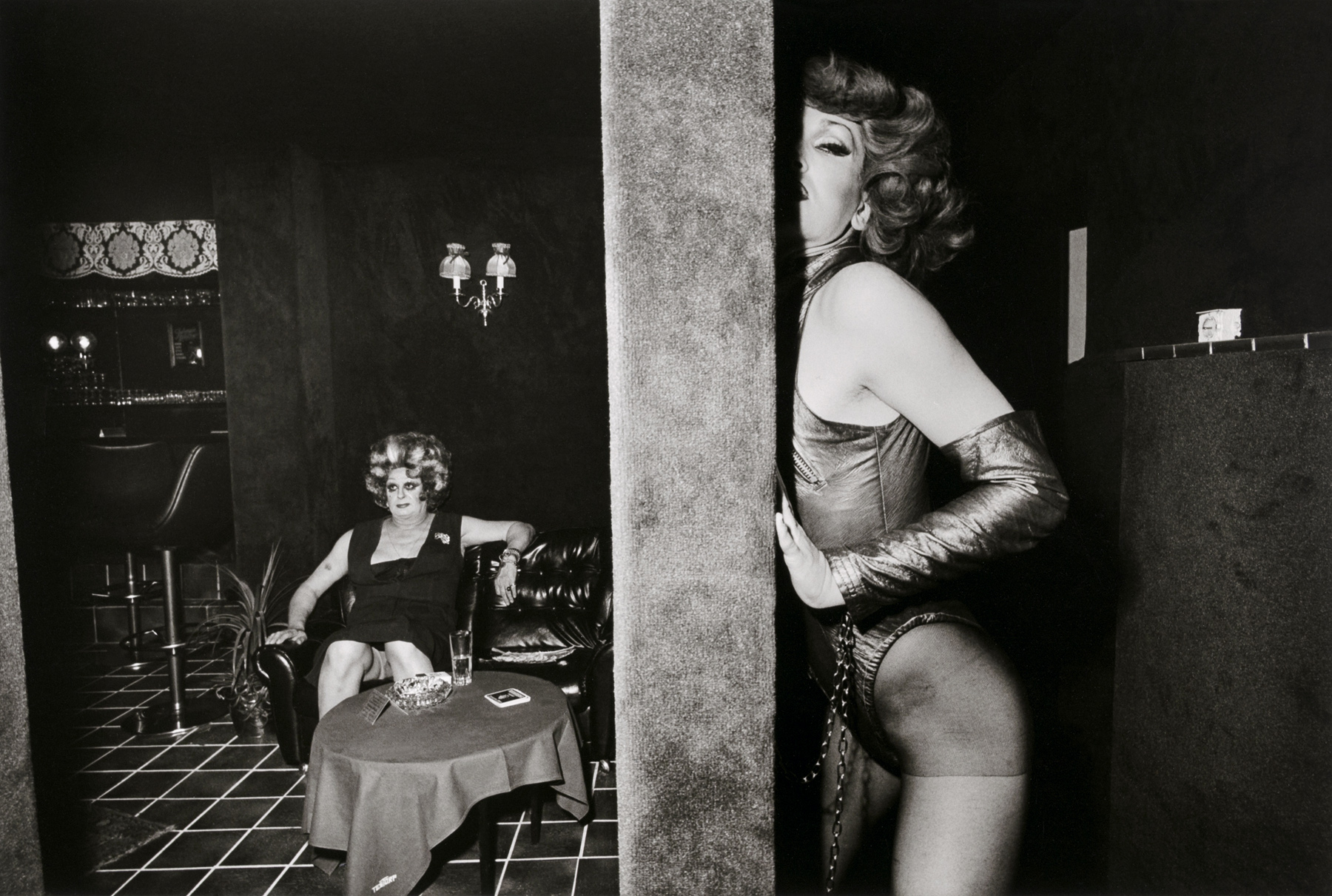
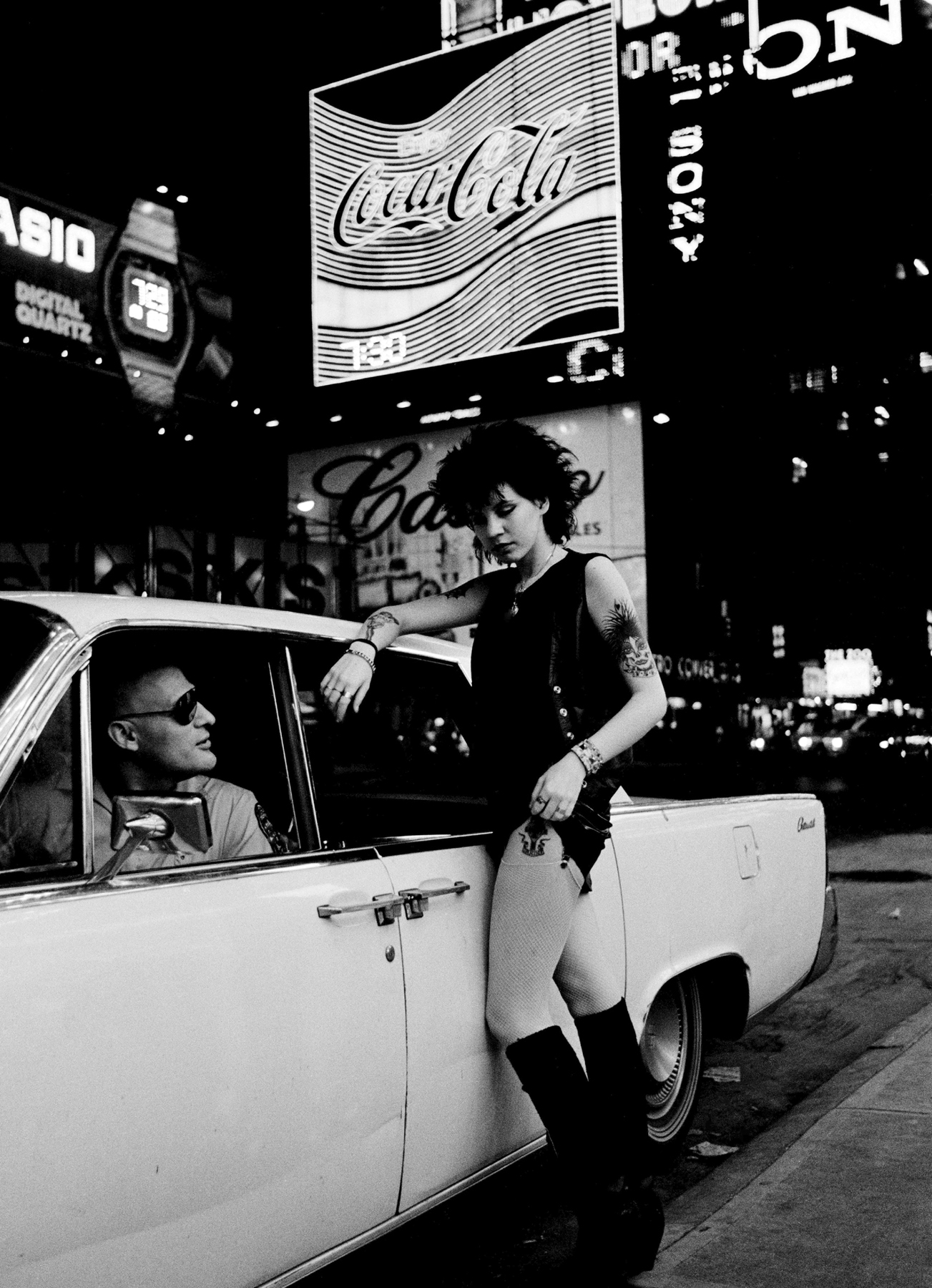
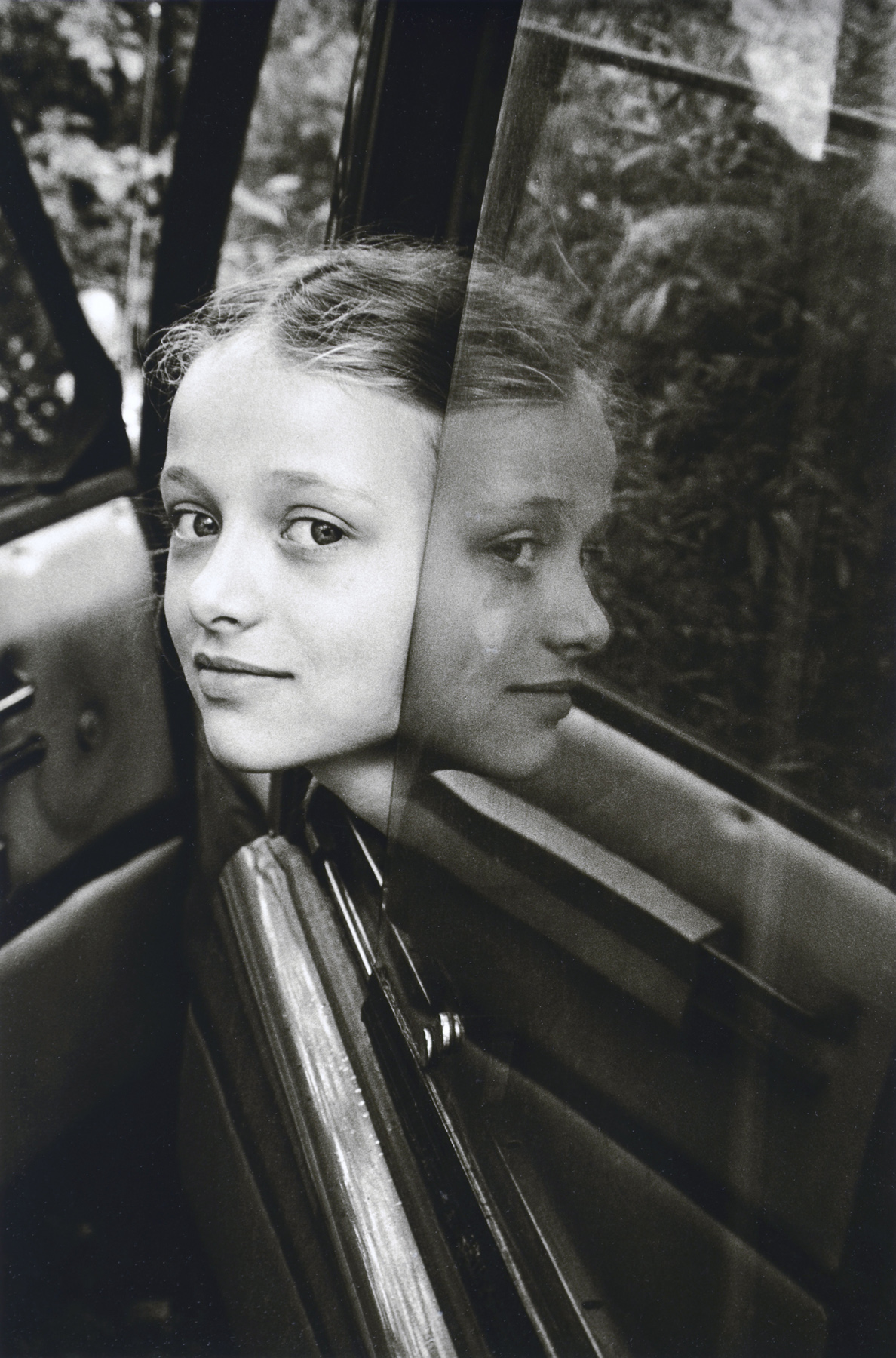
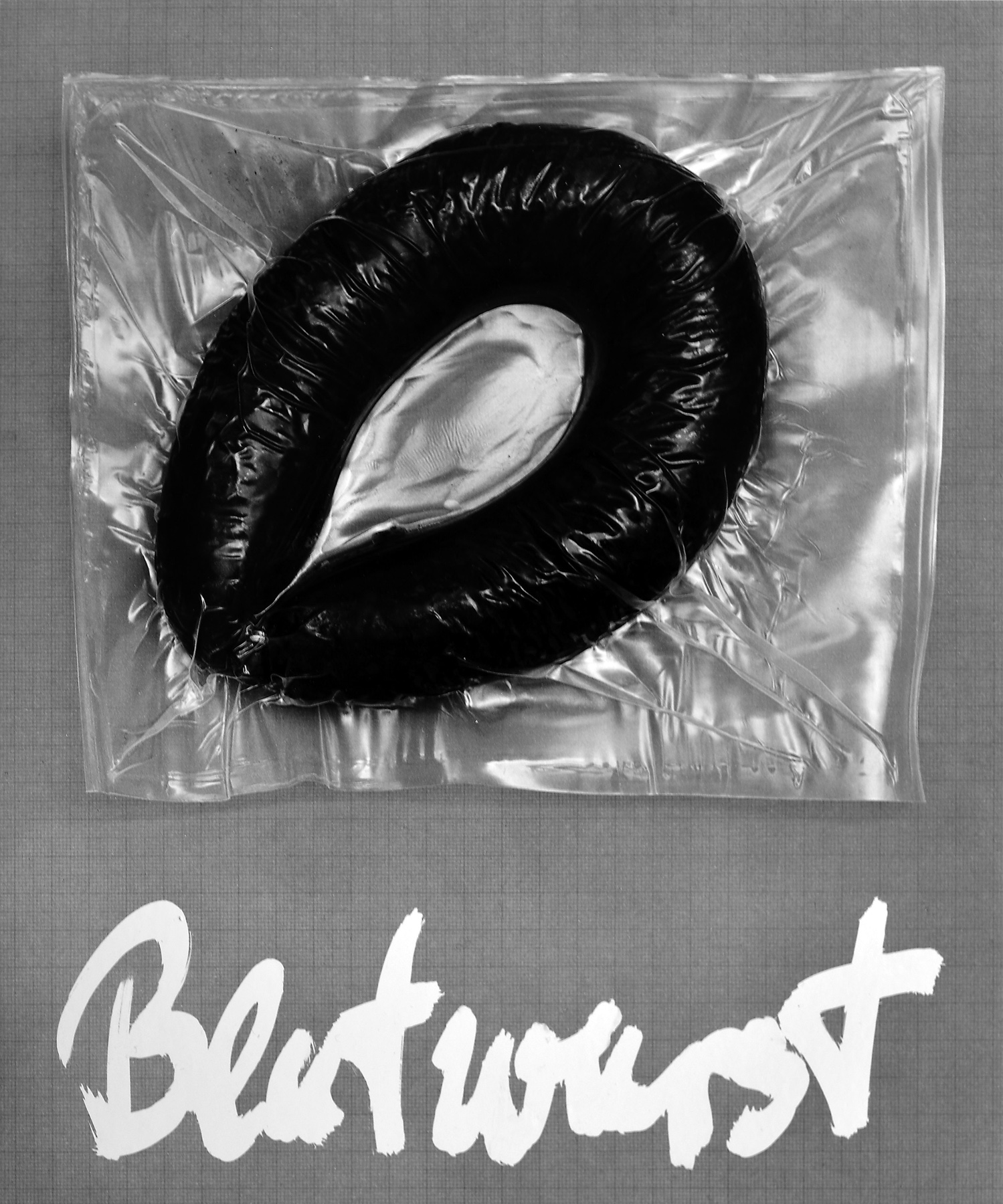
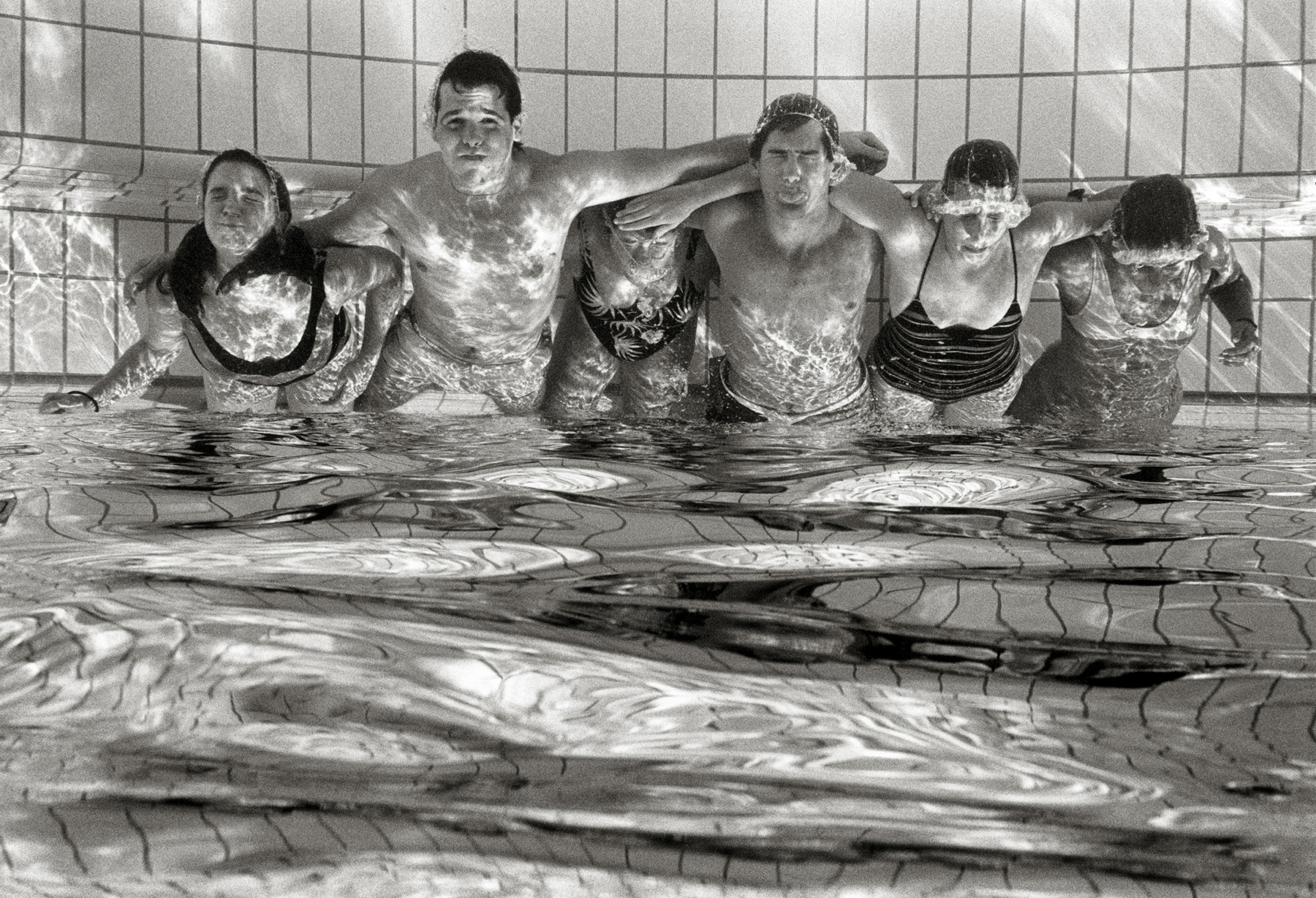
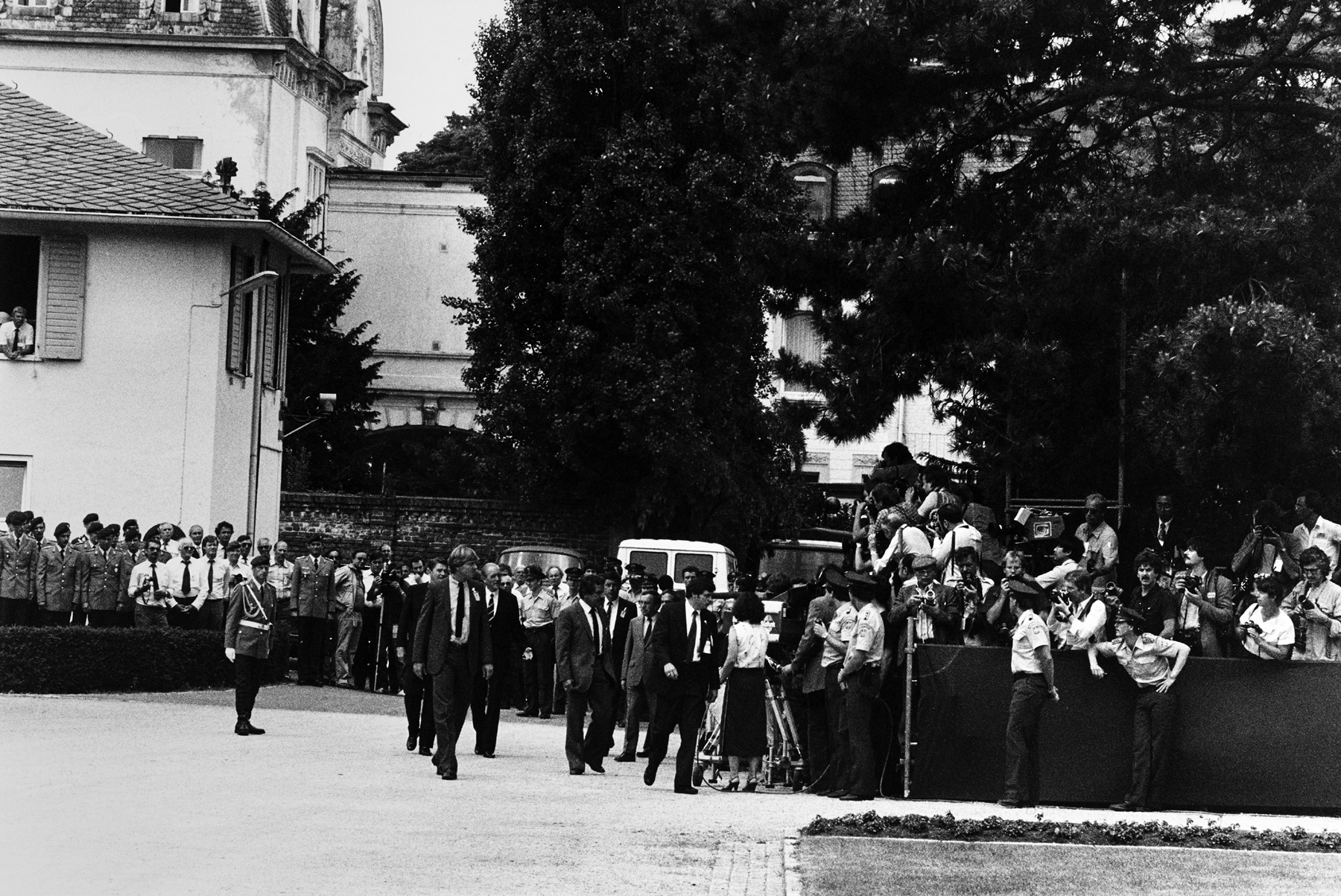
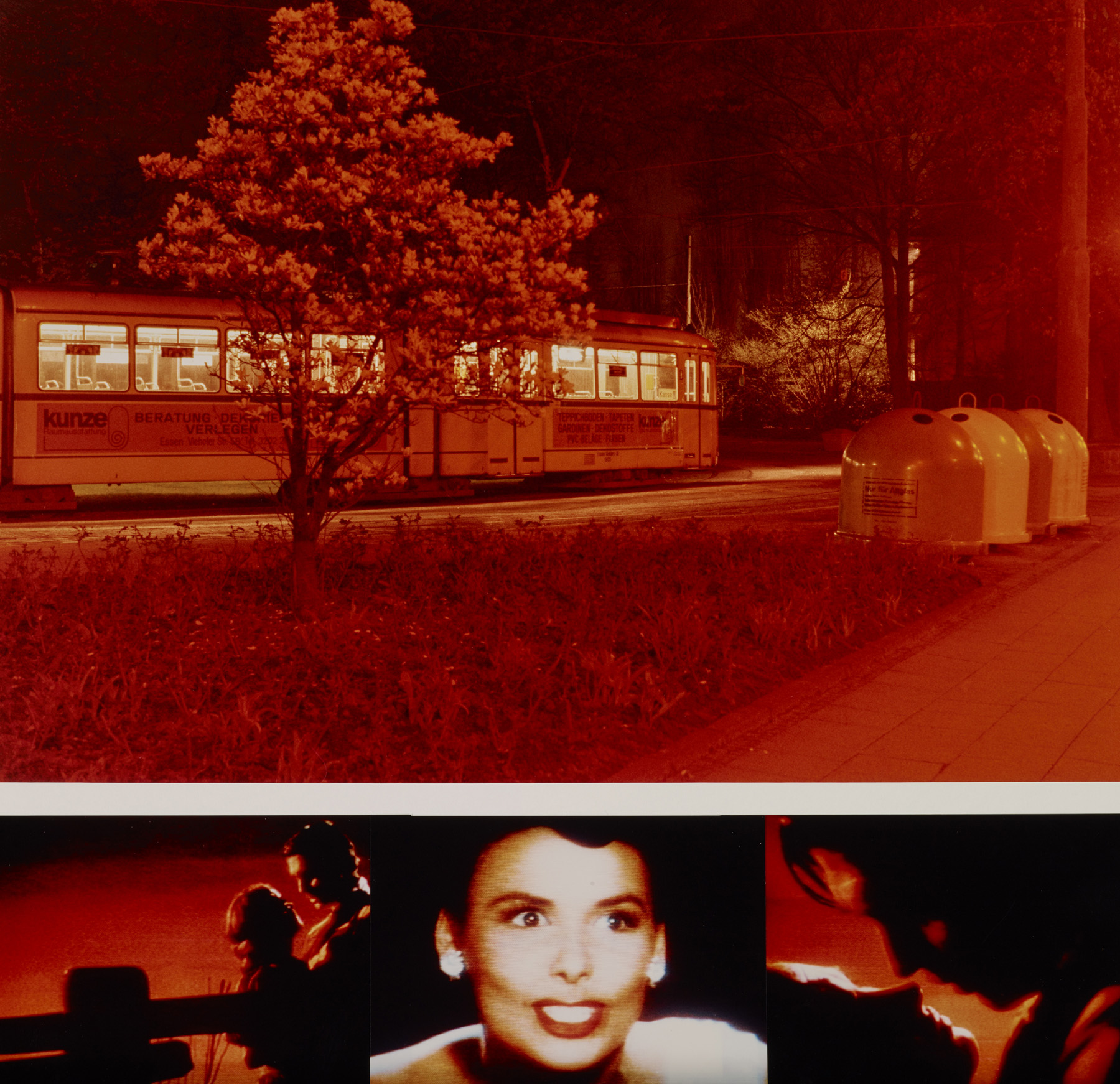
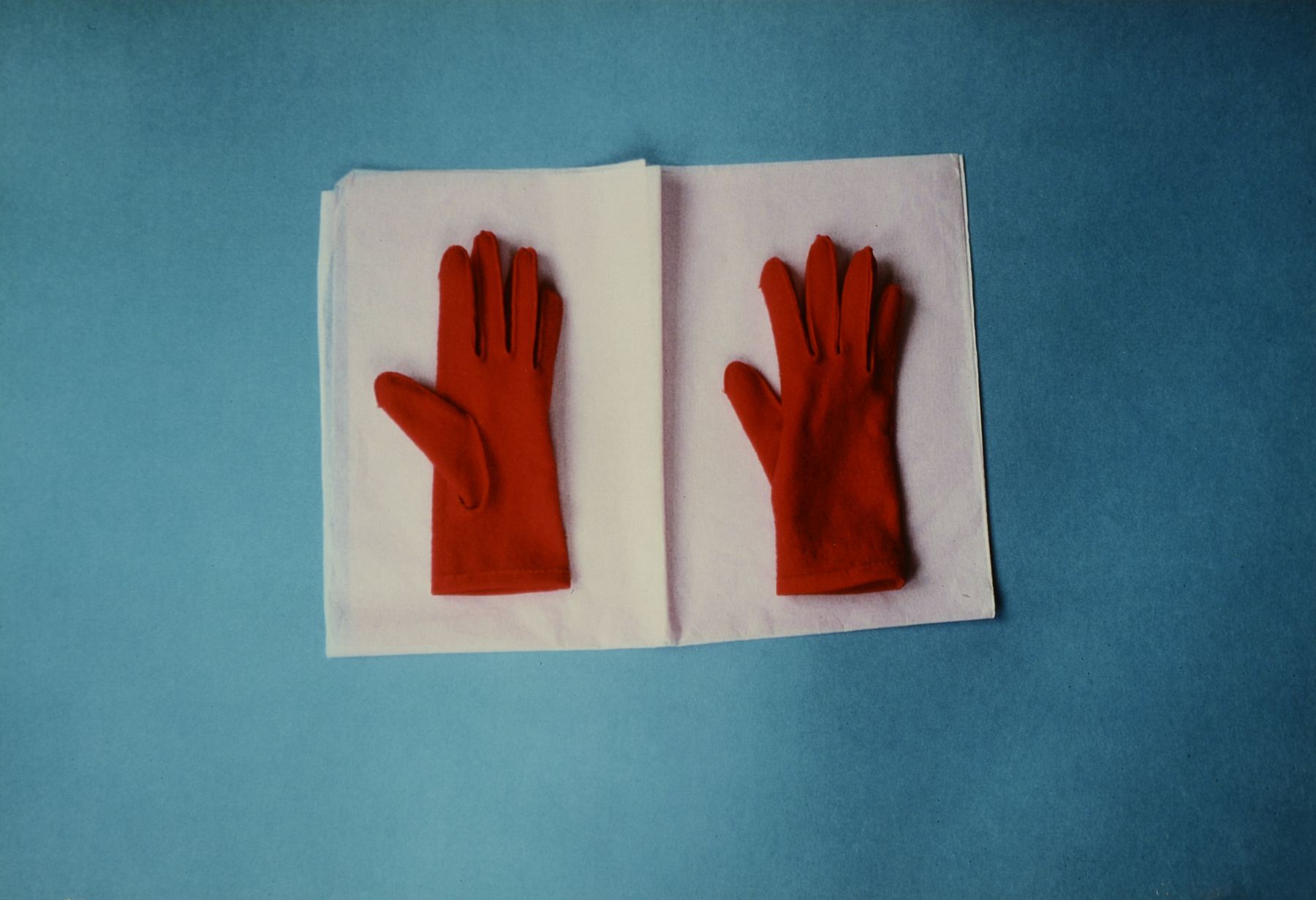
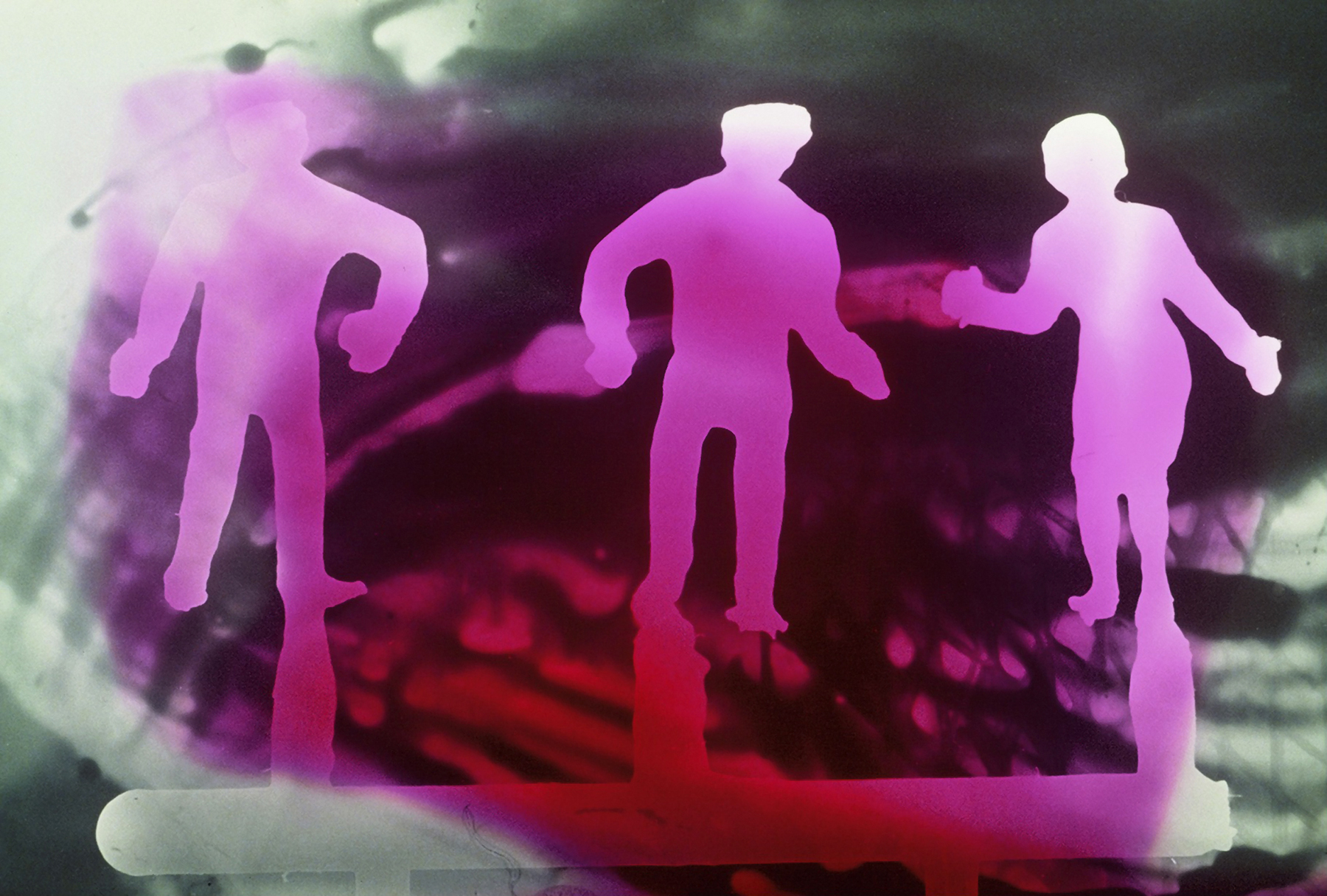
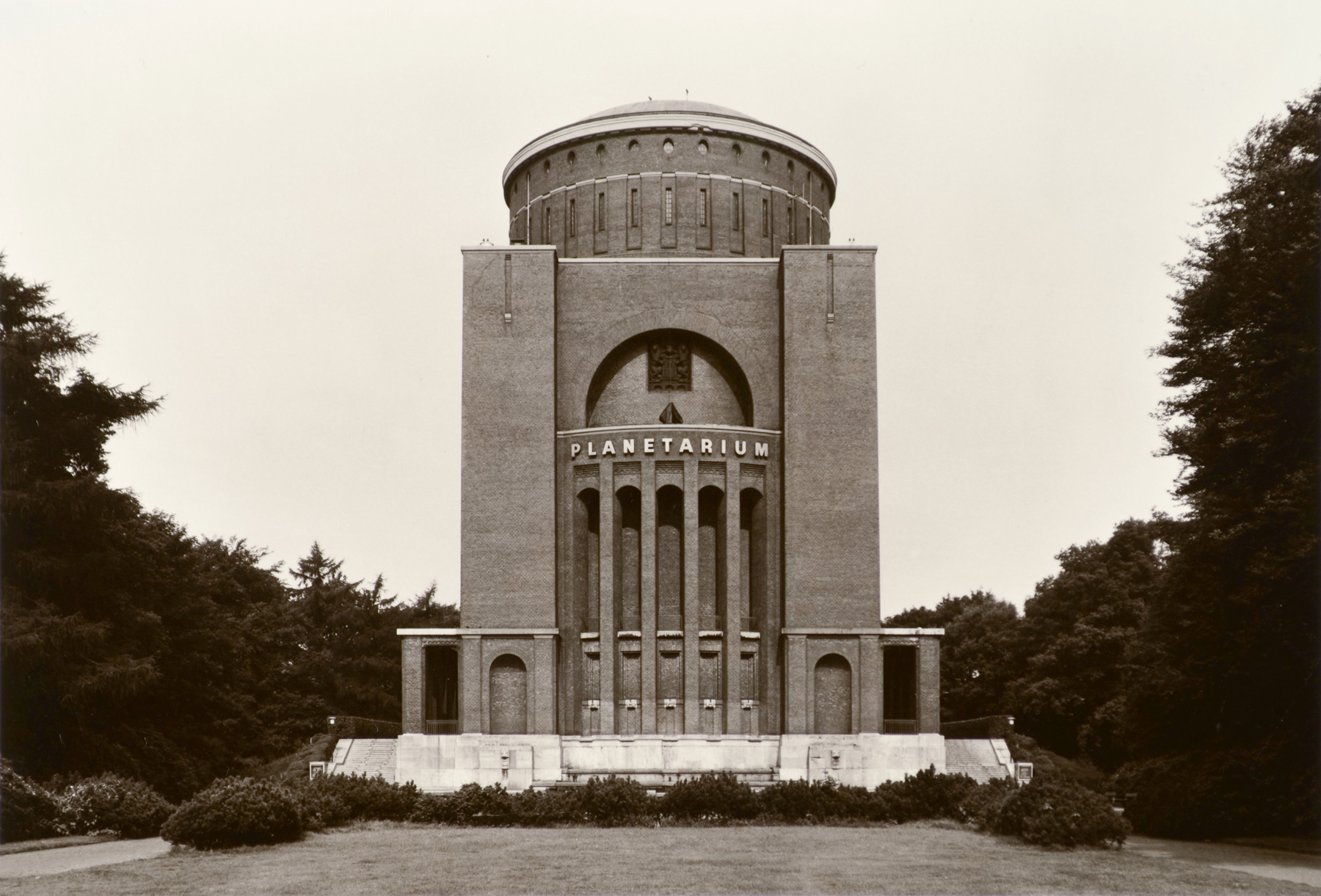
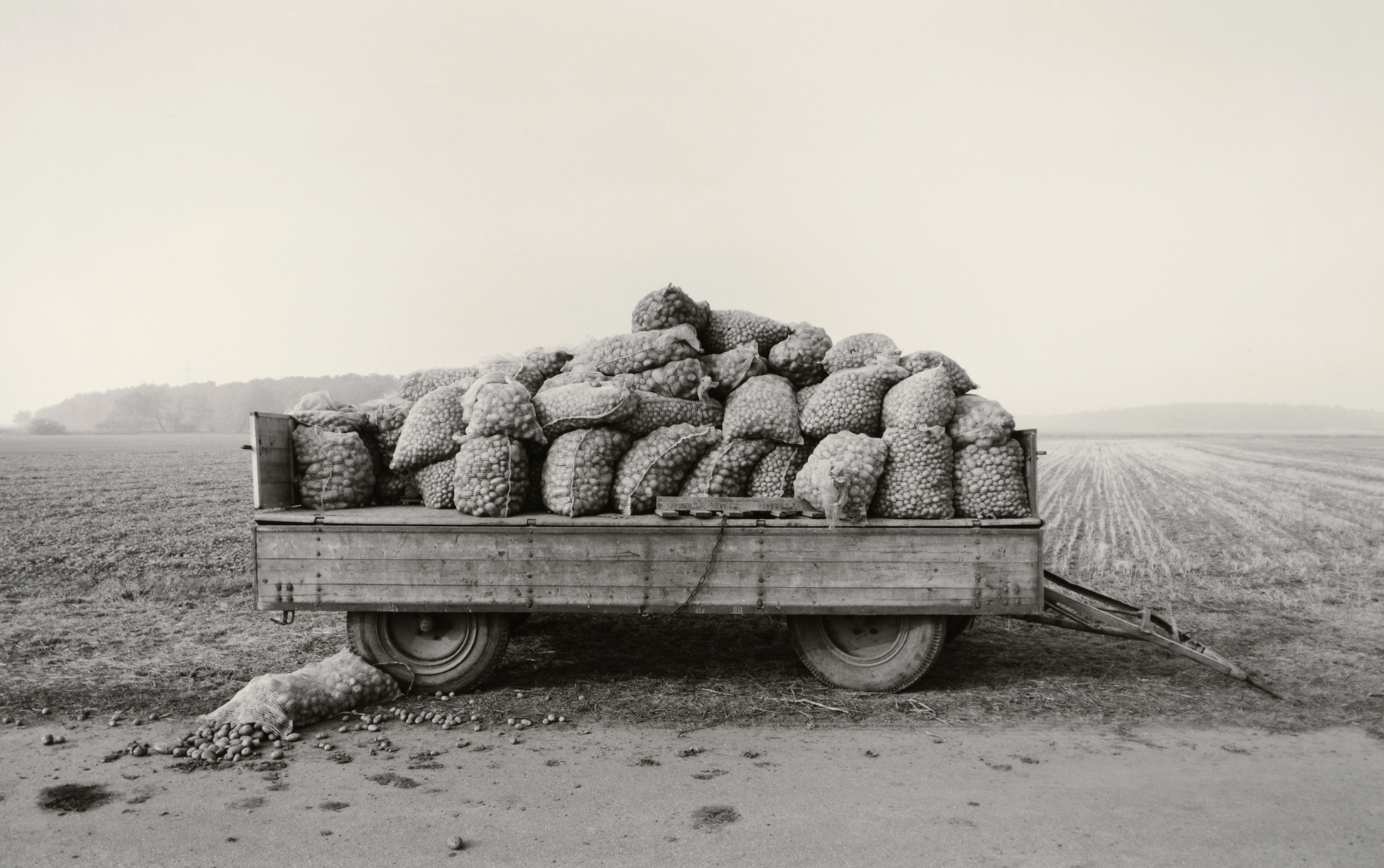
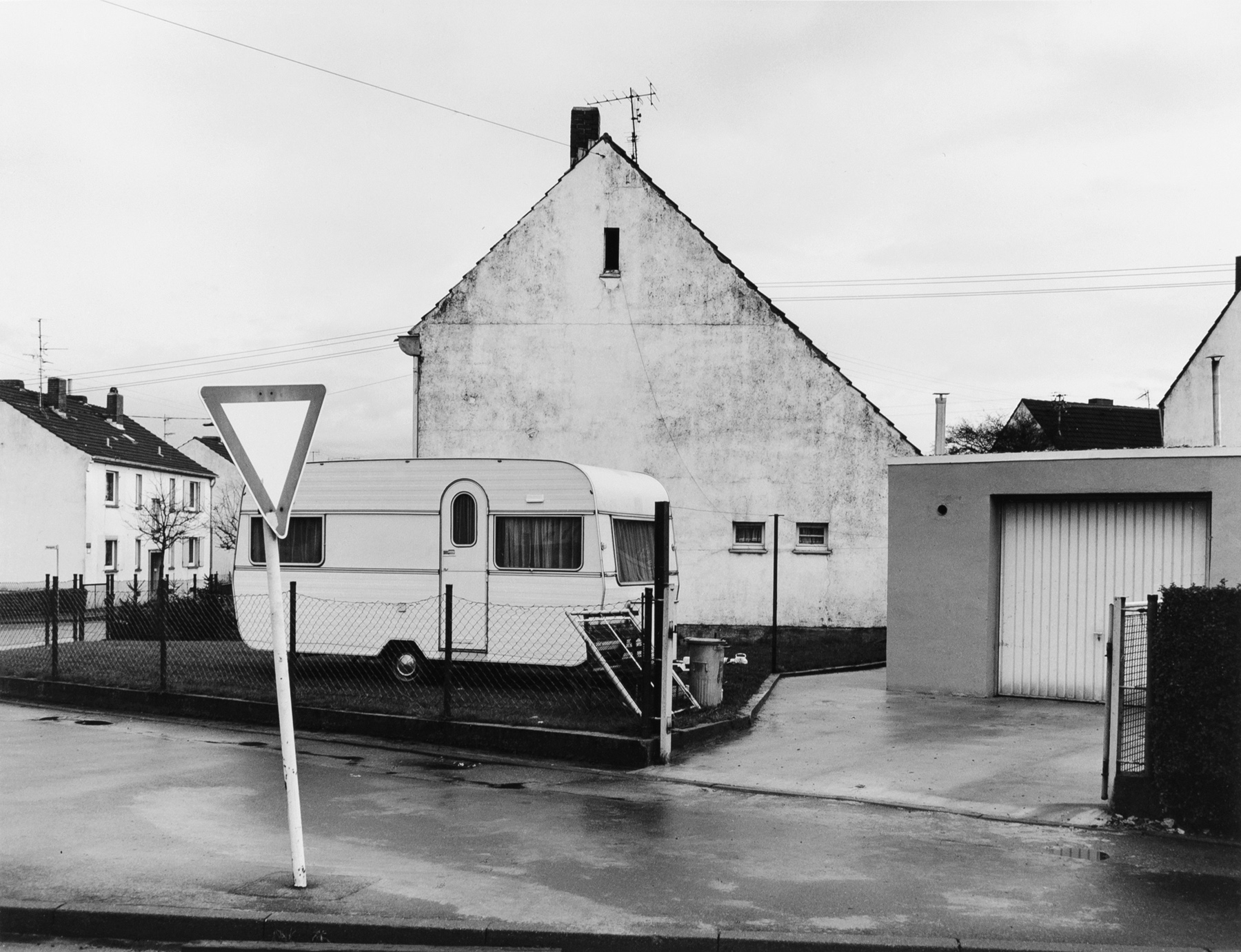
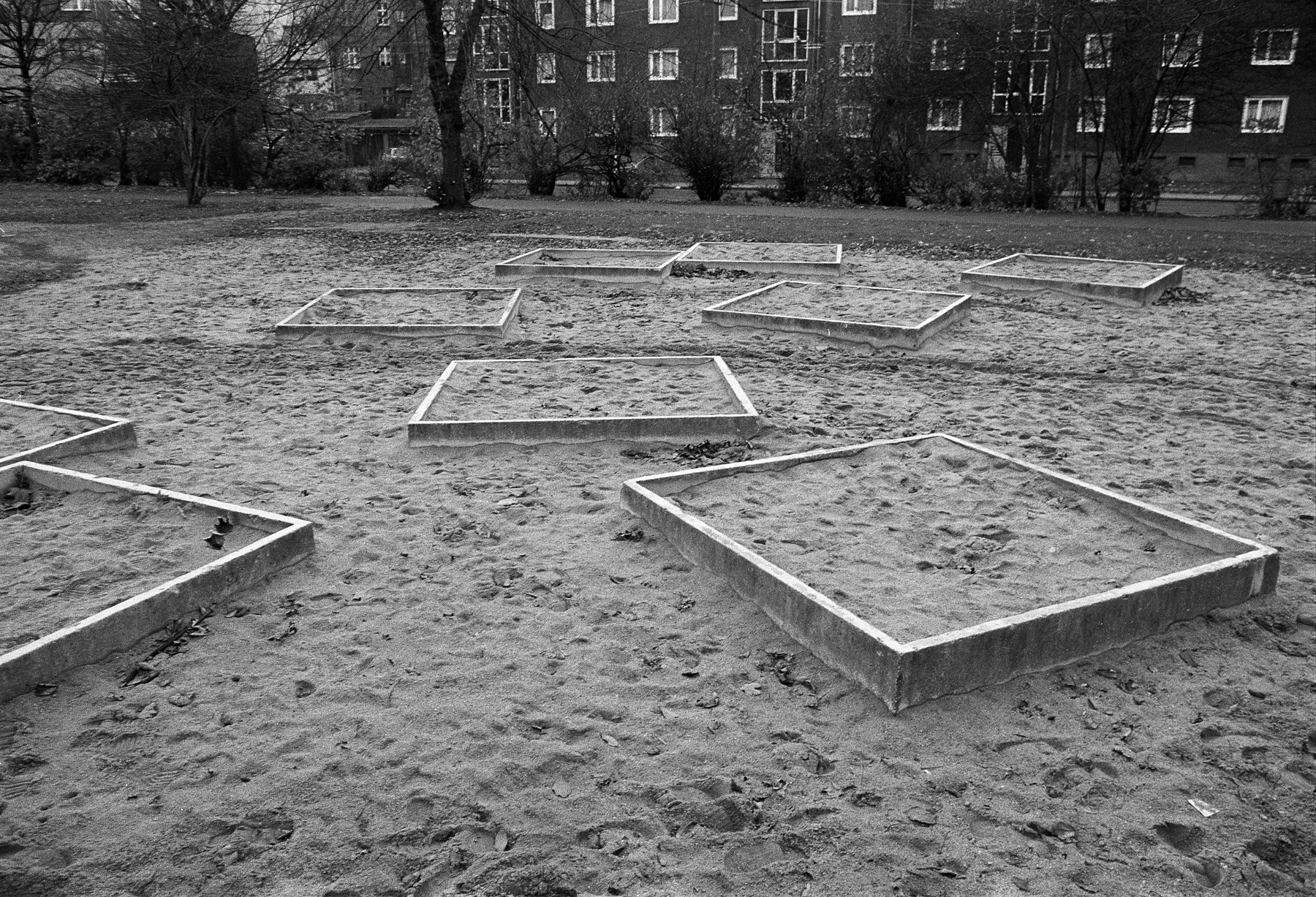

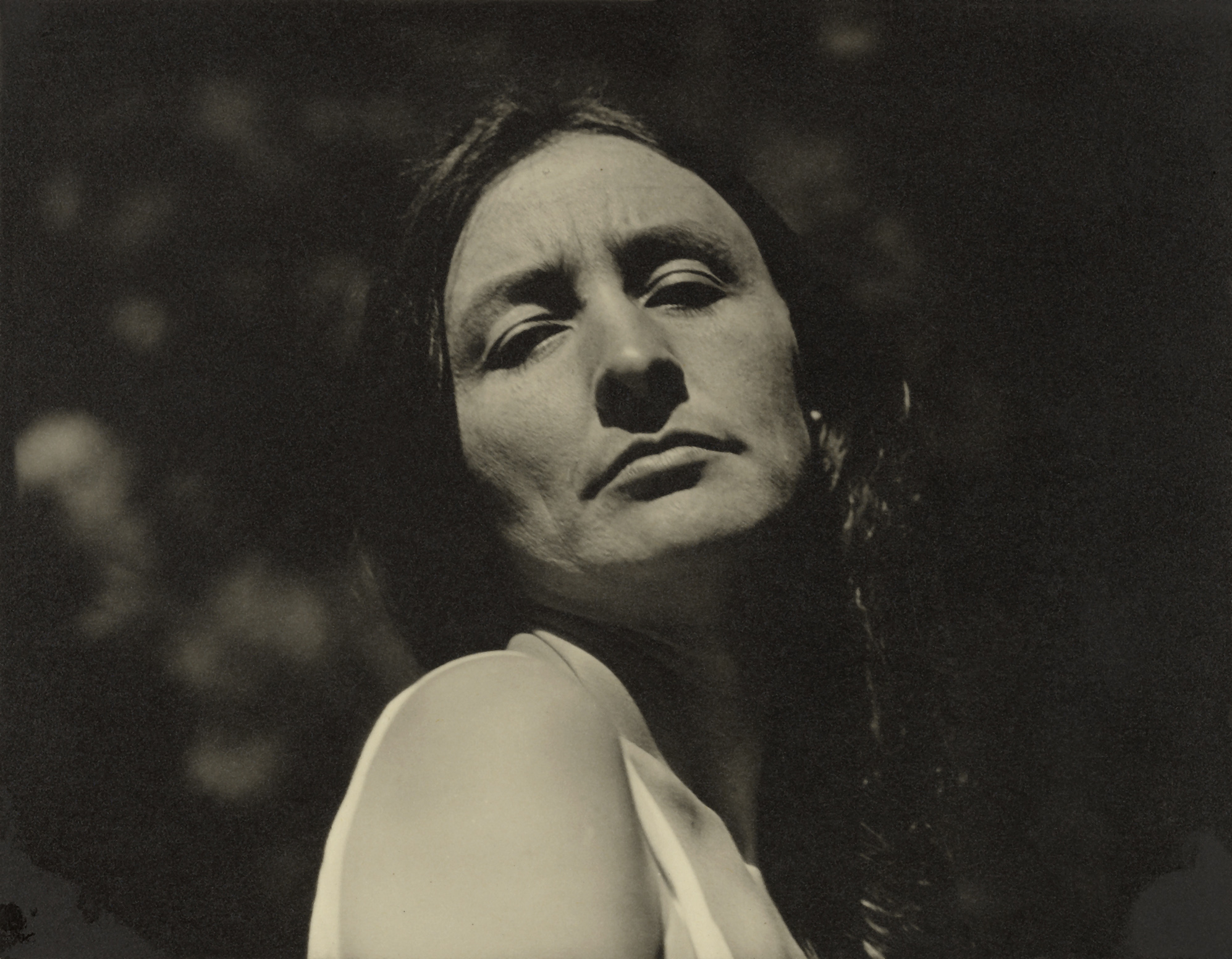


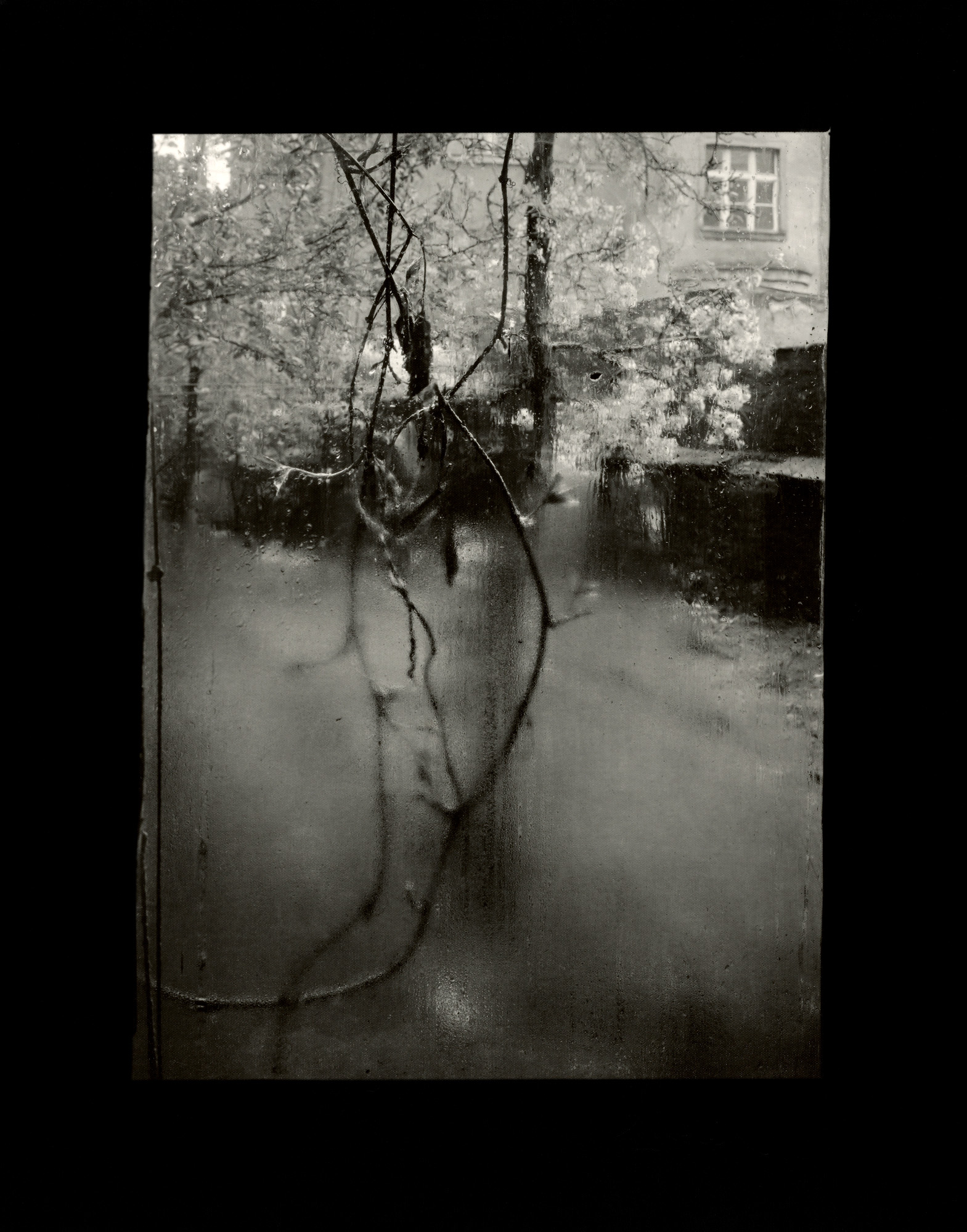


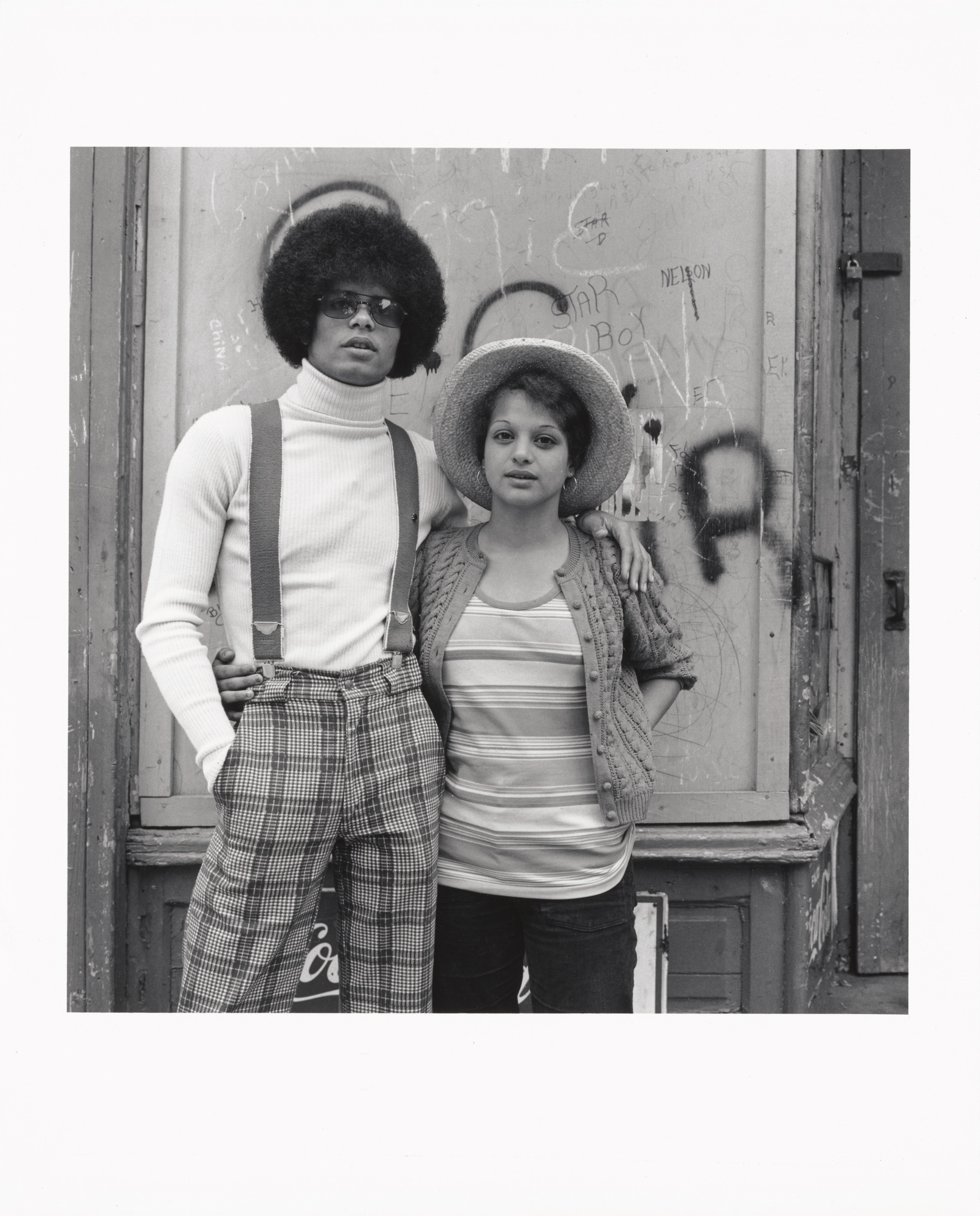

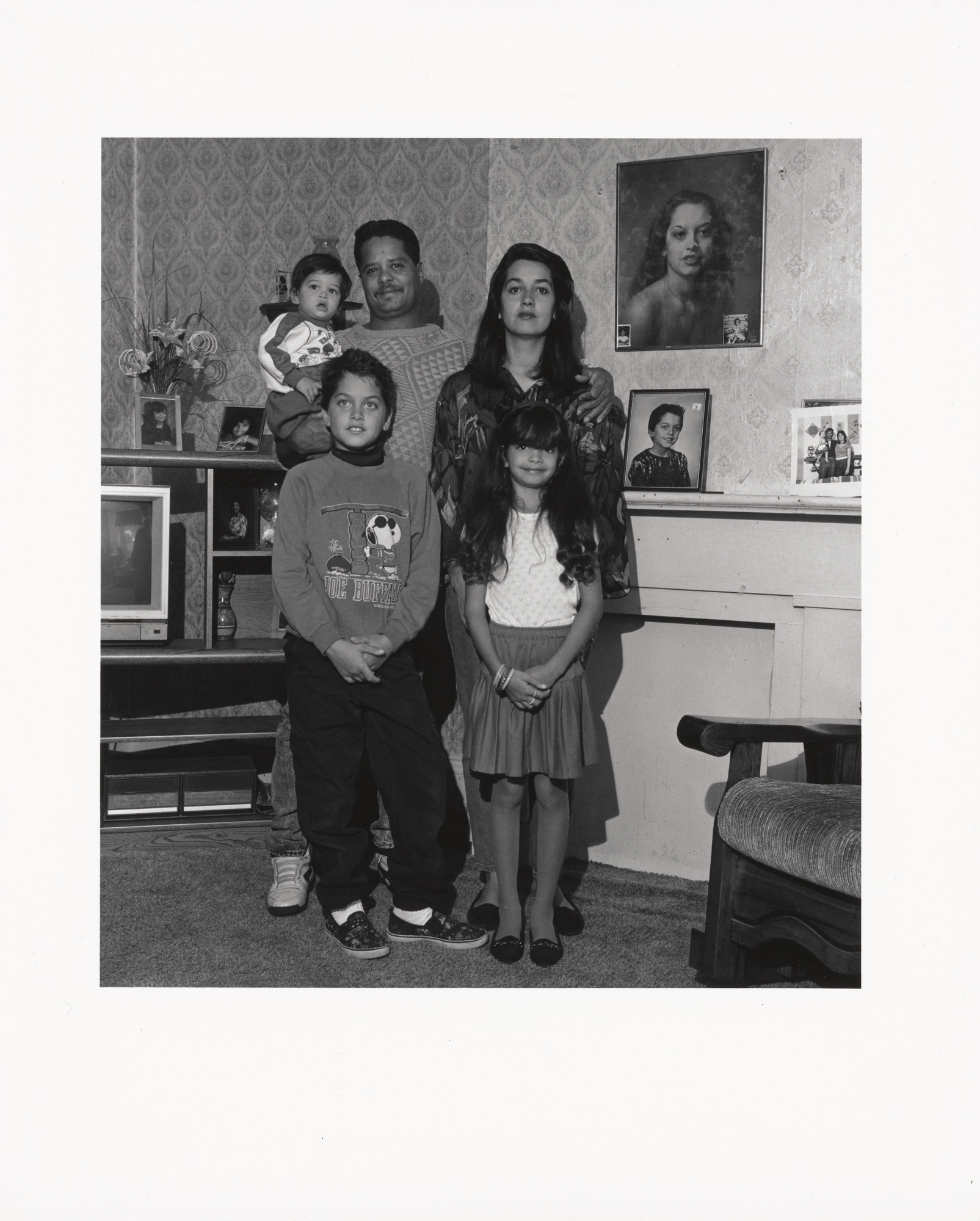


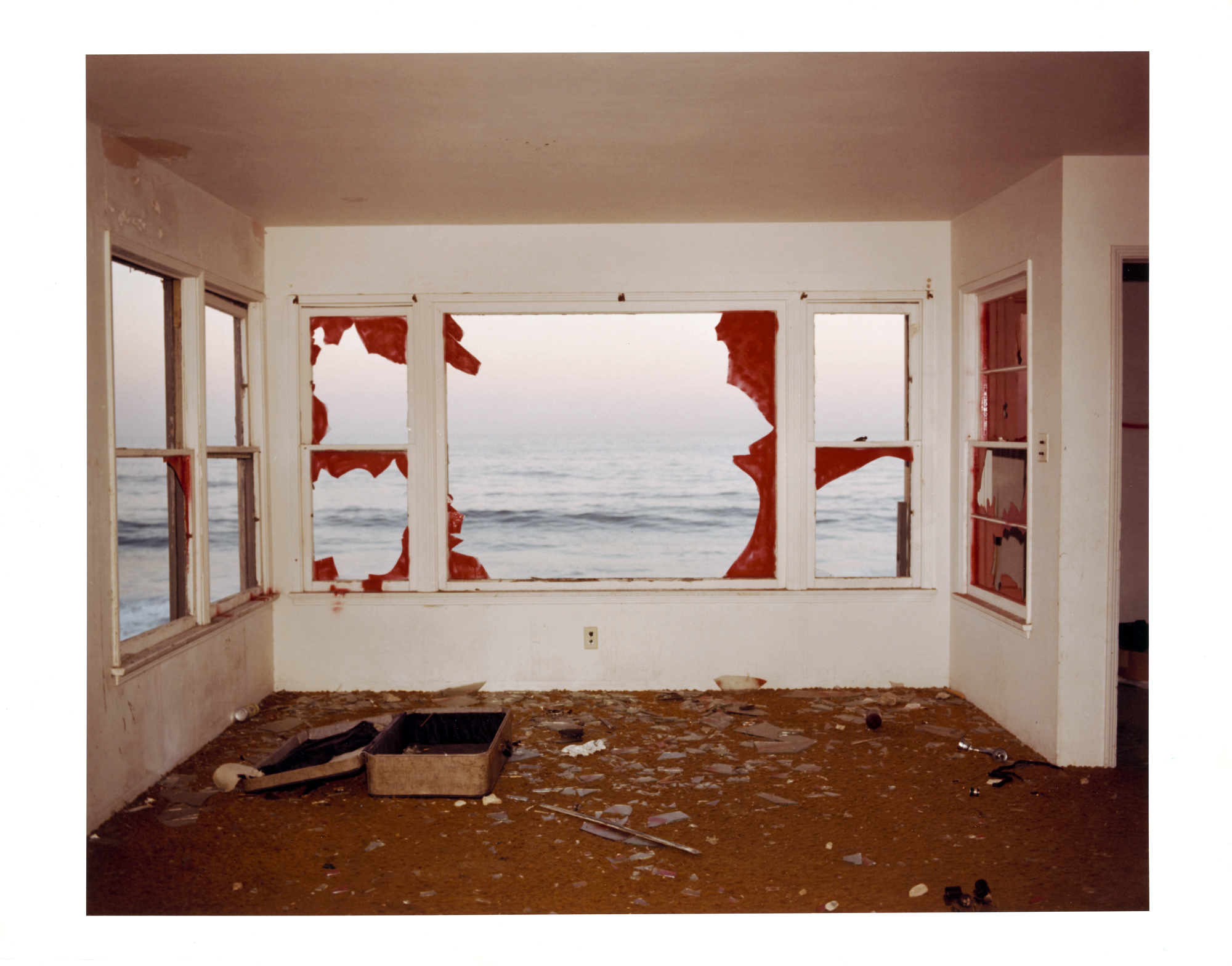
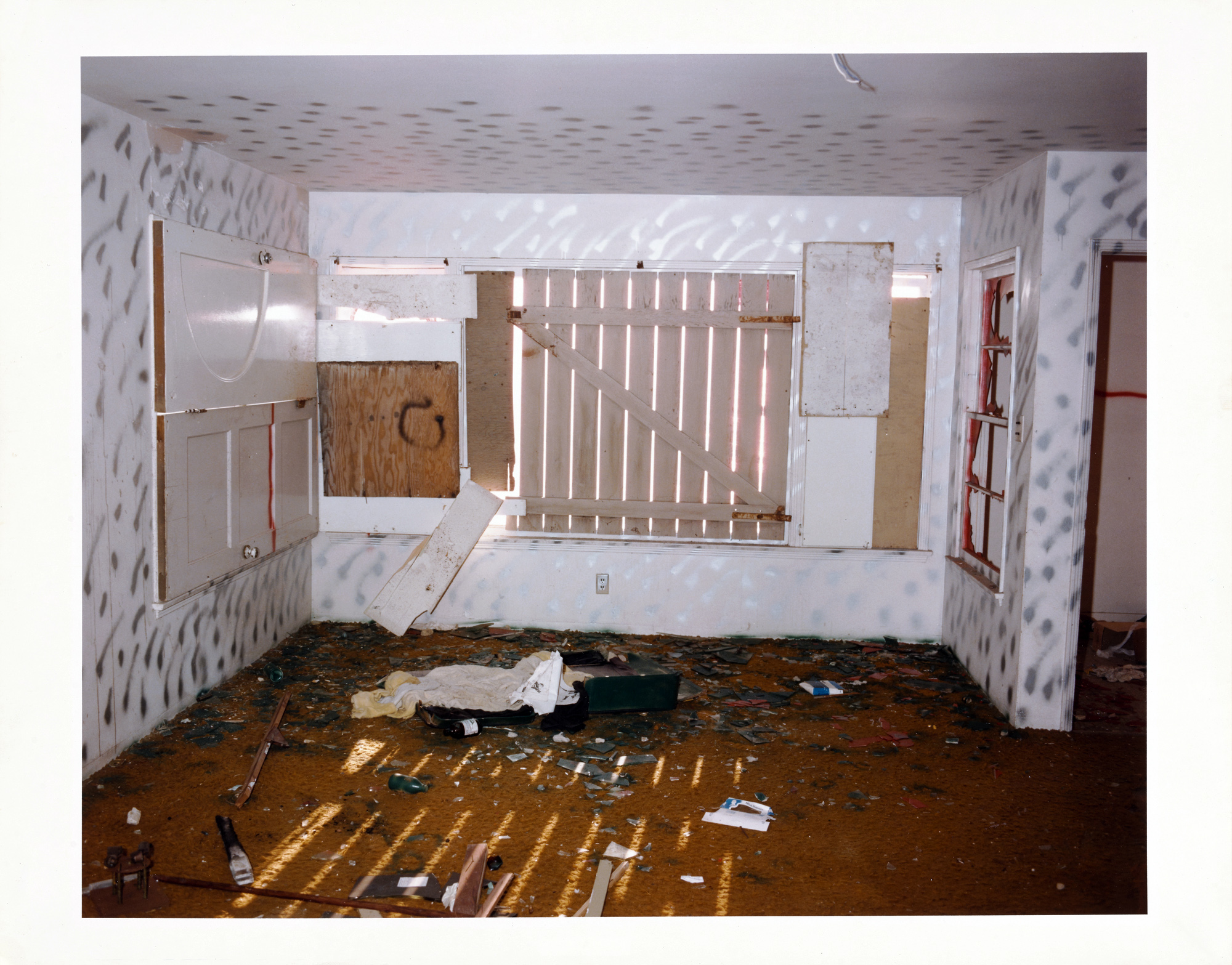


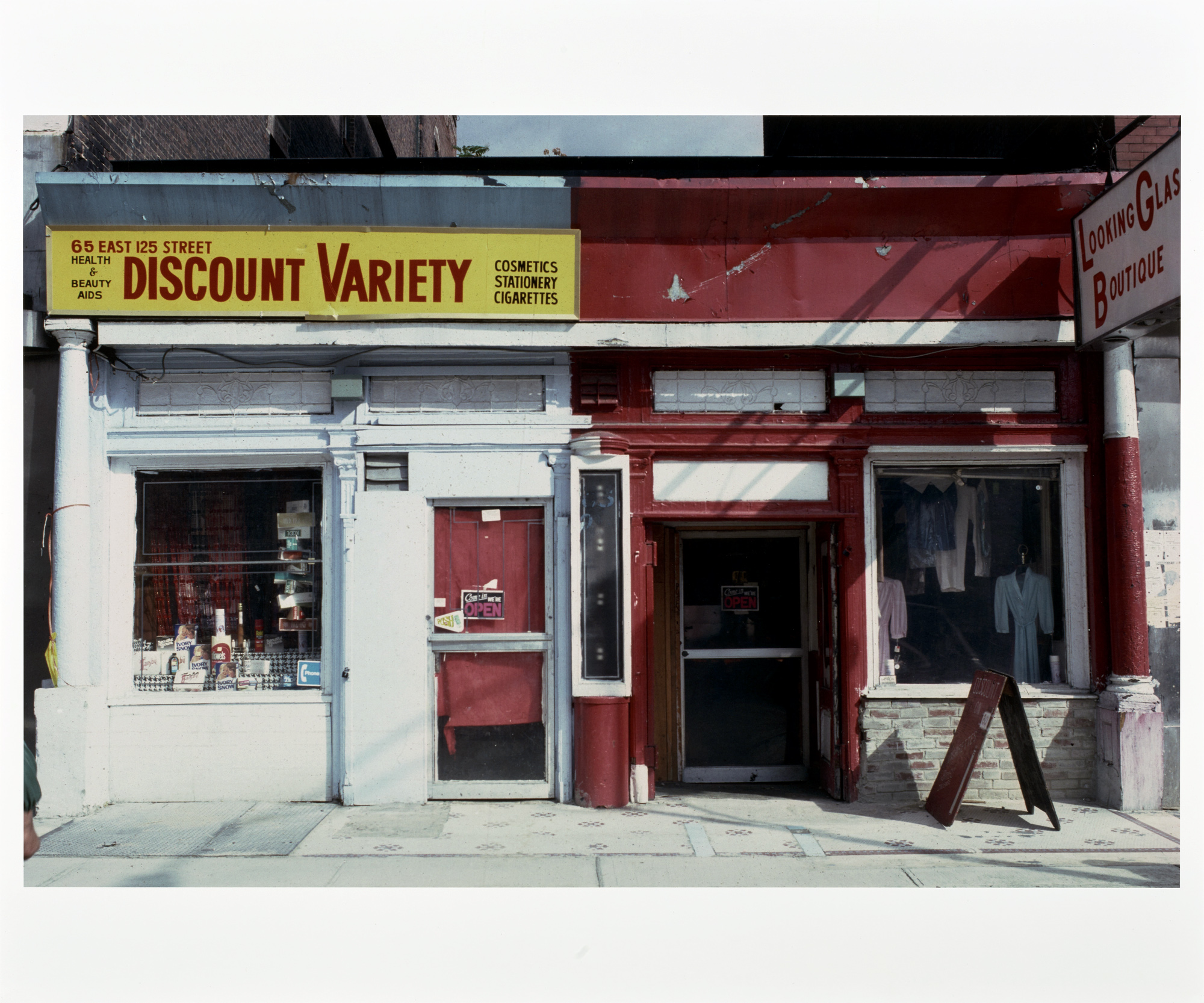

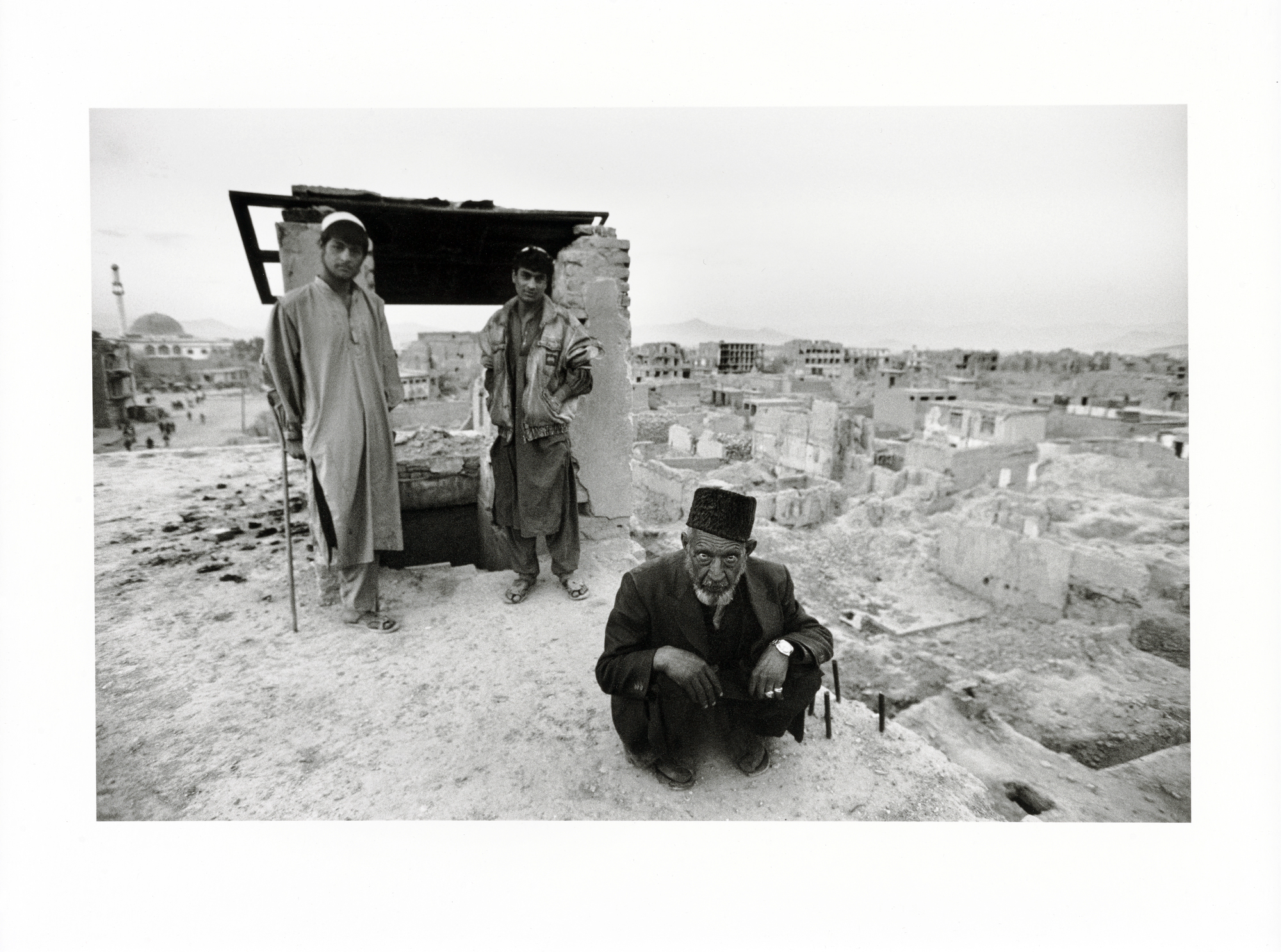

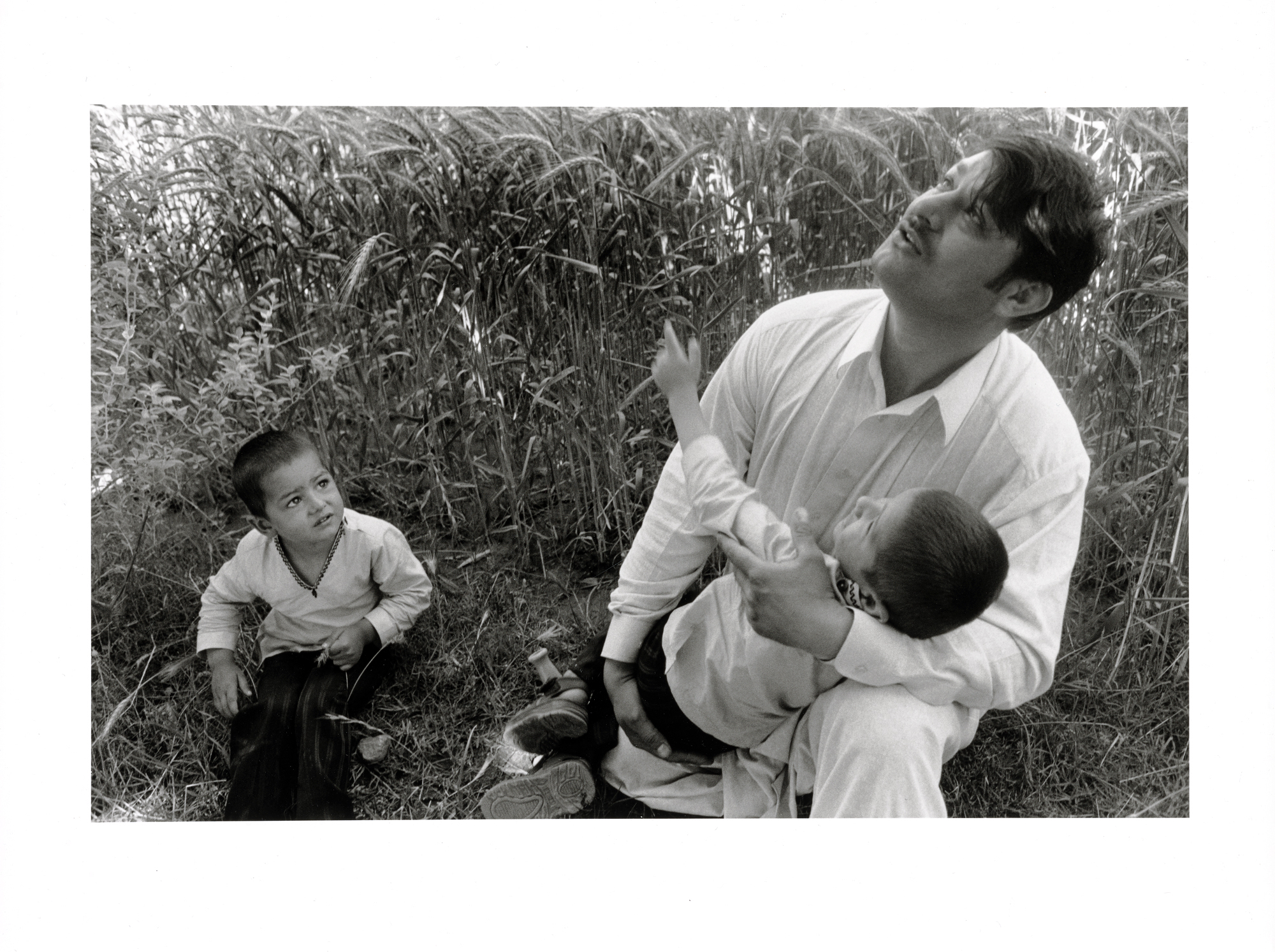

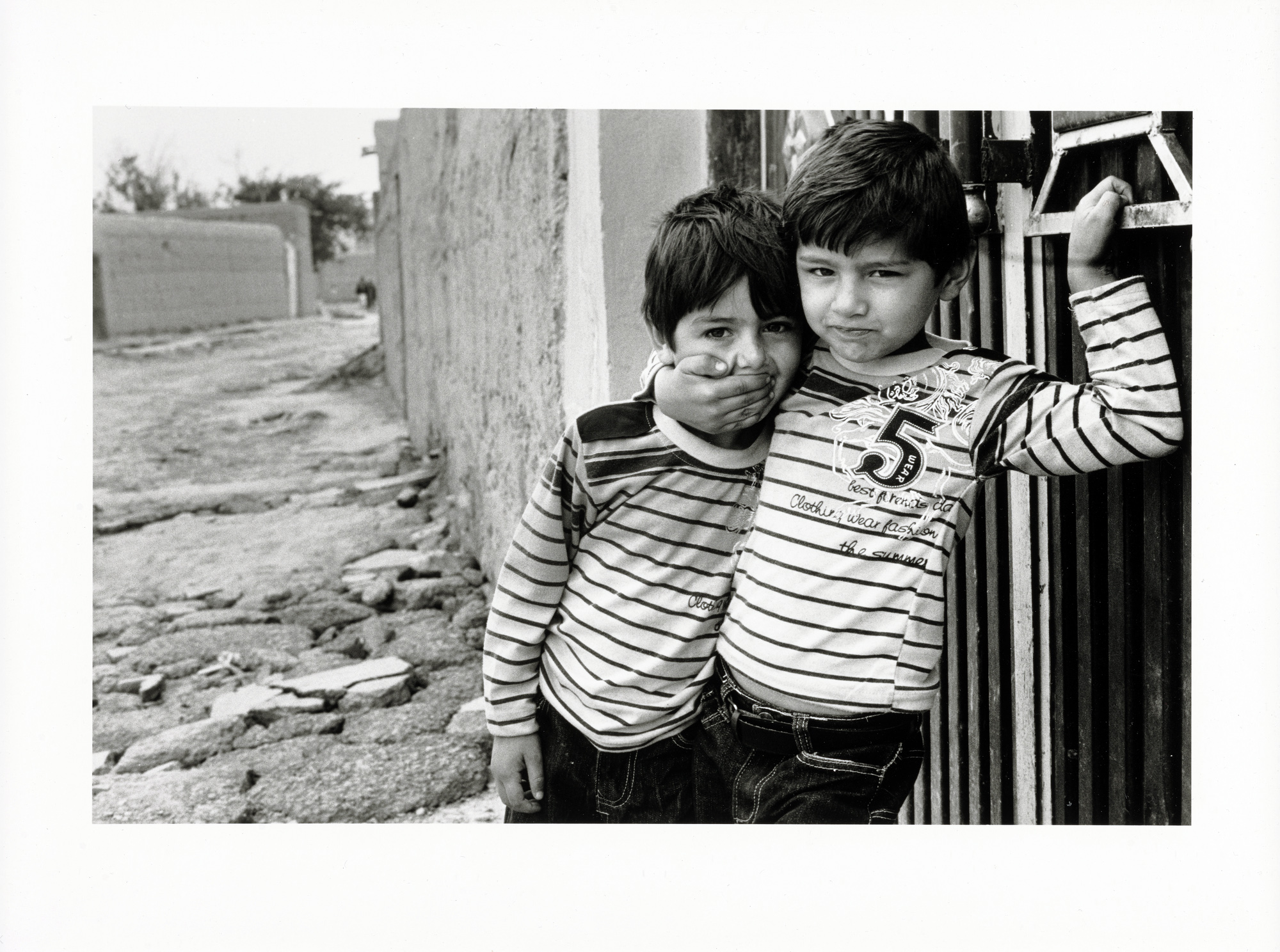
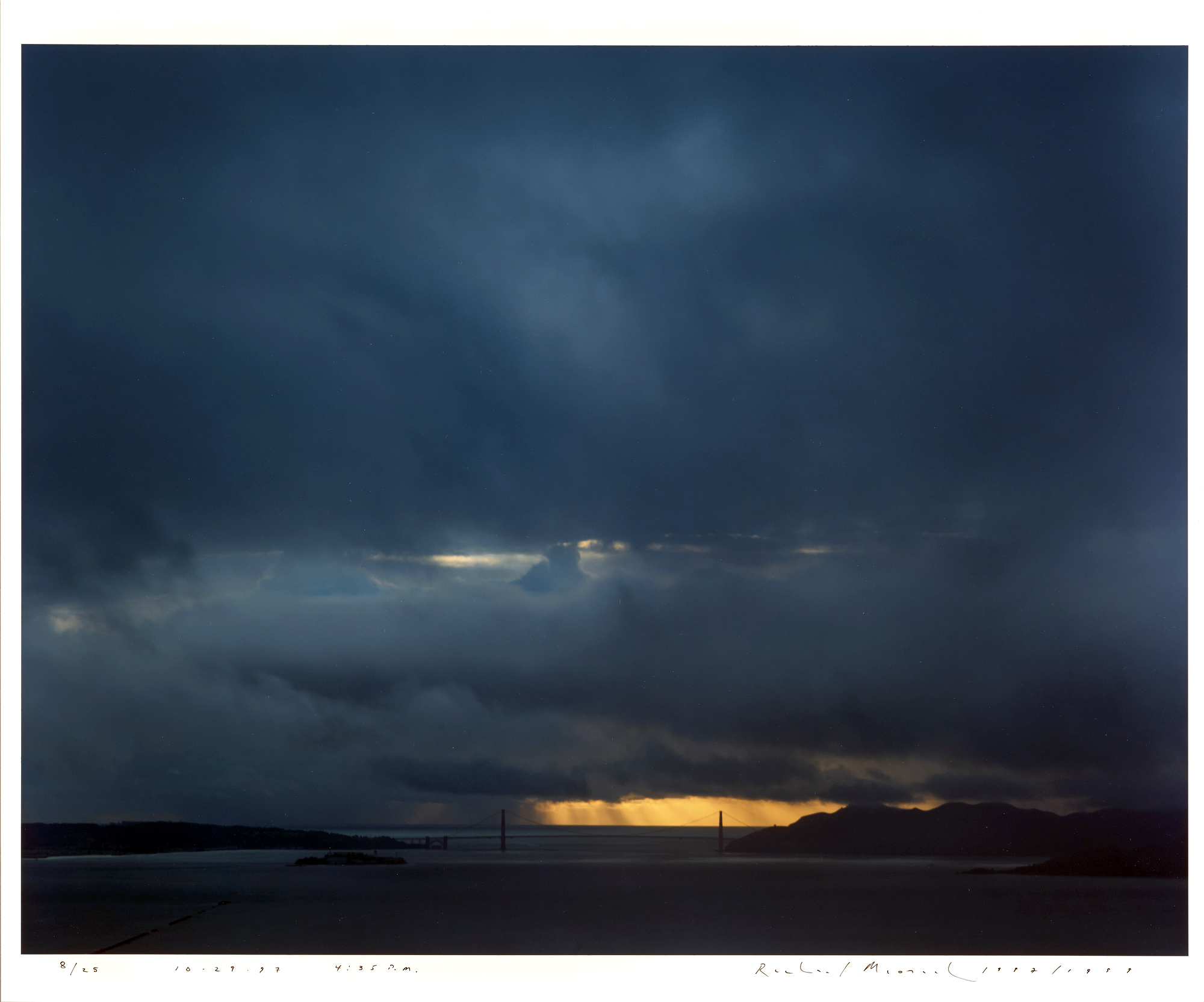

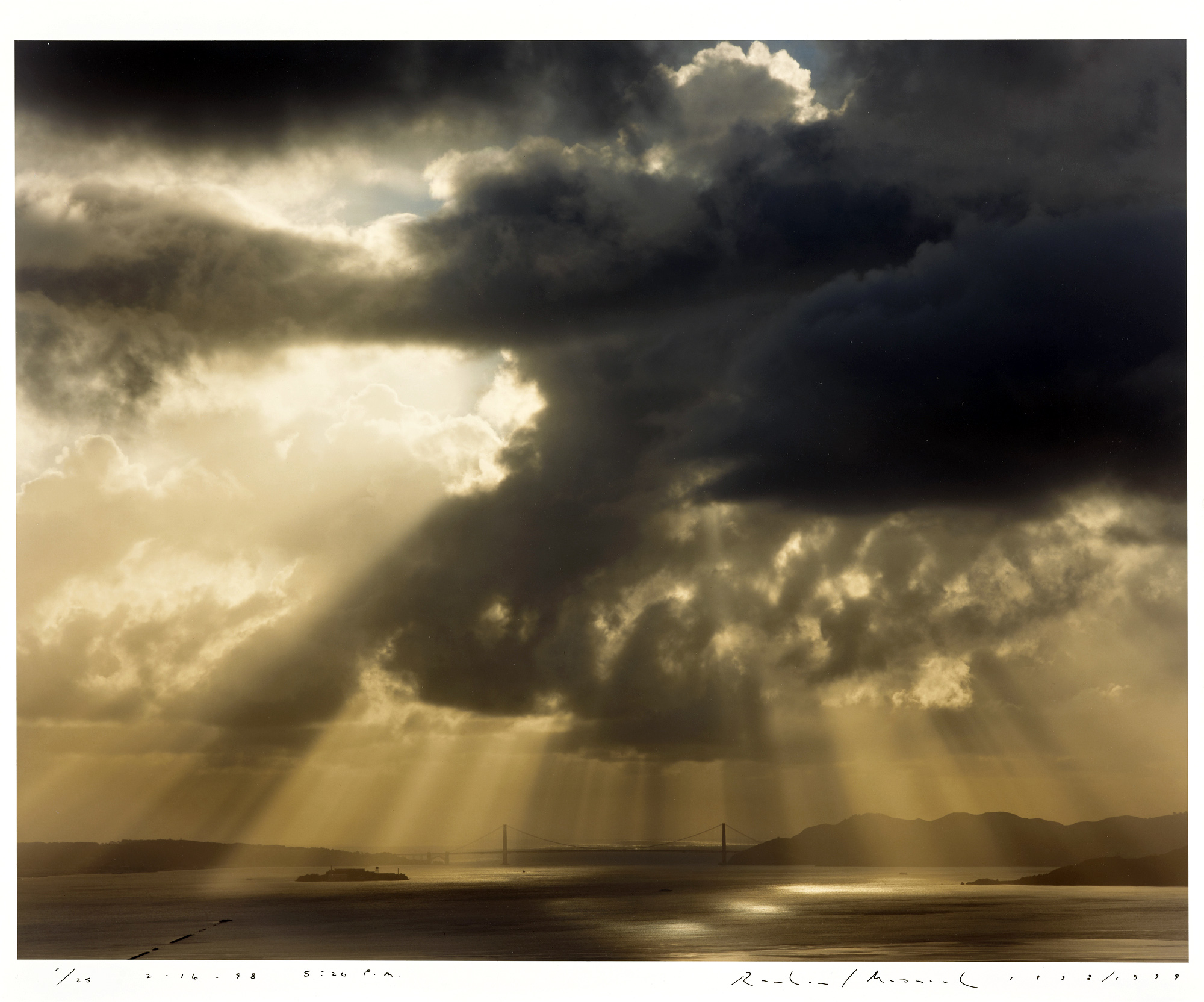
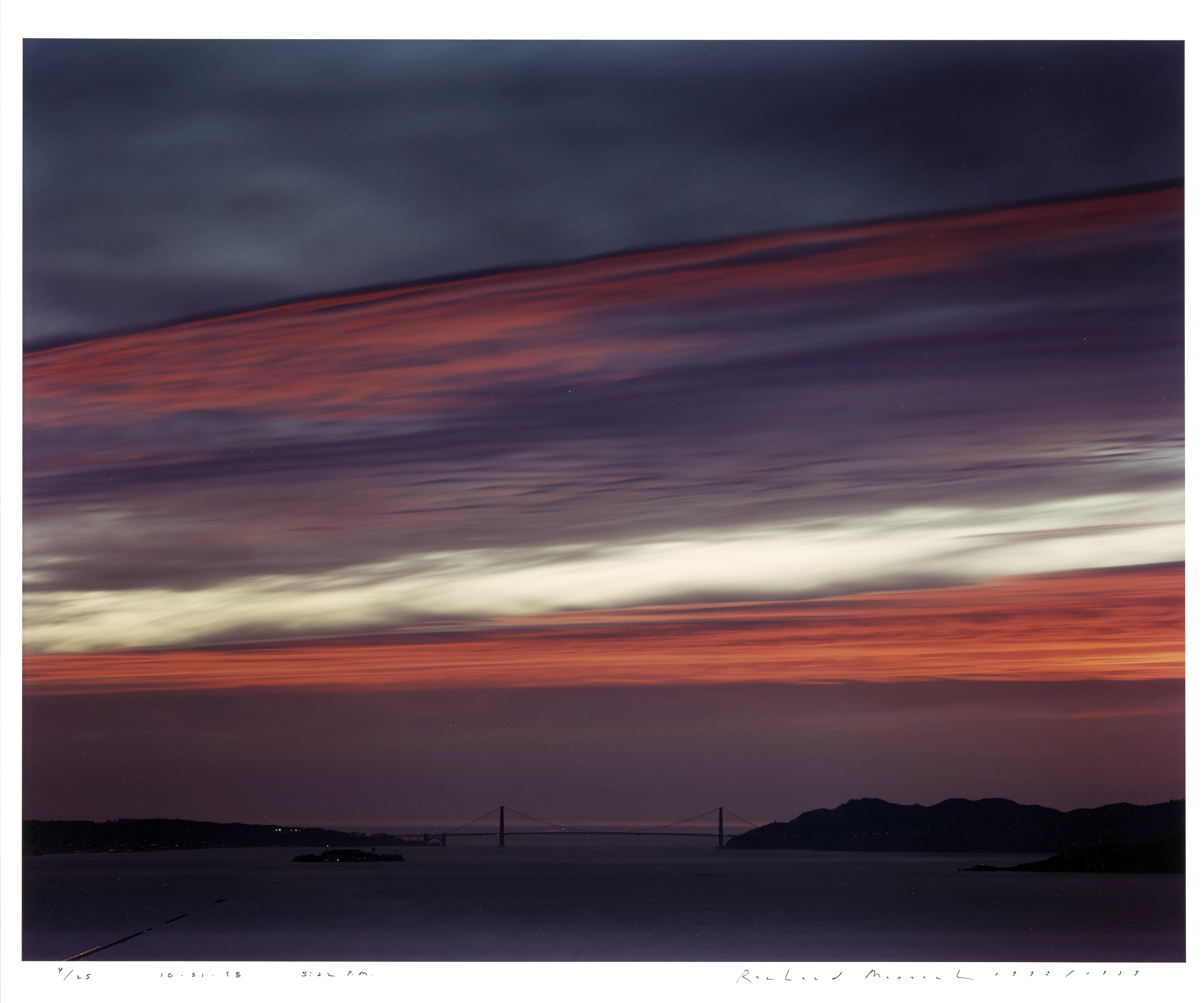
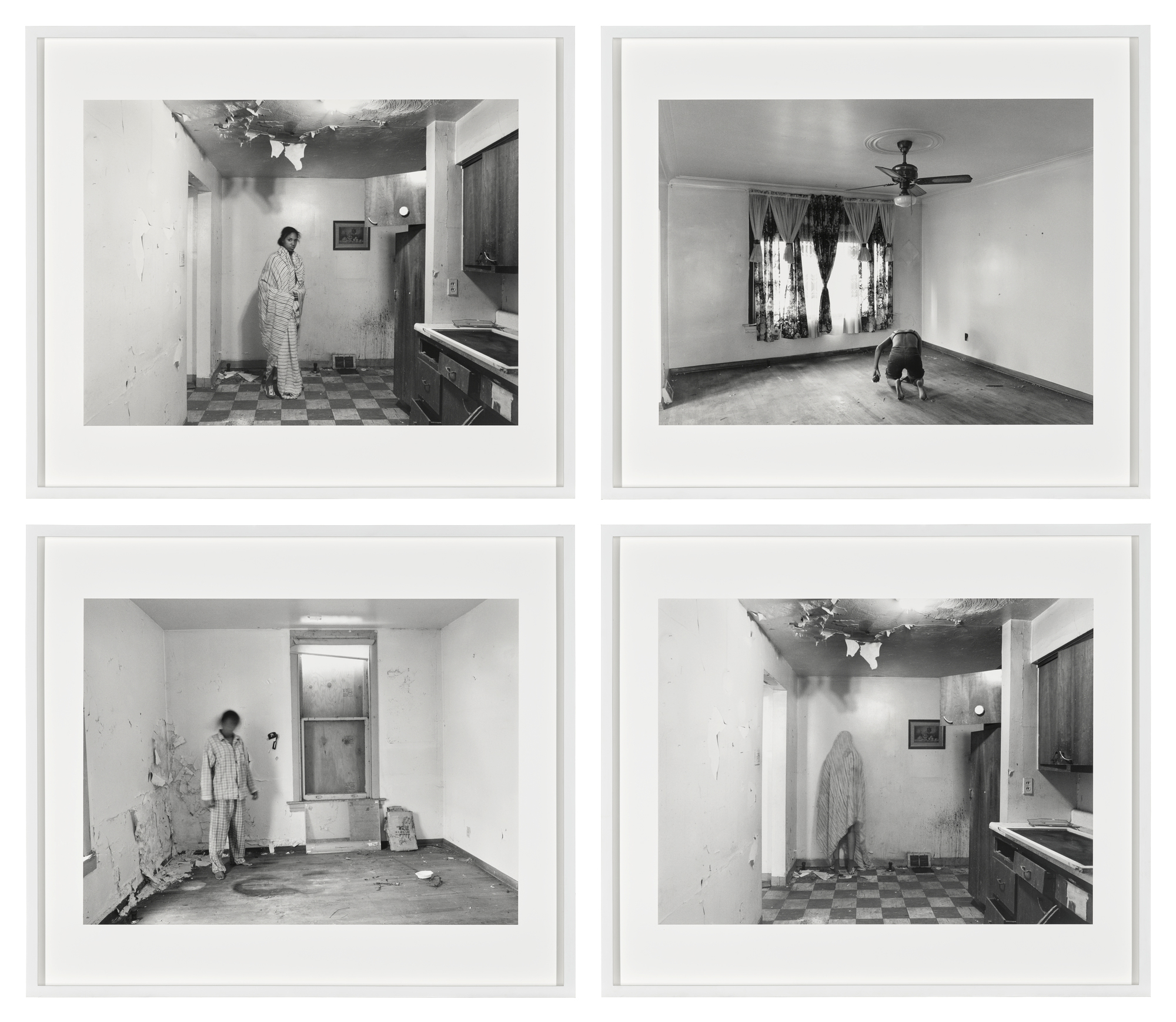


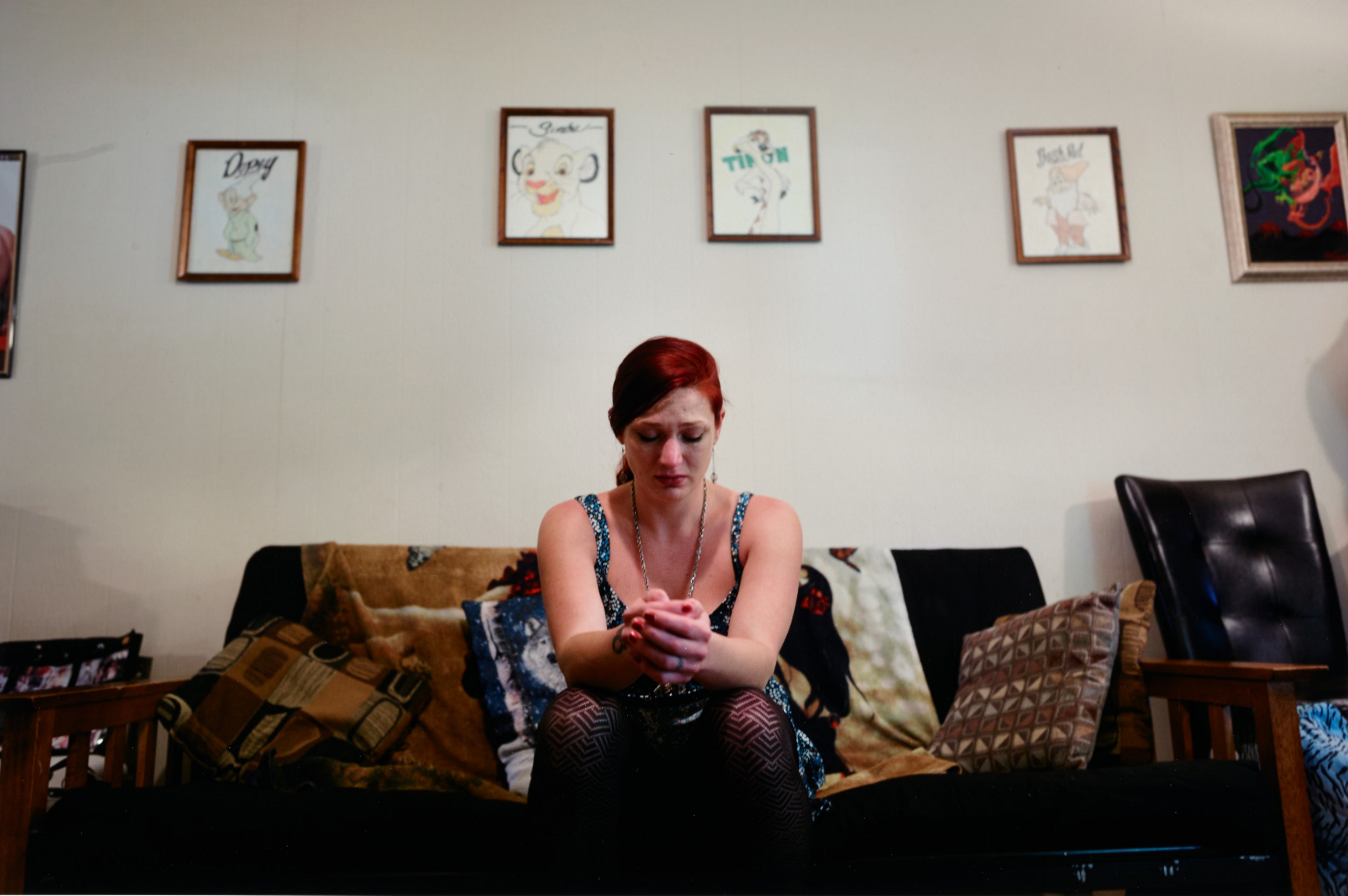
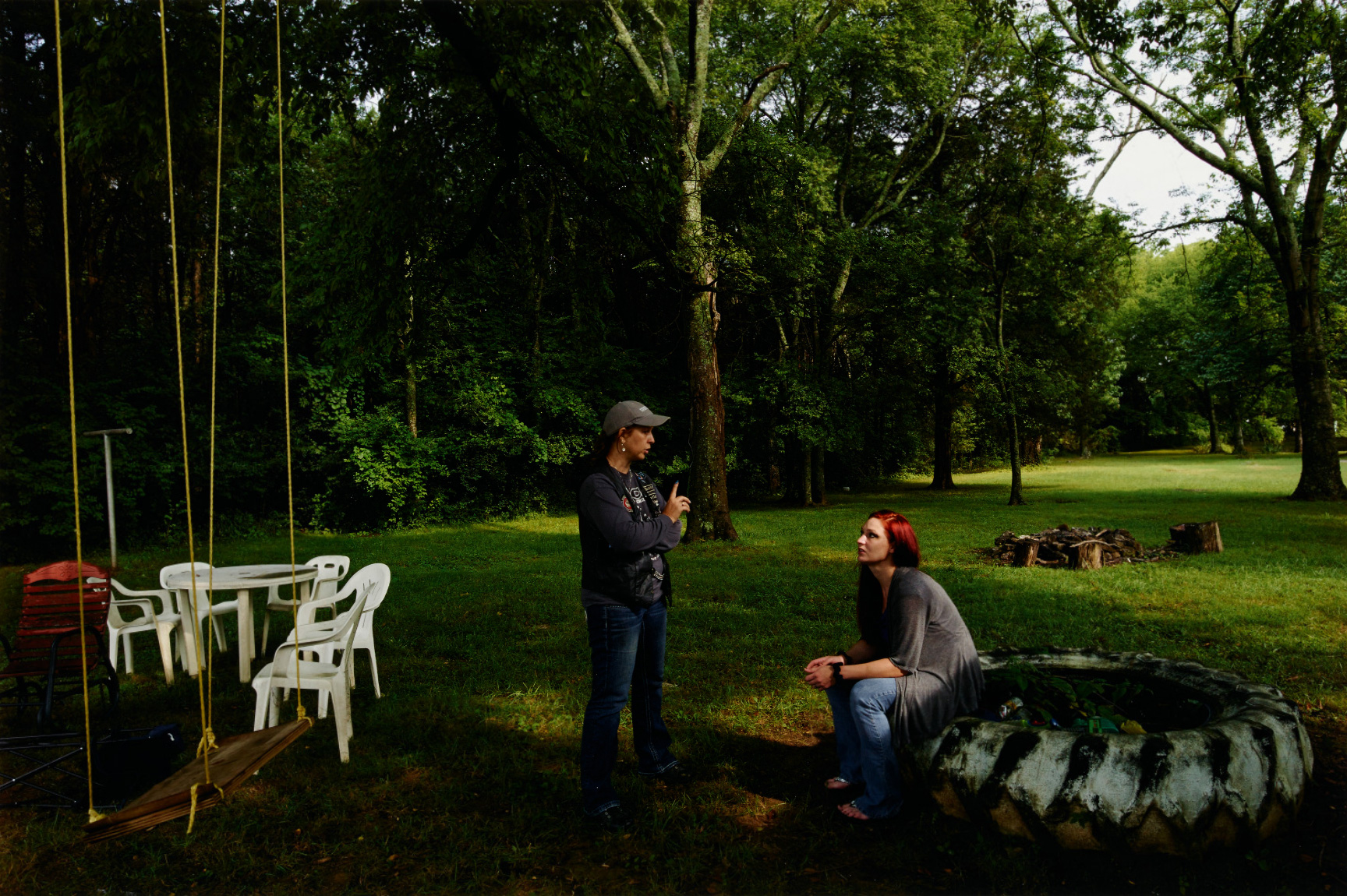


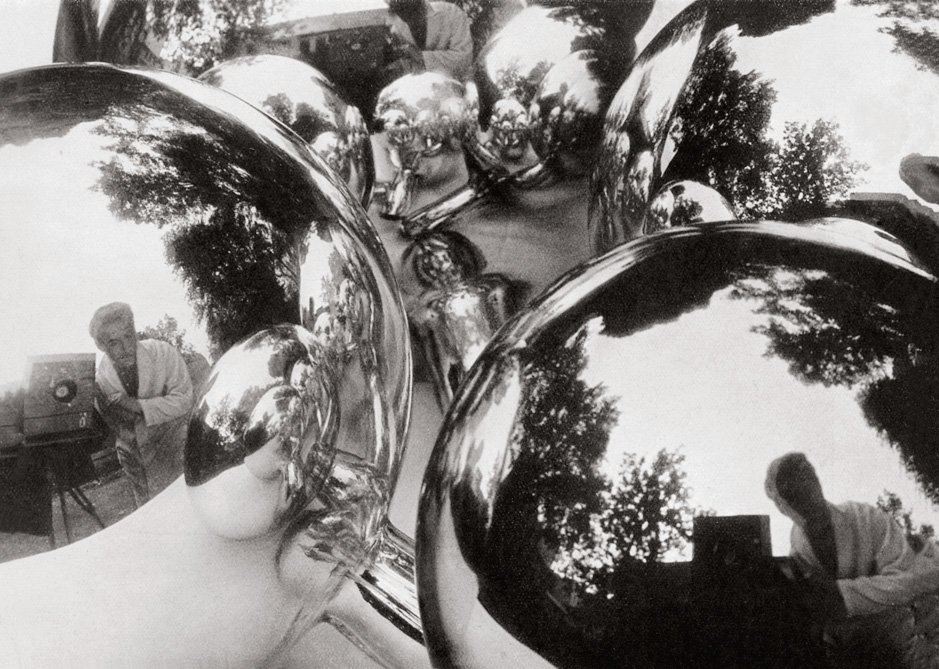






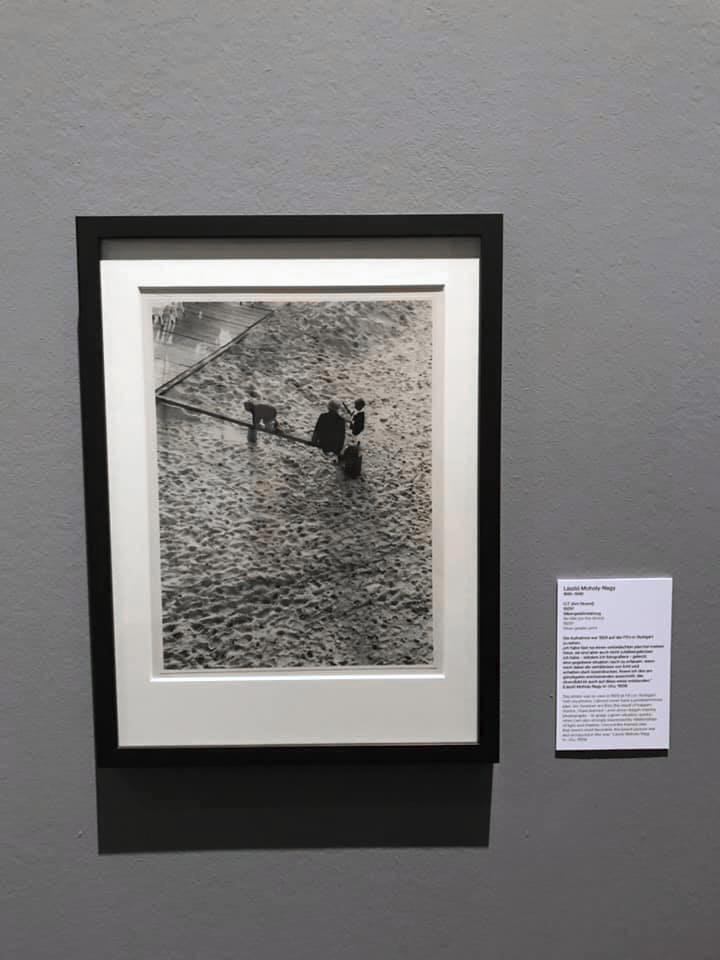
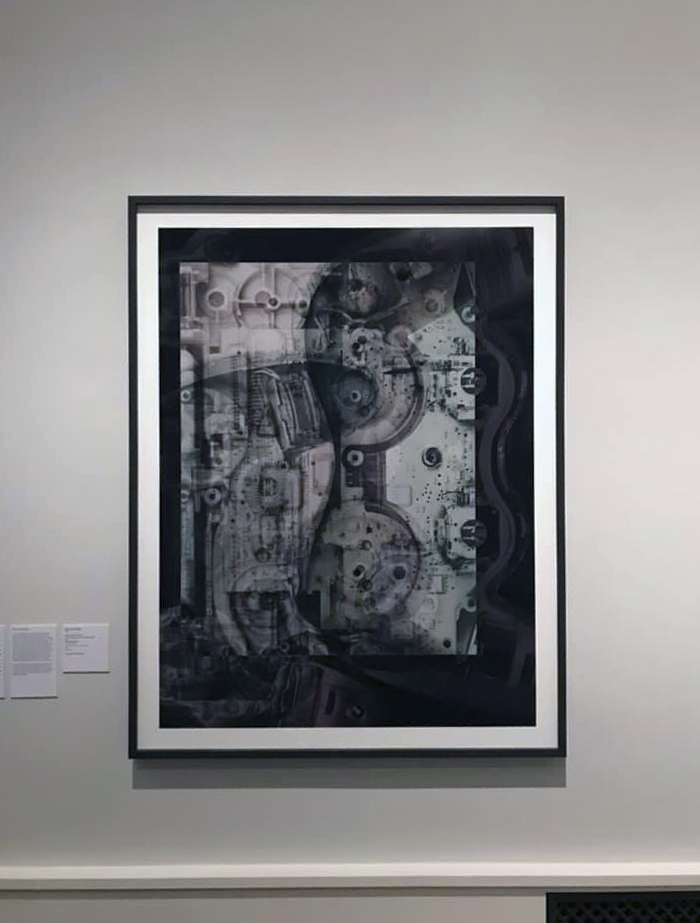


![Albert Renger-Patzsch (German, 1897-1966) 'Bügeleisen für Schuhfabrikation, Faguswerk Alfeld [Shoemakers' irons, Fagus factory, Alfeld]' 1928](https://artblart.com/wp-content/uploads/2018/01/renger-patzsch-bugeleisen-fur-schuhfabrikation.jpg "Albert Renger-Patzsch (German, 1897-1966) 'Bügeleisen für Schuhfabrikation, Faguswerk Alfeld [Shoemakers' irons, Fagus factory, Alfeld]' 1928")
![Albert Renger-Patzsch (German, 1897-1966) 'Gebirgsforst im Winter (Fichtenwald im Winter)' [Mountain forest in winter (spruce forest in winter)] 1926](https://artblart.com/wp-content/uploads/2018/01/renger-patzsch-gebirgsforst-im-winter.jpg "Albert Renger-Patzsch (German, 1897-1966) 'Gebirgsforst im Winter (Fichtenwald im Winter)' [Mountain forest in winter (spruce forest in winter)] 1926")


![Max Burchartz (German, 1887-1961) 'Lotte (Eye)' (Lotte [Auge]) 1928](https://artblart.com/wp-content/uploads/2015/04/max-burchartz-lotte-eye-1928-web.jpg "Max Burchartz (German, 1887-1961) 'Lotte (Eye)' (Lotte [Auge]) 1928")


![Florence Henri. 'Fenêtre [Window]' 1929](https://artblart.com/wp-content/uploads/2015/03/florencehenri_06_fenetre-web.jpg "Florence Henri. 'Fenêtre [Window]' 1929")










 Art Blart _ art and cultural memory archive
You must be logged in to post a comment.