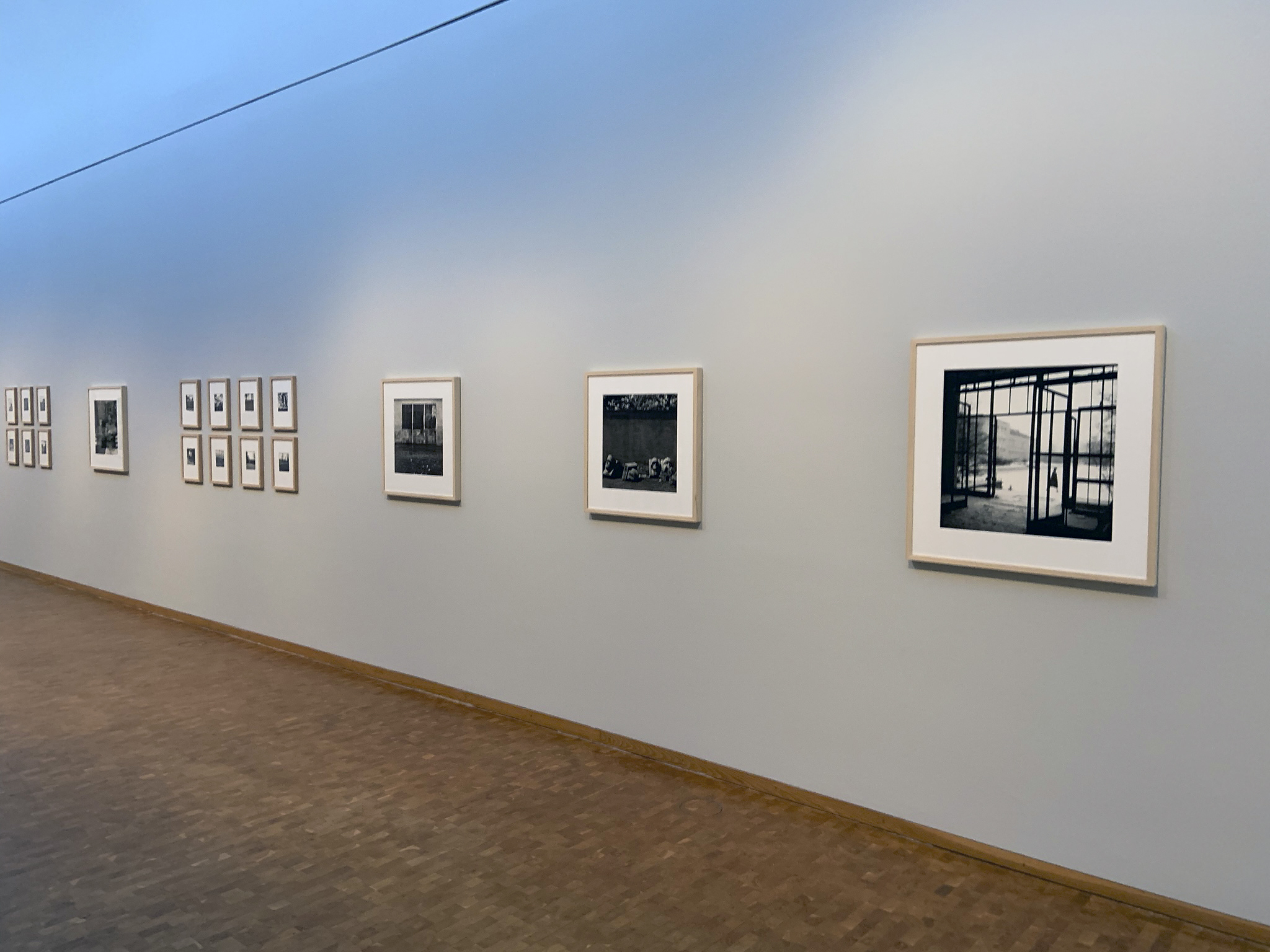
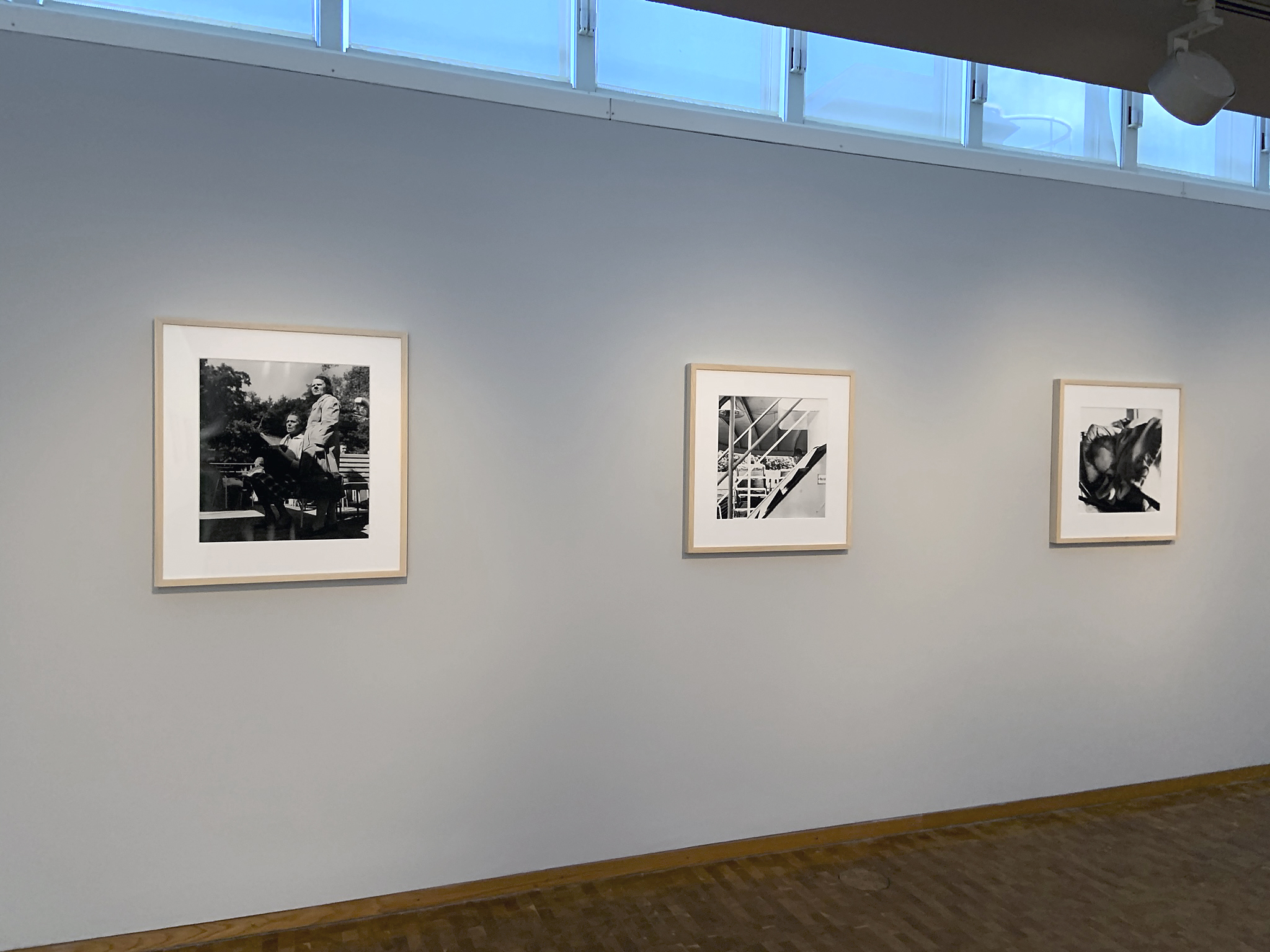
European photographic research tour exhibition: ‘Benjamin Katz Berlin Havelhöhe, 1960/61’ at Museum Ludwig, Cologne

Exhibition dates: 7th June – 22nd September, 2019
Visited September 2019 posted March 2020

Cu­ra­tor: Bar­bara En­gel­bach


Benjamin Katz (Belgian, b. 1939)
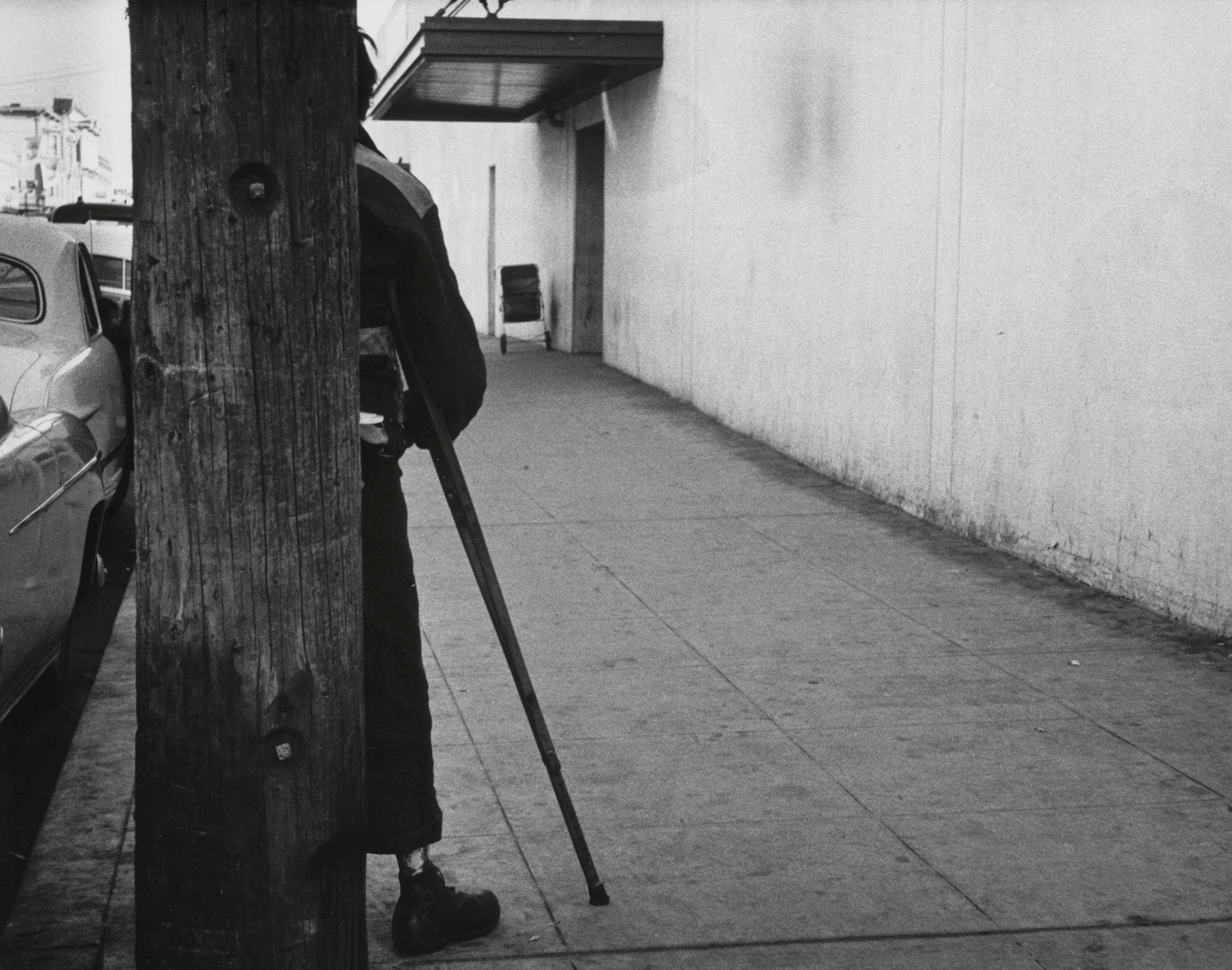
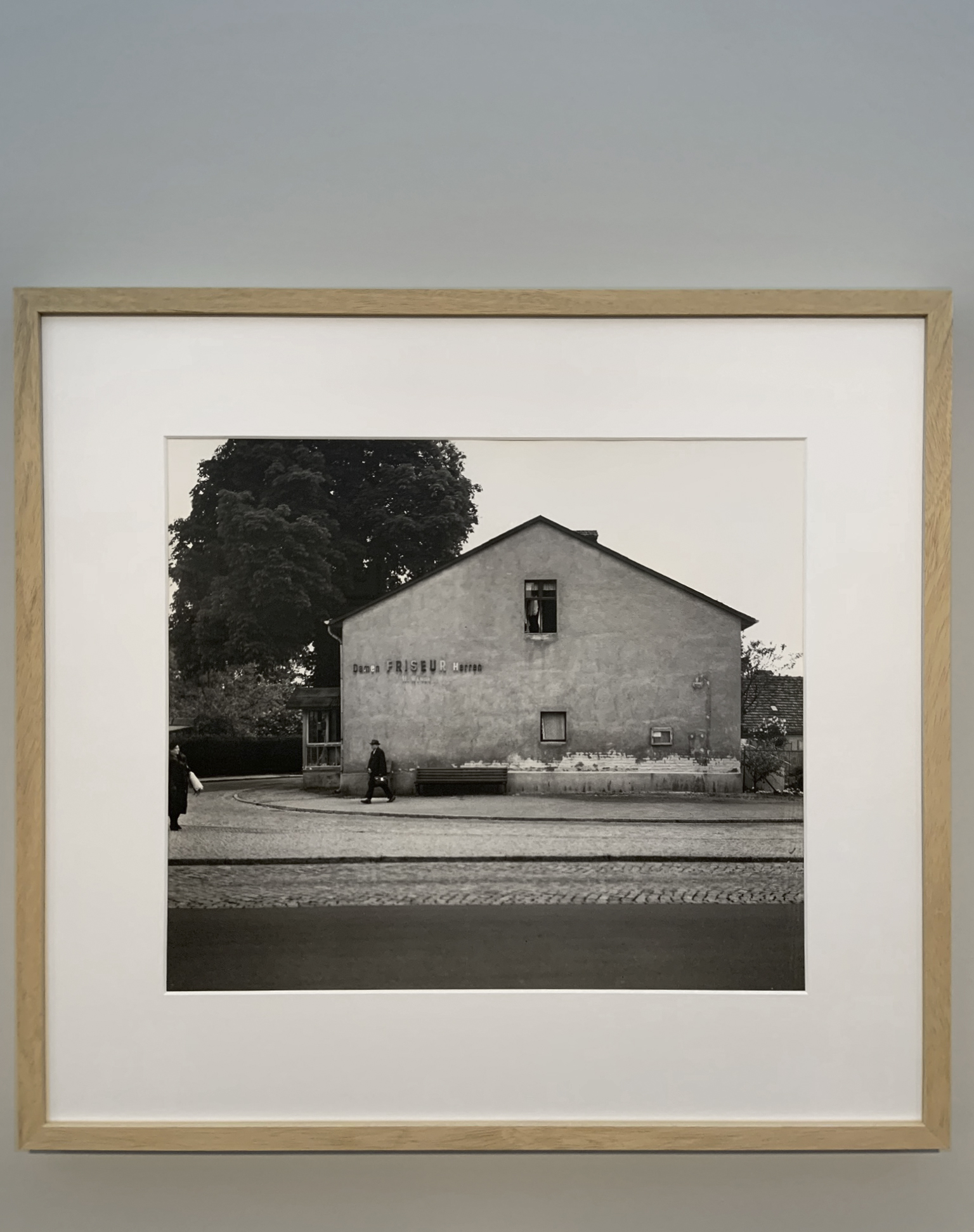
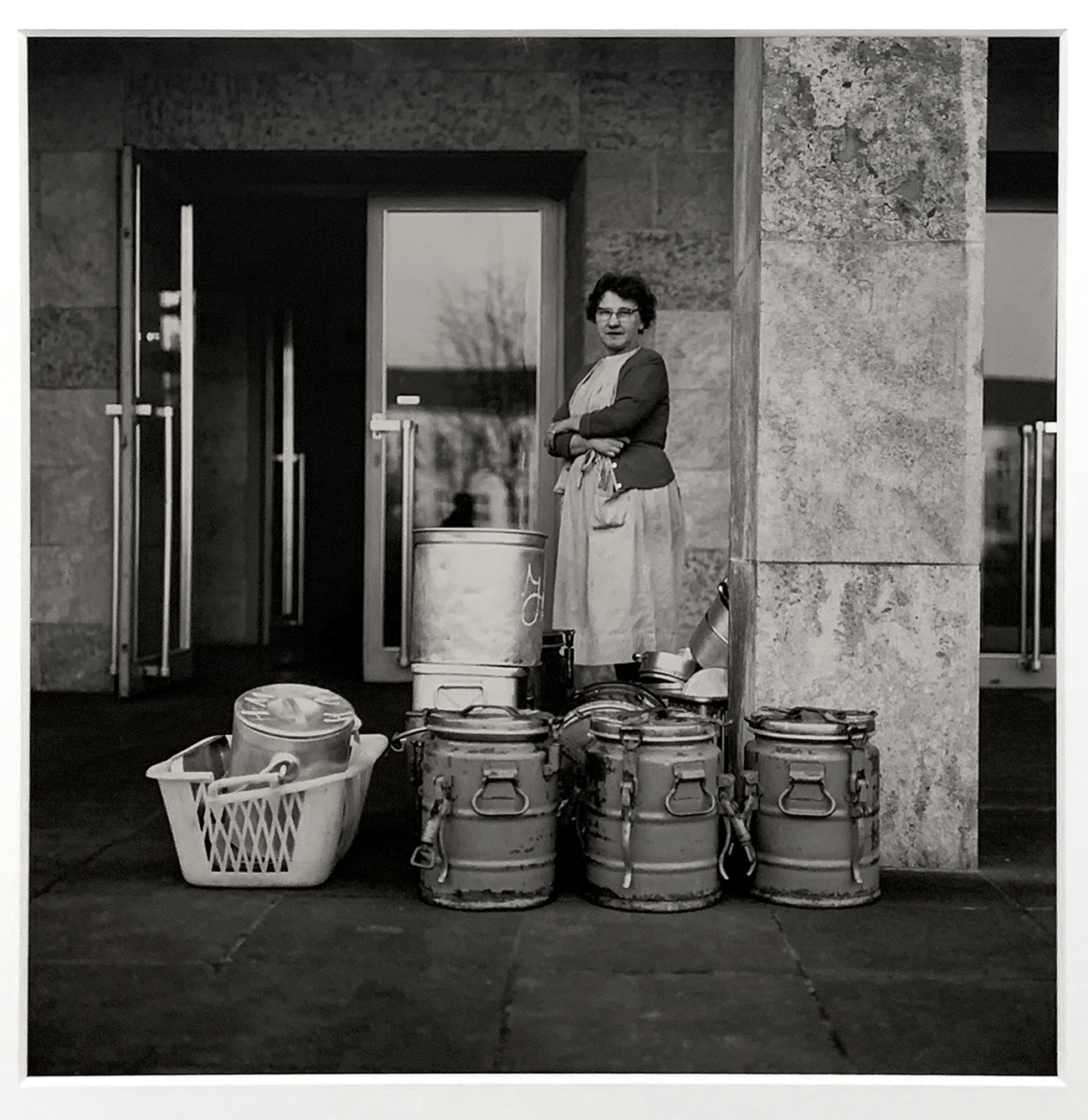
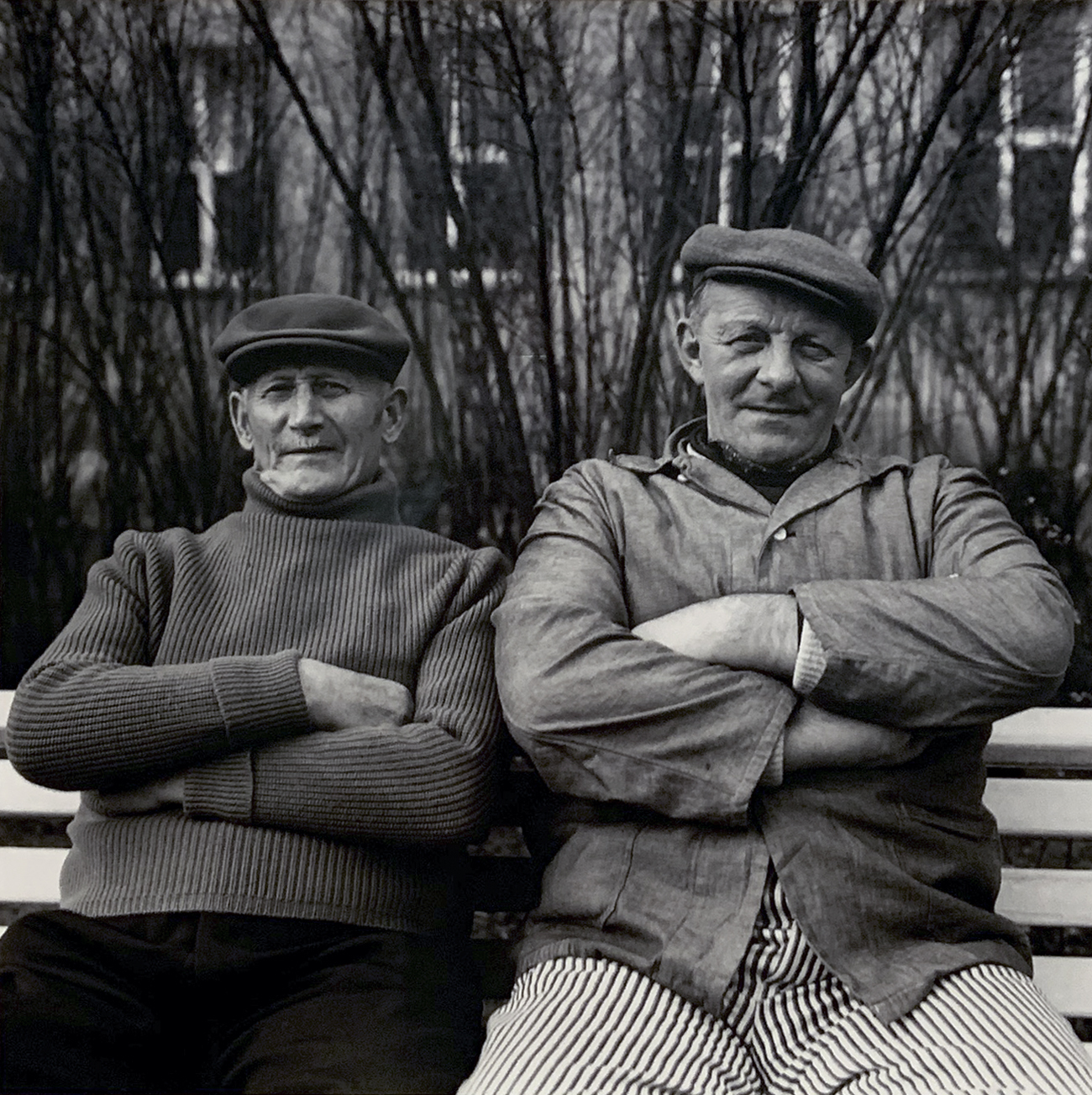
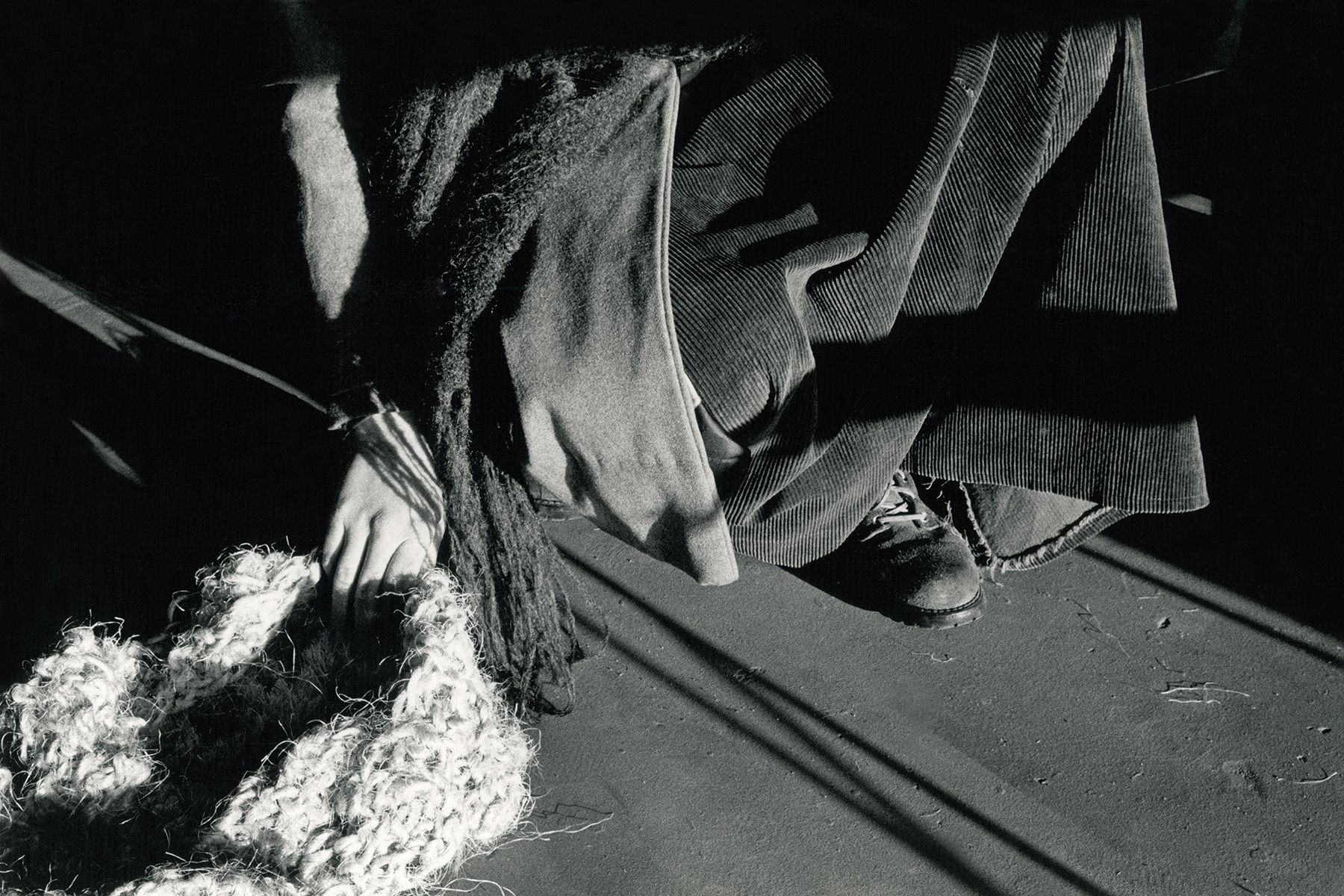
'Untitled' 1960-1961 from the series 'Ber­lin Havel­höhe (1960/1961)' from the exhibition 'Benjamin Katz Berlin Havelhöhe, 1960/61' at Museum Ludwig, Cologne, June - Sept, 2019


Benjamin Katz (Belgian, b. 1939)
Untitled
1960-1961
From the series Ber­lin Havel­höhe (1960/1961)
Gelatin silver print


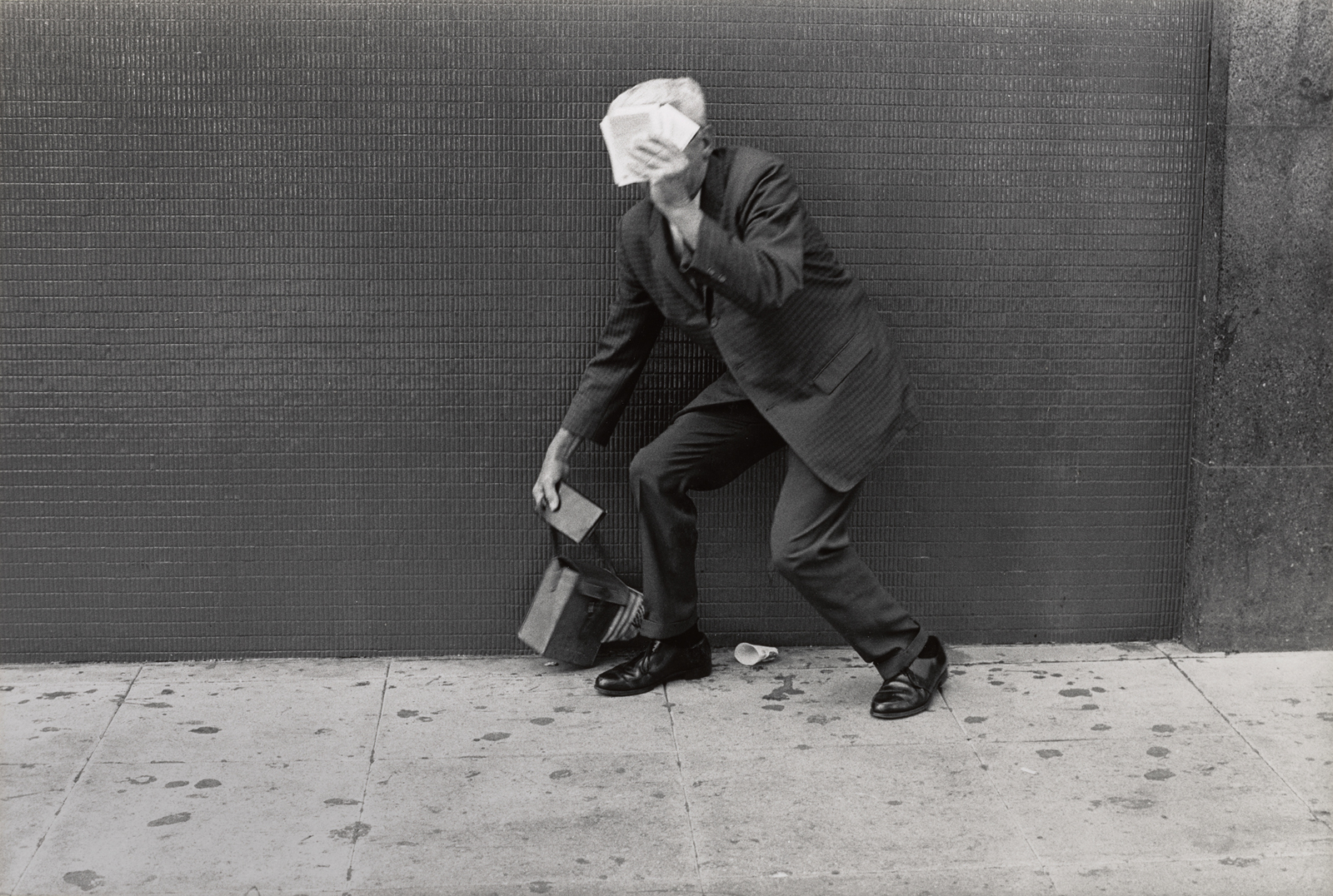
The eye of the law guards

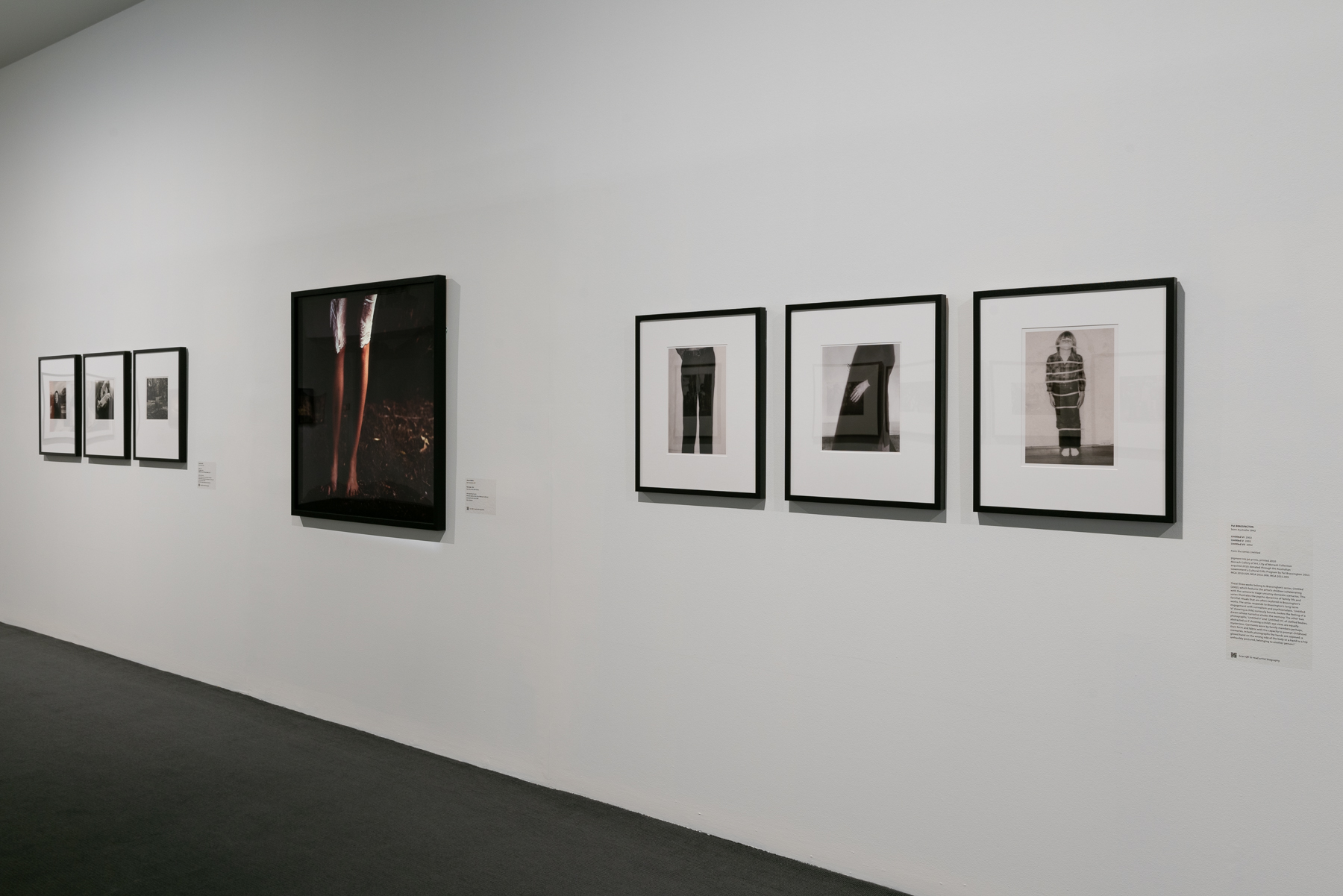
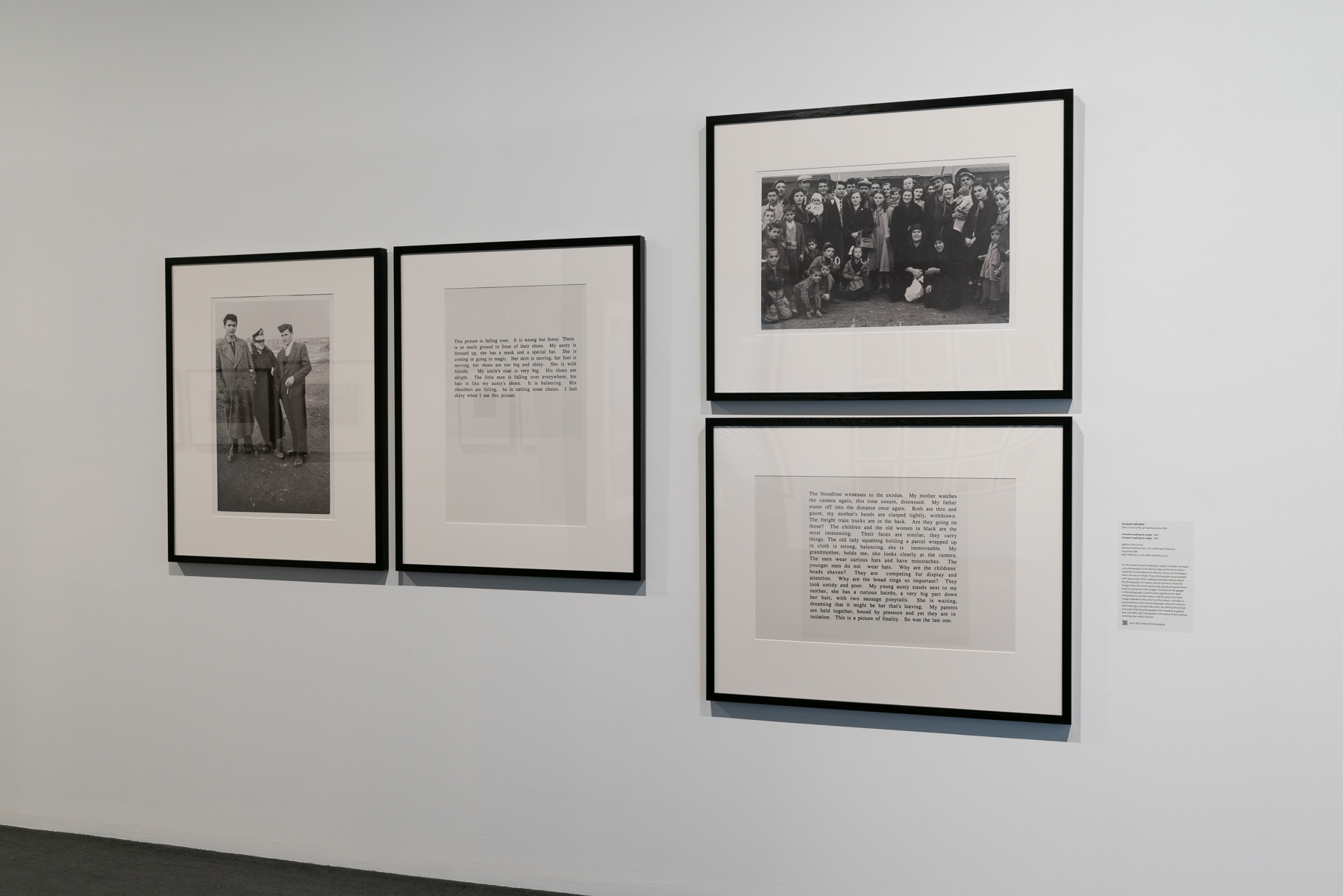
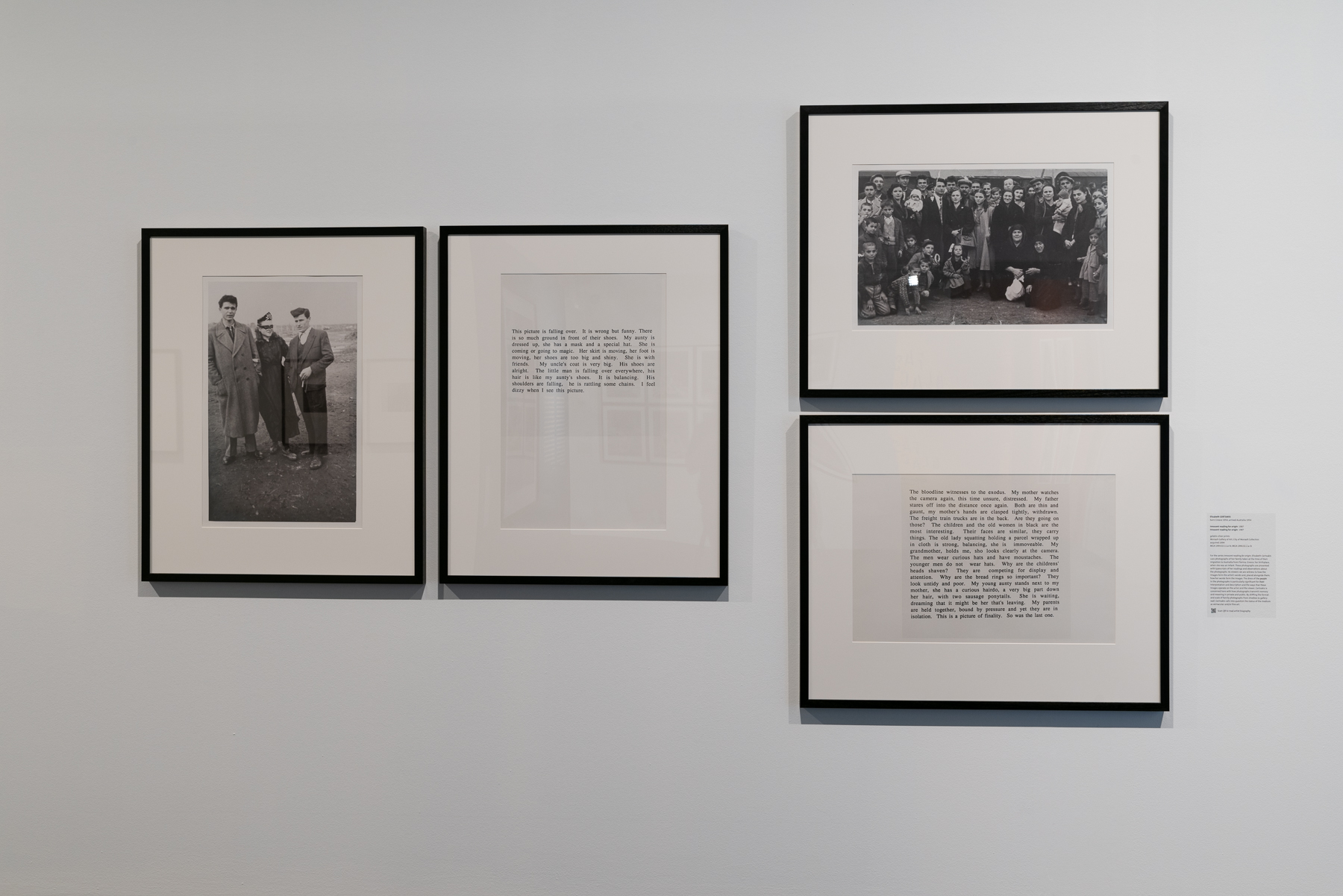
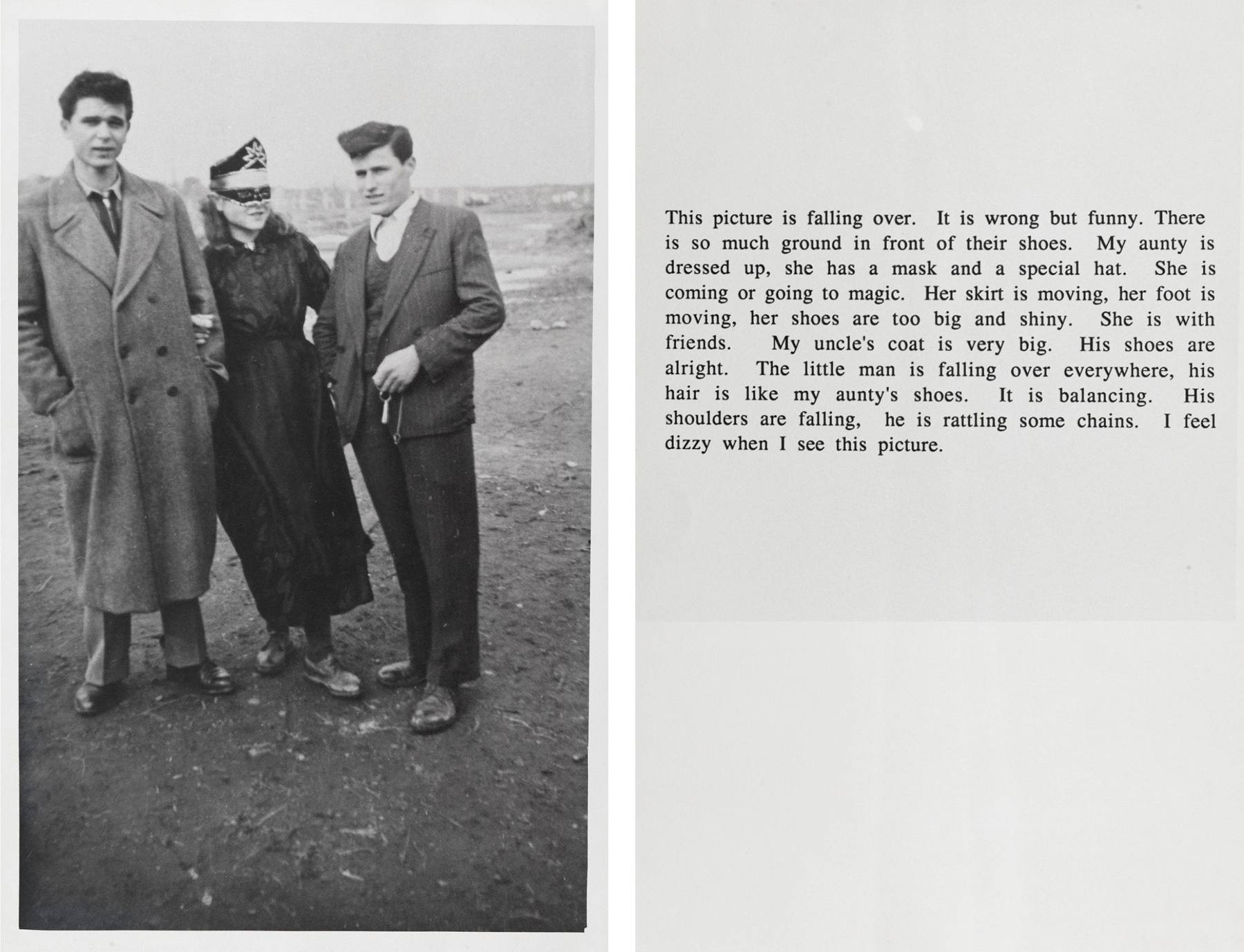
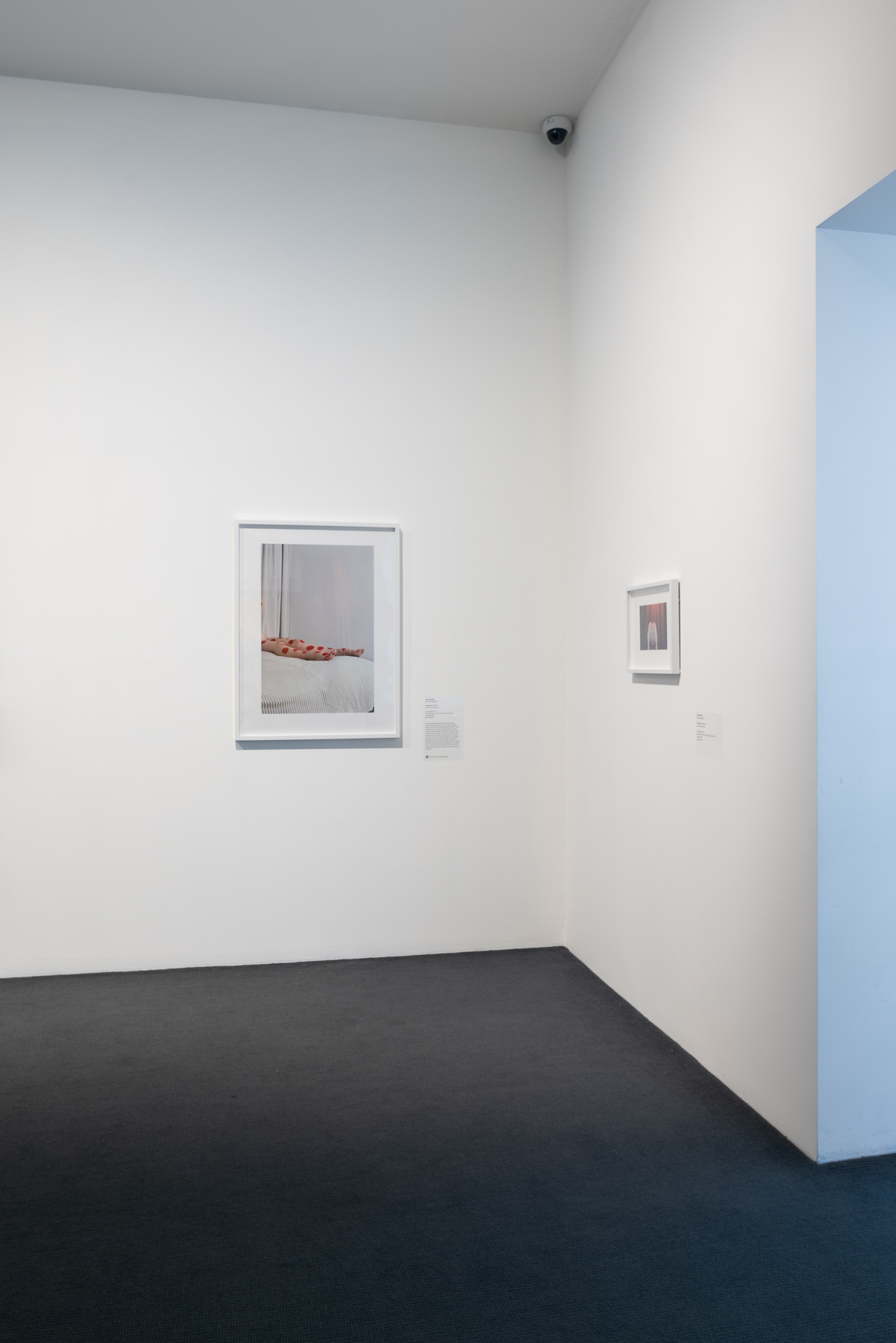
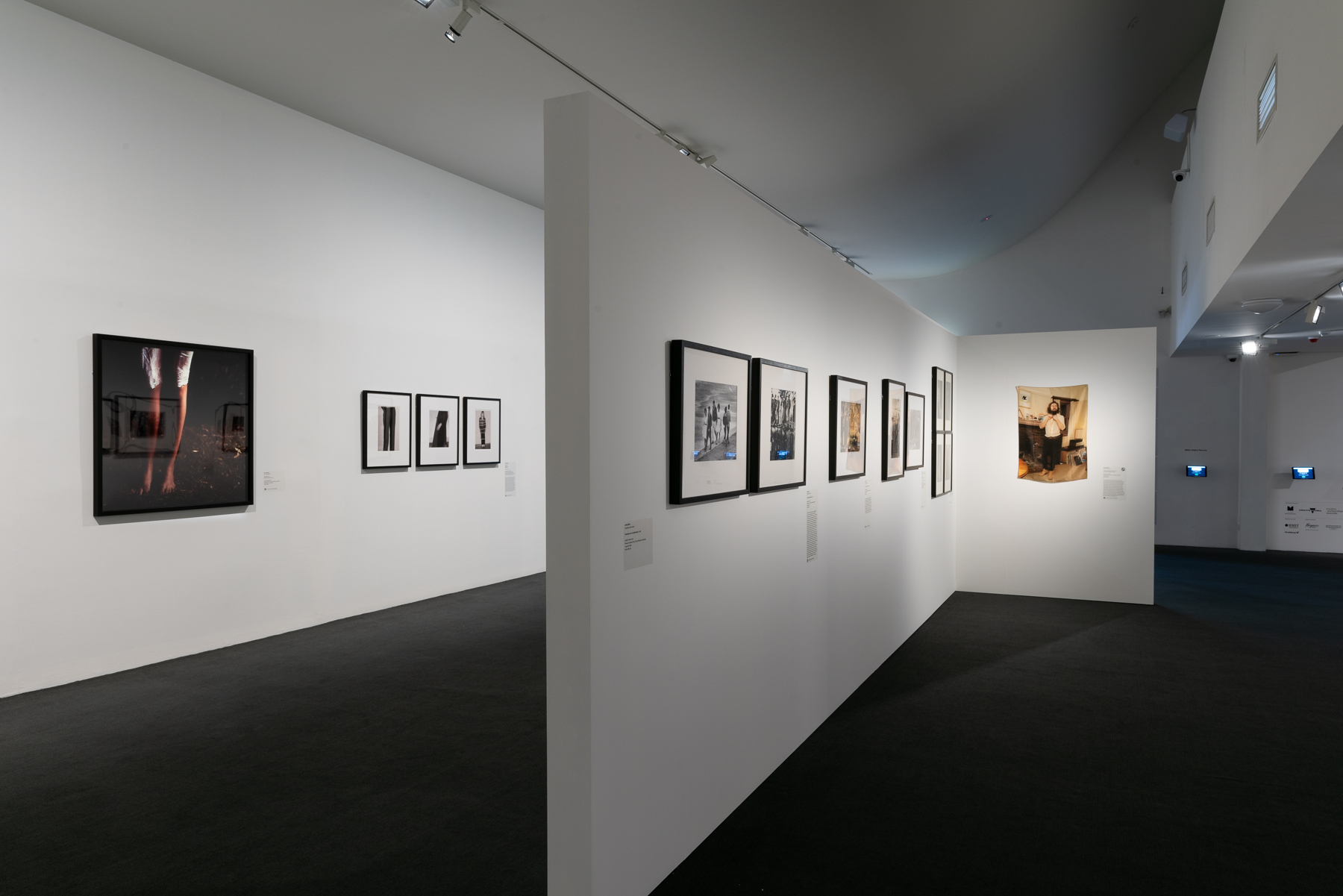
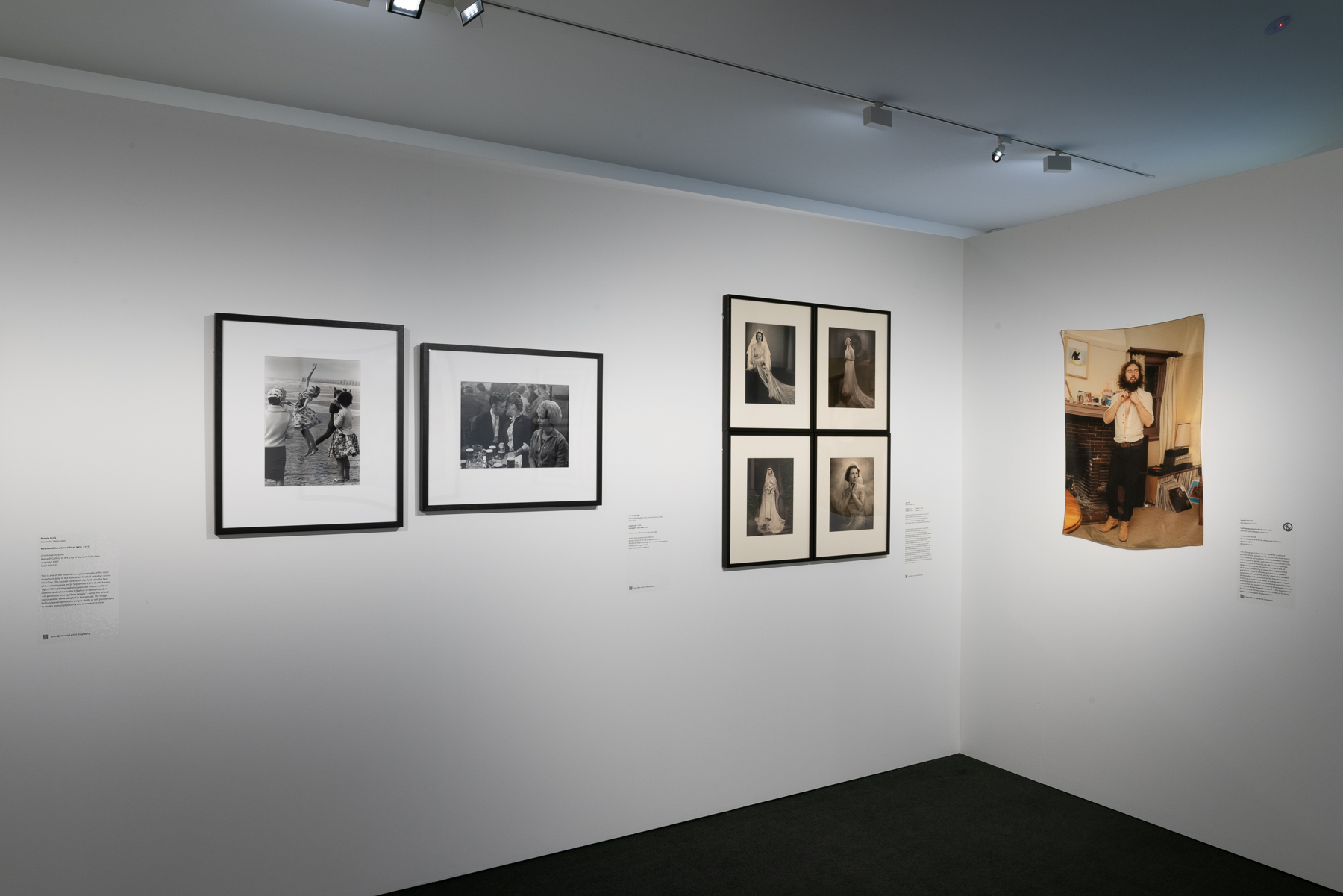
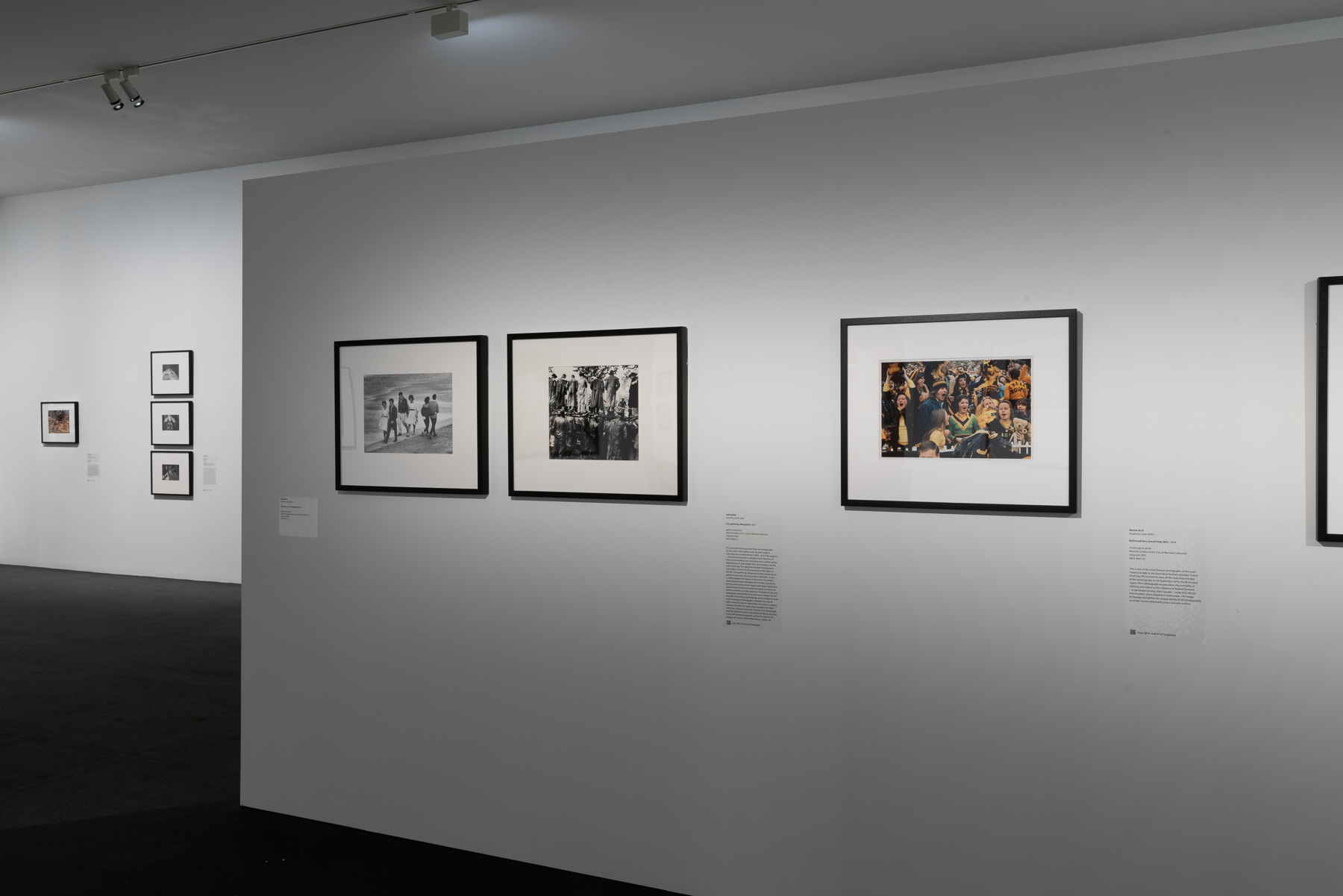
I saw this TERRIFIC exhibition at Museum Ludwig while I was on my European photography research trip. None of the photographs are available online, so I am grateful that I took some iPhone installation images while I was there.

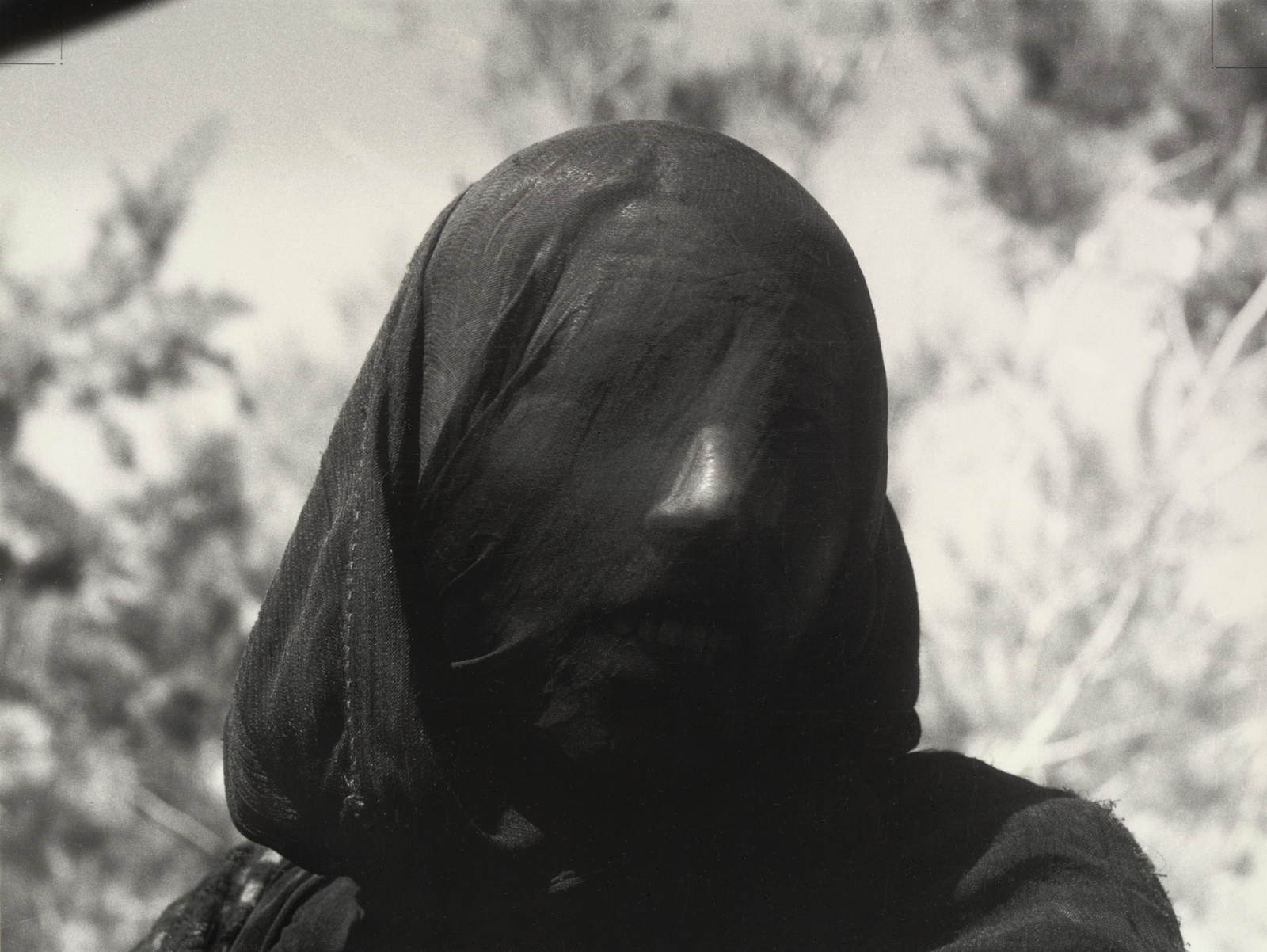
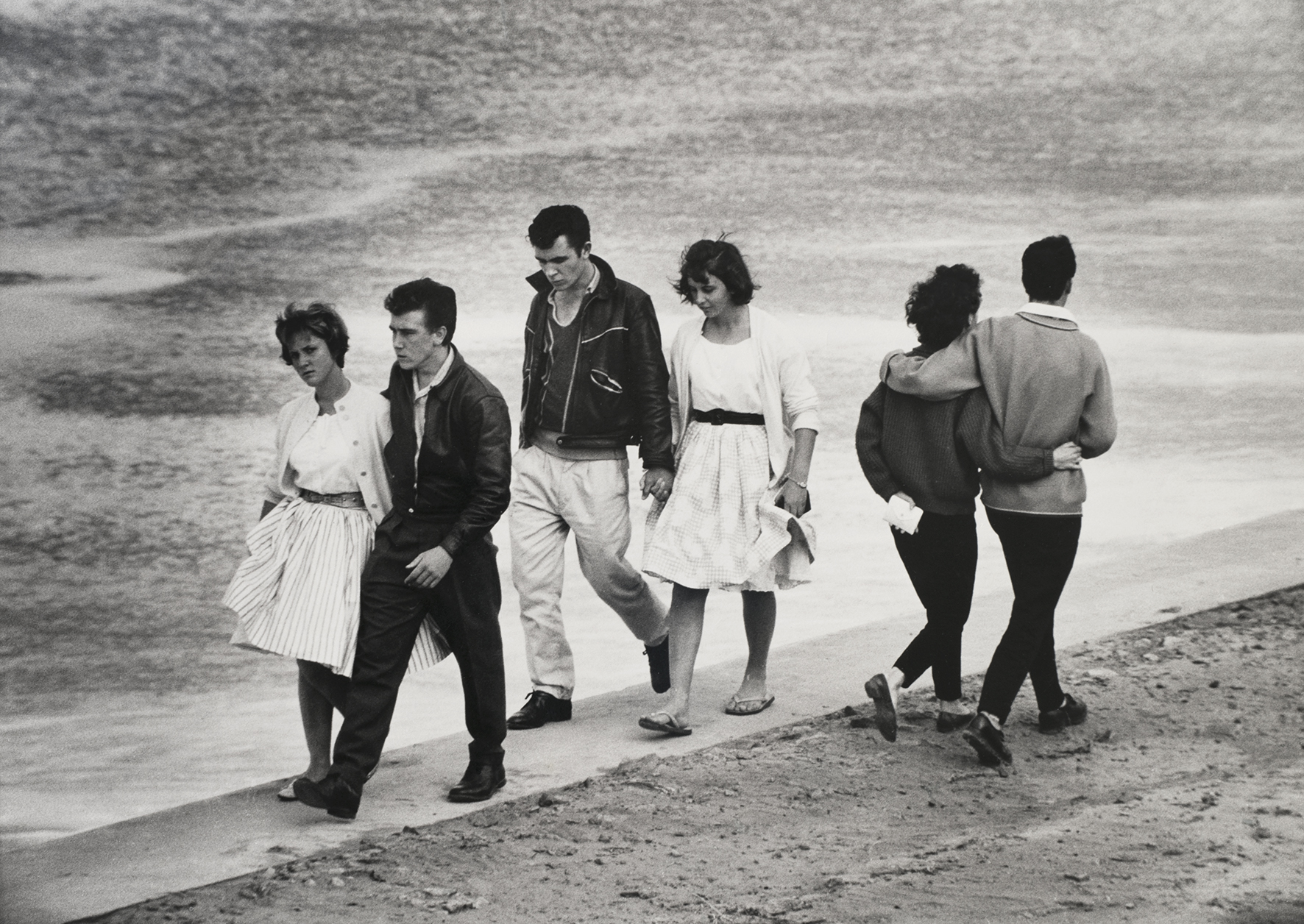
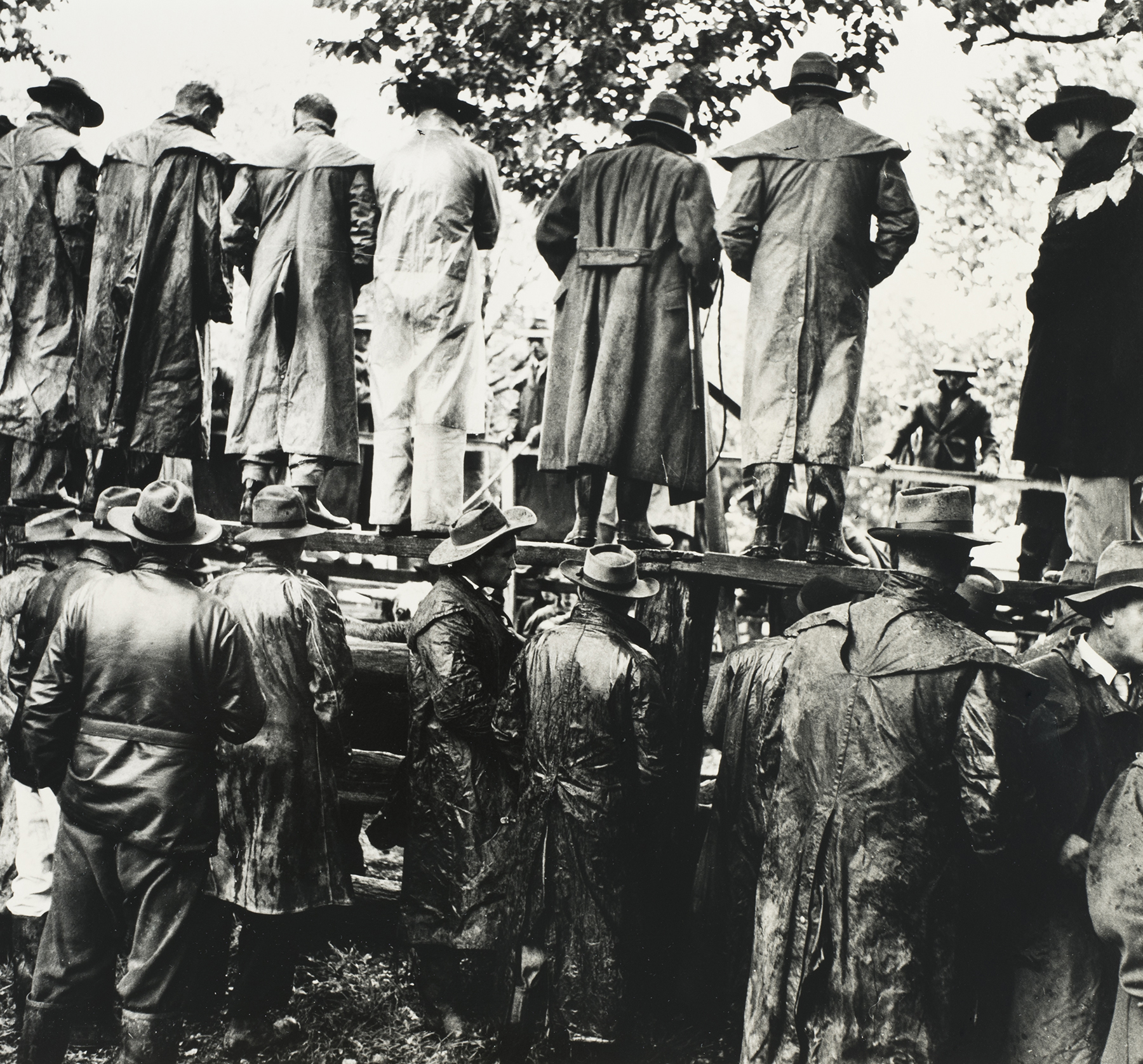
Tight, focused social documentary images that have real presence and power. They feel cooly and directly observed, essential, gritty, a unique take on an in/hospitable institution and the people in it. The word Havelhöhe translates to “hospital”. Katz was there for 18 months for the treatment of tuberculosis.

I admire the light, subject matter and the photographer’s point of view, his frontal and demanding perspective.

Dr Marcus Bunyan


All iPhone installation images taken by Marcus Bunyan. Please click n the photographs for a larger version of the image.


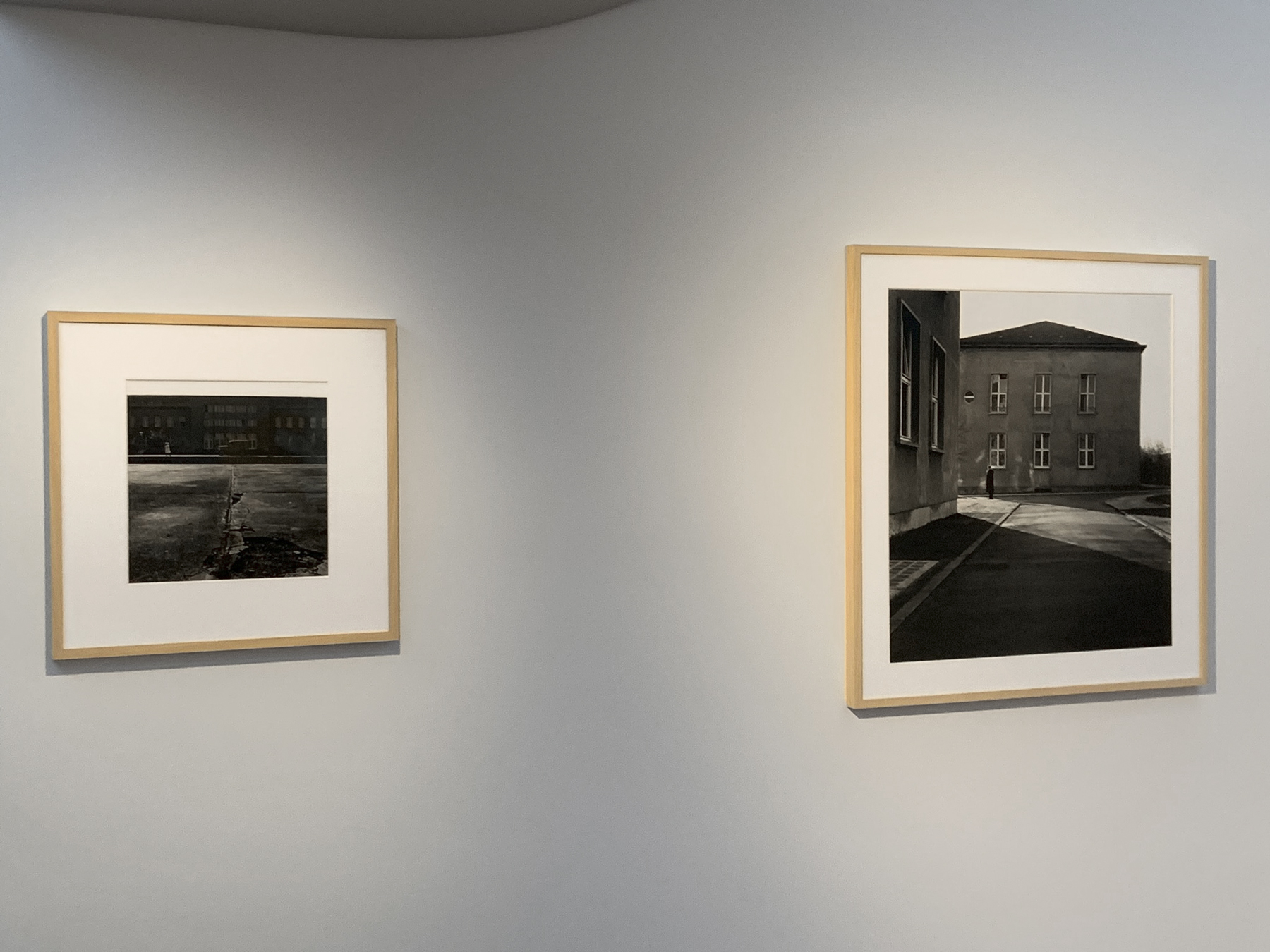
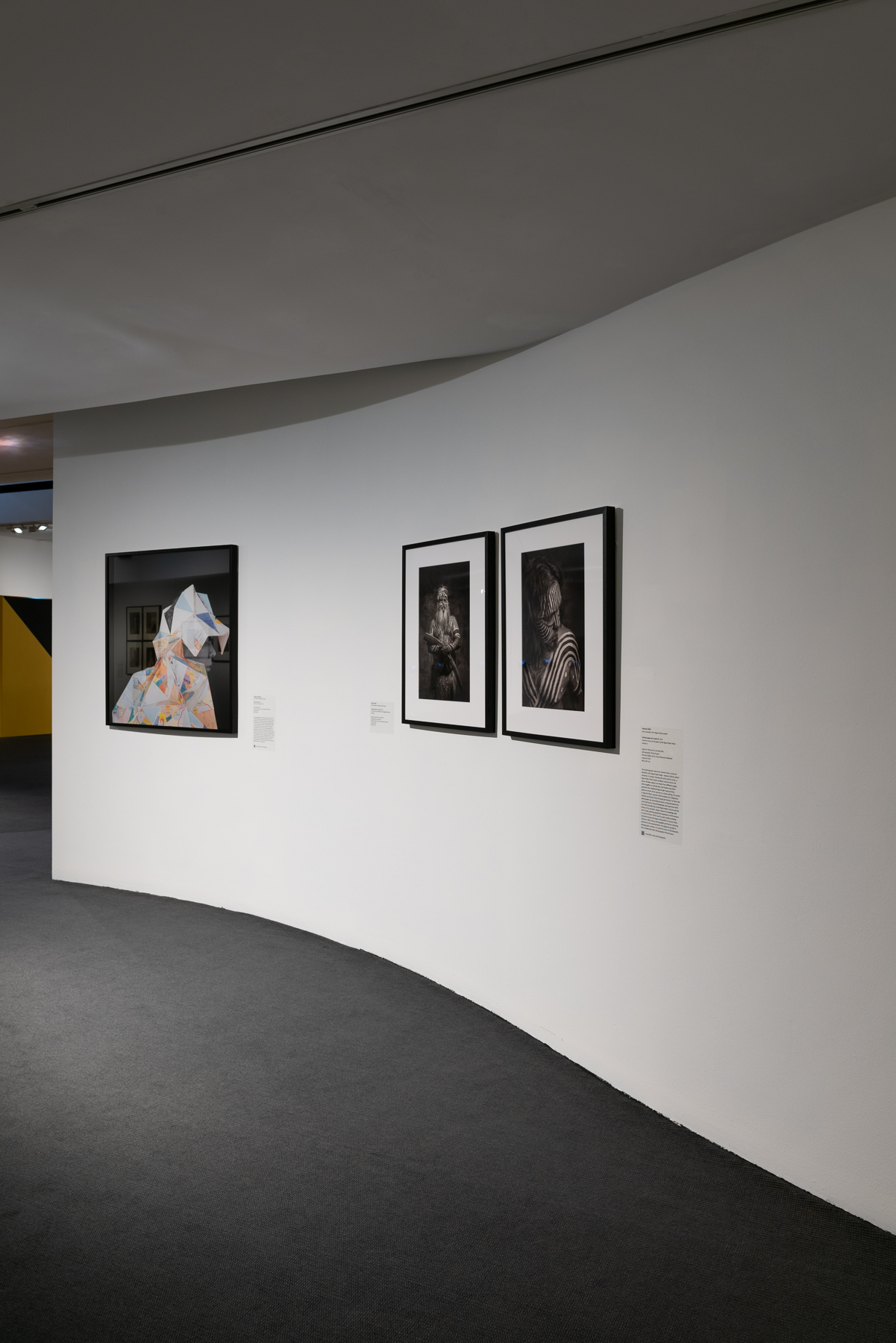
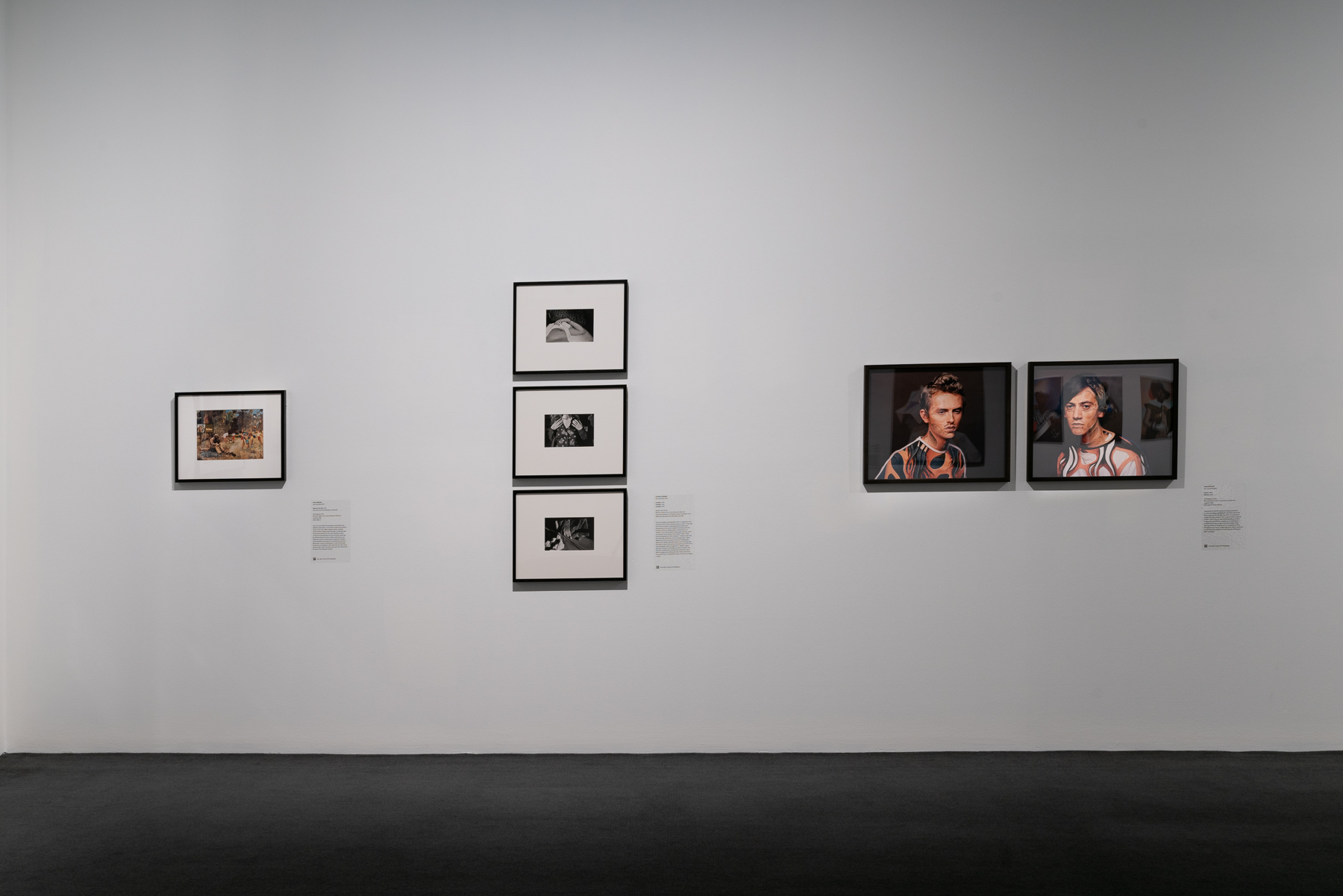
Installation view of the exhibition 'Benjamin Katz Berlin Havelhöhe, 1960/61' at the Museum Ludwig, Cologne

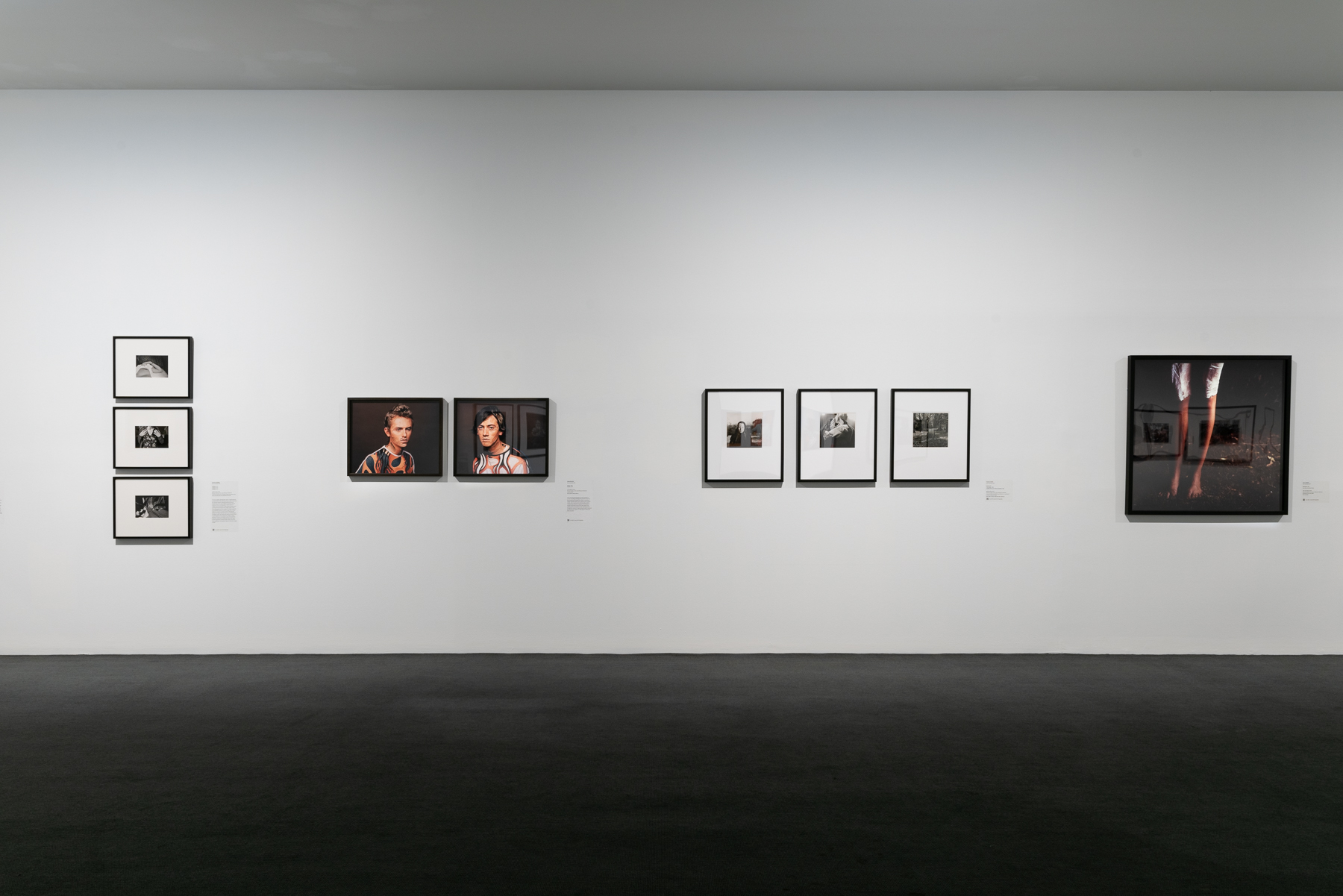
Installation view of the exhibition 'Benjamin Katz Berlin Havelhöhe, 1960/61' at the Museum Ludwig, Cologne


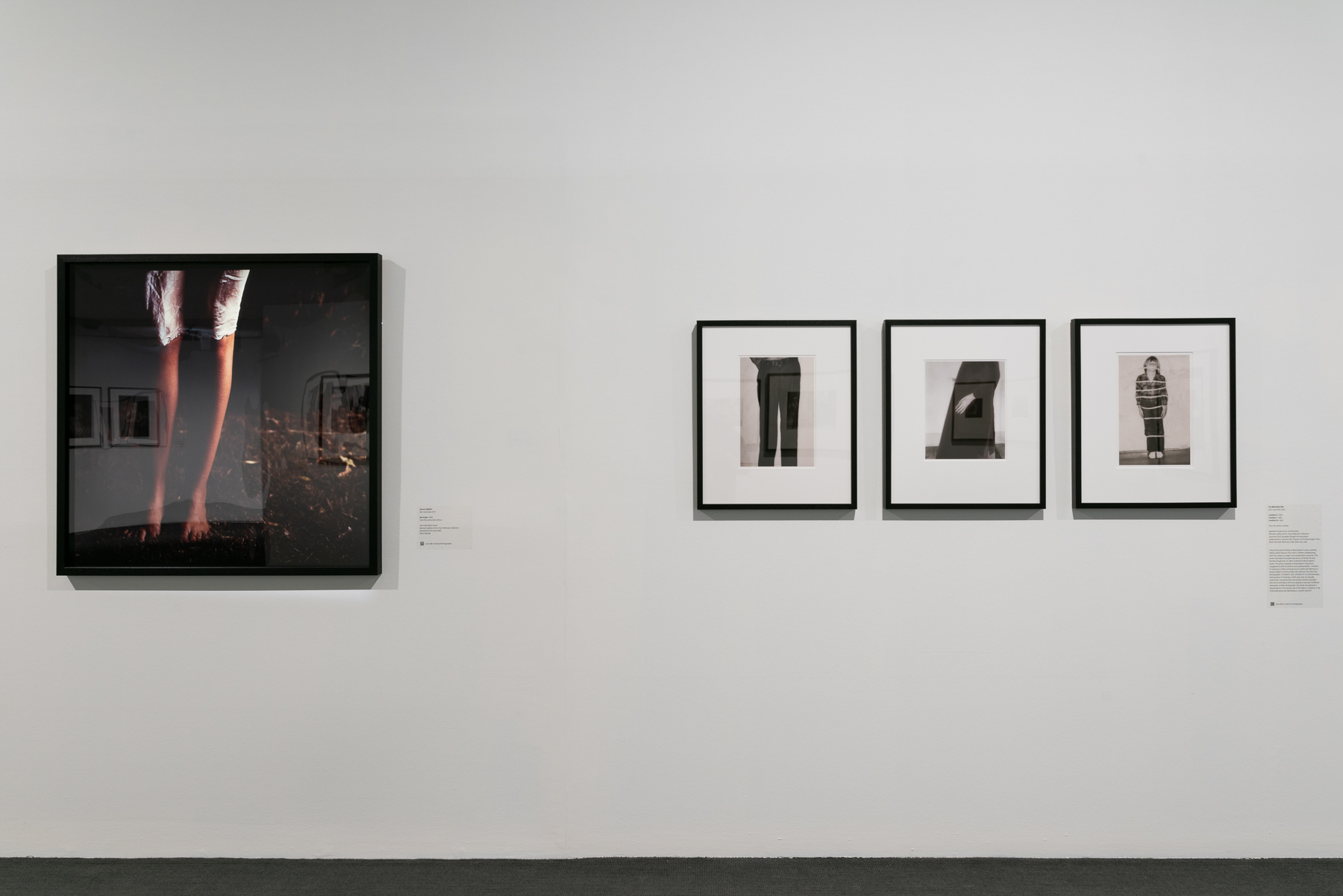
Installation views of the exhibition Benjamin Katz Berlin Havelhöhe, 1960/61 at the Museum Ludwig, Cologne
Photos: Marcus Bunyan


Ben­jamin Katz became known in the 1980s as a fixture of the art scene in West Germany. He took portraits of artists such as Ge­org Baselitz, James Lee Byars, A.R. Penck, Cindy Sh­er­man, and Rose­marie Trock­el, pho­to­graphed the bustling art scene at openings, and doc­u­ment­ed the cre­a­tion of major ex­hi­bi­tions such as West­kunst in Cologne in 1981, doc­u­men­ta 7 in Kas­sel in 1982, and von hi­er aus in Düs­sel­dorf in 1984.

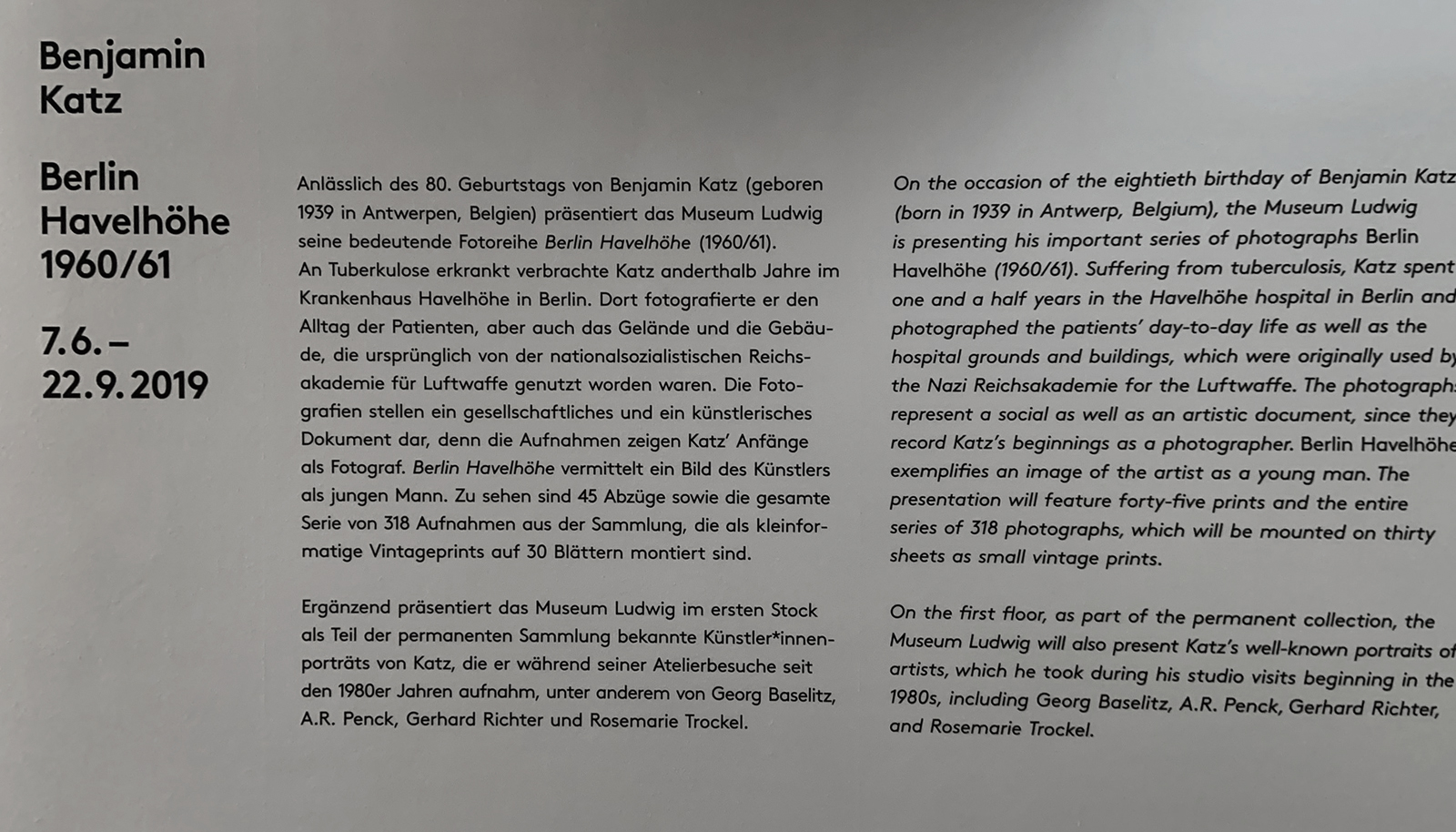
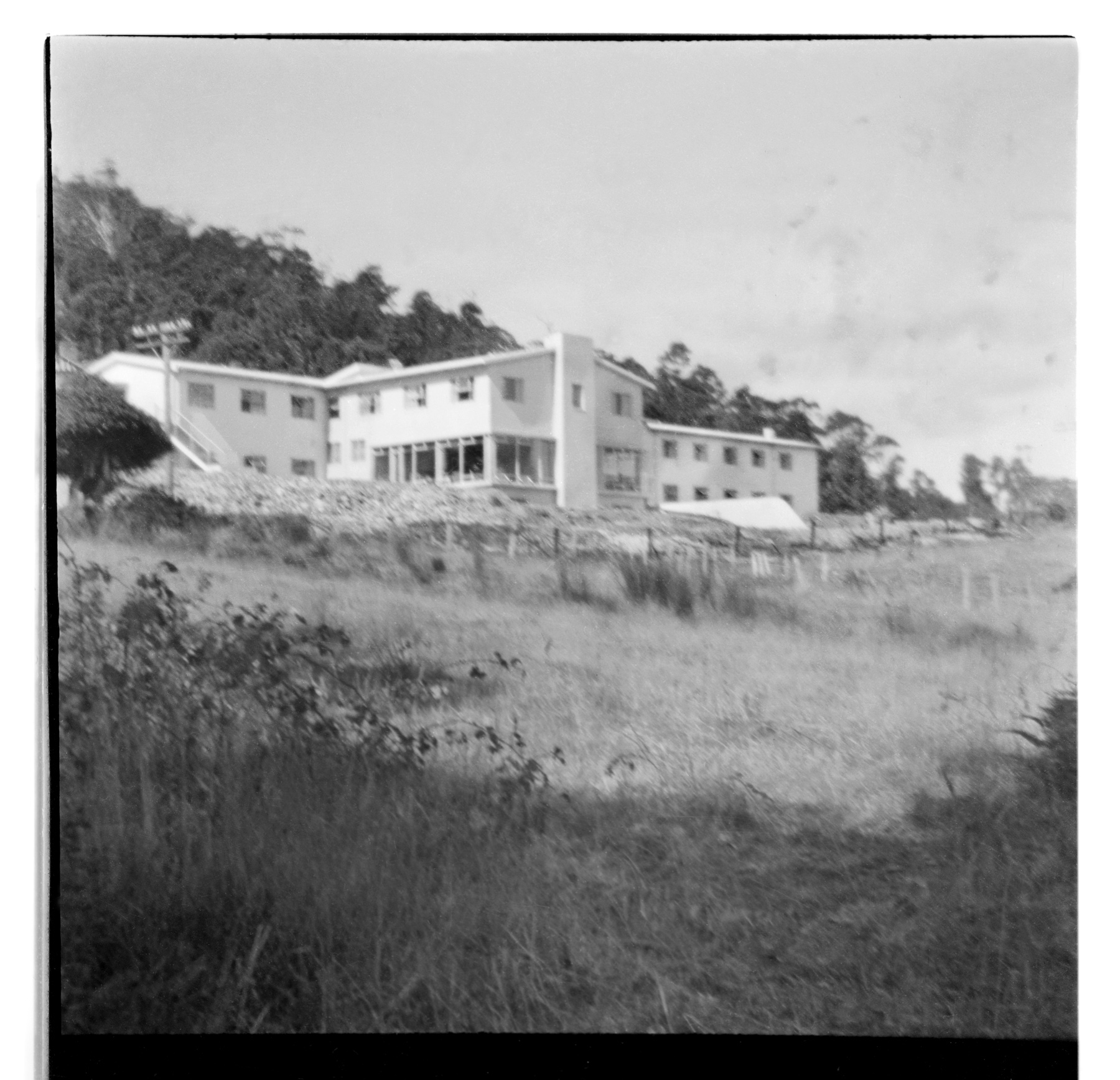
On the oc­ca­sion of the eightieth birthday of Benjamin Katz (born on June 14, 1939, in An­tw­erp, Bel­gi­um), the Mu­se­um Lud­wig will present his series of photographs Ber­lin Havel­höhe (1960/1961), which has never before been shown in its en­tire­ty. The series was re­cent­ly acquired di­rect­ly from the artist’s archive. Even before Katz de­vot­ed himself pro­fes­sio­n­al­ly to pho­tog­ra­phy, he captured his sur­round­ings in 1960 and 1961 during an eighteen-month stay at the Havel­höhe hospital. Suf­fer­ing from tu­ber­cu­lo­sis, he spent his time there as a patient and pho­to­graphed ev­ery­day life: his fellow patients, the hos­pi­tal staff, the buildings built during the Nazi era as an air force academy, and the sur­round­ing area. The pho­to­graphs rep­re­sent a socio-historical as well as an artistic and per­so­noal doc­u­ment, since they record Katz’s be­gin­n­ings as a photographer. Ber­lin Havel­höhe also ex­em­pli­fies the image of the artist as a young man.

Di­rec­tor Yil­maz Dziewior: “The Mu­se­um Lud­wig has a large col­lec­tion of Katz’s por­traits of artists span­n­ing sev­er­al de­cades. It al­so in­cludes his ex­ten­sive docu­men­ta­tion of the 1981 ex­hi­bi­tion West­kunst as well as pho­to­graphs from the in­s­tal­la­tion of many ex­hi­bi­tions. I am all the more de­light­ed that we were able to ac­quire Ber­lin Havel­höhe, a sig­ni­f­i­cant ear­ly se­ries by Katz. We would like ex­press our warmest thanks for his trust and for shar­ing his me­m­ories with us.”

The en­tire se­ries will be shown in the form of for­ty-one pho­to­graphs print­ed in three dif­fer­ent sizes and 318 vin­tage prints mount­ed on A4 pa­per. On the first floor, as part of the per­ma­nent col­lec­tion, the Mu­se­um Lud­wig will al­so pre­sent Katz’s well-known por­traits of artists, which he took dur­ing his stu­dio vis­its begin­n­ing in the 1980s, in­clud­ing Ge­org Baselitz, A.R. Penck, Ger­hard Richter, and Rose­marie Trock­el.

Ben­jamin Katz: Ber­lin Havel­höhe, 1960/1961 is the sixth pre­sen­ta­tion in the pho­tog­ra­phy room, which since 2017 has fea­tured chang­ing se­lec­tions of the approx­i­mate­ly 70,000 works from the Mu­se­um Lud­wig pho­tog­ra­phy col­lec­tion. The pho­tog­ra­phy room is lo­cat­ed in the per­ma­nent col­lec­tion on the se­cond floor.

Text from the gallery website [Online] Cited 04/03/2020


Wall text from the exhibition 'Benjamin Katz Berlin Havelhöhe, 1960/61' at the Museum Ludwig, Cologne


Wall text from the exhibition Benjamin Katz Berlin Havelhöhe, 1960/61 at the Museum Ludwig, Cologne
Photo: Marcus Bunyan


Photograph from the exhibition 'Benjamin Katz Berlin Havelhöhe, 1960/61' (installation view)


Benjamin Katz (Belgian, b. 1939)
Untitled (installation view)
1960-1961
From the series Ber­lin Havel­höhe (1960/1961)
Gelatin silver print
Photo: Marcus Bunyan


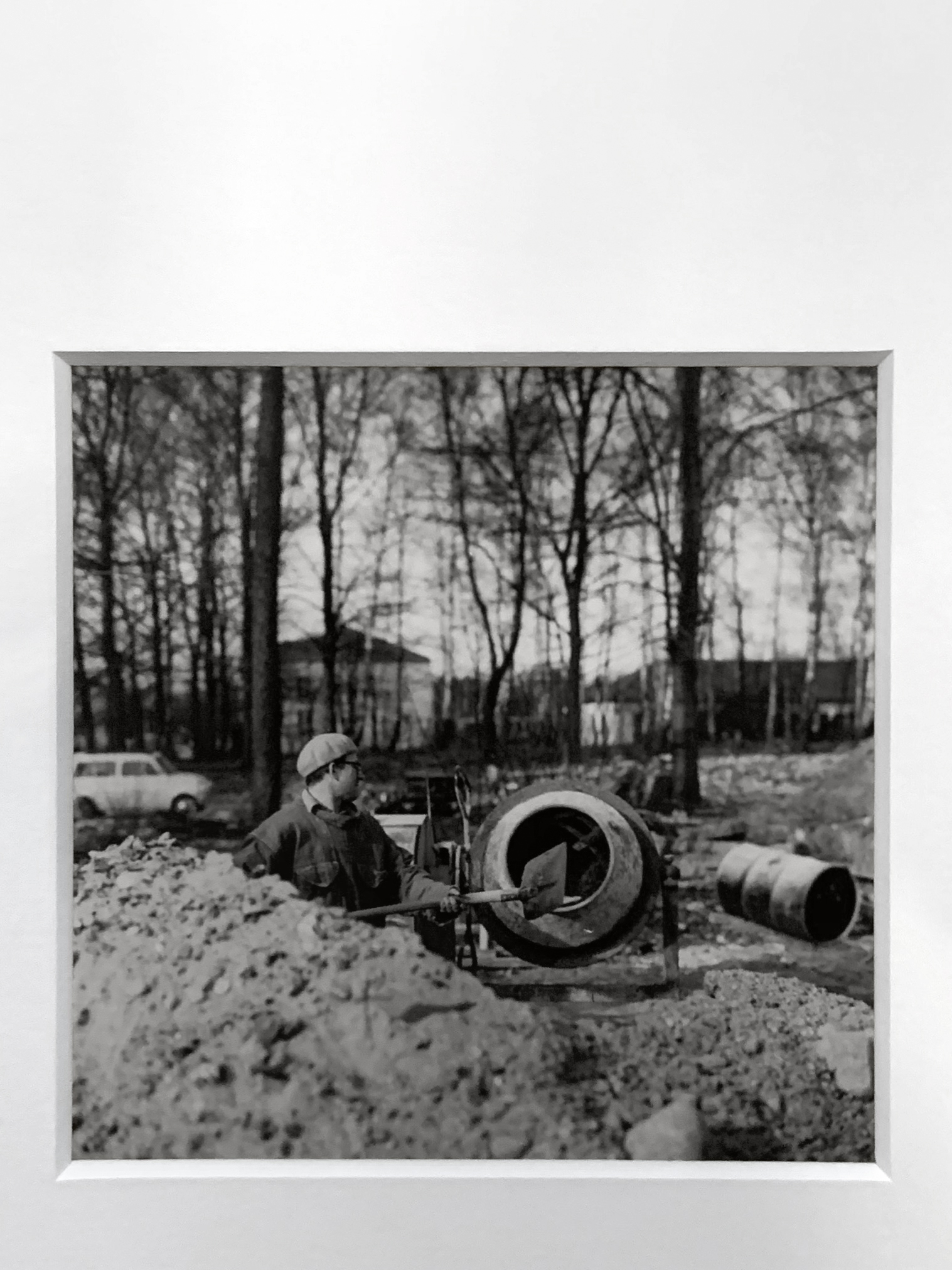
Benjamin Katz (Belgian, b. 1939)
'Untitled' 1960-1961 from the series 'Ber­lin Havel­höhe (1960/1961)' from the exhibition 'Benjamin Katz Berlin Havelhöhe, 1960/61' at Museum Ludwig, Cologne, June - Sept, 2019


Benjamin Katz (Belgian, b. 1939)
Untitled
1960-1961
From the series Ber­lin Havel­höhe (1960/1961)
Gelatin silver print


Installation view of the exhibition 'Benjamin Katz Berlin Havelhöhe, 1960/61' at the Museum Ludwig, Cologne


Installation view of the exhibition Benjamin Katz Berlin Havelhöhe, 1960/61 at the Museum Ludwig, Cologne
Photo: Marcus Bunyan


Photograph from the exhibition 'Benjamin Katz Berlin Havelhöhe, 1960/61' (installation view)


Benjamin Katz (Belgian, b. 1939)
Untitled (installation view)
1960-1961
From the series Ber­lin Havel­höhe (1960/1961)
Gelatin silver print
Photo: Marcus Bunyan


Benjamin Katz (Belgian, b. 1939)
'Untitled' 1960-1961 from the series 'Ber­lin Havel­höhe (1960/1961)' from the exhibition 'Benjamin Katz Berlin Havelhöhe, 1960/61' at Museum Ludwig, Cologne, June - Sept, 2019


Benjamin Katz (Belgian, b. 1939)
Untitled
1960-1961
From the series Ber­lin Havel­höhe (1960/1961)
Gelatin silver print


Photograph from the exhibition 'Benjamin Katz Berlin Havelhöhe, 1960/61' (installation view)


Benjamin Katz (Belgian, b. 1939)
Untitled (installation view)
1960-1961
From the series Ber­lin Havel­höhe (1960/1961)
Gelatin silver print
Photo: Marcus Bunyan


Installation view of the exhibition 'Benjamin Katz Berlin Havelhöhe, 1960/61' at the Museum Ludwig, Cologne


Installation view of the exhibition Benjamin Katz Berlin Havelhöhe, 1960/61 at the Museum Ludwig, Cologne
Photo: Marcus Bunyan


Photograph from the exhibition 'Benjamin Katz Berlin Havelhöhe, 1960/61' (installation view)


Benjamin Katz (Belgian, b. 1939)
Untitled (installation view)
1960-1961
From the series Ber­lin Havel­höhe (1960/1961)
Gelatin silver print
Photo: Marcus Bunyan


Benjamin Katz (Belgian, b. 1939)
'Untitled' 1960-1961 from the series 'Ber­lin Havel­höhe (1960/1961)' from the exhibition 'Benjamin Katz Berlin Havelhöhe, 1960/61' at Museum Ludwig, Cologne, June - Sept, 2019


Benjamin Katz (Belgian, b. 1939)
Untitled
1960-1961
From the series Ber­lin Havel­höhe (1960/1961)
Gelatin silver print


Installation view of the exhibition 'Benjamin Katz Berlin Havelhöhe, 1960/61' at the Museum Ludwig, Cologne


Installation view of the exhibition Benjamin Katz Berlin Havelhöhe, 1960/61 at the Museum Ludwig, Cologne
Photo: Marcus Bunyan


Photograph from the exhibition 'Benjamin Katz Berlin Havelhöhe, 1960/61' (installation view)


Benjamin Katz (Belgian, b. 1939)
Untitled (installation view)
1960-1961
From the series Ber­lin Havel­höhe (1960/1961)
Gelatin silver print
Photo: Marcus Bunyan


Benjamin Katz (Belgian, b. 1939)
'Untitled' 1960-1961 from the series 'Ber­lin Havel­höhe (1960/1961)' from the exhibition 'Benjamin Katz Berlin Havelhöhe, 1960/61' at Museum Ludwig, Cologne, June - Sept, 2019


Benjamin Katz (Belgian, b. 1939)
Untitled
1960-1961
From the series Ber­lin Havel­höhe (1960/1961)
Gelatin silver print


Installation view of the exhibition 'Benjamin Katz Berlin Havelhöhe, 1960/61' at the Museum Ludwig, Cologne


Installation view of the exhibition Benjamin Katz Berlin Havelhöhe, 1960/61 at the Museum Ludwig, Cologne
Photo: Marcus Bunyan


Photograph from the exhibition 'Benjamin Katz Berlin Havelhöhe, 1960/61' (installation view)


Benjamin Katz (Belgian, b. 1939)
Untitled (installation view)
1960-1961
From the series Ber­lin Havel­höhe (1960/1961)
Gelatin silver print
Photo: Marcus Bunyan


Photograph from the exhibition 'Benjamin Katz Berlin Havelhöhe, 1960/61' (installation view)


Benjamin Katz (Belgian, b. 1939)
Untitled (installation view)
1960-1961
From the series Ber­lin Havel­höhe (1960/1961)
Gelatin silver print
Photo: Marcus Bunyan


Photograph from the exhibition 'Benjamin Katz Berlin Havelhöhe, 1960/61' (installation view)


Benjamin Katz (Belgian, b. 1939)
Untitled (installation view)
1960-1961
From the series Ber­lin Havel­höhe (1960/1961)
Gelatin silver print
Photo: Marcus Bunyan


Photograph from the exhibition 'Benjamin Katz Berlin Havelhöhe, 1960/61' (installation view)


Benjamin Katz (Belgian, b. 1939)
Untitled (installation view)
1960-1961
From the series Ber­lin Havel­höhe (1960/1961)
Gelatin silver print
Photo: Marcus Bunyan


Photograph from the exhibition 'Benjamin Katz Berlin Havelhöhe, 1960/61' (installation view)


Benjamin Katz (Belgian, b. 1939)
Untitled (installation view)
1960-1961
From the series Ber­lin Havel­höhe (1960/1961)
Gelatin silver print
Photo: Marcus Bunyan


Photograph from the exhibition 'Benjamin Katz Berlin Havelhöhe, 1960/61' (installation view)


Benjamin Katz (Belgian, b. 1939)
Untitled (installation view)
1960-1961
From the series Ber­lin Havel­höhe (1960/1961)
Gelatin silver print
Photo: Marcus Bunyan


Photograph from the exhibition 'Benjamin Katz Berlin Havelhöhe, 1960/61' (installation view)


Benjamin Katz (Belgian, b. 1939)
Untitled (installation view)
1960-1961
From the series Ber­lin Havel­höhe (1960/1961)
Gelatin silver print
Photo: Marcus Bunyan


Some of the text translates as: ‘The English finder’ (bottom left) and ‘The eye of the law guards’ (centre)


Photograph from the exhibition 'Benjamin Katz Berlin Havelhöhe, 1960/61' (installation view)


Benjamin Katz (Belgian, b. 1939)
Untitled (installation view)
1960-1961
From the series Ber­lin Havel­höhe (1960/1961)
Gelatin silver print
Photo: Marcus Bunyan


Photograph from the exhibition 'Benjamin Katz Berlin Havelhöhe, 1960/61' (installation view)


Benjamin Katz (Belgian, b. 1939)
Untitled (installation view)
1960-1961
From the series Ber­lin Havel­höhe (1960/1961)
Gelatin silver print
Photo: Marcus Bunyan


Installation view of the exhibition 'Benjamin Katz Berlin Havelhöhe, 1960/61' at the Museum Ludwig, Cologne


Installation view of the exhibition Benjamin Katz Berlin Havelhöhe, 1960/61 at the Museum Ludwig, Cologne
Photo: Marcus Bunyan


Photograph from the exhibition 'Benjamin Katz Berlin Havelhöhe, 1960/61' (installation view)


Benjamin Katz (Belgian, b. 1939)
Untitled (installation view)
1960-1961
From the series Ber­lin Havel­höhe (1960/1961)
Gelatin silver print
Photo: Marcus Bunyan


Benjamin Katz (Belgian, b. 1939)
'Untitled' 1960-1961 from the series 'Ber­lin Havel­höhe (1960/1961)' from the exhibition 'Benjamin Katz Berlin Havelhöhe, 1960/61' at Museum Ludwig, Cologne, June - Sept, 2019


Benjamin Katz (Belgian, b. 1939)
Untitled
1960-1961
From the series Ber­lin Havel­höhe (1960/1961)
Gelatin silver print


Photograph from the exhibition 'Benjamin Katz Berlin Havelhöhe, 1960/61' (installation view)


Benjamin Katz (Belgian, b. 1939)
Untitled (installation view)
1960-1961
From the series Ber­lin Havel­höhe (1960/1961)
Gelatin silver print
Photo: Marcus Bunyan


Photograph from the exhibition 'Benjamin Katz Berlin Havelhöhe, 1960/61' (installation view)


Benjamin Katz (Belgian, b. 1939)
Untitled (installation view)
1960-1961
From the series Ber­lin Havel­höhe (1960/1961)
Gelatin silver print
Photo: Marcus Bunyan


Benjamin Katz (Belgian, b. 1939)
'Untitled' 1960-1961 from the series 'Ber­lin Havel­höhe (1960/1961)' from the exhibition 'Benjamin Katz Berlin Havelhöhe, 1960/61' at Museum Ludwig, Cologne, June - Sept, 2019


Benjamin Katz (Belgian, b. 1939)
Untitled
1960-1961
From the series Ber­lin Havel­höhe (1960/1961)
Gelatin silver print


Museum Ludwig
Heinrich-Böll-Platz, 50667 Köln, Germany

Opening hours:
Tues­­day through Sun­­day: 10 am – 6 pm

Museum Ludwig website

LIKE ART BLART ON FACEBOOK

Back to top

Photographs: ‘Australia 1946-1947’ Part 1 March 2020

March 2020


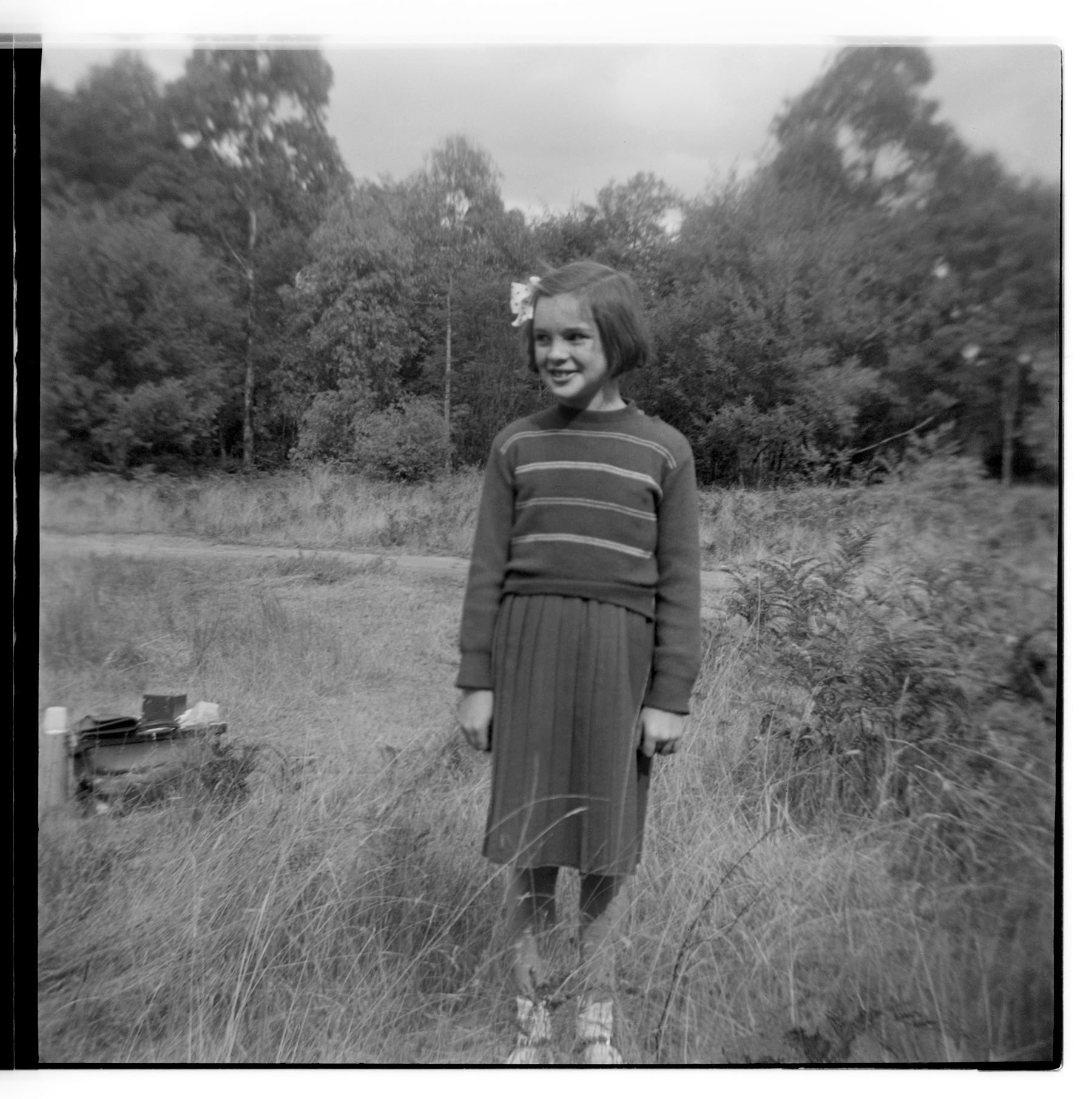
Unknown photographer (Australian) 'Untitled (girl on porch)' 1946-1947


Unknown photographer (Australian)
Untitled (girl on porch)
1946-1947
Medium format negative
Collection of Nicholas Henderson


One of the great joys about compiling this archive is the ability to rescue unloved and unknown images. To give them a voice in the contemporary world.

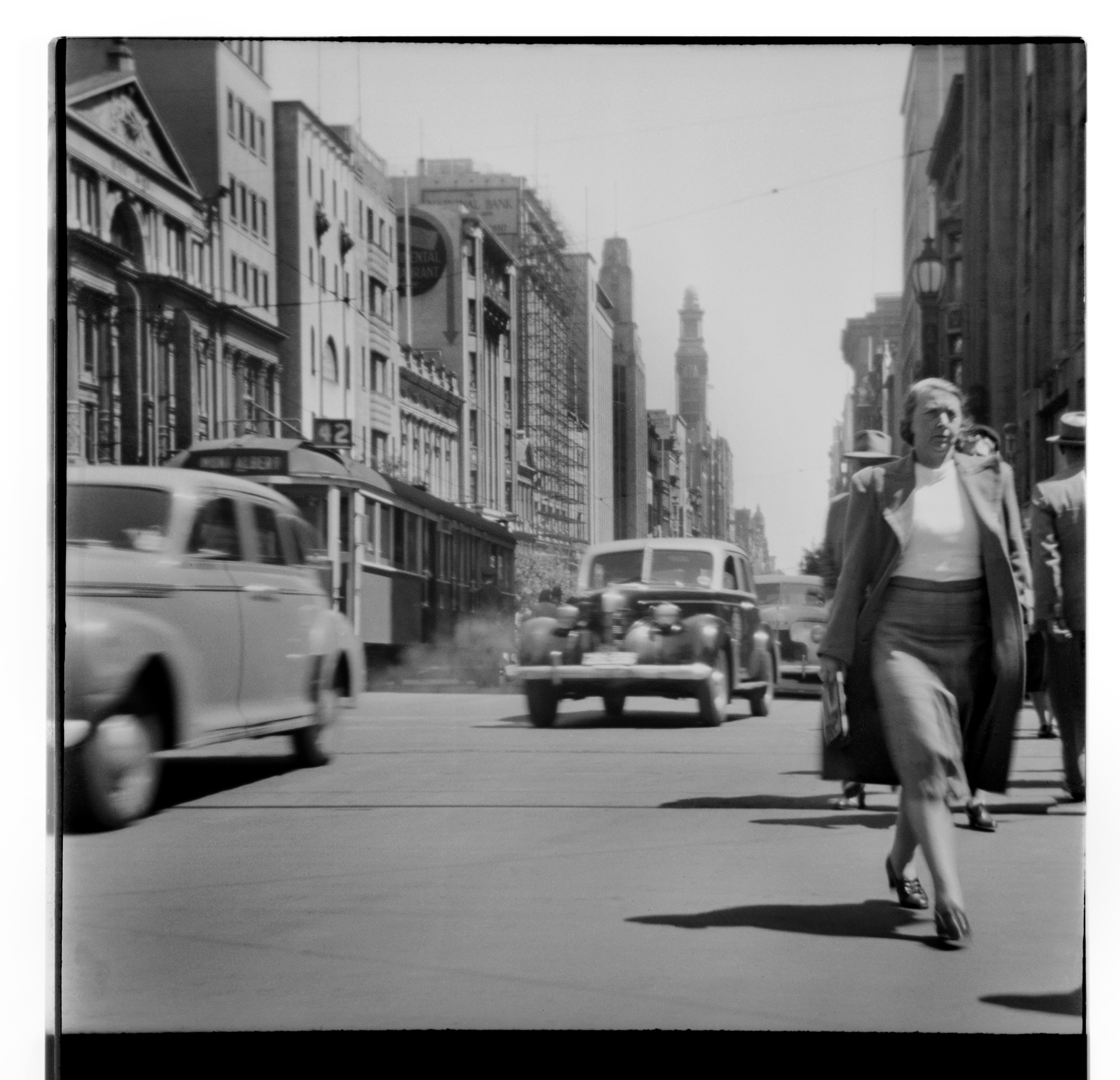
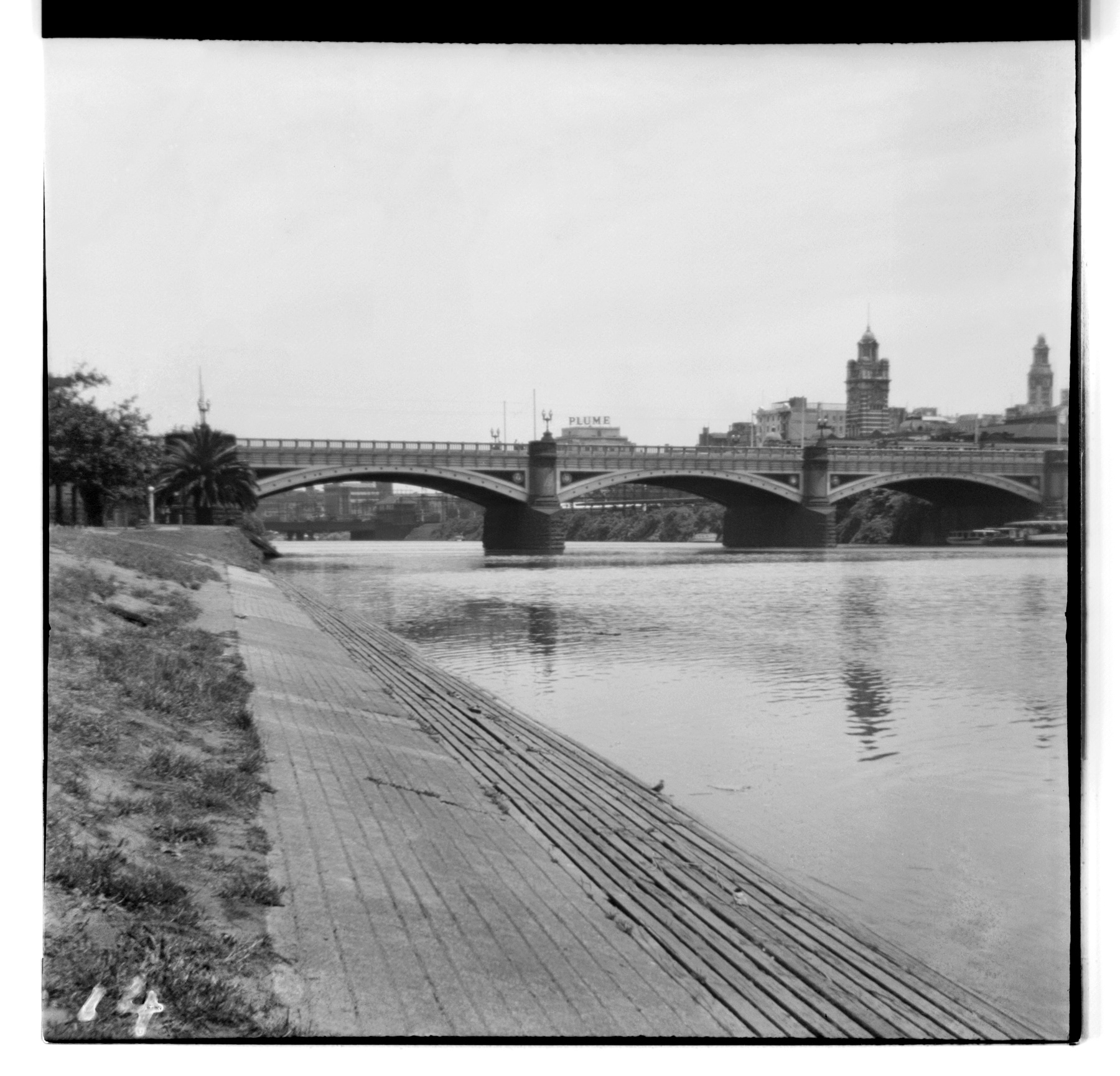
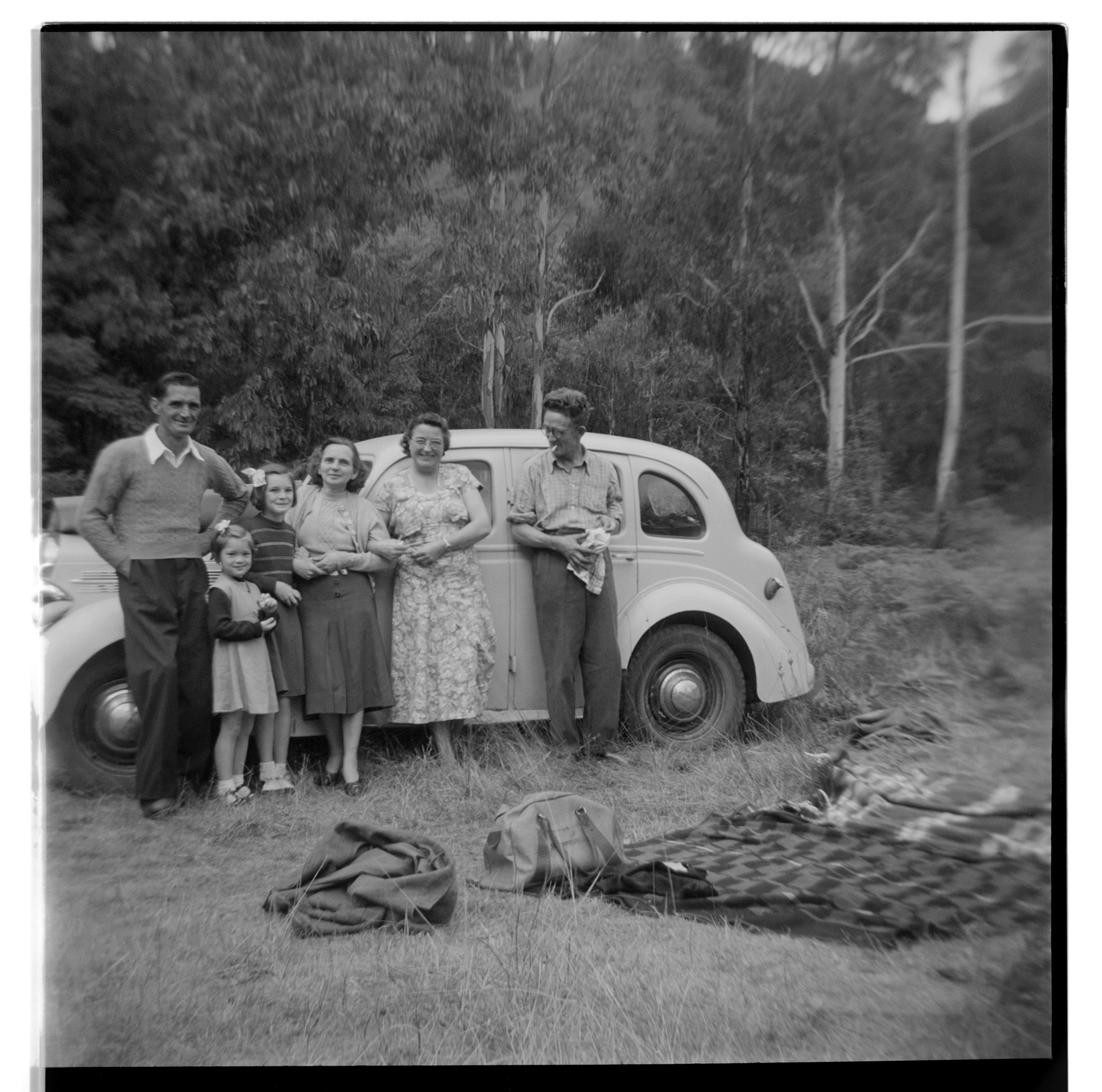
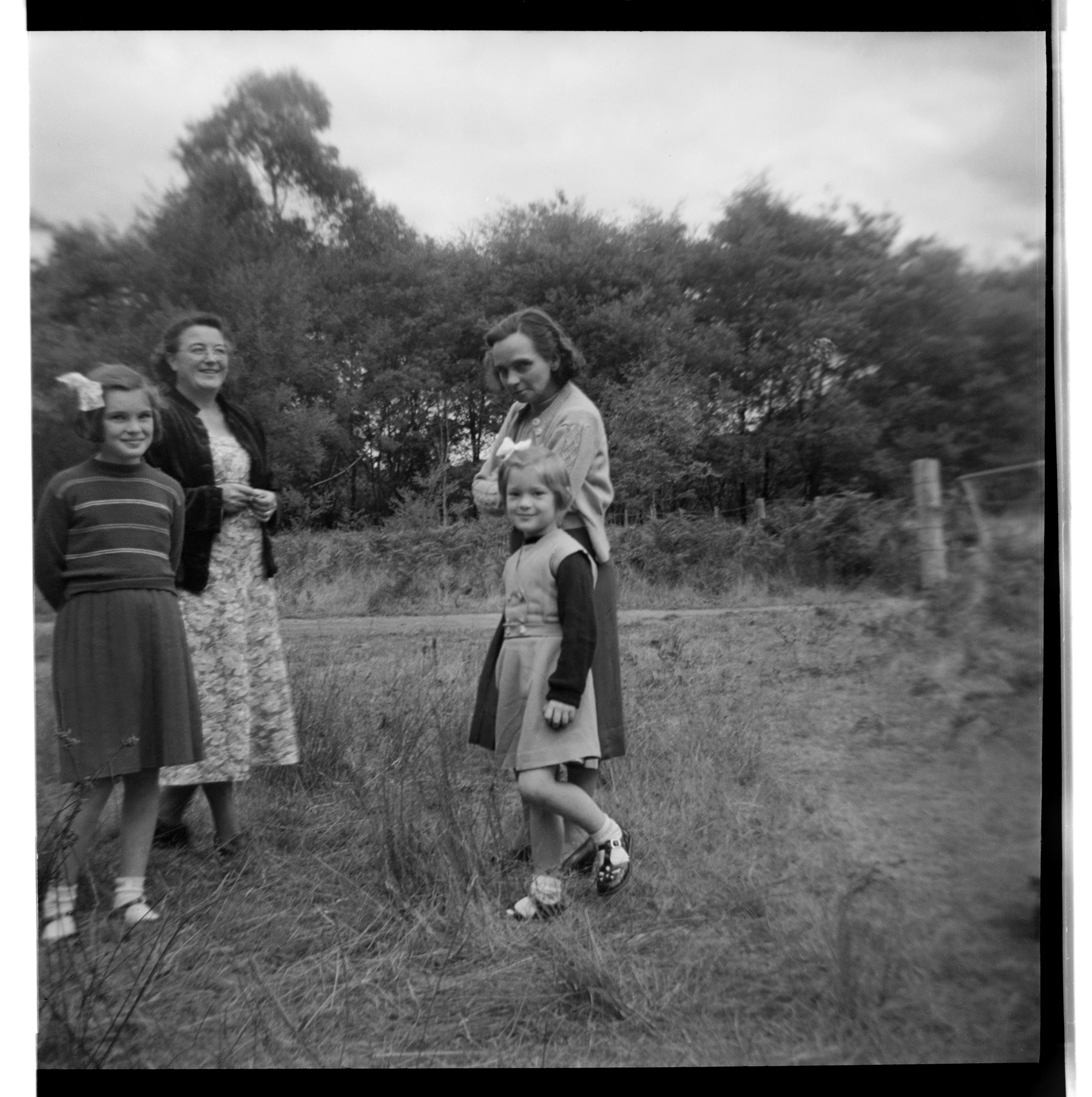
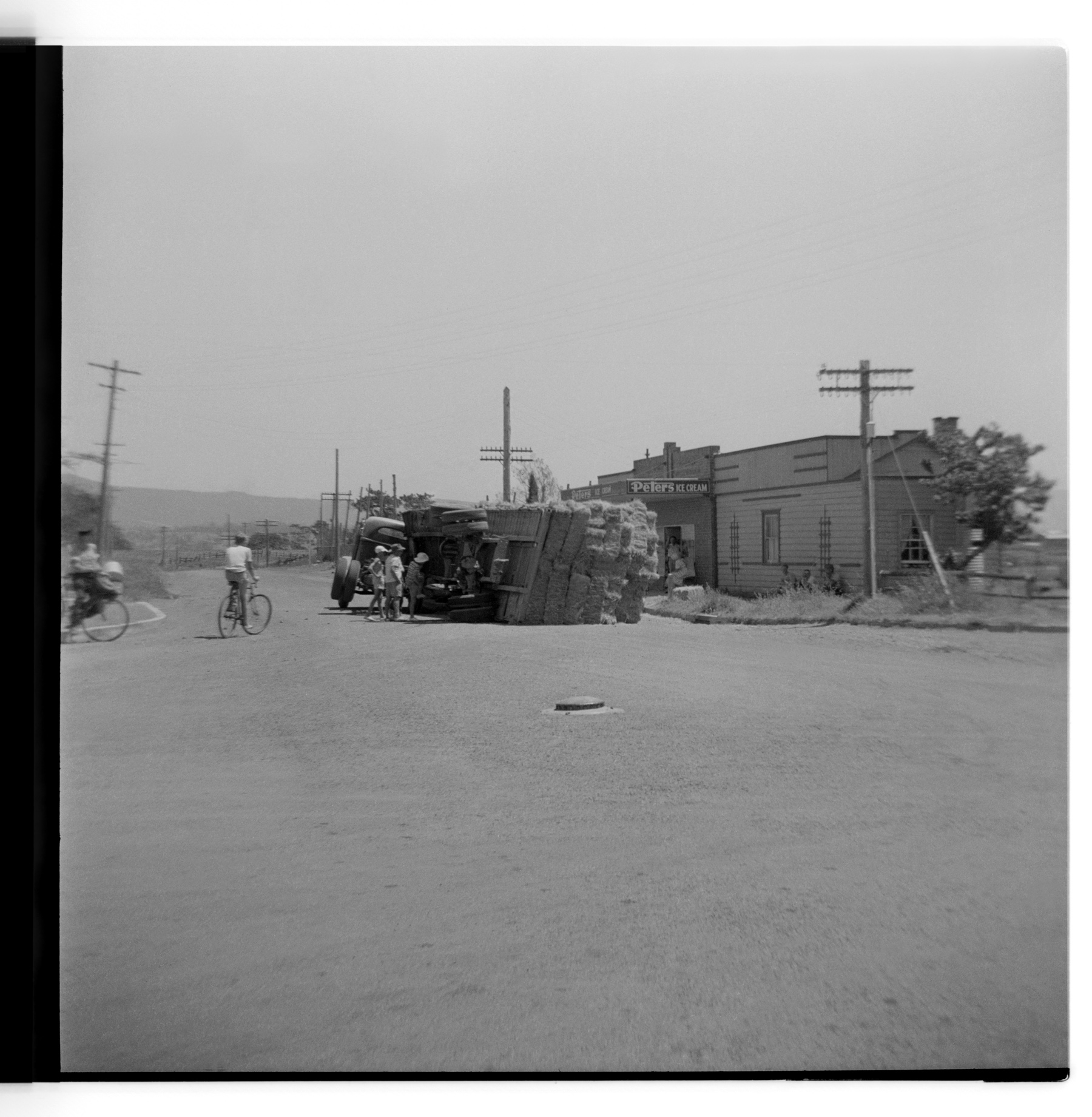
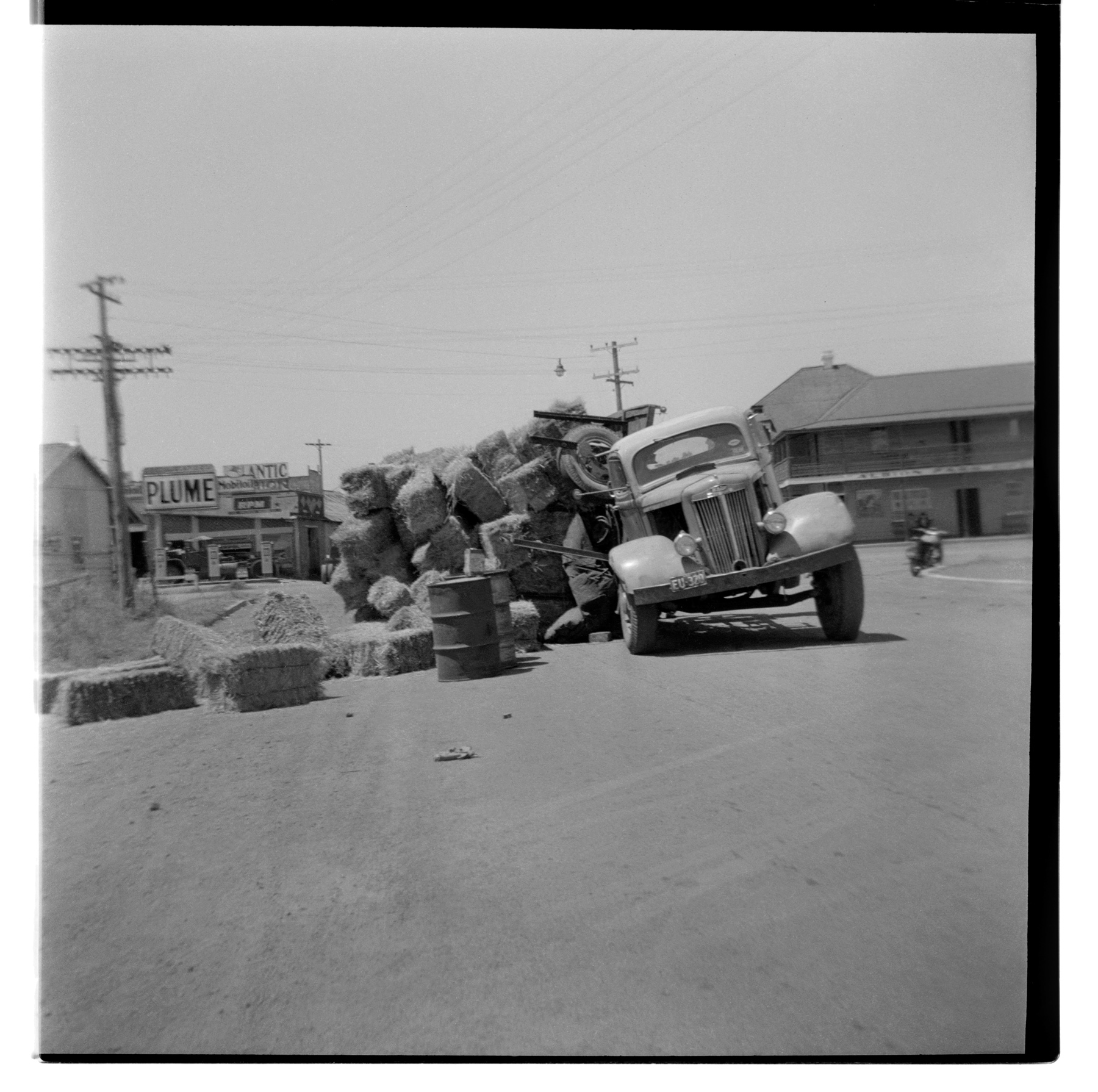
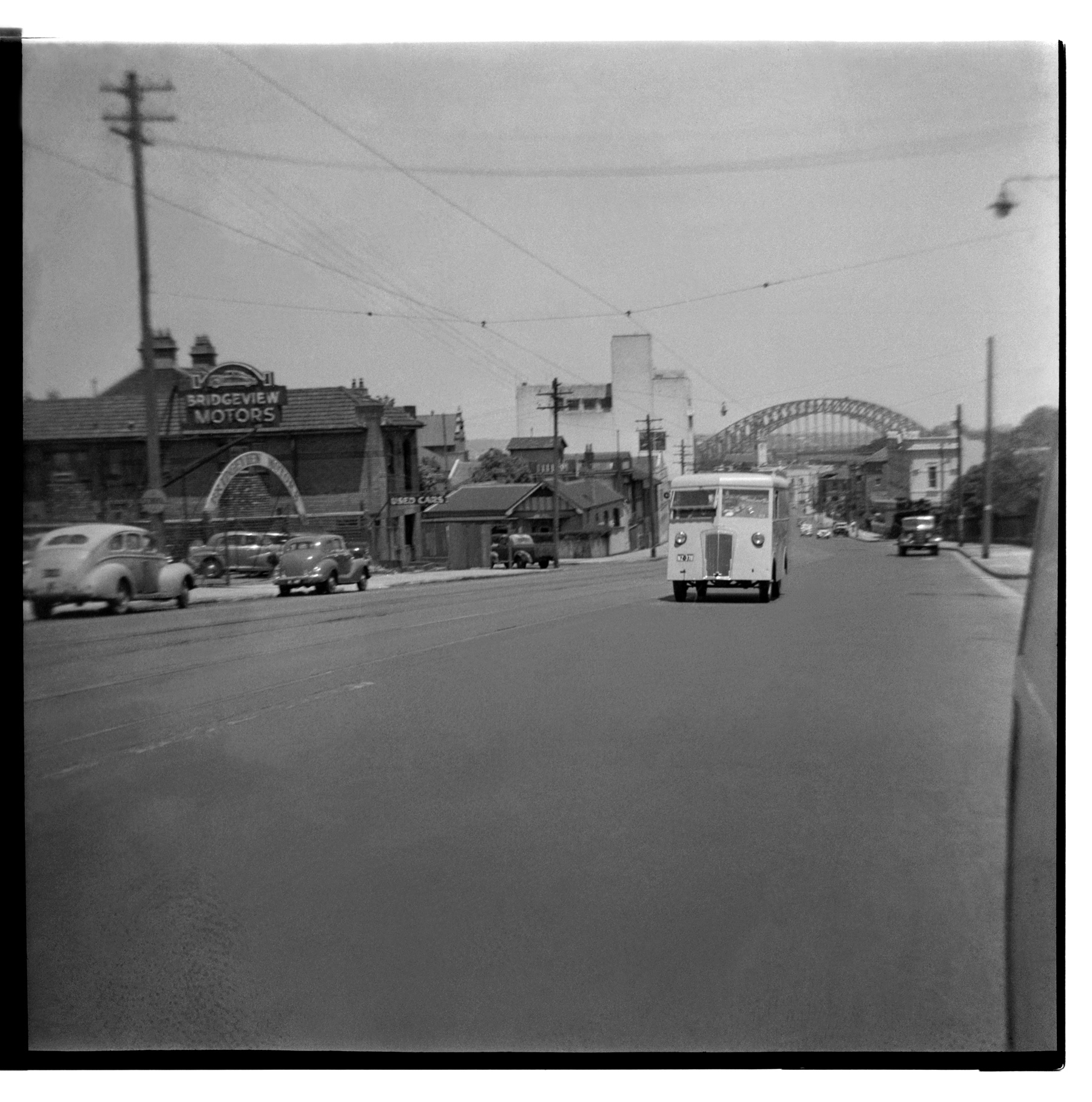
These 2 1/4″ square (6 x 6cm) medium format black and white negatives come from the collection of my friend Nick Henderson. There is no marking on any of the negatives, leading me to believe that the film numbers were on the backing paper of the 120 film roll. The negatives are housed in paper packets adorned with a logo and words ‘APS Developing and Printing Service’ – perhaps Australian Photographic Services? Each packet contains basic title information for some of the photographs. Looking at the photographs and their perspective on the world, it would seem that the camera is a waist view camera, in other words the photographer was looking down into the viewfinder, the camera not held at eye level. The camera could possibly have been a Voigtländer or similar camera (see below). The quality of the negatives is reasonable, with some fall off in terms of sharpness occurring at the edge of the image. The photographs can be dated to 1946-1947 due to the February 1947 expiry Victorian registration label on the Chevrolet (thank you Simon Barnfield for spotting this!), are taken by an unknown photographer (probably male)… photographs of life in Sydney, his family and their travels around Australia. This is the first tranche of photographs with roughly the same number to come in the second part of the posting.

What makes these photographs particularly interesting is:

1/ the breadth of subject matter taken just after the Second World War and the fact that they are medium format

2/ the relaxed nature and beauty of the photographs of the children, and the light!

3/ the unknown images of places such as Bondi Beach and historical monuments, such as that of the forlorn The Dog on the Tuckerbox

4/ the photographs of the motor sport activity of hillclimbing, unfortunately no place known but its has been suggested it could be the 90-years-old Maldon hill climb at Mt Tarrengower because of the box-ironbark (and the fact that there are photographs of Maldon in the collection).


Variously we have country towns, theatrical groups, sailing, boating, churches, Sydney ferries, a trip to Maldon in Victoria for the Maldon Show, family picnics, cars and caravans, houses and horse riding, churches and children, and the oh so cute dogs in their own car boxes. So Australian. The photographs really give an extensive insight into suburban life in Australia just after the privations of the Second World War… and the photographer had a good eye. That is what is most important – that they knew how to take a good photograph.

Talking to my friend James McArdle who writes the oh so excellent On this Date in Photography website (essential reading!), he was unaware of the time it takes to prepare images for these postings. It has literally taken me hours and hours of hard work to scan these negatives and then digitally clean and balance them. All to give them a new lease of life in the world, to preserve their captured memories and histories. I hope you can appreciate all the hard work and admire the images I have revealed.

See Part 2 of the posting

Dr Marcus Bunyan


Many thankx to Nick Henderson for allowing me to publish the photographs in the posting. All photographs collection of Nick Henderson. Please click on the photographs for a larger version of the image. See Part 2 of the posting.


APS (Australian Photographic Services?) Developing and Printing Service 'Film packets and negatives' 1946-1947

APS (Australian Photographic Services?) Developing and Printing Service 'Film packets and negatives' 1946-47


APS (Australian Photographic Services?) Developing and Printing Service
Film packets and negatives
1946-1947
Negatives: 2 1/4″ square (6 x 6 cm)
Packet (closed): 3 7/8 x 3 1/4″ (10cm x 8cm)
Collection of Nicholas Henderson


Voigtländer Brillant 1930s


Voigtländer Billiant
1930s
Photograph by Rama, Wikimedia Commons, Cc-by-sa-2.0-fr


The Voigtländer Brillant is a range of pseudo-TLR cameras, and later true TLR cameras, taking 6 × 6 cm exposures on 120 film, made by Voigtländer from 1932. Famed Hungarian-Dutch photographer Eva Besnyö used a Brillant for her early work.


Unknown photographer (Australian) 'Untitled (Circular Quay, Sydney)' 1946-1947


Unknown photographer (Australian)
Untitled (Circular Quay, Sydney)
1946-1947
Medium format negative
Collection of Nicholas Henderson


Unknown photographer (Australian) 'Untitled (Karrabee ferry, Sydney, leaving High St Wharf, Kurraba in the background)' 1946-1947


Unknown photographer (Australian)
Untitled (Karrabee ferry, Sydney, leaving High St Wharf, Kurraba in the background)
1946-1947
Medium format negative
Collection of Nicholas Henderson


Karingal and Karrabee ferry

Karingal and Karrabee were built by Morrison & Sinclair, Balmain for Sydney Ferries Limited, being launched in 1913. They were the smallest of the round-ended K-class Sydney ferries, and could carry 608 and 653 passengers respectively.

They were near identical sister ferries operated by Sydney Ferries Limited and its NSW State Government operated successors on Sydney Harbour from 1913 until 1984. Wooden ferries built at the time of Sydney Ferries’ rapid early twentieth century, they were the smallest of the round-end “K-class ferries”.

The ferries were built as coal-fired steamer and were converted to diesel in the 1930s – the first Sydney Harbour ferries to be so converted. Unlike many early twentieth century Sydney Ferries, they survived the opening of the Sydney Harbour Bridge in the 1930s, and the State Government takeover in 1951.

Karrabee sank at Circular Quay after taking on water during the Great Ferry Race in 1984 – an incident that received extensive media coverage – and did not return to service. Karingal, and the other three remaining old wooden ferries, were taken out of service shortly after Karrabee’s sinking. In service for 71 years, they were among the longest-serving ferries on Sydney Harbour.

“Karingal” and “Karrabee” are Australian Aboriginal words meaning ‘happy home’ and ‘cockatoo’ respectively.

Text from the Wikipedia website [Online] Cited 12/12/2019


Unknown photographer (Australian) 'Untitled (Bondi Beach, Sydney)' 1946-1947


Unknown photographer (Australian)
Untitled (Bondi Beach, Sydney)
1946-1947
Medium format negative
Collection of Nicholas Henderson


Unknown photographer (Australian) 'Untitled (Bondi Beach, Sydney)' 1946-1947


Unknown photographer (Australian)
Untitled (Bondi Beach, Sydney)
1946-1947
Medium format negative
Collection of Nicholas Henderson


Unknown photographer (Australian) 'Untitled (Bondi Beach, Sydney)' 1946-1947


Unknown photographer (Australian)
Untitled (Bondi Beach, Sydney)
1946-1947
Medium format negative
Collection of Nicholas Henderson


Unknown photographer (Australian) 'Untitled (The Dog on the Tuckerbox)' 1946-1947


Unknown photographer (Australian)
Untitled (The Dog on the Tuckerbox)
Gundagai, 1946-1947
Medium format negative
Collection of Nicholas Henderson


Unknown photographer (Australian) 'Untitled (The Dog on the Tuckerbox)' 1946-1947


Unknown photographer (Australian)
Untitled (The Dog on the Tuckerbox)
Gundagai, 1946-1947
Medium format negative
Collection of Nicholas Henderson


The Dog on the Tuckerbox

The Dog on the Tuckerbox is an Australian historical monument and tourist attraction, located at Snake Gully, approximately five miles (eight kilometres) from Gundagai, New South Wales as described in the song of the same name.

The inspiration for the statue has been traced to a doggerel poem, “Bullocky Bill”, published anonymously by “Bowyang Yorke” in 1857 (other references have 1880 in the Gundagai Times, however confirmation of either is hard to find), which humorously describes a series of misfortunes faced by a bullock driver, culminating in his dog either sitting on or spoiling the food in his tucker-box (an Australian colloquialism for a box that holds food, similar to a lunchbox, but larger). …

A dog monument was first erected at a site nine miles from Gundagai in 1926. Gundagai stonemason Frank Rusconi suggested a memorial using the legend of the Dog on the Tuckerbox in 1928; and in 1932 the proposal was taken up by the community…

The Back to Gundagai Committee chose the Five Mile camping site rather than the Nine Mile Peg as a location for the monument on the basis that it was more convenient to the Hume Highway and closer to the town, thereby more beneficial to tourism.

A nationwide competition was held to obtain the most suitable inscription for the monument. The chosen inscription on the base of the monument was written by Brian Fitzpatrick of Sydney. The inscription says:

“Earth’s self upholds this monument
To conquerors who won her when
Wooing was dangerous, and now
Are gathered unto her again.”

The dog section of the monument was modelled by Rusconi and cast at ‘Oliver’s Foundry’ in Sydney. Rusconi also sculpted its base.

The Dog on the Tuckerbox monument was erected in 1932 as part of ‘Back to Gundagai’ week, and a large crowd “gathered to her again” to witness the unveiling by Prime Minister Joseph Lyons on 28 November 1932. It was planned to donate money placed in the wishing well at the base of the monument to the Gundagai District Hospital. A souvenir shop was also opened nearby. Copyright on the monument was vested in the Gundagai Hospital, who for many years received a useful income from receipt of royalties from firms using the iconic image.

Text from the Wikipedia website [Online] Cited 12/12/2019


Unknown photographer (Australian) 'Untitled (hillclimb, possibly at Maldon, Victoria)' 1946-1947


Unknown photographer (Australian)
Untitled (hillclimb, possibly at Maldon, Victoria)
1946-1947
Medium format negative
Collection of Nicholas Henderson


Unknown photographer (Australian) 'Untitled (hillclimb, possibly at Maldon, Victoria)' (detail) 1946-1947


Unknown photographer (Australian)
Untitled (hillclimb, possibly at Maldon, Victoria) (detail)
1946-1947
Medium format negative
Collection of Nicholas Henderson


Unknown photographer (Australian) 'Untitled (hillclimb, possibly at Maldon, Victoria)' 1946-1947


Unknown photographer (Australian)
Untitled (hillclimb, possibly at Maldon, Victoria)
1946-1947
Medium format negative
Collection of Nicholas Henderson


Unknown location, possibly the 90-years-old Maldon hill climb at Mt Tarrengower because of the box-ironbark (and the fact that there are photographs of Maldon in the collection).


Unknown photographer (Australian) 'Untitled (hillclimb, possibly at Maldon, Victoria)' (detail) 1946-1947


Unknown photographer (Australian)
Untitled (hillclimb, possibly at Maldon, Victoria) (detail)
1946-1947
Medium format negative
Collection of Nicholas Henderson


Unknown photographer (Australian) 'Untitled (hillclimb, possibly at Maldon, Victoria)' 1946-1947


Unknown photographer (Australian)
Untitled (hillclimb, possibly at Maldon, Victoria)
1946-1947
Medium format negative
Collection of Nicholas Henderson


Unknown photographer (Australian) 'Untitled (hillclimb, possibly at Maldon, Victoria)' (detail) 1946-1947


Unknown photographer (Australian)
Untitled (hillclimb, possibly at Maldon, Victoria) (detail)
1946-1947
Medium format negative
Collection of Nicholas Henderson


Unknown photographer (Australian) 'Untitled (boat)' 1946-1947


Unknown photographer (Australian)
Untitled (boat)
1946-1947
Medium format negative
Collection of Nicholas Henderson


Unknown photographer (Australian) 'Untitled (boat at sea)' 1946-1947


Unknown photographer (Australian)
Untitled (boat at sea)
1946-1947
Medium format negative
Collection of Nicholas Henderson


Unknown photographer (Australian) 'Untitled (child on porch)' 1946-1947


Unknown photographer (Australian)
Untitled (child on porch)
1946-1947
Medium format negative
Collection of Nicholas Henderson


Unknown photographer (Australian) 'Untitled (boy outside house)' 1946-1947


Unknown photographer (Australian)
Untitled (boy outside house)
1946-1947
Medium format negative
Collection of Nicholas Henderson


Unknown photographer (Australian) 'Untitled (boy smiling)' 1946-1947


Unknown photographer (Australian)
Untitled (boy smiling)
1946-1947
Medium format negative
Collection of Nicholas Henderson


Unknown photographer (Australian) 'Untitled (boy and girl smiling)' 1946-1947


Unknown photographer (Australian)
Untitled (boy and girl smiling)
1946-1947
Medium format negative
Collection of Nicholas Henderson


Unknown photographer (Australian) 'Untitled (child on lawn)' 1946-1947


Unknown photographer (Australian)
Untitled (child on lawn)
1946-1947
Medium format negative
Collection of Nicholas Henderson


Unknown photographer (Australian) 'Untitled (child and chairs)' 1946-1947


Unknown photographer (Australian)
Untitled (child and chairs)
1946-1947
Medium format negative
Collection of Nicholas Henderson


Unknown photographer (Australian) 'Untitled (man and woman)' 1946-1947


Unknown photographer (Australian)
Untitled (man and woman)
1946-1947
Medium format negative
Collection of Nicholas Henderson


Unknown photographer (Australian) 'Untitled (house)' 1946-47


Unknown photographer (Australian)
Untitled (house)
1946-1947
Medium format negative
Collection of Nicholas Henderson


Unknown photographer (Australian) 'Untitled (boy on horse)' 1946-47


Unknown photographer (Australian)
Untitled (boy on horse)
1946-1947
Medium format negative
Collection of Nicholas Henderson


Unknown photographer (Australian) 'Untitled (dog and saucepan)' 1946-47


Unknown photographer (Australian)
Untitled (dog and saucepan)
1946-1947
Medium format negative
Collection of Nicholas Henderson


Unknown photographer (Australian) 'Untitled (1932 Chevrolet)' 1946-47


Unknown photographer (Australian)
Untitled (1932 Chevrolet)
1946-1947
Medium format negative
Collection of Nicholas Henderson


Unknown photographer (Australian) 'Untitled (1932 Chevrolet and caravan)' 1946-47


Unknown photographer (Australian)
Untitled (Chevrolet and caravan)
1946-1947
Medium format negative
Collection of Nicholas Henderson


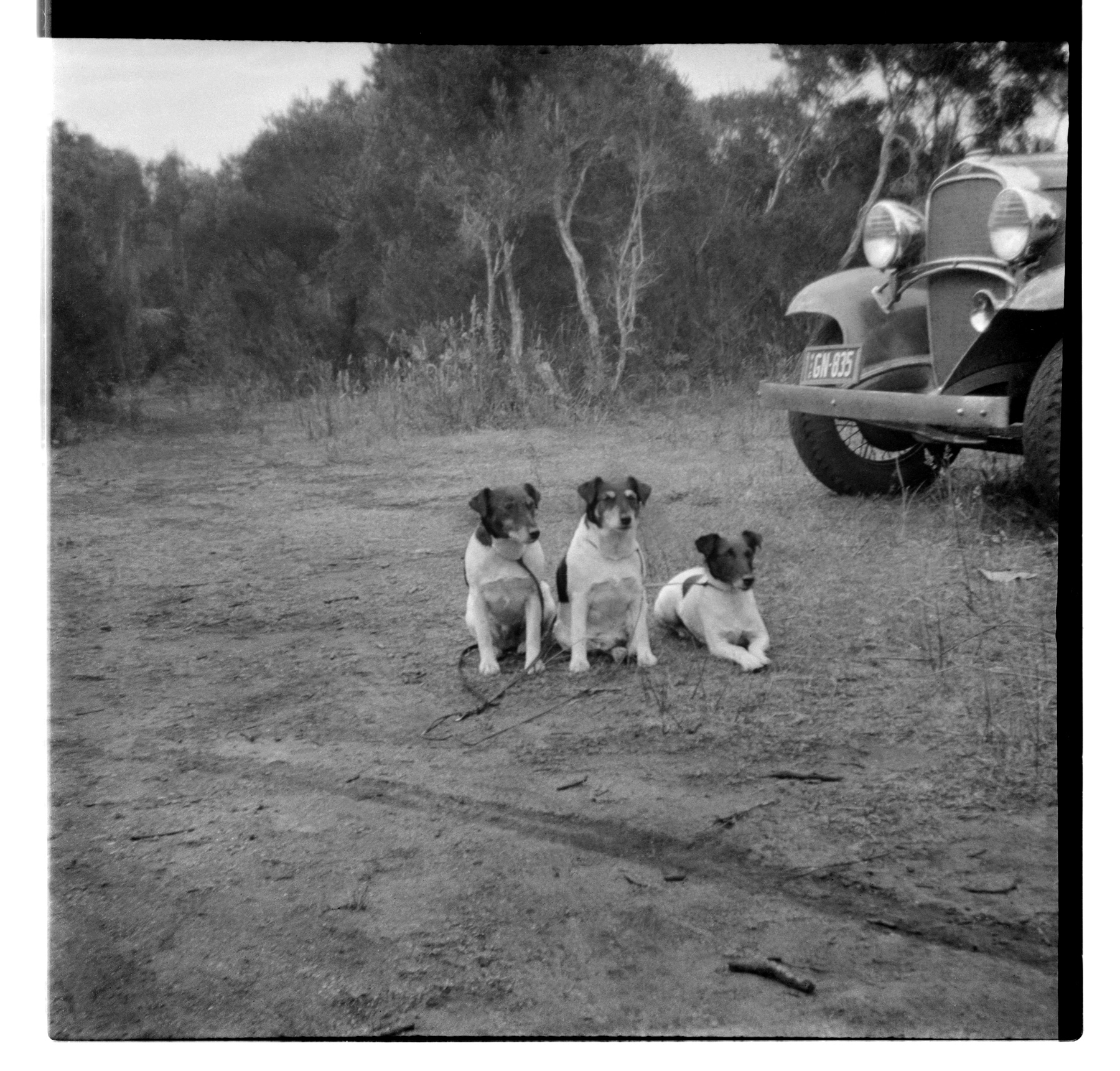
Unknown photographer (Australian) 'Untitled (1932 Chevrolet and dogs)' 1946-47


Unknown photographer (Australian)
Untitled (1932 Chevrolet and dogs)
1946-1947
Medium format negative
Collection of Nicholas Henderson


The photographs can be dated to 1946-1947 due to the February 1947 expiry Victorian registration label on the Chevrolet. Thank you to Simon Barnfield for spotting this.


Unknown photographer (Australian) 'Untitled (1932 Chevrolet and caravan)' 1946-47


Unknown photographer (Australian)
Untitled (Chevrolet and caravan)
1946-1947
Medium format negative
Collection of Nicholas Henderson


Unknown photographer (Australian) 'Untitled (Man and car)' 1946-47


Unknown photographer (Australian)
Untitled (man and car)
1946-1947
Medium format negative
Collection of Nicholas Henderson


Unknown photographer (Australian) 'Untitled (family picnic)' 1946-47


Unknown photographer (Australian)
Untitled (family picnic)
1946-1947
Medium format negative
Collection of Nicholas Henderson


Unknown photographer (Australian) 'Untitled (Man and car)' 1946-47


Unknown photographer (Australian)
Untitled (man and car)
1946-1947
Medium format negative
Collection of Nicholas Henderson


Unknown photographer (Australian) 'Untitled (house on hill)' 1946-47


Unknown photographer (Australian)
Untitled (house on hill)
1946-1947
Medium format negative
Collection of Nicholas Henderson


Unknown photographer (Australian) 'Untitled (room interior)' 1946-47


Unknown photographer (Australian)
Untitled (room interior)
1946-1947
Medium format negative
Collection of Nicholas Henderson


Unknown photographer (Australian) 'Untitled (Future Miss Maldons, Maldon Show, Maldon, Victoria, with Maldon Timber & Hardware at 28 Main Street in the background)' 1946-47


Unknown photographer (Australian)
Untitled (Future Miss Maldons, Maldon Show, Maldon, Victoria, with Maldon Timber & Hardware at 28 Main Street in the background)
1946-1947
Medium format negative
Collection of Nicholas Henderson


Where are they now, so many ghosts with flowers in their hair.


Unknown photographer (Australian) 'Untitled (Scottish band, Maldon Show, Maldon, Victoria)' 1946-47


Unknown photographer (Australian)
Untitled (Scottish band, Maldon Show, Maldon, Victoria)
1946-1947
Medium format negative
Collection of Nicholas Henderson


Unknown photographer (Australian) 'Untitled (church)' 1946-47


Unknown photographer (Australian)
Untitled (church)
1946-1947
Medium format negative
Collection of Nicholas Henderson


Unknown photographer (Australian) 'Untitled (church)' 1946-1947


Unknown photographer (Australian)
Untitled (church)
1946-1947
Medium format negative
Collection of Nicholas Henderson


Unknown photographer (Australian) 'Untitled (group of actors)' 1946-1947


Unknown photographer (Australian)
Untitled (group of actors)
1946-1947
Medium format negative
Collection of Nicholas Henderson


Unknown photographer (Australian) 'Untitled (actor and ballerina)' 1946-1947


Unknown photographer (Australian)
Untitled (actor and ballerina)
1946-1947
Medium format negative
Collection of Nicholas Henderson


Unknown photographer (Australian) 'Untitled (actor)' 1946-1947


Unknown photographer (Australian)
Untitled (actor)
1946-1947
Medium format negative
Collection of Nicholas Henderson


Unknown photographer (Australian) 'Untitled (band performances)' 1946-1947


Unknown photographer (Australian)
Untitled (band performances)
1946-1947
Medium format negative
Collection of Nicholas Henderson


Unknown photographer (Australian) 'Untitled (Bilsons, country town)' 1946-1947


Unknown photographer (Australian)
Untitled (Bilsons, country town)
1946-1947
Medium format negative
Collection of Nicholas Henderson


LIKE ART BLACK ON FACEBOOK

Back to top

Exhibition: ‘Unseen: 35 Years of Collecting Photographs’ at the J. Paul Getty Museum, Los Angeles

Exhibition dates: 17th December, 2019 – 8th March, 2020

Curators: Jim Ganz, senior curator of photographs at the Getty Museum in collaboration with Getty curators Mazie Harris, Virginia Heckert, Karen Hellman, Arpad Kovacs, Amanda Maddox, and Paul Martineau.


Weegee (Arthur Fellig) (American born Austria, 1899-1968) '[Calypso]' about 1944; before 1946 from the exhibition Exhibition: 'Unseen: 35 Years of Collecting Photographs' at the J. Paul Getty Museum, Los Angeles, Dec 2019 - March 2020


Weegee (Arthur Fellig) (American born Austria, 1899-1968)
[Calypso]
about 1944; before 1946
Gelatin silver print
26.2 x 33.3cm (10 5/16 x 13 1/8 in.)
The J. Paul Getty Museum, Los Angeles
© International Center of Photography


Imagine having these photographs in your collection!

My particular favourite is Hiromu Kira’s The Thinker (about 1930). For me it sums up our singular 1 thoughtful 2 imaginative 3 ephemeral 4 ether/real 5 existence.

“Aether is the fifth element in the series of classical elements thought to make up our experience of the universe… Although the Aether goes by as many names as there are cultures that have referenced it, the general meaning always transcends and includes the same four “material” elements [earth, air, water, fire]. It is sometimes more generally translated simply as “Spirit” when referring to an incorporeal living force behind all things. In Japanese, it is considered to be the void through which all other elements come into existence.” (Adam Amorastreya. “The End of the Aether,” on the Resonance website Feb 16, 2015 [Online] Cited 23/02/2020)

Dr Marcus Bunyan


Many thankx to the J. Paul Getty Museum for allowing me to publish the photographs in the posting. Please click on the photographs for a larger version of the image.


Carleton Watkins (American, 1829-1916) '[Guadalupe Mill]' 1860 from the exhibition Exhibition: 'Unseen: 35 Years of Collecting Photographs' at the J. Paul Getty Museum, Los Angeles, Dec 2019 - March 2020


Carleton Watkins (American, 1829-1916)
[Guadalupe Mill]
1860
Salted paper print
Image (dome-topped): 33.8 × 41.6cm (13 5/16 × 16 3/8 in.)
The J. Paul Getty Museum, Los Angeles


Martin Munkácsi (American born Hungary, 1896-1963) 'The Goalie Gets There a Split Second Too Late' about 1923 from the exhibition Exhibition: 'Unseen: 35 Years of Collecting Photographs' at the J. Paul Getty Museum, Los Angeles, Dec 2019 - March 2020


Martin Munkácsi (American born Hungary, 1896-1963)
The Goalie Gets There a Split Second Too Late
about 1923
Gelatin silver print
29.8 × 36.7cm (11 3/4 × 14 7/16 in.)
The J. Paul Getty Museum, Los Angeles
© Estate of Martin Munkácsi, Courtesy Howard Greenberg Gallery, New York


Hiromu Kira (American, 1898-1991) 'The Thinker' about 1930


Hiromu Kira (American, 1898-1991)
The Thinker
about 1930
Gelatin silver print
27.9 × 35.1cm (11 × 13 13/16 in.)
The J. Paul Getty Museum, Los Angeles
© Sadamura Family Trust


Hiromu Kira (1898-1991) was one of the most successful and well-known Japanese American photographers in prewar Los Angeles. He was born in Waipahu, O’ahu, Hawai’i on April 5, 1898, but was sent to Kumamoto, Japan, for his early education. When he was eighteen years old, he returned to the United States and settled in Seattle, Washington, where he first became interested in photography. In 1923, he submitted prints to the Seattle Photography Salon which accepted two of the photographs. In 1923, his work was accepted in the Pittsburg Salon and the Annual Competition of American Photography. He found work at the camera department of a local Seattle pharmacy and began meeting other Issei, Nisei and Kibei photographers such as Kyo Koike and joined the Seattle Camera Club.

In 1926, Kira moved to Los Angeles with his wife and two young children. Although he was never a member of the Japanese Camera Pictorialists of California, a group that was active in Los Angeles at that time, he developed strong friendships with club members associated with the pictorialist movement of the 1920s and ’30s such as K. Asaishi and T. K. Shindo. In 1928, Kira was named an associate of the Royal Photography Society, and the following year he was made a full fellow and began exhibiting both nationally and internationally. In 1929 alone, Kira exhibited ninety-six works in twenty-five different shows. In the late twenties, he worked at T. Iwata’s art store. In 1931, his photograph The Thinker, made while showing a customer how to use his newly purchased camera properly, appeared on the March 1931 issue of Vanity Fair magazine.

On December 5, two days before the attack on Pearl Harbor, Kira was selected to be included in the 25th Annual International Salon of the Camera Pictorialists of Los Angeles. Within a few months, he was forced to store his camera, photography books and prints in the basement of the Nishi Hongwanji Buddhist Temple in Little Tokyo, Los Angeles for the duration of World War II. He and his family were incarcerated at Santa Anita Assembly Center and the Gila River, Arizona concentration camp from 1942-1944, leaving the latter in April 1944.

Following his release, he lived briefly in Chicago before returning to Los Angeles in 1946, where he remained for the rest of his life. In Los Angeles, he worked as a photo retoucher and printer for the Disney, RKO and Columbia Picture studios but never exhibited again as he had before the war.

Text from the Hiromu Kira page on the Densho Encyclopedia website [Online] Cited 23/02/2020


Marinus Jacob Kjeldgaard (Danish, 1884-1964, active Paris, France late 1930s - late 1940s) '[Collage: Balance of Powers]' about 1939


Marinus Jacob Kjeldgaard (Danish, 1884-1964, active Paris, France late 1930s – late 1940s)
[Collage: Balance of Powers]
about 1939
Gelatin silver print
28.5 × 32cm (11 1/4 × 12 5/8 in.)
The J. Paul Getty Museum, Los Angeles
© Estate of Marinus Jacob Kjeldgaard


Paul Outerbridge (American, 1896-1958) '[Egg in Spotlight]' 1943


Paul Outerbridge (American, 1896-1958)
[Egg in Spotlight]
1943
Gelatin silver print
26.4x 34.4cm (10 3/8 x 13 9/16 in.)
The J. Paul Getty Museum, Los Angeles
© 2019 G. Ray Hawkins Gallery, Beverly Hills, CA


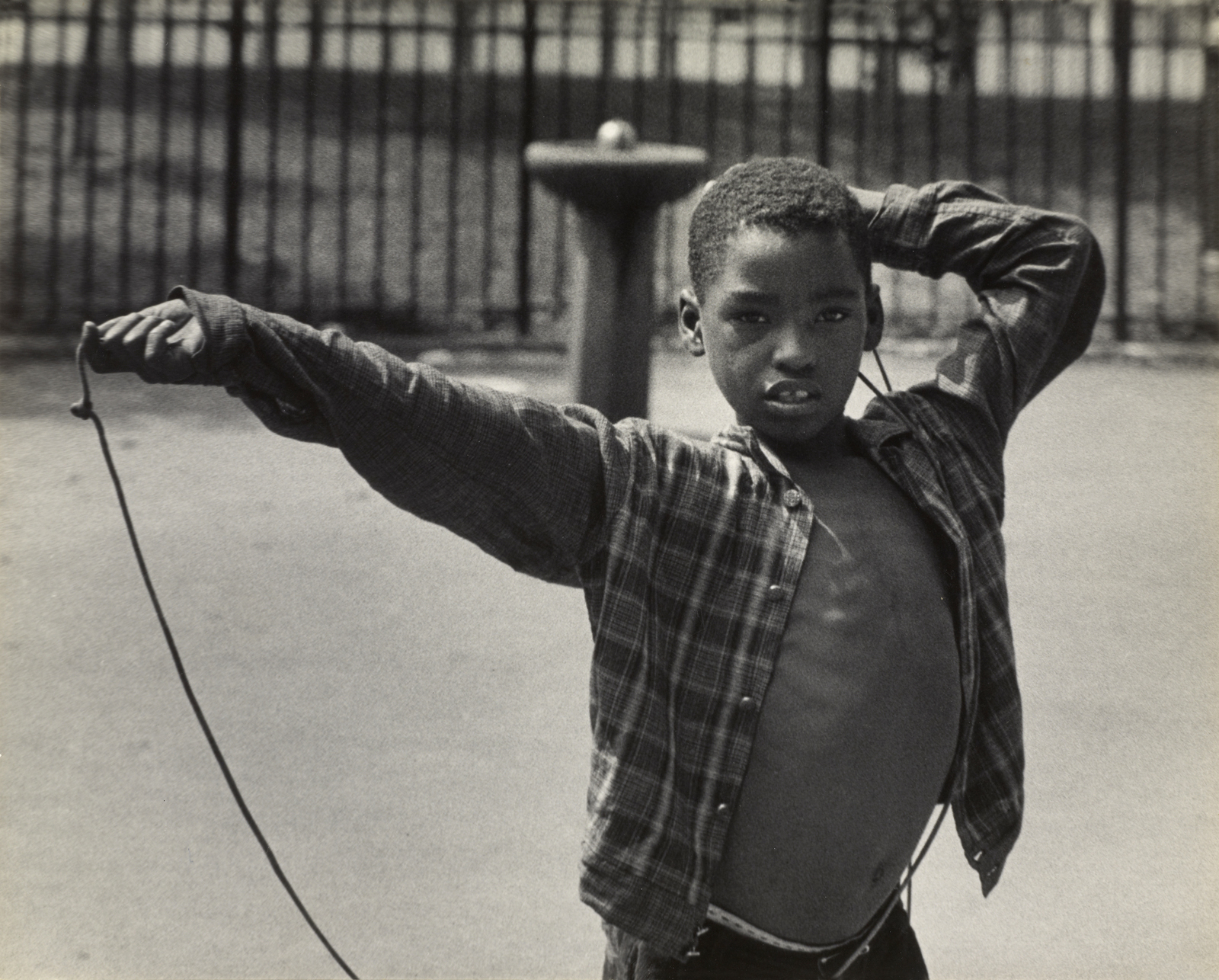
Emil Cadoo (American, 1926-2002) 'Children of Harlem' 1965


Emil Cadoo (American, 1926-2002)
Children of Harlem
1965
Gelatin silver print
20.3 × 25.2cm (8 × 9 15/16 in.)
The J. Paul Getty Museum, Los Angeles, Gift of Joyce Cadoo / Janos Gat Gallery
© Estate of Emil Cadoo, courtesy of Janos Gat Gallery


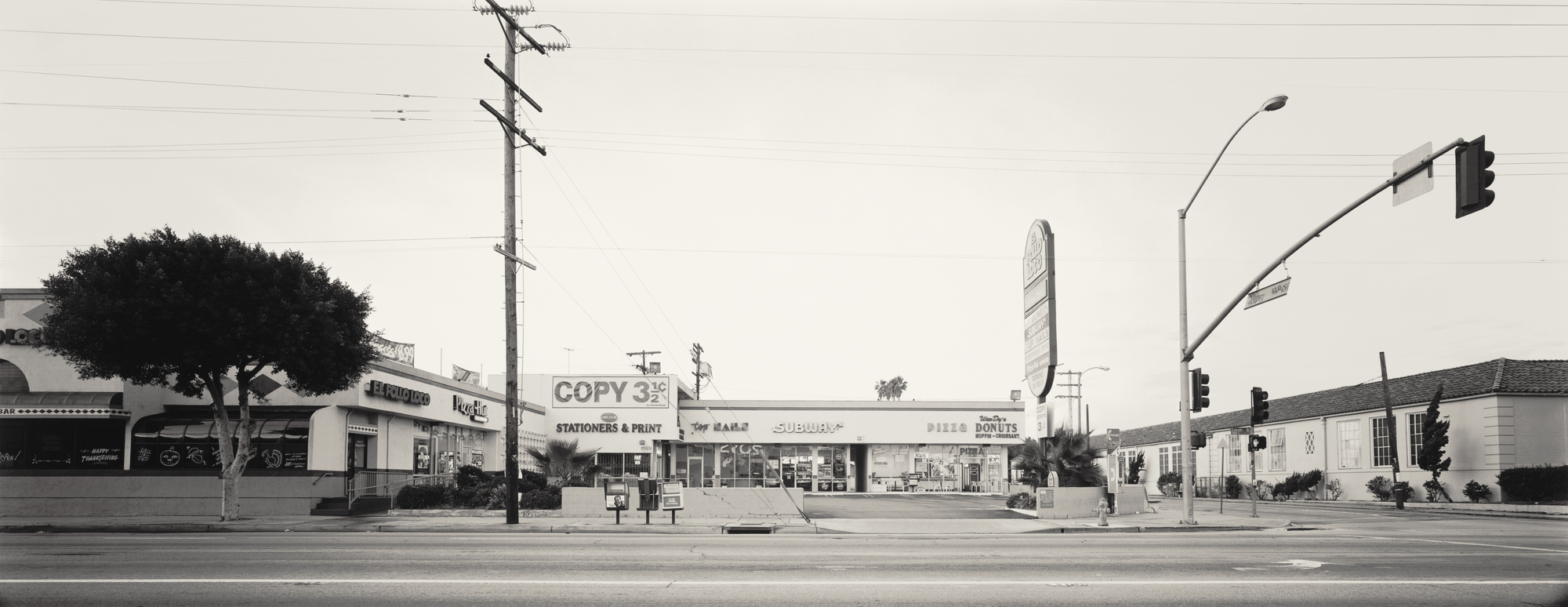
Anthony Hernandez (American, b. 1947) 'Los Angeles #1' 1969


Anthony Hernandez (American, b. 1947)
Los Angeles #1
1969
Gelatin silver print
18.9 × 28.4cm (7 7/16 × 11 3/16 in.)
The J. Paul Getty Museum, Los Angeles, Purchased in part with funds provided by the Photographs Council
© Anthony Hernandez


William Eggleston (American, b. 1939) 'Dolls on Cadillac, Memphis' 1972


William Eggleston (American, b. 1939)
Dolls on Cadillac, Memphis
1972
Chromogenic print
25.4 × 38.1cm (10 × 15 in.)
The J. Paul Getty Museum, Los Angeles
© Eggleston Artistic Trust


William Wegman (American, b, 1943) 'Dog and Ball' 1973


William Wegman (American, b, 1943)
Dog and Ball
1973
Gelatin silver print
The J. Paul Getty Museum, Los Angeles
© William Wegman


Marketa Luskacova (Czech, b. 1944) 'Sclater St, Woman with Baby and Girl' 1975


Markéta Luskačová (Czech, b. 1944)
Sclater St, Woman with Baby and Girl
1975
Gelatin silver print
21 x 31.8cm (8 1/4 x 12 1/2 in.)
The J. Paul Getty Museum, Los Angeles
© Markéta Luskačová


Markéta Luskačová (Czech, b. 1944)

Markéta Luskačová (born 1944) is a Czech photographer known for her series of photographs taken in Slovakia, Britain and elsewhere. Considered one of the best Czech social photographers to date, since the 1990s she has photographed children in the Czech Republic, Slovakia, and also Poland…

In the 1970s and 1980s, the communist censorship attempted to conceal her international reputation. Her works were banned in Czechoslovakia, and the catalogues for the exhibition Pilgrims in the Victoria and Albert Museum were lost on their way to Czechoslovakia.

Luskačová started photographing London’s markets in 1974. In the markets of Portobello Road, Brixton and Spitalfields, she “[found] a vivid Dickensian staging”.

In 2016 she self-published a collection of photographs of street musicians, mostly taken in the markets of east London, under the title To Remember – London Street Musicians 1975-1990, and with an introduction by John Berger.

Text from the Wikipedia website [Online] Cited 23/02/2020


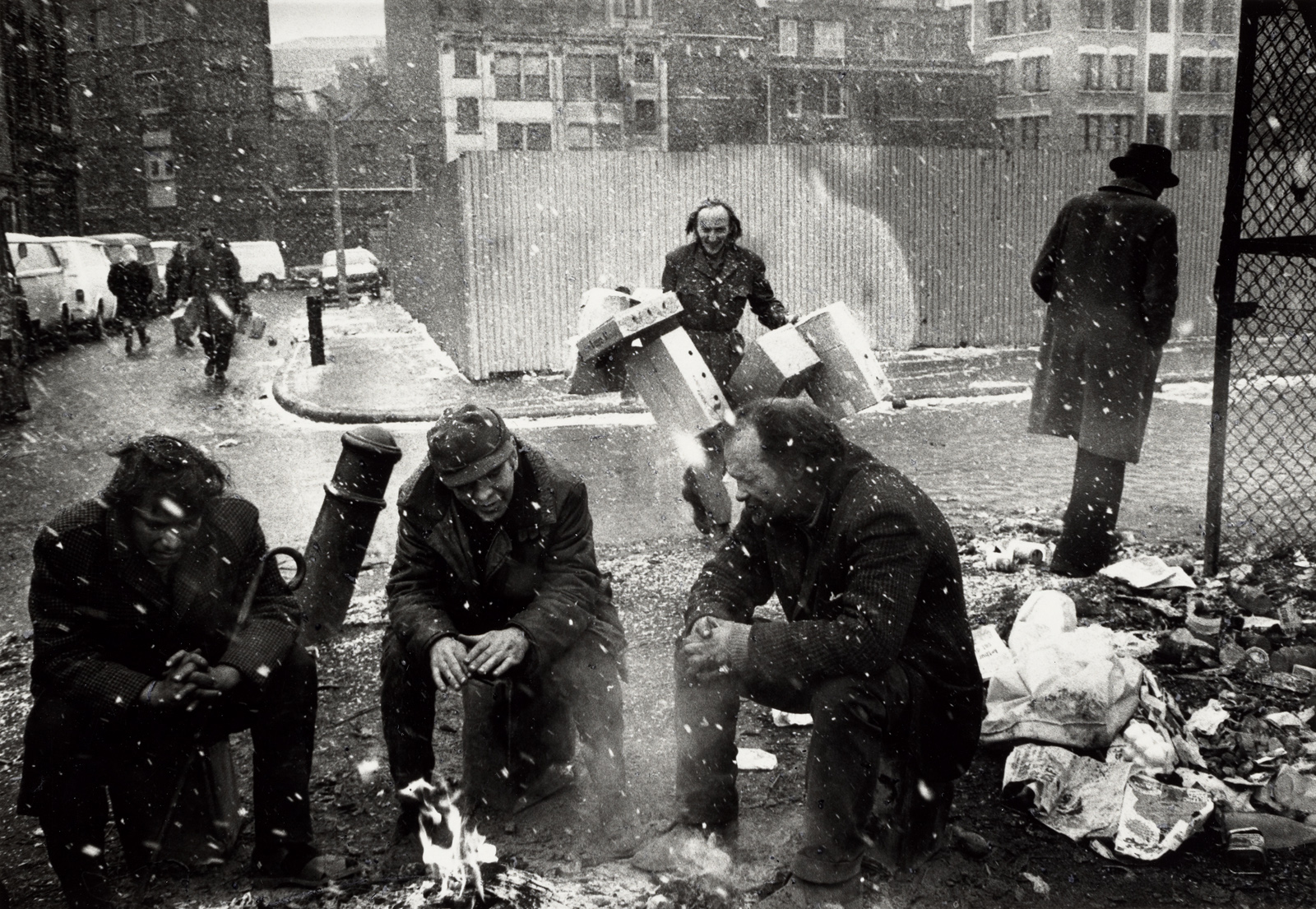
Marketa Luskacova (Czech, b. 1944) 'Men around Fire, Spitalfields Market' Negative 1976, print 1991


Markéta Luskačová (Czech, b. 1944)
Men around Fire, Spitalfields Market
Negative 1976, print 1991
Gelatin silver print
22.8 x 32.9cm (9 x 12 15/16 in.)
The J. Paul Getty Museum, Los Angeles
© Markéta Luskačová


Shigeichi Nagano (Japanese, 1925-2019, active Tokyo, Japan) '[Tokyo, Aobadai (Nishi Saigoyama Park), Meguro Ward]' 1988


Shigeichi Nagano (Japanese, 1925-2019)
[Tokyo, Aobadai (Nishi Saigoyama Park), Meguro Ward]
1988
Gelatin silver print
26 × 39.4cm (10 1/4 × 15 1/2 in.)
The J. Paul Getty Museum, Los Angeles, Purchased with funds provided by the Photographs Council
© Shigeichi Nagano


Shigeichi Nagano (Japanese, 1925-2019)

During the 1960s Nagano observed the period of intense economic growth in Japan, depicting the lives of Tokyo’s sarariman with some humour. The photographs of this period were only published in book form much later, as Dorīmu eiji and 1960 (1978 and 1990 respectively).

Nagano exhibited recent examples of his street photography in 1986, winning the Ina Nobuo Award. He published several books of his works since then, and won a number of awards. Nagano had a major retrospective at the Tokyo Metropolitan Museum of Photography in 2000.

Nagano died two months short of his 94th birthday, on January 30, 2019.

Text from the Wikipedia website


Catherine Opie (American, b. 1961) 'Untitled #15' 1997


Catherine Opie (American, b. 1961)
Untitled #15
1997
Inkjet print
40.6 × 104.1cm (16 × 41 in.)
The J. Paul Getty Museum, Los Angeles
© Catherine Opie


Nan Goldin (American, b. 1953) 'Self Portrait, Red, Zurich' 2002


Nan Goldin (American, b. 1953)
Self Portrait, Red, Zurich
2002
Silver-dye bleach print
Framed (outer dim): 72.4 x 104.1cm (28 1/2 x 41 in.)
The J. Paul Getty Museum, Los Angeles
© Nan Goldin, courtesy of Matthew Marks Gallery and the artist


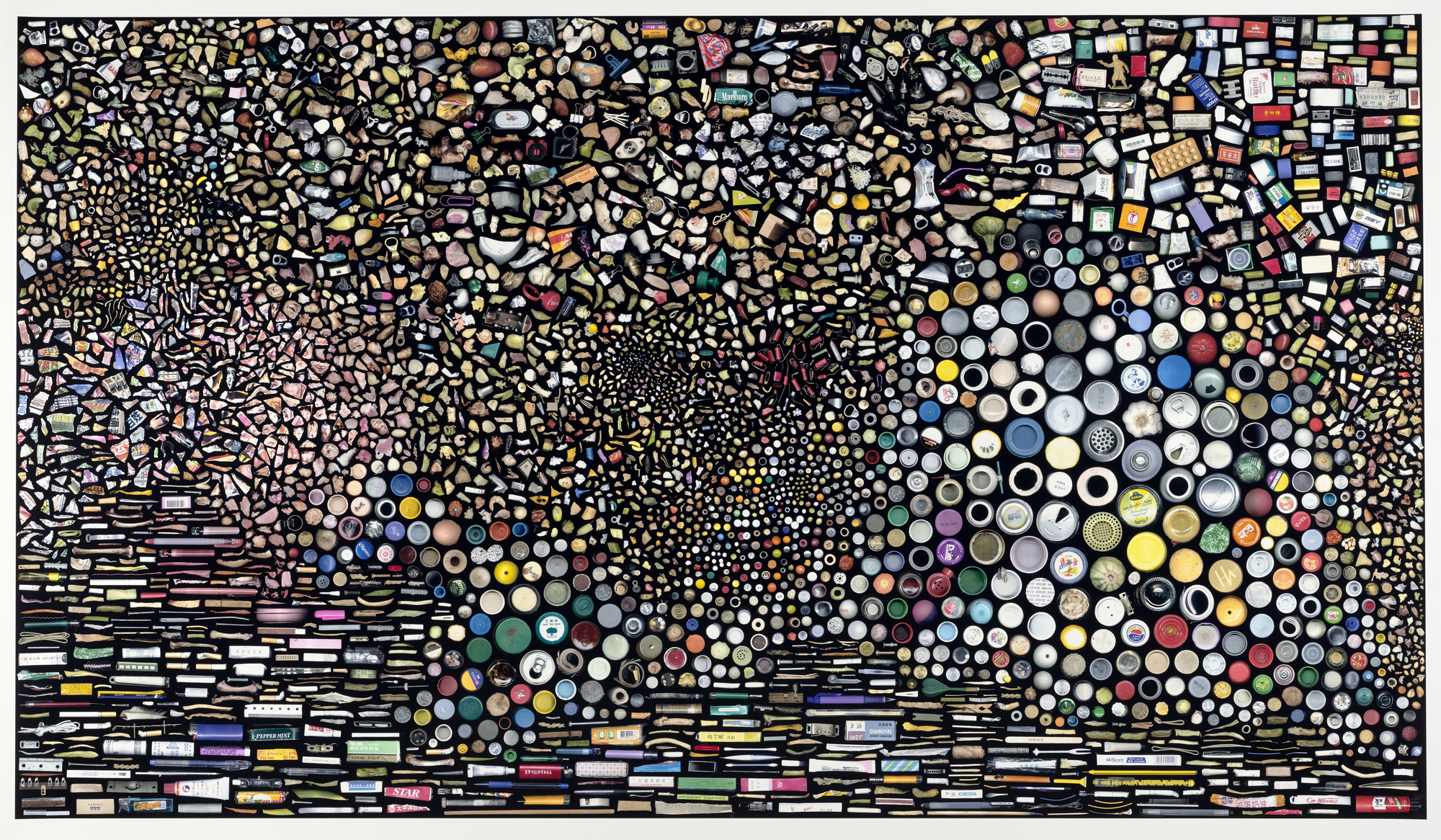
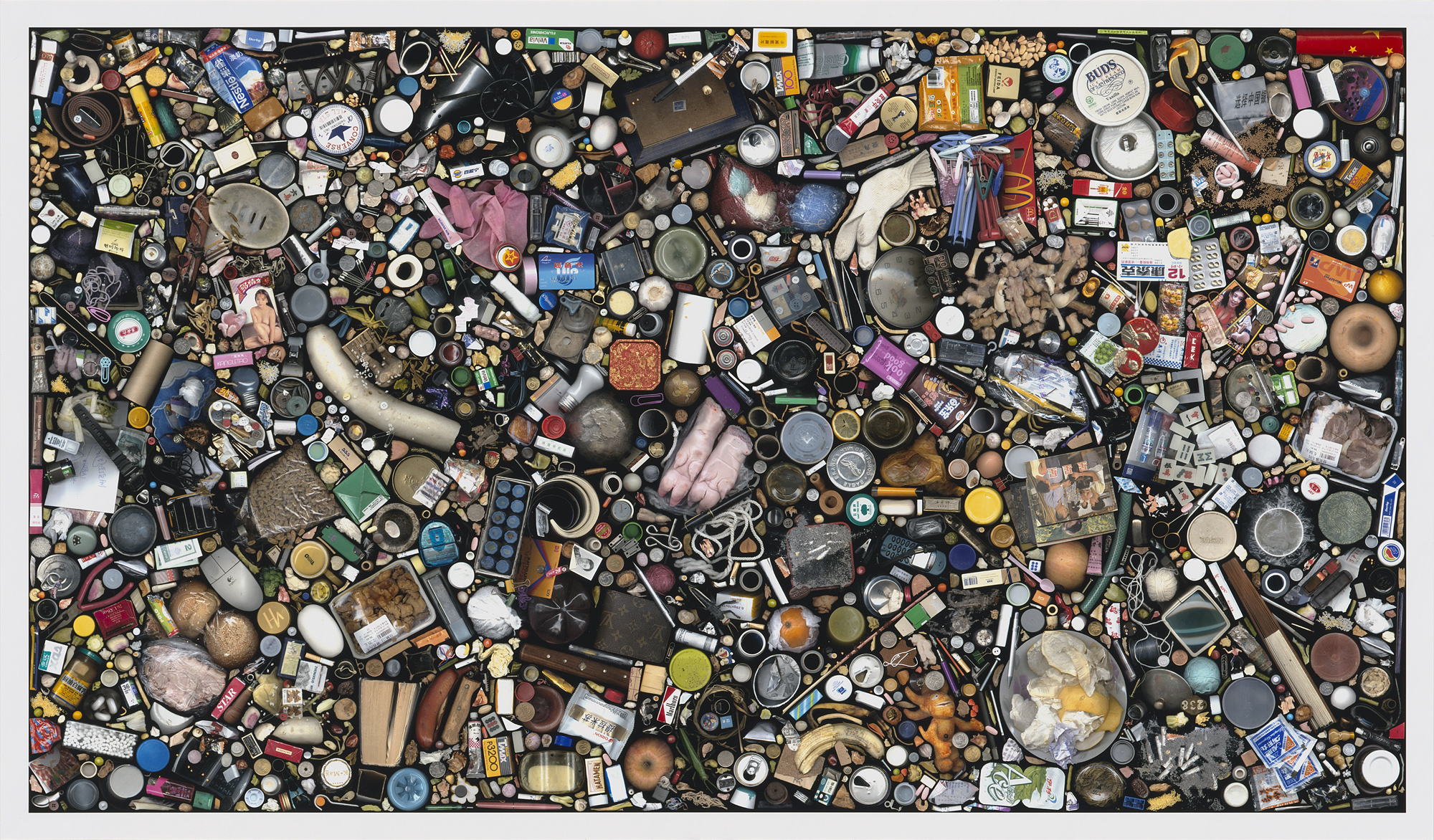
Hong Hao (Chinese, b. 1965) 'My Things No. 5 - 5,000 Pieces of Rubbish' 2002


Hong Hao (Chinese, b. 1965)
My Things No. 5 – 5,000 Pieces of Rubbish
2002
Chromogenic print
120 × 210.8cm (47 1/4 × 83 in.)
The J. Paul Getty Museum, Los Angeles, Anonymous Gift
© Hong Hao, Courtesy of Chambers Fine Art


Veronika Kellndorfer (German, b. 1962) 'Succulent Screen' 2007


Veronika Kellndorfer (German, b. 1962)
Succulent Screen
2007
Silkscreen print on glass
288 × 351.5cm (113 3/8 × 138 3/8 in.)
Gift of Christopher Grimes in honour of Virginia Heckert
The J. Paul Getty Museum, Los Angeles
© Veronika Kellndorfer


A three-panel silkscreen print on glass, Succulent Screen depicts a detail view of one of the signature miter-cut windows of Frank Lloyd Wright’s Freeman House. The house was built in the Hollywood Hills in 1923, was listed on the National Register of Historic Places in 1971 as a California Historical Landmark and as Los Angeles Historic-Cultural Monument #247 in 1981; it was bequeathed to the USC School of Architecture in 1986.

Text from the Getty Museum website


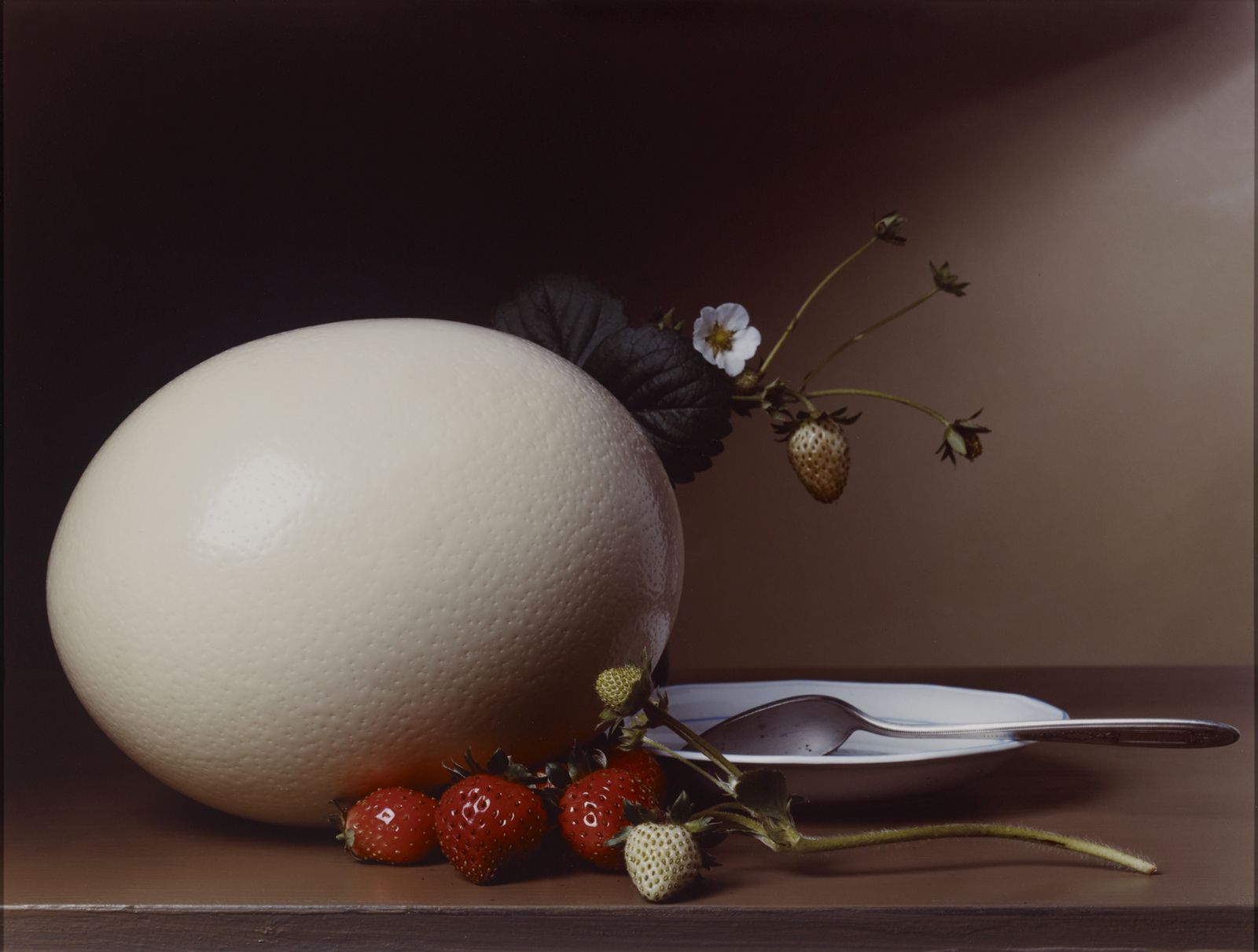
Sharon Core (American, b. 1965) 'Early American, Strawberries and Ostrich Egg' 2007


Sharon Core (American, b. 1965)
Early American, Strawberries and Ostrich Egg
2007
Chromogenic print
42.8 x 56.8cm (16 7/8 x 22 3/8 in.)
The J. Paul Getty Museum, Los Angeles
© Sharon Core


The Getty Museum holds one of the largest collections of photographs in the United States, with more than 148,000 prints. However, only a small percentage of these have ever been exhibited at the Museum. To celebrate the 35th anniversary of the founding of the Department of Photographs, the Getty Museum is exhibiting 200 of these never-before-seen photographs and pull back the curtain on the work of the many professionals who care for this important collection in Unseen: 35 Years of Collecting Photographs, on view December 17, 2019 – March 8, 2020.

“Rather than showcasing again the best-known highlights of the collection, the time is right to dig deeper into our extraordinary holdings and present a selection of never-before-seen treasures. I have no doubt that visitors will be intrigued and delighted by the diversity and quality of the collection, whose riches will support exhibition and research well into the decades ahead,” says Timothy Potts, director of the J. Paul Getty Museum.

The exhibition includes photographs by dozens of artists from the birth of the medium in the mid-19th century to the present day. The selection also encompasses a variety of photographic processes, including the delicate cyanotypes of Anna Atkins (British, 1799-1871), Polaroids by Carrie Mae Weems (American, born 1953) and Mary Ellen Mark (American, 1940-2015) and an architectural photographic silkscreen on glass by Veronika Kellndorfer (German, born 1962).

Visual associations among photographs from different places and times illuminate the breadth of the Getty’s holdings and underscore a sense of continuity and change within the history of the medium. The curators have also personalised some of the labels in the central galleries to give voice to their individual insights and perspectives.

Growth of the collection

In 1984, as the J. Paul Getty Trust was in the early stages of conceiving what would eventually become the Getty Center, the Getty Museum created its Department of Photographs. It did so with the acquisition of several world-famous private collections, including those of Sam Wagstaff, André Jammes, Arnold Crane, and Volker Kahmen and Georg Heusch. These dramatic acquisitions immediately established the Museum as a leading center for photography.

While the founding collections are particularly strong in 19th and early 20th century European and American work, the department now embraces contemporary photography and, increasingly, work produced around the world. The collection continues to evolve, has been shaped by several generations of curators and benefits from the generosity of patrons and collectors.

Behind the scenes

In addition to the photographs on view, the exhibition spotlights members of Getty staff who care for, handle, and monitor these works of art.

“What the general public may not realise is that before a single photograph is hung on a wall, the object and its related data is managed by teams of professional conservators, registrars, curators, mount-makers, and many others,” says Jim Ganz, senior curator of photographs at the Getty Museum. “In addition to exposing works of art in the collection that are not well known, we wanted to shed light on the largely hidden activity that goes into caring for such a collection.”
Collecting Contemporary Photography

The department’s collecting of contemporary photography has been given strong encouragement by the Getty Museum Photographs Council, and a section of the exhibition will be dedicated to objects purchased with the Council’s funding. Established in 2005, this group supports the department’s curatorial program, especially with the acquisition of works made after 1945 by artists not yet represented or underrepresented in the collection. Since its founding, the Council has contributed over $3 million toward the purchase of nearly five hundred photographs by artists from Argentina, Australia, Canada, Japan, Korea, Malaysia, South Africa, and Taiwan, as well as Europe and the United States.

Looking ahead

The exhibition also looks towards the future of the collection, and includes a gallery of very newly-acquired works by Laura Aguilar (American, 1959-2018), Osamu Shiihara (Japanese, 1905-1974), as well as highlights of the Dennis Reed collection of photographs by Japanese American photographers. The selection represents the department’s strengthening of diversity in front of and behind the camera, the collection of works relevant to Southern California communities, and the acquisition of photographs that expand the understanding of the history of the medium.

“With this exhibition we celebrate the past 35 years of collecting, and look forward to the collection’s continued expansion, encompassing important work by artists all over the world and across three centuries,” adds Potts.

Unseen: 35 Years of Collecting Photographs is on view December 17, 2019 – March 8, 2020 at the Getty Center. The exhibition is organised by Jim Ganz, senior curator of photographs at the Getty Museum in collaboration with Getty curators Mazie Harris, Virginia Heckert, Karen Hellman, Arpad Kovacs, Amanda Maddox, and Paul Martineau.

Press release from the J. Paul Getty Museum [Online] Cited 09/20/2020


Hiroshi Sugimoto (Japanese, b. 1948) 'Botanical Specimen (Erica mutabolis), March 1839' 2009


Hiroshi Sugimoto (Japanese, born 1948)
Botanical Specimen (Erica mutabolis), March 1839
2009
Toned gelatin silver print
93.7 x 74.9cm (36 7/8 x 29 1/2 in.)
© Hiroshi Sugimoto


Julia Margaret Cameron (British born India, 1815-1879) '[Spring]' 1873


Julia Margaret Cameron (British born India, 1815-1879)
[Spring]
1873
Albumen silver print
35.4 × 25.7cm (13 15/16 × 10 1/8 in.)
The J. Paul Getty Museum, Los Angeles


Reverend William Ellis (British, 1794-1872) and Samuel Smith. '[Portrait of a Black Couple]' about 1873


Reverend William Ellis (British, 1794-1872) and Samuel Smith
[Portrait of a Black Couple]
about 1873
Albumen silver print
24.1 × 18.6cm (9 1/2 × 7 5/16 in.)
The J. Paul Getty Museum, Los Angeles


Prince Roland Napoleon Bonaparte (French, 1858-1924) 'Jacobus Huch, 26 ans' about 1888


Prince Roland Napoleon Bonaparte (French, 1858-1924)
Jacobus Huch, 26 ans
about 1888
Albumen silver print
15.9 × 10.9cm (6 1/4 × 4 5/16 in.)
The J. Paul Getty Museum, Los Angeles


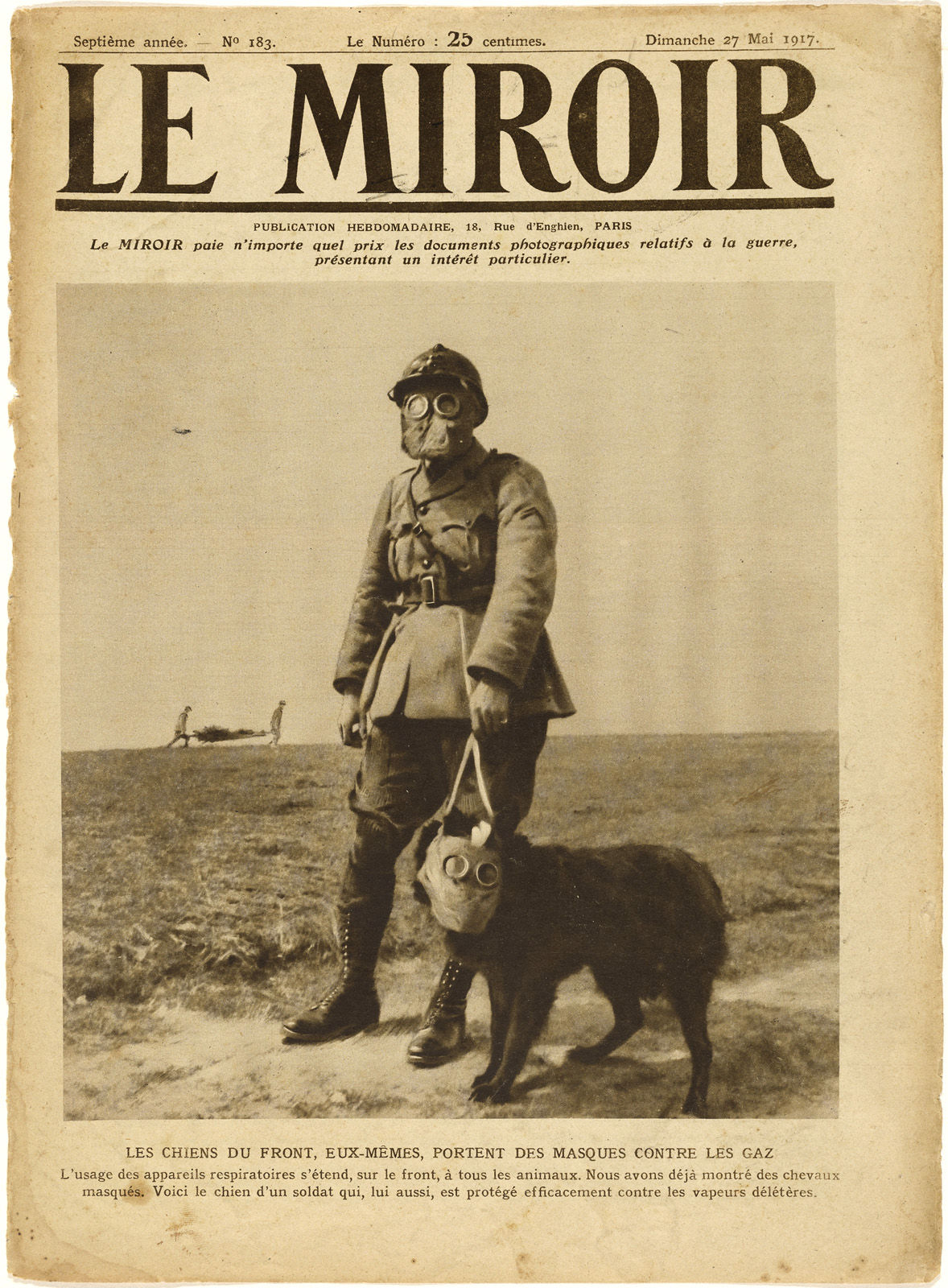
Underwood & Underwood (American, founded 1881, dissolved 1940s) 'Les Chiens du Front, eux-mems, portent des masques contre les gaz' May 27, 1917


Underwood & Underwood (American, founded 1881, dissolved 1940s)
Les Chiens du Front, eux-mems, portent des masques contre les gaz
May 27, 1917
Rotogravure
22 × 20.4cm (8 11/16 × 8 1/16 in.)
The J. Paul Getty Museum, Los Angeles


László Moholy-Nagy (American born Hungary, 1895-1946) '[The Law of the Series]' 1925


László Moholy-Nagy (American born Hungary, 1895-1946)
[The Law of the Series]
1925
Gelatin silver print
21.6 × 16.2cm (8 1/2 × 6 3/8 in.)
The J. Paul Getty Museum, Los Angeles
© 2019 Estate of László Moholy-Nagy / Artists Rights Society (ARS), New York


Martin Munkácsi (American born Hungary, 1896-1963) 'Big Dummies' 1927-1933


Martin Munkácsi (American born Hungary, 1896-1963)
Big Dummies
1927-1933
Gelatin silver print
33.5 × 26.7cm (13 3/16 × 10 1/2 in.)
The J. Paul Getty Museum, Los Angeles
© Estate of Martin Munkácsi, Courtesy Howard Greenberg Gallery, New York


Munkácsi was a newspaper writer and photographer in Hungary, specialising in sports. At the time, sports action photography could only be done in bright light outdoors. Munkácsi’s innovation was to make sport photographs as meticulously composed action photographs, which required both artistic and technical skill.

Munkácsi’s break was to happen upon a fatal brawl, which he photographed. Those photos affected the outcome of the trial of the accused killer, and gave Munkácsi considerable notoriety. That notoriety helped him get a job in Berlin in 1928, for Berliner Illustrirte Zeitung, where his first published photo was a motorcycle splashing its way through a puddle. He also worked for the fashion magazine Die Dame.

More than just sports and fashion, he photographed Berliners, rich and poor, in all their activities. He traveled to Turkey, Sicily, Egypt, London, New York, and Liberia, for photo spreads in Berliner Illustrirte Zeitung.

The speed of the modern age and the excitement of new photographic viewpoints enthralled him, especially flying. There are aerial photographs; there are air-to-air photographs of a flying school for women; there are photographs from a Zeppelin, including the ones on his trip to Brazil, where he crossed over a boat whose passengers wave to the airship above.

On 21 March 1933, he photographed the fateful Day of Potsdam, when the aged President Paul von Hindenburg handed Germany over to Adolf Hitler. On assignment for Berliner Illustrirte Zeitung, he photographed Hitler’s inner circle, although he was a Jewish foreigner.

Munkácsi left for New York City… Munkácsi died in poverty and controversy. Several universities and museums declined to accept his archives, and they were scattered around the world.

Text from the Wikipedia website [Online] Cited 23/02/2020


Erwin Blumenfeld (American born Germany, 1897-1969) 'Hitlerfresse (Hitler's Mug)' January 30, 1933


Erwin Blumenfeld (American born Germany, 1897-1969)
Hitlerfresse (Hitler’s Mug)
January 30, 1933
Gelatin silver print collage with ink
29.2 × 21.3cm (11 1/2 × 8 3/8 in.)
The J. Paul Getty Museum, Los Angeles
© The Estate of Erwin Blumenfeld


Erwin Blumenfeld (American born Germany, 1897-1969)

Blumenfeld was born in Berlin on 26 January 1897. As a young man he worked in the clothes trade and wrote poetry. In 1918 he went to Amsterdam, where he came into contact with Paul Citroen and Georg Grosz. In 1933 he made a photomontage showing Hitler as a skull with a swastika on its forehead; this image was later used in Allied propaganda material in 1943.

He married Lena Citroen, with whom he had three children, in 1921. In 1922 he started a leather goods shop, which failed in 1935. He moved to Paris, where in 1936 he set up as a photographer and did free-lance work for French Vogue. After the outbreak of the Second World War he was placed in an internment camp; in 1941 he was able to emigrate to the United States. There he soon became a successful and well-paid fashion photographer, and worked as a free-lancer for Harper’s Bazaar, Life and American Vogue. Blumenfeld died in Rome on 4 July 1969.

Text from the Wikipedia website [Online] Cited 23/02/3030


Paul Wolff (German, 1887-1951) and Dr Wolff & Tritschler OHG (German, founded 1927, dissolved 1963) '[Dog at the beach]' 1936


Paul Wolff (German, 1887-1951) and Dr Wolff & Tritschler OHG (German, founded 1927, dissolved 1963)
[Dog at the beach]
1936
Gelatin silver print
23.4 x 17.8cm (9 3/16 x 7 in.)
The J. Paul Getty Museum, Los Angeles
© Dr Paul Wolff & Tritschler, Historisches Bildarchiv, D-77654 Offenburg, Germany


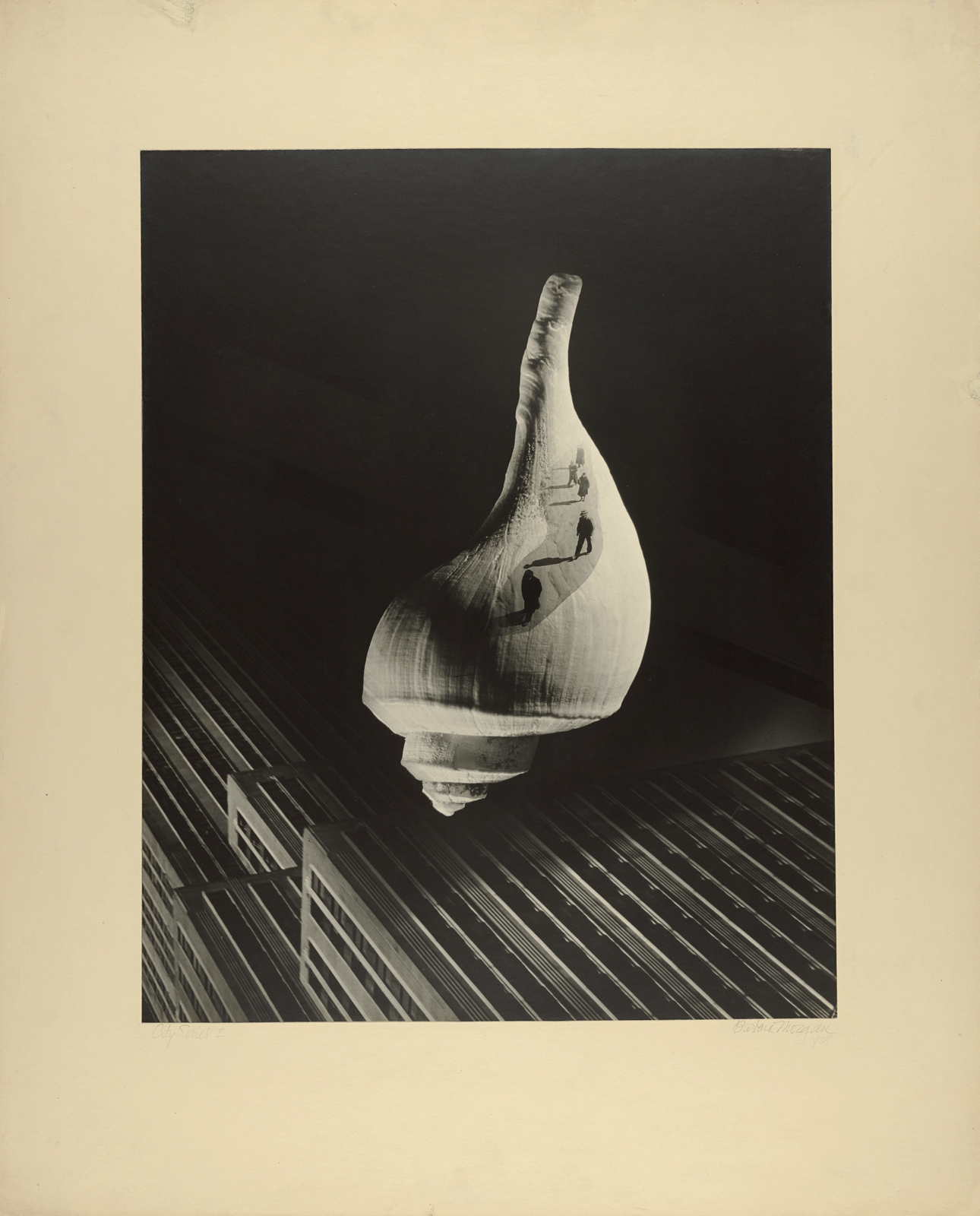
Barbara Morgan (American, 1900 - 1992) 'City Shell' 1938


Barbara Morgan (American, 1900-1992)
City Shell
1938
Gelatin silver print
49.2 × 39.4cm (19 3/8 × 15 1/2 in.)
Reproduced courtesy of the Barbara and Willard Morgan Photographs and Papers, Library Special Collections, Charles E. Young Research Library, UCLA
The J. Paul Getty Museum, Los Angeles


Walker Evans (American, 1903 - 1975) '[Two Giraffes, Circus Winter Quarters, Sarasota]' 1941


Walker Evans (American, 1903-1975)
[Two Giraffes, Circus Winter Quarters, Sarasota]
1941
Gelatin silver print
15.1 × 18.3cm (5 15/16 × 7 3/16 in.)
The J. Paul Getty Museum, Los Angeles
© Walker Evans Archive, The Metropolitan Museum of Art


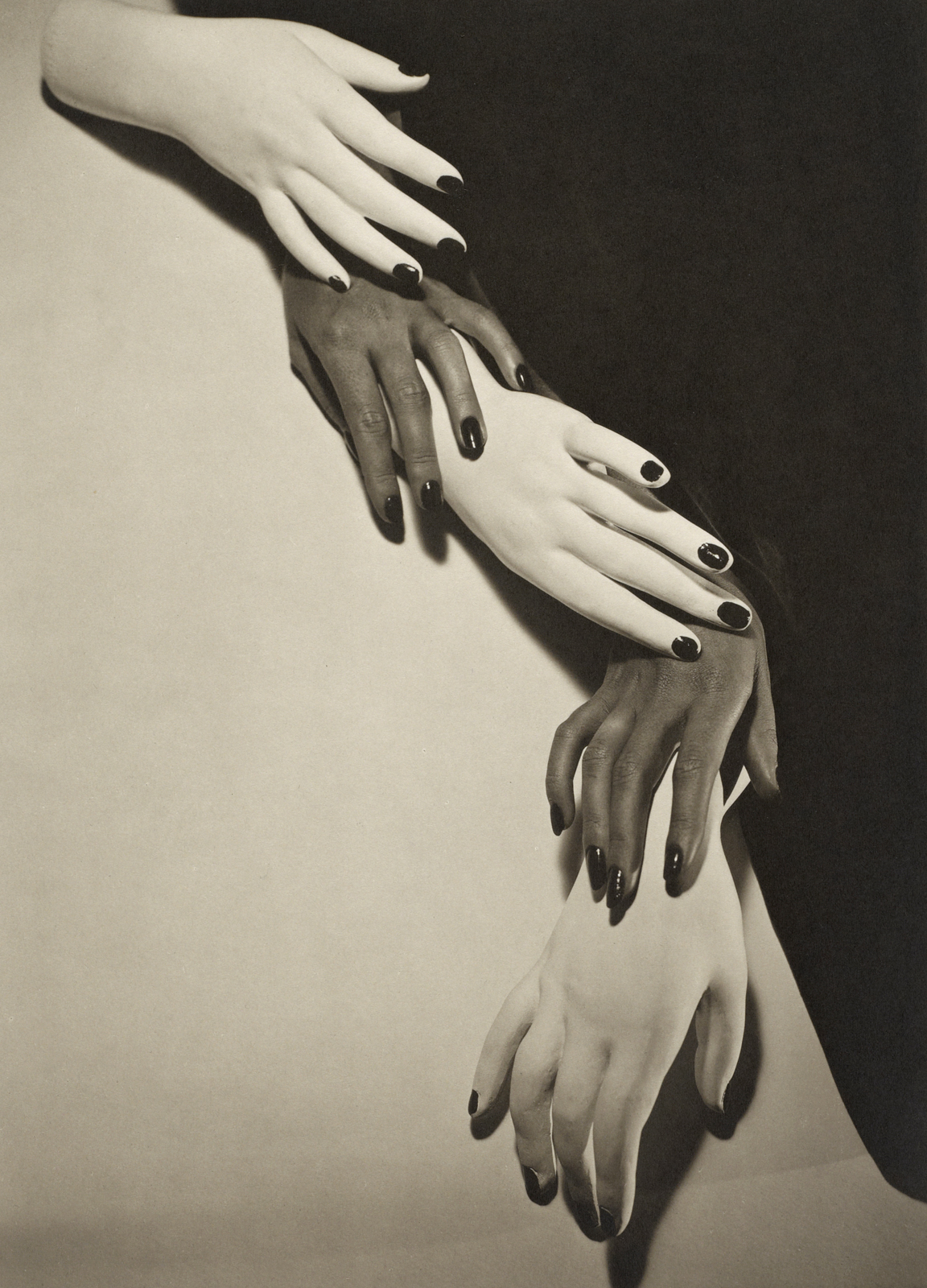
Horst P. Horst (American born Germany, 1906-1999) 'Hands, Hands' 1941


Horst P. Horst (American born Germany, 1906-1999)
Hands, Hands
1941
Platinum and palladium print
23.7 × 17cm (9 5/16 × 6 11/16 in.)
The J. Paul Getty Museum, Los Angeles, Gift of Manfred Heiting
© The Estate of Horst P. Horst and Condé Nast


Erwin Blumenfeld (American born Germany, 1897-1969) 'Maroua Motherwell, New York' 1941-1943


Erwin Blumenfeld (American born Germany, 1897-1969)
Maroua Motherwell, New York
1941-1943
Gelatin silver print
48.5 x 38.7cm (19 1/8 x 15 1/4 in.)
The J. Paul Getty Museum, Los Angeles
© The Estate of Erwin Blumenfeld


Henry Holmes Smith (American, 1909-1986) 'Photography Student' 1947


Henry Holmes Smith (American, 1909-1986)
Photography Student
1947
Gelatin silver print
11.4 × 9.6cm (4 1/2 × 3 3/4 in.)
The J. Paul Getty Museum, Los Angeles, Gift of the Smith Family Trust
© J. Paul Getty Trust


Henry Holmes Smith (American, 1909-1986)

Henry Holmes Smith (1909-1986) was an American photographer and one of the most influential fine art photography teachers of the mid 20th century. He was inspired by the work that had been done at the German Bauhaus and in 1937 was invited to teach photography at the New Bauhaus being founded by Moholy-Nagy in Chicago. After World War II, he spent many years teaching at Indiana University. His students included Jerry Uelsmann, Jack Welpott, Robert W. Fichter, Betty Hahn and Jaromir Stephany.

Smith was often involved in the cutting edge of photographic techniques: in 1931 he started experimenting with high-speed flash photography of action subjects, and started doing colour work in 1936 when few people considered it a serious artistic medium. His later images were nearly all abstract, often made directly (without a camera, i.e. like photograms), for instance images created by refracting light through splashes of water and corn syrup on a glass plate. However, although acclaimed as a photographic teacher, Holmes’ own photographs and other images did not achieve any real recognition from his peers.

Text from the Wikipedia website [Online] Cited 23/02/2020


Andreas Feininger (American born France, 1906-1999) 'Elegant Disk Clam, dosinia elegans, Conrad' 1948


Andreas Feininger (American born France, 1906-1999)
Elegant Disk Clam, dosinia elegans, Conrad
1948
Gelatin silver print
30.4 x 23.8cm (11 15/16 x 9 3/8 in.)
The J. Paul Getty Museum, Los Angeles
© Estate of Gertrud E. Feininger


Alexander Rodchenko (Russian, 1891-1956) 'Roll (of Film)' 1950


Alexander Rodchenko (Russian, 1891-1956)
Roll (of Film)
1950
Gelatin silver print
30.5 × 24cm (12 × 9 7/16 in.)
The J. Paul Getty Museum, Los Angeles
© 2019 Estate of Alexander Rodchenko / UPRAVIS, Moscow / Artists Rights Society, NY


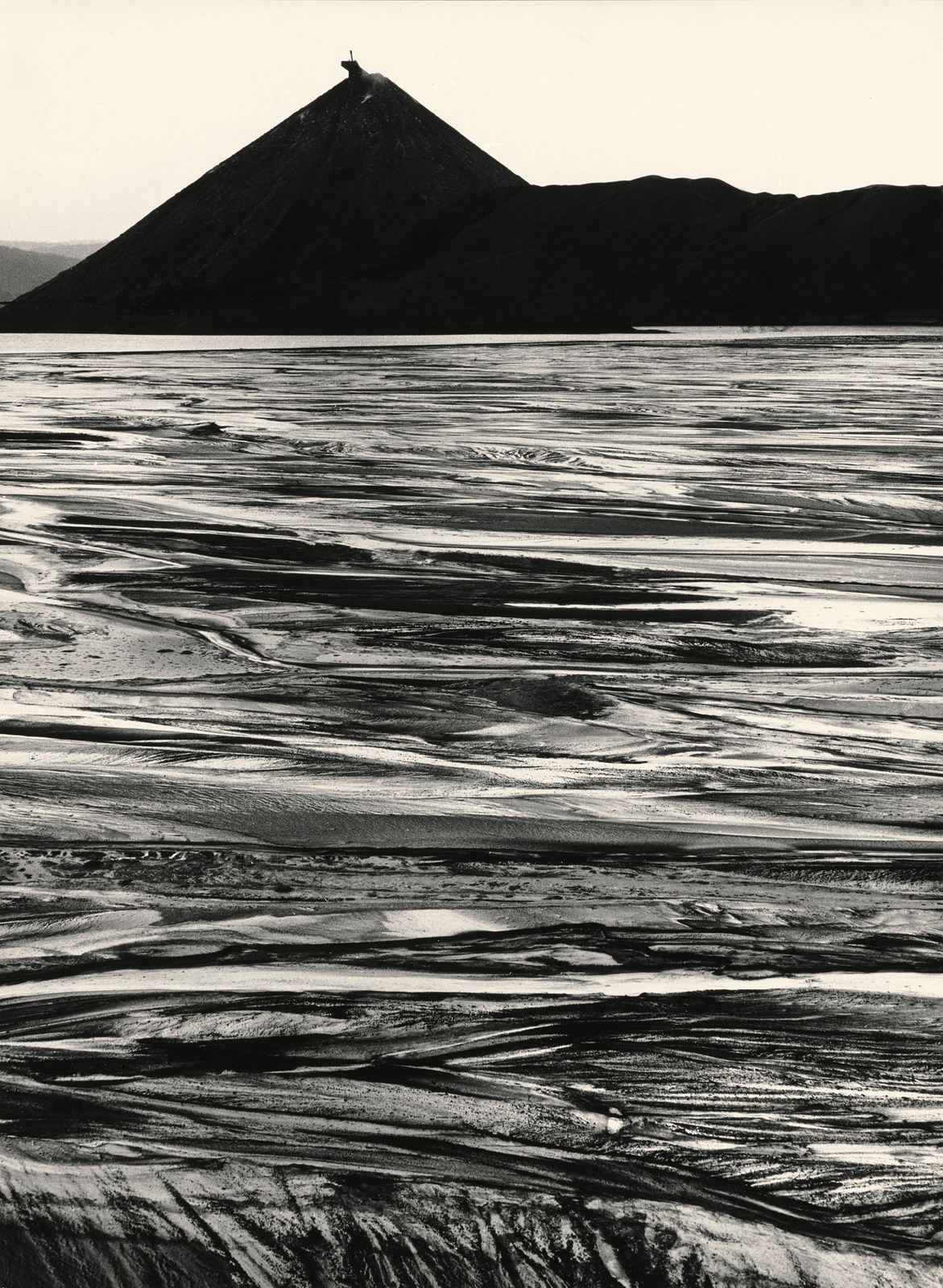
Otto Steinert (German, 1915-1978) 'Schlammweiher 2' Negative 1953, print about 1960s


Otto Steinert (German, 1915-1978)
Schlammweiher 2
Negative 1953, print about 1960s
Gelatin silver print
39.6 x 29.1cm (15 9/16 x 11 7/16 in.)
The J. Paul Getty Museum, Los Angeles
Courtesy Galerie Johannes Faber


André Kertész (American born Hungary, 1894-1985) 'Still Life with Snake' Negative 1960; print later


André Kertész (American born Hungary, 1894-1985)
Still Life with Snake
Negative 1960; print later
Gelatin silver print
Image: 24.8 × 19.7cm (9 3/4 × 7 3/4 in.)
The J. Paul Getty Museum, Los Angeles
© Estate of André Kertész


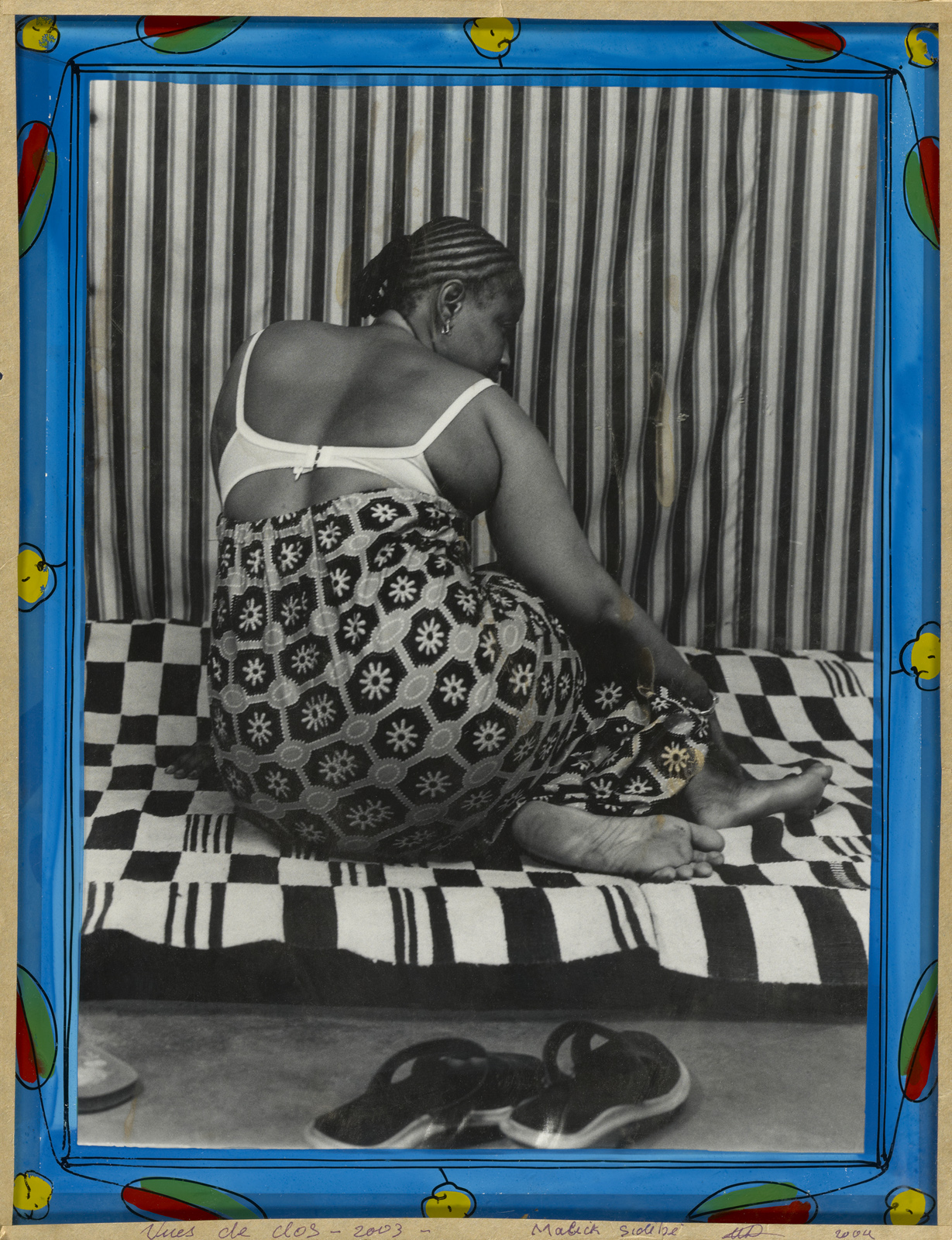
Malick Sidibé (Malian, 1936-2016) 'Vues de dos' Nd, print 2003


Malick Sidibé (Malian, 1936-2016)
Vues de dos
Nd, print 2003
Gelatin silver print, glass, paint, cardboard, tape, and string
36.5 x 27cm (14 3/8 x 10 5/8 in.)
The J. Paul Getty Museum, Los Angeles
© Estate of Malick Sidibé


Irving Penn (American, 1917-2009) 'Red Apples' July 15, 1985


Irving Penn (American, 1917-2009)
Red Apples
July 15, 1985
Silver-dye bleach print
25.4 × 20.3cm (10 × 8 in.)
The J. Paul Getty Museum, Los Angeles, Gift of Nancy and Bruce Berman
© 1985 Irving Penn


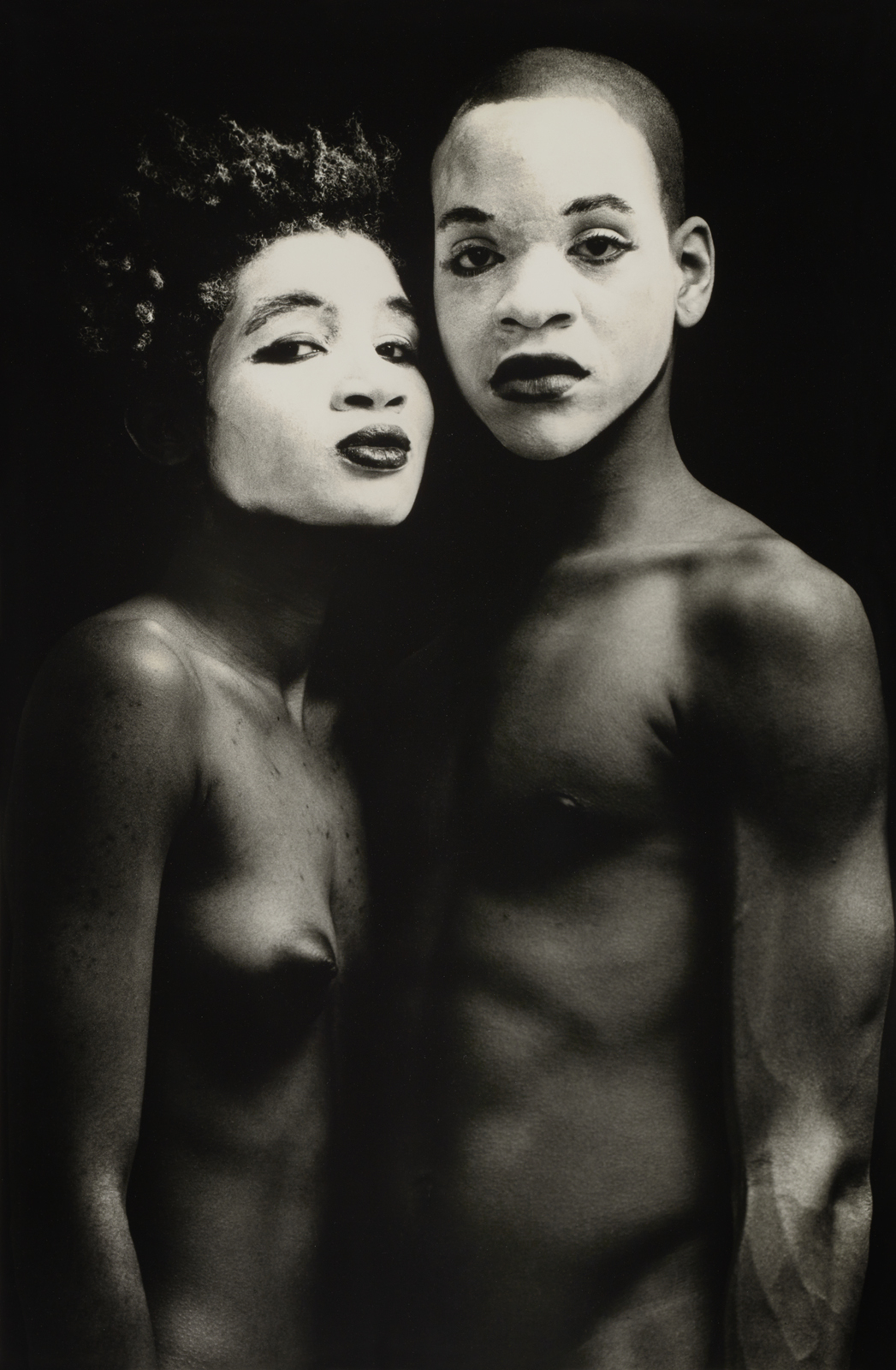
Lyle Ashton Harris (American, b. 1965) 'Man and Woman #1' 1987-1988


Lyle Ashton Harris (American, b. 1965)
Man and Woman #1
1987-1988
Gelatin silver print
74.3 x 48.9cm (29 1/4 x 19 1/4 in.)
The J. Paul Getty Museum, Los Angeles
© Lyle Ashton Harris


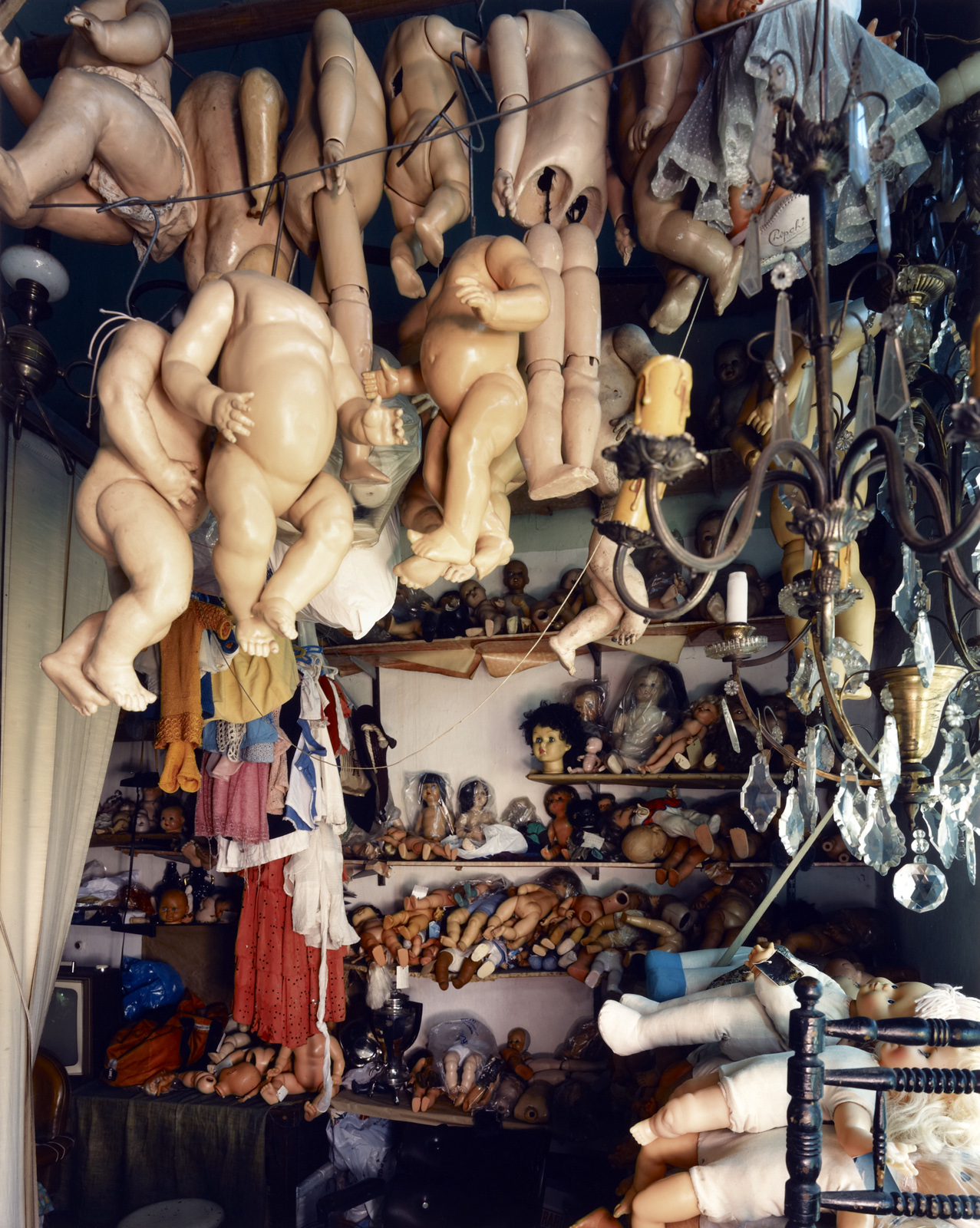
Jim Dow (American, b. 1942) 'Doll Repair Shop Window, Buenos Aires, Argentina' 1990


Jim Dow (American, b. 1942)
Doll Repair Shop Window, Buenos Aires, Argentina
1990
Chromogenic print
51.2 × 40.6cm (20 3/16 × 16 in.)
The J. Paul Getty Museum, Los Angeles, Gift of Nancy and Bruce Berman
© Jim Dow


Carrie Mae Weems (American, b. 1953) 'See No Evil' 1991


Carrie Mae Weems (American, b. 1953)
See No Evil
1991
Dye diffusion print (Polaroid Polacolor)
61 × 50.5cm (24 × 19 7/8 in.)
The J. Paul Getty Museum, Los Angeles, Gift of Daniel Greenberg and Susan Steinhauser
© Carrie Mae Weems


Myoung Ho Lee (South Korean, b. 1975) '[Tree #2]' 2006


Myoung Ho Lee (South Korean, b. 1975)
[Tree #2]
2006
Inkjet print
39.8 × 32.1cm (15 11/16 × 12 5/8 in.)
The J. Paul Getty Museum, Los Angeles, Purchased with funds provided by the Photographs Council
© Myoung Ho Lee, Courtesy Yossi Milo Gallery, New York


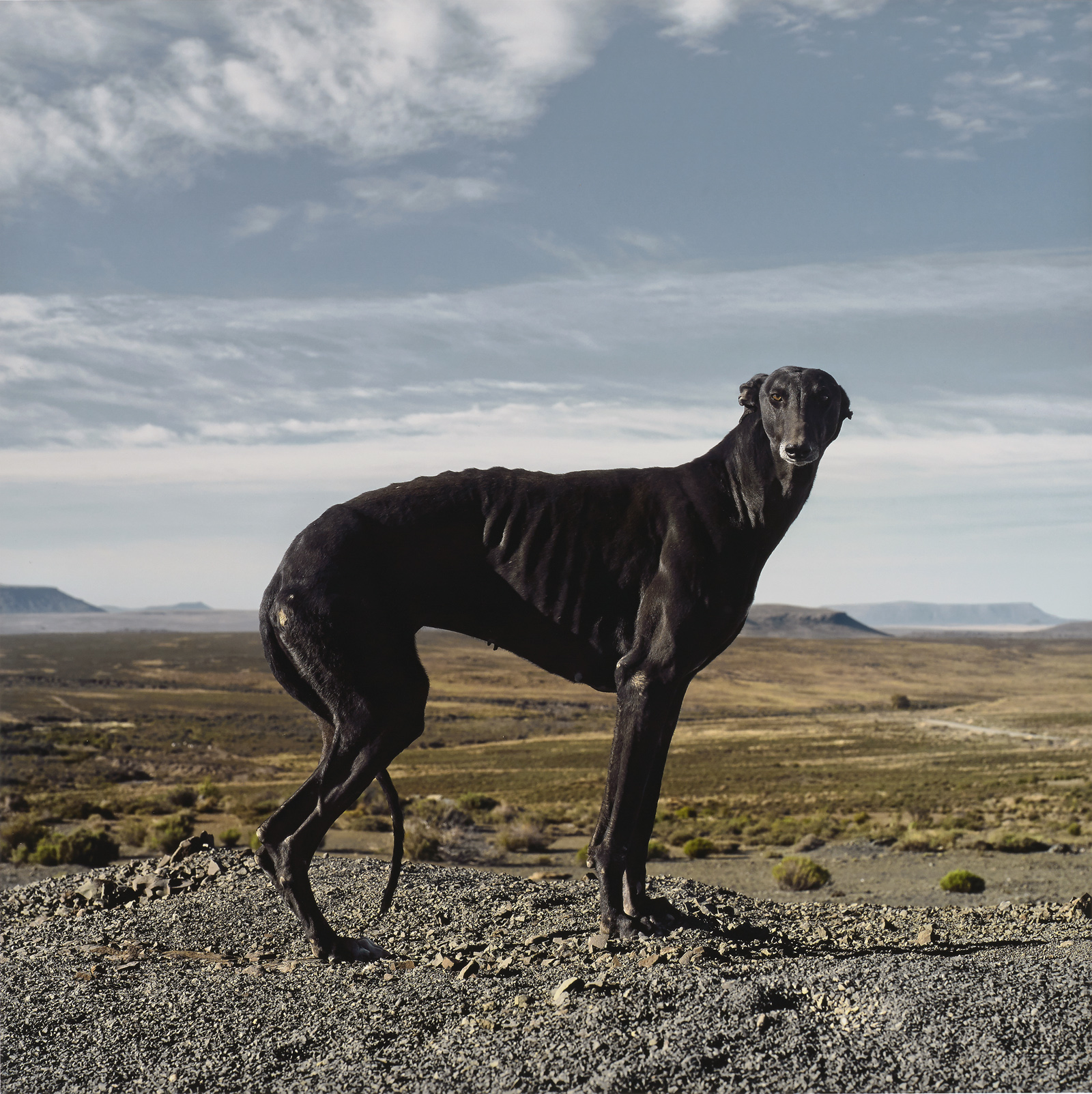
Daniel Naudé (South African, b. 1984) 'Africanis 18. Murraysburg, Western Cape, 10 May 2010' 2010


Daniel Naudé (South African, b. 1984)
Africanis 18. Murraysburg, Western Cape, 10 May 2010
2010
60 x 60cm (23 5/8 x 23 5/8 in.)
The J. Paul Getty Museum, Los Angeles
© Daniel Naudé


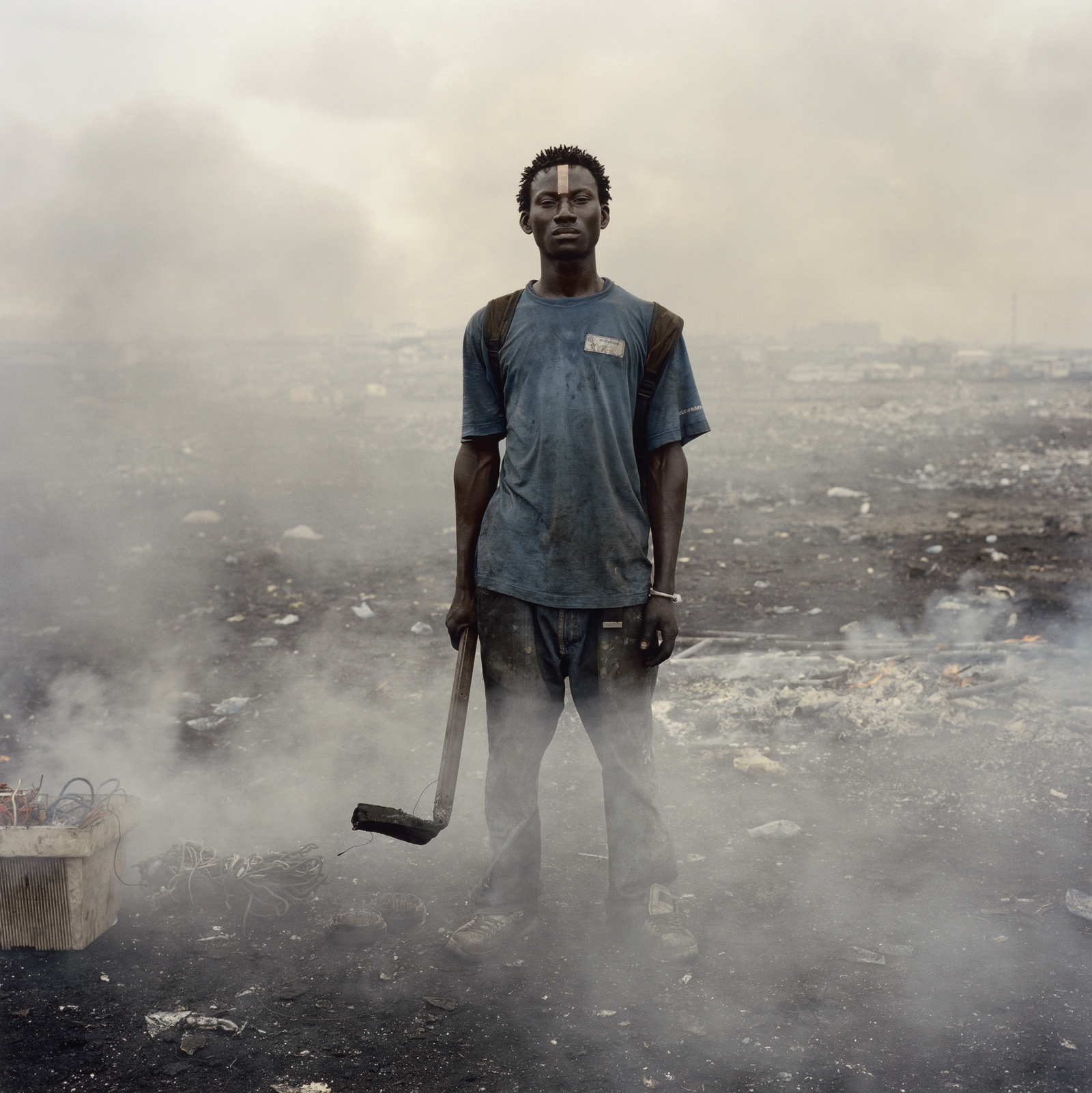
Pieter Hugo (South African, b. 1976) 'Aissah Salifu, Agbogbloshie Market, Accra, Ghana' 2010


Pieter Hugo (South African, b. 1976)
Aissah Salifu, Agbogbloshie Market, Accra, Ghana
2010
From the Permanent Error series
Digital chromogenic print
81.3 x 81.3cm (32 x 32 in.)
The J. Paul Getty Museum, Los Angeles
© Pieter Hugo


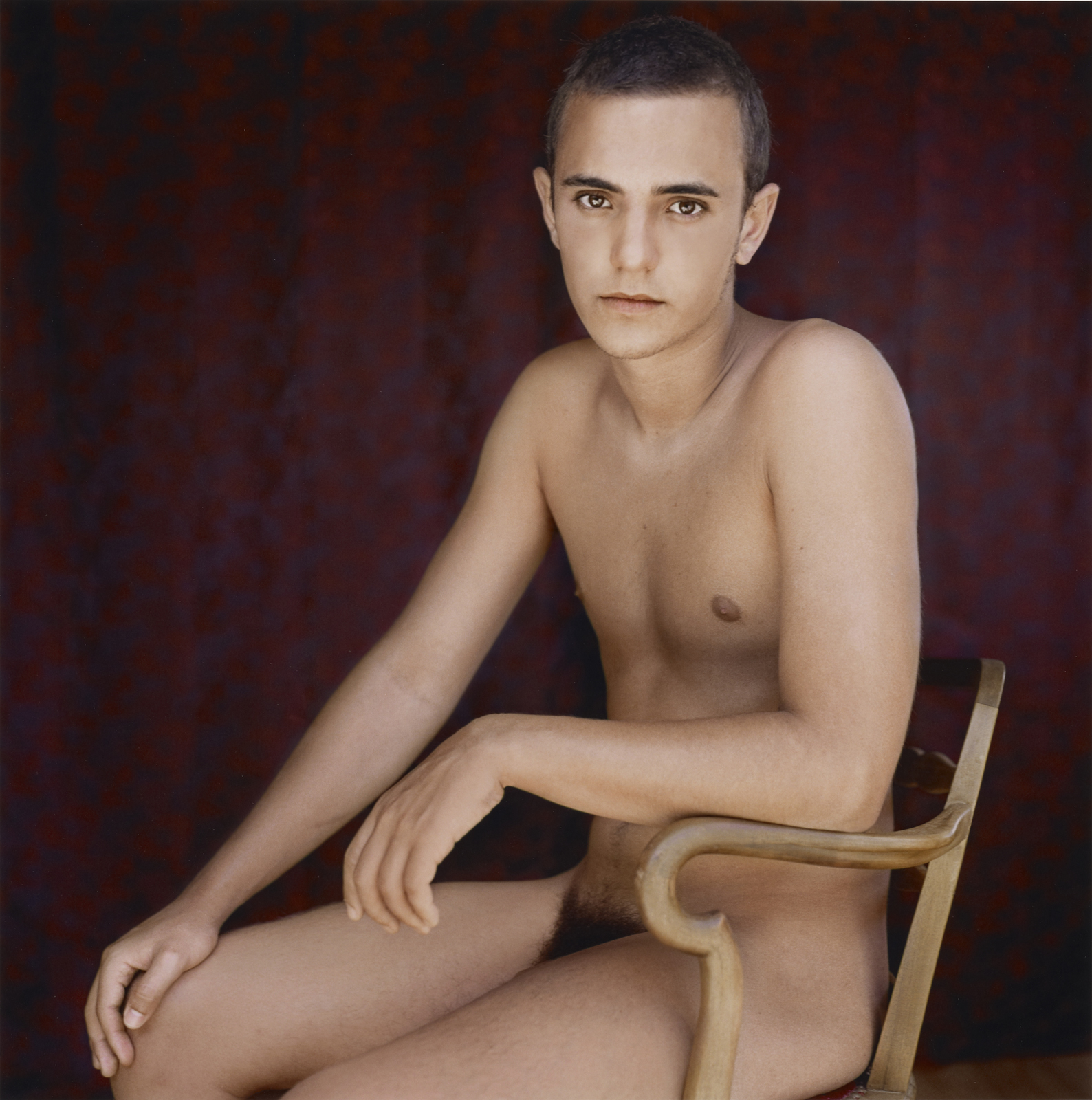
Mona Kuhn (German born Brazil, 1969) 'Portrait 37' 2011


Mona Kuhn (German born Brazil, 1969)
Portrait 37
2011
Chromogenic print
38.3 x 38.1cm (15 1/16 x 15 in.)
The J. Paul Getty Museum, Los Angeles
© Mona Kuhn


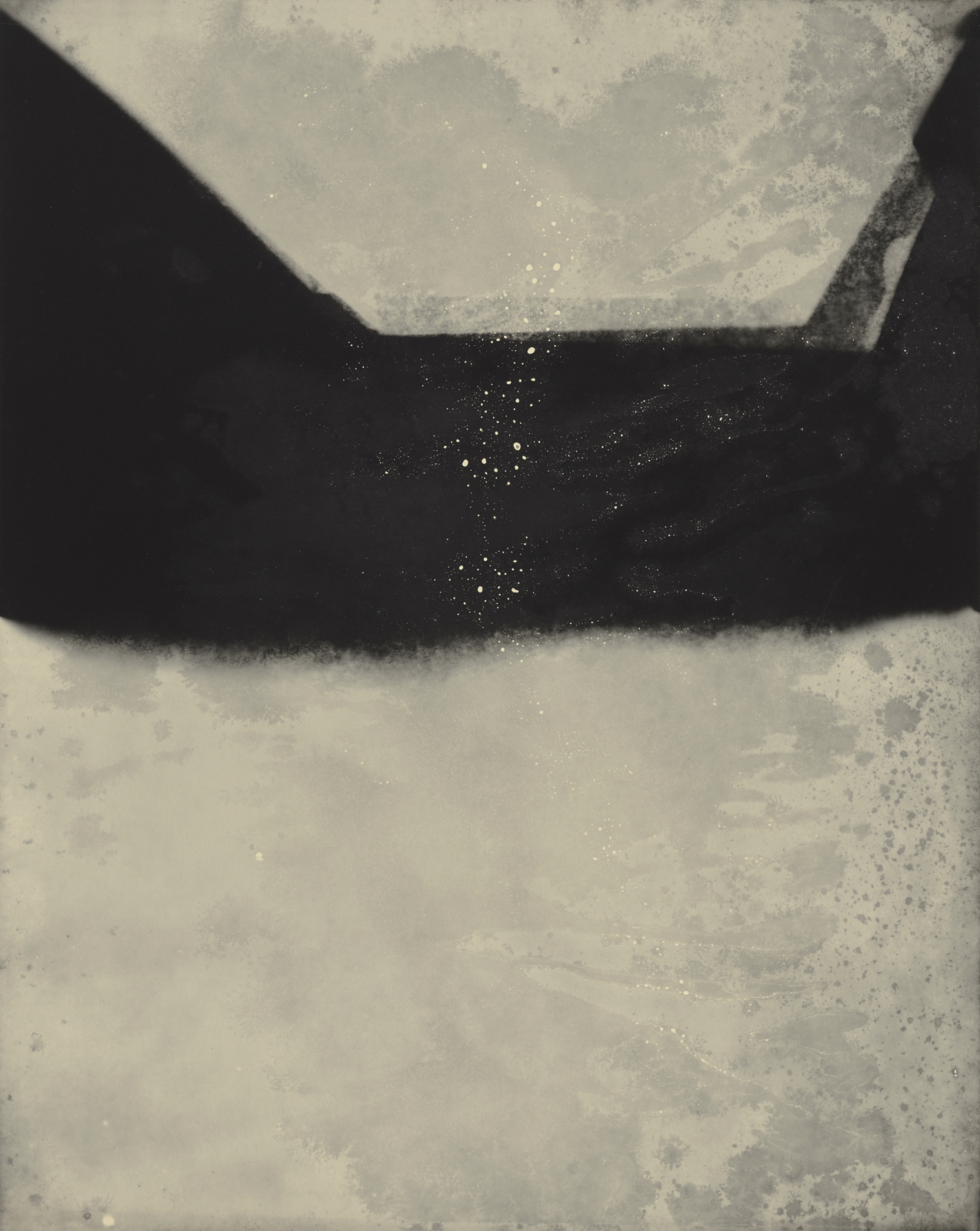
Alison Rossiter (American, b. 1953) 'Eastman Kodak Azo E, expired May 1927, processed 2014' 2014


Alison Rossiter (American, b. 1953)
Eastman Kodak Azo E, expired May 1927, processed 2014
2014
Gelatin silver print
25 x 20cm (9 13/16 x 7 7/8 in.)
The J. Paul Getty Museum, Los Angeles
© Alison Rossiter


The J. Paul Getty Museum
1200 Getty Center Drive
Los Angeles, California 90049

Opening hours:
Daily 10am – 5.30pm

The J. Paul Getty Museum website

LIKE ART BLACK ON FACEBOOK

Back to top

Photographs: Gordon Parks “The Atmosphere of Crime” 1957

February 2020


Gordon Parks (American, 1912-2006) 'Untitled, New York, New York' 1957 from Gordon Parks' "The Atmosphere of Crime" 1957


Gordon Parks (American, 1912-2006)
Untitled, New York, New York
1957
Pigmented inkjet print, printed 2019
13 3/4 x 21″ (35 × 53.3 cm)
The Museum of Modern Art, New York. The Family of Man Fund
© The Gordon Parks Foundation


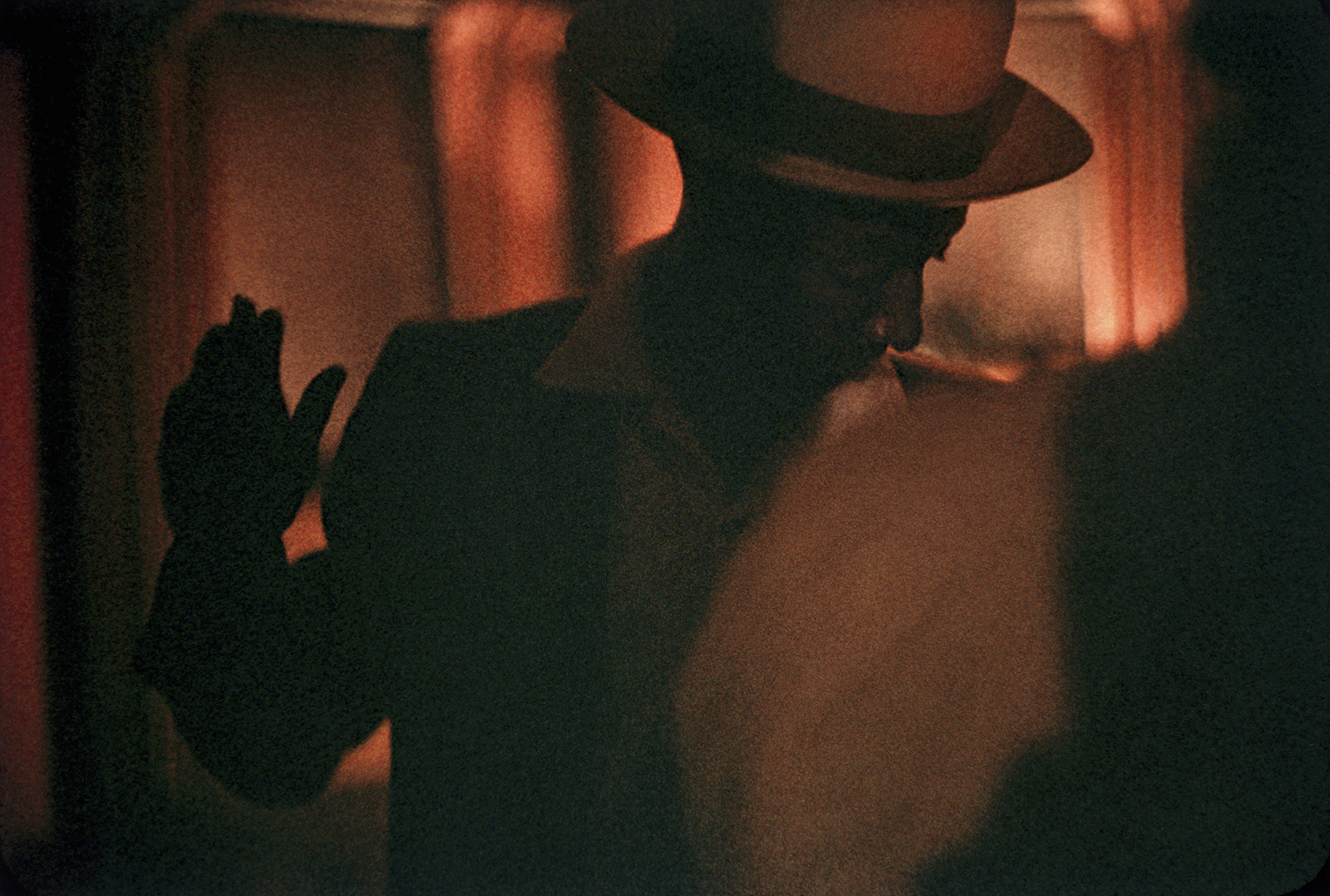
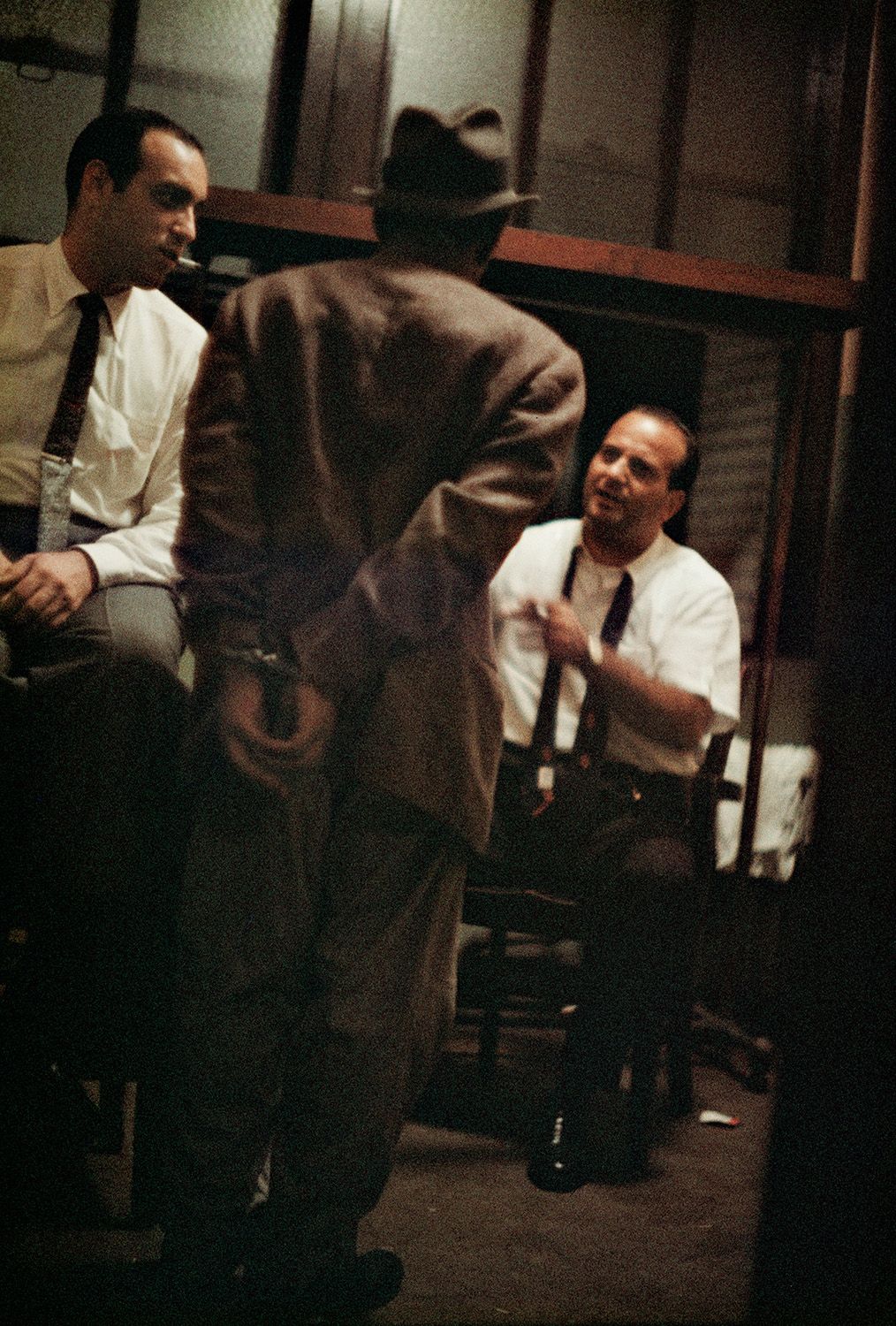
The photo essay as haunting and elegiac poem: “a richly-hued, cinematic portrayal of a largely hidden world: that of violence, police work and incarceration, seen with empathy and candour.”

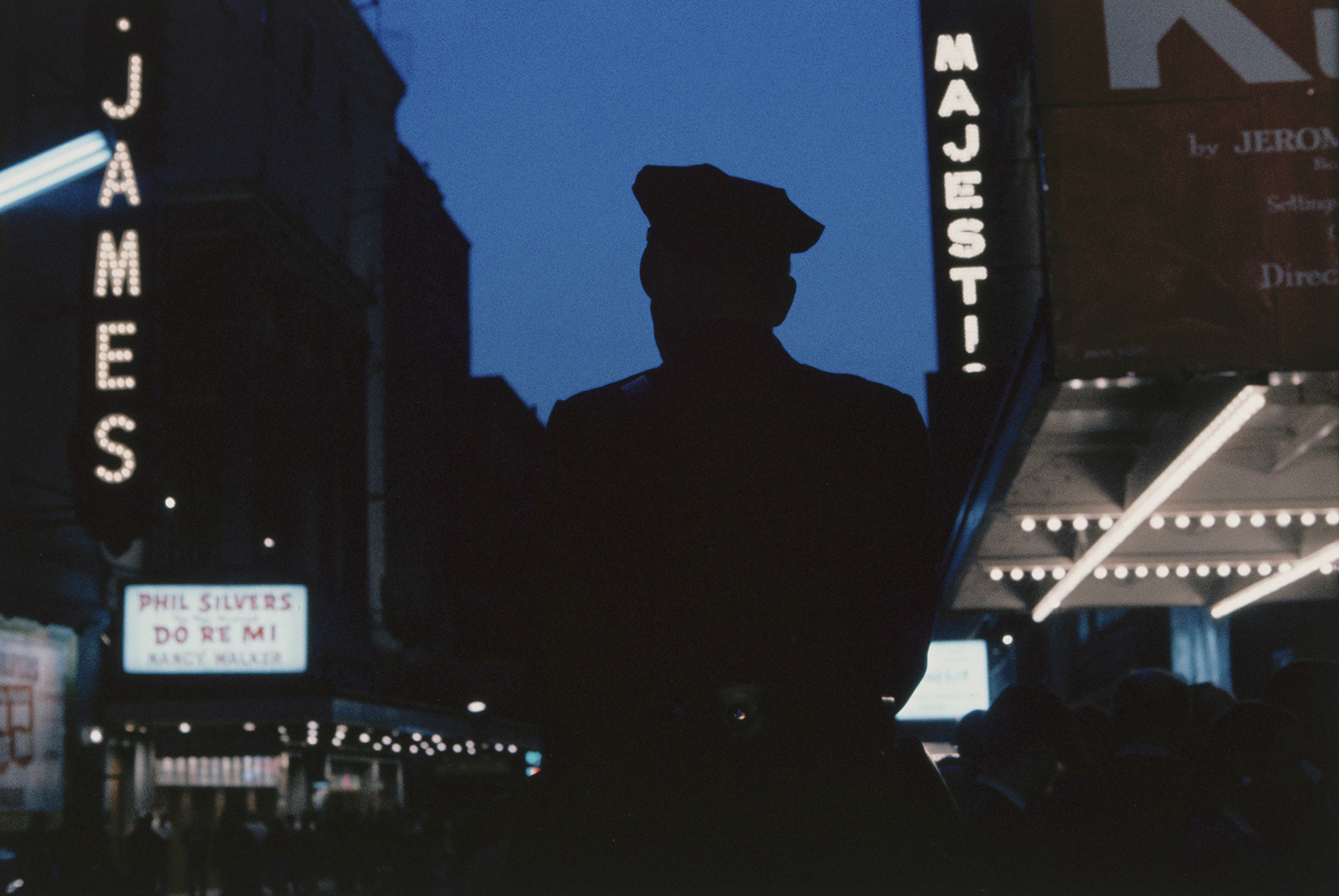
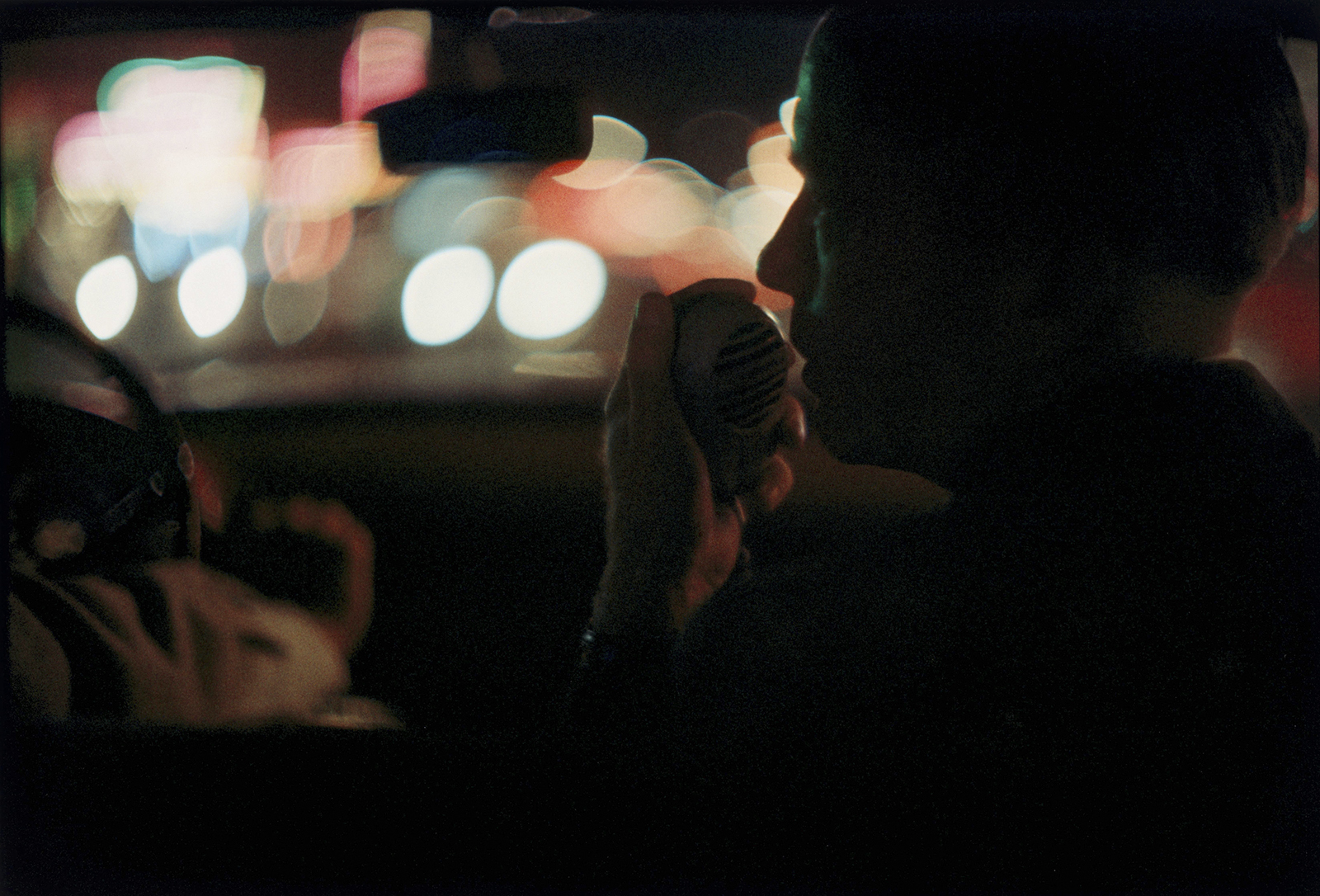
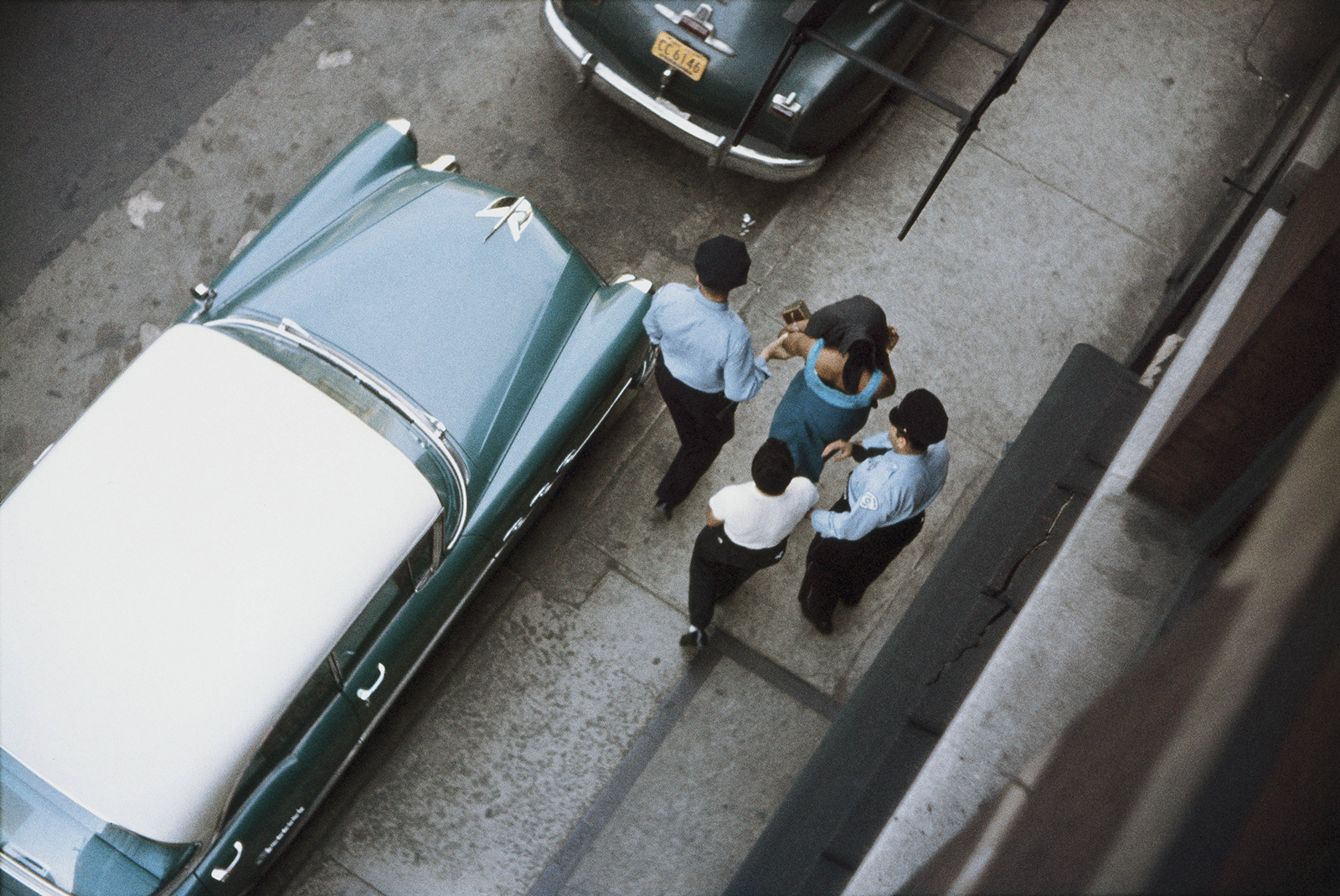
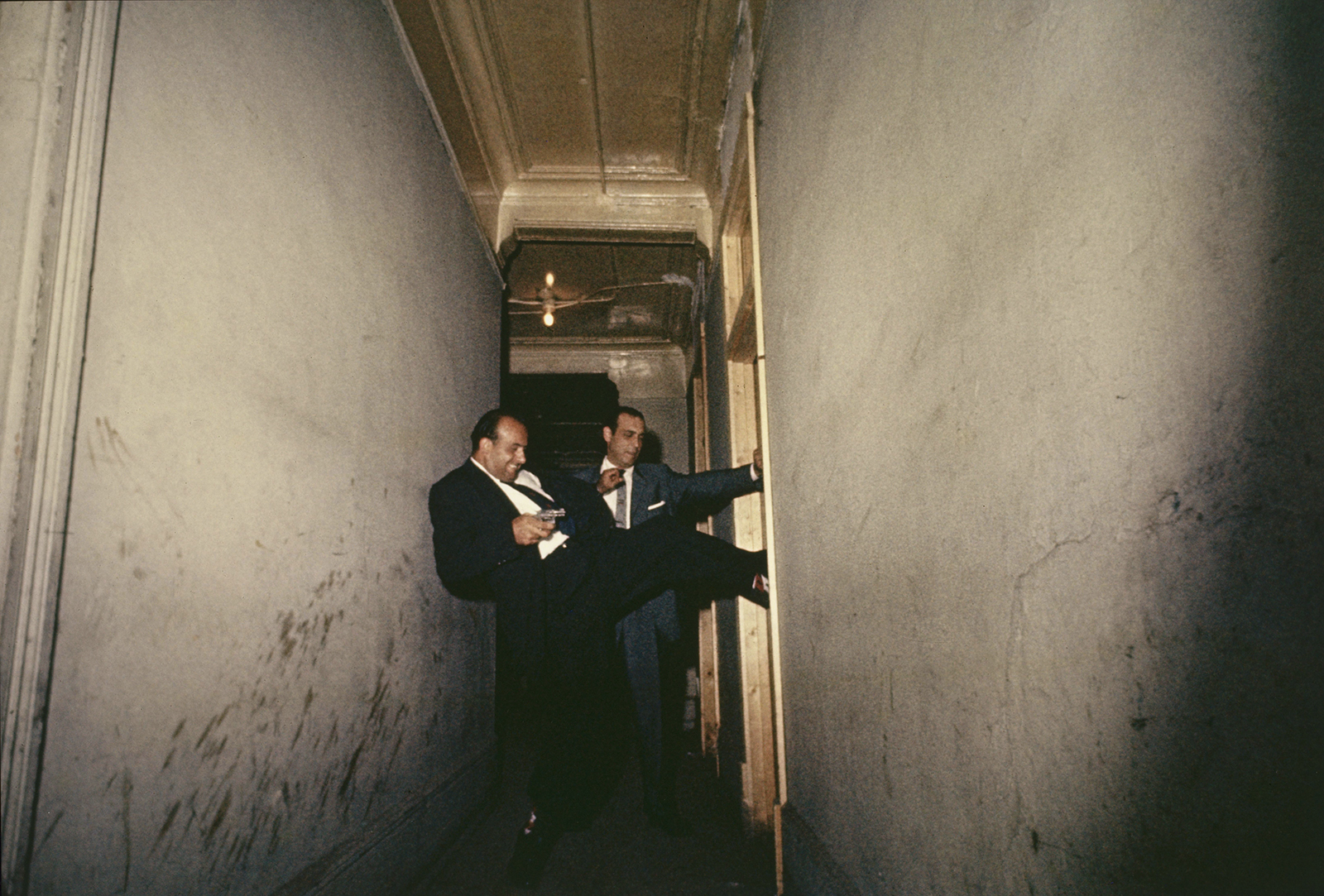
Parks is one of my favourite photographers. He continues to astound me with his experimentation and percipience, his sensitive insight, into his subjects becoming: “a more nuanced view that reflected the social and economic factors tied to criminal behaviour and a rare window into the working lives of those charged with preventing and prosecuting it.” All captured by his probing camera – using natural light, flash, low depth of field, blur, high angles, low angles, perspective,  transience, informality and chiaroscuro.

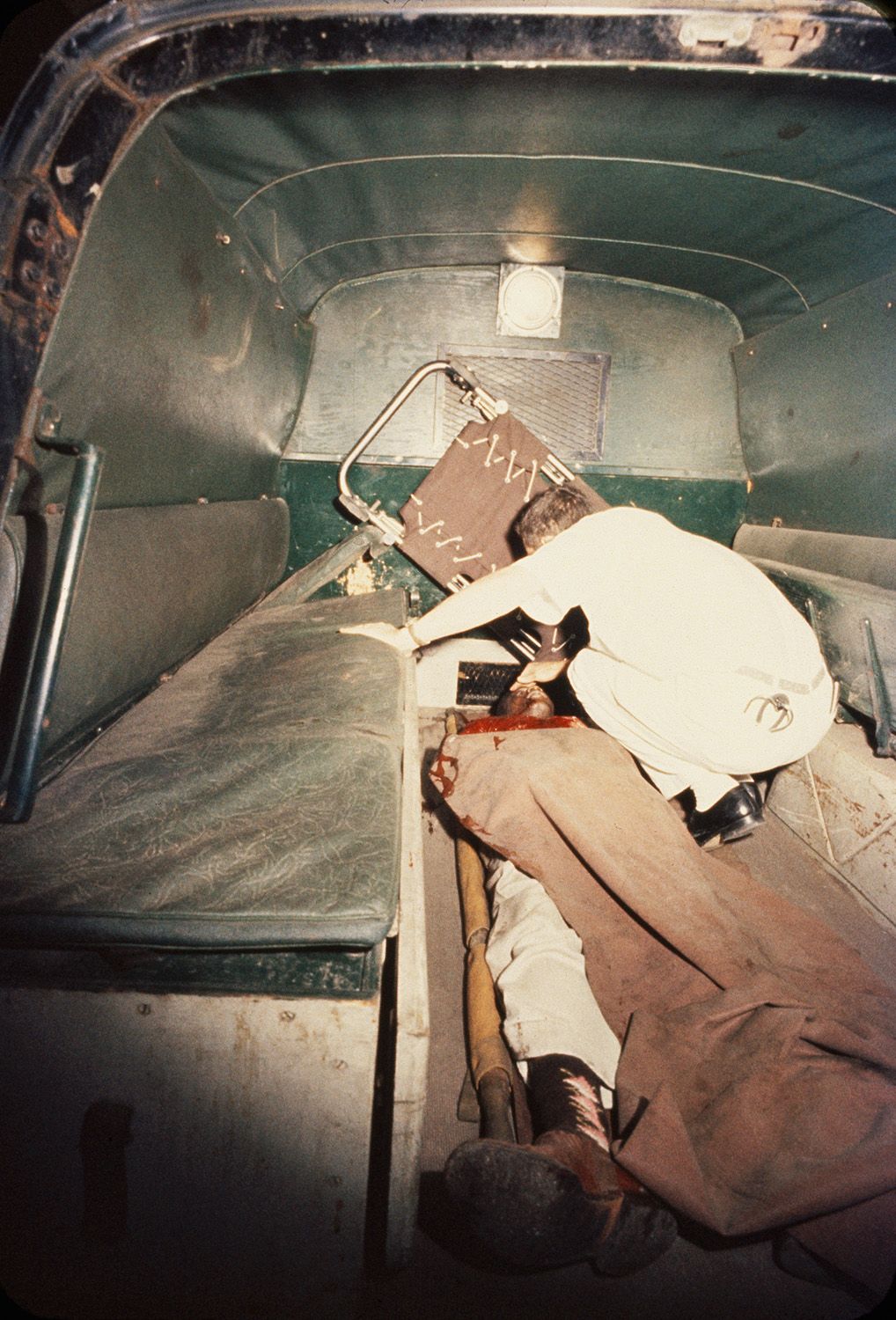
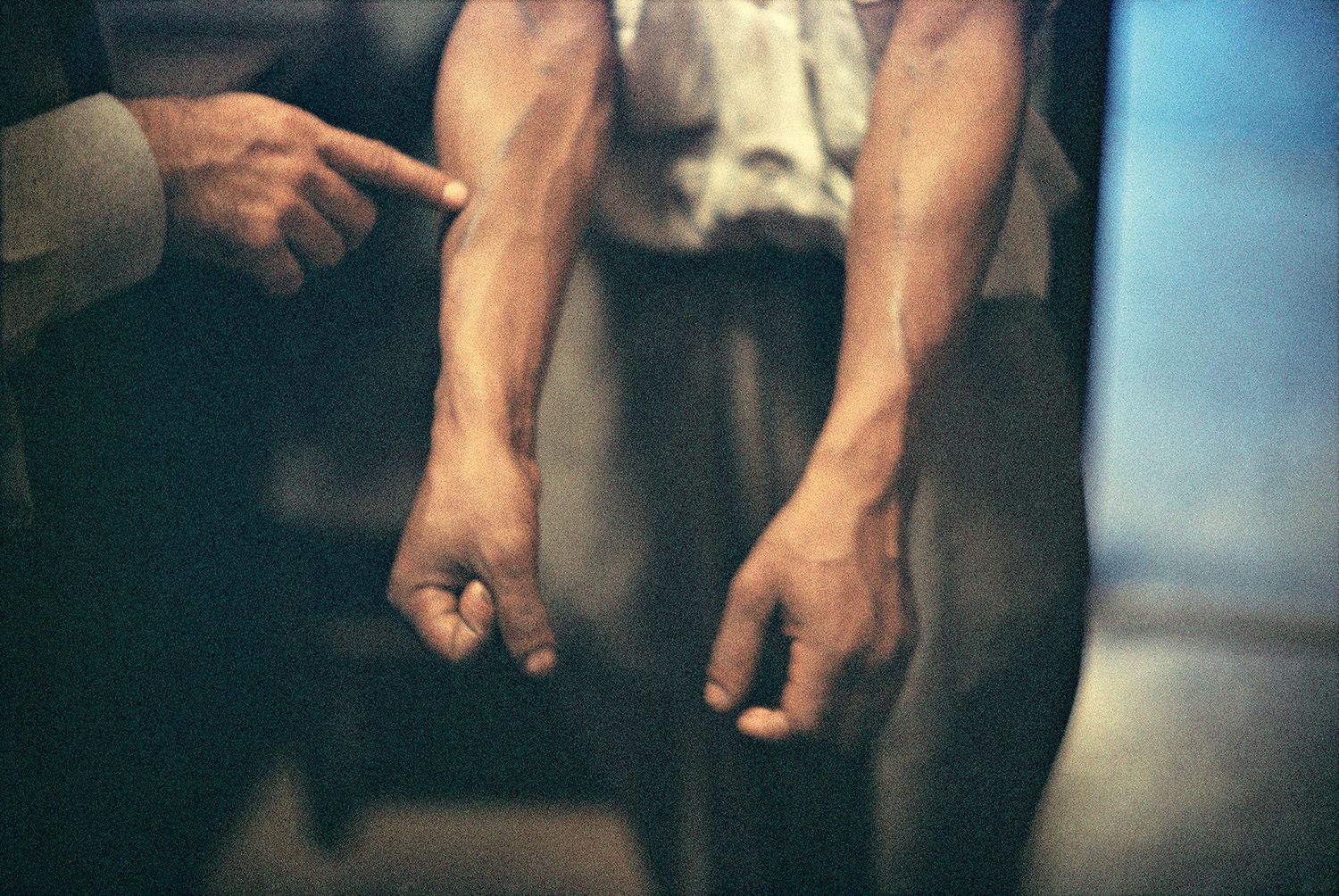
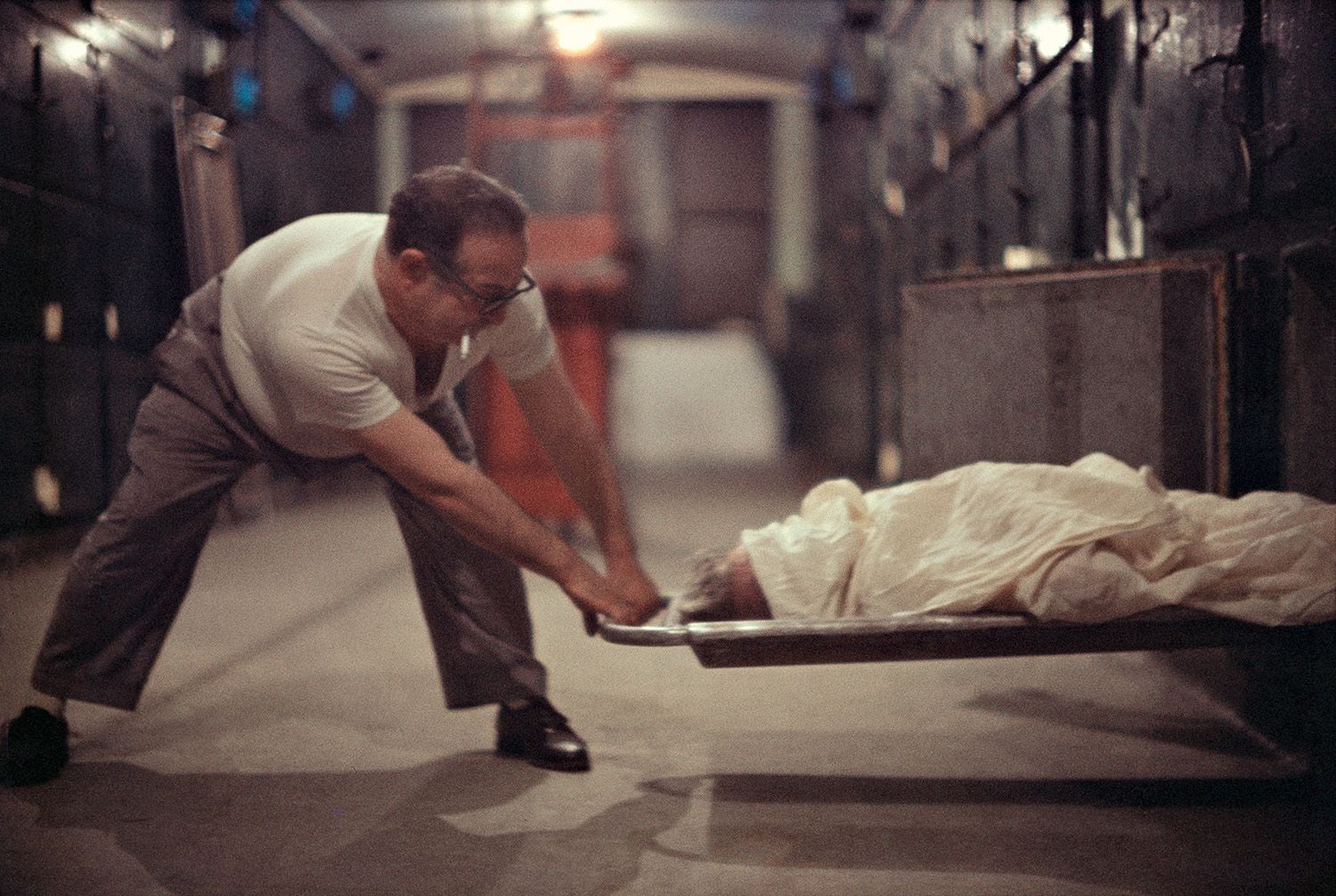
Two photographs in the posting suffice to speak of the photographers art: pointing figure, veins, clenched first and revelation, the blue fairy of light, in the beautiful Narcotics Addict, Chicago, Illinois; and body carriage interior, overweight man, braced, shadow, fag hanging out of mouth, pulling – all dreams laid bare. The photographer crouching at the same level. Shooting Victim in Cook County Morgue, Chicago, Illinois.

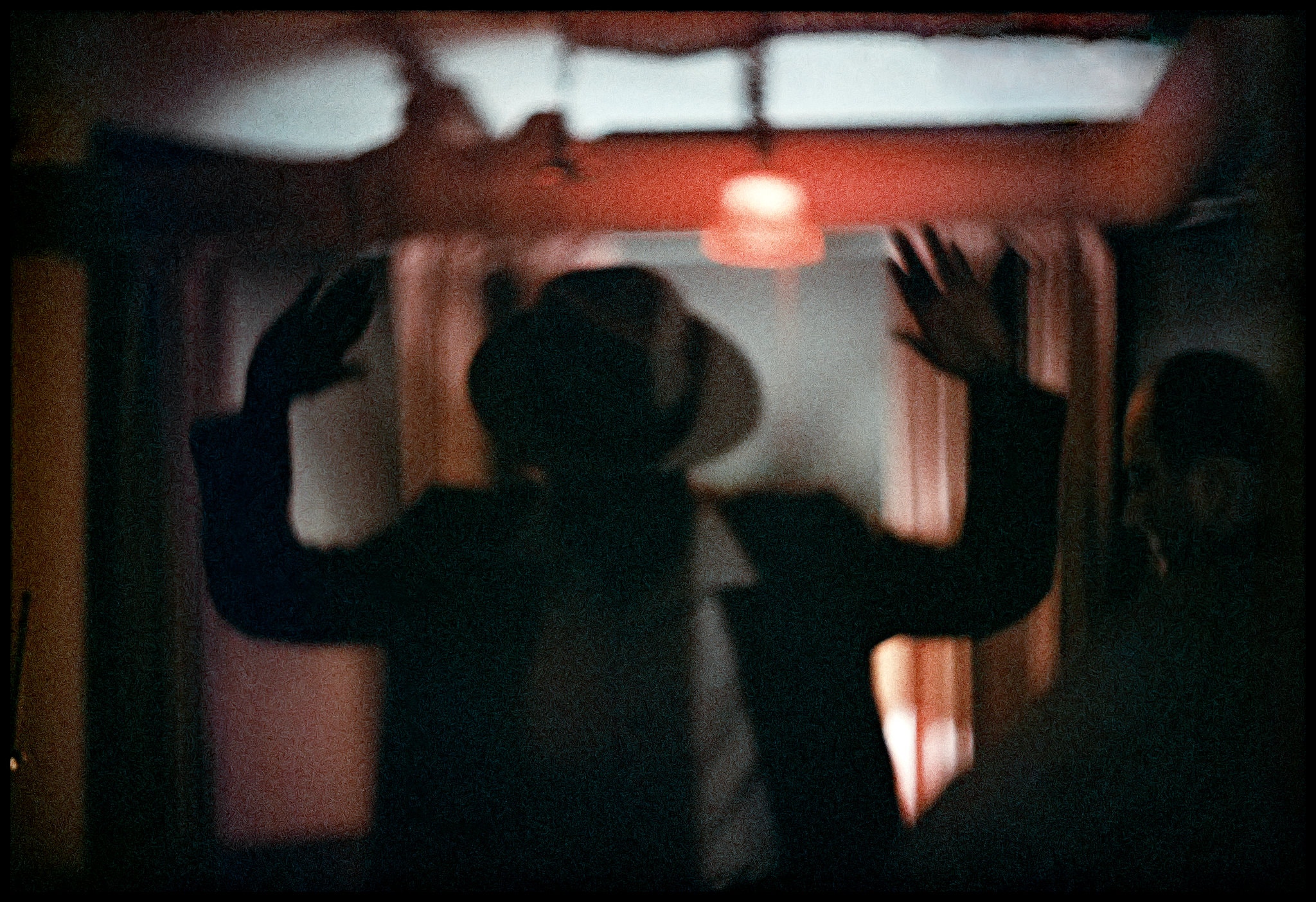
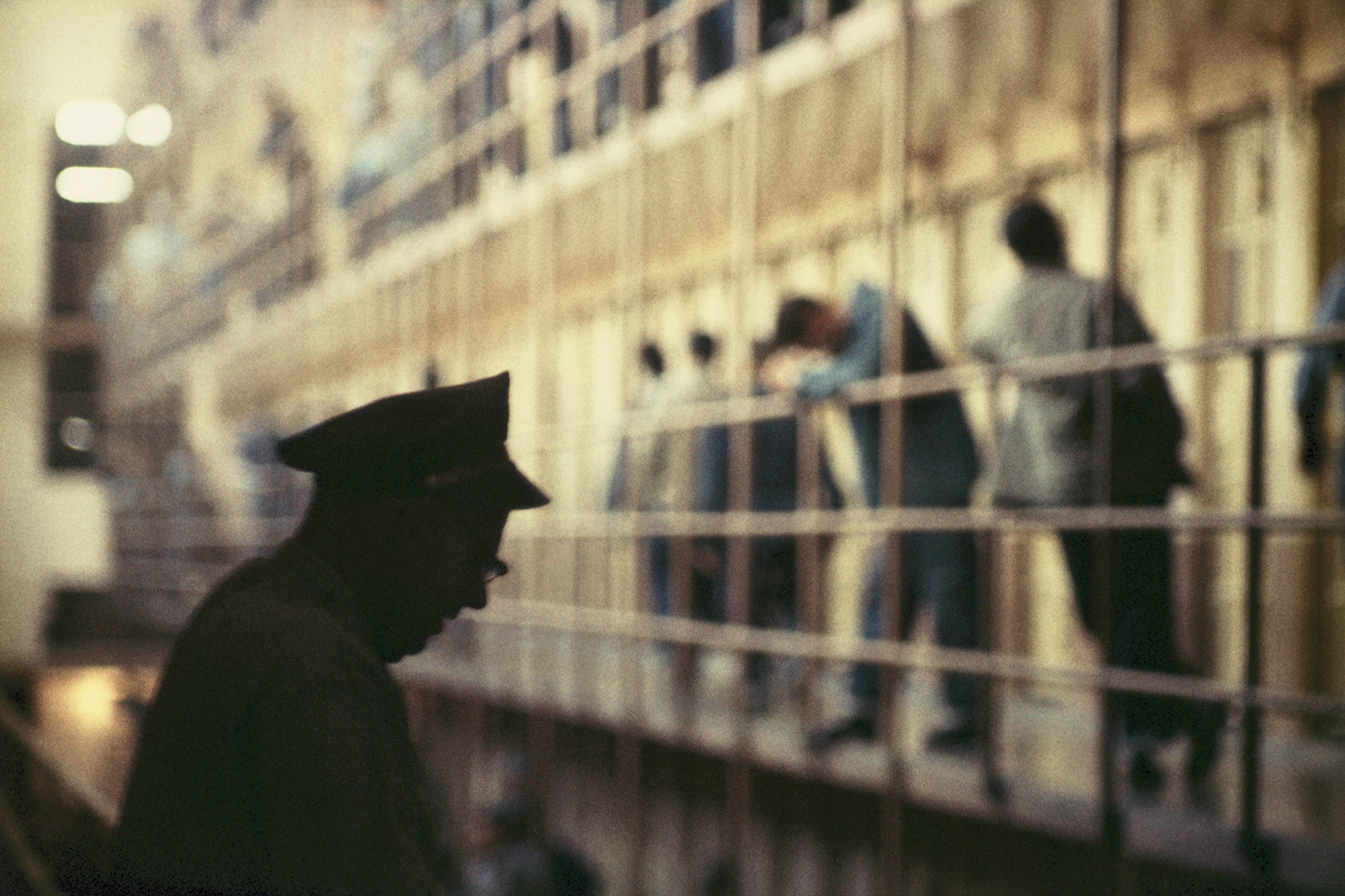
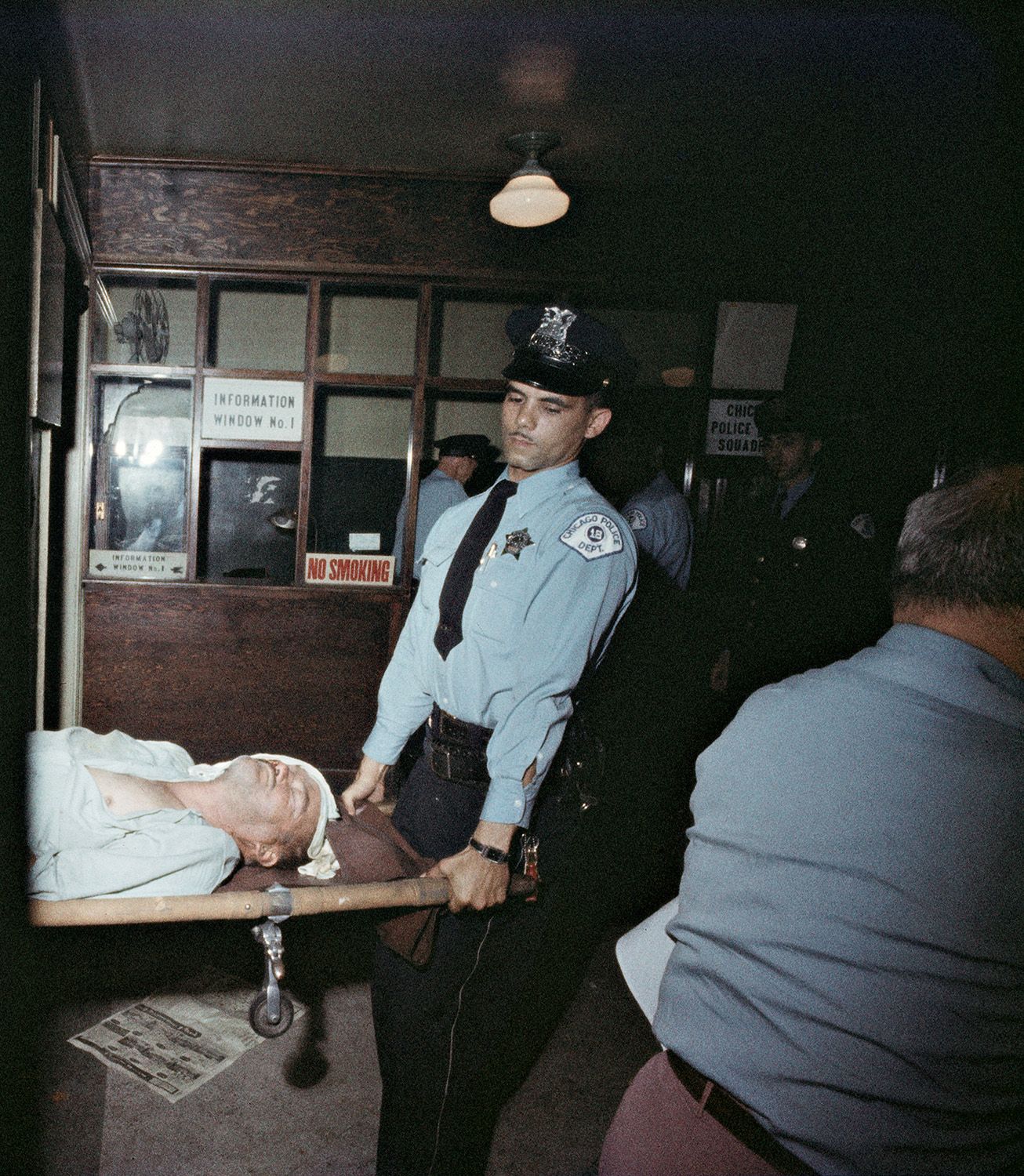
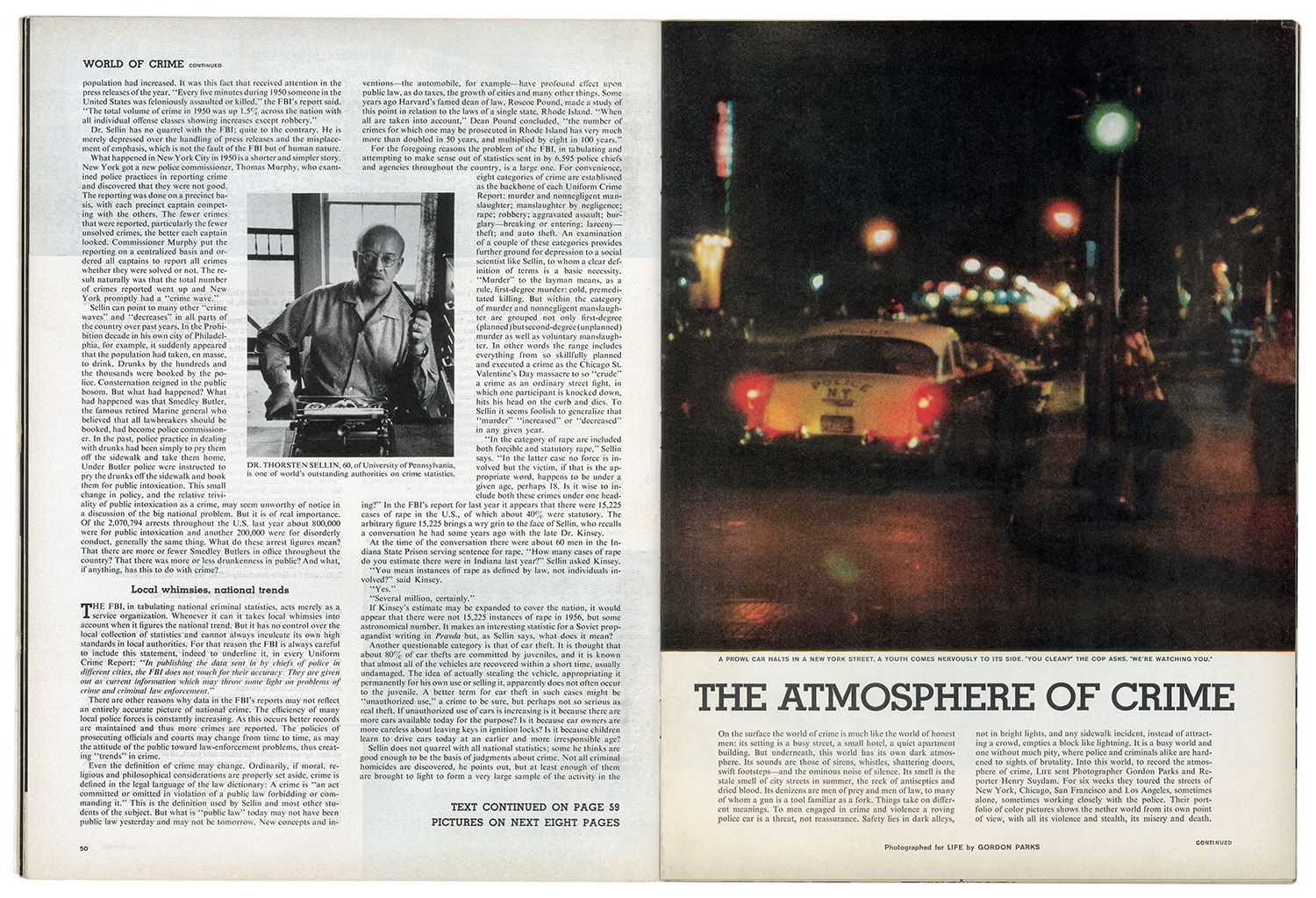
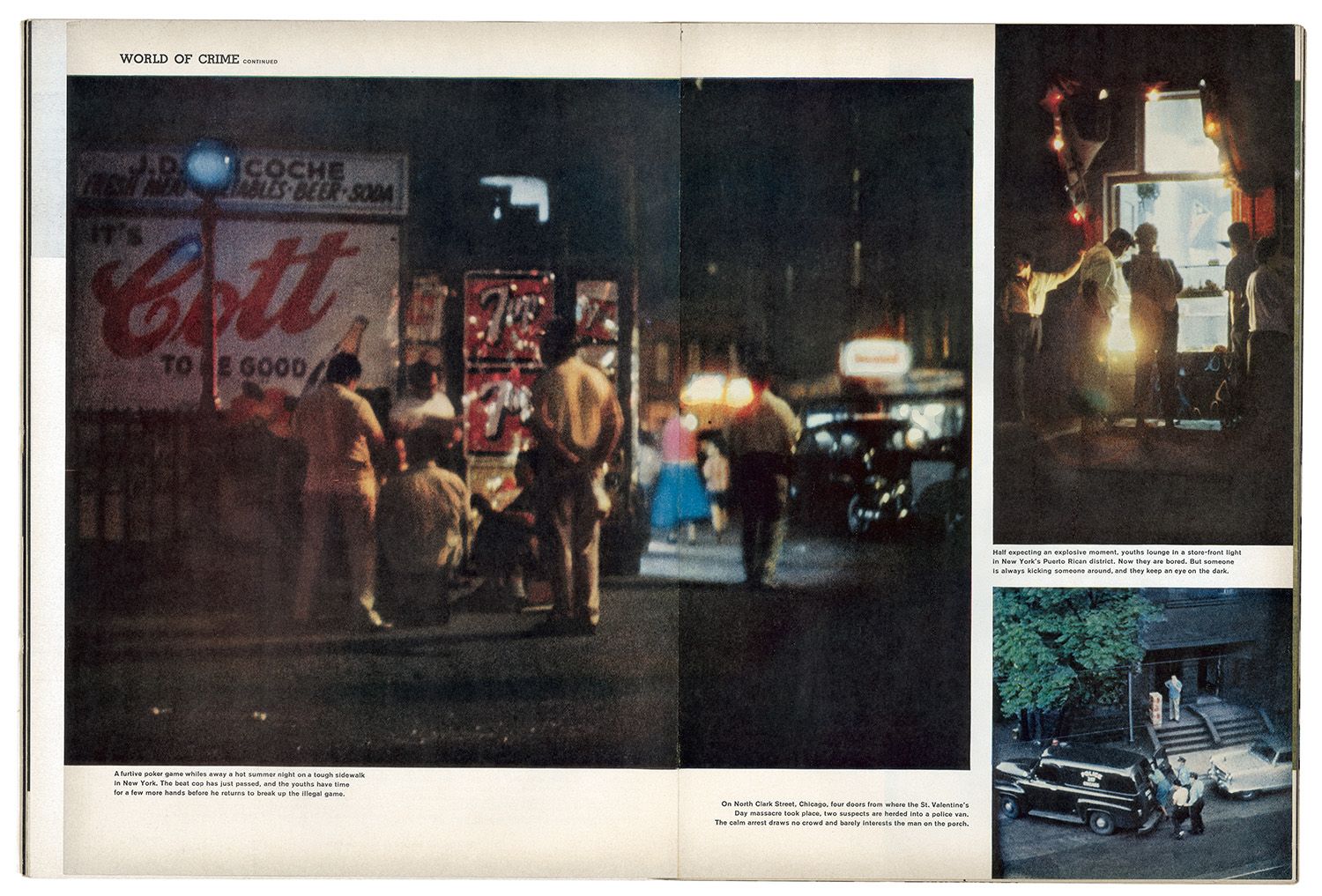
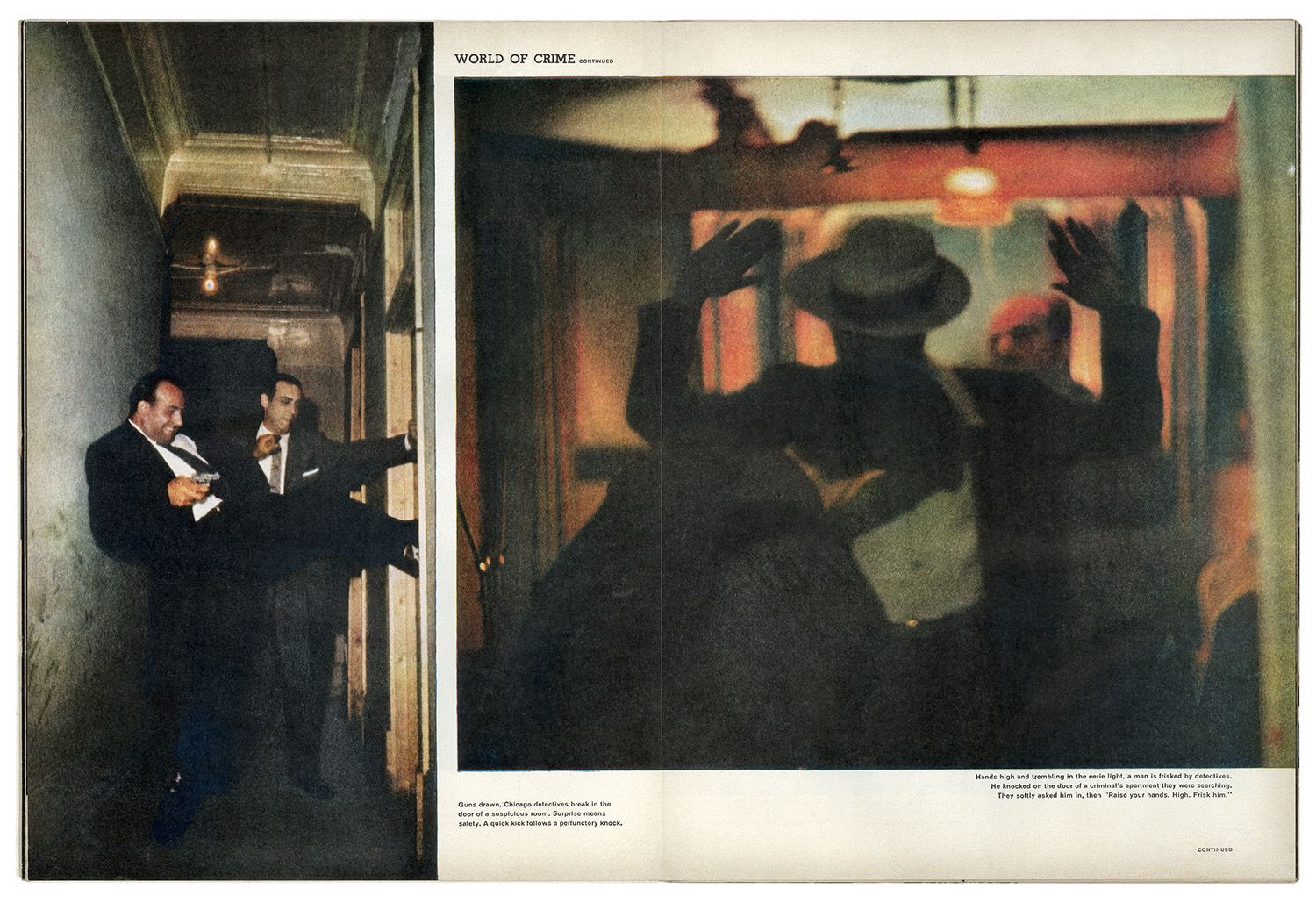
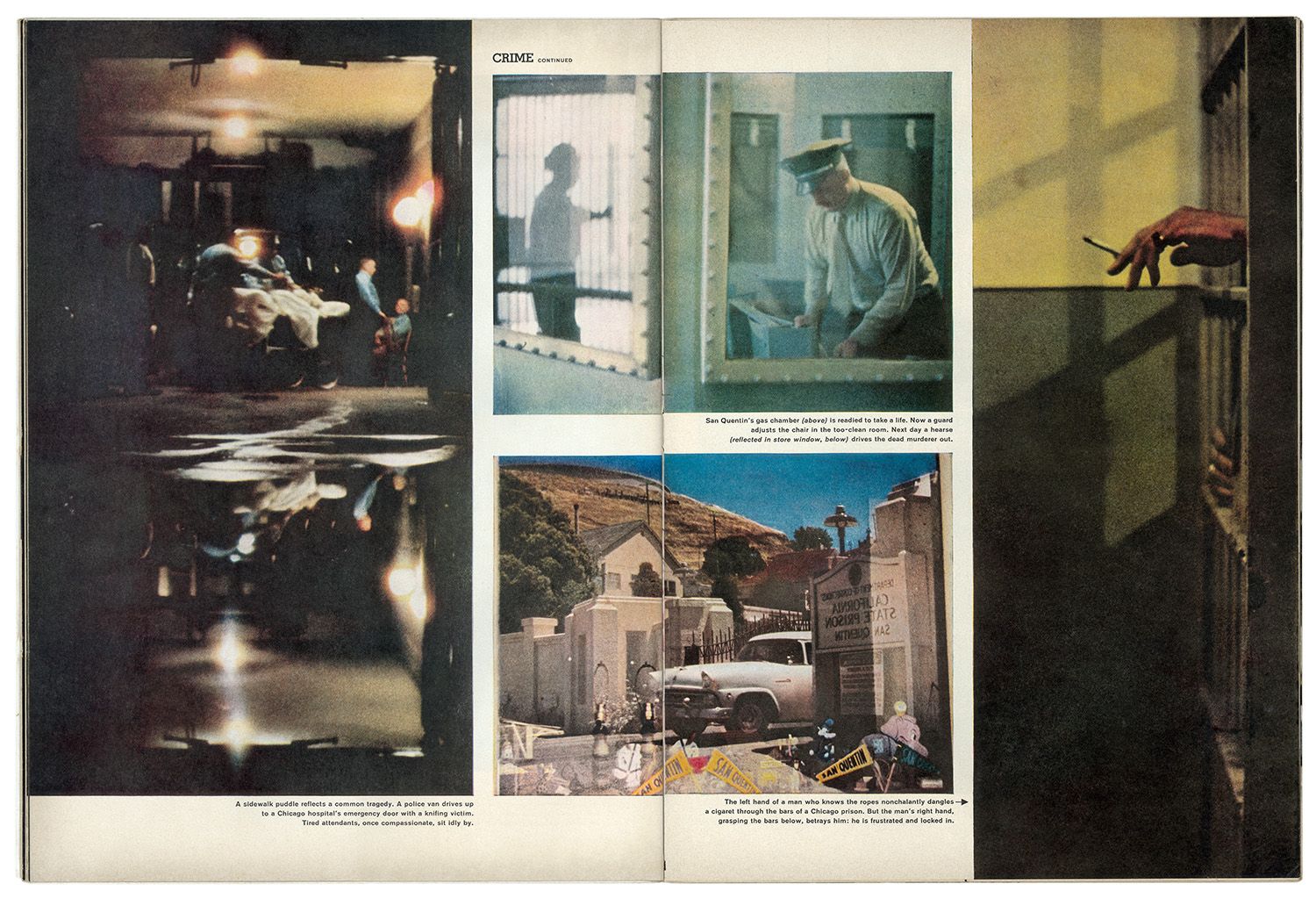
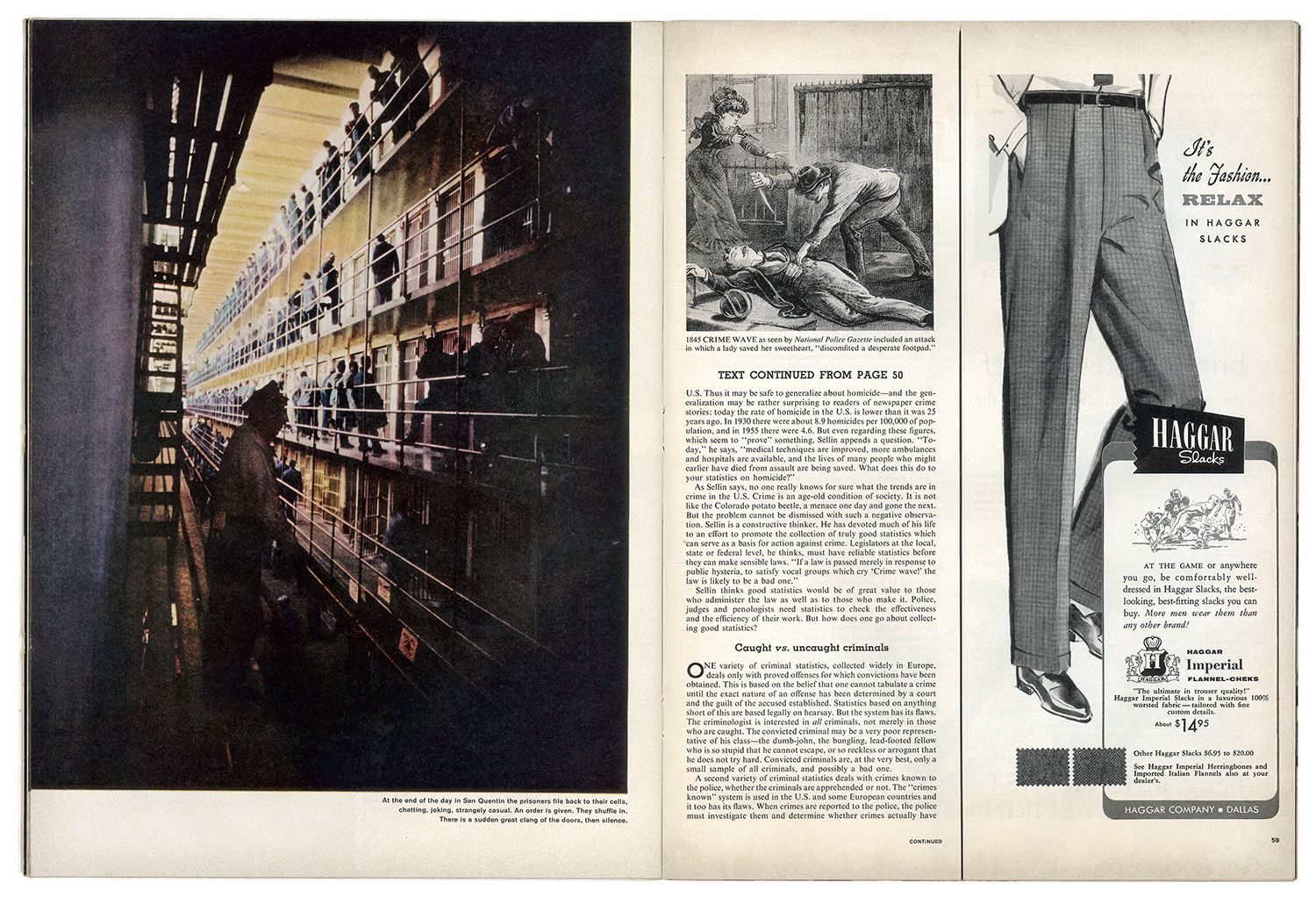
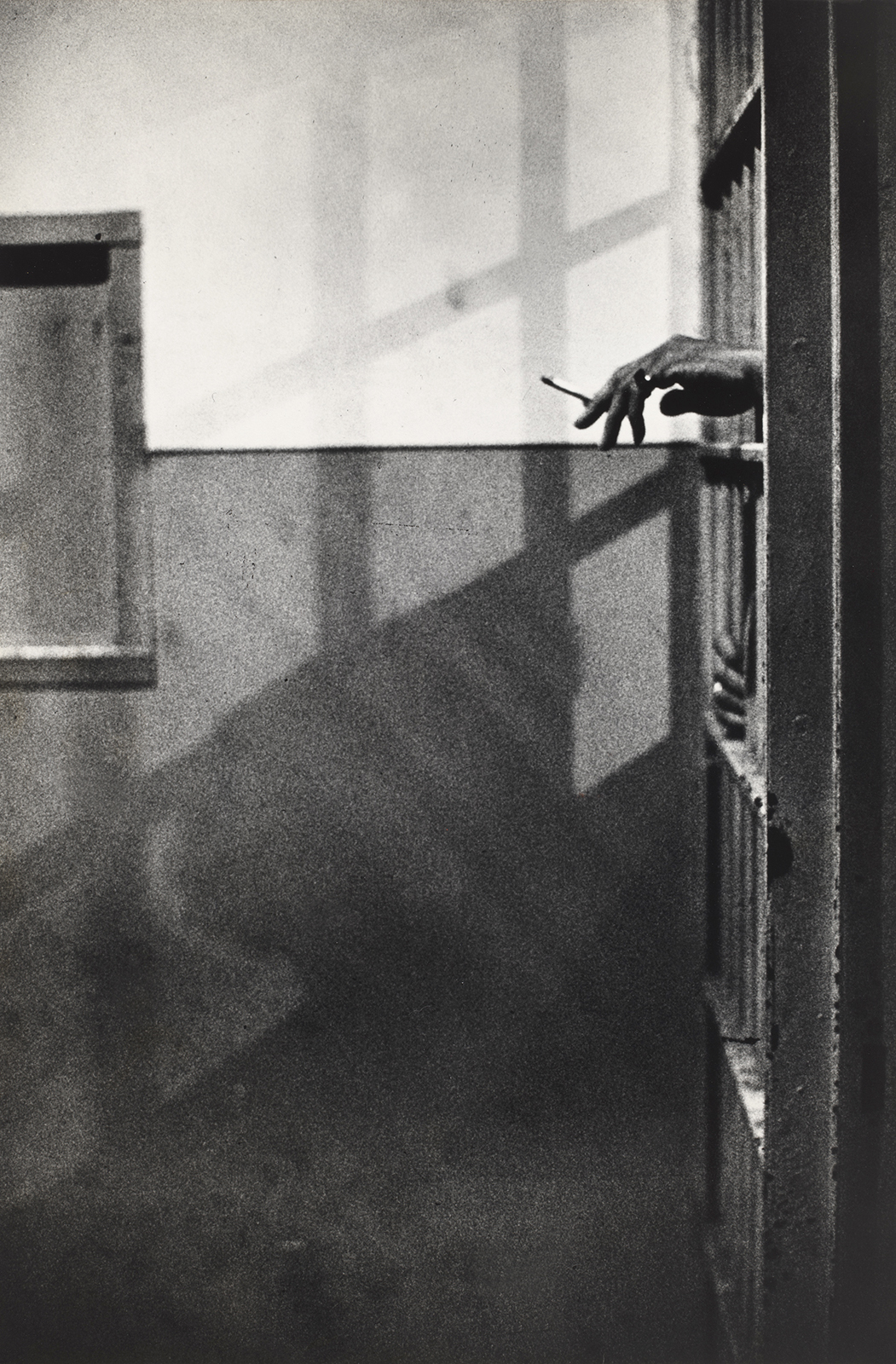
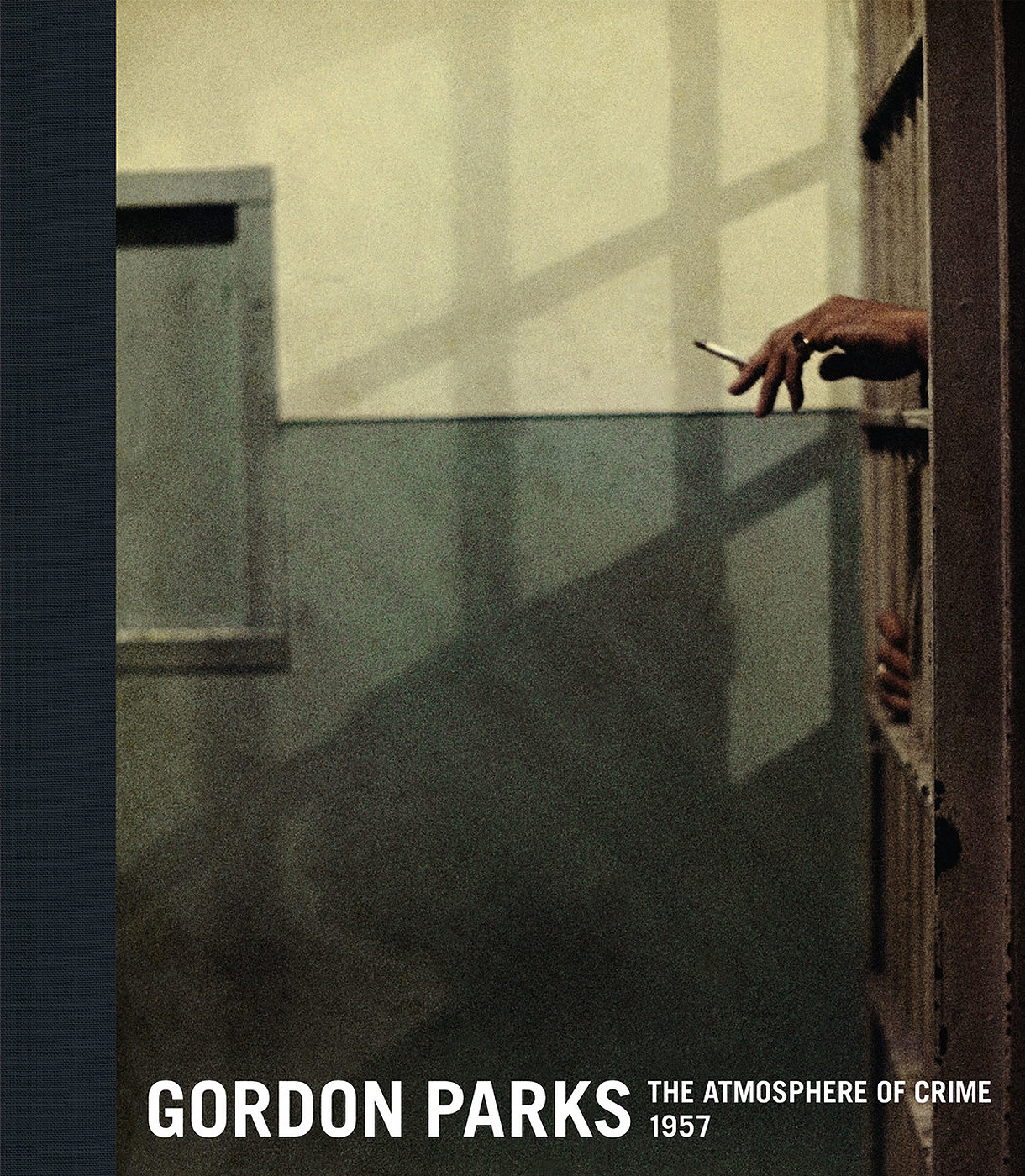
Wonderful to see the layout of the Life Magazine photo essay as well. Notice how Raiding Detectives, Chicago, Illinois is cropped claustrophobically tight, giving little sense of the passage of the tenement. Similarly, the hand and cigarette in Untitled, Chicago, Illinois (cover for the new book about the series), is bound by the cropping and shadows. Other images from the shoots Drug Search, Chicago, Illinois and Untitled, San Quentin, California are also used, expanding the context of the scene.

His photographs “give shape to the ground against which poverty, addiction, and race become criminalised,” allowing “Life’s readers to see the complexity of these chronically oversimplified situations.” They also enable us to enter a liminal space, where we feel both the mundane horror and specular beauty of life in medias res.

Dr Marcus Bunyan


Many thankx to the Museum of Modern Art for allowing me to publish some of the photographs in the posting. Please click on the photographs for a larger version of the image.


Gordon Parks (American, 1912-2006) 'Untitled, Chicago, Illinois' 1957 from Gordon Parks' "The Atmosphere of Crime" 1957


Gordon Parks (American, 1912-2006)
Untitled, Chicago, Illinois
1957
Pigmented inkjet print, printed 2019
11 7/8 x 17 15/16″ (30.1 x 45.6cm)
The Museum of Modern Art, New York. The Family of Man Fund
© The Gordon Parks Foundation


Gordon Parks (American, 1912-2006) 'Untitled, Chicago, Illinois' 1957 from Gordon Parks' "The Atmosphere of Crime" 1957


Gordon Parks (American, 1912-2006)
Untitled, Chicago, Illinois
1957
Pigmented inkjet print, printed 2019
13 3/4 x 21″ (35 x 53.3cm)
The Museum of Modern Art, New York. The Family of Man Fund
© The Gordon Parks Foundation


Gordon Parks (American, 1912-2006) 'Raiding Detectives, Chicago, Illinois' 1957


Gordon Parks (American, 1912-2006)
Raiding Detectives, Chicago, Illinois
1957
Pigmented inkjet print, printed 2019
11 7/8 x 17 15/16″ (30.1 × 45.6cm)
The Museum of Modern Art, New York. The Family of Man Fund
© The Gordon Parks Foundation


MoMA Acquires 56 Photographs from Gordon Parks’s Groundbreaking 1957 Series “The Atmosphere of Crime”

The Museum of Modern Art has acquired 56 prints from American artist Gordon Parks’s series of colour photographs made in 1957 for a Life magazine photo essay titled “The Atmosphere of Crime.” The Museum and The Gordon Parks Foundation collaborated closely on the selection of 55 modern colour prints that MoMA purchased from the Foundation, and the Foundation has also given the Museum a rare vintage gelatin silver print (a companion to a print Parks himself gave the Museum in 1993). A generous selection of these prints will go on view in May 2020 as part of the first seasonal rotation of the Museum’s newly expanded and re-envisioned collection galleries. The collection installation Gordon Parks and “The Atmosphere of Crime” will be located on the fourth floor, with Parks’s work as an anchor for exploring representations of criminality in photography, with a particular focus on work made in the United States.

One of the preeminent photographers of the mid-20th century, Gordon Parks (1912-2006) left behind a body of work that documents American life and culture from the early 1940s to the 2000s. Born in Fort Scott, Kansas, Parks worked as a youth in St. Paul, Minnesota, before discovering photography in 1937. He would come to view it as his “weapon of choice” for attacking issues including race relations, poverty, urban life, and injustice. After working for the US government’s Farm Security Administration in the early 1940s, Parks found success as a fashion photographer and a regular contributor to Ebony, Fortune, Glamour, and Vogue before he was hired as the first African American staff photographer at Life magazine in 1948.

In 1957, Life assigned Parks to photograph for the first in a series of articles addressing the perceived rise of crime in the US. With reporter Henry Suydam, Parks traversed the streets of New York, Chicago, Los Angeles, and San Francisco, producing a range of evocative colour images, 12 of which were featured in the debut article, “The Atmosphere of Crime,” on September 9, 1957. Parks’s empathetic, probing views of crime scenes, police precincts, hospitals, morgues, and prisons do not name or identify “the criminal,” but instead give shape to the ground against which poverty, addiction, and race become criminalised. Shot using available light, Parks’s atmospheric photographs capture mysterious nocturnal activity unfolding on street corners and silhouetted figures with raised hands in the murky haze of a tenement hallway.

A robust selection from this acquisition will anchor a display within a fourth-floor collection gallery, titled Gordon Parks and “The Atmosphere of Crime.” Using Parks’s work as a point of departure, the installation will draw from a range of other works in the Museum’s collection, offering varied representations of crime and criminality. Since the 1940s, the Museum has collected and exhibited photographs of crime as represented in newspapers and tabloids, exemplified by the dramatic, flash-lit work of Weegee, complemented by 19th-century precedents such as mug shots, whose purported objectivity was expected to facilitate the identification of criminals, as well as acquisitions across media that point to subsequent investigations and more contemporary concerns.

While Parks’s work was first displayed at MoMA in 1948, and was included in the landmark exhibition The Family of Man in 1955, it wasn’t until 1993 that five of his photographs were approved for the Museum’s collection (including a large-scale gelatin silver print from the 1957 series on crime mentioned above). The Museum has since supported the acquisition of additional vintage prints in 2011 and 2014 (including Harlem Newsboy, currently on view on the Museum’s fifth floor).

“As an artist of the highest order and a passionate advocate for civil rights, Parks made iconic photographs that continue to speak poignantly to the complexity of cultural politics and racial bias in the United States,” said Sarah Meister, curator in MoMA’s Department of Photography. “This acquisition substantially improves the Museum’s holdings of Gordon Parks’s achievement, reflecting our commitment to the artist and fostering the possibility of situating his work within a broad range of contemporary concerns. His enduring impact on the history of photography and representation cannot be overstated.”

“MoMA’s acquisition reinforces the significance of Gordon Parks as an artist whose practice continues to inspire future generations,” said Peter W. Kunhardt, Jr., executive director of The Gordon Parks Foundation. “Parks knew that his camera could be a powerful weapon, more potent than violence, and that pictures and words could further social change. The Atmosphere of Crime series remains as timeless and relevant today as when the photographs were made more than 50 years ago.”

Sarah Meister has also collaborated on The Gordon Parks Foundation’s forthcoming publication Gordon Parks: The Atmosphere of Crime, 1957, to be published by Steidl in spring 2020. The book’s expansive selection of never-before-published photographs from Parks’s original reportage was selected and sequenced by Meister, and her illustrated text situates this critically important photo essay within both Parks’s career and historic representations of crime and criminality. Other contributors include Bryan Stevenson, founder of the Equal Justice Initiative and author of Just Mercy (Spiegel & Grau, 2014), and Nicole Fleetwood, Professor of American studies and art history at Rutgers University and author of Marking Time: Art in the Age of Mass Incarceration (Harvard University Press, 2020). The book also features a foreword by MoMA’s director Glenn D. Lowry and The Gordon Parks Foundation’s executive director, Peter W. Kunhardt, Jr.

Press release from MoMA


Gordon Parks (American, 1912-2006) 'Drug Search, Chicago, Illinois' 1957


Gordon Parks (American, 1912-2006)
Drug Search, Chicago, Illinois
1957
Pigmented inkjet print, printed 2019
11 7/8 x 17 15/16″ (30.1 × 45.6cm)
The Museum of Modern Art, New York. The Family of Man Fund
© The Gordon Parks Foundation


Gordon Parks (American, 1912-2006) '"Wrong Place at the Wrong Time," Chicago, Illinois' 1957


Gordon Parks (American, 1912-2006)
“Wrong Place at the Wrong Time” Chicago, Illinois
1957
Pigmented inkjet print, printed 2019
The Museum of Modern Art, New York. The Family of Man Fund
© The Gordon Parks Foundation


Gordon Parks (American, 1912-2006) 'Untitled, San Quentin, California' 1957


Gordon Parks (American, 1912-2006)
Untitled, San Quentin, California
1957
Pigmented inkjet print, printed 2019
11 7/8 x 17 15/16″ (30.1 x 45.6cm)
The Museum of Modern Art, New York. The Family of Man Fund
© The Gordon Parks Foundation


Gordon Parks (American, 1912-2006) 'Detectives Grilling a Suspect, Chicago, Illinois' 1957


Gordon Parks (American, 1912-2006)
Detectives Grilling a Suspect, Chicago, Illinois
1957
Pigmented inkjet print, printed 2019
The Museum of Modern Art, New York. The Family of Man Fund
© The Gordon Parks Foundation


Gordon Parks (American, 1912-2006) 'Knifing Victim I, Chicago, Illinois' 1957


Gordon Parks (American, 1912-2006)
Knifing Victim I, Chicago, Illinois
1957
Pigmented inkjet print, printed 2019
The Museum of Modern Art, New York. The Family of Man Fund
© The Gordon Parks Foundation


When Life magazine asked Gordon Parks to illustrate a recurring series of articles on crime in the United States in 1957, he had already been a staff photographer for nearly a decade, the first African American to hold this position. Parks embarked on a six-week journey that took him and a reporter to the streets of New York, Chicago, San Francisco and Los Angeles. Unlike much of his prior work, the images made were in colour. The resulting eight-page photo-essay “The Atmosphere of Crime” was noteworthy not only for its bold aesthetic sophistication, but also for how it challenged stereotypes about criminality then pervasive in the mainstream media. They provided a richly-hued, cinematic portrayal of a largely hidden world: that of violence, police work and incarceration, seen with empathy and candour.

Parks rejected clichés of delinquency, drug use and corruption, opting for a more nuanced view that reflected the social and economic factors tied to criminal behaviour and a rare window into the working lives of those charged with preventing and prosecuting it. Transcending the romanticism of the gangster film, the suspense of the crime caper and the racially biased depictions of criminality then prevalent in American popular culture, Parks coaxed his camera to do what it does best: record reality so vividly and compellingly that it would allow Life‘s readers to see the complexity of these chronically oversimplified situations. The Atmosphere of Crime, 1957 includes an expansive selection of never-before-published photographs from Parks’ original reportage.

Co-published with The Gordon Parks Foundation and The Museum of Modern Art. Text by Nicole Fleetwood and Bryan Stevenson.

Text from the Steidl website [Online] Cited 16/02/2020


Gordon Parks (American, 1912-2006) 'Narcotics Addict, Chicago, Illinois' 1957


Gordon Parks (American, 1912-2006)
Narcotics Addict, Chicago, Illinois
1957
Pigmented inkjet print, printed 2019
The Museum of Modern Art, New York. The Family of Man Fund
© The Gordon Parks Foundation


Gordon Parks (American, 1912-2006) 'Police Bring in Victim, Chicago, Illinois' 1957


Gordon Parks (American, 1912-2006)
Police Bring in Victim, Chicago, Illinois
1957
Pigmented inkjet print, printed 2019
The Museum of Modern Art, New York. The Family of Man Fund
© The Gordon Parks Foundation


Gordon Parks (American, 1912-2006) 'Shooting Victim in Cook County Morgue, Chicago, Illinois' 1957


Gordon Parks (American, 1912-2006)
Shooting Victim in Cook County Morgue, Chicago, Illinois
1957
Pigmented inkjet print, printed 2019
The Museum of Modern Art, New York. The Family of Man Fund
© The Gordon Parks Foundation


Gordon Parks' photo essay 'The Atmosphere of Crime' in 'Life Magazine', September 9, 1957

Gordon Parks' photo essay 'The Atmosphere of Crime' in 'Life Magazine', September 9, 1957

Gordon Parks' photo essay 'The Atmosphere of Crime' in 'Life Magazine', September 9, 1957

Gordon Parks' photo essay 'The Atmosphere of Crime' in 'Life Magazine', September 9, 1957

Gordon Parks' photo essay 'The Atmosphere of Crime' in 'Life Magazine', September 9, 1957


Gordon Parks’ photo essay The Atmosphere of Crime in Life Magazine September 9, 1957


Gordon Parks (American, 1912-2006) 'Untitled, Chicago, Illinois' 1957


Gordon Parks (American, 1912-2006)
Untitled, Chicago, Illinois
1957
Gelatin silver print
19 1/4 x 13″ (48.9 × 33cm)
The Museum of Modern Art, New York. Gift of the Gordon Parks Foundation
© The Gordon Parks Foundation


'The Atmosphere of Crime, 1957' (cover)


The Atmosphere of Crime, 1957 (cover)
Text by Nicole Fleetwood and Bryan Stevenson
Series edited by Peter W. Kunhardt, Jr.
Edited by Sarah Hermanson Meister
168 pages, 70 images
Hardback / Half-linen
25 x 29cm
English
ISBN 978-3-95829-696-1
Published Spring 2020


The Museum of Modern Art
11 West 53 Street
New York, NY 10019
Phone: (212) 708-9400

Opening hours:
10.30am – 5.30pm
Open seven days a week
Museum of Modern Art website

LIKE ART BLACK ON FACEBOOK

Back to top

Exhibition: ‘Dressing up: clothing and camera’ at the Monash Gallery of Art, Wheelers Hill, Melbourne

Exhibition dates: 23rd November, 2019 – 9th February, 2020

Curator: Gareth Syvret

Artists: Gordon Bennett, Polly Borland, Pat Brassington, Eric Bridgeman, Jeff Carter, Nanette Carter, Jack Cato, Zoë Croggon, Sharon Danzig, Rennie Ellis, Elizabeth Gertsakis, Christine Godden, Alfred Gregory, Craig Holmes, Tracey Moffatt, Derek O’Connor, Jill Orr, Deborah Paauwe, David Rosetzky, Damien Shen, Wesley Stacey, Christian Thompson, Lyndal Walker, Justene Williams, Anne Zahalka.


Installation view of the exhibition 'Dressing Up' at the Monash Gallery of Art, Melbourne showing at centre right, Deborah Paauwe's 'Foreign body' (2004)


Installation view of the exhibition Dressing Up at the Monash Gallery of Art, Melbourne showing at centre right, Deborah Paauwe’s Foreign body (2004)
Photo: Marcus Bunyan


Making an appearance

There are some stimulating and challenging works in this first exhibition curated by new MGA Associate Curator Gareth Syvret, who was parachuted into the project at the last moment. The curator has pulled together work that examines the complex interweaving of “cultural scenarios,” “interpersonal scripts,” and “intrapsychic scripts” that ground how the camera, and the photographer, picture our relationship to dressing up… and how we see ourselves pictured by the camera.

In various ways, the works interrogate how clothes (or the lack of them) reinforce the postmodern fragmentation of the individual or group, the self being decentred and multiple, as when we change from work clothes, to drag, to leather, to wearing our footy beanie and scarf… and how these e/facements, these everyday performances (for that is what they are), camouflage or reveal our “true” nature. Do we dress up to fit in (to a tribe or group, or representation), or do we rebel against the status quo, as did that enfant terrible who refused all categorisation throughout his life, the Australian fashion pioneer Leigh Bowery. How do we turn our face towards, or away from, the camera? (turning away is a re/action to the power of representation, even if a negative one)

Firstly we must recognise that “cultural forms do not have single determinate meanings – people make sense of them in different ways, according to the cultural (including sub-cultural) codes available to them.” And secondly, we must acknowledge that, “the analysis of images always needs to see how any given instance is embedded in a network of other instances”1 through intertexuality – where we, reality, our representation, and the image, are just nodes within a network whose unity is variable and relative.
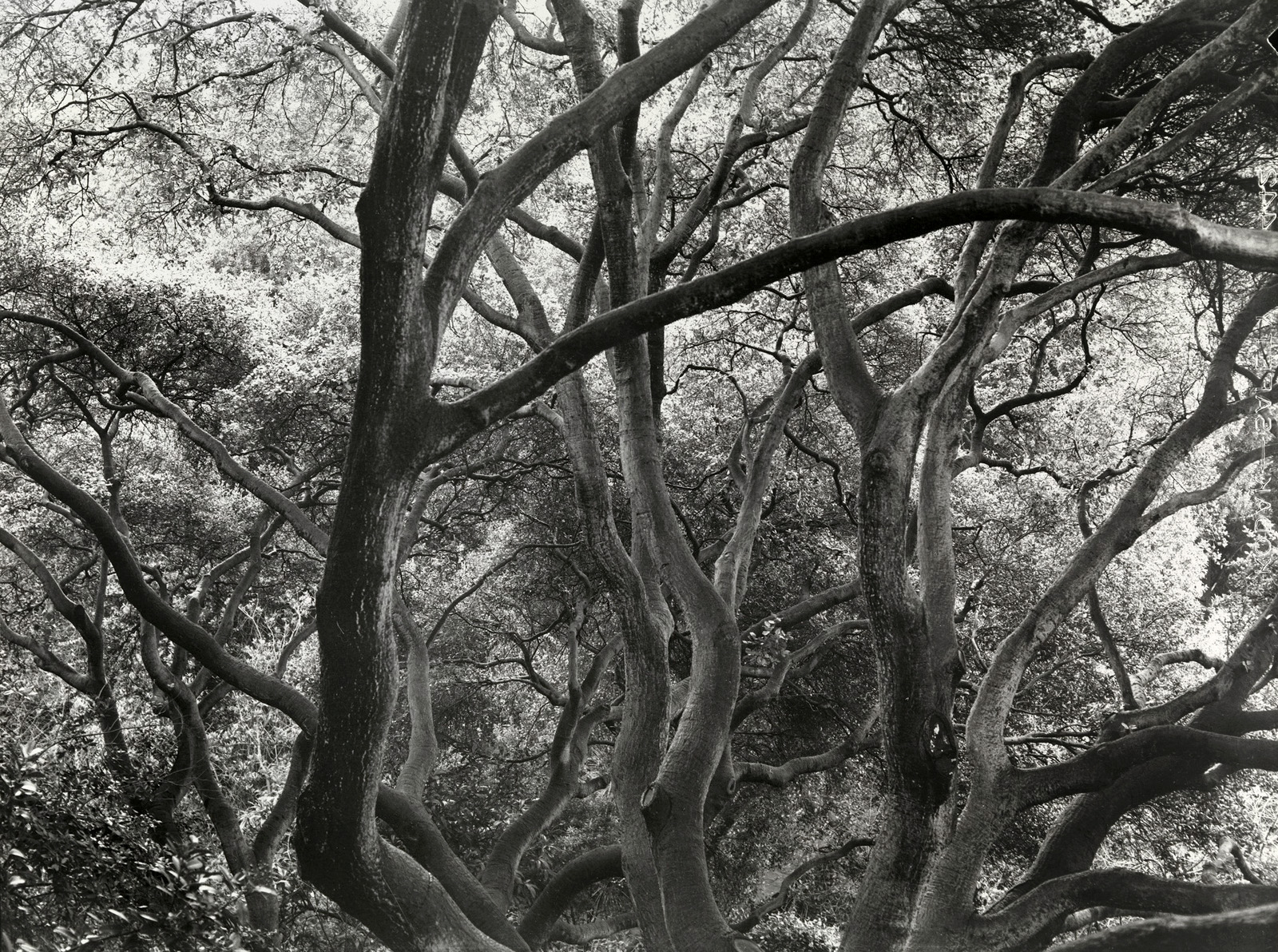
“Critical to understanding the construction of these constantly shifting networks in contemporary society are the concepts of weaving and intertexuality. Intertextuality is the concept that texts do not live in isolation, ‘caught up as they are in a system of references to other books, other texts, other sentences: it is a node within a network… Its unity is variable and relative’ (Foucault, 1973). In other words the network is decentred and multiple allowing the possibility of transgressive texts or the construction of a work of art through the techniques of assemblage [Deleuze and Guattari] – a form of fluid, associative networking that is now the general condition of art production.”2

This weaving of surfaces disrupts histories and memories that are already narrativised, already textualised. It disrupts this marking, the continual reiteration of norms, by weaving a lack of fixity into objects, namely how we see ourselves, how we pictures ourselves. Through dress, and the camera, through a constant process of reconceptualisation of space and matter, we can redefine the significations of the body of the animal in the fold of inscription, through a process of materialisation. The production of this materialisation (the matériel, or arms, of sartorial elegance) – of this signified – is open to struggle, the simulation “by virtue of its being referent-free invites a reading of a different order: it is a perpetual examination of the code.”3 A code which, Julia Kristeva notes, is not simply the product of a single author, but of its relationship to other texts and to the structures of language itself. “[A]ny text,” she argues, “is constructed of a mosaic of quotations; any text is the absorption and transformation of another.”4 And this is what is happening in this exhibition – work, and images, which are a mosaic of quotations fighting over unity and fragmentation, reality and representation… and the construction of identity.

What this exhibition, and this materialisation, does not, and cannot answer, is the critical question: why do we dress up in the first place? What is the overriding reason for this ritualistic, performative enactment, this action, which happens time after time, day after day. And what is that face that we present to the camera during this performance? As Roland Barthes lucidly observes in Camera Lucida, “The PORTRAIT-PHOTOGRAPH is a closed field of forces. Four image-repertoires intersect here, oppose and distort each other. In front of the lens, I am at the same time: the one I think I am, the one I want others to think I am, the one the photographer thinks I am, and the one he makes use of to exhibit his art.”5

So, who I am?

Dr Marcus Bunyan


1/ Dyer, Richard. The Matter of Images: Essays on Representations. London: Routledge, 1993, pp. 2-3

2/ Foucault, Michel cited in Thumlert, Kurt. Intervisuality, Visual Culture, and Education. Nd [Online] Cited 01/04/2011 no longer available online

3/ Tseëlon, E. The Masque of Femininity: The Representation of Women in Everyday Life. London: Sage, 1995, pp. 128-130

4/ Kristeva, Julia. “Word, Dialog and Novel”, in Moi, Toril (ed.,). The Kristeva Reader, New York: Columbia University Press, 1986, p, 37 quoted in Keep, Christopher; McLaughlin, Tim and Parmar, Robin. “Intertextuality,” on The Electronic Labyrinth website [Online] Cited 07/02/2020

5/ Barthes, Roland. Camera Lucida, London, 1984, p. 13


Many thankx to Monash Gallery of Art for allowing me to publish the photographs in the posting. All installation photographs © Marcus Bunyan proceed in a clockwise order around the exhibition. Please click on the photographs for a larger version of the image.


Dress and clothing are so much a part of the way people present themselves to the camera and this subject provides a strong theme through which to explore MGA’s extraordinary collection. Some photographs in the exhibition are well known, others have not previously been shown. All are equally compelling in showing the way photographers record and manipulate dress to tell their stories.


Gareth Syvret, MGA Associate Curator


As cultural hybrids, images are used as if they simultaneously block and unveil truth, reality, ways of seeing and understanding.


Ron Burnett. Cultures of Vision: Images, Media, & the Imaginary. Bloomington: Indiana University Press, 1995, p. 237


The meanings of clothes may usefully be divided into two types, ‘denotation’ and ‘connotation’, each working in its own way on its own level. … Denotation is sometimes called a first order of signification or meaning. It is the literal meaning of a word or image… Connotation is sometimes called a second order of signification or meaning. It may be described as the things that the word to the image makes a person think or feel, or as the associations that a word or an image has for someone…


Barnard, Malcolm. Fashion as Communication. London: Routledge, 1996


Installation view of the exhibition 'Dressing Up' at the Monash Gallery of Art, Melbourne

Installation view of the exhibition 'Dressing Up' at the Monash Gallery of Art, Melbourne showing Deborah Paauwe's 'Foreign body' (2004)

Installation view of the exhibition 'Dressing Up' at the Monash Gallery of Art, Melbourne showing Gordon Bennett's 'Self-portrait (Nuance II)' (1994)

Installation view of the exhibition 'Dressing Up' at the Monash Gallery of Art, Melbourne

Installation view of the exhibition 'Dressing Up' at the Monash Gallery of Art, Melbourne with at left, Gordon Bennett's 'Self-portrait (Nuance II)' (1994) and at right, Deborah Paauwe's 'Foreign body' (2004)


Installation views of the exhibition Dressing Up at the Monash Gallery of Art, Melbourne with at left in the bottom image, Gordon Bennett’s Self-portrait (Nuance II) (1994) and at right, Deborah Paauwe’s Foreign body (2004)
Photos: Marcus Bunyan


Gordon Bennett (Australian, 1955-2014) 'Self-portrait (Nuance II)' 1994 from the exhibition 'Dressing up: clothing and camera' at the Monash Gallery of Art, Wheelers Hill, Melbourne, November 2019 - February 2020


Gordon Bennett (Australian, 1955-2014)
Self-portrait (Nuance II)
1994
Gelatin silver prints
50.8 x 40.6cm (each)
Photographer: Leanne Bennett
Monash Gallery of Art, City of Monash Collection acquired 1995
Courtesy of the Estate of Gordon Bennett and Sutton Gallery (Melbourne)


Gordon Bennett’s Self -portrait (nuance II) performance was staged for the camera rather than a live audience. The artist prepared for the performance by painting his face with polyvinyl acetate glue. The process of peeling away the pale skin, created by the dry glue, was then documented in a series of photographs. This work is a subtle critique of simplistic oppositions between people who have light skin and people who have dark skin. Bennett discovered that he was of Aboriginal descent when he was 11 years old, but he resisted identifying as an Indigenous Australian for another 20 years. Conceived as a self-portrait, this work alludes to Bennett’s own process of ‘coming out’ as an Aboriginal man; removing his white mask. But, rather than representing this process in terms of a simple opposition, the photographs emphasise the nuanced ambiguities and transitory nature of identity.


Deborah Paauwe (Australian, b. 1972) 'Foreign body' 2004 from the exhibition 'Dressing up: clothing and camera' at the Monash Gallery of Art, Wheelers Hill, Melbourne, November 2019 - February 2020


Deborah Paauwe (Australian, b. 1972)
Foreign body
2004
From the series Chinese whispers
Chromogenic print
120 x 120cm
Monash Gallery of Art, City of Monash Collection acquired 2004
Courtesy of the artist, GAGPROJECTS Greenaway Art Gallery (Adelaide) and Michael Reid (Sydney)


Deborah Paauwe’s photographs are loaded and coded psychosexual puzzles. In this photograph Foreign body, who are the subjects and what is their relation? What is the nature of the embrace Paauwe concocts: eroticism or comfort? In their opposition as clothed and naked Paauwe’s models perform a drama, on desire, for the camera in which dress is figured as a method for revealing or concealing the body as the border between eye and flesh.


Installation view of the exhibition 'Dressing Up' at the Monash Gallery of Art, Melbourne showing at left, Eric Bridgeman's 'Woman from settlement with boobs' (2010) and at right, two photographs from Tracey Moffatt's series 'Scarred for life'


Installation view of the exhibition Dressing Up at the Monash Gallery of Art, Melbourne showing at left, Eric Bridgeman’s Woman from settlement with boobs (2010) and at right, two photographs from Tracey Moffatt’s series Scarred for life
Photo: Marcus Bunyan


Installation view of the exhibition 'Dressing Up' at the Monash Gallery of Art, Melbourne showing two photographs from Tracey Moffatt's series 'Scarred for life'


Installation view of the exhibition Dressing Up at the Monash Gallery of Art, Melbourne showing two photographs from Tracey Moffatt’s series Scarred for life
Photo: Marcus Bunyan


Tracey Moffatt (Australian, b. 1960) 'Job hunt' 1976 1994


Tracey Moffatt (Australian, b. 1960)
Job hunt
1976 1994
From the series Scarred for life
Off-set print
80 x 60cm
Monash Gallery of Art, City of Monash Collection acquired 1998
Courtesy of the artist and Roslyn Oxley9 Gallery (Sydney)


Scarred for life is a series of works based on true stories about traumatic childhood experiences. In response to each story, Moffatt has staged and photographed a scene that illustrates the tragic tale. The photographs have been made to look like snapshots from a family album, emphasising the everyday nature of the incidents and their ongoing significance as memories. The photographs have been presented in a way that mimics the format of the 1960s American magazine, Life, which was well known for publishing photo-essays in this captioned format. Moffatt often draws on the story-telling conventions of magazines, cinema and other popular forms of visual communication in ways that give her photographs a heightened sense of drama. In Job hunt the tension between the fictive nature of Moffatt’s artistry and the ordinariness of the subject’s dress as a schoolboy dramatises the everyday. This effect is explored further in The Wizard of Oz where the awkwardness of Moffatt’s casting of a boy in a dress as Dorothy in her own fiction is heightened by his father’s overblown gesture.


Installation view of the exhibition 'Dressing Up' at the Monash Gallery of Art, Melbourne showing at left, Christian Thompson's 'Gods and kings' (2015) and at right, Damien Shen's 'Ventral aspect of a male #1 and #2' (2014)

Installation view of the exhibition 'Dressing Up' at the Monash Gallery of Art, Melbourne showing at left, Christian Thompson's 'Gods and kings' (2015) and at right, Damien Shen's 'Ventral aspect of a male #1 and #2' (2014)

Installation view of the exhibition 'Dressing Up' at the Monash Gallery of Art, Melbourne showing at left, Christian Thompson's 'Gods and kings' (2015) and at right, Damien Shen's 'Ventral aspect of a male #1 and #2' (2014)


Installation views of the exhibition Dressing Up at the Monash Gallery of Art, Melbourne showing at left, Christian Thompson’s Gods and kings (2015) and at right, Damien Shen’s Ventral aspect of a male #1 and #2 (2014)
Photos: Marcus Bunyan


Christian Thompson (Australian / Bidjara, b. 1978) 'Gods and kings' 2015


Christian Thompson (Australian / Bidjara, b. 1978)
Gods and kings
2015
From the series Imperial relic
Chromogenic print
100.0 x 100.0cm
Monash Gallery of Art, City of Monash Collection acquired 2018
Courtesy of the artist and Michael Reid (Sydney + Berlin)


In this photograph by Christian Thompson the artist wears a makeshift hooded cape fashioned out of multiple maps of Australia charting different and conflicting Indigenous and colonial histories. The melding of these narratives through a careful but fragmented process of folding references the instrumentality of the map as a weapon of territoriality to challenge the idea of colonial power predicated on the designation of Australia as terra nullius. Describing his use of portraiture Thompson says, ‘I don’t think of them as being ‘myself’, because I think of my works as conceptual portraits. I’m really just the armature to layer ideas on top of … I really like the idea of wearing history, I like the idea of adorning myself in references to history.’ By wearing his cloak of maps, Thompson transfigures his body into a terrain where difficult histories are re-explored.


Damien Shen (Australian / Ngarrindjeri, b. 1976) 'Ventral aspect of a male #1' 2014


Damien Shen (Australian / Ngarrindjeri, b. 1976)
Ventral aspect of a male #1
2014
From the series On the fabric of the Ngarrindjeri body – volume II
Pigment ink-jet print
59.4 x 42.0cm
Photographer: Richard Lyons
Monash Gallery of Art, City of Monash Collection acquired 2016
Courtesy of the artists and MARS Gallery (Melbourne)


This work is from Shen’s series On the fabric of the Ngarrindjeri body – volume II (2014), which comprises 12 black-and-white photographs showing the artist and his uncle, a Ngarrindjeri elder known as Major Sumner. Across the series, the two subjects are shown from different angles, either together or individually. Their bodies have been painted in the traditional Ngarrindjeri way and they perform in front of the camera in a studio setting. While the majority of the images were taken in front of the studio backdrop, four of the images document Major Sumner ‘behind the scenes’.

This series is typical of Shen’s practice in that it explores his Indigenous identity and family history through portraiture. For Shen this series is extremely personal, as it documents his uncle sharing his cultural knowledge and experience with him. However, the series was also created to more broadly document Ngarrindjeri culture and the history of his ancestors. Furthermore, Shen’s use of a plain studio backdrop and sepia toning, along with his prosaic titles, directly reference 19th-century ethnographic portraiture, drawing attention to the history of the representation of Indigenous people. The candid backstage images are not sepia toned and have been juxtaposed with the staged portraits in a way that further highlights the artificiality of the studio setting.


Damien Shen (Australian / Ngarrindjeri, b. 1976) 'Ventral aspect of a male #2' 2014


Damien Shen (Australian / Ngarrindjeri, b. 1976)
Ventral aspect of a male #2
2014
From the series On the fabric of the Ngarrindjeri body – volume II
Pigment ink-jet print
59.4 x 42.0cm
Photographer: Richard Lyons
Monash Gallery of Art, City of Monash Collection acquired 2016
Courtesy of the artists and MARS Gallery (Melbourne)


Installation view of the exhibition 'Dressing Up' at the Monash Gallery of Art, Melbourne showing at left, Jill Orr's 'Lunch with the birds' (1979) and at centre, Zoë Croggon's 'Lucia' (2018) and at centre right, Justene Williams 'Blue foto' (2005)

Installation view of the exhibition 'Dressing Up' at the Monash Gallery of Art, Melbourne showing at left, Jill Orr's 'Lunch with the birds' (1979) and at centre, Zoë Croggon's 'Lucia' (2018) and at centre right, Justene Williams 'Blue foto' (2005)


Installation views of the exhibition Dressing Up at the Monash Gallery of Art, Melbourne showing at left, Jill Orr’s Lunch with the birds (1979) and at centre, Zoë Croggon’s Lucia (2018) and at centre right, Justene Williams Blue foto (2005)
Photos: Marcus Bunyan


Jill Orr (Australian, b. 1952) 'Lunch with the birds #3' 1979


Jill Orr (Australian, b. 1952)
Lunch with the birds #3
1979
Ink-jet print, printed 2007
Photographer: Elizabeth Campbell
30 x 44cm
Monash Gallery of Art, City of Monash Collection acquired 2008
Courtesy of the artist


Jill Orr’s Lunch with the birds performance took place on St Kilda beach on a wintery day in 1979. It was conceived as a shamanistic ritual that would provide an antidote to the junk food that is often thrown to scavenging seagulls. Dressed in her mother’s wedding gown, Orr lay on the beach surrounded by a meal of whole bread, fresh fish and pure grain, and waited for the birds to come and commune with her on the foreshore. Apart from the photographer Elizabeth Campbell, who had been commissioned to document the event, there was no human audience on the beach. Like other performances that Orr has enacted in the landscape, nature itself is the primary audience for this ritual. All the same, Orr is quite conscious of using photography to share the performance with gallery audiences. Working with the photographic documentation after the event, Orr composed the images as a narrative sequence (from which these works are taken) and presented them on black mount boards to suggest a filmstrip.


Zoë Croggon (Australian, b. 1989) 'Lucia' 2018


Zoë Croggon (Australian, b. 1989)
Lucia
2018
From the series Luce Rossa
Pigment ink-jet print
65 x 79cm
Monash Gallery of Art, City of Monash Collection acquired 2019
Courtesy of the artist and Daine Singer Gallery (Melbourne)


Zoë Croggon uses collage techniques to explore spatial relationships between the human form, architecture and the physical world. Her practice is informed by her experience of studying ballet and dance. In many of Croggon’s works, found photographs of the human body are cut out and re-placed, in tension, against surface and structure to explore the politics and poetics of space. For the series Lucia Rossa, the source materials are derived from Italian pornography, eroctica and fashion magazines. Although it is not overtly depicted, this work responds to the ways that the female body is ‘arranged, fragmented and presented for consumption…’ As such, ‘Lucia’ considers the condition of fabric, clothing and dress as a space for the body, laden with the politics of sexuality.


Installation view of the exhibition 'Dressing Up' at the Monash Gallery of Art, Melbourne showing at left, Justene Williams 'Blue foto' (2005) and at right, Christine Godden's photographs


Installation views of the exhibition Dressing Up at the Monash Gallery of Art, Melbourne showing at left, Justene Williams Blue foto (2005) and at right, Christine Godden’s photographs
Photo: Marcus Bunyan


Christine Godden (Australian, b. 1947) 'Untitled' 1976


Christine Godden (Australian, b. 1947)
Untitled
1976
Gelatin silver print
15.3 x 22.8cm
Monash Gallery of Art, City of Monash Collection acquired with the assistance of The Robert Salzer Foundation 2015
Courtesy of the artist


Christine Godden’s photographic work is a highly personal and poetic form of documentary practice, which is informed by a feminist interest in developing distinctly female perspectives on the world. Godden’s familiarity with the tradition of fine art photography in North America is evident in her commitment to high quality printing, which accentuates the sensuality of her subject matter. This photograph is from a body of Untitled works that was originally exhibited in 1976 at George Paton Gallery, Melbourne and the Australian Centre for Photography, Sydney. This tightly organised sequence of 44 photographs intended to show ‘how women see [and] how women think.’ The photographs present fragments or tightly cropped glimpses of textures and bodies (usually of women) that, with their combination of tenderness and formal rigour, take the appearance of being ‘female,’ while at the same time unpicking or unhinging the logic of a feminine imagery or style.


Christine Godden (Australian, b. 1947) 'Untitled' 1976


Christine Godden (Australian, b. 1947)
Untitled
1976
Gelatin silver print
15.3 x 22.8cm
Monash Gallery of Art, City of Monash Collection acquired with the assistance of The Robert Salzer Foundation 2015
Courtesy of the artist


Christine Godden (Australian, b. 1947) 'Untitled' 1976


Christine Godden (Australian, b. 1947)
Untitled
1976
Gelatin silver print
15.3 x 22.8cm
Monash Gallery of Art, City of Monash Collection acquired with the assistance of The Robert Salzer Foundation 2015
Courtesy of the artist


Installation view of the exhibition 'Dressing Up' at the Monash Gallery of Art, Melbourne showing at centre, Christine Godden's photographs; at right, David Rosetzky's photographs

Installation view of the exhibition 'Dressing Up' at the Monash Gallery of Art, Melbourne showing at left, Christine Godden's photographs; at middle left David Rosetzky's photographs; and at far right Sharon Danzig's 'No escape' (2004)


Installation views of the exhibition Dressing Up at the Monash Gallery of Art, Melbourne showing at left in the bottom image, Christine Godden’s photographs; at middle left David Rosetzky’s photographs; and at far right Sharon Danzig’s No escape (2004)
Photos: Marcus Bunyan


David Rosetzky (Australian, b. 1970) 'Hamish' 2004


David Rosetzky (Australian, b. 1970)
Hamish
2004
Chromogenic prints
50 x 61cm
Monash Gallery of Art, City of Monash Collection acquired 2005
Reproduction courtesy of the artist and Sutton Gallery (Melbourne)


This work by David Rosetzky is an early examples of cut-out and collaged photographic portraits that he has been producing periodically since 2004. To create these images, Rosetzky produces slick studio portraits of young models, referencing the style of photography prevalent in advertising and fashion magazines. He then layers a number of portraits on top of each other before hand-cutting sections to reveal parts of the underlying prints. Through this method of image making he seeks to represent the identity of his subjects as multi-layered, shifting and often concealed.


Installation view of the exhibition 'Dressing Up' at the Monash Gallery of Art, Melbourne

Installation view of the exhibition 'Dressing Up' at the Monash Gallery of Art, Melbourne

Installation view of the exhibition 'Dressing Up' at the Monash Gallery of Art, Melbourne showing at left, Sharon Danzig's 'No escape' (2004) and at right, the work of Pat Brassington

Installation view of the exhibition 'Dressing Up' at the Monash Gallery of Art, Melbourne showing at second left, Sharon Danzig's No escape (2004) and at right, the work of Pat Brassington


Installation views of the exhibition Dressing Up at the Monash Gallery of Art, Melbourne showing at second left in the bottom image, Sharon Danzig’s No escape (2004) and at right, the work of Pat Brassington
Photos: Marcus Bunyan


Installation view of the exhibition 'Dressing Up' at the Monash Gallery of Art, Melbourne showing work from Elizabeth Gertsakis' series 'Innocent reading for origin' (1987)

Installation view of the exhibition 'Dressing Up' at the Monash Gallery of Art, Melbourne showing work from Elizabeth Gertsakis' series 'Innocent reading for origin' (1987)

Installation view of the exhibition 'Dressing Up' at the Monash Gallery of Art, Melbourne showing work from Elizabeth Gertsakis' series 'Innocent reading for origin' (1987)


Installation views of the exhibition Dressing Up at the Monash Gallery of Art, Melbourne showing work from Elizabeth Gertsakis’ series Innocent reading for origin (1987)
Photos: Marcus Bunyan


Elizabeth Gertsakis. 'Innocent reading for origin' 1987


Elizabeth Gertsakis (Australian, b. 1954)
Innocent reading for origin
1987
Gelatin silver prints
74.0 x 48.5cm (each)
Monash Gallery of Art, City of Monash Collection acquired 1994
Courtesy of the artist


For the series Innocent reading for origin, Elizabeth Gertsakis uses photographs of her family taken at the time of their migration to Australia from Florina, Greece, her birthplace, when she was an infant. These photographs are presented with typescripts of her readings and observations about the photographs. As viewers we are witness to how the images form the artist’s words and, placed alongside them, how her words form the images. The dress of the people in the photographs is particularly significant for their interpretation and description and the ways that these images operate on the artist and the viewer. Gertsakis is concerned here with how photographs transmit memory and meaning in private and public. By shifting the format and scale of family photographs from shoebox to gallery wall, Gertsakis calls into question the status of the medium as vernacular and/or fine art.


Elizabeth Gertsakis. 'Innocent reading for origin' 1987


Elizabeth Gertsakis (Australian, b. 1954)
Innocent reading for origin
1987
Gelatin silver prints
74.0 x 48.5cm (each)
Monash Gallery of Art, City of Monash Collection acquired 1994
Courtesy of the artist


As necessity or luxury, to integrate or rebel, in freedom or oppression, dress is the nexus of selfhood. Photography and dress are forever entwined; from its inception in the 1840s one of photography’s main objectives has been the making of portraits. Clothing has been imaged by photographers ever since. In documentary mode, photography provides a record of the ways we dress and how clothing has changed over time. As an instrument of empire photography was used for the purpose of recording the dress and appearance of Indigenous people. Since the early twentieth century the practice of fashion photographers has posed body and garment to create brands and promote lifestyle choices to sell us the clothes we wear.

This exhibition draws together photographs from the MGA collection that feature dress or clothing as a significant element in their making. Some of the photographers included have produced works with documentary intent. For many, a classification of their practice is not so clear cut. These artists photograph dress, clothing and the body to actively question appearances. They use photography as a tactic for testing the nature of consumer culture, challenging social norms or protesting histories of colonisation and discrimination. Shaping and shaped by the individual, our clothes can conceal, reveal and transform who we are. Like the photographs in this exhibition they are the bearers of memory, emotion and time.

Text from the Monash Gallery of Art website [Online] Cited 22/12/2019


Installation view of the exhibition 'Dressing Up' at the Monash Gallery of Art, Melbourne showing the work of Polly Borland from her 'Bunny' series (2004-2005)


Installation view of the exhibition Dressing Up at the Monash Gallery of Art, Melbourne showing the work of Polly Borland from her Bunny series (2004-2005)
Photo: Marcus Bunyan


Polly Borland. 'Untitled XXIII' 2004-2005


Polly Borland (Australian, b. 1959)
Untitled XXIII
2004-2005
From the series Bunny
Chromogenic print, printed 2008
25.3 x 17.1cm
Monash Gallery of Art, City of Monash Collection acquired 2008
Courtesy of the artist and Murray White Room (Melbourne)


This photograph is from Polly Borland’s Bunny series, which consists of more than 50 images. Borland worked over an extended period of time in close collaboration with actress Gwendoline Christie as the subject of the photographs. The Bunny series plays upon the physicality of its model – who is extraordinarily tall – rendering tense, awkward and absurd poses. The surreal character of Bunny created through gestures of masking and dressing up acts as a darkly playful riposte to the objectification of the Playboy centrefold. Through a process of costuming explored between photographer and subject these images lampoon the fetishism of the glamour shot, supplanting it with their own fantasies both revealed and concealed.


Installation view of the exhibition 'Dressing Up' at the Monash Gallery of Art, Melbourne

Installation view of the exhibition 'Dressing Up' at the Monash Gallery of Art, Melbourne showing at left the work of Alfred Gregory, at centre the work of Jack Cato (1930s-1940s), and at right Lyndal Walker's Lachlan 'sprucing by the hearth' (2013) from the series 'Modern romance'


Installation views of the exhibition Dressing Up at the Monash Gallery of Art, Melbourne showing at left in the bottom image, the work of Alfred Gregory, at centre the work of Jack Cato (1930s-1940s), and at right Lyndal Walker’s Lachlan sprucing by the hearth (2013) from the series Modern romance.
Photo: Marcus Bunyan


Installation view of the exhibition 'Dressing Up' at the Monash Gallery of Art, Melbourne showing the work of Jeff Carter and Rennie Ellis

Installation view of the exhibition 'Dressing Up' at the Monash Gallery of Art, Melbourne showing the work of Jeff Carter and Rennie Ellis

Installation view of the exhibition 'Dressing Up' at the Monash Gallery of Art, Melbourne showing the work of Jeff Carter with at left 'Saturday arvo, Cronulla Beach' (1960) and 'Clan gathering, Wangaratta' (1955); and at right, Rennie Ellis' 'Richmond fans, Grand Final, MCG' (1974)


Installation views of the exhibition Dressing Up at the Monash Gallery of Art, Melbourne showing the work of Jeff Carter with at left in the bottom image: Saturday arvo, Cronulla Beach (1960) and Clan gathering, Wangaratta (1955); and at right, Rennie Ellis’ Richmond fans, Grand Final, MCG (1974)
Photos: Marcus Bunyan


Jeff Carter (Australian, 1928-2010) 'Saturday arvo, Cronulla Beach' 1960


Jeff Carter (Australian, 1928-2010)
Saturday arvo, Cronulla Beach
1960
Gelatin silver print
26.8 x 38.0cm
Monash Gallery of Art, City of Monash Collection acquired 1992
Courtesy of the artist


Jeff Carter (Australian, 1928-2010) 'Clan gathering, Wangaratta' 1955


Jeff Carter (Australian, 1928-2010)
Clan gathering, Wangaratta
1955
Gelatin silver print
29.1 x 31.9cm
Monash Gallery of Art, City of Monash Collection acquired 1992
Courtesy of the artist


Rennie Ellis (Australian, 1940-2003) 'Richmond fans, Grand Final, MCG' 1974


Rennie Ellis (Australian, 1940-2003)
Richmond fans, Grand Final, MCG
1974
Chromogenic print
26.7 x 40.7cm
Monash Gallery of Art, City of Monash Collection acquired 2007
Courtesy of the Rennie Ellis Photographic Archive (Melbourne)


This is one of the most famous photographs of the most important date in the Australian football calendar: Grand Final Day. Ellis turned his lens off the field onto the fans of the winning side on 28 September 1974, the Richmond Tigers. Ellis’s photograph encapsulates the centrality of clothing and colour to the tribalism of football fandom – in particular among ‘cheer squads’ – some of it official merchandise, some adapted or homemade. The image brilliantly exemplifies the unique ability of still photography to render human physicality and a moment in time.


Installation view of the exhibition 'Dressing Up' at the Monash Gallery of Art, Melbourne

Installation view of the exhibition 'Dressing Up' at the Monash Gallery of Art, Melbourne showing at left, Derek O'Connor's 'Untitled' (1981-1984) and at right, four Rennie Ellis photographs


Installation views of the exhibition Dressing Up at the Monash Gallery of Art, Melbourne showing at left in the bottom image, Derek O’Connor’s Untitled (1981-1984) and at right, four Rennie Ellis photographs (see below).
Photos: Marcus Bunyan


Rennie Ellis (Australian, 1940-2003) 'Confrontation, Gay Pride Week Picnic, Botanical Gardens' 1973


Rennie Ellis (Australian, 1940-2003)
Confrontation, Gay Pride Picnic, Botanic Gardens
1973
Selenium-toned gelatin silver print
22.8 x 34.3cm
Monash Gallery of Art, City of Monash Collection acquired 2016
Courtesy of the Rennie Ellis Photographic Archive (Melbourne)


Rennie Ellis (Australian, 1940-2003) 'Drag queens and security guard' 1973


Rennie Ellis (Australian, 1940-2003)
Drag queens and security guard
1973
Selenium-toned gelatin silver print
30 x 44cm
Monash Gallery of Art, City of Monash Collection acquired 2016
Courtesy of the Rennie Ellis Photographic Archive (Melbourne)


In 1973 the Australian Gay Liberation movement instigated a series of Gay Pride festivals in Adelaide, Brisbane, Melbourne and Sydney. This was a time when homosexual sex was classified as a criminal act across Australia, and the Gay Pride events sought to challenge these repressive laws and openly celebrate gay and lesbian culture in public spaces.

Rennie Ellis, one of the most prolific photojournalists of Australian society during the 1970s and 1980s, documented Melbourne’s Gay Pride Week with his characteristic warmth and candour. Commissioned to photograph the event for the National Review, Ellis captured everything from transgressive cross-dressers and camped up political banners to same-sex couples enjoying romantic interludes on the lawns of the Botanic Gardens.

Ellis made the only substantial visual record of Melbourne’s first gay and lesbian festival. These photographs show the importance of dress as a method for open expression of gay and queer identities. Since the making of these photographs, significant progress has been made on this issue, most notably with the Marriage Amendment (Definition and Religious Freedoms) Bill, 2017 providing equal rights to same sex couples. Continued work and education towards the eradication of discrimination on the basis of sexual orientation, however, remains imperative.


Installation view of the exhibition 'Dressing Up' at the Monash Gallery of Art, Melbourne showing at left, Derek O'Connor's 'Untitled' (1981-1984) and at right, two photographs by Wesley Stacey, both 'Untitled' (1973) from the series 'Friends'


Installation views of the exhibition Dressing Up at the Monash Gallery of Art, Melbourne showing at left, Derek O’Connor’s Untitled (1981-1984) and at right, two photographs by Wesley Stacey, both Untitled (1973) from the series Friends
Photo: Marcus Bunyan


Derek O'Connor (Australian born England, b. 1959) 'Untitled' 1981-1984 (installation view)


Derek O’Connor (Australian born England, b. 1959)
Untitled (installation view)
1981-1984
From the series Amata
Image 2 of a series of 4
Gelatin silver print
50.8 x 61.2cm
Monash Gallery of Art, City of Monash Collection acquired 2007
Courtesy of the artist
Photo: Marcus Bunyan


Derek O’Connor took this series of photographs in the early 1980s while he was living at Amata, an Aboriginal community situated in the Anangu Pitjantjatjara / Yankunyjatjara Lands in the far northwest of South Australia. They show a group of Aboriginal youths congregating around a campfire on the outskirts of the township, casually incorporating various elements of capitalist culture into their own communal space: second-hand ’70s clothing, a portable cassette player, a tin can with a Hans Heysen label, and petrol.

Photographs of this sort, which represent Aboriginal people as fringe-dwellers on the margins of White Australia, date back to the nineteenth century. Early examples of this genre typically cast Aboriginal people as a dying race, whose way of life was rapidly being undermined by the colonial regime. In O’Connor’s photographs, however, the Aboriginal youths personify a sense of persistent vitality, in spite of their circumstances. As O’Connor explains, ‘there is no self-pity or passive resignation in the way they face the camera. Their quiet defiance has a palpable sense of integrity.’


Monash Gallery of Art
860 Ferntree Gully Road, Wheelers Hill
Victoria 3150 Australia
Phone: + 61 3 8544 0500

Opening hours:
Tue – Fri: 10am – 5pm
Sat – Sun: 10pm – 4pm
Mon/public holidays: closed

Monash Gallery of Art website

LIKE ART BLART ON FACEBOOK

Back to top

Review: ‘Turning Points: Contemporary Photography from China’ at the National Gallery of Victoria, Melbourne

Exhibition dates: 22nd June, 2019 – 27th January, 2020


Installation view of the exhibition 'Turning Points: Contemporary Photography from China' at the National Gallery of Victoria, Melbourne


Installation view of the exhibition Turning Points: Contemporary Photography from China at the National Gallery of Victoria, Melbourne
Photo: Marcus Bunyan


Writing the body politic / broken

Ho hum, ho hum.

The exhibition Turning Points: Contemporary Photography from China at the National Gallery of Victoria is an extension of the 2008 exhibition Body Language: Contemporary Chinese Photography with many of the same photographs being shown again, with new additions to the collection.

Nothing much seems to have changed in the last 12 years. Contemporary Chinese photography still concentrates on limited narratives based around the performing body, the body positioned in time and space in relation to history, memory, tradition, culture and consumerism. What the “turning points” are in the title of this exhibition remains unclear. Turning points for who? The art, the artists, the stories they tell, or the restrictive nature of contemporary Chinese culture.

Certain things remain constant: an emphasis on the performing body, (its) theatrical style, (in) elaborate tableaux, contemporary consumer society, urban reconstruction, and tradition and change. The body is usually isolated against contextless backgrounds, free floating, paired with a rather stilted iconography derived from Chinese culture – coins, calligraphy, statues, spirits, tattoos as traditional historical painting, calligraphy, buildings, revolution – focusing on “the dismantling of tradition during a period of rampant consumerism and modernisation.”

Even while these artists apparently possess, “an urgent desire to explore individual and social identity in a time of unprecedented change … that reflect the tensions in Chinese society as the processes of social change meet traditional culture and expectations head-on”, no/body mentions the elephant in the room – the repressive and aggressive nature of the Chinese government, it’s suppression of dissent both internally and externally, its appalling human rights record and its expansionist policy in the South China Sea. The paradox is that while, “Hai Bo’s paired portraits illustrate the cultural shifts that have occurred over forty years as people in China have become increasingly able to show their individuality”, that individuality is closely controlled by the State. Step out of line, as many artists have found to their peril, and you are soon done for.

No mention here of the 1989 Tiananmen Square protests, the current democracy protests in Hong Kong, or the recently released report by Human Rights Watch (HRW) which contains a damning essay on China’s “global threat” to human rights. No other government “flexes its political muscles with such vigour and determination to undermine the international human rights standards and institutions that could hold it to account.” The HRW report cites a slew of violations ranging from the mass detention of Uyghur Muslims in the far-western autonomous region of Xinjiang, to increased censorship, to the use of technologies for mass surveillance and social control. Nothing to see here!

The work of most of the artists in this exhibition seems insular, inward looking – chained to the country’s past and present, memory and history, culture and its re/constitution. Addressing its constitution through supplication. Addressing the representation of institutional power in socialist regimes through images with heroic overtones. It’s almost as if these artists are painting symbols, painting a monosyllabic mythology of how their country was and is now with no turning point in sight. Parsing on ancient and modern to no great effect.

The only two artists who really lay it on the line, who confront the dragon, are Rong Rong’s photographs of a performance by artist Zhang Huan titled 12 square metres (1994, below) in which the artist sat naked, smeared in honey and fish oil in a local public toilet for an hour before cleansing himself in a polluted pond; and Sheng Qi’s Memories (Mother), Memories (Me) and Memories (Mao) (2000, below) in which the artist was deeply affected by the changed political climate following the Tiananmen Square protests of 1989 and uses his disfigurement “as the backdrop for a series of self-portraits that juxtapose his past and present.”

These are the photographs that I will remember. The others, stolid, prosaic, are lost.

Dr Marcus Bunyan


Many thankx to the National Gallery of Victoria for allowing me to publish the images in the posting. All installation images are © Dr Marcus Bunyan and the National Gallery of Victoria and proceed in a clockwise direction around the exhibition. Please click on the photographs for a larger version of the image.


Installation view of the exhibition 'Turning Points: Contemporary Photography from China' at the National Gallery of Victoria, Melbourne showing Cang Xin (Chinese, b. 1967) 'Six photographs from the Communication' series (1996-2006)


Installation view of the exhibition Turning Points: Contemporary Photography from China at the National Gallery of Victoria, Melbourne showing Cang Xin (Chinese, b. 1967) Six photographs from the Communication series (1996-2006)
Photo: Marcus Bunyan


Cang Xin (Chinese, b. 1967) 'Communication' 1996-2006 from the exhibition 'Turning Points: Contemporary Photography from China' at the National Gallery of Victoria, Melbourne, June 2019 - January 2020


Cang Xin (Chinese, b. 1967)
Communication
1996-2006
Type C photograph ed. 10/10
Gift of Larry Warsh, 2016
National Gallery of Victoria, Melbourne
© Courtesy of the artist


Cang Xin (Chinese, b. 1967) 'Communication' 1996-2006 from the exhibition 'Turning Points: Contemporary Photography from China' at the National Gallery of Victoria, Melbourne, June 2019 - January 2020


Cang Xin (Chinese, b. 1967)
Communication
1996-2006
Type C photograph ed. 10/10
Gift of Larry Warsh, 2016
National Gallery of Victoria, Melbourne
© Courtesy of the artist


Cang Xin is a celebrated performance artist who uses photography as an adjunct to his practice. In these photographs he is documenting a ritualistic performance in which he licks various objects that have a symbolic resonance for him. Each object has a link to China and its history, although those meanings remain intentionally obscured and subjective. The artist literally experiences the objects through a sense of taste and a physical action; the intimate act of licking becomes a gesture of communication or communion with the past.


Installation view of the exhibition 'Turning Points: Contemporary Photography from China' at the National Gallery of Victoria, Melbourne showing at left, Qiu Zhijie (Chinese, b. 1969) 'Tattoo no. 7' (1994); at second left, Rong Rong (Chinese, b. 1968) 'East Village Beijing no. 15' (1994); and at middle right, Zhang Huan (Chinese, b. 1965) 'Shanghai family tree' (2001)


Installation view of the exhibition Turning Points: Contemporary Photography from China at the National Gallery of Victoria, Melbourne showing at left, Qiu Zhijie (Chinese, b. 1969) Tattoo no. 7 (1994); at second left, Rong Rong (Chinese, b. 1968) East Village Beijing no. 15 (1994); and at middle right, Zhang Huan (Chinese, b. 1965) Shanghai family tree (2001)
Photo: Marcus Bunyan


Qiu Zhijie (Chinese, b. 1969) 'Tattoo no. 7' 1994


Qiu Zhijie (Chinese, b. 1969)
Tattoo no. 7
1994
From the Tattoo series 1994
Type C photograph, ed. 8/10
101.6 x 76.2cm
National Gallery of Victoria, Melbourne
Gift of Larry Warsh, 2016
© Courtesy of the artist


In his Tattoo series, Qui Zhijie overlays self-portraits with drawings, images and objects, such as the coins shown here. Discussing this series, he writes, ‘The Tattoo series focuses on the problematic relationship between an image and its background … In this series the two find common ground. The substance of the subject, the weight of the person, and the physicality of the figure all dissolve … This series is a response to the futility and drowning of the individual brought about by the onslaught of the Chinese media culture which began to develop during the 1990s’.


Rong Rong (Chinese, b. 1968) 'East Village Beijing no. 15' 1994


Rong Rong (Chinese, b. 1968)
East Village Beijing no. 15
1994
Gelatin silver photograph, coloured dyes
National Gallery of Victoria, Melbourne
Gift of Larry Warsh, 2016


Rong Rong is well known for his images that show the lives and activities of the avant-garde Beijing East Village artistic community during the 1990s. This photograph is one of a series created to document a famous performance by fellow artist Zhang Huan, during which Zhang covered his naked body with honey and fish oil and sat on a stool in a public toilet, allowing flies to swarm over his body. Rong Rong’s photographs, made throughout the performance, form a crucial record of this performative action that was intended to comment on the squalid conditions in which the artists were living.


Installation view of the exhibition 'Turning Points: Contemporary Photography from China' at the National Gallery of Victoria, Melbourne showing Zhang Huan (Chinese, b. 1965) 'Shanghai family tree' (2001)

Installation view of the exhibition 'Turning Points: Contemporary Photography from China' at the National Gallery of Victoria, Melbourne showing Zhang Huan (Chinese, b. 1965) 'Shanghai family tree' (2001)


Installation views of the exhibition Turning Points: Contemporary Photography from China at the National Gallery of Victoria, Melbourne showing Zhang Huan (Chinese, b. 1965) Shanghai family tree (2001)
Photos: Marcus Bunyan


Zhang Huan (Chinese, b. 1965) 'Shanghai family tree' 2001


Zhang Huan (Chinese, b. 1965)
Shanghai family tree
2001
Type C photographs ed. 25/25
National Gallery of Victoria, Melbourne
Purchased with funds donated by Jason Yeap and Min Lee Wong, 2008
© Zhang Huan Studio


The faces of the two young men and the young woman in Zhang Huan’s suite of nine photographs are used like the blank pages in a book carrying an increasingly oppressive weight of words. The Chinese characters inscribed on their faces gradually obliterate their features and identities. In the final photograph, the trio are shown in front of a new housing development in Shanghai. Their features are totally obscured, suggesting a parallel between the loss of personal identity and the rapid pace of development that is rendering the city unrecognisable.

In 1999 the internationally renowned Chinese performance and video artist, sculptor and photographer Zhang Huan wrote of his distinctive approach to his practice: ‘The body is the only direct way through which I come to know society and society comes to know me. The body is proof of identity. The body is language’. The complex tangle of history and tradition that can override the individual appears as a theme in much of Zhang Huan’s avant-garde performances and photographs and, as seen in this work, is frequently expressed through the use of language. In Shanghai family tree Zhang Huan (to the left) poses with a man and woman, their faces becoming increasingly obscured by Chinese characters. This work seems to suggest the importance of language which, while it can overwhelm the individual, undoubtedly also helps define a person’s relationship to society.


Installation view of the exhibition 'Turning Points: Contemporary Photography from China' at the National Gallery of Victoria, Melbourne showing two photographs from Zhuang Hui's 'One and Thirty' series (1996)

Installation view of the exhibition 'Turning Points: Contemporary Photography from China' at the National Gallery of Victoria, Melbourne Installation view of the exhibition 'Turning Points: Contemporary Photography from China' at the National Gallery of Victoria, Melbourne showing a photograph from Zhuang Hui's 'One and Thirty' series (1996)


Installation views of the exhibition Turning Points: Contemporary Photography from China at the National Gallery of Victoria, Melbourne showing two photographs from Zhuang Hui’s One and Thirty series (1996)
Photos: Marcus Bunyan


Zhuang Hui (Chinese, b. 1963) 'Untitled' 1996


Zhuang Hui (Chinese, b. 1963)
Untitled
1996
From the One and Thirty
Type C photograph, ed. 3/3
61.0 x 51.0cm
National Gallery of Victoria, Melbourne
Gift of Larry Warsh in honour of Tony Ellwood, Director NGV, 2018
© Courtesy of the artist


The series title of these photographs, One and Thirty, is didactic. There are ‘thirty’ portraits in the sequence and ‘one’ figure who appears in each image, the ever-smiling figure of the artist. Each photograph shows Zhuang Hui posed with an individual he has selected as the representative of a particular vocational or social group. In one of the works shown here Zhuang is photographed seated beside an older man holding a baby on his knee, a classic doting grandfather; in the other image he is photographed with a smartly dressed, young professional woman.


Wang Qingsong (Chinese, b. 1966) 'Standard family' 1996


Wang Qingsong (Chinese, b. 1966)
Standard family
1996
Type C photograph, ed. 8/30
48.2 x 124.4cm
National Gallery of Victoria, Melbourne
Gift of Larry Warsh, 2017
© Courtesy of the artist


Wang Jinsong’s Standard family project investigates contemporary Chinese culture and the effects of the one-child policy, which was introduced in China in the 1970s as a means of curbing population growth. Without any clear agenda or critical stance, Wang invited families to participate in photo shoots where the parents invariably elected to pose flanking their lone child. When the images are repeated and presented in a grid, the ‘standard’ nature of the family unit becomes evident, allowing for a reading of generic poses and expressions across the various families, and inviting speculation and commentary on the effects of collectivism when imposed on social structures.


Wang Qingsong (Chinese, b. 1966) 'Standard family' 1996 (detail)


Wang Qingsong (Chinese, b. 1966)
Standard family (detail)
1996
Type C photograph, ed. 8/30
48.2 x 124.4cm
National Gallery of Victoria, Melbourne
Gift of Larry Warsh, 2017
© Courtesy of the artist


Installation view of the exhibition 'Turning Points: Contemporary Photography from China' at the National Gallery of Victoria, Melbourne showing Qiu Zhijie's 'Standard Pose' series (1996-1998)

Installation view of the exhibition 'Turning Points: Contemporary Photography from China' at the National Gallery of Victoria, Melbourne showing Qiu Zhijie's 'Standard Pose' series (1996-1998)

Installation view of the exhibition 'Turning Points: Contemporary Photography from China' at the National Gallery of Victoria, Melbourne showing Qiu Zhijie's 'Standard Pose' series (1996-1998)


Installation views of the exhibition Turning Points: Contemporary Photography from China at the National Gallery of Victoria, Melbourne showing Qiu Zhijie’s Standard Pose series (1996-1998)
Photos: Marcus Bunyan


Qiu Zhijie (Chinese b. 1969) 'Fine series A' 1996-1998


Qiu Zhijie (Chinese b. 1969)
Fine series A
1996-1998
From the Standard Pose series 1996-1998
Type C photograph, ed. 9/10
58 x 61cm
National Gallery of Victoria, Melbourne Gift of Larry Warsh, 2016
© Courtesy of the artist


In common with many photographers working in China in the 1990s, Qiu Zhijie uses the performing body in his images. Throughout his career he has combined performance, video and photography to create works that explore ideas of history, individuality and identity in contemporary China. The four photographs from the Standard Pose series reference propaganda images produced during the Cultural Revolution and consider the failure of the future that they promised. Photographed in a simple studio setting and wearing contemporary clothes, the models, with their overly dramatic poses and facial expressions, appear comical rather than heroic.


Qiu Zhijie (Chinese b. 1969) 'Fine series C' 1996-1998


Qiu Zhijie (Chinese b. 1969)
Fine series C
1996-1998
From the Standard Pose series 1996-1998
Type C photograph, ed. 9/10
58 x 61cm
National Gallery of Victoria, Melbourne Gift of Larry Warsh, 2016
© Courtesy of the artist


Qiu Zhijie (Chinese b. 1969) 'Fine series C' 1996-1998


Qiu Zhijie (Chinese b. 1969)
Fine series D
1996-1998
From the Standard Pose series 1996-1998
Type C photograph, ed. 9/10
58 x 61cm
National Gallery of Victoria, Melbourne Gift of Larry Warsh, 2016
© Courtesy of the artist


Turning Points: Contemporary Photography from China explores the work of established and emerging photo-artists working in a time of rapid social and economic change.

In the 1990s, Chinese photography became one of the most dynamic and exciting areas in contemporary international art. Artists in China increasingly began to use photography to not only to document their lives but to question and challenge the status quo. The ‘first generation’ of contemporary Chinese artists included here – those born in the 1960s – examined the societal impact of the Cultural Revolution, and reflected on their own and their families’ personal experiences. The next generation of photographers, born in the 1980s and later, bring not only different life experience, having come of age in the twenty-first century, but are actively engaged with the global community in ways that were not possible in previous decades.

The works included in this exhibition offer commentaries on individuality and identity, cultural change, the transformation of Chinese cities, and the impact of consumerism and globalisation on contemporary society.

The National Gallery of Victoria began to collect contemporary Chinese photography in 2004, and in 2008 presented the exhibition Body Language: Contemporary Chinese Photography. Since that time the Gallery has continued to build this aspect of the collection.

More recently, in 2016 and 2017, the NGV photography collection was transformed through the generosity of Larry Warsh. An American collector, publisher and founder of AW Asia, a private organisation and exhibition space in New York, Warsh presented a suite of twenty-nine contemporary Chinese photographs as a gift to the Gallery. His donation comprises works by some of the most important Chinese photographic artists working in the 1990s and early 2000s, including Hong Lei, Rong Rong and Wang Qingsong. Warsh’s presentation effectively doubled the NGV’s holdings of contemporary Chinese photography, and this exhibition, which includes a number of works from this important gift, was made possible because of his generosity.

Text from the National Gallery of Victoria website [Online] Cited 23/12/2019


Installation view of the exhibition 'Turning Points: Contemporary Photography from China' at the National Gallery of Victoria, Melbourne showing at left, Wang Qingsong's 'City walls' (2002); at second left bottom Zhang Dali's '2001 42A' (2001) from the 'Demolition and Dialogue' series; at centre, Chi Peng's 'Apollo in transit' (2005); at centre right, Yang Yongliang's 'Eclipse' (2008); and at right Huang Yan's 'Chinese landscape – Tattoo' (1999)


Installation view of the exhibition Turning Points: Contemporary Photography from China at the National Gallery of Victoria, Melbourne showing at left, Wang Qingsong’s City walls (2002); at second left bottom Zhang Dali’s 2001 42A (2001) from the Demolition and Dialogue series; at centre, Chi Peng’s Apollo in transit (2005); at centre right, Yang Yongliang’s Eclipse (2008); and at right Huang Yan’s Chinese landscape – Tattoo (1999)
Photo: Marcus Bunyan


Installation view of the exhibition 'Turning Points: Contemporary Photography from China' at the National Gallery of Victoria, Melbourne showing Wang Qingsong's 'City walls' (2002)

Installation view of the exhibition 'Turning Points: Contemporary Photography from China' at the National Gallery of Victoria, Melbourne showing Wang Qingsong's 'City walls' (2002)


Installation views of the exhibition Turning Points: Contemporary Photography from China at the National Gallery of Victoria, Melbourne showing Wang Qingsong’s City walls (2002)
Photos: Marcus Bunyan


Wang Jinsong’s photograph shows aspects of the architecture and history of Beijing, drawing attention to the abandonment of time-honoured buildings, homes and ways of living. City walls comprises a grid of 360 images of buildings in Beijing. The great majority of the photographs are of generic concrete constructions, printed in a grey monotone. Interspersed among these are richly coloured images showing traditional architecture. The placement of the photographs in a grid creates an immediate visual link to the idiosyncratic brick construction of the older buildings, which are rapidly being replaced by new, uniform reinforced concrete structures.


Installation view of the exhibition 'Turning Points: Contemporary Photography from China' at the National Gallery of Victoria, Melbourne showing at top, Weng Fen's 'On the wall: Guangzhou (4)' (2002) and at bottom, Zhang Dali's '2001 42A' (2001)

Installation view of the exhibition 'Turning Points: Contemporary Photography from China' at the National Gallery of Victoria, Melbourne showing Weng Fen's 'On the wall: Guangzhou (4)' (2002)

Installation view of the exhibition 'Turning Points: Contemporary Photography from China' at the National Gallery of Victoria, Melbourne showing Zhang Dali's '2001 42A' (2001)


Installation views of the exhibition Turning Points: Contemporary Photography from China at the National Gallery of Victoria, Melbourne showing at top, Weng Fen’s On the wall: Guangzhou (4) (2002) and at bottom, Zhang Dali’s 2001 42A (2001)
Photos: Marcus Bunyan


Zhang Dali (Chinese, b. 1963) '2001 42A' 2001


Zhang Dali (Chinese, b. 1963)
2001 42A
2001
from the Demolition and dialogue series
type C photograph
63.5 × 114.0cm
National Gallery of Victoria, Melbourne
Gift of Larry Warsh, 2016
© Courtesy of the artist


This photograph, showing a partially demolished wall emblazoned with a large-scale painted outline of the artist’s head and his pseudonym, AK-47, brings together several aspects of the practice of multidisciplinary artist Zhang Dali. Zhang went into self-imposed exile from China in 1989 and when he returned to Beijing six years later, he found his home was in the midst of rapid change. Zhang wanted to protest the loss of traditional buildings, document the ruined remnants before they were swept away, and convey his sense of the loss of history and identity that was a consequence of those changes.


Installation view of the exhibition 'Turning Points: Contemporary Photography from China' at the National Gallery of Victoria, Melbourne showing Chi Peng's 'Apollo in transit' (2005)

Installation view of the exhibition 'Turning Points: Contemporary Photography from China' at the National Gallery of Victoria, Melbourne showing Chi Peng's 'Apollo in transit' (2005) (detail)


Installation views of the exhibition Turning Points: Contemporary Photography from China at the National Gallery of Victoria, Melbourne showing Chi Peng’s Apollo in transit (2005)
Photos: Marcus Bunyan


Chi Peng’s works often contain naked figures spiriting or running through ‘history’, while refusing any start or ending of their visual narrative. Unravelling like a traditional Chinese scroll, the red brick wall surrounding the Forbidden City extends the length of this digitally altered panoramic image. The artist has inserted repeat images of himself running left to right alongside the wall, in front of a variety of onlookers. A metaphor for East / West relations, this theatrical image brings together potent symbols of traditional and contemporary life in China.


Yongliang Yang (Chinese, b. 1980) 'Eclipse' 2008


Yongliang Yang (Chinese, b. 1980)
Eclipse
2008
From the On the quiet water, heavenly city series 2008
Inkjet print 73.0 x 200.0cm (image) 81.6 x 208.2cm (sheet)
National Gallery of Victoria, Melbourne
Presented by the Mering Corporation Pty Ltd through the Australian Government’s Cultural Gifts Program, 2012
© Yang Yongliang


Yongliang Yang (Chinese, b. 1980) 'Eclipse' 2008 (detail)


Yongliang Yang (Chinese, b. 1980)
Eclipse (detail)
2008
From the On the quiet water, heavenly city series 2008
Inkjet print 73.0 x 200.0cm (image) 81.6 x 208.2cm (sheet)
National Gallery of Victoria, Melbourne
Presented by the Mering Corporation Pty Ltd through the Australian Government’s Cultural Gifts Program, 2012
© Yang Yongliang


Yang Yongliang creates an optical illusion by combining elements of a traditional Chinese shānshuǐ (mountain-water) landscape painting with imagery from modern Shanghai life. From afar, the work appears to be a watercolour on paper, representing misty mountains and an ethereal sea stretching to the horizon. Upon closer inspection, the ghostly formations are revealed as digitally constructed collages of apartment blocks, buildings, construction sites and giant cranes. The built metropolis becomes indistinguishable from the natural landscape, highlighting the insidious modernisation, construction and environmental degradation characteristic of contemporary existence.


Installation view of the exhibition 'Turning Points: Contemporary Photography from China' at the National Gallery of Victoria, Melbourne showing Huang Yan's 'Chinese landscape – Tattoo No. 4' and 'Chinese landscape – Tattoo No. 1' (1999)

Installation view of the exhibition 'Turning Points: Contemporary Photography from China' at the National Gallery of Victoria, Melbourne showing Huang Yan's 'Chinese landscape – Tattoo No. 1' (1999)


Installation views of the exhibition Turning Points: Contemporary Photography from China at the National Gallery of Victoria, Melbourne showing Huang Yan’s Chinese landscape – Tattoo No. 4 and Chinese landscape – Tattoo No. 1 (1999)
Photos: Marcus Bunyan


Huang Yan (Chinese, b. 1966) 'Chinese landscape - Tattoo (Number 1)' 1999, printed 2004


Huang Yan (Chinese, b. 1966)
Chinese landscape – Tattoo (Number 1)
1999, printed 2004
Type C photograph, ed. 2/12
80.1 x 108.0cm irreg. (image and sheet)
National Gallery of Victoria, Melbourne
Purchased, 2004
© Huang Yan, courtesy of Red Gate Gallery, Beijing


Prior to commencing his photography practice in the 1990s, Huang Yan trained as a painter. His recent work combines the centuries-old, traditional style of landscape painting with new technology; the images are contemporary while also affirming traditional Chinese culture and values. The artist alludes to complex traditions in this ‘self-portrait’ in which his bare chest is painted with a traditional shānshuǐ (mountain-water) landscape painting. The title of the work implies permanence, yet the scenes painted on the body are ephemeral, suggesting the fragility of the natural environment and the transience of the body.


Hong Lei (Chinese, b. 1960) 'After Zhao Ji's loquat and birds (Song dynasty)' 1999


Hong Lei (Chinese, b. 1960)
After Zhao Ji’s loquat and birds (Song dynasty)
1999
Type C photograph, ed. 9/10
60.9 x 76.2cm
National Gallery of Victoria, Melbourne
Gift of Larry Warsh, 2016
© Courtesy of the artist


Hong Lei (Chinese, b. 1960) 'Autumn in the Forbidden City' 1998


Hong Lei (Chinese, b. 1960)
Autumn in the Forbidden City
1998
Type C photograph, ed. 7/10
60.9 x 76.2cm
National Gallery of Victoria, Melbourne
Gift of Larry Warsh, 2016
© Courtesy of the artist


Wang Qingsong (Chinese, b. 1966) 'Last supper' 1997


Wang Qingsong (Chinese, b. 1966)
Last supper
1997
Type C photograph, ed. 3/20
30.5 x 100.0cm
National Gallery of Victoria, Melbourne
Gift of Larry Warsh, 2016
© Courtesy of the artist


Last supper was one of a number of photographs commissioned for the exhibition Christian Dior and Chinese Artists that opened at the Ullens Center for Contemporary Art (UCCA), Beijing, in 2008. The work references the iconography of Western paintings of Christian subjects, in particular depictions of the Last Supper; however, in place of the twelve disciples Wang presents fashion models, and the simple meal traditionally depicted in Western art has been replaced with a feast of digitally enhanced, oversized, unnaturally perfect fruit and vegetables. The result is an image of affluence and excess.


Installation view of the exhibition 'Turning Points: Contemporary Photography from China' at the National Gallery of Victoria, Melbourne showing at centre, Wang Qingsong's 'Preincarnation' (2002) and at right, Shi Guowei's 'Cactus garden' (2016)


Installation view of the exhibition Turning Points: Contemporary Photography from China at the National Gallery of Victoria, Melbourne showing at centre, Wang Qingsong’s Preincarnation (2002) and at right, Shi Guowei’s Cactus garden (2016)
Photo: Marcus Bunyan


Installation view of the exhibition 'Turning Points: Contemporary Photography from China' at the National Gallery of Victoria, Melbourne showing one image from Wang Qingsong's 'Preincarnation' (2002)


Installation view of the exhibition Turning Points: Contemporary Photography from China at the National Gallery of Victoria, Melbourne showing one image from Wang Qingsong’s Preincarnation (2002)
Photo: Marcus Bunyan


Wang Qingsong works in a theatrical style, constructing and photographing elaborate tableaux in which his models play the roles of characters from traditional Chinese stories and paintings, popular culture and Western historical painting. In the foreground of this work, men carry tools to vandalise or disassemble giant sacred ‘sculptures’ standing atop lotus thrones. The title suggests that the man has been reborn into the past, and upon arriving in Chinese pre-history, is set to destroy it in his relentless pursuit of materialism. This work alludes to China’s relationship with its early history, and the dismantling of tradition during a period of rampant consumerism and modernisation.


Installation view of the exhibition 'Turning Points: Contemporary Photography from China' at the National Gallery of Victoria, Melbourne showing Shi Guowei's 'Cactus garden' (2016)


Installation view of the exhibition Turning Points: Contemporary Photography from China at the National Gallery of Victoria, Melbourne showing Shi Guowei’s Cactus garden (2016)
Photo: Marcus Bunyan


Shi Guowei (Chinese, b. 1977) 'Cactus garden' 2016


Shi Guowei (Chinese, b. 1977)
Cactus garden
2016
Gelatin silver photograph, colour dyes
Purchased NGV Foundation, 2017


Shi Guowei’s subtly coloured image is created through the application of layered pigment to the surface of the photograph. In some areas of the work, the colour is applied with lifelike precision, in others it registers as being ‘not quite right’. His palette recalls that of early colour photographs in which the colour fades or shifts over time, creating a nostalgic quality; however, it also creates an awareness of the artificiality inherent in the scene. Although the planting in this cactus garden is ‘naturalistic’, it is clearly a constructed landscape, and not the wild arid landscape it would seem at first glance.


Installation view of the exhibition 'Turning Points: Contemporary Photography from China' at the National Gallery of Victoria, Melbourne showing Sheng Qi's 'Memories (Mother)', 'Memories (Me)' and 'Memories (Mao)' (2000)

Installation view of the exhibition 'Turning Points: Contemporary Photography from China' at the National Gallery of Victoria, Melbourne showing Sheng Qi's 'Memories (Mother)', 'Memories (Me)' and 'Memories (Mao)' (2000)

Installation view of the exhibition 'Turning Points: Contemporary Photography from China' at the National Gallery of Victoria, Melbourne

Installation view of the exhibition 'Turning Points: Contemporary Photography from China' at the National Gallery of Victoria, Melbourne


Installation view of the exhibition Turning Points: Contemporary Photography from China at the National Gallery of Victoria, Melbourne showing at top, Sheng Qi’s Memories (Mother), Memories (Me) and Memories (Mao) (2000)
Photos: Marcus Bunyan


Sheng Qi was a key member of the ’85 New Wave art movement in China that championed freedom of expression in the arts over state-approved Social Realism. He was deeply affected by the changed political climate following the Tiananmen Square protests of 1989, and responded in a physically direct and shocking way. He cut off the little finger of his left hand, buried it in a flowerpot, and went into self-imposed exile in Rome. When he returned to Beijing a decade later, he used his disfigured hand as the backdrop for a series of self-portraits that juxtapose his past and present.


Sheng Qi (Chinese, b. 1965) 'Memories (Me)' 2000, printed 2004


Sheng Qi (Chinese, b. 1965)
Memories (Me)
2000, printed 2004
Type C photograph, ed. 2/5
119.1 x 80.5cm irreg. (image) 126.9 x 86.9cm irreg. (sheet)
National Gallery of Victoria, Melbourne
Purchased, 2004
© Sheng Qi, courtesy of Red Gate Gallery, Beijing


Installation view of the exhibition 'Turning Points: Contemporary Photography from China' at the National Gallery of Victoria, Melbourne showing at left Wang Qingsong's 'Another battle no. 3' (2001) and at right, Hong Hao's 'My things no. 2' (2001-2002)

Installation view of the exhibition 'Turning Points: Contemporary Photography from China' at the National Gallery of Victoria, Melbourne showing Wang Qingsong's 'Another battle no. 3' (2001)


Installation view of the exhibition Turning Points: Contemporary Photography from China at the National Gallery of Victoria, Melbourne showing at left in the top image, Wang Qingsong’s Another battle no. 3 (2001) and at right, Hong Hao’s My things no. 2 (2001-2002)
Photos: Marcus Bunyan


Zhuang Hui (Chinese, b. 1963) 'Untitled' 1996


Wang Qingsong (Chinese, b. 1966)
Another battle no. 3
2001
Type C photograph, ed. 1/20
100 x 66cm
National Gallery of Victoria, Melbourne Gift of Larry Warsh, 2016
© Wang Qingsong


Wang Qingsong works in a theatrical style, constructing and photographing elaborate tableaux in which his models play the roles of characters from traditional Chinese stories and paintings, contemporary life, popular culture, and Western historical painting. In this work he shows a wounded soldier, trapped behind the battlelines, caught between gunfire and razor wire that is littered with soft-drink cans, one of the most common forms of litter found globally. In this highly theatrical image Wang has taken imagery from popular cinema and used it to highlight the challenges presented by Western-style consumerism.


Hong Hao (Chinese, b. 1965) 'My things no. 2' 2001-2002


Hong Hao (Chinese, b. 1965)
My things no. 2
2001-02
Type C photograph, ed. 6/15
59.6 x 101.6cm
National Gallery of Victoria, Melbourne
Gift of Larry Warsh, 2016
© Courtesy of the artist


Completely filled from edge to edge with ordinary, domestic objects, this image is a visual archive of things used by the artist in everyday life. Describing his creative process, Hong Hao writes, ‘Day by day, I put my daily consumed objects into a scanner piece by piece, like keeping a visual diary. After scanning the original objects, I’ll save them in digital forms and categorise these digital files into different folders [on] my PC, in order to make a collage of them later on. This task, like a yogi’s daily practice, has become a habit in my day-to-day life as well as a tool to observe the human condition in contemporary consumer society’.


Installation view of the exhibition 'Turning Points: Contemporary Photography from China' at the National Gallery of Victoria, Melbourne showing Wang Jinsong's 'One hundred signs of demolition #1980' (1998)


Installation view of the exhibition Turning Points: Contemporary Photography from China at the National Gallery of Victoria, Melbourne showing Wang Jinsong’s One hundred signs of demolition #1980 (1998)
Photo: Marcus Bunyan


Wang Jinsong (Chinese, 1963) 'One hundred signs of demolition #1980' 1998


Wang Jinsong (Chinese, 1963)
One hundred signs of demolition #1980
1998
Type C photograph ed. 22/30
National Gallery of Victoria, Melbourne
Gift of Larry Warsh, 2016
© Courtesy of the artist


Wang Jinsong (Chinese, 1963) 'One hundred signs of demolition #1995' 1998


Wang Jinsong (Chinese, 1963)
One hundred signs of demolition #1995
1998
Type C photograph ed. 22/30
National Gallery of Victoria, Melbourne
Gift of Larry Warsh, 2016
© Courtesy of the artist


The two photographs from the series One Hundred Signs of Demolition show the Chinese character ‘chai’, meaning ‘demolition’, that is commonly painted on the walls of buildings earmarked for destruction. For Wang Jinsong it has become a symbol of the inexorable push for urban reconstruction. In his photographs ‘chai’ came to stand for the loss of the ancient city, where buildings were once on a domestic scale and constructed to facilitate interaction in communal space, and their replacement with more socially isolating multistorey tower blocks.


Hai Bo (Chinese, b. 1962) 'I am Chairman Mao's Red Guard' 2000


Hai Bo (Chinese, b. 1962)
I am Chairman Mao’s Red Guard
2000
Type C photograph, ed. 9/18
40.6 x 60.9cm
National Gallery of Victoria, Melbourne
Gift of Larry Warsh, 2016
© Courtesy of the artist


Hai Bo’s paired portraits illustrate the cultural shifts that have occurred over forty years as people in China have become increasingly able to show their individuality. In this image, a photograph of a young woman proudly wearing the uniform of the student paramilitary movement, known as the Red Guard, and holding Mao’s Quotations from Chairman Mao Zedong (commonly known as the Little Red Book) is shown counterpointed by a contemporary picture of the same person, now a smiling middle-aged woman wearing a floral dress. Such a garment would have been unthinkable – and unattainable – forty years earlier.


Installation view of the exhibition 'Turning Points: Contemporary Photography from China' at the National Gallery of Victoria, Melbourne showing Hai Bo's 'Wood horse' (1999)

Installation view of the exhibition 'Turning Points: Contemporary Photography from China' at the National Gallery of Victoria, Melbourne showing Hai Bo's 'Wood horse' (1999)


Installation view of the exhibition Turning Points: Contemporary Photography from China at the National Gallery of Victoria, Melbourne showing Hai Bo’s Wood horse (1999)
Photos: Marcus Bunyan


Hai Bo (Chinese, 1962) 'Wood horse' 1999


Hai Bo (Chinese, 1962)
Wood horse
1999
Gelatin silver photograph ed. 16/20
National Gallery of Victoria, Melbourne
Gift of Larry Warsh, 2016
© Courtesy of the artist


NGV International
180 St Kilda Road

Opening hours:
Daily 10am – 5pm

National Gallery of Victoria website

LIKE ART BLART ON FACEBOOK

Back to top

European photographic research tour exhibition: ‘Robert Frank. Unseen’ at C/O Berlin

Exhibition dates: 13th September – 30th November, 2019
Visited September 2019 posted January 2020


Installation view of the exhibition 'Robert Frank. Unseen' at C/O Berlin


Installation view of the exhibition Robert Frank. Unseen at C/O Berlin
Photo: Marcus Bunyan


Utopian dreaming / dystopian dreams

Synchronicity… when I visited this exhibition on the 16th September 2019, the grand man had only died the previous week on the 9th September 2019.

This was a fabulous exhibition of mainly VINTAGE prints (see labels) at C/O Berlin, with the added bonus of seeing many Robert Frank photographs I had never seen before.

Thoughts

1/ The vintage prints were much larger than I had thought they would be

2/ The English photographs were very impressive. A similar tonal range to Josef Sudek’s prints in these works i.e. no hard blacks or whites zones 2.5-8

3/ The Americans – to actually see a large vintage print of the Trolley Car was incredible. The Black American man’s face was only his mouth, nose and eyes, the rest was completely dark

4/ The vintage prints seemed more whimsical than the later prints: not so much contrast. Sometimes edges bleed off, grain was large, depth of field low, skylines askew. Frank loved his silhouettes and chiaroscuro


It was a great pleasure to see these iconic photographs together in one place. Several times I had to catch my breath as one famous image followed another. But then there were images I had never seen before. Mostly vintage prints as well… as close to Frank’s original vision as you can get. More poetic, more spontaneous, than the later prints. The United States photographs form a road trip of impressions, a reflective and elegiac poem to the American dream.

It’s not often that you can say that an artist changed how we see and interpret the world but that is the case. Through his seminal work The Americans, Frank’s importance to the history of photography and visual culture cannot be denied. Americans didn’t like the mirror that was held up to their society by an outsider, a European Jew. Frank certainly wasn’t afraid to picture the underbelly of America – a phlegmatic portrait of a disaffected and divided country that still has great relevance today.

Dr Marcus Bunyan


All installation photographs © Marcus Bunyan. Please click on the photographs for a larger version of the image.


Installation view of the exhibition 'Robert Frank. Unseen' at C/O Berlin showing photographs titled 'Landsgemeinde / Cantonal Assembly Hundwil, Schweiz' (1949)

Installation view of the exhibition 'Robert Frank. Unseen' at C/O Berlin showing photographs titled 'Landsgemeinde / Cantonal Assembly Hundwil, Schweiz' (1949)


Installation views of the exhibition Robert Frank. Unseen at C/O Berlin showing photographs titled Landsgemeinde / Cantonal Assembly Hundwil, Schweiz (1949). Later silver gelatin prints. No individual titles. Donation of the artist.
Photos: Marcus Bunyan


Robert Frank (Swiss-American, 1924-2019) 'Landsgemeinde / Cantonal Assembly Hundwil, Schweiz' 1949 (installation view) at the exhibition 'Robert Frank. Unseen' at C/O Berlin

Robert Frank (Swiss-American, 1924-2019) 'Landsgemeinde / Cantonal Assembly Hundwil, Schweiz' 1949 (installation view) at the exhibition 'Robert Frank. Unseen' at C/O Berlin

Robert Frank (Swiss-American, 1924-2019) 'Landsgemeinde / Cantonal Assembly Hundwil, Schweiz' 1949 (installation view) at the exhibition 'Robert Frank. Unseen' at C/O Berlin


Robert Frank (Swiss-American, 1924-2019)
Landsgemeinde / Cantonal Assembly Hundwil, Schweiz (installation views)
1949
Gelatin silver photograph, later print
Donation of the artist
Photos: Marcus Bunyan


Installation view of the exhibition 'Robert Frank. Unseen' at C/O Berlin

Installation view of the exhibition 'Robert Frank. Unseen' at C/O Berlin


Installation views of the exhibition Robert Frank. Unseen at C/O Berlin
Photos: Marcus Bunyan


Robert Frank (Swiss-American, 1924-2019) 'Peru' 1948 (installation view)


Robert Frank (Swiss-American, 1924-2019)
Peru (installation view)
1948
Gelatin silver photograph, later print
Collection Fotomuseum Winterthur
Permanent loan of the Volkart Stiftung
Photo: Marcus Bunyan


'Robert Frank. Unseen' wall text


Robert Frank. Unseen wall text
Photo: Marcus Bunyan


Robert Frank (Swiss-American, 1924-2019) 'Geneva' 1945 (installation view)


Robert Frank (Swiss-American, 1924-2019)
Geneva (installation view)
1945
Gelatin silver photograph, later print
Donation of the artist
Photo: Marcus Bunyan


Robert Frank (Swiss-American, 1924-2019) 'Geneva' 1945 (installation view)


Robert Frank (Swiss-American, 1924-2019)
Geneva (installation view)
1945
Gelatin silver photograph, later print
Donation of the artist
Photo: Marcus Bunyan


Robert Frank (Swiss-American, 1924-2019) 'Geneva' 1944-45 (installation view)


Robert Frank (Swiss-American, 1924-2019)
Geneva (installation view)
1944-1945
Vintage gelatin silver print
Donation of the artist
Photo: Marcus Bunyan


Robert Frank (Swiss-American, 1924-2019) 'New York' c. 1949


Robert Frank (Swiss-American, 1924-2019)
New York
c. 1949
Vintage silver gelatin print
Donation of the artist


Robert Frank (Swiss-American, 1924-2019) 'Times Square, New York' 1949 (installation view)


Robert Frank (Swiss-American, 1924-2019)
Times Square, New York (installation view)
1949
Gelatin silver photograph, later print
Donation of the artist
Photo: Marcus Bunyan


'Robert Frank. Unseen' wall text


Robert Frank. Unseen wall text
Photo: Marcus Bunyan


Installation view of the exhibition 'Robert Frank. Unseen' at C/O Berlin


Installation view of the exhibition Robert Frank. Unseen at C/O Berlin
Photo: Marcus Bunyan


Robert Frank (Swiss-American, 1924-2019) 'Portfolio. 40 Photos' 1941-46 (installation view)

Robert Frank (Swiss-American, 1924-2019) 'Portfolio. 40 Photos' 1941-46 (installation view)


Robert Frank (Swiss-American, 1924-2019)
Portfolio. 40 Photos (installation views)
1941-1946
First Edition Steidl, Göttingen, 2000
Photos: Marcus Bunyan


Installation view of the exhibition 'Robert Frank. Unseen' at C/O Berlin

Installation view of the exhibition 'Robert Frank. Unseen' at C/O Berlin


Installation views of the exhibition Robert Frank. Unseen at C/O Berlin
Photos: Marcus Bunyan


Robert Frank (Swiss-American, 1924-2019) 'Mississippi, St Louis' 1948 (installation view)


Robert Frank (Swiss-American, 1924-2019)
Mississippi, St Louis (installation view)
1948
Vintage gelatin silver print
Property of the Confédération Suisse, Federal Office of Culture, Bern
Photo: Marcus Bunyan


Robert Frank (Swiss-American, 1924-2019) 'Paris' 1949 (installation view)


Robert Frank (Swiss-American, 1924-2019)
Paris (installation view)
1949
Gelatin silver photograph, later print
Donation of the artist
Photo: Marcus Bunyan


Robert Frank (Swiss-American, 1924-2019) 'Paris' 1949 (installation view)


Robert Frank (Swiss-American, 1924-2019)
Paris (installation view)
1949
Vintage gelatin silver print
Donation of the artist
Photo: Marcus Bunyan


Installation view of the exhibition 'Robert Frank. Unseen' at C/O Berlin

Installation view of the exhibition 'Robert Frank. Unseen' at C/O Berlin


Installation views of the exhibition Robert Frank. Unseen at C/O Berlin
Photos: Marcus Bunyan


Robert Frank (Swiss-American, 1924-2019) 'Mary and Pablo, New York' 1951 (installation view)

Robert Frank (Swiss-American, 1924-2019) 'Mary and Pablo, New York' 1951 (installation view)


Robert Frank (Swiss-American, 1924-2019)
Mary and Pablo, New York (installation views)
1951
Vintage gelatin silver print
Property of the Confédération Suisse, Federal Office of Culture, Bern
Photos: Marcus Bunyan


Robert Frank (b. 1924 in Zurich, d. 2019 in Nova Scotia, Canada) traveled thousands of kilometres between America’s East and West coasts, taking almost 30,000 photographs. Just 83 black-and-white pictures from this mixture of diary, social portrait, and photographic road movie have influenced generations of photographers after him. Frank’s book The Americans was first published in Paris before it was released in the United States in 1959 with an introduction by the Beat novelist Jack Kerouac. Oblique angles, cropped figures, and blurred movement became the hallmarks of a new photographic style that would change the course of postwar photography. In 1985, Franks photographs have been displayed in Germany for the first time – in the Amerika Haus in Berlin. Now, C/O Berlin presents contact sheets, first editions, and vintage material from the photographer’s early work at the same place. His time in Switzerland, travels through Europe and South America, and unpublished pictures from the United States in the 1950s will be shown together with famous classic photos from The Americans.

Robert Frank. Unseen reveals the narrative power of a visual language that Frank developed long before it earned him international recognition.

The exhibition was organised in cooperation with the Fotostiftung Schweiz, Winterthur.

Robert Frank was born in Zurich in 1924. A trained photographer, he traveled to New York for the first time in 1947, where he found a position at the Harper’s Bazaar photo studio. He worked between Europe and the US for several years and in 1950, Edward Steichen invited him to participate in the 51 American Photographers exhibition at Museum of Modern Art, New York. Frank freelanced for Life, McCall’s, Look, Vogue and other magazines. In 1955, he was the first European to receive a prestigious Guggenheim fellowship that funded a comprehensive photo series for which he traveled across America. The result was the seminal photobook The Americans (1959). Following the volume’s unexpected success, the photographer turned to film. His later work juxtaposed Polaroids and autobiographical text fragments. This year Frank published his most recent book, Good Days Quiet, at the age of 95. Frank’s photographs have been exhibited internationally, most recently at Les Rencontres d’Arles (2018); Albertina, Vienna (2018); Art Institute of Chicago (2017); Museum Folkwang, Essen (2014); and at Tate Modern, London (2004). His films were shown at C/O Berlin in 2009. Robert Frank lived in New York and in Nova Scotia, Canada, where he died on September 9, 2019.

Text from the C/O Berlin [Online] Cited 28/12/2019


Installation view of the exhibition 'Robert Frank. Unseen' at C/O Berlin

Installation view of the exhibition 'Robert Frank. Unseen' at C/O Berlin

Installation view of the exhibition 'Robert Frank. Unseen' at C/O Berlin

Installation view of the exhibition 'Robert Frank. Unseen' at C/O Berlin


Installation views of the exhibition Robert Frank. Unseen at C/O Berlin showing at bottom, photographs of London
Photos: Marcus Bunyan


Robert Frank (Swiss-American, 1924-2019) 'London' 1951 (installation view)


Robert Frank (Swiss-American, 1924-2019)
London (installation view)
1951
Vintage gelatin silver print
Property of the Confédération Suisse, Federal Office of Culture, Bern
Photo: Marcus Bunyan


Robert Frank (Swiss-American, 1924-2019) 'Paris' 1949 (installation view)


Robert Frank (Swiss-American, 1924-2019)
Paris (installation view)
1949
Vintage gelatin silver print
Property of the Confédération Suisse, Federal Office of Culture, Bern
Photo: Marcus Bunyan


Installation view of the exhibition 'Robert Frank. Unseen' at C/O Berlin


Installation view of the exhibition Robert Frank. Unseen at C/O Berlin showing at right a photograph of London
Photos: Marcus Bunyan


Robert Frank (Swiss-American, 1924-2019) 'London' 1951 (installation view)


Robert Frank (Swiss-American, 1924-2019)
London (installation view)
1951
Vintage gelatin silver print
Arnold Kübler Archive
Photo: Marcus Bunyan


Robert Frank (Swiss-American, 1924-2019) 'London' 1951


Robert Frank (Swiss-American, 1924-2019)
London
1951
Vintage gelatin silver print
Arnold Kübler Archive


Robert Frank (Swiss-American, 1924-2019) 'London' 1951 (installation view)

Robert Frank (Swiss-American, 1924-2019) 'London' 1951 (installation view)

Robert Frank (Swiss-American, 1924-2019) 'London' 1951 (installation view)


Robert Frank (Swiss-American, 1924-2019)
London (installation views)
1951
Gelatin silver photographs, later prints
Permanent loan of the Friends of the Fotostiftung Schweiz
Photos: Marcus Bunyan


Robert Frank (Swiss-American, 1924-2019) 'London' 1951


Robert Frank (Swiss-American, 1924-2019)
London
1951
Gelatin silver photograph, later print
Permanent loan of the Friends of the Fotostiftung Schweiz


Robert Frank (Swiss-American, 1924-2019) 'Paris' 1952


Robert Frank (Swiss-American, 1924-2019)
Paris
1952
Gelatin silver photograph, later print
Donation of the artist


America


'Robert Frank. Unseen' wall text


Robert Frank. Unseen wall text
Photo: Marcus Bunyan


Installation view of the exhibition 'Robert Frank. Unseen' at C/O Berlin showing at left, 'Nevada' (1956); at second left, 'Los Angeles' (1956); and at right, 'On the road to Carolina' (1955)


Installation view of the exhibition Robert Frank. Unseen at C/O Berlin showing at left, Nevada (1956); at second left, Los Angeles (1956); and at right, On the road to Carolina (1955)
Photo: Marcus Bunyan


Robert Frank (American, 1924-2019) 'Nevada' 1956 (installation view)


Robert Frank (American, 1924-2019)
Nevada (installation view)
1956
Vintage gelatin silver print
Donation of the artist
Photo: Marcus Bunyan


Robert Frank (Swiss-American, 1924-2019) 'Los Angeles' 1956 (installation view)


Robert Frank (American, 1924-2019)
Los Angeles (installation view)
1956
Vintage gelatin silver print
Donation of the artist
Photo: Marcus Bunyan


Robert Frank (Swiss-American, 1924-2019) 'On the road to Carolina' 1955 (installation view)


Robert Frank (American, 1924-2019)
On the road to Carolina (installation view)
1955
Vintage gelatin silver print
Donation of the artist
Photo: Marcus Bunyan


Robert Frank (Swiss-American, 1924-2019) 'Route US 91, leaving Blackfoot, Idaho' 1956 (installation view)

Robert Frank (Swiss-American, 1924-2019) 'Route US 91, leaving Blackfoot, Idaho' 1956 (installation view)


Robert Frank (Swiss-American, 1924-2019)
Route US 91, leaving Blackfoot, Idaho (installation views)
1956
Gelatin silver photograph, later print
Donation of the artist
Photos: Marcus Bunyan


Robert Frank (Swiss-American, 1924-2019) 'U.S. 91, leaving Blackfoot, Idaho' 1956


Robert Frank (Swiss-American, 1924-2019)
Route US 91, leaving Blackfoot, Idaho
1956
Gelatin silver photograph, later print
Donation of the artist


Installation view of the exhibition 'Robert Frank. Unseen' at C/O Berlin showing at left, 'Florida' (1956); at third left, 'New York City' (early 1950s); and at right, 'Ranch Market, Hollywood' (1955-1956)


Installation view of the exhibition Robert Frank. Unseen at C/O Berlin showing at left, Florida (1956); at third left, New York City (early 1950s); and at right, Ranch Market, Hollywood (1955-1956)
Photo: Marcus Bunyan


Robert Frank (Swiss-American, 1924-2019) 'New York City' early 1950s (installation view)


Robert Frank (Swiss-American, 1924-2019)
New York City (installation view)
early 1950s
Vintage gelatin silver photograph
Donation of the artist
Photo: Marcus Bunyan


Robert Frank (Swiss-American, 1924-2019) 'Florida' 1956 (installation view)


Robert Frank (American, 1924-2019)
Florida (installation view)
1956
Gelatin silver print
Swiss Foundation for Photography Collection, Winterthur
Photo: Marcus Bunyan


Robert Frank (Swiss-American, 1924-2019) 'Florida' 1956


Robert Frank (American, 1924-2019)
Florida
1956
Gelatin silver print
© Robert Frank
Courtesy Swiss Foundation for Photography Collection, Winterthur


Robert Frank (Swiss-American, 1924-2019) 'New York City' early 1950s (installation view)


Robert Frank (American, 1924-2019)
New York City (installation view)
early 1950s
Vintage gelatin silver photograph
Donation of the artist
Photo: Marcus Bunyan


Installation view of the exhibition 'Robert Frank. Unseen' at C/O Berlin showing at left, 'Bar – Gallup, New Mexico' (1955) and at right, 'Rodeo – New York City' (1954)


Installation view of the exhibition Robert Frank. Unseen at C/O Berlin showing at left, Bar – Gallup, New Mexico (1955) and at right, Rodeo – New York City (1954)
Photo: Marcus Bunyan


Robert Frank (Swiss-American, 1924-2019) 'Rodeo - New York City' 1954 (installation view)

Robert Frank (Swiss-American, 1924-2019) 'Rodeo - New York City' 1954 (installation view)


Robert Frank (Swiss-American, 1924-2019)
Rodeo – New York City (installation views)
1954
Vintage gelatin silver print
Property of the Confédération Suisse, Federal Office of Culture, Bern
Photos: Marcus Bunyan


Robert Frank (Swiss-American, 1924-2019) 'Rodeo – New York City' 1954


Robert Frank (Swiss-American, 1924-2019)
Rodeo – New York City
1954
Vintage gelatin silver print
Property of the Confédération Suisse, Federal Office of Culture, Bern


Installation view of the exhibition 'Robert Frank. Unseen' at C/O Berlin showing at right, 'Charity Ball, New York' 1954


Installation view of the exhibition Robert Frank. Unseen at C/O Berlin showing at right, Charity Ball, New York 1954
Photo: Marcus Bunyan


Robert Frank (Swiss-American, 1924-2019) 'Charity Ball, New York' 1954 (installation view)

Robert Frank (Swiss-American, 1924-2019) 'Charity Ball, New York' 1954 (installation view)


Robert Frank (American, 1924-2019)
Charity Ball, New York (installation views)
1954
Vintage gelatin silver print
Property of the Confédération Suisse, Federal Office of Culture, Bern
Photos: Marcus Bunyan


Robert Frank (Swiss-American, 1924-2019) 'Charity Ball, New York' 1954


Robert Frank (Swiss-American, 1924-2019)
Charity Ball, New York
1954
Vintage gelatin silver print
Property of the Confédération Suisse, Federal Office of Culture, Bern


Installation view of the exhibition 'Robert Frank. Unseen' at C/O Berlin

Installation view of the exhibition 'Robert Frank. Unseen' at C/O Berlin showing at left 'Bar – New York' (1955) followed by, 'Yom Kippur – East River, New York City' (1954)


Installation views of the exhibition Robert Frank. Unseen at C/O Berlin showing at left in the bottom photograph, Bar – New York (1955) followed by, Yom Kippur – East River, New York City (1954)
Photos: Marcus Bunyan


Robert Frank (Swiss-American, 1924-2019) 'Los Angeles' 1955 (installation view)


Robert Frank (Swiss-American, 1924-2019)
Los Angeles (installation view)
1955
Vintage gelatin silver photograph
Donation of the artist
Photo: Marcus Bunyan


Robert Frank (Swiss-American, 1924-2019) 'Los Angeles' 1955


Robert Frank (Swiss-American, 1924-2019)
Los Angeles
1955
Vintage gelatin silver photograph
Donation of the artist


Robert Frank (Swiss-American, 1924-2019) 'Wanamaker Fire, 10th Street East, New York' 1956 (installation view)


Robert Frank (Swiss-American, 1924-2019)
Wanamaker Fire, 10th Street East, New York (installation view)
1956
Vintage gelatin silver print
Donation of the artist
Photo: Marcus Bunyan


Robert Frank (Swiss-American, 1924-2019) 'Bar - New York' 1955 (installation view)


Robert Frank (Swiss-American, 1924-2019)
Bar – New York (installation view)
1955
Gelatin silver photograph, later print
Donation of the artist
Photo: Marcus Bunyan


Robert Frank (Swiss-American, 1924-2019) 'Bar, New York City' 1955-1956


Robert Frank (Swiss-American, 1924-2019)
Bar – New York
1955
Gelatin silver photograph, later print
Donation of the artist


Robert Frank (Swiss-American, 1924-2019) 'Yom Kippur - East River, New York City' 1954 (installation view)


Robert Frank (Swiss-American, 1924-2019)
Yom Kippur – East River, New York City (installation view)
1954
Vintage gelatin silver print
Property of the Confédération Suisse, Federal Office of Culture, Bern
Photo: Marcus Bunyan


Robert Frank (Swiss-American, 1924-2019) 'USA' 1950s (installation view)


Robert Frank (Swiss-American, 1924-2019)
USA (installation view)
1950s
Vintage gelatin silver print
Donation of the artist
Photo: Marcus Bunyan


Robert Frank (Swiss-American, 1924-2019) 'Contact Sheet 62 / Factory, Detroit' 1955 (installation view)

Robert Frank (Swiss-American, 1924-2019) 'Contact Sheet 62 / Factory, Detroit' 1955 (installation view)


Robert Frank (Swiss-American, 1924-2019)
Contact Sheet 62 / Factory, Detroit (installation views)
1955
From The Americans. 81 Contact Sheets.
Yugensha, Tokyo/Motomura Kazuhiko, 2009
Private Collection
Photos: Marcus Bunyan


Robert Frank (Swiss-American, 1924-2019) 'Contact Sheet 31 / U.S. 91, Leaving Blackfoot, Idaho' 1956 (installation view)

Robert Frank (Swiss-American, 1924-2019) 'Contact Sheet 31 / U.S. 91, Leaving Blackfoot, Idaho' 1956 (installation view)


Robert Frank (Swiss-American, 1924-2019)
Contact Sheet 31 / U.S. 91, Leaving Blackfoot, Idaho (installation views)
1956
From The Americans. 81 Contact Sheets.
Yugensha, Tokyo/Motomura Kazuhiko, 2009
Private Collection
Photos: Marcus Bunyan


Robert Frank (Swiss-American, 1924-2019) 'Contact Sheet 18 / Trolley, New Orleans' 1955 (installation view)

Robert Frank (Swiss-American, 1924-2019) 'Contact Sheet 18 / Trolley, New Orleans' 1955 (installation view)


Robert Frank (Swiss-American, 1924-2019)
Contact Sheet 18 / Trolley, New Orleans (installation views)
1955
From The Americans. 81 Contact Sheets.
Yugensha, Tokyo/Motomura Kazuhiko, 2009
Private Collection
Photos: Marcus Bunyan


Installation view of the exhibition Robert Frank. Unseen at C/O Berlin


Installation view of the exhibition Robert Frank. Unseen at C/O Berlin showing wall text
Photo: Marcus Bunyan


Robert Frank (Swiss-American, 1924-2019) 'Bryant Park, New York' around 1955 (installation view)


Robert Frank (Swiss-American, 1924-2019)
Bryant Park, New York (installation view)
around 1955
Vintage gelatin silver print
Donation of the artist
Photo: Marcus Bunyan


Robert Frank (Swiss-American, 1924-2019) '42nd Street, New York' early 1950s (installation view)


Robert Frank (Swiss-American, 1924-2019)
42nd Street, New York (installation view)
early 1950s
Vintage gelatin silver print
Donation of the artist
Photo: Marcus Bunyan


Robert Frank (Swiss-American, 1924-2019) '41st Street and 7th Avenue' 1953 (installation view)


Robert Frank (Swiss-American, 1924-2019)
41st Street and 7th Avenue (installation view)
1953
Vintage gelatin silver print
Donation of the artist
Photo: Marcus Bunyan


Robert Frank (Swiss-American, 1924-2019) 'Les Américans' book cover (installation view)

Robert Frank (Swiss-American, 1924-2019) 'Les Américans' pages (installation view)


Robert Frank (Swiss-American, 1924-2019)
Les Américans book cover and pages (installation views)
1958
Delpire. Paris


Robert Frank (Swiss-American, 1924-2019) 'Gli Americani' book cover (installation view)


Robert Frank (Swiss-American, 1924-2019)
Gli Americani book cover (installation view)
1959


Robert Frank (Swiss-American, 1924-2019) 'The Americans' book cover (installation view)

Robert Frank (Swiss-American, 1924-2019) 'The Americans' pages (installation view)


Robert Frank (Swiss-American, 1924-2019)
The Americans book cover and pages (installation views)
1959
Grove Press, New York


Robert Frank (Swiss-American, 1924-2019) 'Trolley - New Orleans' 1955 (installation view)


Robert Frank (Swiss-American, 1924-2019)
Trolley – New Orleans (installation view)
1955
Vintage gelatin silver print
Property of the Confédération Suisse, Federal Office of Culture, Bern
Photo: Marcus Bunyan


Robert Frank (Swiss-American, 1924-2019) 'Trolley - New Orleans' 1955 (installation view)


Robert Frank (Swiss-American, 1924-2019)
Trolley – New Orleans (installation view)
1955
Vintage gelatin silver print
Property of the Confédération Suisse, Federal Office of Culture, Bern
Photo: Marcus Bunyan


Robert Frank (Swiss-American, 1924-2019) 'Trolley, New Orleans' 1955


Robert Frank (Swiss-American, 1924-2019)
Trolley – New Orleans
1955
Vintage gelatin silver print
Property of the Confédération Suisse, Federal Office of Culture, Bern


Installation view of the exhibition Robert Frank. Unseen at C/O Berlin showing at left, 'Parade – Hoboken, New Jersey' (1955) and at right, 'City Fathers – Hoboken, New Jersey' (1955)


Installation views of the exhibition Robert Frank. Unseen at C/O Berlin showing at left, Parade – Hoboken, New Jersey (1955) and at right, City Fathers – Hoboken, New Jersey (1955)
Photos: Marcus Bunyan


Robert Frank (Swiss-American, 1924-2019) 'Parade - Hoboken, New Jersey' 1955 (installation view)


Robert Frank (Swiss-American, 1924-2019)
Parade – Hoboken, New Jersey (installation view)
1955
Vintage gelatin silver print
Property of the Confédération Suisse, Federal Office of Culture, Bern
Photo: Marcus Bunyan


Robert Frank (Swiss-American, 1924-2019) 'City Fathers - Hoboken, New Jersey' 1955 (installation view)

Robert Frank (Swiss-American, 1924-2019) 'City Fathers - Hoboken, New Jersey' 1955 (installation view)


Robert Frank (Swiss-American, 1924-2019)
City Fathers – Hoboken, New Jersey (installation views)
1955
Vintage gelatin silver print
Property of the Confédération Suisse, Federal Office of Culture, Bern
Photos: Marcus Bunyan


Robert Frank (Swiss-American, 1924-2019) 'City fathers – Hoboken, New Jersey' 1955


Robert Frank (Swiss-American, 1924-2019)
City Fathers – Hoboken, New Jersey
1955
Vintage gelatin silver print
Property of the Confédération Suisse, Federal Office of Culture, Bern


Installation view of the exhibition 'Robert Frank. Unseen' at C/O Berlin

Installation view of the exhibition 'Robert Frank. Unseen' at C/O Berlin


Installation views of the exhibition Robert Frank. Unseen at C/O Berlin
Photos: Marcus Bunyan


Installation view of the exhibition 'Robert Frank. Unseen' at C/O Berlin

Installation view of the exhibition 'Robert Frank. Unseen' at C/O Berlin


Installation views of the exhibition Robert Frank. Unseen at C/O Berlin
Photos: Marcus Bunyan


C/O Berlin Foundation, Amerika Haus,
Hardenbergstraße 22–24, 10623 Berlin
Phone: +49 30 2844416 62

Opening hours:
Daily 11am – 8pm

C/O Berlin website

LIKE ART BLART ON FACEBOOK

Back to top

Exhibition: ‘Peter Hujar: Speed of Life’ at Jeu de Paume, Paris

Exhibition dates: 15th October, 2019 – 19th January, 2020

Curators: Joel Smith and Quentin Bajac


Installation view of the exhibition 'Peter Hujar: Speed of Life' at Jeu de Paume, Paris


Installation view of the exhibition Peter Hujar: Speed of Life at Jeu de Paume, Paris


“I photograph those who push themselves to any extreme, and people who cling to the freedom to be themselves.”


Peter Hujar


Free your mind

A huge posting to finish what has been a bumper year on Art Blart: two book chapters published, a photographic research trip to Europe in which I saw some incredible exhibitions and took over 7000 photographs for my art work, lots of postings and writing and, sadly, the loss of two friends – my mother in Australia, the bohemian photographer and poet Joyce Evans and vision impaired photographer Andrew Follows.

I couldn’t think of a better posting to finish the year than with a photographer who put it all on the line: Peter Hujar. Not for him the world of Apollonian perfection, wishing for fortune and fame, relying on some big time backer to promote him. Hujar stuck to his craft, carving images, performances if you like, from dystopian contexts and Dionysian revellers. “Hujar was the instigator of the performances captured in his portraits, as much as a director as a photographer.”

Paraphrasing Mark Durant, we might say that Hujar was a poet of the urban nocturne, a photographer of subjective desire known for his gritty, erotic, sentimental yet (im)personal images. Philip Gefter observes that, “A hallmark of Hujar’s portraiture is the invisibility of technique – a kind of visual innocence – as if the camera were not present and the subject had been happened upon.” Richard Woodward says that Hujar, “observed his companions in this outlaw life with what might be called warm objectivity.” Photographer Duane Michals says that, “Hujar was a pioneer, years ahead of Mapplethorpe in his sexual candor, as well as an artist whose photographs are less swank and less affected.”

Ah! what a time it was to be an artist and to be gay in New York, with the likes of Hujar, Warhol, Mapplethorpe, Wojnarowicz, Haring, Arthur Tress, and Duane Michals, to name but a few. A time of sexual liberation, followed by a period of disease and death. Hujar pictures this “scene” – the flowering of gay life and then the AIDS crisis of the 1980s. He pictures the constellations as they swirl around him. He allows the viewer to enter his world without judgement, just showing it how it was – a world of avant-garde dance, music, art, and drag performance; “glowing skyscrapers, assorted rubble, discarded rugs, boys in drag, and girls passed out in his doorway.” This is it he is saying, this is how I live, this is who surrounds me, suck it up and breathe it in. He allows the viewer to enter his world of ideas and possible metaphors. No judgement is offered nor accepted.

As my appreciation of his photographs grows, I reflect on the skill that it takes to make these photographs look effortless. Hujar, “a student of Lisette Model, admirer of August Sander, and friend of Diane Arbus, made his photographs distinctly his own: a perfect and unmistakable mirror of his own body and milieu.” A mirror of strength and determination / of friendship / of love – his pictures gather, together, a feeling for – the freedom of people, and places, to be themselves. Do places have feelings? yes they do! (I remember visiting the Coliseum in Rome and having to leave after 20 minutes the energy of the place was so bad; and then visiting the Loretta Sanctuary in Prague and feeling, such calm and peace in that place, that I have rarely felt before).

Hujar’s photographs are memorable. Nan Goldin and Vince Aletti said that his work, “like that of so few photographers, can’t be forgotten and becomes even deeper and more compelling over time.” His work is so compelling it’s like you can’t take tear your eyes away from the photographs. They demand repeat viewing. They seem possessed of an awareness of their own making. That is Hujar’s music, his signature.

Like any great artist, his images reveal themselves over time, expounding his love of life and his intimate and free engagement with the world. Hujar was, is, and always will be… a watcher, a dreamer, a cosmic spirit.

Dr Marcus Bunyan


Many thankx to Jeu de Paume for allowing me to publish the photographs in the posting. Many thankx to David for the iPhone installation images. Please click on the photographs for a larger version of the image.


Peter Hujar (American, 1934-1987) 'Public Garden, Taormina, Sicily' 1959 from the exhibition 'Peter Hujar: Speed of Life' at Jeu de Paume, Paris, October 2019 - January 2020


Peter Hujar (American, 1934-1987)
Public Garden, Taormina, Sicily
1959
Gelatin silver print
The Morgan Library & Museum, achat en 2013 grâce au Charina Endowment Fund
© Peter Hujar Archive, LLC, courtesy Pace/MacGill Gallery, New York and Fraenkel Gallery, San Francisco


Peter Hujar (American, 1934-1987) 'Sheep, Pennsylvania' 1969 from the exhibition 'Peter Hujar: Speed of Life' at Jeu de Paume, Paris, October 2019 - January 2020


Peter Hujar (American, 1934-1987)
Sheep, Pennsylvania
1969
Gelatin silver print
The Morgan Library & Museum, achat en 2013 grâce au Charina Endowment Fund
© Peter Hujar Archive, LLC, courtesy Pace/MacGill Gallery, New York and Fraenkel Gallery, San Francisco


The life and art of Peter Hujar (1934-1987) were rooted in downtown New York. Private by nature, combative in manner, well-read, and widely connected, Hujar inhabited a world of avant-garde dance, music, art, and drag performance. His mature career paralleled the public unfolding of gay life between the Stonewall uprising in 1969 and the AIDS crisis of the 1980s.

In his loft studio in the East Village, Hujar focused on those who followed their creative instincts and shunned mainstream success. He made, in his words, “uncomplicated, direct photographs of complicated and difficult subjects,” immortalising moments, individuals, and subcultures passing at the speed of life.

What was Hujar’s truth, his photographic truth? Hujar understood and utilized photography’s tension between document and theatricality. In the act of photographing there is a performance, not only on the part of the subject, but for the photographer as well. For Hujar, to photograph was a balancing act between fierce observation and manifesting his devotion. As Jennifer Quick observes in her essay for the catalogue, This Will Have Been: Art, Love & Politics in the 1980s, “While Arbus and Mapplethorpe are known for their detached postures, Hujar’s silent, tacit presence pervades his work. Like Avedon, Hujar was the instigator of the performances captured in his portraits, as much as a director as a photographer.” That Hujar is considered in the same company of Avedon, Arbus, and Mapplethorpe, reminds us that the retrospective Speed of Life is long overdue.

Hujar’s restlessness led him to wander beyond the confines of the studio. Like Brassai, Hujar was a poet of the urban nocturne, prowling the streets with his camera as the day unraveled. Brassai’s Paris is gritty, erotic, sentimental, yet impersonal. Hujar’s photographs of New York’s streets at night embrace emptiness and furtive gestures, glowing skyscrapers, assorted rubble, discarded rugs, boys in drag, and girls passed out in his doorway. His nighttime images of the Hudson river are disquieting, suggesting powerful currents not fully understood by the dappled surfaces. The thrill and danger of an anonymous sexual encounter is manifested in the 1981 image, Man Leaning Against Tree. It is the moment for Hujar to surveille and assess, when the object of desire is seen but has not yet turned his head to return the gaze. There is a little bit of softness in the image, due, perhaps, to the dim light or the camera moving while the shutter remained open. This image is as much a document of Hujar’s habits of looking as it is about the man leaning against the tree. Despite claims of photography’s objectivity or passive observation, the photographer, consciously or not, visually manifests subjective desire, and Hujar was masterful in this regard. …

While all photographs are tethered to mortality, there is something exemplary in Hujar’s cool acceptance of our temporality. He was fully engaged with his moment yet unsentimental in his attachment. Whether he was photographing a lover or an abandoned dog as elegant as it is scruffy, we can sense that Hujar’s interest was intellectual and physical in equal measure. He may not have been comfortable with the world as it was, but he embraced and even loved what was in front of his camera. “My work comes out of my life, the people I photograph are not freaks or curiosities to me,” he said. “I like people who dare.”

Mark Alice Durant. “Peter Hujar’s Photographic Truth,” on the Saint Lucy website [Online] Cited 01/11/2019


Peter Hujar (American, 1934-1987) 'Gay Liberation Front Poster Image' 1970


Peter Hujar (American, 1934-1987)
Gay Liberation Front Poster Image
1970
Gelatin silver print
The Morgan Library & Museum, achat en 2013 grâce au Charina Endowment Fund
© Peter Hujar Archive, LLC, courtesy Pace/MacGill Gallery, New York and Fraenkel Gallery, San Francisco


Gay Liberation Front poster image

Hujar put his art to political use in 1969. In late June, a police raid inspired fierce resistance from the patrons of the Stonewall Inn, in the West Village. Hujar’s boyfriend at the time, Jim Fouratt, arrived on the scene to organise for the Gay Liberation Front (GLF), the first political group to cite homosexuality in its name. Hujar agreed to make a photograph for a GLF poster. Early one Sunday morning that fall, members of the group assembled and ran back and forth past the photographer on Nineteenth Street, west of Broadway. The poster, bearing the slogan COME OUT!!, appeared in late spring 1970 in advance of the gay liberation march that marked the first anniversary of Stonewall.


Installation view of the exhibition 'Peter Hujar: Speed of Life' at Jeu de Paume, Paris showing 'Gay Liberation Front Poster Image' 1970 (installation view)


Peter Hujar (American, 1934-1987)
Gay Liberation Front Poster Image (installation view)
1970
Gelatin silver print
The Morgan Library & Museum, achat en 2013 grâce au Charina Endowment Fund
© Peter Hujar Archive, LLC, courtesy Pace/MacGill Gallery, New York and Fraenkel Gallery, San Francisco


Peter Hujar (American, 1934-1987) 'Candy Darling on her Deathbed' 1973


Peter Hujar (American, 1934-1987)
Candy Darling on her Deathbed
1973
Gelatin silver print
The Morgan Library & Museum, achat en 2013 grâce au Charina Endowment Fund
© Peter Hujar Archive, LLC, courtesy Pace/MacGill Gallery, New York and Fraenkel Gallery, San Francisco


Candy Darling

In September 1973, transgender Warhol Superstar Candy Darling (born James Lawrence Slattery) was hospitalised for lymphoma. She asked Hujar to make a portrait of her “as a farewell to my fans.” Out of several dozen exposures, Hujar chose to print this languorous pose. As rendered in the print, Candy’s banal, fluorescent-lit hospital room looks as elegant as the studio props in a Hollywood starlet’s portrait. Hujar later wrote that his style cues came from Candy, who was “playing every death scene from every movie.” The image, first seen in print in the New York Post after Candy’s death six months later, became the most widely reproduced of Hujar’s works during his lifetime.


Installation view of the exhibition 'Peter Hujar: Speed of Life' at Jeu de Paume, Paris showing 'Candy Darling on her Deathbed' 1973  (installation view)


Peter Hujar (American, 1934-1987)
Candy Darling on her Deathbed (installation view)
1973
Gelatin silver print
The Morgan Library & Museum, achat en 2013 grâce au Charina Endowment Fund
© Peter Hujar Archive, LLC, courtesy Pace/MacGill Gallery, New York and Fraenkel Gallery, San Francisco


Peter Hujar (American, 1934-1987) 'Fran Lebowitz at Home in Morristown, New Jersey' 1974


Peter Hujar (American, 1934-1987)
Fran Lebowitz at Home in Morristown, New Jersey
1974
Gelatin silver print
The Morgan Library & Museum, achat en 2013 grâce au Charina Endowment Fund
© Peter Hujar Archive, LLC, courtesy Pace/MacGill Gallery, New York and Fraenkel Gallery, San Francisco


Peter Hujar (American, 1934-1987) 'Self-Portrait Jumping (1)' 1974


Peter Hujar (American, 1934-1987)
Self-Portrait Jumping (1)
1974
Gelatin silver print
The Morgan Library & Museum, achat en 2013 grâce au Charina Endowment Fund
© Peter Hujar Archive, LLC, courtesy Pace/MacGill Gallery, New York and Fraenkel Gallery, San Francisco


Installation view of the exhibition 'Peter Hujar: Speed of Life' at Jeu de Paume, Paris showing 'Self-Portrait Jumping (1)' 1974 (installation view)


Peter Hujar (American, 1934-1987)
Self-Portrait Jumping (1) (installation view)
1974
Gelatin silver print
The Morgan Library & Museum, achat en 2013 grâce au Charina Endowment Fund
© Peter Hujar Archive, LLC, courtesy Pace/MacGill Gallery, New York and Fraenkel Gallery, San Francisco


Peter Hujar (American, 1934-1987) 'Susan Sontag' 1975


Peter Hujar (American, 1934-1987)
Susan Sontag
1975
Gelatin silver print
The Morgan Library & Museum, achat en 2013 grâce au Charina Endowment Fund
© Peter Hujar Archive, LLC, courtesy Pace/MacGill Gallery, New York and Fraenkel Gallery, San Francisco


Installation view of the exhibition 'Peter Hujar: Speed of Life' at Jeu de Paume, Paris


Peter Hujar (American, 1934-1987)
Susan Sontag (installation view)
1975
Gelatin silver print
The Morgan Library & Museum, achat en 2013 grâce au Charina Endowment Fund
© Peter Hujar Archive, LLC, courtesy Pace/MacGill Gallery, New York and Fraenkel Gallery, San Francisco


Peter Hujar (American, 1934-1987) 'Christopher Street Pier (2)' 1976  (installation view)


Peter Hujar (American, 1934-1987)
Christopher Street Pier (2) (installation view)
1976
Gelatin silver print
The Morgan Library & Museum, achat en 2013 grâce au Charina Endowment Fund
© Peter Hujar Archive, LLC, courtesy Pace/MacGill Gallery, New York and Fraenkel Gallery, San Francisco


Peter Hujar (American, 1934-1987) 'Christopher Street Pier (2)' 1976


Peter Hujar (American, 1934-1987)
Christopher Street Pier (2)
1976
Gelatin silver print
The Morgan Library & Museum, achat en 2013 grâce au Charina Endowment Fund
© Peter Hujar Archive, LLC, courtesy Pace/MacGill Gallery, New York and Fraenkel Gallery, San Francisco


Jeu de Paume presents a selection of 150 photographs of this singular artist from October 15th, 2019 to January 19th, 2020. The exhibition follows Hujar’s work from the beginnings mid 1950 until the 1980s, shaping a portrait of the underground New York City.

The life and art of Peter Hujar (1934-1987) were rooted in downtown New York. Private by nature, combative in manner, well-read, and widely connected, Hujar inhabited a world of avant-garde dance, music, art, and drag performance. His mature career paralleled the public unfolding of gay life between the Stonewall uprising* in 1969 and the AIDS crisis of the 1980s.

After graduating from high school in 1953, Hujar worked as an assistant to commercial photographers until 1968. Five years of contributing features to mass-market magazines convinced him that a fashion career “wasn’t right for me” and in 1973 he opted for an autonomous, near-penniless life as an artist. In his loft studio above a theater in the East Village, Hujar focused on those who obeyed their creative instincts and shunned mainstream success.

At age forty-two, he published his only monograph, Portraits in Life and Death, and opened his first solo gallery show. The searching intimacy he achieved as a portraitist carried over into unsentimental photographs of animals and plants, landscapes, buildings, and the unique features of nude bodies.

Hujar’s brief affair in 1981 with the young artist David Wojnarowicz evolved into a mentoring bond that changed both their lives. On their excursions to blighted areas around New York, Hujar crafted the portrait of a city in free fall, complementing Wojnarowicz’s dark vision of Reagan-era America.

Peter Hujar died of AIDS-related pneumonia in November 1987.

Press release from Jeu de Paume


Early years

In 1953, Peter Hujar finished high school in Manhattan, where he had studied photography. He then worked for some fifteen years as an assistant to commercial photographers. Punctuating those years were two long periods in Italy, buoyed by scholarships – a first one that was obtained by a boyfriend (1958-1959) and then his own (1962-1963). From 1968 to 1972, he tried to make it as a freelancer in the mass-market world of fashion, music, and advertising photography. The hustle “wasn’t right for me,” and he turned his back on the commercial mainstream. From this time on he lived on almost nothing, squeaking by on small jobs, taking paying jobs only when necessary and focusing on the subjects he found compelling. In 1973, he moved to the crumbling East Village, into a loft that would become the setting for his mature studio work, most notably the vast majority of his portraits.

Portraits

Portraiture was central to Hujar’s practice. The subjects of his art, Hujar wrote, were “those who push themselves to any extreme” and those who “cling to the freedom to be themselves.” “In a sense, I am still a fashion photographer. These people are chic but in a dark kind of way. Most of them are unknown or maybe known to just a few, but they have all been creative adventurers and possess a certain spirit.”

Most of his portraits were posed, but Hujar often expected his models to perform in front of the camera, which made many of the shoots truly collaborative ventures. Disguises and props were often incorporated, and his subjects were sometimes veiled, simultaneously revealing and masking themselves.

The reclining portrait is a photographic genre Hujar made his own. The pose features extensively in his 1976 monograph Portraits in Life and Death, and he continued to rely on it as a means of capturing something unique in his sitter: to face a camera lens from a reclining position is an unfamiliar and provoking experience.

New York

“The happiest times with Peter, when he wasn’t photographing, were walking around Manhattan, looking at the crowns of buildings, and the fantasies about ‘living there,'” remembers Gary Schneider, one of his close friends.

Born in New Jersey, Hujar spent all his life in New York, and more specifically in Manhattan, whose buildings, streets, and piers he started photographing more extensively in the second half of the 1970s. Divided between Downtown’s derelict areas and Midtown’s skyscrapers, Hujar’s New York is often a nocturnal city: a place of abandoned structures, night-time cruising, and early-dawn vistas. A few journeys outside New York, during the summer months, to the beaches of Fire Island in the Hamptons, and, in the early 1980s, to the countryside around Germantown, forty miles north of New York, along the Hudson River, offer other glimpses of Peter Hujar’s personal geography, testifying to the variety of subjects that he found worth photographing.

Bodies

Portraiture of bodies was another focal point of Hujar’s last decade of work. In 1978, some of his works were included in The Male Nude: A photographic Survey at the Marcuse Pfeifer Gallery in New York.

Bodies, he suggested, could be read as freely as faces for character, emotion, or life story.

He photographed bodies in the extremes of youth and old age, bodies displaying unique features, and bodies in transient states, notably pregnancy and arousal.

Whether photographing faces or bodies, Hujar was attentive to the characteristics conferred by time and experience, such as Manny Vasquez’s spinal tap scar and the imprint left by socks on Randy Gilberti’s ankles. “I want people to feel the picture and smell it,” he said of his nudes, which he contrasted to the idealised bodies in Robert Mapplethorpe’s work.

Gracie Mansion Gallery, 1986

When exhibiting his work, Hujar employed two distinct methods. He displayed prints either in isolation (notably in his loft, where just one photograph at a time was on view) or in large groupings, two images high, as on this wall. For the last exhibition during his lifetime, in January 1986 in New York, Hujar covered the walls of the Gracie Mansion Gallery with a frieze of seventy photographs in no apparent order. He fine-tuned the layout for days until no one type of image (portrait, nude, animal, still life, landscape, cityscape) appeared twice consecutively. Each of his subjects thus preserved its own identity and singularity rather than serving as a variation on an imposed theme.

The arrangement highlighted his inventive range, created echoes among seemingly unrelated images, and drew attention to preoccupations that had recurred throughout his career. The display in this room centres on images taken in the 1980s and is freely inspired by that 1986 exhibition.

Andy Warhol

In 1964 Peter Hujar was a regular visitor to The Factory, Andy Warhol’s studio at 231 East 47th Street in New York. He posed four times for Screen Tests, brief portraits filmed by Warhol and screened in slow motion. Together with his friend Paul Thek, Hujar was chosen as one of the “Thirteen Most Beautiful Boys”, whose film portraits were regularly shown at the Factory and at parties and events elsewhere. Among the other personalities figuring in the Screen Tests in 1964-1965 were the actor-directors Dennis Hopper and Jack Smith, together with writer-critic Susan Sontag and poet John Ashbery – both of whom would later pose for Hujar.


Peter Hujar (American, 1934-1987) 'From Rockefeller Center: The Equitable Building' 1976


Peter Hujar (American, 1934-1987)
From Rockefeller Center: The Equitable Building
1976
Gelatin silver print
The Morgan Library & Museum, achat en 2013 grâce au Charina Endowment Fund
© Peter Hujar Archive, LLC, courtesy Pace/MacGill Gallery, New York and Fraenkel Gallery, San Francisco


Peter Hujar (American, 1934-1987) 'Reclining Nude on Couch' 1978


Peter Hujar (American, 1934-1987)
Reclining Nude on Couch
1978
Gelatin silver print
The Morgan Library & Museum, achat en 2013 grâce au Charina Endowment Fund
© Peter Hujar Archive, LLC, courtesy Pace/MacGill Gallery, New York and Fraenkel Gallery, San Francisco


Peter Hujar (American, 1934-1987) 'Boy on Raft' 1978


Peter Hujar (American, 1934-1987)
Boy on Raft
1978
Gelatin silver print
The Morgan Library & Museum, achat en 2013 grâce au Charina Endowment Fund
© Peter Hujar Archive, LLC, courtesy Pace/MacGill Gallery, New York and Fraenkel Gallery, San Francisco


Peter Hujar (American, 1934-1987) 'Surf (2)' Nd


Peter Hujar (American, 1934-1987)
Surf (2)
Nd
Gelatin silver print
The Morgan Library & Museum, achat en 2013 grâce au Charina Endowment Fund
© Peter Hujar Archive, LLC, courtesy Pace/MacGill Gallery, New York and Fraenkel Gallery, San Francisco


Peter Hujar (American, 1934-1987) 'Boys in Car, Halloween' 1978


Peter Hujar (American, 1934-1987)
Boys in Car, Halloween
1978
Gelatin silver print
The Morgan Library & Museum, achat en 2013 grâce au Charina Endowment Fund
© Peter Hujar Archive, LLC, courtesy Pace/MacGill Gallery, New York and Fraenkel Gallery, San Francisco


Peter Hujar (American, 1934-1987) 'Dana Reitz's Legs, Walking' 1979


Peter Hujar (American, 1934-1987)
Dana Reitz’s Legs, Walking
1979
Gelatin silver print
The Morgan Library & Museum, achat en 2013 grâce au Charina Endowment Fund
© Peter Hujar Archive, LLC, courtesy Pace/MacGill Gallery, New York and Fraenkel Gallery, San Francisco


Peter Hujar (American, 1934-1987) 'Dana Reitz's Legs, Walking' 1979 (installation view)


Peter Hujar (American, 1934-1987)
Dana Reitz’s Legs, Walking (installation view)
1979
Gelatin silver print
The Morgan Library & Museum, achat en 2013 grâce au Charina Endowment Fund
© Peter Hujar Archive, LLC, courtesy Pace/MacGill Gallery, New York and Fraenkel Gallery, San Francisco


Peter Hujar (American, 1934-1987) 'Gary in Contortion (2)' 1979


Peter Hujar (American, 1934-1987)
Gary in Contortion (2)
1979
Gelatin silver print
The Morgan Library & Museum, achat en 2013 grâce au Charina Endowment Fund
© Peter Hujar Archive, LLC, courtesy Pace/MacGill Gallery, New York and Fraenkel Gallery, San Francisco


Peter Hujar (American, 1934-1987) 'David Wojnarowicz Reclining (2)' 1981


Peter Hujar (American, 1934-1987)
David Wojnarowicz Reclining (2)
1981
Gelatin silver print
The Morgan Library & Museum, achat en 2013 grâce au Charina Endowment Fund
© Peter Hujar Archive, LLC, courtesy Pace/MacGill Gallery, New York and Fraenkel Gallery, San Francisco


Peter Hujar (American, 1934-1987) 'David Wojnarowicz Reclining (2)' 1981 (installation view)


Peter Hujar (American, 1934-1987)
David Wojnarowicz Reclining (2) (installation view)
1981
Gelatin silver print
The Morgan Library & Museum, achat en 2013 grâce au Charina Endowment Fund
© Peter Hujar Archive, LLC, courtesy Pace/MacGill Gallery, New York and Fraenkel Gallery, San Francisco


A hallmark of Hujar’s portraiture is the invisibility of technique – a kind of visual innocence – as if the camera were not present and the subject had been happened upon, discovered there, as Ludlam appears to be, in medias res.

Philip Gefter. “Peter Hujar’s Downtown,” on the NYR Daily website [Online] Cited 01/11/2019


Peter Hujar (American, 1934-1987) 'David Wojnarowicz' 1981


Peter Hujar (American, 1934-1987)
David Wojnarowicz
1981
Gelatin silver print
The Morgan Library & Museum, achat en 2013 grâce au Charina Endowment Fund
© Peter Hujar Archive, LLC, courtesy Pace/MacGill Gallery, New York and Fraenkel Gallery, San Francisco


Peter Hujar (American, 1934-1987) 'David Wojnarowicz' 1981 (installation view)


Peter Hujar (American, 1934-1987)
David Wojnarowicz (installation view)
1981
Gelatin silver print
The Morgan Library & Museum, achat en 2013 grâce au Charina Endowment Fund
© Peter Hujar Archive, LLC, courtesy Pace/MacGill Gallery, New York and Fraenkel Gallery, San Francisco


“Hermetic appeal and an identification with psychic damage came together in Hujar’s last important relationship, with the meteoric younger artist David Wojnarowicz, who was a ravaged hustler when they met at a bar in late 1980 and who died from AIDS in 1992. They were lovers briefly, then buddies and soul mates. Wojnarowicz said that Hujar “was like the parent I never had, like the brother I never had.” In return, he inspired fresh energies in Hujar’s life and late work. In a breathtakingly intimate portrait of Wojnarowicz with a cigarette and tired eyes, from 1981, the young man’s gaze meets that of the camera, with slightly wary – but willing and plainly reciprocated – devotion: love, in a way. Their story could make for a good novel or movie – as it well may, in sketched outline in your mind, while you navigate this aesthetically fierce, historically informative, strangely tender show.”

Peter Schjeldahl. “The Bohemian Rhapsody of Peer Hujar: Photographs at the crossroads of high art and low life,” on The New Yorker website January 29, 2018 [Online] Cited 01/11/2019


Peter Hujar (American, 1934-1987) 'Ethyl Eichelberger as Minnie the Maid' 1981


Peter Hujar (American, 1934-1987)
Ethyl Eichelberger as Minnie the Maid
1981
Gelatin silver print
The Morgan Library & Museum, achat en 2013 grâce au Charina Endowment Fund
© Peter Hujar Archive, LLC, courtesy Pace/MacGill Gallery, New York and Fraenkel Gallery, San Francisco


Peter Hujar (American, 1934-1987) 'Greer Lankton' 1983


Peter Hujar (American, 1934-1987)
Greer Lankton
1983
Gelatin silver print
The Morgan Library & Museum, achat en 2013 grâce au Charina Endowment Fund
© Peter Hujar Archive, LLC, courtesy Pace/MacGill Gallery, New York and Fraenkel Gallery, San Francisco


Hujar observed his companions in this outlaw life with what might be called warm objectivity. Whatever the portrait subject – doll maker and transgender pioneer Greer Lankton, model Bruce St. Croix sitting naked on a chair and handling his huge erection, Warhol superstar Candy Darling on her death bed, or a pair of cows in a muddy field – he photographed them directly with his 2 1/4, often at close range, without props or gauzy lighting.

Richard B. Woodward. “Peter Hujar: Speed of Life @Morgan Library,” on the Collector Daily website February 21, 2018 [Online] Cited 01/11/2019


Peter Hujar (American, 1934-1987) 'Gary Indiana Veiled' 1981


Peter Hujar (American, 1934-1987)
Gary Indiana Veiled
1981
Gelatin silver print
The Morgan Library & Museum, achat en 2013 grâce au Charina Endowment Fund
© Peter Hujar Archive, LLC, courtesy Pace/MacGill Gallery, New York and Fraenkel Gallery, San Francisco


Some iPhone installation photographs and others


Peter Hujar (American, 1934-1987) 'Woman and Girl in Window Italy' c. 1963 (installation view)


Peter Hujar (American, 1934-1987)
Woman and Girl in Window Italy
c. 1963
Gelatin silver print
The Morgan Library & Museum, achat en 2013 grâce au Charina Endowment Fund
© Peter Hujar Archive, LLC, courtesy Pace/MacGill Gallery, New York and Fraenkel Gallery, San Francisco


Peter Hujar (American, 1934-1987) 'Woman and Girl in Window Italy' c. 1963 


Peter Hujar (American, 1934-1987)
Woman and Girl in Window Italy
c. 1963
Gelatin silver print
The Morgan Library & Museum, achat en 2013 grâce au Charina Endowment Fund
© Peter Hujar Archive, LLC, courtesy Pace/MacGill Gallery, New York and Fraenkel Gallery, San Francisco


Peter Hujar (American, 1934-1987) 'Young Man and Boy, Italy' 1958 (installation view)


Peter Hujar (American, 1934-1987)
Young Man and Boy, Italy (installation view)
1958
Gelatin silver print
The Morgan Library & Museum, achat en 2013 grâce au Charina Endowment Fund
© Peter Hujar Archive, LLC, courtesy Pace/MacGill Gallery, New York and Fraenkel Gallery, San Francisco


He began as a street photographer, on the prowl for unrehearsed gestures, as can be seen in a 1958 picture in Italy of a well-dressed young man touching his thick coif of dark hair and standing next to a pudgy boy in a cap who has his hands in his pockets.

Richard B. Woodward. “Peter Hujar: Speed of Life @Morgan Library,” on the Collector Daily website February 21, 2018 [Online] Cited 01/11/2019


Peter Hujar (American, 1934-1987) 'Young Man and Boy, Italy' 1958


Peter Hujar (American, 1934-1987)
Young Man and Boy, Italy
1958
Gelatin silver print
The Morgan Library & Museum, achat en 2013 grâce au Charina Endowment Fund
© Peter Hujar Archive, LLC, courtesy Pace/MacGill Gallery, New York and Fraenkel Gallery, San Francisco


Installation view of the exhibition 'Peter Hujar: Speed of Life' at Jeu de Paume, Paris


Peter Hujar (American, 1934-1987) 'Palermo Catacombs #11, Rows of Bodies' 1963 (installation view)

Peter Hujar. 'Palermo Catacombs (11)' 1963


Peter Hujar (American, 1934-1987)
Palermo Catacombs #11, Rows of Bodies
1963
Gelatin silver print
The Morgan Library & Museum, achat en 2013 grâce au Charina Endowment Fund
© Peter Hujar Archive, LLC, courtesy Pace/MacGill Gallery, New York and Fraenkel Gallery, San Francisco


Peter Hujar (American, 1934-1987) 'Man in Costume on Toilet, Backstage at Palm Casino Review' 1974 (installation view)


Peter Hujar (American, 1934-1987)
Man in Costume on Toilet, Backstage at Palm Casino Review (installation view)
1974
Gelatin silver print
The Morgan Library & Museum, achat en 2013 grâce au Charina Endowment Fund
© Peter Hujar Archive, LLC, courtesy Pace/MacGill Gallery, New York and Fraenkel Gallery, San Francisco


Installation view of the exhibition 'Peter Hujar: Speed of Life' at Jeu de Paume, Paris


Peter Hujar (American, 1934-1987) 'Nude Self-Portrait, Running / Nude Self-Portrait Series (Avedon Master Class)' 1966 (installation view)


Peter Hujar (American, 1934-1987)
Nude Self-Portrait, Running / Nude Self-Portrait Series (Avedon Master Class) (installation view)
1966
Gelatin silver print
The Morgan Library & Museum, achat en 2013 grâce au Charina Endowment Fund
© Peter Hujar Archive, LLC, courtesy Pace/MacGill Gallery, New York and Fraenkel Gallery, San Francisco


Peter Hujar (American, 1934-1987) 'Group Picture' 1966 (installation view)


Peter Hujar (American, 1934-1987)
Group Picture (installation view)
1966
Gelatin silver print
The Morgan Library & Museum, achat en 2013 grâce au Charina Endowment Fund
© Peter Hujar Archive, LLC, courtesy Pace/MacGill Gallery, New York and Fraenkel Gallery, San Francisco


Peter Hujar (American, 1934-1987) Stephen Varble, Soho, Franklin Street (III)' 1976 (installation view)


Peter Hujar (American, 1934-1987)
Stephen Varble, Soho, Franklin Street (III) (installation view)
1976
Gelatin silver print
The Morgan Library & Museum, achat en 2013 grâce au Charina Endowment Fund
© Peter Hujar Archive, LLC, courtesy Pace/MacGill Gallery, New York and Fraenkel Gallery, San Francisco


Peter Hujar (American, 1934-1987) 'Stephen Varble, Soho, Franklin Street (III)' 1976


Peter Hujar (American, 1934-1987)
Stephen Varble, Soho, Franklin Street (III)
1976
Gelatin silver print
The Morgan Library & Museum, achat en 2013 grâce au Charina Endowment Fund
© Peter Hujar Archive, LLC, courtesy Pace/MacGill Gallery, New York and Fraenkel Gallery, San Francisco


Peter Hujar (American, 1934-1987) 'Beauregard Under Plastic (1)' 1966 (installation view)


Peter Hujar (American, 1934-1987)
Beauregard Under Plastic (1) (installation view)
1966
Gelatin silver print
The Morgan Library & Museum, achat en 2013 grâce au Charina Endowment Fund
© Peter Hujar Archive, LLC, courtesy Pace/MacGill Gallery, New York and Fraenkel Gallery, San Francisco


Peter Hujar (American, 1934-1987) 'Beauregard Under Plastic (1)' 1966


Peter Hujar (American, 1934-1987)
Beauregard Under Plastic (1)
1966
Gelatin silver print
The Morgan Library & Museum, achat en 2013 grâce au Charina Endowment Fund
© Peter Hujar Archive, LLC, courtesy Pace/MacGill Gallery, New York and Fraenkel Gallery, San Francisco


Peter Hujar (American, 1934-1987) 'Bill Elliott' 1974 (installation view)


Peter Hujar (American, 1934-1987)
Bill Elliott (installation view)
1974
Gelatin silver print
The Morgan Library & Museum, achat en 2013 grâce au Charina Endowment Fund
© Peter Hujar Archive, LLC, courtesy Pace/MacGill Gallery, New York and Fraenkel Gallery, San Francisco


Peter Hujar (American, 1934-1987) 'Bill Elliott' 1974


Peter Hujar (American, 1934-1987)
Bill Elliott
1974
Gelatin silver print
The Morgan Library & Museum, achat en 2013 grâce au Charina Endowment Fund
© Peter Hujar Archive, LLC, courtesy Pace/MacGill Gallery, New York and Fraenkel Gallery, San Francisco


Peter Hujar (American, 1934-1987) 'Dean Savard Reclining' 1984 (installation view)


Peter Hujar (American, 1934-1987)
Dean Savard Reclining (installation view)
1984
Gelatin silver print
The Morgan Library & Museum, achat en 2013 grâce au Charina Endowment Fund
© Peter Hujar Archive, LLC, courtesy Pace/MacGill Gallery, New York and Fraenkel Gallery, San Francisco


Peter Hujar (American, 1934-1987) 'Dean Savard Reclining' 1984


Peter Hujar (American, 1934-1987)
Dean Savard Reclining
1984
Gelatin silver print
The Morgan Library & Museum, achat en 2013 grâce au Charina Endowment Fund
© Peter Hujar Archive, LLC, courtesy Pace/MacGill Gallery, New York and Fraenkel Gallery, San Francisco


Peter Hujar (American, 1934-1987) 'Chloe Finch' 1981 (installation view)


Peter Hujar (American, 1934-1987)
Chloe Finch (installation view)
1981
Gelatin silver print
The Morgan Library & Museum, achat en 2013 grâce au Charina Endowment Fund
© Peter Hujar Archive, LLC, courtesy Pace/MacGill Gallery, New York and Fraenkel Gallery, San Francisco


Peter Hujar. 'Chloe Finch' 1981


Peter Hujar (American, 1934-1987)
Chloe Finch
1981
Gelatin silver print
The Morgan Library & Museum, achat en 2013 grâce au Charina Endowment Fund
© Peter Hujar Archive, LLC, courtesy Pace/MacGill Gallery, New York and Fraenkel Gallery, San Francisco


Peter Hujar (American, 1934-1987) 'Skippy on a Chair' 1985 (installation view)


Peter Hujar (American, 1934-1987)
Skippy on a Chair (installation view)
1985
Gelatin silver print
The Morgan Library & Museum, achat en 2013 grâce au Charina Endowment Fund
© Peter Hujar Archive, LLC, courtesy Pace/MacGill Gallery, New York and Fraenkel Gallery, San Francisco


Peter Hujar (American, 1934-1987) 'Jackie Curtis and Lance Loud' 1975 (installation view)


Peter Hujar (American, 1934-1987)
Jackie Curtis and Lance Loud (installation view)
1975
Gelatin silver print
The Morgan Library & Museum, achat en 2013 grâce au Charina Endowment Fund
© Peter Hujar Archive, LLC, courtesy Pace/MacGill Gallery, New York and Fraenkel Gallery, San Francisco


Peter Hujar (American, 1934-1987) 'Zachy and Gamal Sherif (Twins)' 1985 (installation view)


Peter Hujar (American, 1934-1987)
Zachy and Gamal Sherif (Twins) (installation view)
1985
Gelatin silver print
The Morgan Library & Museum, achat en 2013 grâce au Charina Endowment Fund
© Peter Hujar Archive, LLC, courtesy Pace/MacGill Gallery, New York and Fraenkel Gallery, San Francisco


Peter Hujar (American, 1934-1987) 'Zachy and Gamal Sherif (Twins)' 1985


Peter Hujar (American, 1934-1987)
Zachy and Gamal Sherif (Twins)
1985
Gelatin silver print
The Morgan Library & Museum, achat en 2013 grâce au Charina Endowment Fund
© Peter Hujar Archive, LLC, courtesy Pace/MacGill Gallery, New York and Fraenkel Gallery, San Francisco


Peter Hujar (American, 1934-1987) 'Ethyl Eichelberger, Dressed as a Man' 1983 (installation view)


Peter Hujar (American, 1934-1987)
Ethyl Eichelberger, Dressed as a Man (installation view)
1983
Gelatin silver print
The Morgan Library & Museum, achat en 2013 grâce au Charina Endowment Fund
© Peter Hujar Archive, LLC, courtesy Pace/MacGill Gallery, New York and Fraenkel Gallery, San Francisco


Peter Hujar (American, 1934-1987) 'Girl in My Hallway' 1976 (installation view)


Peter Hujar (American, 1934-1987)
Girl in My Hallway (installation view)
1976
Gelatin silver print
The Morgan Library & Museum, achat en 2013 grâce au Charina Endowment Fund
© Peter Hujar Archive, LLC, courtesy Pace/MacGill Gallery, New York and Fraenkel Gallery, San Francisco


Peter Hujar (American, 1934-1987) 'Girl in My Hallway' 1976


Peter Hujar (American, 1934-1987)
Girl in My Hallway
1976
Gelatin silver print
The Morgan Library & Museum, achat en 2013 grâce au Charina Endowment Fund
© Peter Hujar Archive, LLC, courtesy Pace/MacGill Gallery, New York and Fraenkel Gallery, San Francisco


Hujar’s indelible portraits of famous avant-garde artists and drag queens, and his curiously gothic landscapes and animal pictures, are so fastidiously exquisite, so fussily exact, so representative of a period past (“Speed of Life” is a very odd title) that they immediately summon the ratty hauteur, the necessary obsessions, and the cold-eyed dignity that helped most gay men survive, and not survive, in the early gay lib and AIDS years. …

… His portraits often combine the freakish curiosity of Arbus and the monumental candidness of his mentor Richard Avedon into something resembling momento mori portraits suitable for displaying atop a casket. They are unmistakably contemporary but they feel historic, as if burned to silver plates. (Not for nothing did Hujar make his own display prints.) That doesn’t mean there’s no life in those portraits; far from it, these are the essences of his subjects so well-distilled that there’s really no need to go on. We see nostalgia washing over the present.

Mark B. “Peter Hujar’s brilliant, too brilliant icons,” on the 48hills website October 22, 2018 [Online] Cited 01/11/2019


Peter Hujar (American, 1934-1987) 'St. Patrick's, Easter Sunday' 1976 (installation view)


Peter Hujar (American, 1934-1987)
St. Patrick’s, Easter Sunday (installation view)
1976
Gelatin silver print
The Morgan Library & Museum, achat en 2013 grâce au Charina Endowment Fund
© Peter Hujar Archive, LLC, courtesy Pace/MacGill Gallery, New York and Fraenkel Gallery, San Francisco


Peter Hujar. 'St. Patrick's, Easter Sunday' 1976


Peter Hujar (American, 1934-1987)
St. Patrick’s, Easter Sunday
1976
Gelatin silver print
The Morgan Library & Museum, achat en 2013 grâce au Charina Endowment Fund
© Peter Hujar Archive, LLC, courtesy Pace/MacGill Gallery, New York and Fraenkel Gallery, San Francisco


Installation view of the exhibition 'Peter Hujar: Speed of Life' at Jeu de Paume, Paris

Peter Hujar (American, 1934-1987) 'Boy on a Park Bench' 1981 (installation view)


Peter Hujar (American, 1934-1987)
Boy on a Park Bench (installation view)
1981
Gelatin silver print
The Morgan Library & Museum, achat en 2013 grâce au Charina Endowment Fund
© Peter Hujar Archive, LLC, courtesy Pace/MacGill Gallery, New York and Fraenkel Gallery, San Francisco


Peter Hujar (American, 1934-1987) 'Boy on a Park Bench' 1981


Peter Hujar (American, 1934-1987)
Boy on a Park Bench
1981
Gelatin silver print
The Morgan Library & Museum, achat en 2013 grâce au Charina Endowment Fund
© Peter Hujar Archive, LLC, courtesy Pace/MacGill Gallery, New York and Fraenkel Gallery, San Francisco


Peter Hujar (American, 1934-1987) 'Mural at Piers' 1983 (installation view)


Peter Hujar (American, 1934-1987)
Mural at Piers (installation view)
1983
Gelatin silver print
The Morgan Library & Museum, achat en 2013 grâce au Charina Endowment Fund
© Peter Hujar Archive, LLC, courtesy Pace/MacGill Gallery, New York and Fraenkel Gallery, San Francisco


Peter Hujar. 'Mural at Piers' 1983


Peter Hujar (American, 1934-1987)
Mural at Piers
1983
Gelatin silver print
The Morgan Library & Museum, achat en 2013 grâce au Charina Endowment Fund
© Peter Hujar Archive, LLC, courtesy Pace/MacGill Gallery, New York and Fraenkel Gallery, San Francisco


Peter Hujar (American, 1934-1987) 'Self Portrait' 1975 (installation view)


Peter Hujar (American, 1934-1987)
Self Portrait (installation view)
1975
Gelatin silver print
The Morgan Library & Museum, achat en 2013 grâce au Charina Endowment Fund
© Peter Hujar Archive, LLC, courtesy Pace/MacGill Gallery, New York and Fraenkel Gallery, San Francisco


Peter Hujar (American, 1934-1987) 'Self Portrait in White Tank Top' 1975


Peter Hujar (American, 1934-1987)
Self Portrait in White Tank Top
1975
Gelatin silver print
The Morgan Library & Museum, achat en 2013 grâce au Charina Endowment Fund
© Peter Hujar Archive, LLC, courtesy Pace/MacGill Gallery, New York and Fraenkel Gallery, San Francisco


Peter Hujar (American, 1934-1987) 'Gary in Contortion (1)' 1979 (installation view)


Peter Hujar (American, 1934-1987)
Gary in Contortion (1) (installation view)
1979
Gelatin silver print
The Morgan Library & Museum, achat en 2013 grâce au Charina Endowment Fund
© Peter Hujar Archive, LLC, courtesy Pace/MacGill Gallery, New York and Fraenkel Gallery, San Francisco


Peter Hujar. 'Gary in Contortion (1)' 1979


Peter Hujar (American, 1934-1987)
Gary in Contortion (1)
1979
Gelatin silver print
The Morgan Library & Museum, achat en 2013 grâce au Charina Endowment Fund
© Peter Hujar Archive, LLC, courtesy Pace/MacGill Gallery, New York and Fraenkel Gallery, San Francisco


Peter Hujar (American, 1934-1987) 'Daniel Schook Sucking Toe (Close-up)' 1981 (installation view)


Peter Hujar (American, 1934-1987)
Daniel Schook Sucking Toe (Close-up) (installation view)
1981
Gelatin silver print
The Morgan Library & Museum, achat en 2013 grâce au Charina Endowment Fund
© Peter Hujar Archive, LLC, courtesy Pace/MacGill Gallery, New York and Fraenkel Gallery, San Francisco


Peter Hujar (American, 1934-1987) 'Daniel Schook Sucking Toe (Close-up)' 1981


Peter Hujar (American, 1934-1987)
Daniel Schook Sucking Toe (Close-up)
1981
Gelatin silver print
The Morgan Library & Museum, achat en 2013 grâce au Charina Endowment Fund
© Peter Hujar Archive, LLC, courtesy Pace/MacGill Gallery, New York and Fraenkel Gallery, San Francisco


Peter Hujar (American, 1934-1987) 'Pascal Imbert Scarred Abdomen' 1985 (installation view)


Peter Hujar (American, 1934-1987)
Pascal Imbert Scarred Abdomen (installation view)
1985
Gelatin silver print
The Morgan Library & Museum, achat en 2013 grâce au Charina Endowment Fund
© Peter Hujar Archive, LLC, courtesy Pace/MacGill Gallery, New York and Fraenkel Gallery, San Francisco


Peter Hujar. 'Pascal Imbert Scarred Abdomen' 1980


Peter Hujar (American, 1934-1987)
Pascal Imbert Scarred Abdomen
1985
Gelatin silver print
The Morgan Library & Museum, achat en 2013 grâce au Charina Endowment Fund
© Peter Hujar Archive, LLC, courtesy Pace/MacGill Gallery, New York and Fraenkel Gallery, San Francisco


Peter Hujar (American, 1934-1987) 'Manny Vasquez (Back with Bullet Wound)' 1979 (installation view)


Peter Hujar (American, 1934-1987)
Manny Vasquez (Back with Bullet Wound) (installation view)
1979
Gelatin silver print
The Morgan Library & Museum, achat en 2013 grâce au Charina Endowment Fund
© Peter Hujar Archive, LLC, courtesy Pace/MacGill Gallery, New York and Fraenkel Gallery, San Francisco


Peter Hujar (American, 1934-1987) 'Robert Levithan on Bed' 1977 (installation view)


Peter Hujar (American, 1934-1987)
Robert Levithan on Bed (installation view)
1977
Gelatin silver print
The Morgan Library & Museum, achat en 2013 grâce au Charina Endowment Fund
© Peter Hujar Archive, LLC, courtesy Pace/MacGill Gallery, New York and Fraenkel Gallery, San Francisco


Peter Hujar (American, 1934-1987) 'Robert Levithan on Bed' 1977


Peter Hujar (American, 1934-1987)
Robert Levithan on Bed
1977
Gelatin silver print
The Morgan Library & Museum, achat en 2013 grâce au Charina Endowment Fund
© Peter Hujar Archive, LLC, courtesy Pace/MacGill Gallery, New York and Fraenkel Gallery, San Francisco


Peter Hujar (American, 1934-1987) 'Randy Gilberti, High Heels, Halloween' 1980 (installation view)


Peter Hujar (American, 1934-1987)
Randy Gilberti, High Heels, Halloween (installation view)
1980
Gelatin silver print
The Morgan Library & Museum, achat en 2013 grâce au Charina Endowment Fund
© Peter Hujar Archive, LLC, courtesy Pace/MacGill Gallery, New York and Fraenkel Gallery, San Francisco


Peter Hujar (American, 1934-1987) 'Randy Gilberti, High Heels, Halloween' 1980


Peter Hujar (American, 1934-1987)
Randy Gilberti, High Heels, Halloween
1980
Gelatin silver print
The Morgan Library & Museum, achat en 2013 grâce au Charina Endowment Fund
© Peter Hujar Archive, LLC, courtesy Pace/MacGill Gallery, New York and Fraenkel Gallery, San Francisco


Installation view of the exhibition 'Peter Hujar: Speed of Life' at Jeu de Paume, Paris


Peter Hujar (American, 1934-1987) 'Nina Christgau (2)' 1985 (installation view)


Peter Hujar (American, 1934-1987)
Nina Christgau (2) (installation view)
1985
Gelatin silver print
The Morgan Library & Museum, achat en 2013 grâce au Charina Endowment Fund
© Peter Hujar Archive, LLC, courtesy Pace/MacGill Gallery, New York and Fraenkel Gallery, San Francisco


Peter Hujar (American, 1934-1987) 'Nina Christgau (2)' 1985


Peter Hujar (American, 1934-1987)
Nina Christgau (2)
1985
Gelatin silver print
The Morgan Library & Museum, achat en 2013 grâce au Charina Endowment Fund
© Peter Hujar Archive, LLC, courtesy Pace/MacGill Gallery, New York and Fraenkel Gallery, San Francisco


Installation view of the exhibition 'Peter Hujar: Speed of Life' at Jeu de Paume, Paris


Peter Hujar (American, 1934-1987) 'Paul Hudson (Leg)' 1979 (installation view)


Peter Hujar (American, 1934-1987)
Paul Hudson (Leg) (installation view)
1979
Gelatin silver print
The Morgan Library & Museum, achat en 2013 grâce au Charina Endowment Fund
© Peter Hujar Archive, LLC, courtesy Pace/MacGill Gallery, New York and Fraenkel Gallery, San Francisco


Peter Hujar. 'Paul Hudson (Leg)' 1979


Peter Hujar (American, 1934-1987)
Paul Hudson (Leg)
1979
Gelatin silver print
The Morgan Library & Museum, achat en 2013 grâce au Charina Endowment Fund
© Peter Hujar Archive, LLC, courtesy Pace/MacGill Gallery, New York and Fraenkel Gallery, San Francisco


Peter Hujar (American, 1934-1987) 'Isaac Hayes' 1971 (installation view)


Peter Hujar (American, 1934-1987)
Isaac Hayes (installation view)
1971
Gelatin silver print
The Morgan Library & Museum, achat en 2013 grâce au Charina Endowment Fund
© Peter Hujar Archive, LLC, courtesy Pace/MacGill Gallery, New York and Fraenkel Gallery, San Francisco


Peter Hujar (American, 1934-1987) 'Isaac Hayes' 1971


Peter Hujar (American, 1934-1987)
Isaac Hayes
1971
Gelatin silver print
The Morgan Library & Museum, achat en 2013 grâce au Charina Endowment Fund
© Peter Hujar Archive, LLC, courtesy Pace/MacGill Gallery, New York and Fraenkel Gallery, San Francisco


Peter Hujar (American, 1934-1987) 'William S. Burroughs (1)' 1975 (installation view)


Peter Hujar (American, 1934-1987)
William S. Burroughs (1) (installation view)
1975
Gelatin silver print
The Morgan Library & Museum, achat en 2013 grâce au Charina Endowment Fund
© Peter Hujar Archive, LLC, courtesy Pace/MacGill Gallery, New York and Fraenkel Gallery, San Francisco


Peter Hujar (American, 1934-1987) 'William S. Burroughs (1)' 1975


Peter Hujar (American, 1934-1987)
William S. Burroughs (1)
1975
Gelatin silver print
The Morgan Library & Museum, achat en 2013 grâce au Charina Endowment Fund
© Peter Hujar Archive, LLC, courtesy Pace/MacGill Gallery, New York and Fraenkel Gallery, San Francisco


Peter Hujar (American, 1934-1987) 'David Warrilow (1)' 1985 (installation view)


Peter Hujar (American, 1934-1987)
David Warrilow (1) (installation view)
1985
Gelatin silver print
The Morgan Library & Museum, achat en 2013 grâce au Charina Endowment Fund
© Peter Hujar Archive, LLC, courtesy Pace/MacGill Gallery, New York and Fraenkel Gallery, San Francisco


Peter Hujar. 'David Warrilow (1)' 1985


Peter Hujar (American, 1934-1987)
David Warrilow (1)
1985
Gelatin silver print
The Morgan Library & Museum, achat en 2013 grâce au Charina Endowment Fund
© Peter Hujar Archive, LLC, courtesy Pace/MacGill Gallery, New York and Fraenkel Gallery, San Francisco


Peter Hujar (American, 1934-1987) 'Jerome Robbins at Bridgehampton (3)' 1977 (installation view)


Peter Hujar (American, 1934-1987)
Jerome Robbins at Bridgehampton (3) (installation view)
1977
Gelatin silver print
The Morgan Library & Museum, achat en 2013 grâce au Charina Endowment Fund
© Peter Hujar Archive, LLC, courtesy Pace/MacGill Gallery, New York and Fraenkel Gallery, San Francisco


Peter Hujar (American, 1934-1987) 'Jerome Robbins at Bridgehampton (3)' 1977


Peter Hujar (American, 1934-1987)
Jerome Robbins at Bridgehampton (3)
1977
Gelatin silver print
The Morgan Library & Museum, achat en 2013 grâce au Charina Endowment Fund
© Peter Hujar Archive, LLC, courtesy Pace/MacGill Gallery, New York and Fraenkel Gallery, San Francisco


Peter Hujar (American, 1934-1987) 'Hudson River' 1975 (installation view)


Peter Hujar (American, 1934-1987)
Hudson River (installation view)
1975
Gelatin silver print
The Morgan Library & Museum, achat en 2013 grâce au Charina Endowment Fund
© Peter Hujar Archive, LLC, courtesy Pace/MacGill Gallery, New York and Fraenkel Gallery, San Francisco


Peter Hujar. 'Hudson River' 1975


Peter Hujar (American, 1934-1987)
Hudson River
1975
Gelatin silver print
The Morgan Library & Museum, achat en 2013 grâce au Charina Endowment Fund
© Peter Hujar Archive, LLC, courtesy Pace/MacGill Gallery, New York and Fraenkel Gallery, San Francisco


Peter Hujar (American, 1934-1987) 'Paul Hudson' 1979 (installation view)


Peter Hujar (American, 1934-1987)
Paul Hudson (installation view)
1979
Gelatin silver print
The Morgan Library & Museum, achat en 2013 grâce au Charina Endowment Fund
© Peter Hujar Archive, LLC, courtesy Pace/MacGill Gallery, New York and Fraenkel Gallery, San Francisco


Peter Hujar (American, 1934-1987) 'Paul Hudson' 1979


Peter Hujar (American, 1934-1987)
Paul Hudson
1979
Gelatin silver print
The Morgan Library & Museum, achat en 2013 grâce au Charina Endowment Fund
© Peter Hujar Archive, LLC, courtesy Pace/MacGill Gallery, New York and Fraenkel Gallery, San Francisco


Peter Hujar (American, 1934-1987) 'Rockefeller Center (2)' 1976 (installation view)


Peter Hujar (American, 1934-1987)
Rockefeller Center (2) (installation view)
1976
Gelatin silver print
The Morgan Library & Museum, achat en 2013 grâce au Charina Endowment Fund
© Peter Hujar Archive, LLC, courtesy Pace/MacGill Gallery, New York and Fraenkel Gallery, San Francisco


Peter Hujar (American, 1934-1987) 'Rockefeller Center (2)' 1976


Peter Hujar (American, 1934-1987)
Rockefeller Center (2)
1976
Gelatin silver print
The Morgan Library & Museum, achat en 2013 grâce au Charina Endowment Fund
© Peter Hujar Archive, LLC, courtesy Pace/MacGill Gallery, New York and Fraenkel Gallery, San Francisco


Peter Hujar (American, 1934-1987) 'Cat atop a cash register in a liquor store' 1957 (installation view)


Peter Hujar (American, 1934-1987)
Cat atop a cash register in a liquor store (installation view)
1957
Gelatin silver print
The Morgan Library & Museum, achat en 2013 grâce au Charina Endowment Fund
© Peter Hujar Archive, LLC, courtesy Pace/MacGill Gallery, New York and Fraenkel Gallery, San Francisco


Peter Hujar (American, 1934-1987) 'Louise Nevelson (2)' 1969 (installation view)


Peter Hujar (American, 1934-1987)
Louise Nevelson (2) (installation view)
1969
Gelatin silver print
The Morgan Library & Museum, achat en 2013 grâce au Charina Endowment Fund
© Peter Hujar Archive, LLC, courtesy Pace/MacGill Gallery, New York and Fraenkel Gallery, San Francisco


Peter Hujar (American, 1934-1987) 'Louise Nevelson (2)' 1969


Peter Hujar (American, 1934-1987)
Louise Nevelson (2)
1969
Gelatin silver print
The Morgan Library & Museum, achat en 2013 grâce au Charina Endowment Fund
© Peter Hujar Archive, LLC, courtesy Pace/MacGill Gallery, New York and Fraenkel Gallery, San Francisco


Peter Hujar (American, 1934-1987) 'Bill Rafford and Vince Aletti in Dresses Fire Island' 1971 (installation view)


Peter Hujar (American, 1934-1987)
Bill Rafford and Vince Aletti in Dresses Fire Island (installation view)
1971
Gelatin silver print
The Morgan Library & Museum, achat en 2013 grâce au Charina Endowment Fund
© Peter Hujar Archive, LLC, courtesy Pace/MacGill Gallery, New York and Fraenkel Gallery, San Francisco


Peter Hujar (American, 1934-1987) 'Bill Rafford and Vince Aletti in Dresses Fire Island' 1971


Peter Hujar (American, 1934-1987)
Bill Rafford and Vince Aletti in Dresses Fire Island
1971
Gelatin silver print
The Morgan Library & Museum, achat en 2013 grâce au Charina Endowment Fund
© Peter Hujar Archive, LLC, courtesy Pace/MacGill Gallery, New York and Fraenkel Gallery, San Francisco


Peter Hujar (American, 1934-1987) 'Robyn Brentano (1)' 1975 (installation view)


Peter Hujar (American, 1934-1987)
Robyn Brentano (1) (installation view)
1975
Gelatin silver print
The Morgan Library & Museum, achat en 2013 grâce au Charina Endowment Fund
© Peter Hujar Archive, LLC, courtesy Pace/MacGill Gallery, New York and Fraenkel Gallery, San Francisco


Peter Hujar. 'Robyn Brentano (1)' 1975


Peter Hujar (American, 1934-1987)
Robyn Brentano (1)
1975
Gelatin silver print
The Morgan Library & Museum, achat en 2013 grâce au Charina Endowment Fund
© Peter Hujar Archive, LLC, courtesy Pace/MacGill Gallery, New York and Fraenkel Gallery, San Francisco


Peter Hujar (American, 1934-1987) 'Dog in the Street, Provincetown' 1976 (installation view)


Peter Hujar (American, 1934-1987)
Dog in the Street, Provincetown (installation view)
1976
Gelatin silver print
The Morgan Library & Museum, achat en 2013 grâce au Charina Endowment Fund
© Peter Hujar Archive, LLC, courtesy Pace/MacGill Gallery, New York and Fraenkel Gallery, San Francisco


Peter Hujar (American, 1934-1987) 'Dog in the Street, Provincetown' 1976


Peter Hujar (American, 1934-1987)
Dog in the Street, Provincetown
1976
Gelatin silver print
The Morgan Library & Museum, achat en 2013 grâce au Charina Endowment Fund
© Peter Hujar Archive, LLC, courtesy Pace/MacGill Gallery, New York and Fraenkel Gallery, San Francisco


Peter Hujar (American, 1934-1987) 'Greer Lankton's Legs' 1983 (installation view)


Peter Hujar (American, 1934-1987)
Greer Lankton’s Legs (installation view)
1983
Gelatin silver print
The Morgan Library & Museum, achat en 2013 grâce au Charina Endowment Fund
© Peter Hujar Archive, LLC, courtesy Pace/MacGill Gallery, New York and Fraenkel Gallery, San Francisco


Peter Hujar (American, 1934-1987) 'Greer Lankton's Legs' 1983


Peter Hujar (American, 1934-1987)
Greer Lankton’s Legs
1983
Gelatin silver print
The Morgan Library & Museum, achat en 2013 grâce au Charina Endowment Fund
© Peter Hujar Archive, LLC, courtesy Pace/MacGill Gallery, New York and Fraenkel Gallery, San Francisco


Peter Hujar (American, 1934-1987) 'Paul Thek' 1973 (installation view)


Peter Hujar (American, 1934-1987)
Paul Thek (installation view)
1973
Gelatin silver print
The Morgan Library & Museum, achat en 2013 grâce au Charina Endowment Fund
© Peter Hujar Archive, LLC, courtesy Pace/MacGill Gallery, New York and Fraenkel Gallery, San Francisco


Peter Hujar (American, 1934-1987) 'Paul Thek' 1973


Peter Hujar (American, 1934-1987)
Paul Thek
1973
Gelatin silver print
The Morgan Library & Museum, achat en 2013 grâce au Charina Endowment Fund
© Peter Hujar Archive, LLC, courtesy Pace/MacGill Gallery, New York and Fraenkel Gallery, San Francisco


Peter Hujar (American, 1934-1987) 'Christopher Street Pier #4' 1976 (installation view)


Peter Hujar (American, 1934-1987)
Christopher Street Pier #4 (installation view)
1976
Gelatin silver print
The Morgan Library & Museum, achat en 2013 grâce au Charina Endowment Fund
© Peter Hujar Archive, LLC, courtesy Pace/MacGill Gallery, New York and Fraenkel Gallery, San Francisco


Peter Hujar (American, 1934-1987) 'Bruce de Ste. Croix' 1976 (installation view)


Peter Hujar (American, 1934-1987)
Bruce de Ste. Croix (installation view)
1976
Gelatin silver print
The Morgan Library & Museum, achat en 2013 grâce au Charina Endowment Fund
© Peter Hujar Archive, LLC, courtesy Pace/MacGill Gallery, New York and Fraenkel Gallery, San Francisco


Peter Hujar (American, 1934-1987) 'Bruce de Ste. Croix' 1976


Peter Hujar (American, 1934-1987)
Bruce de Ste. Croix
1976
Gelatin silver print
The Morgan Library & Museum, achat en 2013 grâce au Charina Endowment Fund
© Peter Hujar Archive, LLC, courtesy Pace/MacGill Gallery, New York and Fraenkel Gallery, San Francisco


Jeu de Paume
1, Place de la Concorde
75008 Paris
métro Concorde
Phone: 01 47 03 12 50

Opening hours:
Tuesday: 11.00 – 21.00
Wednesday – Sunday: 11.00 – 19.00
Closed Monday

Jeu de Paume website

LIKE ART BLART ON FACEBOOK

Back to top

Exhibition: ‘In Focus: The Camera’ at the J. Paul Getty Museum, Getty Center, Los Angeles

Exhibition dates: 30th July, 2019 – 5th January, 2020

Curator: Paul Martineau


Lisette Model (American born Austria, 1901-1983) 'Weegee, New York' 1945 from the exhibition 'In Focus: The Camera' at the J. Paul Getty Museum, Getty Center, Los Angeles, July 2019 - Jan 2020


Lisette Model (American born Austria, 1901-1983)
Weegee, New York
1945
Gelatin silver print
34.1 × 27cm (13 7/16 × 10 5/8 in.)
The J. Paul Getty Museum, Los Angeles
© Estate of Lisette Model, courtesy Baudoin Lebon/Keitelman


Apologies. A filler posting from me as I am sick at the moment. Although I love the design of the old cameras – when viewed from the outside, through the media images, the exhibition seems to also be a bit of a filler from the Getty.

Where are the interesting questions?

How can a box of metal and glass, a machine, capture onto film and pixels, something that so transcends time and space that, at its best, it preserves the spirit of our existence, the condition of our becoming?

How does the camera impart its own reality, and how, through looking, do photographers understand how different cameras impart different realities? How do we intimately see what the camera sees, without looking through the machine?

How have digital cameras altered how we use the camera and how we see the world, moving us from a viewfinder and vanishing point, to looking at a flat screen on the back of the camera?

How does the physicality of the camera, from large format to iPhone, affect how we hold the machine, how we interact with it’s ontology and enact its rationale – in particular perspectives of abstraction, becoming, existence, reality, as well as the basic categories of being and their relations: Substance, Relation, Quantity and Quality; Place, Time, Situation, Condition, Action, Passion?

Dr Marcus Bunyan


Many thankx to the J. Paul Getty Museum for allowing me to publish the photographs in the posting. Please click on the photographs for a larger version of the image.


Once a simple wooden box with a primitive lens and cap for controlling light, the modern camera has undergone enormous change since its invention in the early nineteenth-century. Flexible film stocks, built-in light meters, motor drives, and megapixels are a few of the advancements that have transformed the way this ingenious device captures and preserves a moment in time. This display explores the evolution of the camera through the Museum’s collection of historic cameras and photographs.


Unknown maker (European) 'Camera Obscura' c. 1750-1800 from the exhibition 'In Focus: The Camera' at the J. Paul Getty Museum, Getty Center, Los Angeles, July 2019 - Jan 2020


Unknown maker (European)
Camera Obscura
c. 1750-1800
Wood, brass, and glass
Object: H: 7.9 × W: 10.8 × D: 23.5cm (3 1/8 × 4 1/4 × 9 1/4 in.)
Object (Extended): H: 31.1cm (12 1/4 in.)
Lid extended: H: 15.9cm (6 1/4 in.)
The J. Paul Getty Museum, Los Angeles, Gift of Gloria and Stanley Fishfader


Unknown maker (French) 'Daguerreotype/Wet-plate Camera' c. 1851 from the exhibition 'In Focus: The Camera' at the J. Paul Getty Museum, Getty Center, Los Angeles, July 2019 - Jan 2020


Unknown maker (French)
Daguerreotype/Wet-plate Camera
c. 1851
Wood, brass, and glass
Object: H: 18.1 × W: 21.6 × D: 31.1cm (7 1/8 × 8 1/2 × 12 1/4 in.)
Lens: H: 9.2 × Diam: 7.3cm (3 5/8 × 2 7/8 in.)
The J. Paul Getty Museum, Los Angeles, Gift of Gloria and Stanley Fishfader


Unknown maker (British) 'Camera box' 1860


Unknown maker (British)
Camera box
1860
Wood, glass, metal
The J. Paul Getty Museum, Los Angeles, Gift of Gloria and Stanley Fishfader


August Semmendinger (American, 1820-1885) 'Mammoth Plate Wet-Collodion Camera' 1874-1885


August Semmendinger (American, 1820-1885)
Mammoth Plate Wet-Collodion Camera
1874-1885
wood, metal, fabric, and glass
The J. Paul Getty Museum, gift in memory of Beaumont Newhall


August Semmendinger (1820 – August 6, 1885) was a manufacturer of photographic apparatuses and the inventor of the Excelsior Wet Plate Camera. Semmendinger first made his cameras in New York City. The second factory where he built his cameras was located in Fort Lee, New Jersey.


Kodak (American) 'The Kodak' 1888


Kodak (American, founded 1888)
The Kodak
1888
Wood, leather, brass, and glass
Object: H: 9.5 × W: 8.3 × D: 17.1cm (3 3/4 × 3 1/4 × 6 3/4 in.)
The J. Paul Getty Museum, Los Angeles, Gift of Gloria and Stanley Fishfader


The very first Kodak camera.


John F. Collins (American, 1888-1990, active 1904-1974) '[Kodak Ektra Camera]' c. 1930


John F. Collins (American, 1888-1990, active 1904-1974)
[Kodak Ektra Camera]
c. 1930
Gelatin silver print
38.4 × 48.1cm (15 1/8 × 18 15/16 in.)
Gift of Nina and Leo Pircher


Eastman Kodak Company (American, founded 1888) 'Kodak Bantam Special' 1936


Eastman Kodak Company (American, founded 1888)
Kodak Bantam Special
1936
Metal, enamel, and glass
The J. Paul Getty Museum, gift of Gloria and Stanley Fishfader


Eastman Kodak Company (American, founded 1888) 'World War II "Matchbox" Spy Camera' 1944


Eastman Kodak Company (American, founded 1888)
World War II “Matchbox” Spy Camera
1944
Metal and glass
The J. Paul Getty Museum, gift of Gloria and Stanley Fishfader


Polaroid Corporation (American, founded 1937) 'Polaroid Land Camera Model 95' c. 1948-1949


Polaroid Corporation (American, founded 1937)
Polaroid Land Camera Model 95
c. 1948-1949
Leather and steel Object (Closed): L: 24.1 × W: 11.4 × D: 5.7cm (9 1/2 × 4 1/2 × 2 1/4 in.)
Case: H: 19.1 × W: 26.7 × D: 7cm (7 1/2 × 10 1/2 × 2 3/4 in.)
The J. Paul Getty Museum, Los Angeles, Gift of Gloria and Stanley Fishfader


Steineck Kamerawerk (Tutzing, West Germany) 'Steineck ABC Wristwatch Camera' 1949


Steineck Kamerawerk (Tutzing, West Germany)
Steineck ABC Wristwatch Camera
1949
Metal, enamel, leather, and glass


Made in Germany by Steineck Kamerawerk. Subminiature camera for discs of film 25mm diameter, 8 exposures 7mm diameter. Steinhetl VI lens F:12.5mm f/2.8 fixed aperture, coated cobir enamel. Two-speed rotary shutter. Refelcting finder – concave mirror and ball and pin sight. Wristwatch shaped. Designed in Germany by Dr R Steineck.

Looks like a large wristwatch. Came with a 12.5mm (f2.5) fixed-focus lens. Single shutter speed. Eight round exposures with a 5.5 mm diameter are produced on a round disk of film 24mm in diameter. Disks can be cut from standard 35mm film. A cassette, with its own exposure counter, is used to hold the film. To load the camera, the cassette is pressed lightly into place in the opening in the back of the camera, and the knurled rim of the cassette is turned firmly to the right until it stops and the red dots on the camera body and cassette are aligned. Film advance is automatic – the film is readied for the next frame immediately after an exposure is made. The lens is a 12.5m f/2.5, made by Steinheil. It is fixed-focus so that everything from 4.25 ft. to infinity is sharp. The lens has a two-point aperture setting: one for bright light (red dot), the other for dim light (blue dot), set by a control knob on the face of the camera. The metal focal-plane shutter has only one speed, 1/125 sec. In making an exposure, the camera is held between the index finger and thumb, the shutter release being depressed by the thumb while the index finger serves to steady the camera by exerting a counter pressure. No separate action is required to advance the film or cock the shutter; as soon as the exposure has been made, the camera is ready to take the next picture. The A-B-C has two parallax-corrected finders: an optical hollow mirror viewfinder, which permits sighting from above when the camera, worn on the wrist, is held in picture-taking position. The other, a direct-vision viewfinder, is used at eye level, requiring that the camera be removed from the wrist. When the direct-vision finder is used, you sight through the hole in the back (cassette) with the camera close to the eye; the camera is held by the straps, both thumbs steadying the body, and the shutter release is operated by the index finger. The original accessories included filters, close-up lenses, and even a special enlarger. Steineck planned an M-sync flash for a future A-B-C, as well as a built-in filter carousel (to be put in front of the aperture control), and even a tripod-mount accessory that fits through the eye-level finder!

Text from Ebay website


Hasselblad AB (Swedish, founded 1841) 'Hasselblad wide angle camera' 1954-1959


Hasselblad AB (Swedish, founded 1841)
Hasselblad wide angle camera
1954-1959
Metal, artificial leather, glass
Object: 13 × 11 × 15cm (5 1/8 × 4 5/16 × 5 7/8 in.)
The J. Paul Getty Museum, Los Angeles, Gift of Gloria and Stanley Fishfader


Nippon Kogaku K.K. (Japanese, founded 1917) 'Nikon "Reporter" large load 35mm camera' after 1959


Nippon Kogaku K.K. (Japanese, founded 1917)
Nikon “Reporter” large load 35mm camera
after 1959
Plastic, metal, and imitation leather-covered body
The J. Paul Getty Museum, Los Angeles, Gift of Gloria and Stanley Fishfader


Canon Inc. (Japanese, founded 1937) 'Canon S 35mm camera with rare F2 lens' 1946


Canon Inc. (Japanese, founded 1937)
Canon S 35mm camera with rare F2 lens
1946
Metal, glass
Object: 8 × 14.5 × 10cm (3 1/8 × 5 11/16 × 3 15/16 in.)
The J. Paul Getty Museum, Los Angeles, Gift of Gloria and Stanley Fishfader


Introduced in 1938, the Canon S is the younger sibling of the Hansa Canon. It was developed to compete in quality with the German Leica II, but at a price more accessible to the Japanese public.


Polaroid Corporation (American, founded 1937) 'Polaroid SX-70' 1972


Polaroid Corporation (American, founded 1937)
Polaroid SX-70
1972
Metal, plastic, leather, and glass
Private collection


Exhibition includes a selection of rare cameras from the 19th century to present

The camera, once a simple wooden box with a primitive lens and cap for controlling light, has undergone enormous changes since its invention, eventually becoming a tool that is in most people’s back pockets. In Focus: The Camera, on view July 30, 2019 – January 5, 2020 at the J. Paul Getty Museum, Getty Center, explores the evolution of this ingenious device through a selection of historic cameras and photographs.

During the early 19th, the three essential components of photography – a dark chamber, a light-sensitive substrate, and a method of fixing the image – were used in different ways in the experiments of Nicéphore Niépce (French, 1765-1833), Louis-Jacques-Mandé Daguerre (French, 1787-1851), and William Henry Fox Talbot (British, 1800-1877). In subsequent decades, advancements such as flexible film stocks, built-in light meters, motor drives, and megapixels transformed the way the camera captures and preserves a moment in time.

On view in the exhibition will be a number of cameras manufactured in the 19th century to present day, including the simple camera obscura, a daguerreotype camera, a stereo camera, an early roll-film camera, a large portable camera, a miniature spy camera, an early colour camera, and the first digital camera marketed to the general public. The exhibition will include text that explains how photographs are created using each of these cameras and techniques. Cameras produced by well-known brands such as Kodak, Leica, Nikon, Hasselblad, and Canon will be displayed.

The gallery will also include a number of portraits, self-portraits, and images of artists at work by famed photographers such as Imogen Cunningham (American, 1883-1976), Dorothea Lange (American, 1895-1965), Lisette Model (American, born Austria, 1901-1983), Helmut Newton (German-Australian, 1920-2004), Edward Steichen (American, born Luxembourg, 1879-1973), Andy Warhol (American, 1928-1987), and Edward Weston (American, 1886-1958). These images remind the viewer of the inextricable relationship between the camera and the artist.

In Focus: The Camera is curated by Paul Martineau, associate curator of photographs for the J. Paul Getty Museum.

Text from the J. Paul Getty Museum website [Online] Cited 21/12/2019


Capt. Horatio Ross (British, 1801-1886) '[Self-portrait preparing a Collodion plate]' 1856-1859


Capt. Horatio Ross (British, 1801-1886)
[Self-portrait preparing a Collodion plate]
1856-1859
Albumen silver print
Image: 20 × 16.2cm (7 7/8 × 6 3/8 in.)
The J. Paul Getty Museum, Los Angeles


Underwood & Underwood (American, 1881-1940s) 'Photographing New York City - on a slender support 18 stories above pavement of Fifth Avenue' 1905


Underwood & Underwood (American, 1881-1940s)
Photographing New York City – on a slender support 18 stories above pavement of Fifth Avenue
1905
Gelatin silver print
Image (left): 8 × 7.6cm (3 1/8 × 3 in.)
Image (right): 8 × 7.6cm (3 1/8 × 3 in.)
Mount: 8.9 × 17.8cm (3 1/2 × 7 in.)
The J. Paul Getty Museum, Los Angeles


Edward Weston (American, 1886-1958) 'Self Portrait with Camera' 1908


Edward Weston (American, 1886-1958)
Self Portrait with Camera
1908
Platinum print
Image: 14.6 × 8.6cm (5 3/4 × 3 3/8 in.)
The J. Paul Getty Museum, Los Angeles
© 1981 Arizona Board of Regents, Center for Creative Photography


George Watson (American, 1892-1977) '[Camera on 12-foot Tripod]' 1920s


George Watson (American, 1892-1977)
[Camera on 12-foot Tripod]
1920s
Gelatin silver print
Image: 11.7 × 9.1cm (4 5/8 × 3 9/16 in.)
Sheet: 12.2 × 9.8cm (4 13/16 × 3 7/8 in.)
The J. Paul Getty Museum, Los Angeles
© The Watson Family Photo Collection


Man Ray (American, 1890-1976) '[Self-Portrait with Camera]' 1932


Man Ray (American, 1890-1976)
[Self-Portrait with Camera]
1932
Gelatin silver print
Image: 29.2 × 22.9cm (11 1/2 × 9 in.)
The J. Paul Getty Museum, Los Angeles
© Man Ray Trust ARS-ADAGP


Man Ray showed himself in profile in this self-portrait, intently adjusting the focal range on his view camera as if for a portrait session. He directs the camera in the photograph at the audience, while the camera taking his picture remains invisible. The touch of Man Ray’s hand on the focusing ring serves as a reminder of the human artistry required to make photographs, a departure from his more accidental approach to creating works in other media. Man Ray solarised the print, using a process indelibly associated with him.

Text from the J. Paul Getty Museum website


Alma Lavenson (American, 1897-1989) '[Self-Portrait]' 1932


Alma Lavenson (American, 1897-1989)
[Self-Portrait]
1932
Gelatin silver print
20.3 × 25.2cm (8 × 9 15/16 in.)
The J. Paul Getty Museum, Los Angeles
© Alma Lavenson Associates


Employing the sharp focus and close vantage point that were the hallmarks of Group f/64, with which she was associated, Alma R. Lavenson presented her camera as a vital extension of herself as a photographic artist. Her hands delicately and reverently frame the lens, positioning it as her centre and source of inspiration.

Text from the J. Paul Getty Museum website


Unknown photographer (American) '[Portrait of Dorothea Lange]' 1937


Unknown photographer (American)
[Portrait of Dorothea Lange]
1937
Gelatin silver print
13.7 × 16.7cm (5 3/8 × 6 9/16 in.)
The J. Paul Getty Museum, Los Angeles
Gift of the Dixon Family


Walker Evans (1903-1975) 'Resort Photographer at Work' 1941


Walker Evans (1903-1975)
Resort Photographer at Work
Negative 1941; print later
Gelatin silver print
15.9 × 22.4cm (6 1/4 × 8 13/16 in.)
The J. Paul Getty Museum, Los Angeles


Weegee (Arthur Fellig) (American, born Austria, 1899-1968) 'Photographer at a Fire' 1940-1945


Weegee (Arthur Fellig) (American born Austria, 1899-1968)
Photographer at a Fire
1940-1945
Gelatin silver print
Image: 34.1 × 27.1cm (13 7/16 × 10 11/16 in.)
The J. Paul Getty Museum, Los Angeles
© International Center of Photography


Andreas Feininger (American, born France, 1906 - 1999) 'The Photojournalist' Negative 1951; print later


Andreas Feininger (American born France, 1906-1999)
The Photojournalist
Negative 1951; print later
Gelatin silver print
Image: 32.3 × 26.3cm (12 11/16 × 10 3/8 in.)
The J. Paul Getty Museum, Los Angeles, Gift of Daniel Greenberg and Susan Steinhauser
© Estate of Gertrud E. Feininger


Imogen Cunningham (American, 1883-1976) 'Self-Portrait with Grandchildren in a Funhouse' 1955


Imogen Cunningham (American, 1883-1976)
Self-Portrait with Grandchildren in a Funhouse
1955
Gelatin silver print
The J. Paul Getty Museum. © Imogen Cunningham Trust


Anthony Friedkin (American, b. 1949) 'Extras with Film Cameras' 1996


Anthony Friedkin (American, b. 1949)
Extras with Film Cameras
1996
Gelatin silver print
Image: 16.3 × 24.3cm (6 7/16 × 9 9/16 in.)
Sheet: 20.1 × 25.2cm (7 15/16 × 9 15/16 in.)
The J. Paul Getty Museum, Los Angeles, Gift of Sue and Albert Dorskind
© Anthony Friedkin


The J. Paul Getty Museum
1200 Getty Center Drive
Los Angeles, California 90049

Opening hours:
Daily 10am – 5.30pm

The J. Paul Getty Museum website

LIKE ART BLACK ON FACEBOOK

Back to top

Exhibition: ‘Helga Paris, Photographer’ at the Akademie der Künste, Berlin

Exhibition dates: 8th November, 2019 – 12th January, 2020

Curator: Inka Schube


Helga Paris (German born Poland, b. 1938) 'Prerow' 1960s from the exhibition 'Helga Paris, Photographer' at the Akademie der Künste, Berlin, Nov 2019 - Jan 2020


Helga Paris (German born Poland, b. 1938)
Prerow
1960s
Gelatin silver print
Photo: © Helga Paris
Source: ifa (Institut für Auslandsbeziehungen)


A couple of years ago I was in Paris, searching for French peasant work clothes of the 1950s in the trendy secondhand shops of the Marais. It took me forever but I eventually found one blue shirt that fitted me… only one. Battered, patched up, but still present after all these years – hard wearing, practical, and tough. But also soft and pliable like a second skin, with its own look and feel, its own distinctive aesthetic. I knew what I wanted, I found it… or it found me. A treasure.

The same could be said of the photographs of Helga Paris. Her photographs picture the tough, hard existence of life in postwar East Germany but there is a fond affection for subject matter in the cameras engagement. Paris approaches her subjects, whether city or people, with directness but it is also a dialogue between the artist and her subjects which “give the viewer an insight into a moment of the everyday lives of an East German resident.”

“Paris opened herself to the worker’s world she found in Prenzlauer Berg, and often took photographs in the immediate surroundings – of friends and neighbours, the area’s old and run-down streets, and the melancholic vitality of the regulars in Berlin’s bars and cafés. The people in her photographs look deeply rooted, as if they had moved to the area with the intention of never going away.”

Misty cobbled corners, people in bars, in clubs, at work, on the street. Much as Ara Güler did for Istanbul (in a more romantic way), Paris captures the essence of an ecosystem, the culture and survival that was the living, behind the Iron Curtain. There is melancholy aplenty, the brooding streets with swooping pigeons and ubiquitous Trabant, all dark in their small sulkiness. There are beautiful boys with Anarchy stencilled on their jumper desiring liberated life, and reflective women deep in their own thoughts. Naira! Naira! Smoking a fag, with drunk-eyed pictures of a child on dirty wall, behind. Oh Naira, of what were you thinking! What brought you to this place?

There is sullenness, compassion, bohemians, students and countercultural intellectuals all pictured with her probing mind. If you could say that a subject finds an artist then this is that aphorism in full technicolor. Engaged and engaging, these essential images stand the test of time – as relevant now in an era of neo-liberal fascism as they ever were in the past.

Dr Marcus Bunyan


Many thankx to the Akademie der Künste for allowing me to publish the photographs in the posting. Please click on the photographs for a larger version of the image.


Helga Paris (German born Poland, b. 1938) 'No title' 1974 From the series 'Müllfahrer' (Garbage Drivers) from the exhibition 'Helga Paris, Photographer' at the Akademie der Künste, Berlin, Nov 2019 - Jan 2020


Helga Paris (German born Poland, b. 1938)
No title
1974
From the series Müllfahrer (Garbage Drivers)
Gelatin silver print
Photo: © Helga Paris
Source: ifa (Institut für Auslandsbeziehungen)


Helga Paris (German born Poland, b. 1938) 'Selbst im Spiegel' (Self-Portrait in the Mirror) 1971 from the exhibition 'Helga Paris, Photographer' at the Akademie der Künste, Berlin, Nov 2019 - Jan 2020


Helga Paris (German born Poland, b. 1938)
Selbst im Spiegel (Self-Portrait in the Mirror)
1971
Gelatin silver print
Photo: © Helga Paris
Source: ifa (Institut für Auslandsbeziehungen)


Helga Paris (German born Poland, b. 1938) 'No title' 1975 From the series 'Berliner Kneipen' (Berlin Pubs)


Helga Paris (German born Poland, b. 1938)
No title
1975
From the series Berliner Kneipen (Berlin Pubs)
Gelatin silver print
Photo: © Helga Paris
Source: ifa (Institut für Auslandsbeziehungen)


Helga Paris (German born Poland, b. 1938) 'Hund, Immanuelkirchstr 1970s' (Berlin 1974-1982)


Helga Paris (German born Poland, b. 1938)
Hund, Immanuelkirchstr. (Dog, Immanuelkirchstrasse)
1970s
From Berlin 1974-1982
Gelatin silver print
Photo: © Helga Paris
Source: ifa (Institut für Auslandsbeziehungen)


Helga Paris (German born Poland, b. 1938) 'Winsstraße mit Taube' (Winsstrasse with Pigeon) 1970s


Helga Paris (German born Poland, b. 1938)
Winsstraße mit Taube (Winsstrasse with Pigeon)
1970s
From Berlin 1974-1982
Gelatin silver print
Photo: © Helga Paris
Source: ifa (Institut für Auslandsbeziehungen)


Helga Paris (German born Poland, b. 1938) 'Marienburger Strasse' 1970s (Berlin 1974-1982)


Helga Paris (German born Poland, b. 1938)
Marienburger Strasse
1970s
From Berlin 1974-1982
Gelatin silver print
Photo: © Helga Paris
Source: ifa (Institut für Auslandsbeziehungen)


Helga Paris (German born Poland, b. 1938) 'Jugendweihe René Köstner' (Berlin 1974-1982)


Helga Paris (German born Poland, b. 1938)
Jugendweihe René Köstner
1970s
From Berlin 1974-1982
Gelatin silver print
Photo: © Helga Paris
Source: ifa (Institut für Auslandsbeziehungen)


Helga Paris (German born Poland, b. 1938) 'Meteln (Christa and Gerhard Wolf)' 1977


Helga Paris (German born Poland, b. 1938)
Meteln (Christa and Gerhard Wolf)
1977
Gelatin silver print
Photo: © Helga Paris
Source: ifa (Institut für Auslandsbeziehungen)


Helga Paris (born in 1938 in Goleniów, Poland) occupies an outstanding position in German photography. Her oeuvre exhibits the poetry of a Henri Cartier-Bresson as well as the austerity of an August Sander or Renger-Patzsch. Paris, who has lived in Prenzlauer Berg in Berlin since 1966, has chronicled the long history of postwar East Germany. For more than three decades she has directed her gentle yet precise gaze toward the people who live it. Her photographs tell of the melancholy vitality of East Berlin corner pubs and the poetic tristesse of the old streetcars of the seventies. We encounter garbage truck drivers, stubbornly furious or calm teenagers, and proud female textile mill workers. We travel through Georgia and Siebenbürgen, and meander through the central German industrial city of Halle, a “diva in gray.” But these photographs also tell of the end of the postwar era, of the search for images of childhood and their retrieval.

Text from the catalogue to the exhibition


Helga Paris: Fotografie from arts-news on Vimeo


Fotografie is a retrospective look at the work of German photographer, Helga Paris. Exhibiting a collection of photos taken in East Germany in the postwar period, Paris’s work is considered to be one of the most revealing and compassionate bodies of work reflecting life in Germany at that time. Going beyond a simple ‘social study’, Paris’s technique was simply to engage with her subjects, rather than take on the role of the distant street photographer. In making this connection, the result has been a collection of photos that give the viewer an insight into a moment of the everyday lives of an East German resident.

Starting in the 60s, Helga Paris took an interest in photography and began teaching herself the basics. Paris came from a fashion and art background, but it was her interest in the everyday lives of the East Berlin people, during the postwar period that made her want to capture that on film.

Text from the Vimeo website


Helga Paris (German, born Poland, 1938) 'Club' 1981


Helga Paris (German born Poland, b. 1938)
Club
1981
Gelatin silver print
Photo: © Helga Paris
Source: ifa (Institut für Auslandsbeziehungen)


Helga Paris (German born Poland, b. 1938) 'Berliner Kneipen' From the series 'Berlin' 1974-1982


Helga Paris (German born Poland, b. 1938)
Berliner Kneipen (Berlin pubs)
From the series Berlin 1974-1982
Gelatin silver print
Photo: © Helga Paris
Source: ifa (Institut für Auslandsbeziehungen)


Since 1966 Helga Paris has lived in Berlin’s Prenzlauer Berg, a traditionally working class district that in the DDR days had become a refuge for bohemians, students and countercultural intellectuals, condoned by the authorities. Here she became a chronicler of post-war East Germany. Paris opened herself to the worker’s world she found in Prenzlauer Berg, and often took photographs in the immediate surroundings – of friends and neighbours, the area’s old and run-down streets, and the melancholic vitality of the regulars in Berlin’s bars and cafés. The people in her photographs look deeply rooted, as if they had moved to the area with the intention of never going away. Their faces express both their exhaustion and their lust for life.


Helga Paris (German born Poland, b. 1938) 'Sven' 1981-82 From the series 'Berliner Jugendliche' (Berlin Youth)


Helga Paris (German born Poland, b. 1938)
Sven
1981-1982
From the series Berliner Jugendliche (Berlin Youth)
Gelatin silver print
Photo: © Helga Paris
Source: ifa (Institut für Auslandsbeziehungen)


Helga Paris (German born Poland, b. 1938) 'Pauer' From the series 'Berlin Youth'


Helga Paris (German born Poland, b. 1938)
Pauer
From the series Berlin Youth
1981-1982
Gelatin silver print
Photo: © Helga Paris
Source: ifa (Institut für Auslandsbeziehungen)


Helga Paris (German born Poland, b. 1938) 'Ramona' 1982


Helga Paris (German born Poland, b. 1938)
Ramona
1982
Gelatin silver print
Photo: © Helga Paris
Source: ifa (Institut für Auslandsbeziehungen)


Helga Paris (German born Poland, b. 1938) 'Ramona, Kollwitzstrasse' 1982


Helga Paris (German born Poland, b. 1938)
Ramona, Kollwitzstrasse
1982
Gelatin silver print
Photo: © Helga Paris
Source: ifa (Institut für Auslandsbeziehungen)


Helga Paris (German born Poland, B. 1938) 'Naira' 1982 From the series 'Georgien' (Georgia)


Helga Paris (German born Poland, b. 1938)
Naira
1982
From the series Georgien (Georgia)
Gelatin silver print
Photo: © Helga Paris
Source: ifa (Institut für Auslandsbeziehungen)


Helga Paris (German born Poland, b. 1938) 'No title' 1983-1985 From the series 'Houses and Faces, Halle' 1983-1985


Helga Paris (German born Poland, b. 1938)
No title
1983-1985
From the series Häuser und Gesichter, Halle / Houses and Faces, Halle 1983-1985
Gelatin silver print
Photo: © Helga Paris
Source: ifa (Institut für Auslandsbeziehungen)


Helga Paris (German born Poland, b. 1938) 'Grosse Klausstrasse Flutgasse' (Häuser und Gesichter Halle 1983-1985)


Helga Paris (German born Poland, b. 1938)
Grosse Klausstrasse Flutgasse
1983-1985
From the series Häuser und Gesichter, Halle / Houses and Faces, Halle 1983-1985
Gelatin silver print
Photo: © Helga Paris
Source: ifa (Institut für Auslandsbeziehungen)


Helga Paris (German born Poland, b. 1938) 'Zwei Frauen' (Häuser und Gesichter Halle 1983-1985)


Helga Paris (German born Poland, b. 1938)
Zwei Frauen (Two Women)
1983-1985
From the series Häuser und Gesichter, Halle / Houses and Faces, Halle 1983-1985
Gelatin silver print
Photo: © Helga Paris
Source: ifa (Institut für Auslandsbeziehungen)


Helga Paris (German born Poland, b. 1938) 'No title' 1983-1985 From the series 'Houses and Faces, Halle'


Helga Paris (German born Poland, b. 1938)
No title
1983-1985
From the series Houses and Faces, Halle 1983-1985
Gelatin silver print
Photo: © Helga Paris
Source: ifa (Institut für Auslandsbeziehungen)


From 8 November 2019 to 12 January 2020 at its exhibition halls at Pariser Platz, the Akademie der Künste will present the photographic work of Helga Paris from 1968 to 2011. Featuring 275 works, including many individual images and series that are to be shown for the first time, this will be her most comprehensive exhibition to date and the first retrospective of the artist in her home city of Berlin in 25 years. Excerpts from the extensive Leipzig, Hauptbahnhof (1981), Moskau (1991/1992) and Mein Alex (2011) series will be seen for the first time, among others.

In addition to the photographer’s special ability to make ever-changing compressed contemporary history tangible in her images and series over the course of decades, it is her tender, graceful and heavily nuanced black-and-white modulations expressing social empathy that make her work unmistakable.

Helga Paris was born in 1938 in Gollnow, Pomerania (today Polish town of Goleniów), and grew up in Zossen near Berlin. She began her work as a self-taught photographer in the 1960s. She became one of the key chroniclers of life in East Berlin with images of her neighbourhood in the Berlin district of Prenzlauer Berg, pictures of pub-goers, sanitation workers, the women from the VEB Treffmodelle clothing factory, artists, punks, children from Hellersdorf and passers-by from Alexanderplatz. Helga Paris also took photographs in Transylvania (1980), Georgia (1982) and the city of Halle (1983-1985), where she produced her Diva in Grau series that was banned from being shown until 1989/1990, as well as in Volgograd (1990), New York (1995) and Poland (1996/1997), among others. Helga Paris has been a member of the Film and Media Art Section of the Akademie der Künste since 1996.

The curator of the exhibition is art historian Inka Schube, who has worked with Helga Paris on numerous occasions. Filmmaker Helke Misselwitz will present an installation involving interviews with Helga Paris on the topics of origin, the changing city and her work as a photographer in East Germany and up into the early 21st century.

On the occasion of the exhibition, the Spector Books publishing house, Leipzig has released the photography book Helga Paris. Leipzig Hauptbahnhof, 1981.

An exhibition by the Akademie der Künste in cooperation with the ifa (Institut für Auslandsbeziehungen), with the kind support of the Alfried Krupp von Bohlen und Halbach-Stiftung that allowed the living legacy to be indexed and new prints of three previously unpublished series to be made, as well as the DEFA-Foundation.

Press release from the Akademie der Künste website [Online] Cited 11/11/2019


Helga Paris (German born Poland, b. 1938) 'Self-portraits' 1981-1989


Helga Paris (German born Poland, b. 1938)
Self-portraits
1981-1989
Gelatin silver print
Photo: © Helga Paris
Source: ifa (Institut für Auslandsbeziehungen)


Helga Paris (German born Poland, b. 1938) 'Frauen im Bekleidungswerk Treff-Modelle' 1984


Helga Paris (German born Poland, b. 1938)
Frauen im Bekleidungswerk Treff-Modelle
1984
Gelatin silver print
Photo: © Helga Paris
Source: ifa (Institut für Auslandsbeziehungen)


Helga Paris (German born Poland, b. 1938) 'Frauen im Bekleidungswerk Treff-Modelle' 1984


Helga Paris (German born Poland, b. 1938)
Frauen im Bekleidungswerk Treff-Modelle
1984
Gelatin silver print
Photo: © Helga Paris
Source: ifa (Institut für Auslandsbeziehungen)


In the early 1980s the DDR’s Gesellschaft für Fotografie im Kulturbund gave professional photographers commissions that allowed them to work on projects of their own choosing. These commissions not only gave photographers financial security, but also opened doors to places where, under normal circumstances, only media loyal to the regime had been allowed to work. Helga Paris chose to photograph a clothing factory, Treff-Modelle VEB in Berlin, where she herself had had some work experience during her fashion design studies. There she portrayed the factory’s female workers, eliciting a wide variety of subtle reactions from them: from self-confident and open to confrontational and defensive.


Helga Paris (German born Poland, b. 1938) 'Frauen im Bekleidungswerk Treff-Modelle' 1984


Helga Paris (German born Poland, b. 1938)
No title
1984
Gelatin silver print
From the series Frauen im Bekleidungswerk VEB Treffmodelle Berlin (Women at the Clothing factory VEB Treffmodelle Berlin)
Photo: © Helga Paris
Source: ifa (Institut für Auslandsbeziehungen)


With around 275 photographs from the period of 1968 till 2011 – including numerous single frames and series shown for the first time – the exhibition of Helga Paris at the Akademie der Künste on Pariser Platz is the photographer’s most comprehensive to date. It is the first retrospective of Paris’ work in her home city of Berlin in 25 years.

Having lived in Berlin’s Prenzlauer Berg district since 1966, Helga Paris (born 1938) began taking photos of people in her neighbourhood in the early 1970s. She found her photographic motifs in flats, pubs, break rooms and factory halls, or on the streets and in train stations. With a background in modernist painting, theatre and poetry as well as early Soviet, Italian and French cinema, the autodidact photographer has spent the last four and a half decades developing an extensive oeuvre of delicate, nuanced black-and-white photography.

But she is not only a chronicler of Prenzlauer Berg. Helga Paris also has taken photos in Halle, Leipzig, Transylvania, Georgia, Moscow, Volgograd and New York. There, as in her local neighbourhood, she constantly explores how it feels “to be in history”, and how the respective circumstances are reflected at the most private level. Helga Paris’s imagery has a particular poetic approachability, in part because it forgoes all ideological interpretations; her gaze suggests profound solidarity.

For the exhibition, the director Helke Misselwitz has designed a documentary film triptych, in which she makes it possible to experience how the life and work of Helga Paris are both interwoven and interdependent. Misselwitz traces a wide arc from the photographer’s childhood to the present; from Prenzlauer Berg to sites around the world; and from Paris’ close-ups to her farsighted vision.

Text from the Akademie der Künste website [Online] Cited 11/11/2019


Helga Paris (German born Poland, b. 1938) 'Sohn des Architekten Melnikow' 1991/92


Helga Paris (German born Poland, b. 1938)
Sohn des Architekten Melnikow (Son of the architect Melnikov)
1991-1992
From the series Moskau 1991-1992
Gelatin silver print
Photo: © Helga Paris
Source: ifa (Institut für Auslandsbeziehungen)


Helga Paris (German born Poland, b. 1938) 'No title' 1991/92 From the series 'Moscow' 1991-92


Helga Paris (German born Poland, b. 1938)
No title
1991-1992
From the series Moscow 1991-1992
Gelatin silver print
Photo: © Helga Paris
Source: ifa (Institut für Auslandsbeziehungen)


As a result of the Cold War, the remarkable oeuvre of the German photographer Helga Paris (1938) was long almost unknown west of the Iron Curtain. While Paris enjoyed widespread popularity in East Germany, her photographs rarely reached a public in the West. Although her work, with its quite intimate glimpses of daily life in East Germany, is strongly linked to the course of her own life, its expressiveness is universal. The empathy of her gaze makes it easy for us to imagine ourselves in the people and places she photographed.

Resilience

On one hand Helga Paris’ photographs are about life in the German Democratic Republic (DDR), where the Second World War and the country’s communist regime brought restriction, loss, destruction and decline in their wake. On the other they show the gaze of a photographer who had been born in Pommeren (now in Poland), who grew up close to postwar Berlin, and who faced the world with resilience, curiosity and compassion. In 1966 Paris moved for good to Prenzlauer Berg in East Berlin, a traditionally working-class district that had become a refuge for bohemians, students and countercultural intellectuals, closely watched but condoned by the authorities. Here she became a chronicler of postwar East Germany. She often worked in the immediate surroundings – taking photographs of friends and neighbours, on the street, and in bars and cafés.

Hidden tensions

Although in the 1970s and 1980s Helga Paris also photographed in Romania, Poland and Georgia, the accent in the Huis Marseille exhibition is on East Germany before and after the Wende (1989-1990). She created the series Berliner Jugendliche (Berlin Youth) in 1980-1981, when her own children were teenagers, portraying youngsters who believed in an alternative way of life and who went to the concerts given by independent bands – a sort of East German variant of the Western punk scene. Their anarchic lifestyle did not go unnoticed by the regime, and many of those she portrayed also spent some time in prison. Paris subtly but revealingly captures the hidden tensions of the time in the teenagers’ postures, gestures, and facial expressions. She elicited a similar scale of reactions in the workers she photographed for the series Frauen im Bekleidungswerk VEB Treffmodelle Berlin (Women at the textile factory VEB Models, 1984): from self-confident and open to confrontational and defensive.

Run-down

In the same period Helga Paris documented the decline of the old city centre of Halle, interspersing photos of the city’s long-neglected buildings and streets with portraits of its residents – who only allowed themselves to be photographed if they had a say in how their portraits were taken. The impoverishment of Halle was only partly the result of the faltering East German economy; the government was also deliberately allowing the historic centre of Halle and other East German cities to become rundown in order to compel their populations to move into modern flats on urban peripheries. The exhibition Häuser und Gesichter: Halle 1983-85 was banned by the regime in 1987; it was 1990 before the people of Halle could see the photographs for themselves.


Helga Paris was born Helga Steffens in 1938 in Gollnow, Pommeren, now known as Goleniów in Poland. At the end of the war she fled with her family to Zossen, her father’s native city. She first came into contact with photography through an aunt who worked in a photographic laboratory. Between 1956 and 1960 she studied fashion design at the Fachschule für Bekleidung in Berlin. There she met the artist Ronald Paris, to whom she was married between 1961 and 1974, and with whom she had two children.

Via the Arbeiter- und Studententheater in Berlin, for which she made costumes, Paris came into contact with the later documentary maker Peter Voigt, who encouraged her to take more photographs. To improve her techniques, from 1967 to 1968 she worked in the Deutsche Werbeund Anzeigengesellschaft DEWAG photographic laboratory. She took many photographs in the theatre, such as productions of the Volksbühne, as her husband was also its set designer. In later years she would say that this experience had given her a solid foundation for her attitude to space as a street photographer.

Paris’s work was first exhibited in 1978, in the Hochschule für Bildende Künste in Dresden. In 1996 she became a member of the Akademie der Künste in Berlin. Her self-portraits were a great success at the Kunst in der DDR exhibition in the Neue Nationalgalerie in Berlin (2003), and in 2004 Helga Paris was awarded the prestigious Hannah-Höch-Preis for a lifetime of achievement in the arts.

Press release from Huis Marseille for the exhibition Helga Paris / East Germany 1974-1998 Cited 26/11/2019


Helga Paris (German born Poland, b. 1938) 'Erinnerung an Z' (Memory of Z) 1994


Helga Paris (German born Poland, b. 1938)
Erinnerung an Z (Memory of Z)
1994
Gelatin silver print
Photo: © Helga Paris
Source: ifa (Institut für Auslandsbeziehungen)


Helga Paris (German born Poland, b. 1938) 'No title' 1998 From the series 'Hellersdorf'


Helga Paris (German born Poland, b. 1938)
No title
1998
Gelatin silver print
From the series Hellersdorf
Photo: © Helga Paris
Source: ifa (Institut für Auslandsbeziehungen)


Helga Paris (German born Poland, b. 1938) 'Hellersdorf #2' 1998


Helga Paris (German born Poland, b. 1938)
Hellersdorf #2
1998
Gelatin silver print
From the series Hellersdorf
Photo: © Helga Paris
Source: ifa (Institut für Auslandsbeziehungen)


Helga Paris (German born Poland, b. 1938) 'Hellersdorf #7' 1998


Helga Paris (German born Poland, b. 1938)
Hellersdorf #7
1998
Gelatin silver print
From the series Hellersdorf
Photo: © Helga Paris
Source: ifa (Institut für Auslandsbeziehungen)


Helga Paris (German born Poland, b. 1938) 'Hellersdorf #8' 1998


Helga Paris (German born Poland, b. 1938)
Hellersdorf #8
1998
Gelatin silver print
From the series Hellersdorf
Photo: © Helga Paris
Source: ifa (Institut für Auslandsbeziehungen)


Akademie der Künste
Pariser Platz 4
10117 Berlin
Phone: +49 (0)30 200 57-1000

Opening hours:
Tuesday – Sunday 11am – 7pm

Akademie der Künste website

LIKE ART BLART ON FACEBOOK

Back to top