Exhibition: ‘Germany / 1920s / New Objectivity / August Sander’ at Centre Pompidou, Paris

Exhibition dates: 11th May – 5th September, 2022


Ludwig Meidner (German, 1884-1966) 'Selfportrait' 1913 (installation view) from the exhibition 'Germany / 1920s / New Objectivity / August Sander' at Centre Pompidou, Paris, May - Sept, 2022


Ludwig Meidner (German, 1884-1966)
Selfportrait (installation view)
1913
Oil on canvas
Hessisches Landesmuseum Darmstadt
Photo: Aubrey Perry


A portent of things to come…

In Germany, the years 1919-1933 were an extraordinary period of turbulence, emancipation, depravation and creativity. After the humiliation of defeat at the end of the First World War, revolution swept Germany which led to the establishment of democracy through the Weimar Republic, which was born out of the struggle for a new social order and political system.

The flowering of German Expressionism (modern art labelled by Hitler Entartete Kunst or “Degenerate Art” in the 1920s) in painting and sculpture took place under the Weimar Republic of the 1920s and the country emerged as a leading centre of the avant-garde. This exhibition focuses on the art and culture of the Neue Sachlichkeit (New Objectivity), a style which was a challenge to Expressionism and which advocated a return to realism and social commentary in art. “As its name suggests, it offered a return to unsentimental reality and a focus on the objective world, as opposed to the more abstract, romantic, or idealistic tendencies of Expressionism.”1

This multidisciplinary exhibition is structured into eight thematic sections corresponding to the groups and sociocultural categories created by August Sander in his seminal work Menschen des 20. Jahrhunderts (People of the 20th century), “intended, as he stated, to be “a physiognomic image of an age,” and a catalogue of “all the characteristics of the universally human.””2 In other words, Sander focused more on “archetypes” than on individuals, using his photographs to classify groups of people, to create a taxonomic ordering of society. At the time physiognomy (the art of discovering temperament and character from outward appearance) – today classified as a pseudoscience but at the time regarded as a genuine science – used photography to classify individuals and groups, notably used by the Nazis to classify Untermensch, that is, “non-Aryan “inferior people” notably Jews, Roma, and Slavs (Poles, Serbs, Ukrainians, and Russians). The term was also applied to Mixed race and Black people. Jewish, Polish and Romani people, along with the physically and mentally disabled, as well as homosexuals and political dissidents were to be exterminated in the Holocaust.” (Wikipedia)

“[Johannes] Molzahn, [László] Moholy-Nagy and others anticipated photography’s eventual achievement of a universally accessible and highly efficient form of communication. Germany’s immediate future did not fulfil such emancipatory predictions. By the end of the Weimar Republic, it was clear that one of photography’s most significant achievements was repackaging physiognomy, the ancient practice of identifying and classifying people according to racial and ethnic type, as a modern visual language… Declarations of photography as a new universal language and its revival of physiognomic looking went hand in hand with the racialized and metaphysical pursuits of National Socialist photography. This continuity points to uncomfortable connections between Weimar modernism and the fascist ideology of totalitarian regimes. As Eric Kurlander points out … scholars acknowledge that National-Socialist-era culture developed from – rather than broke with – Weimar aesthetic traditions.”3


The Weimar Republic and its culture is full of contradictions. On the one hand you have changes in gender norms, such as the open appearance of homosexuality, the emergence of the emancipated female, the establishment of Magnus Hirschfeld’s Scientific-Humanitarian Committee and World League for Sexual Reform which carried out “the first advocacy for homosexual and transgender rights”, and the disclosed existence of people such as Lili Elbe, who was a Danish painter and transgender woman, and among the early recipients of sex reassignment surgery. At the time of Elbe’s last surgery, her case was already a sensation in newspapers of Denmark and Germany. “Artists are also interested in changes in gender norms, like August Sander, who photographs “La femme” in Menschen des 20. Jahrhunderts. With an almost sociological eye, they construct a typology of the emancipated Neue Frau (New Woman): Bubikopf (short variant of the bob cut), cigarette, wearing of a shirt or even a tie become recurring attributes in the female portraits of the time.” (Text from the exhibition)

On the other hand you have male artists whose depiction of women – and not just the emancipated female – is highly misogynistic. Women are seen as a threat to men … and in many art works from this period, women’s bodies are mutilated, decapitated and hung. These art works attest to the misogyny of many male artists,4 to the desire of men to control women, to see them as fantasies (to be disfigured or killed), or to see them as unfit for purpose.

For example, Rudolf Schlichter’s smiling / grimacing Mutilated proletarian woman (1922-1923) who is missing a hand and half her forearm whilst still holding a child (which can just be seen in an installation image below), presages against her ability to be a “good” mother; Schlichter’s Der Künstler mit zwei erhängten Frauen (The Artist with Two Hanged Women) (1924) focuses on private fantasies of sexualised murder which was a recurrent theme within this period and the public interest in the rise of suicide; Otto Dix’s group of Lustmord (Sex Murder) paintings (one of which is pictured below) “attest to the anxieties of ’emasculated’, defeated men toward newly independent women. Such depraved fantasies of control, accomplished not by gunshots but gashes, were exploited and sensationalized in the rightwing press”5; and Heinrich Maria Davringhausen’s The Dreamer (1919, below) “is an especially surreal example: a grey-faced figure sits at a table, staring out; a bloody straight razor lays by his hand, while in the corner is a woman with her throat cut; above, the ceiling phases into a beach.”6

“The post-war period saw an emancipation of women, which influenced fashion towards masculinity: short hair, shirt, tie and flat chest. you see women active in all the technical fields previously reserved for male heroes. But… these are exceptions reserved for a certain urban high society because the traditional woman remains KKK (Kirchen, Küchen, Kinders: church, kitchen, children).

It is also the time of a liberation of morals, where Jeanne Mammen draws lesbian encounters… and Christian Schad of boys lovingly entwined… But, an opposite current is born towards a biological determinism of homosexuality, artists make violent reminders of the norm and Rudolf Schlichter, Karl Hubbuch or Otto Dix, for example, multiply the representations of sexual crimes by patients: the emancipated female is seen as a threat.”7


The interwar German interregnum was a period of incredible sensitivity and brutality at one and the same time. It was a period of disease (Spanish Flu), disfigurement (homecoming soldiers after the First World War), and economic depression and inflation (especially during the Great Depression of 1929). It was a period of the rise of the machine (machine gun, tank, aeroplane, total war). It saw the rise of aerodynamics, modernist architecture, graphic design, new typography, and photography (notably through the Bauhaus) as prolific forms of visual communication in which reading would be an obsolete skill. ‘”Stop reading! Look!” will be the motto in education,’ Molzahn wrote, ‘”Stop Reading! Look!” will be the guiding principle of daily newspapers’.”8 The period also saw the development of archetypes as socio-cultural norms, of the montage of “things” and their standardisation and rationalisation as utilities to be used (and abused).9

In Europe, the interwar period was one of the most wonderful eras of creativity the world has ever seen, the one to which I would most like to return if I had the possibility of going back in time. It was a period of transgression and experimentation, in which the new possibilities and new points of view opened up to the inquiring mind. The cabaret of life was in full flow in Europe in the interwar years: revolution and street battles, poverty and perversion, living for the moment… for tomorrow might never come, evidenced by the brutality a disillusioned society had witnessed during the First World War. The advances to social freedom and female emancipation which occurred during the period were only the scab that covered a gaping wound beneath, a wounding that would be brutally exposed anew during the repression, genocide and conflagration leading up to and during the Second World War. The depictions of life and death, of the i/rational, in the “objective” art of Neue Sachlichkeit were a portent of things to come…

Dr Marcus Bunyan

Word count: 1,235


Footnotes

1/ Anonymous text. “New Objectivity,” on the German Expressionism MoMA website Nd [Online] Cited 07/08/2022

2/ Anonymous text. “August Sander: People of the Twentieth Century. A Photographic Portrait of Germany,” press release on the Metropolitan Museum of Art website 2004 [Online] Cited 07/08/2022

3/ Pepper Stetler. “Photo Lessons: Teaching Physiognomy during the Weimar Republic,” in Christopher Webster (ed.,). Photography in the Third Reich, Open Book Publishers, 2021, p. 15-28 [Online] Cited 07/08/2022

4/ “During the years following World War I, and until the consolidation of the Nazi party in 1933, paintings and drawings of butchered, semi-nude women proliferated in the art galleries and publications of the Weimar Republic.2 This phenomenon coincided with the sensationalized serial killings of women and children by men who were known as – among other names – Lustmörders. Lustmord, a term derived from criminology and psychology, was the label assigned to this sensational genre.3 The Weimar Lustmördes clearly bother modern scholars, who are faced with the challenge that Weimar critics failed to comment on how these paintings represented the disfiguring of women. The misogyny of these works, uncommented upon in their own time, has become the central focus of much modern Lustmord scholarship, which ultimately defines this treatment of the female form as implicit attacks on the so-called New Woman, a name given to middle- and upper-class women pushing against the traditional roles and restrictions imposed upon them by society.”4

Stephanie Bender. “Lady Killers and Lust-Murderers: The Lustmord Paintings of Weimar Germany,” in Athanor XXIX (Vol. 29), 2011, pp. 77-83. Florida Online Journals [Online] Cited 07/08/2022

5/ Travis Diehl. “New Objectivity,” in Frieze magazine 10 March 2016 [Online] Cited 07/08/2022

6/ Ibid.,

7/ Anonymous text. “la Nouvelle Objectivité, Allemagne années 20,” on the Almanart website Nd [Online] Cited 04/08/2022 (translated from the French by Google translate)

8/ Johannes Molzahn. ‘Nicht mehr lessen! Sehen!’ Das Kunstblatt 12: 3 (1928), p. 80, quoted in Pepper Stetler, Op cit.,

9/ “Rationality is an important aspect of literary representations of Lustmord, and the suggestion of the metropolis as a rational sphere is linked to the role of the male protagonist.14 The male figure is depicted as intellectual and cultured, and even though he commits Lustmord, it is because his rational foundation has been somehow destroyed.15 The manifestation of this violence, this monstrosity that overtakes the rational male, is rooted in the feminine and consequently lashes out at women.”

Jay Michael Layne. “Uncanny Collapse: Sexual Violence and Unsettled Rhetoric in German-Language Lustmord Representations, 1900-1933” (PhD diss., University of Michigan, 2008, pp. 60-671) quoted in Stephanie Bender. “Lady Killers and Lust-Murderers: The Lustmord Paintings of Weimar Germany,” in Athanor XXIX (Vol. 29), 2011, pp. 77-83. Florida Online Journals [Online] Cited 07/08/2022


Many thankx to the Centre Pompidou for allowing me to publish some of the images in the posting. Thankx also to Aubrey Perry for the use of most of the installation photographs of the exhibition (except the five noted below)


0 – Introduction
1 – Prologue

2 – Standardisation

What is standardisation? The singularities are erased, in favour of recourse to models, standardised types, simple forms reproducible in series. Here we see paintings like those of George Grosz, with his faceless figures, schematic human beings with neutral expressions set in empty towns. This corresponds, in architecture, to the launch in Germany of major programs of housing estates, as in Frankfurt, for which the habitat is designed from standardized models. Here we see engravings made by Gernd Arntz, where people are schematized and geometricized. The silhouettes appear in a simple and subtle game of black and white: the stripes of a prisoner play with the grid, the attitudes of the workers are repeated to the rhythm of the wheels of the machine.

[Anglea Lampe, curator of the exhibition]: The attention of the artists is focused on the social belonging of the people. The sociological notion becomes important, especially with the group which was created in Cologne with the artists Gerd Arntz, Heinrich Hoerle, Franz W. Seiwert, who form the Cologne Progressives group with whom  August Sander exhibits. Arntz produced the series of engravings Häuser der Zeit (12 Houses of the Time), where he represents social classes according to a set of codes. It’s a very political speech of the time. Arntz continues to develop this approach with the philosopher and economist Otto Neurath, who works in Vienna: he develops a universal visual language, called isotype. Isotype is the acronym for “international system of typographic picture education”, in other words it is the precursor of the pictogram or emoticons.

In the 1920s, there was the desire, this dream to create universal languages. These pictograms, which are associated with a colour code, make up, for example, a typology of professions, social categories or elements of daily life, for a democratization of knowledge. Economic and societal problems could be visualised and broadcast thanks to this new visual system… it really is a system of infographics before the letter.

3 – Visages de ce temps (Face of our time)

[Florian Ebner, curator of the “August Sander” section]: This two-part exhibition explores the dialogue between August Sander and the Progressive artists of Cologne. We see on the wall the portraits that Sander dedicated to artists and next to it, paintings by artists like Heinrich Hoerle, Franz Seiwert and Anton Räderscheidt. We see how much Sander is inspired by their art and it is a magical moment.

We see on a large table the exchanges between Sander and the Progressives of Cologne: the letters, but also the reproductions he made of their paintings. And at that moment, there is an opening in the picture rail which gives the perspective on the Sander corridor and we see the first group, Les Paysans (Farmers). We see these two forces that run through his work, both rooted in the land – he comes from Westerwald – and revolutionary energy. These are twelve sources of energy that make part of the productive tensions that marked his work.

“By seeing, observing and thinking, with the aid of the photo apparatus and adding a date indication, we can fix universal history and, thanks to the expressive possibilities of photography as a universal language, influence all of humanity.” ~ August Sander

[Florian Ebner]: To return to photography as a universal language, the 1920s in Germany are marked by discussions on the different types of society. It is a society that has asked many questions about itself.

“The fundamental idea of ​​my photographic work People of the Twentieth Century, which I began in 1910 and which contains about five to six hundred photos, a selection of which was published in 1929 under the Antlitz der Zeit (Face of Our Time), is nothing but a profession of faith in photography as a universal language and the attempt to paint a physiognomic portrait of the German man, based on the optical-chemical process of the photography, therefore on the pure shaping of light.” ~ August Sander

[Florian Ebner]: I think Sander’s portraiture embodies something specific in photography: he invites people to stage themselves in front of his camera, to take a posture for several seconds. It is therefore a “self-portrait assisted”, according to photography historian Olivier Lugon, and at the same time he assigns these people a place in his theory of society.

The idea of ​​editing society is exactly that: then in his photographic archives, he assigns models and their images a place in these seven groups and 45 portfolios. Face of our time, his book, allows people to understand in a subtle and fine way the class differences of the Weimar Republic.

4 – Montage

Photomontage appeared during the war among Dada artists. A few years later, this technique is taken up in painting, photography, cinema, literature, to be put at the service of the analysis of society. The mix of patterns or information, dissociated in reality, allows artists to offer a form of visual synthesis of the time.

5 – Les Choses (Things)

The scrutinising gaze of New Objectivity artists brings them take objects as models. Due to its supposedly objective technique, photography seems adapted to the precise rendering of things in their materiality. A dialogue is established between the two arts, painting and photography.

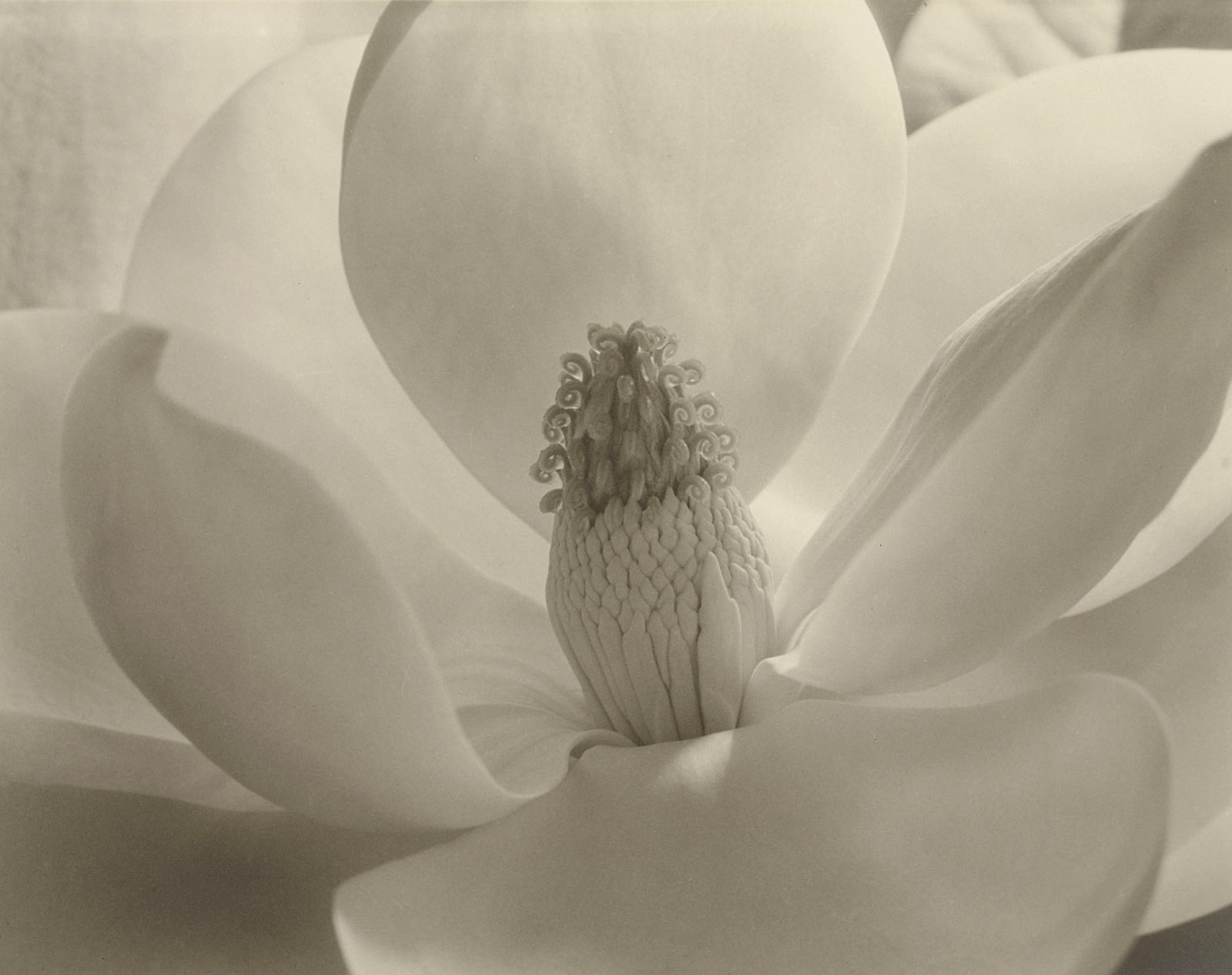
[Angela Lampe]: The paintings are animated by this tension between this inert plant and this bare and geometric environment which gives the false appearance of a bourgeois interior but which is completely artificial and fictitious. Architecture, geometric, abstract, these are the attributes that fascinate artists.

[Sophie Goetzmann]: No photo is objective from the moment there is a framing, a choice of motif, a choice of object photographed, we are in the order of choice. There is a whole practice of plant staging, sometimes point-based original views, close-ups, with attention to rendering detail and matter of these plants. These plants are photographed truly as objects. We are not interested in plants as living beings; they have no vividness, whether in paintings or photographs, they are very rigid, they are placed in neutral and empty environments. They are still life very dead!

6 – Persona froide (Cold persona)

The four murderous years of the war that ended in defeat cause general disappointment. Humiliation breeds a culture of shame. In the 1920s appears what the university specialist in culture German Helmut Lethen calls the “cold persona”.

[Sophie Goetzmann]: Helmut Lethen explains that guilt and shame are two different things. Guilt is having made a mistake and racking your brain, torturing yourself with this mistake to try to fix it; so the guilt, according to him, has to do with interiority.

Shame is having made a mistake but, instead of going into introspection, it’s about thinking outward, to think, “What are people going to think of me? How do I save face with others, how do I erase this shame?”. This is what he calls the culture of shame, people are dominated by a shame of ideas that they never had before the First World War, in particular because everyone had gone merrily to war. The war was a real moment of patriotism in Germany as in France, and all these people found themselves face to face with the reality of war: mutilation, dead, traumatised, bereaved families. At the end of the First World War there is a kind of shame that takes hold people compared to their ideas of four years ago.

How is it transcribed in portraits and in attitudes in general? Through a new way of being, of playing the detached person, of protecting oneself using a mask of indifference. In portraits, people don’t smile, do not display any particular expression, are detached on a neutral background. At the same time, portraits say something about people. In place to express their interiority, they show their position in the social order or their occupation. New Objectivity artists put people in boxes and represent people according to their profession, their place of work.

The portraits say something in general, which is to hide one’s feelings. In this section, there is a portrait of a woman putting on makeup. The make-up is a symbol of this new social attitude which is to put a layer of make-up on oneself so as not to reveal one’s torment, one’s feelings to others, it becomes something embarrassing to do that. Another example is the painter Otto Dix who represents the journalist Sylvia von Harden without complacency, as a typical emancipated intellectual of the Weimar Republic. She has short hair, wears a monocle, smokes and drinks a glass of alcohol. His sentimental torments are reflected in the choice of attributes: her bottom is undone, her pose is constrained, she is uncomfortable in a feminized pink universe. Its interior is exposed.

[Florian Ebner] There is a second meeting point where the two paths intersect. This is Chapter 6: The Cold Persona for the New Objectivity Exposition and  group 3 of Sander dedicated to the woman. For women, he thinks about five portfolios that attempt to describe the role of women in society. The first three describe the woman passively; it is always someone else who defines the woman: The Woman and the Child, The Woman and the Man, The Family. It’s still a quite conservative design about society and the role of women. The last two portfolios, The Elegant Woman, The Intellectual Woman underline the new role and type of woman, the Neue Frau, the new woman. We can see together, the very beautiful portrait painted by Otto Dix of the journalist Sylvia von Harden and that of a German radio secretary photographed by Sander: the game of gestures, the hand, the cigarette, the clothes, they could be sisters, twins.

It is a conception of the portrait that no longer speaks of the interiority of a person but how to describe a person by external attributes, by gesture, accessories, the habitus. At this point, the dialogue between the painted portraits and the photographs of August Sander is very rich.

7 – Rationalité (Rationality)

After the war, it was the economic crisis in Germany, which experienced hyperinflation. In 1924, the Dawes Plan aimed to help Germany reconnect with the growth, thanks to the injection of American capital. It then develops in Germans a fascination for America which has invested generously. The model society of the United States is methodical, harmonious, innovative because it is governed by technology. It is in this context that rationalisation infuses culture in Germany, from how to organise interiors to popular entertainment, through graphic design.

[Angela Lampe]: The rationalisation of work developed by Taylor is imported into German companies, leading to rapid industrialisation and a mechanisation of tasks. The principle of rationalisation soon becomes a new norm that structures social and cultural life itself. For example, the graphic designer Paul Renner develops the Futura font, based on geometric shapes elementary. This new standard of rationality also applies to the development interior. Viennese architect Margarete Schütte-Lihotzky, who works in Frankfurt, designs a modern and functional kitchen.

8 – Utilité

New musical styles imported from America appear in Germany in the 1920s and became very popular. especially jazz and dance music like foxtrot. Composers Ernst Krenek, Kurt Wild or Paul Hindemith drew inspiration from it to create a new musical genre, the Zeitoper, in French: topical opera. The plots take place in the contemporary world, the sets incorporate modern machines like trains, cars, telephones. The opera then addresses a wide audience and draws its references from popular culture.

[Angela Lampe]: There is a great democratisation of this, let’s say, elitist medium, which was the opera. An important figure in the theatre of the 1920s was Bertolt Brecht. At the antipodes of the lyrical outpourings of expressionism it was he, Bertolt Brecht, with the director Erwin Piscator, who developed new forms of theatre, what is called epic theatre, episches theater. In fiction, they introduce scenic devices into their plays that allow the viewer to analyse the plot in order to participate in its awakening Politics. They work from the effects of distancing. The introduction, for example, of the narrator or the break in the unity of the action are all elements generating a distance that encourages reflection. The goal is really to make the spectator.

There are other moments, which can be called moments of neo-objectivity, so Neue Sachlichkeit, in Brecht. It is the theme of sport, he is keen on sport. Moreover, he compares the theatre to sporting events, especially boxing, which really becomes a very important reference for his pieces. There is also his dry and very sober style, which distinguishes it as a representative of this New Objectivity, especially in his poetry.

It is prose that takes precedence over poetry. It’s really another form of literature, which is with an approach, let’s say, rather sociological than poetic. Brecht shares with the New Objectivity also the concern for a democratisation of art. He was interested in the possibilities offered by mass broadcasting devices. For example, he works with recorded poems and radio plays, so broadcast on the radio which spread very quickly in German homes during that time. It’s really a novelty of the mass media, as they say today, which makes it possible to disseminate and democratise culture.

9 – Transgressions

[Sophie Goetzmann]: We have two forms of transgression which are shown in these rooms. The transgression of gender norms, first: the idea of gender norms that will shift, especially in expression, in clothes, for example, that we are going to choose, and in particular the women of that time.

So, often, the women of the upper middle class, who live in the big cities, will resort to men’s fashion, dress boyishly, wear short hair, a flat torso, ties, to modify the feminine fashion of the time. So transgression of gender norms and transgression of heterosexuality because, in the Berlin of the 1920s, there was a whole
very important homosexual subculture, in particular through clubs, meeting places, restaurants, bars.

[Angela Lampe]: The painter and designer Jeanne Mammen creates watercolours featuring the daily life of lesbian meeting places, depicting the relationships between women with a certain tenderness, just like Christian Schad, who draws two young boys lovingly embraced. Otto Dix, in his portraits, depicts on the other hand its models according to a more heteronormative vision. The dancer Anita Berber, an openly bisexual star with multiple escapades, is caricatured as a personification of sin. All in red, she is presented as a figure really out of hell. She is truly the embodiment of Babylon, sinful.

[Sophie Goetzmann]: It is these two forms of transgression that are shown in the first two rooms. The last room in the section shows what is rather the opposite of a transgression, i.e. a reminder of the norm and the attitude of most male artists in the face of these transgressions, which is an attitude of anguish, which is an attitude of fear of seeing lesbian women who openly display their sexuality, to see gender norms that are blurred.

Doesn’t that open the door to a mix, too, of gender roles, a take on the power of women over men? So many of these men will multiply the images of women bruised, murdered, butchered, which also echoes the various facts of the time, where there is a whole phenomenon with serial killers that make the headlines, photographs of murders that are broadcast in the press. These are images that draw a lot of inspiration from this visual culture, almost, murder at that time. These are works that translate a certain anguish of these artists in the face of all these transgressions of the standards of gender and these transgressions of heterosexuality.

The shame felt by the men following the defeat of Germany after the First World War, is expressed through representations of violence against women because, too, women progressed on the social ladder during the First World War. Most of the time, positions that have been left vacant by men who went to the front were taken by women.

10 – Regard vers le bas (Look back)

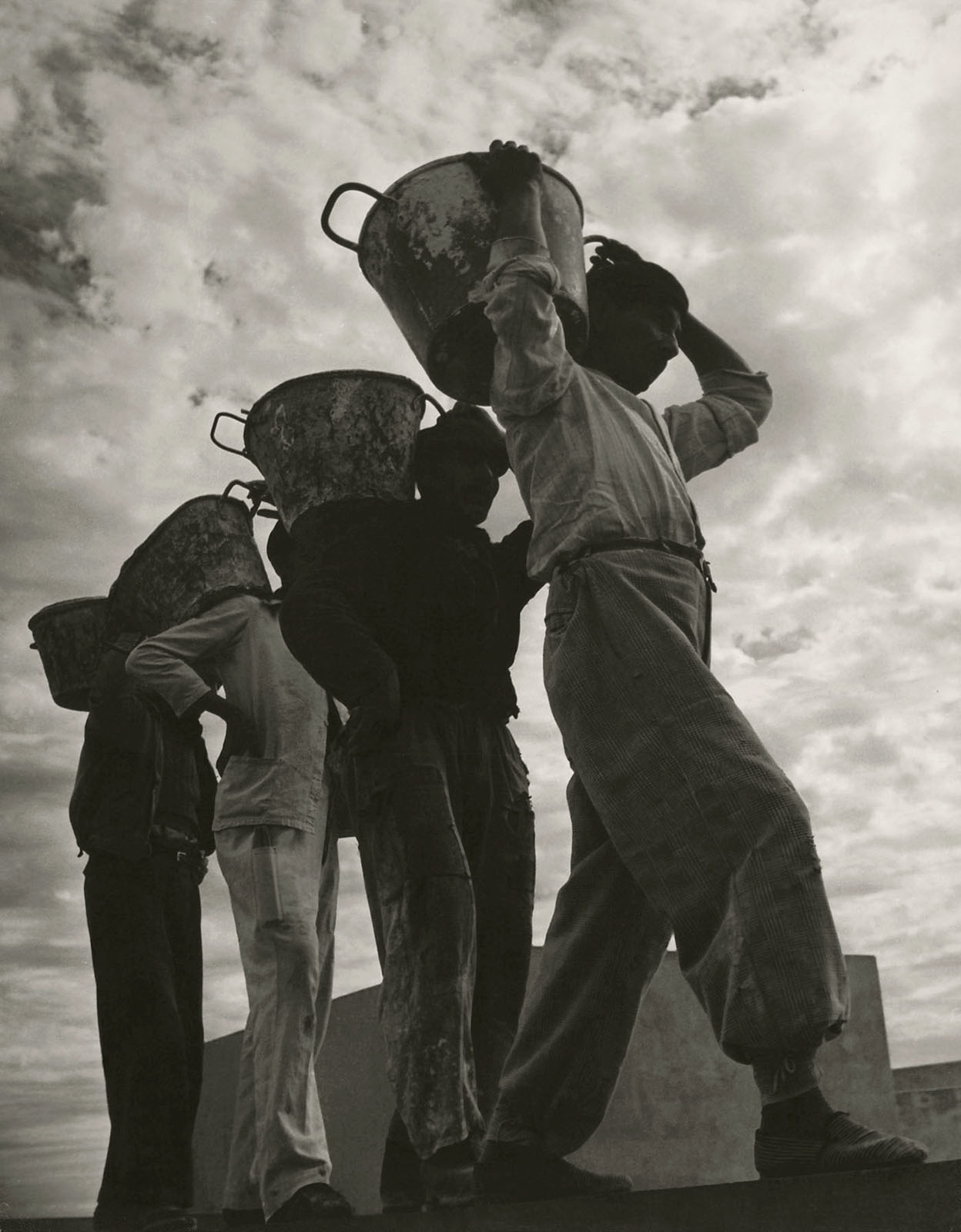
In this last section, we are interested in artists who have been excluded, the losers from the appearance of Taylorism, who are obviously the workers who are
exploited and which become an interchangeable mass and simple cogs in enormous machinery that overtakes them. But also, all the people who live in a form of marginality, whether war-disabled, or the unemployed, or people who live on the fringes of cities and who do not go to shows, operas or Zeitoper, or Brecht’s shows which are visible in city centres, but who are completely excluded from all this entertainment and who are doomed to a form of marginality in their life, in their place of living, and who are completely crushed by the capitalist economic machinery.

[Angela Lampe]: Far from the bustling boulevards and their neon signs, the painters like Hans Baluschek and Hans Grundig paint those excluded from urban entertainment, like poor families moving through these terrains, waves relegated to the fringes of cities. During these years, there was really a gap between what we call the rich and poor, between underprivileged backgrounds and bourgeois backgrounds, even industrialised capitals. This gap was widening during these years.

[Florian Ebner]: So Sander is going to dedicate portfolio 11 to this group, La grande ville, where we also see the youth of the big city, the young high school girl, the young high school student, dressed in a very chic way, but we also see the uprooted from society, we also see the invalids of the First World War, we see the left-behinds of the system capitalist.

There is a portfolio called The People Who Came to My Door, which is as a sort of mise-en-abyme of his method. That is to say, he invites people who came to ask for money (beggars, hawkers, unemployed), to have their photograph taken in the frame of their door, in front of the entrance wall. It is a true typology of these people. And there is a very beautiful sentence, a very nice idea, where he asks himself: “Can you imagine taking in all the employment offices in Germany, at the same time, a photograph. What strong image would that give of poverty?”

“Here, the photo speaks a very cultured language that can be heard by everybody; it is another language, but just as expressive, as photography would speak if cameras were installed in the 365 existing unemployment offices today on the sole territory of the German Reich and if we made them work simultaneously. If we photographed the people in these offices, then we gathered the results thus obtained and we added the date, 1931, the tragedy of this photographic language would certainly be understandable, without further comment, by all men today and in times to come.” ~ August Sander

11 – Epilogue


Text from the exhibition podcast transcription on the Centre Pompidou website translated from the French by Google translate


This exhibition on the art and culture of the Neue Sachlichkeit (New Objectivity) in Germany is the first overview presented in France of this artistic trend. Apart from painting and photography, the project brings together architecture, design, film, theatre, literature and music.

People of the 20th century, the masterwork by photographer August Sander, establishes the motif of a cross-section of a society, an “exhibition in the exhibition”, as a structural principle, the two interlinked perspectives opening up a large panorama of German art in the late 1920s.

This multidisciplinary exhibition is structured into eight thematic sections corresponding to the groups and sociocultural categories created by August Sander.

A review of German history in the context of contemporary Europe with populist movements and divergent societies in the throes of the digital revolution invites us to observe the political resonances and media analogies between yesterday’s situations and those of today.


Installation view of the exhibition 'Germany / 1920s / New Objectivity / August Sander' at Centre Pompidou, Paris

Installation view of the exhibition 'Germany / 1920s / New Objectivity / August Sander' at Centre Pompidou, Paris

Installation view of the exhibition 'Germany / 1920s / New Objectivity / August Sander' at Centre Pompidou, Paris showing at right works by Rudolf Schlichter: from left to right, 'Arbeiter mit Mütze' (Worker with hat), 1926; 'Verstümmelte Proletarierfrau' (Mutilated proletarian woman), 1922-1923; and 'Schwachsinnige II' (Imbeciles II) 1923-1924


Installation views of the exhibition Germany / 1920s / New Objectivity / August Sander at Centre Pompidou, Paris showing at right in the bottom image, works by Rudolf Schlichter: from left to right, Arbeiter mit Mütze (Worker with hat), 1926; Verstümmelte Proletarierfrau (Mutilated proletarian woman), 1922-1923; and  Schwachsinnige II (Imbeciles II), 1923-1924
Photos: Centre Pompidou, Paris
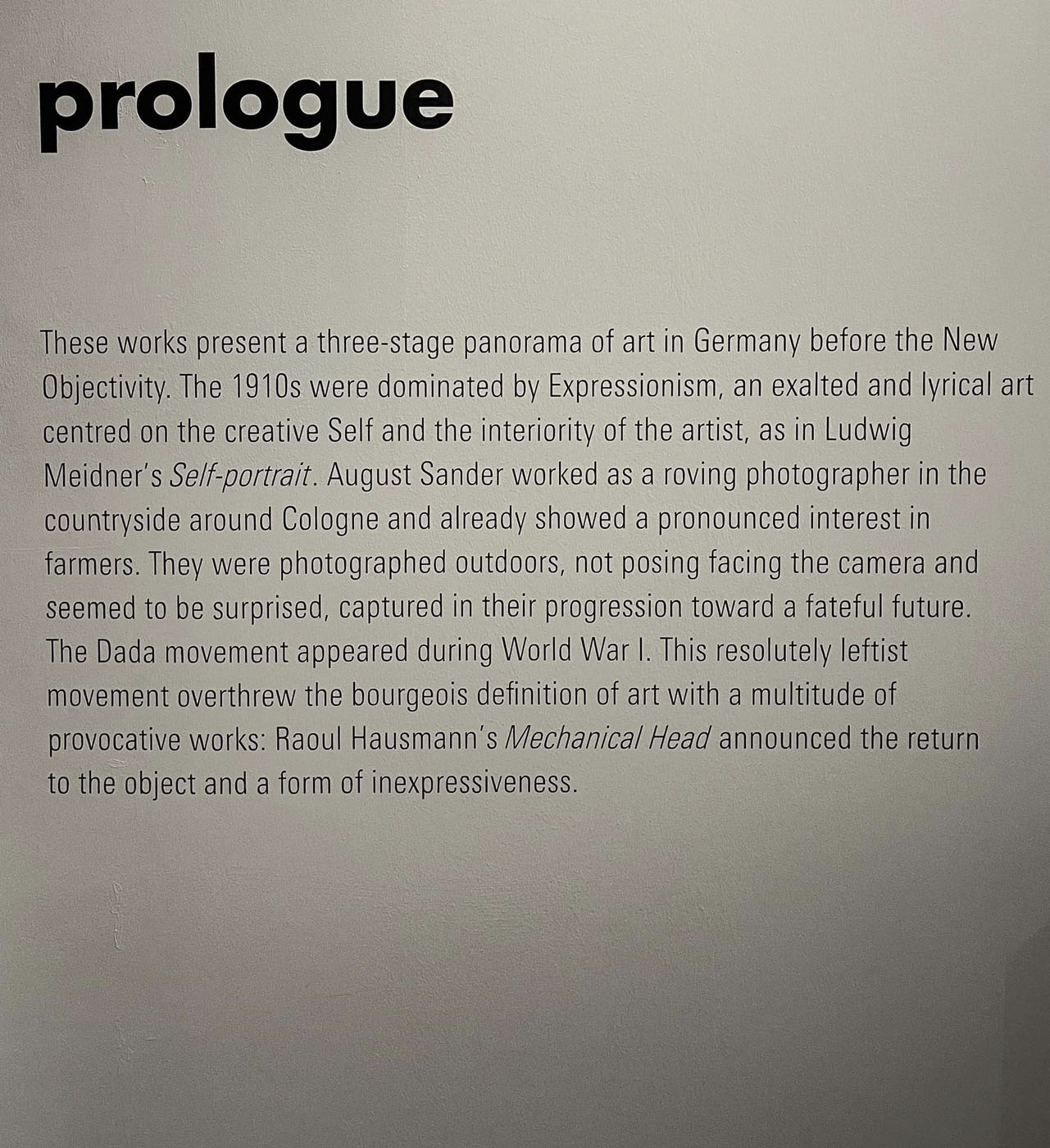
 

Wall text from the exhibition 'Germany / 1920s / New Objectivity / August Sander' at Centre Pompidou, Paris


Wall text from the exhibition Germany / 1920s / New Objectivity / August Sander at Centre Pompidou, Paris


Les choses / Things

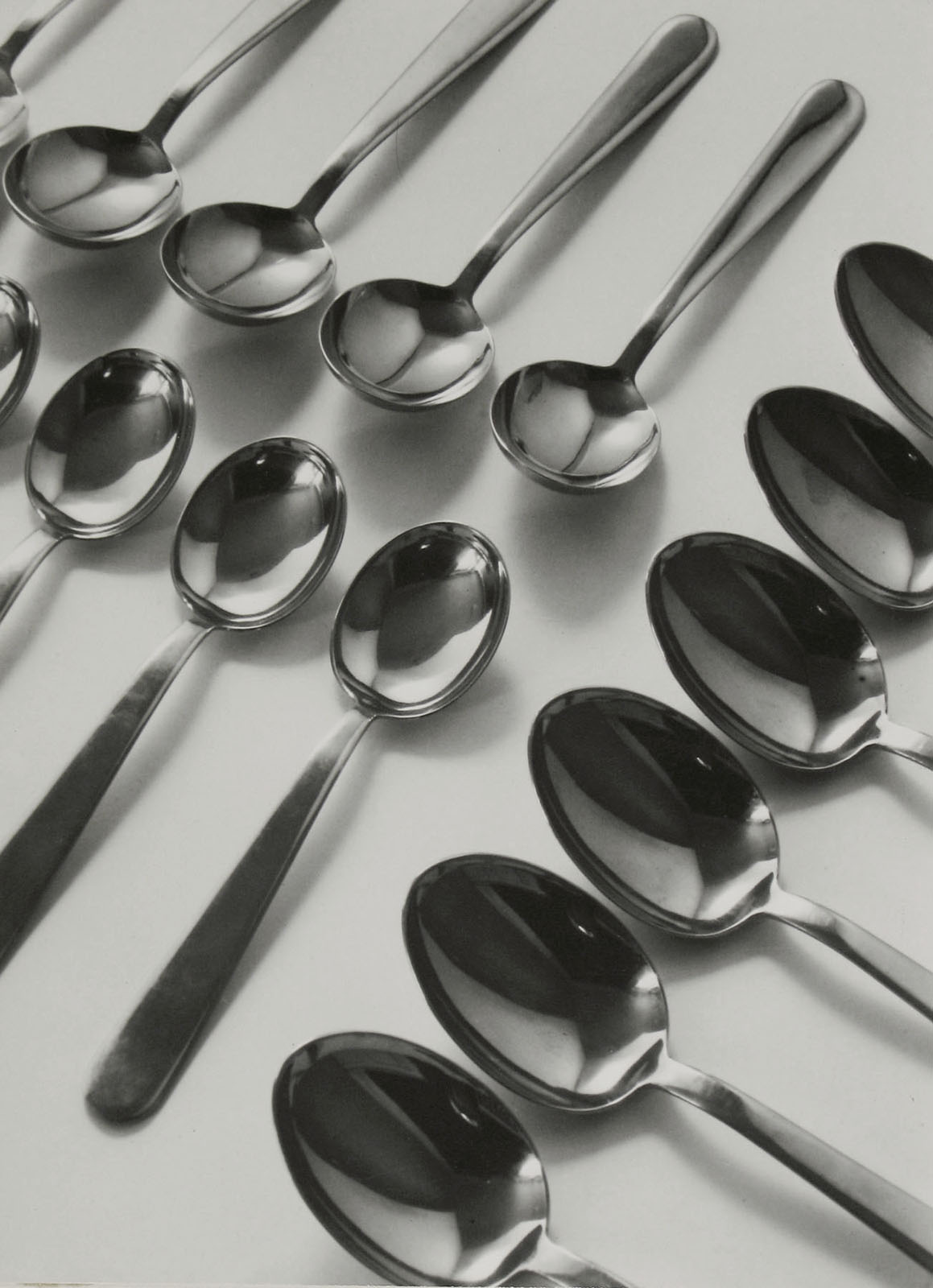
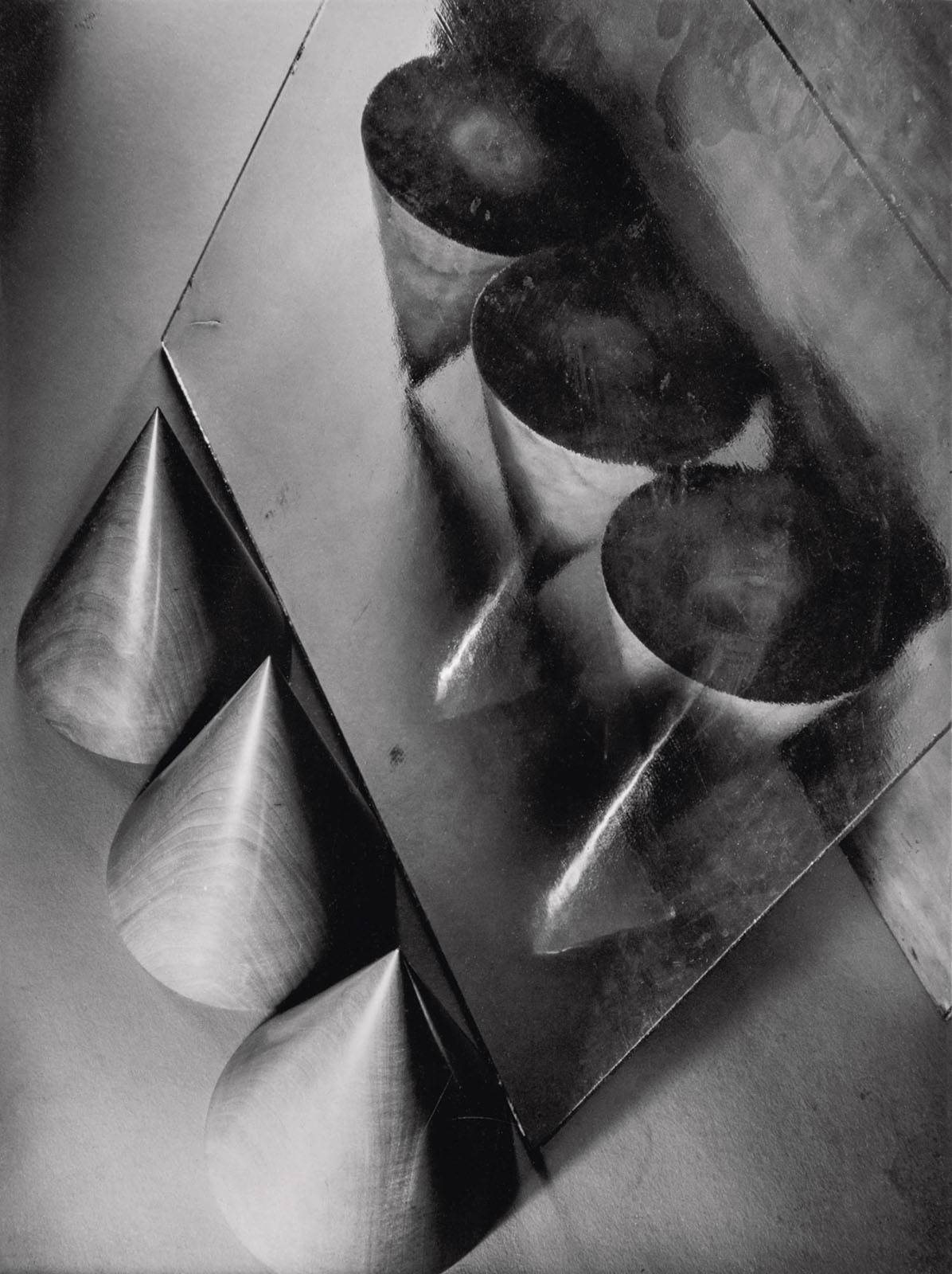
The artists of the New Objectivity were particularly interested in the genre of still life and represented objects with great clarity, their gaze being both scrutinising and cutting. Because of its supposed objectivity, photography seems particularly suited to the precise rendering of things in their materiality. Inspired by this hyperrealistic fidelity, the painters appropriated the visual language of photography. Rubber cacti and fig trees were very popular in 1920s Germany, where they were sought after for their exoticism. Artists are passionate about these plants then perceived as the plant equivalent of crystalline stone: architectural, geometric, abstract. Xaver Fuhr and Alexander Kanoldt paint figs with great meticulousness, in uncluttered compositions that bring out their clear structure. Georg Scholz values ​​the stiffness of the cactus, in resonance with the rigid pictorial style of the New Objectivity.

This reified nature is part of a broader fascination with the world of objects. Photographers and painters are also interested in glass objects, light bulbs and tableware, often depicted in plunging or unusual perspectives.

Persona froide / Cold persona

The four murderous years of the war ended in defeat engendered a form of general disillusion in Germany. According to literary historian Helmut Lethen, the humiliation inflicted by the victors gave rise to a culture of shame, characterised by widespread embarrassment about pre-war utopias. If guilt implies an introspective approach and supposes questioning oneself about one’s wrongs, shame is external and requires above all to preserve one’s image with others. In the 1920s, what Lethen called the “cold persona” appeared, a new social type that consisted of seeking to escape feelings of humiliation by displaying a mask of coldness and indifference.

This new behaviour profoundly modifies the practice of portraiture. Previously turned towards the interiority and the psychological expression of the model, it now focuses on the external signs of individuals. The artists of the New Objectivity thus represent less personalities than social types, defined by their profession. Often displayed in the very title of the work (businessman, textile merchant, doctor, etc.), it is also identifiable through attributes that allow it to be recognised.

In Menschen des 20. Jahrhunderts (People of the 20th century), August Sander devotes a group to “Socio-professional categories”, photographing less individual characters than occupations.

Like Julius Bissier, who represents himself forging his own image without emotion or affect (see below), the portraits appear cold, emptied of all feeling, in resonance with their often neutral and deserted backgrounds. The subjects appear alone and wear a detached expression, an absent, even empty gaze. Like the young girl represented by Lotte Laserstein, they seem to seek to disguise their feelings behind an impenetrable appearance.

Artists are also interested in changes in gender norms, like August Sander, who photographs “La femme” in Menschen des 20. Jahrhunderts. With an almost sociological eye, they construct a typology of the emancipated Neue Frau (New Woman): Bubikopf (short variant of the bob cut), cigarette, wearing of a shirt or even a tie become recurring attributes in the female portraits of the time.

Rationalité / Rationality

The economic crisis and spectacular post-war inflation were followed by a period of stabilisation and relative growth, favoured in particular by the Dawes Plan and the injection of American capital in 1924. A fascination for America and its model of society seen as methodical and harmonious, governed by technique, was born in Germany.

The rationalisation of work developed by Taylor is imported into German companies, leading to rapid industrialisation and the mechanisation of tasks. The aestheticisation of machines is found in the artists of the New Objectivity, who praise their beauty. Carl Grossberg’s paintings show sparkling clean industrial sites in clean, meticulously detailed compositions. The cult of technology continued with the appearance of the radio, a new domestic machine perceived by the painter Max Radler or the playwright Bertolt Brecht as a potential tool for emancipation.

The principle of rationalisation soon becomes a new norm that structures social and cultural life. The interior layout of the small-sized accommodation is studied by the architects and designers to optimise the space. Along the same lines, Marcel Breuer and Franz Schuster developed sleek, space-saving furniture that freed up as much space as possible. The architect Margarete Schütte-Lihotzky has designed a modern and functional kitchen in Frankfurt, organised as a workspace to limit the movements of the housewife. This concern to improve the daily life of women is part of a general desire for emancipation: the 1920s are those of the appearance of a financially independent Neue Frau (New Woman), who leaves her traditional role to confront to modern technology or to sports previously reserved for men.

Transgressions

In Germany, traditional gender roles were redefined after the First World War. After occupying vacant positions during the conflict, women are now established in the labor market, and obtain the right to vote in 1918. This new position leads them to adopt an androgynous appearance by appropriating the codes of masculinity: short hair, shirt, tie and flat chest, as shown in Selbstbildnis als Malerin (Self-Portrait as a Painter) (1935, below) by Kate Diehn-Bitt (1900-1978), oil on plywood.

In Berlin, in the famous Eldorado cabaret, transvestite artists push this confusion of genres even further. An important homosexual subculture develops in these clubs tolerated by the police. The painter and designer Jeanne Mammen creates watercolours that capture the daily life of lesbian meeting places, depicting the relationships between women with a certain tenderness.

The portraits of Otto Dix, on the other hand, are more imbued with the homophobic stereotypes of the time. The dancer Anita Berber, openly bisexual star with multiple escapades, is caricatured as a personification of sin. Jeweller Karl Krall appears with disproportionately scooped and wide hips, echoing physiologist Eugen Steinach’s ideas about “feminized men”.

Transgressions of heterosexuality and decompartmentalisation of genres generate anxiety in some male artists which is reflected in their works by a violent reminder of the norm. Rudolf Schlichter, Karl Hubbuch or Otto Dix multiply the representations of Lustmörder, sexual crimes showing women violently murdered by knife or hanging.

Regard vers le bas / Look down

The fascination for industry and machines clashes with the harsh reality of the daily life of the most modest populations. Driven by a desire to represent the reverse side of triumphant capitalism, certain artists of the New Objectivity turn their gaze towards those invisible things that technical progress excludes or condemns. Although pretending to a representation objective of the social world, they refuse political neutrality, most of them being committed to the Communist Party.

Karl Völker and Oskar Nerlinger create portraits of anonymous crowds of workers in the oppressive environment of industrial architecture: de-individuated, they are no more than simple cogs in the capitalist economic machine. Using a detached style, the artists represent the precarious populations living on the edge of large modern urban centres, showcases of German capitalism. Far from the bustling boulevards and their neon signs, Hans Baluschek and Hans Grundig paint those excluded from urban entertainment, poor families living in vacant lots on the outskirts of cities.


Max Radler (Polish, 1904-1971) 'Der Radiohörer' (The Radio Listener) 1930 from the exhibition 'Germany / 1920s / New Objectivity / August Sander' at Centre Pompidou, Paris, May - Sept, 2022


Max Radler (Polish, 1904-1971)
Der Radiohörer (The Radio Listener)
1930
Oil on canvas


Wilhelm Heise (German, 1892–1965) 'Verblühender Frühling. Selbstbildnis als Radiobastler' (Faded Spring. Self-portrait as a radio amateur) 1926 from the exhibition 'Germany / 1920s / New Objectivity / August Sander' at Centre Pompidou, Paris, May - Sept, 2022


Wilhelm Heise (German, 1892–1965)
Verblühender Frühling. Selbstbildnis als Radiobastler (Faded Spring. Self-portrait as a radio amateur)
1926
Oil on canvas
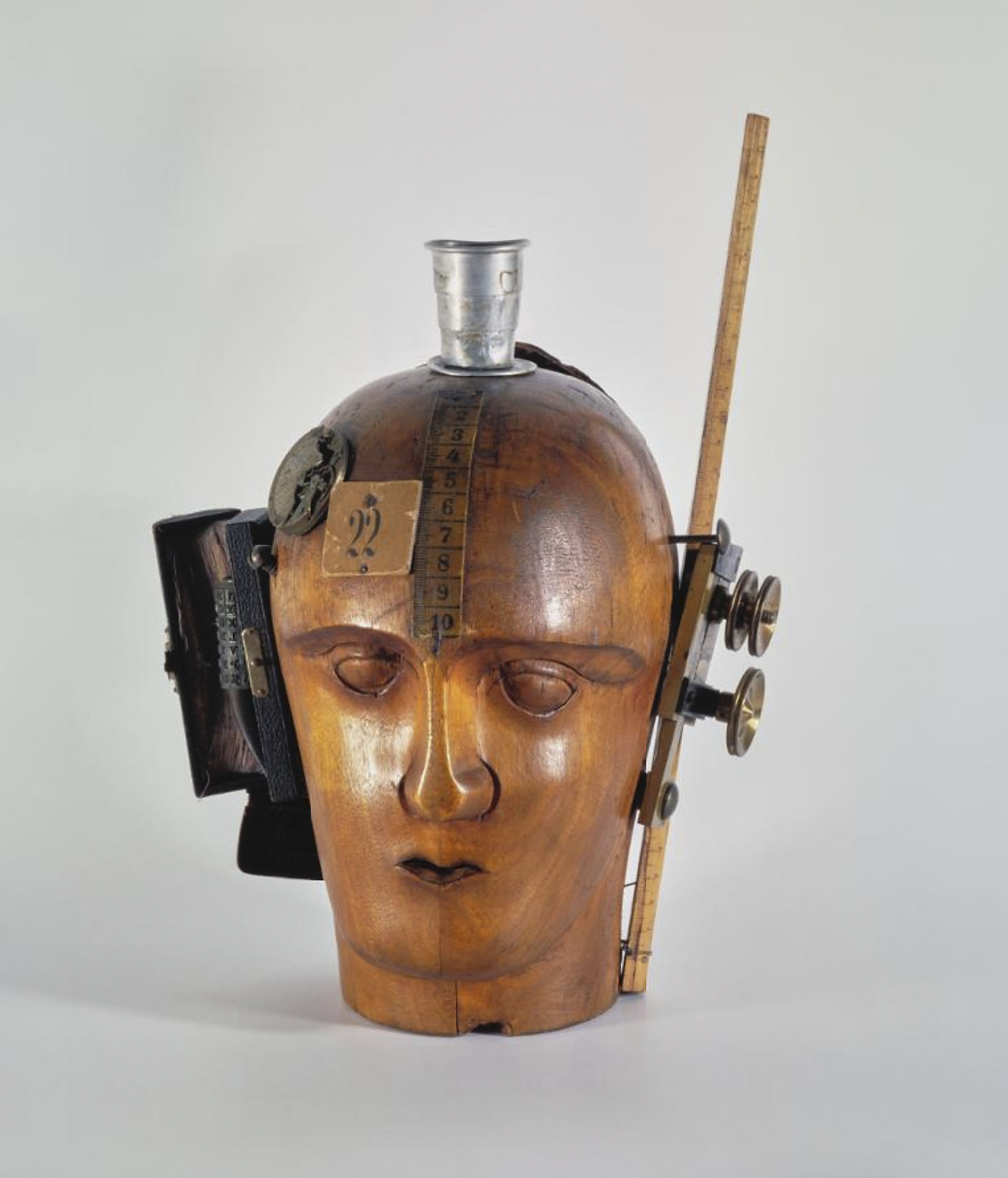
 

Raoul Hausmann (Austrian, 1886-1971) 'Mechanischer Kopf (Der Geist Unserer Zeit)' The Mechanical Head (The Spirit of Our Time) 1919


Raoul Hausmann (Austrian, 1886-1971)
Mechanischer Kopf (Der Geist Unserer Zeit) The Mechanical Head (The Spirit of Our Time)
1919
Assemblage
Wooden hairdresser’s puppet and various objects attached to it: telescopic beaker, a leather case, pipe stem, white cardboard bearing the number 22, a piece of a seamstress’ tape measure, a double decimeter, a watch cog, a roll of character d printing
32.5 x 21 x 20cm
Pompidou Centre collection
Purchase, 1974


“I wanted to unveil the spirit of our time, the spirit of everyone in its rudimentary state.”

Reducing the individual to a series of figures, this head criticises a harmful mechanisation revealed by the Great War. It also constitutes the announcement of a new, rational and impersonal man in tune with modern society. Anti-bourgeois and corrosive, does Raoul Hausmann reject the present or does he project himself into the future?


The most famous work by Hausmann, Mechanischer Kopf (Der Geist Unserer Zeit), “The Mechanical Head (The Spirit of Our Time)”, c. 1920, is the only surviving assemblage that Hausmann produced around 1919-1920. Constructed from a hairdresser’s wig-making dummy, the piece has various measuring devices attached including a ruler, a pocket watch mechanism, a typewriter, some camera segments and a crocodile wallet.

Der Geist Unserer Zeit – Mechanischer Kopf specifically evokes the philosopher George Wilhelm Friedrich Hegel (1770-1831). For Hegel… everything is mind. Among Hegel’s disciples and critics was Karl Marx. Hausmann’s sculpture might be seen as an aggressively Marxist reversal of Hegel: this is a head whose “thoughts” are materially determined by objects literally fixed to it. However, there are deeper targets in western culture that give this modern masterpiece its force. Hausmann turns inside out the notion of the head as seat of reason, an assumption that lies behind the European fascination with the portrait. He reveals a head that is penetrated and governed by brute external forces.”

Jonathan Jones. “The Spirit of Our Time – Mechanical Head, Raoul Hausmann (1919),” on The Guardian website Saturday 27th September 2003 quoted in “Raoul Hausmann,” on the Wikipedia website [Online] Cited 01/08/2022


Carl Grossberg (German, 1894-1940) 'Jacquard-Weberei' (Jacquard weaving workshop) 1934


Carl Grossberg (German, 1894-1940)
Jacquard-Weberei (Jacquard weaving workshop)
1934
Oil on wood


Hans Baluschek (German, 1870-1935) 'Sommernacht' (Summer Evening) 1929 (installation view)


Hans Baluschek (German, 1870-1935)
Sommernacht (Summer Evening) (installation view)
1929
Oil on canvas
120 x 151cm
Photo: Aubrey Perry


Hans Baluschek (German, 1870-1935) 'Sommernacht' (Summer Evening) 1929


Hans Baluschek (German, 1870-1935)
Sommernacht (Summer Evening)
1929
Oil on canvas
120 x 151cm


Hans Baluschek (German, 1870-1935)

Hans Baluschek (9 May 1870 – 28 September 1935) was a German painter, graphic artist and writer.

Baluschek was a prominent representative of German Critical Realism, and as such he sought to portray the life of the common people with vivid frankness. His paintings centred on the working class of Berlin. He belonged to the Berlin Secession movement, a group of artists interested in modern developments in art. Yet during his lifetime he was most widely known for his fanciful illustrations of the popular children’s book Little Peter’s Journey to the Moon (German title: Peterchens Mondfahrt).

Hans Baluschek, after 1920, was an active member of the Social Democratic Party of Germany, which at the time still professed a Marxist view of history.

Text from the Wikipedia website


Installation view of the exhibition 'Germany / 1920s / New Objectivity / August Sander' at Centre Pompidou, Paris showing at left, Karl Hubbuch's 'Twice Hilde II and Twice Hilde' (c. 1929); and at right, Otto Dix's 'An die Schönheit (Selbstbildnis)' (To the beauty (Selfportrait)) (1922)


Installation view of the exhibition Germany / 1920s / New Objectivity / August Sander at Centre Pompidou, Paris showing at left, Karl Hubbuch’s Twice Hilde II and Twice Hilde (c. 1929, below); and at right, Otto Dix’s An die Schönheit (Selbstbildnis) (To the beauty (Selfportrait)) (1922, below)
Photo: Centre Pompidou, Paris


Wall text from the exhibition 'Germany / 1920s / New Objectivity / August Sander' at Centre Pompidou, Paris


Wall text from the exhibition Germany / 1920s / New Objectivity / August Sander at Centre Pompidou, Paris


Karl Hubbuch (German, 1891-1979) 'Zweimal Hilde II' (Twice Hilde II) c. 1929 (installation view)


Karl Hubbuch (German, 1891-1979)
Zweimal Hilde II (Twice Hilde II) (installation view)
c. 1929
Oil on canvas mounted on masonite
Museo Nacional Thyssen-Bomemsiza, Madrid
Photo: Aubrey Perry
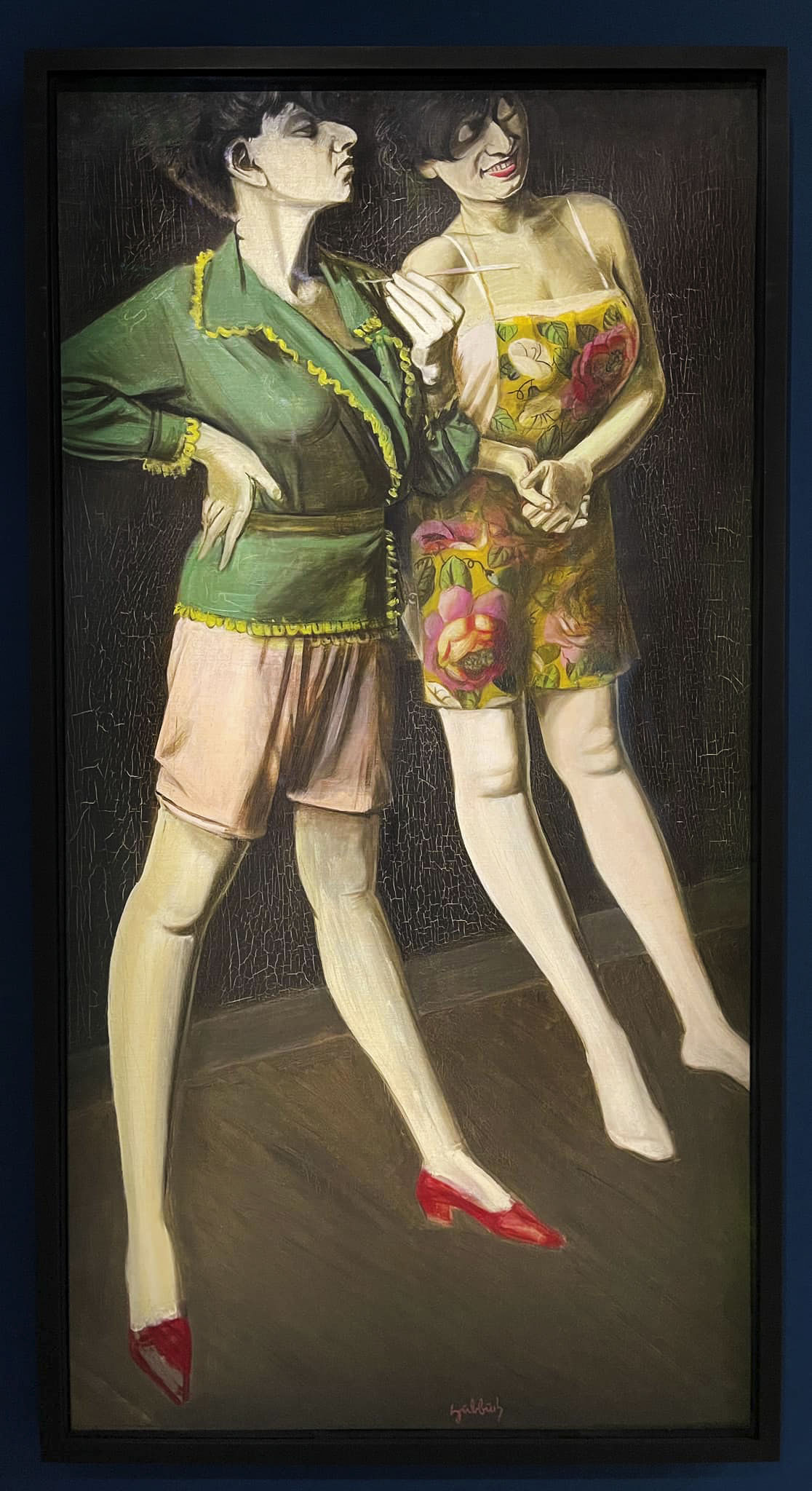
 

Karl Hubbuch (German, 1891-1979) 'Zweimal Hilde' (Twice Hilde) c. 1929 (installation view)


Karl Hubbuch (German, 1891-1979)
Zweimal Hilde (Twice Hilde) (installation view)
c. 1929
Oil on canvas mounted on masonite
Museo Nacional Thyssen-Bomemsiza, Madrid
Photo: Aubrey Perry


Karl Hubbuch, who was originally from Karlsruhe, often travelled to Berlin. It was there that he met George Grosz and Rudolf Schlichter, with whom he joined the radical Novembergruppe and Rote Gruppe, and later the Neue Sachlichkeit. Despite his radical ideological stance, the critical accent of his painting was tempered by the more moderate and classical style characteristic of the Karlsruhe artists.

Twice Hilde II is a double image of Hubbuch’s wife, whom he painted on numerous occasions. Hilde Isai (1905-1971), one of his drawing from life students at the Karlsruhe academy, whom he married in 1928, was an energetic and independent woman who eventually left her husband to devote herself to her passion for photography at the Dessau Bauhaus. The composition, in the manner of a Doppelgänger, was initially designed as a quadruple portrait which the artist later cut into two after the central part was damaged by a leak. The two pieces, which were exhibited together on a few occasions, and the preparatory drawings provide a progressive sequence of Hilde’s personality. Hubbuch, who was very fond of multiple portraits, instead of attempting to capture Hilde’s personality in a single figure, breaks it down into numerous facets, from the image on the left – which shows her seated with crossed legs on a modern tube chair designed by Marcel Breuer in a serious, prim pose wearing glasses that give her an intellectual air – to the provocative, coquettish woman in her underclothes on the far right of the Munich double portrait. Like most of the members of the German New Objectivity movement, Hubbuch was attracted by everyday scenes and by rendering various objects and textures in minute detail.

Although the painting has often been dated to 1923, in the catalogue of the retrospective exhibition of the painter’s work in 1981, the first serious critical study of his oeuvre, Wolfgang Hartmann ascribed it to 1929 on the grounds of particular stylistic features and the fact that Hubbuch did not meet Hilde until 1926.

Paloma Alarcó. “Karl Hubbuch,” on the Museo Nacional Thyssen-Bomemsiza website Nd [Online] Cited 02/08/2022
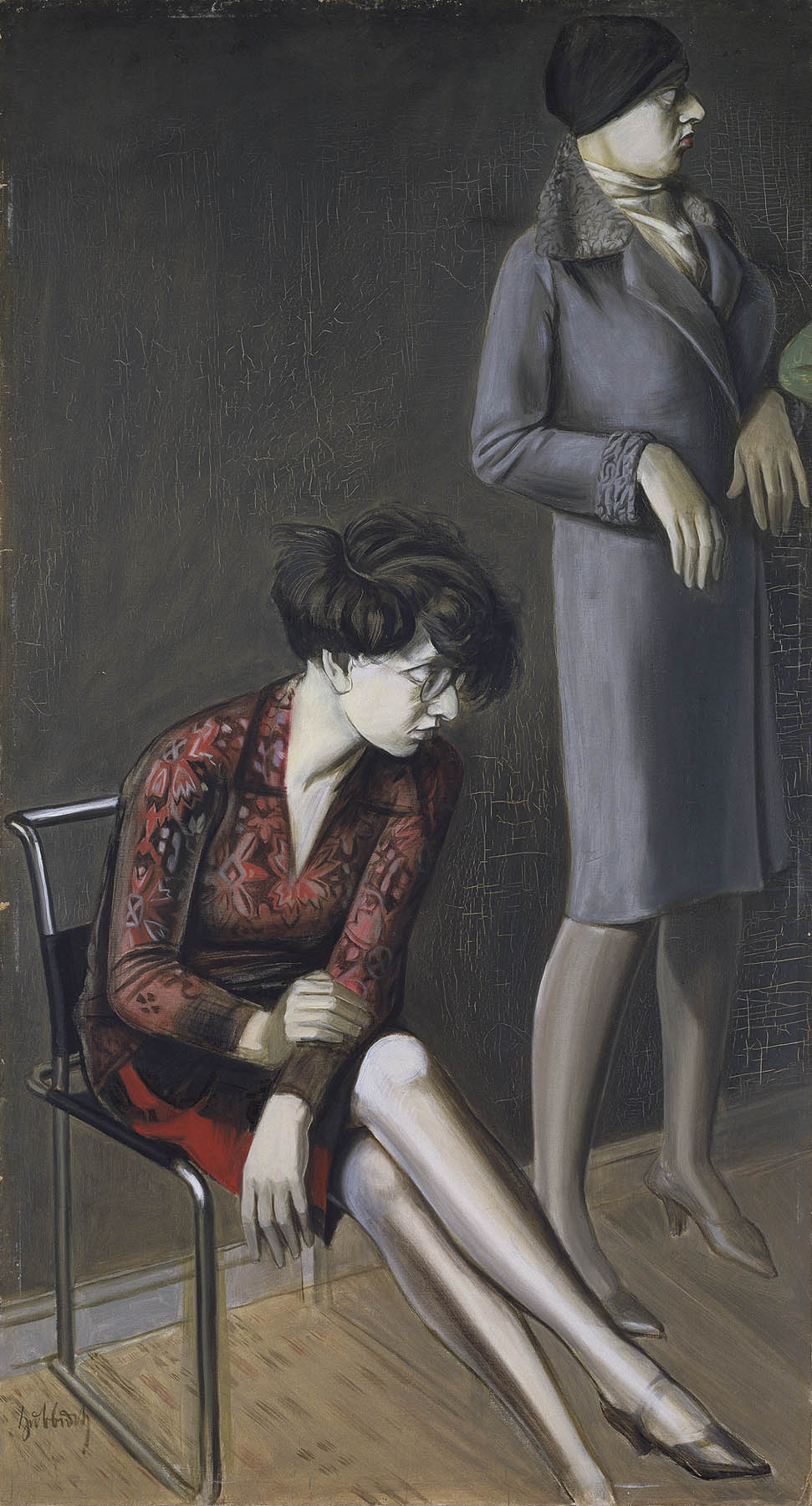
 

Karl Hubbuch (German, 1891-1979) 'Zweimal Hilde II' (Twice Hilde II) c. 1929


Karl Hubbuch (German, 1891-1979)
Zweimal Hilde II (Twice Hilde II)
c. 1929
Oil on canvas mounted on masonite
Museo Nacional Thyssen-Bomemsiza, Madrid


Otto Dix (German, 1891-1969) 'An die Schönheit (Selbstbildnis)' (To the beauty (Selfportrait)) 1922


Otto Dix (German, 1891-1969)
An die Schönheit (Selbstbildnis) (To the beauty (Selfportrait))
1922
Oil on canvas
139.5 x 120.5cm
Von der Heydt-Museum Wuppertal, Wuppertal
© Adagp, Paris, 2022


Heinrich Maria Davringhausen (German, 1894-1970) 'The Dreamer II' 1919 (installation view)


Heinrich Maria Davringhausen (German, 1894-1970)
The Dreamer II (installation view)
1919
Photo: Aubrey Perry


Heinrich Maria Davringhausen (German, 1894-1970)

Heinrich Maria Davringhausen (1894-1970) spent his youth in Aachen and studied sculpture at the Düsseldorf Art Academy in 1913-14, where he met Carlo Mense. Rhenish Expressionism, with its leanings towards Fauvism, Cubism and Futurism, exerted a formative influence on Davringhausen’s palette and composition.

In the years that followed, Davringhausen travelled constantly and met Georg Schrimpf at the Monte Verità artists’ colony near Ascona. Several portraits were done of him in a realistically overpainted manner which show the artist against a coloured Futurist background. The loss of an eye in his childhood ensured that Davringhausen was spared military service when the first world war broke out. Heinrich Maria Davringhausen returned to Germany, moved to Munich in 1918 and joined the group of Düsseldorf artists known as Das junge Rheinland.

Under the influence of the Cologne “progressives”, Davringhausen now painted primarily abstract pictures with colour surfaces, some of them conceived in series. Between 1924 and 1925 the artist lived in Toledo, Spain, but chose to settle in Cologne in 1928, where he founded “Gruppe 32” with Anton Räderscheidt et al.

After he married Lore Auerbach, the daughter of a Jewish industrialist, Davringhausen emigrated with his wife to Cala Ratjada on Mallorca in 1933. The outbreak of the Spanish Civil War in 1936 compelled Davringhausen to flee to Ascona via Marseilles and Paris. A year later his work was shown in the exhibition of Degenerate Art. In 1939 Davringhausen was expelled from Switzerland and moved with his family to Haut-de-Cagnes near Nice. After managing to escape from Les Milles, where he was interned in 1939-1940, Davringhausen hid with his wife in Auvergne, returning to Haut-de-Cagnes after the war.

Most of Davringhausen’s work was lost during the war due to his being outlawed by the National Socialists and being continually on the run. In the postwar years Davringhausen exhibited his work, which reveals a close affinity with “Neue Sachlichkeit”, at many galleries across the world.

By the close of the 1950s art history was beginning to take notice of the New Objectivist style. As a result, Heinrich Maria Davringhausen’s early work was shown at numerous exhibitions and was included in publications dealing with the “Neue Sachlichkeit” movement. The artist’s comprehensive body of late work is primarily geometric and abstract yet it did not win much recognition. Heinrich Maria Davringhausen died in Nice on 13 December 1970.

Kraftgenie. “Heinrich Maria Davringhausen,” on the Weimar website, Tuesday, June 8, 2010 [Online] Cited 02/08/2022
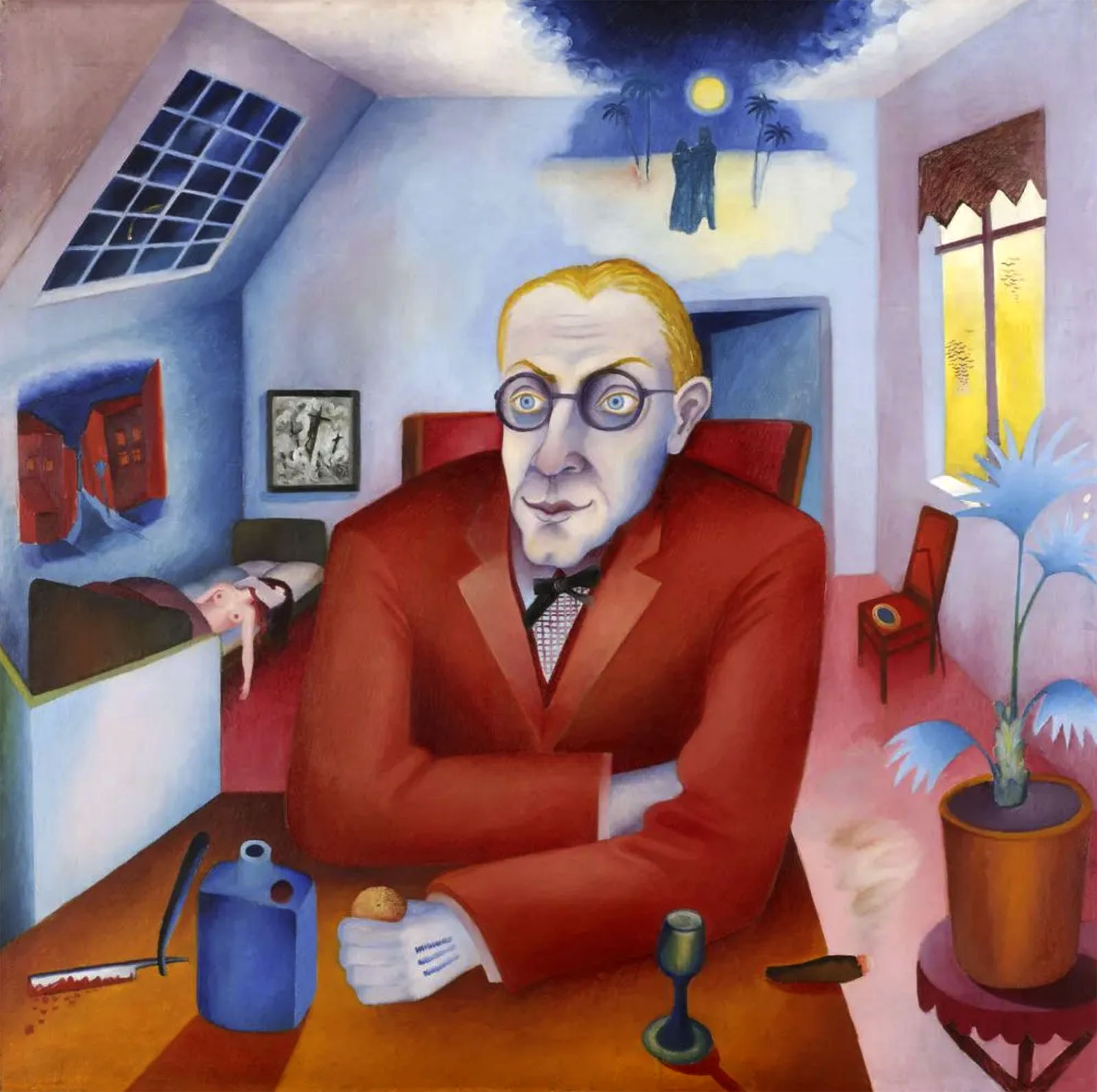
 

Heinrich Maria Davringhausen (German, 1894-1970) 'The Dreamer' 1919


Heinrich Maria Davringhausen (German, 1894-1970)
The Dreamer
1919


Christian Schad (German, 1894-1982) 'Die Melancholische' (The Melancholy) 1931 (installation view)


Christian Schad (German, 1894-1982)
Die Melancholische (The Melancholy) (installation view)
1931
Photo: Aubrey Perry


Christian Schad (21 August 1894 – 25 February 1982) was a German painter and photographer. He was associated with the Dada and the New Objectivity movements. Considered as a group, Schad’s portraits form an extraordinary record of life in Vienna and Berlin in the years following World War I.


The four devastating years of World War I, which ended in defeat for Germany, led to a general sense of disillusionment among the people. Abandoning the visionary, spiritual and psychological aesthetics of expressionism, the disabused artists turned to reality. In painting, this paradigm shift was reflected in the emergence of a more neutral and less expressive figurative style that tended towards greater objectivity.

The German empire was succeeded by a new political regime, the Weimar Republic, which promoted the development of a new democratic culture focused on the masses. The exaltation of the individual was replaced by an ideal of standardisation: singularities were erased in favour of models, standardised types and simple forms reproduced in series. In urban development, the unprecedented shortage of housing at the end of World War I led to the construction of large housing blocks with simple and identical forms, designed according to a principal of rationalisation. The notion of utility which was linked to the new objectivity movement, emerged in theatre, music and literature. This new concept promoted the creation of works intended for a wide audience, strongly anchored in their time and designed to be immediately understandable.

Art also expressed the social upheavals under the new German democracy. After World War I, women joined the labour market and obtained the right to vote in 1918; this very definition of traditional gender roles was a subject explored by painters and photographers. From 1924 onwards, the injection of American Capital ushered in a period of relative economic stabilisation, but many Germans remained excluded from the benefits of growth. Artists who are members of the communist party depicted labourers, the unemployed and beggars, driven by a desire to represent the underside of triumphant capitalism.


August Sander (German, 1876-1964) 'Malerehepaar' (Couple of painters) (Martha et Otto Dix) 1925-1926


August Sander (German, 1876-1964)
Malerehepaar (Couple of painters) (Martha et Otto Dix)
1925-1926
Modern gelatin silver print
20.6 x 24.3 cm
Die Photographische Sammlung/SK Stiftung Kultur, Cologne
© Die Photographische Sammlung/SK Stiftung Kultur – August Sander Archiv, Cologne/ Adagp, Paris, 2022


August Sander (German, 1876-1964) 'Painter (Marta Hegemann)' c. 1925


August Sander (German, 1876-1964)
Painter (Marta Hegemann)
c. 1925
Gelatin silver print
10 3/16 × 7 3/8″ (25.8 × 18.7cm)
© Die Photographische Sammlung / SK Stiftung Kultur – August Sander Archiv, Köln / Adagp, Paris
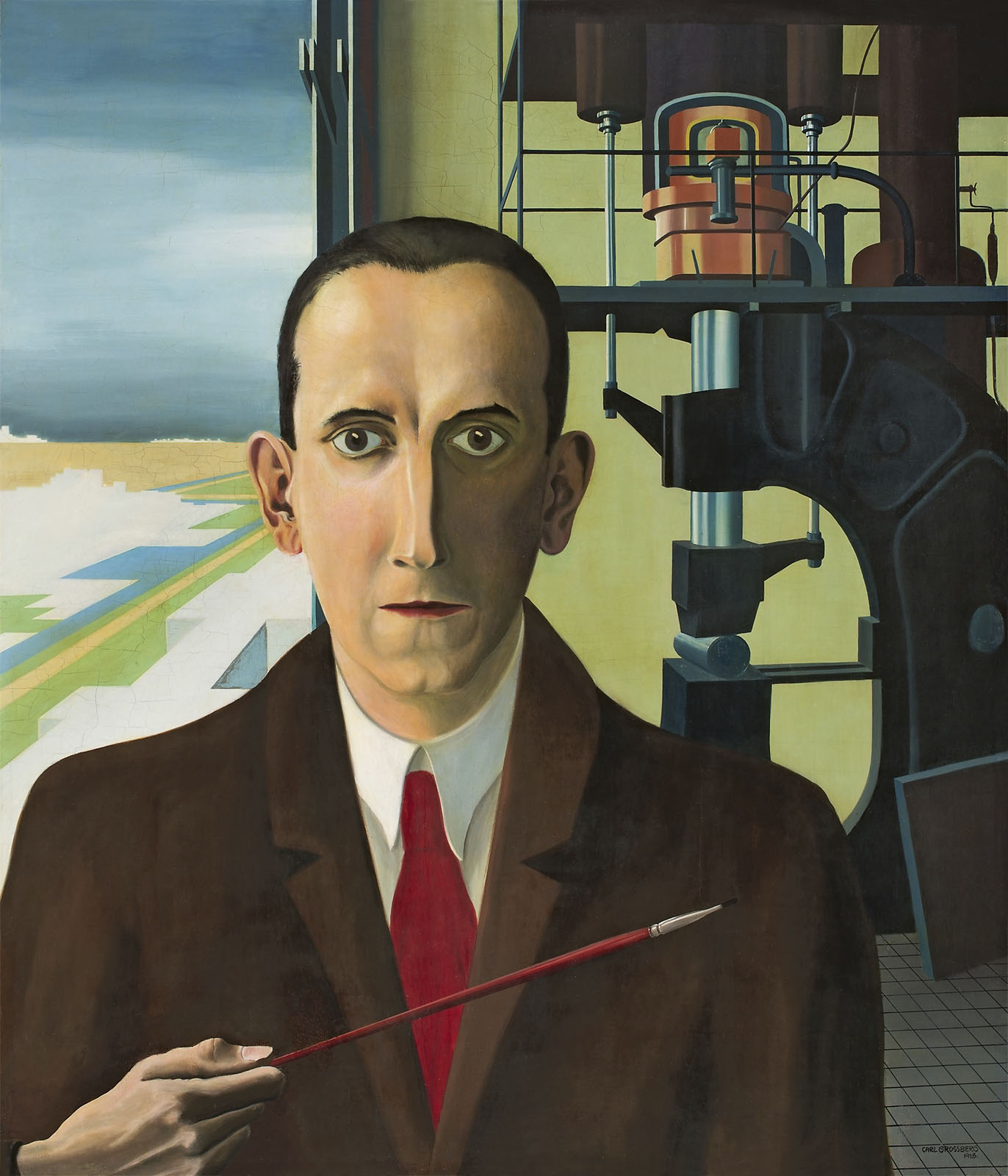
 

Carl Grossberg (German, 1894-1940) 'Self portrait' 1928


Carl Grossberg (German, 1894-1940)
Self portrait
1928
Oil on panel
70.1 x 60cm


August Sander (German, 1876-1964) 'Hausierer' (Peddler) 1930


August Sander (German, 1876-1964)
Hausierer (Peddler)
1930
Gelatin silver print
17.5 x 11.8cm (6.9 x 4.6 in)


August Sander (German, 1876-1964) 'Bailiff' c. 1930


August Sander (German, 1876-1964)
Bailiff
c. 1930
Gelatin silver print
10 3/16 × 7 3/8″ (25.8 × 18.7cm)


August Sander (German, 1876-1964) '[Unemployed Man in Winter Coat, Hat in Hand]' 1920


August Sander (German, 1876-1964)
[Unemployed Man in Winter Coat, Hat in Hand]
1920
Gelatin silver print
23.0 x 14.7cm (9 1/16 x 5 13/16 in)


August Sander (German, 1876-1964) 'Frau eines Architekten (Dora Lüttgen)' (Architect's Wife (Dora Lüttgen)) 1926


August Sander (German, 1876-1964)
Frau eines Architekten (Dora Lüttgen) (Architect’s Wife (Dora Lüttgen))
1926
Gelatin silver print
25.8 × 18.7cm


Otto Dix (German, 1891-1969) 'Rothaarige Frau (Damenporträt)' Red-haired woman (female portrait) 1931 (installation view)


Otto Dix (German, 1891-1969)
Rothaarige Frau (Damenporträt) (Red-haired woman (female portrait))
1931
Photo: Aubrey Perry


Otto Dix (German, 1891-1969) 'Rothaarige Frau (Damenporträt)' Red-haired woman (female portrait) 1931 


Otto Dix (German, 1891-1969)
Rothaarige Frau (Damenporträt) Red-haired woman (female portrait)
1931
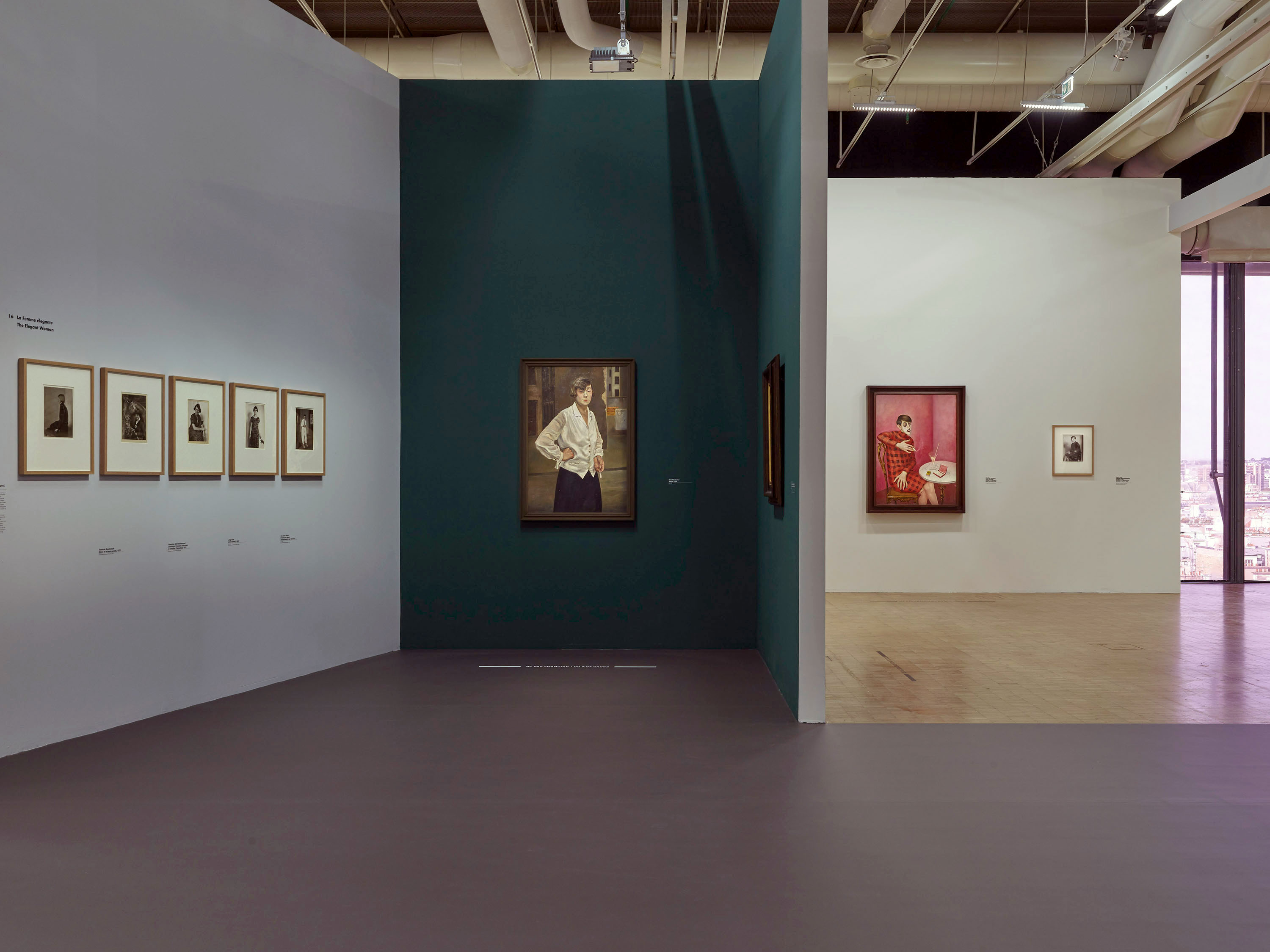
 

Installation view of the exhibition 'Germany / 1920s / New Objectivity / August Sander' at Centre Pompidou, Paris showing at centre left, Rudolf Schlichter's 'Margot' (1924); and at second right, Otto Dix's 'Bildnis der Journalistin Sylvia von Harden' (Portrait of the journalist Sylvia von Harden) (1926)


Installation view of the exhibition Germany / 1920s / New Objectivity / August Sander at Centre Pompidou, Paris showing at centre left, Rudolf Schlichter’s Margot (1924, below); and at second right, Otto Dix’s Bildnis der Journalistin Sylvia von Harden (Portrait of the journalist Sylvia von Harden) (1926, below)
Photo: Centre Pompidou, Paris


Rudolf Schlichter (German, 1890-1955) 'Margot' 1924


Rudolf Schlichter (German, 1890-1955)
Margot
1924
© Städel Museum


The prostitute Margot was portrayed several times by Rudolf Schlichter around 1924. Margot, portrayed in the pose of baroque portraits of rulers with a challenging look and self-confident right arm on her hips, bob haircut and cigarette, presents the type of the new woman. She buys her emancipation with the sale and – her swollen left eyelid indicates it – with the maltreatment of her body. The background shows a dreary tenement barracks, their “kingdom” is the street.

Text from the Städel Museum website


Rudolf Schlichter (German, 1890-1955)

Rudolf Schlichter (or Rudolph Schlichter) (December 6, 1890 – May 3, 1955) was a German painter and one of the most important representatives of the Neue Sachlichkeit (New Objectivity) movement.

Schlichter was born in Calw, Württemberg. After an apprenticeship as an enamel painter at a Pforzheim factory he attended the School of Arts and Crafts in Stuttgart. He subsequently studied under Hans Thoma and Wilhelm Trübner at the Academy in Karlsruhe. Called for military service in World War I, he carried out a hunger strike to secure early release, and in 1919 he moved to Berlin where he joined the Communist Party of Germany and the “November” group. He took part in a Dada fair in 1920 and also worked as an illustrator for several periodicals.

A major work from this period is his Dada Roof Studio, a watercolour showing an assortment of figures on an urban rooftop. Around a table sit a woman and two men in top hats. One of the men has a prosthetic hand and the other, also missing a hand, appears on closer scrutiny to be mannequin. Two other figures in gas masks may also be mannequins. A child holds a pail and a woman wearing high button shoes (for which Schlichter displayed a marked fetish) stands on a pedestal, gesturing inexplicably.

In 1925 Schlichter participated in the “Neue Sachlichkeit” exhibit at the Mannheim Kunsthalle. His work from this period is realistic, a good example being the Portrait of Margot (1924, above) now in the Berlin Märkisches Museum. It depicts a prostitute who often modelled for Schlichter, standing on a deserted street and holding a cigarette.

When Adolf Hitler took power, bringing to an end the Weimar period, his activities were greatly curtailed. In 1935 he returned to Stuttgart, and four years later to Munich. In 1937 his works were seized as degenerate art, and in 1939 the Nazi authorities banned him from exhibiting. His studio was destroyed by Allied bombs in 1942.

At the war’s end, Schlichter resumed exhibiting works. His works from this period were surrealistic in character. He died in Munich in 1955.

Text from the Wikipedia website


Rudolf Schlichter (German, 1890-1955) 'Damenkneipe' (Ladies' Bistro) c. 1925


Rudolf Schlichter (German, 1890-1955)
Damenkneipe (Ladies’ Bistro)
c. 1925
Watercolour, India ink and pencil on paper


Otto Dix (German, 1891-1969) 'Bildnis der Journalistin Sylvia von Harden' (Portrait of the journalist Sylvia von Harden) 1926 (installation view)


Otto Dix (German, 1891-1969)
Bildnis der Journalistin Sylvia von Harden (Portrait of the journalist Sylvia von Harden) (installation view)
1926
Oil and tempera on wood
121 x 89cm
Pompidou Centre collection
Purchase, 1961
Photo: Aubrey Perry


Otto Dix (German, 1891-1969) 'Bildnis der Journalistin Sylvia von Harden' (Portrait of the journalist Sylvia von Harden) 1926


Otto Dix (German, 1891-1969)
Bildnis der Journalistin Sylvia von Harden (Portrait of the journalist Sylvia von Harden)
1926
Oil and tempera on wood
121 x 89cm
Pompidou Centre collection
Purchase, 1961
© Adagp, Paris
Photo credits: © Audrey Laurans – Centre Pompidou, MNAM-CCI /Dist. RMN-GP


Who is this woman who dares to appear in public alone, cigarette in hand, at a table of the Romanische Café, a haunt of the Berlin art worlds?

Sylvia von Harden was a journalist in Berlin in the 1920s. Her nonchalant stance is a statement of her emancipated intellectual role. Otto Dix undermines her arrogance with the detail of a loose stocking and her rather awkward pose. Her red-check dress contrast with the pink environment, typically Art Nouveau. The cold, satirical realism typifies the New Objectivity movement to which the painter belonged. Inspired by early 16th-century German masters (Cranach, Holbein), he embraced the tempera on wood panel technique as well as the choice to exhibit the ugliness.


August Sander (German, 1876-1964) 'Sekretärin beim Westdeutscher Rundfunk in Köln' (Secretary at the Westdeutscher Rundfunk in Cologne) 1931


August Sander (German, 1876-1964)
Sekretärin beim Westdeutscher Rundfunk in Köln (Secretary at the Westdeutscher Rundfunk in Cologne)
1931
Gelatin silver print
28.6 x 20.5cm
Pompidou Centre collection
Purchase, 1979
© Die Photographische Sammlung / SK Stiftung Kultur – August Sander Archiv, Köln / Adagp, Paris
Photo credits: © Guy Carrard – Centre Pompidou, MNAM-CCI /Dist. RMN-GP
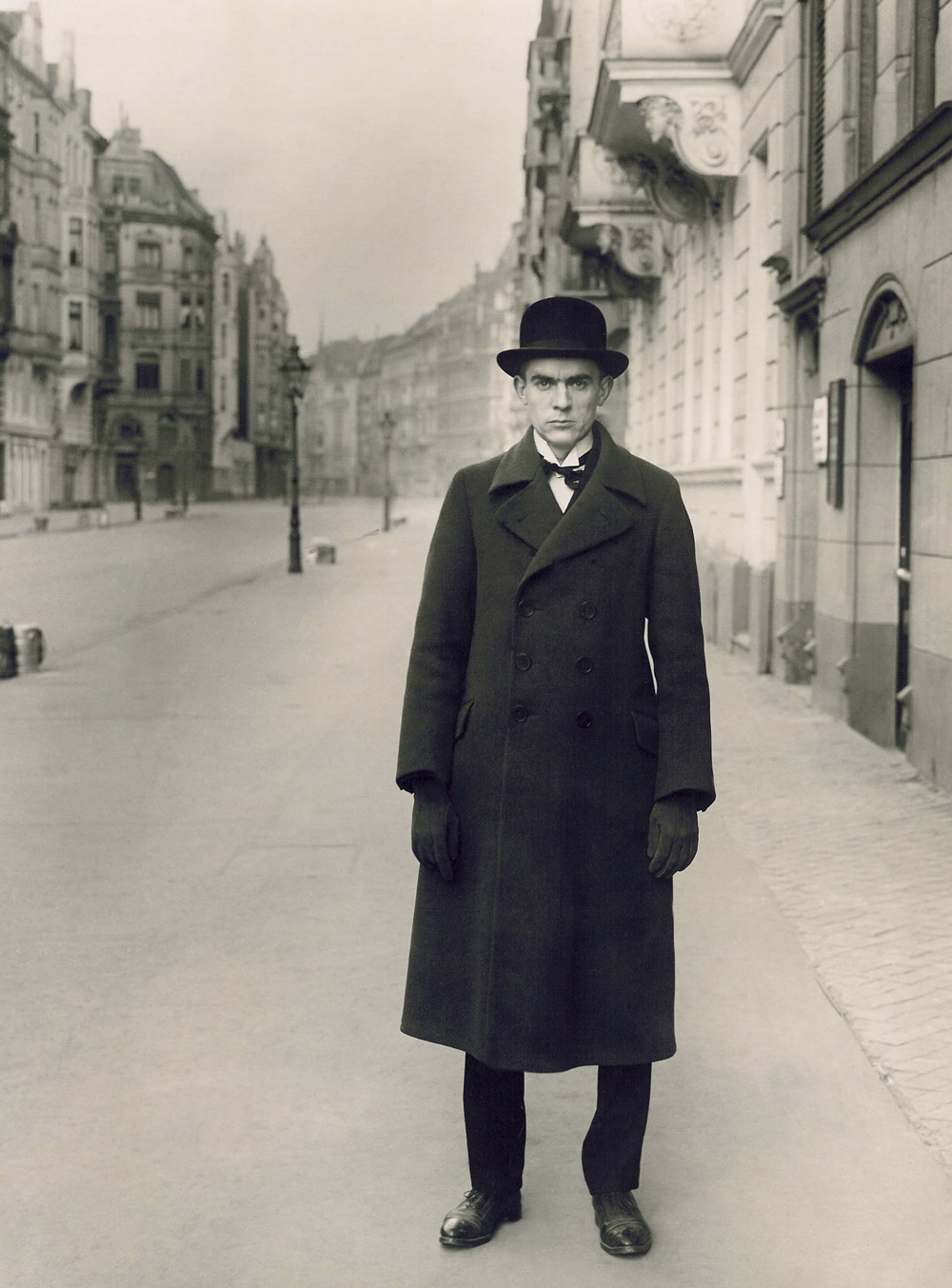
 

August Sander (German, 1876-1964) 'Der Maler Anton Räderscheidt' (Painter Anton Räderscheidt) 1926


August Sander (German, 1876-1964)
Maler Anton Räderscheidt (Painter Anton Räderscheidt)
1926
Gelatin silver print
27.9 x 21.9cm
Pompidou Centre collection
Purchase, 1979
© Die Photographische Sammlung / SK Stiftung Kultur – August Sander Archiv, Köln / Adagp, Paris
Photo credits: © Adam Rzepka – Centre Pompidou, MNAM-CCI /Dist. RMN-GP


Anton Räderscheidt (German, 1892-1970) 'Junger Mann mit gelben Handschuhen' (Young man with yellow gloves) 1921


Anton Räderscheidt (German, 1892-1970)
Junger Mann mit gelben Handschuhen (Young man with yellow gloves)
1921
Oil on panel
27.4 x 18.6cm


Anton Räderscheidt (German, 1892-1970)

Anton Räderscheidt (October 11, 1892 – March 8, 1970) was a German painter who was a leading figure of the New Objectivity.

Räderscheidt was born in Cologne. His father was a schoolmaster who also wrote poetry. From 1910 to 1914, Räderscheidt studied at the Academy of Düsseldorf. He was severely wounded in the First World War, during which he fought at Verdun. After the war he returned to Cologne, where in 1919 he cofounded the artists’ group Stupid with other members of the local constructivist and Dada scene. The group was short-lived, as Räderscheidt was by 1920 abandoning constructivism for a magic realist style. In 1925 he participated in the Neue Sachlichkeit (“New Objectivity”) exhibition at the Mannheim Kunsthalle.

Many of the works Räderscheidt produced in the 1920s depict a stiffly posed, isolated couple that usually bear the features of Räderscheidt and his wife, the painter Marta Hegemann. The influence of metaphysical art is apparent in the way the mannequin-like figures stand detached from their environment and from each other. A pervasive theme is the incompatibility of the sexes, according to the art historian Dennis Crockett. Few of Räderscheidt’s works from this era survive, because most of them were either seized by the Nazis as degenerate art and destroyed, or were destroyed in Allied bombing raids. His work was also part of the painting event in the art competition at the 1932 Summer Olympics.

His marriage to Marta ended in 1933. In 1934-1935 he lived in Berlin. He fled to France in 1936, and settled in Paris, where his work became more colourful, curvilinear and rhythmic. He was interned by the occupation authorities in 1940, but he escaped to Switzerland. In 1949 he returned to Cologne and resumed his work, producing many paintings of horses shortly before adopting an abstract style in 1957.

Räderscheidt was to return to the themes of his earlier work in some of his paintings of the 1960s. After suffering a stroke in 1967, he had to relearn the act of painting. He produced a penetrating series of self-portraits in gouache in the final years of his life. Anton Räderscheidt died in Cologne in 1970.

Text from the Wikipedia website


Anton Räderscheidt (German, 1892-1970) 'Junger Mann mit gelben Handschuhen' (Young man with yellow gloves) 1921 (installation view)


Anton Räderscheidt (German, 1892-1970)
Junger Mann mit gelben Handschuhen (Young man with yellow gloves) (installation view)
1921
Oil on panel
27.4 x 18.6cm
Photo: Aubrey Perry


Anton Räderscheidt (German, 1892-1970) 'Painter with Model (Self Portrait)' 1928 (installation view)


Anton Räderscheidt (German, 1892-1970)
Painter with Model (Self Portrait) (installation view)
1928
Photo: Aubrey Perry


Anton Räderscheidt (German, 1892-1970) 'Painter with Model (Self Portrait)' 1928


Anton Räderscheidt (German, 1892-1970)
Painter with Model (Self Portrait)
1928


August Sander (German, 1876-1964) 'Zirkusarbeiter' (Circus Workers) 1926-1932


August Sander (German, 1876-1964)
Zirkusarbeiter (Circus Workers)
1926-1932
Gelatin silver print
28 x 21.10cm
From the Pompidou Centre collection
© Die Photographische Sammlung / SK Stiftung Kultur – August Sander Archiv, Köln / Adagp, Paris
Photo credits: © Die Photographische Sammlung/SK Stiftung Kultur – August Sander Archiv, Cologne/ Adagp, Paris, 2022


Otto Dix (German, 1891-1969) 'Bildnis der Tänzerin Anita Berber' (Portrait of the dancer Anita Berber) 1925 (installation view)

Otto Dix (German, 1891-1969) 'Bildnis der Tänzerin Anita Berber' (Portrait of the dancer Anita Berber) 1925 (installation view)


Installation views of the exhibition Germany / 1920s / New Objectivity / August Sander at Centre Pompidou, Paris showing Otto Dix’s Bildnis der Tänzerin Anita Berber (Portrait of the dancer Anita Berber) (1925, below)
Photos: Aubrey Perry
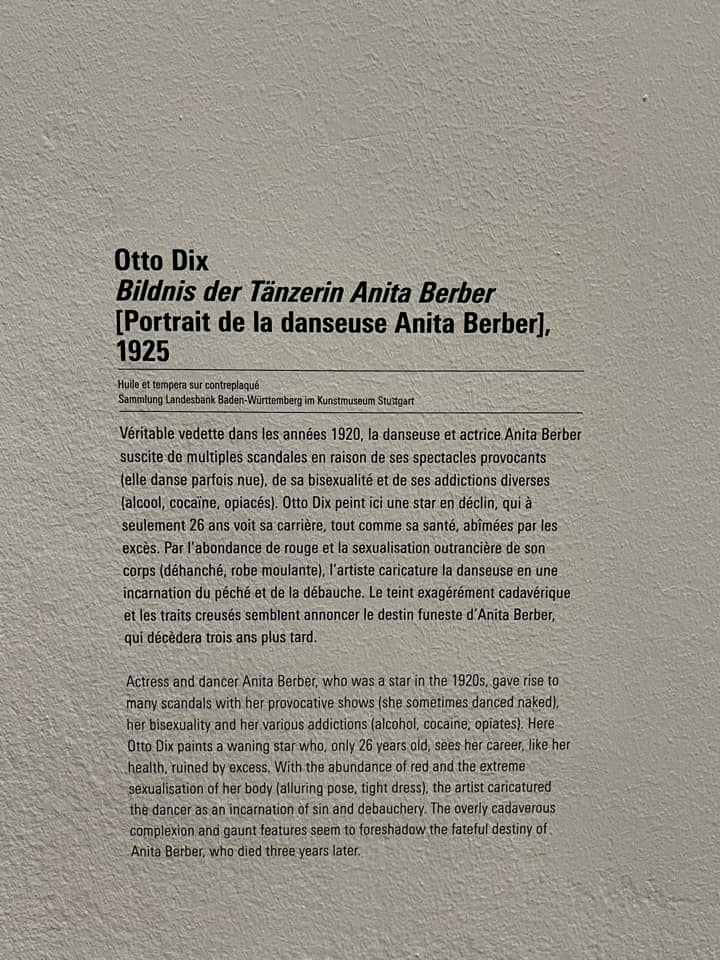
 

Wall text from the exhibition 'Germany / 1920s / New Objectivity / August Sander' at Centre Pompidou, Paris


Wall text from the exhibition Germany / 1920s / New Objectivity / August Sander at Centre Pompidou, Paris


Anita Berber in real life


This is Anita Berber in real life. The painted portrait was her at 26. She died three years later. “Sex, drugs, and rock & roll”
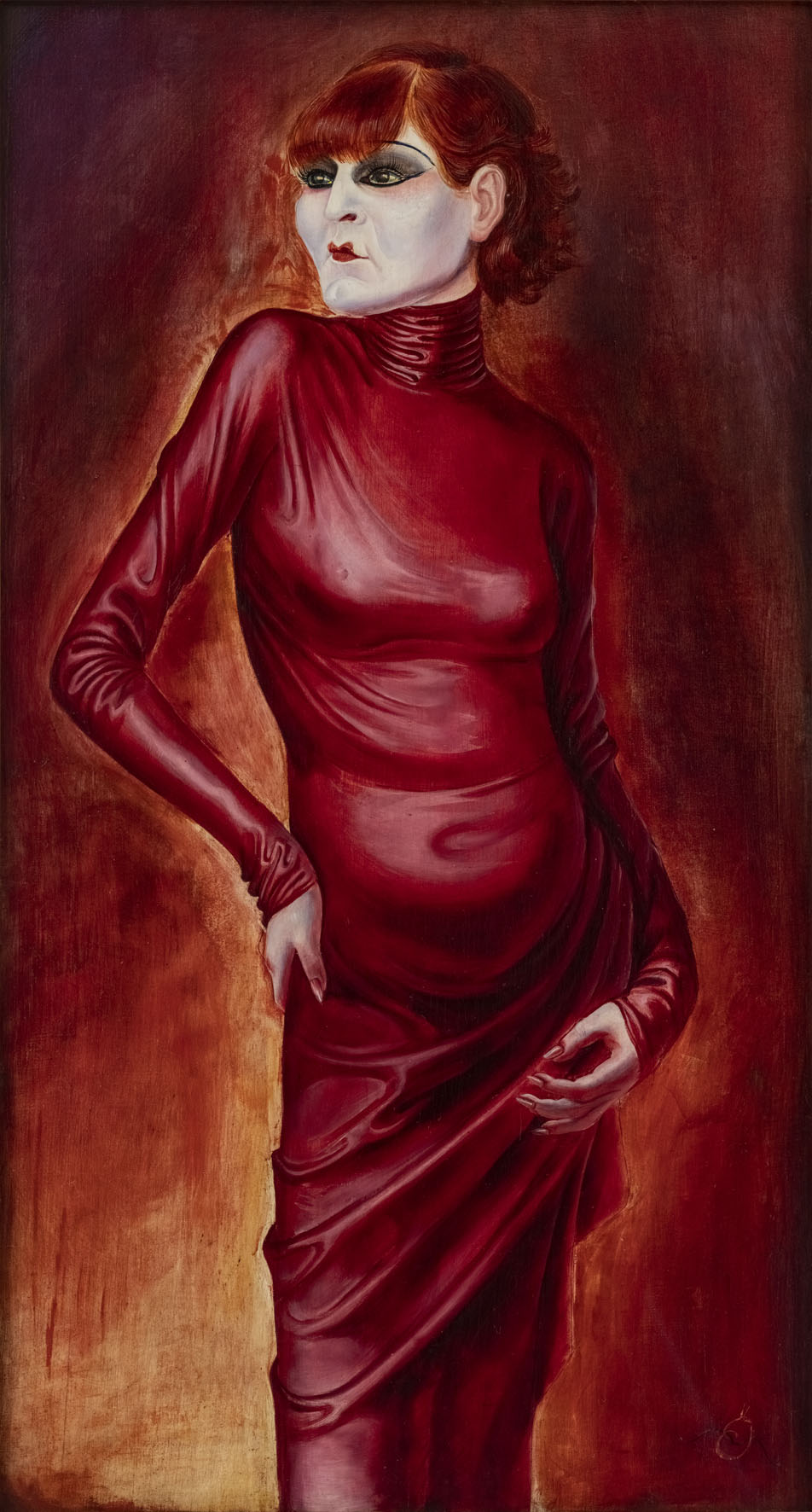
 

Otto Dix (German, 1891-1969) 'Bildnis der Tänzerin Anita Berber' (Portrait of the dancer Anita Berber) 1925


Otto Dix (German, 1891-1969)
Bildnis der Tänzerin Anita Berber (Portrait of the dancer Anita Berber)
1925
© Sammlung Landesbank Baden-Württemberg im Kunstmuseum Stuttgart
Photo: Frank Kleinbac
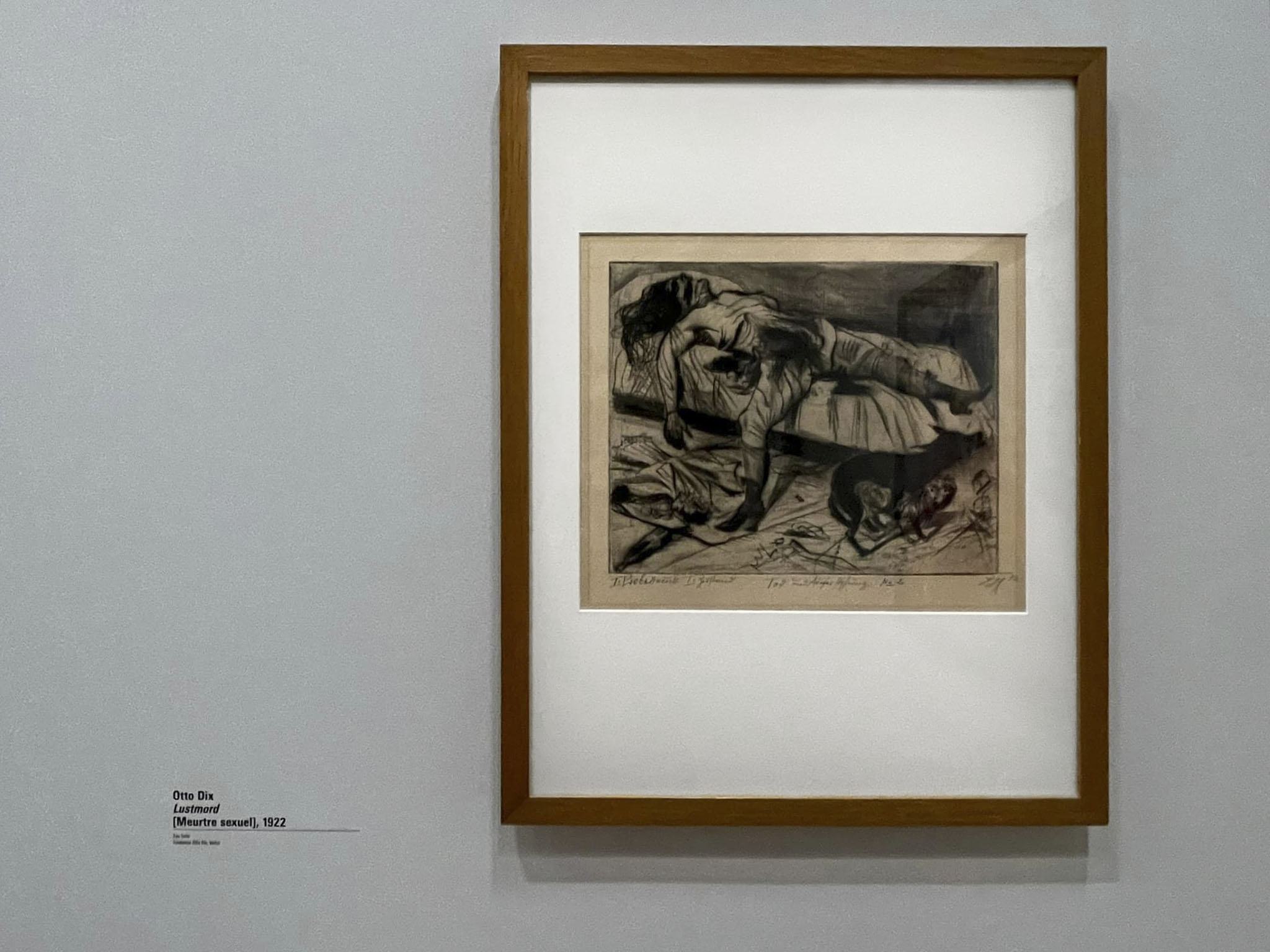
 

Otto Dix (German, 1891-1969) Lustmord (Sex Murder) 1922 (installation view)


Otto Dix (German, 1891-1969)
Lustmord (Sex Murder) (installation view)
1922
Photo: Aubrey Perry


Otto Dix (German, 1891-1969) 'Lustmord' (Sex Murder) 1922


Otto Dix (German, 1891-1969)
Lustmord (Sex Murder)
1922


Jeanne Mammen (German, 1890-1976) 'Transvestitenlokal' (Local transvestite) c. 1931


Jeanne Mammen (German, 1890-1976)
Transvestitenlokal (Local transvestite)
c. 1931
Watercolour and pencil
29.50 x 58cm
From the Pompidou Centre collection
© BPK, Berlin, Dist. RMN-Grand Palais / Dietmar Katz


Heinrich Hoerle (German, 1895-1936) 'Selfportrait' c. 1931


Heinrich Hoerle (German, 1895-1936)
Selfportrait
c. 1931
Oil on canvas
41 x 29cm


August Sander (German, 1876-1964) 'Painter [Heinrich Hoerle]' 1928-1932


August Sander (German, 1876-1964)
Painter (Heinrich Hoerle)
1928-1932
Gelatin silver print


George Grosz (Georg Ehrenfried Gross) (German, 1893-1959) 'Porträt des Schriftstellers Max Herrmann-Neiße' (Portrait of the writer Max Herrmann-Neisse) 1925 (installation view)


George Grosz (Georg Ehrenfried Gross) (German, 1893-1959)
Porträt des Schriftstellers Max Herrmann-Neiße (Portrait of the writer Max Herrmann-Neisse) (installation view)
1925
Oil on canvas
100 x 101.50cm
From the Pompidou Centre collection
Photo: Aubrey Perry
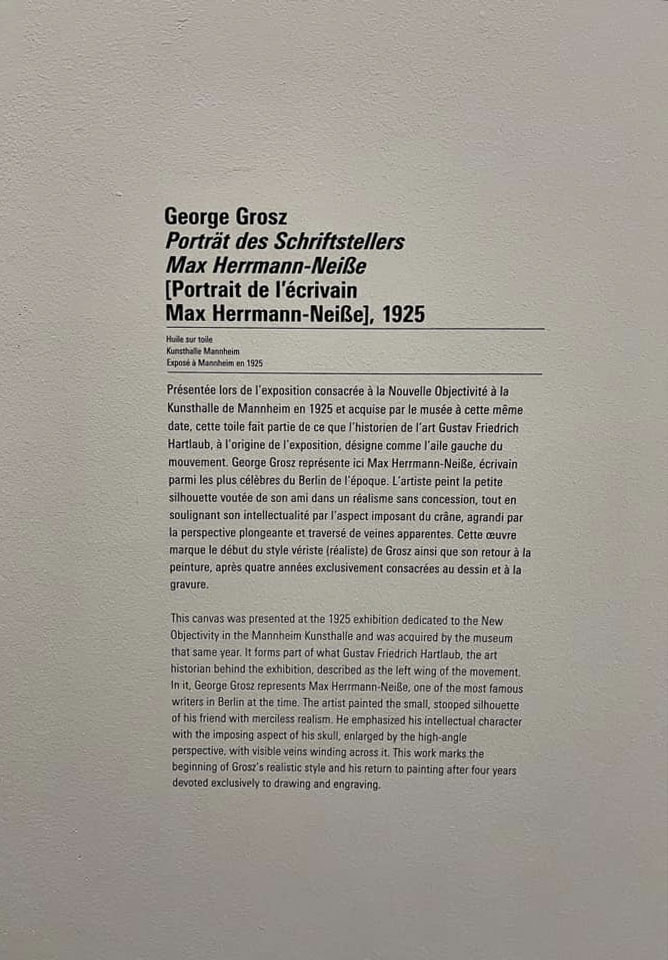
 

Wall text from the exhibition 'Germany / 1920s / New Objectivity / August Sander' at Centre Pompidou, Paris


Wall text from the exhibition Germany / 1920s / New Objectivity / August Sander at Centre Pompidou, Paris


George Grosz (Georg Ehrenfried Gross) (German, 1893-1959) 'Porträt des Schriftstellers Max Herrmann-Neiße' (Portrait of the writer Max Herrmann-Neisse) 1925


George Grosz (Georg Ehrenfried Gross) (German, 1893-1959)
Porträt des Schriftstellers Max Herrmann-Neiße (Portrait of the writer Max Herrmann-Neisse)
1925
Oil on canvas
100 x 101.50cm
From the Pompidou Centre collection
© The estate of George Grosz, Princeton, N.J. / Adagp, Paris
Photo credits: © BPK, Berlin, Dist. RMN-Grand Palais / Cem Yücetas


August Sander (German, 1876-1964) 'Proletarian Intellectuals' [Else Schuler, Tristan Rémy, Franz Wilhelm Seiwert, Gerd Arntz] c. 1925


August Sander (German, 1876-1964)
Proletarian Intellectuals [Else Schuler, Tristan Rémy, Franz Wilhelm Seiwert, Gerd Arntz]
c. 1925
Gelatin silver print
From the Pompidou Centre collection


Heinrich Jost (German, 1889-1948) 'Werbefaltblatt "Für Fotomontage Futura"' (Promotional leaflet "For photomontage Futura") Nd


Heinrich Jost (German, 1889-1948)
Werbefaltblatt “Für Fotomontage Futura” (Promotional leaflet “For photomontage Futura”)
Nd
Press advertisement in four inserted pages
From the Pompidou Centre collection
Photo credits: © Archiv der Massenpresse P. Rössler


Erich Wegner (German, 1899-1980) 'Wirtshaustheke' (Pub bar) c. 1927


Erich Wegner (German, 1899-1980)
Wirtshaustheke (Pub bar)
c. 1927
Canvas on plywood


Walter Schulz-Matan (German, 1899-1965) 'Der Fayencesammler' (The faience collector) 1927


Walter Schulz-Matan (German, 1899-1965)
Der Fayencesammler (The faience collector)
1927
Oil on canvas
© Münchner Stadtmuseum


Hannah Höch (German, 1889-1978) 'Gläser' (Glasses) 1927 (installation view)


Hannah Höch (German, 1889-1978)
Gläser (Glasses) (installation view)
1927
Oil on canvas
77.50 x 77.50cm
From the Pompidou Centre collection
Photo: Aubrey Perry


Better known for her Dadaist collages and photomontages, the Berlin artist Hannah Höch creates here a hyperrealistic still life whose composition is strongly influenced by photography of the time: overhanging point of view, tight framing, neutral space, absence of context particular. The texture of the glass objects is rendered with great precision: this transparency symbolises a new conception of painting, which must show the objects in a limpid manner, without filter. In the very foreground, in an inverted reflection, the painter has represented herself at her easel in front of a window.


Hannah Höch (German, 1889-1978) 'Gläser' (Glasses) 1927


Hannah Höch (German, 1889-1978)
Gläser (Glasses)
1927
Oil on canvas
77.50 x 77.50cm
From the Pompidou Centre collection
© Adagp, Paris
Photo credits: © BPK, Berlin, Dist. RMN-Grand Palais / image MHK


Albert Renger-Patzsch (German, 1897-1966) 'Gläser' (Glasses) 1926-1927


Albert Renger-Patzsch (German, 1897-1966)
Gläser (Glasses)
1926-1927
Gelatin silver print
From the Pompidou Centre collection
© Albert Renger-Patzch-Archiv / Ann & Jürgen Wilde / Adagp, Paris
Photo credits: © Albert Renger-Patzsch Archiv / Ann und Jürgen Wilde, Zülpich / Adagp, Paris, 2022
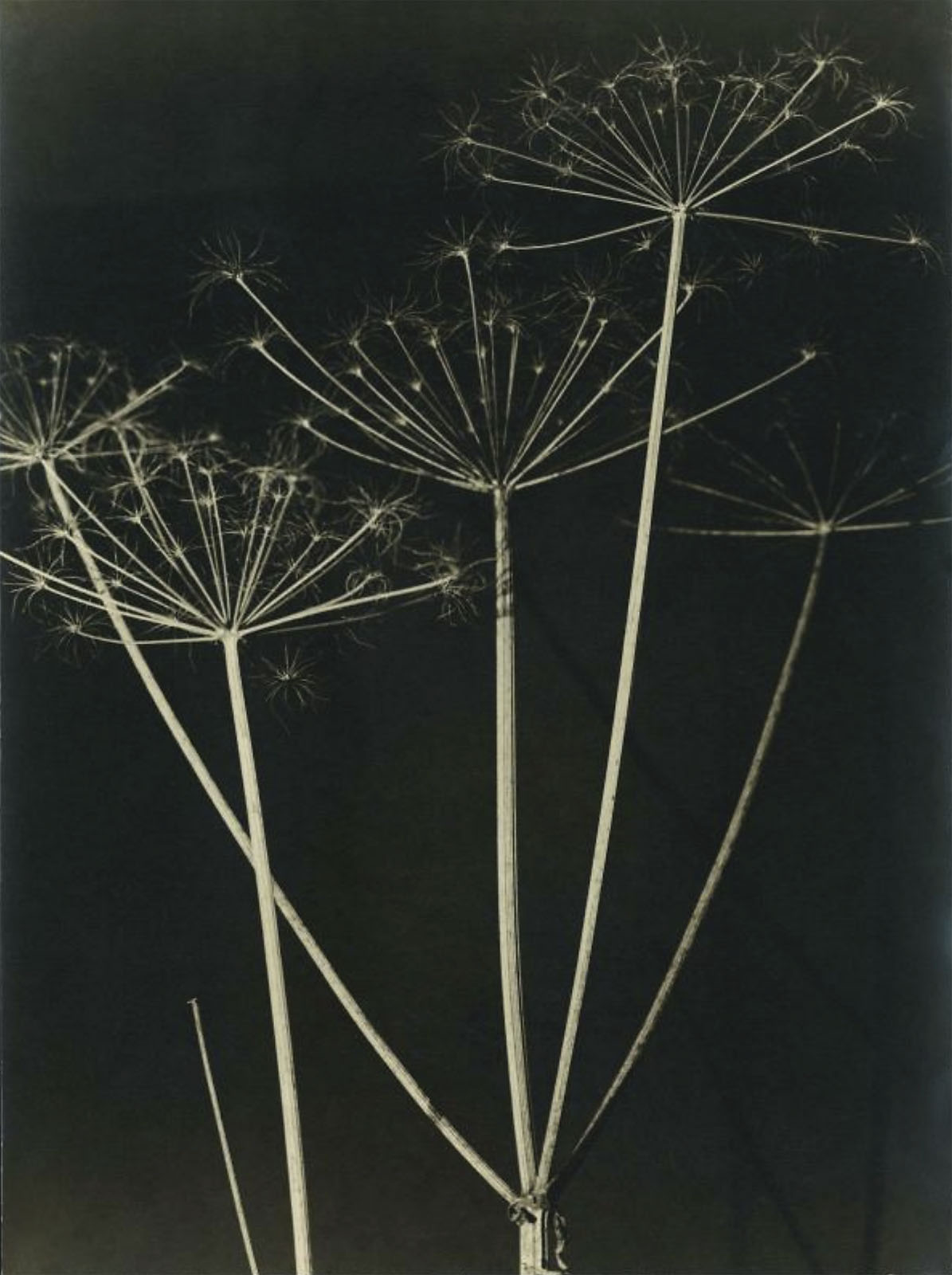
 

Aenne Biermann (German, 1898-1933) 'Bärwurz' Between 1926-1928


Aenne Biermann (German, 1898-1933)
Bärwurz
Between 1926-1928
Gelatin silver print
48 x 35.50cm
From the Pompidou Centre collection
Photo credits: © Stiftung Ann und Jürgen Wilde, Bayerische Staatsgemäldesammlungen, Munich


Sasha Stone (1895, Russia - 1940, France) 'Wenn Berlin Konstantinopel wäre' (If Berlin were Constantinople) Before 1929


Sasha Stone (1895, Russia – 1940, France)
Wenn Berlin Konstantinopel wäre (If Berlin were Constantinople)
Before 1929
Photo montage
From the Pompidou Centre collection
Public domain
Photo credits: © Museum Folkwang Essen – ARTOTHEK


Installation view of the exhibition 'Germany / 1920s / New Objectivity / August Sander' at Centre Pompidou, Paris showing at second left, Franz Wilhelm Seiwert's 'Wandbild für einen Fotografen' (Mural for a Photographer) (1925); and at right, George Grosz's 'Konstruktion (Ohne Titel)' (1920)


Installation view of the exhibition Germany / 1920s / New Objectivity / August Sander at Centre Pompidou, Paris showing at second left, Franz Wilhelm Seiwert’s Wandbild für einen Fotografen (Mural for a Photographer) (1925, below); and at right, George Grosz’s Konstruktion (Ohne Titel) (1920, below)
Photo: Aubrey Perry


Franz Wilhelm Seiwert (German, 1894-1933) 'Wandbild für einen Fotografen' (Mural for a Photographer) 1925 (installation view)


Franz Wilhelm Seiwert (German, 1894-1933)
Wandbild für einen Fotografen (Mural for a Photographer) (installation view)
1925
Oil on canvas
109.5 × 154.5cm
Photo: Aubrey Perry


Franz Wilhelm Seiwert (German, 1894-1933) 'Wandbild für einen Fotografen' (Mural for a Photographer) 1925


Franz Wilhelm Seiwert (German, 1894-1933)
Wandbild für einen Fotografen (Mural for a Photographer)
1925
Oil on canvas
109.5 × 154.5cm


George Grosz (Georg Ehrenfried Gross) (German, 1893-1959) 'Construction (Untitled)' (Konstruktion [Ohne Titel]) 1920 (installation view)


George Grosz (Georg Ehrenfried Gross) (German, 1893-1959)
Konstruktion (Ohne Titel) (Construction (Untitled)) (installation view)
1920
Photo: Aubrey Perry


George Grosz. 'Construction (Untitled) (Konstruktion [Ohne Titel])' 1920


George Grosz (Georg Ehrenfried Gross) (German, 1893-1959)
Konstruktion (Ohne Titel) (Construction (Untitled))
1920


Franz Wilhelm Seiwert (German, 1894-1933) 'Freudlose Gasse' (Joyless Street) 1927 (installation view)


Franz Wilhelm Seiwert (German, 1894-1933)
Freudlose Gasse (Joyless Street) (installation view)
1927
Oil on canvas
65.5 x 80cm
Photo: Aubrey Perry


Franz Wilhelm Seiwert (German, 1894-1933)

Franz Wilhelm Seiwert (March 9, 1894 – July 3, 1933) was a German painter and sculptor in a constructivist style. He was also politically active as a communist making significant contributions, both graphic and theoretical to Die Aktion.

Seiwert was born in Cologne. He was seriously burned in 1901, at the age of seven, in an experimental radiological treatment. As a result, he subsequently lived with the fear that his life would be short.

He studied from 1910 to 1914 at the Cologne School of Arts and Crafts. In 1919 he met Max Ernst and took part in Dada activities. He was invited to exhibit in the large Dada exhibit in Cologne but withdrew at the last moment. In that same year he formed the Stupid group which included Heinrich Hoerle and Anton Räderscheidt. According to Ernst, “Stupid was a secession from Cologne Dada. As far as Hoerle and especially Seiwert were concerned, Dada’s activities were aesthetically too radical and socially not concrete enough”.

His first large solo exhibition was in Cologne at the Kunstverein in 1923, and by the mid-1920s he was a leader of the “Group of Progressive Artists”, who sought to reconcile constructivism with realism while expressing radical political views. In 1929 he founded the magazine “a-z”, a journal of progressive art. This became a vehicle for the exposition of Figurative Constructivism.

Seiwert was actively involved in the international discussions concerning proletarian culture during the revolutionary upsurge following the First World War. “Throw out the old false idols! In the name of the coming proletarian culture.”

Seiwert was the leading theorist of Figurative Constructivism describing its origins as “From the expressionist-cubist art-form abstract constructivism was developed, which in turn led into Figurative Constructivism”.

When Hitler came to power in 1933, Seiwert briefly fled to the mountain range Siebengebirge, but his health was badly deteriorating, and friends brought him back to Cologne, where he died on July 3, 1933.

Text from the Wikipedia website


Franz Wilhelm Seiwert (German, 1894-1933) 'Freudlose Gasse' (Joyless Street) 1927


Franz Wilhelm Seiwert (German, 1894-1933)
Freudlose Gasse (Joyless Street) (installation view)
1927
Oil on canvas
65.5 x 80cm


Installation view of the exhibition 'Germany / 1920s / New Objectivity / August Sander' at Centre Pompidou, Paris showing at left, Kate Diehn-Bitt's 'Self Portrait as an Artist' (1935); at middle, Gert Wollheim's 'Untitled (Couple)' (1926); and at right, Otto Dix's 'Portrait of the Jeweller Karl Krall' (1923)


Installation view of the exhibition Germany / 1920s / New Objectivity / August Sander at Centre Pompidou, Paris showing at left, Kate Diehn-Bitt’s Self Portrait as an Artist (1935, below); at middle, Gert Wollheim’s Untitled (Couple) (1926, below); and at right, Otto Dix’s Portrait of the Jeweller Karl Krall (1923, below)
Photo: Aubrey Perry


Kate Diehn-Bitt (German, 1900-1978) 'Self Portrait as an Artist' 1935 (installation view)


Kate Diehn-Bitt (German, 1900-1978)
Self Portrait as an Artist (installation view)
1935
Photo: Aubrey Perry


Gert Wollheim (German, 1894-1974) 'Untitled (Couple)' 1926 (installation view)


Gert Wollheim (German, 1894-1974)
Untitled (Couple) (installation view)
1926
Oil on canvas
Photo: Aubrey Perry


Gert Heinrich Wollheim (German, 1894-1974)

Gert Heinrich Wollheim (11 September 1894 – 22 April 1974) was a German expressionist painter later associated with the New Objectivity, who fled nazi Germany and worked in the United States after 1947.

Gert Heinrich Wollheim was born in Dresden-Loschwitz. From 1911 to 1913, he studied at the College of Fine Arts in Weimar , where his instructors included Albin Egger-Lienz and Gottlieb Forster. From 1914-1917 he was in military service in World War I, where he sustained an abdominal wound. After the war he lived in Berlin until 1919, when Wollheim, Otto Pankok (whom he had met at the academy in Weimar), Ulfert Lüken, Hermann Hundt and others created an artists’ colony in Remels, East Frisia.

At the end of 1919, Wollheim and Pankok went to Düsseldorf and became founding members of the “Young Rhineland” group, which also included Max Ernst, Otto Dix, and Ulrich Leman. Wollheim was one of the artists associated with the art dealer Johanna Ey, and in 1922 he was taken to court over a painting displayed at her gallery. In 1925, he moved to Berlin, and his work, which always emphasised the theatrical and the grotesque, began a new phase of coolly objective representation. His work was part of the art competitions at the 1928 Summer Olympics and the 1932 Summer Olympics.

After Hitler seized power in 1933 Wollheim’s works were declared degenerate art and many were destroyed. He fled to France and became active in the Resistance. He was one of the co-founders of the Union des Artistes Allemandes Libres, an organisation of exiled German artists founded in Paris in autumn 1937. In that same year, he became the companion of the dancer Tatjana Barbakoff. Meanwhile, in Munich, three of his pictures were displayed in the defamatory Nazi exhibition Entartete Kunst (Degenerate Art) in 1937.

From Paris, Wollheim fled to Saarbrücken and later to Switzerland. He was arrested in 1939 and held in a series of labour camps in France (Vierzon, Ruchard, Gurs and Septfonds) until his escape in 1942, after which he and his wife hid in the Pyrénées with the help of a peasant woman. At war’s end in 1945 he returned to France.

In 1947 he moved to New York and became an American citizen. He died in New York in 1974.

Text from the Wikipedia website


Gert Wollheim (German, 1894-1974) 'Untitled (Couple)' 1926


Gert Wollheim (German, 1894-1974)
Untitled (Couple)
1926
Oil on canvas


Otto Dix (German, 1891-1969) 'Portrait of the Jeweller Karl Krall' 1923 (installation view)


Otto Dix (German, 1891-1969)
Portrait of the Jeweller Karl Krall (installation view)
1923
Kunst- und Museumsverein im Von der Heydt-Museum Wuppertal
Photo: Aubrey Perry


When the Nazis came to power in 1933, Dix was dismissed from his professorship teaching art at the Dresden Academy, where he had worked since 1927. The reason given was that, through his painting, he had committed a ‘violation of the moral sensibilities and subversion of the militant spirit of the German people’.

In the years following, some 260 of his works were confiscated by the Nazi Propaganda Ministry. Several of these works, including The Jeweller Karl Krall 1923, appeared in the Entartete Kunst (degenerate art) exhibition of 1937-1938. The exhibition was staged by the Nazis to destroy the careers of those artists they considered mentally ill, inappropriate or unpatriotic.


Otto Dix. 'The Jeweller Karl Krall (Der Juwelier Karl Krall)' 1923


Otto Dix (German, 1891-1969)
Portrait of the Jeweller Karl Krall (Der Juwelier Karl Krall)
1923
Kunst- und Museumsverein im Von der Heydt-Museum Wuppertal
Photo: Antje Zeis-Loi, Medienzentrum Wuppertal
© DACS 2017


Otto Dix (German, 1891-1969) 'Portrait of the Art Dealer Alfred Flechtheim' 1926 (installation view)


Otto Dix (German, 1891-1969)
Portrait of the Art Dealer Alfred Flechtheim (installation view)
1926
Photo: Aubrey Perry


Alfred Flechtheim entered the art world as a collector of Far Eastern art. In 1910, he married the daughter of a wealthy Dortmund merchant. This union helped provide him with the means to open a gallery in 1913. On the eve of the First World War, Flechtheim’s gallery was filled with works by the French avant-garde. He had a reputation as Francophile with a particular affection for Cubism. In Düsseldorf, local artists unfairly suggested that he had turned his back on German art. In this unflattering, uncommissioned work by Dix, he is surrounded by Cubist works. He clutches one in one hand and bills in another. To Dix, he’s little more than a salesman in a cheap suit, hawking foreign merchandise for the local Bourgeoisie.


Otto Dix (German, 1891-1969) 'Portrait of the Art Dealer Alfred Flechtheim' 1926


Otto Dix (German, 1891-1969)
Portrait of the Art Dealer Alfred Flechtheim
1926


Julius Bissier. 'Bildhauer mit Selbstbildnis' (Sculptor with Self-portrait) 1928


Julius Bissier (German, 1893-1965)
Bildhauer mit Selbstbildnis (Sculptor with Self-portrait)
1928
Oil on canvas
77 x 61cm
Museum für Neue Kunst, Städtische Museen Freiburg, Germany


Jeanne Mammen (German, 1890-1976) 'Two Women, Dancing' c. 1928 (installation view)


Jeanne Mammen (German, 1890-1976)
Two Women, Dancing (installation view)
c. 1928
Watercolour and pencil on paper
48 x 36cm
Private Collection, Berlin
Photo: Aubrey Perry


She was born in Germany in 1890, but her family moved to Paris where she enjoyed a carefree and progressive upbringing (including art studies at the Académie Julian, as well as at the Académie Royale des Beaux-Arts in Brussels). In 1914, she returned to Germany and, from 1919, worked from a small fourth-floor, two-room living-quarters-cum-studio at Kurfürstendamm 29 in Berlin for more than 60 years, until her death in 1976.

During her lifetime, she gained a reputation beyond Berlin as a chronicler of life in the city, providing for herself largely by designing film posters for the then booming UFA studios and selling her illustrations to fashion and satirical magazines, including Simplicissimus, Uhu and Jugend. Especially during the 20s and 30s, when out and about, she was never without her sketchbook – several of which are included in the exhibition – capturing the goings-on in cafes, bars and on the streets…

In her early years in Berlin, Mammen lived with her sister Mimi. She was close friends with Hans Uhlmann, later visiting him in prison, following his arrest for distributing flyers in 1933, and some posit more than a friendship between the two artists; others, however, in particular the scholar Laurel Lampela, suppose that Mammen may have been more attracted to women, arguing that such intimate and tender paintings of lesbian couples could only have been made from experience.

Whatever the case, Mammen often withdrew from the world entirely, with repeated periods of isolation. She survived the years of dictatorship from 1933-1945 with the help of friends and mini-commissions, as well as by selling used books from a handcart. Although she had the opportunity to seek exile abroad, she did not want to start afresh for a second time in a foreign country. Instead, she lived the life of a recluse, working by candlelight after her building had been bombed, and often scarcely leaving her studio for days at a time. When she did, she noted (in the only interview she ever gave, carried out a year before her death): “I have always wanted to be just a pair of eyes, walking through the world unseen, only to be able to see others.”

Anna McNay. “Jeanne Mammen: The Observer. Retrospective (1910-75),” on the Studio International website 16/12/2017 [Online] Cited 02/08/2022


Jeanne Mammen (German, 1890-1976) 'Two Women, Dancing' c. 1928


Jeanne Mammen (German, 1890-1976)
Two Women, Dancing
c. 1928
Watercolour and pencil on paper
48 x 36cm
Private Collection, Berlin
© VG Bild-Kunst, Bonn 2017


Jeanne Mammen (1890-1976) 'Valeska Gert' 1928-1929


Jeanne Mammen (1890-1976)
Valeska Gert
1928-1929
Oil on canvas


Jeanne Mammen (German, 1890-1976) 'Café Nollendorf' c. 1931


Jeanne Mammen (German, 1890-1976)
Café Nollendorf
c. 1931
Watercolour and India ink over pencil on paper


Georg Scholz (German, 1890-1945) 'The House of Gatekeeper' 1924 (installation view)


Georg Scholz (German, 1890-1945)
The House of Gatekeeper (installation view)
1924
Photo: Aubrey Perry


Georg Scholz (German, 1890-1945)

Georg Scholz (October 10, 1890 – November 27, 1945) was a German realist painter.

Scholz was born in Wolfenbüttel and had his artistic training at the Karlsruhe Academy, where his teachers included Hans Thoma and Wilhelm Trübner. He later studied in Berlin under Lovis Corinth. After military service in World War I lasting from 1915 to 1918, he resumed painting, working in a style fusing cubist and futurist ideas.

In 1919 Scholz became a member of the Communist Party of Germany, and his work of the next few years is harshly critical of the social and economic order in postwar Germany. His Industrial Farmers of 1920 is an oil painting with collage that depicts a Bible-clutching farmer with money erupting from his forehead, seated next to his monstrous wife who cradles a piglet. Their subhuman son, his head open at the top to show that it is empty, is torturing a frog. Perhaps Scholz’ best-known work, it is typical of the paintings he produced in the early 1920s, combining a controlled, crisp execution with corrosive sarcasm.

Scholz quickly became one of the leaders of the New Objectivity, a group of artists who practiced a cynical form of realism. The most famous among this group are Max Beckmann, George Grosz and Otto Dix, and Scholz’s work briefly vied with theirs for ferocity of attack. By 1925, however, his approach had softened into something closer to neoclassicism, as seen in the Self-Portrait in front of an Advertising Column of 1926 and the Seated Nude with Plaster Bust of 1927.

In 1925, he was appointed a professor at the Baden State Academy of Art in Karlsruhe, where his students included Rudolf Dischinger. Scholz began contributing in 1926 to the satirical magazine Simplicissimus, and in 1928 he visited Paris where he especially appreciated the work of Bonnard.

With the rise to power of Hitler and the National Socialists in 1933, Scholz was quickly dismissed from his teaching position. Declared a Degenerate Artist, his works were among those seized in 1937 as part of a campaign by the Nazis to “purify” German culture, and he was forbidden to paint in 1939.

In 1945, the French occupation forces appointed Scholz mayor of Waldkirch, but he died that same year, in Waldkirch.

Text from the Wikipedia website


Albert Renger-Patzsch (German, 1897-1966) 'Isolatorenkette' (Chain of insulators) 1925


Albert Renger-Patzsch (German, 1897-1966)
Isolatorenkette (Chain of insulators)
1925
Vintage gelatin silver print
27.30 x 37.50cm
Galerie Berinson, Berlin
© Albert Renger-Patzsch Archiv / Ann und Jürgen Wilde, Zülpich / Adagp, Paris, 2022


Albert Renger-Patzsch (German, 1897-1966) 'Triebwerk einer Lokomotive' (Engine of a locomotive) 1925


Albert Renger-Patzsch (German, 1897-1966)
Triebwerk einer Lokomotive (Engine of a locomotive)
1925
Vintage gelatin silver print
17 x 21.2 cm
Galerie Berinson, Berlin
© Albert Renger-Patzsch Archiv / Ann und Jürgen Wilde, Zülpich / Adagp, Paris, 2022


Albert Renger-Patzsch (German, 1897-1966) 'Nockenwelle einer Dampfmaschine' (Camshaft of a steam engine) 1927


Albert Renger-Patzsch (German, 1897-1966)
Nockenwelle einer Dampfmaschine (Camshaft of a steam engine)
1927
Gelatin silver print


Albert Renger-Patzsch (German, 1897-1966) 'Musterzimmer im Fagus-Werk Benscheidt in Alfeld' (Shoe trees at the Fagus factory, Alfeld) 1928


Albert Renger-Patzsch (German, 1897-1966)
Musterzimmer im Fagus-Werk Benscheidt in Alfeld (Shoe trees at the Fagus factory, Alfeld)
1928
Vintage gelatin silver print
16.9 × 22.8cm
Staatsgemäldesammlungen, Munich
© Albert Renger-Patzsch Archiv / Ann und Jürgen Wilde, Zülpich / Adagp, Paris, 2022


Albert Renger-Patzsch (1897-1966) 'Bügeleisen für Schuhfabrikation, Faguswerk Alfeld [Shoemakers' irons, Fagus factory, Alfeld]' 1928


Albert Renger-Patzsch (German, 1897-1966)
Bügeleisen für Schuhfabrikation (Irons for shoemaking)
1928
Gelatin silver print
22.7 × 16.9 cm
Staatsgemäldesammlungen, Munich
© Albert Renger-Patzsch Archiv / Ann und Jürgen Wilde, Zülpich / Adagp, Paris, 2022


Anonymous artist. 'Isotype Brochure' Around 1935


Anonymous artist
Isotype Brochure
Around 1935
Sheet, front
University of Reading, Otto and Marie Neurath Isotype Collection


Anonymous artist. 'Isotype Brochure' Around 1935


Anonymous artist
Isotype Brochure
Around 1935
Sheet, front
University of Reading, Otto and Marie Neurath Isotype Collection


Installation view of the exhibition Germany / 1920s / New Objectivity / August Sander at Centre Pompidou, Paris showing at right, Grethe Jürgens's 'Stoffhändler' (Fabric Merchant) (1936)


Installation view of the exhibition Germany / 1920s / New Objectivity / August Sander at Centre Pompidou, Paris showing at right, Grethe Jürgens’s Stoffhändler (Fabric Merchant) (1936, below)
Photo: Aubrey Perry


Grethe Jürgens (German, 1899-1981)

Grethe Jürgens (February 15, 1899 – May 8, 1981) was a German painter associated with the New Objectivity.

Jürgens was born in Holzhausen and grew up in Wilhelmshaven.[1] In 1918 she enrolled in the Berlin Technical College, where she studied architecture. From 1919 until 1922 she studied at the Hanover School of Arts and Crafts under Fritz Burgr-Mühlfeld. She was employed in advertising as a draftswoman for the Hackethal Wire Company in Hanover from 1923 to 1927, and continued afterward to work as a freelance commercial artist. Her paintings from this period, such as Garden Picture (1928) and Employment Exchange (1929), show the influence of French artists such as Henri Rousseau and Auguste Herbin.

From 1931 to 1932, Jürgens edited the 12-issue run of the magazine Der Wachsbogen, which served as a theoretical organ of the Hanover artists of the New Objectivity movement. In an essay she published in the magazine, she described the group’s artistic approach:

“One paints a landscape, trees, houses, vehicles, and sees the world in a new way. Unemployed people, tramps, or beggars are painted, not because they are “interesting characters” … or through a desire to appeal to the sympathy of society, but because one suddenly realizes that it is in these people that the most powerful expression of the present time is to be found.”


In 1932, she participated in the exhibition “Neue Sachlichkeit in Hanover” (“New Objectivity in Hanover”) at the Herzog Anton Ulrich Museum in Brunswick. In 1933 she had a solo exhibition in Cologne. After 1933, she worked extensively as an illustrator and designer of book covers. In 1951, the Wilhelm Busch Museum in Hanover presented a retrospective exhibition of her works. Jürgens died in 1981 in Hanover.

Text from the Wikipedia website


Grethe Jürgens (German, 1899-1981) 'Stoffhändler' (Fabric Merchant) 1936


Grethe Jürgens (German, 1899-1981)
Stoffhändler (Fabric Merchant)
1936


Installation view of the exhibition 'Germany / 1920s / New Objectivity / August Sander' at Centre Pompidou, Paris showing at left, Lotte Laserstein's 'Russian Girl with Compact' (1928); and at right, Rudolf Schlichter's 'Margot' (1924)


Installation view of the exhibition Germany / 1920s / New Objectivity / August Sander at Centre Pompidou, Paris showing at left, Lotte Laserstein’s Russian Girl with Compact (1928, below); and at right, Rudolf Schlichter’s Margot (1924, below)
Photo: Aubrey Perry


Lotte Laserstein (German-Swedish, 1898-1993) 'Russian Girl with Compact' 1928


Lotte Laserstein (German-Swedish, 1898-1993)
Russian Girl with Compact (Russisches Mädchen mit Puderdose)
1928
Oil on panel
31.7 x 41cm
Städel Museum
Acquired in 2014 with means provided by the Werner Wirthle bequest


With a critical gaze, the Russian Girl with Compact examines her face in her pocket mirror. Her other hand is holding a fluffy powder puff. Facing the viewer, she is nonetheless interested only in what is hidden from our view. And yet the viewer still gets to see the young woman’s reflection, in the profile of her in the mirror on the wall. This duplication heightens her presence, as does the red colour of her elegant blouse. Lotte Laserstein repeatedly painted different types of women. Here, she portrays a modern woman of the 1920s: her bob hairstyle, clothing and use of make-up point to this new type of emancipated woman.

Text from the Städel Museum website


Lotte Laserstein (28 November 1898 – 21 January 1993) was a German-Swedish painter. She was an artist of figurative paintings in Germany’s Weimar Republic. The National Socialist regime and its anti-Semitism forced her to leave Germany in 1937 and to emigrate to Sweden. In Sweden, she continued to work as a portraitist and painter of landscapes until her death. The paintings she created during the 1920s and 1930s fit into the movement of New Objectivity in Germany.

Text from the Wikipedia website


Rudolf Schlichter (German, 1890-1955) 'Margot' 1924


Rudolf Schlichter (German, 1890-1955)
Margot
1924


Bernhard Dörries (German, 1898-1978) 'Breakfast Still Life' 1927 (installation view)


Bernhard Dörries (German, 1898-1978)
Breakfast Still Life (installation view)
1927
Photo: Aubrey Perry


Bernhard Dörries (German, 1898-1978)

Bernhard Dörries ( May 26, 1898 in Hanover – July 15, 1978 in Bielefeld ) was a German painter and art writer .

Bernhard Dörries was a son of the Protestant theologian Bernhard Dörries (1856-1934), his older brother was the church historian Hermann Dörries (1895-1977).

In 1917 Dörries studied architecture at the Technical University of Hanover, but through Kurt Schwitters he began painting and studied at the Art Academy in Berlin. During study visits he got to know Italy, Spain and France. From 1924 he became a board member of the Kunstverein Hannover. In 1933 Dörries joined the National Socialist German Workers’ Party (NSDAP). At the Paris World Exhibition of 1937 he won a “Grand Prix” for a portrait of a girl. After the death of Georg Schrimpf in 1938, he received a professorship at the Art Academy in Berlin, which he held until the end of the Second World War held. From 1937 to 1944, Dörries was represented with 10 paintings at seven major German art exhibitions in Munich.

After the war, Dörries lived in Langenholtensen near Northeim until 1949 and then in Hanover. In 1955 he became a professor again at the Berlin University of the Arts and retired in 1970. From 1973 he was a member of the German Association of Artists.

Text translated from the German Wikipedia website
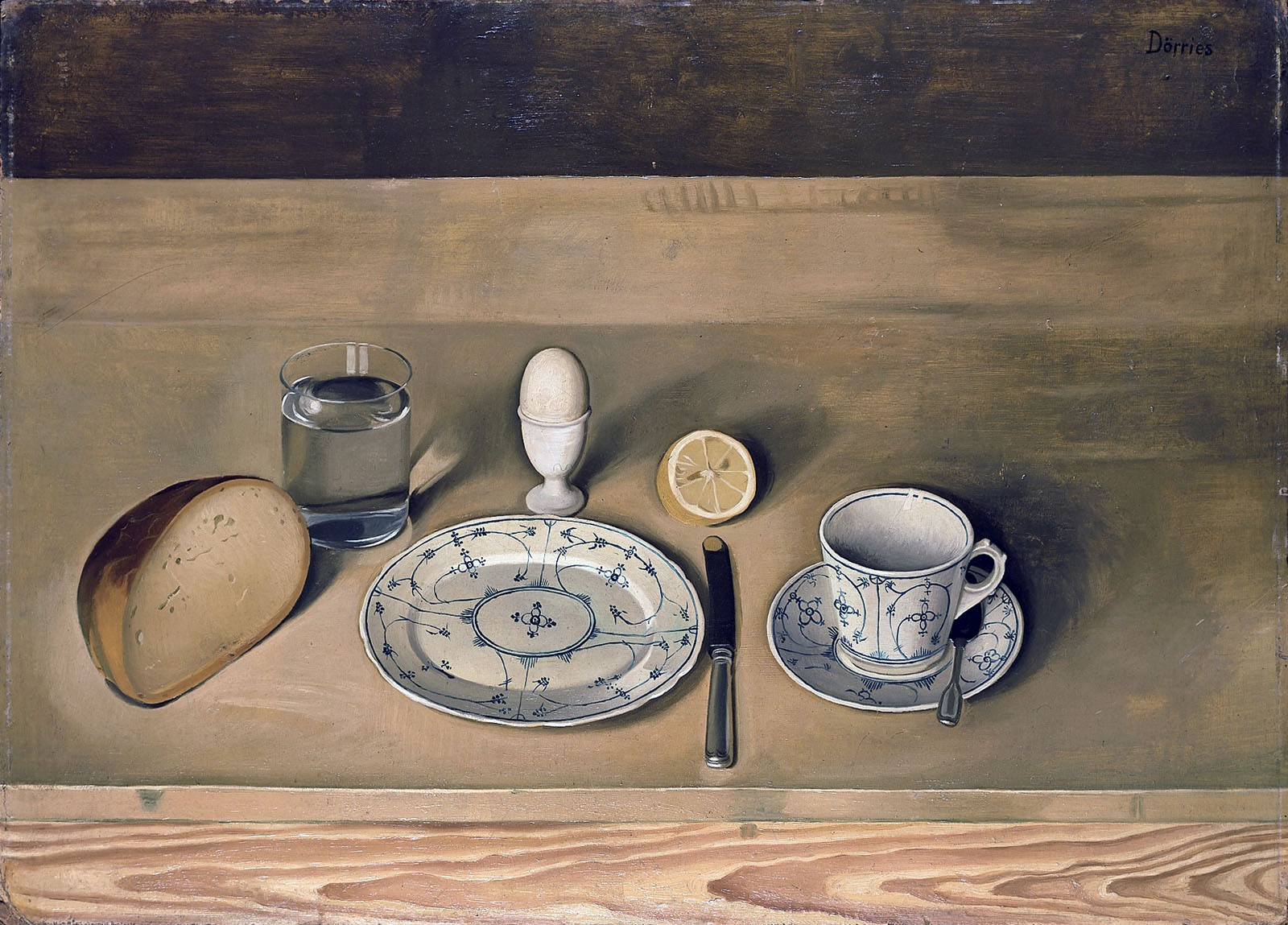
 

Bernhard Dörries (German, 1898-1978) 'Breakfast Still Life' 1927


Bernhard Dörries (German, 1898-1978)
Breakfast Still Life
1927


Gert Heinrich Wollheim (German, 1894-1974) 'Abshied von Düsseldorf' (Farewell from Dusseldorf) 1924 (installation view)


Gert Heinrich Wollheim (German, 1894-1974)
Abshied von Düsseldorf (Farewell from Dusseldorf) (installation view)
1924
Oil on canvas
Kunstpalast, Düsseldorf
Photo: Aubrey Perry


Gert Heinrich Wollheim (German, 1894-1974)

Gert Heinrich Wollheim (11 September 1894 – 22 April 1974) was a German expressionist painter later associated with the New Objectivity, who fled Nazi Germany and worked in the United States after 1947.

Gert Heinrich Wollheim was born in Dresden-Loschwitz. From 1911 to 1913, he studied at the College of Fine Arts in Weimar , where his instructors included Albin Egger-Lienz and Gottlieb Forster. From 1914-1917 he was in military service in World War I, where he sustained an abdominal wound. After the war he lived in Berlin until 1919, when Wollheim, Otto Pankok (whom he had met at the academy in Weimar), Ulfert Lüken, Hermann Hundt and others created an artists’ colony in Remels, East Frisia.

At the end of 1919, Wollheim and Pankok went to Düsseldorf and became founding members of the “Young Rhineland” group, which also included Max Ernst, Otto Dix, and Ulrich Leman. Wollheim was one of the artists associated with the art dealer Johanna Ey, and in 1922 he was taken to court over a painting displayed at her gallery. In 1925, he moved to Berlin, and his work, which always emphasised the theatrical and the grotesque, began a new phase of coolly objective representation. His work was part of the art competitions at the 1928 Summer Olympics and the 1932 Summer Olympics.

After Hitler seized power in 1933 Wollheim’s works were declared degenerate art and many were destroyed. He fled to France and became active in the Resistance. He was one of the co-founders of the Union des Artistes Allemandes Libres, an organisation of exiled German artists founded in Paris in autumn 1937. In that same year, he became the companion of the dancer Tatjana Barbakoff. Meanwhile, in Munich, three of his pictures were displayed in the defamatory Nazi exhibition Entartete Kunst (Degenerate Art) in 1937.

From Paris, Wollheim fled to Saarbrücken and later to Switzerland. He was arrested in 1939 and held in a series of labor camps in France (Vierzon, Ruchard, Gurs and Septfonds) until his escape in 1942, after which he and his wife hid in the Pyrénées with the help of a peasant woman. At war’s end in 1945 he returned to France.

In 1947 he moved to New York and became an American citizen. He died in New York in 1974.

Text from the Wikipedia website


Wall text from the exhibition 'Germany / 1920s / New Objectivity / August Sander' at Centre Pompidou, Paris


Wall text from the exhibition Germany / 1920s / New Objectivity / August Sander at Centre Pompidou, Paris


Gert Heinrich Wollheim (German, 1894-1974) 'Abshied von Düsseldorf' (Farewell from Dusseldorf) 1924


Gert Heinrich Wollheim (German, 1894-1974)
Abshied von Düsseldorf (Farewell from Dusseldorf)
1924
Oil on canvas
Kunstpalast, Düsseldorf


Otto Dix (German, 1891-1969) 'Karton zum "Groβstadt-Triptychon"' (Cartoon for "The Grande Ville triptych") 1927-1928 (installation view)


Otto Dix (German, 1891-1969)
Karton zum “Groβstadt-Triptychon” (Cartoon for “The Grande Ville triptych”) (installation view)
1927-1928
Charcoal, chalk, pencil, sanguine, gouache on drawing paper laid down on tile
3 panels
Photo: Aubrey Perry


Wall text from the exhibition 'Germany / 1920s / New Objectivity / August Sander' at Centre Pompidou, Paris


Wall text from the exhibition Germany / 1920s / New Objectivity / August Sander at Centre Pompidou, Paris


Otto Dix (German, 1891-1969) Karton zum "Groβstadt-Triptychon" (Cartoon for "The Grande Ville triptych") 1927-1928 (installation view detail)


Otto Dix (German, 1891-1969)
Karton zum “Groβstadt-Triptychon” (Cartoon for “The Grande Ville triptych”) (installation view detail)
1927-1928
Charcoal, chalk, pencil, sanguine, gouache on drawing paper laid down on tile
3 panels
Photo: Aubrey Perry


Otto Dix (German, 1891-1969) Karton zum "Groβstadt-Triptychon" (Cartoon for "The Grande Ville triptych") 1927-1928 (installation view detail)


Otto Dix (German, 1891-1969)
Karton zum “Groβstadt-Triptychon” (Cartoon for “The Grande Ville triptych”) (installation view detail)
1927-1928
Charcoal, chalk, pencil, sanguine, gouache on drawing paper laid down on tile
3 panels
Photo: Aubrey Perry
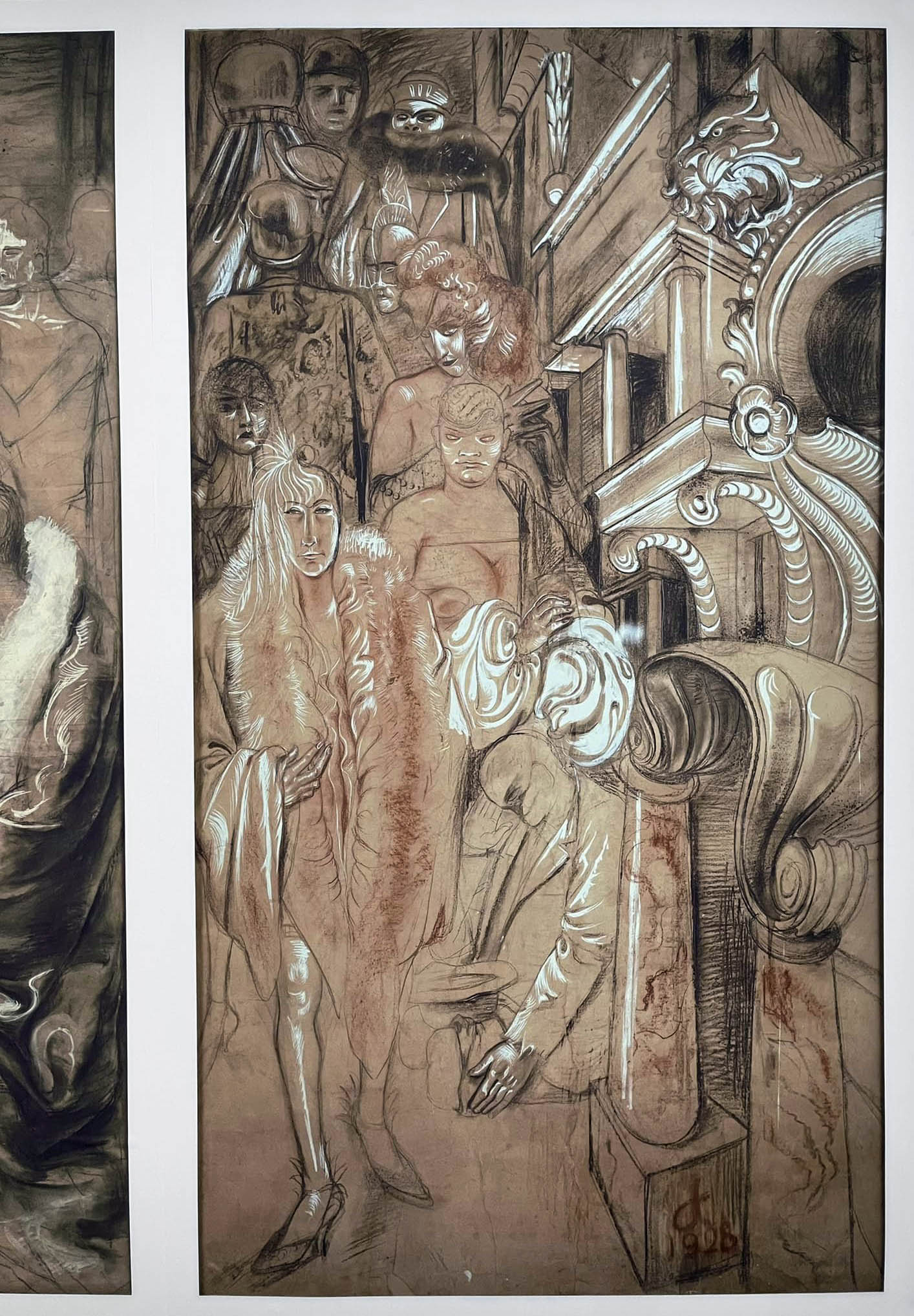
 

Otto Dix (German, 1891-1969) Karton zum "Groβstadt-Triptychon" (Cartoon for "The Grande Ville triptych") 1927-1928 (installation view detail)


Otto Dix (German, 1891-1969)
Karton zum “Groβstadt-Triptychon” (Cartoon for “The Grande Ville triptych”) (installation view detail)
1927-1928
Charcoal, chalk, pencil, sanguine, gouache on drawing paper laid down on tile
3 panels
Photo: Aubrey Perry


Georg Scholz (German, 1890-1945) 'Weiblicher Akt auf dem Sofa' (Female nude on the sofa) 1928


Georg Scholz (German, 1890-1945)
Weiblicher Akt auf dem Sofa (Female nude on the sofa)
1928
Oil on canvas


Hans Grundig (German, 1901-1958) 'Am Stadtrand' (On the outskirts) 1926


Hans Grundig (German, 1901-1958)
Am Stadtrand (On the outskirts)
1926
Oil on canvas


Hans Grundig (German, 1901-1958)

Hans Grundig (February 19, 1901 – September 11, 1958) was a German painter and graphic artist associated with the New Objectivity movement.

He was born in Dresden and, after an apprenticeship as an interior decorator, studied in 1920–1921 at the Dresden School of Arts and Crafts. He then studied at the Dresden Academy from 1922 to 1923. During the 1920s his paintings, primarily portraits of working-class subjects, were influenced by the work of Otto Dix. Like his friend Gert Heinrich Wollheim, he often depicted himself in a theatrical manner, as in his Self-Portrait during the Carnival Season (1930).

He had his first solo exhibition in 1930 at the Dresden gallery of Józef Sandel. He made his first etchings in 1933.

Politically anti-fascist, he joined the German Communist Party in 1926, and was a founding member of the arts organisation Assoziation revolutionärer bildender Künstler in Dresden in 1929.

Following the fall of the Weimar Republic, Grundig was declared a degenerate artist by the Nazis, who included his works in the defamatory Degenerate Art exhibition in Munich in 1937. He expressed his antagonism toward the regime in paintings such as The Thousand Year Reich (1936). Forbidden to practice his profession, he was arrested twice – briefly in 1936, and again in 1938, after which he was interned in Sachsenhausen concentration camp from 1940 to 1944.

In 1945 he went to Moscow, where he attended an anti-fascist school. Returning to Berlin in 1946, he became a professor of painting at the Dresden Academy of Fine Arts. In 1957 he published his autobiography, Zwischen Karneval und Aschermittwoch (“Between Shrovetide carnival and Ash Wednesday”). He was awarded the Heinrich Mann Prize in Berlin in 1958, the year of his death.

Text from the Wikipedia website


Hanna Nagel (German, 1907-1975) 'Untitled (Bare-Breasted Woman in Front of a Printing Press)' 1929


Hanna Nagel (German, 1907-1975)
Untitled (Bare-Breasted Woman in Front of a Printing Press)
1929
Graphite and watercolour on paper
46 x 60.5cm


Hanna Nagel (German, 1907-1975)

The daughter of a merchant and a teacher, Hanna Nagel was trained as a bookbinder before enrolling in the Fine Arts School in Karlsruhe in 1919. In an institution that had set up a lithographic and engraving studio at the beginning of the century, the young artist naturally turned towards these techniques, in which she demonstrated great skill. She took courses with Walter Conz, Wilelm Schnarrenberger and, most importantly, Karl Hubbuch, head of the Baden branch of the Neue Sachlichkeit (New Objectivity), the post-war German movement that advocated for a realist representation of the contemporary world. This began the first period in the artist’s work: she followed the example of her professor in terms of themes, highly social content, as well as in her bold and sharp style, which was generally unflattering for models. However, contrary to K. Hubbuch, she chose to treat her figures alone, isolated in their environment, giving them a strange presence (Zigeunerin (gypsy), Munich, 1928; Mädchen mit Blauem Mantel (girl in blue coat), 1929). In 1929, she moved to Berlin, where she took courses with Hans Meid and Emil Orlik at the Fine Arts Academy. She married the painter Hans Fischer in 1931. This marked the end of her realist period.

Marie Gispert. “Hanna Nagel,” on the AWARE (Archives of Women Artists Research & Exhibitions) website 2013 [Online] Cited 04/08/2022. From the Dictionnaire universel des créatrices. Translated from French by Katia Porro. © 2013 Des femmes – Antoinette Fouque © Archives of Women Artists, Research and Exhibitions


Christian Schad (German, 1894-1982) 'Graf St. Genois d'Anneaucourt' 1927 (installation view)


Christian Schad (German, 1894-1982)
Graf St. Genois d’Anneaucourt (installation view)
1927
Photo: Aubrey Perry


Christian Schad (German, 1894-1982) 'Graf St. Genois d'Anneaucourt' 1927


Christian Schad (German, 1894-1982)
Graf St. Genois d’Anneaucourt
1927


Christian Schad (German, 1894-1982) 'Anna Gabbioneta' 1927


Christian Schad (German, 1894-1982)
Anna Gabbioneta
1927
Oil on canvas


Christian Schad (German, 1894-1982) 'Bildnis Dr. Haustein' (Portrait of Dr. Haustein) 1928


Christian Schad (German, 1894-1982)
Bildnis Dr. Haustein (Portrait of Dr. Haustein)
1928
Oil on canvas


Willi Müller-Hufschmid (German, 1890-1966) 'Akademie modell' (Academic model) c. 1922


Willi Müller-Hufschmid (German, 1890-1966)
Akademie modell (Academic model)
c. 1922
Oil on paper on plywood


Willi Müller-Hufschmid studied from 1908 at the Academy of Fine Arts in Karlsruhe. During this time he got to know Rudolf Schlichter, Georg Scholz and other painters from the “Rih” group. He became known as a representative of the New Objectivity towards the end of the 1920s. In the 1950s he turned to abstract painting.


Installation view of the exhibition 'Germany / 1920s / New Objectivity / August Sander' at Centre Pompidou, Paris showing at left, Georg Scholz's 'Kacteen und Semaphore' (Cacti and semaphores) (1923); at centre, Rudolf Dischinger's 'Grammophon' (Gramophone) (1930); and at right, Franz Xaver Fuhr's 'Stillleben (Gummibaum)' (Still life (Rubber tree)) (c. 1925)


Installation view of the exhibition Germany / 1920s / New Objectivity / August Sander at Centre Pompidou, Paris showing at left, Georg Scholz’s Kacteen und Semaphore (Cacti and semaphores) (1923, below); at centre, Rudolf Dischinger’s Grammophon (Gramophone) (1930, below); and at right, Franz Xaver Fuhr’s Stillleben (Gummibaum) (Still life (Rubber tree)) (c. 1925, below)
Photo: Aubrey Perry


Georg Scholz (German, 1890-1945) 'Kacteen und Semaphore' (Cacti and semaphores) 1923


Georg Scholz (German, 1890-1945)
Kacteen und Semaphore (Cacti and semaphores)
1923
Oil on hardboard


Franz Xaver Fuhr (German, 1898-1973) 'Stillleben (Gummibaum)' (Still life (Rubber tree)) c. 1925


Franz Xaver Fuhr (German, 1898-1973)
Stillleben (Gummibaum) (Still life (Rubber tree))
c. 1925
Oil on canvas


Franz Xaver Fuhr (German, 1898-1973)

Franz Xaver Fuhr was born in Mannheim-Neckarau on 23 September 1898. As a painter Fuhr was an autodidact. Obeying his father’s wishes, he learned the painter’s trade. When Fuhr presented his watercolours at the Mannheim “Kunsthalle” for appraisal, the “Kunsthalle” immediately bought several works. As a token of his high esteem of Fuhr’s work the director of the Kunsthalle, Gustav Hartlaub, offered the artist financial support as well as a studio and an apartment in the Mannheim palace.

The artist exhibited watercolours in the autumn exhibition at the Berlin Akademie in 1927 as well as at the Gallery Nierendorf in 1928. Exhibitions in Danzig, Königsberg, Düsseldorf and Lübeck followed.

Fuhr was admitted to the “Deutscher Künstlerbund” and participated regularly in the association’s exhibitions. A sign of public appraisal was the award of the Prize of the “Preußische Akademie” and the Villa-Romana-Prize in 1930 and 1931. During this period Fuhr’s work is characterised by a delicate, flowing colour combined with a grid-like, austere linearity which structures the composition. The artist consistently elaborated this compositional principle during the early 1930s. His works became less austere for the benefit of a more painterly aspect. The deteriorating economic situation and the effects of National Socialist cultural politics also effected Fuhr. The “Städtische Kunsthalle” took his works off show as early as 1934 and three years later 23 of his works were confiscated in German museums. Several works were shown in the exhibition “Degenerate Art”. Fuhr was banned from pursuing his profession.

When his apartment in Mannheim was hit during an air-raid in 1943 the painter decided to leave his home town. He moved to Nabburg, where he stayed until 1950, and then took up residence in Regensburg. The painter was appointed professor at the “Akademie der Bildenden Künste” in Munich in 1946, a post which he held for 20 years.

Franz Xaver Fuhr retreated during the last years of his life and died on 16 December 1973.

Anonymous text. “Franz Xaver Fuhr,” on the Art Directory website Nd [Online] Cited 03/08/2022


Rudolf Dischinger (German, 1904-1988) 'Grammophon' (Gramophone) 1930


Rudolf Dischinger (German, 1904-1988)
Grammophon (Gramophone)
1930
Oil on plywood


Rudolf Dischinger studied at the Baden State Art School with Georg Scholz and Karl Hubbuch. In 1927 he graduated from school with the drawing teacher examination and worked as a teacher in Freiburg until 1939. During this time he painted urban landscapes and still lifes in the New Objectivity style. From 1939 until he was wounded in 1942 he was a soldier in France and Russia. From 1946 he lived again as a freelance artist in Freiburg. There he taught at the art academy until it was closed in 1954. He then worked again in school until his retirement in 1965. In 1976 he received the Reinhold Schneider Prize of the City of Freiburg. After 1945 he started abstract painting. In his last years he turned back to representational painting.


Alexander Kanoldt (German, 1881-1939) 'Stillleben mit Gitarre' (Still Life with Guitar) 1926


Alexander Kanoldt (German, 1881-1939)
Stillleben mit Gitarre (Still Life with Guitar)
1926
Oil on canvas


Alexander Kanoldt (German, 1881-1939)

Alexander Kanoldt (29 September 1881 – 24 January 1939) was a German magic realist painter and one of the artists of the New Objectivity. …

Alexander Kanoldt was born on 29 September 1881 in Karlsruhe in Baden-Württemberg, Germany. His father was the painter Edmund Kanoldt [de], a late practitioner of the Nazarene style.

After studies at the Academy of Fine Arts Karlsruhe he went to Munich in 1908, where he met a number of modernists such as Alexej von Jawlensky, Wassily Kandinsky and Gabriele Münter. He became a member of the Munich New Secession in 1913, with Jawlensky and Paul Klee.

After military service in World War I from 1914 to 1918, the still lifes Kanoldt painted show the influence of Derain and an adaptation of cubist ideas.

By the early 1920s Kanoldt developed the manner for which he is best known, a magic realist rendering of potted plants, angular tins, fruit and mugs on tabletops. He also painted portraits in the same severe style, as well as geometrical landscapes. In 1925 he was made a professor at Breslau Academy, a post he held until 1931. During this time he came into conflict with the Bauhaus faction at the Academy, and he was increasingly at odds with the avant garde. From 1933 until his resignation in 1936 he was the director of the State School of Art in Berlin.

With the rise of the Nazi regime in 1933 Kanoldt attempted accommodation, painting in a romantic style, but nonetheless many of his works were seized by the authorities as degenerate art in 1937. He died in Berlin on 24 January 1939.

Text from the Wikipedia website
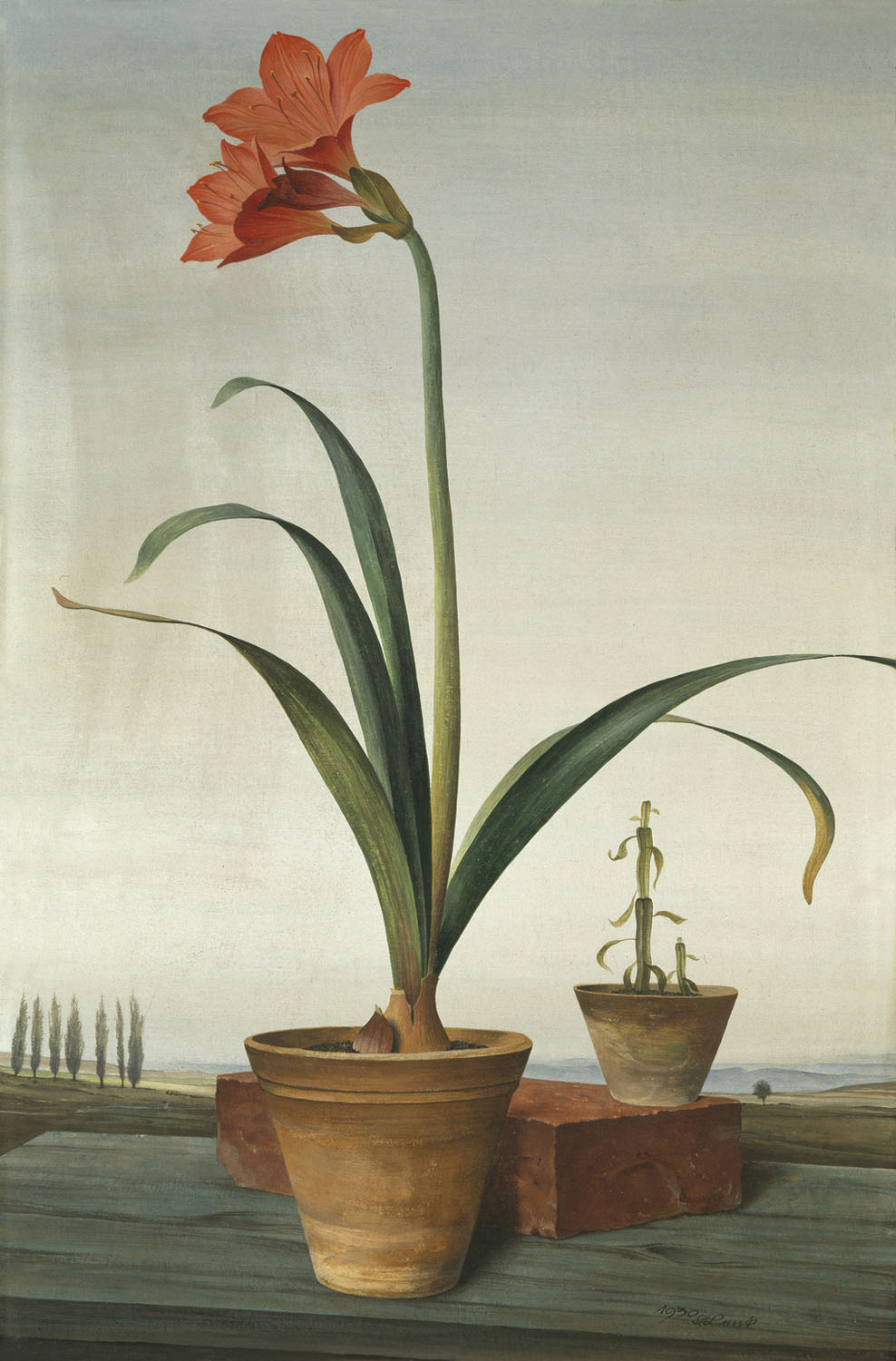
 

Franz Lenk (1898-1968) 'Amaryllis' 1930


Franz Lenk (German, 1898-1968)
Amaryllis
1930
Egg tempera on canvas on wood
66 x 44cm


Franz Lenk (German, 1898-1968)

Franz Lenk (June 21, 1898 Langenbernsdorf, Germany – September 13, 1968 Schwäbisch Hall, Germany) was a landscape artist and co-founder of the group “The Seven”.

After an apprenticeship as a decorative painter and lithograph from 1912 to 1915, Franz Lenk studied at the Dresden Academy in 1916. Lenk was drafted for military service, and after from 1922 onwards he continued his studies. In 1928, Lenk was co-founder of the “Die Sieben” group and in 1929 Lenk was a member of the Berlin Artists’ Association, a member of the Berlin Secession in 1936, and a member of the Prussian Academy of Arts in 1937.

From 1933 to 1936 Franz Lenk was a member of the presidential council of the Reichskammer der bildenden Künste. Also in 1933, he was appointed professor to the United States School in Berlin. In 1937, Lenk denied his participation in the Great German Art Exhibition at the House of German Art and laid down his lecture at the United State School in protest against the defamation of his colleagues and against the repressive “art policy” in the “Third Reich”.

In 1950, he received a teaching assignment at the Carnegie Institute in Pittsburgh. In 1959, Lenk settled in Schwäbisch Hall, where he became the city’s cultural commissioner.

Anonymous text. “Lenz, Frank,” on the Hundertmarkartfair website Nd [Online] Cited 03/08/2022


Franz Lenk (German, 1898-1968) 'Stillleben mit gelber Tüte' (Still life with a yellow bag ) 1927


Franz Lenk (German, 1898-1968)
Stillleben mit gelber Tüte (Still life with a yellow bag)
1927
Mixed technique on canvas


Oskar Nerlinger (German, 1893-1969) 'Straßen der Arbeit' (Labour routes) 1930


Oskar Nerlinger (German, 1893-1969)
Straßen der Arbeit (Labour routes)
1930
Tempera on cardboard
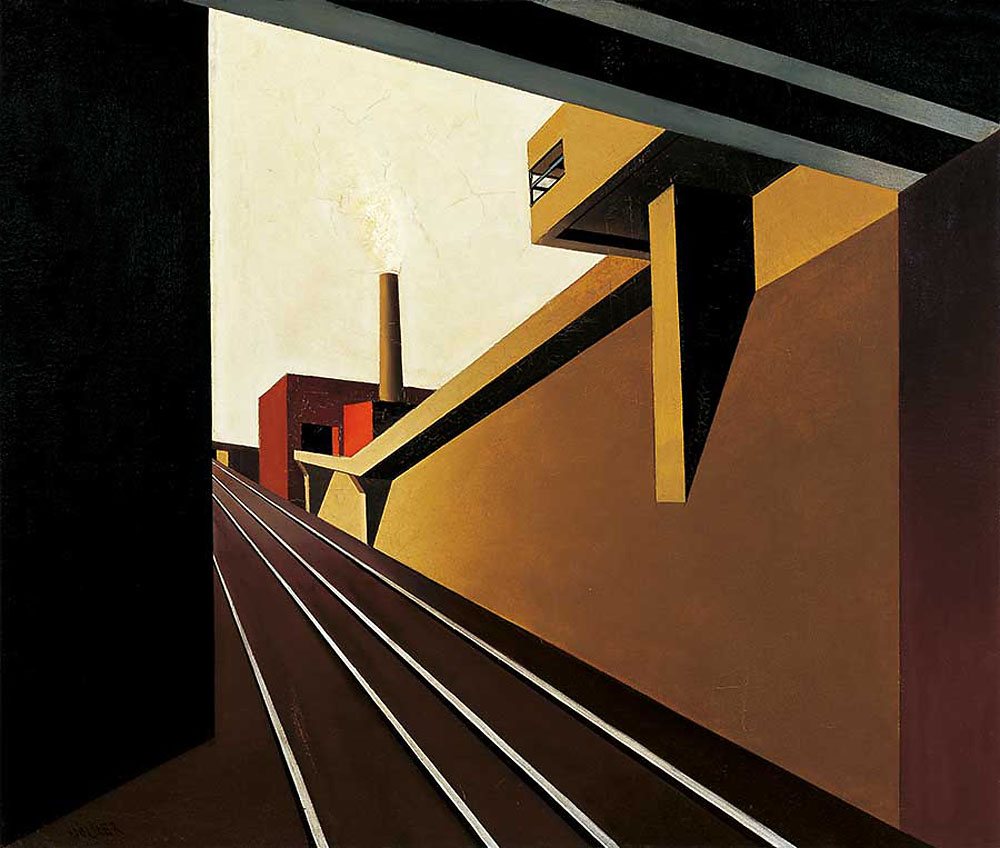
 

Karl Völker (German, 1889-1962) 'Beton' c. 1924


Karl Völker (German, 1889-1962)
Beton
c. 1924
Oil on canvas


Karl Völker (German, 1889-1962) 'Industriebild' (Picture of Industry) 1924


Karl Völker (German, 1889-1962)
Industriebild (Picture of Industry)
1924
Oil on canvas


Karl Völker (German, 1889-1962) 'Bahnhof' (Train station) 1924-1926


Karl Völker (German, 1889-1962)
Bahnhof (Train station)
1924-1926
Oil on wood


Centre Pompidou 
75191 Paris cedex 04
Phone: 00 33 (0)1 44 78 12 33

Opening hours:
Wednesday – Monday 11am – 9pm
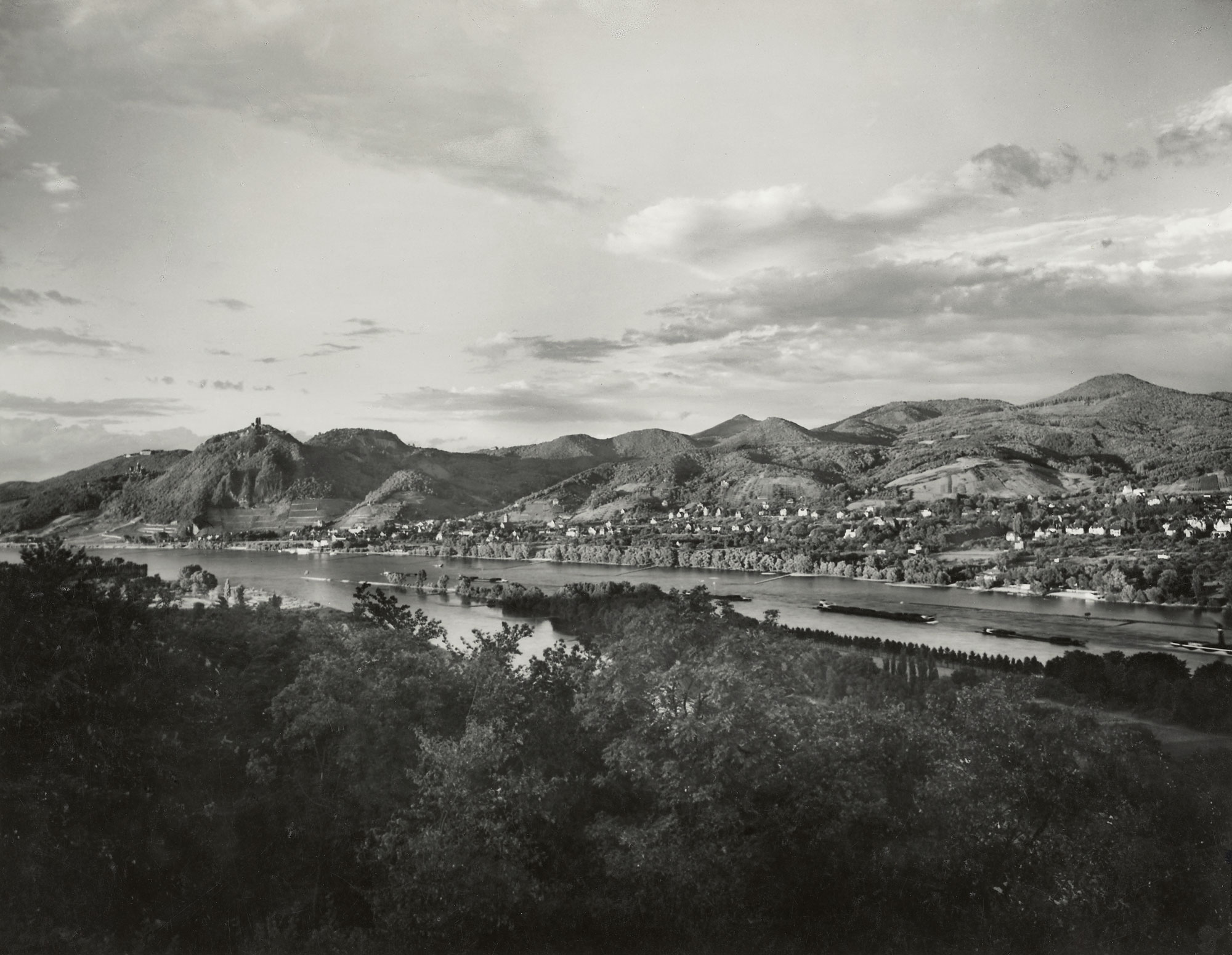
Centre Pompidou website

LIKE ART BLART ON FACEBOOK

Back to top

Exhibition: ‘Photographic Concepts and Treasures – Works from the Collection Part 1 – Portraiture, Landscape, Botany’ at Die Photographische Sammlung / SK Stiftung Kultur, Cologne

Exhibition dates: 11th February – 21st July, 2022

Featuring photographs by Eugène Atget, Lawrence Beck, Laurenz Berges, Karl Blossfeldt, Ursula Böhmer, Christian Borchert, Natascha Borowsky, Paul Dobe, Hans Eijkelboom, Folkwang-Auriga Verlag, Bernhard Fuchs, Candida Höfer, Fred Koch, August Kotzsch, Andreas Mader, Francesco Neri, Simone Nieweg, Gabriele and Helmut Nothhelfer, Albert Renger-Patzsch, Andrea Robbins/Max Becher, Judith Joy Ross, Martin Rosswog, August Sander, Oliver Sieber, Antanas Sutkus, Jerry L. Thompson, and Albrecht Tübke.


August Sander (German, 1876-1964) 'Das Siebengebirge von der unteren Terrasse hin zur Löwenburg' (The Siebengebirge from the lower terrace towards the Löwenburg castle) 1922 from the exhibition 'Photographic Concepts and Treasures – Works from the Collection Part 1 – Portraiture, Landscape, Botany' at Die Photographische Sammlung / SK Stiftung Kultur, Cologne, Feb - July, 2022


August Sander (German, 1876-1964)
Das Siebengebirge von der unteren Terrasse hin zur Löwenburg
The Siebengebirge from the lower terrace towards the Löwenburg castle

1922
Gelatin silver print
© Die Photographische Sammlung/SK Sitftung Kultur – August Sander Archiv, Köln; VG Bild-Kunst, Bonn, 2022


The gift of existence

It’s always a pleasure to be able to publish images by such photographic luminaries as August Sander and Karl Blossfeldt, although I feel the link between portrait, landscape and botanical photography is rather more complicated than the organisers of the exhibition would acknowledge in their press release … or, perhaps, we could rephrase that, of a different order of association than simply a result of human economics, culture and habitation over time as they state.

For me there is an essentialness about a human standing on the soil of earth, the energy of the tree of life spreading up through our limbs as we ground ourself in the earth – committing our body to the ground, earth to earth, ashes to ashes, dust to dust – whilst acknowledging the eternal energy of the cosmos. This has everything to do with understanding the time of the cosmos and the time of the earth (and our time on it), perceived as a connection to the earth as a living organism – Gaia, the Mother Earth – and very little to do with economics, culture or habitation. As Minor White would argue when photographing the landscape in meditation, he would hope for a release of energy in revelatio, in revelation, in the captured negative, over time. Again, very little to do with economics, culture or habitation.

Because of the concentration on his portrait photography, notably work from his major project People of the Twentieth Century (Menschen des 20. Jahrhunderts), the landscape photographs of August Sander are often overlooked and therefore underrated. Whilst in Cologne in 2019 I even went so far as to buy a rare book on Sander’s landscapes that’s how much I like them. The light in Sander’s landscape photographs with their expansive skies and panoramic vistas – paired with his intimate woodlands, snowscapes and photographs of ancient trees – have a magical energy embedded in them which crystallises life on earth. In this posting there is only one landscape but you can check out more online. There are also three magnificent portraits of Sander’s that I have never seen before: Newspaper publisher [Karl Richter] (1924, below); Blacksmith (c. 1930, below); and Fairground Woman (c. 1930, below).

I believe that one way that traditional photography can approach a new terrain of becoming, in order to lend photographic visions current and future pertinence, is a rebalancing of the scales between conceptual and what I would call “spiritual” photography. A factual documentary approach accompanied by a defined concept should not preclude access to the spiritual or the sublime in traditional photography, or an acknowledgement of other ways of seeing and feeling the world. A transcendent liminality can inhabit images, one in which we cross the threshold into a transitional state between one world and the next, where can photographs proffer a ‘releasement toward things’ which, as Heidegger observes, grant us the possibility of dwelling in the world in a totally different way. As I have continued to argue on Art Blart for the last 15 years, the essentialness or reality of photography is that the photograph is never truly here and is always located elsewhere – in our feelings, in our hearts, in our memories and in the time and energy of the cosmos that surrounds us. A photograph is as much a true vibration of energy as it is a concept or a document, if not more so.

“To try to see more and better is not a matter of whim or curiosity or self-indulgence. To see or to perish is the very condition laid upon everything that makes up the universe, by reason of the mysterious gift of existence.” ~ Teilhard de Chardin, “Seeing” 1947

Dr Marcus Bunyan


Many thankx to Die Photographische Sammlung/SK Stiftung Kultur for allowing me to publish the photographs in the posting. Please click on the photographs for a larger version of the image.


August Sander (German, 1876-1964) 'Farming Couple, Westerwald' 1912 from the exhibition 'Photographic Concepts and Treasures – Works from the Collection Part 1 – Portraiture, Landscape, Botany' at Die Photographische Sammlung / SK Stiftung Kultur, Cologne, Feb - July, 2022


August Sander (German, 1876-1964)
Farming Couple, Westerwald
1912
Gelatin silver print
© Die Photographische Sammlung/SK Stiftung Kultur – August Sander Archiv, Köln; VG Bild-Kunst, Bonn 2021


August Sander (German, 1876-1964) 'Newspaper publisher [Karl Richter]' 1924


August Sander (German, 1876-1964)
Newspaper publisher [Karl Richter]
1924
© Die Photographische Sammlung/SK Stiftung Kultur – August Sander Archiv, Köln; VG Bild-Kunst, Bonn 2021


August Sander (German, 1876-1964) 'Blacksmith' c. 1930


August Sander (German, 1876-1964)
Blacksmith
c. 1930
Gelatin silver print
© Die Photographische Sammlung/SK Stiftung Kultur – August Sander Archiv, Köln; VG Bild-Kunst, Bonn 2021


August Sander (German, 1876-1964) 'Three Generations of the Family' 1912


August Sander (German, 1876-1964)
Three Generations of the Family
1912
Gelatin silver print
© Die Photographische Sammlung/SK Stiftung Kultur – August Sander Archiv, Köln; VG Bild-Kunst, Bonn 2021


August Sander (German, 1876-1964) 'Fairground Woman' c. 1930


August Sander (German, 1876-1964)
Fairground Woman
c. 1930
Gelatin silver print
© Die Photographische Sammlung/SK Stiftung Kultur – August Sander Archiv, Köln; VG Bild-Kunst, Bonn 2021


Installation view of the exhibition 'Photographic Concepts and Treasures – Works from the Collection Part 1 – Portraiture, Landscape, Botany' at Die Photographische Sammlung / SK Stiftung Kultur, Cologne showing at left, the work of August Sander including 'Three Generations of the Family' (1912) and 'Farming Couple, Westerwald' (1912)


Installation view of the exhibition Photographic Concepts and Treasures – Works from the Collection Part 1 – Portraiture, Landscape, Botany at Die Photographische Sammlung / SK Stiftung Kultur, Cologne showing at left, the work of August Sander including Three Generations of the Family (1912, above) and Farming Couple, Westerwald (1912, above)


Installation view of the exhibition 'Photographic Concepts and Treasures – Works from the Collection Part 1 – Portraiture, Landscape, Botany' at Die Photographische Sammlung / SK Stiftung Kultur, Cologne showing at left, the work of August Sander (above); and at centre, the work of Andrea Robbins and Max Becher (below)


Installation view of the exhibition Photographic Concepts and Treasures – Works from the Collection Part 1 – Portraiture, Landscape, Botany at Die Photographische Sammlung / SK Stiftung Kultur, Cologne showing at left, the work of August Sander (above); and at centre, the work of Andrea Robbins and Max Becher (below)


Max Becher (German, b. 1964) and Andrea Robbins (American, b. 1963) 'Franklin Willmore' 1999-2001


Max Becher (German, b. 1964) and Andrea Robbins (American, b. 1963)
Franklin Willmore
1999-2001
From the series Americans of Samaná
© Andrea Robbins und Max Becher


In 2022, Die Photographische Sammlung/SK Stiftung Kultur celebrates the 25th year of its exhibition program in Cologne’s Mediapark, launched in 1997 under the forward-looking title “Comparative Concepts.” This anniversary offers an occasion to present many works from the collection in two exhibitions, each with its own focus, enabling Die Photographische Sammlung to provide visitors with a broad overview of its holdings.

With over 380 exhibits, the current presentation focuses on the central themes of “Portraiture, Landscape, Botany” as illustrated by the work of 25 historical and contemporary artistic photographers. A second exhibition to follow from September 2 will spotlight the related areas of “Urban Life, Architecture, Industry.” Viewers will discover a variety of links between the two presentations.

The portrait genre will be examined first, based on the work of August Sander, whose archive has provided vital inspiration for the institution’s collection and program concept. With his iconic series “Citizens of the Twentieth Century,” represented in the current show by over 50 original prints, Sander took the photographic portrait in a new and innovative direction as a method of factual documentary. Compiled in the first half of the last century and consisting of hundreds of images, this work still has a singular standing to this day as an enormously multifaceted oeuvre following a predefined concept that was implemented step by step starting in the mid-1920s. The series reflects fundamental new challenges in dealing with the medium, as well as aspects of the individual and group portrait – considerations that are a core component of Die Photographische Sammlung.

The portraits in the collection for example inquire into the relationship between the individual and society, exploring questions of identity and of social, family, and professional circumstances and relationships, and thereby providing a glimpse of various life stages and living conditions. The influence of the ever-changing impulses, possibilities, and synergies over time is very much in evidence here. This connection is particularly vivid in documentary projects that are pursued over longer periods. They show how individuals are continuously shaped by the respective cultural environment. This circumstance is reflected not only in the image they have of their own lives but also in how they respond to their life realities.

Accordingly, the subject areas of landscape and botany are connected with the portrait on many levels. Like portraiture, landscape as both a human habitat and economic and cultural realm reflects temporal phenomena. Botanical studies that are rendered like portraits may come to life as naturalistic individuals or in other cases allude to the world of aesthetics and sculpture.

By offering an opportunity to compare and contrast various photo series, the exhibition compellingly underscores how the unifying criterion of a factual documentary approach accompanied by a defined concept has always been a leitmotif for the activities of Die Photographische Sammlung / SK Stiftung Kultur. A concentration on this specific current in photography is what defines the collection’s distinctive profile. Rather than representing a cross-section of the history of photography, the aim is to emphasise photographic visions that creatively guide traditional approaches onto new terrain in order to lend them current and future pertinence.

Press release from Die Photographische Sammlung/SK Stiftung Kultur


Installation view of the exhibition 'Photographic Concepts and Treasures – Works from the Collection Part 1 – Portraiture, Landscape, Botany' at Die Photographische Sammlung / SK Stiftung Kultur, Cologne showing at right, the work of Simone Nieweg


Installation view of the exhibition Photographic Concepts and Treasures – Works from the Collection Part 1 – Portraiture, Landscape, Botany at Die Photographische Sammlung / SK Stiftung Kultur, Cologne showing at right, the work of Simone Nieweg (below)


Simone Nieweg (German, b. 1962) 'Tomaten, Belfort/Cravanche' 2004


Simone Nieweg (German, b. 1962)
Tomaten, Belfort/Cravanche
2004
Chromogenic print
16 x 20 inches
© Simone Nieweg/VG Bild-Kunst, Bonn 2022


Simone Nieweg (German, b. 1962) 'Gewassertes Beet, Dusseldorf-Kalkum' 2004


Simone Nieweg (German, b. 1962)
Gewassertes Beet, Dusseldorf-Kalkum
2004
Chromogenic print
16 x 20 inches
© Simone Nieweg/VG Bild-Kunst, Bonn 2022


The gardens shown in Nieweg’s photographs is of a type known in German as Grabeland – literally “land for digging.” Unlike typical allotment gardens, such plots are not available for long-term lease or ownership but are instead zoned for interim use on a year-by-year basis until they become building land or are put to some other use. The plantings are also prescribed to reflect this provisional state; no perennials, bushes, shrubs, or trees are allowed.
Since Grabeland is impermanent terrain, entirely subject to utility and optimisation, one rarely finds here any of the decorative elements that populate allotment gardens. There are no garden furnishings, grills, or sun umbrellas – indeed there is nothing that would indicate the presence of leisure. What we see instead are the instruments of work, tools used to prepare the soil and cultivate the plants.

What Nieweg finds especially interesting about Grabeland are the forms and structures to which such conditions give rise. She has been working on this project since the mid-1980s, shortly after beginning her studies with Bernd Becher at the Düsseldorf Art Academy. Gardens, fields, landscapes, and more recently, views into forests are among the subjects that Nieweg has consistently explored in series taken over extended periods. She prefers using a large-format camera and elaborating her motifs in colour.

Text from the Die Photographische Sammlung/SK Stiftung Kultur, Köln website. No longer available online


Installation view of the exhibition 'Photographic Concepts and Treasures – Works from the Collection Part 1 – Portraiture, Landscape, Botany' at Die Photographische Sammlung / SK Stiftung Kultur, Cologne showing at left, the work of Karl Blossfeldt; and at right, work published by Folkwang-Auriga Verlag


Installation view of the exhibition Photographic Concepts and Treasures – Works from the Collection Part 1 – Portraiture, Landscape, Botany at Die Photographische Sammlung / SK Stiftung Kultur, Cologne showing at left, the work of Karl Blossfeldt (below); and at right, work published by Folkwang-Auriga Verlag (below)


Folkwang-Auriga Verlag. 'Compositae. Zinnia elegans' Knospe 1929/1930


Folkwang-Auriga Verlag
Compositae. Zinnia elegans Knospe
1929/1930
© gemeinfrei


Karl Blossfeldt (German, 1865-1932) 'Winterschachtelhalm, Stängelquerschnitt' (Winter horsetail, stem cross section), enlarged 30 times Before 1926


Karl Blossfeldt (German, 1865-1932)
Winterschachtelhalm, Stängelquerschnitt (Winter horsetail, stem cross section), enlarged 30 times
Before 1926
Gelatin silver print
© Karl Blossfeldt Archiv / Stiftung Ann und Jürgen Wilde, Pinakothek der Moderne, München


Karl Blossfeldt (German, 1865-1932) 'Thujopsis dolabrata' 1928


Karl Blossfeldt (German, 1865-1932)
Thujopsis dolabrata
1928
Gelatin silver print
© Karl Blossfeldt Archiv / Stiftung Ann und Jürgen Wilde, Pinakothek der Moderne, München


Karl Blossfeldt (German, 1865-1932) 'Cucurbita' 1928


Karl Blossfeldt (German, 1865-1932)
Cucurbita
1928
Gelatin silver print


Karl Blossfeldt (German, 1865-1932) 'Cirsium canum' (Grey thistle) 1928


Karl Blossfeldt (German, 1865-1932)
Cirsium canum (Grey thistle)
1928
Gelatin silver print
© Karl Blossfeldt Archiv / Stiftung Ann und Jürgen Wilde, Pinakothek der Moderne, München


Karl Blossfeldt (German, 1865-1932) 'Hairy catsear – young leaf' 1928


Karl Blossfeldt (German, 1865-1932)
Hairy catsear – young leaf
1928
Gelatin silver print
© Karl Blossfeldt Archiv / Stiftung Ann und Jürgen Wilde, Pinakothek der Moderne, München


August Kotzsch (German, 1836-1910) 'Roots over rocks' Around 1870


August Kotzsch (German, 1836-1910)
Roots over rocks
Around 1870
© public domain


Albert Renger-Patzsch (German, 1897-1966) 'Buchenwald' Before 1962


Albert Renger-Patzsch (German, 1897-1966)
Buchenwald
Before 1962
Gelatin silver print
© Albert Renger-Patzsch / Archiv Ann und Jürgen Wilde, Zülpich / VG Bild-Kunst, Bonn 2022


Christian Borchert (German, b. 1942) 'Familie A.' 1993


Christian Borchert (German, b. 1942)
Familie A. (Maler/Grafiker und Fotograf, Grafikerin) (Painter/graphic artist and photographer, graphic designer)
Steinhagen-Krummenhagen, 1993
© SLUB Dresden, Deutsche Fotothek


Andreas Mader (German, b. 1960) 'Rojan and Herveva' 2017


Andreas Mader (German, b. 1960)
Rojan and Herveva
2017
From the series Die Tage Das Leben (Days, Life), 1988-2018
© Andreas Mader


In the series “Die Tage Das Leben (Days. Life)”, begun in 1988, I photograph my friends again and again. I watch them finding themselves and each other and separating and having children; how they are alone and with others; how they get older and take each other’s hands so they don’t get lost along the way. I think of them full of tenderness. ~ Andreas Mader


Judith Joy Ross (American, b. 1946) 'Policeman, Bethlehem, Pennsylvania' 1990


Judith Joy Ross (American, b. 1946)
Policeman, Bethlehem, Pennsylvania
1990
© Judith Joy Ross


Oliver Sieber (German, b. 1966) 'Spiky, Osaka' 2006


Oliver Sieber (German, b. 1966)
Spiky, Osaka
2006
© Oliver Sieber, 2022


Oliver Sieber studied photography in Bielefeld and Düssseldorf. Since 1999 he has worked with Katja Stuke on Frau Böhm, a photo project in the form of a magazine.

Sieber’s work usually takes the form of series and he is fascinated by the subject of identity and the phenomenon of young people and their subcultures. This led to the series SkinsModsTeds, B-Boyz B-Girlz, 11Girlfriends and Boy meets Girl. In 2006 he spent time in Japan for an artist in residence programme, where he made the series J_Subs as well as character thieves, for which he photographed young people dressed up as their favourite manga characters. Over the past few years exhibitions of his work have been held at, among others, the Photographers Gallery London, the Photographische Sammlung SK / Stiftung Kultur in Cologne, the National Museum of Photography in Copenhagen, the Photo Espana Festival in Madrid, Yours gallery in Krakow and Fotomuseum Winterthur. Sieber has published a number of books. The latest two are based on his work character thieves and imaginary club.

Dr Christoph Schaden. “Oliver Sieber,” on the PhMuseum website Nd [Online] Cited 22/06/2022. No longer available online


Jerry L. Thompson (American, b. 1945) 'North Fifth Street off Bedford Avenue towards Berry Street' 19 June 2016


Jerry L. Thompson (American, b. 1945)
North Fifth Street off Bedford Avenue towards Berry Street
19 June 2016
© Jerry L. Thompson


Albrecht Tübke (German, b. 1971) 'London' 2001


Albrecht Tübke (German, b. 1971)
London
2001
From the series Citizens
© Albrecht Tübke


Tübke’s photographs examine the representation of the human being and the role of the individual in society, in search for its identity while oscillating between adaptation and demarcation. Among his most famous projects are the portrait series Dalliendorf from 1996 and Citizens from 2001.

In photography, Tübke’s field is the human image. These are mainly full – length portraits in which the colour is greatly reduced. Tübke is concerned with the representation of individuality and uniqueness of people. The people portrayed almost always look into the camera. Through the concentration of the gaze as well as through the sensitively observed posture of the person portrayed, Tübke succeeds in creating images of very strong intensity with a documentary approach.

Text translated from the German Wikipedia website


Die Photographische Sammlung/SK Stiftung Kultur
Im Mediapark 7
50670 Cologne
Phone: 0049-(0)221-88895 300

Opening hours:
Open daily 14 – 19hrs
Closed Wednesdays

Die Photographische Sammlung/SK Stiftung Kultur website

LIKE ART BLART ON FACEBOOK

Back to top

Text: ‘Finding Integrity: “New Woman” artists and female emancipation in the first half of the twentieth century’ on the exhibition ‘The New Woman Behind the Camera’ at the National Gallery of Art, Washington Part 3

Exhibition dates: 31st October, 2021 – 30th January, 2022

Curator: The exhibition is curated by Andrea Nelson, associate curator in the department of photographs, National Gallery of Art, Washington.


Tsuneko Sasamoto (Japanese, b. 1914) 'Ginza 4 Chome P.X.' 1946, printed 1993 from the exhibition 'The New Woman Behind the Camera' at the National Gallery of Art, Washington


Tsuneko Sasamoto (Japanese, b. 1914)
Ginza 4 Chome P.X.
1946, printed 1993
Gelatin silver print
Image: 29.6 x 29.6cm (11 5/8 x 11 5/8 in.)
Frame: 40.64 x 50.8cm (16 x 20 in.)
Frame (outer): 41 x 51.2 x 2.5cm (16 1/8 x 20 3/16 x 1 in.)
Collection of Tokyo Photographic Art Museum


Abstract

Using the media images from the exhibition The New Woman Behind the Camera at the National Gallery of Art, Washington (31st October, 2021 – 30th January, 2022) as a starting point, this text examines the (in)visibility of the “New Woman” behind the camera. The text briefly investigates the disenfranchisement of women in 19th century through the work of George Sand and Camille Claudel; the role of the female flâneuse and the rise of the suffragettes; the relationship between two women and two men; a story; the work of two women photographers (Germaine Krull and Claude Cahun) who through photography challenged the representation of gender identity; a Zen proposition, and the particular becomes universal – in order to understand how artists, both female and male, find integrity on their chosen path.

Keywords

New Woman, photography, art, integrity, George Sand, Camille Claudel, female flâneuse, suffragette, camera, Germaine Krull, Claude Cahun, Leni Reifenstahl, Georgia O’Keeffe, Alfred Stieglitz, female emancipation, gender identity, representation, Sabine Weiss, Susan Sontag, self recognition, patriarchal society.

Download the complete text of Finding Integrity: “New Woman” artists and female emancipation in the first half of the twentieth-century (5.6Mb Word docx)


“The world doesn’t like independent women, why, I don’t know, but I don’t care.”


Berenice Abbott


Finding Integrity: “New Woman” artists and female emancipation in the first half of the twentieth-century

After thousands of years of human existence, woman still do not have equality. They have to fight for equal pay for the same job, they fight for equal opportunity in many jobs and top level positions, they fight for control of their body, and they fight against misogyny, discrimination and the aggression of hypermasculinity. They, and their children, fight not to be killed by jealous and enraged (x)lovers or (x)husbands – where x in mathematics is a variable number which is not yet known (in 2021 in Australia 43 women died at the hands of men) – whose ego and possessiveness cannot bear the thought of a vibrant, free thinking woman living beyond their control. I know of these things having grown in the womb, having grown up for the first 18 years of my life feeling my mother being abused, and then being abused myself trying to protect my mother.

My mother wanted to study music at Cambridge after graduating from the Royal College of Music but because she got married and had children she never had the opportunity. Her struggle, as with many women still, was to find her place in a man’s world – as a wife and mother in her case – to live within the parameters of the social construct that is a patriarchal society. At the time (in the 1960s) she said she felt less than human… for there was no help and little opportunity for women to escape their situation. Her one salvation was music and the one way she found to subvert the dominant structures was to teach piano. Now ninety years old, she has taught piano for the rest of her life. She found her voice and her independence. She found her integrity.

Earlier generations

In earlier generations, before the “New Woman”, women had to conform (to society’s expectations) and submit (to men) … unless they were notorious, celebrities or geniuses. Otherwise they were mainly disenfranchised and disempowered.

Women had to write under men’s names to be accepted, to sell and make a living. The novelist Amantine Lucile Aurore Dupin initially collaborated with the male writer Jules Sandeau and they published under the name Jules Sand before Dupin took up the pen name that was to make her famous and a celebrity across Europe: George Sand (French, 1804-1876). “Sand’s writing was immensely popular during her lifetime and she was highly respected by the literary and cultural elite in France.”1 She chose to wear male attire in public without a permit (which “enabled her to circulate more freely in Paris than most of her female contemporaries, and gave her increased access to venues from which women were often barred, even women of her social standing”1), and she smoked “tobacco in public; neither peerage nor gentry had yet sanctioned the free indulgence of women in such a habit, especially in public… While there were many contemporary critics of her comportment, many people accepted her behaviour until they became shocked with the subversive tone of her novels.”1 Sand was also politically active and “sided with the poor and working class as well as women’s rights. When the 1848 Revolution began, she was an ardent republican. Sand started her own newspaper, published in a workers’ co-operative.”1


Nadar [Gaspard Félix Tournachon] (French, 1820-1910) 'George Sand (Amandine-Aurore-Lucile Dupin), Writer' c. 1865


Nadar (Gaspard Félix Tournachon) (French, 1820-1910)
George Sand (Amandine-Aurore-Lucile Dupin), Writer
c. 1865
Albumen silver print from a glass negative
24.1 x 18.3 cm (9 1/2 x 7 1/4 in.)
The J. Paul Getty Museum, Los Angeles
Used under fair use conditions for the purposes of academic research and education


In other words because of her visibility, celebrity, social standing, writing, intellect and revolutionary fervour she was acknowledged as a great woman. Men consulted with her and took her advice. Upon her death under the heading “Emancipated Woman,” in The Saturday Review, Victor Hugo commented: “George Sand was an idea. She has a unique place in our age. Others are great men … she was a great woman.” All well and good, but then he continues, “In this country, whose law is to complete the French Revolution, and begin that of the equality of the sexes, being a part of the equality of men, a great woman was needed. It was necessary to prove that a woman could have all the manly gifts without losing any of her angelic qualities; be strong without ceasing to be tender. George Sand proved it.”2 In other words to be the equal of a man, a woman must act like a man but also keep her womanly qualities (tenderness, femininity). She couldn’t really be herself because she had to measure up to the ideals of men. What a slap in the face, a kind of pseudo-equality – if you played your cards right and obeyed the rules of the game.

An incredibly sad example of female disenfranchisement in the arts is that of August Rodin’s assistant Camille Claudel (French, 1864-1943) who became his model, his confidante, and his lover. Claudel started working in Rodin’s workshop in 1883 and became a source of inspiration for him.


César (French) 'Portrait de Camille Claudel' before 1883


César (French)
Portrait de Camille Claudel
before 1883
Musée Camille Claudel
Used under fair use conditions for the purposes of academic research and education


“The exact nature of the tasks with which she was entrusted remains uncertain, but she apparently spent most of her time on difficult pieces, such as the hands and feet of figures for monumental sculptures (notably The Gates of Hell). For Claudel, this was an intensive period of training under Rodin’s supervision: she learned about his profiles method and the importance of expression. In tandem, she pursued her own investigations, accepted her first commissions and sought recognition as an independent artist at the Salon. Between 1882 and 1889, Claudel regularly exhibited busts and portraits of people close to her at the Salon des Artistes Français. Largely thanks to Léon Gauchez, Rodin’s friend the Belgian art dealer and critic, several of her works were purchased by French museums in the 1890s.”3


But women working under the “master” were not often acknowledged.

“Le Cornec and Pollock state that after the sculptors’ physical relationship ended [with Rodin in 1892 after an abortion], she was not able to get the funding to realise many of her daring ideas – because of sex-based censorship and the sexual element of her work. Claudel thus had to either depend on Rodin, or to collaborate with him and see him get the credit as the lionised figure of French sculpture. She also depended on him financially, especially after her loving and wealthy father’s death, which allowed her mother and brother, who disapproved of her lifestyle, to maintain control of the family fortune and leave her to wander the streets dressed in beggars’ clothing.

Claudel’s reputation survived not because of her once notorious association with Rodin, but because of her work. The novelist and art critic Octave Mirbeau described her as “A revolt against nature: a woman genius.”” …

Ayral-Clause says that even though Rodin clearly signed some of her works, he was not treating her as different because of her gender; artists at this time generally signed their apprentices’ work. Others also criticise Rodin for not giving her the acknowledgment or support she deserved. …

Other authors write that it is still unclear how much Rodin influenced Claudel – and vice versa, how much credit has been taken away from her, or how much he was responsible for her woes. Most modern authors agree that she was an outstanding genius who, starting with wealth, beauty, iron will and a brilliant future even before meeting Rodin, was never rewarded and died in loneliness, poverty, and obscurity. Others like Elsen, Matthews and Flemming suggest it was not Rodin, but her brother Paul who was jealous of her genius, and that he conspired with her mother, who never forgave her for her supposed immorality, to later ruin her and keep her confined to a mental hospital.”4


This “sculptor of genius” was eventually “voluntarily” committed by her family to a psychiatric hospital in 1913 where she lived the remaining 30 years of her life, unable to practice her art. Her remains were buried in a communal grave at the asylum, her bones mixed with the bones of the most destitute. Her brother Paul Claudel could not be bothered with a grave for her, while he specified the exact place of his internment… the ultimate irony being that, Rodin had decided to include an exhibition space reserved exclusively for Camille Claudel’s works in the future museum that would house the collections he bequeathed to the French state on his death (at the Rodin Museum) – a request that could not be honoured until 1952, when Paul Claudel donated four major works by his sister to the museum.5 Bitter irony.


Ruth Orkin (American, 1921-1985) 'American Girl in Italy' 1951


Ruth Orkin (American, 1921-1985)
American Girl in Italy
1951
Gelatin silver print
© Ruth Orkin
Courtesy of Howard Greenberg Collection
Used under fair use conditions for the purposes of academic research and education


The female flâneuse and a period of transition

During the 19th century women could not stroll alone in the city.

“In Baudelaire’s essays and poems, women appear very often. Modernity breeds, or makes visible, a number of categories of female city-dwellers. Among the most prominent in these texts are: the prostitute, the widow, the old lady, the lesbian, the murder victim, and the passing unknown woman… But none of these women meet the poet as his equal. They are subjects of his gaze, objects of his ‘botanising’. The nearest he comes to a direct encounter, with a woman who is not either marginal or debased, is in the poem, À Une Passante (Even here, it is worth noting that the woman in question is in mourning – en grand deuil). The tall, majestic woman passes him in the busy street; their eyes meet for a moment before she continues her journey, and the poet remains to ask whether they will only meet again in eternity… (But if this is the rare exception of a woman sharing the urban experience, we may also ask whether a ‘respectable’ woman, in the 1850s would have met the gaze of a strange man).”6

But as Janet Wolff observes, women clearly were active and visible in other ways in the public arena, especially when it came to the construction of women’s dress as a sign of their husbands’ position: in effect, the less they worked and the more they evidenced the performance of conspicuous leisure and consumption, the more this was to the credit of their master rather than to their own credit. Wolff further notes, “The establishment of the department store in the 1850s and the 1860s provided an important new arena for the legitimate public appearance of middle-class women…” but denies this has anything to do with women being a female flâneur – a flâneuse – because the fleeting, anonymous encounters and purposeless strolling she has been considering “do not apply to shopping, or to women’s activities either as public signs of their husband’s wealth or as consumers.”7 Wolff rejects the notion of a female flâneuse as “such a character was rendered impossible by the sexual divisions of the nineteenth century.”8

Others disagree with this interpretation. In a paper titled “Gender Differences in the Urban Environment: The flâneur and flâneuse of the 21st Century”, Akkelies van Nes and Tra My Nguyen offer the following history of the flâneur9 and the flâneuse concepts (apologies for the long quotation but it necessary):


“The term flâneur originated from the 18th century. It was described by Charles Baudelaire as ‘gentleman stroller of city streets’ (van Godsendthoven, 2005). …

‘The flâneur was an idle stroller with an inquisitive mind and an aesthetic eye, a mixture of the watchful detective, the aesthetic dandy and the gaping consumer, the badaud. A solitary character, he avoided serious political, familial or sexual relationships, and was only keen on the aesthetics of city life. He read the city as a book, finding beauty in the obsolete objects of other people, but in a distanced, superior way’ (van Godsendthoven, 2005).

The flâneur is a product of modern life and the industrial revolution, parallel to the references of the tourist in contemporary times. The arrival of department stores and the ‘Haussmannization’ of Paris’ streets in the second half of the nineteenth century swept away large parts of the historical city and also the domain of the flâneur. The archetype of the flâneur disappeared with its surroundings, in favour of the women- oriented department stores. ‘The department store may have been, as Benjamin put it, the flâneur’s last coup, but it was the flâneuse’s first’ (Friedberg, 1993).

The flâneuse is not a female flâneur, but she is a version of the flâneur. She does not experience the city in the same way as he does. It is hard to define the archetype of the flâneuse, because the flâneur himself consists of paradoxes and many subcategories. Key concepts for flâneur and flâneuse are the amount of spare time, the aesthetic detachment towards objects, crowd and sceneries they see and their ambiguity about it.

The department stores were a starting point for the existence of the flâneuse, but this also marked her as a consumer, a ‘badaud’. The difference between badauds and flâneuses are the distance they create between themselves and the activities in the city. A characteristic of flânerie is an aesthetic distance between the subject and the object of attention. The badaud-flâneuse lacks this distance. The city is not being experienced, but is reduced to a place to consume.

As implied, the badaud-flâneuse did not have the full ability to flânerie. However, she has many qualities, which are at least some first initiatives to stroll around. Her domain moved from the interior of her home to the interior of the department store and sometimes even to the streets (Parsons, 2000). Shopping, art and day trips contribute to develop a certain view in that period of society, which was at the end of 19th century. Friedberg was very well aware that this new freedom was not the same as the freedom of the flâneur (Friedberg, 1993).

The flâneuse concept developed throughout the years expanded somehow further than being a badaud. She was discovering domains like art forms, like for example the cinema and the theatre at the beginning of the 20th century. But she was still objectified by men and patriarchic institutes. However, women became independent, without taking over the absent look and gaze of the flâneur. They changed their lives into art forms and had an opinion about the society they lived in. To gain respect as artists, the image of women as muses had to disappear. She had to claim an active role and to develop her own personality.

Through the literature, the life of the flâneuse and the female characters in the city, like passersby, artists, dandies and badauds [gawkers, bystanders] are often interlaced with each other, and difficulties they experienced are alike. The flâneuse often shifted between these roles, but distinguished herself by her independency and distanced. She became a symbol for post-modern urban life: a wanderer in many shapes.”10


Nes and Nguyen further argue that the emancipation of women over the last two decades “has brought the flâneuse to a more equal position with the flâneur in the invisible right to be in public urban space. However, aspects like safety and when and where women are spending time in urban space still have effect on how women use public spaces and affect the public spheres.”11 Indeed, with the despicable murder of too many women in Melbourne in recent years by predatory men (Aiia Maasarwe, Mersina Halvagis, Masa Vukotic, Eurydice Dixon, Tracey Connelly, Sarah Cafferkey, Renea Lau and Jill Meagher to name just a few…), women still fear walking the streets alone. “Even when grief enveloped his family, Bill Halvagis can recall the wider sense of public outrage that followed the murder of his older sister Mersina. The shock that someone could do such a thing in a public place was as brutal as the crime itself.”12


Unknown photographer (Australian) 'People march through Brunswick in Melbourne after the murder of Jill Meagher in 2012' 2012


Unknown photographer (Australian)
People march through Brunswick in Melbourne after the murder of Jill Meagher in 2012
2012
Australian Associated Press (AAP)
Republished under Creative Commons from The Conversation website

Used under fair use conditions for the purposes of academic research and education


Looking back a century later, one of the key points of female emancipation in the early twentieth century is that women gained their independence “and had an opinion about the society they lived in… She had to claim an active role and to develop her own personality” while present and visible in the community, present in a public place. The world-wide suffragette movement was at the forefront of this early twentieth-century revolution.

“A suffragette was a member of an activist women’s organisation in the early 20th century who, under the banner “Votes for Women”, fought for the right to vote in public elections. The term refers in particular to members of the British Women’s Social and Political Union (WSPU), a women-only movement founded in 1903 by Emmeline Pankhurst, which engaged in direct action and civil disobedience.” During the First World War “the suffragette movement in Britain moved away from suffrage activities and focused on the war effort… Women eagerly volunteered to take on many traditional male roles – leading to a new view of what women were capable of.”13 However, this new found capability and visibility in society “cast women as passive, erotic objects, subjecting them to a kind of voyeuristic control” by men, embodying the gaze of modernity which is both covetous and erotic – public sites (of interaction) producing “meanings and positions from which those meanings are consumed.”14 Women were “playing” in a man’s world subject to their approval, their gaze and their desire to possess and control the female both physically and sexually.

But, as Griselda Pollock observes, “modernity was not represented as taking place in exclusively masculine, because public, domains: rather, the spaces of modernity were in fact marginal spaces, those in which the city’s “new subjective experiences of exhilaration and alienation, pleasure and fear, mobility and confinement, expansiveness and fragmentation,” were most intense. These spaces of intersection happened to be sites in which bourgeois men came into contact with women…”15

Here comes the “New Woman” taking on traditional male roles, socialising in marginalised spaces, boldly going where few women had gone before, sampling new subjective experiences, becoming who they wanted to be… all under the munificent gaze of the (bourgeois) male.

Two women and two men

The “New Woman”, mainly middle class females, took their courage in their hands to become professional photographers and artists: photojournalists, fashion photographers, war photographers, magazine and picture photographers, working with successful men and women in fashion, interior design, news, graphics and art. At the Bauhaus female students pushed the boundaries in fields such as textiles, lighting, ceramics and costume, the “New Woman” putting her femininity under the spotlight.

By pushing boundaries, female artists and photographers broke ground becoming female in a male world… within the framework of modernity and aesthetics, to form the modern divine. In a youthful culture of commercial and technological changes they gained their independence through hard work and talent via the stereotype of the “New Woman” – a constructed image portrayed in the magazines (bobbed hair beauty, flapper, speed, fast cars, cigarette smoking) which played into the male system of the recognition of the feminine subject. By playing the system they became successful and visible, self conscious of their undeniable abilities. But at what cost? Many women, excited by the world of men, where chewed up and spat out, dumped, and sometimes met a terrible end.


Unknown photographer (German) 'Leni Riefenstahl with Heinrich Himmler (left) during the 1934 Nuremberg Nazi Party Rally in the Luitpold Arena while recording her film "Triumph of the Will"' September 9, 1934


Unknown photographer (German)
Leni Riefenstahl with Heinrich Himmler (left) during the 1934 Nuremberg Nazi Party Rally in the Luitpold Arena while recording her film “Triumph of the Will”
September 9, 1934
German Federal Archives / Wikipedia (public domain)


The epito/me of this new self consciousness and will to power was the Nazi film director Leni Reifenstahl (German, 1902-2003). Reifenstahl began as an interpretive dancer who often made almost 700 Reichsmarks for each performance. “Her dancing revealed her childlike quality, her surrender to the moment, and this natural, naïve quality made her the perfect heroine for his [Arnold Fanck’s] Alpine love stories. Riefenstahl was involved in a love triangle involving Fanck and her leading man [in director Fanck’s 1920s “mountain films”], Luis Trenker, demonstrating, in Mr. Bach’s words, “Leni’s skill at dominating the exclusive male society in which she found herself now and for almost all the rest of her professional life.””16 Reifenstahl used her beauty, voracious sexual prowess (with both women and men) and talent to infiltrate the world of film and learn acting and film editing techniques. Hitler saw her films and thought Riefenstahl epitomised the perfect German female.

“Riefenstahl heard Nazi Party (NSDAP) leader Adolf Hitler speak at a rally in 1932 and was mesmerised by his talent as a public speaker… Hitler was immediately captivated by Riefenstahl’s work. She is described as fitting in with Hitler’s ideal of Aryan womanhood, a feature he had noted when he saw her starring performance in Das Blaue Licht. After meeting Hitler, Riefenstahl was offered the opportunity to direct Der Sieg des Glaubens (“The Victory of Faith”), an hour-long propaganda film about the fifth Nuremberg Rally in 1933… Still impressed with Riefenstahl’s work, Hitler asked her to film Triumph des Willens (“Triumph of the Will”), a new propaganda film about the 1934 party rally in Nuremberg. More than one million Germans participated in the rally. The film is sometimes considered the greatest propaganda film ever made… In February 1937, Riefenstahl enthusiastically told a reporter for the Detroit News, “To me, Hitler is the greatest man who ever lived. He truly is without fault, so simple and at the same time possessed of masculine strength”.”17

After the Second World War Riefenstahl was tried four times by postwar authorities for denazification and eventually found to be a “fellow traveller” (Mitläufer) who sympathised with the Nazis but she won more than fifty libel cases against people accusing her of having previous knowledge regarding the Nazi party.18 Research in the first decade of the twenty-first century (Jürgen Trimborn Leni Riefenstahl: A Life Faber & Faber, 2007 and Steven Bach Leni – The Life and Work of Leni Riefenstahl Knopf, 2007) dismantle Riefenstahl’s myth that she was an artist innocent of political motivations. She hitched her wagon to National Socialism, taking money to make her film Tiefland (Lowlands) and then bringing in extras from a concentration camp, keeping them in rags and starving them. After filming some were executed in the gas chambers. “Bach shows that the contract she entered into with the camp commandant makes clear the terms on which she had access to these ‘extras’ and that she knew they were going back to (at the very least) an uncertain future ‘in the east’.”19 Riefenstahl would later claim that all of the Romani extras – 53 Roma and Sinti from Maxglan, and a further 78 from a camp in eastern Berlin – had survived the war. In fact, almost 100 of them are known or believed to have been gassed in Auschwitz.20

Riefenstahl’s image of wholesome “New Woman” – a “version of an ideal presence, a kind of imperishable beauty” – never faded and she never wavered in her belief in herself and her innocence. The hubris of her egotistical narcissism denied any other version of history was possible, jealousy protecting her self-believed legacy like a protective tigress guarding her cubs, all the while denying her servitude and slavery to Nazi propaganda. Of course, all of it is a lie. There is Riefenstahl after the invasion of Poland filming away dressed as a uniformed army war correspondent replete with revolver around her waist.


Oswald Burmeister (German) 'Visit of Leni Riefenstahl with a pistol at the XIV Army Corps, conversation with soldiers, on the left a film camera' Poland, September, 1939


Oswald Burmeister (German)
Visit of Leni Riefenstahl with a pistol at the XIV Army Corps, conversation with soldiers, on the left a film camera
Poland, September, 1939
German Federal Archives / Wikipedia (public domain)


“Four of the six feature films she directed are documentaries, made for and financed by the Nazi government… [they] celebrate the rebirth of the body and of community, mediated through the worship of an irresistible leader.”21 Susan Sontag saw Riefenstahl’s aesthetics as entirely inseparable from Nazi ideology, “consistent with some of the larger themes of Nazi ideology: the contrast between the clean and the impure, the incorruptible and the defiled, the physical and the mental, the joyful and the critical.”22

Naturally, and I use the word advisedly, the leader was male. While Riefenstahl could wish all she liked that she had power as a “New Woman”, “dominating the exclusive male society” of Nazi Germany, she was in reality just a pawn of their largesse. Women in Nazi Germany were seen mainly as baby producing machines, representing the fundamental ideologies of the role of the mother (the role of women under National Socialism). To that end the Cross of Honour of the German Mother (Mutterkreuz – Mother’s Cross) conferred by the government of the German Reich to honour a Reichsdeutsche German mother for exceptional merit to the German nation – 1st class, Gold Cross: eligible mothers with eight or more children; 2nd class, Silver Cross: eligible mothers with six or seven children; 3rd class, Bronze Cross: eligible mothers with four or five children – reinforced traditional feminine and family values, and “traditional” lifestyle patterns.23 The New Woman in Germany thus became a pure woman of German blood-heredity and genetically fit, the mother worthy of the decoration. In Nazi Germany the New Woman became “decoration” herself, the ideal protected as Sontag puts it as, “the family of man (under the parenthood of leaders).”24


Alfred Stieglitz (American, 1864-1946) 'Georgia O'Keeffe' 1920


Alfred Stieglitz (American, 1864-1946)
Georgia O’Keeffe
1920
Platinum print
Wikiart (Public domain)


One of the greatest artists of the twentieth-century was the painter Georgia O’Keeffe (American, 1887-1986). O’Keeffe, born in a small town named Sun Prairie in Dane County, Wisconsin grew up on the family farm south of the city. “As a child she received art lessons and her abilities were recognised and encouraged by local teaches and family throughout her school years. After O’Keeffe left Sun Prairie she pursued studies at the Art Institute of Chicago (1905-1906) and at the Arts Students League, New York (1907-9108).”25 She took a job as a commercial artist and then began teaching art, taking summer at classes at the University of Virginia for several years before becoming chair of an art department beginning the fall of 1916. A friend sent some of O’Keeffe’s charcoal drawings to the photographer, gallerist and impresario Alfred Stieglitz (American, 1864-1946) who exhibited them at his 291 gallery in April 1916. Stieglitz found them to be the “purest, finest, sincerest things that had entered 291 in a long while,” and in the spring of 1917 he sponsored her first one-artist exhibition at 291 – the last show held at the galleries before they closed in July of that year.

At this time, “O’Keeffe painted to express her most private sensations and feelings. Rather than sketching out a design before painting, she freely created designs. O’Keeffe continued to experiment until she believed she truly captured her feelings [in watercolour] … After her relationship with Alfred Stieglitz started, her watercolour paintings ended quickly. Stieglitz heavily encouraged her to quit because the use of watercolour was associated with amateur women artists. … Stieglitz, twenty-four years older than O’Keeffe, provided financial support and arranged for a residence and place for her to paint in New York in 1918. They developed a close personal relationship while he promoted her work. She came to know the many early American modernists who were part of Stieglitz’s circle of artists, including painters Charles Demuth, Arthur Dove, Marsden Hartley, John Marin, and photographers Paul Strand and Edward Steichen. Strand’s photography, as well as that of Stieglitz and his many photographer friends, inspired O’Keeffe’s work.”26 Stieglitz and O’Keeffe were married in 1924. Between 1918 and 1928 O’Keeffe worked primarily in New York City and at the Stieglitz family’s summer home at Lake George.

Working creatively side by side with that egotistical beomoth of American art that was Stieglitz could not have been easy. While Stieglitz promoted his wife’s art, provided financial support, directed the medium of her continued development, he also controlled her “purest” form (a symbol of the ideal) – that of her image. O’Keeffe became Stieglitz’s muse (a goddess, a person or personified force who is the source of inspiration for a creative artist), between 1918-1920 the photographer “making more than 140 photographs of O’Keeffe that, unlike his earlier analytic work, resonated with emotion and personal meaning… conjoining her art and her body, suggesting they were one.”27

“Stieglitz conceived of his portraits of O’Keeffe as a single work – a composite portrait. Each photograph stands on its own, revealing a certain innate quality at a given moment. But because change is a constant, only a series of photographs can evoke a subject’s entire being over time. To underscore the composite nature of his project, in 1921 Stieglitz exhibited more than forty photographs of O’Keeffe – many clustered by body part – under the title “Demonstration of Portraiture.”

Stieglitz and O’Keeffe married in 1924, and he continued to photograph her through the 1930s – his composite portrait eventually numbering 331 works. But his pictures of her changed markedly over the years. In 1923 when he became entranced with photographing clouds, he made smaller, more casual pictures of her at work or holding the subjects of her paintings. Many of his portraits of her from the 1930s lack the feverish intensity of those he made from 1918 to 1920 and reveal instead the distance in their relationship.”28

Stieglitz’s early photographs of O’Keeffe capture her in intimate encounters with the camera, portraying her through the gaze of male passion. “Extreme close-ups evoke an intimate sense of touch,” “different body parts were expressive of O’Keeffe’s individuality,” while in other photographs “she looks directly and longingly at the camera…”.29 O’Keeffe’s supposed independent New Woman was tied to the coat tails of an older man, her place in the cult of beauty (the ideal of life as art) an ideal eroticism. Her image was presented not as a temptation, not as a repression of the sexual impulse … but as its ultimate revelation in the seduction of the physicality of the photograph. Stieglitz’s composite “portrait in time,” “reflects his ideals of modern womanhood and is evocative of their close relationship.”30 Under the control of the man.


Alfred Stieglitz (American, 1864-1946) 'Georgia O'Keeffe' 1918


Alfred Stieglitz (American, 1864-1946)
Georgia O’Keeffe
1918
Wikipedia (Public domain)


O’Keeffe of course realised the power that Stieglitz had over her and she started to remove herself from his field of vision, from his power of influence. To truly gain her independence. As Akkelies van Nes and Tra My Nguyen observed earlier, “To gain respect as artists, the image of women as muses had to disappear” as so this is what O’Keeffe did: she stopped becoming Stieglitz’s muse. After first visiting New Mexico in 1917 O’Keeffe returned to what was her spiritual home in 1929 when she travelled to Mexico with her friend Rebecca Strand and stayed in Taos with Mabel Dodge Luhan, who provided the women with studios,31 from then on spending part of nearly every year working in New Mexico. “Upon returning to the place that touched her heart so deeply, O’Keeffe’s mental health did indeed improve. Her life and her artwork would never be the same again. “I felt as if something was ending and another was beginning,” O’Keeffe once said. She began to feel more like her true self, integrated with parts of her personality that had been submerged in New York City.”32

The distance in the relationship between O’Keeffe and Stieglitz (both physical, he in New York and she in New Mexico, and spiritual with her attenuation to the Cerro Pedernal landscape) was exacerbated by his long-term relationship with Dorothy Norman which started in 1928, leading to O’Keeffe’s mental breakdown and hospitalisation in 1933. She returned to New Mexico and in August 1934 moved to Ghost Ranch, north of Abiquiú. Literally, her place in Mexico was faraway, an isolated landscape which she called the Faraway: “She often talked about her fondness for Ghost Ranch and Northern New Mexico, as in 1943, when she explained, “Such a beautiful, untouched lonely feeling place, such a fine part of what I call the ‘Faraway’. It is a place I have painted before … even now I must do it again.””33 Metaphorically, it was faraway from the life she led with Stieglitz, far away from her wifely concerns. “Shortly after O’Keeffe arrived for the summer in New Mexico in 1946, Stieglitz suffered a cerebral thrombosis. She immediately flew to New York to be with him. He died on July 13, 1946. She buried his ashes at Lake George. She spent the next three years mostly in New York settling his estate, and moved permanently to New Mexico in 1949, spending time at both Ghost Ranch and the Abiquiú house that she made into her studio.”34


Georgia O'Keeffe (American, 1887-1986) 'Rams Head, White Hollyhock - Hills' (Rams Head and White Hollyhock, New Mexico) 1935


Georgia O’Keeffe (American, 1887-1986)
Rams Head and White Hollyhock, New Mexico
1935
Oil on canvas
Brooklyn Museum
Used under fair use conditions for the purposes of academic research and education


Stieglitz never came to New Mexico. It was her space. Here she found her integrity, her own voice, far from the madding crowd, far from the gallery openings – a voice full of songs of the world. “She painted Taos Pueblo, San Francisco de Asís Catholic Church, a tree on the D.H. Lawrence ranch (that still stands), Mexican paper flowers, wood carvings, wild flowers, hills and sky around Taos.”35 She painted her “flowers of the desert”, bleached animal bones that were alive to her; and “she hoped people could see the music that she painted.” In New Mexico she truly became a “New Woman”: independent, intelligent, talented and famous … and her own woman – untamed by men, full of fierce self-protection and formidable work ethic, a woman adept at embracing the unknown and appreciative of the art of solitude.

Pushing the boundaries, finding themselves

While the physical presence of women photographers and their work in the “Roaring Twenties” or “golden 1920s” – “which saw young women breaking with traditional “mores” or likewise step aside from “traditional” lifestyle patterns”36 – was apsirational for young and independent women in order to achieve social prestige and material success, for most women photographers it was all about having a job and making a living.

Paradoxically, while the “New Woman” behind the camera “embraced photography as a mode of professional and personal expression”, promoting female empowerment based on real women making revolutionary changes in life and art they also bought into a capitalist system of male dominance in a patriarchal society where the “feminine” – that is a feminine perspective – underwent a process of sublimation through the sequestering (hiding away) of gender. As women photographers “sought to redefine their positions in society and expand their rights”, their independence, so women were still outsiders in the male system of the recognition of the feminine subject – both of the female body as subject and that of the female photographers’ body (although the latter less so, with the numerous self-portraits of the “New Woman” and their cameras captured in mirrors). Indeed, most “New Woman” photographers never seem to have had the desire, or the eroticism, to virtually put gender in the image. They were still in servitude to the dominant status quo.

The story of the two mites is apposite here. In the story (see below) many rich people put money into the treasury, while a poor widow puts in two mites (two small coins worth a few cents) which is all she has. “The same religious leaders who would reduce widows to poverty also encourage them to make pious donations beyond their means. In [Adison] Wright’s opinion, rather than commending the widow’s generosity, Jesus is condemning both the social system that renders her poor, and “… the value system that motivates her action, and he condemns the people who conditioned her to do it.””37 In other words, the widow (in our case the New Woman) contributes her whole livelihood to maintaining the social system (patriarchal society) that oppresses her by supporting the value system that motivates her action… a system, controlled by men, that keeps her in servitude.

Many “New Woman” photographers behind the camera had to operate in such a value system in order have a job and make a living. Variously, they had to build a career as a fashion photographer, advertising and graphic photographer, magazine photographer, studio photographer, photojournalist, war photographer, social documentary photographer, street photographer and ethnographic photographic … and usually had be proficient at most styles of photography in order to obtain sufficient work for survive. For example, Sabine Weiss bridled at being labelled a humanist, “because she considered her street photography to be just one part of her oeuvre. Most of her career was spent as a fashion photographer and a photojournalist, shooting celebrities like Brigitte Bardot and musicians like Benjamin Britten. “From the start I had to make a living from photography; it wasn’t something artistic,” Weiss told Agence France-Presse in 2014. “It was a craft, I was a craftswoman of photography.”38

I suspect for most women photographers of the era this was the truth: taking photographs wasn’t something artistic it was a craft from which they earned a living. While part of the profound shaping of the medium during a time of tremendous social and political change they did not initiate the “modernisation” of photography but were undoubtedly an important part of that movement. But, and here is the key point, they were still producing “mainstream” images and, as Annette Kuhn notes, “‘Mainstream’ images in our culture bear the traces of the capitalist and patriarchal social relations in which they are produced, exchanged and consumed.”39 They bought into the value system.

Among others (such as Dora Maar, Tina Modotti, Lucia Moholy, Aenne Biermann, Eva Besnyö and Florence Henri to name just a few of my favourites) … two women photographers who did push the boundaries of the art of photography and, in their case, what was acceptable in terms of the representation of gender identity were the temporarily bisexual, pan-world Germaine Krull (1897-1985) and the “neuter” (neither) photographer Claude Cahun (French, 1894-1954).

Krull published her seminal book Métal in 1928 in Paris, and began to receive attention alongside other practitioners of new, assertively modern photographic styles such as Man Ray and André Kertész.

“With Métal, Krull turned her lens on the soaring structures of industrial Europe: Rotterdam’s railroad bridge De Hef, Marseille’s Pont Transbordeur, a number of nameless industrial cranes, factory machinery, and, most recognizably, the Eiffel Tower. The portfolio bore the subtitle “métaux nus” (bare metals), and critics have often likened these metallic bodies to the nude photographs she made around the same time. In both cases, Krull got close to her subjects, dislocating them from their environments. In Métal, Krull rendered the familiar form of the Eiffel Tower nearly unrecognizable…

In an untitled nude photograph from 1928 or ’29, she deployed a similar approach, keeping the camera fixed on an unclothed torso twisting off toward the edge of the frame with upturned face cut off at mid-cheek. The dramatic play of shadow and light renders the figure’s gender indistinct. Whether focused on a living subject or an architectural one, Krull’s camera resists the viewer’s urge to name and categorize.”40


Germaine Krull (1897-1985, photographer) Cover design by M. Tchimoukow. 'MÉTAL' cover 1928


Germaine Krull (1897-1985, photographer)
Cover design by M. Tchimoukow (Louis Bonin)
MÉTAL cover
1928
Librairie des Arts décoratifs A. Calavas, Editeur.

Portfolio comprising a title page, a preface by Florent Fels and sixty four (64) loose photogravures, each mentioning the photographer’s name, titled ‘MÉTAL’, plate number and publisher’s name. Original dust jacket. Used under fair use conditions for the purposes of academic research and education

Folio 30 x 23.5cm; 11 3/4 x 9 1/4 in.
Plate 29.2 x 22.5cm; 11 1/2 x 8 3/4 in.
Image 23.6 x 17.1cm; 9 1/4 x 6 1/2 in.


Germaine Krull (1897-1985, photographer) From the portfolio 'Les amies' c. 1924


Germaine Krull (1897-1985, photographer)
From the portfolio Les amies
c. 1924
Used under fair use conditions for the purposes of academic research and education


In 1924, in an earlier portfolio of eleven photographs titled Les amies (French for “the friends,” specifically denoting female friends), Krull depicts “a pair of women in stages of gradual undress, eventually left only in their stockings, the rest of their flesh laid bare.” In a tangle of insouciant bodies that hid breasts and eyes, in which none of the models stares at the camera, Krull presents an eroticism that “is contained between the two women, with no imaginary space for a third, presumably male, viewer to enter…,” Krull dismissing “”the male gaze of Weimar culture in favor of a female gaze” and her emphasis on the gazes within the images as the female models view each other. In Les Amies, there is no space for a third party: the only possibility is to become one of the women.”41

“By photographing erotic scenes, Krull not only constructed the desiring gaze but also placed herself in the position of that gaze, taking on privileges previously permitted only to male photographers…”42 whilst at the same time transgressing the definition of middle-class respectability – all the while emphasising the fluidity of female sexual identity in the 1920s, especially for the adventurous “New Woman”.

While these images received little attention during her lifetime (much like the gender bending images of Claude Cahun) they are representations of queer desire which picture the dissolution of the controlling male gaze. Using the mirror of her / Self and her camera, Krull’s staged (erotic) encounters in Les Amies and Métal undermine the male space of control through spatial disorientation – her “reforming mirror” performing a tangle of limbs, the fragmentation of the female body in which gender becomes neutral coupled with the dismantling of the phallocentrism of the (Eiffel) tower until its form becomes an unrecognisable and different “other”. “Armed with her camera, she had the power not only to depict reality but to transform it.”43

The French surrealist photographer, sculptor, and writer Lucy Renee Mathilde Schwob adopted the pseudonym Claude Cahun in 1914.

“In Disavowals, she writes: “Masculine? Feminine? It depends on the situation. Neuter is the only gender that always suits me.” … [She] is most remembered for her highly staged self-portraits and tableaux that incorporated the visual aesthetics of Surrealism. During the 1920s, Cahun produced an astonishing number of self-portraits in various guises such as aviator, dandy, doll, body builder, vamp and vampire, angel, and Japanese puppet.

Some of Cahun’s portraits feature the artist looking directly at the viewer, head shaved, often revealing only head and shoulders (eliminating body from the view), and a blurring of gender indicators and behaviours which serve to undermine the patriarchal gaze. Scholar Miranda Welby-Everard has written about the importance of theatre, performance, and costume that underlies Cahun’s work, suggesting how this may have informed the artist’s varying gender presentations.”44


Cahun’s self-portraiture over a period of 27 years (in collaboration with her lover Marcel Moore) was a unique investigation into the multiplicity of sexuality and gender identity. “By 1930, Cahun had amassed a considerable image bank of photographic self-portraits; that year, she publicly disseminated a handful of those images for the first and only time.”45 In her photographs she explored the mutable definitions of gender through multiple ‘masked’ personas – using photomontage, the doubling of the image (asserting another conception of gender identity that of a “third sex” or an “Androgyne”), the various ways photographs can be produced and viewed (meant to unsettle the audience’s understanding of photography as a documentation of reality), and the dissolution of the self in the space between the body and the mirror to aid her investigation. Self-reflection was not her objective in the use of the mirror but Cahun did use the mirror as a source of reflection in a contemplative, interrogatory mode in her photographs; and these were private photographs never intended for public display. “It has been proposed that these personal photographs allowed for Cahun to experiment with gender presentation and the role of the viewer to a greater degree.”46


Claude Cahun (French, 1894-1954) 'Autoportrait' (Self-Portrait) c. 1927


Claude Cahun (French, 1894-1954)
Autoportrait (Self-Portrait)
c. 1927
Gelatin silver print
Used under fair use conditions for the purposes of academic research and education


Claude Cahun. 'Self-Portrait' 1927


Claude Cahun (French, 1894-1954)
Self-Portrait
1927
Gelatin silver print
Used under fair use conditions for the purposes of academic research and education


In Cahun’s gender non-conforming self-portraits “identity and gender is played out through performance and masquerade in a constructive way, a deep, probing interrogation of the self in front of the camera. While Cahun engages with Surrealist ideas – wearing masks and costumes and changing her appearance, often challenging traditional notions of gender representation – she does so in a direct and powerful way. As Laura Cumming observes, “She is not trying to become someone else, not trying to escape. Cahun is always and emphatically herself. Dressed as a man, she never appears masculine, nor like a woman in drag. Dressed as a woman, she never looks feminine. She is what we refer to as non-binary47 these days, though Cahun called it something else: “Neuter is the only gender that always suits me.””

Cahun had a gift for the indelible image but more than that, she possesses the propensity for humility and openness in these portraits, as though she is opening her soul for interrogation, even as she explores what it is to be Cahun, what it is to be human. This is a human being in full control of the balance between the ego and the self, of dream-state and reality. The photographs, little shown in Cahun’s lifetime, are her process of coming to terms with the external world, on the one hand, and with one’s own unique psychological characteristics on the other. They are her adaption48 to the world.”49

These were private manifestations of her inner self for the benevolence of her own spirit. She made art for herself, willing enough to face uncertainty and take the untrodden path of inner discovery. She was a “New Woman” where the term “woman” is fluid and fragmentary, open to adaptation and interpretation.


Claude Cahun (French, 1894-1954) 'Que me veux tu?' 1929


Claude Cahun (French, 1894-1954)
Que me veux tu? (What do you want from me?)
1929
Gelatin silver print
Used under fair use conditions for the purposes of academic research and education


A proposition and, the particular becomes universal

So the question becomes – when is a photographer a photographer a photographer. Does it matter who is behind the lens?

On the evidence of almost 200 photographs in the postings on this exhibition, if the photographs were labelled “unknown photographer”, many of these images could as easily have been made by men as by women. So in one sense it does not matter. What matters is the quality of the work.

But from other perspectives of course it matters, it matters a great deal. These women photographers have been whitewashed from the history of photography as though they never existed. Their challenge to the dominant narrative of male supremacy in society and the continuation of the struggle for female visibility and emancipation, requires a recognition of their courage and sacrifices. These were talented, strong and creative human beings and their work demands the recognition it deserves.

And then we ask, why has it taken a hundred years to shift the institutionally constructed history of photography, which has been perpetuated from generation to generation, where only male photographers were to be looked at, collected, admired and displayed? And the simple answer is that one word: “men”. Although things are changing slowly, too slowly, it was and still is a patriarchal society, a system of society controlled by men, and in the time period we are talking about (1920s-1950s), it was a world where institutions and their collecting practices were controlled by men; where photography was not being collected by many museums; and where the photographs of the “New Woman” behind the camera was not seen as collectible because it was what they did to make a living… it wasn’t art.

Further, we might postulate a proposition with regard to the practice of “New Woman” photographers, a form of Zen kōan if you like:

It doesn’t matter that I am a woman / I am a woman


In relation to this in/sight, I muse on a quotation about the work of Imogen Cunningham: “I keep coming back to this duality: Don’t pigeonhole her for being a woman. But don’t forget she’s a woman!” says Dunn Marsh. “She photographed flowers, which people sort of treated as a feminine subject matter. But Edward Weston was photographing peppers, and nobody considered that to be an exclusively masculine subject matter.”50

If we unpack this quotation, it reads as ‘it doesn’t matter that Cunningham was a woman… but don’t forget she’s a woman!’. Weston made images of peppers and nobody commented on his masculinity or the masculine “nature” of his subject matter and the same should go for Cunningham. Just because she is a women why comment on the femininity of flowers – but don’t forget Imogen is a women! It’s about the quality of the work, not the gender of the artist and then maybe it’s about being female but only if the artist chooses it to be … (Georgia O’Keeffe got very annoyed by the reading of her close-up flower paintings which many interpreted as representing female genitalia, insisting that the paintings has nothing to do with female sexuality).

Finally we can say, it’s doesn’t matter what gender you are when you look through the camera lens (as a machine it’s impartial), it is about the reality of yourself as a human being and your relationship to the camera. The actions of the photographer are a personal engagement with the camera (in other words, in relation to the women behind the camera, the camera in relation to her/Self) but through direct action – an engagement with time and light – their can be a shift in consciousness from the personal (the particular) to the universal.

It shouldn’t (that is the key word) matter whether you are male or female … it’s about the quality of the work and it’s about following the light. The light of self recognition of the path that you are on. As Maria Popova insightfully observes,

“And so the best we can do is walk step by next intuitively right step until one day, pausing to catch our breath, we turn around and gasp at a path. If we have been lucky enough, if we have been willing enough to face the uncertainty, it is our own singular path, unplotted by our anxious younger selves, untrodden by anyone else.”51


The “New Woman” broke new ground by challenging the (in)visibility of women in a male dominated world. She placed herself in a man’s world but she still had to fit into that man’s world and conform to his image of her. But she followed her path of uncertainty with conviction and motivation, a path until then untrodden by anyone else, until she turned around and found that she had forged her own singular path, had looked within and had found her own voice. Looking back from a contemporary perspective we can finally recognise the struggle of the “New Woman” behind the camera, we can see their singular paths and recognise their achievements. What we can learn from the “New Woman” today, is that we all have a choice… to accept the status quo or offer determined defiance to prejudiced social conventions.

All human beings have to live within the parameters of social constructs but as human beings what we can do is push against the limits society imposes on us, push against the barriers of economic, political and sexual freedom. We can transgress the taboo. We can struggle that great and mighty struggle on the path of life, to push at the boundaries of being. What we all need to do, both women and men, is to find our integrity in relation to the reality of the world and to our own spirit. Through the efforts of those that came before us, we all now have a choice as to the path we follow and how we fit into this multifarious society.

Dr Marcus Bunyan

January 2021

Word count: 8,590


Footnotes

1/ Anonymous text. “George Sand,” on the Wikipedia website [Online] Cited 14/12/2021

2/ Victor Hugo. Les funérailles de George Sand quoted “Emancipated Woman,” in the Saturday Review: Politics, Literature, Science and Art, Volume 41, June 17, 1876, pp. 771 [Online] Cited 14/12/2021

3/ Anonymous text. “Camille Claudel,” on the Musée Rodin website [Online] Cited 14/12/2021

4/ Anonymous text. “Camille Claudel,” on the Wikipedia website [Online] Cited 14/12/2021

5/ Musée Rodin op cit.,

6/ Janet Wolff. “The Invisible Flaneuse. Women and the Literature of Modernity” in Theory, Culture and Society Volume 2, Number 3, Sage, 1985, p. 42

7/ Ibid., p. 44

8/ Ibid.,

“When flanerie moves into the private realm of the department store, feminization alters this urban practice almost beyond recognition … By abolishing the distance between the individual and the commodity, the feminization of flanerie redefines it out of existence. The flaneur‘s dispassionate gaze dissipates under pressure from the shoppers’ passionate engagement in the world of things to be purchase and possessed. The flaneur ends up going shopping after all. … The department store cannot be the scene of urban strolling, not only because it is an enclosed and circumscribed space, but, more importantly, because shopping is a pre-defined and purposeful activity.”

Janet Wolff. “Gender and the haunting of cities (or, the retirement of the flâneur),” in Aruna D’Souza and Tom McDonough (eds.,) The Invisible Flâneuse? Gender, Public Space, and Visual Culture in Nineteenth-Century Paris. London, UK: Manchester UP, 2006, p. 21

9/ Flaneur – “The flaneur symbolises the privilege or freedom to move about the public arenas of the city observing but never interacting, consuming the sights through a controlling but rarely-acknowledged gaze… The flaneur embodies the gaze of modernity which is both covetous and erotic. … The site of pleasurable looking, this look actively cast women as passive, erotic objects, subjecting them to a kind of voyeuristic control; it was in this sense that the visual purview of the bourgeois stroller – now the representative of middle-class masculinity in its entirety – became thoroughly implicated in issues of gender.”

Griselda Pollock. Vision and Difference: Femininity, Feminism and the Histories of Art. London, UK: Routledge, 1988.

10/ Akkelies van Nes and Tra My Nguyen. “Gender Differences in the Urban Environment: The flâneur and flâneuse of the 21st Century,” in Daniel Koch, Lars Marcus and Jesper Steen (eds.,). Proceedings of the 7th International Space Syntax Symposium. Stockholm: KTH, 2009

11/ Ibid.,

“Prostitution was indeed the female version of flânerie, which serves only to emphasise the inequality of gender differences in this era. The male flâneur was simply a man who loitered on the streets; but women who loitered risked being seen as prostitutes, streetwalkers, or les grandes horizontales as they were known in nineteenth-century Paris.”
Bobby Seal. “From Streetwalker to Street Walker: The Rise of the Flâneuse,” on the Psychogeographic Review website 24/12/20212 [Online] Cited 20/01/2022

12/ Bianca Hall and Adam Cooper. “From Jill Meagher to Aiia Maasarwe: The murders that changed Melbourne over the past decade,” on The Age website December 30, 2019 [Online] Cited 15/12/2021.

13/ “Suffragette,” on the Wikipedia website [Online] Cited 14/12/2021

14/ Aruna D’Souza and Tom McDonough (eds.,) The Invisible Flâneuse? Gender, Public Space, and Visual Culture in Nineteenth-Century Paris. London, UK: Manchester UP, 2006, p. 8

15/ Ibid., p. 6

16/ Steven Bach quoted in Carl Rollyson. “Leni Riefenstahl on Trial,” on The New York Sun website March 7, 2007 [Online] Cited 04/01/2022

17/ Anonymous. “Leni Riefenstahl,” on the Wikipedia website [Online] Cited 02/01/2021

18/ Ibid.,

19/ Taylor Downing. “Leni: fully exposed,” on The Observer website Sun 29 April 2007 [Online] Cited 12/01/2022

20/ Kate Connolly. “Burying Leni Riefenstahl: one woman’s lifelong crusade against Hitler’s favourite film-maker,” on The Guardian website Thursday 9 December 2021 [Online] Cited 12/01/2022

21/ Susan Sontag. “Fascinating Fascism,” in The New York Review February 6, 1975 issue [Online] Cited 12/02/2022

22/ Ibid.,

23/ See “Cross of Honour of the German Mother” on the Wikipedia website [Online] Cited 12/01/2022

24/ Sontag, op. cit.,

25/ Text from a sign commemorating birth of Georgia O’Keeffe, located next to Sun Prairie City Hall, 300 E, Main Street

26/ Anonymous. “Georgia O’Keeffe,” on the Wikipedia website [Online] Cited 02/01/2022

27/ Mark Levitch. “Stieglitz Career Overview: Georgia O’Keeffe, 1918-1920,” on the National Gallery of Art website Nd [Online] Cited 12/02/2022

28/ Ibid.,

29/ Ibid.,

30/ John Black. “Alfred Stieglitz and Modern America,” on the Boston Event Guide website Wednesday, 23 August 2017 [Online] Cited 12/02/2022. No longer available online

31/ Anonymous. “Georgia O’Keeffe,” on the Wikipedia website [Online] Cited 12/02/2022

32/ Roberta Courtney Meyers. “O’Keeffe in Taos,” on the Taos News website May 21, 2019 [Online] Cited 12/02/2022

33/ Anonymous. “Georgia O’Keeffe,” on the Wikipedia website [Online] Cited 12/02/2022

34/ Ibid.,

35/ Meyers, op. cit.,

36/ Anonymous. “Cross of Honour of the German Mother” on the Wikipedia website [Online] Cited 12/01/2022

37/ Anonymous. “Lesson of the widow’s mite,” on the Wikipedia website [Online] Cited 15/02/2022

38/ Clay Risen. “Sabine Weiss, Last of the ‘Humanist’ Street Photographers, Dies at 97,” on The New York Times website Jan 4, 2022 [Online] Cited 06/01/2022

39/ Annette Kuhn. The Power of the Image: Essays on Representation and Sexuality. London: Routledge and Kegan Paul, 1985, p. 10.

40/ Marina Molarsky-Beck. “Germaine Krull’s Queer Vision,” on The Met website August 17 2021 [Online] Cited 15/12/2021

41/ Anonymous. “Germaine Krull, From Séries les Amies, 1924,” on the La Petite Mélancolie website 19/06/2012 [Online] Cited 15/01/2022

42/ Ibid.,

43/ Ibid.,

44/ Anonymous. “Claude Cahun,” on the Wikipedia website [Online] Cited 16/01/2022

45/ Jennifer Josten. “Reconsidering Self-Portraits by Women Surrealists: A Case Study of Claude Cahun and Frida Kahlo,” in the Atlantis Journal Vol. 30, No. 2, 30/02/2006 p. 24

46/ Anonymous. “Claude Cahun,” on the Wikipedia website [Online] Cited 16/01/2022

47/ Those with non-binary genders can feel that they: Have an androgynous (both masculine and feminine) gender identity, such as androgyne. Have an identity between male and female, such as intergender. Have a neutral or unrecognised gender identity, such as agender, neutrois, or most xenogenders.

48/ “The constant flow of life again and again demands fresh adaptation. Adaptation is never achieved once and for all.” Carl Jung. “The Transcendent Function,” CW 8, par. 143.

49/ Marcus Bunyan. “Gillian Wearing and Claude Cahun: Behind the mask, another mask” on the Art Blart website 24th May 2017 [Online] Cited 16/01/2022

50/ Dunn Marsh quoted in Margo Vansynghel. “How Seattle’s Imogen Cunningham changed photography forever,” on the Crosscut website November 16, 2021 [Online] Cited 08/01/2022

51/ Maria Popova. “Carl Jung on How to Live and the Origin of “Do the Next Right Thing”,” on The Marginalian website 12th July 2021 [Online] Cited 13/12/2021


Many thankx to the National Gallery of Art for allowing me to publish the photographs in the posting. Please click on the photographs for a larger version of the image.


Uncertainty is the price of beauty, and integrity the only compass for the territory of uncertainty that constitutes the landmass of any given life.

And so the best we can do is walk step by next intuitively right step until one day, pausing to catch our breath, we turn around and gasp at a path. If we have been lucky enough, if we have been willing enough to face the uncertainty, it is our own singular path, unplotted by our anxious younger selves, untrodden by anyone else.


Maria Popova. “Carl Jung on How to Live and the Origin of “Do the Next Right Thing”,” on The Marginalian website 12th July 2021 [Online] Cited 13/12/2021


The beautiful woman will continue to serve as a symbol of feminine mystery to the man who desires her and of potency and success to the man who can claim her. And to the women around her, she will remain a symbol of the ideal against which they will be judged. This can only change when beauty loses its distorted power in the evaluation of a “woman’s worth”; that is, when the dependent relationship between women and men has been dismantled. Thus are the politics of appearance inextricably bound up with the structures of social, political and economic inequality … Fighting pressure to conform, attempting to hold one’s own against the commercial and cultural images of the acceptable is a crucial first act of resistance. The attempt to pass and blend in actually hides us from those we most resemble. We end up robbing each other of authentic reflections of ourselves. Instead, imperfectibly visible behind a fashion of conformity, we fear to meet each others’ eyes …

Real diversity can only become a source of strength if we learn to acknowledge it rather than disguise it. Only then can we recognize each other as different and therefore exciting, imperfect and as such enough.


Wendy Chapkis. Beauty Secrets: Women and the Politics of Appearance. Boston: South End Press, 1986, p. 175.


… in practice, images are always seen in context: they always have a specific use value in the particular time and place of their consumption. This, together with their formal characteristics, conditions and limits the meanings available from them at any on moment. But if representations always have use value, then more often than not they also have exchange value: they circulate as commodities in a social / economic system. This further conditions, or overdetermines, the meanings available from representations. Meanings do not reside in images, then: they are circulated between representation, spectator and social function.


Kuhn, Annette. The Power of the Image: Essays on Representation and Sexuality. London: Routledge and Kegan Paul, 1985, p. 6.


Meanings readable from photographs … are at all points connected with the status they occupy as products, with the contexts of reception and the discourses of authorship, aesthetics, criticism and marketing which surround them. ‘Mainstream’ images in our culture bear the traces of the capitalist and patriarchal social relations in which they are produced, exchanged and consumed.


Kuhn, Annette. The Power of the Image: Essays on Representation and Sexuality. London: Routledge and Kegan Paul, 1985, p. 10.


Tsuneko Sasamoto (Japanese, b. 1914) 'Woman Selling Her and Her Husband's Poetry Books (Street Snapshot in Tokyo)' c. 1950-1953, printed 1993 from the exhibition 'The New Woman Behind the Camera' at the National Gallery of Art, Washington


Tsuneko Sasamoto (Japanese, b. 1914)
Woman Selling Her and Her Husband’s Poetry Books (Street Snapshot in Tokyo)
c. 1950-1953, printed 1993
Gelatin silver print
Image: 29.6 x 29.6cm (11 5/8 x 11 5/8 in.)
Frame: 40.64 x 50.8cm (16 x 20 in.)
Frame (outer): 41 x 51.2 x 2.5cm (16 1/8 x 20 3/16 x 1 in.)
Collection of Tokyo Photographic Art Museum


Lesson of the widow’s mite

The lesson of the widow’s mite or the widow’s offering is presented in the Synoptic Gospels (Mark 12:41-44, Luke 21:1-4), in which Jesus is teaching at the Temple in Jerusalem. The Gospel of Mark specifies that two mites (Greek lepta) are together worth a quadrans, the smallest Roman coin. A lepton was the smallest and least valuable coin in circulation in Judea, worth about six minutes of an average daily wage.

Biblical narrative

“He sat down opposite the treasury and observed how the crowd put money into the treasury. Many rich people put in large sums. A poor widow also came and put in two small coins worth a few cents. Calling his disciples to himself, he said to them, ‘Amen, I say to you, this poor widow put in more than all the other contributors to the treasury. For they have all contributed from their surplus wealth, but she, from her poverty, has contributed all she had, her whole livelihood.'”

Commentary

… In the passage immediately prior to Jesus taking a seat opposite the Temple treasury, he is portrayed as condemning religious leaders who feign piety, accept honour from people, and steal from widows. “Beware of the scribes, who like to go around in long robes and accept greetings in the marketplaces, seats of honour in synagogues, and places of honour at banquets. They devour the houses of widows and, as a pretext, recite lengthy prayers. They will receive a very severe condemnation.”

The same religious leaders who would reduce widows to poverty also encourage them to make pious donations beyond their means. In [Adison] Wright’s opinion, rather than commending the widow’s generosity, Jesus is condemning both the social system that renders her poor, and “… the value system that motivates her action, and he condemns the people who conditioned her to do it.”

Text from the Wikipedia website


Tsuneko Sasamoto (Japanese, b. 1914) 'The Labor Offensive Heats Up' 1946, printed 1993 from the exhibition 'The New Woman Behind the Camera' at the National Gallery of Art, Washington


Tsuneko Sasamoto (Japanese, b. 1914)
The Labor Offensive Heats Up
1946, printed 1993
Gelatin silver print
Image: 24.9 x 37.2cm (9 13/16 x 14 5/8 in.)
Frame: 40.64 x 50.8cm (16 x 20 in.)
Frame (outer): 41 x 51.2 x 2.5cm (16 1/8 x 20 3/16 x 1 in.)
Collection of Tokyo Photographic Art Museum


Tsuneko Sasamoto (Japanese, b. 1914) '"Living New Look" Photography Exhibition' 1950, printed 1993


Tsuneko Sasamoto (Japanese, b. 1914)
“Living New Look” Photography Exhibitionkru
1950, printed 1993
Gelatin silver print
Image: 37.6 x 29.5cm (14 13/16 x 11 5/8 in.)
Frame: 40.64 x 50.8 cm (16 x 20 in.)
Frame (outer): 41 x 51.2 x 2.5 cm (16 1/8 x 20 3/16 x 1 in.)
Collection of Tokyo Photographic Art Museum


Photographer unknown. 'Tsuneko Sasamoto, Tokyo' 1940, printed 2020


Photographer unknown
Tsuneko Sasamoto, Tokyo
1940, printed 2020
Inkjet print
Image: 18.2 x 18.2cm (7 3/16 x 7 3/16 in.)
Frame: 45.72 x 35.56cm (18 x 14 in.)
Frame (outer): 46.99 x 36.83cm (18 1/2 x 14 1/2 in.)
Tsuneko Sasamoto / Japan Professional Photographers Society


Tsuneko Sasamoto (Japanese, 1914-2022) 'Hiroshima Peace Memorial' 1953, printed 2020


Tsuneko Sasamoto (Japanese, 1914-2022)
Hiroshima Peace Memorial
1953, printed 2020
Inkjet print
Image: 37.4 x 37.3cm (14 3/4 x 14 11/16 in.)
Frame: 55.88 x 50.8cm (22 x 20 in.)
Frame (outer): 57.15 x 52.07cm (22 1/2 x 20 1/2 in.)
Tsuneko Sasamoto / Japan Professional Photographers Society


Tsuneko Sasamoto (Japanese, 1914-2022) 'Untitled' 1940, printed 2020


Tsuneko Sasamoto (Japanese, 1914-2022)
Untitled
1940, printed 2020
Inkjet print image: 47.5 x 33.8cm (18 11/16 x 13 5/16 in.)
Frame: 60.96 x 45.72cm (24 x 18 in.)
Tsuneko Sasamoto / Japan Professional Photographers Society


Toshiko Okanoue (Japanese, b. 1928) 'Full of Life' 1954


Toshiko Okanoue (Japanese, b. 1928)
Full of Life
1954
Collage on paper
Image/sheet: 23.8 x 24.9cm (9 3/8 x 9 13/16 in.)
Frame: 50.8 x 40.64cm (20 x 16 in.)
Frame (outer): 53.34 x 43.18cm (21 x 17 in.)
National Gallery of Art, Washington, Alfred H. Moses and Fern M. Schad Fund
© Okanoue Toshiko


Toshiko Okanoue (Japanese, b. 1928)

Toshiko Okanoue (岡上 淑子, Okanoue Toshiko, born 3 January 1928) is a Japanese artist associated with the Japanese avant-garde art world of the 1950s and best known for her Surrealist photo collages. …

Early career

Born in Kochi and raised in Tokyo, Okanoue began to make photo collages while studying fashion and drawing at the Bunka Gakuin in Tokyo in the early 1950s. The young Okanoue, initially knew little of art history or the Surrealist movement.

In 1952, a classmate from Keisen Girls’ High School introduced Okanoue to poet and art critic Shuzo Takiguichi, a leading figure in the Japanese Surrealist movement, who would help introduce her to the wider art world, including the work of European Surrealists, such as German artist Max Ernst, who was an influence on her subsequent work.

Over the next six years she would produce over 100 works. She exhibited in two exhibits including, solo shows at the Takemiya Gallery in Tokyo, In the second show at Takemiya, over fifty pieces of Okanoue’s monochrome photographs were hung on display. Also exhibited at the “Abstract and Illusion” exhibition at the National Museum of Modern Art, Tokyo between 1 December 1953 and 20 January 1954, which attracted total of 16,657 audiences appreciating 91 artworks by 91 artists.

Artistic style

In post-war Japan, shortages of goods meant that foreign goods filled the market and fashion and lifestyle magazines such as Vogue, Harpers Bazaar and Life magazine provided the raw materials for Okanoue’s collages. Her black and white photo collages mix images of places, objects and people, often fashionable European women, in dynamic and often unsettling compositions whose subjects explored themes of war, femininity and the relations between the sexes.

Text from the Wikipedia website


Photographer unknown. 'Page spread featuring Eiko Yamazawa and her assistant, from the "Photo Times"' October 1940


Photographer unknown
Page spread featuring Eiko Yamazawa and her assistant, from the “Photo Times”
October 1940
Magazine
Open: 25.4 x 30.48cm (10 x 12 in.)
Cradle: 8.89 x 33.02 x 26.35 cm (3 1/2 x 13 x 10 3/8 in.)
National Gallery of Art Library, Gift of the Department of Photographs


American, 20th Century. '"Photo-Fighter," in "True Comics"' July 1944


American, 20th Century
“Photo-Fighter,” in “True Comics”
July 1944
Comic book
Open: 25.4 x 35.56cm (10 x 14 in.)
National Gallery of Art Library, Gift of the Department of Photographs


Ilse Bing (United States of America, Germany 1899–1998) 'Self portrait with Leica' 1931 printed 1941


Ilse Bing (United States of America, Germany 1899-1998)
Self-Portrait With Leica
1931
Gelatin silver print
Collection of Michael Mattis and Judith Hochberg/Ilse Bing Estate


Ré Soupault (German, 1901–1996) 'Self-Portrait, Tunis' 1939


Ré Soupault (German, 1901–1996)
Self-Portrait, Tunis
1939
Gelatin silver print
Artists Rights Society, New York


Elisabeth Hase (German, 1905-1991) 'Ohne Titel (Weinende Frau)' (Untitled (Crying woman)) c. 1934


Elisabeth Hase (German, 1905-1991)
Ohne Titel (Weinende Frau) (Untitled (Crying woman))
c. 1934
Gelatin silver print
Image/sheet: 22.8 x 17.1cm (9 x 6 3/4 in.)
Frame (outer): 44.5 x 36.8cm (17 1/2 x 14 1/2 in.)
The Metropolitan Museum of Art, Twentieth-Century Photography Fund, 2016
Image © The Metropolitan Museum of Art. Art Resource, NY


Elisabeth Hase (German, 1905-1991)

Elisabeth Hase (December 16, 1905 – October 9, 1991) was a German commercial and documentary photographer active in Frankfurt from 1932 until her death in 1991, at the age of 85.

Hase was born in Döhlen bei Leipzig, Germany. She studied typography and commercial art from 1924 to 1929 at the School of Applied Arts, and later at the Städelschule, under, among other teachers, Paul Renner and Willi Baumeister. Hase was active as a photographer during the time of the transition from the Weimar Republic to the Third Reich and through post-WWII Germany. She was able to avoid government oversight of her work by establishing her own photographic studio in 1933.

Hase’s work included surreal photography, such as close-up photographs of dolls.

She received several awards, several for paper designs and collages. During a two-year collaboration in the studio of Paul Wolff and Alfred Tritschler, Hase took architectural photographs in New Objectivity style for the magazine Das Neue Frankfurt (The New Frankfurt) and documentary photographs of modern housing projects, including those of Ferdinand Kramer.

In 1932, Hase started her own business. It focused on timeless designs like still life, structures, plants, dolls, people, especially self-portraits. Often she used herself as a model in her photographic “picture stories.” Cooperation with agencies like Holland Press Service and the Agency Schostal enabled her to publish her photographs internationally.

Despite the bombing of Frankfurt in 1944 by the Allies, Hare’s photographic archive survived the war without major damage. Many of those works are now part of the collections held by the Folkwang Museum in Essen, Germany, in the Albertina (Vienna) in Vienna, and in the Walter Gropius estate in the Bauhaus Archive in Berlin, as well as in private collections in Germany and abroad.

Despite loss of her cameras and other technical equipment in the chaos of war, Hase was able to resume taking photographs in 1946 by the help of emigre friends who provided her with film and cameras to use. Among other subjects Hase documented was the reconstruction of St. Paul’s Church in Frankfurt.

From 1949, her work focused on advertising, consisting mostly of plant portraits.

Hase died at the age of 85 in 1991 in Frankfurt am Main.

Text from the Wikipedia website


Erna Lendvai-Dircksen (German, 1883-1962) 'Mädchen aus dem Guttachtal, Schwarzwald' (Young Woman from the Guttach Valley, Black Forest) Before 1934


Erna Lendvai-Dircksen (German, 1883-1962)
Mädchen aus dem Guttachtal, Schwarzwald (Young Woman from the Guttach Valley, Black Forest)
Before 1934
Gelatin silver print
Image: 17.1 x 13.2cm (6 3/4 x 5 3/16 in.)
Mount: 26 x 18.4cm (10 1/4 x 7 1/4 in.)
Frame (outer): 52.07 x 39.37cm (20 1/2 x 15 1/2 in.)
The J. Paul Getty Museum, Los Angeles


Erna Lendvai-Dircksen (German, 1883-1962)

Erna Lendvai-Dircksen (born Erna Katherina Wilhelmine Dircksen, 31 May 1883 – 8 May 1962) was a German photographer known for a series of volumes of portraits of rural individuals from throughout Germany. During the Third Reich, she also photographed for eugenicist publications and was commissioned to document the new autobahn and the workers constructing it. …

Critical reception

Lendvai-Dircksen’s portraits of farmers suited the Nazi ethos except that in her initial publication, almost all her subjects were old, and indeed she clearly portrayed the damage to their bodies as a sign of authenticity. She later widened her focus to include children. She never, however, photographed sport, whether for technical reasons or because of her personal philosophy.

Although Lendvai-Dircksen has been referred to as “brown Erna” for the promotion of Nazi ideals in her work under the Third Reich, her portrait photography can be compared to the work of Dorothea Lange or Walker Evans as documentation of impoverished people, and Margaret Bourke-White also photographed labourers in a heroic light. As pointed out by Berlin photographic curator Janos Frecot in the catalogue of an exhibition at the Albertina which included her work, her portraits and those of others at the time can be seen as applications of the same ethnographic principle as portraits of people in faraway cultures; similarly, Leesa Rittelmann has shown that the same principle of characterising a country by the physiognomies of its people, although a throwback to 19th-century theories, was shared by Weimar-era photographers such as the progressive August Sander, in his Antlitz der Zeit (Face of Our Time).

Text from the Wikipedia website


Annemarie Heinrich (Argentinian born Germany, 1912-2005) 'Serge Lifar, "El espectro de la rosa"' (Serge Lifar, "The Spirit of the Rose") 1935
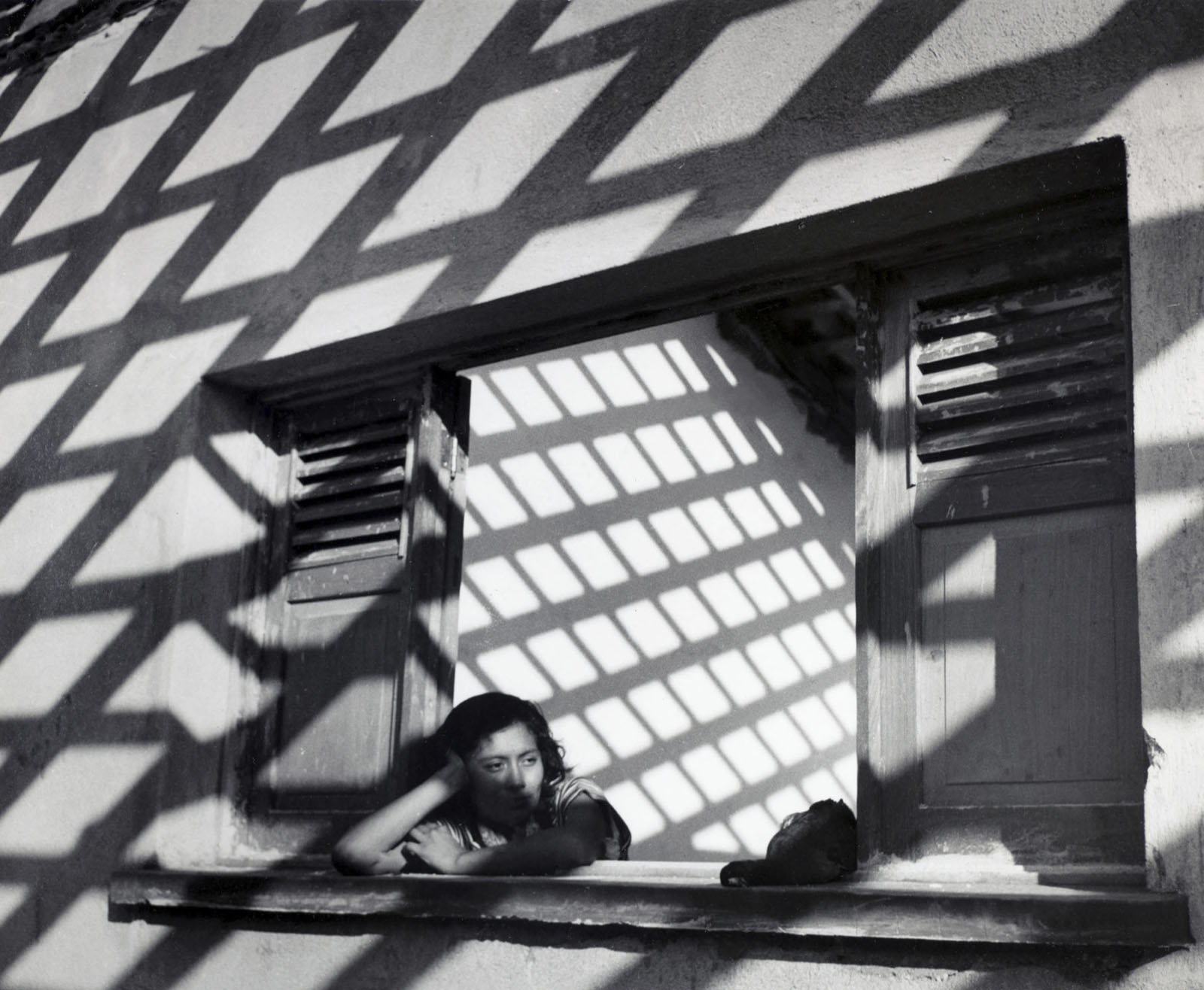
 

Annemarie Heinrich (Argentinian born Germany, 1912-2005)
Serge Lifar, “El espectro de la rosa” (Serge Lifar, “The Spirit of the Rose”)
1935
Gelatin silver print
Image: 28.4 x 20.7cm (11 3/16 x 8 1/8 in.)
Frame: 45.72 x 35.56cm (18 x 14 in.)
Frame (outer): 49.53 x 39.37cm (19 1/2 x 15 1/2 in.)
National Gallery of Art, Washington, Pepita Milmore Memorial Fund


Annemarie Heinrich (Argentinian born Germany, 1912-2005)

Annemarie Heinrich (9 January 1912 – 22 September 2005) was a German-born naturalised Argentine photographer, who specialised in portraits and nude photographs. Heinrich is considered one of Argentina’s most important photographers.

She is known for having photographed various celebrities of Argentine cinema, such as Tita Merello, Carmen Miranda, Zully Moreno and Mirtha Legrand; as well as other cultural personalities like Jorge Luis Borges, Pablo Neruda and Eva Perón. She also photographed landscapes, city scenes, animals, and abstracts. Her photographs of South America hold significant ethnographic value, showing changes to the area through the 20th century.

Career

In 1930, she opened her first studio in Villa Ballester, Buenos Aires. She also married Ricardo Sanguinetti, a writer under the name Alvaro Sol, in the same year. Two years later she moved to a larger studio and began photographing actors from the Teatro Colón.

Heinrich co-founded Foto Club Argentino and was a founding member of Consejo Argentino de Fotografía (Argentine Council on Photography) and the Consejo Latinoamericano de Fotografía (Latin American Council on Photography). Her photos were also the cover of magazines such as El Hogar, Sintonía, Alta Sociedad, Radiolandia and Antena for forty years.

In Argentina during the Second World War, Heinrich was part of the anti-war movement, Consejo Argentino por la Paz (Argentinian Council for Peace). She was also in the Junta de la Victoria (Victory Board), a women’s group advocating against fascism and for the Allies. After the war, Heinrich travelled across Europe, exhibiting her work in Rome, Milan, Paris, and Zürich. In the 1950s Heinrich was part of a modernist group calling themselves Carpeta de los diez (Group of Ten).

Heinrich was brought to court in 1991 for displaying one of her nude photographs in the Avenida Callao studio window. National and international outcry in support of Heinrich and the aesthetic value of the photograph led to the case being dropped.

In 2015, the Museo de Arte Latinoamericano de Buenos Aires held a retrospective of her work. Heinrich’s work was shown in New York for the first time in 2016 at Nailya Alexander Gallery in the show “Annemarie Heinrich: Glamour and Modernity in Buenos Aires.”

Heinrich’s archive has been digitised in a project between the British Library Endangered Archives Programme and the Institute for Research in Art and Culture, Universidad Nacional de Tres de Febrero, in 2016. The collection is available online at the Endangered Archives Programme website.

Text from the Wikipedia website


Germaine Krull (German, French, and Dutch, Brazil, Republic of the Congo, Thailand and India, 1897-1985) 'Ohne Titel (Studie für "Der Akt")' (Untitled (Study for "The Nude")) 1924


Germaine Krull (German, French, and Dutch, Brazil, Republic of the Congo, Thailand and India, 1897-1985)
Ohne Titel (Studie für “Der Akt”) (Untitled (Study for “The Nude”))
1924
Gelatin silver print
Image: 22.23 x 16.51cm (8 3/4 x 6 1/2 in.)
Frame: 50.8 x 40.64cm (20 x 16 in.)
Frame (outer): 53.34 x 43.18cm (21 x 17 in.)
Trish and Jan de Bont


Germaine Krull’s Queer Vision

The photographer Germaine Krull is little known outside of specialist circles today, but in 1928 she was the toast of Paris. Her avant-garde photographs of the city filled the pages of VU, a magazine known for its dynamic spreads and modern, bold aesthetic. Krull was one of its signature photographers. She shot sailors on the docks, piles of curios at the flea market, dancers at the Moulin Rouge. As both photojournalist and art photographer, Krull was one of the leading lights of the Parisian photography scene. Her pictures hung in the Salon de l’Escalier, a major exhibition of modernist photography, and over the next few years, her work featured in exhibitions across Europe. By 1931, the cultural critic Walter Benjamin used Krull as an example of photography’s potential in his celebrated essay “Little History of Photography.”1

Krull, born in Posen (then Germany, now Poznán, Poland), wound up in Paris after an itinerant childhood, a few years’ study of photography in Munich, and a series of political embroilments that sound like the stuff of fiction. Banned from Bavaria for aiding a Bolshevik emissary’s attempted escape through the Alps, she was later deported from the Soviet Union as a supposed counterrevolutionary.

After a stint in Berlin, where she ran her own photography studio, she made her way to Paris. There, she published her photo book Métal in 1928 and began to receive attention alongside other practitioners of new, assertively modern photographic styles such as Man Ray and André Kertész.

With Métal, Krull turned her lens on the soaring structures of industrial Europe: Rotterdam’s railroad bridge De Hef, Marseille’s Pont Transbordeur, a number of nameless industrial cranes, factory machinery, and, most recognizably, the Eiffel Tower.2 The portfolio bore the subtitle “métaux nus” (bare metals), and critics have often likened these metallic bodies to the nude photographs she made around the same time. In both cases, Krull got close to her subjects, dislocating them from their environments. In Métal, Krull rendered the familiar form of the Eiffel Tower nearly unrecognizable. She tended to shoot the tower from beneath, its iron lattices stretching vertiginously upward, such that the monument’s iconic shape is lost.

In an untitled nude photograph from 1928 or ’29, she deployed a similar approach, keeping the camera fixed on an unclothed torso twisting off toward the edge of the frame with upturned face cut off at mid-cheek. The dramatic play of shadow and light renders the figure’s gender indistinct. Whether focused on a living subject or an architectural one, Krull’s camera resists the viewer’s urge to name and categorize.

Before Krull became a famous Parisian photojournalist, she made a series of enigmatic pictures of female couples. In 1924, while living in Berlin, Krull shot a portfolio of eleven photographs entitled Les amies (French for “the friends,” specifically denoting female friends). The photographs depict a pair of women in stages of gradual undress, eventually left only in their stockings, the rest of their flesh laid bare. In the narrative that unfolds from image to image, the two women move between sofa and floor: the shape of their union shifts but their bodies remain interlocked. The images were risqué enough that they received little attention during Krull’s lifetime – perhaps a bit too lewd for fine art display, and yet not quite pornographic either. Certainly though, these photographs are representations of queer desire; they were made by an artist who desired women herself.

In her memoirs, Krull describes the relationship she had with a woman (perhaps pseudonymously) referred to as “Elsa,” noting, “We would have laughed if someone had labeled us lesbians.” At the time, Krull and Elsa were both married to men, and Krull frames the affair as an exception. She calls Elsa “the only woman I have loved and who has loved me.” In another passage, she seems to contradict herself, stating, “I never loved a woman.” But she does not altogether dismiss this relationship: “With Elsa, the joy of feeling united was so great. … She was so much mine that the physical question did not count.”3

One of the Les amies photographs in The Met collection shows two women wrapped in an amorous knot, so engaged in their pursuit of pleasure that their faces remain almost entirely obscured. This elision of the models’ faces is, perhaps, an effect of modesty or concealing their identity, but it also produces a sense of intense absorption in the sexual act – despite performing for a camera, the two women seem concerned only with each other. The photographs offer a vision of queer feminine sexuality in its most visible form.

Krull’s straightforward depiction of these female lovers is all the more striking given that she took these photographs at a time when lesbians were often imagined to be invisible – or at the very least, imperceptible. In the interwar years of the 1920s and ’30s, and especially in France, anxieties ran high about precisely this problem. If lesbians could not be identified on sight, how could they be apprehended? How could the dangers of rampant female sexuality be curtailed with lesbians walking around Paris in plain sight, undetected? These worries occupied novelists, social scientists, and sexologists alike, as Carolyn J. Dean describes in her book, The Frail Social Body.4

Krull, unlike her (largely male) contemporaries, seems to have had no trouble locating queer female sexuality, or representing it. On the contrary, the Les amies photographs adopt a direct, frontal view of the two lovers. Krull’s models become almost indistinguishable over the course of the series. This compositional strategy suggests a particularly queer eroticization of sameness, very different from the conception of a butch-femme dyad imaged by Krull’s contemporary Brassaï in his photographs of the Parisian lesbian bar Le Monocle. But the representation of queerness as a kind of doubling accords with popular French conceptions of the so-called sapphist as a “female Narcissus,” as Nicole Albert puts it in her 2005 study of the lesbian phantasm at the fin-de-siècle, Lesbian Decadence.5

Just as Narcissus gazed upon his own likeness, the lesbian often appeared in popular representations gazing upon another woman as a kind of mirror image of herself. Mirrors, long linked with feminine vanity, became a convenient shorthand for the idea that lesbian desire is the ultimate narcissism. This allowed for artists and writers to simultaneously denounce sexual immorality and the eroticization of that sin. Contemporary illustrations in magazines and advertisements, for instance, offered up sensuous sights of women embracing through, near, or against mirrors. The mirror’s reflection plays up the autoeroticism of self-regard, and supposedly of sapphism itself. Meanwhile, literary accounts of lesbianism in the interwar period frequently staged scenes of erotic encounters in mirrored rooms.6 Such spaces – be they brothels, nightclubs, or private bedrooms – facilitated both voyeurism and spatial disorientation.

Nor was sapphism the mirror’s only resonance in the 1920s. Contemporary critics frequently compared photography to a mirror. The poet and polymath Jean Cocteau, for instance, told Krull of her art: “You are a reforming mirror. You and the darkroom [chambre noire] obtain a new world, a world that has passed through [the camera’s] workings and a soul.”7 Here, he plays upon the double meaning present in the French “chambre noire,” which refers at once to the literal darkroom where photographs are developed and to the camera obscura, which we might think of as a stand-in for the enterprise of photography itself. As Cocteau would have it, Krull herself was the mirror, not photography. Armed with her camera, she had the power not only to depict reality but to transform it.”

Marina Molarsky-Beck. “Germaine Krull’s Queer Vision,” on The Met website August 17 2021 [Online] Cited 15/12/2021


Footnotes

1/ Walter W. Benjamin, “Little History of Photography,” in Selected Writings: 1927-1934, ed. Howard Eiland, Michael W. Jennings, and Gary Smith, trans. Rodney Livingstone (Cambridge, M.A.: Harvard University Press, 1996), 507-528

2/ Kim Sichel, Making Strange: The Modernist Photobook in France (New Haven: Yale University Press, 2020), 19

3/ Germaine Krull, La vie mène la danse, ed. Françoise Denoyelle (Textuel, 2015), 179-180

4/ Carolyn J. Dean, The Frail Social Body: Pornography, Homosexuality, and Other Fantasies in Interwar France (Berkeley, C.A.: University of California Press, 2000)

5/ Nicole G. Albert, Lesbian Decadence: Representations in Art and Literature of Fin-de-Siècle France, trans. Nancy Erber and William A. Peniston (New York: Columbia University Press, 2016), 241-242. Originally published as Albert, Saphisme et décadence dans Paris fin-de-siècle (Paris: Martinière, 2005)

6/ Dean, The Frail Social Body, 193

7/ “Vous êtes un miroir reformant. Vous et la chambre noire obtenez un monde neuf, un monde qui a traversé des mécanismes et une âme.” Jean Cocteau, Jean Cocteau to Germaine Krull, April 1930. Quoted in Pierre MacOrlan, Germaine Krull (Paris: Librairie Gallimard, 1931), 16


Germaine Krull (German, French, and Dutch, Brazil, Republic of the Congo, Thailand and India, 1897-1985) 'André Malraux' 1930


Germaine Krull (German, French, and Dutch, Brazil, Republic of the Congo, Thailand and India, 1897-1985)
André Malraux
1930
Gelatin silver print
Image: 22.5 x 16cm (8 7/8 x 6 5/16 in.)
Mount: 29.1 x 22.8cm (11 7/16 x 9 in.)
Frame: 45.72 x 35.56cm (18 x 14 in.)
Frame (outer): 49.53 x 39.37cm (19 1/2 x 15 1/2 in.)
National Gallery of Art, Washington, R. K. Mellon Family Foundation
© Estate Germaine Krull, Museum Folkwang, Essen


Germaine Krull (German, French, and Dutch, Brazil, Republic of the Congo, Thailand and India, 1897-1985) 'Selbstporträt mit Icarette' (Self-Portrait with Icarette) c. 1925, printed 1978


Germaine Krull (German, French, and Dutch, Brazil, Republic of the Congo, Thailand and India, 1897-1985)
Selbstporträt mit Icarette (Self-Portrait with Icarette)
c. 1925, printed 1978
Gelatin silver print sheet: 30.8 x 24.3cm (12 1/8 x 9 9/16 in.)
Image: 23.3 x 17.3cm (9 3/16 x 6 13/16 in.)
Frame: 50.8 x 40.64cm (20 x 16 in.)
Frame (outer): 53.34 x 43.18cm (21 x 17 in.)
Department of Image Collections, National Gallery of Art Library © Estate Germaine Krull, Museum Folkwang, Essen


During the 1920s, the iconic New Woman was splashed across the pages of magazines and projected on the silver screen. As a global phenomenon, she embodied an ideal of female empowerment based on real women making revolutionary changes in life and art. Featuring more than 120 photographers from over 20 countries, the groundbreaking exhibition, The New Woman Behind the Camera, explores the diverse “new” women who embraced photography as a mode of professional and personal expression from the 1920s to the 1950s. The first exhibition to take an international approach to the subject, it examines how women brought their own perspectives to artistic experimentation, studio portraiture, fashion and advertising work, scenes of urban life, ethnography, and photojournalism, profoundly shaping the medium during a time of tremendous social and political change. Accompanied by a fully illustrated catalogue, this landmark exhibition will be on view from October 31, 2021 through January 30, 2022, in the West Building of the National Gallery of Art, Washington. It was previously on view at The Metropolitan Museum of Art, New York, from July 2 through October 3, 2021.

In an era when traditional definitions of womanhood were being questioned, women’s lives were a mix of emancipating and confining experiences that varied by country. Many women around the world found the camera to be a means of independence as they sought to redefine their positions in society and expand their rights. This exhibition presents a geographically, culturally, and artistically diverse range of practitioners to advance new conversations about the history of modern photography and the continual struggle of women to gain creative agency and self-representation.

“This innovative exhibition reevaluates the history of modern photography through the lens of the New Woman, a feminist ideal that emerged at the end of the 19th century and spread globally during the first half of the 20th century,” said Kaywin Feldman, director, National Gallery of Art. “The transnational realities of modernism visualised in photography by women such as Lola Álvarez Bravo, Berenice Abbott, Claude Cahun, Germaine Krull, Dorothea Lange, Niu Weiyu, Tsuneko Sasamoto, and Homai Vyarawalla offer us an opportunity to better understand the present by becoming more fully informed of the past.”

About the exhibition

This landmark exhibition critically examines the extraordinary impact women had on the practice of photography worldwide from the 1920s to the 1950s. It presents the work of over 120 international photographers who took part in a dramatic expansion of the medium propelled by artistic creativity, technological innovation, and the rise of the printed press. Photographers such as Berenice Abbott, Ilse Bing, Lola Álvarez Bravo, Madame d’Ora, Florence Henri, Elizaveta Ignatovich, Germaine Krull, Dorothea Lange, Dora Maar, Niu Weiyu, Eslanda Goode Robeson, Tsuneko Sasamoto, Gerda Taro, and Homai Vyarawalla, among many others, emerged at a tumultuous moment in history that was profoundly shaped by two world wars, a global economic depression, struggles for decolonisation, and the rise of fascism and communism. Against the odds, these women were at the forefront of experimentation with the camera and produced invaluable visual testimony that reflects both their personal experiences and the extraordinary social and political transformations of the era.

Organised thematically in eight galleries, The New Woman Behind the Camera illustrates women’s groundbreaking work in modern photography, exploring their innovations in the fields of social documentary, avant-garde experimentation, commercial studio practice, photojournalism, ethnography, and the recording of sports, dance, and fashion. By evoking the global phenomenon of the New Woman, the exhibition seeks to reevaluate the history of photography and advance new and more inclusive conversations on the contributions of female photographers.

Known by different names, from nouvelle femme and neue Frau to modan gāru and xin nüxing, the New Woman was easy to recognise but hard to define. Fashionably dressed with her hair bobbed, the self-assured cosmopolitan New Woman was arguably more than a marketable image. She was a contested symbol of liberation from traditional gender roles. Revealing how women photographers from around the world gave rise to and embodied the quintessential New Woman even as they critiqued the popular construction of the role, the exhibition opens with a group of compelling portraits and self-portraits. In these works, women defined their positions as professionals and artists during a time when they were seeking greater personal rights and freedoms.

For many women, the camera became an effective tool for self-determination as well as a source of income. With better access to education and a newfound independence, female photographers emerged as a major force in studio photography. From running successful businesses in Berlin, Buenos Aires, London, and Vienna, to earning recognition as one of the first professional female photographers in their home country, women around the world, including Karimeh Abbud, Steffi Brandl, Trude Fleischmann, Annemarie Heinrich, Eiko Yamazawa, and Madame Yevonde, reinvigorated studio practice. A collaborative space where both sitters and photographers negotiated gender, race, and cultural difference, the portrait studio was also vitally important to African American communities which sought to represent and define themselves within a society that continued to be plagued by racism. Photography studios run by Black women, such as Florestine Perrault Collins and Winifred Hall Allen, thrived throughout the United States, and not only preserved likenesses and memories, but also constructed a counter narrative to the stereotyping images that circulated in the mass media.

With the invention of smaller lightweight cameras, a growing number of women photographers found that the camera’s portability created new avenues of discovery outside the studio. In stunning photographs of the city, photographers such as Alice Brill, Rebecca Lepkoff, Helen Levitt, Lisette Model, Genevieve Naylor, and Tazue Satō Matsunaga used their artistic vision to capture the exhilarating modern world around them. They depicted everyday life, spontaneous encounters on the street, and soaring architectural views in places like Bombay (now Mumbai), New York, Paris, São Paulo, and Tokyo, revealing the multiplicity of urban experience. Many incorporated the newest photographic techniques to convey the energy of the city, and the exhibition continues with a gallery focused on those radical formal approaches that came to define modern photography. Through techniques like photomontage, photograms, sharp contrasts of light and shadow, extreme cropping, and dizzying camera angles, women including Aenne Biermann, Imogen Cunningham, Dora Maar, Tina Modotti, Lucia Moholy, and Cami Stone pushed the boundaries of the medium.

Women also produced dynamic pictures of the modern body, including innovative nude studies as well as sport and dance photography. Around the world, participation in spectator and team sports increased along with membership in fitness and hygiene reform movements. New concepts concerning health and sexuality along with new attitudes in movement and dress emphasised the body as a central site of experiencing modernity. On view are luminous works by photographers Laure Albin Guillot, Yvonne Chevalier, Florence Henri, and Jeanne Mandello who reimagined the traditional genre of the nude. Photographs by Irene Bayer-Hecht and Liselotte Grschebina highlight joyous play and gymnastic exercise, while Charlotte Rudolph, Ilse Bing, Trude Fleischmann, and Lotte Jacobi made breathtaking images of dancers in motion, revealing the body as artistic medium.

During the modern period, a growing number of women pursued professional photographic careers and traveled widely for the first time. Many took photographs that documented their experiences abroad and interactions with other cultures as they engaged in formal and informal ethnographic projects. The exhibition continues with a selection of photographs and photobooks by women, mainly from Europe and the United States, that reveal a diversity of perspectives and approaches. Gender provided some of these photographers with unusual access and the drive to challenge discriminatory practices, while others were not exempt from portraying stereotypical views. Publications by Jette Bang, Hélène Hoppenot, Ella Maillart, Anna Riwkin, Eslanda Goode Robeson, and Ellen Thorbecke exemplify how photographically illustrated books and magazines were an influential form of communication about travel and ethnography during the modern period. Other works on display include those by Denise Bellon and Ré Soupault, who traveled to foreign countries on assignment for magazines and photo agencies seeking ethnographic and newsworthy photographs, and those by Marjorie Content and Laura Gilpin, who worked on their own in the southwestern United States.

The New Woman – both as a mass-circulating image and as a social phenomenon – was confirmed by the explosion of photographs found in popular fashion and lifestyle magazines. Fashion and advertising photography allowed many women to gain unprecedented access to the public sphere, establish relative economic independence, and attain autonomous professional success. Producing a rich visual language where events and ideas were expressed directly in pictures, illustrated fashion magazines such as Die DameHarper’s Bazaar, and Vogue became an important venue for photographic experimentation by women for a female readership. Photographers producing original views of women’s modernity include Lillian Bassman, Ilse Bing, Louise Dahl-Wolfe, Toni Frissell, Toni von Horn, Frances McLaughlin-Gill, ringl + pit, Margaret Watkins, Caroline Whiting Fellows, and Yva.

The rise of the picture press also established photojournalism and social documentary as dominant forms of visual expression during the modern period. Ignited by the effects of a global economic crisis and growing political and social unrest, numerous women photographers including Lucy Ashjian, Margaret Bourke-White, Kati Horna, Elizaveta Ignatovich, Kata Kálmán, Dorothea Lange, and Hansel Mieth engaged a wide public with gripping images. So-called soft topics such as “women and children,” “the family,” and “the home front” were more often assigned to female photojournalists than to their male counterparts. The exhibition asks viewers to question the effect of having women behind the camera in these settings. Pictures produced during the war, from combat photography by Galina Sanko and Gerda Taro to images of the Blitz in London by Thérèse Bonney and the Tuskegee airmen by Toni Frissell, are also featured. At the war’s end, haunting images by Lee Miller of the opening of Nazi concentration camps and celebratory images of the victory parade of Allied Forces in New Delhi by Homai Vyarawalla made way for the transition to the complexities of the postwar era, including images of daily life in US-occupied Japan by Tsuneko Sasamoto and the newly formed People’s Republic of China by Hou Bo and Niu Weiyu.

The New Woman Behind the Camera acknowledges that women are a diverse group whose identities are defined not exclusively by gender but rather by a host of variable factors. It contends that gender is an important aspect in understanding their lives and work and provides a useful framework for analysis to reveal how photography by women has powerfully shaped our understanding of modern life.

Exhibition catalog

Published by the National Gallery of Art, Washington and distributed by DelMonico Books | D.A.P., this groundbreaking, richly illustrated 288-page catalog examines the diverse women whose work profoundly marked the medium of photography from the 1920s to the 1950s. The book – featuring over 120 international photographers, including Lola Álvarez Bravo, Elizaveta Ignatovich, Germaine Krull, Dorothea Lange, Tsuneko Sasamoto, and Homai Vyarawalla – reevaluates the history of modern photography through the lens of the iconic New Woman. Inclusive scholarly essays introduce readers to these important photographers and question the past assumptions about gender in the history of photography. Contributors include Andrea Nelson, associate curator in the department of photographs, National Gallery of Art; Elizabeth Cronin, assistant curator of photography in the Miriam and Ira D. Wallach Division of Art, Prints, and Photographs, New York Public Library; Mia Fineman, curator in the department of photographs, Metropolitan Museum of Art; Mila Ganeva, professor of German in the department of German, Russian, Asian, and Middle Eastern languages and cultures, Miami University, Ohio; Kristen Gresh, Estrellita and Yousuf Karsh Senior Curator of Photographs, Museum of Fine Arts, Boston; Elizabeth Otto, professor of modern and  contemporary art history, University at Buffalo (The State University of New York); and Kim Sichel, associate professor in the department of the history of art and architecture at Boston University; biographies of the photographers by Kara Felt, Andrew W. Mellon postdoctoral fellow in the department of photographs, National Gallery of Art.

Press release from the National Gallery of Art


Dora Maar (French, 1907-1997) 'Père Ubu' (Portrait of Ubu) 1936


Dora Maar (French, 1907-1997)
Père Ubu (Portrait of Ubu)
1936
Gelatin silver print
Image: 24.13 x 17.78cm (9 1/2 x 7 in.)
Framed (outer): 40.01 x 33.66 x 2.86cm (15 3/4 x 13 1/4 x 1 1/8 in.)
National Gallery of Art, Washington, Gift of J. Patrick and Patricia A. Kennedy
© 2020 Artists Rights Society (ARS), New York / ADAGP, Paris


Portrait of Ubu (1936; also called Père Ubu), a monstrous close-up image by Maar of what may be an armadillo fetus (she would never confirm), became an icon of the movement.


Dora Maar (French, 1907-1997)

Henriette Theodora Markovitch (22 November 1907 – 16 July 1997), known as Dora Maar, was a French photographer, painter, and poet. A love partner of Pablo Picasso, Maar was depicted in a number of Picasso’s paintings, including his Portrait of Dora Maar and Dora Maar au Chat.

Dora Maar the photographer

Maar’s earliest surviving photographs were taken in the early 1920s with a Rolleiflex camera while on a cargo ship going to the Cape Verde Islands.

At the beginning of 1930, she set up a photography studio on rue Campagne-Première (14th arrondissement of Paris) with Pierre Kéfer, photographer, and decorator for Jean Epstein’s 1928 film, The Fall of the House of Usher. In the studio, Maar and Kefer worked together mostly on commercial photography for advertisements and fashion magazines. Her father assisted with her finances in this period of her life as she was establishing herself while trying to earn a living. The studio displayed fashion, advertising and nudes, and it became very successful.

She met the photographer Brassaï with whom she shared the darkroom in the studio. Brassai once said that she had “bright eyes and an attentive gaze, a disturbing stare at times”.

During this time working in advertising and fashion photography, the influence of Surrealism could be seen in her work through her heavy use of mirrors and contrasting shadows. She felt that art should represent the content of reality through links with intuitions or ideas, rather than visually reproduce the natural. Maar also met Louis-Victor Emmanuel Sougez, a photographer working for advertising, archeology and artistic director of the newspaper L’Illustration, whom she considered a mentor.

In 1932, she had an affair with the filmmaker Louis Chavance. Maar frequented the “October group”, formed around Jacques Prévert and Max Morise after their break from surrealism. She had her first publication in the magazine Art et Métiers Graphiques in 1932. Her first solo exhibition was held at the Galerie Vanderberg in Paris.

It is the gelatin silver works of the surrealist period that remain the most sought after by admirers: Portrait of Ubu (1936), 29 rue d’Astorg, black and white, collages, photomontages or superimpositions. The photograph represents the central character in a popular series of plays by Alfred Jarry called Ubu Roi. The work was first shown at the Exposition Surréaliste d’objets at the Galerie Charles Ratton in Paris and at the International Surrealist Exhibition in London in 1936. She also participated in Participates in Fantastic Art, Dada, Surrealism, at the MoMA in New York the same year.

Surrealist concepts and interests often aligned with the ideas of the political left of the time and so Maar became very politically active at this point in her life. After the fascist demonstrations of 6 February 1934, in Paris along with René Lefeuvre, Jacques Soustelle, supported by Simone Weil and Georges Bataille, she signed the tract “Appeal to the Struggle” written at the initiative of André Breton. Much of her work is highly influenced by leftist politics of the time, often depicting those who had been thrown into poverty by the Depression. She was part of an ultra-leftist association called “Masses”, where she first met Georges Bataille, an anti-fascist organisation called the Union of Intellectuals Against Fascism, and a radical collective of left-wing actors and writers called October.

She also was involved in many Surrealist groups and often participated in demonstrations, convocations, and cafe conversations. She signed many manifestos, including one titled “When Surrealists were Right” in August 1935 which concerned the Congress of Paris, which had been held in March of that year.

In 1935, she took a photo of fashion illustrator and designer Christian Berard that was described by writer and critic Michael Kimmelman as “wry and mischievous with only his head perceived above the fountain as if he were John the Baptist on a silver platter”.

Text from the Wikipedia website


Arthur Rothstein (American, 1915-1985) 'Untitled (Marion Post Wolcott on assignment, Montgomery County, Maryland)' 1940


Arthur Rothstein (American, 1915-1985)
Untitled (Marion Post Wolcott on assignment, Montgomery County, Maryland)
1940
Gelatin silver print
Image: 22.86 x 17.4cm (9 x 6 7/8 in.)
Sheet: 25.2 x 20.2cm (9 15/16 x 7 15/16 in.)
Frame (outer): 50.48 x 37.78cm (19 7/8 x 14 7/8 in.)
The J. Paul Getty Museum, Los Angeles

Marion Post Wolcott with Rolleiflex and Speed Graphic in hand in Montgomery County, Maryland


Marion Post (June 7, 1910 – November 24, 1990)

Marion Post (June 7, 1910 – November 24, 1990), later Marion Post Wolcott, was a noted American photographer who worked for the Farm Security Administration during the Great Depression documenting poverty and deprivation. …

Life

Marion Post was born in New Jersey on June 7, 1910. Her parents split up and she was sent to boarding school, spending time at home with her mother in Greenwich Village when not at school. Here she met many artists and musicians and became interested in dance. She studied at The New School.

Post trained as a teacher, and went to work in a small town in Massachusetts. Here she saw the reality of the Depression and the problems of the poor. When the school closed she went to Europe to study with her sister Helen. Helen was studying with Trude Fleischmann, a Viennese photographer. Marion Post showed Fleischmann some of her photographs and was told to stick to photography.

While in Vienna she saw some of the Nazi attacks on the Jewish population and was horrified. Soon she and her sister had to return to America for safety. She went back to teaching but also continued her photography and became involved in the anti-fascist movement. At the New York Photo League she met Ralph Steiner and Paul Strand who encouraged her. When she found that the Philadelphia Evening Bulletin kept sending her to do “ladies’ stories”, Ralph Steiner took her portfolio to show Roy Stryker, head of the Farm Security Administration, and Paul Strand wrote a letter of recommendation. Stryker was impressed by her work and hired her immediately.

Post’s photographs for the FSA often explore the political aspects of poverty and deprivation. They also often find humour in the situations she encountered.

In 1941 she met Leon Oliver Wolcott, deputy director of war relations for the U. S. Department of Agriculture under Franklin Roosevelt. They married, and Marion Post Wolcott continued her assignments for the FSA, but resigned shortly thereafter in February 1942. Wolcott found it difficult to fit in her photography around raising a family and a great deal of traveling and living overseas.

In the 1970s, a renewed interest in Wolcott’s images among scholars rekindled her own interest in photography. In 1978, Wolcott mounted her first solo exhibition in California, and by the 1980s the Smithsonian and the Metropolitan Museum of Art began to collect her photographs. The first monograph on Marion Post Wolcott’s work was published in 1983. Wolcott was an advocate for women’s rights; in 1986, Wolcott said: “Women have come a long way, but not far enough. … Speak with your images from your heart and soul” (Women in Photography Conference, Syracuse, N.Y.).

Marion Post Wolcott’s work is archived at the Center for Creative Photography at the University of Arizona in Tucson, Arizona.

Text from the Wikipedia website


Arthur Rothstein (July 17, 1915 – November 11, 1985) was an American photographer. Rothstein is recognised as one of America’s premier photojournalists. During a career that spanned five decades, he provoked, entertained and informed the American people. His photographs ranged from a hometown baseball game to the drama of war, from struggling rural farmers to US Presidents.


Genevieve Naylor (American, 1915-1989) 'A Café, Brazil' Early 1940s


Genevieve Naylor (American, 1915-1989)
A Café, Brazil
Early 1940s
Gelatin silver print
Image/sheet: 16.51 x 17.78cm (6 1/2 x 7 in.)
Frame: 35.56 x 45.72cm (14 x 18 in.)
Frame (outer): 38.1 x 48.26 cm (15 x 19 in.)
National Gallery of Art, Washington, Alfred H. Moses and Fern M. Schad Fund


Genevieve Naylor (American, 1915-1989)

Genevieve Naylor (February 2, 1915 – July 21, 1989) was an American photographer and photojournalist, best known for her photographs of Brazil and as Eleanor Roosevelt’s personal photographer. …

Career

At the age of 22, in 1937, Naylor was chosen by Holger Cahill of the Works Progress Administration (WPA) as a photographer for the Harlem Arts Center. She also worked for the WPA in New Hampshire, Pennsylvania, Washington D.C., and New York. She then worked for the Associated Press and was one of the first women photojournalists to be hired by any American news wire services.

In 1940, Genevieve Naylor was assigned by the U.S. State department as part of a team to travel to Brazil. In an effort to further and strengthen the anti-Nazi relationship between the United States and Brazil and to promote mutual cultural awareness, the U.S. Office of Inter-American Affairs, under the leadership of Nelson Rockefeller, created a team of notable Americans that included Orson Welles, Errol Flynn, and Walt Disney. Genevieve Naylor and her partner (and later husband) Misha Reznikoff arrived in Brazil in October, 1940, where he showed his paintings while Miss Naylor took photographs. Naylor’s assignment was to document Brazil’s progress toward becoming a modern nation, capture images that would boost war-time morale, foster cultural interchange, and promote the Allied cause. But Naylor, with her energetic and outgoing personality, soon ventured into other milieus, taking photographs of Brazilian workers jammed into trams, school children, religious and street festivals, and various aspects of everyday lives. Because it was war time, film was rationed, and Naylor’s equipment was modest. She had neither flash nor studio lights and had to carefully choose her shots, balancing spontaneity with careful composition. Of her work, nearly 1,350 photos survived and were preserved. After her return to the states in 1943, Naylor become only the second woman photographer to be given a one-woman show when her work was exhibited by New York’s Museum of Modern Art.

Naylor later spent 15 years as a photographer with Harper’s Bazaar and from 1944 to 1980 was a freelance photographer for Vogue, McCall’s, Town and Country, Life, Look, Saturday Evening Post, Women’s Home Companion, Cosmopolitan, Fortune, Collier’s, Glamour, Good Housekeeping, Vanity Fair, Elle, Ladies’ Home Journal, Redbook, House Beautiful, Holiday, Mademoiselle, American Home, Seventeen, Better Homes and Gardens, Charm, Bride’s, amongst others. She was a war time photographer, covering parts of the Korean War for Look magazine.

Text from the Wikipedia website


Genevieve Naylor (American, 1915-1989) 'São Januário Trolley' Early 1940s


Genevieve Naylor (American, 1915-1989)
São Januário Trolley
Early 1940s
Gelatin silver print
Image: 19.05 x 19.05cm (7 1/2 x 7 1/2 in.)
Sheet: 20.32 x 25.4cm (8 x 10 in.)
Frame: 35.56 x 45.72cm (14 x 18 in.)
Frame (outer): 38.1 x 48.26cm (15 x 19 in.)
National Gallery of Art, Washington, Alfred H. Moses and Fern M. Schad Fund


Elfriede Stegemeyer (German, 1908-1988) 'Selbstporträt' (Self-Portrait) 1933


Elfriede Stegemeyer (German, 1908-1988)
Selbstporträt (Self-Portrait)
1933
Gelatin silver print
Image: 23.81 x 17.94cm (9 3/8 x 7 1/16 in.)
Support: 23.81 x 17.94cm (9 3/8 x 7 1/16 in.)
Mat: 50.8 x 40.64cm (20 x 16 in.)
Frame: 50.8 x 40.64cm (20 x 16 in.)
Frame (outer): 51.44 x 41.28 x 3.33cm (20 1/4 x 16 1/4 x 1 5/16 in.)
Los Angeles County Museum of Art, The Audrey and Sydney Irmas Collection


Elfriede Stegemeyer (1908-1988); German photographer, painter and film artist. In a bombing raid on Berlin in 1943, much of her work was destroyed. After the war, she dedicated herself under the pseudonym Elde Steeg increasingly to painting and drawing, and experimented with Surrealist and Constructivist expression. From 1945 she lived and worked under the name Elde Steeg. In 1974 she moved to Innsbruck and worked there until her death.


Lillian Bassman (American, 1917-2012) 'Translucent Hat' c. 1950


Lillian Bassman (American, 1917-2012)
Translucent Hat
c. 1950
Gelatin silver print
Image/sheet: 26.99 x 34.29cm (10 5/8 x 13 1/2 in.)
Frame: 50.8 x 60.96cm (20 x 24 in.)
Frame (outer): 53.34 x 63.5cm (21 x 25 in.)
National Gallery of Art, Washington, Renee Harbers Liddell Fund and Alfred H. Moses and Fern M. Schad Fund
© Estate of Lilian Bassman


Lillian Bassman (American, 1917-2012)

Lillian Bassman (June 15, 1917 – February 13, 2012) was an American photographer and painter.

Career

From the 1940s until the 1960s Bassman worked as a fashion photographer for Junior Bazaar and later at Harper’s Bazaar where she promoted the careers of photographers such as Richard Avedon, Robert Frank, Louis Faurer and Arnold Newman. Under the guidance of the Russian emigrant, Alexey Brodovitch, she began to photograph her model subjects primarily in black and white. Her work was published for the most part in Harper’s Bazaar from 1950 to 1965.

By the 1970s Bassman’s interest in pure form in her fashion photography was out of vogue. She turned to her own photo projects and abandoned fashion photography. In doing so she tossed out 40 years of negatives and prints – her life’s work. A forgotten bag filled with hundreds of images was discovered over 20 years later. Bassman’s fashion photographic work began to be re-appreciated in the 1990s.

She worked with digital technology and abstract colour photography into her nineties to create a new series of work. She used Photoshop for her image manipulation.

The most notable qualities about her photographic work are the high contrasts between light and dark, the graininess of the finished photos, and the geometric placement and camera angles of the subjects. Bassman became one of the last great woman photographers in the world of fashion. A generation later, Bassman’s pioneering photography and her mentor Alexey Brodovitch’s bold cropping and layout innovations were a seminal influence on Sam Haskins and his black and white work of the sixties.

Bassman died on February 13, 2012, at age 94.

Text from the Wikipedia website


Edith Tudor-Hart (British born Austria, 1908-1973) 'Untitled (Street, London)' 1940s, printed later


Edith Tudor-Hart (British born Austria, 1908-1973)
Untitled (Street, London)
1940s, printed later
Gelatin silver print
Image: 21 x 28cm (8 1/4 x 11 in.)
Frame: 35.56 x 45.72cm (14 x 18 in.)
Frame (outer): 38.1 x 48.26cm (15 x 19 in.)
Peter Suschitzky, Julia Donat, and Misha Donat


Edith Tudor-Hart (British born Austria, 1908-1973)

Edith Tudor-Hart (née Suschitzky; 28 August 1908 – 12 May 1973) was an Austrian-British photographer and spy for the Soviet Union. Brought up in a family of socialists, she trained in photography at Walter Gropius’s Bauhaus in Dessau, and carried her political ideals through her art. Through her connections with Arnold Deutsch, Tudor-Hart was instrumental in the recruiting of the Cambridge Spy ring which damaged British intelligence from World War II until the security services discovered all their identities by the mid-1960s. She recommended Litzi Friedmann and Kim Philby for recruitment by the KGB and acted as an intermediary for Anthony Blunt and Bob Stewart when the rezidentura at the Soviet Embassy in London suspended its operations in February 1940.

Read a fuller biography on the Wikipedia website


Lola Álvarez Bravo (Mexican, 1903-1993) 'En su propia cárcel' (In Her Own Prison) c. 1950


Lola Álvarez Bravo (Mexican, 1903-1993)
En su propia cárcel (In Her Own Prison)
c. 1950
Gelatin silver print
Image: 18.42 x 21.27cm (7 1/4 x 8 3/8 in.)
Frame: 50.8 x 45.72cm (20 x 18 in.)
Frame (outer): 53.34 x 48.26cm (21 x 19 in.)
Daniel Greenberg and Susan Steinhauser
© Center for Creative Photography, The University of Arizona Foundation


Lola Álvarez Bravo (Mexican, 1903-1993)

Lola Álvarez Bravo (3 April 1903 – 31 July 1993) was the first Mexican female photographer and a key figure in the post-revolution Mexican renaissance. Known for her high level of skill in composition, her works were seen by her peers as fine art. She was recognised in 1964 with the Premio José Clemente Orozco (José Clemente Orozco Prize), by the State of Jalisco, for her contributions to photography and her efforts to preserve the culture of Mexico. Her works are included in the permanent collections of international museums, including the Museum of Modern Art in New York City.

Álvarez was born in a small town in Jalisco, but moved to Mexico City with her father when her parents separated around 1906. For a decade, she lived with her father in a large mansion, but upon his death was taken in by her older half-brother, who sent her to boarding school. After completing a traditional education, in 1922 she enrolled in the Escuela Nacional Preparatoria, where she met her lifelong friend, Frida Kahlo. A friendship with another of her childhood friends, Manuel Álvarez Bravo, blossomed into romance around the same time and the two married in 1925. Her husband taught her photography, as well as development techniques, and for nearly a decade, she acted as his assistant. As she sought to explore her own creativity and was unhappy in the marriage, the couple separated in 1934.

Beginning her career as a teacher, Álvarez took photographic assignments for magazines and newspapers, developing a reputation as one of the only women photojournalists working in Mexico City. She chose to portray subjects candidly, revealing the deeper meaning of culture and social significance, rather than seeking newsworthy work. In 1935, she began cataloging photographs in the Department of Education and two years later was hired to run the photography workshops of the National Autonomous University of Mexico, where she remained until her retirement in 1971.

In addition to her contributions to advertising and photojournalism, Álvarez took many photographs of her artistic friends, and in 1951 opened the Galeria de Arte Contemporáneo (Gallery of Contemporary Art) to promote their work. In 1953 at the Galeria, she hosted the only exhibition of Frida Kahlo’s works held in Mexico during the artist’s life. From the late 1970s until her death in 1993, she gained international recognition for her body of work. Her photo archive is located at the Center for Creative Photography in Tucson, Arizona, United States.

Read a fuller biography on the Wikipedia website


Jette Bang (Danish, 1914-1964) 'Grønland' 1940


Jette Bang (Danish, 1914-1964)
Grønland
1940
Bound volume
Open: 26.04 x 44.45cm (10 1/4 x 17 1/2 in.)
Closed: 26.04 x 22.86cm (10 1/4 x 9 in.)
Cradle: 6 1/8 (maximum height at left) x 15 1/2 (width) x 10 1/2 (depth) x 3 3/8 in. (maximum height at right)
National Gallery of Art Library, Gift of the Department of Photographs


Jette Bang (Danish, 1914-1964)

Jette Bang (February 4, 1914 – February 16, 1964) was a Danish photographer and film maker who is remembered for the large collection of photographs and films she took in Greenland, depicting the country and the way of life of its inhabitants before their old culture disappeared. …

Career

In 1936, Bang arrived in Greenland for the first time and spent eight months taking photographs of the traditional lifestyle of the Greenlandic Inuit, which was beginning to die out as a result of European influence. She travelled around on dog sleds and lived with the natives, sharing their way of life. The result was 400 photographs which were exhibited at the Danish Museum of Art & Design in 1937. Some were published in her book Grønland (1940) with a foreword by Minister of State Thorvald Stauning. The book was an eyeopener for the Danes.

Her next expedition in the winter of 1938-1939 was supported by Denmark’s Greenland Administration, who provided a motorboat, lighting and helpers. Under harsh and primitive conditions, she lived closely together with the Greenlanders, spending most of the winter in a hole in the ground with floor space of just four square metres. Joining the Thule postal sleds, she travelled across Melville Bay up to Cape York in the district of Thule. Her trip resulted in a revealing colour film, Inuit, seen as a work of art when it was shown in Denmark in 1938. The film was in two parts, depicting the old and the new Greenland. The reels on Melville Bay were lost in a fire while she was in Thule but there was still enough material for a four-hour production.

For a time, Jette Bang hoped to go back and take some additional shots but her plans were brought to a standstill by the outbreak of the Second World War. Only after the liberation in 1945 was she able to continue her project.

Many stills taken from the film were published in her book 30.000 Kilometer med Sneglefart (30,000 kilometers at a snail’s pace) (1941). Bang, a good storyteller, was able to provide an excellent account of her experiences. With the photo book Grønlænderbørn (Greenlandic Children) (1944) she continued to report on her travels, now addressing Danish schoolchildren.

She travelled to Greenland five more times. Disappointed with modern developments there, she republished her book Grønland in 1961. In 1962, she travelled to Greenland for the last time, trying to rework her 1938 colour film; but illness prevented any more trips.

In 1959, she took part in Peter Glob’s archaeological expedition to Bahrain, which led to her film Beduiner (1962).

Assessment

Jette Bang was the first photographer to take close-up portraits of the Greenlanders. While earlier photographers had been more interested in their clothing and surroundings, she was more concerned with their behaviour, creating more lasting and universal impressions.

Jette Bang’s photographs from Greenland are the only remaining material documenting the old Greelandic way of life which has now almost disappeared. Her dedication to the country and its people was legendary. She was also a talented author: “The full moon’s twisted face tripped up over the tops of the pointed peaks in the north west like a fakir trying to walk on a bed of nails,” she wrote in 30.000 Kilometer med Sneglefart.

Many of her photographs are in the National Museum of Greenland in Nuuk. The main collection of 12,000 photographs is with the Arktisk Institut in Copenhagen, which has made them available on the Internet.

Text from the Wikipedia website


Gerda Leo (German, 1909-1993) 'Korbgeflecht' (Wicker Basket) c. 1928


Gerda Leo (German, 1909-1993)
Korbgeflecht (Wicker Basket)
c. 1928
Gelatin silver print
Image: 36.3 x 29.2cm (14 5/16 x 11 1/2 in.)
Frame (outer): 51.3 x 41.3 x 2.7cm (20 3/16 x 16 1/4 x 1 1/16 in.)
Galerie Berinson, Berlin


Gerda Leo (born February 1, 1909 in Hagen, Westphalia , died September 28, 1993 in Amsterdam, Netherlands) was a German photographer in the field of New Vision and New Objectivity. She studied at the Burg Giebichenstein State School of Applied Arts in Halle (Saale) with Hans Finsler and worked as an assistant to Albert Renger-Patzsch. Her photographic estate is in the Moritzburg Art Museum Halle (Saale).

Read a fuller biography on the Wikipedia website


Behind the Camera

Women actively participated in the development of photography soon after its inception in the 19th century. Yet it was in the 1920s, after the seismic disruptions of World War I, that women entered the field of photography in force. Aided by advances in technology and mass communications, along with growing access to training and acceptance of their presence in the workplace, women around the world made an indelible mark on the growth and diversification of the medium. They brought innovation to a range of photographic disciplines, from avant-garde experimentation and commercial studio practice to social documentary, photojournalism, ethnography, and the recording of sports, dance, and fashion.

The New Woman

A global phenomenon, the New Woman of the 1920s embodied an ideal of female empowerment based on real women making revolutionary changes in life and art. Her image – a woman with bobbed hair, stylish dress, and a confident stride – was a staple of newspapers and magazines first in Europe and the United States and soon in China, Japan, India, Australia, and elsewhere. A symbol of the pursuit of liberation from traditional gender roles, the New Woman in her many guises represented women who faced a mix of opportunities and obstacles that varied from country to country. The camera became a powerful means for female photographers to assert their self-determination and redefine their position in society. Producing compelling portraits, including self-portraits featuring the artist with her camera, they established their roles as professionals and artists.

The Studio

Commercial studio photography was an important pathway for many women to forge a professional career and to earn their own income. Running successful businesses in small towns and major cities from Buenos Aires to Berlin and Istanbul, women reinvigorated the genre of portraiture. In the studio, both sitters and photographers navigated gender, race, and cultural difference; those run by women presented a different dynamic. For example, Black women operated studios in Chicago, New Orleans, and elsewhere in the United States, where they not only preserved likenesses and memories, but also constructed a counter narrative to racist images then circulating in the mass media.

The City

The availability of smaller, lightweight cameras and the increasing freedom to move about cities on their own spurred a number of women photographers to explore the diversity of the urban experience beyond the studio walls. Using their creative vision to capture the vibrant modern world around them, women living and working in Bombay (now Mumbai), London, New York, Paris, São Paulo, Tokyo, and beyond photographed soaring architecture and spontaneous encounters on the street.

Avant-Garde Experiments

Creative formal approaches – photomontage, photograms, sharp contrasts of light and shadow, unconventional cropping, extreme close-ups, and dizzying camera angles – came to define photography during this period. Women incorporated these cutting-edge techniques to produce works that conveyed the movement and energy of modern life. Although often overshadowed by their male partners and colleagues, women photographers were integral in shaping an avant-garde visual language that promoted new ways of seeing and experiencing the world.

Modern Bodies

Beginning in the 1920s, new concepts concerning health and sexuality, along with changing attitudes about movement and dress, emphasised the human body as a central site of experiencing modernity. Women photographers produced incisive visions of liberated modern bodies, from pioneering photographs of the nude to exuberant pictures of sport and dance. Photographs of joyous play and gymnastic exercise, as well as images of dancers in motion, celebrate the body as artistic medium.

Ethnographic Approaches

During this modern period, numerous women pursued professional photographic careers and traveled extensively for the first time. Many took photographs that documented their experiences abroad in Africa, China, Afghanistan, and elsewhere, while others engaged in more formal ethnographic projects. Some women with access to domains that were off limits to their male counterparts produced intimate portraits of female subjects. While gender may have afforded these photographers special connections to certain communities, it did not exempt some, especially those from Europe and the United States, from producing stereotypical views that reinforced hierarchical concepts of race and ethnocentrism.

Fashion and Advertising

Images splashed across the pages of popular fashion and lifestyle magazines vividly defined the New Woman. The unprecedented demand for fashion and advertising photographs between the world wars provided exceptional employment opportunities for fashion reporters, models, and photographers alike, allowing women to emerge as active agents in the profession. Cultivating the tastes of newly empowered female consumers, fashion and advertising photography provided a space where women could experiment with pictures intended for a predominantly female readership.

Social Documentary

Galvanised by the effects of a global economic crisis and the growing political and social unrest that began in the 1930s, numerous women photographers produced arresting images of the human condition. Whether working for government agencies or independently, women contributed to the visual record of the Depression and the events leading up to World War II. From images of breadlines and worker demonstrations to forced migration and internment, women photographers helped to expose dire conditions and shaped what would become known as social documentary photography.

Reportage

The rise of the picture press established photojournalism as a dominant form of visual expression during a period shaped by two world wars. Women photographers conveyed an inclusive view of worldwide economic depression, struggles for decolonisation in Africa, and the rise of fascism and communism in Europe and the Soviet Union. They often received the “soft assignments” of photographing women and children, families, and the home front, but some women risked their lives close to the front lines. Images of concentration camps and victory parades made way for the complexities of the postwar era, as seen in pictures of daily life in US-occupied Japan and the newly formed People’s Republic of China.
The photographers whose works are in The New Woman Behind the Camera represent just some of the many women around the world who were at the forefront of experimenting with the camera. They produced invaluable visual testimony that reflected both their personal experiences and the extraordinary social and political transformations of the early 20th century. Together, they changed the history of modern photography.

Text from the National Gallery of Art website


Dulce Carneiro (Brazilian, 1929-2018) 'Mulher' (Woman) c. 1957


Dulce Carneiro (Brazilian, 1929-2018)
Mulher (Woman)
c. 1957
Gelatin silver print
Image: 37.94 x 28.58cm (14 15/16 x 11 1/4 in.)
Frame: 40.64 x 50.8cm (16 x 20 in.)
Frame (outer): 43.18 x 53.34cm (17 x 21 in.)
National Gallery of Art, Washington, Robert B. Menschel and the Vital Projects Fund


Galina Sanko (Russian, 1904-1981) 'During an Attack' 1943, printed c. 1960s


Galina Sanko (Russian, 1904-1981)
During an Attack
1943, printed c. 1960s
Gelatin silver print
Image: 15.72 x 24.29cm (6 3/16 x 9 9/16 in.)
Frame: 40.64 x 50.8cm (16 x 20 in.)
Frame (outer): 43.18 x 53.34cm (17 x 21 in.)
Robert Koch Gallery


Galina Sanko (Russian, 1904-1981)

Galina Sanko (Russian: Галина Захаровна Санько and also Galina Sankova or Galina Sankowa) (1904-1981) was a Russian photographer who worked as a photojournalist and was one of only five women who served as a war photographer during World War II. She was one of the most noted Soviet photographers and known in the West, winning awards both at home and abroad. …

After the persecution of her husband in 1938, Sanko dedicated her life to photography. When the war broke out, she asked to go to the front as a war correspondent. Initially, Sanko trained as a nurse and then studied driving and auto mechanics. She bandaged the wounded and once she had proved her fitness for battle was allowed as one of only five women who served as war photographers. She worked for the magazine Frontline Illustration (Russian: Фронтовая иллюстрация) and took photographs of battles in Kursk, Moscow and Stalingrad, taking pictures at Bryansk and the Don Campaign near Stallingrad. In 1944, during the northern offensive, she took photographs of the siege of Leningrad. Near the end of the war, she took photographs of the fighting against Japan. She was seriously injured twice during the war. In the movie Wild Honey (Russian: Дикий мед) (1967) based on the novel by Leonid Pervomaisky, there is a scene based upon a real-life event in which Sanko escaped in the nick of time from being fired upon by a German tank.

At the end of the war, Sanko worked for the magazine Spark (Russian: Огонек) but until the 1960s, her work was banned and hidden in an archive. Accused of distorting the truth, with her photographs of the liberation of the Petrozavodsk camp, Sanko was exonerated when 20 years after the war, she returned to the Republic of Karelia and found one of the children she had photographed in the camp. After publishing “Claudia 20 years later”, her archive was opened in 1966 and Sanko participated in many photographic exhibitions at home and abroad. She was awarded the Order of the Red Star. Sanko died in Moscow in 1981.

Text from the Wikipedia website


Galina Sanko (Russian, 1904-1981) 'Prisoners, Stalingrad' 1943, printed c. 1960s


Galina Sanko (Russian, 1904-1981)
Prisoners, Stalingrad
1943, printed c. 1960s
Gelatin silver print
Image: 20.32 x 29.53cm (8 x 11 5/8 in.)
Frame: 40.64 x 50.8cm (16 x 20 in.)
Frame (outer): 43.18 x 53.34cm (17 x 21 in.)
Robert Koch Gallery


Galina Sanko (Russian, 1904-1981) 'Behind the front lines, workers at a factory evacuated from Ukraine to a town on the Volga' 1942, printed c. 1960s


Galina Sanko (Russian, 1904-1981)
Behind the front lines, workers at a factory evacuated from Ukraine to a town on the Volga
1942, printed c. 1960s
Gelatin silver print
Image/sheet: 24.13 x 16.67cm (9 1/2 x 6 9/16 in.)
Frame: 40.64 x 50.8cm (16 x 20 in.)
Frame (outer): 43.18 x 53.34cm (17 x 21 in.)
Robert Koch Gallery


Galina Sanko (Russian, 1904-1981) 'Observation Post, the Fight for Hill N' 1942


Galina Sanko (Russian, 1904-1981)
Observation Post, the Fight for Hill N
1942
Gelatin silver print
Image/sheet: 29.21 x 20.96cm (11 1/2 x 8 1/4 in.)
Frame: 40.64 x 50.8cm (16 x 20 in.)
Frame (outer): 43.18 x 53.34cm (17 x 21 in.)
Robert Koch Gallery


G. Herbert Taylor. 'My Best Photograph and Why' 1937


G. Herbert Taylor
My Best Photograph and Why
1937
Photography book
Closed: 29.53 x 23.18cm (11 5/8 x 9 1/8 in.)
Open: 29.53 x 44.77cm (11 5/8 x 17 5/8 in.)
Mount: 1.43 x 44.93 x 29.69cm (9/16 x 17 11/16 x 11 11/16 in.)
National Gallery of Art Library, David K.E. Bruce Fund


Claude Cahun (French, 1894-1954) 'Autoportrait' (Self-Portrait) c. 1927


Claude Cahun (French, 1894-1954)
Autoportrait (Self-Portrait)
c. 1927
Gelatin silver print
Image: 25.5 x 20.1cm (10 1/16 x 7 15/16 in.)
Frame: 53 x 42cm (20 7/8 x 16 9/16 in.)
Wilson Centre for Photography


Claude Cahun (French, 1894-1954)

Claude Cahun (born Lucy Renee Mathilde Schwob, 25 October 1894 – 8 December 1954) was a French surrealist photographer, sculptor, and writer. Schwob adopted the pseudonym Claude Cahun in 1914. Cahun is best known as a writer and self-portraitist, who assumed a variety of performative personae. Cahun’s work is both political and personal. In Disavowals, she writes: “Masculine? Feminine? It depends on the situation. Neuter is the only gender that always suits me.” During World War II, Cahun was also active as a resistance worker and propagandist. …

Cahun’s works encompassed writing, photography, and theatre. She is most remembered for her highly staged self-portraits and tableaux that incorporated the visual aesthetics of Surrealism. During the 1920s, Cahun produced an astonishing number of self-portraits in various guises such as aviator, dandy, doll, body builder, vamp and vampire, angel, and Japanese puppet.

Some of Cahun’s portraits feature the artist looking directly at the viewer, head shaved, often revealing only head and shoulders (eliminating body from the view), and a blurring of gender indicators and behaviours which serve to undermine the patriarchal gaze. Scholar Miranda Welby-Everard has written about the importance of theatre, performance, and costume that underlies Cahun’s work, suggesting how this may have informed the artist’s varying gender presentations. …

Cahun’s work was often a collaboration with Marcel Moore. Cahun and Moore collaborated frequently, though this often goes unrecognised. It is believed that Moore was often the person standing behind the camera during Cahun’s portrait shoots and was an equal partner in Cahun’s collages.

With the majority of the photographs attributed to Cahun coming from a personal collection, not one meant for public display, it has been proposed that these personal photographs allowed for Cahun to experiment with gender presentation and the role of the viewer to a greater degree.

One of my favourite artists – a hero of mine!

Read a fuller biography on the Wikipedia website


Toni von Horn (American born Germany, 1899-1970) 'Untitled' 1932


Toni von Horn (American born Germany, 1899-1970)
Untitled
1932
Gelatin silver print
Image/sheet: 23 x 19cm (9 1/16 x 7 1/2 in.)
Frame: 40.64 x 50.8cm (16 x 20 in.)
Frame (outer): 45.09 x 55.25cm (17 3/4 x 21 3/4 in.)
National Gallery of Art, Washington
Gift of Charles van Horne on behalf of the family of Toni von Horn


Toni von Horn (American born Germany, 1899-1970)

Baroness Antonie “Toni” von Horn was born to a prominent family in Germany in 1899. Around 1920, she opened a photography studio in Heidelberg. While in New York on an assignment, she met the editor of Vanity Fair who recommended she pursue a career in New York.

She did, and soon became a leading fashion and advertising photographer in the 1920s and 30s, working for Vanity Fair, Vogue, and Harper’s Bazaar and at her own studio. She was one of the first woman photographers to gain a national and international reputation, Her many celebrity portraits included Greta Garbo, Eleanor Roosevelt, Ginger Rogers, Cole Porter, Clark Gable, Claudette Colbert, and Jean Harlow. Her photograph of Albert Einstein has been called the best ever made of him.

Toni von Horn was among the first woman professional photographers and was the first to join the stable of Conde Nast’s Vogue and Vanity Fair, and Harper’s Bazaar during those magazines’ glorious years of the early 1930s. Active as Tony von Horn, her images were regular features, along with such luminaries as Edward Steichen, Adolf de Meyer and George Hoyningen-Heune among others, in the magazines from the end of 1930 to 1935.


Ruth Orkin (American, 1921-1985) 'Ethel Waters, Carson McCullers, and Julie Harris at the Opening Night Party for "The Member of the Wedding," New York City' 1950


Ruth Orkin (American, 1921-1985)
Ethel Waters, Carson McCullers, and Julie Harris at the Opening Night Party for “The Member of the Wedding,” New York City
1950
Gelatin silver print
Image/sheet: 39.7 x 49.5cm (15 5/8 x 19 1/2 in.)
Frame (outer): 57.6 x 67.8cm (22 11/16 x 26 11/16 in.)
The Metropolitan Museum of Art, Purchase, Dorothy Levitt Beskind Gift, 1980
© Ruth Orkin
Image: © The Metropolitan Museum of Art. Image source: Art Resource, NY


Ruth Orkin (American, 1921-1985)

Ruth Orkin (September 3, 1921 – January 16, 1985) was an American photographer, photojournalist, and filmmaker, with ties to New York City and Hollywood. Best known for her photograph An American Girl in Italy (1951), she photographed many celebrities and personalities including Lauren Bacall, Doris Day, Ava Gardner, Tennessee Williams, Marlon Brando, and Alfred Hitchcock.

Life

Ruth Orkin was born on September 3, 1921 in Boston, Massachusetts to Mary Ruby and Samuel Orkin. Ruth grew up in Hollywood, due to her mother’s career as a silent film actress. In 1931, she received her first camera, a 39-cent Univex, and soon began experimenting by taking photographs of her friends and teachers at school. At the age of 17, she decided to bike across America, beginning in Los Angeles, and ending in New York City for the 1939 World’s Fair. She completed the trip in three weeks’ time, taking photographs along the way.

She briefly attended Los Angeles City College for photojournalism in 1940, prior to becoming the first messenger girl at MGM Studios in 1941, citing a desire to become a cinematographer. She left the position after discovering the union’s discriminatory practices that did not allow female members. She joined the Women’s Auxiliary Army Corps during World War II, in 1941 in an attempt to gain filmmaking skills, as advertisements promoting the group promised. The attempt was not fruitful, however, and she was discharged in 1943 without any filmmaking training.

In 1943, Orkin moved to New York City in pursuit of a career as a freelance photojournalist. She began working as a nightclub photographer, and received her first assignment in 1945 from The New York Times to shoot Leonard Bernstein. Shortly after, her freelance career grew as she traveled internationally on assignments and contributed photographs to Life, Look, Ladies’ Home Journal, and others. Orkin is credited with breaking into a heavily male field.

Orkin’s most celebrated image is An American Girl in Italy (1951). The subject of the now-iconic photograph was the 23-year-old Ninalee Craig (known at that time as Jinx Allen). The photograph was part of a series originally titled “Don’t Be Afraid to Travel Alone.” The image depicted Craig as a young woman confidently walking past a group of ogling Italian men in Florence. In recent articles written about the pair, Craig claims that the image was not staged, and was one of many taken throughout the day, aiming to show the fun of traveling alone.

In 1952 Orkin married photographer, filmmaker and fellow Photo League member Morris Engel. Orkin and Engel collaborated on two major independent feature films, “Little Fugitive” (1953) and “Lovers and Lollipops” (1955). After the success of the two films, Orkin returned to photography, taking colour shots of Central Park as seen through her apartment window. The resulting photographs were collected in two books, “A World Through My Window” (1978) and “More Pictures from My Window” (1983).

Orkin taught photography at the School of Visual Arts in the late 1970s, and at the International Center of Photography in 1980. After a long, private battle with cancer, Orkin died of the disease at her New York City apartment on January 16, 1985.

Text from the Wikipedia website


National Gallery of Art
National Mall between 3rd and 7th Streets
Constitution Avenue NW, Washington

Opening hours:
Daily 10am – 5pm

National Gallery of Art website

LIKE ART BLART ON FACEBOOK

Back to top

Exhibition: ‘The New Woman Behind the Camera’ at the National Gallery of Art, Washington Part 2

Exhibition dates: 31st October, 2021 – 30th January, 2022

Curator: The exhibition is curated by Andrea Nelson, associate curator in the department of photographs, National Gallery of Art, Washington.


Ilse Salberg (German, 1899-1947) 'Anton im Detail' (Anton in Detail) 1938 from the exhibition 'The New Woman Behind the Camera' at the National Gallery of Art, Washington, Oct 2021 - Jan 2022


Ilse Salberg (German, 1899-1947)
Anton im Detail (Anton in Detail)
1938
Gelatin silver print
Image: 29.6 x 39.8cm (11 5/8 x 15 11/16 in.)
Frame (outer): 41.3 x 51.3 x 2.7cm (16 1/4 x 20 3/16 x 1 1/16 in.)
Galerie Berinson, Berlin


Ilse Salberg (1899-1947) worked in the New Vision style in Paris and Sanary-sur-Mer. Driven from Cologne, Germany by persecutions, escaping the SS in Barjols, France, she died early of cancer in Switzerland. …

For a long time, Ilse Salberg’s photographs went unnoticed by the public. Most of her photographs from exile in France were lost while fleeing. Fortunately, in 1963 Anton Räderscheidt and his new wife Giséle found paintings and negatives by Ilse Salberg in a cellar in Barjols, which she had to leave behind when she fled to Switzerland.

For more information please see the German Wikipedia website entry


The second of a humungous three-part posting on this archaeological exhibition.

Combined with the posting I did on this exhibition when it was on view at The Metropolitan Museum of Art, this three-part posting will include over 160 new images from the exhibition… meaning a combined total over the four postings of over 200 images with biographical information.

This has been a mammoth effort to construct these postings but so worthwhile!

See Part 1 of the posting. I will make comment on the exhibition in part 3 of the posting.

Dr Marcus Bunyan


Many thankx to the National Gallery of Art for allowing me to publish the photographs in the posting. Please click on the photographs for a larger version of the image.


“[Lee] Miller was the quintessential New Woman, as were the photographers in The New Woman Behind the Camera in New York. Andrea Nelson, who organised the show at its next destination, the National Gallery in Washington, says these new women were independent, competent, and – especially in the 1920s – found themselves in a moment when they were fighting for, then winning the right to vote, “and had really started examining their lives, their marriages and children.” They were also exploring what it meant to be professional photographers. “It was a time when photography was replacing drawings in all the magazines,” says Nelson. And women could sell their advertising and fashion pictures readily.”


Susan Stamberg. “Behind The Lens, These Women Created Photographs That Leap Over Decades,” on the NPR website July 25th, 2021 [Online] Cited 28/11/2021


Leni Riefenstahl (German, 1902-2003) 'Freiübungen im Stadion, Olympischen Kampf, Berlin' (Calisthenics in the Stadium, Olympic Games, Berlin) 1936 from the exhibition 'The New Woman Behind the Camera' at the National Gallery of Art, Washington, Oct 2021 - Jan 2022


Leni Riefenstahl (German, 1902-2003)
Freiübungen im Stadion, Olympischen Kampf, Berlin (Calisthenics in the Stadium, Olympic Games, Berlin)
1936
Gelatin silver print
Image: 21.8 x 28.2cm (8 9/16 x 11 1/8 in.)
Mount: 29.9 x 36.9cm (11 3/4 x 14 1/2 in.)
Mat: 42.5 x 49.5 cm (16 3/4 x 19 1/2 in.)
Frame (outer): 47.9 x 52.7 cm (18 7/8 x 20 3/4 in.)
The Metropolitan Museum of Art, Ford Motor Company Collection, Gift of Ford Motor Company and John C. Waddell, 1987 bpk / Leni Riefenstahl
Image © The Metropolitan Museum of Art. Art Resource, NY


Helene Bertha Amalie “Leni” Riefenstahl (German, 22 August 1902 – 8 September 2003) was a German film director, photographer, and actress, known for her seminal role in producing Nazi propaganda.

Read a fuller biography on this “fellow traveller” (Mitläufer) on the Wikipedia website


The relentless pursuit of the truth about Riefenstahl. About time.

She knew what was going on and hitched her wagon to National Socialism, taking money to make her film Tiefland (Lowlands), bringing in extra from a concentration camp, keeping them in rags and starving them. After filming some were executed in the gas chambers. Her story is similar to that of Albert Speer (Hitler’s architect) who after being released from Spandau prison in 1966 rehabilitated himself by writing books and public speaking about his wartime experiences. Only recently has it come to light that Speer knew all along about the ruthlessness of the Nazi regime and – as Reich Minister of Armaments and War Production (until 2 September 1943 Reich Minister of Armaments and Munitions) – used conscripted labour and prisoners of war in appalling conditions to power the Nazi war effort. Many thousands died as a result of his zeal.

Read the excellent article on The Guardian website about Riefenstahl.

Dr Marcus Bunyan


“Riefenstahl denied that she had visited the camp to handpick the extras, denied failing to pay them and denied having promised and subsequently failed to save them from Auschwitz. She claimed that, while making the film, she had not known of the existence of the gas chambers, nor of the fate of the Roma and Sinti.”

Kate Connolly. “Burying Leni Riefenstahl: one woman’s lifelong crusade against Hitler’s favourite film-maker,” on The Guardian website Thursday 9 December 2021 [Online] Cited 11/12/2021


Vera Jackson (American, 1911-1999) 'Man at Printing Press' 1940s from the exhibition 'The New Woman Behind the Camera' at the National Gallery of Art, Washington, Oct 2021 - Jan 2022


Vera Jackson (American, 1911-1999)
Man at Printing Press
1940s
Gelatin silver print
Image/sheet: 27.94 x 35.56cm (11 x 14 in.)
Frame: 40.64 x 50.8cm (16 x 20 in.)
Framed (outer): 43.18 x 53.34cm (17 x 21 in.)
Collection of Friends, the Foundation of the California African American Museum. Gift of the artist
Courtesy of the California African American Museum


Vera Jackson (July 21, 1911 – January 26, 1999) was a “pioneer woman photographer in the black press”. She photographed African-American social life and celebrity culture in 1930s and 1940s Los Angeles. Noted photographic subjects included major league baseball player Jackie Robinson, educator Mary McLeod Bethune, and actresses Dorothy Dandridge, Hattie McDaniel and Lena Horne.


Hildegard Rosenthal (Brazilian born Switzerland, 1913-1990) 'Ponto de encontro Ladeira Porto Geral, esquina da Rua 25 de Março, São Paulo' (Meeting Place Ladeira Porto Geral, Corner of 25 de Março Street, São Paulo) c. 1940, printed later


Hildegard Rosenthal (Brazilian born Switzerland, 1913-1990)
Ponto de encontro Ladeira Porto Geral, esquina da Rua 25 de Março, São Paulo (Meeting Place Ladeira Porto Geral, Corner of 25 de Março Street, São Paulo)
c. 1940, printed later
Gelatin silver print
Image: 24 x 36cm (9 7/16 x 14 3/16 in.)
Mount: 40 x 50cm (15 3/4 x 19 11/16 in.)
Frame (outer): 42 x 52cm (16 9/16 x 20 1/2 in.)
Instituto Moreira Salles Collection Hildegard Rosenthal / Acervo Instituto Moreira Salles


Hildegard Rosenthal (Brazilian born Switzerland, 1913-1990)

Hildegard Baum Rosenthal (March 25, 1913 – September 16, 1990) was a Swiss-born Brazilian photographer, the first woman photojournalist in Brazil. She was part of the generation of European photographers who emigrated during World War II and, acting in the local press, contributed to the photographic aesthetic renovation of Brazilian newspapers.

Life and career

Rosenthal was born in Zurich, Switzerland. Until her adolescence, she lived in Frankfurt (Germany), where she studied pedagogy from 1929 until 1933. She lived in Paris between 1934 and 1935. Upon her return to Frankfurt, she studied photography for about 18 months in a program led by Paul Wolff [de]. Wolff emphasised small, portable cameras that used 35 mm film. These were a recent innovation at the time, and could be used unobtrusively for street photography. She also studied photographic laboratory techniques at the Gaedel Institute.

In this same period, she had entered a relationship with Walter Rosenthal. Rosenthal was Jewish, and Jews were increasingly persecuted in Germany in the 1930s under the National Socialist (Nazi) regime that took power in 1933. Walter Rosenthal emigrated to Brazil in 1936. Hildegard joined him in São Paulo in 1937. That same year she began working as a laboratory supervisor at the Kosmos photographic materials and services company. A few months later, the agency Press Information hired her as a photojournalist and she did news reports for national and international newspapers. During this period, she took photographs of the city of São Paulo and the state countryside of Rio de Janeiro and other cities in southern Brazil, as well as portraying several personalities from the São Paulo cultural scene, such as the painter Lasar Segall, the writers Guilherme de Almeida and Jorge Amado, the humorist Aparicio Torelly (Barão de Itararé) and the cartoonist Belmonte. Her images sought to capture the artist at his moment of creation, in obvious connection with his spirit of reporter. She interrupted her professional activity in 1948, after the birth of her first daughter. And in 1959, after her husband died, she took over the management of her family’s company.

Artistic trajectory

Her photographs remained little known until 1974, when art historian Walter Zanini held a retrospective of her work at the Museum of Contemporary Art of the University of São Paulo. The following year the Museum of Image and Sound of São Paulo (MIS) was opened with the exhibition Memória Paulistana, by Rosenthal. In 1996 the Instituto Moreira Salles acquired more than 3,000 of her negatives, in which urban scenes of São Paulo from the 1930s and 1940s stood out, during which time the city underwent a vertiginous growth, both material and cultural. Other negatives were donated by her during her life to the Lasar Segall Museum.

“Photography without people does not interest me,” she said at the Museum of Image and Sound of São Paulo in 1981.

Text from the Wikipedia website


Liselotte Grschebina (Israeli born Germany, 1908-1994) 'Arbeiterin, Primazon GmbH, Netanya' (Worker, Primazon Ltd., Netanya) c. 1937


Liselotte Grschebina (Israeli born Germany, 1908-1994)
Arbeiterin, Primazon GmbH, Netanya (Worker, Primazon Ltd., Netanya)
c. 1937
Gelatin silver print
Image: 16.8 x 22.7cm (6 5/8 x 8 15/16 in.)
Frame (outer): 38.4 x 46cm (15 1/8 x 18 1/8 in.)
The Israel Museum, Jerusalem, Gift of Beni and Rina Gjebin, Shoham, Israel, with the assistance of Rachel and Dov Gottesman, Tel Aviv and London
Photo: Liselotte Grschebina
© The Israel Museum, Jerusalem


Liselotte Grschebina (Israeli born Germany, 1908-1994)

Liselotte Grschebina (or Grjebina; 1908-1994) was an Israeli photographer. …

In January 1932 Grschebina opens Bilfoto, her own studio, announcing her specialisation in child photography, and takes on students. In 1933, following the Nazis come to power and the restrictions on professional freedom for Jews, Grschebina closed her studio. Before leaving Germany, she marries Dr. Jacob (Jasha) Grschebin. …

The Grschebin couple reaches Tel Aviv in March 1934. The same year, Grschebina opens the Ishon studio on Allenby Street with her friend Ellen Rosenberg (Auerbach), previously a partner in the Berlin photographic studio ringl + pit. In 1936 the Ishon studio is closed when Rosenberg leaves the country; Grschebina continues to work from her home.

Style

Grschebina arrived in Palestine in 1934, a trained professional profoundly influenced by the revolutionary movements of the Weimar Republic: New Objectivity in painting and New Vision in photography, as well as by a number of prominent professors, including Karl Hubbuch and Wilhelm Schnarrenberger. Unlike many of her colleagues in Palestine, who sought their identities in the collective Zionist endeavour by documenting and extolling it in their work, Grschebina did not use photography as a means of forming her identity. She came with a full-fledged style and remained committed to Weimar artistic ideals and principles in her new home, where she continued to apply and develop them. … Grschebina’s artistic roots clearly lay in New Vision, which defined photography as an artistic field in its own right and called on camera artists to portray subjects in a new, different way to convey their unique qualities and their essence. She did this through striking vantage points and strong diagonals, making masterful use of mirrors, reflections, and plays of light and shadow to create geometric shapes and to endow her photographs with atmosphere, appeal, and meaning.

In Germany, most of her photographs – usually advertising commissions – were taken in the studio. In the land of Israel, she also worked outdoors, observing those around her with a clear, impartial eye. She photographed people going about their daily routine, unaffected by the presence of the camera. The viewer of her pictures feels like an outsider looking in, gaining a new, objective perspective on the subject: the “objective portrait … not encumbered with subjective intention” wherein, according to New Vision photographer László Moholy-Nagy, lies the genius of photography.

Legacy

The photographs of Liselotte Grschebina, rediscovered casually, almost miraculously, in a cupboard in Tel Aviv, reveal a talent that might otherwise have remained forgotten.

The archive of Liselotte Grschebina’s photographs were given to the Israel Museum by her son, Beni Gjebin and his wife Rina, from Shoham, with the assistance of Rachel and Dov Gottesman, the museum president between 2001 and 2011.

Text from the Wikipedia website


Liselotte Grschebina (Israeli born Germany, 1908-1994) 'Hebräische Wassermelone' (Hebrew Watermelon) c. 1935


Liselotte Grschebina (Israeli born Germany, 1908-1994)
Hebräische Wassermelone (Hebrew Watermelon)
c. 1935
Gelatin silver print
Image: 22.7 x 29cm (8 15/16 x 11 7/16 in.)
Frame (outer): 43.5 x 53.8cm (17 1/8 x 21 3/16 in.)
The Israel Museum, Jerusalem, Gift of Beni and Rina Gjebin, Shoham, Israel, with the assistance of Rachel and Dov Gottesman, Tel Aviv and London Photo Liselotte Grschebina
© The Israel Museum, Jerusalem


Liselotte Grschebina (Israeli born Germany, 1908-1994) 'Turnerin' (Gymnast) 1930


Liselotte Grschebina (Israeli born Germany, 1908-1994)
Turnerin (Gymnast)
1930
Gelatin silver print
Image: 23.5 x 17.5cm (9 1/4 x 6 7/8 in.)
Frame (outer): 46 x 38.4cm (18 1/8 x 15 1/8 in.)
The Israel Museum, Jerusalem, Gift of Beni and Rina Gjebin, Shoham, Israel, with the assistance of Rachel and Dov Gottesman, Tel Aviv and London
Photo: Liselotte Grschebina
© The Israel Museum, Jerusalem


Eiko Yamazawa (Japanese, 1899-1995) '(Untitled (Yasue Yamamoto as Okichi in "Elegy for a Woman" by Yuzo Yamamoto))' c. 1943-1944, printed 1944


Eiko Yamazawa (Japanese, 1899-1995)
(Untitled (Yasue Yamamoto as Okichi in “Elegy for a Woman” by Yuzo Yamamoto))
c. 1943-1944, printed 1944
Gelatin silver print
Image: 15 x 10.5cm (5 7/8 x 4 1/8 in.)
Mat: 50.8 x 40.64cm (20 x 16 in.)
Frame (outer): 54.61 x 44.45cm (21 1/2 x 17 1/2 in.)
Tomoka Aya, The Third Gallery Aya
© Yamazawa Eiko


Eiko Yamazawa (Japanese, 1899-1995)

Eiko Yamazawa (山沢 栄子, Yamazawa Eiko, February 19, 1899 – July 16, 1995) was a renowned Japanese photographer. She is considered one of Japan’s earliest women photographers and is among the few women photographers in Japan who were active both before and after World War II. First trained in Nihonga, she later studied photography in the U.S. under the mentorship of Consuelo Kanaga, and also exposed to the work of Kanaga’s contemporaries such as Paul Strand and Edward Weston.

After coming back to Japan in 1929, she established herself as a professional photographer. In 1931 she opened a portrait studio in Osaka, and in 1950 she established the Yamazawa Institute of Photography also in Osaka. In the early half of her career, Yamazawa was engaged in portraiture and commercial photography, having produced work for major Osaka department stores. In 1960 she shifted abstraction away from realism. Her work in this latter half of her career is characterised by her photographing art materials in distortion and reflection. Yamazawa’s photographs were unique at the time for their use of vibrant colour, which was in stark contrast to black and white photography championed by other Japanese photographers.

Read a fuller biography on the Wikipedia website


Eiko Yamazawa (Japanese, 1899-1995) '(Untitled (Yasue Yamamoto as Okichi in "Elegy for a Woman" by Yuzo Yamamoto))' c. 1943-1944, printed 1944


Eiko Yamazawa (Japanese, 1899-1995)
(Untitled (Yasue Yamamoto as Okichi in “Elegy for a Woman” by Yuzo Yamamoto))
c. 1943-1944, printed 1944
Gelatin silver print
Image: 15 x 10.5cm (5 7/8 x 4 1/8 in.)
Mat: 50.8 x 40.64cm (20 x 16 in.)
Frame (outer): 54.61 x 44.45cm (21 1/2 x 17 1/2 in.)
Tomoka Aya, The Third Gallery Aya
© Yamazawa Eiko


Eiko Yamazawa (Japanese, 1899-1995) '(Untitled (Yasue Yamamoto as Okichi in "Elegy for a Woman" by Yuzo Yamamoto))' c. 1943-1944, printed 1944


Eiko Yamazawa (Japanese, 1899-1995)
(Untitled (Yasue Yamamoto as Okichi in “Elegy for a Woman” by Yuzo Yamamoto))
c. 1943-1944, printed 1944
Gelatin silver print
Image: 15 x 10.5cm (5 7/8 x 4 1/8 in.)
Mat: 50.8 x 40.64cm (20 x 16 in.)
Frame (outer): 54.61 x 44.45cm (21 1/2 x 17 1/2 in.)
Tomoka Aya, The Third Gallery Aya
© Yamazawa Eiko


Yamamoto Yasue (Japanese 山 本 安 英, actually Yamamoto Chiyo (山 本 千代); born October 29, 1906 in Tōkyō ; died December 29, 1993 there) was a Japanese actress.

Yamamoto Yasue attended from 1921 the “School for modern theater training for women” (現代 劇 女優 養成 所, Gendaigeki joyū yōseijo), which was directed by Ichikawa Sadanji II (二世 市 川 左 団 次; 1880-1940). In 1924 she became a founding member of the “Small Theater Tsukiji” (築 地 小 劇 所) directed by Osanai Kaoru and played the leading role in 67 productions. After Osanai’s death in 1928, Yamamoto and Hijikata Yoshi (1998-1959) founded the “New Tsukiji Theater Company” (新 築 地 劇 団, Shin Tsukiji gekidan). Until the end of the Pacific War, she also took part in radio broadcasts.

In 1951 the Ministry of Culture honored Yamamoto for her role as Tsū in Kinoshita Junji’s internationally acclaimed play “Yūzuru” (夕 鶴), “Crane in the Twilight” [A1] , which had been performed since 1949. In 1966 she founded the “Yasue no kai” (安 英 の 会) to research recitation in contemporary pieces. Yamamoto had a unique presence on stage and a sophisticated way of speaking. In 1974 she was awarded the Asahi Prize and in 1984 the Mainichi Art Prize.


Eiko Yamazawa (Japanese, 1899-1995)

Yūzō Yamamoto (山本 有三, Yamamoto Yūzō, July 27, 1887 – January 11, 1974) was a Japanese novelist and playwright. His real name was written as “山本 勇造” but pronounced the same as his pen name. He was born to a family of kimono makers in Tochigi-city, Tochigi Prefecture.

He studied German literature at Tokyo Imperial University. After graduating, he gained popularity for his solidly crafted plays, some twenty in all, notably Professor Tsumura (Tsumura kyōju, 1919), The Crown of Life (生命の冠, Inochi no kanmuri, 1920), Infanticide (Eijigoroshi, 1920), and People Who Agree (同志の人々, Dōshi no hitobito, 1923). In 1926 he turned to novels, known for their clarity of expression and dramatic composition. Later, with the writers Kan Kikuchi and Ryūnosuke Akutagawa, he helped to co-found the Japanese Writer’s Association and openly criticised Japan’s wartime military government for its censorship policies.

After World War II he joined the debate on Japanese language reform, and from 1947 to 1953 he served in the National Diet as a member of the House of Councillors. He is well known for his opposition to the use of enigmatic expressions in written Japanese and his advocacy for the limited use of furigana [a Japanese reading aid]. In 1965 he was awarded the prestigious Order of Culture. He died at his summer villa in Yugawara, Kanagawa in 1974.

Yamamoto’s large European-style house in Mitaka, Tokyo, was expropriated by the Supreme Commander for the Allied Powers by eminent domain during the occupation period from 1945 to 1953. The mansion was then used as an archive and research lab by non-profit organisations for years, until it was converted into the Mitaka City Yūzō Yamamoto Memorial Museum in 1996. There is also a museum dedicated to him in his hometown of Tochigi.

Text from the Wikipedia website


Valentina Kulagina (Russian, 1902-1987) 'A. Tarasov-Rodionov's "October"' 1930


Valentina Kulagina (Russian, 1902-1987)
A. Tarasov-Rodionov’s “October”
1930
Book cover maquette with collage of cut-and-pasted gelatin silver prints, gouache, and ink on paper
Overall: 20.7 x 31.2cm (8 1/8 x 12 1/4 in.)
Frame: 40.64 x 50.8cm (16 x 20 in.)
Frame (outer): 43.18 x 53.34cm (17 x 21 in.)
Collection Merrill C. Berman


Valentina Kulagina, full name Valentina Nikiforovna Kulagina-Klutsis (Russian: Валентина Никифоровна Кулагина-Клуцис, 1902-1987) was a Russian painter and book, poster, and exhibition designer. She was a central figure in Constructivist avant-garde in the early 20th century alongside El Lissitzky, Alexander Rodchenko other and her husband Gustav Klutsis. She is known for the Soviet revolutionary and Stalinist propaganda she produced in collaboration with Klutsis.

Read a fuller biography on the Wikipedia website


Elizaveta Ignatovich (Russian, 1903-1983) 'The struggle for the polytechnical school is the struggle for the five-year plan, for the communist education about class consciousness' 1931


Elizaveta Ignatovich (Russian, 1903-1983)
The struggle for the polytechnical school is the struggle for the five-year plan, for the communist education about class consciousness
1931
Photolithograph
Sheet: 51.4 x 72.1cm (20 1/4 x 28 3/8 in.)
Frame: 66.04 x 86.36cm (26 x 34 in.)
Collection Merrill C. Berman


Elizaveta Ignatovich (Russian, 1903-1983)

Elizaveta Ignatovich (1903-1983) was born in Moscow, and was a well-regarded photographer and photojournalist of the 1920s through 1940s. In 1929, Elizaveta joined the experimental October organisation with such artists as Alexander Rodchenko, Elizar Langman, Dmitry Debabov, and her husband Boris Ignatovich. After October disbanded, she joined the Ignatovich Brigade along with her husband; her sister-in-law, Olga; Elizar Langman; J. Brodsky and L. Bach.

Elizaveta participated in many photographic exhibitions in the 1930s both in the Soviet Union and abroad including the seminal 1937 exhibition, First all-Union Exhibition of Soviet Photographic Art. While a prolific photographer of her day, Elizaveta’s photographs are now distinguished for their rarity. Among her photographs are Family of Kolkhoz Farmer, Portrait of Pioneer Leader Galina Pogrebniak, The Worker Tatiana Surina, and At the Kokhoz’s 10 Year Anniversary. By 1940, having gained a reputation as a veteran of documentary art photography, Sovetskoe Foto (1940, no. 3, “Zhenshchiny-fotoreportery”) wrote on Elizaveta:

“She is captivated by the fast-paced developments and the colourfulness of our lives, and she knows how to present it in a new fashion with the eyes of an artist. Her work is opposed to posturing and artificiality; as well as to the flashiness in formalist scholasticism.

Overall, E. Ignatovich tends to analyse every component of the scene before taking the shot. For this reason, she is attracted to creating monumental work and to constructing the scene. And E. Ignatovich truly succeeds in creating these scenes. A rich characterisation of her subjects and an artistic integrity distinguish her work.”


The writer for Sovetskoe Foto underscores Ignatovich’s ability to breath life into her subjects by manifesting their histories and personalities on film. In Family of Kolzhoz Farmer, Ignatovich creates an elaborate scene framed compositionally by tasseled curtains. Occupied by their tasks, Ignatovich’s subjects reveal their dynamic as a tight-knit Soviet family, and suggest their own personalities and concerns.

Later in her career, Ignatovich worked creating commercial photographic albums and post cards for the art publishing house Izogiz and the art journal Iskusstvo. In 1956, she received a silver medal and diploma at the Fifth International Salon of Art Photography (see Power of Pictures, 2015, p. 223) in Paris.

In 2015, E. Ignatovich’s artwork was included in the acclaimed exhibition The Power of Pictures: Early Soviet Photography, Early Soviet Film at the Jewish Museum in New York.

Anonymous text. “Elizaveta Ignatovich,” on the Nailya Alexander Gallery website [Online] Cited 28/11/2021. No longer available online


Elizaveta Ignatovich (Russian, 1903-1983) 'Family of a Kolkhoz Farmer' 1930s


Elizaveta Ignatovich (Russian, 1903-1983)
Family of a Kolkhoz Farmer
1930s
Gelatin silver print
Overall: 40.64 x 27.94cm (16 x 11 in.)
Frame: 60.96 x 45.72cm (24 x 18 in.)
Frame (outer): 64.77 x 49.53cm (25 1/2 x 19 1/2 in.)
National Gallery of Art, Washington, Alfred H. Moses and Fern M. Schad Fund
© Elizaveta Ignatovich
Courtesy of Nailya Alexander Gallery, New York


During the 1920s, the iconic New Woman was splashed across the pages of magazines and projected on the silver screen. As a global phenomenon, she embodied an ideal of female empowerment based on real women making revolutionary changes in life and art. Featuring more than 120 photographers from over 20 countries, the groundbreaking exhibition, The New Woman Behind the Camera, explores the diverse “new” women who embraced photography as a mode of professional and personal expression from the 1920s to the 1950s. The first exhibition to take an international approach to the subject, it examines how women brought their own perspectives to artistic experimentation, studio portraiture, fashion and advertising work, scenes of urban life, ethnography, and photojournalism, profoundly shaping the medium during a time of tremendous social and political change. Accompanied by a fully illustrated catalogue, this landmark exhibition will be on view from October 31, 2021 through January 30, 2022, in the West Building of the National Gallery of Art, Washington. It was previously on view at The Metropolitan Museum of Art, New York, from July 2 through October 3, 2021.

In an era when traditional definitions of womanhood were being questioned, women’s lives were a mix of emancipating and confining experiences that varied by country. Many women around the world found the camera to be a means of independence as they sought to redefine their positions in society and expand their rights. This exhibition presents a geographically, culturally, and artistically diverse range of practitioners to advance new conversations about the history of modern photography and the continual struggle of women to gain creative agency and self-representation.

“This innovative exhibition reevaluates the history of modern photography through the lens of the New Woman, a feminist ideal that emerged at the end of the 19th century and spread globally during the first half of the 20th century,” said Kaywin Feldman, director, National Gallery of Art. “The transnational realities of modernism visualised in photography by women such as Lola Álvarez Bravo, Berenice Abbott, Claude Cahun, Germaine Krull, Dorothea Lange, Niu Weiyu, Tsuneko Sasamoto, and Homai Vyarawalla offer us an opportunity to better understand the present by becoming more fully informed of the past.”

About the exhibition

This landmark exhibition critically examines the extraordinary impact women had on the practice of photography worldwide from the 1920s to the 1950s. It presents the work of over 120 international photographers who took part in a dramatic expansion of the medium propelled by artistic creativity, technological innovation, and the rise of the printed press. Photographers such as Berenice Abbott, Ilse Bing, Lola Álvarez Bravo, Madame d’Ora, Florence Henri, Elizaveta Ignatovich, Germaine Krull, Dorothea Lange, Dora Maar, Niu Weiyu, Eslanda Goode Robeson, Tsuneko Sasamoto, Gerda Taro, and Homai Vyarawalla, among many others, emerged at a tumultuous moment in history that was profoundly shaped by two world wars, a global economic depression, struggles for decolonisation, and the rise of fascism and communism. Against the odds, these women were at the forefront of experimentation with the camera and produced invaluable visual testimony that reflects both their personal experiences and the extraordinary social and political transformations of the era.

Organised thematically in eight galleries, The New Woman Behind the Camera illustrates women’s groundbreaking work in modern photography, exploring their innovations in the fields of social documentary, avant-garde experimentation, commercial studio practice, photojournalism, ethnography, and the recording of sports, dance, and fashion. By evoking the global phenomenon of the New Woman, the exhibition seeks to reevaluate the history of photography and advance new and more inclusive conversations on the contributions of female photographers.

Known by different names, from nouvelle femme and neue Frau to modan gāru and xin nüxing, the New Woman was easy to recognise but hard to define. Fashionably dressed with her hair bobbed, the self-assured cosmopolitan New Woman was arguably more than a marketable image. She was a contested symbol of liberation from traditional gender roles. Revealing how women photographers from around the world gave rise to and embodied the quintessential New Woman even as they critiqued the popular construction of the role, the exhibition opens with a group of compelling portraits and self-portraits. In these works, women defined their positions as professionals and artists during a time when they were seeking greater personal rights and freedoms.

For many women, the camera became an effective tool for self-determination as well as a source of income. With better access to education and a newfound independence, female photographers emerged as a major force in studio photography. From running successful businesses in Berlin, Buenos Aires, London, and Vienna, to earning recognition as one of the first professional female photographers in their home country, women around the world, including Karimeh Abbud, Steffi Brandl, Trude Fleischmann, Annemarie Heinrich, Eiko Yamazawa, and Madame Yevonde, reinvigorated studio practice. A collaborative space where both sitters and photographers negotiated gender, race, and cultural difference, the portrait studio was also vitally important to African American communities which sought to represent and define themselves within a society that continued to be plagued by racism. Photography studios run by Black women, such as Florestine Perrault Collins and Winifred Hall Allen, thrived throughout the United States, and not only preserved likenesses and memories, but also constructed a counter narrative to the stereotyping images that circulated in the mass media.

With the invention of smaller lightweight cameras, a growing number of women photographers found that the camera’s portability created new avenues of discovery outside the studio. In stunning photographs of the city, photographers such as Alice Brill, Rebecca Lepkoff, Helen Levitt, Lisette Model, Genevieve Naylor, and Tazue Satō Matsunaga used their artistic vision to capture the exhilarating modern world around them. They depicted everyday life, spontaneous encounters on the street, and soaring architectural views in places like Bombay (now Mumbai), New York, Paris, São Paulo, and Tokyo, revealing the multiplicity of urban experience. Many incorporated the newest photographic techniques to convey the energy of the city, and the exhibition continues with a gallery focused on those radical formal approaches that came to define modern photography. Through techniques like photomontage, photograms, sharp contrasts of light and shadow, extreme cropping, and dizzying camera angles, women including Aenne Biermann, Imogen Cunningham, Dora Maar, Tina Modotti, Lucia Moholy, and Cami Stone pushed the boundaries of the medium.

Women also produced dynamic pictures of the modern body, including innovative nude studies as well as sport and dance photography. Around the world, participation in spectator and team sports increased along with membership in fitness and hygiene reform movements. New concepts concerning health and sexuality along with new attitudes in movement and dress emphasised the body as a central site of experiencing modernity. On view are luminous works by photographers Laure Albin Guillot, Yvonne Chevalier, Florence Henri, and Jeanne Mandello who reimagined the traditional genre of the nude. Photographs by Irene Bayer-Hecht and Liselotte Grschebina highlight joyous play and gymnastic exercise, while Charlotte Rudolph, Ilse Bing, Trude Fleischmann, and Lotte Jacobi made breathtaking images of dancers in motion, revealing the body as artistic medium.

During the modern period, a growing number of women pursued professional photographic careers and traveled widely for the first time. Many took photographs that documented their experiences abroad and interactions with other cultures as they engaged in formal and informal ethnographic projects. The exhibition continues with a selection of photographs and photobooks by women, mainly from Europe and the United States, that reveal a diversity of perspectives and approaches. Gender provided some of these photographers with unusual access and the drive to challenge discriminatory practices, while others were not exempt from portraying stereotypical views. Publications by Jette Bang, Hélène Hoppenot, Ella Maillart, Anna Riwkin, Eslanda Goode Robeson, and Ellen Thorbecke exemplify how photographically illustrated books and magazines were an influential form of communication about travel and ethnography during the modern period. Other works on display include those by Denise Bellon and Ré Soupault, who traveled to foreign countries on assignment for magazines and photo agencies seeking ethnographic and newsworthy photographs, and those by Marjorie Content and Laura Gilpin, who worked on their own in the southwestern United States.

The New Woman – both as a mass-circulating image and as a social phenomenon – was confirmed by the explosion of photographs found in popular fashion and lifestyle magazines. Fashion and advertising photography allowed many women to gain unprecedented access to the public sphere, establish relative economic independence, and attain autonomous professional success. Producing a rich visual language where events and ideas were expressed directly in pictures, illustrated fashion magazines such as Die DameHarper’s Bazaar, and Vogue became an important venue for photographic experimentation by women for a female readership. Photographers producing original views of women’s modernity include Lillian Bassman, Ilse Bing, Louise Dahl-Wolfe, Toni Frissell, Toni von Horn, Frances McLaughlin-Gill, ringl + pit, Margaret Watkins, Caroline Whiting Fellows, and Yva.

The rise of the picture press also established photojournalism and social documentary as dominant forms of visual expression during the modern period. Ignited by the effects of a global economic crisis and growing political and social unrest, numerous women photographers including Lucy Ashjian, Margaret Bourke-White, Kati Horna, Elizaveta Ignatovich, Kata Kálmán, Dorothea Lange, and Hansel Mieth engaged a wide public with gripping images. So-called soft topics such as “women and children,” “the family,” and “the home front” were more often assigned to female photojournalists than to their male counterparts. The exhibition asks viewers to question the effect of having women behind the camera in these settings. Pictures produced during the war, from combat photography by Galina Sanko and Gerda Taro to images of the Blitz in London by Thérèse Bonney and the Tuskegee airmen by Toni Frissell, are also featured. At the war’s end, haunting images by Lee Miller of the opening of Nazi concentration camps and celebratory images of the victory parade of Allied Forces in New Delhi by Homai Vyarawalla made way for the transition to the complexities of the postwar era, including images of daily life in US-occupied Japan by Tsuneko Sasamoto and the newly formed People’s Republic of China by Hou Bo and Niu Weiyu.

The New Woman Behind the Camera acknowledges that women are a diverse group whose identities are defined not exclusively by gender but rather by a host of variable factors. It contends that gender is an important aspect in understanding their lives and work and provides a useful framework for analysis to reveal how photography by women has powerfully shaped our understanding of modern life.

Exhibition catalog

Published by the National Gallery of Art, Washington and distributed by DelMonico Books | D.A.P., this groundbreaking, richly illustrated 288-page catalog examines the diverse women whose work profoundly marked the medium of photography from the 1920s to the 1950s. The book – featuring over 120 international photographers, including Lola Álvarez Bravo, Elizaveta Ignatovich, Germaine Krull, Dorothea Lange, Tsuneko Sasamoto, and Homai Vyarawalla – reevaluates the history of modern photography through the lens of the iconic New Woman. Inclusive scholarly essays introduce readers to these important photographers and question the past assumptions about gender in the history of photography. Contributors include Andrea Nelson, associate curator in the department of photographs, National Gallery of Art; Elizabeth Cronin, assistant curator of photography in the Miriam and Ira D. Wallach Division of Art, Prints, and Photographs, New York Public Library; Mia Fineman, curator in the department of photographs, Metropolitan Museum of Art; Mila Ganeva, professor of German in the department of German, Russian, Asian, and Middle Eastern languages and cultures, Miami University, Ohio; Kristen Gresh, Estrellita and Yousuf Karsh Senior Curator of Photographs, Museum of Fine Arts, Boston; Elizabeth Otto, professor of modern and  contemporary art history, University at Buffalo (The State University of New York); and Kim Sichel, associate professor in the department of the history of art and architecture at Boston University; biographies of the photographers by Kara Felt, Andrew W. Mellon postdoctoral fellow in the department of photographs, National Gallery of Art.

Press release from the National Gallery of Art


Ella Maillart (Swiss, 1903-1997) 'Turkistan Solo' 1935


Ella Maillart (Swiss, 1903-1997)
Turkistan Solo
1935
Bound volume
Open: 21.59 x 22.86cm (8 1/2 x 9 in.)
Cradle: 12.07 x 27.31 x 22.54cm (4 3/4 x 10 3/4 x 8 7/8 in.)
National Gallery of Art Library, Gift of the Department of Photographs


Ella Maillart (Swiss, 1903-1997)

Ella Maillart (or Ella K. Maillart; 20 February 1903, Geneva – 27 March 1997, Chandolin) was a Swiss adventurer, travel writer and photographer, as well as a sportswoman.

Career

From the 1930s onwards she spent years exploring Muslim republics of the USSR, as well as other parts of Asia, and published a rich series of books which, just as her photographs, are today considered valuable historical testimonies. Her early books were written in French but later she began to write in English. Turkestan Solo describes a journey in 1932 in Soviet Turkestan. Photos from this journey are now displayed in the Ella Maillart wing of the Karakol Historical Museum. In 1934, the French daily Le Petit Parisien sent her to Manchuria to report on the situation under the Japanese occupation. It was there that she met Peter Fleming, a well-known writer and correspondent of The Times, with whom she would team up to cross China from Peking to Srinagar (3,500 miles), much of the route being through hostile desert regions and steep Himalayan passes. The journey started in February 1935 and took seven months to complete, involving travel by train, on lorries, on foot, horse and camelback. Their objective was to ascertain what was happening in Xinjiang (then also known as Sinkiang or Chinese Turkestan) where the Kumul Rebellion had just ended. Maillart and Fleming met the Hui Muslim forces of General Ma Hushan. Ella Maillart later recorded this trek in her book Forbidden Journey, while Peter Fleming’s parallel account is found in his News from Tartary. In 1937 Maillart returned to Asia for Le Petit Parisien to report on Afghanistan, Iran and Turkey, while in 1939 she undertook a trip from Geneva to Kabul by car, in the company of the Swiss writer, Annemarie Schwarzenbach. The Cruel Way is the title of Maillart’s book about this experience, cut short by the outbreak of the second World War.

She spent the war years at Tiruvannamalai in the South of India, learning from different teachers about Advaita Vedanta, one of the schools of Hindu philosophy. On her return to Switzerland in 1945, she lived in Geneva and at Chandolin, a mountain village in the Swiss Alps. She continued to ski until late in life and last returned to Tibet in 1986.

Text from the Wikipedia website


Ellen Thorbecke (Dutch, 1902-1973) 'People in China: Thirty-Two Photographic Studies from Life' 1935


Ellen Thorbecke (Dutch, 1902-1973)
People in China: Thirty-Two Photographic Studies from Life
1935
Bound volume
Closed:
30.48 x 22.86cm (12 x 9 in.)
Open: 29.85 x 43.18cm (11 3/4 x 17 in.)
Cradle: 13.97 x 40.64 x 30.48cm (5 1/2 x 16 x 12 in.)
National Gallery of Art Library, David K.E. Bruce Fund


Ellen Thorbecke (Dutch, 1902-1973)

(Ellen Thorbecke, born Ellen Kolban, 1902-1973) is a woman who holds a unique position in Dutch photography. Her small yet extraordinary photo archive, one of the Nederlands Fotomuseum Collection’s true gems, shows rare images of everyday life in China during that era. She photographed with an open mind and as a result Ellen Thorbecke’s images are still relevant and immensely popular in China today.

Compelling photographer

In 1931, Ellen Thorbecke left Berlin for China to be reunited with her beloved husband Willem Thorbecke, who had been appointed as an envoy in China on behalf of the Netherlands. Before she left for China, she bought her first camera, as she was planning to work in China as a correspondent for the Berlin newspapers. To illustrate her articles, she captured a series of portraits and street scenes in the Chinese countryside and in the cities of Beijing, Shanghai and Hong Kong. This was during the era when the idea of ‘East Meets West’ was gaining ground and a number of Western writers, filmmakers and artists were shining the spotlight on China.

Being a journalist from origin, Thorbecke gradually developed into a compelling photographer who infused her photographs with fully-engaged observation of the people and places she visited. The exhibition Ellen Thorbecke’s China presents photographs that capture the changing identity of the young Chinese Republic between centuries-old traditions and Western modernisation. Her images range from those that refer to traditional Chinese role patterns – such as arranged marriages at a young age – to modern portraits showing the desire for freedom and independence.

Anonymous text. “Ellen Thorbecke’s China,” on the Nederlands Fotomuseum website [Online] Cited 29/11/2021. No longer available online


Photographer and journalist Ellen Thorbecke (born Ellen Kolban, 1902-1973) occupies a unique and forgotten position in the photography world. In 1931 she left Berlin for Beijing. For this trip she bought her first camera. Thorbecke developed into a compelling photographer who provided her photos with engaged observations about the people and places she visited. She made reports in a lively candid style with an eye for the vitality of street life and has produced several photo books including Peking Studies (1934) and People in China (1935).

Her visual stories and travel guides make her oeuvre a unique time document. Her compact but special photo archive is held at the Dutch Fotomuseum in Rotterdam and consists of 638 black and white negatives, 166 of which were made in China. The photographs Thorbecke made are still relevant today because of her human, direct and unbiased way of looking.

Anonymous text. “Ellen Thorbecke,” on the Photography of China website [Online] Cited 29/11/2021


Eslanda Goode Robeson (American, 1896-1965) 'African Journey' 1945


Eslanda Goode Robeson (American, 1896-1965)
African Journey
1945
Bound volume
Open:
21.59 x 31.75cm (8 1/2 x 12 1/2 in.)
Mount: 3.49 x 31.27 x 21.75cm (1 3/8 x 12 5/16 x 8 9/16 in.)
National Gallery of Art Library, Gift of the Department of Photographs


Eslanda Goode Robeson (American, 1896-1965)

Eslanda Cardozo Goode Robeson (American, 1896-1965), “Essie,” as she was called, was a photographer, actress, world traveler, author and activist

Born Eslanda Cardoza Goode in Washington, D.C., in 1896, “Essie,” as she was known by her intimates, was the wife of the dynamic performer and activist Paul Robeson. Although not as well known as her famous husband, Eslanda Robeson by no means hid in his shadow. Through her writings and actions, she advocated racial equality and withstood considerable political and social pressure in the course of her long activist career. …

The mid-1940s brought significant accolades to the Robesons as Eslanda’s book African Journey appeared in 1945 and Paul received the Spingarn Medal that same year. While a scholarly work, African Journey was not so much analytical as it was descriptive of the living habits and cultural customs of different tribes, complete with photographs taken by Eslanda. Both provocative and enlightening, it was a landmark work in the sense that it was the first by an American to show the need for reform among the colonial powers. This theme of colonialism became a focal point of Eslanda’s later writings; she strongly believed that the end of World War II hearkened a new era of freedom from European colonisers for emerging nations in Asia and Africa.

Anonymous text. “Robeson, Eslanda Goode (1896-1965),” on the Women in World History: A Biographical Encyclopedia website [Online] Cited 28/11/2021


Esther Bubley (American, 1921-1998) 'Young woman in the doorway of her room at a boardinghouse, Washington, DC' 1943


Esther Bubley (American, 1921-1998)
Young woman in the doorway of her room at a boardinghouse, Washington, DC
1943
Gelatin silver print
Image/sheet: 26.42 x 25.4cm (10 3/8 x 10 in.)
Frame: 50.8 x 40.64cm (20 x 16 in.)
Frame (outer): 53.34 x 43.18cm (21 x 17 in.)
National Gallery of Art, Washington, Gift of Kent and Marcia Minichiello


Esther Bubley (American, 1921-1998)

Esther Bubley (February 16, 1921 – March 16, 1998) was an American photographer who specialised in expressive photos of ordinary people in everyday lives. She worked for several agencies of the American government and her work also featured in several news and photographic magazines.

A protégée of Roy Stryker at the U.S. Office of War Information and subsequently at Standard Oil Company (New Jersey), Esther Bubley (1921-1998) was a preeminent freelance photographer during the “golden age” of American photojournalism, from 1945 to 1965. At a time when most post-war American women were anchored by home and family, Bubley was a thriving professional, traveling throughout the world, photographing stories for magazines such as LIFE and the Ladies’ Home Journal and for prestigious corporate clients that included Pepsi-Cola and Pan American World Airways.

“Put me down with people, and it’s just overwhelming,” Bubley exclaimed in an interview. Like most great photojournalists, she found her art in everyday life, and she successfully balanced her artistic ambitions with the demands of commercial publishing. Edward Steichen, curator of photographs at the Museum of Modern Art and the era’s arbiter of taste, was a great supporter of Bubley, whose work embodied his aesthetic ideal that photography “explain man to man and each to himself.” …

Bubley’s photographs are of cultural as well as artistic interest. Her photo-essays explore the era’s American stereotypes – the troubled child, the high school drop-out, the harried housewife, the enterprising farm family – that were elaborated in the pages of the magazines for which she worked. Her corporate assignments document the introduction of American companies into traditional cultures abroad. Bubley developed a specialty in stories about health care and mental health, documenting the era’s faith in new technologies and the growing prestige of psychology and psychiatry. She also covered her share of celebrities and popular culture topics, including children’s television and beauty contests. A cross-section of Bubley’s work provides a revealing glimpse into the post-war decades, seen not only through Bubley’s lens but through the pages of the illustrated magazines that dominated the mass media of the time.

Bonnie Yochelson. “Biography of Esther Bubley,” on the Esther Bubley website [Online] Cited 28/11/2021


Florence Henri (European, 1893-1982) 'Portrait Composition (Femme aux cartes)' (Portrait Composition (Woman with Cards)) 1930


Florence Henri (European, 1893-1982)
Portrait Composition (Femme aux cartes) (Portrait Composition (Woman with Cards))
1930
Gelatin silver print
Image: 28 x 22.4cm (11 x 8 13/16 in.)
Mount: 38.1 x 33cm (15 x 13 in.)
Frame (outer): 52.7 x 47.6cm (20 3/4 x 18 3/4 in.)
The Metropolitan Museum of Art, Ford Motor Company Collection, Gift of Ford Motor Company and John C. Waddell, 1987
Florence Henri © Galleria Martini & Ronchetti, courtesy Archives Florence Henri
Image © The Metropolitan Museum of Art. Art Resource, NY


Florence Henri (European, 1893-1982)

Florence Henri (28 June 1893 – 24 July 1982) was a surrealist artist; primarily focusing her practice on photography and painting, in addition to pianist composition. In her childhood, she traveled throughout Europe, spending portions of her youth in Paris, Vienna, and the Isle of Wight. She studied in Rome, where she would encounter the Futurists, finding inspiration in their movement. From 1910 to 1922, she studied piano in Berlin, under the instruction of Egon Petri and Ferrucio Busoni. She would find herself landlocked to Berlin during the first World War, supporting herself by composing piano tracks for silent films. She returned to Paris in 1922, to attend the Académie André Lhote, and would attend until the end of 1923. From 1924 to 1925, she would study under painters Fernand Léger and Amédée Ozenfant at the Académie Moderne. Henri’s most important artistic training would come from the Bauhaus in Dessau, in 1927, where she studied with masters Josef Albers and László Moholy-Nagy, who would introduce her to the medium of photography. She returned to Paris in 1929 where she started seriously experimenting and working with photography up until 1963. Finally, she would move to Compiègne, where she concentrated her energies on painting until the end of her life in 1982. Her work includes experimental photography, advertising, and portraits, many of which featured other artists of the time.

Text from the Wikipedia website


Florestine Perrault Collins (American, 1895-1988) 'Mae Fuller Keller' Early 1920s


Florestine Perrault Collins (American, 1895-1988)
Mae Fuller Keller
Early 1920s
Gelatin silver print
Overall: 35.56 x 27.94cm (14 x 11 in.)
Frame: 35.56 x 27.94cm (14 x 11 in.)
Frame (outer): 39.37 x 31.75cm (15 1/2 x 12 1/2 in.)
Dr Arthé A. Anthony


Florestine Perrault Collins (American, 1895-1988)

Florestine Perrault Collins (1895-1988) was an American professional photographer from New Orleans. Collins is noted for having created photographs of African-American clients that “reflected pride, sophistication, and dignity,” instead of racial stereotypes.

In 1909, Collins began practicing photography at age 14. Her subjects ranged from weddings, First Communions, and graduations to personal photographs of soldiers who had returned home. At the beginning of her career, Collins had to pass as a white woman to be able to assist photographers.

Collins eventually opened her own studio, catering to African-American families. She gained a loyal following and had success, due to both her photography and marketing skills. Out of 101 African-American women who identified themselves as photographers in the 1920 U.S. Census, Collins was the only one listed in New Orleans.

She advertised in newspapers, playing up the sentimentality of a well-done photograph. Collins also included her photograph in the ads to appeal to customers who thought a female photographer might take better pictures of babies and children.

According to the Encyclopedia of Louisiana, Collins’ career “mirrored a complicated interplay of gender, racial and class expectations”.

“The history of black liberation in the United States could be characterised as a struggle over images as much as it has also been a struggle over rights,” according to Bell Hooks. Collins’ photographs are representative of that. By taking pictures of black women and children in domestic settings, she challenged the pervasive stereotypes of the time about black women.

Text from the Wikipedia website


Photographer unknown. 'Florestine Perrault Collins' 1920s


Photographer unknown
Florestine Perrault Collins
1920s
Gelatin silver print
Overall: 35.56 x 27.94cm (14 x 11 in.)
Frame: 35.56 x 27.94cm (14 x 11 in.)
Frame (outer): 39.37 x 31.75cm (15 1/2 x 12 1/2 in.)
Dr Arthé A. Anthony


Germaine Krull (German, French, and Dutch, Brazil, Republic of the Congo, Thailand and India, 1897-1985) 'Eielturm' (Eifel Tower) 1928


Germaine Krull (German, French, and Dutch, Brazil, Republic of the Congo, Thailand and India, 1897-1985)
Eielturm (Eifel Tower)
1928
Gelatin silver print
Image: 22.5 x 15.2cm (8 7/8 x 6 in.)
Frame: 50 x 40cm (19 11/16 x 15 3/4 in.)
Frame (outer): 52 x 42 x 2.8cm (20 1/2 x 16 9/16 x 1 1/8 in.)
Museum Folkwang, Essen © Estate Germaine Krull, Museum Folkwang, Essen
Photo © Museum Folkwang Essen – ARTOTHEK


Gertrude Fehr (German, 1895-1996) 'Odile' 1936


Gertrude Fehr (German, 1895-1996)
Odile
1936
Gelatin silver print
Image: 32.39 x 29.21cm (12 3/4 x 11 1/2 in.)
Frame: 60.96 x 50.8cm (24 x 20 in.)
Frame (outer): 25.75 x 21.75cm (10 1/8 x 8 9/16 in.)
Trish and Jan de Bont


Gertrude Fehr (German, 1895-1996)

Gertrude Fehr was a German photographer. She was born in Mainz on Tuesday 5 March 1895 and died in 1996 at the age of 101. She was one of the earliest professional female photographers.

Fehr studied photography at the Bavarian School of photography in Munich and undertook an apprenticeship in the Munich studio of Eduard Wasow. Shortly after finishing the apprenticeship, she set up a photographic studio dedicated fundamentally to the theatre and to the portrait technique which employed six people. In 1933, the rise of Hitler and the establishment of the Third Reich forced Fehr to close the studio and to emigrate to Paris with her future Swiss husband, the painter Jules Fehr. Installed in the French capital there she opened her own school of photography: PUBLI-phot.

In Paris she found the artistic atmosphere of the avant-garde of the time and, influenced by the movements modernism, began photographic experiments. Patent in those moments was the tremendous influence of the most transgressive photographer-painter of the moment, Man Ray, which she considered “fascinating”. Like him, she started experimenting with the solarisation process. The solarisation of Fehr (unlike Man Ray) are works that have a aesthetic which resembles an academic charcoal drawing. If it were not for the difference in procedures, Fehr’s “Odile” (1940) seems rather an image enhanced by traditional procedures rather than by the photographic avant-garde.

At the end of the 1930s she and her husband moved to Switzerland, where they opened a photography school in Lausanne.


Adele Gloria (Italian, 1910-1984) 'Senza titolo' (Untitled) c. 1933


Adele Gloria (Italian, 1910-1984)
Senza titolo (Untitled)
c. 1933
Collage with gelatin silver prints
Overall: 18.2 x 21.27cm (7 3/16 x 8 3/8 in.)
Mat: 39.37 x 49.85cm (15 1/2 x 19 5/8 in.)
Frame: 40.64 x 50.8cm (16 x 20 in.)
Frame (outer): 43.18 x 53.34cm (17 x 21 in.)
Collection Merrill C. Berman


Adele Gloria was the only futurist woman in Sicily, she distinguished herself in the field of aeropainting and avant-garde, in the early 30s in Catania. She was a poet, photographer, painter, sculptor and journalist, a “total” artist according to the canons of the Futurist movement.


Adele Gloria (Italian, 1910-1984) 'Senza titolo' (Untitled) c. 1933 (detail)


Adele Gloria (Italian, 1910-1984)
Senza titolo (Untitled) (detail)
c. 1933
Collage with gelatin silver prints
Overall: 18.2 x 21.27cm (7 3/16 x 8 3/8 in.)
Mat: 39.37 x 49.85cm (15 1/2 x 19 5/8 in.)
Frame: 40.64 x 50.8cm (16 x 20 in.)
Frame (outer): 43.18 x 53.34cm (17 x 21 in.)
Collection Merrill C. Berman


Adele Gloria (Italian, 1910-1984) 'Senza titolo' (Untitled) c. 1933 (detail)


Adele Gloria (Italian, 1910-1984)
Senza titolo (Untitled) (detail)
c. 1933
Collage with gelatin silver prints
Overall: 18.2 x 21.27cm (7 3/16 x 8 3/8 in.)
Mat: 39.37 x 49.85cm (15 1/2 x 19 5/8 in.)
Frame: 40.64 x 50.8cm (16 x 20 in.)
Frame (outer): 43.18 x 53.34cm (17 x 21 in.)
Collection Merrill C. Berman


Hélène Hoppenot (French, 1894-1990) 'Chine' 1946


Hélène Hoppenot (French, 1894-1990)
Chine
1946
Bound volume
Open: 35.56 x 33.02cm (14 x 13 in.)
Cradle:11.43 x 49.85 x 36.2cm (4 1/2 x 19 5/8 x 14 1/4 in.)
National Gallery of Art Library, Gift of the Department of Photographs


Hélène Hoppenot (1894-1990) was a French amateur photographer who made thousands of snapshots using the Rolleiflex from 1933 to the 1970s.

Hoppenot made a trip to China where she photographed the everyday life and habits of Chinese people in the country and in the city. This book is her testimony of this travel. It is accompanied with a text from writer Paul Claudel who was deeply interested in Chinese culture and traveled to China as well.


Homai Vyarawalla (Indian, 1913-2012) 'The Ashes of Mahatma Gandhi Being Carried in a Procession, Allahabad' February 1948


Homai Vyarawalla (Indian, 1913-2012)
The Ashes of Mahatma Gandhi Being Carried in a Procession, Allahabad
February 1948
Gelatin silver print
Image/sheet: 38.1 x 38.1cm (15 x 15 in.)
Frame: 53.34 x 53.34cm (21 x 21 in.)
Frame (outer): 55.88 x 55.88cm (22 x 22 in.)
Homai Vyarawalla Archive / The Alkazi Collection of Photography


Homai Vyarawalla (Indian, 1913-2012)

Homai Vyarawalla (9 December 1913 – 15 January 2012), commonly known by her pseudonym Dalda 13, was India’s first woman photojournalist. She began work in the late 1930s and retired in the early 1970s. In 2011, she was awarded Padma Vibhushan, the second highest civilian award of the Republic of India. She was amongst the first women in India to join a mainstream publication when she joined The Illustrated Weekly of India.

Career

Vyarawalla started her career in the 1930s. At the onset of World War II, she started working on assignments for Mumbai-based The Illustrated Weekly of India magazine which published many of her most admired black-and-white images. In the early years of her career, since Vyarawalla was unknown and a woman, her photographs were published under her husband’s name. Vyarawalla stated that because women were not taken seriously as journalists she was able to take high-quality, revealing photographs of her subjects without interference:

People were rather orthodox. They didn’t want the women folk to be moving around all over the place and when they saw me in a sari with the camera, hanging around, they thought it was a very strange sight. And in the beginning they thought I was just fooling around with the camera, just showing off or something and they didn’t take me seriously. But that was to my advantage because I could go to the sensitive areas also to take pictures and nobody will stop me. So I was able to take the best of pictures and get them published. It was only when the pictures got published that people realized how seriously I was working for the place.

~  Homai Vyarawalla in Dalda 13: A Portrait of Homai Vyarawalla (1995)


Eventually her photography received notice at the national level, particularly after moving to Delhi in 1942 to join the British Information Services. As a press photographer, she recorded many political and national leaders in the period leading up to independence, including Mohandas Gandhi, Jawaharlal Nehru, Muhammad Ali Jinnah, Indira Gandhi and the Nehru-Gandhi family.

The Dalai Lama in ceremonial dress enters India through Nathu La in Sikkim on 24 November 1956, photographed by Homai Vyarawalla. In 1956, she photographed for Life Magazine the 14th Dalai Lama when he entered Sikkim in India for the first time via the Nathu La. Most of her photographs were published under the pseudonym “Dalda 13”. The reasons behind her choice of this name were that her birth year was 1913, she met her husband at the age of 13 and her first car’s number plate read “DLD 13”.

Text from the Wikipedia website


Photographer unknown. 'Homai Vyarawalla photographing Ganesh Chaturthi at Chowpatty Beach, Bombay' Late 1930s, printed later


Photographer unknown
Homai Vyarawalla photographing Ganesh Chaturthi at Chowpatty Beach, Bombay
Late 1930s, printed later
Inkjet print
Image: 30.48 x 20.8cm (12 x 8 3/16 in.)
Frame: 45.72 x 35.56cm (18 x 14 in.)
Frame (outer): 48.26 x 38.1cm (19 x 15 in.)
Homai Vyarawalla Archive / The Alkazi Collection of Photography


Homai Vyarawalla (Indian, 1913-2012) 'The Victory Parade by the Allied Forces in India Marking the End of the Second World War, Connaught Place, New Delhi' 1945


Homai Vyarawalla (Indian, 1913-2012)
The Victory Parade by the Allied Forces in India Marking the End of the Second World War, Connaught Place, New Delhi
1945
Gelatin silver print
Image/sheet: 31 x 30.8cm (12 3/16 x 12 1/8 in.)
Frame: 45.72 x 45.72cm (18 x 18 in.)
Frame (outer): 48.26 x 48.26cm (19 x 19 in.)
Homai Vyarawalla Archive / The Alkazi Collection of Photography


Homai Vyarawalla (Indian, 1913-2012) 'Students at the Sir Jamsetjee Jeejeebhoy School of Art, Bombay' Late 1930s, printed later


Homai Vyarawalla (Indian, 1913-2012)
Students at the Sir Jamsetjee Jeejeebhoy School of Art, Bombay
Late 1930s, printed later
Inkjet print
Image/sheet: 40.7 x 40.7cm (16 x 16 in.)
Frame: 55.88 x 55.88cm (22 x 22 in.)
Frame (outer): 58.42 x 58.42cm (23 x 23 in.)
Homai Vyarawalla Archive / The Alkazi Collection of Photography


Imogen Cunningham (American, 1883-1976) 'Magnolia Blossom' c. 1925


Imogen Cunningham (American, 1883-1976)
Magnolia Blossom
c. 1925
Gelatin silver print
17.1 x 21.6cm (6 3/4 x 8 1/2 in.)
The Museum of Modern Art, New York
Gift of Albert M. Bender
© 2020 Imogen Cunningham Trust


Judit Kárász (Hungarian, 1912-1977) 'Kávészemek cukorral' (Coffee Beans and Sugar) 1931


Judit Kárász (Hungarian, 1912-1977)
Kávészemek cukorral (Coffee Beans and Sugar)
1931
Gelatin silver print
Image: 13.02 x 20.96cm (5 1/8 x 8 1/4 in.)
Support: 13.02 x 20.96cm (5 1/8 x 8 1/4 in.)
Mat: 40.64 x 50.8cm (16 x 20 in.)
Frame: 40.64 x 50.8cm (16 x 20 in.)
Frame (outer): 41.28 x 51.44 x 3.33cm (16 1/4 x 20 1/4 x 1 5/16 in.)
Los Angeles County Museum of Art, Gift of Louis Stern Digital Image
© 2019 Museum Associates / LACMA / Licensed by Art Resoure, NY


Judit Kárász (Hungarian, 1912-1977)

Judit Kárász (21 May 1912 – 30 May 1977) was a Hungarian photographer interested in the medium’s ability to reveal the hidden structures of everyday subject matter. Her photography brought together social documentary and modernist ideas such as Gestalt theory.

Bauhaus

On 21 June 1932 Kárász received her Bauhaus diploma, where she majored in photography. She was taught by Walter Peterhans, who founded the school’s photography department in 1929. Influenced by the work of artists such as fellow Hungarian László Moholy-Nagy who had previously taught at the school, Kárász began to experiment with compositional devices, such as bird’s-eye perspective, and explored modernist themes and subject matters including industrial landscapes.

Career

In 1931 Kárász became a member of Kostufa (Kommunistische Studenten Fraktion) a communist student group, and following her active role in election campaigns she was expelled from the Sachsen-Anhalt area of Germany. Between 1932-1935 Karasz worked as a laboratory technician at the Dephot in Berlin, a photographic agency that represented photojournalists, such as Robert Capa.

Karasz was involved with the Workers-Photography movement, a collective associated with communism dedicated to activating photography for social ends.

Text from the Wikipedia website


Vera Gabrielová (Czech, 1919-2002) 'Bez názvu (lžíce)' (Untitled (Spoons)) 1935-1936


Vera Gabrielová (Czech, 1919-2002)
Bez názvu (lžíce) (Untitled (Spoons))
1935-1936
Gelatin silver print
Image: 23.8 x 17.5cm (9 3/8 x 6 7/8 in.)
Frame: 50.8 x 40.64cm (20 x 16 in.)
Frame (outer): 53.34 x 43.18cm (21 x 17 in.)
Ellen and Robert Grimes


Jaroslava Hatláková (Czech, 1904-1989) 'Bez názvu' (Untitled) c. 1936


Jaroslava Hatláková (Czech, 1904-1989)
Bez názvu (Untitled)
c. 1936
Gelatin silver print
10.8 x 8.26cm (4 1/4 x 3 1/4 in.)
Trish and Jan de Bont


Jeanne Mandello (German, 1907-2001) 'Arbeiter der neuen uruguayischen Fakultät für Architektur, Montevideo' (Workers on the new Uruguayan School of Architecture, Montevideo) c. 1945, printed later


Jeanne Mandello (German, 1907-2001)
Arbeiter der neuen uruguayischen Fakultät für Architektur, Montevideo (Workers on the new Uruguayan School of Architecture, Montevideo)
c. 1945, printed later
Gelatin silver print
Image: 35 x 27cm (13 3/4 x 10 5/8 in.)
Frame: 50.8 x 40.64cm (20 x 16 in.)
Frame (outer): 53.34 x 43.18cm (21 x 17 in.)
Isabel Mandello Collection
© 2020 Isabel Mandello


Jeanne Mandello (German, 1907-2001)

Jeanne Mandello (née Johanna Mandello; October 18, 1907, Frankfurt – December 17, 2001, Barcelona) was a German modern artist and experimental photographer. …

In 1926 she began studying photography at Lette-Verein. In a time when it was difficult for a woman to get attention as an artist, photography opened a way into the art world. Inspired by the spirit of freedom in Berlin in the 1920s, the women’s movement offered an opportunity to go out, attended theater performances, concerts, exhibitions and decide on the model of the “new woman”, imitating Grete Stern and Ellen Auerbach who wore pants and short hair. In 1927, she studied at the studio of Paul Wolff and Alfred Tritschler. Through Wolff, she became familiar with Leica Camera photography. Back in Berlin, she returned to Lette and finished her studies. Using a Leica film camera, she photographed portraits, landscapes and scenes of everyday life. In 1929, she taught in Frankfurt, creating a studio at her parents’ house. Here, she collaborated with the photographer Nathalie Reuter (1911-1990), a former classmate and friend. In 1932, she met Arno Grünebaum. Under Mandello’s guidance, he learned photography. In 1933, they married. Being Jewish and being aware of the coming danger, they left Germany in 1934 and began in Paris a new life.

Career

In Paris, she changed her first name Johanna into the French form, Jeanne. Like other modern photographers of the Weimar Republic, Mandello found inspiration during her exile in Paris. She was influenced by the Nouvelle Vision; by Man Ray, Brassaï and Doisneau, in redefined photography. They experimented with new techniques, unusual camera angles, picture cutouts, exposures and photomontages. Mandello and Grunbaum specialised in commercial and portrait photography and established themselves as fashion photographers. In 1937, they opened a studio in 17th Arrondissement under the name “Mandello”. “Mandello” did work for Fémina, Harper’s Bazaar and Vogue, as well as the fashion houses of Balenciaga, Guerlain, Maggy Rouff, and Creed. Occasionally, they worked with the photographer Hermann Landshoff, who had also fled Nazi Germany. After the outbreak of World War II, Mandello and her husband were considered Alien Enemies within the French Republic and were forced to leave Paris in early 1940. They had to leave everything behind: the photo studio, camera equipment, archived works and negatives. They were allowed to take only 14 kilos of luggage. They came to the village of Dognen where she helped out in the infirmary. Her German citizenship was withdrawn on 28 October 1940. With visas to Uruguay, Mandello and Grunebaum left France and started a new life in South America where she exhibited beginning in 1943. Her new work included architecture, landscapes, photograms, portraits, and solarisations. In 1952, she exhibited at Museum of Modern Art, Rio de Janeiro, and two years later, she separated from her husband, and moved to Brazil to be with the journalist, Lothar Bauer. With Bauer, she moved to Barcelona at the end of the decade where she worked the rest of her life. She married Bauer, and they adopted a daughter, Isabel, in 1970. Mandello died in Barcelona in 2001.

Text from the Wikipedia website


Jeanne Mandello was a pioneer of modern photography and a Jewish avant-garde woman artist working in Berlin, Frankfurt, Paris, Montevideo, Rio de Janeiro and Barcelona.

She belongs to the same school of modern female photographers of the early 20th century as her contemporaries Grete Stern, Ellen Auerbach, Ilse Bing, Marianne Breslauer, Gisèle Freund, or, even though some years older, Germaine Krull. …

Jeanne Mandello became a cosmopolitan artist by the force of circumstances and brought the geometry of the Bauhaus and the surrealist fantasy of pre-war Paris to her later countries of residence, Uruguay, Brazil and Spain. Her eye remained European and wherever she lived her photographs rendered homage to her new countries. No country can claim her for itself but her work is another example of the universality of art, which transcends all physical frontiers.

Forgotten for nearly 50 years because of the historical circumstances surrounding her life, she is today rediscovered and seen as she should have been: an avant-garde Jewish-German woman artist and a pioneer in the field of modern photography.

Anonymous text. “Jeanne Mandello: Photographer in Exile,” on the Jeanne Mandello website [Online] Cited 28/11/2021


Jeanne Mandello (German, 1907-2001) 'Perfume Advertisement for Maggy Rou' c. 1935-1938, printed later


Jeanne Mandello (German, 1907-2001)
Perfume Advertisement for Maggy Rou
c. 1935-1938, printed later
Gelatin silver print
Image: 29 x 22cm (11 7/16 x 8 11/16 in.)
Frame: 50.8 x 40.64cm (20 x 16 in.)
Frame (outer): 53.34 x 43.18cm (21 x 17 in.)
Isabel Mandello Collection
© 2020 Isabel Mandello


Jeanne Mandello (German, 1907-2001) 'Selbstporträt, Montevideo' (Self-Portrait, Montevideo) c. 1942-1943, printed later


Jeanne Mandello (German, 1907-2001)
Selbstporträt, Montevideo (Self-Portrait, Montevideo)
c. 1942-1943, printed later
Gelatin silver print
Image: 28.5 x 24cm (11 1/4 x 9 7/16 in.)
Frame: 50.8 x 40.64cm (20 x 16 in.)
Framed (outer): 53.34 x 43.18cm (21 x 17 in.)
Isabel Mandello Collection
© 2020 Isabel Mandello


Laura Gilpin (American, 1891-1979) 'Untitled (Pueblo dwelling, woman holding a bowl)' c. 1930


Laura Gilpin (American, 1891-1979)
Untitled (Pueblo dwelling, woman holding a bowl)
c. 1930
Platinum print
Sheet: 24.7 x 19.8cm (9 3/4 x 7 13/16 in.)
Mat: 45.72 x 35.56cm (18 x 14 in.)
Frame: 45.72 x 35.56cm (18 x 14 in.)
Frame (outer): 48.26 x 38.74cm (19 x 15 in.)
Prints and Photographs Division, Library of Congress, Washington, D.C.
© 1979 Amon Carter Museum of American Art, Fort Worth, Texas


Laura Gilpin (April 22, 1891 – November 30, 1979) was an American photographer. Gilpin is known for her photographs of Native Americans, particularly the Navajo and Pueblo, and Southwestern landscapes. Gilpin began taking photographs as a child in Colorado and formally studied photography in New York from 1916 to 1917 before returning to her home in Colorado to begin her career as a professional photographer.

Read a fuller biography on the Wikipedia website


Lucy Ashjian (American, 1907-1993) 'Savoy Dancers' 1935-1943


Lucy Ashjian (American, 1907-1993)
Savoy Dancers
1935-1943
Gelatin silver print
Image: 24 x 18.8cm (9 7/16 x 7 3/8 in.)
Sheet: 26.2 x 20.2cm (10 5/16 x 7 15/16 in.)
Frame (outer): 47.3 x 39.5cm (18 5/8 x 15 9/16 in.)
The Metropolitan Museum of Art, Gift of Gregor Ashjian Preston, 2004
Image © The Metropolitan Museum of Art. Art Resource, NY


Lucy Ashjian (1907-1993) is an American photographer best known as a member of the New York Photo League. Her work is included in the collections of the Metropolitan Museum of Art, New York, the Center for Creative Photography in Tucson, Arizona and the Museum of the City of New York.


Margaret Michaelis (Austrian-Australian, 1902-1985) '"Residencia de J. M. a Barcelona," in D'Ací i d'Allà' Spring 1936


Margaret Michaelis (Austrian-Australian, 1902-1985)
“Residencia de J. M. a Barcelona,” in D’Ací i d’Allà
Spring 1936
Bound volume
Open: 32.39 x 52.07cm (12 3/4 x 20 1/2 in.)
Closed: 32.39 x 29.21cm (12 3/4 x 11 1/2 in.)
Cradle: 15.88 x 57.15 x 33.02cm (6 1/4 x 22 1/2 x 13 in.)
National Gallery of Art Library, David K.E. Bruce Fund


Margaret Michaelis (Austrian-Australian, 1902-1985) '"Residencia de J. M. a Barcelona," in D'Ací i d'Allà' Spring 1936 (detail)


Margaret Michaelis (Austrian-Australian, 1902-1985)
“Residencia de J. M. a Barcelona,” in D’Ací i d’Allà (detail)
Spring 1936
Bound volume
Open: 32.39 x 52.07cm (12 3/4 x 20 1/2 in.)
Closed: 32.39 x 29.21cm (12 3/4 x 11 1/2 in.)
Cradle: 15.88 x 57.15 x 33.02cm (6 1/4 x 22 1/2 x 13 in.)
National Gallery of Art Library, David K.E. Bruce Fund


Margaret Michaelis (Austrian-Australian, 1902-1985)

Margaret (Margarethe) Michaelis-Sachs (née Gross, 1902-1985) was an Austrian-Australian photographer of Polish-Jewish origin. In addition to her many portraits, her architectural scenes of Barcelona and her images of the Jewish quarter in Kraków in the 1930s are of lasting historical interest.

Michaelis studied photography at Vienna’s Graphische Lehr-und Versuchsanstalt from 1918 to 1921.

Career

In 1922, still in Vienna, she first worked for a period at the Studio d’Ora before spending a number of years at the Atelier für Porträt Photographie. She went on to work for Binder Photographie in Berlin and Fotostyle in Prague, and finally returned to Berlin in 1929 to work intermittently for a variety of studios during the hard times of the Depression.

In October 1933, she married Rudolf Michaelis who, as an anarcho-syndicalist, was almost immediately arrested and imprisoned by the Nazis. In December 1933, after Rudolf’s release, the couple moved to Spain but they separated shortly afterwards. In Barcelona, Michaelis opened her own studio, Foto-elis. Collaborating with a group of architects, she produced documentary images of progressive architecture which were published in Catalan journals such as D’Ací i d’Allà and, after the start of the civil war, Nova Iberia.

After returning to Poland in 1937, she obtained a German passport, went to London and, in September 1939, emigrated to Australia, first working as a house maid in Sydney. In 1940, she opened her “Photo-studio”, becoming one of the few women photographers in Sydney. She specialised in portraits, especially of Europeans, Jews and people in the arts, many published in Australia and Australian Photography. A member of the photographers’ associations of New South Wales and Australia, in 1941 she was the only woman to join the Institute of Photographic Illustrators.

Margaret Michaelis’ photographic career came to an end in 1952 as a result of poor eyesight. In 1960, she married Albert George Sachs, a glass merchant. She died on 10 October 1985 in Melbourne.

Styles

In her early life, Michaelis used the sharp focus and sometimes unusual vantage points of modernist photography while her portraits sought to reveal the psychological essence of her sitters. Her portraits were primarily focused on capturing the lives of Jewish immigrants. Of particular significance is the small set of scenes from the Jewish market in Kraków taken in the 1930s. Helen Ennis of the National Gallery of Australia stated the images “carry the weight of history, offering a visual trace of a way of life that was destroyed by fascism.”

Michaelis was also fond of self-portraiture using the landscapes around Sydney and Melbourne as her backdrop.

Text from the Wikipedia website


Niu Weiyu (Chinese, b. 1927) 'The Handcrafts Group Organised by Families of Shanghai Business Owners Making Chinese Dolls' 1956, printed later


Niu Weiyu (Chinese, b. 1927)
The Handcrafts Group Organised by Families of Shanghai Business Owners Making Chinese Dolls
1956, printed later
Gelatin silver print
Image: 43.9 x 45.8cm (17 5/16 x 18 1/16 in.)
Sheet: 60.9 x 50.8cm (24 x 20 in.)
Frame: 60.96 x 60.96 cm (24 x 24 in.)
Frame (outer): 63.5 x 63.5cm (25 x 25 in.)
Gao Fan & Niu Weiyu Foundation


Niu Weiyu (Chinese: 牛畏予; born 1927 in Tanghe, Henan) is a Chinese photojournalist whose career started in the 1940s with coverage of the Chinese Communist Party’s wartime experiences and continued after 1949. She is praised for her photographs of ordinary workers and ethnic groups, and as one of the few women in photography, she specialised in female images.

She is a member of the Chinese Communist Party and the Chinese Photographers Association. Her husband, Gao Fan (1922-2004) was also a wartime and post-1949 photographer.

Text from the Wikipedia website


Niu Weiyu 牛畏予 (1927- ) is a native of Tanghe County, Henan Province. In the spring of 1945, she joined in revolution. She studied in Chinese People’s Anti-Japanese Military and Political College. In 1947, she served as Publicity Officer of Shanxi-Hebei-Shandong-Henan Military Region Political Department. In 1948, she served as a photographer of North China Pictorial. Later, she followed the Second Field Army to advance southwards, and worked as a photographer in Southwest Pictorial. In the early 1951, she was transferred to civilian work and served as a photographer of News Photography Bureau. She was the Head of photography team in North China Branch and Beijing Branch of Xinhua News Agency. In 1955, she began to serve as the central news photojournalist of Xinhua News Agency. In 1973, she was transferred to the post of photographer of foreign affairs team of Xinhua News Agency. In 1978, she began to serve as Head of photography team of Hong Kong Branch of Xinhua News Agency. She retired as a veteran cadre in 1982.

Anonymous text. “Niu Weiyu,” on the Photography of China website [Online] Cited 29/11/2021


Niu Weiyu (Chinese, b. 1927) 'Female Pilot' 1952, printed 1988


Niu Weiyu (Chinese, b. 1927)
Female Pilot
1952, printed 1988
Gelatin silver print
Image: 43.8 x 33cm (17 1/4 x 13 in.)
Frame: 60.96 x 50.8cm (24 x 20 in.)
Frame (outer): 63.5 x 53.34cm (25 x 21 in.)
Gao Fan & Niu Weiyu Foundation


Shu Ye (Chinese) 'Niu Weiyu with Camera' c. 1960


Shu Ye (Chinese)
Niu Weiyu with Camera
c. 1960
Gelatin silver print
Image: 15.4 x 7.1 cm (6 1/16 x 2 13/16 in.)
Mount: 25.4 x 12.8 cm (10 x 5 1/16 in.)
Frame: 45.72 x 35.56 cm (18 x 14 in.)
Frame (outer): 48.26 x 38.1 cm (19 x 15 in.)
Gao Fan & Niu Weiyu Foundation


Niu Weiyu (Chinese, b. 1927) 'Train, Bridge, Highway, and Elephant' 1950s, printed later


Niu Weiyu (Chinese, b. 1927)
Train, Bridge, Highway, and Elephant
1950s, printed later
Gelatin silver print
Image: 38.8 x 55.9cm (15 1/4 x 22 in.)
Sheet: 50.8 x 60.9cm (20 x 24 in.)
Frame: 50.8 x 60.9cm (20 x 24 in.)
Gao Fan & Niu Weiyu Foundation


Niu Weiyu (Chinese, b. 1927) 'The First Beginning of Spring After Liberation, an International Women's Day Celebration in front of the Temple of the Forbidden City' 1949, printed 2017


Niu Weiyu (Chinese, b. 1927)
The First Beginning of Spring After Liberation, an International Women’s Day Celebration in front of the Temple of the Forbidden City
1949, printed 2017
Gelatin and silver bromide printing
National Art Museum Collection of China
Courtesy National Gallery of Art, Washington


Behind the Camera

Women actively participated in the development of photography soon after its inception in the 19th century. Yet it was in the 1920s, after the seismic disruptions of World War I, that women entered the field of photography in force. Aided by advances in technology and mass communications, along with growing access to training and acceptance of their presence in the workplace, women around the world made an indelible mark on the growth and diversification of the medium. They brought innovation to a range of photographic disciplines, from avant-garde experimentation and commercial studio practice to social documentary, photojournalism, ethnography, and the recording of sports, dance, and fashion.

The New Woman

A global phenomenon, the New Woman of the 1920s embodied an ideal of female empowerment based on real women making revolutionary changes in life and art. Her image – a woman with bobbed hair, stylish dress, and a confident stride – was a staple of newspapers and magazines first in Europe and the United States and soon in China, Japan, India, Australia, and elsewhere. A symbol of the pursuit of liberation from traditional gender roles, the New Woman in her many guises represented women who faced a mix of opportunities and obstacles that varied from country to country. The camera became a powerful means for female photographers to assert their self-determination and redefine their position in society. Producing compelling portraits, including self-portraits featuring the artist with her camera, they established their roles as professionals and artists.

The Studio

Commercial studio photography was an important pathway for many women to forge a professional career and to earn their own income. Running successful businesses in small towns and major cities from Buenos Aires to Berlin and Istanbul, women reinvigorated the genre of portraiture. In the studio, both sitters and photographers navigated gender, race, and cultural difference; those run by women presented a different dynamic. For example, Black women operated studios in Chicago, New Orleans, and elsewhere in the United States, where they not only preserved likenesses and memories, but also constructed a counter narrative to racist images then circulating in the mass media.

The City

The availability of smaller, lightweight cameras and the increasing freedom to move about cities on their own spurred a number of women photographers to explore the diversity of the urban experience beyond the studio walls. Using their creative vision to capture the vibrant modern world around them, women living and working in Bombay (now Mumbai), London, New York, Paris, São Paulo, Tokyo, and beyond photographed soaring architecture and spontaneous encounters on the street.

Avant-Garde Experiments

Creative formal approaches – photomontage, photograms, sharp contrasts of light and shadow, unconventional cropping, extreme close-ups, and dizzying camera angles – came to define photography during this period. Women incorporated these cutting-edge techniques to produce works that conveyed the movement and energy of modern life. Although often overshadowed by their male partners and colleagues, women photographers were integral in shaping an avant-garde visual language that promoted new ways of seeing and experiencing the world.

Modern Bodies

Beginning in the 1920s, new concepts concerning health and sexuality, along with changing attitudes about movement and dress, emphasised the human body as a central site of experiencing modernity. Women photographers produced incisive visions of liberated modern bodies, from pioneering photographs of the nude to exuberant pictures of sport and dance. Photographs of joyous play and gymnastic exercise, as well as images of dancers in motion, celebrate the body as artistic medium.

Ethnographic Approaches

During this modern period, numerous women pursued professional photographic careers and traveled extensively for the first time. Many took photographs that documented their experiences abroad in Africa, China, Afghanistan, and elsewhere, while others engaged in more formal ethnographic projects. Some women with access to domains that were off limits to their male counterparts produced intimate portraits of female subjects. While gender may have afforded these photographers special connections to certain communities, it did not exempt some, especially those from Europe and the United States, from producing stereotypical views that reinforced hierarchical concepts of race and ethnocentrism.

Fashion and Advertising

Images splashed across the pages of popular fashion and lifestyle magazines vividly defined the New Woman. The unprecedented demand for fashion and advertising photographs between the world wars provided exceptional employment opportunities for fashion reporters, models, and photographers alike, allowing women to emerge as active agents in the profession. Cultivating the tastes of newly empowered female consumers, fashion and advertising photography provided a space where women could experiment with pictures intended for a predominantly female readership.

Social Documentary

Galvanised by the effects of a global economic crisis and the growing political and social unrest that began in the 1930s, numerous women photographers produced arresting images of the human condition. Whether working for government agencies or independently, women contributed to the visual record of the Depression and the events leading up to World War II. From images of breadlines and worker demonstrations to forced migration and internment, women photographers helped to expose dire conditions and shaped what would become known as social documentary photography.

Reportage

The rise of the picture press established photojournalism as a dominant form of visual expression during a period shaped by two world wars. Women photographers conveyed an inclusive view of worldwide economic depression, struggles for decolonisation in Africa, and the rise of fascism and communism in Europe and the Soviet Union. They often received the “soft assignments” of photographing women and children, families, and the home front, but some women risked their lives close to the front lines. Images of concentration camps and victory parades made way for the complexities of the postwar era, as seen in pictures of daily life in US-occupied Japan and the newly formed People’s Republic of China.

The photographers whose works are in The New Woman Behind the Camera represent just some of the many women around the world who were at the forefront of experimenting with the camera. They produced invaluable visual testimony that reflected both their personal experiences and the extraordinary social and political transformations of the early 20th century. Together, they changed the history of modern photography.

Text from the National Gallery of Art website


Nobuko Tsuchiura (Japanese, 1900-1998) 'Untitled (A doll)' c. 1938


Nobuko Tsuchiura (Japanese, 1900-1998)
Untitled (A doll)
c. 1938
Gelatin silver print
Image: 21.8 x 14.3cm (8 9/16 x 5 5/8 in.)
Frame: 54.5 x 42.5cm (21 7/16 x 16 3/4 in.)
Frame (outer): 56.3 x 44.1 x 2cm (22 3/16 x 17 3/8 x 13/16 in.)
The Shoto Museum of Art, Tokyo


Nobuko Tsuchiura (1900-1998) was the first woman architect in Japan.

The wife of architect Kameki Tsuchiura, also an architect, she trained with Frank Lloyd Wright. The couple worked with Wright on the Imperial Hotel. They returned to the United States with Wright and worked for him for two years as draftsmen. After their return to Japan in 1929, they established their own architectural firm. Besides designing homes, the firm also experimented with furniture design. However, her work was always presented under her husband’s name, not her own. In 1937, she founded the Ladies’ Photo Club; at the time, photography was considered to be a more appropriate activity for women than architecture.

Text from the Wikipedia website


Sonya Noskowiak (American born Germany, 1900-1975) 'Ohne Titel' (Untitled) c. 1930


Sonya Noskowiak (American born Germany, 1900-1975)
Ohne Titel (Untitled)
c. 1930
Gelatin silver print
Image: 24.13 x 17.78cm (9 1/2 x 7 in.)
Frame: 50.8 x 40.64cm (20 x 16 in.)
Frame (outer): 53.34 x 43.18cm (21 x 17 in.)
Michael Mattis and Judith Hochberg


Sonya Noskowiak (American born Germany, 1900-1975)

Sonya Noskowiak (25 November 1900 – 28 April 1975) was a 20th-century German-American photographer and member of the San Francisco photography collective Group f/64 that included Ansel Adams and Edward Weston. She is considered an important figure in one of the great photographic movements of the twewntieth century. Throughout her career, Noskowiak photographed landscapes, still lifes, and portraits. Her most well-known, though unacknowledged, portraits are of the author John Steinbeck. In 1936, Noskowiak was awarded a prize at the annual exhibition of the San Francisco Society of Women Artists. She was also represented in the San Francisco Museum of Art’s “Scenes from San Francisco” exhibit in 1939. Ten years before her death, Noskowiak’s work was included in a WPA exhibition at the Oakland Museum in Oakland, California.

Read a fuller biography on the Wikipedia website


Tazue Sato Matsunaga (Japanese) 'Door' 1938-1939


Tazue Sato Matsunaga (Japanese)
Door
1938-1939
Gelatin silver print
Image: 28.8 x 22.5cm (11 5/16 x 8 7/8 in.)
Frame: 54.4 x 42.3cm (21 7/16 x 16 5/8 in.)
Frame (outer): 56.3 x 44.1 x 2cm (22 3/16 x 17 3/8 x 13/16 in.)
The Shoto Museum of Art, Tokyo


Thérèse Bonney (American, 1894-1978) 'Europe's Children' 1943


Thérèse Bonney (American, 1894-1978)
Europe’s Children
1943
Bound volume
Open: 29.85 x 44.45cm (11 3/4 x 17 1/2 in.)
Closed: 29.85 x 22.23cm (11 3/4 x 8 3/4 in.)
National Gallery of Art Library, David K.E. Bruce Fund


Thérèse Bonney (American, 1894-1978)

Thérèse Bonney (born Mabel Bonney, Syracuse, New York, July 15, 1894 – Paris, France, January 15, 1978) was an American photographer and publicist. Bonney was best known for her images taken during World War II on the Russian-Finnish front. Her war effort earned her the decoration of the Croix de guerre in May 1941, and one of the five degrees the Légion d’honneur. She published several photo-essays, and was the subject of the 1944 True Comics issue “Photo-fighter”.

Career

Beginning in 1925, she thoroughly documented the French decorative arts through photography. At this time, most of the photographs were not taken by Bonney herself, but rather gathered from sources such as the collections of fellow photographers, photo agencies, architects, designers, stores, and various establishments. An ardent self-publicist, Bonney acquired the images directly from the Salon exhibitions, stores, manufacturers, architects, and designers of furniture, ceramics, jewellery, and other applied arts as well as architecture. She sold the photographic prints to various client-subscribers primarily in the U.S. (a small-effort precursor to today’s illustrated news agency) and charged fees for reproduction rights in a more traditional manner. She typed captions and glued them to the backs of the photographic prints. These photographs, sometimes garnered without permissions, were widely published – both with and without published credits.

She attended the 1930 “Stockholmsutstäliningen” (Stockholm Exhibition) and gathered photographs there. While in the Netherlands, she collected images of contemporary Dutch architecture.

After her decade-and-a-half activities in publicity and the photography of the decorative arts and architecture by others, Bonney took up photography herself and became a photojournalist. Her concerns with the ravages caused by World War II informed her images, which focused on civilians. Her early photographs focused at first on the individuals at the Russian-Finnish front. For her documentation of this demographic, she was granted the Order of the White Rose of Finland medal for bravery. She also traveled through western Europe during the war, taking photographs of children in dire conditions. A collection of the images were shown at The Museum of Modern Art in New York City in 1940 and later published in her 1943 book Europe’s Children. Other activities included serving with the Croix-rouge (French International Red Cross).

Text from the Wikipedia website


Tina Modotti (American born Italy, 1896-1942) 'Campesinos (Farm Labourers) or Workers Parade' 1926


Tina Modotti (American born Italy, 1896-1942)
Campesinos (Farm Labourers) or Workers Parade
1926
Gelatin silver print
Image: 21.43 x 18.57cm (8 7/16 x 7 5/16 in.)
Mat: 50.8 x 40.64cm (20 x 16 in.)
Frame: 50.8 x 40.64cm (20 x 16 in.)
Frame (outer): 53.34 x 43.18cm (21 x 17 in.)
Daniel Greenberg and Susan Steinhauser


Tina Modotti (American born Italy, 1896-1942)

Tina Modotti (born Assunta Adelaide Luigia Modotti Mondini, August 16/17, 1896 – January 5, 1942) was an Italian American photographer, model, actor, and revolutionary political activist for the Comintern. She left Italy in 1913 and moved to the USA, where she worked as a model and subsequently as a photographer. In 1922 she moved to Mexico, where she became an active Communist. …

Photography career

As a young girl in Italy her uncle, Pietro Modotti, maintained a photography studio. Later in the U.S., her father briefly ran a similar studio in San Francisco. While in Los Angeles, she met the photographer Edward Weston and his creative partner Margrethe Mather. It was through her relationship with Weston that Modotti developed as an important fine art photographer and documentarian. By 1921, Modotti was Weston’s lover. Ricardo Gómez Robelo became the head of Mexico’s Ministry of Education’s Fine Arts Department, and persuaded Robo to come to Mexico with a promise of a job and a studio.

Robo left for Mexico in December 1921. Perhaps unaware of his affair with Modotti, Robo took with him prints of Weston’s, hoping to mount an exhibition of his and Weston’s work in Mexico. While she was on her way to be with Robo, Modotti received word of his death from smallpox on February 9, 1922. Devastated, she arrived two days after his death. In March 1922, determined to see Robo’s vision realised, she mounted a two-week exhibition of Robo’s and Weston’s work at the National Academy of Fine Arts in Mexico City. She sustained a second loss with the death of her father, which forced her to return to San Francisco later in March 1922. In 1923, Modotti returned to Mexico City with Weston and his son Chandler, leaving behind Weston’s wife Flora and their youngest three children. She agreed to run Weston’s studio free of charge in return for his mentoring her in photography.

Together they opened a portrait studio in Mexico City. Modotti and Weston quickly gravitated toward the capital’s bohemian scene and used their connections to create an expanding portrait business. Together they found a community of cultural and political “avant-gardists”, which included Frida Kahlo, Lupe Marín, Diego Rivera, and Jean Charlot. In general, Weston was moved by the landscape and folk art of Mexico to create abstract works, while Modotti was more captivated by the people of Mexico and blended this human interest with a modernist aesthetic. Modotti also became the photographer of choice for the blossoming Mexican mural movement, documenting the works of José Clemente Orozco and Diego Rivera. Between 1924 and 1928, Modotti took hundreds of photographs of Rivera’s murals at the Secretariat of Public Education in Mexico City. Modotti’s visual vocabulary matured during this period, such as her formal experiments with architectural interiors, blooming flowers, urban landscapes, and especially in her many beautiful images of peasants and workers during the depression. In 1926, Modotti and Weston were commissioned by Anita Brenner to travel around Mexico and take photographs for what would become her influential book Idols Behind Altars. The relative contributions of Modotti and Weston to the project has been debated. Weston’s son Brett, who accompanied the two on the project, indicated that the photographs were taken by Edward Weston.

In 1925, Modotti joined International Red Aid, a Communist organisation. In November 1926, Weston left Mexico and returned to California. During this time Modotti met several political radicals and Communists, including three Mexican Communist Party leaders who would all eventually become romantically linked with her: Xavier Guerrero, Julio Antonio Mella, and Vittorio Vidali.

Starting in 1927, a much more politically active Modotti (she joined the Mexican Communist Party that year) found her focus shifting and more of her work becoming politically motivated. Around that time her photographs began appearing in publications such as Mexican Folkways, Forma, and the more radically motivated El Machete, the German Communist Party’s Arbeiter-Illustrierte-Zeitung (AIZ), and New Masses.

Mexican photographer Manuel Álvarez Bravo divided Modotti’s career as a photographer into two distinct categories: “Romantic” and “Revolutionary”, with the former period including her time spent as Weston’s darkroom assistant, office manager and, finally, creative partner. Her later works were the focus of her one-woman retrospective exhibition at the National Library in December 1929, which was advertised as “The First Revolutionary Photographic Exhibition In Mexico”.

Read a fuller biography on the Wikipedia website


Toni Frissell (American, 1907-1988) 'Untitled (Model Natalie Nickerson Paine wearing a bikini, Montego Bay, Jamaica)' 1946


Toni Frissell (American, 1907-1988)
Untitled (Model Natalie Nickerson Paine wearing a bikini, Montego Bay, Jamaica)
1946
Gelatin silver print
Sheet: 27.2 x 26cm (10 11/16 x 10 1/4 in.)
Mat: 50.8 x 40.64cm (20 x 16 in.)
Frame: 50.8 x 40.64cm (20 x 16 in.)
Frame (outer): 53.34 x 43.18cm (21 x 17 in.)
Toni Frissell Collection, Prints and Photographs Division, Library of Congress, Washington, D.C.


Toni Frissell (American, 1907-1988)

Antoinette Frissell Bacon (March 10, 1907 – April 17, 1988), known as Toni Frissell, was an American photographer, known for her fashion photography, World War II photographs, and portraits of famous Americans, Europeans, children, and women from all walks of life. …

World War II

In 1941, Frissell volunteered her photographic services to the American Red Cross. Later she worked for the Eighth Army Air Force and became the official photographer of the Women’s Army Corps. On their behalf, she took thousands of images of nurses, front-line soldiers, WACs, African-American airmen, and orphaned children.

She travelled to the European front twice. Her first picture to be published in Life magazine was of bombed out London in 1942. Her moving photographs of military women and African American fighter pilots in the elite 332d Fighter Group (the “Tuskegee Airmen”) were used to encourage public support for women and African Americans in the military.

During the War she produced a series of photographs of children that were used in an edition of Robert Louis Stevenson’s much-published A child’s garden of verses which were an early example of the successful use of photography in illustration of children’s literature.

Read a fuller biography on the Wikipedia website


Toni Frissell (American, 1907-1988) 'Untitled (William A. Campbell and Thurston L. Gaines, Jr., members of the 332nd Fighter Group in Ramitelli, Italy, March 1945)' 1945


Toni Frissell (American, 1907-1988)
Untitled (William A. Campbell and Thurston L. Gaines, Jr., members of the 332nd Fighter Group in Ramitelli, Italy, March 1945)
1945
Gelatin silver print
Sheet: 35.5 x 28.4cm (14 x 11 3/16 in.)
Mat: 50.8 x 40.64cm (20 x 16 in.)
Frame: 50.8 x 40.64cm (20 x 16 in.)
Frame (outer): 53.34 x 43.18cm (21 x 17 in.)
Toni Frissell Collection, Prints and Photographs Division, Library of Congress, Washington, D.C.


National Gallery of Art
National Mall between 3rd and 7th Streets
Constitution Avenue NW, Washington

Opening hours:
Daily 10am – 5pm

National Gallery of Art website

LIKE ART BLART ON FACEBOOK

Back to top

Exhibition: ‘The New Woman Behind the Camera’ at the National Gallery of Art, Washington Part 1

Exhibition dates: 31st October, 2021 – 30th January, 2022

Curator: The exhibition is curated by Andrea Nelson, associate curator in the department of photographs, National Gallery of Art, Washington.


Marvin Breckinridge Patterson (American, 1905-2002) 'Frontier Nursing Service, Kentucky' 1937 from the exhibition 'The New Woman Behind the Camera' at the National Gallery of Art, Washington, Oct 2021 - Jan 2022


Marvin Breckinridge Patterson (American, 1905-2002)
Frontier Nursing Service, Kentucky
1937
Gelatin silver print
Sheet (trimmed to image): 24.2 x 18.8cm (9 1/2 x 7 3/8 in.)
Frame: 50.8 x 40.64cm (20 x 16 in.)
Frame (outer): 53.34 x 43.18cm (21 x 17 in.)
National Gallery of Art, Washington, Gift of Marvin Breckinridge Patterson


The first of a humungous three-part posting on this archaeological exhibition.

Combined with the posting I did on this exhibition when it was on view at The Metropolitan Museum of Art, this three-part posting will include over 160 new images from the exhibition… meaning a combined total over the four postings of over 200 images with biographical information.

This has been a mammoth effort to construct these postings but so worthwhile!

See Part 2 of the posting. I will make comment on the exhibition in part 3 of the posting.

Dr Marcus Bunyan


Many thankx to the National Gallery of Art for allowing me to publish the photographs in the posting. Please click on the photographs for a larger version of the image.


Helen Levitt (American, 1913-2009) 'New York' c. 1942 from the exhibition 'The New Woman Behind the Camera' at the National Gallery of Art, Washington, Oct 2021 - Jan 2022


Helen Levitt (American, 1913-2009)
New York
c. 1942
Gelatin silver print
Sheet (trimmed to image): 18.6 x 24.8cm (7 5/16 x 9 3/4 in.)
Frame: 35.56 x 45.72cm (14 x 18 in.)
Frame (outer): 38.1 x 48.26cm (15 x 19 in.)
National Gallery of Art, Washington, Gift of William H. Levitt
© Helen Levitt Film Documents LLC. All rights reserved
Courtesy of Thomas Zander Gallery


Renata Bracksieck (German, 1900-1992) 'Karnevalslichter' (Carnival Lights) 1920s-1930s from the exhibition 'The New Woman Behind the Camera' at the National Gallery of Art, Washington, Oct 2021 - Jan 2022


Renata Bracksieck (German, 1900-1992)
Karnevalslichter (Carnival Lights)
1920s-1930s
Gelatin silver print sheet (trimmed to image): 23.8 x 17.8cm (9 3/8 x 7 in.)
Frame: 50.8 x 40.64cm (20 x 16 in.)
Frame (outer): 55.25 x 45.09cm (21 3/4 x 17 3/4 in.)
National Gallery of Art, Washington, Patrons’ Permanent Fund


Renata Bracksieck (German, 1900-1992) was trained as a fashion designer at Christoph Drecoll’s in Berlin, and afterwards ran her own successful fashion studio in Bremen. She started taking photographs in 1929, but had been experimenting with and assisting her close friend and future husband Werner Rohde before. Her photographs were featured in the international exhibition Das Lichtbild in Munich in 1930. In 1937 she married Werner Rohde and subsequently was called Renata Bracksieck-Rohde. After he returned from a POW camp in 1945, they moved to the artist colony Worpswede near the city of Bremen, where they continued to live until their deaths.

Text from the Kicken Berlin website


Lotte Jacobi (American, 1896-1990) 'Lieselotte Felger, die Wespentaille in dem Tanz, der Kreisel, Berlin' (Lieselotte Felger as "Die Wespentaille" in the Dance "Der Kreisel," Berlin) 1931


Lotte Jacobi (American, 1896-1990)
Lieselotte Felger, die Wespentaille in dem Tanz, der Kreisel, Berlin (Lieselotte Felger as “Die Wespentaille” in the Dance “Der Kreisel,” Berlin)
1931
Gelatin silver print sheet (trimmed to image): 25.2 x 20.2cm (9 15/16 x 7 15/16 in.)
Frame: 50.8 x 40.64cm (20 x 16 in.)
Frame (outer): 53.34 x 43.18cm (21 x 17 in.)
National Gallery of Art, Washington, Patrons’ Permanent Fund


Lotte Jacobi (August 17, 1896 – May 6, 1990) was a leading American portrait photographer and photojournalist, known for her high-contrast black-and-white portrait photography, characterised by intimate, sometimes dramatic, sometimes idiosyncratic and often definitive humanist depictions of both ordinary people in the United States and Europe and some of the most important artists, thinkers and activists of the 20th century.

Read a fuller biography on the Wikipedia website


Yva (Else Ernestine Neuländer-Simon) (German, 1900-1944) 'Ohne Titel (Schmuck)' (Untitled (Jewellery)) c. 1930


Yva (Else Ernestine Neuländer-Simon) (German, 1900-1944)
Ohne Titel (Schmuck) (Untitled (Jewellery))
c. 1930
Gelatin silver print
Image/sheet: 22.7 x 16.2 cm (8 15/16 x 6 3/8 in.)
Frame: 45.72 x 35.56 cm (18 x 14 in.)
Frame (outer): 50.17 x 40.01 cm (19 3/4 x 15 3/4 in.)
National Gallery of Art, Washington, Patrons’ Permanent Fund


Yva (26 January 1900 – 31 December 1944) was the professional pseudonym of Else Ernestine Neuländer-Simon who was a German Jewish photographer renowned for her dreamlike, multiple exposed images. She became a leading photographer in Berlin during the Weimar Republic.

When the Nazi Party came to power, she was forced into working as a radiographer. She was deported by the Gestapo in 1942 and murdered, probably in the Majdanek concentration camp during World War II.

Read a fuller biography on the Wikipedia website


Yva (Else Ernestine Neuländer-Simon) (German, 1900-1944) 'Ohne Titel (Schmuck)' (Untitled (Jewellery)) c. 1930


Yva (Else Ernestine Neuländer-Simon) (German, 1900-1944)
Ohne Titel (Schmuck) (Untitled (Jewellery))
c. 1930
Gelatin silver print
Image: 19.05 x 15.24cm (7 1/2 x 6 in.)
Frame: 45.72 x 35.56cm (18 x 14 in.)
Frame (outer): 50.17 x 40.01cm (19 3/4 x 15 3/4 in.)
National Gallery of Art, Washington, Corcoran Collection
Gift of the Women’s Committee of the Corcoran Gallery of Art, Brenda and Robert Edelson Collection


Ilse Bing (German, 1899-1998) 'Study for "Salut de Schiaparelli" (Lily Perfume), Paris' 1934


Ilse Bing (German, 1899-1998)
Study for “Salut de Schiaparelli” (Lily Perfume), Paris
1934
Gelatin silver print
Overall: 28.2 x 22.3cm (11 1/8 x 8 3/4 in.)
Frame: 50.8 x 40.64cm (20 x 16 in.)
Frame (outer): 53.34 x 43.18cm (21 x 17 in.)
National Gallery of Art, Washington, Gift of Ilse Bing Wolff


During the 1920s, the iconic New Woman was splashed across the pages of magazines and projected on the silver screen. As a global phenomenon, she embodied an ideal of female empowerment based on real women making revolutionary changes in life and art. Featuring more than 120 photographers from over 20 countries, the groundbreaking exhibition, The New Woman Behind the Camera, explores the diverse “new” women who embraced photography as a mode of professional and personal expression from the 1920s to the 1950s. The first exhibition to take an international approach to the subject, it examines how women brought their own perspectives to artistic experimentation, studio portraiture, fashion and advertising work, scenes of urban life, ethnography, and photojournalism, profoundly shaping the medium during a time of tremendous social and political change. Accompanied by a fully illustrated catalogue, this landmark exhibition will be on view from October 31, 2021 through January 30, 2022, in the West Building of the National Gallery of Art, Washington. It was previously on view at The Metropolitan Museum of Art, New York, from July 2 through October 3, 2021.

In an era when traditional definitions of womanhood were being questioned, women’s lives were a mix of emancipating and confining experiences that varied by country. Many women around the world found the camera to be a means of independence as they sought to redefine their positions in society and expand their rights. This exhibition presents a geographically, culturally, and artistically diverse range of practitioners to advance new conversations about the history of modern photography and the continual struggle of women to gain creative agency and self-representation.

“This innovative exhibition reevaluates the history of modern photography through the lens of the New Woman, a feminist ideal that emerged at the end of the 19th century and spread globally during the first half of the 20th century,” said Kaywin Feldman, director, National Gallery of Art. “The transnational realities of modernism visualised in photography by women such as Lola Álvarez Bravo, Berenice Abbott, Claude Cahun, Germaine Krull, Dorothea Lange, Niu Weiyu, Tsuneko Sasamoto, and Homai Vyarawalla offer us an opportunity to better understand the present by becoming more fully informed of the past.”

About the exhibition

This landmark exhibition critically examines the extraordinary impact women had on the practice of photography worldwide from the 1920s to the 1950s. It presents the work of over 120 international photographers who took part in a dramatic expansion of the medium propelled by artistic creativity, technological innovation, and the rise of the printed press. Photographers such as Berenice Abbott, Ilse Bing, Lola Álvarez Bravo, Madame d’Ora, Florence Henri, Elizaveta Ignatovich, Germaine Krull, Dorothea Lange, Dora Maar, Niu Weiyu, Eslanda Goode Robeson, Tsuneko Sasamoto, Gerda Taro, and Homai Vyarawalla, among many others, emerged at a tumultuous moment in history that was profoundly shaped by two world wars, a global economic depression, struggles for decolonisation, and the rise of fascism and communism. Against the odds, these women were at the forefront of experimentation with the camera and produced invaluable visual testimony that reflects both their personal experiences and the extraordinary social and political transformations of the era.

Organised thematically in eight galleries, The New Woman Behind the Camera illustrates women’s groundbreaking work in modern photography, exploring their innovations in the fields of social documentary, avant-garde experimentation, commercial studio practice, photojournalism, ethnography, and the recording of sports, dance, and fashion. By evoking the global phenomenon of the New Woman, the exhibition seeks to reevaluate the history of photography and advance new and more inclusive conversations on the contributions of female photographers.

Known by different names, from nouvelle femme and neue Frau to modan gāru and xin nüxing, the New Woman was easy to recognise but hard to define. Fashionably dressed with her hair bobbed, the self-assured cosmopolitan New Woman was arguably more than a marketable image. She was a contested symbol of liberation from traditional gender roles. Revealing how women photographers from around the world gave rise to and embodied the quintessential New Woman even as they critiqued the popular construction of the role, the exhibition opens with a group of compelling portraits and self-portraits. In these works, women defined their positions as professionals and artists during a time when they were seeking greater personal rights and freedoms.

For many women, the camera became an effective tool for self-determination as well as a source of income. With better access to education and a newfound independence, female photographers emerged as a major force in studio photography. From running successful businesses in Berlin, Buenos Aires, London, and Vienna, to earning recognition as one of the first professional female photographers in their home country, women around the world, including Karimeh Abbud, Steffi Brandl, Trude Fleischmann, Annemarie Heinrich, Eiko Yamazawa, and Madame Yevonde, reinvigorated studio practice. A collaborative space where both sitters and photographers negotiated gender, race, and cultural difference, the portrait studio was also vitally important to African American communities which sought to represent and define themselves within a society that continued to be plagued by racism. Photography studios run by Black women, such as Florestine Perrault Collins and Winifred Hall Allen, thrived throughout the United States, and not only preserved likenesses and memories, but also constructed a counter narrative to the stereotyping images that circulated in the mass media.

With the invention of smaller lightweight cameras, a growing number of women photographers found that the camera’s portability created new avenues of discovery outside the studio. In stunning photographs of the city, photographers such as Alice Brill, Rebecca Lepkoff, Helen Levitt, Lisette Model, Genevieve Naylor, and Tazue Satō Matsunaga used their artistic vision to capture the exhilarating modern world around them. They depicted everyday life, spontaneous encounters on the street, and soaring architectural views in places like Bombay (now Mumbai), New York, Paris, São Paulo, and Tokyo, revealing the multiplicity of urban experience. Many incorporated the newest photographic techniques to convey the energy of the city, and the exhibition continues with a gallery focused on those radical formal approaches that came to define modern photography. Through techniques like photomontage, photograms, sharp contrasts of light and shadow, extreme cropping, and dizzying camera angles, women including Aenne Biermann, Imogen Cunningham, Dora Maar, Tina Modotti, Lucia Moholy, and Cami Stone pushed the boundaries of the medium.

Women also produced dynamic pictures of the modern body, including innovative nude studies as well as sport and dance photography. Around the world, participation in spectator and team sports increased along with membership in fitness and hygiene reform movements. New concepts concerning health and sexuality along with new attitudes in movement and dress emphasised the body as a central site of experiencing modernity. On view are luminous works by photographers Laure Albin Guillot, Yvonne Chevalier, Florence Henri, and Jeanne Mandello who reimagined the traditional genre of the nude. Photographs by Irene Bayer-Hecht and Liselotte Grschebina highlight joyous play and gymnastic exercise, while Charlotte Rudolph, Ilse Bing, Trude Fleischmann, and Lotte Jacobi made breathtaking images of dancers in motion, revealing the body as artistic medium.

During the modern period, a growing number of women pursued professional photographic careers and traveled widely for the first time. Many took photographs that documented their experiences abroad and interactions with other cultures as they engaged in formal and informal ethnographic projects. The exhibition continues with a selection of photographs and photobooks by women, mainly from Europe and the United States, that reveal a diversity of perspectives and approaches. Gender provided some of these photographers with unusual access and the drive to challenge discriminatory practices, while others were not exempt from portraying stereotypical views. Publications by Jette Bang, Hélène Hoppenot, Ella Maillart, Anna Riwkin, Eslanda Goode Robeson, and Ellen Thorbecke exemplify how photographically illustrated books and magazines were an influential form of communication about travel and ethnography during the modern period. Other works on display include those by Denise Bellon and Ré Soupault, who traveled to foreign countries on assignment for magazines and photo agencies seeking ethnographic and newsworthy photographs, and those by Marjorie Content and Laura Gilpin, who worked on their own in the southwestern United States.

The New Woman – both as a mass-circulating image and as a social phenomenon – was confirmed by the explosion of photographs found in popular fashion and lifestyle magazines. Fashion and advertising photography allowed many women to gain unprecedented access to the public sphere, establish relative economic independence, and attain autonomous professional success. Producing a rich visual language where events and ideas were expressed directly in pictures, illustrated fashion magazines such as Die DameHarper’s Bazaar, and Vogue became an important venue for photographic experimentation by women for a female readership. Photographers producing original views of women’s modernity include Lillian Bassman, Ilse Bing, Louise Dahl-Wolfe, Toni Frissell, Toni von Horn, Frances McLaughlin-Gill, ringl + pit, Margaret Watkins, Caroline Whiting Fellows, and Yva.

The rise of the picture press also established photojournalism and social documentary as dominant forms of visual expression during the modern period. Ignited by the effects of a global economic crisis and growing political and social unrest, numerous women photographers including Lucy Ashjian, Margaret Bourke-White, Kati Horna, Elizaveta Ignatovich, Kata Kálmán, Dorothea Lange, and Hansel Mieth engaged a wide public with gripping images. So-called soft topics such as “women and children,” “the family,” and “the home front” were more often assigned to female photojournalists than to their male counterparts. The exhibition asks viewers to question the effect of having women behind the camera in these settings. Pictures produced during the war, from combat photography by Galina Sanko and Gerda Taro to images of the Blitz in London by Thérèse Bonney and the Tuskegee airmen by Toni Frissell, are also featured. At the war’s end, haunting images by Lee Miller of the opening of Nazi concentration camps and celebratory images of the victory parade of Allied Forces in New Delhi by Homai Vyarawalla made way for the transition to the complexities of the postwar era, including images of daily life in US-occupied Japan by Tsuneko Sasamoto and the newly formed People’s Republic of China by Hou Bo and Niu Weiyu.

The New Woman Behind the Camera acknowledges that women are a diverse group whose identities are defined not exclusively by gender but rather by a host of variable factors. It contends that gender is an important aspect in understanding their lives and work and provides a useful framework for analysis to reveal how photography by women has powerfully shaped our understanding of modern life.

Exhibition catalog

Published by the National Gallery of Art, Washington and distributed by DelMonico Books | D.A.P., this groundbreaking, richly illustrated 288-page catalog examines the diverse women whose work profoundly marked the medium of photography from the 1920s to the 1950s. The book – featuring over 120 international photographers, including Lola Álvarez Bravo, Elizaveta Ignatovich, Germaine Krull, Dorothea Lange, Tsuneko Sasamoto, and Homai Vyarawalla – reevaluates the history of modern photography through the lens of the iconic New Woman. Inclusive scholarly essays introduce readers to these important photographers and question the past assumptions about gender in the history of photography. Contributors include Andrea Nelson, associate curator in the department of photographs, National Gallery of Art; Elizabeth Cronin, assistant curator of photography in the Miriam and Ira D. Wallach Division of Art, Prints, and Photographs, New York Public Library; Mia Fineman, curator in the department of photographs, Metropolitan Museum of Art; Mila Ganeva, professor of German in the department of German, Russian, Asian, and Middle Eastern languages and cultures, Miami University, Ohio; Kristen Gresh, Estrellita and Yousuf Karsh Senior Curator of Photographs, Museum of Fine Arts, Boston; Elizabeth Otto, professor of modern and  contemporary art history, University at Buffalo (The State University of New York); and Kim Sichel, associate professor in the department of the history of art and architecture at Boston University; biographies of the photographers by Kara Felt, Andrew W. Mellon postdoctoral fellow in the department of photographs, National Gallery of Art.

Press release from the National Gallery of Art


Olga Máté (Hungarian, 1878-1961) 'Horgász-stég' (Fisherman's Dock) c. 1930


Olga Máté (Hungarian, 1878-1961)
Horgász-stég (Fisherman’s Dock)
c. 1930
Gelatin silver print
Overall: 22.38 x 17.46cm (8 13/16 x 6 7/8 in.)
Frame: 45.72 x 35.56cm (18 x 14 in.)
Frame (outer): 48.26 x 38.1cm (19 x 15 in.)
National Gallery of Art, Washington, Patrons’ Permanent Fund


Olga Máté (1878-1961) was one of the first women Hungarian photographers, most known for her portraits. She was known for her lighting techniques and used lighted backgrounds to enhance her portraits and still life compositions. In 1912 she won a gold medal in Stuttgart at an international photography exhibit. Perhaps her best-known images are portraits she took of Mihály Babits and Margit Kaffka. She was also an early suffragist in Hungary and during the Hungarian White Terror assisted several intellectuals in their escapes.

Read a fuller biography on the Wikipedia website


Kata Kálmán (Hungarian, 1909-1978) 'Weisz Ernö 23 éves gyári munkás, Budapest' (Ernö Weisz, 23-Year-Old Factory Worker, Budapest) 1932, printed before 1955


Kata Kálmán (Hungarian, 1909-1978)
Weisz Ernö 23 éves gyári munkás, Budapest (Ernö Weisz, 23-Year-Old Factory Worker, Budapest)
1932, printed before 1955
Gelatin silver print image: 24.2 x 17.6cm (9 1/2 x 6 15/16 in.)
Frame: 45.72 x 35.56cm (18 x 14 in.)
Frame (outer): 48.26 x 38.1cm (19 x 15 in.)
National Gallery of Art, Washington, Patrons’ Permanent Fund


Marianne Brandt (German, 1893-1983) 'Ohne Titel' (Untitled) 1930


Marianne Brandt (German, 1893-1983)
Ohne Titel (Untitled)
1930
Photomontage on paper
Overall: 65 x 50.1cm (25 9/16 x 19 3/4 in.)
Frame: 89.22 x 73.98 x 4.13cm (35 1/8 x 29 1/8 x 1 5/8 in.)
National Gallery of Art, Washington, Gift of Pepita Milmore Memorial Fund, R. K. Mellon Family Foundation, and Thomas Walther


Marianne Brandt (1 October 1893 – 18 June 1983) was a German painter, sculptor, photographer, metalsmith, and designer who studied at the Bauhaus art school in Weimar and later became head of the Bauhaus Metall-Werkstatt (Metal Workshop) in Dessau in 1927. Today, Brandt’s designs for household objects such as lamps, ashtrays and teapots are considered timeless examples of modern industrial design. She also created photomontages. …

Brandt is also remembered as a pioneering photographer. She created experimental still-life compositions, but it is her series of self-portraits which are particularly striking. These often represent her as a strong and independent New Woman of the Bauhaus; other examples show her face and body distorted across the curved and mirrored surfaces of metal balls, creating a blended image of herself and her primary medium at the Bauhaus. Brandt was one of few women at Bauhaus who distanced herself from the fields considered more feminine at the time such as weaving or pottery.

Read a fuller biography on the Wikipedia website


Rosalie Gwathmey (American, 1908-2001) 'Tobacco Picker, Rocky Mount, North Carolina' 1943


Rosalie Gwathmey (American, 1908-2001)
Tobacco Picker, Rocky Mount, North Carolina
1943
Gelatin silver print
Image: 25.56 x 34.13cm (10 1/16 x 13 7/16 in.)
Frame: 40.64 x 50.8cm (16 x 20 in.)
Frame (outer): 43.18 x 53.34cm (17 x 21 in.)
National Gallery of Art, Washington, Gift of Mary and Dan Solomon and Patrons’ Permanent Fund


Rosalie Gwathmey or Rosalie Hook (September 15, 1908 – February 12, 2001) was an American painter and photographer known for her photos of black southern communities around her hometown of Charlotte, North Carolina. …

Her photography was known for capturing the lives of residents of Southern African American communities. She focused on black life in her home of Charlotte and Rocky Mount, North Carolina. She photographed many of the black sharecroppers and southern townscapes that became the basis of her husband’s paintings. While Rosalie’s social documentary photographs offer no stylistic revolution, her life and art reflect significant issues relating to politics and race relations in the United States during the 1940s. While in the Photo League, she worked with many radical photographers of the era: Paul Strand, Aaron Siskind, Sid Grossman, Dorothea Lange, Bernice Abbott, Lizette Modell, Walter Rosenblum, Dan Weiner, and Lou Stettner.

Text from the Wikipedia website


Marjorie Content (American, 1895-1984) 'Adam Trujillo and His Son Pat, Taos' Summer 1933


Marjorie Content (American, 1895-1984)
Adam Trujillo and His Son Pat, Taos
Summer 1933
Gelatin silver print
Image: 11.5 x 14.2cm (4 1/2 x 5 9/16 in.)
Frame: 35.56 x 45.72cm (14 x 18 in.)
Frame (outer): 38.1 x 48.26cm (15 x 19 in.)
National Gallery of Art, Washington, Purchased as the Gift of the Gallery Girls
© Estate of Marjorie Content


Marjorie Content (American, 1895-1984)

Marjorie Content (1895-1984) was an American photographer from New York City active in modernist social and artistic circles. Her photographs were rarely published and never exhibited in her lifetime. Since the late 20th century, collectors and art historians have taken renewed interest in her work. Her photographs have been collected by the Metropolitan Museum of Art and the Chrysler Museum of Art; her work has been the subject of several solo exhibitions.

She was married several times, including for a short period to Harold Loeb, a writer and the editor of the avant-garde journal, Broom. Her marriage to writer Jean Toomer in 1934 lasted more than 30 years, to his death. …

Photographic years (1926-1935)

Content began serious photography while married to her second husband, the painter Michael Carr. She used a 3+1⁄4 × 4+1⁄4 inch Graflex, and, after 1932, a 5×7 inch Graflex as well. Despite reports that Stieglitz taught her developing techniques, some scholars believe it was her friend Consuelo Kanaga. Content sometimes worked in Kanaga’s darkroom.

Her travels in the West and Southwest with painter Gordon Grant influenced her style toward a more formalist aesthetic. She briefly worked for the Bureau of Indian Affairs photographing rural Native American life. She married a third time, to Leon Fleischman.

In the 1930s Content was also close to painter Georgia O’Keeffe. In 1933 she traveled with her to Bermuda to nurse her through a depression. The following year, she drove with her to New Mexico, where O’Keefe had settled. Other close friends of this period included Stieglitz, Ridge, Sherwood Anderson, Paul Rosenfeld, and Margaret Naumburg, at whose Walden School in New York City both of her children were educated.

Read a fuller biography on the Wikipedia website


Madame d'Ora (Austrian, 1881-1963) 'Mariette Pachhofer (later Mariette Lydis)' 1921


Madame d’Ora (Austrian, 1881-1963)
Mariette Pachhofer (later Mariette Lydis)
1921
Gelatin silver print image: 21.9 x 13.9cm (8 5/8 x 5 1/2 in.)
Mount: 38.7 x 26.4cm (15 1/4 x 10 3/8 in.)
Frame: 40.64 x 50.8cm (16 x 20 in.)
Frame (outer): 44.45 x 54.61cm (17 1/2 x 21 1/2 in.)
National Gallery of Art, Washington, Robert B. Menschel and the Vital Projects Fund and the R. K. Mellon Family Foundation


Madame d’Ora (Austrian, 1881-1963)

Dora Philippine Kallmus (20 March 1881 – 28 October 1963), also known as Madame D’Ora or Madame d’Ora, was an Austrian fashion and portrait photographer.

Dora Philippine Kallmus was born in Vienna, Austria, in 1881 to a Jewish family. Her father was a lawyer. Her sister, Anna, was born in 1878 and deported in 1941 during the Holocaust. Although her mother, Malvine (née Sonnenberg), died when she was young, her family remained an important source of emotional and financial support throughout her career.

She became interested in the photography field while assisting the son of the painter Hans Makart, and in 1905 she was the first woman to be admitted to theory courses at the Graphische Lehr- und Versuchsanstalt (Graphic Training Institute). That same year she became a member of the Association of Austrian photographers. At that time she was also the first woman allowed to study theory at the Graphischen Lehr- und Versuchsanstalt, which in 1908 granted women access to other courses in photography.

In 1907, she established her own studio with Arthur Benda in Vienna called the Atelier d’Ora or Madame D’Ora-Benda. The name was based on the pseudonym “Madame d’Ora”, which she used professionally. D’ora and Benda operated a summer studio from 1921 to 1926 in Karlsbad, Germany, and opened another gallery in Paris in 1925. She was represented by Schostal Photo Agency (Agentur Schostal) and it was her intervention that saved the agency’s owner after his arrest by the Nazis, enabling him to flee to Paris from Vienna.

Her subjects included Josephine Baker, Coco Chanel, Tamara de Lempicka, Alban Berg, Maurice Chevalier, Colette, and other dancers, actors, painters, and writers.

Text from the Wikipedia website


Alma Lavenson (American, 1897-1989) 'Self-Portrait' 1932


Alma Lavenson (American, 1897-1989)
Self-Portrait
1932
Gelatin silver print
Image: 17.9 x 24.5cm (7 1/16 x 9 5/8 in.)
Frame: 40.64 x 50.8cm (16 x 20 in.)
Frame (outer): 43.18 x 53.34cm (17 x 21 in.)
National Gallery of Art, Washington, Robert B. Menschel and the Vital Projects Fund, Diana and Mallory Walker Fund, New Century Fund, and the Eugene L. and Marie-Louise Garbáty Fund
© Alma Lavenson Archives, All Rights Reserved, 2020
Courtesy Susan Ehrens


Alma Ruth Lavenson (May 20, 1897, in San Francisco – September 19, 1989 in Piedmont, California) was an American photographer of the early 20th century. She worked with and was a close friend of Ansel Adams, Imogen Cunningham, Edward Weston and other photographic masters of the period.


Rogi André (French born Hungary, 1900-1970) 'Dora Maar' 1941


Rogi André (French born Hungary, 1900-1970)
Dora Maar
1941
Gelatin silver print
Image: 17 x 11.9cm (6 11/16 x 4 11/16 in.)
Mount: 28 x 20cm (11 x 7 7/8 in.)
Frame: 45.72 x 35.56cm (18 x 14 in.)
rame (outer): 49.53 x 39.37cm (19 1/2 x 15 1/2 in.)
National Gallery of Art, Washington, Robert B. Menschel and the Vital Projects Fund


Rogi André (born Rozsa Klein, 10 August 1900, Budapest – 11 April 1970, Paris) was a Hungarian-born French photographer and artist. She was the first wife of André Kertész. …

In 1935, the photographer and theoretician of photography Emmanuel Sougez, writing in the journal Arts et Métiers Graphique compared the photography of Rogi André and that of Laure Albin Guillot, and criticised the former for posing her subjects in their environment. Some critics have noted in her portraits an influence of Cubism, for example in the portrait of Dora Maar (c. 1940) in which she creates a geometric composition using the play of shadows and lights.

What a life she had!

Read a fuller biography on the Wikipedia website


Anna Barna (Hungarian, 1901-1964) 'Leskelodo' (Onlooker) 1930s


Anna Barna (Hungarian, 1901-1964)
Leskelodo (Onlooker)
1930s
Gelatin silver print
Image: 22.6 x 16.9cm (8 7/8 x 6 5/8 in.)
Frame: 45.72 x 35.56cm (18 x 14 in.)
Frame (outer): 48.26 x 38.1cm (19 x 15 in.)
National Gallery of Art, Washington, Robert B. Menschel and the Vital Projects Fund


Behind the Camera

Women actively participated in the development of photography soon after its inception in the 19th century. Yet it was in the 1920s, after the seismic disruptions of World War I, that women entered the field of photography in force. Aided by advances in technology and mass communications, along with growing access to training and acceptance of their presence in the workplace, women around the world made an indelible mark on the growth and diversification of the medium. They brought innovation to a range of photographic disciplines, from avant-garde experimentation and commercial studio practice to social documentary, photojournalism, ethnography, and the recording of sports, dance, and fashion.

The New Woman

A global phenomenon, the New Woman of the 1920s embodied an ideal of female empowerment based on real women making revolutionary changes in life and art. Her image – a woman with bobbed hair, stylish dress, and a confident stride – was a staple of newspapers and magazines first in Europe and the United States and soon in China, Japan, India, Australia, and elsewhere. A symbol of the pursuit of liberation from traditional gender roles, the New Woman in her many guises represented women who faced a mix of opportunities and obstacles that varied from country to country. The camera became a powerful means for female photographers to assert their self-determination and redefine their position in society. Producing compelling portraits, including self-portraits featuring the artist with her camera, they established their roles as professionals and artists.

The Studio

Commercial studio photography was an important pathway for many women to forge a professional career and to earn their own income. Running successful businesses in small towns and major cities from Buenos Aires to Berlin and Istanbul, women reinvigorated the genre of portraiture. In the studio, both sitters and photographers navigated gender, race, and cultural difference; those run by women presented a different dynamic. For example, Black women operated studios in Chicago, New Orleans, and elsewhere in the United States, where they not only preserved likenesses and memories, but also constructed a counter narrative to racist images then circulating in the mass media.

The City

The availability of smaller, lightweight cameras and the increasing freedom to move about cities on their own spurred a number of women photographers to explore the diversity of the urban experience beyond the studio walls. Using their creative vision to capture the vibrant modern world around them, women living and working in Bombay (now Mumbai), London, New York, Paris, São Paulo, Tokyo, and beyond photographed soaring architecture and spontaneous encounters on the street.

Avant-Garde Experiments

Creative formal approaches – photomontage, photograms, sharp contrasts of light and shadow, unconventional cropping, extreme close-ups, and dizzying camera angles – came to define photography during this period. Women incorporated these cutting-edge techniques to produce works that conveyed the movement and energy of modern life. Although often overshadowed by their male partners and colleagues, women photographers were integral in shaping an avant-garde visual language that promoted new ways of seeing and experiencing the world.

Modern Bodies

Beginning in the 1920s, new concepts concerning health and sexuality, along with changing attitudes about movement and dress, emphasised the human body as a central site of experiencing modernity. Women photographers produced incisive visions of liberated modern bodies, from pioneering photographs of the nude to exuberant pictures of sport and dance. Photographs of joyous play and gymnastic exercise, as well as images of dancers in motion, celebrate the body as artistic medium.

Ethnographic Approaches

During this modern period, numerous women pursued professional photographic careers and traveled extensively for the first time. Many took photographs that documented their experiences abroad in Africa, China, Afghanistan, and elsewhere, while others engaged in more formal ethnographic projects. Some women with access to domains that were off limits to their male counterparts produced intimate portraits of female subjects. While gender may have afforded these photographers special connections to certain communities, it did not exempt some, especially those from Europe and the United States, from producing stereotypical views that reinforced hierarchical concepts of race and ethnocentrism.

Fashion and Advertising

Images splashed across the pages of popular fashion and lifestyle magazines vividly defined the New Woman. The unprecedented demand for fashion and advertising photographs between the world wars provided exceptional employment opportunities for fashion reporters, models, and photographers alike, allowing women to emerge as active agents in the profession. Cultivating the tastes of newly empowered female consumers, fashion and advertising photography provided a space where women could experiment with pictures intended for a predominantly female readership.

Social Documentary

Galvanised by the effects of a global economic crisis and the growing political and social unrest that began in the 1930s, numerous women photographers produced arresting images of the human condition. Whether working for government agencies or independently, women contributed to the visual record of the Depression and the events leading up to World War II. From images of breadlines and worker demonstrations to forced migration and internment, women photographers helped to expose dire conditions and shaped what would become known as social documentary photography.

Reportage

The rise of the picture press established photojournalism as a dominant form of visual expression during a period shaped by two world wars. Women photographers conveyed an inclusive view of worldwide economic depression, struggles for decolonisation in Africa, and the rise of fascism and communism in Europe and the Soviet Union. They often received the “soft assignments” of photographing women and children, families, and the home front, but some women risked their lives close to the front lines. Images of concentration camps and victory parades made way for the complexities of the postwar era, as seen in pictures of daily life in US-occupied Japan and the newly formed People’s Republic of China.

The photographers whose works are in The New Woman Behind the Camera represent just some of the many women around the world who were at the forefront of experimenting with the camera. They produced invaluable visual testimony that reflected both their personal experiences and the extraordinary social and political transformations of the early 20th century. Together, they changed the history of modern photography.

Text from the National Gallery of Art website


Constance Stuart Larrabee (English, 1914-2000) 'Johannesburg Social Center, South Africa' 1948, printed later


Constance Stuart Larrabee (English, 1914-2000)
Johannesburg Social Center, South Africa
1948, printed later
Gelatin silver print
Sheet: 50.8 x 40.48cm (20 x 15 15/16 in.)
Image: 43.18 x 37.94cm (17 x 14 15/16 in.)
Frame: 60.96 x 50.8cm (24 x 20 in.)
Frame (outer): 62.23 x 52.07cm (24 1/2 x 20 1/2 in.)
National Gallery of Art, Washington, Corcoran Collection (Museum Purchase)


Constance Stuart Larrabee (English, 1914-2000)

Constance Stuart Larrabee (7 August 1914 – 27 July 2000) was an English photographer best known for her images of South Africa and her photo-journalism on Europe during World War II. She was South Africa’s first female war correspondent. …

Career

On her return to South Africa in 1936 she established the Constance Stuart Portrait Studio in Pretoria. She became a renowned portraitist, and photographed many of the leading statesmen, generals, artists, writers, society and theatrical personalities of that period. In 1946 she opened a second studio in Johannesburg.

Between 1937 and 1949 Stuart developed her lifelong interest in recording and exhibiting the vanishing ethnic cultures of South Africa: the Ndebele, Bushmen, Lobedu, Zulu, Swazi, Sotho and Transkei peoples. Some of them she took during the visit of the British Royals to South Africa in 1947. Stuart was the official photographer of the royal tour, and while traveling throughout Basutoland (Lesotho), Swaziland and Bechuanaland (Botswana), which were at the time the three British protectorates in South Africa. She photographed tribal people dressed up for the occasion in their native costumes. She exhibited these photographs, and many like them in Preotria, Johannesburg and Cape Town, which led to her appointment as South Africa’s first woman war correspondent for Libertas magazine. Between 1945 and 1955 she served in Egypt, Italy, France and England, attached to the American 7th Army and the South African 6th Division in the Italian Apennines. Although she had only been hired to photograph the South African troops in the army, Stuart went well beyond her assignment. She photographed the American, French, British and Canadian troops as well as her South African countrymen. She also photographed the civilians the soldiers met on the way to Germany, and she photographed the devastated villages, towns and cities in their path. As a female war correspondent Stuart was often held back from the front for days, and as she was billeted separately from her male co-workers the facilities available to her were often uncomfortable. She took all the difficulties in stride, accepting them as part of the war, and quickly gained the respect of the people around her. One co-worker wrote: ‘Constance Stuart… has made a fine art of getting around the fronts. She has seen more of war than any other woman I have met.’

Although she was not permitted to keep a diary on the front, she compiled her photographic notes and letters into a memoir named Jeep Trek, published in 1946.

When she returned to South Africa in 1945 she travelled throughout the country exhibiting many of these photographs, as well as her depictions of South African tribal people. In 1948, the National Party came to power in South Africa and instituted a policy of strict racial segregation. The following year, Stuart left South Africa for America.

Text from the Wikipedia website


Constance Stuart Larrabee (English, 1914-2000) 'Untitled (Collaborators, St. Tropez, France)' 1944


Constance Stuart Larrabee (English, 1914-2000)
Untitled (Collaborators, St. Tropez, France)
1944
Gelatin silver print, printed later
Image: 39.53 x 38.1cm (15 9/16 x 15 in.)
Sheet: 50.32 x 40.48cm (19 13/16 x 15 15/16 in.)
Frame: 60.96 x 50.8 cm (24 x 20 in.)
Frame (outer): 62.23 x 52.07cm (24 1/2 x 20 1/2 in.)
National Gallery of Art, Washington, Corcoran Collection
Gift of the Artist, Constance Stuart Larrabee WWII Collection


Margaret De Patta (American, 1903-1964) 'Untitled' 1939


Margaret De Patta (American, 1903-1964)
Untitled
1939
Gelatin silver print
Image: 17.8 x 21.9cm (7 x 8 5/8 in.)
Frame: 40.64 x 50.8cm (16 x 20 in.)
Frame (outer): 53.34 x 43.18cm (21 x 17 in.)
National Gallery of Art, Washington, Alfred H. Moses and Fern M. Schad Fund


“I find work problems as set for myself fall into these main directions: space articulation, movement to a purpose, visual explorations with transparencies, reflective surfaces, negative positive relationships, structures and new materials. A single piece may incorporate one or many of these ideas. Problems common to sculpture and architecture are inherent in jewellery design, i.e. – space, form, tension, organic structure, scale, texture, interpenetration, superimposition and economy of means – each necessary element playing its role in a unified entity.”

~ Margaret De Patta (Design Quarterly #33)


Cami Stone (Belgian, 1892-1975) 'Ohne Titel (Nachtaufnahme, Berlin)' (Untitled (Night shot, Berlin)) c. 1929


Cami Stone (Belgian, 1892-1975)
Ohne Titel (Nachtaufnahme, Berlin) (Untitled (Night shot, Berlin))
c. 1929
Gelatin silver print
Image: 9.5 x 14cm (3 3/4 x 5 1/2 in.)
Frame: 30.48 x 40.64cm (12 x 16 in.)
Frame (outer): 33.02 x 43.18cm (13 x 17 in.)
National Gallery of Art, Washington, Alfred H. Moses and Fern M. Schad Fund


ringl + pit (Grete Stern German-Argentine, 1904-1999, Ellen Auerbach American born Germany, 1906-2004) 'Die Ringlpitis' 1931


ringl + pit (Grete Stern German-Argentine, 1904-1999, Ellen Auerbach American born Germany, 1906-2004)
Die Ringlpitis
1931
Bound volume of 6 photographs, 12 collages, 8 watercolours, 6 texts, and 1 drawing
Open: 20.32 x 38.1cm (8 x 15 in.)
Closed: 20.32 x 20.32cm (8 x 8 in.)
Fold-out page: 37.5 x 57.2cm (14 3/4 x 22 1/2 in)
Sits: 20.3cm (8 in.)
Tall; plus pop-out element: 10.2cm (4 in.)
Cradle: 10.8 x 39.37 x 20.32cm (4 1/4 x 15 1/2 x 8 in.)
National Gallery of Art, Washington, Alfred H. Moses and Fern M. Schad Fund
© ringl + pit, courtesy Robert Mann Gallery, New York


Ringl and Pit were the childhood nicknames of Grete Stern (Ringl) and Ellen Auerbach (Pit). Together, they established a photography studio in 1930 in Berlin. Both studied privately with Walter Peterhans, a photography instructor at the Bauhaus, whose promulgation of a highly rationalized style of advertising photography – one that signified “machine made” in its emphasis on sleek form and graphic design – was proposed as a solution to the question of art’s role in industrial society. …

In their representation of the “modern woman,” a new social type emerging out of the political upheaval of the Weimar Republic, the duo employed visual strategies subversive to traditional conceptions of woman. Often using mannequins, wigs, and other symbols of femininity, Stern and Auerbach worked to question the artifice and masquerade of feminine identity.

Text from The Metropolitan Museum of Art website


Ellen Auerbach and Grete Stern met as private students of Bauhaus professor Walter Peterhans. Stern took over Peterhans’s studio in 1929, and the following year Stern and Auerbach formed the studio foto ringl + pit. “Ringl” and “Pit” were their respective childhood nicknames.

“I frivoled and she was serious,” Auerbach recalled of their personalities in the partnership. ringl + pit specialised in advertising photography, and their photographs redefined the image of women in advertising. Their work came to define the “new women” that emerged in the 1910s and 20s, as women gained the right to vote and entered the work force in increasing numbers. Their partnership ended when they both emigrated in 1933.

Text from the J. Paul Getty website


Márta Aczél (Hungarian, 1909-1997) 'Cím nélkül (Tál)' (Untitled (Bowl)) 1935


Márta Aczél (Hungarian, 1909-1997)
Cím nélkül (Tál) (Untitled (Bowl))
1935
Gelatin silver print
Image: 23.3 x 17.2cm (9 3/16 x 6 3/4 in.)
Sheet: 23.8 x 17.5cm (9 3/8 x 6 7/8 in.)
Frame: 45.72 x 35.56cm (18 x 14 in.)
Frame (outer): 48.26 x 38.1 cm (19 x 15 in.)
National Gallery of Art, Washington, Alfred H. Moses and Fern M. Schad Fund


Born in Budapest in 1909. Educated in a private school Receives a degree in history of arts and German literature at the University of Frankfurt. Returns to Hungary in 1935. Jzsef Pcsi invites her to his private school. Although she did photography prior to that time, Pcsi’s school is a turning point in her life. Not only does the famous photographer teach her the technique but also influences her intellectually. At that time a substantial part of her advertising work and object photographs are made; she also she starts to exhibit her photographs. In 1936 she meets her future husband, György Kreilisheim. Magazines publish articles about their travels illustrated with her photos. After an apprenticeship exam Márta Aczél works for two years as an assistant to Elemérn Marsovszky (Fot Ada). She passes her master exam at Angelo’s. In 1950 starts working for Iparterv, and subsequently deals with industrial photography. At that time she travels widely across the whole country.

Anonymous text from the Luminous-Lint website [Online] Cited 25/11/2021


Margaret Watkins (Canadian, 1884-1969) 'Domestic Symphony' 1919


Margaret Watkins (Canadian, 1884-1969)
Domestic Symphony
1919
Gelatin silver print, printed 1920s
Image: 21.59 x 16.51cm (8 1/2 x 6 1/2 in.)
Mount: 35.56 x 27.94cm (14 x 11 in.)
Frame: 50.8 x 40.64cm (20 x 16 in.)
Frame (outer): 54.61 x 44.45cm (21 1/2 x 17 1/2 in.)
National Gallery of Art, Washington, Alfred H. Moses and Fern M. Schad Fund
© The Estate of Margaret Watkins, Courtesy Robert Mann Gallery


Margaret Watkins (Canadian, 1884-1969)

Margaret Watkins (1884-1969) was a Canadian photographer who is remembered for her innovative contributions to advertising photography. She lived a life of rebellion, rejection of tradition, and individual heroism; she never married, she was a successful career woman in a time when women stayed at home, and she exhibited eroticism and feminism in her art and writing.

Career

Watkins opened a studio in Greenwich Village, New York City, and in 1920 became editor of the annual publication Pictorial Photography in America. She worked successfully as an advertising photographer for Macy’s and the J. Walter Thompson Company and Fairfax, becoming one of the first women photographers to contribute to advertising agencies. She also produced landscapes, portraits, nudes and still lifes. While teaching at the Clarence White school from 1916 to 1928, her students included Margaret Bourke-White, Laura Gilpin, Paul Outerbridge, Ralph Steiner and Doris Ulmann.

One of the earliest art photographers in advertising, her images of everyday objects set new standards of acceptability. From 1928, when she was based in Glasgow, she embarked on street photography in Russia, Germany and France, specialising in store fronts and displays.

Watkins died in Glasgow, Scotland in 1969, largely forgotten as a photographer.

Legacy

Watkins legacy exists in her exemplary work left behind, but also her example as an independent, successful woman. The Queen’s Quarterly suggests her life is an inspiration for single women, who are fulfilled by their careers, rather than the traditional gender roles women face of fulfilment through marrying and having children.

Text from the Wikipedia website


Margaret Watkins (Canadian, 1884-1969) 'Woodbury Soap' 1924


Margaret Watkins (Canadian, 1884-1969)
Woodbury Soap
1924
Palladium print
Image: 15.4 x 20.4cm (6 1/16 x 8 1/16 in.)
Mount: 24 x 31.2cm (9 7/16 x 12 5/16 in.)
Frame: 40.64 x 50.8cm (16 x 20 in.)
Frame (outer): 44.45 x 54.61 cm (17 1/2 x 21 1/2 in.)
National Gallery of Art, Washington, Alfred H. Moses and Fern M. Schad Fund
© The Estate of Margaret Watkins, Courtesy Robert Mann Gallery


Aenne Biermann (German, 1898-1933) 'Ohne Titel (Anthurium)' (Untitled (Anthurium)) 1927


Aenne Biermann (German, 1898-1933)
Ohne Titel (Anthurium) (Untitled (Anthurium))
1927
Gelatin silver print
Image: 37.7 x 48.6cm (14 13/16 x 19 1/8 in.)
Frame: 55.88 x 66.04cm (22 x 26 in.)
Frame (outer): 60.33 x 70.49cm (23 3/4 x 27 3/4 in.)
National Gallery of Art, Washington, Alfred H. Moses and Fern M. Schad Fund


Aenne Biermann (German, 1898-1933)

Aenne Biermann (March 8, 1898 – January 14, 1933), born Anna Sibilla Sternfeld, was a German photographer of Ashkenazi origin. She was one of the major proponents of New Objectivity, a significant art movement that developed in Germany in the 1920s.

Career

Biermann was a self-taught photographer. Her first subjects were her two children, Helga and Gershon. The majority of Biermann’s photographs were shot between 1925 and 1933. Gradually she became one of the major proponents of New Objectivity, an important art movement in the Weimar Republic. Her work became internationally known in the late 1920s, when it was part of every major exhibition of German photography.

Major exhibitions of her work include the Munich Kunstkabinett, the Deutscher Werkbund and the exhibition of Folkwang Museum in 1929. Other important exhibitions include the exhibition entitled Das Lichtbild held in Munich in 1930 and the 1931 exhibition at the Palace of Fine Arts (French: Palais des Beaux Arts) in Brussels. Since 1992 the Museum of Gera has held an annual contest for the Aenne Biermann Prize for Contemporary German Photography, which is one of the most important events of its kind in Germany.

Text from the Wikipedia website


Louise Dahl-Wolfe (American, 1895-1989) 'Model outside the Rose Pauson House' 1942


Louise Dahl-Wolfe (American, 1895-1989)
Model outside the Rose Pauson House
1942
Gelatin silver print
Image: 22.25 x 19.7cm (8 3/4 x 7 3/4 in.)
Frame: 50.8 x 40.64cm (20 x 16 in.)
Frame (outer): 53.34 x 43.18cm (21 x 17 in.)
National Gallery of Art, Washington, Alfred H. Moses and Fern M. Schad Fund
© Center for Creative Photography, Arizona Board of Regents


Louise Dahl-Wolfe (American, 1895-1989)

Louise Dahl-Wolfe (November 19, 1895 – December 11, 1989) was an American photographer. She is known primarily for her work for Harper’s Bazaar, in association with fashion editor Diana Vreeland. …

Style

Among the celebrated fashion photographers of the 20th century, Louise Dahl-Wolfe was an innovator and influencer who significantly contributed to the fashion world. She was most widely known for her work with Harper’s Bazaar. Dahl-Wolfe was considered a pioneer of the ‘female gaze’ in the fashion industry. Dahl-Wolfe created the new image of American women during the World War II. They were strong and independent. Dahl-Wolfe often shot on location and outdoors, bringing her models out of the studio and to exotic locales such as Tunisia, Cuba and South America. Her models pose candidly, almost as if Dahl-Wolfe had just walked in on them. Dahl-Wolf innovatively used colour in photography and mainly concerned with the qualities of natural lighting, composition, and balance. Her methodology in using natural sunlight and shooting outdoors became the industry standard even now. …

“She is the most important woman, fashion photographer of the first half of the 20th century,” according to photographic expert Terrence Pepper and for Valerie Steele, the vitality and dynamism in Dahl-Wolfe’s work “were a big part of the rise of the American look.”

Read a fuller biography on the Wikipedia website


Genevieve Naylor (American, 1915-1989) 'Models wearing suits by Carolyn Schnurer' 1945-1946


Genevieve Naylor (American, 1915-1989)
Models wearing suits by Carolyn Schnurer
1945-1946
Gelatin silver print
Image: 27.4 x 25.2cm (10 13/16 x 9 15/16 in.)
Mount: 50.5 x 25.2cm (19 7/8 x 9 15/16 in.)
Frame: 55.88 x 40.64cm (22 x 16 in.)
Frame (outer): 58.42 x 43.18cm (23 x 17 in.)
National Gallery of Art, Washington, Gift of Peter Rezniko


Genevieve Naylor (American, 1915-1989)

Genevieve Naylor (February 2, 1915 – July 21, 1989) was an American photographer and photojournalist, best known for her photographs of Brazil and as Eleanor Roosevelt’s personal photographer.

Career

At the age of 22, in 1937, Naylor was chosen by Holger Cahill of the Works Progress Administration (WPA) as a photographer for the Harlem Arts Center. She also worked for the WPA in New Hampshire, Pennsylvania, Washington D.C., and New York. She then worked for the Associated press and was one of the first women photojournalists to be hired by any American news wire services.

In 1940, Genevieve Naylor was assigned by the U.S. State department as part of a team to travel to Brazil. In an effort to further and strengthen the anti-Nazi relationship between the United States and Brazil and to promote mutual cultural awareness, the U.S. Office of Inter-American Affairs, under the leadership of Nelson Rockefeller, created a team of notable Americans that included Orson Welles, Errol Flynn, and Walt Disney. Genevieve Naylor and her partner (and later husband) Misha Reznikoff arrived in Brazil in October, 1940, where he showed his paintings while Miss Naylor took photographs. Naylor’s assignment was to document Brazil’s progress toward becoming a modern nation, capture images that would boost war-time morale, foster cultural interchange, and promote the Allied cause. But Naylor, with her energetic and outgoing personality, soon ventured into other milieus, taking photographs of Brazilian workers jammed into trams, school children, religious and street festivals, and various aspects of everyday lives. Because it was war time, film was rationed, and Naylor’s equipment was modest. She had neither flash nor studio lights and had to carefully choose her shots, balancing spontaneity with careful composition. Of her work, nearly 1,350 photos survived and were preserved. After her return to the states in 1943, Naylor become only the second woman photographer to be given a one-woman show when her work was exhibited by New York’s Museum of Modern Art.

Naylor later spent 15 years as a photographer with Harper’s Bazaar and from 1944 to 1980 was a freelance photographer for Vogue, McCall’s, Town and Country, Life, Look, Saturday Evening Post, Women’s Home Companion, Cosmopolitan, Fortune, Collier’s, Glamour, Good Housekeeping, Vanity Fair, Elle, Ladies’ Home Journal, Redbook, House Beautiful, Holiday, Mademoiselle, American Home, Seventeen, Better Homes and Gardens, Charm, Bride’s, amongst others. She was a war time photographer, covering parts of the Korean War for Look magazine.

Naylor’s work has been included in numerous group exhibitions in the United States, the UK, and Europe. The most recent, The New Women Behind the Camera 2021-2022, opened at The Metropolitan Museum of Art, in the summer of 2021, and will continue into 2022 at The National Gallery of Art in Washington, D.C. Her historic alliance with Brazil continues in 2022 with the SESC 24 de Maio, Sao Paulo, exhibition, Raio-Que-O-Parta: Modern Fictions in Brazil.

Text from the Wikipedia website


Olive Cotton (Australian, 1911-2003) 'Teacup Ballet' 1935


Olive Cotton (Australian, 1911-2003)
Teacup Ballet
1935
Gelatin silver print
Image: 40.64 x 30.48cm (16 x 12 in.)
Frame (outer): 53.34 x 45.72 x 4.45cm (21 x 18 x 1 3/4 in.)
The Sir Elton John Photography Collection


Olive Cotton (Australian, 1911-2003)

Olive Cotton (11 July 1911 – 27 September 2003) was a pioneering Australian modernist female photographer of the 1930s and 1940s working in Sydney. Cotton became a national “name” with a retrospective and touring exhibition 50 years later in 1985. A book of her life and work, published by the National Library of Australia, came out in 1995. Cotton captured her childhood friend Max Dupain from the sidelines at photoshoots, e.g. “Fashion shot, Cronulla Sandhills, circa 1937” and made several portraits of him. Dupain was Cotton’s first husband. …

Style

During the 1930s Cotton developed mastery using the ‘Pictorial’ style of photography popular at the time and also incorporated a very modern style approach. Cotton’s photography was personal in feeling with an appreciation of certain qualities of light in the surroundings. From mid-1934 until 1940 she worked as Max Dupain’s assistant in his largely commercial studio in Bond Street, Sydney, where she developed a very personal approach which concentrated on capturing the play of light on inanimate objects and in nature. She would often use her Rolleiflex camera to secure unposed reactions while Max set up the lighting for a portrait. Her style soon became distinguishable from that of other modernist photographers’ of her time.

Signature photographs

Tea cup ballet (1935) was photographed in the studio after Cotton had bought some inexpensive china from Woolworth’s to replace the old chipped studio crockery. In it she used a technique of back of the lighting to cast bold shadows towards the viewer to express a dance theme between the shapes of the tea cups, their saucers and their shadows. It was exhibited locally at the time and in the London Salon of Photography in 1935. It has become Cotton’s signature image and was acknowledged on a stamp commemorating 150 years of photography in Australia in 1991. Tea cup ballet features on the cover of the book Olive Cotton: Photographer published by the National Library of Australia in 1995.

Text from the Wikipedia website


Caroline Whiting Fellows (American, 1905-1989) 'Untitled (Vermouth and rye)' 1930s


Caroline Whiting Fellows (American, 1905-1989)
Untitled (Vermouth and rye)
1930s
Dye imbibition print
Image: 21.6 x 17cm (8 1/2 x 6 11/16 in.)
Mount: 27 x 22.2cm (10 5/8 x 8 3/4 in.)
Frame: 45.72 x 35.56cm (18 x 14 in.)
Frame (outer): 48.26 x 38.1cm (19 x 15 in.)
National Gallery of Art, Washington, Gift of Isabell VanMerlin


Trude Fleischmann (American born Austria, 1895-1990) 'Toni Birkmeyer-Ballett in "Cancan," Wien' (Toni Birkmeyer Ballet Company in "Cancan," Vienna) c. 1930


Trude Fleischmann (American born Austria, 1895-1990)
Toni Birkmeyer-Ballett in “Cancan,” Wien (Toni Birkmeyer Ballet Company in “Cancan,” Vienna)
c. 1930
Gelatin silver print
Image: 19.05 x 17.46cm (7 1/2 x 6 7/8 in.)
Mat: 45.72 x 35.56cm (18 x 14 in.)
Frame: 45.72 x 35.56cm (18 x 14 in.)
Frame (outer): 48.26 x 38.1cm (19 x 15 in.)
Michael Mattis and Judith Hochberg


Trude Fleischmann (American born Austria, 1895-1990)

Trude Fleischmann (22 December 1895 – 21 January 1990) was an Austrian-born American photographer. After becoming a notable society photographer in Vienna in the 1920s, she re-established her business in New York in 1940. …

Early life

Born in Vienna in December 1895, Fleischmann was the second of three children in a well-to-do Jewish family. After matriculating from high school, she spent a semester studying art history in Paris followed by three years of photography at the Lehr- und Versuchsanstalt für Photographie und Reproduktionsverfahren in Vienna. She then worked for a short period as an apprentice in Dora Kallmus’ fashionable Atelier d’Ora and for a longer period for photographer Hermann Schieberth. In 1919, she joined the Photographische Gesellschaft in Wien (Vienna Photographic Society).

Career

In 1920, at the age of 25, Fleischmann opened her own studio close to Vienna’s city hall. Her glass plates benefitted from her careful use of diffuse artificial light. Photographing music and theatre celebrities, her work was published in journals such as Die Bühne, Moderne Welt, ‘Welt und Mode and Uhu. She was represented by Schostal Photo Agency (Agentur Schostal). In addition to portraits of Karl Kraus and Adolf Loos, in 1925 she took a nude series of the dancer Claire Bauroff which the police confiscated when the images were displayed at a Berlin theatre, bringing her international fame. Fleischmann also did much to encourage other women to become professional photographers.

With the Anschluss in 1938, Fleischmann was forced to leave the country. She moved first to Paris, then to London and finally, together with her former student and companion Helen Post, in April 1939 to New York. In 1940, she opened a studio on West 56th Street next to Carnegie Hall which she ran with Frank Elmer who had also emigrated from Vienna. In addition to scenes of New York City, she photographed celebrities and notable immigrants including Albert Einstein, Eleanor Roosevelt, Oskar Kokoschka, Lotte Lehmann, Otto von Habsburg, Count Richard von Coudenhove-Kalergi and Arturo Toscanini. She also worked as a fashion photographer, contributing to magazines such as Vogue. She established a close friendship with the photographer Lisette Model.

Text from the Wikipedia website


Trude Fleischmann (American born Austria, 1895-1990) 'Katharine Cornell' 1939


Trude Fleischmann (American born Austria, 1895-1990)
Katharine Cornell
1939
Gelatin silver print
Image: 31.43 x 25.4cm (12 3/8 x 10 in.)
Mat: 33.5 x 35.56cm (13 3/16 x 14 in.)
Mount: 31.4 x 25.4cm (12 3/8 x 10 in.)
Frame (outer): 52.7 x 42.4 cm (20 3/4 x 16 11/16 in.)
The Metropolitan Museum of Art, Gift of Herbert F. and Teruko S. Neuwalder, 1991
Image © The Metropolitan Museum of Art. Image source: Art Resource, NY


Wynn Richards (American, 1888-1960) 'Preparing Yarn for Weaving' 1948


Wynn Richards (American, 1888-1960)
Preparing Yarn for Weaving
1948
Collage of gelatin silver prints
Sheet: 24 x 20.9cm (9 7/16 x 8 1/4 in.)
Mount: 34.8 x 25.7cm (13 11/16 x 10 1/8 in.)
Frame: 45.72 x 35.88cm (18 x 14 1/8 in.)
Frame (outer): 48.26 x 38.74cm (19 x 15 1/8 in.)
Prints and Photographs Division, Library of Congress, Washington, D.C.


Richards trained as a Pictorialist in 1918 and 1919 at the Clarence White School of Photography in New York City, and then operated a portrait studio in her hometown of Greenville, Mississippi. After centuries of looking to Europe for cultural leadership, America was developing its own forms of creative expression and New York City was emerging as the centre of that movement. In 1922 Richards relocated there and soon found work at Vogue magazine.

After World War I, people showed little interest in the quality of illusion characteristic of the Pictorialist aesthetic. Sharp-focus and artificial lighting were replacing the soft-focus, available-light style she learned initially. With course work in advertising photography at the White School in 1924, Richards broke ground as one of the very first women in a newly emerging area of fashion photography. Richards not only successfully bridged the Pictorialist and Modernist movements but rose to the top of her field and remained there for more than 25 years. …

Richards’s established a career when few professional photography opportunities existed for women. She entered her profession just as formal education and institutional frameworks for fashion photographers began to operate in New York. Even so, she felt forced to choose between being a wife, mother, and social leader or a woman with a career. Richards made a lifelong commitment to photography – not just as a career, but as an art form.

Through her work with schools and professional organisations, Richards helped advance the concept of careers for women. Although she dropped from popular view in the last quarter of the twentieth century, Richards’ photographs are being rediscovered through exhibitions and the art photography market.

Beverly W. Brannan, Curator of Photography, Prints & Photographs Division. “Wynn Richards (1888-1960),” on the Library of Congress website 2013 updated 2015 [Online] Cited 26/11/2021


Frances McLaughlin-Gill (American, 1919-2014) 'Untitled' 1940s


Frances McLaughlin-Gill (American, 1919-2014)
Untitled
1940s
Gelatin silver print
Image: 24 x 19.5cm (9 7/16 x 7 11/16 in.)
Mount: 38.2 x 29.5cm (15 1/16 x 11 5/8 in.)
Frame: 50.8 x 40.64cm (20 x 16 in.)
Frame (outer): 53.34 x 43.18cm (21 x 17 in.)
National Gallery of Art, Washington, R. K. Mellon Family Foundation
© The Estate of Frances McLaughlin-Gill, 2018


Frances McLaughlin-Gill (1919-2014) was an American photographer and the first female fashion photographer under contract with Vogue. After two decades in the fashion industry, she worked as an independent film producer for a decade making commercials and films. One of her films won the Gold Medal at the 1969 International Films and TV Festival of New York. In her later career, she published several collections both with her sister and in collaboration with other authors.

Read a fuller biography on the Wikipedia website


Frances McLaughlin-Gill (American, 1919-2014) 'Untitled' 1946


Frances McLaughlin-Gill (American, 1919-2014)
Untitled
1946
Gelatin silver print
Image/sheet: 25.4 x 26.67cm (10 x 10 1/2 in.)
Frame: 50.8 x 40.64cm (20 x 16 in.)
Frame (outer): 53.34 x 43.18cm (21 x 17 in.)
National Gallery of Art, Washington, R. K. Mellon Family Foundation
© The Estate of Frances McLaughlin-Gill, 2018


Frances McLaughlin-Gill (American, 1919-2014) 'Untitled (Toni Frissell photographing three models at a fashion shoot with her husband and daughter in the foreground)' c. 1940


Frances McLaughlin-Gill (American, 1919-2014)
Untitled (Toni Frissell photographing three models at a fashion shoot with her husband and daughter in the foreground)
c. 1940
Gelatin silver print
Sheet: 27.3 x 26cm (10 3/4 x 10 1/4 in.)
Mat: 50.8 x 40.64cm (20 x 16 in.)
Frame: 50.8 x 40.64cm (20 x 16 in.)
Frame (outer): 53.34 x 43.18cm (21 x 17 in.)
Toni Frissell Collection, Prints and Photographs Division, Library of Congress, Washington, D.C.


Anna Riwkin (Swedish born Russia, 1908-1970) 'Nomads of the North' 1950


Anna Riwkin (Swedish born Russia, 1908-1970)
Nomads of the North
1950
Bound volume
Open:
27.94 x 44.45cm (11 x 17 1/2 in.)
Mount: 3.02 x 43.82 x 28.26cm (1 3/16 x 17 1/4 x 11 1/8 in.)
National Gallery of Art Library, Gift of the Department of Photographs


Anna Riwkin (Swedish born Russia, 1908-1970)

Anna Riwkin-Brick or just Anna Riwkin (Surazh, Chernigov Governorate, Russia 23 June [O.S. 10 June] 1908 – Tel Aviv 19 December 1970) was a Russian-born Swedish photographer. …

Riwkin-Brick contributed significantly to the growing use of photographs in children’s picture-books, a genre that developed in the second half of the century.

In 1950, with the aim of promoting tolerance by introducing children from different countries to each other’s lives, and international understanding through children’s literature that would also be read by adults, Riwkin-Brick was commissioned by the UNESCO to make a photo book about the Sami people. She persuaded Elly Jannes, a journalist for the journal Vi, to write the text for Vandrande by (‘Wandering Village’, also released as ‘Nomads of the North’), published in 1950. Anna Riwkin-Brick took many photos of a Sami family’s little girl Elle Kari that were not included in the Vandrande by edition, and Elly Jannes suggested they make another photo book about Elle Kari and to aim it at a child audience which was published in 1951.

It was the first Swedish picturebook with photos of everyday life of a child in a continuous story, and the first of many such books that the photographer was to make. It was a success. Translated into eighteen languages in editions with high print runs; 25,000 copies were printed for the first edition released in Germany, the United Kingdom, and the United States.

Text from the Wikipedia website


Annelise Kretschmer (German, 1903-1987) 'Junges Mädchen' (Young Woman) 1928


Annelise Kretschmer (German, 1903-1987)
Junges Mädchen (Young Woman)
1928
Gelatin silver print
Image: 46.7 x 39.8cm (18 3/8 x 15 11/16 in.)
Frame: 65 x 50cm (25 9/16 x 19 11/16 in.)
Frame (outer): 67 x 52 x 3cm (26 3/8 x 20 1/2 x 1 3/16 in.)
Museum Folkwang, Essen
© Christiane von Königslöw
Photo © Museum Folkwang Essen – ARTOTHEK


Annelise Kretschmer (1903-1987) was a German portrait photographer. Kretschmer is best known for her depictions of women in Germany in the early 20th century and is credited with helping construct the ‘Neue Frau’ or New Woman image of modern femininity.


Berenice Abbott (American, 1898-1991) 'Page from New York Album' 1929-1930


Berenice Abbott (American, 1898-1991)
Page from New York Album
1929-1930
Ten gelatin silver prints
Mat: 40.6 x 50.8cm (16 x 20 in.)
Mount: 37.1 x 35.7cm (14 5/8 x 14 1/16 in.)
Images: each 5.6 x 8.2cm (2 1/4 x 3 1/4 in.) or 8.2 x 5.6 cm (3 1/4 x 2 1/4 in.)
Reverse album page size: 25.4 x 33.02cm (10 x 13 in.)
Frame (outer): 42.6 x 51.4cm (16 3/4 x 20 1/4 in.)
The Metropolitan Museum of Art, Gift of Emanuel Gerard, 1984
Berenice Abbott / Masters Collection / Getty Images
Image © The Metropolitan Museum of Art; Art Resource, NY


Berenice Abbott (American, 1898-1991) 'Page from New York Album' 1929-1930 (detail)

Berenice Abbott (American, 1898-1991) 'Page from New York Album' 1929-1930 (detail)

Berenice Abbott (American, 1898-1991) 'Page from New York Album' 1929-1930 (detail)

Berenice Abbott (American, 1898-1991) 'Page from New York Album' 1929-1930 (detail)

Berenice Abbott (American, 1898-1991) 'Page from New York Album' 1929-1930 (detail)


Berenice Abbott (American, 1898-1991)
Page from New York Album (details)
1929-1930
Ten gelatin silver prints
Mat: 40.6 x 50.8cm (16 x 20 in.)
Mount: 37.1 x 35.7cm (14 5/8 x 14 1/16 in.)
Images: each 5.6 x 8.2cm (2 1/4 x 3 1/4 in.) or 8.2 x 5.6 cm (3 1/4 x 2 1/4 in.)
Reverse album page size: 25.4 x 33.02cm (10 x 13 in.)
Frame (outer): 42.6 x 51.4cm (16 3/4 x 20 1/4 in.)
The Metropolitan Museum of Art, Gift of Emanuel Gerard, 1984
Berenice Abbott / Masters Collection / Getty Images
Image © The Metropolitan Museum of Art; Art Resource, NY


Berenice Abbott (American, 1898-1991) 'Vanderbilt Avenue from East 46th Street' October 9, 1935


Berenice Abbott (American, 1898-1991)
Vanderbilt Avenue from East 46th Street
October 9, 1935
Gelatin silver print
Overall: 23.7 x 16.5cm (9 5/16 x 6 1/2 in.)
Frame: 50.8 x 40.64cm (20 x 16 in.)
Frame (outer): 53.34 x 43.18cm (21 x 17 in.)
National Gallery of Art, Washington, The Marvin Breckinridge Patterson Fund and Robert B. Menschel Fund


Berenice Abbott (American, 1898-1991) 'Janet Flanner' 1927


Berenice Abbott (American, 1898-1991)
Janet Flanner
1927
Gelatin silver print
Sheet: 22.6 x 17.2cm (8 7/8 x 6 3/4 in.)
Mat: 45.72 x 35.56cm (18 x 14 in.)
Frame: 45.72 x 35.56cm (18 x 14 in.)
Frame (outer): 49.53 x 39.37cm (19 1/2 x 15 1/2 in.)
Prints and Photographs Division, Library of Congress, Washington, D.C.
Berenice Abbott / Masters Collection / Getty Images


Louise Barbour Davis (American, 1905-1955) 'Abstraction' 1953


Louise Barbour Davis (American, 1905-1955)
Abstraction
1953
Gelatin silver print
Image: 34.29 x 27.31cm (13 1/2 x 10 3/4 in.)
Mount: 36.83 x 29.85cm (14 1/2 x 11 3/4 in.)
Frame: 55.88 x 45.72cm (22 x 18 in.)
Frame (outer): 60.33 x 50.17cm (23 3/4 x 19 3/4 in.)
From the estate of Louise Barbour Davis
© Louise Barbour Davis


Emmy Andriesse (Dutch, 1914-1953) 'Amsterdam tijdens de hongerwinter' (Amsterdam during the hunger winter) [1944-1945] book published 1947


Emmy Andriesse (Dutch, 1914-1953)
Amsterdam tijdens de hongerwinter (Amsterdam during the hunger winter) [1944-1945]
Published 1947
Bound volume
Closed:
29.21 x 22.86cm (11 1/2 x 9 in.)
Open: 29.21 x 44.45cm (11 1/2 x 17 1/2 in.)
National Gallery of Art Library, David K.E. Bruce Fund


Emmy Andriesse (Dutch, 1914-1953)

Emmy Eugenie Andriesse (Dutch, 1914-1953) was a Dutch photographer best known for her work with the Underground Camera group (De Ondergedoken Camera [nl]) during World War II. …

War years and the ‘Underground Camera’

In June 1941 Andriesse married graphic designer and visual artist Dick Elffers (a gentile with whom she had two sons, one who died young), but as a Jew during the Nazi occupation Andriesse was no longer able to publish and she was forced into hiding. At the end of 1944, with the assistance of the anthropologist Arie de Froe [nl] she forged an identity card and re-engaged in everyday life, joining a group of photographers, including Cas Oorthuys and Charles Breijer, working clandestinely as De Ondergedoken Camera. The photos that Andriesse made under very difficult conditions of famine in Amsterdam, include Boy with pan, The Gravedigger and Kattenburg Children are documents of hunger, poverty and misery during the occupation in the “winter of hunger” of 1944-1945.

Post-war

After the war, she became a fashion photographer and was an associate and mentor of Ed van der Elsken. She participated in the group show Photo ’48 and in 1952, together with Carel Blazer [nl], Eva Besnyö and Cas Oorthuys, the exhibition Photographie, both in Amsterdam’s Stedelijk Museum. Edward Steichen chose her 1947 portrait of a staid and elderly Dutch couple for the section ‘we two form a multitude’ in the Museum of Modern Art world-touring The Family of Man that was seen by an audience of 9 million. More recently (October 2006 – January 2007) she was included in a display of Twentieth Century European photography at the Barbican Art Gallery, London.

Andriesse’s last commission, the book The World of Van Gogh – published posthumously in 1953 – was not yet complete when she became ill and after a long battle with cancer, died at the age of 39.

Text from the Wikipedia website


Emmy Andriesse (Dutch, 1914-1953) 'Amsterdam tijdens de hongerwinter' (Amsterdam during the hunger winter) [1944-1945] book published 1947 (detail)


Emmy Andriesse (Dutch, 1914-1953)
Amsterdam tijdens de hongerwinter (Amsterdam during the hunger winter) (detail)
1947
Bound volume
Closed:
29.21 x 22.86cm (11 1/2 x 9 in.)
Open: 29.21 x 44.45cm (11 1/2 x 17 1/2 in.)
National Gallery of Art Library, David K.E. Bruce Fund


Steeds grauwer werd het beeld de steden. Schoeisel en kleding raakten totaal versleten.

The image of the cities became increasingly grey. Footwear and clothing became totally worn out.


Emmy Andriesse (Dutch, 1914-1953) 'Amsterdam tijdens de hongerwinter' (Amsterdam during the hunger winter) [1944-1945] book published 1947 (detail)


Emmy Andriesse (Dutch, 1914-1953)
Amsterdam tijdens de hongerwinter (Amsterdam during the hunger winter) (detail)
1947
Bound volume
Closed:
29.21 x 22.86cm (11 1/2 x 9 in.)
Open: 29.21 x 44.45cm (11 1/2 x 17 1/2 in.)
National Gallery of Art Library, David K.E. Bruce Fund


De etalages waren leeg of toonden alleen vervangingsmiddelen.

The shop windows were empty or only showed substitutes.


National Gallery of Art
National Mall between 3rd and 7th Streets
Constitution Avenue NW, Washington

Opening hours:
Daily 10am – 5pm

National Gallery of Art website

LIKE ART BLART ON FACEBOOK

Back to top

Exhibition: ‘Michael Schmidt: A new German Perspective’ at Jeu de Paume, Paris

Exhibition dates: 8th June – 29th August, 2021

Curators: Thomas Weski and Laura Bielau


Michael Schmidt (German, 1945-2014) 'Untitled, Berlin-Kreuzberg. Stadtbilder' 1981-1982 from the exhibition 'Michael Schmidt: A new German Perspective' at Jeu de Paume, Paris, June - August, 2021


Michael Schmidt (German, 1945-2014)
Untitled, Berlin-Kreuzberg. Stadtbilder (Berlin-Kreuzberg. Cityscapes)
1981-1982
© Michael Schmidt, Foundation for Photography and Media Art with the Michael Schmidt Archive


Dark atmosphere of a grey reality

The contribution of German photographers to the development of photography in the 20th century cannot be underestimated. When we think of quantum leaps in the development of the medium and its languages, we can think of Wilhelm von Gloeden, August Sander, Lisette Model, Germaine Krull, Ilse Bing, Erich Salomon, Albert Renger-Patzsch, Bernd and Hiller Becher, Wolfgang Tillmans, Aenne Biermann, Erwin Blumenfeld, Bill Brandt, Candida Höfer, Andreas Gursky, Thomas Ruff, Thomas Demand and many more too numerous to mention. And then we have the (mainly Jewish) photographers of the German diaspora of the 1920s-1940s who emigrated to all parts of Europe, South America, America and Australia and who went on to influence photographers in their adopted countries.

Perhaps there is something inherent in the German psyche which promotes a certain awareness, a certain understanding of the mechanics of photography. Perhaps this is a link between German psychology (such as Urformen: the original, archetypal form1), psychoanalysis (such as Freud’s term Das Unheimliche: “the uncanny” in the sense of something that produces unease and is disturbing) and photography – a relationship which promotes objective seeing, seeing things in new and unexpected ways. Perhaps this ability to perceive in new ways has something to do with Germany’s European roots and that continent’s history of war, destruction and reclamation, where the archetypes are constantly being dissolved and constructed – in a circle which leads us back to the roots of German psychology. These are only thoughts which are slowly forming, nascent thoughts in a long process of research, which could possibly be interesting, or not.

Added to these many German photographers is another intelligent, inventive artist that I admire – an artist that also redefined the language of photography in the 20th century. His name is Michael Schmidt.

Much as Bill Brandt considered “atmosphere” a term fundamental in his images (“I only know it is a combination of elements … which reveals the subject as familiar and yet strange”) in order to capture the very essence of a place, so Schmidt’s inimitable understanding of his environment and its people, namely his beloved Berlin, allowed him to dissect and disseminate the dystopian “atmosphere” and habitus of its inhabitants.

Schmidt (and here I précis a lot of people) perceives and reacts to the world, offering through “fragmentation, condensation, abstraction” a “sense of space distorted in depth”, in which “existence is hollowed out to its extremes” that “take his subjects out of their historical anchorage” to offer a “harsh and completely unique view of the fragility of human existence” – “a subjective, deeply felt work of the life and suffering of people in the shadow of Berlin.”

“This is the strength of Michael Schmidt’s work. An ability to transcend the present – its present – and to fragment it in order to better represent it. Creations with shallow backgrounds, which play with nuances and break free from simple black and white to offer a shade of grey, evoking the rainy sky of Berlin. A true love letter, tortured, raw, deep and complex, to the city where it was born, grew and disappeared.”2

As Joe Lloyd has observed of Schmidt’s masterpiece Waffenruhe (Ceasefire) (1985-1987) “It is difficult to imagine a future for these anxious youths, whose lives are encircled by an evil empire on the cusp of dissolution. The Berlin Wall appears on the verge of subsiding. Vegetation grows unbidden, new life to replace the old. Schmidt turns his camera on the city’s insignificant minutiae, a shadowy realm between the sights and, in doing so, captures its liminality.”3

Liminality is one of the key words I associate with the work of Michael Schmidt… the other being language.

Liminality is a term used to describe the psychological process of transitioning across boundaries and borders. The term “limen” comes from the Latin for threshold; it is literally the threshold separating one space from another. It is the place in the wall where people move from one room to another.4

As he probed and prodded the threshold of existence in his photography, Schmidt transited the line between representation and abstraction, photographing the ever mutable spaces of Berlin and the people that were stationed there, under the Wall – even as the subject matter he chose transitioned from dour city to blank officer workers, from women to children, old people and disaffected youths.

Schmidt sought new ways to transition across the boundaries and borders of both the city and his mind in order to create a “new reality” of visual language, not to reproduce real things as he said, but to show how things really are. As the curator Thomas Weski has observed, “”Every time he finished a series, he went through periods of turmoil where he looked for new ways to approach reality…”5

The liminal, interstitial spaces the artist creates, these fragments of time, these “shards of reality” are tough, gritty photographs – of love, desire, work, destitution, despair, loneliness, sadness and fortitude – realities expressed in sombre tones of grey that recite a sense of foreboding. Forty years after the end of the war, the clash of cultures between stoicism and rebellion, between rich and poor, between communism and freedom is still in full flight in a divided Berlin… for here (unlike Brandt’s photographs where the fragments are part of the whole) there is no unity, no ceasefire, no holistic healing, there is only a language of dissolution and despair. Here, there is no way hope can be deployed to distort one’s relationship with reality.

Schmidt’s relationship between photography and subject is always about the artist metaphorically “becoming naked” and open, pushing the boundaries of the possible when looking for new ways to approach reality. Schmidt’s language of the fragmentation bomb shows the benefits of working on language to break any self-imposed limits – to picture the ‘deep time’6 so intimately linked with the life of the city.

Dr Marcus Bunyan


Footnotes

1/ “The original, archetypal form… the first form of a narrative from which all known variants emerged; the archetype version that provides a model and pattern for all variants (alternatively, Urform). The term comes from the German Urform (plural Urformen), meaning primitive form, original form, or archetype, and is derived from Ur, the mythological first city.
Randal S. Allison. “Ur-Form,” in Thomas A. Green (ed.,). Folklore: An Encyclopedia of Beliefs, Customs, Tales, Music and Art Volume 1, ABC-CLIO, 1997, p. 823.

2/ Lou Tsatsas. “Michael Schmidt décompose Berlin au Jeu de Paume,” on the Fisheye Magazine website June 2021 [Online] Cited 12/08/2021

3/ Joe Lloyd. “Michael Schmidt Retrospective: Photographs 1965-2014,” on the Studio International website 12/10/202 [Online] Cited 12/08/2021

4/ Larson, P. “Liminality,” in Leeming, D.A. (eds). Encyclopedia of Psychology and Religion. Springer, Boston, MA, 2014

5/ Thomas Weski quoted in Laure Etienne. “Michael Schmidt: A New German Perspective,” on the Bind Magazine website 17 June 2021 [Online] Cited 12/08/2021.

6/ “As the Anangu people of Uluru explain, the land contains proof of a spoken narrative, like a photograph. The land’s markings are the archives, the inscriptions revealing and proving deep history stories.”
Ann McGrath. “‘All things will outlast us’: how the Indigenous concept of deep time helps us understand environmental destruction,” on The Conversation website, August 19, 2020 [Online] Cited 29/08/2021.


Many thankx to Jeu de Paume for allowing me to publish the photographs in the posting. Please click on the photographs for a larger version of the image.


“Realism consists not in reproducing real things, but in showing how things really are.”

“Black and white are always the darkest grey and the lightest grey.”


Michael Schmidt


“His language is a language of precision and his tool is the most simple one: a small, 35mm camera, and a few rolls of films. His pictures look simple at first glance, and their anti-sentimentality, their refusal of all the tricks of the usual seduction, their concision and their clarity, give them great efficiency. They show what they show but they manage to retain an opacity, a mystery, and they become a support for our imagination.”

“Schmidt does not accuse, he simply reveals, and the interpretation is left to the viewer. He can do so because he has confidence in the power of his medium and confidence in the intelligence of the viewer.”


Luc Delahaye


“His photography no longer follows a means of pure documentation, but rather formulates a dystopian attitude towards the life of a generation shortly before the fall of the wall in surprising image contexts. Schmidt develops a world of breaks and gaps that defies any claim to a sovereign overview.”


Einar Schleef


“Amongst the pages of photographer Michael Schmidt’s seminal book, ‘Waffenruhe’ – a fragmented psychological portrait of West Berlin shot between 1985 and 1987 – is an image of an outstretched wrist, the camera’s flash igniting a jagged scar across its milky skin. The space opposite is obscured with a blank pull-out page that expands to reveal a tree in full bloom, bright flowers swelling between branches. The Berlin Wall looms in the background, like a shadow sunshine can’t dispel. In Schmidt’s Waffenruhe, life and death cohabitate – existence is hollowed out to its extremes. Four decades after the end of World War II, Waffenruhe (German for “ceasefire”) captured the gloom of a bisected city as it waited for the smoke to clear.”


Ashleigh Kane. “Why Michael Schmidt is the perfect photographer for our dystopia,” on the Highsnobiety website February 2021 [Online] Cited 12/08/2021


Exposition “Michael Schmidt. Une autre photographie allemande” 


Berlin-Wedding 1976-1978


Michael Schmidt (German, 1945-2014) 'Müller-Ecke Seestrasse, Berlin-Wedding' (Berlin-Wedding) 1976-1978 from the exhibition 'Michael Schmidt: A new German Perspective' at Jeu de Paume, Paris, June - August, 2021


Michael Schmidt (German, 1945-2014)
Müller-Ecke Seestrasse, Berlin-Wedding (Berlin-Wedding)
1976-1978
© Michael Schmidt, Foundation for Photography and Media Art with the Michael Schmidt Archive


Michael Schmidt (German, 1945-2014) 'City Inspector at the Wedding District Office' 1976-1978


Michael Schmidt (German, 1945-2014)
City Inspector at the Wedding District Office
1976-1978
From Berlin-Wedding
Silver gelatin print
43.4 x 46cm
© Michael Schmidt, Foundation for Photography and Media Art with the Michael Schmidt Archive


Michael Schmidt (German, 1945-2014) 'City Inspector at work in his Wedding District Office' 1976-1978


Michael Schmidt (German, 1945-2014)
City Inspector at work in his Wedding District Office
1976-1978
From Berlin-Wedding
Silver gelatin print
43.4 x 46cm
© Michael Schmidt, Foundation for Photography and Media Art with the Michael Schmidt Archive


Michael Schmidt (German, 1945-2014) 'Schüler der 4. Klasse, Grundschule, Berlin-Wedding' (Pupil, elementary school, Berlin-Wedding) 1976-1978


Michael Schmidt (German, 1945-2014)
Schüler der 4. Klasse, Grundschule, Berlin-Wedding (Pupil, elementary school, Berlin-Wedding)
1976-1978
From Berlin-Wedding
Silver gelatin print
© Michael Schmidt, Foundation for Photography and Media Art with the Michael Schmidt Archive


Michael Schmidt (German, 1945-2014) 'Schüler der 4. Klasse, Grundschule, Berlin-Wedding' (CM1 pupil, primary school, Berlin-Wedding) 1976-1978


Michael Schmidt (German, 1945-2014)
Schüler der 4. Klasse, Grundschule, Berlin-Wedding (CM1 pupil, primary school, Berlin-Wedding)
1976-1978
From Berlin-Wedding
Silver gelatin print
© Michael Schmidt, Foundation for Photography and Media Art with the Michael Schmidt Archive


Michael Schmidt (German, 1945-2014) 'Untitled' from 'Berlin-Wedding' 1976-1978


Michael Schmidt (German, 1945-2014)
Untitled from Berlin-Wedding
1976-1978
Silver gelatin print
24 x 30cm
© Michael Schmidt, Foundation for Photography and Media Art with the Michael Schmidt Archive


Jeu de Paume in Paris is the second venue of the major retrospective of Michael Schmidt’s work. Michael Schmidt (1945-2014) occupies a unique position in contemporary German photography and internationally. Born in Berlin and with no formal training in photography, he discovered the medium as a mode of artistic expression in the mid-1960s. For each of his themes he developed his own approach to reality. His oeuvre owing to continual exploration and innovation has been seminal for a younger generation of photographers. The exhibition, the most comprehensive to date, offers a complete overview of his oeuvre from 1965 to 2014.

After the presentation at Jeu de Paume, Paris (2021) and Hamburger Bahnhof – Museum für Gegenwartskunst Berlin (2020), the exhibition will be on view at the Museo Nacional Centro de Arte Reina Sofia in Madrid (September 22 – February 28, 2022) and the Albertina Museum in Vienna (March 24 – June 12, 2022).

Michael Schmidt (1945-2014) occupies a unique position in contemporary German photography. Born in Berlin, he was self-taught, adopting photography as his artistic medium in the mid-1960s. For each of his themes, he developed his own approach to reality. The Michael Schmidt retrospective at the Jeu de Paume, the most comprehensive to date, offers a complete overview of his oeuvre from 1965 to 2014.

Press release from Jeu de Paume


“At the end of the 1970s, with the series ‘Berlin-Wedding’, Michael Schmidt imposed a very rigid set of rules on himself in order to achieve a form of neutrality, if such a thing is possible… He later said he felt like he had pushed himself into a corner with these rules, and in the early 1980s he struggled to relax them. He went back to shooting spontaneously, camera in hand and no longer on a tripod. This led to “Waffenruhe (Ceasefire),” where he broke free from those rules. It became less a question of delivering a precise description than of communicating a feeling.”


Thomas Weski quoted in Laure Etienne. “Michael Schmidt: A New German Perspective,” on the Bind Magazine website 17 June 2021 [Online] Cited 12/08/2021.


“Every time he finished a series, he went through periods of turmoil where he looked for new ways to approach reality… He described himself as a “dead-end photographer” who would get into one lane and needed a long time to get out of it. “


Thomas Weski quoted in Laure Etienne. “Michael Schmidt: A New German Perspective,” on the Bind Magazine website 17 June 2021 [Online] Cited 12/08/2021.


“Michael Schmidt’s raw, harsh, and fragmented photographs of Waffenruhe are less documents of the existing situation at that time than they are creating a certain dark atmosphere, which echoed the ‘no future’-feeling of my generation.”


Thomas Weski


“Man is at the centre of the environment. He is shaped by it and he shapes it… As such, I don’t want to show him isolated, but in his environment, I want to show how he lives, where he works, what he does in his free time.”


Michael Schmidt quoted in Laure Etienne. “Michael Schmidt: A New German Perspective,” on the Bind Magazine website 17 June 2021 [Online] Cited 12/08/2021.


Berlin nach 1945


Michael Schmidt (German, 1945-2014) 'Berlin nach 1945' (Berlin after 1945) 1980


Michael Schmidt (German, 1945-2014)
Berlin nach 1945 (Berlin after 1945)
1980
Silver gelatin print
23.4 x 29.2cm
© Michael Schmidt, Foundation for Photography and Media Art with the Michael Schmidt Archive


In 1980 Michael Schmidt photographed his series “Berlin after 1945”. West Berlin already had a reputation as a young and rebellious city. Schmidt portrayed his hometown quite differently: grey on grey, barren, if not dreary. With his approach of portraying the human-shaped living environment instead of untouched nature, Schmidt became a representative of the New Topographics movement, which had recently emerged in the USA: these photographers no longer focused on an ideal conception of landscape, but rather on human intervention.

Google translated from Michael Schmidt. “So fühlte sich das Leben in Berlin an,” on the Zeit Online website 17 October 2020 [Online] Cited 12/08/2021.


Michael Schmidt (German, 1945-2014) 'Berlin nach 1945' (Berlin after 1945) 1980


Michael Schmidt (German, 1945-2014)
Berlin nach 1945 (Berlin after 1945)
1980
Silver gelatin print
© Michael Schmidt, Foundation for Photography and Media Art with the Michael Schmidt Archive


Michael Schmidt (German, 1945-2014) 'Berlin nach 1945' (Berlin after 1945) 1980


Michael Schmidt (German, 1945-2014)
Berlin nach 1945 (Berlin after 1945)
1980
Silver gelatin print
© Michael Schmidt, Foundation for Photography and Media Art with the Michael Schmidt Archive


Berlin-Kreuzberg. Stadtbilder 1981/82


Michael Schmidt (German, 1945-2014) 'No title, Berlin-Kreuzberg. Stadtbilder' 1981-1982


Michael Schmidt (German, 1945-2014)
No title, Berlin-Kreuzberg. Stadtbilder (Berlin-Kreuzberg. Urban views)
1981/82
© Michael Schmidt, Foundation for Photography and Media Art with the Michael Schmidt Archive


How Schmidt broke away from the strict image structure of his photographs can be seen in his series “Berlin-Kreuzberg. Stadtbilder 1981/82”. The camera moves closer to the sitter and no longer locks them in a strict composition.

Google translated from Michael Schmidt. “So fühlte sich das Leben in Berlin an,” on the Zeit Online website 17 October 2020 [Online] Cited 12/08/2021.


Michael Schmidt (German, 1945-2014) 'No title, Berlin-Kreuzberg. Stadtbilder' (Berlin-Kreuzberg. Urban views) 1982


Michael Schmidt (German, 1945-2014)
No title, Berlin-Kreuzberg. Stadtbilder (Berlin-Kreuzberg. Urban views)
1982
© Michael Schmidt, Foundation for Photography and Media Art with the Michael Schmidt Archive


Michael Schmidt (German, 1945-2014) 'No title, Berlin-Kreuzberg. Stadtbilder' 1981-1982


Michael Schmidt (German, 1945-2014)
No title, Berlin-Kreuzberg. Stadtbilder (Berlin-Kreuzberg. Urban views)
1981/82
© Michael Schmidt, Foundation for Photography and Media Art with the Michael Schmidt Archive


Michael Schmidt (German, 1945-2014) 'No title, Berlin-Kreuzberg. Stadtbilder' 1981-1982


Michael Schmidt (German, 1945-2014)
No title, Berlin-Kreuzberg. Stadtbilder (Berlin-Kreuzberg. Urban views)
1981/82
© Michael Schmidt, Foundation for Photography and Media Art with the Michael Schmidt Archive


Michael Schmidt (German, 1945-2014) 'No title, Berlin-Kreuzberg. Stadtbilder' 1981-82


Michael Schmidt (German, 1945-2014)
No title, Berlin-Kreuzberg. Stadtbilder (Berlin-Kreuzberg. Urban views)
1981/82
© Michael Schmidt, Foundation for Photography and Media Art with the Michael Schmidt Archive


The bulk of Schmidt’s work in the 70s and early 80s was commissioned by local authorities, and served as a survey of West Berlin’s crumbing Wall-side districts. If they wanted straightforward documentation, they should have turned elsewhere. In Kreuzberg, Schmidt captured two tree trunks rising from the ground as if a pair of legs, and in Wedding an empty phone box, the pages of its directory left open. Schmidt’s Berlin is riddled with holes. We see a row of tenements from behind, naked and exposed by the loss of their adjoining street. A similar – or perhaps the same – row is glimpsed diagonally through a gap in a scaffolding platform. This is a city scrambled, quite unlike the straight-ahead perspectives of Struth’s near-contemporaneous Unconscious Places series. When we see council employees, the walls of their chintzy apartments and spartan offices seem like armour against the bleak outside.

Text from Joe Lloyd. “Michael Schmidt Retrospective: Photographs 1965-2014,” on the Studio International website 12/10/202 [Online] Cited 12/08/2021.


Michael Schmidt (German, 1945-2014) 'No title, Berlin-Kreuzberg' (Berlin-Kreuzberg) 1969-1973


Michael Schmidt (German, 1945-2014)
No title, Berlin-Kreuzberg (Berlin-Kreuzberg)
1969-1973
© Michael Schmidt, Foundation for Photography and Media Art with the Michael Schmidt Archive


Foreword

Michael Schmidt (1945-2014) occupies a unique position in contemporary German photography. Born in Berlin, he was self-taught, adopting photography as his artistic medium in the mid- 1960s. For each of his themes, he developed his own approach to reality. The Michael Schmidt retrospective at the Jeu de Paume, the most comprehensive to date, offers a complete overview of his oeuvre from 1965 to 2014.

Schmidt initially focused on Berlin in his work, receiving commissions in the early 1970s from district offices and from the Berlin Senate on districts such as Kreuzberg and Wedding and on social themes. The Waffenruhe (Ceasefire) book and exhibition project, a visually stunning psychological study of the still divided city, which was shown in Berlin for the first time in 1987, brought Schmidt international renown. With Ein-heit / U-ni-ty, a group of works examining the unification process, he shifted his focus away from the world of his native city.

Schmidt’s oeuvre comprises portraits, self-portraits, landscapes and still lifes. His work highlights the importance of urban space, the continued relevance of history, female identity, the role of the province and the significance of nature. In his last project, he highlighted the contemporary food industry.

In addition to providing a glimpse of sometimes very rich ensembles through original prints, this retrospective also includes work prints, book projects and archive documents. As far as possible, it respects Schmidt’s own approach to presenting and displaying his works. His career was exemplary for the way he endlessly refined his photographic practice and explored new publication formats. The exhibition thus reveals a unique approach to photography in the context of German post-war and contemporary photography, at odds with the Subjective Photography of Otto Steinert and the Düsseldorf School centred around Bernd and Hilla Becher. Schmidt’s oeuvre is now seen as one of the outstanding pillars of photography in the history of German twentieth-century art. As well as celebrating the work he produced in the course of his lifetime, the exhibition seeks to cover the development of photography as a mode of artistic expression since the 1970s.

Thomas Weski, curator of the exhibition


Introduction

On the occasion of the reopening, Jeu de Paume offers for the first time in France a large dedicated exhibition to photographer Michael Schmidt, considered one of the major figures of 20th century German art. This large chronological retrospective pays tribute to the artist through original prints, unpublished works and a vast corpus of archives that illustrate the evolution of his work spanning nearly five decades.

A Model

Michael Schmidt wrote a section of the history of photography. Through his work as a photographer and teacher he notably influenced artists like Andreas Gursky, with whom he befriends at the end of the 1970s. He is still a model for a whole generation of young photographers.

West Berlin

Self-taught photographer born in Berlin in 1945, Michael Schmidt devoted most of from his photography to his hometown, more particularly in West Berlin, where he will live until his death in 2014. The districts of Kreuzberg and, more particularly Wedding, were his favourite places. Initially portrayed in a purely documentary style (most often of order), Schmidt will detach himself from traditional visual language and in the 1980s look for a more daring vocabulary.

Postwar

Beginning in the middle of 1960s the postwar work of Michael Schmidt can be considered as a process of the quest for artistic identity, and also as an illustration of the development artistic photography in postwar Germany.

Grey

In the late 1970s, grey becomes the chromatic element central to the photographer’s work, which he considers a full colour. Wishing to describe the world around him, the artist cannot be limited to the use of black and white, who are too Manichean for his taste. The world is undefined, not so neat and clear. Schmidt is looking for more nuance, he has need a wider palette. He draws, then, in these grey tones that we find in the skies of Berlin, the cityscapes and interior views where characters appear weakly illuminated.


On the occasion of the 75th anniversary of the birth of Michael Schmidt, Jeu de Paume presents a large retrospective of this artist, considered one of the major pillars of the history of 20th century German art.

A tribute to a great photographer, this exhibition will present originals, unpublished work prints, book projects and other archives illustrating the evolution of his artistic work. The exhibition also highlights the process of recognising photography as a form of artistic expression in Germany and Europe from the 1970s.

Like Bernd and Hilla Becher, Michael Schmidt is among the most influential post-war photographers. He tirelessly developed his work for five decades. Through the publication of his work in the form of books and installations, always in dialogue with their place of exhibition, he developed different types of innovative presentation. By the incessant renewal of its formal language and by the choice of its themes, Michael Schmidt wrote a part of the history of photography and is today a role model for a whole generation of young photographers.

Born in Berlin on October 6, 1945, it was in this city that he lived and worked until his death in 2014. This autodidact works as a photographer from the mid-1970s, initially exclusively in his hometown. This is where the series dedicated to Kreuzberg and Wedding saw the light of day, – two districts of West Berlin –, which already go beyond the simple description of a neighbourhood, taking on a broader meaning. It is with the project, book and exhibition developed in collaboration with the director and playwright Einar Schleef, Waffenruhe (Ceasefire), first presented in Berlin in 1987, that Michael Schmidt does undeniably artistic work.

This series is made up of raw images with a loaded atmosphere, which draw a very personal portrait of the city near the end of the cold war – and of its youth – a city still cut in half, shortly before the change of epoch.

Michael Schmidt abandons this focus on the thematic universe of Berlin with the series Ein-heit (Uni-té), in which he explores the visual languages ​​of the different forms of society and different political systems that marked Germany in the 20th century. He uses on this occasion already mediatised images that he mixes with photographs taken by himself, publishing everything in a book without text. The first exhibition of this series is in 1996 at the Museum of Modern Art, New York.

Schmidt was thus the first German photographer for decades to have personal exposure in this place. Subsequently, he devotes other work to the image of the woman, to the role of regions and the importance of nature. His last big series, Lebensmittel (Foodstuffs), in which he explores contemporary food production, has earned him the Pictet Prize just a few days before his death.


The exhibition

First photographs, commissioned works and series, 1965-1985

Michael Schmidt discovered an interest in photography when he was working in the West Berlin police force. Although he joined amateur photography clubs, he was chiefly self-taught, working hard to improve his technique. In the mid-1960s, he took the first photographs that he did not reject later on. Although the motifs in these early photographs vary greatly, they all defy the quick readability that is usually associated with the medium.

From his earliest photographic work of the mid-1960s to Germany’s reunification, Schmidt chose his native city of Berlin as his main subject, examining it from various angles. By 1973 he was working as a professional photographer, having been commissioned by the district office in Kreuzberg to do a book on the neighbourhood. It was published in the same year, with a second edition being printed almost immediately. It was followed by commissions from other city districts and Berlin’s Senate. In Die berufstätige Frau in Kreuzberg (The Working Woman in Kreuzberg) he depicted a typical day in the life of two women juggling work and leisure.

In the early 1970s he began teaching photography courses at colleges of further education. In 1976, he founded the Werkstatt für Photographie (Workshop for Photography) at the Volkshochschule Kreuzberg, which continued until 1986. Works by contemporary American photographers were exhibited there that had not previously been accessible to the German public. From 1976 to 1978, he photographed the Berlin-Wedding district and its inhabitants in a strictly documentary style. He made prints in rich shades of grey and published the series in 1978.

Between 1978 and 1980 he photographed Berlin’s Friedrichstadt neighbourhood in the south of the city, which was badly damaged during the Second World War. These photographs capture the mood of post-war West Berlin, a city scarred by gaps between buildings, brownfield sites and fire walls. Dominant motifs include urban wastelands and utility buildings, which he photographed in diffuse light using a large plate camera. In these works, Schmidt found pictorial solutions that straddle the boundary between documentation and abstraction. His Berlin nach 45 (Berlin after 1945) was not published until 2005, twenty-five years after the photographs were taken.

In 1980 in another project funded by the Berlin Senate he documented the everyday lives of four people dealing with chronic illness or disability. This work was published under the title Benachteiligt (Disadvantaged).

With the photo book Berlin-Kreuzberg. Stadtbilder, published in 1983, he began turning away from the traditional documentary idiom, experimenting with a more subjective approach.

In the mid-1990s, Schmidt identified his archive as a potent new source for reinterpreting earlier work. It assumed growing importance for him and he returned to it with increasing regularity in order to subject his early work to a critical re-examination and to make new prints. In the late 1990s, for example, for his project Menschenbilder (Ausschnitte) (Pictures of People (Excerpts)), he presented re-framed versions of an older series of portraits. Divorced from their previous context, the portraits became emblems of the human condition.

At that time, Schmidt also published Selbst (Self), a series of self-portraits dating from the mid-1980s, in which he appeared directly and unsparingly, in a self-critical attitude.

Waffenruhe (Ceasefire), 1985-1987

Unlike the studiedly sober photos of his earlier series, the portrait of the still divided city that Schmidt created in the mid-1970s in the book and exhibition project Waffenruhe, with its condensed, fragmentary, strongly contrasting black and white photographs, is highly subjective and multifaceted. With this work group, the photographer used a more evocative approach to convey the complex and moribund political situation in Berlin.

Here Schmidt eschewed a documentary approach in favour of unexpected pictorial sequences that express the dystopian attitude of a generation living before the fall of the Wall. Schmidt creates a picture of a world marked by fragmentation and discontinuity which remains open to interpretation. The photographs in the artist’s book are interwoven with a text by theatre director and writer Einar Schleef, which offers a very personal and uncompromising take on the fragility of human existence.

The project, funded with public money as part of the celebrations marking Berlin’s 750th anniversary, was first shown in the Berlinische Galerie at the Martin-Gropius-Bau in the immediate vicinity of the Wall. When the Waffenruhe series was included in a group exhibition at MoMA in New York, in 1988, it brought Schmidt immediate international notoriety.

Portraits, 1987-1994
Natur (Nature), 1987-1997
89/90, 1989-1990
Architektur (Architecture), 1989-1991

In between his major series, Michael Schmidt created work of more modest scope, which afforded him more artistic freedom and enabled him to hone his photographic method and pictorial language. The works that followed Waffenruhe (Ceasefire) are characterised by their tight framing, shallow depth of field and formats that were unusually large for the time. In them Schmidt focused increasingly on architecture and portraiture, unrestrained by any concern for intelligibility. Motifs became detached from their urban or personal contexts, functioning as emblems of metropolitan life, history and society. The series Architektur (Architecture) and Portraits are distinguished by the presence and materiality of their objects and the immediacy of encounter.

In 1989, Schmidt turned his attention to his native city for one last time, recording visual traces of German unification. He found many of his motifs in what used to be the border zone between the wall and no man’s land. This work, entitled 89/90, was not published until 2010.

Similarly, the photos he was taking around the same time of the rural landscape near his second home in Lower Saxony were not published until much later, when he assembled them in the artist book Nature shortly before his death. The book testifies to the importance he attached to landscape during this part of his life.

Ein-heit (U-ni-ty), 1989-1994

This series, which took shape during reunification, is concerned with history and the universal symbolism of the dominant social systems in Germany since 1933: National Socialism, Socialism and Democracy. This is the context for the photographer’s examination of the individual’s essential role in society and the stand they choose to take.

For Schmidt, a published image was an integral part of objective reality and no less worthy of being photographed than, say, a person or a building. In Ein-heit/U-ni-ty, he took this approach further. His photographs of photographs, which account for roughly one third of this series, comprise severely cropped and occasionally inverted photographs together with straightforward renderings of existing photographic material, which he typically combined with his own photographs. In so doing, Schmidt reformulates the content of the original photographs for his own purposes, depriving them of their unambiguousness and added further layers of possible meaning. He also used the technique of repeating and varying motifs he had deployed in some of his early works. Arranged in this way, the photographs form the grammar of a unique visual idiom, one that is challenging for viewers, but rich in associations. Ein-heit/U-ni-ty premiered in 1996 at MoMA in New York, where it was the first solo exhibition devoted to a German photographer for several decades.

Frauen (Women), 1997-1999

In the late 1990s, Michael Schmidt embarked on a series of portraits of young men and women. He eventually focused on women from the younger generation, shooting portraits and photographs of their bodies, both fully dressed and in the nude. In Schmidt’s view, these young women’s own sense of self-worth was increasingly reflected in their relationship to their own bodies. His photographs examined how a sense of individuality was being affected by socially mediated norms and ideals. The phenomenon made itself felt in a wide range of spheres, from the choice of outer garments and underwear to the stylisation of the body, even the private parts. He reveals the traces left by this growing imposition of uniformity on physical appearance in the form of posture and bearing, scars and lesions.

Schmidt interpreted these phenomena as the formative collective experience of an entire generation, as was evident in his exhibitions of the Frauen group of works. He presented the works as a block or tableau, emphasising what this age group had in common instead of the individual. Closer inspection reveals that this group of works added another facet to the photographer’s preoccupation with the role of the individual in society.

In 2000, Schmidt published the Frauen series in an eponymous artist’s book. At the 6th Berlin Biennale in 2010, he showed extracts in the form of full-page ads in a national newspaper and as posters in public spaces.

Irgendwo (Somewhere), 2001-2004
Lebensmittel (Foodstuff), 2006-2010

Following Germany’s reunification, Michael Schmidt never photographed Berlin again. Instead, he developed an interest in provincial scenes, as these were in his view both interchangeable and conducive to a sense of identity. Having acquired a caravan, he and his wife set off on tours across Germany – sixteen in all. He published the resulting images in an artist’s book entitled Irgendwo (Somewhere). They were exhibited outside Germany’s big cities. The experiences he gained on these trips and his increasing interest in eating and drinking, mirroring that of German society as a whole, led to a series entitled Lebensmittel (Foodstuff). For this, Schmidt carried out research in Germany, Norway, the Netherlands, Austria, Italy and Spain, where he visited sausage, pasta and cheese factories, fish farms, fruit and vegetable farms, fattening farms and abattoirs, green houses, olive plantations, insect farms and food processing plants.

In Lebensmittel (Foodstuff), Michael Schmidt used colour for the first time in his work, in addition to his customary black and white. The pictures are untitled and make no reference to location, making it impossible to pin them down geographically. Schmidt developed further the method he first used in Ein-heit/U-ni-ty, creating unsettling works that sometimes fuse two different halves or contain repeated images or shapes, or else variations of motifs. The result undermines belief in the documentary power of photography and the universal validity of the isolated shot.

Often it remains unclear what foodstuff is actually being presented. Both failsafe identification and seasonality have become things of the past, with production now oriented towards standardisation, alienation and globalisation rather than individuality, transparency and regional context. Schmidt critiques the excesses of an economic system that is notorious for its wastefulness. Today’s crises make it clear that we have arrived at the limits of agricultural growth. Schmidt’s photographs reflect this fact and the loss of confidence in the idea of permanent growth.

For this series, he was awarded the prestigious Prix Pictet only a few days before his death in 2014.


Waffenruhe (Ceasefire), 1985-1987


Michael Schmidt (German, 1945-2014) 'Untitled' from 'Waffenruhe' (Ceasefire) 1985-1987


Michael Schmidt (German, 1945-2014)
Untitled from Waffenruhe (Ceasefire)
1985-1987
Silver gelatin print
90 x 69.6cm
© Michael Schmidt, Foundation for Photography and Media Art with the Michael Schmidt Archive


Waffenruhe (Ceasefire) (1985-1987), inaugurated the second act of Schmidt’s career. It remains his masterpiece, and one of the most intoxicating photographic projects of the late-20th century. Laying aside the realism of his first two decades, Schmidt instead shot voraciously without quarter, before embarking on an intensive process of editing and ordering. The final works were then exhibited like a continuous reel, a sequence whose parts combine in the mind to construct a place, an atmosphere and narratives. …

This is the Berlin of Wim Wenders’ Wings of Desire, except without that film’s passage to hope. Schmidt’s greyscale world never erupts into technicolour. It is difficult to imagine a future for these anxious youths, whose lives are encircled by an evil empire on the cusp of dissolution. The Berlin Wall appears on the verge of subsiding. Vegetation grows unbidden, new life to replace the old. Schmidt turns his camera on the city’s insignificant minutiae, a shadowy realm between the sights and, in doing so, captures its liminality.

Text from Joe Lloyd. “Michael Schmidt Retrospective: Photographs 1965-2014,” on the Studio International website 12/10/202 [Online] Cited 12/08/2021


“This is the strength of Michael Schmidt’s work. An ability to transcend the present – its present – and to fragment it in order to better represent it. Creations with shallow backgrounds, which play with nuances and break free from simple black and white to offer a shade of grey, evoking the rainy sky of Berlin. A true love letter, tortured, raw, deep and complex, to the city where it was born, grew and disappeared.”

Lou Tsatsas. “Michael Schmidt décompose Berlin au Jeu de Paume,” on the Fisheye Magazine website June 2021 [Online] Cited 12/08/2021


Michael Schmidt (German, 1945-2014) 'Untitled' from 'Waffenruhe' (Ceasefire) 1985-1987


Michael Schmidt (German, 1945-2014)
Untitled from Waffenruhe (Ceasefire)
1985-1987
Silver gelatin print
90 x 69.6cm
© Michael Schmidt, Foundation for Photography and Media Art with the Michael Schmidt Archive


With “Waffenruhe” from 1985-1987, Schmidt moved away from the documentary and found a new photographic language. He blocked the viewer’s view of the subject – here with a black line – and made the visual obstacle itself the motif. Schmidt continued to take photos in Berlin, only that his photographs increasingly irritated the view of the city.

Google translated from Michael Schmidt. “So fühlte sich das Leben in Berlin an,” on the Zeit Online website 17 October 2020 [Online] Cited 12/08/2021.


Michael Schmidt (German, 1945-2014) 'Untitled' from 'Waffenruhe' (Ceasefire) 1985-1987


Michael Schmidt (German, 1945-2014)
Untitled from Waffenruhe (Ceasefire)
1985-1987
Silver gelatin print
90 x 69.6cm
© Michael Schmidt, Foundation for Photography and Media Art with the Michael Schmidt Archive


Schmidt also revised the imagery of his portraits in the “Ceasefire” series: the surroundings disappear, and the direct expression of the sitter takes its place. The blurring reinforces the impression that this is a spontaneous snapshot.

Google translated from Anonymous. “Michael Schmidt. So fühlte sich das Leben in Berlin an,” on the Zeit Online website 17 October 2020 [Online] Cited 12/08/2021.


Michael Schmidt (German, 1945-2014) 'Untitled' from 'Waffenruhe' (Ceasefire) 1985-1987


Michael Schmidt (German, 1945-2014)
Untitled from Waffenruhe (Ceasefire)
1985-1987
Silver gelatin print
90 x 69.6cm
© Michael Schmidt, Foundation for Photography and Media Art with the Michael Schmidt Archive


Schmidt increasingly photographed surfaces and materials such as the many graffiti that have long characterised Berlin’s aesthetics. He was interested in how people and time inscribe themselves on it.

Google translated from Anonymous. “Michael Schmidt. So fühlte sich das Leben in Berlin an,” on the Zeit Online website 17 October 2020 [Online] Cited 12/08/2021.


Michael Schmidt (German, 1945-2014) 'Untitled' from 'Waffenruhe' (Ceasefire) 1985-1987


Michael Schmidt (German, 1945-2014)
Untitled from Waffenruhe (Ceasefire)
1985-1987
Silver gelatin print
90 x 69.6cm
© Michael Schmidt, Foundation for Photography and Media Art with the Michael Schmidt Archive


Michael Schmidt (German, 1945-2014) 'Untitled' from 'Waffenruhe' (Ceasefire) 1985-1987


Michael Schmidt (German, 1945-2014)
Untitled from Waffenruhe (Ceasefire)
1985-1987
Silver gelatin print
90 x 69.6cm
© Michael Schmidt, Foundation for Photography and Media Art with the Michael Schmidt Archive


“Through Schmidt’s dramatic perspective and keen eye for telling details and subtle nuances, he creates an air of inconsolable emptiness in his images of the Wall and those affected by it. These photographs will leave you speechless.”


Martin Parr. The Photobook: A History Volume 2 2006


In the following decades, his approach became more impressionistic. He would shoot thousands of frames for each project without thinking too much about the end result, which would emerge later out of rigorous editing. Increasingly, he was drawn to series over single images, atmosphere over documentary representation. The Berlin that emerges out of Waffenruhe is a darkly atmospheric place, where nothing is quite what it seems and everything – a bandaged tree, a bank of earth beneath a wall, a stuffed toy criss-crossed by barbed wire – is loaded with ominous suggestion. The Wall is a looming presence, but there are images that evoke an altogether more intimate kind of dislocation, not least the stark portraits of Schmidt’s sad-looking daughter – in one, she has a bandaged wrist.

Sean O’Hagan. “Michael Schmidt obituary,” on the Guardian website 29 May, 2014 [Online] Cited 12/08/2021


Michael Schmidt (German, 1945-2014) 'Untitled' from 'Waffenruhe' (Ceasefire) 1985-1987


Michael Schmidt (German, 1945-2014)
Untitled from Waffenruhe (Ceasefire)
1985-1987
Silver gelatin print
90 x 69.6cm
© Michael Schmidt, Foundation for Photography and Media Art with the Michael Schmidt Archive


Michael Schmidt (German, 1945-2014) 'Untitled' from 'Waffenruhe' (Ceasefire) 1985-1987


Michael Schmidt (German, 1945-2014)
Untitled from Waffenruhe (Ceasefire)
1985-1987
Silver gelatin print
© Michael Schmidt, Foundation for Photography and Media Art with the Michael Schmidt Archive


Michael Schmidt (German, 1945-2014) 'Untitled' from 'Waffenruhe' (Ceasefire) 1985-1987


Michael Schmidt (German, 1945-2014)
Untitled from Waffenruhe (Ceasefire)
1985-1987
Silver gelatin print
© Michael Schmidt, Foundation for Photography and Media Art with the Michael Schmidt Archive


Michael Schmidt (German, 1945-2014) 'Untitled' from 'Waffenruhe' (Ceasefire) 1985-1987


Michael Schmidt (German, 1945-2014)
Untitled from Waffenruhe (Ceasefire)
1985-1987
Silver gelatin print
© Michael Schmidt, Foundation for Photography and Media Art with the Michael Schmidt Archive


Michael Schmidt (German, 1945-2014) 'Untitled' from 'Waffenruhe' (Ceasefire) 1985-1987


Michael Schmidt (German, 1945-2014)
Untitled from Waffenruhe (Ceasefire)
1985-1987
Silver gelatin print
© Michael Schmidt, Foundation for Photography and Media Art with the Michael Schmidt Archive


Michael Schmidt (German, 1945-2014) 'Untitled' from 'Waffenruhe' (Ceasefire) 1985-1987


Michael Schmidt (German, 1945-2014)
Untitled from Waffenruhe (Ceasefire)
1985-1987
Silver gelatin print
90 x 69.6cm
© Michael Schmidt, Foundation for Photography and Media Art with the Michael Schmidt Archive


Waffenruhe swerved any explicit documentation of West Berlin’s political stasis for haunting photographs of its dilapidated buildings, unkempt nature, a defaced Swastika, the inside of a watchtower, cityscapes obscured by shadowy figures, and portraits of disillusioned young people. While the wall is occasionally present, its presence is unwavering. Waffenruhe was a collaboration with Einar Schleef, a playwright and theatre director who left East for West Germany in 1976. For his part, Schleef penned the inner thoughts of a divorced man living with his estranged daughter’s rabbit in the now-empty family house. As historian and fellow photographer Janos Frecot writes in the book’s closing pages: “The text itself does not simply tell a story, but instead narrates a finding, a wounding, a consciousness of a dully nagging pain in an apparent stillness: Berlin 1987.” Structured as one long-running paragraph, Schleef’s text cuts through the book’s centre, like the wall itself. The lack of white space around the text is oppressive, almost suffocating.


Michael Schmidt (German, 1945-2014) 'Untitled' from 'Waffenruhe' (Ceasefire) 1985-1987


Michael Schmidt (German, 1945-2014)
Untitled from Waffenruhe (Ceasefire)
1985-1987
Silver gelatin print
© Michael Schmidt, Foundation for Photography and Media Art with the Michael Schmidt Archive


Michael Schmidt (German, 1945-2014) 'Untitled' from 'Waffenruhe' (Ceasefire) 1985-1987


Michael Schmidt (German, 1945-2014)
Untitled from Waffenruhe (Ceasefire)
1985-1987
Silver gelatin print
© Michael Schmidt, Foundation for Photography and Media Art with the Michael Schmidt Archive


Portraits 1987-1994


Michael Schmidt (German, 1945-2014) 'No title, Portraits' (Portraits) 1987-1994


Michael Schmidt (German, 1945-2014)
No title, Portraits (Portraits)
1987-1994
Silver gelatin print
© Michael Schmidt, Foundation for Photography and Media Art with the Michael Schmidt Archive


Schmidt’s portraits from the 1980s are reminiscent of private photos. Their meaning does not arise from complex picture contexts, but from the direct expression, the presence of the portrayed and the associations of the viewers.

Google translated from Anonymous. “Michael Schmidt. So fühlte sich das Leben in Berlin an,” on the Zeit Online website 17 October 2020 [Online] Cited 12/08/2021.


Michael Schmidt (German, 1945-2014) 'No title, Portraits' (Portraits) 1989


Michael Schmidt (German, 1945-2014)
No title, Portraits (Portraits)
1989
Silver gelatin print
© Michael Schmidt, Foundation for Photography and Media Art with the Michael Schmidt Archive


Architektur 1989-1991


Michael Schmidt (German, 1945-2014) 'No title, Architektur' (Architecture) 1989-1991


Michael Schmidt (German, 1945-2014)
No title, Architektur (Architecture)
1989-1991
Silver gelatin print
© Michael Schmidt, Foundation for Photography and Media Art with the Michael Schmidt Archive


Ein-heit (Uni-ty) 1991-1994


Michael Schmidt (German, 1945-2014) 'No title, Ein-heit' (Uni-ty) 1991-1994


Michael Schmidt (German, 1945-2014)
No title, Ein-heit (Uni-ty)
1991-1994
Silver gelatin print
© Michael Schmidt, Foundation for Photography and Media Art with the Michael Schmidt Archive


For U-nit-y, made between 1991 and 1994, Schmidt turned his eye on his newly reunited city, this time using found images from newspapers, magazines and propaganda material from Nazi and communist pamphlets alongside his own photographs. The end result is a highly personal evocation of a reborn city still haunted by unresolved issues from the recent past and a collective anxiety about the future. His images evoke both the weight of history and the pulse of the everyday, summoning up a Berlin of the imagination that is both solid and dreamlike.

Sean O’Hagan. “Michael Schmidt obituary,” on the Guardian website 29 May, 2014 [Online] Cited 12/08/2021


Michael Schmidt (German, 1945-2014) 'No title, Ein-heit (Uni-ty)' 1991-1994


Michael Schmidt (German, 1945-2014)
No title, Ein-heit (Uni-ty)
1991-1994
Silver gelatin print
© Michael Schmidt, Foundation for Photography and Media Art with the Michael Schmidt Archive


Michael Schmidt (German, 1945-2014) 'No title, Ein-heit (Uni-ty)' 1991-1994


Michael Schmidt (German, 1945-2014)
No title, Ein-heit (Uni-ty)
1991-1994
Silver gelatin print
© Michael Schmidt, Foundation for Photography and Media Art with the Michael Schmidt Archive


Although unforeseen at the time, two years after Waffenruhe was published, the Berlin Wall was torn down. For Schmidt’s next book, he explored East and West Germany’s reunification in Ein-heit (or U-Ni-Ty) – signalled to in its split title. The country was beginning to heal from its deep and bloody ideological divisions, five decades after the Nazis took power in 1933. Ein-heit, made between 1991 and 1994, surveyed the relationship between the individual and the state, and the grappling of national identity. For the first time in his career, Schmidt moved beyond Berlin and reckoned with Germany’s past and present through found and new photography (around half of the Ein-heit‘s 163 images were repurposed from old newspapers, propaganda materials, and magazine clippings).

Ashleigh Kane. “Why Michael Schmidt is the perfect photographer for our dystopia,” on the Highsnobiety website February 2021 [Online] Cited 12/08/2021


Michael Schmidt (German, 1945-2014) 'No title, Ein-heit (Uni-ty)' 1991-1994


Michael Schmidt (German, 1945-2014)
No title, Ein-heit (Uni-ty)
1991-1994
Silver gelatin print
© Michael Schmidt, Foundation for Photography and Media Art with the Michael Schmidt Archive


Michael Schmidt (German, 1945-2014) 'No title, Ein-heit (Uni-ty)' 1991-1994


Michael Schmidt (German, 1945-2014)
No title, Ein-heit (Uni-ty)
1991-1994
Silver gelatin print
© Michael Schmidt, Foundation for Photography and Media Art with the Michael Schmidt Archive


Michael Schmidt (German, 1945-2014) 'No title, Ein-heit (Uni-ty)' 1991-1994


Michael Schmidt (German, 1945-2014)
No title, Ein-heit (Uni-ty)
1991-1994
Silver gelatin print
© Michael Schmidt, Foundation for Photography and Media Art with the Michael Schmidt Archive


Michael Schmidt (German, 1945-2014) 'No title, Ein-heit (Uni-ty)' 1991-1994


Michael Schmidt (German, 1945-2014)
No title, Ein-heit (Uni-ty)
1991-1994
Silver gelatin print
© Michael Schmidt, Foundation for Photography and Media Art with the Michael Schmidt Archive


Biography

1945

Born in Berlin-Kreuzberg on 6 October.

1950

His family moves several times between West Berlin and Erkner, which is near East Berlin.

1963

Joins the West Berlin riot police.

1965

Starts taking photographs.

1969

Teaches a photography course at the Volkshochschule Kreuzberg, a local adult education centre.

1970

Teaches photography courses at adult education centres, with an emphasis on encouraging personal expression in his students.

1973

Leaves the police force and starts working as a freelance photographer while continuing to teach at various adult education centres. His exhibition Kreuzberger Motive is organised by the Berlin Museum and the Bezirksamt Kreuzberg (district office). His book Berlin Kreuzberg is published.

1974

He organises the exhibition Ausländische Mitbürger (Foreign Fellow Citizens in Kreuzberg), which features his own work together with photographs submitted by Kreuzberg residents from migrant backgrounds. Commission for a book on his hometown, which is published in 1978 under the title Berlin. Stadlandschaft und Menschen (Berlin. Urban Landscape and People).

1975

Exhibits his series Senioren in Berlin (Senior Citizens in Berlin), commissioned by the Berlin Senate, in a U-Bahn station. Develops the concept for his Werkstatt für Photographie (Photography Workshop) in West Berlin. He is assigned by the Senate to photograph Die berufstätige Frau in Kreuzberg (The Working Woman in Kreuzberg), which is exhibited at the Rathaus Kreuzberg.

1976

Stops working in the field of applied photography in order to focus on his own photographic projects. Opens the Werkstatt für Photographie at the adult education centre in Kreuzberg, taking over artistic and organisational management. With its intensive programme of exhibitions, workshops and specialised courses, the Werkstatt achieves international renown. It would host the first solo exhibitions in Germany, and in some cases Europe, of American photographers like Robert Adams, Diane Arbus, Lewis Baltz, Larry Clark, William Eggleston and John Gossage.

1977

Quits as director of the Werkstatt für Photographie, but continues to teach and give advice there.

1978

His series Berlin-Wedding is shown at the Rathaus Wedding, in conjunction with the release of his book Berlin-Wedding. 1979 Teaches courses in documentary photography at the University of Essen. 1980 He applies to the Senate to photograph people with disabilities and is accepted. The series is published in a small book titled Benachteiligt (Disadvantaged). Photographs post-war architecture in the area around Anhalterbahnhof, West Berlin, which suffered massive destruction in the war. The topic would be the focus of the Internationale Bauausstellung (International Building Exposition) in 1984. Berlin nach 45 would not be published until 2005.

1981

Stops his activities at the Werkstatt für Photographie, which closes in 1986.

1984

Receives the Alfried Krupp von Bohlen und Halbach – Foundation Grant for Contemporary Photography.

1985-1988

Teaches at the Hochschule für Bildende Künste (Academy of Fine Arts), Berlin.

1987

His book Waffenruhe (Ceasefire), a collaboration with theatre director and writer Einar Schleef, is published and the work group is exhibited at Martin-Gropius-Bau as part of the 750th anniversary celebrations of Berlin.

1988

Waffenruhe is shown as part of the group exhibition New Photography 4 at the Museum of Modern Art in New York.

1989

He starts working on a project, in which he examines the repercussions of reunification and which he later titled Ein-heit/U-ni-ty.

1995

First retrospective of his photographic career at the Museum Folkwang, Essen. He uses the exhibition to go through his archive spanning his life’s work and selecting works that are of particular importance to him. In the future, he returns regularly to his archive in order to generate new works.

1996

Ein-heit/U-ni-ty is exhibited at the Museum of Modern Art, New York, and published as an artist’s book. It is the first solo exhibition of a German photographer at MoMA for several decades.

1999

Appointed to the Akademie der Künste (Academy of Arts), Berlin. He co-founds the Foundation for Photography and Media Art with the Michael Schmidt Archive.

2000

Publishes his portrait series Frauen (Women).

2005

Exhibits and publishes Irgendwo (Somewhere), which he photographed on 16 trips across Germany examining the relevance of the provinces.

2006

Takes part in the 5th Berlin Biennale and shows Ein-heit at Kunst-Werke, Berlin.

2010

Is invited to participate in the 6th Berlin Biennale and shows Frauen in public and in the media in the form of placards and full-page advertisements. Major exhibition Grau als Farbe. Fotografien bis 2009 (Grey as colour. Photographs until 2009) at the Haus der Kunst, Munich.

2013

Exhibits Lebensmittel as part of the main exhibition Il Palazzo Enciclopedico at the Venice Biennale. After returning to Berlin, he is diagnosed with cancer. While receiving treatment he edits and designs the artist’s book Natur (Nature).

2014

Wins the Fifth Prix Pictet Award, the prestigious international award for photography and sustainability. Michael Schmidt dies on 24 May in Berlin.


Jeu de Paume
1, Place de la Concorde
75008 Paris
métro Concorde
Phone: 01 47 03 12 50

Opening hours:
Tuesday – Sunday 11am – 7pm
Closed Mondays

Jeu de Paume website

LIKE ART BLART ON FACEBOOK

Back to top

Exhibition: ‘Wolfgang Schulz and the Photography Scene around 1980’ at the Museum für Kunst und Gewerbe Hamburg

Exhibition dates: 14th June – 24th November, 2019

Featured photographers: Wolfgang Schulz, Hans Christian Adam, Dörte Eißfeldt, Verena von Gagern, André Gelpke, Dagmar Hartig, Andreas Horlitz, Reinhard Matz, Angela Neuke, Heinrich Riebesehl, Wilhelm Schürmann, Holger Stumpf, Petra Wittmar, and Miron Zownir


Wolfgang Schulz (German, 1944-2020) 'Michael' 1980


Wolfgang Schulz (German, 1944-2020)
Michael
1980
Silbergelatine | Gelatin silver paper
24 x 30cm
Privatsammlung | private collection
© Wolfgang Schulz


I love this gritty, inventive, subversive German photography from the late 1970s – early 1980s. Challenge me. Take me bleak places. Tell it like it is, baby…

Marcus


Many thankx to the Museum für Kunst und Gewerbe Hamburg for allowing me to publish the photographs in the posting. Please click on the photographs for a larger version of the image.


Wolfgang Schulz (German, 1944-2020) 'Selbstportrait' | 'Self-Portrait, Riesweiler' 1978


Wolfgang Schulz (German, 1944-2020)
Selbstportrait | Self-Portrait, Riesweiler
1978
Silbergelatine | Gelatin silver paper
24 x 30cm
Privatsammlung | private collection
© Wolfgang Schulz


Wolfgang Schulz (German, 1944-2020) 'Ohne Titel' | 'Untitled' um | c. 1980


Wolfgang Schulz (German, 1944-2020)
Ohne Titel | Untitled
um | c. 1980
Silbergelatine | Gelatin silver paper
24 x 30cm
Privatsammlung | private collection
© Wolfgang Schulz


As part of its exhibition series Reconsidering Photography, the Museum für Kunst und Gewerbe Hamburg is undertaking a survey of the German photography scene around the year 1980. The springboard for the examination is the journal Fotografie. Zeitschrift internationaler Fotokunst, published by Wolfgang Schulz (b. 1944) between 1977 and 1985. On the occasion of the exhibition, MKG is inviting photography experts Reinhard Matz (Cologne), Steffen Siegel (Folkwang University Essen), and Bernd Stiegler (University of Konstanz) to relate their research project on the 1980s to the historical photographs in the MKG collection. The aim of the collaboration is to create a historical archaeology of German photography around 1980 based on the example of the journal Fotografie and its protagonists. The exhibition will show some 150 photos by Wolfgang Schulz, Hans Christian Adam, Dörte Eißfeldt, Verena von Gagern, André Gelpke, Dagmar Hartig, Andreas Horlitz, Reinhard Matz, Angela Neuke, Heinrich Riebesehl, Wilhelm Schürmann, Holger Stumpf, Petra Wittmar, and Miron Zownir, together with the journal itself, accompanied by a series of interviews conducted with contemporary witnesses expressly for the exhibition.

Something remarkable happened in the field of photography between 1975 and 1985: important galleries were established and photography increasingly became a coveted item on the art market. Suddenly, collecting and exhibiting photographs in museums was no longer the exception. Photography really stepped into the limelight in style at the so-called Mediendocumenta in 1977. Basic academic reference books were published and a large number of journals were founded. These include both periodicals that since that time have dominated the scholarly discourse, such as History of Photography and Fotogeschichte, as well as magazines designed for the broader public with an interest in photography, including Camera Austria, European Photography, Volksfoto, and Fotokritik.

Among this second group was a journal that was published between 1977 and 1985 with a total of 40 issues, for which its editor, Wolfgang Schulz, who had studied physics and then taught himself photography, chose a name that was as concise as it was ambitious: Fotografie. Zeitschrift internationaler Fotokunst (later Fotografie: Kultur jetzt). Today, this journal seems to have been almost completely forgotten. And yet the achievements of the editor and the contributing authors and photographers surely deserve a closer look. The mix of images and texts they came up with is an important resource for exploring a photography scene that, around 1980, was working hard to establish the medium as an independent art form. At the same time, the 40 issues of Fotografie exude the charm of the open-ended and were shaped by the personal predilections of their editor. An in-depth study of the journal lets us return to the origins of recent photographic history in Germany, which today – surprisingly enough – seem largely to have been buried in the dust of the past.

The exhibition is divided into four sections. It pays tribute to the photographic work of Wolfgang Schulz from the period around 1980, presents works by photographers that for the most part found their way into the MKG collection during that era, displays all 40 issues of the journal Fotografie (unfurling an impressive creative panorama), and lets contemporary witnesses have their say in video interviews as a kind of “oral history.”

Wolfgang Schulz was not merely one of the first journal editors to set himself the task of presenting “a complete overview of contemporary photography with a focus on German photography” but also a notable photographer in his own right. In his photography, as in his editorial work, Schulz tried to evade established norms, while also trying his hand at different styles and subjects. In his Ireland pictures, for example, he followed the narrative tradition of pictorial reportage but simultaneously created a strictly documentary-seeming typology of barns and their various manifestations. With a series of shots of undergrowth, he turned his attention to the unspectacular, and he also portrayed the protagonists on the photography scene who crossed his threshold. For the first time ever, the exhibition is showing his photographic works from the period around 1980.

The images in the MKG collection give an idea of the broad scope covered by art photography in the 1980s. The selection is based on the photo spreads published in Fotografie and thus undoubtedly reveals the preferences of its editor, who seems to have been interested neither in the circle around Bernd and Hilla Becher nor in Michael Schmidt, and who deliberately set out to provoke his readers. Heinrich Riebesehl (1938-2010) explored the North German landscape in his documentary series Agrarlandschaften (Agricultural Landscapes). In a similarly factual style, Wilhelm Schürmann (b. 1946) devoted himself to a highly subjective theme: his childhood surroundings on Steinhammerstrasse in Dortmund. These images are supplemented by his photographs of urban landscapes and residential architecture. Riebesehl and Schürmann both sought their motifs in the realities of life in West Germany that confronted them everywhere they looked. André Gelpke (b. 1947) for his part explored Hamburg’s St. Pauli entertainment district for an independent series he called Sex Theater. He conveys here his view of erotic theatre as a mirror of society that tellingly reveals the audience’s double standards. Wolfgang Schulz also printed Miron Zownir’s pictures of New York’s underground SM, queer, and transsexual scene. These photo spreads reflect the editor’s interest in non-establishment subcultures and in people living on the margins of society.

The photography scene around 1980 was predominantly male: of 147 portfolios published in Fotografie, only 24 presented female photographers. One of the privileged few, Dörte Eißfeldt (b. 1950), combined in her work Große Liebe (True Love, 1980) photographic montage techniques with the serial principle, creating in the darkroom photograms with motifs from her own daily life. Her approach might be dubbed “poetic photography,” the term used by photographer Verena von Gagern (b. 1946) to describe the “representation of private realities.” Von Gagern made pictures in the late 1970s within the “emotional realm” of her own family, among them the image Barbara (1978). Petra Wittmar (b. 1955) pursued by contrast a stricter documentary concept. In her series Spielplätze (Playgrounds, 1979), she takes a critical look at the dreary world of the modern metropolis.

Press release from the Museum für Kunst und Gewerbe Hamburg


André Gelpke (German, b. 1947) 'Pulverfaß' | 'Powder Keg III' 1978


André Gelpke (German, b. 1947)
Pulverfaß | Powder Keg III
1978
Silbergelatinepapier | Gelatin silver paper
22 x 32.8cm
Museum für Kunst und Gewerbe Hamburg
© André Gelpke


Miron Zownir (German-Ukrainian, b. 1953) 'New York' 1983


Miron Zownir (German-Ukrainian, b. 1953)
New York
1983
Silbergelatinepapier | Gelatin silver paper
23.2 x 15.4cm
© Miron Zownir


Verena von Gagern (German, b. 1946) 'Barbara' 1978


Verena von Gagern (German, b. 1946)
Barbara
1978
Silbergelatinepapier | Gelatin silver paper
29 x 19.8cm
Museum für Kunst und Gewerbe Hamburg
© Verena von Gagern


Reinhard Matz (German, b. 1952) 'Blutwurst' | 'Blood Sausage' 1981


Reinhard Matz (German, b. 1952)
Blutwurst | Blood Sausage
1981
Aus der neunteiligen Serie Wurst | from the nine-part series Wurst
Silbergelatinepapier | Gelatin silver paper
22.5 x 27cm
© Reinhard Matz, Köln


Hans-Christian Adam (German, b. 1948) 'Unterwasser-Gruppenportrait' | 'Underwater Group Portrait' 1985


Hans-Christian Adam (German, b. 1948)
Unterwasser-Gruppenportrait | Underwater Group Portrait (Salzburg College Photo Students)
Vigaun bei | near Hallein, Salzburg, 1985
Silbergelatinepapier | Gelatin silver paper
19.2 x 26.5cm
© Hans Christian Adam


Angela Neuke (German, 1943-1997) 'US President Ronald Reagan visiting Germany for the NATO Ministerial Conference in Bonn on June 9 and 10, 1982'


Angela Neuke (German, 1943-1997)
Deutschlandbesuch von US-Präsident Ronald Reagan in Zusammenhang mit der NATO-Ministerkonferenz am 9. und 10. Juni 1982 in Bonn, 1982 | US President Ronald Reagan visiting Germany for the NATO Ministerial Conference in Bonn on June 9 and 10, 1982
Silbergelatinepapier | Gelatin silver paper
18,6 x 28cm
LVR Landesmuseum Bonn
© L. Lutz, 2019


Andreas Horlitz (German, 1955-2016) aus der Serie | from the series "Essen, Frühling 1981" 1981


Andreas Horlitz (German, 1955-2016)
Aus der Serie | from the series Essen, Frühling 1981
1981
C-Prints
40.3 x 59.4cm + 13.9 x 59.4cm
Museum Folkwang, Essen
© VG Bild-Kunst, Bonn 2019


Dagmar Hartig (German, b. 1952) 'Ohne Titel' | 'Untitled' 1981


Dagmar Hartig (German, b. 1952)
Ohne Titel | Untitled
1981
Aus der Serie | from the series Plastic World
C-Print
20.3 x 30.2cm
© VG Bild-Kunst, Bonn 2019


Dörte Eißfeldt (German, b. 1950) Aus | from "Dunkelrücken" 1986


Dörte Eißfeldt (German, b. 1950)
Aus | from Dunkelrücken
1986
Dia-Installation mit 170 Kleinbilddias und Tonspur | Slide installation with 170 35mm slides and soundtrack
© Dörte Eißfeldt


Holger Stumpf (German, b. 1953) 'Planetarium, Stadtpark' | 'city park Hamburg' 1979


Holger Stumpf (German, b. 1953)
Planetarium, Stadtpark | city park Hamburg
1979
Silbergelatinepapier | Gelatin silver paper
16 x 23.5cm
Museum für Kunst und Gewerbe Hamburg
© Holger Stumpf


Heinrich Riebesehl (German, 1938-2010) 'Schillerslage (Hannover), Okt. 78' 1978


Heinrich Riebesehl (German, 1938-2010)
Schillerslage (Hannover), Okt. 78
1978
Aus der Serie Agrarlandschaften | from the series Agricultural landscapes
Silbergelatinepapier | Gelatin silver paper
22.6 x 35.9cm
Museum für Kunst und Gewerbe Hamburg
© VG Bild-Kunst, Bonn 2019


Wilhelm Schürmann (German, b. 1946) 'Kohlscheid' 1978


Wilhelm Schürmann (German, b. 1946)
Kohlscheid
1978
Silbergelatinepapier | Gelatin silver paper
21.4 x 28cm
Museum für Kunst und Gewerbe Hamburg
© Wilhelm Schürmann, Herzogenrath


Petra Wittmar (German, b. 1955) Aus der Serie | from the series "Spielplätze" 1979


Petra Wittmar (German, b. 1955)
Aus der Serie Spielplätze | from the series Playgrounds
1979
Silbergelatinepapier | Gelatin silver paper
17 x 26cm
© Petra Wittmar


Museum für Kunst und Gewerbe Hamburg
Steintorplatz, 20099 Hamburg

Opening hours:
Tuesday to Sunday 10am – 6pm
Thursday 10am – 9pm
Closed Mondays

Museum fur Kunst und Gewerbe Hamburg website

LIKE ART BLART ON FACEBOOK

Back to top

Exhibition: ‘Balthasar Burkhard’ at Fotomuseum Winterthur and Fotostiftung Schweiz, Winterthur, Zurich

Exhibition dates: 10th February – 21st May, 2018


Balthasar Burkhard poster for his exhibition at Fotomuseum Winterthur

Balthasar Burkhard


As is so often the case with an artist, it is the early work that shines brightest in this posting.

The works from On the Alp possess an essential power; the daring capture of actions and performances by the international avant-garde of the day make you wish you had been there; and the installation photograph of ‘The Knie’, Kunsthalle Basel in 1983 (below) makes me want to see more of his 1980s installations, with their shift in scale and repetitive nature. There are no more examples online, but a couple of photographs can be seen in the first installation photograph below.

I can leave the underwhelming aerial, cloud and landscape work well alone. There are many people in the history of photography who have taken better photographs of such subject matter. His life-sized photographs of animals again do nothing for me. They possess a reductive minimalism riffing on the canvas backgrounds of Avedon blown up to enormous size (as in most contemporary photography, as if by making something large the photograph gains aura and importance) but they lead nowhere. Perhaps in their actual presence (the physicality of the print) I might be transported to another place, but in reproduction they are a one-dimensional non sequitur.

From the energy of the earlier work emerges “a beauty contest between animals in a photo-shoot”, scrupulous studio photos that demand to be taken seriously, but mean very little. Here, passion has lost out to rigorous and deathly control.

Dr Marcus Bunyan


Many thankx to Fotomuseum Winterthur and Fotostiftung Schweiz for allowing me to publish the photographs in the posting. Please click on the photographs for a larger version of the image.


Together, Fotomuseum Winterthur and Fotostiftung Schweiz will showcase the oeuvre of Swiss artist Balthasar Burkhard (1944-2010) in a major retrospective. Burkhard’s work spans half a century: from his early days as a trainee photographer with Kurt Blum to his seminal role in chronicling the art of his time, eventually becoming a photographic artist in his own right who brought photography into the realms of contemporary art in the form of the monumental tableau. More than 150 works and groups of works chart not only the progress of his own photographic career, but also the emergence of photography as an art form in the second half of the twentieth century. An exhibition in collaboration with Museum Folkwang, Essen, and Museo d’arte della Svizzera italiana, Lugano.


Balthasar Burkhard (Swiss, 1944-2010) from 'On the Alp' 1963 from the exhibition 'Balthasar Burkhard' at Fotomuseum Winterthur and Fotostiftung Schweiz, Winterthur, Zurich, Feb - May, 2018


Balthasar Burkhard (Swiss, 1944-2010)
from On the Alp
1963
© Estate Balthasar Burkhard


Balthasar Burkhard (Swiss, 1944-2010) 'Untitled (Urs Luthi, Balthasar Burkhard, Jean-Frederic Schnyder), Amsterdam' 1969 from the exhibition 'Balthasar Burkhard' at Fotomuseum Winterthur and Fotostiftung Schweiz, Winterthur, Zurich, Feb - May, 2018


Balthasar Burkhard (Swiss, 1944-2010)
Untitled (Urs Luthi, Balthasar Burkhard, Jean-Frederic Schnyder), Amsterdam
1969
© Estate Balthasar Burkhard


Urs Lüthi (b. 1947) is a Swiss conceptual artist who attended the School of Applied Arts in Zurich. Noted for using his body and alter ego as the subject of his artworks, he has worked in photography, sculpture, performance, silk-screen, video and painting.

Jean-Frédéric Schnyder (Swiss, b. 1945) began producing experimental objects in the late 1960s within the context of pop art and has since gone on to create a broad oeuvre encompassing photographs, sculptures, paintings, objects, and installations.


Balthasar Burkhard (Swiss, 1944-2010) 'Untitled (Jean-Christophe Ammann at Andy Warhol's Factory), New York' 1972


Balthasar Burkhard (Swiss, 1944-2010)
Untitled (Jean-Christophe Ammann at Andy Warhol’s Factory), New York
1972
© Estate Balthasar Burkhard


Jean-Christophe Ammann (14 January 1939 – 13 September 2015) was a Swiss art historian and curator.


Jean-Christophe Ammann (Swiss, 1939-2015) 'Untitled (Balthasar Burkhard), USA' 1972


Jean-Christophe Ammann (Swiss, 1939-2015)
Untitled (Balthasar Burkhard), USA
Venice, 1972
© Estate Balthasar Burkhard


Together, Fotomuseum Winterthur and Fotostiftung Schweiz have launched a major retrospective exhibition dedicated to the lifetime achievement of Swiss artist Balthasar Burkhard (1944-2010). His oeuvre is almost unparalleled in the way it reflects not only the self-invention of a photographer but also the emancipation of photography as an artistic medium in its own right during the second half of the twentieth century.

The exhibition charts the many facets of Burkhard’s career, step by step, from his apprenticeship with Kurt Blum – in which he adhered closely to the traditional reportage and illustrative photography of the 1960s, and undertook his first independent photographic projects – to his role alongside legendary curator Harald Szeemann, and his documentation of Bern’s bohemian scene in the 1960s and 1970s. Balthasar Burkhard is the author of many iconic images of such groundbreaking exhibitions as When Attitudes Become Form at Kunsthalle Bern in 1969 and the 1972 documenta 5, capturing radical and frequently ephemeral works, actions and performances by the international avant-garde of the day.

Meanwhile, Burkhard endeavoured to make his mark both as a photographer and as an artist, developing his first large-scale photographic canvases in collaboration with his friend and colleague Markus Raetz, trying out his skills as an actor in the USA, and ultimately being invited to hold his own highly influential exhibitions at Kunsthalle Basel and Musée Rath in Geneva in 1983 and 1984. These enabled him to liberate photography from its purely documentary role by creating monumental tableaux in which he developed the motif of the body into sculptural human landscapes and site-specific architectures.

Throughout the course of his career, Burkhard turned time and again to portraiture. Whereas his early photographs tended to show artists in action within their own setting, his later portraits adopted an increasingly formalised approach. During the 1990s, he transposed this stylistic reduction to a wide-ranging series of animal portraits reminiscent of the encyclopaedic style of nineteenth century photography.

Another milestone of Burkhard’s oeuvre can be found in his vast aerial photographs of major mega cities such as Tokyo and Mexico City. These images, shot from an aircraft, like his images of the earth’s deserts, were destined to become a personal passion. Balthasar Burkhard’s quest for a morphology, for a formula that could encapsulate both nature and culture, is particularly evident in his later work, which ranges from pictures of waves and clouds, Swiss mountains and rivers, to the delicate fragility of plants. His interest was always focused on the materiality of the image. Alongside the highly idosyncratic and somewhat darkly sombre tonality of his prints, Burkhard constantly sought to explore every aspect of photography’s aesthetic and technical potential.

Encompassing half a century of creativity, the joint exhibition by Fotomuseum and Fotostiftung not only shows individual works, but also reflects on Balthasar Burkhard’s own view of how his photographs should be presented, underpinned by a wealth of documents from the archives of the artist. The exhibition is divided in two parts and shown in parallel in the exhibition spaces of Fotomuseum and Fotostiftung.

Press release


Balthasar Burkhard (Swiss, 1944-2010) / Markus Raetz (Swiss, 1941-2020) 'The Bed' 1969/1970


Balthasar Burkhard (Swiss, 1944-2010) / Markus Raetz (Swiss, 1941-2020)
The Bed
1969-1970
© Estate Balthasar Burkhard


Balthasar Burkhard (Swiss, 1944-2010) 'Untitled (Michael Heizer, Berne Depression), Berne' 1969


Balthasar Burkhard (Swiss, 1944-2010)
Untitled (Michael Heizer, Berne Depression), Berne
1969
© J. Paul Getty Trust. Getty Research Institute, Los Angeles


Balthasar Burkhard (Swiss, 1944-2010) 'Untitled (Richard Serra, Splash Piece), Berne' 1969


Balthasar Burkhard (Swiss, 1944-2010)
Untitled (Richard Serra, Splash Piece), Berne
1969
© J. Paul Getty Trust. Getty Research Institute, Los Angeles


Richard Serra (1938-2024) was an American artist known for his large-scale sculptures made for site-specific landscape, urban, and architectural settings. Serra’s sculptures are notable for their material quality and exploration of the relationship between the viewer, the work, and the site.


Balthasar Burkhard (Swiss, 1944-2010) 'Untitled (Harald Szeemann, the last day of documenta 5), Kassel' 1972


Balthasar Burkhard (Swiss, 1944-2010)
Untitled (Harald Szeemann, the last day of documenta 5), Kassel
1972
© Estate Balthasar Burkhard


With this major retrospective, Fotomuseum Winterthur and Fotostiftung Schweiz pay homage to the Swiss artist Balthasar Burkhard (1944-2010). His oeuvre is almost unparalleled in the way it reflects not only the self-invention of a photographer, but also the emancipation of photography as an artistic medium in its own right during the second half of the twentieth century.

Together, the two institutions chart the many and varied facets of Burkhard’s career, step by step. Fotostiftung presents early works from the days of his apprenticeship with Kurt Blum and his first independent documentary photographs. The exhibition also traces Burkhard’s role as a photographer alongside the curator Harald Szeemann and capturing images of Bern’s bohemian scene in the 1960s and 1970s. During that time, Burkhard carved his niche as a photographer and artist, developing his first large-scale photographic canvases in collaboration with his friend Markus Raetz and eventually breaking away from the European art world in search of both himself and new inspiration in the USA.

The second part of the exhibition at Fotomuseum shows the work created by Burkhard after his return to Europe, and his exploration of the photographic tableau. It was during this phase that he largely succeeded in emancipating photography from its purely documentary function. Using monumental formats, he translated the motif of the human body into sculptural landscapes and site-specific architectures. He went on to apply his stylistic device of formal reduction to portraits and landscapes. This marked the beginning of a series of experiments in the handling of photographic techniques. From long-distance aerial photographs of mega-cities such as Mexico City and Tokyo to close-up studies of flowers and plants, Burkhard seemed to be constantly seeking a formula that would embrace both nature and culture, encapsulating a sensory and sensual grasp of visible reality.

Encompassing half a century of creativity, the exhibition not only shows individual works, but is also underpinned by applied projects, films and many documents from the archives of the artist. This wealth of material allows a reflection both on Balthasar Burkhard’s own view of how his photographs should be presented in the exhibition space as well as his constant weighing-up of other media.

Part I (Fotostiftung Schweiz)

Early photographs

Balthasar Burkhard was just eight years old when his father gave him a camera to take along on a school excursion. Burkhard himself describes this early experience with the camera as the starting point of his career. It was also his father who suggested an apprenticeship with Kurt Blum, one of Switzerland’s foremost photographers, ranking along-side Paul Senn, Jakob Tuggener and Gotthard Schuh. Blum taught the young Balz, as he was nicknamed, all the finer points of darkroom technique as well as the art of large-format photography. The earliest work from Burkhard’s apprentice years is a reportage of the school, in the form of a book, while his documentation of the Distelzwang Society’s historic guildhall in the old quarter of Bern was clearly a lesson in architectural photography. Yet, no sooner had he completed his apprenticeship than Burkhard was already embarking on his very own independent projects inspired by post-war humanist photography, such as Auf der Alp, a study of rural Alpine life, for which he was awarded the Swiss Federal Grant for Applied Arts in 1964.

Chronicler of Bohemian Life in Bern

Even during his apprenticeship, Burkhard moved in the Bernese art circles to which his teacher Kurt Blum also belonged. In 1962, he created a first portrait, in book form, of painter and writer Urs Dickerhof. Shortly after that, he became friends with his near-contemporary Markus Raetz, and started taking photographs for the charismatic curator Harald Szeemann, who was director of Kunsthalle Bern from 1961 to 1969. Burkhard immersed himself in the vibrantly dynamic Swiss art scene, documenting the often controversial exhibitions of conceptual art at the Kunsthalle, and capturing the lives of Bern’s bohemian set with his 35mm camera. These visual mementos would later be collated in a kind of photographic journal. Initial collaborative projects with artists included a 1966 artists’ book about the village of Curogna (Ticino) and a window display for the Loeb department store in Bern featuring photographic portraits of the Bernese artist Esther Altorfer, devised in collaboration with Markus Raetz and his later wife, fashion designer Monika Raetz-Müller.

Landscapes 1969

Inspired by his friend Raetz, Burkhard photographed bleak and rugged snow-covered landscapes in the Bernese Seeland region. Heaps of earth piled up along the wayside reminded him of Robert Smithson’s Earthworks, which had just emerged in contemporary art. As Burkhard would later explain, “I wanted to leave out everything relating to myself, so that I could truly relate to what remained. I distanced myself from my subject-matter. I succeeded in stepping back both from myself and from my work.”

A close-up of bare agricultural soil, vaguely reminiscent of a lunar landscape, forms the basis for an object with a neon tube created in 1969 for the legendary exhibition When Attitudes Become Form in collaboration with Harald Szeemann, Markus Raetz and Jean-Frédéric Schnyder. In 1969, Burkhard’s brown-toned landscapes were included in the 1969 exhibition photo actuelle suisse in Sion. They were subsequently published as his first independent portfolio by Allan Porter in the May issue of Camera magazine, which was dedicated to avant-garde European photography and its affinity with contemporary art.

The Amsterdam Canvases 1969-1970

When Markus Raetz took a studio in Amsterdam in 1969, he and Burkhard continued to work on joint projects. Photographs of everyday motifs were enlarged, practically life-sized, onto canvas, and caused a sensation in the spring 1970 exhibition Visualisierte Denkprozesse (Visualised thought processes) at Kunstmuseum Luzern, curated by Jean-Christophe Ammann, who wrote: “On huge canvases, they [Raetz and Burkhard] showed, among other things, a spartan studio space, a bedroom, a kitchen, a curtain. They relativised the purely object-like character by hanging the canvases on clips. The resulting folds enriched the images by adding a new dimension.” In other words, the folds in the canvas created a “quasi ironic and disillusioning barrier.” Burkhard’s large-format works foreshadowed the monumental photographic tableaux that would eventually herald the ultimate march of photography into the museum space some ten years later.

Documentarist of the International Art Scene

By the end of the 1960s, Harald Szeemann and his polarising, controversial exhibitions were drawing increasing attention far beyond the boundaries of Switzerland. In particular, his (in)famous 1969 show When Attitudes Become Form unleashed heated debates that ultimately led to Szeemann’s resignation as director of Kunsthalle Bern. Then, in 1970, he shocked the members and visitors of the Kunstverein in Cologne with an exhibition dedicated to Happening & Fluxus. Here, too, Burkhard was on hand with his camera. Jean-Christophe Ammann, with whom Burkhard undertook a research trip to the USA in 1972, photographing many artists’ studios, proved no less controversial a figure. Moreover, Burkhard also photographed artists, actions and installations at the 1972 documenta 5 in Kassel, which was headed by none other than Szeemann himself. Given the expanded concept of art that prevailed at the time, which strengthened the role of performance art and installation works alike, photography, too, gained a newfound core significance. Indeed, it was only through photography that many of these innovative works were preserved for posterity.

Chicago and the Self-Invention of the Artist

Following a relatively unproductive period in the wake of documenta 5, during which he worked, among other things, on an unfinished documentary project about the small Swiss town of Zofingen, Burkhard spent the years between 1975 and 1978 in Chicago, where he taught photography at the University of Illinois. It was while he was there that he once again reprised the series of photo canvases he had been working on in Amsterdam between 1969 and 1970. This led to new large-format works portraying everyday scenes such as the back seat of an automobile or the interior of a home with a TV, as well as three now lost photographs of roller skaters and a very androgynous back-view nude study of a young man. In 1977 the Zolla/Lieberman Gallery in Chicago presented these canvases together with a selection of the Amsterdam works in what was Burkhard’s first solo exhibition. Critics were impressed by his “soft photographs”. The Chicago Tribune, for instance, enthused: “‘European’ grace is wedded to ‘American’ strength in a supreme artistic fiction that suggests the wide-screen format of film.”

Self-Portraits

In Chicago, Burkhard rekindled his friendship with performance and conceptual artist Thomas Kovachevic, whom he had first met at documenta 5 and who now introduced him to the local art scene. At the same time, Burkhard toyed with the notion of trying his chances as a film actor in Hollywood. With Kovachevich’s help, he produced a series of self-portraits, both Polaroids and slides, which he presented in a small snakeskin-covered box as his application portfolio. He approached Alfred Hitchcock and Joshua Shelley of Columbia Pictures, albeit unsuccessfully. His only film role was in Urs Egger’s 1978 Eiskalte Vögel (Icebound; screened in seminar room I). Burkhard later transformed some of his self-portraits into large-scale canvases, through which he asserted his newfound sense of identity as an artist, making himself the subject-matter of his own artistic work. One of these was also shown in the Photo Canvases exhibition at Zolla/Lieberman Gallery.


Balthasar Burkhard (Swiss, 1944-2010) 'feet 2' 1980


Balthasar Burkhard (Swiss, 1944-2010)
feet 2
1980
© Estate Balthasar Burkhard


Balthasar Burkhard (Swiss, 1944-2010) 'The Knie', Kunsthalle Basel (installation view) 1983


Balthasar Burkhard (Swiss, 1944-2010)
‘The Knie’, Kunsthalle Basel 
(installation view)
1983
© Estate Balthasar Burkhard


Balthasar Burkhard (Swiss, 1944-2010) 'Study of The Head' c. 1983


Balthasar Burkhard (Swiss, 1944-2010)
Study of The Head
c. 1983
© Estate Balthasar Burkhard


Balthasar Burkhard (Swiss, 1944-2010) 'Design for Body II' c. 1983


Balthasar Burkhard (Swiss, 1944-2010)
Design for Body II
c. 1983
© Estate Balthasar Burkhard


Part II (Fotomuseum Winterthur)

Body and Sculpture

The 1980s heralded the advent of a particularly productive period for Balthasar Burkhard in which he adopted a more sculptural approach to photography, treating his prints as an integral part of the exhibition architecture. Just as he himself had witnessed how the generation of artists before him had called the classic exhibition space into question, so too did his own latest works now begin to take control of that space. Burkhard became one of the foremost proponents of large-scale photographic tableaux, as evidenced by his groundbreaking exhibitions at Kunsthalle Basel in 1983 and Museé Rath, Geneva, in 1984.

It was in the photo canvases he made in Chicago during the late 1970s that Burkhard first turned towards the motif of the body as a sculptural form with which he would continue to experiment over the coming years. Such an overtly sculptural approach to the body and to the nude as landscape soon began to demand a larger format than Burkhard had previously been using. An arm, almost four metres long, framed by heavy steel, or the multipart installation Das Knie (Knee), reflect the very core of his creative oeuvre in all its many facets: monumentality, fragmentation and the breaking of genre boundaries by transposing two-dimensional images into spatially commanding installations.

Portraits: Types and Individuals

The increasing formal reduction of Balthasar Burkhard’s images continued in the field of portraiture. He invited fellow artists such as Lawrence Weiner and Christian Boltanski to sit for him. With this series, it seemed that he had finally put behind him his days as a chronicler of the art scene, reliant on the techniques of applied photography.

Portraits of a rather different kind are his profiles of animals, in an equally reduced setting, against the backdrop of a tarpaulin. Redolent of Renaissance drawings or nineteenth century animal photography, his images of sheep, wolves and lions come across as representing ideal and typical examples of their species without anthropomorphising them, while at the same time wrenching them out of their natural environment. These images reached a broad audience through the popular 1997 children’s book “Click!”, said the Camera, which was republished in its second edition in 2017.

Architectural Photography

Given his increasing success in the art world, Burkhard could well afford to be selective about his choice of commissioned works. He had already been taking photographs for architects connected with the Bern-based firm Atelier 5 back in the 1960s, and was still accepting commissions in this field in the 1990s. Burkhard’s photographic essay on the Ricola building designed by Swiss architects Herzog & de Meuron indicates just how thoroughly his own distinctive artistic syntax permeates his commissioned and architectural photography, right through to the details of fragments and materials. These photographs were shown in the Swiss Pavilion at the Venice Biennale of Architecture in 1991, having been explicitly designed for this particular exhibition space. As in his artistic oeuvre, Burkhard operates here with spatially commanding installations, skilfully dovetailing the architectural motif with the presentational form.

Aerial Photography

In the 1990s, before the art world had even begun to turn its attention to the subject of megacities, Burkhard was already taking a keen interest in the world’s major conurbations. Following in the footsteps of his father, who had been a Swiss airforce pilot, he took bird’s-eye-view photographs from a plane. His panoramic shots of cities such as London, Mexico City and Los Angeles were preceded by small-format studies of clouds: the so-called Nuages series. Having incorporated a study of rural Switzerland into his formative training in 1963 with the series Auf der Alp (On the Alp), he returned once more to focus on the landscape of his homeland in the early 2000s with an entire series of aerial photographs of the Bernina mountain range.

Landscape and Flora

In the last two decades of his life, Burkhard concentrated primarily on landscape and flora, turning to historical precedents both in his techniques and in his choice of motif. The desert formations of Namibia, in which all sense of proportion is lost amid the remote and untouched wilderness, set a counterpoint to the sprawling urban expanses of Mexico City and London. The diptych Welle (Wave), by contrast, pays homage to the work of French artist Gustave Courbet, with Burkhard making a pilgrimage to the tide swept shores where the father of Realism had painted in 1870.

In another series, Burkhard adapts the aesthetics of botanical plant studies, which were as widely used around the turn of the twentieth century as the complex photographic process of heliography, and transposes these to larger-than-life formats. Whereas Burkhard, as a young photographer, had captured the exuberant art scene of the 1960s and 1970s, snapshot-style, he later went on, as an artist-photographer, to explore the potential of the photographic tableau, diligently researching near-forgotten techniques and the sensual details of the visible world.

Artwork and Commissioned Work

The site-specific installations of his photographs and Burkhard’s own dedicated approach to museum spaces warrant an excursion into the archives of the artist, paying particular attention to four exemplary exhibitions.

One spectacular and iconic show was the Fotowerke (Photo works) exhibition at Kunsthalle Basel in 1983. Curated by artist Rémy Zaugg, the installations can be reconstructed thanks to the catalogue and copious documentation. Contact prints and studies, for instance, help to give an insight into the no longer extant thirteen metre work Körper I (Body I) as well as shedding light on the choice of motif for further body fragments.

A 1984 solo exhibition at the Le Consortium in Dijon, on the other hand, shows how Burkhard responded with his group of works Das Knie (Knee) to an entirely different installation context within the given space. Similarly, at the Musée Rath in Geneva that same year, Burkhard, together with his friend Niele Toroni, instigated a radical juxtaposition of photography and painting based on the pillars of the exhibition venue.

At Grand-Hornu in the Belgian town of Mons, by contrast, his life-sized photographs of animals were mounted at eye level. While Burkhard chose a large format for the exhibition venue, the images in his children’s book “Click!”, said the Camera tell of a beauty contest between animals in a photo-shoot. This apparent discrepancy between artwork and commissioned work never seemed to be relevant to Burkhard. The sheer volume of his studio photos, alone, indicates just how scrupulously precise he was about the way he wanted to be perceived as a serious photographer.

Wall text from the exhibition


Installation view of the exhibition 'Balthasar Burkhard' at Fotomuseum Winterthur and Fotostiftung Schweiz, Winterthur, Zurich February - May 2018

Installation view of the exhibition 'Balthasar Burkhard' at Fotomuseum Winterthur and Fotostiftung Schweiz, Winterthur, Zurich February - May 2018

Installation view of the exhibition 'Balthasar Burkhard' at Fotomuseum Winterthur and Fotostiftung Schweiz, Winterthur, Zurich February - May 2018

Installation view of the exhibition 'Balthasar Burkhard' at Fotomuseum Winterthur and Fotostiftung Schweiz, Winterthur, Zurich February - May 2018

Installation view of the exhibition 'Balthasar Burkhard' at Fotomuseum Winterthur and Fotostiftung Schweiz, Winterthur, Zurich February - May 2018


Installation views of the exhibition Balthasar Burkhard at Fotomuseum Winterthur and Fotostiftung Schweiz, Winterthur, Zurich February – May 2018


Balthasar Burkhard (Swiss, 1944-2010) 'Balthasar Burkhard in his studio' 1995


Balthasar Burkhard (Swiss, 1944-2010)
Balthasar Burkhard in his studio
1995
© Estate Balthasar Burkhard


Balthasar Burkhard (Swiss, 1944-2010) 'Camel' 1997


Balthasar Burkhard (Swiss, 1944-2010)
Camel
1997
© Estate Balthasar Burkhard


Balthasar Burkhard (Swiss, 1944-2010) 'Bull' 1996


Balthasar Burkhard (Swiss, 1944-2010)
Bull
1996
© Estate Balthasar Burkhard


Balthasar Burkhard (Swiss, 1944-2010) 'The Reindeer' 1996


Balthasar Burkhard (Swiss, 1944-2010)
The Reindeer
1996
© Estate Balthasar Burkhard


Balthasar Burkhard (Swiss, 1944-2010) 'Mexico City' 1999


Balthasar Burkhard (Swiss, 1944-2010)
Mexico City
1999
© Estate Balthasar Burkhard


Balthasar Burkhard (Swiss, 1944-2010) 'Mexico City' 1999


Balthasar Burkhard (Swiss, 1944-2010)
Mexico City
1999
© Estate Balthasar Burkhard


Balthasar Burkhard (Swiss, 1944-2010) 'Nuages ​​8' 1999


Balthasar Burkhard (Swiss, 1944-2010)
Nuages ​​8
1999
© Estate Balthasar Burkhard


Balthasar Burkhard (Swiss, 1944-2010) 'Ecosse' (Scotland) 2000


Balthasar Burkhard (Swiss, 1944-2010)
Ecosse (Scotland)
2000
© Estate Balthasar Burkhard


Balthasar Burkhard (Swiss, 1944-2010) 'Bernina' 2003


Balthasar Burkhard (Swiss, 1944-2010)
Bernina
2003
© Estate Balthasar Burkhard


Balthasar Burkhard (Swiss, 1944-2010) 'Silberen' 2004


Balthasar Burkhard (Swiss, 1944-2010)
Silberen
2004
© Estate Balthasar Burkhard


Balthasar Burkhard (Swiss, 1944-2010) 'Rio Negro' 2002


Balthasar Burkhard (Swiss, 1944-2010)
Rio Negro
2002
© Estate Balthasar Burkhard


Fotostiftung Schweiz
Grüzenstrasse 45
CH-8400 Winterthur (Zürich)
Phone: +41 52 234 10 30

Opening hours:
Tuesday – Saturday 11am – 6pm
Wednesday 11am – 8pm
Closed on Mondays

Fotostiftung Schweiz website

Fotomuseum Winterthur
Grüzenstrasse 44 + 45
CH-8400
Winterthur (Zürich)

Opening hours:
Tuesday to Sunday 11am – 6pm
Wednesday 11am – 8pm
Closed on Mondays

Fotomuseum Winterthur website

LIKE ART BLART ON FACEBOOK

Back to top

Exhibition: ‘Albert Renger-Patzsch: Things’ at Jeu de Paume, Paris

Exhibition dates: 17th October, 2017 – 21st January, 2018

Curator: Sérgio Mah, Universidade NOVA, Lisboa


Albert Renger-Patzsch (German, 1897-1966) 'Stapelia variegata, Asclepiadaceae' 1923 from the exhibition Exhibition: 'Albert Renger-Patzsch: Things' at Jeu de Paume, Paris, Oct 2017 - Jan 2018


Albert Renger-Patzsch (German, 1897-1966)
Stapelia variegata, Asclepiadaceae
1923
Albert Renger-Patzsch Archiv / Stiftung Ann und Jürgen Wilde. Pinakothek der Moderne, Munich
© Albert Renger-Patzsch / Archiv Ann und Jürgen Wilde, Zülpich / ADAGP, Paris 2017


Experiencing the image

“[Walter Isaacson] describes the photographs, of which 7200 … miraculously survive today, as the greatest record of curiosity, because his “cross-disciplinary brilliance whirls across every page, providing a delightful display of a mind dancing with nature”. Renger-Patzsch delighted in seeing patterns in nature, so he would juxtapose a photograph of the branching arteries of the heart with the roots of a sprouting tree.”1


A mind dancing with nature.

Of course, the original quote (which I have altered) was talking about Leonardo da Vinci… but the same enquiring mind, the same display can be seen in the work of Albert Renger-Patzsch. His was a mind entranced by the nature of technology, and the technology, the structure of nature. However, he is ambivalent about the benefits of industrialisation even as he photographed it in ‘New Objectivity’ style – that is, supposedly free from emotion and subjectivity.

No writing about his work can put it better than this quote from when this exhibition was at Fundación MAPFRE in Madrid:

“Technical precision and exact representation of the subject; psychological contention and rejection of pictorial stylisation and expressionism; a keen sense of composition with attention to details, structures and forms; a sharp and clear construction of the image: these were some of the fundamental premises of a tendency that understands photography as a privileged medium to promote an artistic and simultaneously perceptive shift.

Renger-Patzsch’s work amalgamates a great number of photographic subjects, typologies and genres. In a historical period marked by deep political tension and significant social and economic change, his work allows the viewer to envision a unique worldview, a platform of intersections and re-appreciations between the domains of nature and technology.”


The only point I would not support in this quotation are these words, “psychological contention and rejection of pictorial stylisation and expressionism.”

Of course, “through the disconcerting simplicity of the photographs Renger-Patzsch highlights the phenomenological and psychological aspects that are part of experiencing the image,” but he does so not through a REJECTION of pictorial stylisation and expressionism (and all the baggage that those words embody), but through an INTENSIFICATION of a different form of pictorial style which forces? the image to emit a new form of expression. That is, the object is just its surface and is captured, instantly, by the camera in this perceptive shift.

Can you imagine seeing these photographs in the 1920s, having never seen anything like them before? They would have been revolutionary, in their rendering of the surface of the object and nothing more. Placing the camera directly before the object which requires nothing else but itself… the eye of the snake, the darkness of a tree trunk, the ordering of shoemakers’ irons. But then he finishes his ode to life, Die Welt ist schön (The World is Beautiful), with his version of Albrecht Dürer’s Praying Hands (c. 1508). I suspect that the idea the Renger-Patzsch was working with is that beauty is truth, and truth is beauty.

In contemporary society, have we lost the ability to see these photographs as he intended, with a child-like innocence? Was he saying, this is objective, do you agree? Or does the poetic intensity in the life of things refuse to be stilled?

For me, these photographs are not e/motion-less, they are the very essence of a reality rendered wonderful in my eyes.

Dr Marcus Bunyan


1/ Paraphrase of Tina Allen. “Prophetic Polymath,” on Leonardo da Vinci by Walter Isaacson in Weekend Australian Review January 6-7 2018, p. 14


Many thankx to Jeu de Paume for allowing me to publish the photographs in the posting. Please click on the photographs for a larger version of the image.


Albert Renger Patzsch / Trailer

Independently of the role he played in New Objectivity – an artistic movement that appeared in Germany at the beginning of the 1920s – Albert Renger-Patzsch (1897-1966) is today considered one of the most important and most important figures / influences in the history of 20th century photography.

The exhibition pays tribute to this extraordinary photographer and allows us to rediscover the posterity of a work that invites us to reflect on the nature of photography and on its artistic and speculative potential in the context of contemporary art and culture.


Albert Renger-Patzsch (German, 1897-1966)

Albert Renger-Patzsch (1897-1966), who produced a huge body of work spanning four and half decades, was one of the most influential photographers of the New Objectivity movement that emerged in Germany in the mid 1920s. His work helped to establish photography as a unique and important medium within modern art. Renger-Patzsch revived realism in photography, adopting an approach that was characterised by formal and technical rigour and a rejection of expressionism and pictorial stylisation. He had a highly developed sense of composition, and his attention to detail, structure and form resulted in images with sharp, clear compositions. For Renger-Patzsch, photography was a medium that made possible new forms of artistic imagery, while being perfectly in step with a period marked by industrialisation and the spread of technology. By highlighting the medium’s unique properties and the creative possibilities of documentary photography, Renger-Patzsch forged a unique role for photography within the arts of his time.

His original, simple images combine extraordinary realism and documentary value with poetic and phenomenological resonance, giving them great power. Renger-Patzsch was a highly prolific photographer who explored a wide range of subjects and genres. This exhibition highlights the invaluable legacy of this extraordinary photographer, whose work provides an ideal context for reflecting on the specificities and relevance of photography within the field of contemporary art and culture.

– The Design of Nature
– From Vernacular Landscape to the Modern City
– The vision of things
– Landscapes of the Ruhr: the Topography of a Transformation
– Industrial Objects and Architecture: Geometry and Series
– The Destiny of Nature

Sérgio Mah


The Design of Nature

During the initial phase of his career, Albert Renger-Patzsch produced a series of photographs depicting plants and flowers for the collection Die Welt der Pflanze (The World of Plants), coordinated by Ernst Fuhrmann as part of his biosophical studies.

The first two volumes in the series, both published in 1924, were Orchideen (Orchids) and Crassula. Renger-Patzsch worked within the general parameters of the book, reproducing fragments of nature with as much objectivity and clarity as possible. He produced a large number of photographs distinguished by their great technical and compositional rigour, including systematic close-ups of plants and flowers. In 1923, Renger-Patzsch wrote his first text, “Pflanzenaufnahmen” (Plant photographs), setting out his views on photography and its extraordinary capacity for capturing nature. Among the images and arguments in the text he outlines some of the key principles that would underpin his photography: attention to detail and emphasis on the formal, structural and material aspects of nature, as well as, correspondingly, a reiterative affirmation of the intrinsic qualities of photography – realism, objectivity, neutrality – and its unique role in expanding our perception of reality.


Albert Renger-Patzsch (German, 1897-1966) 'Catasetum trindentatum, Orchidaceae' 1922-1923 from the exhibition Exhibition: 'Albert Renger-Patzsch: Things' at Jeu de Paume, Paris, Oct 2017 - Jan 2018


Albert Renger-Patzsch (German, 1897-1966)
Catasetum trindentatum, Orchidaceae
1922-1923
Albert Renger-Patzsch Archiv / Stiftung Ann und Jürgen Wilde, Pinakothek der Moderne, Munich
© Albert Renger-Patzsch / Archiv Ann und Jürgen Wilde, Zülpich / ADAGP, Paris 2017


Albert Renger-Patzsch (German, 1897-1966) 'Brasilianischer Melonenbaum von unten gesehen [Brazilian melon tree seen from below]' 1923


Albert Renger-Patzsch (German, 1897-1966)
Brasilianischer Melonenbaum von unten gesehen (Brazilian melon tree seen from below)
1923
Galerie Berinson, Berlin
© Albert Renger-Patzsch / Archiv Ann und Jürgen Wilde, Zülpich / ADAGP, Paris 2017


From Vernacular Landscape to the Modern City

In 1927, Albert Renger-Patzsch published his most ambitious book to date, Die Halligen (The Halligen Islands), with images of the islands in the Wadden Sea, on the northern coast of Germany.

His photographs featured a number of subjects: landscapes, portraits, architectural motifs and everyday activities. These subjects encapsulated the relationship between local ways of life (genuine, deep-rooted, traditional) and the physical and symbolic characteristics of this peculiar area. This vernacular reality contrasted with the rampant industrialisation that was transforming many of the great urban centres in Germany.

Over the ensuing years, Renger-Patzsch published Lübeck (1928) and Hamburg (1930), books that highlight the emerging characteristics of the modern city, the coexistence of different historic periods and the intersection between historical culture and the impact of industrialisation. In these photographs the photographer’s interest in combining documentary objectives with the creative potential of a modern vision is evident in his use of close-cropped, asymmetrical compositions and innovative perspectives, alternating between general shots and a focus on details. He displays sensitivity to the formal and structural aspects of reality, rejecting the atavistic influence of painting in order to embrace the possibilities of a “new vision” governed by photography.


Albert Renger-Patzsch (German, 1897-1966) 'Krabbenfischerin [Shrimp fisherwoman]' 1927


Albert Renger-Patzsch (German, 1897-1966)
Krabbenfischerin (Shrimp fisherwoman)
1927
Centre Pompidou, Musée national d’art moderne – Centre de création industrielle, Paris. Acquisition en 1979
© Albert Renger-Patzsch / Archiv Ann und Jürgen Wilde, Zülpich / ADAGP, Paris 2017


The vision of things

In 1928, Albert Renger-Patzsch’s best-known book was published, Die Welt ist schön (The World is Beautiful), although the photographer would have preferred the title Die Dinge (Things).

It exemplifies the principles and characteristics of the photographer’s work: a desire to represent the immanent substance of an object/subject while demonstrating photography’s capacity for recording reality. In this respect, representing the unique character of a particular thing was also a way of affirming the unique character of photography.

The book encompasses a wide range of subjects and elements from the photographer’s world. It is an anthology of photographs taken since the beginning of his career, including several images produced for the books Die Welt der Pflanze, Die Halligen and Lübeck. Photographic genres are equally diverse, spanning portrait, landscape, still life and architectural images. The subjects are presented in an evolving thematic and conceptual sequence: first nature, plants, animals, people and landscapes; next, the manmade world of objects, architecture, the city, machines, and industrial structures and spaces. In this way a worldview is organised, a context of intersections and reappraisals, between nature and technology, between the sacred and the profane, between historical heritage and modernity.


Albert Renger-Patzsch (German, 1897-1966) 'Ritzel and Zahnräder, Lindener Eisen-und Stahlwerke [Sprockets and gears, Lindener Eisen-und Stahlwerke factory]' 1927


Albert Renger-Patzsch (German, 1897-1966)
Ritzel and Zahnräder, Lindener Eisen-und Stahlwerke (Sprockets and gears, Lindener Eisen-und Stahlwerke factory)
1927
Albert Renger-Patzsch. Albert Renger-Patzsch Archiv / Stiftung Ann und Jürgen Wilde, Pinakothek der Moderne, Munich
© Albert Renger-Patzsch / Archiv Ann and Jürgen Wilde, Zülpich / ADAGP, Paris 2017


Albert Renger-Patzsch (German, 1897-1966) 'Bügeleisen für Schuhfabrikation, Faguswerk Alfeld [Shoemakers' irons, Fagus factory, Alfeld]' 1928


Albert Renger-Patzsch (German, 1897-1966)
Bügeleisen für Schuhfabrikation, Faguswerk Alfeld (Shoemakers’ irons, Fagus factory, Alfeld)
1928
Albert Renger-Patzsch Archiv / Stiftung Ann und Jürgen Wilde, Pinakothek der Moderne, Munich
© Albert Renger-Patzsch / Archiv Ann und Jürgen Wilde, Zülpich / ADAGP, Paris 2017


Focus on the book Die Welt ist schön (The World is Beautiful)

Like other artists of his time, Renger-Patzsch was especially keen on exploring the formal analogies between the things of nature and industrial things. Industry led to mass production and the manufacture of standardised objects, exemplified in this image. This contrasts with other images from Die Welt ist schön (The World is Beautiful), such as Gebirgsforst im Winter (Mountain forest in winter) (below), which capture repetition in nature.

Renger-Patzsch identifies a coherence, a parity, between nature and culture as non-antagonistic doHands. He suggests a measure of naturalness in technology, and a measure of rationality in nature. For the photographer the emphasis on industrial seriality also allowed him to underscore the seriality of photography itself (as a means of technical reproduction), thus demonstrating the unique, mediating condition of this medium for visual reproduction in the connection between the natural world and the world of modern industry.


Albert Renger-Patzsch (German, 1897-1966) 'Gebirgsforst im Winter (Fichtenwald im Winter)' [Mountain forest in winter (spruce forest in winter)] 1926


Albert Renger-Patzsch (German, 1897-1966)
Gebirgsforst im Winter (Fichtenwald im Winter)
(Mountain forest in winter (spruce forest in winter))
1926
Galerie Berinson, Berlin
© Albert Renger-Patzsch / Archiv Ann und Jürgen Wilde, Zülpich / ADAGP, Paris 2017


Albert Renger-Patzsch (German, 1897-1966) 'Natterkopf [Head of an adder]' 1925


Albert Renger-Patzsch (German, 1897-1966)
Natterkopf (Head of an adder)
1925
Galerie Berinson, Berlin
© Albert Renger-Patzsch / Archiv Ann und Jürgen Wilde, Zülpich / ADAGP, Paris 2017


Focus on the book Die Welt ist schön (The World is Beautiful)

Painstaking attention to detail is a central feature of Renger-Patzsch’s photography, as demonstrated by several images in Die Welt ist schön (The World is Beautiful). Resorting to pronounced close-ups or subsequent reframing, the photographer breaks down and isolates the vision of certain things, thereby providing a fresh perspective: in this case, the image of a serpent’s head surrounded by a section of its body.

The close-up framing allows him to accentuate the two-dimensionality of the image, the part being more suggestive than the whole. This is a realistic, objective vision, but one aimed at creating a tension between the concrete nature of the motif and its abstract character.


Albert Renger-Patzsch (German, 1897-1966) 'Hände [Hands]' 1926-1927


Albert Renger-Patzsch (German, 1897-1966)
Hände (Hands)
1926-1927
Collection Ann und Jürgen Wilde
© Albert Renger-Patzsch / Archiv Ann und Jürgen Wilde, Zülpich / ADAGP, Paris 2017


Focus on the book Die Welt ist schön (The World is Beautiful)

This is the hundredth and last image of Die Welt ist schön (The World is Beautiful). It shows a pair of hands joined together, isolated from the rest of the body, rising over a black background in a gesture heavy with symbolic, meditative and spiritual fervour.

Aware that photography was increasingly becoming mundane and banal, and that the experience of attention was crumbling in the face of the accelerating transformation of reality, in Die Welt ist schön Renger-Patzsch offers an imaginary world where modern subjects can be reconnected with the things surrounding them via the mediation of a diffuse and calm temporality, the temporality of tradition and myth. A symptom of this vision is precisely the closing image of the book.


“To do justice to modern technology’s rigid linear structure, to the lofty gridwork of cranes and bridges, to the dynamism of machines operating at one thousand horsepower – only photography can do that. […] The absolutely correct rendering of form, the subtlety of tonal gradation from the brightest light to the darkest shadow, impart to a technically expert photograph the magic of experience.”


Albert Renger-Patzsch, “Ziele”, ‘Das Deutsche Lichtbild’, Berlin, 1927


“There is an urgent need to examine old opinions and look at things from a new viewpoint. There must be an increase in the joy one takes in an object, and the photographer should become fully conscious of the splendid fidelity of reproduction made possible by this technique.”


Albert Renger-Patzsch, “Die Freude am Gegenstand,” ‘Das Kunstblatt’, Berlin, 1928


“[…] the eye is subjective; it views with pleasure the essential things and completely overlooks what is unimportant. The camera, on the other hand, has to reproduce the entire image in focus and in a particular size. It will see the essential and the inessential with equal clarity.”


Albert Renger-Patzsch, in ‘Meister der Kamera erzählen wie sie wurden und wie sie arbeiten’, Halle (Saale), 1937


“[…] the eye is not isolated in its perception of the world. Rather its connections to the brain and the support of our senses in experience heat, cold wind, noise, smells and so on create an extraordinarily compact image of the world, whose plasticity and density are perhaps intensified by a particularly appropriate emotional state. Photography reduces this colourful world into a black-and-white rectangle. It is obvious that this most unpretentious of art forms requires the greatest reliability of taste, ability for abstraction, fantasy and concentration.”


Albert Renger-Patzsch, in ‘Meister der Kamera erzählen wie sie wurden und wie sie arbeiten’, Halle (Saale), 1937


The aim of this exhibition is to rediscover and pay tribute to the legacy of this unique photographer in the conviction that his work offers a context for encouraging reflection on the nature and artistic and speculative potential of photography within the framework of contemporary art and culture.

Of enormous simplicity and originality, Renger-Patzsch’s photography is notable for being based on a documentary style that prioritised realist sobriety and frankness as fundamental characteristics of photographic representation. In other words, his work offers a rigorous approach in technical and formal terms, in which the camera is only used to intensify our vision and aware of things. For Renger-Patzsch, this not only explained his photographic procedures but above all the potential for an aesthetic and conceptual identity for photography that visibly distanced itself from the Pictorialist legacy and from the hybrid experimentalism characteristic of the early 20th-century avant-gardes.

Both Renger-Patzsch’s photography and the various texts in which he set out his ideas reveal his determination to exploit the qualities inherent in the photographic medium. He stated that his aim was: “to use photographic means to create a photography that could exist through its own photographic nature.” In another text Renger-Patzsch wrote that,

“the eyes are not isolated from their perception of the world.

On the contrary, they are part of our senses and, by being connected to the brain, allow us to experience heat, cold, wind, noise, smell, and to rapidly construct a remarkably compacted image of the world, the plasticity and density of which also depend on our emotional states.

Photography reduces the world in colour to a rectangle in black and white. And logically, given that it is the least pretentious form of art, it requires rigorous taste, a capacity for abstraction, imagination and concentration.”


Such statements reveal that the exceptional quality of Renger-Patzsch’s work and thought is also notable for the way it conceives and expands the horizon and scope of the idea of documentary photography. As a result, the descriptive and objective qualities of photography are combined with and articulated by its aesthetic, poetic and phenomenological powers.

This retrospective aims to encompass the principal themes, periods and genres that define Renger-Patzsch’s photographic output through the identification of three moments that are fundamental for an understanding of his career: firstly, his early years, from his photographs of plants taken for Folkwang / Auriga publishers, to the profusion of themes and photographic eclecticism which would be decisive for the creation of his book Die Welt ist schön (The World is Beautiful) of 1928. The period that began after his move to Essen was one of intense photographic creation on the Ruhr area, principally involving subjects associated with places, buildings and industrial objects. Finally, the years after World War II reveal a new interest in the themes of nature and landscape particularly trees and rocks.

Including around 154 photographs, this is one of the largest retrospectives on the artist to date and undoubtedly the one to bring together the largest number of works by Renger-Patzsch from institutional and private collections: the Stiftung Ann und Jürgen Wilde / Pinakothek der Moderne München (Munich), the Museum Folkwang (Essen), the Ludwig Museum (Cologne), the Galerie Berinson (Berlin), the Centre Georges Pompidou (Paris).

Press release from Jeu de Paume


Highlights of the exhibition

Author of a monumental oeuvre created over four and a half decades, Albert Renger-Patzsch (1897-1966) was the leading photographer of the New Objectivity movement that appeared in German art in the mid 1920s.

Renger-Patzsch was a prolific photographer and his oeuvre encompasses a variety of themes, types and genres. This exhibition covers the most important stages in Renger-Patzsch’s career, from his first photographs of plant details, urban scenes and industrial subjects to his later landscape work. In total the exhibition features more than 150 photographs, mostly vintage prints from the most important collections in Germany.

Renger-Patzsch devoted himself to creating a new photographic realism, characterised by an extreme simplicity and originality. He created a modern visual language that was imbued with a poetic resonance and helped to redefine the photographic image. For Renger-Patzsch, photography was the most appropriate medium for carrying out a change that was simultaneously artistic and perceptual, i.e., the possibility of a new kind of image that reflected the changes of the 1920s and 1930s, a period marked by industrialisation and the spread of technology.

Albert Renger-Patzsch is the author of one of the seminal books in the history of photography, Die Welt ist schön (The World is Beautiful), which was published in 1928. This work reveals the full scope of Renger-Patzsch’s approach, which was to capture the unique character of each concrete thing in order to affirm also the unique character of photography.

Renger-Patzsch produced an exceptional body of work on the theme of industrial architecture, which he helped to turn into a genre in itself. He exerted a decisive influence on generations of photographers, not least Bernd and Hilla Becher. This exhibition sets out to highlight the vital legacy of this extraordinary photographer. In so doing, it sheds light on the important role of photography within the context of contemporary art and culture.


Albert Renger-Patzsch (German, 1897-1966) 'Landstraße bei Essen [Country road near Essen]' 1929


Albert Renger-Patzsch (German, 1897-1966)
Landstraße bei Essen (Country road near Essen)
1929
Albert Renger-Patzsch Archiv / Stiftung Ann und Jürgen Wilde, Pinakothek der Moderne, Munich
© Albert Renger-Patzsch / Archiv Ann und Jürgen Wilde, Zülpich / ADAGP, Paris 2017


Landscapes of the Ruhr: the Topography of a Transformation

In 1929, Renger-Patzsch relocated to Essen, in the Ruhr, Germany’s leading industrial region and one the photographer was familiar with.

Two years earlier, he had produced the first images in an ambitious project focusing on the landscapes of the Ruhr, which he would work on until 1935. In this realm of contrasts, he became particularly interested in spaces that were between cities, between the urban and the rural, landscapes that displayed the process of change that the region was undergoing due to industrialisation and the development of public infrastructure.

The works reflect a change in Renger-Patzsch’s photographic vision: the compositions are widened, in some cases into large panoramic views. The images now focus on a multiplicity of elements and explore interpretative relationships and associations. His preference for more open images that include the surroundings of objects, rather than just close-ups, reflects a more inclusive objectivity. Some images include people, usually seen from afar. These figures are set in particular socio-spatial contexts and help to highlight the enormous disparity in scale between the human figure and the new industrial complexes. Vertical and horizontal elements, close up and in the distance, are combined and juxtaposed. The relationship between different planes, between foreground and background, is intensified in order to show how industry has shaped the landscape, turning it into a heterogeneous and paradoxical landscape (in historical and social terms).


Albert Renger-Patzsch (German, 1897-1966) 'Landschaft bei Essen und Zeche "Rosenblumendelle" [Landscape near Essen with the Rosenblumendelle colliery]' 1928


Albert Renger-Patzsch (German, 1897-1966)
Landschaft bei Essen und Zeche “Rosenblumendelle” (Landscape near Essen with the Rosenblumendelle colliery)
1928
Albert Renger-Patzsch Archiv / Stiftung Ann und Jürgen Wilde, Pinakothek der Moderne, Munich
© Albert Renger-Patzsch / Archiv Ann und Jürgen Wilde, Zülpich / ADAGP, Paris 2017


Albert Renger-Patzsch (German, 1897-1966) 'Zeche "Victoria Mathias" in Essen [Colliery "Victoria Mathias" in Essen]' 1929


Albert Renger-Patzsch (German, 1897-1966)
Zeche “Victoria Mathias” in Essen (Colliery “Victoria Mathias” in Essen)
1929
Albert Renger-Patzsch Archiv / Stiftung Ann und Jürgen Wilde, Pinakothek der Moderne, Munich. © Albert Renger-Patzsch / Archiv Ann und Jürgen Wilde, Zülpich / ADAGP, Paris 2017


Focus on the Ruhr

In the photographs of the Ruhr, the landscape emerges as a genre in which disparate elements are combined and contrasted, a way of exploring the boundaries between the rural and industrial worlds, the city and the periphery.

One of the most extraordinary examples from this period is the 1928 image Landschaft bei Essen und Zeche “Rosenblumendelle” (Landscape near Essen with the Rosenblumendelle colliery) (above). This photograph that seems to result from the collage of two layers (two regions, two realities), bringing together the idyllic serenity of the rural world, in the foreground, and the massive and disproportionate character of the new industrial complexes in the background, as the fatal destiny of the modern world.

At the centre is a road, a metaphor for history, mediating two different realities and suggesting the dilemma between tradition and modernity – a dilemma that highlights Renger-Paztsch’s ambivalent and paradoxical stance towards industrialisation.


Albert Renger-Patzsch (German, 1897-1966) 'Kauper, Hochofenwerk Herrenwyk, Lübeck [Cowper, blast furnace Herrenwyk, Lübeck]' 1927


Albert Renger-Patzsch (German, 1897-1966)
Kauper, Hochofenwerk Herrenwyk, Lübeck (Cowper, blast furnace Herrenwyk, Lübeck)
1927
Albert Renger-Patzsch Archiv / Stiftung Ann und Jürgen Wilde, Pinakothek der Moderne, Munich. © Albert Renger-Patzsch / Archiv Ann und Jürgen Wilde, Zülpich / ADAGP, Paris 2017


Industrial Objects and Architecture: Geometry and Series

From the late 1920s onwards, Renger-Patzsch produced numerous works following commissions from architects and industrial companies.

At this time, the expansion of the press and advertising, boosted by industry, was having a big impact on art, providing an abundance of work opportunities for artists and photographers.

Photographs of industrial objects and buildings lent themselves to rigorous, carefully calculated compositions. In many cases, the viewer’s perception is guided by planimetric compositions, which are sometimes orthogonal, sometimes diagonal. His architectural photographs combine structural and formal aspects with a desire to record the functional reality of industrial complexes. His images of objects are characterised by their attention to detail and a desire to give aesthetic meaning to each of the objects photographed through meticulous graphic composition.

However, Renger-Patzsch emphasises the repetitive, standardised nature of the objects – aspects inherent to mass production. For him, the theme of technology was further confirmation of how photography differed from painting and provided the most suitable medium for representing the new reality – technical, material and spatial – of modern industrialisation.


Albert Renger-Patzsch (German, 1897-1966) 'Ein Knotenpunkt der Fachwerkbrücke Duisburg-Hochfeld [A node from the latticework bridge in Duisburg-Hochfeld]' 1928


Albert Renger-Patzsch (German, 1897-1966)
Ein Knotenpunkt der Fachwerkbrücke Duisburg-Hochfeld (A node from the latticework bridge in Duisburg-Hochfeld)
1928
Vintage gelatin silver print
Albert Renger-Patzsch Archiv / Stiftung Ann und Jürgen Wilde, Pinakothek der Moderne, Munich
© Albert Renger-Patzsch / Archiv Ann und Jürgen Wilde, Zülpich / VEGAP, Madrid 2017


Albert Renger-Patzsch (German, 1897-1966) 'Zeche "Heinrich-Robert", Turmförderung, Pelkum bei Hamm [Headframe at the Heinrich-Robert colliery in Pelkum, near Hamm]' 1951


Albert Renger-Patzsch (German, 1897-1966)
Zeche “Heinrich-Robert”, Turmförderung, Pelkum bei Hamm (Headframe at the Heinrich-Robert colliery in Pelkum, near Hamm)
1951
Albert Renger-Patzsch Archiv / Stiftung Ann und Jürgen Wilde, Pinakothek der Moderne, Munich
© Albert Renger-Patzsch / Archiv Ann und Jürgen Wilde, Zülpich / ADAGP, Paris 2017


Albert Renger-Patzsch (German, 1897-1966) 'Zeche "Graf Moltke", Gelsenkirchen-Gladbeck [Graf Moltke colliery, in the Gladbeck district of Gelsenkirchen]' 1952-1953


Albert Renger-Patzsch (German, 1897-1966)
Zeche “Graf Moltke”, Gelsenkirchen-Gladbeck (Graf Moltke colliery, in the Gladbeck district of Gelsenkirchen)
1952-1953
Albert Renger-Patzsch Archiv / Stiftung Ann und Jürgen Wilde, Pinakothek der Moderne, Munich
© Albert Renger-Patzsch / Archiv Ann und Jürgen Wilde, Zülpich / ADAGP, Paris 2017


Albert Renger-Patzsch (German, 1897-1966) 'Zeche "Katharina", Schacht Ernst Tengelmann, Essen-Kray [Katharina colliery, Ernst Tengelmann well, in the Kray district of Essen]' 1955-1956


Albert Renger-Patzsch (German, 1897-1966)
Zeche “Katharina”, Schacht Ernst Tengelmann, Essen-Kray (Katharina colliery, Ernst Tengelmann well, in the Kray district of Essen)
1955-1956
Albert Renger-Patzsch Archiv / Stiftung Ann und Jürgen Wilde, Pinakothek der Moderne, Munich. © Albert Renger-Patzsch / Archiv Ann und Jürgen Wilde, Zülpich / ADAGP, Paris 2017


Focus on architecture

Throughout his career, Renger-Patzsch created a huge number of photographs of industrial architecture. Its emergence as an artistic genre owes much to him, and his legacy exerted a decisive influence on generations of future photographers, including Bernd and Hilla Becher.

The perspective and the composition accentuate the geometry of the vertical, horizontal and diagonal lines. The photographer seeks to highlight the significance of a building designed according to strict functional and rational principles. In doing so, Renger-Patzsch reveals a correspondence between method and object in the sense that precision, objectivity and the documentary value of photography were in harmony with the rationality, coherence and functionality of the new industrial and modern architecture.


Albert Renger-Patzsch (German, 1897-1966) 'Jenaer Glas (Zylindrische Gläser) [Jena glass (cylinders)]' 1934


Albert Renger-Patzsch (German, 1897-1966)
Jenaer Glas (Zylindrische Gläser) (Jena glass (cylinders))
1934
Museum Folkwang, Essen
© Albert Renger-Patzsch / Archiv Ann und Jürgen Wilde, Zülpich / ADAGP, Paris 2017


Focus on series

For Renger-Patzsch commercial commissions also provided opportunities for a personal and creative approach to photography. This image is part of a commission from the Jenaer Glaswerke Schott company, for whom he photographed several sets of laboratory objects in glass (recipients, flasks, tubes, jars). In this particular image Renger-Patzsch arranges eight glass beakers, all with the same cylindrical shape but of differing dimensions, on a reflecting surface and photographs them from a slightly elevated angle. The larger items are placed to the rear. The objects overlap with each other. The mirroring effect of the base creates the impression that the glassware is floating, especially at the centre of the image where the smaller cylinder (on which the manufacturer’s logo can be read) is the focal point. In their simple, standardised shape, and their transparency, the objects create a choreography of light, shadows and reflections, an experiment with the possibilities of looking at objects and reconfiguring their shapes.

The Destiny of Nature

In 1944, a large part of his archives at the Folkwang Museum were destroyed in an Allied bombing raid. With his family, Renger-Patzsch moved to the rural area of Wamel, close to Soest. He began to work on a new theme, returning to natural subjects, although now with an emphasis on landscape.

The photographer seemed to find among the trees, forests, rocks and craggy scenes a vital energy. These images suggest a diffuse sense of time contrasting with the linear nature of history and immune to the contingencies of modernity and the devastating consequences of war. In this final phase of his life, Renger-Patzsch published Baüme (Trees) in 1962 and Gestein (Rocks) in 1966, two volumes that exemplify the conceptual and aesthetic bases of this renewed, revitalised view of nature. Both books include essays by the writer and philosopher Ernst Jünger, with whom the photographer maintained an intense and regular correspondence for over twenty years.

The photographs in Baüme and Gestein are the logical corollary to Renger-Patzsch’s extraordinary trajectory. The images are less graphic, in part due to the fact that they depict forms that are apparently disordered, uncontrollable and unpredictable. Nevertheless, through the disconcerting simplicity and sobriety of these photographs, Renger-Patzsch also highlights the phenomenological and psychological aspects that are part of experiencing the image.

Nature can thus be seen as a subject that allows the viewer to experience a primal gaze. This is the condition for a vision simultaneously concrete, poetic and metaphysical that leads to a rediscovery of nature, its destiny, its silence, its rhythms, forms and forces.


Albert Renger-Patzsch (German, 1897-1966) 'Buchenwald [Beech forest]' 1936


Albert Renger-Patzsch (German, 1897-1966)
Buchenwald (Beech forest)
1936
Albert Renger-Patzsch Archiv / Stiftung Ann und Jürgen Wilde, Pinakothek der Moderne, Munich
© Albert Renger-Patzsch / Archiv Ann und Jürgen Wilde, Zülpich / ADAGP, Paris 2017


Albert Renger-Patzsch (German, 1897-1966) 'Das Bäumchen [The little tree]' 1928


Albert Renger-Patzsch (German, 1897-1966)
Das Bäumchen (The little tree)
1928
Galerie Berinson, Berlin
© Albert Renger-Patzsch / Archiv Ann und Jürgen Wilde, Zülpich / ADAGP, Paris 2017


Focus on vertical landscape

This is one of Renger-Patzsch’s best-known and most outstanding photographs. This landscape with a tree in the middle heralds his later work. Because of its links to the history of painting, landscape was not a central theme of New Objectivity. In this image Renger-Patzsch chose a vertical landscape, a less usual format than the horizontal landscape. It is a hybrid image in the sense that it combines the tree as the central motif (leafless and reduced to its branch structure) with a panoramic view of a vast landscape. Of particular note is the way the photographer explores the different planes within the image, playing with depth and distance, with the foreground, where the tree stands and the background of the endless landscape. The differences between near and far are diluted on the two-dimensional surface of the image.


Albert Renger-Patzsch (German, 1897-1966) 'Mechanismus der Faltung [Fold mechanism]' 1962


Albert Renger-Patzsch (German, 1897-1966)
Mechanismus der Faltung (Fold mechanism)
1962
Albert Renger-Patzsch Archiv / Stiftung Ann und Jürgen Wilde, Pinakothek der Moderne, Munich
© Albert Renger-Patzsch / Archiv Ann und Jürgen Wilde, Zülpich / ADAGP, Paris 2017


Focus on geology

Rocks and geological phenomena became of great interest to Renger-Patzsch in the latter phase of his career as a photographer, during which he travelled to France, Norway, Northern Ireland, Italy, Sweden and several parts of Germany to take the photographs published in Gestein (Rocks). In the book, the images are strategically interspersed with text by geologist and palaeontologist Max Richter and an essay by writer and philosopher Ernst Jünger.

Renger-Patzsch photographed the rocks and layers of rock as evidence of the slower phenomena of nature, but also as metaphors for time and history. This image, taken on the coast of Brittany, shows a series of geological folds, a phenomenon that occurs when different forces cause the planar rock sheets to curve or fold. The photographic precision and objectivity of the image, along with the stunning (peculiar, expressive, pictorial) appearance generated by tectonic forces on the surface of the rock, create a vision that combines figuration and abstraction.


Jeu de Paume
1, Place de la Concorde
75008 Paris
métro Concorde
Phone: 01 47 03 12 50

Opening hours:
Tuesday: 11.00 – 21.00
Wednesday – Sunday: 11.00 – 19.00
Closed Monday

Jeu de Paume website

LIKE ART BLART ON FACEBOOK

Back to top

Book: Photographs from ‘Der Kunstlerische Tanz Unserer Zeit’ (The Artistic Dance of Our Time) 1928 Part 1

December 2017

Authors: Hermann and Marianne Aubel

Publisher: Karl Robert Langewiesche Vlg. Königstein, 1928. 112 pages, numerous illustrations. Pictures of Isadora Duncan, Nijinski, Anna Pavlova, Alexander Sacharoff, Clotilde von Derp-Sacharoff, Die Schwestern Wiesenthal, Tamara Karsavina, La Argentina, Ellen Petz, Niddy Impekoven, Rudolf von Laban, Mary Wigman, Palucca, Harald Kreutzberg, Javanische Tanzgruppe.
Language: German


A performance by the Natural Dance Movement in silk robes c. 2000


A performance by the Natural Dance Movement in silk robes, England
c. 2000
Photograph taken by my mother


I have always loved dancing… it comes from the soul. I have danced since 1975 – pre-disco, through disco, high energy, new romantics, soul, trance, techno and more. I still go out dancing today. While this is a different kind of dance, notably free dance, all forms of dance are a connection to music, earth, cosmos. A connection to the earliest of human beings dancing round an open fire.

This is a book I bought on the Internet for $12. I have scanned the photographs and given them a digital clean. The costumes are fabulous, the poses exquisite, exotic, and joyous. The silhouettes and shapes created are just glorious. The photographs usually have low depth of field, the figures “caught” in front of contextless backgrounds. But as Grete Wiesenthal’s assistant Maria Josefa Schaffgotsch observes, the time freeze of the photograph is the antithesis of free dance:

“Grete Wiesnethal’s primary concern was to overcome as far as possible the unavoidable static element of classical dance and to dissolve everything that smacked of a pose in a never-ending stream of movement. The flowing, swinging, wavelike three-four rhythm, transforming Strauss’s waltzes into movement – that was her particular art, that was what made her world famous.”1


Many of the photographs work against the nature of the medium, and the idea of posing for the camera, to capture the fleeting expressiveness of dance. Just look at the ecstatic shape created in Hugo Erfurth’s Schwestern Wiesenthal (Wiesenthal sisters) (c. 1928, below). Indeed, the language of spiritual revelation!

My favourites are the photographs of Sent M’Ahesa and Nijinski. But honestly, they are all glorious. The photographs in this book, “The Artistic Dance of Our Time,” represent the cutting edge of dance, art, and photography in 1928. It is so nice to seem them now.

Dr Marcus Bunyan


1/ Andrea Amort. “Free Dance in Interwar Vienna,” in Deborah Holmes and Lisa Silverman (eds.,). Interwar Vienna: Culture Between Tradition and Modernity. Rochester, New York: Camden House, 2009, p. 123.


Please click on the photographs for a larger version of the image.


Hermann and Marianne Aubel (authors) Karl Robert Langewiesche (publisher) 'Der Kunstlerische Tanz Unserer Zeit [The Artistic Dance of Our Time]' 1928


Hermann and Marianne Aubel (authors)
Karl Robert Langewiesche (publisher)
Der Kunstlerische Tanz Unserer Zeit [The Artistic Dance of Our Time]
1928
Book front cover


Free dance

Free dance is a 20th-century dance form that preceded modern dance. Rebelling against the rigid constraints of classical ballet, Loie Fuller, Isadora Duncan and Ruth St. Denis (with her work in theatre) developed their own styles of free dance and laid the foundations of American modern dance with their choreography and teaching. In Europe Rudolf Laban, Emile Jaques-Dalcroze and François Delsarte developed their own theories of human movement and methods of instruction that led to the development of European modern and Expressionist dance.

Free dance was prolific in Central and Eastern Europe, where national schools were created, such as the School of Musical Movement (Heptachor), in Russia, and the Orkesztika School, in Hungary.

Text from the Wikipedia website


Elvira (Munich) 'Isadora Duncan' from Der Kunstlerische Tanz Unserer Zeit [The Artistic Dance of Our Time] p. 1 Published 1928


Elvira (Munich)
Isadora Duncan
From Der Kunstlerische Tanz Unserer Zeit [The Artistic Dance of Our Time] p. 1
Published 1928


“Wir sehen das Ziel der Tanzkunst und jeder Kunst darin, eine Sprache geistiger Offenbarung zu sein, aus der Natur heraus sich äubernd und mit ihr verbunden.”

“We see the goal of dance and every art as being a language of spiritual revelation, external to and connected with it.”


Hermann and Marianne Aubel


Vielleicht auf keinem Gebiet kunstlerischer Entfaltung haben die letzten Jahrsehute ein solches Strebennach Weiterentwicklung gebracht, wie auf dem Gebiete der Tanzkunst. Sie ist, als letztes Zile der Arbeit an der menschilchen Bewegung, mehr und mehr mit in den Mittelpunkt des allgeneinen Interesses gerückt und übt so eine gröbere Wirkung auf breitere Kreis aus, als sie es noch vor 20, ja vor 10 Jahen vermochte. Eine neue Form des bewegten Ausdrucks will sich bilden.

Perhaps in no field of artistic development, the last years have brought about such a development as in the field of dance art. It is, as the last part of the work on the human movement, more and more pushed into the centre of general interest, and thus exerts a greater effect on a wider circle than it did 20 or even 10 years ago. A new form of moving expression wants to form itself. (Introduction, V)


Rudolf Jobst (Austrian, 1872-1952) 'Schwestern Wiesenthal [Wiesenthal sisters]' c. 1928 from Der Kunstlerische Tanz Unserer Zeit [The Artistic Dance of Our Time] p. 4 Published 1928


Rudolf Jobst (Austrian, 1872-1952)
Schwestern Wiesenthal [Wiesenthal sisters]
From Der Kunstlerische Tanz Unserer Zeit [The Artistic Dance of Our Time] p. 4
Published 1928


Hugo Erfurth (German, 1874-1948) 'Schwestern Wiesenthal [Wiesenthal sisters]' c. 1928 from Der Kunstlerische Tanz Unserer Zeit [The Artistic Dance of Our Time] p. 5 Published 1928


Hugo Erfurth (German, 1874-1948)
Schwestern Wiesenthal (Wiesenthal sisters)
From Der Kunstlerische Tanz Unserer Zeit (The Artistic Dance of Our Time) p. 5
Published 1928


Hugo Erfurth (German, 1874-1948) 'Grete Wiesenthal' c. 1928 from Der Kunstlerische Tanz Unserer Zeit [The Artistic Dance of Our Time] p. 6 Published 1928


Hugo Erfurth (German, 1874-1948)
Grete Wiesenthal
From Der Kunstlerische Tanz Unserer Zeit (The Artistic Dance of Our Time) p. 6
Published 1928


Grete Wiesenthal (Austrian, 1885-1970)

Austrian dancer and choreographer. She and her sister Elsa (1887-1967) were both dancers with the Vienna Court Opera Ballet but she left in 1904 to choreograph and perform her own work, which was accompanied primarily by waltz music (Chopin and J. Strauss). She proved so popular that her sisters Elsa and Berta joined her in works that communicated a (then) revolutionarily ecstatic response to waltz rhythms. The sisters moved to Berlin where they performed together until 1910, after which Grete worked independently, choreographing and performing in vaudeville, film, and opera around Europe and the US. The Grete Wiesenthal Dance group (1945-1956) toured the world and two of its members subsequently staged her dances for the Vienna State Opera Ballet. …

The “ambassador of waltz,” began life as a dancer within the traditions of ballet; entered the corps (1901) and advanced to coryphée (1902); with sister Elsa, began choreographing new ways of movement and expression through dance and allied with Secession circle of innovators; with Elsa and sister Berta, came to prominence as the Wiesenthal sisters at Vienna’s Cabaret Fledermaus (1908); in Berlin, danced with sisters at Max Reinhardt’s Deutsches Theater; danced role of 1st elf in Reinhardt’s production of A Midsummer Night’s Dream at Munich’s Artist’s Theater (1909); with sisters, performed at London’s Hippodrome and at Théâtre du Vaudeville in Paris (1909).

Made solo debut in Berlin in pantomime Sumurùn, produced by Reinhardt (1910); made US debut at Winter Garden in NY (1912); created role of Kitchen Boy in Reinhardt’s Stuttgart production of Der Bürger als Edelmann, with music by Richard Strauss; appeared in “Grete Wiesenthal Series” of films (1913-1914): Kadra Sâfa, Erlkönigs Tochter and Die goldne Fliege; following WWI, opened dancing school (1919); returned to Vienna stage at Staatsoper (State Opera House), in lead role of her ballet Der Taugenichts in Wien (The Ne’er-Do-Well in Vienna, 1927); remained active professionally, appearing in solo dance concerts and tours, including a return to NY (1933); appointed professor of dance at Vienna’s Academy for Music and the Performing Arts (1934), then served as director of artistic dance section (1945-1952).

After WWII, her work enjoyed a renaissance in Austria, especially the dances she created for various Salzburg Festival productions; wrote autobiography, Der Aufstieg (The Way Upwards, 1919), which appeared as Die ersten Schritte (The First Steps, 1947); also published a novel, Iffi: Roman einer Tänzerin (Iffi: Novel of a Dancer, 1951); best remembered for having transformed the Viennese waltz from a monotonous one-two-three movement, performed by smiling dancers laced into corsets, into an ecstatic experience, performed by dancers with unbound hair and swinging dresses.

Text from the Gustav Mahler website Nd [Online] Cited 13/12/2017. No longer available online


Rudolf Jobst (Vienna) 'Else Wiesenthal' c. 1928 from Der Kunstlerische Tanz Unserer Zeit [The Artistic Dance of Our Time] p. 7 Published 1928


Rudolf Jobst (Austrian, 1872-1952)
Else Wiesenthal
From Der Kunstlerische Tanz Unserer Zeit (The Artistic Dance of Our Time) p. 7
Published 1928


Hanns Holdt (German, 1887-1944) 'Sent M'Ahesa' c. 1928 from Der Kunstlerische Tanz Unserer Zeit [The Artistic Dance of Our Time] p. 10 Published 1928


Hanns Holdt (German, 1887-1944)
Sent M’Ahesa
From Der Kunstlerische Tanz Unserer Zeit (The Artistic Dance of Our Time) p. 10
Published 1928


Franz Löwy (Austrian, 1883-1949) 'Sent M'Ahesa' c. 1928 from Der Kunstlerische Tanz Unserer Zeit [The Artistic Dance of Our Time] p. 11 Published 1928


Franz Löwy (Austrian, 1883-1949)
Sent M’Ahesa
From Der Kunstlerische Tanz Unserer Zeit (The Artistic Dance of Our Time) p. 11
Published 1928


Sent M’Ahesa (born August 17, 1883 in Riga as Else von Carlberg – November 19, 1970 in Stockholm ) was a expressive dancer, who worked in Germany until the 1920s. She also wrote articles for newspapers and magazines.

She was portrayed by Max Beckmann, Bernhard Hoetger, Dietz Edzard and Adolf Münzer. The Greek writer Nikos Kazantzakis saw her dance in Berlin in 1923 (“She danced only once and then returned to her Munich villa”) and wrote to his wife: “Since I saw Sent M’Ahesa dancing I do not want any other kind of dance, I saw its highest form.”

Text from the Wikipedia website


Hugo Erfurth (German, 1874-1948) 'Sent M'Ahesa' c. 1928 from Der Kunstlerische Tanz Unserer Zeit [The Artistic Dance of Our Time] p. 12 Published 1928


Hugo Erfurth (German, 1874-1948)
Sent M’Ahesa
From Der Kunstlerische Tanz Unserer Zeit (The Artistic Dance of Our Time) p. 12
Published 1928


d'Ora (Arthur Benda) (Vienna) 'Sent M'Ahesa' c. 1928 from Der Kunstlerische Tanz Unserer Zeit [The Artistic Dance of Our Time] p. 13 Published 1928


d’Ora (Arthur Benda) (Vienna)
Sent M’Ahesa
From Der Kunstlerische Tanz Unserer Zeit (The Artistic Dance of Our Time) p. 13
Published 1928


Hugo Erfurth (German, 1874-1948) 'Sent M'Ahesa' c. 1928 from Der Kunstlerische Tanz Unserer Zeit [The Artistic Dance of Our Time] p. 14 Published 1928


Hugo Erfurth (German, 1874-1948)
Sent M’Ahesa
From Der Kunstlerische Tanz Unserer Zeit (The Artistic Dance of Our Time) p. 14
Published 1928


Hanns Holdt (Munich) 'Sent M'Ahesa' c. 1928 from Der Kunstlerische Tanz Unserer Zeit [The Artistic Dance of Our Time] p. 15 Published 1928


Hanns Holdt (Munich)
Sent M’Ahesa
From Der Kunstlerische Tanz Unserer Zeit (The Artistic Dance of Our Time) p. 15
Published 1928


Hanns Holdt (German, 1887-1944) 'Sent M'Ahesa' c. 1928 from Der Kunstlerische Tanz Unserer Zeit [The Artistic Dance of Our Time] p. 16 Published 1928


Hanns Holdt (German, 1887-1944)
Sent M’Ahesa
From Der Kunstlerische Tanz Unserer Zeit (The Artistic Dance of Our Time) p. 16
Published 1928


Franz Löwy (Austrian, 1883-1949) 'Sent M'Ahesa' c. 1928 from Der Kunstlerische Tanz Unserer Zeit [The Artistic Dance of Our Time] p. 17 Published 1928


Franz Löwy (Austrian, 1883-1949)
Sent M’Ahesa
From Der Kunstlerische Tanz Unserer Zeit (The Artistic Dance of Our Time) p. 17
Published 1928


Sent M’Ahesa (Elsa von Carlberg, German 1883-1970)

“Such confusion of identity did not apply in the case of Sent M’Ahesa (Elsa von Carlberg 1883-1970), whom audiences persisted in identifying with Egyptian dances (though her dance aesthetic  included images from other ancient o exotic cultures). She performed all her dances solo. Born in Latvia, she went to Berlin in 1907 with her sister to study Egyptology but became so enchanted with ancient Egyptian art and artifacts that she decided to pursue her interest through dance rather than scholarship… Under he name of Sent M’Ahesa, she presented a program of Egyptian dances in Munich in December 1909 (Ettlinger). From then until the mid-1920s, she achieved fame for her exceptionally dramatic dances dominated by motifs from ancient Egyptian iconography. …

Her dances always functioned in relation to intricate, highly decorative costumes of her own design, so that it appeared as if she chose movements for their effect upon her costume.  In her moon goddess (or Isis) dance, she attached large, diaphanous cloth wings to her black-sleeved arms… Sent M’Ahesa often exposed her flesh below the navel, but I have yet to find a picture of her in which she exposed her hair, so keen was she on the use of wigs, helmets, caps, scarves, kerchiefs, tiaras, masks, and crowns. In her peacock dance, she attached a large fan of white feather plumes to her spine. In other dances, she draped herself with tassels, decorative aprons, double sashes, layers of jeweled necklaces, and arm, wrist, and ankle bracelets. Only in her Indian dances did she wear anything resembling pants. …

… her body was wonderfully svelte, and her face displayed a cool, chiseled beauty, I think, rather, that she sought to decontextualise female beauty and erotic feeling from archetypal images of them originating in cultures other than her own or her audience’s; she sought to dramatse a tension between a modern female body and old images of female desire and desirability. Ettlinger, in 1910, was perhaps more accurate when he remarked that

“Sent M’Ahesa’s dance has nothing to do with what one commonly understands as dance. She does not produce “beautiful,” “sensually titillating” effects. She does not represent feelings, “fear,” “horror,” “lust,” “despair,” as “lovely.” Her are requires its own style. Her movements are angular, geometrically uncircular, just as we find them in old Egyptian paintings and reliefs. Neither softness of line nor playful grace are the weapons with which she puts us under her spell. On the contrary: her body constructs hard, quite unnaturally broken lines. Arms and legs take on nearly doll-like attitudes. But precisely this deliberate limiting of gestures gives her the possibility of until now unknown, utterly minute intensities, the most exquisite of refinements of bodily expression. With a sinking of the arm of only a few millimeters, she calls forth effects which all the tricks of the ballet school cannot teach.”

Sent M’Ahesa was similar to Schrenck in one respect, even though Schrenck never performed exotic dances: both project and intensely erotic aura while moving within a very confined space. They showed persuasively that convincing signification of erotic desire or pleasure did not depend on a feeling of  freedom in space, as exemplified in the convention of ballet and modern dance, with their cliched use of runs, leaps, pirouettes, and aerial acrobatics. These dancers revealed that erotic aura intensifies in relation to an acute sense of bodily confinement, of the body imploding, turning in on itself, riddled with tensions and contradictory pressures. They adopted movements to portray the body being squeezed and twisted, drifting in to a repertoire of squirms, spasms, angular thrusts, muscular suspensions. Contortionist dancing is perhaps the most extreme expression of this aesthetic. But Sent M’Ahesa complicated the matter by doing exotic dances – that is, she confined her body within a remote cultural-historical context, as if to suggest that the ecstatic body imploded metaphorical as well as physical space.”

Karl Eric Toepfer, “Solo Dancing,” in Karl Eric Toepfer. Empire of Ecstasy: Nudity and Movement in German Body Culture, 1910-1935. University of California Press, 1997, pp. 175-179.


Hanns Holdt (German, 1887-1944) 'Sent M'Ahesa' c. 1928 from Der Kunstlerische Tanz Unserer Zeit [The Artistic Dance of Our Time] p. 18 Published 1928


Hanns Holdt (German, 1887-1944)
Sent M’Ahesa
From Der Kunstlerische Tanz Unserer Zeit (The Artistic Dance of Our Time) p. 18
Published 1928


Minya Diez-Dührkoop (German, 1873-1929) 'Clotilde von Derp-Sacharoff' c. 1928 from Der Kunstlerische Tanz Unserer Zeit [The Artistic Dance of Our Time] p. 19 Published 1928


Minya Diez-Dührkoop (German, 1873-1929)
Clotilde von Derp-Sacharoff
From Der Kunstlerische Tanz Unserer Zeit (The Artistic Dance of Our Time) p. 19
Published 1928


Hugo Erfurth (German, 1874-1948) 'Clotilde von Derp-Sacharoff' c. 1928 from Der Kunstlerische Tanz Unserer Zeit [The Artistic Dance of Our Time] p. 20 Published 1928


Hugo Erfurth (German, 1874-1948)
Clotilde von Derp-Sacharoff
From Der Kunstlerische Tanz Unserer Zeit (The Artistic Dance of Our Time) p. 20
Published 1928


Hugo Erfurth (German, 1874-1948) Clotilde von Derp-Sacharoff c. 1928 from Der Kunstlerische Tanz Unserer Zeit [The Artistic Dance of Our Time] p. 21 Published 1928


Hugo Erfurth (German, 1874-1948)
Clotilde von Derp-Sacharoff
From Der Kunstlerische Tanz Unserer Zeit (The Artistic Dance of Our Time) p. 21
Published 1928


Hugo Erfurth (German, 1874-1948) 'Clotilde von Derp-Sacharoff' c. 1928 from Der Kunstlerische Tanz Unserer Zeit [The Artistic Dance of Our Time] p. 23 Published 1928


Hugo Erfurth (German, 1874-1948)
Clotilde von Derp-Sacharoff
From Der Kunstlerische Tanz Unserer Zeit (The Artistic Dance of Our Time) p. 23
Published 1928


Clotilde von Derp-Sacharoff (German, 1892-1974)

Clotilde von Derp, stage name of Clotilde Margarete Anna Edle von der Planitz (5 November 1892 – 11 January 1974), was a German expressionist dancer, an early exponent of modern dance. Her career was spent essentially dancing together with her husband Alexander Sakharoff with whom she enjoyed a long-lasting relationship. …

As a child in Munich, Clotilde dreamt of becoming a violinist but from an early age she revealed how talented she was as a dancer. After receiving ballet lessons from Julie Bergmann and Anna Ornelli from the Munich Opera, she gave her first performance on 25 April 1910 at the Hotel Union, using the stage name Clotilde von Derp. The audience were enthralled by her striking beauty and youthful grace. Max Reinhardt presented her in the title role in his pantomime Sumurûn which proved a great success while on tour in London. A photo by Rudolf Dührkoop of her was exhibited in 1913 at the Royal Photographic Society. Clotilde was a member of the radical Blaue Reiter Circle which had been started by Wassily Kandinsky in 1911.

Among her admirers were artists such as Rainer Maria Rilke and Yvan Goll. For his Swiss dance presentations, Alexej von Jawlensky gave her make-up resembling his abstract portraits. From 1913, Clotilde appeared with the Russian dancer Alexander Sacharoff with whom she moved to Switzerland during the First World War. Both Sacharoff and Clotilde were known for their transvestite costumes. Clotilde’s femininity was said to be accentuated by the male attire. Her costumes took on an ancient Greek look which she used in Danseuse de Delphes in 1916. Her style was said to be elegant and more modern than that achieved by Isadora Duncan. Their outrageous costumes included wigs made from silver and gold coloured metal, with hats and outfits decorated with flowers and wax fruit.

They married in 1919 and, with the financial support of Edith Rockefeller, appeared at the Metropolitan Opera in New York but without any great success. They lived in Paris until the Second World War. Using the name “Les Sakharoff.” Their 1921 poster by George Barbier to advertise their work was seen as showing a “mutually complementary androgynous couple” “united in dance” joined together in an act of “artistic creation.”

They toured widely visiting China and Japan which was so successful that they returned again in 1934. They and their extravagant costumes visited both North and South America. They found themselves in Spain when France was invaded by Germany. They returned to South America making a new base in Buenos Aires until 1949. They toured Italy the following year and they took up an invitation to teach in Rome by Guido Chigi Saracini. They taught at the Accademia Musicale Chigiana in Siena for Saracini and they also opened their own dance school in Rome. She and Sakharoff stopped dancing together in 1956. They both continued to live in Rome until their deaths. Clotilde gave and sold many of their writings and costumes, that still remained, to museums and auctions. She eventually sold the iconic 1909 painting of her husband by Alexander Jawlensky. In 1997 the German Dance Archive Cologne purchased many remaining items and they have 65 costumes, hundreds of set and costume designs and 500 photographs.

Unlike her husband, Clotilde had a taste for modern music, frequently choosing melancholic music by contemporaries such as Max Reger, Florent Schmitt and Stravinsky. Her haunting eyes and delicate smiles gave the impression she took pleasure in displaying her finely-costumed voluptuous body, even when she reached her forties. She was particularly effective in interpreting Debussy’s Prélude à l’après-midi d’un faune. Hans Brandenbourg maintained her ballet technique was superior to that of Alexander although he did not consider her a virtuoso. Clotilde also moved more independently of the music, dancing to the impression it created in her mind rather than to the rhythm.

Text from the Wikipedia website


Hugo Erfurth (German, 1874-1948) 'Clotilde von Derp-Sacharoff' c. 1928 from Der Kunstlerische Tanz Unserer Zeit [The Artistic Dance of Our Time] p. 26 Published 1928


Hugo Erfurth (German, 1874-1948)
Clotilde von Derp-Sacharoff
From Der Kunstlerische Tanz Unserer Zeit (The Artistic Dance of Our Time) p. 26
Published 1928


Atelier Veritas (Munich) (Stephanie Held-Ludwig) (German born Schaulen, Russia now Lithuania, 1871-1943) 'Clotilde von Derp-Sacharoff' c. 1928 from Der Kunstlerische Tanz Unserer Zeit [The Artistic Dance of Our Time] p. 27 Published 1928


Atelier Veritas (Munich) (Stephanie Held-Ludwig) (German born Schaulen, Russia now Lithuania, 1871-1943)
Clotilde von Derp-Sacharoff
From Der Kunstlerische Tanz Unserer Zeit (The Artistic Dance of Our Time) p. 27
Published 1928


The studio name “Veritas,” Latin for “truth,” was programmatic. Stephanie Held-Ludwig’s portraits were not about impressive poses, but about capturing the true, lifelike essence of a person. Art critics praised the quality of her photographs. In 1908, Fritz von Ostini commented on Stephanie Ludwig’s photos: “The pictures are beautifully toned and possess an artistic spontaneity and fidelity to life that fully justifies the proud name of the studio – ‘Veritas’.” In 1911, the Munich Neueste Nachrichten reported: “The most striking feature of these portrait photographs is their wonderful rendering of the psychological and characteristic aspects; a number of the pictures are absolutely striking.” In the same year, Stephanie Ludwig also photographed a series for Westermann’s monthly magazine featuring dolls by Käthe Kruse, which, based on designs by the artist Max Kruse, had only been released the previous year. In 1912, the Allgemeine Zeitung reported that Held-Ludwig’s photographs were “simple portraits, but so subtle in their understanding of character and so lovingly executed that they appear as works of art in and of themselves.”

Unlike Atelier Elvira, Atelier Veritas and its owner were almost forgotten for a long time. Ulrich Pohlmann, head of the photography collection at the Munich City Museum, wrote of Stephanie Held-Ludwig that she was one of those few “emancipated women whose creativity could rival that of their established male colleagues.” …

Much biographical information about Stephanie Held-Ludwig is still missing. It is known that the Atelier Veritas moved to Leopoldstraße 44 in 1914. The photographer herself lived there from 1923 onwards. She also rented out rooms; Edgar Weil was her subtenant from 1928 to 1929. From 1932 to 1936, Held-Ludwig lived in Starnberg, followed by further moves to Josefstraße 40 in Aubing, Giselastraße 12/III, Ohmstraße 7, and Dachauer Straße 46/III. This frequent change of residence was likely related to the professional restrictions imposed on her as a Jew under the Nazi dictatorship, until she was finally forced to withdraw completely from public life.

On July 22, 1942, she was deported to the Theresienstadt concentration camp. She died there on January 16, 1943, from a “Theresienstadt disease”, which could refer to bacterial dysentery, typhus or pneumonia.

“Stephanie Held-Ludwig” from the German Wikipedia translated by Google Translate


'Nijinski' From the works "The Russian Theater", Amalthea-Verlag, Vienna c. 1928 from Der Kunstlerische Tanz Unserer Zeit [The Artistic Dance of Our Time] p. 28 Published 1928


Nijinski
Aus dem werke “Das Russische Theater”, Amalthea-Verlag, Wien (From the works “The Russian Theater”, Amalthea-Verlag, Vienna)
From Der Kunstlerische Tanz Unserer Zeit (The Artistic Dance of Our Time) p. 28
Published 1928


'Nijinski' Portrait cards Verlag Leiser, Berlin - Wilmersdorf c. 1928 from Der Kunstlerische Tanz Unserer Zeit [The Artistic Dance of Our Time] p. 29 Published 1928


Nijinski
Porträt karten verlag Leiser, Berlin – Wilmersdorf
Portrait cards Verlag Leiser, Berlin – Wilmersdorf
From Der Kunstlerische Tanz Unserer Zeit (The Artistic Dance of Our Time) p. 29
Published 1928


E. O. Hoppé (British, 1878-1972) 'Nijinski' c. 1928 from Der Kunstlerische Tanz Unserer Zeit [The Artistic Dance of Our Time] p. 30 Published 1928


E. O. Hoppé (British, 1878-1972)
Nijinski
From Der Kunstlerische Tanz Unserer Zeit (The Artistic Dance of Our Time) p. 30
Published 1928


'Nijinski' From the works "The Russian Theater", Amalthea-Verlag, Vienna c. 1928 from Der Kunstlerische Tanz Unserer Zeit [The Artistic Dance of Our Time] p. 31 Published 1928


Nijinski
Aus dem werke “Das Russische Theater”, Amalthea-Verlag, Wien (From the works “The Russian Theater”, Amalthea-Verlag, Vienna)
From Der Kunstlerische Tanz Unserer Zeit (The Artistic Dance of Our Time) p. 31
Published 1928


'Nijinski' Portrait cards Verlag Leiser, Berlin - Wilmersdorf c. 1928 from Der Kunstlerische Tanz Unserer Zeit [The Artistic Dance of Our Time] p. 32 Published 1928


Nijinski
Porträt karten verlag Leiser, Berlin – Wilmersdorf
Portrait cards Verlag Leiser, Berlin – Wilmersdorf
From Der Kunstlerische Tanz Unserer Zeit (The Artistic Dance of Our Time) p. 32
Published 1928


'Nijinski' From the works "The Russian Theater", Amalthea-Verlag, Vienna c. 1928 from Der Kunstlerische Tanz Unserer Zeit [The Artistic Dance of Our Time] p. 33 Published 1928


Nijinski
Aus dem werke “Das Russische Theater”, Amalthea-Verlag, Wien (From the works “The Russian Theater”, Amalthea-Verlag, Vienna)
From Der Kunstlerische Tanz Unserer Zeit (The Artistic Dance of Our Time) p. 33
Published 1928


'Nijinski' From the works "The Russian Theater", Amalthea-Verlag, Vienna c. 1928 from Der Kunstlerische Tanz Unserer Zeit [The Artistic Dance of Our Time] p. 35 Published 1928


Nijinski
Aus dem werke “Das Russische Theater”, Amalthea-Verlag, Wien (From the works “The Russian Theater”, Amalthea-Verlag, Vienna)
From Der Kunstlerische Tanz Unserer Zeit (The Artistic Dance of Our Time) p. 35
Published 1928


d'Ora (Arthur Benda) (Vienna) 'Anna Pavlova' c. 1928 from Der Kunstlerische Tanz Unserer Zeit [The Artistic Dance of Our Time] p. 36 Published 1928


d’Ora (Arthur Benda) (Vienna)
Anna Pavlova
From Der Kunstlerische Tanz Unserer Zeit (The Artistic Dance of Our Time) p. 36
Published 1928


Hänse Herrmann (German, 1864-1932) 'Anna Pavlova' c. 1928 from Der Kunstlerische Tanz Unserer Zeit [The Artistic Dance of Our Time] p. 37 Published 1928


Hänse Herrmann (German, 1864-1932)
Anna Pavlova
From Der Kunstlerische Tanz Unserer Zeit (The Artistic Dance of Our Time) p. 37
Published 1928


Hänse Herrmann (German, 1864-1932) 'Anna Pavlova' c. 1928 from Der Kunstlerische Tanz Unserer Zeit [The Artistic Dance of Our Time] p. 38 Published 1928


Hänse Herrmann (German, 1864-1932)
Anna Pavlova
From Der Kunstlerische Tanz Unserer Zeit (The Artistic Dance of Our Time) p. 38
Published 1928


Hänse Herrmann (German, 1864-1932) 'Anna Pavlova' c. 1928 from Der Kunstlerische Tanz Unserer Zeit [The Artistic Dance of Our Time] p. 39 Published 1928


Hänse Herrmann (German, 1864-1932)
Anna Pavlova
From Der Kunstlerische Tanz Unserer Zeit (The Artistic Dance of Our Time) p. 39
Published 1928


Hänse Herrmann (German, 1864-1932) 'Anna Pavlova' c. 1928 from Der Kunstlerische Tanz Unserer Zeit [The Artistic Dance of Our Time] p. 40 Published 1928


Hänse Herrmann (German, 1864-1932)
Anna Pavlova
From Der Kunstlerische Tanz Unserer Zeit (The Artistic Dance of Our Time) p. 40
Published 1928


Hänse Herrmann (German, 1864-1932) 'Anna Pavlova' c. 1928 from Der Kunstlerische Tanz Unserer Zeit [The Artistic Dance of Our Time] p. 41 Published 1928


Hänse Herrmann (German, 1864-1932)
Anna Pavlova
From Der Kunstlerische Tanz Unserer Zeit (The Artistic Dance of Our Time) p. 41
Published 1928


Hänse Herrmann (German, 1864-1932) 'Anna Pavlova' c. 1928 from Der Kunstlerische Tanz Unserer Zeit [The Artistic Dance of Our Time] p. 42 Published 1928


Hänse Herrmann (German, 1864-1932)
Anna Pavolva
From Der Kunstlerische Tanz Unserer Zeit (The Artistic Dance of Our Time) p. 42
Published 1928


Hänse Herrmann (German, 1864-1932) 'Anna Pavlova' c. 1928 from Der Kunstlerische Tanz Unserer Zeit [The Artistic Dance of Our Time] p. 43 Published 1928


Hänse Herrmann (German, 1864-1932)
Anna Pavlova
From Der Kunstlerische Tanz Unserer Zeit (The Artistic Dance of Our Time) p. 43
Published 1928


Ernst Schneider (German, 1881-1959) 'Anna Pavlova' c. 1928 from Der Kunstlerische Tanz Unserer Zeit [The Artistic Dance of Our Time] p. 44 Published 1928


Ernst Schneider (German, 1881-1959)
Anna Pavlova
From Der Kunstlerische Tanz Unserer Zeit (The Artistic Dance of Our Time) p. 44
Published 1928


E. O. Hoppé (British, 1878-1972) 'Anna Pavlova' c. 1928 from Der Kunstlerische Tanz Unserer Zeit [The Artistic Dance of Our Time] p. 45 Published 1928


E. O. Hoppé (British, 1878-1972)
Anna Pavlova
From Der Kunstlerische Tanz Unserer Zeit (The Artistic Dance of Our Time) p. 45
Published 1928


LIKE ART BLART ON FACEBOOK

Back to top