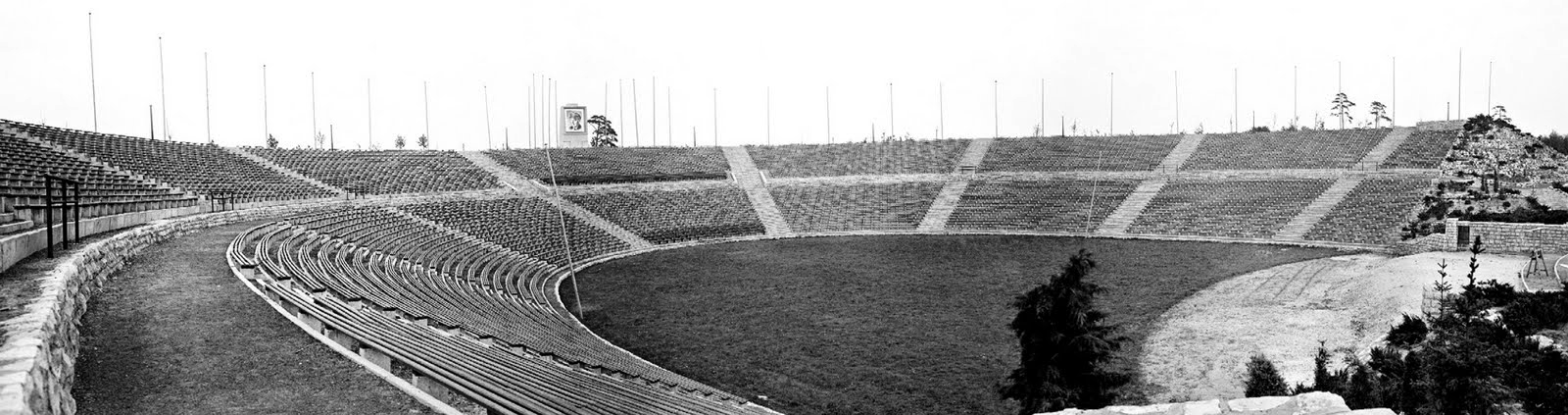
Exhibition: ‘Thomas Demand in Berlin’ at the Neue Nationalgalerie, Berlin

Exhibition dates: 18th September, 2009 – 17th January, 2010


Thomas Demand. 'Diving Board' (Sprungturm)1994 from the exhibition 'Thomas Demand in Berlin' at the Neue Nationalgalerie, Berlin, Sept 2009 - Jan 2010


Thomas Demand (German, b. 1964)
Diving Board (Sprungturm)
1994
C-Print / Diasec
© Thomas Demand, VG Bild-Kunst, Bonn


“It’s not about the real place,” Demand has said. “It’s much more about what we have seen as the real place.”

All photographs in the posting appear in the exhibition.

A review of the catalogue that accompanied the exhibition can be found on the 5B4: Photographs and Books blog.

Dr Marcus Bunyan


Many thankx to the Neue Nationalgalerie for allowing me to publish the photographs in the posting. Please click on the photographs for a larger version of the image.
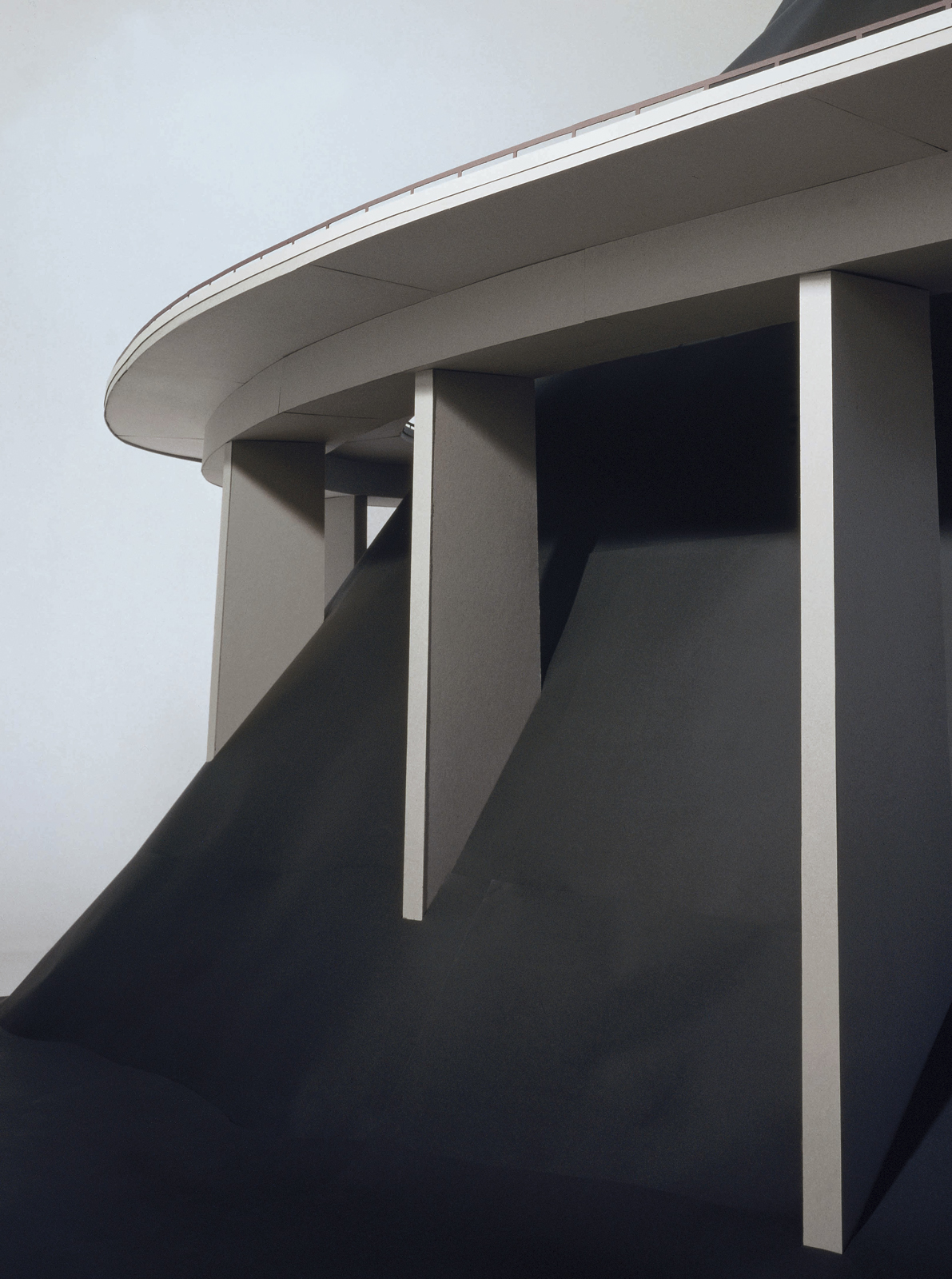


Thomas Demand (German, b. 1964) 'Brennerautobahn' 1994 from the exhibition 'Thomas Demand in Berlin' at the Neue Nationalgalerie, Berlin, Sept 2009 - Jan 2010


Thomas Demand (German, b. 1964)
Brennerautobahn
1994
C-Print/ Diasec
150 x 118 cm
© Thomas Demand, VG Bild-Kunst, Bonn
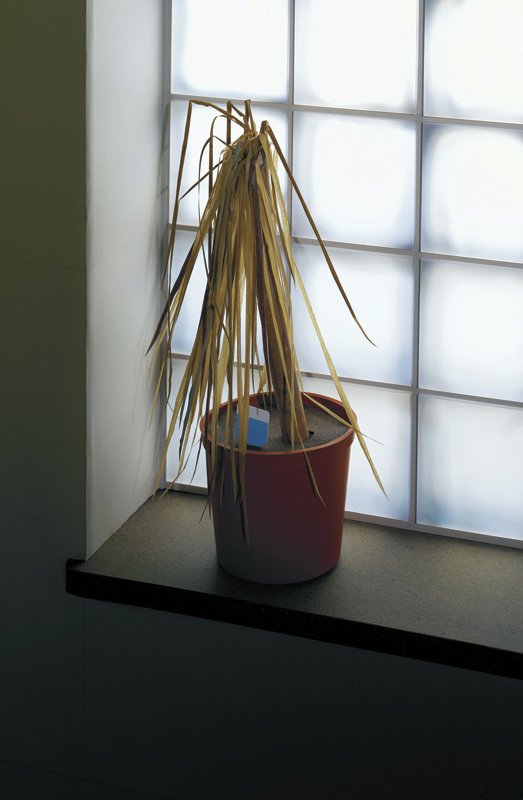
 

Thomas Demand (German, b. 1964) 'Tavern IV' 2006 Thomas Demand (German, b. 1964) 'Brennerautobahn' 1994 from the exhibition 'Thomas Demand in Berlin' at the Neue Nationalgalerie, Berlin, Sept 2009 - Jan 2010


Thomas Demand (German, b. 1964)
Klause IV / Tavern IV
2006
C-Print / Diasec
103 x 68 cm
© Thomas Demand, VG Bild-Kunst, Bonn
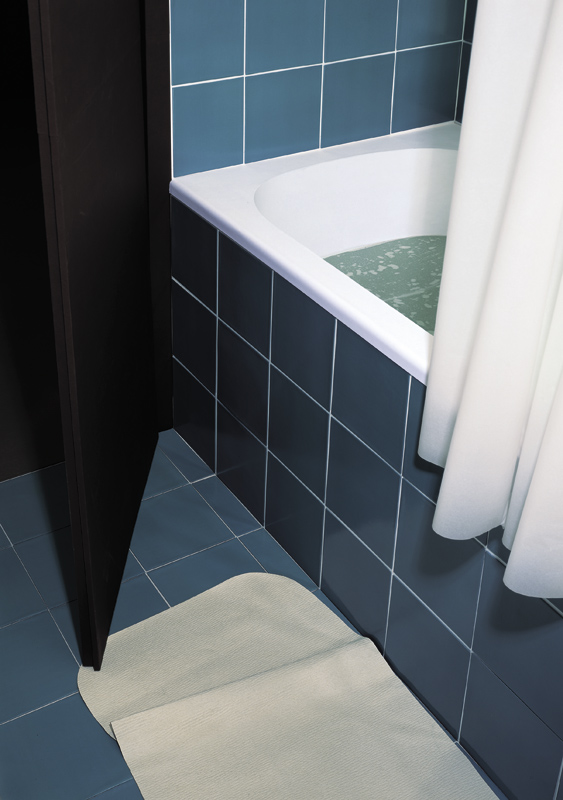
 

Thomas Demand (German, b. 1964) 'Bathroom' 1997


Thomas Demand (German, b. 1964)
Badezimmer / Bathroom
1997
C-Print / Diasec
160 x 122 cm
© Thomas Demand, VG Bild-Kunst, Bonn


Thomas Demand (German, b. 1964) 'Treppenhaus / Staircase' 1995


Thomas Demand (German, b. 1964)
Treppenhaus / Staircase
1995
C-Print/ Diasec
150 x 118 cm
© Thomas Demand, VG Bild-Kunst, Bonn


The Nationalgalerie presents Thomas Demand’s show National Gallery Berlin. From September 18, 2009, the Nationalgalerie – Staatliche Museen zu Berlin devotes a comprehensive solo show to one of the internationally most influential artists of our time: Thomas Demand. It is so far the largest presentation of his work in this country. However, the exhibition National Gallery is not designed as an overall retrospective but it is firmly dedicated to only one subject, which is perhaps the most important in Demand’s multi-facetted oeuvre: Germany.

Living in Berlin since 1996 Thomas Demand is an artist known for his large-format photographs, which explore the blank domain between reality and the ways it is being represented. He is undoubtedly regarded as one of the most renowned artists of his generation. Using paper and cardboard he builds three-dimensional, usually life-size models of places which often make references to pictures found in the mass media. By taking photographs of the scenery created in this way, he produces artefacts of a kind of their own which play with the beholder’s ideas of fiction and reality.

Until January, 17, 2010, about 40 works by the artist will be on display in the glass hall of the Neue Nationalgalerie built by Mies van der Rohe. There is hardly a location which is more suitable to convey to the beholder the panorama of a nation’s history than the large glass hall of the Neue Nationalgalerie, which is not only regarded as an incunabulum of post-war architecture but also as a symbol for the self-image of the Federal Republic of Germany at the former border between East and West. The exceptional exhibition architecture of the firm, Caruso St. John, London, forms an ideal link between Demand’s works and Mies van der Rohe’s bright hall.

Each picture shown in the exhibition is accompanied by a specific caption written by Botho Strauß which does not so much explain or define Demand’s work but rather creates a space between the pictures and the texts to allow new versions of interpretation.

Text from the New National Gallery website [Online] Cited 01/11/2009 no longer available online


Thomas Demand (German, b. 1964) 'Copyshop' 1999


Thomas Demand (German, b. 1964)
Copyshop
1999
C-Print / Diasec
© Thomas Demand, VG Bild-Kunst, Bonn


Thomas Demand (German, b. 1964) 'Drafting Room' 1996


Thomas Demand (German, b. 1964)
Drafting Room
1996
C-Print / Diasec
© Thomas Demand, VG Bild-Kunst, Bonn


Thomas Demand (German, b. 1964) 'Laboratory (77-E-217)' 2000


Thomas Demand (German, b. 1964)
Laboratory (77-E-217)
2000
C-Print / Diasec
© Thomas Demand, VG Bild-Kunst, Bonn


Thomas Demand (German, b. 1964) 'Haltestelle' 2009


Thomas Demand (German, b. 1964)
Haltestelle
2009
C-Print / Diasec, 240 x 330 cm
© Thomas Demand, VG Bild-Kunst, Bonn 2009


List of works that appear in the exhibition:

Archiv / Archive, 1995, C-Print/ Diasec, 183,5 x 233 cm
Attempt, 2005, C-Print/ Diasec, 166 x 190 cm
Badezimmer / Bathroom, 1997, C-Print/ Diasec, 160 x 122 cm
Balkone / Balconies, 1997, C-Print/ Diasec, 150 x 128 cm
Brennerautobahn, 1994, C-Print/ Diasec, 150 x 118 cm
Büro / Office, 1995, C-Print/ Diasec, 183.5 x 240 cm
Campingtisch / Camping Table, 1999, C-Print/ Diasec, 85 x 58 cm
Copyshop, 1999, C-Print/ Diasec, 183.5 x 300 cm
Drei Garagen / Three Garages, 1995, C-Print/ Diasec, 108 x 223 cm
Fabrik (ohne Namen), 1994, C-Print/ Diasec, 120 x 185 cm
Fassade / Facade, 2004, C-Print/ Diasec, 178 x 250 cm
Fenster / Window, 1998, C-Print/ Diasec, 183.5 x 286 cm
Fotoecke, 2009, C-Print/ Diasec, 180 x 198 cm
Gangway, 2001, C-Print/ Diasec, 225 x 180 cm
Grube / Pit, 1999, C-Print/ Diasec, 229 x 167 cm
Haltestelle, 2009, C-Print/Diasec, 240 x 330 cm
Heldenorgel, 2009, C-Print/Diasec, 240 x 380 cm
Hinterhaus, 2005, C-Print/ framed, 26.9 x 21.5 cm
Kabine, 2002, C-Print/ Diasec, 180 x 254 cm
Kinderzimmer /Nursery, 2009, C-Print/Diasec, 140 x 230 cm
Klause 1 / Tavern, 2006, C-Print/ Diasec, 275 x 170 cm
Klause 2 / Tavern, 2006, C-Print/ Diasec, 178 x 244 cm
Klause 3 / Tavern, 2006, C-Print/ Diasec, 199 x 258 cm
Klause 4 / Tavern, 2006, C-Print/ Diasec, 103 x 68 cm
Klause 5 / Tavern, 2006, C-Print/ Diasec, 197 x 137 cm
Labor (77-E-217), 2000, C-Print/ Diasec, 180 x 268 cm
Lichtung / Clearing, 2003, C-Print/ Diasec, 192 x 495 cm
Modell / Model, 2000, C-Print/ Diasec, 164,5 x 210 cm
Paneel / Peg Board, 1996, C-Print/ Diasec, 160 x 121 cm
Parlament / Parliament, 2009, C-Print/ Diasec, 180 x 223 cm
Raum / Room, 1994, C-Print/ Diasec, 183.5 x 270 cm
Sprungturm / Diving Board, 1994, C-Print/ Diasec, 150 x 118 cm
Spüle / Sink, 1997, C-Print/ Diasec, 52 x 56.5 cm
Studio, 1997, C-Print/ Diasec, 183.5 x 349.5 cm
Rasen / Lawn, 1998, C-Print/ Diasec, 122 x 170 cm
Terrasse / Terrace, 1998, C-Print/ Diasec, 183.5 x 268 cm
Treppenhaus / Staircase, 1995, C-Print/ Diasec, 150 x 118 cm
Wand /Mural, 1999, C-Print/ Diasec, 183.5 x 270 cm
Zeichensaal / Drafting Room, 1996, C-Print/ Diasec, 183.5 x 285 cm
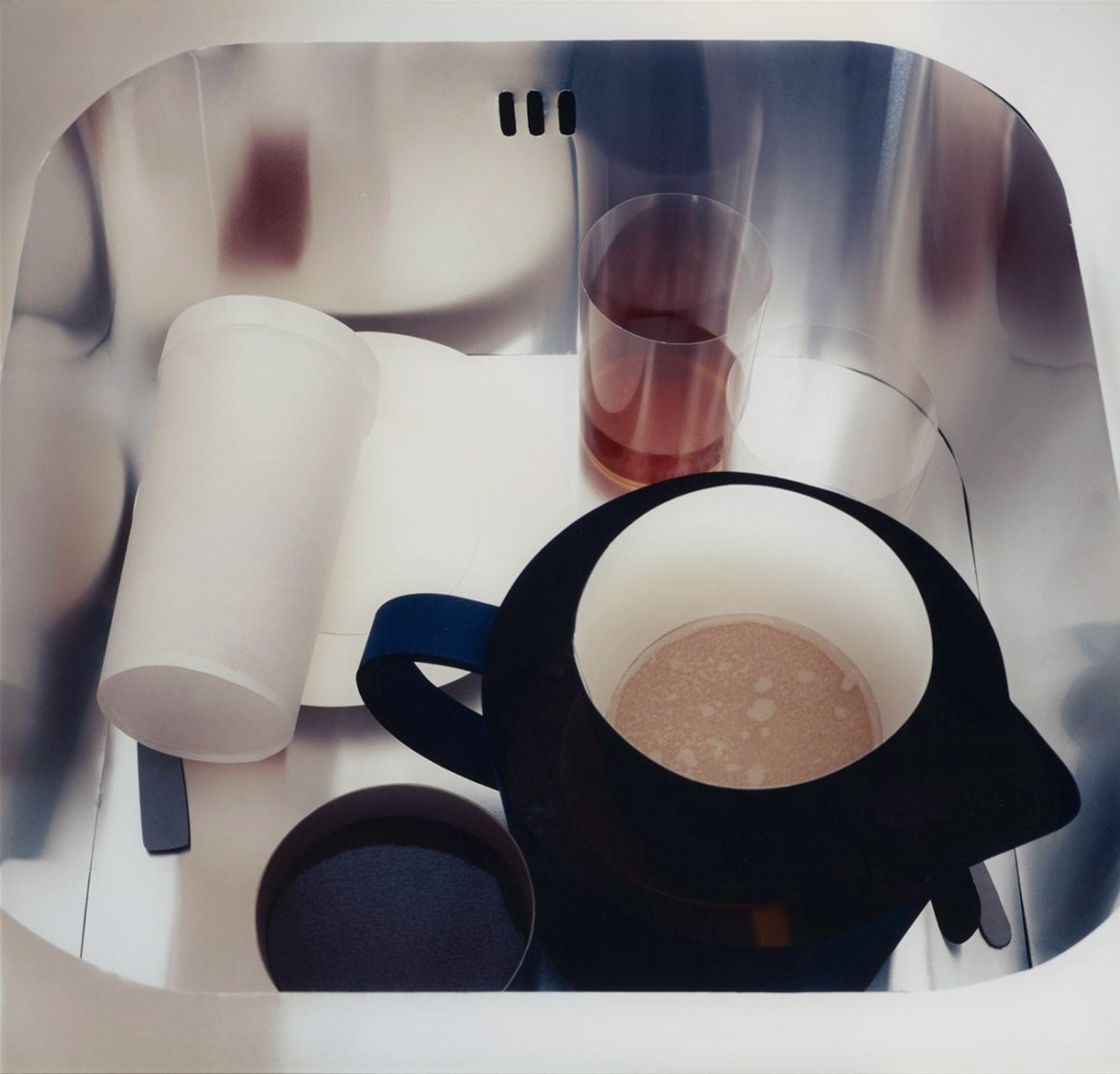
 

Thomas Demand (German, b. 1964) 'Sink' 1997


Thomas Demand (German, b. 1964)
Sink
1997
C-Print / Diasec
© Thomas Demand, VG Bild-Kunst, Bonn
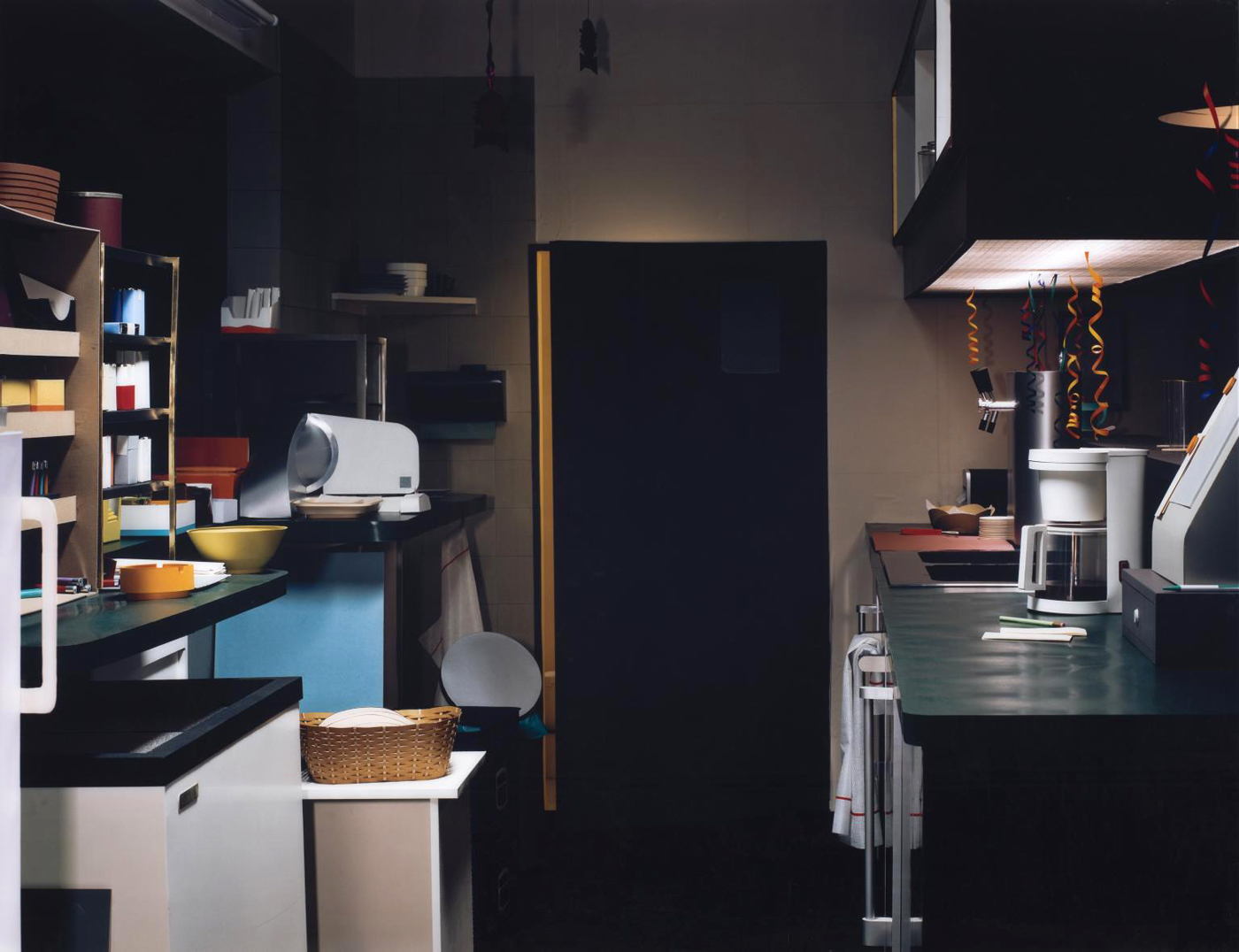
 

Thomas Demand (German, b. 1964) 'Tavern 3' 2006


Thomas Demand (German, b. 1964)
Tavern 3
2006
C-Print / Diasec
© Thomas Demand, VG Bild-Kunst, Bonn


Demand’s work is based on pre-existing images from the media, often of sites of political or cultural interest. He translates these images into life-size models using paper and cardboard, and photographs the resulting tableaux. These five photographs [of which the above is just one] depict a tavern in the German village of Burbach where a young boy was kidnapped, held hostage and ultimately murdered in 2001. His body was never recovered. The case was covered extensively in the German press, and images of the tavern became imbued with the public’s horrified imagination of the crime. Demand’s photographs investigate the traces these mediated images leave in the collective memory.

Tate Gallery label, April 2008
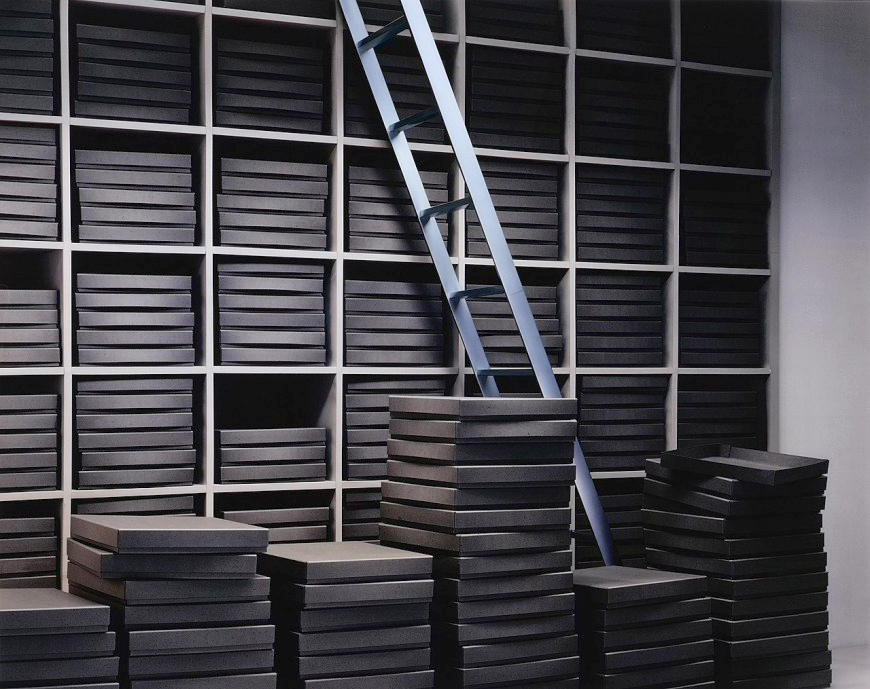
 

Thomas Demand (German, b. 1964) 'Archive' 1995


Thomas Demand (German, b. 1964)
Archive
1995
C-Print / Diasec
© Thomas Demand, VG Bild-Kunst, Bonn
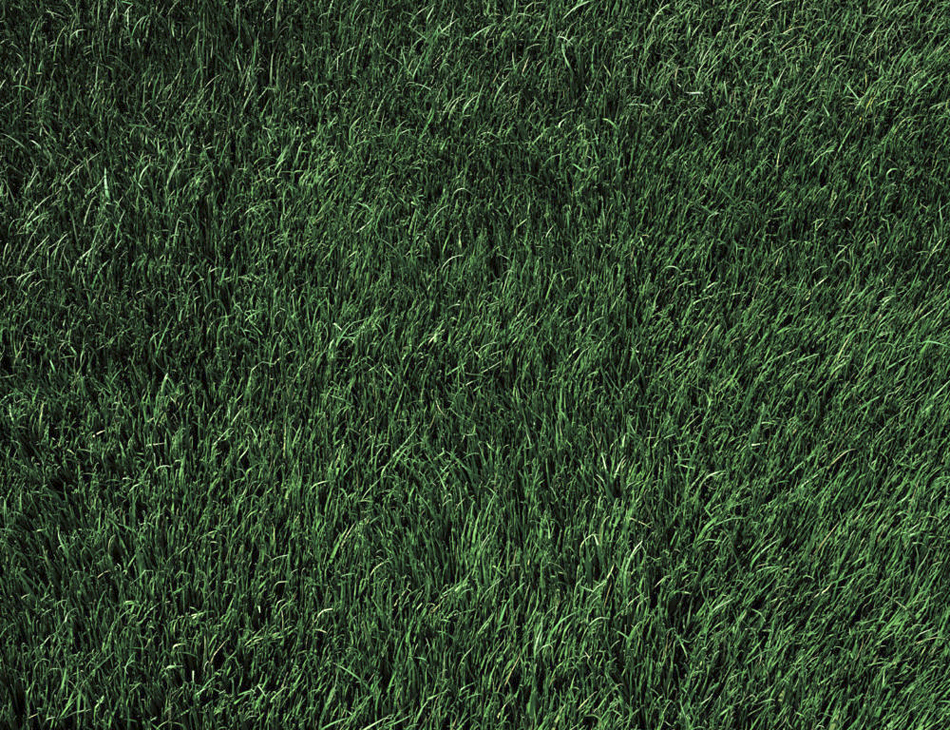
 

Thomas Demand (German, b. 1964) 'Lawn' 1998


Thomas Demand (German, b. 1964)
Lawn
1998
C-Print / Diasec
122 x 170 cm
© Thomas Demand, VG Bild-Kunst, Bonn


Thomas Demand (German, b. 1964) 'Office' 1995


Thomas Demand (German, b. 1964)
Büro / Office
1995
C-Print / Diasec
183.5 x 240 cm
© Thomas Demand, VG Bild-Kunst, Bonn 2009


Thomas Demand (German, b. 1964) 'Gangway' 2001


Thomas Demand (German, b. 1964)
Gangway
2001
C-Print / Diasec
© Thomas Demand, VG Bild-Kunst, Bonn 2009


Thomas Demand (German, b. 1964) 'Attempt' 2005


Thomas Demand (German, b. 1964)
Attempt
2005
C-Print / Diasec
© Thomas Demand, VG Bild-Kunst, Bonn 2009


Thomas Demand (German, b. 1964) 'Balconies' 1997


Thomas Demand (German, b. 1964)
Balconies
1997
C-Print / Diasec
© Thomas Demand, VG Bild-Kunst, Bonn 2009


Neue Nationalgalerie
Potsdamer Straße 50
10785
Berlin
Kulturforum-Potsdamer Platz

Opening hours:
Tuesday – Sunday 10am – 6pm
Closed Mondays

Neue Nationalgalerie website

LIKE ART BLART ON FACEBOOK

Back to top

Exhibition: ‘Pierre et Gilles. Retrospective’ at the C/O Berlin Gallery, Berlin

Exhibition dates: 25th July – 4th October, 2009


Many thankx to the C/O Berlin Gallery for allowing me to publish the photographs in the posting. Please click on the photographs for a larger version of the image.


Pierre et Gilles (French, Pierre Commoy b. 1950 and Gilles Blanchard, b. 1953) 'Mercury' 2001 from the exhibition 'Pierre et Gilles. Retrospective' at the C/O Berlin Gallery, Berlin, July - Oct, 2009


Pierre et Gilles (French, Pierre Commoy b. 1950 and Gilles Blanchard, b. 1953)
Mercury
2001


“It’s hard to think of contemporary culture without the influence of Pierre et Gilles, from advertising to fashion photography, music video, and film. This is truly global art.”


Jeff Koons


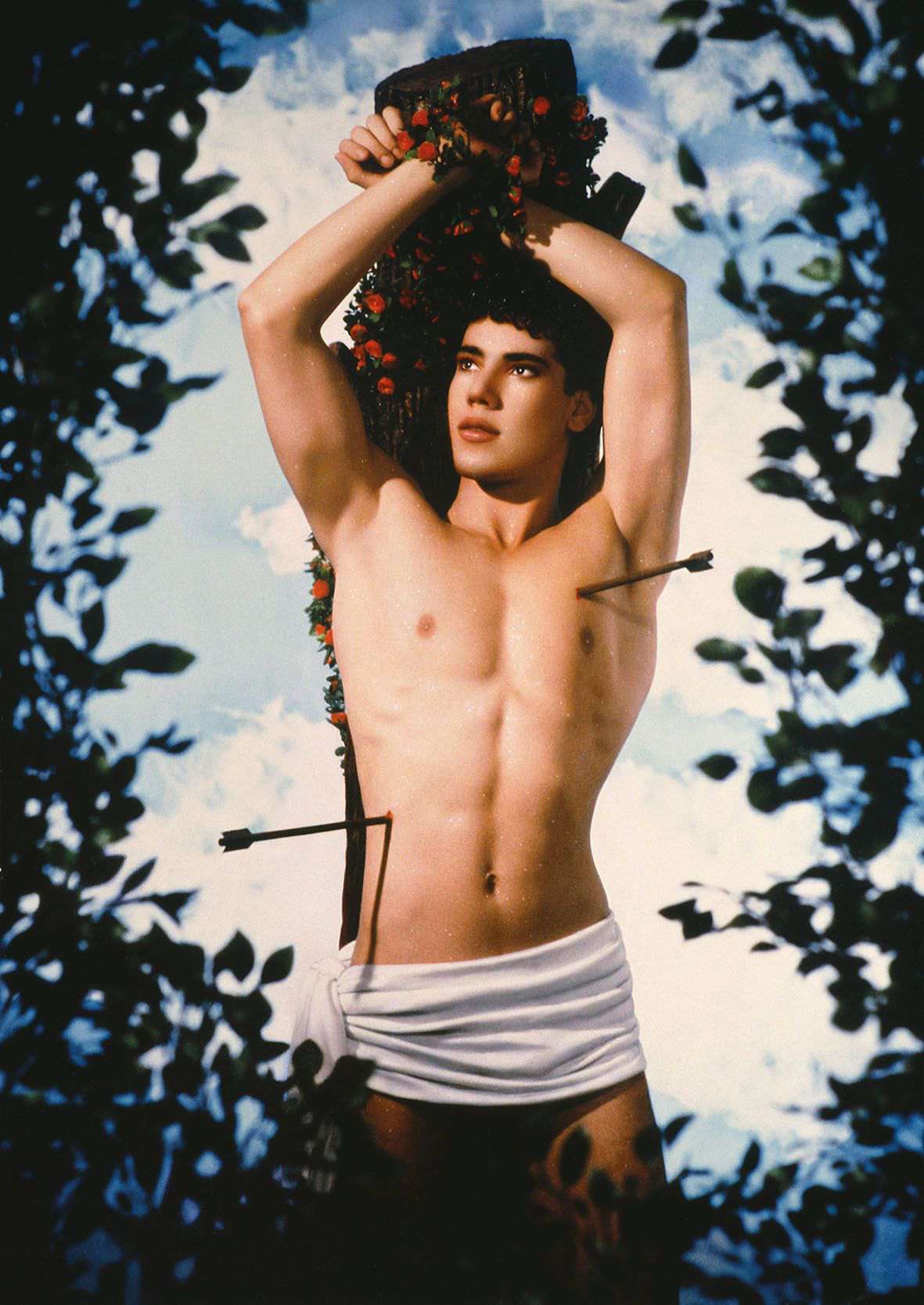
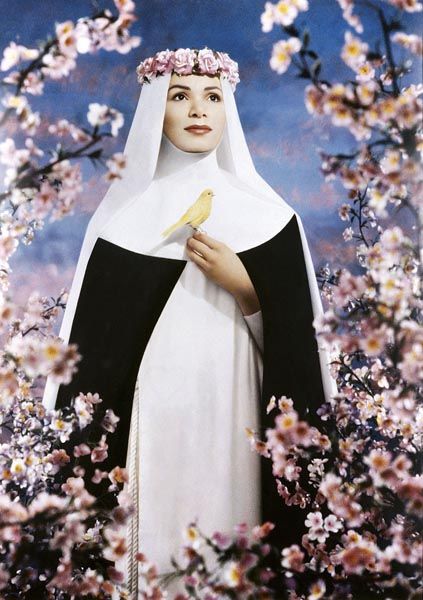
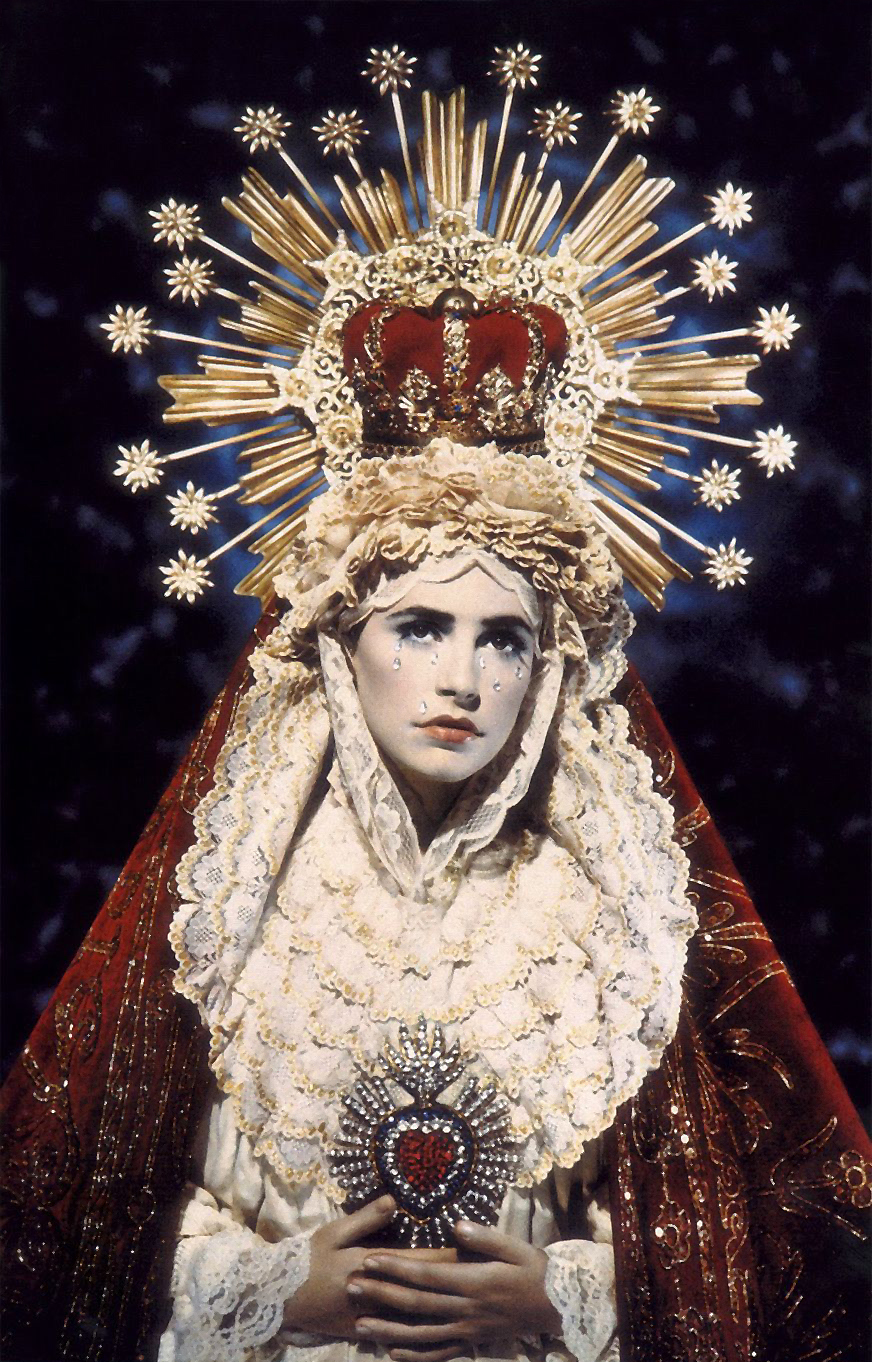
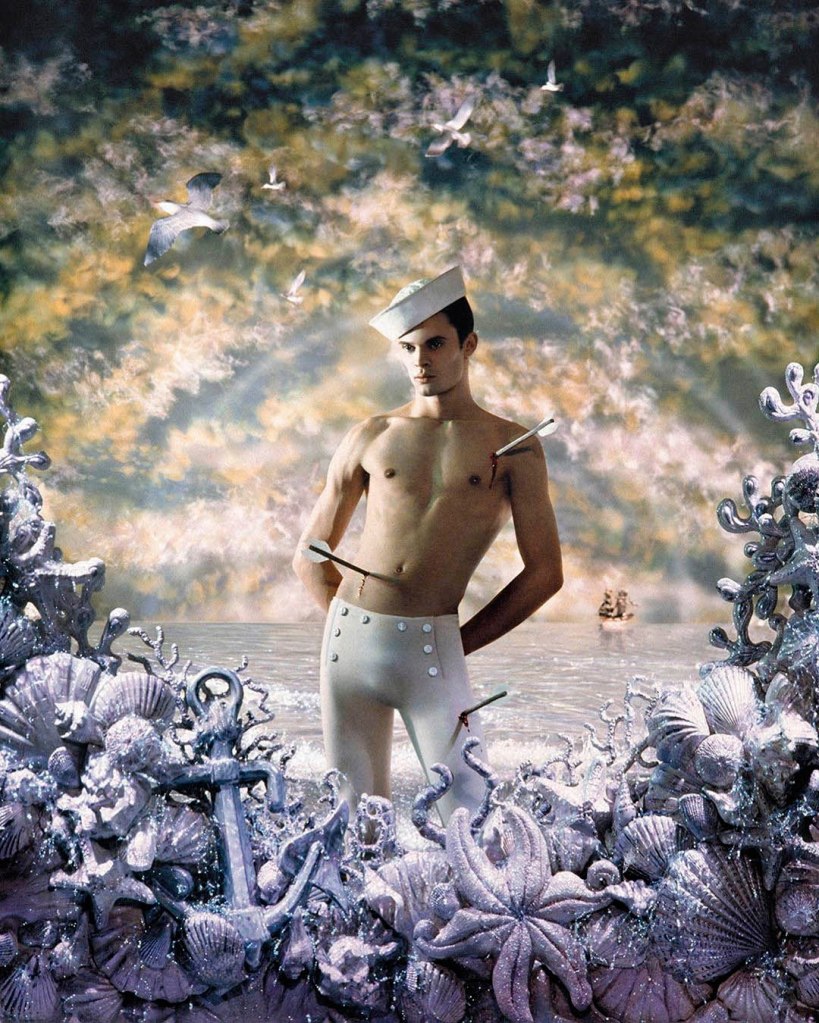
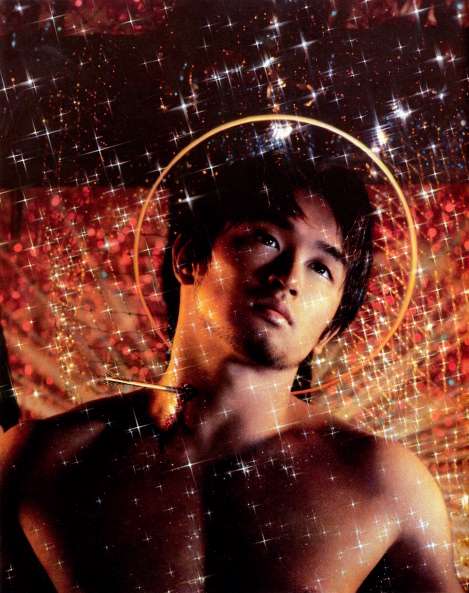
The cosmos of the worldwide renowned French artist duo is a vivid, colourful world poised between baroque sumptuousness and earthly limbo. Pierre et Gilles create unique hand-painted photographic portraits of film icons, sailors and princes, saints and sinners, of mythological figures and unknowns alike. Pierre et Gilles pursue their own, stunningly unique vision of an enchanted world spanning fairytale paradises and abyssal depths, quoting from popular visual languages and history of art. Again and again, they re-envision their personal dream of reality anew in consummate aesthetic perfection.

Pierre et Gilles are among the most influential artists of our time. In their complex, multilayered images, they quote from art history, transgress traditional moral codes, and experiment adeptly with social clichés. Their painterly photographic masterpieces exert an intense visual power that leaves the viewer spellbound.

Over the last thirty years, Pierre et Gilles have created photographic portraits of numerous celebrities including Marc Almond, Mirelle Mathieu, Catherine Deneuve, Serge Gainsbourg, Iggy Pop, Jean-Paul Gaultier, Nina Hagen, Madonna, and Paloma Picasso. They work almost exclusively in an opulently furnished studio, where their subjects are costumed lavishly and placed before three-dimensional backgrounds. Pierre photographs the model, and Gilles retouches and hand-colours the print. The reproducible portrait is rendered unique through painting, which highlights each detail with carefully selected materials and accessories.

As only venue in Germany, C/O Berlin presents the exhibition as the first of Pierre et Gilles in fifteen years. The show comprised a total of 80 unique large-format works – from their early photographies of the 1970s to the brand new pictures that were never shown in public before.”

Text from the C/O Berlin website [Online] Cited 20/08/2009 no longer available online


Pierre et Gilles (French, Pierre Commoy b. 1950 and Gilles Blanchard, b. 1953) 'St. Sebastian' 1987 from the exhibition 'Pierre et Gilles. Retrospective' at the C/O Berlin Gallery, Berlin, July - Oct, 2009


Pierre et Gilles (French, Pierre Commoy b. 1950 and Gilles Blanchard, b. 1953)
St. Sebastian
1987


Pierre et Gilles (French, Pierre Commoy b. 1950 and Gilles Blanchard, b. 1953) 'Neptune' 1988


Pierre et Gilles (French, Pierre Commoy b. 1950 and Gilles Blanchard, b. 1953)
Neptune
1988


Pierre et Gilles (French, Pierre Commoy b. 1950 and Gilles Blanchard, b. 1953) 'Saint Rose De Lima' 1989


Pierre et Gilles (French, Pierre Commoy b. 1950 and Gilles Blanchard, b. 1953)
Saint Rose De Lima
1989


Pierre et Gilles (French, Pierre Commoy b. 1950 and Gilles Blanchard, b. 1953) 'Le Petit Communiste Christophe' 1990


Pierre et Gilles (French, Pierre Commoy b. 1950 and Gilles Blanchard, b. 1953)
Le Petit Communiste Christophe (The Little Communist Christophe)
1990


Pierre et Gilles (French, Pierre Commoy b. 1950 and Gilles Blanchard, b. 1953) 'Legend' (Madonna) 1990


Pierre et Gilles (French, Pierre Commoy b. 1950 and Gilles Blanchard, b. 1953)
Legend (Madonna)
1990


Pierre et Gilles (French, Pierre Commoy b. 1950 and Gilles Blanchard, b. 1953) 'La Madone au coeur blessé' 1991


Pierre et Gilles (French, Pierre Commoy b. 1950 and Gilles Blanchard, b. 1953)
La Madone au coeur blessé (Madonna with a wounded heart)
1991


Pierre et Gilles (French, Pierre Commoy b. 1950 and Gilles Blanchard, b. 1953) 'St. Sebastian of the Sea' 1994


Pierre et Gilles (French, Pierre Commoy b. 1950 and Gilles Blanchard, b. 1953)
St. Sebastian of the Sea
1994


Pierre et Gilles (French, Pierre Commoy b. 1950 and Gilles Blanchard, b. 1953) 'The Martyrdom of St Sebastian' 1996


Pierre et Gilles (French, Pierre Commoy b. 1950 and Gilles Blanchard, b. 1953)
The Martyrdom of St Sebastian
1996


Pierre et Gilles (French, Pierre Commoy b. 1950 and Gilles Blanchard, b. 1953) 'Extase' (Arielle Dombasle) 2002


Pierre et Gilles (French, Pierre Commoy b. 1950 and Gilles Blanchard, b. 1953)
Extase (Arielle Dombasle)
2002


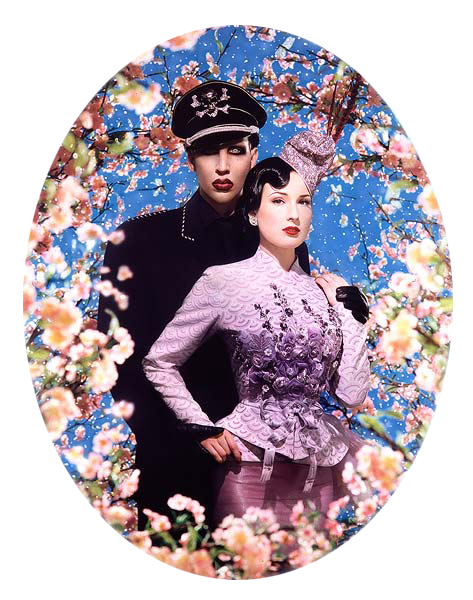
Pierre et Gilles (French, Pierre Commoy b. 1950 and Gilles Blanchard, b. 1953) 'Le Grand Amour' (Marilyn Manson and Dita von Teese) 2004


Pierre et Gilles (French, Pierre Commoy b. 1950 and Gilles Blanchard, b. 1953)
Le Grand Amour (Marilyn Manson and Dita von Teese)
2004


C/O Berlin
Postfuhramt
Oranienburger Straße 35/36
10117 Berlin

Opening hours:
Daily 11am – 8pm

C/O Berlin website

LIKE ART BLART ON FACEBOOK

Back to top

Exhibition: ‘Gilbert & George: Jack Freak Pictures’ at Arndt & Partner, Berlin

Exhibition dates: 16th June – 18th September, 2009


Artist duo George (left) and Gilbert (right) pose in front of their work "The Church of England" in Berlin, Germany


Artist duo George (left) and Gilbert (right) pose in front of their work “The Church of England” in Berlin, Germany


That pair of agent provocateurs are at it again!

Marcus


Many thankx to Arndt & Partner for allowing me to publish the photographs in the posting. Please click on the photographs for a larger version of the image.


Gilbert & George (Gilbert Prousch, English born Italy, b. 1943) (George Passmore, English, b. 1942) 'Dating' 2008


Gilbert & George (Gilbert Prousch, English born Italy, b. 1943) (George Passmore, English, b. 1942)
DATING
2008
Mixed media


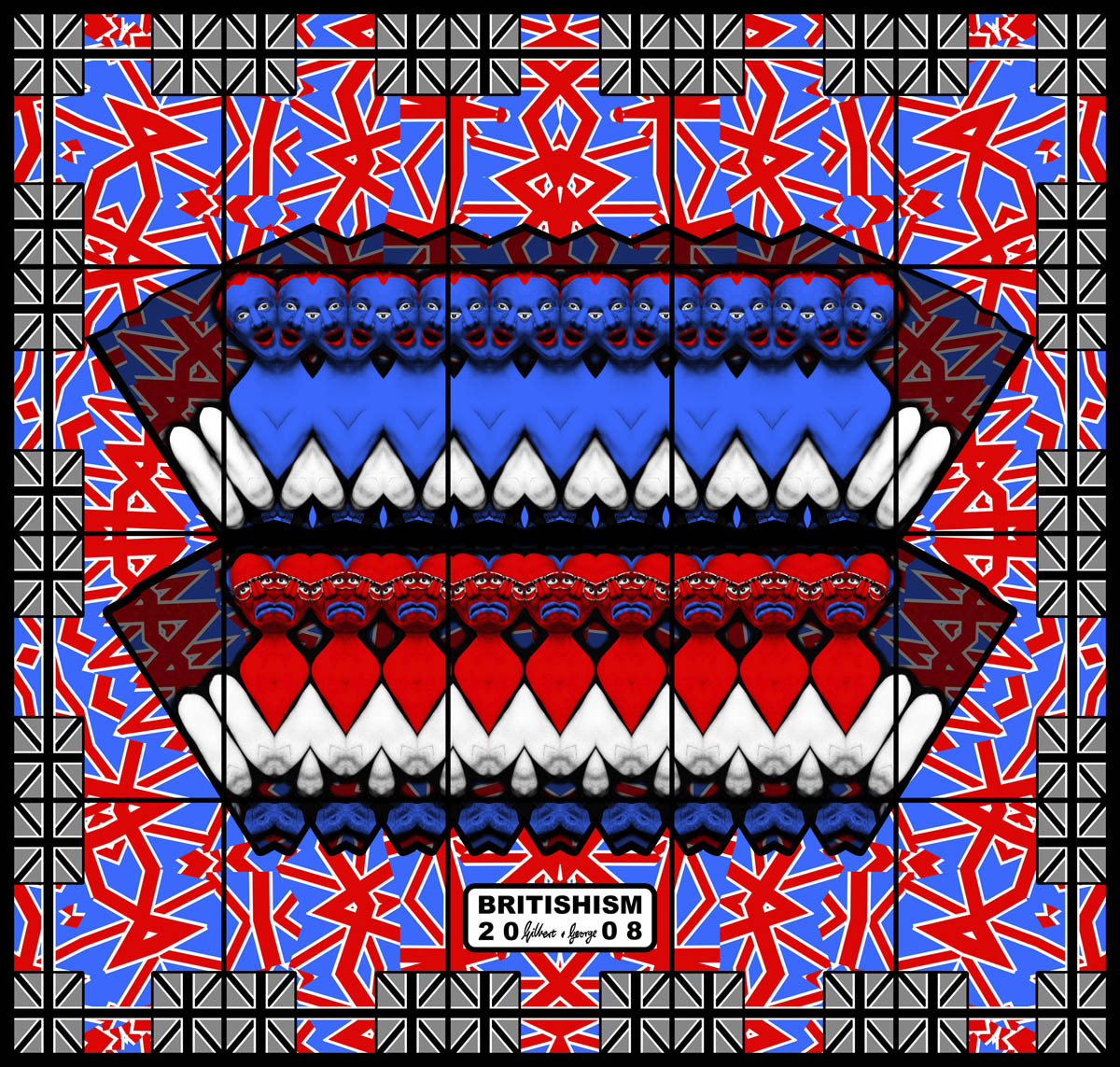
Gilbert & George (Gilbert Prousch, English born Italy, b. 1943) (George Passmore, English, b. 1942) 'BRITISHISM' 2008


Gilbert & George (Gilbert Prousch, English born Italy, b. 1943) (George Passmore, English, b. 1942)
BRITISHISM
2008
Mixed media


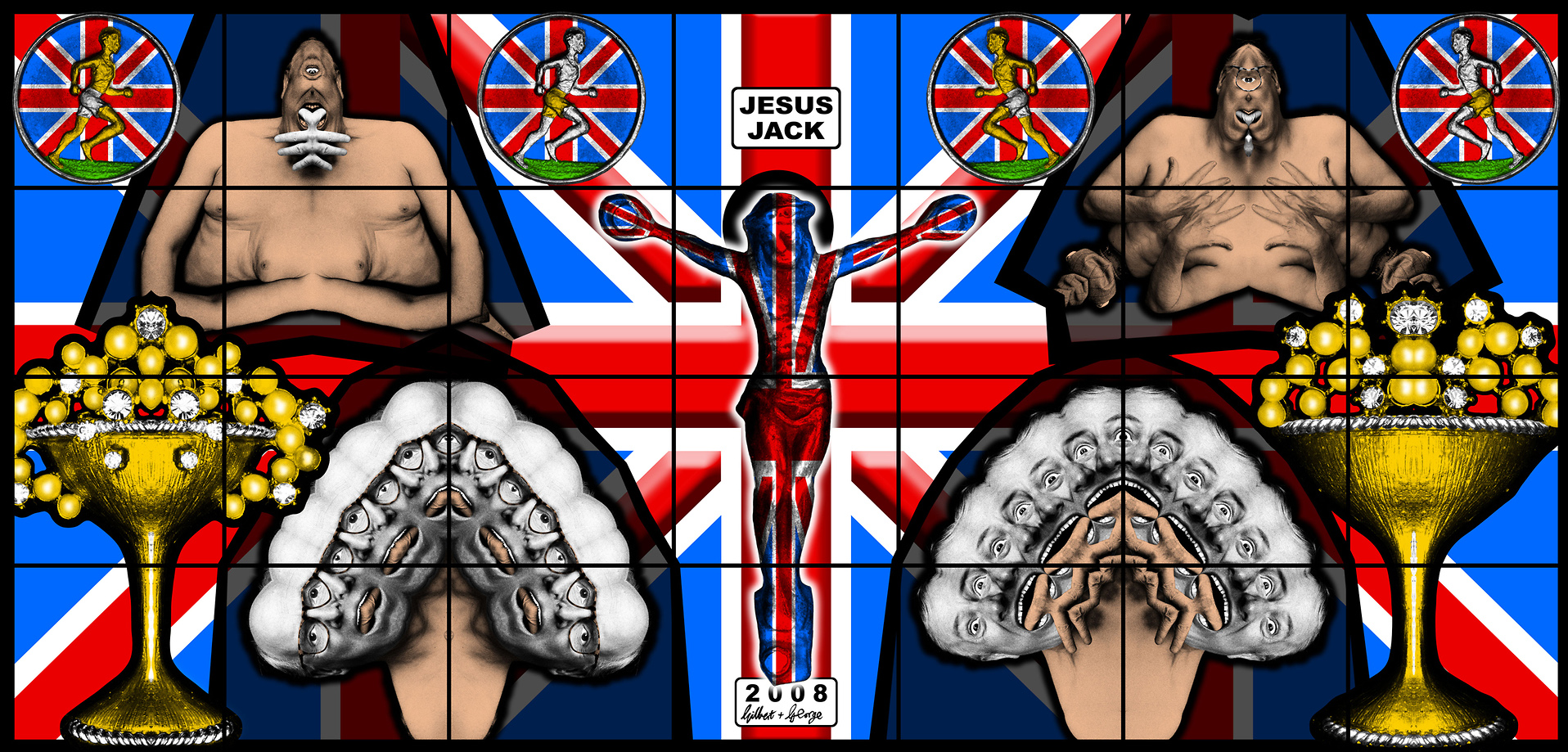
Gilbert & George (Gilbert Prousch, English born Italy, b. 1943) (George Passmore, English, b. 1942) 'JESUS JACK' 2008


Gilbert & George (Gilbert Prousch, English born Italy, b. 1943) (George Passmore, English, b. 1942)
JESUS JACK
2008
Mixed media


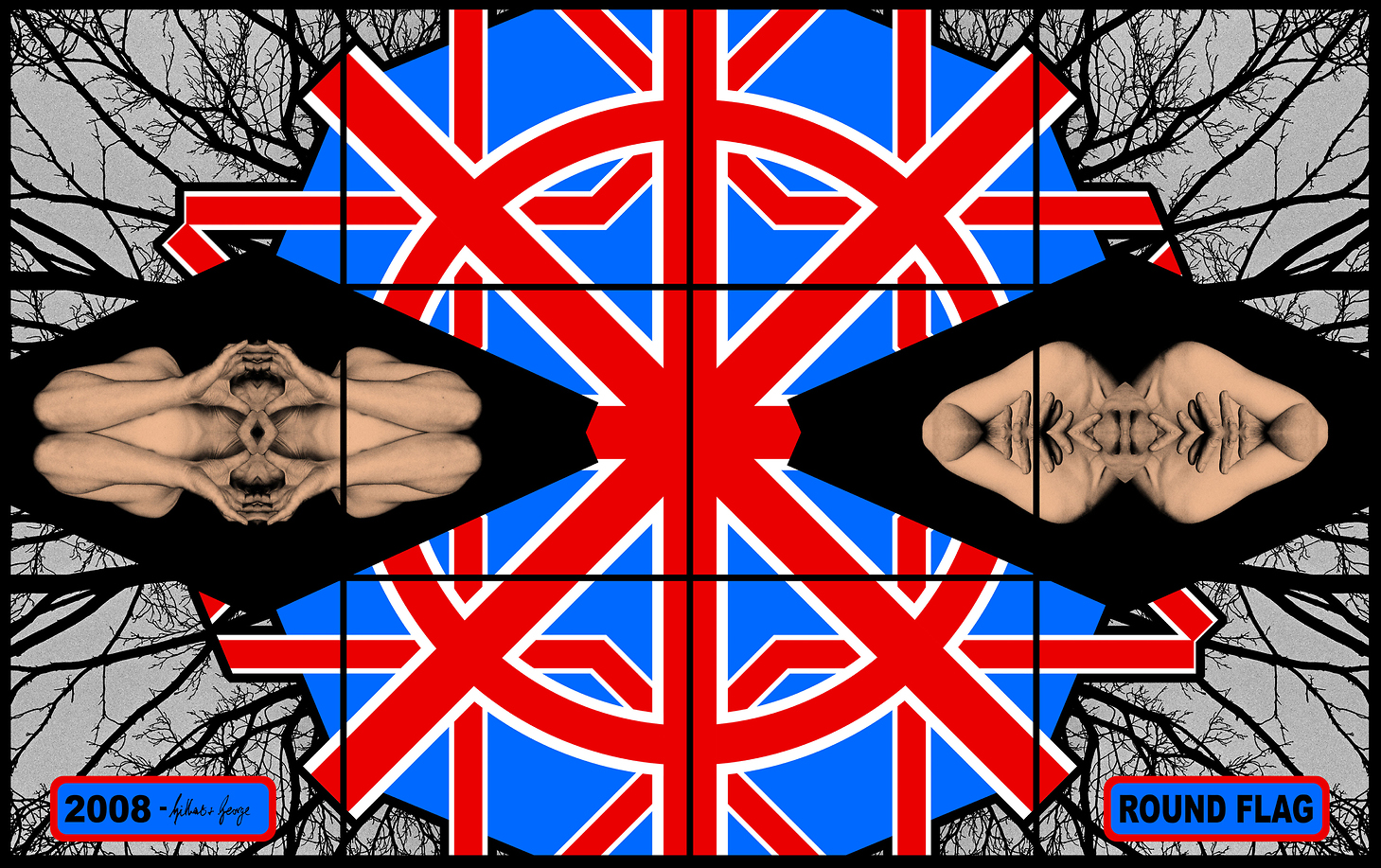
Gilbert & George. 'ROUND FLAG' 2008


Gilbert & George (Gilbert Prousch, English born Italy, b. 1943) (George Passmore, English, b. 1942)
ROUND FLAG
2008
Mixed media


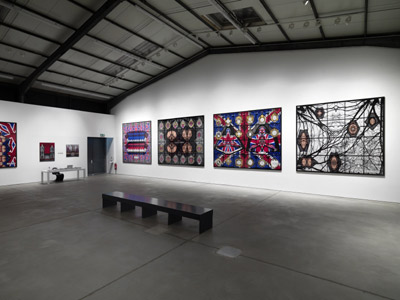
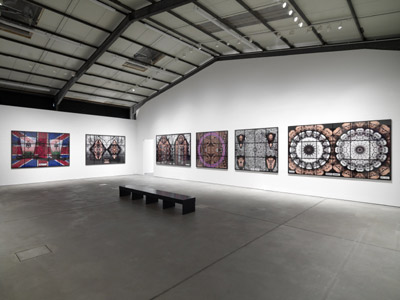
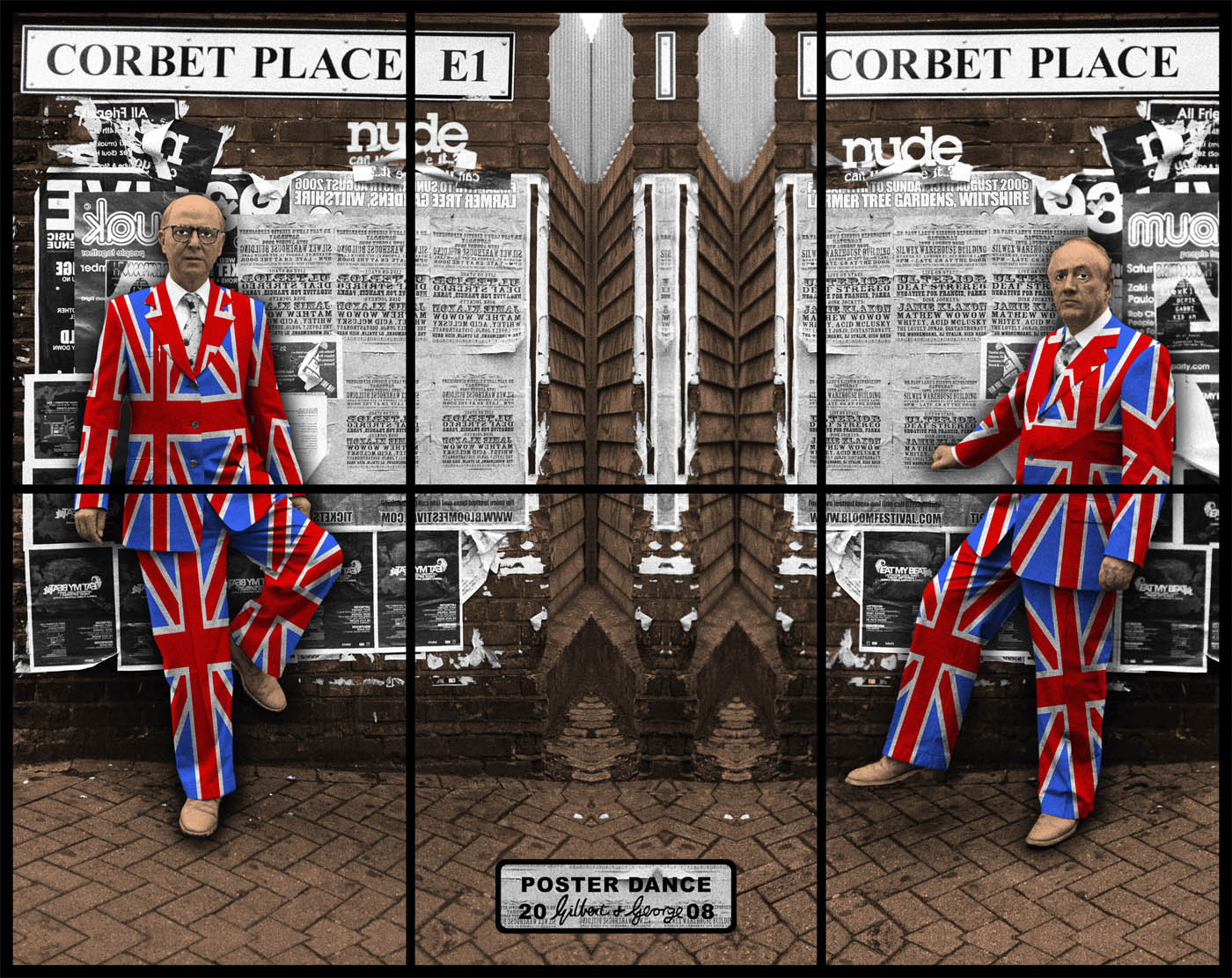
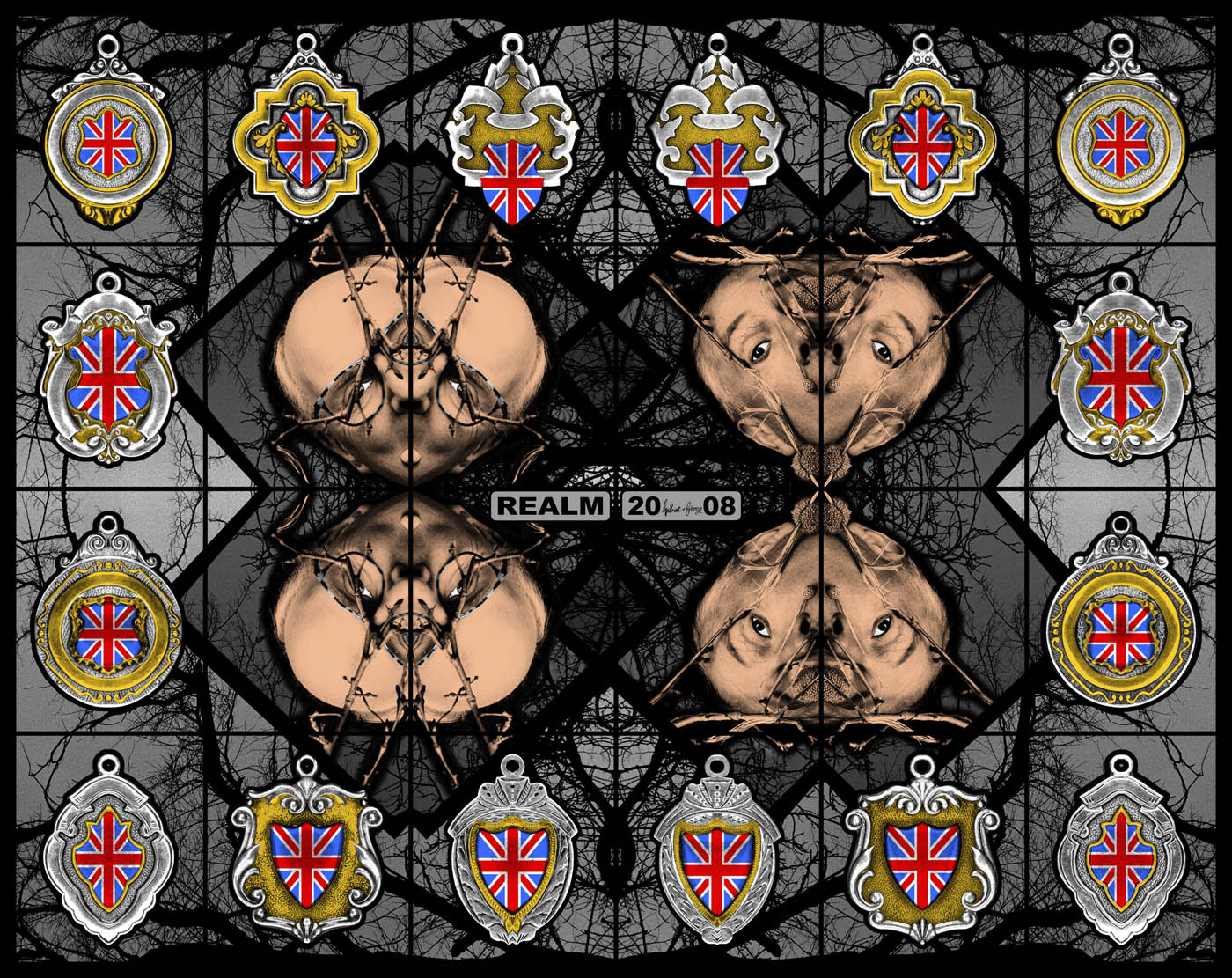
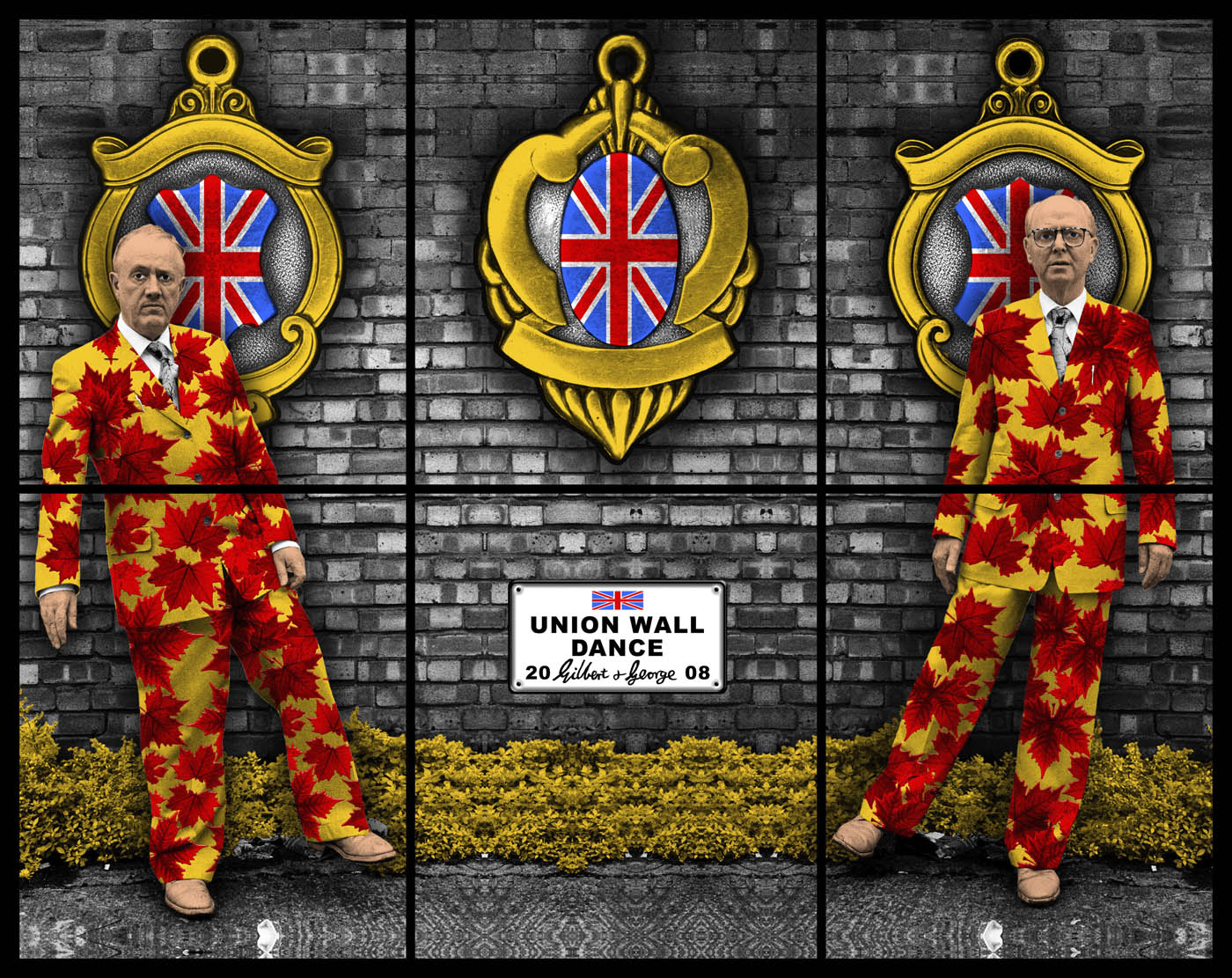
As the international tour of the last Gilbert & George retrospective (2007-2009) did not include Berlin, Arndt & Partner are now presenting a solo exhibition of the celebrity artist duo in its gallery rooms behind the Hamburger Bahnhof. It is the first Gilbert & George solo show in Berlin for 14 years. The exhibition features a selection of 20 large-scale pieces from the Jack Freak Pictures, the largest Gilbert & George group of pictures to date. The thrust of the content is given by the colours and shapes of the Union Jack flag that dominate the bulk of the pictures as well as the recurring motive of medals, emblems and trees. In the Jack Freak Pictures the artist duo explores aspects of nationhood and of the sentient individual in the nets of society. In his essay published in the catalogue accompanying the exhibition the British writer Michael Bracewell describes these pictures as “the most iconic, philosophically astute and visually violent works that Gilbert & George have ever created …”

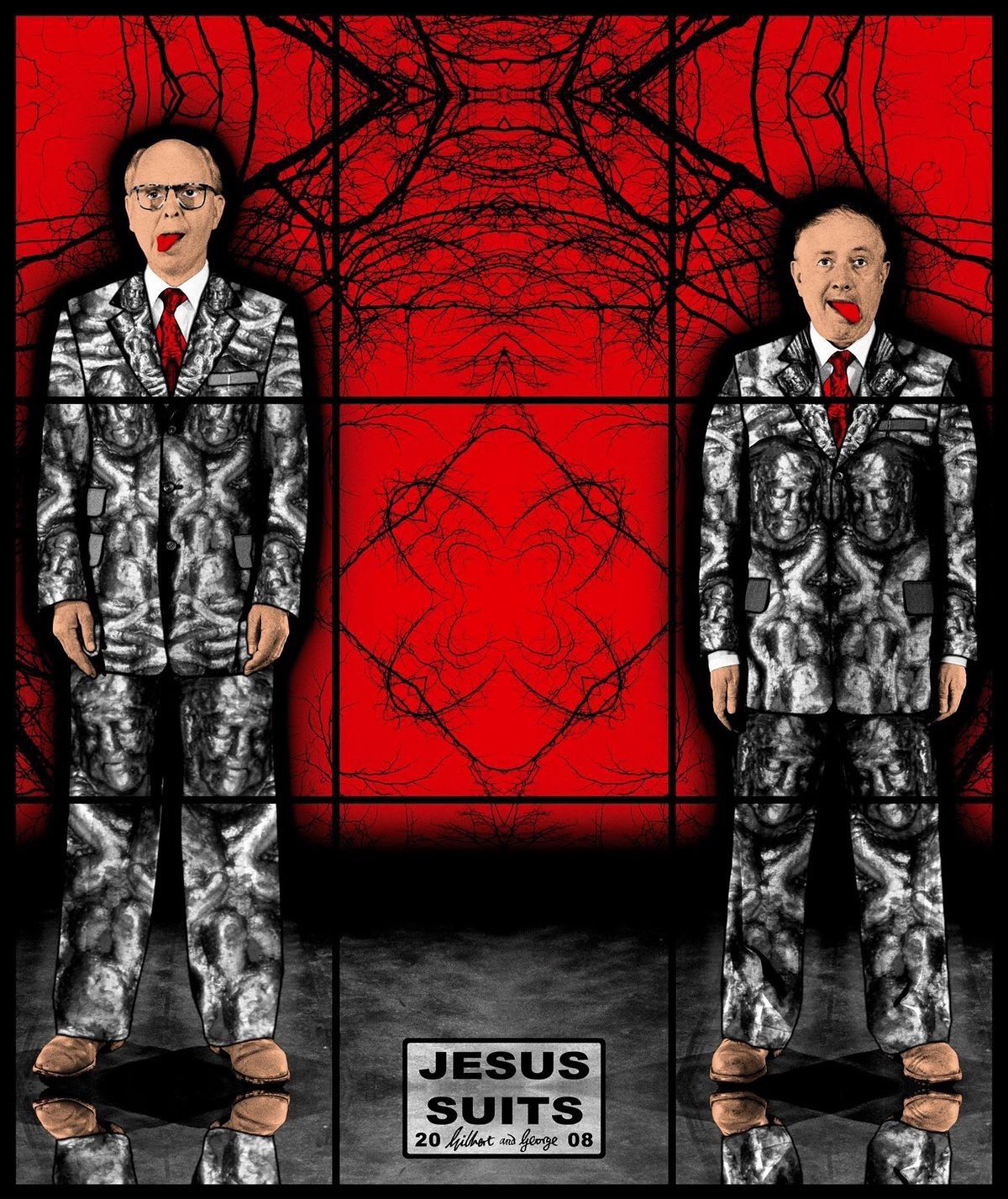
Gilbert & George, who met as students of sculpture at St. Martin’s School of Art in London 42 years ago, embarked on a joint artistic career that was to encompass a wide range of media from drawing to video and their trademark pictures. Further, the pair revolutionised the concept of sculpture by presenting themselves as “living sculptures” dressed in the quintessentially British tailored suit, shirt and tie. But it was their monumental trademark pictures composed of a grid like array of smaller images which they began to create in the early 70s that first brought them international fame. Figures, cityscapes, symbols, plants, bodily fluids, excrements and text interlock in pictorial messages as visually powerful as their content is provocative. The pictures, which started out in black and white and later assumed increasingly luminous, bold colours, generally also depict portraits of the artists themselves and seize on taboo subjects like sexuality, race, religion and national identity with a brash and fearless candour.

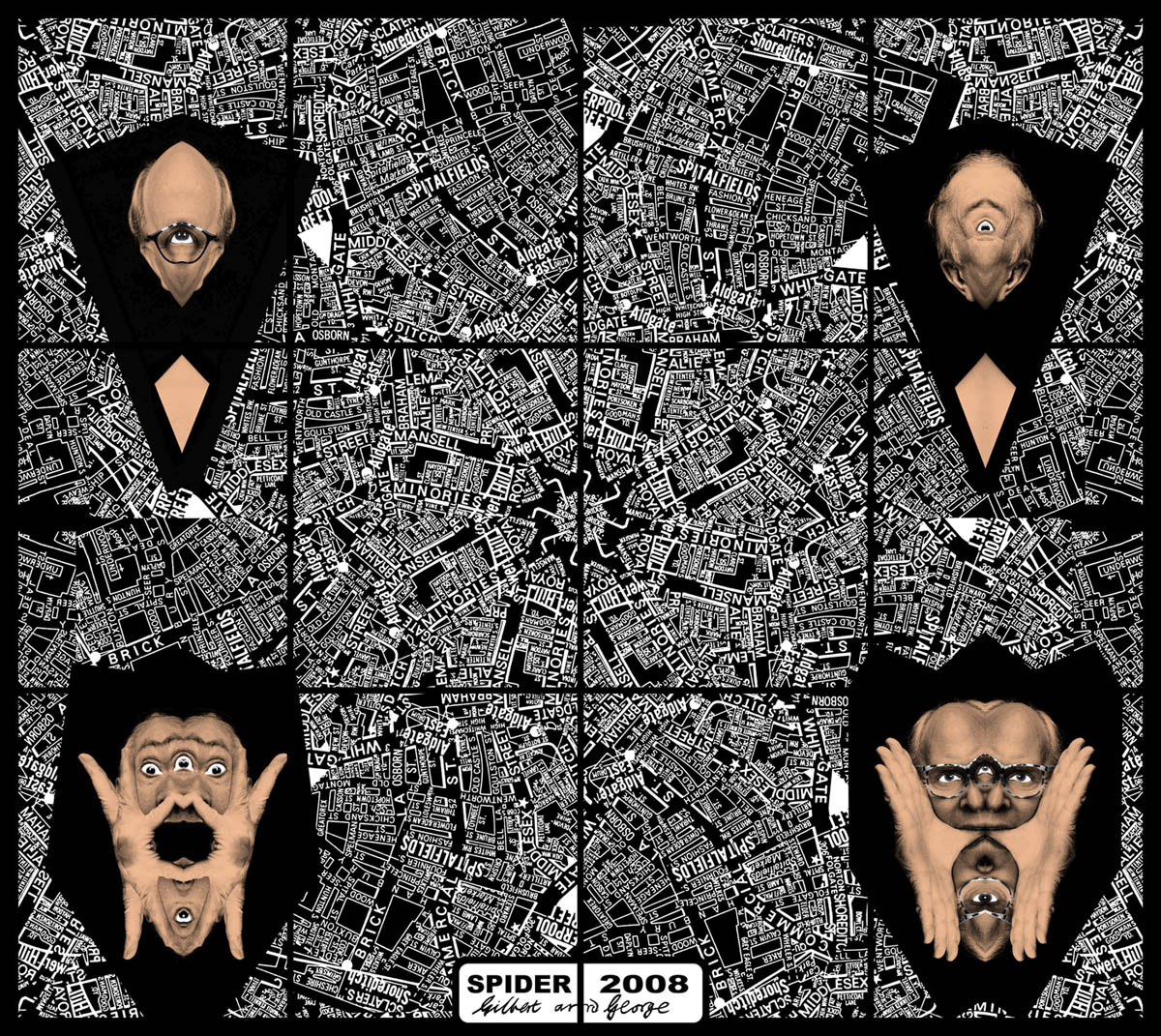
The Jack Freak Pictures again feature the bodies and/or faces of the artists. In these compositions, their bodies function as stylised representatives of the individual in society, whose relationship to social norms and categories, to national, religious and sexual identification processes is relentlessly explored and commented upon. Departing from their earlier oeuvre, some of their new pictures split the raw images into much smaller fragments before merging them into new forms. The result is a fascinating kaleidoscopic mix of the monstrously grotesque with an intricate ornamental structure reminiscent of sacred art. In ever new variations, Gilbert & George order the signs and fragments of social life they find in their neighbourhood – the multicultural East End of London – where solidarity and friendship are as visible as intolerance and marginalisation.

Press release from the Arndt & Partner website [Online] Cited 04/07/2009. No longer available online


Gilbert & George installation photograph of their exhibition 'Jack Freak Pictures' at Arndt & Partner, Berlin

Gilbert & George installation photograph of their exhibition 'Jack Freak Pictures' at Arndt & Partner, Berlin

Gilbert & George installation photograph of their exhibition 'Jack Freak Pictures' at Arndt & Partner, Berlin

Gilbert & George installation photograph of their exhibition 'Jack Freak Pictures' at Arndt & Partner, Berlin


Gilbert & George installation photographs of their exhibition Jack Freak Pictures at Arndt & Partner, Berlin


Gilbert & George (Gilbert Prousch, English born Italy, b. 1943) (George Passmore, English, b. 1942) 'JESUS SUITS' 2008


Gilbert & George (Gilbert Prousch, English born Italy, b. 1943) (George Passmore, English, b. 1942)
JESUS SUITS
2008
Mixed media


Gilbert & George (Gilbert Prousch, English born Italy, b. 1943) (George Passmore, English, b. 1942) 'CHURCH OF ENGLAND' 2008


Gilbert & George (Gilbert Prousch, English born Italy, b. 1943) (George Passmore, English, b. 1942)
CHURCH OF ENGLAND
2008
Mixed media


Gilbert & George (Gilbert Prousch, English born Italy, b. 1943) (George Passmore, English, b. 1942) 'POSTER DANCE' 2008


Gilbert & George (Gilbert Prousch, English born Italy, b. 1943) (George Passmore, English, b. 1942)
POSTER DANCE
2008
Mixed media


Gilbert & George (Gilbert Prousch, English born Italy, b. 1943) (George Passmore, English, b. 1942) 'REALM' 2008


Gilbert & George (Gilbert Prousch, English born Italy, b. 1943) (George Passmore, English, b. 1942)
REALM
2008
Mixed media


Gilbert & George (Gilbert Prousch, English born Italy, b. 1943) (George Passmore, English, b. 1942) 'SPIDER' 2008


Gilbert & George (Gilbert Prousch, English born Italy, b. 1943) (George Passmore, English, b. 1942)
SPIDER
2008
Mixed media


Gilbert & George (Gilbert Prousch, English born Italy, b. 1943) (George Passmore, English, b. 1942) 'UNION WALL DANCE' 2008


Gilbert & George (Gilbert Prousch, English born Italy, b. 1943) (George Passmore, English, b. 1942)
UNION WALL DANCE
2008
Mixed media


Arndt Fine Art

This gallery has now closed.

Arndt website

LIKE ART BLART ON FACEBOOK

Back to top

Exhibition: ‘As far as no eye can see: panoramic photographs of Berlin, 1949-1952’ at the Berlinische Galerie Museum of Modern Art, Berlin

Exhibition dates: 2nd November, 2008 – 16th February, 2009


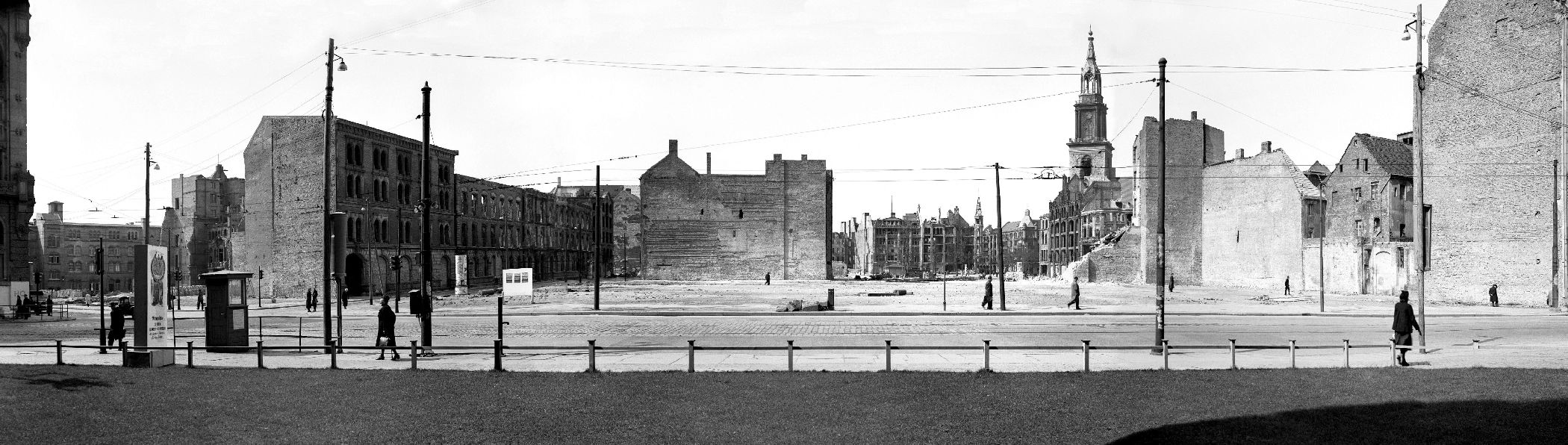
Fritz Tiedemann (German, 1915-2001) 'Pariser Platz, April 21, 1951' from the exhibition As far as no eye can see: panoramic photographs of Berlin, 1949-1952' at the Berlinische Galerie Museum of Modern Art, Berlin, Nov 2008 - Feb 2009


Fritz Tiedemann (German, 1915-2001)
Pariser Platz, April 21, 1951
1951
Reconstructed by Arwed Messmer 2008
1.25 x 5.84 metres
© Fritz Tiedemann / Arwed Messmer


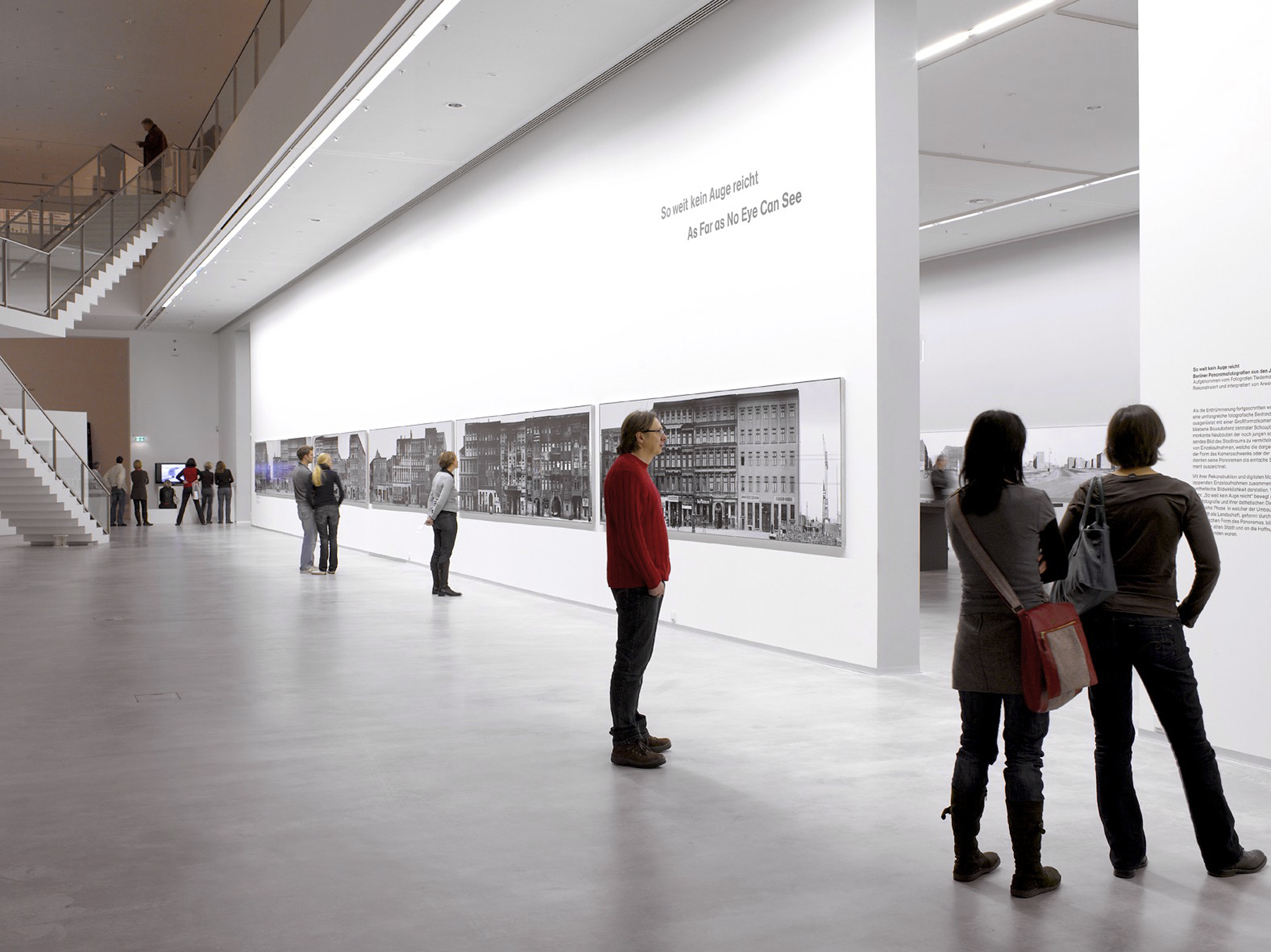
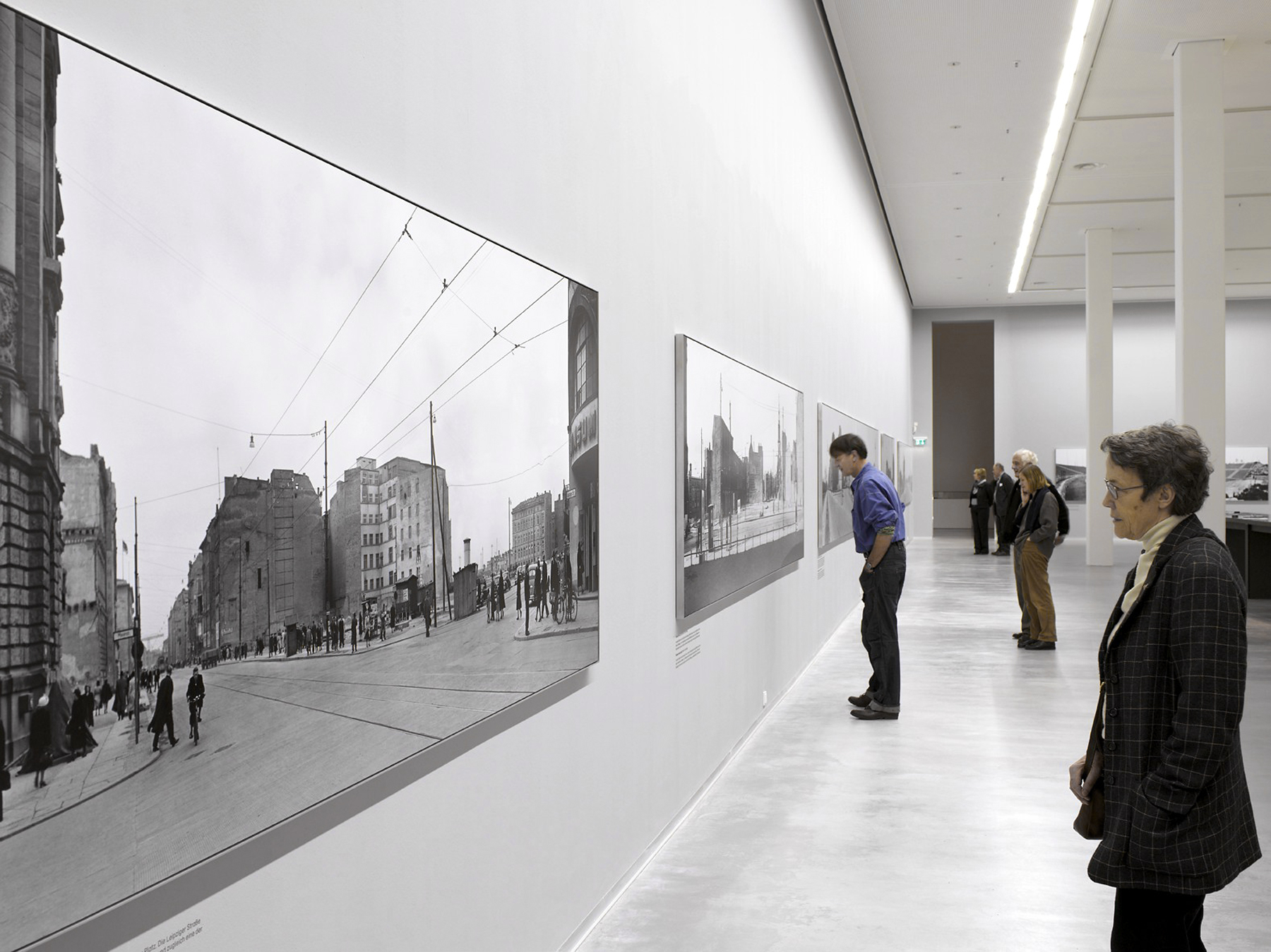
As far as the eye can see shows 13 reconstructed and digitally reassembled panorama photos by Tiedemann from his 1,500-footage work. The city views from the years 1949-1952 were enlarged to almost gigantic dimensions (up to 25.5 m in length) and thus provide a fascinating view of the destruction of the war and the reconstruction of Berlin.

Fritz Tiedemann (German, 1915-2001) was a trained surveying technician and was trained in the military as a photogrammeter (specialist for photographic measuring methods). He documented the city as a photographer at the Office of Preservation. The photographer Arwed Messmer came across Tiedemann’s photographs during research work for his book project “Anonyme Mitte – Berlin” in the Berlinische Galerie and then developed the idea for this exhibition.

After WW 2, rubble clearance had made considerable progress and rebuild had begun, a remarkable photographic inventory was done in East Berlin. By order of the magistrate of the capital of the GDR an – up to now – unknown photographer documented central places and areas that were of importance concerning the urban planning in the early 50s. He captured the Pariser Platz and the Schloßplatz area as well as the works on the Walter Ulbricht Stadium or a sand storage area in the outskirts. In order to adequately picture the void and the vastness of the destroyed city as well as the remaining urban structures, the photographer made horizontal turns with the camera and thus produced sequences that – once brought together – turned into panoramic pictures.

The concealed quality of these pictures was lately discovered by Berlin photographer Arwed Messmer. By means of digital mounting of the sequences he created synthetic large-size pictorial worlds that show the destroyed Berlin as an empty stage. Thus inspired, the Photo Archive of the East Berlin magistrate, preserved by the Berlinische Galerie and documented in the catalogue “Ost-Berlin und seine Bauten. Fotografien 1945-1990” / “East Berlin Architecture”, was searched through anew. Thus the exhibition operates at the interface between applied photography and new photographic technology as well as between collective memory and an unfamiliar optic experience.

Press release from the Berlinische Galerie Museum of Modern Art


Fritz Tiedemann (German, 1915-2001) 'Pariser Platz, April 21, 1951' (detail) from the exhibition As far as no eye can see: panoramic photographs of Berlin, 1949-1952' at the Berlinische Galerie Museum of Modern Art, Berlin, Nov 2008 - Feb 2009


Fritz Tiedemann (German, 1915-2001)
Pariser Platz, April 21, 1951 (detail)
1951
Reconstructed by Arwed Messmer 2008
1.25 x 5.84 metres
© Fritz Tiedemann / Arwed Messmer


Installation view of the exhibition 'As far as the eye can see' at the Berlinische Galerie, Berlin

Installation view of the exhibition 'As far as the eye can see' at the Berlinische Galerie, Berlin


Installation views of the exhibition As far as the eye can see at the Berlinische Galerie, Berlin


Between 1948 and 1953, photographer and technical surveyor Fritz Tiedemann (German, 1915-2001) was commissioned by the urban administration of East Berlin to undertake extensive documentation of architecture and urban planning in the capital of the GDR. Many of his early visual documents are series of images conceived as panoramas, whereby the sweep of the camera gives a comprehensive impression of emptiness and the extent of war damage in the city. Processed as contact copies and stuck onto archive covers, his many photographs are one important, early basic collection of a photo archive that was extended consistently until 1990. It has been kept in the architectural collection of the Berlinische Galerie since 1992.

An in-depth study of the collection was facilitated with support from the Getty Foundation, Los Angeles, and the results were made available to the public in the shape of the publication “Ost-Berlin und seine Bauten” in 2006. In 2008 a selection of Tiedemann’s photographs was shown to the public in the exhibition So weit kein Auge reicht. Berliner Panoramafotografien aus den Jahren 1949-1952. Aufgenommen von Fritz Tiedemann. Rekonstruiert und interpretiert von Arwed Messmer (As far as no eye can see. Berlin panorama photographs from the years 1949-1952. Taken by Fritz Tiedemann. Reconstructed and interpreted by Arwed Messmer). A catalogue of the same name was also published; it has since been produced in a second, revised edition.

Text from the Berlinische Galerie Museum of Modern Art


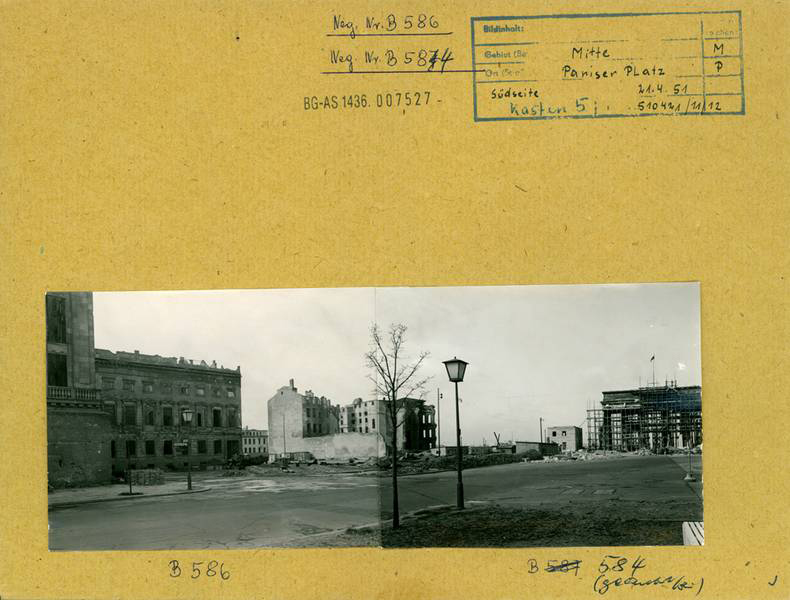
Fritz Tiedemann (German, 1915-2001) 'Pariser Platz (south side) April 21, 1951'


Fritz Tiedemann (German, 1915-2001)
Pariser Platz (south side), April 21, 1951
1951
Archive cover with contact copies of the original negatives
Silver gelatine paper on paper, 18.5 x 24.6cm
Taken over from the collections of the Urban Administration for Urban Development, Housing and Transport Berlin [East] via the Senate Administration for Building and Housing Berlin, 1991
© Berlinische Galerie Museum of Modern Art


Fritz Tiedemann short biography

14 February 1915 Hamburg – 23 November 2001 Münster, Westfalen

The identity behind the name “Tiedemann” could be clarified during the course of the exhibition. A former colleague of Fritz Tiedemann as well as descendents of the photographer learned about the exhibition due to the nationwide media coverage and contacted the museum.

As a professional surveying technician Fritz Tiedemann received additional specialist qualification as a topographer during his military service. His photographic skills and expertise were of great importance for the documentation of wartime damage and a visual basis for future urban planning. Indeed, his photographs can be considered as new documents showing the vastness and emptiness of the destroyed city.

In February 1948 he began working as a photographer for the Berlin Historic Buildings’ and Memorials’ Conservation Office. In October 1949 due to the political division of Greater Berlin he was to continue his work for the East Berlin government’s city planning office. Besides historical aspects the documentation then also focused on the architectural development of East Berlin as is also displayed by the exhibition’s panoramic photographs.

On February 28, 1953 Fritz Tiedemann was arrested by the East German police forces for his attempts to have West Berlin authorities share in those historically valuable photographs. He was tried and imprisoned and after the events of June 17, 1953 granted amnesty. Together with his family he subsequently fled to West Germany where he was acknowledged as political refugee. In January 1954 he took up work as a topographer with a company called Plan und Karte, later Hansa Luftbild, in Münster, Westphalia, where he remained employed until his retirement in 1978.

Photography had not only been part of Fritz Tiedmann’s professional activities, it was in fact his life-long passion, the results of which are considered by his family as a great heritage.

Text from the Berlinische Galerie Museum of Modern Art


Fritz Tiedemann (German, 1915-2001) 'Marx-Engels-Platz, April 20, 1951'


Fritz Tiedemann (German, 1915-2001)
Marx-Engels-Platz, April 20, 1951 [previously called Schloss-Platz]
1951
Reconstructed by Arwed Messmer 2008
© Fritz Tiedemann / Arwed Messmer


Fritz Tiedemann (German, 1915-2001) 'Am Friedrichshain, March 5, 1952'


Fritz Tiedemann (German, 1915-2001)
Am Friedrichshain, March 5, 1952
1952
Reconstructed by Arwed Messmer 2008
© Fritz Tiedemann / Arwed Messmer


Fritz Tiedemann (German, 1915-2001) 'Rathausstrasse, April 20, 1951'


Fritz Tiedemann (German, 1915-2001)
Rathausstrasse, April 20, 1951 [The Rathausstrasse overlooking the Marienkirche of Alexanderplatz]
1951
Reconstructed by Arwed Messmer 2008
© Fritz Tiedemann / Arwed Messmer


Fritz Tiedemann (German, 1915-2001) 'Outdoor scene in Wuhlheide, May 4, 1952'


Fritz Tiedemann (German, 1915-2001)
Outdoor scene in Wuhlheide, May 4, 1952
1952
Reconstructed by Arwed Messmer 2008
© Fritz Tiedemann / Arwed Messmer


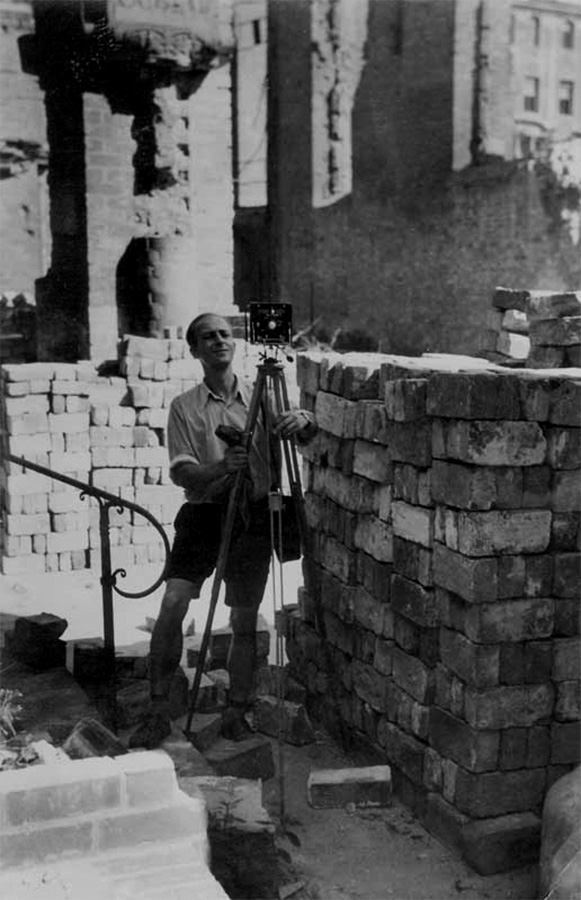
Unknown photographer. 'Fritz Tiedemann' c. 1951


Unknown photographer
Fritz Tiedemann
c. 1951
Private collection


Berlinische Galerie Museum of Modern Art
Alte Jakobstraße 124-128
10969 Berlin Germany

Opening hours:
Wednesday – Monday 10am – 6pm
Closed on Tuesdays
Berlinische Galerie Museum of Modern Art website

LIKE ART BLART ON FACEBOOK

Back to top