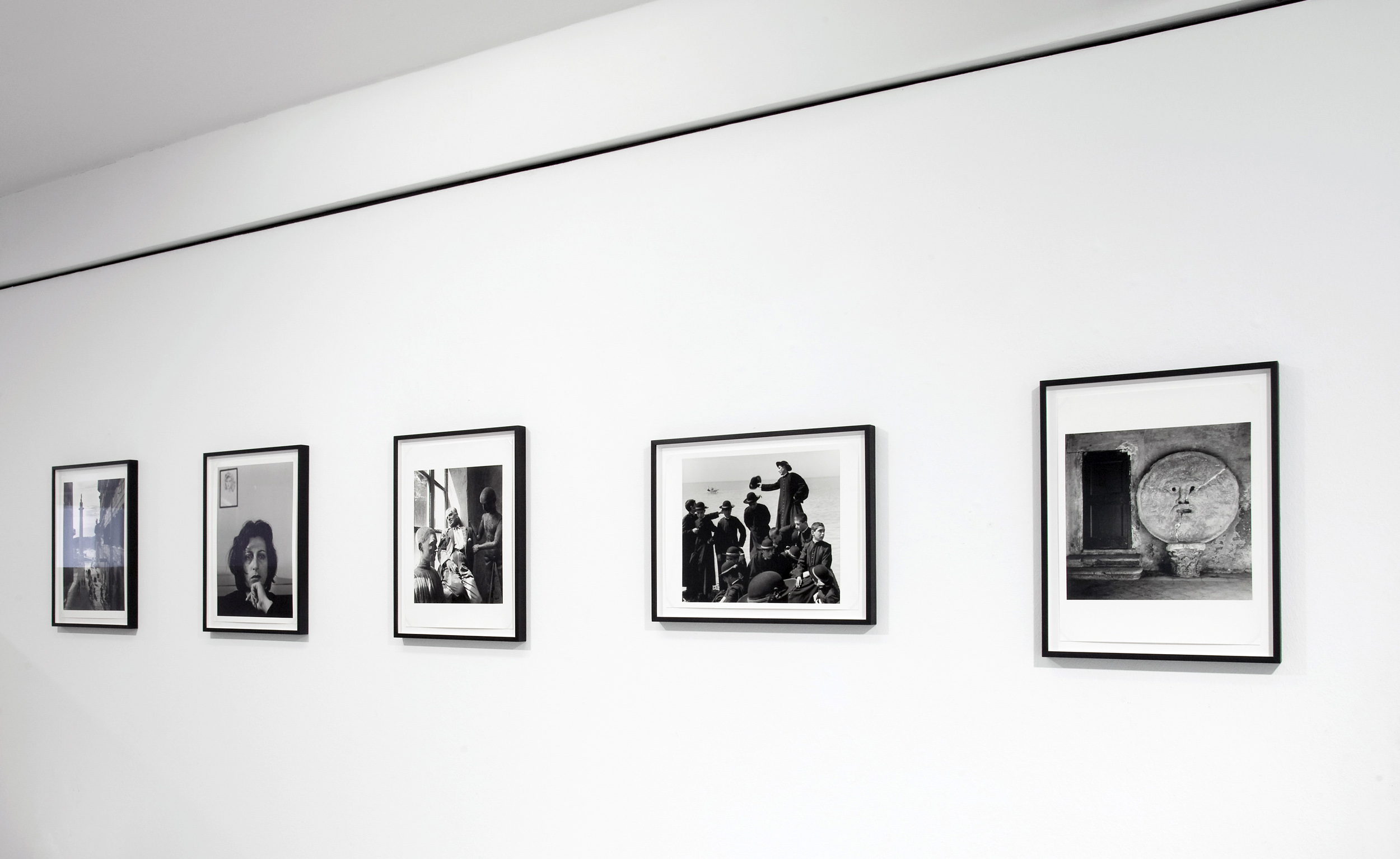
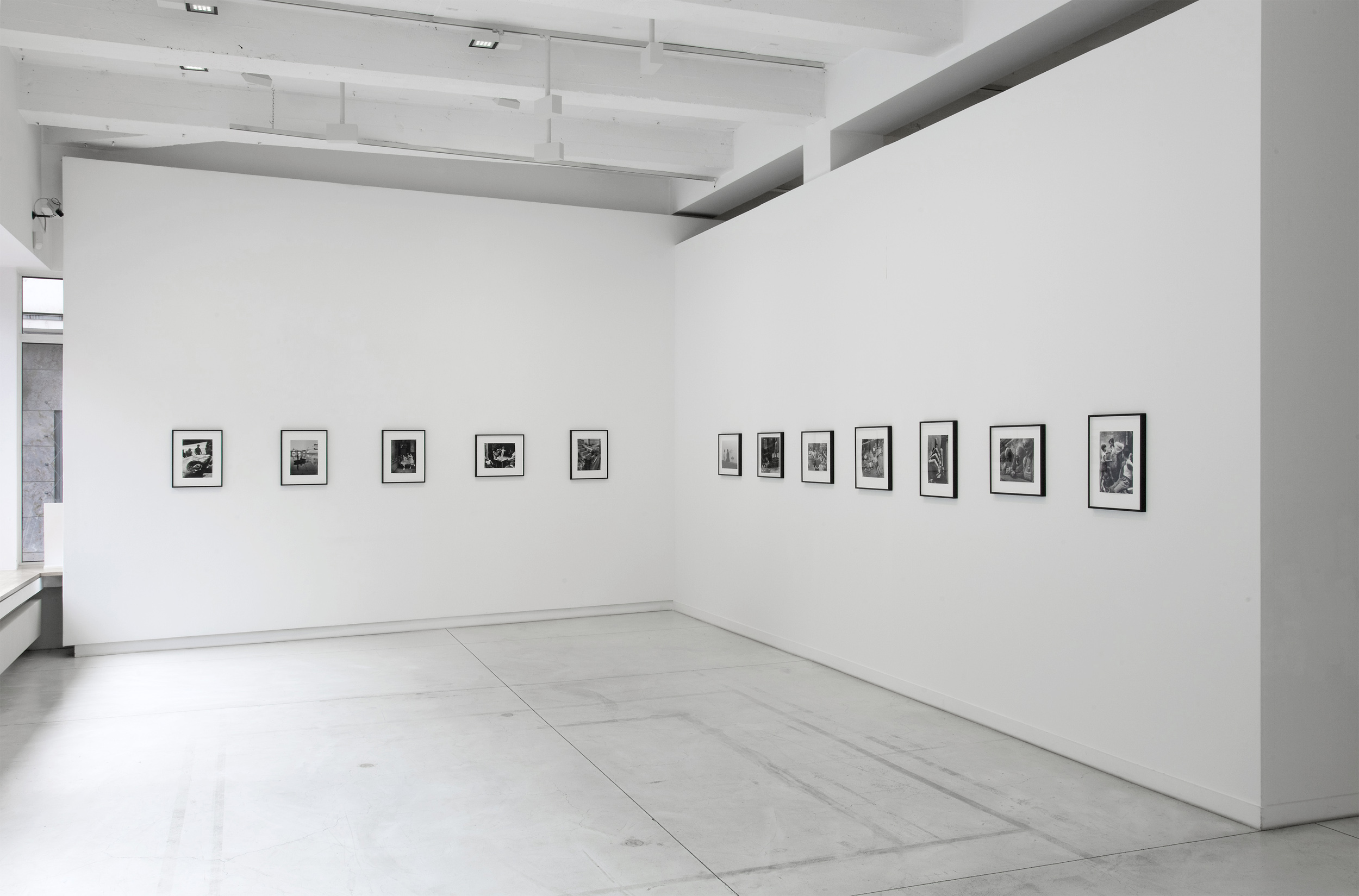
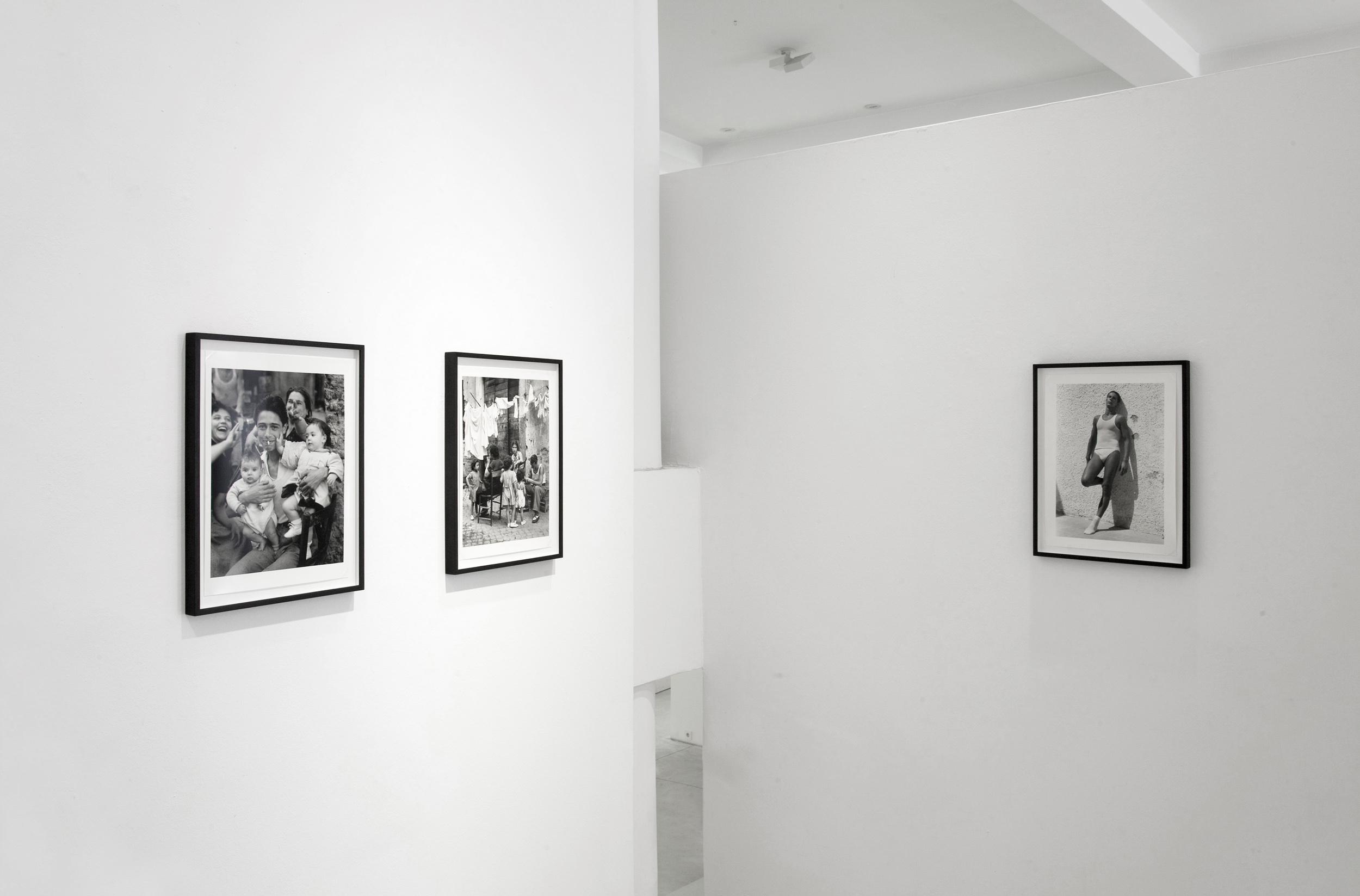
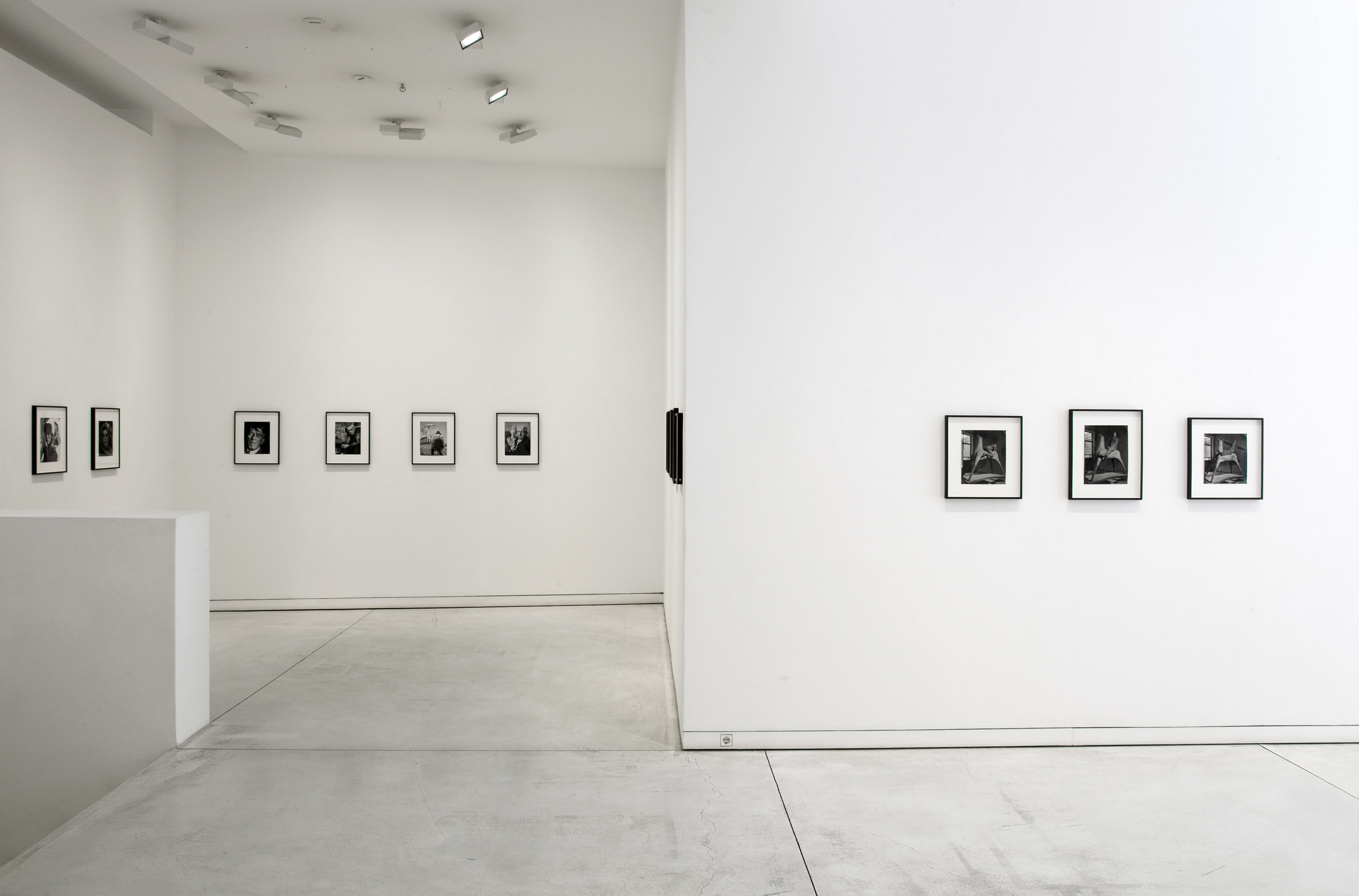
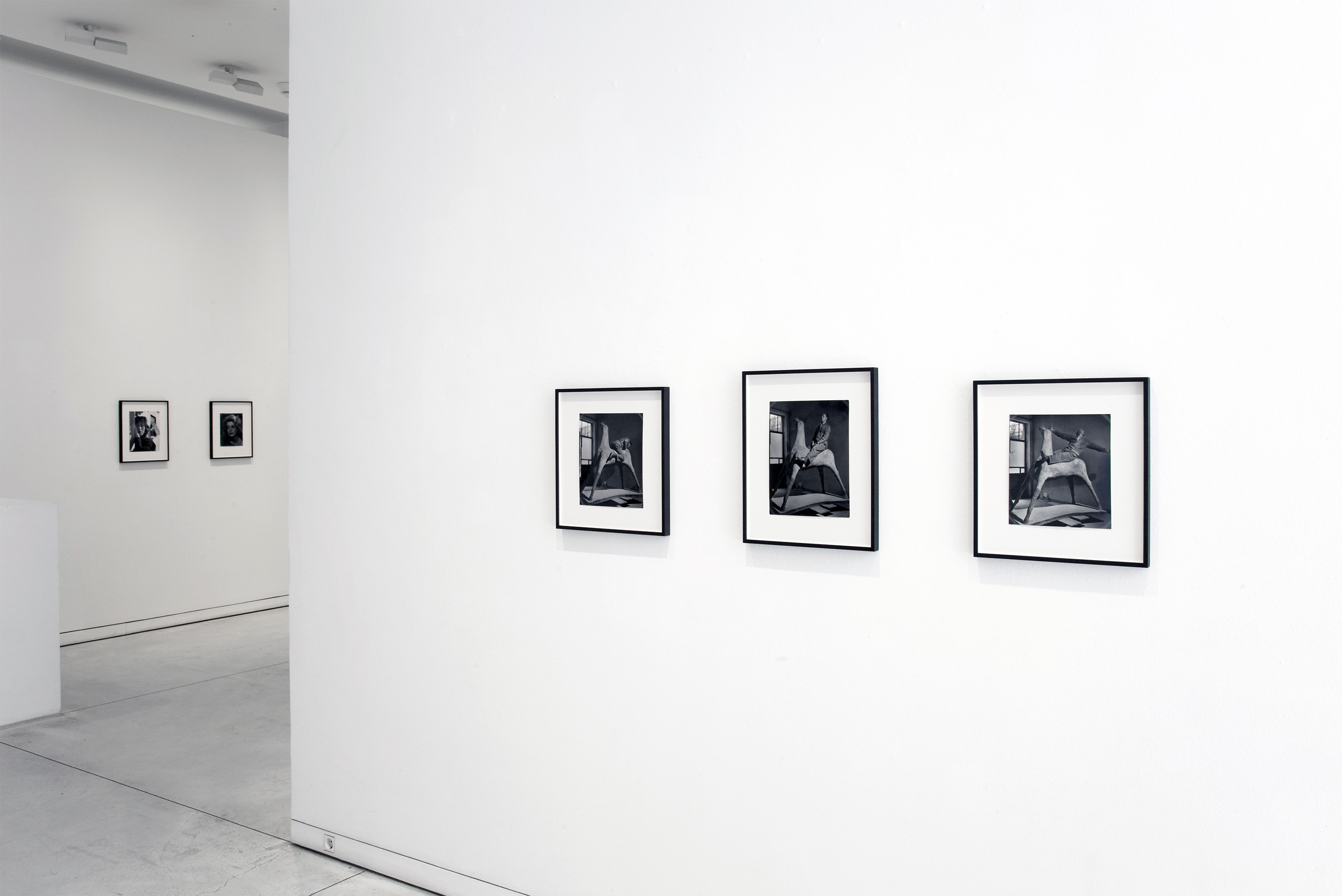
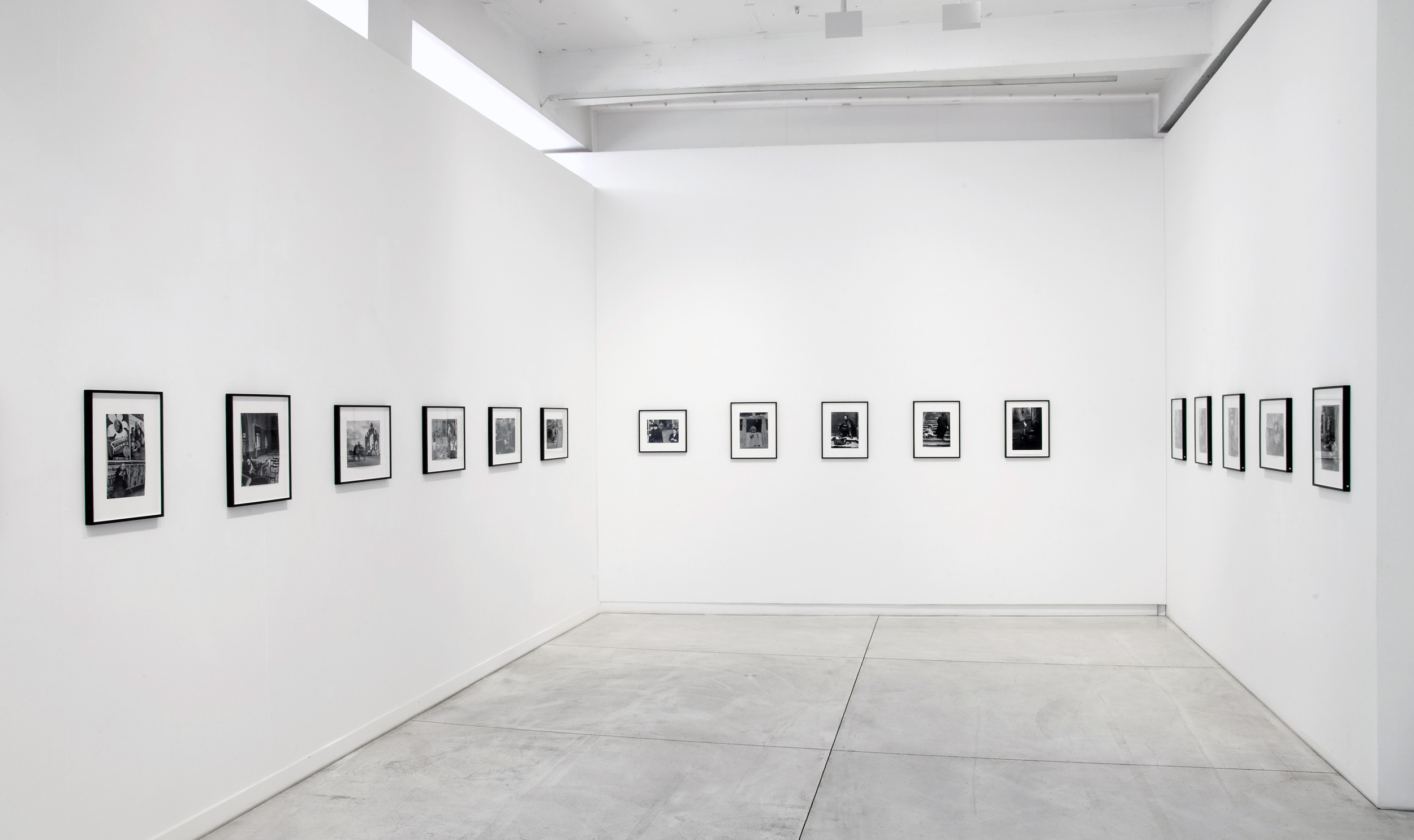
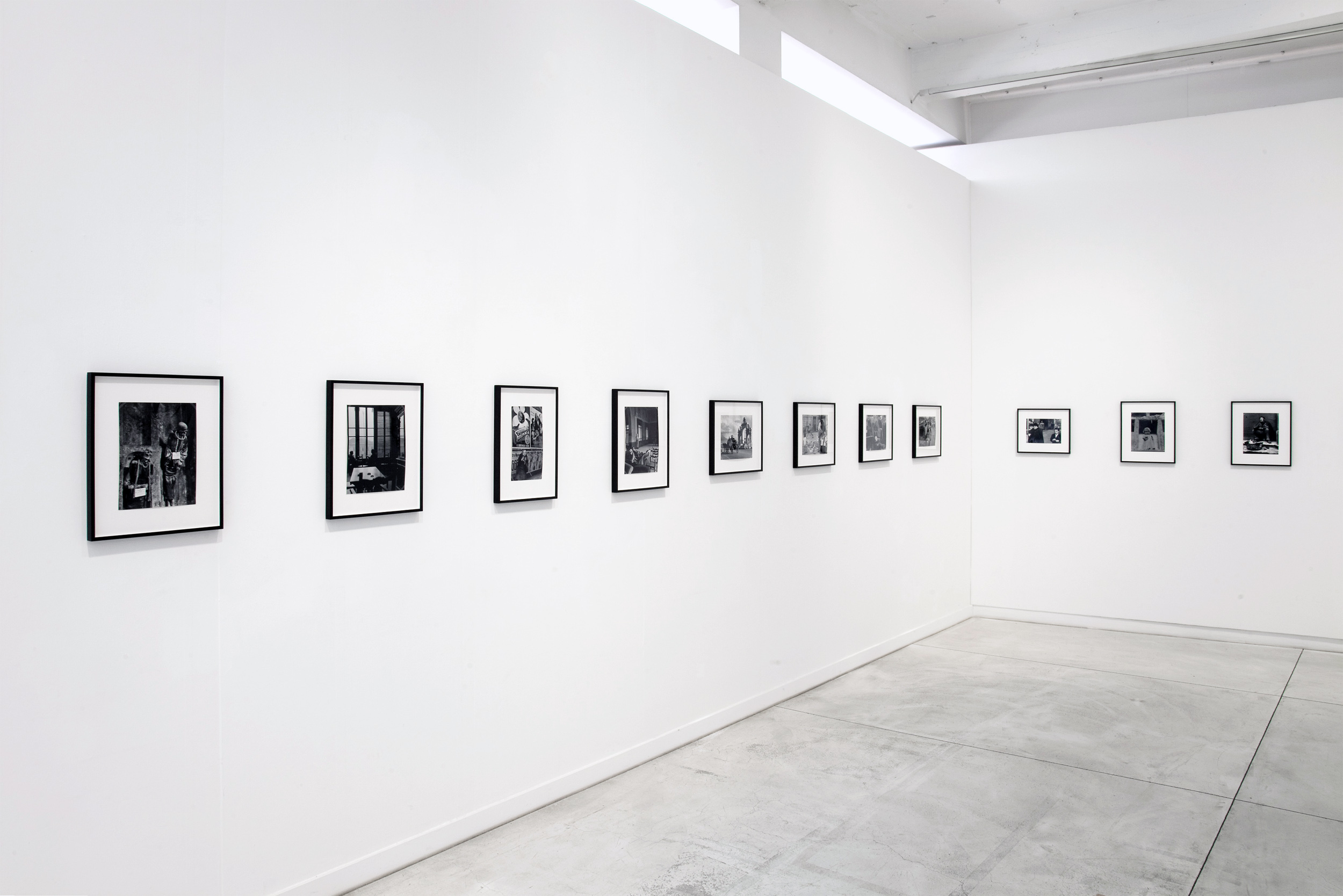
Exhibition: ‘Lucia Moholy – Exposures’ at Fotostiftung Schweiz, Winterthur, Zurich

Exhibition dates: 8th February – 9th June, 2025

Curator: Jan Tichy
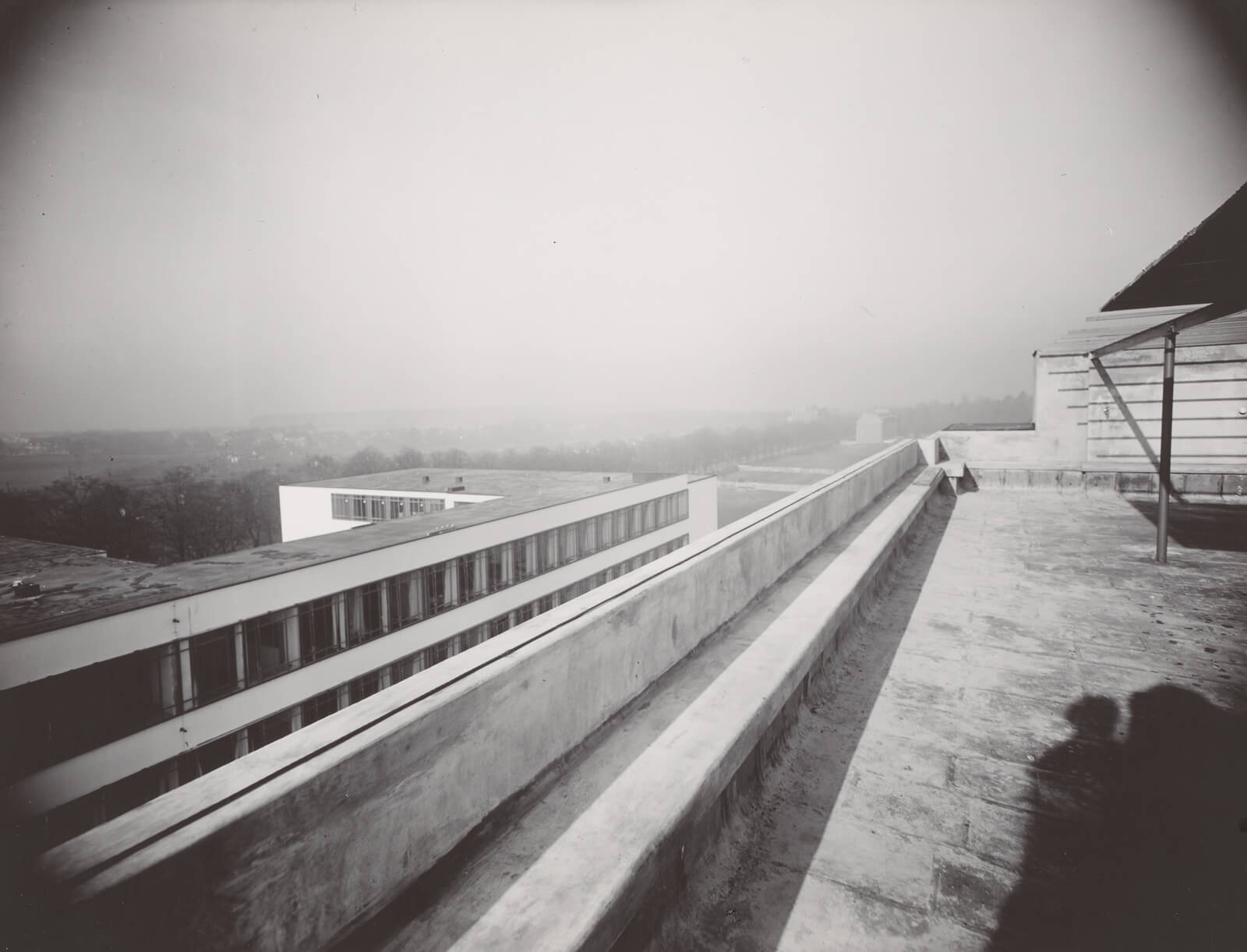
 

Lucia Moholy (British born Czech, 1894-1989) 'Roof of the Atelier-House, Bauhaus Dessau' 1926 from the exhibition 'Lucia Moholy – Exposures' at Fotostiftung Schweiz, Winterthur, Feb - June, 2025


Lucia Moholy (British born Czech, 1894-1989)
Roof of the Atelier-House, Bauhaus Dessau
1926
© 2025, ProLitteris, Zürich


I love Bauhaus design and photographs of the Bauhaus School and these are excellent photographs of both by Lucia Moholy: powerful, graphic, minimalist, modernist, echoing the ethos of the school itself. The strong portraits are pretty damn good as well…

It’s interesting to note then that Moholy was not particularly enamoured of this new modernist vision: “From her diaries, we know that Moholy didn’t like living in Dessau and her photos of the school, which are very alluring, also hint at her despair and dislike of being there.”

Then to learn that Walter Gropius, founder of the Bauhaus School, “had taken the negatives with him when he emigrated to the USA via London leading to years of negotiation with lawyers to get the negatives back.”

Why would you take the negatives of another artist, use them without credit and then refuse to give them back for many years without lawyers being involved? It’s incredible what human beings especially males will do (power and control), all because Gropius found the images useful for him to use! (see below)

While it is wonderful to be able to publish the first posting on Art Blart on the artist, I wish galleries and museums would stop making claims such as, Moholy “was one of the 20th century’s most internationally recognised and important female photographers.”

Let’s be frank: she wasn’t, not anywhere close.

Even in Europe in the 1930s we think of Florence Henri, Germaine Krull, Claude Cahun and Marcel Moore, Ilse Bing, Edith Tudor-Hart, Dora Maar etc etc… without even considering American female photographers of the era, or indeed the rest of the century. Today, many have more significance in the history of photography than Lucia Moholy ever will have.

This is in no way denigrating her work at all which I like tremendously, but just to assert that statements not thought through by marketing and media departments may come back to bite you on the arse.

Best just to say that Lucia Moholy was an accomplished artist who made focused, thoughtful, beautiful photographs of an era now nearly a century past. What more do you need to say.

Dr Marcus Bunyan


Many thankx to the Fotostiftung Schweiz for allowing me to publish the photographs in the posting. Please click on the photographs for a larger version of the image.


“In 1938, while Moholy lived in London, Walter Gropius used about fifty of Moholy’s images from the Bauhaus years – from her negatives that he still had in his possession – in the Museum of Modern Art (MoMA) exhibition and the accompanying catalogue, without giving her any credit. …

Gropius had been using her photographs without crediting her. She repeatedly reached out to Gropius to reclaim her images and he would continuously protest. Moholy resorted to hiring a lawyer to retrieve her work.

Some relevant letters between Walter Gropius and Lucia Moholy are displayed on the website 99% Invisible. Moholy stated, “These negatives are irreplaceable documents which could be extremely useful, now more than ever” to which Gropius replied, “[…] long years ago in Berlin, you gave all these negatives to me. You will imagine that these photographs are extremely useful to me and that I have continuously made use of them; so I hope you will not deprive me of them.” Lucia Moholy responded, “Surely you did not expect me to delay my departure in order to draw up a formal contract stipulating date and conditions of return? No formal agreement could have carried more weight than our friendship. It is a friendship I have always relied on, and which, also, I am now invoking.

Moholy did not get physical possession of her original material until 1957, but even then she only could recover a portion of them, 230 out of the 560 Bauhaus-era negatives she took, while 330 negatives, according to Moholy’s own card catalogue, are still missing.”

Anonymous. “Lucia Moholy,” on the Wikipedia website [Onloine] Cited 30/05/2025


Lucia Moholy (British born Czech, 1894-1989) 'Workshop wing, design by Walter Gropius, Bauhaus Dessau' around 1926 from the exhibition 'Lucia Moholy – Exposures' at Fotostiftung Schweiz, Winterthur, Feb - June, 2025


Lucia Moholy (British born Czech, 1894-1989)
Workshop wing, design by Walter Gropius, Bauhaus Dessau
around 1926
© 2025, ProLitteris, Zürich


Lucia Moholy (1894-1989) was one of the 20th century’s most internationally recognised and important female photographers. Her architectural photographs and portraits from her years at the Bauhaus in Dessau, which have become icons of photographic history, still shape how that institution is perceived today. However, Moholy was not just a photographer, but also an art historian, critic, writer and archivist; she described herself as a ‘documentalist’ and made a name for herself in the field of information science.

The exhibition Lucia Moholy – Exposures is the first to show the broad scope of her work from the 1910s to the 1970s. Her photographic oeuvre is presented together with numerous documents, some of them newly discovered, which shed light on Moholy’s role in the avant-garde during the interwar period, as well as her youth in Prague, her editorial work in Germany, her activity as a portraitist in London, and her involvement with early microfilm technology in England and Turkey.

Finally, the exhibition also invites visitors to encounter Lucia Moholy in the context of Zurich, where she spent the last thirty years of her life. During that time, she also maintained a relationship with the then fledgling Fotostiftung Schweiz, which today is home to a large collection of her photographs.

Text from the Fotostiftung Schweiz website
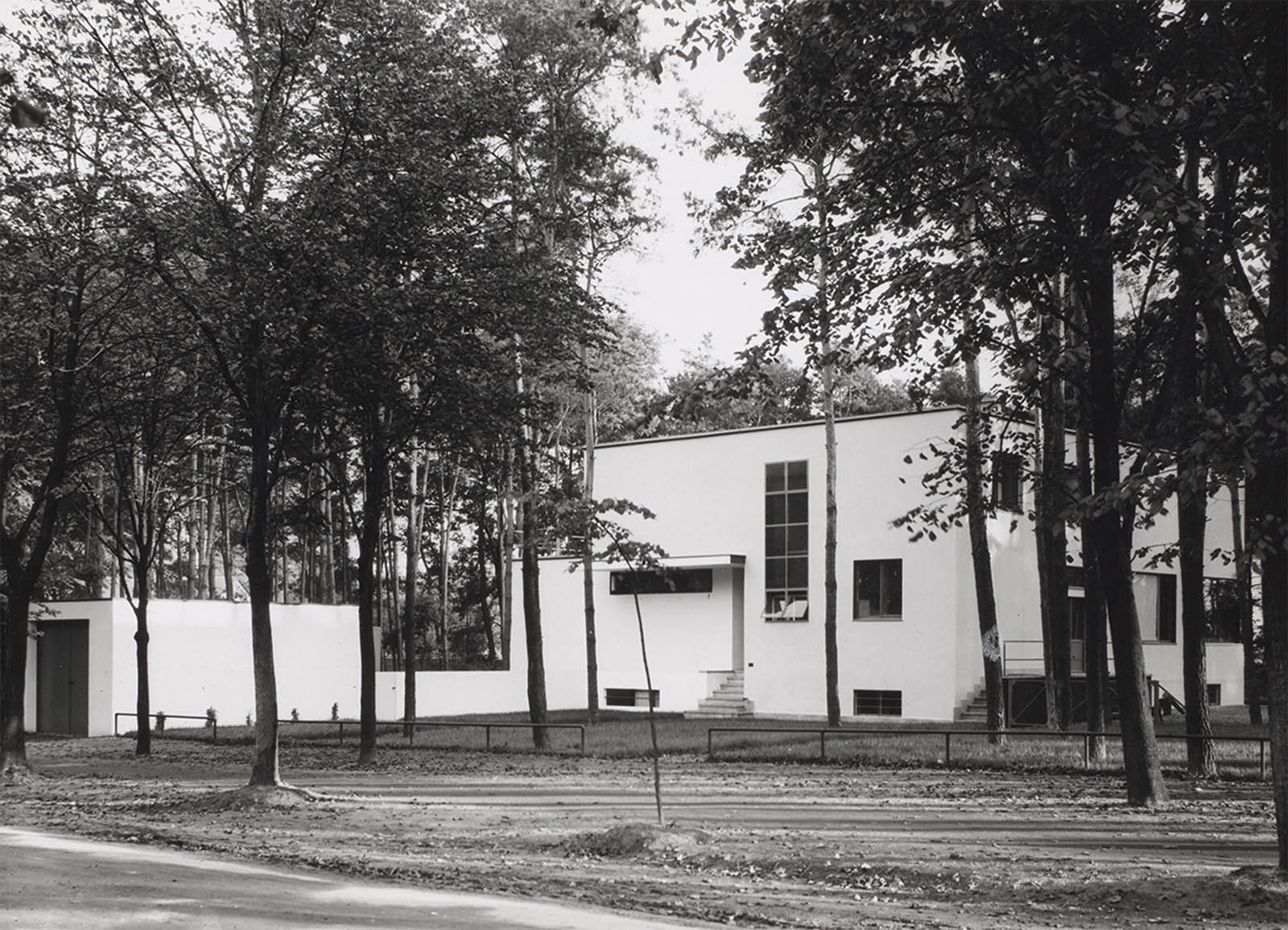
 

Lucia Moholy (British born Czech, 1894-1989) 'Gropius House in Dessau' 1925


Lucia Moholy (British born Czech, 1894-1989)
Gropius House in Dessau
1925
© 2025, ProLitteris, Zürich


“This street view of Gropius’s house in Dessau is glimpsed through a line of birch trees that conjures a feeling of entrapment, almost like prison bars. It reinforces this sense of being fenced in or fenced off – a feature of many of Moholy’s images of the Masters’ Houses, which provided accommodation for Bauhaus teachers.

“The photograph really captures the modernist style of Gropius’s buildings, with the rectilinear geometric shapes and the dark windows inserted into the white facades. While living in Dessau, Moholy’s relationship with Gropius and his wife Isa was amiable and continued to be so when the Gropiuses emigrated to the United States.

“It was only in the 1950s, when she learned how the negatives she left behind in Berlin in 1933 had been used to build the legacy of the school without her knowledge, that the relationship turned sour and she engaged a lawyer to help her recover the images.”

Meghan Forbes, co-curator of the exhibition when it was at Kunsthalle Praha quoted in Alyn Griffiths. “Lucia Moholy’s photographs provide a different perspective on the Bauhaus,” on the Dezeen website, 9th August, 2024 [Online] Cited 10/05/2025


Lucia Moholy (British born Czech, 1894-1989) 'Workshop wing from south-west, Bauhaus Dessau' 1926


Lucia Moholy (British born Czech, 1894-1989)
Workshop wing from south-west, Bauhaus Dessau
1926
© 2025, ProLitteris, Zürich
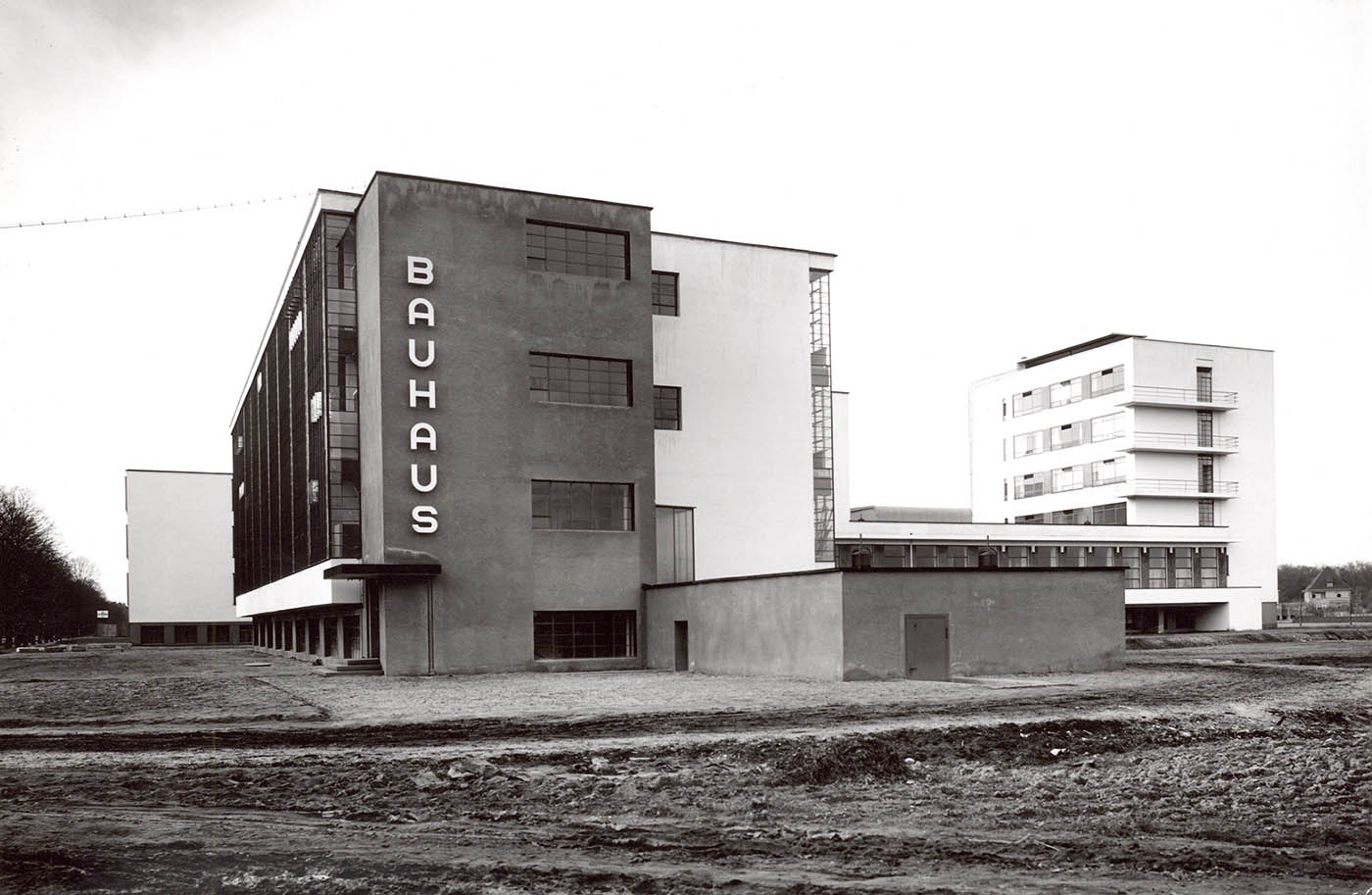
 

Lucia Moholy (British born Czech, 1894-1989) 'Bauhaus Dessau: Workshop building from the southwest' c. 1926


Lucia Moholy (British born Czech, 1894-1989)
Bauhaus Dessau: Workshop building from the southwest
c. 1926
© 2025, ProLitteris, Zürich
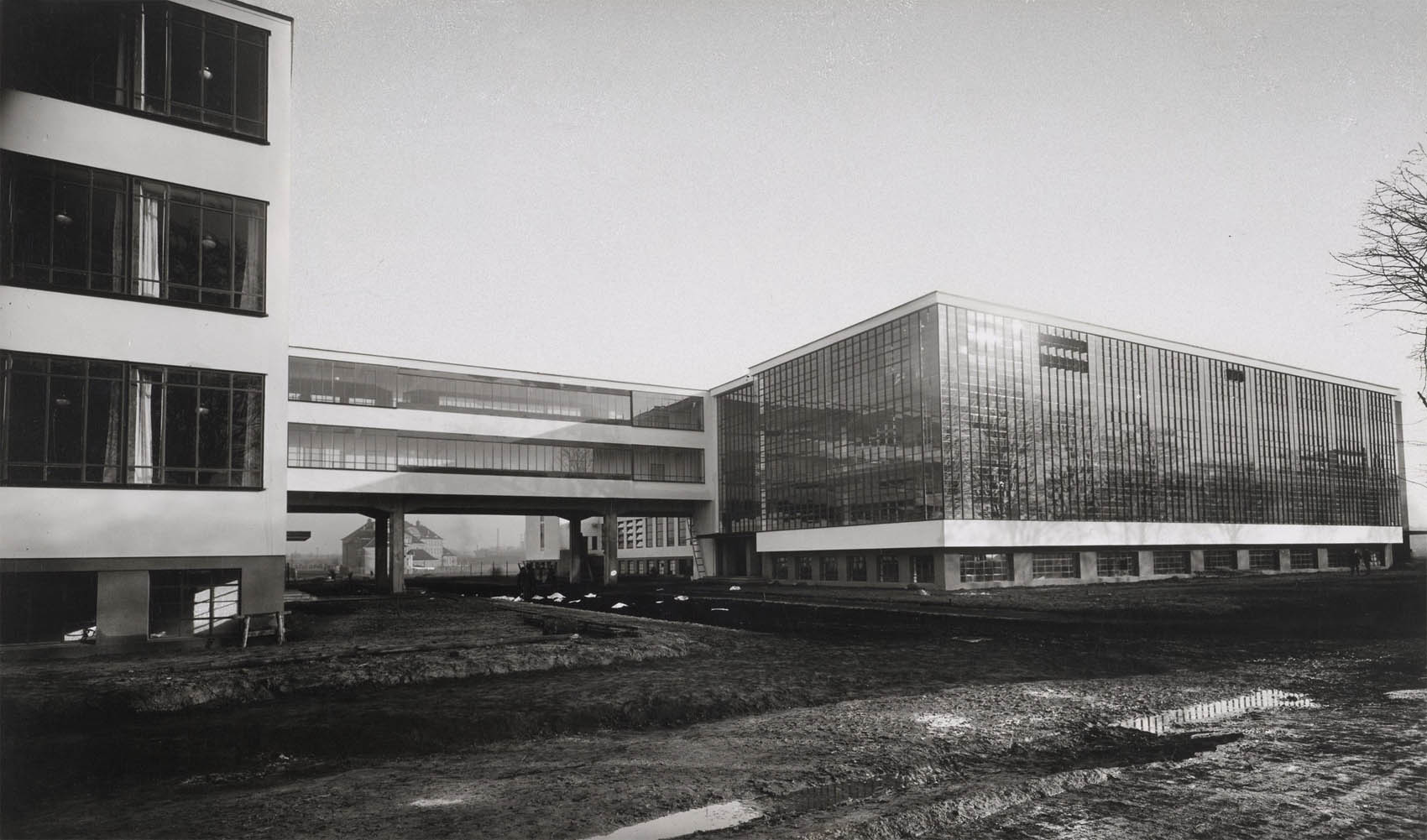
 

Lucia Moholy (British born Czech, 1894-1989) 'Workshop wing of the Bauhaus Building in Dessau' c. 1926


Lucia Moholy (British born Czech, 1894-1989)
Workshop wing of the Bauhaus Building in Dessau
c. 1926
© 2025, ProLitteris, Zürich


“To me, this photograph of Walter Gropius’s Bauhaus building with a muddy, unpaved road in the foreground shows the messier, dirtier aspects of constructing a new modernist vision. From her diaries, we know that Moholy didn’t like living in Dessau and her photos of the school, which are very alluring, also hint at her despair and dislike of being there.

“Moholy’s photographs documenting the Bauhaus buildings and design objects already appeared – with and without credits – in books at the time, as well as in the popular press. In the 1950s, she discovered that at least 40 of her images were used in the catalogue of the seminal 1938 Bauhaus exhibition held at MoMA in New York.

“It kickstarted a life-long campaign of letter-writing to try to obtain both the possession of her glass negatives from the Bauhaus years and appropriate author credit and compensation for the publication of her images.”

Meghan Forbes, co-curator of the exhibition when it was at Kunsthalle Praha quoted in Alyn Griffiths. “Lucia Moholy’s photographs provide a different perspective on the Bauhaus,” on the Dezeen website, 9th August, 2024 [Online] Cited 10/05/2025


Lucia Moholy (British born Czech, 1894-1989) 'Dining room Moholy-Nagy, Meistersiedlung Bauhaus Dessau' 1926


Lucia Moholy (British born Czech, 1894-1989)
Dining room Moholy-Nagy, Meistersiedlung Bauhaus Dessau
1926
© 2025, ProLitteris, Zürich


In the exhibition Lucia Moholy – Exposures, Fotostiftung Schweiz is honouring the oeuvre of a versatile 20th-century pioneer. The famous Bauhaus photographs taken by Lucia Moholy (1894-1989) still shape how that institution is seen today. She also left a significant legacy via her work as an art historian, critic, writer and microfilm expert. The exhibition shines a spotlight on this long-underestimated figure, who spent the last 30 years of her life in Zollikon, near Zurich.

Lucia Moholy – Exposures presents, for the first time, the full breadth of her work from the 1910s to the 1970s. Photographs, letters, diaries, publications and microfilms are shown, spread across three exhibition rooms. The focus is on key periods of her life: her youth in Prague, her time at the Bauhaus, her exile in London and her pioneering work on microfilm technology. One point of emphasis is her connection with Zurich and with Fotostiftung Schweiz, which holds many of her images. Works by the contemporary Czech artist and curatorJan Tichy will also be on display. The exhibition is realised in cooperation with Kunsthalle Praha.

Photographer of the Bauhaus

Lucia Moholy left Prague in 1915 to work for various German publishers. In Berlin, she met Hungarian artist László Moholy-Nagy, whom she married in 1921. Together, they explored new reproduction technologies and the possibilities of the photogram. When Moholy-Nagy was appointed as a master at the Bauhaus, Moholy accompanied him and began to take photographs: Between 1923 and 1928, she documented Bauhaus design objects and Walter Gropius’s famous Dessau buildings. Her clearly composed shots still characterise the visual legacy of that institution to this day. Moholy’s portraits of Bauhaus figures like Anni Albers, Walter Gropius and Florence Henri are particularly impressive, and have been made central to the exhibition.

Exile and a new beginning

In 1928, Lucia Moholy and László Moholy-Nagy left the Bauhaus and moved to Berlin, where they soon separated. Moholy took charge of the photography class at Johannes Itten’s art school, while simultaneously trying her hand at photojournalism. Her flight from the Nazis in 1933 took her to London. There, she opened a photo studio and wrote the bestseller A Hundred Years of Photography, 1839-1939. After her studio was destroyed by bombing in 1940, she turned to microfilm technology. She founded her own documentation service and set up a microfilm centre in Ankara as a UNESCO expert.

The search for the glass negatives

After the end of the Second World War, Moholy noticed many of her Bauhaus photographs appearing in newly released publications. After extensive research, she eventually learnt that Walter Gropius had taken the negatives with him when he emigrated to the USA via London. It was not until 1957, after years of legal negotiations, that Lucia Moholy was able to get a large number of her negatives back, which are now in the Bauhaus Archive in Berlin.

Late recognition of the photographer

Moholy moved to Zurich in 1959. Here, she wrote about Zurich exhibitions for English magazines and was a prominent figure on the art scene. During the 1970s and 1980s, interest in Moholy’s photographic works finally grew. They were shown in exhibitions and published in magazines. In 1981, a solo exhibition was held in her honour at Gallery Ziegler in Zurich. Four years later, her first monograph was published, with in-depth analysis of her work by art historian Rolf Sachsse. Moreover, two founding members of Fotostiftung Schweiz, Rosellina Burri-Bischof and Walter Binder, maintained contact with Lucia Moholy. Thanks to a purchase and a donation from Moholy’s estate, Fotostiftung Schweiz now holds 146 of her prints, which can be accessed via the Online Image Archive and constitute the largest collection outside the Bauhaus Archive.

Jan Tichy – Weight of Glass

The exhibition at Fotostiftung Schweiz is supplemented with contemporary works by the artist and curator Jan Tichy, who has been engaging with Moholy’s legacy for almost 20 years. His microfilm installation can be seen in the passage leading to the photo library. In addition, contemporary video works, installations and photographs are being shown at oxyd-Kunsträume from the 7th of February to the 2nd of March 2025, including the impressive Installation no. 30 (Lucia), for which Tichy arranges and illuminates 330 glass plates in the size of the original negatives. Set up in a dark room, the installation creates a fleeting and fragile memorial to an important protagonist of the 20th century.

Lucia Moholy – Exposures is a Kunsthalle Praha exhibition project, organised in cooperation with Fotostiftung Schweiz, Winterthur, and the Bauhaus Archive, Berlin.

Press release from Fotostiftung Schweiz, Winterthur
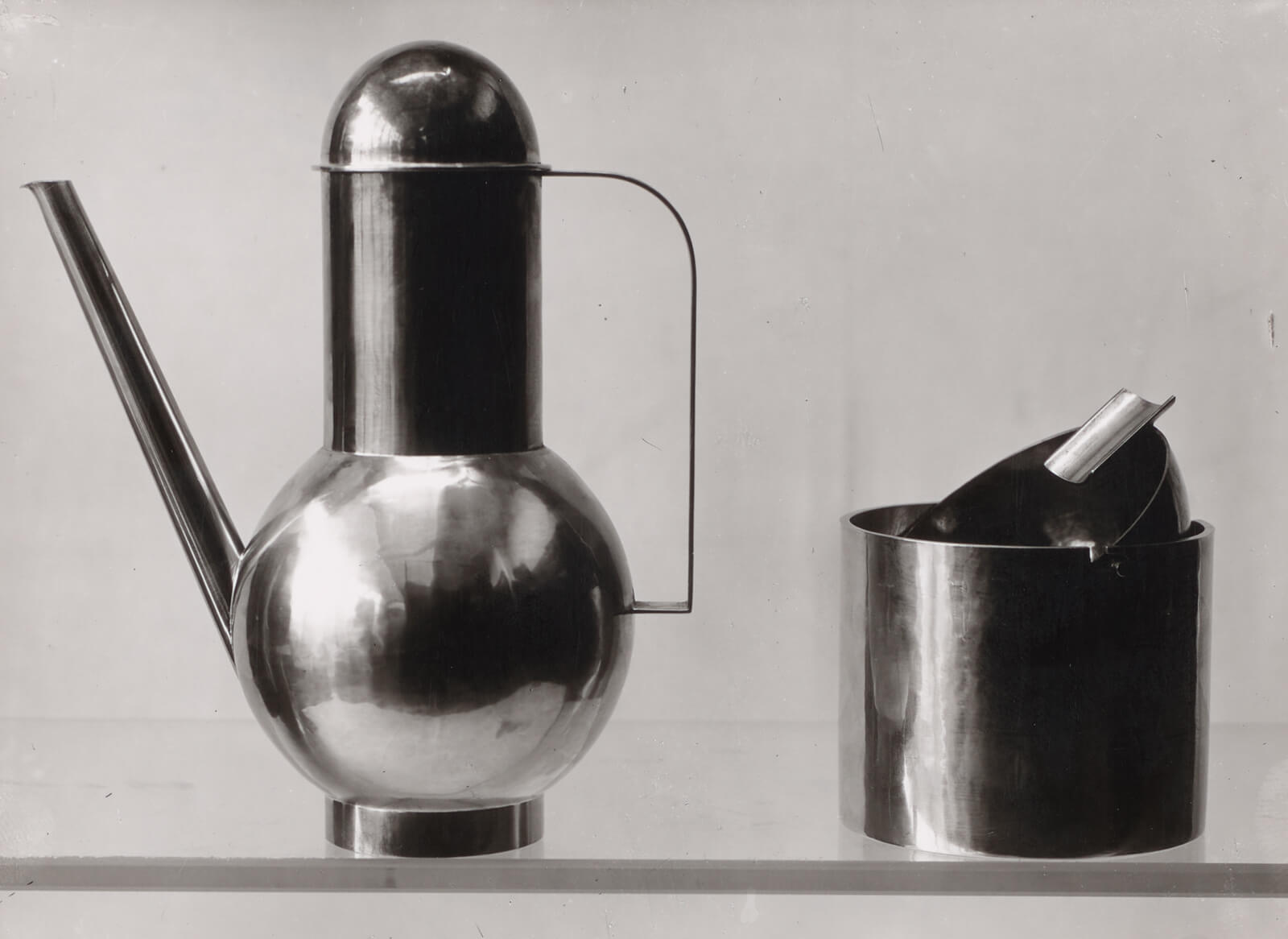
 

Lucia Moholy (British born Czech, 1894-1989) 'Metal workshop, design by Marianne Brandt, Bauhaus Dessau' 1924 from the exhibition 'Lucia Moholy – Exposures' at Fotostiftung Schweiz, Winterthur, Feb - June, 2025


Lucia Moholy (British born Czech, 1894-1989)
Metal workshop, design by Marianne Brandt, Bauhaus Dessau
1924
© 2025, ProLitteris, Zürich


“Marianne Brandt is a really important Bauhaus designer who ended up living in East Germany in relative obscurity, although her work is now also receiving due attention. The somewhat static composition of the two objects side by side is dynamised by the diagonals produced by the larger vessel’s slender spout and the decision to slant in the ashtray’s top, emphasizing the use value.

“It also shows how Moholy played with reflective surfaces when photographing metal objects, evoking the work of Florence Henri who was at the Bauhaus at the same time. Henri was known for capturing her own portrait as she played with glass and metal in her photographs.

“We can also occasionally catch a glimpse of Moholy in some of her metal studies. But in other instances, she focuses on highlighting the lustrous quality of the objects in isolation. These images of metal objects are perhaps the best-known of her Bauhaus product photographs. But she also took pictures of pieces made from ceramics or wood that indicate the evolution of design thinking at the school.”

Meghan Forbes, co-curator of the exhibition when it was at Kunsthalle Praha quoted in Alyn Griffiths. “Lucia Moholy’s photographs provide a different perspective on the Bauhaus,” on the Dezeen website, 9th August, 2024 [Online] Cited 10/05/2025


Lucia Moholy (British born Czech, 1894-1989) 'Edith Tschichold, Bauhaus Dessau' 1926


Lucia Moholy (British born Czech, 1894-1989)
Edith Tschichold, Bauhaus Dessau
1926
© ProLitteris, Zürich


Edith Tschichold was the wife of Bauhaus typographer and graphic designer Jan Tschichold (German, 1905-1986)


Lucia Moholy (British born Czech, 1894-1989) 'László Moholy-Nagy, Bauhaus Dessau' 1926


Lucia Moholy (British born Czech, 1894-1989)
László Moholy-Nagy, Bauhaus Dessau
1926
© 2025, ProLitteris, Zürich


~ European art research tour exhibition: ‘László Moholy-Nagy and New Typography: A Reconstruction of a Berlin Exhibition from 1929’ at the Staatliche Museen zu Berlin, August – September 2019, posted November 2020
~ Exhibition: ‘Moholy-Nagy: Future Present’ at the Los Angeles County Museum of Art, February – June 2017
~ Exhibition: ‘Moholy-Nagy: Future Present’ at the Solomon R. Guggenheim Museum, New York, May – September 2016
~ Exhibition: ‘László Moholy-Nagy. The Art of Light’ at the Ludwig Museum, Budapest, June – September 2011
~ Exhibition: ‘László Moholy-Nagy – Art of Light’ at Martin Gropius-Bau, Berlin, November 2010 – January 2011
~ Exhibition: ‘László Moholy-Nagy 
Retrospective’ at Schirn Kunsthalle, Frankfurt, October 2009 – February 2010


Lucia Moholy (British born Czech, 1894-1989) 'Walter Gropius, Bauhaus Dessau' 1926


Lucia Moholy (British born Czech, 1894-1989)
Walter Gropius, Bauhaus Dessau
1926
© 2025, ProLitteris, Zürich
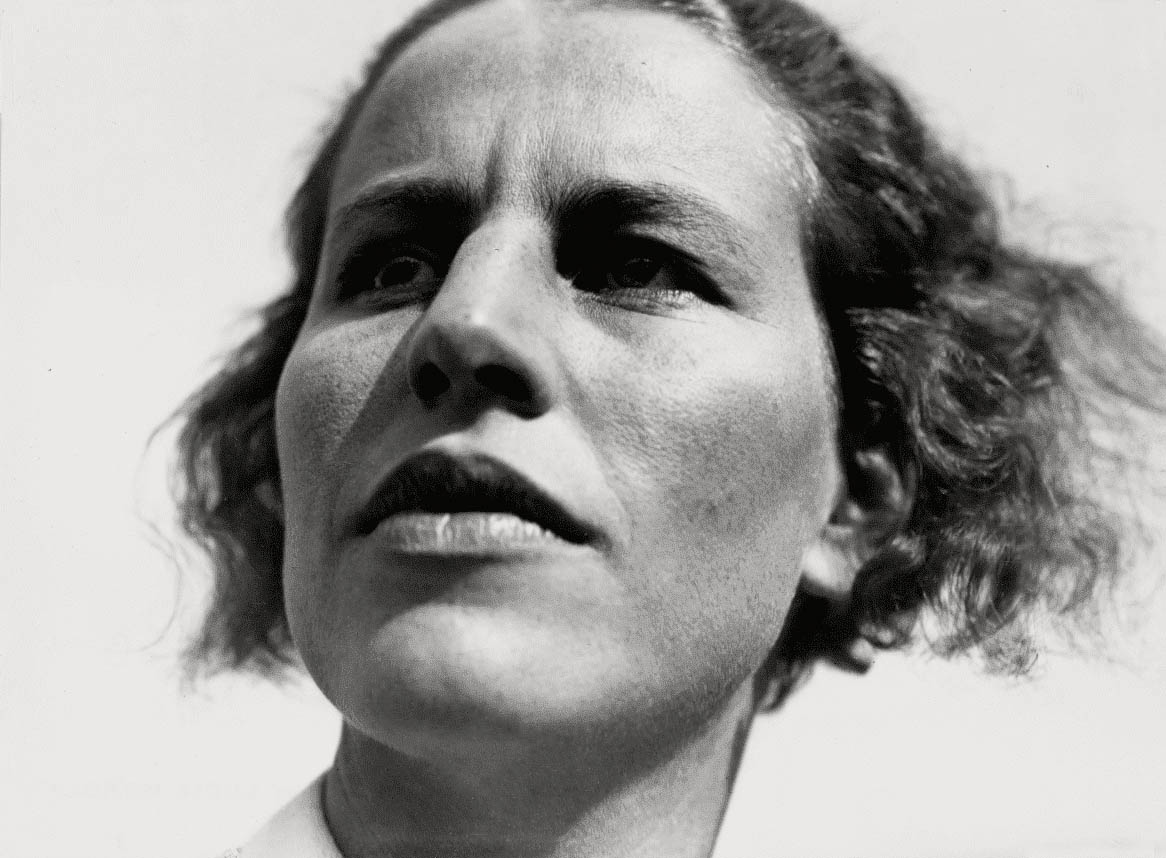
 

Lucia Moholy (British born Czech, 1894-1989) 'Ingeborg Lebert' 1927


Lucia Moholy (British born Czech, 1894-1989)
Ingeborg Lebert
1927
Gelatin silver print
22 x 29.8cm
© 2025, ProLitteris, Zürich


Lucia Moholy (British born Czech, 1894-1989) 'Lou Scheper' 1927


Lucia Moholy (British born Czech, 1894-1989)
Lou Scheper
1927
© 2025, ProLitteris, Zürich


Lou Scheper-Berkenkamp née Hermine Luise Berkenkamp (German, 1901-1976) was a painter, colour designer, the avant-garde author of children’s books, fairy-tale illustrator and costume designer.

More information on the Wikipedia website


Lucia Moholy (British born Czech, 1894-1989) 'Florence Henri, Bauhaus Dessau' 1927


Lucia Moholy (British born Czech, 1894-1989)
Florence Henri, Bauhaus Dessau
1927
© 2025, ProLitteris, Zürich


“Henri’s sophisticated, avante-garde, sculptural compositions have an almost ‘being there’ presence: a structured awareness of a way of looking at the world, a world in which the artist questions reality. She confronts the borders of an empirical reality (captured by a machine, the camera) through collage and mirrors, in order to take a leap of faith towards some form of transcendence of the real. Here she confronts the limitless freedom of creativity, of composition, to go beyond objectivity and science, to experience Existenz (Jaspers) – the realm of authentic being.*

These photographs are her experience of being in the world, of Henri observing the breath of being – the breath of herself, the breath of the objects and a meditation on those objects. There is a stillness here, an eloquence of construction and observation that goes beyond the mortal life of the thing itself. That is how these photographs seem to me to live in the world. I may be completely wrong, I probably am completely wrong – but that is how these images feel to me: a view, a perspective, the artist as prospector searching for a new way of authentically living in the world.”

Marcus Bunyan commenting on the exhibition Florence Henri. Compositions at the Pinakothek der Moderne, Munich, March – September 2014


Lucia Moholy (British born Czech, 1894-1989) 'Gypsy, Jugoslavia' 1930-1931


Lucia Moholy (British born Czech, 1894-1989)
Gypsy, Jugoslavia
1930-1931
© 2025, ProLitteris, Zürich


Lucia Moholy (British born Czech, 1894-1989) 'Ruth Fry' 1936


Lucia Moholy (British born Czech, 1894-1989)
Ruth Fry
1936
© 2025, ProLitteris, Zürich


Anna Ruth Fry (British , 1878-1962), usually known as Ruth Fry, was a Quaker writer, pacifist and peace activist.

More information on the Wikipedia website


Lucia Moholy (British born Czech, 1894-1989) 'Emma, Countess of Oxford and Asquith, London' 1937


Lucia Moholy (British born Czech, 1894-1989)
Emma, Countess of Oxford and Asquith, London
1937
© 2025, ProLitteris, Zürich
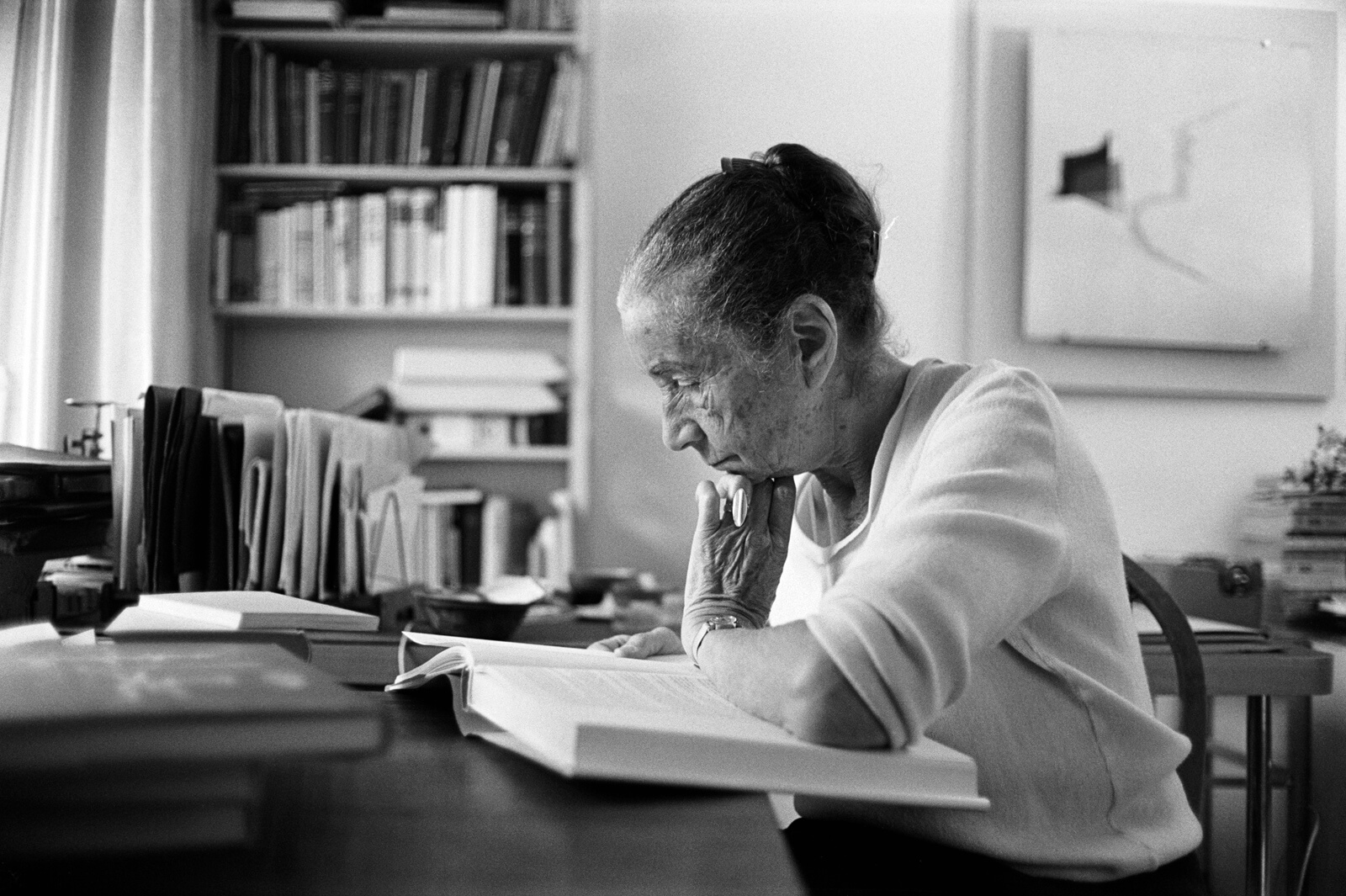
 

Hans Peter Klauser (Swiss, 1910-1989) 'Lucia Moholy in her studio in Zollikon' 1972


Hans Peter Klauser (Swiss, 1910-1989)
Lucia Moholy in her studio in Zollikon
1972
© Hans Peter Klauser/Fotostiftung Schweiz


Hans Peter Klauser (Swiss, 1910-1989) 'Lucia Moholy in her studio in Zollikon' 1972


Hans Peter Klauser (Swiss, 1910-1989)
Lucia Moholy in her studio in Zollikon
1972
© Hans Peter Klauser/Fotostiftung Schweiz


Fotostiftung Schweiz
Grüzenstrasse 45
CH-8400 Winterthur (Zürich)
Phone: +41 52 234 10 30

Opening hours:
Tuesday – Sunday 11am – 6pm
Wednesday 11am – 8pm
Closed on Mondays
Fotostiftung Schweiz website

LIKE ART BLART ON FACEBOOK

Back to top

Exhibition: ‘The Poetry of the Everyday. Photographs by Elfriede Mejchar’ at Museum der Moderne Salzburg

Exhibition dates: 26th April – 15th September 2024

Altstadt (Rupertinum)

Curator: Katharina Ehrl


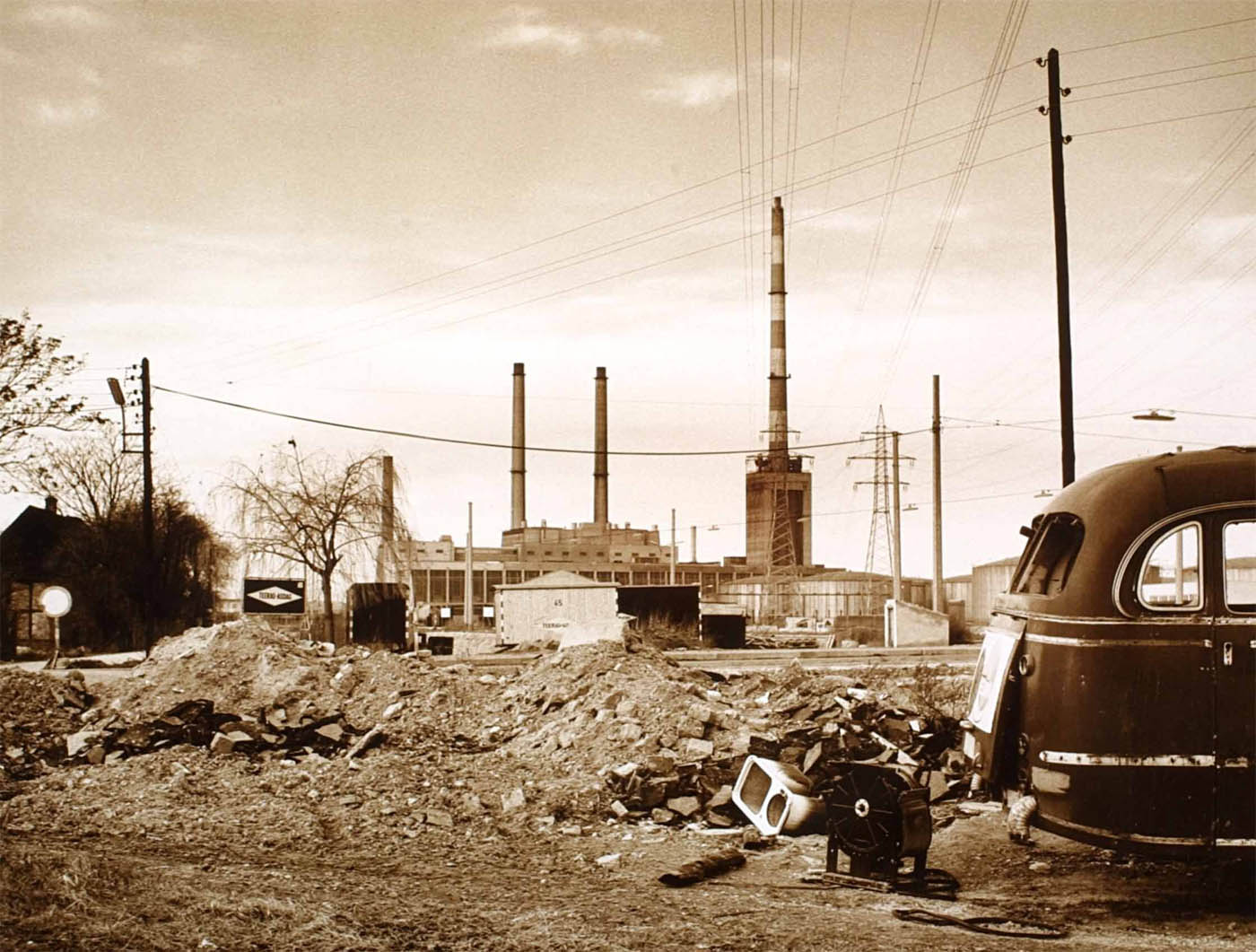
Elfriede Mejchar (Austrian, 1924-2020) From the series 'Simmeringer Heide und Erdberger Mais', 1967-1976


Elfriede Mejchar (Austrian, 1924-2020)
From the series Simmeringer Heide und Erdberger Mais, 1967-1976
Silver gelatine print on baryta paper, brown toned
Museum der Moderne Salzburg
© Bildrecht, Vienna 2024


Deriving pleasure from the dérive

In recent weeks Art Blart has posted on social documentary photographers of the urbanscape: David Goldblatt documenting social conditions in South Africa under apartheid and Roger Mayne with his “mixture of reality and unreality” photographs of the communities of Southam Road and surrounds, London.

One could argue that both could be seen as a focused urban male flâneur (or flâneuse in the case of a female), who saunters around the city observing society – the serendipitous Mayne more so than the working in series focused Goldblatt. And here we have another photographer of the urbanscape until recently unknown to me, that of the magnificent Austrian photographer Elfriede Mejchar (1924-2020) who – according to the exhibition text – is another flâneur, “her flaneur-like practice underlying her earlier bodies of work.”

But Mejchar’s was a very concentrated photographic practice, one in which the photographer again and again “explored Vienna’s peripheral zones on the southeast edge of the city” to create photographic series often created over several years. Therefore, rather than being a wandering dilettante photographer, I believe that Mejchar was a focused conceptual artist who used Guy Debord’s “Theory of the Dérive” (1956)1 (or “drift”) to ground her photographic practice.

With its focused flow of acts, its gestures, its strolls, its encounters, one of the goals of the dérive includes studying the terrain of the city (psychogeography), the exploration of urban environments that emphasises interpersonal connections to places. The pyschogeography of the urbanscape.2

A quotation by Grant W. Ray is instructive in this regard:

“Debord’s Dérive is not simple a walk through the streets of the city, of chance encounters. Instead one must move rapidly and decisively through the urban space, with intention… They should be aware of their surroundings, of the “… ecological analysis of the absolute or relative character of fissures in the urban network, of the role of microclimates, of distinct neighborhoods with no relation to administrative boundaries, and above all of the dominating action of centers of attraction…” Thus the most talented photographers who’s oeuvre includes the investigation of the urbanscape. The walk itself, the interaction of operator, camera, and site breaks down the normal relationship we have with public urban spaces. Their activity alone is the Dérive.”3


Working decisively and with intention, at the edge of the city, in spaces with no boundaries, where there were few people, or using different typologies of the city such as hotel rooms in which she stayed during her everyday job, Mejchar focused on the pyschogeography of the urbanscape through her reflective, non-decisive moment photographs, capturing “the complexity of this desolate and yet, in her eyes, beautiful landscape” and the changes that were happening to the urbanscape.

“Elfriede Mejchar consciously broke away from the photographic mainstream and the reportage style that was popular at the time. Rather than searching for the so-called “decisive moment,” she approached her subjects in a strongly conceptual and serial manner. She focused not on the extraordinary but on the unspectacular and the commonplace, the everyday and the banal, repeatedly addressing these in new ways in her photographic series.” (Text from the Wien Museum website)

Working with the periphery, the borders between urban and rural spaces, the non-decisive moment, landscapes subjected to human interventions and photographs in series, Mejchar’s photographs are more than mere representation of these sites: they challenge the viewer to “instigate more than just chance encounters for the viewer looking at the photographs,” through an understanding of the “subtle variations of the daily social realities created and maintained through public works and layout.”4 “The photographers activity of finding these sites is the dérive, the photograph itself is the pyschogeography, the questioning.”4

With her training as a classical photographer in the manner of Sudek, Brassaï or Tudor-Hart (see the first two photographs in the posting On Her Own. The photographer Elfriede Mejchar) grounding her later objective conceptual photographs, Mejchar’s point of departure is the pleasure she derives from the focused dérive and the results of her activity (through the objective and precise eye of a topographer a la Bernd and Hiller Becher) – the questioning photographs – brought to the attention of the viewer.

Mejchar investigates “traces of civilisation that humans leave in nature or along the edges of the urban fabric” and in so doing brings peripheral things (and her ideas about them) to the centre of our attention, making them psychologically valuable for all of us. The artist derives pleasure from her measured dérive and investigation of the evanescent, posing important questions about seemingly mundane things before they pass out of sight, memory, and existence.

And in her pleasure, is ours.

Dr Marcus Bunyan

See another posting about the artist’s work: On Her Own. The photographer Elfriede Mejchar at Wien Museum MUSA, Vienna, 18th April – 1st September, 2024


1/ “Psychogeography describes the effect of a geographical location on the emotions and behaviour of individuals.

How do different places make us feel and behave? The term psychogeography was invented by the Marxist theorist Guy Debord in 1955 in order to explore this. Inspired by the French nineteenth century poet and writer Charles Baudelaire’s concept of the flâneur – an urban wanderer – Debord suggested playful and inventive ways of navigating the urban environment in order to examine its architecture and spaces.”

Anonymous. “Psychogeography,” on the Tate website Nd [Online] Cited 13/09/2024

2/ Guy Debord (November 1956). “Theory of the Dérive”. Les Lèvres Nues (9). Translated by Ken Knabb.

3/ Guy Debord, “Theory of the Dérive,” 1958 on the Bureau of Public Secrets website Nd quoted in Grant W. Ray. “Dérive,” on the Silverpoetics website 13 July 2009 [Online] Cited 20/08/2024

4/ Ibid.,


Many thankx to the Museum der Moderne Salzburg for allowing me to publish the photographs in the posting. Please click on the photographs for a larger version of the image.


Poesie des Alltäglichen. Fotografien von Elfriede Mejchar / The poetry of the everyday

To mark the centenary of her birth, in 2024 three museums in Austria host exhibitions of works by the photographer Elfriede Mejchar (1924-2020, Vienna, AT). The Museum der Moderne Salzburg presents the artist as a portraitist. Curator Katharina Ehrl guides you through the exhibition in this short film.


In 2024, three museums host exhibitions of works by the Austrian photographer Elfriede Mejchar (1924-2020, Vienna, AT). The Museum der Moderne Salzburg is collaborating with the Landesgalerie Niederösterreich and the Wien Museum to honor the artist’s work at three different locations on the occasion of her 100th birthday, with each location offering a different focus.

Salzburg’s contribution to this collaborative project will present the artist’s portraits. With her series of works entitled “Artists at work” (1954-1961), for example, Mejchar demonstrates impressively how she engages with the artistic personalities of Christa Hauer, Friedensreich Hundertwasser, Josef Mikl and Arnulf Rainer by mapping their working situation in their studios. But she also demonstrated the same precision of perception when encountering the inanimate objects in her surroundings, thereby giving landscapes, flowers and discarded furniture the appearance of animated portraits.

The photo collections at the Museum der Moderne Salzburg hold a total of 665 photographs by Mejchar. Otto Breicha, the first director of the Museum’s predecessor institution, was a long-time colleague of Mejchar who recognised the artistic value of her photographic work and helped to promote it. As early as 1982, one year before the official opening of the Rupertinum, a comprehensive collection of her work was added to the photographic collection that later grew through further purchases and donations and today constitutes a focal point of the Museum’s photographic holdings.

Text from the Museum der Moderne Salzburg website


Installation view of the exhibition 'The Poetry of the Everyday. Photographs by Elfriede Mejchar', Museum der Moderne Salzburg 2024


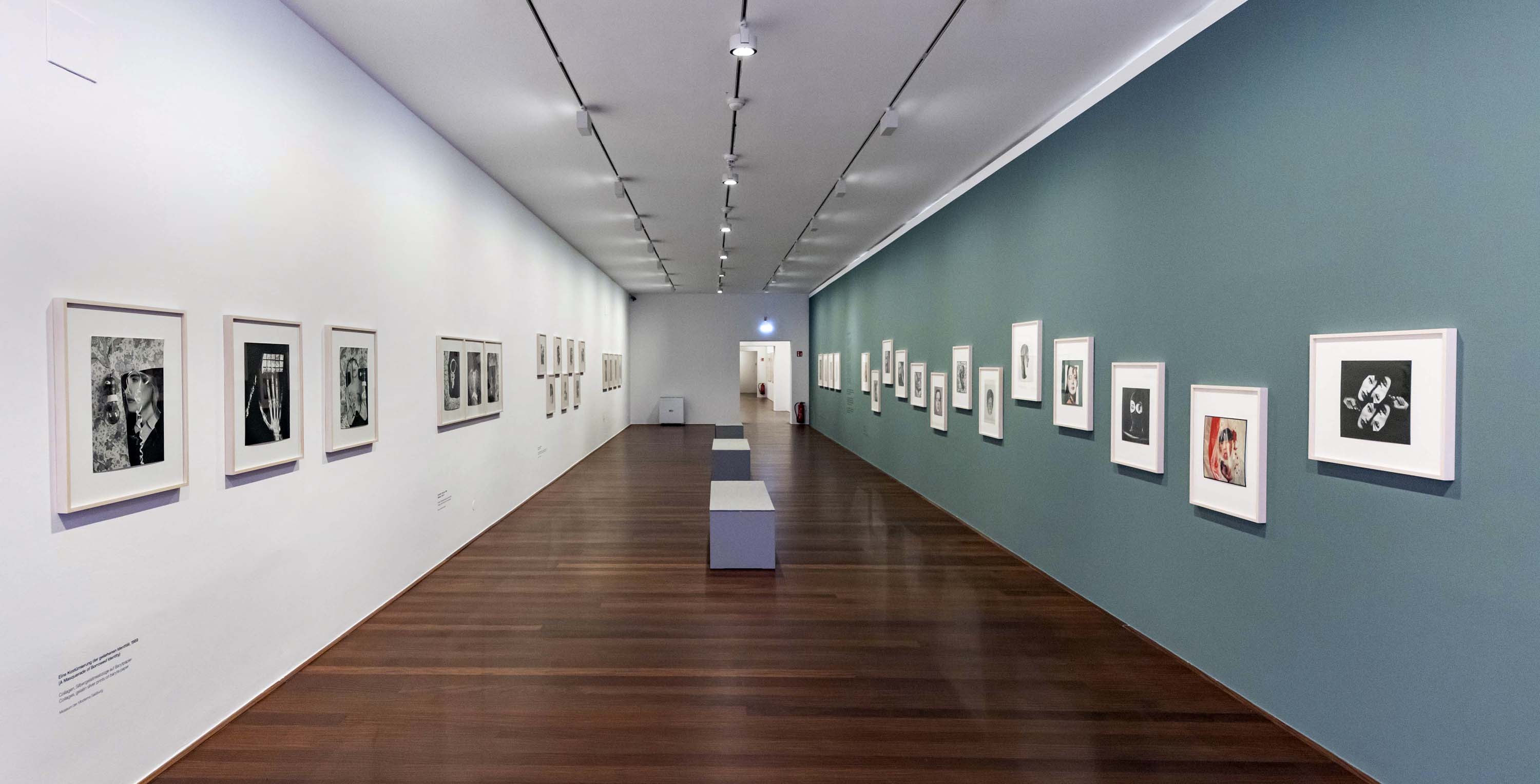
Installation view of the exhibition The Poetry of the Everyday. Photographs by Elfriede Mejchar, Museum der Moderne Salzburg 2024 showing at left, work from Mejchar’s series Eine Kostümierung der geliehenen Identität (A Masquerade of Borrowed Identity) (below); and at right, photographs from the series Nobody is Perfect (below)
© Museum der Moderne Salzburg
Photo: wildbild/Günter Freund


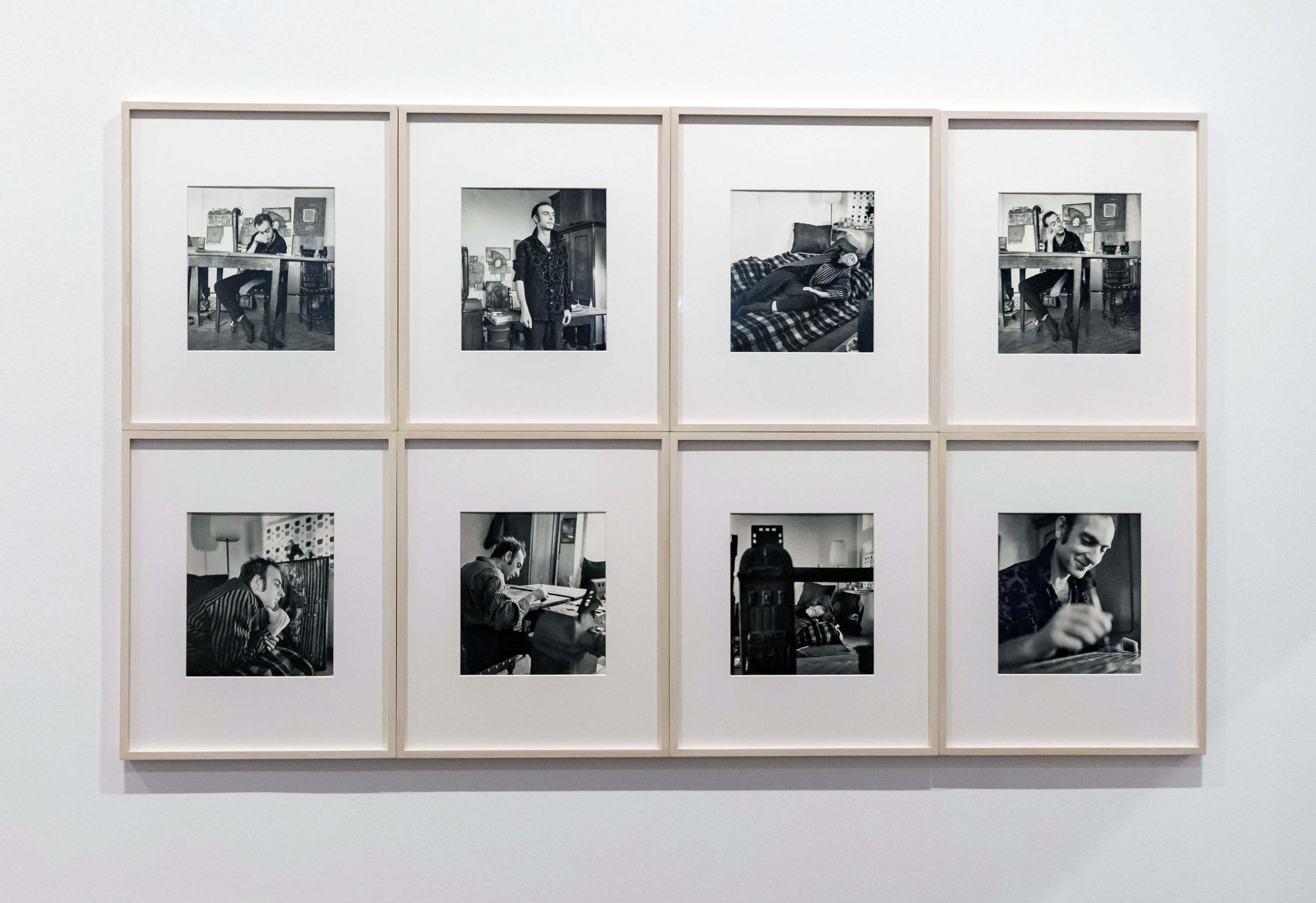
Installation view of the exhibition 'The Poetry of the Everyday. Photographs by Elfriede Mejchar', Museum der Moderne Salzburg 2024 showing work from Mejchar's series 'Künstler bei der Arbeit, 1954-1961' (Artists at work, 1954–1961)


Installation view of the exhibition The Poetry of the Everyday. Photographs by Elfriede Mejchar, Museum der Moderne Salzburg 2024 showing work from Mejchar’s series Künstler bei der Arbeit, 1954-1961 (Artists at work, 1954-1961) (below)
© Museum der Moderne Salzburg
Photo: wildbild/Günter Freund


Elfriede Mejchar (Austrian, 1924-2020) 'Arnulf Rainer' 1954-1961


Elfriede Mejchar (Austrian, 1924-2020)
Arnulf Rainer
1954-1961
From the series Künstler bei der Arbeit, 1954-1961 (Artists at work, 1954-1961)
Silver gelatin print on baryta paper
Federal Photography Collection at the Museum der Moderne Salzburg


Arnulf Rainer (Austrian, b. 1929)

Arnulf Rainer (born 8 December 1929) is an Austrian painter noted for his abstract informal art.

Rainer was born in Baden, Austria. During his early years, Rainer was influenced by Surrealism. In 1950, he founded the Hundsgruppe (dog group) together with Ernst Fuchs, Arik Brauer, and Josef Mikl. After 1954, Rainer’s style evolved towards Destruction of Forms, with blackenings, overpaintings, and maskings of illustrations and photographs dominating his later work. He was close to the Vienna Actionism, featuring body art and painting under the influence of drugs. He painted extensively on the subject of Hiroshima such as it relates to the nuclear bombing of the Japanese city and the inherent political and physical fallout.

Text from the Wikipedia website 


Elfriede Mejchar (Austrian, 1924-2020) 'Christa Hauer' 1954-1961


Elfriede Mejchar (Austrian, 1924-2020)
Christa Hauer
1954-1961
From the series Künstler bei der Arbeit, 1954-1961 (Artists at work, 1954–1961)
Silver gelatin print on baryta paper
Federal Photography Collection at the Museum der Moderne Salzburg


Christa Hauer-Fruhmann (Austrian, 1925-2013)

Christa Hauer-Fruhmann (b. March 13, 1925 in Vienna; d. March 21, 2013 in St. Pölten) was an Austrian painter. …

She was initially under the artistic influence of her father and created representational works such as landscapes, portraits and nude drawings. At the end of her stay in the USA, around 1960, she turned to abstract painting, particularly action painting, color field painting and informal art. Later, cosmic forms and a turn to nature determined her works.

Text from the German Wikipedia website translated by Google Translate


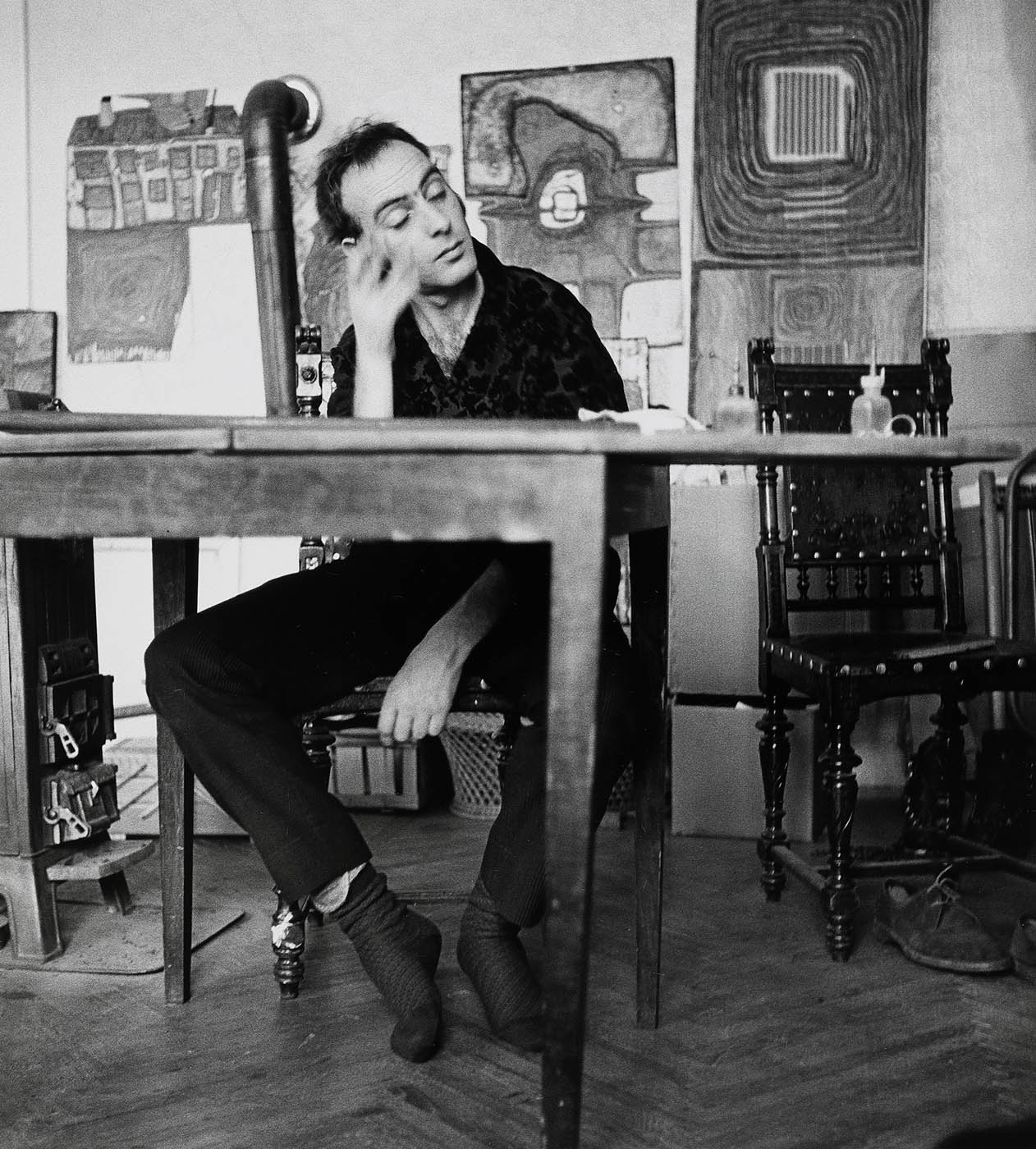
Elfriede Mejchar (Austrian, 1924-2020) 'Friedensreich Hundertwasser' 1954-1961


Elfriede Mejchar (Austrian, 1924-2020)
Friedensreich Hundertwasser
1954-1961
From the series Künstler bei der Arbeit, 1954-1961 (Artists at work, 1954-1961)
Silver gelatin print on baryta paper
Federal Photography Collection at the Museum der Moderne Salzburg


Friedensreich Hundertwasser (Austrian, 1928-2000)

Friedensreich Hundertwasser Regentag Dunkelbunt (born Friedrich Stowasser, born December 15, 1928 in Vienna; died February 19, 2000 on board the Queen Elizabeth 2 off Brisbane) was an Austrian artist, who worked primarily as a painter, but also in the fields of architecture and environmental protection. …

Artistically, he was an opponent of the “straight line” and any kind of standardisation throughout his life. This is particularly evident in his work in the field of building design, which is characterised by imaginative liveliness and individuality, but above all by the inclusion of nature in architecture.

Text from the German Wikipedia website translated by Google Translate


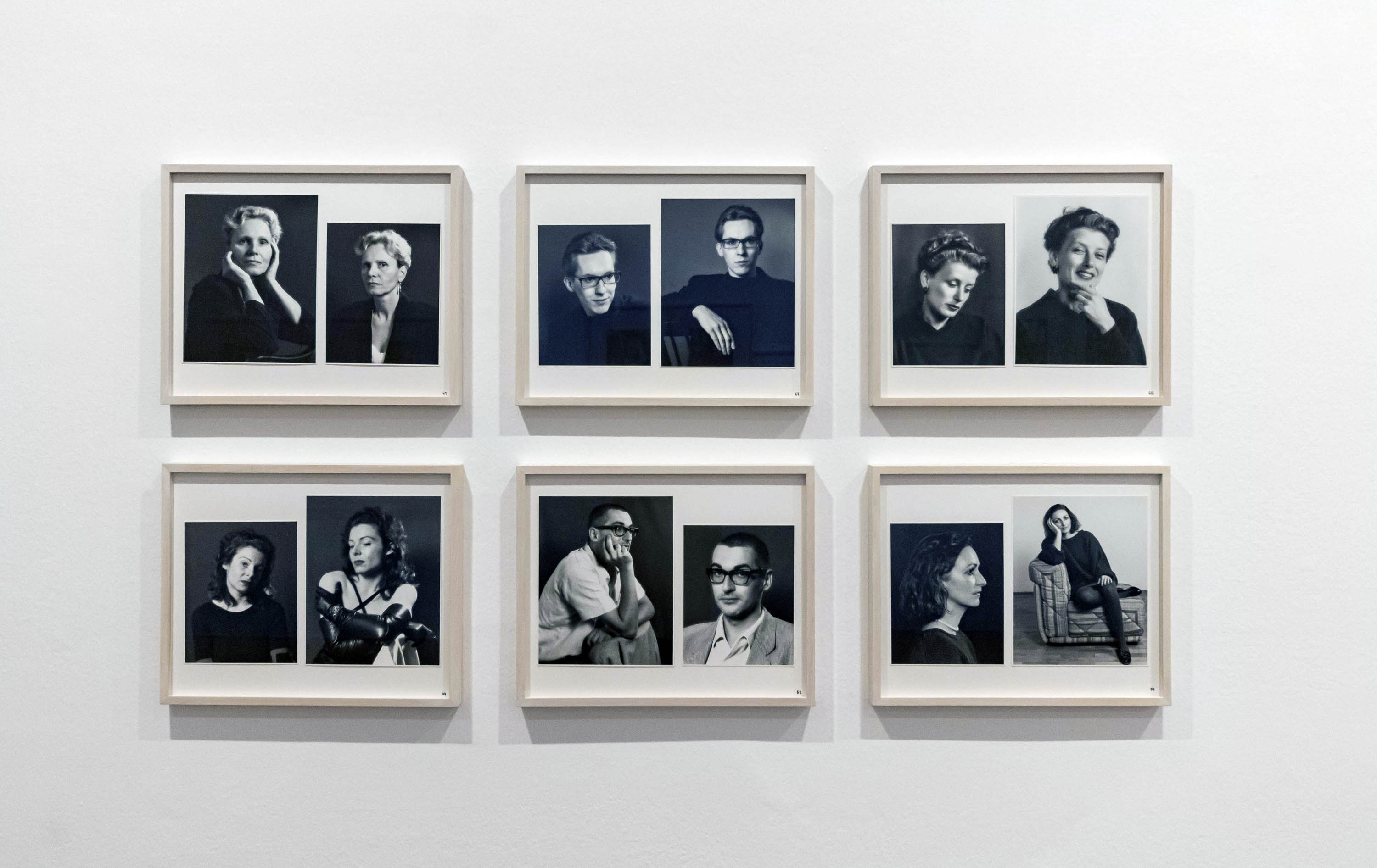
Installation view of the exhibition 'The Poetry of the Everyday. Photographs by Elfriede Mejchar', Museum der Moderne Salzburg 2024 showing photographs from Mejchar's series 'Porträts von Künstler-Photographen und Kunstvermittlern' (Portraits of Artist Photographers and Art Educators)

Installation view of the exhibition 'The Poetry of the Everyday. Photographs by Elfriede Mejchar', Museum der Moderne Salzburg 2024 showing photographs from Mejchar's series 'Porträts von Künstler-Photographen und Kunstvermittlern' (Portraits of Artist Photographers and Art Educators)


Installation view of the exhibition The Poetry of the Everyday. Photographs by Elfriede Mejchar, Museum der Moderne Salzburg 2024 showing photographs from Mejchar’s series Porträts von Künstler-Photographen und Kunstvermittlern (Portraits of Artist Photographers and Art Educators) (below)
© Museum der Moderne Salzburg, photo: wildbild/Günter Freund


Elfriede Mejchar (Austrian, 1924-2020) 'Aglaia Konrad' 1988


Elfriede Mejchar (Austrian, 1924-2020)
Aglaia Konrad
1988
From the series Porträts von Künstler-Photographen und Kunstvermittlern (Portraits of Artist Photographers and Art Educators)
Silver gelatin print on baryta paper
Federal Photography Collection at the Museum der Moderne Salzburg


Aglaia Konrad (Austrian, b. 1960)

Aglaia Konrad (born 1960) is an Austrian photographer and educator living in Brussels. …

Konrad’s photographs explore urban space in large cities. Konrad’s work has been to known to be distinctly international in that it highlights urban elements independent of cultural markers. Her work highlights the ubiquitous elements of urban life through methods like filming a city from the perspective of a moving car or compiling a series of aerial views of skyscrapers.

Text from the Wikipedia website


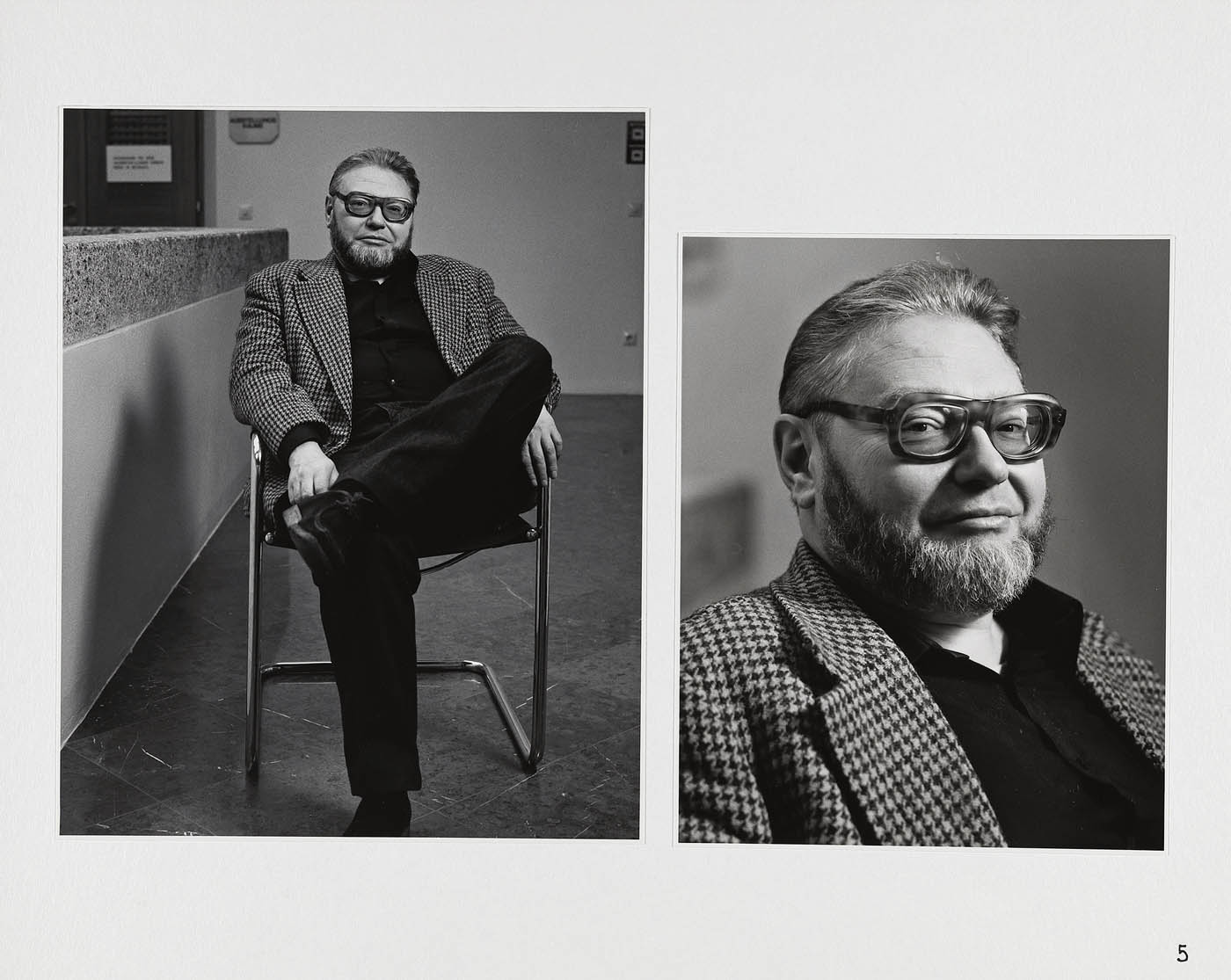
Elfriede Mejchar (Austrian, 1924-2020) 'Prof. Dr. Otto Breicha' 1988


Elfriede Mejchar (Austrian, 1924-2020)
Prof. Dr. Otto Breicha
1988
From the series Porträts von Künstler-Photographen und Kunstvermittlern (Portraits of Artist Photographers and Art Educators)
Silver gelatin print on baryta paper
Federal Photography Collection at the Museum der Moderne Salzburg


Otto Breicha (Austrian, 1932-2003)

Otto Breicha (b. 26 July 1932 in Vienna; d, 28 December 2003 in Vienna) was an Austrian art historian, publicist and museum director. …

Breicha is considered an important integration figure in the Austrian art and literature scene of the 1960s. As director of the Rupertinum he collected works by Kurt Moldovan, Günter Brus, Fritz Wotruba and Gotthard Muhr, among others. He edited portfolios by Karl Anton Fleck, Gotthard Muhr, Peter Pongratz, Alois Riedl, Karl Rössing, Johannes Wanke, Max Weiler and many others.

Breicha built up an important photo collection in the Rupertinum. He also took photos of authors himself, especially during his time at the Austrian Society for Literature from 1962 to 1972.

Text from the German Wikipedia website translated by Google Translate


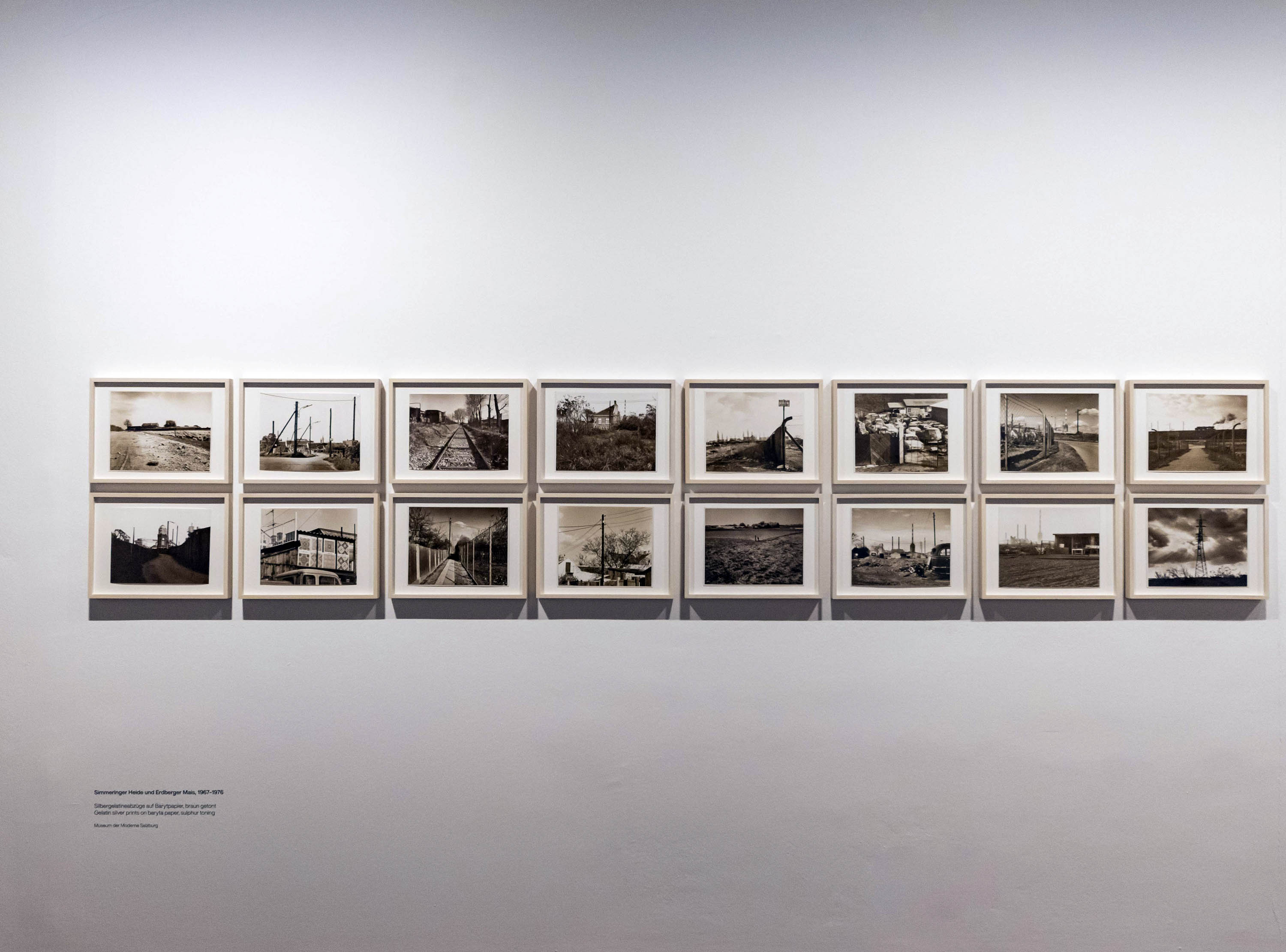
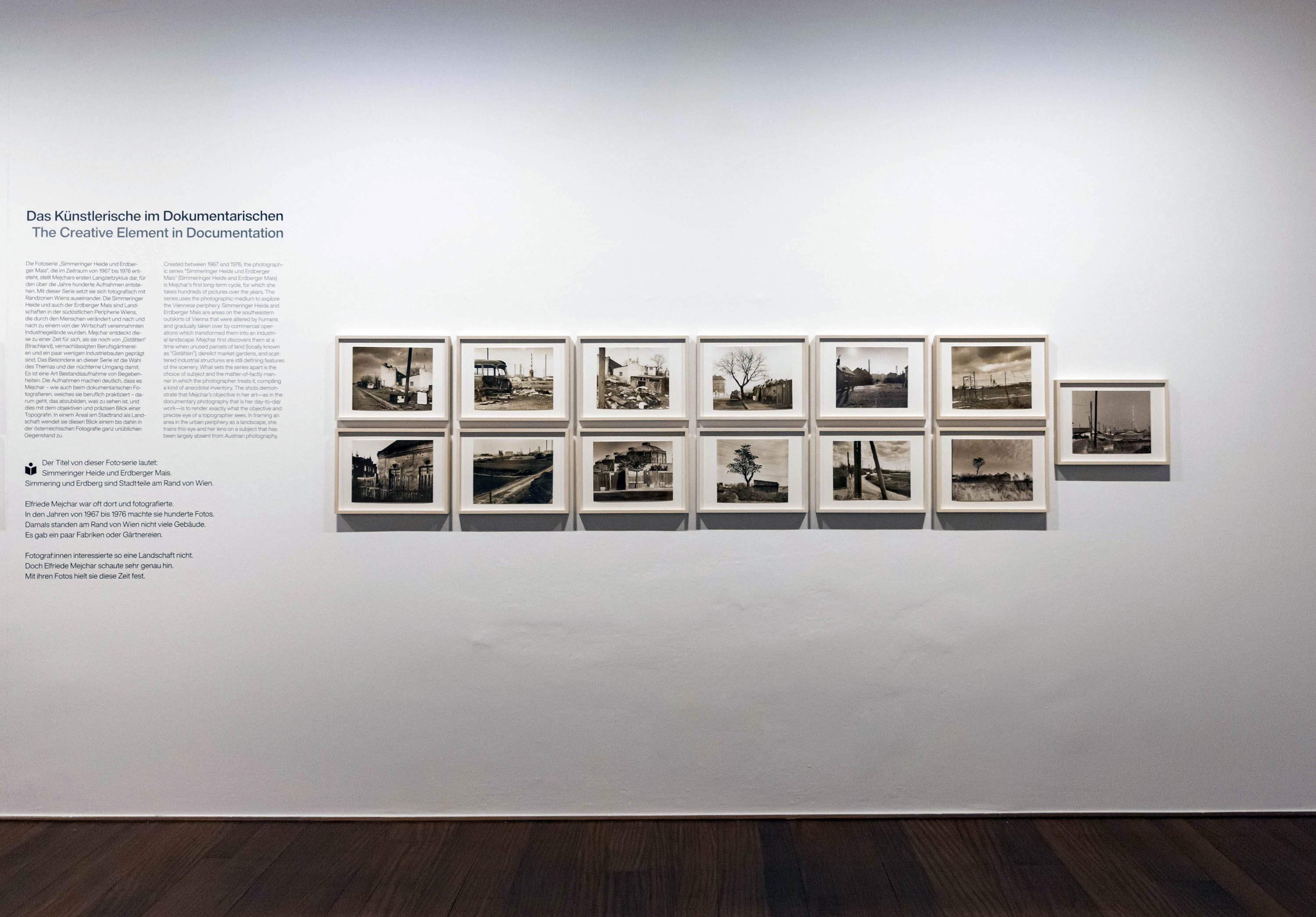
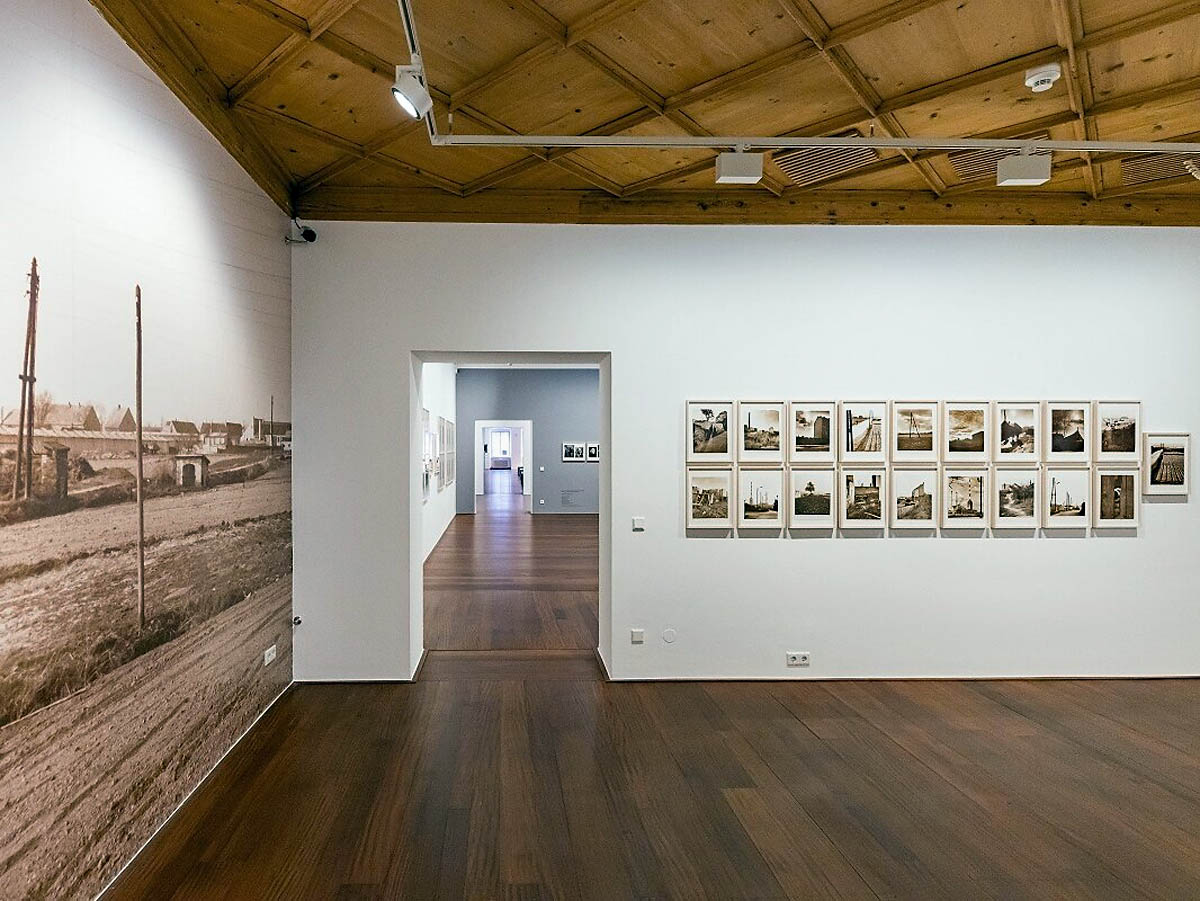
Installation view of the exhibition 'The Poetry of the Everyday. Photographs by Elfriede Mejchar', Museum der Moderne Salzburg 2024 showing photographs from Mejchar's series 'Simmeringer Heide und Erdberger Mais, 1967-1976'

Installation view of the exhibition 'The Poetry of the Everyday. Photographs by Elfriede Mejchar', Museum der Moderne Salzburg 2024 showing photographs from Mejchar's series 'Simmeringer Heide und Erdberger Mais, 1967-1976'

Installation view of the exhibition 'The Poetry of the Everyday. Photographs by Elfriede Mejchar', Museum der Moderne Salzburg 2024 showing photographs from Mejchar's series 'Simmeringer Heide und Erdberger Mais, 1967-1976'

Installation view of the exhibition 'The Poetry of the Everyday. Photographs by Elfriede Mejchar', Museum der Moderne Salzburg 2024 showing photographs from Mejchar's series 'Simmeringer Heide und Erdberger Mais, 1967-1976'


Installation view of the exhibition The Poetry of the Everyday. Photographs by Elfriede Mejchar, Museum der Moderne Salzburg 2024 showing photographs from Mejchar’s series Simmeringer Heide und Erdberger Mais, 1967-1976 (below)
© Museum der Moderne Salzburg, photo: wildbild/Günter Freund


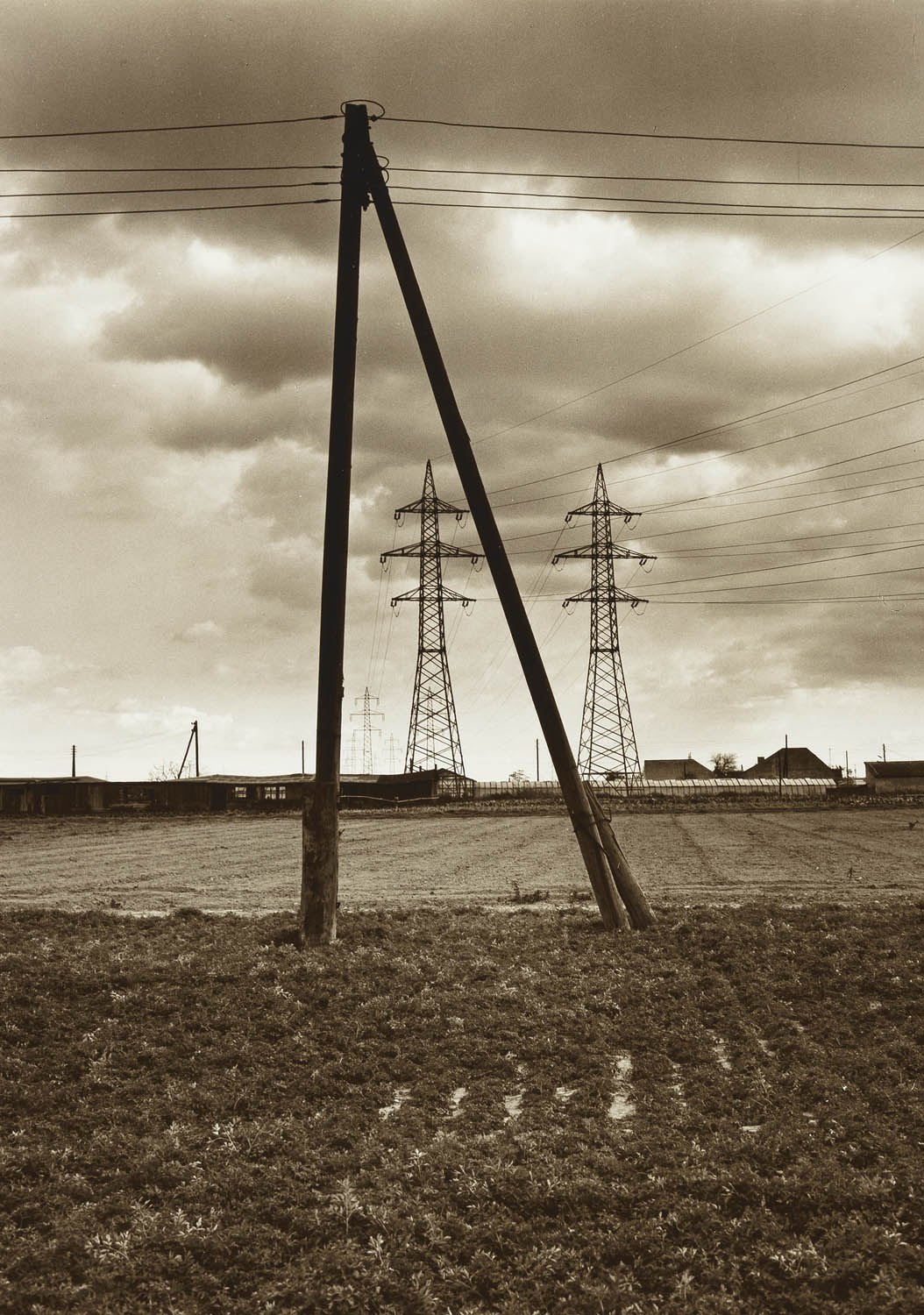
Elfriede Mejchar (Austrian, 1924-2020) From the series 'Simmeringer Heide und Erdberger Mais', 1967-1976


Elfriede Mejchar (Austrian, 1924-2020)
From the series Simmeringer Heide und Erdberger Mais, 1967-1976
Silver gelatine print on baryta paper, brown toned
Museum der Moderne Salzburg
© Bildrecht, Vienna 2024


Elfriede Mejchar (Austrian, 1924-2020) From the series 'Simmeringer Heide und Erdberger Mais, 1967-1976'


Elfriede Mejchar (Austrian, 1924-2020)
From the series Simmeringer Heide und Erdberger Mais, 1967-1976
Silver gelatine print on baryta paper, brown toned
Museum der Moderne Salzburg
© Bildrecht, Vienna 2024


The Creative Element in Documentation

Created between 1967 and 1976, the photographic series “Simmeringer Heide und Erdberger Mais” (Simmeringer Heide and Erdberger Mais) is Mejchar’s first long-term cycle, for which she takes hundreds of pictures over the years. The series uses the photographic medium to explore the Viennese periphery. Simmeringer Heide and Erdberger Mais are areas on the southeastern outskirts of Vienna that were altered by humans and gradually taken over by commercial operations which transformed them into an industrial landscape. Mekchav first discovers them at a time when unused parcels of land (locally known as “Gstatten”), derelict market gardens, and scattered industrial structures are still defining features of the scenery. What sets the series apart is the choice of subject and the matter-of-fact manner in which the photographer treats it, compiling a kind of anecdotal inventory. The shots demonstrate that Mejchar’s objective in there art – as in the documentary photography that is her day-to-day work – is to render exactly what the objective and precise eye of a topographer sees. In framing an area in the urban periphery as a landscape, she trains this eye and her lens on a subject that has been largely absent from Austrian photography.

Wall text from the exhibition


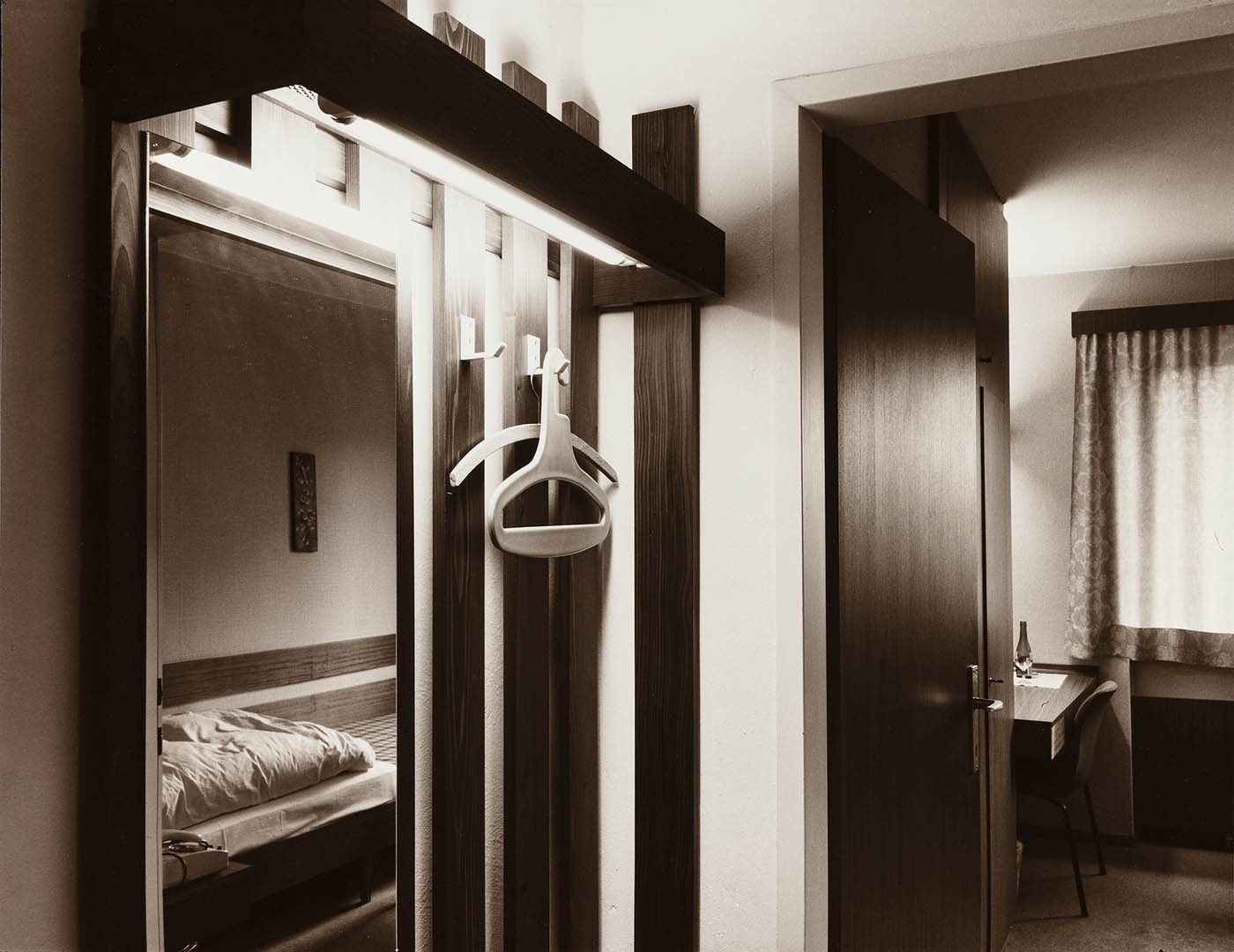
Installation view of the exhibition 'The Poetry of the Everyday. Photographs by Elfriede Mejchar', Museum der Moderne Salzburg 2024 showing work from Mejchar's series 'Hotel (Fremdenzimmer), 1970-1986' (Hotel (Guest Room), 1970-1986)


Installation view of the exhibition The Poetry of the Everyday. Photographs by Elfriede Mejchar, Museum der Moderne Salzburg 2024 showing work from Mejchar’s series Hotel (Fremdenzimmer), 1970-1986 (Hotel (Guest Room), 1970-1986) (below)
© Museum der Moderne Salzburg, photo: wildbild/Günter Freund


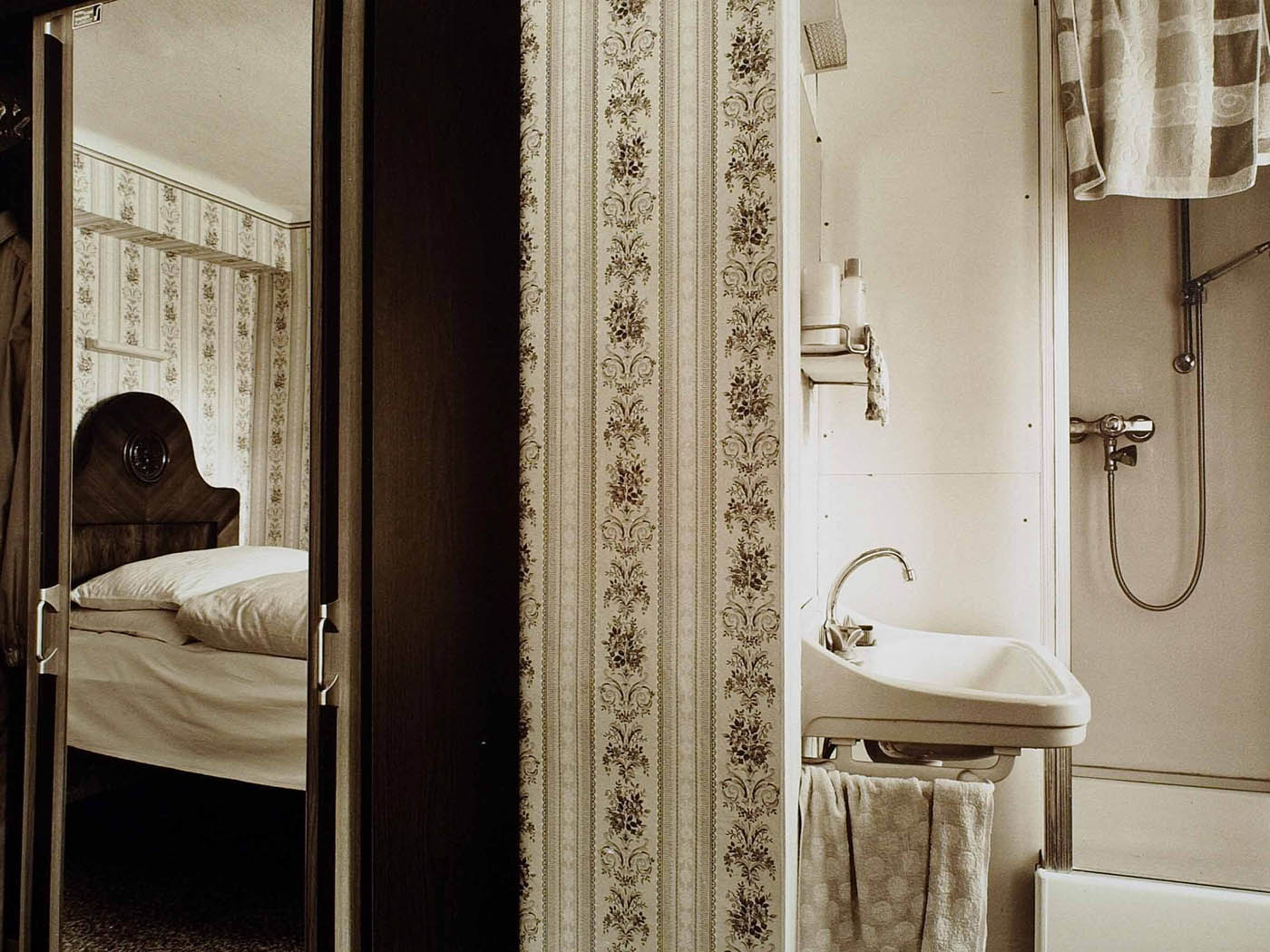
Elfriede Mejchar (Austrian, 1924-2020) From the series 'Hotel (Fremdenzimmer)', 1970-1986 (Hotel (Guest Room), 1970-1986)


Elfriede Mejchar (Austrian, 1924-2020)
From the series Hotel (Fremdenzimmer), 1970-1986 (Hotel (Guest Room), 1970-1986)
Silver gelatin print on baryta paper, brown tones
Federal Photography Collection at the Museum der Moderne Salzburg


Elfriede Mejchar (Austrian, 1924-2020) From the series 'Hotel (Fremdenzimmer)', 1970-1986 (Hotel (Guest Room), 1970-1986)


Elfriede Mejchar (Austrian, 1924-2020)
From the series Hotel (Fremdenzimmer), 1970-1986 (Hotel (Guest Room), 1970-1986)
Silver gelatin print on baryta paper, brown tones
Federal Photography Collection at the Museum der Moderne Salzburg
© Bildrecht, Vienna, 2024
Photo: Andrew Phelps


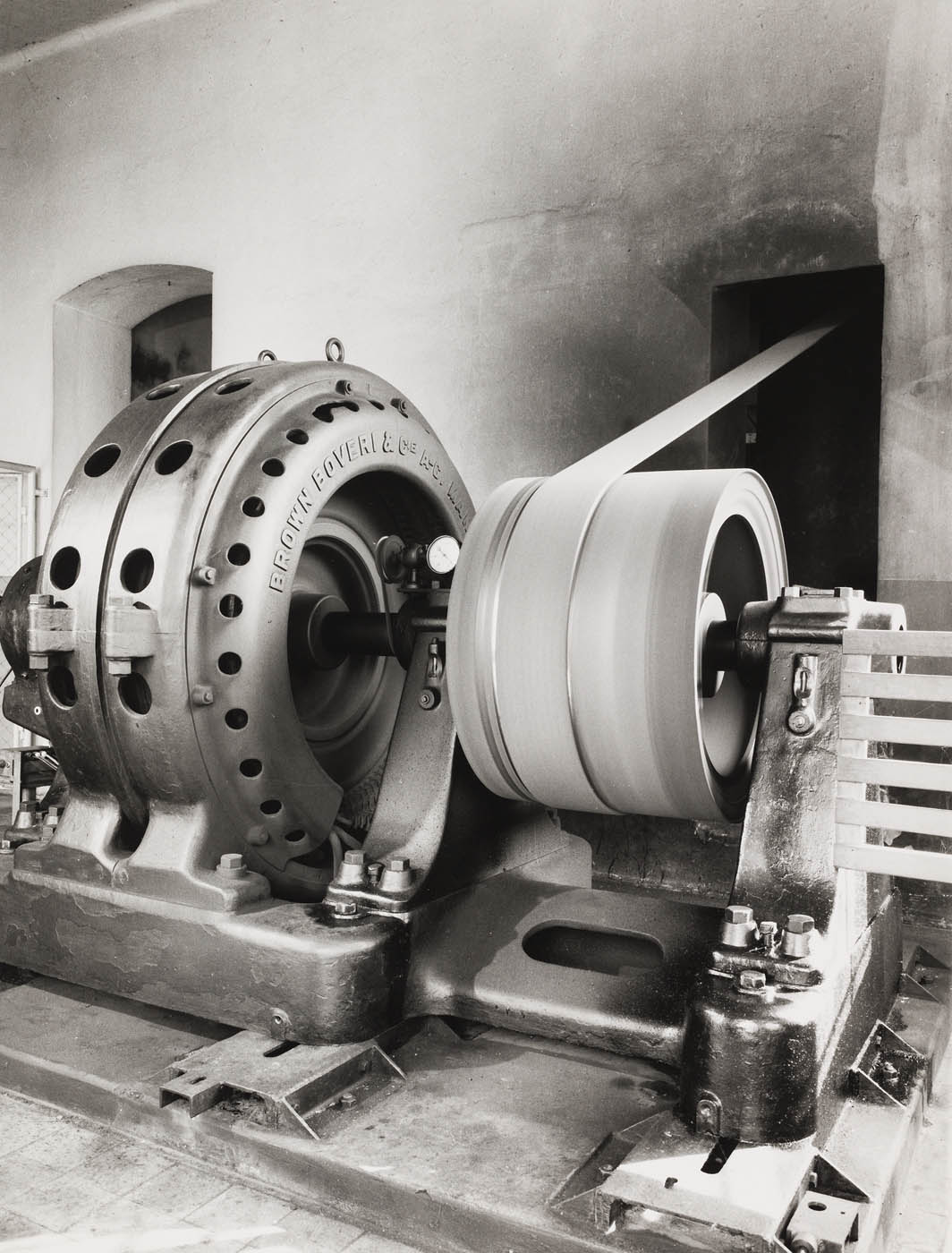
Elfriede Mejchar (Austrian, 1924-2020) 'Flachsspinnerei in Stadl-Paura' (Flax spinning mill in Stadl-Paura) 1986


Elfriede Mejchar (Austrian, 1924-2020)
Flachsspinnerei in Stadl-Paura (Flax spinning mill in Stadl-Paura)
1986
© Elfriede Mejchar/Landessammlungen NÖ


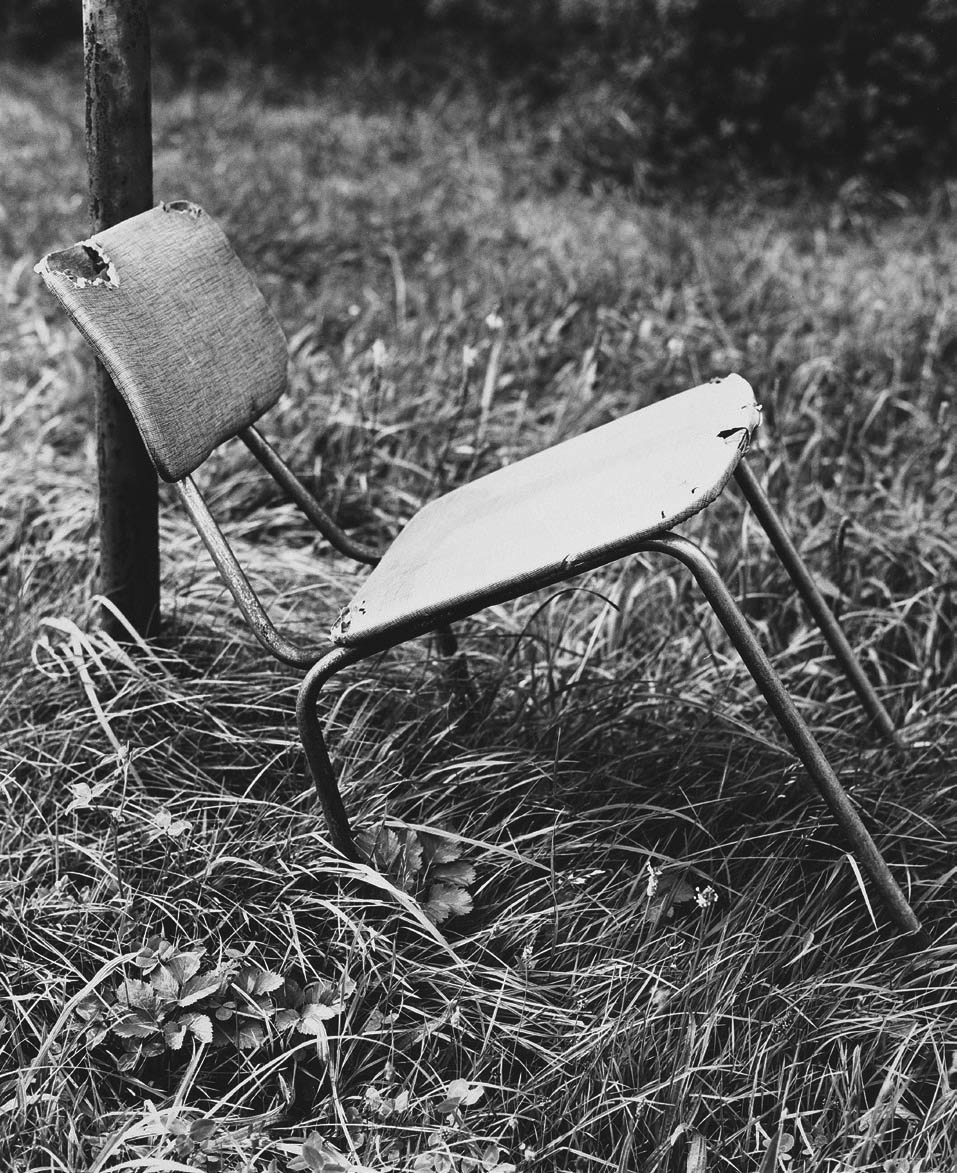
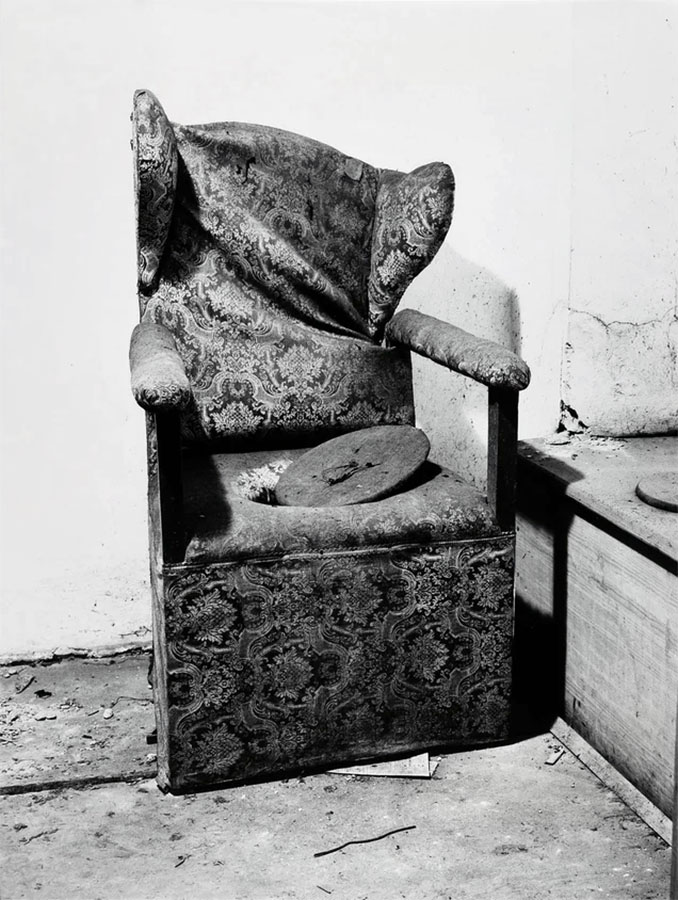
Installation view of the exhibition 'The Poetry of the Everyday. Photographs by Elfriede Mejchar', Museum der Moderne Salzburg 2024 showing work from Mejchar's series 'Die Monatssesseln, 1986-1988' (The Armchairs of the Month, 1986-1988)

Installation view of the exhibition 'The Poetry of the Everyday. Photographs by Elfriede Mejchar', Museum der Moderne Salzburg 2024 showing work from Mejchar's series 'Die Monatssesseln, 1986-1988' (The Armchairs of the Month, 1986-1988)


Installation view of the exhibition The Poetry of the Everyday. Photographs by Elfriede Mejchar, Museum der Moderne Salzburg 2024 showing work from Mejchar’s series Die Monatssesseln, 1986-1988 (The Armchairs of the Month, 1986-1988) (below)
© Museum der Moderne Salzburg, photo: wildbild/Günter Freund


Elfriede Mejchar (Austrian, 1924-2020) From the series 'Die Monatssesseln, 1986-1988' (The Armchairs of the Month, 1986-1988)


Elfriede Mejchar (Austrian, 1924-2020)
From the series Die Monatssesseln, 1986-1988 (The Armchairs of the Month, 1986-1988)
Federal Photography Collection at the Museum der Moderne Salzburg


Elfriede Mejchar (Austrian, 1924-2020) From the series 'Die Monatssesseln, 1986-1988' (The Armchairs of the Month, 1986-1988)


Elfriede Mejchar (Austrian, 1924-2020)
From the series Die Monatssesseln, 1986-1988 (The Armchairs of the Month, 1986-1988)
Federal Photography Collection at the Museum der Moderne Salzburg


Elfriede Mejchar (Austrian, 1924-2020) From the series 'Oscillation (Salzburger Landesatelier)' (Oscillation (Salzburg State Studio)) 1988


Elfriede Mejchar (Austrian, 1924-2020)
From the series Oscillation (Salzburger Landesatelier) (Oscillation (Salzburg State Studio))
1988
Silver gelatin print on baryta paper
Federal Photography Collection at the Museum der Moderne Salzburg


Installation view of the exhibition 'The Poetry of the Everyday. Photographs by Elfriede Mejchar', Museum der Moderne Salzburg 2024 showing work from the Mejchar's series 'Eine Kostümierung der geliehenen Identität' (A Masquerade of Borrowed Identity)


Installation view of the exhibition The Poetry of the Everyday. Photographs by Elfriede Mejchar, Museum der Moderne Salzburg 2024 showing work from the Mejchar’s series Eine Kostümierung der geliehenen Identität (A Masquerade of Borrowed Identity) (below)
© Museum der Moderne Salzburg, photo: wildbild/Günter Freund


Elfriede Mejchar (Austrian, 1924-2020) From the series 'Eine Kostümierung der geliehenen Identität' (A Masquerade of Borrowed Identity) 1989


Elfriede Mejchar (Austrian, 1924-2020)
From the series Eine Kostümierung der geliehenen Identität (A Masquerade of Borrowed Identity)
1989
Gelatin silver print on baryta paper
Museum der Moderne Salzburg
© Bildrecht, Vienna, 2024
Photo: Andrew Phelps


Introduction

Elfriede Mejchar (1924-2020 Vienna, AT), the grande dame of Austrian photography, was in the employ of the Federal Monuments Office for almost forty years. Meanwhile, she also began her groundbreaking work on the outskirts of Vienna. Harnessing the photographic series as a documentary and investigative medium, she limned an imposing portrait of the urban landscape. Her work, which had a lasting influence on the evolution of photography in Austria, now also stands as an important documentary record of the country in the postwar period.

As a professional photographer, Mejchar traveled to various regions throughout Austria, including in Lower and Upper Austria and Styria, to capture buildings and cultural assets of art-historical significance in photographs. Yet she also used her official trips and her scant free time to pursue her own photographic interests, which focused on the small and seemingly trivial and the traces of civilisation that humans leave in nature or along the edges of the urban fabric and that receive little if any attention. It may seem that the documentary dimension is less important in the resulting works, that it is eclipsed by the narrative element. In fact, Mejchar fuses both, scrutinising her motifs with an attentive eye that picks up on the singular or peculiar and registers it without manipulation.

Elfriede Mejchar was not interested in the so-called “pivotal moment” and did not care for the conventional photojournalistic style of her time. Her work began when people had left, and she approached her themes from a very conceptual angle. Both the documentary series she created under the open sky and the object photographs, still lifes, and collages she made in her studio reflect this approach. She photographed the “evanescent before it evanesces”, in urban and rural landscapes and everyday scenes, capturing the changes that affected the particular scenery and its distinctive atmosphere.

The Creative Element in Documentation

Produced between 1967 and 1976, the photographic series “Simmeringer Heide and Erdberger Mais” is Mejchar’s first long-term cycle, for which she takes hundreds of pictures over the years. The series uses the photographic medium to explore the Viennese periphery. Simmeringer Heide and Erdberger Mais are areas on the southeastern outskirts of Vienna that were altered by humans and gradually taken over by commercial operations which transformed them into an industrial landscape. Mejchar first discovers them at a time when unused parcels of land (locally known as “Gstätten”), derelict market gardens, and scattered industrial structures are still defining features of the scenery. What sets the series apart is the choice of subject and the matter-of-factly manner in which the photographer treats it, compiling a kind of anecdotal inventory – empty lots, paths and roads, utility poles and a select few close-ups. The shots demonstrate that Mejchar’s objective in her art – as in the documentary photography that is her day-to-day work – is to render exactly what the objective and precise eye of a topographer sees. In framing an area in the urban periphery as a landscape, she trains this eye and her lens on a subject that has been largely absent from Austrian photography.

The use of a sulfur-based solution to tone the photographs – which is the cause of the brownish tinge – reflects a recurring concern in Mejchar’s photographs: existence in time and impermanence. In this instance, the technique’s purpose is not to alter the colour, but rather to make it more durable.


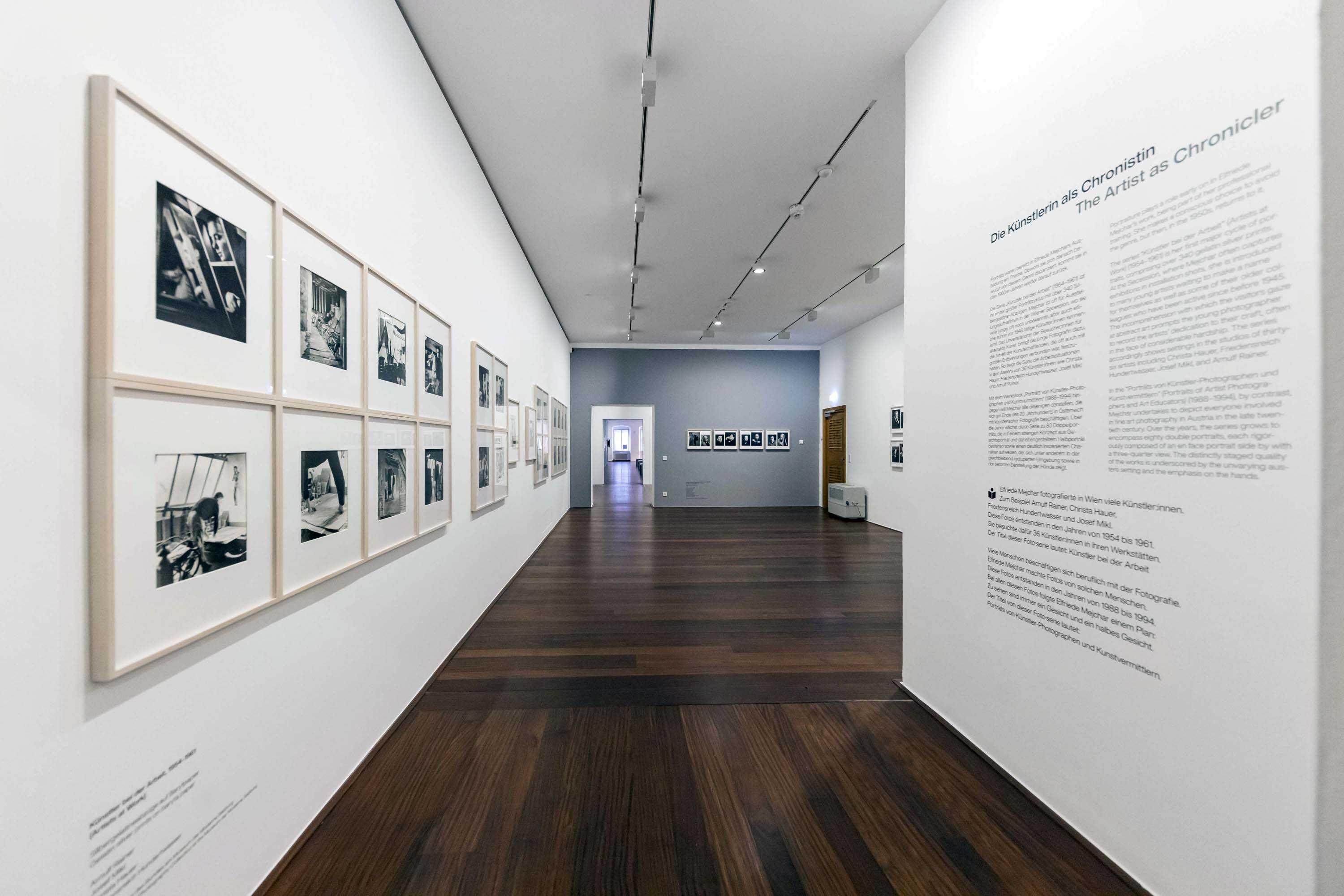
Installation view of the exhibition 'The Poetry of the Everyday. Photographs by Elfriede Mejchar', Museum der Moderne Salzburg 2024 showing at left, work from Mejchar's series 'Künstler bei der Arbeit, 1954-1961' (Artists at work, 1954-1961); and at right, the wall text 'The Artist as Chronicler'


Installation view of the exhibition The Poetry of the Everyday. Photographs by Elfriede Mejchar, Museum der Moderne Salzburg 2024 showing at left, work from Mejchar’s series Künstler bei der Arbeit, 1954-1961 (Artists at work, 1954-1961); and at right, the wall text ‘The Artist as Chronicler’
© Museum der Moderne Salzburg, photo: wildbild/Günter Freund


The Artist as Chronicler

Portraiture plays a role early on in Elfriede Mejchar’s work; she receives her professional training in a portrait studio. She subsequently makes a conscious choice to avoid the genre, but then, in the 1950s, returns to it.

“Künstler bei der Arbeit”, 1954-1961 (Artists at Work)

The series “Künstler bei der Arbeit” (Artists at Work) is her first major cycle of portraits, comprising over 340 gelatin silver prints. Mejchar is often brought in to capture exhibitions in installation shots, especially at the Vienna Secession, where she is introduced to many young artists waiting to make a name for themselves as well as some of their older colleagues who have been active since before 1945. The incomprehension with which the visitors gaze at abstract art that does not represent anything with any accuracy prompts the young photographer to record the intensity and seriousness with which the artists dedicate themselves to their craft, often braving considerable hardship. The series accordingly focuses on visualising the real studio and workplace settings of thirty-six artists, including Christa Hauer, Friedensreich Hundertwasser, Josef Mikl, and Arnulf Rainer.

“Porträts von Künstler-Photographen und Kunstvermittlern”, 1988-1994 (Portraits of Artist Photographers and Art Educators)

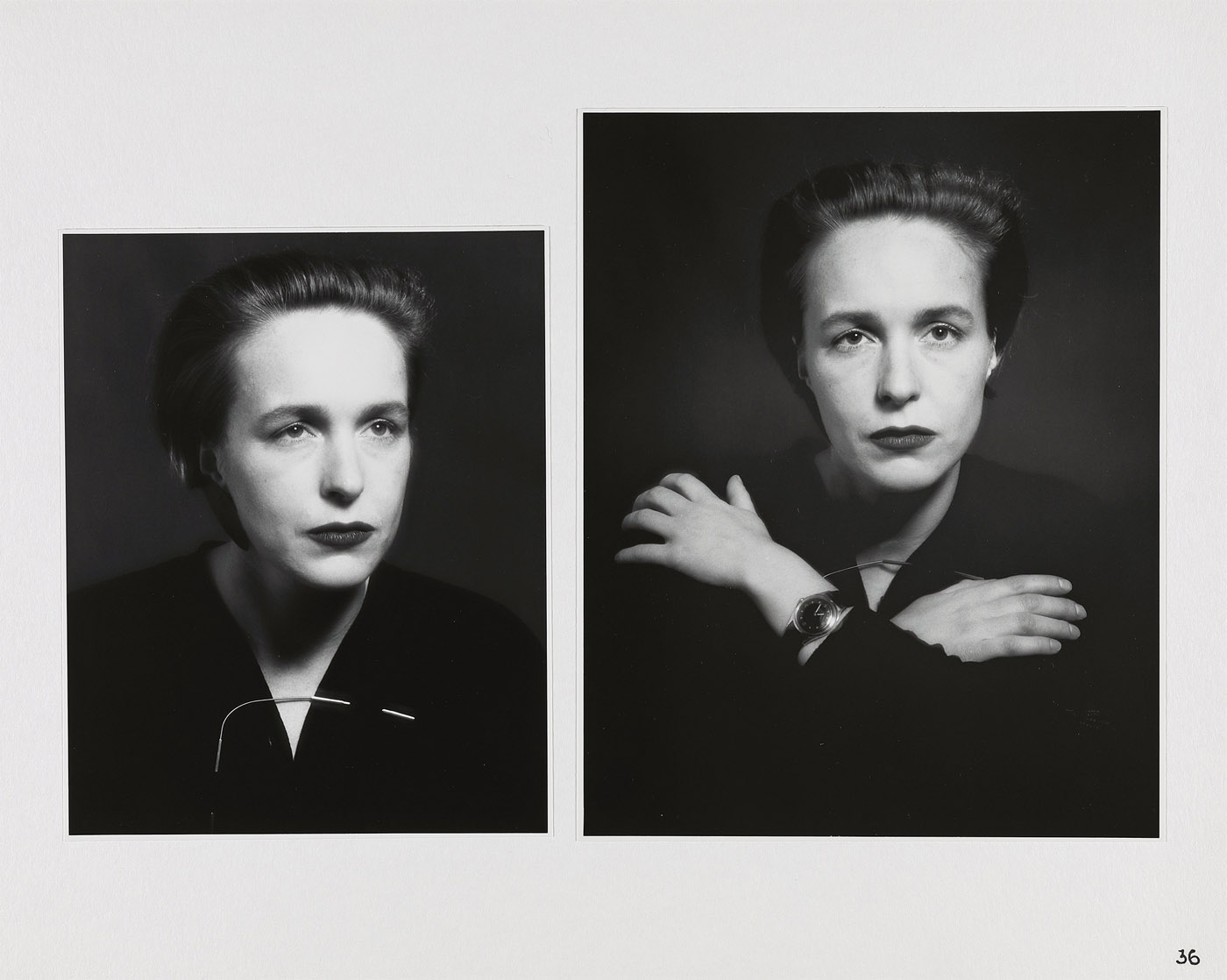
In the body of work “Porträts von Künstler-Photographen und Kunstvermittlern” (Portraits of Artist Photographers and Art Educators), by contrast, Mejchar undertakes to depict everyone involved in fine art photography in Austria in the late twentieth century. Over the years, the series grows to comprise eighty double portraits, each composed, in accordance with a rigorous conception, of an en face portrait side by with a three-quarter view. The works have a distinctly staged quality, underscored by the unvarying austere setting and the emphasis on the hands, among other aspects. In this respect they recall Mejchar’s final examination, in which she had to realise a portrait both in profile and en face to demonstrate her command of photographic lighting designing and the handling of human sitters.

With these two projects, Mejchar becomes an important chronicler of the Austrian arts scene.


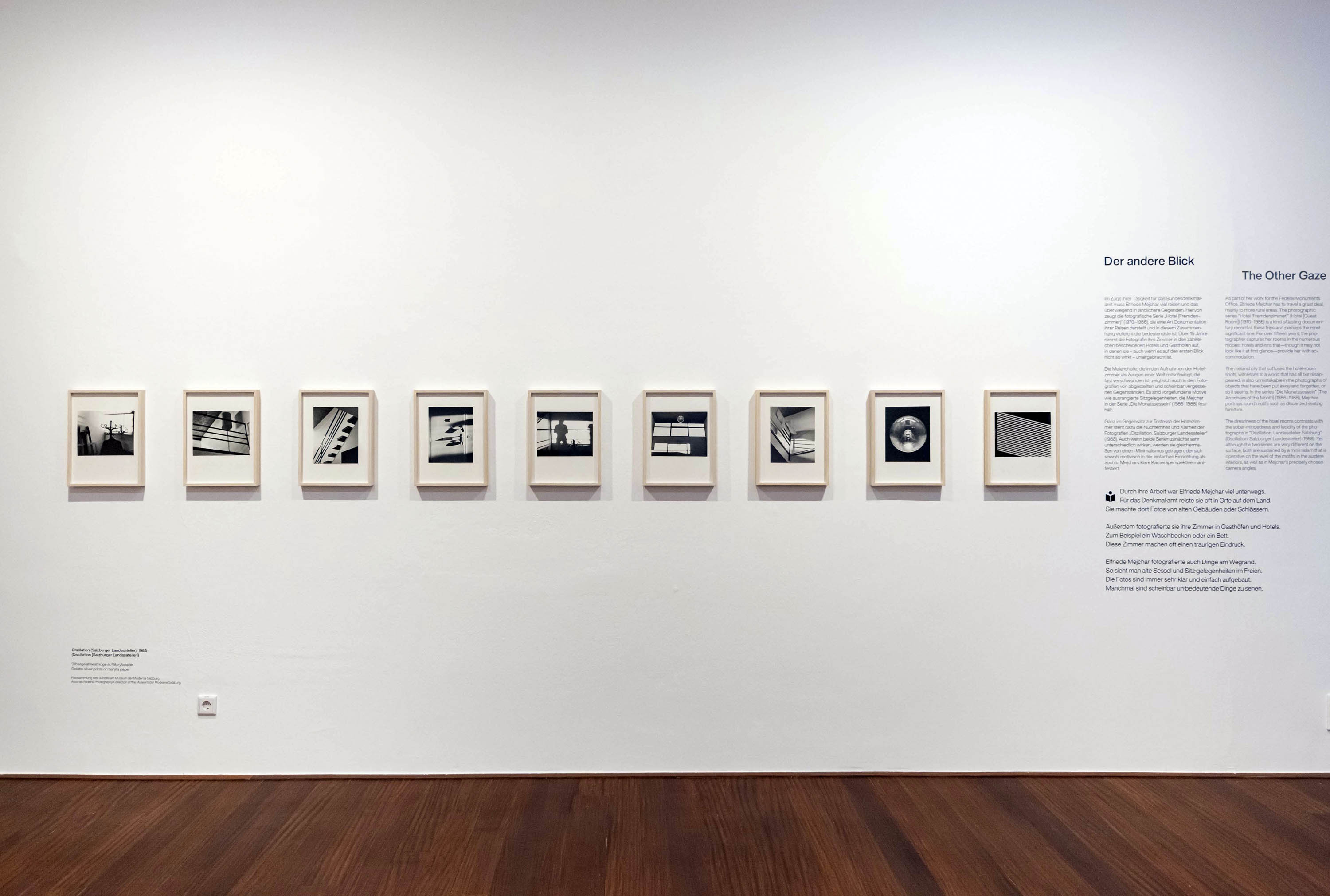
Installation view of the exhibition 'The Poetry of the Everyday. Photographs by Elfriede Mejchar', Museum der Moderne Salzburg 2024 showing at left, work from Mejchar's series 'Oscillation (Salzburger Landesatelier)' (Oscillation (Salzburg State Studio)) (above); and at right, the wall text 'The Other Gaze' (below)


Installation view of the exhibition The Poetry of the Everyday. Photographs by Elfriede Mejchar, Museum der Moderne Salzburg 2024 showing at left, work from Mejchar’s series Oscillation (Salzburger Landesatelier) (Oscillation (Salzburg State Studio)) (above); and at right, the wall text ‘The Other Gaze’ (below)
© Museum der Moderne Salzburg, photo: wildbild/Günter Freund


The Other Gaze

“Hotel (Fremdenzimmer)”, 1970-1986 (Hotel (Guest Room))

As part of her work for the Federal Monuments Office, Elfriede Mejchar has to travel a great deal, mainly to more rural areas. The photographic series “Hotel (Fremdenzimmer)” (Hotel (Guest Room)) is a kind of lasting documentary record of these trips and perhaps the most significant one. Bed, table, chair, mirror, wardrobe, patterned wallpaper, and sometimes a washbasin: for over fifteen years, the photographer captures her rooms with their often spartan furnishings in the numerous modest hotels and inns that – though it may not look like it at first glance – provide her with accommodation. Here and there one does espy a toothbrush, a pair of shoes, a ruffled bedcover, all traces that reveal the ostensibly absent photographer’s presence. A certain melancholy suffuses these shots of hotel rooms as witnesses to a world that has all but disappeared

“Die Monatssesseln”, 1986-1988 (The Armchairs of the Month)

The same melancholy is also unmistakable in the photographs of objects that have outlived their usefulness and been discarded and, it seems, forgotten. In the series “Die Monatssesseln” (The Armchairs of the Month) Mejchar portrays found motifs such as discarded seating furniture. The series shows a wide variety of such items, from kitchen chairs to living-room armchairs and even car seats, that have become part of the natural or other scene where they were dumped. No less diverse than the pieces of furniture and their environments are the feelings they elicit; as Mejchar puts it, “a mess can be beautiful in its own way.”

“Oszillation (Salzburger Landesatelier)”, 1988

The dreariness of the hotel rooms contrasts with the sober-mindedness and lucidity of the photographs in “Oszillation (Salzburger Landesatelier)” (Oscillation (Salzburger Landesatelier)). Yet although the two series are very different on the surface, both are sustained by a minimalism that is operative on the level of the motifs, in the austere interiors, as well as in Mejchar’s precisely chosen camera angles. These photographs capture the rooms of the State of Salzburg’s studio residence for visiting artists, located, like the Salzburger Kunstverein, in the historic Künstlerhaus. Mejchar herself lives there for a while in 1988, a change of working environment that is reflected in her output from the period.

Nobody Is Perfect

In the late 1980s, Elfriede Mejchar branches out in a fresh creative direction. She has been retired for some years and feels free to take on new challenges. Setting aside the flaneur-like practice underlying her earlier bodies of work, she starts photographing in the studio.

Tapetenbild. Triptychon, 1988 (Wallcover Picture. Tryptic) “Eine Kostümierung der geliehenen Identität”, 1989 (A Costume for the borrowed Identity) “Tagebuch Jänner 1988”, 1988 (Diary January 1988) “Nobody Is Perfect”, 1996

Faces change shapes, snakes coil around heads, open and closed eyes alternate. For the collages in “Tagebücher Jänner 1988,” Mejchar reuses her own photographs; in other series, by contrast, she works with found images such as shots of female models from print advertisements or fuses figural representations with fabric and wallpaper patterns. The works are rapidly composed out of visual fragments that she often only loosely places side by side or in overlapping arrangements, dispelling their aura of perfection. “I build pictures for myself on the wall, from materials that are at hand in the public sphere, that are on public display, but I strip away the ideal of flawless beauty that is constantly rubbed in our faces by dismembering it or covering it up.” It is the temporary and easily mutable that fascinates Mejchar, qualities that had had no place in her professional work.

“Amaryllis”, 1994-1997

Pictures of flowers in fine art, whether painted or photographed, inevitably have a clichéd dimension. Mejchar photographs only a special selection of flowers such as amaryllises, lilies, and tulips that she grows in her own garden. In the studio, rather than recording the flowers with a romantic gesture, she captures their gradual transformations – full blossoms, some full of delicate life, some already wilting and recognisably perishable. Showing them between florescence and decay, in a kind of liminal instant, she revisits a theme that surfaces throughout her oeuvre: the capturing of a state of affairs at a defined point in time.


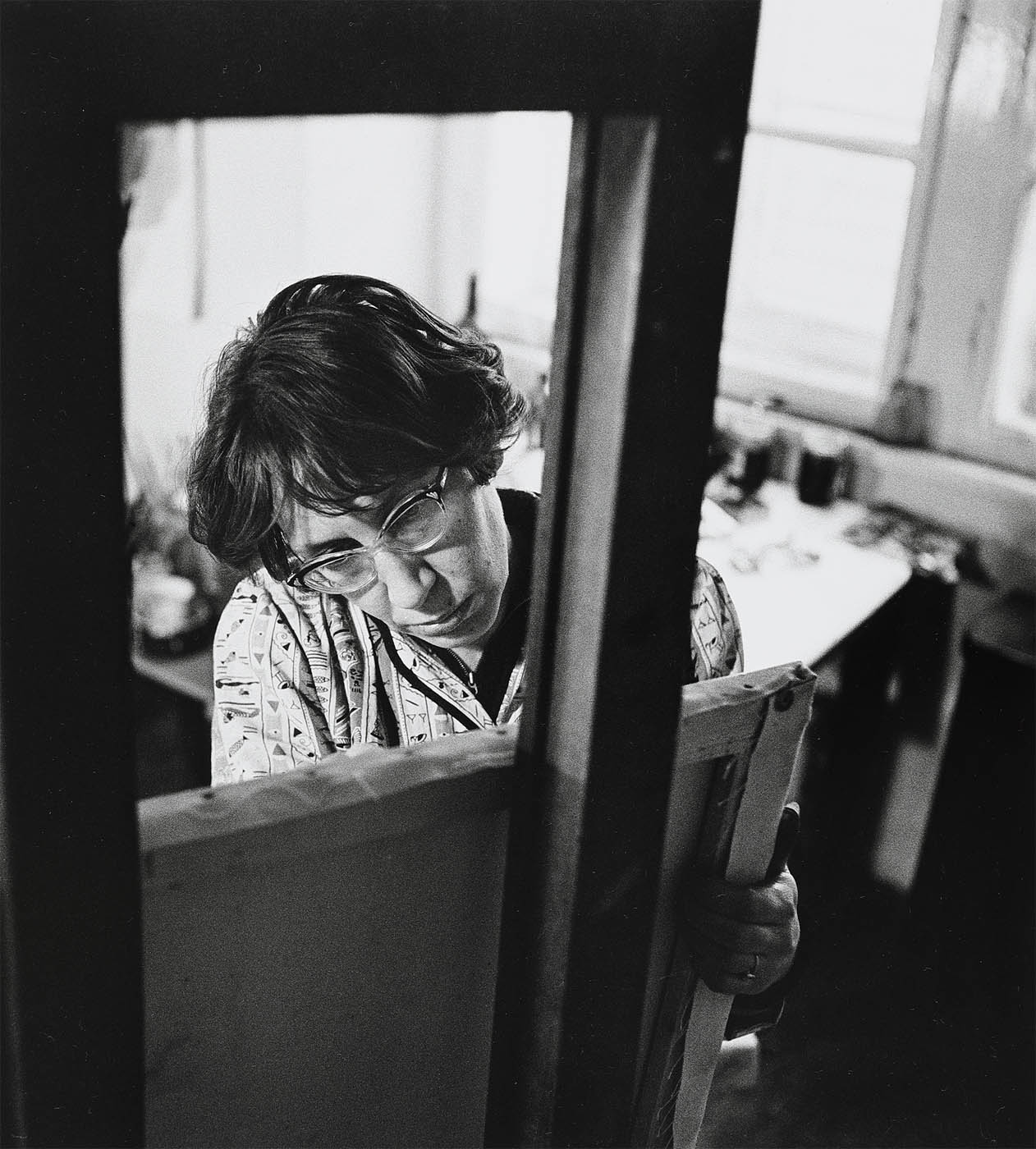
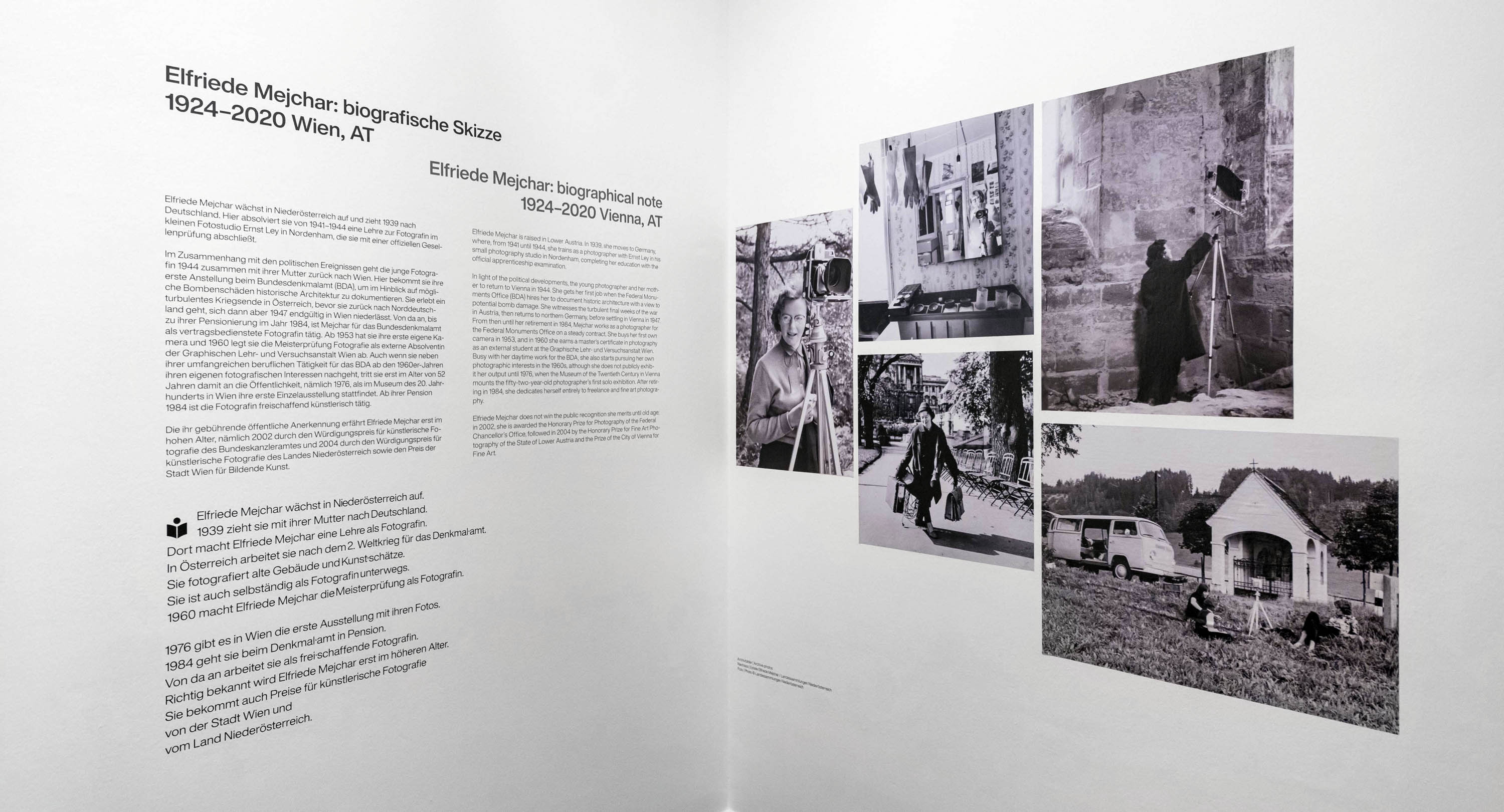
Installation view of the exhibition 'The Poetry of the Everyday. Photographs by Elfriede Mejchar', Museum der Moderne Salzburg 2024 showing the wall text 'Elfriede Mejchar: biographical note 1924-2020 Vienna, AT'; and some photographs of Elfriede Mejchar working


Installation view of the exhibition The Poetry of the Everyday. Photographs by Elfriede Mejchar, Museum der Moderne Salzburg 2024 showing the wall text Elfriede Mejchar: biographical note 1924-2020 Vienna, AT; and some photographs of Elfriede Mejchar working
© Museum der Moderne Salzburg, photo: wildbild/Günter Freund


Elfriede Mejchar: biographical note 1924-2020 Vienna, AT

Elfriede Mejchar is raised in Lower Austria. In 1939, she moves to Germany, where, from 1941 until 1944, she trains as a photographer with Ernst Ley in his small photography studio in Nordenham, completing her education with the official apprenticeship examination.

In light of the political developments, the young photographer and her mother to return to Vienna in 1944. She gets her first job when the Federal Monuments Office (BDA) hires her to document historic architecture with a view to potential bomb damage. She witnesses the turbulent final weeks of the war in Austria, then returns to northern Germany, before settling in Vienna in 1947. From then until her retirement in 1984, Mejchar works as a photographer for the Federal Monuments Office on a steady contract. She buys her first own camera in 1953, and in 1960 she earns a master’s certificate in photography as an external student at the Graphische Lehr- und Versuchsanstalt Wien. Busy with her daytime work for the BDA, she also starts pursuing her own photographic interests in the 1960s, although she does not publicly exhibit her output until 1976, when the Museum of the Twentieth Century in Vienna mounts the fifty-two-year-old photographer’s first solo exhibition. After retiring in 1984, she dedicates herself entirely to freelance and fine art photography.

Elfriede Mejchar does not win the public recognition she merits until old age; in 2002, she is awarded the Honorary Prize for Photography of the Federal Chancellor’s Office, followed in 2004 by the Honorary Prize for Fine Art Photography of the State of Lower Austria and the Prize of the City of Vienna for Fine Art.

Text from the exhibition


Anonymous photographer. 'Elfriede Mejchar' Nd


Anonymous photographer
Elfriede Mejchar
Nd
Gelatin silver print


Installation view of the exhibition 'The Poetry of the Everyday. Photographs by Elfriede Mejchar', Museum der Moderne Salzburg 2024 showing photographs of Mejchar's flower series


Installation view of the exhibition The Poetry of the Everyday. Photographs by Elfriede Mejchar, Museum der Moderne Salzburg 2024 showing photographs of Mejchar’s flower series


Elfriede Mejchar (Austrian, 1924-2020) 'Amaryllis' 1997


Elfriede Mejchar (Austrian, 1924-2020)
Amaryllis
1997
© Elfriede Mejchar/Landessammlungen NÖ


Elfriede Mejchar (Austrian, 1924-2020) From the series 'Nobody is perfect' 1996


Elfriede Mejchar (Austrian, 1924-2020)
From the series Nobody is perfect
1996
Chromogenic print
Federal Photography Collection at the Museum der Moderne Salzburg
© Bildrecht, Vienna, 2024
Photo: Andrew Phelps


Elfriede Mejchar (Austrian, 1924-2020) From the series 'Nobody is perfect' 1996


Elfriede Mejchar (Austrian, 1924-2020)
From the series Nobody is perfect
1996
Chromogenic print
Federal Photography Collection at the Museum der Moderne Salzburg
© Bildrecht, Vienna, 2024
Photo: Andrew Phelps


Elfriede Mejchar (Austrian, 1924-2020) From the series 'Nobody is perfect' 2003


Elfriede Mejchar (Austrian, 1924-2020)
From the series Nobody is perfect
2003
© Elfriede Mejchar/Landessammlungen NÖ


Museum der Moderne Salzburg
Altstadt (Rupertinum)

Wiener-Philharmoniker-Gasse 9
5020 Salzburg
Austria

Opening hours:
Daily 10am – 6pm

Museum der Moderne Salzburg website

LIKE ART BLART ON FACEBOOK

Back to top

Exhibition: ‘The Catalonia of Jules Ainaud (1871-1872)’ at Fundación MAPFRE Photography Center (Barcelona)

Exhibition dates: 8th June – 3rd September 2023

Curator: Jep Martí


Jules Ainaud (French, 1837-1900) 'Montserrat (Barcelona). The Devil's Rock' September 1871


Jules Ainaud (French, 1837-1900)
Montserrat (Barcelona). The Devil’s Rock
September 1871
Arxiu Fotogràfic de Barcelona


I’ve assembled five photography exhibitions before they all finish around the 3rd of September, so let’s have a posting on a Monday!

After the recent Louis Stettner posting, this is the second of three fine photography exhibitions at Fundación MAPFRE.

The third of the trio, an exhibition on the revolutionary (in more ways than one) Italian photographer Tina Modotti, will be posted this weekend – to be followed in quick succession by the exhibitions Conditions of Living (photographs of the housing in the East End of London), Images of Italy (19th century views of Italy) and Berenice Abbott’s New York Album.

As usual, an eclectic mix if ever there was one.

As also with this exhibition which “brings to light” the Spanish views of the Levante peninsula and Catolonia by the long forgotten photographer Jules Ainaud, acknowledging his place in photographic history.

Dr Marcus Bunyan


Many thankx to Fundación MAPFRE for allowing me to publish the photographs in the posting. Please click on the photographs for a larger version of the image.


Jules Ainaud (French, 1837-1900) 'Barcelona. The Main Theater' 1872


Jules Ainaud (French, 1837-1900)
Barcelona. The Main Theater
1872
Arxiu Fotogràfic of Barcelona


Jules Ainaud has been a practically unknown photographer, until his work is now exhibited today one hundred and fifty years after it was first seen in Barcelona. ​​Ainaud always worked for Jean Laurent, whose studio was, as is well known, was one of the great centres for the production of photographs in Spain in the middle decades of the 19th century and up to 1885.

Ainaud was one of the photographers that Laurent “commissioned” to obtain images of some provinces and thus complete his catalogue. In his case, the Levante peninsula and a large part of Catalonia, in an activity that as a whole lasted between 1870 and 1872. The exhibition recovers practically all the images corresponding to Catalonia, in an exhibition that wants to give Ainaud his proper place in photographic history.

Text from the Fundación MAPFRE website


Jules Ainaud (French, 1837-1900) 'Barcelona. The Provincial Council' 1872


Jules Ainaud (French, 1837-1900)
Barcelona. The Provincial Council
1872
Arxiu Fotogràfic de Barcelona


Jules Ainaud’s Catalonia (1871-1872)

This exhibition, which continues the line of exhibition programming started by Fundación MAPFRE with the desire to deepen the knowledge of photographic archives and funds, presents the photographic work that Jules Ainaud made during his trip through Catalonia between 1871 and 1872. The exhibition restores the legitimate authorship of this photographer and makes his work known.

It has been more than 150 years since the set of photographs that Jules Ainaud took in Catalonia between 1871 and 1872 on behalf of the J. Laurent house were exhibited at the Ateneu Barcelonès for the first and only time. Like the photographs of the Levant area that this house marketed, for a long time these images had been considered to be the work of Jean Laurent himself. “today (…) with the documentary evidence on the table, it can be affirmed that Jules Ainaud was the effective author of these shots taken in this area that the J. Laurent house used for marketing between 1872 and 1879”, says the curator of the exhibition, Jep Martí Baiget.

The firm J. Laurent, for which Ainaud worked, was founded in Madrid in 1856 by the Frenchman Jean Laurent, and represents the main example in Spain of the emergence and development, since the middle of the 19th century, of companies destined to satisfy the increasingly intense demand for photographic images, for private portraits, but also for reproductions of works of art, landscapes and views of cities and monuments.

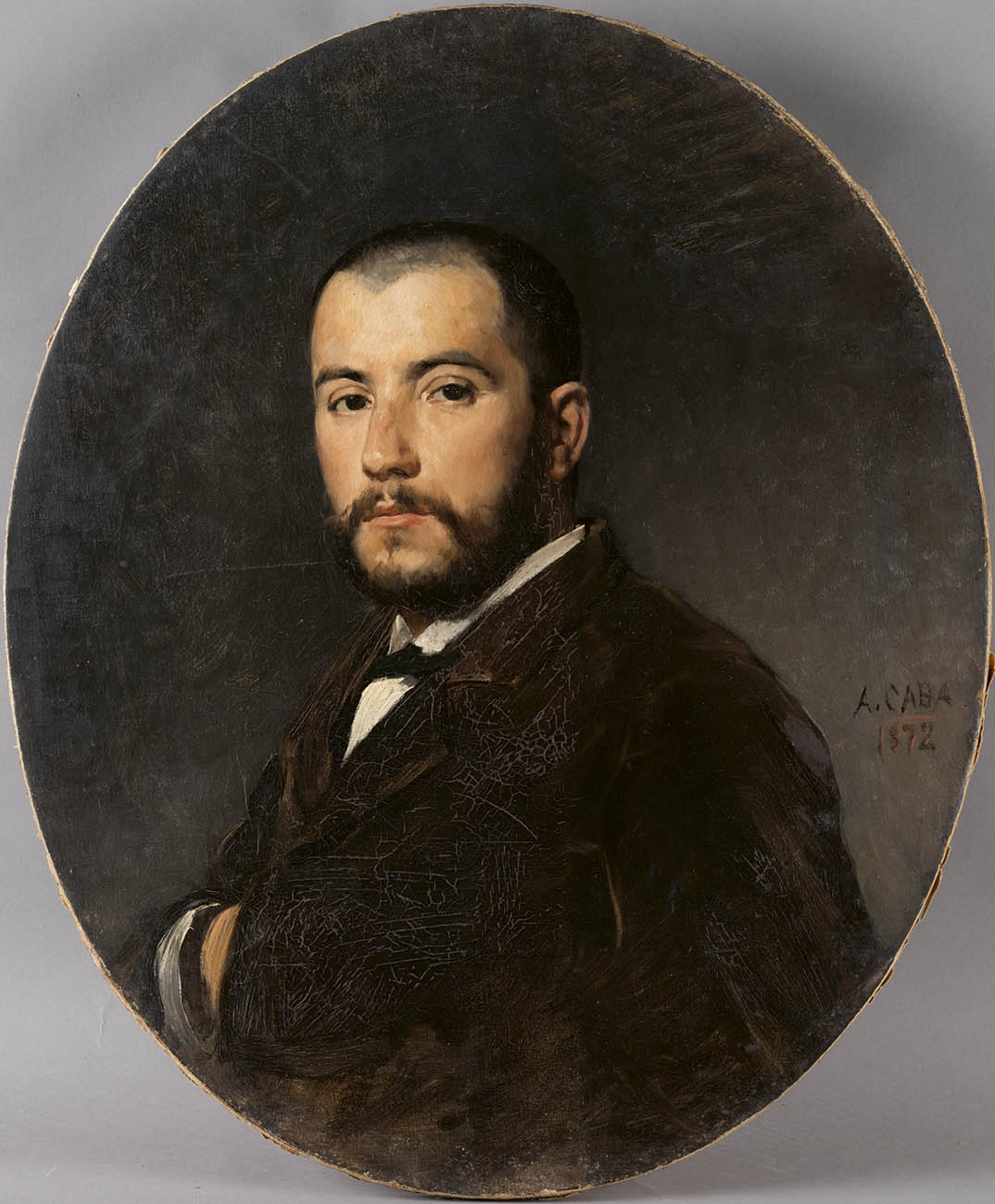
The exhibition presents one hundred vintage copies on albumen paper from wet collodion glass negatives. In addition, it includes fourteen stereoscopic views and thirteen reproductions of the glass plate negatives of these views, which allow one to appreciate the richness of image detail compared to works on paper. All these photographs were part of the catalogs that the Laurent company used for marketing between 1872 and 1879. The tour is completed with an oil portrait of Ainaud, the only one that is preserved, documentation and four letters that talk about the author’s trip to Catalonia in 1871 and 1872.

Text from the Fundación MAPFRE website


Jules Ainaud (French, 1837-1900) 'Barcelona. Private house of the 17th century' 1872


Jules Ainaud (French, 1837-1900)
Barcelona. Private house of the 17th century
1872
Arxiu Fotogràfic de Barcelona


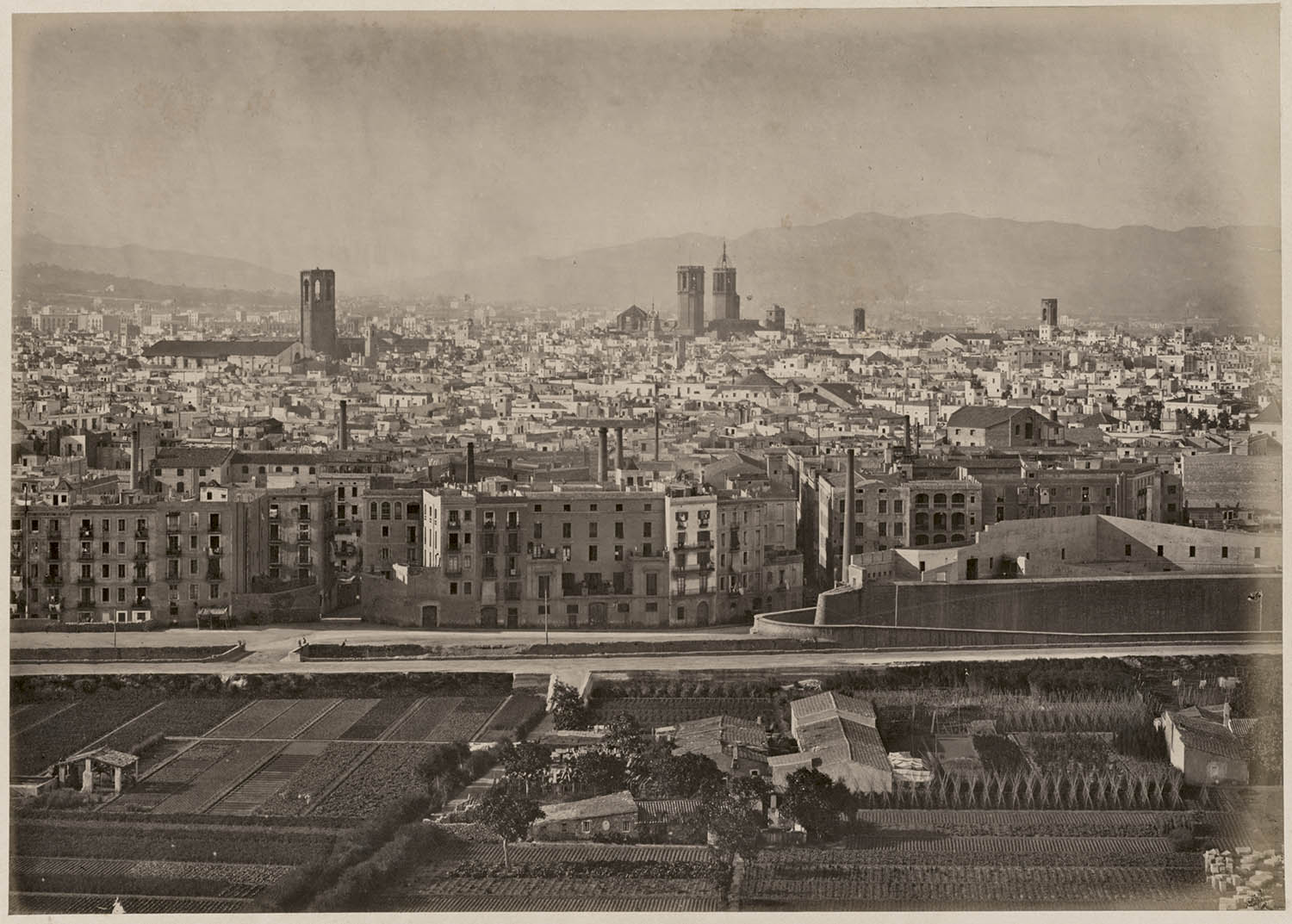
Jules Ainaud (French, 1837-1900) 'Barcelona. Panoramic view of Barcelona, from Montjuïc' 1872


Jules Ainaud (French, 1837-1900)
Barcelona. Panoramic view of Barcelona, from Montjuïc
1872
Arxiu Fotogràfic de Barcelona


Jules Ainaud (French, 1837-1900) 'Barcelona. Panoramic view of Barcelona, from Montjuïc 1872' Arxiu Fotogràfic de Barcelona


Jules Ainaud (French, 1837-1900)
Barcelona. Panoramic view of Barcelona, from Montjuïc
1872
Arxiu Fotogràfic de Barcelona


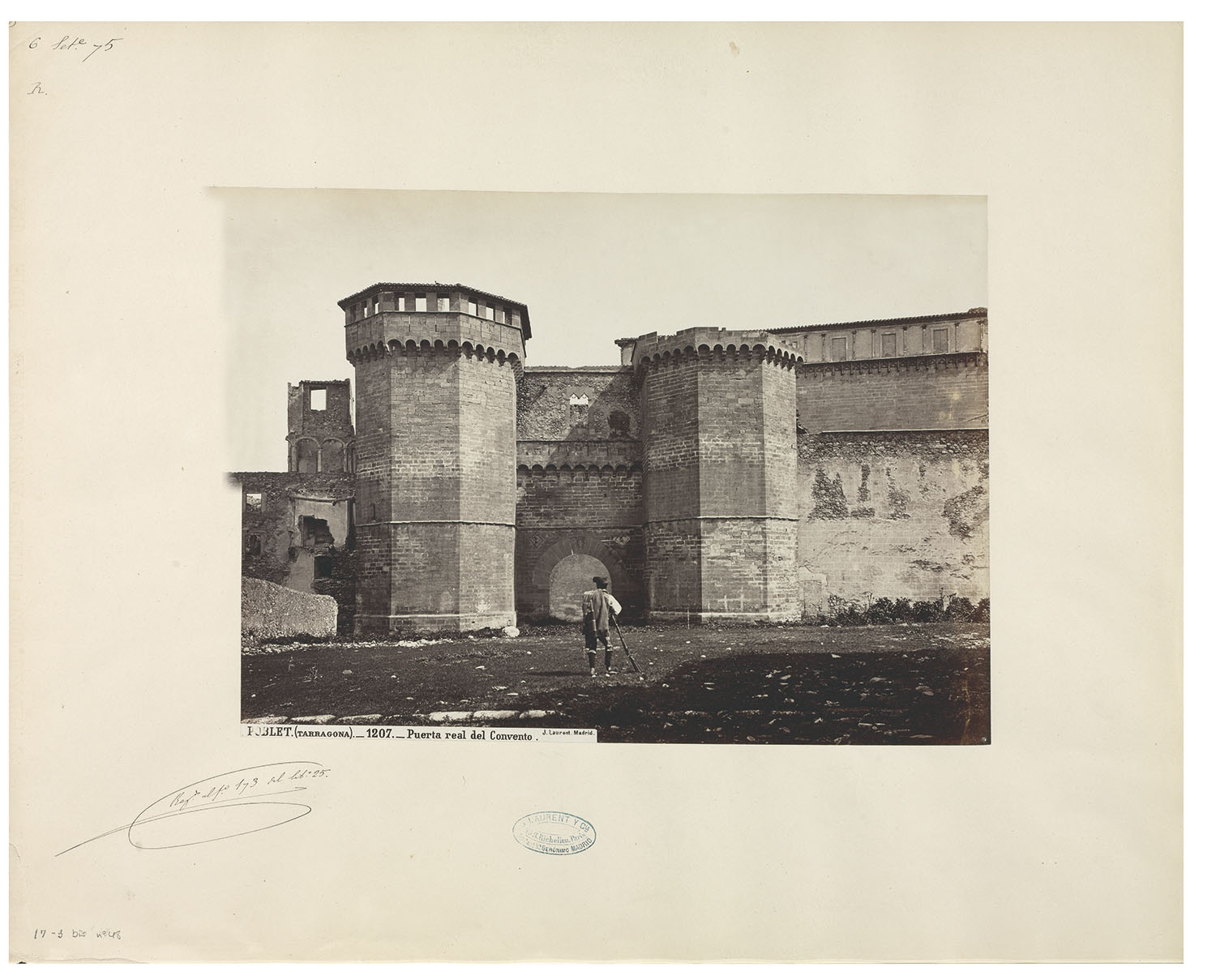
Jules Ainaud (French, 1837-1900) 'Poblet (Tarragona). Royal Gate of the convent' September 1871


Jules Ainaud (French, 1837-1900)
Poblet (Tarragona). Royal Gate of the convent
September 1871
National Library of Spain, Madrid


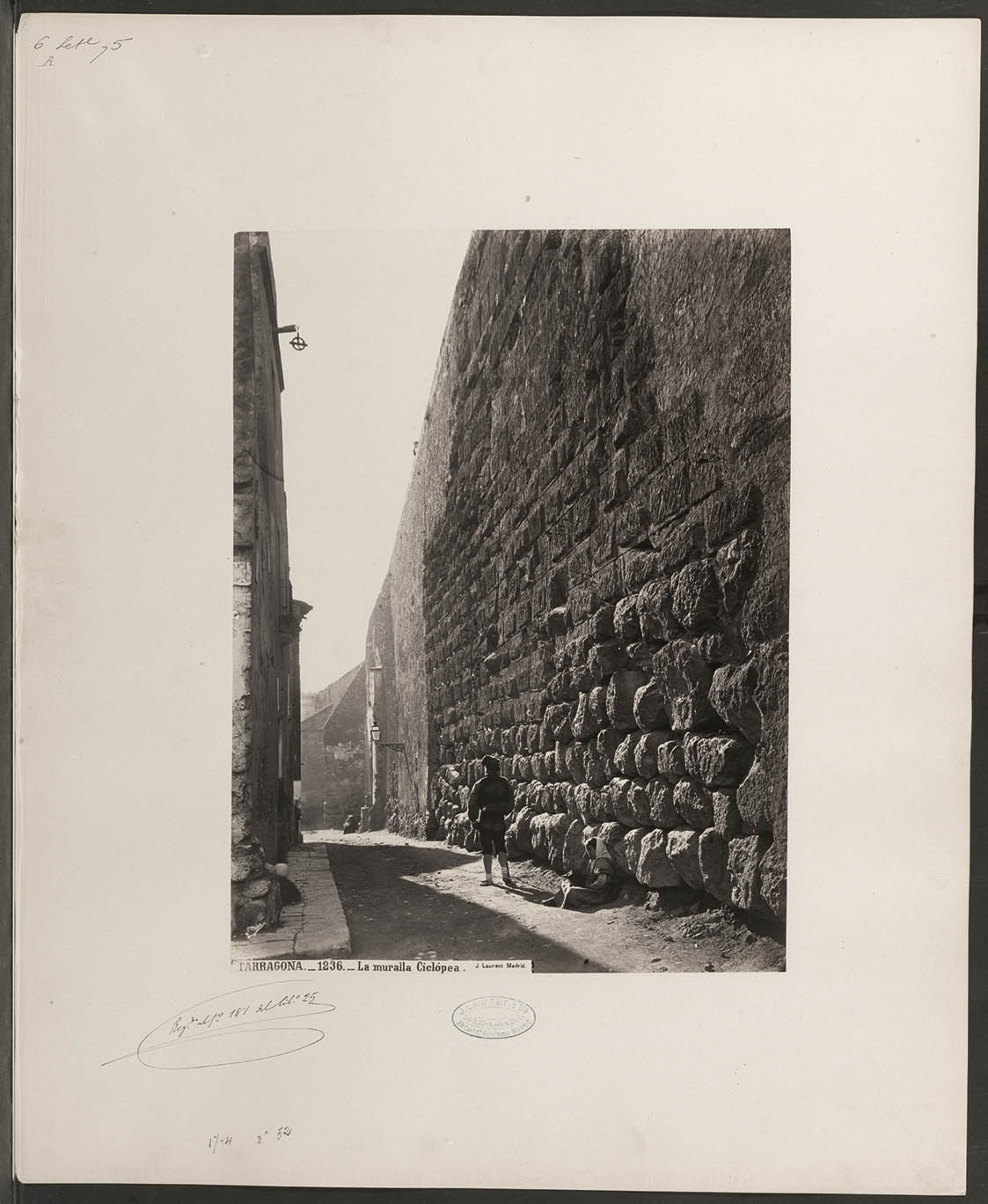
Jules Ainaud (French, 1837-1900) 'Tarragona. The Cyclopean Wall' 1871-1872


Jules Ainaud (French, 1837-1900)
Tarragona. The Cyclopean Wall
1871-1872
National Library of Spain, Madrid


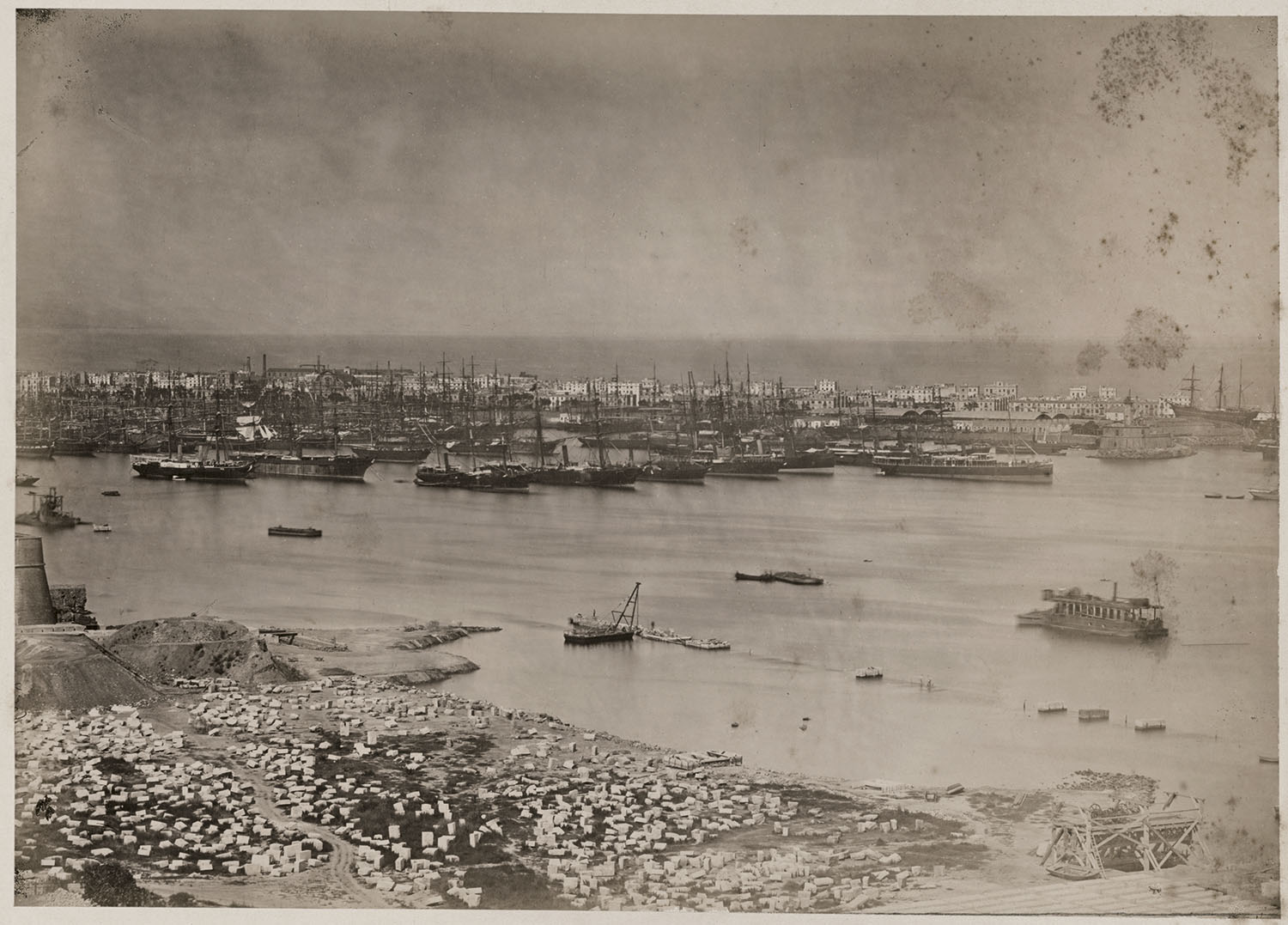
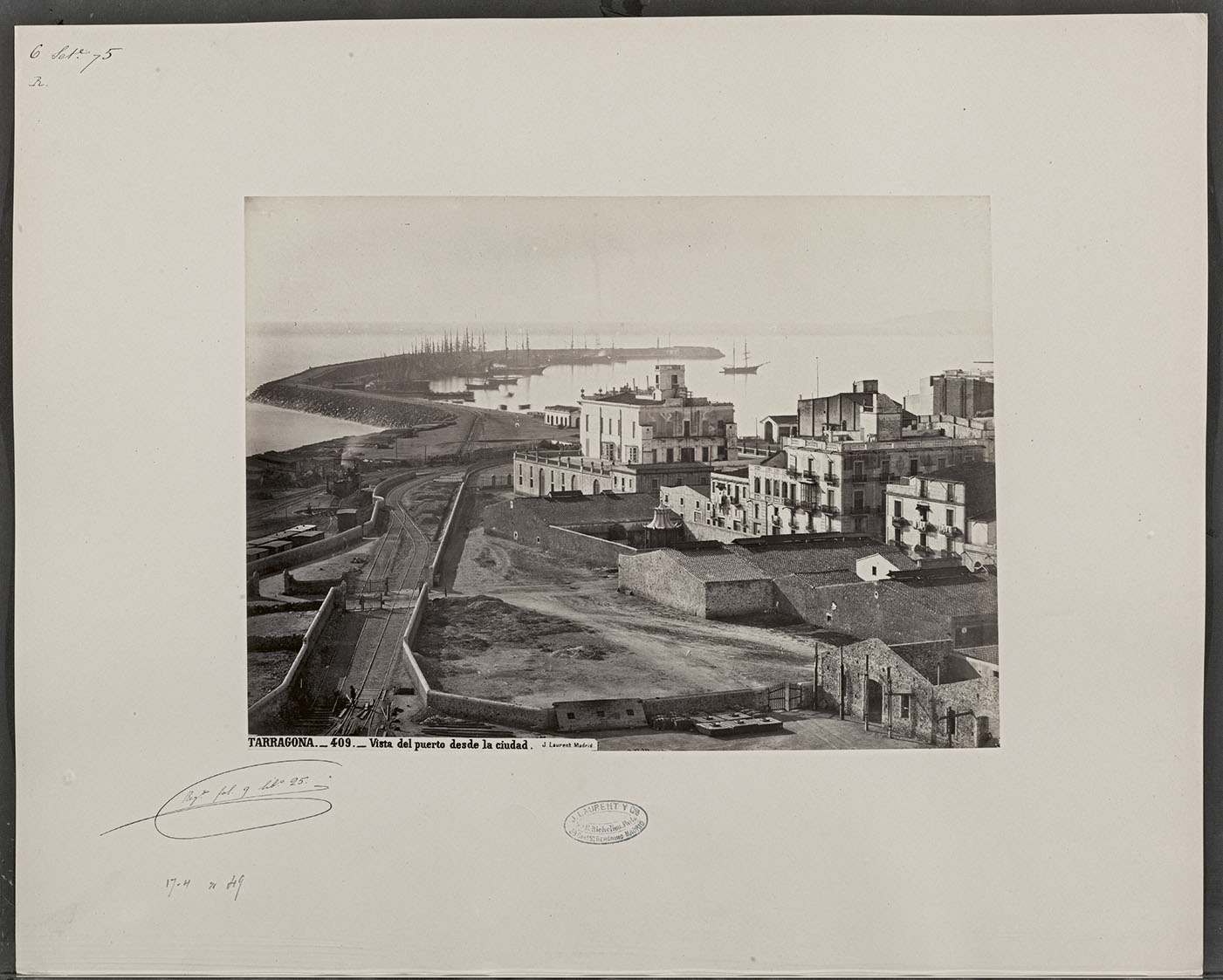
Jules Ainaud (French, 1837-1900) 'Tarragona. View of the port from the city' 1871-1872


Jules Ainaud (French, 1837-1900)
Tarragona. View of the port from the city
1871-1872
National Library of Spain, Madrid


It is now over one hundred and fifty years since the set of photographs Jules Ainaud took in Catalonia between 1871 and 1872, commissioned by the Laurent house, were exhibited for the first and only time to date at the Ateneo Barcelonés. Like the pictures of the Levante area marketed by that firm, this interesting set of images was long considered to be the work of Jean Laurent himself.

Jules Ainaud’s Catalonia (1871-1872) is the first public presentation that restores his legitimate authorship and highlights his contribution to the history of our photography.

The firm “J. Laurent & Cía.” for which Ainaud worked had been founded in Madrid in 1856 by the Frenchman Juan Laurent and represents the main example in Spain of the appearance and development, from the mid-19th century onwards, of companies aimed at satisfying the increasingly intense demand for photographic images, initially of private portraits, but soon also of reproductions of works of art, landscapes and views of cities and monuments.

This exhibition brings together around a hundred period prints on albumen paper from wet collodion glass negatives and is completed by fourteen stereoscopic views and thirteen reproductions of the glass plate negatives of these views, which allow the richness of the image details to be appreciated in comparison with the works on paper. All the prints were included in the catalogues that the Laurent company used to market them between 1872 and 1879.

Text from the Fundación MAPFRE website


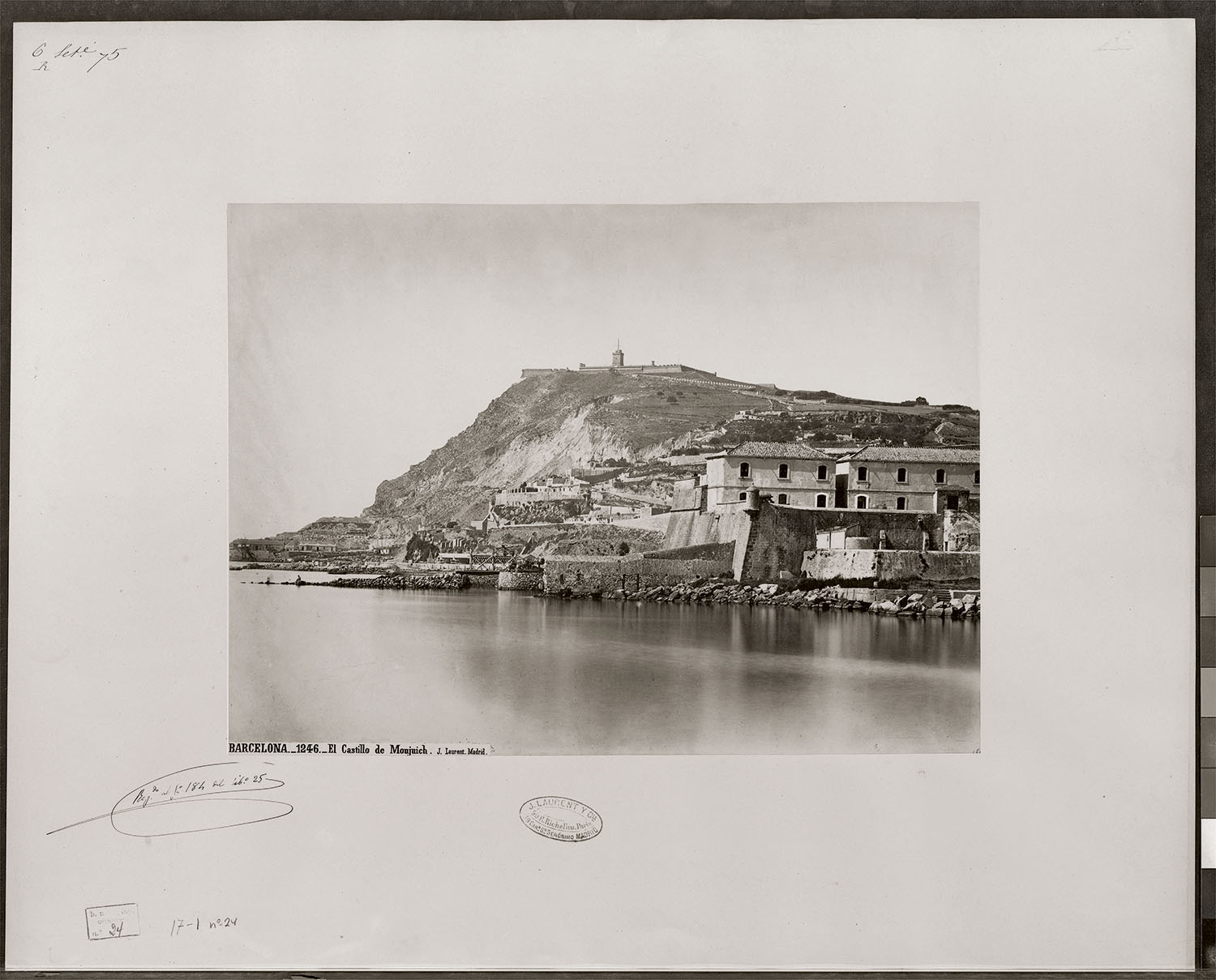
Jules Ainaud (French, 1837-1900) 'Barcelona. The castle of Montjuïc' 1872


Jules Ainaud (French, 1837-1900)
Barcelona. The castle of Montjuïc
1872
National Library of Spain, Madrid


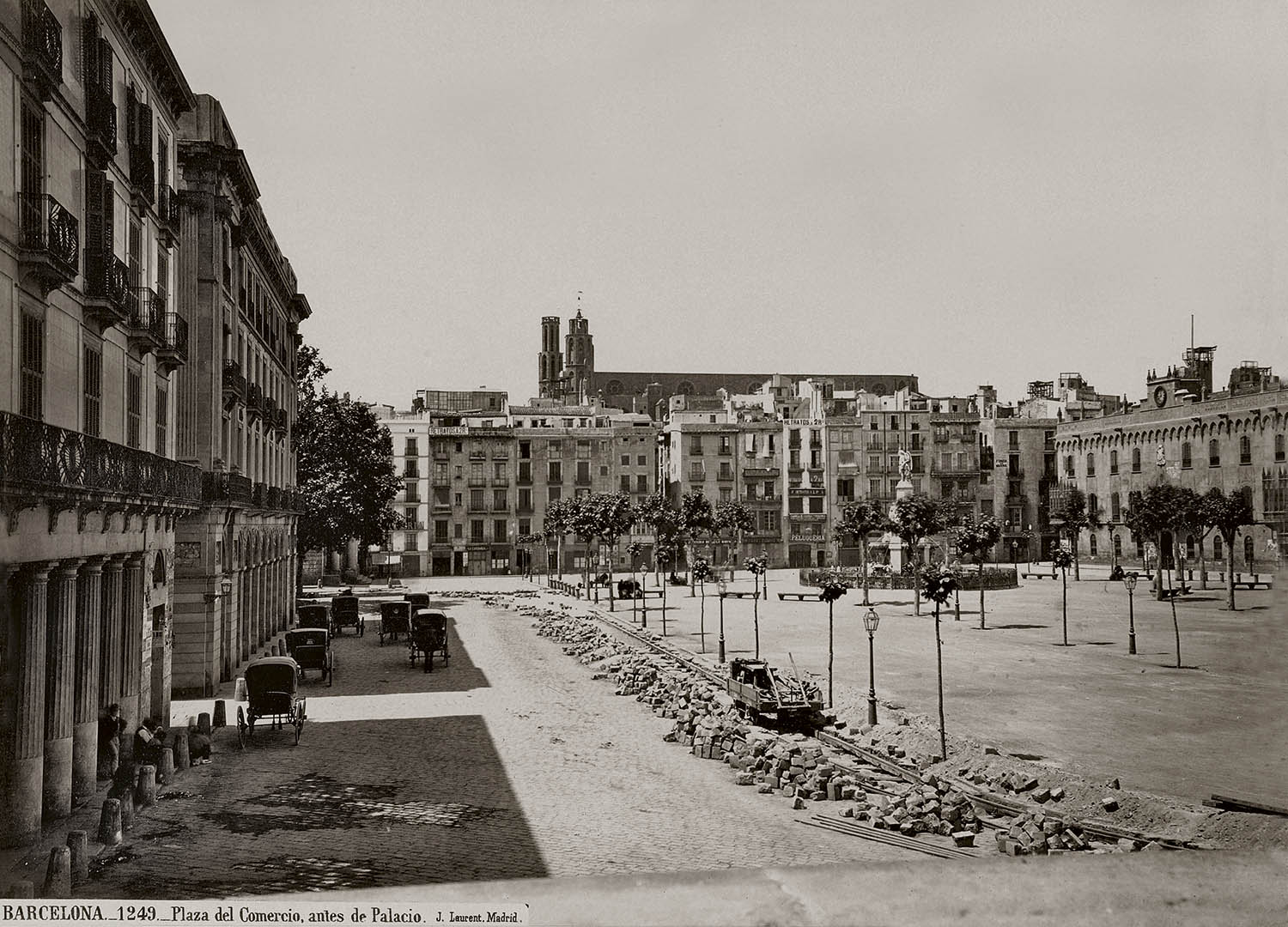
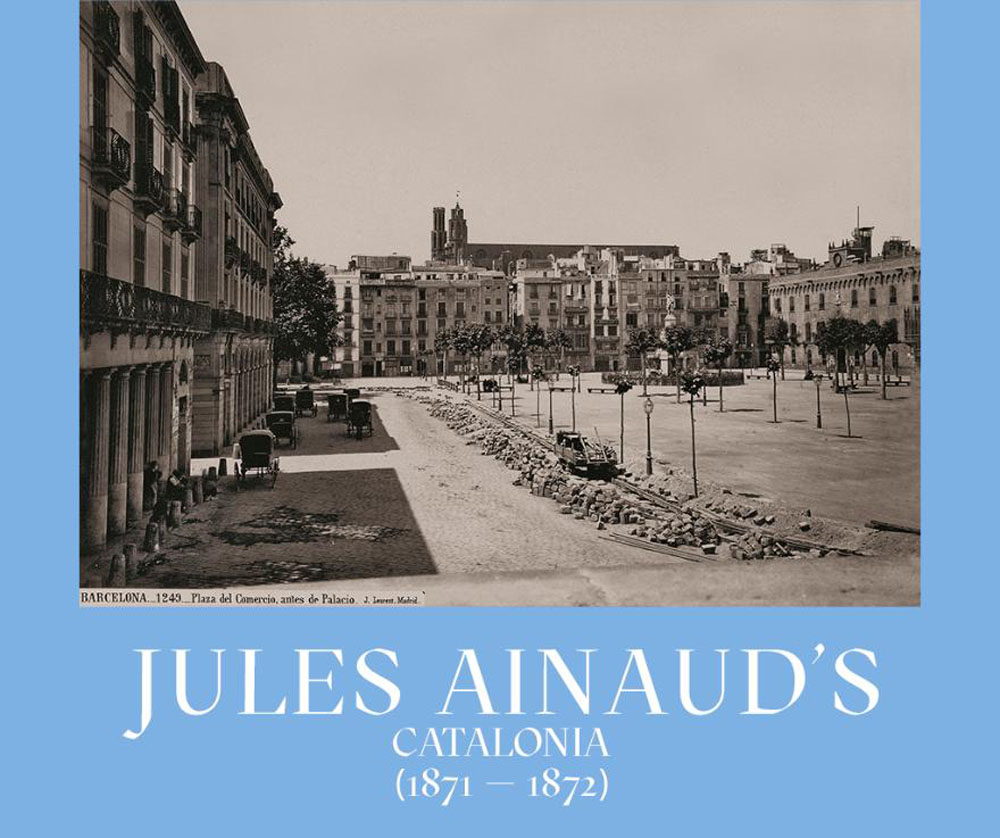
Jules Ainaud (French, 1837-1900) 'Barcelona. Plaza del Comercio, before the Palace' June 4, 1872


Jules Ainaud (French, 1837-1900)
Barcelona. Plaza del Comercio, before the Palace
June 4, 1872
National Library of Spain, Madrid


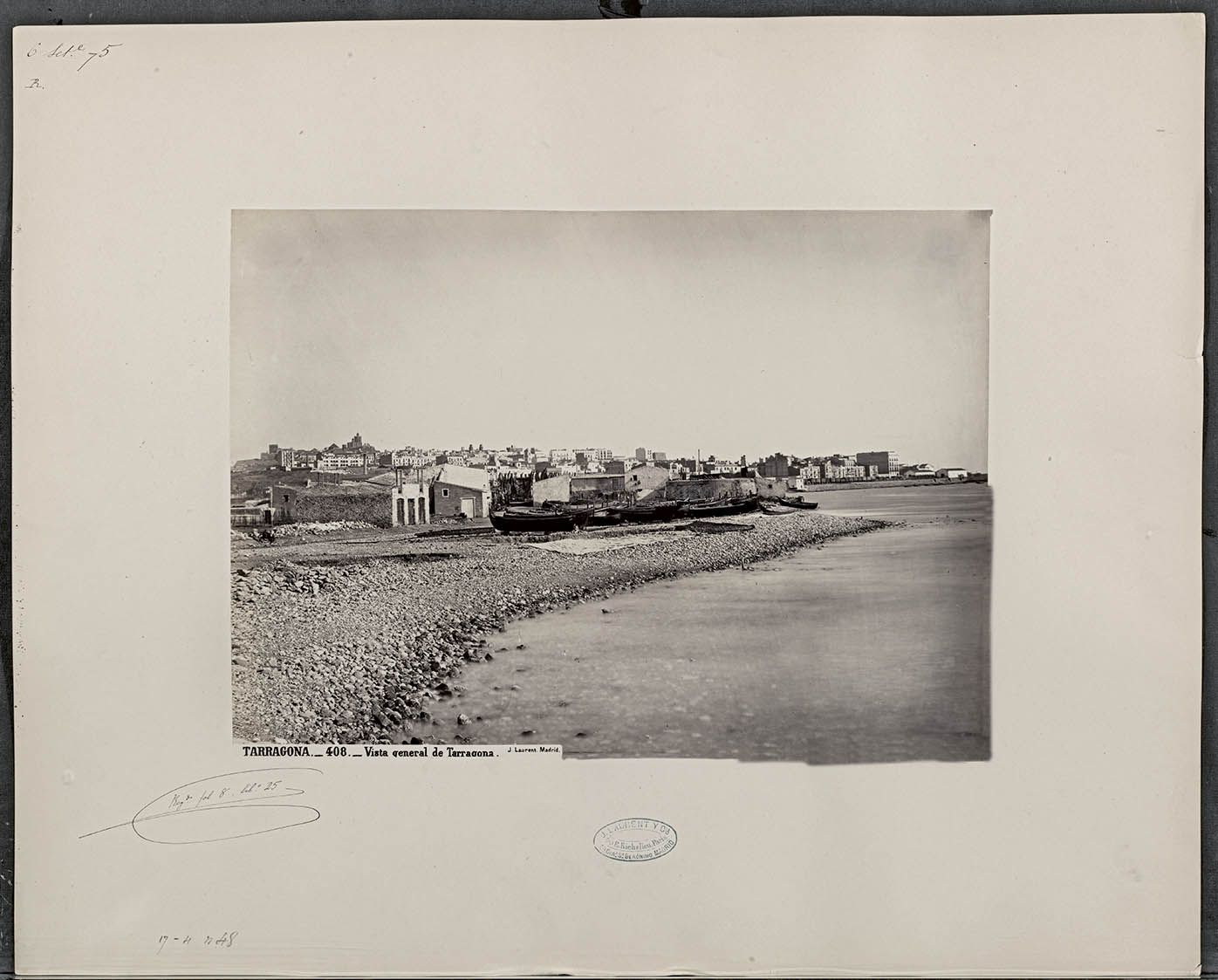
Jules Ainaud (French, 1837-1900) 'Tarragona. General view of Tarragona' 1871-1872


Jules Ainaud (French, 1837-1900)
Tarragona. General view of Tarragona
1871-1872
National Library of Spain, Madrid


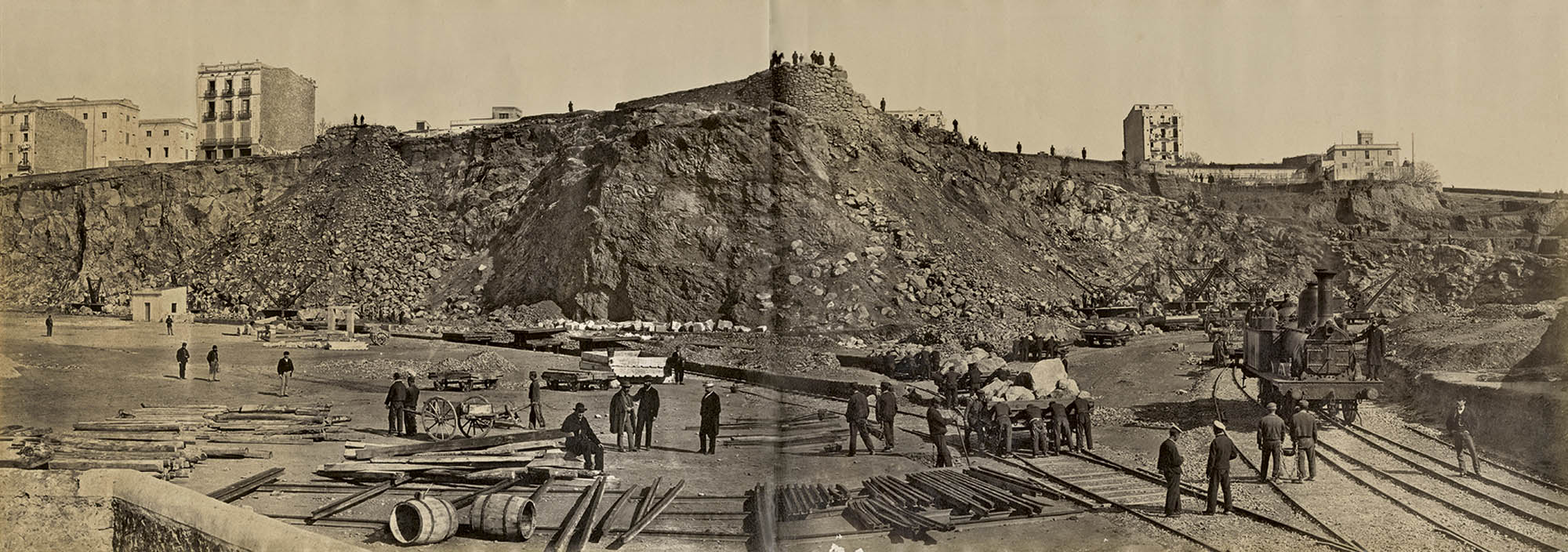
Jules Ainaud (French, 1837-1900) 'Tarragona. Quarries of Tarragona' February 8, 1872


Jules Ainaud (French, 1837-1900)
Tarragona. Quarries of Tarragona
February 8, 1872
National Archaeological Museum of Tarragona


Antoni Caba (Spanish, 1838-1907) 'Portrait of Jules Ainaud Escande' 1872


Antoni Caba (Spanish, 1838-1907)
Portrait of Jules Ainaud Escande
1872
Oil on canvas
National Museum of Art of Catalonia, Barcelona
Donated by the relatives of Carmen de Lasarte, 1965
© National Museum of Art of Catalonia, Barcelona


'The Catalonia of Jules Ainaud (1871-1872)'


‘The Catalonia of Jules Ainaud (1871-1872)’


KBr Fundación MAPFRE
Av. del Litoral, 30 08005 Barcelona
Phone: +34 932 723 180

Opening hours:
Tuesdays – Sundays (and public holidays) 11am – 8pm

Fundación MAPFRE website

LIKE ART BLART ON FACEBOOK

Back to top

Exhibition: ‘Projects: Ming Smith’ at the Museum of Modern Art (MoMA), New York

Exhibition dates: 4th February – 29th May, 2023

Projects: Ming Smith is organised by Thelma Golden, Director and Chief Curator, The Studio Museum in Harlem, and Oluremi C. Onabanjo, Associate Curator, Department of Photography, The Museum of Modern Art, with the assistance of Kaitlin Booher, Beaumont and Nancy Newhall Curatorial Fellow, Department of Photography, The Museum of Modern Art, and Habiba Hopson, Curatorial Assistant, The Studio Museum in Harlem.


Ming Smith (American, b. 1950) 'Circular Breathing, Hart Leroy Bibbs, Paris' 1980 from the exhibition 'Projects: Ming Smith' at the Museum of Modern Art (MoMA), New York, February - May, 2023


Ming Smith (American, b. 1950)
Circular Breathing, Hart Leroy Bibbs, Paris
1980
Vinyl wallpaper
147 1/2 × 262″ (374.7 × 665.5cm)
Courtesy of the artist
© Ming Smith


Free spirit

Another fascinating, stimulating, challenging artist finally getting their due.

Music, spirit, transcendence, light, blur, dreams, improvisation, composition, jamming, joy, rhythm, respect, wonder, emotion, African American culture. Conjoined in a mysterious, reverent wistfulness…

“You don’t make art for money, especially as a Black artist. You do it because there is that need to create – and that has been part of my survival; that has helped me survive.”

I feel that too. Creativity has kept the black dog from the door, creativity has helped me survive. I’m sure it does for many artists.

Dr Marcus Bunyan


Many thankx to the Museum of Modern Art for allowing me to publish the photographs in the posting. Please click on the photographs for a larger version of the image.


“You don’t make art for money, especially as a Black artist. You do it because there is that need to create – and that has been part of my survival; that has helped me survive.”

“My work as a photographer was to record, culturally, the period of time in which I lived – and I recorded it as an artist.”

“Oh no, it’s all discovery, it’s all improvisation. It’s like when jazz musicians solo. They improvise, and photography is definitely that, for me.”

“Whether I’m photographing a person on the street, someone I know, or on an assignment, I’m doing it because I admire them. I like the sense of exchange – they’re giving and I’m taking, but I’m also giving them something back. There were certain people who would understand what I was looking for and would try to give me a photograph by posing. Whatever I’m shooting, whether it’s a portrait or a place, my intention is to capture the feeling I have about that exchange and that energy.”

“I evolved as a photographer with the series Invisible Man [1990-1991], just like a jazz musician who plays the head [the known melody of a song] before they start improvising. Ralph Ellison’s book Invisible Man [1952] was an inspiration, especially the idea of what it means not to be seen, but I didn’t consciously set out to make work about it. I wanted to capture the feeling of painting and make photographs on an artistic scale. Living in a Black environment, the people I photographed didn’t have to put on any airs, they were just living their life. The series was about a feeling, an expression. Anyone could identify it. We were present but we weren’t there. We were visible but also invisible.”

“Living in Harlem was an authentic experience for me, and I was trying to capture that authenticity. I was living and my work came out of my life. I would go out with my camera to shoot events like the Million Youth March [1998] or meet musical figures like Dr. Edward Boatner or academics like Dr. John Henrik Clarke, and even watch Duke Ellington on TV – these people had so much history in them. Some people look at certain areas and only see the depravity and the struggle, but there’s so much love and genius there; there’s warmth. I think that was my motive in photographing Harlem, to communicate that warmth.”


Ming Smith


The Museum of Modern Art announces Projects: Ming Smith, on view in the Museum’s street-level galleries from February 4 through May 29, 2023. A photographer who has lived and worked in New York since the 1970s, Ming Smith has served as a precedent for a generation of artists engaging the politics and poetics of the photographic image. Through a deep exploration of the artist’s archive, the exhibition will offer a critical reintroduction to Smith’s work through her distinctive approach to movement, light, rhythm, and shadow, highlighting how she transforms the image from a document of photographic capture into a space of emotive expression.

Text from the MoMA website


The moody magic of a long exposure photograph | Ming Smith | UNIQLO ArtSpeaks

Photography curator Oluremi Onabanjo examines Smith’s 1991 “Invisible Man, Somewhere, Everywhere,” a poignant image from this series inspired by Ralph Ellison’s 1952 novel “Invisible Man.”


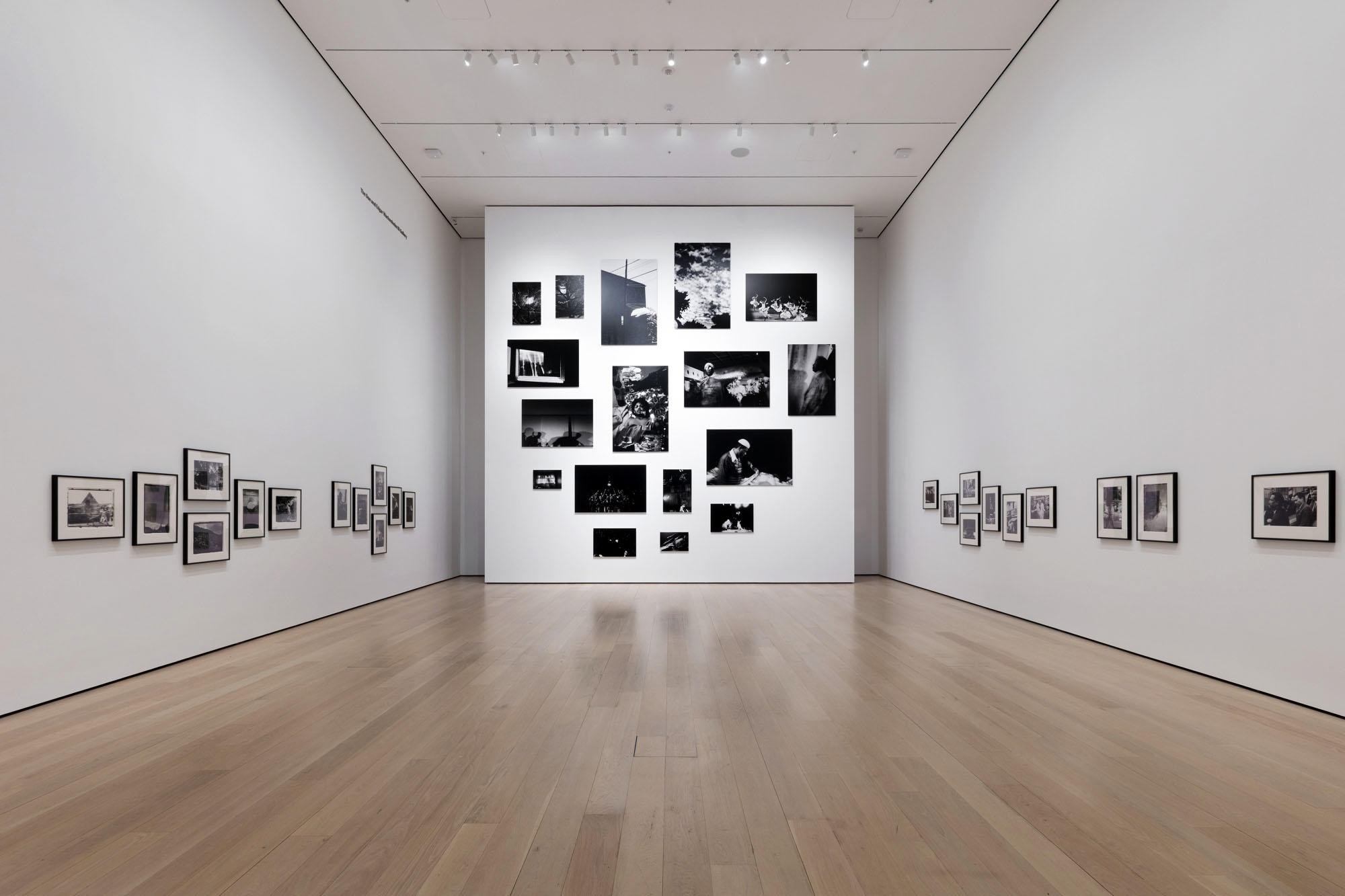
Installation view of 'Projects: Ming Smith' on view at The Museum of Modern Art, New York from February 4, 2023 - May 29, 2023

Installation view of 'Projects: Ming Smith' on view at The Museum of Modern Art, New York from February 4, 2023 - May 29, 2023

Installation view of 'Projects: Ming Smith' on view at The Museum of Modern Art, New York from February 4, 2023 - May 29, 2023

Installation view of 'Projects: Ming Smith' on view at The Museum of Modern Art, New York from February 4, 2023 - May 29, 2023

Installation view of 'Projects: Ming Smith' on view at The Museum of Modern Art, New York from February 4, 2023 - May 29, 2023


Installation views of Projects: Ming Smith, on view at The Museum of Modern Art, New York from February 4, 2023 – May 29, 2023
Photos: Robert Gerhardt


The Museum of Modern Art announces Projects: Ming Smith, on view in the Museum’s street-level galleries from February 4 through May 29, 2023. A photographer who has lived and worked in New York since the 1970s, Ming Smith has served as a precedent for a generation of artists engaging the politics and poetics of the photographic image. Through a deep exploration of the artist’s archive, the exhibition will offer a critical reintroduction to Smith’s work through her distinctive approach to movement, light, rhythm, and shadow, highlighting how she transforms the image from a document of photographic capture into a space of emotive expression. Projects: Ming Smith is organised by Thelma Golden, Director and Chief Curator, The Studio Museum in Harlem, and Oluremi C. Onabanjo, Associate Curator, Department of Photography, The Museum of Modern Art, with the assistance of Kaitlin Booher, Beaumont and Nancy Newhall Curatorial Fellow, Department of Photography, The Museum of Modern Art, and Habiba Hopson, Curatorial Assistant, Permanent Collection, The Studio Museum in Harlem.

As Oluremi C. Onabanjo states, “For Ming Smith, the photographic medium is a site where the senses and the spirit collide. Calling attention to the synesthetic range of her photographic approach, this exhibition highlights how her images collapse the senses, encouraging us to attend to the hue of sound, the rhythm of form, and the texture of vision.” Works featured in the exhibition showcase a wide array of subjects, ranging from finely attuned studies of Black avant-garde musicians and dancers to depictions of everyday life in Harlem and Pittsburgh’s Hill District through photographic series made in response to Ralph Ellison’s novel Invisible Man and August Wilson’s Pittsburgh Cycle of plays.

Projects: Ming Smith is the fourth exhibition in MoMA’s ongoing Projects collaboration with The Studio Museum in Harlem. It takes up the work of a photographer who is important to the history of both museums. MoMA was the first institution to acquire Smith’s work (in 1979), and the Studio Museum has shown Smith’s work since the beginning of her career, when she was the first female member of the trailblazing Black photography collective the Kamoinge Workshop.

Thelma Golden says, “Almost from the day she arrived in New York City, Ming Smith was at the centre of an extraordinary cultural ferment, contributing to the Black Arts Movement while creating a space for herself within Harlem’s legendary Kamoinge Workshop. Working for over five decades, her contribution to modern photography is deeply significant – she continues to influence countless photographers through her singular documentation of, society’s humanity and pageantry. I’m thrilled that audiences who know her work will have the opportunity to revisit and reappraise her many achievements, and that new audiences will have the excitement of discovering her graceful, stunning images through Projects: Ming Smith.”

Projects: Ming Smith is accompanied by Ming Smith: Invisible Man, Somewhere, Everywhere, a new volume in MoMA’s One on One series, written by Oluremi C. Onabanjo. The book provides a sustained meditation on Smith’s photograph Invisible Man, Somewhere, Everywhere (1991) in MoMA’s collection.

Press release from the Museum of Modern Art


Introduction

For Ming Smith, photography is a site where the senses and the spirit collide through the prism of light. “I’m dealing with all these elements, getting that precise moment,” Smith has said. “Getting the feeling, the way the light hits the person – to put it simply, these pieces are like the blues.”

Projects: Ming Smith offers a critical reintroduction to a photographer who has lived in New York since the 1970s, and whose work has served as a precedent for generations of artists engaging the politics and the poetics of the photographic image in relation to experiences of Blackness. Through her skilful deployment of long exposures – which involves slowing the shutter speed of the camera lens to render movement as blur – Smith dissolves the boundaries between her subjects and their surroundings. Her dreamlike, abstract compositions are led by intuition and perfected through repetition.

The result of a deep dive into Smith’s archive, this exhibition reckons with the crucial position of this artist in the history of photography, and in the institutional memories of both The Museum of Modern Art and The Studio Museum in Harlem. MoMA was the first institution to acquire Smith’s work (in 1979), and the Studio Museum has shown Smith’s work since the beginning of her career, when she was the first female member of the trailblazing Black photography collective the Kamoinge Workshop. Bridging the distance between the present and the past, Projects: Ming Smith creates a photographic portal through which to encounter Smith’s images anew. It highlights how her pictures collapse the senses, encouraging us to attend to the hue of sound, the rhythm of form, and the texture of vision.

Text from the Museum of Modern Art


Installation view of 'Projects: Ming Smith' on view at The Museum of Modern Art, New York from February 4, 2023 - May 29, 2023


Installation view of Projects: Ming Smith, on view at The Museum of Modern Art, New York from February 4, 2023 – May 29, 2023
Photo: Robert Gerhardt


Page from 'Projects: Ming Smith' Extended Labels


Page from Projects: Ming Smith extended labels (photographs below)


Ming Smith (American, b. 1950) 'Sun Breeze After the Bluing, Hoboken, NJ' 1972 from the exhibition 'Projects: Ming Smith' at the Museum of Modern Art (MoMA), New York, February - May, 2023


3. Ming Smith (American, b. 1950)
Sun Breeze After the Bluing, Hoboken, NJ
1972
UV print on dibond
Sheet: 72 × 47″ (182.9 × 119.4cm)
Courtesy of the artist
© Ming Smith


Ming Smith (American, b. 1950) 'Black Dance' 1981 from the exhibition 'Projects: Ming Smith' at the Museum of Modern Art (MoMA), New York, February - May, 2023


5. Ming Smith (American, b. 1950)
Black Dance
1981
UV print on dibond
Sheet: 40 × 60″ (101.6 × 152.4cm)
Courtesy of the artist


Ming Smith (American, b. 1950) 'The Window Overlooking Wheatland Street Was My First Dreaming Place' 1979 from the exhibition 'Projects: Ming Smith' at the Museum of Modern Art (MoMA), New York, February - May, 2023


6. Ming Smith (American, b. 1950)
The Window Overlooking Wheatland Street Was My First Dreaming Place
1979
UV print on dibond
Sheet: 40 × 60″ (101.6 × 152.4cm)
Courtesy of the artist
© Ming Smith


Ming Smith (American, b. 1950) 'Sun Ra Space II' 1978


9. Ming Smith (American, b. 1950)
Sun Ra Space II
1978
UV print on dibond
Sheet: 47 × 72″ (119.4 × 182.9cm)
Courtesy of the artist
© Ming Smith


Ming Smith (American, b. 1950) 'Roxbury Interior, Boston, MA' 1978


11. Ming Smith (American, b. 1950)
Roxbury Interior, Boston, MA
1978
UV print on dibond
Sheet: 16 × 24″ (40.6 × 61cm)
Courtesy of the artist
© Ming Smith


Ming Smith (American, b. 1950) 'Pharoah Sanders at the Bottom Line' 1977


14. Ming Smith (American, b. 1950)
Pharoah Sanders at the Bottom Line
1977
UV print on dibond
Sheet: 47 × 72″ (119.4 × 182.9cm)
Courtesy of the artist
© Ming Smith


Ming Smith (American, b. 1950) 'Cascading Light' 1981


16. Ming Smith (American, b. 1950)
Cascading Light
1981
UV print on dibond
Sheet: 16 × 24″ (40.6 × 61cm)
Courtesy of the artist
© Ming Smith


The stellar photographer Ming Smith remembers walking past the Museum of Modern Art when she was in her early 20s and telling herself, “I’m going to be in that museum one day.”

Anyone hearing her might have thought: Dream on. This was the 1970s. Smith was Black, female, new to New York City, with zero art credentials of the kind demanded by any museum of even the brashest up-and-comer, which Smith – a self-described low-key loner – was not.

But even then some changes were afoot – a few, isolated, sporadic – for artists and institutions alike. In 1979, in response to an open call by MoMA’s photography department for new work, Smith dropped off her portfolio. (The receptionist assumed she was a courier.) The museum bought two pictures, making her the first Black woman photographer to enter MoMA’s collection.

Forty years later came another landmark. In 2019, when MoMA opened its new Geffen Wing and the Studio Museum in Harlem, where Smith had shown over several decades, closed to build its new home, the two institutions began collaborating on exhibitions at MoMA’s Midtown and Long Island City locations.

The current show, called “Projects: Ming Smith,” installed on the ground floor at MoMA on 53rd Street (which has free public access), is the latest of these joint ventures, and it’s a beauty. With 52 pictures, mostly black and white, several being exhibited for the first time anywhere, it gives a good sense of Smith’s subject range and of her distinctive, self-invented style: improvisatory, multilayered, painterly, shadow-soaked, with images blurred as if shot at very high or low velocity, or viewed through retreating memory, or a volcanic rain.

Born in Detroit, raised in Columbus, Ohio, Smith started taking pictures when she was young – her pharmacist father was an amateur photographer – and learned the formal ropes as she went. While majoring in premed biology at Howard University she took a photography class and was told by the teacher that, given her race and gender, her prospects of a career in that field were next to nil. After graduating in 1971, she moved to New York City, where she supported herself as a fashion model, and kept taking pictures.

She soon plugged into a crucial support system. In 1972 she joined the Kamoinge Workshop, a Black photography collective based in Harlem. Kamoinge’s first female member, she participated in their notoriously hard-hitting group crits and for a while worked closely with one of the originating members, Anthony Barboza, accompanying him on a working trip to Senegal.

As was clear from a traveling survey of Kamoinge artists organised by the Virginia Museum of Fine Arts in 2020 – it later came to the Whitney Museum – the collective’s original members were eclectic in their styles and interests. But almost all their work adhered to the genre loosely known as “street photography,” grounded in a direct capturing of images, candid and unposed, of everyday life, with results that were documentary in effect and humanistic in intent. Smith’s work basically comes out of this aesthetic too, but also radically, romantically departs from it.

Many of her images, including the 1972 “Raise Your Window High,” the show’s earliest entry, are of city life, which became a long-term subject. A selection of Harlem-related pictures includes shots of the Apollo Theater marquee, a church service in progress, Alvin Ailey’s 1989 funeral, and a fist-pumping rally for the 1998 Million Youth March.

At the same time, much of her urban photography is not event-oriented, or even geographically specific. A series of photos taken in Pittsburgh in 1991, conceived as a visual response to a series of plays by August Wilson set there, could, by the look of them, have been shot in almost any city. A woman and child sit pensively on a Greyhound bus. A man in a pool hall practices cue moves. A dark silhouette of a figure trudges at night down a snow-covered street. Mood, not place or even people, is the real subject here. The title of the snowstorm picture, “Invisible Man, Somewhere, Everywhere,” says as much. So does the fact that the image once appeared in a MoMA show devoted to New York City.

Smith is a longtime jazz and blues devotee. She married a musician (saxophonist David Murray) and has photographed many. A visual equivalent of jazz performance has produced her most experimental work. Applied to street photography’s fairly set subject matter, her use of quick, reflexive shooting, manipulated shutter speeds, and multiple exposure printing opens the possibility for perceptual accident, and for improvisation, to be followed wherever it might lead, which is often in an abstracting direction. In addition, her penchant for framing small areas of light in fields of prevailing darkness gives a bluesy cast to all of this.

The show’s organisers — Thelma Golden, director of the Studio Museum in Harlem, and Oluremi C. Onabanjo, an associate curator of photography at MoMA, working with curatorial fellows Kaitlin Booher and Habiba Hopson – provide a chance to consider a wide and varied sampling of work at a glance in a group of 17 photographs from the 1970s and ’80s, printed large and small, and installed up and across a high gallery wall.

Many of Smith’s favoured subjects are here: city life, performance, travel. A white cloth whips in the wind on a tenement clothesline. The moon, a vortex of brightness, hangs tangled in trees in a Tokyo park. Alvin Ailey dancers flicker like vigil lights in a dark theater. Saxophonist Pharoah Sanders looks rock-solid onstage in New York while another musician, Sun Ra, is clearly an ET about to lift off, his sparkling gold scarf streaming like a comet tail behind him.

There’s a street-level mystic at work in Smith’s art. You sense it in her tremorous cityscapes, especially in her images of people – the primary subject, after all, of street photography. She shoots straightforward portraits, sometimes identifying the sitter by name (composer Edward Boatner; dancer Judith Jamison; writer Amiri Baraka), sometimes not. She makes self-portraits, though they’re hard to read. In one from 1992 called “Womb,” which Smith shot on a trip to Egypt, she appears to be emanating, barely materialised, from a pyramid behind her.

And then there are what I can only call holy pictures in which charismatic figures are transcendentally lifted up. In one, from 1979, titled “James Baldwin in Setting Sun Over Harlem,” Smith, using double exposure, overlays very faintly a photo she took of Baldwin onto a skyscape of light-shot dark clouds. In a second picture using the same technique, she floats above the city the visage of the immortal Harlem photographer James Van Der Zee. Sure, these images are just blatant hero worship. They’re also, like so much of Smith’s art, just wow.

Holland Cotter. “Ming Smith’s Poetic Blur,” on The New York Times website 16 February 2023 [Online] Cited 19/02/2023


1970s


Ming Smith (American, b. 1950) 'West Indian Parade, Brooklyn' 1972


Ming Smith (American, b. 1950)
West Indian Parade, Brooklyn
1972
Gelatin silver print
Frame: 21 1/4 × 27 1/4 × 1 1/2″ (54 × 69.2 × 3.8cm)
Sheet: 16 × 20″ (40.6 × 50.8cm)
Image: 12 × 18 1/2″ (30.5 × 47cm)
Courtesy of the artist
© Ming Smith


Ming Smith (American, b. 1950) 'Luxembourg Gardens, Paris' 1974


Ming Smith (American, b. 1950)
Luxembourg Gardens, Paris
1974
Pigment print
Frame: 21 1/4 × 27 1/4 × 1 1/2″ (54 × 69.2 × 3.8cm)
Sheet: 16 × 20″ (40.6 × 50.8cm)
Image: 13 × 18 1/2″ (33 × 47cm)
Courtesy of the artist
© Ming Smith


Ming Smith (American, b. 1950) 'Oopdeedoo, Brooklyn' 1976


Ming Smith (American, b. 1950)
Oopdeedoo, Brooklyn
1976
from the series Coney Island
Pigment print
Frame: 27 1/4 × 21 1/4 × 1 1/2″ (69.2 × 54 × 3.8cm)
Sheet: 20 × 16″ (50.8 × 40.6cm)
Image: 17 3/4 × 13″ (45.1 × 33cm)
Courtesy of the artist
© Ming Smith


Ming Smith (American, b. 1950) 'Jump, Harlem, New York' 1976


Ming Smith (American, b. 1950)
Jump, Harlem, New York
1976
Pigment print
Frame: 27 1/4 × 21 1/4 × 1 1/2″ (69.2 × 54 × 3.8cm)
Sheet: 20 × 16″ (50.8 × 40.6cm)
Image: 19 × 13 1/2″ (48.3 × 34.3cm)
Courtesy of the artist
© Ming Smith


Ming Smith (American, b. 1950) 'Professor Edward Boatner, New York City, New York' 1979


Ming Smith (American, b. 1950)
Professor Edward Boatner, New York City, New York
1979
Gelatin silver print
Frame: 21 1/4 × 27 1/4 × 1 1/2″ (54 × 69.2 × 3.8cm)
Sheet: 16 × 20″ (40.6 × 50.8cm)
Image: 12 3/4 × 18 1/4″ (32.4 × 46.4cm)
Courtesy of the artist
© Ming Smith


Ming Smith (American, b. 1950) 'James Baldwin in Setting Sun Over Harlem, New York' 1979


Ming Smith (American, b. 1950)
James Baldwin in Setting Sun Over Harlem, New York
1979
Pigment print
Frame: 21 1/4 × 27 1/4 × 1 1/2″ (54 × 69.2 × 3.8cm)
Sheet: 16 × 20″ (40.6 × 50.8cm)
Image: 12 1/2 × 18 1/4″ (31.8 × 46.4cm)
Courtesy of the artist
© Ming Smith


Ming Smith (American, b. 1950) 'Amina and Amiri Baraka "Lovers," New York' 1980


Ming Smith (American, b. 1950)
Amina and Amiri Baraka “Lovers,” New York
1980
Pigment print
Frame: 21 1/4 × 27 1/4 × 1 1/2″ (54 × 69.2 × 3.8cm)
Sheet: 16 × 20″ (40.6 × 50.8cm)
Image: 13 × 18 1/2″ (33 × 47cm)
Courtesy of the artist
© Ming Smith


“The image is always moving, even if you’re standing still.”

Ming Smith

“I like catching the moment, catching the light, and the way it plays out,” the photographer Ming Smith has said. “I go with my intuition… it’s about always looking at lines and the quality of the movement. It’s about seeking energy, breath, and light. The image is always moving, even if you’re standing still.”1 For Smith, these are the central tenets of her approach to image-making: a practice attuned to bodily movement and spatial relations that maintains a commitment to the poetry of light and shadow.

In the early 1970s, Smith arrived in New York City after graduating from Howard University. She had studied microbiology and chemistry, but took the university’s only photography class to sustain a passion for the image inculcated in her by her father. Supporting herself as a model while shooting on the city streets, Smith spent time in Anthony Barboza’s studio and met photographers such as Louis Draper and Joe Crawford, swiftly becoming immersed in fiery debates about the stakes of photography as an art form.2 In 1972, Draper invited Smith to join The Kamoinge Workshop, a collective of African American photographers who gathered weekly to review and critique each other’s work. Its name derived from the Kikuyu word for “a group of people acting together,” Kamoinge was founded in 1963 and emerged as a shared political and artistic space for photographic improvement and, especially, self-determination. It was a powerful sentiment at a time of pivotal gains for the US Civil Rights Movement and decolonization across the African continent.

Joining Kamoinge was transformational for Smith’s photography and self-perception as an artist. She cut her teeth as a photographer and sharpened her conceptual focus, mining the structural and psychological tensions that animate experiences of Blackness. By turns dense and diaphanous, Smith’s pictures sustain hefty blacks alongside frothy swirls of gray and white. These mercurial, moody scenes resist spectacular clarity or straightforward interpretation. As historian and curator Maurice Berger has said, “Ms. Smith’s subjects are often suspended between visibility and invisibility: faces turned away, or are blurred or shrouded in shadow, mist or darkness, a potent metaphor of the struggle for African-American visibility in a culture in which black men and women were disparaged, erased or ignored.”3 In this way, Smith gives shape to the quotidian idiosyncrasies of Black life.

In an unending oscillation between light and darkness, Smith revels in the emotive elements of her subjects. Key to this is the photographer’s command of the blur, which critic Jessica Lynne succinctly defines as “the technique by which Smith collapses the boundaries between a photograph’s subject and its background.”4 Executed with rhythmic pacing and maintaining an acuity of vision, her engagement with sonic and lyrical forms is particularly notable. Subjects and captions refer to the plays of August Wilson, the words of Ralph Ellison’s Invisible Man (1952), and the music of Marvin Gaye and Billie Holiday, John Coltrane and David Murray. These intertextual references bring forward recognizable figures while affirming the function of these photographs as speculative compositions, shaped through intuition. “In the art of photography, I’m dealing with light, I’m dealing with all these elements, getting that precise moment,” Smith has said. “Getting the feeling, getting the way the light hits the person – to put it simply, these pieces are like the blues.”5

Oluremi C. Onabanjo, Associate Curator, The Robert B. Menschel Department of Photography, 2022


1/ Ming Smith quoted in “A Portrait of the Artist: Ming Smith in Conversation with Janet Hill Talbert,” in Ming Smith (New York & Dallas: Aperture & Documentary Arts, 2020). 15.

2/ Ibid., 12.

3/ Berger, Maurice. “A Photographer Who Made Ghosts Visible,” The New York Times, January 11, 2017. Accessed online. https://lens.blogs.nytimes.com/2017/01/11/a-photographer-who-made-ghosts-visible-ming-smith/

4/ Lynne, Jessica. “Jessica Lynne Revisits Ming Smith’s ‘Amina and Amiri Baraka (Lovers),'” Frieze, August 20, 2020. Accessed online. https://www.frieze.com/article/jessica-lynne-revisits-ming-smiths-amina-and-amiri-baraka-lovers

5/ Ming Smith quoted in “Photographer Ming Smith Shows Just How Much Black Life Matters,” by Siddhartha Mitter. The Village Voice, February 7, 2017. Accessed online. https://www.villagevoice.com/2017/02/07/photographer-ming-smith-shows-just-how-much-black-life-matters/


1990s


Ming Smith (American, b. 1950) 'Invisible Man, Somewhere, Everywhere' 1991


Ming Smith (American, b. 1950)
Invisible Man, Somewhere, Everywhere
1991
Oil paint on gelatin silver print
18 11/16 × 12 9/16″ (47.4 × 32cm)
Gift of Kathleen Lingo in memory of Linda McCartney
The Museum of Modern Art, New York
© Ming Smith


Ming Smith. 'The Black Jewels of the U.S.A. II' c. 1991


Ming Smith (American, b. 1950)
The Black Jewels of the U.S.A. II
c. 1991
Courtesy of the artist
© Ming Smith


Ming Smith (American, b. 1950) 'Little Brown Baby Wif Spak'lin' Eyes, For Paul Laurence Dunbar' 1991


Ming Smith (American, b. 1950)
Little Brown Baby Wif Spak’lin’ Eyes, For Paul Laurence Dunbar
1991
Pigment print
Frame: 21 1/4 × 27 1/4 × 1 1/2″ (54 × 69.2 × 3.8cm)
Sheet: 16 × 20″ (40.6 × 50.8cm)
Image: 12 × 18 1/4″ (30.5 × 46.4cm)
Courtesy of the artist
© Ming Smith


Ming Smith (American, b. 1950) 'Greyhound Bus, Pittsburgh' 1991


Ming Smith (American, b. 1950)
Greyhound Bus, Pittsburgh
1991
Pigment print
Frame: 27 1/4 × 21 1/4 × 1 1/2″ (69.2 × 54 × 3.8cm)
Sheet: 22 1/4 × 17″ (56.5 × 43.2cm)
Image: 18 × 12″ (45.7 × 30.5cm)
Courtesy of the artist
© Ming Smith


Ming Smith (American, b. 1950) 'August Blues' 1991


Ming Smith (American, b. 1950)
August Blues
1991
From Invisible Man
Pigment print
Frame: 27 1/4 × 21 1/4 × 1 1/2″ (69.2 × 54 × 3.8cm)
Sheet: 20 × 16″ (50.8 × 40.6cm)
Image: 19 × 13 1/2″ (48.3 × 34.3cm)
Courtesy of the artist
© Ming Smith


Ming Smith (American, b. 1950) 'African Burial Ground, Sacred Space' 1991


Ming Smith (American, b. 1950)
African Burial Ground, Sacred Space
1991
From Invisible Man
Pigment print
Frame: 21 1/4 × 27 1/4 × 1 1/2″ (54 × 69.2 × 3.8cm)
Sheet: 20 × 24″ (50.8 × 61cm)
Image: 12 1/2 × 18 1/4″ (31.8 × 46.4cm)
Courtesy of the artist
© Ming Smith


Ming Smith (American, b. 1950) 'Mother and Child Deciding, Pittsburgh' 1991


Ming Smith (American, b. 1950)
Mother and Child Deciding, Pittsburgh
1991
Gelatin silver print
Frame: 27 1/4 × 21 1/4 × 1 1/2″ (69.2 × 54 × 3.8cm)
Sheet: 20 × 16″ (50.8 × 40.6cm)
Image: 19 3/4 × 14″ (50.2 × 35.6cm)
Courtesy of the artist
© Ming Smith


In Mother and Child Deciding (1991), a young woman is seated at a diner booth with a child, both bundled in winter jackets. Her body is turned to the right, with her leg hoisted onto the booth’s seat, revealing a worn sneaker; her right elbow is placed on the booth’s table, and her little finger touches her lower lip. Her turned face and her outward gaze into the middle distance indicate that she is contemplating the menu posted on a board, or the photographs hung on the wall above the wood paneling. But her wistful face tells us that her thoughts are occupied by worries that have accompanied her here – worries that she cannot share with the child.

M. Neelika Jayawardane. “Ming Smith’s Photographic Tribute to August Wilson,” on the Aperture website February 4, 2021 [Online] Cited 07/05/2023


Ming Smith (American, b. 1950) 'Yes, Immigrants' 1991


Ming Smith (American, b. 1950)
Yes, Immigrants
1991
Pigment print
Frame: 27 1/4 × 21 1/4 × 1 1/2″ (69.2 × 54 × 3.8cm)
Sheet: 20 × 16″ (50.8 × 40.6cm)
Image: 19 × 13 1/2″ (48.3 × 34.3cm)
Courtesy of the artist
© Ming Smith


Ming Smith (American, b. 1950) 'Past Any Reason for Song' 1991


Ming Smith (American, b. 1950)
Past Any Reason for Song
1991
Gelatin silver print
Frame: 21 1/4 × 27 1/4 × 1 1/2″ (54 × 69.2 × 3.8cm)
Sheet: 16 × 20″ (40.6 × 50.8cm)
Image: 12 1/2 × 18 1/4″ (31.8 × 46.4cm)
Courtesy of the artist
© Ming Smith


Ming Smith (American, b. 1950) 'Womb' 1992


Ming Smith (American, b. 1950)
Womb
1992
Gelatin silver print
Frame: 21 1/4 × 27 1/4 × 1 1/2″ (54 × 69.2 × 3.8cm)
Sheet: 16 × 20″ (40.6 × 50.8cm)
Image: 12 × 18″ (30.5 × 45.7cm)
Courtesy of the artist
© Ming Smith


Ming Smith (American, b. 1950) 'Khalid Muhammad, Million Youth March, Harlem, New York' 1998


Ming Smith (American, b. 1950)
Khalid Muhammad, Million Youth March, Harlem, New York
1998
Gelatin silver print
Frame: 27 1/4 × 21 1/4 × 1 1/2″ (69.2 × 54 × 3.8cm)
Sheet: 20 × 16″ (50.8 × 40.6cm)
Image: 18 3/4 × 13 1/4″ (47.6 × 33.7cm)
Courtesy of the artist
© Ming Smith


Ming Smith (American, b. 1950) 'Million Youth March, Raised Fists, Harlem, New York' 1998


Ming Smith (American, b. 1950)
Million Youth March, Raised Fists, Harlem, New York
1998
Gelatin silver print
Frame: 27 1/4 × 21 1/4 × 1 1/2″ (69.2 × 54 × 3.8cm)
Sheet: 20 × 16″ (50.8 × 40.6cm)
Image: 19 × 13 1/2″ (48.3 × 34.3cm)
Courtesy of the artist
© Ming Smith


The Museum of Modern Art
11 West 53 Street
New York, NY 10019
Phone: (212) 708-9400

Opening hours:
10.30am – 5.30pm
Open seven days a week

MoMA website

LIKE ART BLART ON FACEBOOK

Back to top

Exhibition: ‘The Human Cost: America’s Drug Plague’ at the Bronx Documentary Center, New York

Exhibition dates: 5th June – 5th July, 2021

Curators: Michael Kamber and Cynthia Rivera

Artists: James Nachtwey; Jeffrey Stockbridge; Mark Trent

*PLEASE NOTE: THIS POSTING CONTAINS PHOTOGRAPHS OF DRUG USE – IF YOU DO NOT LIKE PLEASE DO NOT LOOK, FAIR WARNING HAS BEEN GIVEN*


James Nachtwey (American, b. 1943) 'A woman, who goes by Jen, struggling to inject herself in the freezing cold in Boston on Jan. 14. 2018' 2018 from the exhibition Exhibition: 'The Human Cost: America's Drug Plague' at the Bronx Documentary Center, New York, June - July, 2021


James Nachtwey (American, b. 1943)
A woman, who goes by Jen, struggling to inject herself in the freezing cold in Boston on Jan. 14. 2018
2018
James Nachtwey for TIME 


Nature ∞ nurture

Last year, over 81,000 men, women and children were lost to drug overdoses in America. Visualise that number of people if you can… nearly 4/5ths capacity of the Melbourne Cricket Ground (MCG) in Australia.

According to medical doctors (see quotation below), the causes of addiction “may involve an interaction of environmental effects – for example, stress, the social context of initial opiate use, and psychological conditioning – and a genetic predisposition in the form of brain pathways that were abnormal even before the first dose of opioid was taken.” So both nature and nurture.

Through experience, I understand both strands that lead to possible addiction: a genetic, psychological illness within family members coupled with the need for escape, the need for pleasure, peer group activity and the desire to loose oneself from the world. Luckily, I do not have a personality that easily becomes addicted, but the possibility within people is always there, no matter their background or social position in the world. While the photo stories in this posting concentrate on human beings from lower socio-economic backgrounds, addiction can affect anyone at anytime. Again through experience, I know that lots of high performing professional people suffer from chronic addiction but keep the fact well hidden from the community.

Addiction occurs when dependence interferes with daily life… when independence, that much searched for freedom from outside control or support (you don’t need or accept help, resources, or care from others), morphs into ‘in dependence’ – where the independence of the self, in addiction, opposes the autonomy of the self (meaning that you have free will and that you can stand behind your actions and their values while still exchanging support and care with others). In autonomy, no one is forcing you to do something you disagree with; in addiction, ‘in dependence’, those actions can no longer be justified. These are just my thoughts… but they can be seen to be linked to Self-Determination Theory (STD). “The interplay between the extrinsic forces acting on persons and the intrinsic motives and needs inherent in human nature is the territory of Self-Determination Theory.” Nature and nurture.

The word addicted (adjective) arises in the “mid 16th century: from the obsolete adjective addict ‘bound or devoted (to someone’), from Latin addict- ‘assigned’, from the verb addicere, from ad- ‘to’ + dicere ‘say’.” Its use has diminished from the 18th century until now. Conversely, the word addiction (noun) comes from the same root, but was unknown until 1900 with the use of the word skyrocketing since the 1950s onwards (with a particular spike in the use of the word in the 1960-70s, the era of free love). Perhaps this says a lot about the pressure of living in a high intensity, 24 hour world, a world where the gods of capitalism can write off 81,000 people in a year, in one country, without the blink of an eye.

What all three photo stories in this posting have ad- ‘to’ + dicere ‘say’ is this: every human being has a story worth listening to.

By embedding themselves in the communities they were photographing (instead of being “snatch and grab” photojournalists), all three photographers give their participants an opportunity to have their voice heard. To tell their stories in their own words and have those stories told with dignity and respect, through images and text. (I have linked all three segments to the full stories online).

As Jeffrey Stockbridge comments, “Everyone’s wading through problems that are unique to them, and I think it’s important to tell these stories… Hearing people discuss their past in their own words is something that you can’t ignore. It’s very powerful. I want the general public to forget what they thought they knew about prostitution, drug addiction, homelessness and poverty, and just listen to an actual person explain what they’ve been through. It’s important to remember that life is unpredictable!” James Natchwey observes, “Photography can cut through abstractions and rhetoric to help us understand complex issues on a human level.”

This is the crux of the matter: photography helps us understand these complex issues on a human level.

Every human being is a life, has a life, and is valuable as such. Every story, every breath, every death is connected to Mother Earth. In their indifference, what capitalism and society do to others, we do to ourselves.

Dr Marcus Bunyan


Many thankx to the Bronx Documentary Center for allowing me to publish the photographs in the posting. Please click on the photographs for a larger version of the image.


“Brain abnormalities resulting from chronic use of heroin, oxycodone, and other morphine-derived drugs are underlying causes of opioid dependence (the need to keep taking drugs to avoid a withdrawal syndrome) and addiction (intense drug craving and compulsive use). The abnormalities that produce dependence, well understood by science, appear to resolve after detoxification, within days or weeks after opioid use stops. The abnormalities that produce addiction, however, are more wide-ranging, complex, and long-lasting. They may involve an interaction of environmental effects – for example, stress, the social context of initial opiate use, and psychological conditioning – and a genetic predisposition in the form of brain pathways that were abnormal even before the first dose of opioid was taken. Such abnormalities can produce craving that leads to relapse months or years after the individual is no longer opioid dependent.”


Thomas R. Kosten, M.D. and Tony P. George, M.D. “The Neurobiology of Opioid Dependence: Implications for Treatment,” in Science & Practice Perspectives. 2002 Jul; 1(1), pp. 13-20.


“Photography can cut through abstractions and rhetoric to help us understand complex issues on a human level. Never is photography more essential than in moments of crisis. To witness people suffering is difficult. To make a photograph of that suffering is even harder. The challenge is to remain open to very powerful emotions and, rather than shutting down, channel them into the images. It is crucial to see with a sense of compassion and to comprehend that just because people are suffering does not mean they lack dignity.”


James Natchwey


James Nachtwey (American, b. 1943) 'Holly, detoxing in the Montgomery County Jail in Dayton, Ohio, on July 3, 2017' 2017 from the exhibition Exhibition: 'The Human Cost: America's Drug Plague' at the Bronx Documentary Center, New York, June - July, 2021


James Nachtwey (American, b. 1943)
Holly, detoxing in the Montgomery County Jail in Dayton, Ohio, on July 3, 2017
2017
© Photograph by James Nachtwey for TIME


Last year, America lost 81,000 men, women and children to drug overdoses. Driven primarily by the opioid crisis – and abetted by the pill-pushing of pharmaceutical companies – millions of individuals and countless families were devastated by addiction.

The war on drugs has failed: from sea to shining sea, fentanyl, heroin, K2, crystal meth, cocaine and other drugs are available in nearly every town and city. Drug-related violence has endangered many of our streets, including Courtlandt Avenue, home to the Bronx Documentary Center.

After decades of ever changing anti-drug strategies, we are still left with familiar and yet unanswered questions: how to stop the overdoses; how to keep our youth from addiction; how to stop drug-related violence; how to offer humanitarian treatment.

The Bronx Documentary Center’s upcoming photo exhibition, The Human Cost: America’s Drug Plague, explores these issues and portrays the human toll of America’s drug scourge. The deeply personal stories told here – of losing children, families and freedom – provide a stark but compassionate look at a very complex dynamic.

James Nachtwey, the dean of American conflict photographers, reports with visual journalist and editor, Paul Moakley, from New Hampshire, Ohio, Boston, San Francisco and beyond. Jeffrey Stockbridge documents Philadelphia’s Kensington neighbourhood over the course of 6 years. And Mark Trent follows a tight-knit group of friends in West Virginia through cycles of substance abuse and tragic death. The BDC hopes this exhibition will lead to productive discussions about an intractable American problem.

Exhibition curated by Michael Kamber and Cynthia Rivera.

Press release from the Bronx Documentary Center


James Nachtwey (American, b. 1943) 'Dorothy Onikute, 33, a deputy sheriff with the Rio Arriba County sheriff's office, responding to an overdose call on Feb. 4, on the side of the road in Alcalde, N.M.' Nd


James Nachtwey (American, b. 1943)
Dorothy Onikute, 33, a deputy sheriff with the Rio Arriba County sheriff’s office, responding to an overdose call on Feb. 4, on the side of the road in Alcalde, N.M.
Nd
© Photograph by James Nachtwey for TIME


‘This sort of thing happens so often, it’s sad to say it’s on to the next once they are out of our care.’

~ Dorothy Onikute


The Opioid Diaries – James Nachtwey and Paul Moakley

The opioid crisis is the worst addiction epidemic in American history. Drug overdoses kill more than 64,000 people per year, and the nation’s life expectancy has fallen for two years in a row. But there is a key part of the story that statistics can’t tell. In 2017, for over the course of a year, photographer James Nachtwey set out to document the opioid crisis in America through the people on its front lines. Alongside TIME‘s deputy director of photography, Paul Moakley, the pair traveled the country gathering stories from users, families, first responders and others at the heart of the epidemic. Here, Nachtwey’s images are paired with quotes from Moakley’s interviews, which have been edited. The voices are a mix of people in the photos and others who are connected to them. The Opioid Diaries is a visual record of a national emergency – and it demands our urgent attention.

Text from the Bronx Documentary Center website

The full text and more images from the series can be found on the TIME website


James Nachtwey (American, b. 1943) 'Chad Colwell, 32, being revived by EMS workers after overdosing in his truck in Miamisburg, Ohio, on July 4, 2017. He says this, his fourth overdose, led him to seek treatment' 2017


James Nachtwey (American, b. 1943)
Chad Colwell, 32, being revived by EMS workers after overdosing in his truck in Miamisburg, Ohio, on July 4, 2017. He says this, his fourth overdose, led him to seek treatment
2017
© Photograph by James Nachtwey for TIME


‘Heroin grabs ahold of you, and it won’t let go. It turned me into somebody I never thought I would be.’

~ Chad Colwell


James Nachtwey (American, b. 1943) 'Billy, 31, right, preparing to use drugs in Boston on Jan. 14' Nd


James Nachtwey (American, b. 1943)
Billy, 31, right, preparing to use drugs in Boston on Jan. 14
Nd
© Photograph by James Nachtwey for TIME


James Nachtwey (American, b. 1943) 'Cheryl Schmidtchen, 67, being consoled at the funeral for her granddaughter Michaela Gingras in Manchester, N.H., on September 17th, 2017. Gingras, a heroin user, was 24' 2017


James Nachtwey (American, b. 1943)
Cheryl Schmidtchen, 67, being consoled at the funeral for her granddaughter Michaela Gingras in Manchester, N.H., on September 17th, 2017. Gingras, a heroin user, was 24
2017
© Photograph by James Nachtwey for TIME


‘After Michaela died, I saw it clear as day. They’re not only destroying themselves, they’re destroying us.’

~ Cheryl Schmidtchen


What I Saw

James Natchwey

Like most people, I’d heard about the opioid epidemic. It was especially hard to get my mind around a statistic from 2016: almost as many deaths from drug overdoses as in all of America’s recent wars combined. But numbers are an abstraction. I had no idea what it looked like on the ground. The only way to make real sense of it, I told my editors, was to see what happens to individual human beings, one by one.

Photography can cut through abstractions and rhetoric to help us understand complex issues on a human level. Never is photography more essential than in moments of crisis. To witness people suffering is difficult. To make a photograph of that suffering is even harder. The challenge is to remain open to very powerful emotions and, rather than shutting down, channel them into the images. It is crucial to see with a sense of compassion and to comprehend that just because people are suffering does not mean they lack dignity.

Over the past 35 years, my work as a photojournalist has taken me to other countries to document wars, uprisings, natural disasters and global health crises. In revisiting my own country I discovered a national nightmare. But the people living through it aren’t deviants. They are ordinary citizens, our neighbours, our family members. I don’t think I met one user whom I would consider to be a bad person. No one wants to be an addict.

I also saw signs of hope, particularly from the people who are dealing with the crisis at the street level. Some of them are former users who have lifted themselves up and are using their experience to help others. They are refusing to allow our country to be defined by this problem. Instead, they are helping us define ourselves by finding solutions. We must join them.

James Natchwey


Jeffrey Stockbridge (American, b. 1982) 'Bobby' 2010


Jeffrey Stockbridge (American, b. 1982)
Bobby
2010
© Jeffrey Stockbridge


Kensington Blues – Jeffrey Stockbridge

Kensington Blues by Jeffrey Stockbridge is a decade-long documentary project about the opioid crisis in Philadelphia, Pennsylvania. Featuring large-format photography, audio interviews, journal entries and video Stockbridge utilises a combination of styles and formats to humanise those suffering from addiction.

“During the 19th century the neighbourhood of Kensington in North Philadelphia was a strong working-class district, a national leader of the textile industry and home to a diverse population of immigrants. Like many rust belt cities, industrial restructuring of the mid twentieth century led to a sharp economic decline including high unemployment and a significant population loss.

Today, half of Kensington residents live at or below the poverty line. The neighbourhood has become an epicentre of the opioid crisis and is infamous for open air drug use, prostitution and violent crime. With the roaring El train overhead, Kensington Avenue (the major business corridor in the neighbourhood) is in a state of perpetual hustle. Heroin, Fentanyl, K-2, Crystal, Crack, Xanax, Subs – just about any drug that exists in the modern world is bought and sold in Kensington. Women, some as young as twenty years old, and others who’ve been working the Avenue for decades, populate the neighbourhood in great numbers. Prostitution has become a social norm. Drug users sell clean packaged needles for a dollar a piece – five needles equals a bag of dope.

Working with a large-format film camera, I chose a slow photographic process in order to literally slow down the rapid speed of life as it happens along the Ave. The focus of my photographic work is portraiture. I want to tap into the state of mind of those who are struggling to survive their addiction. Together my subjects and I have entered into a collaboration of sorts. Through audio recordings, journal entries and video, we are working to highlight the voices of those with lived experience. This work would not be possible without their trust and guidance. By sharing the intimate details of their plight, those I photograph are taking a stand to effectively humanise addiction and challenge the stigma that all drug addicts are morally corrupt. As the opioid crisis has taught us, addiction can happen to anyone.”

Text from the Bronx Documentary Center website


Jeffrey Stockbridge (American, b. 1982) 'Jamie' 2012


Jeffrey Stockbridge (American, b. 1982)
Jamie
2012
© Jeffrey Stockbridge


Jeffrey Stockbridge (American, b. 1982) 'Carol' 2010


Jeffrey Stockbridge (American, b. 1982)
Carol
2010
© Jeffrey Stockbridge


LC: Drug addicts, prostitutes and the homeless are often seen as “the other” in our society. Your photos show a different side of this – a side that people can relate to and empathise with. Can you say more?

JS: There are a million different reasons why people become homeless to begin with. You dehumanise people by lumping them into the lowest common denominator. By looking down on them and saying, “You’re all homeless because you couldn’t get your lives together” – that doesn’t help anybody. Everyone’s wading through problems that are unique to them, and I think it’s important to tell these stories. Alongside the photographs I feature a short bio or quotes; sometimes I’ll also incorporate diary entries written by my subjects, and I’ve recorded audio interviews that I post on my Kensington Blues blog.

Hearing people discuss their past in their own words is something that you can’t ignore. It’s very powerful. I want the general public to forget what they thought they knew about prostitution, drug addiction, homelessness and poverty, and just listen to an actual person explain what they’ve been through. It’s important to remember that life is unpredictable! I could end up on Kensington Avenue if certain circumstances occurred – anybody could.

LC: The images are “still” and considered. They communicate a feeling of respect and consent. You don’t seem to shoot from the hip or take the “fearless flashgun” approach like many street photographers. Can you talk about your process?

JS: I shoot with a 4 x 5 view camera. For these photographs to work, there has to be consent! My subjects have to hold still – if they move an inch forward or an inch back, they’ll be out of focus. It’s a slow-moving, old-looking camera, so it’s automatically a topic of conversation. People look at it and think, “Woah, what is that?” But it has certain limitations – you can’t photograph quickly. It takes time. I have to set it up, I have to focus, use the dark cloth, take a meter reading … It’s at least five minutes until I’m ready to go. Meanwhile, my subject has to stand around waiting. So consent is fairly important!

I’m not looking at the back of an LCP screen when I shoot; I’m in the moment. I’m connecting entirely with my subject, not just communicating with a computer. The camera is a trusted friend that’s standing there by my side. In the Kensington project it really grounded me in the neighbourhood. I think it put people at ease, because they knew I wasn’t going to take a photo and run off – I was stuck with a tripod and a big heavy camera!

Jeffrey Stockbridge, interviewed by Francesca Cronan. “Kensington Blues,” on the LensCulture website 2016 [Online] Cited 03/06/2021.

The full text and more images from the series can be found on the LensCulture website.


Jeffrey Stockbridge (American, b. 1982) 'Kevin' 2011


Jeffrey Stockbridge (American, b. 1982)
Kevin
2011
© Jeffrey Stockbridge


Surviving Kensington: behind the photos of ‘Kensington Blues’

What used to be a proud blue-collar neighbourhood in Philadelphia is now a deteriorating haven for drugs, crime, and prostitution. Kensington is famous for the place to get your fix; and for the place you end up stuck when you’ve let your vices get the best of you.

For the last five years, Philly-based photographer Jeffrey Stockbridge has been taking intimate portraits of current residents (‘survivors’) in Kensington. But the stories he finds here aren’t just about Philly: Jeffrey’s photographs and raw interviews show a side of the desperation, hopelessness, and broken dreams that plague America’s addicts across the country.

Through a walk with Jeffrey on the Avenue, we get a glimpse of what it’s like to survive on Kensington.


Jeffrey Stockbridge (American, b. 1982) 'Krysta' 2009


Jeffrey Stockbridge (American, b. 1982)
Krysta
2009
© Jeffrey Stockbridge


Mark E. Trent (American) 'Allie in traffic after losing a close friend in her recovery group to an overdose' Nd


Mark E. Trent (American)
Allie in traffic after losing a close friend in her recovery group to an overdose
Nd
© Mark E. Trent


Despair, Love and Loss – Mark E. Trent

None of us knew what was happening or how destructive this would be. We began seeing more and more overdoses and suicides in our community. The details were scarce and the stigma that came with drug abuse masked the early deaths until it was so common it didn’t phase us anymore; the word pillhead began being used to describe those people on drugs. This was long before it touched nearly everyone in West Virginia and across the country.

With the help of friends I travelled to interview small time dealers, addicts and local law enforcement in an attempt to understand the scope of it all. I never did. This body of work started taking shape when I was at a softball game with a long time friend. Her name is Allie. I told her what I was trying to do and she said “Stick with me and I will show you what’s going on.”

From there it was a matter of seeing what was right in front of me. I documented Allie and her friends and lovers as they struggled in active addiction and slowly lost themselves and each other. This group of women let me into their lives behind closed doors and gave me access to make this work possible. They didn’t have to. They are the reason this work exists. They were star basketball players, young mothers, and individuals that held jobs and had real dreams. One day a knee injury supplied the prescription opiate that led to the addiction that spread through their group of friends and community.

My goal with this project was longevity. I wanted to follow it through until the end. My hope is that these photographs will tell a story about a small group of individuals that suffered through a crisis few saw coming. Today Allie is six years sober. Peakay is working toward sobriety with medical assisted treatments. Barbie died of an overdose in her bed alongside her lover Kim. Jessie tells me she is “going good,” but to be honest I never know the truth with her.

Text from the Bronx Documentary Center website


Mark E. Trent (American) 'Allie freebasing a prescription opioid' Nd


Mark E. Trent (American)
Allie freebasing a prescription opioid
Nd
© Mark E. Trent


There were times whenever I was really strung out and I didn’t realise how bad I was. What you always say is, ‘Well at least I’m not doing it to anyone else. At least I’m not hurting anyone. I’m just hurting myself. I’m not sticking needles in anyone else. It’s just me.’ But I didn’t realise how much I’d hurt my family, and my mom.

I don’t know how many people died in the house I was living in, I can’t even – three off the top of my head, because of drugs, overdoses.

But it just didn’t, it just didn’t hit me that way, I didn’t think – I wasn’t ready to see it that way I think. I feel like I had to go through everything I went through to be where I am.


Mark E. Trent (American) 'Jessie injecting Barbie with morphine' Nd


Mark E. Trent (American)
Jessie injecting Barbie with morphine
Nd
© Mark E. Trent


Barbie really was like my big sister.

She told me a year before she died she had to go to the doctor for something. They couldn’t find a vein and she had to make them put it in her neck. And they asked about the scarring on her neck.

They asked her, ‘Do you shoot in your neck? Jesus.’ And she was like, ‘Yeah.’ And they were like, ‘You’re going to be dead in a year anyway.’ But I sort of didn’t believe it. Barbie really was invincible.


Mark E. Trent (American) 'Cooking pills for injection next to dinner' Nd


Mark E. Trent (American)
Cooking pills for injection next to dinner
Nd
© Mark E. Trent


Mark E. Trent (American) 'Allie crying, facing jail time and missing Barbie who died of an overdose, after a long night of using' Nd


Mark E. Trent (American)
Allie crying, facing jail time and missing Barbie who died of an overdose, after a long night of using
Nd
© Mark E. Trent


Sometimes I thought it was fine; other times I thought, ‘How did I get here? What did I do?’ I was supposed to be somebody. I was supposed to do something great with my life. I was supposed to go places. I wanted to travel. I wanted to play basketball. I wanted to be all these things.

And instead I was living in a house with no electricity, crying in the bathroom because I can’t find a vein, miserable. Absolutely miserable.

It took me getting sober and being sober for a while to look back and be like, ‘That was all really low, man. That was all really low.’

“Allie Rambo tells her story below in her own words” in ‘Despair, Love and Loss: A Journey Inside West Virginia’s Opioid Crisis’ on the NY Times website Dec. 13, 2018 [Online] Cited 03/06/2021

The full text and more images from the series can be found on the NY Times website


Mark E. Trent (American) 'Allie and Regina catching snowflakes after a close friend's funeral' Nd


Mark E. Trent (American)
Allie and Regina catching snowflakes after a close friend’s funeral
Nd
© Mark E. Trent


Bronx Documentary Center Annex Gallery
364 E 151st St, Bronx, NY 10455

Opening hours:
Wednesday – Friday 3 – 7pm
Saturday – Sunday 12 – 5pm

Bronx Documentary Center website

LIKE ART BLART ON FACEBOOK

Back to top

Exhibition: ‘Herbert List: Italia’ at Galerie Karsten Greve, Cologne

Exhibition dates: 20th May – 31st July, 2021


Herbert List (German, 1903-1975) 'Orco, Sacro Bosco – Garden of Pier Francesco Orsini, Bomarzo, (Lazio), Italy' 1952 from the exhibition 'Herbert List: Italia' at Galerie Karsten Greve, Cologne, May - July, 2021


Herbert List (German, 1903-1975)
Orco, Sacro Bosco – Garden of Pier Francesco Orsini, Bomarzo, (Lazio), Italy
1952
Vintage gelatin silver print
30.4 x 24cm
© Herbert List Estate, Hamburg, Germany
Courtesy Galerie Karsten Greve, Cologne Paris St. Moritz


Every kind of pleasure

I feel that Herbert List is a very underrated photographer.

While celebrated socialites and fashion, architectural and urban(e) photographers in their day, the fame of List (together with his compatriots George Hoyningen-Huene and Horst P. Horst) has largely waned.

Is this because of the photographs aesthetic beauty and classical forms, their austerity and stillness, or their allusion to Romantic realism? Or is it because all three are gay and their homoerotic photographs of youthful masculinity still possess a residual stigma that clings to photographs of young men?

Whatever the reason this is a great pity for they are, all, superb photographers.

In his Self-Portrait in a Mirror, Rome, Italy (1955, below), List can be seen as an illusionist.

With seeming simplicity but utmost dexterity, List constructs magical spaces within the image plane – enchanted openings into other worlds that are actually present in the here and now: The Enchanted – At the Villa Magica, Rome Italy (1949, below); Painter in the Forum Romanum, Rome, Italy (1949, below).

His photographs play (there is the critical word) with how the camera pictures the reality of life on earth.

At a fundamental level of existence, this is magic (realism)1 played out on a global scale that investigates the fabric and structure of existence itself.

As a song I love titled “Dreams” by the group Nuages reflects:


“… and you understand black implies white

self implies other

life implies death

you can feel yourself

not as a stranger in the world

not as something here on probation

not as something that has arrived here by fluke

but you can begin to feel your own existence as absolutely fundamental

what you are basically

deep deep down

far far in

is simply the fabric and structure of existence itself.


Dr Marcus Bunyan


1/ The existence of fantastic elements in the real world provides the basis for magical realism. Writers do not invent new worlds, but rather, they reveal the magical in the existing world, as was done by Gabriel García Márquez, who wrote the seminal work One Hundred Years of Solitude. In the world of magical realism, the supernatural realm blends with the natural, familiar world. List’s style of fotografia metafisica, which pictured dream states and fantastic imagery, is related to magic realism.


Many thankx to Galerie Karsten Greve for allowing me to publish the photographs in the posting. Please click on the photographs for a larger version of the image.


“The lens is not objective. Otherwise photography would be useless as an artistic medium.”


Herbert List. “Photografie als künstlerisches Ausdrucksmittel,” in List, H. (1985). Herbert List. München: Christian Verlag., p. 36.


Herbert List (German, 1903-1975) 'Boys Playing Soccer, Naples, Italy' 1950 from the exhibition 'Herbert List: Italia' at Galerie Karsten Greve, Cologne, May - July, 2021


Herbert List (German, 1903-1975)
Boys Playing Soccer, Naples, Italy
1950
Vintage gelatin silver print
23 x 29.5cm
© Herbert List Estate, Hamburg, Germany
Courtesy Galerie Karsten Greve, Cologne Paris St. Moritz


Herbert List (German, 1903-1975) 'Painter in the Forum Romanum, Rome, Italy' 1949


Herbert List (German, 1903-1975)
Painter in the Forum Romanum, Rome, Italy
1949
Vintage gelatin silver print
29.1 x 22.4cm
© Herbert List Estate, Hamburg, Germany
Courtesy Galerie Karsten Greve, Cologne Paris St. Moritz


Herbert List (German, 1903-1975) 'Ottavio Russo – The Vagabond, Naples, Italy' 1961


Herbert List (German, 1903-1975)
Ottavio Russo – The Vagabond, Naples, Italy
1961
Vintage gelatin silver print
29 x 22cm
© Herbert List Estate, Hamburg, Germany
Courtesy Galerie Karsten Greve, Cologne Paris St. Moritz


Installation view of the exhibition 'Herbert List Italia' at Galerie Karsten Greve, Cologne


Installation view of the exhibition Herbert List: Italia at Galerie Karsten Greve, Cologne showing at right, Fight in Trastevere (1953)


Herbert List (German, 1903-1975) 'Fight in Trastevere, Trastevere, Rome, Italy' 1953


Herbert List (German, 1903-1975)
Fight in Trastevere, Trastevere, Rome, Italy
1953
Vintage gelatin silver print
29.3 x 23.2cm


Galerie Karsten Greve is presenting an exhibition dedicated to one of the major photographers of the 20th century: Herbert List Italia. This is a debut for Herbert List at Karsten Greve’s Cologne gallery space. Photo essays, photo reports, and portraits from the artist’s estate are on show, including around 80 vintage gelatin silver prints, based on photographs taken during Herbert List’s stays in Italy between 1934 and 1961. As much a bon vivant and educational traveler as an artist, professional photographer, and a collector of 16th to 18th-century Italian Old Master drawings, Herbert List felt closely connected to Italy.

Born in Hamburg in 1903, the son of Felix List of coffee importers List & Heineken, Herbert List started an apprenticeship with a Heidelberg coffee wholesaler in 1921 while studying art history and literature at Heidelberg University, attending lectures, for instance, given by Friedrich Gundolf, a professor of German philology, Goethe scholar, and member of the George circle. His encounter with photographer Andreas Feininger, who introduced him to the reflex camera (Rolleiflex), inspired Herbert List to take up photography in 1930. Influenced by Surrealism and the Bauhaus, he began shooting still life and portraits. In 1936, he emigrated to London and Paris; most of the time between 1937 and 1941, he spent in Greece. In 1941, to avoid internment, he fled to Munich where the American military government eventually admitted him as a photo reporter after he had been forbidden to officially publish or work in Germany. Being drafted into the Wehrmacht, the German armed forces, in 1944, he served in Norway until the end of the war. In 1946, he took photos of the ruins in bombed-out Munich. He became art editor of Heute magazine. In 1952, he joined Magnum, the international photographic cooperative, in Paris and traveled Italy. He completed several book projects. From the mid-1960s, he devoted himself almost entirely to his collection of Italian Old Master drawings. Herbert List died in Munich in 1975.

The artist’s estate, formerly in the care of Max Scheler from 1975 to 2003, is currently managed by Peer-Olaf Richter in Hamburg. Since Herbert List’s first solo exhibition in Paris in 1937, his oeuvre has been shown in numerous international exhibitions and published in internationally renowned magazines. His works are held in notable public collections, including the Metropolitan Museum of Art in New York, the Museum of Fine Art, Boston, Kunsthaus Zürich, the Photography Museum (now Photography Collection) at Münchner Stadtmuseum, Munich, the Museum für Kunst und Gewerbe Hamburg, Museum Ludwig in Cologne, and the Musée Picasso in Paris.

In the 1930s, creating works of homoerotic sensuality in line with classical aesthetics, Herbert List took photographs of vigorous boys worshiping the sun on the beaches and coasts of Liguria, and on the islands of Capri and Ischia. He dealt with age, loneliness, and death in a 1938 picture essay about Casa Verdi, the old age residence and final destination for many singers and musicians at La Scala in Milan. List’s photographs taken in the catacombs of Palermo’s Capuchin monastery (Le Catacombe dei Cappuccini) with skeletons wrapped in robes whose bizarre facial expressions gain an uncanny presence thanks to close vision and lighting effects, date from 1939. Another grotesque photographic essay shows the monster monuments overgrown with moss and leaves in the Sacro Bosco of Bomarzo (province of Viterbo, Lazio), which is used as a pasture and playground. In the jaws of Orcus, the personified throat of hell, stands a shepherd boy trying to survey his flock of grazing sheep. The ingenious gardens designed by architects Pirro Ligorio and Giacomo Barozzi da Vignola on behalf of the Roman condottiero and patron of the arts Pier Francesco (called Vicinio) Orsini between 1552 and 1585 are unique and full of puzzles.

Herbert List uncovers, and, at the same time, ironically comments on, the monumental character of architecture in Rome, the Eternal city, by juxtaposing it with people or animals: the giant marble hand of the Colossus of Emperor Constantine points its index finger towards Heaven behind a monk’s head; a cat poses under a monumental head of Jupiter. In 1952, the camera artist first used a 35 mm camera (Leica) with a telephoto lens to candidly capture events on the piazza in the Trastevere district for his View from a Window series. For a photo report about Naples, Herbert List went on photographic forays through the city starting in 1957. His sympathy was with the local residents: fishermen, traders, craftsmen, seamstresses, and laundresses, but also nuns and priests, idlers and singers, and, in particular, with the street urchins. A native of Naples, director and actor Vittorio De Sica interviewed the people List portrayed. Their collaboration resulted in Napoli, an illustrated book published in 1962; featuring photographs of authentic everyday occurrences and quotations from the people shown, it provides an overall picture of the southern Italian metropolis interspersed with social criticism.

As a specialty of Herbert List’s photography, the exhibition presents vintage gelatin silver prints of portraits of contemporary artists, writers, and intellectuals from List’s circle of acquaintances, including Giorgio de Chirico and Giorgio Morandi, Anna Magnani, Wystan H. Auden, Pier Paolo Pasolini and Benedetto Croce, to name just a few of these character studies that are considered among the outstanding achievements of 20th century portrait photography.

Accompanying the exhibition, a publication on Herbert List published by Galerie Karsten Greve is available: HERBERT LIST Italia, text: Matthias Harder, Galerie Karsten Greve, Paris, 2020, 12.00 euros.

Text from the Galerie Karsten Greve website


Installation view of the exhibition 'Herbert List Italia' at Galerie Karsten Greve, Cologne

Installation view of the exhibition 'Herbert List Italia' at Galerie Karsten Greve, Cologne

Installation view of the exhibition 'Herbert List Italia' at Galerie Karsten Greve, Cologne

Installation view of the exhibition 'Herbert List Italia' at Galerie Karsten Greve, Cologne

Installation view of the exhibition 'Herbert List Italia' at Galerie Karsten Greve, Cologne

Installation view of the exhibition 'Herbert List Italia' at Galerie Karsten Greve, Cologne

Installation view of the exhibition 'Herbert List Italia' at Galerie Karsten Greve, Cologne

Installation view of the exhibition 'Herbert List Italia' at Galerie Karsten Greve, Cologne

Installation view of the exhibition 'Herbert List Italia' at Galerie Karsten Greve, Cologne

Installation view of the exhibition 'Herbert List Italia' at Galerie Karsten Greve, Cologne

Installation view of the exhibition 'Herbert List Italia' at Galerie Karsten Greve, Cologne


Installation views of the exhibition Herbert List: Italia at Galerie Karsten Greve, Cologne


Born in Hamburg in 1903, the son of Felix List of coffee importers List & Heineken, Herbert List started an apprenticeship with a Heidelberg coffee wholesaler in 1921 while studying art history and literature at Heidelberg University, attending lectures, for instance, given by Friedrich Gundolf, a professor of German philology, Goethe scholar, and member of the George circle. His encounter with photographer Andreas Feininger, who introduced him to the reflex camera (Rolleiflex), inspired Herbert List to take up photography in 1930. Influenced by Surrealism and the Bauhaus, he began shooting still life and portraits. In 1936, he emigrated to London and Paris; most of the time between 1937 and 1941, he spent in Greece. In 1941, to avoid internment, he fled to Munich where the American military government eventually admitted him as a photo reporter after he had been forbidden to officially publish or work in Germany. Being drafted into the Wehrmacht, the German armed forces, in 1944, he served in Norway until the end of the war. After his return to Germany, the American military government eventually admitted him as a photo reporter after he had been forbidden to officially publish or work in Germany.  He became art editor of Heute magazine. In 1952, he joined Magnum, the international photographic cooperative, in Paris and traveled Italy. He completed several book projects. From the mid-1960s, he devoted himself almost entirely to his collection of Italian Old Master drawings. Herbert List died in Munich in 1975.

The artist’s estate, formerly in the care of Max Scheler from 1975 to 2003, is currently managed by Peer-Olaf Richter in Hamburg. Since Herbert List’s first solo exhibition in Paris in 1937, his oeuvre has been shown in numerous international exhibitions and published in internationally renowned magazines. His works are held in notable public collections, including the Metropolitan Museum of Art in New York, the Museum of Fine Art, Boston, Kunsthaus Zürich, the Photography Museum (now Photography Collection) at Münchner Stadtmuseum, Munich, the Museum für Kunst und Gewerbe Hamburg, Museum Ludwig in Cologne, and the Musée Picasso in Paris.

In the 1930s, creating works of homoerotic sensuality in line with classical aesthetics, Herbert List took photographs of vigorous boys worshiping the sun on the beaches and coasts of Liguria, and on the islands of Capri and Ischia. He dealt with age, loneliness, and death in a 1938 picture essay about Casa Verdi, the old-age residence and final destination for many singers and musicians at La Scala in Milan. List’s photographs taken in the catacombs of Palermo’s Capuchin monastery (Le Catacombe dei Cappuccini) with skeletons wrapped in robes whose bizarre facial expressions gain an uncanny presence thanks to close vision and lighting effects, date from 1939. Another grotesque photographic essay shows the monster monuments overgrown with moss and leaves in the Sacro Bosco of Bomarzo (province of Viterbo, Lazio), which is used as a pasture and playground. In the jaws of Orcus, the personified throat of hell, stands a shepherd boy trying to survey his flock of grazing sheep. The ingenious gardens designed by architects Pirro Ligorio and Giacomo Barozzi da Vignola on behalf of the Roman condottiero and patron of the arts Pier Francesco (called Vicinio) Orsini between 1552 and 1585 are unique and full of puzzles.

Herbert List uncovers, and, at the same time, ironically comments on, the monumental character of architecture in Rome, the Eternal city, by juxtaposing it with people or animals: the giant marble hand of the Colossus of Emperor Constantine points its index finger towards Heaven behind a monk’s head; a cat poses under a monumental head of Jupiter. In 1952, the camera artist first used a 35 mm camera (Leica) with a telephoto lens to candidly capture events on the piazza in the Trastevere district for his View from a Window series. For a photo report about Naples, Herbert List went on photographic forays through the city starting in 1957. His sympathy was with the local residents: fishermen, traders, craftsmen, seamstresses, and laundresses, but also nuns and priests, idlers and singers, and, in particular, with the street urchins. A native of Naples, director and actor Vittorio De Sica interviewed the people List portrayed. Their collaboration resulted in Napoli, an illustrated book published in 1962; featuring photographs of authentic everyday occurrences and quotations from the people shown, it provides an overall picture of the southern Italian metropolis interspersed with social criticism.

As a specialty of Herbert List’s photography, the exhibition presents vintage gelatin silver prints of portraits of contemporary artists, writers, and intellectuals from List’s circle of acquaintances, including Giorgio de Chirico and Giorgio Morandi, Anna Magnani, Wystan H. Auden, Pier Paolo Pasolini and Benedetto Croce, to name just a few of these character studies that are considered among the outstanding achievements of 20th century portrait photography.

Text from the Galerie Karsten Greve website


Installation view of the exhibition 'Herbert List: Italia' at Galerie Karsten Greve, Cologne showing at right, 'Italian Painter Giorgio de Chirico #4' (1951)


Installation view of the exhibition Herbert List: Italia at Galerie Karsten Greve, Cologne showing at right, Italian Painter Giorgio de Chirico #4 (1951)


Herbert List (German, 1903-1975) 'Italian Painter Giorgio de Chirico #4, Rome, Italy' 1951


Herbert List (German, 1903-1975)
Italian Painter Giorgio de Chirico #4, Rome, Italy
1951
Vintage gelatin silver print
30 x 22 .7cm
© Herbert List Estate, Hamburg, Germany
Courtesy Galerie Karsten Greve, Cologne Paris St. Moritz


Italian Painter Giorgio di Chirico in his Atelier and Home at Piazza di Spagna


Herbert List (German, 1903-1975) 'Girls playing in a Passageway, Naples, Italy' 1959


Herbert List (German, 1903-1975)
Girls playing in a Passageway, Naples, Italy
1959
Vintage gelatin silver print
28.9 x 21.6cm
© Herbert List Estate, Hamburg, Germany
Courtesy Galerie Karsten Greve, Cologne Paris St. Moritz


Installation view of the exhibition Herbert List: Italia at Galerie Karsten Greve, Cologne showing at left, 'The Enchanted – At the Villa Magica' (1949)


Installation view of the exhibition Herbert List: Italia at Galerie Karsten Greve, Cologne showing at left, The Enchanted – At the Villa Magica (1949)


Herbert List (German, 1903-1975) 'The Enchanted – At the Villa Magica, Rome Italy' 1949


Herbert List (German, 1903-1975)
The Enchanted – At the Villa Magica, Rome Italy
1949
Vintage gelatin silver print
29.4 x 23.8cm
© Herbert List Estate, Hamburg, Germany
Courtesy Galerie Karsten Greve, Cologne Paris St. Moritz


Herbert List (German, 1903-1975) 'View from a window: Little Garibaldi – Boy with Italian flag, Rome, Trastevere, Italy' 1953


Herbert List (German, 1903-1975)
View from a window: Little Garibaldi – Boy with Italian flag, Rome, Trastevere, Italy
1953
Vintage gelatin silver print
22.5 x 29cm
© Herbert List Estate, Hamburg, Germany
Courtesy Galerie Karsten Greve, Cologne Paris St. Moritz


Herbert List (German, 1903-1975) 'Finger of God - Capuchin Monk in front of a fragment of the Statua Colossale di Costantino, Italy, Rome' 1949


Herbert List (German, 1903-1975)
Finger of God – Capuchin Monk in front of a fragment of the Statua Colossale di Costantino, Italy, Rome
1949
Vintage gelatin silver print
28.8 x 22.2cm
© Herbert List Estate, Hamburg, Germany
Courtesy Galerie Karsten Greve, Cologne Paris St. Moritz


Herbert List (German, 1903-1975) 'Balloons at the Trevi Fountain, Rome, Italy' 1950


Herbert List (German, 1903-1975)
Balloons at the Trevi Fountain, Rome, Italy
1950
Vintage gelatin silver print
28.9 x 23.7cm
© Herbert List Estate, Hamburg, Germany
Courtesy Galerie Karsten Greve, Cologne Paris St. Moritz


Herbert List (German, 1903-1975) 'Conversation on a Rose' 1950


Herbert List (German, 1903-1975)
Conversation on a Rose
1950
Vintage gelatin silver print
Image: 23 x 29.6cm
Frame: 37.4 x 45.4 x 2.8cm
© Herbert List Estate, Hamburg, Germany
Courtesy Galerie Karsten Greve, Cologne Paris St. Moritz


Herbert List (German, 1903-1975) 'Togliatti Poster, Rome Trastevere, Italy' 1953


Herbert List (German, 1903-1975)
Togliatti Poster, Rome Trastevere, Italy
1953
Vintage gelatin silver print
Image: 21.3 x 29cm
Frame: 37.4 x 45.4 x 2.8cm
© Herbert List Estate, Hamburg, Germany
Courtesy Galerie Karsten Greve, Cologne Paris St. Moritz


Herbert List (German, 1903-1975) 'View from the Window: Shadows of Houses, Rome Trastevere, Italy' 1953


Herbert List (German, 1903-1975)
View from the Window: Shadows of Houses, Rome Trastevere, Italy
1953
Vintage gelatin silver print
Image: 25.3 x 18.3cm
Frame: 39.4 x 34.4 x 2.8cm
© Herbert List Estate, Hamburg, Germany
Courtesy Galerie Karsten Greve, Cologne Paris St. Moritz


Herbert List (German, 1903-1975) 'Self-Portrait in a Mirror, Rome, Italy' 1955


Herbert List (German, 1903-1975)
Self-Portrait in a Mirror, Rome, Italy
1955
Vintage gelatin silver print
15.9 x 21.6cm
© Herbert List Estate, Hamburg, Germany
Courtesy Galerie Karsten Greve, Cologne Paris St. Moritz


Galerie Karsten Greve
Drususgasse 1-5
50667 Cologne
Germany
Phone: +49 (0)221 257 10 12

Opening hours:
Tuesday – Friday 10am – 6.30pm
Saturday 10am – 6pm

Galerie Karsten Greve website

LIKE ART BLART ON FACEBOOK

Back to top

Exhibition: ‘Sanlé Sory: Peuple de la Nuit’ at David Hill Gallery, London

Exhibition dates: 5th April – 31st May, 2019


Sanlé Sory (West African, b. 1943) 'Le plein chez Total, route de Banfora' 1974 from the exhibition 'Sanlé Sory: Peuple de la Nuit' at David Hill Gallery, London, April - May, 2019


Sanlé Sory (West African, b. 1943)
Le plein chez Total, route de Banfora (Full at Total, Banfora Road)
1974
Gelatin silver print
© Sanlé Sory


The Equilibrist

I love these photographs. They are so direct, so honest.

The use of flash is magnificent. The square format perfect.

The players, that is the subjects, are characters on the stage of life. They know exactly what they are doing, self directing, directed by the photographer (using his commercial studio experience) into – pow! – that pose. They show off, they goof for the camera, they wear their best clothes, they lean on their cars. Here there is an innate balance between the photographer and his subjects.

There are intimate moments and moments of pure fun (such as Les Trois Cowboys de la Brousse (The Three Cowboys of the Bush), 1971 below), kitsch even. There is an immense pride and joy that emanates from these images – of human stories, of friendship, of dance and music. People escaping their ordinary lives. The people and their world are beautiful.

Unlike the close intimacy (the camera up close and personal), unexpected moments, and in motion photographs of Studio 54 and the New York City nightclub scene by Larry Fink – “where Fink’s subjects are caught off-guard by his camera, and their expressions provide windows into their weariness or giddy party euphoria” – here the photographer stands off at a mid-length distance allowing the surrounding context to add texture to the portraits. Doors, walls (with attached photographs), vegetation, cars and the night background his incisive “flash”, that recognition of just the right moment to take the photograph – even though, and perhaps because, the subjects are in on the act. To capture not just an image, but a feeling.

These people of the night are crystallised in these crystalline tableaux (“he writes a crystalline prose”), spectacular images that make you want to love them all the more. Oh, what it is to be human!

Dr Marcus Bunyan


Many thankx to David Hill Gallery for allowing me to publish the photographs in the posting. Please click on the photographs for a larger version of the image. There are more ecstatic photographs from this photographer from the book Sory Sanlé – Volta Photo 1965-1985 (2017) on the British Journal of Photography website.


“We fulfilled people’s fantasies. We gave them a chance to experiment, to escape their ordinary lives”


Sanlé Sory


Sanlé Sory (West African, b. 1943) 'Les jeunes danseurs de Sikasso Sira' 1972 from the exhibition 'Sanlé Sory: Peuple de la Nuit' at David Hill Gallery, London, April - May, 2019


Sanlé Sory (West African, b. 1943)
Les jeunes danseurs de Sikasso Sira (The young dancers of Sikasso Sira)
1972
Gelatin silver print
© Sanlé Sory


Sanlé Sory (West African, b. 1943) 'Valse a Bobo' 1968


Sanlé Sory (West African, b. 1943)
Valse a Bobo (Waltz a Bobo)
1968
Gelatin silver print
© Sanlé Sory


Sanlé Sory (West African, b. 1943) 'A la mode Bobolaise' 1983


Sanlé Sory (West African, b. 1943)
A la mode Bobolaise (Bobolaise fashion)
1983
Gelatin silver print
© Sanlé Sory


Sanlé Sory (West African, b. 1943) 'Ali et Sita en soiree' 1974


Sanlé Sory (West African, b. 1943)
Ali et Sita en soiree (Ali and Sita in the evening)
1974
Gelatin silver print
© Sanlé Sory


Sanlé Sory (West African, b. 1943) 'Bobo a gogo' 1975


Sanlé Sory (West African, b. 1943)
Bobo a gogo
1975
Gelatin silver print
© Sanlé Sory


Sanlé Sory (West African, b. 1943) 'D’Adamo aux Beatles' 1969


Sanlé Sory (West African, b. 1943)
D’Adamo aux Beatles (From Adamo to the Beatles)
1969
Gelatin silver print
© Sanlé Sory


Sanlé Sory (West African, b. 1943) 'Deux couples dansant le blues' 1979


Sanlé Sory (West African, b. 1943)
Deux couples dansant le blues (Two couples dancing the blues)
1979
Gelatin silver print
© Sanlé Sory


Sanlé Sory (West African, b. 1943) 'Fete au Volta dancing' 1982


Sanlé Sory (West African, b. 1943)
Fete au Volta dancing
1982
Gelatin silver print
© Sanlé Sory


Sanlé Sory (West African, b. 1943) 'Ford Fairlane decapotable' 1966


Sanlé Sory (West African, b. 1943)
Ford Fairlane decapotable (Ford Fairlane convertible)
1966
Gelatin silver print
© Sanlé Sory


Sanlé Sory (West African, b. 1943) 'La 4L et son maitre' 1970


Sanlé Sory (West African, b. 1943)
La 4L et son maitre (The 4L and his master)
1970
Gelatin silver print
© Sanlé Sory


Sanlé Sory (West African, b. 1943) 'La cliente de la Calebasse d'or' 1969


Sanlé Sory (West African, b. 1943)
La cliente de la Calebasse d’or (The client of the Golden Calabash)
1969
Gelatin silver print
© Sanlé Sory


Sanlé Sory (West African, b. 1943) 'Laissez-moi entrer' 1967


Sanlé Sory (West African, b. 1943)
Laissez-moi entrer (Let me in)
1967
Gelatin silver print
© Sanlé Sory


Sanlé Sory (West African, b. 1943) 'Le diable noir' 1975


Sanlé Sory (West African, b. 1943)
Le diable noir (The black devil)
1975
Gelatin silver print
© Sanlé Sory


Sanlé Sory (West African, b. 1943) 'Le Malien et ses chaussures a la mode' 1975


Sanlé Sory (West African, b. 1943)
Le Malien et ses chaussures a la mode (Malian and his fashionable shoes)
1975
Gelatin silver print
© Sanlé Sory


Sanlé Sory’s Peuple de la Nuit portraits capture the vibrant youth culture, dance parties and flourishing music scene of his home city, a Bobo Dioulasso, Burkina Faso, West Africa. This expansive collection of images, taken between the years 1960-1985 have been unveiled for the first time in a stunning exhibition and book.

Recently unearthed from Sanlé’s personal archive, Peuple de la Nuit is an evocative tribute to the nightlife of a distant era. This collection of black-and-white photographs the carefree spirit of Sanlé’s subjects, including the musicians, dancers and lovers that graced some of Bobo’s hippest venues – Volta Dancing, Calebasse d’Or, Normandie and Dafra Bar.

Eager to portray the region’s unique energy and passion, Sory would set off towards the remote villages along the Kou Valley, north West of Bobo. Driving in his Volta Photo Citroen 2CV van carrying a few lights and a home-made sound system, Sanlé would stage his own Bals Poussière (dustball parties) which often lasted until well after sunrise – at which point the farmers and herders would head straight back to tend their fields and cattle.

Born in 1943 in Burkina Faso, back when it was still a French colony known as Republique de HauteVolta, Sanlé Sory began to take photographs in 1960 – the year the country regained independence. After cutting his teeth working as an apprentice to a Ghanian photographer for several years, by 1960 Sanlé had established his own studio, Volta Photo, in his hometown, Bobo-Dioulasso, which instantly became a cultural hub for the city’s most stylish residents – young and old, rich and poor.

After working long days there, Sory would often go out and shoot the vibrant nightlife of his hometown and surrounding areas, amassing hundreds of photos spanning several decades which remained undiscovered until well into his 70s.

Now exhibited for the very first time at the David Hill Gallery in London and coinciding with a book of the same name published by Stanley / Barker, Peuple de Nuit is a fascinating portrait of youth culture and the enigmatic night-time scene during the first decades of African independence.

SANLÉ SORY was born in 1943 in Burkina Faso, West Africa. Sanlé began to take photographs in 1960 and learnt his trade working as an apprentice to a Ghanaian photographer, where he was taught how to process and print photographs and how to use a Rolleiflex twin lens camera. Whilst working as a freelance reporter and shooting record covers, Sanlé decided studio photography was his calling and in 1960 had opened the Volta Photo studio in his hometown, Bobo-Dioulasso, which became an instant hit with locals. It was only at the age of 74 while living in obscurity that his work was discovered by the French record producer and archivist Florent Mazzoleni, who came across him while researching a project on West African music. A fan of Sory’s album covers, Mazzoleni went to meet his at his studio – only to find the photographer burning his vintage negatives. In 2013 he was given a solo show at the Institut Français du Burkina Faso in both Ouagadougou and Bobo Dioulasso. 2017 saw the release of his first book Volta Photo 1960-1985 with an accompanying exhibition at David Hill Gallery. In 2018, his work was shown at the Art Institute of Chicago, when he became the first African photographer to have a solo exhibition at an American museum. The was also an exhibition at the Yossi Milo Gallery, New York, and his work was part of the Autophoto at the Fondation Cartier, Paris.

Text from the David Hill Gallery website [Online] Cited 21st April 2019


Sanlé Sory (West African, b. 1943) 'Le musicien' 1967


Sanlé Sory (West African, b. 1943)
Le musicien (The musician)
1967
Gelatin silver print
© Sanlé Sory


Sanlé Sory (West African, b. 1943) 'Le quart d’heure rumba a la soiree privee' 1977


Sanlé Sory (West African, b. 1943)
Le quart d’heure rumba à la soirée privée (The quarter of an hour rumba at the private party)
1977
Gelatin silver print
© Sanlé Sory


Sanlé Sory (West African, b. 1943) 'Le repos des danseurs' 1978


Sanlé Sory (West African, b. 1943)
Le repos des danseurs (The rest of the dancers)
1978
Gelatin silver print
© Sanlé Sory


Sanlé Sory (West African, b. 1943) 'L'equilibriste' 1972


Sanlé Sory (West African, b. 1943)
L’equilibriste (The Equilibrist)
1972
Gelatin silver print
© Sanlé Sory


Sanlé Sory (West African, b. 1943) 'Les deux AMI 8' 1975


Sanlé Sory (West African, b. 1943)
Les deux AMI 8
1975
Gelatin silver print
© Sanlé Sory


Sanlé Sory (West African, b. 1943) 'Les deux amourex de Dogona' 1972


Sanlé Sory (West African, b. 1943)
Les deux amourex de Dogona (The two lovers of Dogona)
1972
Gelatin silver print
© Sanlé Sory


Sanlé Sory (West African, b. 1943) 'Les noceurs de Banzon' 1972


Sanlé Sory (West African, b. 1943)
Les noceurs de Banzon (Banzon’s swingers)
1972
Gelatin silver print
© Sanlé Sory


Sanlé Sory (West African, b. 1943) 'Les sans soucis de Dogona' 1980


Sanlé Sory (West African, b. 1943)
Les sans soucis de Dogona (The carefree Dogona)
1980
Gelatin silver print
© Sanlé Sory


Sanlé Sory (West African, b. 1943) 'Les Trois Cowboys de la Brousse' 1971


Sanlé Sory (West African, b. 1943)
Les Trois Cowboys de la Brousse (The Three Cowboys of the Bush)
1971
Gelatin silver print
© Sanlé Sory


Sanlé Sory (West African, b. 1943) 'Posons maintenant!' 1976


Sanlé Sory (West African, b. 1943)
Posons maintenant! (Let’s pose now!)
1976
Gelatin silver print
© Sanlé Sory


Sanlé Sory (West African, b. 1943) 'Sapeurs mossi de nuit' 1975


Sanlé Sory (West African, b. 1943)
Sapeurs mossi de nuit (Mossi Sapeurs of the night)
1975
Gelatin silver print
© Sanlé Sory


Sanlé Sory (West African, b. 1943) 'Surprise party en ville' 1974


Sanlé Sory (West African, b. 1943)
Surprise party en ville (Surprise party in town)
1974
Gelatin silver print
© Sanlé Sory


Sanlé Sory (West African, b. 1943) 'Yacouba Zero' 1970


Sanlé Sory (West African, b. 1943)
Yacouba Zero
1970
Gelatin silver print
© Sanlé Sory


Sanlé Sory (West African, b. 1943) 'Yeye le dur' 1973


Sanlé Sory (West African, b. 1943)
Yeye le dur (Yeye the hard)
1973
Gelatin silver print
© Sanlé Sory


Sanlé Sory (West African, b. 1943) 'Soirée dansante à la maison' 1968


Sanlé Sory (West African, b. 1943)
Soirée dansante à la maison (Dancing party at home)
1968
Gelatin silver print
© Sanlé Sory


Sanlé Sory (West African, b. 1943) 'Une biere pour moi' 1980


Sanlé Sory (West African, b. 1943)
Une biere pour moi (A beer for me)
1980
Gelatin silver print
© Sanlé Sory


David Hill Gallery
345 Ladbroke Grove, North Kensington,
London W10 6HA, UK

Opening hours:
Tuesday – Saturday 10am – 4.30pm
Other times by appointment

David Hill Gallery website

LIKE ART BLART ON FACEBOOK

Back to top

Photographs: Marcus Bunyan. ‘Oblique’ 2019

March 2019


Marcus Bunyan (Australian born England, b. 1958) 'Untitled' 2019 From the series 'Oblique'


Marcus Bunyan (Australian born England, b. 1958)
Untitled
2019
From the series Oblique
Digital colour photograph


Here is a body of work shot mainly from moving taxi windows in Bangkok and surrounds, interspersed with still, Zen-like images.

With the moving images, you have to anticipate by a couple of seconds the movement of the taxi and the release of the shutter so you have no idea what the image will actually be. Your sense of previsualisation is completed on feel and instinct. You trust the world to provide the image which you are looking for. I enjoy them, they give me pleasure and contentment in their creation.


Oblique

In terms of defining the concept of the oblique we can say that: “The oblique is fundamentally interested in how a body physically experiences a space.”

In this case, both physically and spiritually.

The series investigates the concept through images of movement and stillness, fleeting glimpses of urban life intertwined with Zen-like images. The series is constructed not as a sequence, but as a “volume” where there is no beginning, no middle and no end. It is like a jewel that can be turned around and looked at from different perspectives, where no one perspective is the correct interpretation. Each volume has its own validity, its own uniqueness.

The images can also be read as a protest against death – no beginning, no middle, no end – where everything is connected to everything else. As Goethe observes in his Conversations with Eckermarm (5 June 1825):

“In nature we never see anything isolated, but everything in connection with something else which is before it, beside it, under it, and over it.”

Dr Marcus Bunyan


66 images
© Marcus Bunyan

Please note: the series is best viewed on a desktop computer with a large screen. Please click on the photographs to see a larger version of the image.

PLEASE VIEW THE WHOLE SERIES ON MY WEBSITE

Photographs are available from this series for purchase. As a guide, a digital colour 16″ x 20″ costs $1000 plus tracked and insured shipping. For more information please see my Store web page.


Marcus Bunyan (Australian born England, b. 1958) 'Oblique' series 2019


The 66 images of Oblique (2019). Please click on the photograph to see a larger version of the work


Marcus Bunyan (Australian born England, b. 1958) 'Untitled' 2019 From the series 'Oblique'


Marcus Bunyan (Australian born England, b. 1958)
Untitled
2019
From the series Oblique
Digital colour photograph


Marcus Bunyan website

LIKE ART BLART ON FACEBOOK

Back to top

Exhibition: ‘Brassaï’ at Fundación MAPFRE, Barcelona

Exhibition dates: 20th February – 13th May, 2018

Curator: Mr. Peter Galassi


Brassaï (Gyulá Halász) (Hungarian-French, 1899-1984) 'Vista per sota del Pont Royal cap al Pont de Solférino [View through the pont Royal toward the pont Solférino]' c. 1933 from the exhibition 'Brassaï' at Fundación MAPFRE, Barcelona, Feb - May, 2018


Brassaï (Gyulá Halász) (Hungarian-French, 1899-1984)
Vista per sota del Pont Royal cap al Pont de Solférino
View through the pont Royal toward the pont Solférino

c. 1933
(Nuit / Night 53)
40.1 x 51cm
© Estate Brassaï Succession, Paris


For those who know how to look

Not everyone can see. It takes a great eye and a great mind, and the liberation of that mind, to be able to transform the mundane, the everyday, the vernacular – into art. Brassaï’s folklore, his mythology of life, suggests that the life of others (those living on the edge) is as valuable and essential to the formation of culture as any other part of existence.

Brassaï’s work comes alive at night and, as Alejandra Uribe Ríos observes, “The night was undoubtedly the great muse of his work, his inspiration.” While he got some of his friends to stage scenes for his book Paris by night – acting as prostitutes and customers hanging around in back alleys – it matters not one bit. The artist was embedded in this world and represents what he knows, what he has seen in his mind’s eye.

The density of his photographs is incredible – their atmosphere thick and heavy; revealing and beautiful. “In certain photographs, objects take on a particular light, a fascinating presence. Vision has fixed them “as they are in themselves” […]. It confers a density that is entirely foreign to their real existence. They are there, one might say, for the first time, but at the same time for the last.” The first and last, a circular compaction of time and space into the eternal present, objects as they are in themselves and will always be.

That fascinating presence can be felt even today, for that is what the time freeze of photography does: it “look backwards and forwards in the same instance.”

Brassaï saw something clearly, so that we might see it now. Look at the seemingly mundane space portrayed in Concierge’s Lodge, Paris (1933, below) from his book Paris de jour / Paris by Day. The photograph could be taken at night, but it is day! The small amount of sunlight falls on the tied-back curtain in the doorway; the crumpled mat lies outside the door; the two doors compete for our visual attention – one the solid presence that holds up the left hand side of the image, the other the vanishing point in the distance; and the eye is led down to this door by the pavement and the gutter with a band of water emphasising the form. The verticality of the worn and ancient stone work is emphasised by the modern metal box in front of it, leading the eye up to the Concierge sign only, mind you, for numbers 5 & 7. But then the mystery… what is going on above the ancient door at the rear – the sky, a ceiling, another wall lit by the last rays of the sun? Such a dense, complex image that requires an intimate knowledge of the mystery of place, in both the artist and the viewer.

Here we see Brassaï in Self-portrait, Boulevard Saint-Jacques, Paris 14ème, standing in the snow at night, heavy overcoat, hat, cigarette hanging out of his mouth, squinting through his camera to previsualise not just the photograph he is taking, but it’s final, physical embodiment, the print. In our world today of Insta-photos, millions and millions of photographs that mean basically nothing, and where anyone without training can pick up a camera and think of themselves a photographer, there is something to be said for taking the time to train and educate your eye and your mind. Only then might you reveal something about the world and, possibly, yourself as well.

Dr Marcus Bunyan

@mapfrefcultura #expo_brassai


Many thankx to Fundación MAPFRE for allowing me to publish the photographs in the posting. Please click on the photographs for a larger version of the image.


“I was eager to penetrate this other world, this fringe world, the secret, sinister world of mobsters, outcasts, toughs, pimps, whores, addicts, inverts. Rightly or wrongly, I felt at the time that this underground world represented Paris at its least cosmopolitan, its most alive, its most authentic, that in these colourful faces of its underworld there had been preserved from age to age, almost without alteration, the folklore of its most remote past.”


Brassaï, 1976


“In certain photographs, objects take on a particular light, a fascinating presence. Vision has fixed them “as they are in themselves” […]. It confers a density that is entirely foreign to their real existence. They are there, one might say, for the first time, but at the same time for the last.”


Brassaï, undated note


“To oblige the model to behave as if the photographer isn’t there really is to stage a comic performance. What’s natural is precisely not to dodge the photographer’s presence. The natural thing in that situation is for the model to pose honestly.”


Brassaï, undated note


“The night suggests, he does not teach. The night finds us and surprises us by its strangeness; it liberates in us the forces that, during the day, are dominated by reason.”

“Night does not show things, it suggests them. It disturbes and surprises us with its strangeness. It liberates forces within us which are dominated by our reason during the daytime.”


Brassaï


“The night was undoubtedly the great muse of his work, his inspiration. The train tracks, the lovers, the fog, the posters, the ballet and the cabarets. Everything is worthy of portraying for those who know how to look and that is undoubtedly one of Brassai’s merits: embodying the everyday, rescuing the magical, the lyrical, the mystery of common life, and doing it with elegance, converting the seemingly trivial into a artwork.”


Alejandra Uribe Ríos


Brassaï (Gyulá Halász) (Hungarian-French, 1899-1984) 'Porteria, París [Concierge's Lodge, Paris]' 1933 from the exhibition from the exhibition 'Brassaï' at Fundación MAPFRE, Barcelona, Feb - May, 2018


Brassaï (Gyulá Halász) (Hungarian-French, 1899-1984)
Porteria, París
Concierge’s Lodge, Paris

1933
(Paris de jour / Paris by Day 686)
29.3 x 22.2cm
© Estate Brassaï Succession, Paris


Brassaï (Gyulá Halász) (Hungarian-French, 1899-1984) 'The Eiffel Tower seen through the Gate of the Trocadéro' 1930-1932


Brassaï (Gyulá Halász) (Hungarian-French, 1899-1984)
La Torre Eiffel vista a través del reixat del Trocadéro
La torre Eiffel vista a través de la reja del Trocadero
The Eiffel Tower seen through the Gate of the Trocadéro

1930-32
(Nuit / Night 1; variant of Paris de nuit / Paris by Night, plate 57)
30 x 23.6cm
© Estate Brassaï Succession, Paris


Brassaï (Gyulá Halász) (Hungarian-French, 1899-1984) 'Extinguishing a Streetlight, rue Émile Richard' c. 1932


Brassaï (Gyulá Halász) (Hungarian-French, 1899-1984)
Apagant un fanal, Rue Émile Richard
Apagando una farola, rue Émile Richard
Extinguishing a Streetlight, rue Émile Richard

c. 1932
(Nuit / Night 267)
22.9 x 28.1cm
© Estate Brassaï Succession, Paris


Brassaï (Gyulá Halász) (Hungarian-French, 1899-1984) 'Avenue de l'Observatoire' 1934


Brassaï (Gyulá Halász) (Hungarian-French, 1899-1984)
Avenue de l’Observatoire
1934
Gelatin silver print
23.4 x 30.1cm
© Estate Brassaï Succession, Paris


Brassaï (Gyulá Halász) (Hungarian-French, 1899-1984) 'Streetwalker, near the place d’Italie' 1932


Brassaï (Gyulá Halász) (Hungarian-French, 1899-1984)
Meuca, a prop de la Place d’Italie
Prostituta, cerca de la Place d’Italie
Streetwalker, near the place d’Italie
1932
(Plaisirs / Pleasure 333)
29.9 x 22.9cm
© Estate Brassaï Succession, Paris


Introduction

Fundación MAPFRE is launching its 2018 exhibition programme in Barcelona with the exhibition Brassaï, a comprehensive survey of the career of this celebrated Hungarian-born French photographer whose work helped to define the spirit of Paris in the 1930s. Brassaï was one of the most important of the group of European and American photographers whose work in the inter-war years greatly enriched photography’s potential as a form of artistic expression.

The artist began to take photographs in 1929 or 1930, maintaining an intense level of activity throughout the 1930s. Brassaï’s principal subject was Paris, where he settled in 1924, intending to become a painter. Around the end of World War I the artistic centre of the city had shifted from Montmartre to Montparnasse where most of the artists, constituting a major international community, lived like a large family. Brassï was fascinated by the French capital and later said that he started to take photographs in order to express his passion for the city at night. Soon, however, he also began to take portraits, nudes, still life, images of everyday life and depictions of picturesque corners of the city and moments captured during the day.

Brassaï’s confidence in the power of blunt, straightforward photography to transform what it describes, as well as his talent for extracting from ordinary life iconic images of lasting force, won him an important place among the pioneers of modern photography.

This exhibition offers a survey of the artist’s career through more than 200 works (vintage photographs, a number of drawings, a sculpture and documentary material) grouped into twelve thematic sections, of which the two devoted to Paris in the 1930s are the most important. Produced by Fundación MAPFRE and curated by Peter Galassi, chief curator of the Department of Photography at the MoMA, New York, from 1991 to 2011, this is the first retrospective exhibition on Brassaï to be organised since 2000 (Centre Pompidou) and the first to be held in Spain since 1993.

The exhibition benefits from the exceptional loan of the Estate Brassaï Succession (Paris) and other loans from some of the most important institutions and private collections in Europe and the United States, including: The Art Institute of Chicago, The Museum of Fine Arts (Houston), The Metropolitan Museum of Art (New York), The Museum of Modern Art (New York), the Musée National d’Art Moderne, Centre Pompidou (París), The Philadelphia Museum of Art, The San Francisco Museum of Modern Art, David Dechman and Michel Mercure, ISelf Collection (London) and Nicholas and Susan Pritzker.

The Photographer – Brassaï (Gyulá Halász, 1899-1984)

Brassaï (the pseudonym of Gyulá Halász) was born in 1899 in Brassó, Transylvania (present-day Braşov in Rumania), from where he subsequently took his name for signing his photographs (Brassaï means “from Brassó”).

After studying art in Budapest and Berlin, he moved to Paris and very soon began to earn occasional money and establish a reputation by selling articles and caricatures to German and Hungarian magazines. Photographs were rapidly replacing traditional magazine illustrations and Brassaï also functioned as a one-man photo-agency. Eventually he started making photographs himself, abandoning painting and sculpting, disciplines for which he nevertheless retained great interest and to which he returned during his career. Around 1900, an aesthetic movement had justified its claim that photography was as a fine art by imitating the appearance of the traditional arts. It was not until the 1920s and 1930s that a new generation rejected that approach and began exploring the artistic potential of plain, ordinary photographs. When the tradition that they launched began to achieve widespread recognition in the 1970s, Brassaï would be recognised as one of its leading figures.

During the German occupation of Paris, Brassaï was obliged to stop taking photographs and he thus returned to drawing and writing. In 1949 he obtained French nationality. After the war he once again devoted part of his time to photography and traveled regularly to undertake commissions for the American magazine Harper’s Bazaar. He died in Beaulieu-sur-Mer (France) in 1984 without ever returning to his native Brassó.

The sections of the exhibition

Paris by Night

Paris by Night was in fact the result of a commission which the publisher Charles Peignot gave to the young and still unknown Brassaï. The book, of which a copy is presented in the exhibition, was published in December 1932 and was extremely successful thanks in part to its modern design, pages without margins and richly toned photogravures. Brassaï continued to explore nocturnal Paris throughout the 1930s, developing a personal vision that is embodied in numerous prints in the exhibition.

They evoke the city’s dynamic, vibrant mood: the close-up image of a gargoyle on Notre Dame Cathedral rather than a conventional view of that building, or the Pont Royal seen from the water rather than from above. These are almost always silent images in which time seems to stand still.

Pleasures

When Brassaï reorganised his archive just after World War II, gathered under the rubric Plaisirs he included his pictures of small-time criminals and prostitutes and other figures of Parisian low life together with images of Parisian entertainments, including cheap dance halls to local street fairs to the annual entertainments designed to flout bourgeois conventions. Brassaï obtained permission to work backstage at the famous Folies Bergère, which allowed him to observe everything that was happening from a high viewpoint. His images of Parisian low life transpose to the vivid new medium of photography a vital mythology that had been elaborated in literature and the traditional visual arts.

No one photographed Paris by night as skilfully as Brassaï but he also built up a considerable collection of images of the city by day. Its famous monuments, picturesque corners and details of everyday life are the subject of many of these photographs. Some of his images of the early 1930s reveal his interest in daring geometrical forms and abrupt truncation, for example his famous images of the city’s cobblestones. But even his boldest graphic experiments reflect his abiding fascination with the continuities of an enduring human civilisation.

Paris by day

Nobody photographed Paris at night as accurately as Brassaï, but also accumulated a considerable collection of images of the city in daylight. Monuments, picturesque corners or details of everyday life play a large part in these scenes.

Some of his photographs from the thirties also reflect his interest in geometric styles or abrupt cuts, as shown by the famous cobblestone images of city streets. But even these bolder graphic experiments reflect, like the rest of his images of the city, his permanent fascination with what for him was presented as a remote and inexhaustible tradition, in constant development.

Graffiti

The notion of graffiti as a powerful art form first emerged in the 20th century. Like African tribal objects, children’s art or that of the mentally ill, graffiti was considered more expressive and vital than the refined forms of traditional western art.

Brassaï was in fact one of the first to focus on this subject matter. He was an inveterate hoarder who throughout his life collected all types of cast-off objects and from almost the moment he began to take photographs he used the medium to record the graffiti he saw on the walls of Paris. He preferred examples of graffiti that had been incised or scratched to drawn or painted ones, as well as those in which the irregularity of the wall itself played an important role in aesthetic terms. He took hundreds of images of this type of which only a small selection is on display here.

Minotaure

Between the time of his arrival in Paris in early 1924 and his first steps in photography taken six years later, Brassaï built up a large circle of friends within the international community of artists and writers in Montparnasse. They included Les deux aveugles [The two blind men], as the art critics Maurice Raynal and the Greek-born E. Tériade referred to themselves. In December 1932, the same month that Paris de nuit was published, Tériade invited Brassaï to photograph Picasso and his studios to illustrate the first issue of Minotaure, the deluxe art magazine that would be published in 1933 by the Swiss publisher Albert Skira. Copies of various different issues are on display in this section. This collaboration marked the starting point of Brassaï’s friendship with Picasso, one of the most important of his entire life. Over the following years Brassaï would play an important role in the life of the magazine, particularly with the projects for which he collaborated with Salvador Dalí and as an illustrator to texts by André Breton, although in some cases as an artist in his own right. The first number of the magazine included a series of nudes by Brassaï and his growing graffiti series, while number 7 devoted several pages to Brassaï’s nocturnal visions. All these evoke the artist’s modernity and his relationship with the most important circles of the Parisian avant-garde.

Personages / Characters

In 1949 in his prologue to Camera in Paris, a monograph on contemporary photographers, Brassaï paraphrased Baudelaire in The Painter of modern Life and established a line of continuity between the art of the photographer and that of some of the great artists of the past such as Rembrandt, Goya and Toulouse-Lautrec. In this sense he explained how, like them, photography could elevate ordinary subjects to the level of the universal. The people depicted in this gallery reflect that idea as not only do we see a worker at Les Halles market, a transvestite or a penitent in Seville, but through the dignity given to them by the image all of them exceed their individuality and come to represent a collective.

Places and things

One of Brassaï’s earliest projects, which was never produced, was a book of photographs of cacti. Many years later, in 1957, he made a short film on animals. Most of his photographs of objects or places, however, focus on human creations, reflecting his boundless curiosity about the people that made them, used them or lived in them.

During his trips Brassaï took numerous photographs of which a small selection are on display here: a view of Gaudí’s Sagrada Familia from a high viewpoint, a painted wall in Sacromonte, Granada, and a shop window in New Orleans. In some of these images, such as Vineyard, Château Mouton-Rothschild (June 1953), the viewpoint jumps sharply from the foreground to the background, splitting the image in half along its horizontal axis – a pictorial device invented by Brassaï.

Society

During the mid-1930s and just after World War II, Brassaï photographed at more than two dozen gatherings of Parisian high society – costume balls, fancy soirées, and other events both at private homes and such elegant venues as the Ritz – as well as the famous Nuit de Longchamp (the race course just outside of Paris) every summer from 1936 to 1939. At these events he had much less opportunity to intervene in the action than in Parisian dance halls and bars, but he nonetheless was able to create lasting images of a distinct social reality. Perhaps the most extraordinary of them is his photograph of the celebration of the fiftieth anniversary of the Art Nouveau interior of the swank restaurant Maxim’s (completed just a few years before the Casa Garriga Nogués). Although that image has been famous since it was made in 1949, Brassaï’s series on Parisian high society is poorly known, and several of the photographs are presented for the first time in this exhibition.

Body of a woman

During the occupation of Paris (1940-1944), Brassaï declined to work for the Germans and so was unable to photograph openly. His only income seems to have come from a clandestine commission from Picasso to photograph the master’s sculptures. Partly at Picasso’s urging, Brassaï returned to drawing. Most of the drawings that he made in 1943-1945, like most of the drawings that survive from his time as an art student in Berlin in 1921-1922, are female nudes. The same is the case with many of the sculptures that he started to produce after the war, often made from stones worn by the effect of water.

It would be foolish to attempt to disguise the intensity of Brassaï’s male gaze behind the curtain of a purely aesthetic pursuit of “form.” What is distinctive and powerful in his images of the female body is their unembarrassed carnal urgency.

Portraits: artists, writers, friends

Pablo Picasso, Salvador Dalí, Henry Miller (who gave Brassaï the sobriquet “The eye of Paris”), Pierre Reverdy, Jacques Prévert, Henri Matisse and Léon-Paul Fargue are just a few of the subjects of the portraits on display in this section of the exhibition.

Most of Brassaï’s portraits are of people that he knew and perhaps as a result of that closeness they convey a powerful spirit of frankness, unencumbered by posturing. It is also true; however, that Brassaï regularly achieved that spirit even when he did not know the subject.

Sleep

Broadly speaking, the hallmark of advance European photography in the 1920s and 1930s was a new sense of mobility and spontaneity. But spontaneity was alien to Brassaï’s sensibility, which instead sought clarity and stability. Instead of the popular, hand-held camera, a 35mm Leica, Brassaï chose a camera that used glass plates and often stood on a tripod. As if to declare his independence from the aesthetic of mobility, he chose sleeping in public as a recurrent motif.

The street

Brassaï’s work for Harper’s Bazaar led him to travel in France and in numerous other places, from Spain to Sweden, the United States and Brazil. While the roots of his talent lay in Paris he thus produced an extensive body of photographs taken in places that were unfamiliar to him. The exhibition includes a number of these works, three of them depicting Spain.

Press release from Fundación MAPFRE


Brassaï (Gyulá Halász) (Hungarian-French, 1899-1984) 'Chez Suzy' 1931-1932


Brassaï (Gyulá Halász) (Hungarian-French, 1899-1984)
Chez Suzy
1931-1932
(Plaisirs / Pleasure 352)
30 x 23.8cm
© Estate Brassaï Succession, Paris


Brassaï (Gyulá Halász) (Hungarian-French, 1899-1984) 'Nude in the Bathtub' 1938


Brassaï (Gyulá Halász) (Hungarian-French, 1899-1984)
Nu a la banyera
Desnudo en la bañera
Nude in the Bathtub
1938
(Nu / Naked 199)
23.5 x 17.3cm
© Estate Brassaï Succession, Paris


Brassaï (Gyulá Halász) (Hungarian-French, 1899-1984) 'Four Seasons Ball, rue de Lappe' c. 1932


Brassaï (Gyulá Halász) (Hungarian-French, 1899-1984)
Bal des Quatre Saisons, rue de Lappe
Four Seasons Ball, rue de Lappe
c. 1932
(Plaisirs / Pleasures 2)
49.8 x 40.4 cm
Estate Brassaï Succession, Paris © Estate Brassaï Succession, Paris


Brassaï (Gyulá Halász) (Hungarian-French, 1899-1984) 'At Magic City' c. 1932


Brassaï (Gyulá Halász) (Hungarian-French, 1899-1984)
Al Magic City
En Magic City
At Magic City
c. 1932
(Plaisirs / Pleasures 439)
23.2 x 16.6cm
© Estate Brassaï Succession, Paris


Brassaï (Gyulá Halász) (Hungarian-French, 1899-1984) 'Lovers at the Gare Saint-Lazare' 1937


Brassaï (Gyulá Halász) (Hungarian-French, 1899-1984)
Amants a l’estació de Saint-Lazare
Amantes en la Gare Saint-Lazare
Lovers at the Gare Saint-Lazare
c. 1937
(Plaisirs / Pleasures 143)
23.6 x 17.3cm
© Estate Brassaï Succession, Paris


Brassaï (Gyulá Halász) (Hungarian-French, 1899-1984) 'Haute Couture Soirée' 1935


Brassaï (Gyulá Halász) (Hungarian-French, 1899-1984)
Vetllada d’alta costura
Velada de alta costura
Haute Couture Soirée
1935
(Soirées 85 (image reversed))
17.6 x 21.1cm
© Estate Brassaï Succession, Paris


Brassaï (Gyulá Halász) (Hungarian-French, 1899-1984) 'Lobster Seller, Seville' 1951


Brassaï (Gyulá Halász) (Hungarian-French, 1899-1984)
Venedor de marisc, Sevilla
Vendedor de marisco, Sevilla
Lobster Seller, Seville
1951
(Étranger / Foreign 401)
49.3 x 37cm
© Estate Brassaï Succession, Paris


Brassaï (Gyulá Halász) (Hungarian-French, 1899-1984) 'New Orleans' 1957


Brassaï (Gyulá Halász) (Hungarian-French, 1899-1984)
New Orleans
1957
(Amérique / America 451)
35.9 x 29.4cm
© Estate Brassaï Succession, Paris


Brassaï (Gyulá Halász) (Hungarian-French, 1899-1984) 'Montmartre' 1930-1931


Brassaï (Gyulá Halász) (Hungarian-French, 1899-1984)
Montmartre
1930-1931
[Paris de jour / Paris by day 472.C]
29.8 x 39.6 cm
© Estate Brassaï Succession, Paris


Brassaï (Gyulá Halász) (Hungarian-French, 1899-1984) 'Jean Genet, Paris' 1948


Brassaï (Gyulá Halász) (Hungarian-French, 1899-1984)
Jean Genet, Paris
1948
(Arts 787.E)
39.7 x 30.2cm
© Estate Brassaï Succession, Paris


Brassaï (Gyulá Halász) (Hungarian-French, 1899-1984) 'Picasso Holding One Of The Sculptures' 1939


Brassaï (Gyulá Halász) (Hungarian-French, 1899-1984)
Picasso Tenant Une De Les Sculptures
Picasso Holding One Of The Sculptures

1939
© Estate Brassaï Succession, Paris


Brassaï (Gyulá Halász) (Hungarian-French, 1899-1984) 'Portrait of Picasso in His Studio at 23 rue de La Boëtie, Paris' 1932


Brassaï (Gyulá Halász) (Hungarian-French, 1899-1984)
Portrait of Picasso in His Studio at 23 rue de La Boëtie, Paris
1932
© Estate Brassaï Succession, Paris


23 rue de La Boëtie, Paris


23 rue de La Boëtie, Paris


Brassaï (Gyulá Halász) (Hungarian-French, 1899-1984) 'Self-portrait, Boulevard Saint-Jacques, Paris 14ème' c. 1931-1932


Brassaï (Gyulá Halász) (Hungarian-French, 1899-1984)
Self-portrait, Boulevard Saint-Jacques, Paris 14ème
c. 1931-1932
© Estate Brassaï Succession, Paris


Fundación MAPFRE – Instituto de Cultura
Casa Garriga i Nogués exhibition space
Calle Diputació, 250
Barcelona

Opening hours:
Mondays closed
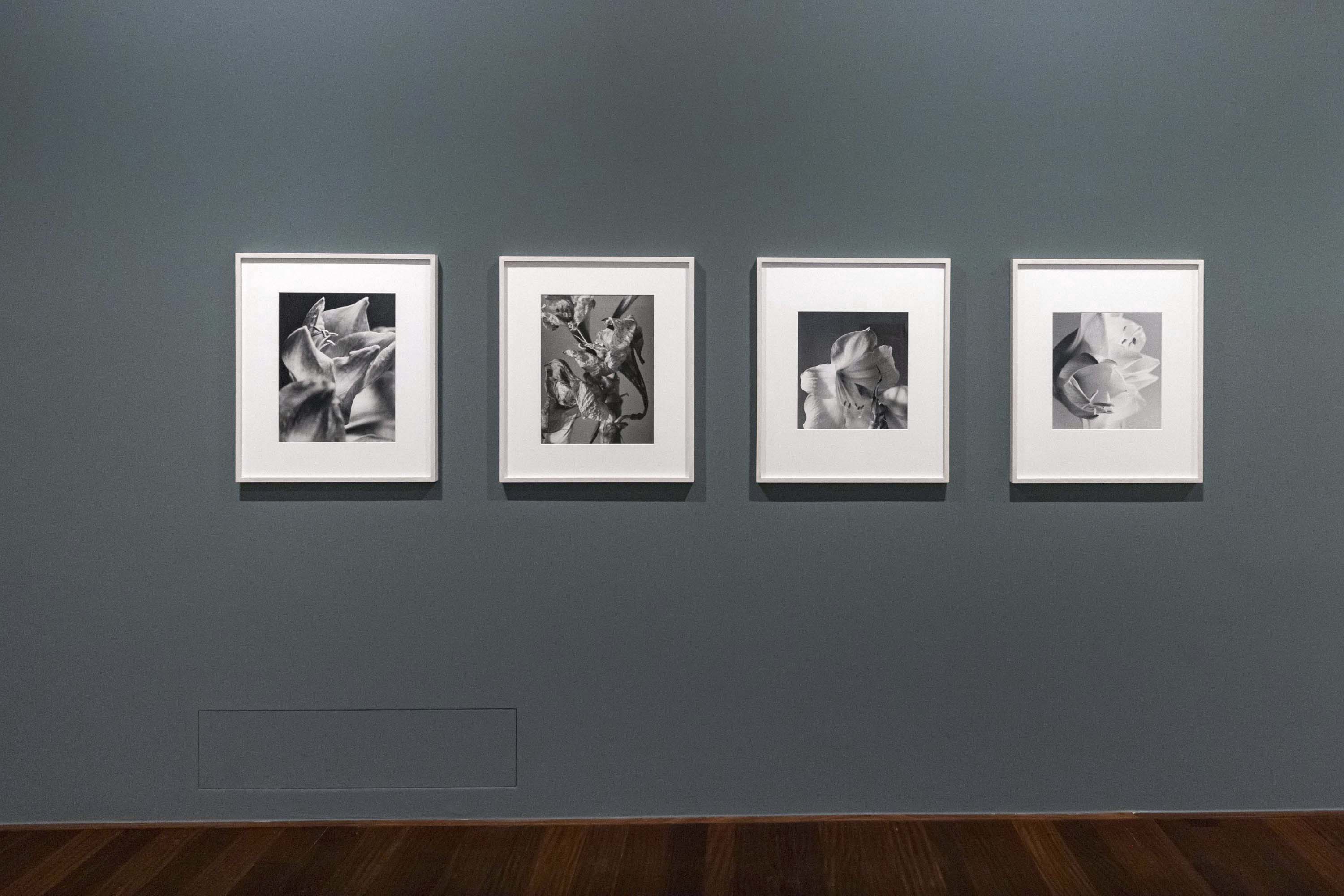
Tuesday to Sundays (and holidays): 11 am – 7 pm
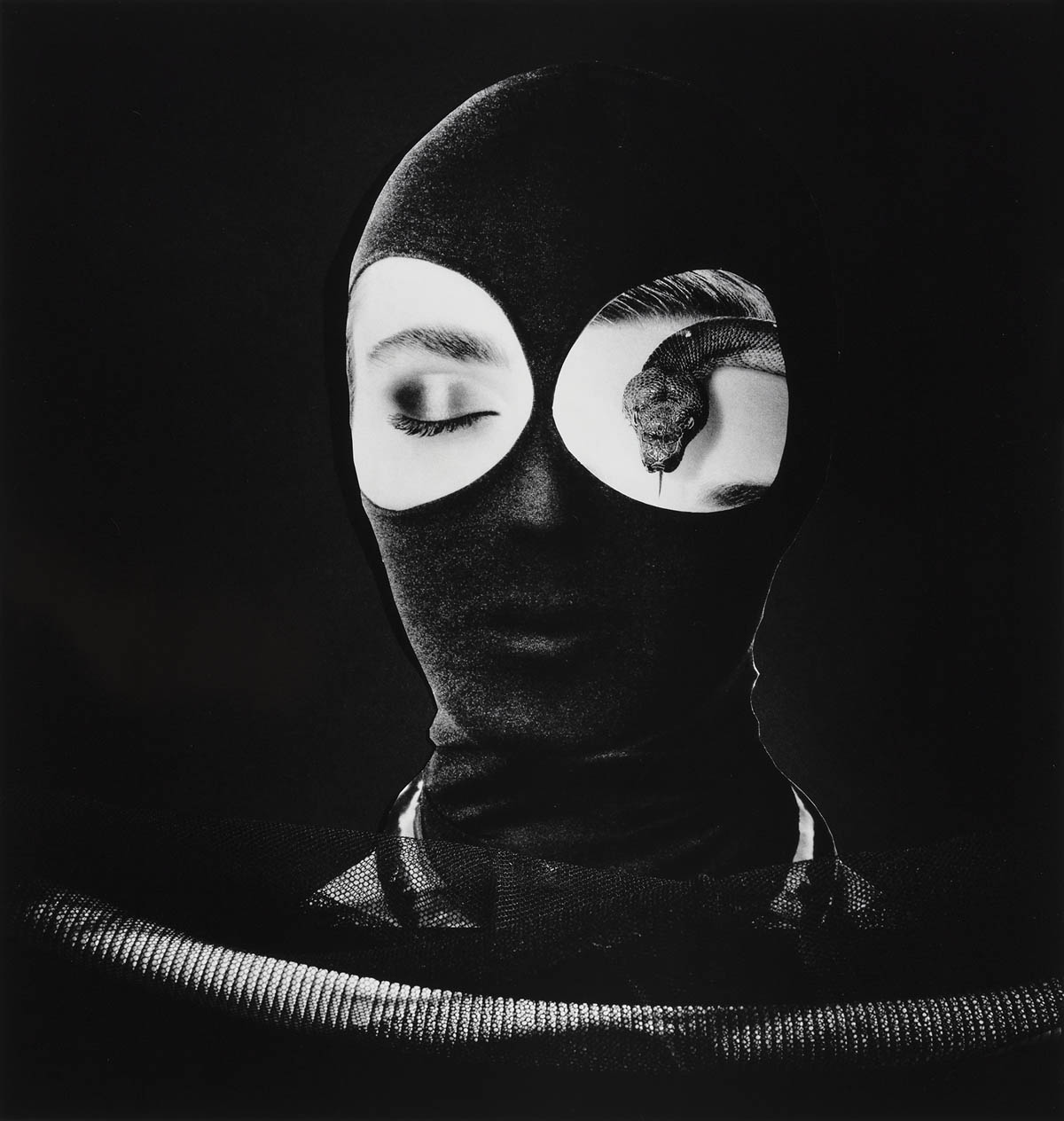
Fundación MAPFRE website

LIKE ART BLART ON FACEBOOK

Back to top

Exhibition: ‘Walker Evans’ at the San Francisco Museum of Modern Art (SFMOMA)

Exhibition dates: 30th September, 2017 – 4th February, 2018

Curator: Clément Chéroux


Walker Evans (American, 1903-1975) 'Self-Portrait' 1927 from the exhibition 'Walker Evans' at the San Francisco Museum of Modern Art (SFMOMA), Sept 2017 - Feb 2018


Walker Evans (American, 1903-1975)
Self-Portrait
1927
Gelatin silver print
Collection of The Metropolitan Museum of Art, New York, Ford Motor Company Collection, Gift of Ford Motor Company and John C. Waddell
© Walker Evans Archive, The Metropolitan Museum of Art, New York


I have posted on this exhibition before, when it was at the Centre Pompidou in Paris, but this iteration at SFMOMA is the exclusive United States venue for the Walker Evans retrospective exhibition – and the new posting contains fresh media images not available previously.

I can never get enough of Walker Evans. This perspicacious artist had a ready understanding of the contexts and conditions of the subject matter he was photographing. His photographs seem easy, unpretentious, and allow his sometimes “generally unaware” subjects (subway riders, labor workers) to speak for themselves. Does it matter that he was an outsider, rearranging furniture in workers homes while they were out in the fields: not at all. Photography has always falsified truth since the beginning of the medium and, in any case, there is never a singular truth but many truths told from many perspectives, many different points of view. For example, who is to say that the story of America proposed by Robert Frank in The Americans, from the point of view of an outsider, is any less valuable than that of Helen Levitt’s view of the streets of New York? For different reasons, both are as valuable as each other.
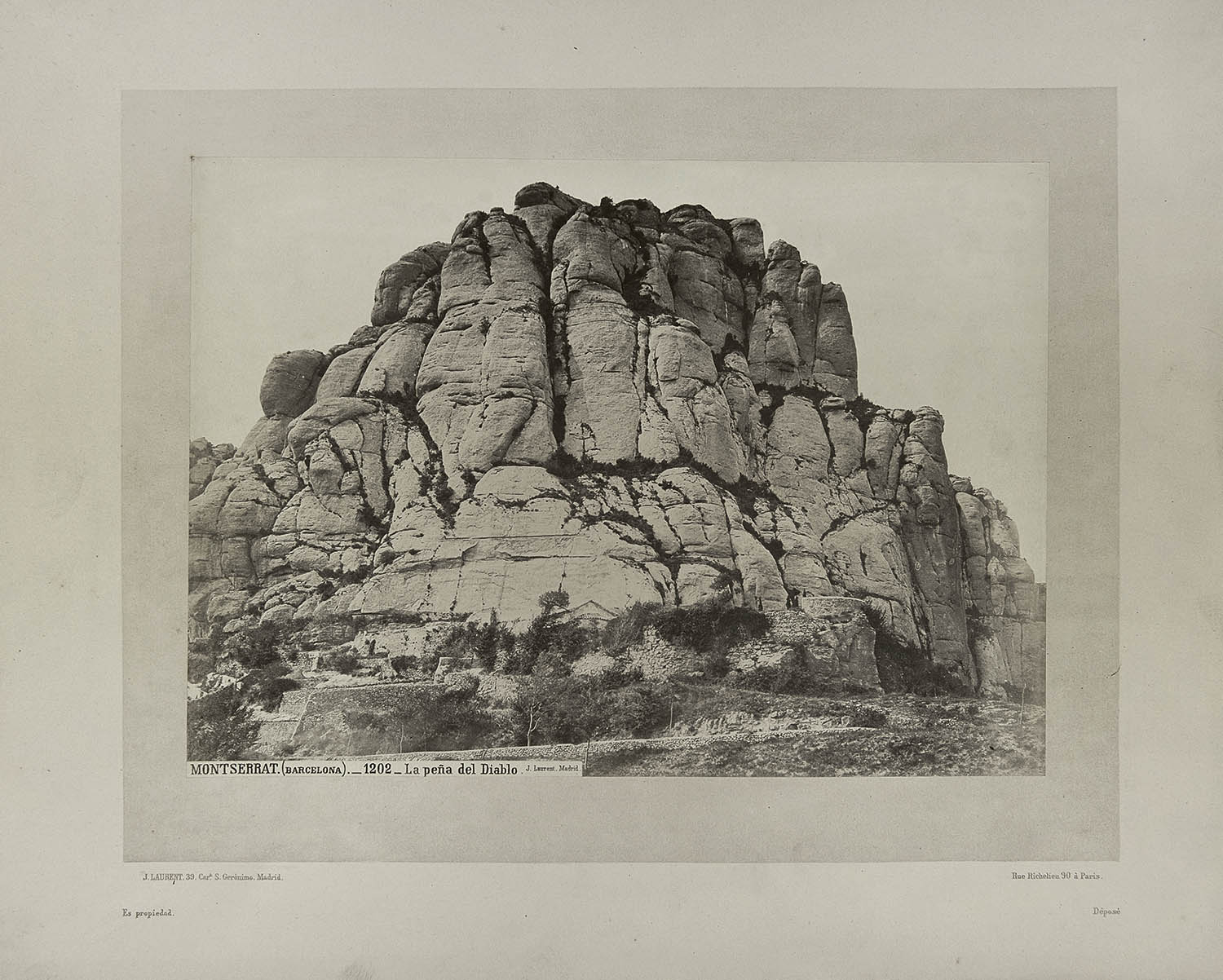
Evans’ photographs for the Farm Security Administration (FSA) documenting the effects of the Great Depression on American life are iconic because they are cracking good photographs, not because he was an insider or outsider. He was paid to document, to enquire, and that is what he did, by getting the best shot he could. It is fascinating to compare Floyd and Lucille Burroughs, Hale County, Alabama (1936, below) with Alabama Tenant Farmer Floyd Bourroughs (1936, below). In the first photograph the strong diagonal element of the composition is reinforced by the parallel placement of the three feet, the ‘Z’ shape of Lucille Burroughs leg then leading into her upright body, which is complemented by the two vertical door jams, Floyd’s head silhouetted by the darkness beyond. There is something pensive about the clasping of his hands, and something wistful and sad, an energy emanating from the eyes. If you look at the close up of his face, you can see that it is “soft” and out of focus, either because he moved and/or the low depth of field. Notice that the left door jam is also out of focus, that it is just the hands of both Floyd and Lucille and her face that are in focus. Does this low depth of field and lack of focus bother Evans? Not one bit, for he knows when he has captured something magical.

A few second later, he moves closer to Floyd Burroughs. You can almost hear him saying to Floyd, “Stop, don’t move a thing, I’m just going to move the camera closer.” And in the second photograph you notice the same wood grain to the right of Floyd as in the first photograph, but this time the head is tilted slightly more, the pensive look replaced by a steely gaze directed straight into the camera, the reflection of the photographer and the world beyond captured on the surface of the eye. Walker Evans is the master of recognising the extra/ordinary. “The street was an inexhaustible source of poetic finds,” describes Chéroux. In his creation of visual portfolios of everyday life, his “notions of realism, of the spectator’s role, and of the poetic resonance of ordinary subjects,” help Evans created a mythology of American life: a clear vision of the present as the past, walking into the future.

With the contemporary decline of small towns and blue collar communities across the globe Evans’ concerns, for the place of ordinary people and objects in the world, are all the more relevant today. As the text from the Metropolitan Museum observes, it is the individuals and social institutions that are the sites and relics that constitute the tangible expressions of American desires, despairs, and traditions. And not just of American people, of all people… for it is community that binds us together.

Dr Marcus Bunyan


Many thankx to the San Francisco Museum of Modern Art for allowing me to publish the text and photographs in the posting. Please click on the photographs for a larger version of the image.


Walker Evans (American, 1903-1975) 'Truck and Sign' 1928-1930 from the exhibition 'Walker Evans' at the San Francisco Museum of Modern Art (SFMOMA), Sept 2017 - Feb 2018


Walker Evans (American, 1903-1975)
Truck and Sign
1928-1930
Gelatin silver print
Private collection, San Francisco
© Walker Evans Archive, The Metropolitan Museum of Art, New York


Walker Evans is one of the most influential artists of the twentieth century. His elegant, crystal-clear photographs and articulate publications have inspired several generations of artists, from Helen Levitt and Robert Frank to Diane Arbus, Lee Friedlander, and Bernd and Hilla Becher. The progenitor of the documentary tradition in American photography, Evans had the extraordinary ability to see the present as if it were already the past, and to translate that knowledge and historically inflected vision into an enduring art. His principal subject was the vernacular – the indigenous expressions of a people found in roadside stands, cheap cafés, advertisements, simple bedrooms, and small-town main streets. For fifty years, from the late 1920s to the early 1970s, Evans recorded the American scene with the nuance of a poet and the precision of a surgeon, creating an encyclopaedic visual catalogue of modern America in the making. …

Most of Evans’ early photographs reveal the influence of European modernism, specifically its formalism and emphasis on dynamic graphic structures. But he gradually moved away from this highly aestheticised style to develop his own evocative but more reticent notions of realism, of the spectator’s role, and of the poetic resonance of ordinary subjects. …

In September 1938, the Museum of Modern Art opened American Photographs, a retrospective of Evans’ first decade of photography. The museum simultaneously published American Photographs – still for many artists the benchmark against which all photographic monographs are judged. The book begins with a portrait of American society through its individuals – cotton farmers, Appalachian miners, war veterans – and social institutions – fast food, barber shops, car culture. It closes with a survey of factory towns, hand-painted signs, country churches, and simple houses – the sites and relics that constitute the tangible expressions of American desires, despairs, and traditions.

Between 1938 and 1941, Evans produced a remarkable series of portraits in the New York City subway. They remained unpublished for twenty-five years, until 1966, when Houghton Mifflin released Many Are Called, a book of eighty-nine photographs, with an introduction by James Agee written in 1940. With a 35mm Contax camera strapped to his chest, its lens peeking out between two buttons of his winter coat, Evans was able to photograph his fellow passengers surreptitiously, and at close range. Although the setting was public, he found that his subjects, unposed and lost in their own thoughts, displayed a constantly shifting medley of moods and expressions – by turns curious, bored, amused, despondent, dreamy, and dyspeptic. “The guard is down and the mask is off,” he remarked. “Even more than in lone bedrooms (where there are mirrors), people’s faces are in naked repose down in the subway.”

Extract from Department of Photographs. “Walker Evans (1903-1975),” in Heilbrunn Timeline of Art History. New York: The Metropolitan Museum of Art, 2000 on the Metropolitan Museum of Art website October 2004 [Online] Cited 08/02/2022


Walker Evans (American, 1903-1975) 'Floyd and Lucille Burroughs, Hale County, Alabama' 1936


Walker Evans (American, 1903-1975)
Floyd and Lucille Burroughs, Hale County, Alabama
1936
Gelatin silver print
Collection of the J. Paul Getty Museum, Los Angeles
© Walker Evans Archive, The Metropolitan Museum of Art, New York


Walker Evans (American, 1903-1975) 'Floyd and Lucille Burroughs, Hale County, Alabama' 1936 (detail)


Walker Evans (American, 1903-1975)
Floyd and Lucille Burroughs, Hale County, Alabama (detail)
1936
Gelatin silver print
Collection of the J. Paul Getty Museum, Los Angeles
© Walker Evans Archive, The Metropolitan Museum of Art, New York


Walker Evans (American, 1903-1975) 'Alabama Tenant Farmer Floyd Bourroughs' 1936


Walker Evans (American, 1903-1975)
Alabama Tenant Farmer Floyd Bourroughs
1936
Gelatin silver print
22.9 x 18.4cm
Collection particulière, San Francisco
© Walker Evans Archive, The Metropolitan Museum of Art
Photo: © Fernando Maquieira, Cromotex


Walker Evans (American, 1903-1975) 'Allie Mae Burroughs, Wife of a Cotton Sharecropper, Hale Country, Alabama' 1936


Walker Evans (American, 1903-1975)
Allie Mae Burroughs, Wife of a Cotton Sharecropper, Hale County, Alabama
1936
Gelatin silver print
Private collection
© Walker Evans Archive, The Metropolitan Museum of Art, New York


“These are not photographs like those of Walker Evans who in James Agee’s account in Let Us Now Praise Famous Men took his pictures of the bare floors and iron bedsteads of the American mid-western sharecroppers while they were out tending their failing crops, and who even, as the evidence of his negatives proves, rearranged the furniture for a ‘better shot’. The best shot that Heilig could take was one that showed things as they were and as they should not be. …

To call these ‘socially-conscious documentary’ photographs is to acknowledge the class from which the photographer [Heilig] comes, not to see them as the result of a benign visit by a more privileged individual [Evans], however well-intentioned.”

Extract from James McCardle. “Weapon,” on the On This Day In Photography website [Online] Cited 29/01/2018


Walker Evans (American, 1903-1975) 'Sidewalk and Shopfront, New Orleans' 1935


Walker Evans (American, 1903-1975)
Sidewalk and Shopfront, New Orleans
1935
Gelatin silver print
Collection of the Museum of Modern Art, New York, gift of Willard Van Dyke
© Walker Evans Archive, The Metropolitan Museum of Art, New York


Walker Evans (American, 1903-1975) 'Fish Market near Birmingham, Alabama' 1936


Walker Evans (American, 1903-1975)
Roadside Stand Near Birmingham/Roadside Store Between Tuscaloosa and Greensboro, Alabama
1936
Gelatin silver print
Collection of the J. Paul Getty Museum, Los Angeles
© Walker Evans Archive, The Metropolitan Museum of Art, New York


Walker Evans (American, 1903-1975) 'Penny Picture Display, Savannah' 1936


Walker Evans (American, 1903-1975)
Penny Picture Display, Savannah
1936
Gelatin silver print
Pilara Foundation Collection
© Walker Evans Archive, The Metropolitan Museum of Art, New York


Walker Evans (American, 1903-1975) 'Subway Portrait' January 1941


Walker Evans (American, 1903-1975)
Subway Portrait
1938-1941
Gelatin silver print
Collection of the J. Paul Getty Museum, Los Angeles
© Walker Evans Archive, The Metropolitan Museum of Art, New York


Walker Evans (American, 1903-1975) 'Subway Passengers, New York' 1938


Walker Evans (American, 1903-1975)
Subway Portrait
1938-1941
Gelatin silver print
Collection of the J. Paul Getty Museum, Los Angeles
© Walker Evans Archive, The Metropolitan Museum of Art, New York


Walker Evans (American, 1903-1975) 'Subway Passengers, New York' 1938


Walker Evans (American, 1903-1975)
Subway Portrait
1938-1941
Gelatin silver print
Collection of the J. Paul Getty Museum, Los Angeles
© Walker Evans Archive, The Metropolitan Museum of Art, New York


Walker Evans (American, 1903-1975) '[Subway Passengers, New York City]' 1938


Walker Evans (American, 1903-1975)
Subway Portrait
1938-1941
Gelatin silver print
Collection of the J. Paul Getty Museum, Los Angeles
© Walker Evans Archive, The Metropolitan Museum of Art, New York


Walker Evans (American, 1903-1975) 'Subway Portraits' 1938-1941


Walker Evans (American, 1903-1975)
Subway Portraits
1938-1941
Gelatin silver print
Collection of the J. Paul Getty Museum, Los Angeles
© Walker Evans Archive, The Metropolitan Museum of Art, New York


Exhibition Displays Over 400 Photographs, Paintings, Graphic Ephemera and Objects from the Artist’s Personal Collection
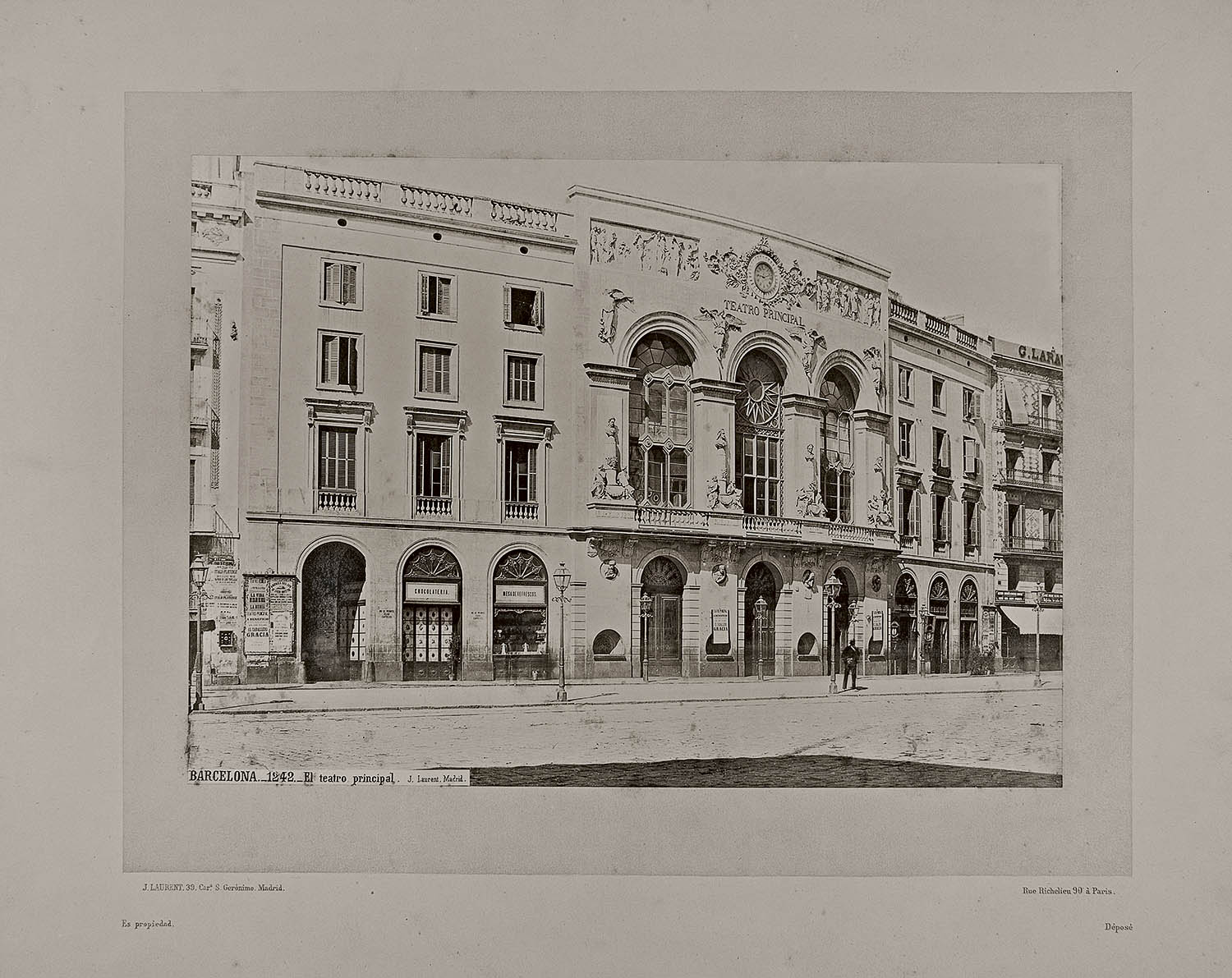
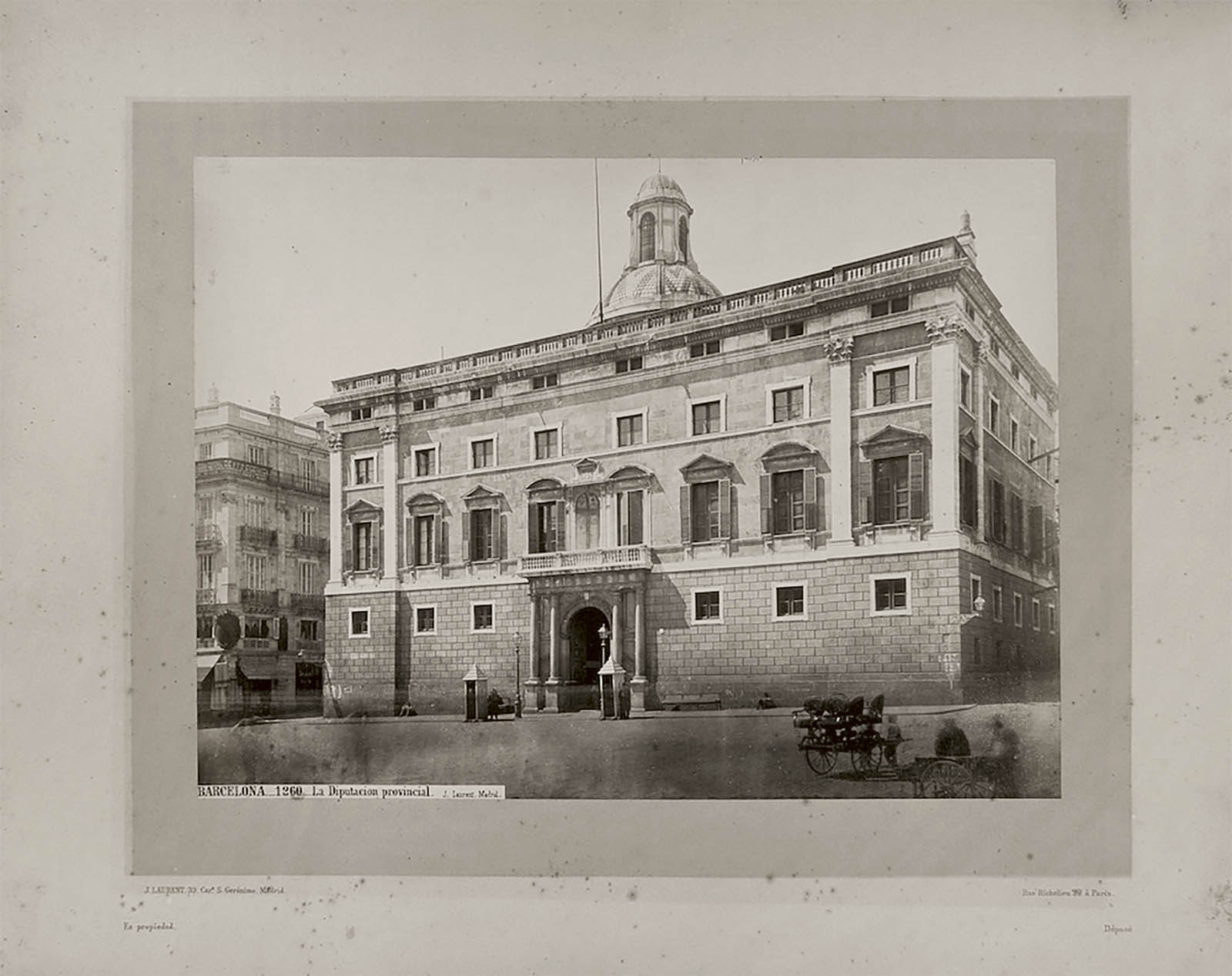
The San Francisco Museum of Modern Art (SFMOMA) will be the exclusive United States venue for the retrospective exhibition Walker Evans, on view September 30, 2017, through February 4, 2018. As one of the preeminent photographers of the 20th century, Walker Evans’ 50-year body of work documents and distills the essence of life in America, leaving a legacy that continues to influence generations of contemporary photographers and artists. The exhibition will encompass all galleries in the museum’s Pritzker Center for Photography, the largest space dedicated to the exhibition, study and interpretation of photography at any art museum in the United States.

“Conceived as a complete retrospective of Evans’ work, this exhibition highlights the photographer’s fascination with American popular culture, or vernacular,” explains Clément Chéroux, senior curator of photography at SFMOMA. “Evans was intrigued by the vernacular as both a subject and a method. By elevating it to the rank of art, he created a unique body of work celebrating the beauty of everyday life.”

Using examples from Evans’ most notable photographs – including iconic images from his work for the Farm Security Administration (FSA) documenting the effects of the Great Depression on American life; early visits to Cuba; street photography and portraits made on the New York City subway; layouts and portfolios from his more than 20-year collaboration with Fortune magazine and 1970s Polaroids – Walker Evans explores Evans’ passionate search for the fundamental characteristics of American vernacular culture: the familiar, quotidian street language and symbols through which a society tells its own story. Decidedly popular and more linked to the masses than the cultural elite, vernacular culture is perceived as the antithesis of fine art.

While many previous exhibitions of Evans’ work have drawn from single collections, Walker Evans will feature over 300 vintage prints from the 1920s to the 1970s on loan from the important collections at major museums including the Metropolitan Museum of Art, the Getty Museum, the Museum of Modern Art, the Art Institute of Chicago, the National Gallery of Art, Washington, D.C., the National Gallery of Canada, the Musée du Quai Branly and SFMOMA’s own collection, as well as prints from private collections from around the world. More than 100 additional objects and documents, including examples of the artist’s paintings; items providing visual inspiration sourced from Evans’ personal collections of postcards, graphic arts, enamelled plates, cut images and signage; as well as his personal scrapbooks and ephemera will be on display. The exhibition is curated by the museum’s new senior curator of photography, Clément Chéroux, who joined SFMOMA in 2017 from the Musée National d’Art Moderne of the Centre Pompidou, Paris, organiser of the exhibition.

While most exhibitions devoted to Walker Evans are presented chronologically, Walker Evans‘ presentation is thematic. The show begins with an introductory gallery displaying Evans’ early modernist work whose style he quickly rejected in favour of focusing on the visual portfolio of everyday life. The exhibition then examines Evans’ captivation with the vernacular in two thematic contexts. The first half of the exhibition will focus on many of the subjects that preoccupied Evans throughout his career, including text-based images such as signage, shop windows, roadside stands, billboards and other examples of typography. Iconic images of the Great Depression, workers and stevedores, street photography made surreptitiously on New York City’s subways and avenues and classic documentary images of life in America complete this section. By presenting this work thematically, the exhibition links work separated by time and place and highlights Evans’ preoccupation with certain subjects and recurrent themes. The objects that moved him were ordinary, mass-produced and intended for everyday use. The same applied to the people he photographed – the ordinary human faces of office workers, labourers and people on the street.
“The street was an inexhaustible source of poetic finds,” describes Chéroux.

The second half of the exhibition explores Evans’ fascination with the methodology of vernacular photography, or styles of applied photography that are considered useful, domestic and popular. Examples include architecture, catalog and postcard photography as well as studio portraiture, and the exhibition juxtaposes this work with key source materials from the artist’s personal collections of 10,000 postcards, hand-painted signage and graphic ephemera (tickets, flyers, logos and brochures). Here Evans elevates vernacular photography to art, despite his disinclination to create fine art photographs. Rounding out this section are three of Evans’ paintings using vernacular architecture as inspiration. The exhibition concludes with Evans’ look at photography itself, with a gallery of photographs that unite Evans’ use of the vernacular as both a subject and a method.

About Walker Evans

Born in St. Louis, Walker Evans (1903-1975) was educated at East Coast boarding schools, Williams College, the Sorbonne and College de France before landing in New York in the late 1920s. Surrounded by an influential circle of artists, poets and writers, it was there that he gradually redirected his passion for writing into a career as a photographer, publishing his first photograph in the short-lived avant-garde magazine Alhambra. The first significant exhibition of his work was in 1938, when the Museum of Modern Art, New York presented Walker Evans: American Photographs, the first major solo exhibition at the museum devoted to a photographer.

In the 50 years that followed, Evans produced some of the most iconic images of his time, contributing immensely to the visibility of American culture in the 20th century and the documentary tradition in American photography. Evans’ best known photographs arose from his work for the Farm Security Administration (FSA), in which he documented the hardships and poverty of Depression-era America using a large-format, 8 x 10-inch camera. These photographs, along with his photojournalism projects from the 1940s and 1950s, his iconic visual cataloguing of the common American and his definition of the “documentary style,” have served as a monumental influence to generations of photographers and artists.

Press release from SFMOMA


Walker Evans (American, 1903-1975) 'Resort Photographer at Work' 1941


Walker Evans (American, 1903-1975)
Resort Photographer at Work
1941, printed later
Gelatin silver print
Collection of the J. Paul Getty Museum, Los Angeles
© Walker Evans Archive, The Metropolitan Museum of Art, New York


Walker Evans (American, 1903-1975) 'Untitled [Street scene]' 1950s


Walker Evans (American, 1903-1975)
Untitled [Street scene]
1950s
Gouache on paper
Collection of the J. Paul Getty Museum, Los Angeles
© Walker Evans Archive, The Metropolitan Museum of Art, New York


Walker Evans (American, 1903-1975) 'Street Debris, New York City' 1968


Walker Evans (American, 1903-1975)
Street Debris, New York City
1968
Gelatin silver print
Private collection, San Francisco
© Walker Evans Archive, The Metropolitan Museum of Art, New York


Walker Evans (American, 1903-1975) '"Labor Anonymous,” Fortune 34, no. 5, November 1946' 1946


Walker Evans (American, 1903-1975)
“Labor Anonymous,” Fortune 34, no. 5, November 1946
1946
Offset lithography
Centre Pompidou, Musée national d’art moderne, Paris, Bibliothèque Kandinsky, Collection of David Campany
© Walker Evans Archive, The Metropolitan Museum of Art, New York


Walker Evans (American, 1903-1975) '"The Pitch Direct. The Sidewalk Is the Last Stand of Unsophisticated Display," Fortune 58, no. 4, October 1958' 1958


Walker Evans (American, 1903-1975)
“The Pitch Direct. The Sidewalk Is the Last Stand of Unsophisticated Display,” Fortune 58, no. 4, October 1958
1958
Offset lithography
Centre Pompidou, Musée national d’art moderne, Paris, Bibliothèque Kandinsky, Collection of David Campany
© Walker Evans Archive, The Metropolitan Museum of Art, New York


Walker Evans (American, 1903-1975) 'Collage with Thirty-Six Ticket Stubs' 1975


Walker Evans (American, 1903-1975)
Collage with Thirty-Six Ticket Stubs
1975
Cut and pasted photomechanical prints on paper
Collection of The Metropolitan Museum of Art, New York, Walker Evans Archive
© Walker Evans Archive, The Metropolitan Museum of Art, New York


Unidentified Sign Painter. 'Coca-Cola Thermometer' 1930-1970


Unidentified Sign Painter
Coca-Cola Thermometer
1930-1970
Enamel on ferrous metal
Collection of The Metropolitan Museum of Art, New York, Walker Evans Archive
© Walker Evans Archive, The Metropolitan Museum of Art, New York


Walker Evans (American, 1903-1975) 'Chain-Nose Pliers' 1955


Walker Evans (American, 1903-1975)
Chain-Nose Pliers
1955
Gelatin silver print
The Bluff Collection
© Walker Evans Archive, The Metropolitan Museum of Art, New York


John T. Hill (American, b. 1934) 'Interior of Walker Evans's House, Fireplace with Painting of Car' 1975, printed 2017


John T. Hill (American, b. 1934)
Interior of Walker Evans’s House, Fireplace with Painting of Car
1975, printed 2017
Inkjet print
Private collection
© Walker Evans Archive, The Metropolitan Museum of Art, New York


Lenoir Book Co., 'Main Street, Showing Confederate Monument, Lenoir, North Carolina' 1900-1940


Lenoir Book Co.,
Main Street, Showing Confederate Monument, Lenoir, North Carolina
1900-1940
Offset lithography
Collection of The Metropolitan Museum of Art, New York, Walker Evans Archive
© Walker Evans Archive, The Metropolitan Museum of Art, New York


San Francisco Museum of Modern Art
151 Third Street
San Francisco, CA 94103

Opening hours:
Monday – Tuesday 10am – 5pm
Wednesday Closed
Thursday 1pm – 8pm
Friday – Sunday 10am – 5pm

San Francisco Museum of Modern Art website

LIKE ART BLART ON FACEBOOK

Back to top