Exhibition: ‘The ’70s Lens: Reimagining Documentary Photography’ at the National Gallery of Art, Washington

Exhibition dates: 6th October, 2024 – 6th April, 2025

 Curator: Andrea Nelson, associate curator in the department of photographs, National Gallery of Art
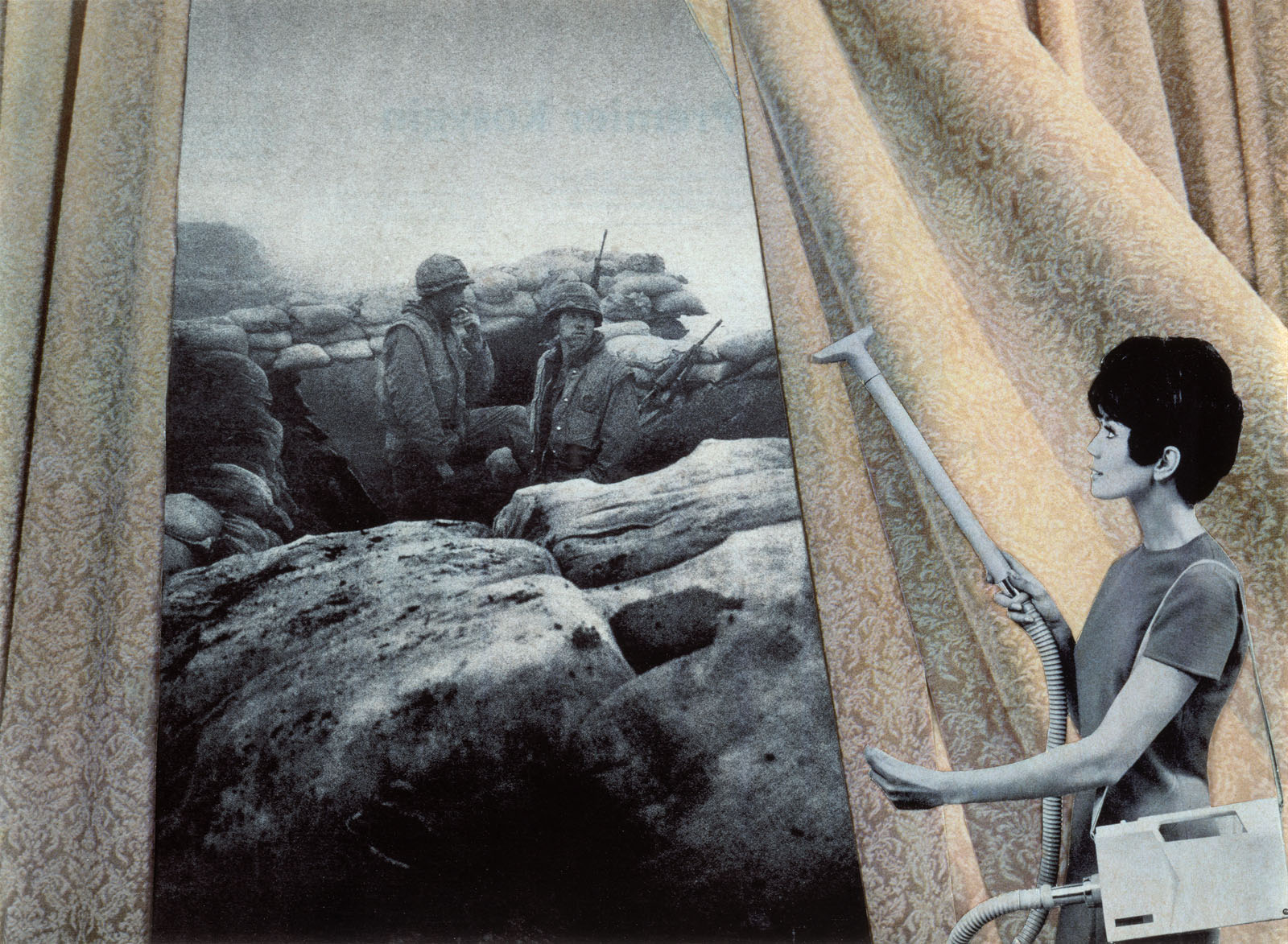
 

Martha Rosler (American, b. 1943) 'Cleaning the Drapes', from the series, 'House Beautiful: Bringing the War Home' 1967-1972 from the exhibition 'The '70s Lens: Reimagining Documentary Photography' at the National Gallery of Art, Washington


Martha Rosler (American, b. 1943)
Cleaning the Drapes
1967-1972, printed 2007
From the series House Beautiful: Bringing the War Home
Inkjet print
Image: 44.2 x 60.4cm (17 3/8 x 23 3/4 in.)
National Gallery of Art
Gift of the Collectors Committee and Pepita Milmore Memorial Fund


Martha Rosler originally distributed photocopies from this series, House Beautiful: Bringing the War Home, as flyers at anti – Vietnam War demonstrations. She made the original photomontages by combining gritty news photographs of fighting in Vietnam with homerelated advertisements culled from glossy women’s magazines. Here Rosler paired a woman cleaning patterned drapes with two tired soldiers smoking amid rocks and sandbags. The woman’s vacuum wand points to and echoes the soldiers’ rifles. The jolting collision of war imagery and affluent domestic space gives visual form to the description of the conflict as “the living room war” – so called because it appeared on television news nightly.

Wall text from the exhibition


“Ce n’est pas une pipe mais de la photographie, sous toutes ses formes variables et multivalentes”


René Magritte’s 1929 painting Ceci n’est pas une pipe is also known as La Trahison des images … The Treachery of Images.

Treachery – the betrayal of trust – is an apposite word in relation to photography of the 1970s. Finally, once and for all, documentary photography in America broke free of the West Coast fine art photography tradition of mainly white male artists and the “aura” of the fine art print (Walter Benjamin). Photography betrayed the trust placed in the authenticity of the image and its link to the “truth” of reality represented in the photograph to become a medium of variability, in concept, execution and outcome. Photography became whatever you wanted it to be.

Documentary photography and its link to the reality of the referent – its assumed representation of a truth that existed in reality – began to be subsumed into the whole of photography, just part of a conceptual, art, performative, staged, street, cameraless, documentary, fashion, photojournalist, activist, amoebic (from the Greek ἀμοιβή amoibe, meaning “change”), and viral (Paul Virilio) medium.

Photography had always been a medium of communication but now became multi-perspectival – whether that be imaginings of the mind relayed through photographs, conceptual ideas about the world and how we interact with it created and staged through photographs, or new colour photography that challenged the orthodoxy of fine art black and white West Coast American photography.

As Anne-Marie Willis observes on the On This Date In Photography website, “any curator who would challenge the orthodox Beaumont Newhall-style photo history limited to images that are distinctively photographic, aesthetic, and “Straight” … would open a Pandora’s box full of photographs pervasive across so many fields, of such limitless subject matters, and crossing so many disciplines that their histories in photography would be obscured.”1

This is the alleged treachery of multi-perspectival photography, the betraying of photographic histories that stretched back to the beginnings of the medium… but it had to be done for photography to fully open itself up to the imaginings of the human and the media flows of the world. “It was a time when photography challenged the art photography norm: photography should not, could not be restricted to what was considered ‘art’.”2

Thus, it is a great joy to see photographs from this stimulating exhibition, photographs that challenge the established “norm” of what photography should be. But what is surprising to me when looking at the complete list of photographs in this exhibition is the important artists who changed the face of photography in the 1970s who are not represented at all or only have one or two images on show:

Gordon Parks 0
Garry Winogrand 1
Lee Friedlander 2
Diane Arbus 1
Robert Mapplethorpe 0
Robert Heinecken 0
Richard Avedon 0
Andy Warhol 1 Polaroid
Cindy Sherman 0
Barbara Kruger 0
Nan Goldin 1
Stephen Shore 1

Diane Arbus, who was instrumental in changing portrait photography at the time, only has one photograph in the exhibition; Barbara Kruger and Robert Heinecken, both “para-photographers” whose work stood “beside” or “beyond” traditional ideas associated with photography have none; Stephen Shore who, along with William Eggleston, was responsible for making colour photography acceptable in art photography has only one photograph.

But most surprisingly of all, Cindy Sherman whose Untitled Film Stills were made predominantly between 1977-1980 and who casts herself as clichés or feminine types, becoming both the artist and subject in the work … is not there at all. Her loss, her evisceration, and the absence of “arguably one of the most significant bodies of work made in the twentieth century and thoroughly canonized by art historians, curators, and critics,”3 is unfathomable.

Dr Marcus Bunyan


1/ Anne-Marie Willis quoted in Dr James McArdle. “DECEMBER 14: CONTEXT,” on the On This Date In Photography website 15/12/2019 [Online] Cited 26/02/2025

2/ Ibid.,

3/ Exhibition Catalogue, New York, Museum of Modern Art, Cindy Sherman, 2012, p. 18 quoted in the “Untitled Film Stills” page on the Wikipedia website


Many thankx to the National Gallery of Art for allowing me to publish the photographs in the posting. Please click on the photographs for a larger version of the image.


Martha Rosler (American, b. 1943)
'Roadside Ambush' 1967-1972 from the exhibition 'The '70s Lens: Reimagining Documentary Photography' at the National Gallery of Art, Washington


Martha Rosler (American, b. 1943)
Roadside Ambush
1967-1972, printed 2007
Inkjet print
Image/sheet: 50.8 x 61cm (20 x 24 in.)
National Gallery of Art
Gift of the Artist and Mitchell-Innes and Nash


Rosler originally distributed photocopies of House Beautiful: Bringing the War Home at anti–Vietnam War demonstrations. “I saw House Beautiful not as art,” she later reflected. “I wanted it to be agitational.” The artist created the original photomontages, from which these collages are derived, by combining news photographs of scorched battlefields in Vietnam with glossy advertisements for US homes, layering images of soldiers within cut-out silhouettes of men from polo-shirt advertisements; and splicing pictures of soldiers’ burials with those of military marches. By tying the destruction abroad to untroubled affluence at home, Rosler gave visual form to the description of the conflict as “the living-room war” – so called because it was the first war to be televised.

MoMA gallery label from 2024


The exhibition The ’70s Lens: Reimagining Documentary Photography examines how new approaches to documentary photography that emerged during the 1970s reflected a radical shift in American life – and in the medium itself.

The 1970s was a decade of uncertainty in the US – soaring inflation, energy crises, the Watergate scandal, and protests about pressing social issues – and the profound upheaval that rocked the country formed the backdrop for a revolution in documentary photography. Now on view at @ngadc, The ’70s Lens: Reimagining Documentary Photography explores this compelling and contested moment of reinvention when the genre’s association with objectivity and truthfulness came into question. Featuring works from over eighty artists, the exhibition delves into how the camera was used to examine life in the US from a diverse range of perspectives, and in doing so, transformed the practice of documentary photography.


The ’70s Lens: A Conversation with Anthony Hernandez

Artist Anthony Hernandez discusses 50 years of work with curator Andrea Nelson on October 24, 2024. The conversation celebrates the exhibition The ’70s Lens: Reimagining Documentary Photography (October 2024 – April 2025).

Anthony Hernandez (b. 1947, Los Angeles, California) has crafted a richly varied oeuvre, ranging from a distinctive style of black-and-white street photography to colour photographs of abstracted details of his surroundings. Much of Hernandez’s work focuses on his native Los Angeles, revealing a unique insight into the people and landscape of the much-pictured city. Hernandez is a recipient of a Guggenheim Fellowship (2018), the Rome Prize (1999) and has been named a United States Artists Fellow (2009).


William Eggleston (American, b. 1939) 'Memphis' 1969-1970 from the exhibition 'The '70s Lens: Reimagining Documentary Photography' at the National Gallery of Art, Washington


William Eggleston (American, b. 1939)
Memphis
1969-1970, printed 1980
Dye imbibition print
Image: 30.2 x 44.2cm (11 7/8 x 17 3/8 in.)
National Gallery of Art, Corcoran Collection
Gift of Mr. Morris R. Garfinkle
© Eggleston Artistic Trust


Eggleston is celebrated for his use of colour photography, which he began experimenting with in the late 1960s. Eggleston’s 1976 exhibition Colour Photographs, held at the Museum of Modern Art, New York, is considered a pivotal moment in the development of colour photography as a contemporary art form and widely credited with increasing recognition of the medium.

Since first picking up a camera in 1957, Eggleston has photographed his family, friends and the people that he encountered in his everyday life, particularly in his native Memphis. Eggleston is said to find the beauty in the everyday and his work has inspired many present day photographers, artists and filmmakers, including Martin Parr, Sofia Coppola, David Lynch and Juergen Teller.

Text from the National Gallery of Victoria website


Anthony Friedkin (American, b. 1949) 'Young Man, Troupers Hall, Hollywood' 1969 From the series 'The Gay Essay'


Anthony Friedkin (American, b. 1949)
Young Man, Troupers Hall, Hollywood
1969
From the series The Gay Essay
Gelatin silver print
National Portrait Gallery
Gift of Mary and Dan Solomon


In 1969, Anthony Friedkin was only 19 years old when he set out to document the queer communities of San Francisco and Los Angeles. The resulting project, The Gay Essay, is an expressive and nuanced portrait. Friedkin charts various facets of the culture, from street life and protests to parades and drag performances.

Friedkin’s photographs record the beginnings of the gay liberation movement in California. With a respectful intimacy he pictures individuals living true to themselves while defying prevailing social norms.

Wall text from the exhibition
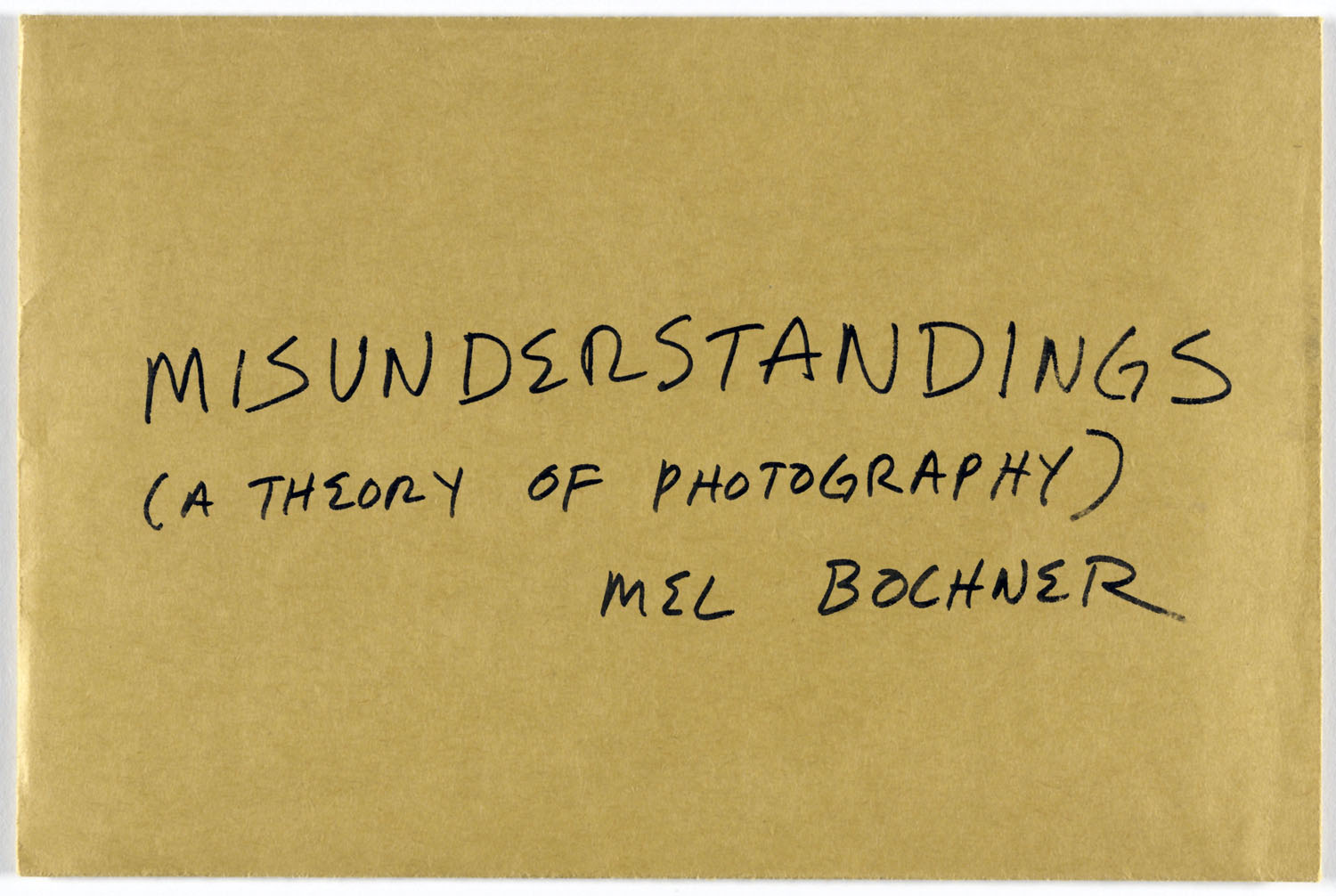
 

Mel Bochner (American, 1940-2025) 'Misunderstandings (A Theory of Photography)' 1970 (detail)


Mel Bochner (American, 1940-2025)
Misunderstandings (A Theory of Photography) (details)
1970
10 offset lithographs on notecards and envelope
Sheet (each): 12.7 x 20.32cm (5 x 8 in.)
National Gallery of Art, Gift of Mary and Dan Solomon


When Mel Bochner started documenting his works of sculpture with a camera, he realised that his practice had “become about photography without [my] wanting it to.” He studied the history of the medium and found conflicting ideas about what photography is or should be. By illustrating these “misunderstandings” with quotes from notable figures and sources, Bochner underscored the gap between a photograph itself and what it purports to represent. He even fabricated three of the quotations, further playing on photography’s tenuous relationship to truth. The photograph of the artist’s hand and forearm is also a misunderstanding: it is much smaller than the actual body part it depicts. It also appears to be a negative of a Polaroid photograph, but Polaroids exist only as positive prints.

Wall text from the exhibition


Mel Bochner was a key figure in the Conceptual Art movement of the 1960s and 70s. Bochner was part of a group of artists who challenged the traditional notion of art as a physical object to be admired for its aesthetic qualities and instead sought to explore the ideas and concepts behind the object, often using language and text as their medium.

Bochner’s early works were influenced by his interest in mathematics and logic, which he applied to create intricate geometric patterns. As his practice evolved, he incorporated language and words into his artwork, exploring the relationship between language, thought, and perception.

Text from the My Art Broker website


Anthony Barboza (American, b. 1944) 'New York City' 1970s from the exhibition 'The '70s Lens: Reimagining Documentary Photography' at the National Gallery of Art, Washington


Anthony Barboza (American, b. 1944)
New York City
1970s
Gelatin silver print
Image/sheet: 23.7 × 16.1cm (9 5/16 × 6 1/4 in.)
National Gallery of Art
Pepita Milmore Memorial Fund


Anthony Barboza’s photography has been integral in shaping the image of Black America. A founding member of the Kamoinge Workshop, a group of Black photographers formed in New York in 1963, Barboza went on to establish a thriving commercial and personal practice focused largely on Black subjects. His affirmative representations of African Americans in daily life – like this photograph of two ultra-stylish men standing in front of a hotel coffee shop in midtown Manhattan – contributed to an empowering narrative for the Black community in the face of inequality and adversity. Describing his approach to making pictures on the street, Barboza commented, “”The photograph finds you, you don’t find the photograph.”

Wall text from the exhibition


Anthony Barboza (American, b. 1944) 'New York City' 1970s from the exhibition 'The '70s Lens: Reimagining Documentary Photography' at the National Gallery of Art, Washington


Anthony Barboza (American, b. 1944)
New York City
1970s
Gelatin silver print
Image: 23.7 × 15.9cm (9 5/16 × 6 1/4 in.)
National Gallery of Art
Pepita Milmore Memorial Fund


Lee Friedlander (United States, b. 1934) 'Hillcrest, New York' 1970 from the exhibition 'The '70s Lens: Reimagining Documentary Photography' at the National Gallery of Art, Washington


Lee Friedlander (American, b. 1934)
Hillcrest, New York
1970
Gelatin silver print
Image: 20.3 x 30.5cm (8 x 12 in.)
National Gallery of Art
Patrons’ Permanent Fund


The fracturing of the image plane, where multiple, diverse realities are represented within one photograph, deconstructing the reality of fine art photography. ~ Marcus


Lee Friedlander’s layered compositions wittily observe connections between American life and commerce. In this dizzying photograph, Friedlander captures himself, at center, in a sideview mirror while at a filling station. In the reflection behind him we see a strip mall with the stores’ signs reversed. Near and far vie for attention and parts of the composition are blocked from our view.

The photograph with a World War I memorial similarly features vertical elements that break up the composition into separate frames. At left, the memorial’s soldier with rifle – who appears to be on guard – goes completely unnoticed as pedestrians make their way along a street full of storefronts.

Wall text from the exhibition


Kenneth Josephson (American, b. 1932) 'Wyoming' 1971 from the exhibition 'The '70s Lens: Reimagining Documentary Photography' at the National Gallery of Art, Washington


Kenneth Josephson (American, b. 1932)
Wyoming
1971
From the History of Photography series
Gelatin silver print
Image: 22.8 x 14.1cm (9 x 5 9/16 in.)
National Gallery of Art
Patrons’ Permanent Fund


Kenneth Josephson’s conceptual photography experiments with playful illusion to explore and question his medium. Josephson was a graduate among the first generation of photography candidates from the Illinois Institute of Design. A student of such masters as Aaron Siskind, Harry Callahan, and Minor White, Josephson went on to teach for 35 years at the Art Institute of Chicago, where he routinely taught the “Introduction to Photography” course as it inspired him to continue experimentation.

“This photograph of a photograph held in space causes the viewer to question assumptions about truthful representation according to size and scale; it also draws attention to the principle that photographic reality is constructed through an artist’s ideas and choices. The subject of the photograph is photography itself, and the ways that life is documented, manipulated, trivialised, and celebrated with photographs.”

Text from the Madison Museum of Contemporary Art website
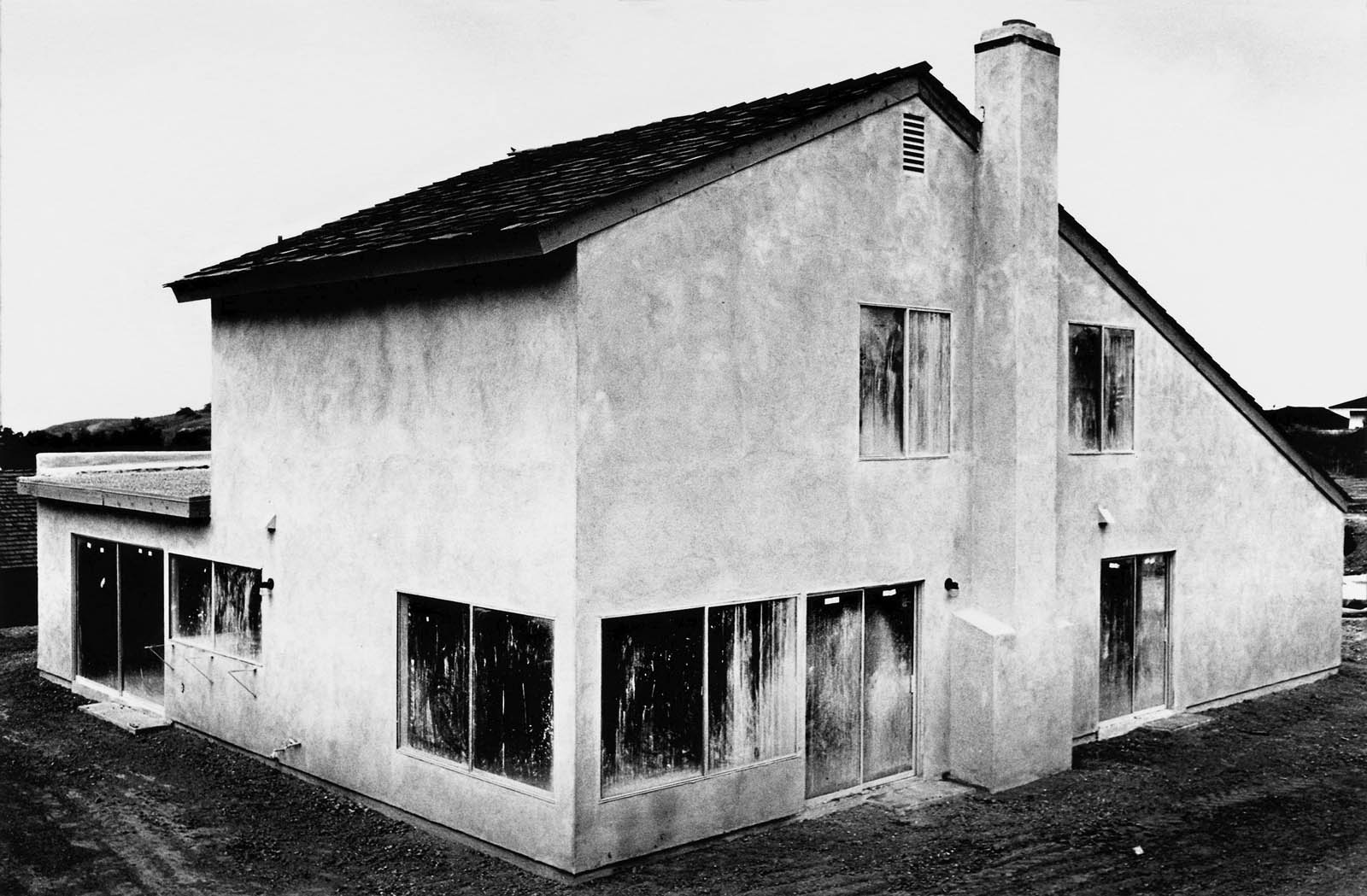
 

Lewis Baltz (American, 1945-2014) 'Tract House #4' 1971 from the exhibition 'The '70s Lens: Reimagining Documentary Photography' at the National Gallery of Art, Washington


Lewis Baltz (American, 1945-2014)
Tract House #4
1971
From the portfolio The Tract Houses
Gelatin silver print
Image/sheet: 14.5 × 22.5cm (5 11/16 × 8 7/8 in.)
National Gallery of Art
Corcoran Collection (Gift of the artist)


Lewis Baltz’s The Tract Houses captures the austere geometry of the shoddily built homes that sprang up in California’s suburban landscape beginning in the mid-1940s. Straight-edge architectural details, positioned strictly parallel to the picture plane, recall the reductive forms of minimalist art. Entire, recently constructed houses appear forlorn. None of the pictures include shadows, clouds, or people. Baltz’s series is a powerful critique of the transformation of the American landscape into an unending terrain of anonymous architecture. At the same time, the exquisitely rendered tones and textured surfaces emphasise the subtle beauty to be found in this bleak environment.

Wall text from the exhibition


With his iconic, minimalist photographs of suburban landscape, Lewis Baltz was at the forefront of a revolutionary shift in the medium of photography. Baltzs work exemplifies the ways in which photography started to loose the bonds of its isolation within its own segregated history and aesthetics and began to take its place among other media. In the late 1960s and early 1970s Baltz became fascinated by the stark, man-made landscape rolling over Californias then still-agrarian terrain. His earliest portfolio, The Tract Houses (1971), and his preliminary forays into a minimal aesthetic, The Prototype Works (1967-1976), illuminate his drive to capture the reality of a sprawling Western ecology gone wild.

Text from the Google Books website


Diane Arbus (American, 1923-1971) 'A young man and his girlfriend with hot dogs in the park' 1971


Diane Arbus (American, 1923-1971)
A young man and his girlfriend with hot dogs in the park
1971
Gelatin silver print
Image: 37.7 x 36.5cm (14 13/16 x 14 3/8 in.)
National Gallery of Art, Corcoran Collection
Gift of Stephen G. Stein


Diane Arbus prowled New York’s public spaces looking for humor and strangeness in the everyday. Here a young couple walks in Central Park, wearing similar clothes, hairstyles, and dejected expressions. Arbus’s carefully composed but disorienting photograph – the subjects are in crisp focus while the background is blurred – compels us to look anew at the familiar. Is this couple unhappy in love or expressing the uncertainty of the times? Arbus made this photograph the year she died. Her influence on documentary photography would continue through the decade.

Wall text from the exhibition


Eleanor Antin (American, b. 1935), Philip Steinmetz (American, 1944-2013) (photographer). '100 Boots' 1971-1973 (detail)


Eleanor Antin (American, b. 1935)
Philip Steinmetz (American, 1944-2013) (photographer)
100 Boots (details)
1971-1973
51 halftone prints (postcards)
image/sheet (each): 11.5 x 17.75cm (4 1/2 x 7 in.)
National Gallery of Art
Pepita Milmore Memorial Fund


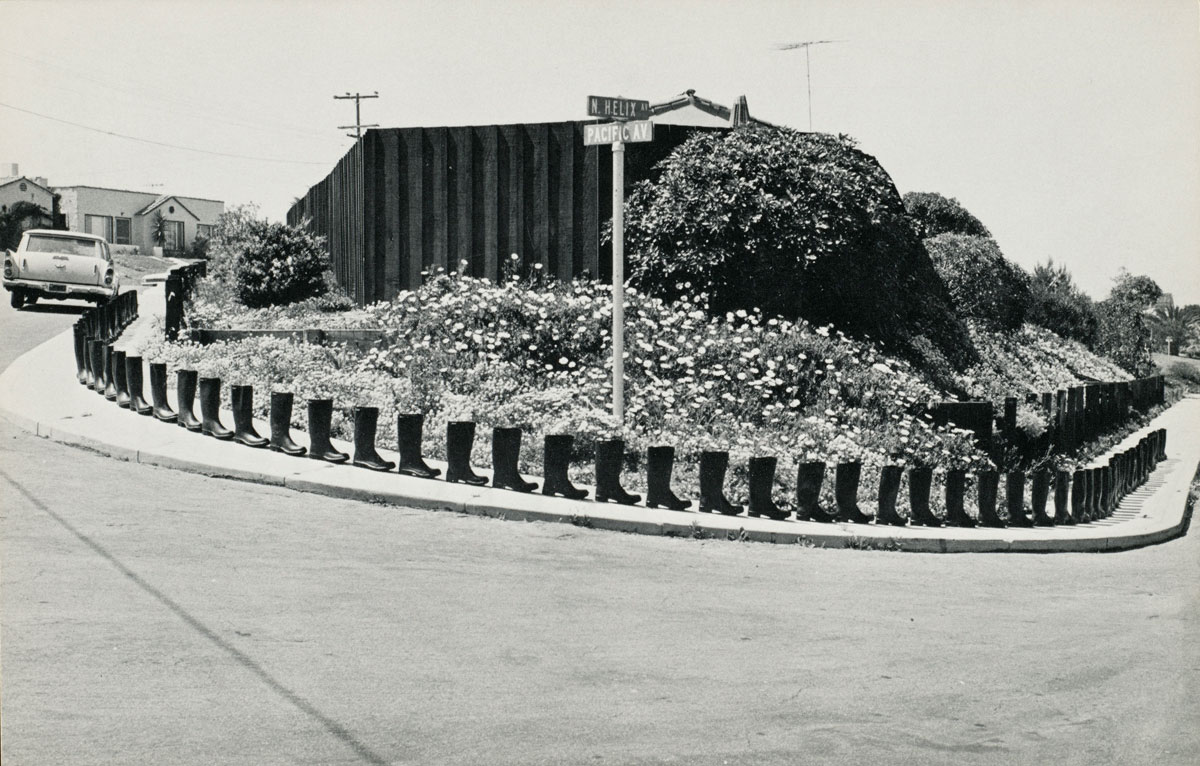
In this epic visual narrative, black rubber boots stand in for a fictional hero traveling from California to New York City. Eleanor Antin created temporary installations with the boots, had them photographed (by Philip Steinmetz), and made 51 postcards, copies of which she mailed to approximately 1,000 people and institutions involved in the arts. The journey starts at a Bank of America and ends at Central Park – after a visit to the Museum of Modern Art, where the boots and a set of postcards and photographs were later exhibited. Using the postal service, Antin bypassed the traditional gallery system, which had long overlooked women artists. While many of these scenes are humorous, the empty army boots also recall the Vietnam War and the soldiers who did not come home.

Wall text from the exhibition


100 Boots, 1971-1973

For her 51-piece instalment 100 Boots Eleonor Antin positioned one hundred ordinary black rubber boots on various locations all over Southern California and consequently in New York City. She took photos, printed them on postcards and assembled a mailing list of about a thousand names – mainly artists, writers, critics, galleries, universities and museums – who received the various postcards over a period of two and a half years between 1971 and 1973. The first card, 100 Boots Facing the Sea, was mailed on the Ides of March, 1971, unannounced and without further comment. A few weeks later it was followed by 100 Boots on the Way to Church and three weeks thereafter by the next one.

In a total of 51 photographs, Eleanor Antin documented the travels of the 100 Boots, her so called “hero” – from a beach close to San Diego to a church, to a bank, to the supermarket, trespassing, under the bridge, to a saloon and on their travels eastward. Finally, on May 15th, 1973 100 Boots arrived at the Museum of Modern Art in New York. By this time, 100 Boots had long become an epic visual narrative and a picaresque work of conceptual art.

Text from the exhibition open spaces | secret places: composite works from the collection at Museum Der Moderne Salzburg, October 2012 – March 2013
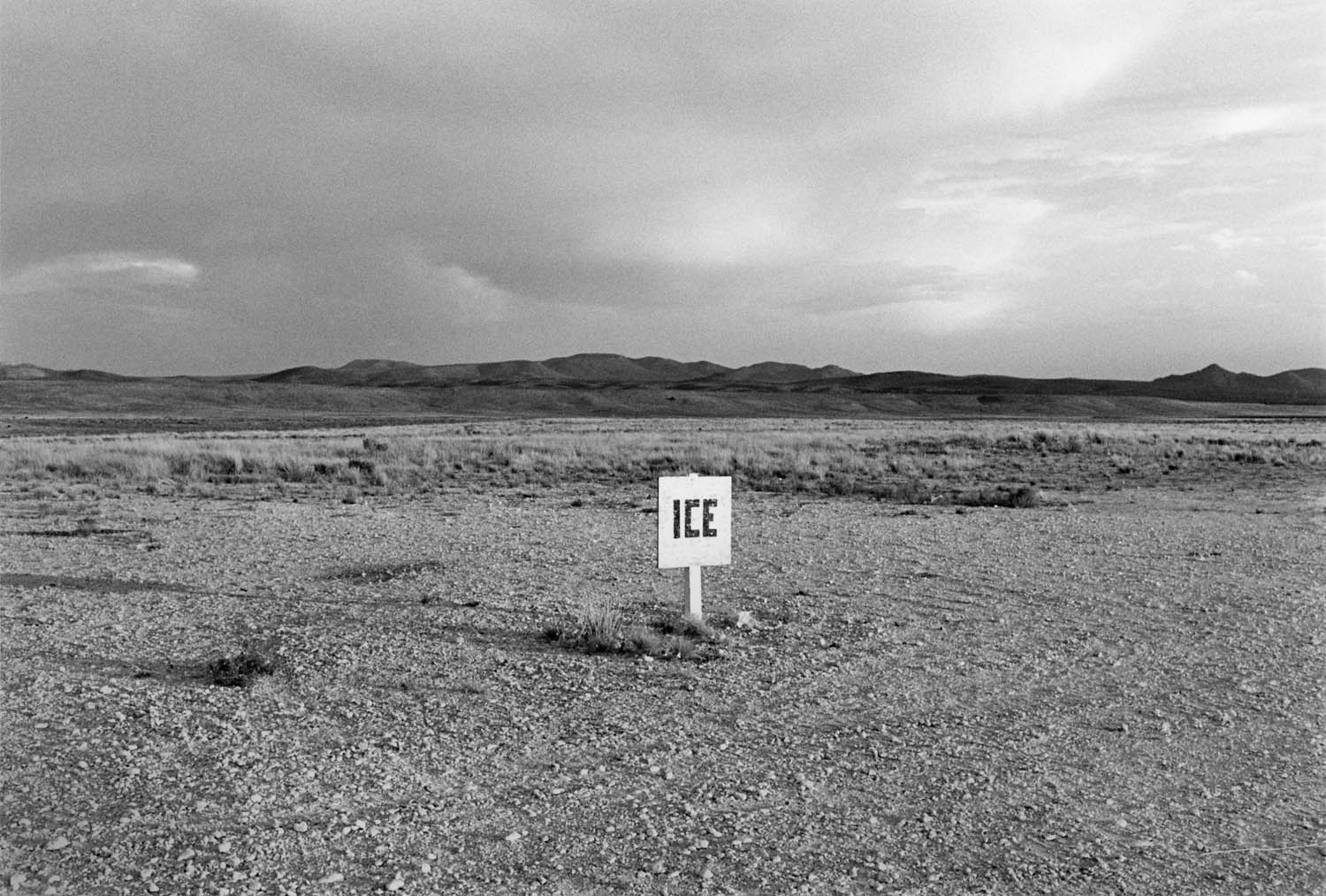
 

Henry Wessel (American, 1942-2018) 'Walapai, Arizona' 1971


Henry Wessel (American, 1942-2018)
Walapai, Arizona
1971
Gelatin silver print
Image: 26.51 x 39.85cm (10 7/16 x 15 11/16 in.)
National Gallery of Art
Gift of Mary and Dan Solomon and Patrons’ Permanent Fund


In 1975 New Topographics: Photographs of a Man-Altered Landscape opens at the International Museum of Photography in Rochester, N.Y. It includes photographs by Robert Adams, Lewis Baltz, Bernd and Hilla Becher, Joe Deal, Frank Gohlke, Nicholas Nixon, John Schott, Stephen Shore, and Henry Wessel Jr.

“Henry Wessel began taking photographs while majoring in psychology at Pennsylvania State University in the mid-1960s. Travel throughout the United States in subsequent years led him to direct his gaze increasingly to details of human interaction with the natural and man-made environment. Wessel’s move to the West Coast in the early 1970s inspired him to incorporate light and climate into his work. His inclusion in the seminal exhibition New Topographics: Photographs of a Man-Altered Landscape, organised in 1975 by the George Eastman House in Rochester, New York, solidified his reputation as a keen observer of the American topography.”

Text from Pacific Standard Time at the Getty


John Simmons (American, b. 1950)
'Will on Chevy, Nashville, Tennessee'
1971, printed 2024


John Simmons (American, b. 1950)
Will on Chevy, Nashville, Tennessee
1971, printed 2024
Gelatin silver print
Image: 30.48 x 20.32cm (12 x 8 in.)
National Gallery of Art
Alfred H. Moses and Fern M. Schad Fund


A fashionably dressed older man crosses the street with his umbrella. A young woman turns to look at the camera while holding hands with a man in uniform. These were people John Simmons encountered while studying art at Fisk University in Nashville. Raised on Chicago’s South Side, Simmons had first published photographs as a teenager in the African American newspaper Chicago Defender. Refuting white-centered media’s failure to show positive imagery of the Black experience, Simmons has focused on people enjoying everyday life.

“I always feel like my subject and I were meant to share that moment together,” he has said. “So many of the pictures I take, it was like our paths were meant to cross.”

Wall text from the exhibition


Simmons began his career at 15 as a photographer for the oldest African American-owned newspaper, The Chicago Daily Defender in 1965. Over his decades long career, he’s photographed icons of the Civil Rights Movement, turbulent protests and demonstrations, famed musicians and poignant intimate moments of everyday life. “I’m glad to see photographs I took back in my teens are still relevant today,” he says.

John Simmons quoted in Steve Simmons. “Photographer John Simmons, ‘Chronicler Of The Civil Rights Movement,’​ Featured In Three Exhibits,” on the Linkedin website August 4, 2021 [Online] Cited 11/09/2021.
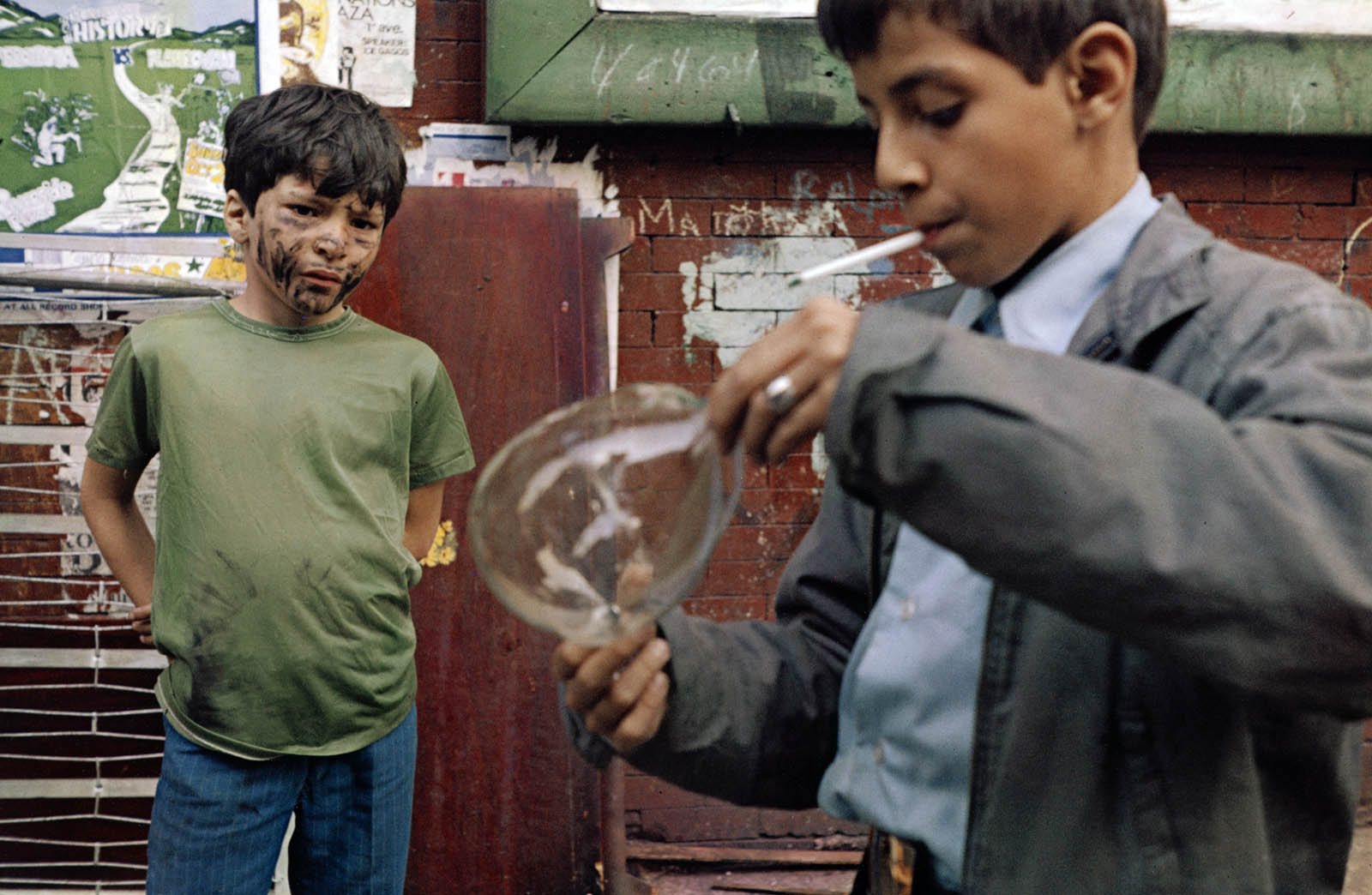
 

Helen Levitt (American, 1913-2009) 'New York' 1972 from the exhibition 'The '70s Lens: Reimagining Documentary Photography' at the National Gallery of Art, Washington


Helen Levitt (American, 1913-2009)
New York
1972
Dye imbibition print
Image: 23.5 x 36cm (9 1/4 x 14 3/16 in.)
National Gallery of Art, Patrons’ Permanent Fund
© Film Documents LLC, courtesy Zander Galerie, Cologne


Helen Levitt frequently made photographs of children on the streets of New York City, exploring their relationships to the urban setting as they played, imagined, and discovered together. After decades of working in black and white, Levitt became an early advocate of color documentary photography. Color allowed her to tell a fuller story of everyday life. Here, the green of the boy’s T-shirt is echoed in the poster and frame behind him. “I thought my photographs would be closer to reality if I got the color of the streets,” she said. “Black and white is an abstraction.”

Wall text from the exhibition


Bill Owens (American, b. 1938)
'Ronald Reagan' 1972 from the exhibition 'The '70s Lens: Reimagining Documentary Photography' at the National Gallery of Art, Washington


Bill Owens (American, b. 1938)
Ronald Reagan
1972
From the series Suburbia
Gelatin silver print
Image: 16.4 x 21.6cm (6 7/16 x 8 1/2 in.)
National Gallery of Art
Patrons’ Permanent Fund


Over the course of a year, Bill Owens made photographs of the housing developments that had recently sprung up outside of Oakland and San Francisco. With an eye to humor, he captured the apparent conformity and materialism of the new suburbs. Here, a home is decorated for Christmas. At center, Nativity figures sit atop a television console showing an old film featuring Ronald Reagan, who had been a movie actor before becoming a politician. Owens also respected the liberation that many suburbanites felt, as well as their determination to build better lives. In his book Suburbia (1972), he included quotations from his subjects describing the opportunities and challenges they faced in their new environments.

Wall text from the exhibition


Owens began his photographic career in the late 1960s as a staff photographer for a local newspaper in Livermore, California. During this period, he began his most noteworthy project, “Suburbia,” which would become a major body of work in American documentary photography.

“Suburbia” was published as a book in 1973, featuring Owens’ images and conversations with suburban dwellers. The project’s goal was to investigate the goals, aspirations, and inconsistencies of suburbia life, offering a critical yet sympathetic study of the American Dream.

Owens’ images depicted scenes of backyard barbecues, family gatherings, children at play, and the myriad rituals and social interactions that constituted suburban areas. He highlighted both the humor and the underlying intricacies of suburban life through his good observation and direct attitude.

What distinguished Owens’ work was his ability to see past the surface and capture the soul of his subjects. His images conveyed a sense of realism by portraying suburbanites in their natural settings and enabling their tales to flow through genuine moments captured in time.

Owens’ art struck a chord with a large audience because it highlighted a huge societal transition in America during the 1970s. Owens’ images challenged the idealized image of suburban life by exposing the hardships, wants, and inconsistencies inherent in the pursuit of the American Dream.

Anonymous. “Bill Owens,” on the Photo.com website Nd [Online] Cited 06/20/2025


William Eggleston (American, b. 1939) 'Sumner, Mississippi, Cassidy Bayou in the Background' c. 1972


William Eggleston (American, b. 1939)
Sumner, Mississippi, Cassidy Bayou in the Background
c. 1972, printed 1986
Dye imbibition print
Image: 27.94 x 43.18cm (11 x 17 in.)
National Gallery of Art
Gift of Stephen G. Stein
© Eggleston Artistic Trust


See how documentary photography transformed during the 1970s.

The 1970s was a decade of uncertainty in the United States. Americans witnessed soaring inflation, energy crises, and the Watergate scandal, as well as protests about pressing issues such as the Vietnam War, women’s rights, gay liberation, and the environment. The country’s profound upheaval formed the backdrop for a revolution in documentary photography. Activism and a growing awareness and acceptance of diversity opened the field to underrepresented voices. At the same time, artistic experimentation fueled the reimagining of what documentary photographs could look like.

Featuring some 100 works by more than 80 artists, The ’70s Lens examines how photographers reinvented documentary practice during this radical shift in American life. Mikki Ferrill and Frank Espada used the camera to create complex portraits of their communities. Tseng Kwong Chi and Susan Hiller demonstrated photography’s role in the development of performance and conceptual art. With pictures of suburban sprawl, artists like Lewis Baltz and Joe Deal challenged popular ideas of nature as pristine. And Michael Jang and Joanne Leonard made interior views that examine the social landscape of domestic spaces.

The questions these artists explored – about photography’s ethics, truth, and power – continue to be considered today.

Text from the National Gallery of Art


Lee Friedlander (American, b. 1934)
'Doughboy. Stamford, Connecticut' 1973


Lee Friedlander (American, b. 1934)
Doughboy. Stamford, Connecticut
1973
Gelatin silver print
Image: 17.8 x 27cm (7 x 10 5/8 in.)
National Gallery of Art
Robert B. Menschel Fund
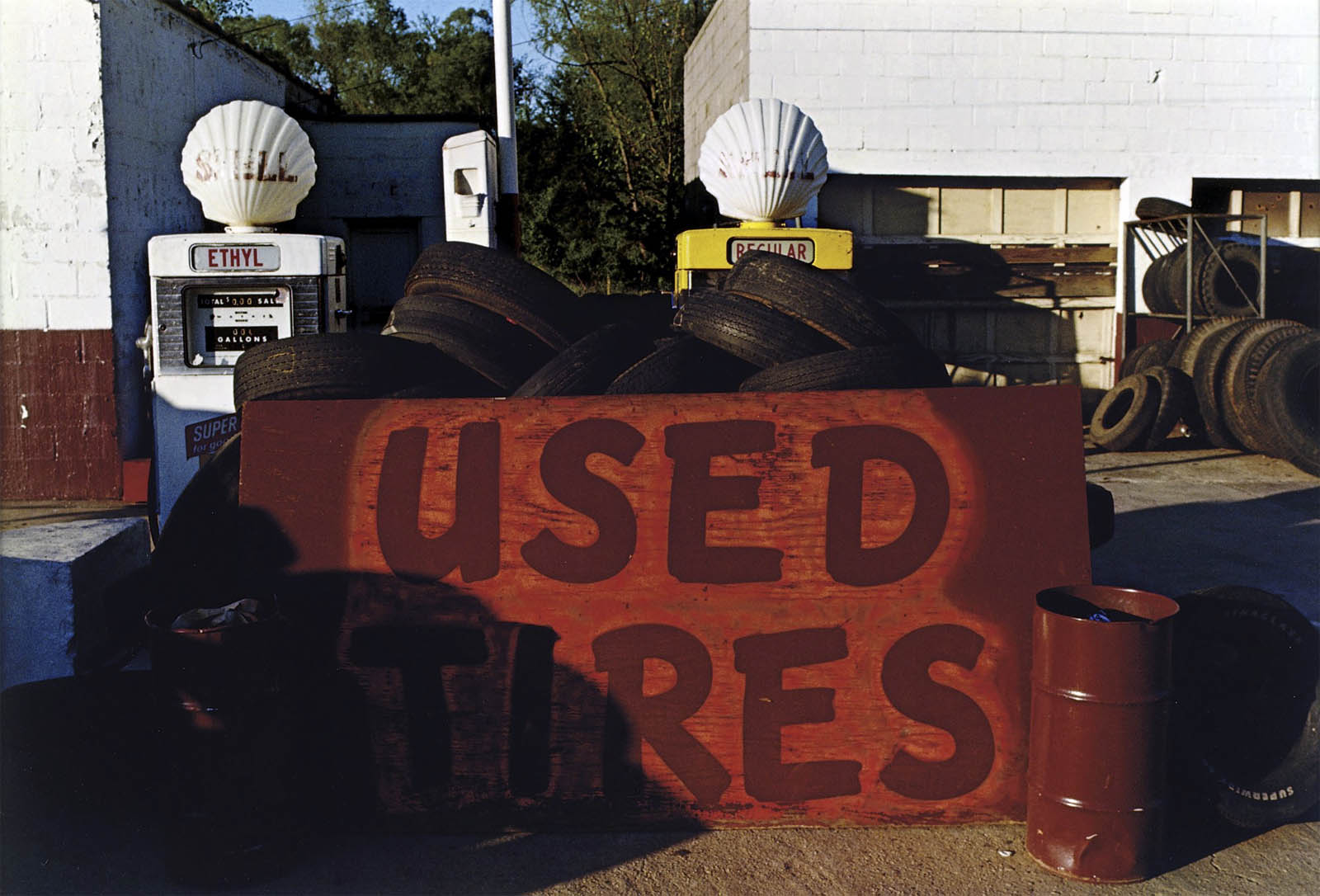
 

William Eggleston (American, b. 1939) 'Used Tires' 1973


William Eggleston (American, b. 1939)
Used Tires
1973
Dye imbibition print
Image: 33 x 48.5cm (13 x 19 1/8 in.)
National Gallery of Art
Patrons’ Permanent Fund
© Eggleston Artistic Trust
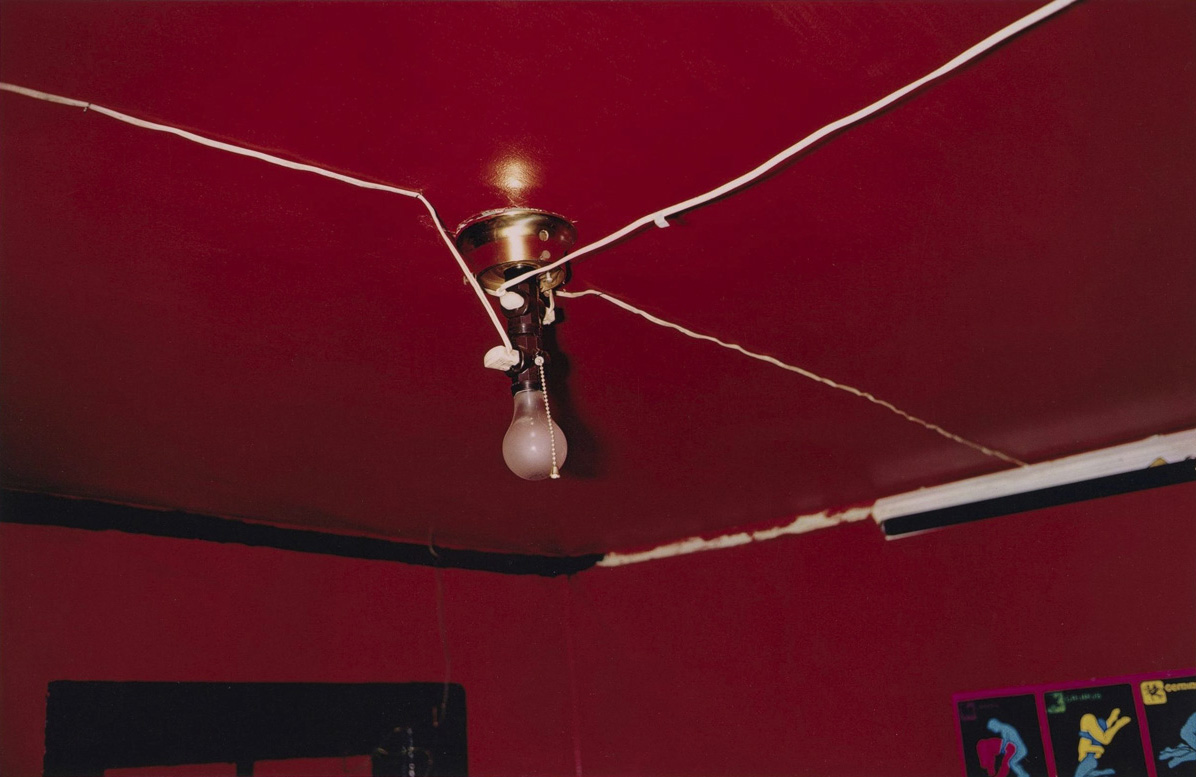
 

William Eggleston (American, b. 1939) 'Greenwood, Mississippi' 1973


William Eggleston (American, b. 1939)
Greenwood, Mississippi
1973
Dye imbibition print
Image: 32.2 x 48.2cm (12 11/16 x 19 in.)
National Gallery of Art, Corcoran Collection
Gift of the Women’s Committee of the Corcoran Gallery of
Art
© Eggleston Artistic Trust


William Eggleston has said that he has “a democratic way of looking around,” where nothing is more important or less important. For him, everyday subjects are not boring but instead offer visual richness. Here, that richness has a pronounced edge. Eggleston directed his lens up to a red ceiling with a single bare lightbulb at center. We glimpse only the top of a doorframe and a fragment of an explicit poster. The saturated, bloodlike color that dominates the composition is shocking, even menacing. It also challenged Eggleston technically as he developed his skills with dye imbibition printing. Commonly known as dye transfer, the process was labor intensive but allowed for customisation and a wide range of colours and tones.

Wall text from the exhibition


Mitchell Epstein (American, b. 1952)
'Massachusetts Turnpike' 1973, printed 2005 from the exhibition 'The '70s Lens: Reimagining Documentary Photography' at the National Gallery of Art, Washington


Mitchell Epstein (American, b. 1952)
Massachusetts Turnpike
1973, printed 2005
From the series Recreation
Chromogenic print
Image: 32.1 x 48.2cm (12 5/8 x 19 in.)
National Gallery of Art
Gift of Timothy and Suzanne Hyde in Honor of the 25th Anniversary of
Photography at the National Gallery of Art
© Black River Productions, Ltd.


Viewers of a certain age will recognize this setting as the parking lot of a Howard Johnson’s restaurant. HoJos, as they were nicknamed, were once ubiquitous along America’s highways. The cheery saturated colors belie the scene’s subject: a couple having a bad travel day. A man in suit and tie works under the hood of a beat-up Chevy Impala. His partner, wearing a pale pink skirt and top, arms crossed, appears frustrated. The cars zooming by seem to mock their immobility. Part of Mitch Epstein’s Recreation series, which documented Americans engaging in leisure activities, the photograph today evokes melancholy and nostalgia. Explaining his early turn to colour film, the artist said, “The world is in color, so why not photograph in color?”

Wall text from the exhibition


I started to work in colour, which was a radical, and some thought foolish, move in 1973. Colour photography was not yet a medium for serious photography – it was used almost exclusively for slick advertising and illustration. Within a month of shooting in colour, though, I wanted to do nothing else…

As I developed, I learned that a photograph is other than the thing itself photographed, and this freed me to think about how I could use photography to fictional effect, even while my pictures were drawn from the real world…

Photography remains a tool with which I form and sharpen my response to the world around me. Anything and everything is photographable in an infinite number of ways. That excites me.

Mitch Epstein in Lewis Blackwell. PhotoWisdom: Master Photographers on Their Art quoted quoted in “Mitch Epstein – Meet The Master Photographer,” on the Milkbooks website Nd [Online] Cited 06/02/2025
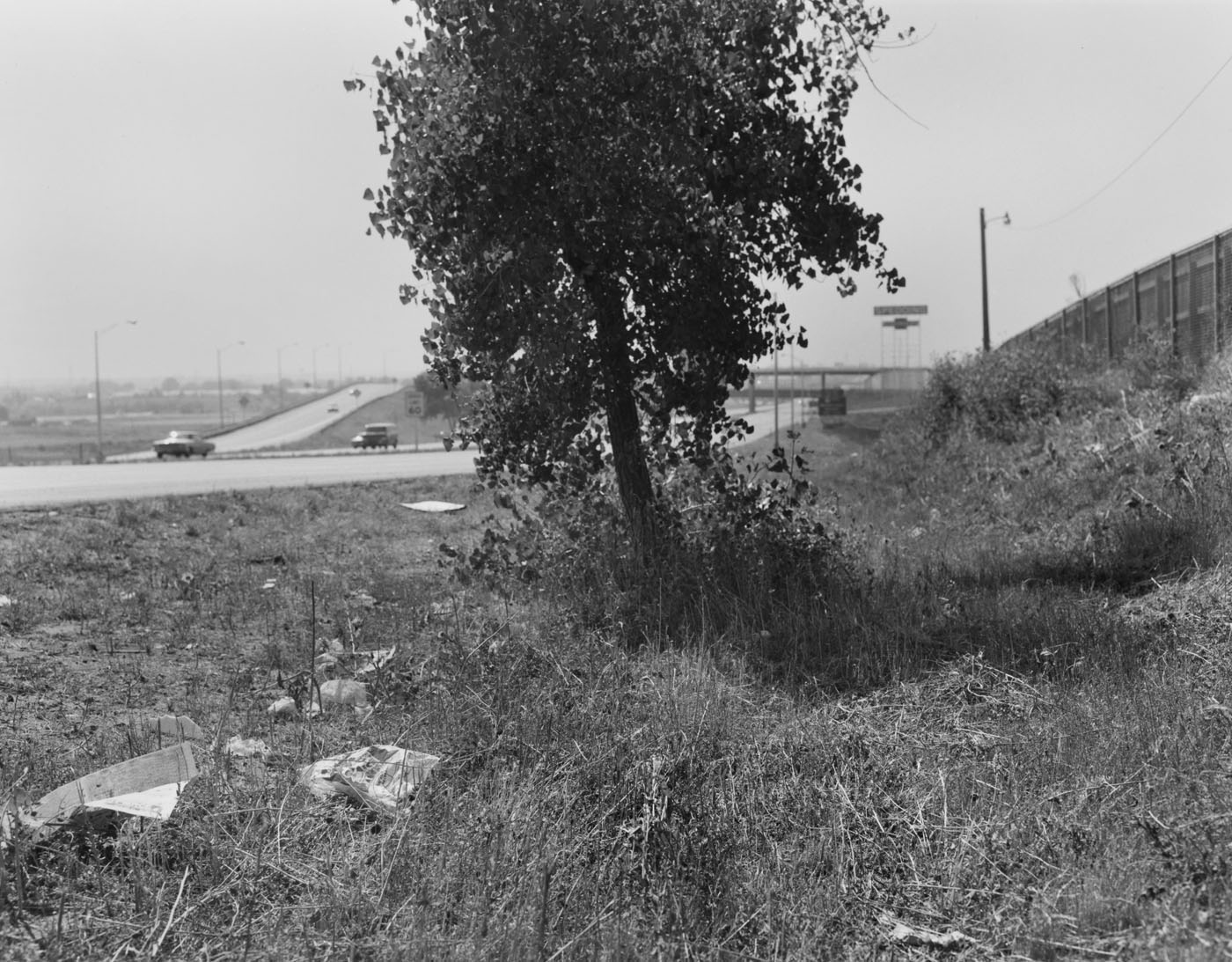
 

Robert Adams (American, b. 1937)
'Interstate 25, Denver, Colorado' 1973


Robert Adams (American, b. 1937)
Interstate 25, Denver, Colorado
1973
Gelatin silver print
Image: 15.2 x 19.3cm (6 x 7 5/8 in.)
National Gallery of Art
The Ahmanson Foundation and Gift of Robert and Kerstin Adams
© Robert Adams, Courtesy Fraenkel Gallery, San Francisco


Adams’ photographic vision is extra ordinary and I cannot fault his individual photographs. I become engrossed in them. I breathe their atmosphere. He has a resolution, both in terms of large format aesthetic, the aesthetic of beauty and of using materials, light and composition… that seems exactly right. He possesses that superlative skill of few great photographers, and by that I mean: sometimes he has true compassion** / parallel to a religious compassion, but not based on something higher / just perfect human. In some of his photographs (such as East from Flagstaff Mountain, Boulder County, Colorado 1975) he possesses real forgiveness, in others there is the perfection of cruel, the perfection of de/composition.

** achieved by Arbus, Atget and sometimes by Clift, Gowin.

And then, each image holds small clues vital to the overall conversation that is the accumulation of his work and it is in their collective accumulation of meaning that Adams’ photographs grow and build to shatter not just the American silence on environmental issues, but the deafening silence of the whole industrialised world. In their holistic nature, Adams’ body of work becomes punctum and because of this his work produces other “things”, things as great as anything the French literary theorist, essayist, philosopher, critic, and semiotician Roland Barthes wrote about. As in Barthes’ seminal work Camera Lucida, Adams’ work reminds us that the “photograph is evidence of ‘what has ceased to be’. Instead of making reality solid, it reminds us of the world’s ever changing nature.”1

Marcus Bunyan. “The quiet of the great beyond,” on the exhibition American Silence: The Photographs of Robert Adams at the National Gallery of Art, Washington, May – October 2022 on Art Blart: art and cultural memory archive website, September 25, 2022 [Online] Cited 06/02/2025

1/ Anonymous. “Roland Barthes,” on the Wikipedia website Nd [Online] Cited 23/09/2022


Michael Jang (American, b. 1951)
'Study Hall' 1973 from the exhibition 'The '70s Lens: Reimagining Documentary Photography' at the National Gallery of Art, Washington


Michael Jang (American, b. 1951)
Study Hall
1973
Gelatin silver print
15.5 × 23.5cm (6 1/8 × 9 1/4 in.)
National Gallery of Art
Charina Endowment Fund


In Study Hall, Michael Jang’s extended family sits together on a couch reading comics and a television guide, a messy tray of Kraft Teez Dip and potato chips on the table in front of them. The covers of the decidedly not studious publications block their faces, becoming stand-ins for their portraits. In Aunts and Uncles (nearby), relatives are caught joking around while posing for an official family portrait in silly sunglasses.

Jang’s humorous photographs of his Chinese American family and the trappings of their suburban lives offer a refreshing take on the often staid genre of family portraiture. They also debunk the 1970s stereotype – think The Brady Bunch – that the “all-American” family could only be white.

Wall text from the exhibition


In his series The Jangs, Michael Jang photographed family at home. His humorous photographs of their suburban lives expanded the concept of the “all-American” family – the Chinese American Jangs didn’t look like The Brady Bunch.

In Study Hall, Jang’s cousins and aunt sit together on a couch reading comics and a television guide, a messy tray of potato chips and dip on the table in front of them. The covers of decidedly not studious publications block their faces, becoming stand-ins for their portraits.

Jang’s delightful series was almost entirely forgotten. The photographs, which he had first made while a student, sat in a box in the artist’s house for decades while he established a career as a commercial photographer.

In the 2000s, Jang reconsidered this series and shared it with museums, which began adding the photographs to their collections. His photographs took on a new light in the wake of a rise of anti-Asian hate during the COVID-19 pandemic. In 2021, Jang wheat pasted images from The Jangs on buildings in San Francisco’s Chinatown.

Text from the National Gallery of Art website
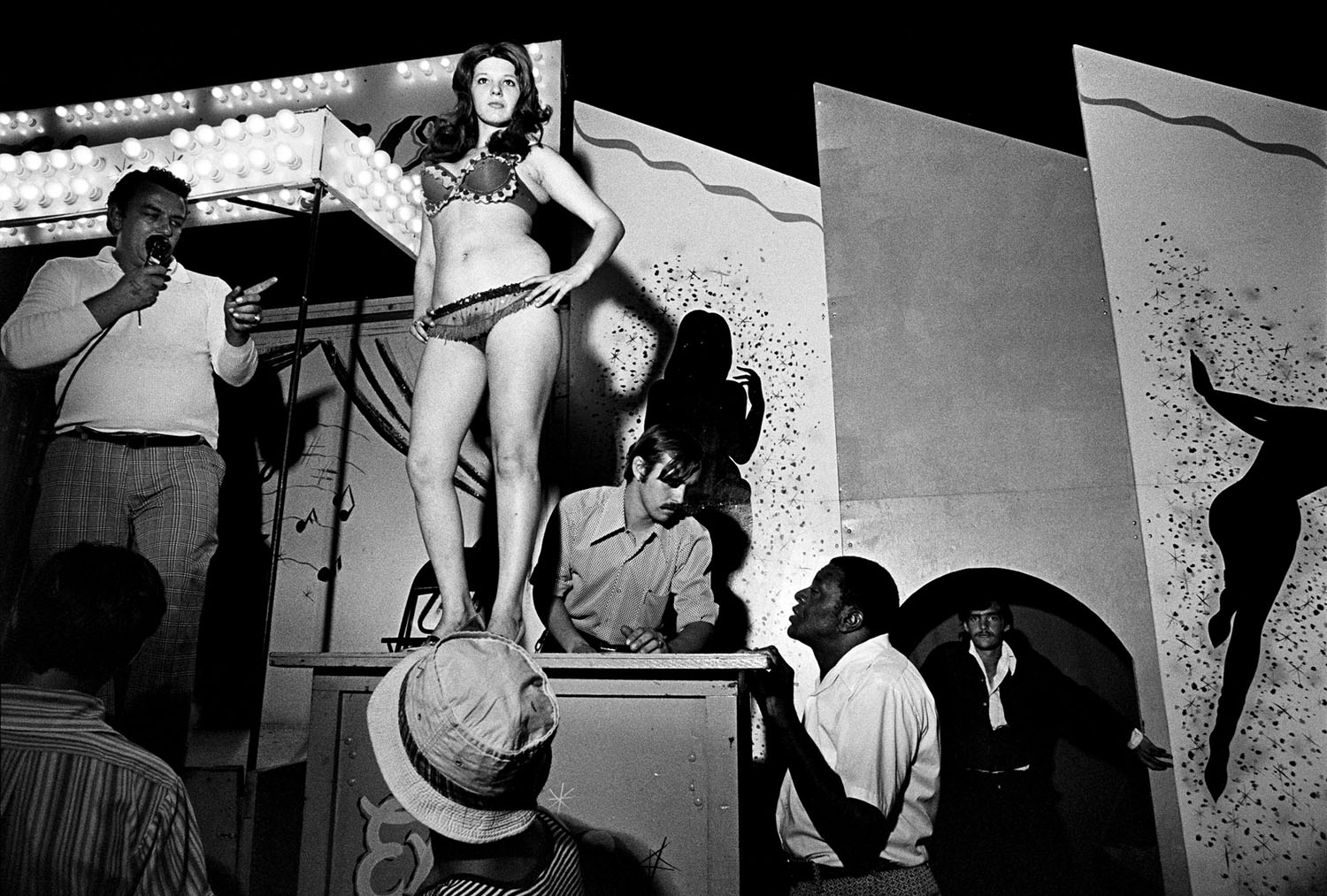
 

Susan Meiselas (American, b. 1948)
'Lena on the Bally Box, Essex Junction, Vermont' 1973


Susan Meiselas (American, b. 1948)
Lena on the Bally Box, Essex Junction, Vermont
1973
Gelatin silver print
Image: 22 x 32.5cm (8 11/16 x 12 13/16 in.)
National Gallery of Art
Anonymous Gift in honor of Sarah Greenough and Andrea Nelson


The final and most essential selection in this posting – Susan Meiselas’ 1972-1975 Carnival Strippers series – goes behind the “front” to document the lives of women who performed striptease for small-town carnivals in New England, Pennsylvania and South Carolina. “Meiselas’ frank description of these women brought a hidden world to public attention, and explored the complex role the carnival played in their lives: mobility, money and liberation, but also undeniable objectification and exploitation. Produced during the early years of the women’s movement, Carnival Strippers reflects the struggle for identity and self-esteem that characterised a complex era of change.” (Booktopia)

Intense, intimate and revealing, the series proves that we can think we know something (the phenomenal) and yet photography reveals how strange and different each world is – whether that be in trying to understand the mind of the artist and what they intended in a constructed photograph or, in this case, having an impression of someone else’s life, a life we can perceive (through the “presence” of the photograph) but never truly know (the noumenal).

Marcus Bunyan on the exhibition Known and Strange: Photographs from the Collection at the V&A Photography Centre on the Art Blart: art and cultural memory archive website, May 7, 2022 [Online] Cited 06/20/2025


Susan Meiselas (American, b. 1948)
'Tentful of Marks, Tunbridge, Vermont'
1974


Susan Meiselas (American, b. 1948)
Tentful of Marks, Tunbridge, Vermont
1974
Gelatin silver print
Image: 19.7 x 29.4cm (7 3/4 x 11 9/16 in.)
National Gallery of Art, Corcoran Collection
Museum Purchase, Photography Acquisition Fund

In Tentful of Marks, Susan Meiselas trains her camera from backstage on the legs and high heels of a carnival dancer. The all-male audience – the “marks” of the title – are in sharp focus, and they crowd around the small stage, lustfully gawking up at her. Meiselas spent three summers documenting women who performed striptease at small-town carnivals in New England, Pennsylvania, and South Carolina. In addition to making photographs, she recorded audiotapesof conversations with the dancers, giving them agency to describe their experience. Meiselas saw her project as a collaboration. Merging listening and looking, it expanded perspectives on a largely invisible and – from the dancers’ perspective – misunderstood world.

Wall text from the exhibition


Installation view of the exhibition 'The '70s Lens: Reimagining Documentary Photography' at the National Gallery of Art, Washington showing at left, Milton Rogovin's photograph 'Jimmy Webster with His Father, Verne' (1973); and at right, 'Jimmy Webster' (1985)


Installation view of the exhibition The ’70s Lens: Reimagining Documentary Photography at the National Gallery of Art, Washington showing at left, Milton Rogovin’s photograph Jimmy Webster with His Father, Verne (1973, below); and at right, Jimmy Webster (1985)

With thankx to the official Milton Rogovin Facebook page for allowing me to publish this image.


Milton Rogovin (American, 1909-2011) 'Jimmy Webster with His Father, Verne' 1973


Milton Rogovin (American, 1909-2011)
Jimmy Webster with His Father, Verne
1973
Gelatin silver print
Image: 17.4 x 15.5cm (6 7/8 x 6 1/8 in.)
National Gallery of Art
Gift of Pierre Cremieux and Denise Jarvinen

With thankx to the official Milton Rogovin Facebook page for allowing me to publish this image.


Verne Webster, sitting on his front stoop, looks guardedly at the camera while sheltering his toddler son Jimmy in a protective embrace. This is an early work from Milton Rogovin’s 30-year series documenting Buffalo’s Lower West Side. The project focused on a six-block neighbourhood that was among Buffalo’s most diverse and most impoverished. Rogovin asked permission to photograph his subjects, let them choose their poses and settings, and gave them free prints. He returned every decade or so to photograph the same individuals. A nearby picture shows Jimmy 12 years later. Looking back at Rogovin’s photographs in 2003, Jimmy Webster said, “Whenever you look at his photographs, you just see people for who they are.”

Wall text from the exhibition


John Baldessari (American, 1931-2020) 'Throwing three balls in the air to get a straight line: (best of thirty-six attempts)' 1973


John Baldessari (American, 1931-2020)
Throwing three balls in the air to get a straight line: (best of thirty-six attempts)
1973
Colour offset photolithographs
National Gallery of Art Library
David K. E. Bruce Fund


West Coast conceptual art has a whimsical air. Artists such as John Baldessari and Ed Ruscha created scenarios that lampoon both the pretense of “high art” and the self-seriousness of conceptual art, particularly as the latter was developing in New York. Beneath the humor, however, their works spoke to more substantive issues like artistic failure and social mores. In 1973 Baldessari photographed his 36 attempts to throw three balls in the air to form a straight line. He never succeeded but included his 12 best attempts in a portfolio.

Wall text from the exhibition
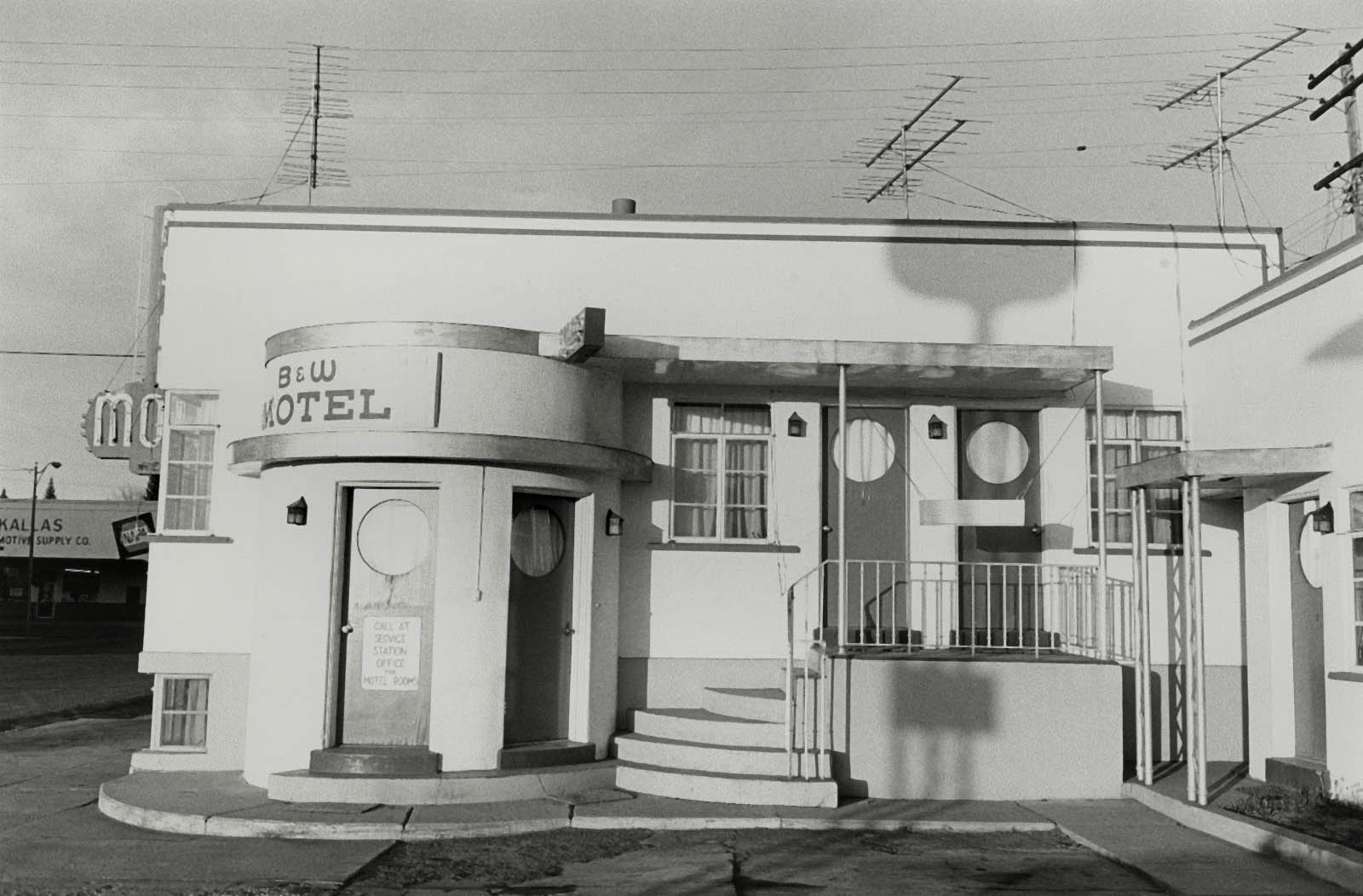
 

Henry Wessel (American, 1942-2018) 'Utah' 1974


Henry Wessel (American, 1942-2018)
Utah
1974
gelatin silver print
Image: 26.5 x 39.7cm (10 7/16 x 15 5/8 in.)
National Gallery of Art
Patrons’ Permanent Fund


Stephen Shore (American, b. 1947)
'Holden Street' July 13, 1974


Stephen Shore (American, b. 1947)
Holden Street
July 13, 1974
Chromogenic print
Image: 20.5 x 25.4cm (8 1/16 x 10 in.)
National Gallery of Art
Diana and Mallory Walker Fund


Stephen Shore’s photograph may appear casual, but it is carefully constructed. The vertical of the lamppost draws our attention to the shadowed foreground. Buildings and sidewalks on each side act as perspective lines that meet in the brighter background. Shore was exploring how three-dimensional space is rendered in two dimensions, particularly in a colour photograph. He was also examining where a once-powerful New England industrial town abruptly ended and the verdant countryside began. The lack of people, saturated colours, and clarity of detail – made possible by using a large-format 8 × 10 camera – give the picture an air of timelessness but also hyperreality.

Wall text from the exhibition
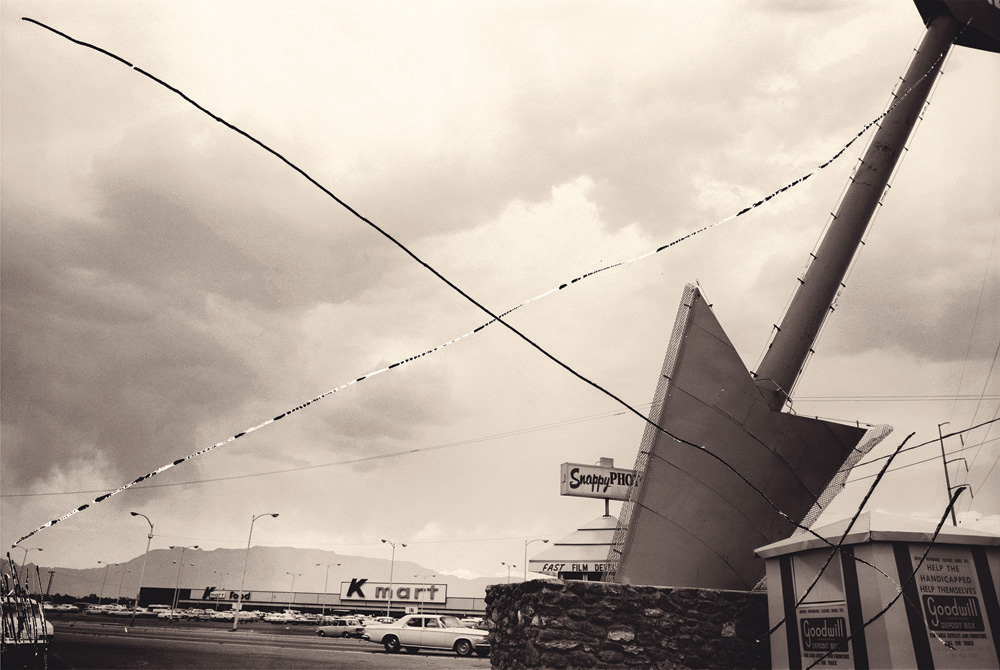
 

Thomas Barrow (American, 1938-2024) 'Dart, Albuquerque' 1974 from the exhibition 'The '70s Lens: Reimagining Documentary Photography' at the National Gallery of Art, Washington


Thomas Barrow (American, 1938-2024)
Dart
1974, printed 1994
From the series Cancellations
Gelatin silver print
23.9 × 34.6cm (9 7/16 × 13 5/8 in.)
National Gallery of Art
Randi and Bob Fisher Fund


In Dart, Thomas Barrow photographed a huge arrow that appears to have plunged from the threatening clouds above into a parking lot shared by Snappy Photos, a Goodwill drop-off bin, and a K-Mart. The work is part of his series Cancellations, documenting the suburban sprawl overtaking much of the United States. Barrow “cancelled” his images before printing by slashing the negatives with an icepick. (“Cancelling” refers to the practice of defacing a printing plate or negative to ensure no more official prints can he made from it.) This action calls attention to the photograph’s surface and its materiality, which in turn emphasise the choices Barrow made in its production.

Wall text from the exhibition


Thomas F. Barrow is an artist working with photography more than he is a photographer… For Barrow, the ideas are what matter, not the material they are realized with.

Barrow’s Cancellations series is an early expression of this artistic philosophy. Created between 1973-1981, it began when Barrow moved from Rochester, New York to Albuquerque, New Mexico to teach at UNM. Like many photographers of this era (Lewis Baltz, Frank Gohlke, Robert Adams) Barrow was struck by the transformation underway with the (sub)urbanization of the Western landscape. However, he was inspired to do more than document with his camera; he wanted to challenge his viewers while subverting some fundamental truths of photography. Inspired by a cancelled Marcel Duchamp etching (a process where the etching plate is defaced to indicate that no more official prints may be made), he began defacing his negatives with an ice pick and hole punch, “cancelling” them before making the images.

Almost 40 years later, it’s still unclear whether Barrow is canceling the photograph or the scene in the picture. He is certainly calling attention to the matrix that produced the photograph, an unheard of practice at the time and still rare today. By defacing his negatives, he has created photographs that are as much about the physical image as they are about the subject in the photograph.

David Ondrik. “Cancellations by Thomas Barrow,” in Fraction Magazine Issue 49 on the Fraction Magazine website Nd [Online] Cited 07/02/2025
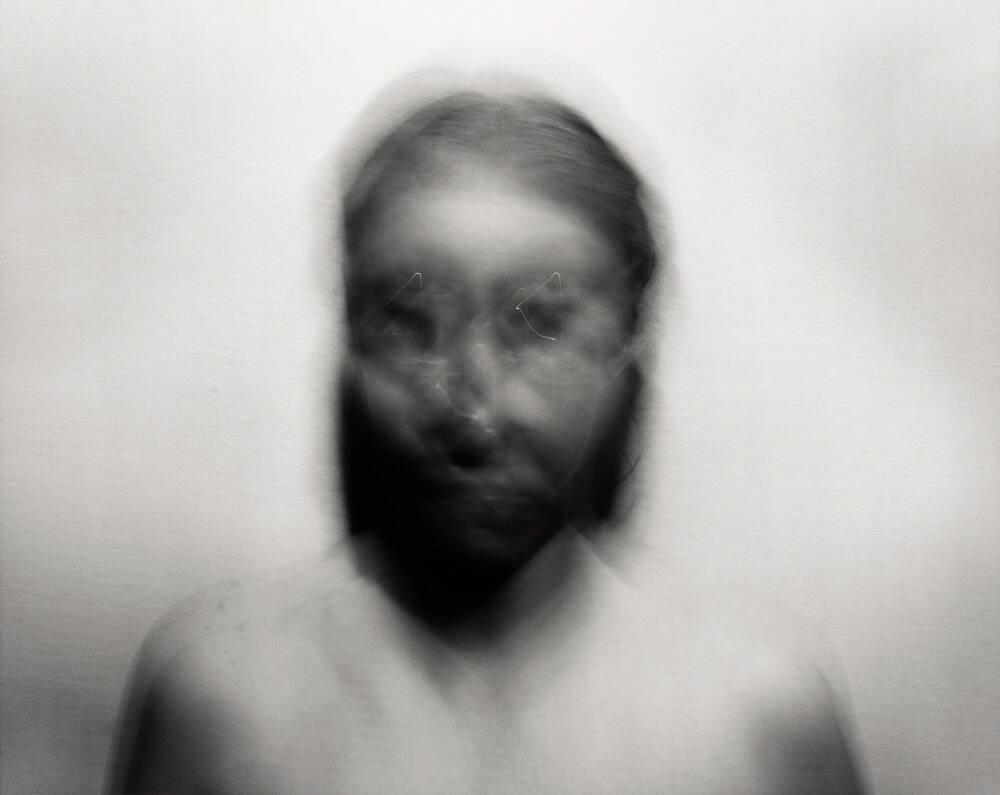
 

Blythe Bohnen (American, 1940-2022) 'Self-Portrait: Triangular Motion, Small' 1974 from the series 'Self-Portraits: Studies in Motion'


Blythe Bohnen (American, 1940-2022)
Self-Portrait: Triangular Motion, Small
1974
From the series Self-Portraits: Studies in Motion
Gelatin silver prints
National Gallery of Art
Gift of Herbert and Paula Molner


Most self-portraits offer some idea of the artist’s physical appearance and perhaps psychological state. The focus of Blythe Bohnen’s intentionally distorted self-portraits, however, is altogether different. Bohnen was interested in the physical element of artmaking – specifically, the role of her body’s movements or gestures in the creative process. Photographs usually capture an instant, but Bohnen instead used exposures of several seconds and the precise, predetermined gestures identified in her titles to distill the essence of motion. The portraits, blurry and disorienting, become more of a performance in time, condensed into a single image.

Wall text from the exhibition
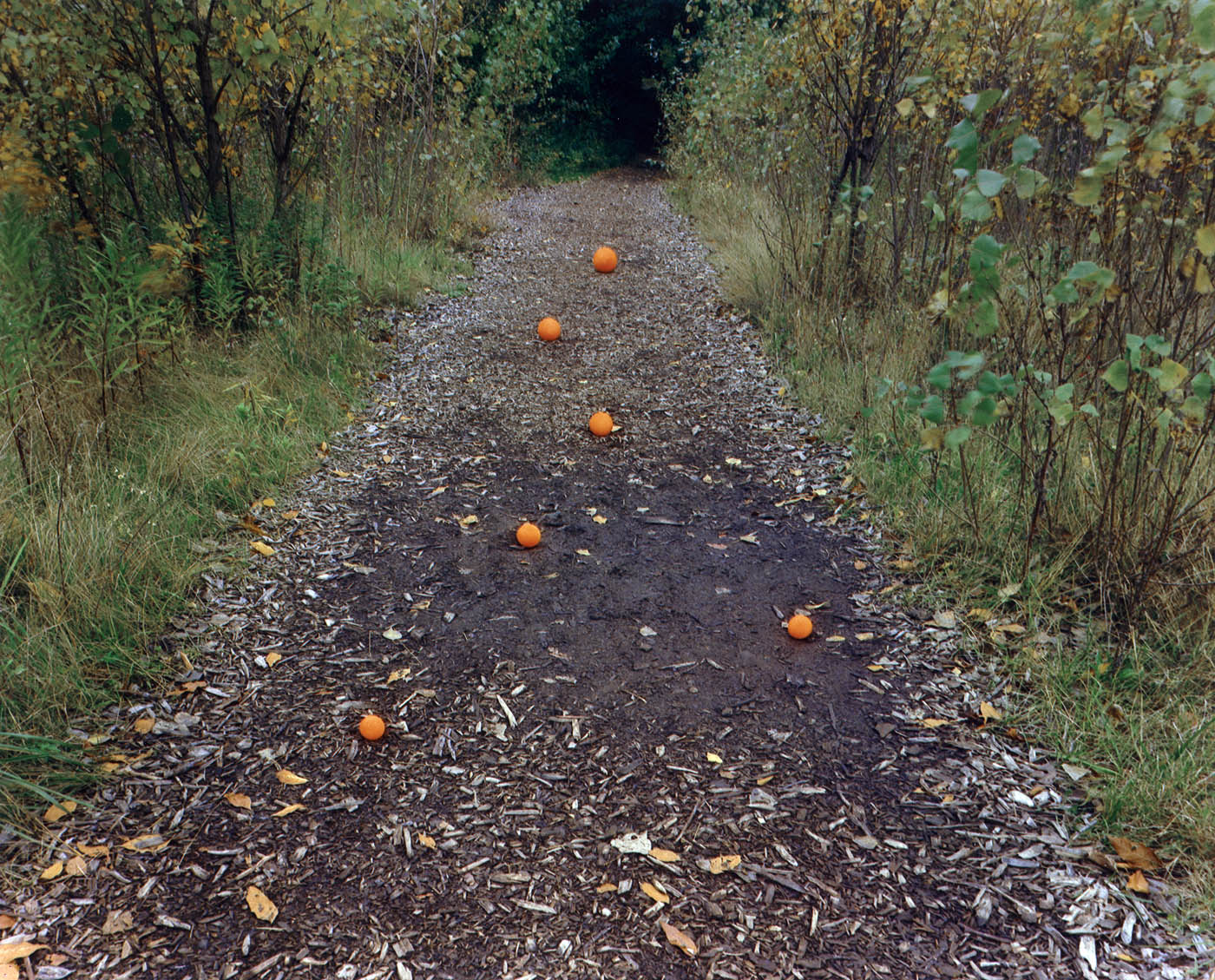
 

John Pfahl (American, 1939-2020) 'Six Oranges, Buffalo, New York' 1975 from the exhibition 'The '70s Lens: Reimagining Documentary Photography' at the National Gallery of Art, Washington


John Pfahl (American, 1939-2020)
Six Oranges, Buffalo, New York
1975
Dye imbibition print
Image: 20.6 x 25.5cm (8 1/8 x 10 1/16 in.)
National Gallery of Art
Patrons’ Permanent Fund
© The John Pfahl Trust


For the works in his series Altered Landscape, John Pfahl playfully juxtaposed the organic and natural with the manipulated and constructed. In this picture, he placed six oranges on a path in the woods. Typically, if the fruits were all the same size they would appear to grow smaller the farther from the camera they were located. Here, however, the artist has reversed that expectation, with the smallest orange sitting nearest the camera and the largest in place at the top of the picture. Through his staging, Pfahl makes the viewer aware of how a camera, by recording three-dimensional space onto a two-dimensional surface, actually produces a distorted view.

Wall text from the exhibition


In 1981, Peter C. Bunnell observes in his Introduction to James Alinder’s book Altered Landscapes: The Photographs of John Pfahl, “Our momentary, fragmented and captured vision of disorder and emotion has been replaced by a cool rendering of purposefulness as if to accord another dimension of positivism to the moving force of contemporary human awareness. Pfahl’s work is an attack on the problems of space and, ultimately, existence from a rational point of view.”

Forty years later, these photographs seem not so much rational, or picturesque, as spiritual. The human construction touches the earth lightly, almost reverentially. As Pfahl notes, utmost care is taken not to alter the actual subject in a way he would consider harmful to his positivist respect for nature. In this delicate footprint, these photographs are very prescient of the dangers of our own Anthropocene – of climate change, of raging bushfires, drought, flood and bio-exinction. We are literally destroying this planet and its creatures. Bunnell states, “Pfahl’s imagery is a sure manifestation of the belief that society can produce an art suitable to its nature and, in this case, a specific kind of photographic presence that expresses current societal values.”

Unfortunately, it’s all too late. The lesson has not been learned.

Marcus Bunyan on the exhibition John Pfahl Altered Landscapes at Joseph Bellows Gallery, La Jolla, California, November – December 2019
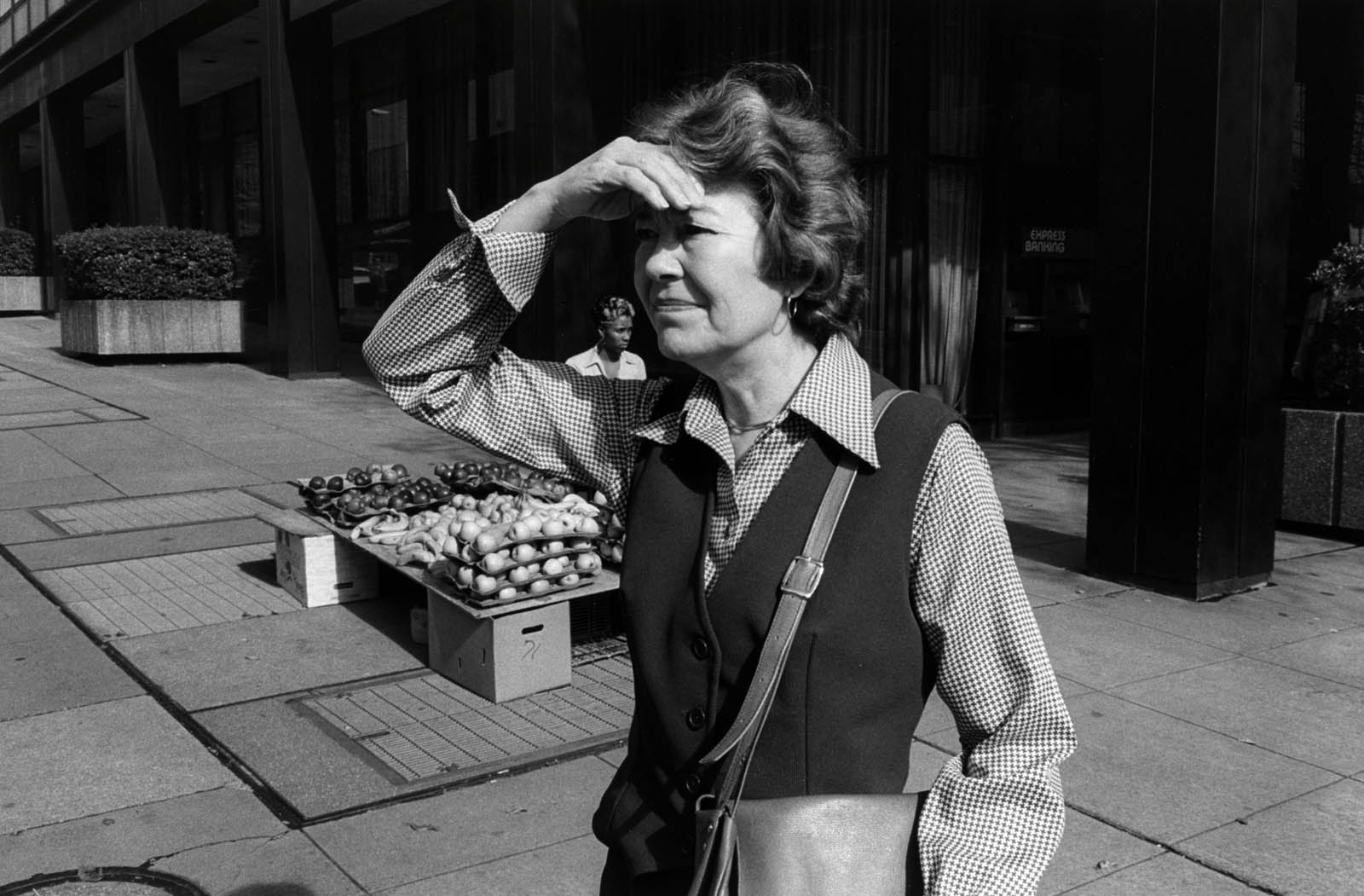
 

Anthony Hernandez (American, b. 1947) 'Washington, DC #11' 1975 from the exhibition 'The '70s Lens: Reimagining Documentary Photography' at the National Gallery of Art, Washington


Anthony Hernandez (American, b. 1947)
Washington, DC #11
1975
Gelatin silver print
Image: 18.1 × 27.31cm (7 1/8 × 10 3/4 in.)
National Gallery of Art
Corcoran Collection (Museum Purchase)


Anthony Hernandez cleverly uses the crook of a woman’s raised arm to frame a fruit seller on the street behind her. A Los Angeles – based photographer, Hernandez was invited to Washington, DC, in 1975 to participate in The Nation’s Capital in Photographs, a bicentennial documentary project organized by the Corcoran Gallery of Art. Ignoring the city’s monuments, Hernandez captured life in commercial downtown areas where the architecture and people on the street defined the landscape. This sparsely populated composition evokes urban alienation. Neither figure seems aware of the other, and both look small against the austere modern building and grate-covered sidewalk that fill the background.

Wall text from the exhibition


Anthony Hernandez’s 1970s photographs of urban inhabitants are often focused on odd-looking people staring right at the camera. His subjects often appear surprised and slightly perturbed, as if caught unaware in private moments of thought or conversation.

Following two years of study at East Los Angeles College and two years of service in the United States Army as a medic in the Vietnam War, Hernandez took up photography in earnest around 1970. He walked the streets of his native Los Angeles, observing its inhabitants. In order to work quickly and intuitively, he would pre-focus the camera and then wait for subjects to come into the zone of focus – only briefly bringing the camera to his eye as he walked past them. He repeated this strategy in other cities, including London, Madrid, Saigon, and Washington, D.C.

Text from the J. Paul Getty Museum website


Joanne Leonard (American, b. 1940)
'Memo Center with Wall Plaque' c. 1975


Joanne Leonard (American, b. 1940)
Memo Center with Wall Plaque
c. 1975
Gelatin silver print
Image: 33.3 × 43.1cm (13 1/8 × 16 15/16 in.)
National Gallery of Art
Gift of the Artist in honor of her daughter, Julia Marjorie Leonard


Dotted curtains, a flowered light switch plate, and a humorous wall plaque add a personal touch to this carefully framed picture of a so-called memo center – an area near a wall phone where notes could be jotted down that was popular in 1970s homes. A practitioner of what she called “intimate documentary,” feminist artist Joanne Leonard recorded familiar but often overlooked domestic spaces traditionally associated with women. She explained, “Through my work as an artist I’ve discovered that the realms of the personal and the public are rarely as separate as I once imagined.”

Wall text from the exhibition


In the 1970s Leonard began examining how domestic spaces are transformed through the presence of technology by photographing the interiors of her neighbours’ homes in West Oakland, California, later moving on to other locations. She captured personal objects in bedrooms and found repetition in the common appliances present in kitchen after kitchen. She also documented the proliferation of “memo centers” – areas where notes could be jotted down near the location of a telephone, which at this time was still tethered in place by a cord.

Museum of Modern Art (MoMA) Gallery label from 2022


Joanne Leonard (American, b. 1940)
'Lupe's Kitchen Window, San Leandro, California' c. 1975


Joanne Leonard (American, b. 1940)
Lupe’s Kitchen Window, San Leandro, California
c. 1975
Gelatin silver print
Image: 41.8 x 43.1cm (16 7/16 x 16 15/16 in.)
National Gallery of Art
Gift of the Artist in honor of her daughter, Julia Marjorie Leonard


Peter Hujar (American, 1934-1987) 'Susan Sontag'
1975


Peter Hujar (American, 1934-1987)
Susan Sontag
1975
Gelatin silver print
Image: 37.15 x 37.15cm (14 5/8 x 14 5/8 in.)
National Gallery of Art
Stephen G. Stein Employee Benefit Trust


Robert Cumming (American, 1943-2021) '67-Degree Body Arc Off Circle Center' 1975, printed 2022


Robert Cumming (American, 1943-2021)
67-Degree Body Arc Off Circle Center
1975, printed 2022
Inkjet print
Image: 148.59 x 185.42cm (58 1/2 x 73 in.)
National Gallery of Art
Gift of David Knaus


Sometimes Cumming used his own body as an eccentric subject, as in “67-degree body arc off circle center” from 1975. Shown in profile with his hips thrust forward, his torso arched back and his neck and head awkwardly aligned with the angle of his legs, he’s a mathematical or scientific demonstration whose geometry turns the graceful rationality of Leonardo da Vinci’s “Vitruvian Man” on its ear. The title’s geometric forms drawn around his body on the surface of the photograph might have been made with an oversized pen-nib, into which the hand on Cumming’s hip is discreetly hidden.

The artist’s photograph, like a drawing, is an artifice.

His work as a painter, sculptor and performance artist informed his distinctive, often witty approach to images made with a camera, which Cumming began to explore in 1969 and continued for more than a decade. Artists as diverse as Eve Sonneman, Jan Groover, Lew Thomas, Judy Fiskin and Lewis Baltz were blurring traditional boundaries in different but Conceptually cogent ways. Photography would never be the same.

Christopher Knight. “Robert Cumming, whose photographs transformed camera work, dies at 78,” on the Los Angeles Times website Dec. 21, 2021 [Online] Cited 07/02/2025


Francesca Woodman (American, 1958-1981) 'House #3' c. 1975-1976, printed 1997-2004


Francesca Woodman (American, 1958-1981)
House #3
c. 1975-1976, printed 1997-2004
Gelatin silver print
Image: 16.1 x 16.3cm (6 5/16 x 6 7/16 in.)
National Gallery of Art
Gift of the Heather and Tony Podesta Collection


At the far end of a decrepit room, the phantom-like figure of the photographer appears to be merging with, or emerging from, the wall. In contrast to the sharply rendered interior, she is an ethereal blur whose face can barely be made out. Both the creator and subject of most of her work, Francesca Woodman staged dreamlike performances that explore self-portraiture, the female body, and architectural space. Although sometimes carefully planned, they more often represented her spontaneous, imaginative responses to an environment. Woodman made this photograph in an abandoned house in Providence when she was in her late teens.

 Wall text from the exhibition


The 1970s was a decade of uncertainty in the United States. Americans witnessed soaring inflation, energy crises, and the Watergate scandal, as well as protests about the Vietnam War, women’s rights, gay liberation, and the environment. The profound upheaval that rocked the country formed the backdrop for a revolution in documentary photography. Activism and growing support of multiculturalism opened the field to underrepresented voices, while artistic experimentation fuelled the reimagining of what documentary photographs could look like.

The ’70s Lens: Reimagining Documentary Photography examines this compelling and contested moment of reinvention when documentary photography’s automatic association with objectivity and truthfulness came into question. The photographs on view record subjects, communities, and landscapes previously overlooked and expand the boundaries of the genre. During this turbulent decade, documentary practice became more deeply entwined with fine art, while conceptual and performance artists used the medium to preserve their ideas and record their actions. An openness to individual expression and a turn from black and white to color film further transformed a field previously celebrated for accurately representing the world and its social ills.

Drawn primarily from the National Gallery’s collection and featuring some 100 photographs by more than 80 artists, The ’70s Lens is on view from October 6, 2024, through April 6, 2025, in the West Building.

“The profound upheaval in American life during the 1970s inspired artists to question the objective nature of documentary photography,” said Kaywin Feldman, director of the National Gallery. “The extraordinary photographs on view in this exhibition explore their diverse and compelling responses, revealing relevant connections to today’s thinking about community and who gets to represent it, as well as broader concepts including photographic truth, equity, and environmental responsibility.”

The Exhibition

Organised thematically, The ’70s Lens: Reimagining Documentary Photography examines how the many documentary approaches that emerged during the 1970s reflected a radical shift in American life – and in photography itself.

Seeing Community

Spurred by the civil rights movement and a growing recognition of the rich ethnic and cultural diversity within the United States, photographers – especially from the Black, Latinx, and LGBTQ+ communities – reclaimed documentary practice to represent the fullness of their lives. Responding to a history of misrepresentation by outsiders, Anthony Barboza, Frank Espada, Mikki Ferrill, Nan Goldin, Jeanne Moutoussamy-Ashe, John Simmons, among others, focused their cameras on close-knit neighborhoods, often their own, building trusting relationships with the people they photographed. These artists worked collaboratively with their subjects to challenge preconceived notions of their communities.

Experimental Forms

Influenced by the groundbreaking photographs made by Roy DeCarava and Robert Frank beginning in the 1950s, a new generation of documentary photographers used the camera to visualise the world and their place in it. By combining clear-eyed observation with individual expression, artists such as Jim Goldberg, Sophie Rivera, and Shawn Walker revealed the complexity of the human condition from a more personal perspective. Others, such as Diane Arbus, Lee Friedlander, Anthony Hernandez, and Garry Winogrand, focused their attention on the irony and ambivalence rooted in American culture of the time, depicting everyday life with a psychological frankness. Together their revitalization of portraiture and street photography merged documentary practice with fine-art photography.

Conceptual Documents

Documentary photography became central to the practice of many conceptual artists in the 1970s. For them, the idea behind a work was more important than the finished object. John Baldessari, Thomas Barrow, and Robert Cumming interrogated the conventions of photography’s widely assumed objectivity and truthfulness by highlighting the difference between photographic appearance and reality. Others, like Susan Hiller and Dennis Oppenheim, used the camera to record their creative process, often integrating photographs with texts to address larger social issues about gender and the environment.

Performance and the Camera

Documentary photography was also integral to performance-based art during the 1970s. Many artists used the medium to record their otherwise ephemeral actions – including those who made performances specifically for the camera. This photographic documentation became a new form of art inseparable from the overall conception of the performance. Senga Nengudi in collaboration with Maren Hassinger explored the elasticity of the body through choreographed actions. Ana Mendieta and Francesca Woodman examined their identities through interventions in the environment, while Tseng Kwong Chi, Marcia Resnick, and David Wojnarowicz staged journeys and constructed histories that pushed the boundaries between truth and fiction.

Life in Color

The art world’s embrace of color film in the 1970s transformed documentary photography. Commercial color processes had existed for more than 50 years, but serious documentary photography was strictly associated with black-and-white prints. Color photography’s status changed gradually over the decade, and especially in the wake of an exhibition of William Eggleston’s mundane but incisive photographs at the Museum of Modern Art in 1976. Pictures of everyday life made in color by William Christenberry, Mitch Epstein, Richard Misrach, and John Valadez held an immediacy that fascinated viewers and offered a new framework for reflecting on contemporary life.

Alternative Landscapes

The 1970s witnessed a radical shift in how landscapes were understood and photographed. Robert Adams, Lewis Baltz, and Joe Deal challenged popular ideas of nature as pristine and timeless with pictures of environmental destruction and suburban sprawl. From grain elevators to roadside motels, Frank Gohlke and John Schott focused on structures that form the built environment, revealing how humans have shaped their surroundings. The artists in this section documented with an austere eye, and at times subversive wit, a rampant consumer culture and the damage done in the name of progress.

Intimate Documentary

Many photographers in the 1970s turned their cameras on themselves and close family members to analyze the social landscape of domestic spaces. Often informed by second-wave feminism, they prioritized interiors and life at home as topics for artistic examination. Joanne Leonard has described her narrative-rich scenes of everyday life as “intimate documentary,” while Bill Owens observed the rise of suburbia as both a place and a mentality. Concerned that documentary photography was losing its activist force, Martha Rosler and Eleanor Antin engaged with politics – especially the home front during the Vietnam War – more directly.

Press release from the National Gallery of Art


Sunil Gupta (Canadian born India, b. 1953) 'Untitled #22' 1976, printed 2023 from the exhibition 'The '70s Lens: Reimagining Documentary Photography' at the National Gallery of Art, Washington


Sunil Gupta (Canadian born India, b. 1953)
Untitled #22
1976, printed 2023
From the series Christopher Street
Gelatin silver print
Image: 61 x 91.5cm (24 x 36 in.)
National Gallery of Art
Alfred H. Moses and Fern M. Schad Fund
© Sunil Gupta


Sunil Gupta documented the emergence of a gay public space in New York’s Greenwich Village during the 1970s. The India-born Gupta had arrived from his adopted home in Montreal in 1976 to study business, but quickly decided instead to fine-tune his photographic skills. Energized by the overtly gay environment – a result, in part, of LGBTQ+ demonstrations in 1969 known as the Stonewall uprising – he started photographing people on the streets. Not impartial, Gupta was enthralled by those he encountered, including two stylishly dressed men who seem to acknowledge Gupta’s camera. In the Christopher Street series, Gupta recorded the then extraordinary act of being openly gay – a practice both political and deeply personal.

Still moved by this project, the artist has recently started making large-scale prints from his original negatives.

Wall text from the exhibition


This series was shot in New York in 1976 when I spent a year  studying photography with Lisette Model in the New School… I spent my weekends cruising with my camera, it was the heady days after Stonewall and before AIDS when we were young and busy creating a gay public space such as hadn’t really been seen before.

Text from the Sunil Gupta website
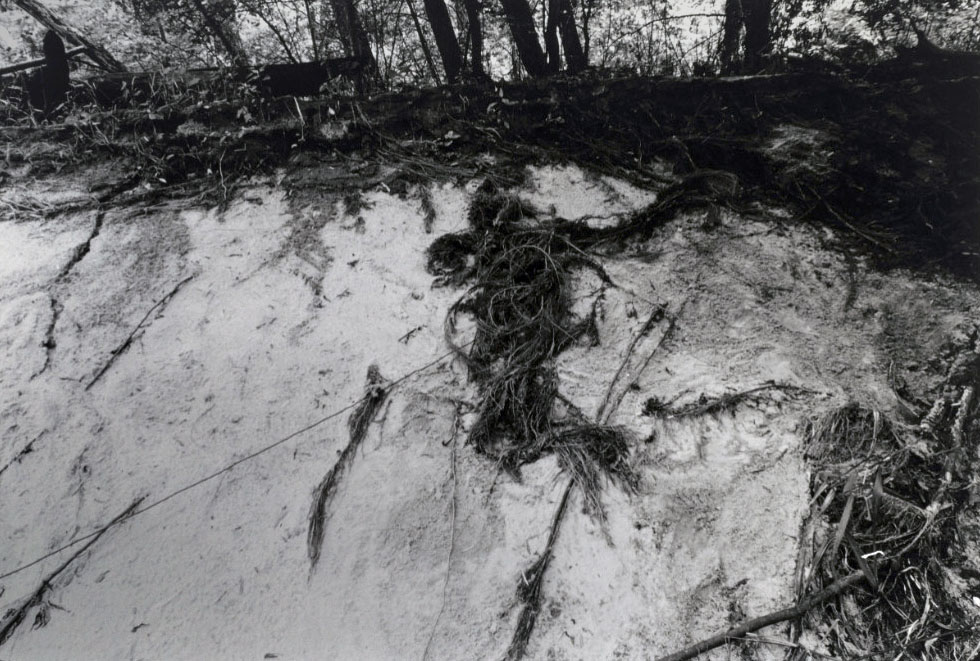
 

Ana Mendieta (Cuban-American, 1948-1985) 'Untitled' 1977-1978


Ana Mendieta (Cuban-American, 1948-1985)
Untitled
1977-1978
From the Silueta Series
Gelatin silver print
Image: 33.8 x 49.5cm (13 5/16 x 19 1/2 in.)
National Gallery of Art
Gift of the Collectors Committee


In her Silueta Series, Cuban American artist Ana Mendieta used the outline of her body to carve and shape silhouettes into the land. Informed by her interest in Afro-Cuban ritual, her fusion of performance and earthworks explored spiritual connections between nature and the female body. Mendieta’s exile with her family from Communist Cuba to the United States in the 1960s left her with a deep sense of loss. She remarked, “I have no motherland; I feel a need to join with the earth.” Photography was crucial in documenting these ephemeral pieces, preserving them before they were lost to the elements. Hauntingly beautiful, the pictures enable Mendieta’s practice to be both transitory and enduring.

Wall text from the exhibition


Larry Fink (American, 1941-2023) 'Studio 54' 1977


Larry Fink (American, 1941-2023)
Studio 54, New York City
May 1977
From the series Social Graces
Gelatin silver print
37.2 × 38cm (14 5/8 × 14 15/16 in.)
National Gallery of Art
Gift of Tony Podesta Collection, Washington, DC
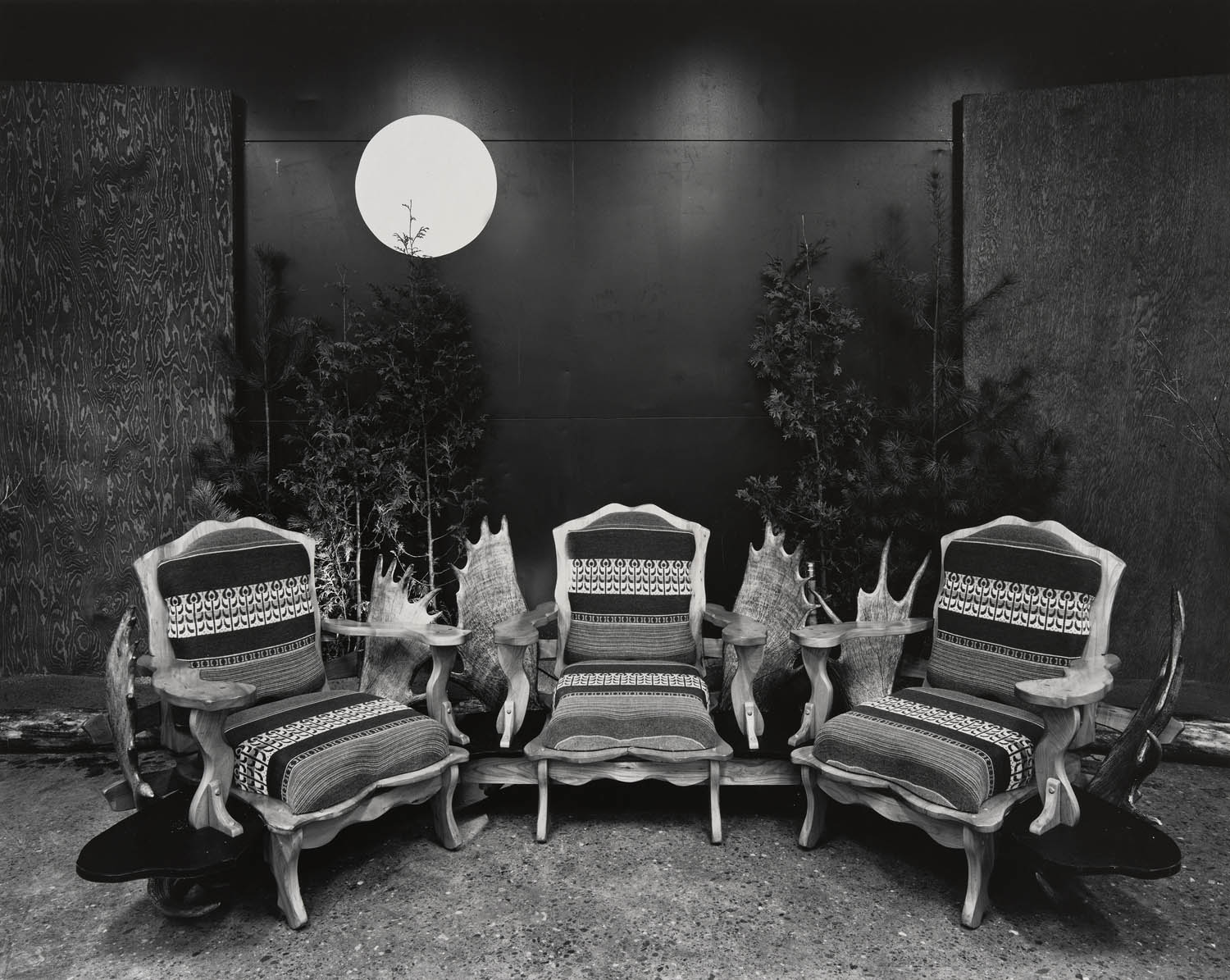
 

Lynne Cohen (American-Canadian, 1944-2014) 'Exhibition Hall' 1977


Lynne Cohen (American-Canadian, 1944-2014)
Exhibition Hall
1977
Gelatin silver print
Image (visible): 19 x 23.7cm (7 1/2 x 9 5/16 in.)
National Gallery of Art
Pepita Milmore Memorial Fund
© Estate of Lynne Cohen


In the photography of Lynne Cohen, you won’t see a single person. But you’ll find their traces everywhere. Her images feel haunted by people, as if the action has just ended or has yet to begin. Despite their absence, however, people are the true subject of the artist’s gaze. Former Gallery curator Ann Thomas explained in her essay for the 2001 National Gallery of Canada exhibition No Man’s Land: The Photography of Lynne Cohen: “While her photographs do not include human beings, they are on occasion more revealing about human behaviour than any group portrait.”

From her earliest photographs in 1971 to her final works before her death in 2014, Cohen made deadpan images of interior spaces, training her lens on the everyday peculiarities of living rooms, offices, banquet halls, social clubs, learning centres, salons, laboratories and shooting ranges. Her signature style used flat lighting, deep focus and symmetrical compositions to lend her works what she termed “a cool, dispassionate edge.” The works can be funny, sinister, maddening, familiar, bizarre and often surreal.

Although in later years Cohen would make prints large enough to envelope the viewer – introducing colour and shifting her choice of subject from domestic interiors and clubhouses to more restricted environments, such as military installations – her conceptual mission never wavered from the start. Her photography investigates how setting makes a simulation of experience, how reality is more engineered than we may care to recognize and how the spaces we design also design us in turn.

Chris Hampton. “Lynne Cohen: Art Surrounds Us,” on the National Gallery of Canada website November 22, 2024 [Online] Cite 07/02/2025


Joanne Leonard (American, b. 1940)
'Dining Area and Patterned Wallpaper, Blake Street, Berkeley, California' c. 1977


Joanne Leonard (American, b. 1940)
Dining Area and Patterned Wallpaper, Blake Street, Berkeley, California
c. 1977
Gelatin silver print
Image: 18 x 17.7cm (7 1/16 x 6 15/16 in.)
National Gallery of Art
Gift of the Artist in honor of her daughter, Julia Marjorie Leonard
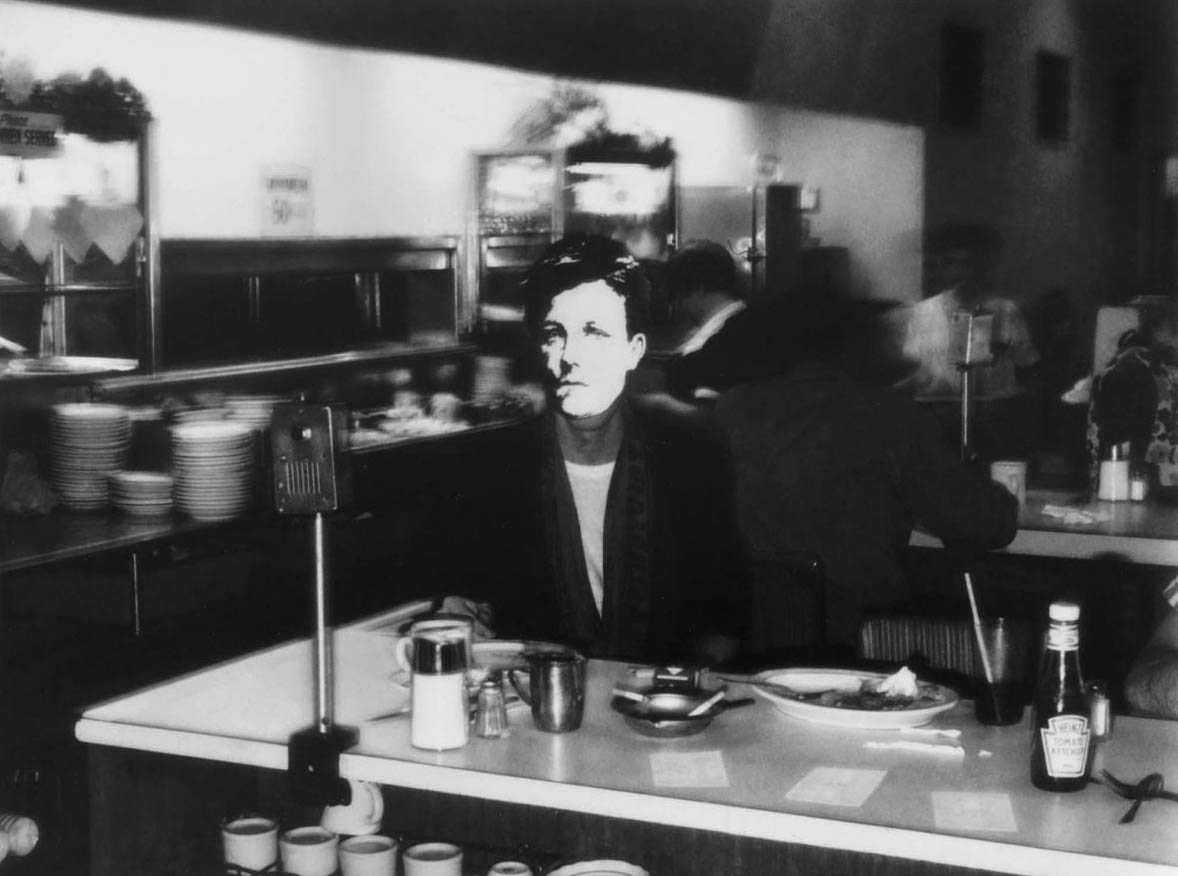
 

David Wojnarowicz (American, 1954-1992) 'Arthur Rimbaud in New York (Diner)' 1978-1979


David Wojnarowicz (American, 1954-1992)
Arthur Rimbaud in New York (Diner)
1978-1979
Gelatin silver print
Image: 17.15 x 24.13cm (6 3/4 x 9 1/2 in.)
National Gallery of Art
Gift of Funds from Heather Muir Johnson


“Transition is always a relief. Destination means death to me. If I could figure out a way to remain forever in transition, in the disconnected and unfamiliar, I could remain in a state of perpetual freedom.”

~ David Wojnarowicz , Close to the Knives: A Memoir of Disintegration


David Wojnarowicz made a series of pictures featuring friends donning a homemade mask of the 19th-century French poet Arthur Rimbaud. Staged at sites around New York that were significant to the photographer, the surrogate self-portraits explore parallels between Wojnarowicz and Rimbaud – both gay artists who rebelled against the social mores of their times. The historical figure with its unchanging expression appears alone or apart from others, a man eerily out of time. The series also documents many of the then vibrant spaces of gay life shortly before the AIDS epidemic ravaged the city’s gay community. Wojnarowicz died from AIDS-related complications at the age of 37.

Wall text from the exhibition


Sophie Rivera (American, 1938-2021) 'Untitled' 1978


Sophie Rivera (American, 1938-2021)
Untitled
1978
Gelatin silver print
Image/sheet: 25.4 x 25.4cm (10 x 10 in.)
National Gallery of Art
Estate of Martin Hurwitz


Bathed in light against a dark background, each sitter in Sophie Rivera’s portrait series of fellow New Yorkers of Puerto Rican descent, known as Nuyoricans, addresses the viewer directly. To find her subjects, Rivera asked passersby in her Harlem neighborhood if theywere Puerto Rican. If so, she invited them to her home to have their pictures taken. The mutual trust between artist and subject is reflected in the sitters’ grace and dignity.

Rivera, who defined herself as “an artist, Latino, and feminist,” sought to make Nuyoricans part of the distinguished history of American portrait photography. As she noted, “I have attempted to integrate my cultural heritage into an artistic continuum.”

Wall text from the exhibition


Rivera’s monumental portraits of Puerto Ricans in New York (or Nuyoricans) counteract the stereotypes that have circulated in the mass media. The artist found her subjects by asking passersby outside her building if they were Puerto Ricans. If they said yes, she invited them to her studio and photographed them against a dark background. Rivera’s subjects remain anonymous but never powerless. Her direct photographs allow the unassuming individuality of everyday people to speak for itself.

Our America: The Latino Presence in American Art, 2013


John M. Valadez (American, b. 1951) 'Two Guys' c. 1978, printed 2016


John M. Valadez (American, b. 1951)
Two Guys
c. 1978, printed 2016
From the East Los Angeles Urban Portrait Portfolio
Inkjet print
Sheet and image: 16 × 24 in. (40.6 × 61cm)
Smithsonian American Art Museum, Museum purchase through the Smithsonian Latino Initiatives Pool, administered by the Smithsonian Latino Center
© 1978, John M. Valadez


Multidisciplinary artist John Valadez has long been committed to depicting the lived experiences of Chicanx Angelenos like himself. Using the camera to record the world around him, Valadez first made photographs principally as source material for his drawings and paintings. In 1978 he exchanged black and white for colour film and made a series of powerful full-length portraits. His subjects included people he knew, such as the stylish young couple dressed for a birthday party, as well as people he encountered on the street, like the two men sporting identical clothes. Valadez’s aim, he said, was to capture people who weren’t being seen – by doing so, he has become a key chronicler of Chicanx identity.

Wall text from the exhibition


John M. Valadez (American, b. 1951)
'Couple Balam' c. 1978, printed 2016


John M. Valadez (American, b. 1951)
Couple Balam
c. 1978, printed 2016
From the East Los Angeles Urban Portrait Portfolio
Inkjet print
Sheet and image: 16 × 24 in. (40.6 × 61cm)
Smithsonian American Art Museum, Museum purchase through the Smithsonian Latino Initiatives Pool, administered by the Smithsonian Latino Center
© 1978, John M. Valadez


Tseng Kwong Chi (American born Hong Kong, 1950-1990) 'New York, New York' 1979, printed 2008 from the exhibition 'The '70s Lens: Reimagining Documentary Photography' at the National Gallery of Art, Washington


Tseng Kwong Chi (American born Hong Kong, 1950-1990)
New York, New York
1979, printed 2008
From the series East Meets West
Gelatin silver print
Image: 91.44 x 91.44cm (36 x 36 in.)
National Gallery of Art
Alfred H. Moses and Fern M. Schad Fund and Gift of Funds from Renee Harbers
Liddell
© Muna Tseng Dance Projects Inc.. Courtesy Yancey Richardson, New York


Tseng Kwong Chi leaps into the air in front of the Brooklyn Bridge, mimicking the joy of a first time visitor to New York. This work is from Tseng’s series East Meets West, which was inspired in part by the thaw in Chinese – United States relations following President Nixon’s visit to Beijing in 1972. A performance artist and photographer, Tseng made self-portraits as his adopted persona, Ambiguous Ambassador, at popular spots across the country. Assuming the guise of a Chinese official, Tseng – wearing what is now called a Mao suit – mischievously exposed cultural biases and notions of “the other” in American society. He made his selfies with a shutter release cable, which is visible in his right hand.

Wall text from the exhibition


Tseng Kwong Chi, known as Joseph Tseng prior to his professional career (Chinese: 曾廣智; c. 1950 – March 10, 1990), was a Hong Kong-born American photographer who was active in the East Village art scene in the 1980s.

Tseng was part of a circle of artists in the 1980s New York art scene including Keith Haring, Kenny Scharf, and Cindy Sherman. Tseng’s most famous body of work is his self-portrait series, East Meets West, also called the “Expeditionary Series”. In the series, Tseng dressed in what he called his “Mao suit” and sunglasses (dubbed a “wickedly surrealistic persona” by the New York Times), and photographed himself situated, often emotionlessly, in front of iconic tourist sites. These included the Statue of Liberty, Cape Canaveral, Disney Land, Notre Dame de Paris, and the World Trade Center. Tseng also took tens of thousands of photographs of New York graffiti artist Keith Haring throughout the 1980s working on murals, installations and the subway. In 1984, his photographs were shown with Haring’s work at the opening of the Semaphore Gallery’s East Village location in a show titled “Art in Transit”. Tseng photographed the first Concorde landing at Kennedy International Airport, from the tarmac. According to his sister, Tseng drew artistic influence from Brassai and Cartier-Bresson.

Text from the Wikipedia website


In these images Tseng inhabits a persona he referred to as the “Ambiguous Ambassador.” Wearing a Mao suit (the grey uniform associated with the Chinese Communist Party) and mirrored sunglasses, he poses next to landmarks and monuments, many of them emblems of American national identity. Like the Untitled Film Stills of Cindy Sherman – also produced in the late 1970s – East Meets West is a groundbreaking photographic work that illuminates the changeable and socially constructed nature of identity. It is also a rare piece of conceptual art to specifically reflect on the racialised experiences of Asian people in the United States. …

A gay man, Tseng was well-aware of the signifying power of dress, gesture, and posture. His donning of the Mao suit can be understood as racial camp – a playful, self-protective manoeuvre that did not prevent Tseng from being misinterpreted but did allow him to take control of the manner of the misreading. To those who perceived the levity with which Tseng wore the suit, something was revealed about his ironic sensibility. The dissonance of his appearance – the fact that the suit looked both “natural” and “unnatural” on him was not effaced but highlighted, at least to the knowing beholder. But when people were unable to see past type, the misconception did not come at the cost of Tseng’s psychic humiliation.

Tseng went on to create roughly 150 images comprising East Meets West. His performance of “Chineseness” in these photographs reveals his acute awareness of the stereotypes of Euro-American Orientalism. His blank, robotic demeanour in images such as Disneyland, California invite stock associations of the Chinese as “Yellow Peril,” and the repetition of this pose in numerous photographs would seem to tap into White America’s century-long dread of being overrun by Asian immigrants. In other images, Tseng’s stylishness and humor come through – some of the earliest photographs picture him coolly strolling the boardwalk and beaches of the popular gay vacation spot of Provincetown, Massachusetts, appearing more like a character from a French New Wave film than a visitor from the People’s Republic of China. The shutter release Tseng plainly grasps in many pictures reminds us that he is the author of these varied depicted realities; that, even as he presents himself to the Orientalist gaze, he is in command of the means of representation. Given that racial identities circulate and perpetuate via staged images – and that European American assumptions have traditionally driven those images – this is a significant gesture.

Extract from Melissa Ho. “Performing Ambiguity: The Art of Tseng Kwong Chi,” on the Smithsonian American Art Museum website June 23, 2022 [Online] Cited 06/02/2025


Jeanne Moutoussamy-Ashe (American, b. 1951)
'An Afternoon with Aunt Tootie, Daufuskie Island, South Carolina'
1979, printed 2007


Jeanne Moutoussamy-Ashe (American, b. 1951)
An Afternoon with Aunt Tootie, Daufuskie Island, South Carolina
1979, printed 2007
Gelatin silver print
Image: 21.3 x 32.4cm (8 3/8 x 12 3/4 in.)
National Gallery of Art
Gift of Funds from Diana and Mallory Walker
© Jeanne Moutoussamy-Ashe


The Gullah Geechee – enslaved people who labored on the Sea Island plantations, and their descendants – built communities all along the eastern coast of the US, from North Carolina to Florida…

From 1977 to 1982, Moutoussamy-Ashe visited Daufuskie, building relationships with the Gullah Geechee people and snapshotting rare pictures of their quotidian life. Born in Chicago, Illinois, the photographer had just returned from a six-month independent study in west Africa before she traveled to the island. At the time of her initial visit, there were only 80 permanent residents left on Daufuskie, a drastic drop from the thousands of Gullah people who had once resided there. Today, just 3% of the island’s population is Black.

Moutoussamy-Ashe’s series of monochrome images include candids of weddings, stills of a church gathering and everyday portraits of the island, showing a way of life that is treasured and fast fading.

Like many historic Black alcoves, Daufuskie has been altered by decades of gentrification. After the American civil war, many Gullah people who were already on Daufuskie made the island their permanent home once the plantation owners had left. They cultivated the land and preserved their rich culture and language, an English-based creole. But development, unfair zoning practices and other challenges have caused a sharp decrease in the Black population on the island.

Moutoussamy-Ashe’s photos offer a more private understanding of Black folks in Daufuskie, one not defined by white developers who have turned Daufuskie into a destination for tourists. The area is a placid haven in Moutoussamy-Ashe’s images. Jake and his Boat Arriving on Daufuskie’s Shore, Daufuskie Island, SC, for instance, features a man paddling a boat across a rippling river. Swooping trees frame either side of the man, who peacefully rows the vessel. The landscape looks expansive, with the scenery appearing to go on for miles. Such scenes of stillness would become rare as residents were largely driven out by the encroachment of others.

Extract from Gloria Oladipo. “How an outsider captured the intimacy of Gullah Geechee life in 13 portraits,” on The Guardian website Sat 8 Feb 2025 [Online] Cited 06/02/2025


Jeanne Moutoussamy-Ashe (American, b. 1951)
'Maid of Honor with Bride in Slippers, Daufuskie Island, South Carolina'
1980, printed 2022


Jeanne Moutoussamy-Ashe (American, b. 1951)
Maid of Honor with Bride in Slippers, Daufuskie Island, South Carolina
1980, printed 2022
Gelatin silver print
Image: 56.9 x 37.4cm (22 3/8 x 14 3/4 in.)
National Gallery of Art
Gift of Funds from Diana and Mallory Walker
© Jeanne Moutoussamy-Ashe


Between 1977 and 1981, Jeanne Moutoussamy-Ashe made extended visits to Daufuskie Island in South Carolina. The island’s relative isolation from the mainland allowed its inhabitants, who descended directly from enslaved people, to keep their distinct Gullah language and culture. Moutoussamy Ashe’s landscapes, still lifes, and portraits convey a holistic impression of the community. She captured residents’ dignity and joy – as in this photograph of a bride in fuzzy slippers, sharing a laugh with her maid of honor – but she also recorded their uncertainty in the face of development. Daufuskie’s permanent Gullah population had dwindled to 85 residents by the time Moutoussamy-Ashe published her photographs as a book in 1982.

Wall text from the exhibition


Shawn Walker (American, b. 1940)
'Untitled (New York City)' c. 1980


Shawn Walker (American, b. 1940)
Untitled (New York City)
c. 1980
Gelatin silver print
Image: 52.5 x 35cm (20 11/16 x 13 3/4 in.)
National Gallery of Art
Charina Endowment Fund
© Shawn Walker


“I see myself as a fine-arts photographer with a documentary foundation,” Shawn Walker has explained. “I look for the truth within the image, the multi-layers of existence and the ironies in our everyday lives.” Walker grounded his photographic practice in the Harlem community where he was born and raised. He joined the Kamoinge Workshop and learned from a collective of Black photographers. Inspired by Ralph Ellison’s novel Invisible Man (1952), Walker created a series of self-portraits that reveal only his silhouette. Here, the photographer pictures his reflection in a window while looking directly at us: “I look into the intersections of dark and light, into the shadows that grow the seeds of existence.”

Wall text from the exhibition


Jim Goldberg (American, b. 1953)
'Vickie Figueroa' 1981


Jim Goldberg (American, b. 1953)
Vickie Figueroa
1981
Gelatin silver print
Image/sheet: 35.4 x 27.6cm (13 15/16 x 10 7/8 in.)
National Gallery of Art
Corcoran Collection, Gift of the Artist


“My dream was to become a schoolteacher.
Mrs. Stone is rich.
I have talents but not opportunity.
I am used to standing behind
Mrs. Stone.
I have been a servant for 40 years.
Vickie Figueroa.”


Jim Goldberg (American, b. 1953) 'Clyde Norbert' 1978 from the series 'Rich and Poor'


Jim Goldberg (American, b. 1953)
Clyde Norbert
1978
From the series Rich and Poor
Gelatin silver print
Corcoran Collection
Gift of the Artist, 1994


Framed against a tall window, Clyde Norbert appears slight, flanked by his modest but carefully ordered possessions. The caption in Norbert’s own words speaks to his contrasting bold ambition: “I am going to build an empire.” In his series Rich and Poor, Jim Goldberg made portraits of both wealthy and marginalised San Franciscans where they lived. He radically shifted the relationship between photographer and subject by asking the people he photographed to respond to his pictures by writing directly on them. He believed this collaboration, which he referred to as “total documentation,” “would bring an added dimension, a deeper truth” than a photograph alone.

Wall text from the exhibition


The '70s Lens


The ’70s Lens: Reimagining Documentary Photography poster


National Gallery of Art
National Mall between 3rd and 7th Streets
Constitution Avenue NW, Washington

Opening hours:
Daily 10am – 5pm
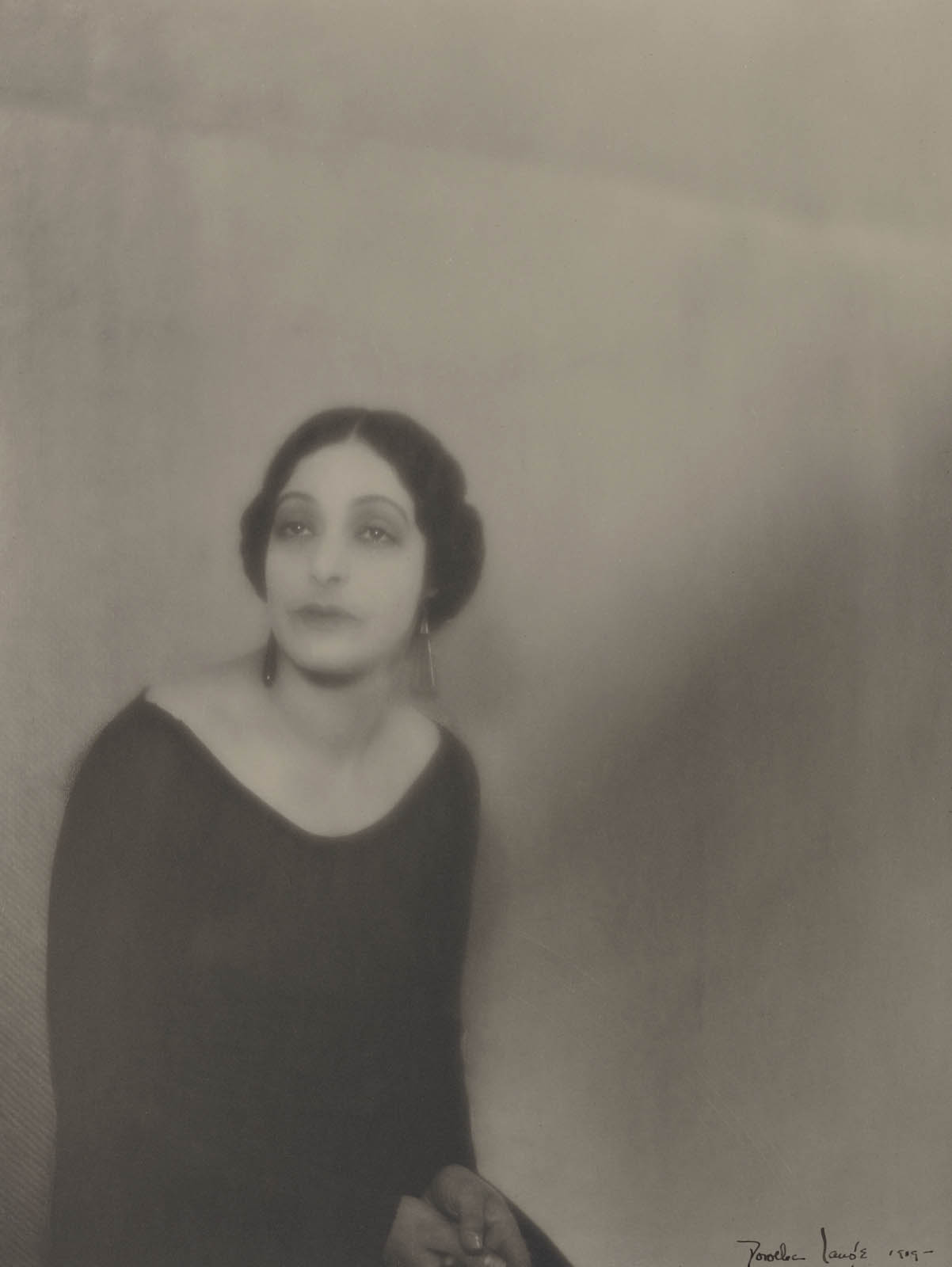
National Gallery of Art website

LIKE ART BLART ON FACEBOOK

Back to top

Exhibition: ‘Dorothea Lange: Seeing People’ at the National Gallery of Art, Washington Part 2

Exhibition dates: 5th November 2023 – 31st March 2024


Dorothea Lange (American, 1895-1965) 'Untitled (La Estrellita, "Spanish" Dancer), San Francisco, California' 1919


Dorothea Lange (American, 1895-1965)
Untitled (La Estrellita, “Spanish” Dancer), San Francisco, California
1919
Gelatin silver print
Image: 19.7 x 14.6cm (7 3/4 x 5 3/4 in.)
Mat: 16 x 14 in.
Frame (outside): 17 1/4 x 15 1/4 in.
Collection of the Oakland Museum of California, Gift of Estrellita Jones
© The Dorothea Lange Collection, Oakland Museum of California, City of Oakland. Gift of Paul S. Taylor


Stella Hurtig Jones was a famous American vaudeville performer who traveled the world as a flamenco and tango dancer during the late 19th and early 20th centuries. One of Lange’s earliest professional portraits, the composition uses the soft focus and diffused light that characterises pictorial photography, popular among celebrities. Lange photographed Hurtig Jones as herself, rather than as her stage persona La Estrellita (The Little Star), perhaps in recognition of her recent retirement. As European travel waned during World War I and movies replaced vaudeville as mass entertainment, the allure of traditional Spanish dance diminished. La Estrellita married, started a perfume business, and moved from Hollywood to the Bay Area.

Label text from the exhibition


Full of the world

Just when you think that you know the work of an artist photographs emerge that you have never seen before, photographs that challenge the canon of famous images on which the reputation of the artist rests. Such is the case in this two part posting on the work of social documentary photographer Dorothea Lange (American, 1895-1965). See Part 1 of the posting.

In this posting it is not the famous photographs such as White Angel Breadline, San Francisco, California (1933); Nettie Featherston, Wife of a Migratory Laborer with Three Children, near Childress, Texas, from The American Country Woman (June 1938); Near Coolidge, Arizona. Migratory cotton picker with his cotton sack slung over his shoulder rests at the scales before returning to work in the field (November 1940, printed c. 1965); and Human Erosion in California (Migrant Mother) (March 1936) which impress the senses, for their affect is known well enough.

Rather, it is the relatively unknown early Pictorialist photographs, the earthy photographs of Irish people, and photographs that challenge the formalist construction of images of the disintegration of families and communities during the Great Depression – images that are far more avant-garde and experimental than I would have expected from Lange – which shine in the mind’s eye (in one’s imagination or memory).

The ethereal Pictorialist portraits (this posting) with their asymmetrical construction, trembling? vibrational? negative space, luminous light and low depth of field are a delightful surprise… as are the 1950’s Irish portrait photographs (Part 1 of the posting) full of earthy, brooding darkness – with faces that are “pure Ireland.” What intensity in these images, clearly and empathetically seen.

But it is the abstract figurative studies in which I am most interested… images that disrupt Lange’s normative representation in her social documentary photographs of humanity and their resilience. In photographs such as On the Plains a Hat Is More Than a Covering (1938, below) and Jake Jones’s Hands, Gunlock County, Utah (1953) – taken fifteen years apart but which could have been taken the same day, on a theme the artist was obviously interested in – Lange dissects the body, closing in on gnarled hands, weatherbeaten hats as metaphor for a tough life, well lived. These are images in which we see very little (as opposed to Barthes assertion that in photography’s realism a photo is an image in which we see everything) … but implicitly understand the sublime blur of legend of these workers and their hats.

Other photographs dial up the figurative abstraction. Demonstration, San Francisco (1934, below) is a study of light, shape and form, an almost Constructivist image of fragments and negative space: hand, pole, amorphous mass of shoulder, face turned away, hat and declarative “FEED US!” banner; San Francisco Waterfront (1934) is a beautifully rendered abstract pictorial space evidencing the despair of humanity through light and form: witness, the clasped hands at rear like sentinels, the thumb pointing left… while below, covered head in hand, the thumb points vertically to the surmounted ear, which echoes the cropped ear and hair at the bottom of the photo, while to the right the two buttons of the jacket lead us to the ascending column of four buttons back to the portentous, clasping, guarding hands above. A masterpiece of photographic pictorial construction. Further, with their radical pictorial construction and cropping of the picture frame, masterpieces such as Dispossessed Arkansas farmers (1935) are truly avant-garde and experimental photographs for their time, something I don’t normally associate with the work of Dorothea Lange. As my friend Jonathan Kamholtz observes of the photographs I have been discussing, Lange “tended to lose interest in the backgrounds. The pictorial space is really very shallow. This contributes to their theatricality – not in the sense that they are false or artificial, but that each one displays character, costume, fate.”

Forearmed with this knowledge, I start looking at her well known images with fresh eyes… and its all there in more subtle form: the low angle of the camera looking up at the subject, the geometric shape of hands and arms, the solid blocks of bodies filling the picture frame, the sculptural, abstract shape of bodies in fields (Migratory Field Worker Picking Cotton in San Joaquin Valley1938), the flattening of bodies one against another (May Day, San Francisco, California, 1934) and the disassociation of human identity through the occlusion of faces (This man is a labor contractor in the pea fields of California 1936, below; Damaged Child, Shacktown 1936, below; Washington, Yakima Valley, near Wapato 1939, below).

Dorothea Lange was an incredibly intelligent and passionate artist who removed her ego from the act of taking photographs, who lost herself in the visual experience in order to take photographs to effect social change, who connected with the world in order “to experience love, hate, and passion in every form in one’s body.”1

“That the familiar world is often unsatisfactory cannot be denied, but it is not, for all that, one that we need abandon,” she argued. “We need not be seduced into evasion of it any more than we need be appalled by it into silence… Bad as it is, the world is potentially full of good photographs. But to be good, photographs have to be full of the world.”2

And full of the spirit of the artist.

Dr Marcus Bunyan


1/ Carl Jung quoted in Nicos Hadjicostis. Destination Earth: A New Philosophy of Travel by a World-Traveler. Bamboo Leaf Press, 2016, p. 42.

2/ Dorothea Lange and Daniel Dixon, “Photographing the Familiar,” Aperture 1, no. 2 (1952), 15.


Many thankx to the National Gallery of Art for allowing me to publish the photographs in the posting. Please click on the photographs for a larger version of the image.


“When you enter into the visual world, detaching yourself from all the holds on you… it is a mental disengagement so that you live, for maybe two or three hours, as completely as possible a visual experience, where you feel that you have lost yourself, your identity.”


Dorothea Lange quoted in Dyanna Taylor and Public Broadcasting Service (U.S.), directors. American Masters – Dorothea Lange: Grab a Hunk of Lightning. Kanopy Streaming, 2014.


“The researcher ought to hang up exact science and put away the scholar’s gown, to say farewell to his study, and wander with human heart through the world, through the horror of prisons, madhouses, and hospitals, through drab suburban pubs, in brothels, and gambling dens, through the salons of elegant society, the stock exchanges, the socialist meetings, the churches, the revivals and ecstasies of the sects, to experience love, hate, and passion in every form in one’s body.”


Carl Jung quoted in Nicos Hadjicostis. Destination Earth: A New Philosophy of Travel by a World-Traveler. Bamboo Leaf Press, 2016, p. 42.


During her long, prolific, and groundbreaking career, the American photographer Dorothea Lange made some of the most iconic portraits of the 20th century. Dorothea Lange: Seeing People reframes Lange’s work through the lens of portraiture, highlighting her unique ability to discover and reveal the character and resilience of those she photographed.

Featuring some 100 photographs, the exhibition addresses her innovative approaches to picturing people, emphasising her work on social issues including economic disparity, migration, poverty, and racism.


“Five years earlier I would have thought it enough to take a picture of a man, no more. But now, I wanted to take a picture of a man as he stood in his world.”

“A single photographic print may be “news,” a “portrait,” “art,” or “documentary” – any of these, all of them, or none.”

“The whole world is a museum. To walk through the streets, as though down a museum corridor. … To step into a supermarket as though setting forth in the National Gallery – is an experience and an exercise in vision.”


Dorothea Lange


Dorothea Lange (American, 1895-1965) 'Untitled (Fleishhacker Portrait)' 1920


Dorothea Lange (American, 1895-1965)
Untitled (Fleishhacker Portrait)
1920
Gelatin silver print
Image: 15.4 x 15.1cm (6 1/16 x 5 15/16 in.)
Mat: 16 x 14 in.
Frame (outside): 17 1/4 x 15 1/4 in.
Collection of the Oakland Museum of California, Gift of Paul S. Taylor


Dorothea Lange (American, 1895-1965) 'Maynard Dixon and Son Daniel' 1925


Dorothea Lange (American, 1895-1965)
Maynard Dixon and Son Daniel
1925
Gelatin silver print
Image: 13.8 x 10.8cm (5 7/16 x 4 1/4 in.)
Sheet: 15.1 x 11cm (5 15/16 x 4 5/16 in.)
Mat: 14 x 12 in.
Frame (outside): 15 1/4 x 13 1/4 in.
The J. Paul Getty Museum, Los Angeles, 2000.50.1 © The Dorothea Lange Collection, Oakland Museum of California, City of Oakland. Gift of Paul S. Taylor


Dorothea Lange (American, 1895-1965) 'Portrait of Adele Raas, San Francisco' 1927


Dorothea Lange (American, 1895-1965)
Portrait of Adele Raas, San Francisco
1927
Gelatin silver print
Image: 15.5 x 12.7cm (6 1/8 x 5 in.)
Mat: 14 x 12 in.
Frame (outside): 15 1/4 x 13 1/4 in.
San Francisco Museum of Modern Art, Gift of the Raas Family
© The Dorothea Lange Collection, Oakland Museum of California, City of Oakland. Gift of Paul S. Taylor


Dorothea Lange (American, 1895-1965) 'Untitled (Portrait of William)' 1929


Dorothea Lange (American, 1895-1965)
Untitled (Portrait of William)
1929
elatin silver print
Image/sheet: 25 x 20cm (9 13/16 x 7 7/8 in.)
Mat: 18 x 14 in.
Frame (outside): 18 1/4 x 15 1/4 in.
National Gallery of Art, Washington, Gift of Daniel Greenberg and Susan Steinhauser
© The Dorothea Lange Collection, Oakland Museum of California, City of Oakland. Gift of Paul S. Taylor


Dorothea Lange (American, 1895-1965) 'Hopi Man, Arizona' 1923, printed 1926


Dorothea Lange (American, 1895-1965)
Hopi Man, Arizona
1923, printed 1926
Gelatin silver print
Image: 18.4 x 19.7cm (7 1/4 x 7 3/4 in.)
Mount: 19.3 x 20.4cm (7 5/8 x 8 1/16 in.)
Mat: 15 1/4 x 15 in.
Frame (outside): 16 1/2 x 16 1/4 in.
The J. Paul Getty Museum, Los Angeles, 84.XP.912.4
© The Dorothea Lange Collection, Oakland Museum of California, City of Oakland. Gift of Paul S. Taylor


Lange embraced the chance to experiment outside her studio. In August 1923, she visited Walpi Village of the Hopi Nation with her then-husband Maynard Dixon, an avid outdoor painter. She had begun to crop some of her portraits to accentuate a gaze, hand, touch, or torso – a way of capturing the essence of a person, paradoxically showing less to reveal more.

When printing Hopi Man, Lange focused so closely on the subject’s face that his features resemble a map of his experience. She undercut her own effort to reach meaningfully across the cultural divide, however, because she did not record the man’s name or any other information about him. As a portrait, Hopi Man risks picturing a type or class of person rather than this individual’s character.

Label text from the exhibition


Dorothea Lange (American, 1895-1965) 'Clausen Child and Mother' c. 1930


Dorothea Lange (American, 1895-1965)
Clausen Child and Mother
c. 1930
Gelatin silver print
Image: 15.6 x 21cm (6 1/8 x 8 1/4 in.)
Mat: 14 x 17 in.
Frame (outside): 15 1/4 x 18 1/4 in.
The Museum of Modern Art, New York. Thomas Walther Collection. Gift of Henri Cartier-Bresson, by exchange


Lange frequently photographed the subject of mother and child, a long-standing Western art historical tradition rooted in depictions of the Virgin Mary and baby Jesus and modernised and secularised in high-end portrait studios. Here Frances Clausen stares directly at the camera while her mother, Gertrude, sits in shadow, looking away. Lange focuses on the child’s inquisitive gaze, as well as her affectionate bond to and emerging independence from her mother. Lange’s expertise photographing children – acquired from her early studio work – led to some of her most important photographs made during the Great Depression, displayed in the next galleries.

Label text from the exhibition


Dorothea Lange (American, 1895-1965) 'Maynard Dixon' c. 1930


Dorothea Lange (American, 1895-1965)
Maynard Dixon
c. 1930
Gelatin silver print
Image/sheet: 14.1 x 13.4cm (5 9/16 x 5 1/4 in.)
Mount: 16.4 x 14.2 cm (6 7/16 x 5 9/16 in.)
Mat: 14 x 11 in.
Frame (outside): 15 1/4 x 12 1/4 in.
National Gallery of Art, Washington, Alfred H. Moses and Fern M. Schad Fund
© The Dorothea Lange Collection, Oakland Museum of California, City of Oakland. Gift of Paul S. Taylor


Maynard Dixon (January 24, 1875 – November 11, 1946) was an American artist. He was known for his paintings, and his body of work focused on the American West. Dixon is considered one of the finest artists having dedicated most of their art to the U.S. Southwestern cultures and landscapes at the end of the 19th-century and the first half of the 20th-century. He was often called “The Last Cowboy in San Francisco.”

Through his work with the Galerie Beaux Arts, a cooperative gallery in San Francisco, Dixon played a pivotal role ensuring the West Coast supported the work of local, modern artists. He was married for a time to photographer Dorothea Lange, and later to painter Edith Hamlin.

Text from the Wikipedia website


Dorothea Lange (American, 1895-1965) 'Native American Girl, Taos, New Mexico' 1931


Dorothea Lange (American, 1895-1965)
Native American Girl, Taos, New Mexico
1931
Gelatin silver print
Image/sheet: 5.3 x 5.3cm (2 1/16 x 2 1/16 in.)
Mount: 13.2 x 10.5cm (5 3/16 x 4 1/8 in.)
Mat: 10 x 14 in.
Frame (outside): 11 1/4 x 15 1/4 in.
National Gallery of Art, Washington, Alfred H. Moses and Fern M. Schad Fund
© The Dorothea Lange Collection, Oakland Museum of California, City of Oakland. Gift of Paul S. Taylor


In summer 1931, escaping the Depression-era turmoil of San Francisco, Lange and Dixon bought their first car and drove to New Mexico with their children. Her few surviving photographs from this trip reveal significant steps in her transition away from studio portraiture and toward a more straightforward approach to photographing people. A series of pictures portrays this unidentified Indigenous girl in a direct documentary style. Although her expression reveals few emotions, she looks squarely at the lens in one photograph and seems comfortable in front of the camera.

Label text from the exhibition


Dorothea Lange (American, 1895-1965) 'Native American Girl, Taos, New Mexico' 1931


Dorothea Lange (American, 1895-1965)
Native American Girl, Taos, New Mexico
1931
Gelatin silver print
Image/sheet: 5.4 x 5.4cm (2 1/8 x 2 1/8 in.)
Mount: 13.3 x 10.4cm (5 1/4 x 4 1/8 in.)
Mat: 10 x 14 in.
Frame (outside): 11 1/4 x 15 1/4 in.
National Gallery of Art, Washington, Alfred H. Moses and Fern M. Schad Fund
© The Dorothea Lange Collection, Oakland Museum of California, City of Oakland. Gift of Paul S. Taylor


Dorothea Lange (American, 1895-1965) 'Dorothy Brett, Painter, Taos, New Mexico' 1931


Dorothea Lange (American, 1895-1965)
Dorothy Brett, Painter, Taos, New Mexico
1931
Gelatin silver print
Image/sheet: 8.6 x 8.2cm (3 3/8 x 3 1/4 in.)
Mat: 14 x 11 in.
Frame (outside): 15 1/4 x 12 1/4 in.
National Gallery of Art, Washington, Alfred H. Moses and Fern M. Schad Fund
© The Dorothea Lange Collection, Oakland Museum of California, City of Oakland. Gift of Paul S. Taylor


Lange met Dorothy Brett in 1931 when the photographer and her family spent several months in Taos. Born into an aristocratic British family, Brett rebelled against their expectations, attending art school and becoming a painter. In London she befriended writers associated with the Bloomsbury group, including D. H. Lawrence, who was recruiting people to go to New Mexico to form a utopian society. Brett was the only person who followed him, but she was so enchanted with the area that she lived there for the rest of her life.

Label text from the exhibition


Hon. Dorothy Eugénie Brett (10 November 1883 – 27 August 1977) was an Anglo-American painter, remembered as much for her social life as for her art. Born into an aristocratic British family, she lived a sheltered early life. During her student years at the Slade School of Art, she associated with Dora Carrington, Barbara Hiles and the Bloomsbury group. Among the people she met was novelist D.H. Lawrence, and it was at his invitation that she moved to Taos, New Mexico in 1924. She remained there for the rest of her life, becoming an American citizen in 1938.

Her work can be found in the Smithsonian American Art Museum in Washington D.C., in the Millicent Rogers Museum and the Harwood Museum of Art, both in Taos. Also at the New Mexico Museum of Art, Santa Fe, the Roswell Museum and Art Center, Roswell, New Mexico and in many private collections.

Text from the Wikipedia website


Dorothea Lange (American, 1895-1965) 'Demonstration, San Francisco' 1934


Dorothea Lange (American, 1895-1965)
Demonstration, San Francisco
1934
Gelatin silver print
Image: 12.1 x 14.3cm (4 3/4 x 5 5/8 in.)
Sheet: 12.1 x 14.3cm (4 3/4 x 5 5/8 in.)
Mount: 14.6 x 23.8cm (5 3/4 x 9 3/8 in.)
Lent by The Metropolitan Museum of Art, Gilman Collection, Purchase, Joseph M. Cohen Gift, 2005


In 1934, as Lange began to forge a new documentary practice, she sought “to take a picture of a man as he stood in his world.” With no clients to please, she drew on insights she had learned from modernism, especially its celebration of close-up studies and dramatic angles. Like other artists, she also found that signs – such as the protest poster declaring “… FEED US!” – could root a photograph in a specific time and place and give agency to those she depicted, allowing them to speak. With carefully composed pictures like this one, Lange was acknowledging the power of modernist photography to tell stories in simple, dynamic ways.

Label text from the exhibition


Dorothea Lange (American, 1895-1965) 'Andrew Furuseth' 1934


Dorothea Lange (American, 1895-1965)
Andrew Furuseth
1934
Gelatin silver print
Image: 20.5 x 19.6cm (8 1/16 x 7 11/16 in.)
Sheet: 21.1 x 20.3cm (8 5/16 x 8 in.)
National Portrait Gallery, Smithsonian Institution


Andrew Furuseth was an American labor leader known for organising seamen during the late 19th and early 20th centuries. He helped create the Sailors’ Union of the Pacific and the International Seamen’s Union, heading both as their president. Lange met 80-year-old Furuseth around the time of the San Francisco waterfront strikes of 1934. She had been photographing labor organisers and protesters at May Day events around the city while Furuseth was working to help moderate the seamen’s anger to avoid a damaging strike. Her portrayal of Furuseth in profile against a dark background – eyes closed, deep in thought – emphasises his years of experience and a weary strength.

Label text from the exhibition


Andrew Furuseth (March 17, 1854 – January 22, 1938) of Åsbygda, Hedmark, Norway was a merchant seaman and an American labor leader. Furuseth was active in the formation of two influential maritime unions: the Sailors’ Union of the Pacific and the International Seamen’s Union, and served as the executive of both for decades.

Furuseth was largely responsible for the passage of four reforms that changed the lives of American mariners. Two of them, the Maguire Act of 1895 and the White Act of 1898, ended corporal punishment and abolished imprisonment for deserting a vessel.

Furuseth was credited as the key figure behind drafting and enacting the Seamen’s Act of 1915, hailed by many as “The Magna Carta of the Sea” and the Jones Act of 1920 which governs the workers’ compensation rights of sailors and the use of foreign vessels in domestic trade. In his later years, he was known as “the Old Viking”.

Text from the Wikipedia website


Dorothea Lange (American, 1895-1965) 'Street Meeting, San Francisco' 1934


Dorothea Lange (American, 1895-1965)
Street Meeting, San Francisco
1934
Gelatin silver print
Image/sheet: 23.5 x 17.5cm (9 1/4 x 6 7/8 in.)
Mat: 16 x 13 in.
Frame (outside): 17 x 14 in.
National Gallery of Art, Washington, Gift of Daniel Greenberg and Susan Steinhauser
© The Dorothea Lange Collection, Oakland Museum of California, City of Oakland. Gift of Paul S. Taylor


Dorothea Lange (American, 1895-1965) 'Stenographer with Mended Stockings, San Francisco, California' 1934, printed 1950s


Dorothea Lange (American, 1895-1965)
Stenographer with Mended Stockings, San Francisco, California
1934, printed 1950s
Gelatin silver print
Image: 34 x 26.6 cm (13 3/8 x 10 1/2 in.)
Sheet: 35.2 x 27.8 cm (13 7/8 x 10 15/16 in.)
Mat: 20 x 16 in.
Frame (outside): 21 x 17 in.
National Gallery of Art, Washington, Gift of Daniel Greenberg and Susan Steinhauser
© The Dorothea Lange Collection, Oakland Museum of California, City of Oakland. Gift of Paul S. Taylor


Lange’s portrait of a Depression-era stenographer omits her face to focus on her dark, creased dress, tattered hosiery, and woven shoes. Her stockings are stitched up the front, mended to keep them – and her – going for another day or two. They reveal the grit and fortitude of San Francisco’s working women during a time when jobs were scarce and people had to conserve all their resources in the face of financial insecurity.

Label text from the exhibition


Dorothea Lange (American, 1895-1965) 'Wandering Boy, Camp Carlton, California' 1935


Dorothea Lange (American, 1895-1965)
Wandering Boy, Camp Carlton, California
1935
Gelatin silver print
Image: 34 x 25.1cm (13 3/8 x 9 7/8 in.)
Sheet: 35.3 x 28 cm (13 7/8 x 11 in.)
Mount: 38.1 x 28 cm (15 x 11 in.)
Mat: 20 x 16 in.
Frame (outside): 21 x 17 in.
National Gallery of Art, Washington, Gift of Daniel Greenberg and Susan Steinhauser
© The Dorothea Lange Collection, Oakland Museum of California, City of Oakland. Gift of Paul S. Taylor


Dorothea Lange (American, 1895-1965) 'Black sharecropper with twenty acres. He receives eight cents a day for hoeing cotton. Brazos river bottoms, near Bryan, Texas' June 1938, printed c. 1950


Dorothea Lange (American, 1895-1965)
Black sharecropper with twenty acres. He receives eight cents a day for hoeing cotton. Brazos river bottoms, near Bryan, Texas
June 1938, printed c. 1950
Gelatin silver print
Image: 24.1 x 19.2cm (9 1/2 x 7 9/16 in.)
Sheet: 25.3 x 20.5cm (9 15/16 x 8 1/16 in.)
Mat: 18 x 14 in.
Frame (outside): 19 x 15 in.
National Gallery of Art, Washington, Gift of Daniel Greenberg and Susan Steinhauser


American photographer Dorothea Lange (1895-1965) created some of the most groundbreaking portraits of the 20th century. Through pictures of labourers, demonstrators, refugees, migrant farmers, the unjustly incarcerated, and others, Lange captured the spirit of human endurance while recording some of the profound social inequities of the period. Her work expanded the boundaries of portraiture and helped spark the development of modern documentary photography.

Dorothea Lange: Seeing People reframes Lange’s art through the lens of portraiture and highlights her capacity to spotlight the humanity and resilience of those she photographed. She began her career as a studio portrait photographer, and even as she ventured far outside her studio people remained key to her mission. Focusing on Lange’s abiding concern for those in need, this exhibition reveals her lifelong investigation into how photography – and portraits in particular – could help bring about collective change.

One of the most important documentary photographers of her time, Lange sought to transform how we see and understand one another. Motivated by an ever-growing interest in social justice, she was also an intrepid reporter who traveled extensively in the United States and around the world to create indelible and influential photographs. This exhibition illuminates the centrality of portraiture in Lange’s career and its role in exposing the impacts of economic disparity, climate change, migration, and war – issues that remain equally urgent today.

Wall text from the exhibition


Dorothea Lange (American, 1895-1965) 'Unemployed Man, San Francisco, California' 1934, printed before 1950


Dorothea Lange (American, 1895-1965)
Unemployed Man, San Francisco, California
1934, printed before 1950
Gelatin silver print
Image: 24.8 x 19.1cm (9 3/4 x 7 1/2 in.)
Sheet: 25.2 x 19.6cm (9 15/16 x 7 11/16 in.)
Mat: 16 x 14 in.
Frame (outside): 17 x 15 in.
National Gallery of Art, Washington, Gift of Daniel Greenberg and Susan Steinhauser
© The Dorothea Lange Collection, Oakland Museum of California, City of Oakland. Gift of Paul S. Taylor


Dorothea Lange (American, 1895-1965) 'This man is a labor contractor in the pea fields of California. "One-Eye" Charlie gives his views. "I'm making my living off of these people (migrant laborers) so I know the conditions," San Luis Obispo County, California' February 1936


Dorothea Lange (American, 1895-1965)
This man is a labor contractor in the pea fields of California. “One-Eye” Charlie gives his views. “I’m making my living off of these people (migrant laborers) so I know the conditions,” San Luis Obispo County, California
February 1936
Gelatin silver print
Image: 24.1 x 19.7cm (9 1/2 x 7 3/4 in.)
Sheet: 25.4 x 20.3cm (10 x 8 in.)
Mat: 18 x 14 in.
Frame (outside): 19 x 15 in.
National Gallery of Art, Washington, Gift of Daniel Greenberg and Susan Steinhauser


Dorothea Lange (American, 1895-1965) 'Migratory Pea Pickers, Nipomo, California' March 1936


Dorothea Lange (American, 1895-1965)
Migratory Pea Pickers, Nipomo, California
March 1936
Gelatin silver print
Image: 19.4 x 24.5cm (7 5/8 x 9 5/8 in.)
Sheet: 20.3 x 25.7cm (8 x 10 1/8 in.)
Mat: 13 x 16 in.
Frame (outside): 14 x 17 in.
National Gallery of Art, Washington, Gift of Daniel Greenberg and Susan Steinhauser


Dorothea Lange (American, 1895-1965) 'Post Office and Postmistress, Widtsoe, Utah' April 1936


Dorothea Lange (American, 1895-1965)
Post Office and Postmistress, Widtsoe, Utah
April 1936
Gelatin silver print
Image: 24.4 x 19.3cm (9 5/8 x 7 5/8 in.)
Sheet: 25.4 x 20.3cm (10 x 8 in.)
Mat: 16 x 13 in.
Frame (outside): 17 x 14 in.
National Gallery of Art, Washington, Gift of Daniel Greenberg and Susan Steinhauser


When Lange photographed Widtsoe, Utah, for the Resettlement Administration, the town’s population had dwindled to 17 families. Cycles of drought devastated the region’s agricultural economy and the RA stepped in to buy out landowners and relocate them. Signs of desolation are evident in this portrait of the town’s postmistress at the post office. Perched on cinder blocks, surrounded by dusty earth, the building appears to teeter – an effect intensified by Lange’s skewed composition. The stoic presence of the postmistress, who is posed neatly within the doorframe, hints at the stabilising role women often play in Lange’s compositions.

Label text from the exhibition


Dorothea Lange (American, 1895-1965) 'Plantation Owner, Mississippi Delta, near Clarksdale, Mississippi' June 1936


Dorothea Lange (American, 1895-1965)
Plantation Owner, Mississippi Delta, near Clarksdale, Mississippi
June 1936
Gelatin silver print
Image: 18.7 x 24.1cm (7 3/8 x 9 1/2 in.)
The Art institute of Chicago, Purchased with funds provided by Vicki and Thomas Horwich


In 1938, a cropped version of this photograph was featured in the publication of Archibald MacLeish’s book-length poem Land of the Free. The cropped photograph focused attention on the “plantation owner” and erased four of the Black men, leaving just one silhouetted in the background. MacLeish’s poem proclaims, “All you needed for freedom was being American” – yet Lange’s original picture, and the subsequent cropped version, reveals the fallacy of this sentiment. Both point to how African Americans were barred from achieving the freedom that MacLeish claims was available to all Americans. Paul Taylor appears at the far left edge interviewing the owner.

Label text from the exhibition


Dorothea Lange (American, 1895-1965) 'Drought Refugees from Oklahoma Camping by the Roadside, Blythe, California' August 17, 1936


Dorothea Lange (American, 1895-1965)
Drought Refugees from Oklahoma Camping by the Roadside, Blythe, California
August 17, 1936
Gelatin silver print
Image: 24 x 19.1cm (9 7/16 x 7 1/2 in.)
Mount: 33.02 x 28.26 cm (13 x 11 1/8 in.)
Mat: 20 x 16 in.
Frame (outside): 21 x 17 in.
National Gallery of Art, Washington, Gift of Daniel Greenberg and Susan Steinhauser


As a result of droughts and erosion that destroyed tillable land and crops in Oklahoma and Arkansas, thousands of farmers moved west with their families to start their lives over in places such as Blythe. Zella, Jess, and Jesse Power were among these families. It is not clear when the Powers began their move to California, but Jesse was born in Blythe, so Zella may have been pregnant during their journey. Lange’s field notes indicate that the Powers were a family of seven; an older sibling’s foot may be glimpsed in the lower right. With her furrowed brow and slumped posture, Zella exemplifies the difficulties faced by migrant mothers seeking better lives for themselves and their families in places that did not promise immediate relief.

Label text from the exhibition


Dorothea Lange (American, 1895-1965) 'Child Living in Oklahoma City Shacktown [Damaged Child, Shacktown]' August 1936


Dorothea Lange (American, 1895-1965)
Child Living in Oklahoma City Shacktown [Damaged Child, Shacktown]
August 1936
Gelatin silver print
Image: 24.2 x 19.4cm (9 1/2 x 7 5/8 in.)
Mat: 17 x 14 in.
The Museum of Modern Art, New York. Purchase


This photograph of a bruised girl with a hollow gaze is one of many Lange made depicting the exploitation of migrant children during the Great Depression. The portrait suggests the range of emotional and physical harm children experienced as they, too, struggled to survive economic hardship.

Label text from the exhibition


Dorothea Lange (American, 1895-1965) 'Eighty-year-old woman living in squatters' camp on the outskirts of Bakersfield, California. "If you lose your pluck you lose the most there is in you – all you've got to live with"' November 1936


Dorothea Lange (American, 1895-1965)
Eighty-year-old woman living in squatters’ camp on the outskirts of Bakersfield, California. “If you lose your pluck you lose the most there is in you – all you’ve got to live with”
November 1936
Gelatin silver print
Image: 19 x 24.4cm (7 1/2 x 9 5/8 in.)
Sheet: 20.3 x 25.5cm (8 x 10 1/16 in.)
Mat: 13 x 16 in.
Frame (outside): 14 x 17 in.
National Gallery of Art, Washington, Gift of Daniel Greenberg and Susan Steinhauser


Dorothea Lange (American, 1895-1965) 'Young Cotton Picker, San Joaquin Valley, California' November 1936


Dorothea Lange (American, 1895-1965)
Young Cotton Picker, San Joaquin Valley, California
November 1936
Gelatin silver print
Image: 24.1 x 18.4cm (9 1/2 x 7 1/4 in.)
Collection of the Oakland Museum of California, Gift of Paul S. Taylor


Dorothea Lange (American, 1895-1965) 'Alabama Plow Girl, near Eutaw, Alabama' 1936


Dorothea Lange (American, 1895-1965)
Alabama Plow Girl, near Eutaw, Alabama
1936
Gelatin silver print
Image: 19.1 x 19.4cm (7 1/2 x 7 5/8 in.)
Lent by The Metropolitan Museum of Art, Purchase, Alfred Stieglitz Society Gifts, 2001


Lange travelled to the American South in 1936 while employed by the Resettlement Administration. Near Eutaw, Alabama, she photographed Black tenant farmers like this shoeless girl plowing a field in the punishing summer heat. In the South, Lange witnessed the oppressive working conditions endured by Black tenants, who farmed land predominantly held by white owners and often struggled to access New Deal resources. Southern Black farmers faced undue difficulty during the Depression as economic disaster exacerbated the oppression and poverty produced by the region’s racist agricultural system.

Label text from the exhibition


Dorothea Lange (American, 1895-1965) 'Migratory Workers Harvesting Peas near Nipomo, California' Spring 1937


Dorothea Lange (American, 1895-1965)
Migratory Workers Harvesting Peas near Nipomo, California
Spring 1937
Gelatin silver print
Image: 19.4 x 24.5cm (7 5/8 x 9 5/8 in.)
Sheet: 20.6 x 25.4cm (8 1/8 x 10 in.)
Mat: 13 x 16 in. frame (outside): 14 x 17 in.
National Gallery of Art, Washington, Gift of Daniel Greenberg and Susan Steinhauser


Dorothea Lange (American, 1895-1965) 'Country store on dirt road. Sunday afternoon. Note the kerosene pump on the right and the gasoline pump on the left. Rough, unfinished timber posts have been used as supports for porch roof. Black men are sitting on the porch. Brother of store owner stands in doorway, Gordonton, North Carolina' July 1939, printed later


Dorothea Lange (American, 1895-1965)
Country store on dirt road. Sunday afternoon. Note the kerosene pump on the right and the gasoline pump on the left. Rough, unfinished timber posts have been used as supports for porch roof. Black men are sitting on the porch. Brother of store owner stands in doorway, Gordonton, North Carolina
July 1939, printed later
Gelatin silver print
Image: 24.5 x 34.3cm (9 5/8 x 13 1/2 in.)
Sheet: 25.6 x 35.4cm (10 1/16 x 13 15/16 in.)
Mat: 16 x 20 in.
Frame (outside): 17 x 21 in.
National Gallery of Art, Washington, Gift of Daniel Greenberg and Susan Steinhauser


Rainey Curry Baynes II, the store owner’s brother, leans in the doorway conversing with five Black men. On the far right is Arthur Thorpe, and the man wearing overalls is Joe Carrington. The men appear relaxed in Baynes’s presence, but it is unclear whether their demeanour is genuine or for the benefit of Lange’s camera. They may have been sharecroppers or tenant farmers indebted to the Baynes brothers, or simply customers of the store.

Label text from the exhibition


Dorothea Lange (American, 1895-1965) 'Washington, Yakima Valley, near Wapato. One of Chris Adolph's Younger Children. Farm Security Administration Rehabilitation Clients' August 1939


Dorothea Lange (American, 1895-1965)
Washington, Yakima Valley, near Wapato. One of Chris Adolph’s Younger Children. Farm Security Administration Rehabilitation Clients
August 1939
Gelatin silver print
Image: 20.83 x 25.4cm (8 3/16 x 10 in.)
Collection of the Oakland Museum of California, Gift of Paul S. Taylor


Dorothea Lange (American, 1895-1965) 'End of Shift, Richmond, California' 1942, printed 1965


Dorothea Lange (American, 1895-1965)
End of Shift, Richmond, California
1942, printed 1965
Gelatin silver print
Image: 75.7 x 59.5cm (29 13/16 x 23 7/16 in.)
The Museum of Modern Art, New York. Purchase


Fortune magazine commissioned Lange to document the bustling shipyards in Richmond, north of Oakland, where newly desegregated defence firms were rapidly constructing transport, cargo, and warships for the United States Navy. With its tight cropping and dynamic configuration, End of Shift focuses on the rushing legs and torsos of shipbuilders leaving a wartime facility. Lange expressed the urgency of their work in defence production without showing their individual features. The angled composition and complex interplay of light and shadow demonstrate Lange’s understanding of how modern design techniques could convey the force and energy of a group working together on a project critical to the nation’s defence.

Label text from the exhibition


Dorothea Lange (American, 1895-1965) 'Street Encounter, Richmond, California' c. 1943


Dorothea Lange (American, 1895-1965)
Street Encounter, Richmond, California
c. 1943
Gelatin silver print
Image: 21.7 x 17.9cm (8 9/16 x 7 1/16 in.)
Frame (outside): 18 3/4 x 15 3/4 in.
The Nelson-Atkins Museum of Art, Kansas City, Missouri (Gift of Hallmark Cards, Inc.)


Dressed for work as a welder, this woman was one of thousands who moved to Richmond, California, during the early 1940s to seek employment in the expanding wartime shipbuilding yards. On assignment for Fortune magazine, Lange documented the upheaval wrought by Richmond’s rapidly growing population and diversifying workforce. Lange’s field notes described this picture as an “Item on race relations. Scene on main street. The girl was a taxi driver in New Orleans. She came to Richmond with her husband two years ago.” Recognising the power of words in her pictures, Lange included a sign that could be read as “Serve You” or “Serve Your Country,” but which actually says “Serve Yourself” – a wry comment on the national unity promoted by the era’s patriotic propaganda.

Label text from the exhibition


Early Portraits

Born in Hoboken, New Jersey, in 1895, Dorothea Lange learned photography in New York City before embarking in 1918 on a round-the-world trip. When forced to cut her journey short and find employment in San Francisco, she secured a position at the photo-finishing counter of a variety store. She soon opened her own portrait studio and worked among a cohort of bohemian artists and intellectuals including Imogen Cunningham, Consuelo Kanaga, Ansel Adams, Edward Weston, and the painter Maynard Dixon, who would become her first husband.

Bay Area high-society and cultural figures became Lange’s clients and the subjects of her studio portraits. These early pictures combine elements of the pictorial style in which she was trained, such as soft focus and diffused light, with an emerging modernist aesthetic that included dramatic cropping and unusual angles. She used light, shadow, and carefully constructed poses to articulate the character, attitude, and individuality of her models: “I really and seriously tried, with every person I photographed, to reveal them as closely as I could.”

Poverty and Activism

Although she had a highly successful studio practice, Lange in 1933 was compelled by the nation’s worsening economic conditions to rethink her occupation and carry her cameras into the city. “There in my studio I was surrounded by evidence of the Depression,” she said. “I remember well standing at that one window and just watching the flow of life. … I was driven by the fact that I was under personal turmoil to do something.”

Out in the streets during the early years of the Great Depression, Lange saw poverty, breadlines, strikes, and labor demonstrations. Her photographs from this period portray the unemployment and unrest that plagued San Francisco, and also document the activism of workers who organised to change their conditions. In 1934, Lange met the agricultural economist Paul Taylor. The two formed an important professional and personal partnership (they married the following year). Lange soon shifted her attention to the plight of migrant farmers, who were moving to California to seek work.

The Great Depression

As the Great Depression deepened, Dorothea Lange focused her lens on the families who had fled westward in the face of economic hardship caused by depleted land and failed farm tenancy in the South and Midwest. When she was working for government agencies, she documented the success of rural cooperatives and the unsanitary conditions in California migrant camps while striving to humanise the large numbers of people seeking shelter and employment. For Lange, portraiture offered a way to visualise the impacts of migration, racism, and environmental change, as well as the legacy of slavery, to gain public support for government aid programs.

During this period Lange cemented her style of documenting people. Her empathetic, highly detailed, and sharply focused depictions show labourers within their living and working environments. Some subjects are alone, but many are seen with family and other members of their communities. These photographs provided evidence of economic disaster and bore witness to the resulting human tragedy while underscoring her subjects’ strength and resilience. This powerful merging of portraiture and documentary photography expanded the boundaries of both traditions, transforming them in ways that resonate deeply today.

World War II

During World War II, Dorothea Lange focused on the impact of the war on Americans at home as well as the nation’s complicated racial dynamics. Nowhere is this seen more acutely than in her portraits of individuals of Japanese ancestry who were forced to abandon their homes in response to President Franklin D. Roosevelt’s executive order (see nearby panel).

Lange also recorded the epochal shifts in California’s social fabric sparked by the growing defence industries, which helped rebuild the economy. Hired by Fortune magazine, she documented the Kaiser Shipyards in Richmond, California, where well-paid jobs attracted African Americans, Native Americans, and women into what had previously been a white male-dominated workforce. Yet as the population of Richmond quickly swelled, and as these newly empowered groups began to assert themselves, the changes also provoked housing shortages and social unrest.

Postwar America

Despite frequent health struggles, in the 1950s Dorothea Lange pursued photographic stories about a variety of American communities in the western United States. These include a project about urban life, for which she roamed the Bay Area; Three Mormon Towns, a collaboration made with Ansel Adams and Paul Taylor in Utah for Life magazine; and an environmental critique produced with photographer Pirkle Jones about the flooding of a Northern California town to create a reservoir. Wide-ranging in subject matter, Lange’s photographs reveal an extraordinary ability to portray the continued transformation of the American West and shine a light on the environmental and human consequences of the postwar economic boom.

World View

Dorothea Lange began working globally in 1954. Her first trip overseas was to Ireland, where she documented the kinship and community of country villages for Life magazine. Her husband, Paul Taylor, began consulting on international economic development for the US State Department and, in 1958, they traveled abroad for eight months, visiting Korea, Indonesia, Vietnam, and other countries; in the early 1960s, the couple traveled to Venezuela and Egypt. Continuing to concentrate on portraiture, Lange found a new sort of beauty and serenity in these foreign environments as well as ties to the economic and social disparities she had photographed in the United States. While photographs taken during these trips confirm her ongoing creativity in the face of declining health, profound cultural differences made it more difficult for Lange to connect with people.

Lange devoted the last years of her life to her family and to organising a retrospective exhibition of her photographs at the Museum of Modern Art in New York. She passed away in late 1965, but her legacy continues in the enduring resonance of her photographs and the new generations of photographers who use portraiture and documentary styles to prompt social change.

Travel

Beginning in 1922, Lange traveled with her first husband, artist Maynard Dixon, to Arizona and New Mexico, where she produced portraits of Indigenous Americans. The few photographs that remain from these excursions show Lange testing new strategies. She started to experiment with portraits that featured just a fragment of a person – their hands or face, for example – perhaps inspired by the modernist work of photographer Alfred Stieglitz, whom she had met in 1923. She also shed the soft-focus pictorial style of her earlier studio portraits in favour of a more direct approach. Although Lange interacted only briefly with the Indigenous people she photographed, she witnessed some of the “harsh and unjust treatment” they faced. The sensitivity and experimentation seen in these early photographs helped establish Lange’s expansive concept of portraiture, which impacted her later work.

The Resettlement Administration and the Farm Security Administration

From mid-1935, Dorothea Lange worked for the federal government’s Resettlement Administration (RA), reorganised as the Farm Security Administration (FSA) in 1937. Created to revitalise the country’s faltering agricultural economy, the RA helped farmers acquire land through low interest loans, administered projects on soil conservation and reforestation, and supported resettlement for those who could no longer work their land.

To document and report on its efforts, the RA established a historical division. Led by economist Roy Emerson Stryker, it enlisted some of America’s finest documentary photographers, including Walker Evans, Russell Lee, Marion Post Wolcott, Arthur Rothstein, and Ben Shahn. Stryker hired Lange on the strength of her earlier photographs documenting agricultural conditions for the state of California. In pictures of migrant labourers in California, tenant farmers in Alabama, drought refugees from Oklahoma, and others, Lange recorded the work and aspirations of the agencies. She covered a wide range of socially engaged stories that highlighted themes of human struggle and resilience, but the federal agencies – eager to garner widespread public and congressional support – discouraged depictions of racial oppression.

Migrant Mother March 1936

Human Erosion in California depicts a mother and three children at a migrant labor camp. Lange carefully composed the portrait to capture the woman’s face – prematurely etched by years of labor and worry – and her daughters embracing her. Migrant Mother, as the photograph is commonly known, has been compared to a Renaissance-era Madonna and child and described as an icon of 20th-century art, revered for its empathetic portrayal. Lange did not record the mother’s name. Only in 1978 was she finally identified as Florence Owens Thompson, a woman of Cherokee descent from Oklahoma. At the time of the photograph, Owens Thompson and her family were driving back home from California, where her husband had been working in a sawmill. When their car broke down, they were stranded at a nearby pea pickers’ camp. First published in a newspaper editorial urging government aid for migrant labourers, Migrant Mother prompted support from the state and the picture become an emblem of the power of photography to bring about social change. It also raises questions about the ethics of documentary photography and the dynamics between photographer and subject. Lange recalled that Owens Thompson “seemed to know that my pictures might help her, and so she helped me. There was a sort of equality about it.” Owens Thompson, however, received little benefit and was never given a copy of the photograph.

Executive Order 9066

In February 1942, months after the Japanese attack on the Pearl Harbor naval base, President Franklin D. Roosevelt signed Executive Order 9066. The order paved the way for the removal of more than 120,000 individuals of Japanese ancestry – the majority of whom were American citizens – from the West Coast to inland incarceration camps. Denying individuals their civil liberties, the government registered and tagged people before loading them onto buses and transporting them to rudimentary “assembly centers” and, eventually, one of 10 detention camps spread across seven states. The last camp closed four years after Roosevelt issued the order.

Soon after the initial order, the government’s War Relocation Administration (WRA) hired Lange to document this process. Opposed to the government’s actions, Lange believed it was important to record for history “what we did.” Through poignant portraits, she also depicted the resilience of Japanese Americans forced to abandon the lives and businesses they had built and face incarceration. Fearing that Lange’s portraits would elicit too much sympathy, the WRA did not release the photographs during the war.

Documentary Portraiture

Lange’s work during the 1930s synthesised her ideas about portraiture and documentary photography. With new purpose, she used the techniques, compositional strategies, and social skills she had cultivated in her portrait studio to frame the people and events she recorded. By 1940 she had distilled her understanding of documentary photography as an art form that “records the social scene of our time. It mirrors the present and documents for the future.”

Yet these photographs were also documents that followed the government’s New Deal economic doctrine – they emphasised getting the country back on its feet through perseverance, hard work, regulatory reforms, and government relief. This mix of presumed objectivity, propaganda, and documentary storytelling in service of a critical national agenda proved to be particularly powerful. As photography historian Beaumont Newhall later wrote, Lange was “resolved to photograph the now, rather than the timeless; to capture somehow the effects on people of the calamity which overwhelmed America.”

Lange’s Titles

You will notice Lange’s varied approach to titles across her career. Sometimes she simply used someone’s name or the location where a picture was made. Other titles describe or poetically evoke what she saw. Lange also created elaborate captions, often taken from interviews or conversations with those whom she photographed. This was an experimental documentary technique, which relied on Lange’s memory and prolific note taking. These long captions are seen especially in work she made for government agencies during the 1930s and 1940s.

Lange and her editors frequently retitled photographs when exhibiting or publishing them. For this exhibition, we have used Lange’s original titles when known. In a few instances we have updated language in original titles to reflect contemporary usage.

Wall text from the exhibition


Dorothea Lange (American, 1895-1965) 'Migrant Agricultural Worker's Family, Nipomo, California' March 1936


Dorothea Lange (American, 1895-1965)
Migrant Agricultural Worker’s Family, Nipomo, California
March 1936
Gelatin silver print
Image: 26.67 x 34cm (10 1/2 x 13 3/8 in.)
Sheet: 27.94 x 35.56 cm (11 x 14 in.)
Mat: 18 x 22 in.
Frame (outside): 19 x 23 in.
National Gallery of Art, Washington, Gift of Daniel Greenberg and Susan Steinhauser


Florence Owens Thompson

Human Erosion in California (Migrant Mother) captures the worry, need, and insecurity of everyday Americans during the Great Depression. It is one of the most recognisable American photographs. And it almost wasn’t taken.

In spring 1935, Lange was driving home from a long trip photographing migrant worker camps when she passed a sign pointing toward a pea pickers camp. Lange had already taken many photographs of pea pickers. She tried to convince herself that she didn’t need any more. But about 20 miles later, she turned around.

We don’t know exactly what happened when Lange doubled back – this time, she didn’t take notes. And she didn’t ask many questions. Lange assumed that she had come upon a mother and her three children, there among the waves of workers coming to pick peas, California’s cash crop.

But that wasn’t true. Florence Owen Thompson was traveling with her family from elsewhere in California. The family had set up a camp on the side of the road while her husband and son went into town to resolve some car troubles. When they returned, she mentioned a photographer had taken some photos. Thompson never expected one of those photographs to immortalise her as the “Migrant Mother.” Decades later she wrote a letter to the editor of her local paper expressing irritation with her likeness being misused. In a later interview, Thompson expressed regret at ever allowing Lange to take the photo saying, “I wish she hadn’t taken my picture. I can’t get a penny out of it. [Lange] didn’t ask my name. She said she wouldn’t sell the pictures. She said she’d send me a copy. She never did.”

Anonymous. “The Real Lives of People in Dorothea Lange’s Portraits,” on the National Gallery of Art website November 03, 2023 [Online] Cited 25/02/2024


Dorothea Lange (American, 1895-1965) 'Human Erosion in California (Migrant Mother)' March 1936


Dorothea Lange (American, 1895-1965)
Human Erosion in California (Migrant Mother)
March 1936
Gelatin silver print
Image: 34.1 x 26.8 cm (13 7/16 x 10 9/16 in.)
Mount: 34.8 x 27.1 cm (13 11/16 x 10 11/16 in.)
Frame (outside): 28 5/8 x 22 5/8 x 1 3/8 in.
The J. Paul Getty Museum, Los Angeles


Dorothea Lange (American, 1895-1965) 'Grandfather and Grandson of Japanese Ancestry at a War Relocation Authority Center, Manzanar, California' July 1942


Dorothea Lange (American, 1895-1965)
Grandfather and Grandson of Japanese Ancestry at a War Relocation Authority Center, Manzanar, California
July 1942
Gelatin silver print
Image: 26.4 x 33.7cm (10 3/8 x 13 1/4 in.)
Sheet: 28 x 35.3cm (11 x 13 7/8 in.)
Mat: 16 x 20 in.
Frame (outside): 17 x 21 in.
National Gallery of Art, Washington, Gift of Daniel Greenberg and Susan Steinhauser


Dorothea Lange (American, 1895-1965) 'Grandfather and Grandchildren Awaiting Evacuation Bus, Hayward, California' 1942


Dorothea Lange (American, 1895-1965)
Grandfather and Grandchildren Awaiting Evacuation Bus, Hayward, California
1942
Gelatin silver print
Image: 26.4 x 22.7cm (10 3/8 x 8 15/16 in.)
Sheet: 35.4 x 27.8cm (13 15/16 x 10 15/16 in.)
Frame (outside): 20 3/4 x 16 7/8 in.
The Nelson-Atkins Museum of Art, Kansas City, Missouri (Gift of Hallmark Cards, Inc.)


In the spring of 1942, Dorothea Lange requested another leave from her Guggenheim fellowship when she was hired to document the internment of Japanese Americans during World War II. Following the bombing of Pearl Harbor in December 1941, President Roosevelt signed Executive Order 9066 in February1942, which allowed military commanders to set up security zones wherever they thought necessary, with the full authority to remove anyone from these areas regardless of nationality or age. In March, Lieutenant General John L. DeWitt, head of the Western Defense Command, announced that all persons of Japanese ancestry would have to leave the Pacific Coast military zone, which included California, western Oregon and Washington, and southern Arizona. Though no specific charges were placed against any individuals, approximately 120,000 men, women, and children – more than two-thirds of them native-born American citizens – were ordered to abandon their homes and businesses and be relocated to internment camps established by the federal government. Two of the ten camps, Manzanar and Tule Lake, were in California as were twelve of the preliminary holding areas called assembly centers. The U.S. Army was responsible for gathering the Japanese Americans and retaining them in the makeshift assembly centers – race tracks, fairground exhibition halls, empty automobile showrooms – until the camps were ready. The War Relocation Authority (WRA) was established in March 1942 to oversee management of the camps. In a letter dated 1 April1942 to Moe, Lange requested a postponement of her Guggenheim fellowship explaining: the Japanese (aliens and citizens) are being evacuated from California. The War Relocation Authority has asked me to make photographic documentation of this situation. It’s too worth-while to refuse… It interrupts my fellowship, but is in line with my work.

For the next four months, Lange documented the internees as they were evicted from their homes and businesses, tagged and labeled, and then shuffled by trains and motor convoys to various assembly centers before they were incarcerated. She photographed at only one of the actual internment camps, Manzanar, in the desert of Owns Valley in Southern California. Although Lange was a government employee while recording what is now universally acknowledged as a gross violation of justice, her sympathies were with the Japanese Americans.

Scope and Content

Lange was hired by the San Francisco Regional Office of the War Relocation Authority (WRA) in early April 1942 as a photographer investigator to document the evacuation of Japanese Americans from Northern California. Lange completed her work at the end of July 1942. It has been estimated that of the approximately 13,000 existing photographs taken for the federal government, Lange made over 700. Because of the political nature of her relocation photography, she was required to turn over to the WRA all of her negatives, prints, and undeveloped film; thus, very little of this material is contained within the museum’s archive. Following the end of the war, a complete file of Lange’s WRA negatives and prints was placed in the National Archives in Washington, D.C., with a duplicate set of prints placed at the Bancroft Library of the University of California, Berkeley.

Anonymous. “Guide to the Lange (Dorothea) Collection 1919-1965,” on the Online Archive of California website Nd [Online] Cited 25/02/2024


Dorothea Lange (American, 1895-1965) 'Japanese American-Owned Grocery Store, Oakland, California' March 1942


Dorothea Lange (American, 1895-1965)
Japanese American-Owned Grocery Store, Oakland, California
March 1942
Gelatin silver print
Image: 19 x 24.4cm (7 1/2 x 9 5/8 in.)
Sheet: 20.3 x 25.4 cm (8 x 10 in.)
Mat: 14 x 18 in. frame (outside): 15 x 19 in.
National Gallery of Art, Washington, Gift of Daniel Greenberg and Susan Steinhauser


On December 8, 1941, a day after Japan bombed Pearl Harbor, Tatsuro Masuda, the 25-year-old American-born owner of the Wanto Company store in Oakland, posted a sign on his building: “I AM AN AMERICAN.” Masuda’s bold assertion of his national identity did little good. In March 1942, Masuda, a University of California graduate, closed the store that his father had founded 26 years earlier. In August 1942, he and his family were incarcerated at the Gila River War Relocation Center in Arizona. They were not released until October 1944. They never returned to Oakland.

Label text from the exhibition


Tatsuro Masuda

After the bombing of Pearl Harbor in 1941, President Franklin D. Roosevelt issued Executive Order 9066 in 1942. The order forced the unjust incarceration of more than 120,000 Americans of Japanese descent (the majority of whom were American citizens). The War Relocation Authority hired Lange to document this process. Lange was horrified by what she witnessed. She chronicled her subjects in a sympathetic light, so much so that her photographs were censored during the war.

Lange began by photographing Japanese Americans as they prepared to abandon their homes. She took this picture of a grocery store on a street corner in Oakland, California, in March 1942, a month after the executive order was issued.

Tatsuro Masuda ran the Wanto Company store (look for its name on the windows), opened by his father in 1900. Fearful of growing anti-Japanese sentiments, Masuda paid for the “I AM AN AMERICAN” sign to be installed the day after Pearl Harbor. By the time Lange took the photograph, Masuda decided to close the store. Japanese Americans were forced to sell or relinquish any property they couldn’t carry with them. He moved to Fresno with his new wife, Hatsue Kuge. In August the couple (now expecting their first child) were incarcerated at Gila River War Relocation Center in Arizona. Their second child was born at Gila, as well. They weren’t released until October 1944.

Anonymous. “The Real Lives of People in Dorothea Lange’s Portraits,” on the National Gallery of Art website November 03, 2023 [Online] Cited 25/02/2024


Dorothea Lange (American, 1895-1965) 'Richmond, California' 1944, printed 1950s


Dorothea Lange (American, 1895-1965)
Richmond, California
1944, printed 1950s
Gelatin silver print
Image: 17 x 16.8 cm (6 11/16 x 6 5/8 in.)
Sheet: 25.2 x 20.2 cm (9 15/16 x 7 15/16 in.)
Mat: 16 x 14 in.
Frame (outside): 17 x 15 in.
National Gallery of Art, Washington, Gift of Daniel Greenberg and Susan Steinhauser
© The Dorothea Lange Collection, Oakland Museum of California, City of Oakland. Gift of Paul S. Taylor


Dorothea Lange (American, 1895-1965) 'Richmond, California' from 'City Life' 1952


Dorothea Lange (American, 1895-1965)
Richmond, California from City Life
1952
Gelatin silver print
Image: 25 x 21cm (9 13/16 x 8 1/4 in.)
Sheet: 28.1 x 23.4cm (11 1/16 x 9 3/16 in.)
Mat: 17 x 14 in.
Frame (outside): 18 x 15 in.
National Gallery of Art, Washington, Gift of Daniel Greenberg and Susan Steinhauser
© The Dorothea Lange Collection, Oakland Museum of California, City of Oakland. Gift of Paul S. Taylor


Dorothea Lange (American, 1895-1965) 'Anne Carter Johnson, Saint George, Utah' 1953


Dorothea Lange (American, 1895-1965)
Anne Carter Johnson, Saint George, Utah
1953
Gelatin silver print
Image: 19 x 18.8cm (7 1/2 x 7 3/8 in.)
Sheet: 25.2 x 20.3cm (9 15/16 x 8 in.)
Mat: 14 x 14 in.
Frame (outside): 15 x 15 in.
National Gallery of Art, Washington, Gift of Daniel Greenberg and Susan Steinhauser
© The Dorothea Lange Collection, Oakland Museum of California, City of Oakland. Gift of Paul S. Taylor


Dorothea Lange (American, 1895-1965) 'Self-Portrait in Window, Saint George, Utah' 1953


Dorothea Lange (American, 1895-1965)
Self-Portrait in Window, Saint George, Utah
1953
Gelatin silver print
Image/sheet: 23.8 x 18.6cm (9 3/8 x 7 5/16 in.)
Mount: 24.2 x 19.1cm (9 1/2 x 7 1/2 in.)
Mat: 16 x 13 in.
Frame (outside): 17 x 14 in.
National Gallery of Art, Washington, Gift of Daniel Greenberg and Susan Steinhauser
© The Dorothea Lange Collection, Oakland Museum of California, City of Oakland. Gift of Paul S. Taylor


Among the places Lange visited for the Life magazine photo-essay Three Mormon Towns (produced with Ansel Adams and Paul Taylor) was Saint George, Utah. A formerly secluded pastoral community, the area had grown into a town with gas stations and motels to accommodate visitors to nearby Zion National Park. The town’s modernisation infringed upon the community’s prior isolation from mainstream American culture, and Lange feared that some of its early pioneer principles might be lost. Perhaps equating her own fragile health with the town’s vulnerability, Lange photographed her face and camera reflected in the window of a dilapidated building, calling the picture a self-portrait.

Label text from the exhibition


Dorothea Lange (American, 1895-1965) 'Jake Jones's Hands, Gunlock County, Utah' 1953


Dorothea Lange (American, 1895-1965)
Jake Jones’s Hands, Gunlock County, Utah
1953
Gelatin silver print
Image/sheet: 16.6 x 12.8cm (6 9/16 x 5 1/16 in.)
Mount: 17.1 x 13.7cm (6 3/4 x 5 3/8 in.)
Mat: 14 x 11 in.
Frame (outside): 15 x 12 in.
National Gallery of Art, Washington, Gift of Daniel Greenberg and Susan Steinhauser
© The Dorothea Lange Collection, Oakland Museum of California, City of Oakland. Gift of Paul S. Taylor


Dorothea Lange (American, 1895-1965) 'Annie Halloran's Hands' 1954


Dorothea Lange (American, 1895-1965)
Annie Halloran’s Hands
1954
Gelatin silver print
Image: 19.3 x 19.4cm (7 5/8 x 7 5/8 in.)
Sheet: 20.3 x 20.3cm (8 x 8 in.)
Mat: 15 x 14 in.
Frame (outside): 16 x 15 in. National Gallery of Art, Washington, Gift of Daniel Greenberg and Susan Steinhauser
© The Dorothea Lange Collection, Oakland Museum of California, City of Oakland. Gift of Paul S. Taylor


Dorothea Lange (American, 1895-1965) 'Family Portrait' from 'Death of a Valley' 1956


Dorothea Lange (American, 1895-1965)
Family Portrait from Death of a Valley
1956
Gelatin silver print
Image: 27.1 x 25.7cm (10 11/16 x 10 1/8 in.)
San Francisco Museum of Modern Art, Gift of an anonymous donor in memory of Merrily Page
© The Dorothea Lange Collection, Oakland Museum of California, City of Oakland. Gift of Paul S. Taylor


These family portraits were abandoned in a home in Monticello, California, when residents were forced to relocate. The Napa County town was destroyed and flooded in 1957 after the creation of Lake Berryessa, a reservoir formed by the new Monticello Dam. Lange made this photograph for the series Death of a Valley, a collaboration with photographer Pirkle Jones, reproduced in a 1960 edition of Aperture magazine. Lange’s “portrait” of forsaken family photographs communicates a sense of lost memories and the human costs of development. It demonstrates not only Lange’s prescient environmentalism but also her long-standing concern for the disintegration of families and communities.

Label text from the exhibition


Dorothea Lange (American, 1895-1965) 'Korean Child' 1958


Dorothea Lange (American, 1895-1965)
Korean Child
1958
Gelatin silver print
Image: 14.7 x 11.1cm (5 13/16 x 4 3/8 in.)
Sheet: 16 x 12.4cm (6 5/16 x 4 7/8 in.)
Mount: 19 x 14cm (7 1/2 x 5 1/2 in.)
Mat: 14 x 11 in.
Frame (outside): 15 x 12 in.
National Gallery of Art, Washington, Alfred H. Moses and Fern M. Schad Fund
© The Dorothea Lange Collection, Oakland Museum of California, City of Oakland. Gift of Paul S. Taylor


Lange and Taylor traveled to South Korea in 1958 and encountered people still reeling from a divisive war. When visiting a classroom, Lange focused on a group of excited students. But when she printed Korean Child for her 1966 retrospective exhibition, she radically cropped her negative to concentrate on one boy’s serene features. Since her early portraits of the 1920s, Lange had used dramatic cropping to shape the meaning of her photographs. Here, by isolating the boy’s calm face from the chaos surrounding him, she created a more universal exploration of the innocence of childhood in a nation then torn by war and poverty.

Label text from the exhibition


Dorothea Lange (American, 1895-1965) 'Indonesian Woman' 1958


Dorothea Lange (American, 1895-1965)
Indonesian Woman
1958
Gelatin silver print
Image/sheet: 12 x 9.5cm (4 3/4 x 3 3/4 in.)
Mat: 14 x 11 in.
Frame (outside): 15 x 12 in.
National Gallery of Art, Washington, Gift of Daniel Greenberg and Susan Steinhauser
© The Dorothea Lange Collection, Oakland Museum of California, City of Oakland. Gift of Paul S. Taylor


Dorothea Lange (American, 1895-1965) 'Bad Trouble over the Weekend, Steep Ravine, California' 1964, printed later


Dorothea Lange (American, 1895-1965)
Bad Trouble over the Weekend, Steep Ravine, California
1964, printed later
Gelatin silver print
Image: 24.3 x 15.2cm (9 9/16 x 6 in.)
Sheet: 25.1 x 20.4cm (9 7/8 x 8 1/16 in.)
Mat: 16 x 14 in.
Frame (outside): 17 x 15 in.
National Gallery of Art, Washington, Gift of Daniel Greenberg and Susan Steinhauser
© The Dorothea Lange Collection, Oakland Museum of California, City of Oakland. Gift of Paul S. Taylor


For years, Lange and Taylor spent many weekends with their children and grandchildren at a rented cabin on Steep Ravine above Stinson Beach, just north of San Francisco. Bad Trouble over the Weekend was made during one such stay near the end of Lange’s life – she had already been diagnosed with terminal cancer. She cropped the photograph to focus on her daughter-in-law Mia Dixon’s hands, which cradle her unseen face. The gesture and the caption suggest the emotional weight of Lange’s flagging health, although she provided few narrative details. The photograph communicates both a personal and a universal connotation of “trouble,” telling an ambiguous story for viewers to imagine and, perhaps, identify with.

Label text from the exhibition


Dorothea Lange (American, 1895-1965) 'Pledge to the Flag, San Francisco' 1942, printed c. 1965


Dorothea Lange (American, 1895-1965)
Pledge to the Flag, San Francisco
1942, printed c. 1965
Gelatin silver print
Image/sheet: 31.7 x 13.9cm (12 1/2 x 5 1/2 in.)
Mat: 22 x 16 in.
Frame: 23 x 17 in.
National Gallery of Art, Washington, Gift of Daniel Greenberg and Susan Steinhauser


National Gallery of Art
National Mall between 3rd and 7th Streets
Constitution Avenue NW, Washington

Opening hours:
Daily 10am – 5pm

National Gallery of Art website

LIKE ART BLART ON FACEBOOK

Back to top

Exhibition: ‘Dorothea Lange: Seeing People’ at the National Gallery of Art, Washington Part 1

Exhibition dates: 5th November 2023 – 31st March 2024


Dorothea Lange (American, 1895-1965) 'Child of Impoverished Black Tenant Family Working on Farm, Alabama' July 1936


Dorothea Lange (American, 1895-1965)
Child of Impoverished Black Tenant Family Working on Farm, Alabama
July 1936
Gelatin silver print
Image: 20 x 19.2cm (7 7/8 x 7 9/16 in.)
Sheet: 25.4 x 20.2cm (10 x 7 15/16 in.)
Mat: 14 x 14 in.
Frame (outside): 15 x 15 in.
National Gallery of Art, Washington, Gift of Daniel Greenberg and Susan Steinhauser


A humungous two-part posting on the work of American photographer Dorothea Lange (1895-1965) which features over 110 of her photographs many of which were unknown to me.

Of course, the posting features the photographs for which she is rightly famous (Migrant Mother; White Angel Breadline; Nettie Featherston; Migratory cotton picker with his cotton sack slung over his shoulder rests at the scales before returning to work in the field; Once a Missouri farmer, now a Migratory Farm Laborer) but others are a surprise for the senses, especially the Irish portrait photographs.

See my comment on the photographs in Part 2 of the posting.

Dr Marcus Bunyan


Many thankx to the National Gallery of Art for allowing me to publish the photographs in the posting. Please click on the photographs for a larger version of the image.


During her long, prolific, and groundbreaking career, the American photographer Dorothea Lange made some of the most iconic portraits of the 20th century. Dorothea Lange: Seeing People reframes Lange’s work through the lens of portraiture, highlighting her unique ability to discover and reveal the character and resilience of those she photographed.

Featuring some 100 photographs, the exhibition addresses her innovative approaches to picturing people, emphasising her work on social issues including economic disparity, migration, poverty, and racism.


“The portrait is made more meaningful by intimacy – an intimacy shared not only by the photographer with his subject but by the audience.”


Dorothea Lange


“The power of her pictures – their ability to speak to the character and resilience of those she photographed – lies not only in her desire to effect social change, but also in her deep humanism, her abiding interest in people, and the skills and insights she learned as a portrait photographer.”


Sarah Greenough


Dorothea Lange (American, 1895-1965) 'White Angel Breadline, San Francisco, California' 1933


Dorothea Lange (American, 1895-1965)
White Angel Breadline, San Francisco, California
1933
Gelatin silver print
Image/sheet: 34 x 26.5cm (13 3/8 x 10 7/16 in.)
Mat: 20 x 16 in.
Frame (outside): 21 x 17 in.
National Gallery of Art, Washington, Gift of Daniel Greenberg and Susan Steinhauser
© The Dorothea Lange Collection, Oakland Museum of California, City of Oakland. Gift of Paul S. Taylor


A growing desire to capture the Depression’s impact drew Lange to the White Angel Jungle, a San Francisco soup kitchen run by Lois Jordan, the “White Angel.” There Lange photographed this downtrodden man leaning on a barricade, his jaw clenched, shoulders hunched, back to the crowd, and eyes covered by the brim of his hat. Though anonymous, he drew Lange’s sympathetic eye and became a symbol of the nameless masses who faced economic hardship as the United States plunged deep into financial crisis.

Label text from the exhibition


Dorothea Lange (American, 1895-1965) 'Street Demonstration, San Francisco' 1934


Dorothea Lange (American, 1895-1965)
Street Demonstration, San Francisco
1934
Gelatin silver print
Image: 24.4 x 19.1cm (9 5/8 x 7 1/2 in.)
Mount: 27.9 x 20.2cm (11 x 7 15/16 in.)
Mat: 20 x 16 in.
Frame (outside): 21 x 17 in.
National Gallery of Art, Washington, Diana and Mallory Walker Fund and Robert Menschel and the Vital Projects Fund, in Honor of the 25th Anniversary of Photography at the National Gallery of Art
© The Dorothea Lange Collection, Oakland Museum of California, City of Oakland. Gift of Paul S. Taylor


In spring and summer 1934, a longshoremen’s strike gripped San Francisco and demonstrations took place throughout the city. Protesters also advocated for Japanese unions, which were being threatened by anti-labor forces in Japan. Lange wrote in her notes, “This was just before the New Deal during a time when Communists were very active. A few blocks away … soup was being distributed daily to the unemployed.”

Lange focused on a lone policeman standing before a crowd of protesters holding placards in English and Japanese. The policeman projects authority through his firm stance, crisp uniform, and shiny badge, creating a barrier between the photographer and the crowd.

Label text from the exhibition


Dorothea Lange (American, 1895-1965) 'Mexican Workers Leaving for Melon Fields, Imperial Valley, California' June 1935, printed 1940s


Dorothea Lange (American, 1895-1965)
Mexican Workers Leaving for Melon Fields, Imperial Valley, California
June 1935, printed 1940s
Gelatin silver print
Image: 45 x 58cm (17 11/16 x 22 13/16 in.)
Sheet: 50.2 x 67.5cm (19 3/4 x 26 9/16 in.)
Mat: 24 x 28 in.
Frame (outside): 25 x 29 in.
National Gallery of Art, Washington, Gift of Daniel Greenberg and Susan Steinhauser
© The Dorothea Lange Collection, Oakland Museum of California, City of Oakland. Gift of Paul S. Taylor


In the summer of 1935, Lange traveled with Paul Taylor, working with his research team on a study of migrant labourers funded by California’s State Emergency Relief Administration. Mexican farm labourers, like this trio of cantaloupe harvesters, saw wages plummet during the Depression as thousands of westbound American migrants flooded the labour market. Angling her camera upward, Lange silhouetted the workers against a hazy sky, producing a striking group portrait. Working together solidified Lange and Taylor’s professional relationship, which developed into a romantic partnership and marriage later that same year.

Label text from the exhibition


Dorothea Lange (American, 1895-1965) 'Once a Missouri farmer, now a Migratory Farm Laborer. San Joaquin Valley, California' February 1936, printed c. 1965


Dorothea Lange (American, 1895-1965)
Once a Missouri farmer, now a Migratory Farm Laborer. San Joaquin Valley, California
February 1936, printed c. 1965
Gelatin silver print
Image/sheet: 44.6 x 39.5cm (17 9/16 x 15 9/16 in.)
Mat: 26 x 22 in.
Frame (outside): 27 x 23 in.
National Gallery of Art, Washington, Gift of Daniel Greenberg and Susan Steinhauser


Although this farm labourer from Missouri seems to be alone behind the wheel of his car, he is actually seated beside his wife, in the passenger seat. Her overcoat and right arm are easily overlooked at the bottom left. By focusing only on the driver, with his gaunt features and intense gaze, Lange heightens our sense of his isolation to create an evocative portrait of a man grappling with the consequences of dislocation. The photograph also calls attention to the automobile as a means of transport and escape for some Depression-era migrants.

Label text from the exhibition


Dorothea Lange (American, 1895-1965) 'Former Tenant Farmer on Relief Grant in the Imperial Valley, California' March 1937


Dorothea Lange (American, 1895-1965)
Former Tenant Farmer on Relief Grant in the Imperial Valley, California
March 1937
Gelatin silver print
Image/sheet: 9.5 x 9cm (3 3/4 x 3 9/16 in.)
Mat: 14 x 11 in.
Frame (outside): 15 x 12 3/4 in.
National Gallery of Art, Washington, Gift of Daniel Greenberg and Susan Steinhauser


Dorothea Lange (American, 1895-1965) 'Eighteen-Year-Old Mother from Oklahoma, now a California Migrant' March 1937


Dorothea Lange (American, 1895-1965)
Eighteen-Year-Old Mother from Oklahoma, now a California Migrant
March 1937
Gelatin silver print
Image: 18.9 x 24.5cm (7 7/16 x 9 5/8 in.)
Sheet: 20.6 x 25.5cm (8 1/8 x 10 1/16 in.)
Mat: 13 x 16 in.
Frame (outside): 14 x 17 in.
National Gallery of Art, Washington, Gift of Daniel Greenberg and Susan Steinhauser


Dorothea Lange (American, 1895-1965) 'Displaced Tenant Farmers, Goodlett, Hardeman County, Texas' July 1937, printed 1950s


Dorothea Lange (American, 1895-1965)
Displaced Tenant Farmers, Goodlett, Hardeman County, Texas
July 1937, printed 1950s
Gelatin silver print
Image: 19 x 24 cm (7 1/2 x 9 7/16 in.)
Sheet: 20.3 x 25.2 cm (8 x 9 15/16 in.)
Mat: 14 x 16 in.
Frame (outside): 15 x 17 in.
National Gallery of Art, Washington, Gift of Daniel Greenberg and Susan Steinhauser


During the 1930s, machines began to replace people in some cotton-growing regions like Hardeman County in Northeast Texas; consequently, many tenant farmers were evicted from their land. Already reckoning with severe drought and economic depression, these “tractored out” farmers were forced to seek work as day labourers, a precarious livelihood offering little security. In this picture, five displaced tenant farmers congregate outside the screened porch of a small house. Although they are united by a common plight, each man seems utterly alone, unable to find solace or support within an eroding agricultural system.

Label text from the exhibition


Dorothea Lange (American, 1895-1965) 'Nettie Featherston, Wife of a Migratory Laborer with Three Children, near Childress, Texas, from The American Country Woman' June 1938


Dorothea Lange (American, 1895-1965)
Nettie Featherston, Wife of a Migratory Laborer with Three Children, near Childress, Texas, from The American Country Woman
June 1938
Gelatin silver print
Image: 34 x 26.8cm (13 3/8 x 10 9/16 in.)
Sheet: 35.2 x 28cm (13 7/8 x 11 in.)
Mount: 45.4 x 38.3cm (17 7/8 x 15 1/16 in.)
Mat: 22 x 18 in.
Frame (outside): 23 x 19 in.
National Gallery of Art, Washington, Gift of Daniel Greenberg and Susan Steinhauser
© The Dorothea Lange Collection, Oakland Museum of California, City of Oakland. Gift of Paul S. Taylor


When Lange photographed her on a North Texas farm, 40-year-old Nettie Featherston was accustomed to a life of hard labor and poverty. She and her family had left Oklahoma seeking work in California when they ran out of money in Texas and found work picking cotton. Lange’s portrait reveals a gaunt survivor of the Dust Bowl, her right arm echoing the shape of the storm cloud behind her – a symbol of the difficult road ahead for migrant families looking for work. Reflecting on the photograph of herself years later, Featherston said, “It seems like … I have too much on my mind. I can just be burdened so bad, awful burdens they’ll be.”

Label text from the exhibition


Nettie Featherston

Lange met Nettie Featherston while working on that same FSA project. Like Turpen, Featherston’s family had been forced off their farm in Oklahoma. On their way to California to find work, they ran out of money and found themselves stranded in Childress, Texas.

The Featherstons sold their car for money to buy food. That left them with no way out of the dry and dusty landscape we seen behind Featherston. She looks desperate and distraught. “This county’s a hard county. They won’t help bury you here. If you die, you’re dead, that’s all,” she told Lange.

Decades later photographer and author Bill Ganzel tracked down Featherston. Then in her 80s, she still remembered how difficult that time had been. “Your kids would cry for something to eat, and you couldn’t give it. We cooked with black-eyed peas until I never wanted to ever see another black-eyed pea.”

Anonymous. “The Real Lives of People in Dorothea Lange’s Portraits,” on the National Gallery of Art website November 03, 2023 [Online] Cited 25/02/2024


Dorothea Lange (American, 1895-1965) 'Arkansas mother come to California for a new start, with husband and eleven children. Now a rural rehabilitation client. Tulare County, California, from The American Country Woman' November 1938, printed 1965


Dorothea Lange (American, 1895-1965)
Arkansas mother come to California for a new start, with husband and eleven children. Now a rural rehabilitation client. Tulare County, California, from The American Country Woman
November 1938, printed 1965
Gelatin silver print
Image/sheet: 35.5 x 27.9cm (14 x 11 in.)
Mat: 20 x 16 in.
Frame (outside): 21 x 17 in.
National Gallery of Art, Washington, Gift of Daniel Greenberg and Susan Steinhauser


Dorothea Lange (American, 1895-1965) 'On the Plains a Hat Is More Than a Covering' 1938, printed c. 1965


Dorothea Lange (American, 1895-1965)
On the Plains a Hat Is More Than a Covering
1938, printed c. 1965
Gelatin silver print
Image/sheet: 32 x 26.3cm (12 5/8 x 10 3/8 in.)
Mat: 20 x 18 in.
Frame (outside): 21 x 19 in.
National Gallery of Art, Washington, Gift of Daniel Greenberg and Susan Steinhauser


Lange wrote in her field notes that a “hat is more than a covering against sun and wind … it is a badge of service … linking past and present.” This artfully cropped photograph of James Abner Turpen, a 70-year-old Texas tenant farmer, focuses on Turpen’s hand as his fingers curl around the brim of a hat. Both hand and hat are weathered, aged by time and work, and portray Turpen without showing his face.

Label text from the exhibition


James Abner Turpen

From 1936 to 1939, Lange worked for the Resettlement Administration (which later became the Farm Security Administration). In Texas she documented the impacts of mechanisation on farmers. In the town of Goodlett she met James Abner Turpen, a 70-year-old tenant farmer who was about to be “tractored out” of his farm. Realising that agricultural machines like tractors could replace many farmers, landowners would evict their tenant farmers.

Turpen’s sons had already been tractored out. In her caption, Lange recorded his distress. “What are my boys going to do?” he asked. He believed the government was partly to blame. “They’re not any up there in Congress but what are big landowners and they’re going to see that the program is in their interest.”

Lange cropped one image to focus on Turpen’s weathered hand grasping his hat. The photograph is titled On the Plains a Hat Is More Than a Covering. But curator Philip Brookman inspected the image closely and compared it with others to confirm that Turpen is the subject.

Anonymous. “The Real Lives of People in Dorothea Lange’s Portraits,” on the National Gallery of Art website November 03, 2023 [Online] Cited 25/02/2024


Dorothea Lange (American, 1895-1965) 'Migratory Field Worker Picking Cotton in San Joaquin Valley, California' from 'An American Exodus' November 1938, printed later


Dorothea Lange (American, 1895-1965)
Migratory Field Worker Picking Cotton in San Joaquin Valley, California from An American Exodus
November 1938, printed later
Gelatin silver print
Image/sheet: 19 x 24cm (7 1/2 x 9 7/16 in.)
Mat: 14 x 18 in.
Frame (outside): 15 x 19 in.
National Gallery of Art, Washington, Gift of Daniel Greenberg and Susan Steinhauser


This photograph of hard stoop labor appeared in Lange and Paul Taylor’s 1939 book An American Exodus. According to Taylor’s field notes, “These pickers are paid seventy-five cents per hundred pounds of picked cotton. Strikers organising under CIO union (Congress of Industrial Organizations) are demanding one dollar. A good male picker, in good cotton, under favourable weather conditions, can pick about two hundred pounds in a day’s work.”

Label text from the exhibition


Dorothea Lange (American, 1895-1965) 'Cotton Pickers and Farm Owners, Bakersfield, California' 1938, printed c. 1950s


Dorothea Lange (American, 1895-1965)
Cotton Pickers and Farm Owners, Bakersfield, California
1938, printed c. 1950s
Gelatin silver print
Image: 19 x 24cm (7 1/2 x 9 7/16 in.)
Sheet: 20.32 x 25.4cm (8 x 10 in.)
Mat: 13 x 16 in.
Frame (outside): 14 x 17 in.
National Gallery of Art, Washington, Gift of Daniel Greenberg and Susan Steinhauser


Dorothea Lange (American, 1895-1965) 'Yazoo Delta, Mississippi' from 'An American Exodus' 1938, printed 1965


Dorothea Lange (American, 1895-1965)
Yazoo Delta, Mississippi from An American Exodus
1938, printed 1965
Gelatin silver print
Image/sheet: 34.2 x 44.7cm (13 7/16 x 17 5/8 in.)
Mat: 20 x 24 in.
Frame (outside): 21 x 25 in.
National Gallery of Art, Washington, Gift of Daniel Greenberg and Susan Steinhauser


Dorothea Lange (American, 1895-1965) 'Edison, Kern County, California. Young migratory mother, originally from Texas. On the day before the photograph was made, she and her husband traveled 35 miles each way to pick peas. They worked 5 hours each and together earned $2.25. They have two young children... Live in auto camp' April 11, 1940, printed 1950s


Dorothea Lange (American, 1895-1965)
Edison, Kern County, California. Young migratory mother, originally from Texas. On the day before the photograph was made, she and her husband traveled 35 miles each way to pick peas. They worked 5 hours each and together earned $2.25. They have two young children… Live in auto camp.
April 11, 1940, printed 1950s
Gelatin silver print
Image/sheet: 30.1 x 24cm (11 7/8 x 9 7/16 in.)
Mount: 30.8 x 24 cm (12 1/8 x 9 7/16 in.)
Mat: 20 x 16 in.
Frame (outside): 21 x 17 in.
National Gallery of Art, Washington, Gift of Daniel Greenberg and Susan Steinhauser


Dorothea Lange (American, 1895-1965) 'Children of the Weill Public School Shown in a Flag Pledge Ceremony, San Francisco, California' April 1942, printed c. 1965


Dorothea Lange (American, 1895-1965)
Children of the Weill Public School Shown in a Flag Pledge Ceremony, San Francisco, California
April 1942, printed c. 1965
Gelatin silver print
Image: 23.5 x 17.4 cm (9 1/4 x 6 7/8 in.)
Mat: 18 x 14 in.
Frame (outside): 19 x 15 in.
National Gallery of Art, Washington, Gift of Daniel Greenberg and Susan Steinhauser


Dorothea Lange (American, 1895-1965) 'End of Shift, 3:30, Shipyard Construction Workers, Richmond, California' September 1943


Dorothea Lange (American, 1895-1965)
End of Shift, 3:30, Shipyard Construction Workers, Richmond, California
September 1943
Gelatin silver print
Image: 24 x 19 cm (9 7/16 x 7 1/2 in.)
Sheet: 25.4 x 20.32 cm (10 x 8 in.)
Mat: 18 x 14 in.
Frame (outside): 19 x 15 in.
National Gallery of Art, Washington, Gift of Daniel Greenberg and Susan Steinhauser
© The Dorothea Lange Collection, Oakland Museum of California, City of Oakland. Gift of Paul S. Taylor


Fortune magazine commissioned Lange to document the bustling shipyards in Richmond, north of Oakland, where newly desegregated defence firms were rapidly constructing transport, cargo, and warships for the United States Navy. With its tight cropping and dynamic configuration, End of Shift focuses on the rushing legs and torsos of shipbuilders leaving a wartime facility. Lange expressed the urgency of their work in defence production without showing their individual features. The angled composition and complex interplay of light and shadow demonstrate Lange’s understanding of how modern design techniques could convey the force and energy of a group working together on a project critical to the nation’s defence.

Label text from the exhibition


Dorothea Lange (American, 1895-1965) 'War Babies, Richmond, California' 1944, printed c. 1965


Dorothea Lange (American, 1895-1965)
War Babies, Richmond, California
1944, printed c. 1965
Gelatin silver print
Image/sheet: 26.4 x 25.6cm (10 3/8 x 10 1/16 in.)
Mat: 18 x 18 in.
Frame (outside): 19 x 19 in.
National Gallery of Art, Washington, Gift of Daniel Greenberg and Susan Steinhauser
© The Dorothea Lange Collection, Oakland Museum of California, City of Oakland. Gift of Paul S. Taylor


While in Richmond, Lange photographed not only shipyard workers but also local people on the street, such as this pair of young mothers. Cradling swaddled infants, with a knee-high toddler between them, the two women personify the prosperity and growth generated by the wartime boom, which brought renewed economic stability to many Californians. Lange’s pictures from Richmond capitalise on the symbolism presented by the backdrop of expanding production. In this photograph, for example, cruciform utility poles seem to watch over the women and children like industrial guards, symbolically guiding them away from the poverty of the Depression years.

Label text from the exhibition


Dorothea Lange (American, 1895-1965) 'Lyde Wall, friend and neighbor, who makes "the world's best apple pie," and knows everything going on for miles around, Berkeley, California' from 'The American Country Woman' 1944


Dorothea Lange (American, 1895-1965)
Lyde Wall, friend and neighbor, who makes “the world’s best apple pie,” and knows everything going on for miles around, Berkeley, California, from The American Country Woman
1944
Gelatin silver print
Image/sheet: 35.1 x 27.9cm (13 13/16 x 11 in.)
Mount: 35.2 x 28 cm (13 7/8 x 11 in.)
Mat: 22 x 18 in.
Frame (outside): 23 x 19 in.
National Gallery of Art, Washington, Gift of Daniel Greenberg and Susan Steinhauser
© The Dorothea Lange Collection, Oakland Museum of California, City of Oakland. Gift of Paul S. Taylor


During her prolific and groundbreaking career, the American photographer Dorothea Lange (1895-1965) made some of the most iconic portraits of the 20th century. Dorothea Lange: Seeing People examines Lange’s decades-long investigation into how portrait photography could embody the humanity of the people she depicted. It demonstrates how her photographs helped shape contemporary documentary practice by connecting everyday people with moments of history – from the Great Depression through the mid-1960s – that still resonate with our lives in the 21st century. Featuring 101 photographs, the exhibition addresses her innovative approaches to picturing people, emphasising her work on various social issues including economic disparity, migration, poverty, and racism. The exhibition is on view from November 5, 2023, through March 31, 2024, in the West Building of the National Gallery of Art.

“Throughout the course of her 50-year career, Lange created an intensely humanistic body of work that sought to transform how we see and understand people,” said Kaywin Feldman, director of the National Gallery of Art. “Merging her skills as a portrait artist, a social documentary photographer, and a storyteller, she helped redefine photography through images that emphasise social issues.”


About the Exhibition

Dorothea Lange: Seeing People examines how Lange’s portraits have shaped our contemporary understanding of documentary photography as well as its importance to her vision and creative practice. Divided into six thematic sections, the exhibition features portraits ranging from her early career as a San Francisco studio photographer – the earliest work is from 1919 – and her powerful coverage of the Great Depression through expressive photographs of everyday people and communities during the 1950s and early 1960s.

Among the works on view are portraits of Indigenous people in Arizona and New Mexico from the 1920s and early 1930s; later depictions of striking labourers, migrant farmworkers, rural African Americans during the Jim Crow era, Japanese Americans denied their civil rights during World War II, and postwar baby boomers; and portraits of people in Ireland, Korea, Vietnam, Egypt, and Venezuela that Lange made in the decade before her death in 1965.

Lange began her career as a commercial studio photographer in San Francisco in 1918. Her studio became a gathering spot for artists who had serious discussions about photography and art. In 1920 she married Maynard Dixon, a painter of western subjects, who encouraged Lange to take her photography outside. She accompanied him on trips through the American Southwest, photographing rural landscapes and Dixon at work, along with the Indigenous communities he was portraying.

She started to work in the streets of San Francisco in 1933, making photographs such as White Angel Breadline, San Francisco, California (1933) that capture the effects of the Great Depression and the plight of the city’s dispossessed men and women. Lange also photographed labor organisers and protesters at May Day events around San Francisco’s Civic Center Plaza: she focused on the protesters speaking, listening, or holding signs, and vowed to produce prints within 24 hours, as in May Day, San Francisco, California (1934). She also documented ensuing strikes, creating portraits of speakers and demonstrators with placards as well as photographs of the police presence in works such as Street Demonstration, San Francisco (1934). When she met the labor economist Paul Schuster Taylor in 1934, Lange began to photograph the plight of migrant farmers who had moved to California from the South and Midwest seeking new livelihoods.

From 1935 to 1943, while working for the for the US Resettlement Administration, Farm Security Administration, and War Relocation Authority, Lange focused on the resilience of Depression-era families, farmworkers, rural cooperative communities, migrant camps, and the forced incarceration of Japanese Americans in the early days of World War II. The resulting images illustrate the human and economic impact wrought across the United States by farm tenancy, racism, the legacy of slavery, climate change, and migrations. These portraits, sometimes combined with interviews, added a personal element to Lange’s stark pictures of makeshift housing and agricultural fields and cemented her documentary style.

During World War II Lange produced one of her most powerful series for the War Relocation Authority, depicting the forced incarceration of California’s Japanese Americans at Manzanar, in works on view such as Grandfather and Grandson of Japanese Ancestry at a War Relocation Authority Center, Manzanar, California (July 1942). She also photographed the shifts in California’s social fabric as its rising economy – sparked by growing defence industries – drew African Americans from the South and women into previously male-dominated and segregated businesses such as shipbuilding. In the 1950s, Lange continued to pursue stories about people and their communities for personal projects, as well as for Life magazine, that include her first photographs from Europe. Asia, South America, and North Africa.


Exhibition Publication

Published by the National Gallery of Art and distributed by Yale University Press, this 208-page illustrated volume explores Dorothea Lange’s decades-long investigation of how photography, through articulating people’s core values and their sense of self, helped to expand our current understanding of portraiture and the meaning of documentary practice. Lange’s sensitive, humane portraits of often-marginalised people galvanised public understanding of important social problems in the 20th century.

Compassion guided Lange’s early portraits of Indigenous people in Arizona and New Mexico from the 1920s and 1930s, as well as her depictions of striking workers, migrant farmers, rural African Americans during the Jim Crow era, Japanese Americans in internment camps, and the people she met while traveling in Europe, Asia, Venezuela, and Egypt. Drawing on new research, Philip Brookman, Sarah Greenough, Andrea Nelson, and Laura Wexler, examine Lange’s roots in studio portraiture and demonstrate how her influential and widely seen photographs addressed issues of identity as well as social, economic, and racial inequalities – topics that remain as relevant for our times as they were for hers.

Press release from the National Gallery of Art


Dorothea Lange (American, 1895-1965) 'Mexican American Child, San Francisco' 1928


Dorothea Lange (American, 1895-1965)
Mexican American Child, San Francisco
1928
Gelatin silver print
Image/sheet: 34 x 29.8cm (13 3/8 x 11 3/4 in.)
Mat: 16 x 20 in.
Frame (outside): 16 1/2 x 16 1/4 in.
National Gallery of Art, Washington, Gift of Daniel Greenberg and Susan Steinhauser
© The Dorothea Lange Collection, Oakland Museum of California, City of Oakland. Gift of Paul S. Taylor


Dorothea Lange (American, 1895-1965) 'Maynard and Dan Dixon' 1930, printed c. 1960s


Dorothea Lange (American, 1895-1965)
Maynard and Dan Dixon
1930, printed c. 1960s
Gelatin silver print
Image: 19 x 24cm (7 1/2 x 9 7/16 in.)
Sheet: 20.32 x 25.4 cm (8 x 10 in.)
Mat: 14 x 17 in.
Frame (outside): 15 1/4 x 18 1/4 in.
National Gallery of Art, Washington, Gift of Daniel Greenberg and Susan Steinhauser
© The Dorothea Lange Collection, Oakland Museum of California, City of Oakland. Gift of Paul S. Taylor


In fall 1919 Lange met Maynard Dixon, a painter and illustrator of western subjects and one of the best-known artists in California. Early the following year, Lange and Dixon were married. Their first son, Daniel, was born in 1925 and their second, John, in 1928. This intimate portrait presents a close-up view of Dixon’s hands holding Dan in a gentle embrace, with the boy’s tiny fingers quietly resting on top of his father’s. Here Lange directed their pose to express both character and personal narrative, which recalls her training in New York portrait studios, as well as Alfred Stieglitz’s “portraits” of Georgia O’Keeffe that focused on her hands to convey her personality.

Label text from the exhibition


Alfred Stieglitz (American, 1864-1946) 'Georgia O'Keeffe – Hands' 1917


Alfred Stieglitz (American, 1864-1946)
Georgia O’Keeffe – Hands
1917
Silver-platinum print
National Gallery of Art, Alfred Stieglitz Collection


Dorothea Lange (American, 1895-1965) 'Mary Ann Savage, a Faithful Mormon All Her Life, Toquerville, Utah' 1931, printed c. 1950


Dorothea Lange (American, 1895-1965)
Mary Ann Savage, a Faithful Mormon All Her Life, Toquerville, Utah
1931, printed c. 1950
Gelatin silver print
Image/sheet: 35.2 x 27.9cm (13 7/8 x 11 in.)
Mount: 38.2 x 28cm (15 1/16 x 11 in.)
Mat: 22 x 18 in.
Frame (outside): 23 x 19 in.
National Gallery of Art, Washington, Gift of Daniel Greenberg and Susan Steinhauser
© The Dorothea Lange Collection, Oakland Museum of California, City of Oakland. Gift of Paul S. Taylor


Mary Ann Savage
was a faithful Mormon all her life.
She was a plural wife.
She was a pioneer.
She crossed the plains in 1856
with her family
when she was six years old.
Her mother
pushed her little children
across plain and desert
in a hand-cart.
A sister died along the way.
“My mother wrapped her in a blanket
and put her to one side.”

From Dorothea Lange Looks at the American Country Woman

Label text from the exhibition


Dorothea Lange (American, 1895-1965) 'San Francisco Waterfront' 1934


Dorothea Lange (American, 1895-1965)
San Francisco Waterfront
1934
Gelatin silver print
Image/sheet: 11.8 x 9.1cm (4 5/8 x 3 9/16 in.)
Mat: 14 x 11 in.
Frame (outside): 15 x 12 in.
National Gallery of Art, Washington, Gift of Daniel Greenberg and Susan Steinhauser
© The Dorothea Lange Collection, Oakland Museum of California, City of Oakland. Gift of Paul S. Taylor


Dorothea Lange (American, 1895-1965) 'May Day, San Francisco, California' 1934, printed c. 1960s


Dorothea Lange (American, 1895-1965)
May Day, San Francisco, California
1934, printed c. 1960s
Gelatin silver print
Image: 24 x 19 cm (9 7/16 x 7 1/2 in.)
Sheet: 25.4 x 20.32 cm (10 x 8 in.)
Mat: 16 x 14 in.
Frame (outside): 17 x 15 in.
National Gallery of Art, Washington, Gift of Daniel Greenberg and Susan Steinhauser
© The Dorothea Lange Collection, Oakland Museum of California, City of Oakland. Gift of Paul S. Taylor


Dorothea Lange (American, 1895-1965) 'Dispossessed Arkansas farmers. These people are resettling themselves on the dump outside of Bakersfield, California' from 'An American Exodus' 1935


Dorothea Lange (American, 1895-1965)
Dispossessed Arkansas farmers. These people are resettling themselves on the dump outside of Bakersfield, California from An American Exodus
1935
Gelatin silver print
Image: 24.1 x 18.8cm (9 1/2 x 7 3/8 in.)
Sheet: 25.3 x 20.7cm (9 15/16 x 8 1/8 in.)
Mat: 16 x 14 in.
Frame (outside): 17 x 15 in.
National Gallery of Art, Washington, Gift of Daniel Greenberg and Susan Steinhauser


Dorothea Lange (American, 1895-1965) 'Black Woman Working in Field near Eutaw, Alabama' 1936


Dorothea Lange (American, 1895-1965)
Black Woman Working in Field near Eutaw, Alabama
1936
Gelatin silver print
Image/sheet: 20.5 x 13.8cm (8 1/16 x 5 7/16 in.)
Mount: 21.2 x 14.5 cm (8 3/8 x 5 11/16 in.)
Mat: 15 x 12 in.
Frame (outside): 16 x 13 in.
National Gallery of Art, Washington, Gift of Daniel Greenberg and Susan Steinhauser


Dorothea Lange (American, 1895-1965) 'Calipatria (vicinity), California. Native of Indiana in a migratory labor contractor's camp. "It's root hog or die for us folks."' February 1937


Dorothea Lange (American, 1895-1965)
Calipatria (vicinity), California. Native of Indiana in a migratory labor contractor’s camp. “It’s root hog or die for us folks.”
February 1937
Gelatin silver print
Image/sheet: 24.1 x 19.1 cm (9 1/2 x 7 1/2 in.)
Mat: 16 x 14 in.
Frame (outside): 17 x 15 in.
National Gallery of Art, Washington, Gift of Daniel Greenberg and Susan Steinhauser


Dorothea Lange (American, 1895-1965) 'Line of men inside a division office of the State Employment Service office at San Francisco, California, waiting to register for unemployment benefits January' 1938, printed c. 1960s


Dorothea Lange (American, 1895-1965)
Line of men inside a division office of the State Employment Service office at San Francisco, California, waiting to register for unemployment benefits
January 1938, printed c. 1960s
Gelatin silver print
Image: 19 x 24cm (7 1/2 x 9 7/16 in.)
Sheet: 25.08 x 20.32cm (9 7/8 x 8 in.)
Mat: 14 x 17 in.
Frame (outside): 15 x 18 in.
National Gallery of Art, Washington, Gift of Daniel Greenberg and Susan Steinhauser


Dorothea Lange (American, 1895-1965) 'Funeral Cortege, San Joaquin Valley, California' 1938, printed early 1950s


Dorothea Lange (American, 1895-1965)
Funeral Cortege, San Joaquin Valley, California
1938, printed early 1950s
Gelatin silver print
Image: 20 x 19 cm (7 7/8 x 7 1/2 in.)
Sheet: 25.08 x 20.32 cm (9 7/8 x 8 in.)
Mat: 16 x 14 in.
Frame (outside): 17 x 15 in.
National Gallery of Art, Washington, Gift of Daniel Greenberg and Susan Steinhauser


Dorothea Lange (American, 1895-1965) 'Hitch-hiking from Joplin, Missouri, to a sawmill job in Arizona. On U.S. 66 near Weatherford, western Oklahoma' August 12, 1938, printed c. 1960s


Dorothea Lange (American, 1895-1965)
Hitch-hiking from Joplin, Missouri, to a sawmill job in Arizona. On U.S. 66 near Weatherford, western Oklahoma
August 12, 1938, printed c. 1960s
Gelatin silver print
Image: 24 x 19.5cm (9 7/16 x 7 11/16 in.)
Sheet: 25.4 x 20.32cm (10 x 8 in.)
Mat: 16 x 13 in.
Frame (outside): 17 x 14 in.
National Gallery of Art, Washington, Gift of Daniel Greenberg and Susan Steinhauser


Dorothea Lange (American, 1895-1965) 'Formerly Enslaved Woman, Alabama' from 'The American Country Woman' 1938, printed 1950s


Dorothea Lange (American, 1895-1965)
Formerly Enslaved Woman, Alabama from The American Country Woman
1938, printed 1950s
Gelatin silver print
Image/sheet: 20.3 x 27.9cm (8 x 11 in.)
Mat: 14 x 18 in.
Frame (outside): 15 x 19 in.
National Gallery of Art, Washington, Gift of Daniel Greenberg and Susan Steinhauser


This formerly enslaved woman, whom Lange does not name, would have witnessed several events that transformed the nation. She would have experienced the tragedy of chattel slavery in the United States and the victory for enslaved people in the South through Emancipation, as well as the ups and downs of Reconstruction, the passage of Jim Crow laws that permitted segregation, and the Great Depression. The dilapidated home, falling and standing simultaneously, suggests her own perseverance amid a lifetime of racial, gender, and class oppression.

Label text from the exhibition


Dorothea Lange (American, 1895-1965) 'Formerly Enslaved Woman, Alabama' from 'The American Country Woman' 1938, printed c. 1955


Dorothea Lange (American, 1895-1965)
Formerly Enslaved Woman, Alabama from The American Country Woman
1938, printed c. 1955
Gelatin silver print
Image: 24 x 19cm (9 7/16 x 7 1/2 in.)
Sheet: 25 x 20cm (9 13/16 x 7 7/8 in.)
Mat: 16 x 13 in.
Frame (outside): 17 x 14 in.
National Gallery of Art, Washington, Gift of Daniel Greenberg and Susan Steinhauser


Lange’s portraits of Depression-era people have inspired other artists, such as Elizabeth Catlett, to remember that time. In Survivor, Catlett translated the power of Lange’s photograph of a formerly enslaved woman into a linocut, an image cut into a linoleum block, inked, and then pressed onto paper, which prints it in reverse from the original.

Label text from the exhibition


Elizabeth Catlett (American, 1915-2012) 'Survivor' 1983


Elizabeth Catlett (American, 1915-2012)
Survivor
1983
Linocut
National Gallery of Art
Purchased as the Gift of the Roy Lichtenstein Foundation in Honor of Mary Lee Corlett


Dorothea Lange (American, 1895-1965) 'Member of the congregation of Wheeley's church who is called "Queen." She is wearing the old-fashioned type of sunbonnet. Her dress and apron were made at home. Near Gordonton, North Carolina' from 'The American Country Woman' July 1939, printed no later than 1965


Dorothea Lange (American, 1895-1965)
Member of the congregation of Wheeley’s church who is called “Queen.” She is wearing the old-fashioned type of sunbonnet. Her dress and apron were made at home. Near Gordonton, North Carolina from The American Country Woman
July 1939, printed no later than 1965
Gelatin silver print
Image: 38.7 x 31.9cm (15 1/4 x 12 9/16 in.)
Sheet: 39.5 x 34.1cm (15 9/16 x 13 7/16 in.)
Mat: 20 x 18 in.
Frame (outside): 21 x 19 in.
National Gallery of Art, Washington, Gift of Daniel Greenberg and Susan Steinhauser
© The Dorothea Lange Collection, Oakland Museum of California, City of Oakland. Gift of Paul S. Taylor


Wheeley’s Church was a congregation of Primitive Baptists, conservative practitioners located primarily in the South. Lange had a knack for building rapport with people from various religious communities and worked to gain their trust and respect to make photographs. This portrait features one church member, “Queen” Bowes, a devout widow shaded by her elaborate sunbonnet. Lange captured her stern expression, with piercing eyes and a tightly closed mouth that hid her false teeth.

Label text from the exhibition


Dorothea Lange (American, 1895-1965) 'Scandinavian Homesteader, Great Plains, South Dakota' from 'The American Country Woman' 1939, printed 1950s


Dorothea Lange (American, 1895-1965)
Scandinavian Homesteader, Great Plains, South Dakota from The American Country Woman
1939, printed 1950s
Gelatin silver print
Image/sheet: 25.9 x 26.6cm (10 3/16 x 10 1/2 in.)
Mat: 18 x 18 in.
Frame (outside): 19 x 19 in.
National Gallery of Art, Washington, Gift of Daniel Greenberg and Susan Steinhauser


Dorothea Lange (American, 1895-1965) 'Near Coolidge, Arizona. Migratory cotton picker with his cotton sack slung over his shoulder rests at the scales before returning to work in the field' November 1940, printed c. 1965


Dorothea Lange (American, 1895-1965)
Near Coolidge, Arizona. Migratory cotton picker with his cotton sack slung over his shoulder rests at the scales before returning to work in the field
November 1940, printed c. 1965
Gelatin silver print
Image/sheet: 31.5 x 41cm (12 3/8 x 16 1/8 in.)
Mat: 24 x 20 in.
Frame (outside): 21 x 25 in.
National Gallery of Art, Washington, Gift of Daniel Greenberg and Susan Steinhauser


Dorothea Lange (American, 1895-1965) 'Edison, Kern County, California. Young girl looks up from her work. She picks and sacks potatoes on large-scale ranch' April 11, 1940


Dorothea Lange (American, 1895-1965)
Edison, Kern County, California. Young girl looks up from her work. She picks and sacks potatoes on large-scale ranch
April 11, 1940
Gelatin silver print
Image: 18.7 x 24cm (7 3/8 x 9 7/16 in.)
Sheet: 20.2 x 25.3 cm (7 15/16 x 9 15/16 in.)
Mat: 13 x 16 in.
Frame (outside): 14 x 17 in.
National Gallery of Art, Washington, Gift of Daniel Greenberg and Susan Steinhauser


Dorothea Lange (American, 1895-1965) 'Riley Savage, Toquerville, Utah' 1953, printed c. 1965


Dorothea Lange (American, 1895-1965)
Riley Savage, Toquerville, Utah
1953, printed c. 1965
Gelatin silver print
Image/sheet: 27.9 x 21.5cm (11 x 8 1/2 in.)
Mat: 18 x 14 in.
Frame (outside): 19 x 15 in.
National Gallery of Art, Washington, Gift of Daniel Greenberg and Susan Steinhauser
© The Dorothea Lange Collection, Oakland Museum of California, City of Oakland. Gift of Paul S. Taylor


Riley Savage, son of Mary Ann Savage (pictured in the photograph nearby), was a third-generation Mormon settler whose grandmother had crossed the plains to the Utah Territory in 1856.

Label text from the exhibition


Dorothea Lange (American, 1895-1965) 'Man Walking Down a Country Road from the Kenneally Family Farm, County Clare, Ireland' from 'The Irish Countryman' 1954


Dorothea Lange (American, 1895-1965)
Man Walking Down a Country Road from the Kenneally Family Farm, County Clare, Ireland from The Irish Countryman
1954
Gelatin silver print
Image/sheet: 31.2 x 26cm (12 5/16 x 10 1/4 in.)
Mat: 19 x 17 in.
Frame (outside): 20 x 18 in.
National Gallery of Art, Washington, Gift of Daniel Greenberg and Susan Steinhauser
© The Dorothea Lange Collection, Oakland Museum of California, City of Oakland. Gift of Paul S. Taylor


Dorothea Lange (American, 1895-1965) 'Man Walking Down a Country Road from the Kenneally Family Farm, County Clare, Ireland' from 'The Irish Countryman' 1954


Dorothea Lange (American, 1895-1965)
Man Walking Down a Country Road from the Kenneally Family Farm, County Clare, Ireland from The Irish Countryman
1954
Gelatin silver print
Image/sheet: 26.5 x 21.5cm (10 7/16 x 8 7/16 in.)
Mat: 18 x 16 in.
Frame (outside): 19 x 17 in.
National Gallery of Art, Washington, Gift of Daniel Greenberg and Susan Steinhauser
© The Dorothea Lange Collection, Oakland Museum of California, City of Oakland. Gift of Paul S. Taylor


Dorothea Lange (American, 1895-1965) 'Nora Kenneally, Widow, County Clare, Ireland' from 'The Irish Countryman' 1954


Dorothea Lange (American, 1895-1965)
Nora Kenneally, Widow, County Clare, Ireland from The Irish Countryman
1954
Gelatin silver print
Image/sheet: 22.6 x 28.5cm (8 7/8 x 11 1/4 in.)
Mount: 47.8 x 37.8cm (18 13/16 x 14 7/8 in.)
Mat: 22 x 18 in.
Frame (outside): 23 x 19 in.
National Gallery of Art, Washington, Gift of Daniel Greenberg and Susan Steinhauser
© The Dorothea Lange Collection, Oakland Museum of California, City of Oakland. Gift of Paul S. Taylor


Dorothea Lange (American, 1895-1965) 'Patrick Flanagan on Tubber Green, County Galway, Ireland' from 'The Irish Countryman' 1954, printed no later than 1965


Dorothea Lange (American, 1895-1965)
Patrick Flanagan on Tubber Green, County Galway, Ireland from The Irish Countryman
1954, printed no later than 1965
Gelatin silver print
Image/sheet: 30.7 x 28.4cm (12 1/16 x 11 3/16 in.)
Mat: 19 x 18 in.
Frame (outside): 20 x 19 in.
National Gallery of Art, Washington, Gift of Daniel Greenberg and Susan Steinhauser
© The Dorothea Lange Collection, Oakland Museum of California, City of Oakland. Gift of Paul S. Taylor


Dorothea Lange (American, 1895-1965) 'Irish Child, County Clare, Ireland' from 'The Irish Countryman' 1954


Dorothea Lange (American, 1895-1965)
Irish Child, County Clare, Ireland from The Irish Countryman
1954
Gelatin silver print
Image: 25.4 x 25.4cm (10 x 10 in.)
Sheet: 35.2 x 27.9 cm (13 7/8 x 11 in.)
Mat: 16 x 18 in.
Frame (outside): 17 x 19 in.
National Gallery of Art, Washington, Gift of Daniel Greenberg and Susan Steinhauser
© The Dorothea Lange Collection, Oakland Museum of California, City of Oakland. Gift of Paul S. Taylor


On assignment for Life magazine in 1954, Lange spent six weeks in Ireland with her son, Dan Dixon – her first time overseas. They stayed in Ennis, a small town in County Clare, and traveled extensively; Lange took some 2,400 photographs. Twenty-two of these were featured in Life the following year. Lange enjoyed working in Ireland and was particularly fond of this portrait of a smiling girl in a rain bonnet, which she pinned to a corkboard in her home kitchen. “Isn’t that a beautiful face?” she declared. “That’s pure Ireland.”

Label text from the exhibition


Dorothea Lange (American, 1895-1965) 'A Young Girl in Ennis, County Clare, Ireland' from 'The Irish Countryman' 1954, printed c. 1965


Dorothea Lange (American, 1895-1965)
A Young Girl in Ennis, County Clare, Ireland from The Irish Countryman
1954, printed c. 1965
Gelatin silver print
Image: 30.9 x 29cm (12 3/16 x 11 7/16 in.)
Sheet: 34.1 x 29.3cm (13 7/16 x 11 9/16 in.)
Mount: 35 x 29.7cm (13 3/4 x 11 11/16 in.)
Mat: 19 x 17 in.
Frame (outside): 20 x 18 in.
National Gallery of Art, Washington, Gift of Daniel Greenberg and Susan Steinhauser
© The Dorothea Lange Collection, Oakland Museum of California, City of Oakland. Gift of Paul S. Taylor


Dorothea Lange (American, 1895-1965) 'Rebecca Dixon Chambers, Sausalito, California' from 'The American Country Woman' 1954


Dorothea Lange (American, 1895-1965)
Rebecca Dixon Chambers, Sausalito, California from The American Country Woman
1954
Gelatin silver print
Image: 22 x 29.6cm (8 11/16 x 11 5/8 in.)
Mount: 47.7 x 37.5cm (18 3/4 x 14 3/4 in.)
Mat: 20 x 18 in.
Frame (outside): 21 x 19 in.
National Gallery of Art, Washington, Gift of Daniel Greenberg and Susan Steinhauser
© The Dorothea Lange Collection, Oakland Museum of California, City of Oakland. Gift of Paul S. Taylor


Dorothea Lange (American, 1895-1965) 'Hand of Dancer, Java, Indonesia' 1958


Dorothea Lange (American, 1895-1965)
Hand of Dancer, Java, Indonesia
1958
Gelatin silver print
Image: 34 x 26.5cm (13 3/8 x 10 7/16 in.)
Sheet: 35.2 x 27.9 cm (13 7/8 x 11 in.)
Mat: 20 x 16 in.
Frame (outside): 21 x 17 in.
National Gallery of Art, Washington, Gift of Daniel Greenberg and Susan Steinhauser
© The Dorothea Lange Collection, Oakland Museum of California, City of Oakland. Gift of Paul S. Taylor


During a 1958 trip to Indonesia with Paul Taylor, Lange observed a practice session of traditional gamelan music and Javanese dance. In this photograph, she focused on a gesture known as Ngrayung / Nangreu. Although such gestures can carry different meanings depending on the choreography, each highly controlled movement is believed to embody an expression of the soul and requires deep concentration.

Label text from the exhibition


Dorothea Lange (American, 1895-1965) 'Vietnam' 1958


Dorothea Lange (American, 1895-1965)
Vietnam
1958
Gelatin silver print
Image/sheet: 26.3 x 31cm (10 3/8 x 12 3/16 in.)
Mat: 16 x 20 in.
Frame (outside): 17 x 21 in.
National Gallery of Art, Washington, Gift of Daniel Greenberg and Susan Steinhauser
© The Dorothea Lange Collection, Oakland Museum of California, City of Oakland. Gift of Paul S. Taylor


Dorothea Lange (American, 1895-1965) 'Venezuela' 1960


Dorothea Lange (American, 1895-1965)
Venezuela
1960
Gelatin silver print
Image/sheet: 35.5 x 23.4cm (14 x 9 3/16 in.)
Mat: 20 x 16 in.
Frame (outside): 21 x 17 in.
National Gallery of Art, Washington, Gift of Daniel Greenberg and Susan Steinhauser
© The Dorothea Lange Collection, Oakland Museum of California, City of Oakland. Gift of Paul S. Taylor


Lange joined Taylor on a trip to Venezuela, where he was consulting on agrarian reform. Here, she captured a man holding an axe in one hand and a machete in the other – blades used to clear corn stalks in the field. The presence of these sharp tools, along with the man’s torn clothing and bare feet, hint at the physical and economic vulnerability of farm labourers working on the land.

Label text from the exhibition


Dorothea Lange (American, 1895-1965) 'Egypt' 1963


Dorothea Lange (American, 1895-1965)
Egypt
1963
Gelatin silver print
Image: 30.2 x 19.6cm (11 7/8 x 7 11/16 in.)
Mat: 18 x 14 in.
Frame (outside): 19 x 15 in.
National Gallery of Art, Washington, Gift of Daniel Greenberg and Susan Steinhauser
© The Dorothea Lange Collection, Oakland Museum of California, City of Oakland. Gift of Paul S. Taylor


Dorothea Lange (American, 1895-1965) 'Egypt' 1963


Dorothea Lange (American, 1895-1965)
Egypt
1963
Gelatin silver print
Image: 23.1 x 33.9cm (9 1/8 x 13 3/8 in.)
Mat: 18 x 14
Frame (outside): 19 x 15 in.
National Gallery of Art, Washington, Gift of Daniel Greenberg and Susan Steinhauser
© The Dorothea Lange Collection, Oakland Museum of California, City of Oakland. Gift of Paul S. Taylor


National Gallery of Art
National Mall between 3rd and 7th Streets
Constitution Avenue NW, Washington

Opening hours:
Daily 10am – 5pm

National Gallery of Art website

LIKE ART BLART ON FACEBOOK

Back to top

Exhibition: ‘This Is Britain: Photographs from the 1970s and 1980s’ at the National Gallery of Art, Washington

Exhibition dates: 29th January – 11th June 2023

Curator: The exhibition is curated by Kara Felt, assistant curator of art at the Denver Botanic Gardens and a former Andrew W. Mellon Postdoctoral Curatorial Fellow in the department of photographs at the National Gallery of Art, with the organisational assistance of Diane Waggoner, Curator of Photographs, National Gallery of Art.


Gilles Peress (French, b. 1946) 'NORTHERN IRELAND. Belfast. Summer evening' 1989


Gilles Peress (French, b. 1946)
NORTHERN IRELAND. Belfast. Summer evening
1989
Gelatin silver print
Corcoran Collection
Museum Purchase with funds donated by the Marlin Miller, Jr. Family Foundation and by exchange: John Bryant and Patricia Bauman


I lived through these years in Britain.

Strikes, unemployment, high inflation and economic failure
New Right, monetarist ideas and the free market economy
The Troubles
The Winter of Discontent
The queens silver jubilee
Glam Rock, punk and then New Romantics; disco and then HiNRG
Aston Martin, Triumph TR7, two door Capri and MGB GT
Falklands War
Charles and Diana
1984-1985 miners’ strike
Recession
North-South divide
Gay Liberation, women’s liberation
Clause 28
HIV/AIDS
Brixton Riots (September 1985)
Racism and the National Front
Victorian values and moral behaviour vs the permissive society

and Margaret Thatcher

That one name still sends shivers down my spine.

The photographs in this posting capture the grittiness of those years… and the surreality of the lived experience. From my perspective, I worked really hard and partied even harder at clubs such as Scandals, Adams, Bang and Heaven. I spent as much as I earnt and careered around London in my beloved Mini 1275 GT as fast as I could, listening to David Bowie, Barry White and the Love Unlimited Orchestra, Pink Floyd, and the inimitable Grace Jones.

In black and white, Graham Smith’s Bennetts Corner (Giro Corner), the Erimus Club and Commercial Pub, South Bank, Middlesbrough (1982, below) perfectly encapsulates the depressive, dank mood of the country during these years. The meaning of “Giro corner” in the title references a place where people would go, in this case two pubs, to spend their Giro cheque: an unemployment or income support payment by giro cheque, posted fortnightly.

In colour, Martin Parr’s two photographs of New Brighton, Merseyside (1984, below) reference the absurdity of the British at play: leisure time in “new” Brighton on Mersyside in North West England (many miles from the affluent Brighton on the south coast of England) – eating surrounded by rubbish and relaxing on a hard concrete ramp with crying baby, while other artists capture the isolation of individuals, their working class lives and middle class pretensions.

Dr Marcus Bunyan


Many thankx to the National Gallery of Art for allowing me to publish the photographs in the posting. Please click on the photographs for a larger version of the image.


Profound changes in British society in the 1970s and 1980s inspired a revolution in British photography. This Is Britain highlights the socially conscious photographers who captured this moment in time, among them Vanley Burke, Pogus Caesar, Anna Fox, Paul Graham, Sunil Gupta, Chris Killip, Sirkka-Liisa Konttinen, and Martin Parr. The exhibition features some 45 newly acquired prints in the National Gallery of Art’s collection. It brings together works by photographers who explored the national identity as Britain grappled with deindustrialisation, uprisings in inner cities, the Troubles in Northern Ireland, and the controversial policies of Prime Minister Margaret Thatcher. The exhibition also includes Handsworth Songs (1986, below), a 59-minute film on the uprisings that rocked London and Birmingham in 1985. It was produced by the Black Audio Film Collective and directed by John Akomfrah. The exhibition is organised by the National Gallery of Art.

Text from the National Gallery of Art website


Anna Fox (British, b. 1961) 'Advertising Agency, Docklands Enterprise Zone' 1988


Anna Fox (British, b. 1961)
Advertising Agency, Docklands Enterprise Zone
1988
From the series Work Stations
Chromogenic print
Image (visible): 44.5 x 54.8 cm (17 1/2 x 21 9/16 in.)
Framed: 68.5 x 83.8 cm (26 15/16 x 33 in.)
National Gallery of Art, Washington, Alfred H. Moses and Fern M. Schad Fund


Anna Fox (British, b. 1961) 'Conference and Exhibitions Organiser, Euston. Personal Assistant to the Director' 1988, printed later


Anna Fox (British, b. 1961)
Conference and Exhibitions Organiser, Euston. Personal Assistant to the Director
1988, printed later
From the series Work Stations
Chromogenic print
Image (visible): 44.5 x 54.8cm (17 1/2 x 21 9/16 in.)
Framed: 68.5 x 83.8cm (26 15/16 x 33 in.)
National Gallery of Art, Washington, Alfred H. Moses and Fern M. Schad Fund


Anna Fox (British, b. 1961) 'Cafe, the City. Salesperson' 1988 from the series 'Work Stations'


Anna Fox (British, b. 1961)
Cafe, the City. Salesperson
1988
From the series Work Stations
Chromogenic print
Image (visible): 44.5 x 54.8cm (17 1/2 x 21 9/16 in.)
Framed: 68.5 x 83.8cm (26 15/16 x 33 in.)
National Gallery of Art, Washington, Alfred H. Moses and Fern M. Schad Fund


Britain experienced profound changes in the 1970s and 1980s, when it was racked by deindustrialization, urban uprisings, the controversial policies of Prime Minister Margaret Thatcher, and the Troubles in Northern Ireland. Photography became a central form of creative expression during this period, supported and disseminated through new schools, galleries, artists’ collectives, magazines, and government funding.

This Is Britain brings together the work of a generation of photographers who were commenting on the deep unrest of these pivotal decades. Vanley Burke, Pogus Caesar, Anna Fox, Paul Graham, Sunil Gupta, Chris Killip, Sirkka-Liisa Konttinen, Martin Parr, and others pictured communities, traditions, and landscapes affected by Britain’s shifting social and economic realities. Together, they photographed a nation redefining what it meant to be British and, ultimately, modern.

Text from the National Gallery of Art website


Profound changes in British society in the 1970s and 1980s inspired a revolution in British photography. This Is Britain: Photographs from the 1970s and 1980s highlights the work of socially conscious photographers who captured this period of unrest. The exhibition features some 45 newly acquired prints by Vanley Burke, Pogus Caesar, Anna Fox, Paul Graham, Sunil Gupta, Chris Killip, Sirkka-Liisa Konttinen, Martin Parr, and others. It brings together photographers who examined national identity as Britain grappled with deindustrialisation, uprisings in inner cities, the Troubles in Northern Ireland, and the sometimes controversial policies of Prime Minister Margaret Thatcher. On view on the Ground Floor of the National Gallery’s West Building from January 29 through June 11, 2023, the exhibition also features the film Handsworth Songs (1986). The 59-minute film, produced by the Black Audio Film Collective and directed by John Akomfrah, explores uprisings in London and Birmingham in 1985. Reece Auguiste, a member of the Black Audio Film Collective, is the guest curator for an accompanying film program.

Beginning in the 1970s, photography gained its contemporary prominence in Britain, with a rapidly expanding network of galleries, artists’ collectives, schools, and magazines dedicated to promoting the medium. Immigrants and artists of colour, reflecting Britain’s growing multiculturalism, introduced fresh perspectives, as did the many women who entered the field. A generation of young photographers moved from largely black-and-white, documentary styles to more conceptual and often humorous projects in colour in the 1980s. As photographers forged new directions, they pictured a country redefining what it meant to be British and, ultimately, modern.

This Is Britain tells history on an intimate scale, highlighting stories we may have otherwise missed. The addition of these photographs to the National Gallery’s collection allows us to reflect on two decades of artistic innovation and celebrate the talented, diverse group of creators who captured them. We hope that this exhibition inspires visitors, as they contemplate some of the highs and lows experienced by British citizens in the ’70s and ’80s,” said Kaywin Feldman, director of the National Gallery of Art.

Exhibition overview

This Is Britain: Photographs from the 1970s and 1980s focuses on the work of photographers who recorded ways of life that were under threat or disappearing in those tumultuous decades. John Davies’s expansive view of Agecroft Power Station, Salford (1983​) emphasises the displacement of industrial structures. Paul Graham’s​ elegiac series A1: The Great North Road (1982​) examines the shift away from the A1 – a major thoroughfare from London to Edinburgh – to the newer, more direct M1 motorway, resulting in businesses along the former highway to suffer. With their forlorn colours and barren spaces, his pictures challenged the expectation that photography on social themes should be in black and white. Reflecting Britain’s growing immigration and multiculturalism during this period of modernisation, Vanley Burke’s Boy with Flag, Winford in Handsworth Park (1970) pictures a Black youth proudly displaying the Union Jack from his bike.

Many artists in the 1980s continued exploring colour photography, using intense hues inspired by advertising to poke fun at the rise of leisure activities, consumerism, and corporate greed. The series The Last Resort (1983-1986) by Martin Parr, arguably Britain’s most influential living photographer, surveys seaside tourists in New Brighton with acerbic wit. Chris Steele-Perkins​’s decade-long project The Pleasure Principle (1980-1989) captures Margaret Thatcher’s England through surreal images, such as Hypnosis Demonstration, Cambridge University Ball. Six photographs from Anna Fox’s Work Stations (1987-1988​) signal the competition and stress of London office life in the late 1980s. Sunil Gupta strikes a more polemical tone in his series “Pretended” Family Relationships (1988) by responding to Thatcher’s policy prohibiting the promotion of gay and lesbian lifestyles.

The final room presents Handsworth Songs (1986, 59 minutes), a landmark nonfiction film that connects the civil unrest in London and the Handsworth section of Birmingham in 1985 with Britain’s colonial past, weaving contemporary reports and interviews with historical footage and photographs. The film, produced by the Black Audio Film Collective and directed by the acclaimed filmmaker John Akomfrah, features a soundtrack that mixes reggae and post-punk with industrial noises and voiceovers.

Press release from the National Gallery of Art, Washington


Martin Parr (British, 1952-2025) 'New Brighton, Merseyside' 1984 from the series 'The Last Resort'


Martin Parr (British, 1952-2025)
New Brighton, Merseyside
1984
From the series The Last Resort
Chromogenic print
Image: 26.67 x 33.02cm (10 1/2 x 13 in.)
Sheet: 30.48 x 40.64cm (12 x 16 in.)
National Gallery of Art, Washington, Alfred H. Moses and Fern M. Schad Fund
© Martin Parr, Courtesy Rocket Gallery


Martin Parr (British, 1952-2025) 'New Brighton, Merseyside' 1984 from the series 'The Last Resort'


Martin Parr (British, 1952-2025)
New Brighton, Merseyside
1984
From the series The Last Resort
Chromogenic print
Image: 26.67 × 33.02cm (10 1/2 × 13 in.)
Sheet: 30.48 × 40.64cm (12 × 16 in.)
National Gallery of Art, Washington, Alfred H. Moses and Fern M. Schad Fund
© Martin Parr, Courtesy Rocket Gallery


Punk Rock, record unemployment, urban uprisings, Margaret Thatcher, the Troubles in Northern Ireland: profound changes shook British society and inspired a revolution in photography in the 1970s and 1980s. A generation of young photographers used their cameras to comment on the deep unrest of these pivotal decades. With a keen eye for social critique and a spirit of rebellion, they photographed a country redefining what it meant to be British and, ultimately, modern.

Photography during this period became a central form of creative expression, fuelled by a rapidly expanding network of galleries, museum departments, artists’ collectives, schools, and magazines dedicated to the medium. Immigrants and artists of colour, reflecting the nation’s growing multiculturalism, introduced new perspectives, as did the many women who entered the field.

Moving from largely black-and-white, documentary styles toward more conceptual projects in colour, photographers adopted new strategies to examine national identity. In the face of severe economic dislocation, widespread civil disorder, and Prime Minister Thatcher’s controversial policies, these artists declared: This is Britain.

Documenting the Deindustrial Revolution

The decline of British heavy industry in the 1970s led to labor disputes and high unemployment in the early 1980s. As the country prioritised modern technologies and greater efficiency, photographers recorded the communities, structures, and ways of life that were under threat or disappearing. Graham Smith and Vanley Burke portrayed people they had known for decades, while Chris Killip, Sirkka-Liisa Konttinen, and Gilles Peress undertook long-term projects to create intimate yet often bleak photographs of life on the margins of society. Paul Graham and John Davies explored England’s uneasy embrace of the future by showing the people and places being left behind. While these photographers held no real hope of inspiring change, they shared an earnest concern for who and what was being lost as the nation modernised.

Picturing Absurdity in the Thatcher Years

As the leader of the Conservative Party from 1975 and as prime minister from 1979 to 1990, Margaret Thatcher was a polarising figure in Britain. She oversaw the development of an American-style free market economy, the resurgence of British nationalism, and major cutbacks to public spending (famously declaring that “there is no such thing” as society). During the Thatcher years, photographers Martin Parr and Anna Fox used the brash colours of advertising to poke fun at the rise of leisure activities, consumerism, and corporate greed. Combining text and image, Karen Knorr and Sunil Gupta considered how traditional English institutions sidelined women, people of colour, and gay and lesbian communities. Their works openly satirise long-held traditions and question emerging values in British society.

Wall text from the exhibition


Tony Ray-Jones (English, 1941-1972) 'Butlin's Holiday Camp, Scarborough' 1968


Tony Ray-Jones (English, 1941-1972)
Butlin’s Holiday Camp, Scarborough
1968
Gelatin silver print
Image: 15.8 x 24.8cm (6 1/4 x 9 3/4 in.)
Sheet: 35.8 x 28cm (14 1/8 x 11 in.)
National Gallery of Art, Washington, Alfred H. Moses and Fern M. Schad Fund


Karen Knorr (American born Germany, b. 1954) 'A mood of Highly Coloured Naturalism' 1983 from the series 'Country Life'


Karen Knorr (American born Germany, b. 1954)
A mood of Highly Coloured Naturalism
1983
From the series Country Life
Gelatin silver print mounted on board
Image: 40.2 x 40.9cm (15 13/16 x 16 1/8 in.)
Sheet: 60.7 x 51cm (23 7/8 x 20 1/16 in.)
National Gallery of Art, Washington, Alfred H. Moses and Fern M. Schad Fund


Karen Knorr (American born Germany, b. 1954) 'Newspapers are no longer ironed, Coins no longer boiled So far have Standards Fallen' 1981-1983, printed 2015 from the series 'Gentlemen'


Karen Knorr (American born Germany, b. 1954)
Newspapers are no longer ironed, Coins no longer boiled So far have Standards Fallen
1981-1983, printed 2015
From the series Gentlemen
Gelatin silver print
Image: 40.6 × 40.5cm (16 × 15 15/16 in.)
Sheet: 61.5 × 50.7cm (24 3/16 × 19 15/16 in.)
Mat: 71 × 55.8cm (27 15/16 × 21 15/16 in.)
National Gallery of Art, Washington, Alfred H. Moses and Fern M. Schad Fund


Karen Knorr (American born Germany, b. 1954) 'We owe it to the Free world not to Allow Brutal Forces to succeed. When the Rule of law Breaks down, the World takes a further Step towards Chaos' 1981-1983, printed 2015 from the series 'Gentlemen'


Karen Knorr (American born Germany, b. 1954)
We owe it to the Free world not to Allow Brutal Forces to succeed. When the Rule of law Breaks down, the World takes a further Step towards Chaos
1981-1983, printed 2015
From the series Gentlemen
Gelatin silver print
Image: 40.5 x 40.7cm (15 15/16 x 16 in.)
Sheet: 60.8 x 50.5cm (23 15/16 x 19 7/8 in.)
National Gallery of Art, Washington, Alfred H. Moses and Fern M. Schad Fund


Chris Killip (Isle of Man, 1946-2020) 'Margaret, Rosie, and Val, Seacoal Camp, Lynemouth, Northumberland' 1983


Chris Killip (Isle of Man, 1946-2020)
Margaret, Rosie, and Val, Seacoal Camp, Lynemouth, Northumberland
1983
Gelatin silver print
Image: 40.5 x 50.5cm (15 15/16 x 19 7/8 in.)
Sheet: 47.8 x 57.6cm (18 13/16 x 22 11/16 in.)
National Gallery of Art, Washington, Alfred H. Moses and Fern M. Schad Fund


Chris Killip (Isle of Man, 1946-2020) 'Crabs and People, Skinningrove, North Yorkshire, UK' 1981


Chris Killip (Isle of Man, 1946-2020)
Crabs and People, Skinningrove, North Yorkshire, UK
1981
Gelatin silver print
Image: 39.9 × 48.9cm (15 11/16 × 19 1/4 in.)
Sheet: 50.7 × 59.7cm (19 15/16 × 23 1/2 in.)
Mat: 56 × 71.2cm (22 1/16 × 28 1/16 in.)
National Gallery of Art, Washington, Alfred H. Moses and Fern M. Schad Fund
© Chris Killip Photography Trust / Magnum Photos, Courtesy Augusta Edwards Fine Art


Colin Jones (English, 1936-2021) 'The Black House, London' 1973-1976


Colin Jones (English, 1936-2021)
The Black House, London
1973-1976
Gelatin silver print
Image: 33.8 x 49.1cm (13 5/16 x 19 5/16 in.)
Sheet: 41 x 50.8cm (16 1/8 x 20 in.)
National Gallery of Art, Washington, Alfred H. Moses and Fern M. Schad Fund


Vanley Burke (British born Jamaica, b. 1951) 'Young Men on See-Saw, Handsworth Park, Birmingham' 1984, printed 2021


Vanley Burke (British born Jamaica, b. 1951)
Young Men on See-Saw, Handsworth Park, Birmingham
1984, printed 2021
Gelatin silver print
Image: 30.1 x 45.4cm (11 7/8 x 17 7/8 in.)
Sheet: 40.4 x 50.5cm (15 7/8 x 19 7/8 in.)
National Gallery of Art, Washington, Alfred H. Moses and Fern M. Schad Fund


Vanley Burke (British born Jamaica, b. 1951) 'Boy with Flag, Winford in Handsworth Park' 1970, printed 2022


Vanley Burke (British born Jamaica, b. 1951)
Boy with Flag, Winford in Handsworth Park
1970, printed 2022
Gelatin silver print
National Gallery of Art, Washington, Alfred H. Moses and Fern M. Schad Fund


Sirkka-Liisa Konttinen (Finland, b. 1948) 'Young Couple in a Backyard on a Summer's Day' 1975, printed 2012


Sirkka-Liisa Konttinen (Finland, b. 1948)
Young Couple in a Backyard on a Summer’s Day
1975, printed 2012
Gelatin silver print
Image: 36.1 × 39.3cm (14 3/16 × 15 1/2 in.)
Sheet: 40.4 × 50.5cm (15 7/8 × 19 7/8 in.)
National Gallery of Art, Washington, Alfred H. Moses and Fern M. Schad Fund Courtesy L. Parker Stephenson Photographs


John Davies (British, b. 1949) 'Agecroft Power Station, Salford' 1983


John Davies (British, b. 1949)
Agecroft Power Station, Salford
1983
Gelatin silver print
Image: 37.6 × 56.1cm (14 13/16 × 22 1/16 in.)
Sheet: 50.5 × 60.4cm (19 7/8 × 23 3/4 in.)
National Gallery of Art, Washington, Alfred H. Moses and Fern M. Schad Fund Courtesy L. Parker Stephenson Photographs


Graham Smith (British, b. 1947) 'The Queen's Pub, Southbank, Middlesbrough' 1981


Graham Smith (British, b. 1947)
The Queen’s Pub, Southbank, Middlesbrough
1981
Gelatin silver print
Image: 17.8 × 22.8cm (7 × 9 in.)
Sheet: 21.8 × 26.8cm (8 9/16 × 10 9/16 in.)
Mat: 28 × 35.6cm (11 × 14 in.)
National Gallery of Art, Washington, Alfred H. Moses and Fern M. Schad Fund
© Graham Smith, Courtesy Augusta Edwards Fine Art


Graham Smith (British, b. 1947) 'Bennetts Corner (Giro Corner), the Erimus Club and Commercial Pub, South Bank, Middlesbrough' 1982, printed 2008


Graham Smith (British, b. 1947)
Bennetts Corner (Giro Corner), the Erimus Club and Commercial Pub, South Bank, Middlesbrough
1982, printed 2008
Gelatin silver print
Image: 37.4 x 47cm (14 3/4 x 18 1/2 in.)
Sheet: 47.7 x 57.4cm (18 3/4 x 22 5/8 in.)
National Gallery of Art, Washington, Alfred H. Moses and Fern M. Schad Fund


Paul Graham (British, b. 1956) 'Café Assistants, Compass Café, Colsterworth, Lincolnshire' November 1982


Paul Graham (British, b. 1956)
Café Assistants, Compass Café, Colsterworth, Lincolnshire
November 1982
Chromogenic print
Image: 19.4 x 24cm (7 5/8 x 9 7/16 in.)
Sheet: 27.4 x 35cm (10 13/16 x 13 3/4 in.)
National Gallery of Art, Washington, Alfred H. Moses and Fern M. Schad Fund


Paul Graham (British, b. 1956) 'Little Chef in Rain, St. Neots, Cambridgeshire' May 1982


Paul Graham (British, b. 1956)
Little Chef in Rain, St. Neots, Cambridgeshire
May 1982
Chromogenic print
Image: 24.2 x 30.6cm (9 1/2 x 12 1/16 in.)
Sheet: 27.9 x 35.7cm (11 x 14 1/16 in.)
Mat: 35.5 x 45.8cm (14 x 18 1/16 in.)
National Gallery of Art, Washington, Alfred H. Moses and Fern M. Schad Fund
© Paul Graham, courtesy Pace Gallery


Tom Wood (Irish, b. 1951) 'Between Chester and Birkenhead' 1989


Tom Wood (Irish, b. 1951)
Between Chester and Birkenhead
1989
Vintage gelatin silver print
Image: 17.2 x 26.1cm (6 3/4 x 10 1/4 in.)
Sheet: 27.9 x 35.2cm (11 x 13 7/8 in.)
National Gallery of Art, Washington, Alfred H. Moses and Fern M. Schad Fund


Tom Wood (Irish, b. 1951) 'Lime Street' 1995


Tom Wood (Irish, b. 1951)
Lime Street
1995, printed 1997
Analogue hand print
Image: 19 x 25.6 cm (7 1/2 x 10 1/16 in.)
Sheet: 19.8 x 27.2cm (7 13/16 x 10 11/16 in.)
National Gallery of Art, Washington, Alfred H. Moses and Fern M. Schad Fund


Sunil Gupta on Community and Activism

Sunil Gupta, photographer, curator, writer, and activist has maintained a visionary approach to photography, producing bodies of work with keen social and political commentary. Gupta’s diasporic experience of multiple cultures informs a practice dedicated to themes of race, migration, and queer identity. His photographic projects – born from a desire to see himself and others like him represented in art history – draw upon his own life as a point of departure.

The Arnold Newman Lecture Series on Photography provides a forum for leading photographers, primarily known for portraits, to discuss contemporary issues in the medium. Arnold Newman (1918-2006) is acknowledged as one of the great masters of the twentieth and twenty-first centuries whose work changed portraiture. The Arnold and Augusta Newman Foundation generously supported this series to make such conversations available to the public.

Text from the YouTube website


Sunil Gupta (Canadian born India, b. 1953) 'Untitled #1' 1988, printed 2020


Sunil Gupta (Canadian born India, b. 1953)
Untitled #1
1988, printed 2020
From the series “Pretended” Family Relationships
Inkjet print
Image: 61 x 91.4cm (24 x 36 in.)
Sheet: 63.5 x 94cm (25 x 37 in.)
National Gallery of Art, Washington, Alfred H. Moses and Fern M. Schad Fund
© Sunil Gupta


Pogus Caesar (British born St. Kitts, b. 1953) 'Handsworth Riots: Birmingham, United Kingdom September' 1985, printed 2022


Pogus Caesar (British born St. Kitts, b. 1953)
Handsworth Riots: Birmingham, United Kingdom
September 1985, printed 2022
Gelatin silver print
Image: 50.8 × 60.96cm (20 × 24 in.)
Sheet: 41.6 × 57.4cm (16 3/8 × 22 5/8 in.)
National Gallery of Art, Washington, Alfred H. Moses and Fern M. Schad Fund
© Pogus Caesar/OOM Gallery Archive, ARS, New York, DACS, London


Handsworth Songs (1986)

A landmark in nonfiction filmmaking, Handsworth Songs was the first film directed by the Ghanaian-born artist John Akomfrah. It was produced by the Black Audio Film Collective (1982-1998), a group of experimental Black artists who examined the diasporic African and Asian experience in Britain. The film weaves archival footage with scenes, interviews, and pictures from contemporary events, including photographs by Vanley Burke, with a haunting soundtrack that mixes reggae and post-punk music with industrial noises and voiceovers. This layered structure connects Britain’s colonial past with unrest in London’s Tottenham and Brixton neighbourhoods and Birmingham’s Handsworth area in 1985. Today, Handsworth Songs reveals the solidarity shared by Britons of African and Asian descent in the face of inequality as it brings historical perspective to civil disturbances in the 1980s.

This film includes depictions of police violence and the use of racial slurs. Viewer discretion is advised.

Wall text from the exhibition


Chris Steele-Perkins (British, b. 1947) 'Hypnosis Demonstration, Cambridge University Ball' 1980-1989


Chris Steele-Perkins (British, b. 1947)
Hypnosis Demonstration, Cambridge University Ball
1980-1989
Silver dye bleach print
Image: 25.4 × 38.1cm (10 × 15 in.)
Sheet: 30.2 × 40.4cm (11 7/8 × 15 7/8 in.)
National Gallery of Art, Washington, Alfred H. Moses and Fern M. Schad Fund


Paul Reas (British, b. 1955) 'Constable County, Flatford Mill, Suffolk' c. 1992


Paul Reas (British, b. 1955)
Constable County, Flatford Mill, Suffolk
c. 1992
From the series Flogging a Dead Horse
Inkjet print image: 41 x 50.5cm (16 1/8 x 19 7/8 in.)
Sheet: 50.5 x 61cm (19 7/8 x 24 in.)
National Gallery of Art, Washington, Alfred H. Moses and Fern M. Schad Fund


National Gallery of Art
National Mall between 3rd and 7th Streets
Constitution Avenue NW, Washington

Opening hours:
Daily 10am – 5pm

National Gallery of Art website

LIKE ART BLART ON FACEBOOK

Back to top

Exhibition: ‘In the Library: Photography and Travel in Sargent’s Spain’ at the National Gallery of Art, Washington

Exhibition dates: 3rd October – 30th December, 2022

Curator: Thomas O’Callaghan, Image Specialist for Spanish Art, National Gallery of Art, Department of Image Collections


Juan Laurent (1816-1886, photographer) 'Panorama of Ávila' c. 1870 from the exhibition 'In the Library: Photography and Travel in Sargent's Spain' at the National Gallery of Art, Washington, Oct - Dec, 2022


Juan Laurent (1816-1886, photographer)
Panorama of Ávila
c. 1870
Albumen silver photograph
Madrid: J. Laurent (firm)
National Gallery of Art Library, Department of Image Collections


Another eclectic posting… this time, wonderful early photographs of the people and places of Spain.

Dr Marcus Bunyan


Many thankx to the National Gallery of Art for allowing me to publish the photographs in the posting. Please click on the photographs for a larger version of the image.


Rafael Garzón Rodríguez (1863-1923, photographer) 'Retablo (Altar) by F. de Borgoña, Capilla Real, Granada' c. 1890 from the exhibition 'In the Library: Photography and Travel in Sargent's Spain' at the National Gallery of Art, Washington, Oct - Dec, 2022


Rafael Garzón Rodríguez (1863-1923, photographer)
Retablo (Altar) by F. de Borgoña, Capilla Real, Granada
c. 1890
Gelatin silver DOP photograph
Granada: Rafael Garzón (firm)
National Gallery of Art Library, Department of Image Collections


A distant land celebrated for its fusion of cultures, Spain in the time of John Singer Sargent (1856-1925) fascinated many. As railroads began crisscrossing the sun-drenched countryside, more visitors could reach more places. Artists like Sargent went to explore: he studied works by Spanish masters, viewed architecture and gardens – with their rich blend of influences, and encountered a land and people that fuelled his creative imagination. A craze for all things Spanish ensued, especially in the United States, where many Spanish artworks entered private collections.

A vibrant visual culture emerged in Spain as commercial photographers such as Juan Laurent established studios that catered to the influx of visitors. As this imagery was collected and dispersed, it entered the popular imagination and defined the region in ways that still influence us today. These materials – the period postcards, fine photographs, and albums – allow us to see Spain as Sargent did, from its landscapes, architecture, and art to its music, dance, and costumes.

Photography and Travel in Sargent’s Spain draws upon photographs and printed matter in the Department of Image Collections of the National Gallery of Art Library. This exhibition is held in conjunction with Sargent and Spain.

Organised by the National Gallery of Art, Washington

This exhibition is curated by Thomas O’Callaghan, Image Specialist for Spanish Art, National Gallery of Art, Department of Image Collections.

Text from the National Gallery of Art website


Juan Laurent (1816-1886, photographer) 'Tudela to Bilbao: Logroño Railway Station' 1865 from the exhibition 'In the Library: Photography and Travel in Sargent's Spain' at the National Gallery of Art, Washington, Oct - Dec, 2022


Juan Laurent (1816-1886, photographer)
Tudela to Bilbao: Logroño Railway Station
1865
Albumen silver photograph
Madrid: J. Laurent (firm)
National Gallery of Art Library, Department of Image Collections


The Compañia de Ferrocarril de Tudela a Bilbao began construction of this railway line in northern Spain in 1857 and finished it in 1863. Two years later, the company commissioned Juan Laurent to document the newly completed line. Laurent photographed the iron tracks, viaducts and rural stations, including this view of the Logroño station, during the two-month-long project that culminated in a final presentation album for the company. With the arrival of the first railroads in Spain in 1848, the Spanish writer Modesto Lafuente (1806-1866) observed: “There is poetry in the little stations where a slow train stops for a long time, on a scorching summer morning; the sun fills everything and blinds the distances; everything is still; some birds sing in the acacias in front of the station; down the lonely, dusty road, a solitary carriage makes for the town, which stands out for its pointed bell tower with a black slate roof. Those other stations near the old cities have poetry, to which on Sunday afternoons, during the twilight, the girls go out for a walk and wander slowly along the platform, arm in arm, peering curiously at the passengers from other places inside the cars. Finally, the arrival of the train, at dawn, at a station in the provincial capital has poetry; after the first moment of arrival, the travellers who were waiting comfortably amid a profound silence, the snort of the locomotive is once again heard; a long voice sounds; the train starts moving again; and there, in the distance, in the darkness of the night, in these dense and deep hours of the morning, the dim, mysterious flicker of the little lights that shine in the sleeping city can be glimpsed: an old city, with narrow alleys, with a vast cathedral, with a dilapidated inn, into which now, rousing the waiter from his drowsiness, a newly arrived traveler is about to enter, while we ride the train away through the black countryside, contemplating the flickering of those little lights that lose themselves and arise anew, and end up completely disappearing.” (quoted in José Martínez Ruiz (Azorín), Castilla, Editorial Biblioteca Nueva, 1912, pp. 37-38)

Juan Laurent, noted French photographer, established a studio in Madrid in 1856. He is recognised for his architectural and landscape scenes of Spain and Portugal as well as his extensive documentation of the collections of the Prado Museum and the Royal Armory in Madrid. By the 1860s he was the proprietor of Laurent y Cia, the largest photographic publishing house in Spain. Laurent’s prints and albums were marketed to a wealthy clientele through his gallery in Paris and distributed in England by Marion & Co. of London. (Hannavy, Encyclopedia of Nineteenth-Century Photography, vol. 2, pp. 829-830).

This mounted photograph may have been sold from one of Laurent’s sales outlets for inclusion in an album. Laurent later commercialised this image in stereoscopic view and large format.

Text from the National Gallery of Art Library


Joseph Lacoste (1872 - c. 1930, photographer) 'Albumen silver photograph of Diego Velázquez's Prince Baltasar Carlos on Horseback (1635-1636)' 1900/1915


Joseph Lacoste (1872 – c. 1930, photographer)
Albumen silver photograph of Diego Velázquez’s Prince Baltasar Carlos on Horseback (1635-1636)
1900/1915
Madrid: J. Lacoste (firm)
National Gallery of Art Library, Department of Image Collections


Baltasar Carlos gallops through the rolling Guadarrama mountain landscape near Madrid with an aristocratic bearing befitting a crown prince of the Spanish empire. Starting with the shocks of the empire’s dissolution, however, Spanish intellectuals of the 1860s and 1890s embraced Velázquez and Goya for being the first artists to paint the natural landscape of Castille. For these scholars, the arid landscape revealed the very heart of Spanish identity. Moreover, it was the key to Spain’s revitalisation, especially after the heartbreaking losses of the Spanish-American War of 1898. As a result of the newfound reclamation, the Spanish reformed Free Institution of Education (ILE) began emphasising the study of landscape painting and scientific disciplines like geography and geology. In addition, it encouraged the students to make excursions into nature. Likewise, it offered new art history courses that celebrated Velázquez and Goya for significantly including the Guadarrama mountains of central Spain in their paintings.

Joseph Jean Marie Lacoste y Borde was a French-born photographer who moved to Spain in 1894. He took over Laurent y Cía. from Juan Laurent’s stepdaughter Catalina Dosch de Roswag in 1900, and ran it up to the First World War, when he was drafted by the French armed forces. During the time he ran the company, he was, like Juan Laurent before him, an important photographer at the Museo del Prado. Many early Prado catalogues are printed with Lacoste images. Though he now controlled all the old Laurent negatives of the museum’s collections, Lacoste photographed the collections again, using the new gelatin dry plate process for his negatives. The dry plate process more faithfully rendered the true colours of the paintings in the scale of grey values than the old collodion wet plate process. The collodion process reproduced reds in nature, for example, as dark grey, even black. The smaller scale of this photograph as well as the more faithful reproduction of grey values suggest that it was printed from a gelatin negative made by Lacoste sometime after 1900.

Juan Laurent, noted French photographer who resided in Spain for 43 years, established a studio in Madrid in 1856. He is recognised for his architectural and landscape scenes of Spain and Portugal as well as his extensive documentation of the collections of the Prado Museum and the Royal Armory in Madrid. By the 1860s he was the proprietor of Laurent y Cia, the largest photographic publishing house in Spain. Laurent’s prints and albums were marketed to a wealthy clientele through his gallery in Paris and distributed in England by Marion & Co. of London. (Hannavy, Encyclopedia of Nineteenth-Century Photography, vol. 2, pp. 829-830).

This rare photograph is from A222, vol. 6. (loose photographs only). The six volumes comprising A222 have photographs of paintings, sculpture, architecture, archeological sites, streetscapes and landscapes of Italy and elsewhere on the “Grand Tour.” 514 are mounted in albums, and 59 are individually matted. Of these 59, many, like this albumen silver print of the Velázquez painting in the Prado, are dry-stamped “J. Lacoste – Madrid”, and two (of Murillo paintings) are dry-stamped with an interlaced J L & C monogram, which was an earlier iteration used by the Lacoste company.

Text from the National Gallery of Art Library


Charles Mauzaisse (1823-1885, photographer) 'The Court of the Lions, Alhambra, Granada' 1862


Charles Mauzaisse (1823-1885, photographer)
The Court of the Lions, Alhambra, Granada
1862
Albumen silver photograph
National Gallery of Art Library, Department of Image Collections


The Nasrid sultan Muhammad V (died 1391) conceived the Court of the Lions in his Garden Palace in the Alhambra as a paradisal garden, with sunken flowerbeds and waterways symbolising the rivers of Paradise, and pillars representing palm trees growing in an oasis. The court with its alabaster fountain supported by twelve stone lions taken from a Caliphal palace in Córdoba has become synonymous with the Alhambra.

Charles Mauzaisse was a French painter and the son of a painter. He emigrated to Spain in 1857 and signed the visitors’ log at the Alhambra on the 29th of January. After a peripatetic period traveling through southern Spain, he settled in Granada permanently, becoming one of the city’s few foreigners to become a local professional photographer. As a portrait photographer, he offered his clientele their likenesses on oilcloth, paper, glass, and ivory. He soon expanded his repertoire to views of the city and its architectural monuments, especially the Alhambra, catering to foreign visitors’ whims and custom requests and the booming tourist trade. In 1862, he returned from a visit to France with the latest advances in the photographic field.

From this date to the beginning of the 1880s, he made many photographs. However, their dispersal has left scant remnants in public collections. The Royal Palace in Madrid owns an album with 40 of Mauzaisse’s photos. He dedicated it to María de las Mercedes de Orleans y Bórbon on her marriage in 1878 to King Alfonso XII of Spain. Mauzaisse’s photography conjoined with his activity as a painter. Art deeply entered him as the son of Jean-Baptiste Mauzaisse (1784-1844), a prolific if minor French artist. By 1870, Charles established himself as a painter as well as a photographer in the Alhambra. He reportedly maintained close contact with French artists like Henry Regnault (1843-1871), whom he entertained on his way to Morocco. Recent research has shown that Gustave Doré used photos by Mauzaisse as the basis for his engraved illustrations in several publications.

In July 1871, Mauzaisse photographed the Fortuny-Madrazo family in the Alhambra when they gathered in Granada to celebrate the birth of Fortuny’s son, Mariano Fortuny y Madrazo. Unfortunately, Charles Mauzaisse may have died in the cholera epidemic that swept through Andalucía in 1885.

Text from the National Gallery of Art Library


Juan Laurent (1816-1886, photographer) 'The Palace of Monserrate, Sintra, Portugal' 1869


Juan Laurent (1816-1886, photographer)
The Palace of Monserrate, Sintra, Portugal
1869
Albumen silver photograph
Madrid: J. Laurent (firm)
National Gallery of Art Library, Department of Image Collections


“Sargent swept over America in a cloud of glory, and the dust never settled; it was stirred up even more, eagerly anticipating his return when he left for Spain. He wrote to Mrs. Gardner from Madrid (16 June [1903]), ‘I am leaving Madrid for Portugal and out of the way places and am not likely to be back for three weeks or a month’.” (Stanley Olson, John Singer Sargent: His Portrait, New York, St. Martin’s Press, 2001, p. 227)

Architect James Knowles designed this eclectic palace in 1858 for Francis Cook, the 1st Viscount of Monserrate, a wealthy British textile merchant, industrialist, and great art collector. Knowles modified an existing Neo-Gothic mansion built in the late 18th century on the ruins of an ancient chapel and added a curious mixture of Neo-Manueline, Neo-Mudéjar, Neo-Mughal, and Neo-Renaissance design elements. The result is an example of the innovative Romantic architecture that thrived in Sintra. The Portuguese court established a luxurious summer retreat in Sintra with views of the Atlantic from the cool foothills north of Lisbon. In 1809, the poet Byron visited the site of the future palatial villa and published his impressions of its natural beauty in his poem Childe Harold’s Pilgrimage. Francis Cook installed a large botanical garden on the property that is still renowned for its diverse and exotic plants and trees. In the Laurent photo, the tops of Araucaria conifers native to Chile rise in the lower left corner.

Juan Laurent, noted French photographer, established a studio in Madrid in 1856. He is recognised for his architectural and landscape scenes of Spain and Portugal as well as his extensive documentation of the collections of the Prado Museum and the Royal Armory in Madrid. By the 1860s he was the proprietor of Laurent y Cia, the largest photographic publishing house in Spain. Laurent’s prints and albums were marketed to a wealthy clientele through his gallery in Paris and distributed in England by Marion & Co. of London. (Hannavy, Encyclopedia of Nineteenth-Century Photography, vol. 2, pp. 829-830).

The collodion glass negative used to print this photograph is in the Ruiz Vernacci photo archive in the Spanish Culture Ministry in Madrid; VN-06923.

Text from the National Gallery of Art Library


Juan Laurent (1816-1886, photographer) 'The Fountain of Narcissus, Garden of the Prince, Palace of Aranjuez' c. 1880s


Juan Laurent (1816-1886, photographer)
The Fountain of Narcissus, Garden of the Prince, Palace of Aranjuez
c. 1880s
Albumen silver photograph printed from a Gramstorff collodion negative
Boston: Soule later Gramstorff Art Publishing (firm) copying 1863 photograph by J. Laurent
National Gallery of Art Library, Department of Image Collections


This small nineteenth-century albumen print is from the Gramstorff Collection. The department of image collections also has the collodion glass plate negative used to print it (Gramstorff 5754). The Soule (later Gramstorff) Art Publishing Company of Boston (active 1859 – c. 1906) was a purveyor of art, architecture, and topographical photographs specialising in Europe and the American West. The Soule Company acquired original photos from American and European art publishers and then copied them in their Boston workrooms for distribution in the United States. This small-format photograph is a copy by Soule of a larger albumen photograph by the Juan Laurent company of Madrid and Paris. However, the Madrid company may not have authorised Soule’s copies of original Laurent photographs for sale in the United States.

Photographers during this period followed murky standards, and John Soule appears to have been no exception, publishing images by other American photographers without crediting them. The Laurent company found it necessary to file a legal injunction to remedy a piracy case in Cádiz in 1883. Glass negative 5754, like many others in the Gramstorff Collection, is double printed with the same image.

Juan Laurent, noted French photographer who resided in Spain for 43 years, established a studio in Madrid in 1856. He is recognised for his architectural and landscape scenes of Spain and Portugal as well as his extensive documentation of the collections of the Prado Museum and the Royal Armory in Madrid. By the 1860s he was the proprietor of Laurent y Cia., the largest photographic publishing house in Spain. Laurent’s prints and albums were marketed to a wealthy clientele through his gallery in Paris and distributed in England by Marion & Co. of London. (Hannavy, Encyclopedia of Nineteenth-Century Photography, vol. 2, pp. 829-830).

During Laurent’s 1863 photographic campaign in Aranjuez, he remembered that earlier French travel writers had considered the gardens of the royal palace there particularly lovely. In 1855, author Antoine de Latour described the palace as the ‘Versailles of Madrid’ and its gardens as spring oases. In his photo of the Garden of the Prince, Laurent seems to signal its similarity with French palace gardens.

Text from the National Gallery of Art Library


Juan Laurent (1816-1886, photographer) 'Patio of the Acequia in the Generalife, Granada' c. 1881


Juan Laurent (1816-1886, photographer)
Patio of the Acequia in the Generalife, Granada
c. 1881
Albumen silver photograph
Madrid: J. Laurent (firm)
National Gallery of Art Library, Department of Image Collections


The narrow rectangular canal (acequia) with water jets pictured in this photograph was one of the primary conduits for the Alhambra’s water supply. The Nasrids, after diverting water from the Darro River six kilometres away, brought it by aqueduct to the Generalife, the summer palace in the cool woods above the Alhambra. From its entry point in the Generalife, the water fell to the main complex of palaces, buildings, and gardens below. The system was a marvel of Arab hydraulic engineering.

Text from the National Gallery of Art Library


Casiano Alguacil Blázquez (1832-1914, photographer) 'Inhabitants of Toledo' c. 1880s


Casiano Alguacil Blázquez (1832-1914, photographer)
Inhabitants of Toledo
c. 1880s
in Spain: Toledo, Cordova, Granada, Seville, Valencia, Barcelona (1879/1894?), plate 23 from first of two albums of 189 albumen silver photographs
Madrid: J. Laurent (firm)
National Gallery of Art Library, Department of Image Collections


Casiano Alguacil Blázquez (1832-1914, photographer) 'Inhabitants of Toledo' c. 1880s


Casiano Alguacil Blázquez (1832-1914, photographer)
Inhabitants of Toledo
c. 1880s
in Spain: Toledo, Cordova, Granada, Seville, Valencia, Barcelona (1879/1894?), plate 24 from first of two albums of 189 albumen silver photographs
Madrid: J. Laurent (firm)
National Gallery of Art Library, Department of Image Collections


Casiano Alguacil Blázquez (1832-1914, photographer) 'Inhabitants of Toledo' c. 1880s


Casiano Alguacil Blázquez (1832-1914, photographer)
Inhabitants of Toledo
c. 1880s
in Spain: Toledo, Cordova, Granada, Seville, Valencia, Barcelona (1879/1894?), plate 25 from first of two albums of 189 albumen silver photographs
Madrid: J. Laurent (firm)
National Gallery of Art Library, Department of Image Collections


Casiano Alguacil Blázquez (1832-1914, photographer) 'Inhabitants of Toledo' c. 1880s


Casiano Alguacil Blázquez (1832-1914, photographer)
Inhabitants of Toledo
c. 1880s
in Spain: Toledo, Cordova, Granada, Seville, Valencia, Barcelona (1879/1894?), plate 58 from first of two albums of 189 albumen silver photographs
Madrid: J. Laurent (firm)
National Gallery of Art Library, Department of Image Collections


Juan Laurent (1816-1886, photographer) 'Inhabitants of Quero, Toledo Province' 1878


Juan Laurent (1816-1886, photographer)
Inhabitants of Quero, Toledo Province
1878
in Burgos, Madrid, Toledo, Escorial, Cordoba y Sevilla (1878/1890), plate 58 from album of 103 albumen silver photographs
Madrid: J. Laurent (firm)
National Gallery of Art Library, Department of Image Collections


T. E. Mott (active 1910s - 1920s, photographer) 'John Singer Sargent's "El Jaleo" (1882) in the Spanish Cloister, Fenway Court' c. 1922


T. E. Mott (active 1910s – 1920s, photographer)
John Singer Sargent’s “El Jaleo” (1882) in the Spanish Cloister, Fenway Court
c. 1922
Gelatin silver DOP photograph from an album of 55 views of the Isabella Stewart Gardner Museum, Boston
Boston: Thomas E. Mott & Son (firm)
National Gallery of Art Library, Department of Image Collections


J. E. Purdy (1859-1933, photographer) 'John Singer Sargent' 1903


J. E. Purdy (1859-1933, photographer)
John Singer Sargent
1903
Cabinet card-mounted gelatin silver DOP photograph
Boston: J. E. Purdy (firm)
National Gallery of Art Library, Department of Image Collections
Hertzmann Collection of Photographs of American Artists


National Gallery of Art
National Mall between 3rd and 7th Streets
Constitution Avenue NW, Washington

Opening hours:
Daily 10am – 5pm

National Gallery of Art website

LIKE ART BLART ON FACEBOOK

Back to top

Exhibition: ‘Sally Mann: A Thousand Crossings’ at the National Gallery of Art, Washington

Exhibition dates: 4th March – 28th May, 2018


Sally Mann (American, b. 1951) 'Was Ever Love' 2009 from the exhibition 'Sally Mann: A Thousand Crossings' at the National Gallery of Art, Washington, March - May, 2018
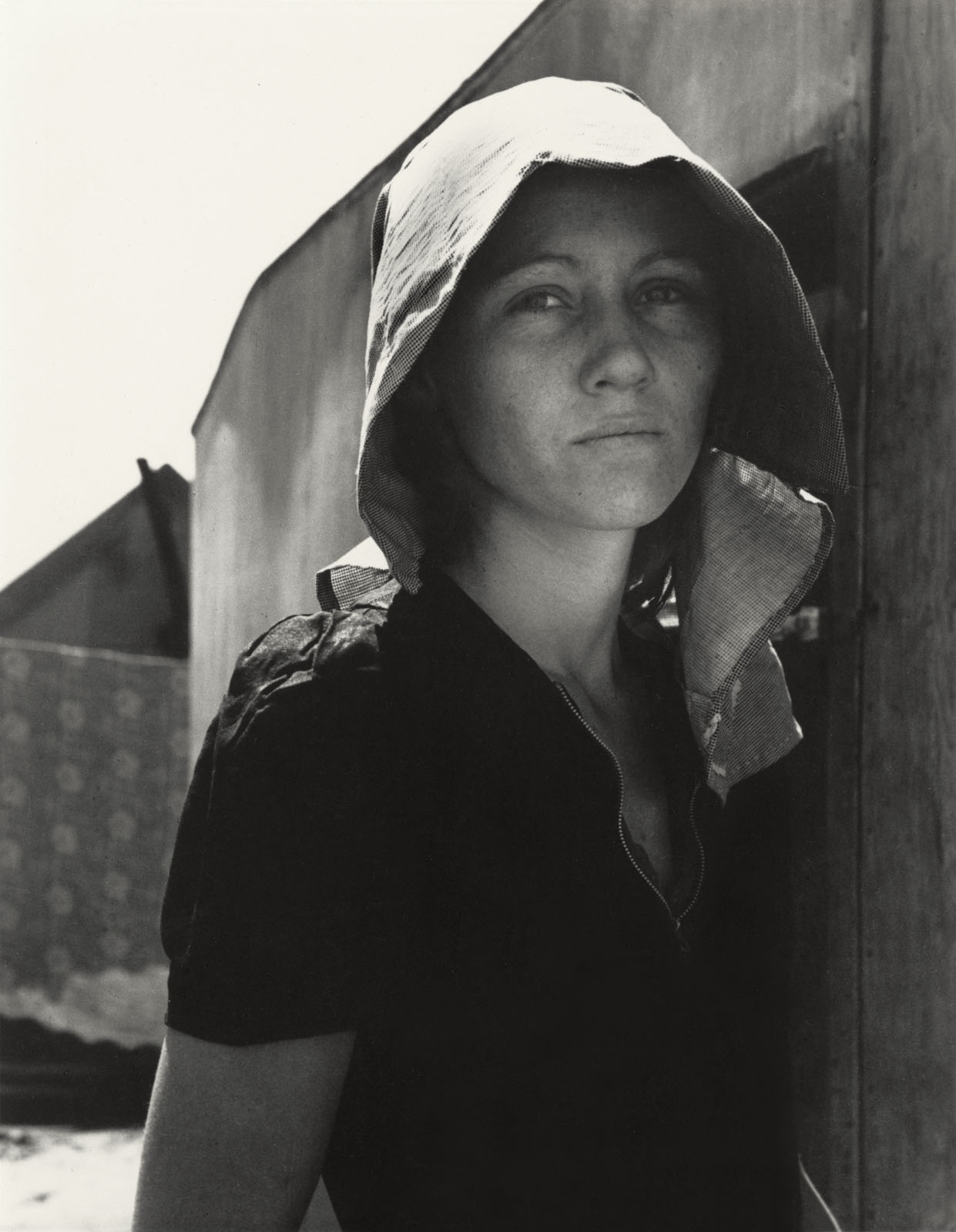
 

Sally Mann (American, b. 1951)
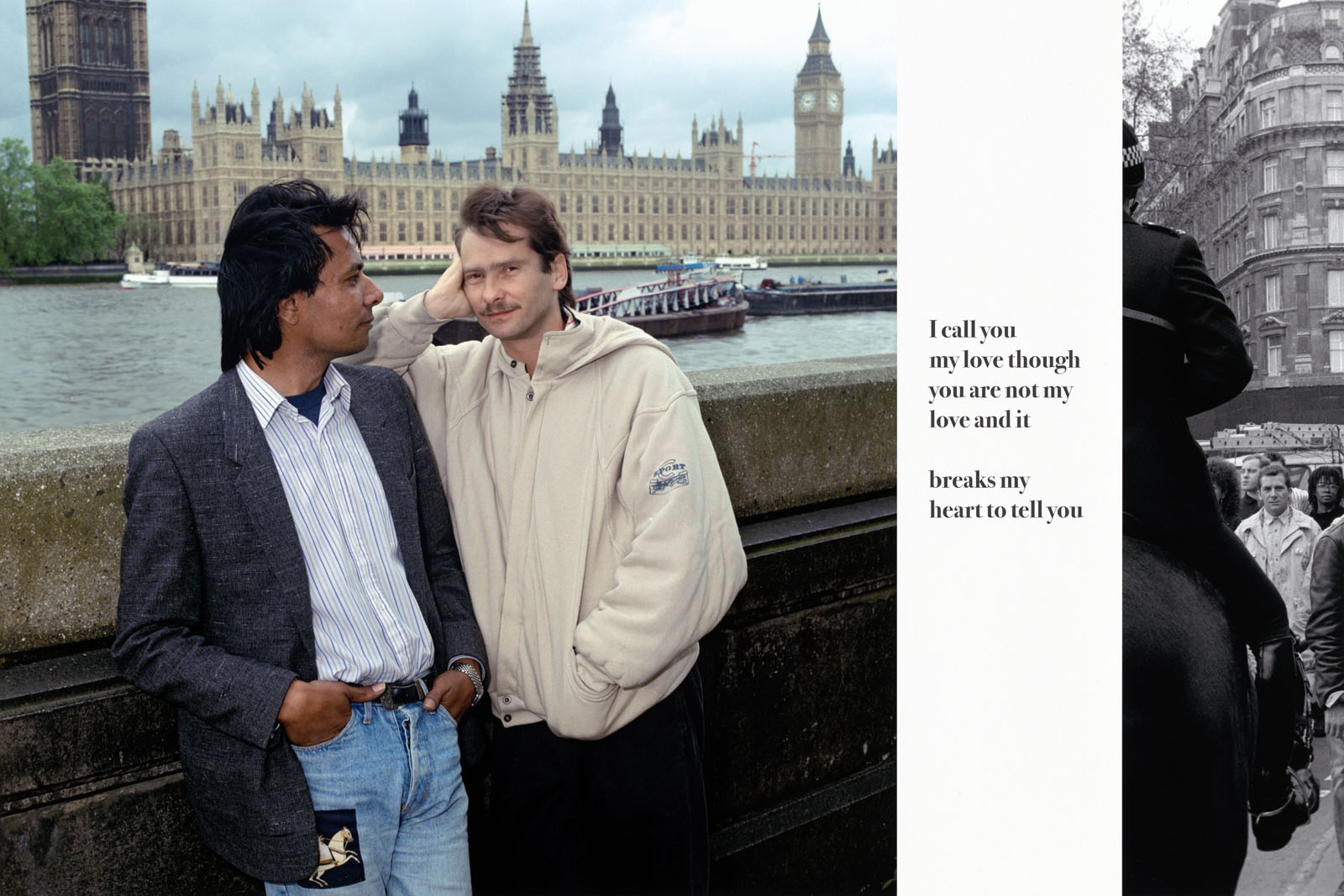
Was Ever Love
2009
Gelatin silver print
38.1 x 34.3cm (15 x 13 1/2 in.)
The Museum of Fine Arts, Houston, Museum purchase funded by the S.I. Morris Photography Endowment
© Sally Mann


“These are the places and things most of us drive by unseeing, scenes of Southern dejection we’d contemplate only if our car broke down and left us by the verdant roadside.”


Sally Mann


“Aurore’s conception of place had undergone a transformation on her return to Nohant from the Pyrenees. Her reflections on place were intimately bound up with a new perspective on identity, and this implicated others, both alive and dead. Her sense of fusedness with others involved a temporal complexity which, in its turn, was bound up with the notion of history. And historical events were soon to become very much a part of her life. Thus the timeless melancholy of a place outside history had become the urgent historical now. She was caught up in Nohant’s past, her past, and projecting the now into the future, she imagined what the now would look like with hindsight.”


Belinda Jack. George Sand: A Women’s Life Writ Large. London: Vintage, 2001, p. 155.


(Un)seeing: the quality of the affection … that has carved the trace in the mind

I did some research on the University of Melbourne library website on articles written on the work of Sally Mann. The titles included, What Remains: Sally Mann’s Encounter with Death and Wet Collodion (Lisa Wright, Afterimage 2004); The Disturbing Photography of Sally Mann (Richard Woodward, New York Times 1992); The camera of Sally Mann and the spaces of childhood (James Steward, Michigan Quarterly Review 2000); and Death and Memory in the Photography of Sally Mann (Mary Perkins, MA Thesis 2008). Everything you could possibly want to know is there. The passage of time and the transience of life. Time, memory and experience. Childhood, death and desire. Family, place and seeing.

Reviewing the book What Remains, my favourite body of work by Mann, Wright insightfully observes, “In her photographs Mann invokes fear, peace and continuing joy that make up existence and its inevitable demise… Lacking the ingredients of the grotesque, avoiding shock as a strategy to attract the viewer’s attention, her images are true inquisitions into the very nature of death and its effect on the living. Definitely and subtly combining content and form, Mann captures the horror and sublime beauty of what our western culture tends to carefully hide. The wet collodion process she utilises serves to strengthen the haunting and archaic beauty of her pictures, their eeriness, giving the impression that the very images themselves are subject to the same death and decay as their subjects.”

In the body of work What Remains this turns out to be the death of her pet greyhound and the bones that remain, the breakdown of the human body after death when she “photographed bodies that were in various states of decomposition on the grounds of a forensic study site”, the photographs of the Civil War battlefield of Antietam, contested ground which still makes the American South what it is today, and tightly-cropped portraits of her children in adolescence. As in all of Mann’s work, there is a quality of affection which carves a trace in the mind. Not affectation, nor affliction, but affection. It is a personal affection for something that she sees that others don’t. “These are the places and things most of us drive by unseeing…” which she acknowledges and offers to the viewer. Unseeing is defined as, not seeing; especially: not consciously observing, whereas I believe what Mann does is subconsciously recognise and feel and then consciously observe, hence (un)seeing.

In her photography in which the senses are fully engaged, there is a fusedness with the object of her affection, whether it be battlefields or bodies, rivers or recreation. In the biography of the writer and bohemian George Sand that I am reading at the moment, there is a wonderful quotation that I have posted above which I believe has relevance here; specifically, the notion of how the past, present and future time becomes conflated into an eternal present (something that photography does so well), and how past history and people still illuminate the present and the future. “Her reflections on place were intimately bound up with a new perspective on identity, and this implicated others, both alive and dead. Her sense of fusedness with others involved a temporal complexity which, in its turn, was bound up with the notion of history.”

Mann’s sense of fusedness with others, both alive and dead, leads to a temporal complexity bound up with the notion of history. How she iterates such concepts within her sensual photographs “with affection” is at the core of her art: the discontinuity of life in all its contexts, made eternal. What a simply breath—- taking artist.

Dr Marcus Bunyan


Many thankx to the National Gallery of Art for allowing me to publish the photographs in the posting. Please click on the photographs for a larger version of the image.


Sally Mann. 'The First Letter' 1994


Sally Mann. “The First Letter,” from ‘Sally Mann: Correspondence with Melissa Harris’. Aperture 1995; 138, p. 124 [Online] Cited 25/05/2018


Sally Mann 'Family' wall text


Sally Mann (American, b. 1951) 'The Ditch' 1987 from the exhibition 'Sally Mann: A Thousand Crossings' at the National Gallery of Art, Washington, March - May, 2018


Sally Mann (American, b. 1951)
The Ditch
1987
Gelatin silver print
47.5 x 58cm (18 11/16 x 22 13/16 in.)
The Art Institute of Chicago, Gift of Sally Mann and Edwynn Houk Gallery, 2000.41
The Art Institute of Chicago / Art Resource, NY
© Sally Mann


Sally Mann (American, b. 1951) 'Easter Dress' 1986


Sally Mann (American, b. 1951)
Easter Dress
1986
Gelatin silver print
47 x 57.8cm (18 1/2 x 22 3/4 in.)
Patricia and David Schulte
© Sally Mann


Sally Mann 'The Ditch' and 'Easter Dress' wall text


Sally Mann (American, b. 1951) 'Blowing Bubbles' 1987


Sally Mann (American, b. 1951)
Blowing Bubbles
1987
Gelatin silver print
High Museum of Art, Atlanta
Purchase with funds from Lucinda W. Bunnen for the Bunnen Collection
© Sally Mann


Sally Mann 'Blowing Bubbles' wall text


Gertrude Käsebier (American, 1852-1934) 'Mother and Child' 1899


Gertrude Käsebier (American, 1852-1934)
Mother and Child
1899
The Art Institute of Chicago, Gift of Mina Turner


Mann often drew inspiration from earlier artists, including the pioneering early twentieth-century photographer Gertrude Käsebier, celebrated for powerful and tender pictures that convey the bonds between parents and children.

Wall text


Sally Mann (American, b. 1951) 'Jessie Bites' 1985


Sally Mann (American, b. 1951)
Jessie Bites
1985
Gelatin silver print
Lent by The Metropolitan Museum of Art
© Sally Mann


Sally Mann 'Jessie bites' wall text


Sally Mann (American, b. 1951) 'The Last Time Emmett Modeled Nude' 1987


Sally Mann (American, b. 1951)
The Last Time Emmett Modeled Nude
1987
Gelatin silver print
Addison Gallery of American Art, Phillips Academy, Andover, Massachusetts
© Sally Mann


Sally Mann 'The Last Time Emmett Modeled Nude' wall text


Sally Mann (American, b. 1951) 'Gorjus' 1989


Sally Mann (American, b. 1951)
Gorjus
1989
Gelatin silver print
Sayra and Neil Meyerhoff
© Sally Mann


Sally Mann 'Gorjus' wall text


Sally Mann (American, b. 1951) 'Cherry Tomatoes' 1991


Sally Mann (American, b. 1951)
Cherry Tomatoes
1991
Gelatin silver print
47.6 x 59cm (18 3/4 x 23 1/4 in.)
National Gallery of Art, Washington, Corcoran Collection
Gift of David M. Malcolm in memory of Peter T. Malcolm
© Sally Mann


Sally Mann (American, b. 1951) 'Emmett floating at Camp' 1991


Sally Mann (American, b. 1951)
Emmett floating at Camp
1991
Private collection
© Sally Mann


Sally Mann (American, born 1951) 'Bloody Nose' 1991


Sally Mann (American, born 1951)
Bloody Nose
1991
Silver dye bleach print
Private collection


Sally Mann 'Bloody nose' wall text


Sally Mann (American, born 1951) 'Bean's Bottom' 1991


Sally Mann (American, born 1951)
Bean’s Bottom
1991
Silver dye bleach print
Private collection


Sally Mann 'The Land' wall text


Sally Mann (American, b. 1951) 'On the Maury' 1992


Sally Mann (American, b. 1951)
On the Maury
1992
Gelatin silver print
25.4 x 20.3cm (10 x 8 in.)
Private collection
© Sally Mann


Sally Mann 'On the Maury' wall text


Sally Mann (American, b. 1951) 'Virginia, Untitled (Blue Hills)' 1993


Sally Mann (American, b. 1951)
Virginia, Untitled (Blue Hills)
1993, printed 1997
Gelatin silver print
77.5 x 97.8cm (30 1/2 x 38 1/2 in.)
Lent by The Metropolitan Museum of Art, Purchase, The Horace W. Goldsmith Foundation Gift, through Joyce and Robert Menschel, 1998 (1998.49)
© The Metropolitan Museum of Art / Art Resource, NY
© Sally Mann


Sally Mann 'Virginia, Untitled (Blue Hills)' wall text


Gustave Le Gray (French, 1820-1884) 'Beech Tree, Forest of Fontainbleau' c. 1856


Gustave Le Gray (French, 1820-1884)
Beech Tree, Forest of Fontainbleau
c. 1856
National Gallery of Art, Washington, Patrons’ Permanent Fund


Sally Mann (American, b. 1951) 'Deep South, Untitled (Scarred Tree)' 1998


Sally Mann (American, b. 1951)
Deep South, Untitled (Scarred Tree)
1998
Gelatin silver print
96.5 x 121.9cm (38 x 48 in.)
National Gallery of Art, Washington, Alfred H. Moses and Fern M. Schad Fund
© Sally Mann


Sally Mann 'Deep South, Untitled (Scarred Tree)' wall text


Sally Mann (American, b. 1951) 'Deep South, Untitled (Fontainebleau)' 1998


Sally Mann (American, b. 1951)
Deep South, Untitled (Fontainebleau)
1998, printed 2017
Gelatin silver print
94.9 x 120cm (37 3/8 x 47 1/4 in.)
National Gallery of Art, Washington, Promised Gift of Stephen G. Stein Employee Benefit Trust
© Sally Mann


Sally Mann 'Collodion Wet Plate' wall text


Sally Mann (American, b. 1951) 'Deep South, Untitled (Three Drips)' 1998


Sally Mann (American, b. 1951)
Deep South, Untitled (Three Drips)
1998, printed 1999
Gelatin silver print
96.4 x 120.3cm (37 15/16 x 47 3/8 in.)
National Gallery of Art, Washington, Gift of the Collectors Committee and The Sarah and William L Walton Fund
© Sally Mann


Sally Mann 'Deep South, Untitled (Three Drips)' wall text

Sally Mann (American, b. 1951) 'Deep South, Untitled (Valentine Windsor)' 1998


Sally Mann (American, b. 1951)
Deep South, Untitled (Valentine Windsor)
1998
Gelatin silver print
Virginia Museum of Fine Arts, Richmond
Gift of the Massey Charitable Trust
© Sally Mann


Sally Mann 'Deep South, Untitled (Valentine Windsor)' wall text


Sally Mann (American, b. 1951) 'Deep South, Untitled (Stick)' 1998


Sally Mann (American, b. 1951)
Deep South, Untitled (Stick)
1998
Gelatin silver print, printed 1999
Courtesy of the New Orleans Museum of Art: Collection of H. Russell Albright, M.D.
© Sally Mann


Sally Mann (American, b. 1951) 'Deep South, Untitled (Bridge on Tallahatchie)' 1998


Sally Mann (American, b. 1951)
Deep South, Untitled (Bridge on Tallahatchie)
1998
Gelatin silver print
93.98 x 120.65cm (37 x 47 1/2 in.)
Markel Corporate Art Collection
© Sally Mann


Sally Mann 'Deep South, Untitled (Bridge on Tallahatchie)' wall text


Sally Mann (American, b. 1951) 'Deep South, Untitled (Emmett Till River Bank)' 1998


Sally Mann (American, b. 1951)
Deep South, Untitled (Emmett Till River Bank)
1998
Gelatin silver print
Peabody Essex Museum, Salem, Massachusetts
© Sally Mann


Sally Mann 'Deep South, Untitled (Emmett Till River Bank)' wall text


For more than 40 years, Sally Mann (b. 1951) has made experimental, elegiac, and hauntingly beautiful photographs that explore the overarching themes of existence: memory, desire, death, the bonds of family, and nature’s magisterial indifference to human endeavour. What unites this broad body of work – figure studies, landscapes, and architectural views – is that it is all bred of a place, the American South. Using her deep love of her homeland and her knowledge of its historically fraught heritage, Mann asks powerful, provocative questions – about history, identity, race, and religion – that reverberate across geographic and national boundaries.

Sally Mann: A Thousand Crossings, the first major survey of this celebrated artist to travel internationally, investigates how Mann’s relationship with her native land – a place rich in literary and artistic traditions but troubled by history – has shaped her work. The exhibition brings together 109 photographs, many exhibited for the first time. On view in the West Building of the National Gallery of Art, Washington, from March 4 through May 28, 2018, the exhibition is accompanied by a fully illustrated catalog, presenting an in-depth exploration of the evolution of Mann’s art, and a short film highlighting her technical process.

“In her compelling photographs, Mann uses the personal to allude to the universal, considering intimate questions of family, memory, and death while also evoking larger concerns about the influence of the South’s past on its present,” said Earl A. Powell III, director, National Gallery of Art, Washington. “With the acquisition of works from the Corcoran Gallery of Art in 2014, the National Gallery is now one of the largest repositories of Mann’s photographs. We are grateful for the opportunity to work closely with the artist in presenting a wide selection of the work she has created over four decades. “

Exhibition Highlights

The seeds for Sally Mann: A Thousand Crossings were planted in 2014, when National Gallery of Art curators undertook a review of photographs from the Corcoran Gallery of Art after its collections were placed under the stewardship of the National Gallery. Among the Corcor­an’s works were 25 photographs by Sally Mann, made from the mid-1970s to the early 2000s. With the addition of these works, plus several more acquired through purchase, the National Gallery became one of the largest public repositories of Mann’s photographs in the country. The curators’ interest in mounting an exhibition of Mann’s art deepened when they realised that despite her immense talent and prominence, the full range of Mann’s work had not yet received sufficient and widespread scholarly and critical attention.

Sally Mann: A Thousand Crossings is organised into five sections – Family, The Land, Last Measure, Abide with Me, and What Remains. The exhibition opens with works from the 1980s, when Mann began to photograph her three children at the family’s remote summer cabin on the Maury River near Lexington, Virginia. Taken with an 8 x 10 inch view camera, the family pictures refute the stereotypes of childhood, offering instead unsettling visions of its complexity. Rooted in the experience of a particular natural environment – the arcadian woodlands, rocky cliffs, and languid rivers – these works convey the inextricable link between the family and their land, and the sanctuary and freedom that it provided them.

The exhibition continues in The Land with photographs of the swamplands, fields, and ruined estates Mann encountered as she traveled across Virginia, Georgia, Louisiana, and Mississippi in the 1990s. Hoping to capture what she called the “radical light of the American South,” Mann made pictures in Virginia that glow with a tremulous light, while those made in Georgia and Mississippi are more blasted and bleak. In these photographs, Mann was also experimenting with antique lenses and the 19th-century collodion wet plate process and printing in a much larger size (30 x 38 and 40 x 50 inches). The resulting photographic effects, including light flares, vignetting, blurs, streaks and scratches, serve as metaphors for the South as a site of memory, defeat, ruin, and rebirth. Mann then used these same techniques for her photographs of Civil War battlefields in the exhibition’s third section, Last Measure. These brooding and elusive pictures evoke the land as history’s graveyard, silently absorbing the blood and bones of the many thousands who perished in battles such as Antietam, Appomattox, Chancellorsville, Cold Harbor, Fredericksburg, Manassas, Spotsylvania, and the Wilderness.

The fourth section, Abide with Me, merges four series of photographs to explore how race and history shaped the landscape of Virginia as well as Mann’s own childhood and adolescence. Expanding her understanding of the land as not only a vessel for memory but also a story of struggle and survival, Mann made a series of starkly beautiful tintypes between 2006 and 2015 in the Great Dismal Swamp – home to many fugitive slaves in the years before the Civil War – and along nearby rivers in southeastern Virginia where Nat Turner led a rebellion of enslaved people on August 21, 1831. Here, Mann’s use of the tintype process – essentially a collodion negative on a sheet of darkened tin – yields a rich, liquid-like surface with deep blacks that mirror the bracken swamp and rivers. Merging her techniques with metaphoric possibilities, she conveyed the region’s dual history as the site of slavery and death but also freedom and sanctuary. Mann also photographed numerous 19th-century African American churches near her home in Lexington. Founded in the decades immediately after the Civil War when African Americans in Virginia could worship without the presence of a white minister for the first time, these humble but richly evocative churches seem alive with the spirit that inspired their creation and the memories of those who prayed there.

Also included in Abide with Me are photographs of Virginia “Gee-Gee” Carter, the African American woman who worked for Mann’s family for 50 years. A defining and beloved presence in Mann’s life, Carter was also the person who taught Mann the profoundly complicated and charged nature of race relations in the South. The final component of this section is a group of pictures of African American men rendered in large prints (50 x 40 inches) made from collodion negatives. Representing Mann’s desire to reach across “the seemingly untraversable chasm of race in the American South,” these beautiful but provocative photographs examine an “abstract gesture heated up in the crucible of our association,” as Bill T. Jones, who in part inspired the series, once said.

The final section of the exhibition, What Remains, explores themes of time, transformation, and death through photographs of Mann and her family. Her enduring fascination with decay and the body’s vulnerability to the ravages of time is evident in a series of spectral portraits of her children’s faces and intimate photographs detailing the changing body of her husband Larry, who suffers from muscular dystrophy. The exhibition closes with several riveting self-portraits Mann made in the wake of a grave riding accident. Here, her links to southern literature and her preoccupation with decay are in full evidence: the pitted, scratched, ravaged, and cloudy surfaces of the ambrotypes function as analogues for the body’s corrosion and death. The impression of the series as a whole is of an artist confronting her own mortality with composure and conviction.

Sally Mann

Born in 1951 in Lexington, Virginia, Sally Mann continues to live and work in Rockbridge County. Mann developed her first roll of film in 1969 and began to work as a professional photographer in 1972. She attended Bennington College, Vermont, and graduated in 1974 with a BA in literature from Hollins College, Roanoke, Virginia where she earned an MA in creative writing the following year. She has exhibited widely and published her photographs in the books Second Sight: The Photographs of Sally Mann (1983), Sweet Silent Thought: Platinum Prints by Sally Mann (1987), At Twelve: Portraits of Young Women (1988), Immediate Family (1992), Still Time (1994), Mother Land: Recent Landscapes of Georgia and Virginia (1997), What Remains (2003), Deep South (2005), Sally Mann: Photographs and Poetry (2005), Proud Flesh (2009), Sally Mann: The Flesh and the Spirit (2010), and Remembered Light: Cy Twombly in Lexington (2016). Mann’s best selling memoir, Hold Still: A Memoir with Photographs (2015), was a finalist for the National Book Award. She has received numerous honours as well as grants from the National Endowment for the Arts, the National Endowment for the Humanities, and the Guggenheim Foundation. In 2011 Mann delivered the prestigious William E. Massey Sr. Lectures in the History of American Civilization at Harvard University.


Sally Mann 'Last Measure' wall text


Sally Mann (American, b. 1951) 'Battlefields, Antietam (Cornfield)' 2001


Sally Mann (American, b. 1951)
Battlefields, Antietam (Cornfield)
2001
Gelatin silver print
97.16 x 122.87cm (38 1/4 x 48 3/8 in.)
Virginia Museum of Fine Arts, Richmond, The National Endowment for the Arts Fund for American Art
Virginia Museum of Fine Arts
© Sally Mann


Sally Mann 'Battlefields, Antietam (Cornfield)' wall text


Sally Mann (American, b. 1951) 'Battlefields, Fredericksburg (Cedar Trees)' 2001


Sally Mann (b. 1951)
Battlefields, Fredericksburg (Cedar Trees)
2001, printed 2003
Gelatin silver print
97.8 x 123.2cm (38 1/2 x 48 1/2 in.)
Waterman/Kislinger Family
© Sally Mann


To achieve the textural, almost gritty appearance of her battlefield photographs, Mann coated the surface with a varnish mixed with diatomaceous earth – the fossilised remains of tiny marine creatures.

Wall text


Sally Mann (American, b. 1951) 'Battlefields, Antietam (Black Sun)' 2001


Sally Mann (American, b. 1951)
Battlefields, Antietam (Black Sun)
2001
Gelatin silver print
Courtesy of Edwynn Houk Gallery, New York
© Sally Mann


Sally Mann 'Battlefields, Antietam (Black Sun)' wall text


Sally Mann (American, b. 1951) 'Battlefields, Antietam (Starry Night)' 2001


Sally Mann (American, b. 1951)
Battlefields, Antietam (Starry Night)
2001
Gelatin silver print
96.52 x 122.56cm (38 x 48 1/4 in.)
Alan Kirshner and Deborah Mihaloff Art Collection
© Sally Mann


Sally Mann (American, b. 1951) 'Battlefields, Cold Harbor (Battle)' 2003


Sally Mann (American, b. 1951)
Battlefields, Cold Harbor (Battle)
2003
Gelatin silver print
99.1 x 124.5cm (39 x 49 in.)
National Gallery of Art, Washington, Gift of the Collectors Committee and The Sarah and William L Walton Fund
© Sally Mann


Sally Mann 'Battlefields, Cold Harbor (Battle)' wall text


Sally Mann (American, b. 1951) 'Battlefields, Antietam (Trenches)' 2001


Sally Mann (American, b. 1951)
Battlefields, Antietam (Trenches)
2001
gelatin silver print
96.8 x 122.6cm (38 1/8 x 48 1/4 in.)
National Gallery of Art, Washington, Promised Gift of Stephen G. Stein Employee Benefit Trust
© Sally Mann


Sally Mann 'Abide with Me' wall text


Sally Mann (American, b. 1951) 'St. Paul United Methodist' 2008-2016


Sally Mann (American, b. 1951)
First Baptist Church of Goshen, St. Paul United Methodist
2008-2016
Gelatin silver print
Collection of the artist
© Sally Mann


Located twenty miles north of Lexington, the First Baptist Church of Goshen is now abandoned.


Sally Mann (American, b. 1951) 'St. Paul African Methodist Episcopal' 2008-2016


Sally Mann (American, b. 1951)
St. Paul African Methodist Episcopal
2008-2016
Gelatin silver print
Collection of the artist
© Sally Mann


Sally Mann 'Homeland and Graveyard, Refuge and Battleground' wall text


Sally Mann (American, b. 1951) 'Oak Hill Baptist' 2008-2016


Sally Mann (American, b. 1951)
Oak Hill Baptist, Mt. Tabor United Methodist
2008-2016
Gelatin silver print
Collection of the artist
© Sally Mann


Founded in the late 1870s or early 1880s, Oak Hill Baptist Church in Middlebrook, Virginia, remains active today. Mt. Tabor United Methodist Church nestles near the edge of Round Hill, a traditionally African American community in New Hope, Virginia. It replaced a log structure built prior to 1850. Here, the church appears as an apparition, an effect achieved by overexposing the negative.

Wall text


Sally Mann (American, b. 1951) 'Beulah Baptist 01:01' 2008-2016


Sally Mann (American, born 1951)
Beulah Baptist 01:01
2008-2016
Gelatin silver print
Collection of the artist
© Sally Mann


Sally Mann (American, b. 1951) 'The Two Virginias #4' 1991


Sally Mann (American, b. 1951)
The Two Virginias #4
1991
Gelatin silver print
Collection of The Estée Lauder Companies Inc.
© Sally Mann


Sally Mann 'The Two Virginias #4' wall text


Sally Mann (American, b. 1951) 'Blackwater 9' 2008-2012


Sally Mann (American, b. 1951)
Blackwater 9
2008-2012
Tintype
Plate: 38.1 x 34.3cm (15 x 13 1/2 in.)
Collection of the artist
© Sally Mann


Sally Mann wall text


Sally Mann (American, b. 1951) 'Blackwater 20' 2008-2012


Sally Mann (American, b. 1951)
Blackwater 20
2008-2012
Tintype
Plate: 38.1 x 34.3cm (15 x 13 1/2 in.)
Collection of the artist
© Sally Mann


Sally Mann (American, b. 1951) 'Blackwater 25' 2008-2012


Sally Mann (American, b. 1951)
Blackwater 25
2008-2012
Tintype
Plate: 38.1 x 34.3cm (15 x 13 1/2 in.)
Collection of the artist
© Sally Mann


Sally Mann (American, b. 1951) 'Blackwater 3' 2008-2012


Sally Mann (American, b. 1951)
Blackwater 3
2008-2012
tintype
Plate: 38.1 x 34.3cm (15 x 13 1/2 in.)
Collection of the artist
Image © Sally Mann


Sally Mann 'Blackwater 3' wall text


Sally Mann (American, b. 1951) 'Blackwater 17' 2008-2012


Sally Mann (American, b. 1951)
Blackwater 17
2008-2012
Tintype
Plate: 38.1 x 34.3cm (15 x 13 1/2 in.)
Collection of the artist
© Sally Mann


Sally Mann 'What Remains' wall text


Sally Mann (American, b. 1951) 'The Turn' 2005


Sally Mann (American, b. 1951)
The Turn
2005
Gelatin silver print
Private collection
© Sally Mann


Sally Mann (American, b. 1951) 'Semaphore' 2003


Sally Mann (American, b. 1951)
Semaphore
2003
Gelatin silver print
38.1 x 34.3cm (15 x 13 1/2 in.)
The Museum of Fine Arts, Houston, Museum purchase, 2010.264
© Sally Mann


Sally Mann (American, b. 1951) 'Hephaestus' 2008


Sally Mann (American, b. 1951)
Hephaestus
2008
Gelatin silver print
38.1 x 34.3cm (15 x 13 1/2 in.)
Virginia Museum of Fine Arts, Richmond, Kathleen Boone Samuels Memorial Fund
Virginia Museum of Fine Arts
© Sally Mann


Sally Mann (American, b. 1951) 'Ponder Heart' 2009


Sally Mann (American, b. 1951)
Ponder Heart
2009
Gelatin silver print
38.1 x 34.3cm (15 x 13 1/2 in.)
National Gallery of Art, Washington, Alfred H. Moses and Fern M. Schad Fund
© Sally Mann


Sally Mann 'Hephaestus' and 'Ponder Heart' wall text


Sally Mann (American, b. 1951) 'Speak, Memory' 2008


Sally Mann (American, b. 1951)
Speak, Memory
2008
Gelatin silver print
38.1 x 34.3cm (15 x 13 1/2 in.)
Courtesy Gagosian
© Sally Mann


Here Mann referenced Vladimir Nabokov’s autobiography Speak, Memory, which addresses memory’s changeability over time and life’s fleeting nature: “The cradle rocks above an abyss, and common sense tells us that our existence is but a brief crack of light between two eternities of darkness.”

Wall text


Sally Mann (American, b. 1951) 'The Quality of the Affection' 2006


Sally Mann (American, b. 1951)
The Quality of the Affection
2006
Gelatin silver print
38.1 x 34.3cm (15 x 13 1/2 in.)
Private collection
© Sally Mann


The title of this photograph of Mann’s husband, Larry, is drawn from Ezra Pound’s Cantos, a long, ambitious poem that Mann explored in her 1975 master’s thesis in creative writing. Reflecting on time, memory and experience, Pound concluded:

nothing matters but the quality

of the affection –

in the end – that has carved the trace in the mind


Sally Mann (American, b. 1951) 'Memory's Truth' 2008


Sally Mann (American, b. 1951)
Memory’s Truth
2008
Gelatin silver print
Courtesy Gagosian
© Sally Mann


Mann took the title from Salman Rushdie’s Midnight Children, which asserts that memory has its own kind of truth: “It selects, eliminates, alters, exaggerates, minimizes, glorifies, and vilifies also; but in the end it creates its own reality.”

Wall text


Sally Mann (American, born 1951) 'Triptych' 2004


Sally Mann (American, born 1951)
Triptych
2004
3 gelatin silver prints
The Sir Elton John Photography Collection
© Sally Mann


Ethereal and indistinct, receding and dissolving, these larger-then-life faces express Mann’s long-standing fascination with the fragility of physical presence.

Wall text


Sally Mann (American, b. 1951) 'Jessie #25' 2004


Sally Mann (American, b. 1951)
Jessie #25
2004
Gelatin silver print
Courtesy of Edwynn Houk Gallery, New York
© Sally Mann


Sally Mann (American, b. 1951) 'Virginia #6' 2004


Sally Mann (American, born 1951)
Virginia #6
2004
Gelatin silver print
Courtesy of Edwynn Houk Gallery, New York
© Sally Mann


National Gallery of Art
National Mall between 3rd and 7th Streets
Constitution Avenue NW, Washington

Opening hours:
Monday – Saturday 10.00am – 5.00pm
Sunday 11.00am – 6.00pm

National Gallery of Art website

LIKE ART BLART ON FACEBOOK

Back to top

Exhibition: ‘In the Tower: Barbara Kruger’ at the National Gallery of Art, Washington

Exhibition dates: 30th September, 2016 – 22nd January, 2017

Curator: Molly Donovan, Associate Curator in the Department of Modern Art at the National Gallery of Art


Barbara Kruger (American, b. 1945) 'Untitled (Know nothing, Believe anything, Forget everything)' 1987/2014 from the exhibition 'In the Tower: Barbara Kruger' at the National Gallery of Art, Washington, Sept 2016 - Jan 2017


Barbara Kruger (American, b. 1945)
Untitled (Know nothing, Believe anything, Forget everything)
1987/2014
Screenprint on vinyl
Overall: 274.32 x 342.05cm (108 x 134 11/16 in.)
National Gallery of Art, Washington, Gift of the Collectors Committee, Sharon and John D. Rockefeller IV, Howard and Roberta Ahmanson, Denise and Andrew Saul, Lenore S. and Bernard A. Greenberg Fund, Agnes Gund, and Michelle Smith
© Barbara Kruger


Now this is how you tell a tale using contemporary photography!

Succinct, psychological sound bites that are commentaries on cultural production, that leave the viewer troubled by the enigma of their pronunciation. They are focused around the construct of the viewer and the subject of representation while also probing matters of identity in contemporary culture.

“They present Kruger’s distinctive direct-address texts (using active verbs and personal pronouns) which confront the viewer head-on and contrast with the underlying images of (often passive, often female) figures looking off the picture plane, and receiving the viewer’s attention. This tension creates conceptual works of great visual power.”

Know nothing, Believe anything, Forget everything!

Dr Marcus Bunyan


Many thankx to the National Gallery of Art for allowing me to publish the photographs in the posting. Please click on the photographs for a larger version of the image.


Barbara Kruger (American, b. 1945) 'Untitled (We don't need another hero)' 1987 from the exhibition 'In the Tower: Barbara Kruger' at the National Gallery of Art, Washington, Sept 2016 - Jan 2017


Barbara Kruger (American, b. 1945)
Untitled (We don’t need another hero)
1987
Photograph and type on paper
Overall: 14.61 x 28.89cm (5 3/4 x 11 3/8 in.)
Framed: 34.61 x 48.58 x 4.45cm (13 5/8 x 19 1/8 x 1 3/4 in.)
Glenstone Museum, Potomac, Maryland
© Barbara Kruger


Barbara Kruger (American, b. 1945) 'Untitled (We don't need another hero)' 1987


Barbara Kruger (American, b. 1945)
Untitled (We don’t need another hero)
1987
Silkscreen on vinyl
Overall: 276.54 x 531.34 x 6.35cm (108 7/8 x 209 3/16 x 2 1/2 in.)
Whitney Museum of American Art, New York. Gift from the Emily Fisher Landau Collection
© Barbara Kruger


Barbara Kruger (American, b. 1945) 'Untitled (Love is something you fall into)' 1990


Barbara Kruger (American, b. 1945)
Untitled (Love is something you fall into)
1990
Photographic silkscreen/vinyl
Overall: 163.83 x 396.24cm (64 1/2 x 156 in.)
Hall Collection
© Barbara Kruger. Photo courtesy Mary Boone Gallery, New York


Barbara Kruger (American, b. 1945) 'Untitled (A picture is worth more than a thousand words)' 1992


Barbara Kruger (American, b. 1945)
Untitled (A picture is worth more than a thousand words)
1992
Silkscreen on vinyl
Overall: 208.28 x 312.42cm (82 x 123 in.)
Private collection
© Barbara Kruger


The striking works of Barbara Kruger (American, b. 1945) will be featured in a focused exhibition at the National Gallery of Art, Washington, timed to celebrate the newly renovated East Building galleries. On view September 30, 2016 through January 22, 2017, In the Tower: Barbara Kruger is the first exhibition in the Tower Gallery in three years, renewing the series devoted to the presentation of works by leading contemporary artists. The exhibition presents 15 of Kruger’s profile works – images of the figure in profile over which the artist has layered her attention-grabbing phrases and figures of speech – from the early 1980s to the present, varying in scale from magazine-size to monumental.

Inspired by the Gallery’s recent acquisition of Kruger’s Untitled (Know nothing, Believe anything, Forget everything) (1987-2014), the exhibition centres on the artist’s profile works, among her strongest commentaries on cultural production. They present Kruger’s distinctive direct-address texts (using active verbs and personal pronouns) which confront the viewer head-on and contrast with the underlying images of (often passive, often female) figures looking off the picture plane, and receiving the viewer’s attention. This tension creates conceptual works of great visual power.

Kruger’s works are by turns so strong, shocking, or humorous that they grab the viewer’s attention. This is due to her signature style which includes pronouncements printed in white Futura Bold typeface across red bands reminiscent of the Life and Look magazine banners from the golden age of picture magazines. Kruger’s text slashes the black-and-white images beneath, effectively shattering the clichés represented in both words and images. Using the language, colour, image, and scale derived from the media-saturated world she queries, Kruger’s work illuminates and interrupts media tropes to encourage an active visual readership.

“Barbara Kruger’s profile works count among her most iconic images,” said Earl A. Powell III, director, National Gallery of Art, Washington. “We are delighted to present to our visitors from around the world this exhibition featuring such an outstanding artist.”

Exhibition highlights

Among the key works on view will be Kruger’s Untitled (Your gaze hits the side of my face), (1983), that served as inspiration for Craig Owens’s 1983 essay, “The Medusa Effect, or The Specular Ruse.” At the time they were made, Kruger’s 1980s works powerfully engaged and promoted theoretical discussion of “the gaze” around the construct of the viewer and the subject of representation. More broadly, these works resound with the use of the profile in the genre of portraiture in the long arc of history, while also probing matters of identity in contemporary philosophy. For this work and others, the exhibition will present Kruger’s original paste-ups to illuminate the artist’s process.

Untitled (Know nothing, Believe anything, Forget everything) (1987-2014), acquired for the Gallery by the Collectors Committee and a group of generous patrons, offers an image of a woman in profile, lying prostrate and receiving medical treatment to her eye through a large, funnel-like device. Over the image are three red bands with the artist’s admonitions emblazoned in white text that warn against the pleasures and perils of our “truthy” photography-based mass media and the knowledge, beliefs, and memories that it imparts.

A new five-minute film will feature excerpts from an interview with the artist discussing works in the exhibition. Made possible by the H.R.H. Foundation, the film will play continuously in the anteroom of the Tower Gallery.

Barbara Kruger (b. 1945) short biography

Kruger’s higher education began at Syracuse University and continued at Parson’s School of Art and Design in New York, where she studied with Diane Arbus and Marvin Israel in 1966. Beginning in 1967 Kruger worked as a layout editor at Condé Nast for twelve years, including posts at Mademoiselle, House and Garden, and Aperture. In 1969 Kruger began to make her own art while also writing poetry and film and television reviews. A decade later she had developed her “picture practice” with photographs repurposed from 1940s-1970s manuals and magazines that she overlaid with her own texts or those repurposed from the media. The completed works alter her found materials, inscribing her admonitions and questions over the images to stimulate and rouse the viewer from the passivity of acceptance.

Kruger’s background in design is evident in these works, for which she is internationally renowned. Owing to her interest in the public arena and the vernacular, Kruger’s work has appeared on billboards, bus cards, posters, T-shirts, matchbook covers, in public parks, and on train station platforms. Recent work has included immersive installations of room-wrapping images and text, and multiple-channel videos.

Prior to teaching at UCLA, Kruger taught at California Institute of the Arts, the School of the Art Institute of Chicago, and the University of California, Berkeley. In 2005 Kruger received the Golden Lion for Lifetime Achievement at the Venice Biennale. Her work was featured in the Whitney Biennial in 1973, 1983, 1985, and 1987; the Venice Biennale in 1982, 1993, and 2005; and Documenta 8 in 1987. Notable solo exhibitions include P.S. 1, Long Island City, New York (1980); Institute of Contemporary Art, London (1983); Los Angeles County Museum of Art (1985); Museum of Contemporary Art, Los Angeles (1999, traveled to Whitney Museum of American Art in 2000); South London Gallery (2001); Gallery of Modern Art, Glasgow (2005); the Moderna Museet, Stockholm (2008); the Museum Of Modern Art, Oxford (2014), and the Hirshhorn Museum and Sculpture Garden (2012–2016). Kruger lives and works in Los Angeles and New York City.”

Press release from the National Gallery of Art


Barbara Kruger (American, b. 1945) 'Untitled (Your gaze hits the side of my face)' 1981


Barbara Kruger (American, b. 1945)
Untitled (Your gaze hits the side of my face)
1981
Photograph and type on paper
Overall: 23.8 x 17.8cm (9 3/8 x 7 in.)
Framed: 47.94 x 39.05 x 4.45cm (18 7/8 x 15 3/8 x 1 3/4 in.)
Glenstone Museum, Potomac, Maryland
© Barbara Kruger


Barbara Kruger (American, b. 1945) 'Untitled (You thrive on mistaken identity)' 1981


Barbara Kruger (American, b. 1945)
Untitled (You thrive on mistaken identity)
1981
Gelatin silver print
Overall: 152.4 x 101.6cm (60 x 40 in.)
Matthias Brunner
© Barbara Kruger. Photo courtesy Mary Boone Gallery, New York


Barbara Kruger (American, b. 1945) 'Untitled (We have received orders not to move)' 1982


Barbara Kruger (American, b. 1945)
Untitled (We have received orders not to move)
1982
Photographic collage
Overall: 177.17 x 120.65cm (69 3/4 x 47 1/2 in.)
Susan Bay-Nimoy and Leonard Nimoy
Courtesy: Mary Boone Gallery, New York
© Barbara Kruger
Photo: courtesy Mary Boone Gallery, New York


Barbara Kruger (American, b. 1945) 'Untitled (Your creation is divine, Our reproduction is human)' 1984


Barbara Kruger (American, b. 1945)
Untitled (Your creation is divine, Our reproduction is human)
1984
Gelatin silver print
Overall: 182.88 x 121.92cm (72 x 48 in.)
Phyllis and William Mack
© Barbara Kruger
Photo: courtesy Mary Boone Gallery, New York


Barbara Kruger (American, b. 1945) 'Untitled (The future belongs to those who can see it)' 1997


Barbara Kruger (American, b. 1945)
Untitled (The future belongs to those who can see it)
1997
Silkscreen on vinyl
Overall: 215.9 x 152.4cm (85 x 60 in.)
From the Chris and Dori Carter Collection
© Barbara Kruger


Barbara Kruger (American, b. 1945) 'Untitled (Think of me thinking of you)' 2013


Barbara Kruger (American, b. 1945)
Untitled (Think of me thinking of you)
2013
Digital print on vinyl
Overall: 243.84 x 191.77cm (96 x 75 1/2 in.)
Private collection
© Barbara Kruger
Photo: courtesy Mary Boone Gallery, New York


National Gallery of Art
National Mall between 3rd and 7th Streets
Constitution Avenue NW, Washington

Opening hours:
Monday – Saturday 10.00am – 5.00pm
Sunday 11.00am – 6.00pm

National Gallery of Art website

LIKE ART BLART ON FACEBOOK

Back to top

Exhibition: ‘In Light of the Past: Celebrating 25 Years of Photography at the National Gallery of Art’ at the National Gallery of Art, Washington

Exhibition dates: 3rd May – 26th July, 2015

Curators: Sarah Greenough, Senior Curator and Head of the Department of Photographs, and Diane Waggoner, Associate Curator, Department of Photographs, National Gallery of Art


Charles Nègre (French, 1820-1880) 'Market Scene at the Port of the Hotel de Ville, Paris' before February 1852 from the exhibition 'In Light of the Past: Celebrating 25 Years of Photography at the National Gallery of Art' at the National Gallery of Art, Washington, May - July, 2015


Charles Nègre (French, 1820-1880)
Market Scene at the Port of the Hotel de Ville, Paris
before February 1852
Salted paper print
14.7 x 19.9cm
National Gallery of Art, Washington, Patrons’ Permanent Fund, 2003


What a great title for an exhibition. Photography always evidences light of the past, we live in light of the past (the light of the Sun takes just over 8 minutes to reach Earth) and, for whatever reason, human beings never seem to learn from mistakes, in light of the past history of the human race.

My favourites in this postings are the 19th century photographs, to which I am becoming further attuned the more I look at them. There is almost a point when you become psychologically enmeshed with their light, with the serenity of the images, a quality that most contemporary photographs seem to have lost. There is a quietness to their presence, a contemplation on the nature of the world through the pencil of nature that is captivating. You only have to look at Gustave Le Gray’s The Pont du Carrousel, Paris: View to the West from the Pont des Arts (1856-1858, below) to understand the everlasting, transcendent charisma of these images. Light, space, time, eternity.

Dr Marcus Bunyan


Many thankx to the National Gallery of Art for allowing me to publish the photographs in the posting. Please click on the photographs for a larger version of the image.

The Collection of Photographs at the National Gallery of Art, Washington (110kb Word doc)


William Henry Fox Talbot (English, 1800-1877) 'A Scene in York: York Minster from Lop Lane' 1845 from the exhibition 'In Light of the Past: Celebrating 25 Years of Photography at the National Gallery of Art' at the National Gallery of Art, Washington, May - July, 2015


William Henry Fox Talbot (English, 1800-1877)
A Scene in York: York Minster from Lop Lane
1845
Salted paper print
16.2 x 20.4cm
National Gallery of Art, Washington, Edward J. Lenkin Fund, Melvin and Thelma Lenkin Fund and Stephen G. Stein Fund, 2011


A British polymath equally adept in astronomy, chemistry, Egyptology, physics, and philosophy, Talbot spent years inventing a photographic process that created paper negatives, which were then used to make positive prints – the conceptual basis of nearly all photography until the digital age. Calotypes, as he came to call them, are softer in effect than daguerreotypes, the other process announced in 1839. Though steeped in the sciences, Talbot understood the ability of his invention to make striking works of art. Here the partially obstructed view of the cathedral rising from the confines of the city gives a sense of discovery, of having just turned the corner and encountered this scene.


Carleton E. Watkins (American, 1829-1916) 'Piwac, Vernal Falls, 300 feet, Yosemite' 1861


Carleton E. Watkins (American, 1829-1916)
Piwac, Vernal Falls, 300 feet, Yosemite
1861
Albumen print
39.9 x 52.3cm
National Gallery of Art, Washington, Gift of Mary and David Robinson, 1995


The westward expansion of America opened up new opportunities for photographers such as Watkins and William Bell. Joining government survey expeditions, hired by railroad companies, or catering to tourists and the growing demand for grand views of nature, they created photographic landscapes that reached a broad audience of scientists, businessmen, and engineers, as well as curious members of the middle class. Watkins’s photographs of the sublime Yosemite Valley, which often recall landscape paintings of similar majestic subjects, helped convince Congress to pass a bill in 1864 protecting the area from development and commercial exploitation.


Eugène Cuvelier (French, 1837-1900) 'Belle-Croix' 1860s


Eugène Cuvelier (French, 1837-1900)
Belle-Croix
1860s
Albumen print
25.4 x 34.3cm
National Gallery of Art, Washington, Gail and Benjamin Jacobs for the Millennium Fund, 2007


In the second half of the nineteenth century, some photographers in France, hired by governmental agencies to make photographic inventories or simply catering to the growing demand for pictures of Paris, drew on the medium’s documentary abilities to record the nation’s architectural patrimony and the modernisation of Paris. Others explored the camera’s artistic potential by capturing the ephemeral moods of nature in the French countryside. Though photographers faced difficulties in carting around heavy equipment and operating in the field, they learned how to master the elements that directly affected their pictures, from securing the right vantage point to dealing with movement, light, and changing atmospheric conditions during long exposure times.


Gustave Le Gray (French, 1820-1884) 'The Pont du Carrousel, Paris: View to the West from the Pont des Arts' 1856-1858


Gustave Le Gray (French, 1820-1884)
The Pont du Carrousel, Paris: View to the West from the Pont des Arts
1856-1858
Albumen print
37.8 x 48.8cm
National Gallery of Art, Washington, Patrons’ Permanent Fund, 1995


Édouard-Denis Baldus (French, 1813-1889) 'Toulon, Train Station' c. 1861


Édouard-Denis Baldus (French, 1813-1889)
Toulon, Train Station
c. 1861
Albumen print
27.4 x 43.1cm
National Gallery of Art, Washington, Patrons’ Permanent Fund, 1995


In Light of the Past: Celebrating 25 Years of Photography at the National Gallery of Art, on view in the West Building from May 3 through July 26, 2015, will commemorate more than two decades of the Gallery’s robust photography program. Some 175 of the collection’s most exemplary holdings will reveal the evolution of the art of photography, from its birth in 1839 to the late 1970s. In Light of the Past is one of three stellar exhibitions that will commemorate the 25th anniversary of the National Gallery of Art’s commitment to photography acquisitions, exhibitions, scholarly catalogues, and programs.

In Light of the Past includes some of the rarest and most compelling photographs ever created,” said Earl A. Powell III, director, National Gallery of Art, Washington. “It also honours the generous support of our donors who have enabled us to achieve this new place of prominence for photography at the Gallery.

About the exhibition

In Light of the Past begins with exceptional 19th-century salted paper prints, daguerreotypes, and albumen prints by acclaimed early practitioners such as William Henry Fox Talbot (1800-1877), Gustave Le Gray (1820-1884), Roger Fenton (1819-1869), Julia Margaret Cameron (1815-1879), Albert Sands Southworth (1811-1894), and Josiah Johnson Hawes (1808-1901). It also displays works by American expeditionary photographers, including William Bell (1830-1910) and Carleton E. Watkins (1829-1916).

The exhibition continues with late 19th- and early 20th-century American Pictorialist photographs by Alfred Stieglitz (1864-1946), Clarence H. White (1871-1925), Gertrude Käsebier (1852-1934), and Alvin Langdon Coburn (1882-1966), among others, as well as European masters such as Eugène Atget (1857-1927). The exhibition also examines the international photographic modernism of artists such as Paul Strand (1890-1976), André Kertész (1894-1985), Marianne Brandt (1893-1983), László Moholy-Nagy (1895-1946), and Ilse Bing (1899-1998) before turning to the mid-20th century, where exceptional work by Walker Evans (1903-1975), Robert Frank (b. 1924), Harry Callahan (1912-1999), Irving Penn (1917-2009), Lee Friedlander (b. 1934), and Diane Arbus (1923-1971) will be on view.

The exhibition concludes with pictures from the 1960s and 1970s, showcasing works by photographers such as Robert Adams (b. 1937), Lewis Baltz (1945-2014), and William Eggleston (b. 1939), as well as Mel Bochner (b. 1940) and Sol LeWitt (1928-2007), which demonstrate the diverse practices that invigorated photography during these decades.

Press release from the National Gallery of Art


Albert Sands Southworth (American, 1811-1894) and Josiah Johnson Hawes (American, 1808-1901) 'The Letter' c. 1850


Albert Sands Southworth (American, 1811-1894) and Josiah Johnson Hawes (American, 1808-1901)
The Letter
c. 1850
Daguerreotype
Plate: 20.3 x 15.2cm
National Gallery of Art, Washington, Patrons’ Permanent Fund, 1999


Working together in Boston, the portrait photographers Southworth and Hawes aimed to capture the character of their subjects using the daguerreotype process. Invented in France and one of the two photographic processes introduced to the public in early 1839, the daguerreotype is made by exposing a silver-coated copper plate to light and then treating it with chemicals to bring out the image. The heyday of the technique was the 1840s and 1850s, when it was used primarily for making portraits. The daguerreotype’s long exposure time usually resulted in frontal, frozen postures and stern facial expressions; this picture’s pyramidal composition and strong sentiments of friendship and companionship are characteristic of Southworth and Hawes’s innovative approach.


Clarence H. White (American, 1871-1925) 'The Hillside' c. 1898


Clarence H. White (American, 1871-1925)
The Hillside
c. 1898
Gum dichromate print
20.8 x 15.88cm
National Gallery of Art, Washington, Patrons’ Permanent Fund, 2008


The Photo-Secession

At the turn of the century in America, Alfred Stieglitz and his colleague Edward Steichen led the movement to establish photography’s status as a fine art. In 1902 Stieglitz founded an organisation called the Photo-Secession, consisting of young artists who shared his belief in the creative potential of the medium. Many of the photographers featured here were members of the group, including Gertrude Käsebier, Clarence White, and Alvin Langdon Coburn. Through the exhibitions Stieglitz organised in his New York gallery, called 291, and the essays he published in his influential quarterly, Camera Work, he and the Photo-Secession promoted the Pictorialist aesthetic of softly textured, painterly pictures that elicit emotion and appeal to the imagination. Occasionally the photographers’ compositions refer to other works of art, such as Steichen’s portrait of his friend Auguste Rodin, whose pose recalls one of the sculptor’s most famous works, The Thinker. Influenced by the modern European and American painting, sculpture, and drawing he exhibited at 291, Stieglitz lost interest in the Photo-Secession in the early 1910s and began to explore a more straightforward expression.


Eugène Atget (French, 1857-1927) 'Saint-Cloud' 1926


Eugène Atget (French, 1857-1927)
Saint-Cloud
1926
Albumen print
22.2 x 18.1cm
National Gallery of Art, Washington, Gift of Mary and Dan Solomon and Patrons’ Permanent Fund, 2006


Using a cumbersome camera mounted on a tripod, Atget recorded the myriad facets of Paris and its environs at the turn of the century. Transforming ordinary scenes into poetic evocations, he created a visual compendium of the objects, architecture, and landscapes that were expressive of French culture and its history. He sold his photographs to artists, architects, and craftsmen, as well as to libraries and museums interested in the vanishing old city. Throughout his career he returned repeatedly to certain subjects and discovered that the variations caused by changing light, atmosphere, and season provided inexhaustible subjects for the perceptive photographer.


Julia Margaret Cameron (British, 1815-1879) 'The Mountain Nymph, Sweet Liberty' June 1866


Julia Margaret Cameron (British, 1815-1879)
The Mountain Nymph, Sweet Liberty
June 1866
Albumen print
36.1 x 26.7cm
National Gallery of Art, Washington, New Century Fund, 1997


Ensconced in the intellectual and artistic circles of midcentury England, Cameron manipulated focus and light to create poetic pictures rich in references to literature, mythology, and history. Her monumental views of life-sized heads were unprecedented, and with them she hoped to define a new mode of photography that would rival the expressive power of painting and sculpture. The title of this work alludes to John Milton’s mid-seventeenth-century poem L’Allegro. Describing the happy life of one who finds pleasure and beauty in the countryside, the poem includes the lines:

Come, and trip it as ye go
On the light fantastic toe;
And in thy right hand lead with thee,
The mountain nymph, sweet Liberty.


Dr Guillaume-Benjamin-Amant Duchenne (de Boulogne) (French, 1806-1875) 'Figure 63, "Fright" from "Mécanisme de la physionomie humaine (Mechanism of human physiognomy)" (1862)' 1854-1855


Dr Guillaume-Benjamin-Amant Duchenne (de Boulogne) (French, 1806-1875)
Figure 63, “Fright” from “Mécanisme de la physionomie humaine (Mechanism of human physiognomy)” (1862)
1854-1855
Albumen print
21.5 × 16cm
National Gallery of Art, Washington, Pepita Milmore Memorial Fund, 2015


A neurologist, physiologist, and photographer, Duchenne de Boulogne conducted a series of experiments in the mid-1850s in which he applied electrical currents to various facial muscles to study how they produce expressions of emotion. Convinced that these electrically-induced expressions accurately rendered internal feelings, he then photographed his subjects to establish a precise visual lexicon of human emotions, such as pain, surprise, fear, and sadness. In 1862 he included this photograph representing fright in a treatise on physiognomy (a pseudoscience that assumes a relationship between external appearance and internal character), which enjoyed broad popularity among artists and scientists.


Lewis Hine (American, 1874-1940) 'An Anaemic Little Spinner in a New England Cotton Mill (North Pownal, Vermont)' 1910


Lewis Hine (American, 1874-1940)
An Anaemic Little Spinner in a New England Cotton Mill (North Pownal, Vermont)
1910
Gelatin silver print
24.1 × 19.2cm
National Gallery of Art, Washington, Pepita Milmore Memorial Fund, 2015


Trained as a sociologist and initially employed as a teacher, Hine used the camera both as a research tool and an instrument of social reform. One of the earliest and most influential social documentary photographers of his time, he made many pictures under the auspices of the National Child Labor Committee, an organisation formed in 1904 to promote better working conditions for children. Hine’s focus on the thin, frail body of this barefoot twelve-year-old spinner, who stands before rows of bobbins in the mill where she worked, was meant to illustrate the unhealthy effects of her employment. Photographs like this one were crucial to the campaign to change American child labor laws in the early twentieth century.


In Light of the Past: Twenty-Five Years of Photography at the National Gallery of Art

Georgia O’Keeffe and the Alfred Stieglitz Estate laid the foundation of the photography collection of the National Gallery of Art in 1949 with their donation of 1,650 Stieglitz photographs, an unparalleled group known as the Key Set. Yet the Gallery did not start actively acquiring photographs until 1990, when it launched an initiative to build a collection of works by European and American photographers from throughout the history of the medium and mount major exhibitions with scholarly publications. Now including nearly fifteen thousand prints, the collection encompasses the rich diversity of photographic practice from fine art to scientific and amateur photography, as well as photojournalism. It is distinguished by its large holdings of works by many of the medium’s most acclaimed masters, such as Paul Strand, Walker Evans, André Kertész, Ilse Bing, Robert Frank, Harry Callahan, Lee Friedlander, Gordon Parks, Irving Penn, and Robert Adams, among others.

In Light of the Past celebrates the twenty-fifth anniversary of the 1990 initiative by presenting some of the Gallery’s finest photographs made from the early 1840s to the late 1970s. It is divided into four sections arranged chronologically. The first traces the evolution of the art of photography during its first decades in the work of early British, French, and American practitioners. The second looks at the contributions of late nineteenth and early twentieth-century photographers, from Stieglitz and the American Pictorialists to European masters such as Eugène Atget. The third section examines the international photographic modernism of the 1920s and 1930s, and the fourth features seminal mid-twentieth-century photographers. The exhibition concludes with pictures representing the varied practices of those working in the late 1960s and 1970s.

The Nineteenth Century: The Invention of Photography

In 1839 a new means of visual representation was announced to a startled world: photography. Although the medium was immediately and enthusiastically embraced by the public at large, photographers themselves spent the ensuing decades experimenting with techniques and debating the nature of this new invention. The works in this section suggest the range of questions addressed by these earliest practitioners. Was photography best understood as an art or a science? What subjects should photographs depict, what purpose should they serve, and what should they look like? Should photographers work within the aesthetics established in other arts, such as painting, or explore characteristics that seemed unique to the medium? This first generation of photographers became part scientists as they mastered a baffling array of new processes and learned how to handle their equipment and material. Yet they also grappled with aesthetic issues, such as how to convey the tone, texture, and detail of multicoloured reality in a monochrome medium. They often explored the same subjects that had fascinated artists for centuries – portraits, landscapes, genre scenes, and still lifes – but they also discovered and exploited the distinctive ways in which the camera frames and presents the world.

Photography at the Turn of the Twentieth Century

In the late nineteenth century, improvements in technology and processing, along with the invention of small handheld cameras such as the Kodak, suddenly made it possible for anyone of middle-class means to take photographs. Many amateurs took up the camera to commemorate family, friends, and special events. Others, such as the sociologist Lewis Hine, used it as a tool for social and political change. Partially in response to the new ease of photography, more serious practitioners in America and Europe banded together to assert the artistic merit of the medium. Called Pictorialists, they sought to prove that photography was just as capable of poetic, subjective expression as painting. They freely manipulated their prints to reveal their authorial control, often resulting in painterly effects, and consciously separated themselves from amateur photographers and mechanised processes.

Photography Between the Wars

In the aftermath of World War I – the first modern, mechanised conflict – sweeping changes transformed photography. Avant-garde painters, graphic designers, and journalists turned to the medium, seeing it as the most effective tool to express the fractured, fast-paced nature of modernity and the new technological culture of the twentieth century. A wide variety of new approaches and techniques flourished during these years, especially in Europe. Photographers adopted radical cropping, unusual angles, disorienting vantage points, abstraction, collage, and darkroom alchemy to achieve what the influential Hungarian teacher László Moholy-Nagy celebrated as the “new vision.” Other photographers, such as the German August Sander or the Americans Alfred Stieglitz, Edward Weston, and Walker Evans, sought a more rigorous objectivity grounded in a precise examination of the world.

Postwar Photography

Photography thrived in the decades after World War II, invigorated by new ideas, practices, and expanding venues for circulating and displaying pictures. Immediately after the war, many photographers sought to publish their pictures in illustrated magazines, which prospered during these years. Some, such as Gordon Parks, made photographs highlighting racial, economic, and social disparities. Others, such as Louis Faurer, Sid Grossman, and Robert Frank, turned to the street to address the conditions of modern life in pictures that expose both its beauty and brutality. Using handheld cameras and available light, they focused on the random choreography of sidewalks, making pictures that are often blurred, out of focus, or off-kilter.

In the later 1950s and 1960s a number of photographers pushed these ideas further, mining the intricate social interactions of urban environments. Unlike photographers from the 1930s, these practitioners, such as Garry Winogrand, Lee Friedlander, and Diane Arbus, sought not to reform American society but to record it in all its complexity, absurdity, and chaos. By the late 1960s and 1970s, other photographers, such as Robert Adams and Lewis Baltz, looked beyond conventional notions of natural beauty to explore the despoliation of the urban and suburban landscape. Their pictures of tract houses, highways, and motels are stripped of any artistic frills, yet they are exquisitely rendered and replete with telling details. Also starting in the 1960s, many conceptual or performance artists working in a variety of media embraced what they perceived to be photography’s neutrality and turned to it as an essential part of their experiments to expand traditional notions of art. In the late 1960s, improvements in colour printing techniques led others, such as William Eggleston, to explore the artistic potential of colour photography.


Edward Steichen (American, 1879-1973) 'An Apple, A Boulder, A Mountain' 1921


Edward Steichen (American, 1879-1973)
An Apple, A Boulder, A Mountain
1921
Platinum print
National Gallery of Art, Washington, Patrons’ Permanent Fund, 2014


After World War I, Steichen became disillusioned with the painterly aesthetic of his earlier work and embarked on a series of experiments to study light, form, and texture. Inverting an apple, he demonstrated how a small object, when seen in a new way, can assume the monumentality and significance of a much larger one. His close-up scrutiny of a natural form closely links this photograph with works by other American modernists of the 1920s, such as Edward Weston, Paul Strand, and Georgia O’Keeffe.


Paul Strand (American, 1890-1976) 'People, Streets of New York, 83rd and West End Avenue' 1916


Paul Strand (American, 1890-1976)
People, Streets of New York, 83rd and West End Avenue
1916
Platinum print
24.2 x 33cm
National Gallery of Art, Washington, Patrons’ Permanent Fund, 1990


Strand was introduced to photography in high school by his teacher Lewis Hine, who instilled in him a strong interest in social issues. In 1907, Hine took his pupil to Alfred Stieglitz’s 291 gallery in New York, which launched Strand’s desire to become a fine art photographer. By the early 1910s, influenced by Stieglitz, he began to make clearly delineated portraits, pictures of New York, and nearly abstract still lifes. Strand came to believe that photography was a gift of science to the arts, that it was an art of selection, not translation, and that objectivity was its very essence.


American 20th Century. 'Untitled' c. 1930


American 20th Century
Untitled
c. 1930
Gelatin silver print
5.7 x 10cm
National Gallery of Art, Washington, Gift of Robert E. Jackson, 2007


Snapshots

After World War I, a parade of technological improvements transformed the practice of photography. With smaller cameras, faster shutter speeds, and more sensitive film emulsions, both amateurs and more serious practitioners could now easily record motion, investigate unexpected angles and points of view, and work in dim light and inclement weather. The amateur’s less staid, more casual approach began to play an important role in the work of modernist photographers as they explored spontaneity and instantaneity, seeking to capture the cacophony and energy of modern life. Blurriness, distorted perspectives, and seemingly haphazard cropping-once considered typical amateur mistakes-were increasingly embraced as part of the modern, vibrant way of picturing the world.


Robert Frank (Swiss, 1924-2019) 'City of London' 1951


Robert Frank (Swiss, 1924-2019)
City of London
1951
Gelatin silver print
23 x 33.6cm
National Gallery of Art, Washington, Robert Frank Collection, Purchased as a Gift of The Howard Gilman Foundation, in Honor of the 50th Anniversary of the National Gallery of Art, 1991


Robert Frank (Swiss, 1924-2019) 'Woman/Paris' 1952


Robert Frank (Swiss, 1924-2019)
Woman/Paris
1952
Gelatin silver print in bound volume
Image: 35.1 x 25.4cm
National Gallery of Art, Washington, Robert Frank Collection, Gift (Partial and Promised) of Robert Frank, in Honor of the 50th Anniversary of the National Gallery of Art, 1990


In the late 1940s and early 1950s, Frank made several handbound volumes of photographs, exploring different ways to link his pictures through non-narrative sequences. While in Zurich in October 1952, he assembled pictures taken in Europe, South America, and the United States in a book called Black White and Things. With a brief introductory quote from Antoine de Saint-Exupéry – “it is only with the heart that one can see rightly; what is essential is invisible to the eye” – the photographs are arranged in a sophisticated sequence that uses formal repetition, conceptual contrasts, and, as here, witty juxtapositions to evoke a range of ideas …

While in Zurich in October of 1952, Frank assembled photographs taken in Europe, South America, and the United States in the preceding years into a bound book called Black White and Things. Designed by Frank’s friend Werner Zryd, and with only a brief introductory statement describing the three sections, the photographs appear in a sophisticated sequence that relies on subtle, witty juxtapositions and powerful visual formal arrangements to evoke a wide range of emotions.

Frank made three copies of this book, all identical in size, construction, and sequence. He gave one copy to his father, gave one to Edward Steichen, and kept one. The book that belonged to his father is now in a private collection; Steichen’s copy resides at the Museum of Modern Art, New York; and in 1990 Frank gave his copy to the Robert Frank Collection at the National Gallery of Art.


Robert Frank (Swiss, 1924-2019) 'Trolley - New Orleans' 1955


Robert Frank (Swiss, 1924-2019)
Trolley – New Orleans
1955
Gelatin silver print
Sheet: 21 x 31.6cm
National Gallery of Art, Washington, Gift of Maria and Lee Friedlander, 2001


Roy DeCarava (American, 1919-2009) 'Mississippi Freedom Marcher, Washington, D.C.' 1963


Roy DeCarava (American, 1919-2009)
Mississippi Freedom Marcher, Washington, D.C.
1963
Gelatin silver print
25.5 x 33cm
National Gallery of Art, Washington, Horace W. Goldsmith Foundation through Robert and Joyce Menschel, 1999


Lee Friedlander (American, b. 1934) 'New York City' 1966


Lee Friedlander (American, b. 1934)
New York City
1966
Gelatin silver print
Image: 13.3 x 20.6 cm
National Gallery of Art, Washington, Trellis Fund, 2001


Heir to the tradition of documentary photography established by Eugène Atget, Walker Evans, and Robert Frank, Friedlander focuses on the American social landscape in photographs that can seem absurd, comical, and even bleak. In dense, complex compositions, he frequently depicts surprising juxtapositions that make the viewer look twice. He has made numerous self-portraits, yet he appears in these pictures in oblique and unexpected ways, for example reflected in a mirror or window. The startling intrusion of Friedlander’s shadow onto the back of a pedestrian’s coat, at once threatening and humorous, slyly exposes the predatory nature of street photography.


Giovanni Anselmo (Italian, 1934-2023) 'Entering the Work' 1971


Giovanni Anselmo (Italian, 1934-2023)
Entering the Work
1971
Photographic emulsion on canvas
49 x 63.5cm
National Gallery of Art, Washington, Glenstone in honor of Eileen and Michael Cohen, 2008


Conceptual Photography

In the 1960s, many painters and sculptors questioned the traditional emphasis on aesthetics and turned to creating art driven by ideas. Photography’s association with mechanical reproduction appealed to them as they sought to downplay the hand of the artist while promoting his or her role as idea maker. Some conceptual artists, such as Sol Lewitt and Mel Bochner, used photographs to explore an interest in perspective, scale, and mathematics. Others turned to photography as a tool to record performances and artistic undertakings, the resulting pictures acting as an integral part of those projects.

Anselmo was a member of the Italian Arte Povera group, which sought to break down the separation of art and life through experimental performances and the use of natural materials such as trees and leaves. To make this work, Anselmo set his camera up with a timed shutter release, and raced into view so that his running figure creates a modest yet heroic impression on the landscape.


Robert Adams (American, b. 1937) 'Colorado Springs, Colorado' 1974


Robert Adams (American, b. 1937)
Colorado Springs, Colorado
1974
Gelatin silver print, printed 1983
15.2 x 15.2cm
National Gallery of Art, Washington, Gift of Mary and Dan Solomon and Patrons’ Permanent Fund, 2006


For more than forty years, Adams has recorded the changing American landscape, especially the ongoing settlement of the West. Although he has photographed roads, tract houses, and strip malls that have utterly transformed the landscape, he has also captured the beauty that remains and indeed, that refuses to die, as in his poetic picture of morning fog over California hills. He is convinced, as he wrote in 1974, that “all land, no matter what has happened to it, has over it a grace, an absolutely persistent beauty.”


Margaret Bourke-White (American, 1904-1971) 'Fort Peck Dam, Montana' 1936


Margaret Bourke-White (American, 1904-1971)
Fort Peck Dam, Montana
1936
Gelatin silver print
33.02 × 27.31cm
National Gallery of Art, Washington, Patrons’ Permanent Fund, 2014


One of the most iconic photographs by the pioneering photojournalist Bourke-White, Fort Peck Dam, Montana was published on the cover of the inaugural issue of Life magazine on November 23, 1936. A striking representation of the machine age, the photograph depicts the stark, massive piers for an elevated highway over the spillway near the dam. The two men at the bottom of the print indicate the piers’ massive scale while revealing the vulnerable position of the worker in the modern industrial landscape.


György Kepes (American born Hungary, 1906-2001) 'Juliet with Peacock Feather and Red Leaf' 1937-1938


György Kepes (American born Hungary, 1906-2001)
Juliet with Peacock Feather and Red Leaf
1937-1938
Gelatin silver print with gouache
15.7 × 11.6cm
National Gallery of Art, Washington, Pepita Milmore Memorial Fund, 2014


Trained as a painter at the Academy of Fine Arts in Budapest, Kepes was an influential designer, educator, aesthetic theorist, and photographer. In 1930 he moved to Berlin, where he worked with László Moholy-Nagy, but eventually settled in Chicago and later Cambridge, Massachusetts. Created soon after his arrival in America, this startling photograph is both an intimate depiction of Kepes’s wife and a study of visual perception. Like the red leaf that seems to float above the image, the peacock feather – its eye carefully lined up with Juliet’s – obscures not only her vision but also the viewer’s ability to see her clearly.


Irving Penn (American, 1917-2009) 'Woman with Roses (Lisa Fonssagrives-Penn in Lafaurie Dress), Paris' 1950


Irving Penn (American, 1917-2009)
Woman with Roses (Lisa Fonssagrives-Penn in Lafaurie Dress), Paris
1950
Platinum/palladium print, 1977
55.1 x 37cm
National Gallery of Art, Washington, Gift of Irving Penn, 2002


One of the most influential fashion and portrait photographers of his time, Penn made pictures marked by refinement, elegance, and clarity. Trained as a painter and designer, he began to photograph in the early 1940s while working at Vogue; more than 150 of his photographs appeared on the cover of the magazine during his long career. A perfectionist, Penn explored earlier printing techniques, such as a late nineteenth-century process that used paper coated with solutions of platinum or palladium rather than silver, to achieve the subtle tonal range he desired.


National Gallery of Art
National Mall between 3rd and 7th Streets
Constitution Avenue NW, Washington

Opening hours:
Open daily 10.00 am – 5.00pm

National Gallery of Art website

LIKE ART BLART ON FACEBOOK

Back to top

Exhibition: ‘Tell It with Pride: The 54th Massachusetts Regiment and Augustus Saint-Gaudens’ Shaw Memorial’ at the National Gallery of Art, Washington

Exhibition dates: 15th September 2013 – 20th January 2014


William Earle Williams (American, b. 1950) 'Folly Beach, South Carolina, 1999' 1999


William Earle Williams (American, b. 1950)
Folly Beach, South Carolina, 1999
1999
Gelatin silver print
Image: 19.05 x 19.05cm (7 1/2 x 7 1/2 in.)
National Gallery of Art, Washington, Mary and Dan Solomon Fund


This photograph is part of William Earle Williams’ series Unsung Heroes: African American Soldiers in the Civil War, depicting locations where black troops served, fought, and died.


“A man’s face as a rule says more, and more interesting things, than his mouth, for it is a compendium of everything his mouth will ever say, in that it is the monogram of all this man’s thoughts and aspirations.”


Arthur Schopenhauer


Now this is portrait photography, and all done with relatively long exposures. By god did they know how to take a photograph that has some presence, some frame of mind that evidences a distinct point of view. I had the best fun assembling this posting, even though it took me many hours to do so. The details are exquisite – the hands clasped on the lap, the hands holding the pipe and, best of all, the arched hand with the fingers gently touching the patterned fabric – such as you don’t observe today. The research to find out as much as I could about these people was both fascinating and tragic: “Abraham Brown accidentally killed himself while cleaning his gun on July 11, 1863.”

It is interesting to see the images without an over-mat so that you can observe the backdrop and props in the photographers studio, captured on the whole plate. The narrative external to the matted image, outside the frame. But this view of the image gives a spurious reading of the structure and tension points of the photograph. Any photographer worth his salt previsualises the image and these photographers would have been no different. They would have known their studio, their backdrops and props, and would have known which over-mat they were going to place the finished image in (chosen by themselves or the client). Look at any of the images I have over-matted in white and see how the images come alive in terms of their tension points and structure. How the body takes on a more central feature of the image. How props such as the American flag in Private Abraham F. Brown (1863, below) form a balancing triangle to the figure using the flag, the chair and the trunk as anchor points. This is how these images were intended to be seen and it is this form that gives them the most presence and power.

While it is intriguing to see what lies beyond the over-mat this continuum should not be the centre of our attention for it is the histories, subjectivities and struggles of these brave men that should be front and centre, just as they appear within this cartouche of their life.

Dr Marcus Bunyan


PS. I have just noticed that the Ambrotype by an unknown photographer Unidentified Private, Company I, 54th Massachusetts Regiment (1863, below) and the Albumen print by an unknown photographer Private James Matthew Townsend (1863, below) are taken in the same studio – notice the table and fabric and the curtain at right hand side. They were probably taken at the same sitting when both men were present. One obviously chose an Ambrotype and the other an Albumen print, probably because of cost?


Many thankx to the National Gallery of Art, Washington for allowing me to publish the photographs in the posting. Please click on the photographs for a larger version of the image. For an in depth look at the Battle of Fort Wagner see the National Park Service Civil War Series On the March to Fort Wagner web page.


Unknown photographer. 'Unidentified Private, Company I, 54th Massachusetts Regiment' (detail) 1863


Unknown photographer. 'Unidentified Private, Company I, 54th Massachusetts Regiment' (detail) 1863


Unknown photographer
Unidentified Private, Company I, 54th Massachusetts Regiment (details)
1863
Ambrotype
Overall: 11.2 x 8.6cm (4 7/16 x 3 3/8 in.)
Image: 8.7 x 6.4cm (3 7/16 x 2 1/2 in.)
The Gilder Lehrman Institute of American History


Unknown photographer. 'Private Abraham F. Brown' 1863


Unknown photographer
Private Abraham F. Brown
1863
Tintype
Mat: 17.8 x 12.7cm (7 x 5 in.)
Image: 8 x 7cm (3 1/8 x 2 3/4 in.)
Courtesy of the Massachusetts Historical Society


This photograph depicts Private Abraham F. Brown, a member of Company E, part of the 54th Massachusetts Volunteer Infantry Regiment, the first black regiment raised in the North during the Civil War.


Unknown photographer. 'Private Abraham F. Brown' (with overmat) 1863


Unknown photographer
Private Abraham F. Brown (with over-mat)
1863
Tintype


Portrait as it would have originally been mated. The outline of the original mat can be seen in the image above.


Unknown photographer. 'Private Abraham F. Brown' (inverted with overmat to show background extraneous to portrait) 1863


Unknown photographer
Private Abraham F. Brown (inverted with over-mat to show background extraneous to portrait)
1863
Tintype


Obscured image without overmat in order to show the original painted backdrop behind the figure in isolation.


Unknown photographer. 'Private Abraham F. Brown' 1863 (detail)


Unknown photographer
Private Abraham F. Brown (detail)
1863
Tintype


Obscured image without overmat in order to show the original painted backdrop behind the figure in isolation – detail of writing on wheel


Unknown photographer. 'Private Abraham F. Brown' 1863


Unknown photographer
Private Abraham F. Brown
1863
Tintype
Mat: 17.8 x 12.7cm (7 x 5 in.)
Image: 8 x 6.5cm (3 1/8 x 2 9/16 in.)
Courtesy of the Massachusetts Historical Society


Private Abraham F. Brown probably had his portrait made shortly after the 54th arrived in SC in June 1863. A sailor born in Toronto, Canada, Abraham Brown accidentally killed himself while cleaning his gun on July 11, 1863, on James Island, northwest of Fort Wagner.


Unknown photographer. 'Private Abraham F. Brown' (with overmat) 1863


Unknown photographer
Private Abraham F. Brown (with over-mat)
1863
Tintype


Portrait as it would have originally been mated. The outline of the original mat can be seen in the image above.


Unknown photographer. 'Private Richard Gomar' c. 1880


Unknown photographer
Private Richard Gomar
c. 1880
Tintype
Mat: 17.8 x 12.7cm (7 x 5 in.)
Image: 8.5 x 6cm (3 3/8 x 2 3/8 in.)
Courtesy of the Massachusetts Historical Society


Richard Gomar enlisted in Company H on 17 April 1863 at the age of seventeen and was mustered in on 13 May. He was a labourer from Battle Creek, Michigan. He was mustered out after the regiment’s return to Boston on 20 August 1865. He received a state bounty of $50, and his last known address was Cedar Rapids, Iowa.

Portrayed here in a half-length study, Gomar is in civilian clothes and on his waistcoat is wearing a membership badge of the Grand Army of the Republic, the Union veterans’ organisation. This version of the badge was adopted in 1880. According to regulation, Gomar wears the badge on the left breast of his waistcoat, but the tintype process has reversed the image.


H. C. Foster (?) 'Private John Gooseberry, musician' 1864


H. C. Foster (?)
Private John Gooseberry, musician
1864
Tintype
Mat: 17.8 x 12.7cm (7 x 5 in.)
Image: 10 x 6.8cm (3 15/16 x 2 2/3 in.)
Plate: 10.7 x 8.1cm (4 3/16 x 3 3/16 in.)
Courtesy of the Massachusetts Historical Society


One of the twenty-one Black recruits from Canada, twenty-five-pear-old Goosberry, a sailor of St. Catharines, Ontario, was mustered into Company E on July 16, 1863, just two days before the fateful assault on Fort Wagner. He was mustered out of service on August 20, 1865, at the disbanding of the regiment. Born in New Orleans, he survived the war but died destitute at about age 38.

Goosberry appears in this full-length photograph wearing his uniform as a company musician, holding a fife and standing before a plain backdrop. The buttons and buckle of the uniform have been hand coloured, and there is an impression remaining on the tintype from an earlier oval frame.


H. C. Foster (?) 'Private John Gooseberry, musician' (detail) 1864


H. C. Foster (?)
Private John Gooseberry, musician (detail)
1864
Tintype


H. C. Foster (?) 'Private Alexander H. Johnson, musician' 1864


H. C. Foster (?)
Private Alexander H. Johnson, musician
1864
Tintype
Mat: 17.8 x 12.7cm (7 x 5 in.)
Image: 8 x 6.5cm (3 1/8 x 2 9/16 in.)
Courtesy of the Massachusetts Historical Society


Johnson served as a musician in  Co. C. of the 54th Massachusetts Volunteer Infantry Regiment. Colonel Shaw referred to Private Alexander Johnson, a 16-year-old recruit from New Bedford, Massachusetts, as the “original drummer boy.” He was with Shaw when the colonel died at Fort Wagner and carried important messages to other officers during the battle.

Alexander H. Johnson enlisted at the age of 16 as a drummer boy in the 54th Massachusetts Infantry. He was the first black musician to enlist during the Civil War, and is depicted as the drummer leading the column of troops on the memorial honouring Colonel Shaw and the 54th Massachusetts in front of the Massachusetts state house in Boston. Alex was adopted by William Henry Johnson, the second black lawyer in the United States and close associate of Frederick Douglass. Johnson’s original surname was Howard and his mother was a Perry. His grandfather was Peter Perry, a native Hawaiian whaler who married an Indian woman.

After the war, Alex Johnson was a member of both the Grand Army of the Republic General George H. Ward Post #10 and of the Sons of Union Veterans of the Civil War in Worcester, Massachusetts. He is frequently mentioned in the book We All Got History by Nick Salvatore. Alexander Johnson died 19 March 1930, at the age of 82, just a few weeks after the 67th anniversary of his enlistment in the 54th.

Text from the Battle of Olustee website [Online] Cited 23/01/2021


H. C. Foster (?) 'Private Alexander H. Johnson, musician' (detail) 1864


H. C. Foster (?)
Private Alexander H. Johnson, musician (detail)
1864
Tintype


Unknown photographer. 'Private William J. Netson, musician' c. 1863-1864


Unknown photographer
Private William J. Netson, musician
c. 1863-1864
Tintype
Mat: 17.8 x 12.7cm (7 x 5 in.)
Image: 8.5 x 6.5cm (3 3/8 x 2 9/16 in.)
Courtesy of the Massachusetts Historical Society


Netson served as a Musician, in  Co. E, of the 54th Massachuetts Volunteer Infantry Regiment.


Unknown photographer. 'Private William J. Netson, musician' (with overmat) c. 1863-1864


Unknown photographer
Private William J. Netson, musician (with over-mat)
c. 1863-1864
Tintype


Portrait as it would have originally been mated. The outline of the original mat can be seen in the image above.


Unknown photographer. 'Private Charles A. Smith' c. 1880


Unknown photographer
Private Charles A. Smith
c. 1880
Tintype
Overall: 8.7 x 6.2cm (3 7/16 x 2 7/16 in.)
Image: 8.7 x 6cm (3 7/16 x 2 3/8 in.)
Courtesy of the Massachusetts Historical Society


Smith served as a  Private in Co. C. of the 54th Massachuetts Volunteer Infantry Regiment.


Unknown photographer. 'Sergeant Henry F. Steward' 1863


Unknown photographer
Sergeant Henry F. Steward
1863
Ambrotype
Mat: 17.8 x 12.7cm (7 x 5 in.)
Image: 10.5 x 8cm (4 1/8 x 3 1/8 in.)
Courtesy of the Massachusetts Historical Society


A twenty-three year old farmer from Adrian, Michigan, Henry Steward enlisted on 4 April 1863 and was mustered in on April 23. As a non-commissioned officer, as were all Black officers, Steward was actively engaged in the recruiting of soldiers for the regiment. He died of disease at the regimental hospital on Morris Island, South Carolina, on 27 September 1863, and his estate was paid a $50 state bounty. Standing at attention with his sword drawn in this full-length study, Steward is posed in front of a plain backdrop, but a portable column has been wheeled in to add detail on the left. Hand-coloured trousers and buttons highlight the uniform in this Ambrotype of Sergeant Steward.

Beginning in March 1863, African American recruits streamed into Camp Meigs on the outskirts of Boston, eager to enlist in the 54th. By May, the regiment numbered more than 1,000 soldiers. Most were freemen working as farmers or labourers; some were runaway slaves. Many of the new enlistees, proud of their professions and uniforms, had photographs of themselves taken. Their pictures recall Frederick Douglass’ 1863 speech before an audience of potential recruits: “Once let the black man get upon his person the brass letters, U.S.; let him get an eagle on his button and a musket on his shoulder and bullets in his pocket, and there is no power on the earth or under the earth which can deny that he has earned the right of citizenship in the United States.”

Henry F. Steward, shown here, actively recruited for the 54th in Michigan. He had been promoted to sergeant soon after he arrived at Camp Meigs and probably had this portrait made shortly after he received his rifle and uniform. Proud of his new career, Stewart paid an extra fee to have the photographer tint his cap, sword, breastplate, and pants with paint to highlight their importance. Steward survived the Battle of Fort Wagner but died just over two months later, most likely of dysentery.


Unknown photographer. 'Sergeant Henry F. Steward' (with overmat) 1863


Unknown photographer
Sergeant Henry F. Steward (with over-mat)
1863
Ambrotype


Portrait as it would have originally been mated. The outline of the original mat can be seen in the image above.


Continuing its year-long celebration of African American history, art, music, and culture, the National Gallery of Art announces a major exhibition honouring one of the first regiments of African Americans formed during the Civil War. Tell It with Pride: The 54th Massachusetts Regiment and Augustus Saint-Gaudens’ Shaw Memorial will be on view in the American galleries on the West Building’s Main Floor from September 15, 2013, through January 20, 2014. The 54th Massachusetts fought in the Battle of Fort Wagner, South Carolina, on July 18, 1863, an event that has been documented and retold in many forms, including the popular movie Glory, released in 1989.

“Then, as today, the soldiers of the 54th Massachusetts Regiment captured the imagination: they were common men propelled by deep moral principles, willing to sacrifice everything for a nation that had taken much from them but now promised liberty,” said Earl A. Powell III, director, National Gallery of Art. “This exhibition celebrates the brave members of the 54th, Augustus Saint-Gaudens’ Shaw Memorial commemorating their heroism, and the works of art they and the monument continue to inspire.”

The magisterial Shaw Memorial (1900) by Augustus Saint-Gaudens (1848-1907), on long-term loan to the Gallery from the U.S. Department of the Interior, the National Park Service, and the Saint-Gaudens National Historic Site, is considered by many to be one of the finest examples of 19th-century American sculpture. This monument commemorates the July 18, 1863, storming of Fort Wagner by Colonel Robert Gould Shaw and the 54th Massachusetts, a troop of African American soldiers led by white officers that was formed immediately after President Abraham Lincoln signed the Emancipation Proclamation. Although one-third of the regiment was killed or wounded in the assault, including Shaw himself, the fierce battle was considered by many to be a turning point in the war: it proved that African Americans could be exemplary soldiers, with a bravery and dedication to country that equaled the nation’s most celebrated heroes.

Part of the exhibition’s title, “Tell It with Pride,” is taken from an anonymous letter written to the Shaw family announcing the death of Robert Gould Shaw. The letter is included in the exhibition and the catalogue accompanying the show.

When Saint-Gaudens created the figures in the memorial, he based his depiction of Shaw on photographs of the colonel, but he hired African American models, not members of the 54th Massachusetts, to pose for the other soldiers. This exhibition seeks to make real the anonymous African American soldiers of the 54th, giving them names and faces where possible. The first section of the exhibition shows vintage photographic portraits of the soldiers, the people who recruited them – including the noted abolitionists Frederick Douglass, Wendell Phillips, Charles Lenox Remond, and Sojourner Truth – and the women who nursed, taught, and guided them, such as Clara Barton, Charlotte Forten, and Harriet Tubman. In addition, the exhibition presents a copy of the Emancipation Proclamation, a recruiting poster, a letter written by a soldier, Corporal James Henry Gooding, to President Lincoln arguing for equal pay, and the Medal of Honor awarded to the first African American to earn this distinction, Sergeant William H. Carney, as well as other documents related to both the 54th Massachusetts and the Battle of Fort Wagner. Together, these works of art and documents detail critical events in American history and highlight both the sacrifices and the valour of the individual soldiers.

The second half of the exhibition looks at the continuing legacy of the 54th Massachusetts, the Battle of Fort Wagner, and the Shaw Memorial. By presenting some of the plaster heads Saint-Gaudens made in preparation for his work on the Shaw Memorial, the exhibition discusses its development from 1883, when Saint Gaudens’ concept began to take shape, through the installation of the bronze monument on Boston Common in 1897, to the artist’s final re-working in the late 1890s of the original plaster now on view at the National Gallery of Art.  The exhibition concludes by showing how the Shaw Memorial remains a deeply compelling work that continues to inspire artists as diverse as Lewis Hine, Richard Benson, Carrie Mae Weems, and William Earle Williams, who have reflected on these people, the event, and the monument itself in their own art.”

For over a century, the 54th Massachusetts, its famous battle at Fort Wagner, and the Shaw Memorial have remained compelling subjects for artists. Poets such as Paul Laurence Dunbar and Robert Lowell praised the bravery of these soldiers, as did composer Charles Ives. Artists as diverse as Lewis Hine, Richard Benson, Carrie Mae Weems, and William Earle Williams have highlighted the importance of the 54th as a symbol of racial pride, personal sacrifice, and national resilience. These artists’ works illuminate the enduring legacy of the 54th Massachusetts in the American imagination and serve as a reminder, as Ralph Ellison wrote in an introduction to Invisible Man, “that war could, with art, be transformed into something deeper and more meaningful than its surface violence.

Press release from the National Gallery of Art website


Unknown photographer. 'Private Charles H. Arnum' 1864


Unknown photographer
Private Charles H. Arnum
1864
Tintype
Mat: 17.8 x 12.7cm (7 x 5 in.)
Image: 10 x 6.5cm (3 15/16 x 2 9/16 in.)
Courtesy of the Massachusetts Historical Society


Listed as a teamster and a resident of Springfield, Massachusetts, the twenty-one year old Arnum enlisted at Littleton and was mustered in as a private into Company E on November 4, 1863. He served with the regiment until it was disbanded on August 20, 1865. He received $325 as a state bounty, and his last known address was North Adams, Massachusetts. This full-length study of Arnum shows him in uniform with his hand resting upon the American flag, which is draped over a table in the foreground. Behind him is a painted backdrop representing a seashore military camp.


Unknown photographer. 'Second Lieutenant Ezekiel G. Tomlinson, Captain Luis F. Emilio, and Second Lieutenant Daniel Spear' October 12, 1863


Unknown photographer
Second Lieutenant Ezekiel G. Tomlinson, Captain Luis F. Emilio, and Second Lieutenant Daniel Spear
October 12, 1863
Tintype
Overall: 8.6 x 6.5cm (3 3/8 x 2 9/16 in.)
Image: 8.3 x 6.2cm (3 1/4 x 2 7/16 in.)
Library of Congress, Prints and Photographs Division


John Adams Whipple (American, 1822-1891) 'Colonel Robert Gould Shaw' 1863


John Adams Whipple (American, 1822-1891)
Colonel Robert Gould Shaw
1863
Albumen print
Image: 8.4 x 5.8cm (3 5/16 x 2 5/16 in.)
Boston Athenaeum


Death at the Battle of Fort Wagner

The 54th Regiment was sent to Charleston, South Carolina to take part in the operations against the Confederates stationed there. On July 18, 1863, along with two brigades of white troops, the 54th assaulted Confederate Battery Wagner. As the unit hesitated in the face of fierce Confederate fire, Shaw led his men into battle by shouting, “Forward, Fifty-Fourth, forward!” He mounted a parapet and urged his men forward, but was shot through the heart and died almost instantly. According to the Colors Sergeant of the 54th, he was shot and killed while trying to lead the unit forward and fell on the outside of the fort.

The victorious Confederates buried him in a mass grave with many of his men, an act they intended as an insult. Following the battle, commanding Confederate General Johnson Hagood returned the bodies of the other Union officers who had died, but left Shaw’s where it was. Hagood informed a captured Union surgeon that “had he been in command of white troops, I should have given him an honourable burial; as it is, I shall bury him in the common trench with the niggers that fell with him.” Although the gesture was intended as an insult, it came to be seen as an honour by Shaw’s friends and family that he was buried with his soldiers.

Efforts were made to recover Shaw’s body (which had been stripped and robbed prior to burial), but his father publicly proclaimed that he was proud to know that his son was interred with his troops, befitting his role as a soldier and a crusader for emancipation. In a letter to the regimental surgeon, Lincoln Stone, Frank Shaw wrote:

“We would not have his body removed from where it lies surrounded by his brave and devoted soldiers… We can imagine no holier place than that in which he lies, among his brave and devoted followers, nor wish for him better company – what a body-guard he has!”


Annie Haggerty Shaw, a widow at the age of 28, never remarried. She lived with her family in New York, Lenox and abroad, a revered figure and in later years an invalid. She died in 1907 and is buried at the cemetery of Church-on-the Hill in Lenox.

Text from the Wikipedia website


John Adams Whipple (September 10, 1822 – April 10, 1891) was an American inventor and early photographer. He was the first in the United States to manufacture the chemicals used for daguerreotypes; he pioneered astronomical and night photography; he was a prize-winner for his extraordinary early photographs of the moon; and he was the first to produce images of stars other than the sun (the star Vega and the Mizar-Alcor stellar sextuple system), which was thought to be a double star until 2009.

Text from the Wikipedia website


Unknown photographer. 'Captain Luis F. Emilio' c. 1863-1865


Unknown photographer
Captain Luis F. Emilio
c. 1863-1865
Tintype
Overall: 12.7 x 7.62cm (5 x 3 in.)
Image: 6.6 x 5.33cm (2 5/8 x 2 1/8 in.)
Pamplin Historical Park and The National Museum of the Civil War Soldier


Luis F. Emilio (December 22, 1844 – September 16, 1918) was a Captain in the 54th Massachusetts Volunteer Infantry, an American Civil War Union regiment. Emilio was born on December 22, 1844 in Salem, Massachusetts, the son of a Spanish immigrant who made his living as a music instructor. Although the minimum age for service in the Union army was 18, in 1861 – at age 16 – Emilio gave his age as 18 and enlisted in Company F of the 23rd Massachusetts Volunteer Infantry. He was noticeably brave and steadfast, and by September, 1862 he had been promoted to the rank of Sergeant.

Emilio was among the group of original officers of the 54th selected by Massachusetts War Governor John Albion Andrew. He mustered in as a 2nd Lieutenant on March 30, 1863. Two weeks later, he was promoted to 1st Lieutenant, and on May 27, he was made Captain of Company E. Captain Emilio emerged from the ferocious assault on Fort Wagner on July 18, 1863 as the regiment’s acting commander, since all of the other ranking officers had been killed or wounded. He fought with the 54th for over three years of dangerous combat, mustering out of the Union army on March 29, 1865, still not yet 21 years old.

Following the war, he went into the real estate business, first in San Francisco, and later in New York. After assisting two old comrades documenting the history of the 23rd Massachusetts regiment in the mid-1880s, he began work on his own documentation of the 54th, publishing the first edition of Brave Black Regiment in 1891, and the revised edition in 1894. He died in New York on September 16, 1918 after a long illness, and was buried in the Harmony Grove Cemetery in Salem, Massachusetts.

Text from the Wikipedia website


Unknown photographer. 'Unidentified Private, Company I, 54th Massachusetts Regiment' 1863


Unknown photographer
Unidentified Private, Company I, 54th Massachusetts Regiment
1863
Ambrotype
Overall: 11.2 x 8.6cm (4 7/16 x 3 3/8 in.)
Image: 8.7 x 6.4cm (3 7/16 x 2 1/2 in.)
The Gilder Lehrman Institute of American History


Major J. W. Appleton. 'Diary of Major J. W. Appleton open to tintype of Private Samuel J. Benton' c. 1865-1885


Major J. W. Appleton
Diary of Major J. W. Appleton open to tintype of Private Samuel J. Benton
c. 1865-1885
Handwritten journal with clippings, drawings, and photographic prints
Page size: 35.56 x 20.96 cm (14 x 8 1/4 in.)
Image: 6.5 x 5.2cm (2 9/16 x 2 1/16 in.)
West Virginia University Libraries, West Virginia and Regional History Collection


Unknown photographer. 'Sergeant Major John Wilson' June 3, 1864


Unknown photographer
Sergeant Major John Wilson
June 3, 1864
Albumen print
Image: 9.1 x 5.8cm (3 9/16 x 2 5/16 in.)
West Virginia University Libraries, West Virginia and Regional History Collection


John Wilson, a painter from Cincinnati, Ohio, had this portrait made a month after he was promoted to sergeant major in May 1864. One of only five African American non-commissioned officers in the regiment at the time, Wilson proudly displayed his stripes and cap with its horn and the number “54.”


Unknown photographer. 'Private James Matthew Townsend' 1863


Unknown photographer
Private James Matthew Townsend
1863
Albumen print
Image: 8.6 x 5.8cm (3 3/8 x 2 5/16 in.)
Collection of Greg French


Abraham Bogardus. 'Major Martin Robison Delany' c. 1865


Abraham Bogardus
Major Martin Robison Delany
c. 1865
Albumen print
Image: 8.6 x 5.3cm (3 3/8 x 2 1/16 in.)
Courtesy of the National Park Service, Gettysburg National Military Park


Martin Robison Delany (May 6, 1812 – January 24, 1885) was an African-American abolitionist, journalist, physician, and writer, arguably the first proponent of American black nationalism. He was one of the first three blacks admitted to Harvard Medical School. Trained as an assistant and a physician, he treated patients during the cholera epidemics of 1833 and 1854 in Pittsburgh, when many doctors and residents fled the city. Active in recruiting blacks for the United States Colored Troops, he was commissioned as a major, the first African-American field officer in the United States Army during the American Civil War.

Text from Wikipedia website


Abraham Bogardus (November 29, 1822 – March 22, 1908) was an American Daguerreotypist and photographer who made some 200,000 daguerreotypes during his career.


Unknown photographer. 'Captain Norwood P. Hallowell' c. 1862-1863


Unknown photographer
Captain Norwood P. Hallowell
c. 1862-1863
Albumen print
Overall: 10.16 x 6.35cm (4 x 2 1/2 in.)
Image: 8.8 x 5.9cm (3 7/16 x 2 5/16 in.)
Pamplin Historical Park and The National Museum of the Civil War Soldier
Courtesy of Pamplin Historical Park & The National Museum of the Civil War Soldier


Norwood Penrose “Pen” Hallowell (April 13, 1839 – April 11, 1914) was an officer in the Union Army during the American Civil War. One of three brothers to serve with distinction during the war, he and his brother Edward Needles Hallowell both became commanders of the first all-black regiments. He is also remembered for his close friendship with and influence upon future Supreme Court justice Oliver Wendell Holmes, Jr., who was his classmate at Harvard and his comrade during the war.

Hallowell’s fervent abolitionism led him to volunteer for service in the Civil War, and he inspired Holmes to do the same. He was commissioned a first lieutenant on July 10, 1861, joining the 20th Massachusetts Volunteer Infantry with his brother, Edward, and Holmes. Hallowell fought in the Battle of Ball’s Bluff on October 21, 1861, in which he distinguished himself by leading a line of skirmishers to hold off Confederate forces. Hallowell then swam across the Potomac River, constructed a makeshift raft, and made several trips to the Virginia bank to rescue trapped Union soldiers before his raft fell apart. Hallowell was promoted to captain on November 26, 1861. He was wounded in the Battle of Glendale on June 30, 1862, and suffered more severe wounds in the Battle of Antietam on September 17. His left arm was shattered by a bullet but later saved by a surgeon; Holmes was shot in the neck. Both took refuge in a farmhouse (a historic site now known as the Royer-Nicodemus House and Farm) and were eventually evacuated.

On April 17, 1863, he was promoted to lieutenant colonel, as second-in-command (after Colonel Robert Gould Shaw) of the 54th Massachusetts, one of the first all-black regiments in the U.S. On May 30, he accepted Governor John A. Andrew’s personal request that he be made colonel in command of the 55th Massachusetts, another all-black regiment. He and his regiment were stationed at Charleston Harbor and participated in the siege and eventual taking of Fort Wagner; Hallowell was one of the first to enter the fort after its abandonment. Hallowell faced continuing disability due to his wounds, and was discharged on November 2, 1863.

Text from the Wikipedia website


J. E. Farwell and Co. 'To Colored Men. 54th Regiment! Massachusetts Volunteers, of African Descent' 1863


J. E. Farwell and Co.
To Colored Men. 54th Regiment! Massachusetts Volunteers, of African Descent
1863
Ink on paper
Overall: 109.9 x 75.2cm (43 1/4 x 29 5/8 in.)
Courtesy of the Massachusetts Historical Society


The Massachusetts 54th Regiment was the first military unit consisting of black soldiers to be raised in the North during the Civil War. Prior to 1863, no concerted effort was made to recruit black troops as Union soldiers. At the beginning of the war, black men offered to serve as soldiers for the Union cause, however these offers were rejected by the military establishment and the country as a whole. A few makeshift regiments were raised – including the First South Carolina Regiment with whom the 54th Regiment would serve at Fort Wagner – however most were raised in the South and consisted primarily of escaped and abandoned slaves. (Footnote 1) The passage of the Emancipation Proclamation in December of 1862 provided the impetus for the use of free black men as soldiers and, at a time when state governors were responsible for the raising of regiments for federal service, Massachusetts was the first to respond with the formation of the 54th Regiment. (Footnote 2)

Soon after Governor John A. Andrew was allowed to begin recruiting black men for his newly formed 54th Regiment, Andrew realised the financial costs involved in such an undertaking and set out to raise money. He appointed George L. Stearns as the leader of the recruiting process, and also appointed the so-called “Black Committee” of prominent and influential citizens. The committee and those providing encouragement included Frederick Douglass, Amos A. Lawrence, William Lloyd Garrison, and Wendell Phillips, and $5000 was quickly raised for the cause. Newly appointed officers in the regiment also played an active part in the recruiting process. (Footnote 3)

An advertisement was placed in the Boston Journal for February 16, 1863 addressed “To Colored Men” recruiting “Good men of African descent.” It, like the recruiting posters, offered a “$100 bounty at the expiration of the term of service, pay $13 per month, and State aid for families”; it was signed by Lieutenant William J. Appleton of the 54th. (Footnote 4) Twenty-five men enlisted quickly, however the arrival of men at the recruiting stations and at Camp Meigs, Readville, soon slowed down. Stearns soon became aware that Massachusetts did not have enough eligible black men to fill a regiment and recruiters were sent to states throughout the North and South, and into Canada.

Pennsylvania proved to he a fertile source for recruits, with a major part of Company B coming from Philadelphia, despite recent race riots there. New Bedford and Springfield, Massachusetts, blacks made up the majority of Company C, while approximately seventy men recruited from western Massachusetts and Connecticut formed much of Company D. (Footnote 5) Stearns’s line of recruiting stations from Buffalo to St. Louis produced volunteers from New York, Illinois, Indiana, Ohio, Pennsylvania, and Canada. Few of the men were former slaves; most were freemen working as seamen, farmers, labourers, or carpenters. By May 1863, the regiment was full with 1000 enlisted men and a full complement of white officers. The remaining recruits became the nucleus of the 55th Massachusetts Regiment, commanded by Norwood P. Hallowell, who, for a short time, had served as second-in-command to Robert Gould Shaw of the 54th. (Footnote 6)

The question of pay to the volunteers became an important issue, even before the regiment’s departure from Boston on May 18. When Governor Andrew first proposed the idea to Edwin M. Stanton, Secretary of War, Andrew was assured that the men would be paid, clothed, and treated in the same way as white troops. As the recruiting posters and newspaper advertisements stated, this included a state bounty and a monthly pay of $13. In July of 1863, an order was issued in Washington fixing the compensation of black soldiers at the labourers’ rate of $10 per month. This amount was offered on several occasions to the men of the 54th, but was continually refused. Governor Andrew and the Massachusetts legislature, feeling responsible for the $3 discrepancy in pay promised to the troops, passed an act in November of 1863 providing the difference from state funds. The men refused to accept this resolution, however, demanding that they receive full soldier pay from the federal government. It was not until September of 1864 that the men of the 54th received any compensation for their valiant efforts, finally receiving their full pay since the time of enlistment, totalling $170,000. (Footnote 7) Each soldier was paid a $50 bounty before leaving Camp Meigs and this is the extent of the bounty that many received. By a later law, $325 was paid to some men, however most families received no State aid. (Footnote 8)

Although the Massachusetts 54th Regiment was the first to enlist black men as soldiers in the North, it was only the beginning for blacks as Union soldiers. By the end of the war, a total of 167 units, including other state regiments and the United States Colored Troops, were raised, totalling 186,097 men of African descent recruited into federal service. (Footnote 9)

Text from the project “Witness to America’s Past” on the Massachusetts Historical Society Collections Online website [Online] Cited 15/01/2014. No longer available online


Footnotes

1/ Burchard, Peter. One Gallant Rush: Robert Gould Shaw and His Brave Black Regiment. New York: St. Martin’s Press, 1965, p. xi.

2/ Hargrove, Hondon B. Black Union Soldiers in the Civil War. Jefferson, N.C.: McFarland, 1988, p. xi.

3/ Ibid., pp. 77-78.

4/ Emilio, Luis F. History of the fifty-fourth Regiment of Massachusetts Volunteer Infantry, 1863-1865. 2nd ed. Boston Boston Book Co., 1894, pp. 8-9.

5/ Ibid., pp. 9-10.

6/ Burchard, Peter. One Gallant Rush: Robert Gould Shaw and His Brave Black Regiment. New York: St. Martin’s Press, 1965, pp. 83-90.

7/ Massachusetts Soldiers, Sailors, and Marines in the Civil War.. 8 vols. Norwood, Mass.: Printed at The Norwood Press, 4:657.

8/ Emilio, Luis F. History of the fifty-fourth Regiment of Massachusetts Volunteer Infantry, 1863-1865. 2d ed. Boston Boston Book Co., pp. 327-328.

9/ Hargrove, Hondon B. Black Union Soldiers in the Civil War. Jefferson, N.C.: McFarland, 1988, p. 2.


Augustus Saint-Gaudens (American, 1848-1907) 'Shaw Memorial' 1900


Augustus Saint-Gaudens (American, 1848-1907)
Shaw Memorial
1900
Patinated plaster
Overall (without armature or pedestal): 368.9 x 524.5 x 86.4cm (145 1/4 x 206 1/2 x 34 in.)
Overall (with armature & pedestal): 419.1 x 524.5 x 109.2cm (165 x 206 1/2 x 43 in.)
U.S. Department of the Interior, National Park Service, Saint-Gaudens National Historic Site, Cornish, New Hampshire, on long-term loan to the National Gallery of Art


Even before the war’s end in April 1865, the courage and sacrifice that the 54th Massachusetts demonstrated at Fort Wagner inspired artists to commemorate their bravery. Two artists working in Boston, Edward Bannister and Edmonia Lewis, were among the first to pay homage to the 54th in works they contributed to a fair that benefited African American soldiers. Yet it was not until the late 19th century that Augustus Saint-Gaudens’ Shaw Memorial solidified the 54th as an icon of the Civil War in the American consciousness.

Commissioned by a group of private citizens, Saint-Gaudens first conceived the memorial as a single equestrian statue of Colonel Shaw, following a long tradition of military monuments. Shaw’s family, however, uncomfortable with the portrayal of their 25-year-old son in a fashion typically reserved for generals, urged Saint-Gaudens to rework his design. The sculptor revised his sketch to honour both the regiment’s famed hero and the soldiers he commanded – a revolutionary conception at the time. Saint-Gaudens worked on his memorial for 14 years, producing a plaster and a bronze version.

When the bronze was dedicated on Boston Common on Memorial Day 1897, Booker T. Washington declared that the monument stood “for effort, not victory complete.” After inaugurating the Boston memorial, Saint-Gaudens continued to modify the plaster, reworking the horse, the faces of the soldiers, and the appearance of the angel above them. The success of his final plaster earned the artist the grand prize for sculpture when it was shown at the 1900 Universal Exposition in Paris. It was installed at the National Gallery of Art in 1997, on long-term loan from the U.S. Department of the Interior, the National Park Service, and the Saint-Gaudens National Historic Site in Cornish, New Hampshire.

Anonymous. “Tell It with Pride: The 54th Massachusetts Regiment and Augustus Saint-Gaudens’ Shaw Memorial,” on the National Gallery of Art website Nd [Online] Cited 23/01/2021


Richard Benson (American, 1943-2017) 'Robert Gould Shaw Memorial' 1973


Richard Benson (American, 1943-2017)
Robert Gould Shaw Memorial
1973
Pigmented ink jet print
Image: 26 x 32.9cm (10 1/4 x 12 15/16 in.)
National Gallery of Art, Washington, Gift of Susan and Peter MacGill
© Richard Benson. Courtesy Pace/MacGill Gallery, New York


In 1973 Richard Benson and Lincoln Kirstein published Lay This Laurel, a book with photographs by Benson, an essay by Kirstein, and poems and writings by Emily Dickinson, Frederick Douglass, and Walt Whitman, among others. It was intended to focus renewed attention on the bronze version of the Shaw Memorial on Boston Common, which had fallen into disrepair.


Carrie Mae Weems (American, b. 1953) 'Restless After the Longest Winter You Marched & Marched & Marched' From the series, 'From Here I Saw What Happened and I Cried' 1995-1996


Carrie Mae Weems (American, b. 1953)
Restless After the Longest Winter You Marched & Marched & Marched
From the series, From Here I Saw What Happened and I Cried
1995-1996
Chromogenic colour print with etched text on glass
Overall: 67.31 x 57.79cm (26 1/2 x 22 3/4 in.)
Courtesy of the artist and Jack Shainman Gallery, New York


In this piece Carrie Mae Weems appropriated and altered one of Richard Benson’s photographs of the Shaw Memorial. Printed with a blood red filter, it is placed beneath glass etched with words that allude to African Americans’ quest for freedom and equal rights as well as their long struggle to attain them.


National Gallery of Art
National Mall between 3rd and 7th Streets
Constitution Avenue NW, Washington

Opening hours:
Daily 10.00am – 5.00pm

National Gallery of Art website

LIKE ART BLART ON FACEBOOK

Back to top

Exhibition: ‘Beat Memories: The Photographs of Allen Ginsberg’ at the National Gallery of Art, Washington, D.C.

Exhibition dates: 2nd May – 6th September 2010


Many thankx to Anabeth Guthrie and the National Gallery of Art, Washington for allowing me to publish the photographs in the posting. Please click on the photographs for a larger version of the image.


Allen Ginsberg (American, 1926-1997) 'Jack Kerouac the last time he visited my apartment 704 East 5th Street, N.Y.C.… Fall 1964' 1964  from the exhibition 'Beat Memories: The Photographs of Allen Ginsberg' at the National Gallery of Art, Washington, D.C., May - Sept, 2010


Allen Ginsberg (American, 1926-1997)
Jack Kerouac the last time he visited my apartment 704 East 5th Street, N.Y.C…. Fall 1964
1964
Gelatin silver print
Image: 29.5 x 20.8cm (11 5/8 x 8 3/16 in)
Sheet: 35.5 x 27.5cm (14 x 10 13/16 in)
National Gallery of Art, Gift of Gary S. Davis
© 2010 The Allen Ginsberg LLC. All rights reserved


Allen Ginsberg (American, 1926-1997) 'Francesco Clemente looking over hand-script album with new poem I’d written out for his Blake-inspired watercolor illuminations…Manhattan, October 1984' 1984 from the exhibition 'Beat Memories: The Photographs of Allen Ginsberg' at the National Gallery of Art, Washington, D.C., May - Sept, 2010


Allen Ginsberg (American, 1926-1997)
Francesco Clemente looking over hand-script album with new poem I’d written out for his Blake-inspired watercolor illuminations… Manhattan, October 1984…
1984
Gelatin silver print
Image: 40.4 x 27cm (15 7/8 x 10 5/8 in)
Sheet: 50.5 x 40.5cm (19 7/8 x 15 15/16 in)
National Gallery of Art, Gift of Gary S. Davis
© 2010 The Allen Ginsberg LLC. All rights reserved


Allen Ginsberg (American, 1926-1997) 'Jack Kerouac, railroad brakeman's rule-book in pocket…206 East 7th Street near Tompkins Park, Manhattan, probably September 1953' 1953 from the exhibition 'Beat Memories: The Photographs of Allen Ginsberg' at the National Gallery of Art, Washington, D.C., May - Sept, 2010


Allen Ginsberg (American, 1926-1997)
Jack Kerouac, railroad brakeman’s rule-book in pocket… 206 East 7th Street near Tompkins Park, Manhattan, probably September 1953
1953
Gelatin silver print; printed 1984-1997
Image: 34.8 x 23.5cm (13 11/16 x 9 1/4 in)
Sheet: 51.7 x 40.5cm (20 3/8 x 15 15/16 in)
National Gallery of Art, Gift of Gary S. Davis
© 2010 The Allen Ginsberg LLC. All rights reserved


Some of the most compelling photographs taken by renowned 20th-century American poet Allen Ginsberg (1926-1997) of himself and his fellow Beat poets and writers – including William S. Burroughs, Neal Cassady, Gregory Corso, and Jack Kerouac – are the subject of the first scholarly exhibition and catalogue of these works. Beat Memories: The Photographs of Allen Ginsberg explores all facets of his photographs through 79 black-and-white portraits, on view at the National Gallery of Art, Washington, from May 2 through September 6, 2010.

The works are selected largely from a recent gift to the Gallery by Gary S. Davis as well as from private lenders. Davis acquired a master set of Ginsberg’s photographs from the poet’s estate, including one print of every photograph in Ginsberg’s possession at the time of his death. If more than one print existed, Ginsberg’s estate selected the one with the most compelling inscription. In 2008 and 2009 Davis donated more than 75 of these photographs to the National Gallery.

“We owe an enormous debt of gratitude to Gary Davis for his dedication to Ginsberg’s work and for his donations to the National Gallery,” said Earl A. Powell III, director, National Gallery of Art. “Joining other large and important holdings of photographs by such 20th-century artists as Harry Callahan, Walker Evans, Robert Frank, Lee Friedlander, André Kertész, Irving Penn, Alfred Stieglitz, and Paul Strand, this Ginsberg collection will allow future generations to study the evolution of the visual art of this important poet in all its rich complexity and to assess his contributions to 20th-century American photography.”

The same ideas that informed Ginsberg’s poetry – an intense observation of the world, a deep appreciation for the beauty of the vernacular, a faith in intuitive expression – also permeate his photographs.

When Ginsberg first began to take photographs in the 1950s, he – like countless other amateurs – had his film developed and printed at a local drugstore. The exhibition begins with a small selection of these “drugstore” prints.

The exhibition showcases examples of his now celebrated portraits of Beat writers such as Burroughs, Kerouac, and Ginsberg himself, starting just before they achieved fame with their publication, respectively, of Naked Lunch (1959), On the Road (1957), and Howl (1956), and continuing through the 1960s. In the photograph Bob Donlon (Rob Donnelly, Kerouac’s ‘Desolation Angels’), Neal Cassady, myself in black corduroy jacket… (1956), Ginsberg captures the tender, playful quality of his close-knit group of friends.

Photographs such as The first shopping cart street prophet I’d directly noticed… (1953) and Ginsberg’s apartment at 1010 Montgomery Street, San Francisco (1953), reveal his self-taught talents and careful attention to the world around him.

The second section of the exhibition presents Ginsberg’s later photographs, taken from the early 1980s until his death. These images were immediately embraced by the art world in the 1980s, and works such as Publisher-hero Barney Rosset whose Grove Press legal battles liberated U.S. literature & film… (1991) and Lita Hornick in her dining room… (1995) were exhibited in galleries and museums around the world. Prestigious institutions acquired Ginsberg’s photographs for their permanent collections, and two books were published on his photographic accomplishments. Ginsberg was not simply a happy bystander, witnessing these events from afar; he was one of the most active promoters of his photography. With their handwritten captions by Ginsberg himself, often reflecting on the passage of time, his photographs are both records and recollections of an era.

Allen Ginsberg (1926-1997)

Allen Ginsberg began to take photographs in 1953 when he purchased a small, secondhand Kodak camera. From then until the early 1960s, he photographed himself and his friends in New York and San Francisco, or on his travels around the world. At the same time, he was formulating his poetic voice. Ginsberg first commanded public attention in 1955 when he read his provocative and now famous poem Howl to a wildly cheering audience at the Six Gallery in San Francisco. It was published the following year by City Lights Books with an introduction by William Carlos Williams.

Together with On the Road (1957), written by Kerouac, Howl was immediately hailed as a captivating, if challenging expression of both a new voice and a new vision for American literature. Celebrating personal freedom, sexual openness, and spontaneity, Ginsberg and Kerouac came to be seen as the embodiment of a younger generation – the Beats – who were unconcerned with middle-class American values and aspirations and decried its materialism and conformity. Ginsberg abandoned photography in 1963.

In 1983, with this rich, full life largely behind him, Ginsberg became increasingly interested in ensuring and perpetuating his legacy. Inspired by the discovery of his old negatives and encouraged by photographers Berenice Abbott and Robert Frank, he reprinted much of his early photographs and made new portraits of longtime friends and other acquaintances, such as the painter Francesco Clemente and musician Bob Dylan. With his poetic voice refined, Ginsberg, also added extensive inscriptions beneath each image, describing both his relationship with the subject and his memories of their times together.

Unlike many other members of the Beat Generation whose careers were cut short, Ginsberg wrote and published deeply moving and influential poetry for the rest of his life, including Kaddish (1961), his soulful lament for his mother, and The Fall of America: Poems of These States, 1965-1971 (1972), which was awarded a National Book Award in 1974. Using his fame to advance social causes, he also continued to capture public attention as an outspoken opponent to the Vietnam War and American militarism and as a champion of free speech, gay rights, and oppressed people around the world. In the midst of this popular acclaim, Ginsberg’s photographs have not received much critical attention, especially in the years since his death in 1997.

Although Ginsberg’s photographs form one of the most revealing records of the Beat and counterculture generation from the 1950s to the 1990s, tracing their journey from youthful characters to ageing, often spent figures, his pictures are far more than historical documents. Drawing on the most common form of photography – the snapshot – he created spontaneous, uninhibited pictures of ordinary events to celebrate and preserve what he called “the sacredness of the moment.

Press release from the National Gallery of Art website [Online] Cited 01/09/2010 no longer available online


Allen Ginsberg (American, 1926-1997) 'William Burroughs, 11 pm late March 1985, being driven home to 222 Bowery…' 1985


Allen Ginsberg (American, 1926-1997)
William Burroughs, 11 pm late March 1985, being driven home to 222 Bowery…
1985
Gelatin silver print
Image: 19.7 x 18.9cm (7 3/4 x 7 7/16 in)
Sheet: 25.4 x 20.3cm (10 x 8 in)
National Gallery of Art, Gift of Gary S. Davis
© 2010 The Allen Ginsberg LLC. All rights reserved


Allen Ginsberg (American, 1926-1997) 'Myself seen by William Burroughs…our apartment roof Lower East Side between Avenues B & C…Fall 1953' 1953; printed 1984-1997


Allen Ginsberg (American, 1926-1997)
Myself seen by William Burroughs… our apartment roof Lower East Side between Avenues B & C… Fall 1953
1953; printed 1984-1997
Gelatin silver print
Image: 28.58 x 43.82cm (11 1/4 x 17 1/4 in)
Sheet: 40.5 x 50.5cm (15 15/16 x 19 7/8 in)
National Gallery of Art, Gift of Gary S. Davis
© 2010 The Allen Ginsberg LLC. All rights reserved


Allen Ginsberg (American, 1926-1997) '“Now Jack as I warned you"… William Burroughs… lecturing…Jack Kerouac…Manhattan, 206 East 7th St. Apt. 16, Fall 1953' 1953; printed 1984-1997


Allen Ginsberg (American, 1926-1997)
Now Jack as I warned you” … William Burroughs… lecturing… Jack Kerouac… Manhattan, 206 East 7th St. Apt. 16, Fall 1953
1953; printed 1984-1997
Gelatin silver print
Image: 28.3 x 44.2cm (11 1/8 x 17 3/8 in)
Sheet: 40.4 x 50.2cm (15 7/8 x 19 3/4 in)
National Gallery of Art, Gift of Gary S. Davis
© 2010 The Allen Ginsberg LLC. All rights reserved


Allen Ginsberg (American, 1926-1997) 'William S. Burroughs looking serious, sad lover's eyes, afternoon light in window…New York, Fall 1953' 1953; printed 1984-1997


Allen Ginsberg (American, 1926-1997)
William S. Burroughs looking serious, sad lover’s eyes, afternoon light in window… New York, Fall 1953
1953; printed 1984-1997
Gelatin silver print
Image: 19.2 x 29cm (7 9/16 x 11 7/16 in)
Sheet: 27.9 x 35.2cm (11 x 13 7/8 in)
National Gallery of Art, Gift of Gary S. Davis
© 2010 The Allen Ginsberg LLC. All rights reserved


Allen Ginsberg (American, 1926-1997) 'Neal Cassady and his love of that year the star-crossed Natalie Jackson…San Francisco, maybe March 1955' 1955; printed 1984-1997


Allen Ginsberg (American, 1926-1997)
Neal Cassady and his love of that year the star-crossed Natalie Jackson… San Francisco, maybe March 1955
1955; printed 1984-1997
Gelatin silver print
Image: 24.9 x 38cm (9 13/16 x 14 15/16 in)
Sheet: 40.5 x 50.5cm (15 15/16 x 19 7/8 in)
National Gallery of Art, Gift of Gary S. Davis
© 2010 The Allen Ginsberg LLC. All rights reserved


Allen Ginsberg (American, 1926-1997) 'William Burroughs' 1953


Allen Ginsberg (American, 1926-1997)
William Burroughs
1953
gelatin silver print
Image: 10.2 x 15.2cm (4 x 6 in)
Sheet: 11.3 x 16.1cm (4 7/16 x 6 5/16 in)
Howard Greenberg Gallery, New York
© 2010 The Allen Ginsberg LLC. All rights reserved


Allen Ginsberg (American, 1926-1997) 'Jack Kerouac wandering along East 7th street…' 1953


Allen Ginsberg (American, 1926-1997)
Jack Kerouac wandering along East 7th street…
1953
Gelatin silver print, printed 1984-1997
Image: 11 1/2 x 17 3/4 in.
National Gallery of Art
Gift of Gary S. Davis
© 2010 The Allen Ginsberg LLC. All rights reserved


Allen Ginsberg (American, 1926-1997) 'Allen Ginsberg' 1955


Allen Ginsberg (American, 1926-1997)
Allen Ginsberg
1955
Gelatin silver print
Image: 2 11/16 x 3 15/16 in.
Howard Greenberg Gallery, New York
© 2010 The Allen Ginsberg LLC. All rights reserved


Allen Ginsberg (American, 1926-1997) 'Peter Orlovsky at James Joyce’s grave' 1980; printed 1984-1997


Allen Ginsberg (American, 1926-1997)
Peter Orlovsky at James Joyce’s grave
1980; printed 1984-1997
gelatin silver print
Image: 19 x 28.5cm (7 1/2 x 11 1/4 in)
Sheet: 27.8 x 35.5cm (10 15/16 x 14 in)
Collection of Gary S. Davis
© 2010 The Allen Ginsberg LLC. All rights reserved


Allen Ginsberg (American, 1926-1997) 'William Burroughs at rest in the side-yard of his house... Lawrence, Kansas May 28, 1991…' 1991


Allen Ginsberg (American, 1926-1997)
William Burroughs at rest in the side-yard of his house… Lawrence, Kansas May 28, 1991…
1991
gelatin silver print
Image: 22.23 x 33.02cm (8 3/4 x 13 in)
Sheet: 27.9 x 35.4cm (11 x 13 15/16 in)
National Gallery of Art, Gift of Gary S. Davis
© 2010 The Allen Ginsberg LLC. All rights reserved


National Gallery of Art, Washington DC
The National Gallery of Art, located on the National Mall between 3rd and 7th Streets at Constitution Avenue NW

Opening hours:
Daily 10.00am – 5.00pm

National Gallery of Art website

LIKE ART BLART ON FACEBOOK

Back to top