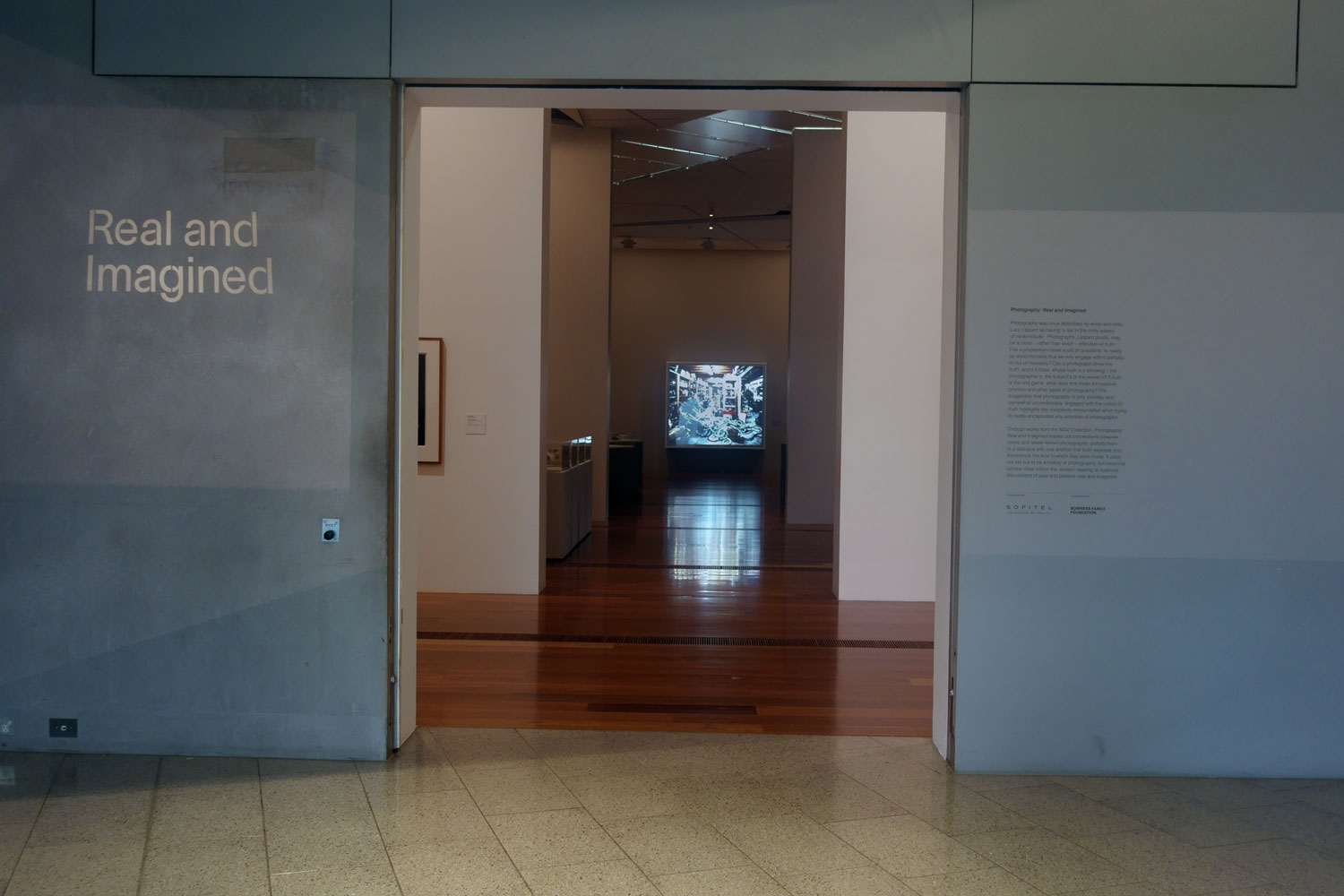
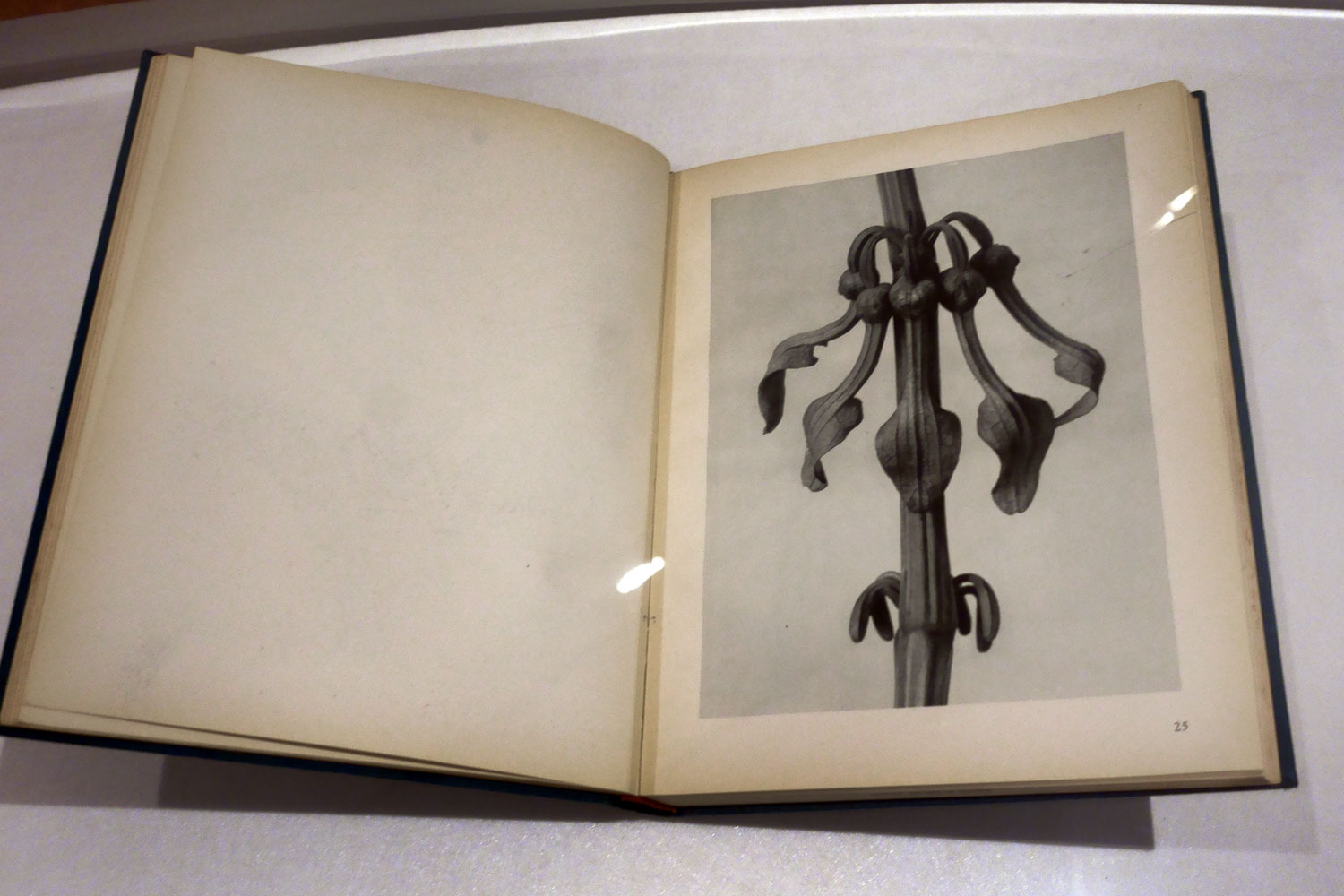
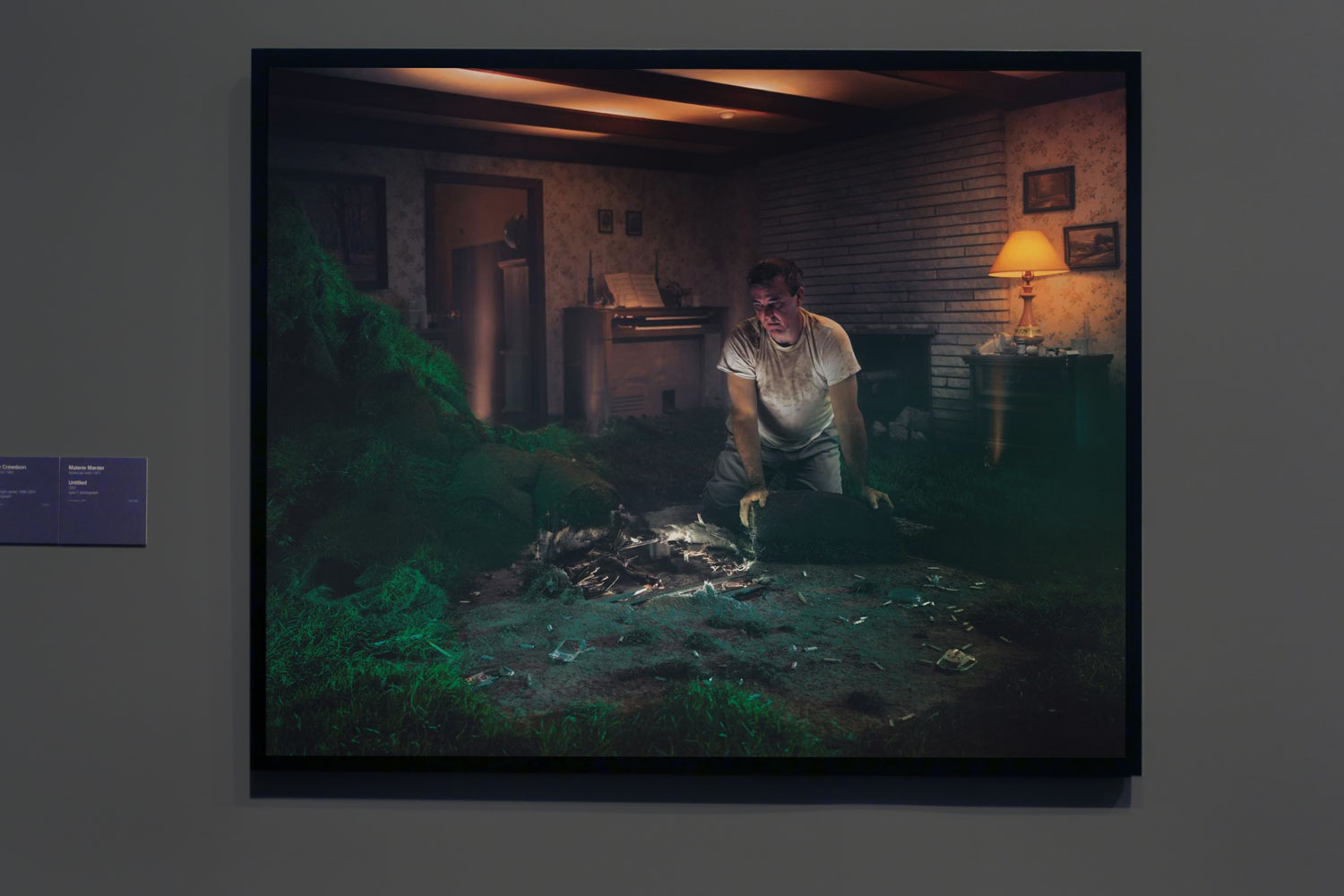
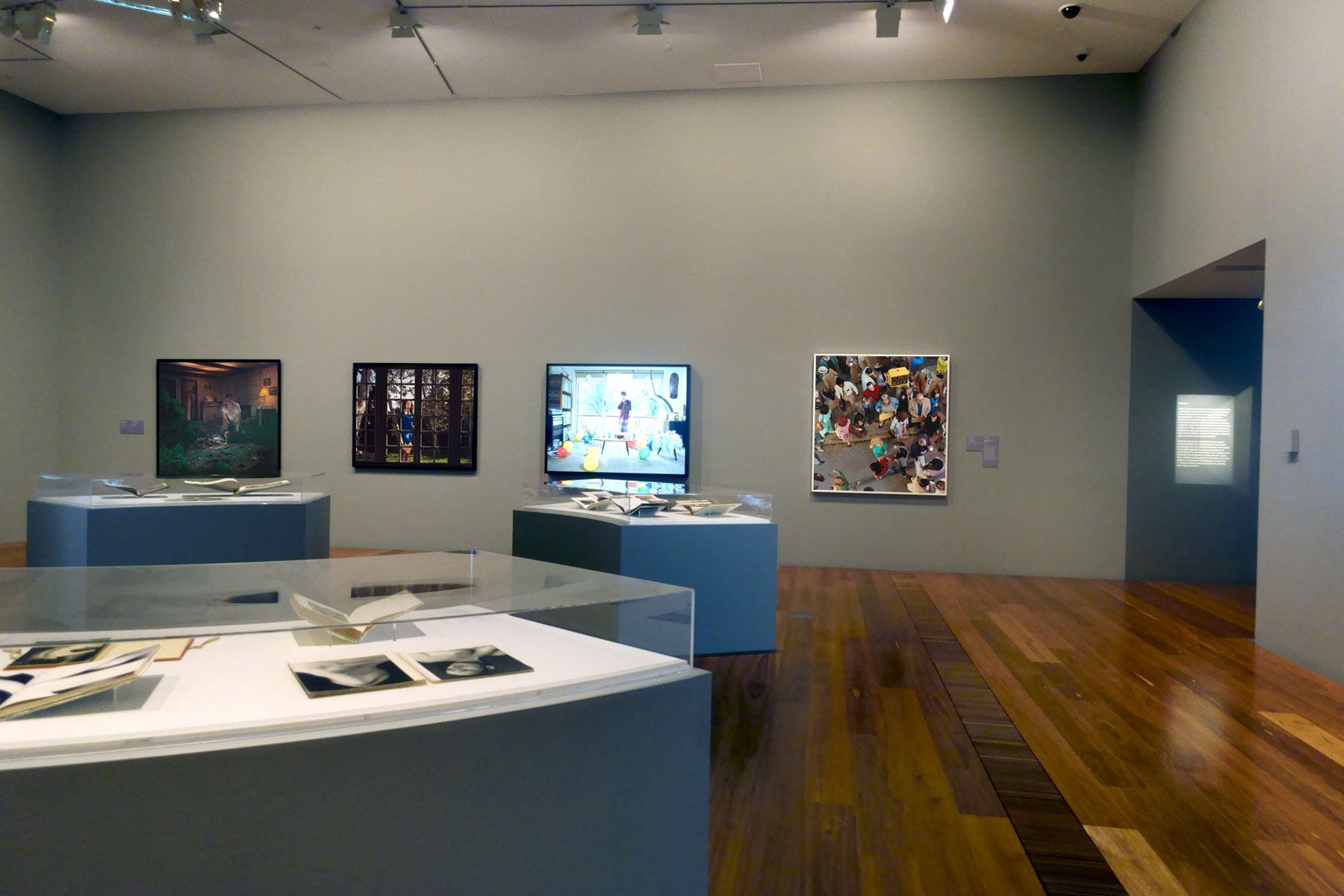
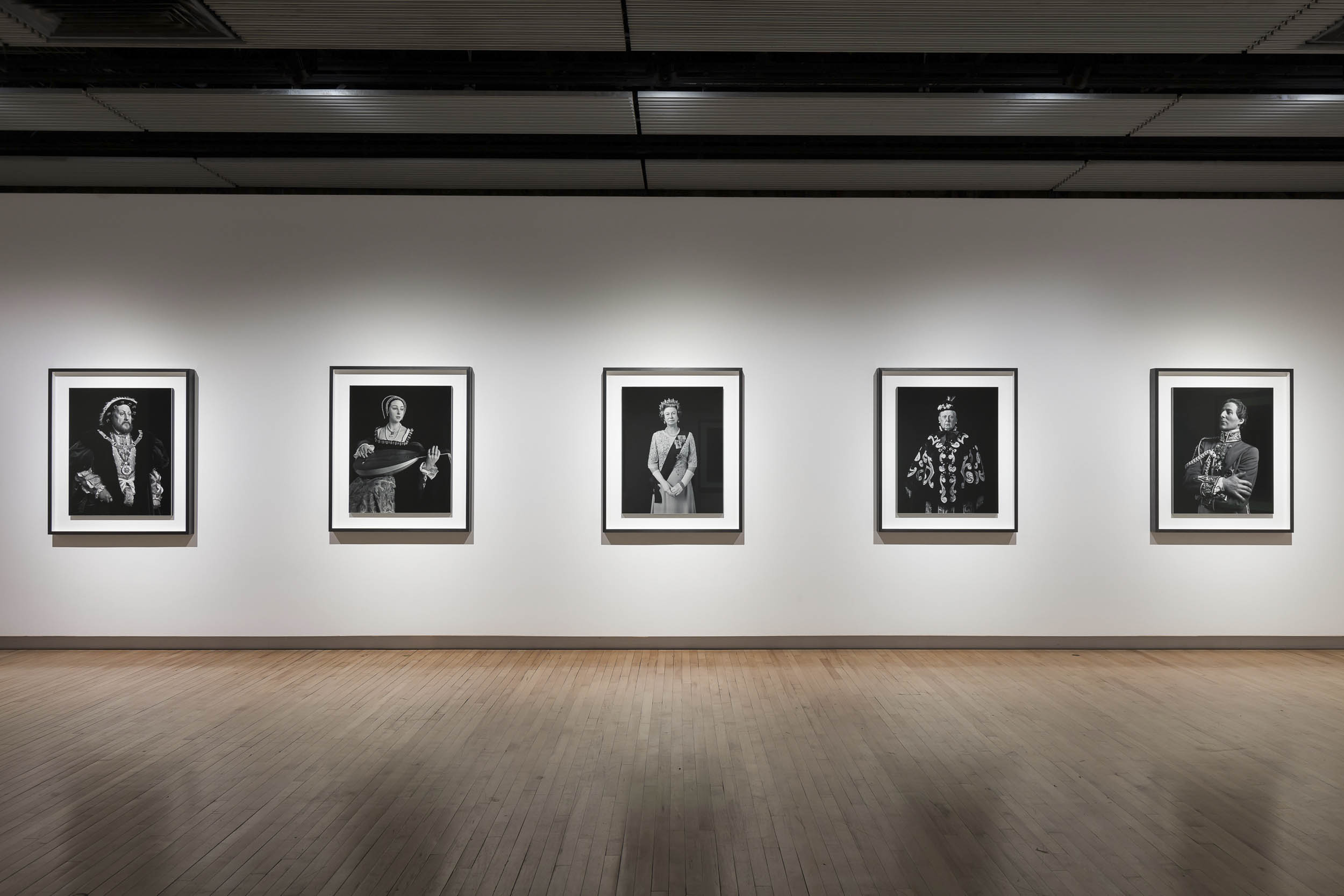
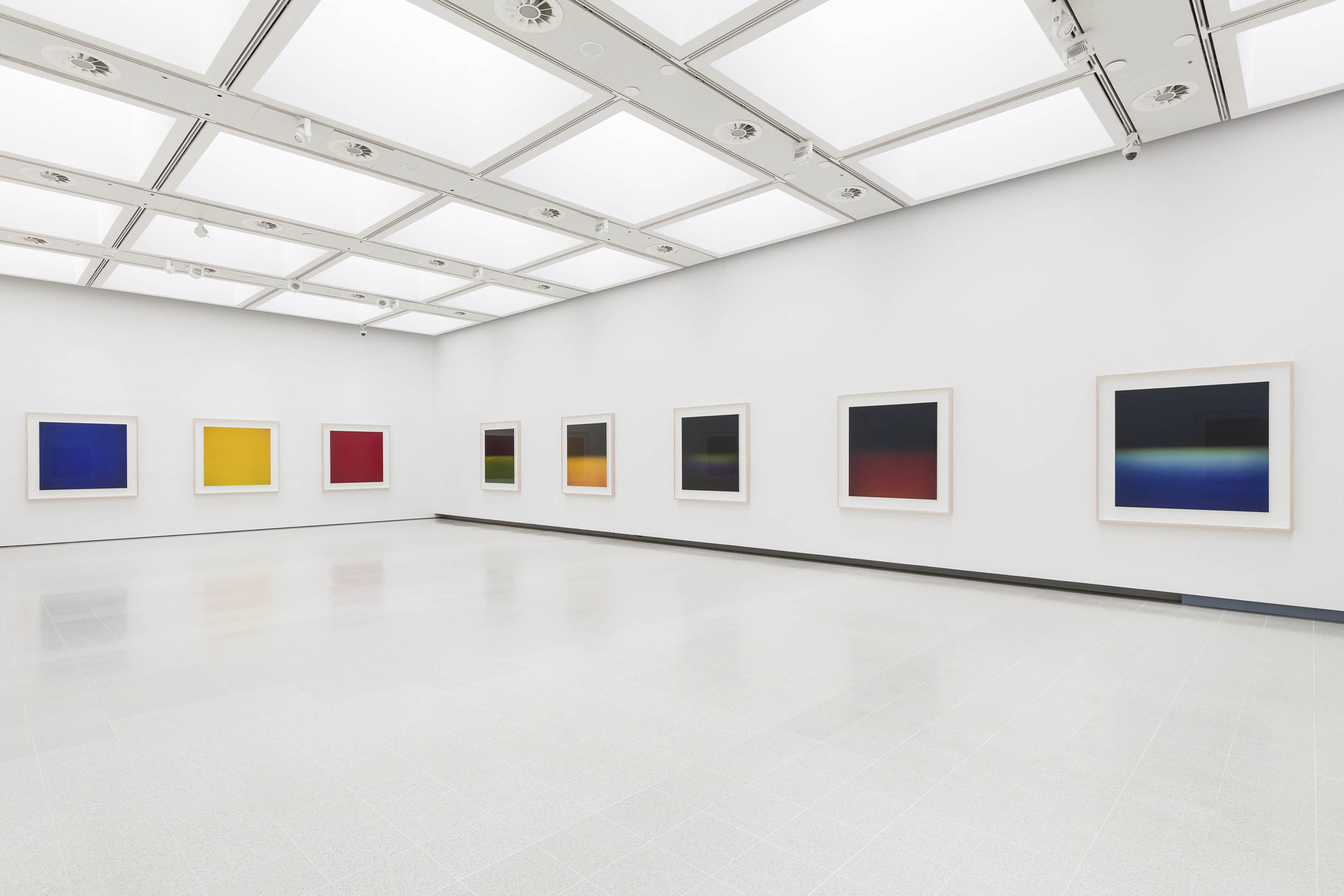
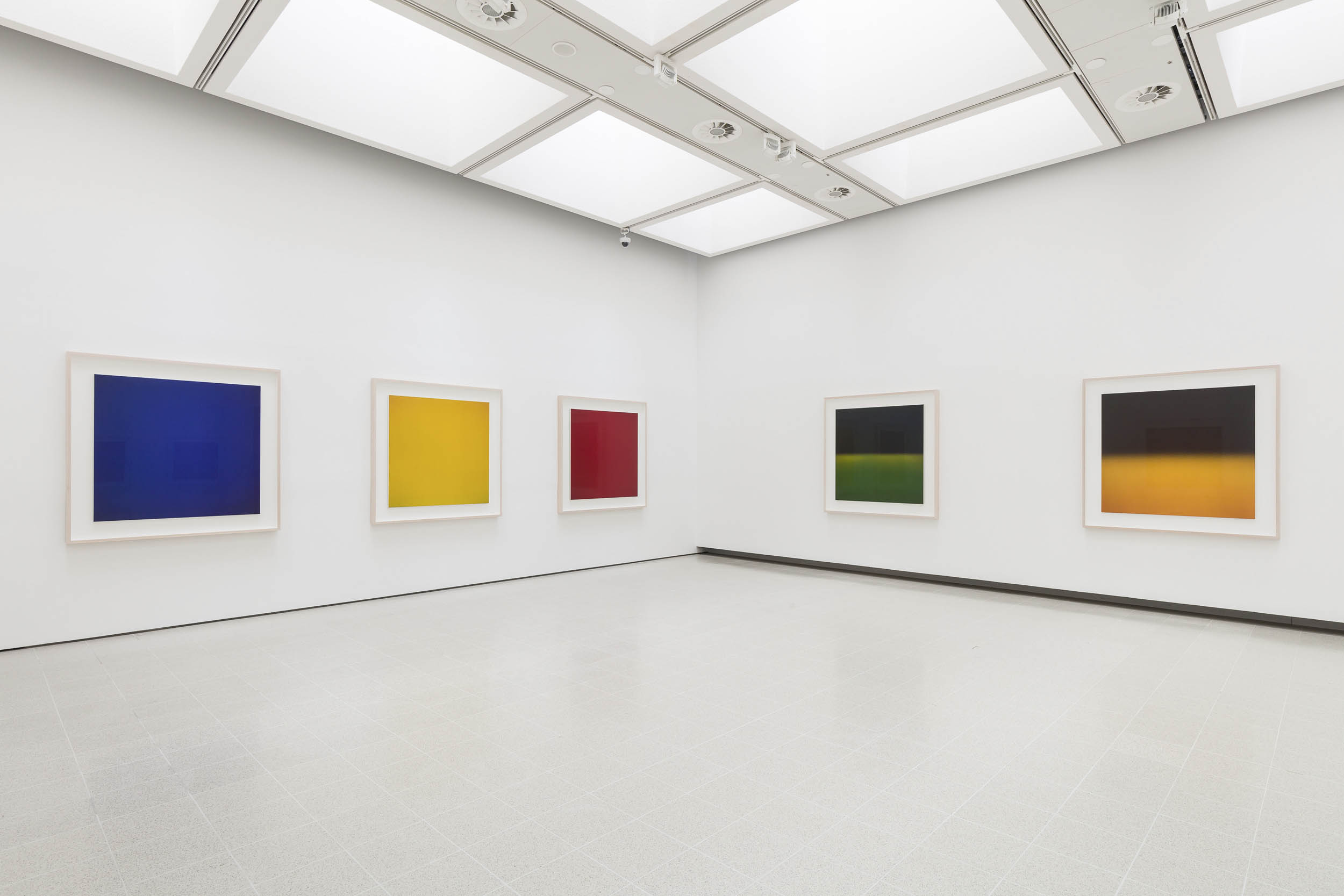
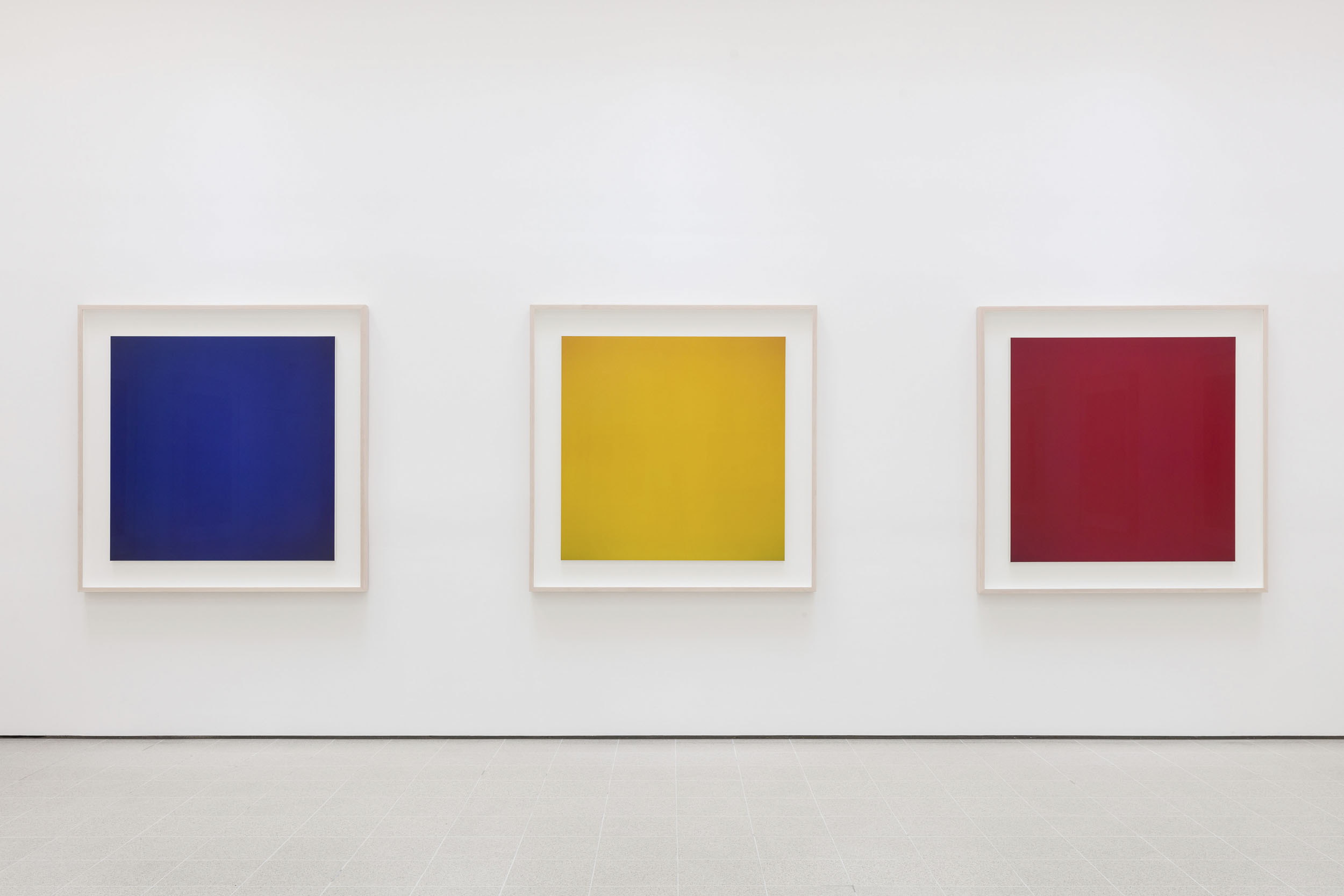
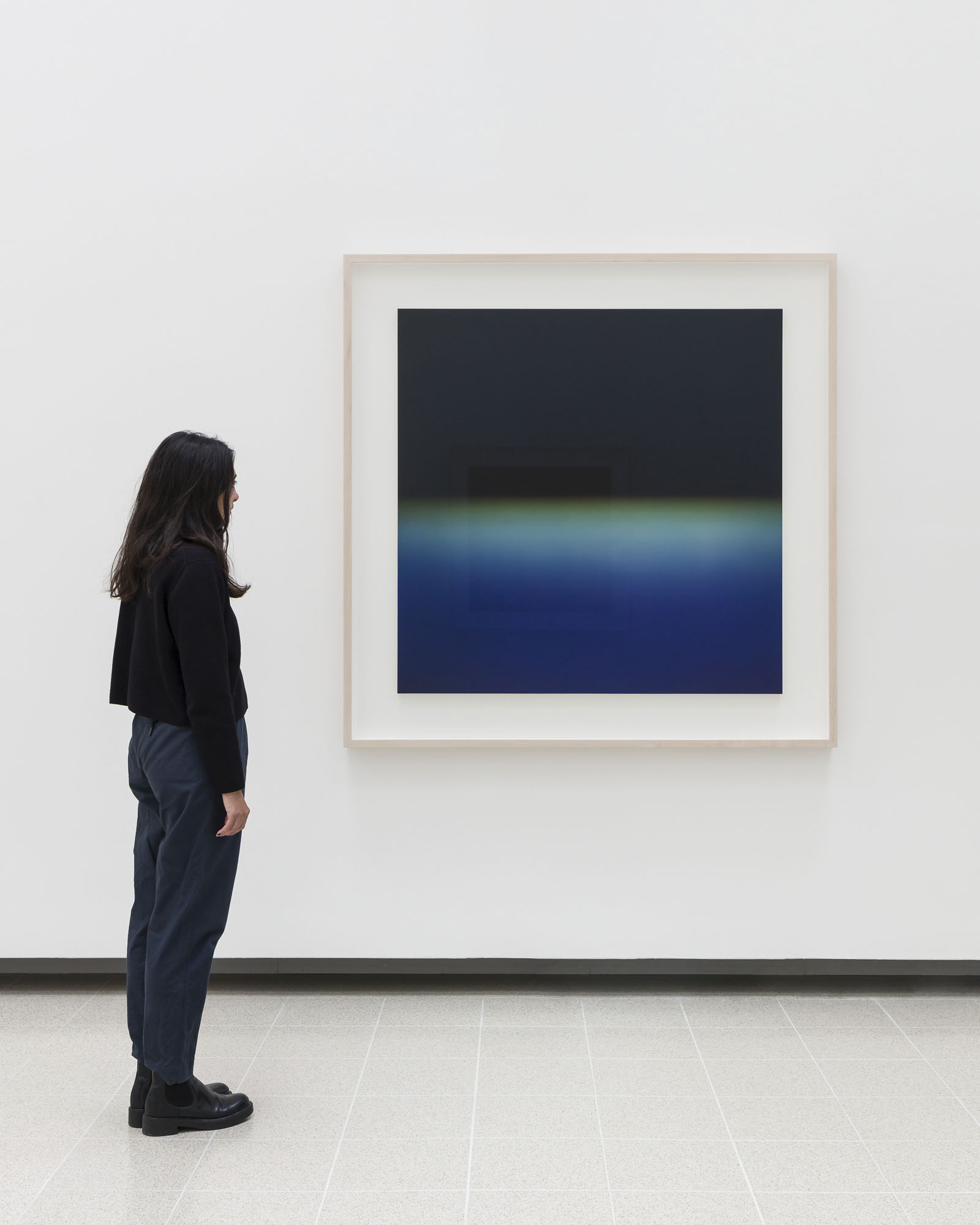
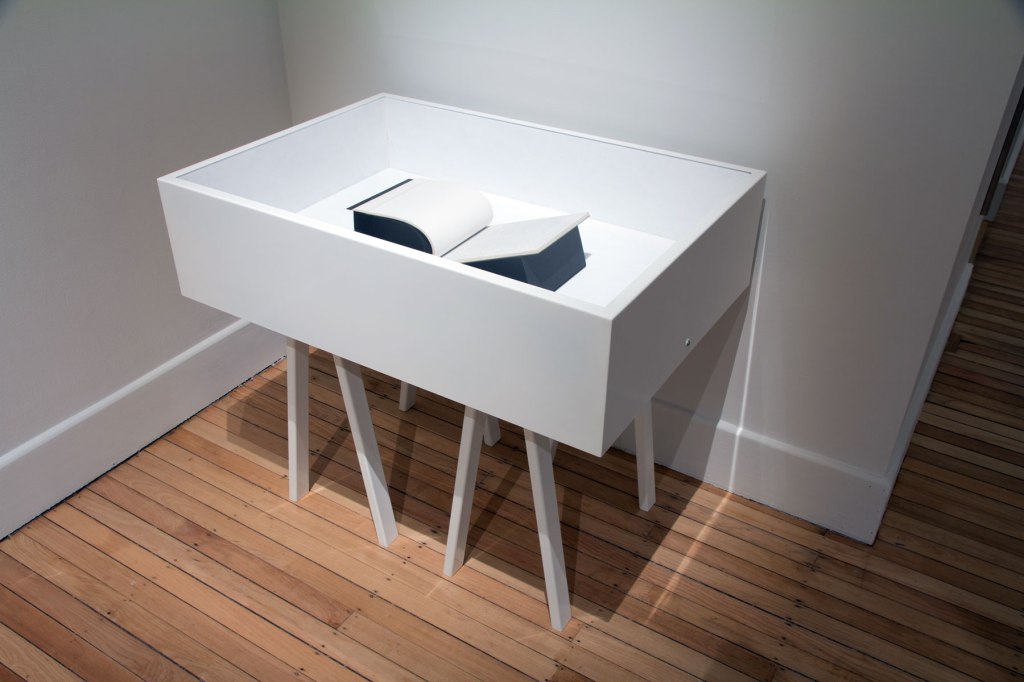
Exhibition: ‘Photography and the Performative’ at the Chau Chak Wing Museum at The University of Sydney

Exhibition dates: 29th April 2023 – 4th August 2024

Curator: Katrina Liberiou


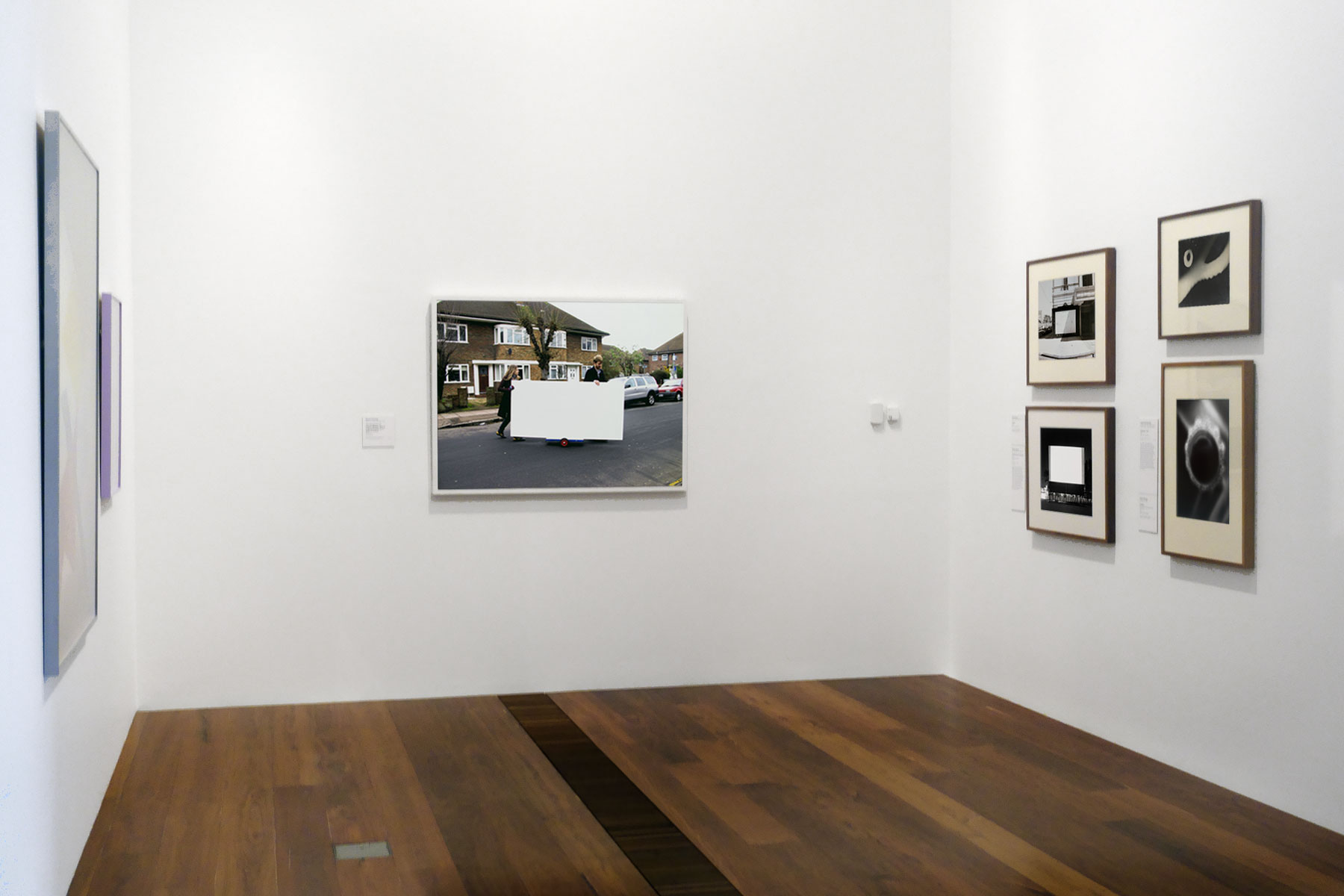
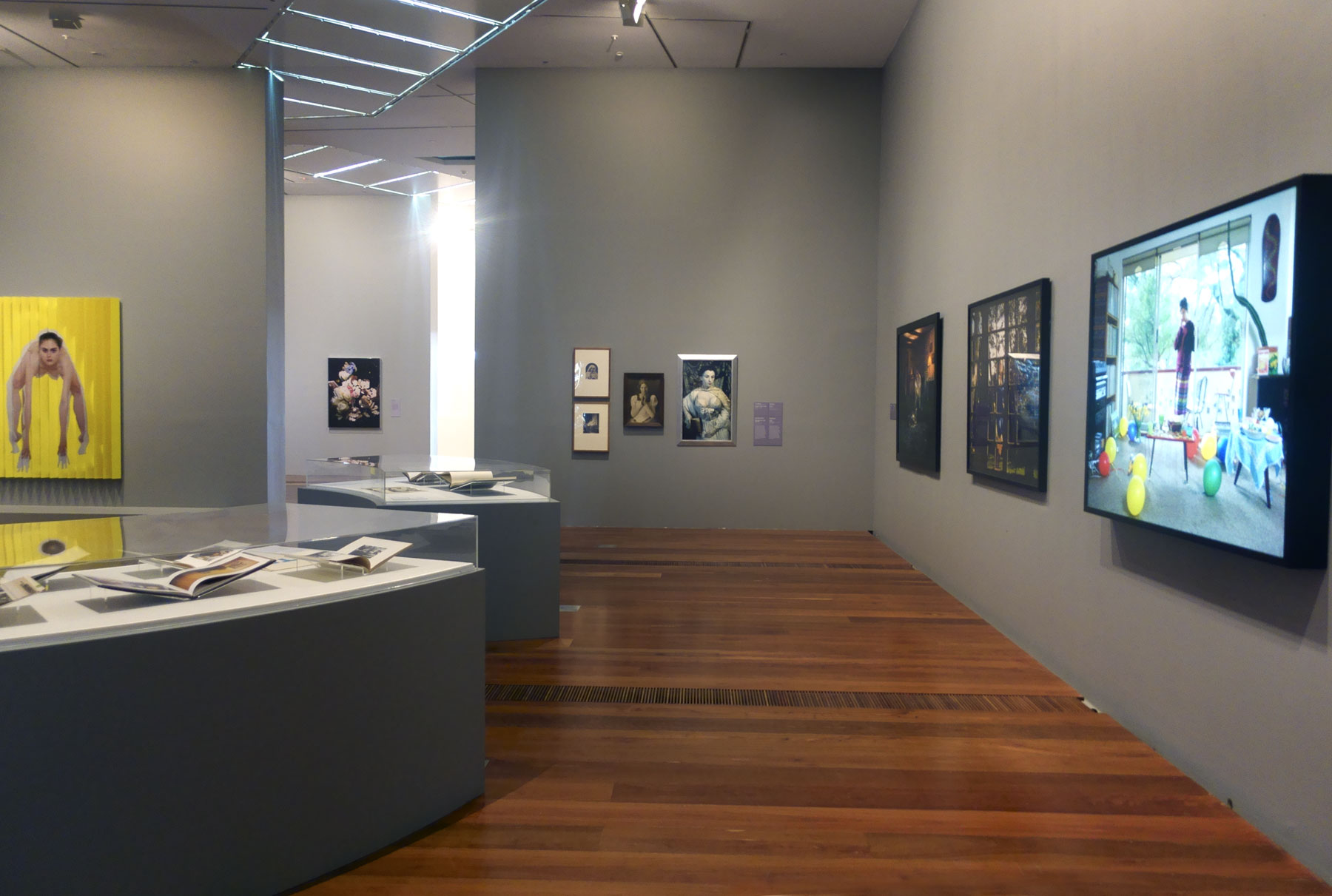
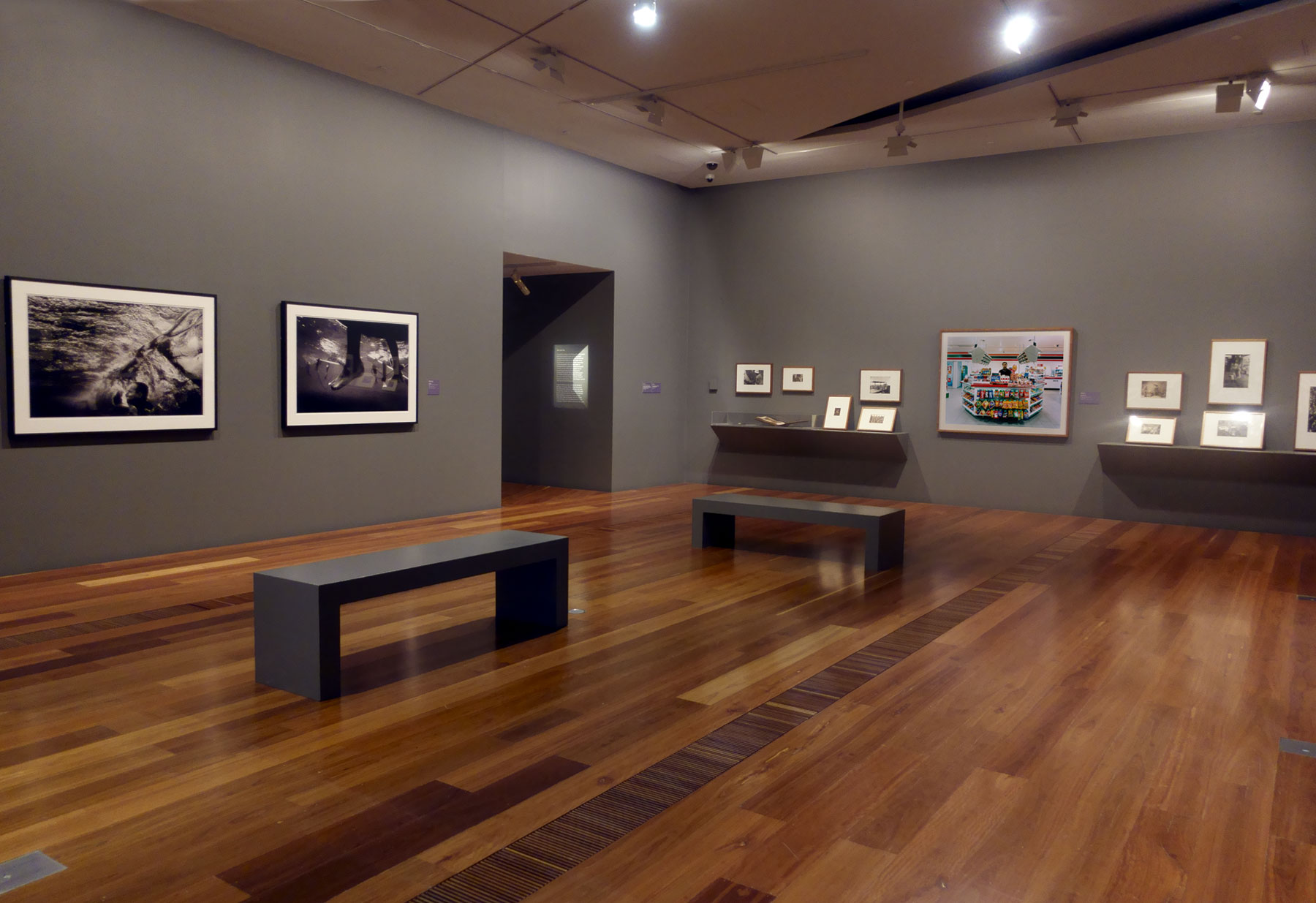
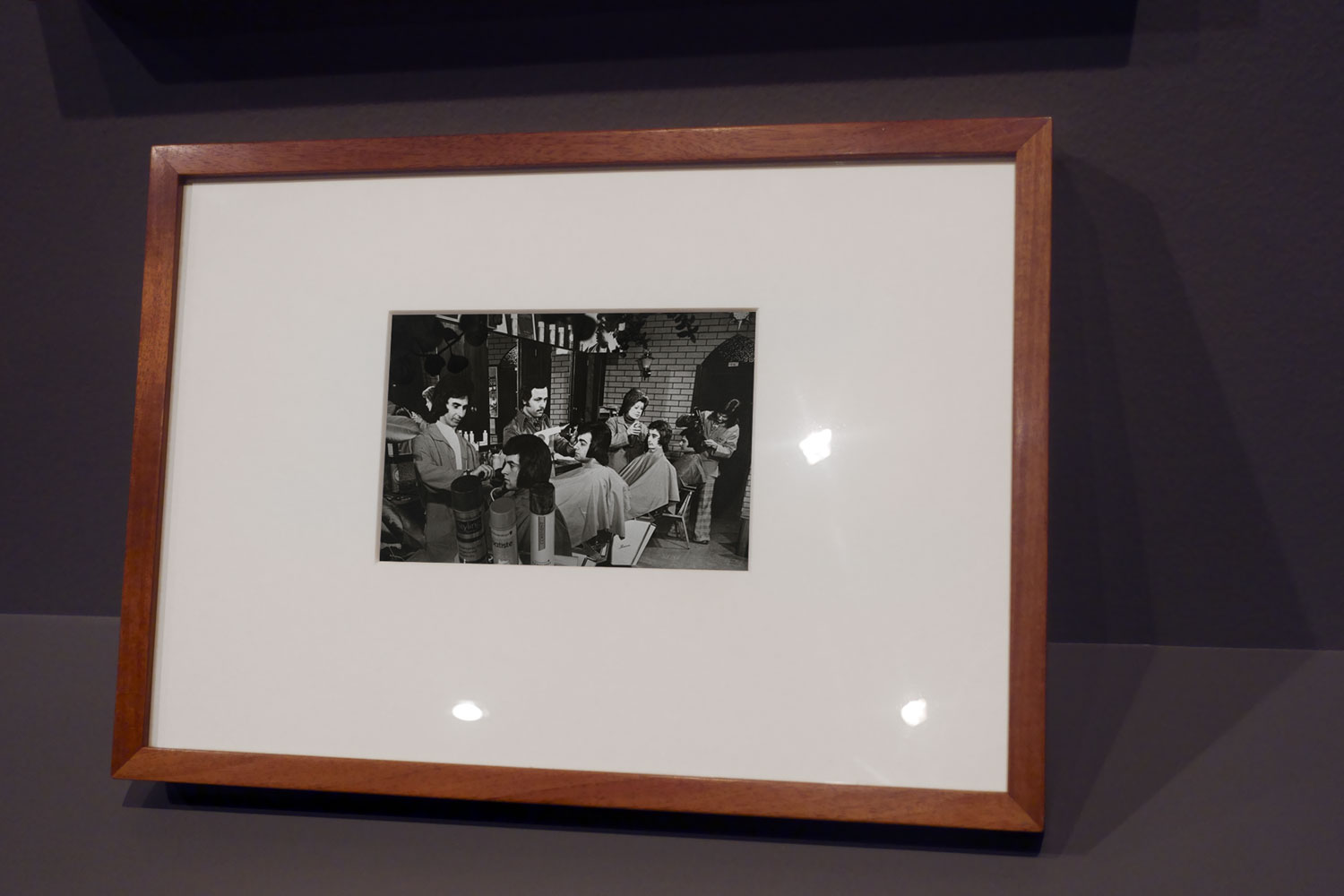
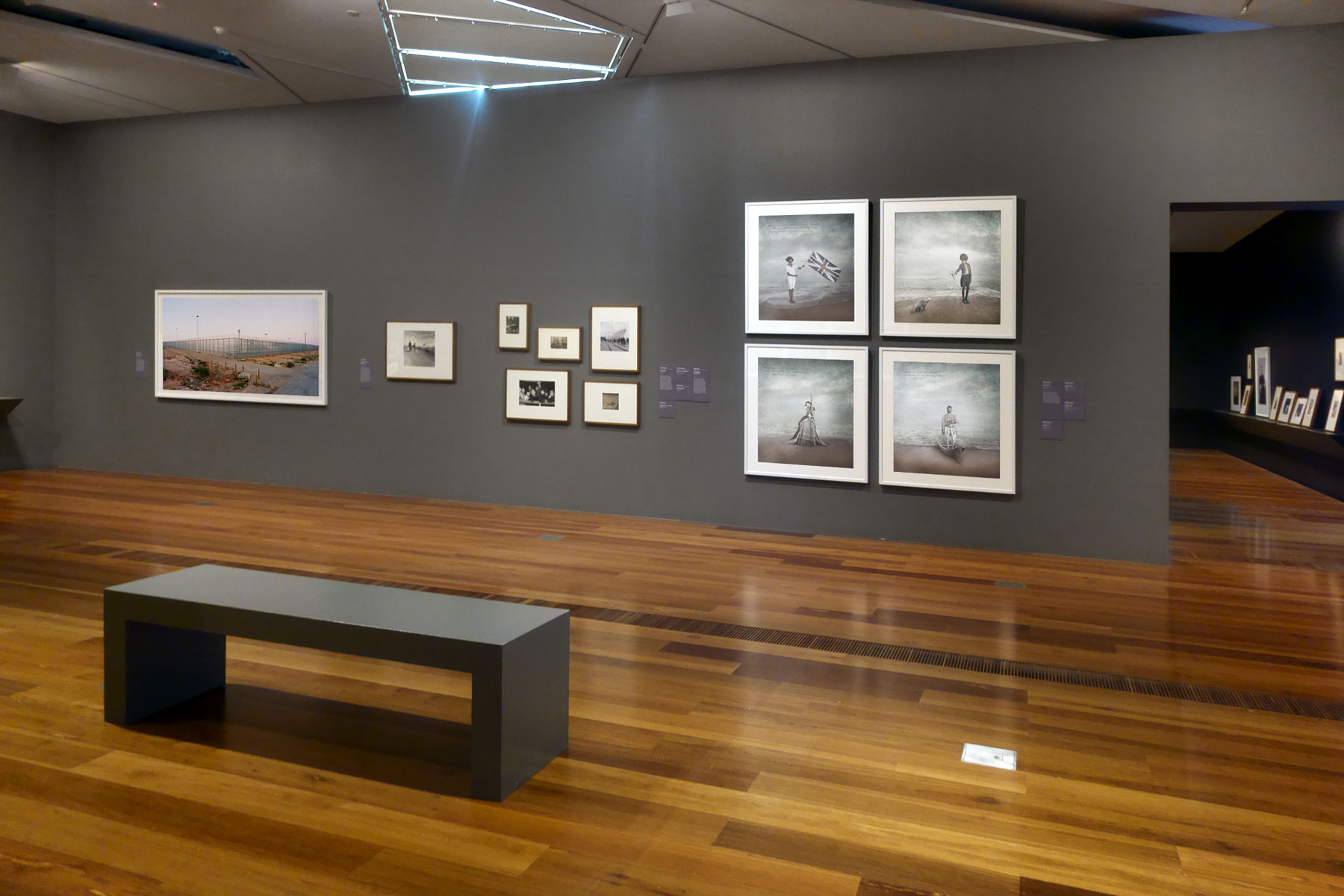
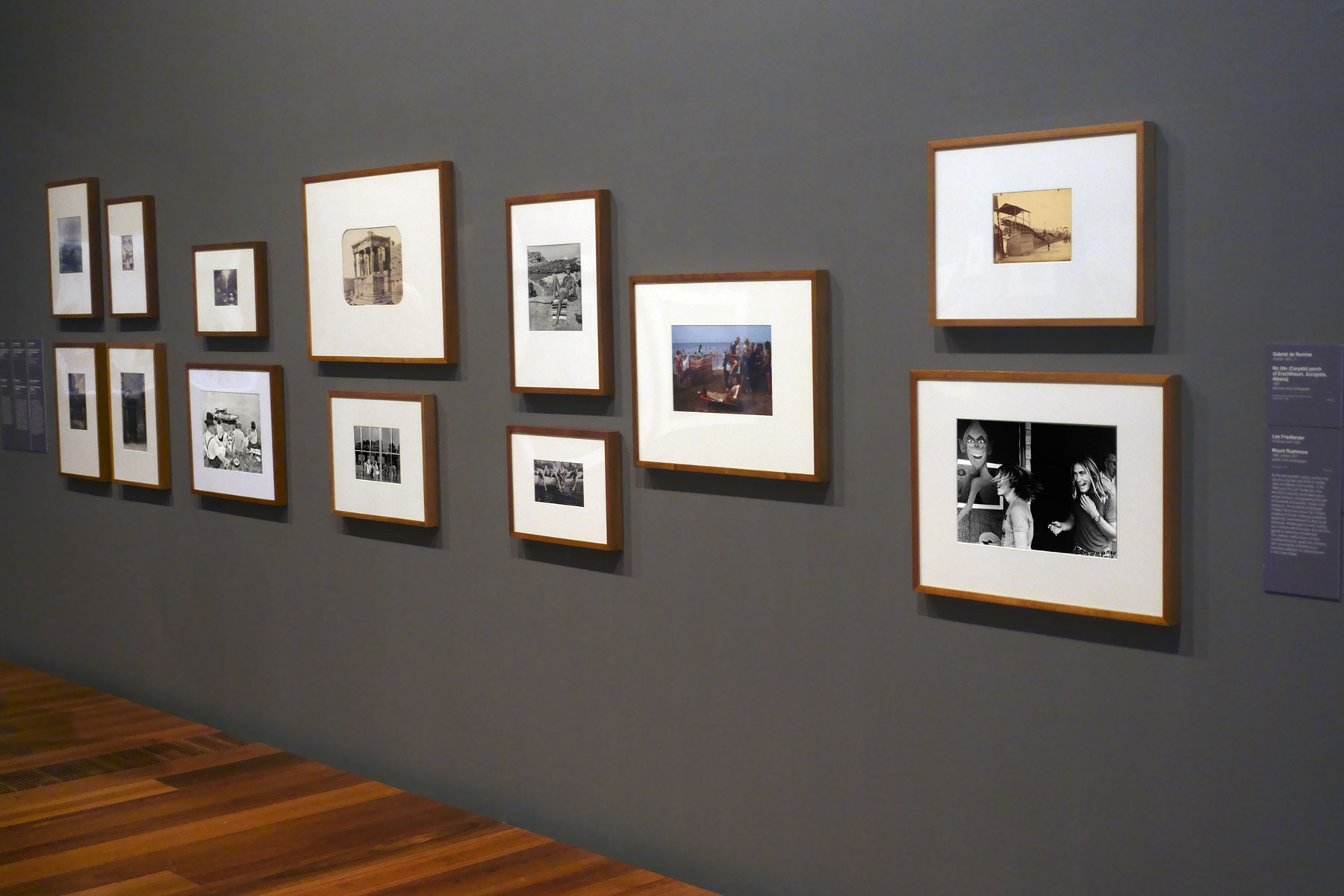
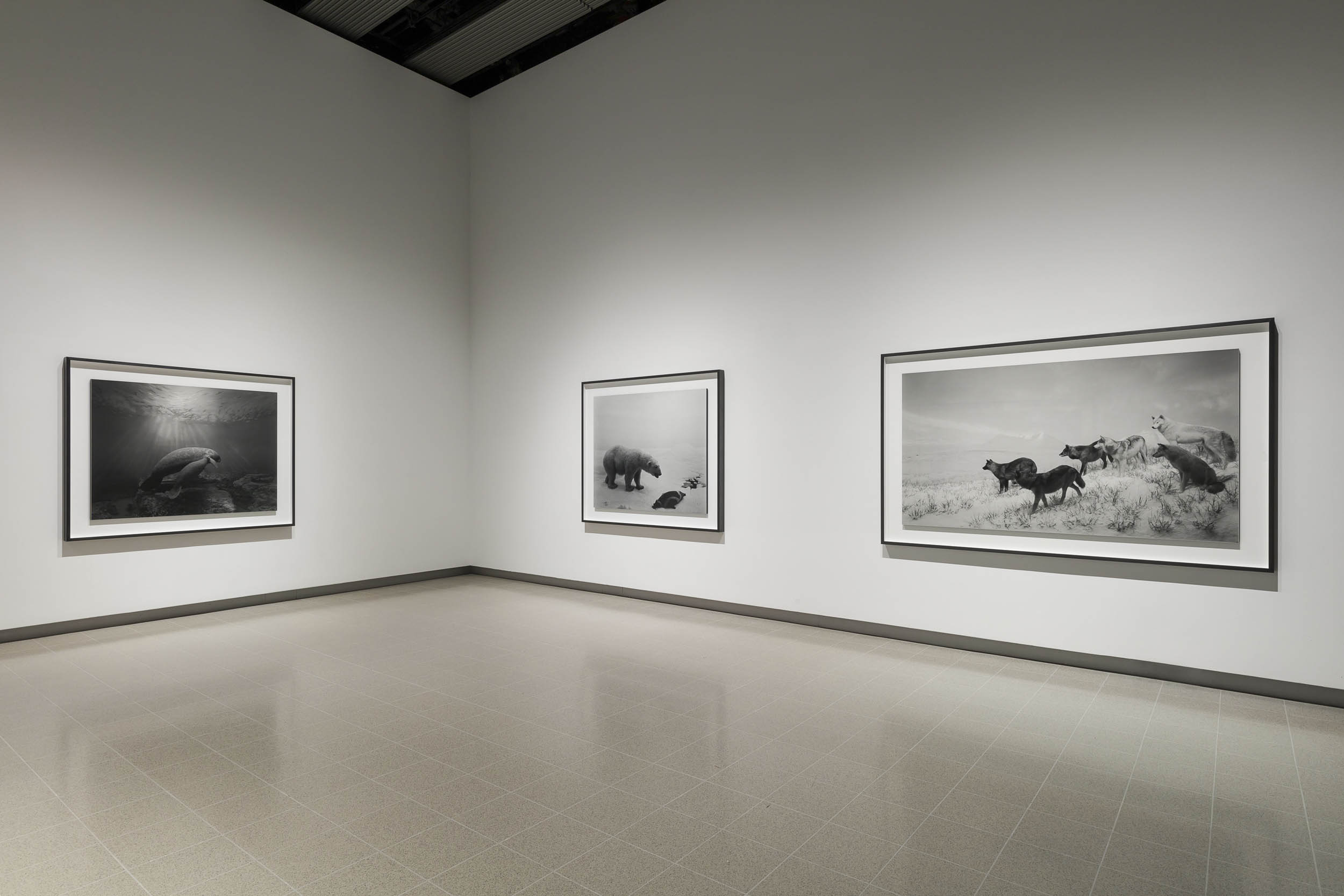
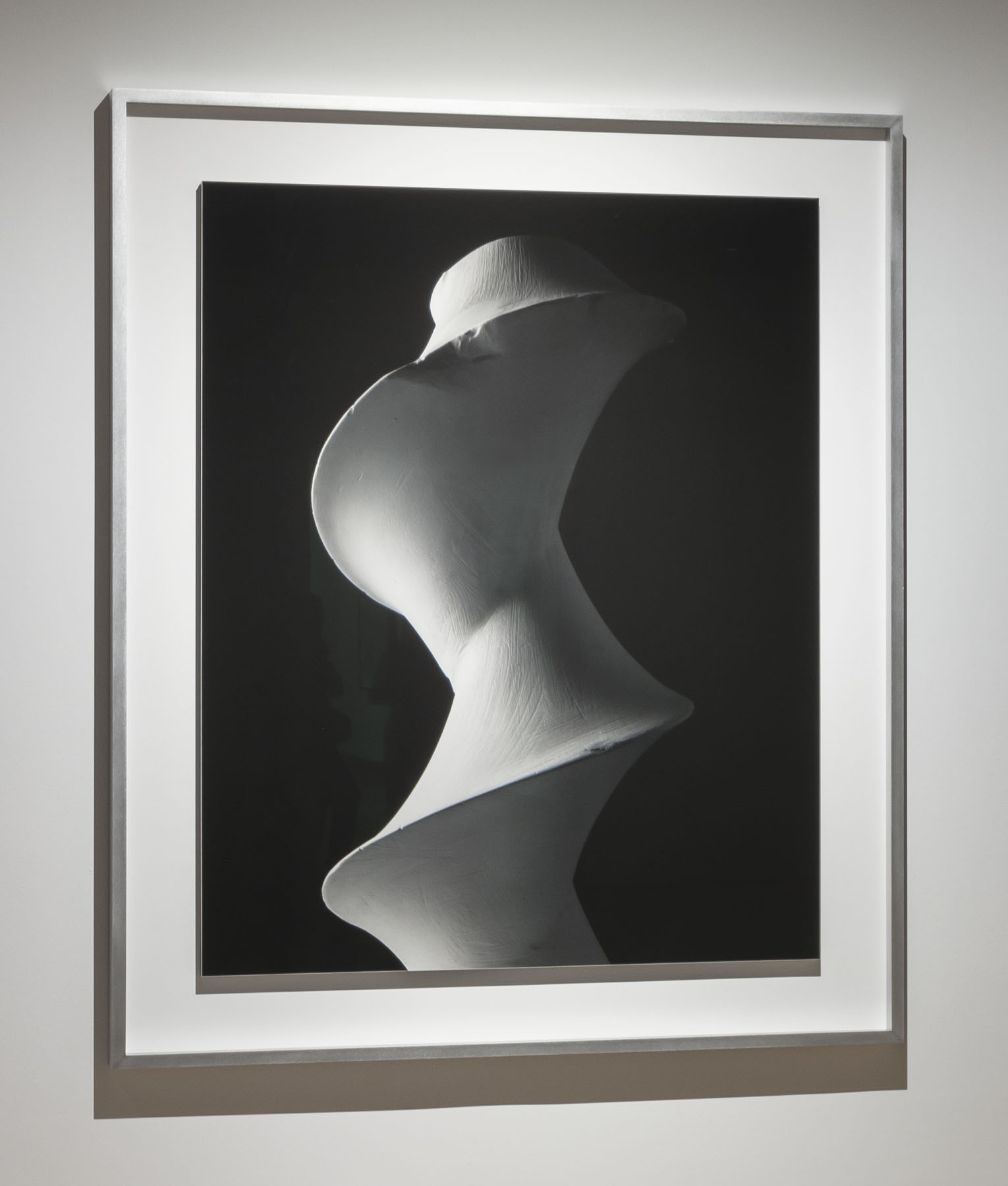
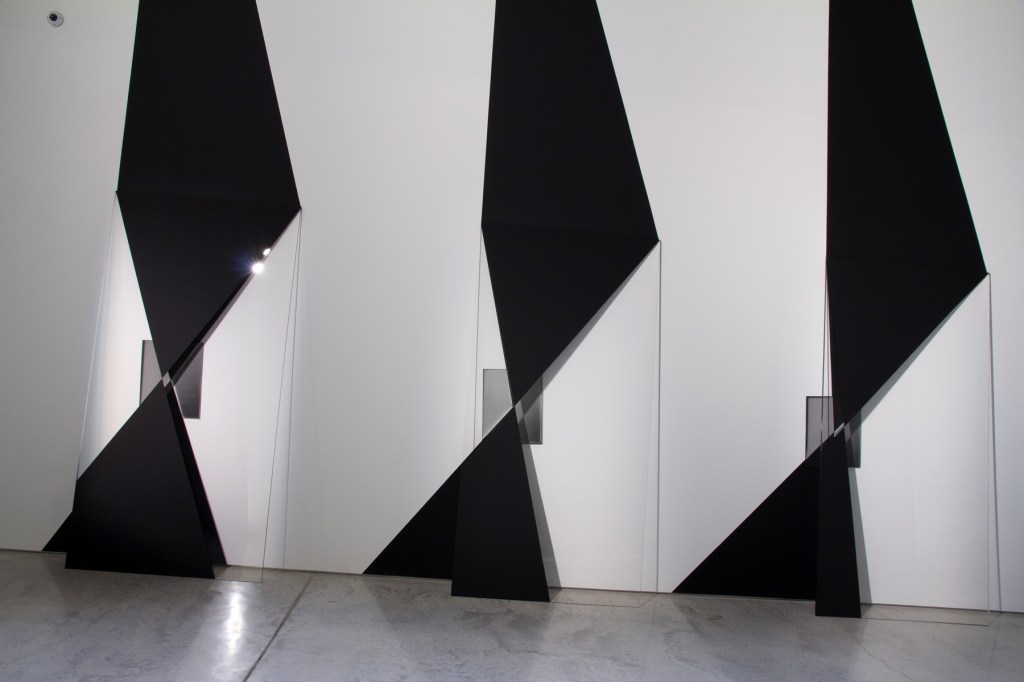
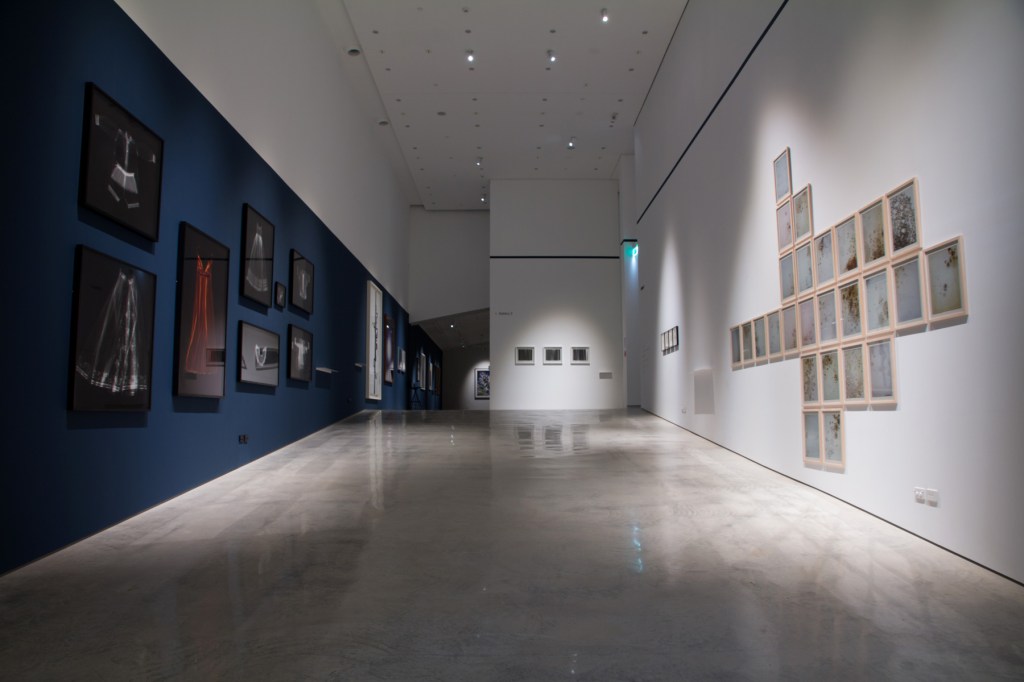
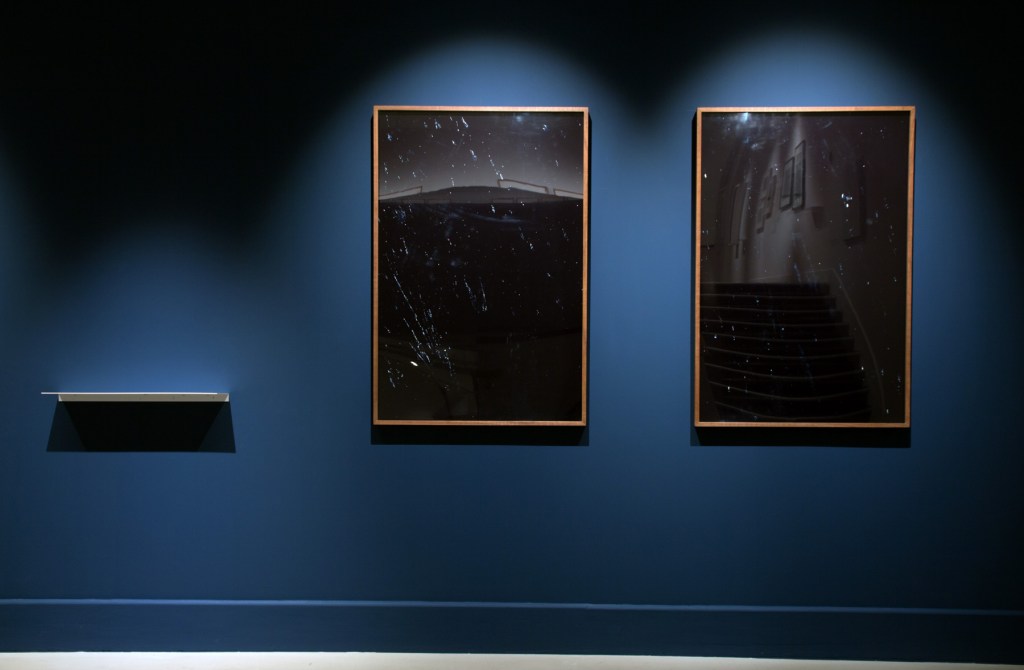
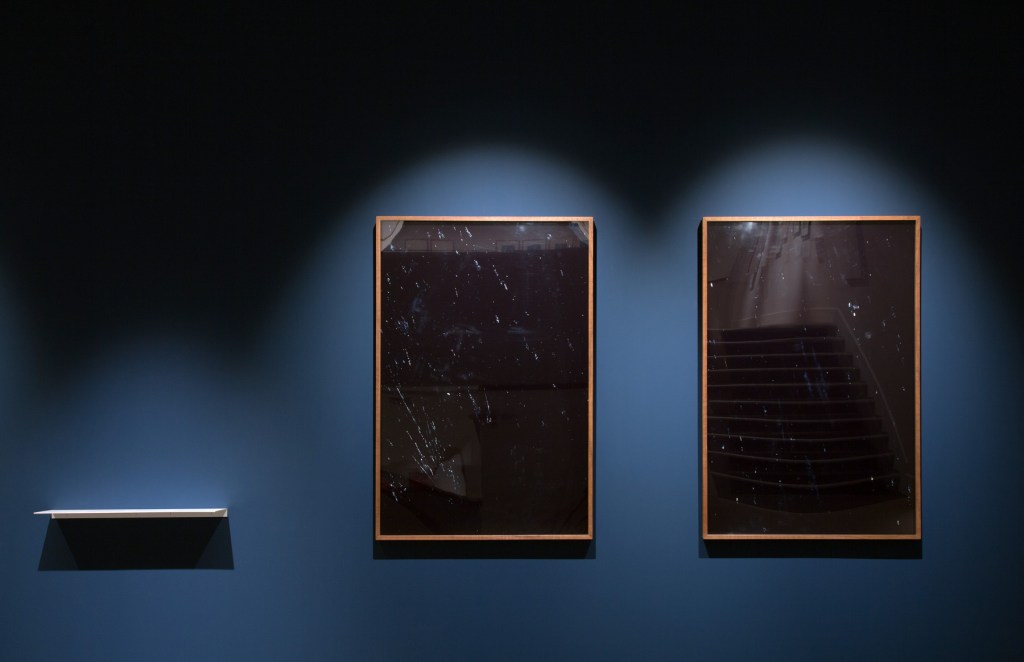
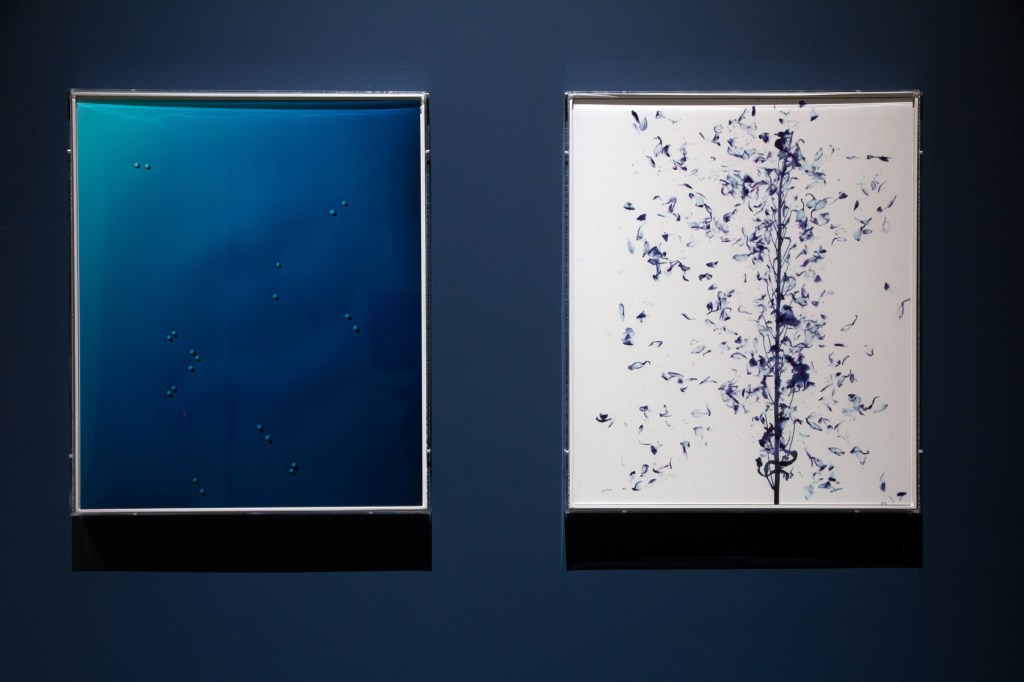
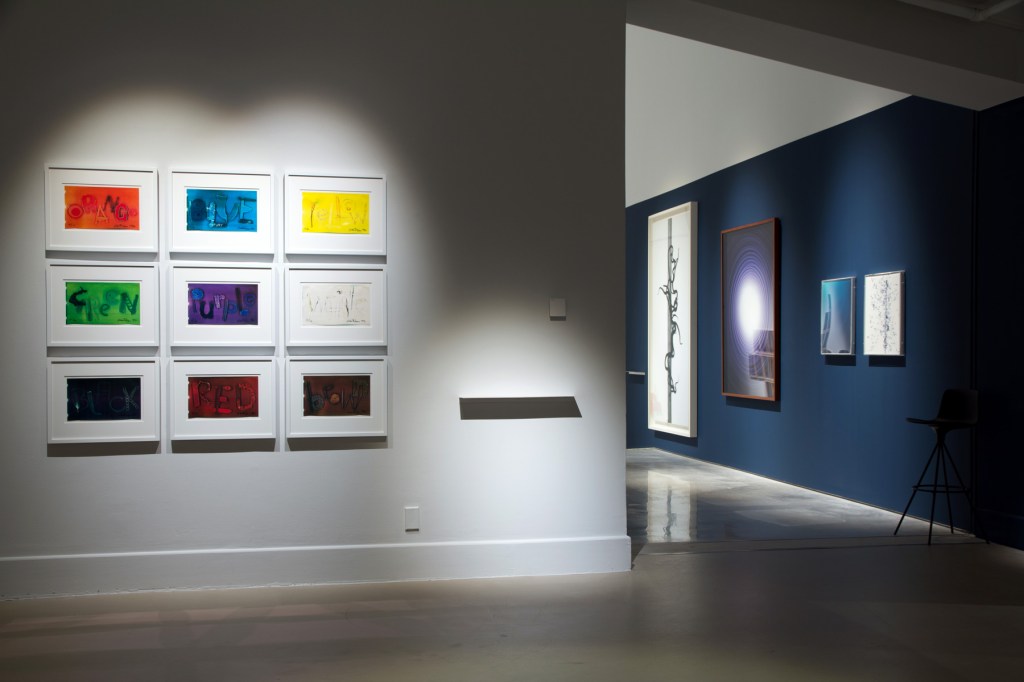
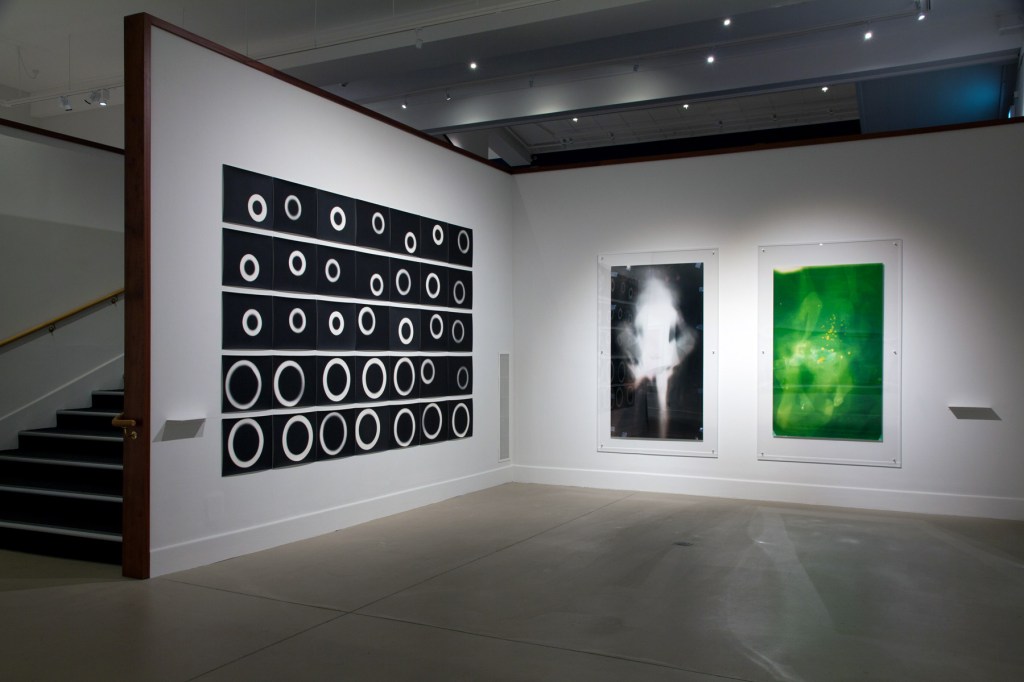
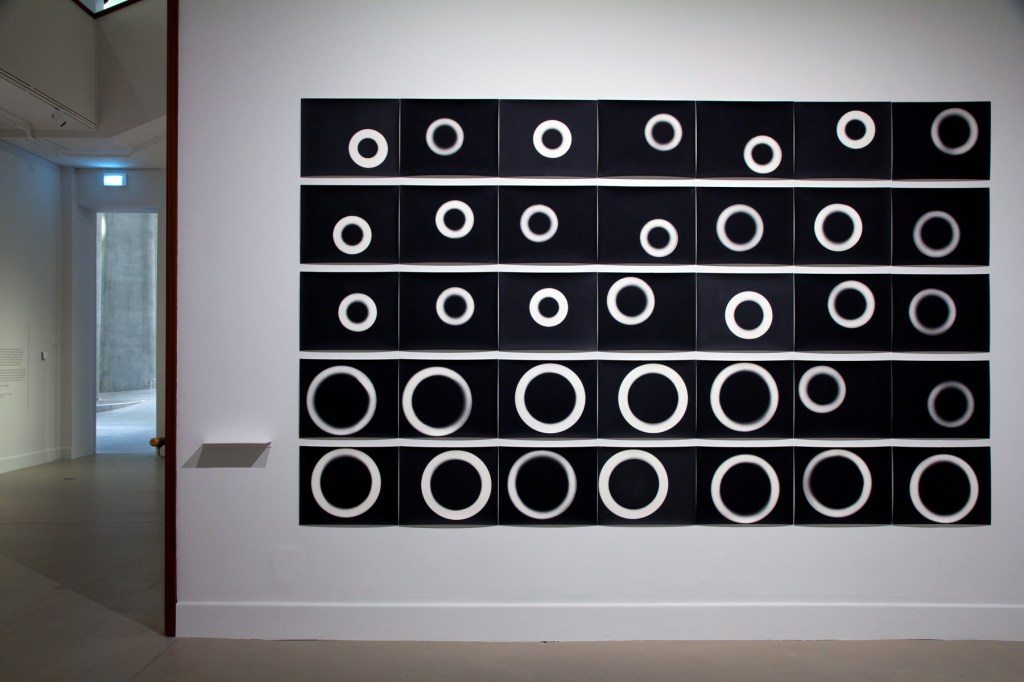
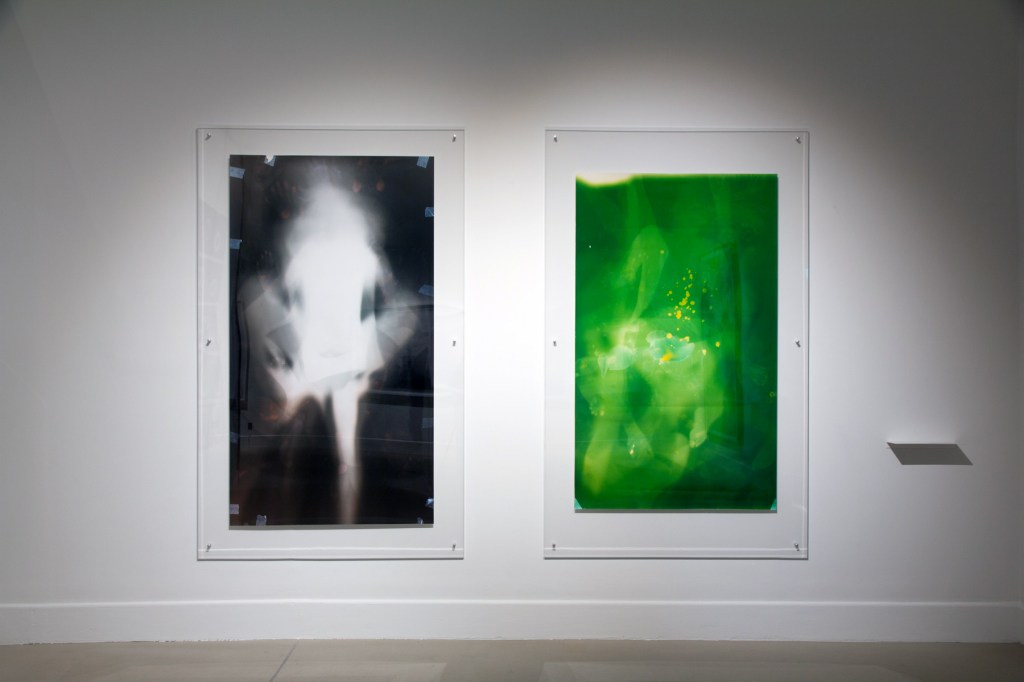
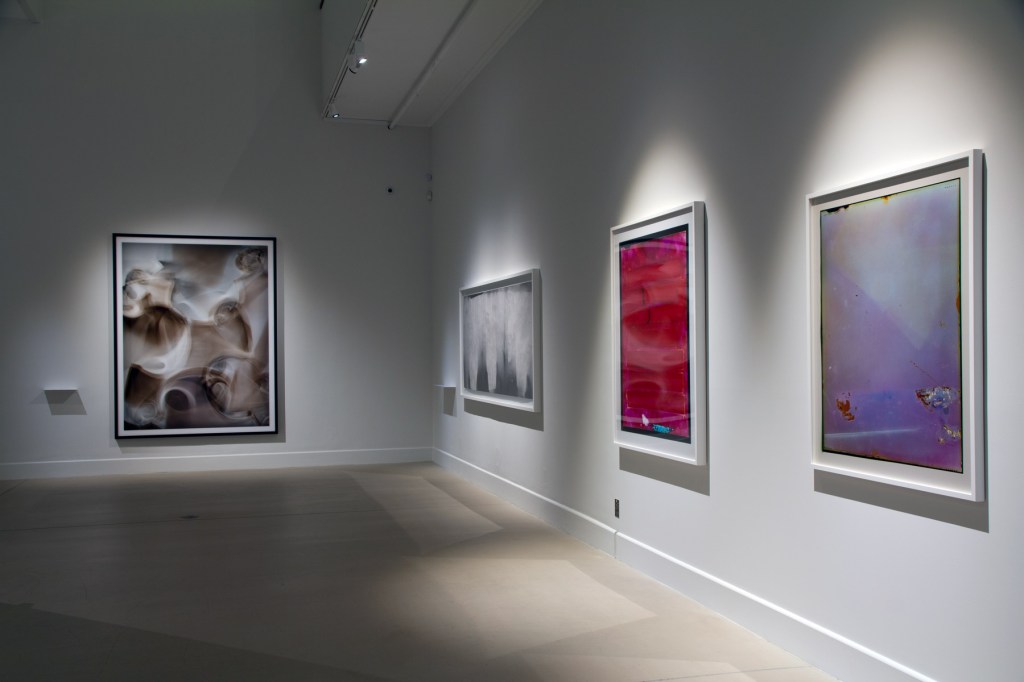
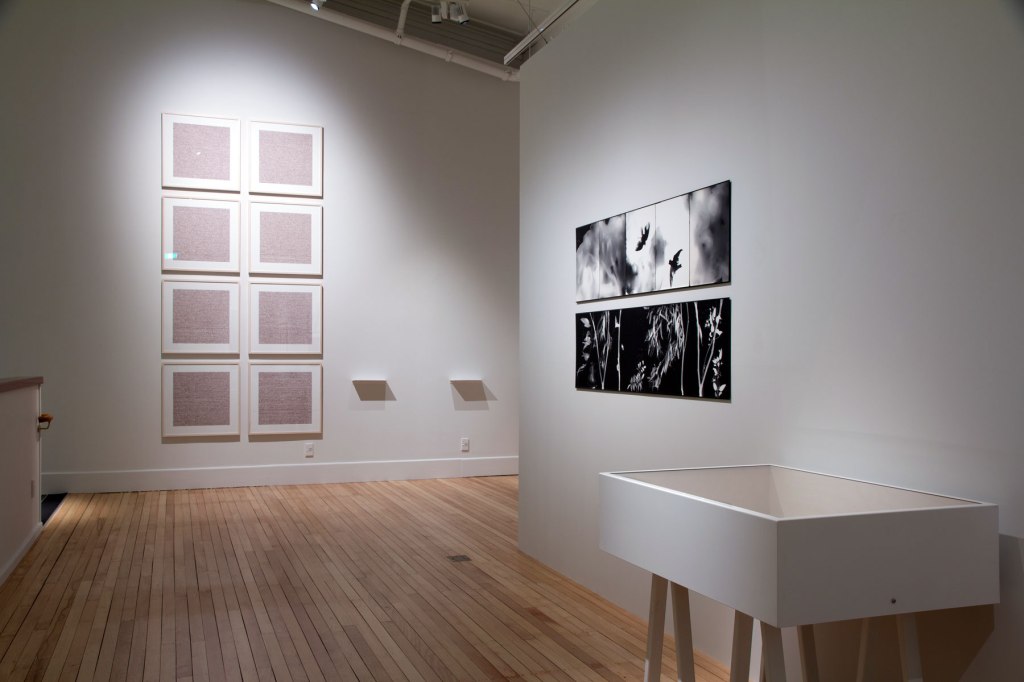
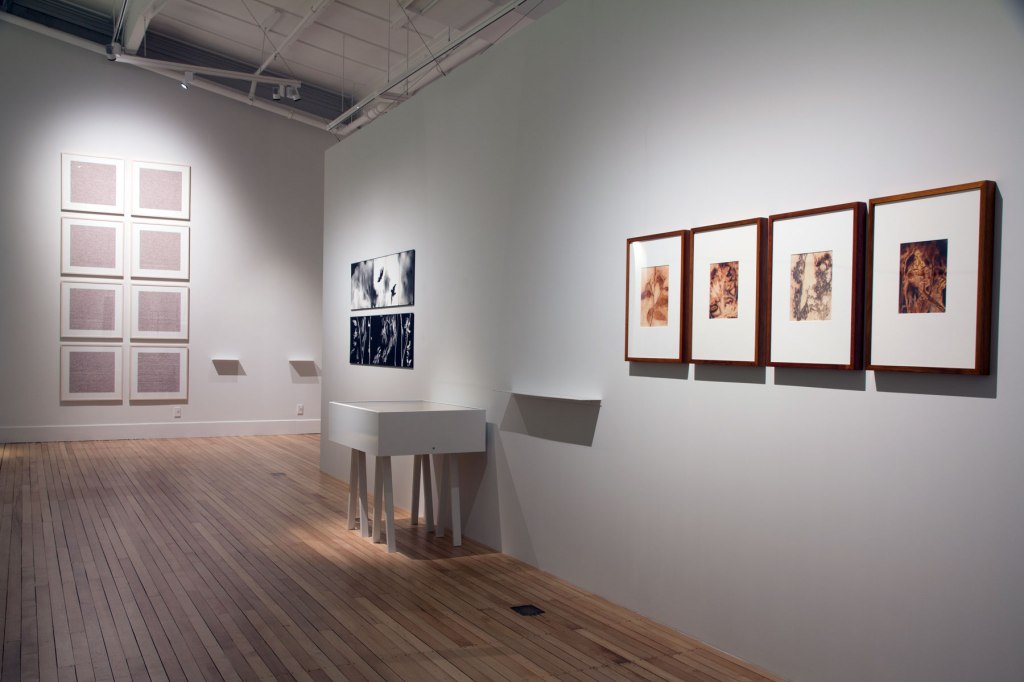
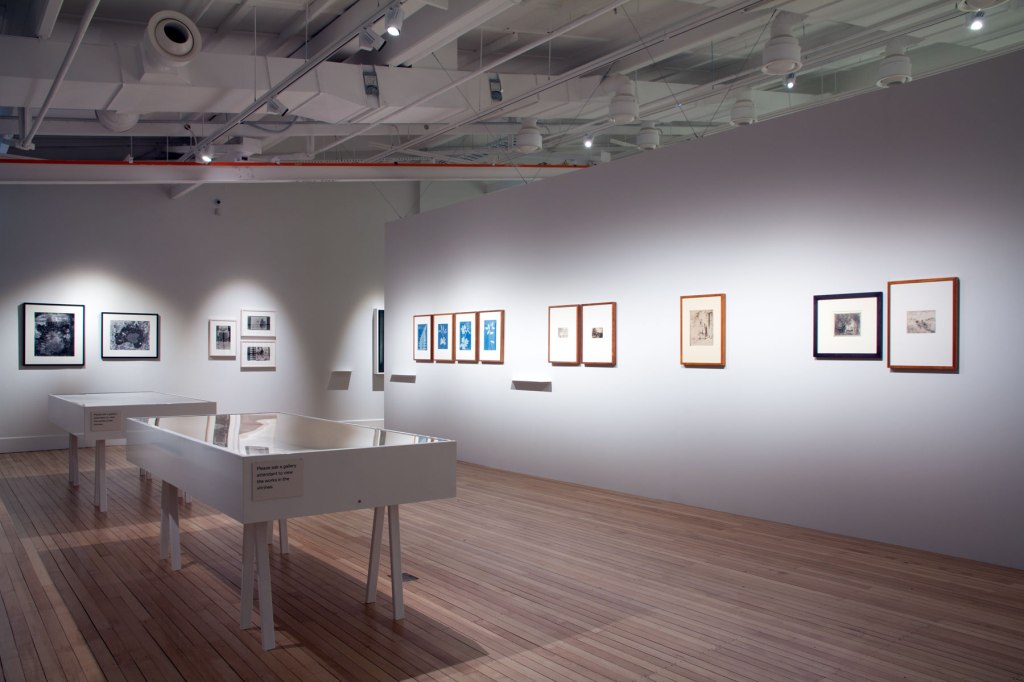
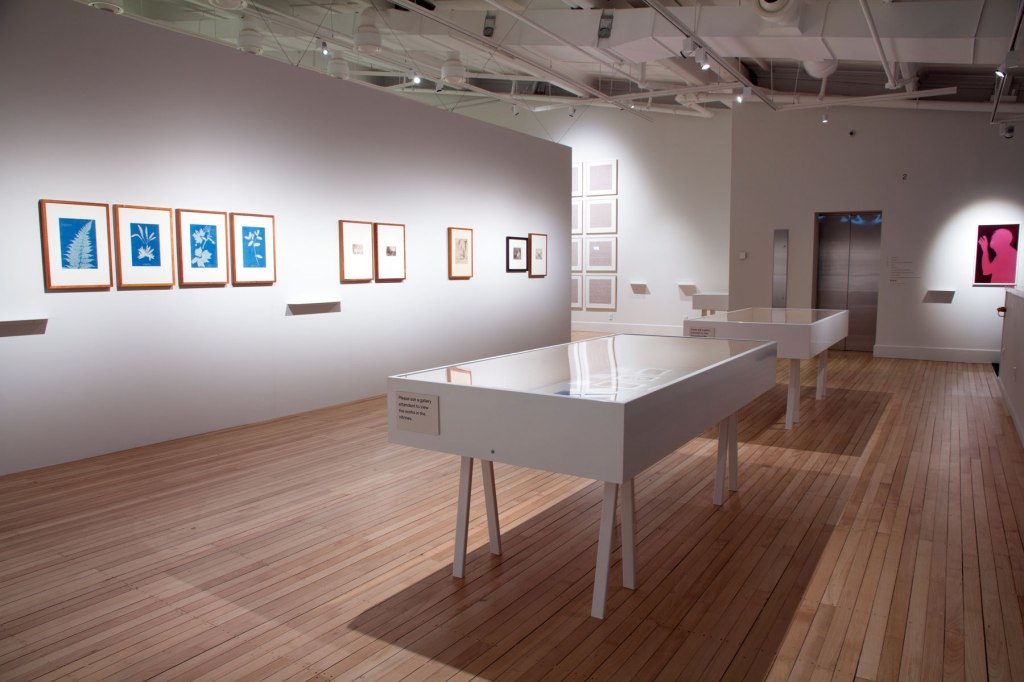
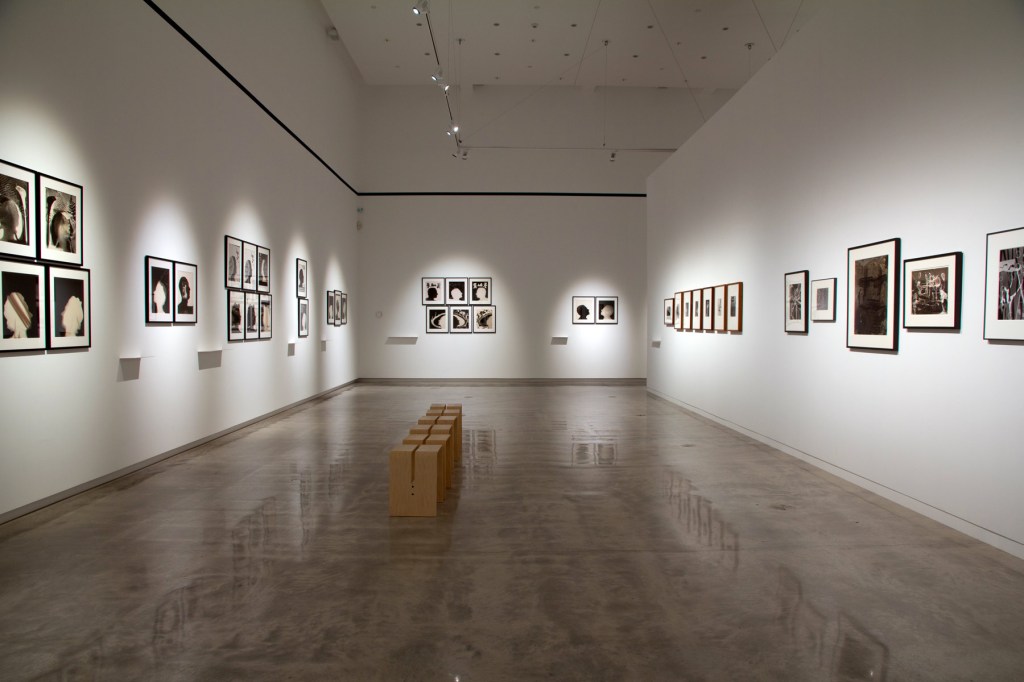
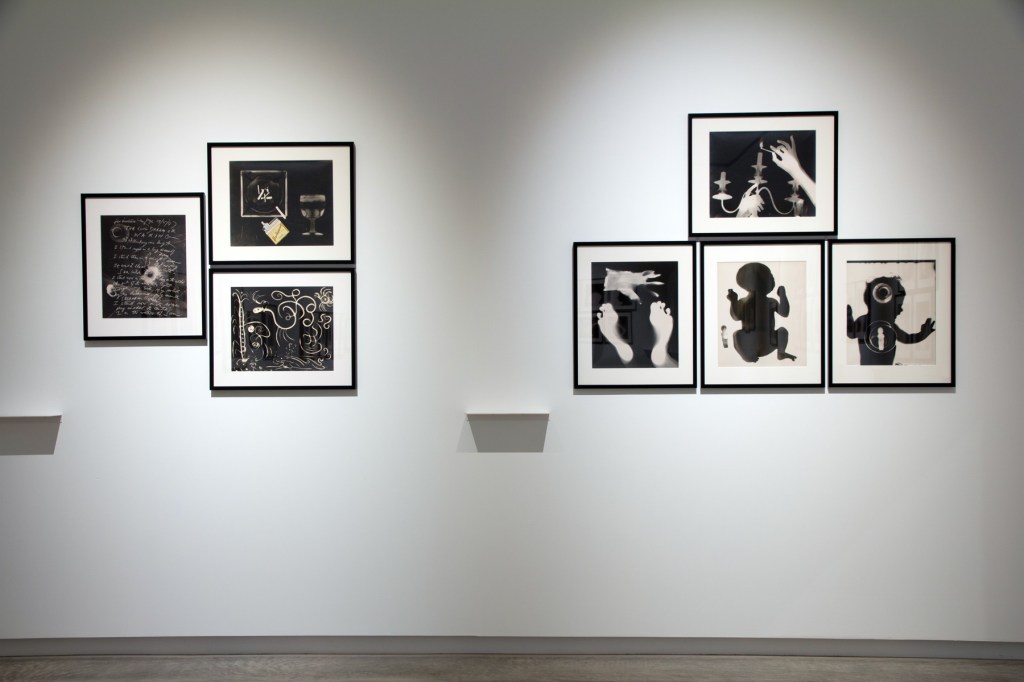
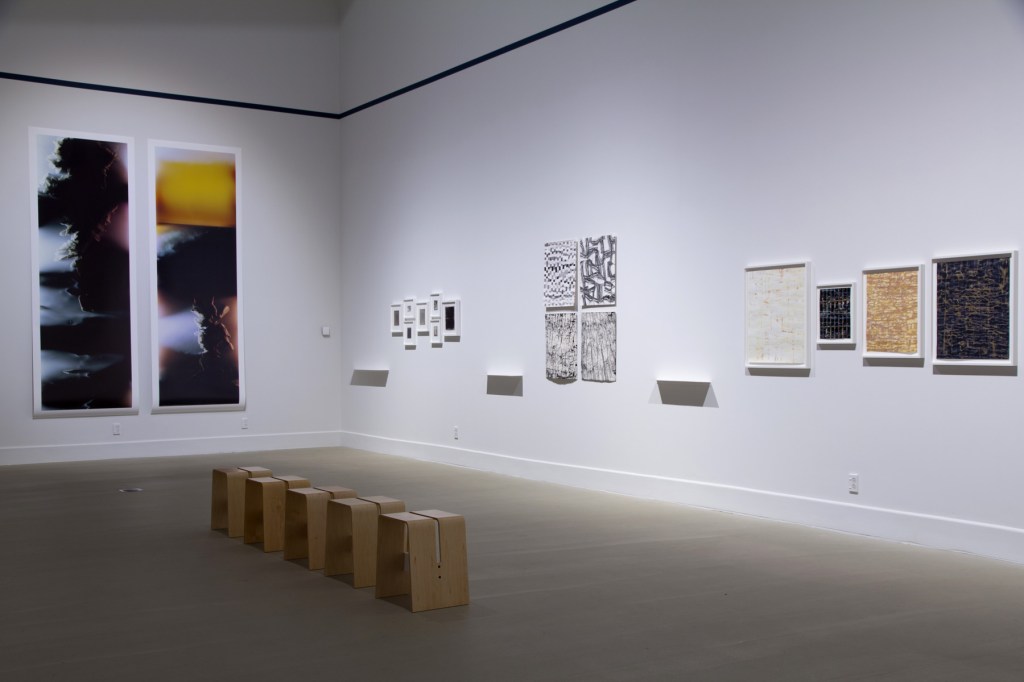
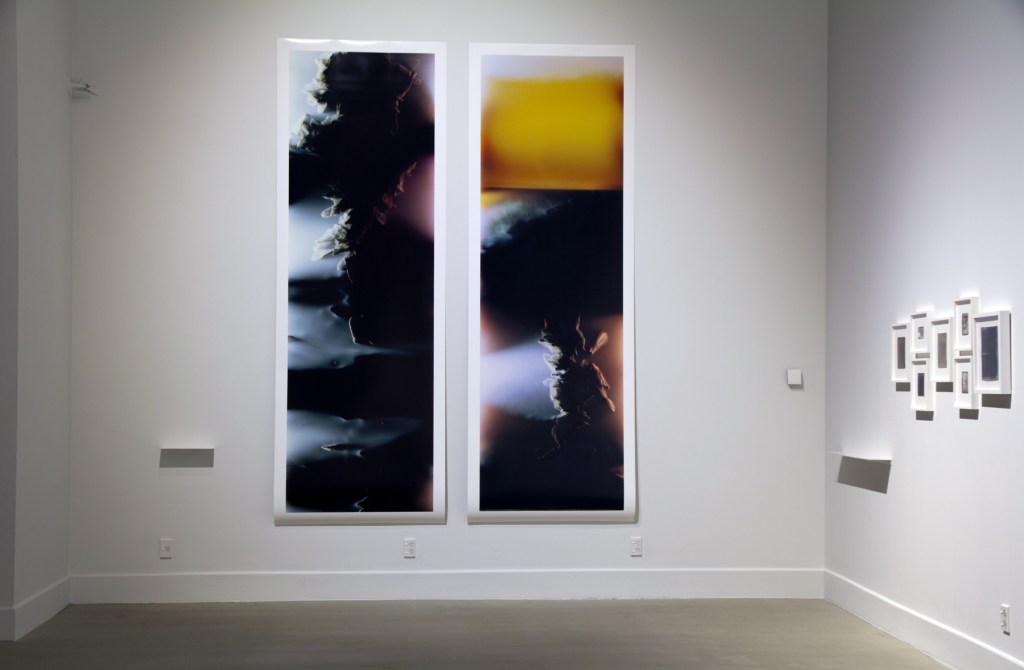
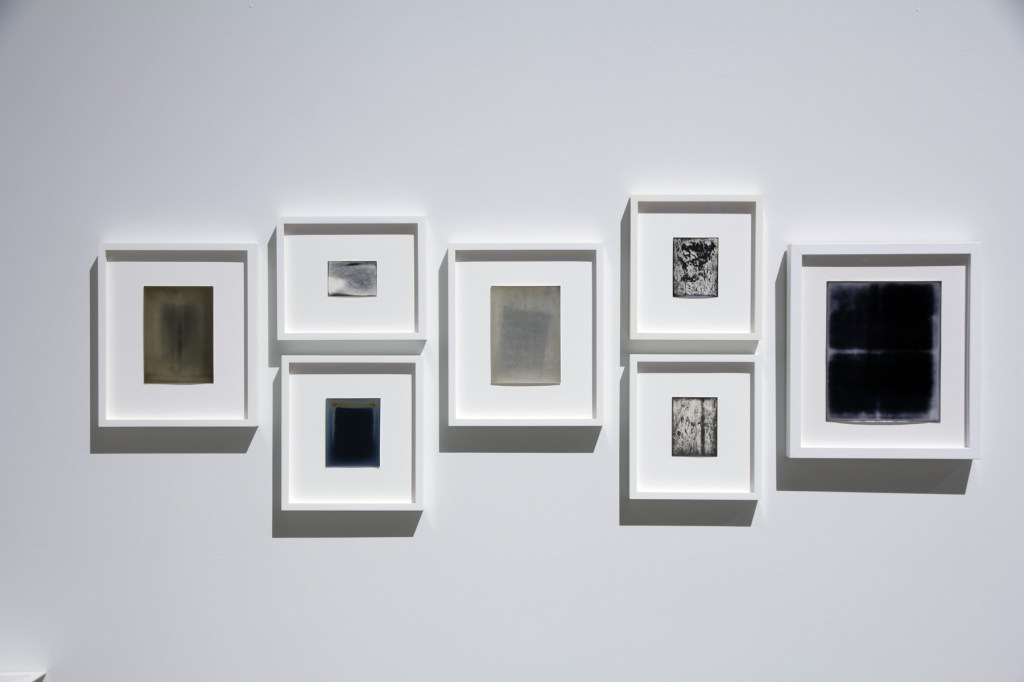
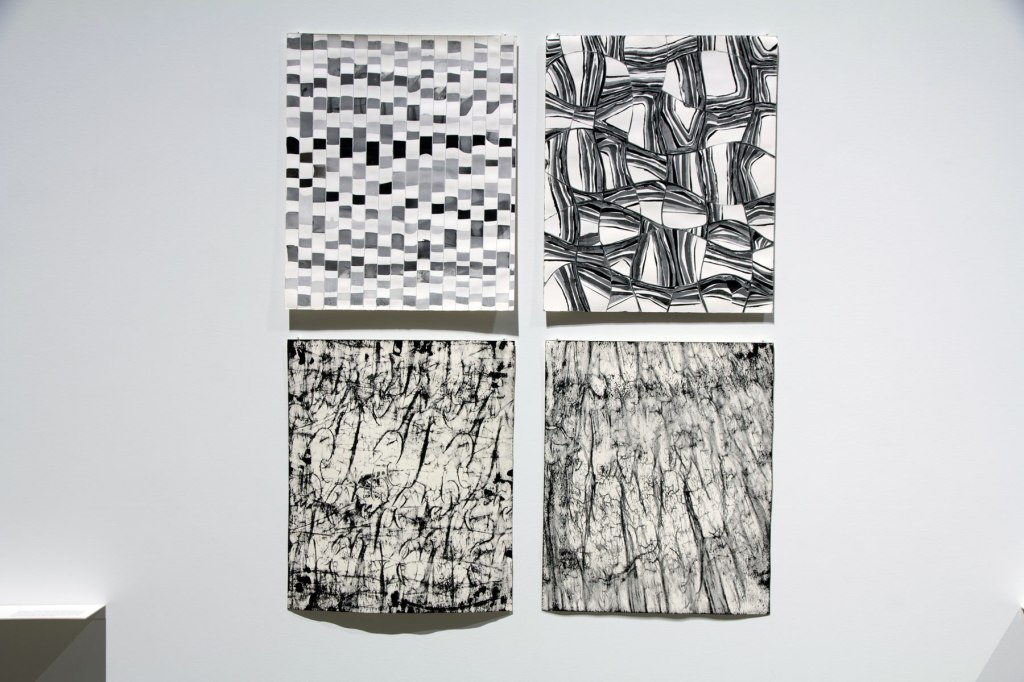
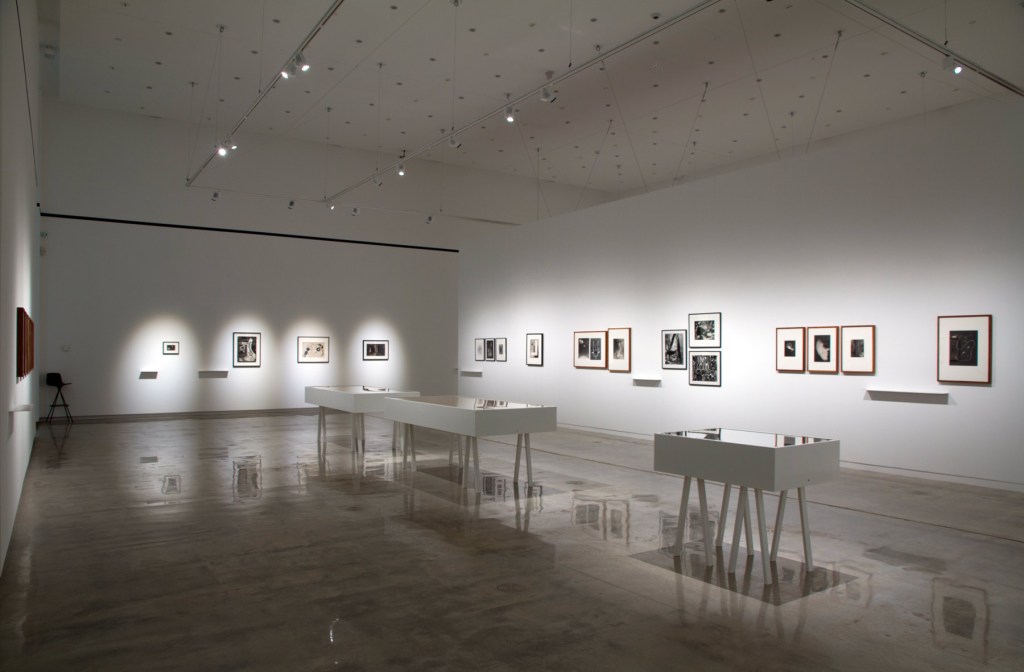
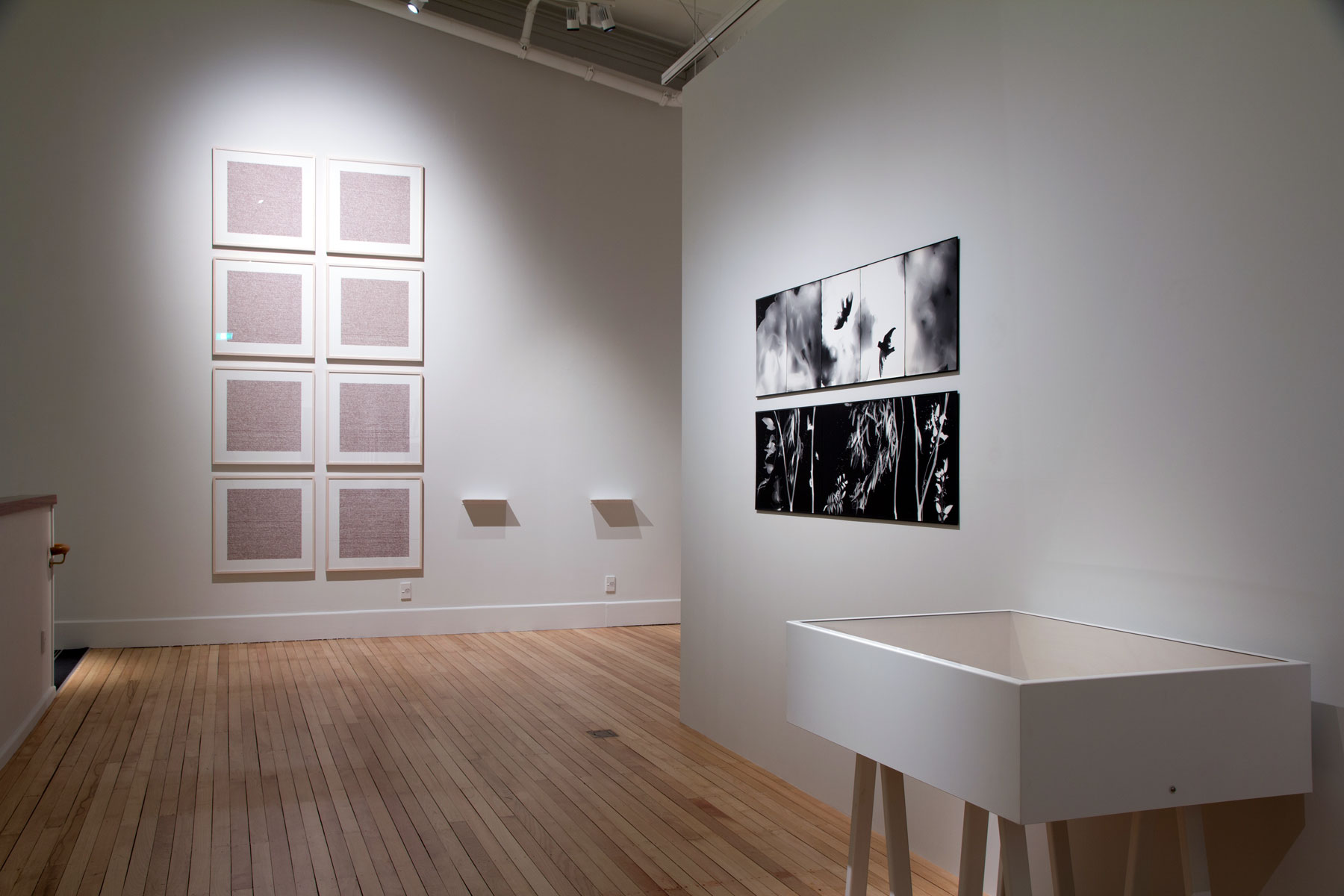
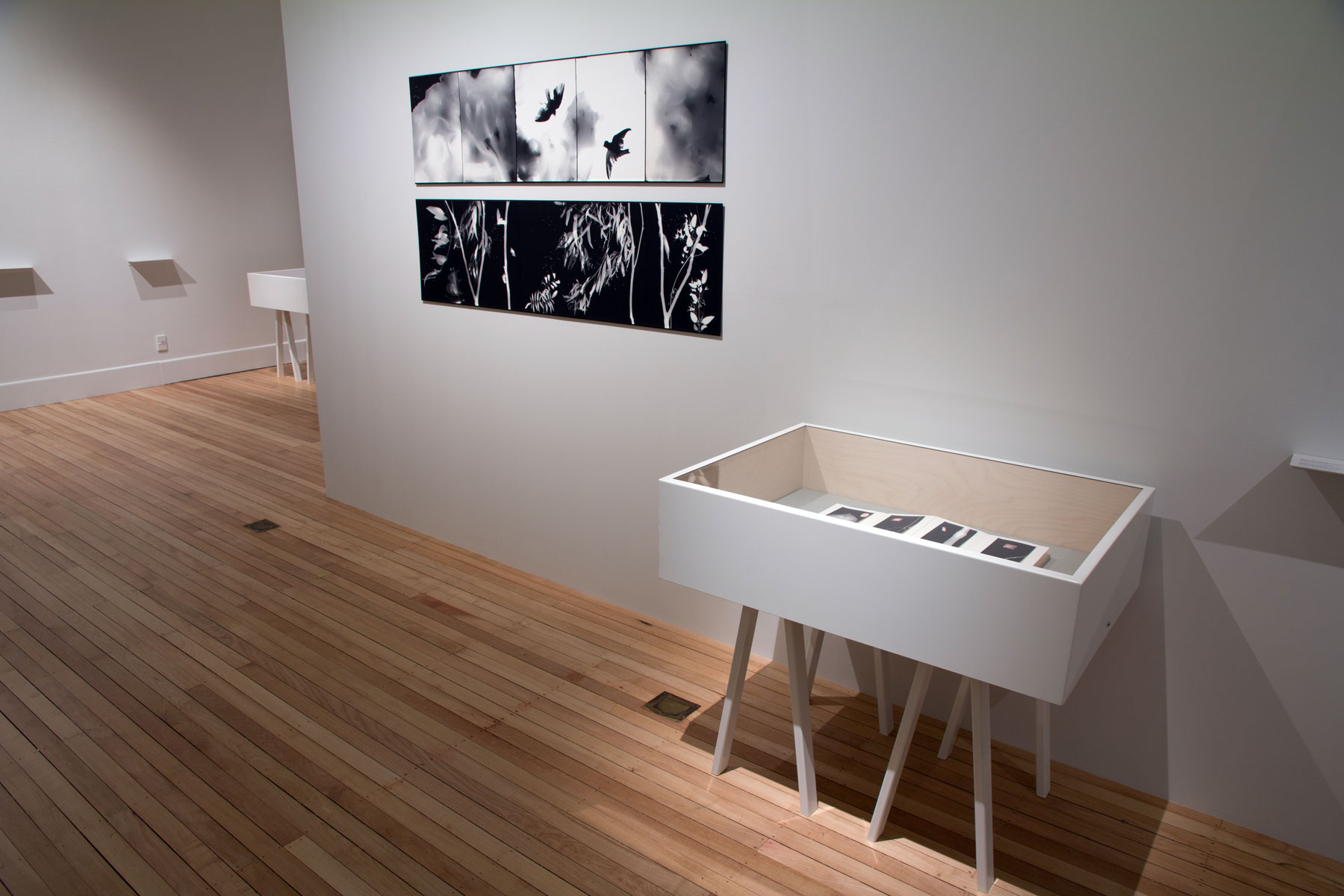
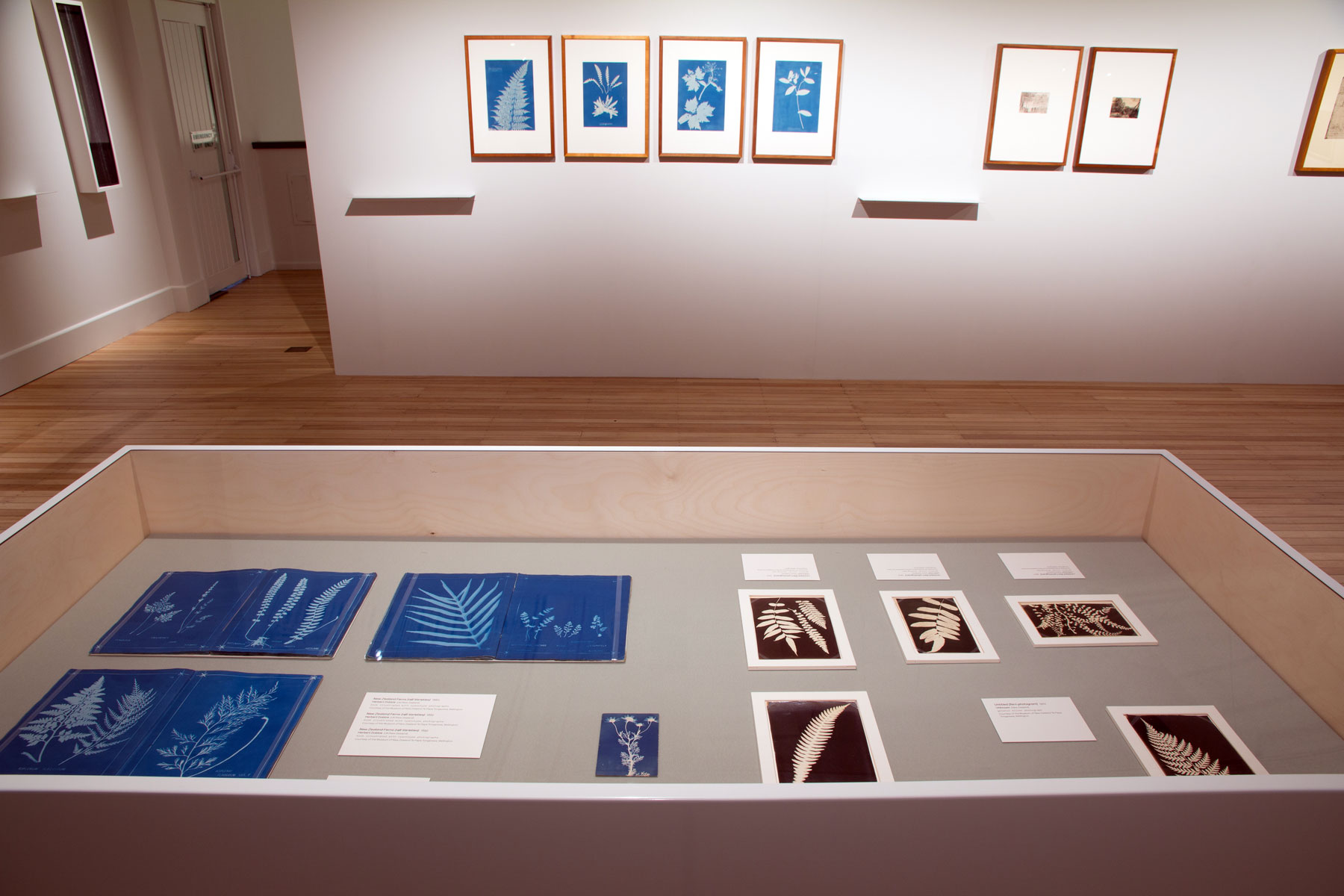
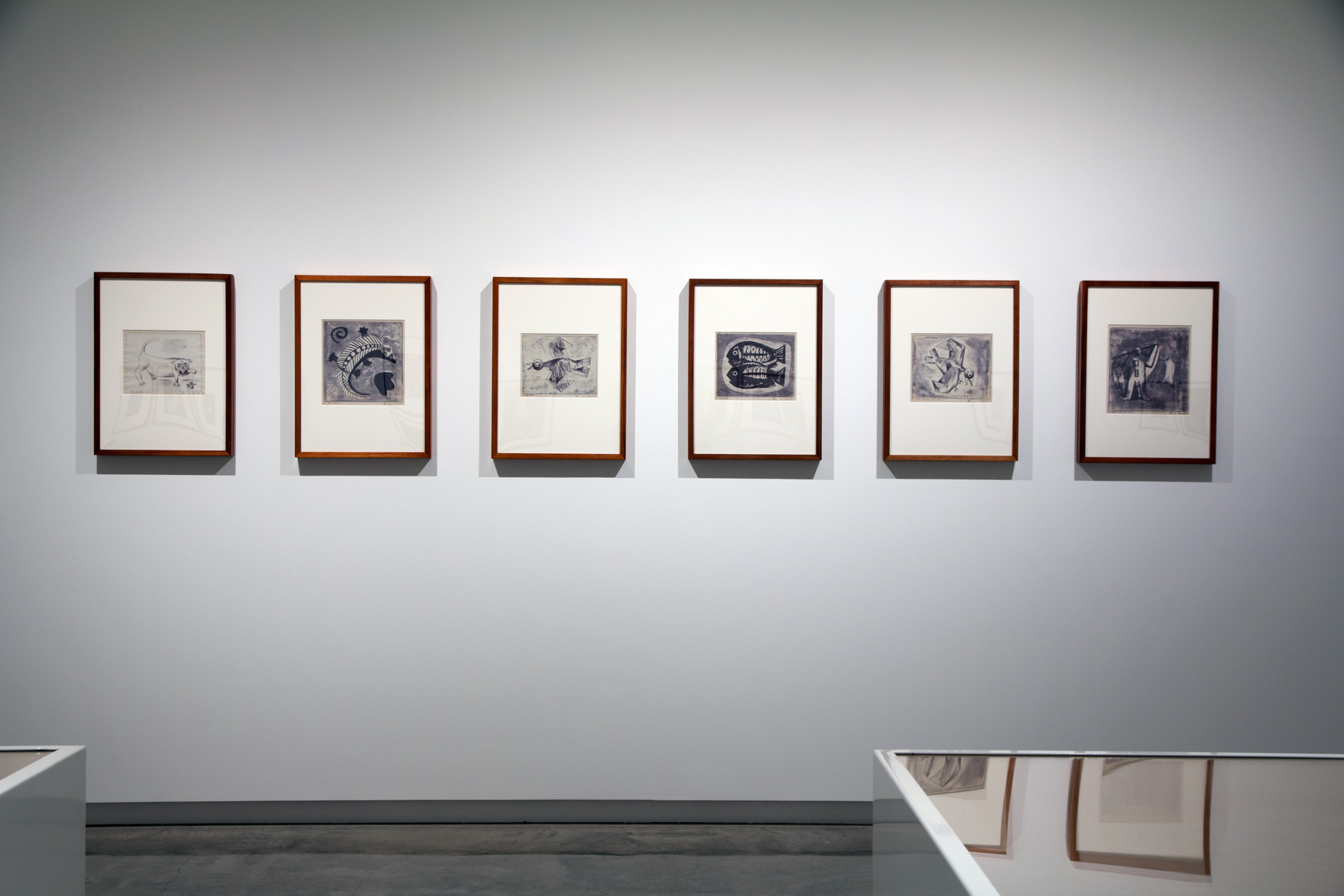
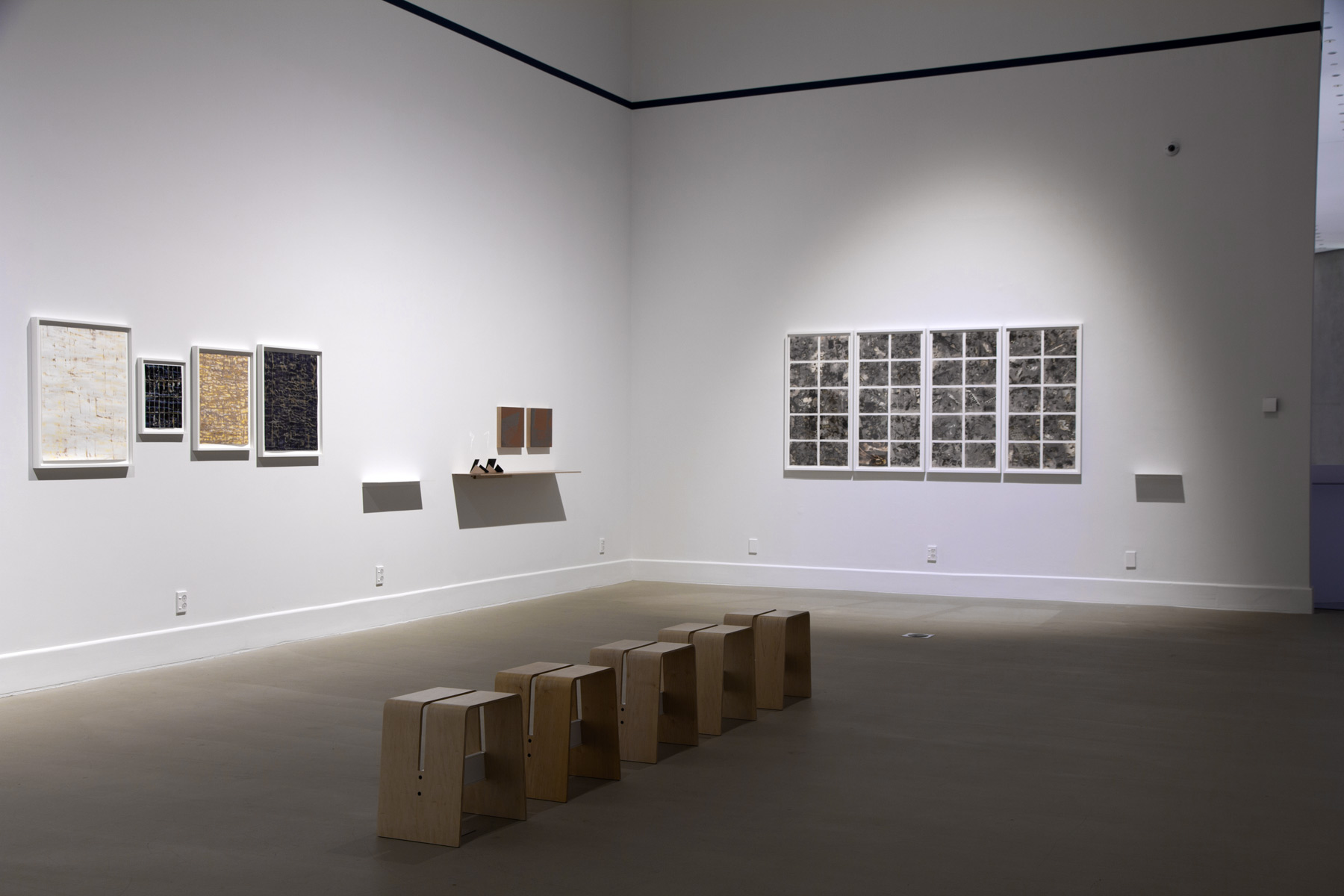
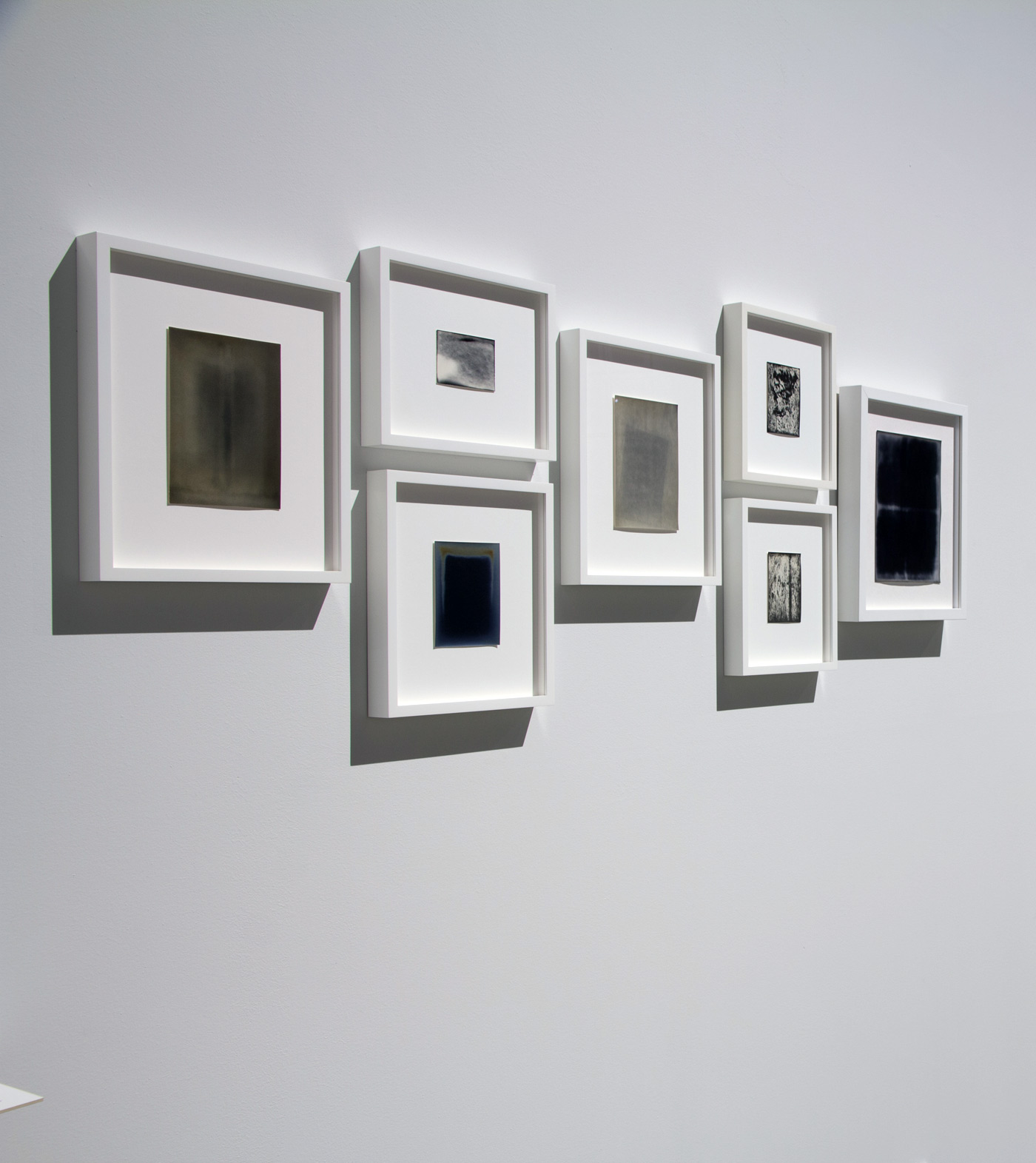
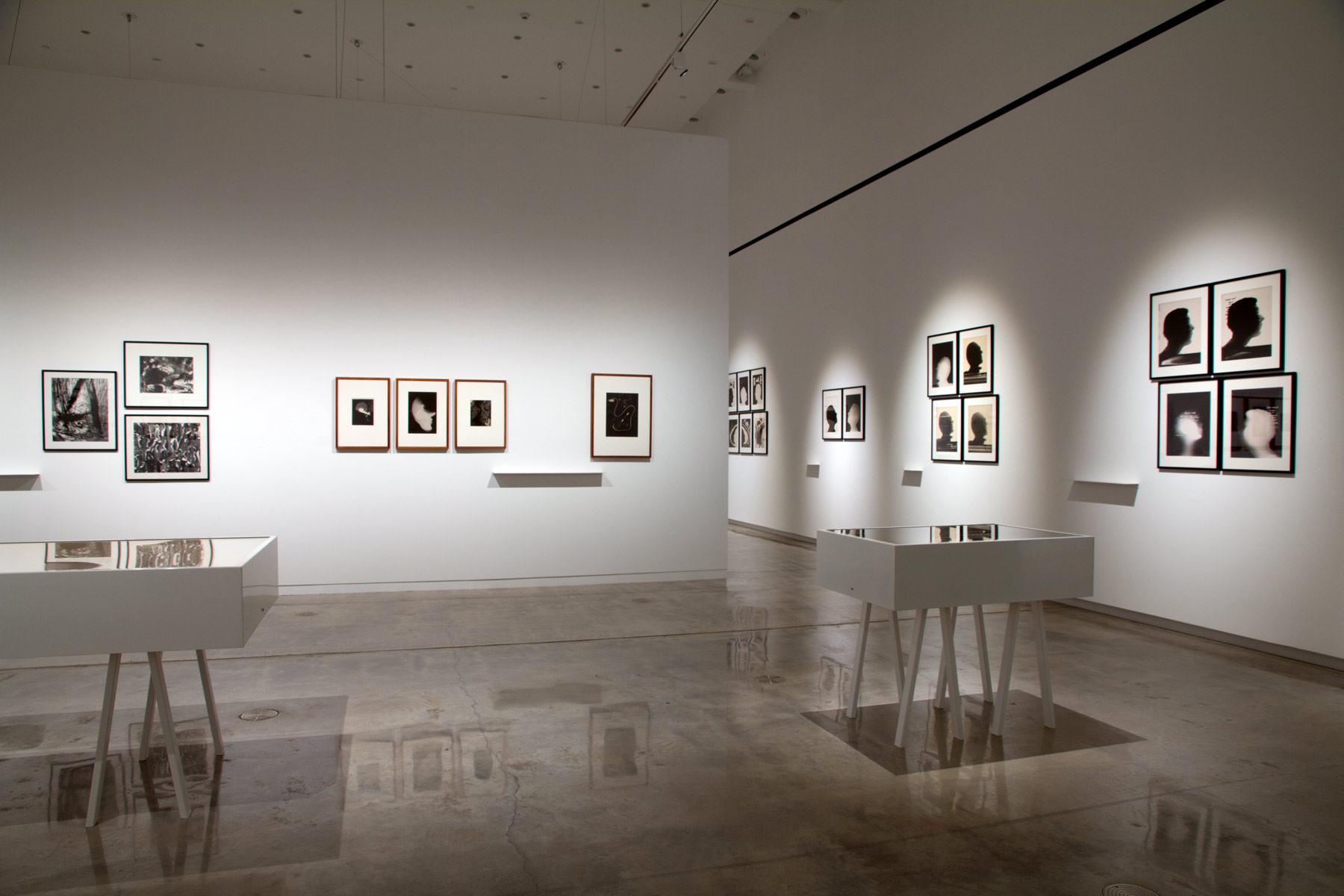
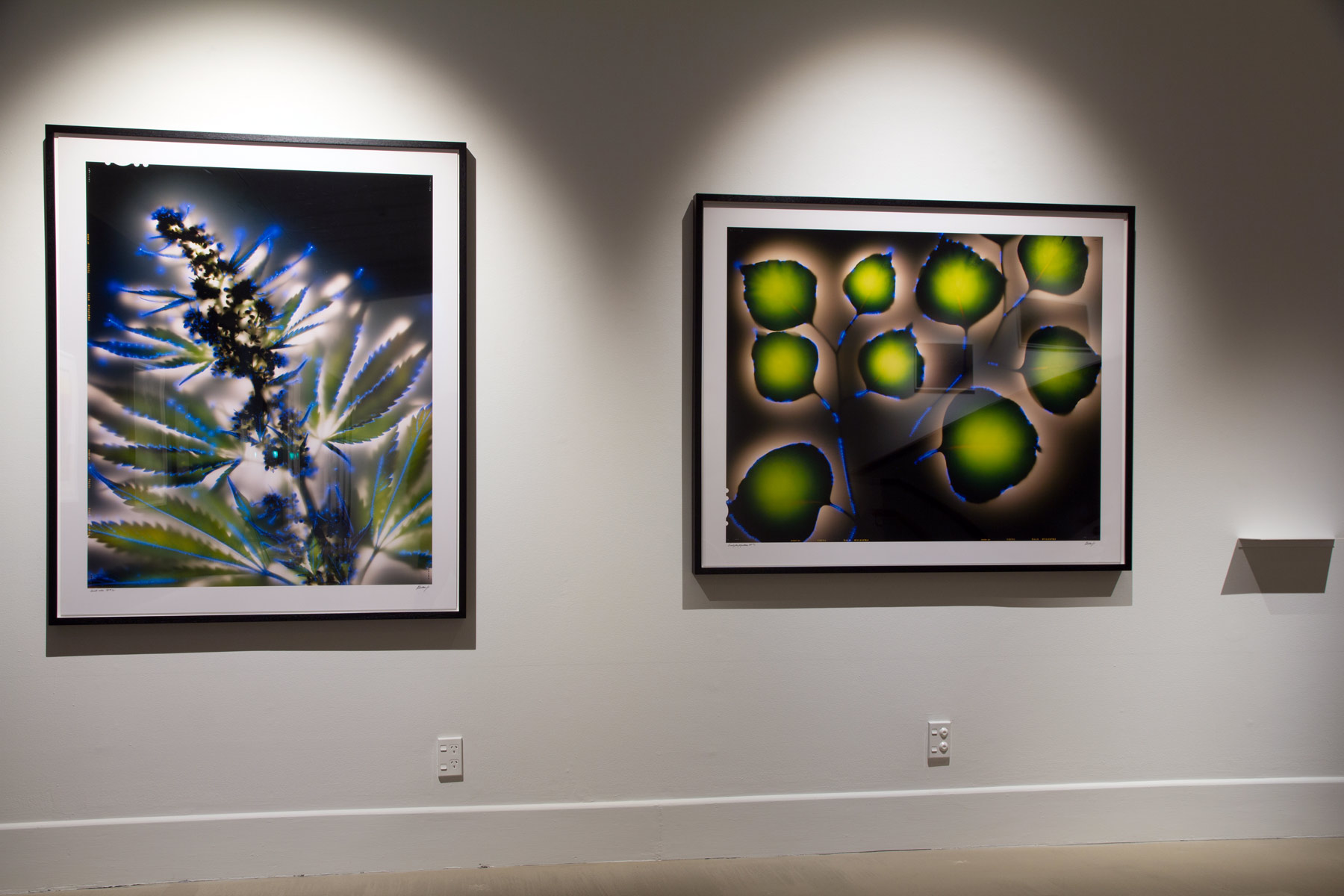
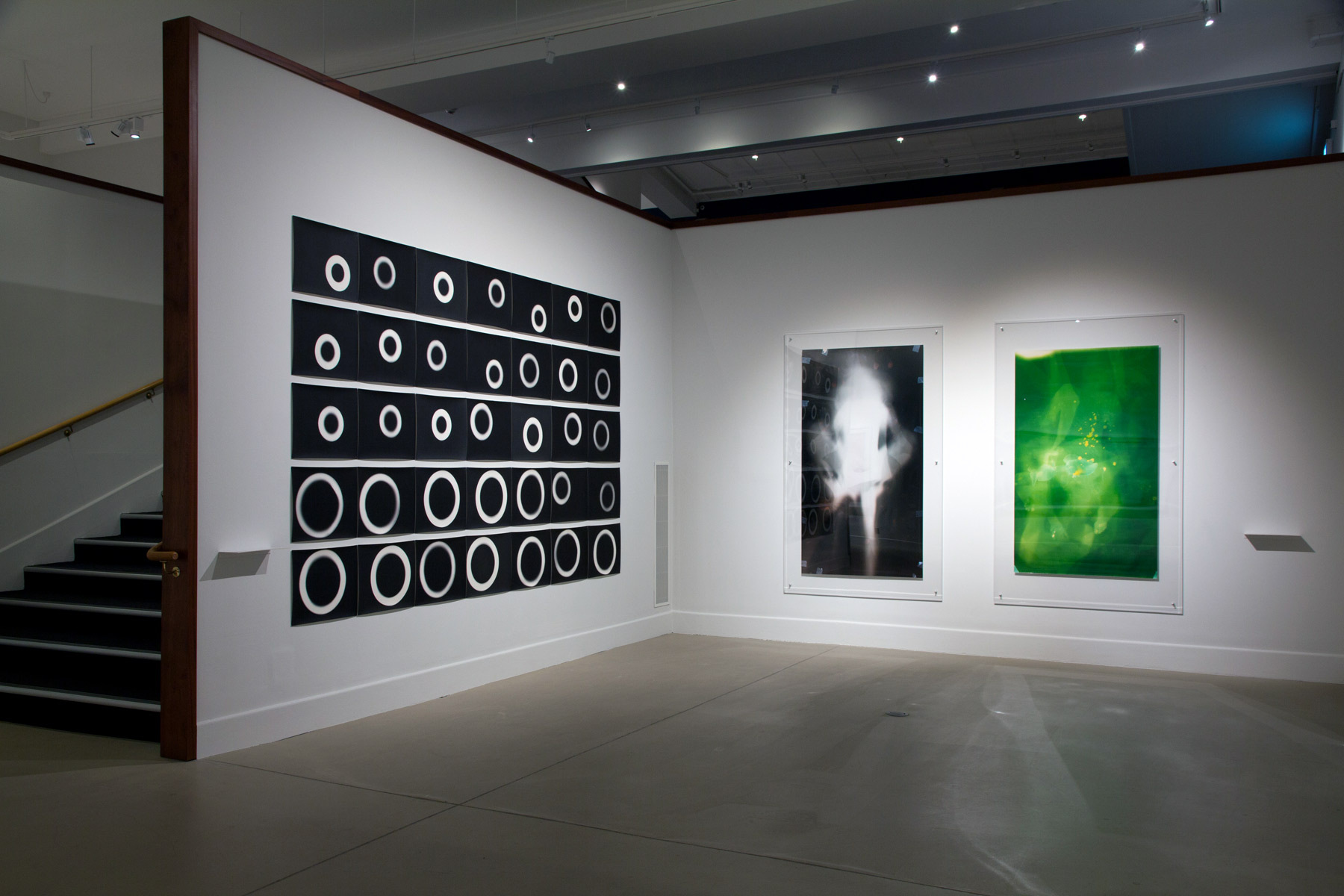
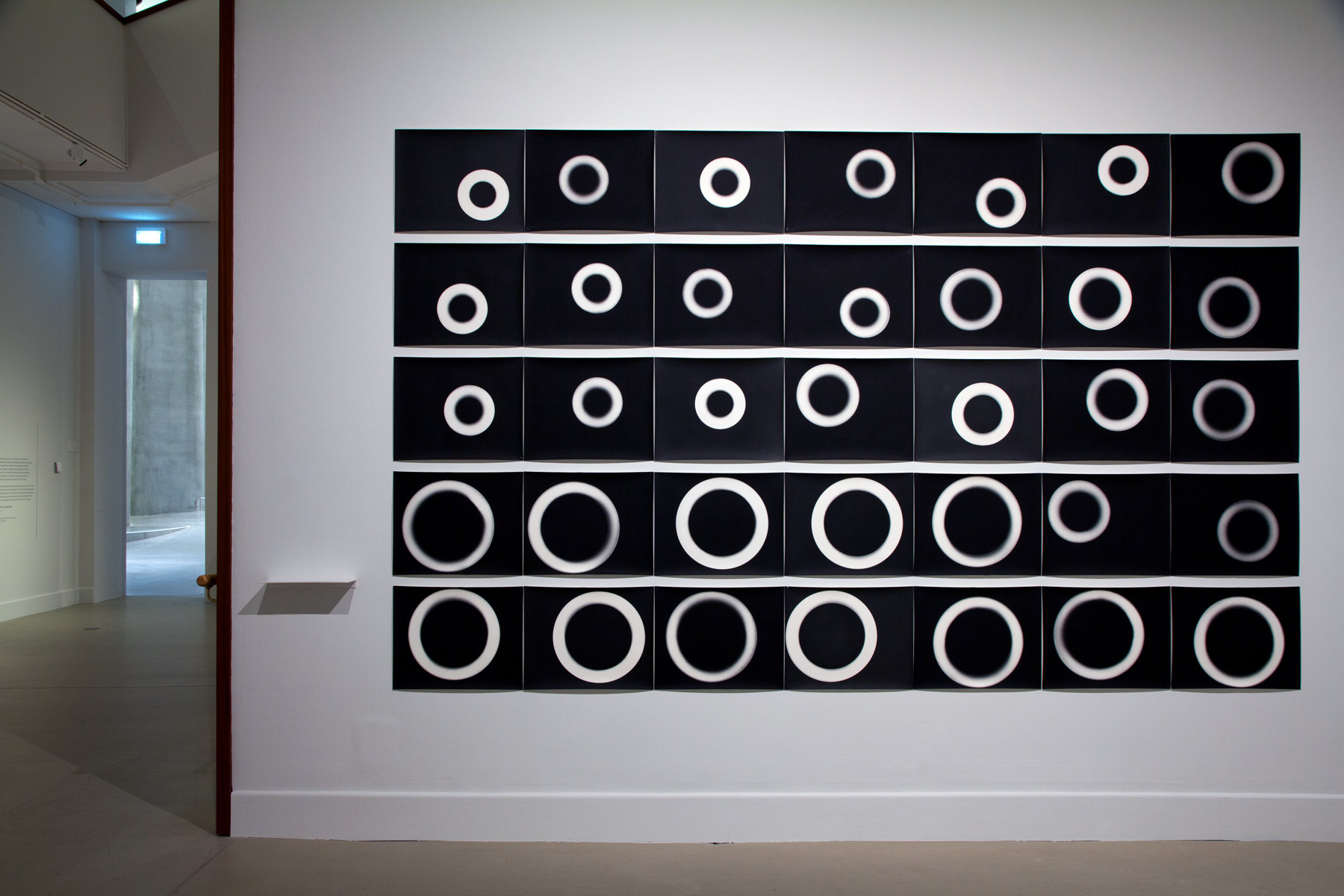
Installation view of the exhibition Photography and the Performative at the Chau Chak Wing Museum at The University of Sydney showing at left, photographs by Michael Riley including at second left bottom, 'Moree women' (1991)


Installation view of the exhibition Photography and the Performative at the Chau Chak Wing Museum at The University of Sydney showing at left, photographs by Michael Riley including at second left bottom, Moree women (1991, below)


It’s great to see another Australian museum taking up the mantle of staging challenging photography exhibitions after the ball has been so gloriously dropped by both national and state galleries in recent years.

Of course, photography and performance have been associated with each other since the birth of photography. The very act of posing for the camera is a performative act. Indeed, one of the earliest self-portraits in the history of photography, Hippolyte Bayard’s famous Le Noyé [The Drowned Man] (1840) is a performance by the artist protesting against the lack of recognition for him as one of the inventors of photography. His humorous, yet biting text read:

“The corpse of the gentleman you see here…. is that of Monsieur Bayard, inventor of the process that you have just seen…. As far as I know this ingenious and indefatigable experimenter has been occupied for about three years with perfecting his discovery…. The Government, who gave much to Monsieur Daguerre, has said it can do nothing for Monsieur Bayard, and the poor wretch has drowned himself. Oh! The precariousness of human affairs!” (Text from the J. Paul Getty Museum website)


With interesting sections such as ‘Photography as witness’, ‘Performative document’ and ‘Performing spaces’ – any one of which could have provided the basis of a large exhibition in their own right – the only problem with this exhibition is that it’s too small, particularly in the limited number of works that illuminate each section. For example, having a small body of early Bill Henson Untitled crowd photographs (1980/82), a small body of Mark Ellen Mark’s photographs of Ward 81 (1979), and one Araya Rasdjarmrearnsook photograph to illustrate the section ‘Photography as witness’ is barely adequate to begin a conversation on the subject.

Even as the exhibition tries to cover too much ground with too little resources one must congratulate the museum for even attempting such an insightful examination of how photography records performative actions in fields such as visual, architectural, spatial, gestural and gendered. The problem is that it needed to be either a/ focused on one section, or b/ much larger with more resources in order to encompass the breadth of the subject being investigated.

Having said that, I wish other galleries around Australia had such get up and go, such inquisitiveness vis a vis the history of photography and its place and influence in the modern world. I’ve not heard of any recent photographic exhibitions in Australia which attempt such a complex visual and intellectual investigation into one subject, which says a lot about the state of photographic exhibitions in Australia.

I have added hopefully interesting referenced texts to provide information on some of the art works and artists in the posting.

The exhibition is held at the same time as the exhibition The Staged Photograph at Chau Chak Wing Museum at The University of Sydney (finishes 4th August 2024). A posting on this exhibition to follow soon.

Dr Marcus Bunyan


Many thankx to the Chau Chak Wing Museum for allowing me to publish the photographs in the posting. Please click on the photographs for a larger version of the image.


An exhibition exploring the intersection between photography and performance.

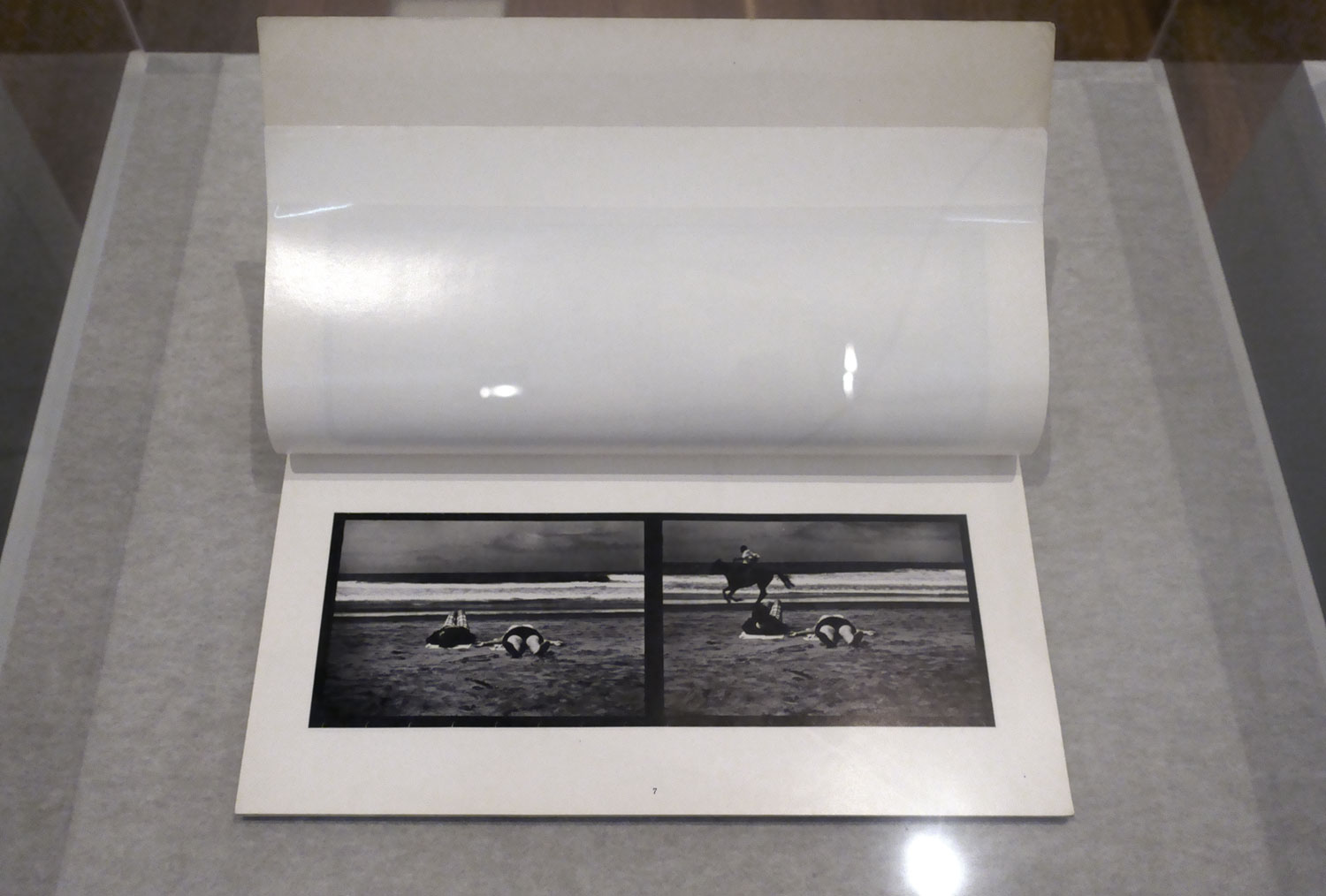
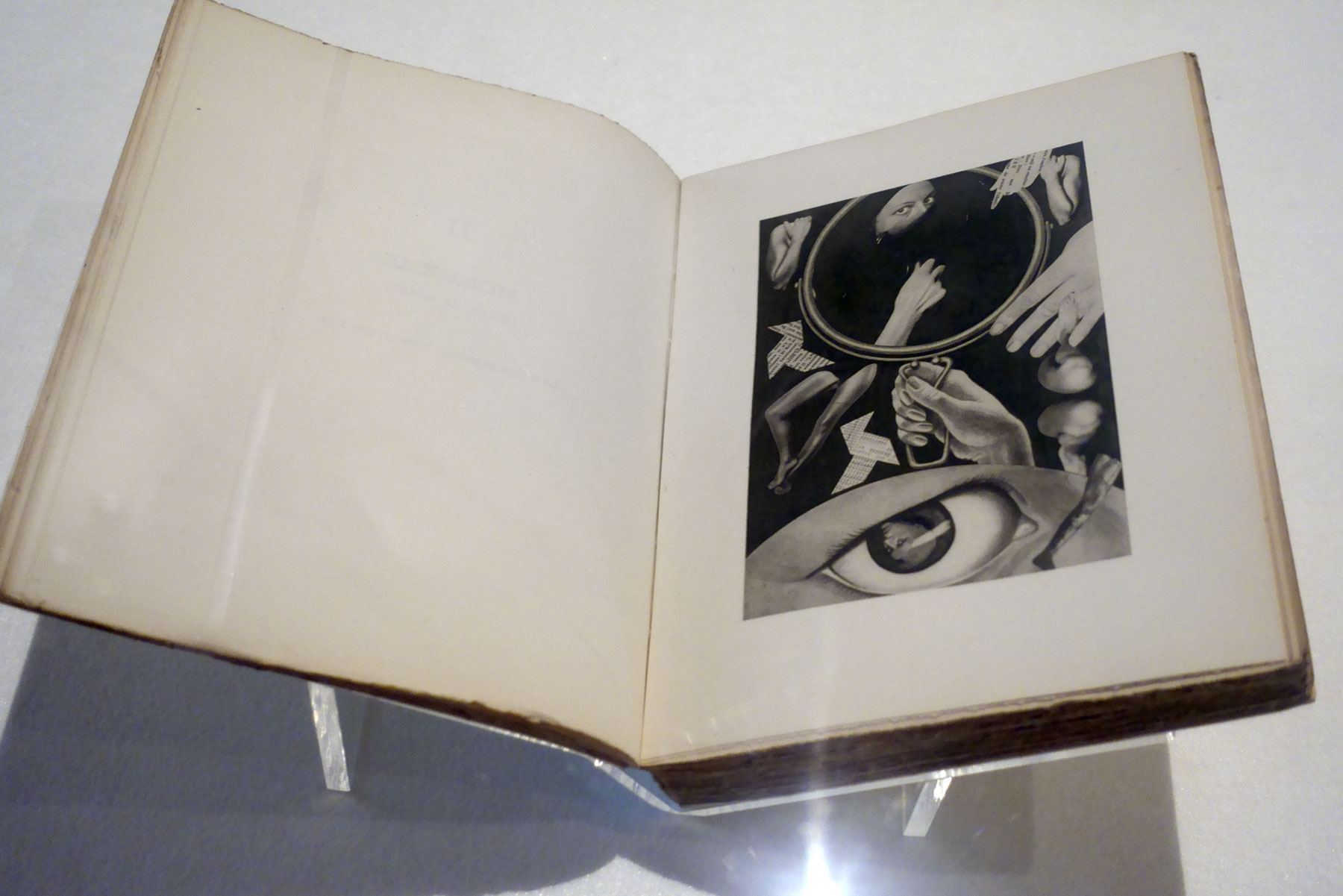
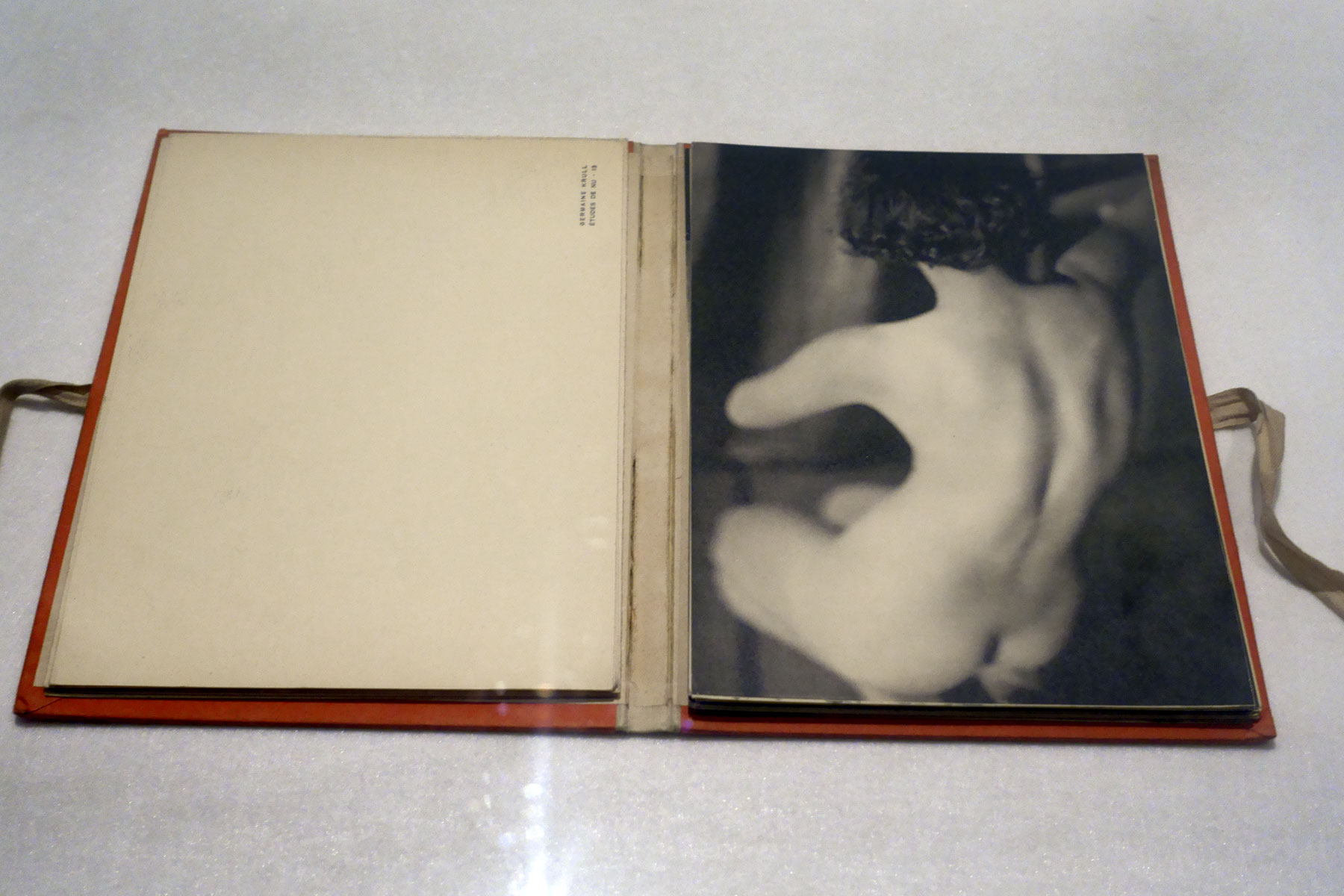
This exhibition examines recent ideas and theories that frame performance as a phenomenon that is everywhere. Performative actions may include the manifestation of ideas, whether literal, oral, spoken, or written. Such forms can be visual, architectural, spatial, gestural and gendered. This exhibition looks at how these different modes may be ‘recorded’ via the medium of photography.

Since the 1960s, photography and performance have experienced a shared history. Artists have embraced the possibilities of this time-based medium by deploying a documentary mode – capturing the fleeting, the happening, the ephemeral. The camera becomes an extension of the artist’s body, documenting their actions and interventions.

Text from the Chau Chak Wing Museum website


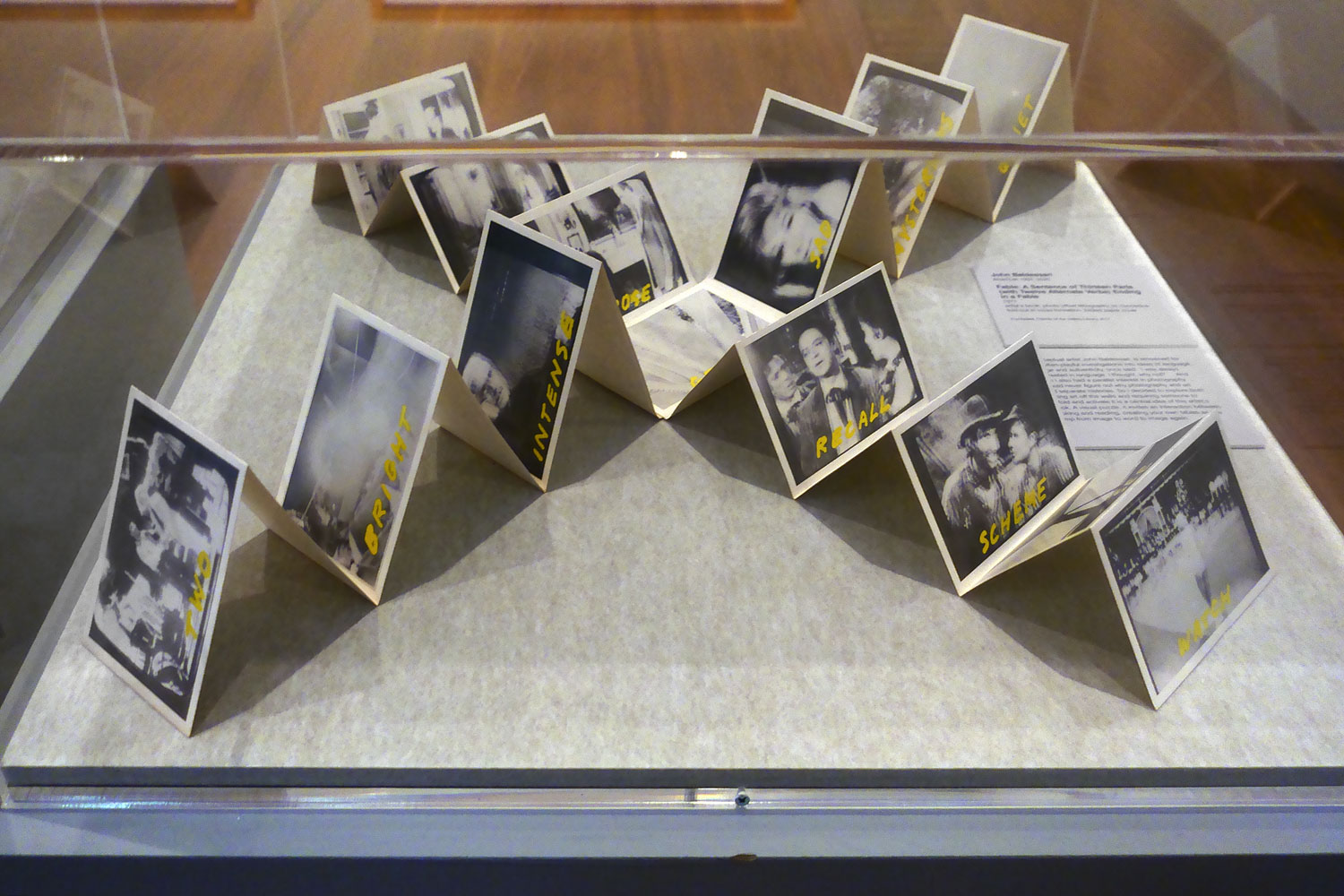
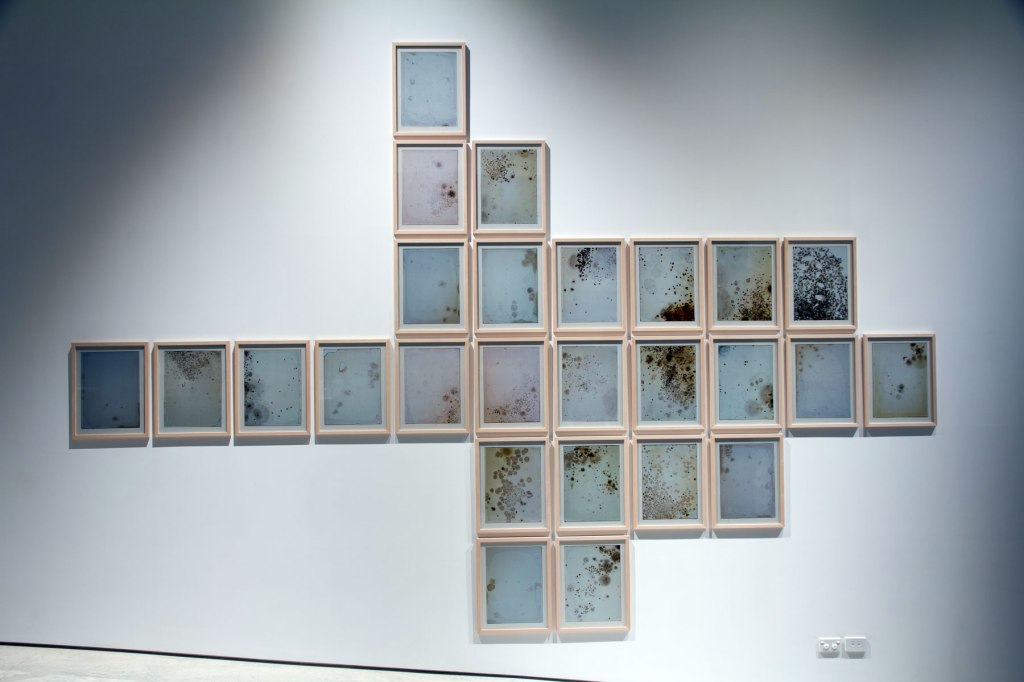
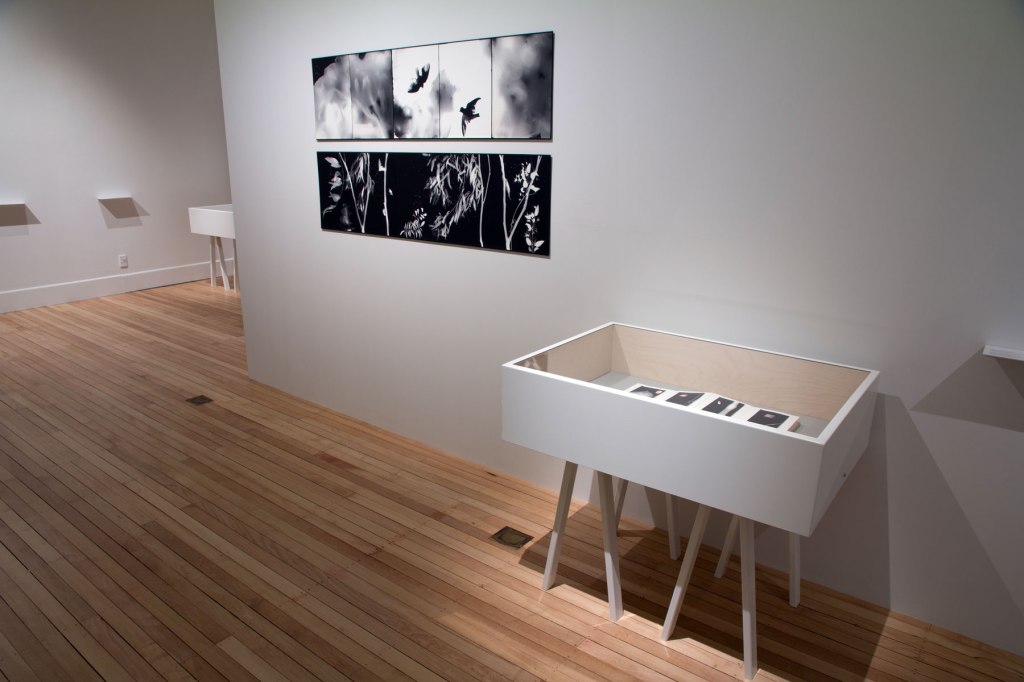
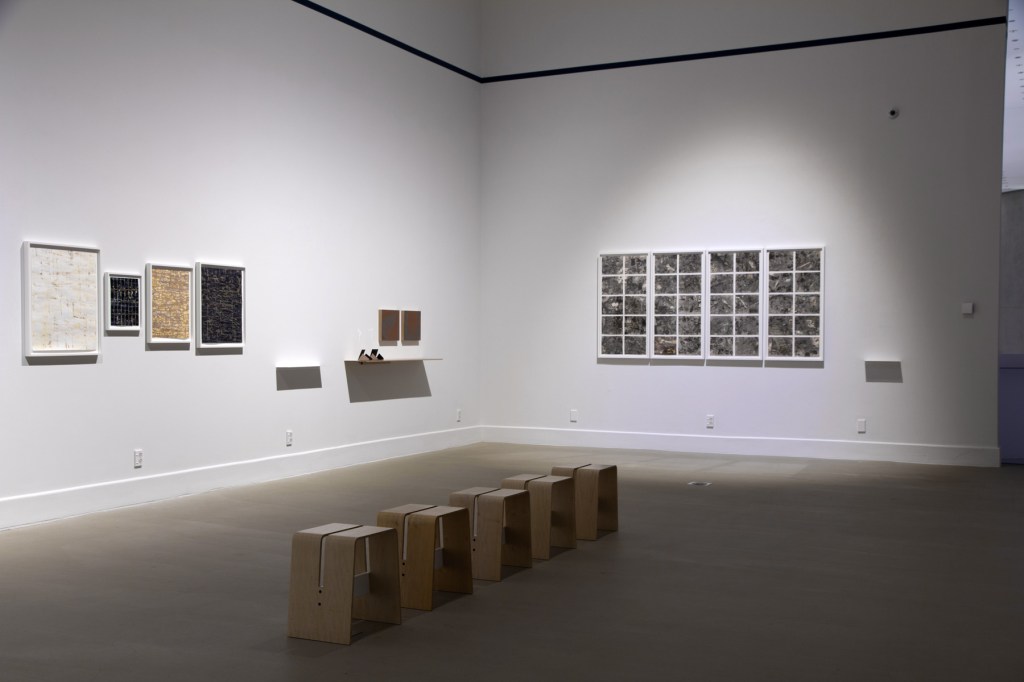
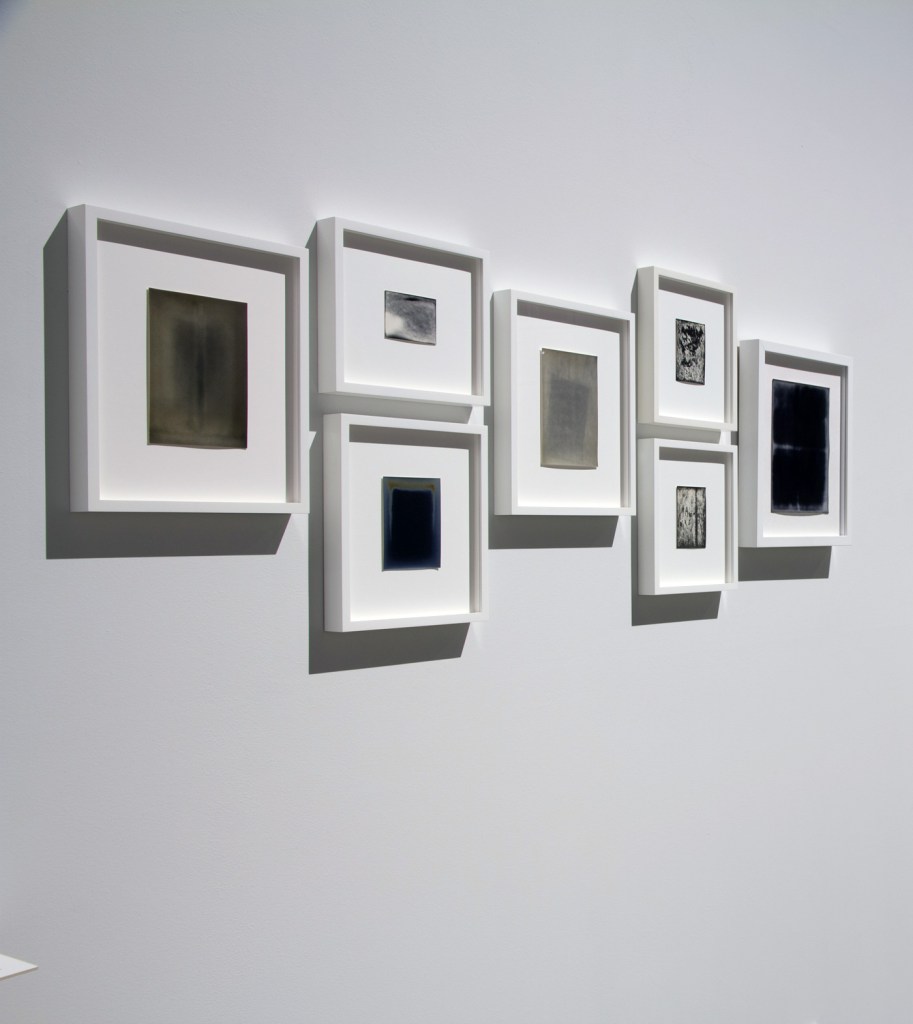
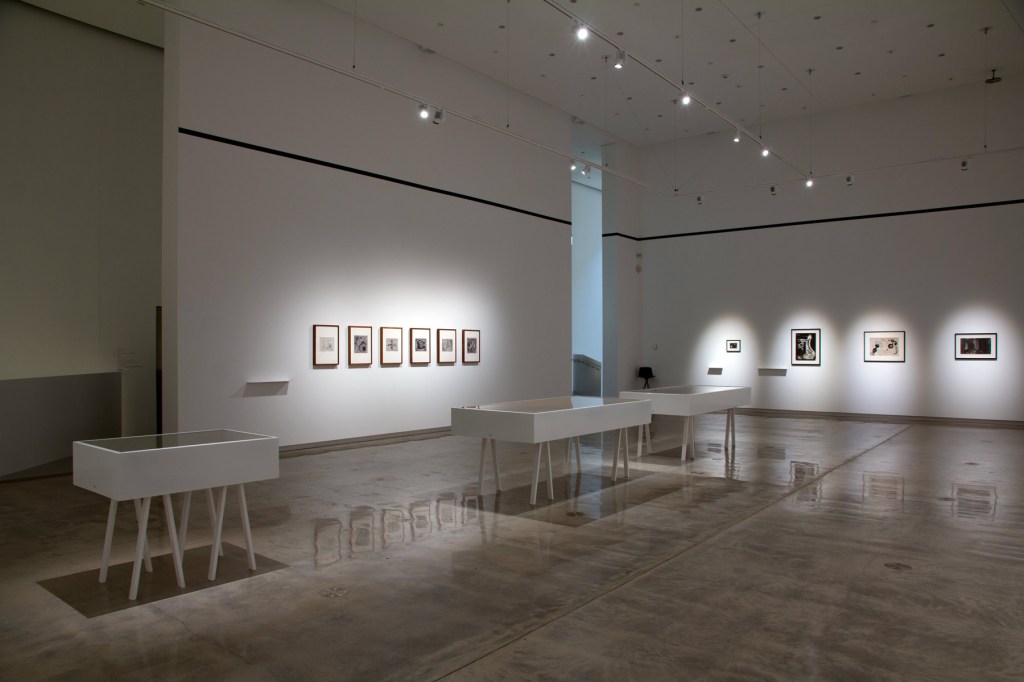
Installation view of the exhibition Photography and the Performative at the Chau Chak Wing Museum at The University of Sydney showing at front, Polaroids from Imants Tillers' 'If I close my eyes' (2021)


Installation view of the exhibition Photography and the Performative at the Chau Chak Wing Museum at The University of Sydney showing at front, Polaroids from Imants Tillers’ If I close my eyes (2021)


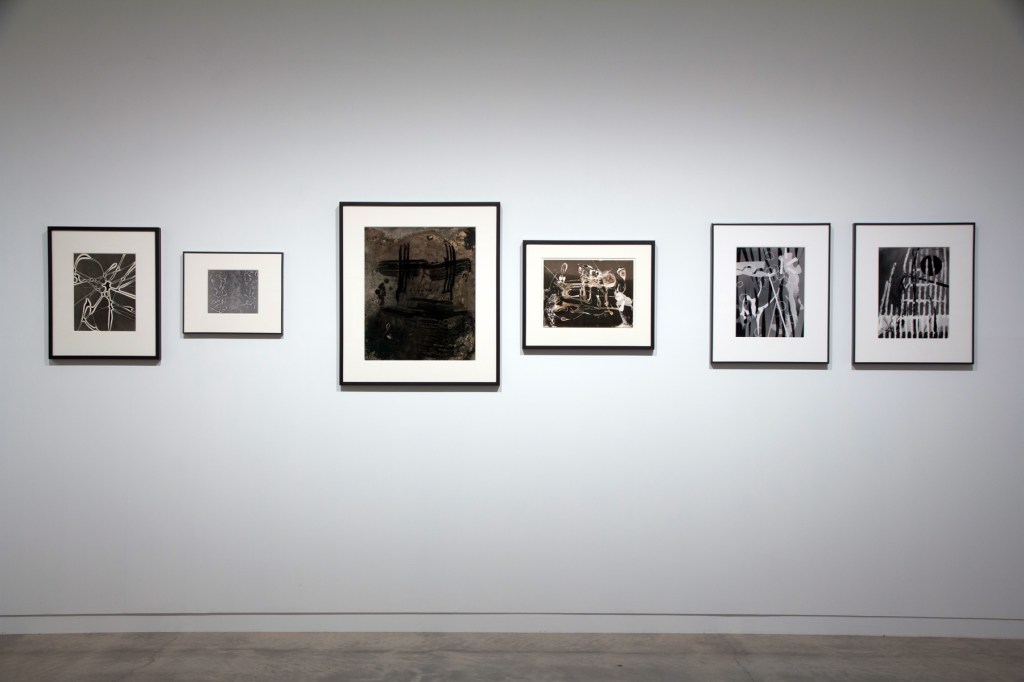
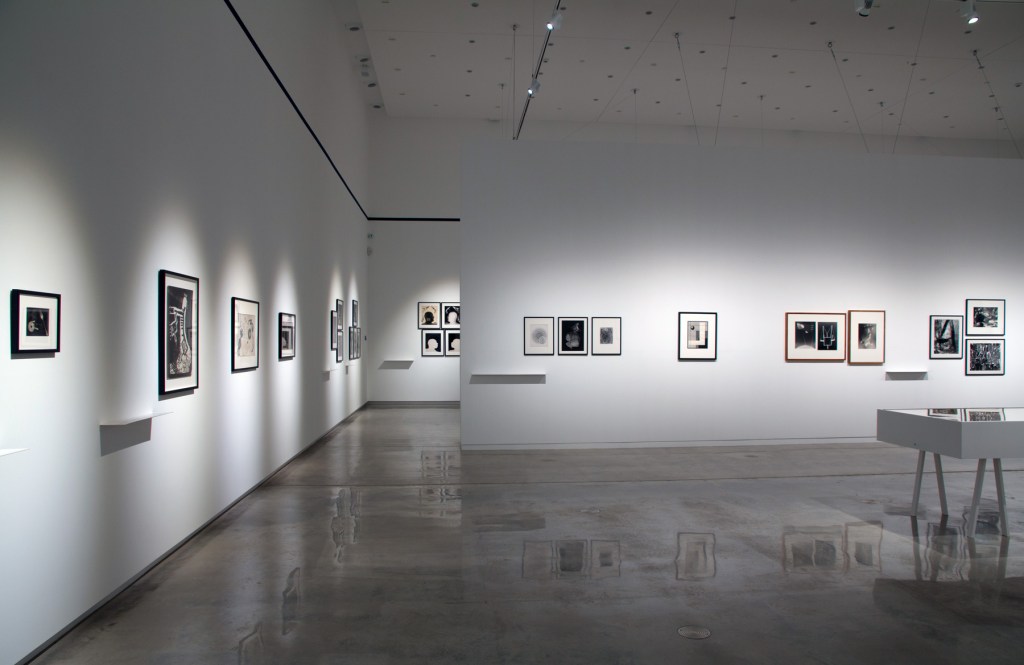
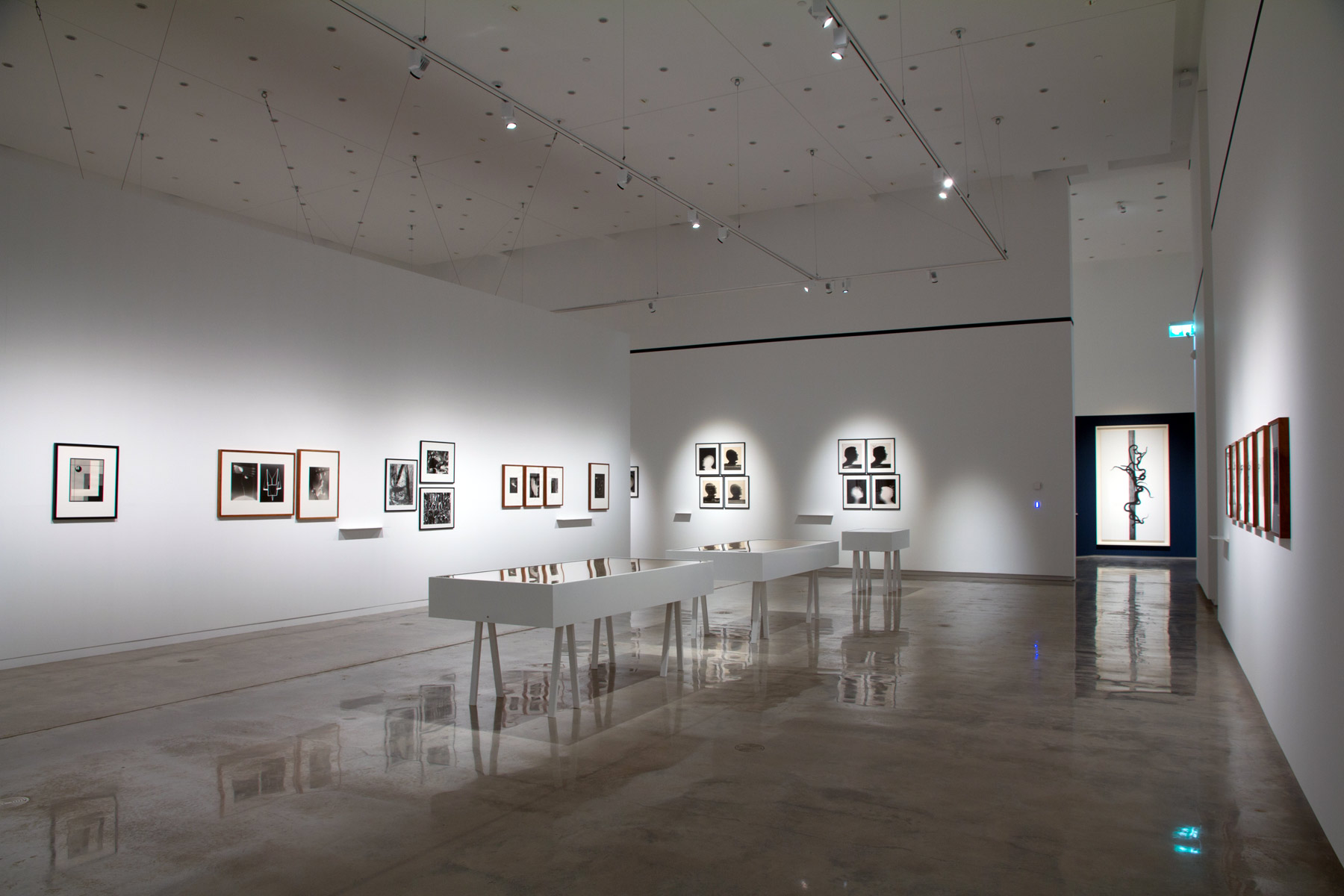
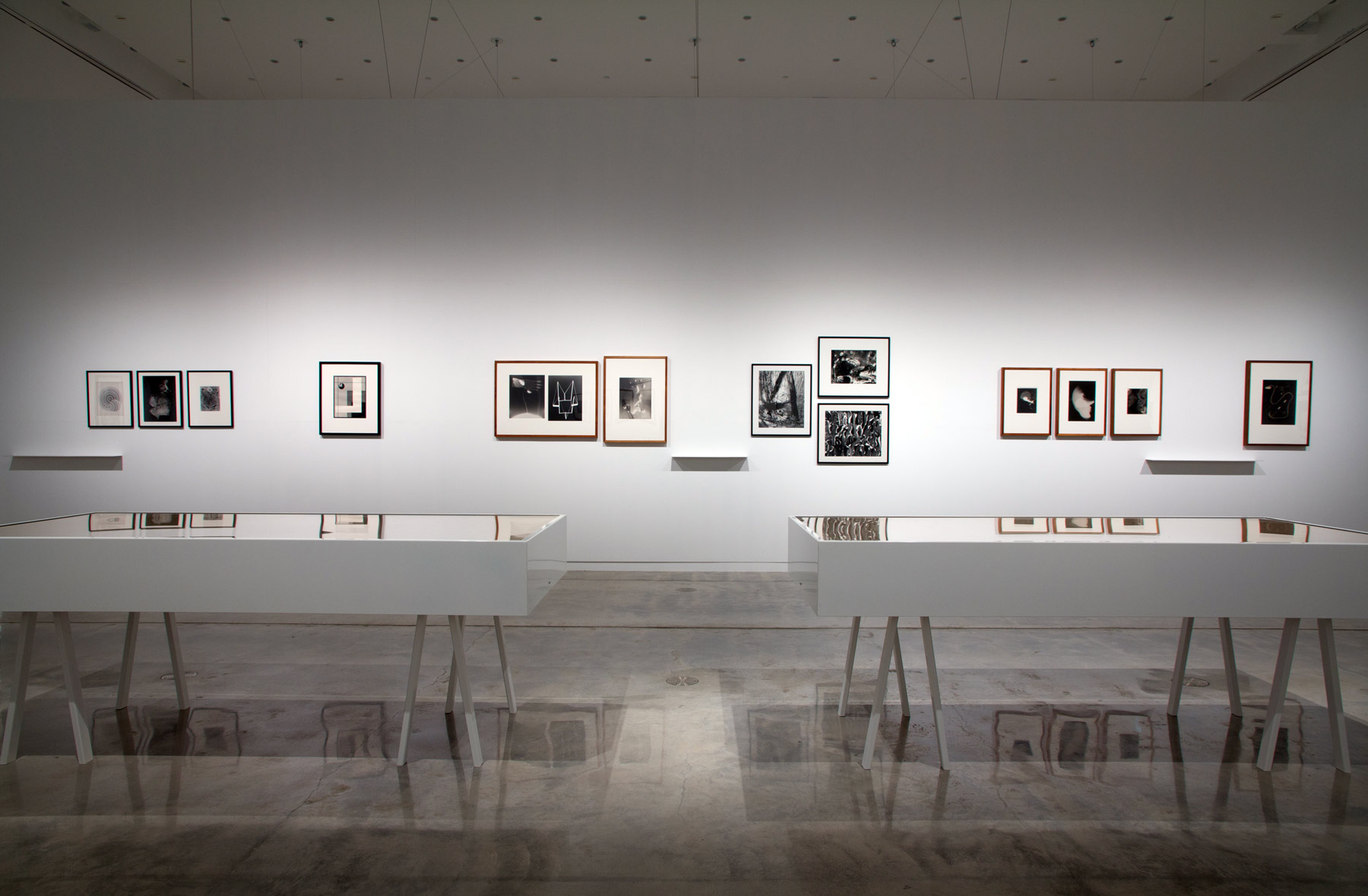
Installation view of the exhibition Photography and the Performative at the Chau Chak Wing Museum at The University of Sydney showing at left photographs from Bill Henson's 'Untitled 1980/82' (1980/82); at centre, photographs from Mary Ellen Mark's 'Ward 81' (1979); and at right, Araya Rasdjarmrearnsook's 'Village and Elsewhere: Artemisia Gentileschi's Judith Beheading Holofernes Jeff Koons's Untitled and Thai Villagers' (2011)


Installation view of the exhibition Photography and the Performative at the Chau Chak Wing Museum at The University of Sydney showing at left photographs from Bill Henson’s Untitled 1980/82 (1980/82, below); at centre, photographs from Mary Ellen Mark’s Ward 81 (1979, below); and at right, Araya Rasdjarmrearnsook’s Village and Elsewhere: Artemisia Gentileschi’s Judith Beheading Holofernes, Jeff Koons’s Untitled, and Thai Villagers (2011, below)
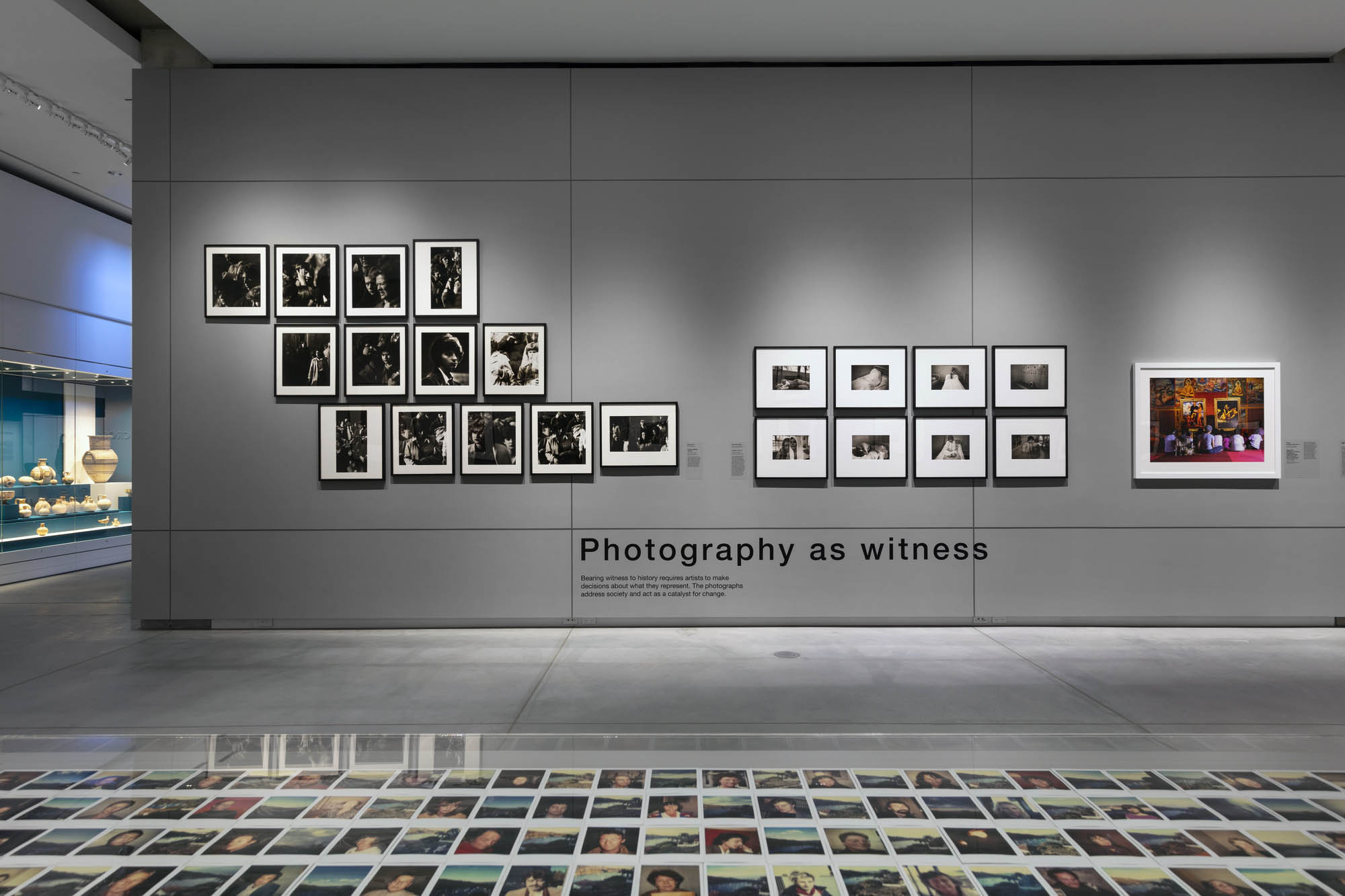
 

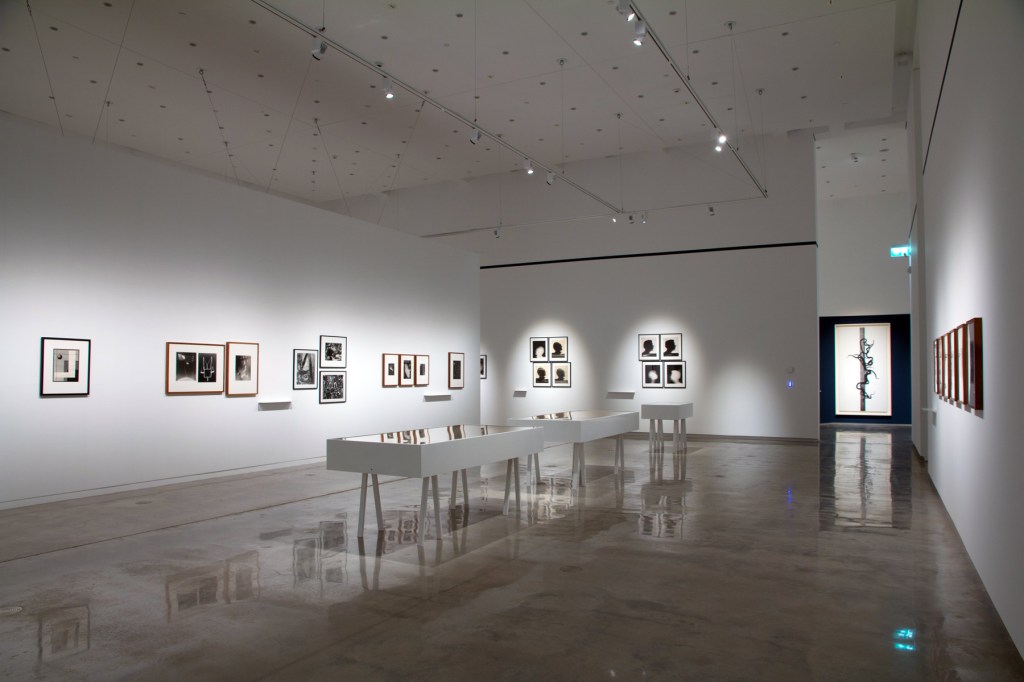
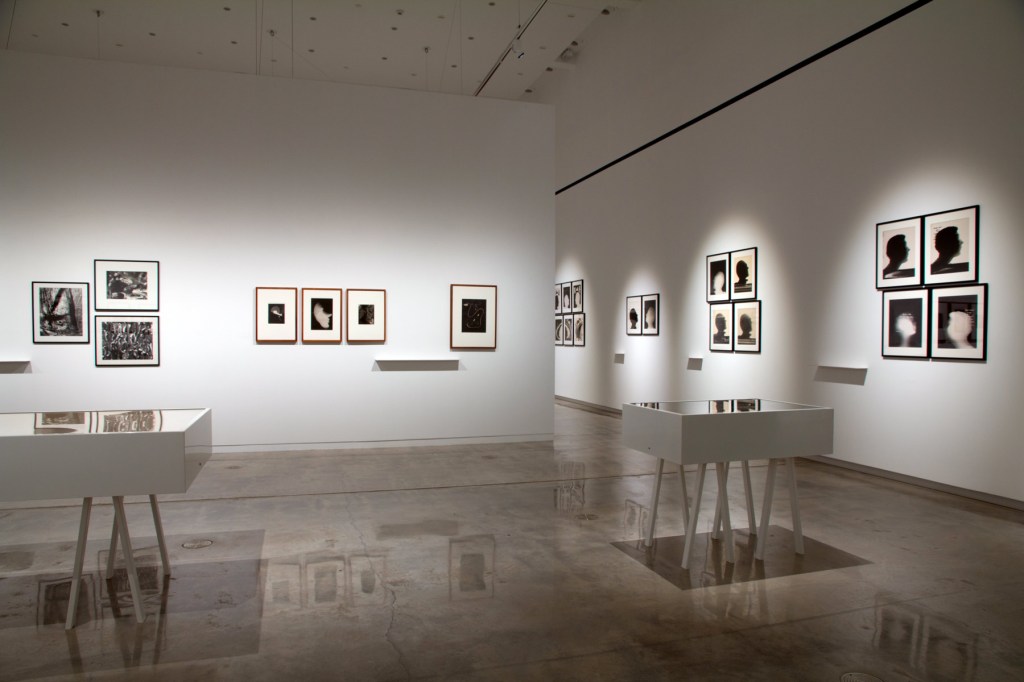
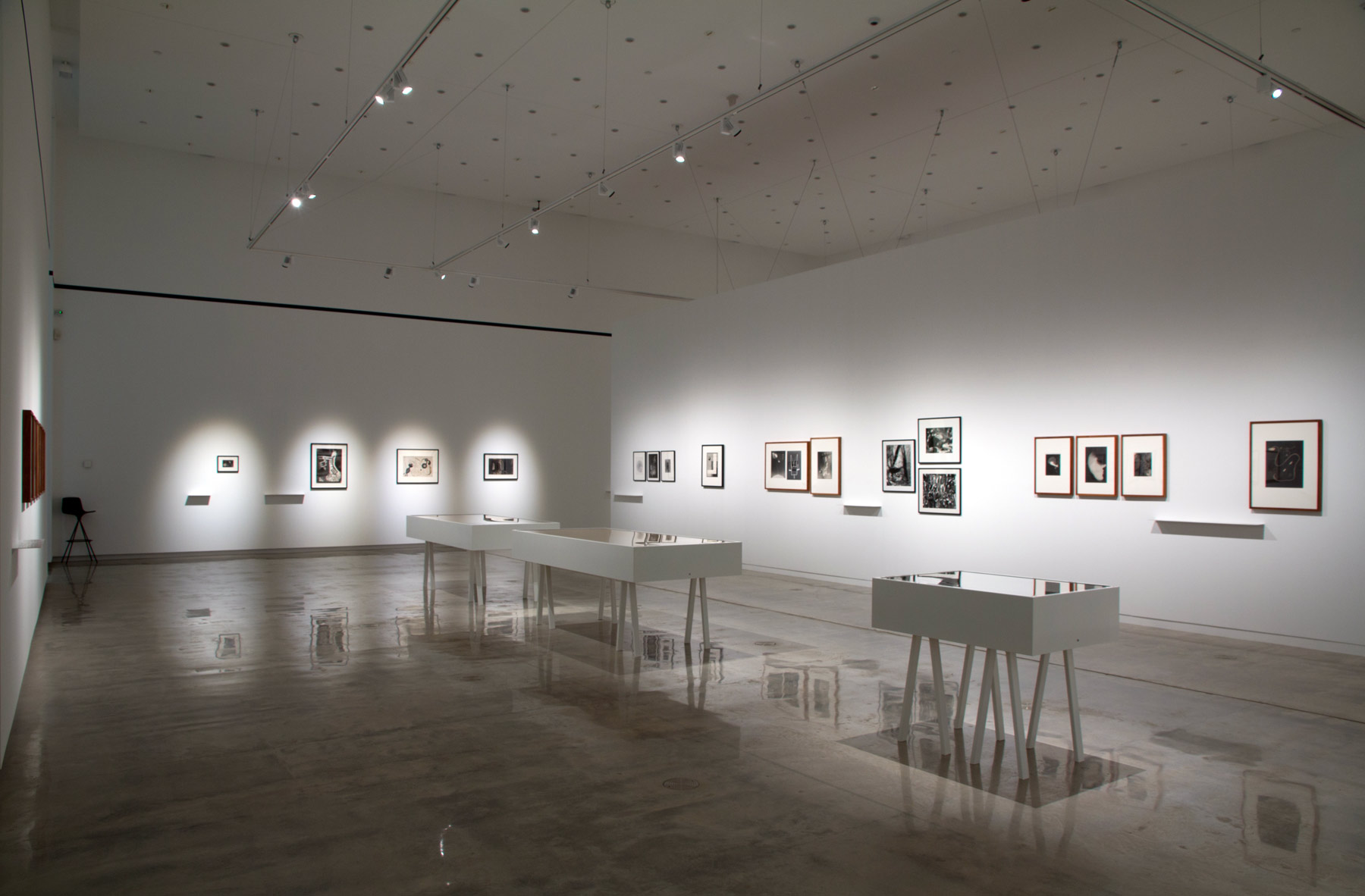
Installation view of the exhibition Photography and the Performative at the Chau Chak Wing Museum at The University of Sydney showing at back left, photographs from Bill Henson's 'Untitled 1980/82' (1980/82); at back centre, photographs from Mary Ellen Mark's 'Ward 81' (1979); at back right, Araya Rasdjarmrearnsook's 'Village and Elsewhere: Artemisia Gentileschi's Judith Beheading Holofernes Jeff Koons's Untitled and Thai Villagers' (2011); and at front, Polaroids from Imants Tillers' 'If I close my eyes' (2021)


Installation view of the exhibition Photography and the Performative at the Chau Chak Wing Museum at The University of Sydney showing at back left, photographs from Bill Henson’s Untitled 1980/82 (1980/82, below); at back centre, photographs from Mary Ellen Mark’s Ward 81 (1979, below); at back right, Araya Rasdjarmrearnsook’s Village and Elsewhere: Artemisia Gentileschi’s Judith Beheading Holofernes, Jeff Koons’s Untitled, and Thai Villagers (2011, below); and at front, Polaroids from Imants Tillers’ If I close my eyes (2021)


Installation view of the exhibition Photography and the Performative at the Chau Chak Wing Museum at The University of Sydney showing at back centre, photographs from Mary Ellen Mark's 'Ward 81' (1979); and at front, Polaroids from Imants Tillers' 'If I close my eyes' (2021)


Installation view of the exhibition Photography and the Performative at the Chau Chak Wing Museum at The University of Sydney showing at back centre, photographs from Mary Ellen Mark’s Ward 81 (1979, below); and at front, Polaroids from Imants Tillers’ If I close my eyes (2021)


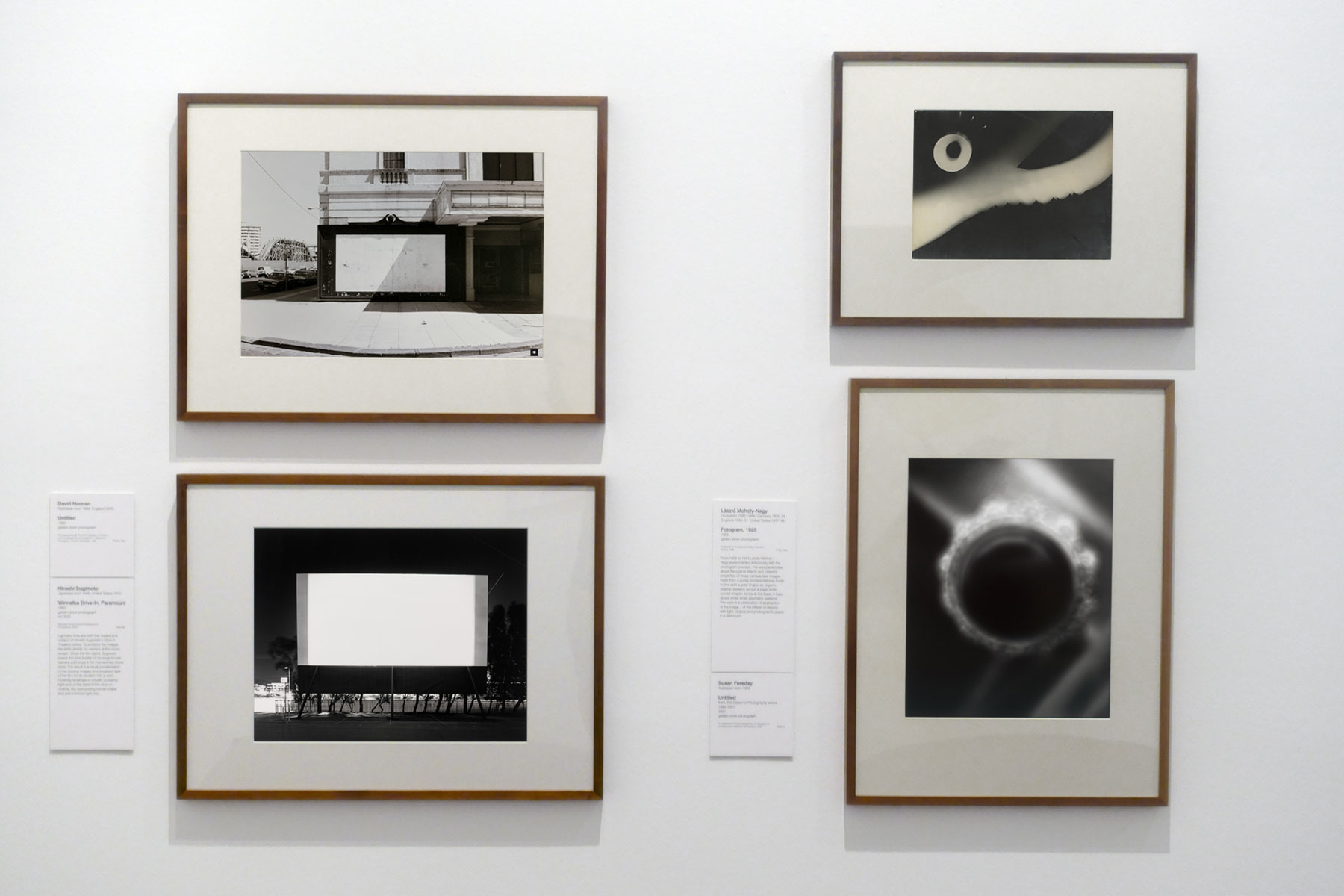
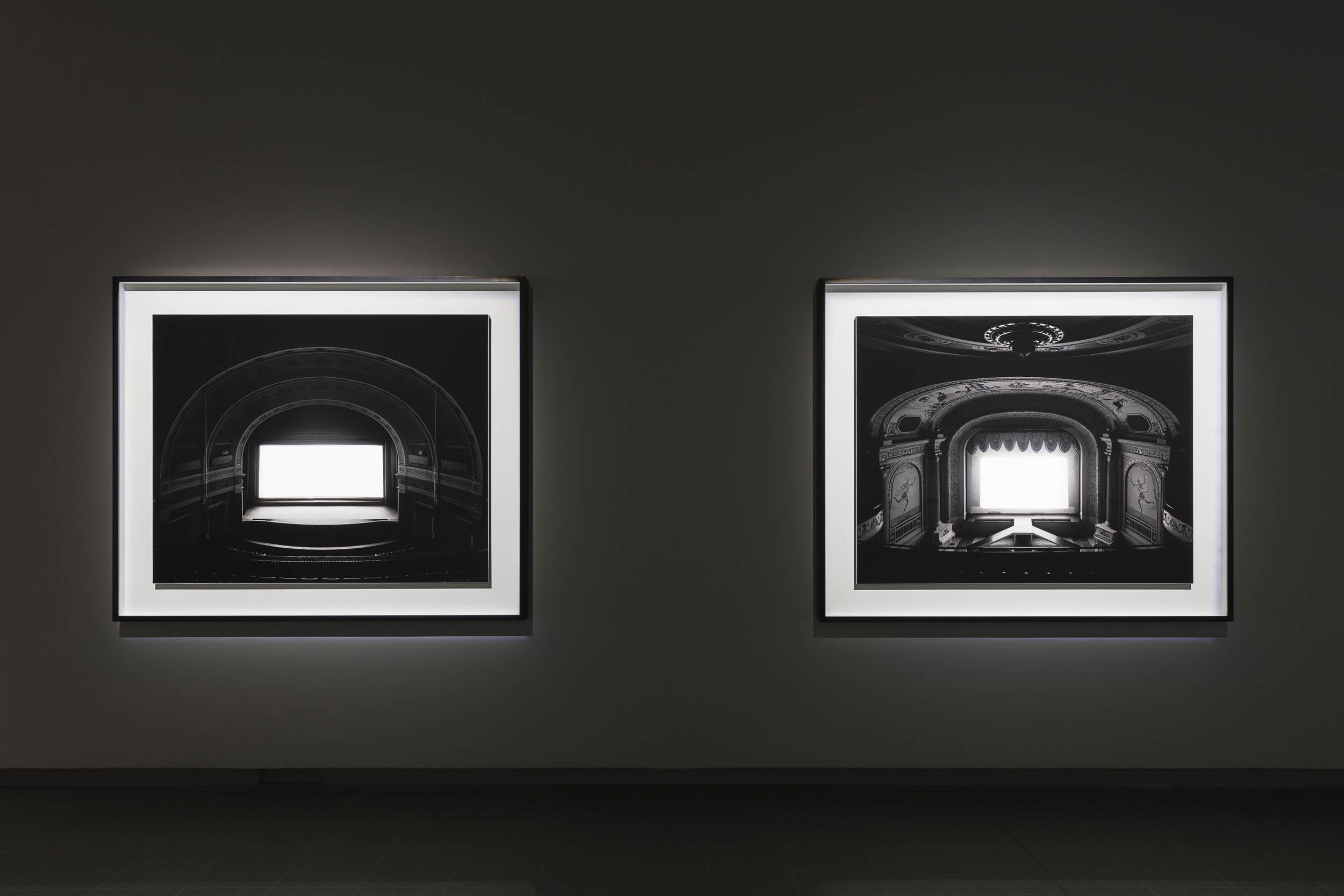
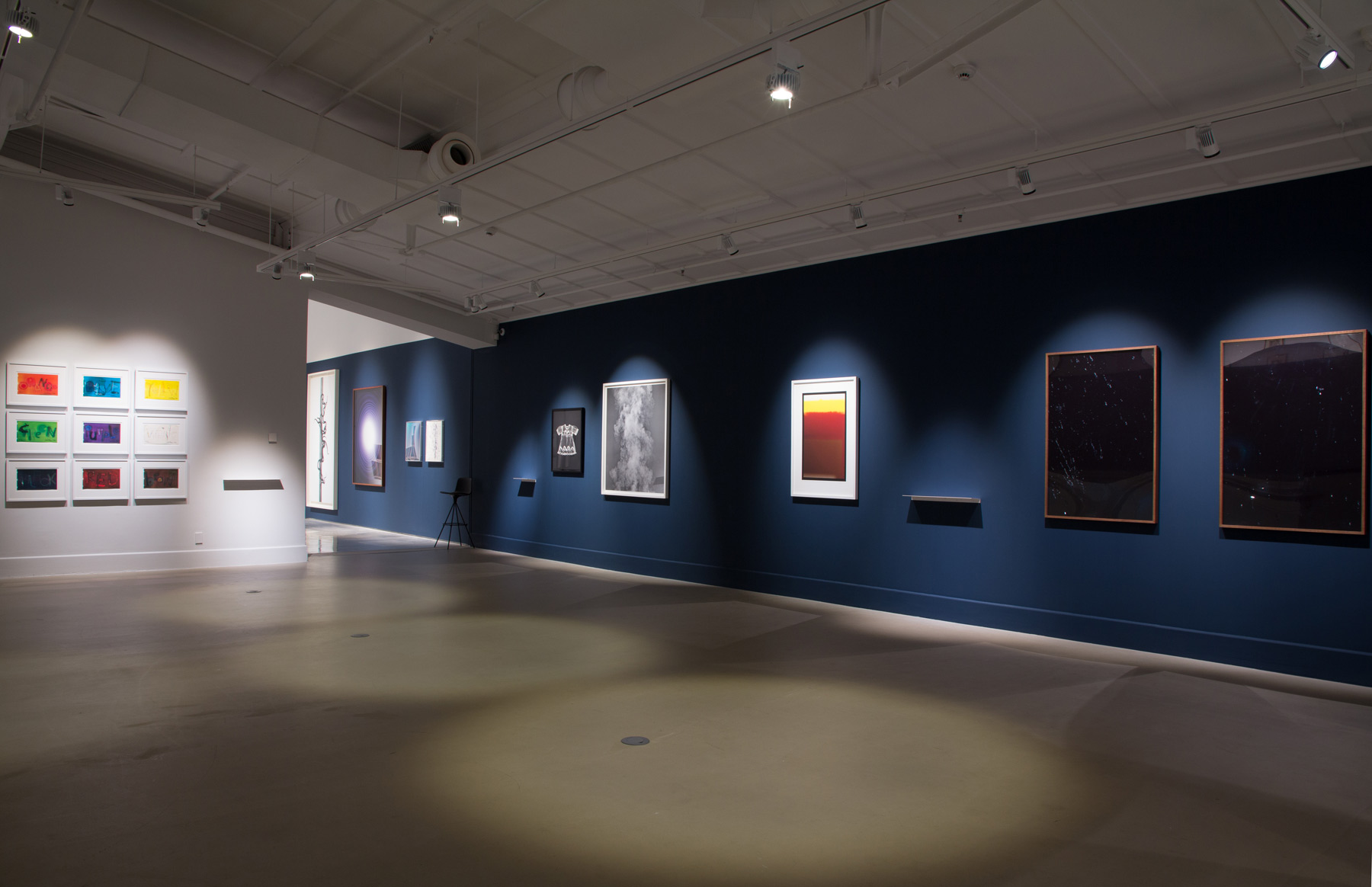
Installation view of the exhibition Photography and the Performative at the Chau Chak Wing Museum at The University of Sydney showing at left, Hiroshi Sugimoto's 'State Theatre, Sydney' (1997); at second left, Hiroshi Sugimoto's 'Seagram Building – Ludwig Mies Van Der Rohe' (1997); at third left, Olive Cotton's 'Clarence Street, Sydney' (c. 1942); at third right, Christo and Jeanne-Claude’s 'Packed public building, project for Sydney' (1969); and at right, Grant Mudford's 'From Ocean boulevard, Long Beach' (1979-1980)


Installation view of the exhibition Photography and the Performative at the Chau Chak Wing Museum at The University of Sydney showing at left, Hiroshi Sugimoto’s State Theatre, Sydney (1997, below); at second left, Hiroshi Sugimoto’s Seagram Building – Ludwig Mies Van Der Rohe (1997, below); at third left, Olive Cotton’s Clarence Street, Sydney (c. 1942, below); at third right, Christo and Jeanne-Claude’s Packed public building, project for Sydney (1969, below); and at right, Grant Mudford’s From Ocean boulevard, Long Beach (1979-1980, below)
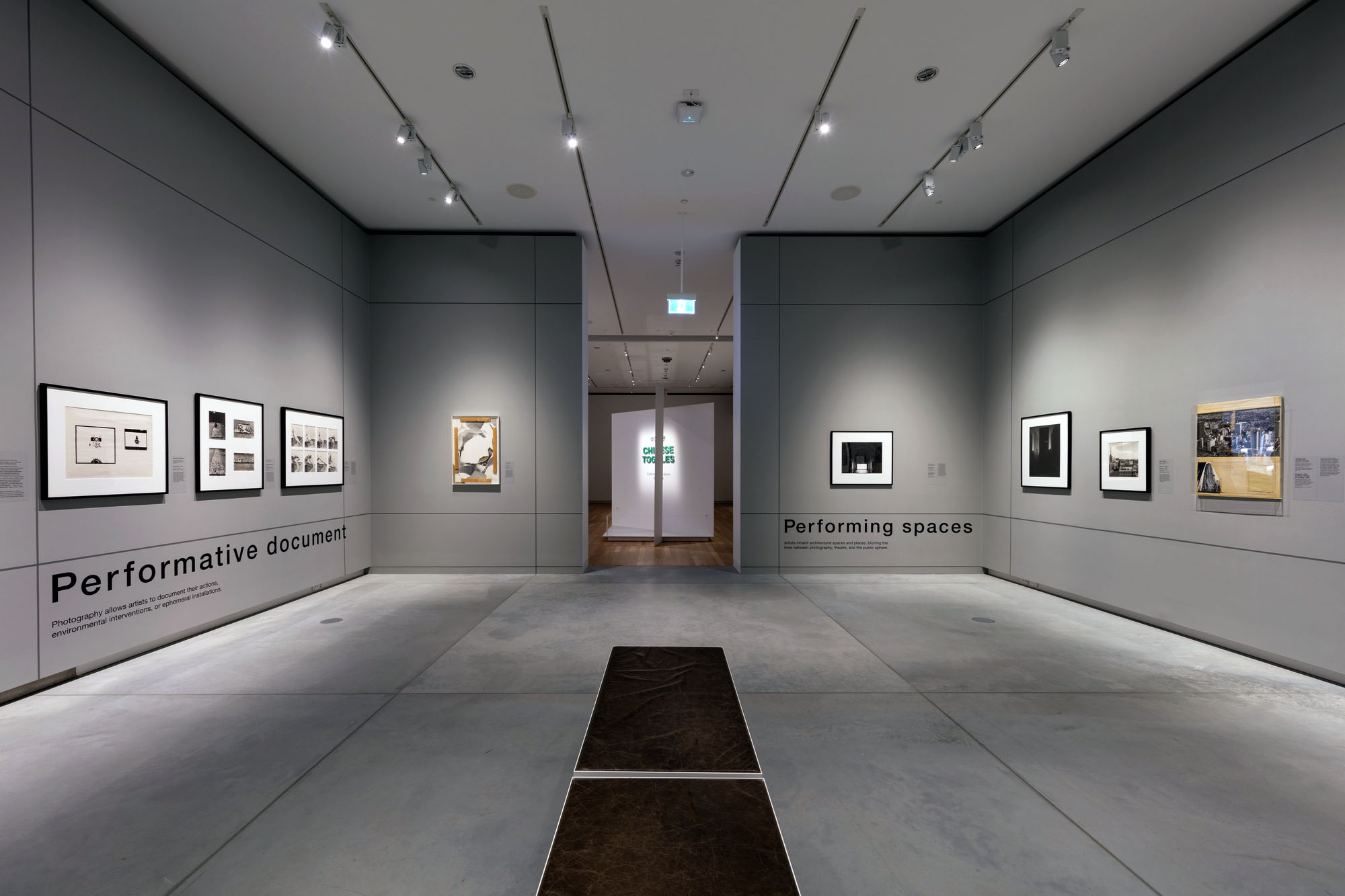
 

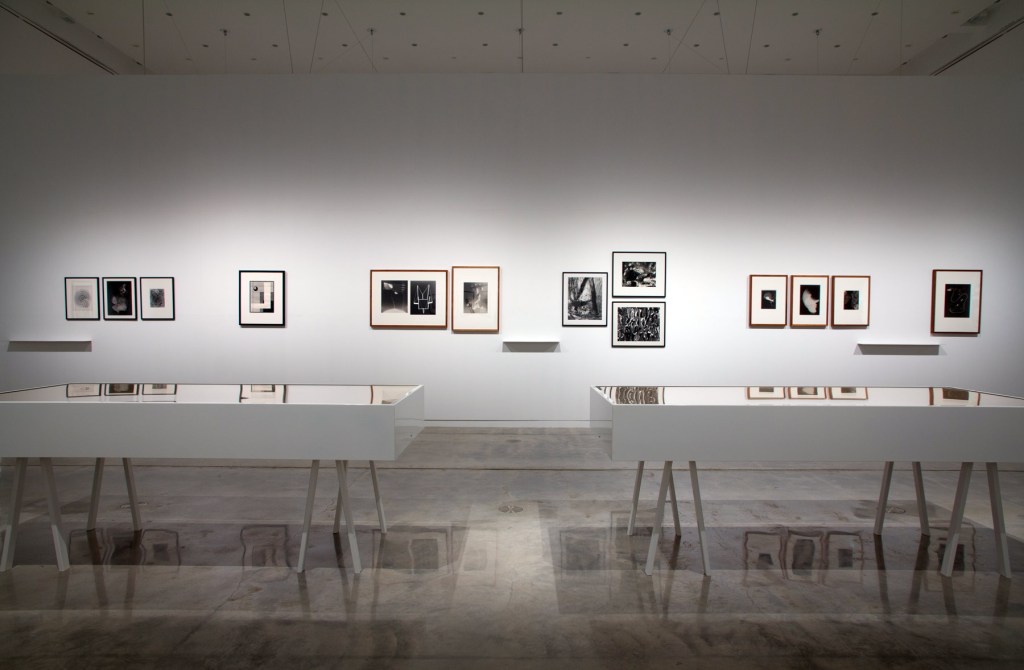
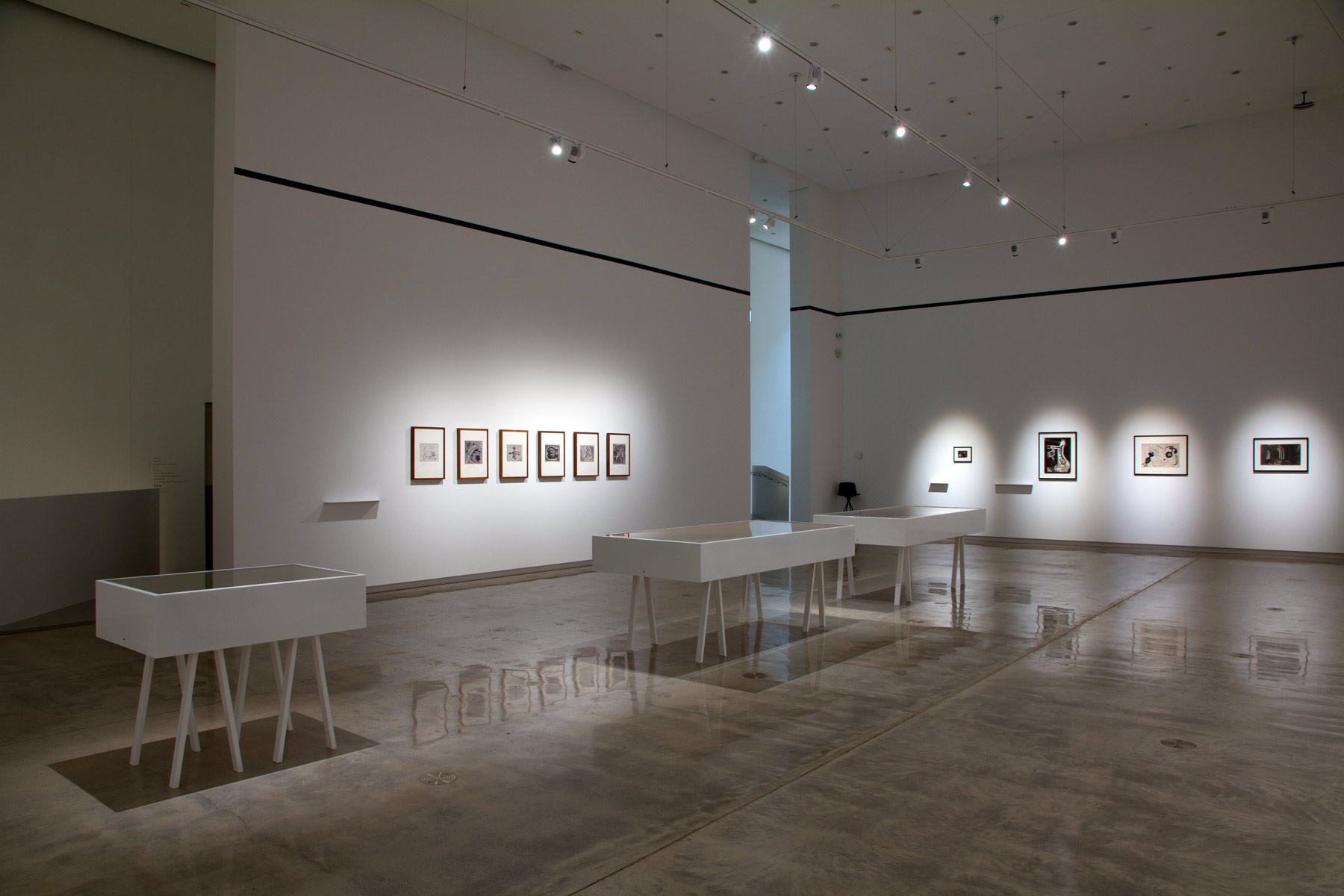
Installation view of the exhibition Photography and the Performative at the Chau Chak Wing Museum at The University of Sydney showing at left, Krzysztof Wodiczko's 'Eye to Eye' (c. 1973); at fourth left, Guilio Paolini's 'Incipit' (1975); at fourth right, Hiroshi Sugimoto's 'State Theatre, Sydney' (1997); at third right, Hiroshi Sugimoto's Seagram 'Building – Ludwig Mies Van Der Rohe' (1997); at second right, Olive Cotton's 'Clarence Street, Sydney' (c. 1942); and at right, Christo and Jeanne-Claude's 'Packed public building, project for Sydney' (1969)


Installation view of the exhibition Photography and the Performative at the Chau Chak Wing Museum at The University of Sydney showing at left, Krzysztof Wodiczko’s Eye to Eye (c. 1973, below); at fourth left, Guilio Paolini’s Incipit (1975, below); at fourth right, Hiroshi Sugimoto’s State Theatre, Sydney (1997, below); at third right, Hiroshi Sugimoto’s Seagram Building – Ludwig Mies Van Der Rohe (1997, below); at second right, Olive Cotton’s Clarence Street, Sydney (c. 1942, below); and at right, Christo and Jeanne-Claude’s Packed public building, project for Sydney (1969, below)


How photography captures performance

Some of photography’s best-known luminaries feature in a new Chau Chak Wing Museum exhibition examining the interaction between photography and performance.

From Olive Cotton’s Clarence Street, Sydney (c. 1942) to Imants Tillers’ If I Close My Eyes (2021), the images in Photography and the Performative capture performers, performance spaces and audiences over an 80-year period. The punk aesthetic of 1980s New York, Hollywood B-grade movies and generational discrimination faced by Aboriginal communities are among the diverse phenomena examined in this exhibition. Cindy Sherman, Hiroshi Sugimoto, Bill Henson, Barber Kruger and Araya Rasdjarmrearnsook are among the featured artists.

“Performance as a concept is everywhere,” said Chau Chak Wing curator Katrina Liberiou. “This exhibition conveys performative elements from the widest imaginable range of settings including streets, studios, villages, institutions and performance spaces.”

“Since the 1960s, photography and performance have experienced a shared history. The camera became an extension of the artist’s body, documenting their actions and interventions.”

Rather than record performances, works in Photography and the Performative look at the supporting roles of space, the human body and ideas in performance. International works include disturbing images from the hospital where Milos Forman’s One Flew Over the Cuckoo’s Nest was filmed. Mary Ellen Mark spent 36 days living at the Oregon State Hospital to document the lives of women incarcerated there, a year after she worked as the Oscar-winning film’s set photographer.

Closer to home, Christo’s Packed public building, project for Sydney (1969) imagines wrapping Sydney’s Australia Square, then a new skyscraper designed by architect Harry Seidler. This work was a precursor to the artists’ epic Wrapped Coast, created with support from Harry and Penelope Seidler. Hiroshi Sugimoto’s long exposures of the State Theatre and Seagram Building, also in Sydney, play homage to mid-twentieth century modernism. Imants Tillers If I close my eyes (2021, on display until August 2023) is a grid of Polaroid photographs interspersing portraits of Tillers’ friends, family and fellow artists with images of Sydney’s harbour. The latter depict the same view, from Tillers’ home in Mosman, captured over a three-year period.

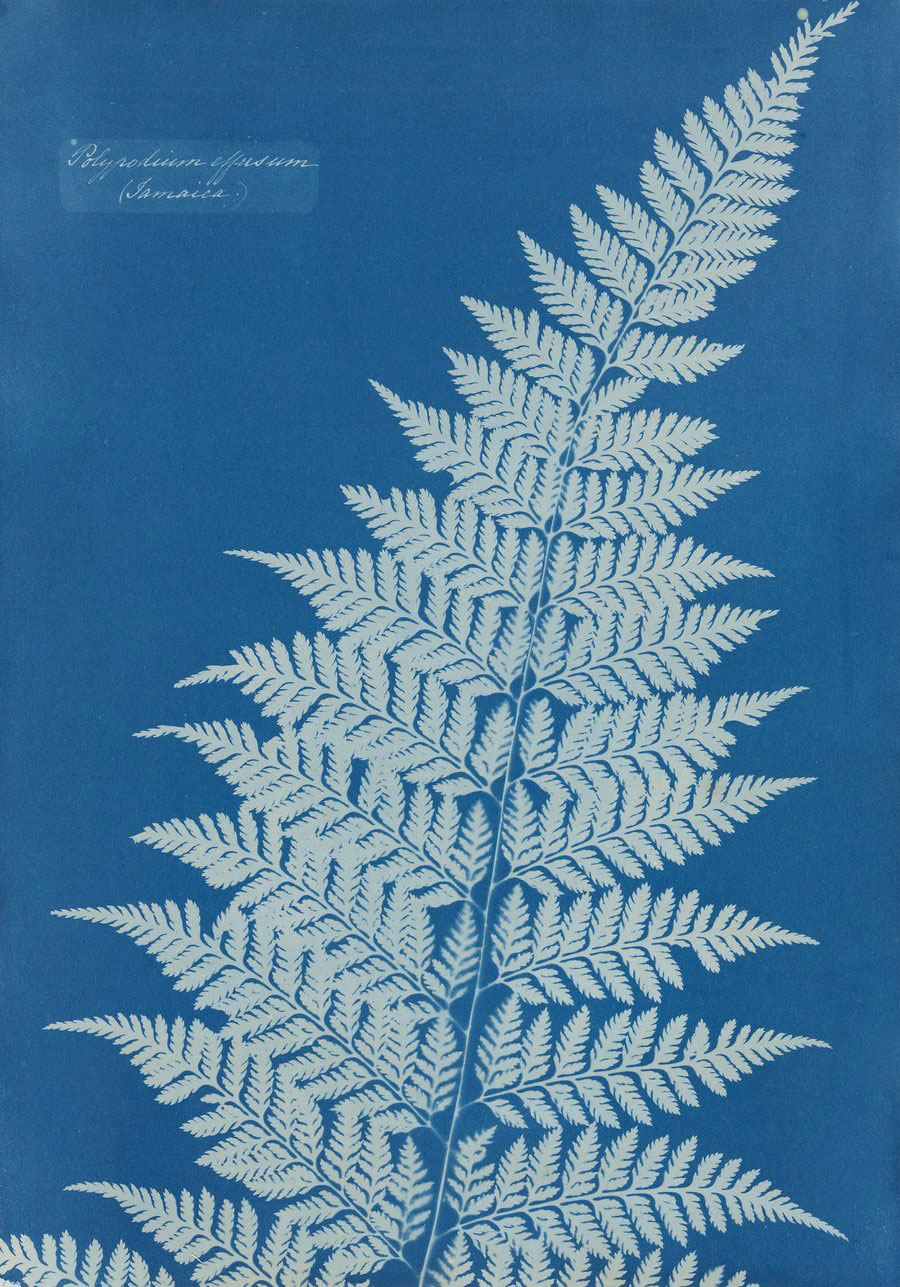
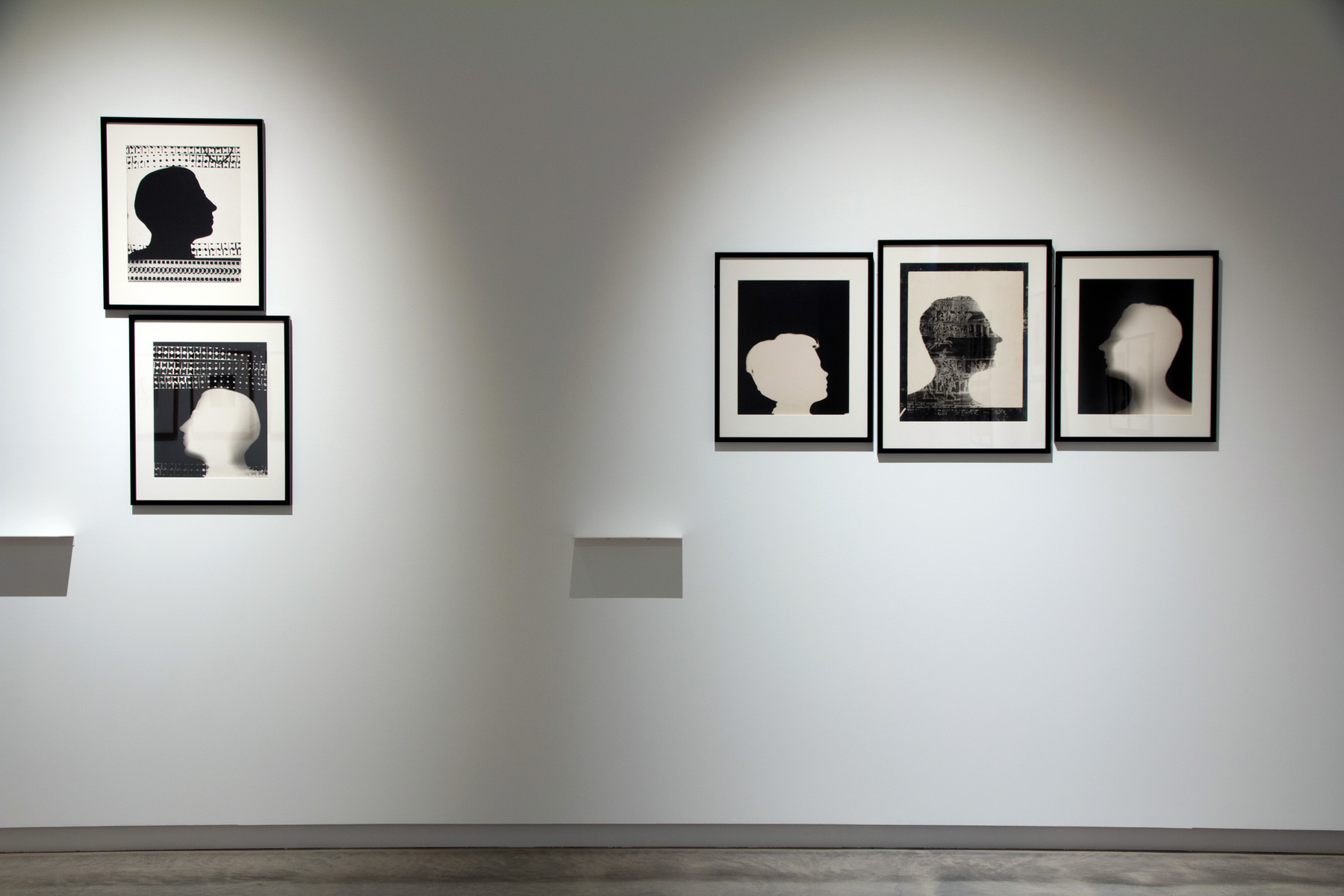
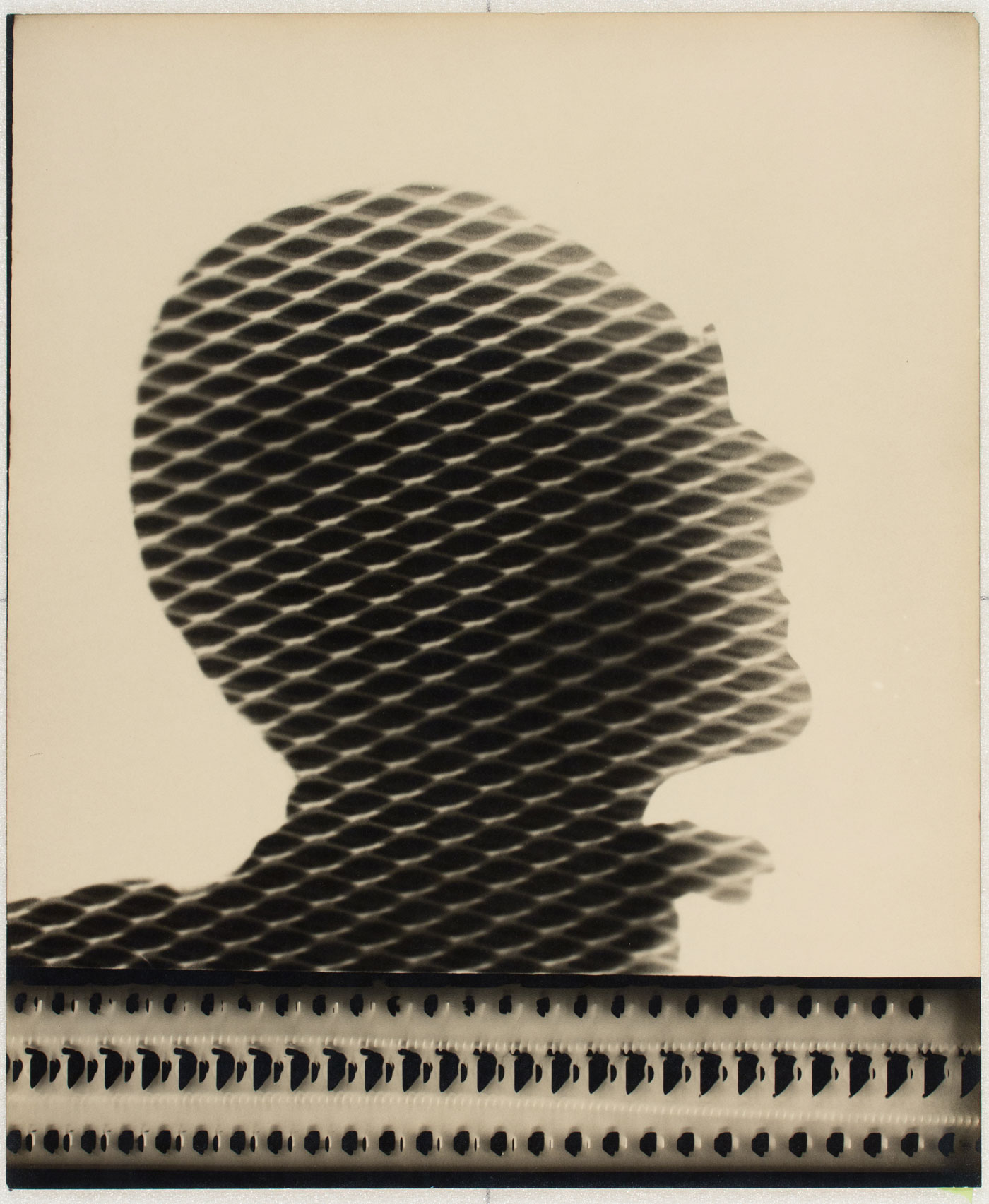
The photographs in Photography and the Performative range from vintage black and white prints to alternative processes (including solarisation and photograms) to early colour photography and digital prints. All featured works have been selected from the University of Sydney Art Collection.

Photography and the Perfomative is one of two photographic exhibitions currently on show at the Chau Chak Wing Museum. The second, The Staged Photograph, presents a range of staged images taken in Australia between the mid-19th and early 20th centuries.

Anonymous. “From Henson to Christo,” on The University of Sydney website 24 April 2023 [Online] 12/06/2024


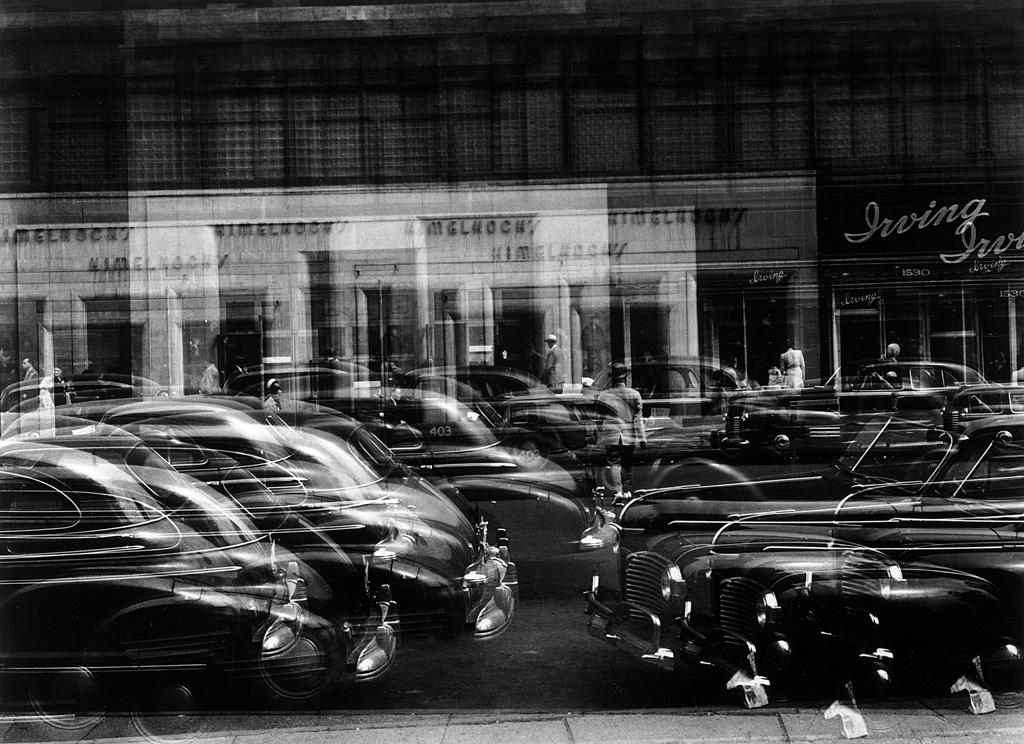
Olive Cotton (Australian, 1911-2003) 'Clarence Street, Sydney' c. 1942


Olive Cotton (Australian, 1911-2003)
Clarence Street, Sydney
c. 1942
Gelatin silver print
Chau Chak Wing Museum


Christo Vladimirov Javacheff (American born Bulgaria, 1935-2020) and Jeanne-Claude Denat de Guillebon (American born Bulgaria, 1935-2009) 'Packed public building, project for Sydney' 1969


Christo Vladimirov Javacheff (American born Bulgaria, 1935-2020) and Jeanne-Claude Denat de Guillebon (American born Bulgaria, 1935-2009)
Packed public building, project for Sydney
1969
Synthetic polymer paint, cotton fabric, cotton thread, pencil, coloured pencil, pressure-sensitive tape on photographs, synthetic polymer weave and staples on cardboard
72.0 x 76.9cm
Donated by Chandler Coventry, 1972
J W Power collection, Chau Chak Wing Museum
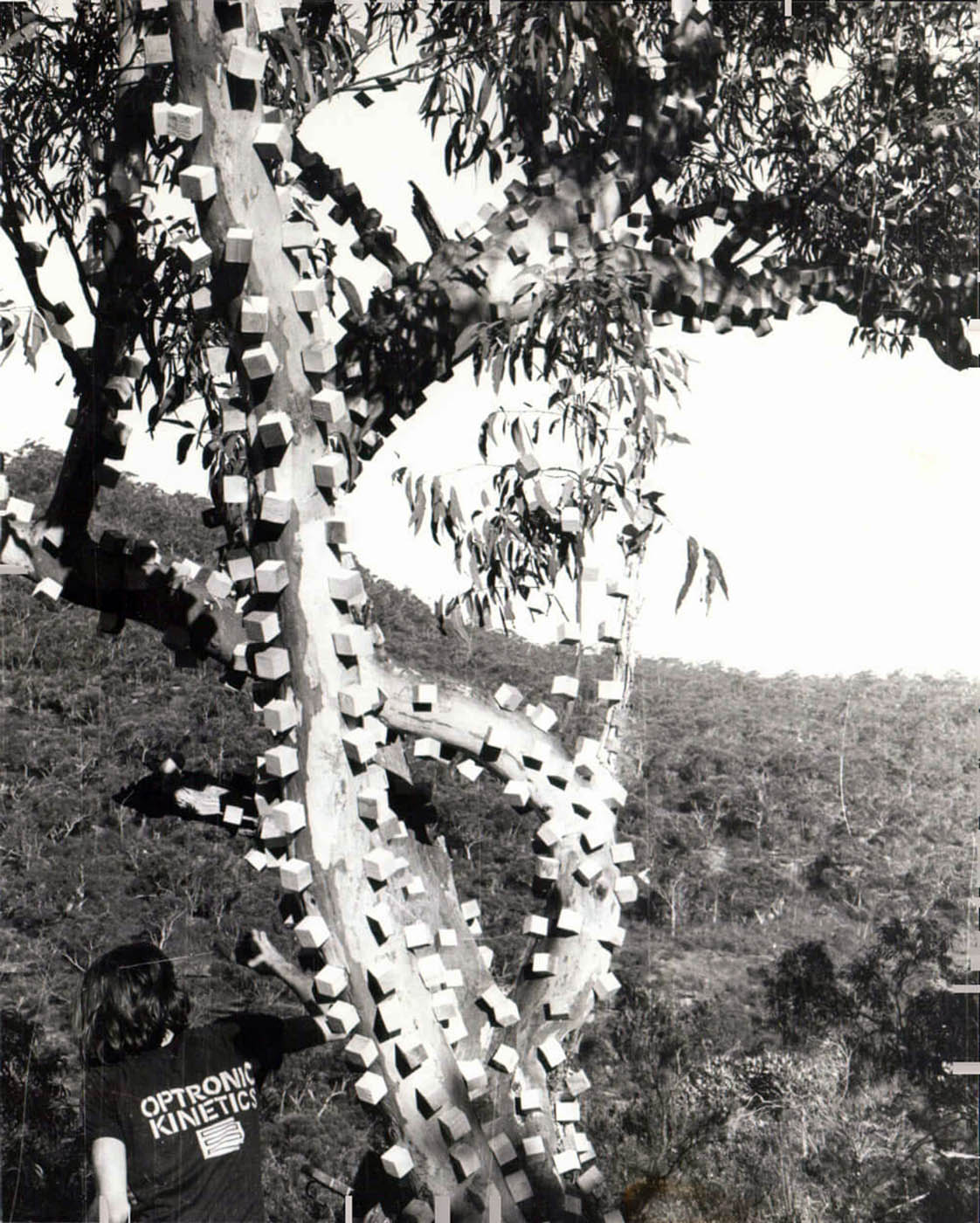
 

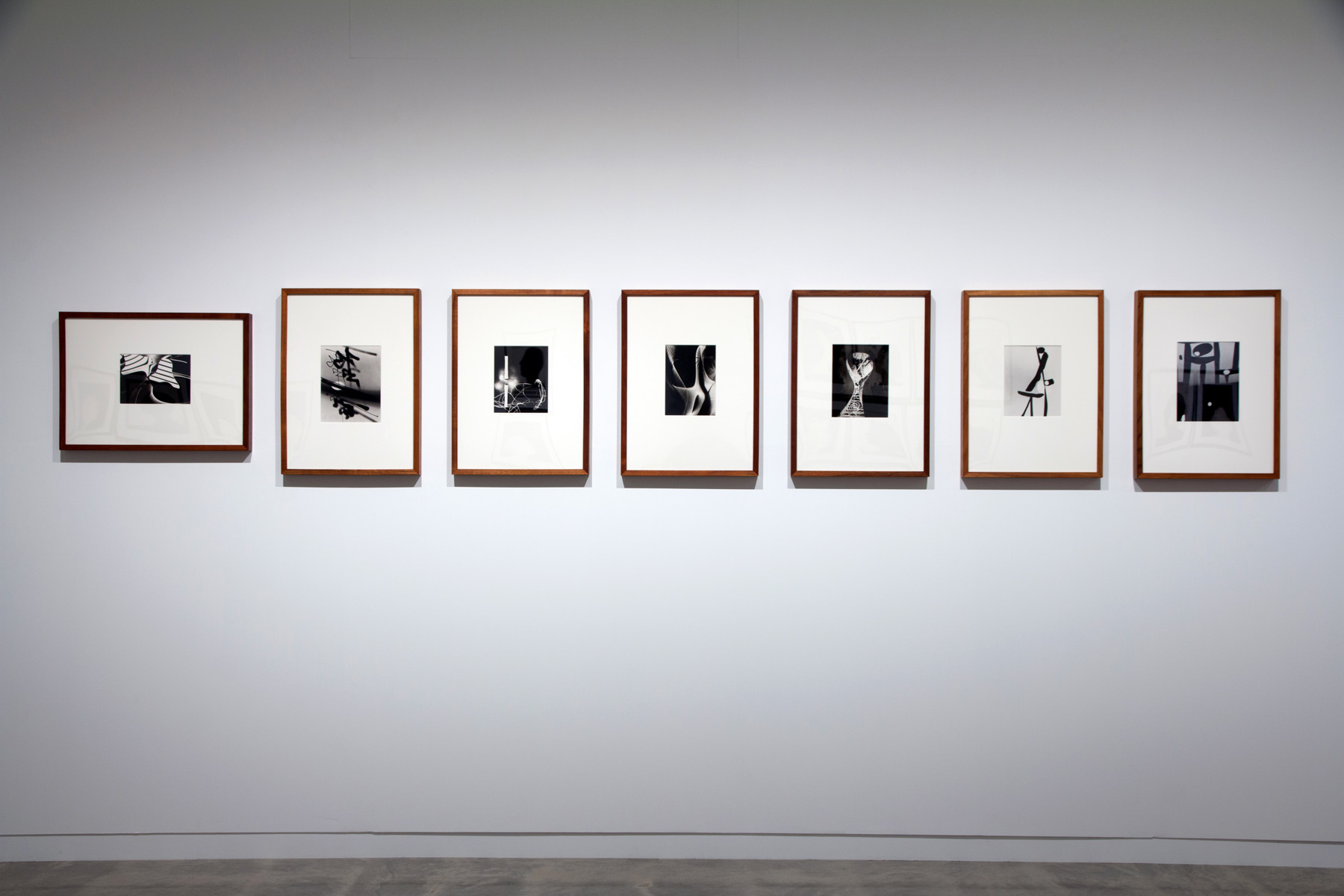
Optronic Kinetics (active c. 1970-72) 'Cubed Tree' 1971


Optronic Kinetics (active c. 1970-72)
Cubed Tree
1971
Black and white photograph
61 x 42cm
Donated by the artist 1973
J W Power collection, Chau Chak Wing Museum


Optronic Kinetics (active c. 1970-72) 'Feathered Office' c. 1973


Optronic Kinetics (active c. 1970-72)
Feathered Office
c. 1973
Black and white photograph
61 x 42cm
Donated by the artist 1973
J W Power collection, Chau Chak Wing Museum


Optronic Kinetics

Optronic Kinetics was an art collective that emerged from the University of Sydney’s infamous Tin Sheds Art Workshop in the early 1970s. At this time, the Tin Sheds was a hotbed for radical thought, student activism and a celebrated ‘alternate art space’, where ideas about conceptual and post-object art were explored and put into practice. From the late 1960s to the early 1980s, the Tin Sheds gave rise to some of Australia’s most progressive and political creative practitioners.

Renowned sculptor and artist Bert Flugelman (1923-2013) was the Tin Sheds’ coordinator from 1968 to 1973, and under his guidance encouraged students from across the University’s disciplines to explore the Art Workshop’s offerings. Combined with the enthusiasm of artist, critic and theorist Donald Brook (1927-2018), a University of Sydney academic at the time, a small cohort of medical and engineering students began to investigate and experiment with electronics and movement. Initially the students had wanted to create ‘very conservative paintings’, so in response Flugelman gave them an introduction to sculpture and convinced them to push the boundaries of their own studies and skills. Flugelman and Brook believed that you did not need to master a creative discipline in order to understand it, but you had to be familiar with its ideas and processes. It was this guiding principle that brought Optronic Kinetics into being.

Spurred by the desire to amalgamate science and technology with art, the collective’s founding members included Fine Arts student Julie Ewington, now a recognised writer and curator, and electrical engineering students David Smith and Jim McDonnell. Together with Flugelman they created conceptually ambitious and humorous works such as Cubed treeFeathered office and Flashing boob. Other works such as Electronic colour organ and Reflector employed cutting edge technological innovations and theories to bridge the perceived divide between art and science.

Madeline Reece. “Optronic Kinetics,” on the Take 5 Flinders University Museum of Art website 2020 [Online] Cited 21/06/2024 © Flinders University Museum of Art


Cecile Abish (American, b. 1930) 'Mail-Art: Field Coil' c. 1973 (detail)


Cecile Abish (American, b. 1930)
Mail-Art: Field Coil (detail)
c. 1973
Black and white photographs (template and typed documentation not exhibited)
25.5 x 20.4cm
Donated by the artist 1973
J W Power collection, Chau Chak Wing Museum


Cecile Abish (born 1930) is an American artist known primarily for her works in sculpture and photography.

“Field Coil was specifically made for the lower level space at 112, with its unobstructed linear run and uncluttered cement floor. The work consisted of 104 separate coiled kraft paper units that were placed one next to the other. Each section before being rolled measures 36 × 46″, the slits were 36″ long, cut at 1″ intervals and parallel to the 46″ length. The 104 separate units lost their intrinsic apartness as the coils were placed one next to the other, leaving only the uppermost part of each unit exposed to form an extended field. The dimensions of the entire work were 7″ high x 3′ wide x 49′ long.”

Excerpted from Brentano, R., & Savitt, M. (1981). 112 Workshop, 112 Greene Street: History, artists & artworks. New York: New York University Press cited on the White Columns website Nd [Online] Cited 21/06/2024


Petr Stembera (Czech, b. 1945) 'Mail-Art: (rolling a sleeve; 8 parts)' c. 1973 (detail)


Petr Stembera (Czech, b. 1945)
Mail-Art: (rolling a sleeve; 8 parts) (detail)
c. 1973
Black and white photographs
24.0 x 17.8 cm
Donated by the artist 1973
J W Power collection, Chau Chak Wing Museum


His [Stembera’s] Daily Activities, a series of performances for a camera from the early 1970s, dealing with routine actions, such as rolling up sleeves, typewriting, tying shoelaces, or fastening buttons are mainly found in collections outside Czechoslovakia and, thus, virtually absent from Czech collections, as the artist stopped displaying his photographic works after he turned to live performance in 1974. …

[Petr] Rezek wrote about photographic documentation as a basis for communication. Speaking about the Czech context and leaving aside the different financial and technical possibilities, Štembera’s use of photographic documentation was not especially innovative. Photography served for many as an easily reproducible medium, as the lingua franca of performance art. Its importance was rooted in its utility rather than its aesthetics. However, the specific form of the use of this almost universally understood language depended on many factors. If we look more closely at its uses and direct our focus towards the various dialects, idiolects, and sociolects it encompasses, we can also learn more about the nature of the art it transmitted.

The fact that the Daily Activities series was crucial for Štembera at the time is confirmed, for example, by a reproduction of a photograph showing him buttoning his shirt, which was used on the poster for his solo exhibition in Antwerp organized by D’Hondt in 1974. Such low-quality reproductions, which appeared in non-profit publications in the West as well as in unofficial and semi-official publications in the East were one of the typical outputs of these exchanges. In addition to gelatin silver prints, photomechanical reproductions played a crucial role in facilitating international transfers. Besides the posters and invitation cards, the reproductions in exhibition catalogues and in foreign magazines were seminal in distributing the original art piece to a wide audience. Through the catalogs, some of the exhibited works reached a secondary audience but also returned to the archives of the authors and to libraries, where they continue to serve as a source of information to this day.

Hanna Buddeus. “Photography: The Lingua Franca of Performance Art?” on the Art Margins website 14th March 2024 [Online] Cited 21/06/2024


Krzysztof Wodiczko (Polish, b. 1943) 'Eye to Eye' c. 1973


Krzysztof Wodiczko (Polish, b. 1943)
Eye to Eye
c. 1973
Gelatin silver photograph
47.6 x 59cm
Donated by the artist 1973
J W Power collection, Chau Chak Wing Museum


Giulio Paolini (Italian, b. 1940) 'Incipit' 1975


Giulio Paolini (Italian, b. 1940)
Incipit
1975
Torn photograph, canvas, wood, in Perspex frame
91.0 x 61.5cm
Purchased with funds from the J W Power Bequest 1976
J W Power collection
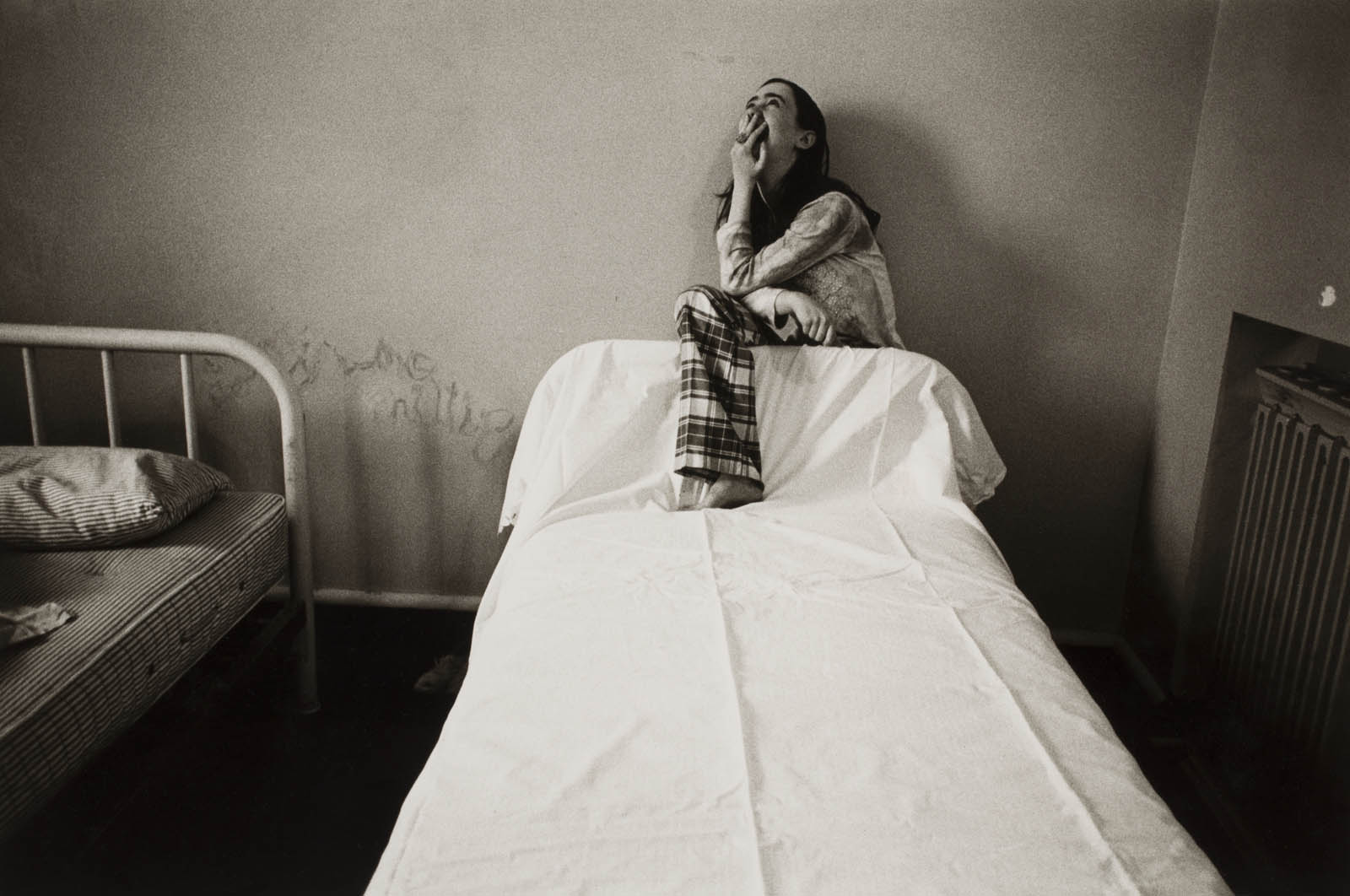
 

Mary Ellen Mark (American, 1940-2015) 'Untitled' 1976-1978


Mary Ellen Mark (American, 1940-2015)
Untitled
1976-1978
From the series Ward 81, Oregon State Hospital, Salem, Oregon
Silver gelatin photograph
20.3 x 30.5cm
Purchased with funds from the JW Power Bequest 1978
JW Power Collection, Chau Chak Wing Museum


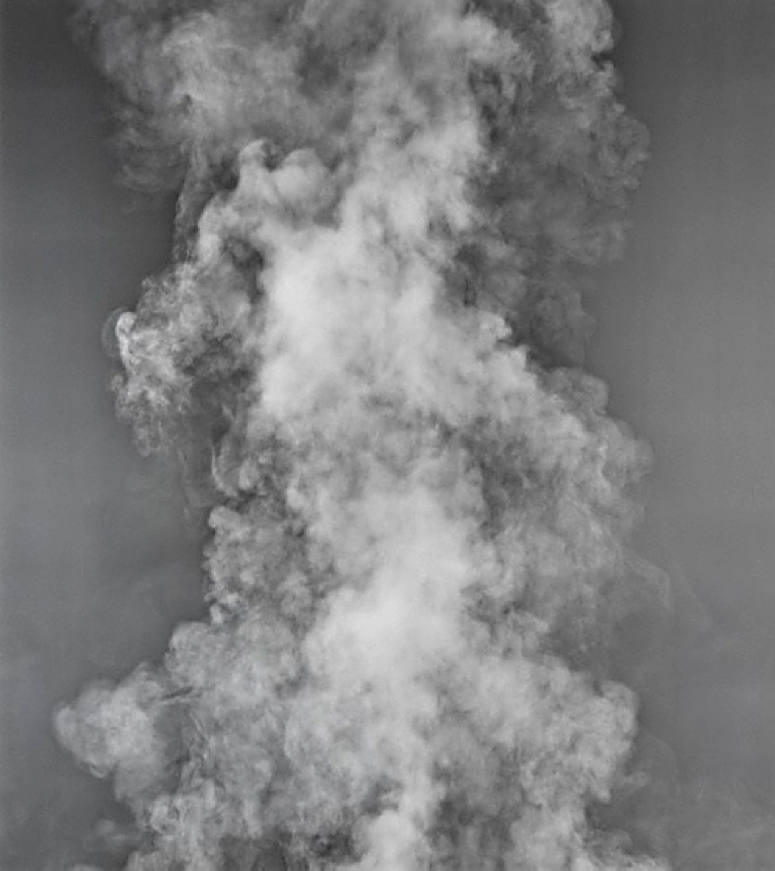
In 1975, photographer Mary Ellen Mark was assigned by The Pennsylvania Gazette to produce a story on the making of Milos Forman’s film of Ken Kesey’s 1962 novel One Flew Over the Cuckoo’s Nest, shot on location at the Oregon State Hospital, a mental institution. While on set, Mark met the women of Ward 81, the only locked hospital security ward for women in the state: The inmates were considered dangerous to themselves or to others. In February of 1976, just before the ward closed (it ceased to exist in November of 1977, when it became the female section of a coeducational treatment ward), Mark and Karen Folger Jacobs, a writer and social scientist, were given permission to make a more extended stay, living on the ward in order to photograph and interview the women. They spent 36 days on Ward 81, photographing and documenting. Jacobs recalls their slow, inevitable assimilation: “We felt the degeneration of our own bodies and the erosion of our self-confidence. We were horrified at the thought of what we might become after a year or two of confinement and therapy on Ward 81.”

Text from the Google Books website


Mary Ellen Mark (American, 1940-2015) 'Untitled' 1976-1978


Mary Ellen Mark (American, 1940-2015)
Untitled
1976-1978
From the series Ward 81, Oregon State Hospital, Salem, Oregon
Silver gelatin photograph
20.3 x 30.5cm
Purchased with funds from the JW Power Bequest 1978
JW Power Collection, Chau Chak Wing Museum
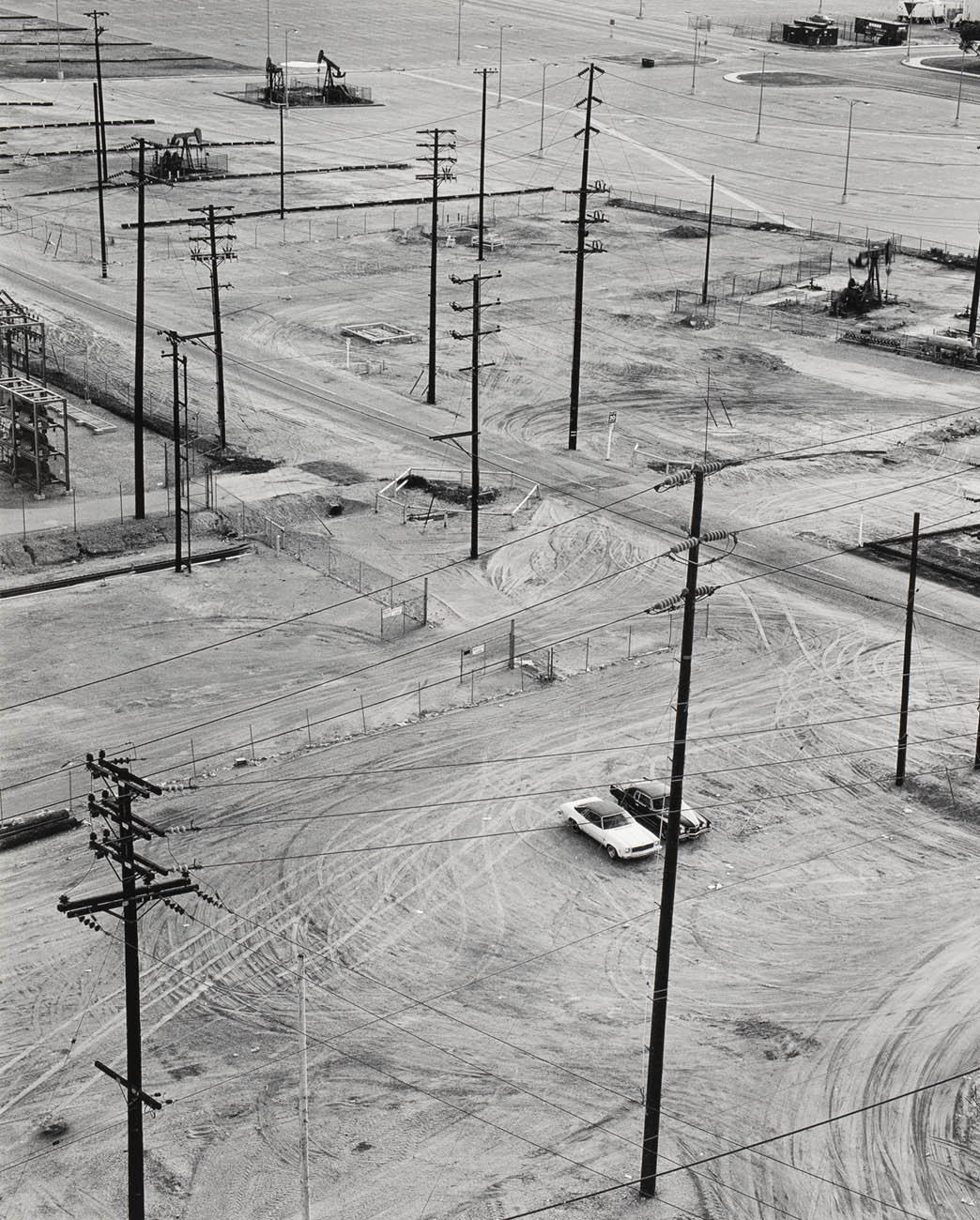
 

Grant Mudford (Australian, b. 1944) 'From Ocean boulevard, Long Beach' 1979-1980


Grant Mudford (Australian, b. 1944)
From Ocean boulevard, Long Beach
1979-1980
Black and white photograph on paper
60.3 x 50.3cm
Purchased with funds from the J W Power Bequest 1980
J W Power collection, Chau Chak Wing Museum


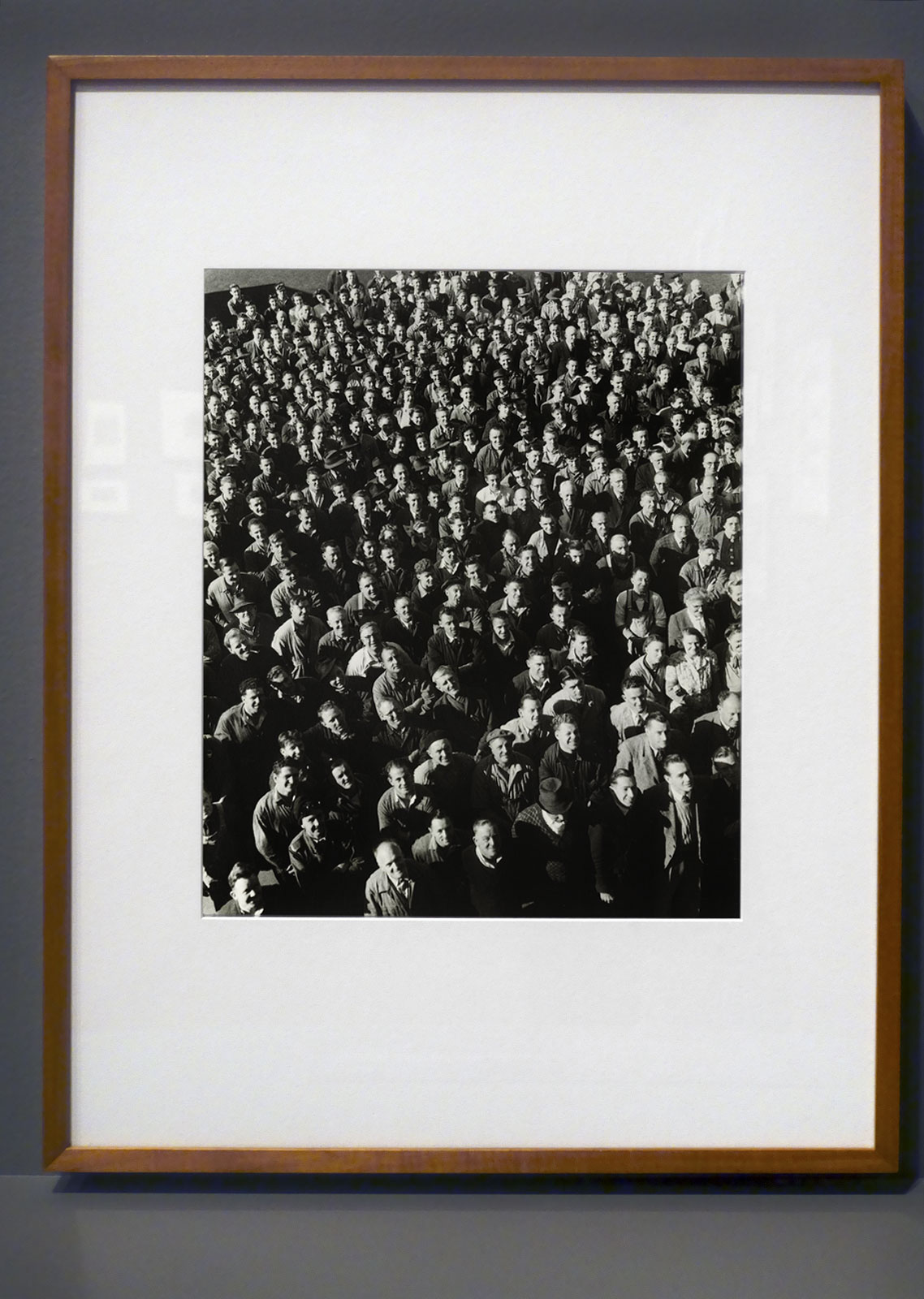
Bill Henson (Australian, b. 1955) 'Untitled 1980/82' 1980-1982


Bill Henson (Australian, b. 1955)
Untitled 1980/82
1980-1982
Gelatin silver photograph
43.1 x 39cm
Donated by University of Sydney Union 2019
University Art Collection, Chau Chak Wing Museum


“A selection of photographs from the Crowd Series (1980-1982) by Bill Henson. Snapped in secret these black and white journalistic surveillance photographs (‘taken’ in an around Flinders Street railway station in Melbourne) have a brooding intensity and melancholic beauty. Henson uses a flattened perspective that is opposed to the principles of linear perspective in these photographs. Known as The Art of Describing6 and much used in Dutch still life painting of the 17th century to give equal weight to objects within the image plane, here Henson uses the technique to emphasise the mass and jostle of the crowd with their “waiting, solemn and compliant” people.

“When exhibiting the full series, Henson arranges the works into small groupings that create an overall effect of aberrant movement and fragmentation. From within these bustling clusters of images, individual faces emerge like spectres of humanity that will once again dissolve into the crowd … all apparently adrift in the flow of urban life. The people in these images have an anonymity that allows them to represent universal human experiences of alienation, mortality and fatigue.”7

Marcus Bunyan. “Un/aware and in re/pose: the self, the subject and the city,” review of the exhibition ‘In camera and in public’ at the Centre for Contemporary Photography, Melbourne on the Art Blart website October 16, 2011 [Online] Cited 12/06/2024

6/ See Alpers, Svetlana. The Art of Describing: Dutch Art in the Seventeenth Century. University Of Chicago Press, 1984

7/ Anon. BILL HENSON: early work from the MGA collection. Education Resource. A Monash Gallery of Art Travelling Exhibition [Online] Cited 14/10/2011. No longer available online
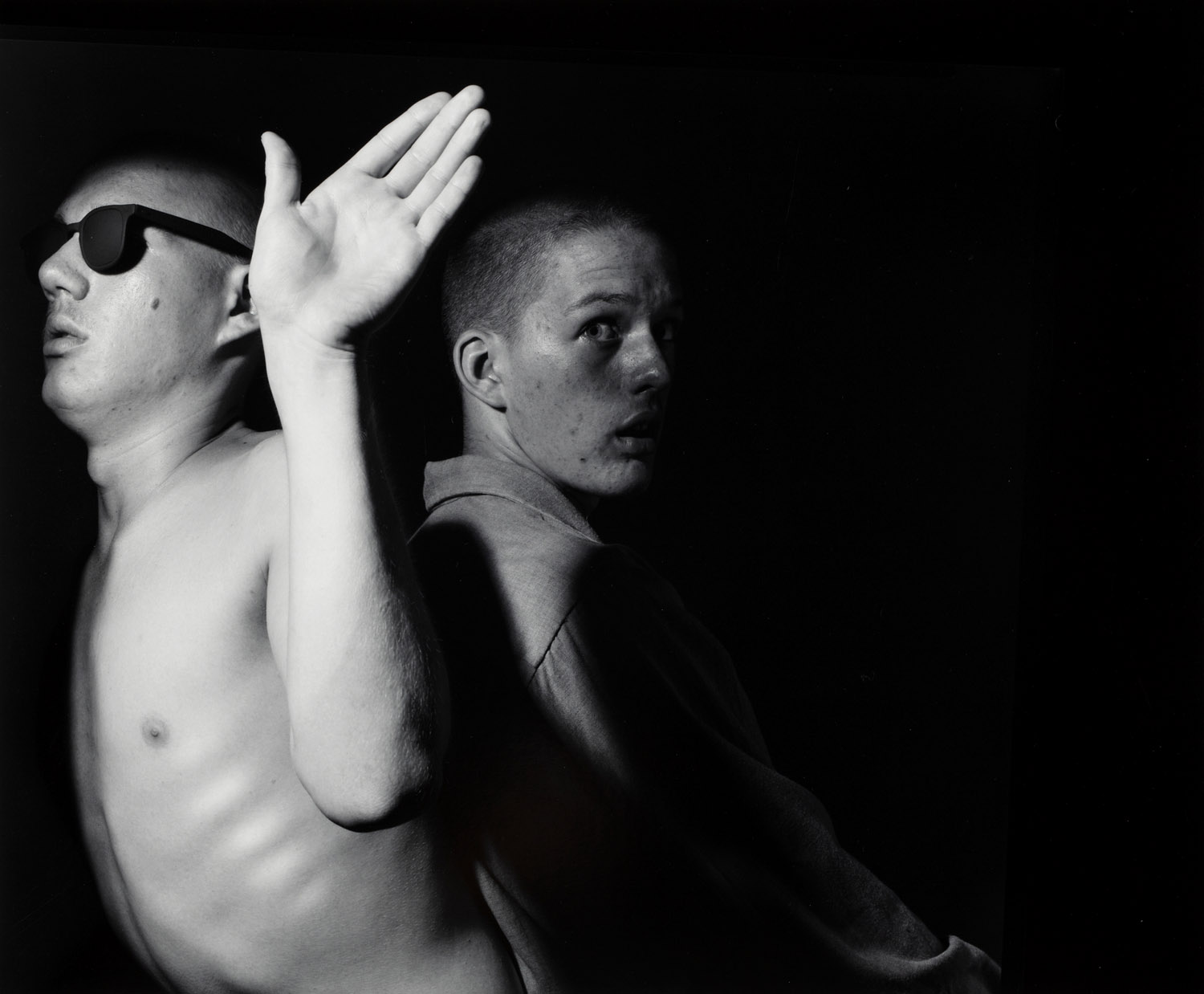
 

Todd Watts (American, b. 1949) 'On the 21st century' 1982


Todd Watts (American, b. 1949)
On the 21st century
1982
Silver gelatin photograph
49.0 x 59.2cm
Purchased with funds from the JW Power Bequest 1986
JW Power Collection, Chau Chak Wing Museum
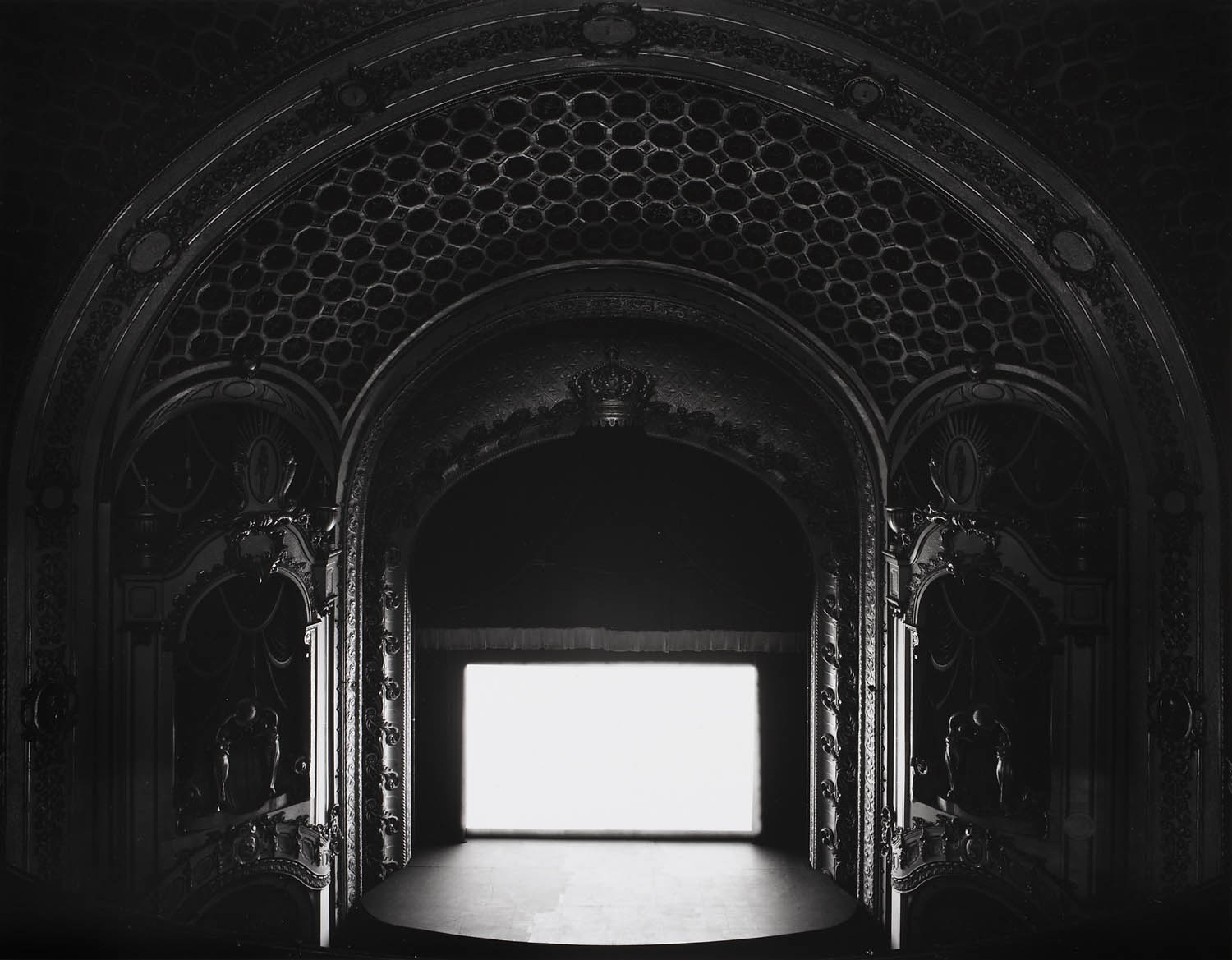
 

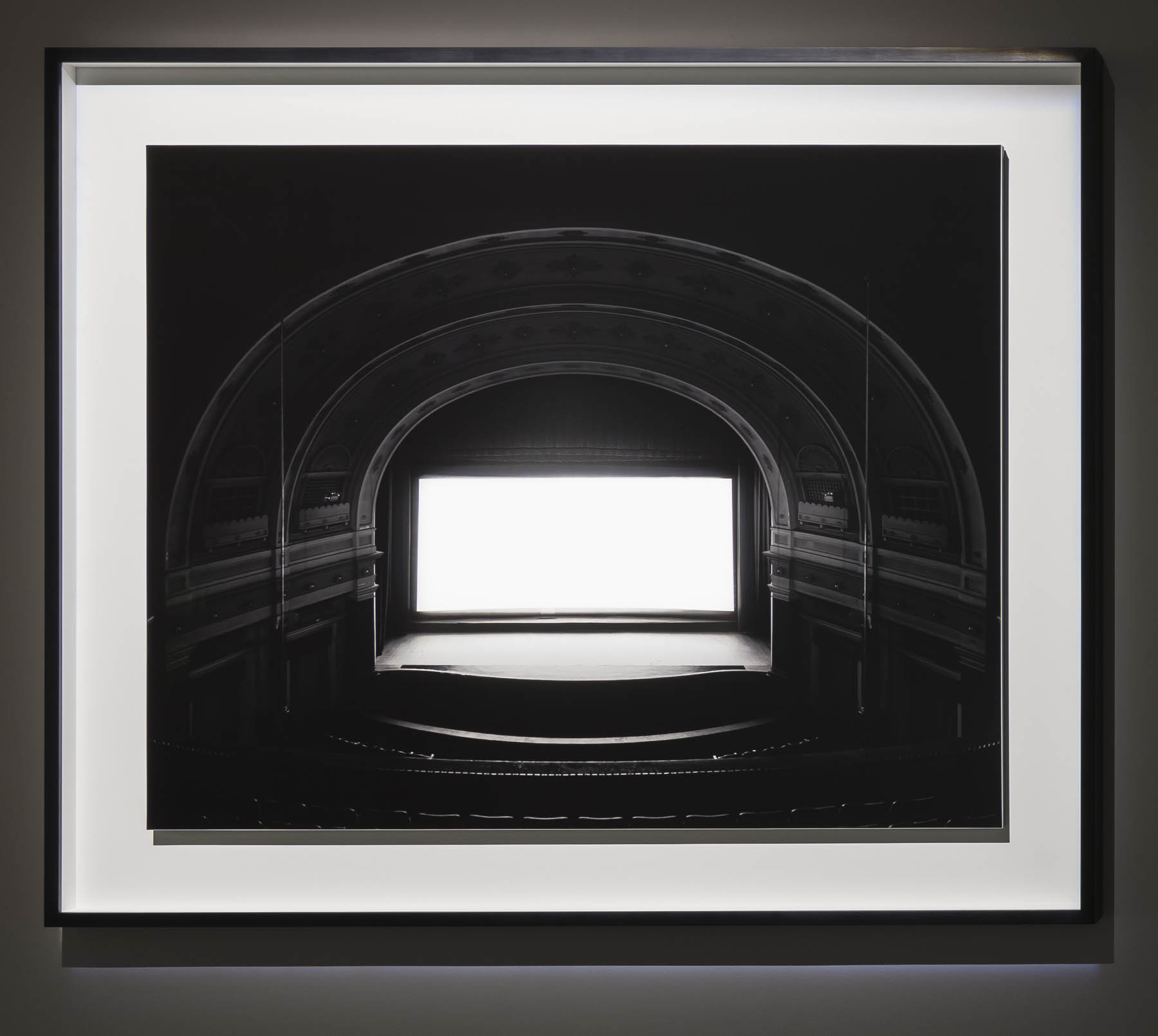
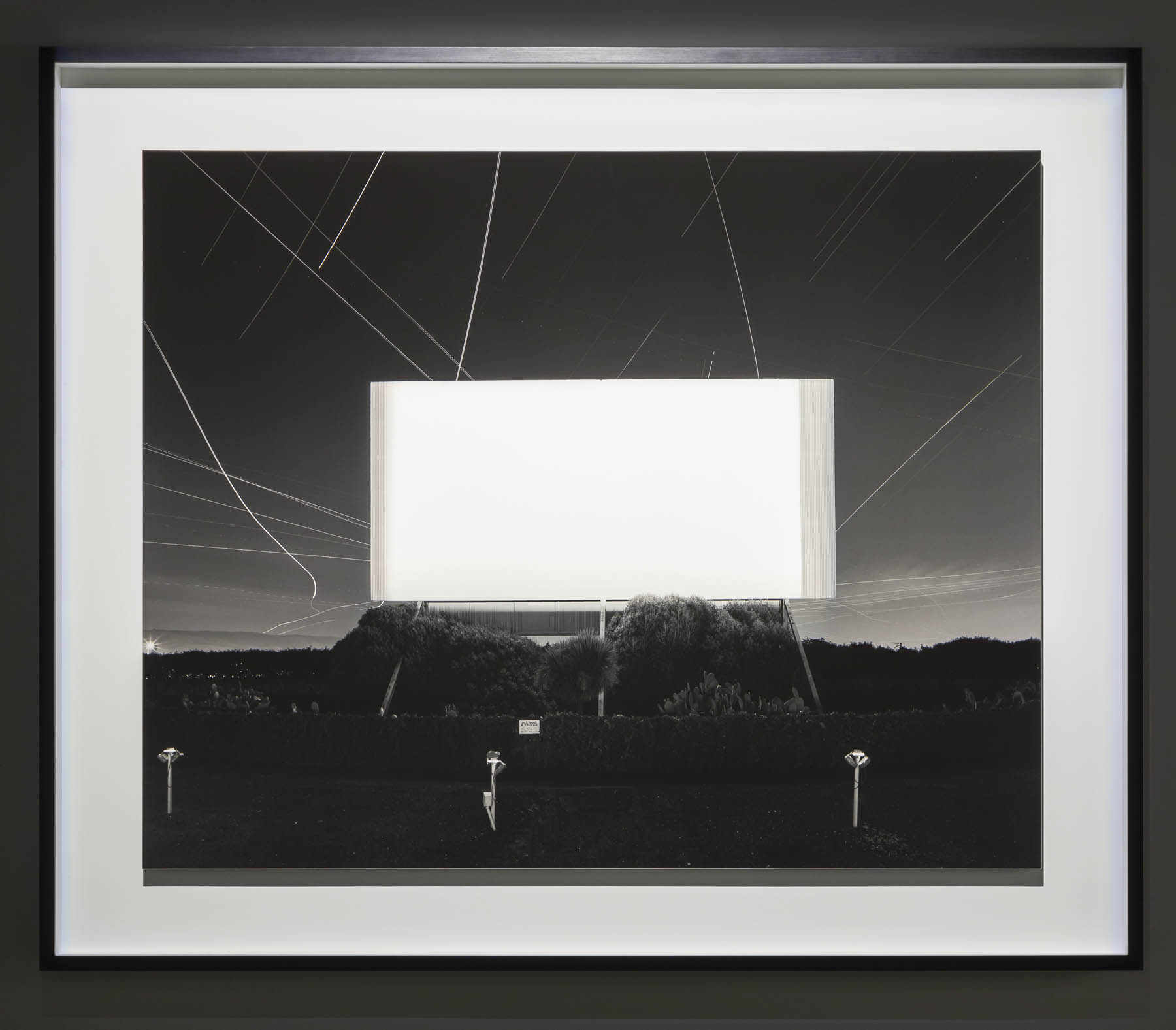
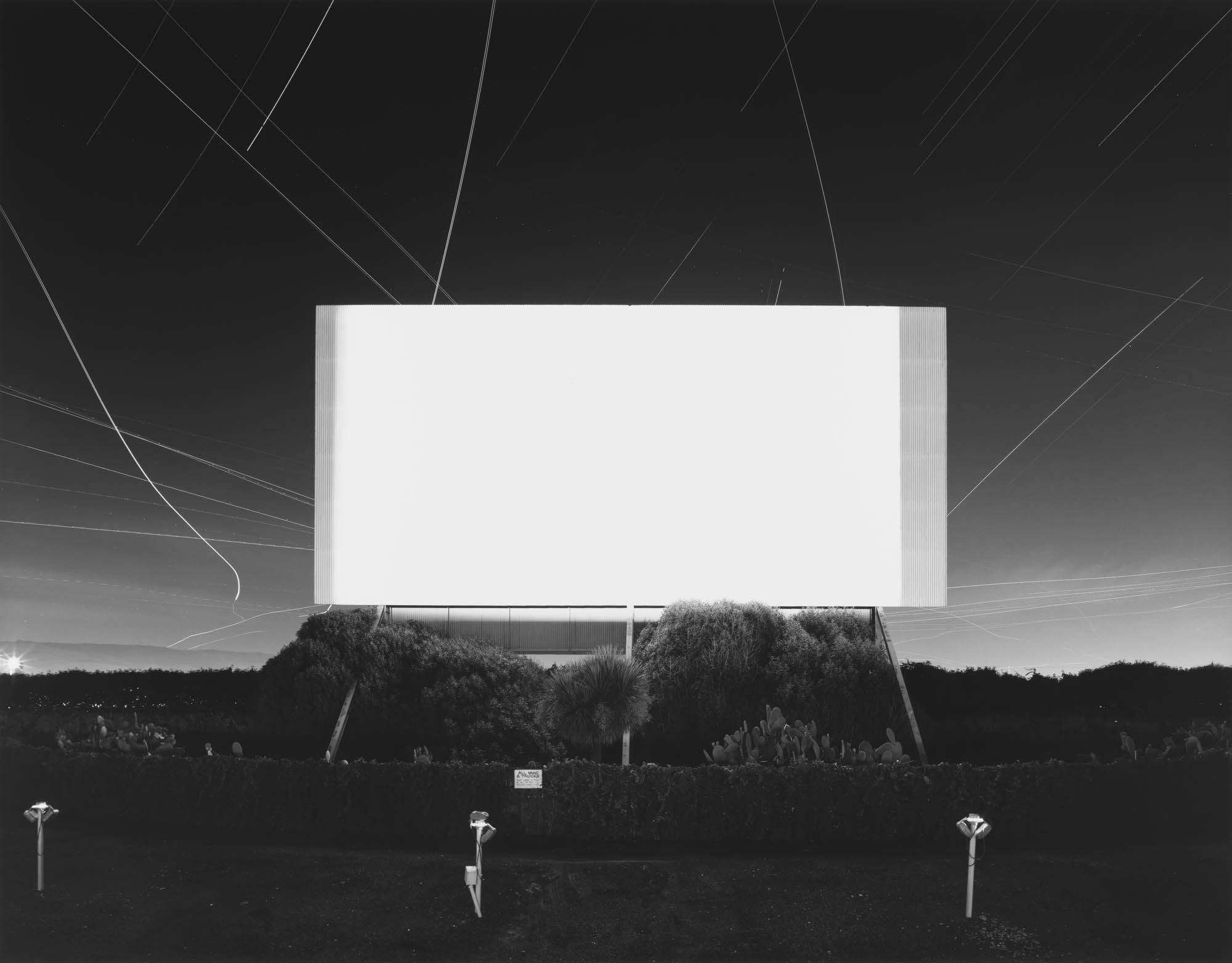
Hiroshi Sugimoto (Japanese, b. 1948) 'State Theatre, Sydney' 1997


Hiroshi Sugimoto (Japanese, b. 1948)
State Theatre, Sydney
1997
Silver gelatin photograph
42.3 x 54.6cm
Purchased with funds from the Dr M J Morrissey Bequest Fund in memory of Professor A L Sadler 2017
University Art Collection, Chau Chak Wing Museum


I loved Sugimoto’s time lapse movie screens, where the exact length of a movie was captured by the open lens of the camera, the substance of time and space evidenced by a seemingly empty screen. There was something wonderfully poetic and transformational about that gesture, about the notion of compressing the narrative, reality and action of a movie into a single frame of light: “the ‘annihilation of time and space’ as a particular moment in a dynamic cycle of rupture and recuperation enables a deliberate focus on the process of transition.”1 The process of transition in the flow of space and time.

Marcus Bunyan on the exhibition “Hiroshi Sugimoto: Past Tense” at the J. Paul Getty Museum, Getty Center, Los Angeles on the Art Blart website June 3, 2014 [Online] Cited 21/06/2024


Hiroshi Sugimoto (Japanese, b. 1948) 'Seagram Building – Ludwig Mies Van Der Rohe' 1997


Hiroshi Sugimoto (Japanese, b. 1948)
Seagram Building – Ludwig Mies Van Der Rohe
1997
Silver gelatin photograph
University Art Collection, Chau Chak Wing Museum
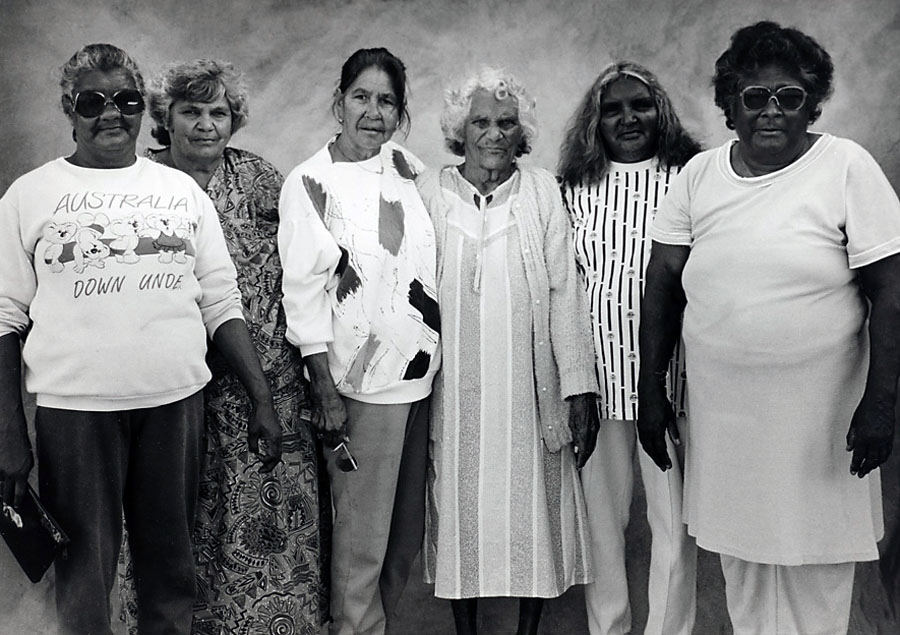
 

Michael Riley (Australian / Wiradjuri/Kamilaroi, 1960-2004) 'Moree women' 1991


Michael Riley (Australian / Wiradjuri/Kamilaroi, 1960-2004)
Moree women
1991
Gelatin silver print
40.0 x 56.5cm
Donated by University of Sydney Union, 2019
University Art Collection, Chau Chak Wing Museum
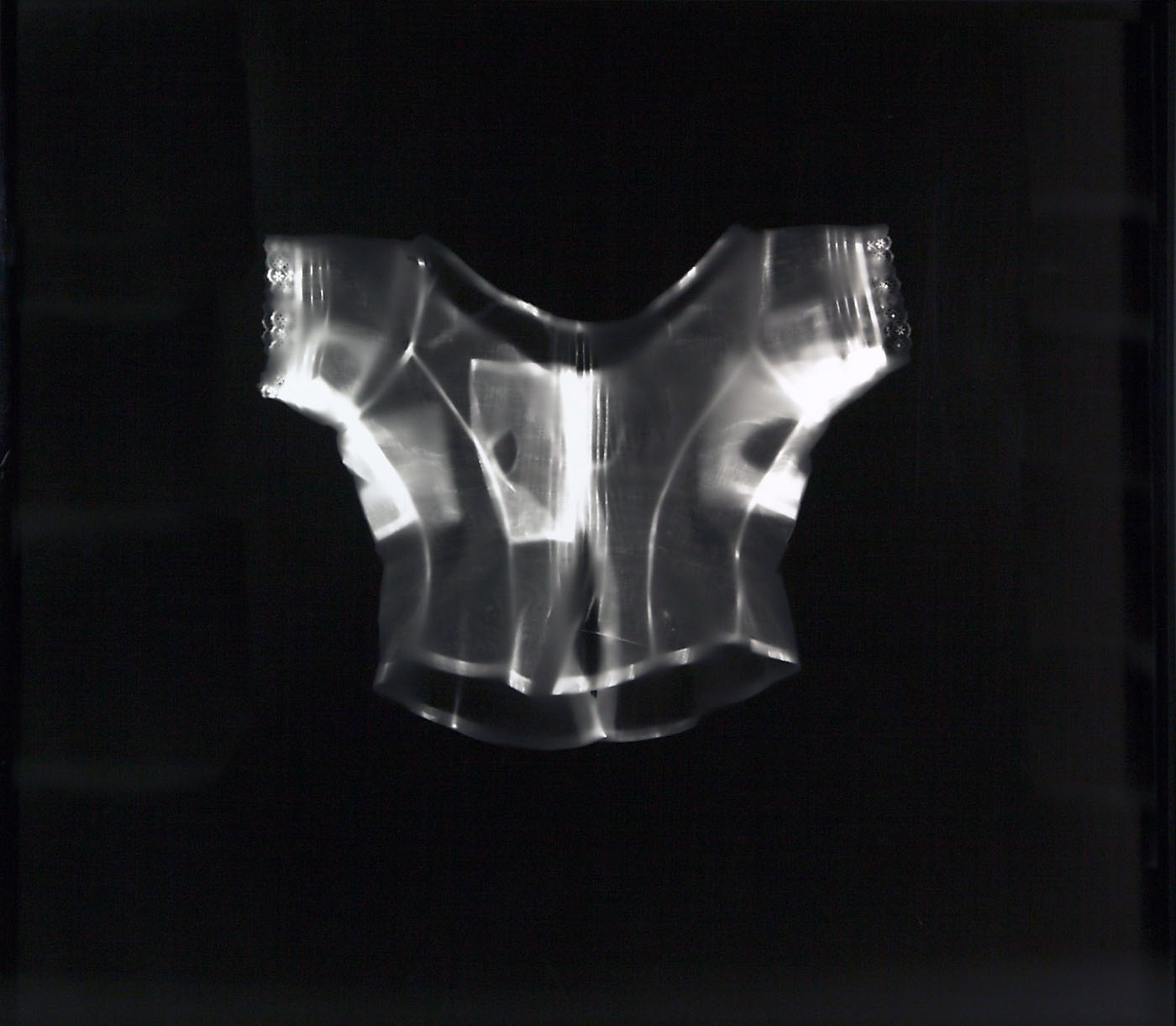
 

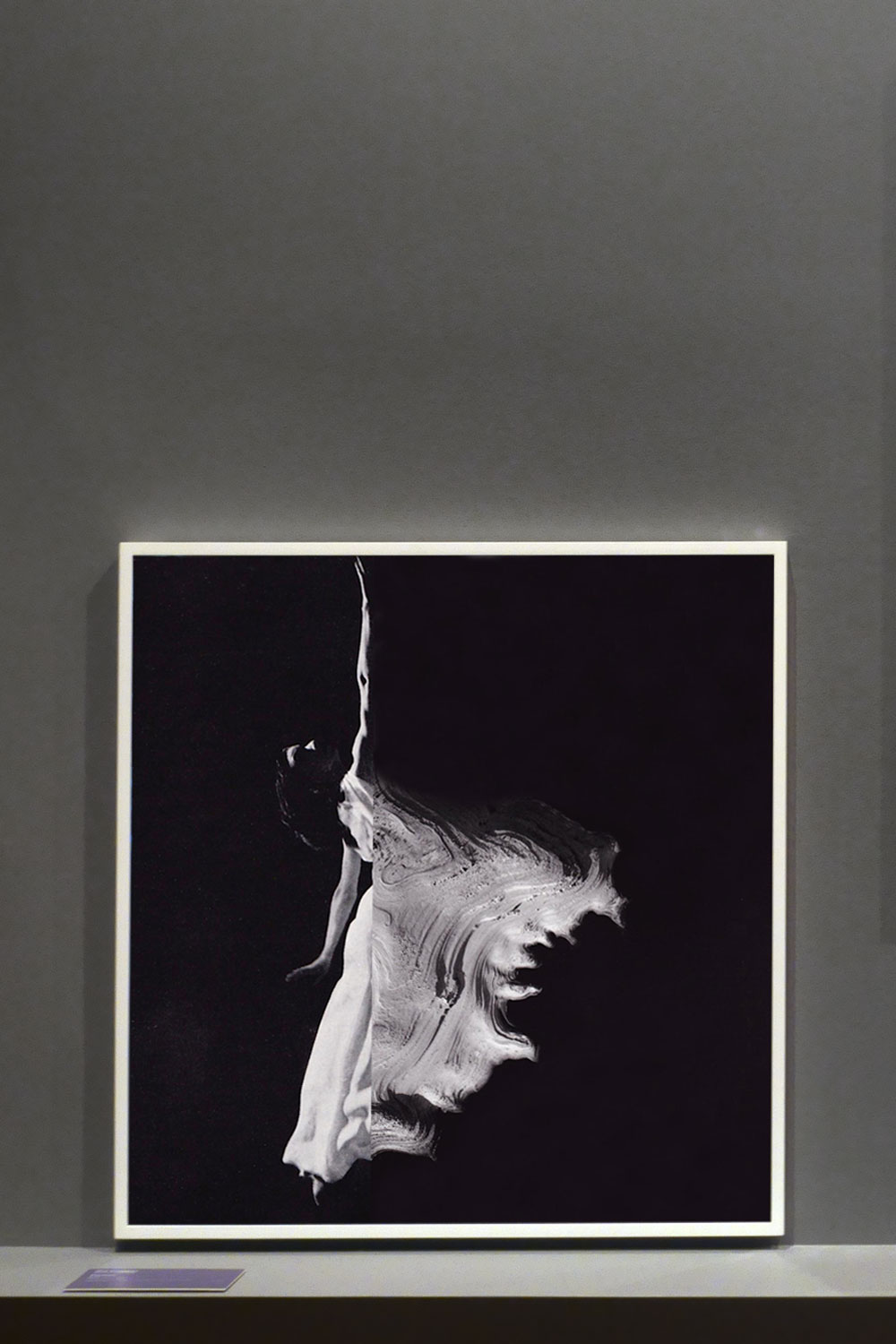
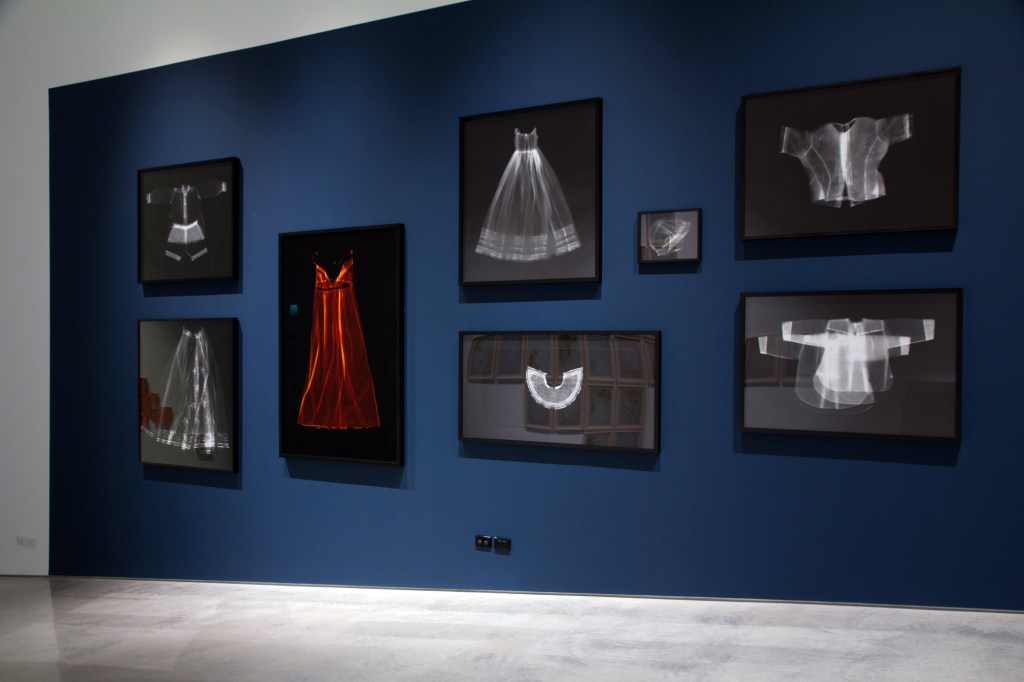
Anne Ferran (Australian, b. 1949) 'Untitled (Bodice)' 1998


Anne Ferran (Australian, b. 1949)
Untitled (Bodice)
1998
Gelatin silver photogram
82.0 x 93.5cm
Donated by University of Sydney Union 2019
University Art Collection, Chau Chak Wing Museum


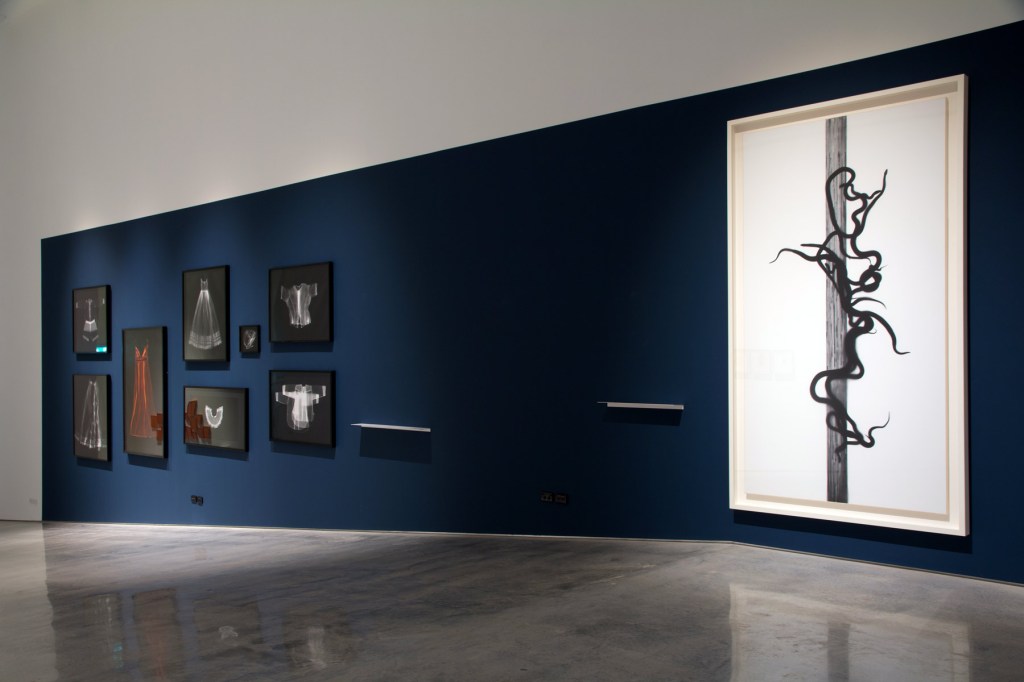
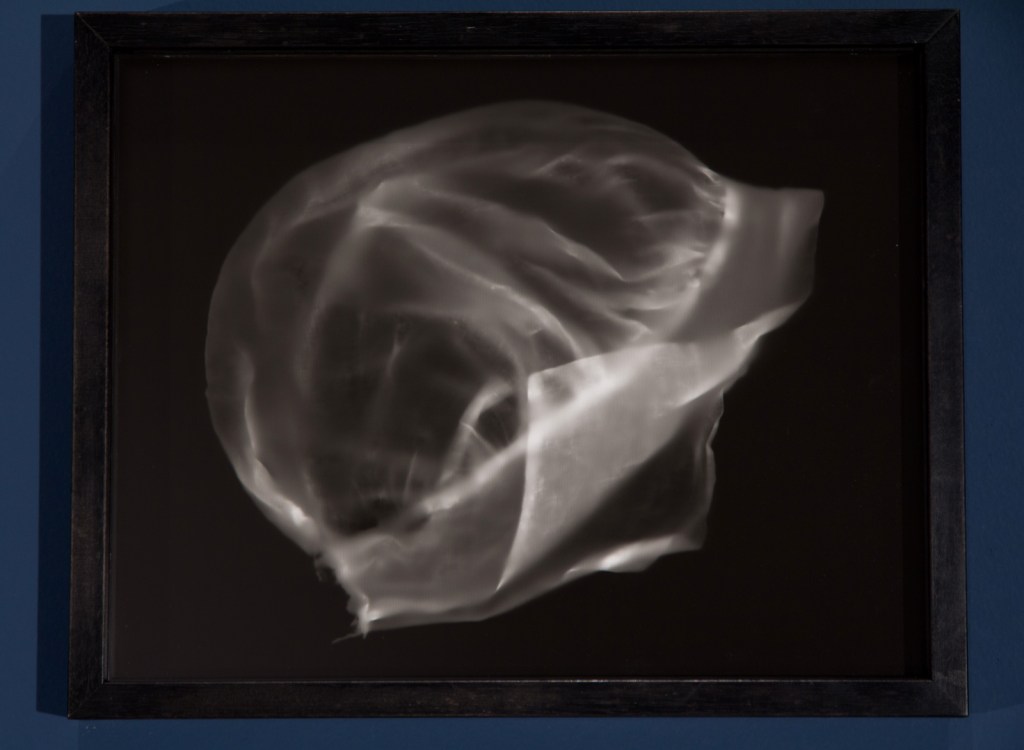
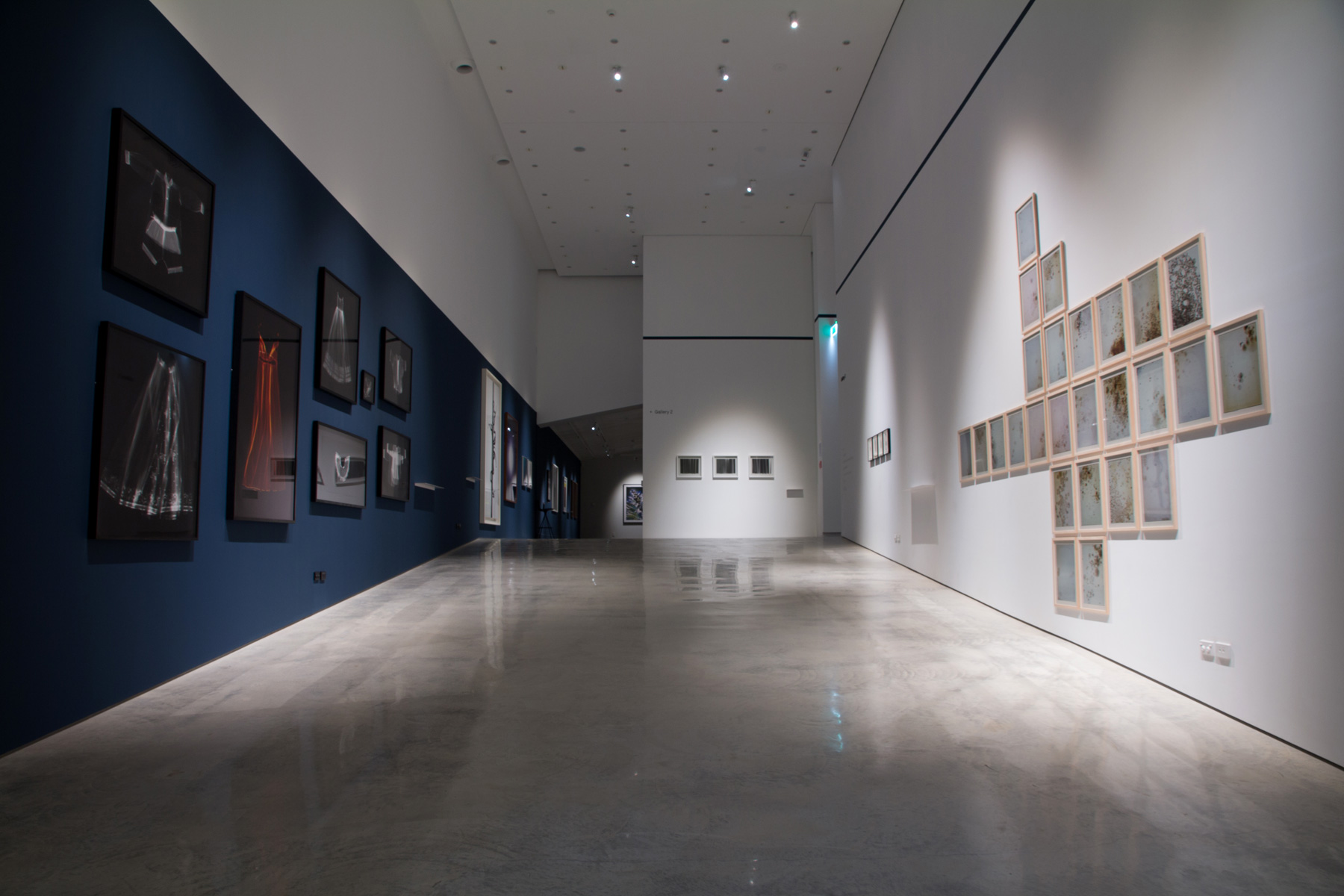
In 1998 Australian artist Anne Ferran was offered an artist-in-resident’s position at an historic homestead not far from Sydney that had been occupied by successive generations of the same family since 1813. Ferran spent six months systematically making contact prints using the dresses, bodices, skirts, petticoats, and collars still contained in the house. Hovering in a surrounding darkness, softly radiating an inner light, the ghostly traces of these translucent garments now act as residual filaments for a century of absorbed sunshine. Many of them have been patched over the years and their signs of wear and repair are made clear. This allows us to witness a history of the use of each piece of clothing, seeing inside them to those small and skilful acts of home economy – the labour of women – usually kept hidden from a public gaze.

Wall text from the exhibition “Emanations: The Art of the Cameraless Photograph” at the Govett-Brewster Art Gallery / Len Lye Centre, New Plymouth, New Zealand on the Art Blart website July 31, 2016 [Online] Cited 21/06/2024


Cindy Sherman (American, b. 1954) 'Untitled #131' 1983


Cindy Sherman (American, b. 1954)
Untitled #131
1983
C-type photograph
139.9 x 100cm
University Art Collection, Chau Chak Wing Museum
Purchased with funds from the J W Power Bequest 1984
JW Power Collection, Chau Chak Wing Museum


The Twilight Girls (active 1997 - present) 'The Power and the Glory i' 2004 (detail)


The Twilight Girls (Helen Hyatt-Johnston and Jane Polkinghorne) (active 1997 – present)
The Power and the Glory i (detail)
2004
Colour photographic print
75.9 x 50.5cm
Donated by University of Sydney Union 2019
University Art Collection, Chau Chak Wing Museum


Hyatt-Johnston and Polkinghorne’s work is a hilarious celebration of the endless potential to personalise Hollywood fantasy so as to enjoy the vicarious glamour and tack without foreclosing either individual expression or the subversion of mainstream codes. The artists confuse genres and disciplines, feminist aspirations and sacred cows, in a mad comic brew that speaks more of the pleasure of play and friendship than of the construction of sexed identities. And this is the point, to evade the strictures of accepted feminist strategies by putting inclusive play back on the map.

Jacqueline Millner. “Twilight Girls: Helen Hyatt-Johnston and Jane Polkinghorne,” on the Contemporary Art and Feminism website October 22, 2013 [Online] Cited 21/06/2024 © Jacqueline Millner, 2002
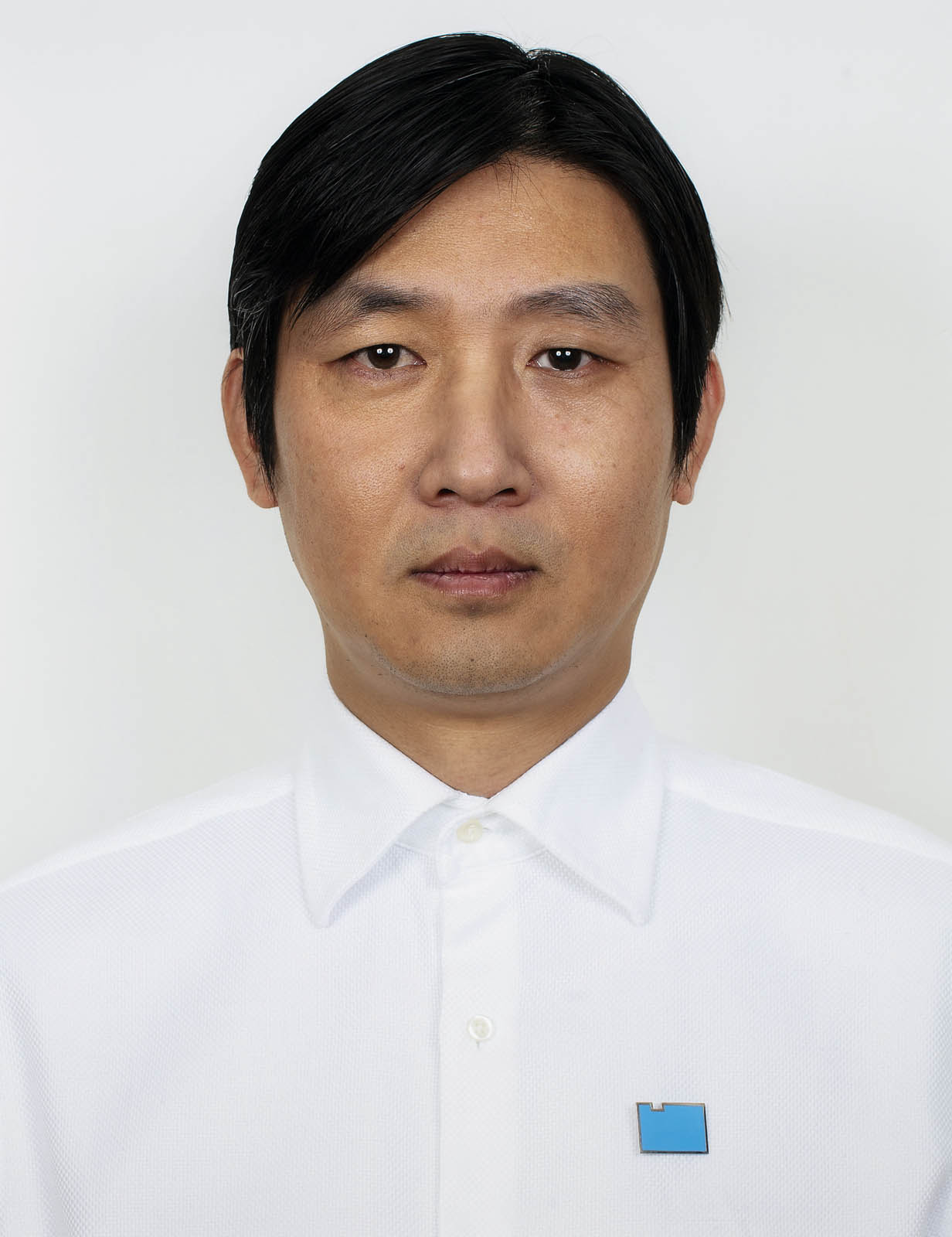
 

Polit-Sheer-Form Office (PSFO) (active 2005-2009) 'Mr Zhang' 2008


Polit-Sheer-Form Office (PSFO) (active 2005-2009)
Mr Zhang
2008
C-type print
170.4 x 135.5cm
Donated by Gene and Brian Sherman through the Australian Government’s Cultural Gifts Program 2021
University Art Collection, Chau Chak Wing Museum


Polit-Sheer-Form-Office (PSFO) is a China-based art group established in 2005 by artists Hong Hao, Xiao Yu, Song Dong, Liu Jianhua and curator / critic Leng Lin. Born in the mid-1960s, as children they all experienced the late Cultural Revolution, a period of Communist ideological orthodoxy that powerfully affected the preceding generation.

Drawing on this personal history, PSFO’s artistic practice strives to create a collective way of life while removing the political content historically associated with it. In its activities and artworks, PSFO attempts to create a framework – albeit tongue-in-cheek – for collective life in today’s consumer-oriented China. Within this framework, individuals may find the ties that bind them to others. At the same time, “sheer form” without content allows room for the individual to grow. By eating, drinking and playing together, the PSFO members revive a collective way of life associated with the Communist era of their youth, reawakening a long-lost state of being, by which they contend with contemporary China’s ideology of consumerism. But this is not nostalgia for one of the most controversial periods of Chinese history. The very emptiness of the political rhetoric of their childhood is what inspires the group’s name. Instead of political content, we have sheer, unadulterated political form – hence “Polit-Sheer-Form-Office.” The fact that the group calls itself an “Office” is another ironic reference to officialdom. …

Mr. Zheng is a digital amalgam of the faces of the five PSFO members in the form of a generic identification photo. This artwork straightforwardly embodies the union of the group’s five members, each sacrificing his individuality to become this new single entity. As a nod to the so-called “leader portraits” of Chairman Mao that were hung over buildings in China during the Socialist era… This virtual leader combines the characteristics of all five members, and is therefore not a portrait of authoritarianism, but of collectivism.

In American culture, individualism is a core value, yet a new understanding of the need for the collective has emerged. Similarly, while collectivism has been a core Chinese value, there has been increasing interest in individual pursuits. Is doing a good deed human nature’s need or a need for ideology? What is the real content and meaning of collectivism?

Ruijin Shen, curator, Guangdong Times Museum. “Polit-Sheer-Form-Office (PSFO) Polit-Sheer-Form!,” on the Queens Museum website 2014 [Online] Cited 07/07/2024
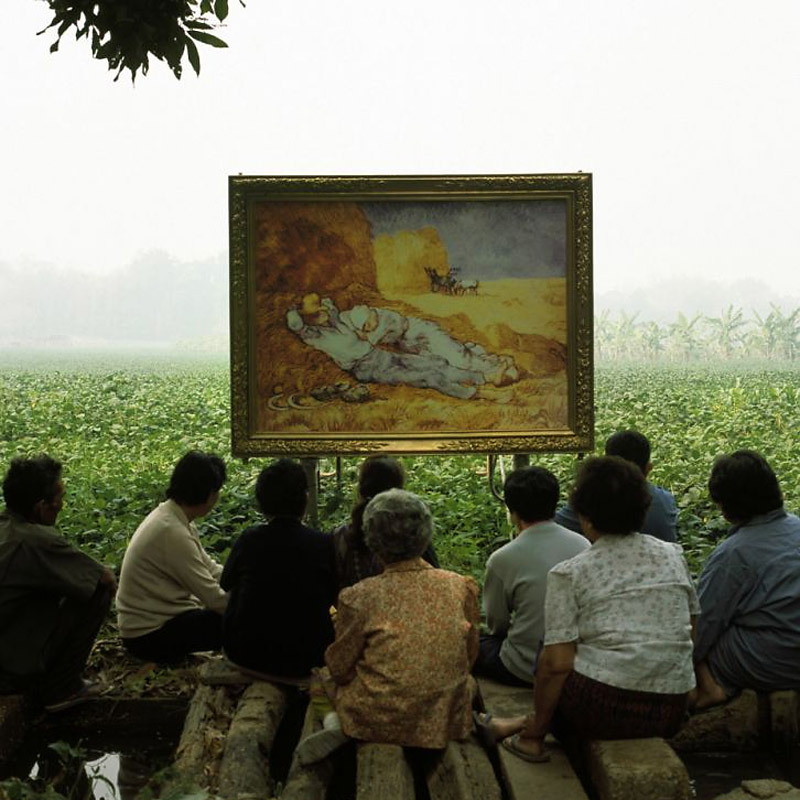
 

Araya Rasdjarmrearnsook (Thailand, b. 1957) 'The Two Planets: Van Gogh's The Midday Sleep 1889/90, and the Thai Villagers' 2008


Araya Rasdjarmrearnsook (Thailand, b. 1957)
The Two Planets: Van Gogh’s The Midday Sleep 1889/90, and the Thai Villagers
2008
Digital print
75.7 x 75.7cm
Purchased with funds from the Dr M J Morrissey Bequest Fund in memory of Professor A L Sadler 2014
University Art Collection, Chau Chak Wing Museum


Araya explores the relational potential of the tableau most fully in two video installation series: The Two Planets (2008) and Village and Elsewhere (2011), both of which are composed of short audiovisual vignettes that are usually exhibited as multichannel video and photographic installations. The individual works in each series are almost identical in terms of visual composition. Araya re-situates one or two large-scale, ostentatiously gold-framed reproductions of famous western paintings in outdoor or neighborhood spaces in the rural outskirts of the northern Thai city of Chiang Mai. The video camera frames these reproductions and their visually associative physical surroundings in a straight-on shot. On-screen, the framed reproductions are frontally displayed in the background. In the foreground, small groups of people are visible from the back, and their murmurings, chatter, gossip, speculations, and digressions as they look at the reproductions audible. …

In each of these audiovisual vignettes, the duration of the scene displayed approximates the duration of spectatorship by a figural group whose faces we do not see. The visualization of the group signifies “Thai Villagers,” or “Thai Farmers,” transfiguring people who, in everyday life, live in the same suburb as the artist. In each tableau, the group is sitting on the ground, their backs to us, facing the framed reproduction. The shortest of these videos are nearly ten minutes, and the longer ones about twenty-five. Someone comments on a detail that strikes them about the picture in the frame. Another person observes something about this face or that body, this plant, that tool, this hat, or that dish. The group amuses itself, speculating wildly on the backstory in the displayed scene. Sometimes they prod one another to dart up to the framed picture and point out a small detail – or to caress the image of a face, the skin, a body part. With the van Gogh reproduction, the group contemplates the placement of the sickle, the number of wheels on the wooden cart, the total number of oxen legs visible, and the casting of the sunlight on the haystack, all in order to decipher winning lottery numbers. Their conversation flows easily, often straying from the framed reproduction to random neighborhood gossip. Each video is unscripted and staged as a one-take piece using a static shot. The editing is minimal, involving discreet jump cuts to crop out of parts of the conversation without changing the visual composition, giving the impression that the vignettes are displaying spectatorial experiences in real time.

May Adadol Ingawanij. “Araya Rasdjarmrearnsook’s Relational Tableaux,” on the MoMA Post website August 9, 2023 [Online] Cited 21/06/2024


Araya Rasdjarmrearnsook (Thailand, b. 1957) 'Village and Elsewhere: Artemisia Gentileschi's Judith Beheading Holofernes, Jeff Koons's Untitled, and Thai Villagers' 2008


Araya Rasdjarmrearnsook (Thailand, b. 1957)
Village and Elsewhere: Artemisia Gentileschi’s Judith Beheading, Holofernes Jeff Koons’s Untitled, and Thai Villagers
2008
Purchased with funds from the Dr M J Morrissey Bequest Fund in memory of Professor A L Sadler 2014
University Art Collection, Chau Chak Wing Museum


The tableau display of the gold-framed reproductions references and aggrandizes museum conventions of hanging and presenting artworks on walls, an exhibition apparatus that lays claim to addressing everyone. Yet the spectators in The Two Planets and Village and Elsewhere exceed the boundary of that universalizing assertion with their actualization of what, following Elaine Castillo, we might call the spectatorship of the unintended.14 At the same time, their encounters with the reproductions take place in spaces that do not cohere with the museological value of suspending the time and space of daily life. The “Thai Villagers” and “Thai Farmers” in Araya’s tableaux are shown engaging with framed reproductions of art in neighborhood spaces – the local field, temple, and bamboo forest. The spectatorship of the unintended that they enact is a kind of unruly hosting, an extending of hospitality to the foreign, an unpredictable engagement with mobile artifacts from distant lands, cultures, and times.

May Adadol Ingawanij. “Araya Rasdjarmrearnsook’s Relational Tableaux,” on the MoMA Post website August 9, 2023 [Online] Cited 21/06/2024


Chau Chak Wing Museum – The University of Sydney
Level 1, University Place, Camperdown, NSW 2006
Phone: 02 9351 2812

Opening hours:
Monday to Friday (until 9pm Thursdays) 9am – 5pm
Saturday and Sunday 12 – 4pm
Closed public holidays

Chau Chak Wing Museum website

LIKE ART BLART ON FACEBOOK

Back to top

Exhibition: ‘Nineteenth-Century Photography Now’ at the J. Paul Getty Museum, Los Angeles

Exhibition dates: 9th April – 7th July, 2024

Curators: the exhibition is curated by Karen Hellman, former associate curator in the Department of Photographs. Carolyn Peter, assistant curator in the Department of Photographs, Getty Museum, served as organising curator with assistance from Claire L’Heureux, former Department of Photographs graduate intern and Antares Wells, curatorial assistant


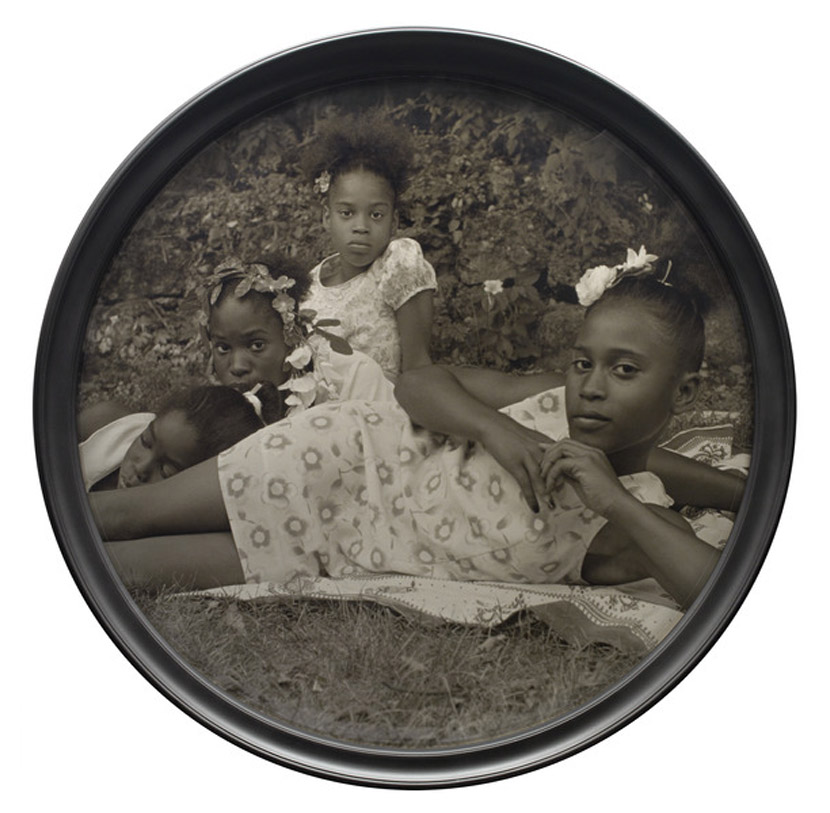
At left, Julia Margaret Cameron (British born India, 1815-1879) 'Florence after the Manner of the Old Masters' 1872; and at right, Carrie Mae Weems (American, b. 1953) 'After Manet' 2003
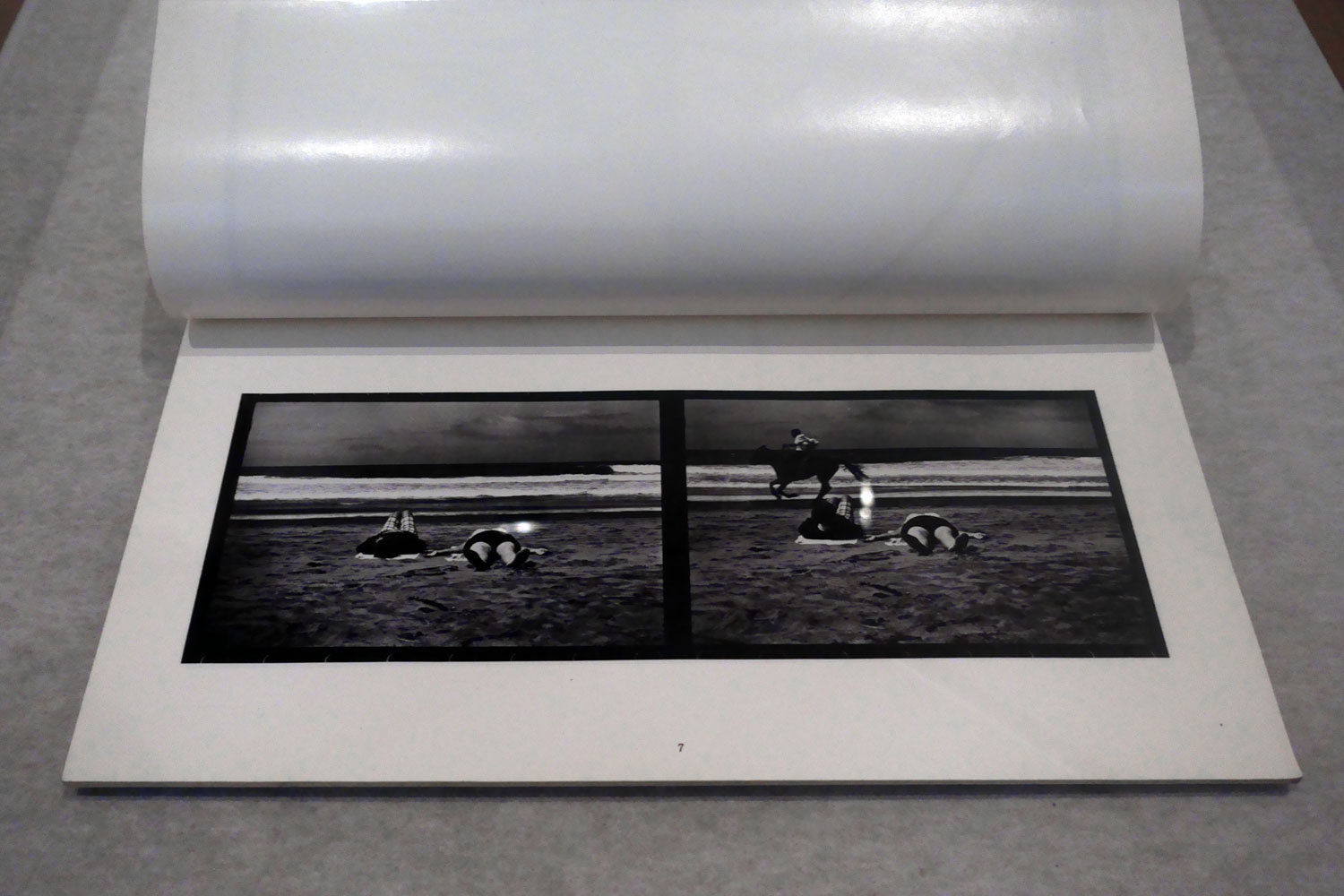
 

At left, Julia Margaret Cameron (British born India, 1815-1879) Florence after the Manner of the Old Masters 1872; and at right, Carrie Mae Weems (American, b. 1953) After Manet 2003
from the ‘Identity’ section of the exhibition


Magdalene Keaney, curator of the exhibition Francesca Woodman and Julia Margaret Cameron: Portraits to Dream In, observes that the exhibition “poses questions about how we might think in new ways about relationships between 19th and 20th century photographic practice…”

As does this exhibition:

~ Everything emerges from something. One must be “mindful of the origins and essence of photography.” (Moriyama)

~ History often repeats itself in different forms.

~ Memory often returns in fragmentary form.

~ The wisdom and spirit of the past speaks to the practitioners of the future.

Dr Marcus Bunyan


NB: Transubstantiation, an un/explainable change in form, substance, or appearance (from the Latin roots trans, “across or beyond,” and substania, “substance”)


Many thankx to the J. Paul Getty Museum for allowing me to publish the photographs in the website. Please click on the photographs  for a larger version of the image.


The earliest photographs – often associated with small, faded, sepia-toned images – may seem to belong to a bygone era, but many of the conventions established during photography’s earliest years persist today. Organised around five themes dating back to the medium’s beginnings, this exhibition explores nineteenth-century photographs through the work of twenty-one contemporary artists. These interchanges between the first decades of the medium and the most recent invite us to reimagine nineteenth-century photography while exploring its complexities.

Text from the J. Paul Getty Museum website


“Ms. Hellman, a former associate curator, inspired by her work with the Bayard materials, conceived “Nineteenth-Century Photography Now” as a way to access the influence that early photographers still have. The exhibition includes work from the past by 23 named and three anonymous photographers plus an additional 16 included in an album; there are 21 present-day artists. It is organised around five themes: Identity, Time, Spirit, Landscape and Circulation. The picture that serves as an introduction to the show is “Untitled ‘point de vue'” (1827) by Joseph Nicéphore Niépce, a faded heliograph on pewter, that Daido Moriyama keeps a reproduction in his studio; the wall text quotes him saying, “it serves as a gentle daily reminder to be mindful of the origins and essence of photography.” There are two photographs by Mr. Moriyama prompted by Niépce’s bit of primitive technology.”


William Meyers. “Photography’s Past and Present at the Getty Center,” on The Wall Street Journal website May 29, 2024 [Online] Cited 16/06/2024


Julia Margaret Cameron (British born India, 1815-1879) 'Florence after the Manner of the Old Masters' 1872


Julia Margaret Cameron (British born India, 1815-1879)
Florence after the Manner of the Old Masters
1872
Albumen silver print
Image: 34 × 25.6cm (13 3/8 × 10 1/16 in.)
Mount: 43.3 × 32.4cm (17 1/16 × 12 3/4 in.)
The J. Paul Getty Museum, Los Angeles


Portrait of Florence Fisher posing with a rose stem with the leaves attached. She holds the rose in place with one arm folded across her chest.


Carrie Mae Weems (American, b. 1953) 'After Manet' 2003


Carrie Mae Weems (American, b. 1953)
After Manet
2003
From the series May Days Long Forgotten
Chromogenic print
Object: 84.3cm (33 3/16 in.)
The J. Paul Getty Museum, Los Angeles
© Carrie Mae Weems


The black and white photograph – one from the nine-part series May Days Long Forgotten – depicts four African American girls in summer dresses, with garlands in their hair, reclining on a lawn. The piece is mounted in a circular frame prepared by the artist, and is number five of an edition of eight.


Joseph Nicéphore Niépce (French, 1765-1833) 'Untitled 'point de vue'' 1827


Joseph Nicéphore Niépce (French, 1765-1833)
Untitled ‘point de vue’
1827
Heliograph on pewter
16.7 x 20.3 x .15cm


The invention of photography was announced simultaneously in France and England in 1839, dazzling the public and sending waves of excitement around the world. These astonishing breakthroughs depended upon centuries of developments in chemistry, optics, and the visual arts, accelerating in the decades after 1790. The Niépce Heliograph was made in 1827, during this period of fervent experimentation. It is the earliest photograph produced with the aid of the camera obscura known to survive today.

Text from the Harry Ransom Center website


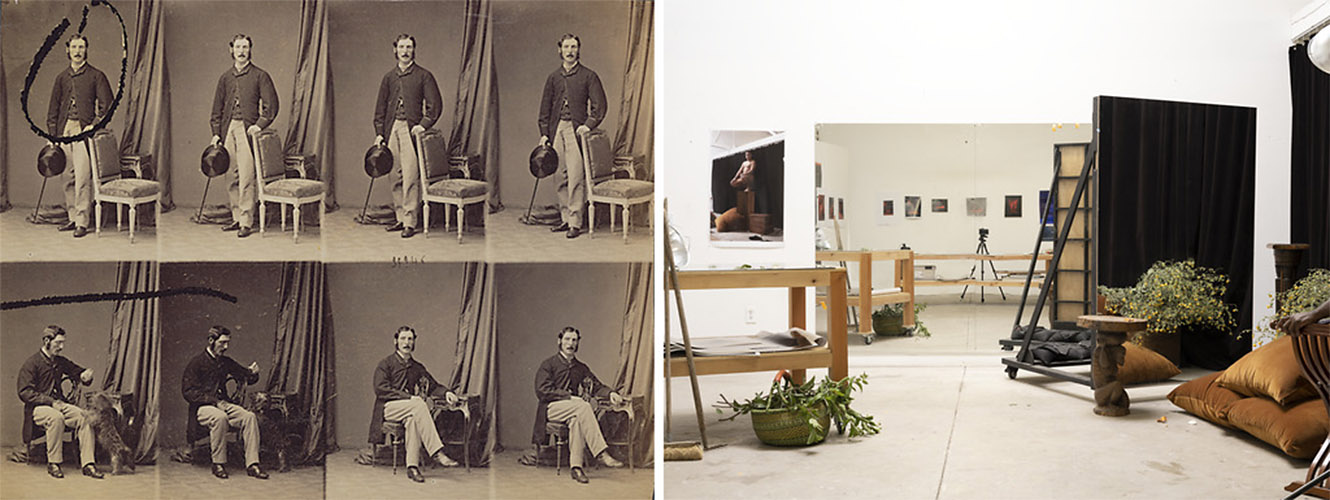
At left, André Adolphe-Eugène Disdéri (French, 1819-1889) 'Uncut Sheet of Cartes-de-Visite Portraits', 1860s; and at right, Paul Mpagi Sepuya (American, b. 1982) 'Daylight Studio with Garden Cuttings (_DSF0340)' 2022


At left, André Adolphe-Eugène Disdéri (French, 1819-1889) Uncut Sheet of Cartes-de-Visite Portraits, 1860s; and at right, Paul Mpagi Sepuya (American, b. 1982) Daylight Studio with Garden Cuttings (_DSF0340) 2022


William Henry Fox Talbot (English, 1800-1877) '[A Stem of Delicate Leaves of an Umbrellifer]' probably 1843-1846


William Henry Fox Talbot (English, 1800-1877)
[A Stem of Delicate Leaves of an Umbrellifer]
probably 1843-1846
Photogenic drawing negative
Image: 18.1 × 22.1cm (7 1/8 × 8 11/16 in.)
The J. Paul Getty Museum, Los Angeles


The exceptional boldness of this image conveys a visual impression that at first may seem quite unlike other of William Henry Fox Talbot’s pictures. He made it with the same photogenic drawing process he used for much of his work by placing the stem of leaves directly on top of the prepared paper and then exposing to sunlight without the aid of a camera. Although the original plant was delicate, its sharply delineated white shadow on the rich dark brown background creates a graphic, two-tone effect. The same specimen was used in a slightly different orientation to make a negative that is preserved in one of the family albums formerly at the Fox Talbot Museum in Lacock and now at the British Library, London.

Other visually similar works in Talbot’s oeuvre help us to understand what we are seeing here. Some of them show the interior structure of the plant specimens he photographed, proving that the negatives at first had fuller details. Because the most vulnerable sections of the silver-based images are those that are light in tone, these areas will fade disproportionately faster than the darker parts. In this case, the lightest tones would have been in the interior spaces of the plant, and these at some point faded. It is unlikely that Talbot saw the same picture we see today, at least not when he first made it, but the boldness of the present state reminds us that changes over time can create as well as destroy.

Adapted from Larry Schaaf. William Henry Fox Talbot, In Focus: Photographs from the J. Paul Getty Museum (Los Angeles: Getty Publications, 2002), 68. © 2002 J. Paul Getty Trust


Hiroshi Sugimoto (Japanese, b. 1948) 'A Stem of Delicate Leaves of an Umbrellifer, circa 1843-1846' 2009


Hiroshi Sugimoto (Japanese, b. 1948)
A Stem of Delicate Leaves of an Umbrellifer, circa 1843-1846
2009
Toned gelatin silver print
Image: 93.7 × 74.9cm (36 7/8 × 29 1/2 in.)
The J. Paul Getty Museum, Los Angeles
Gift of the artist
© Hiroshi Sugimoto


“To look at Fox Talbot’s earliest experiments, the blurred and hazy images suffuse the excited anticipation of discovering how light could transfer the shape of things onto paper. … I decided to collect Fox Talbot’s earliest negatives, from a time in photographic history very likely before positive images existed, and print the photographs that not even he saw.”

~ Hiroshi Sugimoto (p. 349, in Hiroshi Sugimoto, Ostfildern-Ruit, 2005)


Hiroshi Sugimoto visited the Getty Museum in 2007 to study the earliest photographs in the collection. After photographing some of William Henry Fox Talbot’s photogenic drawing negatives, he produced large-scale prints and coloured them with toning agents to replicate the hues of the paper negatives. The scale of the enlarged prints reveals the fibers of the original paper, which create delicate patterns embedded in the images.


At left, Herbert Bell et al, '[Amateur World Tour Album, taken with early Kodak cameras, plus purchased travel photographs by various photographers]' (2 page spread); and at right, Stephanie Syjuco (American born Philippines, b. 1974) 'Herbaria' 2021 (detail)


At left, Herbert Bell et al, [Amateur World Tour Album, taken with early Kodak cameras, plus purchased travel photographs by various photographers] (2 page spread); and at right, Stephanie Syjuco (American born Philippines, b. 1974)
Herbaria 2021 (detail)


Herbert Bell (English, 1856-1946) Frederick Nutt Broderick (English, about 1854-1913) Gustave Hermans (Belgian, 1856-1934) Anthony Horner (English, 1853-1923) Michael Horner (English, 1843-1869) C. W. J. Johnson (American, 1833-1903) Léon & Lévy (French, active 1864-1913 or 1920) Léopold Louis Mercier (French, b. 1866) Neurdein Frères (French, founded 1860s, dissolved 1918) Louis Parnard (French, 1840-1893) Alfred Pettitt (English, 1820-1880) Francis Godolphin Osborne Stuart (British born Scotland, 1843-1923) Unknown maker Valentine & Sons (Scottish, founded 1851, dissolved 1910) L. P. Vallée (Canadian, 1837-1905) York and Son J. Kühn (French, active Paris, France 1885 - early 20th century) '[Amateur World Tour Album, taken with early Kodak cameras, plus purchased travel photographs by various photographers]' (2 page spread)


Herbert Bell (English, 1856-1946)
Frederick Nutt Broderick (English, about 1854-1913)
Gustave Hermans (Belgian, 1856-1934)
Anthony Horner (English, 1853-1923)
Michael Horner (English, 1843-1869)
C. W. J. Johnson (American, 1833-1903)
Léon & Lévy (French, active 1864-1913 or 1920)
Léopold Louis Mercier (French, b. 1866)
Neurdein Frères (French, founded 1860s, dissolved 1918)
Louis Parnard (French, 1840-1893)
Alfred Pettitt (English, 1820-1880)
Francis Godolphin Osborne Stuart (British born Scotland, 1843-1923)
Unknown maker
Valentine & Sons (Scottish, founded 1851, dissolved 1910)
L. P. Vallée (Canadian, 1837-1905)
York and Son
J. Kühn (French, active Paris, France 1885 – early 20th century)
[Amateur World Tour Album, taken with early Kodak cameras, plus purchased travel photographs by various photographers] (2 page spread)
Albumen silver print
Closed: 35.4 × 28 × 3.5cm (13 15/16 × 11 × 1 3/8 in.)
The J. Paul Getty Museum, Los Angeles
Google Arts & Culture website


Includes amateur photographs taken with early Kodak cameras, including the original Kodak or Kodak no. 1, and Kodak no. 2 cameras, as well as commercially produced images.


Stephanie Syjuco (American born Philippines, b. 1974) 'Herbaria' 2021 (detail)


Stephanie Syjuco (American born Philippines, b. 1974)
Herbaria (detail)
2021
From the series Pileups
Hand-assembled pigmented inkjet prints on Hahnemühle Baryta
Framed [Outer Dim]: 121.9 × 91.4cm (48 × 36 in.)
The J. Paul Getty Museum, Los Angeles
© Stephanie Syjuco


A collage composed of diverse naturalist archival sources, including photographs of bones, foliage, and crystal formations.


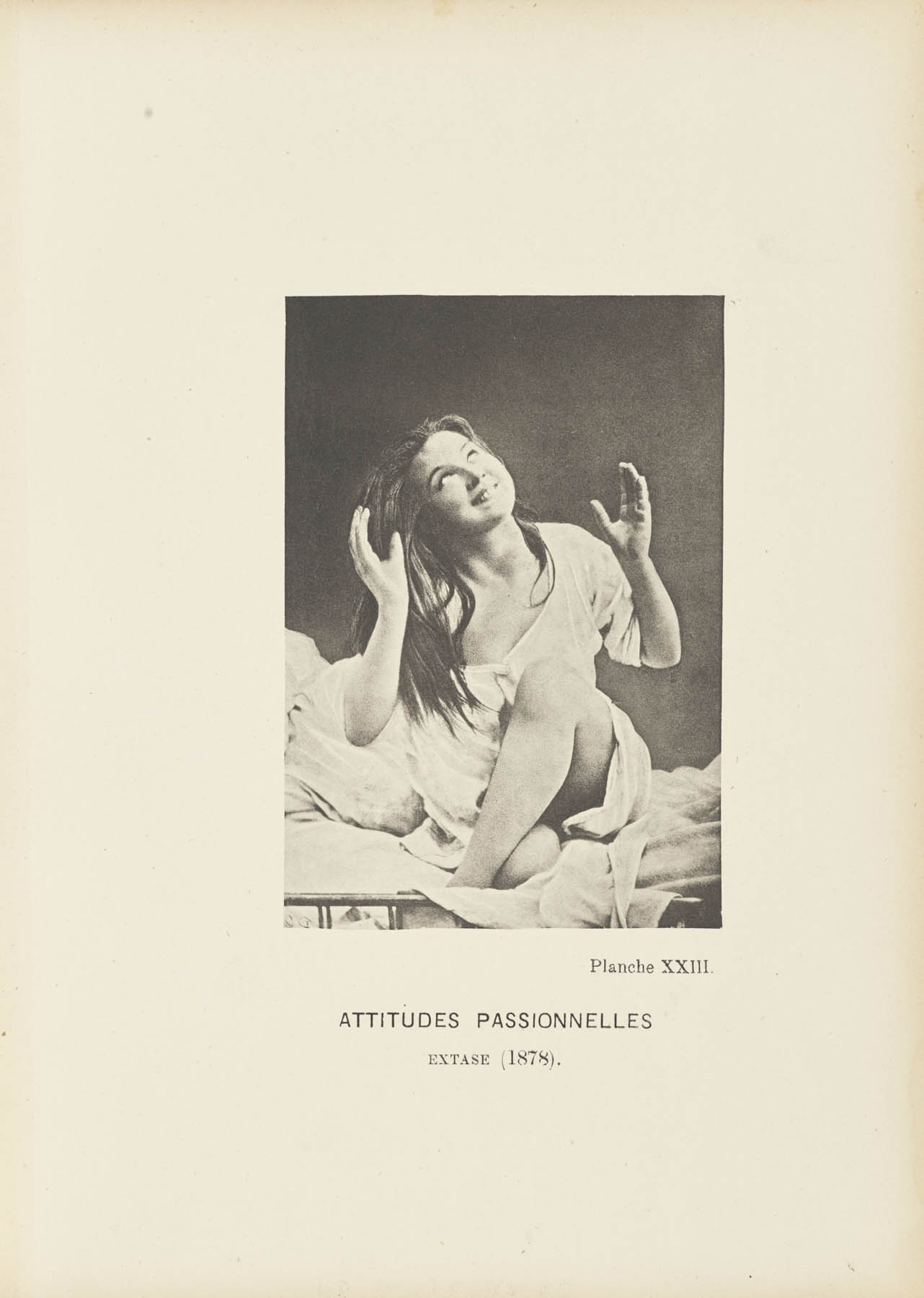
At left, Paul-Marie-Léon Regnard (French, 1850-1927) 'Passionate Ecstatic Position/Expression' 1878; and at right, Laura Larson (American, b. 1965) 'The Mind Is a Muscle' 2019


At left, Paul-Marie-Léon Regnard (French, 1850-1927) Passionate Ecstatic Position/Expression 1878; and at right, Laura Larson (American, b. 1965)
The Mind Is a Muscle 2019


Paul-Marie-Léon Regnard (French, 1850-1927) 'Passionate Ecstatic Position/Expression' 1878 Part of 'Iconographie Photographique de la Salpetriere' (Service de M. Charcot)


Paul-Marie-Léon Regnard (French, 1850-1927)
Passionate Ecstatic Position/Expression
1878
Part of Iconographie Photographique de la Salpetriere (Service de M. Charcot)
Photogravure
Image: 10.3 × 7.1cm (4 1/16 × 2 13/16 in.)
The J. Paul Getty Museum, Los Angeles


Laura Larson (American, b. 1965) 'The Mind Is a Muscle' 2019


Laura Larson (American, b. 1965)
The Mind Is a Muscle
2019
from the series City of Incurable Women
Inkjet print
The J. Paul Getty Museum, Los Angeles
Courtesy of and © Laura Larson


At first glance, photographs made in the 19th century may seem like faded relics of an increasingly distant and forgotten age, yet they persist in inspiring, challenging, and resonating with artists today.

Nineteenth-Century Photography Now, on view April 9 through July 7, 2024 at the Getty Center, offers new perspectives on early photography by looking through the lens of contemporary artists who respond directly to their historical themes and subject matter.

“This exhibition provides an opportunity to connect visitors with some of the earliest photographs in the Museum’s collection, now almost two centuries old, via the responses of contemporary makers,” says Timothy Potts, Maria Hummer-Tuttle and Robert Tuttle Director of the J. Paul Getty Museum. “The revelatory ability of early photography to capture images of the world around us still resonates with practitioners today, and bridges between past and present photography are as active and relevant as they have ever been.”

Organised around five themes, dating back to the medium’s beginnings, Identity, Time, Spirit, Landscape, and Circulation, this exhibition explores 19th-century photographs through the work of 21 contemporary artists. Reflecting the inventiveness of early practitioners as well as the more disturbing historical aspects of their era, these interchanges between the first decades of the medium and the most recent invite us to reimagine 19th century photography while exploring its complexities.

In their work, artists Daido Moriyama, Hanako Murakami, and Carrie Mae Weems look back to the invention of photography to convey a sense of how this revolutionary discovery changed people’s perceptions.

As is still the case today, the most popular subjects for the camera in the 19th century were people. In the galleries focused on Identity, Paul Mpagi Sepuya and Myra Greene respond to the complex history of photographic portraiture while Laura Larson, Stephanie Solinas, and Fiona Tan investigate the pseudosciences of the 19th century and how they reinforced stereotypes and identification systems that impact us today.

Photography and Time have been inextricably linked ever since early inventors struggled to permanently fix a fleeting moment on a sheet of paper. This section includes work by Lisa Oppenheim and Liz Deschenes exploring 19th-century photographers’ technical innovations and the ways in which the medium affects our perception of time.

The genre of Spirit photography emerged from the Victorian obsession with death in Europe and North America. Photographers exploited the ability to manipulate photographic images, employing multiple exposures and staged photography to create otherworldly scenes or to summon loved ones back from the dead. In this section, Khadija Saye and Lieko Shiga respond to the possibilities that spirit photography offers in rendering the unseen.

19th-century photographers went to great lengths to make images of remote Landscapes. Government-sponsored surveys and expeditionary programs employed the camera to justify the expansion and to record the resulting military conflicts. Mark Ruwedel, Michelle Stuart, and An-My Lê re-envision some of these same historical landscapes and offer up new ones that bring the past closer to our present.

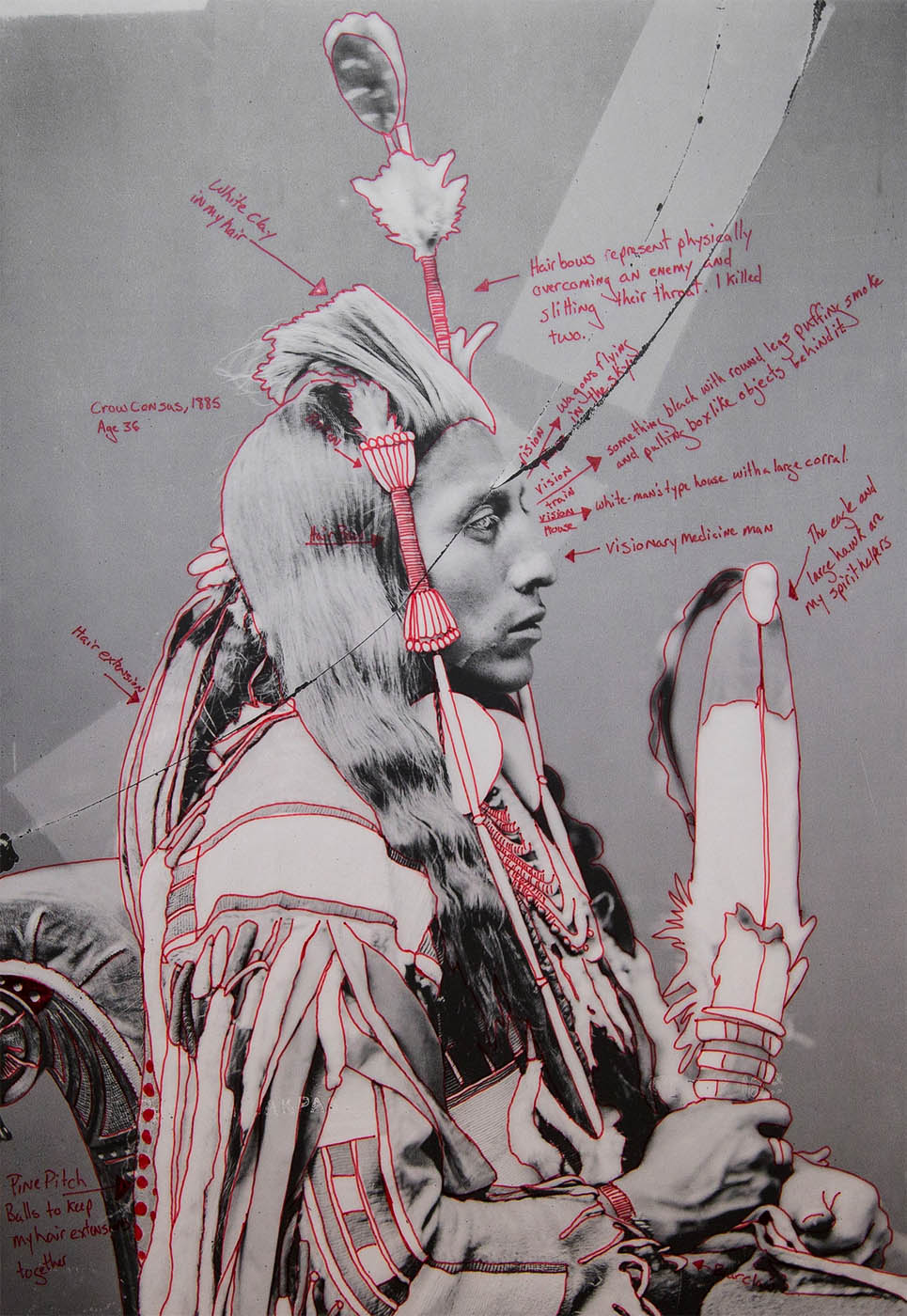
By the middle of the 19th century, thousands of photographs were in Circulation worldwide, the result of photographers’ ability to reproduce the same image multiple times. Pictures of historical events, tourist destinations, and anthropological expeditions made the world seem more accessible, but with time and distance, they became disconnected from their original contexts. In this section, early photographs appear next to projects that make these historical absences present. Wendy Red Star, Stephanie Syjuco, Ken Gonzales-Day, and Andrea Chung recover what has been lost, calling out the residual effects of the 19th-century photograph on our present knowledge of global cultures and histories.

“Through the works of these visionary contemporary artists, 19th-century photography is not faded and dead but very much alive, an active material that enables us to rethink the medium and our relationship to it,” says Karen Hellman, curator of the exhibition.

Nineteenth-Century Photography Now is curated by Karen Hellman, former associate curator in the Department of Photographs. Carolyn Peter, assistant curator in the Department of Photographs, Getty Museum, served as organising curator with assistance from Claire L’Heureux, former Department of Photographs graduate intern and Antares Wells, curatorial assistant.

Related programming includes Who or What is Missing in Nineteenth-Century Photography?, a discussion featuring artists Laura Larson, Wendy Red Star, and Paul Mpagi Sepuya in a conversation about their artistic practices and how they are engaging with, and critiquing photography from the 19th century, and Art Break: The Precarious Nature of Photography, Society, and Life, June 6, 12pm. Artist Phil Chang talks with curator Carolyn Peter about his series “Unfixed” on view in Nineteenth-Century Photography Now and how an economic crisis and a pandemic inspired him to create photographs that will intentionally fade away to express the fragility of societal systems and life.

Press release from the J. Paul Getty Museum website


Introduction


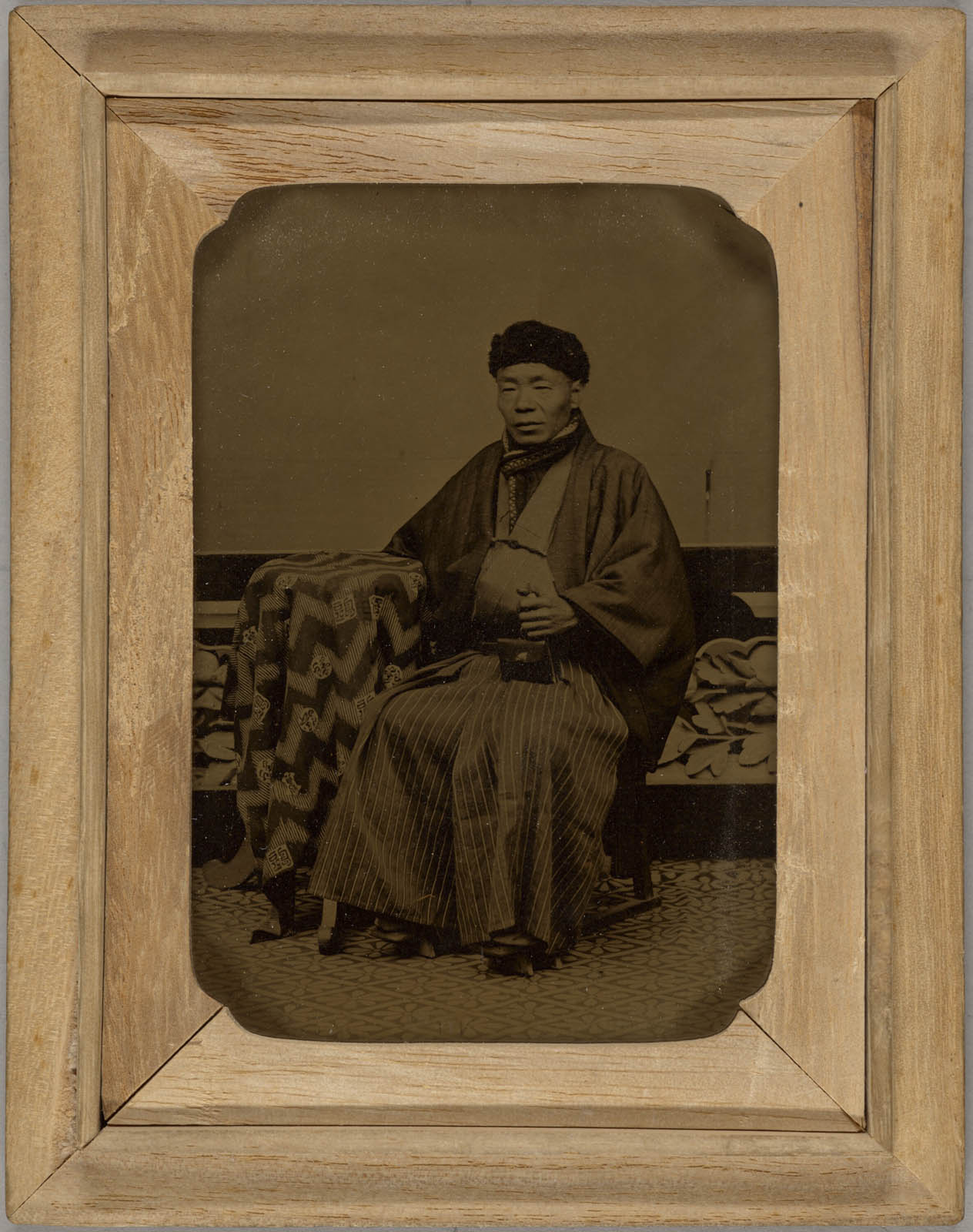
At left, Maker unknown. 'Kuroda Yasaburo, 50 Years Old' January 6, 1882; and at right, Myra Greene (American, b. 1975) 'Undertone #10' 2017-2018


At left, Maker unknown Kuroda Yasaburo, 50 Years Old January 6, 1882; and at right, Myra Greene (American, b. 1975) Undertone #10 2017-2018


Introduction

The earliest photographs – often associated with small, faded, sepia-toned images – may seem to belong to a bygone era, but many of the conventions established during photography’s earliest years persist today. Organised around five themes dating back to the medium’s beginnings, this exhibition explores nineteenth-century photographs through the work of twenty-one contemporary artists. Reflecting the inventiveness of early practitioners as well as the more disturbing historical aspects of their era, these interchanges between the first decades of the medium and the most recent invite us to reimagine nineteenth-century photography while exploring its complexities.


Maker unknown. 'Kuroda Yasaburo, 50 Years Old' January 6, 1882


Maker unknown
Kuroda Yasaburo, 50 Years Old
January 6, 1882
Ambrotype
Closed: 11.5 × 9 × 1cm (4 1/2 × 3 9/16 × 3/8 in.)
The J. Paul Getty Museum, Los Angeles
Gift of Virginia Heckert in memory of Gordon Baldwin


Myra Greene (American, b. 1975) 'Undertone #10' 2017-2018


Myra Greene (American, b. 1975)
Undertone #10
2017-2018
Ambrotype
The J. Paul Getty Museum, Los Angeles
© Myra Greene


__________________________________________

Identity


At left, Various makers. 'Pickpockets at the Universal Exposition of 1889' 1889; and at right, Fiona Tan (Indonesia, b. 1966) 'Marie Thiriot' 2021


At left, Various makers Pickpockets at the Universal Exposition of 1889 1889; and at right, Fiona Tan (Indonesia, b. 1966) Marie Thiriot 2021


Fiona Tan (Indonesia, b. 1966) 'Marie Thiriot' 2021


Fiona Tan (Indonesia, b. 1966)
Marie Thiriot
2021
From the series Pickpockets
HD video installation, stereo, flat-screen monitor
Courtesy of the artist and Frith Street Gallery, London
© Fiona Tan
Photo: Frith Street Gallery CC


‘As an artist working almost entirely with time-based and lens-based media, time is one of my major tools … time is both tool with which to shape and chisel and material to fold, distort and configure.’

Fiona Tan (b. 1966, Pekanbaru) explores history and time and our place within them, working within the contested territory of representation. Deeply embedded in all of Tan’s works is her fascination with the mutability of identity, the deceptive nature of representation and the play of memory across time and space in a world increasingly shaped by global culture. She investigates how we represent ourselves and the mechanisms that determine how we interpret the representation of others. …

A testament to Tan’s passion for archives, her video installation Pickpockets (2020) stems from an album of photographs she came across when in residence at the Getty Research Center, Los Angeles. It contained early examples of mugshots taken of pickpockets apprehended at the World’s Fair in Paris in 1889. Fascinated by the subjects of these portraits, their names and countries of origin, and their unknown stories, she invited a group of writers to devise monologues from the point of view of these individuals, which were then performed and recorded by actors.

Anonymous. “Fiona Tan,” on the Frith Street Gallery website Nd [Online] Cited 29/04/2024


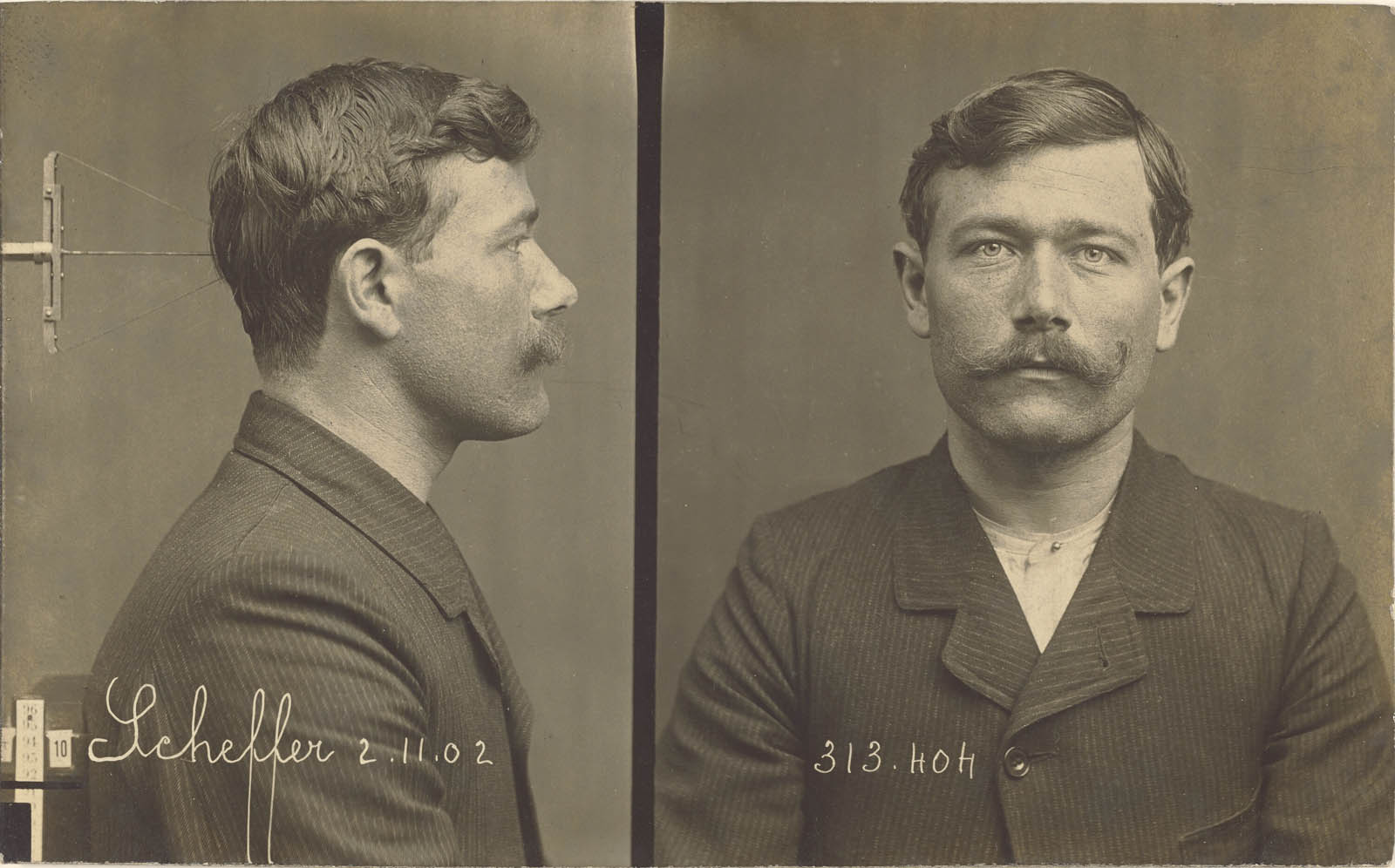
[The identity section] has “Affaire Alaux, Faubourg St. Honoré – L’Assassin” (Nov. 2, 1902), a print by Alphonse Bertillon, the inventor of the mug shot, showing the mustached villain full-face and in profile; it is accompanied by over 20 pictures of sites that played a significant role in Bertillon’s life taken in 2012 by Stéphanie Solinas employing a “crime scene” approach.

William Meyers. “Photography’s Past and Present at the Getty Center,” on The Wall Street Journal website May 29, 2024 [Online] Cited 16/06/2024


At left, Attributed to Alphonse Bertillon (French, 1853-1914) 'Affaire Alaux, Faubourg St. Honoré – L'Assassin' November 2, 1902; and at right, Stéphanie Solinas (French, b. 1978) 'Untitled (M. Bertillon) – Two Faces' 2012


At left, Attributed to Alphonse Bertillon (French, 1853-1914) Affaire Alaux, Faubourg St. Honoré – L’Assassin November 2, 1902; and at right, Stéphanie Solinas (French, b. 1978) Untitled (M. Bertillon) – Two Faces 2012


Identity

As is still the case today, the most popular subjects for the camera in the nineteenth century were people. Early commercial portrait photographers set up studios and established standards for posing and props, serving clients who eagerly shared these prized images with family and friends. Other portraits of the time, however, such as the mug shot and studies of female “hysterics,” reinforced questionable forms of objectification. Paul Mpagi Sepuya and Myra Greene respond to the complex history of photographic portraiture. Fiona Tan, Laura Larson, and Stéphanie Solinas investigate the nineteenth century pseudosciences that relied on the perceived accuracy of the new medium.


Attributed to Alphonse Bertillon (French, 1853-1914) 'Affaire Alaux, Faubourg St. Honoré – L'Assassin' November 2, 1902


Attributed to Alphonse Bertillon (French, 1853-1914)
Affaire Alaux, Faubourg St. Honoré – L’Assassin
November 2, 1902
Gelatin silver print
Image: 7.9 × 12.7cm (3 1/8 × 5 in.)
The J. Paul Getty Museum, Los Angeles


The mugshot of Henri-Léon Scheffer, the man who murdered Joseph Reibel.


CAUGHT BY A FINGER PRINT

A unique piece of detective work has been accomplished in Paris by a retiring scientist. A mysterious murder had been committed. The detectives arrested one wrong man dis charged him, and were preparing .to arrest another when to their chief came the quiet scientist, saying,

“The assassin’s name is Henri Léon Scheffor. Here is his photograph, his description and past record.” M. Cochefert, chief of the police hesitated. “My men know nothing of this person.” he said. “How shall we accuse him ?”

“Arrest him,” insisted the other, “and should he prove to innocent I will pay him 1,000 francs as an indemnity.”

“But what basis have you for your certainty of his guilt ?” asked M. Cochefert.

“Some finger prints he left on a piece of broken glass,” replied the man of science.

It was not necessary to pay the indemnity. He who was thus strangely accused was arrested and confessed his crime. The quiet man of science was M. Alphonse Bertillon, already celebrated as the founder and present chief of tho anthropometric service of tho Paris prefecture of police. Alphonse Bertillon has the gentle, weary smile of the over-worked and nervous student. He speaks mildly, moves softly, like one on his guard against strain and haste, until now and again, his thoughtful face will light up with enthusiasm as he lets himself go. Then his conversation becomes rapid and eloquent ; he runs through books and documents with ardour, pulls down boxes from high shelves, spreads out charts, explains them, performs experiments to illustrate his statements and darts back by a short cut to tho point where he had left off; tho whole man is transformed. Thus we heard the tale of the Accusing Finger Prints.

“A man named Joseph Reibel, porter to tho dentist Allaux, in his apartment and offices in the Rue du Faubourg Saint-Honore, was found choked to death and clumsily tied, lying in his master’s office,” began M. Bertillon. “The place had been looted hastily, closets and drawers being open and their contents tossed about. In particular a handsome cabinet holding a collection of coins was found with its glass door broken and its gold coins absent. There were- practically no clues to the identity of the assassin, the janitress at the street door, having a confused memory as to visitors, which set the detectives on more than one wrong scent. They arrested one man and the papers published his portrait. Then the newspapers at least began to suspect the innocent dentist himself.

“They had taken a flashlight photograph of the office,” continued M. Bertillon. “Looking at that photograph one day, I noticed two glittering little white marks on the edge of the broken glass of the coin cabinet. I asked my self what they could be. They might be defects in the printing ; but, on the other hand their situation suggested that they might be finger prints – and finger-prints are very much in my line ! The thought wore upon me until at last I jumped into a cab and drove to tho place. Examining the edge of the glass I found tho marks to be really finger-marks, and in spite of the thousand chances still in good condition.

“Being composed of tiny quantities of grease and dirt they made the glass slightly opaque, so that they came out bright by contrast in the photograph. Except when looked at in a favourable light they were practically invisible to the naked eye. There were marks of a right-hand thumb in one place and of the same thumb and four fingers in another. I had the two pieces of glass cut out with a diamond. I gave one to a policeman, instructing him to hold it just so, and saw him start off to my office with it in a cab. Then I gave tho other piece to a second policeman, with the same instructions, and started him off in a second cab, so that if an accident should happen to one of the pieces the other might be spared.

“In the workrooms of the anthropometric service I had the finger-marks immediately photographed. At first I admit I did not attach overmuch importance to them. They might be the prints of one of the detectives, or of the dentist Allaux – naturally solicitous of his broken cabinet – or even the finger-prints of M. Cochefert ! One by one I took their finger-prints for comparison. One by one I found that they did not at all correspond with those on the glass. This started me in earnest,” admitted M. Bertillon. “I began to ask myself, if among the thousands of criminals, swindlers and violent and suspicious characters photo-graphed, measured, and, finger-printed yearly by the anthropometric service the author of these finger-prints might not, at some time or other, himself have passed.” Here M. Bertillon called our attention to the thumb mark (“pouce”) of Scheffer, the assassin, Just below his full-face and profile photographs. Though small it was very distinct.

“Look at the central point of that thumb-print,” he exclaimed. “Look where the innermost loop moves up and over a single diagonal. Now jumping two loops from that interior diagonal, towards tho direct left you see a plain little fork in tho third loop. It is the exact reproduction of just such another in the thumb-mark on the broken glass ! Tho next thing was to arrest Scheffer though it took a little time to find him. Here, again, the information obtainable from his ‘fiche’ in the anthropometric service rendered service. It was seen that he had been a native of Aubervilliers (the Paris suburb and had worked in the government match factory. When arrested he confessed, at the same time trying to make out a case of extenuating circumstances. According to his story, Reibel planned that they should simulate a burglary of his master’s premises. They quarrelled over the division of the spoils and Scheffer says he thought he had merely choked his friend into un-consciousness and left him tied – according to original agreement. And all discovered through an accidental finger-print which the assassin had left as an index to the crime. “Science Siftings.”

Anonymous. “Caught by a Finger Print,” in the Balmain Observer and Western Suburbs Advertiser (NSW: 1884-1907), Sat 4 Mar 1905, Page 2 on the Trove website [Online] Cited 29/04/2024

__________________________________________

Time


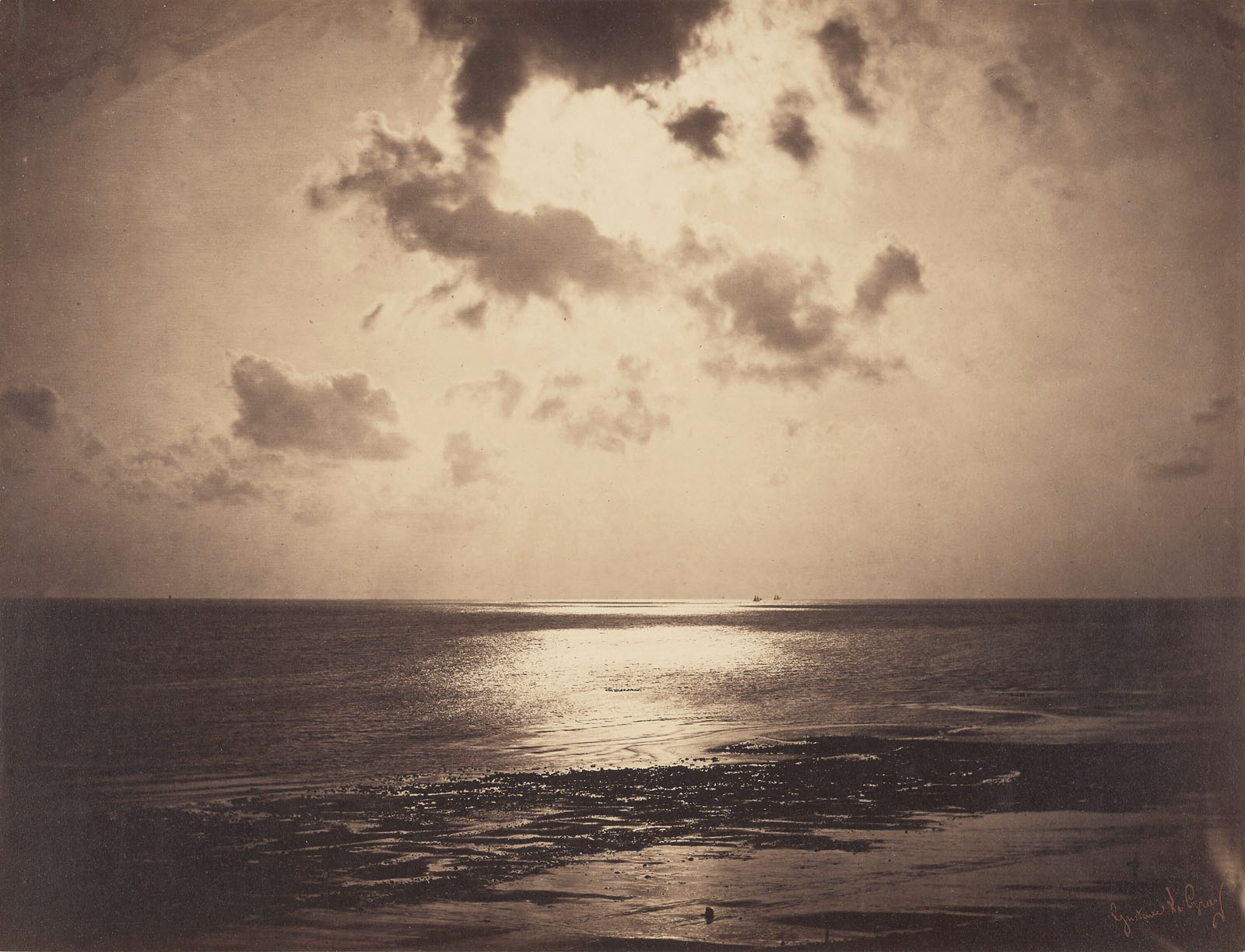
Gustave Le Gray (French, 1820-1884) 'An Effect of Sunlight – Ocean No. 23' 1857-1858


Gustave Le Gray (French, 1820-1884)
An Effect of Sunlight – Ocean No. 23
1857-1858
Albumen silver print from glass negatives
12 5/8 × 16 7/16 in.
The J. Paul Getty Museum, Los Angeles


Lisa Oppenheim (American, b. 1975) 'An Effect of Sunlight – Ocean No. 23 (1857/2019)' 2019


Lisa Oppenheim (American, b. 1975)
An Effect of Sunlight – Ocean No. 23 (1857/2019)
2019
Gelatin silver print, exposed to sunlight and toned with silver
Framed [Outer Dim]: 35.6 × 47.7 × 3.7cm (14 × 18 3/4 × 1 7/16 in.)
The J. Paul Getty Museum, Los Angeles
© Lisa Oppenheim


Time

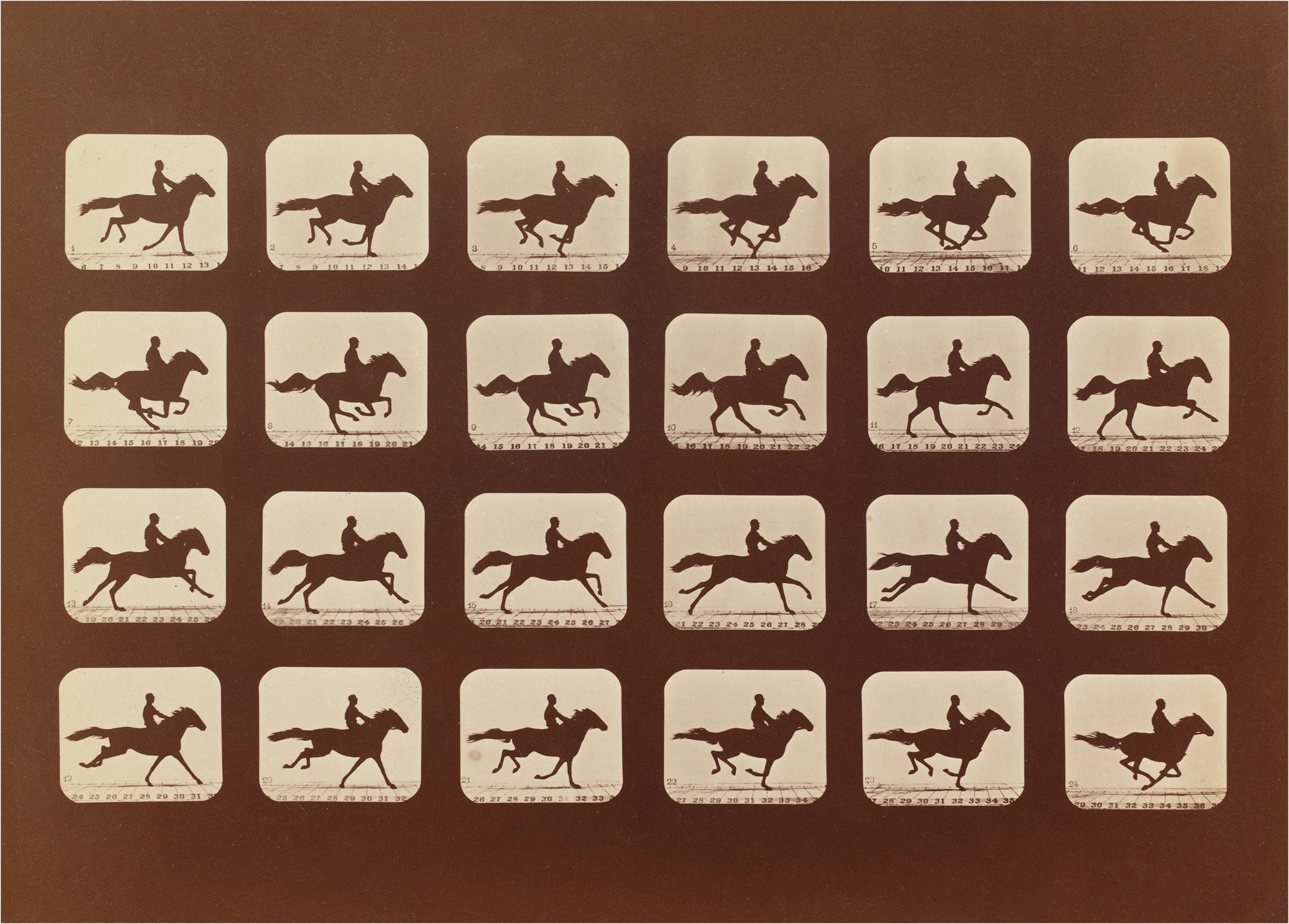
Photography and time have been inextricably linked ever since early inventors such as William Henry Fox Talbot struggled to permanently fix a fleeting moment on a sheet of paper. The development of the camera coincided with new discoveries about how we perceive an instant in time or an object in motion, and people praised photography for its ability to “stop time” and record what the unaided eye could not see. Lisa Oppenheim and Liz Deschenes respond to nineteenth century photographers’ technical innovations and the ways in which the medium affects our perception of time. Phil Chang and Hiroshi Sugimoto address the fate of photographs across minutes or even centuries.


At left, Étienne-Jules Marey (French, 1830-1904) and Michel Berthaud (French, active 1860s-1880s) 'Walking/Running' (La Marche/La Course Rapide) about 1890, published 1893; and at right, Liz Deschenes (American, b. 1966) 'FPS (120)' 2018-2021


At left, Étienne-Jules Marey (French, 1830-1904) and Michel Berthaud (French, active 1860s-1880s) Walking/Running (La Marche/La Course Rapide) about 1890, published 1893; and at right, Liz Deschenes (American, b. 1966) FPS (120) 2018-2021


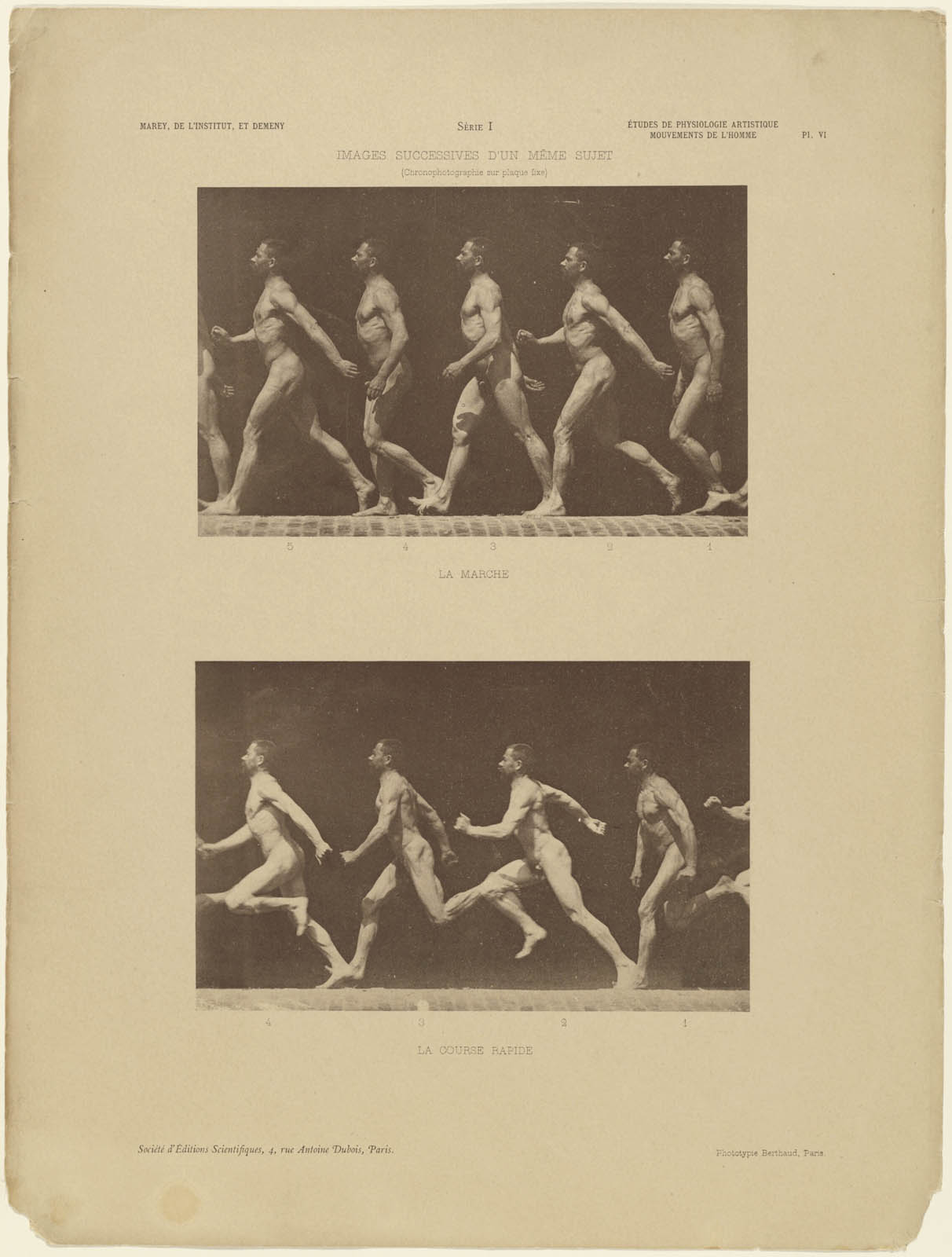
Étienne-Jules Marey (French, 1830-1904) and Michel Berthaud (French, active 1860s-1880s) 'Walking/Running' (La Marche/La Course Rapide) about 1890, published 1893


Étienne-Jules Marey (French, 1830-1904) and Michel Berthaud (French, active 1860s-1880s)
Walking/Running (La Marche/La Course Rapide)
about 1890, published 1893
Collotype
Image: 11.3 × 17.6cm (4 7/16 × 6 15/16 in.)
The J. Paul Getty Museum, Los Angeles

__________________________________________

Spirit


At left, William H. Mumler (American, 1832-1884) 'Mrs. Swan' 1869-1878; and at right, Khadija Saye (Gambian-British, b. 1992) 'Nak Bejjen' [Cow's Horn] 2017-2018


At left, William H. Mumler (American, 1832-1884) Mrs. Swan 1869-1878; and at right, Khadija Saye (Gambian-British, b. 1992) Nak Bejjen [Cow’s Horn] 2017-2018


Spirit

The genre of spirit photography – which used photographic tricks to insert ghostly figures among the living – emerged during the nineteenth century from the Victorian obsession with death, séances, and mediums in Europe and North America and from the losses of the Civil War in the United States. Photographers exploited the ability to manipulate photographic images, employing multiple exposures and staged photography to create otherworldly scenes or to summon loved ones back from the dead. Khadija Saye and Lieko Shiga respond to the possibilities that spirit photography offers in rendering the unseen.


William H. Mumler (American, 1832-1884) 'Mrs. Swan' 1869-1878


William H. Mumler (American, 1832-1884)
Mrs. Swan
1869-1878
Albumen silver print
Image: 8.9 × 5.7cm (3 1/2 × 2 1/4 in.)
The J. Paul Getty Museum, Los Angeles
Public domain


Khadija Saye (Gambian-British, b. 1992) 'Nak Bejjen' [Cow's Horn] 2017-2018


Khadija Saye (Gambian-British, b. 1992)
Nak Bejjen [Cow’s Horn]
2017-2018
From the series in this space we breathe
Silkscreen print
The J. Paul Getty Museum, Los Angeles
Purchased with funds provided by the Photographs Council
© Estate of Khadija Saye


At left, Unknown maker (American) '[Seated Woman with "Spirit" of a Young Man]' about 1865-1875; and at right, Lieko Shiga (Japanese, b. 1980) 'Talking with Me' 2005 From the series 'Lilly'


At left, Unknown maker (American) [Seated Woman with “Spirit” of a Young Man] about 1865-1875; and at right, Lieko Shiga (Japanese, b. 1980) Talking with Me 2005 From the series Lilly


Unknown maker (American) '[Seated Woman with "Spirit" of a Young Man]' about 1865-1875


Unknown maker (American)
[Seated Woman with “Spirit” of a Young Man]
about 1865-1875
Tintype
Image: 8.7 × 6.4cm (3 7/16 × 2 1/2 in.)
The J. Paul Getty Museum, Los Angeles


Lieko Shiga (Japanese, b. 1980) 'Talking with Me' 2005


Lieko Shiga (Japanese, b. 1980)
Talking with Me
2005
From the series Lilly


‘Lilly’ is a photographic essay that was initiated in 2005 when Lieko Shiga was living in London. During that period she produced a series of images of her neighbours that lived alongside her in a block of East London council flats, drawing techniques and inspiration from paranormal photographs that were popular in the early days of photography. Haunting, mysterious, playful and captured in an array of muted colours, the photographs [are] grouped around different subjects…

Publisher’s Description

__________________________________________

Landscape


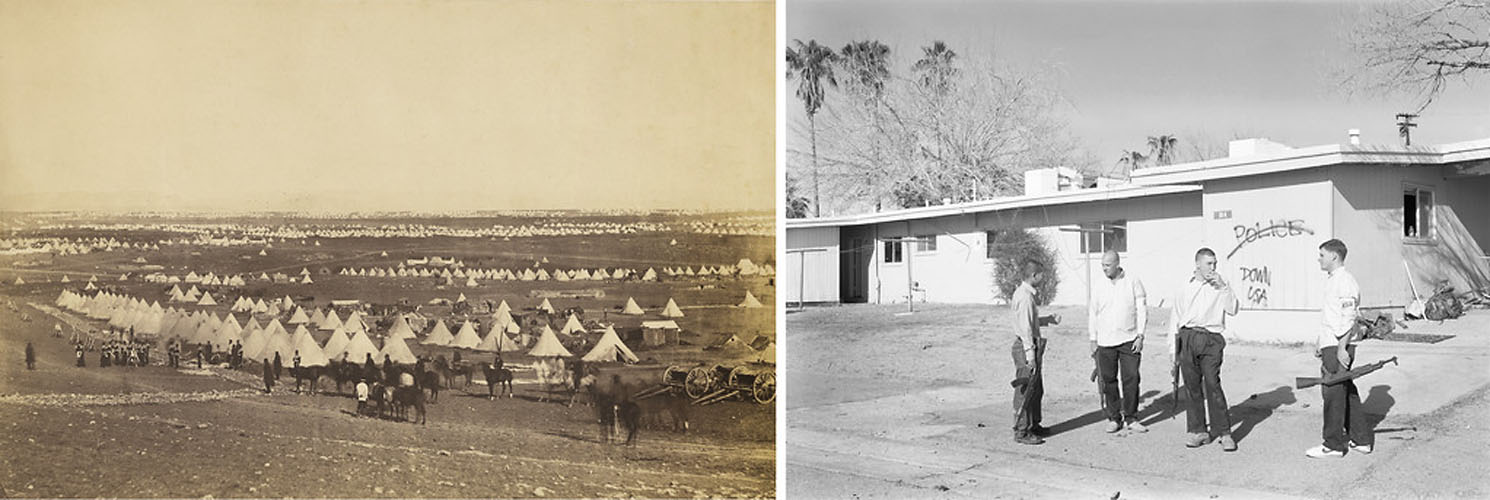
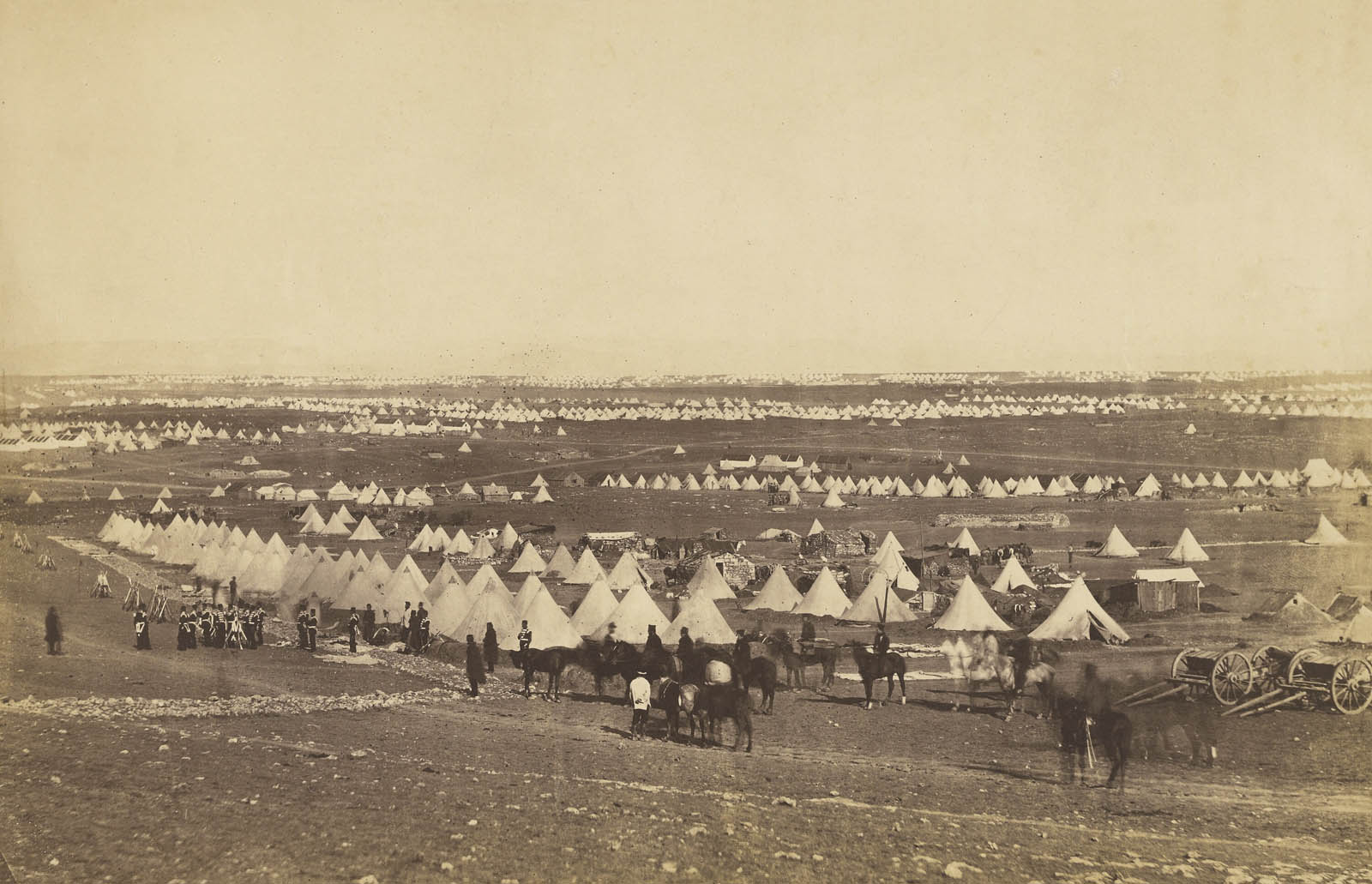
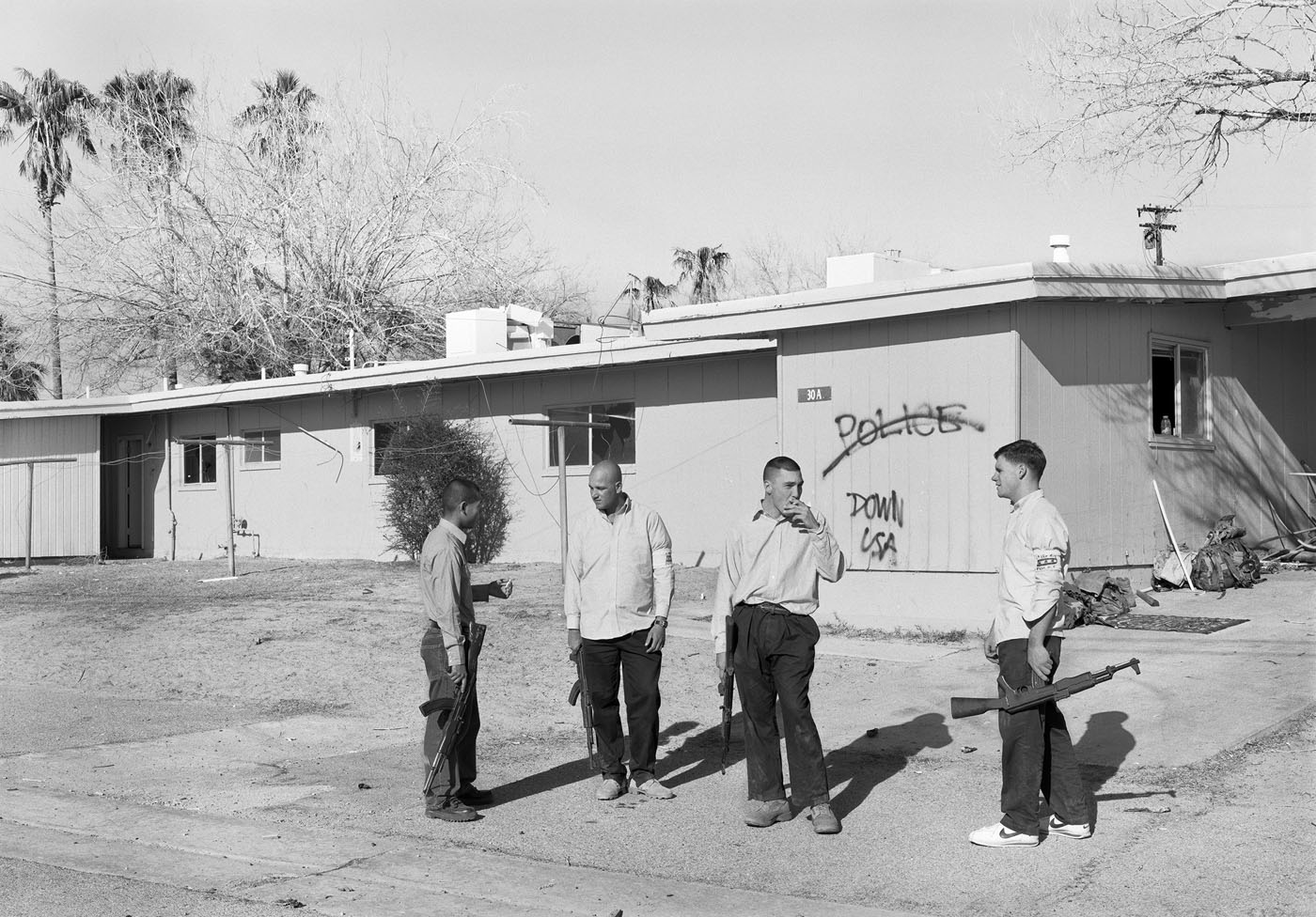
At left, Roger Fenton (English, 1819-1869) 'Plateau of Sebastopol II' 1855; and at right, An-My Lê (Vietnamese American, b. 1960) 'Security and Stabilization Operations, Iraqi Police' 2003-2004


At left, Roger Fenton (English, 1819-1869) Plateau of Sebastopol II 1855; and at right, An-My Lê (Vietnamese American, b. 1960) Security and Stabilization Operations, Iraqi Police 2003-2004


Roger Fenton (English, 1819-1869) 'Plateau of Sebastopol II' 1855


Roger Fenton (English, 1819-1869)
Plateau of Sebastopol II
1855
Albumen silver print
Image: 22.2 × 34.4cm (8 3/4 × 13 9/16 in.)
The J. Paul Getty Museum, Los Angeles
Public domain


An-My Lê (Vietnamese-American, b. 1960) 'Security and Stabilization Operations, Iraqi Police' 2003-2004


An-My Lê (Vietnamese American, b. 1960)
Security and Stabilization Operations, Iraqi Police
2003-2004
From the series 29 Palms
Gelatin silver print
The J. Paul Getty Museum, Los Angeles
Courtesy of the artist and Marian Goodman Gallery
© An-My Lê


Landscape

Nineteenth-century photographers went to great lengths to make images of remote landscapes, which required traveling with large format cameras, glass plates, and chemicals. Ideological forces drove many of these journeys, with the ultimate goal of imperial expansion through industrial development and war. Government sponsored surveys and expeditionary programs employed the camera to justify the expansion and to record the resulting military conflicts. Mark Ruwedel, Michelle Stuart, and An-My Lê re-envision some of these same historical landscapes and offer up new ones that bring the past closer to our present.


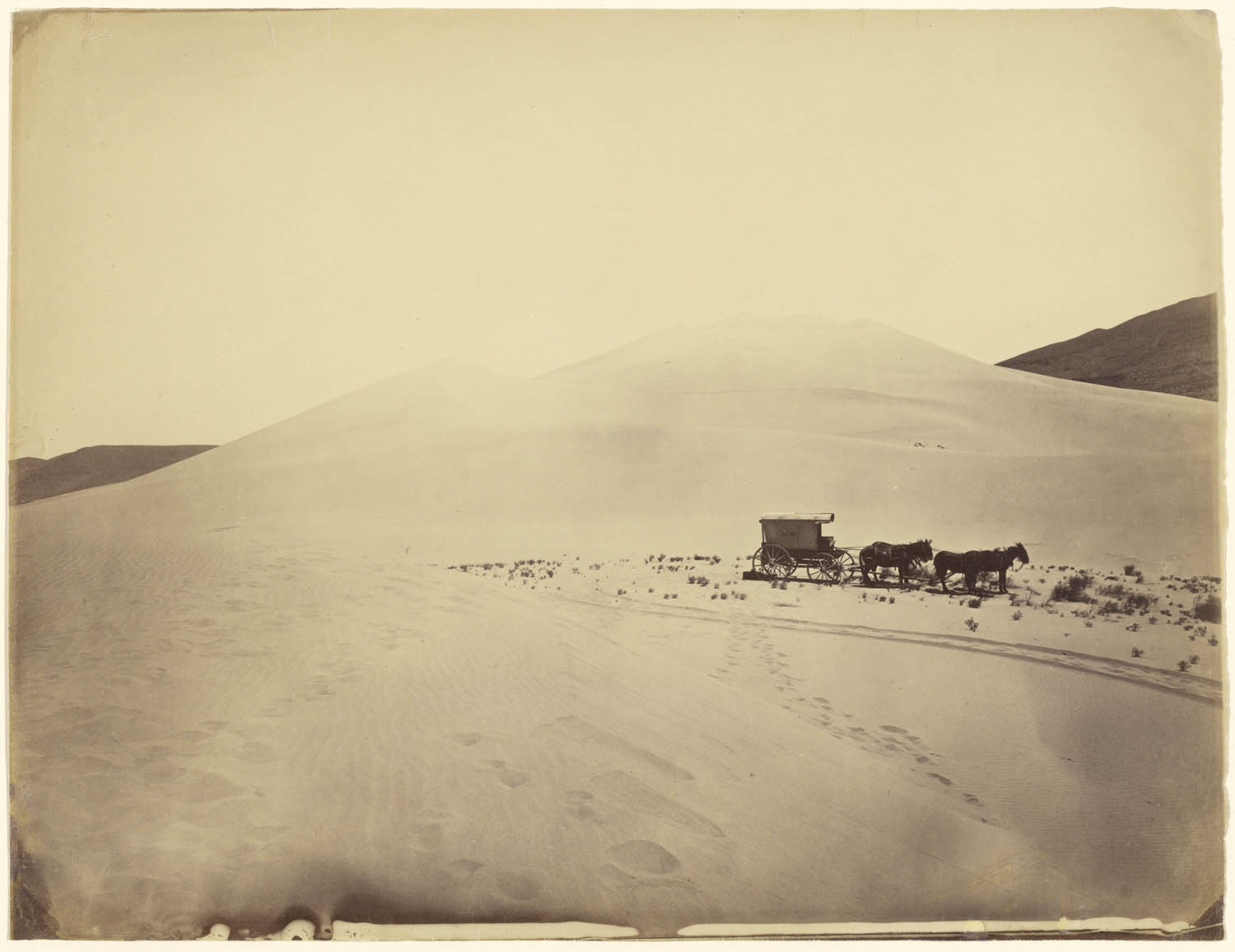
At left, Timothy O'Sullivan (American, about 1840-1882) 'Desert Sand Hills Near Sink of Carson, Nevada' 1867; and at right, Michelle Stuart (American, b. 1933) 'Timeless Land' 2021


At left, Timothy O’Sullivan (American, about 1840-1882) Desert Sand Hills Near Sink of Carson, Nevada 1867; and at right, Michelle Stuart (American, b. 1933) Timeless Land 2021


Timothy O'Sullivan (American, about 1840-1882) 'Desert Sand Hills Near Sink of Carson, Nevada' 1867


Timothy O’Sullivan (American, about 1840-1882)
Desert Sand Hills Near Sink of Carson, Nevada
1867
Albumen silver print
The J. Paul Getty Museum, Los Angeles
Public domain


Timothy O’Sullivan’s darkroom wagon, pulled by four mules, entered the frame at the right side of the photograph, reached the center of the image, and abruptly U-turned, heading back out of the frame. Footprints leading from the wagon toward the camera reveal the photographer’s path. Made at the Carson Sink in Nevada, this image of shifting sand dunes reveals the patterns of tracks recently reconfigured by the wind. The wagon’s striking presence in this otherwise barren scene dramatises the pioneering experience of exploration and discovery in the wide, uncharted landscapes of the American West.

O’Sullivan’s photographs from the 1867 Geological Exploration of the Fortieth Parallel expedition were intended to provide information for the purpose of expanding railroads and industry, yet they demonstrate his eye for poetic beauty.

Text from the J. Paul Getty Museum website


Michelle Stuart (American, b. 1933) 'Timeless Land' 2021


Michelle Stuart (American, b. 1933)
Timeless Land
2021
Ambrotypes
The J. Paul Getty Museum, Los Angeles
Purchased with funds provided by the Photographs Council
© Michelle Stuart


A.J. Russell (American, 1830-1902) 'Embankment No. 3 West of Granite Cannon [Wyoming]' April 1868


A.J. Russell (American, 1830-1902)
Embankment No. 3 West of Granite Cannon [Wyoming]
April 1868
Albumen silver print
Image: 21.9 × 29.4 cm (8 5/8 × 11 9/16 in.)
Mount: 34.1 × 43.1 cm (13 7/16 × 16 15/16 in.)
The J. Paul Getty Museum, Los Angeles


Mark Ruwedel (American/Canadian, b. 1954) 'Union Pacific #67 (after A.J. Russell)' 1996


Mark Ruwedel (American/Canadian, b. 1954)
Union Pacific #67 (after A.J. Russell)
1996
Gelatin silver print
Image: 18.9 × 23.9cm (7 7/16 × 9 7/16 in.)
The J. Paul Getty Museum, Los Angeles
© Mark Ruwedel


Mark Ruwedel’s statement in a wall text notes that “The legacy of nineteenth-century expeditionary photography was most important to me when working on my Westward series.” He cites Timothy O’Sullivan, Alexander Gardner and A.J. Russell. The Landscape section has a print by A.J. Russell, “Embankment No. 3 West of Granite Cannon. [Wyoming]” (April 1868), and seven pictures by Mr. Ruwedel: “Union Pacific #39 (After A.J. Russell)” and “Union Pacific #67 (After A.J. Russell)” (1994 and 1996, respectively) and five others with no specific acknowledgments but clearly influenced by his 19th-century mentors.

William Meyers. “Photography’s Past and Present at the Getty Center,” on The Wall Street Journal website May 29, 2024 [Online] Cited 16/06/2024


At left, Carleton Watkins (American, 1829-1916) 'Cathedral Spires – Yo Semite' 1861; and at right, Ken Gonzales-Day (American, b. 1964) 'At daylight the miserable man was carried to an oak…' Negative 2002; print 2021


At left, Carleton Watkins (American, 1829-1916) Cathedral Spires – Yo Semite 1861; and at right, Ken Gonzales-Day (American, b. 1964) At daylight the miserable man was carried to an oak… Negative 2002; print 2021


Carleton Watkins (American, 1829-1916) 'Cathedral Spires – Yo Semite' 1861


Carleton Watkins (American, 1829-1916)
Cathedral Spires – Yo Semite
1861
Albumen silver print
Image (Dome-Topped): 52.2 × 40.3cm (20 9/16 × 15 7/8 in.)
The J. Paul Getty Museum, Los Angeles


When Carleton Watkins photographed the remote Yosemite wilderness, America was not yet a century old. Conscious of their country’s lack of a national cultural identity, Americans adopted particularly dramatic geologic formations such as Cathedral Spires as their version of ancient ruins and soaring Gothic churches. The great pine tree in the foreground here became another form of this uniquely American history. Watkins’s images helped define America’s preference for landscape views depicting rugged wilderness and celebrating spectacular landforms on the grandest of scales.


Ken Gonzales-Day (American, b. 1964) 'At daylight the miserable man was carried to an oak…' Negative 2002; print 2021


Ken Gonzales-Day (American, b. 1964)
At daylight the miserable man was carried to an oak…
Negative 2002; print 2021
From the series Searching for California’s Hang Trees
Pigment print
Image: 92.7 × 117.5cm (36 1/2 × 46 1/4 in.)
© Ken Gonzales-Day

This print: Smithsonian American Art Museum, Museum purchase through the Luisita L. and Franz H. Denghausen Endowment


Through meticulous research, Gonzales-Day documented approximately 350 lynching incidents that occurred in California between 1850 and 1935, most of which involved victims of Mexican descent. To create the series Searching for California Hang Trees, the artist visited many of these sites and captured the likeness of trees that may have borne witness to these events. Gonzales-Day’s landscapes unearth traces of this little-known history.

Our America: The Latino Presence in American Art, 2013

__________________________________________

Circulation


Charles M. Bell (American, 1848-1893) 'Manulitó, Chief of the Navajos' 1874


Charles M. Bell (American, 1848-1893)
Manulitó, Chief of the Navajos
1874
Albumen silver print
Image (Arched): 18.4 × 14.9cm (7 1/4 × 5 7/8 in.)
The J. Paul Getty Museum, Los Angeles
Public domain


Wendy Red Star (American/Apsáalooke, b. 1981) 'Peelatchiwaaxpáash / Medicine Crow (Raven)' 2014


Wendy Red Star (American/Apsáalooke, b. 1981)
Peelatchiwaaxpáash / Medicine Crow (Raven)
2014
From the series Crow Peace Delegation
Inkjet print
Nasher Museum of Art at Duke University
Museum purchase with funds provided by Jennifer McCracken New and Jason G. New
© Wendy Red Star
Image courtesy of the Nasher Museum of Art


Artist-manipulated digitally reproduced photograph by C.M. (Charles Milton) Bell, National Anthropological Archives, Smithsonian Institution, 24 x 16 9/20 inches


Circulation

By the middle of the nineteenth century, thousands of photographs were in circulation worldwide, the result of photographers’ ability to reproduce the same image multiple times. Pictures of historical events, tourist destinations, and anthropological expeditions made the world seem more accessible, but with time and distance, they became disconnected from their original contexts. Many eventually ended up in archives (including at Getty). Early photographs appear next to projects that make these historical absences present. Wendy Red Star, Stephanie Syjuco, Ken Gonzales-Day, and Andrea Chung recover what has been lost, calling out the residual effects of the nineteenth-century photograph on our present knowledge of global cultures and histories.

Text from the J. Paul Getty Museum


At left, Anna Atkins (British, 1799-1871) possibly with Anne Dixon (British, 1799-1877) 'Ceylon/Fern' about 1854; and at right, Andrea Chung (American, b. 1978) 'Untitled' 2016


At left, Anna Atkins (British, 1799-1871) possibly with Anne Dixon (British, 1799-1877) Ceylon/Fern about 1854; and at right, Andrea Chung (American, b. 1978) Untitled 2016


Anna Atkins (British, 1799-1871) possibly with Anne Dixon (British, 1799-1877) 'Ceylon/Fern' about 1854


Anna Atkins (British, 1799-1871) possibly with Anne Dixon (British, 1799-1877)
Ceylon/Fern
about 1854
Cyanotype
Image: 34.8 × 24.7cm (13 11/16 × 9 3/4 in.)
Sheet: 48.3 × 37.5cm (19 × 14 3/4 in.)
The J. Paul Getty Museum, Los Angeles
Public domain


Cyanotypes of British and Foreign Flowering Plants

After completing the highly ambitious, decade-long project Photographs of Blue Algae: Cyanotype Impressions in the summer of 1853, Anna Atkins turned to new botanical subjects. She would eventually produce several unique presentation albums with cyanotypes of ferns and flowering plants. Atkins most likely collaborated on these albums with her dear friend, Anne Dixon. Dixon came to Halstead Place for an extended stay in the summer of 1852 to comfort Atkins who was deeply shaken by the death of her father and frequent scientific partner John George Children earlier that year. Photo historian Larry Schaaf suggests that it was during this stay or perhaps one the next summer that Dixon began assisting Atkins and creating her own cyanotypes. Thus, it becomes difficult to know whether surviving works from this time period were created by Atkins, Dixon, or both.1

These seven pieces in the J. Paul Getty Museum Collection (figs. 1-7) were extracted from an 1854 presentation album Cyanotypes of British and Foreign Flowering Plants given by Anna Atkins to Anne Dixon in 1854. The album remained intact until sometime around 1981, when it was broken up after being sold at auction.

Atkins and Dixon shared a deep interest in botany, a science that was considered well suited to women since it could be studied locally, even in one’s own garden. Serious “lady botanists” could join the Botanical Society in London, one of the first scientific organisations to admit women. Atkins joined in 1839. The two friends’ interest in botany is documented in a letter of 1851 from Children to Sir William Hooker in which he discussed the two women’s longtime plant collecting. Later, in a letter that Atkins wrote to Hooker in 1864, she extended an offer from Dixon to send him samples of any of the plants from her own collection.2

Carolyn Peter, J. Paul Getty Museum, Department of Photographs
2019
© J. Paul Getty Trust
Creative Commons Attribution 4.0 International License

1/ Larry Schaaf, Sun Gardens: Cyanotypes by Anna Atkins (New York: The New York Public Library, 2018), 77
2/ Ibid, 80


Andrea Chung (American, b. 1978) 'Untitled' 2016


Andrea Chung (American, b. 1978)
Untitled
2016
From the series Anthropocene
Cyanotypes
The J. Paul Getty Museum, Los Angeles
© Andrea Chung


Anna Atkins was a 19th-century botanist who documented plant specimens to make the world’s first photo book.

Today, artist Andrea Chung makes images of lionfish. Invasive to the Caribbean, they stand as a metaphor for the impact of colonisation in the region.

Text and photograph from the Getty Museum X web page


The J. Paul Getty Museum
1200 Getty Center Drive
Los Angeles, California 90049

Opening hours:
Daily 10am – 5pm

The J. Paul Getty Museum website

LIKE ART BLACK ON FACEBOOK

Back to top

Exhibition: ‘Photography: Real & Imagined’ at The Ian Potter Centre: NGV Australia, Melbourne Part 1

Exhibition dates: 13th October 2023 – 4th February 2024

Warning: Aboriginal and Torres Strait Islander readers should be aware that this posting contains images and names of people who may have since passed away.


O. G. Rejlander (British born Sweden, 1813-1875) No title (The Virgin in prayer) c. 1858-1860


O. G. Rejlander (British born Sweden, 1813-1875)
No title (The Virgin in prayer)
c. 1858-1860
Albumen silver photograph
20.2 × 15.4cm irreg. (image and sheet)
National Gallery of Victoria, Melbourne
Purchased, 2002
Public domain


This is an ambitious, complex but flawed exhibition of photographic works from the NGV Collection. Further comment in Part 2 of the posting…

Dr Marcus Bunyan


Many thankx to the NGV for allowing me to publish the media images in the posting. Other photographs in the posting are public domain. All installation images are by Marcus Bunyan.


Photography: Real and Imagined examines two perspectives on photography; photography grounded in the real world, as a record, a document, a reflection of the world around us; and photography as the product of imagination, storytelling and illusion. On occasion, photography operates in both realms of the real and the imagined.

Highlighting major photographic works from the NGV Collection, including recent acquisitions on display for the very first time, Photography: Real and Imagined examines the complex, engaging and sometimes contradictory nature, of all things photographic. The NGV’s largest survey of the photography collection, the exhibition includes more than 300 works by Australian and international photographers and artists working with photo-media from the nineteenth, twentieth and twenty-first centuries.

Text from the NGV website


Installation view of the entrance to the exhibition 'Photography: Real & Imagined' at The Ian Potter Centre: NGV Australia, Melbourne


Installation view of the entrance to the exhibition Photography: Real & Imagined at The Ian Potter Centre: NGV Australia, Melbourne with introduction wall text to the right
Photo: Marcus Bunyan


Introduction

Photography was once described by writer and critic Lucy Lippard as having ‘a toe in the chilly waters of verisimilitude’. Photographs, Lippard posits, may be a close – rather than exact – reflection of truth. This proposition raises a raft of questions. Is reality so uncomfortable that we only engage with it partially, or out of necessity? Can a photograph show the truth, and if it does, whose truth is it showing – the photographer’s, the subject’s or the viewer’s? If truth is the end game, what does this mean for creative practice and other types of photography? The suggestion that photography is only partially, and somewhat uncomfortably, engaged with the notion of truth highlights the complexity encountered when trying to nearly encapsulate any selection of photographs.

Through works from the NGV Collection, Photography: Real and Imagined teases out connections between iconic and lesser known photographs, putting them in a dialogue with one another that both explores and transcends the time in which they were made. It dos not set out to be a history of photography, but historical context does inform the content, leading to nuanced discussions of past and present, real and imagined.

Introductory wall text from the exhibition


Installation view of the exhibition 'Photography: Real & Imagined' at The Ian Potter Centre: NGV Australia, Melbourne showing at right, Mike and Doug Starn's 'Invictus' (1992)


Installation view of the exhibition Photography: Real & Imagined at The Ian Potter Centre: NGV Australia, Melbourne showing at right, Mike and Doug Starn’s Invictus (1992); and at left works by John Kauffmann, Norman Deck and Edward Steichen (see below)
Photo: Marcus Bunyan


The sun was the light source that enabled the earliest photographs to be made in the 1830s. More than 150 years later the sun is the subject of this photographic sculpture by Mike and Doug Starn that embraces the possibilities of light and its potential effects on photography, in terms of both producing an image and as a force contributing to its irreparable damage. In the centre of their installation, the circular form of a sun seems to pulse and leach out of the layers of exposed orthographic film, which is stretched and layered across steel beams and held with pipe clamps and tape.

Wall text from the exhibition


Installation view of the exhibition 'Photography: Real & Imagined' at The Ian Potter Centre: NGV Australia, Melbourne


Installation view of the exhibition Photography: Real & Imagined at The Ian Potter Centre: NGV Australia, Melbourne showing at top left, John Kauffmann’s The Cloud (c. 1905, below); at bottom left, Kauffmann’s The grey veil c. 1919; at top right, Norman Deck’s Sunset, Parramatta River (1909); and a bottom right, Edward Steichen’s Moonrise (1904)
Photo: Marcus Bunyan


John Kauffmann (Australian, 1864-1942) 'The cloud' c. 1905


John Kauffmann (Australian, 1864-1942)
The cloud
c. 1905
Gelatin silver photograph
28.2 × 37.2cm
National Gallery of Victoria, Melbourne
Gift of Mr John Bilney, 1976
Public domain


John Kauffmann (Australian, 1864–1942) 'The grey veil' c. 1919


John Kauffmann (Australian, 1864-1942)
The grey veil
c. 1919
Gelatin silver photograph
National Gallery of Victoria, Melbourne
Purchased through The Art Foundation of Victoria with the assistance of the Herald & Weekly Times Limited, Fellow, 1990
Public domain


The Yarra River, the Princes Bridge and the Melbourne city skyline beyond shimmer in this photograph by John Kauffmann. And yet, they are not the image’s subject. Using a highly refined Pictorialist treatment, a reduced tonal range and luminous mid tones, the artist has manipulated light to the extent that the feeling and atmospheric qualities become the focus of the image – it is the impression that is paramount. With the choice of title, too, the photograph moves away from a specific documentation of place or time.

Wall text from the exhibition


Norman Deck (Australian 1882-1980) 'Sunset, Parramatta River' 1909


Norman Deck (Australian 1882-1980)
Sunset, Parramatta River
1909
Gelatin silver photograph
30.5 × 24.9cm
National Gallery of Victoria, Melbourne
Gift of Joyce Evans, 1993
Public domain


Installation view of the exhibition 'Photography: Real & Imagined' at The Ian Potter Centre: NGV Australia, Melbourne showing at centre, David Thomas' 'The Movement of Colour (White), Taking a Monochrome for a Walk (London)' (2010-2011)


Installation view of the exhibition Photography: Real & Imagined at The Ian Potter Centre: NGV Australia, Melbourne showing at centre, David Thomas’ The Movement of Colour (White), Taking a Monochrome for a Walk (London) (2010-2011), with at right works by David Noonan, Hiroshi Sugimoto, László Moholy-Nagy and Susan Fereday (see below)
Photo: Marcus Bunyan


David Thomas (British, b. 1951, Australia 1958- ) 'The Movement of Colour (White), Taking a Monochrome for a Walk (London)' 2010-2011 (installation view)


David Thomas (British, b. 1951, Australia 1958- )
The Movement of Colour (White), Taking a Monochrome for a Walk (London) (installation view)
2010-2011
National Gallery of Victoria, Melbourne
Gift of an anonymous donor through the Australian Government’s Cultural Gifts Program 2015
Photo: Marcus Bunyan


“It was made during a residency at the Centre for Drawing Research at Wimbledon School of Art University of the Arts London… and plays on Paul Klee’s definition of drawing as taking a line for a walk on a page… this is taking a monochrome for a walk in the world where the monochrome becomes a key for seeing other colours… an interval in the world. It also suggests the ideas of movement in time and feelings of impermanence.”

~ David Thomas


Installation view of the exhibition 'Photography: Real & Imagined' at The Ian Potter Centre: NGV Australia, Melbourne showing works by David Noonan, Hiroshi Sugimoto, Laslo Moholy-Nagy and Susan Fereday


Installation view of the exhibition Photography: Real & Imagined at The Ian Potter Centre: NGV Australia, Melbourne showing at top right, David Noonan’s Untitled (1992); at bottom left, Hiroshi Sugimoto’s Winnetka Drive-In, Paramount (1993); at top right, László Moholy-Nagy’s Fotogram, 1925 (1925); and at bottom right, Susan Fereday’s Untitled (2001)
Photo: Marcus Bunyan


Light and time are both the means and subject of Hiroshi Sugimoto’s Drive-In Theaters series. To produce the images, the artist directs his camera at the movie screen. Once the film starts, Sugimoto opens the lens shutter of his large-format camera and shuts it the moment the movie ends. The result is a visual condensation of the moving images and projected light of the film for its duration into a vivid, hovering rectangle of virtually pulsating light and, in the case of this drive-in cinema, the surrounding human-made and astronomical light, too.

Wall text from the exhibition


Installation view of the exhibition 'Photography: Real & Imagined' at The Ian Potter Centre: NGV Australia, Melbourne showing David Noonan's 'Untitled' (1992)


Installation view of the exhibition Photography: Real & Imagined at The Ian Potter Centre: NGV Australia, Melbourne showing David Noonan’s Untitled (1992)
Photo: Marcus Bunyan


László Moholy-Nagy (Hungarian 1895-1946, Germany 1920-1934, England 1935-1937, United States 1937-1946) 'Fotogram, 1925' 1925


László Moholy-Nagy (Hungarian 1895-1946, Germany 1920-1934, England 1935-1937, United States 1937-1946)
Fotogram, 1925
1925
Gelatin silver photograph
National Gallery of Victoria, Melbourne
Presented by the National Gallery Society of Victoria, 1985
Public domain


From 1922 to 1943 László Moholy-Nagy experimented extensively with the photogram process – he was passionate about the optical effects and inherent properties of these camera-less images freed from a purely representational mode. In this work a pale shape, an organic swathe, streams across a page while curved shapes dance at the base. A halo above emits small geometric patterns. The work is a celebration of abstraction of the image – of the effects of playing with light, objects and photographic paper in a darkroom.

Wall text from the exhibition


Installation view of the exhibition Photography: Real & Imagined at The Ian Potter Centre: NGV Australia, Melbourne showing at left, Barbara Kasten's Composition 8T (2018); and at right, Lydia Wegner's Purple square (2017)


Installation view of the exhibition Photography: Real & Imagined at The Ian Potter Centre: NGV Australia, Melbourne showing at left, Barbara Kasten’s Composition 8T (2018, below); and at right, Lydia Wegner’s Purple square (2017, below)
Photo: Marcus Bunyan


Barbara Kasten (American, b. 1936) 'Composition 8T' 2018


Barbara Kasten (American, b. 1936)
Composition 8T
2018
Digital type C print
160.0 x 121.9cm (image and sheet)
ed. 1/1
National Gallery of Victoria, Melbourne
Purchased NGV Foundation, 2018
© Barbara Kasten, courtesy Kadel Willborn, Düsseldorf


This photograph from Barbara Kasten’s Collisions/Compositions series continues her practice of creating architectural spaces in the studio using a range of materials, such as plexiglas and mirrors, which she lights and photographs at close range. Influenced by Constructivism and the teachings of the Bauhaus, specifically the work of László Moholy-Nagy, Kasten has experimented with the parameters of abstract photography for around five decades. She has written of her ongoing fascination with light in the creation and conceptual development of her photographs, saying, ‘The interdependency of shadow and light is the essence of photographic exploration and an inescapable part of the photographic process’.

Wall text from the exhibition


Installation view of the exhibition Photography: Real & Imagined at The Ian Potter Centre: NGV Australia, Melbourne showing Lydia Wegner's 'Purple square' (2017)


Installation view of the exhibition Photography: Real & Imagined at The Ian Potter Centre: NGV Australia, Melbourne showing Lydia Wegner’s Purple square (2017)
Photo: Marcus Bunyan


Installation view of the exhibition 'Photography: Real & Imagined' at The Ian Potter Centre: NGV Australia, Melbourne showing at left, Todd McMillan's 'Equivalent VIII' (2014); and at right, Sue Pedley's 'Sound of lotus 1' (2000)


Installation view of the exhibition Photography: Real & Imagined at The Ian Potter Centre: NGV Australia, Melbourne showing at left, Todd McMillan’s Equivalent VIII (2014); and at right, Sue Pedley’s Sound of lotus 1 (2000)
Photo: Marcus Bunyan


Installation view of the exhibition 'Photography: Real & Imagined' at The Ian Potter Centre: NGV Australia, Melbourne


Installation view of the exhibition Photography: Real & Imagined at The Ian Potter Centre: NGV Australia, Melbourne showing at back left, Thomas Ruff’s Portrait (V. Liebermann D) (1999); and at back second left, Ruff’s Portrait (A. Koschkarow) (2000)
Photo: Marcus Bunyan


Installation view of the exhibition Photography: Real & Imagined at The Ian Potter Centre: NGV Australia, Melbourne showing at left, Thomas Ruff’s 'Portrait (V. Liebermann D)' (1999); and at right, Ruff's 'Portrait (A. Koschkarow)' (2000)


Installation view of the exhibition Photography: Real & Imagined at The Ian Potter Centre: NGV Australia, Melbourne showing at left, Thomas Ruff’s Portrait (V. Liebermann D) (1999); and at right, Ruff’s Portrait (A. Koschkarow) (2000)
Photo: Marcus Bunyan


The earnest gazes of the man and woman in these two monumental photographs by Thomas Ruff are so calm and serene that they bely the intense experience of viewing their enlarged faces. Applying a standardised approach – similar to a generic passport photograph – these portraits have a timeless quality that invites you to attempt to ‘read’ their faces and to search for clues as to the inner state of the person. Ruff, however, lets nothing slip. The faces are known to the artist but remain anonymous to the viewer.

Wall text from the exhibition


Installation view of the exhibition 'Photography: Real & Imagined' at The Ian Potter Centre: NGV Australia, Melbourne showing Robert Rooney's 'AM-PM: 2 Dec 1973-28 Feb 1974' (1973-1974) (detail)


Installation view of the exhibition Photography: Real & Imagined at The Ian Potter Centre: NGV Australia, Melbourne showing Robert Rooney’s AM-PM: 2 Dec 1973-28 Feb 1974 (1973-1974) (detail)
Photo: Marcus Bunyan


Featuring some of the most iconic photographs ever created alongside contemporary approaches to the photographic medium, Photography: Real & Imagined is the largest survey of the NGV’s Photography collection in the institution’s history and features more than 270 photographs by Australian and international practitioners.

Four years in the making, this landmark exhibition features photographs from across the 200-year period since the invention of photography in the 19th century, including work by leading international photographers including Man Ray, Cindy Sherman, Wolfgang Tillmans, Gilbert & George and Nan Goldin, alongside Australian photographers Max Dupain, Olive Cotton, Mervyn Bishop, Polly Borland, Destiny Deacon and Darren Sylvester.

Through twenty-one thematic sections, this large-scale exhibition explores the proposition that a photograph can be grounded in the real world, recording, documenting and reflecting the world around us; or be the product of imagination, storytelling and illusion; and on occasion operate in both realms. The thematic sections explore subject matter such as light, place and environment, consumption, conflict, community, and death.

Exhibition highlights include Mervyn Bishop’s important photograph of former Prime Minister of Australia, Gough Whitlam, pouring sand into the open palm of Gurindji Elder Vincent Lingiari. The 1975 image captures the historic meeting between these two figures where Lingiari received the crown lease of his ancestral lands. Also on display is Joe Rosenthal’s World War II photograph Raising the flag on Iwo Jima, 1945, in which American marines raise their country’s flag over the Japanese Island. Both Bishop and Rosenthal’s photographs were staged, or re-constructed for better pictorial effect, illustrating the fluid space between the real and imagined.

The exhibition also presents fashion and advertising photography, including key examples by Lilian Bassman, Athol Smith, Horst P. Horst and Dora Maar. These images showcase a world of designer fashion and high-end products, which set a standard in advertising that continues today. Ilse Bing’s Surrealist inspired photograph commissioned by Elsa Schiaparelli to launch her new perfume Salut in 1934 is a highlight of the exhibition.

Highlighting an area of focused collecting for the NGV, the exhibition recognises the work of women practicing in the early 20th century, including Barbara Morgan whose acclaimed photo montage City shell, 1938, shows an unexpected view of the then recently completed Empire State Building.

Through to the current day, Photography: Real & Imagined presents contemporary photographers of the 21st century including Zanele Muholi, Richard Mosse and Alex Prager. Highlights include Cindy Sherman’s celebrated self-portrait in the guise of Renaissance aristocrat. Also on display will be the oldest photographic work in the NGV Collection, an early 19th century portrait by Englishman William Henry Fox Talbot, one of the inventors of the medium, as well as examples of daguerreotypes, unique images on silver plated copper sheets that are amongst the earliest forms of photography.

The exhibition is accompanied by a major publication – the most ambitious book published on the NGV Photography Collection, generously supported by the Bowness Family Foundation. The publication comprises essays from NGV Senior Curator of Photography, Susan van Wyk, Susan Bright and David Campany; alongside texts by Curator of Photography, Maggie Finch and external authors from Australia, Europe, North America and Southeast Asia.

Regular introductory talks for students are held on weekdays during term times, and free drop-by guided tours each Thursday and Sunday at 10.30am during the exhibition period.

Tony Ellwood AM, Director, NGV, said: ‘This exhibition celebrates the collections and achievements of the NGV’s photography department, which has presented more than 180 exhibitions in its 55-year history. The exhibition is a testament to the strength of the NGV Collection, with so many key examples of the history of photography represented, from the earliest examples from the 19th century, through to contemporary images being produced right now in the twenty-first century. We are grateful for the support of the many donors and philanthropists, such as the Bowness Family Foundation, who have helped to grow and strengthen the NGV’s photography collection.’

Press release from the NGV


Installation view of the exhibition 'Photography: Real & Imagined' at The Ian Potter Centre: NGV Australia, Melbourne at top left, O. G. Rejlander's 'The Virgin in prayer' (c. 1858-1860); at bottom left, Henry Peach Robinson's 'Elaine watching the shield of Lancelot' (1859); at centre, Ruth Hollick's 'Thought' (1921); and at right Cindy Sherman's 'Untitled' (1988) from the 'History Portraits' series (1988-1990)


Installation view of the exhibition Photography: Real & Imagined at The Ian Potter Centre: NGV Australia, Melbourne at top left, O. G. Rejlander’s The Virgin in prayer (c. 1858-1860, below); at bottom left, Henry Peach Robinson’s Elaine watching the shield of Lancelot (1859); at centre, Ruth Hollick’s Thought (1921); and at right Cindy Sherman’s Untitled (1988) from the History Portraits series 1988-1990
Photo: Marcus Bunyan


Describing the complex conundrum presented by Cindy Sherman in this photograph, photographer and curator Patrick Pound once wrote: ‘Fake chested and with a face like a mask, here Cindy Sherman is costumed to the max. She stares out like a disapproving Renaissance figure who has just walked off set from a Peter Greenaway extravaganza. Here we have a photographer looking like a painting that walked out of a film. Sherman’s photographs speak of the fragilities of the visage in an image-saturated world where information and construction slip into foreplay. In Sherman’s photographic world gender and identity is a compilation album. There is a toughness to the excess that is all her own’.

Wall text from the exhibition


Installation view of the exhibition Photography: Real & Imagined at The Ian Potter Centre: NGV Australia, Melbourne showing O. G. Rejlander's 'The Virgin in prayer' (c. 1858-1860)


Installation view of the exhibition Photography: Real & Imagined at The Ian Potter Centre: NGV Australia, Melbourne showing O. G. Rejlander’s The Virgin in prayer (c. 1858-1860, below)
Photo: Marcus Bunyan


Henry Peach Robinson (English, 1830-1901) 'Elaine watching the shield of Lancelot' 1859


Henry Peach Robinson (English, 1830-1901)
Elaine watching the shield of Lancelot
1859
Albumen silver photograph
24.3 × 19.3cm (image and sheet)
National Gallery of Victoria, Melbourne
Purchased from Admission Funds, 1988
Public domain


In the 1850s Henry Peach Robinson was renowned for producing elaborately staged narrative images based on scenes from popular literary sources. He was particularly interested in Arthurian legends and drew upon these stories as inspiration for some of his most admired photographs. Elaine watching the shield of Lancelot is based on Alfred Tennyson’s version of the story of Lancelot and Elaine. Peach Robinson has recreated the scene in which the lovelorn Elaine gazes dreamily at the shield of Lancelot. She is shown as a woman who has shunned reason and propriety and abandoned herself to the intensity of her emotions, making this photograph both a tragic love story and a cautionary narrative.

Wall text from the exhibition


Ruth Hollick (Australian, 1883-1977) 'Thought' 1921


Ruth Hollick (Australian, 1883-1977)
Thought
1921
Gelatin silver photograph
37.4 × 25.3cm
National Gallery of Victoria, Melbourne
Presented through The Art Foundation of Victoria by Mrs Lucy Crosbie Morrison, Member, 1993
Public domain


Installation view of the exhibition 'Photography: Real & Imagined' at The Ian Potter Centre: NGV Australia, Melbourne


Installation view of the exhibition Photography: Real & Imagined at The Ian Potter Centre: NGV Australia, Melbourne
Photo: Marcus Bunyan


Installation view of the exhibition 'Photography: Real & Imagined' at The Ian Potter Centre: NGV Australia, Melbourne


Installation view of the exhibition Photography: Real & Imagined at The Ian Potter Centre: NGV Australia, Melbourne showing Bernd and Hilla Becher’s Coal tipple, Goodspring, Pennsylvania 1975 from the Artists and Photographs folio 1975
Photo: Marcus Bunyan


In 1959, German-born artists Bernd and Hilla Becher began travelling throughout Europe to create photographic typologies of vanishing industrial architecture (a practice they continued for more than four decades). While predominantly documenting German structures and landscapes, they occasionally worked overseas. This image, four views of a coal tipple, was taken on their first trip to North America in the mid 1970s. The Bechers constructed a system for comparing structures: photographed from a consistent angle, with virtually identical lighting conditions, printed at the same size and often displayed in grids.

Wall text from the exhibition


Edward Ruscha (American, b. 1937) 'Twentysix Gasoline Stations' 1963, published 1967 (installation view)

Edward Ruscha (American, b. 1937) 'Twentysix Gasoline Stations' 1963, published 1967 (installation view)


Edward Ruscha (American, b. 1937)
Twentysix Gasoline Stations (installation view)
1963, published 1967
Artist’s book: photo-offset lithograph and printed text, 48 pages, printed cover, glued binding
National Gallery of Victoria, Melbourne
Gift of Robert Rooney through the Australian Government’s Cultural Gifts Program, 2009
Photos: Marcus Bunyan


With the first publication of Twentysix Gasoline Stations, and his subsequent artist books, Edward Ruscha’s work was influential in initiating the widespread interest in photographic book publishing that continues today. Ruscha’s use of photographs as a means of recording – a seemingly unemotional, detached cataloguing of the world – and simply as a ‘device to complete the idea’ influenced the interest in serial imaging adopted by many conceptual artists. Ruscha’s use of the book format was also crucial, providing a transportable way of presenting art in varied contexts that existed as a type of ‘map’ to be read and interpreted, with the subject matter becoming less important than the documentation as a whole.

Wall text from the exhibition


John Baldessari (American 1931-2020) ‘Fable: A Sentence of Thirteen Parts (with Twelve Alternate Verbs) Ending in a Fable’ 1977 (installation view)

John Baldessari (American 1931-2020) ‘Fable: A Sentence of Thirteen Parts (with Twelve Alternate Verbs) Ending in a Fable’ 1977 (installation view)


John Baldessari (American 1931-2020)
Fable: A Sentence of Thirteen Parts (with Twelve Alternate Verbs) Ending in a Fable (installation views)
1977
Artist’s book: photo-offset lithography on concertina fold-out in cross formation, folded paper cover
9.8 × 14.0 × 1.8cm (closed) 70.0 × 126.5cm approx. (overall, opened)
National Gallery of Victoria, Melbourne
Purchased, Friends of the Gallery Library, 2017
Photos: Marcus Bunyan


Conceptual artist John Baldessari, is renowned for his often-playful investigations into ideas of language, image and authenticity, once said: ‘I was always interested in language. I thought, why not? … And then I also had a parallel interest in photography … I could never figure out why photography and art had separate histories. So I decided to explore both’. Taking art off the walls and requiring someone to unfold and activate it is a central idea of this artist’s book. A visual puzzle, it invites an interaction between looking and reading, creating your own fables as you jump from image to word to image again.

Wall text from the exhibition


Eve Sonneman (American, b. 1946) 'Real time' 1968-1974 (installation view)

Eve Sonneman (American, b. 1946) 'Real time' 1968-1974 (installation view)


Eve Sonneman (American, b. 1946)
Real time (installation view)
1968-1974, published 1976
Artist’s book: photo-offset lithograph and printed text, 46 folios, printed paper cover, glued binding
National Gallery of Victoria, Melbourne
Purchased NGV Supporters of Photography, 2021
Photos: Marcus Bunyan


Eve Sonneman’s photobook Real time includes paired photographs, each separated by a black line border. The diptychs allow for the occurrence of movement and gestures and changes between the artist’s camera clicks. The ordered presentation, however, takes the images away from a straight documentary reading and to a consideration of their ‘objectness’. After first showing the photographs at MoMA, New York, then photography curator, John Szarkowski, set up a mentorship for Sonneman with the photographer Diane Arbus. As Sonneman recalled: ‘[Arbus] loved my pictures and we got along great. For two years she helped me edit’. Sonneman then published the images through the newly established Printed Matter in New York in 1976.

Wall text from the exhibition


Installation view of the exhibition 'Photography: Real & Imagined' at The Ian Potter Centre: NGV Australia, Melbourne showing at top left, Carol Jerrems and Virginia Fraser's book 'A Book About Australian Women' (1974);  at top centre, Nan Goldin's book 'The Ballad of Sexual Dependency' (1986); and at bottom left, Tracey Emin's 'Exploration of the Soul' (1994) 


Installation view of the exhibition Photography: Real & Imagined at The Ian Potter Centre: NGV Australia, Melbourne showing at top left, Carol Jerrems and Virginia Fraser’s book A Book About Australian Women (published 1974);  at top centre, Nan Goldin’s book The Ballad of Sexual Dependency (published 1986); and at bottom left, Tracey Emin’s Exploration of the Soul (published 1994)
Photo: Marcus Bunyan


Installation view of the exhibition 'Photography: Real & Imagined' at The Ian Potter Centre: NGV Australia, Melbourne showing at bottom left, Harold Cazneaux's book 'The Bridge Book' (published 1930); and at top right, Lee Friedlander's 'The American Monument' (published 1976)


Installation view of the exhibition Photography: Real & Imagined at The Ian Potter Centre: NGV Australia, Melbourne showing at bottom left, Harold Cazneaux’s book The Bridge Book (published 1930); and at top right, Lee Friedlander’s book The American Monument (published 1976)
Photo: Marcus Bunyan


Lee Friedlander (American, b. 1934) 'The American Monument' Published by The Eakins Press Foundation, New York, 1976 (installation view)


Lee Friedlander (American, b. 1934)
The American Monument (installation view)
Published by The Eakins Press Foundation, New York, 1976
Half-tone plate
Shaw Research Library, National Gallery of Victoria
Photo: Marcus Bunyan


Berenice Abbott (American 1898-1991, worked in France 1921-1929) 'Changing New York' Published by E. P. Dutton & Co, New York, 1939 (installation view)


Berenice Abbott (American 1898-1991, worked in France 1921-1929)
Changing New York (installation view)
Published by E. P. Dutton & Co, New York, 1939
Half-tone plate and letterpress text
National Gallery of Victoria, Melbourne
Purchased NGV Foundation, 2022
Photo: Marcus Bunyan


Installation view of the exhibition 'Photography: Real & Imagined' at The Ian Potter Centre: NGV Australia, Melbourne showing at top left, Man Ray's book 'Photographs by Man Ray Paris 1920-1934' (published 1934); at bottom left, Claude Cahun and Marcel Moore's book 'Aveux non Avenus' (Disavowals or Cancelled Confessions) (published 1930); at top right, Bill Brandt's book 'Perspective of Nudes' (published 1961); and at bottom right, Germaine Krull's book 'Nude studies' (Études de nu) (published 1930)


Installation view of the exhibition Photography: Real & Imagined at The Ian Potter Centre: NGV Australia, Melbourne showing at top left, Man Ray’s book Photographs by Man Ray Paris 1920-1934 (published 1934); at bottom left, Claude Cahun and Marcel Moore’s book Aveux non Avenus (Disavowals or Cancelled Confessions) (published 1930); at top right, Bill Brandt’s book Perspective of Nudes (published 1961); and at bottom right, Germaine Krull’s book Nude studies (Études de nu) (published 1930)
Photo: Marcus Bunyan


Photographs today are often viewed in galleries in frames, hung on walls. Many photographs, however, were originally created for display in combination with text and graphic design; to be laid out on a page and reproduced in different formats; to be held, worn on the body, published, and shared.

With recognition of these expanded histories of photography, and the contemporary resurgence in publishing, this exhibition includes artist books, magazines and photobooks that use the photographic image in print, publishing and design. These two cases include examples that show the influence of Surrealism, the New Objectivity and Constructivist graphic design in dynamic modern publications.

Artist and author Martin Parr has described the photobook as the ‘supreme platform’ for photographers to share the work with a broad audience. The 1920s to the 1970s were arguably the most important period for the publication of photobooks. These two cases include examples that show the influence of modernist, humanist and documentary photography traditions in innovative publications from this time. These include exhibition catalogues, examples of first edition books, publications published in larger un-editioned print runs and coveted collectable limited-edition books and portfolios.

Wall text from the exhibition


Installation view of the exhibition 'Photography: Real & Imagined' at The Ian Potter Centre: NGV Australia, Melbourne showing Man Ray’s book 'Photographs by Man Ray Paris 1920-1934' published 1934


Installation view of the exhibition Photography: Real & Imagined at The Ian Potter Centre: NGV Australia, Melbourne showing Man Ray’s book Photographs by Man Ray Paris 1920-1934 (published 1934) with at right, Man Ray’s Anatomies (1930, below)
Photo: Marcus Bunyan


Man Ray (1890-1976) 'Anatomies' 1930


Man Ray (Emmanuel Radnitzky) (American, 1890-1976)
Anatomies
1930
Gelatin silver photograph

Please note: this photograph is not in the exhibition


Claude Cahun (French, 1894-1954) Marcel Moore (French, 1892-1972) 'Aveux non Avenus' (Disavowals or Cancelled Confessions) Published by Éditions du Carrefour, Paris, 1930 (installation view)

Claude Cahun (French, 1894-1954) Marcel Moore (French, 1892-1972) 'Aveux non Avenus' (Disavowals or Cancelled Confessions) Published by Éditions du Carrefour, Paris, 1930 (installation view)


Claude Cahun (French, 1894-1954) Marcel Moore (French, 1892-1972)
Aveux non Avenus (Disavowals or Cancelled Confessions) (installation view)
Published by Éditions du Carrefour, Paris, 1930
Illustrated book: photogravure, letterpress text, 237 pages, 10 leaves of plates, paper cover, stitched binding
National Gallery of Victoria, Melbourne
Shaw Research Library, acquired through the Friends of the Gallery Library endowment, 2017
Photos: Marcus Bunyan


Aveux non Avenus, by the celebrated poet, writer, sculptor and photographer Claude Cahun, was published in 1930 by Éditions du Carrefour, Paris, in an edition of five hundred. The book comprises a series of texts in French: poems, literary aphorisms, recollections of dream sequences and philosophical thoughts, ideas and meanderings. Pierre Mac Orlan, a French novelist who wrote the preface to the book, described Mademoiselle Claude Cahun’s text as ‘de poèmes-essais et d’essais-poèmes’, or ‘poem-essays and essay-poems’, and said that overall ‘the book is virtually entirely dedicated to the word adventure’

The alliterative title presents a conundrum for English translation – ‘aveux’ meaning ‘avowals’ or ‘confessions’, and ‘non avenus’ meaning ‘voided’ – and is variously translated as Disavowals, Denials, and Unavowed confessions, among other things. Curator Jennifer Mundy has written that the title suggests ‘an affirmative expression immediately followed by some form of negation or retraction’.

Ambiguities around the title aside, there is a strong visual aspect to the book too. The texts are each demarcated with a complex and fantastical photogravure created by Cahun’s partner, Marcel Moore. These photogravure (where an image from the negative of a photograph is etched into a metal plate, similar to printmaking) are collages made up of photographic images of, and by, Cahun. Throughout the book, graphic devices of stars, eyes and lips are also used to separate sections of text. Aveux non Avenus, which has been described as an anti-realist or surrealist-autobiography of the multi-disciplinary Cahun, exists as a potential critique of the autobiography format altogether, is wonderfully irreducible.

Maggie Finch and Isobel Crombie. “Claude Cahun,” in the 2019 July/August edition of NGV Magazine on the NGV website 9th April 2020 [Online] Cited 28/01/2024


Claude Cahun (French, 1894-1954) and Marcel Moore (French, 1892-1972) 'Untitled' 1930


Claude Cahun (French, 1894-1954) and Marcel Moore (French, 1892-1972)
Untitled
1930
In Aveux non avenus 1930
published by Éditions du Carrefour, Paris
illustrated book: heliographs
National Gallery of Victoria, Melbourne
Shaw Research Library, acquired through the Friends of the Gallery Library endowment, 2017


Germaine Krull (German, 1897-1985) 'Nude Studies' (Études de Nu) Published by Librarie des arts décoratifs, Paris, 1930 (installation view)


Germaine Krull (German, 1897-1985)
Nude Studies (Études de Nu) (installation view)
Published by Librarie des arts décoratifs, Paris, 1930
24 photogravures, letterpress on paper, white cloth-backed orange paper-covered board portfolio with ribbons
National Gallery of Victoria
Purchased, NGV Foundation, 2022
Photo: Marcus Bunyan


Bill Brandt (English born Germany, 1904-1983) 'Perspective of Nudes' Published Bodley Head, London, 1961 (installation view)


Bill Brandt (English born Germany, 1904-1983)
Perspective of Nudes (installation view)
Published Bodley Head, London, 1961
Half-tone plate
Shaw Research Library, National Gallery of Victoria
Photo: Marcus Bunyan


Karl Blossfeldt (German, 1865-1932) 'Art Forms in Nature: Examples from the Plant World Photographed Direct from Nature' Published by A. Zwemmer, London, 1929 (installation view)


Karl Blossfeldt (German, 1865-1932)
Art Forms in Nature: Examples from the Plant World Photographed Direct from Nature (installation view)
Published by A. Zwemmer, London, 1929
Half-tone plate
Shaw Research Library, National Gallery of Victoria
Photo: Marcus Bunyan


Karel Teige typographer (Czechoslovakia 1900-1951) Karel Paspa photographer (Czechoslovakia 1862-1936) 'ABECEDA (Alphabet)' Published by J. Otto, Prague, 1926 (installation view)


Karel Teige typographer (Czechoslovakia 1900-1951)
Karel Paspa photographer (Czechoslovakia 1862-1936)
ABECEDA (Alphabet) (installation view)
Published by J. Otto, Prague, 1926
Photomontage
National Gallery of Victoria
Shaw Research Library, acquired through the Friends of the Gallery Library endowment, 2017
Photo: Marcus Bunyan


Aleksandr Rodchenko (Russian, 1891-1958) Varvara Stepanova (Russian, 1894-1958) 'USSR in Construction, no. 12 (Parachute issue)' (URSS en Construction) 1935


Aleksandr Rodchenko (Russian, 1891-1958) and Varvara Stepanova (Russian, 1894-1958)
USSR in Construction, no. 12 (Parachute issue) (URSS en Construction) (installation view)
1935
Illustrated journal: colour rotogravure, 22 pages with fold-out inserts, lithographic cover
National Gallery of Victoria
Purchased, NGV Supporters of Prints and Drawings, 2019
Photo: Marcus Bunyan


Installation view of the exhibition 'Photography: Real & Imagined' at The Ian Potter Centre: NGV Australia, Melbourne showing at top left, Eliza Hutchinson's 'No. 9' (2010); at bottom left, Ewa Narkiewicz's 'Copper flax #4' (1999); at centre top, Harry Nankin's 'The first wave: fragment 2' (1996); at centre bottom, Peter Peryer's 'Seeing' (1989); and at right, Aaron Siskind's 'New York' (1950)


Installation view of the exhibition Photography: Real & Imagined at The Ian Potter Centre: NGV Australia, Melbourne showing at top left, Eliza Hutchinson’s No. 9 (2010); at bottom left, Ewa Narkiewicz’s Copper flax #4 (1999); at centre top, Harry Nankin’s The first wave: fragment 2 (1996); at centre bottom, Peter Peryer’s Seeing (1989); and at right, Aaron Siskind’s New York (1950)
Photo: Marcus Bunyan


In much the same way that tactile writing systems such as braille are impenetrable to those with vision, a photograph printed in two dimensions can be incomprehensible for people with vision impairment. Each system presents a conversion – of letters, texts and illustration – into raised dots on a page; of visible wavelengths of light into an image on a light-sensitive surface. Each relies on an irreversible alteration of the surface. Seeing, the title of this Peter Peryer photograph, infers an action – seeing something. Yet the conversion into a photographic image draws attention to the impenetrability of both acts.

Wall text from the exhibition


Installation view of the exhibition 'Photography: Real & Imagined' at The Ian Potter Centre: NGV Australia, Melbourne showing at left, Gregory Crewdson's 'Untitled' (1999) from the Twilight series (1998-2002); at centre, Malerie Marder's 'Untitled' (2001); and at right, Anne Zahalka's 'Sunday, 2:09pm' (1995) 


Installation view of the exhibition Photography: Real & Imagined at The Ian Potter Centre: NGV Australia, Melbourne showing at left, Gregory Crewdson’s Untitled (1999) from the Twilight series (1998-2002); at centre, Malerie Marder’s Untitled (2001); and at right, Anne Zahalka’s Sunday, 2:09pm (1995)
Photo: Marcus Bunyan


Gregory Crewdson (American, b. 1962) 'Untitled' 1999 (installation view)


Gregory Crewdson (American, b. 1962)
Untitled (installation view)
1999
From the Twilight series 1998-2002
Type C photograph
121.9 × 152.4cm
National Gallery of Victoria, Melbourne
Kaiser Bequest, 2000
Photo: Marcus Bunyan


Anne Zahalka (Australian, b. 1957) 'Sunday, 2:09pm' 1995, printed 2019 (installation view)


Anne Zahalka (Australian, b. 1957)
Sunday, 2:09pm
1995, printed 2019
From the Open House series 1995
Colour cibachrome transparency, light box
121.7 × 161.4cm
National Gallery of Victoria, Melbourne
Purchased, Victorian Foundation for Living Australian Artists, 2019
Photo: Marcus Bunyan


Installation view of the exhibition 'Photography: Real & Imagined' at The Ian Potter Centre: NGV Australia, Melbourne showing at left, Polly Borland's 'Untitled' (2018); and at right, Anne Zahalka's 'Sunday, 2:09pm' (1995)


Installation view of the exhibition Photography: Real & Imagined at The Ian Potter Centre: NGV Australia, Melbourne showing at left, Polly Borland’s Untitled (2018); and at right, Anne Zahalka’s Sunday, 2:09pm (1995)
Photo: Marcus Bunyan


Installation view of the exhibition 'Photography: Real & Imagined' at The Ian Potter Centre: NGV Australia, Melbourne showing at rear from left to right, Gregory Crewdson's 'Untitled' (1999) from the 'Twilight' series (1998-2002); at second left, Malerie Marder's 'Untitled' (2001); and centre, Anne Zahalka's 'Sunday, 2:09pm' (1995); and at right, Alex Prager's 'Crowd #11 (Cedar and Broad Street)' (2013)


Installation view of the exhibition Photography: Real & Imagined at The Ian Potter Centre: NGV Australia, Melbourne showing at rear from left to right, Gregory Crewdson’s Untitled (1999) from the Twilight series (1998-2002); at second left, Malerie Marder’s Untitled (2001); and centre, Anne Zahalka’s Sunday, 2:09pm (1995); and at right, Alex Prager’s Crowd #11 (Cedar and Broad Street) (2013, below)
Photo: Marcus Bunyan


Installation view of the exhibition Photography: Real & Imagined at The Ian Potter Centre: NGV Australia, Melbourne showing Alex Prager's 'Crowd #11 (Cedar and Broad Street)' (2013)


Installation view of the exhibition Photography: Real & Imagined at The Ian Potter Centre: NGV Australia, Melbourne showing Alex Prager’s Crowd #11 (Cedar and Broad Street) (2013, below)
Photos: Marcus Bunyan


Alex Prager (American, b. 1979) 'Crowd #11 (Cedar and Broad Street)' 2013


Alex Prager (American, b. 1979)
Crowd #11 (Cedar and Broad Street)
2013
Inkjet print
149.7 × 142.0cm (image and sheet)
National Gallery of Victoria, Melbourne
Bowness Family Fund for Contemporary Photography, 2014


Alex Prager’s staged photographs openly reference the aesthetics of mid-twentieth century American cinema, fashion photography and the photographs of Cindy Sherman. Her images resemble film stills and are packed with emotion and human melodrama. Working with actors, directing their placement and interaction to create a hyperreal dramatisation of crowd behaviour, Prager’s narrative tableaux pair the banal and fantastic, the everyday and the theatrical, real life and cinematic representation. In this image we have a bird’s eye view of a mass of people crossing the road. We can see the patterns of movement, contact and avoidance and a suggestion of the narrative possibilities of the interacting crowd.

Wall text from the exhibition


Installation view of the exhibition 'Photography: Real & Imagined' at The Ian Potter Centre: NGV Australia, Melbourne showing at second right, Pat Brassington's 'Rosa' (2014); and at right, Yvonne Todd's 'Werta' (2005)


Installation view of the exhibition Photography: Real & Imagined at The Ian Potter Centre: NGV Australia, Melbourne showing at second right, Pat Brassington’s Rosa (2014); and at right, Yvonne Todd’s Werta (2005)
Photo: Marcus Bunyan


Zoë Croggon (Australian, b. 1989) 'Fonteyn' 2012 (installation view)


Zoë Croggon (Australian, b. 1989)
Fonteyn (installation view)
2012
Digital type C print
102.8 × 99.9cm
Purchased with funds arranged by Loti Smorgon for Contemporary Australian Photography, 2013
Photo: Marcus Bunyan


Installation view of the exhibition 'Photography: Real & Imagined' at The Ian Potter Centre: NGV Australia, Melbourne showing Loretta Lux's 'The Drummer' (2004)


Installation view of the exhibition Photography: Real & Imagined at The Ian Potter Centre: NGV Australia, Melbourne showing Loretta Lux’s The Drummer (2004, below)
Photo: Marcus Bunyan


Loretta Lux (German, b. 1969) 'The drummer' 2004


Loretta Lux (German, b. 1969)
The drummer
2004
Cibachrome photograph
45.0 x 37.7cm
National Gallery of Victoria, Melbourne
Purchased, NGV Foundation, 2006
© Loretta Lux. VG Bild-Kunst/Copyright Agency, 2023


Loretta Lux is known for her eerie, hyperreal photographs of children. The luminous pallor of the boy’s skin and the subtle tonal range throughout the photograph is achieved through Lux’s delicate use of digital manipulation to reduce the palette in her image. Lux’s history as a painter informs photographs such as this, which seem to owe as much of a debt to Old Master paintings as modern technology. Her skilful combination of photographic reality and painterly effect gives the image a profoundly disconcerting quality that is reminiscent of the fantastical (and disturbing) character of Oskar, the little drummer boy, in the Günter Grass novel The Tin Drum (1959).

Wall text from the exhibition


Installation view of the exhibition 'Photography: Real & Imagined' at The Ian Potter Centre: NGV Australia, Melbourne showing at bottom left, Raoul Ubac's 'Penthésilée' (c. 1938, below); at top centre, André Kertész's Satiric Dancer, Paris (1926, below); and at right, Max Dupain's 'Impassioned clay' (1936, below)


Installation view of the exhibition Photography: Real & Imagined at The Ian Potter Centre: NGV Australia, Melbourne showing at bottom left, Raoul Ubac’s Penthésilée (c. 1938, below); at top centre, André Kertész’s Satiric Dancer, Paris (1926, below); and at right, Max Dupain’s Impassioned clay (1936, below)
Photo: Marcus Bunyan


Raoul Ubac (Belgian, 1909-1985) 'Penthésilée' c. 1938


Raoul Ubac (Belgian, 1909-1985)
Penthésilée
c. 1938
Gelatin silver photograph
31.0 × 41.5cm
National Gallery of Victoria, Melbourne
Purchased NGV Foundation, 2013


From the mid 1930s onwards Surrealist photographer Raoul Ubac experimented with collage, photomontage and solarisation. These processes disrupted the surface of his photographs, enabling him to create new and fantastic realities and introducing an element of chance into his image making. Penthésilée is from his most important series of photographs. The image is based on the story of Penthesilea, queen of the Amazons, who was killed by Achilles while fighting alongside the Trojans. To represent this mythic battle Ubac created this complex photomontage by cutting up, collaging, rephotographing and solarising photographs of nude female figures. The resulting image has an uncanny sense of movement suggesting the height of battle.

Wall text from the exhibition


André Kertész. 'Satiric Dancer' 1926


André Kertész (Hungarian 1894-1985, France 1925-1936, United States 1936-1985)
Satiric Dancer, Paris
1926, printed c. 1972
Gelatin silver photograph
Purchased, 1973


Installation view of the exhibition 'Photography: Real & Imagined' at The Ian Potter Centre: NGV Australia, Melbourne showing Max Dupain's 'Impassioned clay' (1936)


Installation view of the exhibition Photography: Real & Imagined at The Ian Potter Centre: NGV Australia, Melbourne showing Max Dupain’s Impassioned clay (1936, below)
Photo: Marcus Bunyan


Max Dupain (Australian 1911-1992) 'Impassioned clay' 1936


Max Dupain (Australian 1911-1992)
Impassioned clay
1936
Gelatin silver photograph
50.4 × 36.7cm irreg.
National Gallery of Victoria, Melbourne
William Kimpton Bequest, 2016
Public domain


Installation view of the exhibition 'Photography: Real & Imagined' at The Ian Potter Centre: NGV Australia, Melbourne showing at left, Pat Brassington's 'Rosa' (2014); and at right, Yvonne Todd's 'Werta' (2005)


Installation view of the exhibition Photography: Real & Imagined at The Ian Potter Centre: NGV Australia, Melbourne showing at left, Pat Brassington’s Rosa (2014); and at right, Yvonne Todd’s Werta (2005)
Photo: Marcus Bunyan


Yvonne Todd selects her subjects, most often young women, from ‘call outs’ seeking certain types, people encountered on the street, or modelling agencies where she invariably chooses those with little or no industry experience. In her studio Todd uses costumes, heavy make-up and wigs to style her models. Costuming is an important aspect of Todd’s practice; her interest lies in in what she describes as, ‘the way they carry character and narrative connotations’. Todd’s finished photographs are heavily reworked using Photoshop so that they appear obviously artificial. This overt use of artifice shifts her images from simply being nostalgic recreations to being strangely familiar and undeniably creepy.

Wall text from the exhibition


Installation view of the exhibition 'Photography: Real & Imagined' at The Ian Potter Centre: NGV Australia, Melbourne showing at back left, Robyn Stacey's 'Nothing to see here' (2019) and at back centre, Polly Borland's 'Untitled' (2018)


Installation view of the exhibition Photography: Real & Imagined at The Ian Potter Centre: NGV Australia, Melbourne showing at back left, Robyn Stacey’s Nothing to see here (2019) and at back centre, Polly Borland’s Untitled (2018)
Photo: Marcus Bunyan


Robyn Stacey (Australian, b. 1952) 'Nothing to see here' 2019


Robyn Stacey (Australian, b. 1952)
Nothing to see here
2019
From the Nothing to See Here series 2019
Lenticular image
155.5 × 119cm
National Gallery of Victoria, Melbourne
Purchased, Victorian Foundation for Living Australian Artists, 2020


This large-scale lenticular photograph shows the face of a woman projected onto a curtain. The curtain suggests a hidden cinema screen; however, Robyn Stacey’s curtains cannot be pulled back. From one viewpoint a beautiful face with eyes softly closed as if in sleep appears, but as you move past the image you can only see the curtain. The curtain becomes what the artist described as ‘a membrane between reality and allegory’ and acts as the screen as the portrait appears and disappears.

Wall text from the exhibition


Installation view of the exhibition 'Photography: Real & Imagined' at The Ian Potter Centre: NGV Australia, Melbourne showing Polly Borland's lenticular photograph 'Untitled' (2018)

Installation view of the exhibition 'Photography: Real & Imagined' at The Ian Potter Centre: NGV Australia, Melbourne showing Polly Borland's lenticular photograph 'Untitled' (2018)

Installation view of the exhibition 'Photography: Real & Imagined' at The Ian Potter Centre: NGV Australia, Melbourne showing Polly Borland's lenticular photograph 'Untitled' (2018)


Installation views of the exhibition Photography: Real & Imagined at The Ian Potter Centre: NGV Australia, Melbourne showing Polly Borland’s lenticular photograph Untitled (2018) from the MORPH series
Photos: Marcus Bunyan


Polly Borland (Australia, b. 1959) 'Untitled' 2018


Polly Borland (Australia, b. 1959)
Untitled
2018
From MORPH series 2018
Inkjet print on rice paper on lenticular cardboard
216.0 × 172.7 × 13.0cm
National Gallery of Victoria, Melbourne
Purchased, Victorian Foundation for Living Australian Artists, 2019
© Polly Borland


Installation view of the exhibition Photography: Real & Imagined at The Ian Potter Centre: NGV Australia, Melbourne showing at left, Narelle Autio's two photographs 'Untitled' from 'The Seventh Wave' series (1999-2000); and at right, Selina Ou's 'Convenience' (2001)


Installation view of the exhibition Photography: Real & Imagined at The Ian Potter Centre: NGV Australia, Melbourne showing at left, Narelle Autio’s two photographs Untitled from The Seventh Wave series (1999-2000); and at centre right, Selina Ou’s Convenience (2001)
Photo: Marcus Bunyan


Installation view of the exhibition Photography: Real & Imagined at The Ian Potter Centre: NGV Australia, Melbourne showing Narelle Autio's two photographs 'Untitled' from 'The Seventh Wave' series (1999-2000)


Installation view of the exhibition Photography: Real & Imagined at The Ian Potter Centre: NGV Australia, Melbourne showing Narelle Autio’s two photographs Untitled from The Seventh Wave series (1999-2000)
Photo: Marcus Bunyan


Narelle Autio (Australian, b. 1969) 'Untitled' 2000 (installation view)


Narelle Autio (Australian, b. 1969)
Untitled (installation view)
2000
From The Seventh Wave series 1999-2000
Gelatin silver photograph
90.0 × 134.1cm
National Gallery of Victoria, Melbourne
Purchased with funds arranged by Loti Smorgon for Contemporary Australian Photography, 2001
Photo: Marcus Bunyan


Installation view of the exhibition Photography: Real & Imagined at The Ian Potter Centre: NGV Australia, Melbourne showing at back centre, Selina Ou’s Convenience (2001); and at right, Rosemary Laing’s welcome to Australia (2004)
Photo: Marcus Bunyan


Installation view of the exhibition 'Photography: Real & Imagined' at The Ian Potter Centre: NGV Australia, Melbourne showing at back left, Ben Shahn's 'Young cotton picker, Pulaski County, Arkansas. Schools for coloured children do not open until January 1st so as not to interfere with cotton picking' 1935; and back right, Lewis Hine's 'Finishing garments, 10 Hanover Ave., Boston, Massachusetts' 1912; and at right in the cabinet, Kusakabe Kimbei's album '(Landscape and portraits)' (1880s-1910s) 


Installation view of the exhibition Photography: Real & Imagined at The Ian Potter Centre: NGV Australia, Melbourne showing at back left, Ben Shahn’s Young cotton picker, Pulaski County, Arkansas. Schools for coloured children do not open until January 1st so as not to interfere with cotton picking 1935; and back right, Lewis Hine’s Finishing garments, 10 Hanover Ave., Boston, Massachusetts 1912; and at right in the cabinet, Kusakabe Kimbei’s album (Landscape and portraits) (1880s-1910s)
Photo: Marcus Bunyan


Ben Shahn (Lithuanian 1898-1969, United States c. 1925-1969) 'Young cotton picker, Pulaski County, Arkansas. Schools for coloured children do not open until January 1st so as not to interfere with cotton picking' 1935, printed c. 1975 (installation view)


Ben Shahn (Lithuanian 1898-1969, United States c. 1925-1969)
Young cotton picker, Pulaski County, Arkansas. Schools for coloured children do not open until January 1st so as not to interfere with cotton picking (installation view)
1935, printed c. 1975
Gelatin silver photograph
21.7 × 32.8cm
National Gallery of Victoria, Melbourne
Purchased, 1975
Photo: Marcus Bunyan


Lewis Hine (American, 1874-1940) 'Finishing garments, 10 Hanover Ave., Boston, Massachusetts' 1912


Lewis Hine (American, 1874-1940)
Finishing garments, 10 Hanover Ave., Boston, Massachusetts
1912
Gelatin silver photograph
11.4 × 16.4cm
National Gallery of Victoria, Melbourne
Purchased, 1980
Public domain


Installation view of the exhibition Photography: Real & Imagined at The Ian Potter Centre: NGV Australia, Melbourne showing Kusakabe Kimbei's album '(Landscape and portraits)' (1880s-1910s) 


Installation view of the exhibition Photography: Real & Imagined at The Ian Potter Centre: NGV Australia, Melbourne showing Kusakabe Kimbei’s album (Landscape and portraits) (1880s-1910s)
Photo: Marcus Bunyan


Installation view of the exhibition 'Photography: Real & Imagined' at The Ian Potter Centre: NGV Australia, Melbourne showing  at left, John Thomson's 'The crawlers' (1876-1877, below); at top right, Heather George's 'Stockyards, stockmen in distance. Wave Hill Station, Northern Territory' (1952); and at bottom right, Fred Kruger's 'Group of Aborigines in hop gardens, Coranderrk' (1876, below)


Installation view of the exhibition Photography: Real & Imagined at The Ian Potter Centre: NGV Australia, Melbourne showing  at left, John Thomson’s The crawlers (1876-1877, below); at top right, Heather George’s Stockyards, stockmen in distance. Wave Hill Station, Northern Territory (1952); and at bottom right, Fred Kruger’s Group of Aborigines in hop gardens, Coranderrk (1876, below)
Photo: Marcus Bunyan


Installation view of the exhibition 'Photography: Real & Imagined' at The Ian Potter Centre: NGV Australia, Melbourne showing John Thomson's 'The crawlers' (1876-1877)


Installation view of the exhibition Photography: Real & Imagined at The Ian Potter Centre: NGV Australia, Melbourne showing John Thomson’s The crawlers (1876-1877, below)
Photo: Marcus Bunyan


John Thomson (Scottish 1837-1921) 'The crawlers' 1876-1877


John Thomson (Scottish 1837-1921)
The crawlers
1876-1877
From the Street Life in London series 1877
Woodbury type
11.5 × 8.7cm (image and sheet)
National Gallery of Victoria, Melbourne
Felton Bequest, 1977
Public Domain


Heather George (Australian 1907-1983) 'Stockyards, stockmen in distance. Wave Hill Station, Northern Territory' 1952, printed 1978 (installation view)


Heather George (Australian 1907-1983)
Stockyards, stockmen in distance. Wave Hill Station, Northern Territory (installation view)
1952, printed 1978
From the Northern Territory series 1952
Gelatin silver photograph
Purchased, 1980
Photo: Marcus Bunyan


In 1952 the Australian magazine Walkabout included a series of images made by photojournalist Heather George at Wave Hill Station in the Northern Territory. The vast pastoral lease on the lands of the dispossessed Gurindji people would later become famous as a turning point in the recognition of land rights for Australia’s First Nations peoples, but when George visited, it was a place of entrenched, officially sanctioned discrimination. In George’s photograph, the Gurindji stockmen appear overshadowed by the stockyards in the foreground, perhaps reflecting the attitude of pastoralists who, having been granted leases, took advantage of people living on Country, exploiting them as an unpaid workforce.

Wall text from the exhibition


Fred Kruger (German 1831-1888, Australia 1860-1888) 'Group of Aborigines in hop gardens, Coranderrk' 1876


Fred Kruger (German 1831-1888, Australia 1860-1888)
Group of Aborigines in hop gardens, Coranderrk
1876
Albumen silver photograph
13.3 × 20.2cm
National Gallery of Victoria, Melbourne
Gift of Mrs Beryl M. Curl, 1979
Public domain


In 1876 Fred Kruger was commissioned to produce two series of photographs at Coranderrk, a settlement and working farm established to rehouse dispossessed people of the Kulin Nation. One of the many subjects he photographed was the productive farmland and the activities of the community working the land. Kruger’s photograph shows a multigenerational group of people in the lush Arcadian setting of the hop garden, but what it obscures is the reality of exploitation and poverty that afflicted First Nations people in this place. Kruger’s photographs met a brief to promote the so-called ‘civilising’ work of colonial authorities but in doing so represented a largely imagined reality and created an effective form of propaganda.

Wall text from the exhibition


Selina Ou (Australian, b. 1977) 'Convenience' 2001 (installation view)


Selina Ou (Australian, b. 1977)
Convenience (installation view)
2001
From the Serving You Better series 2001
Type C photograph
National Gallery of Victoria, Melbourne
Purchased with funds arranged by Loti Smorgon for Contemporary Australian Photography, 2005
Photo: Marcus Bunyan


Installation view of the exhibition 'Photography: Real & Imagined' at The Ian Potter Centre: NGV Australia, Melbourne showing at top left, Kusakabe Kimbei's 'Vegetable peddler' (1880s, below); at bottom left, David Wadelton's 'Richmond hairdresser' (1979, below); at top centre, Rennie Ellis' 'Between strips, Kings Cross' (1970-1971, below); at bottom centre, Brassai's 'Washing up in a brothel, Rue Quincampoix (La Toilette, rue Quincampoix (Bidet))' (1932, below); and at right, Wolfgang Sievers' 'Shiftchange at Kelly and Lewis engineering works, Springvale, Melbourne' (1949, below)


Installation view of the exhibition Photography: Real & Imagined at The Ian Potter Centre: NGV Australia, Melbourne showing at top left, Kusakabe Kimbei’s Vegetable peddler (1880s, below); at bottom left, David Wadelton’s Richmond hairdresser (1979, below); at top centre, Rennie Ellis’ Between strips, Kings Cross (1970-1971, below); at bottom centre, Brassai’s Washing up in a brothel, Rue Quincampoix (La Toilette, rue Quincampoix (Bidet)) (1932, below); and at right, Wolfgang Sievers’ Shiftchange at Kelly and Lewis engineering works, Springvale, Melbourne (1949, below)
Photo: Marcus Bunyan


Kusakabe Kimbei (Japanese, 1841-1934) 'Vegetable peddler' 1880s


Kusakabe Kimbei (Japanese, 1841-1934)
Vegetable peddler
1880s
Albumen silver photograph, colour dyes
20.6 × 26.3cm (image and sheet)
National Gallery of Victoria, Melbourne
Gerstl Bequest, 2000
Public domain


Japanese photographer Kusakabe Kimbei established his studio in 1881, making photographs for the domestic and tourist markets. Most of the photographs in this elaborate album are conventional, staged domestic scenes; picturesque views of popular tourist attractions; and street scenes. This image, however, stands alone in the album as an unusual view of contemporary life. Despite the women weavers wearing traditional dress and working hand-operated looms, the factory in which they are working is lit by electric lights and they are supervised by men wearing European-style dress. Unlike its companion works in Kimbei’s album, this photograph speaks to the industrialisation that was part of the Meiji-era modernisation in Japan.

Wall text from the exhibition


Kusakabe Kimbei (Japanese, 1841-1934)

Kusakabe Kimbei (日下部 金兵衛; 1841-1934) was a Japanese photographer. He usually went by his given name, Kimbei, because his clientele, mostly non-Japanese-speaking foreign residents and visitors, found it easier to pronounce than his family name

Kusakabe Kimbei worked with Felice Beato and Baron Raimund von Stillfried as a photographic colourist and assistant. In 1881, Kimbei opened his own workshop in Yokohama, in the Benten-dōri quarter. From 1889, the studio operated in the Honmachi quarter. By 1893, his was one of the leading Japanese studios supplying art to Western customers. Many of the photographs in the studio’s catalogue featured depictions of Japanese women, which were popular with tourists of the time.  Kimbei preferred to portray female subjects in a traditional bijinga style, and hired geisha to pose for the photographs. Many of his albums are mounted in accordion fashion.

Around 1885, Kimbei acquired the negatives of Felice Beato and of Stillfried, as well as those of Uchida Kuichi. Kusakabe also acquired some of Ueno Hikoma’s negatives of Nagasaki. Kimbei retired as a photographer in 1914.

Text from the Wikipedia website


Installation view of the exhibition Photography: Real & Imagined at The Ian Potter Centre: NGV Australia, Melbourne showing David Wadelton's 'Richmond hairdresser' (1979) (installation view)


Installation view of the exhibition Photography: Real & Imagined at The Ian Potter Centre: NGV Australia, Melbourne showing David Wadelton’s Richmond hairdresser (1979, below)
Photo: Marcus Bunyan


David Wadelton (Australian, b. 1955) 'Richmond hairdresser' 1979


David Wadelton (Australian, b. 1955)
Richmond hairdresser
1979
Gelatin silver photograph
13.4 × 20.2cm
National Gallery of Victoria, Melbourne
Gift of David Wadelton through the Australian Government’s Cultural Gifts Program, 2015
© David Wadelton


Rennie Ellis (Australian, 1940-2003) 'Between strips, Kings Cross' 1970-1971


Rennie Ellis (Australian, 1940-2003)
Between strips, Kings Cross
1970-1971; 2000 {printed}
from the Kings Cross series 1971
gelatin silver photograph
37.1 x 24.1 cm (image) 40.3 x 30.4 cm (sheet)
National Gallery of Victoria, Melbourne
Purchased, 2005
© Rennie Ellis Photographic Archive


Installation view of the exhibition 'Photography: Real & Imagined' at The Ian Potter Centre: NGV Australia, Melbourne showing Brassaï's 'Washing up in a brothel, Rue Quincampoix (La Toilette, rue Quincampoix (Bidet))' (1932)


Installation view of the exhibition Photography: Real & Imagined at The Ian Potter Centre: NGV Australia, Melbourne showing Brassaï’s Washing up in a brothel, Rue Quincampoix (La Toilette, rue Quincampoix (Bidet)) (1932, below)
Photo: Marcus Bunyan


Brassaï (Hungarian-French, 1899-1984) 'Washing up in a brothel, Rue Quincampoix' (La Toilette, rue Quincampoix (Bidet)) 1932; printed c. 1979


Brassaï (Hungarian-French, 1899-1984)
Washing up in a brothel, Rue Quincampoix
(La Toilette, rue Quincampoix (Bidet))
1932; printed c. 1979
from The secret of Paris in the 30s series 1931–1935
Gelatin silver photograph
20.5 × 29.2cm (image and sheet)
National Gallery of Victoria, Melbourne
Purchased, 1980
Public Domain


In the 1930s Brassaï became well-known for his photographs of the nightlife of Paris, but it was the sex workers, along with other characters of the city’s underbelly, who excited his imagination. Reflecting on this time, he wrote, ‘Rightly or wrongly, I felt at that time that this underground world represented Paris at its least cosmopolitan, at its most alive, its most authentic, that in these colourful faces of its underworld there had been preserved, from age to age, almost without alteration, the folklore of its remote past’. This photograph presents a matter-of-fact view – there is nothing exotic or erotic about the woman washing herself as her client ties his shoes and prepares to leave.

Wall text from the exhibition


Installation view of the exhibition Photography: Real & Imagined at The Ian Potter Centre: NGV Australia, Melbourne showing Wolfgang Sievers' 'Shiftchange at Kelly and Lewis engineering works, Springvale, Melbourne' (1949)


Installation view of the exhibition Photography: Real & Imagined at The Ian Potter Centre: NGV Australia, Melbourne showing Wolfgang Sievers’ Shiftchange at Kelly and Lewis engineering works, Springvale, Melbourne (1949, below)
Photo: Marcus Bunyan


Wolfgang Sievers (Australian born Germany, 1913-2007) 'Shiftchange at Kelly and Lewis engineering works, Springvale, Melbourne' 1949; printed 1986


Wolfgang Sievers (Australian born Germany, 1913-2007)
Shiftchange at Kelly and Lewis engineering works, Springvale, Melbourne
1949; printed 1986
Gelatin silver photograph
49.4 × 40.5cm
National Gallery of Victoria, Melbourne
Purchased, 1986
© National Library of Australia


Wolfgang Sievers arrived in Australia in 1938, bringing photographic equipment, rigorous training in modernist photography, a firmly held belief in the union of art and industry, left-leaning political views, and the self-declared desire to ‘assist this country through my knowledge as thanks for the freedom I can enjoy here’. The human face of industrial Australia is captured in Sievers’s celebrated photograph of the change of shift at a Melbourne engineering works, showing a sea of men and women surging into work. The upturned, smiling faces of the masses speaking to Sievers’s firmly held belief in the dignity of work.

Wall text from the exhibition


Rosemary Laing (Australian, 1959-2024) 'welcome to Australia' 2004 (installation view)


Rosemary Laing (Australian, 1959-2024)
welcome to Australia (installation view)
2004
Type C photograph
110.8 × 224.4cm
National Gallery of Victoria, Melbourne
Purchased with funds from the Victorian Foundation for Living Australian Artists, 2005
Photo: Marcus Bunyan


This photograph by Rosemary Laing makes an obviously ironic statement, as curator Kyla MacFarlane notes: ‘The title and compositional beauty of this photograph … purposefully jar against its subject matter – the remote Woomera Immigration Detention and Processing Centre in South Australia. Photographing the site while the sun sits low in the sky, Laing observes the Centre’s mechanisms of containment and surveillance – a violent presence on the red dirt and gravel road, and sun-tinged, cloudless sky of its remote location’. The photograph’s formal emptiness reflects the lack of freedom imposed on those seeking asylum and the loss of their civil liberties once detained.

Wall text from the exhibition


Installation view of the exhibition 'Photography: Real & Imagined' at The Ian Potter Centre: NGV Australia, Melbourne showing at left, Rosemary Laing's 'welcome to Australia' (2004, above); and at right, four photographs from Michael Cook's 'Civilised' series (2012)


Installation view of the exhibition Photography: Real & Imagined at The Ian Potter Centre: NGV Australia, Melbourne showing at left, Rosemary Laing’s welcome to Australia (2004, above); and at right, four photographs from Michael Cook’s Civilised series (2012)
Photo: Marcus Bunyan


Installation view of the exhibition 'Photography: Real & Imagined' at The Ian Potter Centre: NGV Australia, Melbourne showing Dorothea Lange's 'Towards Los Angeles, California' (1936)


Installation view of the exhibition Photography: Real & Imagined at The Ian Potter Centre: NGV Australia, Melbourne showing Dorothea Lange’s Towards Los Angeles, California (1936, below)
Photo: Marcus Bunyan


Dorothea Lange (United States 1895-1965) 'Towards Los Angeles, California' 1936, printed c. 1975


Dorothea Lange (United States 1895-1965)
Towards Los Angeles, California
1936; c. 1975 {printed}
Gelatin silver photograph
39.6 x 39.1cm
National Gallery of Victoria, Melbourne
Purchased, 1975


In this photograph Dorothea Lange has ironically juxtaposed the aspiration of clean, comfortable train travel with the exhausting reality of the unemployed traversing America in search of work in the 1930s. Renowned for making photographs that combine empathy and clear-eyed observation, Lange also believed that photographs and text should be presented together to amplify the messages carried in both mediums. She understood that captions ‘fortified’ her photographs and that they should ‘not only (carry) factual information, but also add clues to attitudes, relationships and meanings’. Although it doesn’t have a caption, the opportunistic combination of image and text in this image highlights the gulf between the haves and have nots.

Wall text from the exhibition


Installation view of the exhibition 'Photography: Real & Imagined' at The Ian Potter Centre: NGV Australia, Melbourne showing at top left, Alfred Stiegliz's 'The steerage' (1907); at bottom left, David Moore's 'Migrants arriving in Sydney' (1966); at centre, Charles Nettleton's 'Hobsons Bay railway pier' (1870s); at top right, Maggie Diaz's 'The Canberra, Port Melbourne' (1961-1967); and at bottom right, Paul Haviland's 'Passing steamer' (1910)


Installation view of the exhibition Photography: Real & Imagined at The Ian Potter Centre: NGV Australia, Melbourne showing at top left, Alfred Stiegliz’s The steerage (1907, below); at bottom left, David Moore’s Migrants arriving in Sydney (1966, below); at centre, Charles Nettleton’s Hobsons Bay railway pier (1870s, below); at top right, Maggie Diaz’s The Canberra, Port Melbourne (1961-1967); and at bottom right, Paul Haviland’s Passing steamer (1910)
Photo: Marcus Bunyan


Alfred Stiegitz (American, 1864-1946) 'The Steerage' 1907


Alfred Stieglitz (American 1864-1946, Germany 1881-1990)
The steerage
1907, printed 1911
Photogravure
National Gallery of Victoria, Melbourne
Purchased, 1979
Public domain


Alfred Stieglitz was a pioneering photographer, publisher and gallery director. The steerage, arguably his most important photograph, is regarded as his first great modernist work. The composition, with its compressed space, apparent lack of horizon and striking diagonal lines, is suggestive of avant-garde painting of the time. Showing the densely packed lower decks of the of the transatlantic steamer Kaiser Wilhelm II, Stieglitz’s oblique reference to the return movement of unsuccessful immigrants to America offers an insight into the social outcomes and complexities of mass global migration in the early twentieth century.

Wall text from the exhibition


David Moore (Australia, 1927-2003) 'Migrants arriving in Sydney' 1966


David Moore (Australia, 1927-2003)
Migrants arriving in Sydney
1966
Gelatin silver photograph
26.7 × 40.4cm
National Gallery of Victoria, Melbourne
Purchased, 1991
© Estate of David Moore


David Moore was Australia’s pre-eminent photojournalist of the 1960s. His work was regularly seen in leading local and international magazines. Moore’s Migrants arriving in Sydney, was commissioned and published by National Geographic in 1966. This now iconic image shows the climactic moment when a ship carrying migrants to Australia docks at Sydney harbour. The tightly framed photograph reveals a range of emotions on the faces of a group of people about to disembark and begin a new life. “We must do more than record the sensational, the bizarre, and the tragic. The lens of the camera must probe, with absolute sincerity, deep into the lives of ordinary men and women and show how we work and play.” David Moore, 1953

Text from the National Gallery of Victoria website

THIS IS NOT CORRECT NGV!

In 2015, Judy Annear [Head of Photography at the Art Gallery of New South Wales] said of this famous photograph: “It’s great to consider that it’s not actually what it seems.” Years after the photo was published, it emerged that four of the passengers in it were not migrants but Sydneysiders returning home from holiday.


Charles Nettleton (English 1825-1902, Australia 1854-1902) 'Hobsons Bay railway pier' 1870s


Charles Nettleton (English 1825-1902, Australia 1854-1902)
Hobsons Bay railway pier
1870s
Albumen silver photograph
12.8 × 19.2cm
National Gallery of Victoria, Melbourne
Purchased, 1992
Public domain


Maggie Diaz (American, 1925-2016, Australia 1961-2016) 'The Canberra, Port Melbourne' 1961-1967, printed 2014


Maggie Diaz (American, 1925-2016, Australia 1961-2016)
The Canberra, Port Melbourne
1961-1967, printed 2014
Pigment print
National Gallery of Victoria, Melbourne
Purchased, Victorian Foundation for Living Australian Artists, 2015


As a young woman, Maggie Diaz had been fascinated by the work of French photographer Henri Cartier-Bresson. Her photographs are a ‘slice of life’ offering similar insights into the everyday experiences of people wherever she encountered them. The ship she photographed at Melbourne’s Station Pier in the 1960s was The Canberra, the largest of the passenger ships sailing between Britain and Australia at that time. Often bringing British migrants on assisted passages, the ship also held personal significance for Diaz: as a migrant from the United States, she travelled one-way from the US to Australia on The Canberra’s maiden voyage in 1961.

Wall text from the exhibition


Installation view of the exhibition 'Photography: Real & Imagined' at The Ian Potter Centre: NGV Australia, Melbourne showing four photographs from Michael Cook's 'Civilised' series (2012)


Installation view of the exhibition Photography: Real & Imagined at The Ian Potter Centre: NGV Australia, Melbourne showing four photographs from Michael Cook’s Civilised series (2012)
Photo: Marcus Bunyan


Michael Cook (Australian / Bidjara, b. 1968) 'Civilised #11' 2012


Michael Cook (Australian / Bidjara, b. 1968)
Civilised #11
2012
From the Civilised series 2012
Inkjet print
100.0 x 87.5cm
ed. 3/8
National Gallery of Victoria, Melbourne
Purchased NGV Foundation, 2013
© Michael Cook and Michael Reid Sydney + Berlin


Bidjara artist Michael Cook poses a question in his Civilised series: ‘What makes a person civilised?’ In these photographs he represents the ways Europeans – English, French, Portuguese and Spanish colonists – responded to First Nations people when they arrived on these shores. The artist asserts that his Civilised series ‘suggests how different history might have been if those Europeans had realised that the Aborigines were indeed civilised’.

Wall text from the exhibition


Installation view of the exhibition 'Photography: Real & Imagined' at The Ian Potter Centre: NGV Australia, Melbourne showing at right, Narelle Autio's two photographs 'Untitled' from 'The Seventh Wave' series (1999-2000)


Installation view of the exhibition Photography: Real & Imagined at The Ian Potter Centre: NGV Australia, Melbourne showing at right, Narelle Autio’s two photographs Untitled from The Seventh Wave series (1999-2000)
Photo: Marcus Bunyan


Installation view of the exhibition 'Photography: Real & Imagined' at The Ian Potter Centre: NGV Australia, Melbourne showing at third left bottom, Henri Cartier-Bresson's 'Sunday on the banks of the Marne' (1938, below); at fourth left top, Gabriel de Rumine’s 'Caryatid porch of Erechtheum, Acropolis, Athens' (1859, below); at fourth left bottom, Lee Friedlander's 'Mount Rushmore' (1969, below); at centre top, John Williams' 'Clovelly Beach, Sydney' (1969, below); at top right, Eugène Atget's 'The roller coaster, Invalides funfair (Montagnes russes, fête des Invalides)' (1898, below); and at bottom right, Roger Scott's 'Ghost train, Sydney Royal Easter Show' (1972? 1975? below)


Installation view of the exhibition Photography: Real & Imagined at The Ian Potter Centre: NGV Australia, Melbourne showing at third left bottom, Henri Cartier-Bresson’s Sunday on the banks of the Marne (1938, below); at fourth left top, Gabriel de Rumine’s Caryatid porch of Erechtheum, Acropolis, Athens (1859, below); at fourth left bottom, Lee Friedlander’s Mount Rushmore (1969, below); at centre top, John Williams’ Clovelly Beach, Sydney (1969, below); at top right, Eugène Atget’s The roller coaster, Invalides funfair (Montagnes russes, fête des Invalides) (1898, below); and at bottom right, Roger Scott’s Ghost train, Sydney Royal Easter Show (1972? 1975? below)
Photo: Marcus Bunyan


Installation view of the exhibition 'Photography: Real & Imagined' at The Ian Potter Centre: NGV Australia, Melbourne showing David Goldblatt's 'The playing fields of Tladi, Soweto, Johannesburg, August 1972'


Installation view of the exhibition Photography: Real & Imagined at The Ian Potter Centre: NGV Australia, Melbourne showing David Goldblatt’s The playing fields of Tladi, Soweto, Johannesburg, August 1972
Photo: Marcus Bunyan


Harold Cazneaux (Australian born New Zealand, 1878-1953) 'Fairy Lane steps' 1910


Harold Cazneaux (Australian born New Zealand, 1878-1953)
Fairy Lane steps
1910
Bromoil print
24.8 × 18.5cm
National Gallery of Victoria, Melbourne
Purchased, 1979
© The Cazneaux family


Harold Cazneaux was one of the most important and influential Australian photographers of the early twentieth century. He had a great love of the natural world but early in his career also found a rich subject in the inner-city streets of Sydney. Cazneaux made photographs that appear lively and spontaneous, although given the limitations of the equipment at the time they are almost certain to have been staged to a degree. His charming studies of children at play in city streets transformed the bleak, impoverished urban environments of inner-city Sydney into a wonderful playground.

Wall text from the exhibition


Installation view of the exhibition 'Photography: Real & Imagined' at The Ian Potter Centre: NGV Australia, Melbourne showing Helen Levitt's 'New York (Boys fighting on a pediment)' c. 1940


Installation view of the exhibition Photography: Real & Imagined at The Ian Potter Centre: NGV Australia, Melbourne showing Helen Levitt’s New York (Boys fighting on a pediment) c. 1940
Photo: Marcus Bunyan


Helen Levitt (American, 1913-2009) 'New York (Boys fighting on a pediment)' c. 1940


Helen Levitt (American, 1913-2009)
New York (Boys fighting on a pediment)
c. 1940
Gelatin silver print
31.8 × 21.1cm
National Gallery of Victoria, Melbourne
Bowness Family Fund for Photography, 2022
Public domain


Francis Bedford (attributed to) (English, 1815-1894) 'Fairy Glen, Betws-y-Coed' (Ffos Noddyn, Betws-y-Coed) c. 1860


Francis Bedford (attributed to) (English, 1815-1894)
Fairy Glen, Betws-y-Coed
(Ffos Noddyn, Betws-y-Coed)
c. 1860
from the No title (Stephen Thompson album) (1859 – c. 1868)
Albumen silver photograph
13.7 × 17.8cm (image and sheet)
National Gallery of Victoria, Melbourne
Purchased from Admission Funds, 1988
Public domain


Henri Cartier-Bresson (French, 1908-2004) 'Sunday on the banks of the Marne, Juvisy, France' 1938


Henri Cartier-Bresson (French, 1908-2004)
Sunday on the banks of the Marne, Juvisy, France
1938; (1990s) {printed}
Gelatin silver photograph
29.1 x 43.9 cm (image)
National Gallery of Victoria, Melbourne
Purchased NGV Foundation, 2015
2015.566
© Fondation Henri Cartier-Bresson/Magnum Photos


In 1938 Henri Cartier-Bresson photographed a group of people picnicking on the banks of the river Marne. It is a celebratory image showing a quintessential aspect of everyday life in France: long Sunday lunches. But it also reveals something of the revolutionary politics of the period and their profound influence on Cartier-Bresson in the 1930s. In 1938 the left-wing Popular Front swept into power in France and the newly elected government mandated two weeks paid leave for all workers. At the time, Cartier-Bresson worked for the Paris-based communist press and was commissioned by Regards magazine to photograph an extended series that looked at the social impact of this initiative.

Wall text from the exhibition


Gabriel de Rumine (European, 1841-1871) 'No title (Caryatid porch of Erechtheum, Acropolis, Athens)' 1859


Gabriel de Rumine (European, 1841-1871)
No title (Caryatid porch of Erechtheum, Acropolis, Athens)
1859
Albumen silver photograph
25.7 × 35.8cm irreg. (image and sheet)
National Gallery of Victoria, Melbourne
Presented by the National Gallery Women’s Association, 1995
Public domain


Installation view of the exhibition 'Photography: Real & Imagined' at The Ian Potter Centre: NGV Australia, Melbourne showing Lee Friedlander's 'Mount Rushmore' (1969)


Installation view of the exhibition Photography: Real & Imagined at The Ian Potter Centre: NGV Australia, Melbourne showing Lee Friedlander’s Mount Rushmore (1969, below)
Photo: Marcus Bunyan


Lee Friedlander (United States, b.  1934) 'Mount Rushmore' 1969, printed c. 1977


Lee Friedlander (United States, b.  1934)
Mount Rushmore
1969; printed c. 1977
Gelatin silver print
18.3 × 27.5cm
National Gallery of Victoria, Melbourne
Purchased, 1977
© Lee Friedlander, courtesy Fraenkel Gallery, San Francisco and Luhring Augustine, New York


Installation view of the exhibition 'Photography: Real & Imagined' at The Ian Potter Centre: NGV Australia, Melbourne showing John Williams' 'Clovelly Beach, Sydney' (1969)

Installation view of the exhibition 'Photography: Real & Imagined' at The Ian Potter Centre: NGV Australia, Melbourne showing John Williams' 'Clovelly Beach, Sydney' (1969)


Installation views of the exhibition Photography: Real & Imagined at The Ian Potter Centre: NGV Australia, Melbourne showing John Williams’ Clovelly Beach, Sydney (1969, below)
Photos: Marcus Bunyan


John Williams (1933- 2016) 'Clovelly Beach' 1964


John Williams (Australian, 1933-2016)
Clovelly Beach, Sydney
1969; printed 1988
Gelatin silver photograph
25.6 × 25.4cm
National Gallery of Victoria, Melbourne
Purchased, 1989
© John Williams


Eugène Atget (French, 1857-1927) 'The roller coaster, Invalides funfair (Montagnes russes, fête des Invalides)' 1898


Eugène Atget (French, 1857-1927)
The roller coaster, Invalides funfair (Montagnes russes, fête des Invalides)
1898
From the Festivals and Fairs series in the Art in Old Paris series 1898-1927
Albumen silver photograph
National Gallery of Victoria, Melbourne
Gift of Patrick Pound through the Australian Government’s Cultural Gifts Program, 2020
Public domain


Roger Scott. 'Ghost train, Sydney Royal Easter Show' 1972? 1975?


Roger Scott (Australian, b. 1944)
Ghost train, Sydney Royal Easter Show
1972? 1975?
Gelatin silver print
30.4 × 45.6cm
National Gallery of Victoria, Melbourne
Gift of Mr James Mollison, 1994
© Roger Scott


The Ian Potter Centre: NGV Australia
Federation Square
Corner of Russell and 
Flinders Streets, Melbourne

Opening hours:
Daily 10am – 5pm

National Gallery of Victoria website

LIKE ART BLART ON FACEBOOK

Back to top

Exhibition: ‘Hiroshi Sugimoto: Time Machine’ at the Hayward Gallery, London

Exhibition dates: 11th October 2023 -⁠ 7th January 2024

Curators: Hiroshi Sugimoto: Time Machine is curated by Hayward Gallery Director Ralph Rugoff with Assistant Curators Thomas Sutton and Gilly Fox, and Curatorial Assistant Suzanna Petot.


Rachael Smith. 'Hiroshi Sugimoto in the Hayward Gallery with his 'Seascapes' series' 2023 from the exhibition 'Hiroshi Sugimoto: Time Machine' at the Hayward Gallery, London, Oct 2023 - Jan 2024


Rachael Smith
Hiroshi Sugimoto in the Hayward Gallery with his ‘Seascapes’ series
2023


The world is a reality,
not because of the way it is,
but because
of the possibilities it presents


Frederick Sommer


Almost real

I have an ambivalent relationship with the work of Hiroshi Sugimoto.

On the one hand I truly admire the beauty and presence of Sugimoto’s photographs; how his images “contradict the medium’s conventional tasks – to record reality as precisely as possible”; and how his work, through an investigation of “fundamental questions of space and time, past and present, art and science, imagination and reality” push at the boundaries of what a photograph is and can be through an exploration of the very nature of photography.

Through this erudite, conceptual, scientific and creative investigation, Sugimoto’s staged images proffer a reorientation of the referent – of the world, in the world – unsettling the certainty of the truth of the photograph as a visual record of the world.

In my favourite series – such as the movie in a moment Theaters (1976 – ), the stuffed animal Dioramas (1974 – ), some of the wax works dead pan Portraits (1999 -) (particularly Oscar Wilde, Queen Victoria and Princess Diana), and the Seascapes (1980 -) – I feel released from the bounds of reality as we perceive it. The artist takes me out of myself and into a new plane of existence. He has reanimated the in/animate through an alchemical process, a mystery of mysteries, to create new life – a transubstantiation of the elements earth, air, water, fire.

On the other hand I am less impressed with bodies of work that simply do not work for me… that leave me feeling cold, lifeless. Series such as Revolution (1990/2012), Lightning Fields (2009), Photogenic Drawings (2009), Architecture (1997 – below) and the recent Opticks (2018 – below), while not derivative, owe a great debt to other artists that have already strode that golden path… and have done it better.

As I have observed in another review of Sugimoto’s work: “I’m not saying Sugimoto is derivative but because of these other works, they don’t have much room to move. Indeed, they hardly move at all. They are so frozen in attitude that all the daring transcendence of light, the light! of space time travel, the transition from one state to another, has been lost. The Flame of Recognition (Edward Weston) – has gone.”

Taking his work as a whole, we observe in Sugimoto’s work a slightly malevolent aura – follow my argument here – not in the sense of the work “showing a wish to do evil to others” but through the photographs unsettling ability to confound the reality of others. The artist’s work is very male/volent, very masculine and in the Latin etymology of the word “volent” (present participle of velle to will, wish) very much (reality) constructed at the will and wish of the artist.

While Sugimoto’s volition (from Latin volo ‘I wish’) creates beautiful and subversive images of true presence and power, it is the artist’s ability to will into existence images that engage with mystical forces beyond the apparent and the factual but which live as completely real and part of the total world of man and nature … that is his most impressive attribute as an artist. Through his photographs he brings to consciousness things only a small portion of which most of us experience directly.1

Dr Marcus Bunyan


1/ Adapted from Ansel Adams’ essay for The Flame of Recognition 1964 in “Edward Weston’s The Flame of Recognition” on the Aperture website August 12, 2015 [Online] Cited 22/12/2023


Many thankx to the Hayward Gallery for allowing me to publish the photographs in the posting. Please click on the photographs for a larger version of the image.


“All my life I have made a habit of never believing my eyes.”


Hiroshi Sugimoto


“Sugimoto’s unique accomplishments in his genre contradict the medium’s conventional tasks – to record reality as precisely as possible. In Sugimoto’s work, one is confronted with the formal reduction of conceptual images, in which he addresses fundamental questions of space and time, past and present, art and science, imagination and reality. “I was concerned,” noted the artist in 2002, “with revealing an ancient stage of human memory through the medium of photography. Whether it is individual memory or the cultural memory of mankind itself, my work is about returning to the past and remembering where we came from and how we came about.” His pictures, which leave a lasting impression through their beauty and their auratic effect, interweave Japanese traditions with Western ideas. This East-West dialogue remains characteristic of his work today, which is captivating in its exceptional craftsmanship and strong aesthetic presence, and can exercise an almost magical effect on viewers.”


Anonymous. “Hiroshi Sugimoto. Revolution,” on the Museum Brandhorst website February 8, 2013


Hiroshi Sugimoto | curator tour with Ralph Rugoff | Hayward Gallery


Hiroshi Sugimoto: ‘My camera works as a time machine’ | Hayward Gallery


‘A camera can be able to stop the world, in that we stop the world and then investigate what is there, carefully.’

~ Hiroshi Sugimoto


Ahead of the opening of Hiroshi Sugimoto: Time Machine at the Hayward Gallery – the largest survey to date of the Sugimoto’s works – we travelled to meet the photographer at the Enoura Observatory in Japan. Situated against the outer rim of the country’s Hakone Mountains, the observatory was designed by Sugimoto as a forum for disseminating art and culture.

In this short video interview Sugimoto considers the impact of the invention of the camera – with this new ability to pause the world around us – and explains how his own photography, such as his Seascapes series, draws on this idea of the camera’s ability to distort linear time.


Dioramas (1974 – )


Installation view of Hiroshi Sugimoto, 'Dioramas' (1974) from the exhibition 'Hiroshi Sugimoto: Time Machine' at the Hayward Gallery, London, Oct 2023 - Jan 2024


Installation view of Hiroshi Sugimoto, Dioramas (1974 – ) Silver gelatin prints
Photo: Mark Blower. Courtesy the artist and the Hayward Gallery


‘My life as an artist began the moment I saw that I had succeeded in bringing the bear back to life on film,’ said Sugimoto about his 1976 work Polar Bear. The image is of an Arctic diorama in the American Museum of Natural History in New York, but through clever use of framing and exposure, Sugimoto was able to make the scene appear real. As well as revisiting the museum, and others across the US, to expand his Dioramas series, Sugimoto later took a similar approach to the waxworks of Madame Tussauds in his Portraits. By removing the figures from their staged displays, and photographing them against a black backdrop with sympathetic lighting, the artist gave the impression that these famous faces had themselves modelled for his portraiture.


Installation view of Hiroshi Sugimoto, 'Polar Bear', 1976 from the 'Dioramas' series (1974 - ) from the exhibition 'Hiroshi Sugimoto: Time Machine' at the Hayward Gallery, London, Oct 2023 - Jan 2024

Installation view of Hiroshi Sugimoto, 'Polar Bear', 1976 from the 'Dioramas' series (1974 - ) from the exhibition 'Hiroshi Sugimoto: Time Machine' at the Hayward Gallery, London, Oct 2023 - Jan 2024


Installation view of Hiroshi Sugimoto, Polar Bear, 1976. Silver gelatin print
Photo: Mark Blower. Courtesy the artist and the Hayward Gallery


Hiroshi Sugimoto (Japanese, b. 1948) 'Polar Bear' 1976 from the exhibition 'Hiroshi Sugimoto: Time Machine' at the Hayward Gallery, London, Oct 2023 - Jan 2024


Hiroshi Sugimoto (Japanese, b. 1948)
Polar Bear
1976
From the Dioramas series
Gelatin silver print
© Hiroshi Sugimoto, courtesy of the artist


“Polar Bear” (1976) shows the majestic white animal roaring over a fresh kill: the bloodied body of a seal whose inert form is bulky and dark against an Arctic white background that stretches into the distance. Look closely and behind the bear – with its luscious coat of fur, its big paws so heavy in the snow you can almost hear it crunch – the line between two and three dimensions is just visible: a jagged crevasse in the ice floe beneath the two animals merges almost seamlessly with a painted backdrop of receding icy peaks.

The eye judders between these realities. The dead bear, momentarily brought to life by the vividness of the photograph, dies again, and is preserved again, a copy of a copy, frozen between past and present. Similar fates await a pair of ostriches defending their new hatchlings against a family of wart hogs (“Ostrich-Wart Hog,” 1980) and a placidly floating mother manatee and her calf (“Manatee,” 1994).

Emily LaBarge. “What Is Photography? (No Need to Answer That),” on the New York Times website Nov. 21, 2023 [Online] Cited 23/11/2023


Hiroshi Sugimoto (Japanese, b. 1948) 'Manatee' 1994 from the exhibition 'Hiroshi Sugimoto: Time Machine' at the Hayward Gallery, London, Oct 2023 - Jan 2024


Hiroshi Sugimoto (Japanese, b. 1948)
Manatee
1994
From the Dioramas series
Gelatin silver print
© Hiroshi Sugimoto, courtesy of the artist


Hiroshi Sugimoto (Japanese, b. 1948) 'Earliest Human Relatives' 1994 from the exhibition 'Hiroshi Sugimoto: Time Machine' at the Hayward Gallery, London, Oct 2023 - Jan 2024


Hiroshi Sugimoto (Japanese, b. 1948)
Earliest Human Relatives
1994
From the Dioramas series
Gelatin silver print
© Hiroshi Sugimoto, courtesy of Marian Goodman Gallery


Theaters (1976 – ) and Abandoned Theaters (2015 – )


Hiroshi Sugimoto (Japanese, b. 1948) 'UA Playhouse, New York' 1978


Hiroshi Sugimoto (Japanese, b. 1948)
UA Playhouse, New York
1978
Gelatin silver print
© Hiroshi Sugimoto, courtesy of the artist


Installation view of Hiroshi Sugimoto, 'Theaters' series (1976 - )


Installation view of Hiroshi Sugimoto, Theaters series (1976 – ) Gelatin silver prints
Photo: Mark Blower. Courtesy the artist and the Hayward Gallery


Installation view of Hiroshi Sugimoto, 'Goshen Indiana' 1980. Gelatin silver print


Installation view of Hiroshi Sugimoto, Goshen Indiana, 1980. Gelatin silver print
Photo: Mark Blower. Courtesy the artist and the Hayward Gallery


Installation view of Hiroshi Sugimoto, 'Cabot Street Cinema, Beverly, Massachusetts' 1978


Installation view of Hiroshi Sugimoto, Cabot Street Cinema, Beverly, Massachusetts 1978. Gelatin silver print


Installation view of Hiroshi Sugimoto, 'Abandoned Theaters' series (2015 - )


Installation view of Hiroshi Sugimoto, Abandoned Theaters series (2015 – ). Gelatin silver prints
Photo: Mark Blower. Courtesy the artist and the Hayward Gallery


Hiroshi Sugimoto (Japanese, b. 1948) 'Kenosha Theater, Kenosha' 2015


Hiroshi Sugimoto (Japanese, b. 1948)
Kenosha Theater, Kenosha
2015
Gelatin silver print
© Hiroshi Sugimoto, courtesy of the artist


Installation view of Hiroshi Sugimoto, 'Union City Drive-in, Union City' 1993

Installation view of Hiroshi Sugimoto, 'Union City Drive-in, Union City' 1993


Installation view of Hiroshi Sugimoto, Union City Drive-in, Union City, 1993. Gelatin silver print
Photo: Mark Blower. Courtesy the artist and the Hayward Gallery


Hiroshi Sugimoto (Japanese, b. 1948) 'Union City Drive-in, Union City' 1993


Hiroshi Sugimoto (Japanese, b. 1948)
Union City Drive-in, Union City
1993
Gelatin silver print
© Hiroshi Sugimoto, courtesy of the artist


The largest survey to date of Hiroshi Sugimoto, an artist renowned for creating some of the most alluringly enigmatic photographs of our time. Over the past 50 years, Sugimoto has created pictures which are meticulously crafted, deeply thought-provoking and quietly subversive.

Featuring key works from all of the artist’s major photographic series, this survey highlights Sugimoto’s philosophical yet playful inquiry into our understanding of time and memory, and photography’s ability to both document and invent.

The exhibition also includes lesser-known works that reveal the artist’s interest in the history of photography, as well as in mathematics and optical sciences.

Often employing a large-format wooden camera and mixing his own darkroom chemicals, Sugimoto has repeatedly re-explored ideas and practices from 19th century photography while capturing subjects including dioramas, wax figures and architecture. His work has stretched and rearranged concepts of time, space and light that are integral to the medium.

Born and raised in Tokyo, Japan, Hiroshi Sugimoto divides his time between Tokyo and New York City. Over the past five decades, his photographs have received international acclaim and have been presented in major institutions across the globe.

While best known as a photographer, Sugimoto has more recently added architecture and sculpture to his multidisciplinary practice, as well as being artistic director on performing arts productions.

Text from the Hayward Gallery website


Seascapes (1980 -)


Installation view of Hiroshi Sugimoto, 'Seascapes' series


Installation view of Hiroshi Sugimoto, Seascapes series. Gelatin silver prints
Photo: Mark Blower. Courtesy the artist and the Hayward Gallery


Installation view of Hiroshi Sugimoto, 'Seascapes' series


Installation view of Hiroshi Sugimoto, Seascapes series. Gelatin silver prints
Photo: Mark Blower. Courtesy the artist and the Hayward Gallery


Hiroshi Sugimoto (Japanese, b. 1948) 'Bay of Sagami, Atami' 1997


Hiroshi Sugimoto (Japanese, b. 1948)
Bay of Sagami, Atami
1997
From the Seascapes series
Gelatin silver print
© Hiroshi Sugimoto, courtesy of the artist


Architecture (1997 – )


Installation view of Hiroshi Sugimoto, 'Chrysler Building' 1997


Installation view of Hiroshi Sugimoto, Chrysler Building 1997. Gelatin silver print
Photo: Mark Blower. Courtesy the artist and the Hayward Gallery


Installation view of Hiroshi Sugimoto, 'Chrysler Building' 1997


Installation view of Hiroshi Sugimoto, Chrysler Building 1997. Gelatin silver print
Photo: Mark Blower. Courtesy the artist and the Hayward Gallery


Hiroshi Sugimoto (Japanese, b. 1948) 'Chrysler Building' 1997


Hiroshi Sugimoto (Japanese, b. 1948)
Chrysler Building
1997
Gelatin silver print
© Hiroshi Sugimoto, courtesy of the artist


Hiroshi Sugimoto (Japanese, b. 1948) 'World Trade Center' 1997


Hiroshi Sugimoto (Japanese, b. 1948)
World Trade Center
1997
Gelatin silver print
© Hiroshi Sugimoto, courtesy of the artist


Hiroshi Sugimoto (Japanese, b. 1948) 'Eiffel Tower' 1998


Hiroshi Sugimoto (Japanese, b. 1948)
Eiffel Tower
1998
Gelatin silver print
© Hiroshi Sugimoto, courtesy of the artist


Over the past 50 years, Hiroshi Sugimoto has created some of the most alluringly enigmatic photographs of our time: pictures that are precisely crafted and deeply thought-provoking, familiar yet tantalisingly ambiguous. Featuring key works from all of the artist’s major photographic series, this survey highlights the artist’s philosophical yet playful inquiry into our understanding of time and memory, and the ambiguous character of photography as a medium suited to both documentation and invention.

The exhibition also includes lesser-known works that illuminate the artist’s interest in the history of photography as well as in mathematics and optical sciences. Often employing a large-format wooden camera, mixing his own darkroom chemicals and developing his black-and-white prints by hand, Sugimoto has repeatedly re-explored ideas and practices from 19th century photography, including subjects such as dioramas, wax figures and architecture. In the process, his work has stretched and rearranged concepts of time, space and light that are integral to the medium.

Hiroshi Sugimoto says: “The camera is a time machine capable of representing the sense of time… The camera can capture more than a single moment, it can capture history, geological time, the concept of eternity, the essence of time itself… The more I think about that sense of time, the more I think this is probably one of the key factors of how humans became humans.”

Ralph Rugoff, Director of the Hayward Gallery, says: “Hiroshi Sugimoto is a brilliant visual poet of paradox, a polymath postmodern who embraces meticulous old school craftsmanship to produce exquisite, uncanny pictures that reference science and maths as well as abstract art and Renaissance portraits. Juggling different conceptions of time, and evoking visions ranging from primordial prehistory to the end of civilisation, his photographs ingeniously recalibrate our basic assumptions about the medium, and alter our sense of history, time and existence itself. Amidst all his peers, his work stands apart for its depth and striking originality of thought.”

Time Machine commences with a selection of Sugimoto’s black-and-white photographs of natural history dioramas, a series he began in the mid-1970s. The Dioramas photos draw attention less to the natural world than to its theatrical representation in museums, whilst at the same time conjuring what the artist has called the ‘fragility of existence’.

The subject of time is also explored in two subsequent bodies of work featured in the exhibition: shot in movie palaces as well as drive-ins, Sugimoto’s Theaters (1976 – ) capture entire films with a single long exposure, thus compressing all the dramatic action that appeared on screen into a single image of radiant whiteness. His renowned Seascapes (1980 -), which depict evenly divided expanses of sea and sky unmarked by any trace of human existence, are equally beguiling in their temporal reference, evoking the immediacy of abstract painting even as they speak to Sugimoto’s interest in focusing on vistas that, as he remarks, “are before human beings and after human beings.”

For Architecture (1997 – ), a series of deliberately out-of-focus studies of iconic modernist buildings – ranging from the Eiffel Tower to the Twin Towers – Sugimoto displays the expansive ambiguity that informs his art, at the same time conveying a sense of the visual germ of an idea in an architect’s imagination, as well as fashioning ghostly images of what he has described as “architecture after the end of the world.” For his subsequent Portraits (1999) series, meanwhile, the artist focused his camera on wax models of famous historical figures from Madame Tussauds; rendered more life-like in black-and-white, figures ranging from Queen Elizabeth II to Oscar Wilde and Salvador Dali take on a disarmingly lively appearance, underscoring the camera’s potential for altering our perception. As the artist has noted, “However fake the subject, once photographed, it’s as good as real.”

A final section of Hiroshi Sugimoto: Time Machine focuses on photographs that evoke different notions of timelessness, including his Sea of Buddha (1995) series, which portrays an installation in a 12th century Kyoto temple featuring 1001 gilded wooden statues of Buddha; and Lightning Fields (2006 – ), spectacular camera-less photographs created by exposing sensitised paper to electrical impulses produced by a Van der Graaf generator.

The exhibition comes to a stunning conclusion with a gallery dedicated to Sugimoto’s Opticks (2018 – ), intensely coloured photographs of prism-refracted light. Taking inspiration from Newton’s research into the properties of light whilst calling to mind colour field painting and artists like Mark Rothko, Opticks presents deeply immersive fields of subtly varying hues.

Alongside his photographs, two of Sugimoto’s elegantly contoured and polished aluminium sculptural models are presented, alluding to both mathematical equations and the abstract forms favoured by modernists such as Constantin Brâncuși.

The exhibition is accompanied by a fully-illustrated, 216pp catalogue with newly commissioned essays and an illustrated chronology, co-published with Hatje Cantz. Texts by Ralph Rugoff (on Dioramas), James Attlee (on Theaters), Mami Kataoka (on Seascapes), Lara Strongman (on Portraits), Geoffrey Batchen (on Lightning Fields), Edmund de Waal (on Sea of Buddha), Margaret Wertheim (on Conceptual Forms), Allie Biswas (on Opticks) and David Chipperfield (in conversation, on Architecture).

The show is set to tour internationally in 2024, at the UCCA Center for Contemporary Art (23 March – 23 June 2024) and The Museum of Contemporary Art Australia (2 August – 27 October 2024).

Press release from the Hayward Gallery


Sea of Buddha (1995)


Installation view of Hiroshi Sugimoto, 'Sea of Buddha' series

Installation view of Hiroshi Sugimoto, 'Sea of Buddha' series

Installation views of Hiroshi Sugimoto, Sea of Buddha series. Gelatin silver prints
Photo: Mark Blower. Courtesy the artist and the Hayward Gallery


Installation view of Hiroshi Sugimoto, 'Sea of Buddha 049 (Triptych)' 1995


Installation view of Hiroshi Sugimoto, Sea of Buddha 049 (Triptych) 1995. Gelatin silver print
Photo: Mark Blower. Courtesy the artist and the Hayward Gallery


Hiroshi Sugimoto (Japanese, b. 1948) 'Sea of Buddha 049 (Triptych)' 1995


Hiroshi Sugimoto (Japanese, b. 1948)
Sea of Buddha 049 (Triptych)
1995
Gelatin silver print
© Hiroshi Sugimoto, courtesy of the artist


Chamber of Horrors (1994 – ) and Portraits (1999 -)


Installation view of Hiroshi Sugimoto, 'Chamber of Horrors' series


Installation view of Hiroshi Sugimoto, Chamber of Horrors series. Gelatin silver prints
Photo: Mark Blower. Courtesy the artist and the Hayward Gallery


Installation view of Hiroshi Sugimoto, 'The Garrote' 1994


Installation view of Hiroshi Sugimoto, The Garrote 1994. Gelatin silver print
Photo: Mark Blower. Courtesy the artist and the Hayward Gallery


Installation view of Hiroshi Sugimoto, 'The Electric Chair' 1994


Installation view of Hiroshi Sugimoto, The Electric Chair 1994. Gelatin silver print
Photo: Mark Blower. Courtesy the artist and the Hayward Gallery


Hiroshi Sugimoto (Japanese, b. 1948) 'The Electric Chair' 1994


Hiroshi Sugimoto (Japanese, b. 1948)
The Electric Chair
1994
From the series The Chamber of Horrors
Gelatin silver print
© Hiroshi Sugimoto, courtesy of the artist


Installation view of Hiroshi Sugimoto, 'The Plague' 1994


Installation view of Hiroshi Sugimoto, The Plague, 1994. Gelatin silver print
Photo: Mark Blower. Courtesy the artist and the Hayward Gallery


Installation view of Hiroshi Sugimoto, 'Portraits' series


Installation view of Hiroshi Sugimoto, Portraits series. Gelatin silver prints
Photo: Mark Blower. Courtesy the artist and the Hayward Gallery


Installation view of Hiroshi Sugimoto, 'Anne Boleyn' 1999


Installation view of Hiroshi Sugimoto, Anne Boleyn 1999. Gelatin silver print
Photo: Mark Blower. Courtesy the artist and the Hayward Gallery


Hiroshi Sugimoto (Japanese, b. 1948) 'Anne Boleyn' 1999


Hiroshi Sugimoto (Japanese, b. 1948)
Anne Boleyn
1999
Gelatin silver print
© Hiroshi Sugimoto, courtesy of the artist


Installation view of Hiroshi Sugimoto, 'Queen Victoria' 1999


Installation view of Hiroshi Sugimoto, Queen Victoria 1999. Gelatin silver print
Photo: Mark Blower. Courtesy the artist and the Hayward Gallery


Hiroshi Sugimoto (Japanese, b. 1948) 'Queen Victoria' 1999


Hiroshi Sugimoto (Japanese, b. 1948)
Queen Victoria
1999
Gelatin silver print
© Hiroshi Sugimoto, courtesy of the artist


Hiroshi Sugimoto (Japanese, b. 1948) 'Salvador Dali' 1999


Hiroshi Sugimoto (Japanese, b. 1948)
Salvador Dali
1999
Gelatin silver print
© Hiroshi Sugimoto, courtesy of the artist


Hiroshi Sugimoto (Japanese, b. 1948) 'Oscar Wilde' 1999


Hiroshi Sugimoto (Japanese, b. 1948)
Oscar Wilde
1999
Gelatin silver print
© Hiroshi Sugimoto, courtesy of the artist


Installation view of Hiroshi Sugimoto, 'Diana, Princess of Wales' 1999

Installation view of Hiroshi Sugimoto, 'Diana, Princess of Wales' 1999


Installation views of Hiroshi Sugimoto, Diana, Princess of Wales 1999. Gelatin silver print
Photo: Mark Blower. Courtesy the artist and the Hayward Gallery


Hiroshi Sugimoto (Japanese, b. 1948) 'Diana, Princess of Wales' 1999


Hiroshi Sugimoto (Japanese, b. 1948)
Diana, Princess of Wales
1999
Gelatin silver print
© Hiroshi Sugimoto, courtesy of the artist


Lightning Fields (2006 – )


Installation view of Hiroshi Sugimoto, 'Lightning Fields 163' 2009


Installation view of Hiroshi Sugimoto, Lightning Fields 163 2009. Gelatin silver print
Photo: Mark Blower. Courtesy the artist and the Hayward Gallery


Installation view of Hiroshi Sugimoto, 'Lightning Fields 163' 2009


Installation view of Hiroshi Sugimoto, Lightning Fields 163 2009. Gelatin silver print
Photo: Mark Blower. Courtesy the artist and the Hayward Gallery


Hiroshi Sugimoto (Japanese, b. 1948) 'Lightning Fields 225' 2009


Hiroshi Sugimoto (Japanese, b. 1948)
Lightning Fields 225
2009
Gelatin silver print
© Hiroshi Sugimoto, courtesy of the artist


Hiroshi Sugimoto: formative years and significant works

For five decades the work of photographer Hiroshi Sugimoto has received international acclaim, whilst being presented in major galleries and institutions the world over.

Sugimoto’s photographs are meticulously crafted, often stretching and rearranging the concept of time, and our understanding of the world around us, and he has often re-explored ideas and practices from photography’s earliest exponents. Over the past 50 years, he has often revisited and expanded upon his own ideas, and series, which we take a closer look at, along with the artist’s formative years, here.

Hiroshi Sugimito: early years

Hiroshi Sugimoto was born in Tokyo in 1948 to a family of merchants. Among the young Sugimoto’s interests were trains, electronics, carpentry and photography, with his early fascination with the latter further enhanced by one of his elementary school science teachers, who showed Sugimoto and his classmates how to use photosensitive paper to make photograms. ‘He used spoons and forks and other items and he exposed the paper under the light for five or six minutes.’ explained Sugimoto, looking back. ‘When he removed it, the shapes of the spoons and forks remained on the paper. It was an amazing experience for me that left a lasting impression’.

At the age of 12 Sugimoto was given his first camera, a Mamiya 6 medium-format, by his father, which he would use to take photographs of trains and gather reference material for model-making. When he moved on to high school, Sugimoto joined the photography club and also began developing an interest in the cinema, which he would visit regularly. It wasn’t long before his love of film and photography combined, as he recalls, ‘Audrey Hepburn was beautiful and I fell in love with her on the screen. I wanted her portrait so I brought my Minolta SR7 camera into a movie theatre, and I studied how to stop the image on the screen. I found that one-fifteenth and one-thirteenth of a second stops the image’.

In 1970, after graduating in Economics from Tokyo’s Rikkyo University, Sugimoto backpacked across Russia and Europe. Influenced by communist ideology, and the writings of Karl Marx and Friedrich Engels as a student, he had wanted to experience Russian society, but disillusioned by what he found, he duly continued on to Europe. ‘I kept moving westwards. I stayed in Moscow for a few weeks and took another train to Poland, and then to Czechoslovakia, Bulgaria and other Eastern European countries. After several weeks I arrived in Vienna for my first taste of Western civilization’.

Hiroshi Sugimoto in America

Later in 1970 Sugimoto would get another taste of Western civilisation as he travelled to the US, and California. Here he studied at Los Angeles’ ArtCentre College of Design, specialising in photography. Speaking of his studies here, Sugimoto has said ‘ArtCenter College was more like a training school for technicians: car design and advertising. For photography you trained to be a commercial photographer, which is what I wanted. I wasn’t interested in academic study at all’.

After completing his study in Los Angeles Sugimoto moved to New York in 1974 in order to pursue a full-time career in photography. Here, Sugimoto soon became part of the city’s hippy counter-culture. ‘I got serious about using photography as a tool in my art after I moved to New York’, says Sugimoto. ‘I saw many good shows, mainly minimalist shows: Sol LeWitt, Dan Flavin, Donald Judd. When I moved to the East Coast I found so many interesting people that I decided to stay. I’d just finished my photographic studies and was hungry to work. Since photography was considered a second-class citizen in the art world then why not use photography? It was more interesting for me to start with something a step down and bring it up’.

Dioramas

In 1974, Sugimoto made his first visit to the American Museum of Natural History in New York, it was a visit that would inspire his first major breakthrough in photography. ‘I made a curious discovery while at the exhibition of animal dioramas,’ the artist explains. ‘The stuffed animals positioned before painted backdrops looked utterly fake, yet by taking a quick peek with one eye closed, all perspective vanished, and suddenly they looked very real. I had found a way to see the world as a camera does. However fake the subject, once photographed, it’s as good as real’.

Inspired by these taxidermy dioramas, he went on to commence his Dioramas series, which among its initial works included Polar Bear (1976) and Hyena – Jackal – Vulture (1976). Sugimoto would return to this idea two decades on, adding more works to Dioramas in the 1990s including 1994’s Earliest Human Relatives. In 1978 Polar Bear was acquired by The Museum of Modern Art, representing Sugimoto’s first photographic sale. The work was also exhibited in the museum’s Recent Acquisitions show, that same year.

Theaters

It was whilst working on his Dioramas series, that Sugimoto also found the inspiration for his next series, Theaters, as he would later detail. ‘I am a habitual self-interlocutor. One evening while taking photographs at the American Museum of Natural History, I had a near-hallucinatory vision. My internal question-and-answer session leading up to this vision went something like this: ‘Suppose you shoot a whole movie in a single frame?’ The answer: ‘You get a shining screen.’ Immediately I began experimenting in order to realise this vision’.

He began this series in 1976, by photographing St. Marks Cinema in Manhattan’s East Village, and the first group of works would also see Sugimoto capture other movie theatres and cinemas in the Northeast and Midwest of the US. It was an approach that the photographer has returned to again and again over the course of his career, firstly in 1993 when he broadened the Theaters series to include depictions of Drive-Ins across the US. The photographer later travelled to Europe, primarily Italy, to replicate the approach with Opera Houses in 2014, and then in 2015 began photographing Abandoned Theaters.

Seascapes

The seeds for Sugimoto’s Seascapes series were sown in 1980. ‘One New York night, during another of my internal question-and-answer sessions I pictured two great mountains’, the photographer has explained. ‘One, today’s Mount Fuji, and the other, Mount Hakone in the days before its summit collapsed, creating the Ashinoko crater lake. When hiking up from the foothills of Hakone, one would see a second freestanding peak as tall as Mount Fuji. Two rivals in height – what a magnificent sight that must have been! Unfortunately, the topography has changed. Although the land is forever changing its form, the sea, I thought, is immutable. Thus began my travels back through time to the ancient seas of the world’.

Sugimoto began the series that same year with a photograph of the Caribbean Sea, taken from a bluff in Jamaica while on a family holiday to the island. Seascapes would subsequently lead Sugimoto across the globe, photographing bodies of water from the Ligurian Sea viewed from Italy to the North Pacific Ocean viewed from Japan.

Chamber of Horrors and Portraits

In 1994 Sugimoto made his first visit to Madame Tussaud’s in London, where he photographed his Chamber of Horrors series on location. ‘I saw the blade that guillotined Louis XVI and Marie Antoinette, and the electric chair that executed the Lindbergh baby’s kidnapper, among other exhibits. They all looked very real to me’, Sugimoto said. ‘To corroborate these various murderous instruments invented by civilised men, I took the requisite eye-witness photographs: thus did people in times past face death head on’.

Sugimoto would return to the wax museum five years later to photograph his Portraits series, for which he was given special permission to remove selected figures from the display to photograph individually, among them Diana, Princess of Wales (1999), Fidel Castro (1999) and Anne of Cleeves (1999). However, he found that the exhibits he had previously captured for Chamber of Horrors had now been removed from the museum. ‘When I asked why,’ he said ‘I was told they’d been removed in a gesture to political correctness. Must we moderns be so sheltered from death?’

Opticks

In 2018 Sugimoto began printing his Opticks series, which was inspired by an 1704 work of the same name by Isaac Newton, in which Newton, through his experiments with prisms presented proof that natural light was not purely white. Drawing on Newton’s approach, Sugimoto used a batch of Polaroid film he had been gifted – one of the last batches of film Polaroid ever produced – along with a glass prism and a mirror to create condensed vivid compositions of pure colour. Sugimoto then enlarged these works into chromogenic prints. Opticks was presented for the first time in 2020 at the Kyoto City KYOCERA Museum of Art in Japan, and received its first UK presentation here at the Hayward Gallery.

Anonymous. “Hiroshi Sugimoto: formative years and significant works,” on the Hayward Gallery website Fri Nov 17, 2023 [Online] Cited 19/11/2023


Opticks (2018 – )


Installation view of Hiroshi Sugimoto, 'Opticks' series

Installation view of Hiroshi Sugimoto, 'Opticks' series

Installation view of Hiroshi Sugimoto, 'Opticks' series

Installation view of Hiroshi Sugimoto, 'Opticks' series


Installation views of Hiroshi Sugimoto, Opticks series. Chromogenic prints
Photo: Mark Blower. Courtesy the artist and the Hayward Gallery


Opticks isn’t the only series in which Sugimoto has experimented with historic techniques. In his 2006 series Lightning Fields, informed by the work of 19th century photography pioneer Henry Fox Talbot, Sugimoto captured the lightning-like shapes of electrical currents as they passed across a negatively-charged metal plate.

In his commitment to historic approaches the artist had initially attempted to supply the current to the plates using a hand-operated 18th century Wimshurst Electrostatic Machine, before switching to a more consistent Van de Graaff Generator.

In 2009, Sugimoto was gifted a batch of colour Polaroid film to see how a photographer who worked primarily in black and white might use it. This proved to be one of the last batches of the film ever produced (Polaroid went out of business in that same year) and would eventually find use in Sugimoto’s 2018 series, Opticks.

The images in Opticks – Sugimoto’s newest series, which has yet to be featured in any surveys of the artist’s work – are inspired by Isaac Newton’s seminal 1704 work of the same name, in which he presented proof that natural light was not purely white. Taking his cue from Newton’s experiments with prisms, Sugimoto used the Polaroid, along with glass and a mirror, to create condensed yet vivid compositions of colour in its purest form, before later enlarging these works into chromogenic prints.


Installation view of Hiroshi Sugimoto, 'Opticks' series

Installation view of Hiroshi Sugimoto, 'Opticks' series


Installation views of Hiroshi Sugimoto, Opticks series. Chromogenic print
Photo: Mark Blower. Courtesy the artist and the Hayward Gallery


Installation view of Hiroshi Sugimoto, 'Opticks' series

Installation view of Hiroshi Sugimoto, 'Opticks' series


Installation views of Hiroshi Sugimoto, Opticks series. Chromogenic print
Photo: Mark Blower. Courtesy the artist and the Hayward Gallery


Installation view of Hiroshi Sugimoto, 'Opticks' series


Installation view of Hiroshi Sugimoto, Opticks series. Chromogenic print
Photo: Mark Blower. Courtesy the artist and the Hayward Gallery


Installation view of Hiroshi Sugimoto, 'Opticks' series

Installation view of Hiroshi Sugimoto, 'Opticks' series


Installation view of Hiroshi Sugimoto, Opticks series. Chromogenic print
Photo: Mark Blower. Courtesy the artist and the Hayward Gallery


Rachael Smith. 'Hiroshi Sugimoto in the Hayward Gallery with his 'Opticks' series' 2023


Rachael Smith
Hiroshi Sugimoto in the Hayward Gallery with his ‘Opticks’ series
2023


Installation view of Hiroshi Sugimoto, 'Conceptual Forms 0003 and Mathematical Model 002'


Installation view of Hiroshi Sugimoto, Conceptual Forms 0003 and Mathematical Model 002. Gelatin silver print, aluminium and steel
Photo: Mark Blower. Courtesy the artist and the Hayward Gallery


Installation view of Hiroshi Sugimoto, 'Conceptual Forms 0003' 2004


Installation view of Hiroshi Sugimoto, Conceptual Forms 0003 2004. Gelatin silver print
Photo: Mark Blower. Courtesy the artist and the Hayward Gallery


Hiroshi Sugimoto, 'Conceptual Forms 0003 Dini’s surface – a surface of constant negative curvature obtained by twisting a pseudosphere' 2004


Hiroshi Sugimoto (Japanese, b. 1948)
Conceptual Forms 0003 Dini’s surface – a surface of constant negative curvature obtained by twisting a pseudosphere
2004
Gelatin silver print
© Hiroshi Sugimoto, courtesy of the artist


Hiroshi Sugimoto (Japanese, b. 1948) 'Mathematical Model 002 Dini's Surface' 2005


Hiroshi Sugimoto (Japanese, b. 1948)
Mathematical Model 002 Dini’s Surface
2005
Aluminium and steel
© Hiroshi Sugimoto, courtesy of the artist


Installation view of Hiroshi Sugimoto, 'Conceptual Forms and Mathematical Model 006'


Installation view of Hiroshi Sugimoto, Conceptual Forms and Mathematical Model 006. Gelatin silver print, aluminium and steel
Photo: Mark Blower. Courtesy the artist and the Hayward Gallery


Installation view of Hiroshi Sugimoto, 'Conceptual Form Surface 0001 Helicoid: Minimal Surface' 2004


Installation view of Hiroshi Sugimoto, Conceptual Form Surface 0001 Helicoid: Minimal Surface 2004. Gelatin silver print
Photo: Mark Blower. Courtesy the artist and the Hayward Gallery


Hiroshi Sugimoto (Japanese, b. 1948) 'Conceptual Form Surface 0001 Helicoid: Minimal Surface' 2004


Hiroshi Sugimoto (Japanese, b. 1948)
Conceptual Form Surface 0001 Helicoid: Minimal Surface
2004
Gelatin silver print
© Hiroshi Sugimoto, courtesy of the artist


Hiroshi Sugimoto. Photo credit: Sugimoto Studio


Hiroshi Sugimoto
Photo credit: Sugimoto Studio


Hayward Gallery
Southbank Centre, Belvedere Road,
London SE1 8XX

Wed – Fri 10am – 6pm
Sat 10am – 8pm
Sun 10am – 6pm
Closed Monday and Tuesday

Southbank Centre website

LIKE ART BLART ON FACEBOOK

Back to top

Exhibition: ‘Photography’s Last Century: The Ann Tenenbaum and Thomas H. Lee Collection’ at the Metropolitan Museum of Art, New York

Exhibition dates: 10th March – 30th November, 2020

Curator: Jeff L. Rosenheim, Joyce Frank Menschel Curator in Charge of the Department of Photographs


André Kertész (Hungarian, 1894-1985) 'Underwater Swimmer, Esztergom, Hungary' 1917 from the exhibition 'Photography's Last Century: The Ann Tenenbaum and Thomas H. Lee Collection' at the Metropolitan Museum of Art, New York, March - Nov, 2020


André Kertész (Hungarian, 1894-1985)
Underwater Swimmer, Esztergom, Hungary
1917
Gelatin silver print
1 1/2 in. × 2 in. (3.8 × 5.1cm)
Promised Gift of Ann Tenenbaum and Thomas H. Lee, in celebration of the Museum’s 150th Anniversary
The Metropolitan Museum of Art
© 2020 Estate of André Kertész/Higher Pictures


This tiny but iconic masterpiece of twentieth-century photography is the second earliest work in the exhibition, and a gem in the Tenenbaum and Lee collection. Made while André Kertész was convalescing from a gunshot wound received while serving in the Austro-Hungarian army during World War I, it prefigures by some fifteen years his renowned mirror distortions produced in Paris. Displaying both Cubist and Surrealist influences, the photograph reveals the artist’s commitment to the spontaneous yet analytic observation of fleeting commonplace occurrences – one of the essential and most idiosyncratic qualities of the medium.


It’s a mystery

There are some eclectic photographs in this posting, many of which have remained un/seen to me before.

I have never seen the above version of Kertész’s Underwater Swimmer, Esztergom, Hungary (1917), with wall, decoration and water flowing into the pool at left. The usual image crops these features out, focusing on the distortion of the body in the water, and the lengthening of the figure diagonally across the picture frame. That both images are from the same negative can be affirmed if one looks at the patterning of the water. Even as the exhibition of Kertész’s work at Jeu de Paume at the Château de Tours that I saw last year stated that their version was a contact original… this is not possible unless the image has been cropped.

Other images by Alfred Stieglitz, Paul Outerbridge Jr., Eugène Atget, Walker Evans, Pierre Dubreuil, Ilse Bing, Bill Brandt, Dora Maar, Joseph Cornell, Nan Goldin, Laurie Simmons, Robert Gober, Rachel Whiteread, Zanele Muholi have eluded my consciousness until now.

What I can say after viewing them is this.

I am forever amazed at how deep the spirit, and the medium, of photography is… if you give the photograph a chance. A friend asked me the other day whether photographs had any meaning anymore, as people glance for a nano-second at images on Instagram, and pass on. We live in a world of instant gratification was my answer to him. But the choice is yours if you take / time with a photograph, if it possesses the POSSIBILITY of a meditation from its being. If it intrigues or excites, or stimulates, makes you reflect, cry – that is when the photographs pre/essence, its embedded spirit, can make us attest to the experience of its will, its language, its desire. In our presence.

The more I learn about photography, the less I find I know. The lake (archive) is deep – full of serendipity, full of memories, stagings, concepts and realities. Full of nuances and light, crevices and dark passages. To understand photography is a life-long study. To an inquiring mind, even then, you may only – scratch the surface to reveal – a sort of epiphany, a revelation, unknown to others. Every viewing is unique, every interpretation different, every context unknowable (possible).

Dr Marcus Bunyan

PS. When Minor White was asked, what about photography when he dies? When he is no longer there to influence it? And he simply says – photography will do what it wants to do. This is a magnificent statement, and it shows an egoless freedom on Minor White’s part. It is profound knowledge about photography, about its freedom to change.


Many thankx to the Metropolitan Museum of Art for allowing me to publish the photographs in the posting. Please click on the photographs for a larger version of the image.


This exhibition will celebrate the remarkable ascendancy of photography in the last century, and Ann Tenenbaum and Thomas H. Lee’s magnificent promised gift of over sixty extraordinary photographs in honour of The Met’s 150th anniversary in 2020. The exhibition will include masterpieces by the medium’s greatest practitioners, including works by Paul Strand, Dora Maar, Man Ray, and László Moholy-Nagy; Edward Weston, Walker Evans, and Joseph Cornell; Diane Arbus, Andy Warhol, Sigmar Polke, and Cindy Sherman.

The collection is particularly notable for its breadth and depth of works by women artists, its sustained interest in the nude, and its focus on artists’ beginnings. Strand’s 1916 view from the viaduct confirms his break with the Pictorialist past and establishes the artist’s way forward as a cutting-edge modernist; Walker Evans’s shadow self-portraits from 1927 mark the first inkling of a young writer’s commitment to visual culture; and Cindy Sherman’s intimate nine-part portrait series from 1976 predates her renowned series of “film stills” and confirms her striking ambition and stunning mastery of the medium at the age of twenty-two.

Text from the Metropolitan Museum of Art website


Alfred Stieglitz (American, 1864-1946) 'Georgia O'Keeffe' 1918 from the exhibition 'Photography's Last Century: The Ann Tenenbaum and Thomas H. Lee Collection' at the Metropolitan Museum of Art, New York, March - Nov, 2020


Alfred Stieglitz (American, 1864-1946)
Georgia O’Keeffe
1918
Platinum print
9 1/2 × 7 1/2 in. (24.1 × 19.1cm)
Ann Tenenbaum and Thomas H. Lee Collection
The Metropolitan Museum of Art


This photograph marks the beginning of the romantic relationship between Alfred Stieglitz and Georgia O’Keeffe, which transformed each of their lives and the story of American art. The two met when Stieglitz included O’Keeffe, a then-unknown painter, in her first group show at his gallery 291 in May 1916. A year later, O’Keeffe had her first solo show at the gallery and exhibited her abstract charcoal No. 15 Special, seen in the background here. In the coming months and years, O’Keeffe collaborated with Stieglitz on some three hundred portrait studies. In its physical scope, primal sensuality, and psychological power, Stieglitz’s serial portrait of O’Keeffe has no equal in American art.


Paul Outerbridge Jr. (American, 1896-1958) 'Telephone' 1922 from the exhibition 'Photography's Last Century: The Ann Tenenbaum and Thomas H. Lee Collection' at the Metropolitan Museum of Art, New York, March - Nov, 2020


Paul Outerbridge Jr. (American, 1896-1958)
Telephone
1922
Platinum print
4 1/2 × 3 3/8 in. (11.4 × 8.5cm)
Promised Gift of Ann Tenenbaum and Thomas H. Lee, in celebration of the Museum’s 150th Anniversary
The Metropolitan Museum of Art


A well-paid advertising photographer working in New York in the 1930s, Paul Outerbridge Jr. was trained as a painter and set designer. Highly influenced by Cubism, he was a devoted advocate of the platinum-print process, which he used to create nearly abstract still lifes of commonplace subjects such as cracker boxes, wine glasses, and men’s collars. With their extended mid-tones and velvety blacks, platinum papers were relatively expensive and primarily used by fine-art photographers like Paul Strand, Edward Steichen, and Alfred Stieglitz. This modernist study of a Western Electric “candlestick” telephone attests to Outerbridge’s talent for transforming banal, utilitarian objects into small, but powerful sculptures with formal rigour and startling beauty.


Edward Weston. 'Anita ("Pear-Shaped Nude")' 1925


Edward Weston (American, 1886-1958)
Nude
1925, printed 1930s
Gelatin silver print
8 1/2 × 7 1/2 in. (21.6 × 19cm)
Promised Gift of Ann Tenenbaum and Thomas H. Lee, in celebration of the Museum’s 150th Anniversary
The Metropolitan Museum of Art
© Center for Creative Photography, Arizona Board of Regents


Edward Weston moved from Los Angeles to Mexico City in 1923 with Tina Modotti, an Italian actress and nascent photographer. They were each influenced by, and in turn helped shape, the larger community of artists among whom they lived and worked, which included Diego Rivera, Jean Charlot, and many other members of the Mexican Renaissance. In fall 1925 Weston made a remarkable series of nudes of the art critic, journalist, and historian Anita Brenner. Depicting her body as a pear-like shape floating in a dark void, the photographs evoke the hermetic simplicity of a sculpture by Constantin Brancusi. Brenner’s form becomes elemental, female and male, embryonic, tightly furled but ready to blossom.


Eugène Atget (French, 1857-1927) 'Boulevard de Strasbourg' 1926


Eugène Atget (French, 1857-1927)
Boulevard de Strasbourg
1926
Gelatin silver print
8 7/8 in. × 7 in. (22.5 × 17.8cm)
Ann Tenenbaum and Thomas H. Lee Collection
The Metropolitan Museum of Art


Eugène Atget became the darling of the French Surrealists in the mid-1920s courtesy of Man Ray, his neighbour in Paris, who admired the older artist’s seemingly straight forward documentation of the city. Another American photographer, Walker Evans, also credited Atget with inspiring his earliest experiments with the camera. A talented writer, Evans penned a famous critique of his progenitor in 1930: “[Atget’s] general note is a lyrical understanding of the street, trained observation of it, special feeling for patina, eye for revealing detail, over all of which is thrown a poetry which is not ‘the poetry of the street’ or ‘the poetry of Paris,’ but the projection of Atget’s person.”


Walker Evans (American, 1903-1975) 'Self-portrait, Juan-les-Pins, France, January 1927' 1927


Walker Evans (American, 1903-1975)
Self-portrait, Juan-les-Pins, France, January 1927
1927
Promised Gift of Ann Tenenbaum and Thomas H. Lee, in celebration of the Museum’s 150th Anniversary
The Metropolitan Museum of Art


Walker Evans (American, 1903-1975) 'Shadow, Self-Portrait (Right Profile, Wearing Hat), Juan-les-Pins, France, January 1927' 1927


Walker Evans (American, 1903-1975)
Shadow, Self-Portrait (Right Profile, Wearing Hat), Juan-les-Pins, France, January 1927
1927
Film negative
Promised Gift of Ann Tenenbaum and Thomas H. Lee, in celebration of the Museum’s 150th Anniversary
The Metropolitan Museum of Art, New York


Pierre Dubreuil (French, 1872-1944) 'The Woman Driver' 1928


Pierre Dubreuil (French, 1872-1944)
The Woman Driver
1928
Bromoil print
9 7/16 × 7 5/8 in. (24 × 19.3cm)
Promised Gift of Ann Tenenbaum and Thomas H. Lee, in celebration of the Museum’s 150th Anniversary
The Metropolitan Museum of Art
© 2019 Artists Rights Society (ARS), New York / ADAGP, Paris


Like many other European and American photographers, Pierre Dubreuil was indifferent to the industrialisation of photography that followed the invention and immediate global success of the Kodak camera in the late 1880s. A wealthy member of an international community of photographers loosely known as Pictorialists, he spurned most aspects of modernism. Instead, he advocated painterly effects such as those offered by the bromoil printing process seen here. What makes this photograph exceptional, however, is the modern subject and the work’s title, The Woman Driver. Dubreuil’s wife, Josephine Vanassche, grasps the steering wheel of their open-air car and stares straight ahead, ignoring the attention of her conservative husband and his intrusive camera.


Florence Henri (French, born America 1893-1982) 'Windows' 1929


Florence Henri (French, born America 1893-1982)
Windows
1929
Gelatin silver print
14 1/2 × 10 1/4 in. (36.8 × 26cm)
Promised Gift of Ann Tenenbaum and Thomas H. Lee, in celebration of the Museum’s 150th Anniversary
The Metropolitan Museum of Art


A peripatetic French American painter and photographer, Florence Henri studied with László Moholy-Nagy at the Bauhaus in Germany in summer 1927. Impressed by her natural talent, he wrote a glowing commentary on the artist for a small Amsterdam journal: “With Florence Henri’s photos, photographic practice enters a new phase, the scope of which would have been unimaginable before today… Reflections and spatial relationships, superposition and intersections are just some of the areas explored from a totally new perspective and viewpoint.” Despite the high regard for her paintings and photographs in the 1920s, Henri remains largely under appreciated.


Ilse Bing (German, 1899-1998) '[Rue de Valois, Paris]' 1932


Ilse Bing (German, 1899-1998)
[Rue de Valois, Paris]
1932
Gelatin silver print
11 1/8 × 8 3/4 in. (28.3 × 22.2cm)
Ann Tenenbaum and Thomas H. Lee Collection
The Metropolitan Museum of Art
© Estate of Ilse Bing


Ilse Bing trained as an art historian in Germany and learned photography in 1928 to make illustrations for her dissertation on neoclassical architecture. In 1930 she moved to Paris, supporting herself as a freelance photographer for French and German newspapers and fashion magazines. Known in the early 1930s as the “Queen of the Leica” due to her mastery of the handheld 35 mm camera, Bing found the old cobblestone streets of Paris a rich subject to explore, often from eccentric perspectives as seen here. She moved to New York in 1941 after the German occupation of Paris and remained here until her death at age ninety-eight.


Bill Brandt (British, 1904-1983) 'Soho Bedroom' 1932


Bill Brandt (British, 1904-1983)
Soho Bedroom
1932
Gelatin silver print
8 7/16 × 7 5/16 in. (21.4 × 18.5cm)
Ann Tenenbaum and Thomas H. Lee Collection
The Metropolitan Museum of Art


Bill Brandt challenged the standard tenets of documentary practice by frequently staging scenes for the camera and recruiting family and friends as models. In this intimate study of a couple embracing, the male figure is believed to be either a friend or the artist’s younger brother; the female figure is an acquaintance, “Bird,” known for her beautiful hands. The photograph appears with a different title, Top Floor, along with sixty-three others in Brandt’s second book, A Night in London (1938). After the book’s publication, Brandt changed the work’s title to Soho Bedroom to reference London’s notorious Red Light district and add a hint of salaciousness to the kiss.


Dora Maar (French, 1907-1997) '[Woman and Child in Window, Barcelona]' 1932-1934


Dora Maar (French, 1907-1997)
[Woman and Child in Window, Barcelona]
1932-1934
Gelatin silver print
11 1/8 × 8 3/8 in. (28.2 × 21.2cm)
Promised Gift of Ann Tenenbaum and Thomas H. Lee, in celebration of the Museum’s 150th Anniversary
The Metropolitan Museum of Art
© 2020 Artists Rights Society (ARS), New York / ADAGP, Paris


When Dora Maar first traveled to Barcelona in 1932 to record the effects of the global economic crisis, she was twenty-five and still finding her footing as a photographer. To sustain her practice, she opened a joint studio with the film designer Pierre Kéfer. Working out of his parents’ villa in a Parisian suburb, he and Maar produced mostly commercial photographs for fashion and advertising – projects that funded Maar’s travel to Spain. With an empathetic eye, she documents a mother and her child peering out of a makeshift shelter. Adapting an avant-garde strategy, she chose a lateral angle to monumentalise her subjects.


Edward Weston (American, 1886-1958) 'Nude' 1934


Edward Weston (American, 1886-1958)
Nude
1934
Gelatin silver print
3 5/8 in. (9.2cm)
Promised Gift of Ann Tenenbaum and Thomas H. Lee, in celebration of the Museum’s 150th Anniversary
The Metropolitan Museum of Art
© Center for Creative Photography, Arizona Board of Regents


The nude as a subject for the camera would occupy Edward Weston’s attention for four decades, and it is a defining characteristic of his achievement and legacy. This physically small but forceful, closely cropped photograph is a study of the writer Charis Wilson. Although presented headless and legless, Wilson tightly crosses her arms in a bold power pose. Weston was so stunned by Wilson when they first met that he ceased writing in his diary the day after he made this photograph: “April 22 [1934], a day to always remember. I knew now what was coming; eyes don’t lie and she wore no mask… I was lost and have been ever since.” Wilson and Weston immediately moved in together and married five years later.


The exhibition Photography’s Last Century: The Ann Tenenbaum and Thomas H. Lee Collection celebrates the remarkable ascendancy of photography in the last hundred years through the magnificent promised gift to The Met of more than 60 extraordinary photographs from Museum Trustee Ann Tenenbaum and her husband, Thomas H. Lee, in honour of the Museum’s 150th anniversary in 2020. The exhibition will feature masterpieces by a wide range of the medium’s greatest practitioners, including Diane Arbus, Richard Avedon, Ilse Bing, Joseph Cornell, Walker Evans, Robert Frank, Andreas Gursky, Helen Levitt, Dora Maar, László Moholy-Nagy, Jack Pierson, Sigmar Polke, Man Ray, Laurie Simmons, Alfred Stieglitz, Paul Strand, Cindy Sherman, Andy Warhol, Edward Weston, and Rachel Whiteread.

The exhibition is made possible by Joyce Frank Menschel and the Alfred Stieglitz Society.

Max Hollein, Director of The Met, said, “Ann Tenenbaum brilliantly assembled an outstanding and very personal collection of 20th-century photographs, and this extraordinary gift will bring a hugely important group of works to The Met’s holdings and to the public’s eye. From works by celebrated masters to lesser-known artists, this collection encourages a deeper understanding of the formative years of photography, and significantly enhances our holdings of key works by women, broadening the stories we can tell in our galleries and allowing us to celebrate a whole range of crucial artists at The Met. We are extremely grateful to Ann and Tom for their generosity in making this promised gift to The Met, especially as we celebrate the Museum’s 150th anniversary. It will be an honour to share these remarkable works with our visitors.”

“Early on, Ann recognised the camera as one of the most creative and democratic instruments of contemporary human expression,” said Jeff Rosenheim, Joyce Frank Menschel Curator in Charge of the Department of Photographs. “Her collecting journey through the last century of picture-making has been guided by her versatility and open-mindedness, and the result is a collection that is both personal and dynamic.”

The Tenenbaum Collection is particularly notable for its focus on artists’ beginnings, for a sustained interest in the nude, and for the breadth and depth of works by women artists. Paul Strand’s 1916 view from the viaduct confirms his break with the Pictorialist past and establishes the artist’s way forward as a cutting-edge modernist; Walker Evans’s shadow self-portraits from 1927 mark the first inkling of a young writer’s commitment to visual culture; and Cindy Sherman’s intimate nine-part portrait series from 1976 predates her renowned series of “film stills” and confirms her striking ambition and stunning mastery of the medium at the age of 22.

Ms. Tenenbaum commented, “Photographs are mirrors and windows not only onto the world but also into deeply personal experience. Tom and I are proud to support the Museum’s Department of Photographs and thrilled to be able to share our collection with the public.”

The exhibition will feature a diverse range of styles and photographic practices, combining small-scale and large-format works in both black and white and colour. The presentation will integrate early modernist photographs, including superb examples by avant-garde American and European artists, together with work from the postwar period, the 1960s, and the medium’s boom in the late 1970s and early 1980s, and extend up to the present moment.

Photography’s Last Century: The Ann Tenenbaum and Thomas H. Lee Collection is curated by The Met’s Jeff L. Rosenheim, Joyce Frank Menschel Curator in Charge of the Department of Photographs.

Press release from the Metropolitan Museum of Art


Joseph Cornell (American, 1903-1972) 'Tamara Toumanova (Daguerreotype-Object)' October 1941


Joseph Cornell (American, 1903-1972)
Tamara Toumanova (Daguerreotype-Object)
October 1941
Construction with photomechanical reproduction, mirror, rhinestones or sequins, and tinted glass in artist’s frame
Dimensions: 5 1/8 × 4 3/16 in. (13 × 10.6cm)
Frame: 9 3/4 × 8 3/4 × 1 7/8 in. (24.8 × 22.2 × 4.8cm)
Promised Gift of Ann Tenenbaum and Thomas H. Lee, in celebration of the Museum’s 150th Anniversary
The Metropolitan Museum of Art
© 2020 The Joseph and Robert Cornell Memorial Foundation / Licensed by VAGA at Artists Rights Society (ARS), NY


Joseph Cornell is celebrated for his meticulously constructed, magical shadow boxes that teem with celestial charts, ballet stars, parrots, mirrors, and marbles. Into these tiny theatres he decanted his dreams, obsessions, and unfulfilled desires. Here, his subject is the Russian prima ballerina Tamara Toumanova. Known for her virtuosity and beauty, the dancer captivated Cornell, who met her backstage at the Metropolitan Opera and thereafter saw her as his personal Snow Queen and muse.


Tamara Toumanova (Georgian 2 March 1919 – 29 May 1996) was a Georgian-American prima ballerina and actress. A child of exiles in Paris after the Russian Revolution of 1917, she made her debut at the age of 10 at the children’s ballet of the Paris Opera.

She became known internationally as one of the Baby Ballerinas of the Ballet Russe de Monte Carlo after being discovered by her fellow émigré, balletmaster and choreographer George Balanchine. She was featured in numerous ballets in Europe. Balanchine featured her in his productions at Ballet Theatre, New York, making her the star of his performances in the United States. While most of Toumanova’s career was dedicated to ballet, she appeared as a ballet dancer in several films, beginning in 1944. She became a naturalised United States citizen in 1943 in Los Angeles, California.

Text from the Wikipedia website


Richard Avedon (American, 1923-2004) 'Noto, Sicily, September 5, 1947' September 5, 1947


Richard Avedon (American, 1923-2004)
Noto, Sicily, September 5, 1947
September 5, 1947
Gelatin silver print
6 × 6 in. (15.2 × 15.2cm)
Promised Gift of Ann Tenenbaum and Thomas H. Lee, in celebration of the Museum’s 150th Anniversary
The Metropolitan Museum of Art


Richard Avedon believed this early street portrait of a young boy in Sicily was the genesis of his long fashion and portrait career. On the occasion of The Met’s groundbreaking 2002 exhibition on the artist, curators Maria Morris Hambourg and Mia Fineman described the work as “a kind of projected self-portrait” in which “a boy stands there, pushing forward to the front of the picture. … He is smiling wildly, ready to race into the future. And there, hovering behind him like a mushroom cloud, is the past in the form of a single, strange tree – a reminder of the horror that split the century into a before and after, a symbol of destruction but also of regeneration.”


Lee Friedlander (American, b. 1934) 'Philadelphia' 1961


Lee Friedlander (American, b. 1934)
Philadelphia
1961
Gelatin silver print
12 1/16 × 17 15/16 in. (30.7 × 45.5cm)
Promised Gift of Ann Tenenbaum and Thomas H. Lee, in celebration of the Museum’s 150th Anniversary
The Metropolitan Museum of Art


Philadelphia is the earliest dated photograph from a celebrated series of television sets beaming images into seemingly empty rooms that Lee Friedlander made between 1961 and 1970. The pictures provided a prophetic commentary on the new medium to which Americans had quickly become addicted. Walker Evans published a suite of Friedlander’s TV photographs in Harper’s Bazaar in 1963 and noted: “The pictures on these pages are in effect deft, witty, spanking little poems of hate… Taken out of context as they are here, that baby might be selling skin rash, the careful, good-looking woman might be categorically unselling marriage and the home and total daintiness. Here, then, from an expert-hand, is a pictorial account of what TV-screen light does to rooms and to the things in them.”


Edward Ruscha (American, b. 1937) 'Self-Service – Milan, New Mexico' 1962


Edward Ruscha (American, b. 1937)
Self-Service – Milan, New Mexico
1962
Gelatin silver print
4 11/16 × 4 11/16 in. (11.9 × 11.9cm)
Promised Gift of Ann Tenenbaum and Thomas H. Lee, in celebration of the Museum’s 150th Anniversary
The Metropolitan Museum of Art
© Ed Ruscha


This intentionally mundane work by the Los Angeles–based painter and printmaker, Ed Ruscha, appears in Twentysix Gasoline Stations (1963), the first of sixteen landmark photographic books he published between 1963 and 1978. The volume established the artist’s reputation as a conceptual minimalist with a mastery of typography, an appreciation for seriality and documentary practice, and a deadpan sense of humour. Early on, he was influenced by the photographs of Walker Evans. “What I was after,” said Ruscha, “was no-style or a non-statement with a no-style.”


Nan Goldin (American, b. 1953) 'Ivy in the Boston Garden: Back' 1973


Nan Goldin (American, b. 1953)
Ivy in the Boston Garden: Back
1973
Gelatin silver print
Sheet: 20 × 16 in. (50.8 × 40.6cm)
Ann Tenenbaum and Thomas H. Lee Collection
The Metropolitan Museum of Art
Courtesy of the artist and Marian Goodman Gallery
© Nan Goldin


While still in college, Nan Goldin spent two years recording performers at the Other Side, a Boston drag bar that hosted beauty pageants on Monday nights. This black-and-white study of Ivy, Goldin’s friend from the bar, walking alone through the Boston Common is one of the artist’s earliest photographs. The portrait evokes the glamorous world of fashion photography and hints at its loneliness. In all of her photographs, Goldin explores the natural twinning of fantasy and reality; it is the source of their pathos and rhythmic emotional beat. A decade after this elegiac photograph, she conceived the first iteration of her 1985 breakthrough colour series, The Ballad of Sexual Dependency, which was presented as an ever-changing visual diary using a slide projector and synchronised music.


Laurie Simmons (American, b. 1949) 'Woman/Interior I' 1976


Laurie Simmons (American, b. 1949)
Woman/Interior I
1976
Gelatin silver print
5 3/4 × 7 1/2 in. (14.6 × 19.1cm)
Promised Gift of Ann Tenenbaum and Thomas H. Lee, in celebration of the Museum’s 150th Anniversary
The Metropolitan Museum of Art
© 2020 Laurie Simmons
Courtesy of the artist and Salon 94, New York


Laurie Simmons began her career in 1976 with a series of enchantingly melancholic photographs of toy dolls set up in her apartment. The accessible mix of desire and anxiety in these early photographs resonates with, and provides a useful counterpoint to, Cindy Sherman’s contemporaneous “film stills” such as Untitled Film Still #48 seen nearby. Simmons and Sherman were foundational members of one of the most vibrant and productive communities of artists to emerge in the late twentieth century. Although they did not all see themselves as feminists or even as a unified group of “women artists,” each used the camera to examine the prescribed roles of women, especially in the workplace, and in advertising, politics, literature, and film.


Cindy Sherman (American, b. 1954) 'Untitled Film Still #48' 1979


Cindy Sherman (American, b. 1954)
Untitled Film Still #48
1979
Gelatin silver print
6 15/16 × 9 3/8 in. (17.6 × 23.8cm)
Promised Gift of Ann Tenenbaum and Thomas H. Lee, in celebration of the Museum’s 150th Anniversary
The Metropolitan Museum of Art


A lone woman on an empty highway peers around the corner of a rocky outcrop. She waits and waits below the dramatic sky. Is it fear or self-reliance that challenges the unnamed traveler? Does she dread the future, the past, or just the present? So thorough and sophisticated is Cindy Sherman’s capacity for filmic detail and nuance that many viewers (encouraged by the titles) mistakenly believe that the photographs in the series are reenactments of films. Rather, they are an unsettling yet deeply satisfying synthesis of film and narrative painting, a shrewdly composed remaking not of the “real” world but of the mediated landscape.


Robert Mapplethorpe (American, 1946 - 1989) 'Coral Sea' 1983


Robert Mapplethorpe (American, 1946-1989)
Coral Sea
1983
Platinum print
23 1/8 × 19 1/2 in. (58.8 × 49.5cm)
Promised Gift of Ann Tenenbaum and Thomas H. Lee, in celebration of the Museum’s 150th Anniversary
The Metropolitan Museum of Art


This study of a Midway-class aircraft carrier shows a massive warship not actually floating on the ocean’s surface but seemingly sunken beneath it. The rather minimal photograph is among the rarest and least representative works by Robert Mapplethorpe, who is known mostly for his uncompromising sexual portraits and saturated flower studies, as well as for his mastery of the photographic print tradition. Here, he chose platinum materials to explore the subtle beauty of the medium’s extended mid-grey tones. By rendering prints using the more tactile platinum process, Mapplethorpe hoped to transcend the medium; as he said it is “no longer a photograph first, [but] firstly a statement that happens to be a photograph.”


Robert Gober (American, b. 1954) 'Untitled' 1988 (detail)


Robert Gober (American, b. 1954)
Untitled (detail)
1988
Gelatin silver print
6 1/2 × 9 7/16 in. (16.5 × 24cm)
Promised Gift of Ann Tenenbaum and Thomas H. Lee, in celebration of the Museum’s 150th Anniversary
The Metropolitan Museum of Art
© Robert Gober, Courtesy Matthew Marks Gallery


Although Robert Gober is not often thought of as a photographer, his conceptual practice has long depended on a camera. From the time of his first solo show in 1984 Gober has documented temporal projects in hundreds of photographs, and today many of his site-specific installations survive as images. His photography resists classification, seeming to split the difference between archival record and independent artwork. Here, across three frames, flimsy white dresses advance and recede into a deserted wood. Gober sewed the garments from fabric printed by the painter Christopher Wool in the course of a related collaboration. Seen together, Gober’s staged photographs record an ephemeral intervention in an unwelcoming, almost fairy-tale landscape.


Hiroshi Sugimoto (Japanese, b. 1948) 'Imperial Montreal' 1995


Hiroshi Sugimoto (Japanese, b. 1948)
Imperial Montreal
1995
Gelatin silver print
20 × 24 in. (50.8 × 61cm)
Ann Tenenbaum and Thomas H. Lee Collection
The Metropolitan Museum of Art


A self-taught expert on the history of photography and Zen Buddhism, Hiroshi Sugimoto posed a question to himself in 1976: what would be the effect on a single sheet of film if it was exposed to all 172,800 photographic frames in a feature-length movie? To visualise the answer, he hid a large-format camera in the last row of seats at St. Marks Cinema in Manhattan’s East Village and opened the shutter when the film started; an hour and a half later, when the movie ended, he closed it. The series (now forty years in the making) of ethereal photographs of darkened rooms filled with gleaming white screens presents a perfect example of yin and yang, the classic concept of opposites in ancient Chinese philosophy.


Andreas Gursky (German, b. 1955) 'Prada II' 1996


Andreas Gursky (German, b. 1955)
Prada II
1996
Chromogenic print
65 in. × 10 ft. 4 13/16 in. (165.1 × 317cm)
Promised Gift of Ann Tenenbaum and Thomas H. Lee, in celebration of the Museum’s 150th Anniversary
The Metropolitan Museum of Art
© Andreas Gursky / Courtesy Sprüth Magers / Artists Rights Society (ARS), New York


To produce this quasi-architectural study of a barren luxury store display, Andreas Gursky used newly available software both to artificially stretch the underlying chemical image and to digitally generate the billboard-size print. At ten feet wide, the work is a Frankensteinian glimpse of what would transform the medium of photography over the next two decades. Gursky seems to have fully understood the Pandora’s box he had opened by using digital tools to manipulate his pictures, which put into question their essential realism: “I have a weakness for paradox. For me… the photogenic allows a picture to develop a life of its own, on a two-dimensional surface, which doesn’t exactly reflect the real object.”


Rachel Whiteread (English, b. 1963) 'Watertower Project' 1998


Rachel Whiteread (English, b. 1963)
Watertower Project
1998
Screenprint with applied acrylic resin and graphite
20 in. × 15 15/16 in. (50.8 × 40.5cm)
Promised Gift of Ann Tenenbaum and Thomas H. Lee, in celebration of the Museum’s 150th Anniversary
The Metropolitan Museum of Art
© Rachel Whiteread


How might one solidify water other than by freezing it? In New York in June 1998, a translucent 12 x 9-foot, 4 1/2-ton sculpture created by Rachel Whiteread landed like a UFO atop a roof at the corner of West Broadway and Grand Street. The artist described the work – a resin cast of the interior of one of the city’s landmark wooden water tanks – as a “jewel in the Manhattan skyline.” This print is a poetic trace of the massive sculpture, which was commissioned by the Public Art Fund. The original work of art holds and refracts light just like the acrylic resin applied to the surface of this print.


Gregory Crewdson (American, b. 1962) 'Untitled' 2005


Gregory Crewdson (American, b. 1962)
Untitled
2005
Chromogenic print
57 × 88 in. (144.8 × 223.5cm)
Promised Gift of Ann Tenenbaum and Thomas H. Lee, in celebration of the Museum’s 150th Anniversary
The Metropolitan Museum of Art


Gregory Crewdson describes his highly scripted photographs as single-frame movies; to produce them, he engages teams of riggers, grips, lighting specialists, and actors. The story lines in most of his photographs centre on suburban anxiety, disorientation, fear, loss, and longing, but the final meaning almost always remains elusive, the narrative unfinished. In this photograph something terrible has happened, is happening, and will likely happen again. A woman in a nightgown sits in crisis on the edge of her bed with the remains of a rosebush on the sheets beside her. The journey from the garden was not an easy one, as evidenced by the trail of petals, thorns, and dirt. Even so, the protagonist cradles the plant’s roots with tender regard.


Catherine Opie (American, b. 1961) 'Football Landscape #8 (Crenshaw vs. Jefferson, Los Angeles, CA)' 2007


Catherine Opie (American, b. 1961)
Football Landscape #8 (Crenshaw vs. Jefferson, Los Angeles, CA)
2007
Chromogenic print
48 × 64 in. (121.9 × 162.6cm)
Ann Tenenbaum and Thomas H. Lee Collection
The Metropolitan Museum of Art


High school football is not a conventional subject for contemporary artists in any medium. Neither are freeways nor surfers, each of which are series by the artist Catherine Opie. A professor of photography at the University of California, Los Angeles, Opie spent several years traveling across the United States making close-up portraits of adolescent gladiators as well as seductive, large-scale landscape views of the game itself. Poignant studies of group behaviour and American masculinity on the cusp of adulthood, the photographs can be seen as an extension of the artist’s diverse body of work related to gender performance in the queer communities in Los Angeles and San Francisco.


Zanele Muholi (South African, b. 1972) 'Vukani II (Paris)' 2014


Zanele Muholi (South African, b. 1972)
Vukani II (Paris)
2014
Gelatin silver print
23 1/2 in. × 13 in. (59.7 × 33cm)
Promised Gift of Ann Tenenbaum and Thomas H. Lee, in celebration of the Museum’s 150th Anniversary
The Metropolitan Museum of Art


The South African photographer Zanele Muholi is a self-described visual activist and cultural archivist. In the artist’s hands, the camera is a potent tool of self-representation and self-definition for communities at risk of violence. Muholi has chosen the nearly archaic black-and-white process for most of their portraits “to create a sense of timelessness – a sense that we’ve been here before, but we’re looking at human beings who have never before had an opportunity to be seen.” Challenging the immateriality of our digital age, Muholi has restated the importance of the physical print and connected their work to that of their progenitors. In this recent self-portrait, Muholi sits on a bed, sharing a quiet moment of reflection and self-observation. The title, in the artist’s native Zulu, translates loosely as “wake up.”


The Metropolitan Museum of Art
1000 Fifth Avenue at 82nd Street
New York, New York 10028-0198
Phone: 212-535-7710

Opening hours:
Thursday – Tuesday 10am – 5pm
Closed Wednesday

The Metropolitan Museum of Art website

LIKE ART BLART ON FACEBOOK

Back to top

Exhibition: ‘Unseen: 35 Years of Collecting Photographs’ at the J. Paul Getty Museum, Los Angeles

Exhibition dates: 17th December, 2019 – 8th March, 2020

Curators: Jim Ganz, senior curator of photographs at the Getty Museum in collaboration with Getty curators Mazie Harris, Virginia Heckert, Karen Hellman, Arpad Kovacs, Amanda Maddox, and Paul Martineau.


Weegee (Arthur Fellig) (American born Austria, 1899-1968) '[Calypso]' about 1944; before 1946 from the exhibition Exhibition: 'Unseen: 35 Years of Collecting Photographs' at the J. Paul Getty Museum, Los Angeles, Dec 2019 - March 2020


Weegee (Arthur Fellig) (American born Austria, 1899-1968)
[Calypso]
about 1944; before 1946
Gelatin silver print
26.2 x 33.3cm (10 5/16 x 13 1/8 in.)
The J. Paul Getty Museum, Los Angeles
© International Center of Photography


Imagine having these photographs in your collection!

My particular favourite is Hiromu Kira’s The Thinker (about 1930). For me it sums up our singular 1 thoughtful 2 imaginative 3 ephemeral 4 ether/real 5 existence.

“Aether is the fifth element in the series of classical elements thought to make up our experience of the universe… Although the Aether goes by as many names as there are cultures that have referenced it, the general meaning always transcends and includes the same four “material” elements [earth, air, water, fire]. It is sometimes more generally translated simply as “Spirit” when referring to an incorporeal living force behind all things. In Japanese, it is considered to be the void through which all other elements come into existence.” (Adam Amorastreya. “The End of the Aether,” on the Resonance website Feb 16, 2015 [Online] Cited 23/02/2020)

Dr Marcus Bunyan


Many thankx to the J. Paul Getty Museum for allowing me to publish the photographs in the posting. Please click on the photographs for a larger version of the image.


Carleton Watkins (American, 1829-1916) '[Guadalupe Mill]' 1860 from the exhibition Exhibition: 'Unseen: 35 Years of Collecting Photographs' at the J. Paul Getty Museum, Los Angeles, Dec 2019 - March 2020


Carleton Watkins (American, 1829-1916)
[Guadalupe Mill]
1860
Salted paper print
Image (dome-topped): 33.8 × 41.6cm (13 5/16 × 16 3/8 in.)
The J. Paul Getty Museum, Los Angeles


Martin Munkácsi (American born Hungary, 1896-1963) 'The Goalie Gets There a Split Second Too Late' about 1923 from the exhibition Exhibition: 'Unseen: 35 Years of Collecting Photographs' at the J. Paul Getty Museum, Los Angeles, Dec 2019 - March 2020


Martin Munkácsi (American born Hungary, 1896-1963)
The Goalie Gets There a Split Second Too Late
about 1923
Gelatin silver print
29.8 × 36.7cm (11 3/4 × 14 7/16 in.)
The J. Paul Getty Museum, Los Angeles
© Estate of Martin Munkácsi, Courtesy Howard Greenberg Gallery, New York


Hiromu Kira (American, 1898-1991) 'The Thinker' about 1930


Hiromu Kira (American, 1898-1991)
The Thinker
about 1930
Gelatin silver print
27.9 × 35.1cm (11 × 13 13/16 in.)
The J. Paul Getty Museum, Los Angeles
© Sadamura Family Trust


Hiromu Kira (1898-1991) was one of the most successful and well-known Japanese American photographers in prewar Los Angeles. He was born in Waipahu, O’ahu, Hawai’i on April 5, 1898, but was sent to Kumamoto, Japan, for his early education. When he was eighteen years old, he returned to the United States and settled in Seattle, Washington, where he first became interested in photography. In 1923, he submitted prints to the Seattle Photography Salon which accepted two of the photographs. In 1923, his work was accepted in the Pittsburg Salon and the Annual Competition of American Photography. He found work at the camera department of a local Seattle pharmacy and began meeting other Issei, Nisei and Kibei photographers such as Kyo Koike and joined the Seattle Camera Club.

In 1926, Kira moved to Los Angeles with his wife and two young children. Although he was never a member of the Japanese Camera Pictorialists of California, a group that was active in Los Angeles at that time, he developed strong friendships with club members associated with the pictorialist movement of the 1920s and ’30s such as K. Asaishi and T. K. Shindo. In 1928, Kira was named an associate of the Royal Photography Society, and the following year he was made a full fellow and began exhibiting both nationally and internationally. In 1929 alone, Kira exhibited ninety-six works in twenty-five different shows. In the late twenties, he worked at T. Iwata’s art store. In 1931, his photograph The Thinker, made while showing a customer how to use his newly purchased camera properly, appeared on the March 1931 issue of Vanity Fair magazine.

On December 5, two days before the attack on Pearl Harbor, Kira was selected to be included in the 25th Annual International Salon of the Camera Pictorialists of Los Angeles. Within a few months, he was forced to store his camera, photography books and prints in the basement of the Nishi Hongwanji Buddhist Temple in Little Tokyo, Los Angeles for the duration of World War II. He and his family were incarcerated at Santa Anita Assembly Center and the Gila River, Arizona concentration camp from 1942-1944, leaving the latter in April 1944.

Following his release, he lived briefly in Chicago before returning to Los Angeles in 1946, where he remained for the rest of his life. In Los Angeles, he worked as a photo retoucher and printer for the Disney, RKO and Columbia Picture studios but never exhibited again as he had before the war.

Text from the Hiromu Kira page on the Densho Encyclopedia website [Online] Cited 23/02/2020


Marinus Jacob Kjeldgaard (Danish, 1884-1964, active Paris, France late 1930s - late 1940s) '[Collage: Balance of Powers]' about 1939


Marinus Jacob Kjeldgaard (Danish, 1884-1964, active Paris, France late 1930s – late 1940s)
[Collage: Balance of Powers]
about 1939
Gelatin silver print
28.5 × 32cm (11 1/4 × 12 5/8 in.)
The J. Paul Getty Museum, Los Angeles
© Estate of Marinus Jacob Kjeldgaard


Paul Outerbridge (American, 1896-1958) '[Egg in Spotlight]' 1943


Paul Outerbridge (American, 1896-1958)
[Egg in Spotlight]
1943
Gelatin silver print
26.4x 34.4cm (10 3/8 x 13 9/16 in.)
The J. Paul Getty Museum, Los Angeles
© 2019 G. Ray Hawkins Gallery, Beverly Hills, CA


Emil Cadoo (American, 1926-2002) 'Children of Harlem' 1965


Emil Cadoo (American, 1926-2002)
Children of Harlem
1965
Gelatin silver print
20.3 × 25.2cm (8 × 9 15/16 in.)
The J. Paul Getty Museum, Los Angeles, Gift of Joyce Cadoo / Janos Gat Gallery
© Estate of Emil Cadoo, courtesy of Janos Gat Gallery


Anthony Hernandez (American, b. 1947) 'Los Angeles #1' 1969


Anthony Hernandez (American, b. 1947)
Los Angeles #1
1969
Gelatin silver print
18.9 × 28.4cm (7 7/16 × 11 3/16 in.)
The J. Paul Getty Museum, Los Angeles, Purchased in part with funds provided by the Photographs Council
© Anthony Hernandez


William Eggleston (American, b. 1939) 'Dolls on Cadillac, Memphis' 1972


William Eggleston (American, b. 1939)
Dolls on Cadillac, Memphis
1972
Chromogenic print
25.4 × 38.1cm (10 × 15 in.)
The J. Paul Getty Museum, Los Angeles
© Eggleston Artistic Trust


William Wegman (American, b, 1943) 'Dog and Ball' 1973


William Wegman (American, b, 1943)
Dog and Ball
1973
Gelatin silver print
The J. Paul Getty Museum, Los Angeles
© William Wegman


Marketa Luskacova (Czech, b. 1944) 'Sclater St, Woman with Baby and Girl' 1975


Markéta Luskačová (Czech, b. 1944)
Sclater St, Woman with Baby and Girl
1975
Gelatin silver print
21 x 31.8cm (8 1/4 x 12 1/2 in.)
The J. Paul Getty Museum, Los Angeles
© Markéta Luskačová


Markéta Luskačová (Czech, b. 1944)

Markéta Luskačová (born 1944) is a Czech photographer known for her series of photographs taken in Slovakia, Britain and elsewhere. Considered one of the best Czech social photographers to date, since the 1990s she has photographed children in the Czech Republic, Slovakia, and also Poland…

In the 1970s and 1980s, the communist censorship attempted to conceal her international reputation. Her works were banned in Czechoslovakia, and the catalogues for the exhibition Pilgrims in the Victoria and Albert Museum were lost on their way to Czechoslovakia.

Luskačová started photographing London’s markets in 1974. In the markets of Portobello Road, Brixton and Spitalfields, she “[found] a vivid Dickensian staging”.

In 2016 she self-published a collection of photographs of street musicians, mostly taken in the markets of east London, under the title To Remember – London Street Musicians 1975-1990, and with an introduction by John Berger.

Text from the Wikipedia website [Online] Cited 23/02/2020


Marketa Luskacova (Czech, b. 1944) 'Men around Fire, Spitalfields Market' Negative 1976, print 1991


Markéta Luskačová (Czech, b. 1944)
Men around Fire, Spitalfields Market
Negative 1976, print 1991
Gelatin silver print
22.8 x 32.9cm (9 x 12 15/16 in.)
The J. Paul Getty Museum, Los Angeles
© Markéta Luskačová


Shigeichi Nagano (Japanese, 1925-2019, active Tokyo, Japan) '[Tokyo, Aobadai (Nishi Saigoyama Park), Meguro Ward]' 1988


Shigeichi Nagano (Japanese, 1925-2019)
[Tokyo, Aobadai (Nishi Saigoyama Park), Meguro Ward]
1988
Gelatin silver print
26 × 39.4cm (10 1/4 × 15 1/2 in.)
The J. Paul Getty Museum, Los Angeles, Purchased with funds provided by the Photographs Council
© Shigeichi Nagano


Shigeichi Nagano (Japanese, 1925-2019)

During the 1960s Nagano observed the period of intense economic growth in Japan, depicting the lives of Tokyo’s sarariman with some humour. The photographs of this period were only published in book form much later, as Dorīmu eiji and 1960 (1978 and 1990 respectively).

Nagano exhibited recent examples of his street photography in 1986, winning the Ina Nobuo Award. He published several books of his works since then, and won a number of awards. Nagano had a major retrospective at the Tokyo Metropolitan Museum of Photography in 2000.

Nagano died two months short of his 94th birthday, on January 30, 2019.

Text from the Wikipedia website


Catherine Opie (American, b. 1961) 'Untitled #15' 1997


Catherine Opie (American, b. 1961)
Untitled #15
1997
Inkjet print
40.6 × 104.1cm (16 × 41 in.)
The J. Paul Getty Museum, Los Angeles
© Catherine Opie


Nan Goldin (American, b. 1953) 'Self Portrait, Red, Zurich' 2002


Nan Goldin (American, b. 1953)
Self Portrait, Red, Zurich
2002
Silver-dye bleach print
Framed (outer dim): 72.4 x 104.1cm (28 1/2 x 41 in.)
The J. Paul Getty Museum, Los Angeles
© Nan Goldin, courtesy of Matthew Marks Gallery and the artist


Hong Hao (Chinese, b. 1965) 'My Things No. 5 - 5,000 Pieces of Rubbish' 2002


Hong Hao (Chinese, b. 1965)
My Things No. 5 – 5,000 Pieces of Rubbish
2002
Chromogenic print
120 × 210.8cm (47 1/4 × 83 in.)
The J. Paul Getty Museum, Los Angeles, Anonymous Gift
© Hong Hao, Courtesy of Chambers Fine Art


Veronika Kellndorfer (German, b. 1962) 'Succulent Screen' 2007


Veronika Kellndorfer (German, b. 1962)
Succulent Screen
2007
Silkscreen print on glass
288 × 351.5cm (113 3/8 × 138 3/8 in.)
Gift of Christopher Grimes in honour of Virginia Heckert
The J. Paul Getty Museum, Los Angeles
© Veronika Kellndorfer


A three-panel silkscreen print on glass, Succulent Screen depicts a detail view of one of the signature miter-cut windows of Frank Lloyd Wright’s Freeman House. The house was built in the Hollywood Hills in 1923, was listed on the National Register of Historic Places in 1971 as a California Historical Landmark and as Los Angeles Historic-Cultural Monument #247 in 1981; it was bequeathed to the USC School of Architecture in 1986.

Text from the Getty Museum website


Sharon Core (American, b. 1965) 'Early American, Strawberries and Ostrich Egg' 2007


Sharon Core (American, b. 1965)
Early American, Strawberries and Ostrich Egg
2007
Chromogenic print
42.8 x 56.8cm (16 7/8 x 22 3/8 in.)
The J. Paul Getty Museum, Los Angeles
© Sharon Core


The Getty Museum holds one of the largest collections of photographs in the United States, with more than 148,000 prints. However, only a small percentage of these have ever been exhibited at the Museum. To celebrate the 35th anniversary of the founding of the Department of Photographs, the Getty Museum is exhibiting 200 of these never-before-seen photographs and pull back the curtain on the work of the many professionals who care for this important collection in Unseen: 35 Years of Collecting Photographs, on view December 17, 2019 – March 8, 2020.

“Rather than showcasing again the best-known highlights of the collection, the time is right to dig deeper into our extraordinary holdings and present a selection of never-before-seen treasures. I have no doubt that visitors will be intrigued and delighted by the diversity and quality of the collection, whose riches will support exhibition and research well into the decades ahead,” says Timothy Potts, director of the J. Paul Getty Museum.

The exhibition includes photographs by dozens of artists from the birth of the medium in the mid-19th century to the present day. The selection also encompasses a variety of photographic processes, including the delicate cyanotypes of Anna Atkins (British, 1799-1871), Polaroids by Carrie Mae Weems (American, born 1953) and Mary Ellen Mark (American, 1940-2015) and an architectural photographic silkscreen on glass by Veronika Kellndorfer (German, born 1962).

Visual associations among photographs from different places and times illuminate the breadth of the Getty’s holdings and underscore a sense of continuity and change within the history of the medium. The curators have also personalised some of the labels in the central galleries to give voice to their individual insights and perspectives.

Growth of the collection

In 1984, as the J. Paul Getty Trust was in the early stages of conceiving what would eventually become the Getty Center, the Getty Museum created its Department of Photographs. It did so with the acquisition of several world-famous private collections, including those of Sam Wagstaff, André Jammes, Arnold Crane, and Volker Kahmen and Georg Heusch. These dramatic acquisitions immediately established the Museum as a leading center for photography.

While the founding collections are particularly strong in 19th and early 20th century European and American work, the department now embraces contemporary photography and, increasingly, work produced around the world. The collection continues to evolve, has been shaped by several generations of curators and benefits from the generosity of patrons and collectors.

Behind the scenes

In addition to the photographs on view, the exhibition spotlights members of Getty staff who care for, handle, and monitor these works of art.

“What the general public may not realise is that before a single photograph is hung on a wall, the object and its related data is managed by teams of professional conservators, registrars, curators, mount-makers, and many others,” says Jim Ganz, senior curator of photographs at the Getty Museum. “In addition to exposing works of art in the collection that are not well known, we wanted to shed light on the largely hidden activity that goes into caring for such a collection.”

Collecting Contemporary Photography

The department’s collecting of contemporary photography has been given strong encouragement by the Getty Museum Photographs Council, and a section of the exhibition will be dedicated to objects purchased with the Council’s funding. Established in 2005, this group supports the department’s curatorial program, especially with the acquisition of works made after 1945 by artists not yet represented or underrepresented in the collection. Since its founding, the Council has contributed over $3 million toward the purchase of nearly five hundred photographs by artists from Argentina, Australia, Canada, Japan, Korea, Malaysia, South Africa, and Taiwan, as well as Europe and the United States.

Looking ahead

The exhibition also looks towards the future of the collection, and includes a gallery of very newly-acquired works by Laura Aguilar (American, 1959-2018), Osamu Shiihara (Japanese, 1905-1974), as well as highlights of the Dennis Reed collection of photographs by Japanese American photographers. The selection represents the department’s strengthening of diversity in front of and behind the camera, the collection of works relevant to Southern California communities, and the acquisition of photographs that expand the understanding of the history of the medium.

“With this exhibition we celebrate the past 35 years of collecting, and look forward to the collection’s continued expansion, encompassing important work by artists all over the world and across three centuries,” adds Potts.

Unseen: 35 Years of Collecting Photographs is on view December 17, 2019 – March 8, 2020 at the Getty Center. The exhibition is organised by Jim Ganz, senior curator of photographs at the Getty Museum in collaboration with Getty curators Mazie Harris, Virginia Heckert, Karen Hellman, Arpad Kovacs, Amanda Maddox, and Paul Martineau.

Press release from the J. Paul Getty Museum [Online] Cited 09/20/2020


Hiroshi Sugimoto (Japanese, b. 1948) 'Botanical Specimen (Erica mutabolis), March 1839' 2009


Hiroshi Sugimoto (Japanese, born 1948)
Botanical Specimen (Erica mutabolis), March 1839
2009
Toned gelatin silver print
93.7 x 74.9cm (36 7/8 x 29 1/2 in.)
© Hiroshi Sugimoto


Julia Margaret Cameron (British born India, 1815-1879) '[Spring]' 1873


Julia Margaret Cameron (British born India, 1815-1879)
[Spring]
1873
Albumen silver print
35.4 × 25.7cm (13 15/16 × 10 1/8 in.)
The J. Paul Getty Museum, Los Angeles


Reverend William Ellis (British, 1794-1872) and Samuel Smith. '[Portrait of a Black Couple]' about 1873


Reverend William Ellis (British, 1794-1872) and Samuel Smith
[Portrait of a Black Couple]
about 1873
Albumen silver print
24.1 × 18.6cm (9 1/2 × 7 5/16 in.)
The J. Paul Getty Museum, Los Angeles


Prince Roland Napoleon Bonaparte (French, 1858-1924) 'Jacobus Huch, 26 ans' about 1888


Prince Roland Napoleon Bonaparte (French, 1858-1924)
Jacobus Huch, 26 ans
about 1888
Albumen silver print
15.9 × 10.9cm (6 1/4 × 4 5/16 in.)
The J. Paul Getty Museum, Los Angeles


Underwood & Underwood (American, founded 1881, dissolved 1940s) 'Les Chiens du Front, eux-mems, portent des masques contre les gaz' May 27, 1917


Underwood & Underwood (American, founded 1881, dissolved 1940s)
Les Chiens du Front, eux-mems, portent des masques contre les gaz
May 27, 1917
Rotogravure
22 × 20.4cm (8 11/16 × 8 1/16 in.)
The J. Paul Getty Museum, Los Angeles


László Moholy-Nagy (American born Hungary, 1895-1946) '[The Law of the Series]' 1925


László Moholy-Nagy (American born Hungary, 1895-1946)
[The Law of the Series]
1925
Gelatin silver print
21.6 × 16.2cm (8 1/2 × 6 3/8 in.)
The J. Paul Getty Museum, Los Angeles
© 2019 Estate of László Moholy-Nagy / Artists Rights Society (ARS), New York


Martin Munkácsi (American born Hungary, 1896-1963) 'Big Dummies' 1927-1933


Martin Munkácsi (American born Hungary, 1896-1963)
Big Dummies
1927-1933
Gelatin silver print
33.5 × 26.7cm (13 3/16 × 10 1/2 in.)
The J. Paul Getty Museum, Los Angeles
© Estate of Martin Munkácsi, Courtesy Howard Greenberg Gallery, New York


Munkácsi was a newspaper writer and photographer in Hungary, specialising in sports. At the time, sports action photography could only be done in bright light outdoors. Munkácsi’s innovation was to make sport photographs as meticulously composed action photographs, which required both artistic and technical skill.

Munkácsi’s break was to happen upon a fatal brawl, which he photographed. Those photos affected the outcome of the trial of the accused killer, and gave Munkácsi considerable notoriety. That notoriety helped him get a job in Berlin in 1928, for Berliner Illustrirte Zeitung, where his first published photo was a motorcycle splashing its way through a puddle. He also worked for the fashion magazine Die Dame.

More than just sports and fashion, he photographed Berliners, rich and poor, in all their activities. He traveled to Turkey, Sicily, Egypt, London, New York, and Liberia, for photo spreads in Berliner Illustrirte Zeitung.

The speed of the modern age and the excitement of new photographic viewpoints enthralled him, especially flying. There are aerial photographs; there are air-to-air photographs of a flying school for women; there are photographs from a Zeppelin, including the ones on his trip to Brazil, where he crossed over a boat whose passengers wave to the airship above.

On 21 March 1933, he photographed the fateful Day of Potsdam, when the aged President Paul von Hindenburg handed Germany over to Adolf Hitler. On assignment for Berliner Illustrirte Zeitung, he photographed Hitler’s inner circle, although he was a Jewish foreigner.

Munkácsi left for New York City… Munkácsi died in poverty and controversy. Several universities and museums declined to accept his archives, and they were scattered around the world.

Text from the Wikipedia website [Online] Cited 23/02/2020


Erwin Blumenfeld (American born Germany, 1897-1969) 'Hitlerfresse (Hitler's Mug)' January 30, 1933


Erwin Blumenfeld (American born Germany, 1897-1969)
Hitlerfresse (Hitler’s Mug)
January 30, 1933
Gelatin silver print collage with ink
29.2 × 21.3cm (11 1/2 × 8 3/8 in.)
The J. Paul Getty Museum, Los Angeles
© The Estate of Erwin Blumenfeld


Erwin Blumenfeld (American born Germany, 1897-1969)

Blumenfeld was born in Berlin on 26 January 1897. As a young man he worked in the clothes trade and wrote poetry. In 1918 he went to Amsterdam, where he came into contact with Paul Citroen and Georg Grosz. In 1933 he made a photomontage showing Hitler as a skull with a swastika on its forehead; this image was later used in Allied propaganda material in 1943.

He married Lena Citroen, with whom he had three children, in 1921. In 1922 he started a leather goods shop, which failed in 1935. He moved to Paris, where in 1936 he set up as a photographer and did free-lance work for French Vogue. After the outbreak of the Second World War he was placed in an internment camp; in 1941 he was able to emigrate to the United States. There he soon became a successful and well-paid fashion photographer, and worked as a free-lancer for Harper’s Bazaar, Life and American Vogue. Blumenfeld died in Rome on 4 July 1969.

Text from the Wikipedia website [Online] Cited 23/02/3030


Paul Wolff (German, 1887-1951) and Dr Wolff & Tritschler OHG (German, founded 1927, dissolved 1963) '[Dog at the beach]' 1936


Paul Wolff (German, 1887-1951) and Dr Wolff & Tritschler OHG (German, founded 1927, dissolved 1963)
[Dog at the beach]
1936
Gelatin silver print
23.4 x 17.8cm (9 3/16 x 7 in.)
The J. Paul Getty Museum, Los Angeles
© Dr Paul Wolff & Tritschler, Historisches Bildarchiv, D-77654 Offenburg, Germany


Barbara Morgan (American, 1900 - 1992) 'City Shell' 1938


Barbara Morgan (American, 1900-1992)
City Shell
1938
Gelatin silver print
49.2 × 39.4cm (19 3/8 × 15 1/2 in.)
Reproduced courtesy of the Barbara and Willard Morgan Photographs and Papers, Library Special Collections, Charles E. Young Research Library, UCLA
The J. Paul Getty Museum, Los Angeles


Walker Evans (American, 1903 - 1975) '[Two Giraffes, Circus Winter Quarters, Sarasota]' 1941


Walker Evans (American, 1903-1975)
[Two Giraffes, Circus Winter Quarters, Sarasota]
1941
Gelatin silver print
15.1 × 18.3cm (5 15/16 × 7 3/16 in.)
The J. Paul Getty Museum, Los Angeles
© Walker Evans Archive, The Metropolitan Museum of Art


Horst P. Horst (American born Germany, 1906-1999) 'Hands, Hands' 1941


Horst P. Horst (American born Germany, 1906-1999)
Hands, Hands
1941
Platinum and palladium print
23.7 × 17cm (9 5/16 × 6 11/16 in.)
The J. Paul Getty Museum, Los Angeles, Gift of Manfred Heiting
© The Estate of Horst P. Horst and Condé Nast


Erwin Blumenfeld (American born Germany, 1897-1969) 'Maroua Motherwell, New York' 1941-1943


Erwin Blumenfeld (American born Germany, 1897-1969)
Maroua Motherwell, New York
1941-1943
Gelatin silver print
48.5 x 38.7cm (19 1/8 x 15 1/4 in.)
The J. Paul Getty Museum, Los Angeles
© The Estate of Erwin Blumenfeld


Henry Holmes Smith (American, 1909-1986) 'Photography Student' 1947


Henry Holmes Smith (American, 1909-1986)
Photography Student
1947
Gelatin silver print
11.4 × 9.6cm (4 1/2 × 3 3/4 in.)
The J. Paul Getty Museum, Los Angeles, Gift of the Smith Family Trust
© J. Paul Getty Trust


Henry Holmes Smith (American, 1909-1986)

Henry Holmes Smith (1909-1986) was an American photographer and one of the most influential fine art photography teachers of the mid 20th century. He was inspired by the work that had been done at the German Bauhaus and in 1937 was invited to teach photography at the New Bauhaus being founded by Moholy-Nagy in Chicago. After World War II, he spent many years teaching at Indiana University. His students included Jerry Uelsmann, Jack Welpott, Robert W. Fichter, Betty Hahn and Jaromir Stephany.

Smith was often involved in the cutting edge of photographic techniques: in 1931 he started experimenting with high-speed flash photography of action subjects, and started doing colour work in 1936 when few people considered it a serious artistic medium. His later images were nearly all abstract, often made directly (without a camera, i.e. like photograms), for instance images created by refracting light through splashes of water and corn syrup on a glass plate. However, although acclaimed as a photographic teacher, Holmes’ own photographs and other images did not achieve any real recognition from his peers.

Text from the Wikipedia website [Online] Cited 23/02/2020


Andreas Feininger (American born France, 1906-1999) 'Elegant Disk Clam, dosinia elegans, Conrad' 1948


Andreas Feininger (American born France, 1906-1999)
Elegant Disk Clam, dosinia elegans, Conrad
1948
Gelatin silver print
30.4 x 23.8cm (11 15/16 x 9 3/8 in.)
The J. Paul Getty Museum, Los Angeles
© Estate of Gertrud E. Feininger


Alexander Rodchenko (Russian, 1891-1956) 'Roll (of Film)' 1950


Alexander Rodchenko (Russian, 1891-1956)
Roll (of Film)
1950
Gelatin silver print
30.5 × 24cm (12 × 9 7/16 in.)
The J. Paul Getty Museum, Los Angeles
© 2019 Estate of Alexander Rodchenko / UPRAVIS, Moscow / Artists Rights Society, NY


Otto Steinert (German, 1915-1978) 'Schlammweiher 2' Negative 1953, print about 1960s


Otto Steinert (German, 1915-1978)
Schlammweiher 2
Negative 1953, print about 1960s
Gelatin silver print
39.6 x 29.1cm (15 9/16 x 11 7/16 in.)
The J. Paul Getty Museum, Los Angeles
Courtesy Galerie Johannes Faber


André Kertész (American born Hungary, 1894-1985) 'Still Life with Snake' Negative 1960; print later


André Kertész (American born Hungary, 1894-1985)
Still Life with Snake
Negative 1960; print later
Gelatin silver print
Image: 24.8 × 19.7cm (9 3/4 × 7 3/4 in.)
The J. Paul Getty Museum, Los Angeles
© Estate of André Kertész


Malick Sidibé (Malian, 1936-2016) 'Vues de dos' Nd, print 2003


Malick Sidibé (Malian, 1936-2016)
Vues de dos
Nd, print 2003
Gelatin silver print, glass, paint, cardboard, tape, and string
36.5 x 27cm (14 3/8 x 10 5/8 in.)
The J. Paul Getty Museum, Los Angeles
© Estate of Malick Sidibé


Irving Penn (American, 1917-2009) 'Red Apples' July 15, 1985


Irving Penn (American, 1917-2009)
Red Apples
July 15, 1985
Silver-dye bleach print
25.4 × 20.3cm (10 × 8 in.)
The J. Paul Getty Museum, Los Angeles, Gift of Nancy and Bruce Berman
© 1985 Irving Penn


Lyle Ashton Harris (American, b. 1965) 'Man and Woman #1' 1987-1988


Lyle Ashton Harris (American, b. 1965)
Man and Woman #1
1987-1988
Gelatin silver print
74.3 x 48.9cm (29 1/4 x 19 1/4 in.)
The J. Paul Getty Museum, Los Angeles
© Lyle Ashton Harris


Jim Dow (American, b. 1942) 'Doll Repair Shop Window, Buenos Aires, Argentina' 1990


Jim Dow (American, b. 1942)
Doll Repair Shop Window, Buenos Aires, Argentina
1990
Chromogenic print
51.2 × 40.6cm (20 3/16 × 16 in.)
The J. Paul Getty Museum, Los Angeles, Gift of Nancy and Bruce Berman
© Jim Dow


Carrie Mae Weems (American, b. 1953) 'See No Evil' 1991


Carrie Mae Weems (American, b. 1953)
See No Evil
1991
Dye diffusion print (Polaroid Polacolor)
61 × 50.5cm (24 × 19 7/8 in.)
The J. Paul Getty Museum, Los Angeles, Gift of Daniel Greenberg and Susan Steinhauser
© Carrie Mae Weems


Myoung Ho Lee (South Korean, b. 1975) '[Tree #2]' 2006


Myoung Ho Lee (South Korean, b. 1975)
[Tree #2]
2006
Inkjet print
39.8 × 32.1cm (15 11/16 × 12 5/8 in.)
The J. Paul Getty Museum, Los Angeles, Purchased with funds provided by the Photographs Council
© Myoung Ho Lee, Courtesy Yossi Milo Gallery, New York


Daniel Naudé (South African, b. 1984) 'Africanis 18. Murraysburg, Western Cape, 10 May 2010' 2010


Daniel Naudé (South African, b. 1984)
Africanis 18. Murraysburg, Western Cape, 10 May 2010
2010
60 x 60cm (23 5/8 x 23 5/8 in.)
The J. Paul Getty Museum, Los Angeles
© Daniel Naudé


Pieter Hugo (South African, b. 1976) 'Aissah Salifu, Agbogbloshie Market, Accra, Ghana' 2010


Pieter Hugo (South African, b. 1976)
Aissah Salifu, Agbogbloshie Market, Accra, Ghana
2010
From the Permanent Error series
Digital chromogenic print
81.3 x 81.3cm (32 x 32 in.)
The J. Paul Getty Museum, Los Angeles
© Pieter Hugo


Mona Kuhn (German born Brazil, 1969) 'Portrait 37' 2011


Mona Kuhn (German born Brazil, 1969)
Portrait 37
2011
Chromogenic print
38.3 x 38.1cm (15 1/16 x 15 in.)
The J. Paul Getty Museum, Los Angeles
© Mona Kuhn


Alison Rossiter (American, b. 1953) 'Eastman Kodak Azo E, expired May 1927, processed 2014' 2014


Alison Rossiter (American, b. 1953)
Eastman Kodak Azo E, expired May 1927, processed 2014
2014
Gelatin silver print
25 x 20cm (9 13/16 x 7 7/8 in.)
The J. Paul Getty Museum, Los Angeles
© Alison Rossiter


The J. Paul Getty Museum
1200 Getty Center Drive
Los Angeles, California 90049

Opening hours:
Daily 10am – 5.30pm

The J. Paul Getty Museum website

LIKE ART BLACK ON FACEBOOK

Back to top

Exhibition: ‘Patrick Pound: The Great Exhibition’ as part of the NGV Festival of Photography at NGV Australia, Melbourne Part 1

Exhibition dates: 31st March – 30th July, 2017

Individual art works from the NGV collection (in artist alphabetical order) appearing in Patrick Pound: The Great Exhibition at NGV Australia


” … from an air guitar to Being and nothingness … “


Antoine-Louis Barye (France, 1796-1875) 'Walking lion' c. 1840 from the exhibition 'Patrick Pound: The Great Exhibition' as part of the NGV Festival of Photography at NGV Australia, Melbourne, March - July, 2017


Antoine-Louis Barye (French, 1796-1875)
Walking lion
Lion qui marche
c. 1840, cast 1900
Bronze
National Gallery of Victoria
Felton Bequest, 1927


Part 1 of this bumper posting. See Part 2 of the posting with my review of the exhibition.

My hand is progressing slowly. A return to part-time work in the next couple of weeks, for which I will be grateful. It has been tough road dealing with this injury.

Dr Marcus Bunyan


Many thankx to the National Gallery of Victoria for allowing me to publish the photographs in the posting. Please click on the photographs for a larger version of the image.


Antoine-Louis Barye (French, 1796-1875) 'Walking tiger' c. 1841 from the exhibition 'Patrick Pound: The Great Exhibition' as part of the NGV Festival of Photography at NGV Australia, Melbourne, March - July, 2017


Antoine-Louis Barye (French, 1796-1875)
Walking tiger
Tigre qui marche
c. 1841, cast 1900
Bronze
National Gallery of Victoria
Felton Bequest, 1927


John Armstrong (English, 1893-1973) 'Invocation' 1938 from the exhibition 'Patrick Pound: The Great Exhibition' as part of the NGV Festival of Photography at NGV Australia, Melbourne, March - July, 2017


John Armstrong (English, 1893-1973)
Invocation
1938
Tempera on plywood
National Gallery of Victoria
Purchased with funds donated by Ian Hicks AM and Dorothy Hicks, 2006


Invocation is one of a series of paintings, which John Armstrong begun in the 1930’s as a direct statement against the rise of Fascism in Europe. John Armstrong observed Fascism in Italy at first hand and became an active left wing campaigner against the proliferation of nuclear weapons. He was commissioned as an official war artist, designing a cover for a leaflet in the 1945 election campaign and contributed occasional articles and poetry to left wing journals. In his painting Victory, he imagined the result of a nuclear holocaust, which attracted the attention at the Royal Academy Summer Exhibition in 1958.

Text from the Leicester Galleries website [Online] Cited 17/07/2017. No longer available online


Eugène Atget (French, 1857-1927) 'Eclipse' 1911, printed 1956- early 1970s


Eugène Atget (French, 1857-1927)
Eclipse
1911, printed 1956- early 1970s
Gelatin silver photograph
National Gallery of Victoria
Purchased, 1978


Surrogates and the Surreal

Atget’s photograph Pendant l’éclipse (During the eclipse) was featured on the cover of the seventh issue of the Parisian Surrealists’ publication La Révolution surréaliste, with the caption Les Dernières Conversions (The last converts), in June 1926. The picture was uncredited, as were the two additional photographs reproduced inside. Although Atget firmly resisted the association, his work – in particular his photographs of shop windows, mannequins, and the street fairs around Paris – had captured the attention of artists with decidedly avant-garde inclinations, such as Man Ray and Tristan Tzara. Man Ray lived on the same street as Atget, and the young American photographer Berenice Abbott (working as Man Ray’s studio assistant) learned of the French photographer and made his acquaintance in the mid-1920s – a relationship that ultimately brought the contents of Atget’s studio at the time of his death (in 1927) to The Museum of Modern Art almost forty years later.

Text from Art Blart posting Eugène Atget: “Documents pour artistes” at the Museum of Modern Art (MoMA), New York


Pierre Bonnard (France, 1867-1947) 'Siesta' 1900


Pierre Bonnard (France, 1867-1947)
Siesta
La Sieste
1900
Oil on canvas
National Gallery of Victoria
Felton Bequest, 1949


Eugène Boudin (French, 1824-1998) 'Low tide at Trouville' 1894


Eugène Boudin (French, 1824-1998)
Low tide at Trouville
Trouville, Mareé basse
1894
Oil on canvas
National Gallery of Victoria
Felton Bequest, 1939


John Brack (Australian, 1920-1999) 'Self-portrait' 1955


John Brack (Australian, 1920-1999)
Self-portrait
1955
Melbourne, Victoria
Oil on canvas
National Gallery of Victoria
Purchased with the assistance of the National Gallery Women’s Association, 2000


Striking in its candour, with its subject stripped of vanity and dressed in early-morning attire, Self portrait is a piercing study of a man engaged in the intimacy of shaving. Although images of women at their toilette have been frequently depicted by both male and female Australian artists, it is unusual for men to be shown or to show themselves in this context. Modest in scale, Brack’s image is conceived in a complex yet subtle colour scheme, applied with clarity and precision.

Geoffrey Smith. “John Brack’s Self Portrait,” on the National Gallery of Victoria website 4th June 2014 [Online] Cited 21/12/2021


Britains Ltd, London manufacturer (English, 1860-1997) 'Milk float and horse' c. 1950


Britains Ltd, London manufacturer (English, 1860-1997)
Milk float and horse
no. 45F from the Model home farm series 1921-1961
c. 1950
Painted lead alloy
National Gallery of Victoria
Presented by Miss Lucy Kerley and her nephew John Kerley, 1982


Jacques Callot (French, 1592-1635) 'The firing squad' 1633


Jacques Callot (French, 1592-1635)
The firing squad
L’Arquebusade
Plate 12 from Les Misères et les malheurs de la guerre
The miseries and misfortunes of war series
1633
Etching, 2nd of 3 states
National Gallery of Victoria
Purchased, 1950


Paul Caponigro (American, 1932-2024) 'Nahant, Massachusetts' 1965


Paul Caponigro (American, 1932-2024)
Nahant, Massachusetts
1965
Gelatin silver photograph
National Gallery of Victoria
Purchased with the assistance of the National Gallery Society of Victoria, 1977


Jean Charles Cazin (French, 1841-1901, lived in England 1871-1875) 'The rainbow' late 1880s


Jean Charles Cazin (French, 1841-1901, lived in England 1871-1875)
The rainbow
L’Arc-en-ciel
late 1880s
Oil on canvas
National Gallery of Victoria
Felton Bequest, 1913


Marshall Claxton (English, 1813-1881, lived in Australia 1850-1854) 'An emigrant's thoughts of home' 1859


Marshall Claxton (English, 1813-1881, lived in Australia 1850-1854)
An emigrant’s thoughts of home
1859
Oil on cardboard
National Gallery of Victoria
Presented by the National Gallery Women’s Association, 1974


Marshall Claxton’s painting An emigrant’s thoughts of home (1859) belongs to a clutch of works, both fine and popular, both pictorial and literary, that for an Australasian audience are perhaps the most resonant of the many products of Victorian culture. Emigration, a social and political phenomenon for mid-nineteenth-century Britain, and the essential lubricant of British imperialism, inspired a profusion of paintings, prints, novels, plays, poems, essays and letters that speak eloquently about the realities and myths of Victorian Britain and its role in the world, engaging concepts of the family, womanhood, the artist’s role and function and, indeed, the meaning of life.

Pamela Gerrish Nunn. “Look homeward Angel: Marshall Claxton’s emigrant,” on the National Gallery of Victoria website 18th June 2014 [Online] Cited 21/12/2021


Olive Cotton (Australian, 1911-2003) 'Teacup ballet' 1935, printed 1992


Olive Cotton (Australian, 1911-2003)
Teacup ballet
1935, printed 1992
Gelatin silver photograph
National Gallery of Victoria
Purchased from Admission Funds, 1992


Among Cotton’s most famous photographs, Teacup ballet has very humble origins. It was taken after hours in the Dupain studio and used a set of cheap cups and saucers Cotton had earlier bought from a Woolworths store for use around the studio. As she later recounted: ‘Their angular handles suggested to me the position of “arms akimbo” and that led to the idea of a dance pattern’. The picture uses a range of formal devices that became common to Cotton’s work, especially the strong backlighting used to create dramatic tonal contrasts and shadows. The picture achieved instant success, and was selected for exhibition in the London Salon of Photography for 1935.

Text © National Gallery of Australia, Canberra


Olive Cotton (Australian, 1911-2003) 'The sleeper' 1939, printed 1992


Olive Cotton (Australian, 1911-2003)
The sleeper
1939, printed 1992
Gelatin silver photograph, ed. 4/25
National Gallery of Victoria
Purchased from Admission Funds, 1992


The sleeper 1939, Olive Cotton’s graceful study of her friend Olga Sharp resting while on a bush picnic, made around the same time as Max Dupain’s Sunbaker, presents a different take upon the enjoyment of life in Australia. The woman is relaxed, nestled within the environment. The mood is one of secluded reverie.

Text © National Gallery of Australia, Canberra


Edward Curtis (American, 1868-1952) 'Kalóqutsuis - Qágyuhl' 1914, printed 1915


Edward Curtis (American, 1868-1952)
Kalóqutsuis – Qágyuhl
1914, printed 1915
Photogravure
National Gallery of Victoria
Gift of Ms Christine Godden, 1991


Not only was he one of the greatest ethnographic photographers of all time (as well as being an ethnographer recording more than 10,000 songs on a primitive wax cylinder, and writing down vocabularies and pronunciation guides for 75 languages) … he was also an aesthetic photographer. Looking at his photographs you can feel that he adhered to the principles of the nature and appreciation of beauty situated within the environment of the Native American cultures and peoples. He had a connection to the people and to the places he was photographing…

Curtis created a body of work unparrallleled in the annals of photography – an ethnographic study of an extant civilisation before it vanished (or so they thought at the time). Such a project stretched over thirty years, producing 45-50 thousand negatives “many of them on glass and some as large as fourteen by seventeen inches” of which 2,200 original photographs appeared in his magnum opus, The North American Indian…

While all great photographers have both technical skill and creative ability it is the dedication of this artist to his task over so many years that sets him apart. That dedication is critically coupled with his innate ability to capture the “spirit” of the Native American cultures and peoples, their humanity.

Dr Marcus Bunyan from a posting on the Palm Springs Art Museum exhibition Edward S. Curtis: One Hundred Masterworks 2016


Frances Derham (Australian, 1894-1987) 'Building the bridge' 1929


Frances Derham (Australian, 1894-1987)
Building the bridge
1929
Colour linocut on Japanese paper
National Gallery of Victoria
Gift of Mr Richard Hodgson Derham, 1988


Kerry Dundas (Australian, b. 1931, lived in Europe 1958-1967) 'A girl is carried away under arrest' 1961-1963


Kerry Dundas (Australian, b. 1931, lived in Europe 1958-1967)
A girl is carried away under arrest
From the Youth against the Bomb series
1961-1963
Gelatin silver photograph
National Gallery of Victoria
Purchased 1971


Max Dupain (Australian, 1911-1992) 'Bondi' 1939


Max Dupain (Australian, 1911-1992)
Bondi
1939
Gelatin silver photograph
30.3 × 29.5cm
National Gallery of Victoria
Purchased with the assistance of the Visual Arts Board, 1976


Walker Evans (American, 1903-1975) 'Hitchhikers, near Vicksburg, Mississippi' 1936, printed c. 1975


Walker Evans (American, 1903-1975)
Hitchhikers, near Vicksburg, Mississippi
1936, printed c. 1975
Gelatin silver photograph
National Gallery of Victoria
Purchased 1975


Walker Evans (American, 1903-1975) 'Auto dump, near Easton, Pennsylvania' 1935, printed c. 1975


Walker Evans (American, 1903-1975)
Auto dump, near Easton, Pennsylvania
1935, printed c. 1975
Gelatin silver photograph
National Gallery of Victoria
Purchased 1975


William Frater (born Scotland 1890, arrived Australia 1913, died 1974) 'The blue nude' c. 1934


William Frater (born Scotland 1890, arrived Australia 1913, died 1974)
The blue nude
c. 1934
Oil on canvas on cardboard
National Gallery of Victoria
Gift of Mrs Lina Bryans 1969


His contribution to art in Australia was, however, as a painter who introduced Post-Impressionist principles and challenged the notion that art was an imitation of nature.

Frater’s oeuvre developed between 1915 and 1920 towards a simplification of design, an interplay of massed lights and shadows, and sonorous low-keyed colour that reflected his interest in the classical seventeenth century painters in interaction with the analytical tonal theory of Max Meldrum. Notable examples of his predominantly figure and portrait paintings are ‘The artist’s wife reading’ (1915) and ‘Portrait of artist’s wife’ (1919). An experimental Colourist phase followed in the next decade. His first solo exhibition was held in May 1923 at the Athenaeum, Melbourne, and he exhibited with the Twenty Melbourne Painters from the late 1920s, and the Contemporary Group of Melbourne in the 1930s.

His approach in the 1930s was markedly indebted to Cézanne, especially in the portraits which predominated until his retirement… Frater gave aggressive leadership to the small group of modernists in the 1920s. His example, teaching, lecturing and crusty style of polemic did much to disrupt the academic style as the arbiter of pictorial values and to pioneer a change of taste in the community.

L. J. Course. “Frater, William (1890-1974),” on the Australian Dictionary of Biography website, published first in hardcopy 1981 [Online] Cited 23 December 2021


Emmanuel Frémiet (French, 1824-1910) 'Gorilla carrying off a woman' 1887


Emmanuel Frémiet (French, 1824-1910)
Gorilla carrying off a woman
Gorille enlevant une femme
1887
Bronze
National Gallery of Victoria
Gift of the artist 1907


Lee Friedlander (American, b. 1934) 'Hillcrest, New York' 1970, printed c. 1977


Lee Friedlander (American, b. 1934)
Hillcrest, New York
1970, printed c. 1977
Gelatin silver photograph
National Gallery of Victoria
Purchased 1977


Lee Friedlander (American, b. 1934) 'Mount Rushmore' 1969, printed c. 1977


Lee Friedlander (American, b. 1934)
Mount Rushmore
1969, printed c. 1977
Gelatin silver photograph
National Gallery of Victoria
Purchased 1977


The ‘tourist gaze’

As Grundberg notes, Friedlander’s terse depiction shows both the sight and the tourists themselves, being brought into existence through the effects of looking, reflecting, framing and imaging. These, he adds, are all linked to the general project of culturally appropriating the natural world. ‘Natural site has become acculturated sight’ (Grundberg 1990: 15).

As the image makes clear, the ‘sight’ or the ‘site’ is a ‘seeing’ without a subject, for it pre-exists the arrival and activity of any individual tourist-photographer, who, once located there, is framed as much as framing. The sight is not so much an object to be viewers an already structured condition of seeing, a situation which places the sightseer even as he or she freely choose to look or shoot.

The effects of photography’s presence in the tourist system merely completed a process under way before photography’s birth. As tourists, even at the moment of photographing, even if touring cameraless, we are not so much looking as looking at images, or looking for images. Tourism provides us less with experience than with events to be seen, Or rather, events to look at. The privileging of the visual grants us separation from our own experience… We look on or look in through the distancing arrangements of the camera or through eyes educated to see with the same ontological remoteness. The world of the tourist is ‘over there’, in the past-present, in the exotic-ordinary. It is framed off, the object of imaging or description, in some spectacular distance, or set back as performance (Greenwood in Smith 1989).

Peter Osborne. Traveling Light: Photography, Travel and Visual Culture. Manchester University Press, 2000, pp. 81-82.


Barbara Hepworth (English, 1903-1975) 'Eidos' 1947


Barbara Hepworth (English, 1903-1975)
Eidos
1947
Stone, synthetic polymer paint
National Gallery of Victoria
Purchased with the assistance of the Samuel E. Wills Bequest to commemorate the retirement of Dr E. Westbrook, Director of Arts for Victoria, 1981


Eidos a Greek term meaning “form” “essence”, “type” or “species”. The early Greek concept of form precedes attested philosophical usage and is represented by a number of words mainly having to do with vision, sight, and appearance. The words, εἶδος (eidos) and ἰδέα (idea) come from the Indo-European root *weid-, “see”. Eidos (though not idea) is already attested in texts of the Homeric era, the earliest Greek literature. This transliteration and the translation tradition of German and Latin lead to the expression “theory of Ideas.” The word is however not the English “idea,” which is a mental concept only.

The meaning of the term εἶδος (eidos), “visible form”, and related terms μορφή (morphē), “shape”, and φαινόμενα (phainomena), “appearances”, from φαίνω (phainō), “shine”, Indo-European *bhā-, remained stable over the centuries until the beginning of philosophy, when they became equivocal, acquiring additional specialised philosophic meanings.

“Theory of forms” on the Wikipedia website


Lewis Hine (American, 1874-1940) 'Sam Pine, 8 year old truant newsboy who lives at 717 West California Street' 1917


Lewis Hine (American, 1874-1940)
Sam Pine, 8 year old truant newsboy who lives at 717 West California Street
1917
Gelatin silver photograph
National Gallery of Victoria
Purchased 1980


David Hockney (born England 1937, worked in United States 1964-1968, 1975- ) 'Reclining figure' 1975


David Hockney (born England 1937, worked in United States 1964-1968, 1975- )
Reclining figure
1975
Etching and liftground etching, ed. 38/75
National Gallery of Victoria
Gift of Margaret Toll 2006


Edmond-François Aman-Jean (French, 1860-1936) 'Woman resting' c. 1904


Edmond-François Aman-Jean (French, 1860-1936)
Woman resting
La Femme couchée
c. 1904
Oil on canvas
National Gallery of Victoria
Felton Bequest 1905


Max Klinger (German, 1857-1920) 'Cast of artist's hands' 1920


Max Klinger (German, 1857-1920)
Cast of artist’s hands
1920
plaster
National Gallery of Victoria
Gift of Mrs Marcelle Osins, 1994


Fred Kruger (Australian born Germany, 1831-1888) 'Coast scene, Mordialloc Creek, near Cheltenham' c. 1871


Fred Kruger (Australian born Germany, 1831-1888)
Coast scene, Mordialloc Creek, near Cheltenham
c. 1871
Albumen silver photograph
National Gallery of Victoria
Gift of Mrs Beryl M. Curl, 1979


The best of the landscape photographs have nothing to do with Arcadian, pastoral life at all. For me, Kruger’s photographs only start to come alive when he is photographing gum trees against the sky. Anyone who has tried to photograph the Australian bush knows how difficult it is to evince a “feeling” for the bush and Kruger achieves this magnificently in a series of photographs of gum trees in semi-cleared land, such as Bush scene near Highton (c. 1879). These open ‘park-like’ landscapes are not sublime nor do they picture the spread of colonisation but isolate the gum trees against the sky. They rely on the thing itself to speak to the viewer, not a constructed posturing or placement of figures to achieve a sterile mise-en-scène.

Dr Marcus Bunyan from a posting on the NGV exhibition Fred Kruger: Intimate Landscapes 2012


Kusakabe Kimbei (Japanese, 1841-1934) 'No title (Couple with a cabinet photograph and ghost in background)' 1880s


Kusakabe Kimbei (Japanese, 1841-1934)
No title (Couple with a cabinet photograph and ghost in background)
1880s
Albumen silver photograph, colour dyes
National Gallery of Victoria
Purchased 2004


Kimbei Kusakabe arrived in Yokohama in 1856 and became Felice Beato’s pupil, hand-colouring his photographs until 1863. In 1881, he opened his own studio and promptly became one of the most prosperous and influential photographers of his generation, rivalling the Western artists that had until then dominated the market. With his coloured portraits, everyday scenes and landscapes, he is the purveyor of souvenir images for Westerners visiting Japan. Kimbei Kusakabe depicted men in serene social and economic contexts while women – his favourite subjects – were represented in romantic portraits as well as domestic and cultural scenes. The young mysterious and submissive geisha was particularly appealing to Western audiences and the Japanese photographer helped establish their visual identity as icons of feminine beauty and social etiquette. Kimbei Kusakabe’s rare images are a rich resource for the comprehension of a Japan that has now disappeared.

Text from The Red List website [Online] Cited 17/07/2017. No longer available online


Kusakabe Kimbei worked with Felice Beato and Baron Raimund von Stillfried as a photographic colourist and assistant before opening his own workshop in Yokohama in 1881, in the Benten-dōri quarter, and from 1889 operating in the Honmachi quarter. He also opened a branch in the Ginza quarter of Tokyo. Around 1885, he acquired the negatives of Felice Beato and of Stillfried, as well as those of Uchida Kuichi. Kusakabe also acquired some of Ueno Hikoma’s negatives of Nagasaki. He stopped working as a photographer in 1912-1913.

Text from the Wikipedia website


Dorothea Lange (American, 1895-1965) 'Towards Los Angeles, California' 1936, printed c. 1975


Dorothea Lange (American, 1895-1965)
Towards Los Angeles, California
1936, printed c. 1975
Gelatin silver photograph
National Gallery of Victoria
Purchased 1975


Dorothea Lange (American, 1895-1965) 'Ditched, stalled and stranded, San Joaquin Valley, California' 1935, printed c. 1975


Dorothea Lange (American, 1895-1965)
Ditched, stalled and stranded, San Joaquin Valley, California
1935, printed c. 1975
Gelatin silver photograph
National Gallery of Victoria
Purchased 1975


Russell Lee (American, 1903-1986) 'Interlude, after watching the Fourth of July Parade, Vale, Oregon' 1941, printed c. 1975


Russell Lee (American, 1903-1986)
Interlude, after watching the Fourth of July Parade, Vale, Oregon
1941, printed c. 1975
Gelatin silver photograph
National Gallery of Victoria
Purchased 1975


José López (born Cuba 1941, lived in United States c. 1961-1992, died United States 1992) Luis Medina (born Cuba 1942, lived in United States 1961-1985, died United States 1985) 'Boy asleep by the beach' 1976


José López (born Cuba 1941, lived in United States c. 1961-1992, died United States 1992)
Luis Medina (born Cuba 1942, lived in United States 1961-1985, died United States 1985)
Boy asleep by the beach
1976
Gelatin silver photograph
National Gallery of Victoria
Purchased 1978


Ruth Maddison (Australian, b. 1945) 'No title (Woman collecting a Christmas present from the car)' 1977-1978


Ruth Maddison (Australian, b. 1945)
No title (Woman collecting a Christmas present from the car)
from the Christmas Holidays with Bob’s Family, Mermaid Beach, Queensland series
1977-1978, printed 1979
Gelatin silver photograph, coloured pencils and fibre tipped pen, ed. 1/5
National Gallery of Victoria
Purchased 1980


This was a very hands on process, an observation confirmed by artist Ruth Maddison. “The process was like hand watering your garden, an intense exchange and engagement with the object. When I started I was completely untrained, but I loved the process. I just experimented in order to understand what medium does what on what paper surface. There was the beauty of its object and its physicality. I just loved the object.” Her series Christmas holiday with Bob’s family, Mermaid Beach, Queensland (1977-1978), photographed over Christmas Day and several days afterwards, evidences this magical transformation. Vernacular photographs of a typical Australia Christmas holiday become something else, transformed into beautiful, atypical representations of family, friendship, celebration and life.

Dr Marcus Bunyan commenting on the National Gallery of Australia exhibition Colour My World: Handcoloured Australia Photography 2015


Henri Matisse (France, 1869-1954) 'Reclining nude on a pink couch' 1919


Henri Matisse (France, 1869-1954)
Reclining nude on a pink couch
Nu couché sur canapé rose
1919
Oil on canvas
National Gallery of Victoria
Felton Bequest 1952


Amedeo Modigliani (born Italy 1884, lived in France 1906-1920, died France 1920) 'Nude resting' c. 1916-1919


Amedeo Modigliani (born Italy 1884, lived in France 1906-1920, died France 1920)
Nude resting
c. 1916-1919
Pencil on buff paper; laid down
National Gallery of Victoria
Felton Bequest 1948


László Moholy-Nagy (born Hungary 1895, lived in Germany 1920-1934, lived in United States 1935-1937, United States 1937-1946, died United States 1946) 'Helsinki' 1927, printed 1973


László Moholy-Nagy (born Hungary 1895, lived in Germany 1920-1934, lived in United States 1935-1937, United States 1937-1946, died United States 1946)
Helsinki
1927, printed 1973
Gelatin silver photograph
National Gallery of Victoria
Purchased 1975


David Moore (Australian, 1927-2003) 'Migrants arriving in Sydney' 1966


David Moore (Australian, 1927-2003)
Migrants arriving in Sydney
1966
Gelatin silver photograph
National Gallery of Victoria
Purchased 1991


In this evocative image Moore condenses the anticipation and apprehension of immigrants into a tight frame as they arrive in Australia to begin a new life. The generational mix suggests family reconnections or individual courage as each face displays a different emotion.

Moore’s first colour image Faces mirroring their expectations of life in the land down under, passengers crowd the rail of the liner Galileo Galilei in Sydney Harbour was published in National Geographic in 1967.1 In that photograph the figures are positioned less formally and look cheerful. But it is this second image, probably taken seconds later, which Moore printed in black-and-white, that has become symbolic of national identity as it represents a time when Australia’s rapidly developing industrialised economy addressed its labour shortage through immigration. The strength of the horizontal composition of cropped figures underpinned by the ship’s rail is dramatised by the central figure raising her hand – an ambiguous gesture either reaching for a future or reconnecting with family. The complexity of the subject and the narrative the image implies ensured its public success, which resulted in a deconstruction of the original title, ‘European migrants’, by the passengers, four of whom it later emerged were Sydneysiders returning from holiday, alongside two migrants from Egypt and Lebanon.2 Unintentionally Moore’s iconic image has become an ‘historical fiction’, yet the passengers continue to represent an evolving Australian identity in relation to immigration.

1/ Max Dupain and associates: Accessed 17/06/2006. No longer available online
2/ Thomas D & Sayers A 2000, From face to face: portraits by David Moore, Chapter & Verse, Sydney

© Art Gallery of New South Wales Photography Collection Handbook, 2007

From a posting on the exhibition The Photograph and Australia at the Art Gallery of New South Wales.


Henry Moore (English, 1898-1986) 'Reclining figure distorted - Sectional line' 1979


Henry Moore (English, 1898-1986)
Reclining figure distorted – Sectional line
1979
Chalk, charcoal, wax crayon, ballpoint pen and watercolour over pencil
National Gallery of Victoria
Gift of Ginny Green, Sandra Bardas OAM family, Vicki Vidor OAM and Bindy Koadlow in memory of their parents Loti Smorgon AO and Victor Smorgon AC through the Australian Government’s Cultural Gifts Program, 2014


William De Morgan (designer, England 1839-1917) 'Startled tigers, dish' c. 1880


William De Morgan & Co., London (manufacturer, England 1872-1911)
William De Morgan (designer, England 1839-1917)
Startled tigers, dish
c. 1880
Earthenware
National Gallery of Victoria
Felton Bequest 1980


Helen Ogilvie (Australian, 1902-1993) '(Four figures seated at a table listening to a phonograph through earpieces)' c. 1947


Helen Ogilvie (Australian, 1902-1993)
(Four figures seated at a table listening to a phonograph through earpieces)
Illustration to Flinders Lane: recollections of Alfred Felton by Russell Grimwade. Melbourne University Press, Carlton, 1947
c. 1947
Wood-engraving on Japanese paper, proof
National Gallery of Victoria


“What interested me I think were the English wood engravers. I would have seen them in reproductions in books … I think it appealed to me as an artistic expression because it was done so directly with the hand. I know that when a painter is painting the hand is connected with the brain. But with wood engraving it seemed to me it was almost more so. And I got very worked up about it, but I had no way of learning … I know how I got started. Eric Thake was the man who said to me, “I’ll show you how to use your tool.”‘

from Anne Ryan, ‘Australian etchings and engravings 1880s-1930s from the Gallery’s collection’, AGNSW, Sydney 2007


John Perceval (Australian, 1923-2000) 'Lover's walk in the corn, summer, England' 1964


John Perceval (Australian, 1923-2000)
Lover’s walk in the corn, summer, England
1964
Oil and toy mouse on canvas
National Gallery of Victoria
Presented through The Art Foundation of Victoria by Fingal Pastoral Property Limited, Fellow, 1997


Peter Peryer (New Zealand, 1941-2018) 'Seeing' 1989


Peter Peryer (New Zealand, 1941-2018)
Seeing
1989
Gelatin silver photograph
National Gallery of Victoria
Purchased 1996


G. B. Poletto (Italian, 1915-1988) 'No title (Ava Gardner in wardrobe still for On the beach: Street)' 1957


G. B. Poletto (Italian, 1915-1988)
No title (Ava Gardner in wardrobe still for On the beach: Street)
1957
Gelatin silver photograph
National Gallery of Victoria
Purchased 2003


David Potts (Australian, 1926-2012, lived in England 1950-1955) 'Cat show, London' 1953


David Potts (Australian, 1926-2012, lived in England 1950-1955)
Cat show, London
1953
Gelatin silver photograph
National Gallery of Victoria
Purchased through the KODAK (Australasia) Pty Ltd Fund 1975


August Sander (German, 1876-1964) 'Itinerant basket makers' 1929


August Sander (German, 1876-1964)
Itinerant basket makers
from the People of the Twentieth Century project
1929, printed 1973
Gelatin silver photograph
National Gallery of Victoria
Purchased 1974


Nomadism

In the literature on nomadism, there is considerable disagreement over the range of societies that should be designated as “nomadic,” but there is some consensus that at least three categories of mobile peoples should be recognised. The first category, to which many wish to restrict the term “nomadic,” is that of pastoral nomads… The second broad category of nomads is that of hunter-gatherers, whose mode of subsistence sets them apart from both pastoralists and sedentary farmers…

The third basic category is that of Gypsies, itinerant basket-makers, tinkers, weavers, mimes, magicians, musicians, horse dealers, nostrum traders, carnival people, circus performers, and so on. Characterised the variously as “service nomads,” “economic nomads,” “commercial nomads,” “craftsman nomads,” “non-food producing nomads,” “floating industrial populations,” “peripatetic tribes,” “peripatetic peoples” or plain “peripatetics,” these are spatially mobile peoples who primarily exploit resources in the social environment. They exploit what Berland and Salo call a distinct peripatetic niche: “the regular demand for specialised goods and/or services that more sedentary or pastoral communities cannot, or will not, support on a permanent basis.”

Ronald Bogue. Deleuze’s Way: Essays in Transverse Ethics and Aesthetics. London and New York: Routledge, 2007, pp. 114-115.


Ben Shahn (born Lithuania 1898, lived in United States c. 1925-1969, died United States 1969) 'A deputy with a gun on his hip during the September 1935 strike in Morgantown, West Virginia' 1935, printed c. 1975


Ben Shahn (born Lithuania 1898, lived in United States c. 1925-1969, died United States 1969)
A deputy with a gun on his hip during the September 1935 strike in Morgantown, West Virginia
1935, printed c. 1975
Gelatin silver photograph
National Gallery of Victoria
Purchased, 1975


Athol Shmith (Australian, 1914-1990) 'Misses Mary and Rae Plotkin, bridesmaids at the wedding of Mrs Edith Sheezel' 1940


Athol Shmith (Australian, 1914-1990)
Misses Mary and Rae Plotkin, bridesmaids at the wedding of Mrs Edith Sheezel
1940
Hand-coloured gelatin silver photograph
National Gallery of Victoria
Gift of Mary Lipshut through the Australian Government’s Cultural Gift’s Program, 2012


Baron Raimund von Stillfried (Austrian, 1839-1911, lived throughout Europe and Asia 1871-1910) 'No title (Tattooed bettōs, porters)' c. 1875, printed c. 1877-1880


Baron Raimund von Stillfried (Austrian, 1839-1911, lived throughout Europe and Asia 1871-1910)
No title (Tattooed bettōs, porters)
c. 1875, printed c. 1877-1880
Albumen silver photograph, colour dyes
National Gallery of Victoria
Purchased through the NGV Foundation with the assistance of The Herald & Weekly Times Limited, Fellow, 2001


“There are two employments which I have mentioned among those of domestic servants because they would be so classed by us, but which in Japan rank among the trades. The jinrikisha man and the groom belong, as a rule, to a certain class at the bottom of the social ladder, and no samurai would think of entering either of these occupations, except under stress of severest poverty. The bettōs, or grooms, are a hereditary class and a regular guild, and have a reputation, among both Japanese and foreigners, as a betting, gambling, cheating, good-for-nothing lot. An honest bettō is a rare phenomenon.”

Alice Mabel Bacon. Japanese Girls and Women. Boston and New York: Houghton Mifflin Company The Riverside Press, 1891, p. 319.


Hiroshi Sugimoto (born Japan 1948, lived in United States and Japan 1976- ) 'Winnetka Drive-In, Paramount' 1993


Hiroshi Sugimoto (born Japan 1948, lived in United States and Japan 1976- )
Winnetka Drive-In, Pb  aramount
1993
Gelatin silver photograph, ed. 8/25
National Gallery of Victoria
Bowness Family Fund for Contemporary Photography, 2009


Hiroshi Sugimoto’s famous series Theaters is represented in the exhibition by the work Winnetka Drive-In, Paramount (1993) where  Sugimoto “photographs auditoriums of American movie theaters, and drive-in movies, during showings. The exposure time used for the photograph corresponds with the projection time of the film. This allows him to save the duration of the entire film in a single shot. What remains visible of the film’s time-compressed, individual images is the bright screen of the movie theater, which illuminates the architecture of the space. That its content retreats into the background makes the actual film a piece of information, manifesting itself in the (movie theater) space. As a result, instead of a content-related event, film presents itself here as the relationship between time and spatial perception.”3

If we think of the camera lens as being fully open, like an eye without blinking, for the duration of the length of the film then the shutter of the lens has to be set on “B” for Bulb which allows for long exposure times under the direct control of the photographer. “The term bulb is a reference to old-style pneumatically actuated shutters; squeezing an air bulb would open the shutter and releasing the bulb would close it… It appears that when instantaneous shutters were introduced, they included a B setting so that the familiar bulb behaviour could be duplicated with a cable release.”4 In other words light waves, reflecting from the surface of objects, are controlled by the photographer over an indefinite period (not the short “snap” of the freeze frame / the decisive moment), accumulating light from thousands of years in the past through the lens of the camera onto the focal plane, coalescing into a single image, controlled and constructed by the photographer.

Dr Marcus Bunyan from a review of the NGV exhibition Light Works 2012

3/ Kellein, Thomas and Sugimoto, Hiroshi. Time Exposed. Thames & Hudson, First edition, 1995, p. 91, quoted in Heike Helfert. “Hiroshi Sugimoto “Theaters”,” on the Media Art Net website Nd [Online] Cited 08/09/2012.
4/ Anonymous. “Bulb (photography),” on the Wikipedia website Nd [Online] Cited 08/09/2012.


James Thomas (English, 1854-1921, lived in Italy 1889-1906) 'Thyrsis' 1914


James Thomas (English, 1854-1921, lived in Italy 1889-1906)
Thyrsis
1914
Bronze, patina
National Gallery of Victoria
Felton Bequest, 1915


Joseph Turner (active in Australia 1856-1880s) 'No title (Laying the foundation stone of the Geelong clock tower)' 1856


Joseph Turner (active in Australia 1856-1880s)
No title (Laying the foundation stone of the Geelong clock tower)
1856
Daguerreotype leather, wood, silk, gilt metal and glass (case)
National Gallery of Victoria
Purchased, 1974


Market Square was a town square located in the centre of Geelong, Victoria, Australia. Consisting of eight acres (2.9 hectares) of land, the area was reserved by Governor Sir George Gipps as a town square during the initial surveying of Geelong. The area later became a produce market, before being progressively built upon. Today the Market Square Shopping Centre occupies the site, having been opened in 1985 by the City of Geelong…

A clock tower was built in the centre of the square in 1856. It was the idea of the second mayor of Geelong James Austin, who offered to pay for a clock tower in Geelong to mark his term as mayor. The clock was featured in The Illustrated London News in March 1855. Components for the clock arrived in Geelong on November 13, 1855 from England, but the location for the clock had yet to be decided. Suggestions of high ground at top of Moorabool, Yarra or Gheringhap Streets were put forward at the time, the indecision lasting into early 1856. In July 1857 a decision was made, and the foundation stone was finally laid in the Market Square…

The clock tower remained until October 1923 when it was demolished to make way for the CML Building. There was a public outcry, and no one was willing to demolish it. However, it was deemed too impractical to move intact, and was brought down by steel cables attached to traction engine. The site of the clock tower is marked by a plaque in the Market Square Shopping Centre.

Text from the Wikipedia website


William Wegman (American, b. 1943) 'Horned hound' 1991


William Wegman (American, b. 1943)
Horned hound
1991
Polaroid photograph
National Gallery of Victoria
Purchased, 1992


The Ian Potter Centre: NGV Australia
Federation Square
Corner of Russell and 
Flinders Streets, Melbourne

Opening hours:
Daily 10am – 5pm

National Gallery of Victoria website

LIKE ART BLART ON FACEBOOK

Back to top

Exhibition: ‘Intersections: Photographs and Videos from the National Gallery of Art and the Corcoran Gallery of Art’ at the National Gallery of Art, Washington

Exhibition dates: 29th May, 2016 – 2nd January, 2017

Curators: Sarah Greenough, senior curator, department of photographs, and Philip Brookman, consulting curator, department of photographs, both National Gallery of Art, are the exhibition curators.


Louis Stettner (American, 1922-2016) 'Times Square, New York City' 1952-1954 from the exhibition Exhibition: 'Intersections: Photographs and Videos from the National Gallery of Art and the Corcoran Gallery of Art' at the National Gallery of Art, Washington, May 2016 - Jan 2017


Louis Stettner (American, 1922-2016)
Times Square, New York City
1952-1954
Gelatin silver print
Sheet (trimmed to image): 42.1 x 27.5cm (16 9/16 x 10 13/16 in.)
National Gallery of Art, Washington, Patrons’ Permanent Fund


The last posting of a fruitful year for Art Blart. I wish all the readers of Art Blart a happy and safe New Year!

The exhibition is organised around five themes – movement, sequence, narrative, studio, and identity – found in the work of Muybridge and Stieglitz, themes then developed in the work of other artists. While there is some interesting work in the posting, the conceptual rationale and stand alone nature of the themes and the work within them is a curatorial ordering of ideas that, in reality, cannot be contained within any one boundary, the single point of view.

Movement can be contained in sequences; narrative can be unfolded in a sequence (as in the work of Duane Michals); narrative and identity have a complex association which can also be told through studio work (eg. Gregory Crewdson), etc… What does Roger Mayne’s Goalie, Street Football, Brindley Road (1956, below) not have to do with identity, the young lad with his dirty hands, playing in his socks, in a poverty stricken area of London; why has Hiroshi Sugimoto’s Oscar Wilde (1999, below) been included in the studio section when it has much more to do with the construction of identity through photography – “Triply removing his portrait from reality – from Oscar Wilde himself to a portrait photograph to a wax sculpture and back to a photograph” – which confounds our expectations of the nature of photography. Photography is nefariously unstable in its depiction of an always, constructed reality, through representation(s) which reject simple causality.

To isolate and embolden the centre is to disclaim and disavow the periphery, work which crosses boundaries, is multifaceted and multitudinous; work which forms a nexus for networks of association beyond borders, beyond de/lineation – the line from here to there. The self-contained themes within this exhibition are purely illusory.

Dr Marcus Bunyan


Many thankx to the National Gallery of Art for allowing me to publish the photographs in the posting. Please click on the photographs for a larger version of the image.


“We can no longer accept that the identity of a man can be adequately established by preserving and fixing what he looks like from a single viewpoint in one place.”


John Berger. “No More Portraits,” in New Society August 1967


“Intersections: Photographs and Videos from the National Gallery of Art and the Corcoran Gallery of Art explores the connections between the two newly joined photography collections. On view from May 29, 2016, through January 2, 2017, the exhibition is organised around themes found in the work of the two pioneers of each collection: Eadweard Muybridge (1830-1904) and Alfred Stieglitz (1864-1946). Inspired by these two seminal artists, Intersections brings together more than 100 highlights of the recently merged collections by a range of artists from the 1840s to today.

Just as the nearly 700 photographs from Muybridge’s groundbreaking publication Animal Locomotion, acquired by the Corcoran Gallery of Art in 1887, became the foundation for the institution’s early interest in photography, the Key Set of more than 1,600 works by Stieglitz, donated by Georgia O’Keeffe and the Alfred Stieglitz Estate, launched the photography collection at the National Gallery of Art in 1949.”

Press release from the National Gallery of Art


Exhibition highlights

The exhibition is organised around five themes – movement, sequence, narrative, studio, and identity – found in the work of Muybridge and Stieglitz.

Movement

Works by Muybridge, who is best known for creating photographic technologies to stop and record motion, anchor the opening section devoted to movement. Photographs by Berenice Abbott and Harold Eugene Edgerton, which study how objects move through space, are included, as are works by Roger Mayne, Alexey Brodovitch, and other who employed the camera to isolate an instant from the flux of time.

Wall text

Intersections wall text


Eadweard Muybridge (English, 1830-1904) 'Horses. Running. Phyrne L. No. 40, from The Attitudes of Animals in Motion' 1879 from the National Gallery of Art and the Corcoran Gallery of Art' at the National Gallery of Art, Washington, May 2016 - Jan 2017


Eadweard Muybridge (English, 1830-1904)
Horses. Running. Phyrne L. No. 40, from The Attitudes of Animals in Motion
1879
Albumen print
Image: 16 x 22.4cm (6 5/16 x 8 13/16 in.)
Sheet: 25.7 x 32.4cm (10 1/8 x 12 3/4 in.)
National Gallery of Art, Washington, Gift of Mary and Dan Solomon


In order to analyse the movement of racehorses, farm animals, and acrobats, Muybridge pioneered new and innovative ways to stop motion with photography. In 1878, he started making pictures at railroad magnate Leland Stanford’s horse farm in Palo Alto, California, where he developed an electronic shutter that enabled exposures as fast as one-thousandth of a second. In this print from Muybridge’s 1881 album The Attitudes of Animals in Motion, Stanford’s prized racehorse Phryne L is shown running in a sequential grid of pictures made by 24 different cameras with electromagnetic shutters tripped by wires as the animal ran across the track. These pictures are now considered a critical step in the development of cinema.


Eadweard Muybridge (English, 1830-1904) 'Internegative for Horses. Trotting. Abe Edgington. No. 28, from The Attitudes of Animals in Motion' 1878


Eadweard Muybridge (English, 1830-1904)
Internegative for Horses. Trotting. Abe Edgington. No. 28, from The Attitudes of Animals in Motion
1878
Collodion negative
Overall (glass plate): 15.3 x 25.4cm (6 x 10 in.)
National Gallery of Art, Washington, Gift of Mary and Dan Solomon and Patrons’ Permanent Fund


This glass negative shows the sequence of Leland Stanford’s horse Abe Edgington trotting across a racetrack in Palo Alto, California – a revolutionary record of the changes in the horse’s gait in about one second. Muybridge composed the negative from photographs made by eight different cameras lined up to capture the horse’s movements. Used to print the whole sequence together onto albumen paper, this internegative served as an intermediary step in the production of Muybridge’s 1881 album The Attitudes of Animals in Motion.


Étienne Jules Marey (French, 1830-1904) 'Chronophotograph of a Man on a Bicycle' c. 1885-1890


Étienne Jules Marey (French, 1830-1904)
Chronophotograph of a Man on a Bicycle
c. 1885-1890
Glass lantern slide
Image: 4 x 7.5cm (1 9/16 x 2 15/16 in.)
Plate: 8.8 x 10.2cm (3 7/16 x 4 in.)
National Gallery of Art, Washington, Gift of Mary and David Robinson


A scientist and physiologist, Marey became fascinated with movement in the 1870s. Unlike Muybridge, who had already made separate pictures of animals in motion, Marey developed in 1882 a means to record several phases of movement onto one photographic plate using a rotating shutter with slots cut into it. He called this process “chronophotography,” meaning photography of time. His photographs, which he published in books and showed in lantern slide presentations, influenced 20th-century cubist, futurist, and Dada artists who examined the interdependence of time and space.


William Henry Fox Talbot (English, 1800-1877) 'The Boulevards of Paris' 1843


William Henry Fox Talbot (English, 1800-1877)
The Boulevards of Paris
1843
Salted paper print
Image: 16.6 × 17.1cm (6 9/16 × 6 3/4 in.)
Sheet: 19 × 23.2cm (7 1/2 × 9 1/8 in.)
National Gallery of Art, Washington, New Century Fund


As soon as Talbot announced his invention of photography in 1839, he realised that its ability to freeze time enabled him to present the visual spectacle of the world in an entirely new way. By capturing something as mundane as a fleeting moment on a busy street, he could transform life into art, creating a picture that could be savoured long after the event had transpired.


David Octavius Hill (Scottish, 1802-1870) and Robert Adamson (Scottish, 1821-1848) 'Colinton Manse and weir, with part of the old mill on the right' 1843-1847


David Octavius Hill (Scottish, 1802-1870) and Robert Adamson (Scottish, 1821-1848)
Colinton Manse and weir, with part of the old mill on the right
1843-1847
Salted paper print
Image: 20.7 x 14.6cm (8 1/8 x 5 3/4 in.)
National Gallery of Art, Washington, Paul Mellon Fund


In 1843, only four years after Talbot announced his negative / positive process of photography, painter David Octavius Hill teamed up with engineer Robert Adamson. Working in Scotland, they created important early portraits of the local populace and photographed Scottish architecture, rustic landscapes, and city scenes. Today a suburb southwest of Edinburgh, 19th-century Colinton was a mill town beside a river known as the Water of Leith. Because of the long exposure time required to make this photograph, the water rushing over a small dam appears as a glassy blur.


Thomas Annan (Scottish, 1829-1887) 'Old Vennel, Off High Street' 1868-1871


Thomas Annan (Scottish, 1829-1887)
Old Vennel, Off High Street
1868-1871
Carbon print
Image: 26.9 x 22.3cm (10 9/16 x 8 3/4 in.)
Sheet: 50.8 x 37.9cm (20 x 14 15/16 in.)
National Gallery of Art, Washington, Patrons’ Permanent Fund


In 1868, Glasgow’s City Improvements Trust hired Annan to photograph the “old closes and streets of Glasgow” before the city’s tenements were demolished. Annan’s pictures constitute one of the first commissioned photographic records of living conditions in urban slums. The collodion process Annan used to make his large, glass negatives required a long exposure time. In the dim light of this narrow passage, it was impossible for the photographer to stop the motion of the restless children, who appear as ghostly blurs moving barefoot across the cobblestones.


Thomas Annan (Scottish, 1829-1887) 'Old Vennel, Off High Street' 1868-1871 (detail)


Thomas Annan (Scottish, 1829-1887)
Old Vennel, Off High Street (detail)
1868-1871
Carbon print
Image: 26.9 x 22.3cm (10 9/16 x 8 3/4 in.)
Sheet: 50.8 x 37.9cm (20 x 14 15/16 in.)
National Gallery of Art, Washington, Patrons’ Permanent Fund


Alfred Stieglitz (American, 1864-1946) 'Going to the Post, Morris Park' 1904


Alfred Stieglitz (American, 1864-1946)
Going to the Post, Morris Park
1904
Photogravure
Image: 30.8 x 26.4cm (12 1/8 x 10 3/8 in.)
Sheet: 38.5 x 30.3cm (15 3/16 x 11 15/16 in.)
National Gallery of Art, Washington, Alfred Stieglitz Collection


In the 1880s and 1890s, improvements in photographic processes enabled manufacturers to produce small, handheld cameras that did not need to be mounted on tripods. Faster film and shutter speeds also allowed practitioners to capture rapidly moving objects. Stieglitz was one of the first fine art photographers to exploit the aesthetic potential of these new cameras and films. Around the turn of the century, he made many photographs of rapidly moving trains, horse-drawn carriages, and racetracks that capture the pace of the increasingly modern city.


Harold Eugene Edgerton (American, 1903-1990) 'Wes Fesler Kicking a Football' 1934


Harold Eugene Edgerton (American, 1903-1990)
Wes Fesler Kicking a Football
1934
Gelatin silver print
Image: 11 1/2 x 9 5/8 in.
Sheet: 13 15/16 x 11 in.
National Gallery of Art, Washington, Corcoran Collection (Museum Purchase with the aid of funds from the National Endowment for the Arts, Washington, D.C., a Federal Agency, and The Polaroid Corporation)


A professor of electrical engineering at the Massachusetts Institute of Technology, Edgerton in the early 1930s invited the stroboscope, a tube filled with gas that produced high-intensity bursts of light at regular and very brief intervals. He used it to illuminate objects in motion so that they could be captured by a camera. At first he was hired by industrial clients to reveal flaws in their production of materials, but by the mid-1930s he began to photography everyday events… Edgerton captured phenomena moving too fast for the naked eye to see, and revealed the beauty of people and objects in motion.


Alexey Brodovitch (American born Russia, 1898-1971) 'Untitled from "Ballet" series' 1938


Alexey Brodovitch (American born Russia, 1898-1971)
Untitled from “Ballet” series
1938
Gelatin silver print
Overall: 20.4 x 27.5cm (8 1/16 x 10 13/16 in.)
National Gallery of Art, Washington, Diana and Mallory Walker Fund


A graphic artist, Russian-born Brodovitch moved to the United States from Paris in 1930. Known for his innovative use of photographs, illustrations, and type on the printed page, he became art director for Harper’s Bazaar in 1934, and photographed the Ballets Russes de Monte Carlo during their American tours from 1935 to 1939. Using a small-format, 35 mm camera, Brodovitch worked in the backstage shadows and glaring light of the theatre to produce a series of rough, grainy pictures that convey the drama and action of the performance. This photograph employs figures in motion, a narrow field of focus, and high-contrast effects to express the stylised movements of Léonide Massine’s 1938 choreography for Beethoven’s Seventh Symphony.


Harry Callahan (American, 1912-1999) 'Detroit' 1943


Harry Callahan (American, 1912-1999)
Detroit
c. 1943
Dye imbibition print, printed c. 1980
Overall (image): 18 x 26.7cm (7 1/16 x 10 1/2 in.)
Sheet: 27.31 x 36.83cm (10 3/4 x 14 1/2 in.)
National Gallery of Art, Washington, Gift of the Callahan Family


Harry Callahan (American, 1912-1999) 'Camera Movement on Neon Lights at Night' 1946


Harry Callahan (American, 1912-1999)
Camera Movement on Neon Lights at Night
1946
Dye imbibition print, printed 1979
Image: 8 3/4 x 13 5/8 in.
Sheet: 10 3/8 x 13 15/16 in.
National Gallery of Art, Washington, Corcoran Collection (Gift of Richard W. and Susan R. Gessner)


Frank Horvat (Italian, 1928-2020) 'Paris, Gare Saint-Lazare' 1959


Frank Horvat (Italian, 1928-2020)
Paris, Gare Saint-Lazare
1959
Gelatin silver print
Overall: 39.3 x 26.2cm (15 1/2 x 10 5/16 in.)
National Gallery of Art, Washington, Patrons’ Permanent Fund


Gare Saint-Lazare is one of the principal railway stations in Paris. Because of its industrial appearance, steaming locomotives, and teeming crowds, it was a frequent subject for 19th-century French painters – including Claude Monet, Édouard Manet, and Gustave Caillebotte – who used it to express the vitality of modern life. 20th-century artists such as Horvat also depicted it to address the pace and anonymity that defined their time. Using a telephoto lens and long exposure, he captured the rushing movement of travellers scattered beneath giant destination signs.


Roger Mayne (English, 1929-2014) 'Goalie, Street Football, Brindley Road' 1956


Roger Mayne (English, 1929-2014)
Goalie, Street Football, Brindley Road
1956
Gelatin silver print
Image: 34.7 × 29.1cm (13 11/16 × 11 7/16 in.)
National Gallery of Art, Washington, Patrons’ Permanent Fund


From 1956 to 1961, Mayne photographed London’s North Kensington neighbourhood to record its emergence from the devastation and poverty caused by World War II. This dramatic photograph of a young goalie lunging for the ball during an after-school soccer game relies on the camera’s ability to freeze the fast-paced and unpredictable action. Because the boy’s daring lunge is forever suspended in time, we will never know its outcome.


Shōmei Tōmatsu (Japanese, 1930-2012) 'Rush Hour, Tokyo' 1981 (detail)


Shōmei Tōmatsu (Japanese, 1930-2012)
Rush Hour, Tokyo (detail)
1981
Gelatin silver print
Sheet: 11 5/16 x 9 7/16 in. (28.73 x 23.97 cm)
National Gallery of Art, Washington, Corcoran Collection (Gift of Michael D. Abrams)


Best known for his expressive documentation of World War II’s impact on Japanese culture, Tomatsu was one of Japan’s most creative and influential photographers. Starting in the early 1960s, he documented the country’s dramatic economic, political, and cultural transformation. This photograph – a long exposure made with his camera mounted on a tripod – conveys the chaotic rush of commuters on their way through downtown Tokyo. Tomatsu used this graphic description of movement, which distorts the faceless bodies of commuters dashing down a flight of stairs, to symbolise the dehumanising nature of work in the fast-paced city of the early 1980s.


Sequence

Muybridge set up banks of cameras and used electronic shutters triggered in sequence to analyse the motion of people and animals. Like a storyteller, he sometimes adjusted the order of images for visual and sequential impact. Other photographers have also investigated the medium’s capacity to record change over time, express variations on a theme, or connect seemingly disparate pictures. In the early 1920s, Stieglitz began to create poetic sequences of cloud photographs meant to evoke distinct emotional experiences. These works (later known as Equivalents) influenced Ansel Adams and Minor White – both artists created specific sequences to evoke the rhythms of nature or the poetry of time passing.

Wall text

Intersections wall text


Alfred Stieglitz (American, 1864-1946) 'From My Window at An American Place, Southwest' March 1932


Alfred Stieglitz (American, 1864-1946)
From My Window at An American Place, Southwest
March 1932
Gelatin silver print
Sheet (trimmed to image): 23.8 x 18.4cm (9 3/8 x 7 1/4 in.)
National Gallery of Art, Washington, Alfred Stieglitz Collection


Alfred Stieglitz (American, 1864-1946) 'From My Window at An American Place, Southwest' April 1932


Alfred Stieglitz (American, 1864-1946)
From My Window at An American Place, Southwest
April 1932
Gelatin silver print
Sheet (trimmed to image): 23.8 x 18.8cm (9 3/8 x 7 3/8 in.)
National Gallery of Art, Washington, Alfred Stieglitz Collection


Alfred Stieglitz (American, 1864-1946) 'Water Tower and Radio City, New York' 1933


Alfred Stieglitz (American, 1864-1946)
Water Tower and Radio City, New York
1933
Gelatin silver print
Sheet: 23.7 x 18.6cm (9 5/16 x 7 5/16 in.)
National Gallery of Art, Washington, Alfred Stieglitz Collection


Whenever Stieglitz exhibited his photographs of New York City made in the late 1920s and early 1930s, he grouped them into series that record views from the windows of his gallery, An American Place, or his apartment at the Shelton Hotel, showing the gradual growth of the buildings under construction in the background. Although he delighted in the formal beauty of the visual spectacle, he lamented that these buildings, planned in the exuberance of the late 1920s, continued to be built in the depths of the Depression, while “artists starved,” as he said at the time, and museums were “threatened with closure.”


Ed Ruscha (American, b. 1937) 'Every Building on Sunset Strip' 1966

Ed Ruscha (American, b. 1937) 'Every Building on Sunset Strip' 1966

Ed Ruscha (American, b. 1937) 'Every Building on Sunset Strip' 1966


Ed Ruscha (American, b. 1937)
Every Building on the Sunset Strip
1966
Offset lithography book: 7 x 5 3/4 in. (17.78 x 14.61cm)
Unfolded (open flat): 7 x 276 in.
National Gallery of Art, Washington, Corcoran Collection (Gift of Philip Brookman and Amy Brookman)


Vito Acconci (American, 1940-2017) 'Step Piece' 1970


Vito Acconci (American, 1940-2017)
Step Piece
1970
Five gelatin silver prints and four sheets of type-written paper, mounted on board with annotations in black ink
Sheet: 76.2 x 101.6cm (30 x 40 in.)
National Gallery of Art, Washington, Dorothy and Herbert Vogel Collection


Acconci’s Step Piece is made up of equal parts photography, drawing, performance, and quantitative analysis. It documents a test of endurance: stepping on and off a stool for as long as possible every day. This performance-based conceptual work is rooted in the idea that the body itself can be a medium for making art. To record his activity, Acconci made a series of five photographs spanning one complete action. Like the background grid in many of Muybridge’s motion studies, vertical panels in Acconci’s studio help delineate the space. His handwritten notes and sketches suggest the patterns of order and chaos associated with the performance, while typewritten sheets, which record his daily progress, were given to people who were invited to observe.


Narrative

The exhibition also explores the narrative possibilities of photography found in the interplay of image and text in the work of Robert Frank, Larry Sultan, and Jim Goldberg; the emotional drama of personal crisis in Nan Goldin’s image grids; or the expansion of photographic description into experimental video and film by Victor Burgin and Judy Fiskin.

Wall text

Intersections wall text


Alfred Stieglitz (American, 1864-1946) 'Judith Being Carted from Oaklawn to the Hill. The Way Art Moves' 1920


Alfred Stieglitz (American, 1864-1946)
Judith Being Carted from Oaklawn to the Hill. The Way Art Moves
1920
Gelatin silver print
Image: 24.1 x 18.8cm (9 1/2 x 7 3/8 in.)
Sheet: 25.2 x 20.1cm (9 15/16 x 7 15/16 in.)
National Gallery of Art, Washington, Alfred Stieglitz Collection


In 1920, Stieglitz’s family sold their Victorian summerhouse on the shore of Lake George, New York, and moved to a farmhouse on a hill above it. This photograph shows three sculptures his father had collected – two 19th-century replicas of ancient statues and a circa 1880 bust by Moses Ezekiel depicting the Old Testament heroine Judith – as they were being moved in a wooden cart from one house to another. Stieglitz titled it The Way Art Moves, wryly commenting on the low status of art in American society. With her masculine face and bared breast, Judith was much maligned by Georgia O’Keeffe and other younger family members. In a playful summer prank, they later buried her somewhere near the farmhouse, where she remained lost, despite many subsequent efforts by the perpetrators themselves to find her.


Dan Graham (American, 1942-2022) 'Homes for America' 1966-1967


Dan Graham (American, 1942-2022)
Homes for America
1966-1967
Two chromogenic prints
Image (top): 23 x 34cm (9 1/16 x 13 3/8 in.)
Image (bottom): 27.8 x 34cm (10 15/16 x 13 3/8 in.)
Mount: 101 x 75cm (39 3/4 x 29 1/2 in.)
Framed: 102 x 76.2 x 2.8cm (40 3/16 x 30 x 1 1/8 in.)
National Gallery of Art, Washington, Glenstone in honour of Eileen and Michael Cohen


Beginning in the mid-1960s, conceptual artist Dan Graham created several works of art for magazine pages and slide shows. When Homes for America was designed for Arts magazine in 1966, his accompanying text critiqued the mass production of cookie-cutter homes, while his photographs – made with an inexpensive Kodak Instamatic camera – described a suburban world of offices, houses, restaurants, highways, and truck stops. With their haphazard composition and amateur technique, Graham’s pictures ironically scrutinised the aesthetics of America’s postwar housing and inspired other conceptual artists to incorporate photographs into their work. Together, these two photographs link a middle-class family at the opening of a Jersey City highway restaurant with the soulless industrial landscape seen through the window.


Larry Sultan (American, 1946-2009) 'Thanksgiving Turkey' 1985

Larry Sultan (American, 1946-2009) 'Business Page' from the series 'Pictures from Home' 1985


Larry Sultan (American, 1946-2009)
Thanksgiving Turkey/Newspaper (detail)
1985-1992
Two plexiglass panels with screen printing
Framed (Thanksgiving Turkey): 76 × 91cm (29 15/16 × 35 13/16 in.)
Framed (Newspaper): 76 × 91cm (29 15/16 × 35 13/16 in.)
Other (2 text panels): 50.8 × 76.2cm (20 × 30 in.)
Overall: 30 x 117 in.
National Gallery of Art, Washington, Corcoran Collection (Gift of the FRIENDS of the Corcoran Gallery of Art)


From 1983 to 1992, Sultan photographed his parents in retirement at their Southern California house. His innovative book, Pictures from Home, combines his photographs and text with family album snapshots and stills from home movies, mining the family’s memories and archives to create a universal narrative about the American dream of work, home, and family. Thanksgiving Turkey/Newspaper juxtaposes photographs of his mother and father, each with their face hidden and with adjacent texts where they complain about each other’s shortcomings. “I realise that beyond the rolls of film and the few good pictures … is the wish to take photography literally,” Sultan wrote. “To stop time. I want my parents to live forever.”


Shimon Attie (American, b. 1957) 'Mulackstrasse 32: Slide Projections of Former Jewish Residents and Hebrew Reading Room, 1932, Berlin' 1992


Shimon Attie (American, b. 1957)
Mulackstrasse 32: Slide Projections of Former Jewish Residents and Hebrew Reading Room, 1932, Berlin
1992
Chromogenic print
Unframed: 20 x 24 in. (50.8 x 60.96cm)
National Gallery of Art, Washington, Corcoran Collection (Gift of Julia J. Norrell in honor of Hilary Allard and Lauren Harry)


Attie projected historical photographs made in 1932 onto the sides of a building at Mulackstrasse 32, the site of a Hebrew reading room in a Jewish neighbourhood in Berlin during the 1930s. Fusing pictures made before Jews were removed from their homes and killed during World War II with photographs of the same dark, empty street made in 1992, Attie has created a haunting picture of wartime loss.


Nan Goldin (American, b. 1953) 'Relapse/Detox Grid' 1998-2000


Nan Goldin (American, b. 1953)
Relapse/Detox Grid
1998-2000
Nine silver dye bleach prints
Overall: 42 1/2 x 62 1/8 in. (107.95 x 157.8cm)
National Gallery of Art, Washington, Corcoran Collection (Museum Purchase with funds donated by the FRIENDS of the Corcoran Gallery of Art)


Goldin has unsparingly chronicled her own community of friends by photographing their struggles, hopes, and dreams through years of camaraderie, abuse, addiction, illness, loss, and redemption. Relapse/Detox Grid presents nine colourful yet plaintive pictures in a slide show-like narrative, offering glimpses of a life rooted in struggle, along with Goldin’s own recovery at a detox center, seen in the bottom row.


Nan Goldin (American, b. 1953) 'Relapse/Detox Grid' 1998-2000 (detail)


Nan Goldin (American, b. 1953)
Relapse/Detox Grid (detail)
1998-2000
Nine silver dye bleach prints
Overall: 42 1/2 x 62 1/8 in. (107.95 x 157.8cm)
National Gallery of Art, Washington, Corcoran Collection (Museum Purchase with funds donated by the FRIENDS of the Corcoran Gallery of Art)


Victor Burgin (British, b. 1941) 'Watergate' 2000


Victor Burgin (British, b. 1941)
Watergate
2000
Video with sound, 9:58 minutes
National Gallery of Art, Washington, Corcoran Collection (Museum Purchase, with funds from the bequest of Betty Battle to the Women’s Committee of the Corcoran Gallery of Art)


An early advocate of conceptual art, Burgin is an artist and writer whose work spans photographs, text, and video. Watergate shows how the meaning of art can change depending on the context in which it is seen. Burgin animated digital, 160-degree panoramic photographs of nineteenth-century American art hanging in the Corcoran Gallery of Art and in a hotel room. While the camera circles the gallery, an actor reads from Jean-Paul Satre’s Being and Nothingness, which questions the relationship between presence and absence. Then a dreamlike pan around a hotel room overlooking the nearby Watergate complex mysteriously reveals Niagara, the Corcoran’s 1859 landscape by Frederic Church, having on the wall. In 1859, Niagara Falls was seen as a symbol of the glory and promise of the American nation, yet when Church’s painting is placed in the context of the Watergate, an icon of the scandal that led to Richard Nixon’s resignation, it assumes a different meaning and suggests an ominous sense of disillusionment.


Studio

Intersections also examines the studio as a locus of creativity, from Stieglitz’s photographs of his gallery, 291, and James Van Der Zee’s commercial studio portraits, to the manipulated images of Wallace Berman, Robert Heinecken, and Martha Rosler. Works by Laurie Simmons, David Levinthal, and Vik Muniz also highlight the postmodern strategy of staging images created in the studio.

Wall text

Intersections wall text


Nadar (Gaspard-Félix Tournachon) (French, 1820-1910) 'Self-Portrait with Wife Ernestine in a Balloon Gondola' c. 1865


Nadar (Gaspard-Félix Tournachon) (French, 1820-1910)
Self-Portrait with Wife Ernestine in a Balloon Gondola
c. 1865
Gelatin silver print, printed c. 1890
8.6 × 7.7cm (3 3/8 × 3 1/16 in.)
National Gallery of Art, Washington, Horace W. Goldsmith Foundation through Robert and Joyce Menschel


Nadar (a pseudonym for Gaspard-Félix Tournachon) was not only a celebrated portrait photographer, but also a journalist, caricaturist, and early proponent of manned flight. In 1863, he commissioned a prominent balloonist to build an enormous balloon 196 feet high, which he named The Giant. The ascents he made from 1863 to 1867 were widely covered in the press and celebrated by the cartoonist Honoré Daumier, who depicted Nadar soaring above Paris, its buildings festooned with signs for photography studios. Nadar made and sold small prints like this self-portrait to promote his ballooning ventures. The obviously artificial construction of this picture – Nadar and his wife sit in a basket far too small for a real ascent and are posed in front of a painted backdrop – and its untrimmed edges showing assistants at either side make it less of the self-aggrandising statement that Nadar wished and more of an amusing behind-the-scenes look at studio practice.


Alfred Stieglitz (American, 1864-1946) 'Self-portrait' 1907, printed 1930


Alfred Stieglitz (American, 1864-1946)
Self-Portrait
probably 1911
Platinum print
Image: 24.2 x 19.3cm (9 1/2 x 7 5/8 in.)
Sheet: 25.3 x 20.3cm (9 15/16 x 8 in.)
National Gallery of Art, Washington, Alfred Stieglitz Collection


Unlike many other photographers, Stieglitz made few self-portraits. He created this one shortly before he embarked on a series of portraits of the artists who frequented his New York gallery, 291. Focusing only on his face and leaving all else in shadow, he presents himself not as an artist at work or play, but as a charismatic leader who would guide American art and culture into the 20th century.


Alfred Stieglitz (American, 1864-1946) '291 – Picasso-Braque Exhibition' 1915


Alfred Stieglitz (American, 1864-1946)
291 – Picasso-Braque Exhibition
1915
Platinum print
Image: 18.5 x 23.6 cm (7 5/16 x 9 5/16 in.)
Sheet: 20.1 x 25.3 cm (7 15/16 x 9 15/16 in.)
National Gallery of Art, Washington, Alfred Stieglitz Collection


291 was Stieglitz’s legendary gallery in New York City (its name derived from its address on Fifth Avenue), where he introduced modern European and American art and photography to the American public. He also used 291 as a studio, frequently photographing friends and colleagues there, as well as the views from its windows. This picture records what Stieglitz called a “demonstration” – a short display of no more than a few days designed to prompt a focused discussion. Including two works by Picasso, an African mask from the Kota people, a wasps’ nest, and 291’s signature brass bowl, the photograph calls into question the relationship between nature and culture, Western and African art.


James Van Der Zee (American, 1886-1983) 'Sisters' 1926


James Van Der Zee (American, 1886-1983)
Sisters
1926
Gelatin silver print
Sheet (trimmed to image): 17.6 x 12.5cm (6 15/16 x 4 15/16 in.)
National Gallery of Art, Washington, Horace W. Goldsmith Foundation through Robert and Joyce Menschel


James Van Der Zee was a prolific studio photographer in Harlem during a period known as the Harlem Renaissance, from the end of World War I to the middle of the 1930s. He photographed many of Harlem’s celebrities, middle-class residents, and community organisations, establishing a visual archive that remains one of the best records of the era. He stands out for his playful use of props and retouching, thereby personalising each picture and enhancing the sitter’s appearance. In this portrait of three sisters, clasped hands show the tender bond of the two youngest, one of whom holds a celebrity portrait, revealing her enthusiasm for popular culture.


Wallace Berman (American, 1926-1976) 'Silence Series #7' 1965-1968


Wallace Berman (American, 1926-1976)
Silence Series #7
1965-1968
Verifax (wet process photocopy) collage
Actual: 24 1/2 x 26 1/2 in. (62.23 x 67.31cm)
National Gallery of Art, Washington, Corcoran Collection (Museum Purchase, William A. Clark Fund)


An influential artist of California’s Beat Generation during the 1950s and 1960s, Berman was a visionary thinker and publisher of the underground magazine Semina. His mysterious and playful juxtapositions of divers objects, images, and texts were often inspired by Dada and surrealist art. Silence Series #7 presents a cinematic sequence of his trademark transistor radios, each displaying military, religious, or mechanical images along with those of athletes and cultural icons, such as Andy Warhol. Appropriated from mass media, reversed in tone, and printed backward using an early version of a photocopy machine, these found images, pieced together and recopied as photomontages, replace then ew transmitted through the radios. Beat poet Robert Duncan once called Berman’s Verify collages a “series of magic ‘TV’ lantern shows.”


Doug and Mike Starn (American) 'Double Rembrandt with Steps' 1987-1991


Doug and Mike Starn (American)
Double Rembrandt (with steps)
1987-1991
Gelatin silver prints, ortho film, tape, wood, plexiglass, glue and silicone
2 interlocking parts:
Part 1 overall: 26 1/2 x 13 7/8 in.
Part  2 overall: 26 3/8 x 13 3/4 in.
Overall: 26 1/2 x 27 3/4 in.
National Gallery of Art, Washington, Gift of Susan and Peter MacGill


Doug and Mike Starn, identical twins who have worked collaboratively since they were thirteen, have a reputation for creating unorthodox works. Using take, wood, and glue, the brothers assembles sheets of photographic film and paper to create a dynamic composition that includes an appropriated image of Rembrandt van Rijn’s Old Man with a Gold Chain (1631). Double Rembrandt (with steps) challenges the authority of the austere fine art print, as well as the aura of the original painting, while playfully invoking the twins’ own double identity.


Martha Rosler (American, b. 1943) 'Cleaning the Drapes', from the series, 'House Beautiful: Bringing the War Home' 1967-1972


Martha Rosler (American, b. 1943)
Cleaning the Drapes, from the series, House Beautiful: Bringing the War Home
1967-1972
Inkjet print, printed 2007
Framed: 53.5 × 63.3cm (21 1/16 × 24 15/16 in.)
National Gallery of Art, Washington, Gift of the Collectors Committee and the Pepita Milmore Memorial Fund


A painter, photographer, video artist, feminist, activist writer, and teacher, Martha Rosler made this photomontage while she was a graduate student in the late 1960s and early 1970s. Frustrated by the portrayal of the Vietnam War on television and in other media, she wrote: “The images were always very far away and of a place we couldn’t imagine.” To bring “the war home,” as she announced in her title, she cut out images from Life magazine and House Beautiful to make powerfully layered collages that contrast American middle-class life with the realities of the war. She selected colour pictures of the idealised American life rich in the trappings of consumer society, and used black-and-white pictures of troops in Vietnam to heighten the contrast between here and there, while also calling attention to stereotypical views of men and women.


Sally Mann (American, b. 1951) 'Self-Portrait' 1974


Sally Mann (American, b. 1951)
Self-Portrait
1974
Gelatin silver print
Image: 17 × 14.9cm (6 11/16 × 5 7/8 in.)
Sheet: 35 × 27.2cm (13 3/4 × 10 11/16 in.)
National Gallery of Art, Washington, Corcoran Collection (Gift of Olga Hirshhorn)


Sally Mann, who is best known for the pictures of her children she made in the 1980s and 1990s, began to photograph when she was a teenager. In this rare, early, and intimate self-portrait, the artist is reflected in a mirror, clasping her loose shirt as she stands in a friend’s bathroom. Her thoughtful, expectant expression, coupled with her finger pointing directly at the lens of the large view camera that towers above her, foreshadows the commanding presence photography would have in her life.


David Levinthal (American, b. 1949) 'Untitled (from the series Hitler Moves East)' 1975


David Levinthal (American, b. 1949)
Untitled (from the series Hitler Moves East)
1975
Gelatin silver print
Sheet: 15 15/16 x 20 in. (40.48 x 50.8cm)
Image: 10 9/16 x 13 7/16 in. (26.83 x 34.13cm)
National Gallery of Art, Washington, Corcoran Collection (Gift of the artist)


Levinthal’s series of photographs Hitler Moves East was made not during World War II, but in 1975, when the news media was saturated with images of the end of America’s involvement in the Vietnam War. In this series, he appropriates the grainy look of photojournalism and uses toy soldiers and fabricated environments to stage scenes from Germany’s brutal campaign on the Eastern Front during World War II. His pictures are often based on scenes found in television and movies, further distancing them from the actual events. A small stick was used to prop up the falling soldier and the explosion was made with puffs of flour. Hitler Moves East casts doubt on the implied authenticity of photojournalism and calls attention to the power of the media to define public understanding of events.


Hiroshi Sugimoto (Japanese, b. 1948) 'Oscar Wilde' 1999


Hiroshi Sugimoto (Japanese, b. 1948)
Oscar Wilde
1999
Gelatin silver print
Image: 148.59 × 119.6cm (58 1/2 × 47 1/16 in.)
Framed: 182.25 × 152.4cm (71 3/4 × 60 in.)
National Gallery of Art, Washington, Corcoran Collection (Gift of The Heather and Tony Podesta Collection)


Hiroshi Sugimoto (Japanese, b. 1948) 'Oscar Wilde' 1999 (detail)


Hiroshi Sugimoto (Japanese, b. 1948)
Oscar Wilde (detail)
1999
Gelatin silver print
Image: 148.59 × 119.6cm (58 1/2 × 47 1/16 in.)
Framed: 182.25 × 152.4cm (71 3/4 × 60 in.)
National Gallery of Art, Washington, Corcoran Collection (Gift of The Heather and Tony Podesta Collection)


While most traditional portrait photographers worked in studios, Sugimoto upended this practice in a series of pictures he made at Madame Tussaud’s wax museums in London and Amsterdam, where lifelike wax figures, based on paintings or photographs, as is the case with Oscar Wilde, are displayed in staged vignettes. By isolating the figure from its setting, posing it in a three-quarter-length view, illuminating it to convey the impression of a carefully lit studio portrait, and making his final print almost six feet tall, Sugimoto renders the artificial as real. Triply removing his portrait from reality – from Oscar Wilde himself to a portrait photograph to a wax sculpture and back to a photograph – Sugimoto collapses time and confounds our expectations of the nature of photography.


Vik Muniz (Brazilian, b. 1961) 'Alfred Stieglitz (from the series Pictures of Ink)' 2000


Vik Muniz (Brazilian, b. 1961)
Alfred Stieglitz (from the series Pictures of Ink)
2000
Silver dye bleach print
Image: 152.4 × 121.92cm (60 × 48 in.)
Framed: 161.29 × 130.81 × 5.08cm (63 1/2 × 51 1/2 × 2 in.)
National Gallery of Art, Washington, Corcoran Collection (Museum Purchase with funds provided by the FRIENDS of the Corcoran Gallery of Art)


Muniz has spent his career remaking works of art by artists as varied as Botticelli and Warhol using unusual materials – sugar, diamonds, and even junk. He has been especially interested in Stieglitz and has re-created his photographs using chocolate syrup and cotton. Here, he refashioned Stieglitz’s celebrated self-portrait using wet ink and mimicking the dot matrix of a halftone reproduction. He then photographed his drawing and greatly enlarged it so that the dot matrix itself becomes as important as the picture it replicates.


Identity

Historic and contemporary works by August Sander, Diane Arbus, Lorna Simpson, and Hank Willis Thomas, among others, make up the final section, which explores the role of photography in the construction of identity.”

Wall text

Intersections wall text


Witkacy (Stanislaw Ignacy Witkiewicz) (Polish, 1885-1939) 'Self-Portrait (Collapse by the Lamp/Kolaps przy lampie)' c. 1913


Witkacy (Stanislaw Ignacy Witkiewicz) (Polish, 1885-1939)
Self-Portrait (Collapse by the Lamp/Kolaps przy lampie)
c. 1913
Gelatin silver print
12.86 x 17.78cm (5 1/16 x 7 in.)
National Gallery of Art, Washington, Foto Fund and Robert Menschel and the Vital Projects Fund


A writer, painter, and philosopher, Witkiewicz began to photograph while he was a teenager. From 1911 to 1914, while undergoing psychoanalysis and involved in two tumultuous relationships (one ending when his pregnant fiancée killed herself in 1914), he made a series of startling self-portraits. Close-up, confrontational, and searching, they are pictures in which the artist seems to seek understanding of himself by scrutinising his visage.


August Sander (German, 1876-1964) 'The Bricklayer' 1929


August Sander (German, 1876-1964)
The Bricklayer
1929, printed c. 1950
Gelatin silver print
Sheet (trimmed to image): 50.4 x 37.5cm (19 13/16 x 14 3/4 in.)
National Gallery of Art, Washington, Gift of Gerhard and Christine Sander, in honour of the 50th Anniversary of the National Gallery of Art


In 1911, Sander began a massive project to document “people of the twentieth century.” Identifying them by their professions, not their names, he aimed to create a typological record of citizens of the Weimar Republic. He photographed people from all walks of life – from bakers, bankers, and businessmen to soldiers, students, and tradesmen, as well as gypsies, the unemployed, and the homeless. The Nazis banned his project in the 1930s because his pictures did not conform to the ideal Aryan type. Although he stopped working after World War II, he made this rare enlargement of a bricklayer for an exhibition of his photographs in the early 1950s.


Walker Evans (American, 1903-1975) 'Photographer's Display Window, Birmingham, Alabama' 1936


Walker Evans (American, 1903-1975)
Photographer’s Display Window, Birmingham, Alabama
1936
Gelatin silver print
Image: 24.1 x 19.3cm (9 1/2 x 7 5/8 in.)
Sheet: 25.2 x 20.3cm (9 15/16 x 8 in.)
National Gallery of Art, Washington, Gift of Mr. and Mrs. Harry H. Lunn, Jr. in honor of Jacob Kainen and in Honor of the 50th Anniversary of the National Gallery of Art


Diane Arbus (American, 1923-1971) 'Triplets in their Bedroom, N.J.,' 1963


Diane Arbus (American, 1923-1971)
Triplets in their Bedroom, N.J.,
1963
Gelatin silver print
Image: 37.7 x 37.8cm (14 13/16 x 14 7/8 in.)
Sheet: 50.4 x 40.4cm (19 13/16 x 15 7/8 in.)
National Gallery of Art, Washington, R. K. Mellon Family Foundation


Celebrated for her portraits of people traditionally on the margins of society – dwarfs and giants – as well as those on the inside – society matrons and crying babies – Arbus was fascinated with the relationship between appearance and identity. Many of her subjects, such as these triplets, face the camera, tacitly aware of their collaboration in her art. Rendering the familiar strange and the strange familiar, her carefully composed pictures compel us to look at the world in new ways. “We’ve all got an identity,” she said. “You can’t avoid it. It’s what’s left when you take away everything else.”


Lorna Simpson (American, b. 1960) 'Untitled (Two Necklines)' 1989


Lorna Simpson (American, b. 1960)
Untitled (Two Necklines)
1989
Two gelatin silver prints with 11 plastic plaques
Overall: 101.6 x 254 cm (40 x 100 in.)
National Gallery of Art, Washington, Gift of the Collectors Committee


From the mid-1980s to the present, Simpson has created provocative works that question stereotypes of gender, identity, history, and culture, often by combining photographs and words. Two Necklines shows two circular and identical photographs of an African American woman’s mouth, chin, neck, and collarbone, as well as the bodice of her simple shift. Set in between are black plaques, each inscribed with a single word: “ring, surround, lasso, noose, eye, areola, halo, cuffs, collar, loop.” The words connote things that bind and conjure a sense of menace, yet when placed between the two calm, elegant photographs, their meaning is at first uncertain. But when we read the red plaque inscribed “feel the ground sliding from under you” and note the location of the word “noose” adjacent to the two necklines, we realise that Simpson is quietly but chillingly referring to the act of lynching.


Hank Willis Thomas (American, b. 1976) 'And One' 2011


Hank Willis Thomas (American, b. 1976)
And One
2011
Digital chromogenic print
Framed: 248.29 × 125.73 × 6.35cm (97 3/4 × 49 1/2 × 2 1/2 in.)
National Gallery of Art, Washington, Corcoran Collection (Gift of the artist and Jack Shainman Gallery, New York)


And One is from Thomas’s Strange Fruit series, which explores the concepts of spectacle and display as they relate to modern African American identity. Popularised by singer Billie Holiday, the series title Strange Fruit comes from a poem by Abel Meeropol, who wrote the infamous words “Black bodies swinging in the southern breeze; Strange fruit hanging from the poplar trees” after seeing a photograph of a lynching in 1936. In And One, a contemporary African American artist reflects on how black bodies have been represented in two different contexts: lynching and professional sports. Thomas ponders the connections between these disparate forms through his dramatic photograph of two basketball players frozen in midair, one dunking a ball through a hanging noose.


National Gallery of Art
National Mall between 3rd and 7th Streets
Constitution Avenue NW, Washington

Opening hours:
Daily 10.00am – 5.00pm

National Gallery of Art website

LIKE ART BLART ON FACEBOOK

Back to top

Exhibition: ‘Emanations: The Art of the Cameraless Photograph’ at the Govett-Brewster Art Gallery/Len Lye Centre, New Plymouth, New Zealand Part 2

Exhibition dates: 29th April – 14 August, 2016

Curator: Geoffrey Batchen


Installation view of the exhibition 'Emanations: The Art of the Cameraless Photograph' at the Govett-Brewster Art Gallery


Installation view of the exhibition Emanations: The Art of the Cameraless Photograph at the Govett-Brewster Art Gallery with at left, Christian Marclay and at right, Hiroshi Sugimoto


Part 2 of a posting on the wonderful exhibition Emanations: The Art of the Cameraless Photograph at the Govett-Brewster Art Gallery / Len Lye Centre, New Plymouth, New Zealand. See Part 1 of the posting.


While there is no doubt as to the quality and breadth of the work on display, nor how it has been curated or installed in these beautiful contemporary spaces, I question elements of the conceptual rationale that ground the exhibition. Curator Geoffrey Batchen correctly notes that “artists are coming back to the most basic and elemental chemistry of photography, hands on, making unique images where there is a direct relationship between the thing being imaged and then image itself” as a response to the dematerialisation of the image that occurs in a digital environment and the proliferation of reproductions of digital images, but his assertion in a Radio New Zealand interview that the cameraless photograph has a direct relationship to the world, unmediated – through the unique touch of the object on the photographic paper – is an observation that seems a little disingenuous.

Batchen observes, “it’s as if nature represents itself, completely unmediated and directly. In some ways … [this] is far more realist, far more true to the original object than any camera picture could be.” Note how he qualifies his assertion and position by the statement “in some ways”.

The reality of the situation is that every photograph is mediated to one degree or another, whether through the use of the camera, the choice of developer, photographic paper, size, perspective and so forth. The physicality of the actual print and the context of capture and display are also mediated, in each instance and on every occasion. Every photograph is mediated through the choices of the photographer, even more so in the production of cameraless photographs (what to choose to photograph, where to position the object, what to draw with the light) because the artist has the ultimate control on what is being pictured (unlike the reality of the world). To say that cameraless photographs have a more direct and unmediated relationship to the world than analogue and digital photographs could not be further from the truth – it is just that the taxonomic system of ordering “reality” is of a different order.

Batchen further states in the Radio new Zealand interview that “in these photographs the object is still there, that’s the strange thing about cameraless photographs. There is a sense of presentness to this kind of photograph. … Cameraless photographs seem to exist in a kind of eternal present, and in that sense they complicate our understanding both of photography but also to the world that is being represented here.”

This is a contentious observation that argues for some special state of being that exists within the cameraless photograph which I believe does not exist. I argue that EVERY photograph possesses the POSSIBILITY of a sense of presentness of the object being photographed (whether it be landscape, portrait, street, abstract, etc…). It just depends whether the photographer is attuned to what is present before their eyes, whether they are attuned to the mediation of the camera and whether the print reveals what has been captured in the negative. Minor White’s “revelation of spirit”.

A “hands on” process does not guarantee a more meaningful form of photographic authenticity, or cameraless photographs possess some inherent authentic reality (the appeal to the aura of the object, Benjamin), any more than analogue or digitally reproduced photographs do. They are all representations of a mediated reality in one form or another. Some photographs will simply not capture that “presence” no matter how hard you try, be they cameraless or not.

Further, every photograph exists in an eternal present, bringing past time to present and, in the process of existence, transcending time. In this regard, to claim special status for cameraless photographs is a particularly incongruous and elliptical argument, an argument which posits an obfuscation of the theoretical history of photography.

Dr Marcus Bunyan

PS. I particularly love Len Lye’s work for its visual dexterity and robustness.


Many thankx to the Govett-Brewster Art Gallery for allowing me to publish the photographs in the posting. Please click on the photographs for a larger version of the image. All images are photographed by Bryan James.


“You assume that the image caught by the camera is “the” image, but of course a camera is ultimately a device – about from the Renaissance on – in which perspective is organised within a box using a lens, based on a principle that light travels in straight lines. So what you get when you use a camera is a mediated image, an image constructed according to certain conventions developed during the Renaissance and beyond in which the world is developed … according to the rules of perspective, and we’ve learnt to accept those rules as, as reality itself. But … when you put an object directly onto a piece of paper without any mediation [of a machine], it’s as if nature represents itself, completely unmediated and directly. In some ways … [this] is far more realist, far more true to the original object than any camera picture could be.”


Geoffrey Batchen


Geoffrey Batchen: Cameraless Photography

From Standing Room Only, 2:25 pm on 17 April 2016 Radio New Zealand

Today, if you have a smartphone, you have a camera with you wherever you go. But how were the first ever photos taken?  Professor of Art History at Victoria University and world-renowned historian Geoffrey Batchen is the curator of ‘Emanations: The Art of the Cameraless Photograph’ exhibition at the Govett-Brewster Art Gallery and Len Lye Centre in New Plymouth.


Installation view of the exhibition Emanations: The Art of the Cameraless Photograph at the Govett-Brewster Art Gallery showing Christian Marclay's 'Large Cassette Grid No. 6', 2009 (left) and 'Allover (Rush, Barbra Streisand, Tina Turner, and Others)', 2008 (right)


Installation view of Christian Marclay’s Large Cassette Grid No. 6, 2009 (left) and Allover (Rush, Barbra Streisand, Tina Turner, and Others), 2008 (right)


Christian Marclay (US) 'Large Cassette Grid No. 6' 2009 from the exhibition 'Emanations: The Art of the Cameraless Photograph' at the Govett-Brewster Art Gallery/Len Lye Centre, New Plymouth, New Zealand, April - August, 2016


Christian Marclay (American, b. 1955)
Large Cassette Grid No. 6
2009
Cyanotype photograph


Christian Marclay (American, b. 1955) 'Allover (Rush, Barbra Streisand, Tina Turner, and Others)' 2008


Christian Marclay (American, b. 1955)
Allover (Rush, Barbra Streisand, Tina Turner, and Others)
2008
Cyanotype photograph


Using hundreds of cassette tapes bought in thrift stores, Christian Marclay has scattered the entangled strands of the tapes across large sheets of specially prepared blueprint paper, deliberately adopting the “action painter” techniques of Jackson Pollock and similar artists. He then exposed them, sometimes multiple times, under a high-powered ultraviolet lamp. In other cases, the cassettes themselves were stacked in translucent grids to make a minimalist composition.


Installation view of the exhibition 'Emanations: The Art of the Cameraless Photograph' at the Govett-Brewster Art Gallery with at left, Christian Marclay and at right, Hiroshi Sugimoto


Installation view of the exhibition Emanations: The Art of the Cameraless Photograph at the Govett-Brewster Art Gallery with at left, Christian Marclay and at right, Hiroshi Sugimoto


Walead Beshty (American, b. 1976) 'Two Sided Picture (RY), January 11, 2007, Valencia, California, Fujicolor Crystal Archive, 2007' from the exhibition 'Emanations: The Art of the Cameraless Photograph' at the Govett-Brewster Art Gallery/Len Lye Centre, New Plymouth, New Zealand, April - August, 2016


Walead Beshty (American, b. 1976)
Two Sided Picture (RY), January 11, 2007, Valencia, California, Fujicolor Crystal Archive, 2007
Chromogenic photograph


In the series from which this work comes American photographic artist Walead Beshty cut and folded sheets of photographic paper into three-dimensional forms and then exposed each side to a specific colour of light, facilitating the production of multi-faceted prints with the potential to exhibit every possible colour combination. The trace of this process remains visible, with the original folds transformed into a network of contours on the surface of the print.


Hiroshi Sugimoto (Japanese, b. 1948) 'Lightning Fields 168' 2009 (installation view)


Hiroshi Sugimoto (Japanese, b. 1948)
Lightning Fields 168 (installation view)
2009


Hiroshi Sugimoto (Japanese, b. 1948) 'Lightning Fields 168' 2009


Hiroshi Sugimoto (Japanese, b. 1948)
Lightning Fields 168
2009
Gelatin silver photograph


Hiroshi Sugimoto’s photographs of static electricity were inspired by his unsuccessful efforts to banish such discharges from the surface of his negatives during the printing process. Sugimoto decided instead to try and harness such discharges for the purposes of image making. Utilising a Van der Graaf generator, he directed as many as 40,000 volts onto metal plates on which rested unexposed film. He soon changed tactics when he discovered that immersing the film in saline water during the discharge gave much better results.


Installation view of the exhibition 'Emanations: The Art of the Cameraless Photograph' at the Govett-Brewster Art Gallery

Installation view of the exhibition 'Emanations: The Art of the Cameraless Photograph' at the Govett-Brewster Art Gallery

Installation view of the exhibition 'Emanations: The Art of the Cameraless Photograph' at the Govett-Brewster Art Gallery


Installation views of the exhibition Emanations: The Art of the Cameraless Photograph at the Govett-Brewster Art Gallery with at left, Andreas Müller-Pohle Digital Scores (after Nicéphore Niépce) 1995, and to the right in the second and third images, Susan Purdy


In 1995 the German artist Andreas Müller-Pohle took the digital code generated by a scan of the supposed “first photograph,” Nicéphore Niépce’s 1827 heliograph View from the window at Le Gras, and spread it across eight panels as a messy swarm of numbers and computer notations. Each of Müller-Pohle’s separations represents an eighth of a full byte of memory, a computer’s divided remembrance of the first photograph. The Scores are therefore less about Niépce’s photograph than about their own means of production (as the title suggests, they bear the same abstracted relation to an image as sheet music has to sound). We see here, not a photograph, but the new numerical rhetoric of digital imaging.


Installation view of Ian Burn (Australian, 1939-1993) 'Xerox book # 1', 1968 from the exhibition 'Emanations: The Art of the Cameraless Photograph' at the Govett-Brewster Art Gallery


Installation view of Ian Burn (Australian, 1939-1993) Xerox book # 1, 1968 from the exhibition Emanations: The Art of the Cameraless Photograph at the Govett-Brewster Art Gallery


In the 1960s a number of artists sought to distil artwork from the new imaging technologies becoming commonly available. Ian Burn, an Australian artist then living in New York, made a series of Xerox Books in 1968 in which he churned out 100 copies of a blank sheet of white paper on a Xerox 660 photocopying machine, copying each copy in turn until the final sheet was filled with the speckled visual noise left by the machine’s own imperfect operations.


Installation view of the exhibition 'Emanations: The Art of the Cameraless Photograph' at the Govett-Brewster Art Gallery


Installation view of the exhibition Emanations: The Art of the Cameraless Photograph at the Govett-Brewster Art Gallery


Installation view of the exhibition 'Emanations: The Art of the Cameraless Photograph' at the Govett-Brewster Art Gallery with at left, the cyanotypes of Anna Atkins

Installation view of the exhibition 'Emanations: The Art of the Cameraless Photograph' at the Govett-Brewster Art Gallery

Installation view of the exhibition 'Emanations: The Art of the Cameraless Photograph' at the Govett-Brewster Art Gallery with in foreground display case, Herbert Dobbie's illustrated cyanotype books 'New Zealand Ferns (148 Varieties)' 1880, 1882, 1892 and background, the cyanotypes of Anna Atkins


Installation views of the exhibition Emanations: The Art of the Cameraless Photograph at the Govett-Brewster Art Gallery with in foreground display case, Herbert Dobbie’s illustrated cyanotype books New Zealand Ferns (148 Varieties) 1880, 1882, 1892 and background, the cyanotypes of Anna Atkins


Herbert Dobbie, a railway station master and amateur botanist who emigrated to New Zealand from England in 1875, made cyanotype contact prints of specimens of all 148 known species of fern in his new country in 1880 and sold them in album form. Dobbie was responding to a fashion for collecting and displaying ferns among his local audience, a fashion driven in part by a nostalgia for a pre-modern style of life and in part by a developing nationalism. The end result is a group of images that hover somewhere between science and art, between popular aesthetic enjoyment and commercial profit.


Anna Atkins (English, 1799-1871) 'Untitled' (from the disassembled album 'Cyanotypes of British and Foreign Flowering Plants and Ferns') c. 1854


Anna Atkins (English, 1799-1871)
Untitled (from the disassembled album Cyanotypes of British and Foreign Flowering Plants and Ferns)
c. 1854
Cyanotype photographs


The English photographer Anna Atkins issued albums of cyanotype prints of seaweed and algae from 1843, and these are often regarded as the earliest photographic books.

In the 1850s, Atkins collaborated with her friend Anne Dixon to produce at least three presentation albums of cyanotype contact prints, including Cyanotypes of British and Foreign Ferns (1853) and Cyanotypes of British and Foreign Flowering Plants and Ferns (1854). These albums included examples from places like Jamaica, New Zealand and Australia – a reminder that, for an English observer, all these places were but an extension of home, a part of the British Empire. These cyanotypes look as if they were made yesterday, offering a trace from the past that nevertheless always remains contemporary.


William Henry Fox Talbot (British, 1800-1877) 'Lace' c. 1845


William Henry Fox Talbot (British, 1800-1877)
Floral patterned lace
c. 1845
Salted paper print
23.0 x 18.8 cm (irregular)


During the 1850s, William Henry Fox Talbot focused his energies on the invention of a way of producing photographic engravings on metal plates, so that permanent ink on paper imprints could be taken from them. In April 1858, having found a way to introduce an aquatint ground to the process, he filed a patent for a system which he called photoglyphic engraving.

Talbot described his invention in terms of an ability to make accurate photographic impressions without a camera: “The objects most easily and successfully engraved are those which can be placed in contact with the metallic plate, – such as the leaf of fern, the light feathery flowers of a grass, a piece of lace, etc. In such cases the engraving is precisely like the object; so that it would almost seem to any one, before the process was explained to him, as if the shadow of the object had itself corroded the metal, – so true is the engraving to the object.”

This photograph was made using the calotype process, patented in 1841 by its inventor, the English gentleman William Henry Fox Talbot. The increased exposure speeds allowed by the process made it easier to print positive photographs from a negative image, so that multiple versions of that image could be produced. In this case, a positive photograph has been made from a contact print of a piece of lace.


Installation view of the exhibition 'Emanations: The Art of the Cameraless Photograph' at the Govett-Brewster Art Gallery

Installation view of the exhibition 'Emanations: The Art of the Cameraless Photograph' at the Govett-Brewster Art Gallery featuring Len Lye's cameraless photographic portraits

Installation view of the exhibition 'Emanations: The Art of the Cameraless Photograph' at the Govett-Brewster Art Gallery

Installation view of the exhibition 'Emanations: The Art of the Cameraless Photograph' at the Govett-Brewster Art Gallery

Installation view of the exhibition 'Emanations: The Art of the Cameraless Photograph' at the Govett-Brewster Art Gallery


Installation views of the exhibition Emanations: The Art of the Cameraless Photograph at the Govett-Brewster Art Gallery featuring Len Lye’s cameraless photographic portraits


Len Lye (New Zealand, 1901-1980) 'Georgia O'Keeffe' 1947


Len Lye (New Zealand, 1901-1980)
Georgia O’Keeffe
1947
Courtesy of the Len Lye Foundation Collection
Govett-Brewster Art Gallery/Len Lye Centre


Len Lye (New Zealand, 1901-1980) 'Le Corbusier' 1947


Len Lye (New Zealand, 1901-1980)
Le Corbusier
1947
Courtesy of the Len Lye Foundation Collection and Archive
Govett-Brewster Art Gallery/Len Lye Centre


Lye’s subjects included notable artists such as Joan Miró, Hans Richter, and Georgia O’Keeffe (who brought some deer antlers to the shoot), the architect Le Corbusier, the jazz musician Baby Dodds, the scientist Nina Bull, and the writer W. H. Auden. But they also included a baby and a young woman who remain unnamed; Lye’s new partner, Ann Hindle; and Albert Bishop, a plumber who had come by to do some repairs. (Referencing the history of “silhouette” art)


Len Lye (New Zealand, 1901-1980) 'Marks and Spencer in a Japanese Garden (Pond People)' 1930


Len Lye (New Zealand, 1901-1980)
Marks and Spencer in a Japanese Garden (Pond People)
1930
Courtesy of the Len Lye Foundation Collection and Archive
Govett-Brewster Art Gallery/Len Lye Centre


Len Lye’s earliest cameraless photographs were made around 1930 as he settled into the London art scene and before he emerged as a leading figure in experimental cinema. His practice was eclectic during this period. He exhibited paintings, batiks, photographs and sculpture as part of the Seven and Five Society, Britain’s leading avant-garde group. During a visit to Mallorca with his friends Robert Graves and Laura Riding, Lye made a number of photograms with plasticine and cellophane shapes arranged over the photographic paper. Two of these, Self-Planting at Night (Night Tree) and Watershed, were exhibited in the 1936 International Surrealist Exhibition in London.


Installation view of the exhibition 'Emanations: The Art of the Cameraless Photograph' at the Govett-Brewster Art Gallery featuring James Cant's 'Six Signed Artist's Prints' 1948


Installation view of the exhibition Emanations: The Art of the Cameraless Photograph at the Govett-Brewster Art Gallery featuring James Cant’s Six Signed Artist’s Prints 1948


James Cant (Australian, 1911-1982) 'The struggle for life' 1948


James Cant (Australian, 1911-1982)
The struggle for life
1948
Cliché verre print (cyanotype blueprint from one hand-drawn glass plate)
35 x 29.6cm sheet


A number of Australian artists, some working in Melbourne and some in London, issued prints in the 1940s and early 50s using architectural blueprint (or cyanotype) paper, perhaps because, during the deprivations that attended the aftermath of World War Two, it was a cheap and available material for this purpose. James Cant, an artist interested in both Surrealism and Australian Aboriginal art, brought the two together in his designs for a portfolio of Six Signed Artist’s Prints that he issued in a print run of 150 in 1948. Each image was painted on a sheet of glass and then this glass was contact printed onto the blueprint paper to create a photograph.

In August 1834, while resident in Geneva, William Henry Fox Talbot had a friend make some drawings on sheets of varnished glass exposed to smoke, using an engraver’s needle to scratch through this darkened surface. The procedure came to be known as cliché verre.


Kilian Breier (German, 1931-2011) 'Kilian Breier: Fotografik 1953-1990' 1991 (cover)


Kilian Breier (German, 1931-2011)
Kilian Breier: Fotografik 1953-1990 (cover)
1991


The German artist Kilian Breier began making abstract photographs in the 1950s, some by folding his photographic paper and others by allowing rivulets of developer to flow across and stain it. A 1991 exhibition catalogue, Kilian Breier: Fotografik 1953-1990, gave the artist an opportunity to make a provocative gesture in line with his dedication to the self-generated image; he included in it a loose unfixed piece of signed photographic paper that continues to develop every time it is exposed to light. It therefore inhabits the book that protects it like a ghost, unable to be seen but nonetheless always present.


Max Dupain (Australian, 1911-1992) 'Untitled rayograph [with water]' 1936


Max Dupain (Australian, 1911-1992)
Untitled rayograph [with water]
1936
Gelatin silver photograph


The Australian modernist photographer Max Dupain was a great admirer of the work of Man Ray. In 1935 Dupain reviewed a book of the American’s photographs for The Home magazine in Sydney, declaring that “He is alone. A pioneer of the 20th century who has crystallised a new experience in light and chemistry.” With this book as his inspiration, Dupain himself made a number of experimental cameraless photographs in the later 1930s.


Běla Kolářová (Czechoslovakia, 1923-2010) 'Pecky broskve' (z 'cyklu' Stopy) 'Peach Stones' (From 'Traces' series) 1961


Běla Kolářová (Czechoslovakia, 1923-2010)
Pecky broskve (z cyklu Stopy)
Peach Stones
(From Traces series)
1961
Gelatin silver photograph from an artificial negative


Taking up photography in 1956 during the Cold War, the Czech artist Běla Kolářová wrote about the need to photograph things normally beneath the notice of photography, the negligible detritus of everyday life. Her initial experiments along these lines involved the making of prints from what she called “artificial negatives.” Collecting all sorts of discarded items (onion peels, peach pits), she either placed her scraps directly on celluloid or embedded them in a layer of paraffin, projecting the resulting image onto bromide paper using an enlarger. Kolářová also began to produce photographic images by placing her light-sensitive paper on a record turntable, rotating it at varying speeds, and allowing the light to produce a series of overlapping and wavy concentric circles.


Installation view of György Kepes (Hungarian, 1906-2001) 'Black, great and white light composition', 1949; 'Black and white calligraphy', 1951; 'Fluid patterns', 1938; '(Calligraphic light)', 1948; 'Optical transformation', 1938; 'Hieroglyphic body', 1942; '(Magnetic pattern)', 1938


Installation view of
György Kepes (Hungarian, 1906-2001)
Black, great and white light composition, 1949
Black and white calligraphy, 1951
Fluid patterns, 1938
(Calligraphic light), 1948
Optical transformation, 1938
Hieroglyphic body, 1942
(Magnetic pattern), 1938
Gelatin silver photographs (printed c. 1977)


The Hungarian-born artist György Kepes moved to the United States in the late 1930s, where he published a series of interdisciplinary books concerned with the “language of vision.” Informed by his study of psychological theory, Kepes particularly favoured the cameraless photograph as offering a kind of universal language, stressing the need for images that combined “transparency and interpenetration… the order of our time is to knead together the scientific and technical knowledge required, into an integrated whole on the biological and social plane.” Even when they appear to be abstractions, Kepes’s own photograms were intended as an expression of the interdependence of natural and manmade structures and as an advocacy for the interrelationship of art, science, and technology.


Installation view of the exhibition 'Emanations: The Art of the Cameraless Photograph' at the Govett-Brewster Art Gallery showing the work of Herbert Matter (left), Chargesheimer (centre), and Roger Catherineau (right)


Installation view of the work of Herbert Matter (left), Chargesheimer (centre), and Roger Catherineau (right)


Herbert Matter (American born Switzerland, 1907-1984) 'Untitled' c. 1939-1943


Herbert Matter (American born Switzerland, 1907-1984)
Untitled
c. 1939-1943
Gelatin silver photograph


Born in Switzerland, Herbert Matter studied with Fernand Léger in Paris before working there and in Switzerland as a graphic designer, incorporating photographic images into his many posters. In 1935 he moved to the United States, involving himself in the design and art world he found there, with a special interest in the work of abstract painters. He produced a number of experimental photographs in this period, deliberately designed to break with what he called “the chains of documentation.” These included a calligraphic image made in 1944 by tracing brush strokes on a wet emulsion plate charged by an electrical current and a series of sinuous, painterly photographs, perhaps made by pouring chemicals on sheets of glass already marked with a resist and then printing from them.


Chargesheimer (German, 1924-1972) 'Scenarium' 1961


Chargesheimer (German, 1924-1972)
Scenarium
1961
Gelatin silver chemigram


In 1961, the German artist Karl-Heinz Hargesheimer, who went by the single name of Chargesheimer, published a limited-edition book titled Lichtgrafik [Light Graphic]. He described the ten unique prints gathered in it as photochemische Malereien or “photo-chemical paintings,” inducing their strange combinations of gestural calligraphic marks and organic-looking surface using only developer and fixer on gelatin silver photographic paper.


Roger Catherineau (French, 1925-1962) 'Photogramme' 1957


Roger Catherineau (French, 1925-1962)
Photogramme
1957
Gelatin silver photograph


Starting in the 1950s, French artist Roger Catherineau drew on his interest in sculpture and dance to produce sinuous, layered photograms that look more like graphics than paintings. Their ambiguous depths were made even more elusive by the addition of coloured inks to their surfaces.


Installation view of the exhibition 'Emanations: The Art of the Cameraless Photograph' at the Govett-Brewster Art Gallery with at left, Marco Breuer and at right, Lynn Cazabon


Installation view of the exhibition Emanations: The Art of the Cameraless Photograph at the Govett-Brewster Art Gallery with at left, Marco Breuer and at right, Lynn Cazabon


Installation view of Danica Chappell (Australia) 'Slippery Image #1' 2014-2015 'Slippery Image #2' 2014-2015 and 'Traversing Edges & Corners (Orange #9)' 2014 'Traversing Edges & Corners (Orange #10)' 2014 tintype


Installation view of
Danica Chappell (Australian, b. 1972)
Slippery Image #1, 2014-2015
Slippery Image #2, 2014-2015
Daguerreotype

Danica Chappell (Australian, b. 1972)
Traversing Edges & Corners (Orange #9), 2014
Traversing Edges & Corners (Orange #10), 2014
Tintype


The work of Australian artist Danica Chappell brings together the formal experiments of early modernist avant-garde groups, such as the Russian Constructivists and the German Bauhaus, with some of photography’s earliest techniques, resulting in geometrically patterned daguerreotypes and tintypes. These patterns of light and shadow animate the surface of Chappell’s metallic photographs, while also recording her work in the darkroom, her negotiation of radiation, object, body and time.


Installation view of Lynn Cazabon (American, b. 1964) 'Diluvian' 2010-2013


Installation view of
Lynn Cazabon (American, b. 1964)
Diluvian
2010-2013
40 unique silver gelatin solar photographs


Diluvian, by American artist Lynn Cazabon, comprises a grid of unique contact prints, with their imagery and the means of its production both being directly generated by the work’s subject matter. Embedded in a simulated waste dump, covered with discarded cell phones and computer parts as well as organic material, expired sheets of gelatin silver paper were sprayed with baking soda, vinegar and water, sandwiched under a heavy sheet of glass, and left in direct sunlight for up to six hours, four prints at a time. The chemical reactions that ensued left visual traces – initially vividly coloured and then gradually fading when fixed – of our society’s flood of toxic consumer items, produced by the decomposing after-effects of those very items.


Installation view of works by Marco Breuer (German, b. 1966) Untitled (C-1378), 2013; Untitled (C-1598), 2014; Untitled (C-1526), 2014; Untitled (C-1338), 2013


Installation view of
Marco Breuer (German, b. 1966)
Untitled (C-1378), 2013
Untitled (C-1598), 2014
Chromogenic paper, embossed/burned/scraped

Marco Breuer (German, b. 1966)
Untitled (C-1526), 2014
Chromogenic paper, burned/scraped

Marco Breuer (German, b. 1966)
Untitled (C-1338), 2013
Chromogenic paper, burned


By folding, scoring, burning, scouring, abrading, and/or striking his pieces of photographic paper, German-born, US-based artist Marco Breuer coaxes a wide range of colours, markings and textures from his chosen material. Both touched and tactile, Breuer’s photographs have become surrogate bodies, demonstrating the same fragility and relationship to violence as any other organism. And like any other body, they also bear the marks of time, not of a single instant from the past, like most photographs, but rather of a duration of actions that have left accumulated scars.


Installation view of the exhibition 'Emanations: The Art of the Cameraless Photograph' at the Govett-Brewster Art Gallery with at left, the work of Anne Noble

Installation view of the exhibition 'Emanations: The Art of the Cameraless Photograph' at the Govett-Brewster Art Gallery with at centre, the work of Anne Noble


Installation views of the exhibition Emanations: The Art of the Cameraless Photograph at the Govett-Brewster Art Gallery with at centre, the work of Anne Noble


Anne Noble (New Zealand, b. 1954) 'Bruissement: Bee Wing Photograms #10' 2015


Anne Noble (New Zealand, b. 1954)
BruissementBee Wing Photograms #10
2015
Pigment print on Canson baryta paper
320 x 110cm
Courtesy of the artist, Wellington


In recent times, the New Zealand artist Anne Noble has made a number of works that address the calamitous collapse of the global honeybee population. In these two cameraless photographs, cascading vertically down the wall like Chinese scroll paintings, we get to see the imprint of thousands of detached bee wings, their determined hum stilled by disease, human interference and a toxic ecology. The haunting beauty of these delicate traceries and strange shadows is also a warning. A beekeeper herself, Noble looks at bees as a living system under stress but also as a model for our own society; as she says, “what is happening to the bees we are likely doing to ourselves.”


Installation view of works by Alison Rossiter (American, b. 1953) Agfa Cykora, expired January 1942, processed 2013; Eastman Kodak Velox, expired March 1919a, processed 2014; Eastman Kodak Medalist E2, expired September 1956, processed 2010; Eastman Kodak Velox, expired March 1919b, processed 2014; Eastman Kodak PMC No.11, expired September 1937, processed 2013; Defender Argo, exact expiration date unknown, c. 1910, processed 2013; Velox T4, expiry date October 1, 1940, processed 2008

Installation view of works by Alison Rossiter (American, b. 1953) Agfa Cykora, expired January 1942, processed 2013; Eastman Kodak Velox, expired March 1919a, processed 2014; Eastman Kodak Medalist E2, expired September 1956, processed 2010; Eastman Kodak Velox, expired March 1919b, processed 2014; Eastman Kodak PMC No.11, expired September 1937, processed 2013; Defender Argo, exact expiration date unknown, c. 1910, processed 2013; Velox T4, expiry date October 1, 1940, processed 2008


Installation views of
Alison Rossiter
(American, b. 1953)
Agfa Cykora, expired January 1942, processed 2013
Eastman Kodak Velox, expired March 1919a, processed 2014
Eastman Kodak Medalist E2, expired September 1956, processed 2010
Eastman Kodak Velox, expired March 1919b, processed 2014
Eastman Kodak PMC No.11, expired September 1937, processed 2013
Defender Argo, exact expiration date unknown, c. 1910, processed 2013
Velox T4, expiry date October 1, 1940, processed 2008
Unique gelatin silver photographs


Since 2007, American photographic artist Alison Rossiter has been buying old expired packets of unexposed film at auction or on the internet, some of them dating from as early as 1900. She then develops these sheets in her darkroom with no further exposure to light, never quite sure what the resulting object-image will look like. The one inscribed Velox T4, expiry date October 1, 1940, for example, was developed in 2008, and displays a Mark Rothko-like grid of pale impressions on a dark ground. These are the chemical traces left behind by the wrapping paper that once protected it from light. We’re looking, then, at an exposure – to chemicals as well as to leaked light – of approximately seventy years.


Installation view of works by Matt Higgins (Australia) Untitled 134-5, 2014; Untitled 254-5, 2014; Untitled 287-5, 2014; Untitled 292-5, 2014


Installation view of
Matt Higgins (Australia)
Untitled 134-5, 2014
Untitled 254-5, 2014
Untitled 287-5, 2014
Untitled 292-5, 2014
Unique chemigram on gelatin silver photographic paper


Australian artist Matt Higgins makes what are called ‘chemigrams,’ created by the interplay of various manual and chemical processes on a single sheet of photographic paper or film. Higgins also uses resists to help create his patterned surfaces, from soft organic substances such as apple syrup to industrial compounds such as epoxy enamel. He thereby returns photography to its historical roots: the desire to coax images from a chemical reaction to light.


Installation view of the exhibition 'Emanations: The Art of the Cameraless Photograph' at the Govett-Brewster Art Gallery

Installation view of the exhibition 'Emanations: The Art of the Cameraless Photograph' at the Govett-Brewster Art Gallery

Installation view of the exhibition 'Emanations: The Art of the Cameraless Photograph' at the Govett-Brewster Art Gallery

Installation view of the exhibition 'Emanations: The Art of the Cameraless Photograph' at the Govett-Brewster Art Gallery

Installation view of the exhibition 'Emanations: The Art of the Cameraless Photograph' at the Govett-Brewster Art Gallery

Installation view of the exhibition 'Emanations: The Art of the Cameraless Photograph' at the Govett-Brewster Art Gallery

Installation view of the exhibition 'Emanations: The Art of the Cameraless Photograph' at the Govett-Brewster Art Gallery


Installation views of the exhibition Emanations: The Art of the Cameraless Photograph at the Govett-Brewster Art Gallery


Govett-Brewster Art Gallery/Len Lye Centre
Queen St, New Plymouth, New Zealand
Phone: +64 6 759 6060
Email: info@govettbrewster.com

Opening hours:
Daily 10am – 5pm

Govett-Brewster Art Gallery/Len Lye Centre website

LIKE ART BLART ON FACEBOOK

Back to top

Exhibition: ‘Emanations: The Art of the Cameraless Photograph’ at the Govett-Brewster Art Gallery/Len Lye Centre, New Plymouth, New Zealand Part 1

Exhibition dates: 29th April – 14 August, 2016

Curator: Geoffrey Batchen


Installation view of the exhibition 'Emanations: The Art of the Cameraless Photograph' at the Govett-Brewster Art Gallery


Installation view of the exhibition Emanations: The Art of the Cameraless Photograph at the Govett-Brewster Art Gallery


This is how best a contemporary art exhibition can show the work to advantage. Just gorgeous!

The well curated, comprehensive content is complemented by a beautifully paced hang nestled within stunning contemporary art spaces. Labels are not just plonked on the wall, but are discretely displayed on horizontal shelves next to the work – accessible but so as not to interrupt the flow of the work. Coloured walls add to the ambience of the installation and act as an adjunct to the colours of the art. Beautiful modernist contemporary display cabinets keep the spaces fresh and vibrant.

A discussion of the content of the exhibition to follow in part 2 of the posting.

Dr Marcus Bunyan


Many thankx to the Govett-Brewster Art Gallery for allowing me to publish the photographs in the posting. Please click on the photographs for a larger version of the image. All images are photographed by Bryan James.


“Exploring the art of cameraless photography, encompassing historical, modern and contemporary works. Emanations: The Art of the Cameraless Photograph is the first comprehensive survey of cameraless photography held anywhere in the world, presenting more than 200 examples, from 1839 – when photography’s invention was announced – through to contemporary artists. We present the most complete study of cameraless photography to date, focusing on the cameraless mode from the 1830s through to today and offering a global perspective on this way of working.

The theme of the exhibition is inspired by artist Len Lye’s cameraless photographs from 1930 and 1947, and it’s the first time all 52 of Lye’s photograms have been seen together. Emanations is an opportunity to put Lye’s photographic work in a suitably global context, surrounded by his predecessors, contemporaries and successors. Emanations includes many masterpieces of photographic art and showcases the talents of some of the world’s leading contemporary photographic artists.

The exhibition has work by photographic pioneers William Henry Fox Talbot and Anna Atkins, important modernist photographers Man Ray and László Moholy-Nagy, and many of today’s most significant photographic artists including Walead Beshty, Marco Breuer, Liz Deschenes, Joan Fontcuberta, Christian Marclay, Thomas Ruff, and Hiroshi Sugimoto. Emanations also includes work by both senior and emerging Australian and New Zealand artists, from Anne Noble and Anne Ferran to Andrew Beck and Justine Varga.

The exhibition presents artwork by more than 50 artists hailing from New Zealand, Australia, Japan, Poland, Czechoslovakia, Hungary, France, Germany, Italy, England, Canada and the United States. Almost every photographic process is included in the exhibition – photogenic drawings, calotypes, daguerreotypes, and tintypes, as well as gelatin silver, chromogenic and ink-jet photographic prints, photocopies, verifax and thermal prints.

The exhibition is accompanied by a major book by the same name and on the same theme, co-published by the Govett-Brewster Art Gallery and DelMonico Books/Prestel, based in New York and Munich. The book contains 184 full-page colour plates and a 25,000 word essay by Geoffrey Batchen. The Govett-Brewster is also publishing another book reproducing all the cameraless photographs by Len Lye, along with an essay by Wystan Curnow.

Emanations is curated by Geoffrey Batchen, Professor of Art History at Victoria University of Wellington, and a world-renowned historian and curator of photography.”

Text from the Govett-Brewster Art Gallery website


Installation view of Andrew Beck ‘Double Screen’ 2016 part of the exhibition 'Emanations: The Art of the Cameraless Photograph' at the Govett-Brewster Art Gallery

Installation view of Andrew Beck ‘Double Screen’ 2016 part of the exhibition 'Emanations: The Art of the Cameraless Photograph' at the Govett-Brewster Art Gallery

Installation view of Andrew Beck ‘Double Screen’ 2016 part of the exhibition 'Emanations: The Art of the Cameraless Photograph' at the Govett-Brewster Art Gallery


Installation views of
Andrew Beck (New Zealand, b. 1987)
Double Screen
2016
Glass, acrylic paint, gelatin silver photographs


In the 1930s, László Moholy-Nagy made art that combined a cameraless photograph, plexiglass and paint. New Zealand artist Andrew Beck works in a similar way to produce sculptural installations that complicate our expectations of the relationship between light and shadow, the natural and the artificial, images and objects, art and reality. He forces us to look very closely at what we are seeing, and even to critically reflect on the act of seeing itself.


Installation view of the exhibition 'Emanations: The Art of the Cameraless Photograph' at the Govett-Brewster Art Gallery with at left, works by Anne Ferran and at right, Joyce Campbell


Installation view of the exhibition Emanations: The Art of the Cameraless Photograph at the Govett-Brewster Art Gallery with at left, Anne Ferran and at right, Joyce Campbell


Installation view of Joyce Campbell ‘LA Bloom’ 2002 part of the exhibition 'Emanations: The Art of the Cameraless Photograph' at the Govett-Brewster Art Gallery


Installation view of
Joyce Campbell (New Zealand, b. 1971)
LA Bloom
2002
Cibachrome photographs
Courtesy of the artist, Auckland


In 2002 the New Zealand photographer Joyce Campbell decided to conduct a microbial survey of Los Angeles, a city in which she lives for part of each year. She swabbed the surfaces of plants and soil from twenty-seven locations chosen out of her Thomas Guide to the city. She then transferred each sample onto a sterilised plexiglass plate of agar and allowed it to grow as a living culture. The Cibachrome positive colour contact prints she subsequently made from these plates resemble abstract paintings and yet also offer a critical mapping of the relative fertility of this particular urban landscape, revealing its dependence on the politics of water distribution.


Installation view of Aldo Tambellini (Italy/US) 'Videograms' 1969


Installation view of
Aldo Tambellini
(Italian-American, 1930-2020)
Videogram, 1969
Videogram, 1969
Videogram, 1969
Videogram, 1969
Gelatin silver photographs


Although raised in Italy, Aldo Tambellini was working in New York in 1969 when he manipulated the cathode ray tube of a TV set into the shape of a spiral (for this artist, a universal sign of energy) and exposed sheets of light-sensitive paper by laying them over its screen. The calligraphic inscriptions that resulted made his paper look as if it had been scorched from the inside out. These ‘videograms,’ as Tambellini called them, highlight the chaos and chance operations that lurk just beneath the surface of technology’s apparent rationality.


Installation view of Shaun Waugh (New Zealand) 'ΔE2000 1.1' 2014 part of the exhibition of the exhibition 'Emanations: The Art of the Cameraless Photograph' at the Govett-Brewster Art Gallery

Installation view of Shaun Waugh (New Zealand) 'ΔE2000 1.1' 2014 part of the exhibition of the exhibition 'Emanations: The Art of the Cameraless Photograph' at the Govett-Brewster Art Gallery

Installation view of Shaun Waugh (New Zealand) 'ΔE2000 1.1' 2014 part of the exhibition of the exhibition 'Emanations: The Art of the Cameraless Photograph' at the Govett-Brewster Art Gallery


Installation views of
Shaun Waugh (New Zealand, b. 1982)
ΔE2000 1.1
2014
24 Agfa boxes with mounted solid colour inkjet photographs


This work by New Zealand artist Shaun Waugh began with the purchase of empty boxes that once held Agfa photographic paper. Waugh then took readings of all four sides of the inside lip of each box lid using a spectrophotometer, employing this data and Photoshop to generate a solid orange-red inkjet print. The box lid is used to frame a two-dimensional version of itself, bringing analogue and digital printing into an uncomfortably close proximity to create a memorial to a kind of photography that is now defunct. Hung salon style, like so many small paintings, Waugh’s work manages to turn the photograph inside out, and thus into something other than itself.


Wall text from the exhibition 'Emanations: The Art of the Cameraless Photograph' at the Govett-Brewster Art Gallery


Wall text from the exhibition Emanations: The Art of the Cameraless Photograph at the Govett-Brewster Art Gallery


Installation view of the exhibition 'Emanations: The Art of the Cameraless Photograph' at the Govett-Brewster Art Gallery with, at left, work by Anne Ferran and, at right, Adam Fuss


Installation view of the exhibition Emanations: The Art of the Cameraless Photograph at the Govett-Brewster Art Gallery with at left, Anne Ferran and at right, Adam Fuss


Installation view of the work of Anne Ferran (Australian, b. 1949) Untitled, 1998; Untitled, 1998; Untitled, 1998; Untitled (baby's petticoat), 1998; Untitled (collar), 1998; Untitled (baby's bonnet), 1998; Untitled (sailor suit), 1998; Untitled (shirts), 1998


Installation view of
Anne Ferran (Australian, b. 1949)
Untitled, 1998
Untitled, 1998
Untitled, 1998
Untitled (baby’s petticoat), 1998
Untitled (collar), 1998
Untitled (baby’s bonnet), 1998
Untitled (sailor suit), 1998
Untitled (shirts), 1998

Unique gelatin silver photographs


In 1998 Australian artist Anne Ferran was offered an artist-in-resident’s position at an historic homestead not far from Sydney that had been occupied by successive generations of the same family since 1813. Ferran spent six months systematically making contact prints using the dresses, bodices, skirts, petticoats, and collars still contained in the house. Hovering in a surrounding darkness, softly radiating an inner light, the ghostly traces of these translucent garments now act as residual filaments for a century of absorbed sunshine. Many of them have been patched over the years and their signs of wear and repair are made clear. This allows us to witness a history of the use of each piece of clothing, seeing inside them to those small and skilful acts of home economy – the labour of women – usually kept hidden from a public gaze.


Anne Ferran (Australian, b. 1949) 'Untitled (baby's bonnet)' 1998


Anne Ferran (Australian, b. 1949)
Untitled (baby’s bonnet)
1998
Unique gelatin silver photograph


Installation view of the exhibition Emanations: The Art of the Cameraless Photograph at the Govett-Brewster Art Gallery with, at left, work by Adam Fuss and, at right, Lisa Clunie


Installation view of the exhibition Emanations: The Art of the Cameraless Photograph at the Govett-Brewster Art Gallery with at left, Adam Fuss and at right, Lisa Clunie


installation view of Adam Fuss (UK/Australia/US) ‘Caduceus’ 2010 (left) and ‘Untitled’ 1991 (right)


Installation view of Adam Fuss (UK/Australia/US) Caduceus 2010 (left) and Untitled 1991 (right)


Born in England, raised in Australia, and resident in New York, Adam Fuss has produced a diverse range of large cameraless photographs since the 1980s, asking his light-sensitive paper to respond to the physical presence of such phenomena as light, water, a slithering snake, flocks of birds, and sunflowers.


Adam Fuss (British, b. 1961) 'Untitled' 1991 from the exhibition 'Emanations: The Art of the Cameraless Photograph' at the Govett-Brewster Art Gallery/Len Lye Centre, New Plymouth, New Zealand, April - August, 2016


Adam Fuss (British, b. 1961)
Untitled
1991
Type C photograph


Lisa Clunie (New Zealand) ‘Fold I’ 2014 from the exhibition 'Emanations: The Art of the Cameraless Photograph' at the Govett-Brewster Art Gallery/Len Lye Centre, New Plymouth, New Zealand, April - August, 2016


Lisa Clunie (New Zealand)
Fold I
2014
Silver gelatin photograph


The work of New Zealand artist Lisa Clunie looks back to the work of pioneer modernist László Moholy-Nagy in order to manifest the idea that our lives are shaped by a continual play of forces. Like Moholy, she wets her photographic paper and then tightly folds it, before moving the paper back and forth under her enlarger, selectively exposing these folds to the ‘force’ of light. The resulting work reminds us that a photograph has weight, surface, texture, tension and edges.


Installation view of the exhibition 'Emanations: The Art of the Cameraless Photograph' at the Govett-Brewster Art Gallery with at right, the work of Robert L. Buelteman


Installation view of the exhibition Emanations: The Art of the Cameraless Photograph at the Govett-Brewster Art Gallery with at right, the work of Robert L. Buelteman


Installation view of Robert L. Buelteman (American, b. 1954) ‘Cannabis sativa’ 2002 (left) and ‘Eucalyptus polyanthemos’ 2000 (right)


Installation view of
Robert L. Buelteman (American, b. 1954)
Cannabis sativa (left)
2002
Digital chromogenic development photograph

Robert L. Buelteman (American, b. 1954)
Eucalyptus polyanthemos (right)
2002
Digital chromogenic development photograph


The San-Franciscan artist Robert Buelteman takes his leaves and other botanical specimens and slices them into paper-thin sections, before charging them, in a complicated and dangerous process, with a pulse of 40,000 volts of electricity. This leaves behind a colorised trace on his photographic paper, a photogram in which these plants appear to be aflame, as if emitting an energy all their own. Hovering between life and death, this is a nature that seems to be on the cusp of its transmutation into something else entirely.


Installation view of the exhibition Emanations: The Art of the Cameraless Photograph at the Govett-Brewster Art Gallery with at centre, the work of Robert Owen and at right, Joan Fontcuberta


Installation view of the exhibition Emanations: The Art of the Cameraless Photograph at the Govett-Brewster Art Gallery with at centre, Robert Owen and at right, Joan Fontcuberta


Robert Owen (Australian, b. 1937) ‘Endings (Rothko died today) – Kodachrome 64, No. 21, 26/02/1970’ 2009


Robert Owen (Australian, b. 1937)
Endings (Rothko died today) – Kodachrome 64, No. 21, 26/02/1970
2009
Pigment ink-jet print


The photographic work of Australian artist Robert Owen is part of a broader tendency on the part of contemporary artists to reflect in morbid terms on aspects of photography’s past. Owen has been collecting film stubs since 1968. Although better known as a painter and sculptor, he recently decided to print these end strips of film as a series of large colour photographs, paying homage to this residue of the Kodak era in a chronological sequence of readymade chromatic fields. This one was collected on the day that the American abstract painter Mark Rothko killed himself.


Adam Fuss (British, b. 1961) 'Untitled' (from the series 'My Ghost') 2001


Adam Fuss (British, b. 1961)
Untitled (from the series My Ghost)
2001
Unique gelatin silver photograph


In his series, titled My Ghost, Adam Fuss put together a body of contact photographs of such things as plumes of smoke, patterns of light, a butterfly, a swan and a baptism dress. As his title suggests, Fuss’s work aims to evoke rather than describe; for all their evident tactility, these photographs are meant as metaphors, as prayers, perhaps even as poems.


Adam Fuss (British, b. 1961) both 'Untitled' 1989


Installation view of
Adam Fuss (British, b. 1961)
Untitled
1989
Cibachrome photograph

Adam Fuss (British, b. 1961)
Untitled
1989
Cibachrome photograph


Installation view of Joan Fontcuberta (Spain). ‘MN 62: OPHIUCUS (NGC 6266), AR 17 h. 01,2 min. / D -30º 07’’ (left) and ‘LAMBDA CORONAE AUSTRALIS (Mags 5,1/9,7 Sepn 29,2" AP 214º), AR 18 h 43,8 min. / D -38º 19’’ (right) both 1993

Installation view of Joan Fontcuberta (Spanish, b. 1955) ‘MN 62: OPHIUCUS (NGC 6266), AR 17 h. 01,2 min. / D -30º 07’’ (left) and ‘LAMBDA CORONAE AUSTRALIS (Mags 5,1/9,7 Sepn 29,2" AP 214º), AR 18 h 43,8 min. / D -38º 19’’ (right) both 1993


Installation views of
Joan Fontcuberta (Spanish, b. 1955)
MN 62: OPHIUCUS (NGC 6266), AR 17 h. 01,2 min. / D -30º 07′ (left)
LAMBDA CORONAE AUSTRALIS (Mags 5,1/9,7 Sepn 29,2″ AP 214º), AR 18 h 43,8 min. / D -38º 19′ (right)
both 1993
From the Constellations series
Cibachrome photographs


Photographs from the Constellations series by Spanish artist Joan Fontcuberta come filled with fields of sparkling blackness, their speckled surfaces redolent of infinite space and twinkling stars. Their titles imply we are looking upwards towards the heavens. But this artist’s prints actually record dust, crushed insects and other debris deposited on the windscreen of his car, a trace of the evidence of his own rapid passage through terrestrial space and time. The artist applied sheets of 8-by-10-inch film directly onto the glass windscreen and shone a light through, creating photograms which were then made into glossy Cibachrome prints.


Installation view of Paul Hartigan (New Zealand) 'Colourwords' 1980-1981 as part of the exhibition 'Emanations: The Art of the Cameraless Photograph' at the Govett-Brewster Art Gallery

Installation view of Paul Hartigan (New Zealand) 'Colourwords' 1980-1981 as part of the exhibition 'Emanations: The Art of the Cameraless Photograph' at the Govett-Brewster Art Gallery

Detail of Paul Hartigan (New Zealand, b. 1939) 'Colourwords' 1980-1981 as part of the exhibition 'Emanations: The Art of the Cameraless Photograph' at the Govett-Brewster Art Gallery

Detail of Paul Hartigan (New Zealand, b. 1939) 'Colourwords' 1980-1981 as part of the exhibition 'Emanations: The Art of the Cameraless Photograph' at the Govett-Brewster Art Gallery

Detail of Paul Hartigan (New Zealand, b. 1939) 'Colourwords' 1980-1981 as part of the exhibition 'Emanations: The Art of the Cameraless Photograph' at the Govett-Brewster Art Gallery

Detail of Paul Hartigan (New Zealand, b. 1939) 'Colourwords' 1980-1981 as part of the exhibition 'Emanations: The Art of the Cameraless Photograph' at the Govett-Brewster Art Gallery

Detail of Paul Hartigan (New Zealand, b. 1939) 'Colourwords' 1980-1981 as part of the exhibition 'Emanations: The Art of the Cameraless Photograph' at the Govett-Brewster Art Gallery


Installation views and detail of
Paul Hartigan (New Zealand, b. 1939)
Colourwords
1980-1981
Colour photocopy


Consistently defined by a subversive edge and a darkly witty humour, the work of New Zealand artist Paul Hartigan is often subtly permeated by astute social and political perceptions. Shortly after they were introduced into New Zealand in 1980, Hartigan explored the creative possibilities of a colour photocopying machine, making a series of images in which words and found objects ironically refer to each other in an endless loop. With the objects arranged to spell out their own colour, each picture offers an oscillation of word and meaning, flatness and dimension, art and detritus.


Installation view of Gavin Hipkins (New Zealand) ‘The Coil’ 1998 (left) and Lucinda Eva-May as part of the exhibition 'Emanations: The Art of the Cameraless Photograph' at the Govett-Brewster Art Gallery


Installation view of Gavin Hipkins (left) and Lucinda Eva-May (right) as part of the exhibition Emanations: The Art of the Cameraless Photograph at the Govett-Brewster Art Gallery


Installation view of Gavin Hipkins (New Zealand, b. 1968) ‘The Coil’ 1998


Installation view of
Gavin Hipkins (New Zealand, b. 1968)
The Coil
1998
Silver gelatin photographs


Inspired by the kinetic films of Len Lye, in the 1990s Gavin Hipkins made a series of cameraless photographs that play with sequence and implied movement. The 32 images that make up The Coil were made by resting polystyrene rings on sheets of photographic paper and then exposing them to light.


Installation view of Lucinda Eva-May (Australia) 'Unity in light #6' 2012 (left) 'Unity in light #9' 2012 (right)


Installation view of
Lucinda Eva-May (Australia)
Unity in light #6, 2012 (left)
Unity in light #9, 2012 (right)
C-type prints


Australian artist Lucinda Kennedy has sought to capture a phenomenological representation of the feelings and sensations of sexual intercourse through the direct imprint on sheets of photographic paper of this most primal of human interactions. Turned into a single blurred organism by the extended duration of the exposure, the artist and her partner become an abstraction, thereby aptly conjuring an experience that has always been beyond the capacity of mere description.


Installation view of the exhibition 'Emanations: The Art of the Cameraless Photograph' at the Govett-Brewster Art Gallery with at left, the work of Thomas Ruff, and at right, Justine Varga


Installation view of the exhibition Emanations: The Art of the Cameraless Photograph at the Govett-Brewster Art Gallery with at left, Thomas Ruff, and at right, Justine Varga


Installation view of Thomas Ruff (Germany, b. 1958) 'r.phg.07_II' 2013

Installation view of Thomas Ruff (Germany, b. 1958) 'r.phg.07_II' 2013


Installation views of
Thomas Ruff (Germany, b. 1958)
r.phg.07_II
2013
Chromogenic print


Thomas Ruff (Germany, b. 1958) 'r.phg.07_II' 2013


Thomas Ruff (Germany, b. 1958)
r.phg.07_II
2013
Chromogenic print


German artist Thomas Ruff uses his computers to construct virtual objects with simulated surfaces and to calculate the lights and shadows they might cast in different compositions. He then prints the results, in colour and at very large scale. Combining variations of spheres, curves, zig-zags and sharp edges, all set within richly coloured surrounds, Ruff’s images are both untethered abstractions and historical ciphers. Although referred to by the artist as photograms, the final prints are perhaps better conceived as being about the photogram, studiously replaying an analogue process in digital terms so as to make a spectacle of its logic.


Installation view of the exhibition 'Emanations: The Art of the Cameraless Photograph' at the Govett-Brewster Art Gallery with at left, Shimpei Takeda and at right, Justine Varga

Installation view of the exhibition 'Emanations: The Art of the Cameraless Photograph' at the Govett-Brewster Art Gallery


Installation view of the exhibition Emanations: The Art of the Cameraless Photograph at the Govett-Brewster Art Gallery with at left, Shimpei Takeda and at right, Justine Varga


Justine Varga (Australian, b. 1984) 'Exit (Red State)' 2014-2015


Justine Varga (Australian, b. 1984)
Exit (Red State)
2014-2015
Chromogenic photograph


Justine Varga (Australian, b. 1984) 'Desklamp' 2011-2012


Justine Varga (Australian, b. 1984)
Desklamp
2011-2012
Chromogenic photograph


Australian artist Justine Varga creates photographic works from an intimate and often prolonged exchange between a strip of film and the world that comes to be inscribed on it. Desklamp involved the year-long exposure of a large format negative placed on top of the artist’s desk lamp. Exit was derived from a similar piece of film that was scarred and weathered during a three-month exposure on her windowsill during a residency in London. Both were then turned into luscious colour photographs in the darkroom via various printing procedures.


Govett-Brewster Art Gallery/Len Lye Centre
Queen St, New Plymouth, New Zealand
Phone: +64 6 759 6060
Email: info@govettbrewster.com

Opening hours:
Daily 10am – 5pm

Govett-Brewster Art Gallery/Len Lye Centre website

LIKE ART BLART ON FACEBOOK

Back to top