Exhibition: ‘Concrete – Photography and Architecture’ at Fotomuseum Winterthur, Zurich

Exhibition dates: 2nd March – 20th May 2013


Anonymous photographer.
 'Hardstrasse with Hardbrücke in construction' 1972


Anonymous photographer
Hardstrasse with Hardbrücke in construction
1972
Gelatin silver print
8.8 x 12.6cm
Baugeschichtliches Archiv der Stadt Zürich


When creating this archive, so much of my time is spent cleaning up clearly inadequate media images, an example of which can be seen below. I have become very adept at this process and my thoughts are this: would you want to be the artist whose work is displayed to the public in a remarkably decomposed manner, one not up to a standard of any artist who cares about their prints and reputation? I certainly would not. It is a wonder to me that museums and galleries spend thousands of dollars staging exhibitions and producing costly catalogues and yet cannot spend a tiny proportion of time, money and care on their media images to promote artist and said exhibition. I had to spend a lot of time on over half of these images to bring them up to presentable standard.

Having said that, there are some cracking photographs in this posting. The Sugimoto is sublime, Walker Evans so muscular, Lucien Hervé a masterpiece of light and texture, and Moriz Nähr a symphony of light and tone, to name but a few. I hope you enjoy all the effort it takes to bring these images to you.

Dr Marcus Bunyan


Many thankx to the Fotomuseum Winterthur, Zurich for allowing me to publish the photographs in the posting. Please click on the photographs for a larger version of the image.


Michael Wesely (German, b. 1963)
 'Canadian Embassy, Leipziger Platz, Berlin (5.2.2003 – 28.4.2005)' 
C-print


Michael Wesely (German, b. 1963)
Canadian Embassy, Leipziger Platz, Berlin (5.2.2003 – 28.4.2005)

C-print
125 x 175cm
Galerie Fahnemann, Berlin
© Michael Wesely/Courtesy Galerie Fahnemann


Michael Wesely (born 1963 in Munich) is a German art photographer who is best known for his photos of cities, buildings, landscapes, and still lives of flowers taken with a special ultra-long exposure technique. …

Wesely’s works deal with the subject of time and the change that takes place over time. Due to the extremely long exposure and the special bulb he uses, those elements that move the least dominate his images, while those moving will later be seen as transparent figures or the outlines of newly erect buildings overlapping. The pictures “reveal the passage of time by showing the changing skyline, the skeletons of cranes. the rise of new buildings, and the disappearance of others. Beams of sunlight, the residue of the ever-changing positions (tithe earth and sun, are also evident, like a palimpsest of seasons”. Everything that ever happened on the scene during exposure (during weeks, months, or even up to two or three years) will be seen in one single picture. Wesely’s photographs have been described as a metaphor on the change of Berlin after 1989 because “at once strikingly energetic and ghostly and uninhabited. This formal paradox aptly describes Berlin, which had only been unified for ten years at the time the images were taken. In that way, the photographs offer a larger commentary on time’s passage.”

Text from the Wikipedia website


William Henry Fox Talbot (English, 1800-1877) 'The Bridge of Sighs, St. John’s College, 
Cambridge' 1845


William Henry Fox Talbot (English, 1800-1877)
The Bridge of Sighs, St. John’s College, 
Cambridge
1845
Salt print from calotype negative
16.4 x 20.6cm
Museum Folkwang Essen


Charles Marville (French, 1813-1879) '24, Rue Bièvre, Paris' 1865-1869


Charles Marville (French, 1813-1879)
24, Rue Bièvre, Paris
1865-1869
Albumin print
27.4 x 36.6cm
Collection Thomas Walther


Lucien Hervé (Hungarian, 1910-2007) 'Le Corbusier: Façade of the Secretariat Building, Chandigarh, 1961' 1961


Lucien Hervé (Hungarian, 1910-2007)
Le Corbusier: Façade of the Secretariat Building, Chandigarh, 1961
1961
Gelatin silver print
25.5 x 25.4cm
Canadian Centre for Architecture, Montréal
© Estate Lucien Hervé


Lucien Hervé is considered to be one of the great architectural photographers of the 20th century. He collaborated with Le Corbusier from 1949 until the architect’s death in 1965, developing a great rapport. Le Corbusier even once pronounced Hervé to have ‘the soul of an architect.’ In 1949, Hervé travelled from Paris to Marseille to see Le Corbusier’s recently designed housing complex, Unité d’Habitation. Awed by the groundbreaking modern design, Hervé took 650 photographs of it in a single day and it was from then onwards they worked closely with one another.

Through light and shadow, he defined the dialogue between substance and form. By delineating a strong contrast between the light and shadows in his subject as well as placing emphasis on building details, Hervé was able to communicate the depth of a room, the surface of a wall, or the strength of a building’s framework.

Born 1910 in Hungary, Hervé (born László Elkán) moved to Paris at the age of 19 and earned French citizenship in 1938. During World War II, he was captured by the Germans, escaped and became a member of the French Resistance under the name of Lucien Hervé, which he kept thereafter. After the war he left politics behind to write for art journals. It was one of his editors, in fact, who suggested he visit Unité d’Habitation. Hervé began experimenting with photography, over or underexposing images and often severely cropping them to attain unusual compositions following the work of avant-garde artists such as Piet Mondrian, László Moholy-Nagy, and Alexander Rodchenko.

Text from the Michael Hoppen Gallery website


F. C. Gundlach (German, 1926-2021) '"Op Art" bathing suit by Sinz, Vouliagmeni/Greece' 1966


F. C. Gundlach (German, 1926-2021)
“Op Art” bathing suit by Sinz, Vouliagmeni/Greece
1966
Gelatin silver print
50 x 50cm
F.C. Gundlach, Hamburg
© F.C. Gundlach


Laurence Bonvin (Swiss, b. 1967)
 'Blikkiesdorp, Cape Town, South Africa' 2009


Laurence Bonvin (Swiss, b. 1967)
Blikkiesdorp, Cape Town, South Africa
2009
Inkjet print
40 x 50cm
Courtesy the artist
© Laurence Bonvin


Laurence Bonvin (born 1967 in Sierre) is a Swiss photographer and director living between Berlin, Valais and Lisbon. Her documentary approach has for many years focused on the phenomena of transformation in urban and natural environments.


Architectures and cities are both volumes and images alike. We experience them directly, physically and sensually, as well as through pictures. Pictures speak a language of their own. They offer a discourse that is quite unlike the physical experience of architecture. They transform volume into surface; distil matter into forms and signs – rarely, if ever, leaving it as it is. That is probably why so many architects try to get involved in determining the image of their buildings. Concrete – Photography and Architecture seeks to approach the singular and complex relationship between architecture and photography in light-hearted, narrative and dialectical ways. The exhibition explores issues of history and ideology, as well as the specifics of form and material, in the photographic image.

The visual appeal of destroyed or dilapidated buildings is also addressed, as are their powerful demonstrations of power and exclusivity, fragility and beauty. To what extent does photography influence not only the way architecture is perceived, but also the way it is designed? How does an image bring architecture to life, and at what point does it become uncanny? How do settlements develop into cities? Or, in sociological terms: how do work and life interconnect differently in, say, Zurich and Winterthur, as opposed to, say, Calcutta? And how do skyscrapers and living spaces translate into the flat, two-dimensional world of photography?

Concrete – Photography and Architecture is not, however, chronologically arranged. Instead, it is based on compelling positions, counterpositions and thematic fields that connect various concrete, fundamental and historical aspects. Alongside everyday buildings and prestigious architecture, structured by horizontal and vertical axes, alongside homes and houses, utopian fantasies, design and reality, an important aspect of the exhibition is the compelling appeal of architectural decay due to the passage of time, through both natural and deliberate destruction. It is almost as though photography were providing a moral reminder even such magnificence and presence, whether hewn in stone or cast in concrete, has its weaknesses too.

Architecture has always been an important platform for the frequently heated discussion of ideas and views, zeitgeist and weltanschauung, everyday life and aesthetics. Architecture is the bold materialisation of private and public visions, functionality and avant-garde art alike. It is, as Slavoj Žižek puts it, ideology in stone. Photography and architecture both play an undisputed role in our everyday lives. They confront us on a daily basis, often without our even noticing, and they influence how we think, act and live in subliminal and lasting ways. Concrete – Photography and Architecture provides visual answers to the question of what it is that makes up the intimate yet complex relationship between architecture and photography, architect and photographer.

The exhibition presents more than 400 photographs and groups of works from the 19th, 20th and 21st centuries, including William Henry Fox Talbot, Domenico Bresolin and Charles Marville as well as Germaine Krull, Lucia Moholy and Julius Shulman, and spanning an arc to contemporary works by Georg Aerni, Iwan Baan, Luisa Lambri and Hiroshi Sugimoto. Projects such as the long-term observations of Schlieren photography or Wolfgang Scheppe’s Migropolis show how the art of photography is playing an increasingly important role as an instrument of research and knowledge. The exhibition is accompanied by a lavishly illustrated book published by Scheidegger & Spiess, with some 300 colour and black-and-white pictures, essays by Jochen Becker, Johannes Binotto, Verena Huber Nievergelt, Michael Jakob, Nicoletta Leonardi, Lorenzo Rocha, Caspar Schärer, Aveek Sen and Urs Stahel as well as a conversation with Annette Gigon, Meret Ernst and Armin Linke.

Press release from the Fotomuseum Winterthur website


Guido Guidi. '#1176 01 29 1997 3:30PM Looking Southeast' From 'Carlo Scarpa's Tomba Brion' 
1997


Guido Guidi (Italian, b. 1941)
#1176 01 29 1997 3:30PM Looking Southeast
From Carlo Scarpa’s Tomba Brion
1997
C print
19.5 x 24.6cm
Courtesy the artist
© Guido Guidi


Guido Guidi (born January 1, 1941) is an Italian photographer. His work, spanning over more than 40 years, has focused in particular on rural and suburban geographies in Italy and Europe. He photographs places that are normally overlooked. His published works include In Between Cities, Guardando a Est, A New Map of Italy and Veramente.

Guidi began experimenting in the late 1960s with pseudo-documentary images that interrogated photography’s objectivity. Influenced by neorealist film and conceptual art, in the 1970s he began investigating Italy’s man-altered landscape. Working in marginal and decayed spaces with an 8×10 large format camera, he creates dense sequences intended as meditations on the meaning of landscape, photography, and seeing. Later he investigated the life and death of modernist architecture, with projects on Scarpa, van der Rohe, and Le Corbusier. Photography for Guidi is something autobiographical. It is synonymous with inhabiting, and the camera is the instrument that allows him to observe, appropriate and collect what lies beyond his doorstep.

“Guidi was a leading voice in the resurgence of Italian photography of the 1970s and 1980s”. “Since then, working mostly in colour with a large-format camera, he has patiently returned to the same places – his native Romagna and the area around Venice – documenting the shift from a rural to a post-industrial landscape.”

Text from the Wikipedia website


Tobias Zielony (German, b. 1973)
 'Le Vele di Scampia' 2009


Tobias Zielony (German, b. 1973)
Le Vele di Scampia
2009
Blu Ray photoanimation
8.57 min
Courtesy Koch Oberhuber Wolff, Berlin
© Tobias Zielony/ KOW


Hiroshi Sugimoto (Japanese, b. 1948) 'Seagram Building, New York City' 1997


Hiroshi Sugimoto (Japanese, b. 1948)
Seagram Building, New York City
1997
Gelatin silver print
58.4 x 47cm
Canadian Centre for Architecture, Montreal
© Hiroshi Sugimoto/Courtesy of Gallery Koyanagi Tokyo


Aage Strüwing (Danish, 1913-1989) 'Arne Jacobsen: Rødovre Town Hall' 1955


Aage Strüwing (Danish, 1913-1989)
Arne Jacobsen: Rødovre Town Hall
1955
Gelatin silver print
23.7 x 17cm
EPFL Archives de la construction moderne, Lausanne
© Estate Strüwing


Moriz Nähr (Austrian, 1859-1945) 
'Stiegenhaus im Haus Stonborough-Wittgenstein' 1928 (composite cleaned)


Moriz Nähr (Austrian, 1859-1945)

Stiegenhaus im Haus Stonborough-Wittgenstein [Staircase in the house Stonborough-Wittgenstein] (composite cleaned)
1928


Moriz Nähr (Austrian, 1859-1945) '
Stiegenhaus im Haus Stonborough-Wittgenstein' 1928


Moriz Nähr (Austrian, 1859-1945)

Stiegenhaus im Haus Stonborough-Wittgenstein (Staircase in the house Stonborough-Wittgenstein)
1928
Silbergelatine Abzug
13.8 x 8.9cm
Albertina, Wien
© Estate Moriz Nähr


Moriz Nähr (1859-1945) is one of the most important innovators of photography in “Vienna around 1900”. His photographic oeuvre is mentioned today in the same breath as that of the famous Parisian photographer Eugène Atget. Nähr enjoyed a life-long artist’s friendship with Gustav Klimt and was connected with the artist through a special network of eminent personalities from the arts, culture and philosophy. Numerous portrait photographs of Klimt emphatically document the two artists’ bond. Klimt was also inspired by Nähr’s photographic motifs, as illustrated by the conformities in the photographer’s pictures and Klimt’s painting Beech Forest I created in 1902. The legends surrounding Moriz Nähr are based on the one hand on his close ties with Gustav Klimt and the Vienna Secession and on the other hand on his connections with the family of Ludwig Wittgenstein and the imperial Habsburg family, especially with the heir to the throne Archduke Franz Ferdinand, who appointed him court photographer in 1908. Owing to his work as a freelance photographer as well as to his various commissions, he has left behind a multi-faceted oeuvre comprising not only landscape-, architecture-, and portrait photography but also street photography (Scenes from the Naschmarkt, 1918) as well as photographs documenting exhibitions (Vienna Secession).

Anonymous. “Moriz Nähr: Photographer of Viennese Modernism,” on the Leopold Museum website 2018 [Online] Cited 14/07/2024


Haus Wittgenstein, also known as the Stonborough House and the Wittgenstein House) is a house in the modernist style designed and built on the Kundmanngasse, Vienna, by the Austrian architect Paul Engelmannand the Austrian philosopher Ludwig Wittgenstein.

In November 1925, Wittgenstein’s sister Margaret Stonborough-Wittgenstein commissioned Engelmann to design and build a large townhouse. Margaret also invited her brother to help with the design in part to distract him from an incident that had happened while he had been a primary school teacher: he had hit a boy for getting an answer wrong and the boy had collapsed. The architect was Paul Engelmann, someone Wittgenstein had come to know while training to be an Artillery Officer in Olmutz. Engelmann designed a spare modernist house after the style of Adolf Loos: three rectangular blocks. Wittgenstein showed a great interest in the project and in Engelmann’s plans and poured himself into the project for over two years. He focused on the windows, doors, door knobs, and radiators, demanding that every detail be exactly as he specified, to the point where everyone involved in the project was exhausted. One of the architects, Jacques Groag, wrote in a letter: “I come home very depressed with a headache after a day of the worst quarrels, disputes, vexations, and this happens often. Mostly between me and Wittgenstein.” When the house was nearly finished he had a ceiling raised 30mm so the room had the exact proportions he wanted.

Waugh writes that Margaret eventually refused to pay for the changes Wittgenstein kept demanding, so he bought himself a lottery ticket in the hope of paying for things that way. It took him a year to design the door handles, and another to design the radiators. Each window was covered by a metal screen that weighed 150 kg, moved by a pulley Wittgenstein designed. Bernhard Leitner, author of The Architecture of Ludwig Wittgenstein, said of it that there is barely anything comparable in the history of interior design: “It is as ingenious as it is expensive. A metal curtain that could be lowered into the floor.”

The house was finished by December 1928, and the family gathered there that Christmas to celebrate its completion. Describing the work, Ludwig’s eldest sister, Hermine, wrote: “Even though I admired the house very much, I always knew that I neither wanted to, nor could, live in it myself. It seemed indeed to be much more a dwelling for the gods than for a small mortal like me”. Paul Wittgenstein, Ludwig’s brother, disliked it, and when Margaret’s nephew came to sell it, he reportedly did so on the grounds that she had never liked it either. Wittgenstein himself found the house too austere, saying it had good manners, but no primordial life or health. He nevertheless seemed committed to the idea of becoming an architect: the Vienna City Directory listed him as “Dr Ludwig Wittgenstein, occupation: architect” between 1933 and 1938.

After World War II, the house became a barracks and stables for Russian soldiers. It was owned by Thomas Stonborough, son of Margaret until 1968 when it was sold to a developer for demolition. For two years after this the house was under threat of demolition. The Vienna Landmark Commission saved it – after a campaign by Bernhard Leitner – and made it a national monument in 1971, and since 1975 it has housed the cultural department of the Bulgarian Embassy.

Text from the Wikipedia website


Lala Aufsberg (German, 1907-1976) 'Cathedral of Light' c. 1937


Lala Aufsberg (German, 1907-1976)
Cathedral of Light
c. 1937
Gelatin silver print
24 x 18cm
Town Archive Nuremberg
© Photo Marburg


Lala Aufsberg (actually, Ida Louise Aufsberg, born 26 February 1907 in Sonthofen, May 18, 1976) was a well-known art photographer. After attending primary school and six years of school for Higher daughters in Immenstadt she began training for the 1932 photo dealer in Oberstdorf. After completion of the training Lala Aufsberg moved to Nuremberg, where she worked in the photographers’ studios of Seitz and Rosemary. In 1931 she joined the photo club of friends of photography in Nuremberg.

From April 1938 Lala Aufsberg attended the State School of Applied Arts and Crafts in Weimar, Department Lichtbildnerei at Walter Hege. In July 1938, she passed the exam for the master photographer’s craft, and in the same year returned to Sonthofen and opened a photographic studio. In the years 1937 and 1938 she documented the Nazi Party rallies in Nuremberg (see above photograph). She received her first artistic job in the years 1941-1942, in which she photographed the murals in churches and monasteries in Carinthia and Styria. Owned by the University of Marburg “German documentation center for art history” – Bildarchiv Foto Marburg (listed in UNESCO Archives Portal) acquired 1976/1977 and 1996, the Lala-Aufsberg archive with about 46,000 art history, black and white negatives in sizes 6 x 6 and 9 x 12 and 103,000 photos.


Walker Evans (American, 1903-1975) 
'Chrysler Building under construction, New York' 1929


Walker Evans (American, 1903-1975)

Chrysler Building under construction, New York
1929
Gelatin silver print
16.8 x 8.3cm
Canadian Centre for Architecture, Montréal
© Walker Evans Archive, The Metropolitan Museum of Art


Fotomuseum Winterthur
Grüzenstrasse 44 + 45
CH-8400
Winterthur (Zürich)

Opening hours:
Tuesday to Sunday 11am – 6pm
Wednesday 11am – 8pm
Closed on Mondays

Fotomuseum Winterthur website

LIKE ART BLART ON FACEBOOK

Back to top

Exhibition: ‘Candida Höfer: A Return to Italy’ at Ben Brown Fine Arts, London

Exhibition dates: 12th February – 12th April 2013


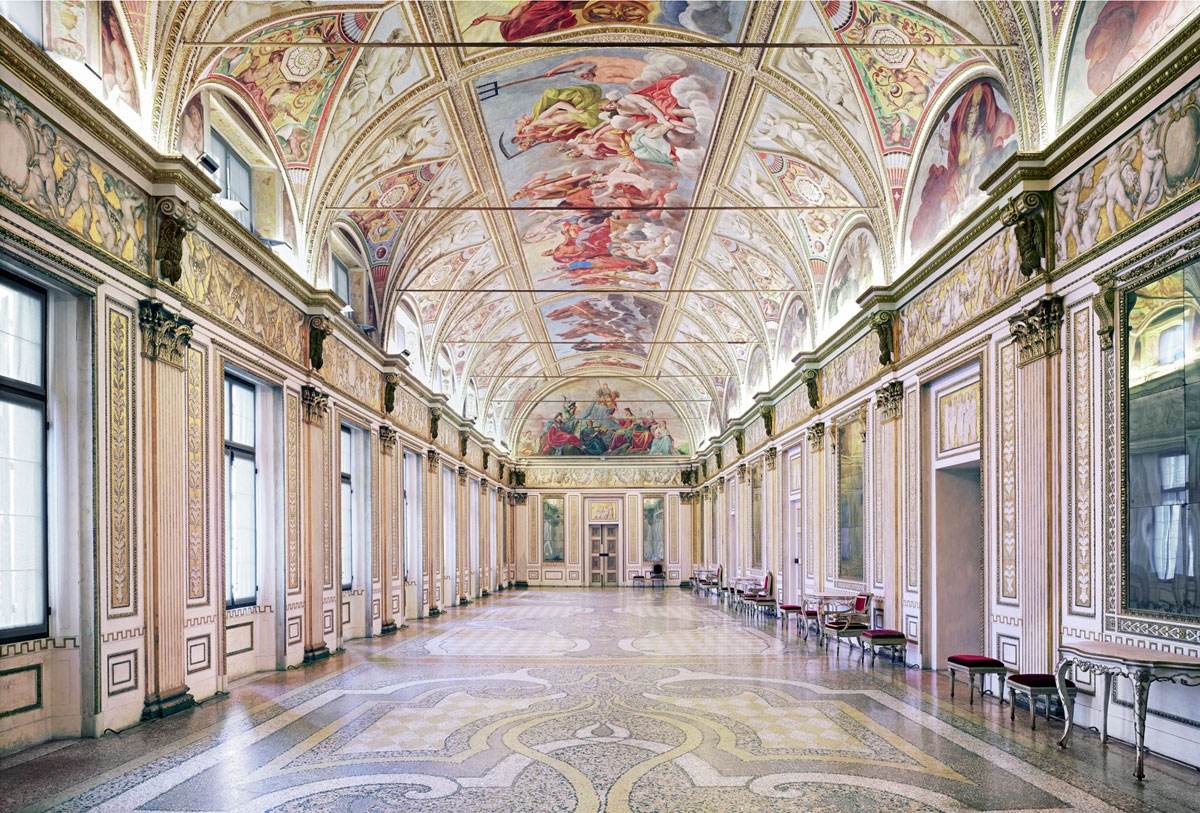
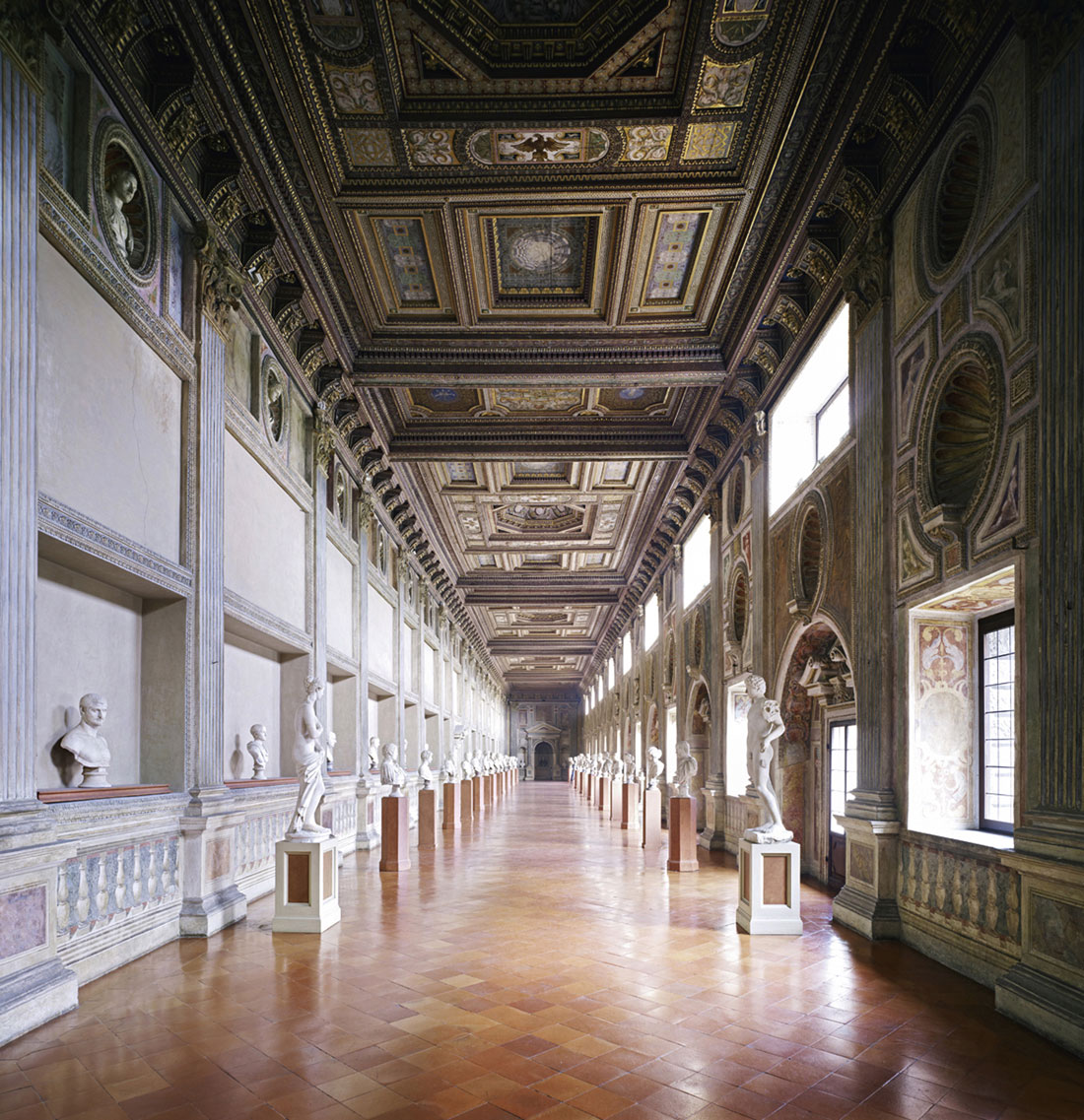
Candida Höfer (German, b. 1944) 'Galleria Degli Antichi Sabbioneta I 2010' 2010


Candida Höfer (German, b. 1944)
Galleria Degli Antichi Sabbioneta I 2010
2010
Light Jet print
Edition of 6
180 x 220.7cm (70 7/8 x 86 7/8 in.)
© 2013 Candida Höfer, VG Bild-Kunst, Bonn
Courtesy of Ben Brown Fine Arts


Ah symmetry, that vague sense of harmonious and beautiful proportion and balance, that patterned self-similarity that, through Hofer’s large format photographs, reflects the vainglorious human edifices of Northern Italy, superbly beautiful in their empty pride. Customarily devoid of human presence, Hofer’s photographs are technically and aesthetically superb. One has to examine the photographs with respect to their relationship to the passage of time, utilising spatial awareness to try to understand why things exist in specific locations within human culture.

“Both in ancient and modern times, the ability of a large structure to impress or even intimidate its viewers has often been a major part of its purpose, and the use of symmetry is an inescapable aspect of how to accomplish such goals.” (Wikipedia) Symmetries are informative of the world around us, and peer relationships are based on symmetry sending the message “we are all the same.” So Hofer’s symmetrical photographs possess opposing messages: we are all the same but some of us are more important (read powerful) than others.

Hofer’s highly symmetrical rooms are unavoidably also rooms in which anything out of place or potentially threatening can be identified easily and quickly, which has implications for safety, security, and familiarity. In this case it is the absence of human presence. To me this is the critical reading of Hofer’s photographs: they comment on the foibles of the human race, a race nearing the destruction of its only place of habitation, reaching the tipping point on the path to annihilation, yet indulging itself in a continuing race of construction and consumption. There will come a point when these edifices are crumbling and in ruins, as an Ebola-like virus races airborne around the world, destroying 90 percent of the population of the earth within months. The Earth will self balance and all we will be left with will be the memory of an empty symmetry.

Symmetry can be a source of comfort not only as an indicator of biological health, but also of a safe and well-understood living environment. The paradox of Hofer’s environments is that in these colourful, exuberant, profuse environments nothing is alive, the interiors becoming meaningless “noise” in an empty, vacuous world. The human race will have left the building.

Dr Marcus Bunyan


Many thankx to Ben Brown Fine Arts for allowing me to publish the photographs in the posting. Please click on the photographs for a larger version of the image.


Candida Höfer (German, b. 1944) 'Palazzo Ducale Mantova I' 2011


Candida Höfer (German, b. 1944)
Palazzo Ducale Mantova I 2011
2011
Light Jet print
Edition of 6
180 x 246cm (70 7/8 x 96 7/8 in.)
© 2013 Candida Höfer, VG Bild-Kunst, Bonn
Courtesy of Ben Brown Fine Arts


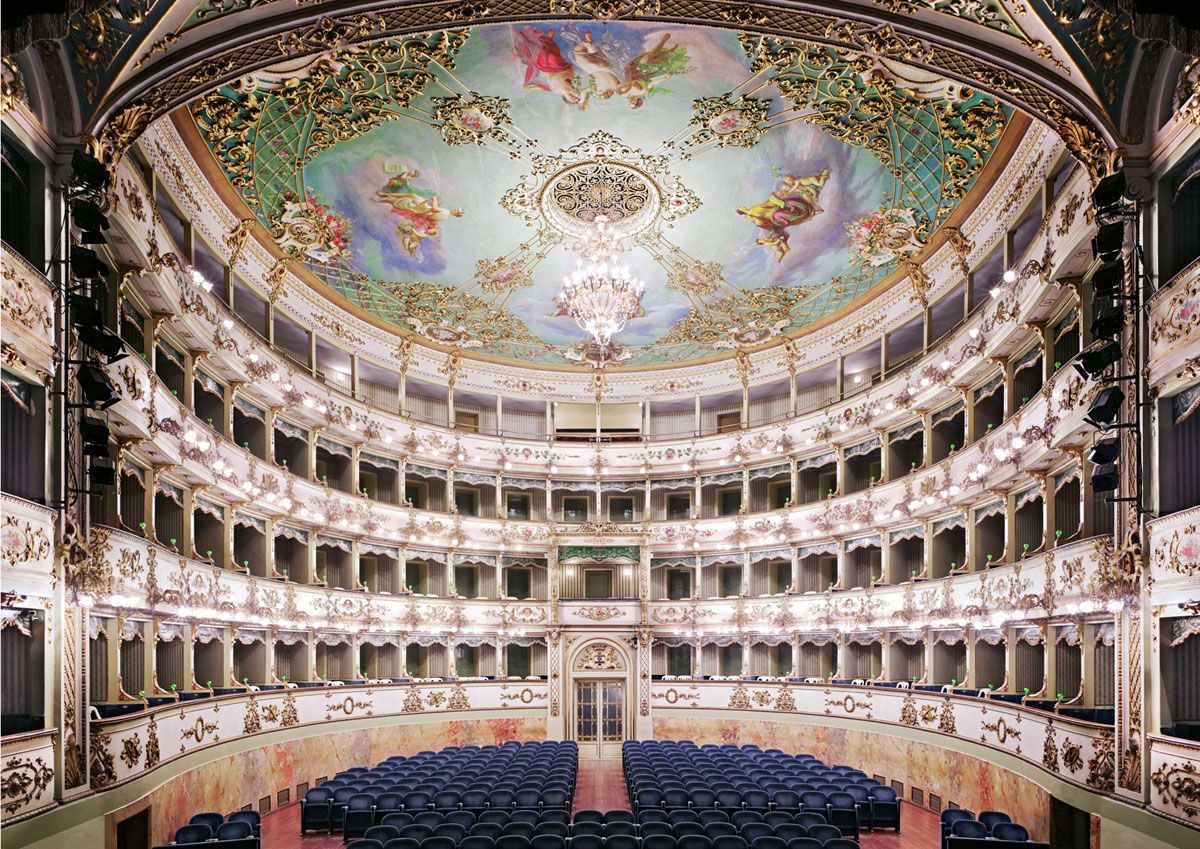
Candida Höfer (German, b. 1944) 'Teatro Comunale di Carpi I' 2011


Candida Höfer (German, b. 1944)
Teatro Comunale di Carpi I 2011
2011
Light Jet print
Edition of 6
180 x 237cm; (70 7/8 x 93 1/4 in.)
© 2013 Candida Höfer, VG Bild-Kunst, Bonn
Courtesy of Ben Brown Fine Arts


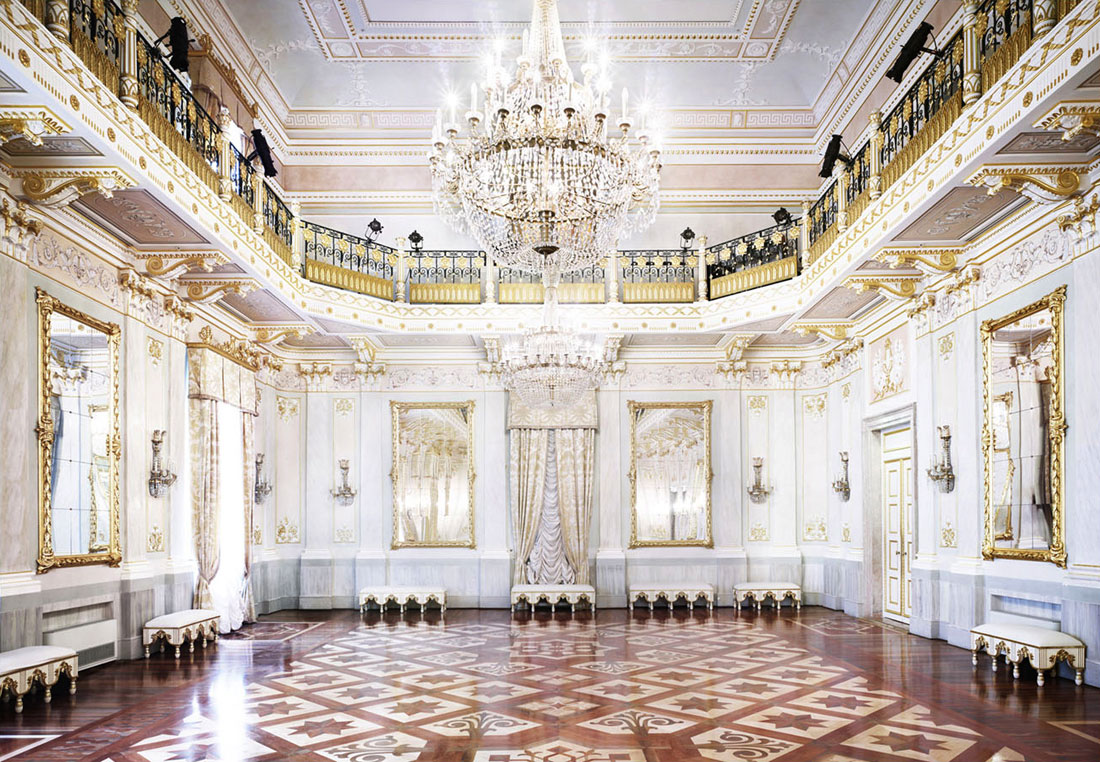
Candida Höfer (German, b. 1944) 'Teatro La Fenice di Venezia III' 2011


Candida Höfer (German, b. 1944)
Teatro La Fenice di Venezia III 2011
2011
Light Jet print
Edition of 6
180 x 242cm (70 7/8 x 95 1/4 in.)
© 2013 Candida Höfer, VG Bild-Kunst, Bonn
Courtesy of Ben Brown Fine Arts


Candida Höfer (German, b. 1944) 'Teatro La Fenice di Venezia V 2011' 2011


Candida Höfer (German, b. 1944)
Teatro La Fenice di Venezia V 2011
2011
Light Jet print
Edition of 6
180 x 235cm (70 7/8 x 92 1/2 in.)
© 2013 Candida Höfer, VG Bild-Kunst, Bonn
Courtesy of Ben Brown Fine Arts


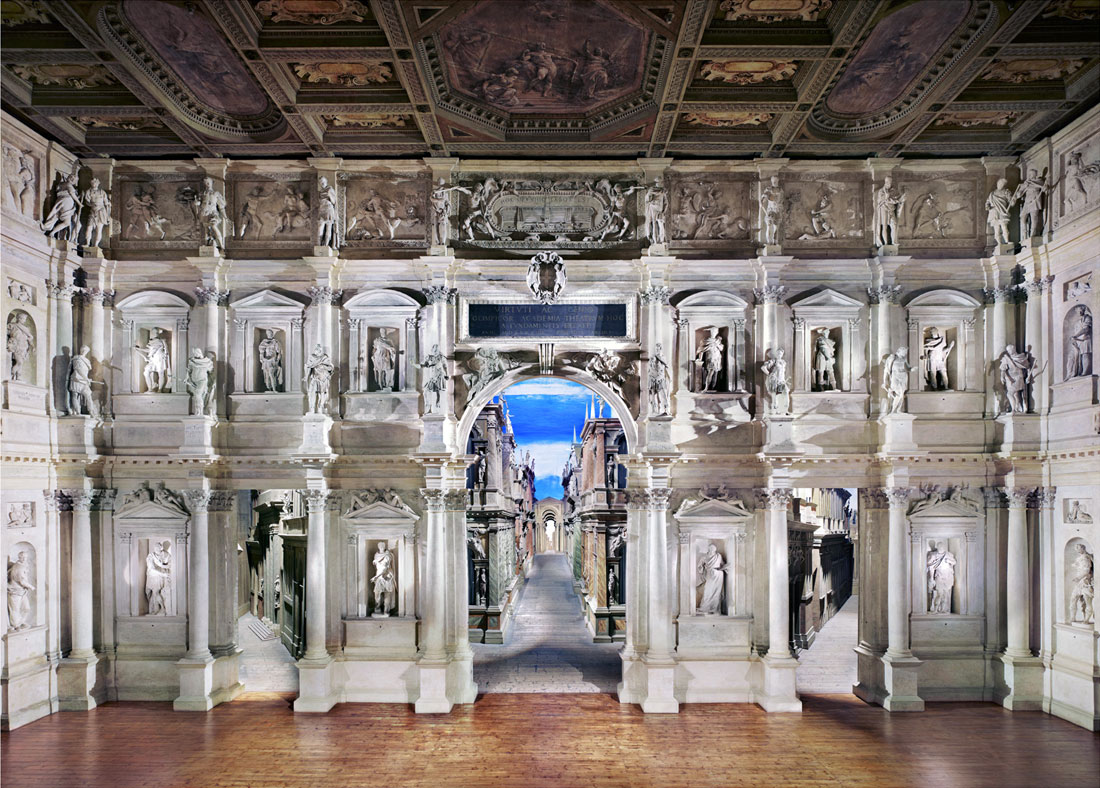
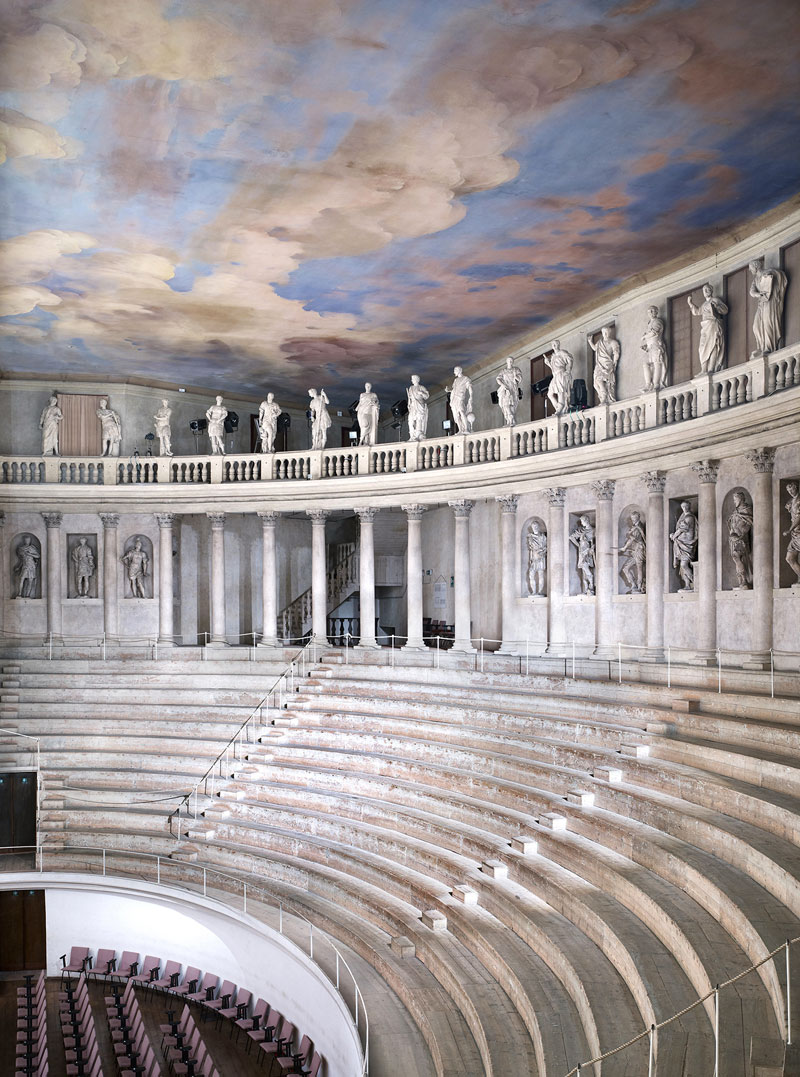
Candida Höfer (German, b. 1944) 'Teatro Olimpico Vicenza II' 2010


Candida Höfer (German, b. 1944)
Teatro Olimpico Vicenza II 2010
2010
Light Jet print
Edition of 6
180 x 235cm (70 7/8 x 92 1/2 in.)
© 2013 Candida Höfer, VG Bild-Kunst, Bonn
Courtesy of Ben Brown Fine Arts


Candida Höfer (German, b. 1944) 'Teatro Scientifico Bibiena Mantova I' 2010


Candida Höfer (German, b. 1944)
Teatro Scientifico Bibiena Mantova I 2010
2010
Light Jet print
Edition of 6
180 x 226cm (70 7/8 x 89 in.)
© 2013 Candida Höfer, VG Bild-Kunst, Bonn
Courtesy of Ben Brown Fine Arts


German photographer Candida Höfer makes a significant return to Ben Brown Fine Arts in London on 12 February with a major solo show, unveiling thirteen new and previously unseen photographs which catalogue the architectural treasures of Northern Italy.

Mantova, Vicenza, Sabbioneta, Venice and Carpi provide the glorious setting for this new series shot over the past two years, a continuation of Höfer’s previous work in Central and Southern Italy. The interiors of palaces, opera houses, libraries and theatres, which Höfer captures with incredible skill, are part of her meticulous documentation of public spaces – places of culture, knowledge, communication and exchange with a rich history and clear functionality. Having rarely visited the Northern region, Höfer was particularly touched by the naturalness and ease with which the local people there accepted this extraordinary architecture as a part of their daily lives.

Höfer’s portraits of interiors, customarily devoid of human presence, emphasise the solemn magnificence of the Palazzo Ducale, Teatro La Fenice and Biblioteca Teresiana, amongst others. By featuring spaces that celebrate mankind’s greatness, yet where people are nowhere to be found, Höfer’s images possess an unexpected poignancy which has become the hallmark of her work. Höfer produces these large-format photographs without digital enhancement or alteration, using long exposure and working solely with the existing light source. The effect is a rare combination of intimacy and scale, in which intricate architectural detail is captured without sacrificing the sense of space and civilised order.

Höfer, a member of the Düsseldorf School (Kunstakademie Düsseldorf), was a noted pupil of the Bechers, who were heavily influenced by the 1920s German art tradition of Neue Sachlichkeit and pioneered a type of detached objectivity. The Bechers’ black and white photographs of industrial landscapes and architecture embodied a clinical, documentary style, which Höfer has retained in her work through the same neutral and methodical process. Yet Höfer’s large-scale colour prints differ in their more sympathetic approach to the building’s culture and history.”

Press release from Ben Brown Fine Arts


Candida Höfer (German, b. 1944) 'Museo Civico Di Palazzo Te Mantova IV' 2010


Candida Höfer (German, b. 1944)
Museo Civico Di Palazzo Te Mantova IV 2010
2010
Light Jet print
Edition of 6
180 x 187cm; (70 7/8 x 73 5/8 in.)
© 2013 Candida Höfer, VG Bild-Kunst, Bonn
Courtesy of Ben Brown Fine Arts


Candida Höfer (German, b. 1944) 'Teatro Olimpico Vicenza III' 2010


Candida Höfer (German, b. 1944)
Teatro Olimpico Vicenza III 2010
2010
Light Jet print
Edition of 6
180 x 144cm (70 7/8 x 56 3/4 in.)
© 2013 Candida Höfer, VG Bild-Kunst, Bonn
Courtesy of Ben Brown Fine Arts


Candida Höfer (German, b. 1944) 'Biblioteca Teresiana Mantova I' 2010


Candida Höfer (German, b. 1944)
Biblioteca Teresiana Mantova I 2010
2010
Light Jet print
Edition of 6
180 x 163cm (70 7/8 x 64 1/8 in.)
© 2013 Candida Höfer, VG Bild-Kunst, Bonn
Courtesy of Ben Brown Fine Arts


Candida Höfer (German, b. 1944) 'Palazzo Ducale Mantova III' 2011


Candida Höfer (German, b. 1944)
Palazzo Ducale Mantova III 2011
2011
Light Jet print
Edition of 6
180 x 169cm; (70 7/8 x 66 1/2 in.)
© 2013 Candida Höfer, VG Bild-Kunst, Bonn
Courtesy of Ben Brown Fine Arts


Candida Höfer (German, b. 1944) 'Palazzo Ducale Mantova V' 2011


Candida Höfer (German, b. 1944)
Palazzo Ducale Mantova V 2011
2011
Light Jet print
Edition of 6
180 x 176cm (70 7/8 x 69 1/4 in.)
© 2013 Candida Höfer, VG Bild-Kunst, Bonn
Courtesy of Ben Brown Fine Arts


Candida Höfer (German, b. 1944) 'Palazzo Ducale Mantova IV' 2011


Candida Höfer (German, b. 1944)
Palazzo Ducale Mantova IV 2011
2011
LightJet print
Edition of 6
180 x 176cm (70 7/8 x 67 3/4 in.)
© 2013 Candida Höfer, VG Bild-Kunst, Bonn
Courtesy of Ben Brown Fine Arts


Ben Brown Fine Arts
12 Brook’s Mews, London W1K 4DG
Phone: +44 (0)20 7734 8888

Opening hours:
Monday to Friday 11am – 6pm
Saturdays 10.30am – 2.30pm

Ben Brown Fine Arts website

LIKE ART BLART ON FACEBOOK

Back to top

Exhibition: ‘Juergen Teller: Woo!’ at the Institute of Contemporary Arts, London

23rd January – 17th March 2013


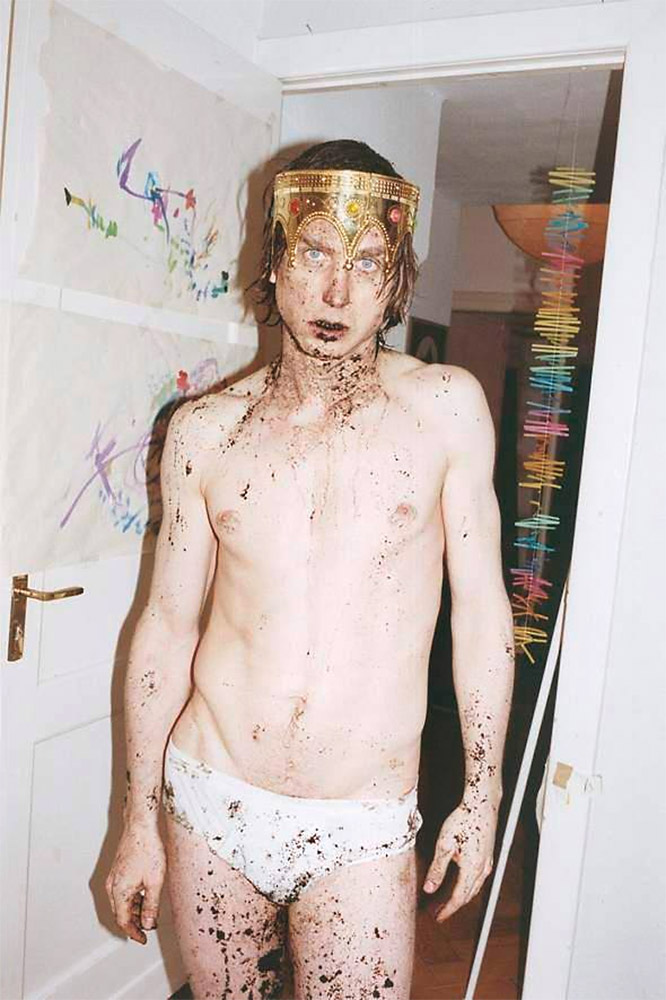
Juergen Teller (German, b. 1964) 'The Keys to the House No.39, Suffolk 2010' 2010


Juergen Teller (German, b. 1964)
The Keys to the House No.39, Suffolk 2010
2010
© Juergen Teller


When the wall text introduction to an exhibition boldly states in the very first sentence, “Juergen Teller is one of the most important photographers of our time,” you know you’re in trouble. I think the word that springs to mind when I look at these photographs is vapid.

Blanched, empty photographs that have an inane void at their centre. I really don’t want to look at them any longer.

Dr Marcus Bunyan


Many thankx to the ICA for allowing me to publish the photographs in the posting. Please click on the photographs for a larger version of the image.


Installation photograph of the exhibition 'Juergen Teller: Woo!' at the Institute of Contemporary Arts, London


Installation photograph of the exhibition Juergen Teller: Woo! at the Institute of Contemporary Arts, London


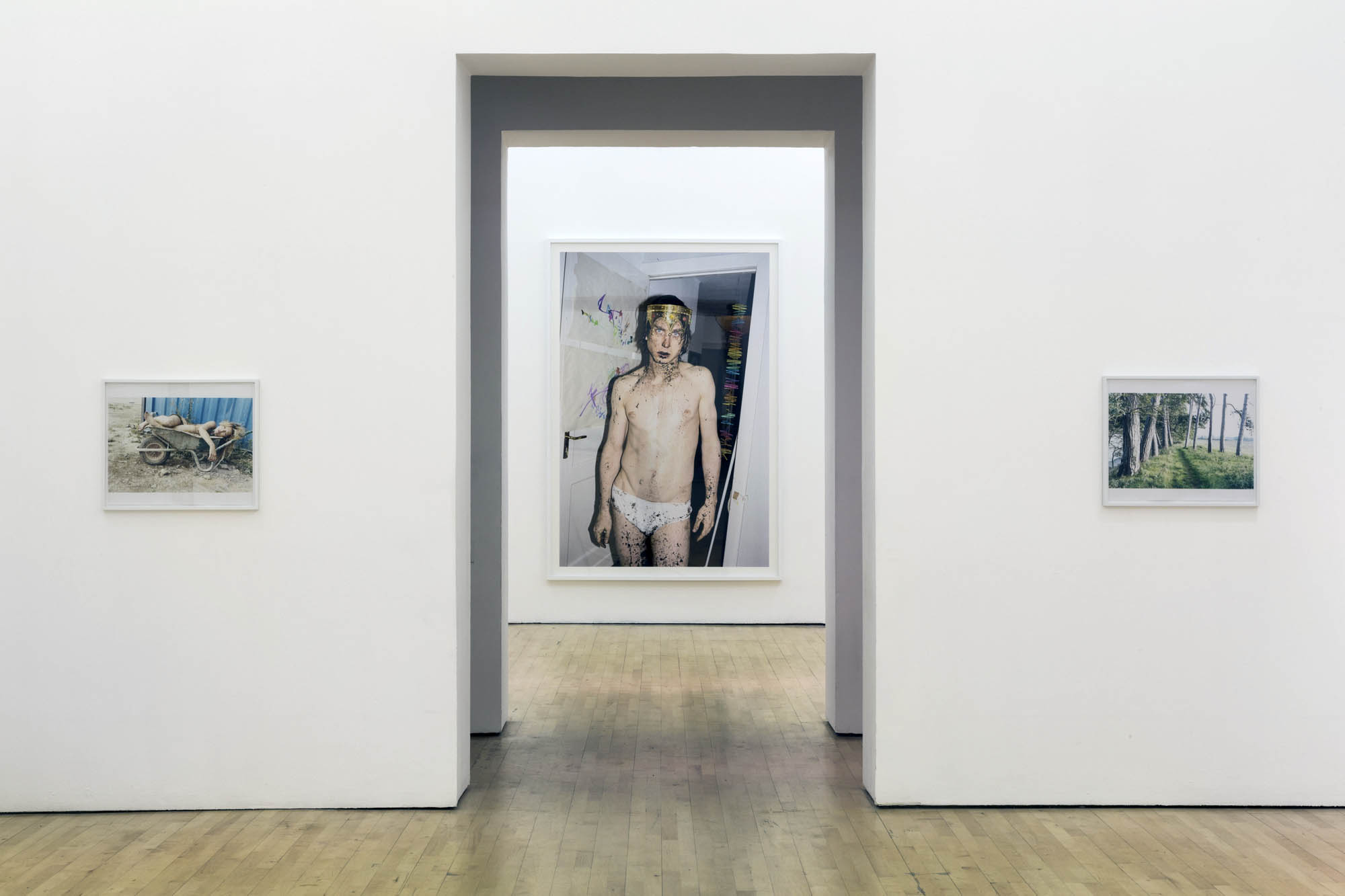
Installation photograph of the exhibition 'Juergen Teller: Woo!' at the Institute of Contemporary Arts, London showing at left, Teller's 'Kate Moss, No.12, Gloucestershire, 2010' (2010); and at centre rear, 'Lars Eidinger, Berlin 2010' (2010)


Installation photograph of the exhibition Juergen Teller: Woo! at the Institute of Contemporary Arts, London showing at left, Teller’s Kate Moss, No.12, Gloucestershire, 2010 (2010, below); and at centre rear, Lars Eidinger, Berlin 2010 (2010, below)


Juergen Teller (German, b. 1964) 'Kate Moss, No.12, Gloucestershire, 2010' 2010


Juergen Teller (German, b. 1964)
Kate Moss, No.12, Gloucestershire, 2010
2010
© Juergen Teller


Juergen Teller (German, b. 1964) 'Lars Eidinger, Berlin 2010' 2010


Juergen Teller (German, b. 1964)
Lars Eidinger, Berlin 2010
2010
© Juergen Teller


Juergen Teller (German, b. 1964) 'Smiling Ed, London 2005' 2005


Juergen Teller (German, b. 1964)
Smiling Ed, London 2005
2005
© Juergen Teller


Juergen Teller (German, b. 1964) 'Teenager, Suffolk 2010' 2010


Juergen Teller (German, b. 1964)
Teenager, Suffolk 2010
2010
© Juergen Teller


Juergen Teller (German, b. 1964) 'Sigmund Freud's Couch (Malgosia), London, 2006' 2006


Juergen Teller (German, b. 1964)
Sigmund Freud’s Couch (Malgosia), London, 2006
2006
© Juergen Teller


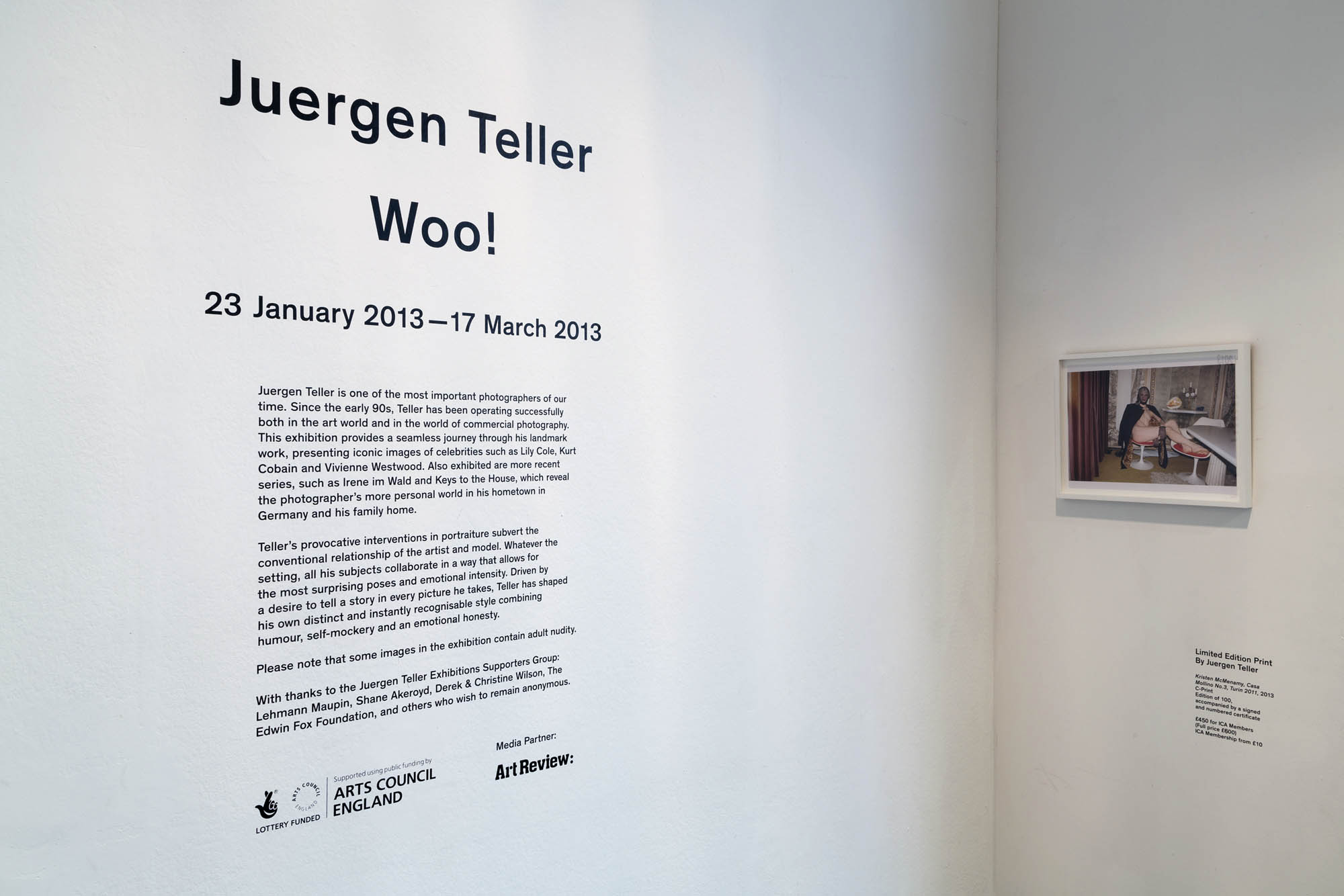
The ICA is delighted to present a major solo exhibition of photography by Juergen Teller from 23 January to 17 March 2013. The exhibition marks the first survey presentation of Teller’s work in the UK in a decade and will include new and recent work.

Considered one of the most important photographers of his generation, Teller is one of a few artists who has been able to operate successfully both in the art world and at the centre of the commercial sphere. This exhibition will provide a seamless journey through his landmark fashion and commercial photography from the 90s, presenting classic images of celebrities such as Lily Cole, Kate Moss and Vivienne Westwood, as well as more recent landscapes and family portraits.

Teller entered the London photography scene through the music industry taking photographs for record covers. Photographing amongst others Björk, Cocteau Twins, PJ Harvey and Courtney Love, it was Teller’s photograph of Sinéaad O’Connor for her single Nothing Compares 2 You that marked an important moment in his career. In 1991 he photographed Nirvana back stage when they toured Germany. Teller’s photographs first appeared in fashion magazines in the late 80s, and included portraits of Kate Moss when she was just fifteen years old. It was also in the early 1990s that Teller shot behind the scenes at Helmut Lang’s fashion shows capturing the models, clothes and atmosphere with a deceptively casual aesthetic. Teller’s images could be described as the antithesis of conventional fashion photography seen perhaps most markedly in his campaigns for Marc Jacobs.

Picture and Words introduces a series from a weekly column in the magazine of Die Zeit. For over a year the photographer presented a new image each week with an accompanying text. Like his images the texts are often controversial and provoked outcry amongst readers. The exhibition will feature many of the letters that the magazine received and some of which Teller included in his book. Irene im Wald and Keys to the House are Teller’s most recent bodies of work. These series reveal the photographer’s more personal world in his hometown in Germany and family home in Suffolk.

Teller’s provocative interventions in conventional celebrity portraiture are apparent in works such as a photograph of Victoria Beckham for a Marc Jacobs ad in which we only see her bare, high-heeled legs flopping over the side of a shopping bag. Vivienne Westwood reclines nude on a floral settee in a startling triptych whilst Björk and her son swim in the Blue Lagoon in an intimate portrait. Subverting the conventional relationship of the artist and model, Teller himself often figures as the naked muse in his photographs, seen for example in the Louis XV series with Charlotte Rampling. Whatever the setting, all his subjects collaborate in a way that allows for the most surprising poses and emotional intensity. Driven by a desire to tell a story in every picture he takes, Teller has shaped his own distinct and instantly recognisable style which combines humour, self-mockery and an emotional honesty.

“Whether Juergen Teller’s photography is art, or whether he is an artist or photographer, or both, or none of the above, or anything cconected with such thoughts, can only lead us astray. Teller’s work is about great images.” Gregor Muir, Executive Director ICA.

Press release from the ICA


Installation photograph of the exhibition 'Juergen Teller: Woo!' at the Institute of Contemporary Arts, London


Installation photograph of the exhibition Juergen Teller: Woo! at the Institute of Contemporary Arts, London


Juergen Teller (German, b. 1964) 'Pettitoe, Suffolk, 2011' 2011


Juergen Teller (German, b. 1964)
Pettitoe, Suffolk, 2011
2011
© Juergen Teller


Juergen Teller (German, b. 1964) 'Vater und Sohn, Bubenreuth 2005' 2005


Juergen Teller (German, b. 1964)
Vater und Sohn, Bubenreuth 2005
2005
© Juergen Teller


Installation photograph of the exhibition 'Juergen Teller: Woo!' at the Institute of Contemporary Arts, London showing at top right, Teller's 'No.12 of the series 'Irene im Wald', 2012' (2012)


Installation photograph of the exhibition Juergen Teller: Woo! at the Institute of Contemporary Arts, London showing at top right, Teller’s No.12 of the series ‘Irene im Wald’, 2012 (2012, below)


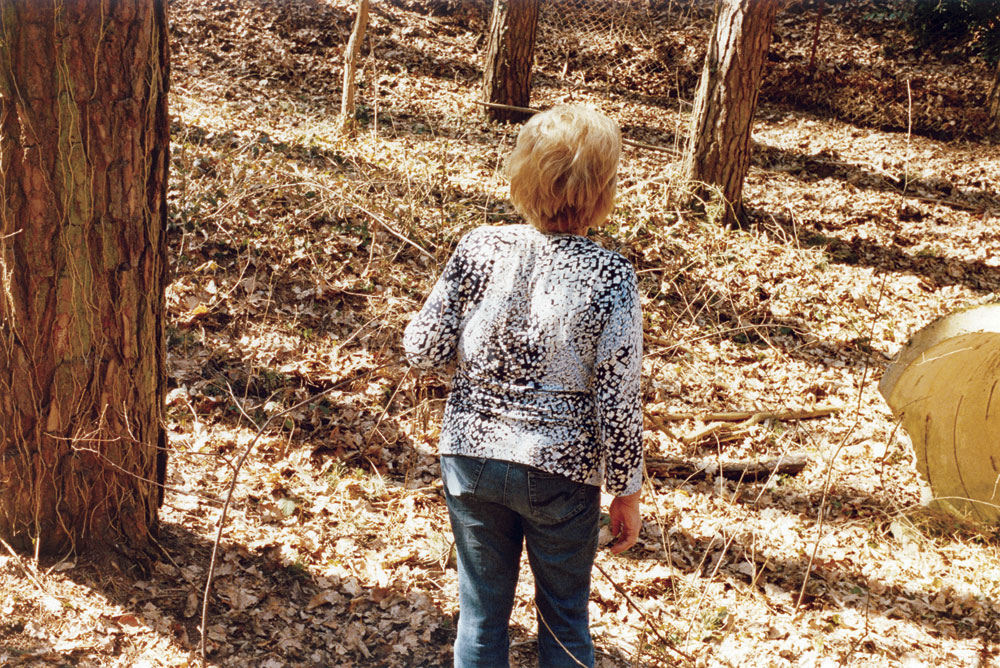
Juergen Teller (German, b. 1964) 'No.12 of the series 'Irene im Wald', 2012' 2012


Juergen Teller (German, b. 1964)
No.12 of the series ‘Irene im Wald’, 2012
2012
© Juergen Teller


Juergen Teller (German, b. 1964) 'No.37 of the series 'Irene im Wald', 2012' 2012


Juergen Teller (German, b. 1964)
No.37 of the series ‘Irene im Wald’, 2012
2012
© Juergen Teller


Juergen Teller (German, b. 1964) 'The Keys to the House No.39, Suffolk 2010' 2010


Juergen Teller (German, b. 1964)
The Keys to the House No.39, Suffolk 2010
2010
© Juergen Teller


Juergen Teller (German, b. 1964) 'Cerith, Suffolk 2011 (The Keys to the House No.28, Suffolk 2011)' 2011


Juergen Teller (German, b. 1964)
Cerith, Suffolk 2011 (The Keys to the House No.28, Suffolk 2011)
2011
© Juergen Teller


Juergen Teller on Woo! at the ICA

Juergen Teller talks us through his current exhibition.


Institute of Contemporary Arts (ICA)
The Mall, SW1Y 5AH
London, United Kingdom
Phone: +44 20 7930 3647

Opening hours:
Tuesday – Sunday 12 – 9pm
Closed Mondays
ICA website

LIKE ART BLART ON FACEBOOK

Back to top

Exhibition: ‘WAR/PHOTOGRAPHY: Images of Armed Conflict and Its Aftermath’ at the Museum of Fine Arts, Houston – Posting Part 4

Exhibition dates: 11th November 2012 – 3rd February 2013


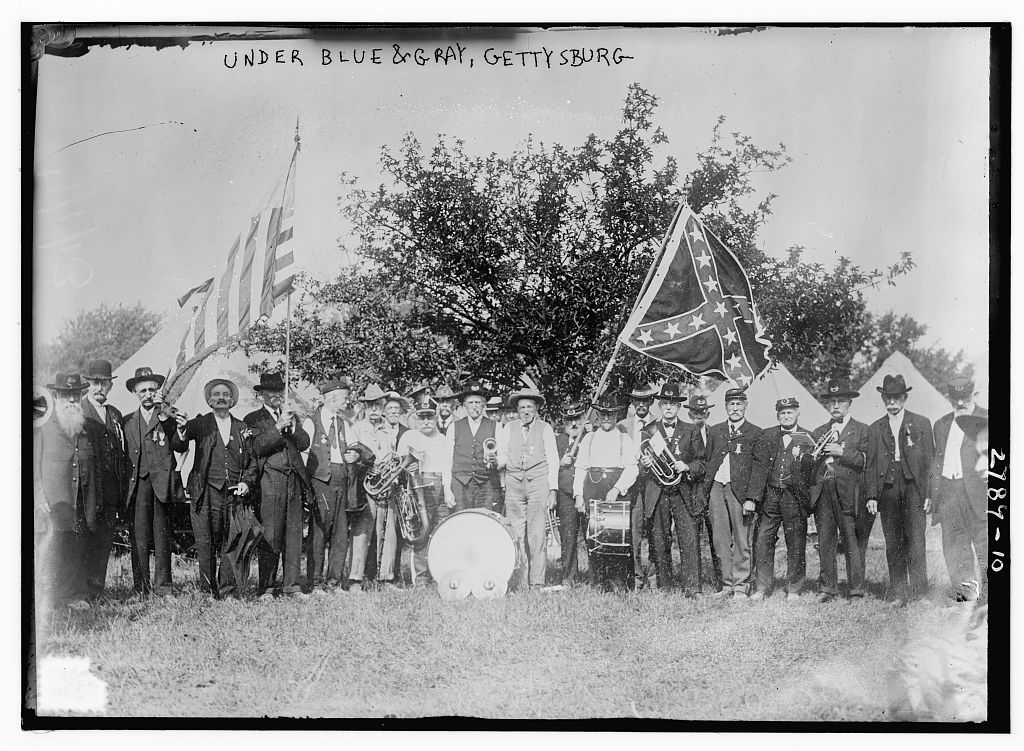
Anonymous photographer. 'Under blue & gray – Gettysburg' July 1913


Anonymous photographer
Under blue & gray – Gettysburg
July 1913
Photo shows the Gettysburg Reunion (the Great Reunion) of July 1913, which commemorated the 50th anniversary of the Battle of Gettysburg
Library of Congress Prints and Photographs Division Washington, D.C.


Part 4 of the biggest posting on one exhibition that I have ever undertaken on Art Blart!

As befits the gravity of the subject matter this posting is so humongous that I have had to split it into 4 separate postings. This is how to research and stage a contemporary photography exhibition that fully explores its theme. The curators reviewed more than one million photographs in 17 countries, locating pictures in archives, military libraries, museums, private collections, historical societies and news agencies; in the personal files of photographers and service personnel; and at two annual photojournalism festivals producing an exhibition that features 26 sections (an inspired and thoughtful selection) that includes nearly 500 objects that illuminate all aspects of WAR / PHOTOGRAPHY.

I have spent hours researching and finding photographs on the Internet to support the posting. It has been a great learning experience and my admiration for photographers of all types has increased. I have discovered the photographs and stories of new image makers that I did not know and some enlightenment along the way. I despise war, I detest the state and the military that propagate it and I surely hate the power, the money and the ethics of big business that support such a disciplinarian structure for their own ends. I hope you meditate on the images in this monster posting, an exhibition on a subject matter that should be consigned to the history books of human evolution.

**Please be aware that there are graphic photographs in all of these postings.** Part 1Part 2Part 3

Dr Marcus Bunyan


Many thankx to the Museum of Fine Arts, Houston for allowing me to publish some of the photographs in the posting. Please click on the photographs for a larger version of the image.


Memorials

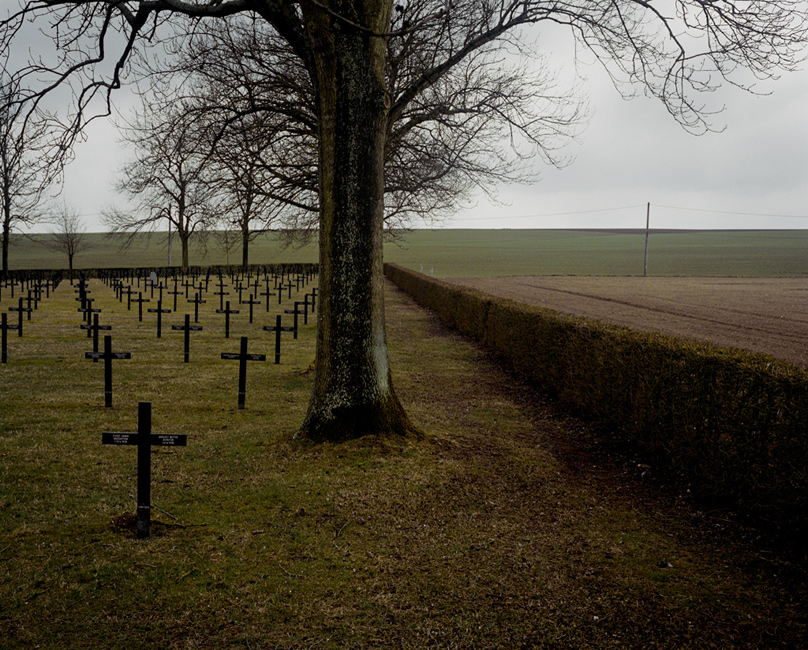
25. Photographs in the “Memorials” section range from the tomb of an unknown World War I soldier in England, by Horace Nicholls; and a landscape of black German crosses throughout a World War II burial site, by Bertrand Carrière; to an anonymous photograph of a reunion scene in Gettysburg of the opposing sides in the Civil War; and Joel Sternfeld’s picture of a woman and her daughter at the Vietnam Veterans Memorial in Washington, DC, in 1986. (8 images)


Horace Nicholls (English, 1867-1941) 'The Unknown Warrior at Westminster Abbey, London, November 1920' 1920


Horace Nicholls (English, 1867-1941)
The Unknown Warrior at Westminster Abbey, London, November 1920
1920
Silver gelatin print
© IWM (Q 31514)


In order to commemorate the many soldiers with no known grave, it was decided to bury an ‘Unknown Warrior’ with all due ceremony in Westminster Abbey on Armistice Day in 1920. The photograph shows the coffin resting on a cloth in the nave of Westminster Abbey before the ceremony at the Cenotaph and its final burial.


Bertrand Carrière (Canadian, b. 1957) 'Untitled' 2005-2009


Bertrand Carrière (Canadian, b. 1957)
Untitled
2005-2009
From the series Lieux Mêmes [Same Places]


Joel Sternfeld (American, b. 1944) 'Vietnam Veterans Memorial, Washington, D.C.,' May 1986


Joel Sternfeld (American, b. 1944)
Vietnam Veterans Memorial, Washington, D.C.,
May 1986
Chromogenic print, ed. #1/25 (printed October 1986)
The Museum of Fine Arts, Houston, the Target Collection of American Photography, gift of the artist
© 1986 Joel Sternfeld


Remembrance

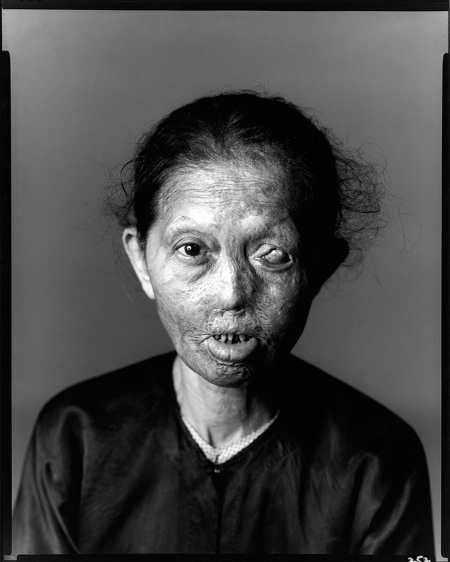
26. The last gallery in the exhibition is “Remembrance.” Most of these images were taken by artists seeking to come to terms with a conflict after fighting had ceased. Included are Richard Avedon’s picture of a Vietnamese napalm victim; a survivor of a machete attack in a Rwandan death camp, by James Nachtwey; a 1986 portrait of a hero who rescued Jews during the Holocaust, by Houston native Gay Block; and Suzanne Opton’s 2004 portrait of a soldier who survived the Iraq War and returned to the United States to work as a police officer, only to be murdered on duty by a fellow veteran. The final wall features photographs by Simon Norfolk of sunrises at the five D-Day beaches in 2004. The only reference to war is the title of the series: The Normandy Beaches: We Are Making a New World(33 images)


Richard Avedon (American, 1923-2004) 'Napalm Victim #1, Saigon, South Vietnam, April 29, 1971' 1971


Richard Avedon (American, 1923-2004)
Napalm Victim #1, Saigon, South Vietnam, April 29, 1971
1971
Silver gelatin print
© Richard Avedon


Gay Block (American, b.1942) 'Zofia Baniecka, Poland' 1986


Gay Block (American, b. 1942)
Zofia Baniecka, Poland
1986
From the series Rescuers: Portraits of Moral Courage in the Holocaust, a record of non-Jewish citizens from European countries who risked their lives helping to hide Jews from the Nazis
Chromogenic print, printed 1994
Courtesy of Museum of Fine Arts, Houston, gift of Clinton T. Wilour in honour of Eve France


Zofia Baniecka (born 1917 in Warsaw – 1993) was a Polish member of the Resistance during World War II. In addition to relaying guns and other materials to resistance fighters, Baniecka and her mother rescued over 50 Jews in their home between 1941 and 1944.


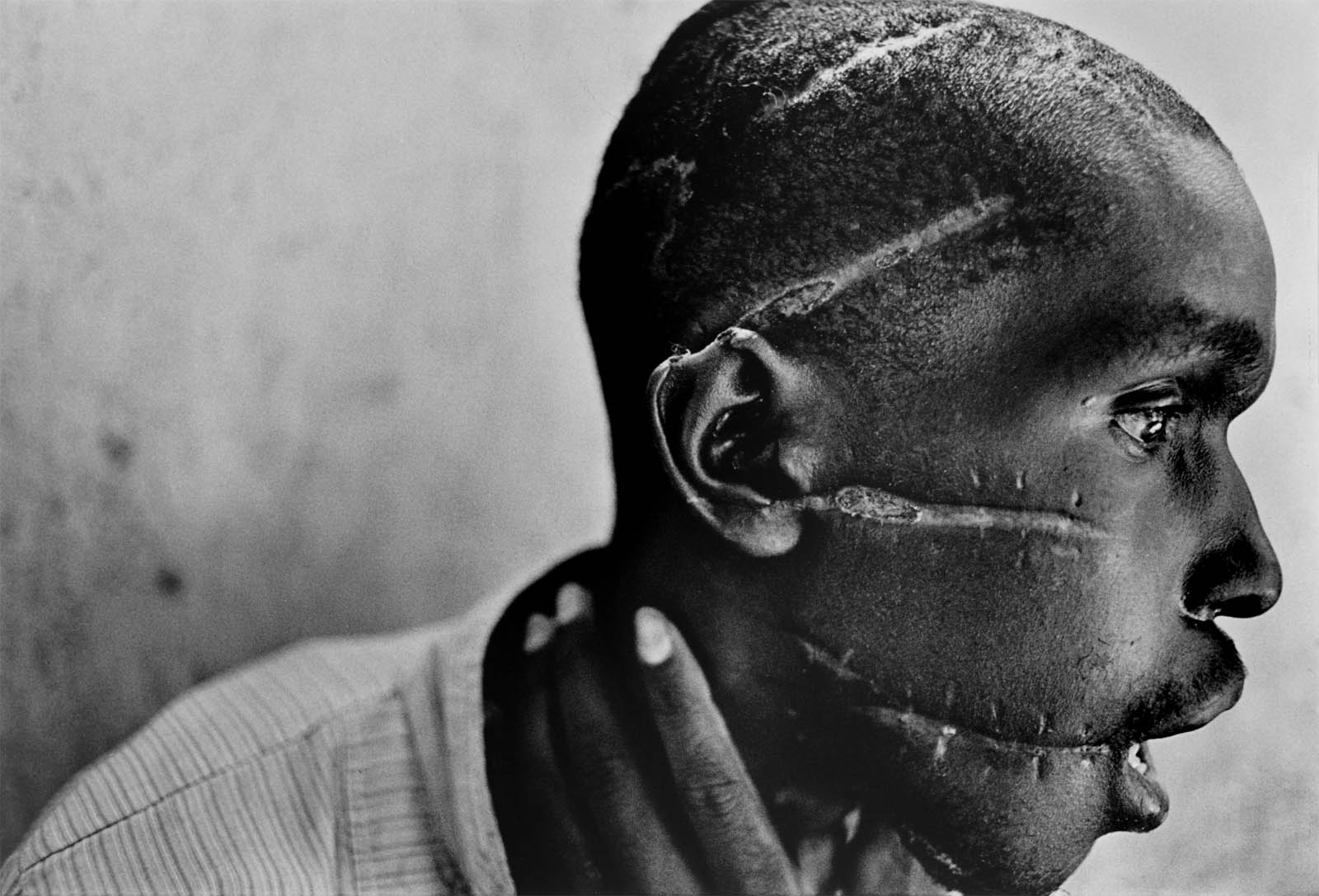
James Nachtwey (American, b. 1948) 'A Hutu man who did not support the genocide had been imprisoned in the concentration camp, was starved and attacked with machetes. He managed to survive after he was freed and was placed in the care of the Red Cross, Rwanda, 1994' 1994


James Nachtwey (American, b. 1948)
A Hutu man who did not support the genocide had been imprisoned in the concentration camp, was starved and attacked with machetes. He managed to survive after he was freed and was placed in the care of the Red Cross, Rwanda, 1994
1994
Silver gelatin print
© James Nachtwey / TIME

World Press Photo of the Year, prize singles


A Hutu man at a Red Cross hospital in Nyanza, Rwanda. His face was mutilated by the Hutu ‘Interahamwe’ militia, who suspected him of sympathising with the Tutsi rebels.

Liberated from a nearby Hutu camp, where mainly Tutsis were incarcerated, starved, beaten, and killed, this man did not support the genocide and was thus subjected to the same treatment. Starved and attacked with machetes, he had managed to survive, though he was unable to speak and could barely walk or swallow when this photo was made.

Jibran Abbasi. “Mutilated By The Hutu ‘Interahamwe’ by James Nachtwey,” on the Business Recorder website April 5, 2017 [Online] Cited 27/07/2024


Simon Norfolk (British, b. Nigeria, 1963) 'Sword Beach' 2004


Simon Norfolk (British born Nigeria, b. 1963)
Sword Beach
2004
From the series The Normandy Beaches: We Are Making a New World
Chromogenic print, ed. #1/10 (printed 2006)
The Museum of Fine Arts, Houston
Gift of Bari and David Fishel, Brooke and Dan Feather and Hayley Herzstein in honor of Max Herzstein and a partial gift of the artist and Gallery Luisotti, Santa Monica
© Simon Norfolk / Gallery Luisotti


WAR/PHOTOGRAPHY Extended Info


Other photographs from the exhibition


Alexander Gardner (1821-1882) 'Scouts and Guides to the Army of the Potomac, Berlin, MD, October, 1862' October 1862 (detail)


Alexander Gardner (American, 1821-1882)
Scouts and Guides to the Army of the Potomac, Berlin, MD, October, 1862
October 1862
Albumen silver print
Photograph by Alexander Gardner, from “Incidents of the War. Guide to the Army of the Potomac,” from Gardner’s Photographic Sketch Book of the War, Washington
Records of the War Department General and Special Staffs, Record Group 165, National Archives Still Picture Branch, College Park, Maryland


Alexander Gardner (American, 1821-1882) ‘The Home of a Rebel Sharpshooter, Gettysburg, Pennsylvania’. Albumen paper print


Alexander Gardner (American, 1821-1882)
The Home of a Rebel Sharpshooter / Dead Confederate soldier in the devil’s den, Gettysburg, Pennsylvania
July 1863
Albumen paper print copied from glass, wet collodion negative
Library of Congress, Prints and Photographs Division


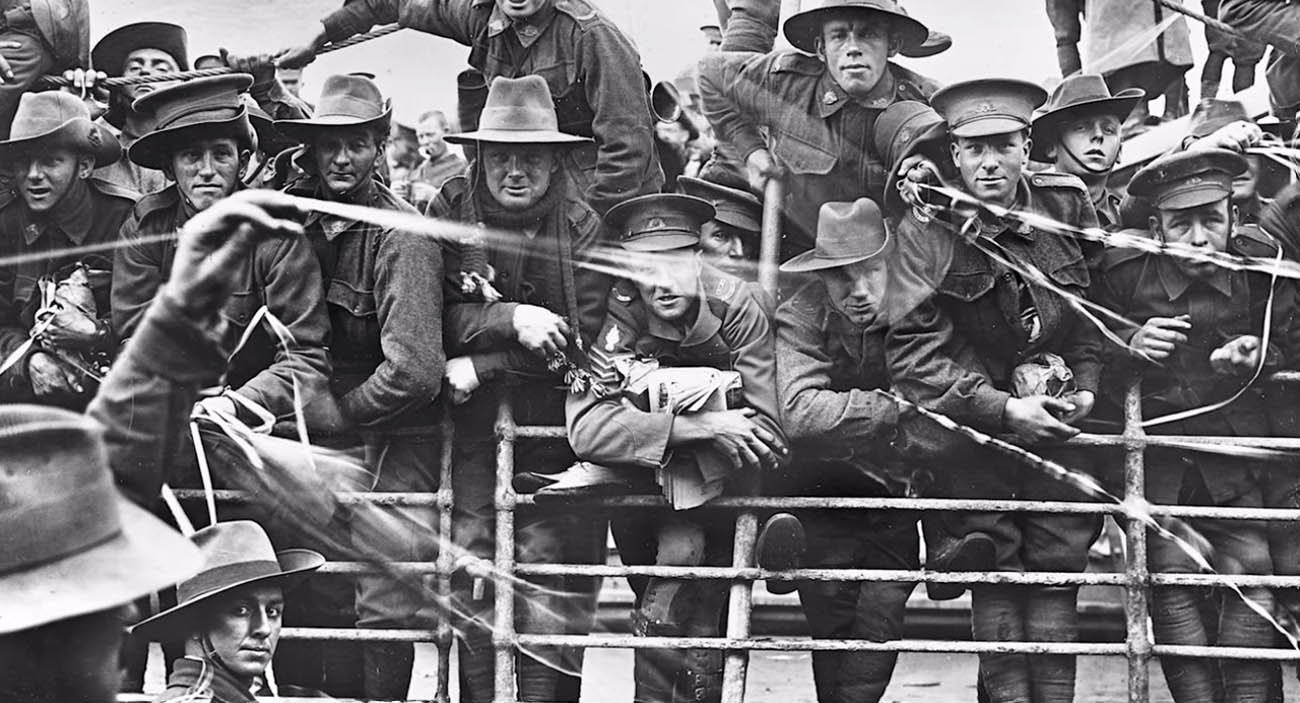
Josiah Barnes (Australian, 1858-1921) 'Embarkation of HMAT Ajana, Melbourne, July 8, 1916' 1916


Josiah Barnes (Australian, 1858-1921)
Embarkation of HMAT Ajana, Melbourne, July 8, 1916
1916
Gelatin silver print from original glass half-plate negative (printed 2012)
On loan from the Australian War Memorial


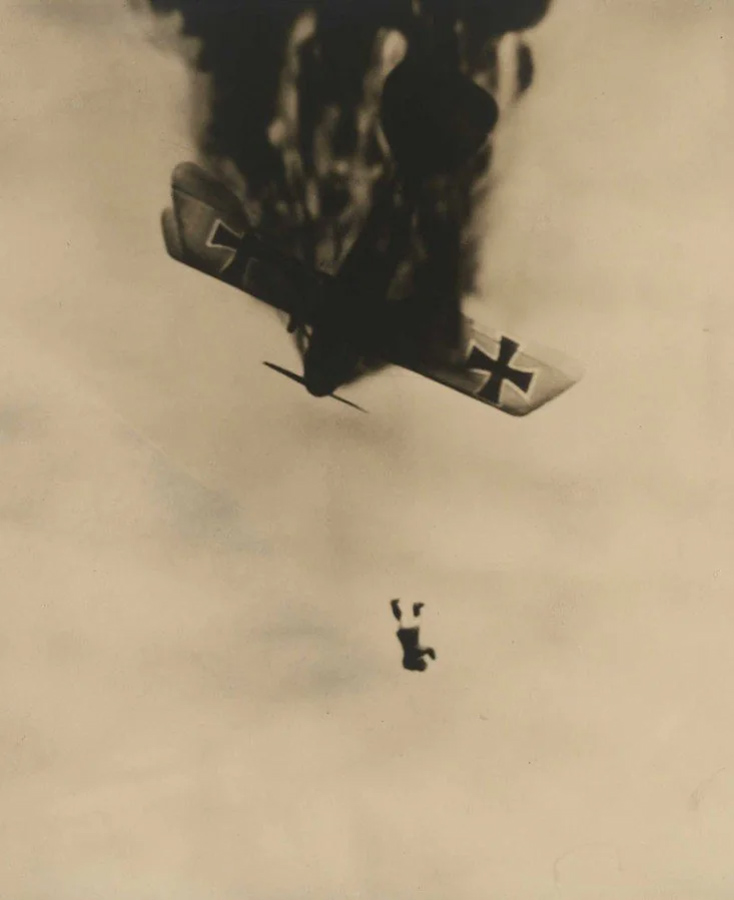
Wesley D. Archer (American, d. 1952) 'Just as he left the burning plane' 1933


Wesley D. Archer (American, d. 1952)
Just as he left the burning plane
1933
From the publication Death in the Air: The War Diary and Photographs of a Flying Corps Pilot


The typewritten script of a First World War pilot’s diary with a large number of photographs was submitted to the publishers William Heinemann and published by them in 1933. Heinemann stated on the book’s jacket that the diary contained no names, dates, or anything that could reveal the identity of the writer or the squadron in which he served. The publishers understood that the diarist was killed in action in 1918 and that it was in deference to the wishes of those who were close to him that his diary should be published.

So remarkable were the photographs that their veracity was immediately questioned, but no proof of their authenticity or otherwise could be ascertained. It was not until 1983 that a collection of documents, photographs and artifacts was presented to the Smithsonian’s National Air and Space Museum. Some of the photographs were recognized as being those of the mystery diarist and the truth was soon revealed.

The author was Wesley Archer, an American with Canadian parents who served with the RFC in the First World War, and the photographs and diary had been faked.

Text from the Google Books website

For more information on the faked photographs see the article “How dramatic images of WWI dogfights in the skies of Europe were FAKED by a conman who was just looking to make some money”.


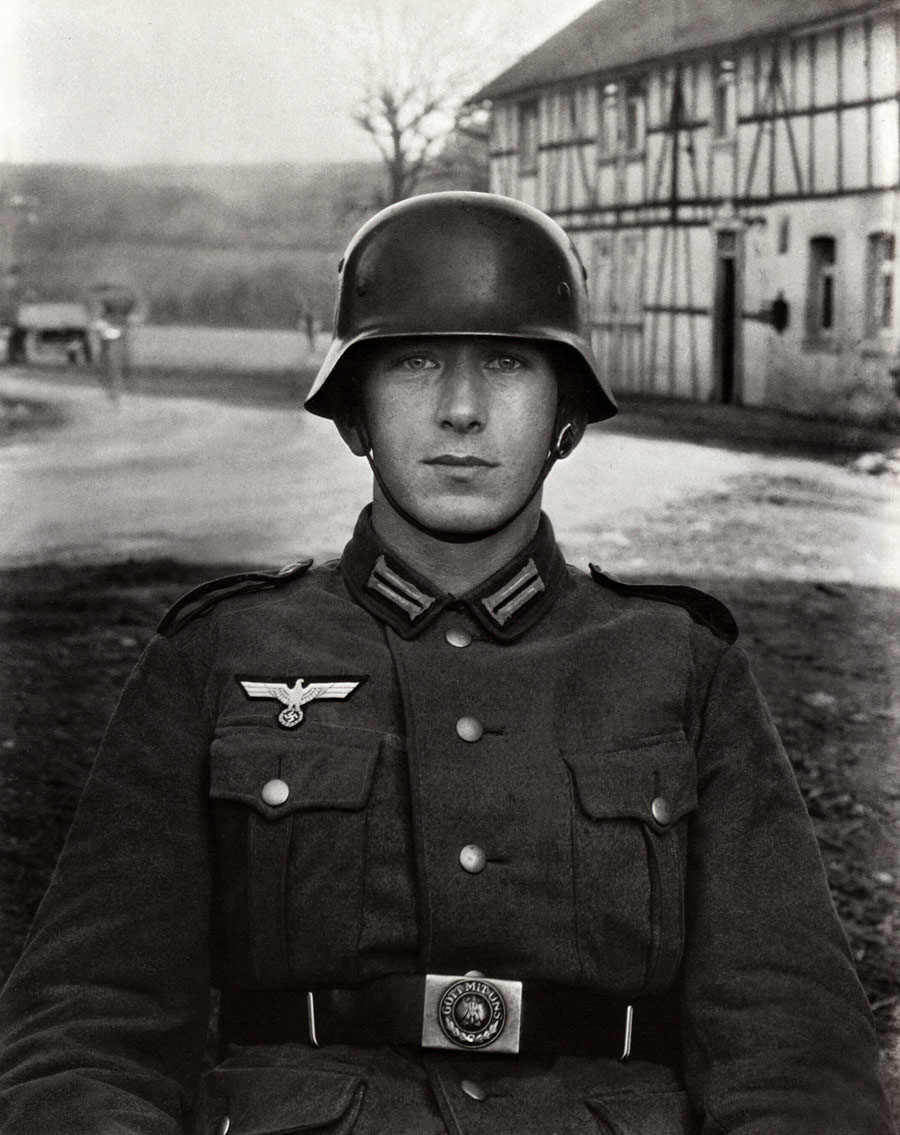
August Sander (German, 1876-1964) 'Soldier' c. 1940


August Sander (German, 1876-1964)
Soldier
c. 1940
Gelatin silver print, printed by Gunther Sander, 1960s
The Museum of Fine Arts, Houston
Gift of John S. and Nancy Nolan Parsley in honour of the 65th birthday of Anne Wilkes Tucker
© Die Photographische Sammlung/SK StiftungKultur – August Sander Archiv, Cologne; DACS, London 2012


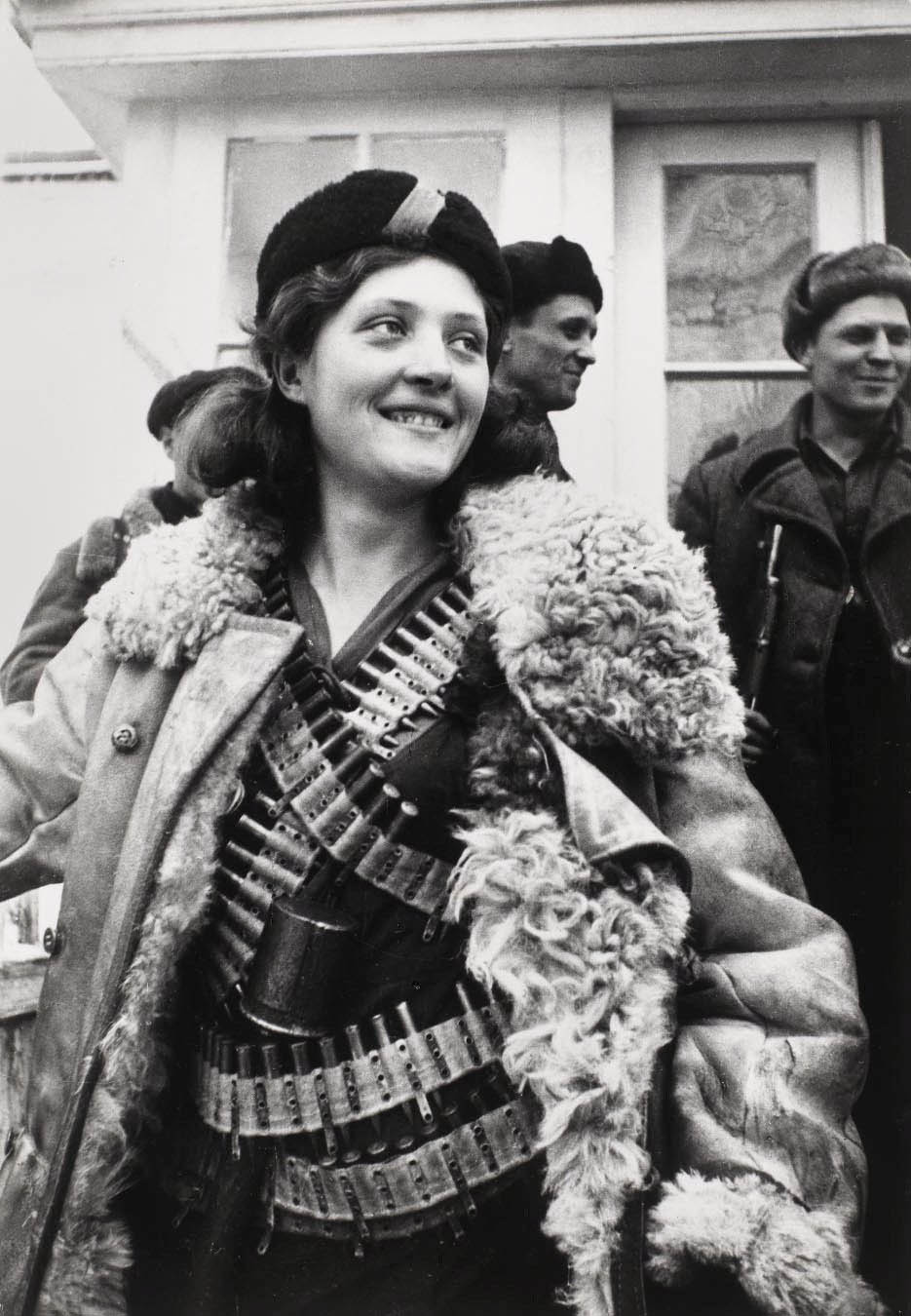
Arkady Shaikhet (Soviet, 1898-1959) 'Partisan Girl' 1942


Arkady Shaikhet (Soviet, 1898-1959)
Partisan Girl
1942
Gelatin silver print
Gift of Marion Mundy
© Arkady Shaikhet Estate, Moscow


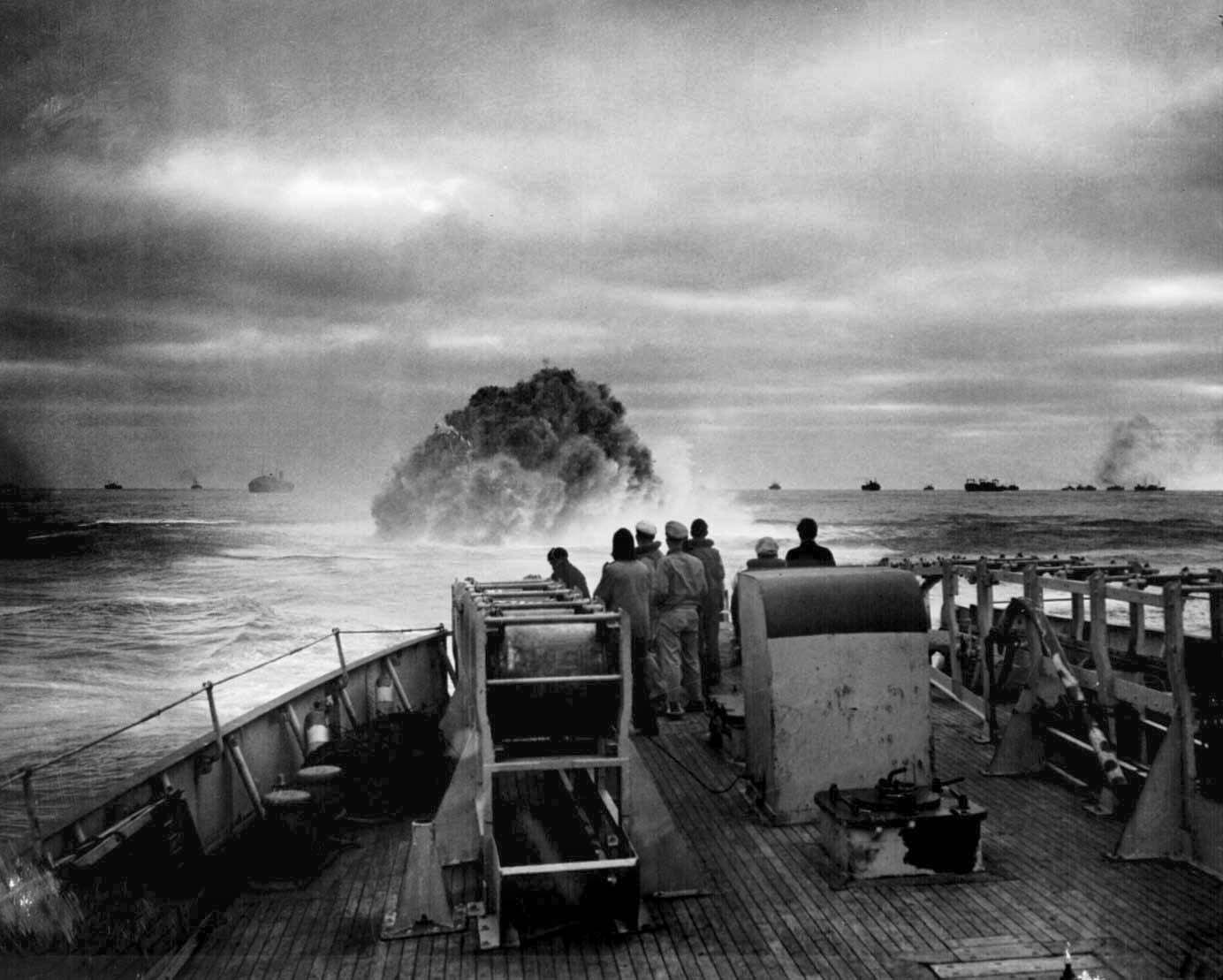
Anonymous photographer / U.S. Department of Defense. 'US Coast Guard crew of cutter Spencer watched as a depth charge exploded near U-175, North Atlantic, 500nm WSW of Ireland, 17 Apr 1943'


Anonymous photographer
U.S. Department of Defense
US Coast Guard crew of cutter Spencer watched as a depth charge exploded near U-175, North Atlantic, 500nm WSW of Ireland, 17 Apr 1943
17 April 1943
Public domain


W. Eugene Smith (American, 1918-1978) 'Wounded, dying infant found by American soldier in Saipan Mountains' June 1944


W. Eugene Smith (American, 1918-1978)
Wounded, dying infant found by American soldier in Saipan Mountains
June 1944
Gelatin silver print
© W. Eugene Smith


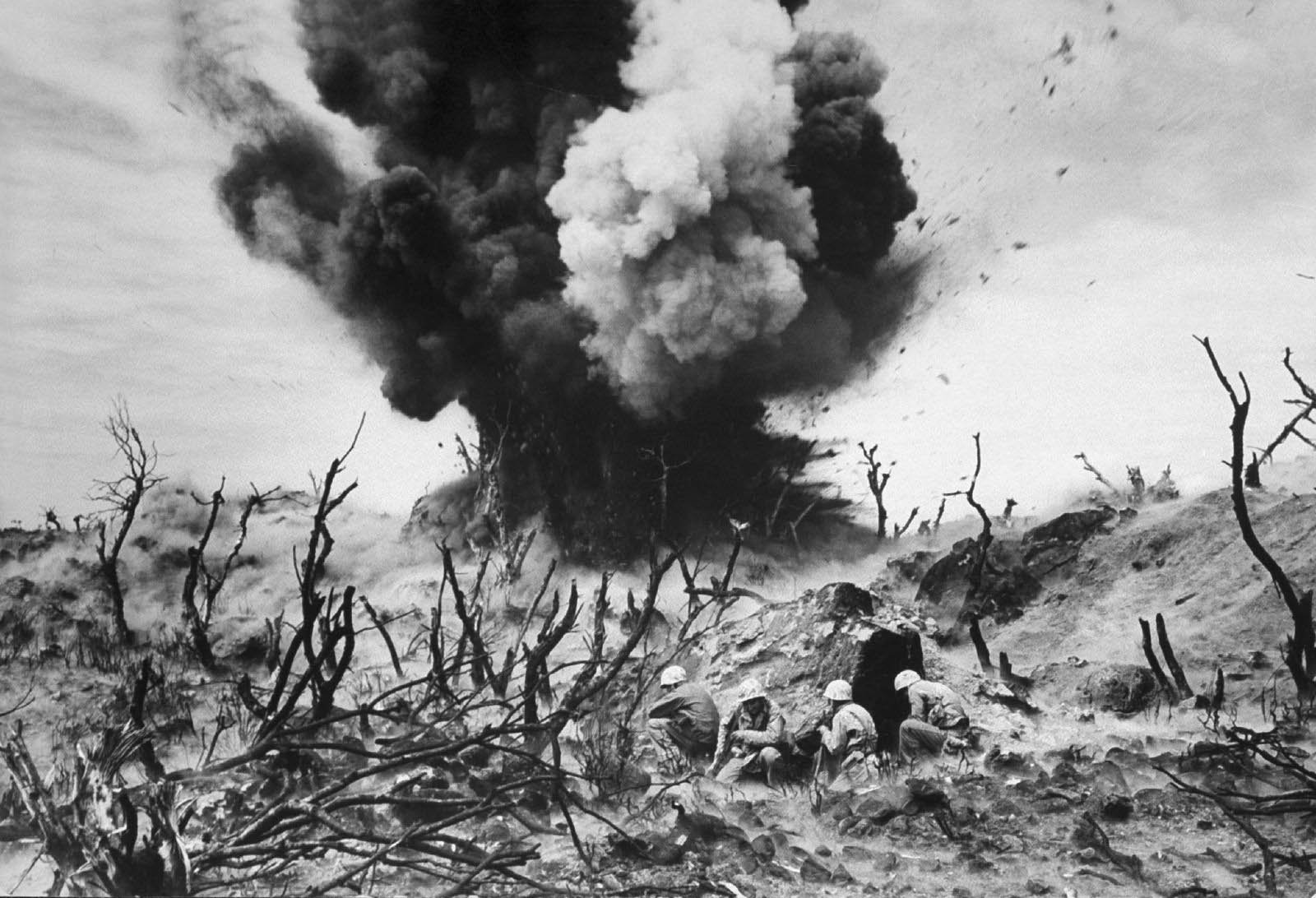
W. Eugene Smith (American, 1918-1978) 'World War II. The Pacific Campaign. The Battle of Iwo Jima (Japanese island). US Marine demolition team blasting out a cave on Hill 382. Iwo Jima. February, 1945' 1945


W. Eugene Smith (American, 1918-1978)
World War II. The Pacific Campaign. The Battle of Iwo Jima (Japanese island). US Marine demolition team blasting out a cave on Hill 382. Iwo Jima. February, 1945
1945
Gelatin silver print
© W. Eugene Smith


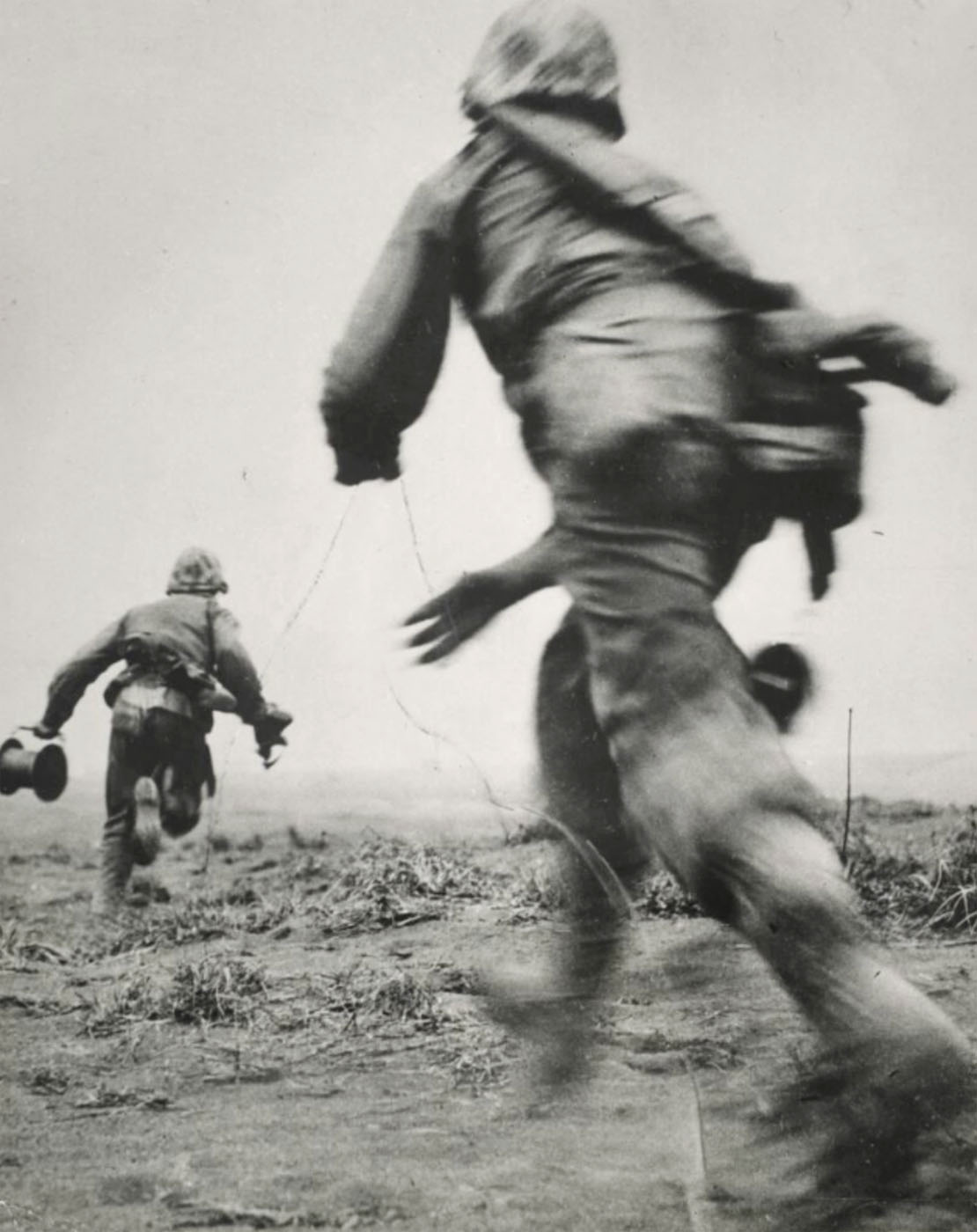
Joseph Schwartz (American, 1913–2013) 'Hold the Phone - Two Marine wiremen on Iwo Jima race across an open field, under heavy enemy fire to establish field telephone contact with the front lines' February 19, 1945, printed early 1950s


Joseph Schwartz (American, 1913–2013)
Hold the Phone – Two Marine wiremen on Iwo Jima race across an open field, under heavy enemy fire to establish field telephone contact with the front lines
February 19, 1945, printed early 1950s
Gelatin silver print mounted on board
18 13/16 × 14 15/16 in. (47.8 × 37.9cm)
The Museum of Fine Arts, Houston
Museum purchase funded by Knox Nunnally at “One Great Night in November, 2009,” in honor of Houston trial lawyer Joe Reynolds, a U.S. Marine who fought on Iwo Jima


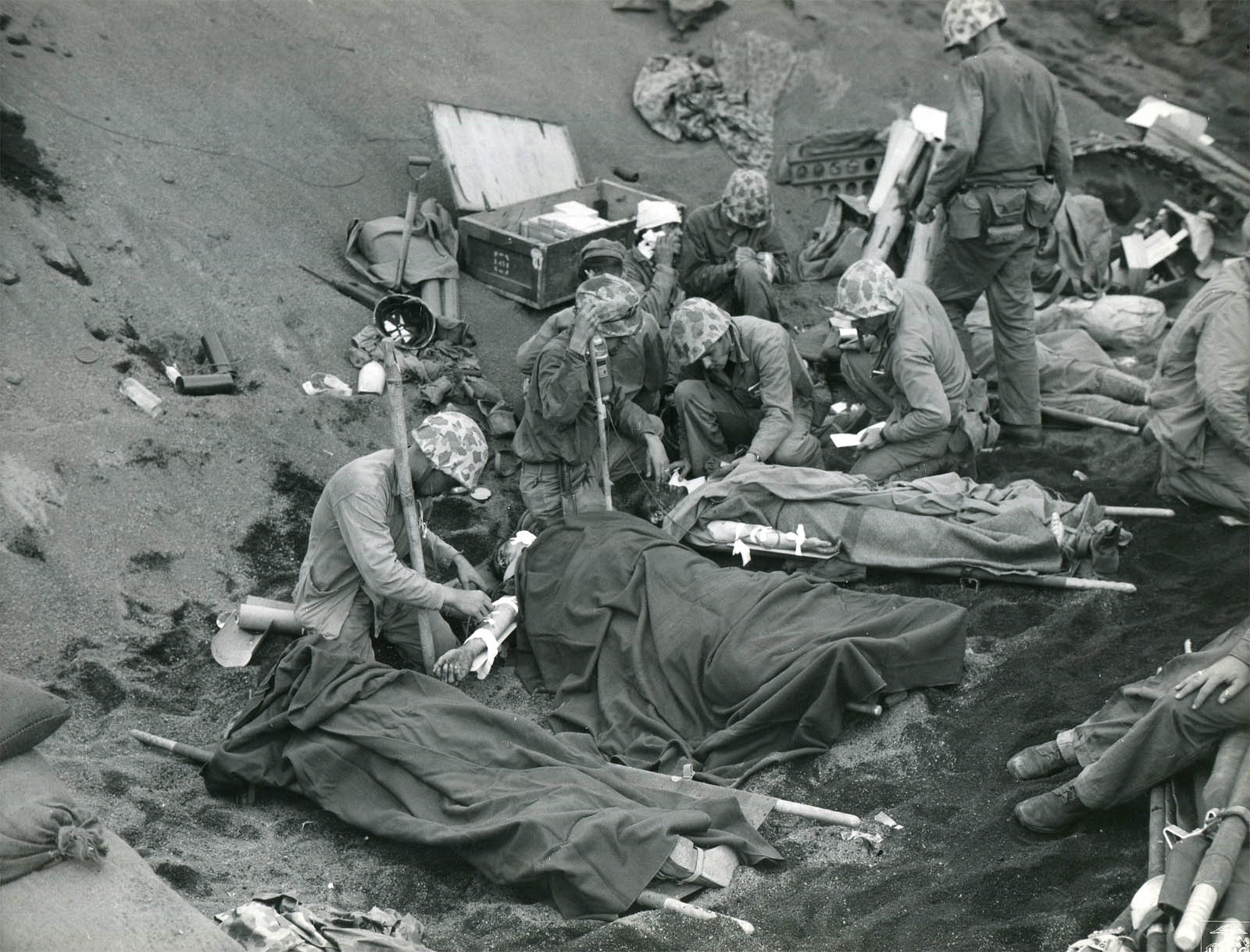
Anonymous photographer. U.S. Department of Defense / USMC Official Photograph 'PLASMA WARD – Navy doctors and corpsmen administer to wounded Marines at an aid station established in a gully on Iwo Jima. The high casualty rate in this operation required the use of gallons of plasma and whole blood sent by air from the West Coast' 1945


Anonymous photographer
U.S. Department of Defense / USMC Official Photograph
PLASMA WARD – Navy doctors and corpsmen administer to wounded Marines at an aid station established in a gully on Iwo Jima. The high casualty rate in this operation required the use of gallons of plasma and whole blood sent by air from the West Coast
1945
Gelatin silver print
Creative Commons Attribution 2.0 Generic


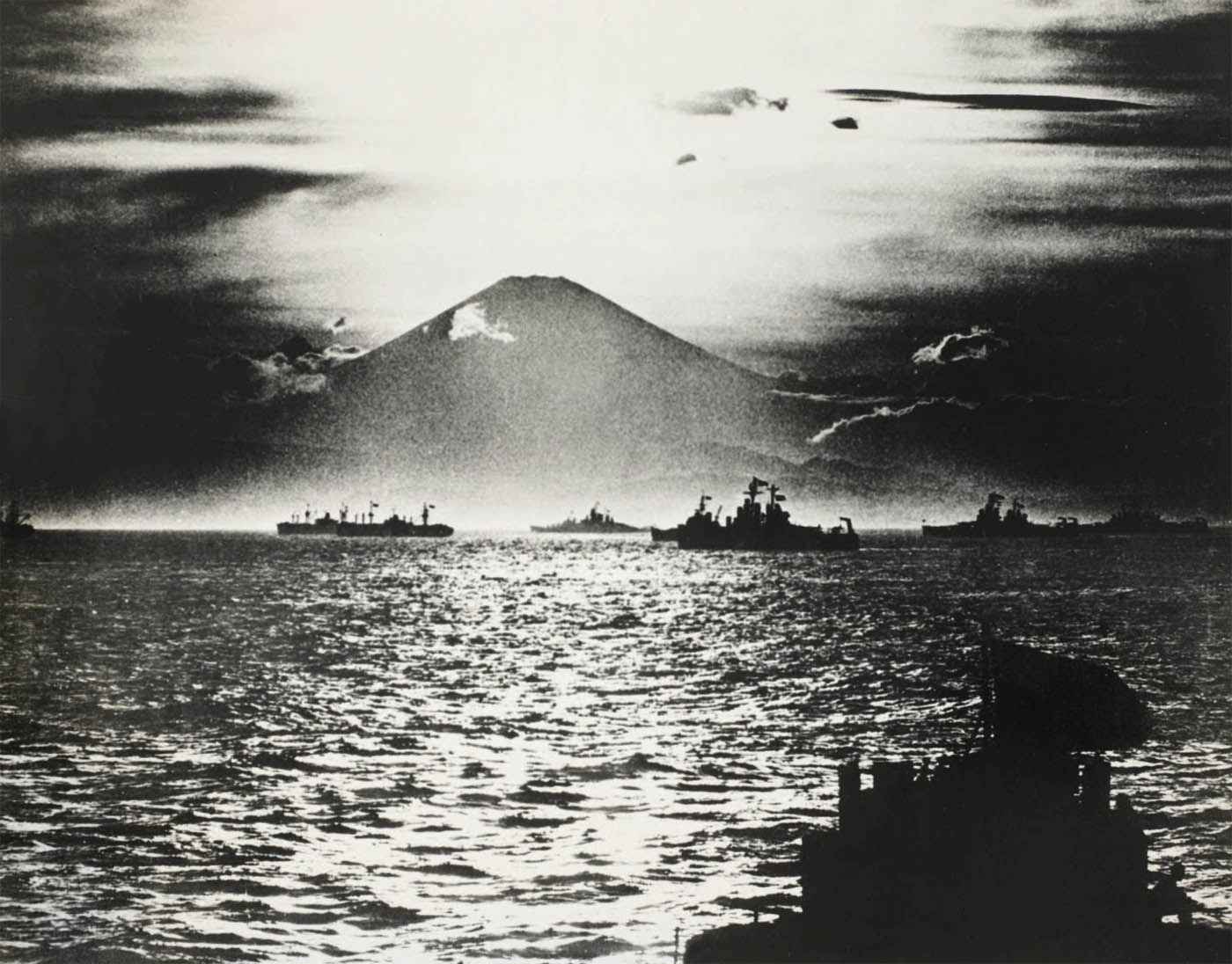
U.S. Navy Photographic Team. 'U.S. and British Warships Anchored in Sagami Wan, Outside of Tokyo Bay, Japan, on the Day the Allied Ships Entered Japanese Waters' 27th August 1945


U.S. Navy Photographic Team
U.S. and British Warships Anchored in Sagami Wan, Outside of Tokyo Bay, Japan, on the Day the Allied Ships Entered Japanese Waters
27th August 1945
Gelatin silver print
The Museum of Fine Arts, Houston, museum purchase funded by Laura and Tony Visage in honor and memory of William A. Visage and his fellow soldiers in Battery “E” of the 2nd Battalion, 131st Field Artillery, U.S. Army Air Corps


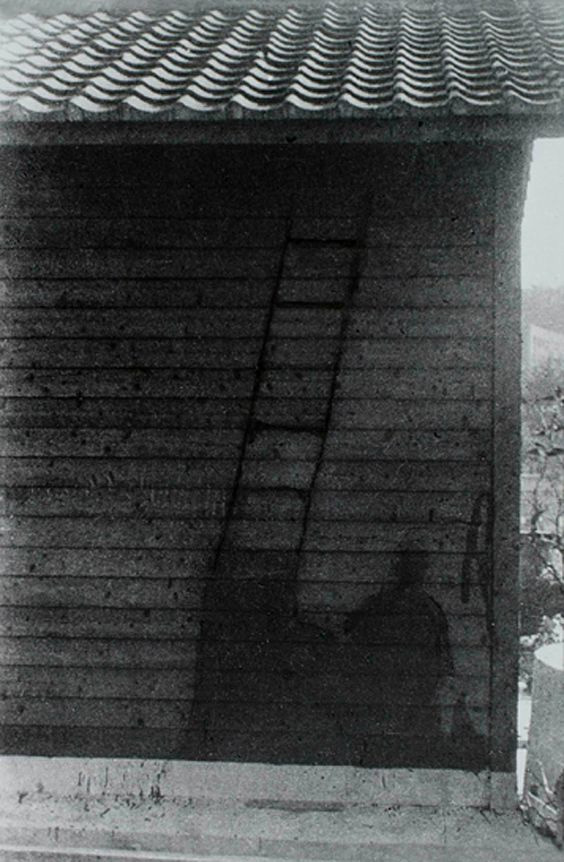
Matsumoto Eiichi (Japanese, 1915-2004) 'Shadow of a soldier remaining on the wooden wall of the Nagasaki military headquarters (Minami-Yamate machi, 4.5km from Ground Zero)' 1945


Matsumoto Eiichi (Japanese, 1915-2004)
Shadow of a soldier remaining on the wooden wall of the Nagasaki military headquarters (Minami-Yamate machi, 4.5km from Ground Zero)
1945
Gelatin silver print
Collection of the Tokyo Metropolitan Museum of Photography
© Matsumoto Eiichi


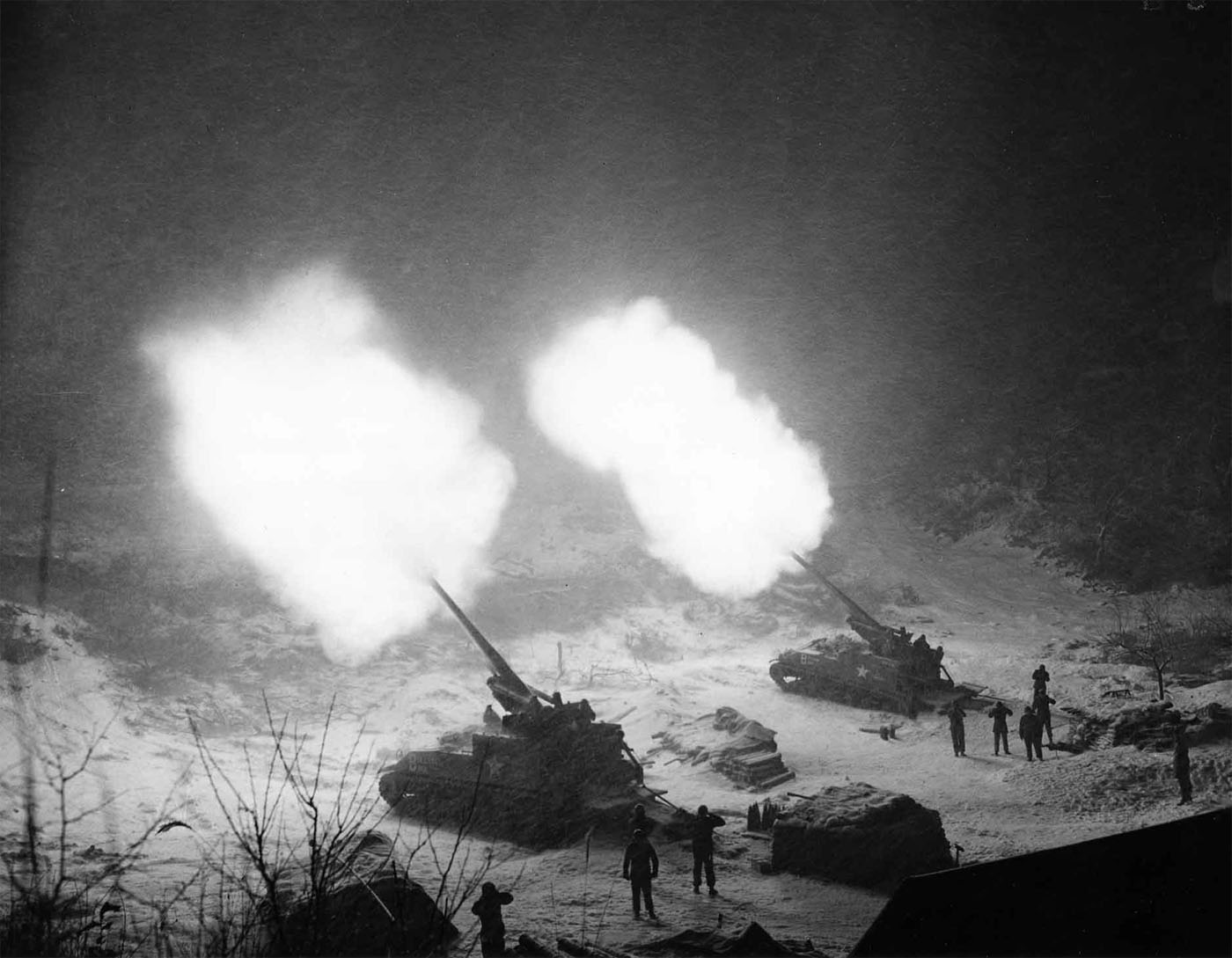
Unknown photographer. 'A pair of M-40 155mm Gun Motor Carriages of Battery B, 937th Field Artillery Battalion, providing fire support to U.S. Army 25th Infantry Division, Munema, Korea' 26 November 1951


Unknown photographer
A pair of M-40 155mm Gun Motor Carriages of Battery B, 937th Field Artillery Battalion, providing fire support to U.S. Army 25th Infantry Division, Munema, Korea
26 November 1951
Gelatin silver print
U.S. Department of Defense


Cathy LeRoy (French, 1944-2006) 'Corpsman In Anguish' 1967


Cathy LeRoy (French, 1944-2006)
Corpsman In Anguish
1967
Gelatin silver print


Her pictures from Vietnam were stunning. Her photos from Battle of Hill 881 evoked “ghosts of Iwo Jima and Pork Chop Hill,” Time magazine wrote in May 1967. Her photos of corpsman Vernon Wike during the battle was a triptych of an all-too-familiar scene: in the first, Wike has two hands on his friend’s chest, trying to staunch the wound; in the second, he tries to find a heartbeat; in the third frame, “Corpsman In Anguish”, he realised the man is dead.

LeRoy herself came very close to death two weeks later. Her Nikon barely stopped a piece of mortar shrapnel that ripped open her chest. She said that she thought the last words she would ever hear were, “I think she’s dead, sarge.” During the Tet offensive in 1968, LeRoy was briefly captured by the North Vietnamese during the battle for Hue. LeRoy’s photos of her captivity later made the cover of Life, ‘A Remarkable Day in Hue: the Enemy Lets Me Take His Picture’. She was the first person to take photos of North Vietnamese Army Regulars behind their lines.

Anonymous. “Corpsman In Anguish | Cathy LeRoy,” on the Iconic Photos website January 13, 2014 [Online] Cited 27/07/2024


A licensed parachutist, Leroy jumped with the U.S. 173rd Airborne Brigade into combat during Operation Junction City in February of 1967. It was in this action, the battle for Hill 881, that Leroy photographed U.S. Navy Corpsman Vernon Wike as he rushed to the aid of a fallen comrade. “Corpsman in anguish” is the third frame of a series that Leroy shot, capturing the unimaginable grief of war. Later, in an interview for the documentary “The Hill Fights”, Wike recounted the moment that Leroy photographed.

“I know there was chaos going on around me, but there was no sound,” she says. “… I knew he didn’t have a chance, but I still got p—–d off when he died.” Leroy describes the aftermath as the corpsman “lost in this nightmare landscape” grabbed the fallen marine’s M16 and charged a Viet bunker alone in a hail of obscenities. The fallen marine was a man called “Rock”, a New Yorker from Puerto Rico. Earlier that day he had told Wike that he only had 60 days left “in country” – his deployment in Vietnam.

Anonymous. “Giving War a Face: Catherine Leroy,” on the Dismal Nitch website September 04, 2020 [Online] Cited 27/07/2024


Arkady Shaikhet (Soviet, 1898-1959) 'Partisan Girl' 1942


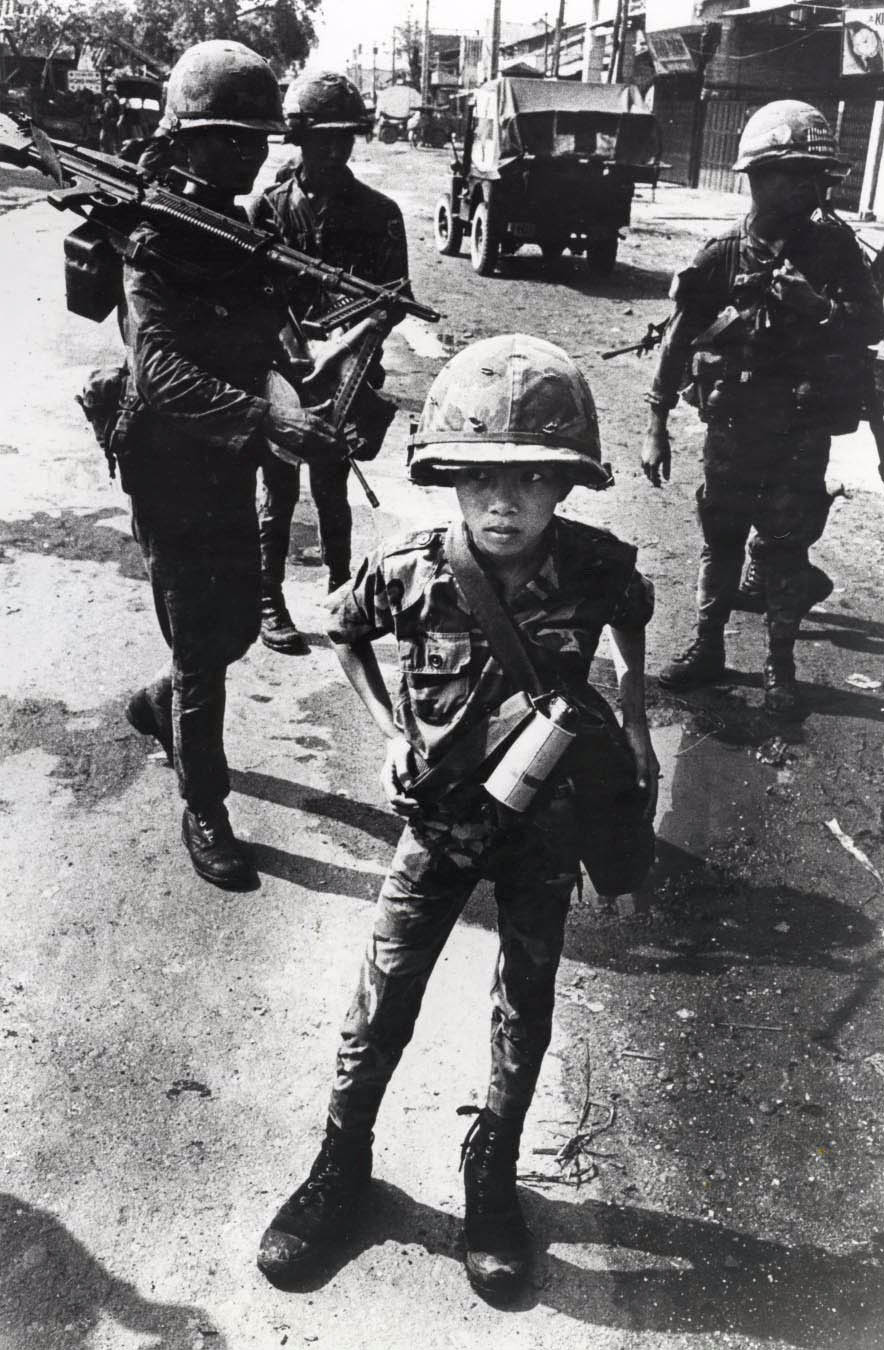
Philip Jones Griffiths (Welsh, 1936-2008)
​Called “Little Tiger” for killing two “Viet Cong women cadre” – his mother and teacher, it was rumored, Vietnam​
1968
Gelatin silver print
The Philip Jones Griffiths Foundation, courtesy of Howard Greenberg Gallery
© Philip Jones Griffiths / Magnum Photos


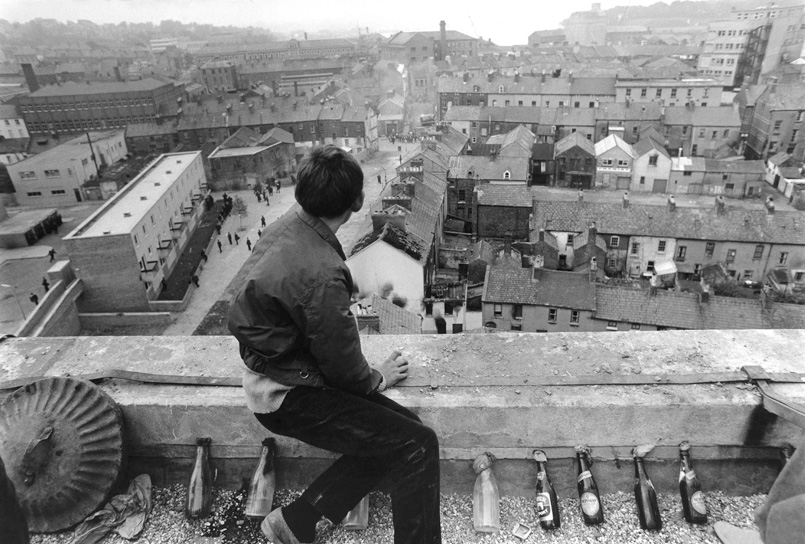
Gilles Caron (French, 1939-1970) 'Young Catholic demonstrator on Londonderry Wall, Northern Ireland' 1969


Gilles Caron (French, 1939-1970)
Young Catholic demonstrator on Londonderry Wall, Northern Ireland
1969
Gelatin silver print
Courtesy of Foundation Gilles Caron and Contact Press Images
© Gilles Caron


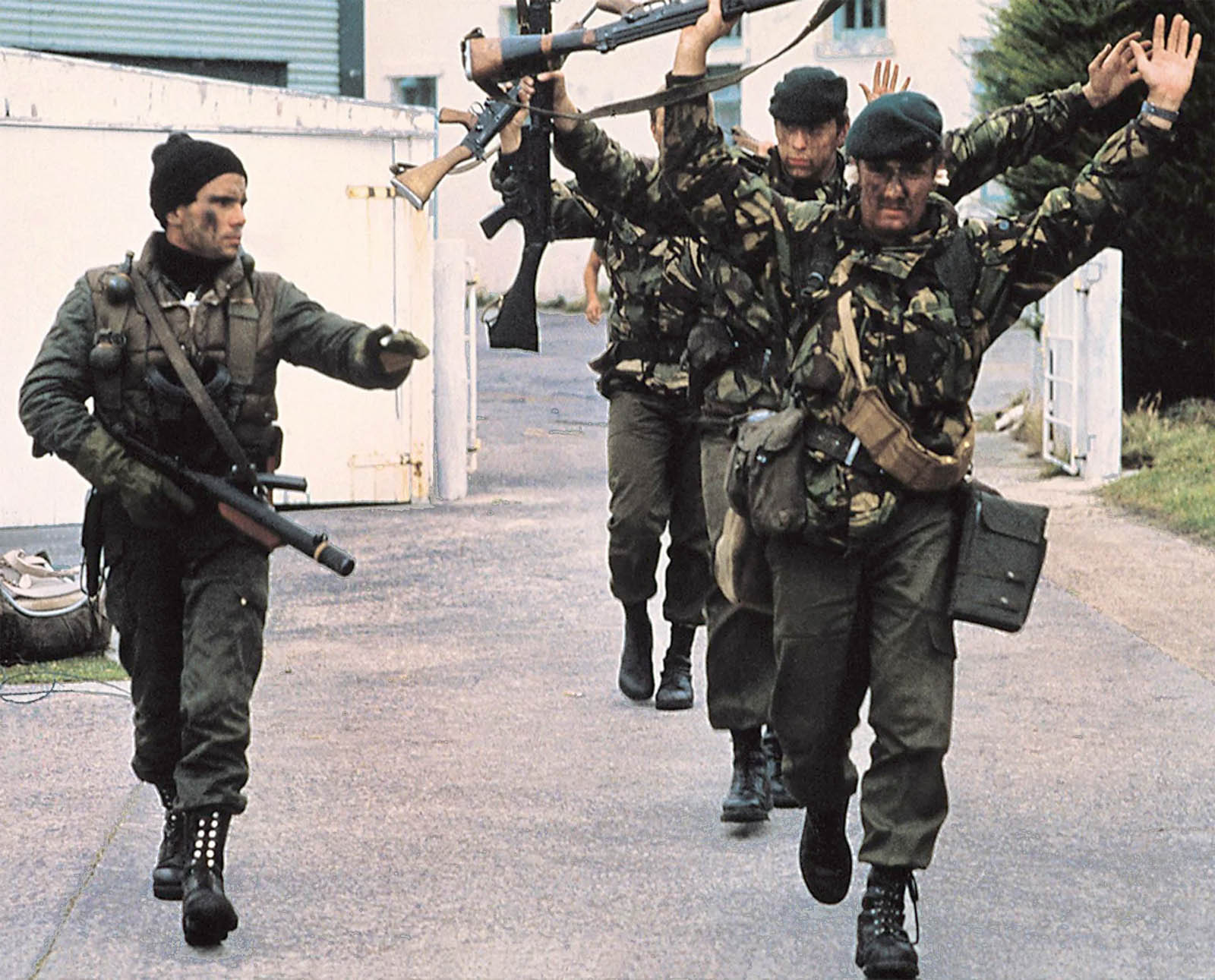
Rafael Wollmann (Argentinian, b. 1958) 'British Marines surrender to Argentinean troops in Malvinas/Falklands' April 2, 1982, printed 2012


Rafael Wollmann (Argentinian, b. 1958)
British Marines surrender to Argentinean troops in Malvinas/Falklands
April 2, 1982, printed 2012
Inkjet print
15 7/8 × 20 in. (40.4 × 50.8cm)
The Museum of Fine Arts, Houston
Gift of Rafael Wollmann


David Leeson (American, b. 1957) 'Death of a Soldier, Iraq' March 24, 2003


David Leeson (American, b. 1957)
Death of a Soldier, Iraq
March 24, 2003
Inkjet print, printed 2012
Courtesy of the artist


Ziv Koren (Israeli, b. 1970) 'A sniper’s-eye view of Rafah, in the Southern Gaza strip, during an Israeli military sweep' 2006


Ziv Koren (Israeli, b. 1970)
A sniper’s-eye view of Rafah, in the Southern Gaza strip, during an Israeli military sweep
2006
Inkjet print, printed 2012
© Ziv Koren/Polaris Images


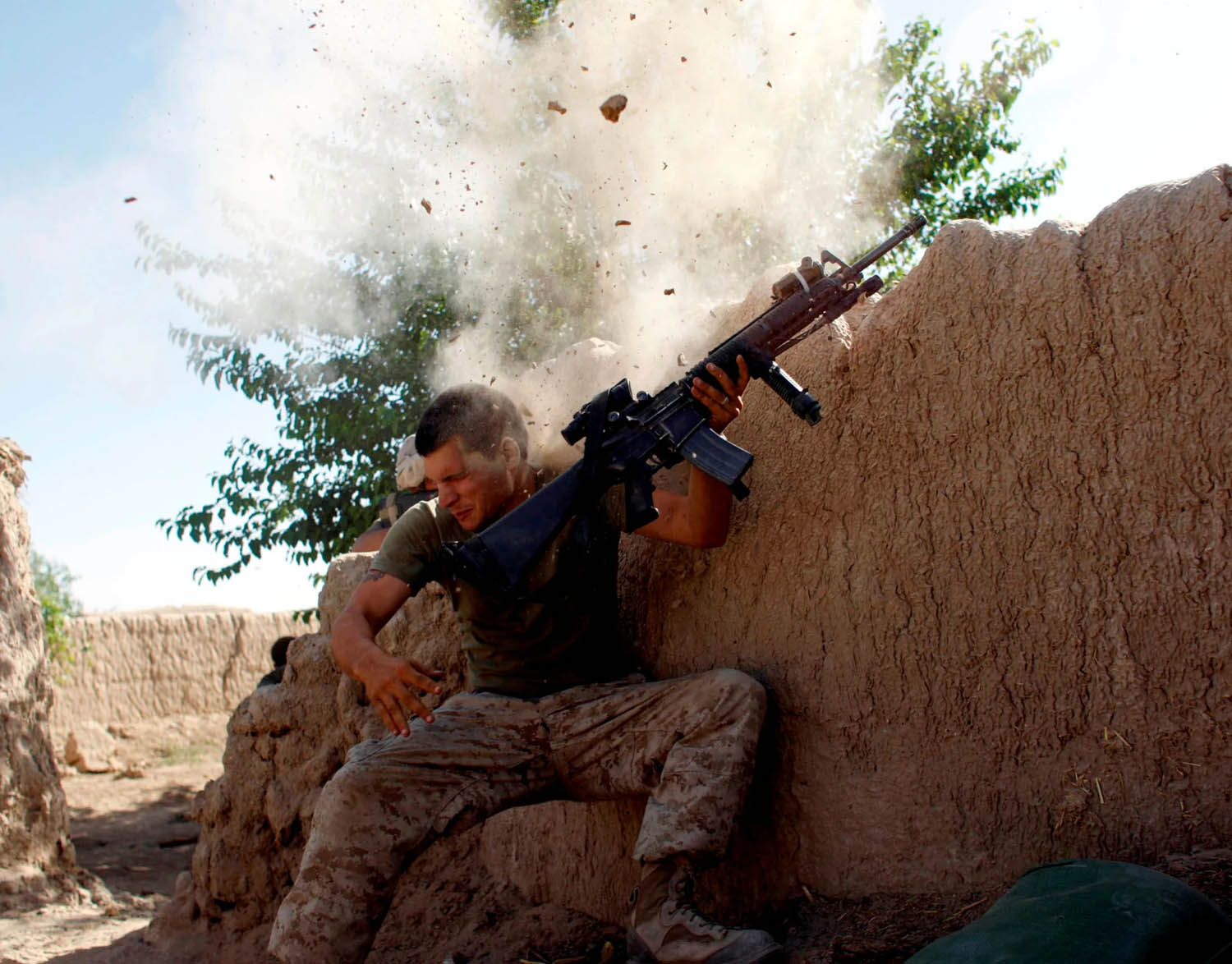
Goran Tomasevic (Serbian, b. 1959) /Reuters. 'SHOOTING. Sgt. William Olas Bee, a US Marine from the 24th Marine Expeditionary Unit, has a close call after Taliban fighters opened fire near Garmser in Helmand Province of Afghanistan May 18, 2008. The Marine was not injured.' 2008


Goran Tomasevic (Serbian, b. 1959) /Reuters
SHOOTING. Sgt. William Olas Bee, a US Marine from the 24th Marine Expeditionary Unit, has a close call after Taliban fighters opened fire near Garmser in Helmand Province of Afghanistan May 18, 2008. The Marine was not injured.
2008


Tomašević began photographing the war that followed the breakup of Yugoslavia from 1991 for daily newspaper Politika. In 1996 he joined the world’s largest news agency, Reuters, covering the simmering political tensions in Kosovo and the anti-Milošević demonstrations in his hometown of Belgrade since mid-1990s. During three-month NATO bombing of Yugoslavia in 1999, Tomašević was the only photographer working for foreign press to spend the duration of the conflict in Kosovo.

Tomašević moved to Jerusalem in 2002, covering the second Palestinian intifada. During the U.S. led invasions of Iraq in 2003, his picture of a U.S. Marine watching the toppling of a Saddam Hussein statue became one of the most memorable images of the war. He often returned to Iraq as sectarian violence escalated and regularly photographed America’s other war in Afghanistan. His sequence of photographs of U.S. Marine Sergeant Bee narrowly escaping Taliban bullets became an iconic image in U.S. war history.

Tomašević moved to Cairo in 2006 and was at the heart of Reuters’ coverage of the Arab Springs. In Libya, his image of a fireball that spewed up after an air strike on pro-Gaddafi fighters became an iconic image of the Libyan war, gracing the front pages of more than 100 newspapers around the globe. He stayed in Cairo until 2012. His raw pictures of rebel fighters battling pro-Assad forces among the ruins of Aleppo and Damascus during the Syrian Civil War have won international acclaim, as did his coverage of the bloody siege on a Nairobi shopping mall in Kenya. Tomašević worked for Reuters until 2022.

Text from the Wikipedia website


Museum of Fine Arts, Houston
1001 Bissonnet Street
Houston, TX 77005

Opening hours:
Wednesday 11am – 5pm
Thursday 11am – 9pm
Friday 11am – 6pm
Saturday 11am – 6pm
Sunday 12.30pm – 6pm
Closed Monday and Tuesday, except Monday holidays
Closed Thanksgiving Day and Christmas Day

Museum of Fine Arts, Boston website

LIKE ART BLART ON FACEBOOK

Back to top

Exhibition: ‘Wolfgang Tillmans’ at Moderna Museet Stockholm

Exhibition dates: 6th October 2012 – 20th January 2013


This slideshow requires JavaScript.


Installation photographs of various rooms of the exhibition Wolfgang Tillmans at Moderna Museet Stockholm, including Venus transit (2004) and Man pissing on chair (1997)
Photographs © Carmen Brunner


In this bumper posting, a big call: in my opinion, the greatest photography based image maker in the world today.

Tillmans challenges the way we think and feel about photography. As Tom Holert in his excellent catalogue essay The Unforeseen notes, Tillmans problematises and reconfigures narration and visualisation, experimenting with a sensory experiential backdrop against and within which the photographs are produced. Modes of perception and the regimes of emotion are inducted into the aesthetics of production and meaning so that, “the pictures communicate with each other in a way that is not bound to the pattern of a closed narrative or any particular line of argument. Instead they create a form of aesthetic and thematic interaction that Tillmans sees as ‘a language of personal associations and “thought-maps.”” The mobilisation and reversal of value and meaning are central strategies in Tillmans’ praxis.

In this way Tillmans opens up spaces for research, “in which learning and unlearning, resonance and interference, a new affective solidarity and real experimentation might be possible before the onset of all sorts of methods, all forms of governance, all kinds of discipline and doxa [common belief or popular opinion].

This form of experimentation does not lead to benchmark research results; nothing is ever proved or illustrated, regardless of what is in the images or what they may purport to show. Ever engaging in experiment Tillmans roams through the reality of materials, forms, affects and gives us tangible access to these unportrayble, unreferential realities. Tillmans engages his emotions when he is working, also and specifically when he is photographing people, or plants, machines and cities. Individual emotions separate off from the representation of living beings and objects and form nodes of emotion in the viewer’s mind.”

Through these rhizomic tendencies (a la Delueze and Guittari A Thousand Plateaus) Tillmans images generate emotion and affect, “rhythmically resonating between pictures, from wall to wall, from room to room, from side to side,” so that in each instance, in each publication or exhibition, he can “modify and modulate anew the relations between picture and picture support, representation and presentation, motif and materiality.”

Nothing is ever fixed in linear time. The work is presented as an infinitely variable, spatial and emotional relationship – an orthogonal performativity where the ritual of production and meaning is never fully predetermined at any stage of production and reception.

Tom Holert’s excellent catalogue essay The Unforeseen. On the Production of the New, and Other Movements in the Work of Wolfgang Tillmans includes information on Jacques Rancière’s concept of “‘aisthesis’ for the way in which very different things have been registered as ‘art’ for the last two hundred years or so. As he points out, “this is not about the ‘reception’ of works of art, but about the sensory experiential backdrop against and within which they come about. These are completely material conditions – places of performance or exhibition, forms of circulation and reproduction – but also modes of perception and the regimes of emotion, the categories that identify them and the patterns of thought that classify and interpret them.'” A thought provoking text (extracts below to accompany the photographs).

Dr Marcus Bunyan


Many thankx to the Moderna Museet for allowing me to publish the photographs and the text in the posting. Please click on the photographs for a larger version of the image.


Wolfgang Tillmans (German, b. 1968) 'Arkadia_I' 1996


Wolfgang Tillmans (German, b. 1968)
Arkadia_I
1996
© Wolfgang Tillmans. Courtesy Galerie Buchholz, Cologne/Berlin


Wolfgang Tillmans (German, b. 1968) 'New Family' 2001


Wolfgang Tillmans (German, b. 1968)
New Family
2001
© Wolfgang Tillmans. Courtesy Galerie Buchholz, Cologne/Berlin


Wolfgang Tillmans (German, b. 1968) 'Paper drop (window)' 2006


Wolfgang Tillmans (German, b. 1968)
Paper drop (window)
2006
© Wolfgang Tillmans. Courtesy Galerie Buchholz, Cologne/Berlin


Wolfgang Tillmans is one of the leading artists of his generation and is constantly in the public eye, with exhibitions all over the world. The exhibition at Moderna Museet is Tillmans’ first major show in Sweden and brings nearly twenty years of picture-making to a new audience. Moderna Museet is delighted to welcome Wolfgang Tillmans – an artist who has extended the boundaries of photography and redefined the medium of photography as an artform.

Wolfgang Tillmans (b. 1968) first attracted attention at the beginning of the 1990s, with his apparently mundane pictures of subjects taken from his own surroundings. After studying in Britain, he published photographs in prominent publications such as i-D, Spex and Interview. Today, these pictures are considered trendsetting for the young generation of the 1990s, and raise questions about subcultures and sexual identities. By turning everyday situations into almost monumental images, Tillmans very strikingly captured the spirit of the times. It soon became evident that his pictures renegotiate photographic conventions and reflect contemporary currents related to culture and identity. Since then, Tillmans has continued his in-depth investigations, expanding the the realm of photography and redefining the very medium as an artform.

“Wolfgang Tillmans moves freely between images of the club scene in Berlin, political manifestations, and skyscrapers in Hong Kong; all with the same direct tonality. At the same time, all of his pictures explore photography itself – as a medium, but also as a material, convention and process,” says Curator Jo Widoff.

Recently Tillmans’ art has taken a number of different directions, revolving around various issues, everything from still lifes and modern landscapes to his lifelong interest in astronomy and the night sky. He has also taken his in-depth exploration of abstract photography even further. Tillmans’ abstract images are more closely related to the painterly tradition and he researches photography as a self-reflexive medium. Abstract images, such as Freischwimmer and Silver, are made in the darkroom, striking a balance between the deliberate and chance. Since 1995, Tillmans has been working actively and strategically with the exhibition space, so as to reveal the possibilities and limitations of the space in interplay with the photographs. His installations display a bewildering variety of formats and sizes, ways of composing the hanging of the pictures, and contexts. The exhibition at Moderna Museet should thus be seen as a site-specific installation. In recent years, Tillmans has been travelling the world taking photographs with the general title Neue Welt. These pictures relate to the new world of markets and trade, to politics and economics, and to the hypermodern. The title also refers to the new digital camera that Wolfgang used to take these pictures, which captures and documents more detail than we can perceive with the naked eye.

“Wolfgang Tillmans is one of today’s most prominent artists. Despite its visual complexity, his pictorial language is immediately recognisable. He captures the explosive energy in social situations and crosses boundaries between different artforms. He is able to use photographic means to create a kind of abstract painting,” says Museum Director Daniel Birnbaum.

Press release from the Moderna Museet website


Wolfgang Tillmans (German, b. 1968) 'Lux' 2009


Wolfgang Tillmans (German, b. 1968)
Lux
2009
© Wolfgang Tillmans. Courtesy Galerie Buchholz, Cologne/Berlin


Wolfgang Tillmans (German, b. 1968) 'Iguazu' 2010


Wolfgang Tillmans (German, b. 1968)
Iguazu
2010
© Wolfgang Tillmans. Courtesy Galerie Buchholz, Cologne/Berlin


Wolfgang Tillmans (German, b. 1968) 'Paper drop (Roma)' 2007


Wolfgang Tillmans (German, b. 1968)
Paper drop (Roma)
2007
C-type print
30.5 x 40.6cm
Courtesy the artist and Maureen Paley, London


Wolfgang Tillmans (German, b. 1968) 'Freischwimmer 93' 2004


Wolfgang Tillmans (German, b. 1968)
Freischwimmer 93
2004
© Wolfgang Tillmans. Courtesy Galerie Buchholz, Cologne/Berlin


The Freischwimmer series – Free Swimmer is the most basic Lifesaving level in Germany and Switzerland – is an excellent example of Tillmans’s more experimental works. On one hand, the huge photographic papers were affixed to the wall with simple adhesive tape or paper clips; on the other, the images eluded all description and eschewed portraiture, landscape, still life or other subject matters he had centred on up to then.

The creative process of Freischwimmer, ongoing to the present, seems to speak to pure photography, divested of any form of intervention either in shooting or in enlargement, or indeed optical devices of any kind. We can almost imagine the artist in front of a large tray with reagents, performing some kind of alchemical ritual at the origin of these vaporous images, images containing a refinement that exceeds any human intention, just pure representations of themselves, of a unique and absolutely unrepeatable process. Of their reality.”

José Manuel Costa. “Swimming to Freedom 38,” on the CA2M Centro de Arte Dos de Mayo website [Online] Cited 12/10/2013 no longer available online


The Freischwimmer, which Tillmans started to produce in the early 2000s, form a group or family of images that are not made using a camera lens. As the results of gestural and chemical operations in the dark room, these originals on medium-sized photo paper, which are subsequently scanned and enlarged both as ink-jet prints and as light-jet prints on photo paper, are unrepeatable one-offs. It has been said that these images, which include ensembles such as Peaches, Blushes and Urgency, call to mind microscopically detailed images of biolog­ical processes, hirsute epidermises, highly erogenous zones, and that their aura fills the whole space – above all when they are presented in such large formats as in Warsaw or yet larger still, as in the case of the two monumental Ostgut Freischwimmer (2004) that used to grace the walls of the Panorama Bar at Berghain in Berlin. The Freischwimmer and their kin can be read as diagrams of sexualised atmospheres in private or semi-public spaces, in boudoirs or clubs, as highly non-representational images that both suspend and supplement conventional depic­tions of sex.

Extract from Tom Holert. The Unforeseen. On the Production of the New, and Other Movements in the Work of Wolfgang Tillmans. [Online] Cited 12/10/2013 no longer available online


Wolfgang Tillmans (German, b. 1968) 'Nanbei Hu' 2009


Wolfgang Tillmans (German, b. 1968)
Nanbei Hu
2009
Inkjet print
207 x 138cm
Courtesy the artist and Maureen Paley, London


Wolfgang Tillmans (German, b. 1968) 'Anders pulling splinter from his foot' 2004


Wolfgang Tillmans (German, b. 1968)
Anders pulling splinter from his foot
2004
© Wolfgang Tillmans. Courtesy Galerie Buchholz, Cologne/Berlin


Wolfgang Tillmans (German, b. 1968) 'Onion' 2010


Wolfgang Tillmans (German, b. 1968)
Onion
2010
© Wolfgang Tillmans. Courtesy Galerie Buchholz, Cologne/Berlin


Wolfgang Tillmans (German, b. 1968) 'Venus transit' 2004


Wolfgang Tillmans (German, b. 1968)
Venus transit
2004
© Wolfgang Tillmans. Courtesy Galerie Buchholz, Cologne/Berlin


Wolfgang Tillmans (German, b. 1968) 'Heptathlon' 2009


Wolfgang Tillmans (German, b. 1968)
Heptathlon
2009
Inkjet print
208.5 x 138cm
Courtesy the artist and Maureen Paley, London


Wolfgang Tillmans (German, b. 1968) 'Headlight (a)' 2012


Wolfgang Tillmans (German, b. 1968)
Headlight (a)
2012
© Wolfgang Tillmans. Courtesy Galerie Buchholz, Cologne/Berlin


Wolfgang Tillmans (German, b. 1968) 'Ushuaia Lupine (a)' 2010


Wolfgang Tillmans (German, b. 1968)
Ushuaia Lupine (a)
2010
© Wolfgang Tillmans. Courtesy Galerie Buchholz, Cologne/Berlin


Wolfgang Tillmans (German, b. 1968) 'Tukan' 2010


Wolfgang Tillmans (German, b. 1968)
Tukan
2010
Inkjet print on paper, clips


Wolfgang Tillmans (German, b. 1968) 'Photocopy' 1994


Wolfgang Tillmans (German, b. 1968)
Photocopy
1994
© Wolfgang Tillmans, Courtesy Galerie Daniel Buchholz, Köln


Extracts from Tom Holert. The Unforeseen. On the Production of the New, and Other Movements in the Work of Wolfgang Tillmans. [Online] Cited 12/10/2013. No longer available online

Parallelism – Subjectivism – Objectivism

This all means that the decorative unity of wall and image, which the hanging of the Freischwimmer initially promises, is not only thwarted by the shift in dimensions, the infringement of symmetrical order and the (supposed) discontinuity of abstraction and figuration, and by the fact that the different types of image and their configuration on this wall require the viewer to move around in the space and to continually readjust his or her gaze, bearing in mind that in the corner of one’s eye or following a slight turn of the body more pictures are constantly looming into view, mostly unframed, very small (postcard-sized), very large, hung very low down, but also very high up, portraits and still lifes, gestural abstractions, a close-up of a vagina, a picture of a modern Boy with Thorn, street scenes, an air-conditioning system. It also means that the pictures communicate with each other in a way that is not bound to the pattern of a closed narrative or any particular line of argument. Instead they create a form of aesthetic and thematic interaction that Tillmans sees as ‘a language of personal associations and “thought-maps”‘,1 as ‘… a pattern of parallelism as opposed to one linear stream of thought’,2 and which the critic Jan Verwoert has aptly described as a ‘performative experiment’ with the viewer.3

With all their variability and flexibility – underpinned by an invisible rectilinear grid yet fundamentally open in their interconnections – these installations serve Tillmans as reflections of his own way of perceiving the world, as externalisations of his thinking and feeling, and as a chance to fashion a utopian world according to his own ideas and fantasies.4 However, this Romantic subjectivism of self-expression or externalisation has to be seen in light of a radical objectivism (Tillmans attaches great importance to this) that specifically draws attention not only to the expressive potential arising from the ageing process, from evidence of wear and other precariousnesses in the materials of photography (paper, camera techniques, chemicals, developing equipment etc.) but also to the remarkable resistance and persistence of these same materials.

Amongst the phenomena that inform this objectivism there are those instances of loss of control that can arise during the mechanical production processes of analogue photography or from coding errors, glitches, in digital images. Temporality, finity, brevity come into play here – a certain melancholy that activates rather than paralyses.

Over the years Tillmans has constantly found new ways to explore, to interpret and to stage this dialectic of intention and contingency. His repertoire and means of aesthetic production have multiplied. And this expansion has not been without consequences for the presentation of his work. Tillmans himself feels that the character of his installations has changed since 2006/07, in other words, when different versions of a solo exhibition of his work toured to three museums in the United States. It was during this exhibition tour that Tillmans started to see the benefit of placing greater weight on individual groups of works in the various rooms of larger exhibitions. In so doing he gave visitors the chance to engage in a different kind of concentration, without the pressure of constantly having to deal with the ‘full spectrum’ (Tillmans) of his oeuvre.5

Value Theory, Value Praxis

The visitor to an exhibition of the work of Wolfgang Tillmans in the year 2012, in this case the author of these lines, arrives in expectation of a particular, clearly defined type of art and image experience. A sense (however fragmentary) of the artist’s past exhibitions and publications is always present in any encounter with his work. And this includes the need to see the ‘abstract pictures’ in the context of an oeuvre where realistic and abstract elements have never intentionally been separated from each other. On the contrary, abstraction is always co-present with figurative and representational elements. There is no contradiction between forms and matter free of meaning – that is to say, visual moments that on the face of it neither represent nor illustrate anything – and Tillmans’ photographs of people, animals, objects and landscapes; in fact there is an unbroken connection, a continuum. This applies both to individual images as much as to the internal, dynamic relationalism of his oeuvre as a whole. And it also applies to each individual, concrete manifestation of multiplicity, as in the case of the installation in the first room of the exhibition in Warsaw.

Both aesthetic theory and the institution of art itself provide decisive grounds for discussing photography and visual art in such a way that images are not solely considered in terms of documentary functions or ornamental aspects nor are they reduced to the question as to whether their contents are stage-managed or authentic, but that attention is paid instead to the material nature of the pictures and objects in the space, to their sculptural qualities. Having decided early on against a career as a commercial photographer and in favour of a life in art, there was no need for Tillmans to seek to justify the interest he had already felt in his youth in a non-hierarchical, queer approach to various forms and genres in the visual arts. For the young Wolfgang Tillmans the cover artwork for a New Order LP, a portrait of Barbara Klemm (in-house photographer at the Frankfurter Allgemeine Zeitung), or a screenprint collage of Robert Rauschenberg in Kunstsammlung Nordrhein-Westfalen were all ‘equally important’ images’.7 The mobilisation and reversal of value and meaning are central strategies in his praxis. He questions the ‘language of importance’8 in photography and alters valencies of the visual by, for instance – in a ‘transformation of value’9 – producing C-prints from the supposedly impoverished or inadequate visuality of old black-and-white copies or wrongly developed images and thus raising them to the status of museum art. However much he may set store by refinement and precision, he avoids conventional forms of presentation, that is to say, ‘the signifiers that give immediate value to something, such as the picture frame’.10

Conditions: Subject – Work – Mediation

If we take the line proposed by the philosopher Jacques Rancière, then the ‘aesthetic regime’ of the modern era, which – following the introduction of a modern concept of art and aesthetics – abandoned the regulatory aesthetic canon of the classical age in the nineteenth century, is distinguished by the fact that under its auspices the traditional hierarchies separating the high from the popular branches of narration and visualisation were problematised and reconfigured in such a way that a new politics of aesthetics and a ‘distribution of the sensible’ in the name of art ensued. Rancière has recently proposed the term ‘aisthesis’ for the way in which very different things have been registered as ‘art’ for the last two hundred years or so. As he points out, this is not about the ‘reception’ of works of art, but about the sensory experiential backdrop against and within which they come about. ‘These are completely material conditions – places of performance or exhibition, forms of circulation and reproduction – but also modes of perception and the regimes of emotion, the categories that identify them and the patterns of thought that classify and interpret them.’12

In order to understand why the work of Wolfgang Tillmans – so seemingly casual, so heterogeneous and so wide-ranging – is not only extremely successful, but has, for over twenty years, been intelligible and influential both within and outside the field of art, with the result that by now his praxis seems like a universal, subtly normative style of perception and image-making, it is essential to consider the ‘conditions’ alluded to by Rancière. For these are fundamental to the specific visibility and speakability of this oeuvre and to its legitimacy as art…

The Production of the New

Tillmans thus also makes his contribution to an answer to the question posed by the philosopher John Rajchman (in response to Gilles Deleuze and Michel Foucault and their deliberations on the production of the new and on the creative act in present-day, control-obsessed societies). Rajchman asked how, in and with the arts and their institutions, spaces for open searches and researches could be devised, in which learning and unlearning, resonance and interference, a new affective solidarity and real experimentation might be possible before the onset of all sorts of methods, all forms of governance, all kinds of discipline and doxa.18

This form of experimentation does not lead to benchmark research results; nothing is ever proved or illustrated, regardless of what is in the images or what they may purport to show. Ever engaging in experiment Tillmans roams through the reality of materials, forms, affects and gives us tangible access to these unportrayble, unreferential realities. Tillmans engages his emotions when he is working, also and specifically when he is photographing people, or plants, machines and cities. Individual emotions separate off from the representation of living beings and objects and form nodes of emotion in the viewer’s mind. ‘Artists are presenters of affects, the inventors and creators of affects’, as Gilles Deleuze and Félix Guattari put it in What is Philosophy?, ‘they draw us into the compound’.19 And indeed Tillmans’ laboratories are places where emotion and affect are generated and presented, rhythmically resonating between pictures, from wall to wall, from room to room, from side to side. The dog asleep on the stones, its breathing body warmed by the sun (in the video Cuma, 2011), Susanne’s lowered gaze (in Susanne, No Bra, 2006), with the line of her hair encircling her head like an incomplete figure of eight, but also the disturbed, interrupted, lurking monochromaticism of the Lighter and Silver works – they all open up the longer you look at them, the longer you are with them, to a perceiving in terms of forces and affects. They alert us to the fact that all images are fabricated.

Assimilating Photography into the Paradox

By virtue of the portability and variability of his works, with every print, with every exhibition, with every publication Tillmans can modify and modulate anew the relations between picture and picture support, representation and presentation, motif and materiality. In the two decades that have elapsed since his entry into the art business his praxis has continuously expanded. From the outset photography was his springboard for both integrative and eccentric acts. And even though this oeuvre may create the impression that the medium of photography knows no limits, photography – as discourse, as technique, as history, as convention – has remained the constant point of reference for all of Tillmans’ complex operations. It could also be said that he is immensely faithful to his chosen medium, although – or precisely because – that medium is not always recognisable as such. To quote an older essay on photography and painting by Richard Hamilton (whom Tillmans once photographed), his work is about ‘assimilating photography into the domain of paradox, incorporating it into the philosophical contradictions of art…’30 Since Tillmans’ experiments with a laser copier in the 1980s, he has produced hundreds of images that may be beholden to the etymology of photography (light drawing) but that also constantly undermine or overuse the social and epistemological functions of photography as a means to depict reality, as proof, as an aide mémoire, as documentation or as a form of aesthetic expression. The discourse on photography, with all its ‘post-photographic’ exaggerations, the debate on the status of the photographic image – none of these have been concluded; on the contrary, Tillmans is continuously advancing them on his own terms. His praxis forms the backdrop for experimentation and adventures in perception that are closely intertwined with the past and the present of photography and theories of photography; yet the specific logic of this oeuvre creates a realm of its own in which archive and presentation interlock in such a way that photography still plays an important part as historic and discursive formation, but the problems and paradoxes of fine art have now taken over the key functions.

The contagious impact of the epistemological problems of art has opened up new options for the medium of photography, new contexts of reception. And in this connection it is apparent, as Julie Ault has put it, that ‘Tillmans enacts his right to complex mediation’.31 In other words, photography provides a means for him to engage with a whole range of interactions with the viewer. In his eyes and hands photography becomes a realm of potential, where a never-ending series of constellations and juxtapositions of materialities, dimensions and motifs of the ‘unforeseen’ can come about. Photography thus regains a dimension of experimentation, an openness that is not constrained by aesthetic formats and technical formatting but that does arise from a precise knowledge and understanding of the history of the medium.”

Extracts from Tom Holert. The Unforeseen. On the Production of the New, and Other Movements in the Work of Wolfgang Tillmans. [Online] Cited 12/10/2013 no longer available online


Footnotes from extracts

1/ “Peter Halley in Conversation with Wolfgang Tillmans,” in Jan Verwoert, Peter Halley and Midori Matsui, Wolfgang Tillmans (London: Phaidon, 2002), 8-33 at 29

2/ Steve Slocombe, “Wolfgang Tillmans – The All-Seeing Eye,” in Flash Art, vol. 32, no. 209, November – December 1999, 92-95 at 95

3/ Jan Verwoert, “Survey: Picture Possible Lives: The Work of Wolfgang Tillmans,” in Verwoert et. al., Wolfgang Tillmans, 36-89 at 72

4/ See Slocombe, “Wolfgang Tillmans – The All-Seeing Eye” (see note 2), 95

5/ See Julia Peyton-Jones and Hans Ulrich Obrist, “Interview with Wolfgang Tillmans,” in Wolfgang Tillmans (London: Serpentine Gallery / Koenig Books, 2010), 21-27 at 24

7/ Wolfgang Tillmans, email of 12 May 2012.

8/ Julie Ault, “Das Thema lautet Ausstellen Installations as Possibility in the Practice of Wolfgang Tillmans,” in Wolfgang Tillmans. Lighter (Stuttgart/Berlin: Hatje Cantz/SMB), Nationalgalerie Staatliche Museen zu Berlin, 2008, 27

9/ See Hans Ulrich Obrist, Wolfgang Tillmans (Cologne: Verlag der Buchhandlung Walther König, 2007 = The Conversation Series, 6), 41

10/ Gil Blank, “The Portraiture of Wolfgang Tillmans,” in Influence, 2, autumn 2004, 110-21 at 117

12/ Jacques Rancière, Aisthesis. Scènes du régime esthétique de l’art (Paris: Galilée, 2011), 10

18/ Zepke (ed.), Deleuze, Guattari and the Production of the New (London: Continuum, 2008), 80-90 at 89

19/ See Deleuze and Guattari, What Is Philosophy?, trans. Hugh Tomlinson and Graham Burchell (New York: Columbia University Press, 1994), 175

30/ Richard Hamilton, “Photography and Painting,” in Studio International, vol. 177, no. 909, March 1969, 120-25 at 125

31/ Julie Ault, “The Subject Is Exhibition” (see note 8), 15


Wolfgang Tillmans (German, b. 1968) 'Alex Lutz back' 1992


Wolfgang Tillmans (German, b. 1968)
Alex Lutz back
1992
© Wolfgang Tillmans. Courtesy Galerie Buchholz, Cologne/Berlin


Wolfgang Tillmans (German, b. 1968) 'Smokin Jo' 1995


Wolfgang Tillmans (German, b. 1968)
Smokin Jo
1995
© Wolfgang Tillmans. Courtesy Galerie Buchholz, Cologne/Berlin


Wolfgang Tillmans (German, b. 1968) 'Lutz & Alex sitting in the trees' 1992


Wolfgang Tillmans (German, b. 1968)
Lutz & Alex sitting in the trees
1992
Inkjet print on paper, clips
208 × 138 cm


Moderna Museet, Stockholm

Moderna Museet is ten minutes away from Kungsträdgården, and twenty minutes from T-Centralen or Gamla Stan. Walk past Grand Hotel and Nationalmuseum on Blasieholmen, opposite the Royal Palace. After crossing the bridge to Skeppsholmen, continue up the hill. The entrance to Moderna Museet and Arkitekturmuseet is on the left-hand side.

Opening hours:
Tuesday – Sunday 11 – 18
Monday closed

Moderna Museet website

LIKE ART BLART ON FACEBOOK

Back to top

Exhibition: ‘WAR/PHOTOGRAPHY: Images of Armed Conflict and Its Aftermath’ at the Museum of Fine Arts, Houston Part 2

Exhibition dates: 11th November 2012 – 3rd February 2013


This is the biggest posting on one exhibition that I have ever undertaken on Art Blart!

As befits the gravity of the subject matter this posting is so humongous that I have had to split it into 4 separate postings. This is how to research and stage a contemporary photography exhibition that fully explores its theme. The curators reviewed more than one million photographs in 17 countries, locating pictures in archives, military libraries, museums, private collections, historical societies and news agencies; in the personal files of photographers and service personnel; and at two annual photojournalism festivals producing an exhibition that features 26 sections (an inspired and thoughtful selection) that includes nearly 500 objects that illuminate all aspects of WAR/PHOTOGRAPHY.

I have spent hours researching and finding photographs on the Internet to support the posting. It has been a great learning experience and my admiration for photographers of all types has increased. I have discovered the photographs and stories of new image makers that I did not know and some hidden treasures along the way. I hope you enjoy this monster posting on a subject matter that should be consigned to the history books of human evolution.

**Please be aware that there are graphic photographs in all of these postings.** Part 1Part 3Part 4

Dr Marcus Bunyan


Many thankx to the Museum of Fine Arts, Houston for allowing me to publish some of the photographs in the posting. Please click on the photographs for a larger version of the image.


Photographic Essays

14. Photographic Essays showcases selections from two distinct storylines: Larry Burrows’ Yankee Papa 13, published in Life magazine; and Pulitzer Prize winner Todd Heisler’s series Final Salute, for Denver’s Rocky Mountain News. Burrows follows a man through a rescue attempt in Vietnam; Heisler documents a Marine major assigned to casualty notifications. (12 images, 6 from each photographer, as well as the magazine and newspaper in which the series were published)


Larry Burrows (American, 1926-1971) 'The view from inside Marine helicopter Yankee Papa 13, Vietnam, March 1965' 1965


The view from inside Marine helicopter Yankee Papa 13, Vietnam, March 1965


Larry Burrows (English, 1926-1971) 'The caption that accompanied this photograph in the April 16, 1965, issue of LIFE: "From the downed YP3 in the background, the wounded gunner, Sergeant Owens, races to Yankee Papa 13, where Farley waits in the doorway."' 1965


The caption that accompanied this photograph in the April 16, 1965, issue of LIFE: “From the downed YP3 in the background, the wounded gunner, Sergeant Owens, races to Yankee Papa 13, where Farley waits in the doorway.”


Larry Burrows (English, 1926-1971) 'One Ride with Yankee Papa 13' 1965 The caption that accompanied this photograph in LIFE: "Farley, unable to leave his gun position until YP13 is out of enemy range, stares in shock at YP3's co-pilot, Lieutenant Magel, on the floor."


The caption that accompanied this photograph in LIFE: “Farley, unable to leave his gun position until YP13 is out of enemy range, stares in shock at YP3’s co-pilot, Lieutenant Magel, on the floor.”


Larry Burrows (English, 1926-1971) 'Farley and Hoilien, dead tired, linger beside their helicopter and continue to talk over the mission' 1965


Farley and Hoilien, dead tired, linger beside their helicopter and continue to talk over the mission


Larry Burrows (English, 1926-1971) 'One Ride with Yankee Papa 13' 1965 'In a supply shack, hands covering his face, an exhausted, worn James Farley gives way to grief'


In a supply shack, hands covering his face, an exhausted, worn James Farley gives way to grief


Larry Burrows (English, 1926-1971)
One Ride with Yankee Papa 13
1965
Photo Essay
© Time & Life Pictures/Getty Images


Todd Heisler (American, b. 1972) 'Untitled' 2005 From the series 'Final Salute'


Todd Heisler (American, b. 1972)
Untitled
2005
From the series Final Salute
© Todd Heisler/Rocky Mountain News


The night before the burial of her husband’s body, Katherine Cathey refused to leave the casket, asking to sleep next to his body for the last time. The Marines made a bed for her, tucking in the sheets below the flag. Before she fell asleep, she opened her laptop computer and played songs that reminded her of “Cat,” and one of the Marines asked if she wanted them to continue standing watch as she slept. “I think it would be kind of nice if you kept doing it,” she said. “I think that’s what he would have wanted.”


Executions

15. Executions are among the frequent photographs in wartime: Officials and the public seek confirmation that the enemy is dead; the executioners often forcefully request images to signify their power. An 1867 photograph by François Aubert shows the bloodied shirt of Maximilian I after the Austro-Hungarian archduke was shot by a nationalist firing squad in Mexico. Eddie Adams’ Pulitzer Prize-winning photograph of the Vietnamese police chief shooting a Viet Cong prisoner came to symbolise the brutality of the Vietnam War. Jahangir Razmi’s Firing Squad in Iran (1979) also won a Pulitzer; Razmi’s newspaper, Ettela’at, ran the photograph without credit, in order to protect him. He was not recognised until a 2006 Wall Street Journal article. (20 images)


Francois Aubert (French, 1829-1906) 'The Shirt of the Emperor, Worn during His Execution, Mexico' 1867


Francois Aubert (French, 1829-1906)
The Shirt of the Emperor, Worn during His Execution, Mexico
1867
Albumen print
The Metropolitan Museum of Art, Gilman Collection, gift of the Howard Gilman Foundation, 2005
© The Metropolitan Museum of Art / Art Resource, NY


Eddie Adams (American, 1933-2004) 'Saigon Execution (General Nguyen Ngoc Loan executing a Viet Cong prisoner in Saigon)' February 1, 1968


Eddie Adams (American, 1933-2004)
Saigon Execution (General Nguyen Ngoc Loan executing a Viet Cong prisoner in Saigon)
February 1, 1968
Silver gelatin photograph


Although the image brought Adams the Pulitzer Prize, he would express discomfort with it later in life.

“The general killed the Viet Cong; I killed the general with my camera. Still photographs are the most powerful weapon in the world. People believe them; but photographs do lie, even without manipulation. They are only half-truths. … What the photograph didn’t say was, ‘What would you do if you were the general at that time and place on that hot day, and you caught the so-called bad guy after he blew away one, two or three American people?” (Wikipedia)

For Adams, the lie was the omission of context – that the plainclothes Lem had allegedly just been caught having murdered not only South Vietnamese police but their civilian family members; that Loan was a good officer and not a cold-blooded killer… Like any great work of art, Adams’ serendipitous photograph took on a life of its own… and a tapestry of meanings richer than its creator could ever have intended.

Headsman. “1968: Nguyen Van Lem,” on the ExecutedToday website February 1st, 2009 [Online] Cited 03/09/2022


Eddie Adams Talk About The Saigon Execution Photo


Leisure Time

16. Leisure Time is another popular subject. This section features images that range from a 1958 photograph (by Loomis Dean) of an Elvis Presley serenade in the barracks to Stephen Colbert’s 2009 Iraq appearance in a camouflage suit (by Moises Saman). More-intimate moments show an off-duty serviceman sleeping on a cot next to a wall of pinups (by Edouard Gluck) as well as another serviceman listening to music on headphones (by Alvaro Zavala). Army Staff Sergeant Mark Grimshaw captures an American soldier stationed in Iraq, tending grass that the soldier has grown. (The soldier’s wife sent him seeds from the United States, but he couldn’t get the grass to grow until he purchased sod from a local Iraqi farmer.) (21 images) 


Álvaro Ybarra Zavala (Spanish, b. 1979) 'Untitled' 2003 From the series 'Apocalypse'


Álvaro Ybarra Zavala (Spanish, b. 1979)
Untitled
2003
From the series Apocalypse


More images and text from the sequence can be seen at Álvaro Ybarra Zavala’s Projects web page


Mark A. Grimshaw (American, b. 1968) 'First Cut, Iraq' July 2004


Mark A. Grimshaw (American, b. 1968)
First Cut, Iraq
July 2004
Inkjet print, printed 2012
Courtesy of the photographer
© Mark Grimshaw


Support

17. Support features photographs of people planning operations and supplying troops behind the front, from flying troops and supplies to the battlefront, to making bread in factories and building temporary bridges. One iconic 1942 photo by Alfred Palmer shows women aircraft workers polishing the noses of bomber planes. A 1915-18 picture by an unknown photographer depicts two men working early battery-operated phones. In 2001, James Nachtwey captured a firefighter walking over burning rubble at the World Trade Center in New York. (13 images)


Alfred Palmer (American, 1906-1993) 'Women aircraft workers finishing transparent bomber noses for fighter and reconnaissance planes at Douglas Aircraft Co. Plant in Long Beach, California' 1942


Alfred Palmer (American, 1906-1993)
Women aircraft workers finishing transparent bomber noses for fighter and reconnaissance planes at Douglas Aircraft Co. Plant in Long Beach, California
1942
Gelatin silver print
The Museum of Fine Arts, Houston, gift of Will Michels in honor of his sister, Genevieve Namerow


James Nachtwey (American, b. 1948) 'Firefighters search for survivors at Ground Zero' 2001


James Nachtwey (American, b. 1948)
Firefighters search for survivors at Ground Zero
2001
© James Nachtwey


Medicine

18. Medicine, divided into two subsections, presents doctors and nurses at work at the front, and individuals who are surviving with injuries. “Wartime Medicine presents the conditions of medical operations on the battlefield, from Vo Anh Khanh’s photograph of North Vietnam surgeons working in a swamp to Larry Burrows’ emergency dressing station in Vietnam. Subsequent to War showcases survivors. A 2007 photograph by Peter van Agtmael shows a soldier with a prosthetic leg playing with his two sons and light sabres in a field. A 1985 photograph by Michael Coyne pictures a rehabilitation centre stacked with braces and artificial limbs for the victims of war in Iran and Iraq. Nina Berman’s 2004 portrait of PTSD patient Randall Clunen, from the series Purple Hearts, relates the psychic scars of war. (22 images)


Vo Anh Khanh (Vietnamese, 1936-2023) 'A Cambodian guerrilla is carried to an improvised operating room in a mangrove swamp in this Viet Cong haven on the Ca Mau Peninsula' 1970


Vo Anh Khanh (Vietnamese, 1936-2023)
A Cambodian guerrilla is carried to an improvised operating room in a mangrove swamp in this Viet Cong haven on the Ca Mau Peninsula
1970
© National Geographic Society


This scene was an actual medical situation, not a publicity setup.


Peter van Agtmael (American, b. 1981) 'Darien, Wisconsin, October 22, 2007' 2007, printed 2009


Peter van Agtmael (American, b. 1981)
Darien, Wisconsin, October 22, 2007
2007, printed 2009
Chromogenic print, ed. # 1/10
The Museum of Fine Arts, Houston, gift of David and Cindy Bishop Donnelly, John Gaston, Mary and George Hawkins and Mary and Jim Henderson in memory of Beth Block
© Peter van Agtmael / Magnum Photos


Michael Coyne (Australian, b. 1945) 'Rehabilitation Centre – Iran' 1985


Michael Coyne (Australian, b. 1945)
Rehabilitation Centre – Iran
1985
Type C print
55cm x 36.6cm


Nina Berman (American, b. 1960) 'Randall Clunen' 2004 from the series 'Purple Hearts'


Nina Berman (American, b. 1960)
Randall Clunen
2004
From the series Purple Hearts
Pigment print
28 x 28 in.


Faith

19. Faith presents devotion during wartime. The Oath of War (1942), by Mark Markov-Grinberg, taken minutes before a regiment attacked an entrenched German defensive position, shows a soldier kissing his gun. A 1918 image by an unknown photographer depicts a soldier’s grave in France, marked by a wooden cross and the soldier’s helmet, under which his Bible was found. Naval photographer R. Woodward’s 1945 photograph depicts a shipboard service performed after a Japanese plane dropped two bombs on the ship; the officiating chaplain is possibly Father O’Callahan, who subsequently received the Medal of Honor. Three days before the start of the Iraq War in 2003, Hayne Palmour IV captured the baptism of a Marine by a Navy chaplain in Kuwait, in a pool of water constructed from sandbags. (12 images)


Markov-Grinberg Mark Borisovich (Russian, 1907-2003) 'The Oath of War (Soviet soldier kissing his rifle)' 1939


Mark Borisovich Markov-Grinberg (Russian, 1907-2003)
The Oath of War (Soviet soldier kissing his rifle)
1939, printed later
Ferrotyped gelatin silver print


R. Woodward, USNR, American (birth date unknown) 'Religious services under the blasted flight deck of the USS Franklin' March 1945


R. Woodward, USNR, American (birth date unknown)
Religious services under the blasted flight deck of the USS Franklin
March 1945
Gelatin silver print, the Museum of Fine Arts, Houston, gift of St. Paul’s United Methodist Church


Religious services under the blasted flight deck of the USS Franklin (CV-13), for the 807 men killed from two bomb blasts while off the coast of Japan. The only American warship to suffer greater losses was the battleship Arizona at Pearl Harbor. March 1945 by R. Woodward, USNR.

PLEASE NOTE: This information is incorrect. 883 servicemen perished when the heavy cruiser USS Indianapolis was torpedoed and sunk by a Japanese submarine on 30 July 1945 and the survivors were not spotted until three and a half days later. Many succumbed to exposure to the elements, dehydration and shark attacks.


Refugee

20. The focus of Refugee moves away from the combatants’ standpoint and into the perspectives of others, including individuals who have been displaced as well as left behind. This section presents people either fleeing battle or living as expatriates in a new place. The Pulitzer Prize-winning image shot in 1965 by Sawada Kyoichi shows a Vietnamese mother and her children wading across a river to escape from a U.S. napalm strike on their village. An image by Hilmar Pabel depicts a family fleeing across the border in the Bavarian Forest to the West, escaping in the night carrying suitcases. A famous 1993 picture by Gilles Peress, of hands pressing against both sides of a windowpane, documents the evacuation of Jews from Sarajevo. A 1994-1995 portrait by Fazal Sheikh depicts a mother and her two children sitting on the ground somewhere in Tanzania; her newborn’s name, Makantamba, means “one who was born at the time of war.” Jonathan C. Torgovnik’s Valentine with her daughters Amelie and Inez, Rwanda (2006) is taken from the series Intended Consequences. An image by Alexandria Avakian depicts a Lebanese refugee in traditional dress mowing a lawn in suburban Michigan. (8 images)


Sawada Kyoichi (Japanese, 1936-1970) 'Mother and children wade across river to escape U.S. bombing. Qui Nhon, South Vietnam' September 1965


Sawada Kyoichi (Japanese, 1936-1970)
Mother and children wade across river to escape U.S. bombing. Qui Nhon, South Vietnam
September 1965


Hilmar Pabel (German, 1910-2000) 'A family flees across the border in the Bavarian Forest to the West' 1948-1949


Hilmar Pabel (German, 1910-2000)
A family flees across the border in the Bavarian Forest to the West
1948-1949
Gelatin silver print, printed 1995
Collection of Alan Lloyd Paris
© bpk, Berlin / Art Resource, NY


Gilles Peress (French, b. 1946) 'Evacuation of the Jews, Skanderia, Sarajevo, Bosnia' 1993


Gilles Peress (French, b. 1946)
Evacuation of the Jews, Skanderia, Sarajevo, Bosnia
1993
From the book Farewell to Bosnia, 1994
Gelatin silver print
16 x 20 inches


Alexandria Avakian (American, b. 1960) 'Dearborn, Michigan, June 2002: Tufaha Baydayn, a Lebanese American, fled Lebanon's civil war in the 1970s' 2002


Alexandria Avakian (American, b. 1960)
Dearborn, Michigan, June 2002: Tufaha Baydayn, a Lebanese American, fled Lebanon’s civil war in the 1970s
2002


Jonathan C. Torgovnik (American, b. 1969) 'Valentine with her daughters Amelie and Inez, Rwanda' 2006


Jonathan C. Torgovnik (American, b. 1969)
Valentine with her daughters Amelie and Inez, Rwanda
2006
from the series Intended Consequences
Chromogenic print, ed. #11/25
The Museum of Fine Arts, Houston, gift of the artist
© Jonathan Torgovnik


Exhibition posting continued in Part 3…
Exhibition posting Part 1…


Museum of Fine Arts, Houston
1001 Bissonnet Street
Houston, TX 77005

Opening hours:
Wednesday 11.00 am – 5.00 pm
Thursday 11.00 am – 9.00pm
Friday, Saturday 11.00am – 6.00pm
Sunday 12.30 – 6.00pm
Closed Monday and Tuesday

Museum of Fine Arts, Boston website

LIKE ART BLART ON FACEBOOK

Back to top

Exhibition: ‘Licht-Bilder (Light images). Fritz Winter and Abstract Photography’ at the Pinakothek der Moderne, Munich

Exhibition dates: 9th November 2012 – 17th February 2013


Fritz Winter (German, 1905-1976) 'K 35' 1934


Fritz Winter (German, 1905-1976)
K 35
1934
Oil on paper on canvas
110 x 75cm
Bayerische Staatsgemäldesammlungen Pinakothek der Moderne, München
© VG Bild-Kunst, Bonn 2012


The glorious paintings of Fritz Winter show a beautiful synergy with the abstract photographs. The relationship between painting and photography has always been a symbiotic one, a close mutualist relationship that has benefited both art forms. This is fully evidenced in this outstanding posting, where I have tried to sequence the artworks to reflect the nature of their individuality and their interdependence. Great blessings on the curators that assembled this exhibition: an inspired concept!

Dr Marcus Bunyan


Many thankx to the Pinakothek der Moderne, Munich for allowing me to publish the photographs in the posting. Please click on the photographs for a larger version of the image.


Alvin Langdon Coburn (American, 1882-1966) 'Vortograph' 1917 (1962)


Alvin Langdon Coburn (American, 1882-1966)
Vortograph
1917 (1962)
Gelatin silver print
30.6 x 25.5cm
George Eastman House, Rochester, New York
© Courtesy of George Eastman House, International Museum of Photography and Film


Francis Bruguière (American, 1879-1945) 'Abstract Study' c. 1926


Francis Bruguière (American, 1879-1945)
Abstract Study
c. 1926
Gelatin silver print
24.3 x 19.3cm
George Eastman House, Rochester, New York
© Courtesy of George Eastman House, International Museum of Photography and Film


Fritz Winter (German, 1905-1976) 'Einfallendes Licht II' 1935


Fritz Winter (German, 1905-1976)
Einfallendes Licht II (Incident Light II)
1935
Oil on paper on canvas
44.2 x 33.4cm
Konrad Knöpfel-Stiftung Fritz Winter im Kunstmuseum Stuttgart
© VG Bild-Kunst, Bonn 2012


Laszlo Moholy-Nagy (Hungarian, 1895-1946) 'Untitled (Photogram)' c. 1939-1941


Laszlo Moholy-Nagy (Hungarian, 1895-1946)
Untitled (Photogram)
c. 1939-1941
Gelatin Silver Print
40 x 47.8cm
George Eastman House, Rochester, New York
© Artists Rights Society (ARS), New York / VG Bild-Kunst, Bonn 2012 Museum Folkwang, Essen, Fotografische Sammlung
© VG Bild-Kunst, Bonn 2012


In his lesser ­known early work, the German painter Fritz Winter (1905-1976) made an obsessive analysis of the aesthetic aspects of light. As a Bauhaus student he was influenced by the international avant­-garde’s boundless euphoria for light between Expressionism and Constructivism. The light of large cities with headlights, cinemas and illuminated advertisements gave a new impulse to aesthetics; x-­rays, radioactivity and microphotography made it possible to perceive previously unknown sources of energy and natural phenomena.

In his pictures of light beams and crystals created in 1934-1936, Winter devoted himself with virtuosity to aspects such as the reflection, radiation and refraction of light. His virtually monochrome paintings incorporate crystal shapes and bundles of rays; they focus on the earth’s interior and the infinite expanse of the cosmos; they block the pictorial space with dark grids or lend it a glass-­like transparency.

For the first time, 25 Licht-­Bilder by Fritz Winter will be juxtaposed with an international selection of 40 of the earliest abstract photographs in history of art. In the 1910s to 1930s artists experimented with the most varied of photographic techniques to ascertain the genuine qualities of photography beyond the merely representative. The New Vision in photography and abstract painting become immediately obvious through the display of vintage prints and paintings side by side.

The exhibition combines 25 exceptional paintings by Fritz Winter from German museums and private collections as well as 40 international lenders of photographic works including Centre Pompidou, Paris, George Eastman House in Rochester, New York, Museum Folkwang, Essen, Museum für Kunst und Gewerbe, Hamburg, Neue Galerie Kassel, Kunsthalle Mannheim, Ann and Jürgen Wilde Foundation, Munich and Kunstmuseum Stuttgart.

Press release from the Pinakothek der Moderne website


Fritz Winter (German, 1905-1976) 'Stufungen [Gradations]' 1934


Fritz Winter (German, 1905-1976)
Stufungen (Gradations)
1934
Oil on paper on canvas
100.5 x 75.5cm
Konrad Knöpfel-Stiftung Fritz Winter im Kunstmuseum Stuttgart
© VG Bild-Kunst, Bonn 2012


Alfred Ehrhardt (German, 1901-1984) 'Adular, Maderanertal, Schweiz' 1938-39


Alfred Ehrhardt (German, 1901-1984)
Adular, Maderanertal, Schweiz
1938-1939
Gelatin silver print
49.5 x 30cm
Stiftung Ann und Jürgen Wilde, Pinakothek der Moderne, München
© Alfred Ehrhardt Stiftung
© Courtesy of George Eastman House, International Museum of Photography and Film


Fritz Winter (German, 1905-1976) 'Weiß in Schwarz [White in Black]' 1934


Fritz Winter (German, 1905-1976)
Weiß in Schwarz (White in Black)
1934
Oil on paper on canvas
100.5 x 75.5cm
Museumslandschaft Hessen Kassel, Neue Galerie
© VG Bild-Kunst, Bonn 2012


Fritz Winter (German, 1905-1976) 'Licht, A 1' 1934


Fritz Winter (German, 1905-1976)
Licht, A 1
1934
Oil on paper on canvas
59 x 45cm
Private Collection
© VG Bild-Kunst, Bonn 2012


Laszlo Moholy-Nagy (Hungarian, 1895-1946) 'Untitled (Photogram)' 1925


Laszlo Moholy-Nagy (Hungarian, 1895-1946)
Untitled (Photogram)
1925
Gelatin silver print
23.7 x 17.8cm
Museum Folkwang, Essen, Fotografische Sammlung
© VG Bild-Kunst, Bonn 2012 Museum Folkwang, Essen, Fotografische Sammlung
© VG Bild-Kunst, Bonn 2012


Alfred Ehrhardt (German, 1901-1984) 'Beryll, Minas Geraes, Brasilien' 1938-39


Alfred Ehrhardt (German, 1901-1984)
Beryll, Minas Geraes, Brasilien
1938/1939
Gelatin silver print
49.7 x 29.9cm
Stiftung Ann und Jürgen Wilde, Pinakothek der Moderne, München
© bpk, Alfred Ehrhardt Stiftung
© Courtesy of George Eastman House, International Museum of Photography and Film


Pinakothek Der Moderne
Barer Strasse 40
Munich

Opening hours:
Daily except Monday 10am – 6pm
Thursday 10am – 8pm

Pinakothek der Moderne website

LIKE ART BLART ON FACEBOOK

Back to top

Exhibition: ‘Thomas Demand’ at the National Gallery of Victoria International, Melbourne

Exhibition dates: 30th November 2012 – 17th March 2013


Installation view of 'Thomas Demand' at NGVI showing, at right, 'Lichtung / Clearing' 2003


Installation view of Thomas Demand at NGVI showing, at right, Lichtung / Clearing 2003
Photo: Marcus Bunyan


You saw it here first on Art Blart!

Beautiful installation shots of the new Thomas Demand exhibition at NGVI. Jeff Wall installation photographs to follow in the next posting on Saturday. Reviews to follow in due course.

These are all cardboard models created in Thomas Demand’s studio and then photographed. The models are destroyed afterwards leaving the photographs as artefacts and remembrances, both a performance in their own right, but also a record of another performance, that of the creation of the models. Double self, double performativity, double ritual.

Many thankx to Jemma Altmeier and all the media team at NGV for all their wonderful help and congratulations to the curators, Susan van Wyk and Dr Isobel Crombie, for their restrained yet contemporary installations and for getting the exhibitions to Melbourne. They look magnificent. Well done!

Dr Marcus Bunyan


Many thankx to the NGV for allowing me to publish the photographs in the posting. Please click on the photographs for a larger version of the image. All photographs © Marcus Bunyan © National Gallery of Victoria. May not be reproduced without permission.


Thomas Demand is regarded as one of the world’s leading contemporary artists whose work in photography and, most recently stop-animation films, is at the forefront of contemporary art. Demand initially worked as a sculptor who used photography to document his ephemeral creations. From 1993 his creative practice changed and, from then on, he made sculptures for the sole purpose of photographing them. Demand begins with an image, often taken from media sources and frequently dealing with traumatic or politically important events, and creates a life-size replica of the image using paper and cardboard. The effect of these uncanny reconstructions is to destabilise our understanding of the sites which we ‘know’ so well through reproduction. This exhibition features a selection of photographs and 35mm films as chosen by the artist.


Jeff Wall & Thomas Demand: In Conversation, National Gallery of Victoria


Thomas Demand (German, b. 1964) 'Lichtung' / 'Clearing' 2003


Thomas Demand (German, b. 1964)
Lichtung / Clearing
2003
C-Print / Perspex
Courtesy Taka Ishii Gallery, Sprüth Magers Berlin London, Esther Schipper, Berlin, Matthew Marks Gallery
© Thomas Demand, VG Bild-Kunst, Bonn / VISCOPY, Sydney


Installation view of 'Thomas Demand' at NGVI showing, at left, 'Badezimmer / Bathroom' 1997 and, at right, 'Labor / Laboratory' 2000


Installation view of Thomas Demand at NGVI showing, at left, Badezimmer / Bathroom 1997 and, at right, Labor / Laboratory 2000
Photo: Marcus Bunyan


Thomas Demand (German, b. 1964) 'Laboratory (77-E-217)' 2000


Thomas Demand (German, b. 1964)
Labor / Laboratory
2000
C-Print / Perspex
180 × 268cm
Courtesy Taka Ishii Gallery, Sprüth Magers Berlin London, Esther Schipper, Berlin, Matthew Marks Gallery
© Thomas Demand, VG Bild-Kunst, Bonn / VISCOPY, Sydney


Installation view of 'Thomas Demand' at NGVI showing 'Badezimmer / Bathroom' 1997


Installation view of Thomas Demand. Badezimmer / Bathroom 1997 at NGVI
Photo: Marcus Bunyan


Thomas Demand (German, b. 1964) 'Badezimmer / Bathroom' 1997


Thomas Demand (German, b. 1964)
Badezimmer / Bathroom
1997
C-Print / Perspex
160.0 × 122.0cm
Courtesy Taka Ishii Gallery, Sprüth Magers Berlin London, Esther Schipper, Berlin, Matthew Marks Gallery
© Thomas Demand, VG Bild-Kunst, Bonn / VISCOPY, Sydney


Installation view of 'Thomas Demand' at NGVI showing 'Copyshop' 1999


Installation view of Thomas Demand at NGVI showing Copyshop 1999
Photo: Marcus Bunyan


Thomas Demand (German, b. 1964) 'Copyshop' 1999


Thomas Demand (German, b. 1964)
Copyshop
2009
C-Print / Perspex
Courtesy Taka Ishii Gallery, Sprüth Magers Berlin London, Esther Schipper, Berlin, Matthew Marks Gallery
© Thomas Demand, VG Bild-Kunst, Bonn / VISCOPY, Sydney


Installation view of 'Thomas Demand' at NGVI showing 'Parlament / Parliament' 2009


Installation view of Thomas Demand at NGVI showing Parlament / Parliament 2009
Photo: Marcus Bunyan


Thomas Demand (German, b. 1964) 'Parlament / Parliament' 2009


Thomas Demand (German, b. 1964)
Parlament / Parliament
2009
C-Print / Perspex
Courtesy Taka Ishii Gallery, Sprüth Magers Berlin London, Esther Schipper, Berlin, Matthew Marks Gallery
© Thomas Demand, VG Bild-Kunst, Bonn / VISCOPY, Sydney


When you step through the door into the Thomas Demand exhibition you enter a realm that was conceived, meticulously planned, and built to his exacting specifications. Demand designed every aspect of this exhibition. Having selected the photographs and films that he wanted to show in Melbourne, he then went on to design the exhibition space itself.

He was quite specific that the secondary walls had to be full height to create a sense of beautiful rooms rather than a space that has been partitioned. Once this was done he began work on the layout of the show. He carefully planned the sequence in which you would encounter each work, setting up an interesting play between the works. How we read these is an entirely individual experience. Recently someone said to me that they thought the placement of Lichtung / Clearing next to Paneel / Pegboard was an interesting comment on forest clearing and the devastating impact that pulp mills can have on the environment. Until then I had never seen those works in that way.

In conversation during the installation, Thomas explained that he was not interested in putting together an exhibition that then toured around the world. The usual practice of curating an exhibition and then ‘fitting’ it into different exhibition spaces in a number of venues holds little interest for him. So each time you see a Thomas Demand exhibition it has been curated, designed and installed for that particular space.

This is perhaps most obvious when you enter the rooms where the films are showing. From the brightly lit first room you can see through the door way into a darkened room lined with floor to ceiling curtains, but not really. What you see is a darkened room hung with wallpaper that the artist made to look like the kind of sweeping curtains that you might find in a cinema or theatre. It’s theatrical and spectacular but once you enter this space the real treat is Demands films.

Susan van Wyk, 6 February 2013 on the NGV website [Online] Cited 05/09/2020


Thomas Demand (German, b. 1964) 'Tribute' 2011


Thomas Demand (German, b. 1964)
Tribute
2011
C-Print / Perspex
166 x 125cm, edition of 6
Courtesy Taka Ishii Gallery, Sprüth Magers Berlin London, Esther Schipper, Berlin, Matthew Marks Gallery
© Thomas Demand, VG Bild-Kunst, Bonn / VISCOPY, Sydney


Installation view of 'Thomas Demand' at NGVI showing, at right, 'Space Simulator' 2003


Installation view of Thomas Demand at NGVI showing, at right, Space Simulator 2003
Photo: Marcus Bunyan


Installation view of 'Thomas Demand' at NGVI showing, at left, 'Grotte / Grotto' 2006 and, at right, 'Space Simulator' 2003


Installation view of Thomas Demand at NGVI showing, at left, Grotte / Grotto 2006 and, at right, Space Simulator 2003
Photo: Marcus Bunyan


Thomas Demand (German, b. 1964) 'Space Simulator' 2003


Thomas Demand (German, b. 1964)
Space Simulator
2003
C-Print / Perspex
300 × 429.4cm
Courtesy Taka Ishii Gallery, Sprüth Magers Berlin London, Esther Schipper, Berlin, Matthew Marks Gallery
© Thomas Demand, VG Bild-Kunst, Bonn / VISCOPY, Sydney


Installation view of 'Thomas Demand' at NGVI showing, at right, 'Grotte / Grotto' 2006


Installation view of Thomas Demand at NGVI showing, at right, Grotte / Grotto 2006
Photo: Marcus Bunyan


Thomas Demand (German, b. 1964) 'Grotte / Grotto' 2006 (detail)


Thomas Demand (German, b. 1964)
Grotte / Grotto (detail)
2006
C-Print / Perspex
Courtesy Taka Ishii Gallery, Sprüth Magers Berlin London, Esther Schipper, Berlin, Matthew Marks Gallery
© Thomas Demand, VG Bild-Kunst, Bonn / VISCOPY, Sydney


One of the world’s most influential contemporary artists, Thomas Demand, will be the subject of a new exhibition announced by the National Gallery of Victoria.

The exhibition will be the first major Australian survey of the artist’s work and will comprise large scale photographs and films never before shown in Australia.

NGV Director, Tony Ellwood said the addition of Thomas Demand to the NGV’s exhibition schedule is part of an exciting and ambitious summer program.

“When the opportunity came up to hold an exhibition of Thomas Demand’s work this summer, it was just too good to miss. Thomas Demand will be part of a great summer program at the NGV and has been timed to coincide with the Jeff Wall Photographs exhibition being held at NGV Australia.

“We are offering a two-for-one ticket for Thomas Demand and Jeff Wall Photographs, so visitors to the NGV can experience the work of two major artists of international contemporary photography for one ticket price,” said Mr Ellwood.

Works in the exhibition will span the artist’s career from 1997 to 2012. Recent works presented in the exhibition include Control Room (pictured below), which depicts the Fukushima Daiichi nuclear power plant and Tribute, a work based on images taken at the site of tragic mass panic at Europe’s biggest rave party.

Susan van Wyk, NGV Curator of Photography said Thomas Demand is widely regarded as one of the world’s leading contemporary artists.

“Thomas has a unique style in which he creates paper models of objects and scenes, often taken from media sources like flickr or newspaper reports. These intricate life size models are then photographed.

“The results are disquieting images that subvert our understanding of reality and fiction and draws attention to how we engage with the media and modern technologies,” said Ms Van Wyk.

Press release from the NGV website


Installation view of 'Thomas Demand' at NGVI showing, at left, 'Vault' 2012 and, at centre, 'Kontrollraum / Control Room' 2011


Installation view of Thomas Demand at NGVI showing, at left, Vault 2012 and, at centre, Kontrollraum / Control Room 2011
Photo: Marcus Bunyan


Thomas Demand (German, b. 1964) 'Kontrollraum / Control Room' 2011


Thomas Demand (German, b. 1964)
Kontrollraum / Control Room
2011
C-Print / Perspex
200 × 300cm
Courtesy Taka Ishii Gallery, Sprüth Magers Berlin London, Esther Schipper, Berlin, Matthew Marks Gallery
© Thomas Demand, VG Bild-Kunst, Bonn / VISCOPY, Sydney


Installation view of 'Thomas Demand' at NGVI showing 'Vault' 2012


Installation view of Thomas Demand at NGVI showing Vault 2012
Photo: Marcus Bunyan


Thomas Demand (German, b. 1964) 'Vault' 2012 (detail)


Thomas Demand (German, b. 1964)
Vault (detail)
2012
C-Print / Perspex
Courtesy Taka Ishii Gallery, Sprüth Magers Berlin London, Esther Schipper, Berlin, Matthew Marks Gallery
© Thomas Demand, VG Bild-Kunst, Bonn / VISCOPY, Sydney


NGV International
180 St Kilda Road

Opening hours:
Open daily 10am – 5pm

National Gallery of Victoria website

LIKE ART BLART ON FACEBOOK

Back to top

Exhibition: ‘Lost Places. Sites of Photography’ at the Hamburger Kunsthalle, Hamburg

Exhibition dates: 8th June – 23rd September 2012


Tobias Zielony (German, b. 1973) 'Dirt Field' 2008


Tobias Zielony (German, b. 1973)
Dirt Field
2008
From the series Trona – Armpit of America
C-Print
56 x 84cm
Sammlung Halke / Courtesy KOW, Berlin
© Tobias Zielony


“Fredric Jameson wrote that in the postmodern world, the subject is not alienated but fragmented. He explained that the notion of alienation presumes a centralized, unitary self who could become lost to himself or herself. But if, as a postmodernist sees it, the self is decentred and multiple, the concept of alienation breaks down. All that is left is an anxiety of identity. The personal computer culture began with small machines that captured a post-1960s utopian vision of transparent understanding. Today, the personal computer culture’s most compelling objects give people a way to think concretely about an identity crisis. In simulation, identity can be fluid and multiple, a signifier no longer points to a thing that is signified, and understanding is less likely to proceed through analysis than by navigation through virtual space.”


Sherry Turkle 1


As we navigate these (virtual) worlds a signifier no longer points to a thing that is signified. In other words there is a split between referent and (un)known reality = a severance of meaning and its object.

“The image has nothing to do with signification, meaning, as implied by the existence of the world, the effort of truth, the law and the brightness of the day. Not only is the image of an object not the meaning of that object and of no help in comprehending it, but it tends to withdraw it from its meaning by maintaining it in the immobility of a resemblance that it has nothing to resemble.”2

Such is the case in these photographs. In their isolation each becomes the simulacra, the restaged models that are Thomas Demand’s photographs. That they do not allow any true reference to reality means that they become the image of memory in the present space. As the press release notes, “What happens to real places if a space loses its usual significance and can be experienced on a virtual plane?”

Kenneth Gergen observes, “The current texts of the self are built upon those of preceding eras, and they in turn upon more distant forms of discourse. In the end we have no way of “getting down to the self as it is.” And thus we edge toward the more unsettling question: On what grounds can we assume that beneath the layers of accumulated understandings there is, in fact, an obdurate “self” to be located? The object of understanding has been absorbed into the world of representations.”3

So we return to the split between referent and reality, a severance of meaning and its object in representation itself. These photographs, our Self and our world are becoming artefacts of hyperreality, of unallocated (un/all/located) space in which a unitary self/world has always been “lost.”

Dr Marcus Bunyan


Many thankx to the Hamburger Kunsthalle for allowing me to publish the photographs in the posting. Please click on the photographs for a larger version of the image.


Jeff Wall (Canadian, b. 1946) 'Insomnia' 1994


Jeff Wall (Canadian, b. 1946)
Insomnia
1994
Cibachrome in Leuchtkasten (Plexiglas, 
Aluminium, Leuchtröhren)
174 x 214cm
Hamburger Kunsthalle
© Jeff Wall


Beate Gütschow (German, b. 1970) 'S#11' 2005


Beate Gütschow (German, b. 1970)
S#11
2005
Light Jet Print
180 x 232cm
Hamburger Kunsthalle
© Beate Gütschow / VG Bild-Kunst, Bonn 2012


Sarah Schönfeld (German, b. 1979) 'Wende-Gelände 01' 2006


Sarah Schönfeld (German, b. 1979)
Wende-Gelände 01
2006
C-Print
122 x 150cm
Privatsammlung / Courtesy Galerie 
Feldbuschwiesner, Berlin
© Sarah Schönfeld


Alexandra Ranner (German, b. 1967) 'Schlafzimmer II' 2008


Alexandra Ranner (German, b. 1967)
Schlafzimmer II (Bedroom II)
2008
Installation, Holz, Teppich, Styrodur, 
Licht, Farbe
H: 240cm, B: 500cm, L: 960cm
© Alexandra Ranner, Galerie Mathias 
Güntner, Hamburg / VG Bild-Kunst, 2012


Guy Tillim (South African, b. 1962) 'Apartment Building, Avenue Bagamoyo, Beira, Mozambique' 2008


Guy Tillim (South African, b. 1962)
Apartment Building, Avenue Bagamoyo, Beira, Mozambique
2008
(aus der Serie Avenue Patrice Lumumba)
Pigmentdruck auf Papier, kaschiert auf Aluminium
91.5 x 131.5cm
Guy Tillim / Courtesy Kuckei + Kuckei, Berlin und Stevenson, Cape Town
© Guy Tillim


In recent years, photography has reached a new peak in artistic media. Starting with the Düsseldorf School, with artists such as Andreas Gursky, Thomas Struth, Thomas Ruff or Candida Höfer, a young generation of artists developed that adopted different approaches by which to present the subject-matter of “space” and “place” in an era of historic change and social crises. With the exhibition Lost Places, the Hamburger Kunsthalle art museum dedicates itself to these new approaches, which document a wide range of different places and living spaces and their increasing isolation through the media of photography, film and installation works.

Joel Sternfeld’s documentary photographs depict places that were crime scenes. Thomas Demand restages real crime scenes, initially as models in order to then photograph them. In turn, in her large-scale photographs, Beate Gütschow constructs cityscapes and landscapes that are reminiscent of well-known places, but that do not allow any true reference. Sarah Schönfeld illustrates “the image of memory in the present space” in her photographs. She visits old places from her GDR childhood and captures these in their present state, whereby both points in time collide. In his fictional video installation Nostalgia, Omer Fast recounts the story of illegal immigrants from three different perspectives.

In his book The collective memory, French philosopher Maurice Halbwachs pointed out the significance of “spatial images” for the memory of social communities. Today the reliable spatial contextualisation of objects and memories (also due to digital photography) is under threat, hence this pretence begins to crumble. What happens to real places if a space loses its usual significance and can be experienced on a virtual plane?

The exhibition comprises about 20 different approaches of contemporary photography and video art with many loans from museums and private collections. The exhibition features the following artists: Thomas Demand (b. 1964), Omer Fast (b. 1972), Beate Gütschow (b. 1970), Andreas Gursky (b. 1955), Candida Höfer (b. 1944), Sabine Hornig (b. 1964), Jan Köchermann (b. 1967), Barbara Probst (b. 1964), Alexandra Ranner (b. 1967), Ben Rivers (b. 1972), Thomas Ruff (b. 1958), Gregor Schneider (b. 1969), Sarah Schönfeld (b. 1979), Joel Sternfeld (b. 1944), Thomas Struth (b. 1954), Guy Tillim (b. 1962), Jörn Vanhöfen (b. 1961), Jeff Wall (b. 1946) and Tobias Zielony (b. 1973).

Press release from the Hamburger Kunsthalle website


Joel Sternfeld (American, b. 1944) 'Mclean, Virginia' 1978


Joel Sternfeld (American, b. 1944)
Mclean, Virginia
1978


Thomas Struth (German, b. 1954) 'Times Square, New York' 2000


Thomas Struth (German, b. 1954)
Times Square, New York
2000
C-Print
140.2 x 176.2cm
Courtesy Thomas Struth, Berlin
© Thomas Struth


Thomas Demand (German, b. 1964) 'Parlament' 2009


Thomas Demand (German, b. 1964)
Parlament
2009
C-Print / Diasec
180 x 223cm
Staatliche Museen zu Berlin, Nationalgalerie 2010 
erworben durch die Stiftung des Vereins der 
Freunde der Nationalgalerie für zeitgenössische Kunst
© Thomas Demand / VG Bild-Kunst, Bonn 2012


Thomas Demand (German, b. 1964) 'Haltestelle' 2009


Thomas Demand (German, b. 1964)
Haltestelle
2009
C-Print / Diasec
240 x 330cm
Thomas Demand, Berlin
© Thomas Demand / VG Bild-Kunst, Bonn 2012


Thomas Demand restages real crime scenes, initially as models, in order to photograph them. Haltestelle (2009) is a large-scale photograph of a life-size paper model resembling a space of significant cultural meaning. It is a non-descript rural German bus stop that happens to be located just outside of Magdeburg, where the pop sensation Tokio Hotel used to wait for their school bus every morning. Much to the residents’ anger, the bus stop became a worshipping ground for die-hard fans. To solve the problem of the influx of teenagers, they auctioned the bus stop online, not thinking about the fact that Tokio Hotel’s fans wouldn’t be able to afford such an expensive souvenir. In a slight alteration of the plan, they sawed the structure apart and sold the constituent parts online, with great success. Like much of Demand’s work, this image tests our reception of visual media and explores its influences on the structures of memory.

Anonymous. “The Narrative of Location,” in Aesthetica magazine August/September 2012, p. 22 online on the Aesthetica magazine website [Online] Cited 23/08/2024


Jörn Vanhöfen (German, b. 1961) 'Asok #797' 2010


Jörn Vanhöfen (German, b. 1961)
Asok #797
2010
C-Print auf Aluminium
122 x 147cm
© Jörn Vanhöfen, courtesy: Kuckei + Kuckei, 
Berlin


Andreas Gursky (German, b. 1955) 'Ohne Titel XIII (Mexico)' 2002


Andreas Gursky (German, b. 1955)
Ohne Titel XIII (Mexico)
2002
Photographie
276 x 206cm
Dauerleihgabe der Stiftung für die 
Hamburger Kunstsammlungen
© SHK/Hamburger Kunsthalle/bpk/ VG 
Bild-Kunst, 2012


Andreas Gursky (German, b. 1955) 'Sáo Paulo Sé' 2002


Andreas Gursky (German, b. 1955)
Sáo Paulo Sé
2002
C-Print, Plexiglas
286 x 206cm
Dauerleihgabe der Stiftung für die 
Hamburger Kunstsammlungen
© SHK/Hamburger Kunsthalle/bpk/ 
VG Bild-Kunst, 2012


Tobias Zielony (German, b. 1973) 'Vela Azzurra' 2010


Tobias Zielony (German, b. 1973)
Vela Azzurra
2010
From the series Vele
C-Print
150 x 120cm
Tobias Zielony / Courtesy und KOW, Berlin und Lia Rumma, Neapel
© Tobias Zielony


Hamburger Kunsthalle
Glockengießerwall 20095
Hamburg
Phone: +49 (0) 40 – 428 131 200

Opening hours:
Tuesdays to Sundays 10am – 6pm
Closed Mondays

Hamburger Kunsthalle website

LIKE ART BLART ON FACEBOOK

Back to top

Exhibition: ‘Wim Wenders: Places, strange and quiet’ at Sammlung Falckenberg, Hamburg

Exhibition dates: 15th April – 19th August 2012


Wim Wenders (German, b. 1945) 'Walled In' 2005


Wim Wenders (German, b. 1945)
Walled In
2005
Digital C-print
131 x 125cm
Courtesy Wenders Images


I’m not a great fan of these “moody,” “simple, composed with clean lines and brilliant colours and mostly unpopulated” photographs. Essentially, I want photography to show me something, some essence of life that I have not seen, and then let the photograph speak to me again and again, to reveal itself over weeks and years. This doesn’t happen with these photographs. They are such derivate photographs (of, for example, the great Stephen Shore) and they certainly don’t take me places that are strange and quiet.

Wenders should learn how to frame a photograph properly. The bottom left hand corner of Sun Bather, Palermo (2007, below) is just an empty negative space that simply falls out the photograph. There is no containment here, no tensioning of the diagonal of the rocks and the line of the sun beds. The photographer has even tried to “burn in” the pavement to hold up this area of image (notice how the contrast has increased!), to no avail. A poorly visualised photograph. The same can be said for the left hand side of Open Air Screen, Palermo (2007, below). The photographer simply shows no understanding of how to construct a photograph, not a film.

One photograph that takes me to a strange and quiet place is the early image Dinosaur and Family, California (1983, below). Now this really works, the light, the family, the dinosaur, the eeriness and stillness. Yes. The other photograph I really like is The Painter’s Palette, Onomichi 2005 (below), a beautifully visualised rendering of colour and form, so painterly in its affect, so unsettling in its pictorial presence.

Usually I don’t say a harsh word in my postings but not in this case. Wim Wenders, you might be a great film director but please, stay away from photography. There are more interesting places for people to go, more deserving of their energy than looking at these overrated images.

Dr Marcus Bunyan


Many thanx to Sammlung Falckenberg and Deichtorhallen Hamburg for allowing me to publish the photographs in the posting. Please click on the photographs for a larger version of the image.


Wim Wenders (German, b. 1945) 'The Chopper' 2005


Wim Wenders (German, b. 1945)
The Chopper
2005
Digital C-print
124.5 x 125cm
Courtesy Wenders Images


Wim Wenders (German, b. 1945) 'Cowboy Clown, Brisbane' 2006


Wim Wenders (German, b. 1945)
Cowboy Clown, Brisbane
2006
C-print
132 x 148cm
Courtesy Wenders Images


Wim Wenders (German, b. 1945) 'Moscow Back Yard' 2006


Wim Wenders (German, b. 1945)
Moscow Back Yard
2006
C-print
Courtesy Wenders Images


Wim Wenders (German, b. 1945) 'Policeman, Heiligendamm' 2007


Wim Wenders (German, b. 1945)
Policeman, Heiligendamm
2007
C-print
132 x 148cm
Courtesy Wenders Images


The Falckenberg Collection presents in cooperation with Wenders Images Berlin an exhibition of photographs by the internationally renowned filmmaker and artist Wim Wenders (b. 1945). Bringing together almost 60 images, taken from 1983 to 2011, this show entitled “Places, strange and quiet” will feature many photographs not yet exhibited in Germany including several very recent works.

For “Places, strange and quiet” Wenders has assembled a fascinating series of large scale photographs taken in countries around the world from Salvador, Brazil; Palermo, Italy; Onomichi, Japan to Berlin, Germany; Brisbane, Australia, Armenia and the United States. From his iconic images of exteriors and buildings to his panoramic depictions of towns and landscapes, the exhibition will present the full range of Wenders’ work, exploring how he created and honed remarkable images that continue to resonate powerfully.

In his own words, “When you travel a lot, and when you love to just wander around and get lost, you can end up in the strangest spots. I have a huge attraction to places. Already when I look at a map, the names of mountains, villages, rivers, lakes or landscape formations excite me, as long as I don’t know them and have never been there … I seem to have sharpened my sense of place for things that are out of place. Everybody turns right, because that’s where it’s interesting, I turn left where there is nothing! And sure enough, I soon stand in front of my sort of place. I don’t know, it must be some sort of inbuilt radar that often directs me to places that are strangely quiet, or quietly strange.”

Wim Wenders is a multi-faceted artist: a painter, actor, writer and one of the most successful contemporary filmmakers. He first made his name as a leading director of the New German Cinema in the 1970s, and became a cult figure on the international film scene by the mid 1980s. It was in 1983, while scouting for locations for Paris, Texas (1984) that he began to use photography as an art medium in its own right. Wim Wenders was born in Düsseldorf in 1945. After two years of studying medicine and philosophy and a yearlong stay in Paris as a painter he attended the University of Television and Film in Munich from 1967 to 1970.

One of the most important figures to emerge from the “New German Cinema” period in the 1970s, he was a founding member of the German film distribution “Filmverlag der Autoren” in 1971 and he established his own production company “Road Movies” in Berlin in 1975. Alongside directing atmospheric auteur films Wenders works with the medium of photography, and his poignant images of desolate landscapes engage themes including memory, time and movement. A major survey of his photography, “Pictures from the surface of the Earth,” was exhibited in museums and art institutions worldwide. Wim Wenders has published numerous books with essays and photographs.”
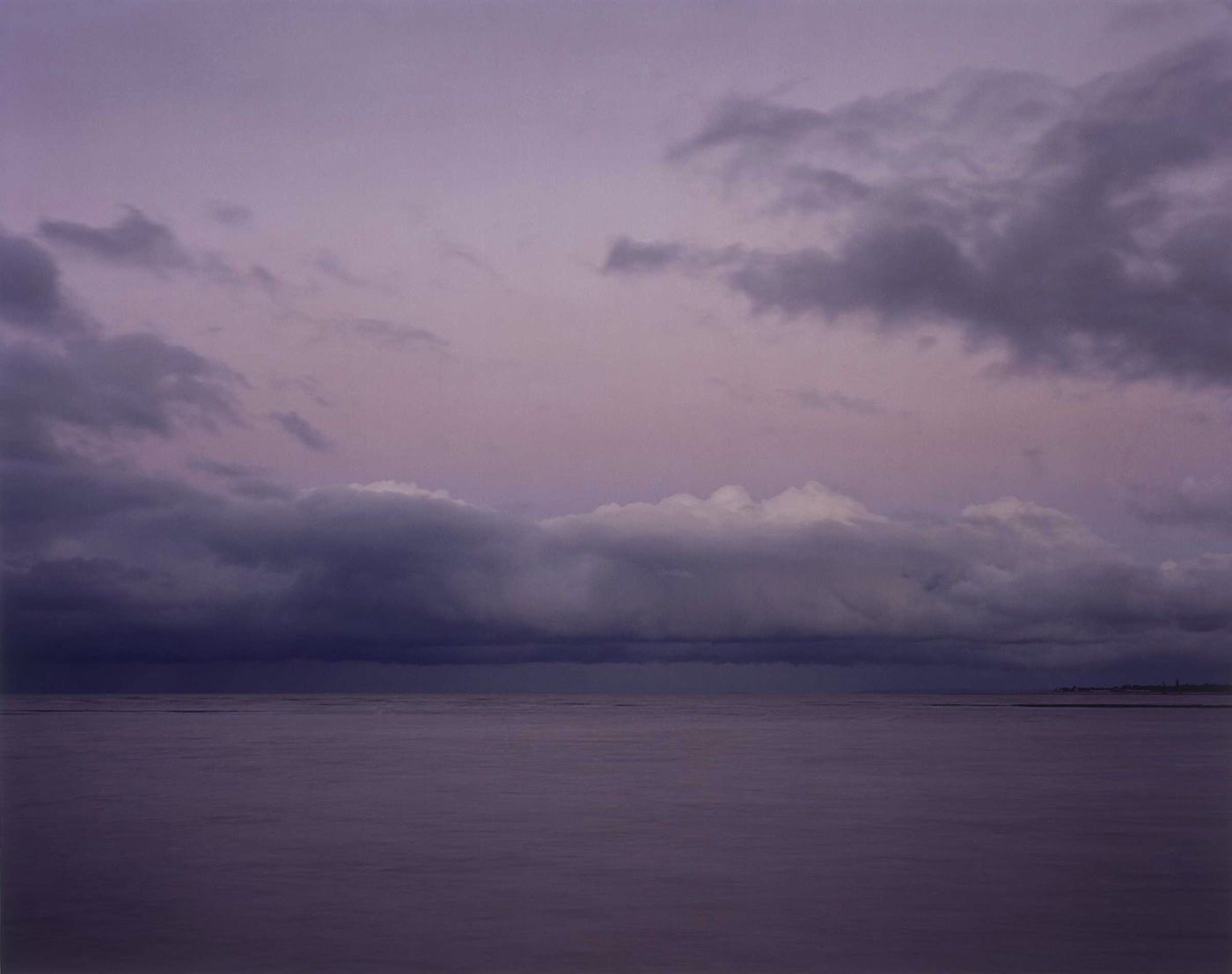
Press release from the Deichtorhallen Hamburg website
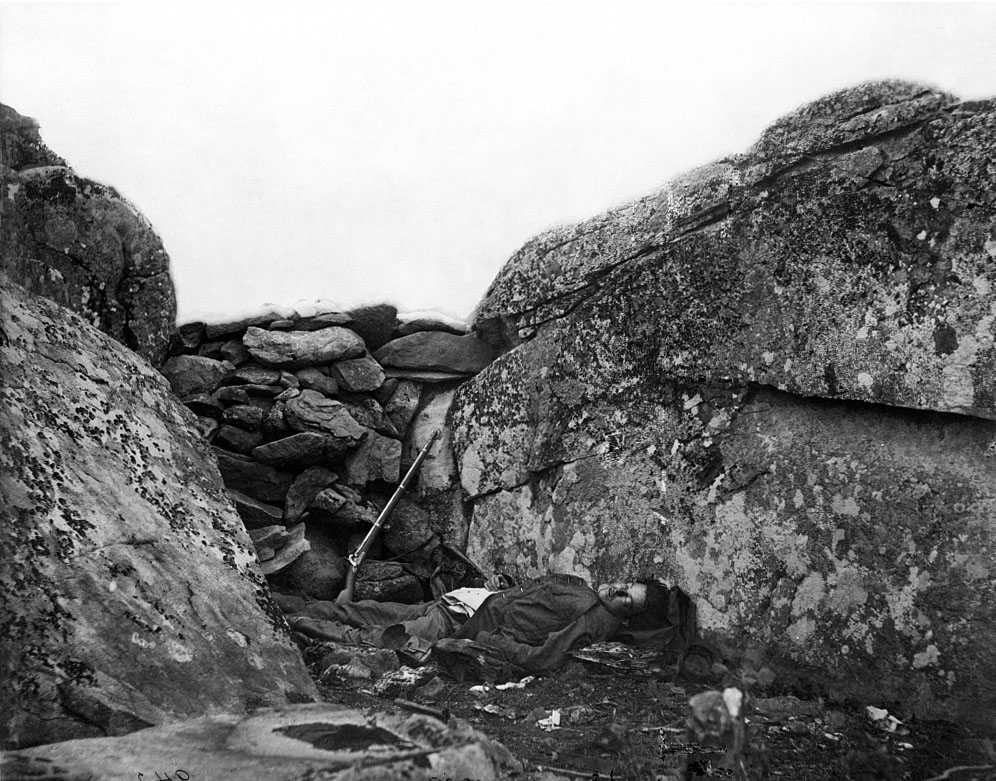
 

Wim Wenders (German, b. 1945) 'Dinosaur and Family, California' 1983
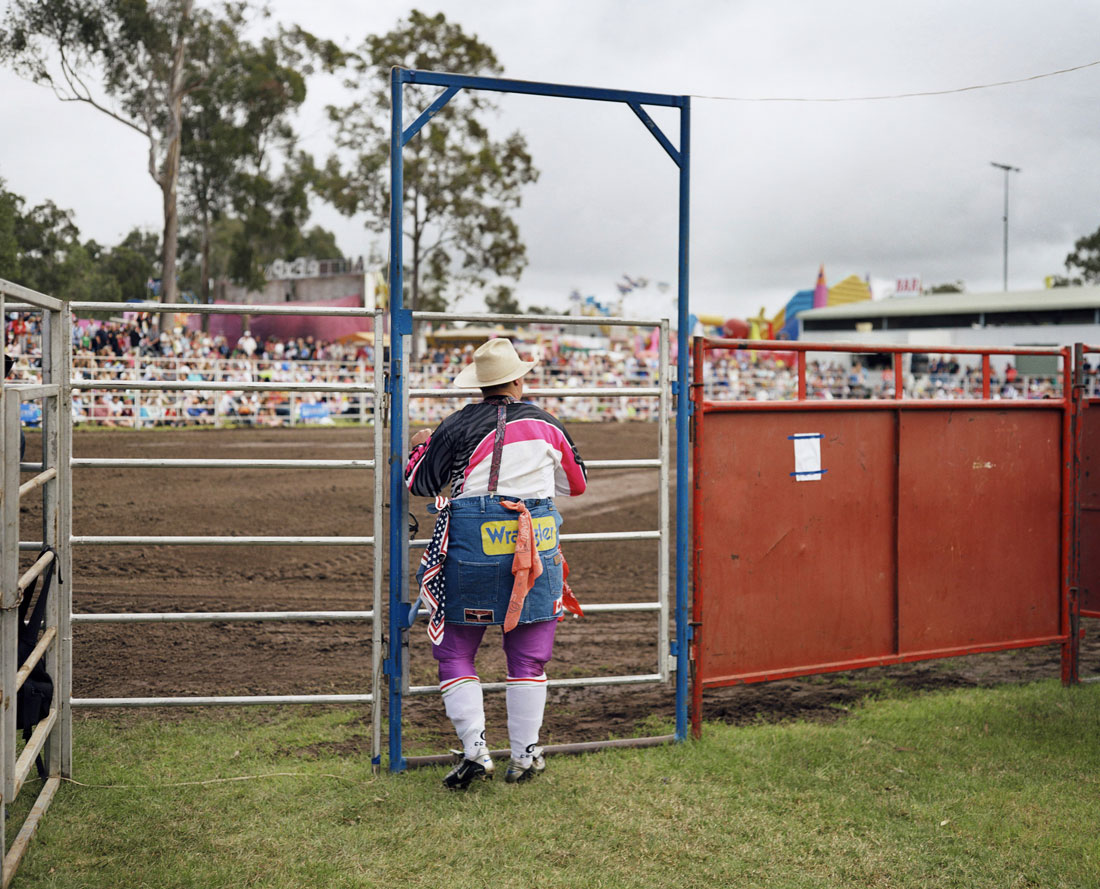
 

Wim Wenders (German, b. 1945)
Dinosaur and Family, California
1983
C-print
127.7 x 168.3 x 5cm
Courtesy Wenders Images


Wim Wenders (German, b. 1945) 'Black Square' 2002


Wim Wenders (German, b. 1945)
Black Square
2002
C-print
Courtesy Wenders Images


In Black Square (2002, New Mexico), the hues of blue and red contrast with, even highlight more saliently, the decaying wall and tatty old advert, which poignantly includes the words Why Not Now. This photograph shows a deft painterly skill with colour and composition, as does Street Corner in Butte (2003, Montana), with its sharp vertical and horizontal lines and stark contrasts that render the shadows almost black. With the bleak isolation and uncanny feel here, this could be a scene from an Edward Hopper (1924-67) painting; and Wenders’ nod to Hopper is clear in films like The End of Violence (1997), in which one scene recreates the painting Nighthawks (1946).

Katy Wimhurst. “Strangely Quiet or Quietly Strange: Wim Wenders’ Photography,” on the Whimsylph Writes January 19, 2014 [Online] Cited 10/09/2024


Wim Wenders (German, b. 1945) 'Street Corner Butte, Montana' 2003


Wim Wenders (German, b. 1945)
Street Corner Butte, Montana
2003
C-print
186 x 224cm
Courtesy Wenders Images


These massive pictures work best when they serve Wenders’ painterly eye. So much contemporary colour photography is neutrally descriptive, offering a bland, flat, digital obviousness. Intensely expressive colour gives Wenders’ most involving images a super-reality that becomes an aspect of their strangeness and quietness. On the roof of a skyscraper in São Paolo, waiting for a helicopter taxi, he notices the spectacularly vivid greens of the air-conditioning units – something soft, green, alien and slightly alarming is growing inside, around one of the rims. In a secluded back yard in Moscow, he chances upon a framed painting of a stag done in orange, green and yellow, which is in curious, almost too perfect harmony with the walls and fallen leaves. In a Hopperesque return to an empty street corner in Butte, Montana, he finds broad strokes of yellow, ochre, brown, pale green and blue; at this inflated, painterly scale, every last brick registers as a lustrous dab of pigment.

Rick Poynor. “Wim Wenders’ Strange and Quiet Places,” on the Design Observer website 21st April 2011 [Online] Cited 03/08/2024


Wim Wenders (German, b. 1945) 'The Quay Wall, Onomichi' 2005


Wim Wenders (German, b. 1945)
The Quay Wall, Onomichi
2005
C-print
186 x 225.8cm
Courtesy Wenders Images


Wim Wenders (German, b. 1945) 'The Painter's Palette, Onomichi' 2005


Wim Wenders (German, b. 1945)
The Painter’s Palette, Onomichi
2005
C-print
132.6 x 133cm
Courtesy Wenders Images


Wim Wenders (German, b. 1945) 'On Mount Etna, Sicily' 2007


Wim Wenders (German, b. 1945)
On Mount Etna, Sicily
2007
C-print
186 x 213cm
Courtesy Wenders Images

Wim Wenders (German, b. 1945) 'Sun Bather, Palermo' 2007


Wim Wenders (German, b. 1945)
Sun Bather, Palermo
2007
C-print
132 x 148cm
Courtesy Wenders Images


Wim Wenders (German, b. 1945) 'Open Air Screen, Palermo' 2007


Wim Wenders (German, b. 1945)
Open Air Screen, Palermo
2007
C-Print
186 x 213cm
Courtesy Wenders Images


Wim Wenders (German, b. 1945) 'Ferris Wheel, Armenia' 2008


Wim Wenders (German, b. 1945)
Ferris Wheel, Armenia
2008
C-Print
Courtesy Wenders Images


Wim Wenders (German, b. 1945) 'Cemetery in the City, Tokyo' 2008


Wim Wenders (German, b. 1945)
Cemetery in the City, Tokyo
2008
Digital C-print
Courtesy Wenders Images


Sammlung Falckenberg | Phoenix Kulturstiftung
Wilstorfer Straße 71, Tor 2
21073 Hamburg – Harburg

Opening hours:
Each Sunday from 12 until 5 pm, no prior registration required

Sammlung Falckenberg website

LIKE ART BLART ON FACEBOOK

Back to top