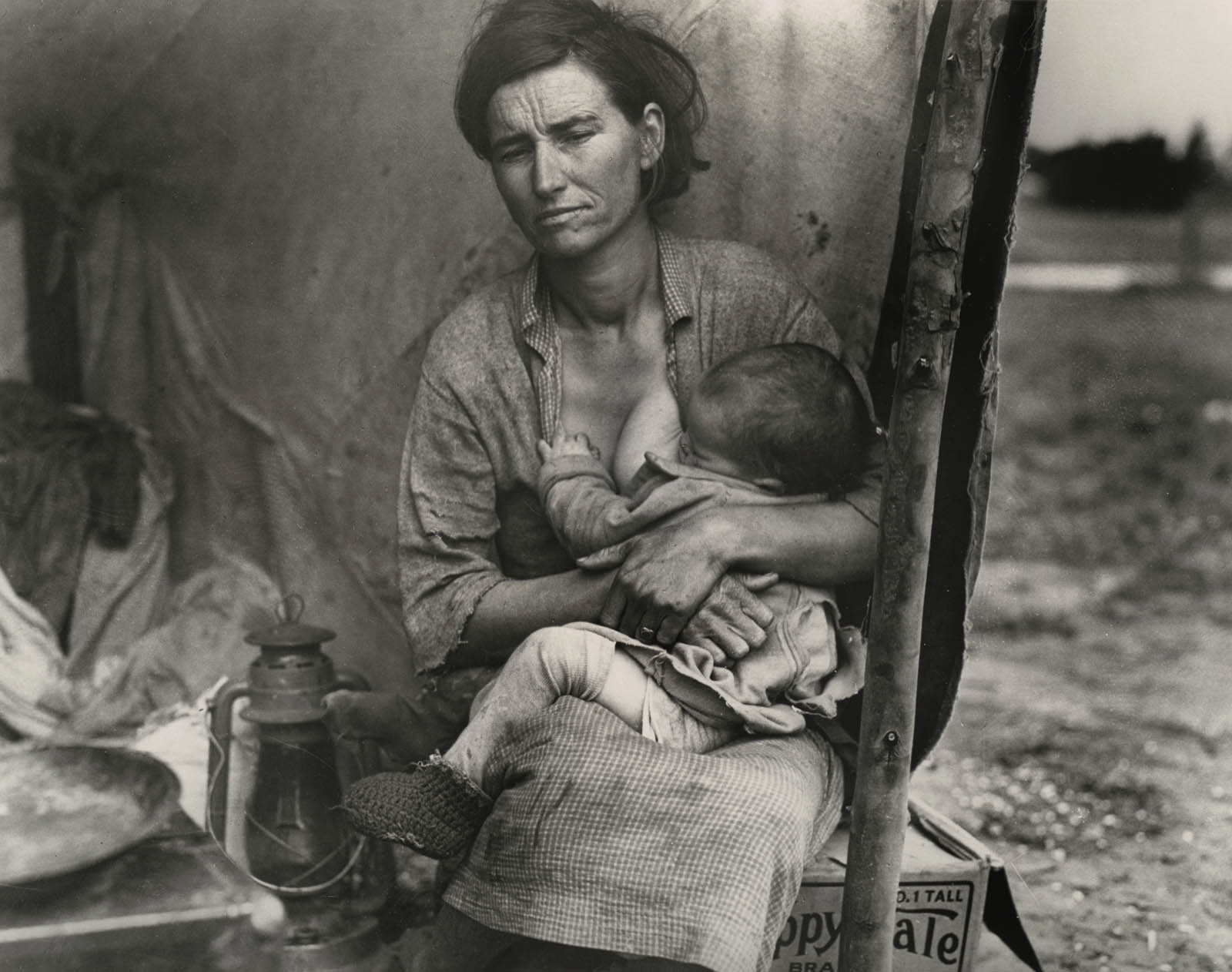
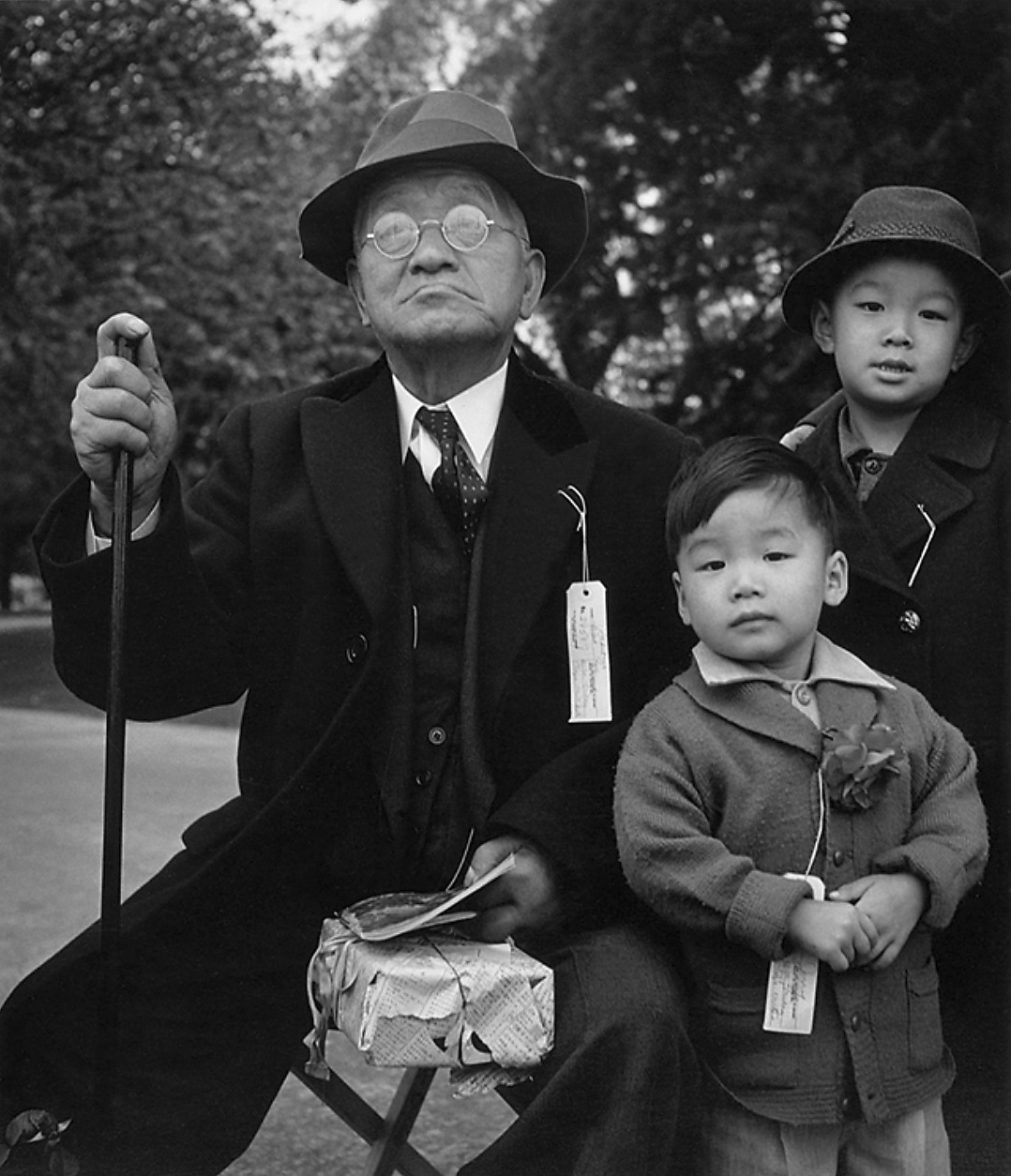
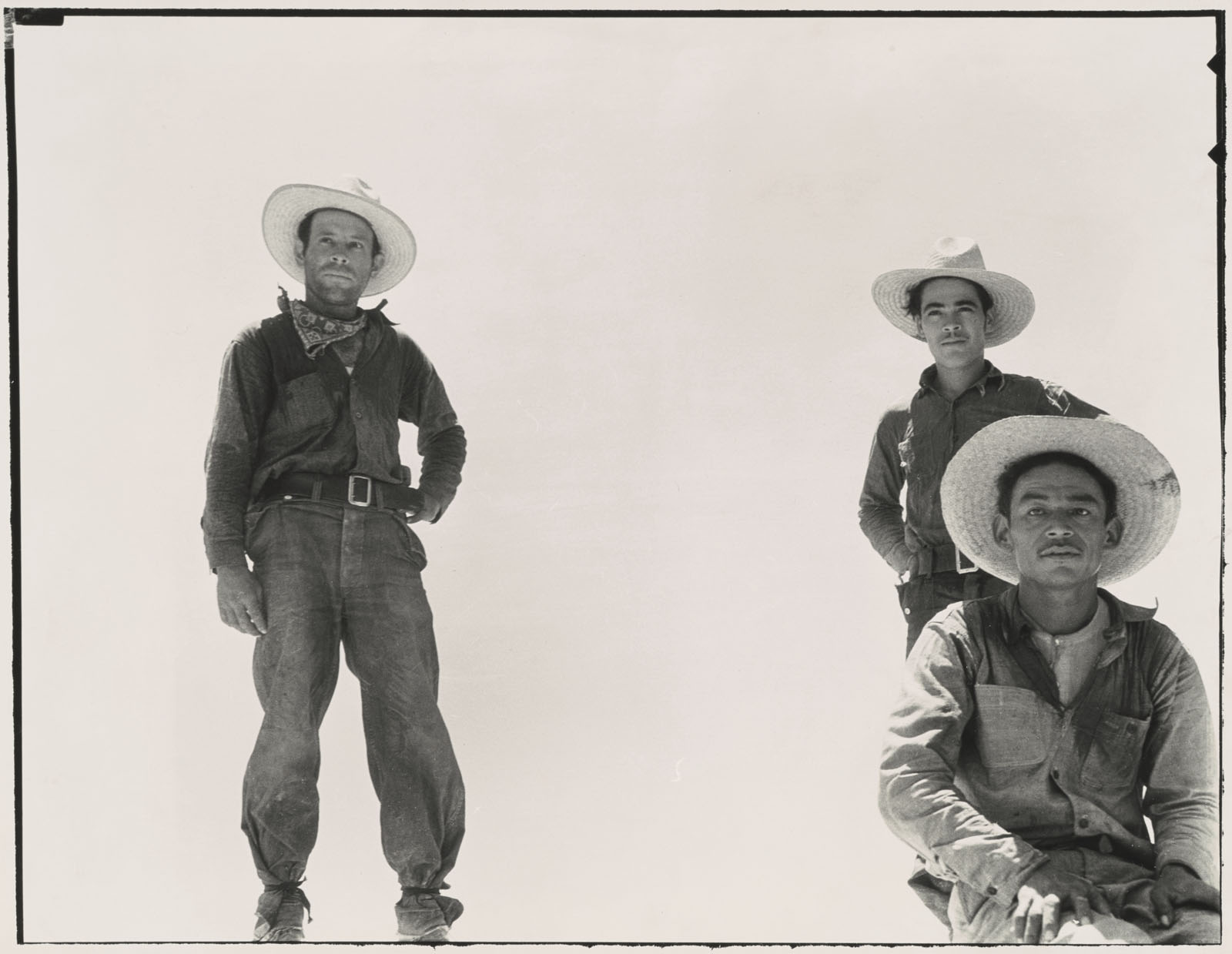
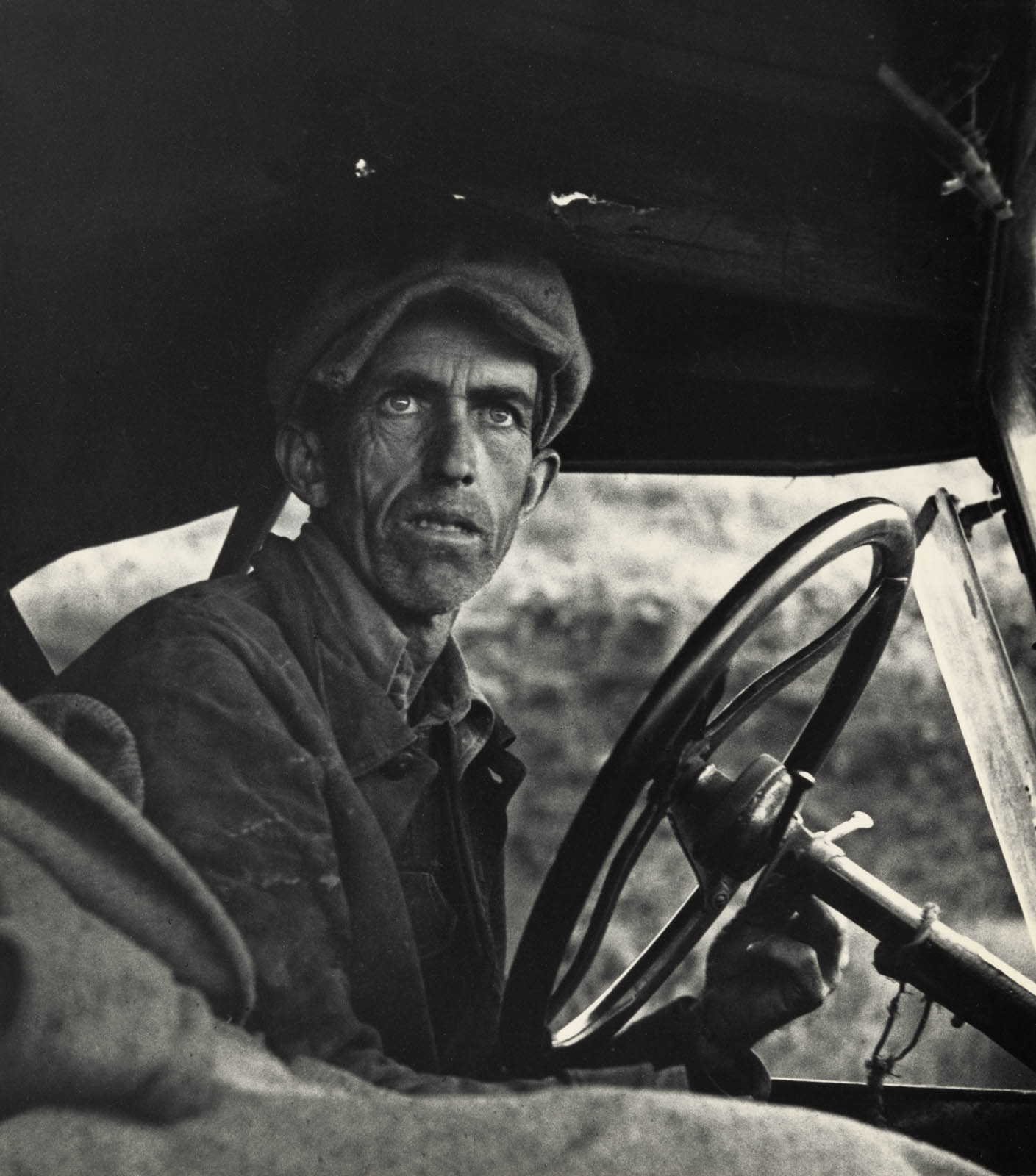
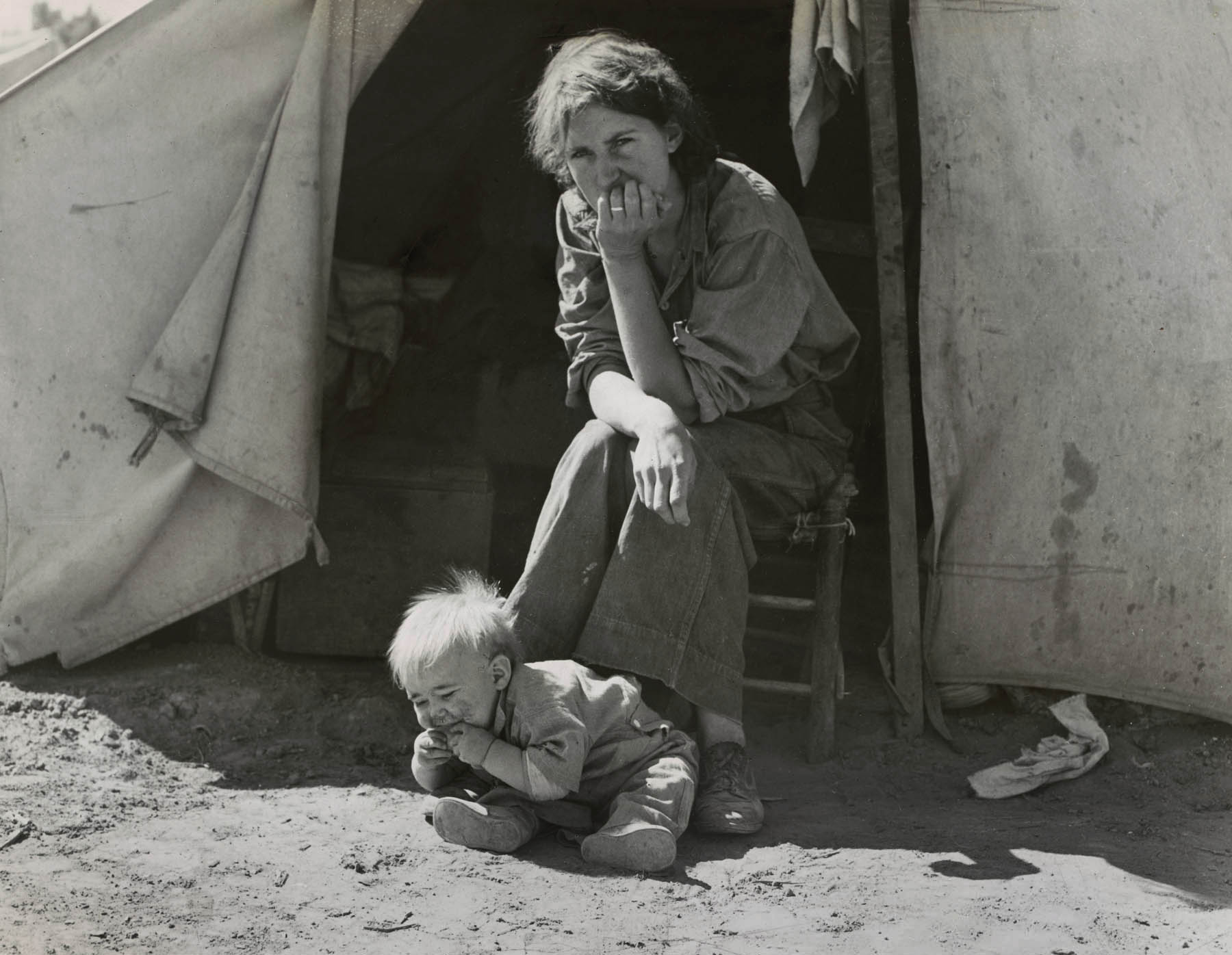
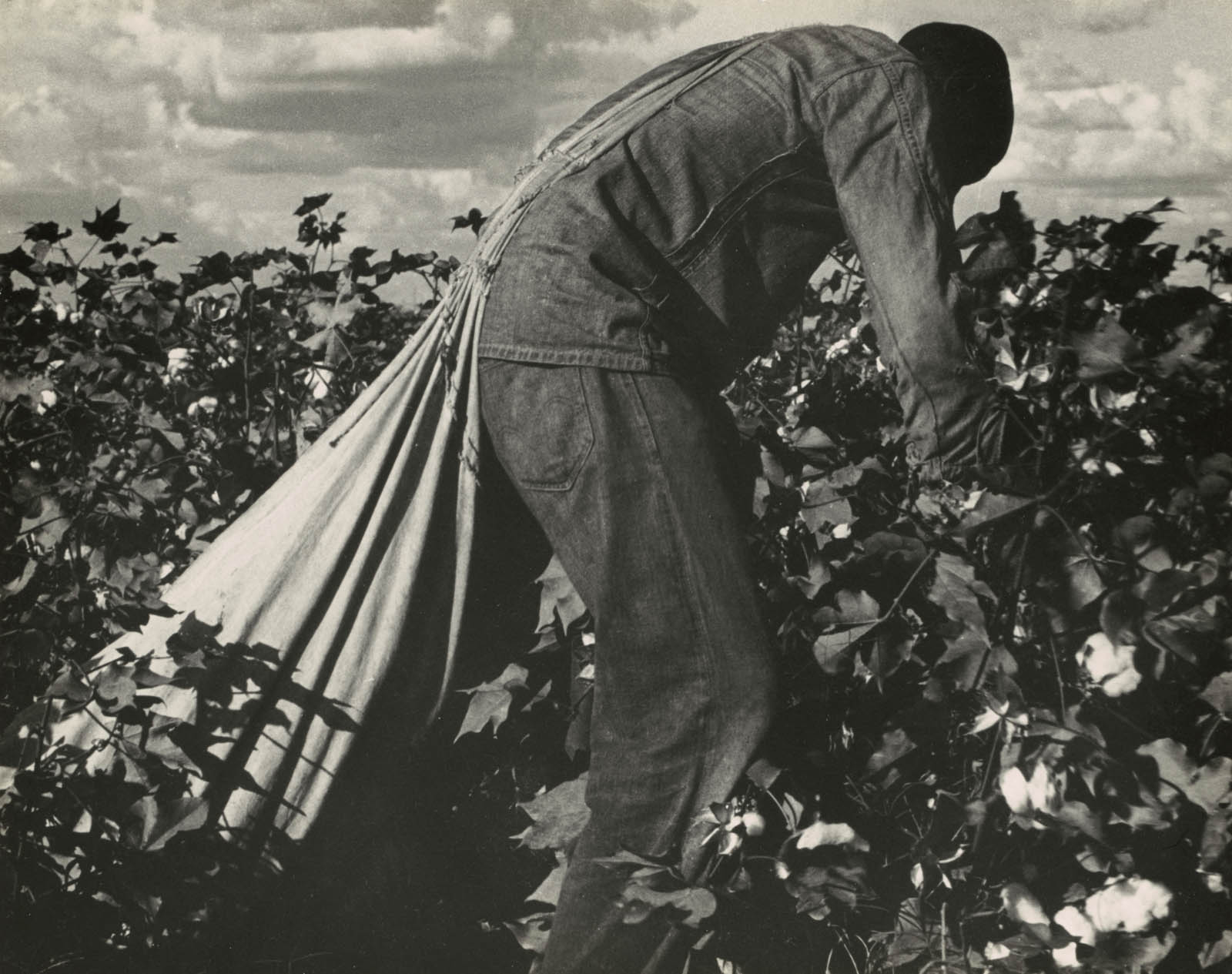
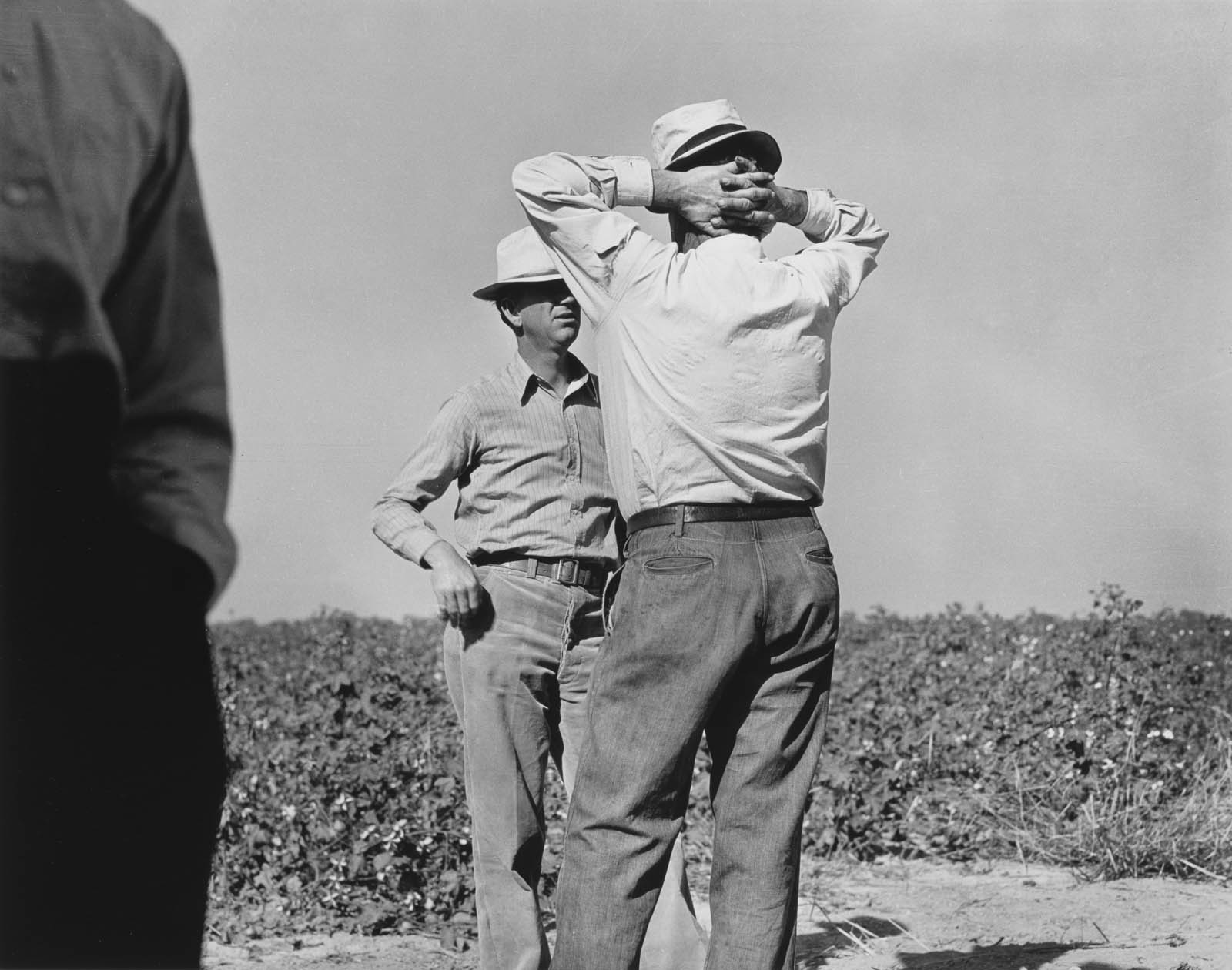
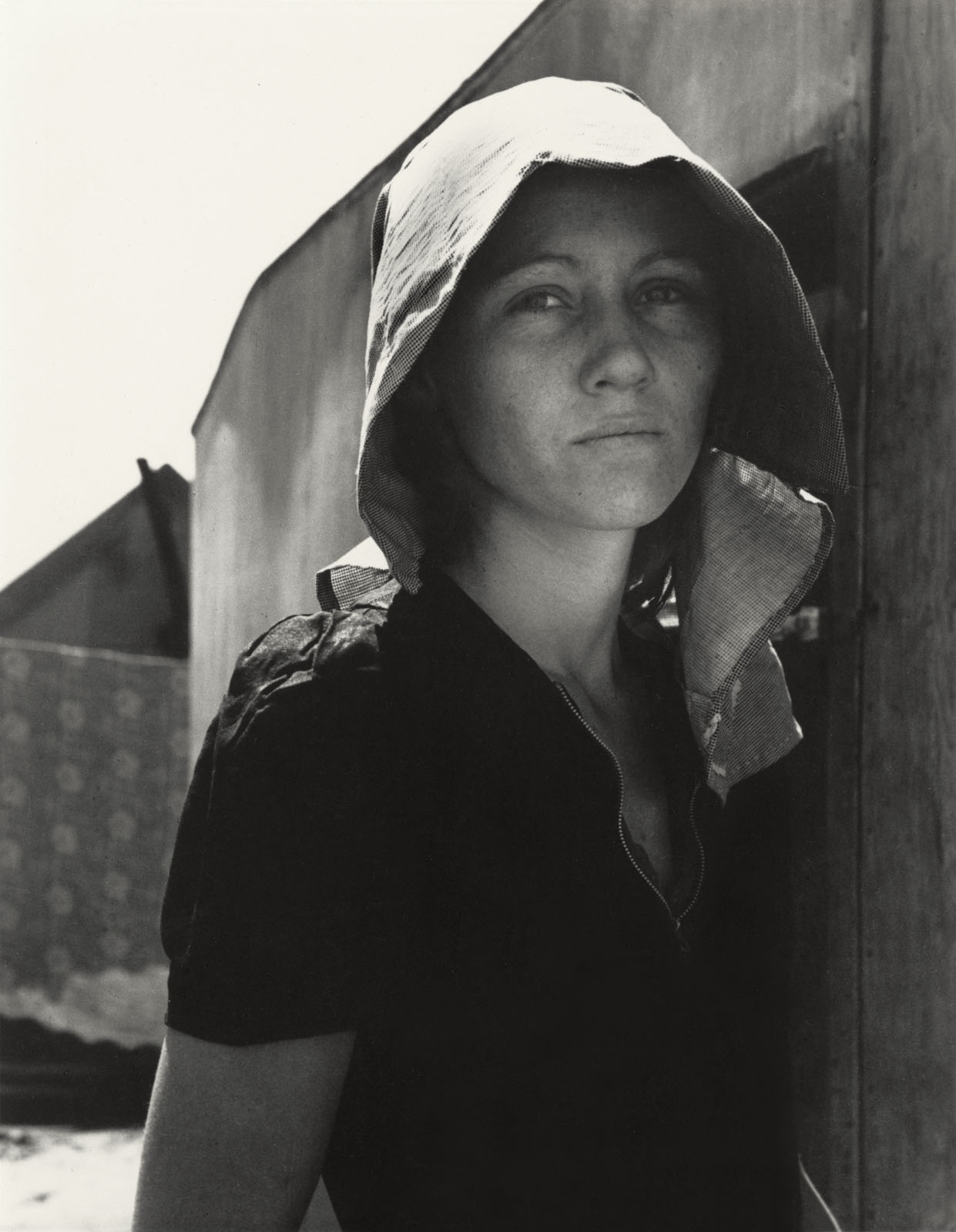
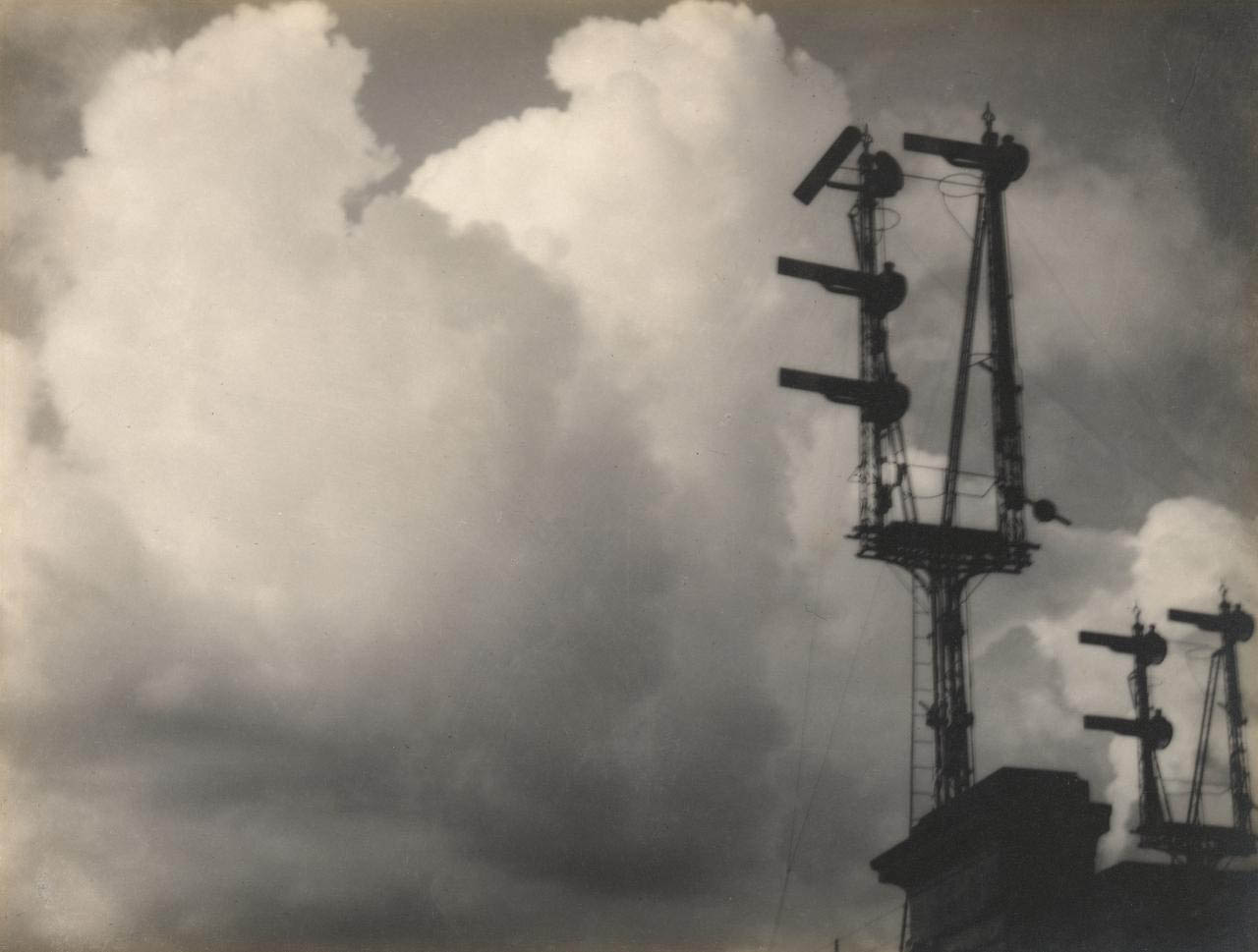
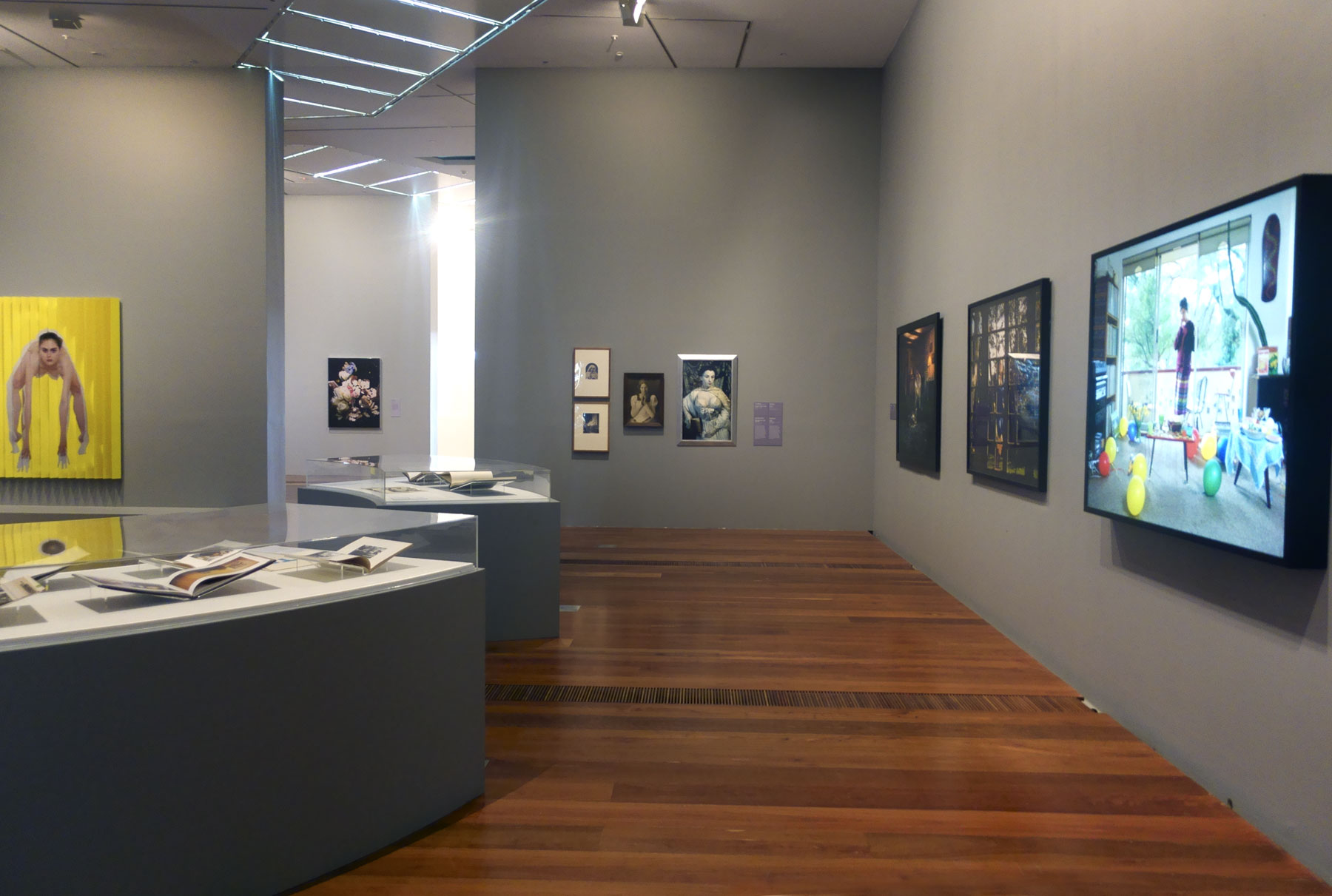
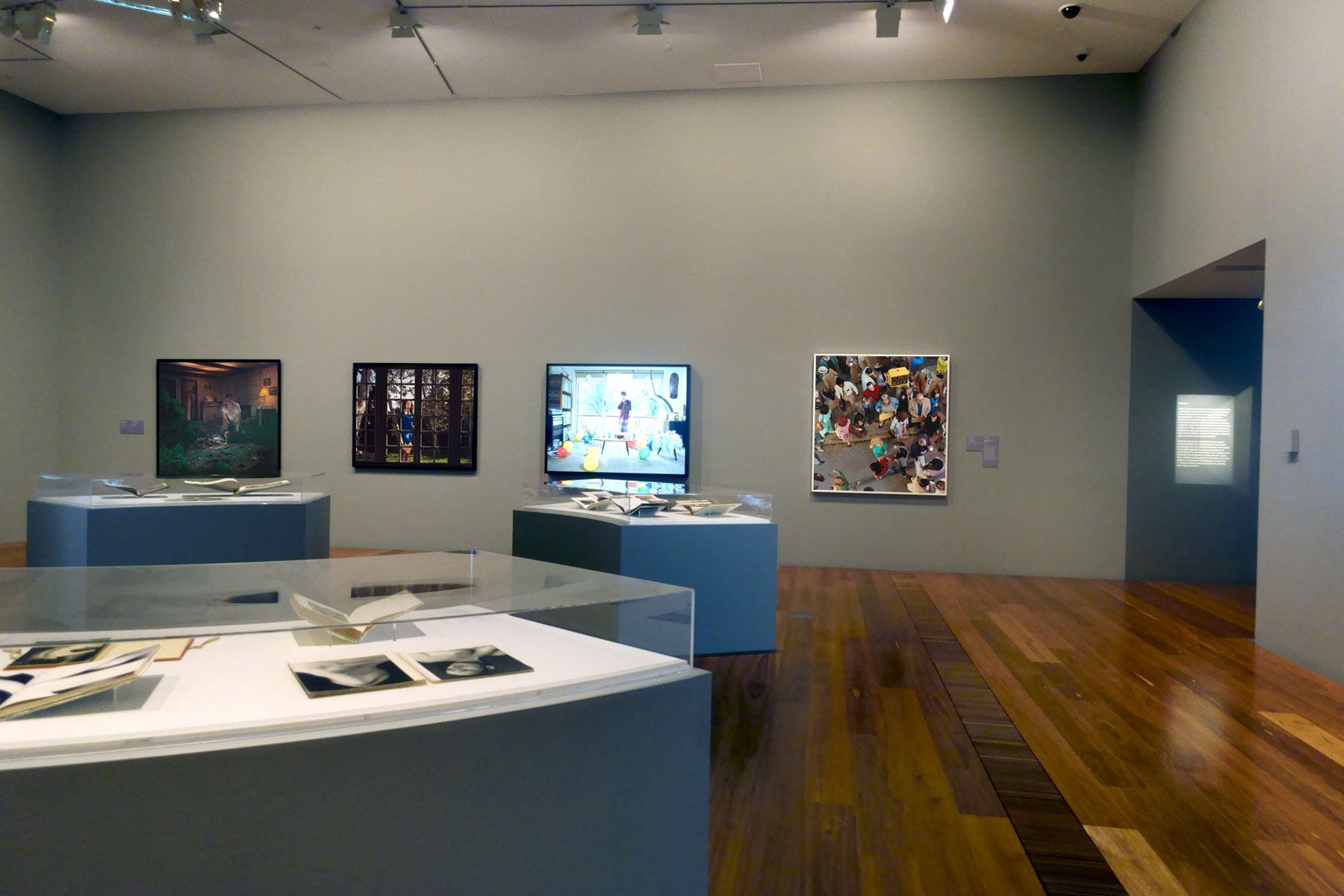
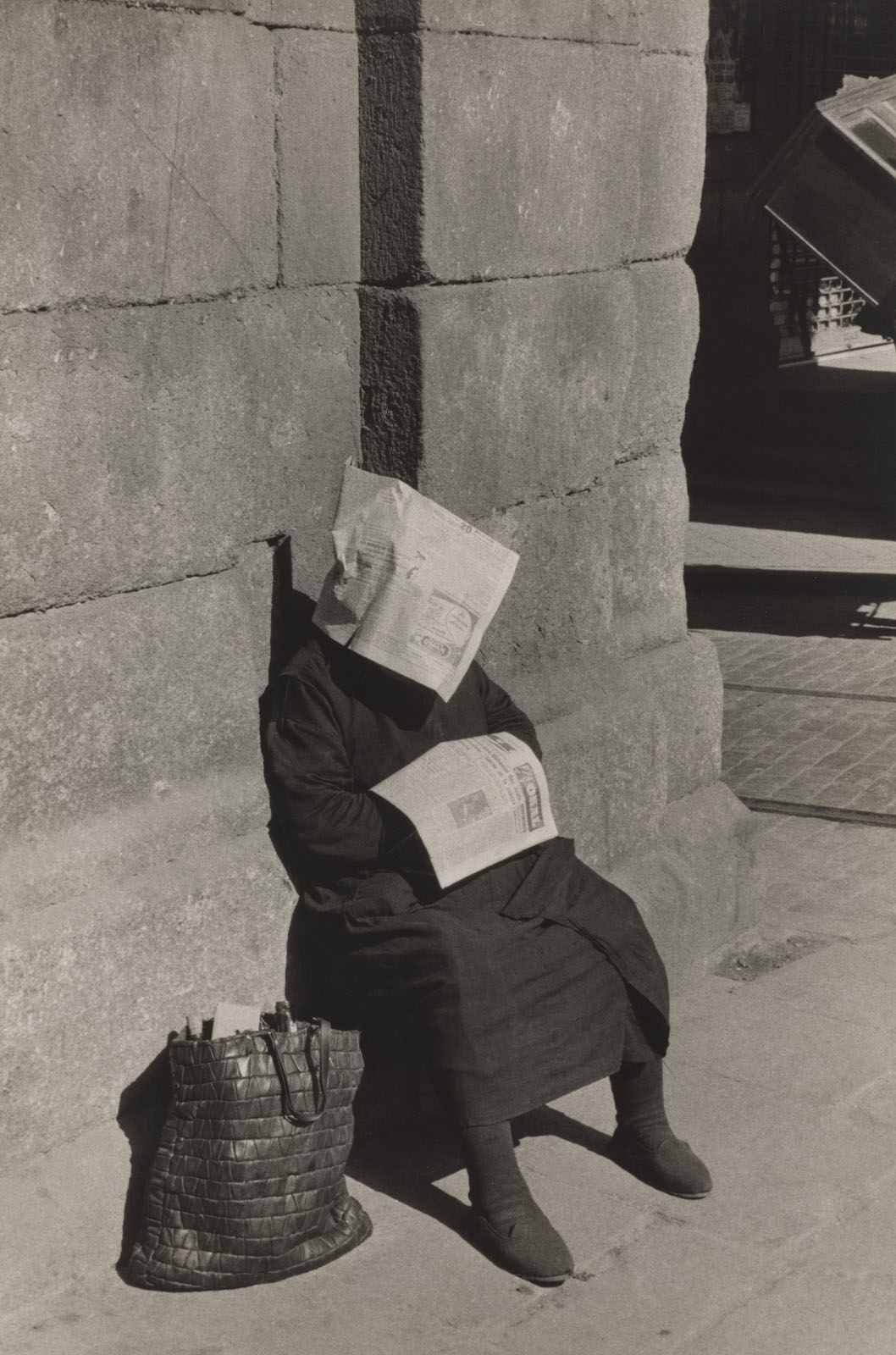
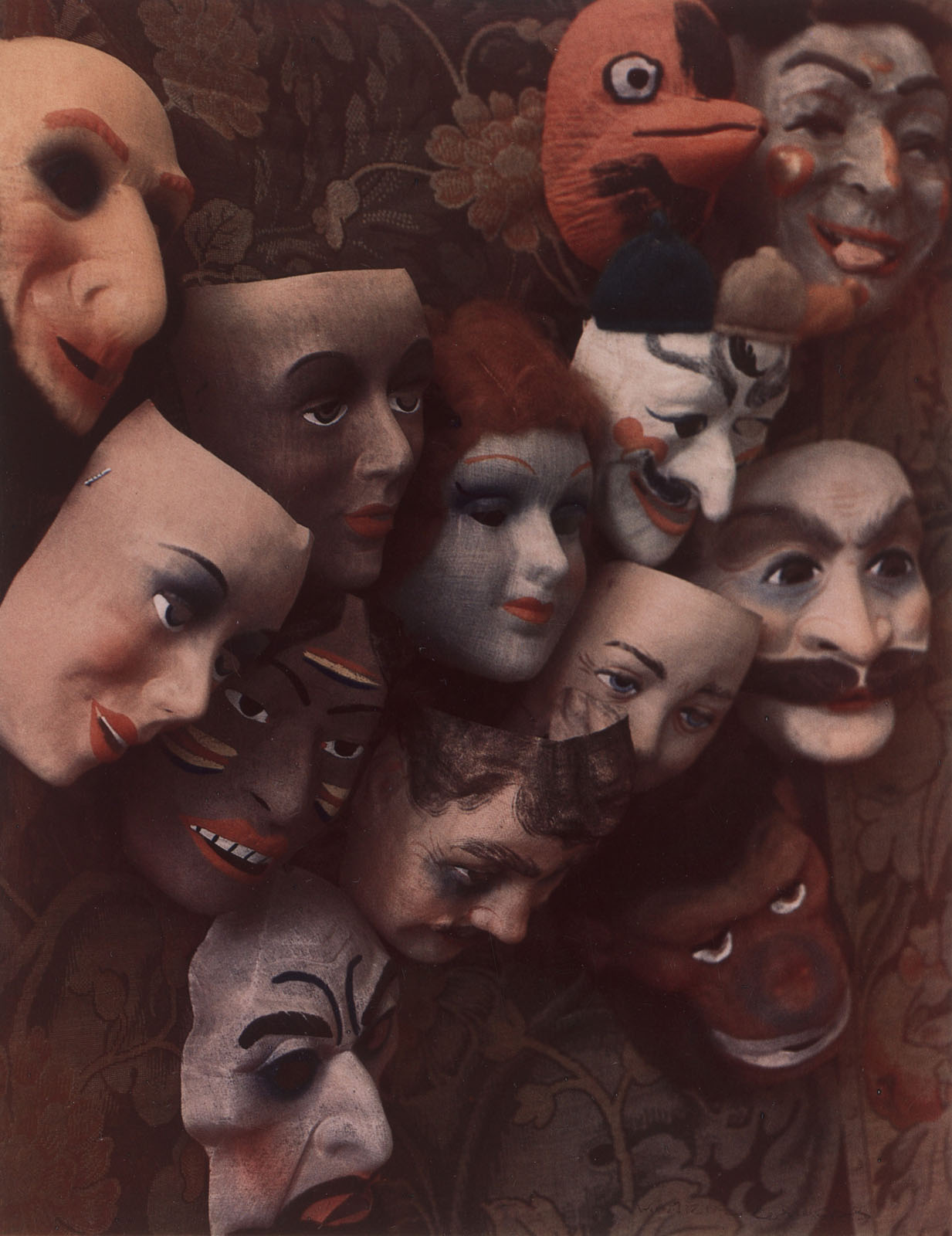
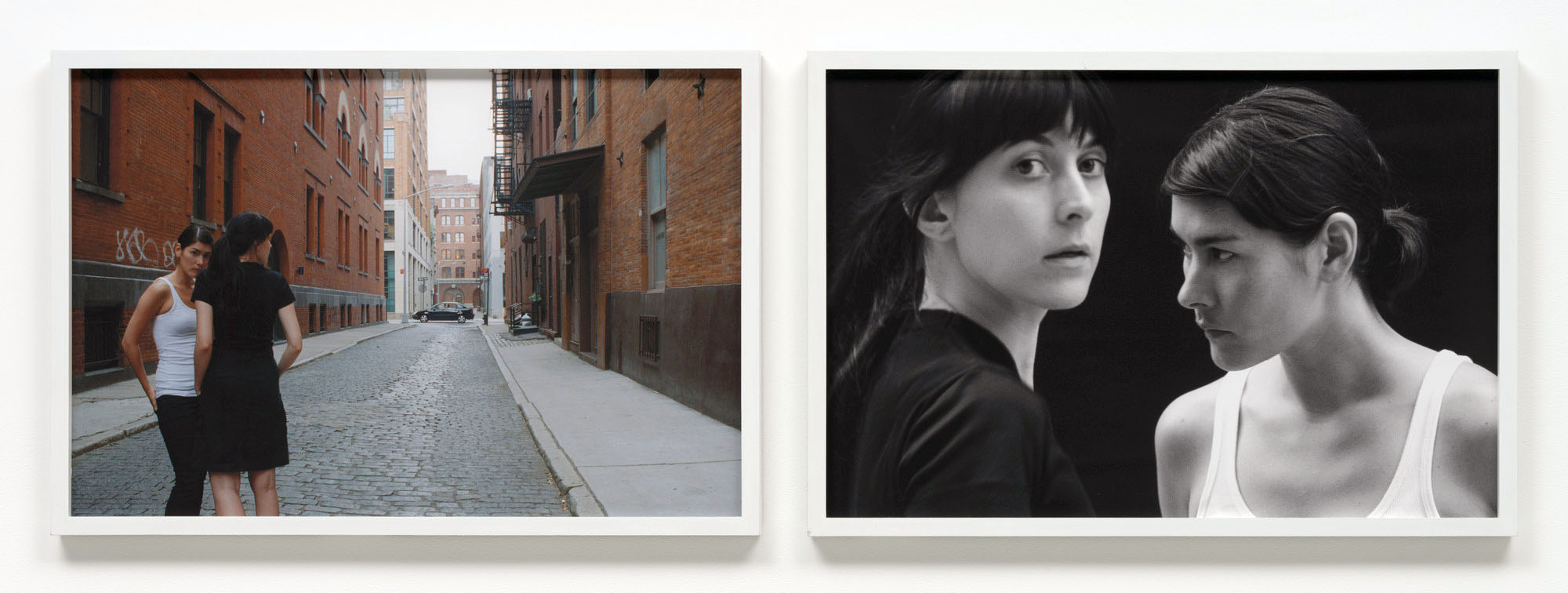
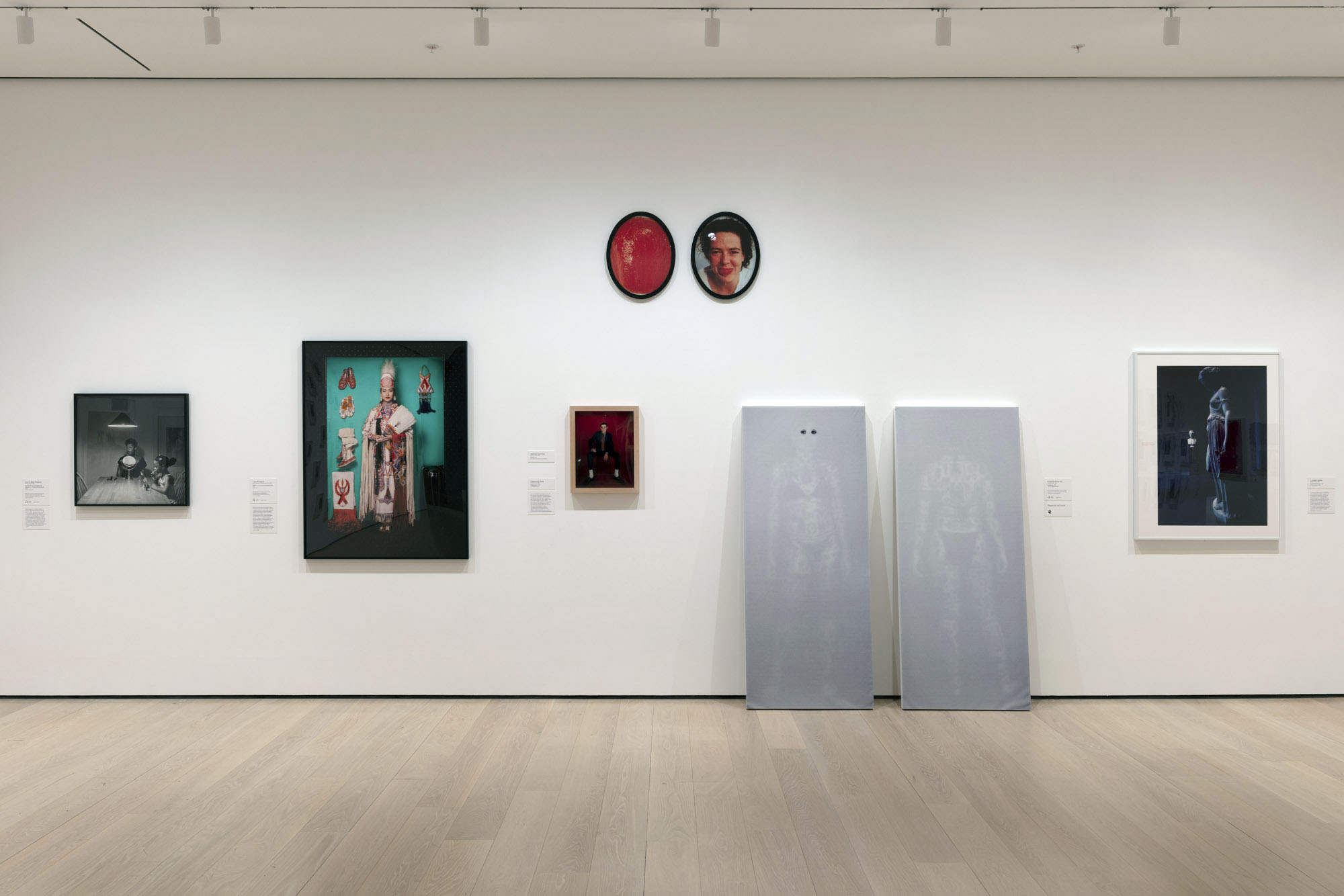
Exhibition: ‘A Long Arc: Photography and the American South since 1845’ at the Virginia Museum of Fine Arts, Richmond

Exhibition dates: 5th October, 2024 – 26th January, 2025


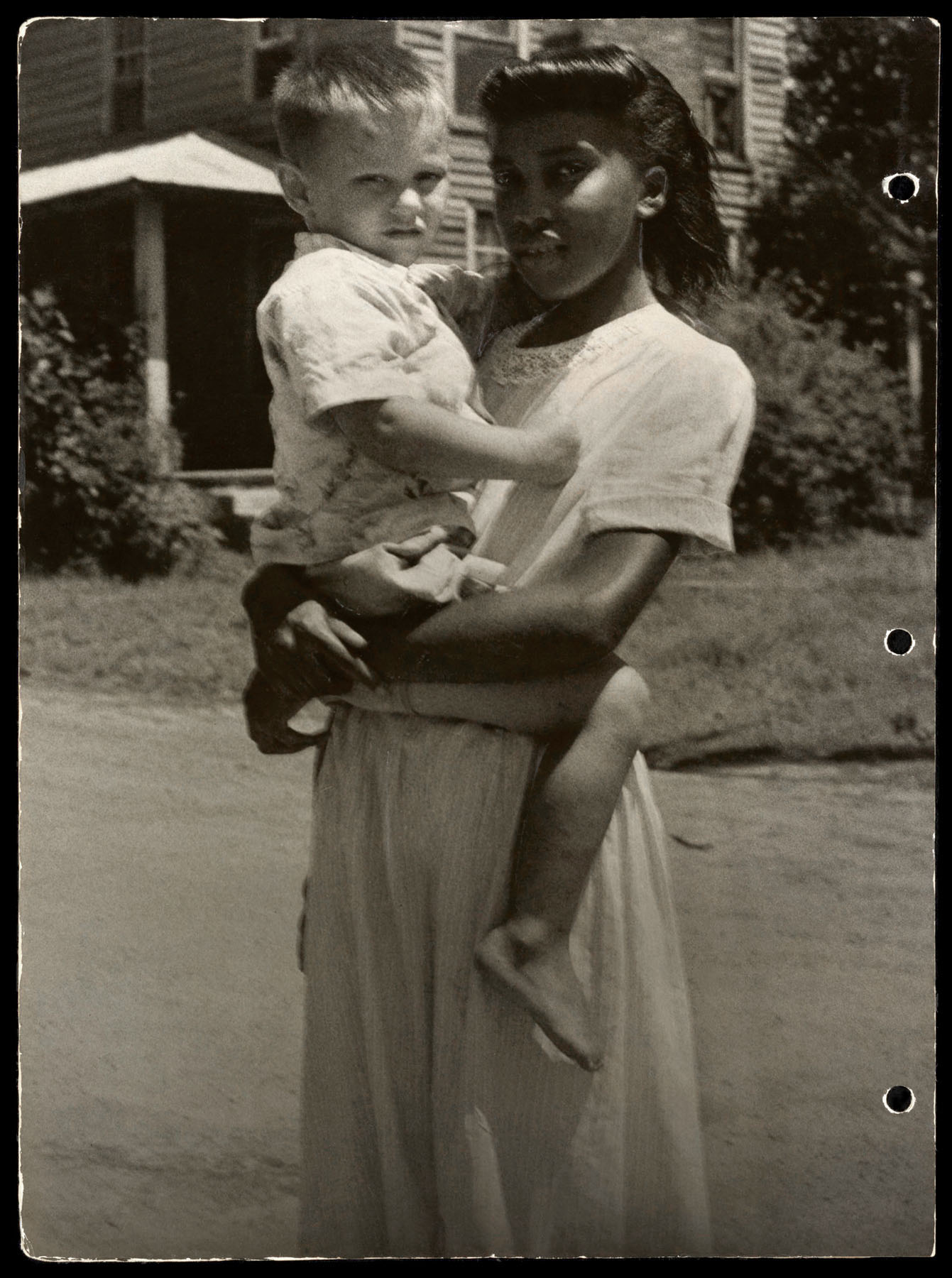
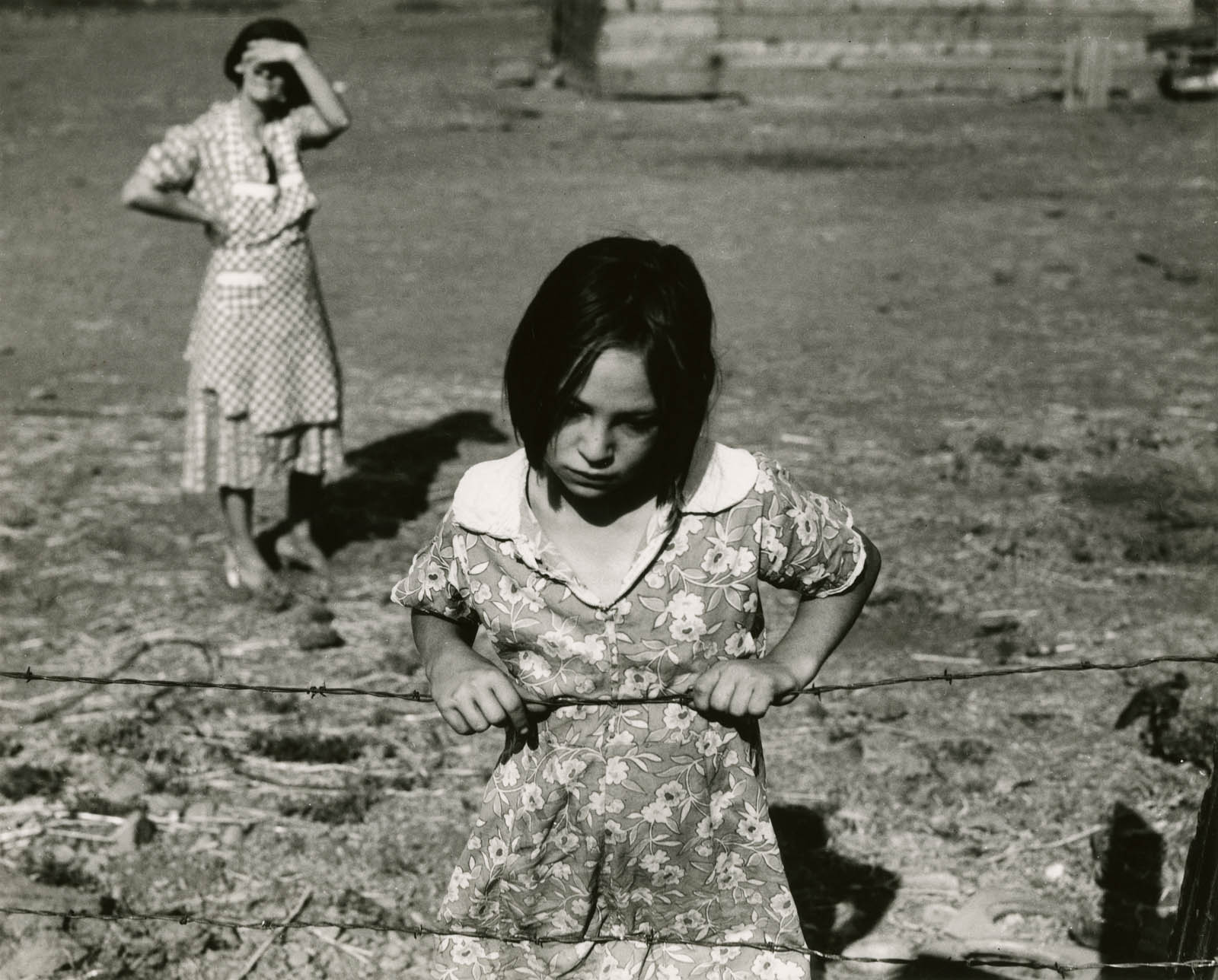
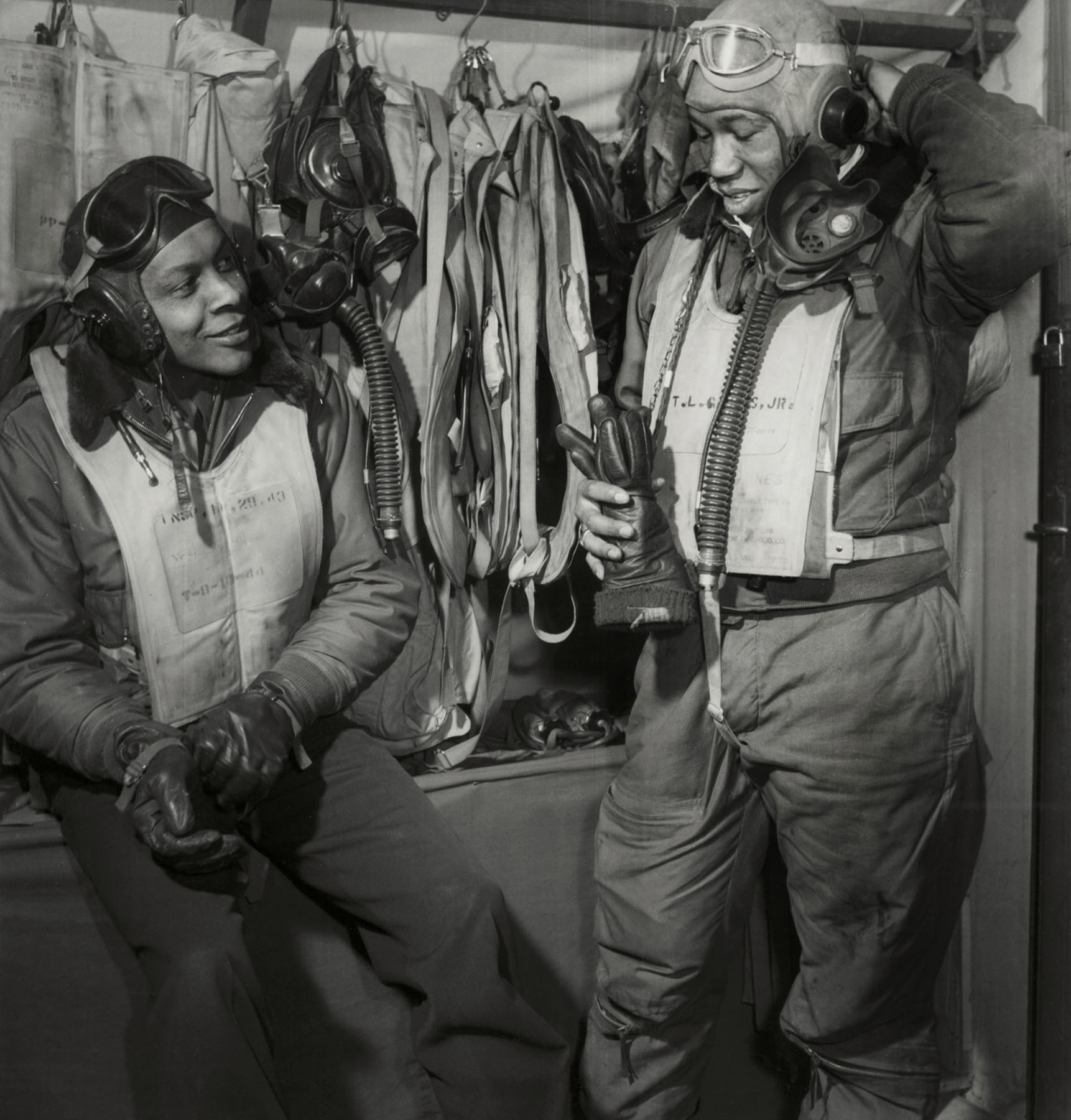
John Vachon (American, 1914-1975) 'Untitled photo [possibly related to Farms of Farm Security Administration clients, Guilford and Beaufort Counties, North Carolina, April 1938]' 1938


John Vachon (American, 1914-1975)
Untitled photo [possibly related to Farms of Farm Security Administration clients, Guilford and Beaufort Counties, North Carolina, April 1938]
1938
Negative

Please note: photograph not in the exhibition


Contested ground

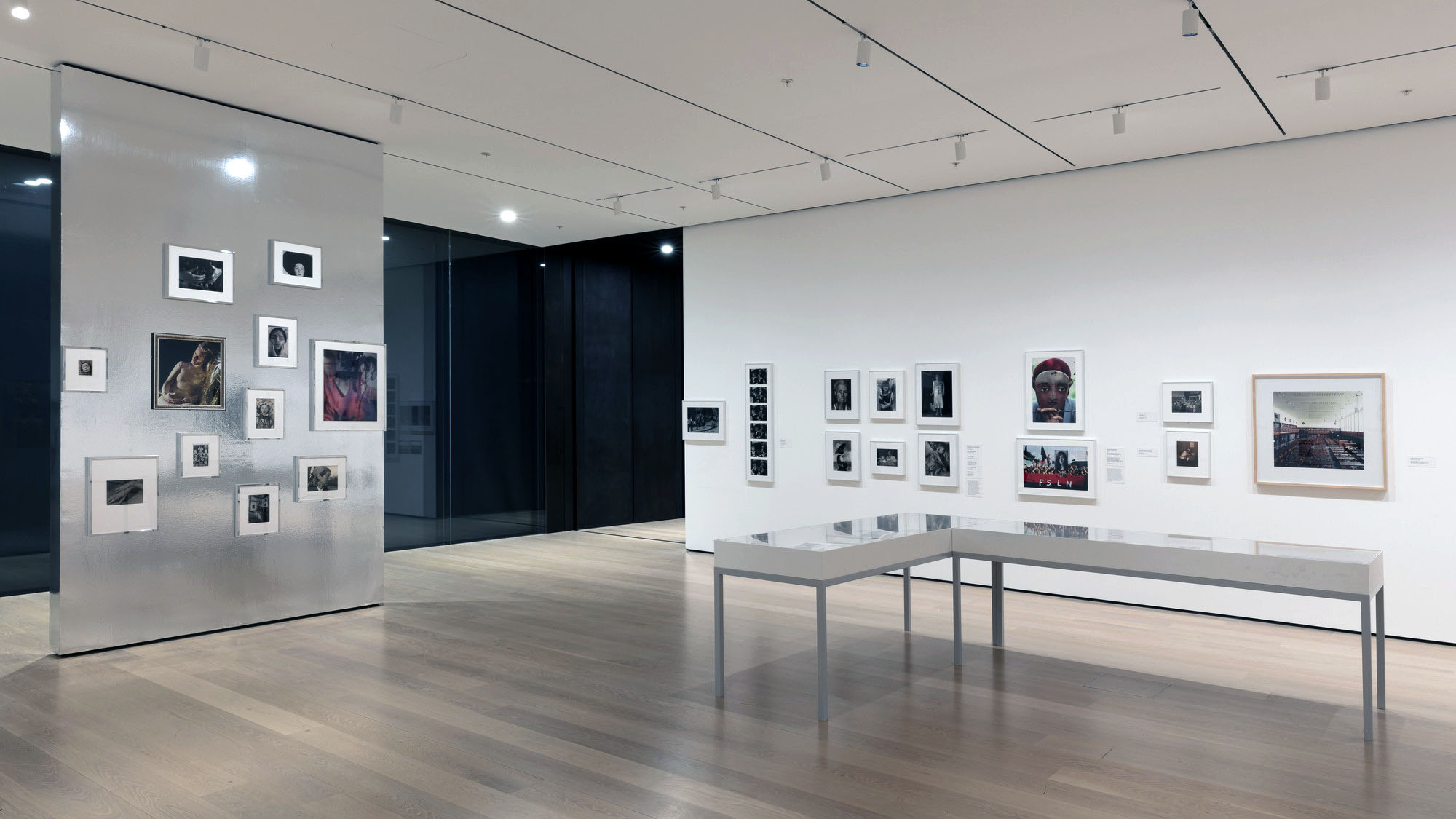
This exhibition traces, through the development of documentary photography, the interweaving strands that make up the fluidity of identity, race and culture that is the American South, addressing through a variety of photographic processes and styles across a large time period the concerns that have engaged human beings in this area for decades and now centuries: freedom, equality, liberty, nation, religion and economic subjugation. As the introductory panel says, “A Long Arc” demonstrates “how Southern photography has shaped American concepts of race, place, and history.”

Gregory Harris, curator of photography at the High Museum of Art in Atlanta, observes that, “one of the main themes of the exhibition is how race is articulated and how racial hierarchies and racial stereotypes are reinforced through photographs across the history of photography.” “A Long Arc: Photography and the American South since 1845″ shields viewers from nothing, presenting the South as a chilling microcosm of U.S. culture. The region’s history of violence, disenfranchisement and political strife are not censored in the exhibit.”

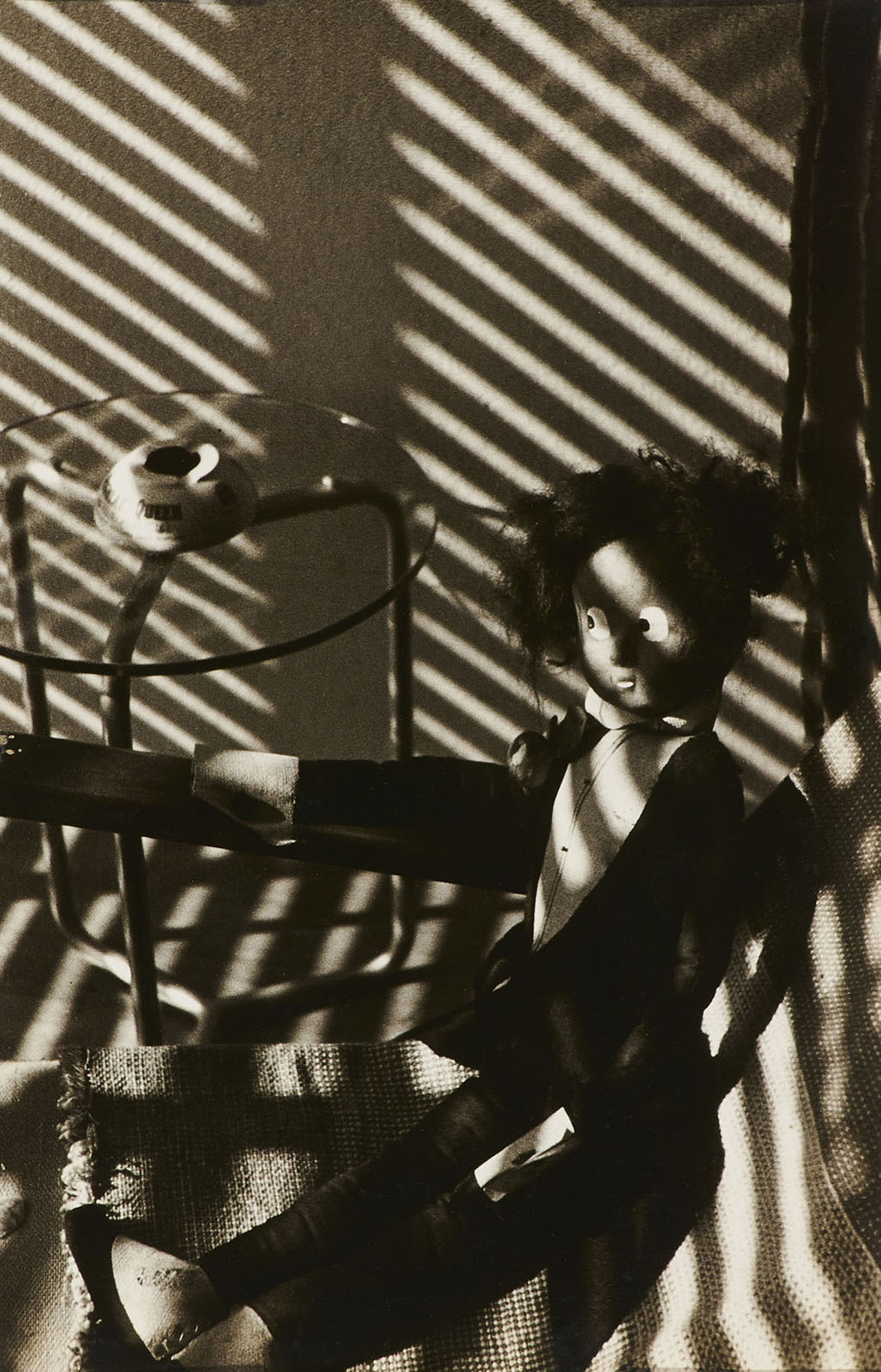
Periods and themes addressed in the exhibition include but are not limited to the Antebellum South, abolition of slavery, American Civil War, Reconstruction era, Jim Crow era, Farm Security Administration, Southern Gothic, Civil Rights Movement and, “in the most modern section, images dive into Southern femininity, the growing acceptance of interracial relationships in the Deep South and the emergence of a thriving LGBTQIA+ culture.”

This is such a complex and contested field to address in one photographic survey exhibition but it seems to me an admirable way to interrogate the ongoing histories and injustices of the American South. As my friend and fellow photographer Colin Vickery observes, “the sheer variety of images gives a richness of viewing experience that I think goes some way towards illustrating life, in all its complexities and contradictions, of the region.” Well said.

“A Long Arc: Photography and the American South since 1845” succeeds in surveying the South in its most complete form: not as a place that is “backward,” but as a place that has forever been the epicenter of contention and change. Documentary photography thrives in the South because the region has always been ground zero of the social disorder reverberating throughout the nation, a place that seems lost in the past. Modern photographers honor the region’s complicated legacy by accenting even the most idyllic, beautiful scenes with a nod to its brutalistic history. The South is not the South without acknowledgment of the bloodshed on its soil…”1

While I am certainly no American scholar, far from it, to me this opposition of utopian and dystopian seems to reflect the infinite duality of the American psyche: the desire for attainment of money and success (any one can become president, anyone can make good) versus the dark underbelly of a brutal history: puritanical, one nation under god, a nation conceived in Liberty, and dedicated to the proposition that all men are created equal … except that’s never going to happen, forever and ever amen.

Indeed this richly layered and nuanced exhibition seems to be more fully focused on the dystopic rather than any celebration of American South culture per se and here I am particularly thinking of all the achievements in the areas of arts, literature, food, music – for example the energy of gospel, bluegrass and jazz. Yes, there are poetic photographs in the exhibition but there is little sign of joy or happiness in any of the images.

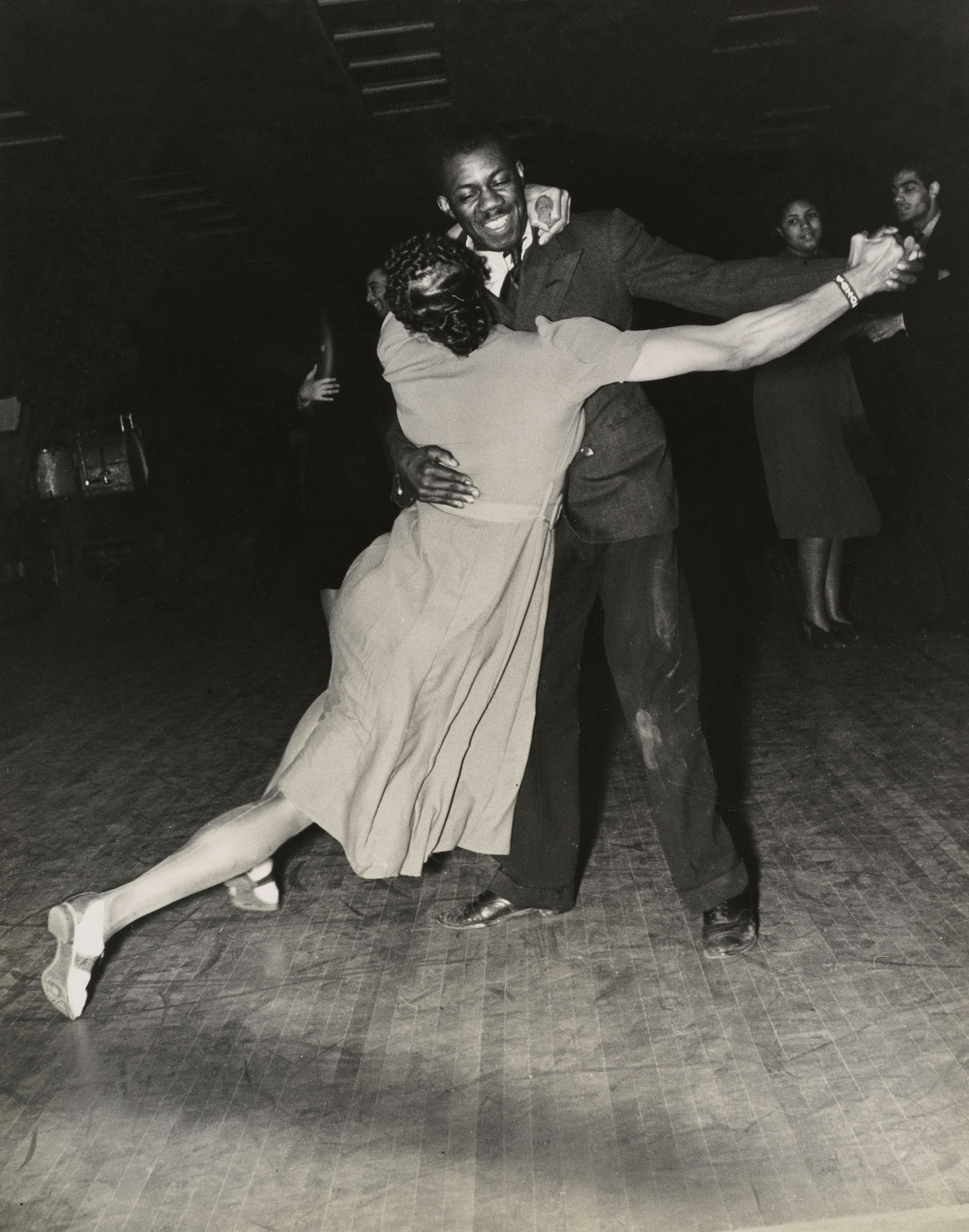
Margaret Renkl observes that, “The most powerful images capture the beauty and the tenderness and the self-possession of people who are living out their lives mostly invisible to the rest of the world,”2 and the stoicism of these lives, but I have struggled to find but a single photograph that evidences the joy of living among the assembled throng in this posting. Which is why I have included that most singular image at the top of the posting (not in the exhibition) by John Vachon of a Black American smiling and laughing. What a joy!

The Southern landscape can be seen as the repository of memory, history, and trauma but it can also be seen as the repository for families, love, kindness, respect and connection between human beings – not always opposition and conflict. And while the photographs in the exhibition “ask us to contemplate the dark, sublimated aspects of American popular culture, including violence, shame, and fear” they also ask us to share our experiences of who we are across time, race and culture. The photographs are memory containers for (still) living people.

By which I mean

Photographs are containers of, fragments of, memories of, histories of, events – remembrances of events – brought from past into present, informing the future, showing only snippets of the stories of both past and present lives. Parallel to the usual thought that photographs are about death, they are also memory containers for (still) living people.

As we look back into these photographs the people in them look forward to us, and live in us here and now. They expect more from us, to fight still against the further rise of intolerance, racism and right wing fascism, and to grasp that the joys and mysteries of life should be open to all.

Dr Marcus Bunyan


1/ Sophia Peyser. “New High Museum exhibit captures South at its most macabre,” on The Emory Wheel website Sept 25, 2023 [Online] Cited 23/01/2025

2/ Margaret Renkl. “A Photo Can Tell the Truth About a Lie. Or a Lie About the Truth,” on The New York Times website Sept. 18, 2023 [Online] Cited 20/12/2024


Many thankx to the Virginia Museum of Fine Arts for allowing me to publish  the photographs in the posting. Please click on the photographs for a larger version of the image.


“I have a strong attraction to the American South. People there have a marvellous exterior – wonderful manners, warm friendliness until you touch on things you’re not supposed to touch on. Then you see the hardness beneath the mask of nice manners.”


Elliott Erwitt


“When it comes to the unspeakable facts in the history of America, it’s largely the artists who’ve been willing to show us what others would not.”

“The foundation of this country is built upon speakable tensions – between ideas that we love and hold dear, between liberty, equality, and slavery itself.”


Sarah Lewis


The most powerful images capture the beauty and the tenderness and the self-possession of people who are living out their lives mostly invisible to the rest of the world. Or of the scarred but beautiful landscapes they call home. Or of the ramifications of an unresolved history still unspooling in this history-haunted part of the country. …

The magnificence of a retrospective like this is not just the accounting offered by its historical sweep, but the way it conveys the immense complexity of this region, to inspire a renewed attention to the cruel radiance of what is. Suffering does not always lead to compassion and change, but photographs like these remind us that standing in witness to suffering surely should.


Margaret Renkl. “A Photo Can Tell the Truth About a Lie. Or a Lie About the Truth,” on The New York Times website Sept. 18, 2023 [Online] Cited 20/12/2024


“… no small part of the show’s richness is the allowance it makes for inwardness and mystery. “Southern Gothic,” after all, is no less a part of the region’s cultural baggage than “Lost Cause” or “New South.” Among the most memorable images here, because they’re often the most inscrutable and / or evocative, come from Mann, E.J. Bellocq, Clarence John Laughlin, and Ralph Eugene Meatyard.”


Mark Feeney. “‘A long Arc’ bends toward justice at the Addison Gallery of American Art,” on The Boston Globe website March 7, 2024 [Online] Cited 24/12/2024
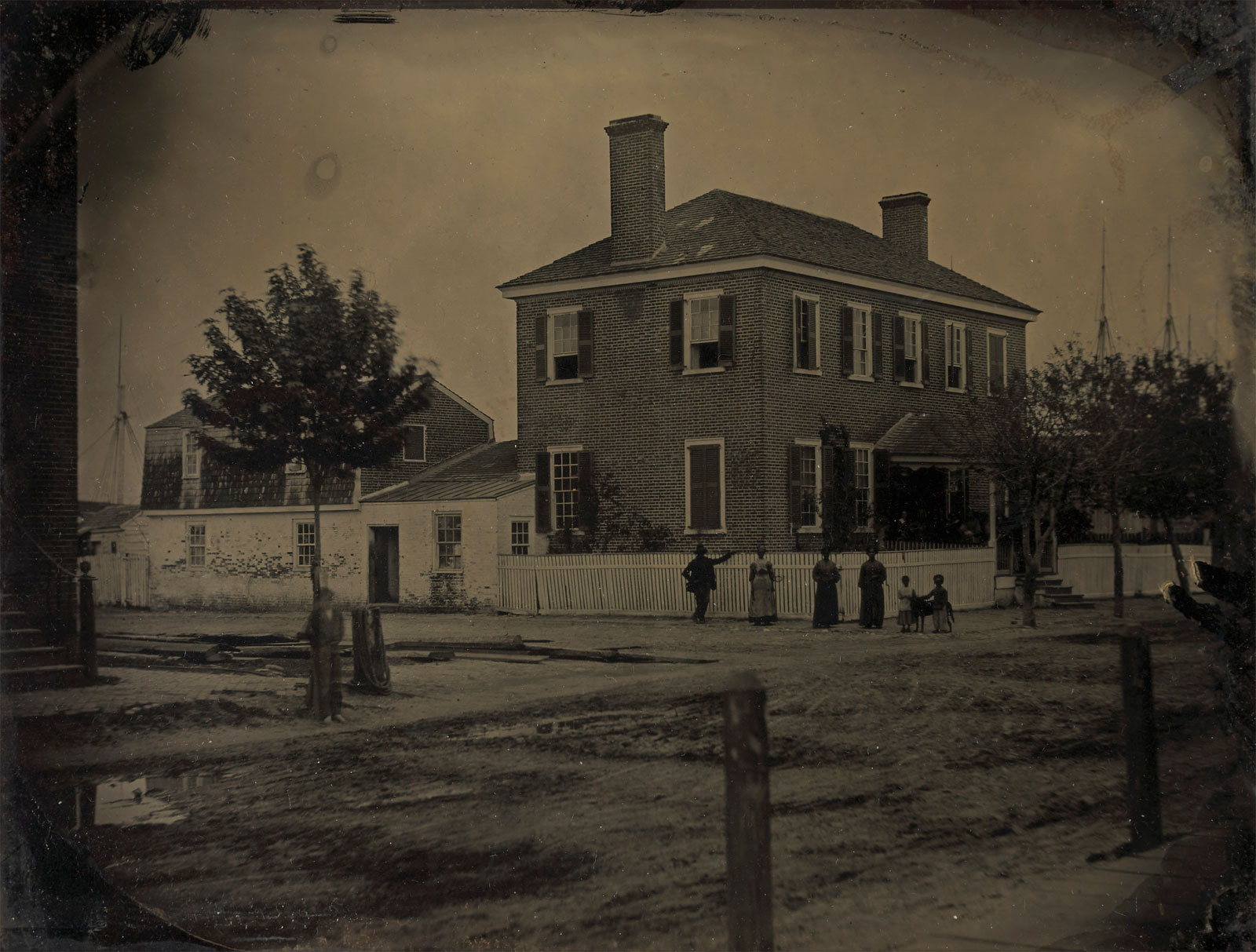


Unidentified photographer. 'Georgian house, with posed African-American family, Norfolk Harbor, Virginia' Late 1850s from the exhibition 'A Long Arc: Photography and the American South since 1845' at the Virginia Museum of Fine Arts, Richmond


Unidentified photographer
Georgian house, with posed African-American family, Norfolk Harbor, Virginia
Late 1850s
Whole-plate ambrotype
Collection of Michael Mattis and Judith Hochberg
Photo: Steven Paneccasio


Unidentified photographer. 'Young biracial artilleryman' Undated from the exhibition 'A Long Arc: Photography and the American South since 1845' at the Virginia Museum of Fine Arts, Richmond


Unidentified photographer
Young biracial artilleryman
Undated
Ambrotype
High Museum of Art, Atlanta
Purchase with funds from the Lucinda Weil Bunnen Fund and the Donald and Marilyn Keough Family


The majority of photographs made during the Civil War were inexpensive, small, portable portraits for soldiers on the field and their families at home. As precious keepsakes, these portraits served as testaments to familial bonds, social relations, economic positions, and political ideologies. In carefully orchestrating their dress, accoutrement, and bearing, sitters signaled their allegiances or staged their transformation from citizen to soldier. The opportunity to reinvent themselves before the camera at times even led to a bit of fakery, as soldiers sometimes gussied themselves up with props and uniforms that did not always fit with their military rank.

Text from the Large Print Guide at the Virginia Museum of Fine Arts


William Abott Pratt (American born England, 1818, active 1844-1856) 'View of Main Street, Richmond, Virginia' 1847-1851 from the exhibition 'A Long Arc: Photography and the American South since 1845' at the Virginia Museum of Fine Arts, Richmond


William Abott Pratt (American born England, 1818, active 1844-1856)
View of Main Street, Richmond, Virginia
1847-1851
Half-plate daguerreotype
Virginia Museum of Fine Arts
Floyd D. and Anne C. Gottwald Fund


One of a handful of known daguerreotypes of the city of Richmond, this view of Main Street looking east toward Church Hill was probably taken from the window of William Pratt’s first “Virginia Daguerriean Gallery,” in the centre of the city’s printing and publishing industry. The distinctive roof of the Richmond Masonic lodge is visible in the distance, as is the three-story City Hotel just beyond the trees to the east. The hotel served as one of the major auction houses for enslaved individuals, as did the firm Pulliam & Davis across the street.

Text from the Large Print Guide at the Virginia Museum of Fine Arts


Take an epic journey through the American South from 1845 to today. In A Long Arc: Photography and the American South since 1845, presented at the Virginia Museum of Fine Arts, encounter the everyday lives and ordinary places captured in evocative photos that contemplate the region’s central role in shaping American history and identity and its critical impact on the development of photography. This is the first major exhibition in more than 25 years to explore the full history of photography in and about the South.

A Long Arc explores the American South’s distinct, evolving, and contradictory character through an examination of photography and how photographers working in the region have reckoned with the South’s fraught history and posed urgent questions about American identity. Organised chronologically, the exhibition traces the South’s shifting identity in more than two hundred photographs made over more than 175 years.

The exhibition’s individual sections delve into the themes of photography before, during, and after the Civil War; documentary photography of the 1930s and ’40s; images of a post-World War II South in economic, racial, and psychic dissonance with the nation; photography as catalyst for change during the civil rights movement; reflective narrative photography of the late 20th century; and contemporary photography examining social, environmental, and economic issues.

A Long Arc presents a richly layered archive that captures the region’s beauty and complexity. Offering a full visual accounting of the South’s role in shaping American history, identity and culture, the exhibition includes photographs by Alexander Gardner, George Barnard, P.H. Polk, Lewis Hine, Walker Evans, Dorothea Lange, Marion Post Wolcott, Robert Frank, Clarence John Laughlin, Ralph Eugene Meatyard, Bruce Davidson, Danny Lyon, Doris Derby, Ernest Withers, William Eggleston, William Christenberry, Baldwin Lee, Sally Mann, Carrie Mae Weems, Susan Worsham, Carolyn Drake, Sheila Pree-Bright, RaMell Ross, and others.

Text from the Virginia Museum of Fine Arts website


Unidentified photographer. 'Woman wearing secession sash' c. 1860 from the exhibition 'A Long Arc: Photography and the American South since 1845' at the Virginia Museum of Fine Arts, Richmond


Unidentified photographer
Woman wearing secession sash
c. 1860
Ambrotype
High Museum of Art, Atlanta
Purchase with funds from the Lucinda Weil Bunnen Fund and the Donald and Marilyn Keough Family


In 1860-61, patriotic fervour (both pro- and anti-secession) was at its height, according to the Creative Cockades website. Women, in particular, wore dresses or other garments festooned with cockades, or they might wear a sash, such as this Southern woman. The reality of a bloody war had not yet set in and many thought the coming conflict would be minimal.

In South Carolina, civilian men and women, and even companies of soldiers, wore palmetto emblems during the Civil War, according to Hinman Auctions.

“Southern cockades were generally all blue, all red, or red and white,” according to Creative Cockades. “Once again, center emblems include stars, military buttons and pictures, but additionally Southern products such as palmetto fronds, pine burs, corn or cotton were used.”

Phil Gast. “Tracing ‘A Long Arc’: These 9 Civil War-era photographs in an Atlanta exhibit drive home identity, race and trauma across the South, US,” on The Civil War Picket website Friday, January 12, 2024 [Online] Cited 20/12/2024


Smith & Vannerson (77 Main St., Richmond, Va) 'Gilbert Hunt (c. 1780-1863), Virginia freed slave' 1861-1863


Smith & Vannerson (77 Main St., Richmond, Va)
Gilbert Hunt (c. 1780-1863), Virginia freed slave
1861-1863
Salt print on card stock
7 3/8 x 5 1/4 inches print
Public domain


Gilbert Hunt was an African-American blacksmith in Richmond who became known in the city for his aid during two fires: the Richmond Theatre fire in 1811 and the Virginia State Penitentiary fire in 1823. Born enslaved in King William County, Hunt trained as a blacksmith in Richmond and remained there most of the rest of his life. After the Richmond Theatre caught fire on December 26, 1811, he ran to the scene and, with the help of Dr. James D. McCaw, helped to rescue as many as a dozen women. He performed a similar feat of courage on August 8, 1823, during the penitentiary fire. Hunt purchased his freedom and in 1829 immigrated to the West African colony of Liberia, where he stayed only eight months. After returning to Richmond, he resumed blacksmithing and served as an outspoken, sometimes-controversial deacon in the First African Baptist Church. In 1848 he helped form the Union Burial Ground Society. In 1859, a Richmond author published a biography of Hunt, largely in the elderly blacksmith’s own words, but portraying him as impoverished and meek, a depiction at odds with the historical record. Hunt died on April 26, 1863, and a notice in the next day’s Richmond Dispatch described him as “a useful and respected resident of Richmond.” He was buried at Phoenix Burying Ground, later Cedarwood Cemetery, and eventually part of Richmond’s Barton Heights Cemeteries.

Dionna Mann. “Gilbert Hunt (ca. 1780-1863),” in Encyclopedia Virginia. Virginia Humanities, 07 December 2020


Gilbert Hunt, a skilled blacksmith from Richmond shown here gripping a hammer, understood the power of photography as a tool for self-creation, especially for the formerly enslaved. Hunt, who was lauded for rescuing numerous people from two blazing fires, one in 1811 and one in 1823, ultimately purchased his freedom for $800 in 1829. Over the next three decades, he led a remarkable life, traveling to Liberia to explore the possibilities for Black resettlement with the American Colonization Society before returning to Richmond and serving as an outspoken pastor and blacksmith. This portrait was commissioned by a benevolent society in Richmond who sold prints to raise funds for the elderly Hunt.

Text from the Large Print Guide at the Virginia Museum of Fine Arts


McPherson & Oliver. 'The Scourged Back of "Peter" an escaped slave from Louisiana' April 2, 1863


McPherson & Oliver, Baton Rouge
William D. McPherson (? – October 9, 1867) and J. Oliver (?-?)
Peter or The Scourged Back of “Peter” an escaped slave from Louisiana 
April 2, 1863
Albumen silver print (carte de visite)
High Museum of Art, Atlanta
Purchase with funds from the Lucinda Weil Bunnen Fund and the Donald and Marilyn Keough Family
Public domain


“Overseer Artayou Carrier whipped me. I was two months in bed sore from the whipping. My master come after I was whipped; he discharged the overseer. The very words of poor Peter, taken as he sat for his picture.”

Gordon, a runaway slave seen with severe whipping scars in this haunting carte-de-visite portrait, is one of the many African Americans whose lives Sojourner Truth endeavored to better. Perhaps the most famous of all known Civil War-era portraits of slaves, the photograph dates from March or April 1863 and was made in a camp of Union soldiers along the Mississippi River, where the subject took refuge after escaping his bondage on a nearby Mississippi plantation.

On Saturday, July 4, 1863, this portrait and two others of Gordon appeared as wood engravings in a special Independence Day feature in Harper’s Weekly. McPherson & Oliver’s portrait and Gordon’s narrative in the newspaper were extremely popular, and photography studios throughout the North (including Mathew B. Brady’s) duplicated and sold prints of The Scourged Back. Within months, the carte de visite had secured its place as an early example of the wide dissemination of ideologically abolitionist photographs.

Text from The Metropolitan Museum of Art website


The photograph of “Whipped Peter,” who fled a Louisiana plantation after a savage whipping, was among the most widely circulated images of the 19th century. “Peter barely survived the beating that made his back a map,” writes the scholar Imani Perry in an Aperture monograph that accompanies the exhibit, “and then ran to freedom, barefoot and chased by bloodhounds.”

The raised scars in that photograph were undeniable in a way that other accounts of slavery’s brutality, however powerful, had not been. The image tells the truth about slavery “in a way that even Mrs. [Harriet Beecher] Stowe can not approach,” wrote a journalist of the time, “because it tells the story to the eye.”

Margaret Renkl. “A Photo Can Tell the Truth About a Lie. Or a Lie About the Truth,” on The New York Times website Sept. 18, 2023 [Online] Cited 20/12/2024


During the Civil War, studio photographers produced and disseminated carte de visite portraits, or small format photographs that could be mass produced, of enslaved and emancipated Black individuals to promote abolitionist causes and reinforce support for the Union Army. Some were meant to shock and spur abolitionist outrage, especially among those who may have only heard accounts of cruelty. This portrait was made in a Union camp in the South where a formerly enslaved man named Peter – often misidentified as Gordon – sought refuge after escaping from a plantation. The image of his horrific whipping scars testified to the violence of slavery and contradicted the narrative that slavery was an economic concern rather than a racist institution. After Harper’s Weekly reproduced the image, photography studios throughout the North duplicated and sold prints to raise funds for abolitionist causes.

Text from the Large Print Guide at the Virginia Museum of Fine Arts


Mathew B. Brady Studio (American, active 1844-1873) 'Slave Pens, Alexandria, VA' 1862


Mathew B. Brady Studio (American, active 1844-1873)
Slave Pens, Alexandria, VA
1862
Albumen silver print (carte de visite)
High Museeum of Art, Atlanta
Purchase with funds from the Lucinda Weil Bunnen Fund and the Donald and Marilyn Keough Family


Andrew Joseph Russell (American, 1829-1902) 'Slave Pen, Alexandria, Virginia' 1863


Andrew Joseph Russell (American, 1829-1902)
Slave Pen, Alexandria, Virginia
1863
Albumen silver print
High Museum of Art
Purchased with funds Lucinda Weill Bunnen Fund and the Donald and Marilyn Keogh Family


Better known for his later views commissioned by the Union Pacific Railroad, A. J. Russell, a captain in the 141st New York Infantry Volunteers, was one of the few Civil War photographers who was also a soldier. As a photographer-engineer for the U.S. Military Railroad Con struction Corps, Russell’s duty was to make a historical record of both the technical accomplishments of General Herman Haupt’s engineers and the battlefields and camp sites in Virginia. This view of a slave pen in Alexandria guarded, ironically, by Union officers shows Russell at his most insightful; the pen had been converted by the Union Army into a prison for captured Confederate soldiers.

Between 1830 and 1836, at the height of the American cotton market, the District of Columbia, which at that time included Alexandria, Virginia, was considered the seat of the slave trade. The most infamous and successful firm in the capital was Franklin & Armfield, whose slave pen is shown here under a later owner’s name. Three to four hundred slaves were regularly kept on the premises in large, heavily locked cells for sale to Southern plantation owners. According to a note by Alexander Gardner, who published a similar view, “Before the war, a child three years old, would sell in Alexandria, for about fifty dollars, and an able-bodied man at from one thousand to eighteen hundred dollars. A woman would bring from five hundred to fifteen hundred dollars, according to her age and personal attractions.”

Late in the 1830s Franklin and Armfield, already millionaires from the profits they had made, sold out to George Kephart, one of their former agents. Although slavery was outlawed in the District in 1850, it flourished across the Potomac in Alexandria. In 1859, Kephart joined William Birch, J. C. Cook, and C. M. Price and conducted business under the name of Price, Birch & Co. The partnership was dissolved in 1859, but Kephart continued operating his slave pen until Union troops seized the city in the spring of 1861.

Text from The Metropolitan Museum of Art website


Even before photographs of battle fortifications and mass graves and prison camps and cities in ruin brought home in detail the enormous scale and human cost of the Civil War, images of the realities of enslaved people in the South inspired widespread moral outrage and aided the abolitionist movement. Southern politicians had been lying about both the benevolence of enslavers and the “three-fifths” nature of Black humanity since the founding of this country, but the real truth about slavery began to come clear to most people outside the South only when the first photographs of enslaved people emerged.

“Slave pens at Alexandria,” reads the hand-labeled reproduction of a photo by the celebrated Civil War photographer Mathew B. Brady. Think about the cold fact of that label for a moment. The places where enslaved people were imprisoned before being sold weren’t called jails. They were called pens. Built to contain livestock.

Margaret Renkl. “A Photo Can Tell the Truth About a Lie. Or a Lie About the Truth,” on The New York Times website Sept. 18, 2023 [Online] Cited 20/12/2024


At the start of the Civil War, Northerners arriving in Alexandria, Virginia, were shocked to find a site known as the “old slave pen.” Designed by slave traders, these locations housed enslaved individuals as they awaited auction in the District of Columbia or before being transported south. Mathew Brady’s 1862 photograph of the notorious slave trading firm Price Birch & Company (see nearby case) testified to the utter inhumanity of slavery. Made in 1863, Russell’s photograph captured the site when it served a different function, as a holding cell for Confederate prisoners of war.

Text from the Large Print Guide at the Virginia Museum of Fine Arts
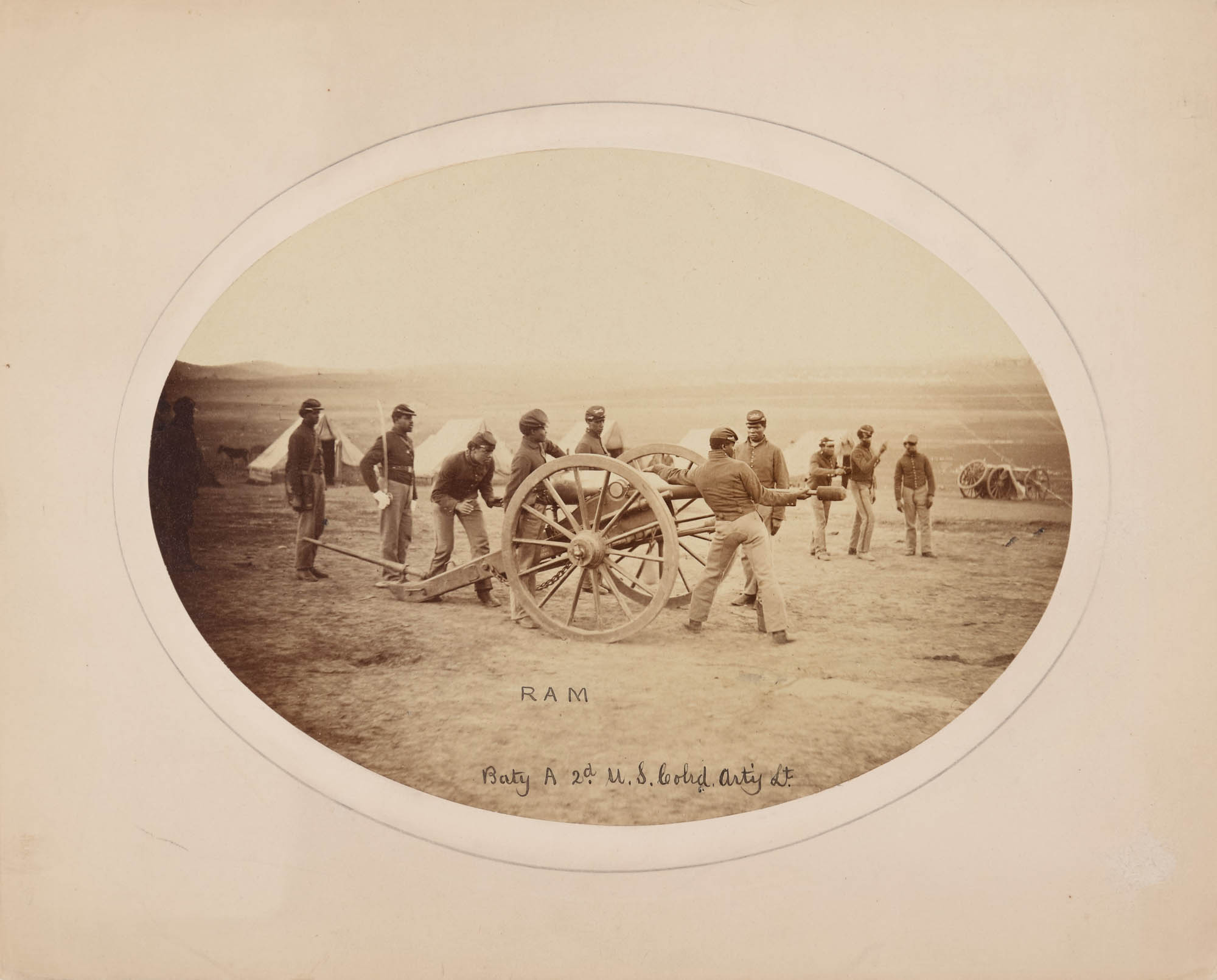
 

Unidentified photographer. '"Ram", 2nd Regiment, United States Colored Light Artillery, Battery A' c. 1864 from the exhibition 'A Long Arc: Photography and the American South since 1845' at the Virginia Museum of Fine Arts, Richmond


Unidentified photographer
“Ram”, 2nd Regiment, United States Colored Light Artillery, Battery A
c. 1864
Albumen silver print
High Museum of Art, Atlanta
Purchase with funds from the Lucinda Weil Bunnen Fund and the Donald and Marilyn Keough Family


Organised in Nashville in 1864 and dispatched until 1866, Battery A of the 2nd regiment of the US Colored Light Artillery accompanied the infantry and cavalry troops into battle with horse-drawn cannons. More than twenty-five thousand Black artillerymen, many of whom were freedmen from Confederate states, served in the Union Army. Artillerymen, including the cannoneers shown here, were required to handle hundreds of pounds of supplies, such as the gun, its limber, a travelling forge, and caissons to store the ammunition. Though many batteries were relegated to everyday garrison duty, Battery A fought in the Battle of Nashville in December 1864, where these photographs chronicling the loading and firing of the gun may have been taken.

Text from the Large Print Guide at the Virginia Museum of Fine Arts


George N. Barnard (American, 1819–1902) 'Rebel Works in Front of Atlanta, Ga., No. 1' 1864


George N. Barnard (American, 1819–1902)
Rebel Works in Front of Atlanta, Ga., No. 1
1864
Albumen silver print
High Museum of Art, Atlanta
Gift of Mrs. Everett N. McDonnell


On September 1, 1864, the Confederates abandoned Atlanta, and Barnard headed to the evacuated city with his camera to explore its elaborative defenses. Barnard presents nine views of the destruction of Atlanta – half made during the war, half in 1866. Collectively, the series remains among the most celebrated by any nineteenth-century American photographer. This view is one of the most frequently cited and reproduced of all Barnard’s war photographs. The subject is an abandoned Confederate fort with rows of chevaux-de-frise running through the landscape. As he did in one-third of the photographs in Sherman’s Campaign, Barnard used two negatives to produce the print: one for the landscape, one for the sky. The powerful effect seems to have inspired the set designers of many Civil War motion pictures, from Gone with the Wind (1939) to the present.

Text from The Metropolitan Museum of Art website


George Barnard was one of several photographers who worked for Civil War photographer Mathew Brady before setting out on his own in 1863. Barnard’s best-known works are striking images of General Sherman’s March to the Sea as the Union Army burned nearly everything in its path between Atlanta and Savannah. He published sixty-one albumen plates from this project in 1866 as an album titled Photographic Views of Sherman’s Campaign. More than a documentarian, Barnard wanted his landscapes made in the wake of destruction to convey the emotional complexity that followed the end of the war. He carefully retouched his negatives and often combined two negatives – one exposed for the ground and the other for the sky – to create moody, atmospheric images.

Text from the Large Print Guide at the Virginia Museum of Fine Arts
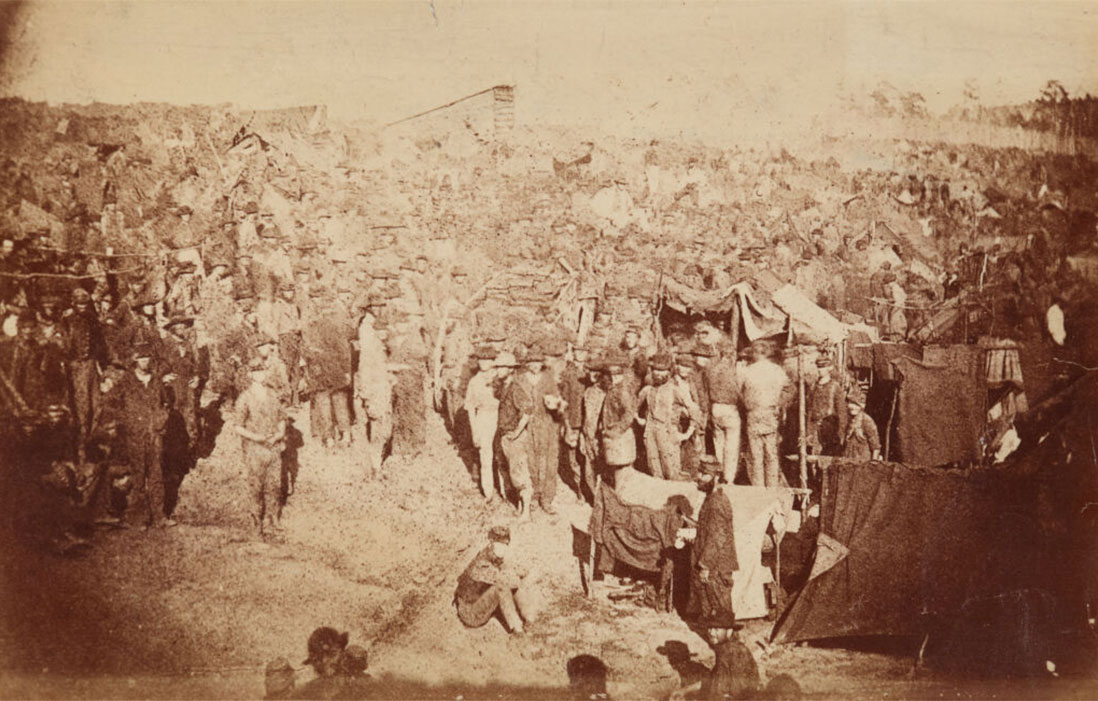
 

A.J. Riddle (American, 1825-1893) 'Union Prisoners of War at Camp Sumter, Andersonville Prison, Georgia. View from the main gate of the stockade, August 17' 1864


A.J. Riddle (American, 1825-1893)
Union Prisoners of War at Camp Sumter, Andersonville Prison, Georgia. View from the main gate of the stockade, August 17
1864
Albumen print
High Museum of Art, Atlanta
Purchase with funds from the Lucinda Weil Bunnen Fund and the Donald and Marilyn Keough Family


Andersonville prison was created in February 1864 and served until April 1865. The site was commanded by Captain Henry Wirz, who was tried and executed after the war for war crimes. The prison was overcrowded to four times its capacity, and had an inadequate water supply, inadequate food, and unsanitary conditions. Of the approximately 45,000 Union prisoners held at Camp Sumter during the war, nearly 13,000 (28%) died. The chief causes of death were scurvy, diarrhoea, and dysentery.

Text from the Wikipedia website
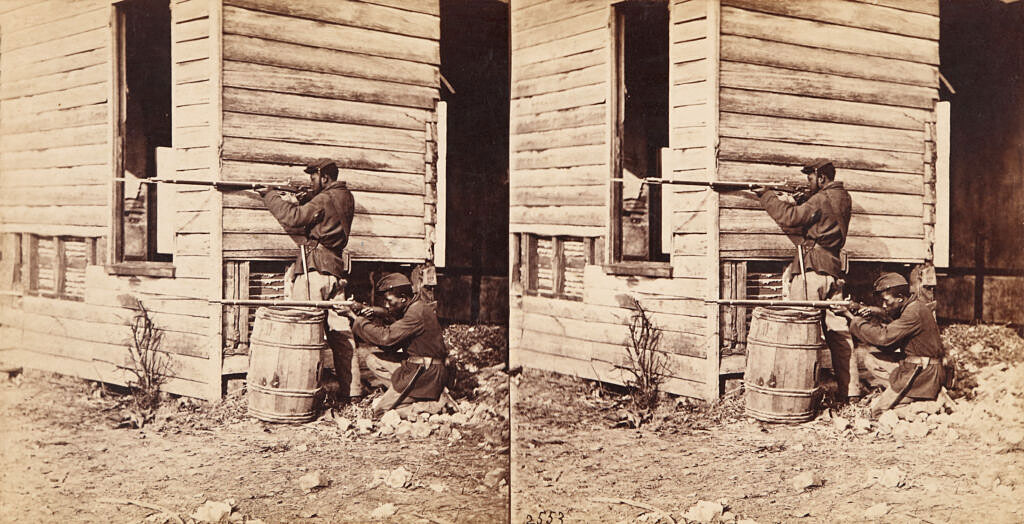
 

Unidentified photographer. 'Picket station of colored troops near Dutch Gap Canal, Dutch Gap, Virginia' 1864


Unidentified photographer
Picket station of colored troops near Dutch Gap Canal, Dutch Gap, Virginia
1864
Albumen silver print (stereocard)
Dimensions
High Museum of Art, Atlanta
Purchase with funds from the Lucinda Weil Bunnen Fund and the Donald and Marilyn Keough Family


A Long Arc presents the diversity, beauty, and complexity of photography made in the American South since the 1840s. It examines how Southern photography has articulated the distinct and evolving character of the South’s people, landscape, and culture and reckoned with its complex history. It shows the role played by Southern photography at key crisis points in the country’s history, including the Civil War, the Great Depression, and the civil rights movement. And it explores the ways that photographers working in the region have both sustained and challenged its prevailing mythologies.

As both region and concept, the South has long held a central place within American culture. Profoundly influential American musical and literary movements emerged here, and many great political and social leaders hail from the region, yet histories of violence, disenfranchisement, and struggle dating back centuries continue to reverberate and shape it. For these reasons, the South is perhaps the most mythologized, romanticised, and stereotyped place in America.

The many contradictions inherent in this country’s history, ideals, and myths are arguably closer to the surface in the South’s unruly landscape and diverse faces than elsewhere in the United States. This makes it ideal terrain for photographers to critically engage with and examine American identity. Through the pictures in this exhibition, the South – so often dismissed as backward or marginalised as a place of alluring eccentricity – emerges as the fulcrum of both American photography and American history.

1845-1865: To Vex the Nation: Antebellum South and the Civil War

Photography arrived in the American South very soon after its introduction in Europe in 1839. By the early 1840s, numerous portrait studios popped up throughout the region, affording people a way to preserve their likenesses. Portrait photography in the antebellum South was most distinctive for how it projected and channelled racial and social identity at a moment of intense debate over slavery. It was not unusual for Southern slaveholders to commission photographs of their children with enslaved members of their
households, a means of reinforcing social hierarchies. Yet, significantly, the medium also offered free Black Americans a means to declare their presence and self-possession in a society that did not regard them as citizens.

With the outbreak of the Civil War in 1861, photography emerged as a crucial medium through which Americans witnessed and confronted the horrors of modern warfare and understood the conflict’s significance to themselves and to their country. The mass mobilisation of soldiers coincided with the development of cheaper and faster ways of making pictures, fuelling a vibrant market for Civil War portraits. These precious keepsakes allowed sitters to display their political allegiances and sustain connections between the battlefield and the home front.

While portraiture was the most common form of photography at this time, the demand for photographs of battlefields, military encampments, and sites of conflict grew throughout the course of the war. These pictures circulated widely as both photographs and as newspaper illustrations made from photographs. Images of carnage, ruin, and especially the destruction of Southern cities helped Americans grasp the enormity of loss. They also introduced an enduring photographic trope: the Southern landscape as the repository of memory, history, and trauma.

Organised in Nashville in 1864 and dispatched until 1866, Battery A of the 2nd regiment of the US Colored Light Artillery accompanied the infantry and cavalry troops into battle with horse-drawn cannons. More than twenty-five thousand Black artillerymen, many of whom were freedmen from Confederate states, served in the Union Army. Artillerymen, including the cannoneers shown here, were required to handle hundreds of pounds of supplies, such as the gun, its limber, a traveling forge, and caissons to store the ammunition. Though many batteries were relegated to everyday garrison duty, Battery A fought in the Battle of Nashville in December 1864, where these photographs chronicling the loading and firing of the gun may have been taken.

Text from the Large Print Guide at the Virginia Museum of Fine Arts


George N. Barnard (American, 1819-1902) 'Destruction of Hood's Ordnance Train' 1864


George N. Barnard (American, 1819-1902)
Destruction of Hood’s Ordnance Train
1864
From Photographic Views of Sherman’s Campaign
Albumen silver print
High Museum of Art, Atlanta
Purchase


This dramatic bird’s-eye view documents the aftermath of the destruction of a Confederate military train filled with gunpowder. When abandoning Atlanta, Confederate General John Bell Hood ordered his troops to set the boxcars on fire so that the Union army would never be able to make use of the train. The explosion also completely levelled the nearby mill, leaving evidence of only a few rail wheels and axles.

Text from The Metropolitan Museum of Art website
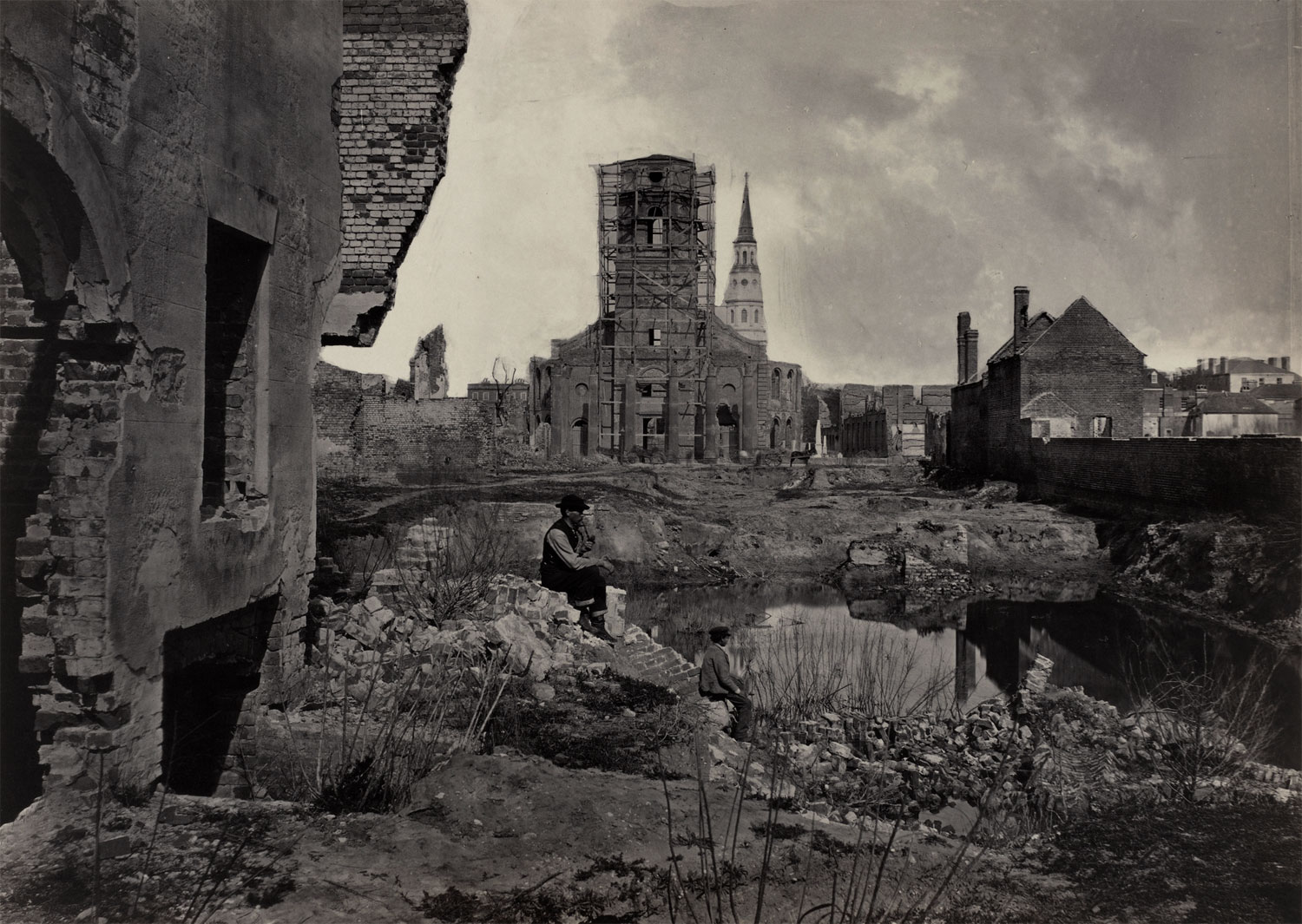
 

George N. Barnard (American, 1819-1902) 'Ruins in Charleston, S.C.' 1865-1866, printed 1866


George N. Barnard (American, 1819-1902)
Ruins in Charleston, S.C.
1865-1866, printed 1866
Albumen silver print
High Museum of Art, Atlanta
Purchase


Before the war, landscape photography in the South was rare and usually indicated the social or economic function of a place. But as the war spread throughout the South, photographers not only documented the military encampments on the battlefields but often rendered the landscape itself as an object of contemplation, reverie, and mourning. In this work, Barnard carefully seated two figures amid the rubble, their gazes casting out onto the ruined city. Posed as observers taking in the scope and spectacle of tragedy, they stand in for the viewers who experienced the war from afar. Photographs like these also served rhetorical purposes by making the immense destruction seem like divine retribution. As Sherman himself wrote, “I doubt any city was ever more terribly punished than Charleston, but as her people had for years been agitating for war and discord, and had finally inaugurated the Civil War, the judgment of the world will be that Charleston deserved the fate that befell her.”

Text from the Large Print Guide at the Virginia Museum of Fine Arts


George Barnard – widely considered one of the most important documentarians of the Civil War – began working with photography only several decades after its invention. The limitations of this burgeoning technology influenced how, when, and where Barnard shot his images. At the time, it was essentially impossible to capture quick motion, so Barnard primarily documented the effects of the war on landscapes and architecture. His richly detailed images are filled with anecdotal details that help tell the story of the Civil War and Sherman’s massive campaign through the South.

Text from the High Museum of Art website


George N. Barnard (American, 1819-1902) 'The "Hell Hole" New Hope Church, Georgia' 1861-1866


George N. Barnard (American, 1819-1902)
The “Hell Hole” New Hope Church, Georgia
1861-1866
Albumen silver print from glass negative
Addison Gallery of American Art


The Battle of New Hope Church (May 25-26, 1864) was a clash between the Union Army under Major General William T. Sherman and the Confederate Army of Tennessee led by General Joseph E. Johnston during the Atlanta Campaign of the American Civil War. Sherman broke loose from his railroad supply line in a large-scale sweep in an attempt to force Johnston’s army to retreat from its strong position south of the Etowah River. Sherman hoped that he had outmaneuvered his opponent, but Johnston rapidly shifted his army to the southwest. When the Union XX Corps under Major General Joseph Hooker tried to force its way through the Confederate lines at New Hope Church, its soldiers were stopped with heavy losses.

Text from the Wikipedia website
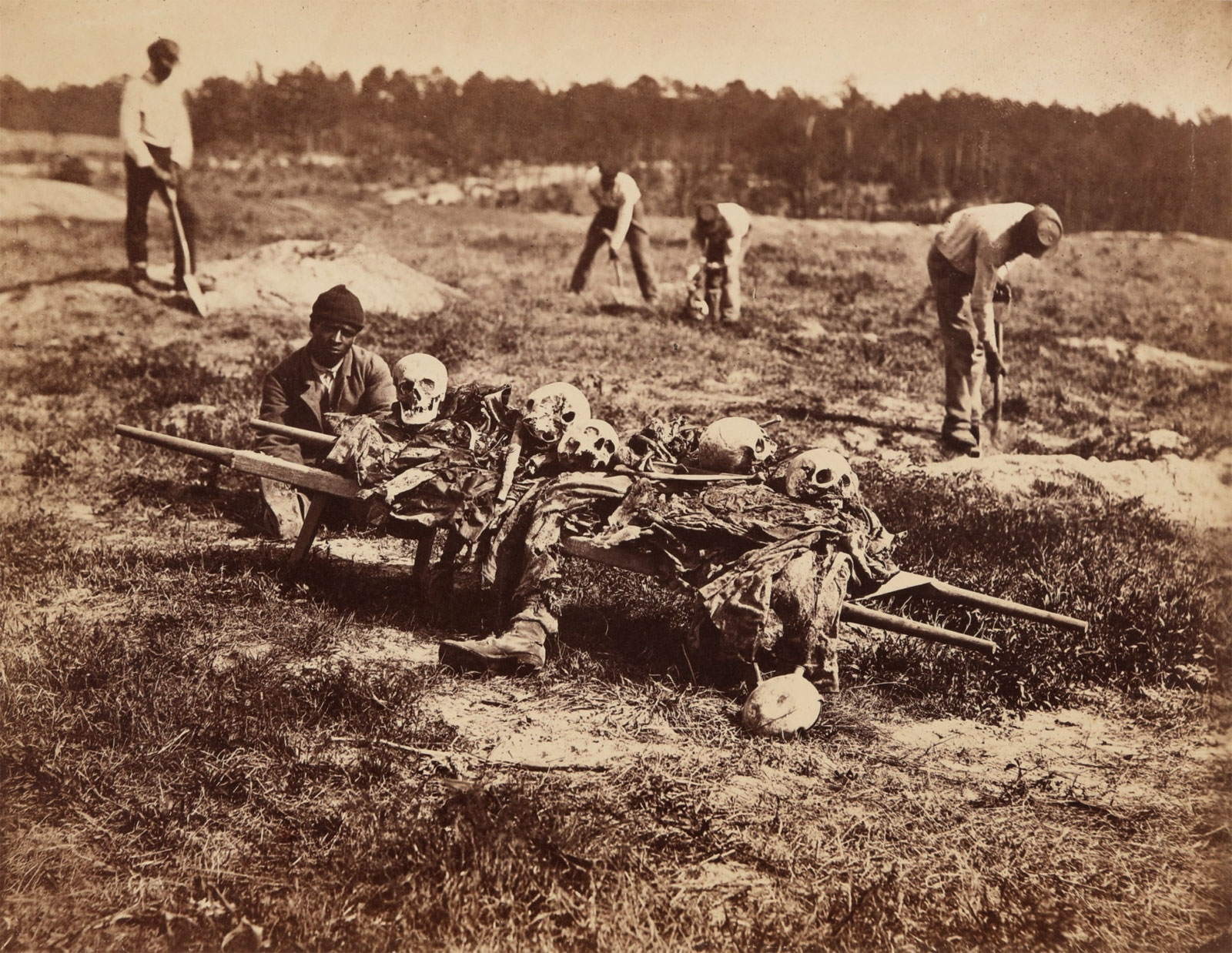
 

John Reekie (American, 1829-1885) 'A Burial Party, Cold Harbor, Virginia' 1865, published 1866


John Reekie (American, 1829-1885)
A Burial Party, Cold Harbor, Virginia
1865, published 1866
Albumen silver print
High Museum of Art, Atlanta
Purchase with funds from the Lucinda Weil Bunnen Fund and the Donald and Marilyn Keough Family, and the Addison Gallery of American Art


Few of the photographs in the Sketch Book evoke the intense sadness of A Burial Party, Cold Harbor, Virginia, one of the seven photographs Gardner included by the still-obscure field operative John Reekie. It is the only plate in the second volume that shows corpses, here being collected by African American soldiers. Four soldiers with shovels work in the background; in the foreground, a single labourer in a knit cap sits crouched behind a bier that holds the lower right leg of a dead combatant and five skulls – one for each member of the living work crew. Reekie’s atypical low vantage point and tight composition ensure that the foreground soldier’s head is precisely the same size as the bleached white skulls and that the head of one of the workers rests in the sky above the distant tree line. It is a macabre and chilling portrait – literally a study of black and white – that is as memorable as any made during the war.

Text from The Metropolitan Museum of Art website


Isaac H. Bonsall (American, 1833-1909) 'Bonsil's Photo Gallery, Chattanooga, TN' 1865


Isaac H. Bonsall (American, 1833-1909)
Bonsil’s Photo Gallery, Chattanooga, TN
1865
Albumen silver print
High Museum of Art, Atlanta
Purchase with funds from the Lucinda Weil Bunnen Fund and the Donald Marilyn Keough Family


Note the framed photographs at far left on the wooden slat fence advertising the photographer’s work and examples of his carte de visite photographs to the left and right of the entrance. This photograph must have been taken not long after the assassination of President Abraham Lincoln on 15th April 1865 as the president’s image above the door is surrounded by black mourning cloth ~ Marcus


Isaac H. Bonsall was one of many enterprising photographers who took advantage of the public’s growing demand for portraits at the onset of the Civil War. In 1862, the New York Tribune published an observer’s account of the onslaught of travelling portrait studios among the army: “A camp is hardly pitched before one of the omnipresent artists in collodion and amber […] pitches his canvas gallery and unpacks his chemicals.”

Text from the Large Print Guide at the Virginia Museum of Fine Arts


Isaac H. Bonsall (American, 1833-1909) 'Bonsil's Photo Gallery, Chattanooga, TN' 1865 (detail)


Isaac H. Bonsall (American, 1833-1909)
Bonsil’s Photo Gallery, Chattanooga, TN (detail)
1865
Albumen silver print
High Museum of Art, Atlanta
Purchase with funds from the Lucinda Weil Bunnen Fund and the Donald Marilyn Keough Family


1865-1930: Less Splendid on the Surface

Between 1865 and 1930, the South experienced the abandonment of the promises of Reconstruction and the violent and legal enforcement of racial segregation. Yet this period also witnessed rebuilding of cities and industries, the founding of new institutions (including a significant number of Black schools), continued cultivation of the land, and the development of creative cultures that spread throughout the nation. Photography bore witness to these developments. Some photographers used the camera to sell an idyllic vision of the South that was at odds with the harsh reality, while others documented injustice and poverty with the goal of calling broader attention to the region’s struggles.

During this period, photography also became an increasingly familiar part of everyday life, accelerated by the rise of “penny picture” photography studios, cheap snapshot cameras, and the proliferation of inexpensive stereographs (a form of 3D photography) that brought the wonders of the world – and the South – into nearly every household. The greater accessibility of photography also opened the profession to a growing number of women and Black makers. Community portraiture in particular flourished, giving ordinary people the opportunity to document their lives and envision themselves as modern citizens. Across the South, studio photographers produced thousands of pictures – of public events, private celebrations, city streets, architectural views, and landscapes – that reveal the texture of everyday life and observe the ways people in the South lived, both together and apart from each other.

Text from the Large Print Guide at the Virginia Museum of Fine Arts


John Horgan Jr. (American, 1859-1926) 'James Richardson's Plantation, Jackson, MS' 1892


John Horgan Jr. (American, 1859-1926)
James Richardson’s Plantation, Jackson, MS
1892
Albumen silver print
High Museum of Art, Atlanta
Purchase


As Alabama’s “first commercial and industrial specialist,” in the 1890s John Horgan Jr. photographed the vast cotton plantations owned by industrial magnate Edmund Richardson, who also founded the lucrative and exploitative practice of convict labour (leasing prisoners from the state for forced, unpaid labour in exchange for supplying housing). Photographing at a plantation owned by Richardson’s son James, Horgan shows Black labourers, including young children, engaged in the backbreaking toil of harvesting and sorting cotton. Though made almost thirty years after the abolition of slavery, Horgan’s views of antebellum-style labour were a form of propaganda that minimised the conditions of extreme poverty and inequality that shaped African American life in the South.

Text from the Large Print Guide at the Virginia Museum of Fine Arts
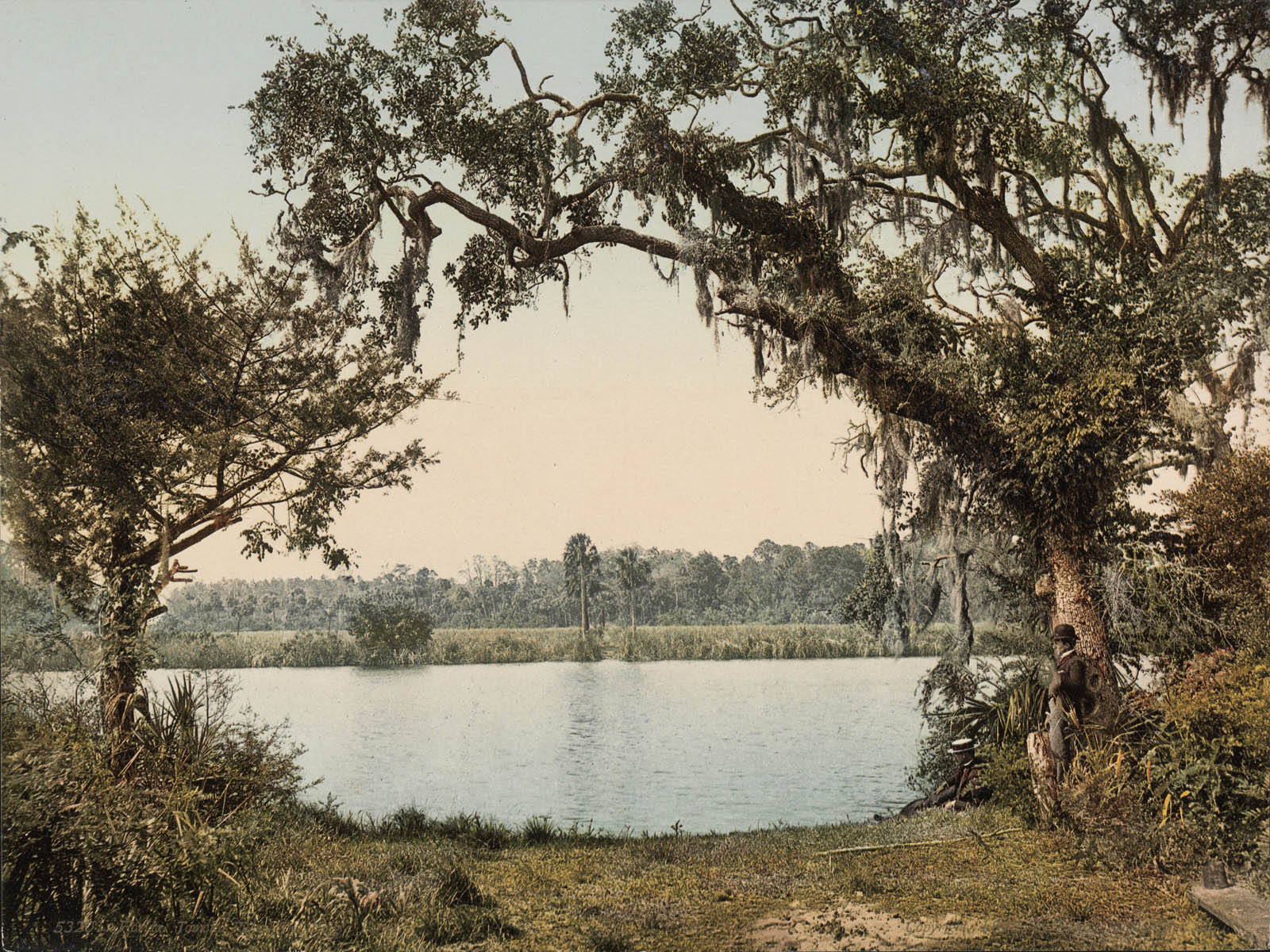
 

William Henry Jackson (American, 1843-1942) 'Florida. Tomaka River. The King's Ferry' 1898


William Henry Jackson (American, 1843-1942)
Florida. Tomaka River. The King’s Ferry
1898
Chromolithograph
Virginia Museum of Fine Arts
Gift of an Anonymous Donor


William Henry Jackson (American, 1843-1942) 'St. Charles Street, New Orleans' 1900 from the exhibition 'A Long Arc: Photography and the American South since 1845' at the Virginia Museum of Fine Arts, Richmond


William Henry Jackson (American, 1843-1942)
St. Charles Street, New Orleans
1900
Chromolithograph
High Museum of Art, Atlanta
Gift of Joshua Mann Pailet in memory of Charlotte Mann Pailet (1924-1999)


The painter, explorer, and survey photographer William Henry Jackson is best known for his images of the American West, many of which he produced as part of the United States Geological Survey. In 1897, Jackson became a director of the Detroit Publishing Company in a venture to publish colour lithographic prints from black-and-white negatives by himself and other photographers. These views were taken across the United States, including the American South, and were widely disseminated as prints and postcards.

Text from the Large Print Guide at the Virginia Museum of Fine Arts


William Henry Jackson (American, 1843-1942) 'Cotton on the Levee' 1900


William Henry Jackson (American, 1843-1942)
Cotton on the Levee
1900
Chromolithograph
High Museum of Art, Atlanta
Gift of Joshua Mann Pailet in memory of Charlotte Mann Pailet (1924-1999)


The first major exhibition of Southern photography in more than 25 years, A Long Arc: Photography and the American South since 1845, will be on display at the Virginia Museum of Fine Arts in Richmond from Oct. 5, 2024, to Jan. 26, 2025.

A Long Arc comprises more than 175 years of photography from a broad swath of the American South – from Maryland to Florida to Arkansas to Texas and places in between. Visitors to the expansive exhibition will encounter everyday lives and ordinary places captured in evocative photos that contemplate the region’s central role in shaping American history and identity. The exhibition also examines the South’s critical impact on the development of photography.

“The Virginia Museum of Fine Arts is excited to present A Long Arc: Photography and the American South since 1845, an astounding exhibition of powerful images of our shared Southern – and American – history by many of this country’s foremost photographers,” said the museum’s Director and CEO Alex Nyerges. “The exhibition also includes a number of captivating images of Richmond and the Commonwealth from the museum’s ever-growing collection of photographs.”

A Long Arc is organised by the High Museum of Art (Atlanta, Georgia) and co- curated by Gregory Harris, the Donald and Marilyn Keough Family curator of photography at the High Museum of Art, and Dr. Sarah Kennel, the Aaron Siskind curator of photography and director of the Raysor Center for Works on Paper at VMFA.

A Long Arc reckons with the region’s fraught history, American identity and culture at large, asking us to consider the history of American photography with the South as its focal point,” said Dr. Kennel. “The exhibition examines the ways that photographers from the 19th century to the present have articulated the distinct and evolving character of the South’s people, landscape and culture.”

More than 180 works of historical and contemporary photography are featured in A Long Arc, which includes many from VMFA’s permanent collection.

Organised chronologically, A Long Arc opens with an exploration of the years from 1845 to 1865, where visitors will encounter compelling photographs made before and during the American Civil War. Photographers of this time, including Alexander Gardner and George Barnard, transformed the practice of the medium and established visual codes for articulating national identity and expressing collective trauma. Following the war, photographs made from 1865 to 1930 reveal the South’s incomplete project of Reconstruction, including new industries, a rise of community- based photography studios, the erection of white supremacist monuments and scenes conveying social division.

With the emergence of documentary photography in the 1930s, photographs made in the South raised national consciousness around social and racial inequities. During this time, Farm Security Administration photographers working in the region, including Walker Evans, Dorothea Lange and Marion Post Wolcott, defined a kind of documentary approach that dominated American photography for decades and recast a Southern vernacular into a new kind of national style.

During the 25 years following World War II, from 1945 to 1970, photography in the South was characterised by an incongruence between America’s optimistic image of itself and the enduring shadow of Jim Crow-era segregation. Artists like Robert Frank, Clarence John Laughlin and Ralph Eugene Meatyard made jarring and unsettling photographs that revealed economic, racial and psychic dissonance at odds with conventional images of American prosperity, while photographs of the civil rights movements by Bruce Davidson, Danny Lyon, Doris Derby and James Karales galvanised and shocked the nation with raw depictions of violence and the struggle for justice.

Photography in the South exhibits a sense of reflection, return and renewal in the three decades following the tumult of the 1960s, as artists like Sally Mann, William Eggleston and William Christenberry created narrative, self-reflexive bodies of work that simultaneously sustained and interrogated the South’s brutal histories and enduring cultural mythologies.

A Long Arc concludes with a wide-ranging and provocative selection of photographs made in the past two decades. Artists like Richard Misrach, Lucas Foglia, Gillian Laub, An-My Lê, Sheila Pree-Bright, RaMell Ross and Jose Ibarra Rizo explore Southern history and American identity in the 21st century as forged by legacies of slavery and white supremacy, marked by economic inequality and environmental catastrophe and transformed by immigration, technology, urbanisation, globalisation and shifting ethnic, cultural, racial and sexual identities.

A complex and layered archive of the region, A Long Arc captures how the South has occupied an uneasy place in the history of American photography while simultaneously exemplifying regional exceptionalism and the crucible from which American identity has been forged over the past two centuries.

Press release from the Virginia Museum of Fine Arts
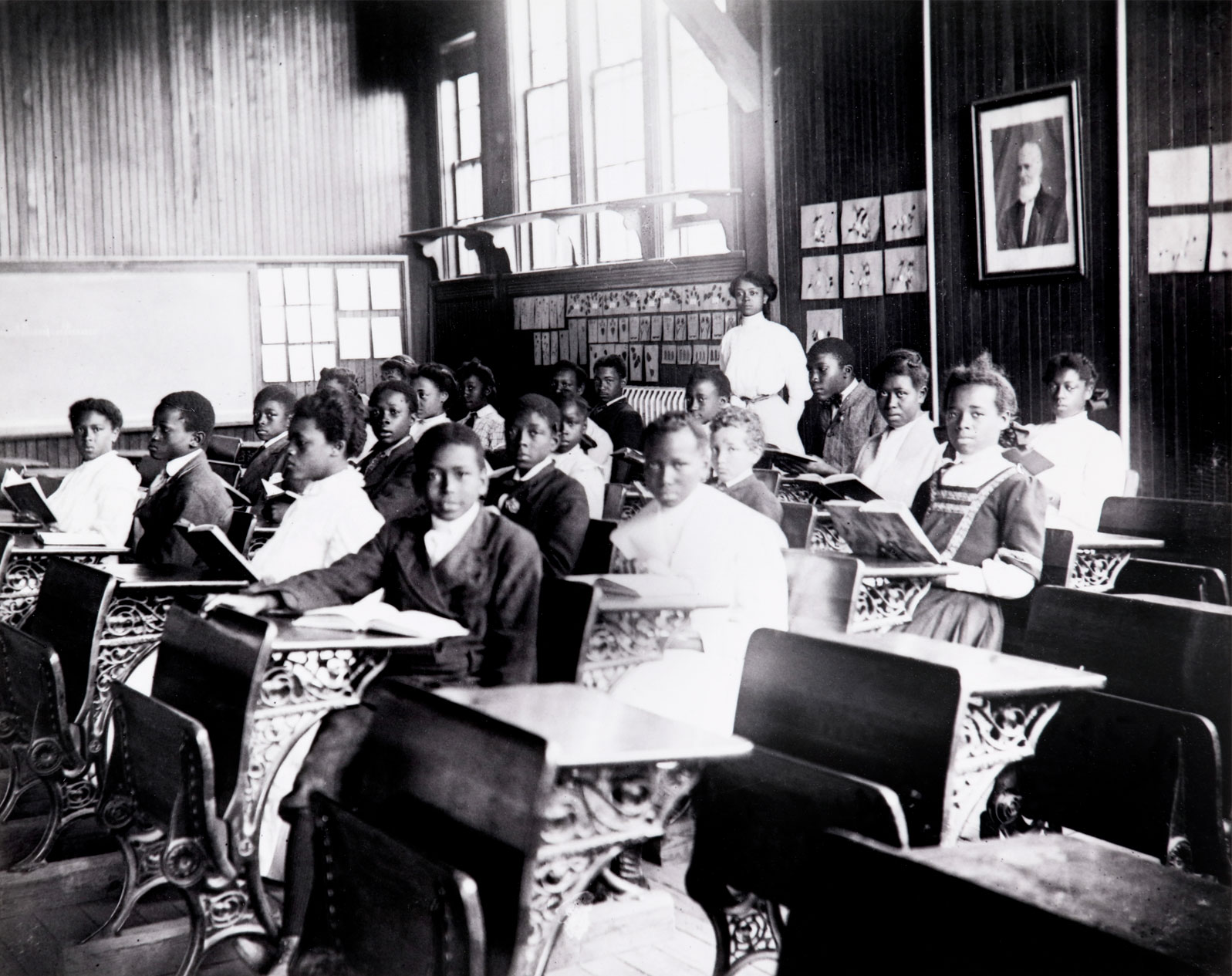
 

James Van Der Zee (American, 1886-1983) 'Whittier Preparatory School, Phoebus, Va.' 1907


James Van Der Zee (American, 1886-1983)
Whittier Preparatory School, Phoebus, Va.
1907
Gelatin silver print
High Museum of Art, Atlanta
Purchase
© James Van Der Zee Archive, The Metropolitan Museum of Art


This is an early photograph by the self taught photographer James Van Der Zee when he was only 21 years old, made in Phoebus, Virginia where he had moved with his wife Kate L. Brown. He returned to Harlem in 1916 and became a leading figure in the Harlem Renaissance, his portrait of black New York people and culture becoming the most comprehensive artistic photographs of the period.


In the years following the Civil War, numerous schools were founded throughout the South to educate the emancipated Black population. Literacy, which was strictly forbidden by plantation overseers, became a beacon of hope and accomplishment for Black Americans. This dedication to education was so strong among freed peoples that the literacy gap between white and Black communities in the American South closed within a generation. The Whittier Preparatory School in Phoebus, Virginia, was distinguished among its peer institutions for its expanded curriculum, including classes up to ninth grade that encompassed art and music education and dedicated science facilities.

Text from the Large Print Guide at the Virginia Museum of Fine Arts


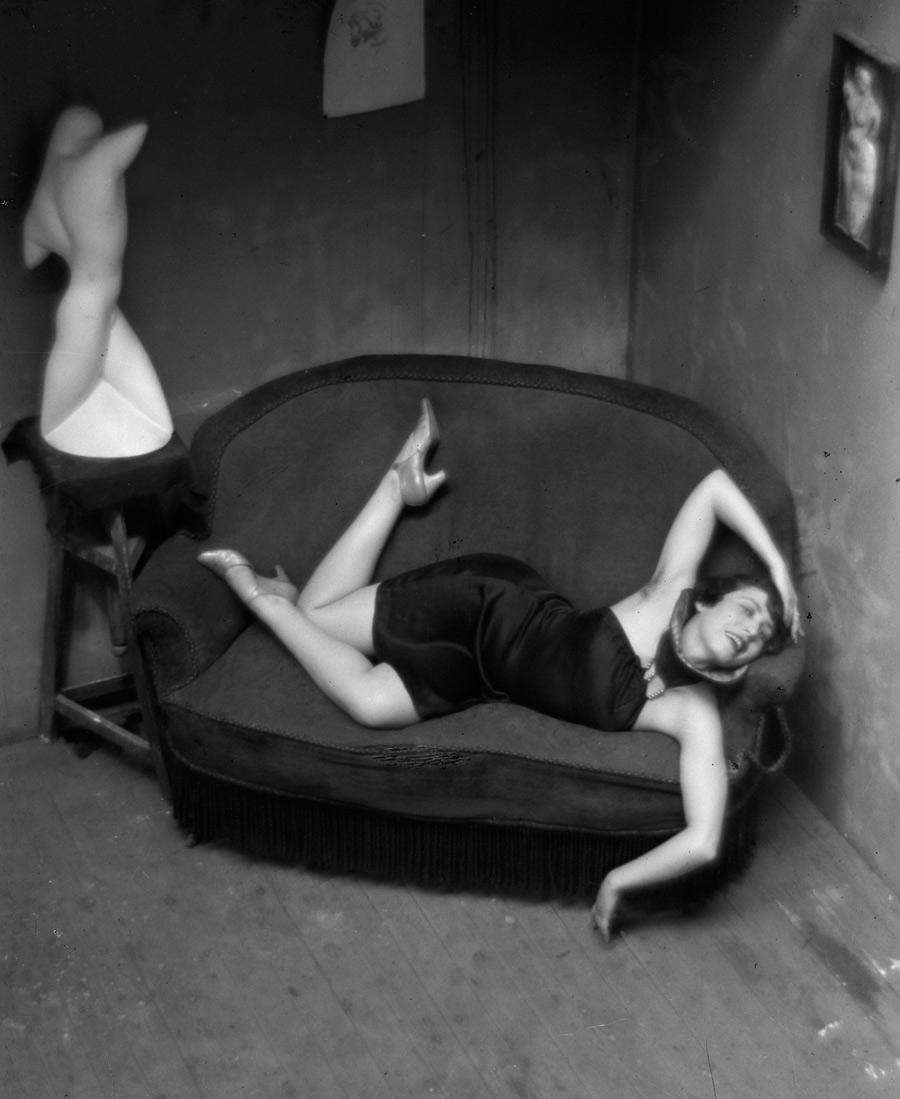
Ernest Joseph Bellocq (American, 1873-1949) 'Storyville Portrait, New Orleans' c. 1912, printed 1966


Ernest Joseph Bellocq (American, 1873-1949)
Storyville prostitute / Storyville Portrait, New Orleans
c. 1912, printed 1966
Gelatin silver print
Addison Gallery of American Art, Phillips Academy, Andover, Massachusetts
Museum purchase


Storyville was born on January 1, 1898, and its bordellos, saloons and jazz would flourish for 25 years, giving New Orleans its reputation for celebratory living. Storyville has been almost completely demolished, and there is strangely little visual evidence it ever existed – except for Ernest J. Bellocq’s other wordly photographs of Storyville’s prostitutes. Hidden away for decades, Bellocq’s enigmatic images from what appeared to be his secret life would inspire poets, novelists and filmmakers. But the fame he gained would be posthumous. …

E. J. Bellocq wasn’t just photographing ships and machines. What he kept mostly to himself was his countless trips to Storyville, where he made portraits of prostitutes at their homes or places of work with his 8-by-10-inch view camera. Some of the women are photographed dressed in Sunday clothes, leaning against walls or lying across an ironing board, playing with a small dog. Others are completely or partially nude, reclining on sofas or lounges, or seated in chairs.

The images are remarkable for their modest settings and informality. Bellocq managed to capture many of Storyville’s sex workers in their own dwellings, simply being themselves in front of his camera – not as sexualised pinups for postcards. If his images of ships and landmark buildings were not noteworthy, the pictures he took in Storyville are instantly recognisable today as Bellocq portraits – time capsules of humanity, even innocence, amid the shabby red-light settings of New Orleans. Somehow, perhaps as one of society’s outcasts himself, Bellocq gained the trust of his subjects, who seem completely at ease before his camera. …

In 1958, 89 glass negatives were discovered in a chest, and nine years later the American photographer Lee Friedlander acquired the collection, much of which had been damaged because of poor storage. None of Bellocq’s prints were found with the negatives, but Friedlander made his own prints from them, taking great care to capture the character of Bellocq’s work. It is believed that Bellocq may have purposely scratched the negatives of some of the nudes, perhaps to protect the identity of his subjects.

Gilbert King. “The Portrait of Sensitivity: A Photographer in Storyville, New Orleans’ Forgotten Burlesque Quarter,” on the Smithsonian Magazine website March 28, 2012 [Online] Cited 20/12/2024


From 1898 to about 1923, New Orleans’s legally protected red-light district, known as Storyville, flourished with saloons, jazz clubs, gambling halls, and brothels. The prostitutes of these establishments were the favourite subjects of E. J. Bellocq, a photographer from a wealthy family of creole origins who was better known at the time for his industrial pictures of ships and machinery for local companies. His personal photographs of the women of Storyville do not glamorise or eroticise their subjects but instead show them in their private quarters, often at ease in varying states of dress. Although Bellocq destroyed many of his negatives before his death, in the mid-1960s the photographer Lee Friedlander discovered a cache of Storyville glass plates, made prints from them, and showed them at New York’s Museum of Modern Art in 1970, launching the once-obscure Bellocq into newfound, posthumous fame.

Text from the Large Print Guide at the Virginia Museum of Fine Arts
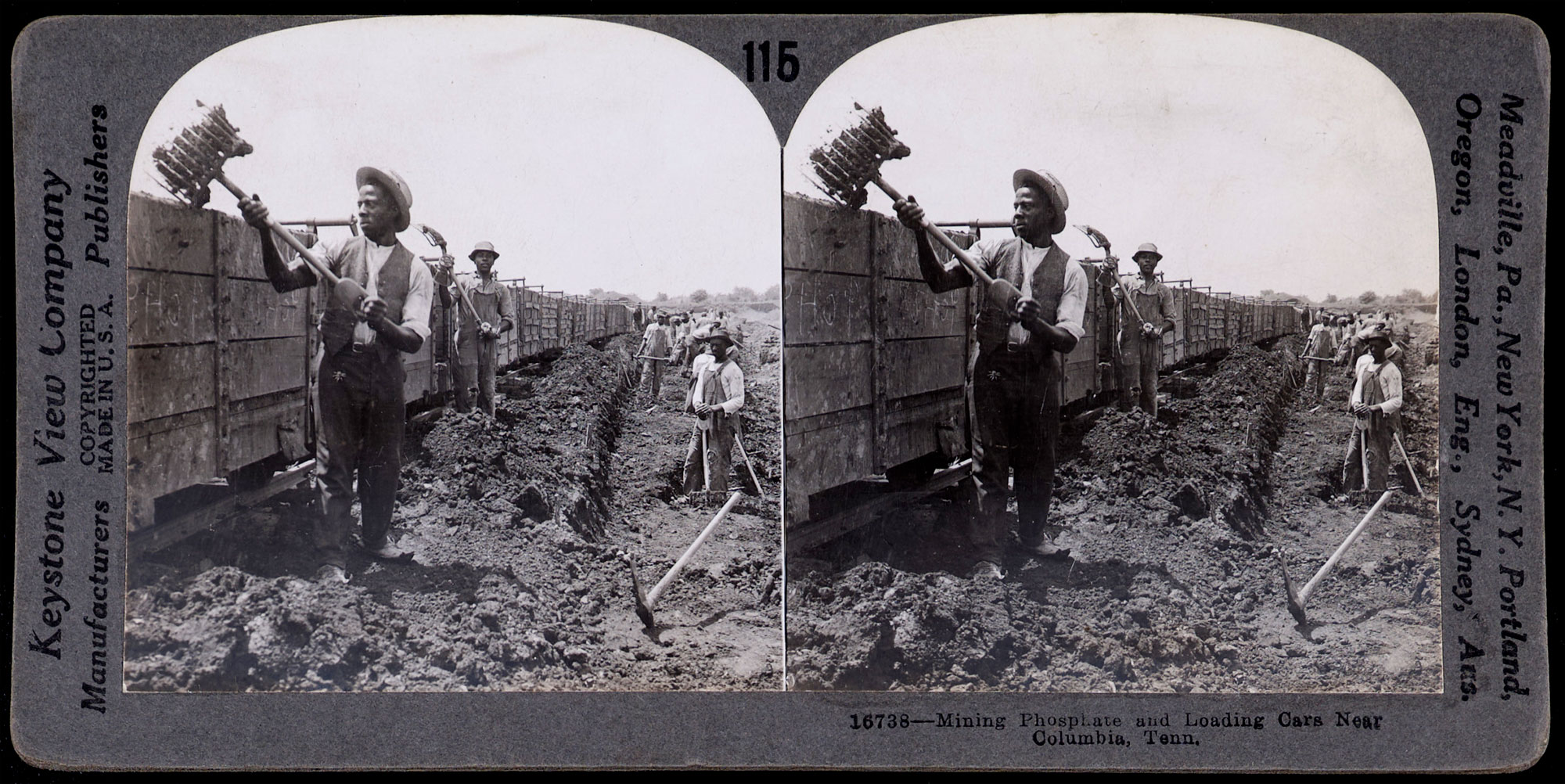
 

Unidentified photographer / Keystone View Company (American, 1892-1972) 'Mining Phosphate and Loading Cars Near Columbia, Tennessee' c. 1898 from the exhibition 'A Long Arc: Photography and the American South since 1845' at the Virginia Museum of Fine Arts, Richmond


Unidentified photographer
Keystone View Company
(American, 1892-1972)
Mining Phosphate and Loading Cars Near Columbia, Tennessee
c. 1898
Albumen silver print (stereocard)
Addison Gallery of American Art
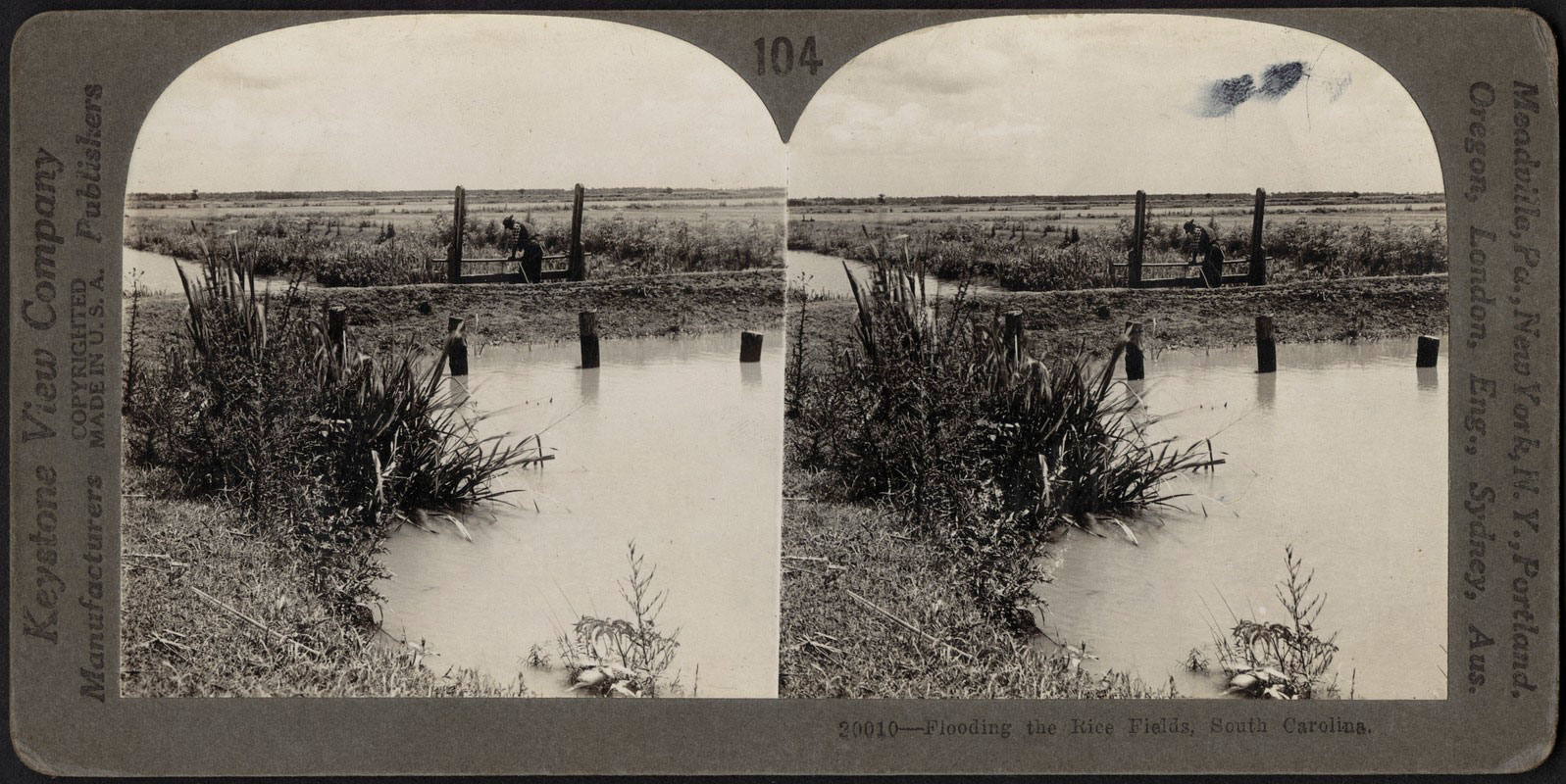
 

Unidentified photographer / Keystone View Company (American, 1892-1972) 'Flooding the Rice Fields, South Carolina' c. 1904 from the exhibition 'A Long Arc: Photography and the American South since 1845' at the Virginia Museum of Fine Arts, Richmond


Unidentified photographer
Keystone View Company
(American, 1892-1972)
Flooding the Rice Fields, South Carolina
c. 1904
Albumen silver print (stereocard)
Addison Gallery of American Art
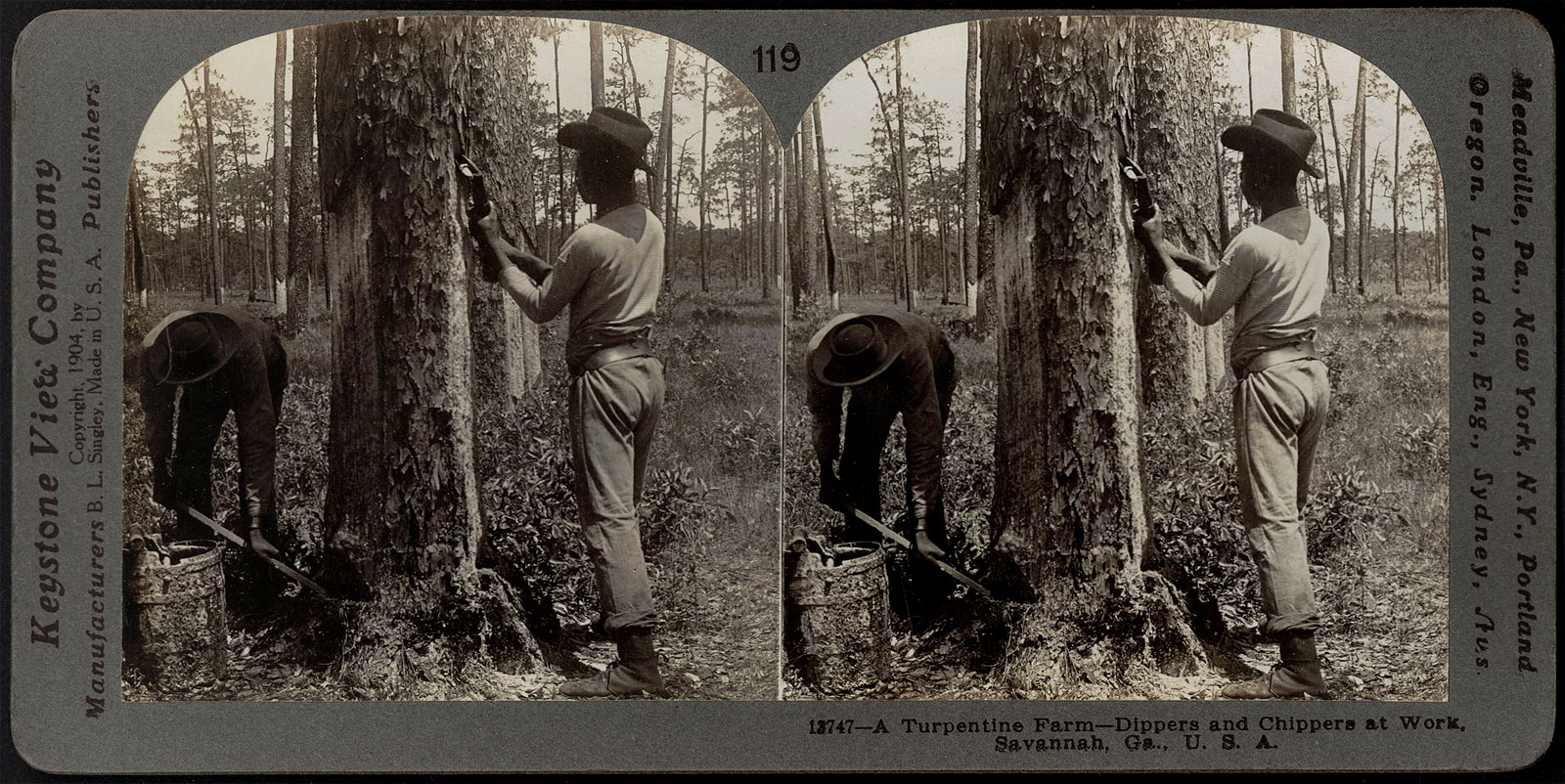
 

Unidentified photographer / Keystone View Company (American, 1892-1972) 'A Turpentine Farm - Dippers and Chippers at Work, Savannah, Georgia' 1904 from the exhibition 'A Long Arc: Photography and the American South since 1845' at the Virginia Museum of Fine Arts, Richmond


Unidentified photographer
Keystone View Company
(American, 1892-1972)
A Turpentine Farm – Dippers and Chippers at Work, Savannah, Georgia
1904
Albumen silver print (stereocard)
Addison Gallery of American Art
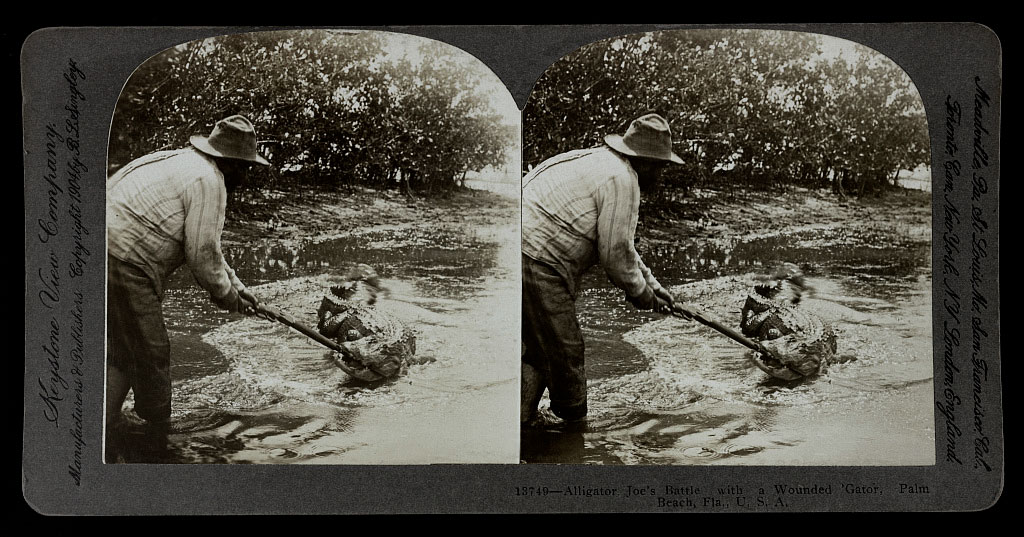
 

Unidentified photographer / Keystone View Company (American, 1892-1972) 'Alligator Joe's Battle with a Wounded Gator, Palm Beach, Florida' 1904 from the exhibition 'A Long Arc: Photography and the American South since 1845' at the Virginia Museum of Fine Arts, Richmond


Unidentified photographer
Keystone View Company
(American, 1892-1972)
Alligator Joe’s Battle with a Wounded Gator, Palm Beach, Florida
1904
Albumen silver print (stereocard)
Addison Gallery of American Art


Unidentified photographer / Keystone View Company (American, 1892-1972) 'Hoeing Rice, South Carolina' 1904 from the exhibition 'A Long Arc: Photography and the American South since 1845' at the Virginia Museum of Fine Arts, Richmond


Unidentified photographer
Keystone View Company
(American, 1892-1972)
Hoeing Rice, South Carolina
1904
Albumen silver print (stereocard)
Addison Gallery of American Art
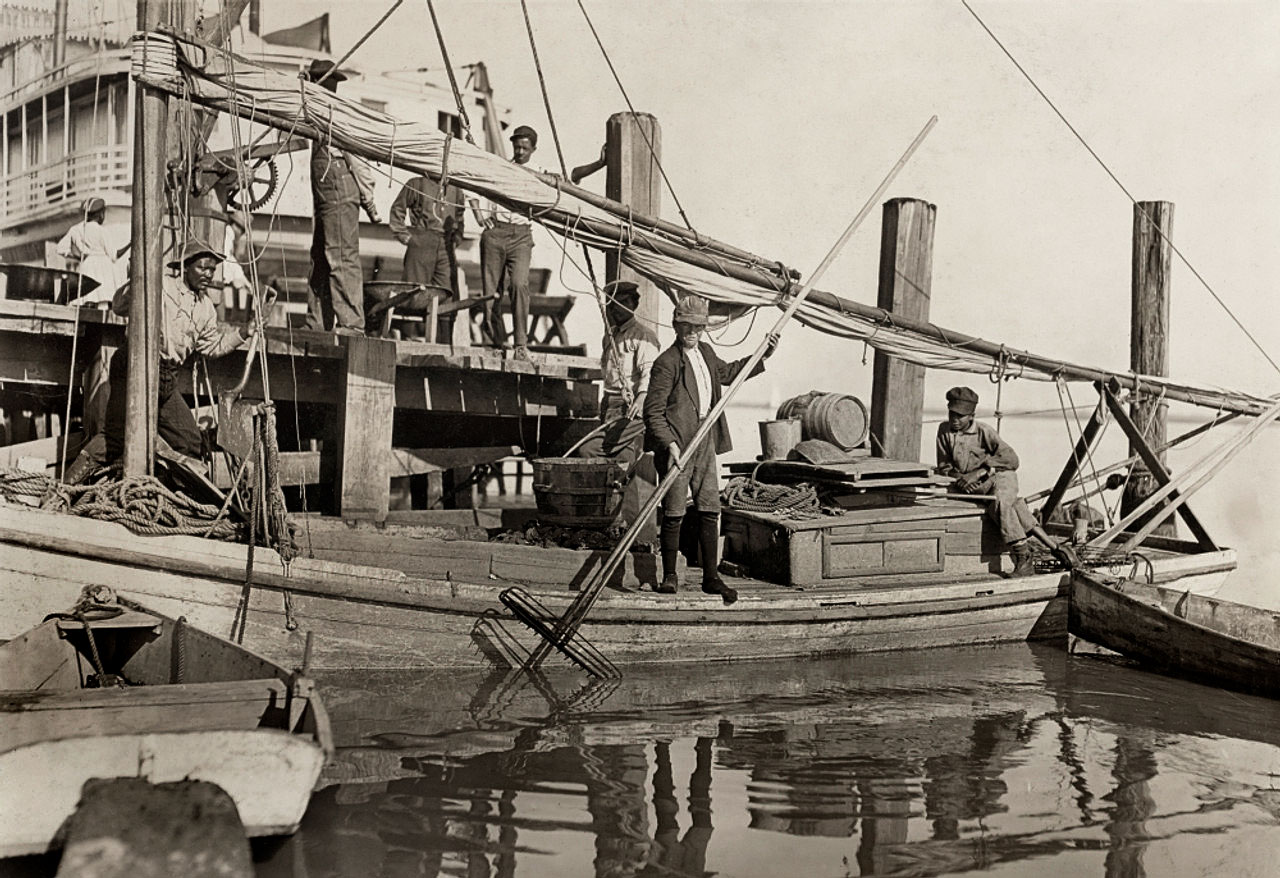
 

Lewis Hine (American, 1874-1940) 'A Young Oyster Fisher, Apalachicola, Florida' 1909


Lewis Hine (American, 1874-1940)
A Young Oyster Fisher, Apalachicola, Florida
1909
Gelatin silver print
Virginia Museum of Fine Arts
Museum Arts purchase fund
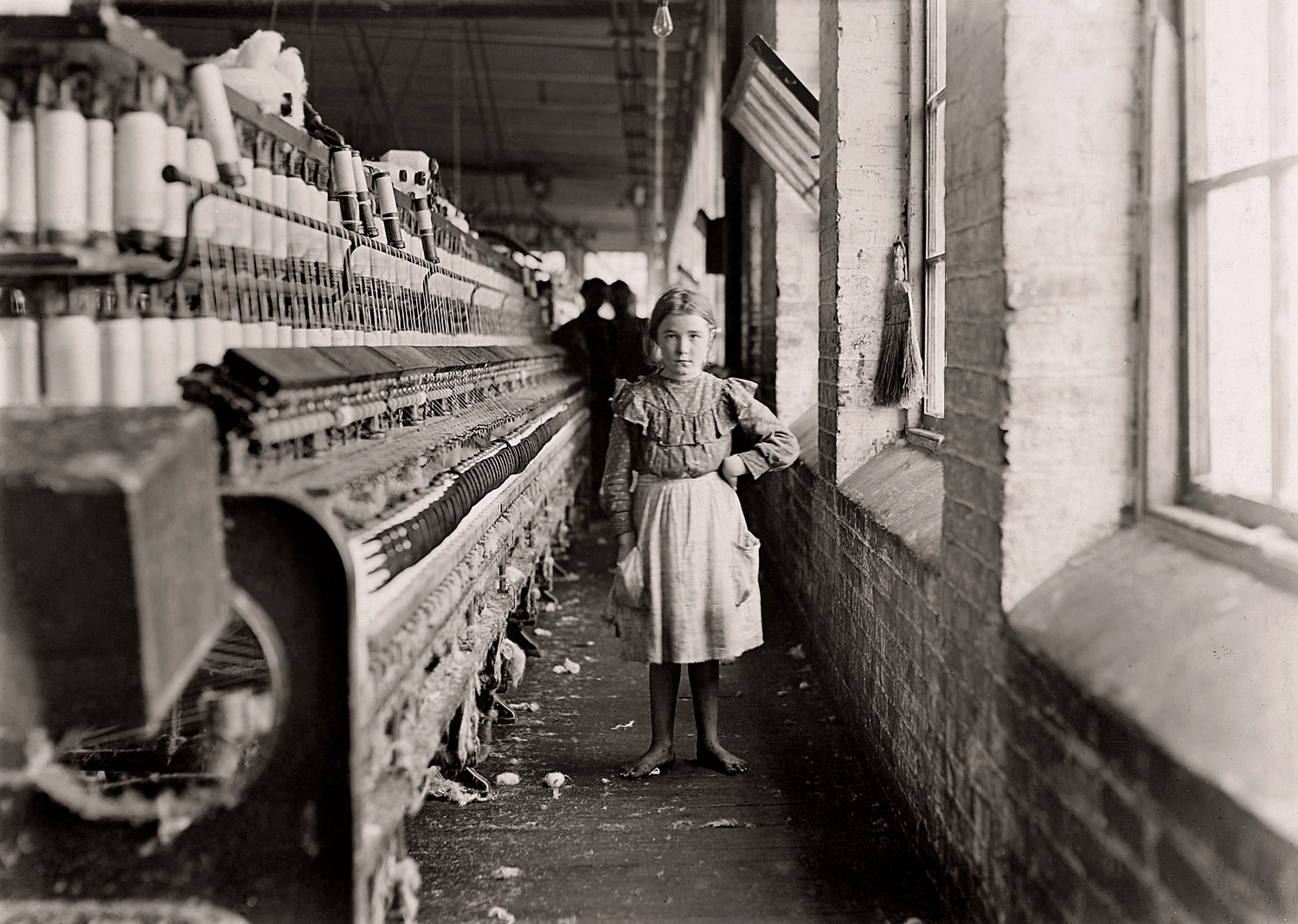
 

Lewis Hine (American, 1874-1940) 'A little spinner in a Georgia Cotton Mill' 1909


Lewis Hine (American, 1874-1940)
A little spinner in a Georgia Cotton Mill
1909
Gelatin silver print
Addison Gallery of American Art


As a member of the National Child Labor Committee, Lewis Hine was an activist who deployed photography as an instrument of social reform. At the turn of the 1900s, there were two million children in the labor force, and Hine traveled to mines, textile mills, and factories to document their dismal working conditions. In order to gain access to these sites, he often posed as a salesman, insurance agent, or other profession. His photographs of children working in textile mills in Georgia appeared in pamphlets and posters throughout the country, contributing to a shift in public perception that ultimately led to child labor laws, many of which are still in effect today.

Text from the Large Print Guide at the Virginia Museum of Fine Arts


Lewis Hine (American, 1874-1940) 'Cherokee Hosiery Mill, Rome, Georgia' 1913


Lewis Hine (American, 1874-1940)
Cherokee Hosiery Mill, Rome, Georgia
1913
Gelatin silver print
High Museum of Art, Atlanta
Gift of Murray H. Bring


Doris Ulmann (American, 1884-1934) 'Laborers, Kingdom Come School House' c. 1931


Doris Ulmann (American, 1884-1934)
Laborers, Kingdom Come School House
c. 1931
Platinum print
High Museum of Art, Atlanta
Purchase


Doris Ulmann was an American photographer, best known for her portraits of the people of Appalachia, particularly craftsmen and musicians, made between 1928 and 1934.


Prentice Herman Polk (American, 1898-1984) 'The Boss' c. 1932


Prentice Herman Polk (American, 1898-1984)
The Boss
c. 1932
Gelatin silver print
Virginia Museum of Fine Arts, Richmond, VA
Kathleen Boone Samuels Memorial Fund


P. H. Polk worked as the official photographer for Alabama’s Tuskegee Institute, a private, historically Black land grant university that was founded in 1881. For more than forty-five years, Polk documented the school’s activities and its illustrious faculty and staff. He made photographs that challenged stereotypical images of Black life in the South by chronicling scientific, industrial, and academic advancements by Black innovators and capturing portraits of nearby residents. At a time when most popular images portrayed Black Southerners as subservient, Polk showed the aptly named “boss” standing self-assured, in full control of her image and addressing the camera confidently.

Text from the Large Print Guide at the Virginia Museum of Fine Arts


Louise Dahl-Wolfe (American, 1895-1989) 'Black Man In Bijou Theatre, Nashville, Tennessee' 1932, printed later


Louise Dahl-Wolfe (American, 1895-1989)
Black Man In Bijou Theatre, Nashville, Tennessee
1932, printed later
Gelatin silver print
Addison Gallery of American Art


The Bijou Theatre became the Nashville flagship of the Bijou Amusement Company, one of the first African American theatre chains in the south.


Dorothea Lange (American, 1895-1965) 'Three Generations of Texans' c. 1935


Dorothea Lange (American, 1895-1965)
Three Generations of Texans (Now Drought Refugees)
c. 1935
Gelatin silver print
Addison Gallery of American Art


The artwork captures a poignant and compelling scene of three men representing different generations, standing together, likely under difficult circumstances as suggested by the title referencing them as “drought refugees.” The expressions, attire, and the stark composition tell a visual story of resilience and hardship, which is characteristic of Dorothea Lange’s work. The photograph’s detail and the subjects’ piercing gazes evoke a sense of solemn dignity despite their apparent adversities, reflecting the social realism movement’s focus on the lives of everyday people affected by social and economic issues.

Text from the Artchive website


Walker Evans (American, 1903-1975) 'House in New Orleans' c. 1935


Walker Evans (American, 1903-1975)
House in New Orleans
c. 1935
Gelatin silver print
Addison Gallery of American Art
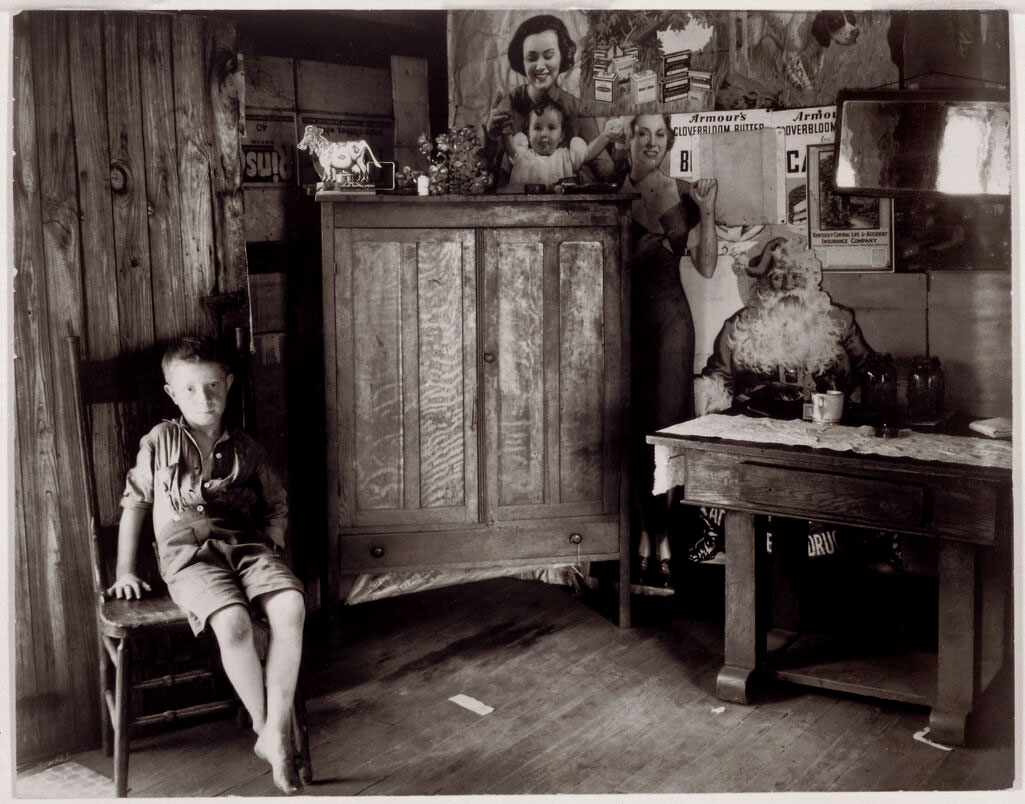
 

Walker Evans (American, 1903-1975) 'West Virginia Living Room' 1935


Walker Evans (American, 1903-1975)
West Virginia Living Room
1935
Gelatin silver print
High Museum of Art, Atlanta
Purchase with funds from the Atlanta Foundation


Evans made this photograph during the first year of the photography division of the Resettlement Administration (later renamed the Farm Security Administration). The mission of this newly formed government agency was to document the hardships of the Great Depression and the positive effects of New Deal policies. The furnishings of this coal miner’s home are spare and worn; the walls are decorated with commercial advertisements that reflect a prosperity this family was not likely to experience. But this photograph transcends its immediate mission as government propaganda. Rather than a condescending look at poverty, “West Virginia Living Room” captures the dignity of the family. The barefoot boy sitting awkwardly in the chair looks straight into the camera and challenges the viewer. His direct stare shows no shame and asks for no pity.

Text from the High Museum of Art website
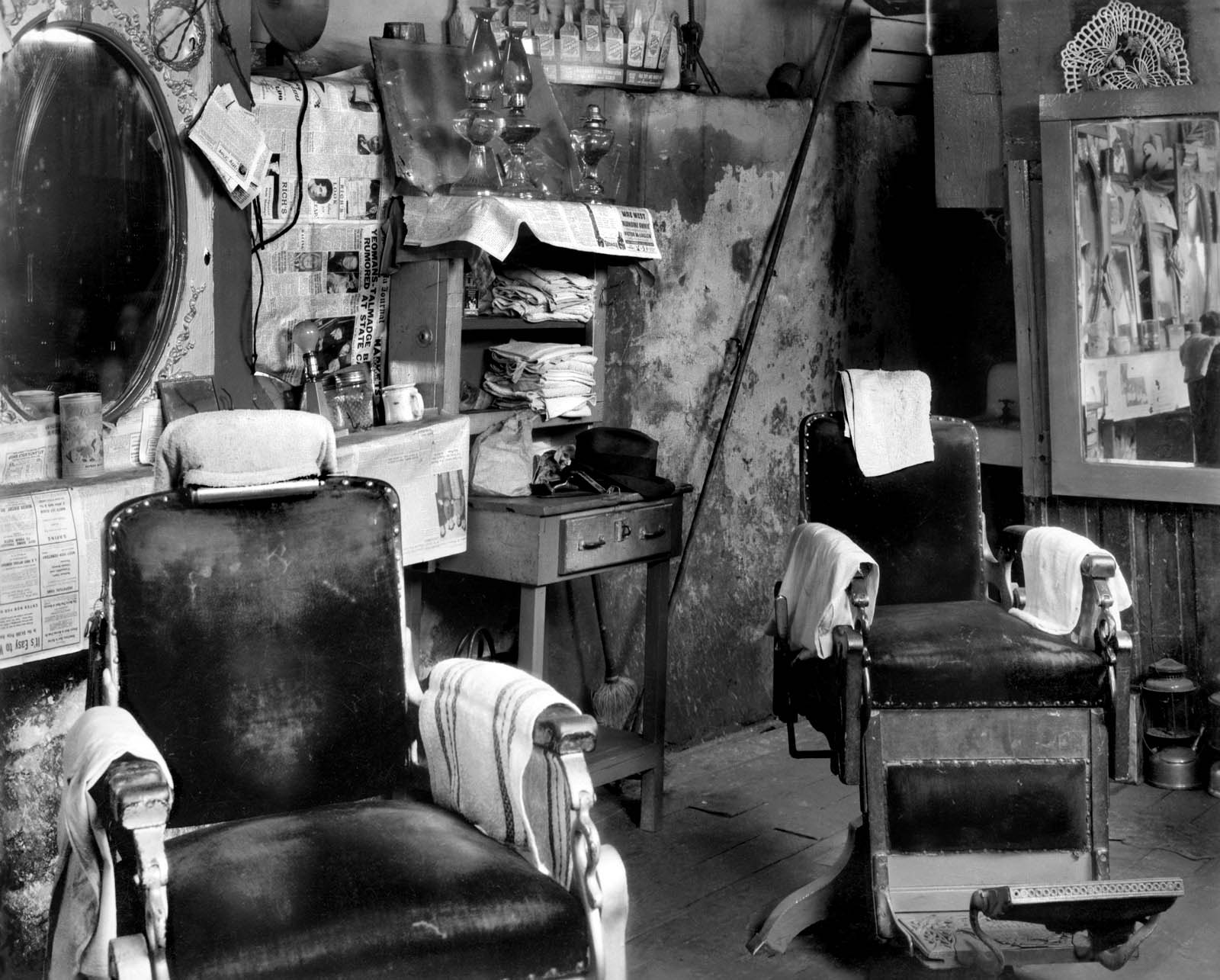
 

Walker Evans (American, 1903-1975) 'Atlanta, Georgia' 1936


Walker Evans (American, 1903-1975)
Atlanta, Georgia
1936
Gelatin silver print
High Museum of Art, Atlanta
Purchase with funds from the Atlanta Foundation
© Estate of the artist


Walker Evans (American, 1903-1975) 'Allie Mae Burroughs, Hale County, Alabama' 1936


Walker Evans (American, 1903-1975)
Allie Mae Burroughs, Hale County, Alabama
1936
Gelatin silver print
Addison Gallery of American Art, Phillips Academy, Andover, Massachusetts
Gift of Norman Selby (PA 1970) and Melissa G. Vail


On assignment for Fortune, Walker Evans collaborated with writer James Agee in Hale County, Alabama, for three weeks, recording the lives of three families of white tenant farmers. The photographs offer a raw, direct perspective on a sharecropper’s life yet also diminish the depth and nuance of their subjects. In the original title, Evans referred to Allie Mae Burroughs as a sharecropper’s wife, anonymising her and negating her role in the farm’s operations. Yet through the photograph, her face has become one of the defining images of the Great Depression. The story never ran in Fortune, whose wealthy readers wanted no reminder of the impoverished conditions of rural America, but it was published in 1941 as the book Let Us Now Praise Famous Men and remains one the most influential works of photography and literary nonfiction.

Text from the Large Print Guide at the Virginia Museum of Fine Arts


Walker Evans (American, 1903-1975) 'Penny Picture Display, Savannah' 1936


Walker Evans (American, 1903-1975)
Penny Picture Display, Savannah
1936
Gelatin silver print
Virginia Museum of Fine Arts
Sherritt Art Purchase Fund


Walker Evans was enthralled by the traditional and folk cultures of the South. He developed a direct, often flat manner of photographing that echoed the spareness of the signage and architecture he encountered throughout the region. In his photograph of a portrait photographer’s studio window, he plays on the consonance between the flatness of the window, the plane of his camera, and the resulting photographic print. In photographing the anonymous photographer’s advertisement, he not only condenses time, labor, individuality, and generations but also flattens history. When he made this image, forty percent of Savannah’s population was Black, a fact belied by the over two hundred white faces that make up the image.

Text from the Large Print Guide at the Virginia Museum of Fine Arts
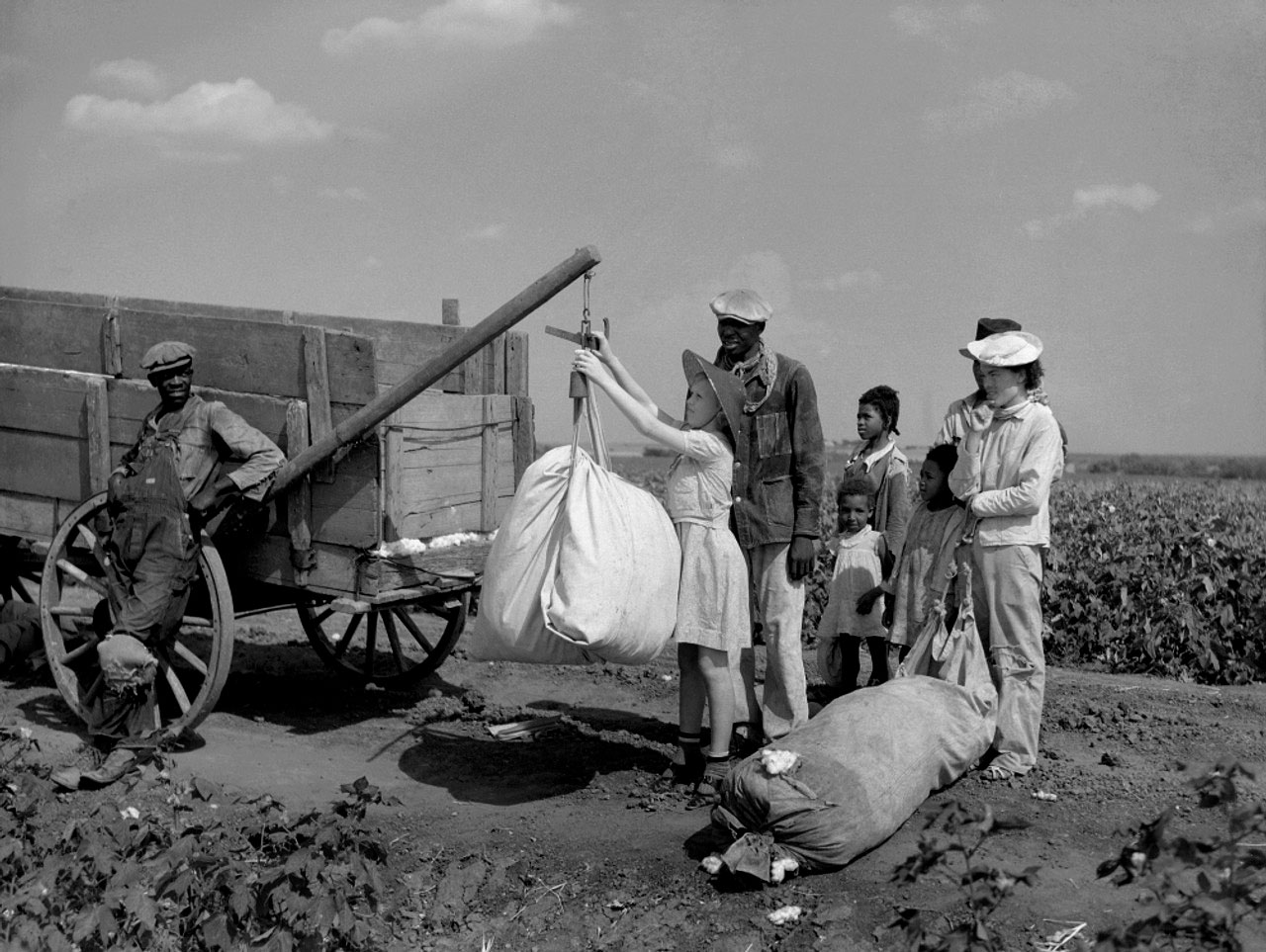
 

Arthur Rothstein (American, 1915-1985) 'Weighing Cotton, Texas' 1936


Arthur Rothstein (American, 1915-1985)
Weighing Cotton, Texas
1936
Gelatin silver print
High Museum of Art, Atlanta
Gift of Howard Greenberg


Plantation owner’s daughter checks weight of cotton.


1930-1945: The Cruel Radiance: A New Documentary Tradition

The impact of the Great Depression on the American South – a region that was already poorer than the rest of the nation – was devastating. In addition to economic havoc, many of the other problems convulsing the country – poverty, racism, and the erosion of rural cultures – appeared in their most concentrated and vivid forms in the South. Photographers responded to these crises with indelible images of hardship and injustice that they hoped would spur reform and modernize the region. In this way, the Great Depression changed the course of American photography by cementing the concept and practice of documentary photography as a tool for social reform.

Most of these documentary photographs were produced under the auspices of the federal government as part of a New Deal effort to provide relief to rural areas. From 1935-1942, some two dozen photographers were hired by the government to capture images of rural poverty in order to raise both public sympathy and congressional support for resettlement and other forms of aid. Although there was not a single native Southerner among them, together this group of photographers produced around sixteen thousand photographs of the region and profoundly changed how the nation saw the South, and by extension, itself. Widely reproduced in newspaper articles, magazines, exhibitions, and photo books, these documentary projects brought the South into national focus and debate.

Not all of the photographers who flocked to the South during this time sought to document its stricken conditions. The region’s seeming resistance to progress also seduced photographers who saw vestiges of agrarian life that nurtured distinctive folkways and vernacular architecture – that is to say, buildings based on regional or local traditions. To them, this South – so different from the rapidly changing urban centres in the Northeast and Midwest – resembled a cultural eddy, an alluring place cut off from the flow of time where one could photograph the beautiful remnants of a largely imagined past.

Text from the Large Print Guide at the Virginia Museum of Fine Arts
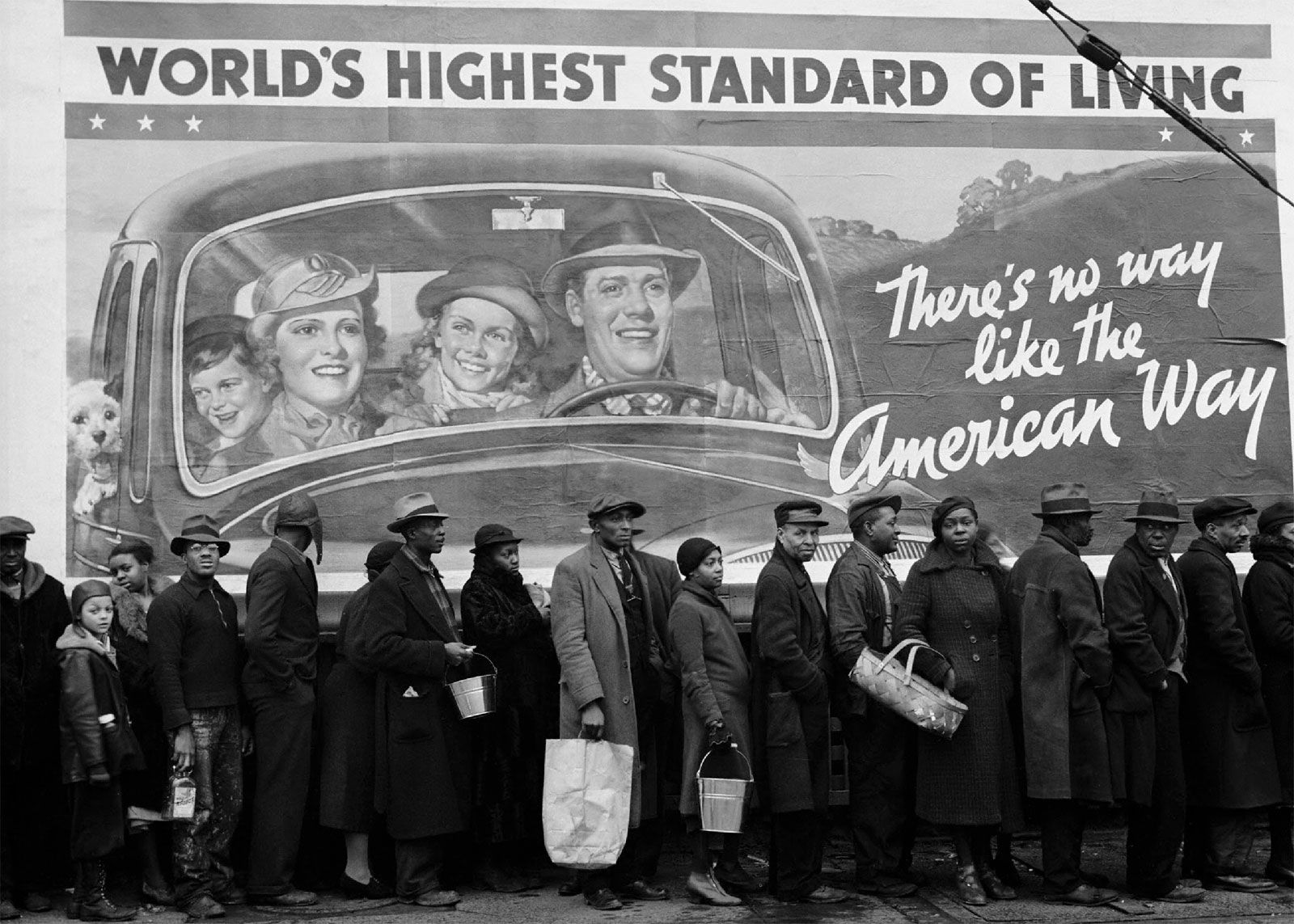
 

Margaret Bourke White (American, 1904-1971) 'Louisville Flood Victims' 1937, printed later


Margaret Bourke White (American, 1904-1971)
Louisville Flood Victims
1937, printed later
Gelatin silver print
Addison Gallery of American Art


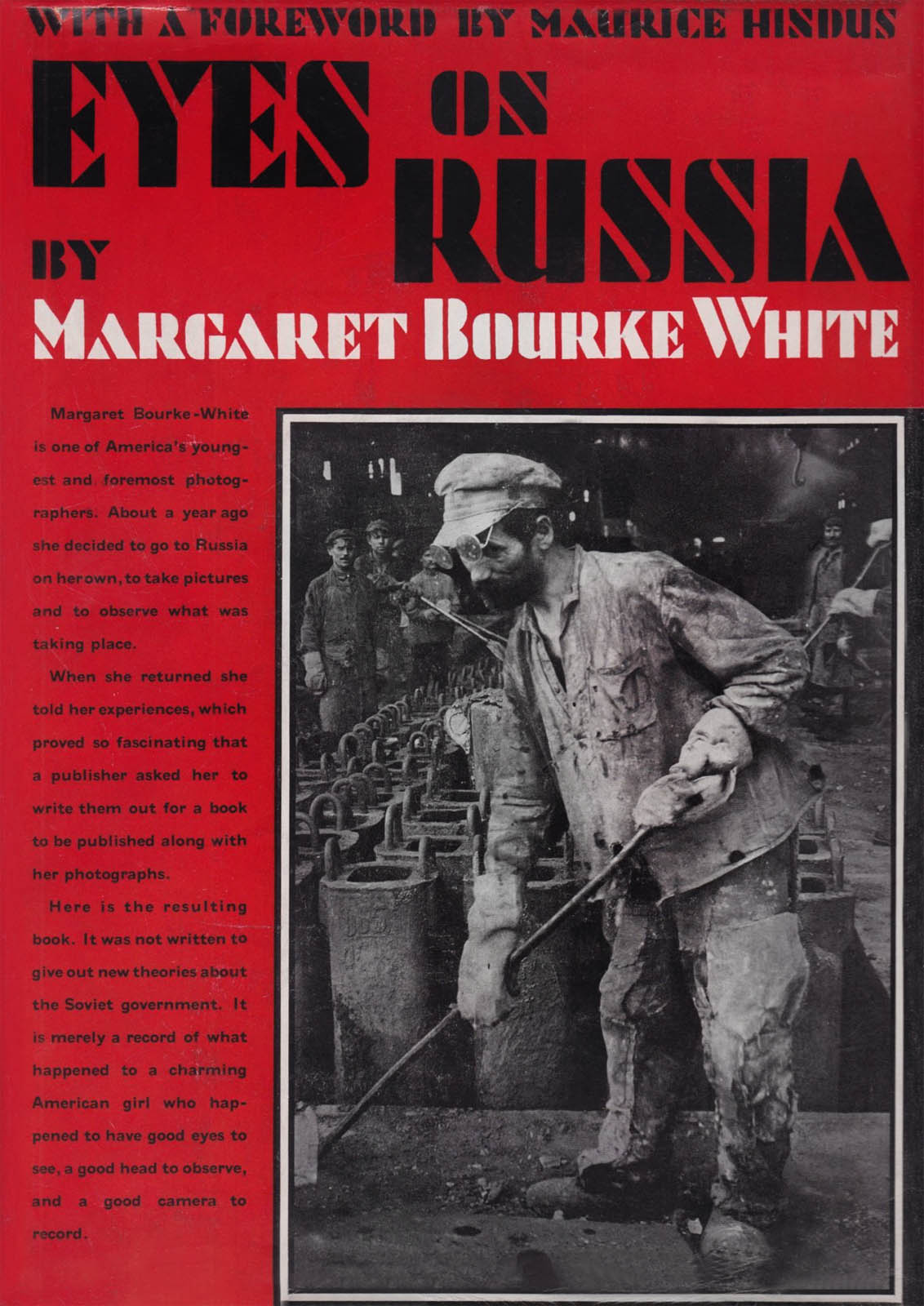
In January 1937, the swollen banks of the Ohio River flooded Louisville, Kentucky, and its surrounding areas. With one hour’s notice, photojournalist Margaret Bourke-White caught the next plane to Louisville. She photographed the city from makeshift rafts, recording one of the largest natural disasters in American history for Life magazine, where she was a staff photographer. The Louisville Flood shows African-Americans lined up outside a flood relief agency. In striking contrast to their grim faces, the billboard for the National Association of Manufacturers above them depicts a smiling white family of four riding in a car, under a banner reading “World’s Highest Standard of Living. There’s no way like the American Way.” As a powerful depiction of the gap between the propagandist representation of American life and the economic hardship faced by minorities and the poor, Bourke-White’s image has had a long afterlife in the history of photography.

Text from the Whitney Museum of American Art website


Dorothea Lange (American, 1895-1965) 'Displaced Tenant Farmers, Goodlett, Hardeman County, Texas' July 1937


Dorothea Lange (American, 1895-1965)
Displaced Tenant Farmers, Goodlett, Hardeman County, Texas
July 1937
Gelatin silver print
Collection of Michael Mattis and Judith Hochberg


“All displaced tenant farmers, the oldest 33. None able to vote because of Texas poll tax. They support an average of four persons each on $22.80 a month.” ~ Dorothea Lange

Six Tenant Farmers Without Farms exemplifies the best of Lange’s Depression-era photographs from the deep South. The dignity of her subjects – young farmers who had lost their livelihood when tractors replaced horse-and-plow tilling of the land – is immortalised by Lange, who portrays them with clear compassion but no sentimentality.

Text from the Sotheby’s website
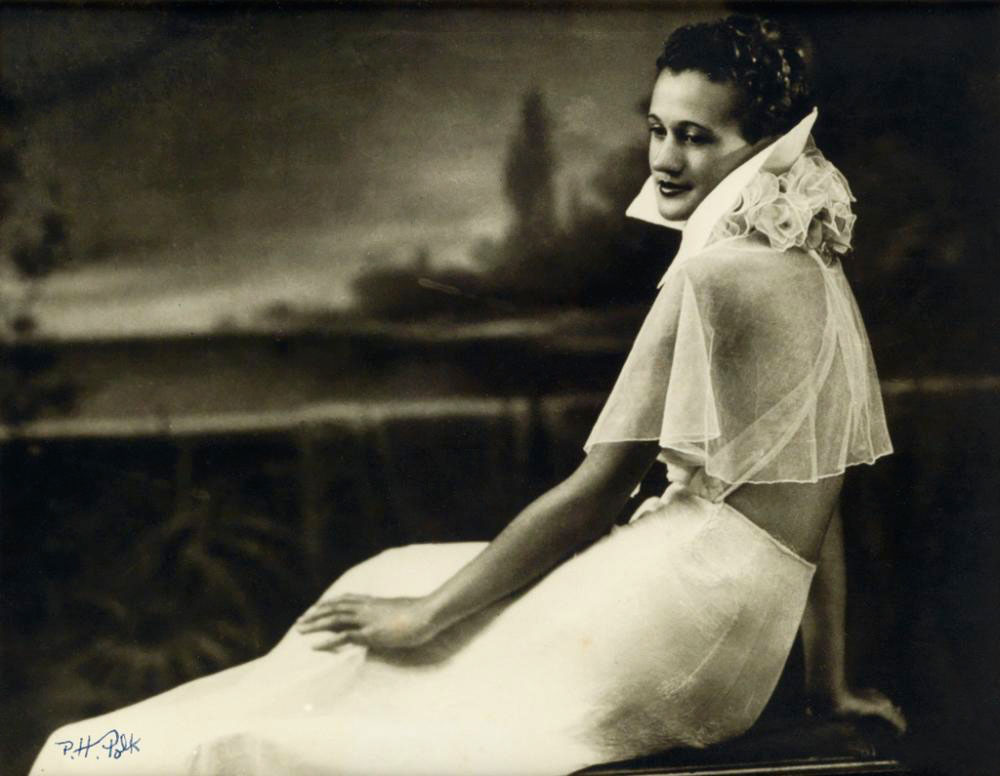
 

Prentice Herman Polk (American, 1898-1984) 'Mildred Hanson Baker' 1937


Prentice Herman Polk (American, 1898-1984)
Mildred Hanson Baker
1937
Gelatin silver print
Virginia Museum of Fine Arts
John C. and Florence S. Goddin, by exchange


Dorothea Lange (American, 1895-1965) 'Formerly Enslaved Woman, Alabama' from 'The American Country Woman' 1938


Dorothea Lange (American, 1895-1965)
Formerly Enslaved Woman, Alabama
1938
Gelatin silver print
National Gallery of Art


Dorothea Lange’s Depression-era portrait of a woman who had been born enslaved offers a poignant and understated meditation on the legacy of slavery. Lange’s empathic approach to portraiture was distinct for its ability to express the lasting effects of trauma, poverty, and prejudice in the lives of formerly enslaved people and their descendants. Her photographs demonstrate how the deprivation of the Jim Crow era was compounded by the aftermath of World War I and the Great Depression, making life in the South increasingly turbulent for Black Americans.

Text from the Large Print Guide at the Virginia Museum of Fine Arts
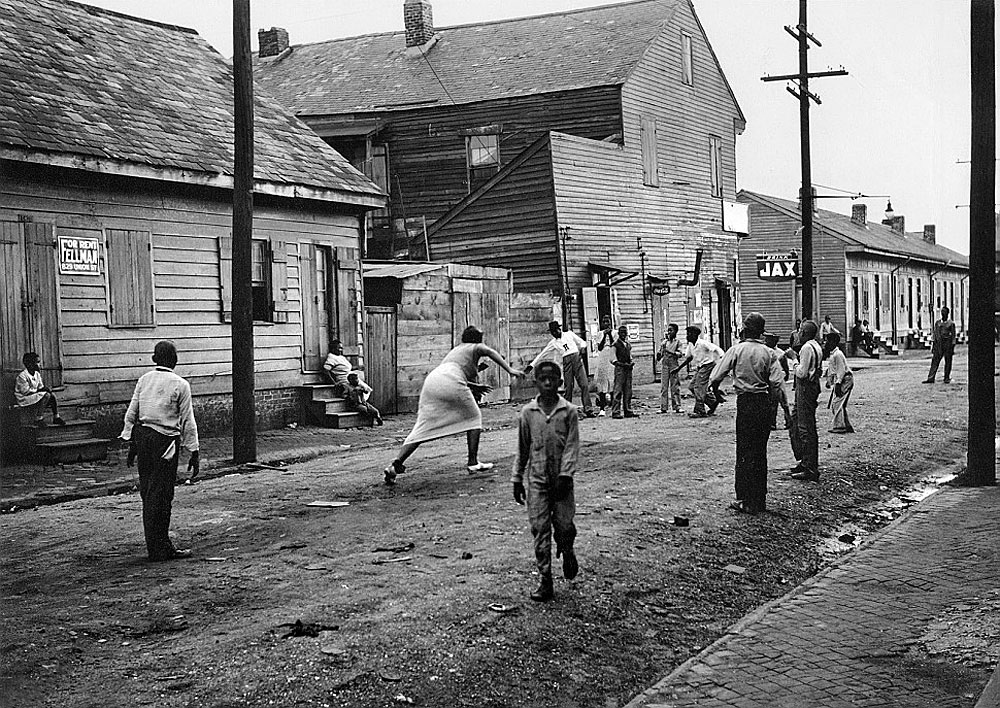
 

Peter Sekaer (Danish, 1901-1950) 'Irish Channel, Future Site of St. Thomas Housing Project, New Orleans' c. 1938


Peter Sekaer (Danish, 1901-1950)
Irish Channel, Future Site of St. Thomas Housing Project, New Orleans
c. 1938
Gelatin silver print
Addison Gallery of American Art
Museum purchase


St. Thomas Development was a notorious housing project in New Orleans, Louisiana. The project lay south of the Central City in the lower Garden District area. As defined by the City Planning Commission, its boundaries were Constance, St. Mary, Magazine Street and Felicity Streets to the north; the Mississippi River to the south; and 1st, St. Thomas, and Chippewa Streets, plus Jackson Avenue to the west. In the 1980s and 1990s, St. Thomas was one of the city’s most dangerous and impoverished housing developments. It made national headlines in 1992 after the deadly shooting of Eric Boyd.

Text from the Wikipedia website


It is interesting to compare photographs by Walker Evans and his assistant Peter Sekelear, whose pictures reflect similar interests with different eyes. Both photographers turned their attention to the vernacular, bringing a sense of place into focus. Many of the photographers exhibiting in A Long Arc were neither southern nor poor. This calls into question the contribution that 1930’s depictions of southern poverty had on stereotyping, imploring viewers to feel sorry for the destitute rather than questioning the systems that kept their communities impoverished.

Suzanne Révy and Elin Spring. “A Long Arc,” on the What Will You Remember website March 20, 2024 [Online] Cited 19/12/2024
 

Russell Lee (American, 1903-1986) 'Louisiana' 1939


Russell Lee (American, 1903-1986)
Louisiana
1939
Gelatin silver print
Addison Gallery of American Art
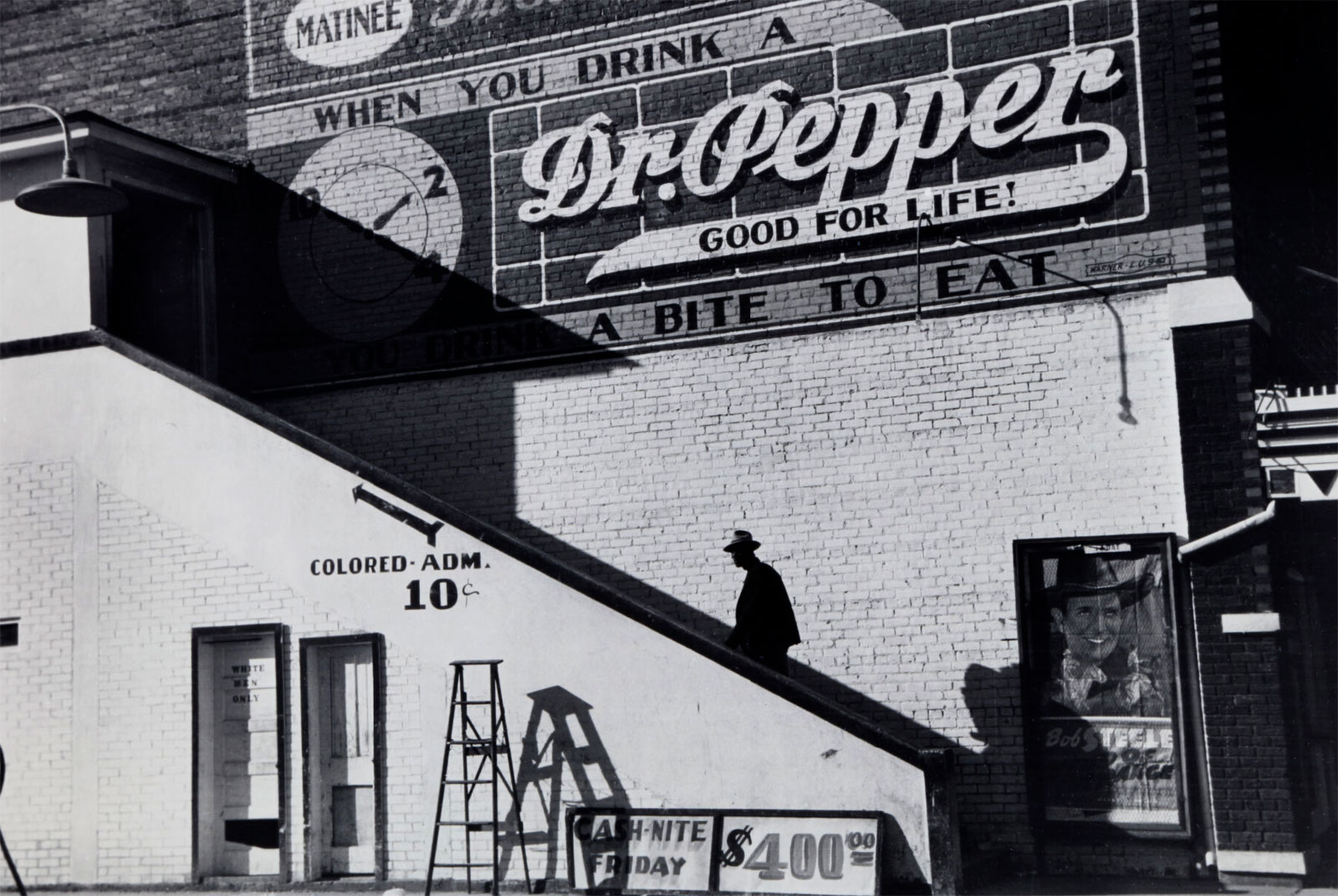
 

Marion Post Wolcott (American, 1910-1990) 'Black Man Using "Colored" Entrance to Movie Theatre, Belzoni, Mississippi' 1939, printed later


Marion Post Wolcott (American, 1910-1990)
Black Man Using “Colored” Entrance to Movie Theatre, Belzoni, Mississippi
1939, printed later
Gelatin silver print
High Museum of Art, Atlanta
Gift of Ann and Ben Johnson


Marion Post Wolcott (American, 1910-1990) 'Waiting to be Paid for Picking Cotton, Inside Plantation Store, Marcella' 1939


Marion Post Wolcott (American, 1910-1990)
Waiting to be Paid for Picking Cotton, Inside Plantation Store, Marcella
1939
Gelatin silver print
Collection of Michael Mattis and Judith Hochberg


Mike Disfarmer (American, 1884-1959) 'Wallace Sloane, Elliot Smith and Brother Homer' c. 1940


Mike Disfarmer (American, 1884–1959)
Wallace Sloane, Elliot Smith and Brother Homer
c. 1940
Gelatin silver print
High Museum of Art, Atlanta
Purchase with funds from Jane and Clay Jackson


Mike Disfarmer operated the only professional photography studio in Heber Springs, Arkansas, between the 1930s and ’50s. His spare and at times severe portraits offer a plainspoken vision of rural, predominantly white America during and after the Great Depression. For most of his sitters, being photographed was an unusual occurrence, and a visit to the studio marked a milestone. People often posed for Disfarmer in groups, as in his portrait of three young men casually draping their arms around each others’ shoulders, reinforcing their sense of familiarity and friendship, perhaps on their last night together before one of them heads off for military service.

Text from the Large Print Guide at the Virginia Museum of Fine Arts


Clarence John Laughlin (American, 1905-1985) 'Time Phantasm, Number Six' 1941


Clarence John Laughlin (American, 1905-1985)
Time Phantasm, Number Six
1941
Gelatin silver print
High Museum of Art, Atlanta
Gift of Joshua Mann Pailet in honor of his mother, Charlotte Mann Pailet; her family members Josef, Jiri and Alma Beran Mann, all of whom perished in the Holocaust; and Sir Nicholas Winton, the British hero who orchestrated Charlotte’s escape with 669 Czechoslovakian children in 1939


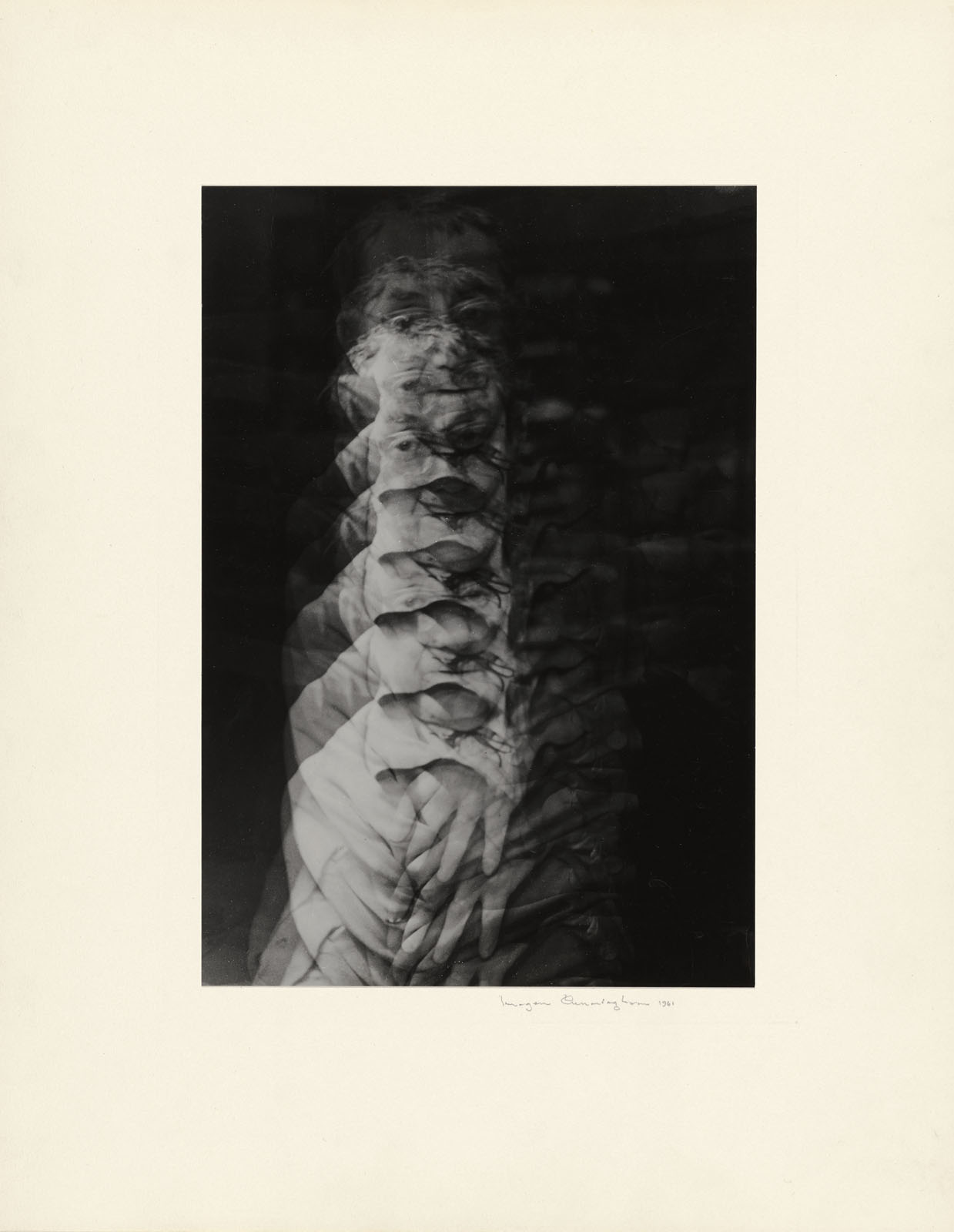
A strong southern penchant for the surreal can be observed in images like those by Clarence John Laughlin, Ralph Eugene Meatyard and Emmet Gowin. Laughlin photographed a decaying antebellum structure alongside Edward Weston in 1941. His soft focus and presence of a ghostly figure in a window create a mysterious mood in contrast to the sharp reality of Weston’s image. And his use of a mask and slight camera shake in “The Masks Grow to Us” transforms a beautiful face into an hypnagogic visage.

Twenty years later, Meatyard photographed his sons in similarly abandoned structures and fields in the countryside surrounding Louisville, Kentucky. Also known for employing masks, Meatyard creates a dreamlike reverence for vanishing rural life in some of the best quality prints of his that we have ever seen. Emmet Gowin’s balmy composition of his multi-generational family splayed around their backyard with two watermelons is, like so many images of the south, both prosaic and magical.

Suzanne Révy and Elin Spring. “A Long Arc,” on the What Will You Remember website March 20, 2024 [Online] Cited 19/12/2024
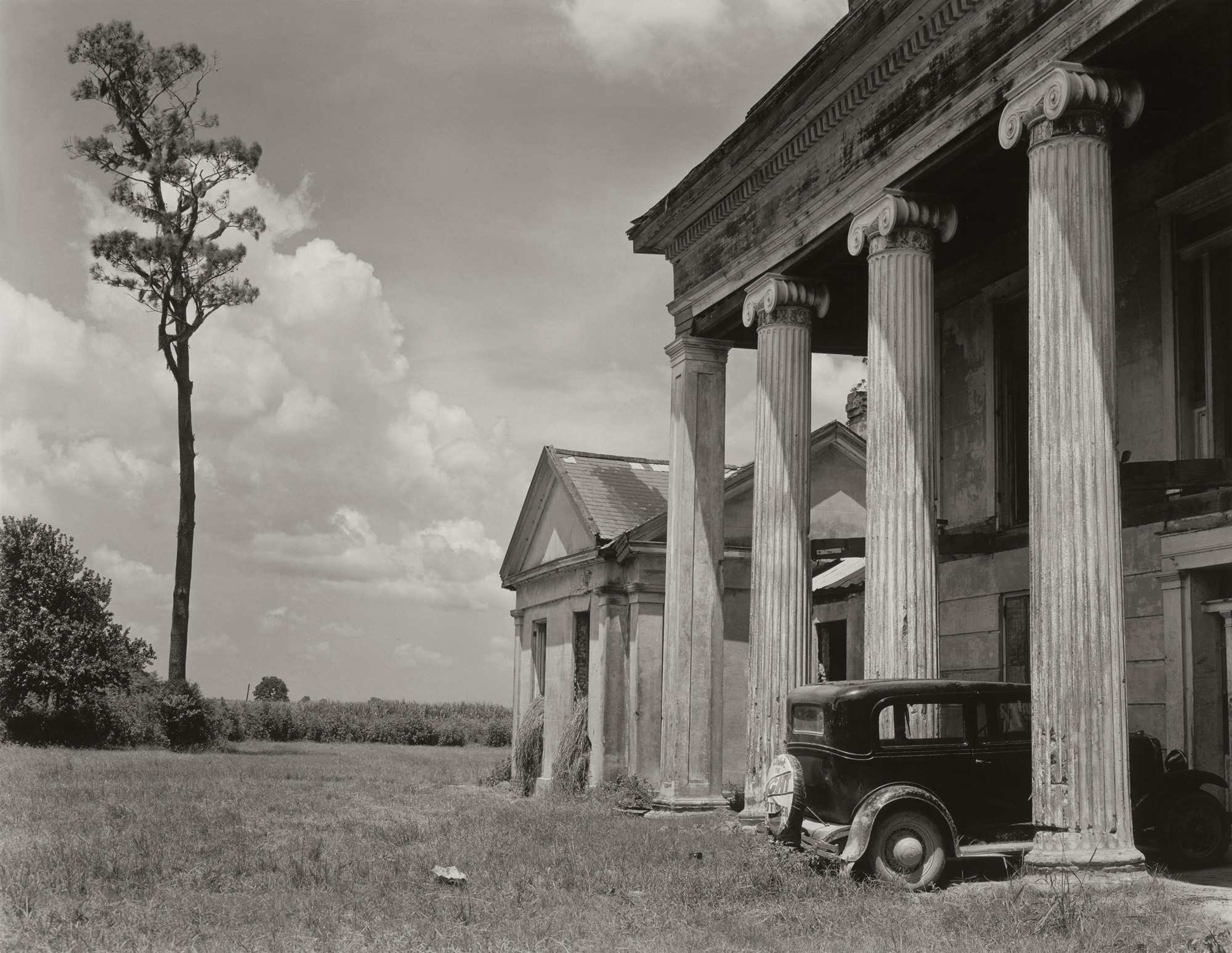
 

Edward Weston (1886-1958) 'Woodlawn Plantation House, Louisiana' 1941


Edward Weston (American, 1886-1958)
Woodland Plantation
1941
Gelatin silver print
New Orleans Museum of Art


In 1941, Clarence John Laughlin and Edward Weston photographed alongside one another for a few days as Weston traveled the South making photographs to illustrate a new edition of Walt Whitman’s Leaves of Grass. Both photographers produced images of the same location but in notably different ways. Weston, who is known for his mastery of sharp focus and a rich tonal range, created a precise and balanced view of the scene. Meanwhile, Laughlin, who was dubbed the “Father of American Surrealism” for his atmospheric depictions of decaying antebellum architecture, spun a more ambiguous and haunting tale. He even posed Weston’s collaborator and wife, Charis Wilson, as a ghostly apparition on the second floor.

Text from the Large Print Guide at the Virginia Museum of Fine Arts


Clarence John Laughlin (American, 1905-1985) 'The Masks Grow to Us' 1947


Clarence John Laughlin (American, 1905-1985)
The Masks Grow to Us
1947
Gelatin silver print
High Museum of Art, Atlanta
Purchase with funds from Robert Yellowlees


1945-1970: History as Myth, Progress as Peril

Following World War II, two competing visions shaped popular views of the South: one based on the country’s image of itself as optimistic and prosperous and the other grounded in the continued poverty, racial violence, and segregation that marked the region. Photographers grappled with the dissonance between conventional images of American affluence and progress in popular culture and mass media and the reality of life for many in the South by making a startling mix of images, from powerful examples of photojournalism to more subjective pictures that explored psychological and emotional states.

As the first Black staff photographer for LIFE, in 1956 Gordon Parks shocked Americans with lush, colourful pictures made in Mobile, Alabama, that powerfully revealed the ugliness and psychological anguish of segregation. Other photojournalists traveling to the American South – including Elliot Erwitt and Henri Cartier-Bresson – homed in on the contradictions between Southern gentility and the reality of race relations. While these photographers continued to employ the documentary style that had taken shape in the 1930s, with its crisp focus, straightforward compositions, and faith in the possibilities of objectivity, others, like Robert Frank, broke from this tradition to make raw, searing, and idiosyncratic pictures that grasped something elemental about American culture.

Other photographers – especially those who knew the South intimately – turned inward. Some, like Virginia native Emmet Gowin, chose to photograph their families and loved ones, seeking sustenance in what was closest at hand. Others, like the Kentucky optician-turned photographer Ralph Eugene Meatyard, embraced a dreamlike surrealism to create pictures suffused with social and psychological tension, capturing the alienation produced within such a divided society.

Text from the Large Print Guide at the Virginia Museum of Fine Arts


Consuelo Kanaga (American, 1894-1978) 'Young Girl, Tennessee' 1948


Consuelo Kanaga (American, 1894-1978)
Young Girl, Tennessee
1948
Gelatin silver print
Virginia Museum of Fine Arts
Adolph D. and Wilkins C. Williams Fund


In the late 1940s, many photographers traversed the country with the support of fellowships and grants to capture the spirit of postwar America. Consuelo Kanaga traveled throughout the South, concentrating her lens on communities of color. Rather than dwelling on hardships or poverty, she presents her subjects with dignity, often framed in spare compositions that focus on the emotions conveyed in their facial expressions. Emblematic of this approach, her photograph of this contemplative girl silhouetted against a light sky while gazing upward echoes classical portraiture.

Text from the Large Print Guide at the Virginia Museum of Fine Arts
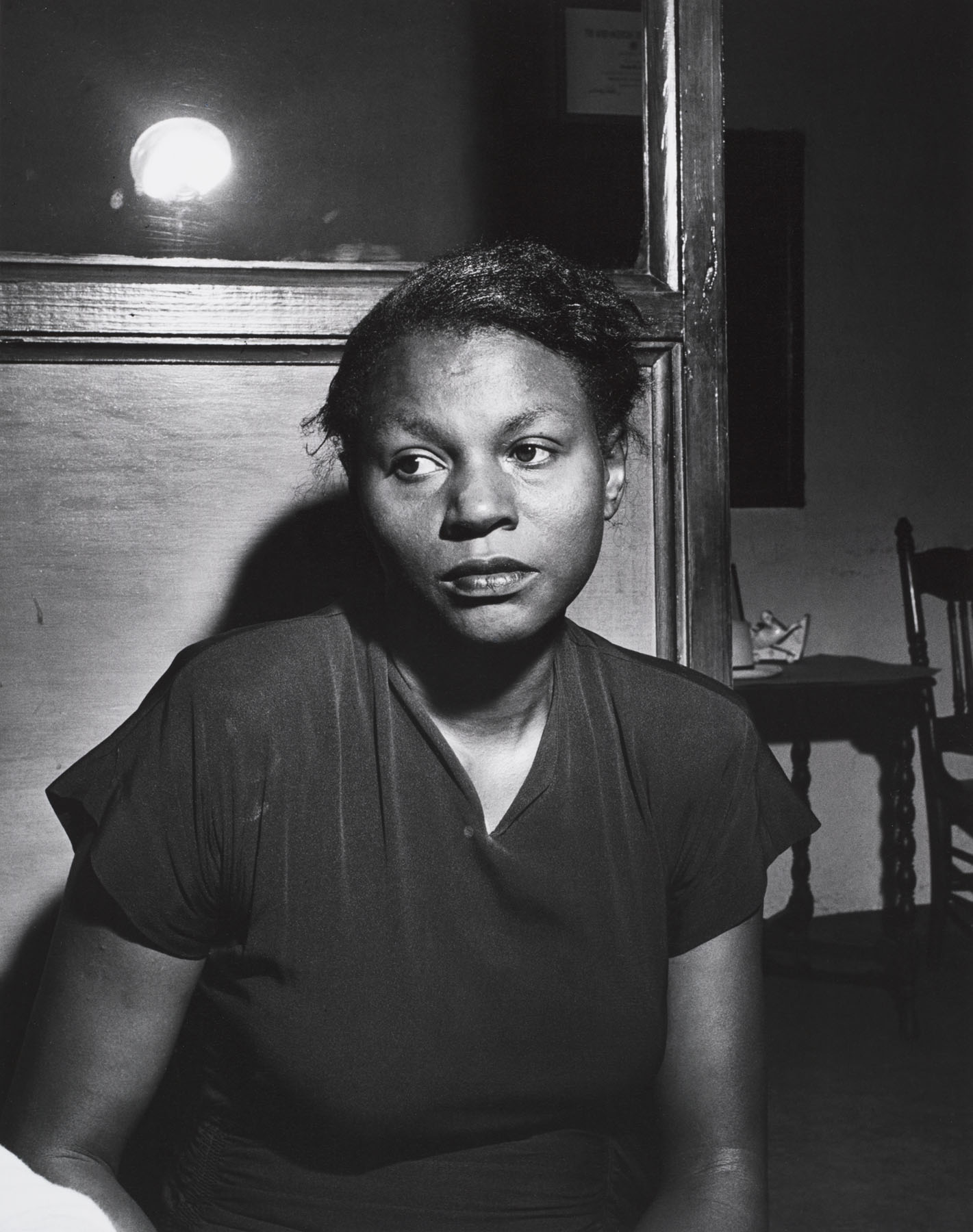
 

Marion Palfi (American born Germany, 1907-1978) 'Josie Hill, Wife of a Lynch Victim, Irwinton, Georgia' 1949


Marion Palfi (American born Germany, 1907-1978)
Josie Hill, Wife of a Lynch Victim, Irwinton, Georgia
1949
Gelatin silver print
High Museum of Art, Atlanta
Gift of Ben Bivins


Born in Germany, Marion Palfi worked as a freelance photographer and portraitist in Berlin before emigrating to the United States in 1936. Shocked at the racial and economic inequalities she encountered, she devoted her photographic career to documenting various communities to expose the virulent effects of racism and poverty. In 1949, she made this portrait of Josie Hill, widow of Caleb Hill, the victim of the first reported lynching of that year. A father of three, the twenty-eight year old Hill had been arrested for allegedly stabbing a man. After the sheriff left the jail’s front door open and the keys to the cell on his desk, Hill was pulled from jail in the middle of the night and shot to death. Two white men were charged with the crime, but the all-white grand jury did not indict them.

Text from the Large Print Guide at the Virginia Museum of Fine Arts
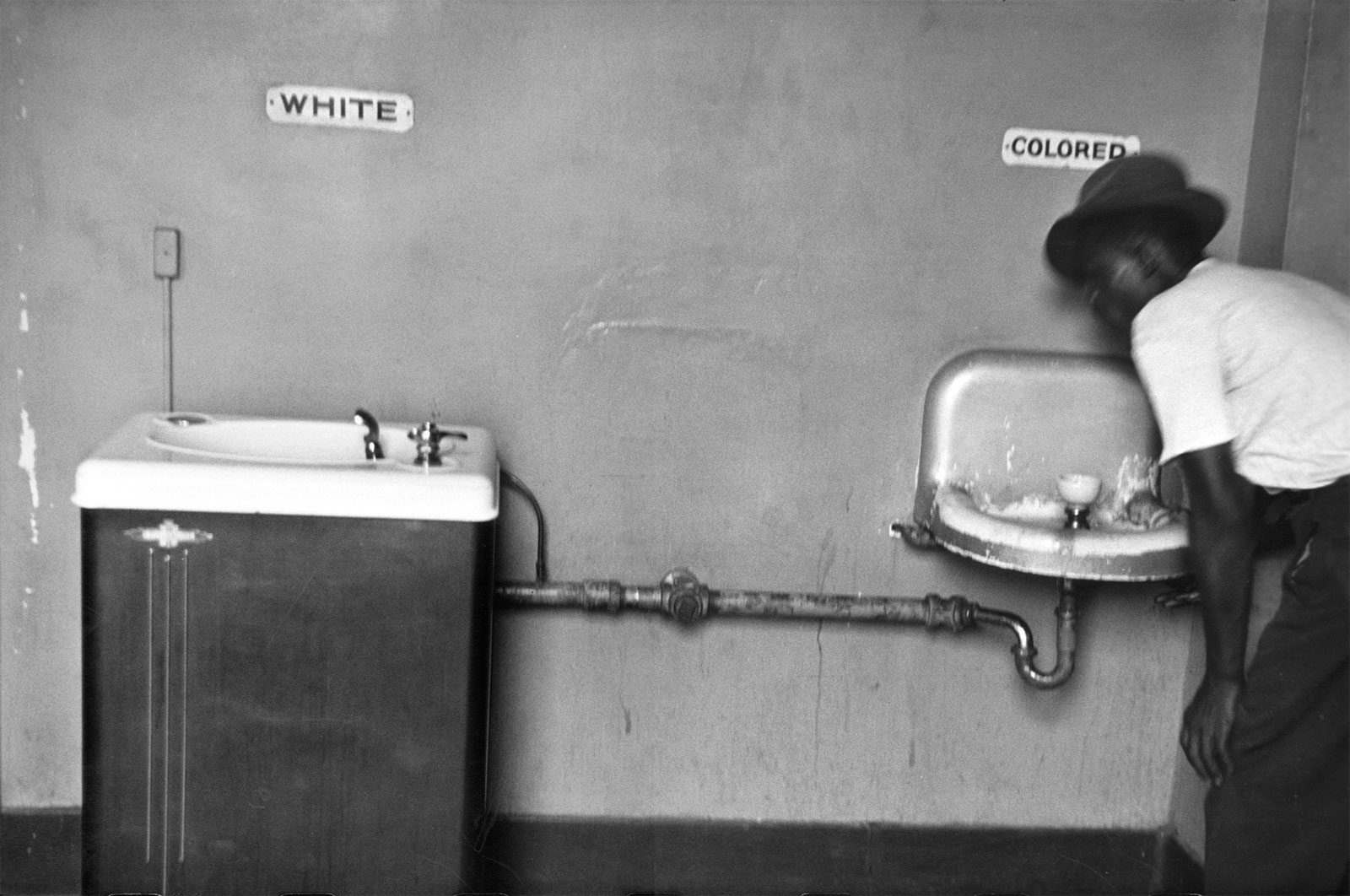
 

Leonard Freed (American, 1929-2006) 'North Carolina (segregation fountain)' 1950


Leonard Freed (American, 1929-2006)
North Carolina (segregation fountain)
1950
Gelatin silver print
Addison Gallery of American Art
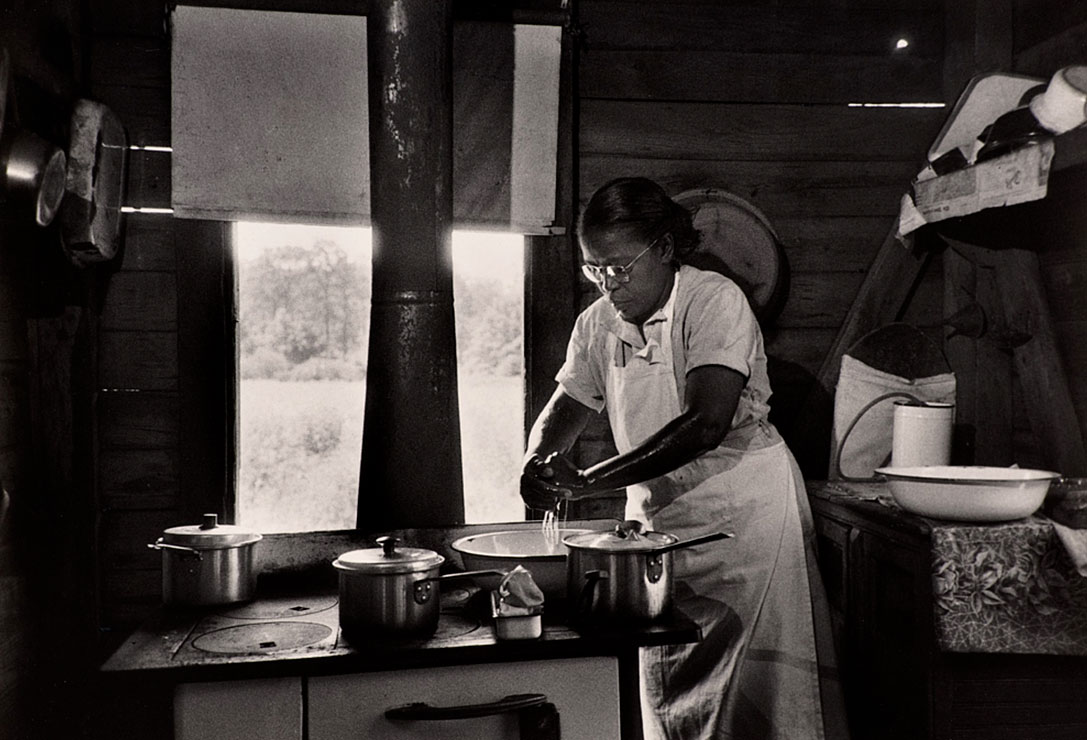
 

W. Eugene Smith (American, 1918-1978) 'Maude at Stove' 1951 from the exhibition 'A Long Arc: Photography and the American South since 1845' at the Virginia Museum of Fine Arts, Richmond


W. Eugene Smith (American, 1918-1978)
Maude at Stove
1951
Gelatin silver print
Virginia Museum of Fine Arts
Floyd D. and Anne C. Gottwald Fund


In December 1951, LIFE published W. Eugene Smith’s photo essay on Maude Callen, a nurse and midwife who worked in rural South Carolina. Smith’s powerful photographs illuminated Callen’s extraordinary efforts to serve her patients, who were among the poorest and most neglected in the country. As detailed in the magazine, “Callen drives 36,000 miles within the county each year, is reimbursed for part of this by the state, and must buy her own cars, which last 18 months. Her workday is often sixteen hours and she earns $225 a month.” After the article was published, readers sent donations totalling more than $27,000, allowing Callen to build a clinic and train others to become healthcare workers.

Text from the Large Print Guide at the Virginia Museum of Fine Arts


Robert Frank (Swiss-American, 1924-2019) 'Trolley, New Orleans' 1955


Robert Frank (Swiss-American, 1924-2019)
Trolley, New Orleans
1955
Gelatin silver print
Addison Gallery of American Art, Phillips Academy, Andover, Massachusetts
Museum purchase


In 1955 and 1956, Switzerland-born photographer Robert Frank travelled across the United States with the support of a Guggenheim Fellowship. With an incisive, unsparing eye, he sought to understand and decode the brutal beauty of his adopted home. Raw, violent, tender, and edgy, his photographs of an America plagued by racial division, economic disparity, consumerism, and wilful ignorance shocked viewers for how they savagely undercut the country’s postwar view of itself as prosperous, peaceful, and progressive. In the South, Frank was keenly attuned to the persistence of segregation. His photograph of a New Orleans trolley, white people up front and Black people behind, succinctly captures the ruthlessness and anguish of racial stratification.

Text from the Large Print Guide at the Virginia Museum of Fine Arts
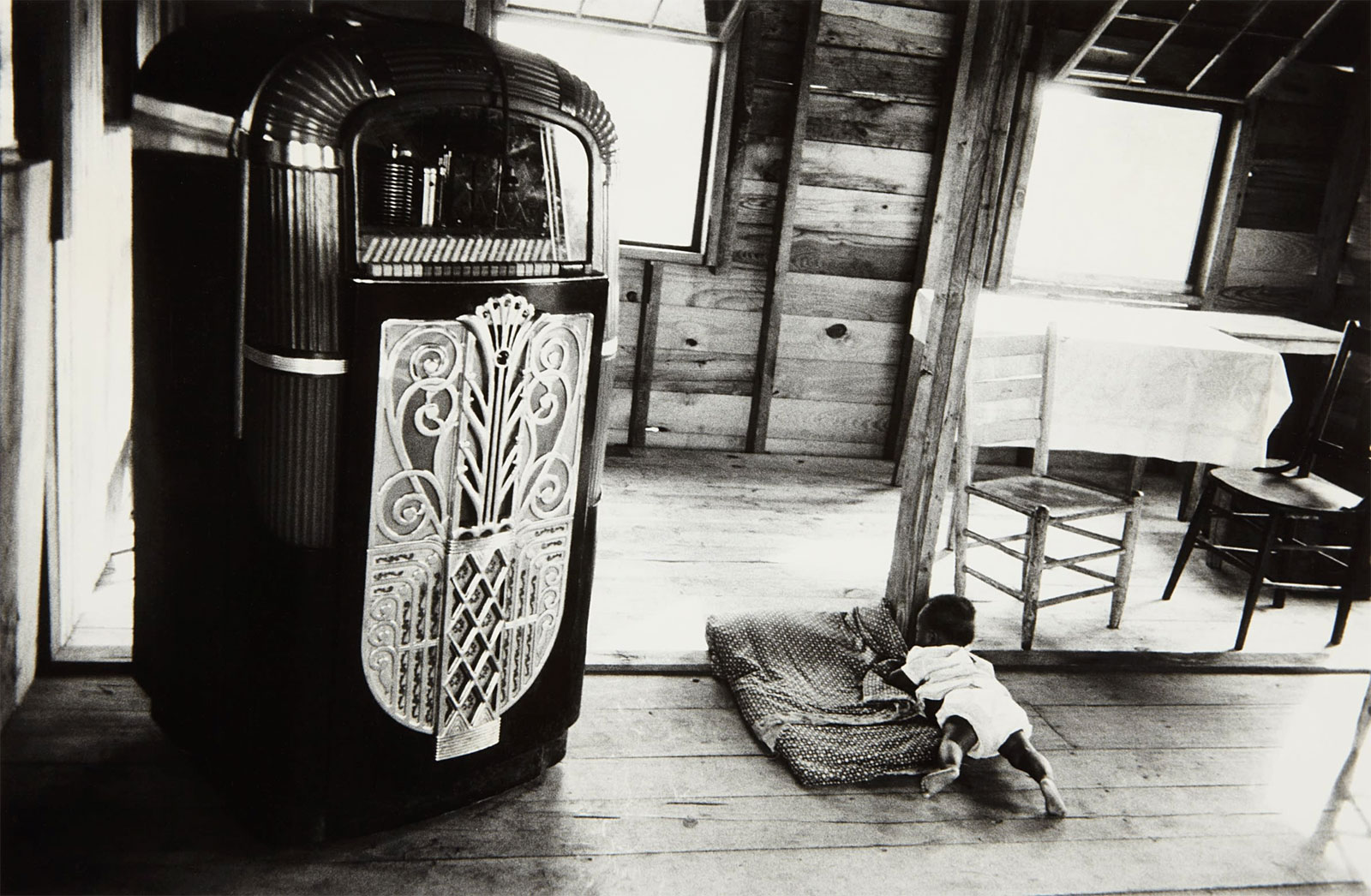
 

Robert Frank (Swiss-American, 1924-2019) 'Café, Beaufort, South Carolina' 1955


Robert Frank (Swiss-American, 1924-2019)
Café, Beaufort, South Carolina
1955
Gelatin silver print
High Museum of Art, Atlanta


Robert Frank (Swiss-American, 1924-2019) 'Charleston, South Carolina' 1955


Robert Frank (Swiss-American, 1924-2019)
Charleston, South Carolina
1955-1956
Gelatin silver print
Addison Gallery of American Art, Phillips Academy, Andover, Massachusetts
Museum purchase


Gordon Parks (American, 1912-2006) 'Outside Looking In, Mobile, Alabama' 1956


Gordon Parks (American, 1912-2006)
Outside Looking In, Mobile, Alabama
1956
Inkjet print
High Museum of Art, Atlanta
Gift of The Gordon Parks Foundation
Courtesy of and copyright The Gordon Parks Foundation


Gordon Parks was the first African American photographer to work for LIFE – the preeminent picture magazine of the day – and published some of the 20th century’s most iconic photo essays about social justice. In 1956, the magazine published Parks’s “Segregation Story,” a photo essay comprising twenty-six colour photographs depicting a multigenerational family in Alabama. Despite the grave danger he faced as a Black photographer working in the South at the height of Jim Crow, Parks firmly believed that photographs could alter a viewer’s perspective and expose a wide readership to the pervasive effects of racial segregation.

Text from the Large Print Guide at the Virginia Museum of Fine Arts


Gordon Parks (American, 1912-2006) 'Ondria Tanner and Her Grandmother Window-Shopping, Mobile, Alabama' 1956


Gordon Parks (American, 1912–2006)
Ondria Tanner and Her Grandmother Window-Shopping, Mobile, Alabama
1956, printed 2012
Inkjet print
High Museum of Art, Atlanta
Gift of The Gordon Parks Foundation
Courtesy of and copyright The Gordon Parks Foundation


“Ondria Tanner and Her Grandmother Window-Shopping, Mobile, Alabama” was taken in 1956 by Gordon Parks during the Jim Crow era as part of his 1956 LIFE series “Segregation Story.”
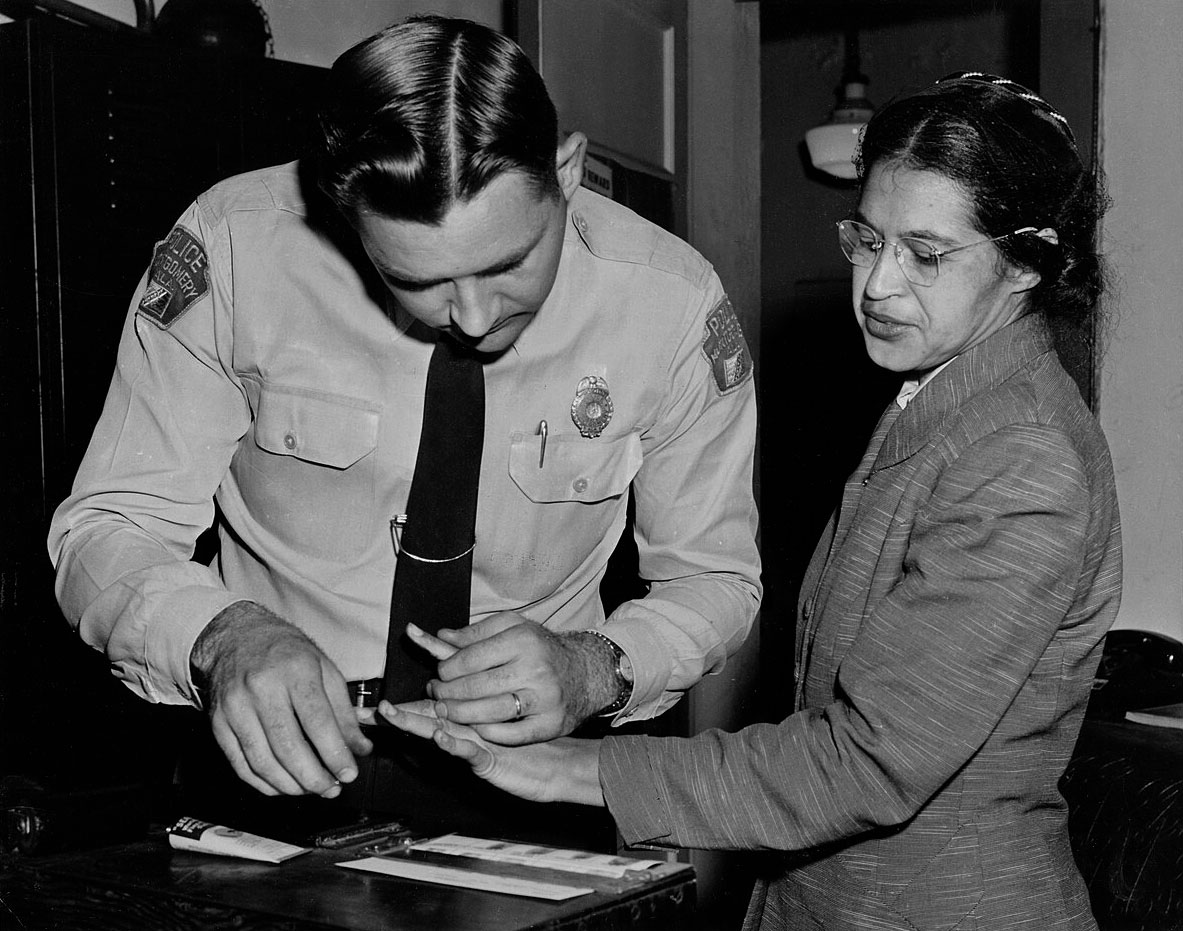
 

Gene Herrick (American, b. 1926) 'Rosa Parks Being Fingerprinted, Montgomery, Alabama' 1956


Gene Herrick (American, b. 1926)
Rosa Parks Being Fingerprinted, Montgomery, Alabama
1956
Gelatin silver print
High Museum of Art, Atlanta
Purchase with funds from Sandra Anderson Baccus in loving memory of Lloyd Tevis Baccus, M.D.


Rosa Parks being fingerprinted on February 22, 1956, by Lieutenant D.H. Lackey as one of the people indicted as leaders of the Montgomery bus boycott. She was one of 73 people rounded up by deputies that day after a grand jury charged 113 African Americans for organizing the boycott. This was a few months after her arrest on December 1, 1955, for refusing to give up her seat to a white passenger on a segregated municipal bus in Montgomery, Alabama.

The Montgomery bus boycott was a political and social protest campaign against the policy of racial segregation on the public transit system of Montgomery, Alabama. It was a foundational event in the civil rights movement in the United States. The campaign lasted from December 5, 1955 – the Monday after Rosa Parks, an African-American woman, was arrested for her refusal to surrender her seat to a white person – to December 20, 1956, when the federal ruling Browder v. Gayle took effect, and led to a United States Supreme Court decision that declared the Alabama and Montgomery laws that segregated buses were unconstitutional.

Text from the Wikipedia website


Unidentified Photographer. 'Elizabeth Eckford Entering Central High School, Little Rock, Arkansas' 1957


Unidentified Photographer
Elizabeth Eckford Entering Central High School, Little Rock, Arkansas
1957
Gelatin silver print
High Museum of Art, Atlanta
Purchase with funds from Sandra Anderson Baccus in loving memory of Lloyd Tevis Baccus, M.D.


The Little Rock Nine were the first Black students to integrate Arkansas’s Little Rock Central High School on September 25, 1957, three years after the Supreme Court ruled segregation in public schools unconstitutional. After being stopped during multiple attempts to get in the school, they were finally able to enter while escorted by the 101st Airborne Infantry. This press photograph shows Elizabeth Eckford, one of the nine students, resolutely proceeding into the school building flanked by uniformed soldiers while white students jeer at her.

Text from the Large Print Guide at the Virginia Museum of Fine Arts


Charles Moore (American, 1931-2010) 'Martin Luther King Jr. Arrested, Montgomery, Alabama' 1958


Charles Moore (American, 1931-2010)
Martin Luther King Jr. Arrested, Montgomery, Alabama
1958
Gelatin silver print
High Museum of Art, Atlanta
Purchase with funds from Lucinda W. Bunnen for the Bunnen Collection


On September 3, 1958, as Dr. Martin Luther King Jr. tried to enter the Montgomery courtroom that was hearing a case involving his friend and colleague, the Reverend Ralph David Abernathy, King was arrested and charged with loitering. Charles Moore, a photographer for the Montgomery Advertiser, captured the moment as police officers aggressively placed him in handcuffs. Like many of the most well-known photographers of the civil rights movement, Moore was white, and his race allowed him to photograph many violent incidents involving law enforcement at close range. This photograph contributed to an outpouring of outrage and support for King’s cause after its release nationwide by the Associated Press.

Text from the Large Print Guide at the Virginia Museum of Fine Arts


Henri Cartier-Bresson (French, 1908-2004) 'The Daughters of the Confederacy, Richmond, Virginia' 1960


Henri Cartier-Bresson (French, 1908-2004)
The Daughters of the Confederacy, Richmond, Virginia
1960
Gelatin silver print
9 1/2 × 6 1/2 in. (24.13 × 16.51cm)
Virginia Museum of Fine Arts
Arthur and Margaret Glasgow Endowment


The United Daughters of the Confederacy (UDC) is a women’s heritage organisation best known for honouring Confederate veterans of the Civil War, memorialising the Confederacy, and promoting the “Lost Cause” interpretation of southern history, which positions Old South slavery as a benevolent institution, Confederate soldiers as heroic defenders of states’ rights, and Reconstruction as a period of northern aggression, through its monuments and educational campaigns. Members are required to prove that they are bloodline descendants of men and / or women who served honourably in the Confederal States of America.

Mercy Harper. “United Daughters of the Confederacy,” on the Texas State Historical Association website Nd [Online] Cited 24/12/2024
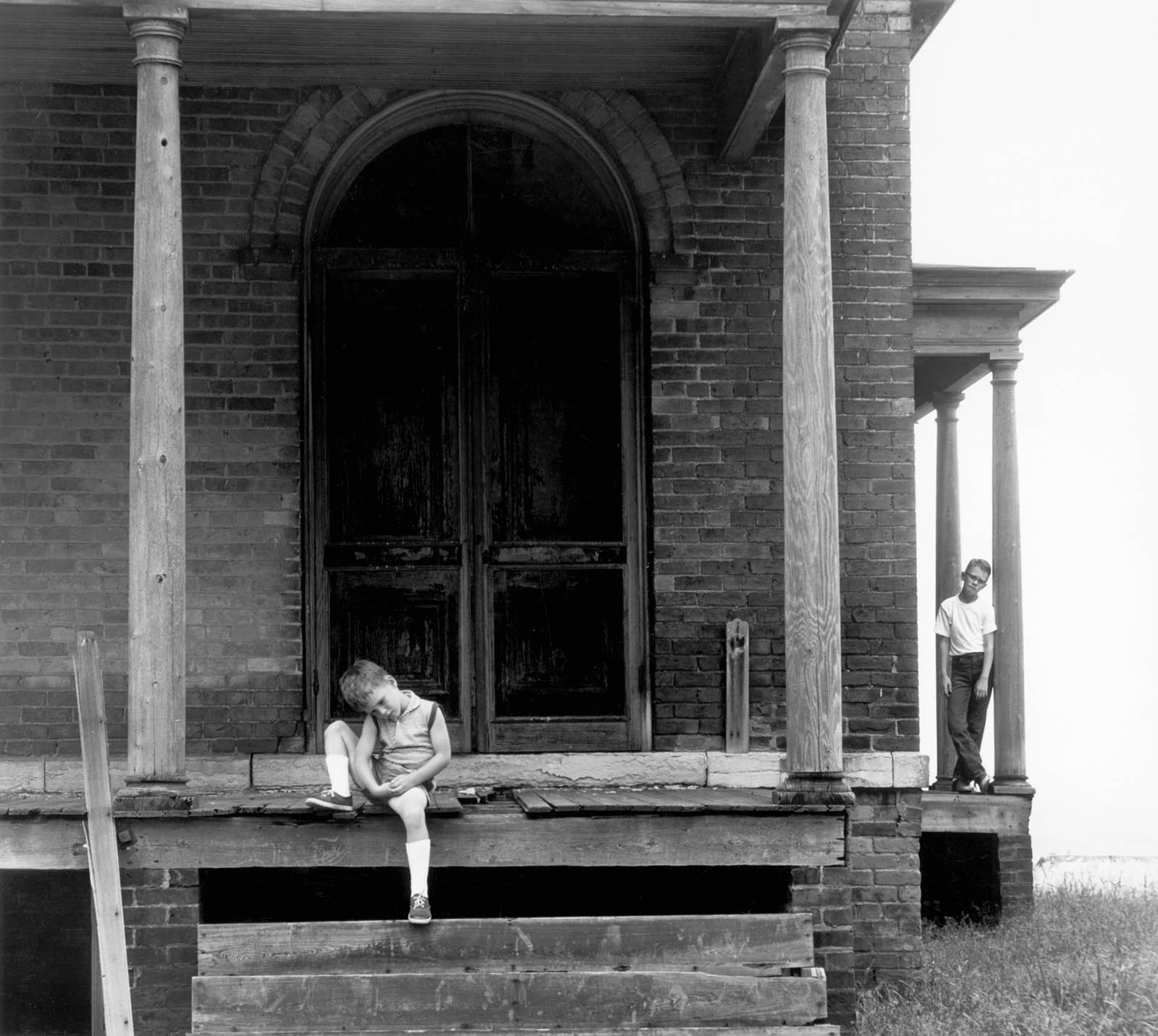
 

Ralph Eugene Meatyard (American, 1925-1972) 'Prescience #135' 1960


Ralph Eugene Meatyard (American, 1925-1972)
Prescience #135
1960
Gelatin silver print
Collection of Joe Williams and Tede Fleming
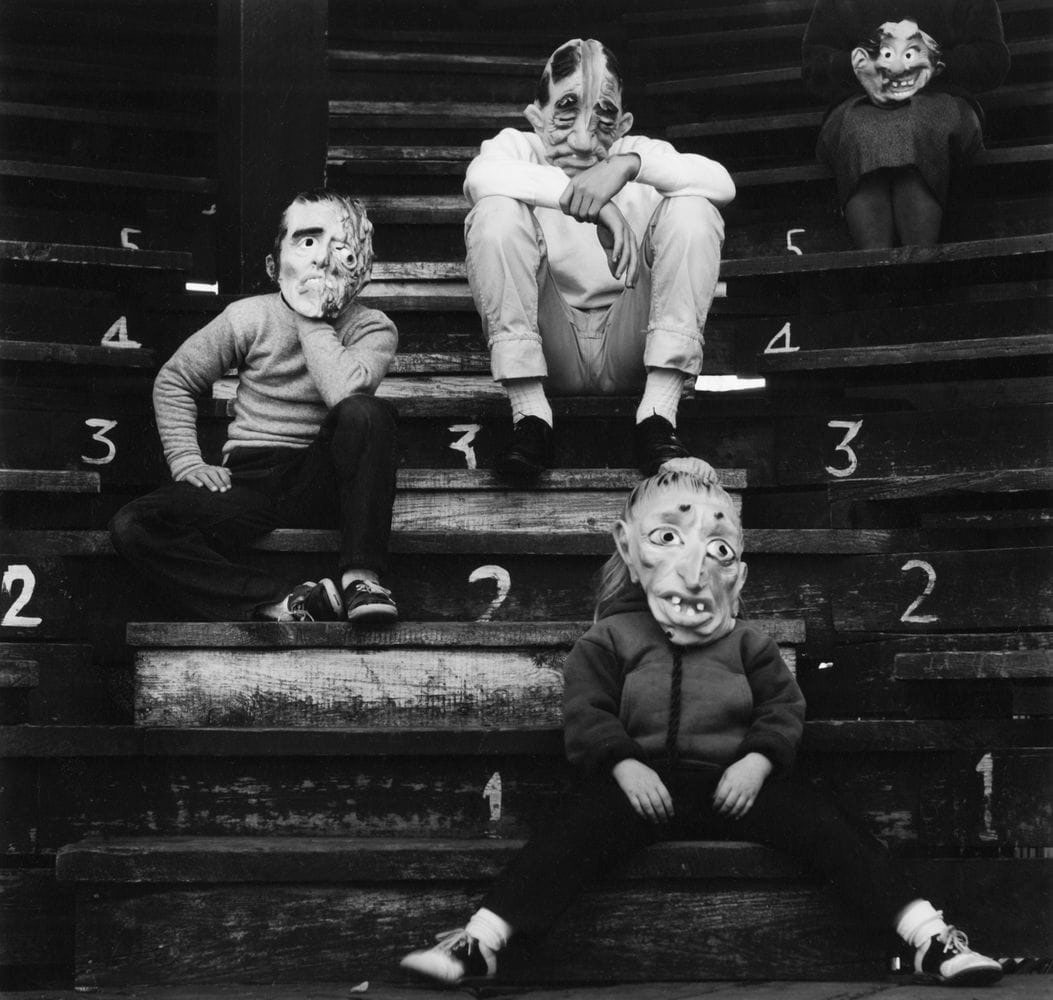
 

Ralph Eugene Meatyard (American, 1925-1972) 'Romance (N.) from Ambrose Bierce #3' 1962


Ralph Eugene Meatyard (American, 1925-1972)
Romance (N.) from Ambrose Bierce #3
1962
Gelatin silver print
Addison Gallery of American Art, Phillips Academy, Andover, Massachusetts
Museum purchase
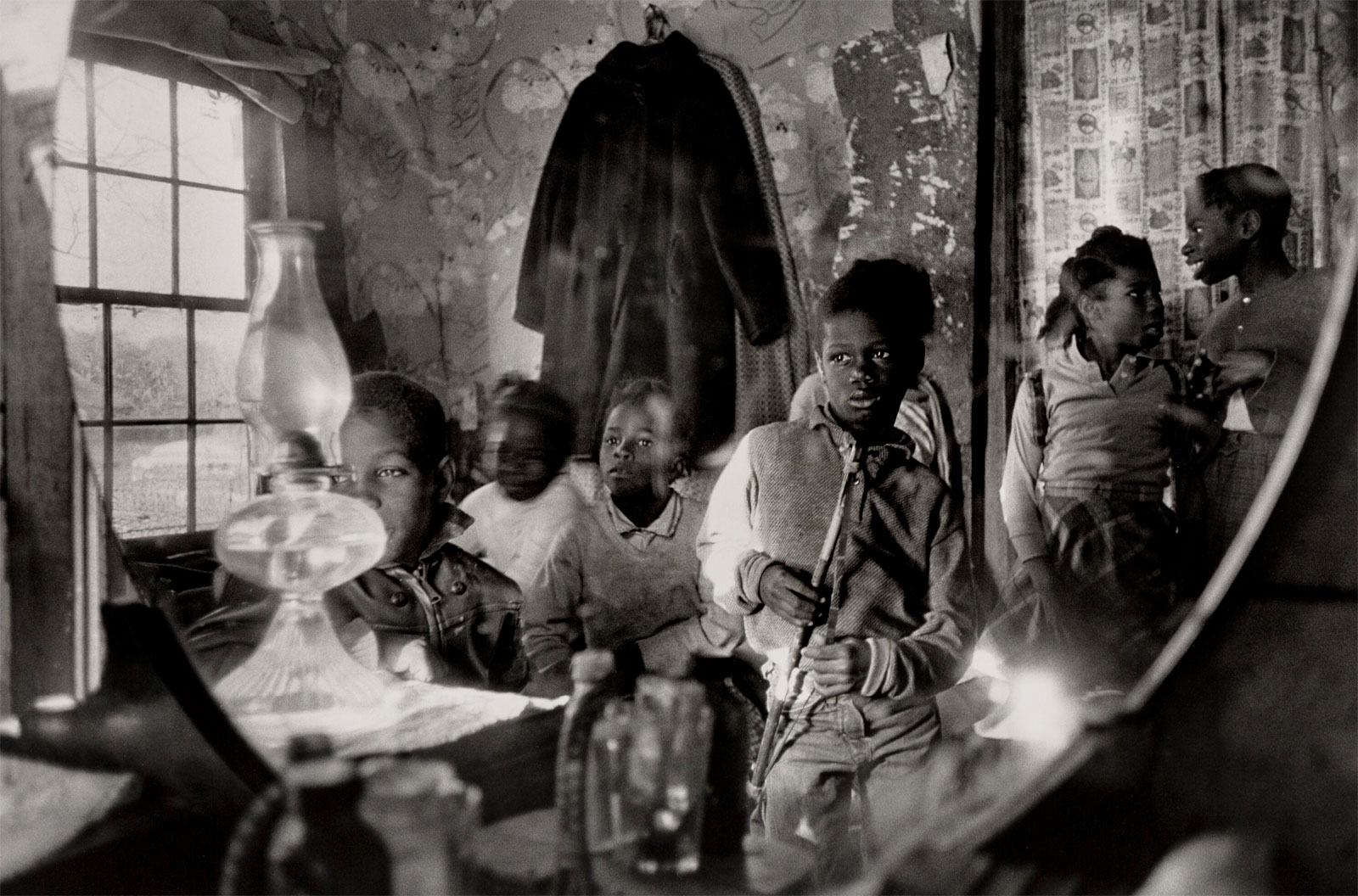
 

Leonard Freed (American, 1929-2006) 'Children in the Mirror, Johns Island, South Carolina' 1964


Leonard Freed (American, 1929-2006)
Children in the Mirror, Johns Island, South Carolina
1964
Gelatin silver print
Addison Gallery of American Art
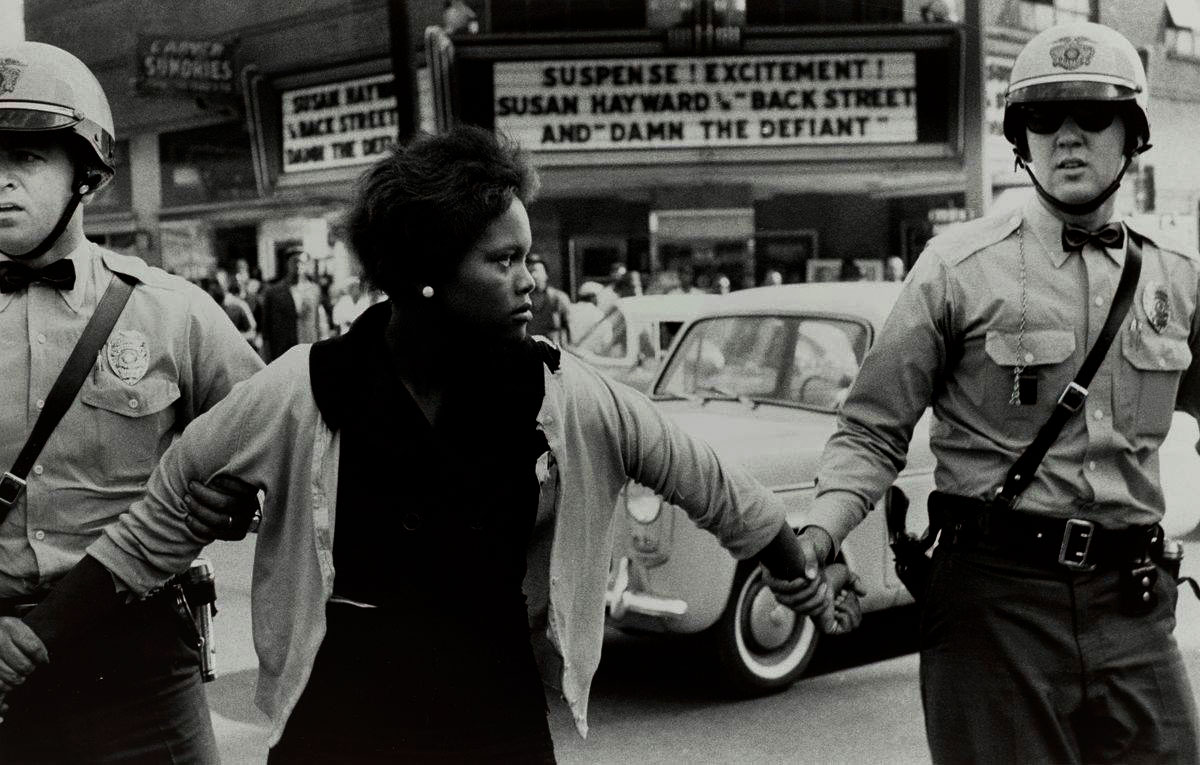
 

Bruce Davidson (American, b. 1933) 'A female protester being arrested and led away by police, Birmingham, Alabama' 1963


Bruce Davidson (American, b. 1933)
A female protester being arrested and led away by police, Birmingham, Alabama
1963
Gelatin silver print
High Museum of Art, Atlanta
Anonymous gift


Bill Hudson (American, 1932-2010) 'An African American high school student, Walter Gadsden, 25, is attacked by a police dog during a civil rights demonstration in Birmingham, Alabama, May 3, 1963' 1963


Bill Hudson (American, 1932-2010)
An African American high school student, Walter Gadsden, 25, is attacked by a police dog during a civil rights demonstration in Birmingham, Alabama, May 3, 1963
1963
Gelatin silver print
High Museum of Art, Atlanta
Purchase with funds from Sandra Anderson Baccus in loving memory of Lloyd Tevis Baccus, M.D.


“[Hudson] took a photo on May 3, 1963, of Walter Gadsden, an African-American bystander who had been grabbed by a sunglasses-wearing police officer, while a German Shepherd lunged at his chest. The photo appeared above the fold, covering three columns in the next day’s issue of The New York Times, as well as in other newspapers nationwide. Author Diane McWhorter wrote in her Pulitzer Prize-winning 2001 book Carry Me Home: Birmingham, Alabama, the Climactic Battle of the Civil Rights Revolution that Hudson’s photo that day drove “international opinion to the side of the civil rights revolution”.

Text from the Wikipedia website


An experienced photographer of the civil rights movement, Bill Hudson often avoided hostility from the police by keeping his camera hidden under his jacket and only bringing it out at the optimal moment. He was in Birmingham’s Kelly Ingram Park when he captured the moment a police officer grabbed fifteen-year-old protestor Walter Gadsden by the collar and pulled Gadsden toward his police dog. The photograph emblematised police brutality and was published in newspapers and magazines across the country, sparking nationwide support for the civil rights movement.

Text from the Large Print Guide at the Virginia Museum of Fine Arts
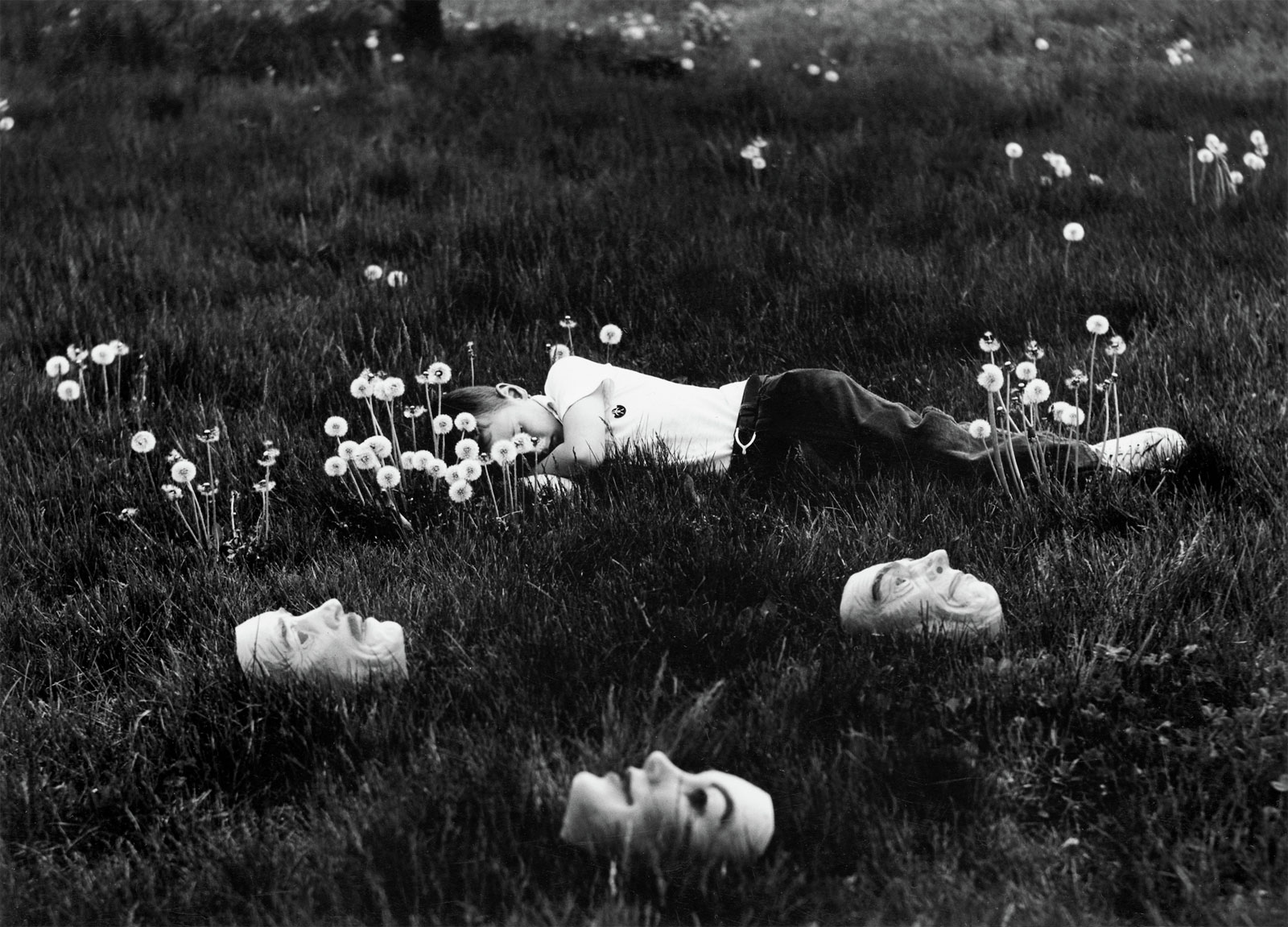
 

Ralph Eugene Meatyard (American, 1925–1972) 'Untitled' 1963


Ralph Eugene Meatyard (American, 1925–1972)
Untitled
1963
Gelatin silver print
High Museum of Art, Atlanta
Gift in honor of Edward Anthony Hill
© Estate of the artist


An optician from Lexington, Kentucky, Ralph Eugene Meatyard considered himself a “dedicated amateur.” He became widely known for his enigmatic scenes and dreamlike portraits that infuse the everyday with a sense of mystery and unease. Meatyard often staged his own family as actors, clad in rubber masks and enacting cryptic dramas that reveal the influence of Southern gothic literature. In this photograph of his son Christopher reclining in a bucolic field littered with masks, youthful innocence reckons with intimations of mortality.

Text from the Large Print Guide at the Virginia Museum of Fine Arts
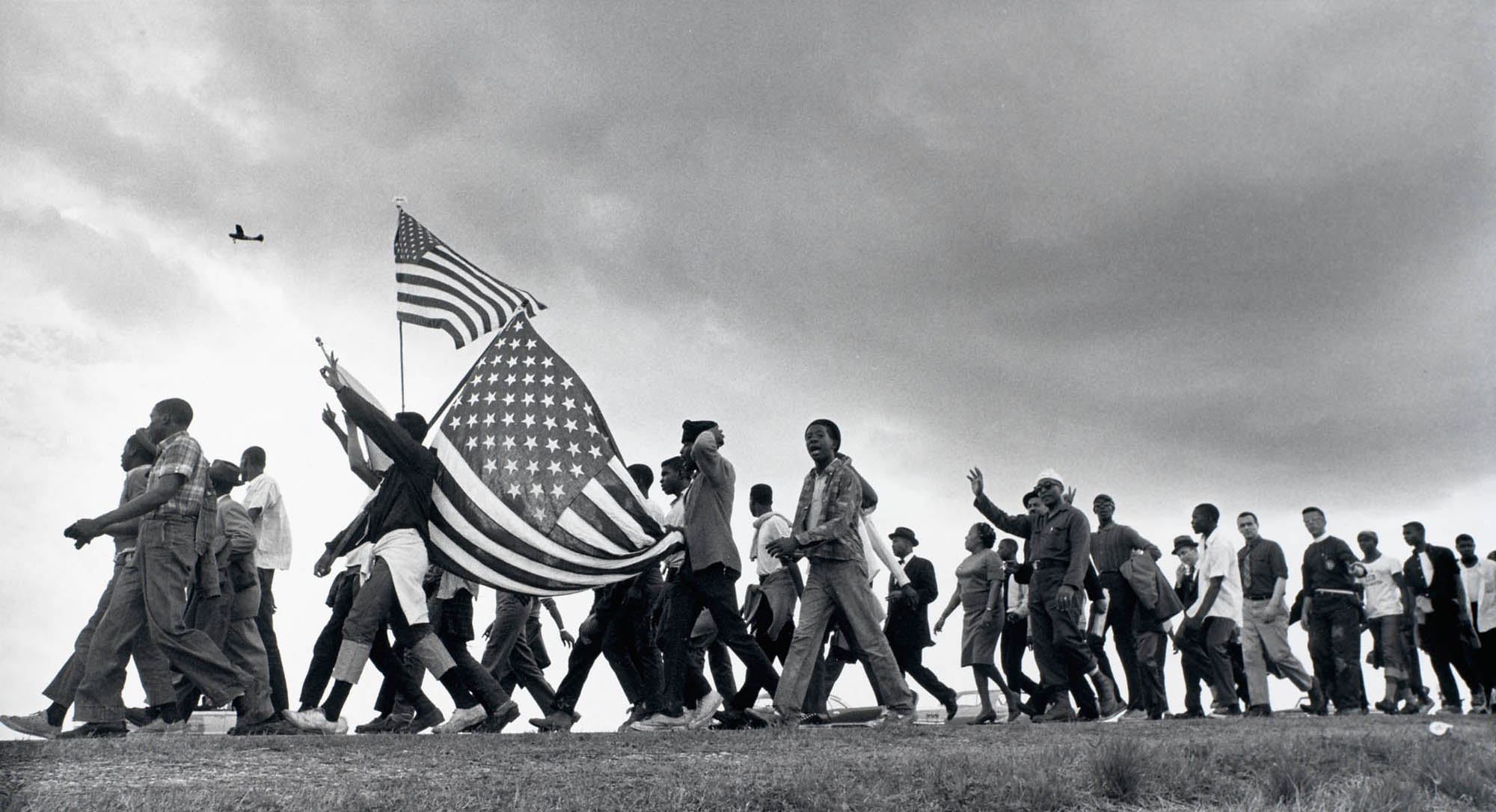
 

Matt Herron (American, 1931–2020) 'The March from Selma' 1965


Matt Herron (American, 1931-2020)
The March from Selma
1965
Gelatin silver print High Museum of Art, Atlanta
Gift of Gloria and Paul Sternberg


Selma to Montgomery marches

The Selma to Montgomery marches were three protest marches, held in 1965, along the 54-mile (87 km) highway from Selma, Alabama, to the state capital of Montgomery. The marches were organized by nonviolent activists to demonstrate the desire of African-American citizens to exercise their constitutional right to vote, in defiance of segregationist repression; they were part of a broader voting rights movement underway in Selma and throughout the American South. By highlighting racial injustice, they contributed to passage that year of the Voting Rights Act, a landmark federal achievement of the civil rights movement. …

The first march took place on March 7, 1965, led by figures including Bevel and Amelia Boynton, but was ended by state troopers and county possemen, who charged on about 600 unarmed protesters with batons and tear gas after they crossed the Edmund Pettus Bridge in the direction of Montgomery. The event became known as Bloody Sunday. Law enforcement beat Boynton unconscious, and the media publicised worldwide a picture of her lying wounded on the bridge. The second march took place two days later but King cut it short as a federal court issued a temporary injunction against further marches. That night, an anti-civil rights group murdered civil rights activist James Reeb, a Unitarian Universalist minister from Boston. The third march, which started on March 21, was escorted by the Alabama National Guard under federal control, the FBI and federal marshals (segregationist Governor George Wallace refused to protect the protesters). Thousands of marchers averaged 10 mi (16 km) a day along U.S. Route 80 (US 80), reaching Montgomery on March 24. The following day, 25,000 people staged a demonstration on the steps of the Alabama State Capitol.

Text from the Wikipedia website


1956-1968: Civil Rights and the Language of Activism

From the start, photography was both a document of and engine for the civil rights movement. From the Montgomery Bus Boycott in 1956 to the Poor People’s Campaign of 1968, photographs of the civil rights movement galvanized and shocked the nation with raw depictions of violence and the struggle for racial justice. Civil rights organisers recognised the power of the medium and ensured that its actions were thoroughly documented. Countless photojournalists, artists, movement photographers, and amateurs documented the marches, sit-ins, and showdowns with counterprotesters and law enforcement, communicating the urgency of these events to the public with an intimate proximity. These photographs appeared in widely circulated publications such as the New York Times, LIFE, Ebony, and Jet and played a crucial role in informing and motivating the public to challenge the complicated and deeply entrenched history of segregation.

On the other side of the camera, activists and organisers skilfully orchestrated their civic actions, knowing the singular power that photographs would have in shaping public opinion. A key tactic of many activists was nonviolent direct action – by refusing to defend themselves even when physically attacked, activists could bring attention to the immorality of the aggressors’ actions and beliefs. Photographs of these violent public scenes lent a sense of martyrdom and principled sacrifice to the protestors’ efforts and sparked a social revolution unlike anything the country had experienced. The photographs gathered here show just a handful of the thousands of selfless acts of courage that helped transform the nation.

Text from the Large Print Guide at the Virginia Museum of Fine Arts


Lee Friedlander (American, b. 1934) 'New Orleans' 1968


Lee Friedlander (American, b. 1934)
New Orleans
1968
Gelatin silver print
Addison Gallery of American Art, Phillips Academy, Andover, Massachusetts
Museum purchase
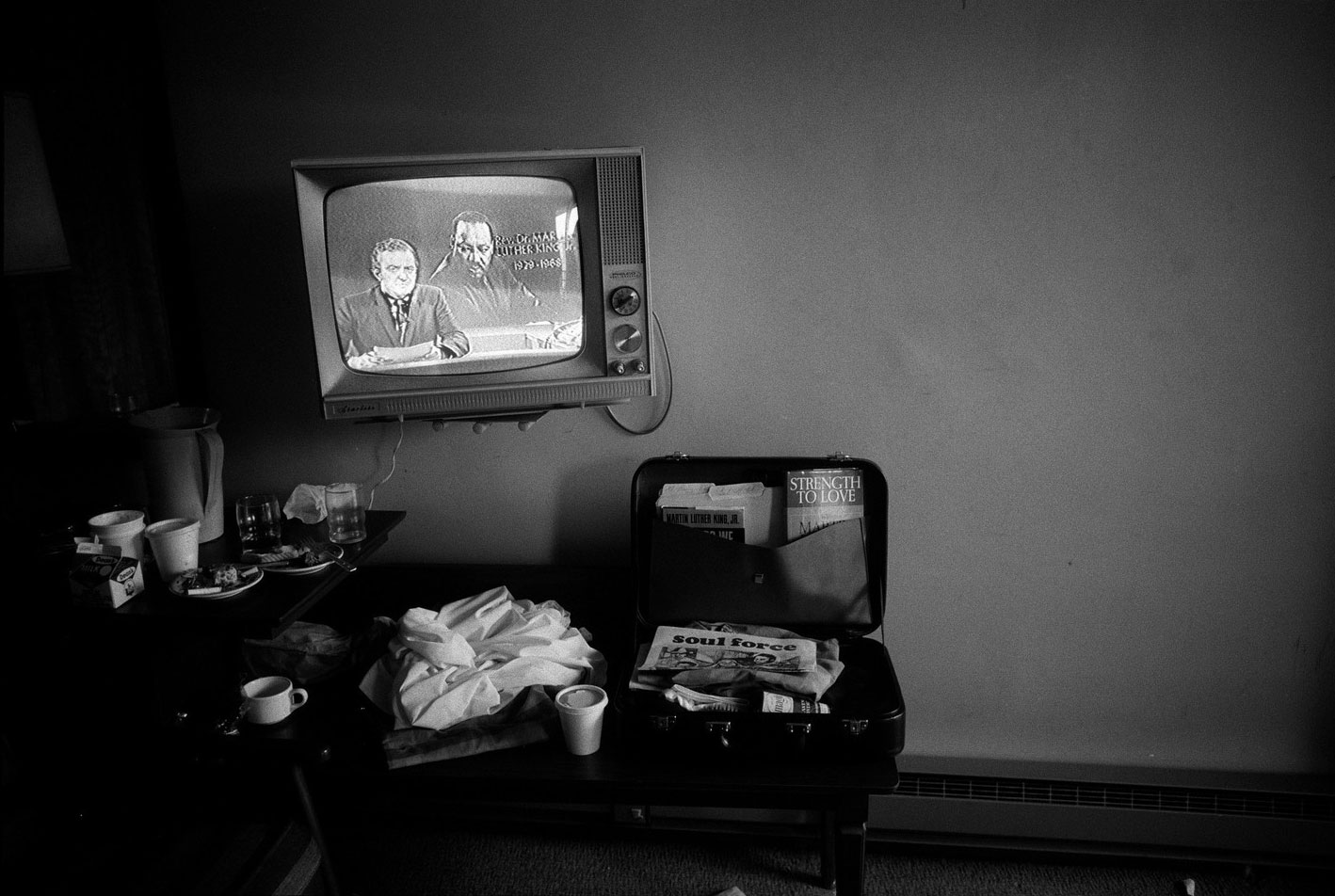
 

Steve Schapiro (American, 1934-2022) 'Martin Luther King Jr.'s Motel Room Hours After He Was Shot, Memphis, Tennessee' 1968


Steve Schapiro (American, 1934-2022)
Martin Luther King Jr.’s Motel Room Hours After He Was Shot, Memphis, Tennessee
1968
Gelatin silver print
High Museum of Art, Atlanta
Purchased with funds from the H. B. and Doris Massey Charitable Trust


“When Martin Luther King Jr. was shot, LIFE Magazine asked me to go immediately down to Memphis. I had done much civil rights work and had photographed King preaching in Birmingham and in Selma.⁠

In Memphis, I first photographed the third-floor bathroom, in the rooming house from which the shot had been fired. Supposedly, it was James Earl Ray standing in the tub and leaning the barrel of his gun in the windowsill pointing at the Lorraine Motel. There was a black hand print on the wall at the side of the tub which I photographed. LIFE ran it as a full-page picture the following week, assuming it was Ray’s.⁠

When I went to what had been King’s room at the motel, the door was closed. There were two photographers already inside with Hosea Williams, a King aide. I knocked on the door. One of the photographer blurted out, “Don’t let him in,” but Williams opened the door for me anyway.⁠

The room was as it had been. I photographed King’s briefcase which held books he had written (one with my Selma March photograph on its cover) and a newspaper called Soul Force, along with dirty shirts and a few cans. The television was on. A commentator was talking about King on the TV with King’s ghostly image behind him.⁠

I made a wide shot of the table with King’s briefcase and dirty shirts on it, and on the wall, the TV set with King’s image. ‘The man’ had left the room, his human form forever lost – but his incidental material belongings, and more than that, the spirit of his image, remained.”

Steve Schapiro, 2017
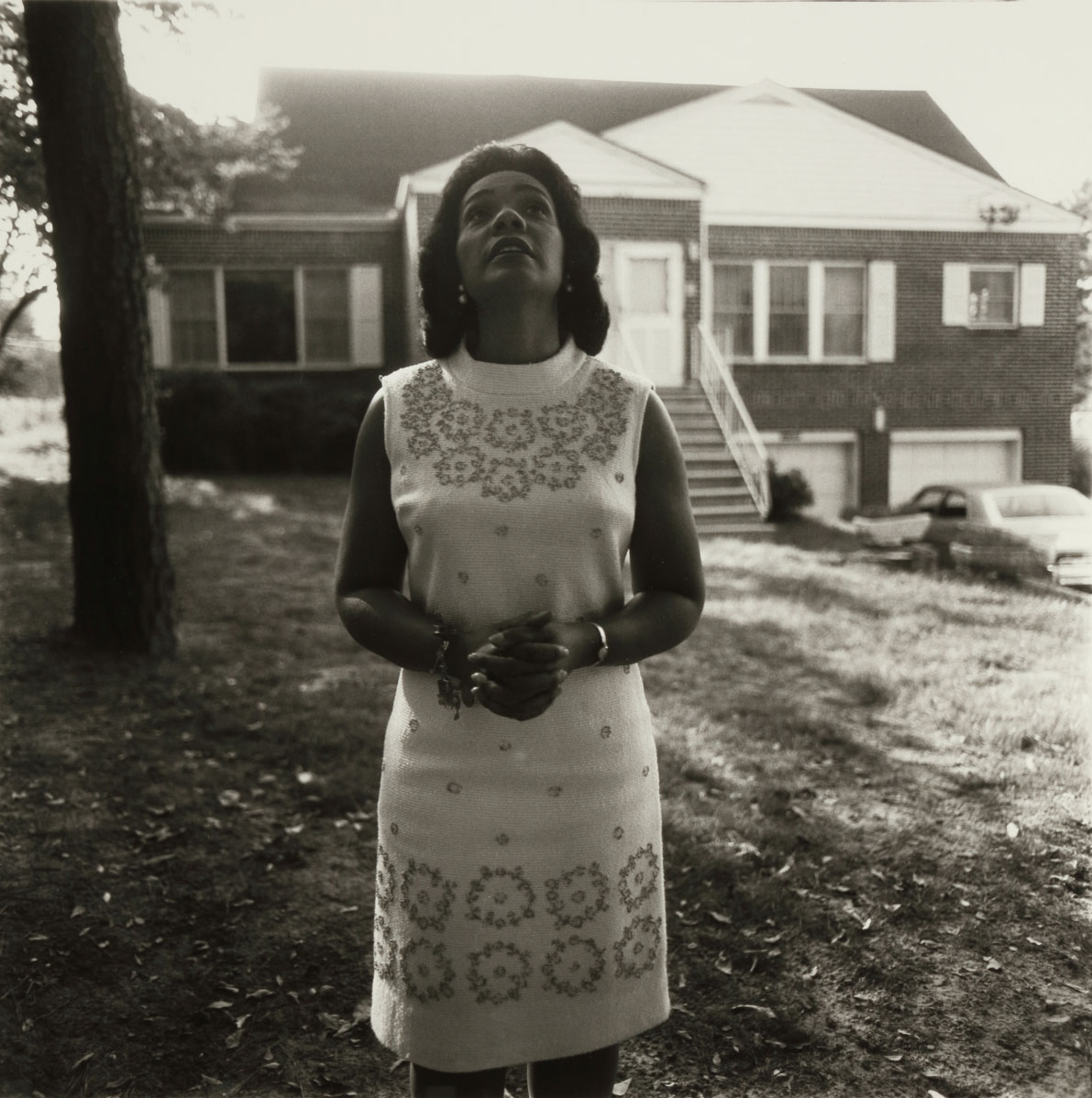
 

Diane Arbus (American, 1923-1971) 'Mrs. Martin Luther King Jr. on Her Front Lawn, Atlanta, Ga.' 1968


Diane Arbus (American, 1923-1971)
Mrs. Martin Luther King Jr. on Her Front Lawn, Atlanta, Ga.
1968
Gelatin silver print
20 x 16 inches
High Museum of Art, Atlanta
Purchase with funds from Wanda Hopkins
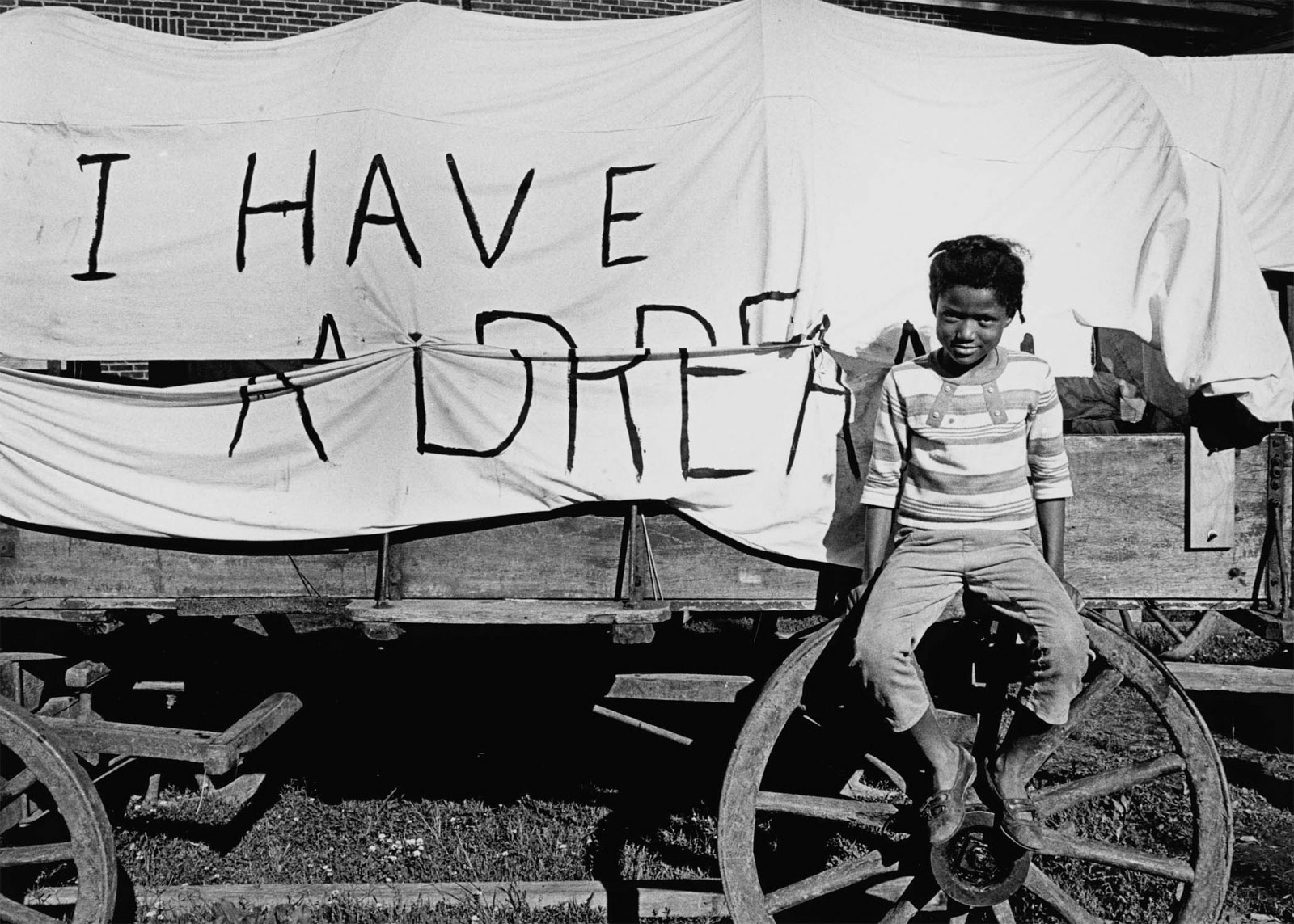
 

Bob Adelman (American, 1930-2016) 'Mule Wagon for the Poor People's Campaign, Memphis, Tennessee' 1968


Bob Adelman (American, 1930-2016)
Mule Wagon for the Poor People’s Campaign, Memphis, Tennessee
1968
Gelatin silver print
High Museum of Art, Atlanta
Gift of the artist


1970-2000: Returns and Renewals

Following the tumultuous civil rights era, in the 1970s the South grappled as much with its history as with its future. Although the region continued to expand and diversify, particularly in urban centers like Atlanta, Nashville, and Charlotte, many photographers turned their lenses inward, exploring the past and their surroundings in an intimate and subjective manner. This shift in approach can be seen in a strong emphasis on portraiture, especially of family and community members. Meanwhile, the rise of color photography as a widely accepted artistic medium took hold in the South, thanks in no small part to the work of William Eggleston, who merged the casual banality of a snapshot with an enchanting use of color. In the process, he established a new Southern photographic aesthetic: the ordinary rendered extraordinary though lurid, eye-popping colour.

Southern photography in this period was also marked by a new interest in landscape as the nexus of history and place. The impact of the civil rights movement and rise of more inclusive and critical histories of the South prompted a new generation of photographers to interrogate the region’s prevailing myths, particularly those that established and reinforced racial hierarchies. Others bore witness to the ways that histories – of slavery in particular, but also economic and environmental destruction – left their traces on the land itself. Meanwhile, the ever-growing cracks in the image of the New South, with its dream of national reconciliation, prosperity, and racial equality, drew the attention of photographers who sought to understand and convey the disparities they witnessed.

Text from the Large Print Guide at the Virginia Museum of Fine Arts
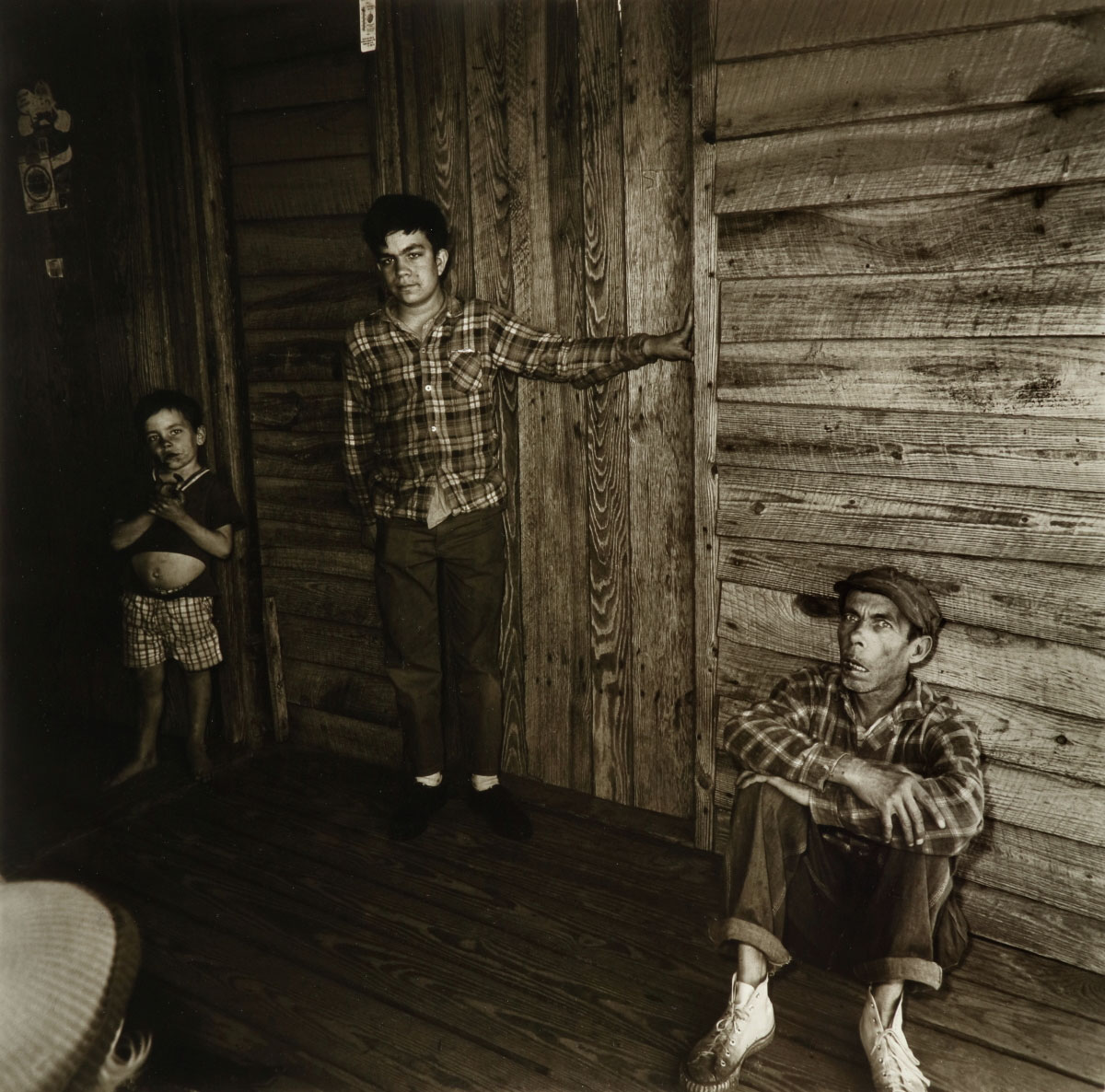
 

Diane Arbus (American, 1923-1971) 'Three Boys on a Porch, Beaufort County, S.C.' 1968


Diane Arbus (American, 1923-1971)
Three Boys on a Porch, Beaufort County, S.C.
1968
Gelatin silver print
High Museum of Art, Atlanta
Purchase with funds from the Friends of Photography


Diane Arbus made this portrait on assignment from Esquire for a story about a doctor who fought parasitic diseases and hunger in the impoverished parts of Beaufort County, South Carolina. Arbus’s unflinching depiction of rural deprivation recalls Walker Evans’s photographs made three decades earlier of similar conditions in Hale County, Alabama. Her direct style of portraiture combined with the graphic qualities of the clapboard siding in the background echo the social documentary photography of the 1930s, underscoring how little conditions had changed for the South’s rural poor in the years following the Great Depression.

Text from the Large Print Guide at the Virginia Museum of Fine Arts


Doris Derby (American, 1939-2022) 'Women's sewing cooperative, Mississippi' 1968


Doris Derby (American, 1939–2022)
Women’s sewing cooperative, Mississippi
1968
Gelatin silver print
High Museum of Art, Atlanta
Gift of David Knaus


Emmet Gowin (American, b. 1941) 'Family, Danville' 1970


Emmet Gowin (American, b. 1941)
Family, Danville
1970
Gelatin silver print
High Museum of Art
Purchased with funds from the H.B. and Doris Massey Charitable Trust


Since the 1960s, Emmet Gowin has made intimate and poignant photographs of his wife, Edith, and her family at their home in Danville, Virginia. Here, he shows three generations lounging in a yard, and though everyone is within touching distance of one another, all are separate, with their attention turned inward. Gowin’s tender composition masterfully imbues the informality of a family snapshot with a sense of deep trust and precise thought, undermining the common stereotype of rural Southerners as backward and disconnected.

Text from the Large Print Guide at the Virginia Museum of Fine Arts


Paul Kwilecki (American, 1928-2009) 'Girl, Battle's Quarters' 1971


Paul Kwilecki (American, 1928-2009)
Girl, Battle’s Quarters
1971
Gelatin silver print
High Museum of Art, Atlanta
Gift of the artist


Paul Kwilecki spent his life in Bainbridge, Georgia, running his family’s hardware store and pursuing a decades-long project of documenting the people and events of the area, believing that “insight into a life in Decatur County is insight into lives everywhere.” The homes in Battle’s Quarters, a working-class neighbourhood, were originally built for lumber workers employed by Battle and Metcalf Lumber Company. Decades later, the company had long since closed, and the area declined economically. Perched on the bumper of an old car, the girl in this photograph assertively faces the camera, rebuking any impulse of pity or shame on the part of the viewer.

Text from the Large Print Guide at the Virginia Museum of Fine Arts
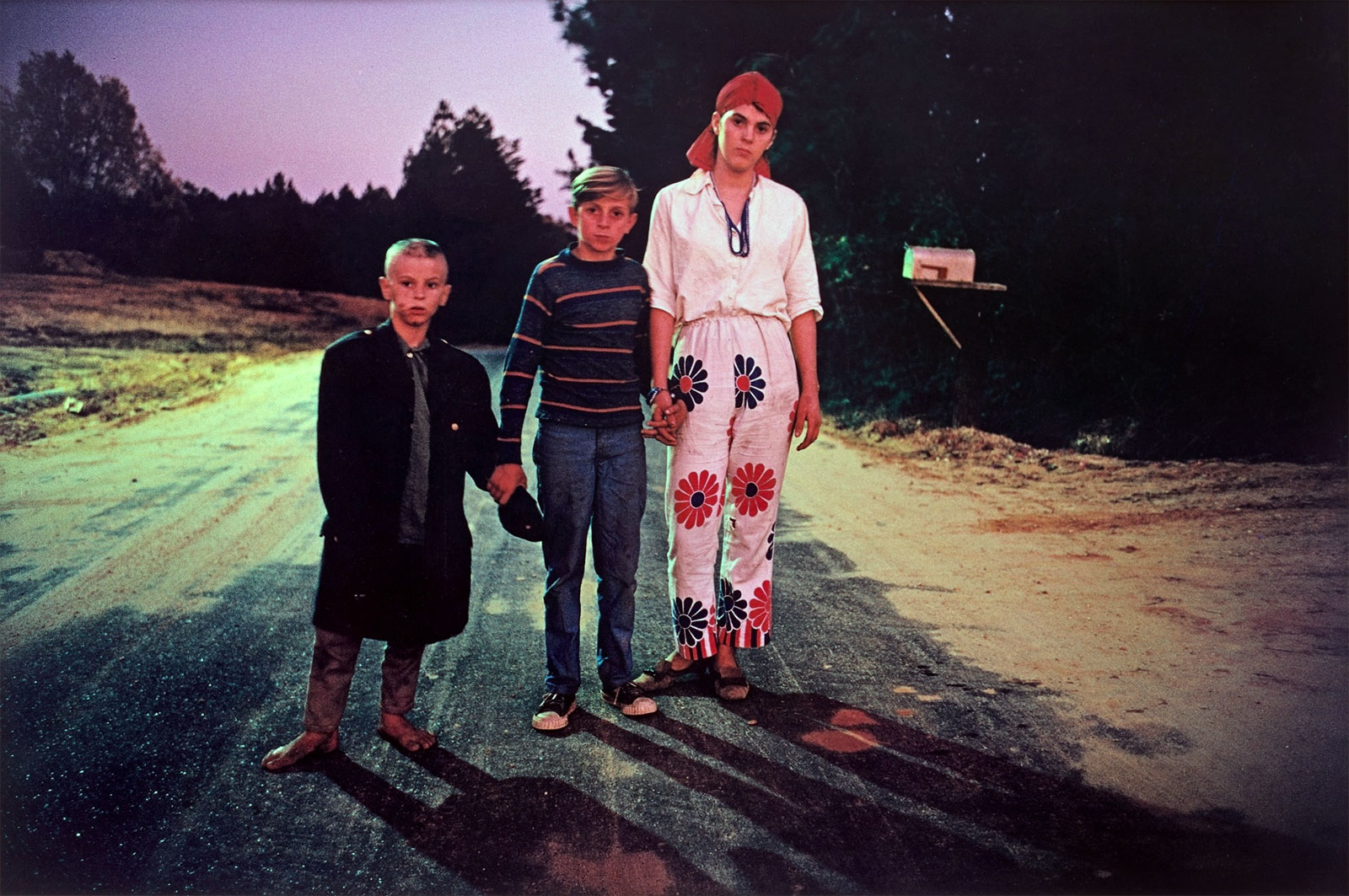
 

William Eggleston (American, b. 1939) 'Halloween, Outskirts of Morton, Mississippi' 1971


William Eggleston (American, b. 1939)
Halloween, Outskirts of Morton, Mississippi
1971
Dye transfer print
High Museum of Art, Atlanta
Gift of Lucinda W. Bunnen for the Bunnen Collection
© William Eggleston


Born in Memphis, self-taught photographer William Eggleston photographed everyday life in lush, saturated color. This scene contains nearly all the hues in the colour spectrum, from the violet darkening sky to the boy’s red headscarf. Eggleston made this exposure at dusk, when the waning natural light mixed with the artificial light of streetlamps to dramatic effect. Since the two light sources register differently on film, Eggleston was able to render the scene as strange and fictional, which is fitting as the children masquerade on Halloween.

Text from the Large Print Guide at the Virginia Museum of Fine Arts
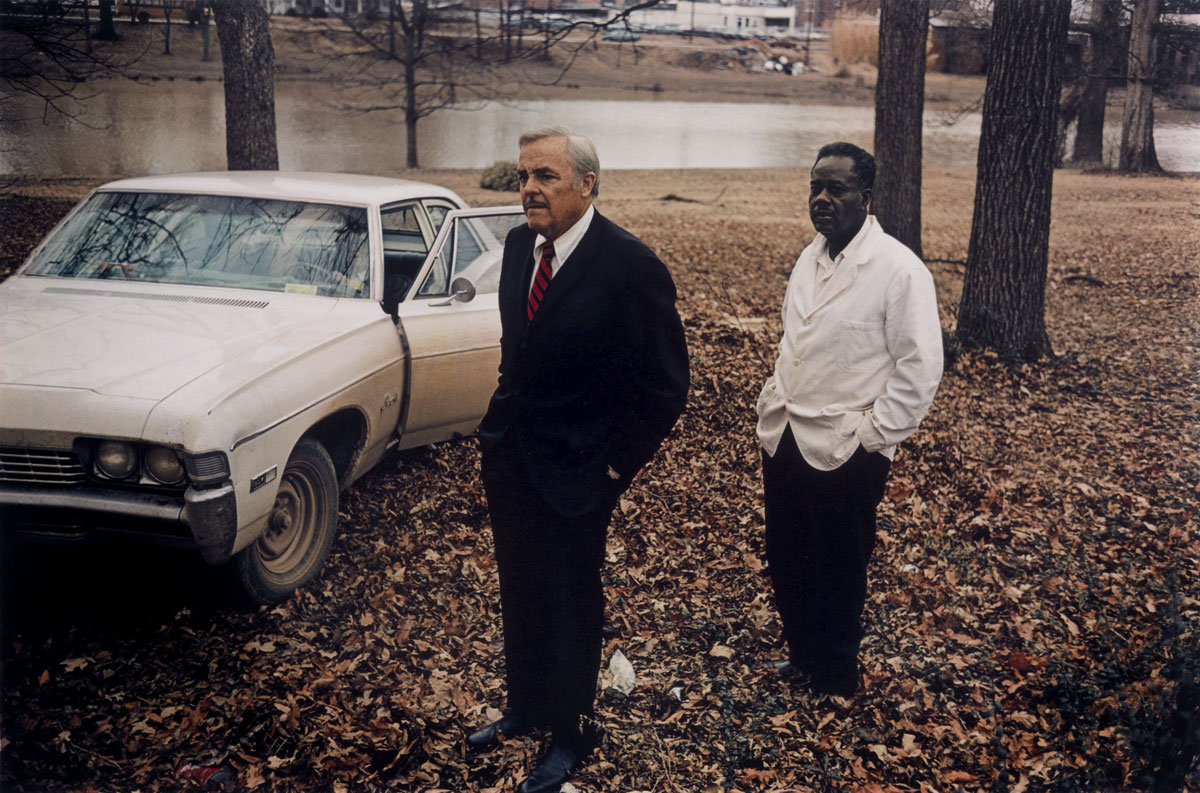
 

William Eggleston (American, b. 1939) 'Untitled (Sumner, Mississippi, Cassidy Bayou in Background)' 1971


William Eggleston (American, b. 1939)
Untitled (Sumner, Mississippi, Cassidy Bayou in Background)
1971
Dye transfer print
Collection of Winston Eggleston


Though he began his career working in black and white, by the late 1960s the Memphis-born William Eggleston had mastered the expressive possibilities of colour, photographing ordinary subjects around Memphis and making deeply saturated dye transfer prints, a primarily commercial process. He explored how colour could add psychological depth to his photographs, as in this scene awash in shades of brown aside from the stark white car and two figures – a Black man in a white coat and a White man in a black suit. Eggleston emphasises the familiarity between the chauffeur and his employer through their identical stances, yet their attire and physical and psychological distance underscore the rigid social hierarchy that divides them based on race and class.

Text from the Large Print Guide at the Virginia Museum of Fine Arts
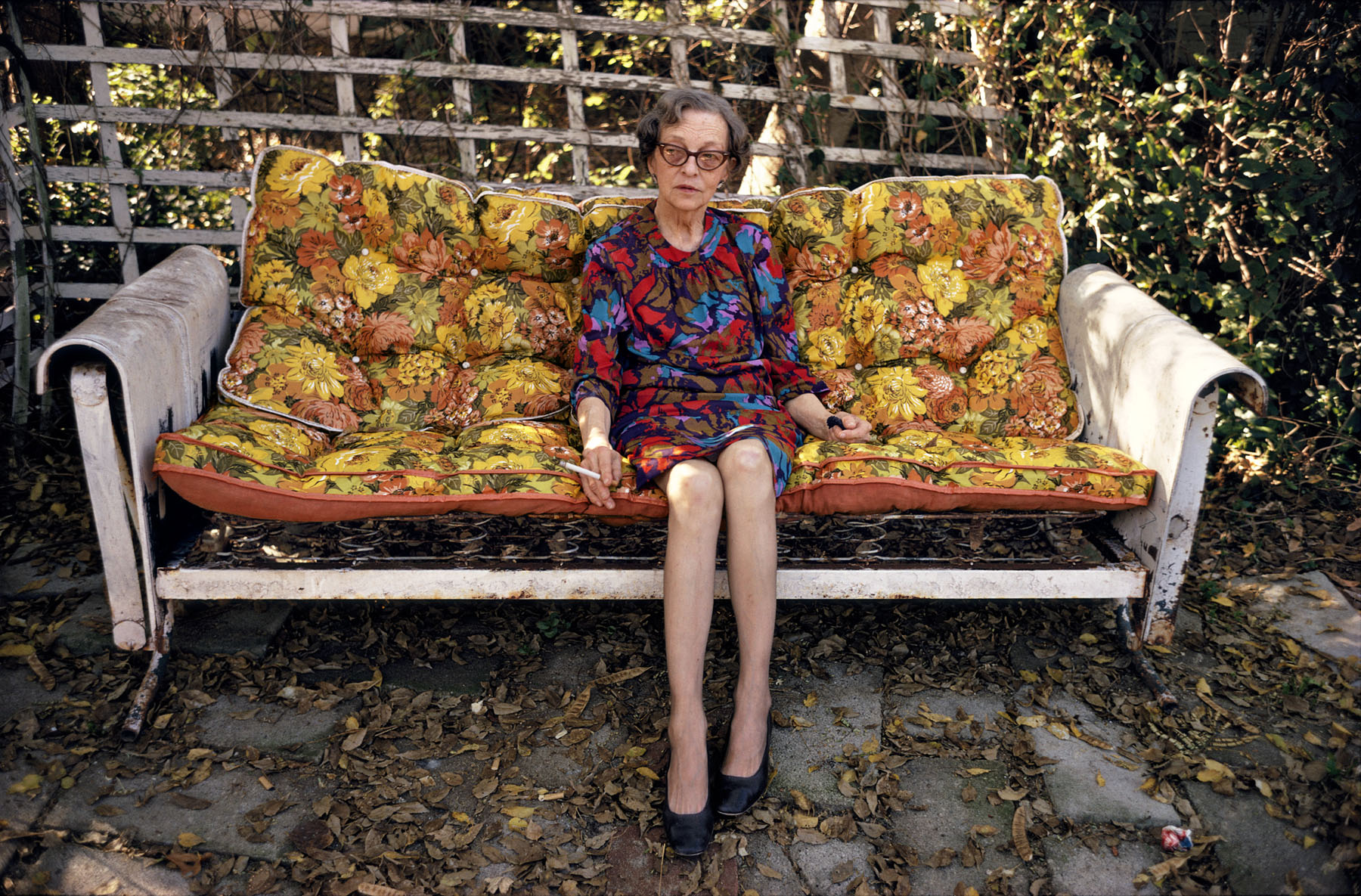
 

William Eggleston (American, b. 1939) 'Jackson, Mississippi' c. 1972 (Devoe Money in Jackson, Mississippi)


William Eggleston (American, b. 1939)
Jackson, Mississippi (Devoe Money in Jackson, Mississippi)
c. 1972
Dye transfer print
Virginia Museum of Fine Arts
Funds provided by the Museum Purchase Program of the National Endowment for the Arts, matching funds provided by the Volunteer Committees of Art Museums


Wendy Ewald (American, b. 1951) 'Charles and the Quilts, Kentucky' 1975-1982


Wendy Ewald (American, b. 1951)
Charles and the Quilts, Kentucky
1975-1982
Gelatin silver print
Virginia Museum of Fine Arts, Richmond
Collection of Ashley Kistler
© Wendy Ewald


As a teacher in rural Kentucky, Wendy Ewald worked closely with her students, encouraging and empowering them to tell their own stories through writing and photography. Among her students was a boy named Johnny who created the narratives and staging for the pictures that Ewald would then photograph. In this work, Johnny posed his brother Charles hanging over a clothesline slung with tattered quilts while holding a small revolver in his hand. Yet Charles is careful to point the gun away from the viewer, as if uncomfortable with confrontation or violence – a demeanour echoed in his open, almost tender gaze.

Text from the Large Print Guide at the Virginia Museum of Fine Arts
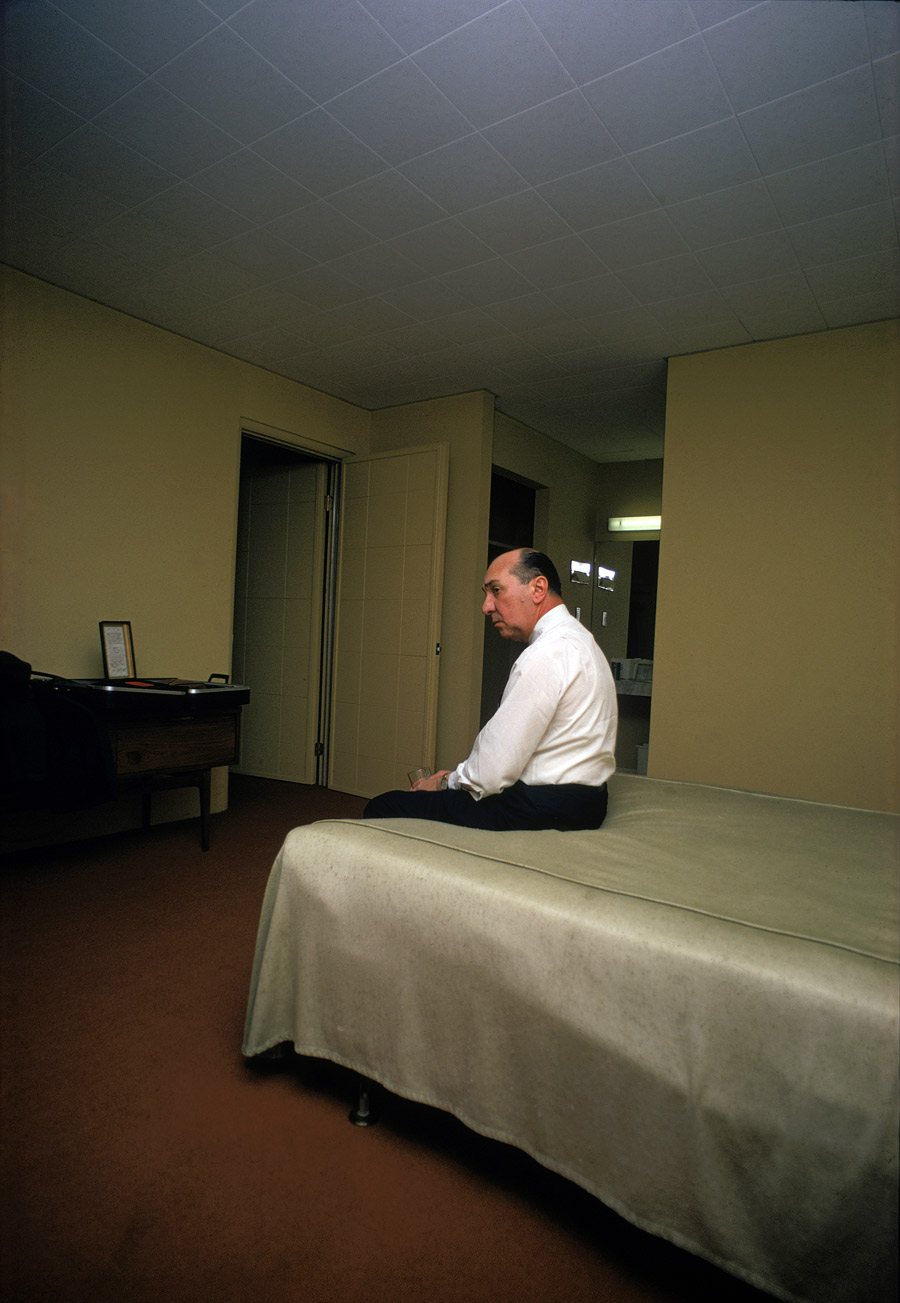
 

William Eggleston (American, b. 1939) 'Huntsville, Alabama' 1978


William Eggleston (American, b. 1939)
Huntsville, Alabama
1978
Dye transfer print
18 5/16 x 12 3/4 inches
High Museum of Art, Atlanta
Museum purchase


Nicholas Nixon (American, born in 1947) 'Yazoo City, Mississippi' 1979


Nicholas Nixon (American, b. 1947)
Yazoo City, Mississippi
1979
Gelatin silver print
High Museum of Art, Atlanta
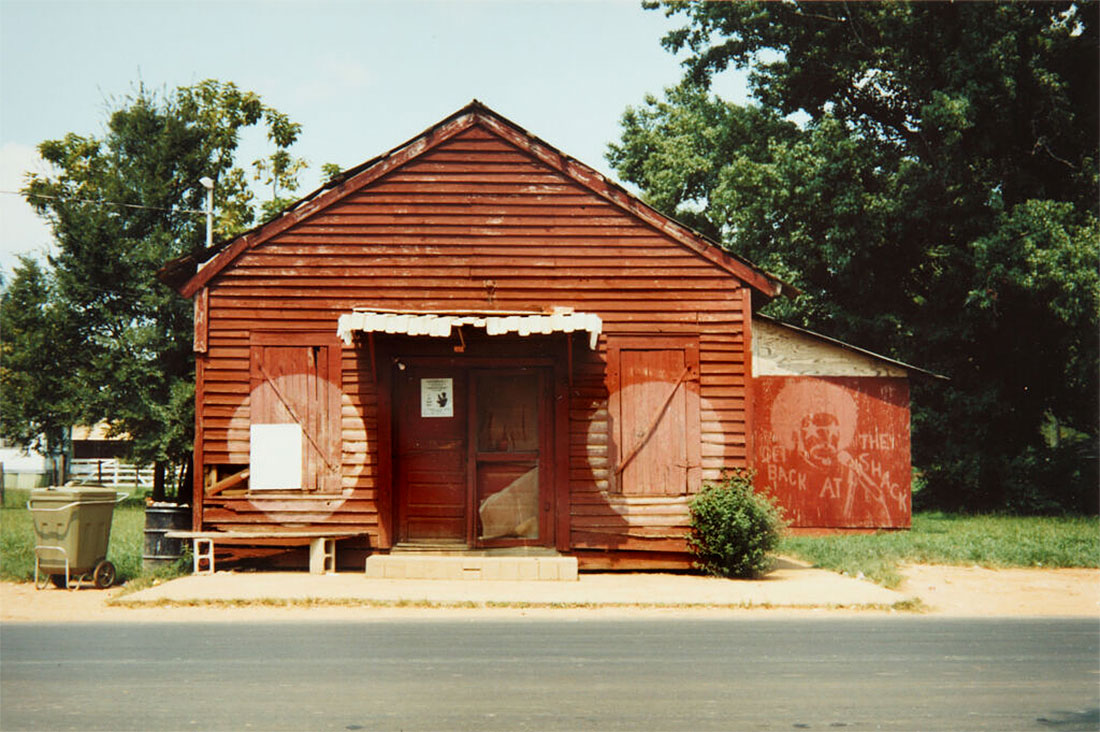
 

William Christenberry (American, 1936-2016) 'Building, Hale County, Alabama' 1980


William Christenberry (American, 1936-2016)
Building, Hale County, Alabama
1980
Dye coupler print
High Museum of Art, Atlanta
Purchase with funds from Photo Forum


This series of a building in Greensboro stands out among Christenberry’s work due to its clear depiction of time’s cyclical nature. The character of the structure changes so completely from general store to juke joint over the years that it is at first difficult to recognise that the photographs document the same building. With each new name, fresh coat of paint, and architectural modification, the building reflects the surrounding community’s changing economics, culture, and politics through times of decline and rebirth.

Text from the High Museum of Art website


William Christenberry (American, 1936-2016) 'Red Building in Forest, Hale County, Alabama' 1983


William Christenberry (American, 1936-2016)
Red Building in Forest, Hale County, Alabama
1983
Dye coupler prints
High Museum of Art, Atlanta
Gift of the artist


After encountering a copy of Walker Evans’s and James Agee’s book, Let Us Now Praise Famous Men, William Christenberry began to photograph vernacular architecture in Hale County, a rural farming area of central Alabama where his family had lived for several generations. Christenberry was one of the first American photographers to harness and popularise colour photography for artistic purposes, and he chronicled the march of time by returning to photograph specific buildings over decades. He exhibited these photographs – often made years apart – in groups to extend the experience of time through the lifespans of buildings and surrounding landscapes.

Text from the Large Print Guide at the Virginia Museum of Fine Arts
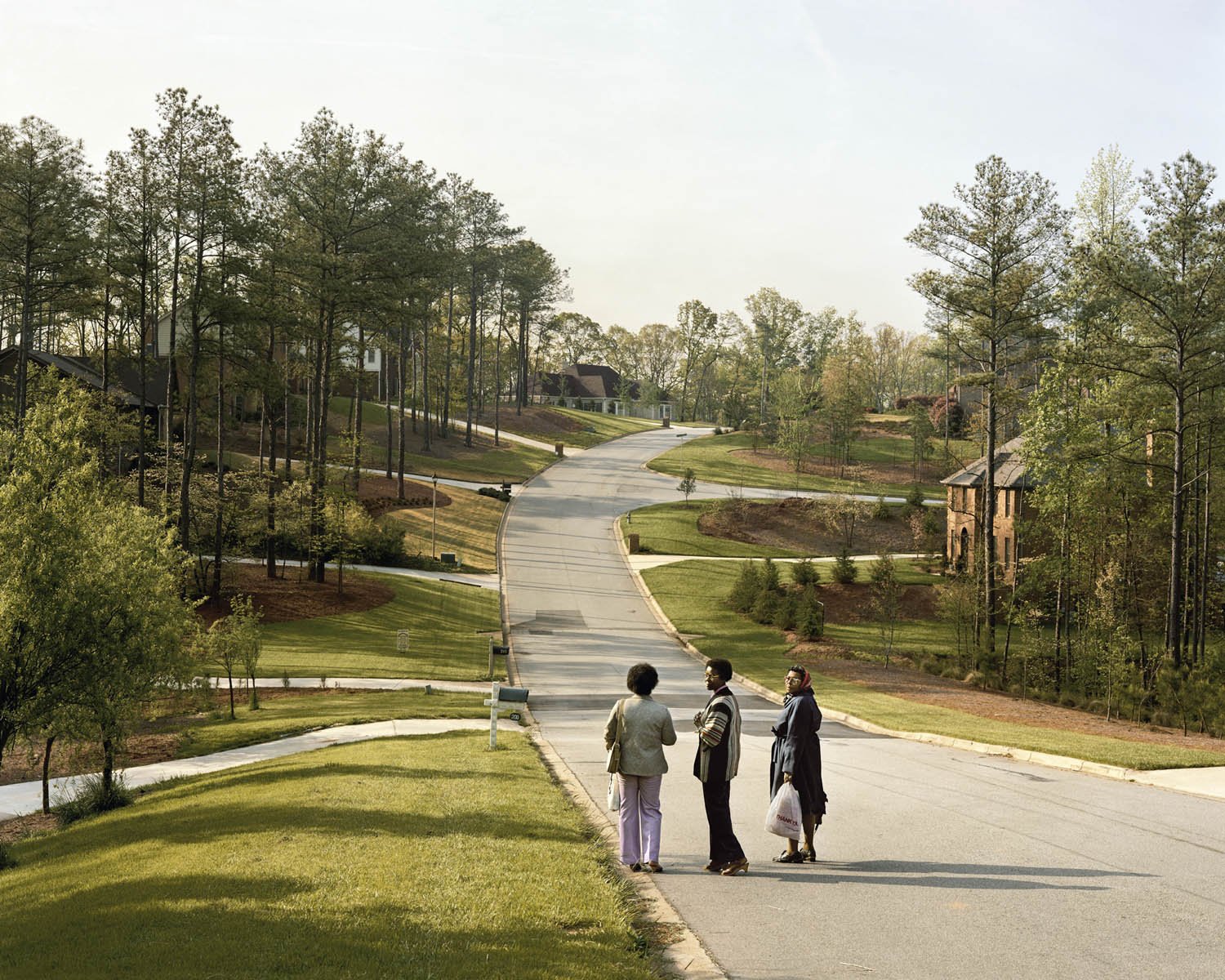
 

Joel Sternfeld (American, b. 1944) 'Domestic Workers Waiting for the Bus, Atlanta, Georgia' April 1983, printed 2024


Joel Sternfeld (American, b. 1944)
Domestic workers waiting for the bus, Atlanta, Georgia
1983
Dye coupler print
High Museum of Art, Atlanta
Gift of Dr. Judy and Kevin Wolman


Joel Sternfeld’s Domestic workers waiting for the bus, Atlanta, Georgia, April, (1983) might be the most mundane of nearly 200 photographs on view in “A Long Arc: Photography and the American South since 1845.” …

The picture’s title refers to Atlanta, I’d place this as a particular neighborhood in the suburban community of Sandy Springs, where I once lived. If I haven’t been on this exact street, perhaps even in one of these homes, I’ve been within a half mile of it.

That was more like 2003, but whether 1983, 2003, or 2023, I would be willing to bet a dollar to a donut – to use a Southern phrase – the street looks exactly the same today. Lawns uniformly closely clipped. Pine straw covering the landscaping. Everything just so.

Order. Conformity. Genteel. Southern.

There’s no need for a “white’s only” sign, it’s implied.

The women employed dusting and polishing inside the brick mansions wait on the bus because they can’t afford to own a car. I can assure you no one living in any of the houses along the street would be caught dead riding the bus in Atlanta – or even know how to. It’s just not done.

The picture speaks to America’s structural racism and its racial wealth gap with a whisper, not a scream. Doing so reveals how it’s not just the racist sheriffs and brutes who poured milkshakes over the head of sit-in protesters at the Woolworth’s counter back in the day who are complicit in those systems. Doing so reminds us that the struggle for equality extends beyond the dramatic. Beyond the Edmond Pettis Bridge in Selma, or the bus boycotts in Montgomery.

Chadd Scott. “Explore Three Centuries Of Southern Photography,” on the Forbes website Mar 12, 2024 [Online] Cited 20/12/2024


In the tradition of Robert Frank’s book The Americans, Joel Sternfeld embarked on a nationwide road trip for his book American Prospects, which grappled with the state of the country during the Reagan era. Here, three Black women are the only signs of life in the suburban Atlanta neighborhood of Sandy Springs. Driveways segment parcels of land within the seemingly endless subdivision, emphasising the primary mode of transport for the affluent residents. By contrast, the women wait for public transportation to ferry them to and from their jobs maintaining their employers’ homes. Sternfeld’s critical stance lays bare the region’s income and racial inequalities, still present twenty years after the civil rights movement.

Text from the Large Print Guide at the Virginia Museum of Fine Arts
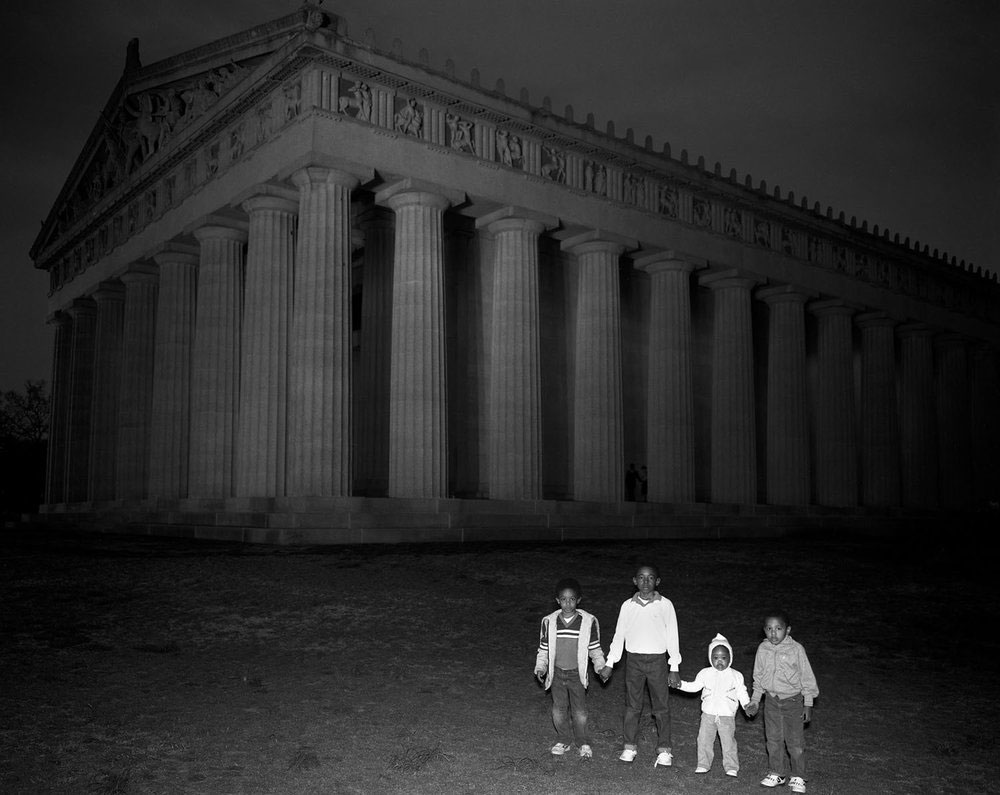
 

Baldwin Lee (American, b. 1951) 'Nashville, Tennessee' 1983


Baldwin Lee (American, b. 1951)
Nashville, Tennessee
1983
Gelatin silver print
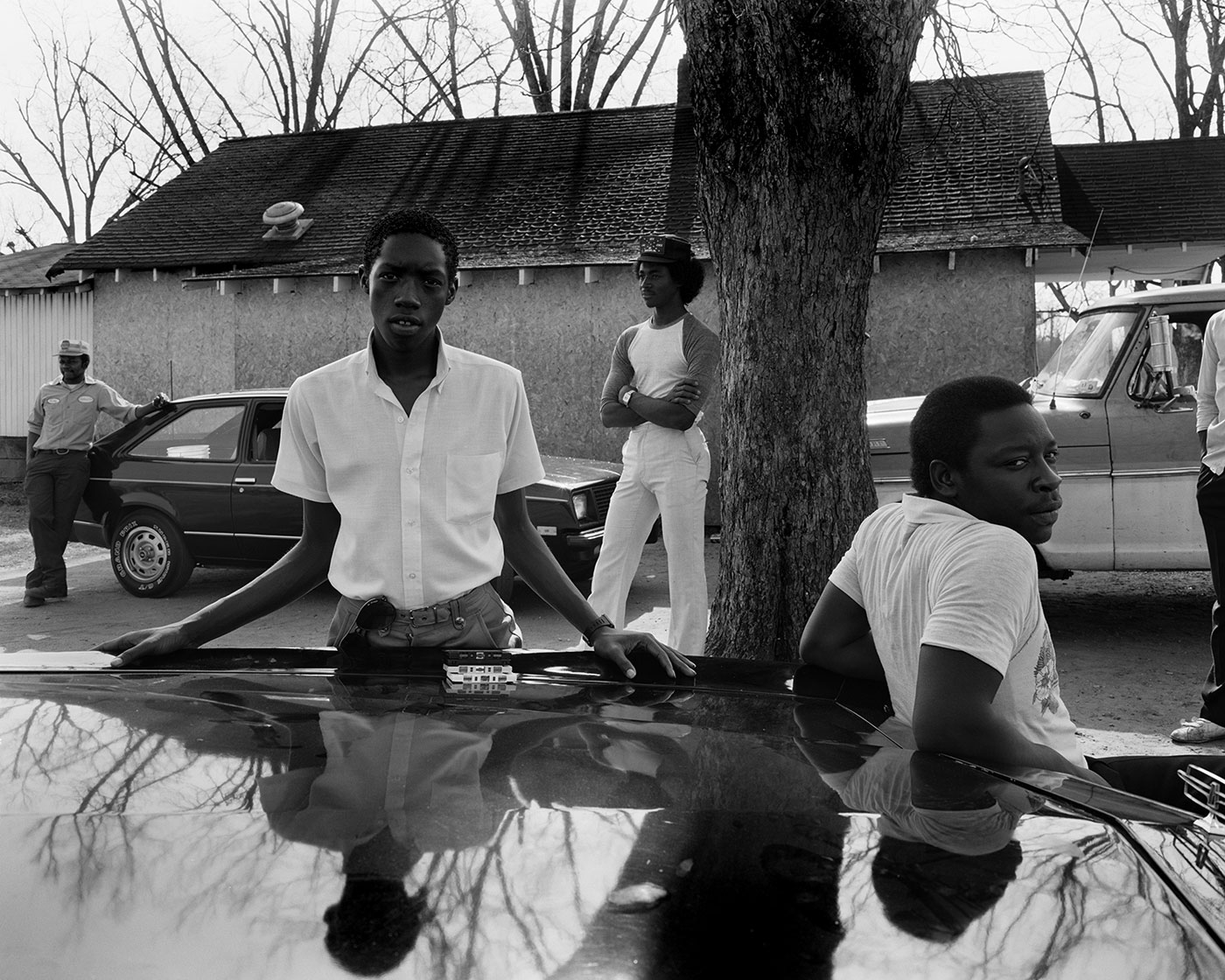
 

Baldwin Lee (American, b. 1951) 'DeFuniak Springs, Florida' 1984


Baldwin Lee (American, b. 1951)
DeFuniak Springs, Florida
1984
Gelatin silver print
Virginia Museum of Fine Arts, Richmond
Arthur and Margaret Glasgow Endowment
© Baldwin Lee


Beginning in 1983, Baldwin Lee made many road trips from his adopted home of Knoxville, Tennessee, throughout the South to photograph. He was drawn to Black Americans, often poor, at work, about town, or gathering on their yards or front porches. His strikingly dynamic and active compositions feel simultaneously spontaneous and meticulous in the way he arranges numerous people into complex scenes. His photographs offer poignant portrayals of daily life in rural and small towns across the South that are empathic, intimate, and often humorous, without shying away from his subjects’ material and economic challenges.

Text from the Large Print Guide at the Virginia Museum of Fine Arts
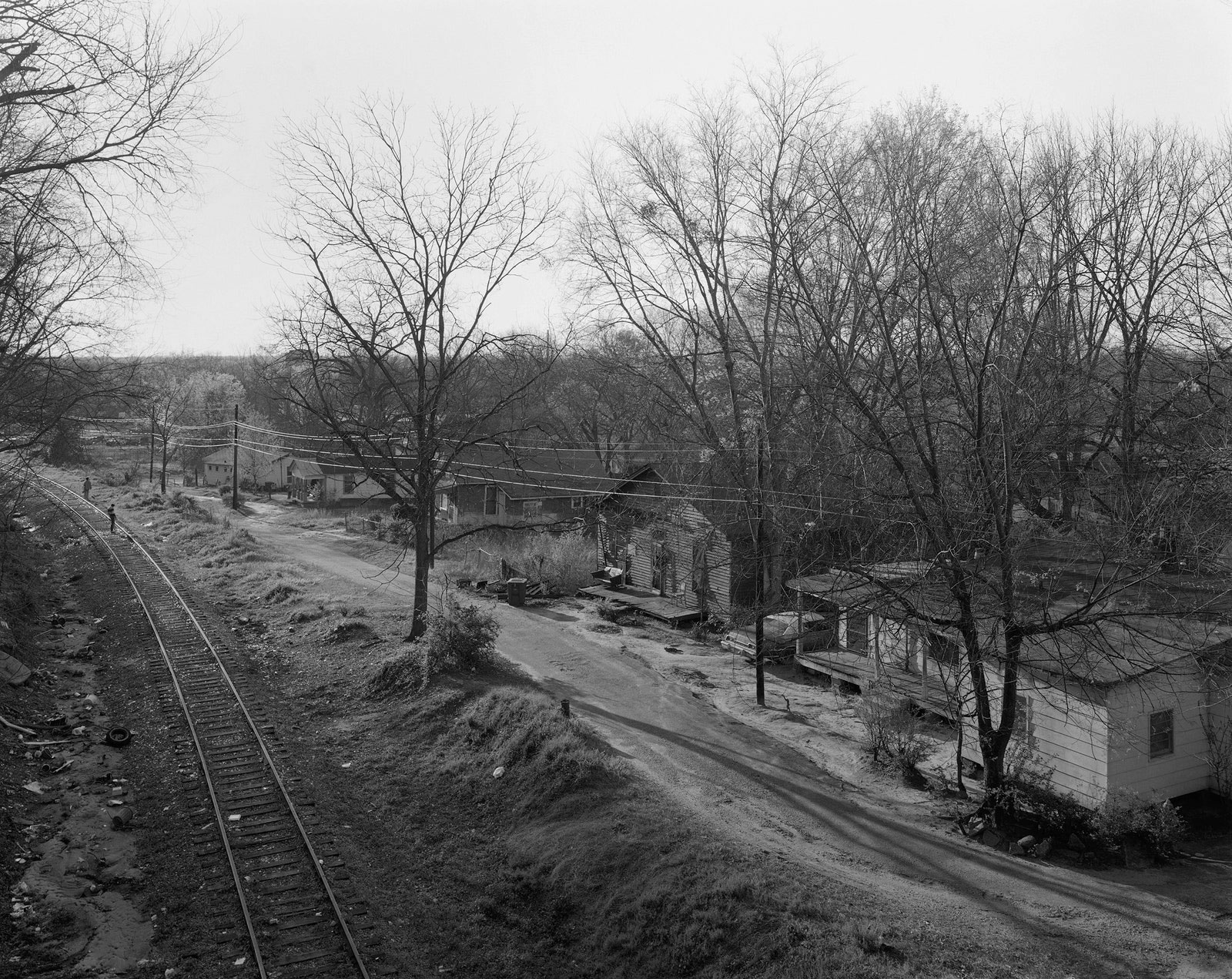
 

Baldwin Lee (American, b. 1951) 'Montgomery, Alabama' 1984


Baldwin Lee (American, b. 1951)
Montgomery, Alabama
1984
Gelatin silver print
High museum of Art, Atlanta
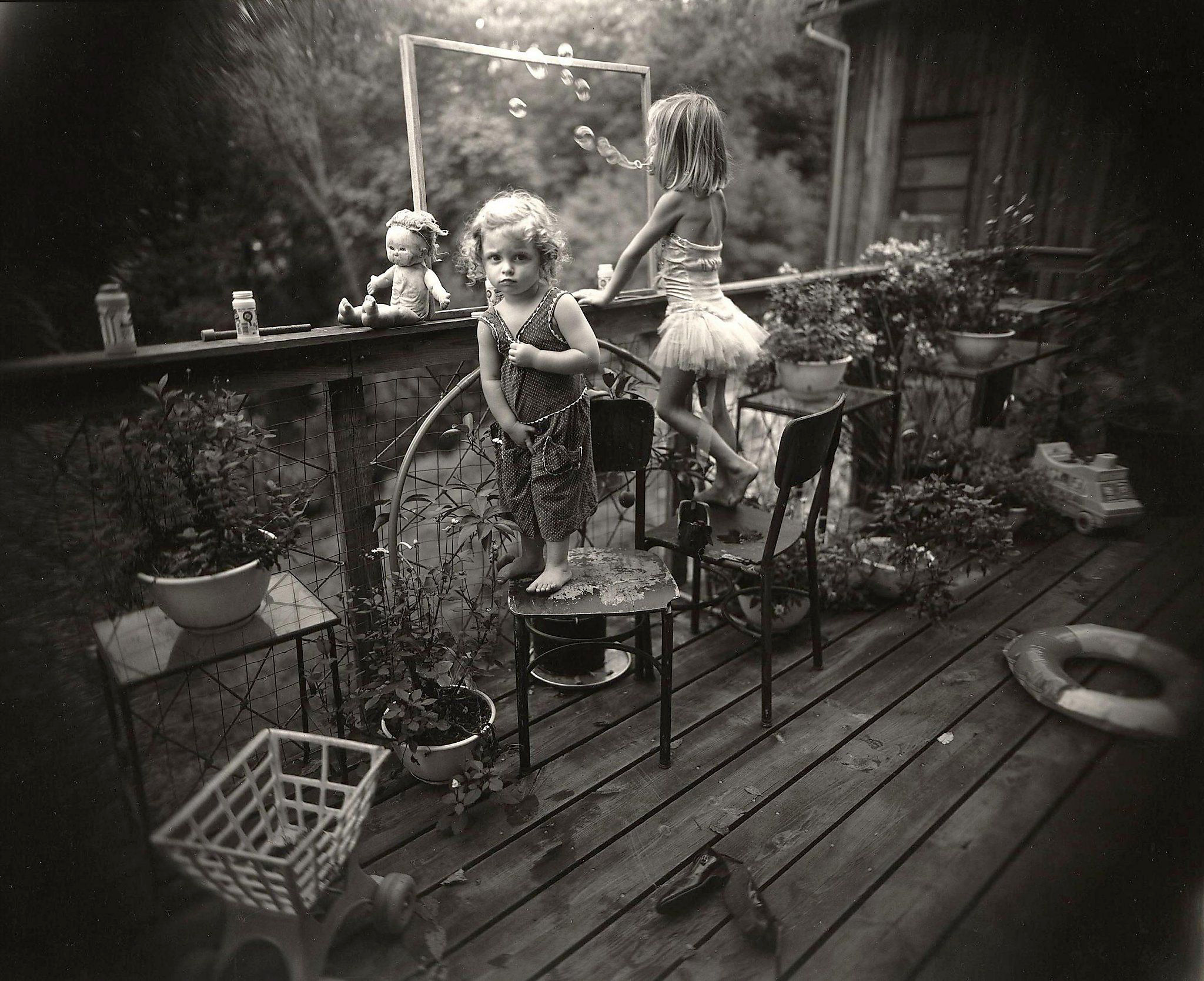
 

Sally Mann (American, b. 1951) 'Blowing Bubbles' 1987


Sally Mann (American, b. 1951)
Blowing Bubbles
1987
Gelatin silver print
High Museum of Art, Atlanta
Purchase with funds from Lucinda W. Bunnen for the Bunnen Collection


From 1985-1994, Sally Mann photographed her three children – Emmett, Jessie, and Virginia – at the family’s rustic cabin in the Shenandoah Valley. The pictures she created evoke the freedom and tranquility of unhurried days spent exploring outdoors but also capture the complexities of childhood, showing it from both the child and adult’s point of view. In this photograph, Mann presents childhood as at once magical and fleeting. While Jessie delights in producing the shimmering bubbles, Virginia faces us with an anxious expression. If the doll on the railing suggests the innocence of childhood, the pair of abandoned women’s shoes and toy shopping cart hint at its inevitable end.

Text from the Large Print Guide at the Virginia Museum of Fine Arts


Deborah Luster (American, b. 1951) 'Donald Garringer, Angola, Louisiana' September 17, 1999


Deborah Luster (American, b. 1951)
Donald Garringer, Angola, Louisiana
September 17, 1999
Gelatin silver prints on aluminium
Virginia Museum of Fine Arts
Eric and Jeanette Lipman Fund


In 1998, Deborah Luster began photographing incarcerated people in Louisiana, aiming to give this population visibility and voice. Some of her sitters posed with objects of importance, while others vividly expressed themselves through gesture and expression. Luster printed the portraits on small metal plates that evoke 19thcentury tintypes, intimate objects meant to be touched and handled. On the back of each plate, she recorded information about the sitter, including name, age, length of sentence, prison job, number of children, and future hopes and dreams. While each photograph commemorates an individual’s existence, the project serves as a disquieting reminder of the dehumanisation, grief, and generational trauma the prison industrial complex produces.

Text from the Large Print Guide at the Virginia Museum of Fine Arts


Deborah Luster (American, b. 1951) '"REAL," Transylvania, Louisiana' 1999


Deborah Luster (American, b. 1951)
“REAL,” Transylvania, Louisiana
1999
Gelatin silver prints on aluminium
Virginia Museum of Fine Arts
Eric and Jeanette Lipman Fund
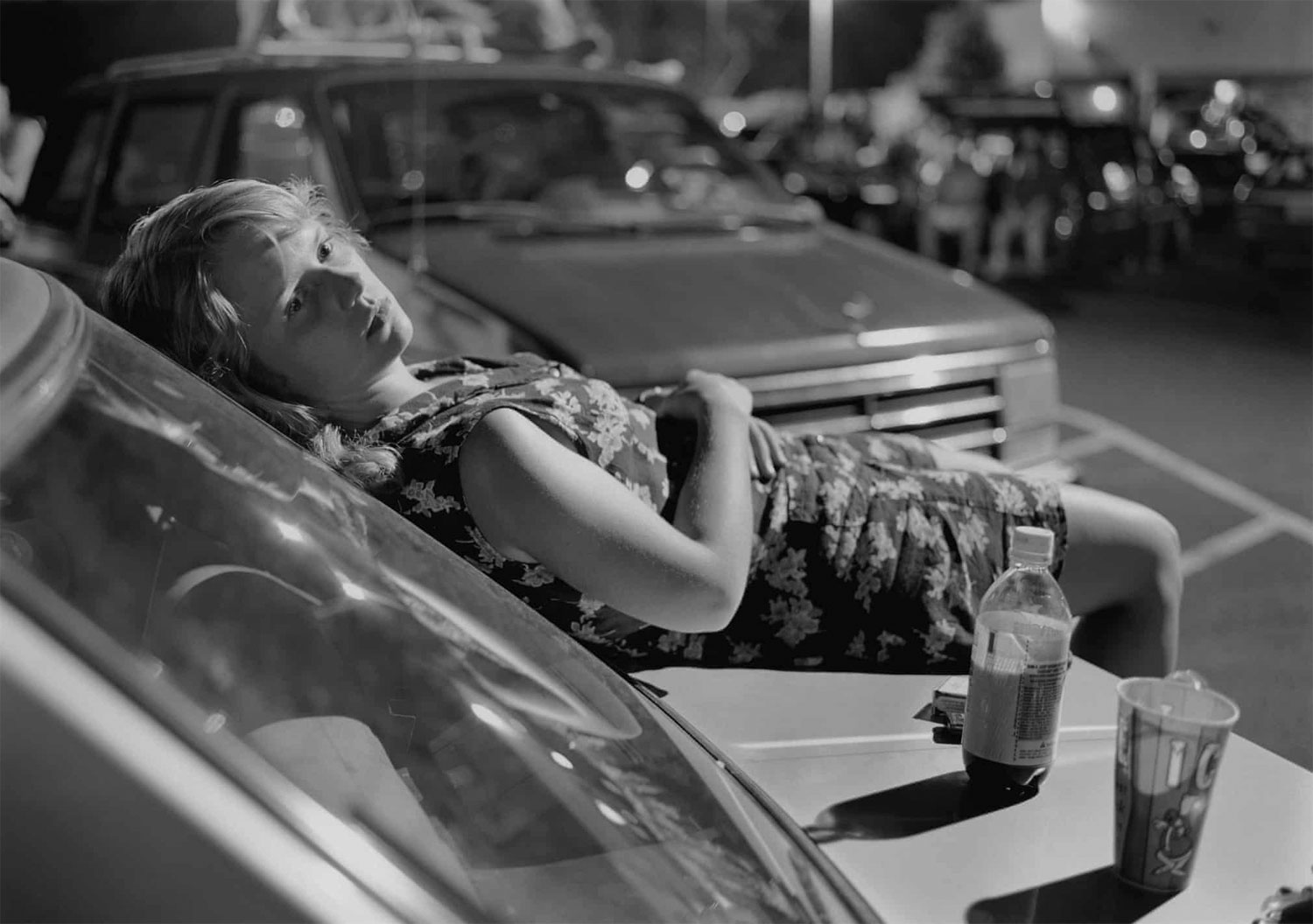
 

Mark Steinmetz (American, b. 1961) 'Girl on Car, Athens, GA' 1996


Mark Steinmetz (American, b. 1961)
Girl on Car, Athens, GA
1996
Gelatin silver print
Purchase with funds from the Friends of Photography
© Mark Steinmetz
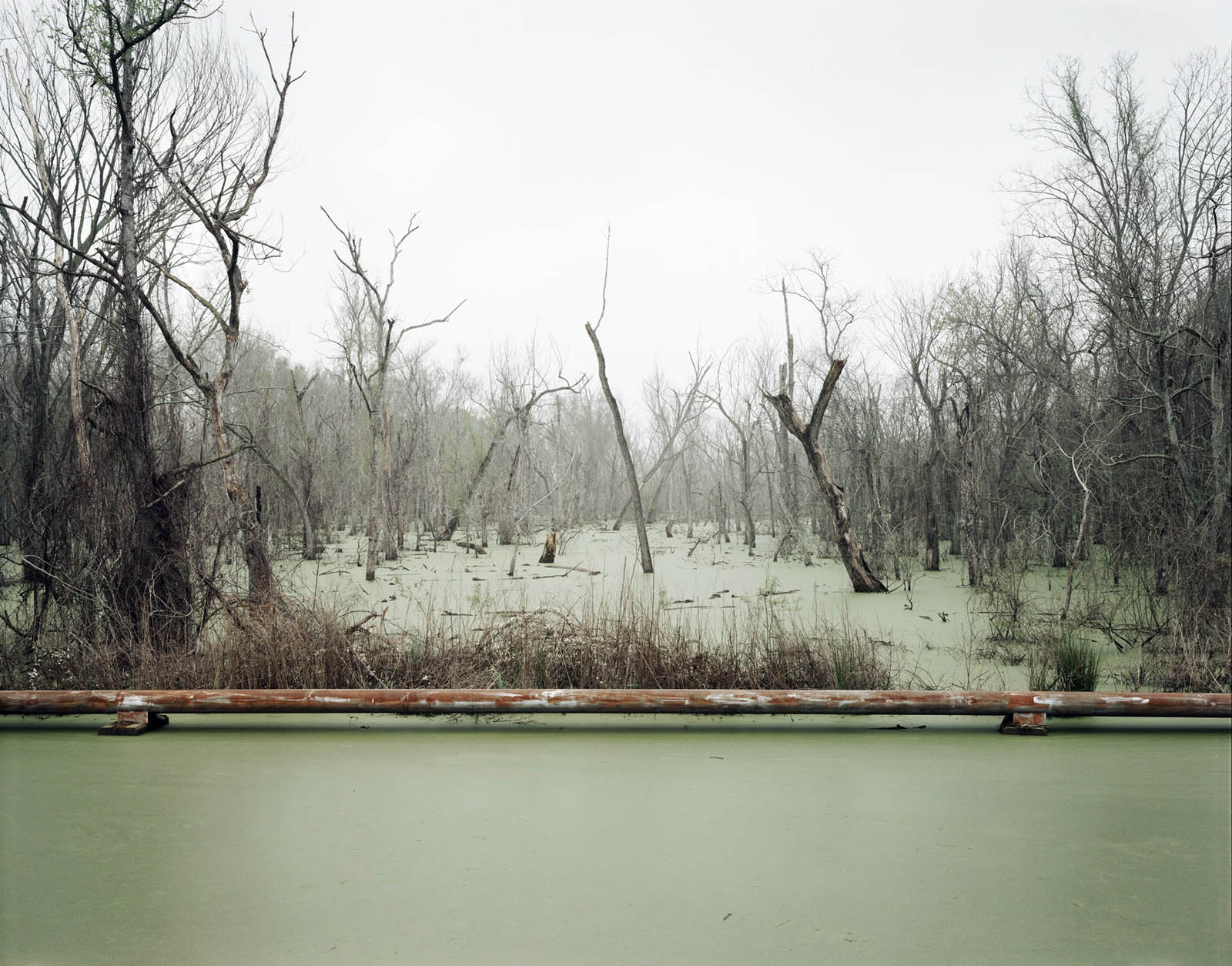
 

Richard Misrach (American, b. 1949) 'Swamp and Pipeline, Geismar, Louisiana' 1998


Richard Misrach (American, b. 1949)
Swamp and Pipeline, Geismar, Louisiana
1998
Pigmented inkjet print
High Museum of Art, Atlanta
Commissioned with funds from the H. B. and Doris Massey Charitable Trust, Lucinda W. Bunnen, and High Museum of Art Enhancement Fund for the Picturing the South series


In 1998, Richard Misrach produced a detailed and disturbing visual study of the ecological degradation along a 150-mile section of the Mississippi River between Baton Rouge and New Orleans – a stretch indelibly marked by the more than one hundred petrochemical plants that have spewed pollutants into the air, water, and land surrounding them. Through his evocative large-scale colour photographs, Misrach reveals not only the destruction of the Mississippi’s delicate ecosystem but also the layers of history, power, and politics complicit in engineering a system that has both wreaked havoc on the land and covertly exploited and poisoned nearby residents, primarily African Americans.

Text from the Large Print Guide at the Virginia Museum of Fine Arts
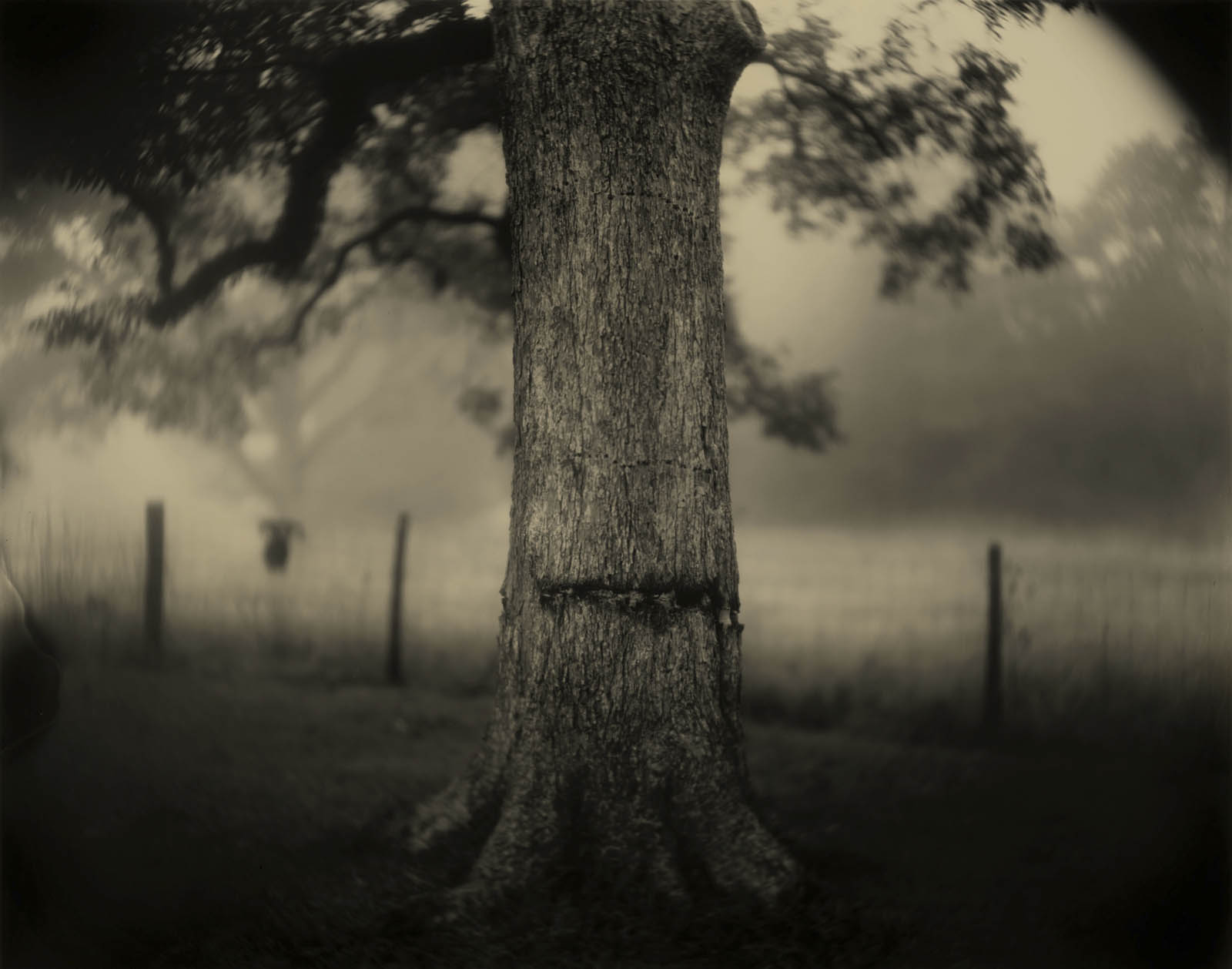
 

Sally Mann (American, b. 1951) 'Deep South, Untitled (Scarred Tree)' 1999


Sally Mann (American, b. 1951)
Deep South, Untitled (Scarred Tree)
1999
Gelatin silver print
High Museum of Art, Atlanta
Purchase with funds from Jane and Clay Jackson


Even in today’s “New South,” photography is largely a story of dichotomies: turbulent versus languorous, urban versus rural, privileged versus impoverished, and still, white versus Black. What appears to separate current photographic practice from other eras is that image-makers today seem compelled to address such dual realities with a critical, often indicting interrogation of the south’s legacies. Sally Mann’s “Deep South, Untitled (Scarred Tree)” evokes the brutality of the south’s violent history in the scar on her romantically crafted print of an oak tree.

Suzanne Révy and Elin Spring. “A Long Arc,” on the What Will You Remember website March 20, 2024 [Online] Cited 19/12/2024


In this evocative study of an oak tree, Sally Mann focuses on a dark gash across the trunk, its scarred appearance a metaphor for the South’s traumatic history. The combination of beauty and brutality recalls Mann’s description of the South as “a place extravagant in its beauty, reckless in its fecundity, terrible in its indifference, and dark with memories.” The photograph also reveals Mann’s mastery of the 19th-century wet plate process, which enabled her to materially conjure the past in the present.

Text from the Large Print Guide at the Virginia Museum of Fine Arts
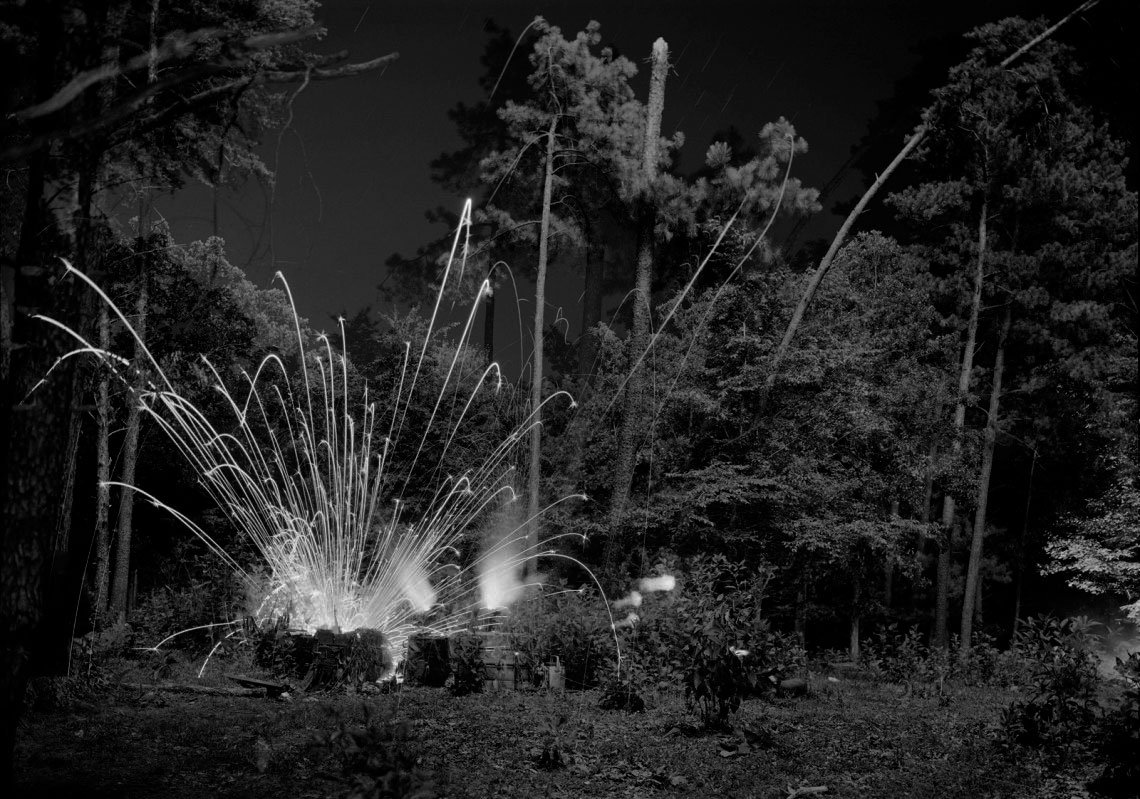
 

An-My Lê (American born Vietnam, b. 1960) 'Explosion', from the 'Small Wars' series 1999-2002


An-My Lê (American born Vietnam, b. 1960)
Explosion, from the Small Wars series
1999-2002
Gelatin silver print
Virginia Museum of Fine Arts
Adolph D. and Wilkins C. Williams Fund


For her series Small Wars, An-My Lê photographed reenactments of Vietnam War battles in North Carolina and Virginia. In these elaborately staged theatrical events with authentically costumed reenactors, Lê photographed in a manner that mirrors the verisimilitude and immediacy of combat photography, blurring the lines between truth and fiction. The blast of fireworks in Explosion mimics the burst of an ordinance being discharged, illuminating the surrounding pine trees and thereby revealing that the battle is set in a temperate forest rather than in a dense Vietnamese jungle.

Text from the Large Print Guide at the Virginia Museum of Fine Arts
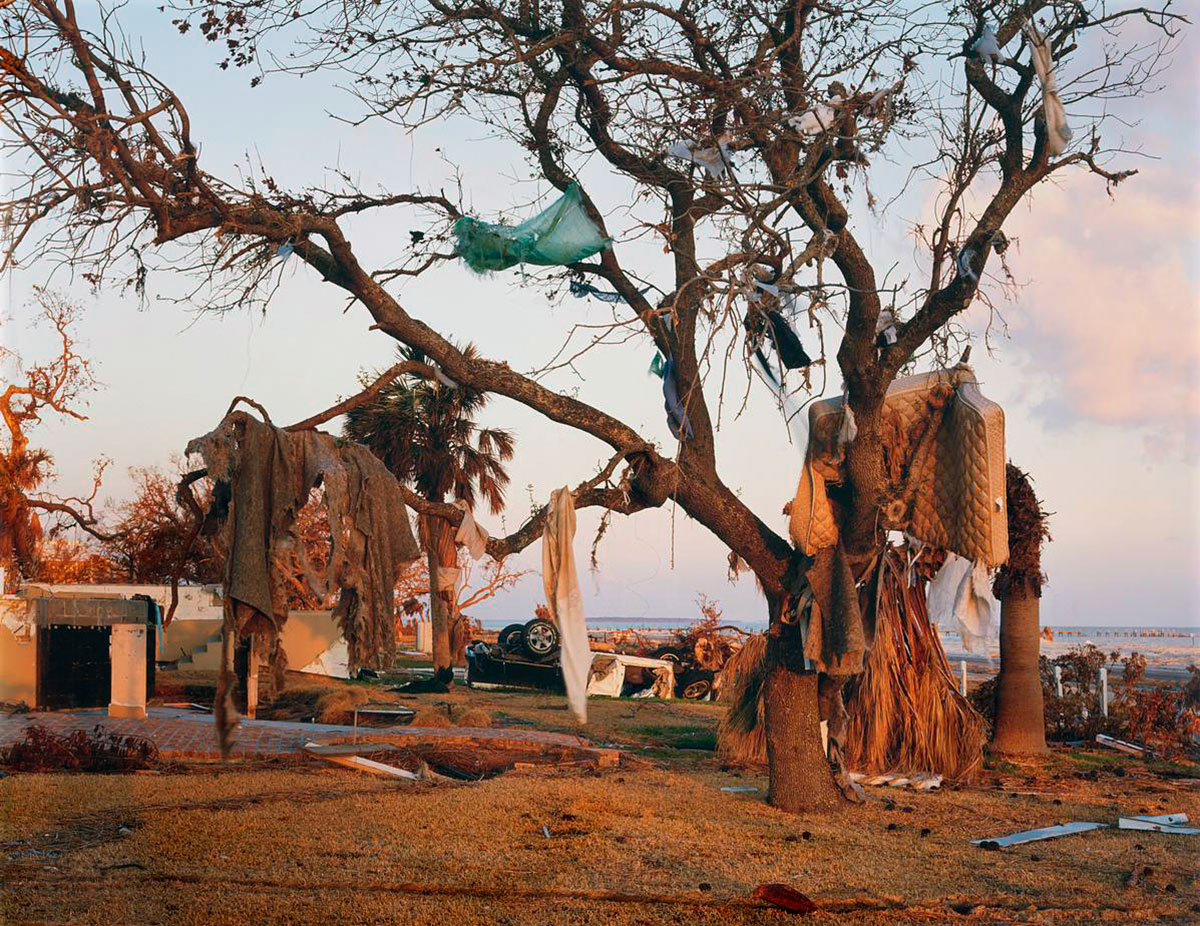
 

Mitch Epstein (American, b. 1952) 'Biloxi, MS' 2005


Mitch Epstein (American, b. 1952)
Biloxi, MS
2005
Dye coupler print
The Warehouse, Atlanta
© Mitch Epstein


2000-Now: A New South, Again

In the past twenty-five years, the American South has emerged as one of the most dynamic locales for contemporary photographic production and has nurtured both homegrown talents and attracted photographers from across the world who seek to better understand both the region and the nation. For these artists, bearing witness to the people, places, and culture of the American South is crucial to comprehending the United States’ collective ethos, and the images these artists produce are key to renegotiating our foundational myths and present realities.

The abiding preoccupations of photographers intent on articulating and scrutinising the character of the region touch on a range of overlapping topics and themes: the unruly and understated nature of the landscape coupled with the looming threat of climate change; storytelling and myth making, with a penchant for the gothic and unsettling; history’s persistence in the present and the need to challenge conventional narratives; the rapid urbanisation and globalisation of the region and the attendant shifting demographics; increasingly visible cultural and political division; and across all these other leitmotifs, race and the long shadow cast by slavery and Jim Crow.

In their efforts to expand and complicate both the myths and realities of the region, these contemporary photographers prompt us to redefine our concepts of who, and what, counts as American. They also show how the South continues to serve as a crucible of American identity, the uneasy place where our contradictions meet our aspirations.

Text from the Large Print Guide at the Virginia Museum of Fine Arts


Jeff Whetstone (American, b. 1968) 'Eno River' Durham, North Carolina, 2004


Jeff Whetstone (American, b. 1968)
Eno River
Durham, North Carolina, 2004
From the New Wilderness series
© Jeff Whetstone


 Whetstone’s photographs … are drawn from his New Wilderness series, in which he explores contemporary understandings of wilderness and charts ways in which longstanding stories of connection to the natural world around us are encoded in today’s culture. He is interested in the ways in which our identities mediate our relationship with the wild and in our stereotypes relating to rural populations.

For Whetstone the mythical frontier is synonymous with the line between humanity and inexorable nature, and as such, it never disappeared. Instead, it is all around us; indeed, it is in us, underlining as nonsense the idea that we could ever truly tame it. The myth of control over the wilderness animates Whetstone’s photography. Through images made both on his doorstep and across the region in settings from caves to hunting blinds, he explores tenuous moments of human dominance over places in the natural world. 

Whetstone finds elements of both human culture and nature in the transitional zone between the two, which for him is the new wilderness… Whetstone’s photographs are a bridge to the inevitable complexity of relationships between humans and nature, which are likely to become ever more pressing as climatological and environmental processes of change weigh heavily in the region over coming decades.

Anonymous. “Jeff Whetstone,” on the Southbound Project website Nd [Online] Cited 23/01/2025


Lucas Foglia (American, b. 1983) 'Acorn with Possum Stew, Wildroots Homestead, North Carolina' 2006


Lucas Foglia (American, b. 1983)
Acorn with Possum Stew, Wildroots Homestead, North Carolina
2006
Pigmented inkjet print
High Museum of Art, Atlanta
Gift of Irene Zhou
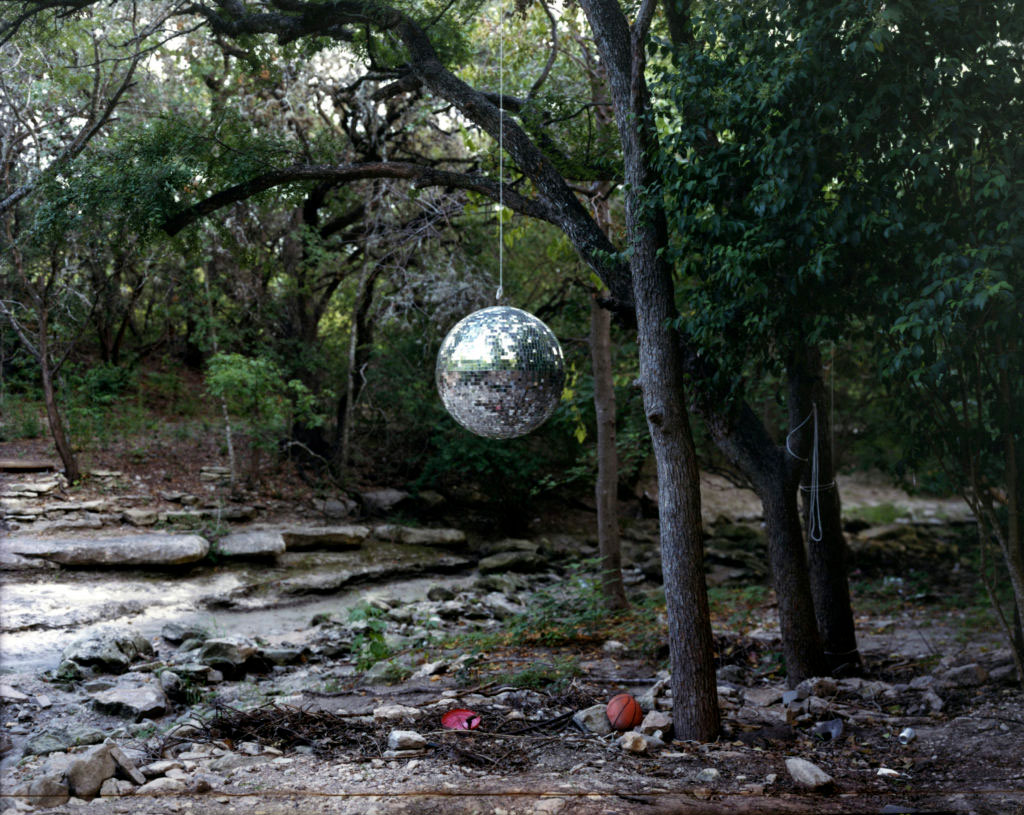
 

Alec Soth (American, b. 1969) 'Enchanted Forest (36), Texas' 2006


Alec Soth (American, b. 1969)
Enchanted Forest (36), Texas
2006
Pigmented inkjet print
High Museum of Art, Atlanta
Commissioned with funds from Photo Forum and the Friends of Photography
© Alec Soth / Magnum Photos


In the tradition of photographers such as Walker Evans, William Eggleston, and Stephen Shore, Alec Soth seeks to expose and elevate pedestrian aspects of American life. His poetic images capture the harsh beauty of disenfranchised people and places, underscoring the romantic ideals espoused by American society and the realities of living in such a vast and varied country. Inspired by the writing of Flannery O’Connor, Soth’s project explores spiritual and hermetic life in the South. The photographs include studies that represent a variety of natural subjects such as landscapes, woods, and caves; examples of man-made intervention including tree houses, forts, cabins and tents; and portraits of monks, hermits, and survivalists.

Text from the High Museum of Art website


Traveling through the American South, Alec Soth explored the romantic allure of escape through the hermetic lives of outsiders living in the region. He photographed landscapes, structures (tree houses, forts, cabins), and people, primarily men, who choose to live on the outskirts of organized society. Distanced in their compositional and psychological approaches, Soth’s photographs demonstrate empathic insight with the desire for solitude, without shying away from the potentially nefarious impulses that motivate some people to withdraw from the mainstream.

Text from the Large Print Guide at the Virginia Museum of Fine Arts


Sheila Pree Bright (American, b. 1967) 'Untitled 28' 2007


Sheila Pree Bright (American, b. 1967)
Untitled 28
2007
From the Suburbia series
Dye coupler print
High Museum of Art, Atlanta, purchase with funds from the Hagedorn Family and the Friends of Photography


In her Suburbia series, Sheila Pree Bright creates narratives that allude to socioeconomic status and racial identity. The arrangement of the rooms and their contents invites the viewer to imagine the lives of their inhabitants. Bright’s inclusion in this well-appointed mid-century living room of titles such as The End of Blackness, books about Frida Kahlo and Pablo Picasso, masks from Africa, and vases from Asia underscore the inhabitant’s refinement and expansive cultural sophistication. Bright’s carefully composed photographs of the interiors of Black-owned homes in suburban Atlanta seek to counter often-stereotyped representations of Black communities in the mainstream media with a more realistic, nuanced view of middle-class African American family life.

Text from the Large Print Guide at the Virginia Museum of Fine Arts
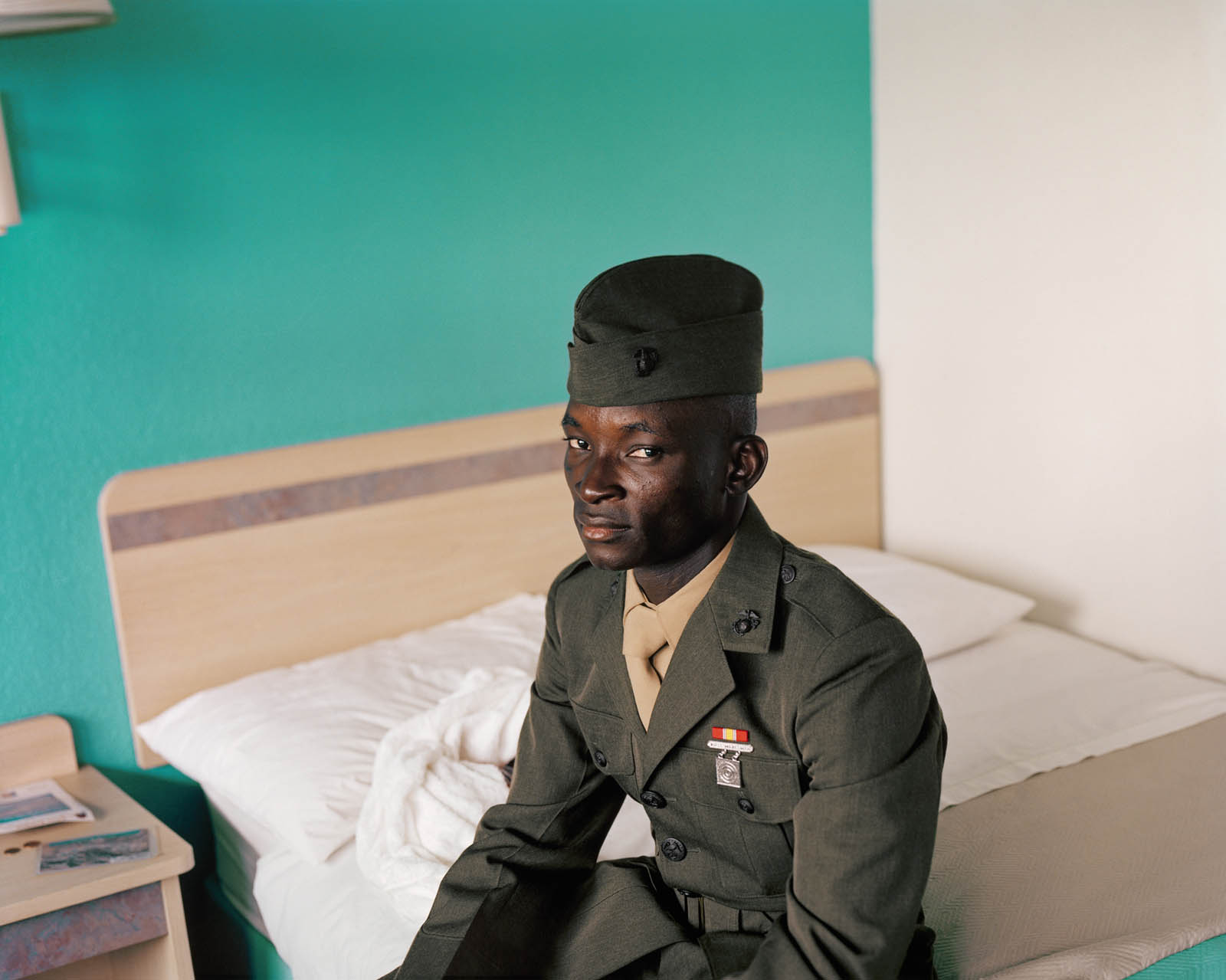
 

Susan Worsham (American, b. 1969) 'Marine, Hotel near Airport, Richmond, Virginia' 2009


Susan Worsham (American, b. 1969)
Marine, Hotel near Airport, Richmond, Virginia
2009
Pigmented inkjet print Virginia Museum of Fine Arts
Aldine S. Hartman Endowment Fund
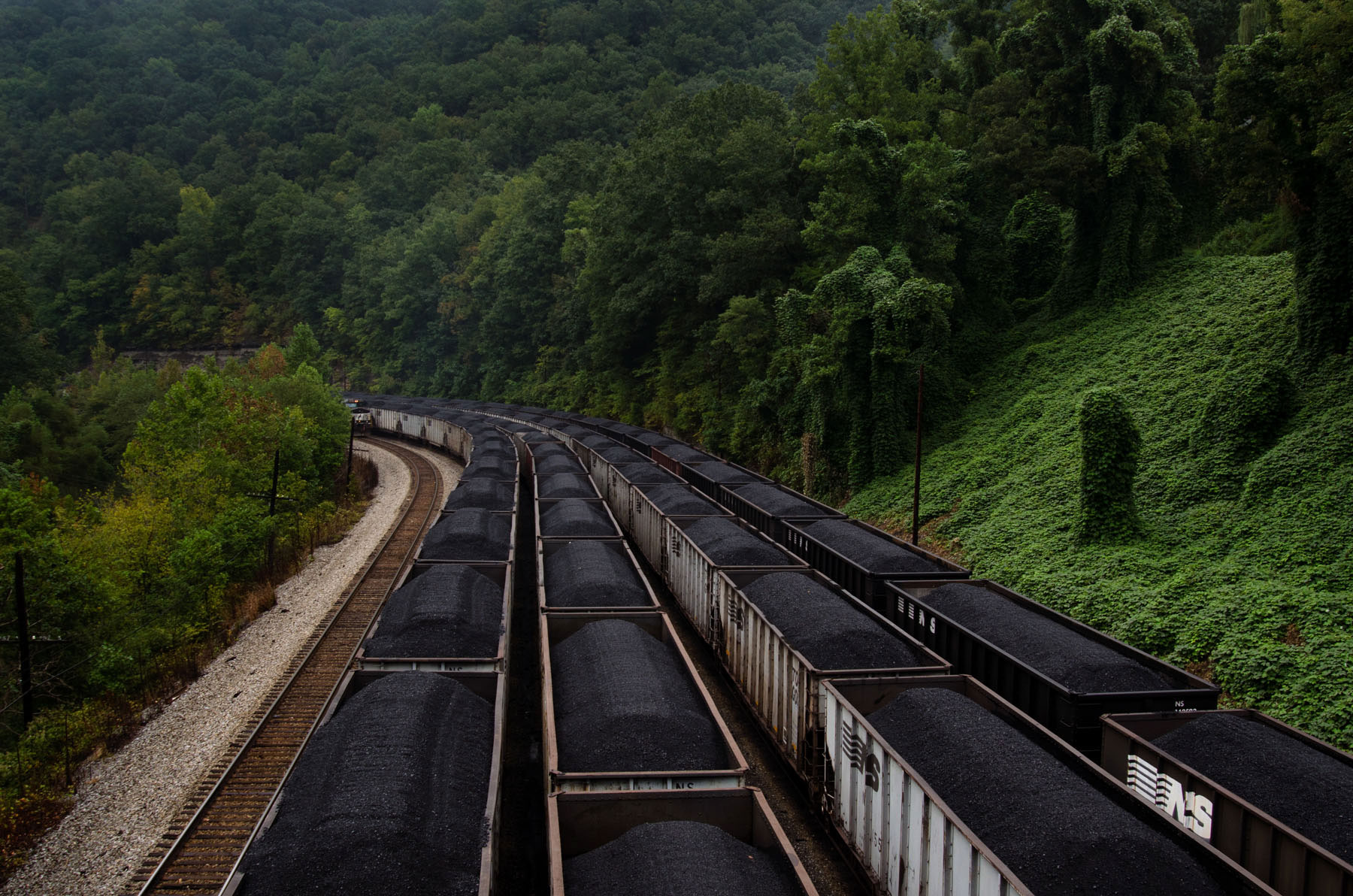
 

Stacy Kranitz (American, b. 1976) 'Buchanan County, Virginia' 2011


Stacy Kranitz (American, b. 1976)
Buchanan County, Virginia
2011
Pigmented inkjet print
Courtesy of the artist and Tracey Morgan Gallery
© Stacey Kranitz


Shane Lavalette (American, b. 1987)
'Will with Banjo' 2011


Shane Lavalette (American, b. 1987)
Will with Banjo
2011
Pigment print
© Shane Lavalette
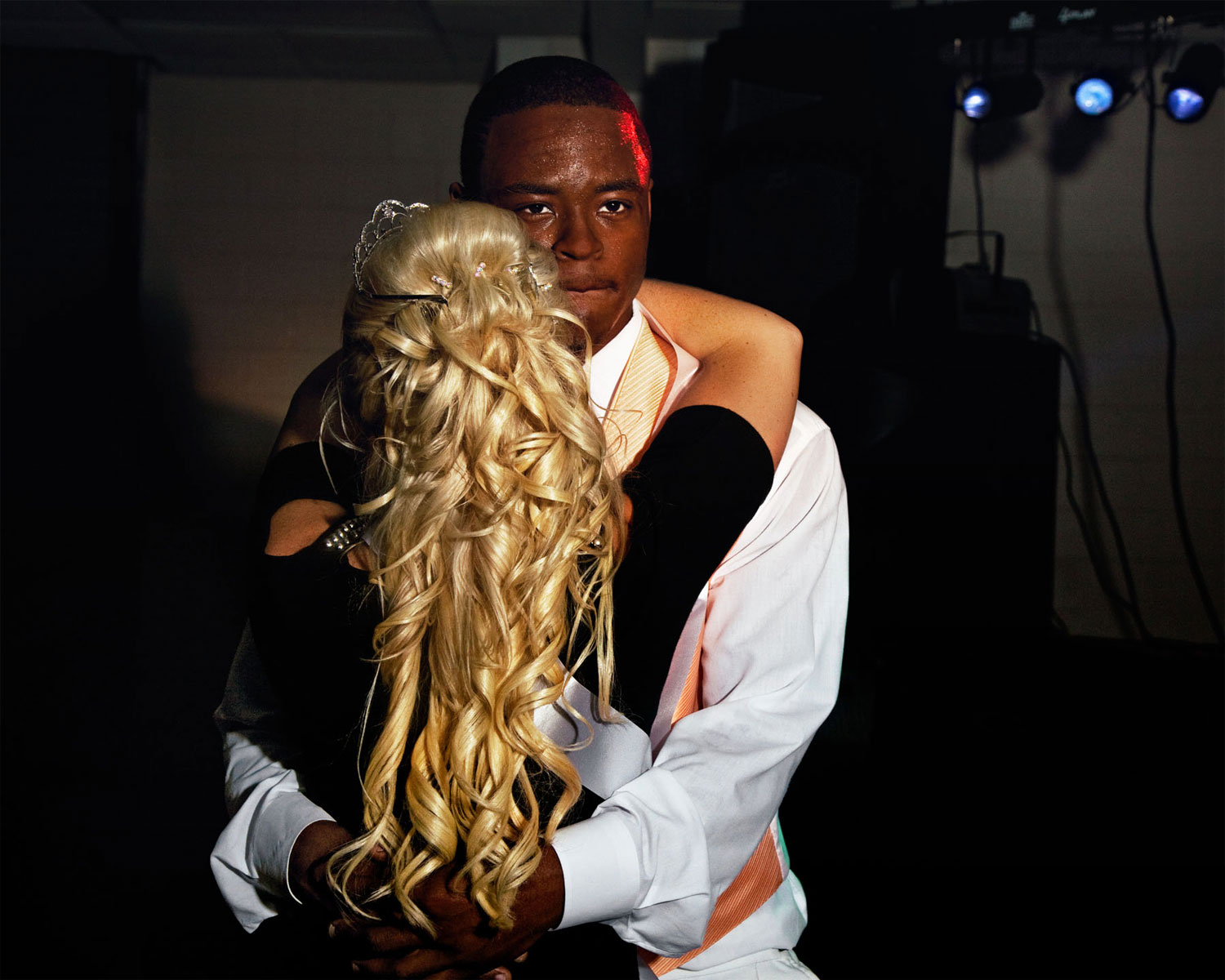
 

Gillian Laub (American, b. 1975) 'Prom Prince and Princess Dancing at the Integrated Prom' 2011


Gillian Laub (American, b. 1975)
Prom Prince and Princess Dancing at the Integrated Prom
2011
Pigment print


 Although she is from New York and has lived the majority of her life there, Laub spent many years visiting Montgomery County, Georgia, after first learning about its high school’s segregated prom and homecoming dances. Laub became aware of this situation in 2002 when a former student from the school wrote to Spin magazine saying that she, a white student, had not been permitted to take her boyfriend, who was black, to homecoming. Laub took on the assignment of visiting the county to learn more. What she found and began documenting was that two separate proms and homecoming dances were organized by student committees overseen by parents. One set of dances was held exclusively for white students; no students of color were allowed to attend. The other dances were held after the first and could be attended by students of any race but were mostly attended by black students. Separate sets of black and white prom and homecoming kings and queens were crowned for each dance. Laub’s photograph Homecoming Court (2002) captures the only time that the white and black homecoming court appeared together. The white homecoming queen and black homecoming queen were each crowned separately by white and black first graders from the local elementary school, thus reinforcing the teaching of segregation from a young age. 

With all her photographic subjects, Laub works carefully to establish strong relationships based on trust. Though members of the community backing the segregated proms met her with hostility, she developed strong bonds with several students and continued to follow up with them over the years during subsequent trips. Julie and Bubba, Mount Vernon (2002) shows two of the students Laub met when she first visited this community. Julie, whose older sister Anna was the young white woman who wrote to Spin, had white friends who were not allowed to socialize with her due to the race of her African American boyfriend, Bubba. Laub captures the couple in a relaxed embrace. They look at the camera openly, without armor or defensiveness. Their relationship, the picture seems to suggest, is something simple and honest that the surrounding community does not support due to entrenched histories of racism. 

In 2010, after the community had received national attention because of Laub’s photographs, the school elected to integrate the prom. Although Montgomery County had seen social progress with the integration of the dance, the community was divided once more when one of the school’s former students, twenty-two-year-old African American Justin Patterson, was killed in January of 2011 by a white father who found Patterson in his home with his daughter. In light of this event, Laub began exploring this story and the broader issues of racial violence in the community. Her work resulted not only in a 2015 monograph of photographs, Southern Rites, but also in an HBO documentary film by the same name, as well as a traveling exhibition organized by the International Center of Photography. Her photograph Prom Prince and Princess Dancing at the Integrated Prom (2011, above) shows an interracial couple dancing at the prom, first made possible only the year before. The young princess wraps her arms around her prince, holding him close while they dance. Though enjoying this moment of relaxed intimacy, the young man also seems somewhat anxious, or at least aware, of the continuing dangers of such relationships for men of color in his community. Laub’s intimate photographs dig deeply into the complex emotions of young men and women grappling with the weight of the South’s long history of racism.

Anonymous. “Gillian Laub,” on the Southbound Project Nd website [Online] Cited 23/01/2025


Dawoud Bey (American, b. 1953) 'The Birmingham Project: Wallace Simmons and Eric Allums' 2012


Dawoud Bey (American, b. 1953)
The Birmingham Project: Wallace Simmons and Eric Allums
2012
Pigmented inkjet print
Collection of Andrew Z. Scharf
© Dawoud Bey


Dawoud Bey’s Birmingham Project bridges gaps of time to foreground how the past continues to resonate in the present. In this diptych, he reframes the tragic events of September 15, 1963, in Birmingham, Alabama – the bombing of the 16th Street Baptist Church, which killed four African American girls, and in its aftermath, the murder of two African American boys. The series pairs portraits of citizens of contemporary Birmingham: a child the same age as one of the victims with an adult the age the child would have reached had they lived. In this way, Bey memorialises the victims and effectively imagines a future that was never realised.

Text from the Large Print Guide at the Virginia Museum of Fine Arts


Thomas Struth (German, b. 1954)
'Aquarium, Atlanta, Georgia' 2013


Thomas Struth (German, b. 1954)
Aquarium, Atlanta, Georgia
2013
Chromogenic print
84 x 142 7/8 x 2 3/4 in. (213.36 x 362.9 x 6.99cm)
© Thomas Struth
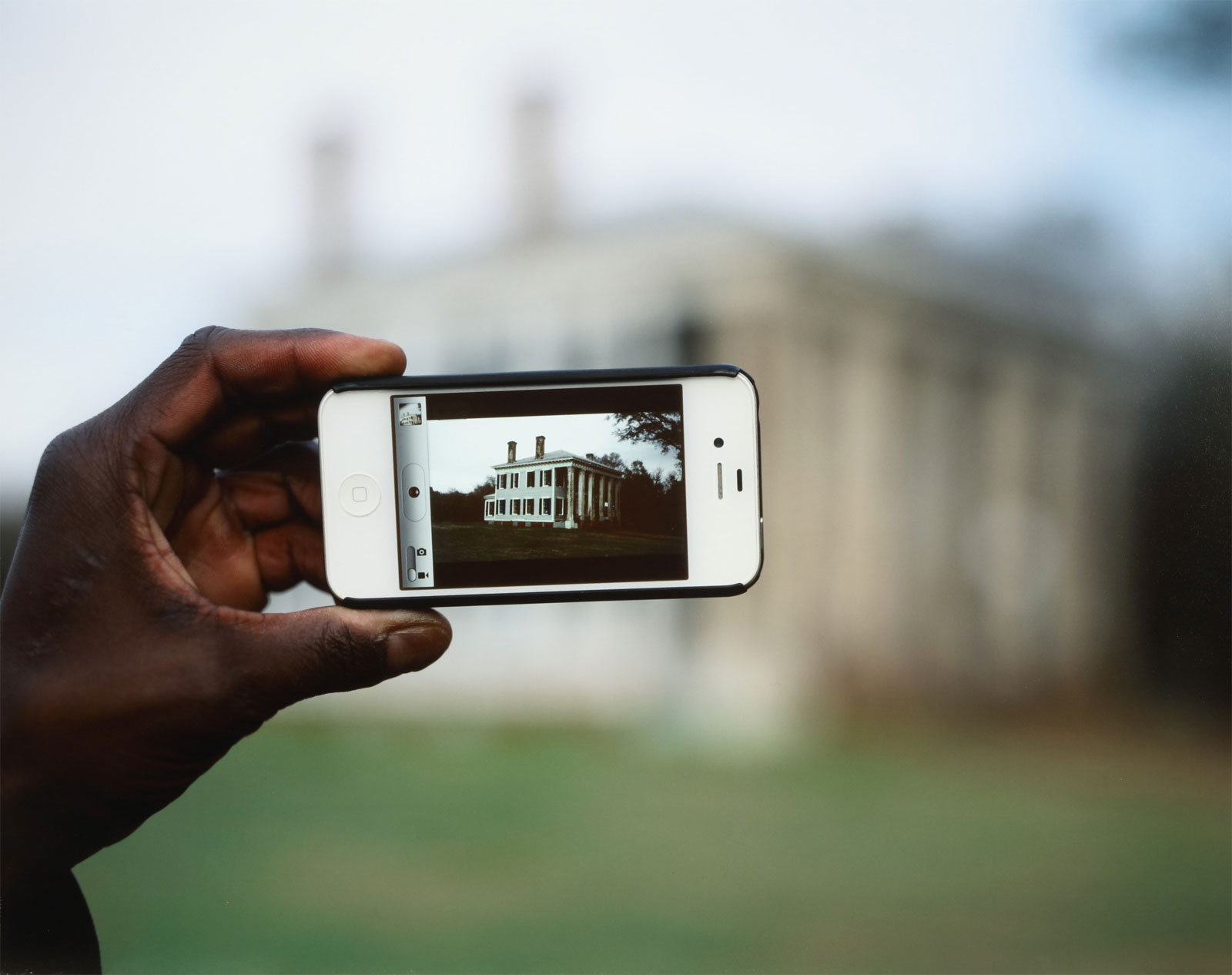
 

RaMell Ross (American, born 1982) 'iHome' 2013


RaMell Ross (American, born 1982)
iHome
2013
Pigmented inkjet print
Virginia Museum of Fine Arts
Arthur and Margaret Glasgow Endowment
© RaMell Ross


For years, RaMell Ross has immersed himself in Hale County, Alabama, a place made iconic in the history of photography by Walker Evans and William Christenberry. Where Evans and Christenberry studied the white residents and decaying architecture, respectively, Ross focuses on the Black community and their untold stories. In iHome, he intertwines present and past by photographing a cell phone screen that shows a white antebellum house, also shown out of focus in the background. He relishes in the anachronism of employing modern technology to view a structure of the past. His inclusion of the hand holding the phone authors a new perspective on time, place, agency, and who gets to write history and imagine the future.

Text from the Large Print Guide at the Virginia Museum of Fine Arts
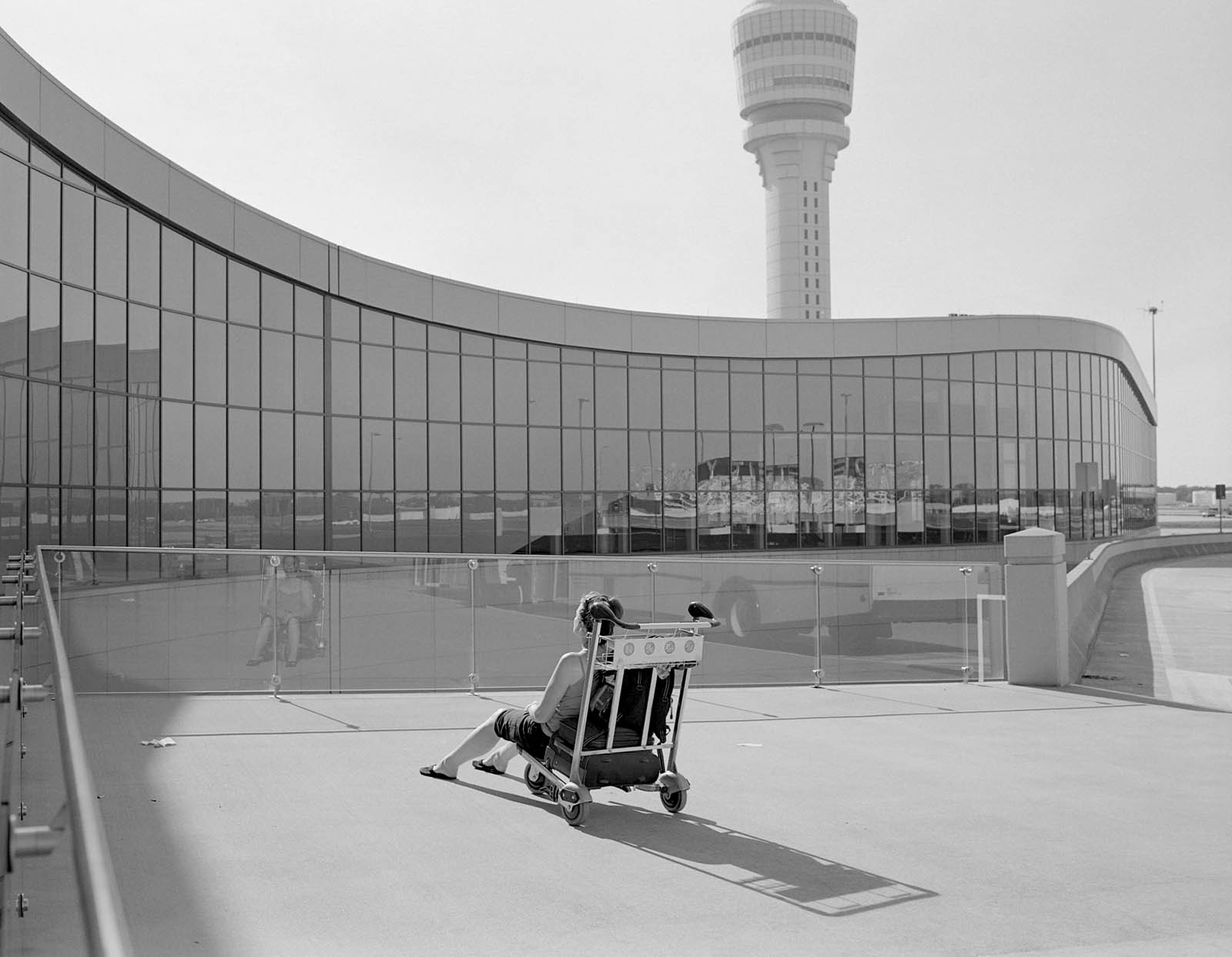
 

Mark Steinmetz (American, b. 1961) 'International Terminal, Atlanta Airport' 2016


Mark Steinmetz (American, b. 1961)
International Terminal, Atlanta Airport
2016
Gelatin silver print
High Museum of Art, Atlanta
Commissioned with funds from the H.B. and Doris Massey Charitable Trust and the Picturing the South Fund for the Picturing the South series


Mark Steinmetz spent two years photographing in, around, and above Hartsfield-Jackson Atlanta International, the world’s most heavily trafficked airport. He considered the activity and interactions that take place at this crossroads of the contemporary South and masterfully captured the ordinary-yet-fascinating human dramas that play out in a decidedly liminal public place. This image of a young woman relaxing on a luggage cart lends a poignant perspective to how this gateway to the wider world is a place of delightful paradoxes: a massive modern complex sitting in the midst of a sublime natural environment; a bustling global transit hub as the site of solitary experiences; and a stifling bureaucratic tangle as a portal to possibility and opportunity.

Text from the Large Print Guide at the Virginia Museum of Fine Arts
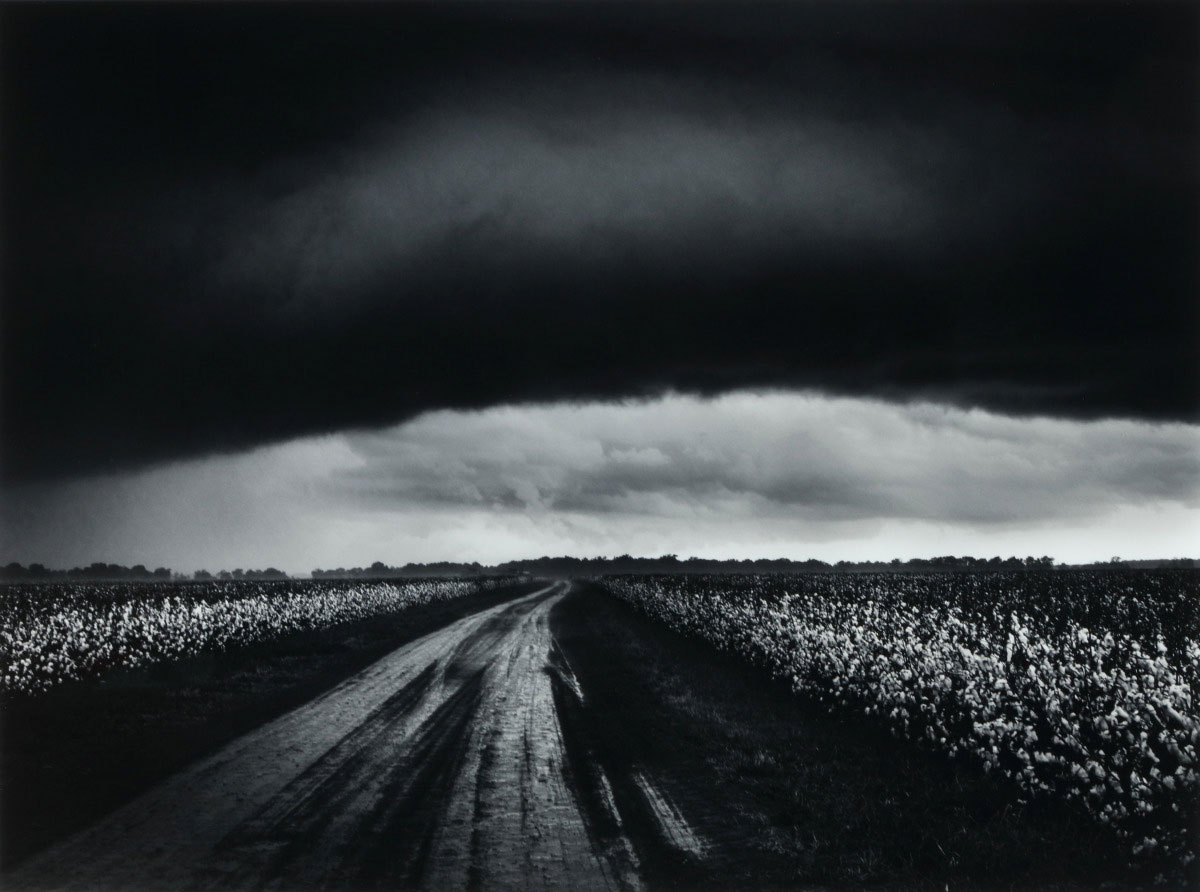
 

Debbie Fleming Caffery (American, b. 1948) 'Stormy Sky' 2016


Debbie Fleming Caffery (American, b. 1948)
Stormy Sky
2016
Gelatin silver print
20 × 24 inches
High Museum of Art, Atlanta
Commissioned with funds from the H. B. and Doris Massey Charitable Trust and the Picturing the South Fund
© Debbie Fleming Caffery
 

Irina Rozovsky (American born Russia, b. 1981) 'Untitled (Traditions Highway)' 2018


Irina Rozovsky (American born Russia, b. 1981)
Untitled (Traditions Highway)
2018
Inkjet print
Virginia Museum of Fine Arts
Kathleen Boone Samuels Memorial Fund


Rozovsky’s series Traditions Highway takes its name from Georgia’s State Route 15, a road that runs northsouth through the entire state and passes through Sparta and Athens, towns named after ancient Greek cities, the latter of which birthed the concept of democracy. Rozovsky’s photographs explore contemporary ideas and expressions of democracy, especially as they are situated in the American South, and examine the ways that past and present are layered in the region. Here, an abandoned carriage decorated with hearts in the woods conjures myriad ideas and feelings: the romanticism and dilapidation of the Old South, the tension between beauty and destruction and between the natural and built environments, and the blurred lines between fantasy and reality.

Text from the Large Print Guide at the Virginia Museum of Fine Arts


Kris Graves (American, b. 1982) 'Lee Square, Richmond, Virginia' 2020


Kris Graves (American, b. 1982)
Lee Square, Richmond, Virginia
2020
Pigmented inkjet print
High Museum of Art, Atlanta
Purchase with funds from the H.B. and Doris Massey Charitable Trust


This was the graffiti covered base to the bronze statue of Confederate General Robert E. Lee on horseback in Lee Square, Richmond, Virginia. The statue was part of the Robert E. Lee Monument, which was removed in September 2021.
 

An-My Lê (American born Vietnam, b. 1960) 'High School Students after Black Lives Matter Protest, Lafayette Park, Washington, D.C.' 2020


An-My Lê (American born Vietnam, b. 1960)
High School Students after Black Lives Matter Protest, Lafayette Park, Washington, D.C.
2020
Pigmented inkjet print
High Museum of Art, Atlanta
Commissioned with funds from the Forward Arts Foundation for the Picturing the South series
© An-My Lê


An-My Lê photographed evidence of the social unrest that emerged in Washington, D.C., in 2020 amid the COVID-19 pandemic and the aftermath of the murder of George Floyd. “It often seems that there are two Americas, left and right, looking at the same place from radically different and irreconcilable perspectives,” she explained. Centered here on the waning moment of a protest, with national monuments and federal buildings as the backdrop, Lê takes a wide view to offer context for a scene. She carefully assembles details that reveal how America’s challenges of the past shape and rhyme with the heated debates of the present.

Text from the Large Print Guide at the Virginia Museum of Fine Arts
 

José Ibarra Rizo (American born Mexico, b. 1992) 'Limbeth and Karim' 2021


José Ibarra Rizo (American born Mexico, b. 1992)
Limbeth and Karim
2021
Pigmented inkjet print
High Museum of Art, Atlanta
Gift Dr. Joe B. Massey
© José Ibarra Rizo


Immigrants from Mexico and Latin America living in the United States are often perceived as distrustful. The portraits of Jose Ibarra Rizo, an immigrant, show people with pride and dignity, revealing a strong sense of identity. His series, Somewhere in Between, tells the utterly human story of the migrant community in Georgia.

Text from the Art Doc Magazine Instagram page


José Ibarra Rizo (American born Mexico, b. 1992) 'Rose Grower' 2021


José Ibarra Rizo (American born Mexico, b. 1992)
Rose Grower
2021
Inkjet print
Virginia Museum of Fine Arts
Aldine S. Hartman Endowment Fund
© José Ibarra Rizo


José Ibarra Rizo’s series Somewhere In Between documents the Latinx immigrant experience in the American South. Rizo’s tender photographs focus on a community that is ubiquitous in the region yet often misrepresented or simply invisible in popular media and political debates. This portrait of a man standing in front of his prized roses – hand tightly grasping a bag of insecticide – was made soon after he retired from a gruelling job at a poultry processing plant in Gainesville. Georgia’s poultry industry employs numerous immigrants, including the photographer’s own parents.

Text from the Large Print Guide at the Virginia Museum of Fine Arts


'A Long Arc: Photography and the American South since 1845' book cover


A Long Arc: Photography and the American South since 1845 Hardcover – 1 April 2024

The South is perhaps the most mythologized region in the United States and also one of the most depicted. Since the dawn of photography in the nineteenth century, photographers have articulated the distinct and evolving character of the South’s people, landscape, and culture and reckoned with its fraught history. Indeed, many of the urgent questions we face today about what defines the American experience – from racism, poverty, and the legacy of slavery to environmental disaster, immigration, and the changes wrought by a modern, global economy- appear as key themes in the photography of the South. The visual history of the South is inextricably intertwined with the history of photography and also the history of America, and is therefore an apt lens through which to examine American identity.

A Long Arc: Photography and the American South accompanies a major exhibition at the High Museum of Art in Atlanta, with more than one hundred photographers represented, including Walker Evans, Robert Frank, Gordon Parks, William Eggleston, Sally Mann, Carrie Mae Weems, Dawoud Bey, Alec Soth, and An-My Le. Insightful texts by Imani Perry, Sarah Kennel, Makeda Best, and Rahim Fortune, among others, illuminate this broad survey of photographs of the Southern United States as an essential American story.

Co-published by Aperture and High Museum of Art, Atlanta

Buy the book from Amazon


Virginia Museum of Fine Arts
200 N. Boulevard
Richmond, Virginia USA

Opening hours:
Daily 10am – 5pm and until 9 pm Wed, Thu, Fri
Virginia Museum of Fine Arts website

LIKE ART BLART ON FACEBOOK

Back to top

Exhibition: ‘What They Saw: Historical Photobooks by Women, 1843-1999’ at the Museo Nacional Centro de Arte Reina Sofía, Madrid

Exhibition dates: 23rd February – 7th June 2024

Curators: Russet Lederman and Olga Yatskevich


'What They Saw: Historical Photobooks by Women, 1843-1999' (Nueva York, 10×10 Photobooks, 2021) cover images
 

What They Saw: Historical Photobooks by Women, 1843-1999 (Nueva York, 10×10 Photobooks, 2021) cover images
Design: Ayumi Higuchi
Photography: Jeff Gutterman


A mid-week posting!

I wouldn’t have forgiven myself if I had missed this important exhibition about an interesting subject, the “underexposed and undocumented photobooks by women made between 1843 and 1999.”

So I thought I would squeeze it into the posting schedule which stretches a couple of months into the future…

Other than the group photographs of the book covers and installation photographs of the exhibition (below), there were no individual book covers nor details about some of the books in the media images, so I have added a few were it has been possible along with accompanying text.

I have also included photographs from what I think is one of the most iconic photobooks, even though I am not sure it is in the exhibition: Marion Palfi’s There is No More Time: An American Tragedy (1949).

So many important photobooks by so many glorious photographers.

Dr Marcus Bunyan


Many thankx to the Museo Nacional Centro de Arte Reina Sofía for allowing me to publish the photographs in the posting. Please click on the photographs for a larger version of the image.


'What They Saw: Historical Photobooks by Women, 1843-1999' (Nueva York, 10×10 Photobooks, 2021) cover images (detail)
 

What They Saw: Historical Photobooks by Women, 1843-1999 (Nueva York, 10×10 Photobooks, 2021) cover images (detail)
Design: Ayumi Higuchi
Photography: Jeff Gutterman


'What They Saw: Historical Photobooks by Women, 1843-1999' (Nueva York, 10×10 Photobooks, 2021) cover images (detail)


What They Saw: Historical Photobooks by Women, 1843-1999 (Nueva York, 10×10 Photobooks, 2021) cover images (detail)
Design: Ayumi Higuchi
Photography: Jeff Gutterman


'What They Saw: Historical Photobooks by Women, 1843-1999' (Nueva York, 10×10 Photobooks, 2021) cover images (detail)


What They Saw: Historical Photobooks by Women, 1843-1999 (Nueva York, 10×10 Photobooks, 2021) cover images (detail)
Design: Ayumi Higuchi
Photography: Jeff Gutterman


What They Saw project, a touring exhibition accompanied by a publication and series of public programs, is a means to ignite interest in underexposed and undocumented photobooks by women made between 1843 and 1999 and to begin a process of filling in the gaps. The present show is organised in collaboration with 10×10 Photobooks, a nonprofit organisation with a mission to share photobooks globally and encourage their appreciation and understanding.

In seeking out the omissions in photobook history, the standard definition of the photobook: a bound volume with photographic illustrations published by the author, an independent publisher or a commercial publisher, needed to be expanded to incorporate those who do not call themselves photographers or artists but who nevertheless put together a “book” composed of photographs taken by themselves or others: individual albums, slim exhibition pamphlets, scrapbooks, mock-ups, fanzines and artists’ books to be more inclusive.

This iteration of the What They Saw exhibition includes 60 books of the more than 250 volumes highlighted in the associated publication. Most of these publications are from the collection of the Museo Reina Sofía’s Library and Documentation Centre. They are presented chronologically and show examples of books from around the globe. From the pioneers, such as Anna Atkins, who was the first person ever to print and distribute a photobook, or Isabel Agnes Cowper, who used photography to document museum objects, subsequently reproduced in numerous books, to the independent and self-published photobooks of the 1990s, including Colored People: A Collaborative Book Project by Adrian Piper or Twinspotting by Ketaki Seth, this selection allows for greater inclusion of previously marginalised photographic communities, including women, queer communities, people of colour and artists from outside Europe and North America.

Although only twenty-five years old, photobook history has been written primarily by men and has focused on publications authored by men. Very few books by women photographers appear in past anthologies documenting photobook history, and those included are already quite well known. This exhibition of women’s role in the production, dissemination, and authoring of photobooks is a necessary step in unwriting the current photobook history and rewriting an updated photobook history that is more equitable and inclusive.

Text from the Museo Nacional Centro de Arte Reina Sofía website


Anna Atkins, 'Photographs of British Algae: Cyanotype Impressions', 1843


Anna Atkins, Photographs of British Algae: Cyanotype Impressions, 1843


Claude Cahun (Lucy Schwob) (French, 1894-1954) 'Aveux non avenus' (Disavowals or Cancelled Confessions) 1930

Claude Cahun (1894-1954) 'Aveux Non Avenus' Paris- Éditions du Carrefour, 1930

Claude Cahun (1894-1954) 'Aveux Non Avenus' Paris- Éditions du Carrefour, 1930

Claude Cahun (1894-1954) 'Aveux Non Avenus' Paris- Éditions du Carrefour, 1930


Claude Cahun (Lucy Schwob) (French, 1894-1954) Aveux non avenus (Disavowals or Cancelled Confessions) 1930


In her 1930 publication, Aveux non Avenus, Claude Cahun used the relationship between her inwardly focused poetic writing and symbolic photomontages to construct a unique reality for self-expression. This article focuses on three chapters and respective photographic images from the publication to relate Cahun’s, and by association her partner Marcel Moore’s, discussion on sexuality and gender expression. The utopian dreamscape created investigates issues of narcissism and otherness, female homosexuality, dandyism and going beyond gender, individual and social critique, mocking the antiquated views of art and writing, accepting and breaking taboos, while allowing for other departures from the accepted norm. Through analysis of the publication and supporting evidence from early influences, it can be seen that Cahun created a world in Aveux non Avenus where she could exist in a space between the established feminine–masculine binary of 20th-century Europe.

Abstract from Erin F. Pustarfi. “Constructed Realities: Claude Cahun’s Created World in Aveux Non Avenus,” in Journal of Homosexuality, 67(5), pp. 697-711


Germaine Krull (photographer) Cover design by M. Tchimoukow. 'MÉTAL' cover 1928


Germaine Krull (photographer) Cover design by M. Tchimoukow. MÉTAL cover 1928


Germaine Krull (1897-1985) Image from the portfolio 'MÉTAL' 1928


Germaine Krull (1897-1985) Image from the portfolio MÉTAL 1928, p. 33


I did not have a special intention or design when I took the Iron photographs. I wanted to show what I see, exactly as the eye sees it. ‘MÉTAL’ is a collection of photographs from the time. ‘MÉTAL’ initiated a new visual era and open the way or a new concept of photography. ‘MÉTAL’ was the starting point which allowed photography to become an artisanal trade and which made an artist of the photographer, because it was part of this new movement, of this new era which touched all art.

Germaine Krull. Extract from the Preface to the 1976 edition of ‘MÉTAL’

See my writing on Germaine Krull’s portfolio MÉTAL.


Germaine Krull (1897-1985) Image from the portfolio 'MÉTAL' 1928 p. 37


Germaine Krull (1897-1985) Image from the portfolio MÉTAL 1928 p. 37


'Eyes on Russia' by Margaret Bourke-White. New York: Simon and Schuster, 1931


Eyes on Russia by Margaret Bourke-White. New York: Simon and Schuster, 1931


In 1951, Westbrook Pegler wrote numerous articles attacking Margaret Bourke-White for her associations with leftist politics in the 1930s. It is probably for this reason that in her autobiography, Portrait of Myself, written about ten years later, Bourke-White didn’t mention her first book, Eyes on Russia, published in 1931. And yet, this book is of extraordinary interest, not only as a landmark in Bourke-White’s career but also as a source, both visual and narrative, on the Soviet Union during its first Five Year Plan. With letters of recommendation from influential people, including the Russian film maker, Sergei Eisenstein, Bourke-White arrived in Moscow in the fall of 1930, where she obtained the official endorsement of A.B. Khalatoff, chief of the Soviet publishing house (he was later liquidated in the 1937 purges). Khalatoff supplied her with a thick roll of rubles and a guide. Bourke-White then toured some of the most important industrial and other sites and came back with stellar images of Russia under construction, which she complemented by a spritely and charming narrative of her experiences as the first foreign photographer to photograph in the Soviet Union with official permission. On her trip, she made 800 negatives, of which 40 were published in Eyes on Russia in a sepia tone. This book, along with at least eight related illustrated articles in Fortune, the New York Times Sunday Magazine, and other periodicals, significantly enhanced Bourke-White’s reputation (and commercial business). They also helped initiate relationships she established both with Soviet officials and Americans sympathetic to the U.S.S.R. She returned to Russia in 1931 and 1932 for additional photography, but Eyes on Russia, a fascinating book for a variety of reasons, remains the largest single published collection of her work in that country. It was very well received in numerous book reviews when it appeared. For a more detailed review, see my article, Gary D. Saretzky “Margaret Bourke-White: Eyes on Russia,” The Photo Review, 22: 3-4 (Summer & Fall 1999),

Text from a comment on the Amazon website


'Roll, Jordan, Roll' by Julia Peterkin (text) and Doris Ulmann (photographs) New York: Robert O. Ballo, 1933


Roll, Jordan, Roll by Julia Peterkin (text) and Doris Ulmann (photographs) New York: Robert O. Ballo, 1933


Doris Ulmann’s photographic collaboration with Julia Peterkin focuses on the lives of former slaves and their descendants on a plantation in the Gullah coastal region of South Carolina. Peterkin, who won the Pulitzer Prize in 1929, was born in South Carolina and raised by a black nursemaid who taught her the Gullah dialect before she learned standard English. She married the heir to Lang Syne in today’s Calhoun County, SC, one of the state’s richest plantations, which became the setting for Roll, Jordan, Roll. Ulmann’s soft-focus photos-rendered as tactile as charcoal drawings in the superb gravure reproductions here-straddle Pictorialism and Modernism even as they appear to dissolve into memory.

Text from the Amazon website


Leni Riefenstahl 'Schönheit im olympischen Kampf' [Beauty in the Olympic Games] Berlin: Im Deutschen Verlag, (1937)


Leni Riefenstahl Schönheit im olympischen Kampf [Beauty in the Olympic Games] Berlin: Im Deutschen Verlag, (1937)


'Leni Riefenstahl Schönheit im olympischen Kampf' [Beauty in the Olympic Games] Berlin: Im Deutschen Verlag, (1937) pp. 220-221


Leni Riefenstahl Schönheit im olympischen Kampf [Beauty in the Olympic Games] Berlin: Im Deutschen Verlag, (1937) pp. 220-221


Berenice Abbott and Elizabeth McCausland. 'Changing New York'. New York: E. P. Dutton & Company, 1939


Berenice Abbott and Elizabeth McCausland. Changing New York. New York: E. P. Dutton & Company, 1939


“The camera alone can catch
the swift surfaces of the
cities today and speaks a
language intelligible to all.”

~ Berenice Abbott


Abbott’s landmark work on New York, illustrated with 97 halftone plates that display “the historical importance of the documentary model its power as a medium of personal expression” (Parr & Badger).


In January 1929, after eight years in Europe, Abbott boarded an ocean liner to New York City for what was meant to be a short visit. Upon arrival, she was struck by the rapid transformation of the built landscape and saw the city as ripe with photographic potential. “When I saw New York again, and stood in the dirty slush, I felt that here was the thing I had been wanting to do all my life,” she recalled. “Old New York is fast disappearing,” Abbott observed. “At almost any point on Manhattan Island, the sweep of one’s vision can take in the dramatic contrasts of the old and the new and the bold foreshadowing of the future. This dynamic quality should be caught and recorded immediately in a documentary interpretation of New York City. The city is in the making and unless this transition is crystallised now in permanent form, it will be forever lost…. The camera alone can catch the swift surfaces of the cities today and speaks a language intelligible to all.”

On the eve of the Great Depression, she began a series of documentary photographs of the city that, with the support of the Works Progress Administration’s Federal Art Project from 1935 to 1939, debuted in 1939 as the traveling exhibition and publication Changing New York.

With a handheld camera, Abbott traversed the city, photographing its skyscrapers, bridges, elevated trains, and neighbourhood street life. She pasted these “tiny photographic notes” into a standard black-page album, arranging them by subject and locale.

Consisting of 266 small black-and-white prints arranged on thirty-two pages, Abbott’s New York album marks a key turning point in her career – from her portrait work in Paris to the urban documentation that became one of her lasting legacies.

From 1935 to 1965, Berenice Abbott and art critic Elizabeth McCausland (1899-1965) lived and worked in two flats they shared on the fourth floor of the loft building at 50 Commerce Street.

Lannyl Stephens. “Berenice Abbott’s Changing New York,” on the Village Preservation website July 17, 2023 [Online] Cited 26/05/2024


Berenice Abbott and Elizabeth McCausland. 'Changing New York'. New York: E. P. Dutton & Company, 1939


Berenice Abbott and Elizabeth McCausland. Changing New York. New York: E. P. Dutton & Company, 1939


'An American Exodus: A Record of Human Erosion'. Photographs by Dorothea Lange; text by Paul Taylor. New York: Reynal & Hitchcock, 1939


An American Exodus: A Record of Human Erosion. Photographs by Dorothea Lange; text by Paul Taylor. New York: Reynal & Hitchcock, 1939


“We need to be reminded these days about what women have been, and can be. It’s a question of their really deep and fundamental place in society. I have a feeling that women need to be reminded of it. They are needed.”

~ Dorothea Lange


First published in 1939, An American Exodus is one of the masterpieces of the documentary genre. Produced by incomparable documentary photographer Dorothea Lange with text by her husband, Paul Taylor, An American Exodus was taken in the early 1930s while the couple were working for the Farm Security Administration (FSA) The book documents the rural poverty of the depression-era exodus that brought over 300,000 migrants to California in search of farm work, a westward mass migration driven by economic deprivation as opposed to the Manifest Destiny of 19th century pioneers.

Text from the Google Books website


In 1938, Dorothea Lange and her husband Paul Taylor began sorting through the stacks of photographs she had made documenting migrant farmworkers and homeless drought refugees. Their goal was to create a book that would reveal the human dimension of the crisis to the American people and, hopefully, prompt government relief. One of several books released in the late 1930s that made use of the Farm Security Administration photo archive, An American Exodus: A Record of Human Erosion was innovative in several ways. Rather than tell the story from their own perspective, Lange and Taylor used direct quotes from the migrants themselves, which Lange had painstakingly collected in the field. Released as war tensions were building in Europe and Asia, An American Exodus was largely overlooked at the time. In the years since its publication, the book has gained power, presenting an iconic image of the Dust Bowl era that has shaped the way we think of those difficult years.

Text from the Dorothea Lange Digital Archive, Oakland Museum of California website


Eslanda Goode Robeson. 'African Journey'. New York: John Day Company, 1945


Eslanda Goode Robeson. African Journey. New York: John Day Company, 1945


Eslanda Robeson’s 1936 African journal with her own photographs. Africa seen through the eyes of an African American. She went to South Africa, Kenya, Uganda, and Congo, and visited African kings and British governors, villages, gold mines, plantations, herdswomen, and modern African leaders.

Eslanda Goode Robeson (1895-1965) was an American anthropologist, author, actress, and civil rights activist. She was born in Washington, D.C., graduated from Columbia University in 1917 with a degree in chemistry, and in 1921 married the singer and actor Paul Robeson. In 1936, she received her degree in anthropology from the London School of Economics, and in 1946, the year following the publication of African Journal, earned her anthropology Ph.D. from Hartford Seminary where she specialised in African studies and race relations.

Text from the Boyd Books website


'Wrens in Camera' by Lee Miller


Wrens in Camera by Lee Miller (London: Hollis and Carter, 1945)


During the Second World War Lee Miller was the official war photographer for Vogue magazine. The images contained in Wrens in Camera were commissioned by the Admiralty and show the female navy officers and workers fulfilling their war duties. There are signallers, technicians, trainers, housekeepers and transport crews. The whole is an important document of women’s roles in war-time Britain.

Text from the Beaux Books website


'Wrens in Camera' by Lee Miller (London: Hollis and Carter, 1945) p. 47


Wrens in Camera by Lee Miller (London: Hollis and Carter, 1945) p. 47


Marion Palfi (American born Germany, 1907-1978) 'Untitled (Black woman with a white child)' 1949


Marion Palfi (American born Germany, 1907-1978)
Untitled (Black woman with a white child)
1949
From the book There Is No More Time: An American Tragedy
Marion Palfi/Center for Creative Photography
© All Rights Reserved


Marion Palfi (American born Germany, 1907-1978) 'Untitled (Portrait of Mrs. Caleb Hill, widow of a lynching victim)' 1949


Marion Palfi (American born Germany, 1907-1978)
Untitled (Portrait of Mrs. Caleb Hill, widow of a lynching victim)
1949
From the book There Is No More Time: An American Tragedy
Marion Palfi/Center for Creative Photography
© All Rights Reserved


“As a photographer, she was as interested in the discriminator as in the victims of discrimination. Long before what we tend to think of as the crux of the civil rights struggle in the 1960s, Palfi went to Georgia at a particularly dangerous time. In 1949, she was drawn to do an in-depth portrait of Irwinton, a small community where a young black man had been torn out of jail and shot by a lynch mob. The tremendous public outcry over this barbaric incident included front-page coverage and editorials by the New York Times. Obviously, the presence of a photographer in such a community would attract unwanted attention and might have endangered her life. But by a happy stroke of luck, the Vice-President of the Georgia Power Company was interested in her work. Warning her that she must “photograph the South as it really is, not as the North slanders it,” he wanted her to get to meet the “right” people. As it happened, the “right” people turned out to be the very discriminators she wanted to photograph. Left in the protection of the local postmistress, she proceeded to take terms, objective pictures of overseers and white-suited politicians.

Even if the press had not indicted Irwinton for its racism, the extreme conservatism and tension were evident in the faces of its citizens. She found a white supremacist group, “The Columbians,” whose insignia was a thunderbolt, the symbol of Hitler’s elite guard. “Mein Kampf was their bible,” she believed. Meanwhile, the wife of the lunch victim said, simply, “Caleb was a good man … he believed in his rights and therefore he died.”

Elizabeth Lindquist-Cock. “Marion Palfi: An Appreciation,” in The Archive Research Series Number 19, September 1983, Center for Creative Photography, University of Arizona, pp. 7-8.


Marion Palfi (American born Germany, 1907-1978) 'Untitled (A woman explained: "If a white man buys something...")' 1949


Marion Palfi (American born Germany, 1907-1978)
Untitled (A woman explained: “If a white man buys something…”)
1949
From the book There Is No More Time: An American Tragedy
Marion Palfi/Center for Creative Photography
© All Rights Reserved


'Acapulco en el sueño' by Francisco Tario (text) with photographs by Lola Alvarez Bravo, 1951


Acapulco en el sueño by Francisco Tario (text) with photographs by Lola Alvarez Bravo, 1951


“If my photographs have any meaning, it’s that they stand for a Mexico that once existed.”

~ Lola Alvarez Bravo


Dare Wright. 'The Lonely Doll'. New York: Doubleday & Co, 1957


Dare Wright. The Lonely Doll. New York: Doubleday & Co, 1957


Once there was a little doll. Her name was Edith. She lived in a nice house and had everything she needed except someone to play with. She was lonely! Then one morning Edith looked into the garden and there stood two bears! Since it was first published in 1957, The Lonely Doll has established itself as a unique children’s classic. Through innovative photography Dare Wright brings the world of dolls to life and entertains us with much more than just a story. Edith, the star of the show, is a doll from Wright’s childhood, and Wright selected the bear family with the help of her brother. With simple poses and wonderful expressions, the cast of characters is vividly brought to life to tell a story of friendship.

Text from the Amazon website


'Mourka, the autobiography of a Cat', by Tanaquil Le Clercq and Martha Swope. Stein and Day 1964


Mourka, the autobiography of a Cat, by Tanaquil Le Clercq and Martha Swope. Stein and Day 1964


Le Clercq is the wife of choreographer George Balanchine; she wrote this book after Mourka became famous because of the photograph of Martha Swope in Life magazine, where George Balanchine assists Mourka in his grand jeté. Mourka writes about his exercises in dance and his aspirations to travel in outer space.

Text from the Cats in Books albums Facebook page


'Mourka, the autobiography of a Cat', by Tanaquil Le Clercq and Martha Swope. Stein and Day 1964


Mourka, the autobiography of a Cat, by Tanaquil Le Clercq and Martha Swope. Stein and Day 1964


'A Way of Seeing', 1965. Photographs by Helen Levitt


A Way of Seeing, 1965. Photographs by Helen Levitt


'Dublin: A Portrait' by V.S. Pritchett (text) and Evelyn Hofer (photographs). New York: Harper & Row, 1967


Dublin: A Portrait by V.S. Pritchett (text) and Evelyn Hofer (photographs). New York: Harper & Row, 1967


The starting point for this book is Evelin Hofer’s Dublin: A Portrait, which features an in-depth essay by V. S. Pritchett and photos by Hofer, and enjoyed great popularity upon its original publication in 1967. Dublin: A Portrait is an example of Hofer’s perhaps most important body of work, her city portraits: books that present comprehensive prose texts by renowned authors alongside her self-contained visual essays with their own narratives. Dublin: A Portrait was the last book published in this renowned series. …

In Dublin Hofer repeatedly turned her camera to sights of the city, but mainly to the people who constituted its essence. She made numerous portraits – be they of writers and public figures or unknown people in the streets. Her portraits give evidence of an intense, respectful engagement with her subjects, who participate as equal partners in the process of photographing.

Text from The Eye of Photography Magazine website


'Diane Arbus: An Aperture Monograph', 1972


Diane Arbus: An Aperture Monograph, 1972


When Diane Arbus died in 1971 at the age of forty-eight, she was already a significant influence-even something of a legend-among serious photographers, although only a relatively small number of her most important pictures were widely known at the time. The publication of Diane Arbus: An Aperture Monograph in 1972 – along with the posthumous retrospective at The Museum of Modern Art – offered the general public its first encounter with the breadth and power of her achievements. The response was unprecedented.

The monograph of eighty photographs was edited and designed by the painter Marvin Israel, Diane Arbus’s friend and colleague, and by her daughter Doon Arbus. Their goal in making the book was to remain as faithful as possible to the standards by which Diane Arbus judged her own work and to the ways in which she hoped it would be seen. Universally acknowledged as a classic, Diane Arbus: An Aperture Monograph is a timeless masterpiece with editions in five languages and remains the foundation of her international reputation.

Nearly half of a century has done nothing to diminish the riveting impact of these pictures or the controversy they inspire. Arbus’s photographs penetrate the psyche with all the force of a personal encounter and, in doing so, transform the way we see the world and the people in it.

Text from the Fraenkel Gallery Shop website


Jill Freedman. 'Circus Days'. New York: Harmony Books/Crown, 1975


Jill Freedman. Circus Days. New York: Harmony Books/Crown, 1975


A photographic documentation of the Beatty-Cole Circus, recording and portraying the customs, activities, animals, and singular personalities of an endangered way of life.


Jill Freedman. 'Circus Days'. New York: Harmony Books/Crown, 1975


Jill Freedman. Circus Days. New York: Harmony Books/Crown, 1975


Susan Meiselas (American, b. 1948) 'Carnival Strippers' book cover 1975


Susan Meiselas. Carnival Strippers book cover 1975


From 1972 to 1975, Susan Meiselas spent her summers photographing women who performed striptease for small-town carnivals in New England, Pennsylvania and South Carolina. As she followed the shows from town to town, she captured the dancers on stage and off, their public performances as well as their private lives, creating a portrait both documentary and empathetic: “The recognition of this world is not the invention of it. I wanted to present an account of the girl show that portrayed what I saw and revealed how the people involved felt about what they were doing.” Meiselas also taped candid interviews with the dancers, their boyfriends, the show managers and paying customers, which form a crucial part of the book.

Meiselas’ frank description of these women brought a hidden world to public attention, and explored the complex role the carnival played in their lives: mobility, money and liberation, but also undeniable objectification and exploitation. Produced during the early years of the women’s movement, Carnival Strippers reflects the struggle for identity and self-esteem that characterised a complex era of change.

Text from the Booktopia website [Online] Cited 22/04/2022


Claudia Andujar, 'Amazônia', 1978


Claudia Andujar, Amazônia, 1978


Since the early 1970s, Claudia Andujar has been committed to the cause of the Yanomami Indians living in the heart of the Amazon rainforest and is the author of the most important photographic work dedicated to them to date. A founding member of the Brazilian NGO Comissão Pró Yanomami (CCPY), the photographer has played a fundamental role in the recognition of their territory by the Brazilian government. …

Claudia Andujar first met the Yanomami in 1971 while working on an article about the Amazon for Realidade magazine. Fascinated by the culture of this isolated community, she decided to embark on an in-depth photographic essay on their daily life after receiving a Guggenheim fellowship to support the project. From the very beginning, her approach differed greatly from the straightforward documentary style of her contemporaries. The photographs she made during this period show how she experimented with a variety of photographic techniques in an attempt to visually translate the shamanic culture of the Yanomami. Applying Vaseline to the lens of her camera, using flash devices, oil lamps and infrared film, she created visual distortions, streaks of light and saturated colors, thus imbuing her images with a feeling of the otherworldly.

Text from the Fondation Cartier pour l’art contemporain website


Cover image of 'Eye to Eye: Portraits of Lesbians' (1979). Photographs by JEB (Joan E. Biren)


Cover image of Eye to Eye: Portraits of Lesbians (1979). Photographs by JEB (Joan E. Biren)


In 1979, JEB (Joan E. Biren) self-published her first book, Eye to Eye: Portraits of Lesbians. Revolutionary at that time, JEB made photographs of lesbians from different ages and backgrounds in their everyday lives-working, playing, raising families, and striving to remake their worlds. The photographs were accompanied by testimonials from the women pictured in the book, as well as writings from icons including Audre Lorde, Adrienne Rich and a foreword from Joan Nestle. Eye to Eye signalled a radical new way of seeing – moving lesbian lives from the margins to the centre, and reversing a history of invisibility. More than just a book, it was an affirmation of the existence of lesbians that helped to propel a political movement. Reprinted for the first time in forty years and featuring new essays from photographer Lola Flash and former soccer player Lori Lindsey, Eye to Eye is a faithful reproduction of a work that continues to resonate in the queer community and beyond.

Text from the Amazon website


Jo Spence. 'Putting Myself In The Picture: A Political, Personal, and Photographic Autobiography'. London: Camden Press Ltd, 1986


Jo Spence. Putting Myself In The Picture: A Political, Personal, and Photographic Autobiography. London: Camden Press Ltd, 1986


Photographer Jo Spence challenges the assumptions of conventional photography in this groundbreaking visual autobiography, which traces her journey from self-censorship to self-healing.


Nan Goldin, 'The Ballad of Sexual Dependency', 1986


Nan Goldin, The Ballad of Sexual Dependency, 1986


Cristina García Rodero. 'España Oculta'. 1989


Cristina García Rodero. España Oculta. 1989


When Spanish photographer Cristina Garcia Rodero went to study art in Italy, in 1973, she fully understood the importance of home. Yet her time abroad formented a deeper interest in was happening in her own country and, as a result, at the age of 23, Garcia Rodero returned to Spain and started a project that she hoped would capture the essence of the myriad Spanish traditions, religious practices and rites that were already fading away. What started as a five-year project ended up lasting 15 years and came to be the book España Oculta (Hidden Spain) published in 1989. At 39 years old, Garcia Rodero had managed to compile a kind of anthropological encyclopedia of her country. The work also captured a key moment in Spain’s history – with Spanish dictator Franco dying in 1975, and the country commencing a period of transition – something that would come to have a huge effect on the way the nation’s cultural traditions and rites were experienced and performed from then on.

Text from the Google Books website


'Barbara Kruger: Thinking of You'. The MIT Press & The Museum of Contemporary Art, 1999


Barbara Kruger: Thinking of You. The MIT Press & The Museum of Contemporary Art, 1999


This is the most comprehensive publication ever produced on the work of American artist Barbara Kruger. Kruger, one of the most influential artists of the last three decades, uses pictures and words through a wide variety of media and sites to raise issues of power, sexuality, and representation. Her works include photographic prints on paper and vinyl, etched metal plates, sculpture, video, installations, billboards, posters, magazine and book covers, T-shirts, shopping bags, postcards, and newspaper op-ed pieces.

This book serves as the catalog for the first major one-person exhibition of Kruger’s work to be mounted in the United States. The book, designed by Lorraine Wild in collaboration with the artist, contains texts by Rosalyn Deutsche, Katherine Dieckmann, Ann Goldstein, Steven Heller, Gary Indiana, Carol Squiers, and Lynne Tillman on subjects associated with Kruger’s work, including photography, graphic design, public space, power, and representation, as well as an extensive exhibition history, bibliography, and checklist of the exhibition. The cover features a new piece by Kruger, entitled Thinking of You, created especially for the catalog.

Text from the Amazon website


Graciela Iturbide. 'Juchitán de las Mujeres'. Mexico: Ediciones Toledo, 1991


Graciela Iturbide. Juchitán de las Mujeres. Mexico: Ediciones Toledo, 1991


In 1979 Graciela Iturbide took a series of photographs of the Zapotec culture, published as Juchitán de la mujeres. This is certainly the best known of all her works. It is the result of ten years of work, numerous trips to the Isthmus of Tehuantepec, and a prolonged experience of living among its inhabitants. None of the subjects of these photographs was captured candidly; all were carefully posed.


Photobook history is a relatively recent area of study, with one of the first “book-on-books” anthologies published in 1999 with the release of Fotografía Pública / Photography in Print 1919-1939, a catalogue associated with an exhibition of the same title at the Museo Nacional Centro de Arte Reina Sofía. Over the past two decades, a virtual cottage industry of books-on-photobooks has emerged, documenting photographically illustrated books based on geography or around a theme. Photobooks by women are in short supply in most of these anthologies, which is why 10×10 Photobooks launched the How We See: Photobooks by Women touring reading room and associated publication in 2018. Focusing on contemporary photobooks by women from 2000 to 2018, the project was the first step in 10×10 Photobooks’ ongoing interest in reassessing photobook history as it relates to women. Although only twenty-five years old, photobook history has been written primarily by men and has focused on publications authored by men. Very few books by women photographers appear in past photobook anthologies, and those included are already quite well known.

As a nonprofit organisation with a mission to share photobooks globally and encourage their appreciation and understanding, the 10×10 Photobooks team frequently discusses how photobook history was – and continues to be – written from a skewed perspective and that a “new” history needs to emerge. Early in our discussions, we recognised photobook history as needing to be “rewritten,” but this implied we accepted the partial history already in existence, which we did not. Instead, we concluded that photobook history needs to be “unwritten,” as the existing history is riddled with omissions. What is left out is not by mistake – it indicates bias and incomplete research by the current gatekeepers. To present a more inclusive and diverse vision, we must collectively address these omissions.

What They Saw: Historical Photobooks by Women, 1843-1999, a touring reading room accompanied by a publication and series of public programs, is a means to ignite interest in some of the underexposed and undocumented photobooks by women made between 1843 and 1999 and to begin a process of filling in the gaps. We say “some photobooks” because we are keenly aware that much work is still required, and we have only opened the door a crack. In several cases, particularly for books done before 1900 in regions other than North America and Europe or by women of colour, we heard about an artist who may have produced a photographically illustrated book or album, but we were unable to find any further documentation other than a brief mention before the trail went cold. Other impediments emerged among the cohort of women who collaborated with their husbands. Many of their collaborative books are credited only with their husbands’ names, and their contributions, if mentioned at all, are included as footnotes. In some cases, women authors marked their works with a gender-neutral signature that used only their studio name or first initial and last name. In addition, our initial research was impeded by the standard definition of a photobook: a bound volume with photographic illustrations published by the author, an independent publisher, or a trade publisher.

We found that we had to widen the frame to include individual albums, slim exhibition pamphlets, scrapbooks, maquettes, zines, and artists’ books in order to be more inclusive. This wider frame necessitated redefining a photobook author to incorporate those who may not call themselves a photographer or artist but who nonetheless assembled a “book” composed of photographs taken by themselves or others. Funding was another limitation. Many women photographers who actively exhibited their work either lacked the personal resources to produce a book or could not find anyone willing to underwrite such a venture.

This iteration of the What They Saw reading room includes 60 books of the more than 250 volumes highlighted in the associated publication. Most of these publications are kept in the collection of the Museo Reina Sofía’s Library and Documentation Centre. They are presented chronologically and show examples of books from around the globe. We begin with Anna Atkins, a British botanist, who was the first person ever to print and distribute a photobook. Her simple desire to share images of her algae specimens ushered in a new art form that presents photography in the book format. In the following years, women such as Isabel Agnes Cowper, the Official Museum Photographer at the South Kensington Museum (now the Victoria and Albert Museum), used photography to document museum objects, subsequently reproduced in numerous books. Until recently, her name was forgotten, as none of the South Kensington Museum publications credit her as the photographer.

In the early twentieth-century, women authors of photobooks gained some visibility. Fine-art photographer Germaine Krull published numerous books that approached photography from a creative and inventive perspective. Margaret Bourke-White emerged as a well-regarded photojournalist who traveled worldwide photographing for Fortune and Life magazines and producing countless books. In the 1930s, in Russia, Varvara Stepanova collaborated with her husband, Aleksandr Rodchenko, to create books filled with experimental photomontages. As the century progressed, women in other parts of the world also found their voices in photobooks. African American anthropologist Eslanda Cardozo Goode Robeson traveled to Uganda and South Africa and published African Journey in 1945, one of the earliest books written on Africa by a female scholar of color. In Mexico in 1951, Lola Álvarez Bravo contributed photographs to Acapulco en el sueño, a bold publication created to attract tourism to Acapulco. A few years later, Fina Gómez Revenga, a Venezuelan photographer, worked in Paris with the famed French printing house Draeger Frères to illustrate the poems of Surrealist poet Lise Deharme.

With the arrival of the 1960s, women emerged from the sidelines and began to produce widely distributed, often socially focused, photobooks. A New York City street photographer, Helen Levitt, published A Way of Seeing in 1965, while Carla Cerati collaborated on Morire di classe in 1969, a visually compelling commentary on the appalling conditions in Italian psychiatric hospitals. With the women’s movement finding its full voice in the 1970s, women photographers took center stage in the last three decades of the twentieth-century, releasing a steady flow of photobooks. A year after her death in 1971, Aperture published Diane Arbus’s monograph, a photobook that continues to influence generations of photographers. Barbara Brändli, a Swiss immigrant to Venezuela, documents the energy and rapid transformations of Caracas, while activist-photographer JEB (Joan E. Biren) toured the United States, capturing lesbian pride events. In South Africa, Lesley Lawson, a member of the Afrapix photo agency, combined interviews and her photographs to reveal the working conditions of Black women in Johannesburg. Cameroonian Angèle Etoundi Essamba shares the beauty and spirit of Black women in Passion (1989), while American Donna Ferrato unflinchingly explores domestic violence in Living with the Enemy (1991), and Nan Goldin exposes violent love and loss in her personal narrative, The Ballad of Sexual Dependency (1986). In books centered on cultural explorations, Wang Hsin photographs the fading traditions of Lanyu (Orchid Island) off the coast of Taiwan, Cristina García Rodero records religious festivals and rituals in her native Spain, and Ketaki Sheth documents twins and triplets in the Indian Gujarati community.

In reaching out to the far corners of the world, we uncovered numerous forgotten books, but many remain undiscovered. For example, we learned about a nineteenth-century woman in Iran who kept her husband’s diary and most probably added her photographs to the volume, but no visual documentation of this diary could be found. We also discovered several books that featured the participation of women in collaboration with male photographers where the women’s contributions were ambiguous. There were several “leads” of this nature, and we decided that leaving them out would be a missed opportunity. Therefore, in the associated anthology, we have included a “timeline” that presents several historically significant publishing, magazine, small press, photography, and feminist events that may or may not have produced a photobook, but have undoubtedly influenced its history. To support further exploration of these unresolved “leads,” 10×10 Photobooks has launched a research grant program to encourage scholarship on underexplored topics in photobook history.

From its inception, What They Saw has sought to include a diverse group of photographically illustrated publications by women. For photobook history to become more inclusive, it requires everyone (men, women, nonbinary, white, Black, Asian, African, Latinx, Indigenous, Western, Eastern, etc.) to contribute. We see this reading room of women’s role in the production, dissemination, and authoring of photobooks as a necessary step in the unwriting of the current photobook history and a rewriting of a photobook history that is more equitable and inclusive. We invite future researchers to take the next steps to explore further women and other marginalised people’s historical impact in the realm of photobooks and to expand upon the books we present in this reading room and its associated anthology.

Text from the Museo Nacional Centro de Arte Reina Sofía


Installation view of the exhibition 'What They Saw: Historical Photobooks by Women, 1843-1999' at the Museo Nacional Centro de Arte Reina Sofía, Madrid

Installation view of the exhibition 'What They Saw: Historical Photobooks by Women, 1843-1999' at the Museo Nacional Centro de Arte Reina Sofía, MadridInstallation view of the exhibition 'What They Saw: Historical Photobooks by Women, 1843-1999' at the Museo Nacional Centro de Arte Reina Sofía, Madrid

Installation view of the exhibition 'What They Saw: Historical Photobooks by Women, 1843-1999' at the Museo Nacional Centro de Arte Reina Sofía, Madrid

Installation view of the exhibition 'What They Saw: Historical Photobooks by Women, 1843-1999' at the Museo Nacional Centro de Arte Reina Sofía, Madrid

Installation view of the exhibition 'What They Saw: Historical Photobooks by Women, 1843-1999' at the Museo Nacional Centro de Arte Reina Sofía, Madrid

Installation view of the exhibition 'What They Saw: Historical Photobooks by Women, 1843-1999' at the Museo Nacional Centro de Arte Reina Sofía, Madrid

Installation view of the exhibition 'What They Saw: Historical Photobooks by Women, 1843-1999' at the Museo Nacional Centro de Arte Reina Sofía, Madrid

Installation view of the exhibition 'What They Saw: Historical Photobooks by Women, 1843-1999' at the Museo Nacional Centro de Arte Reina Sofía, Madrid

Installation view of the exhibition 'What They Saw: Historical Photobooks by Women, 1843-1999' at the Museo Nacional Centro de Arte Reina Sofía, Madrid

Installation view of the exhibition 'What They Saw: Historical Photobooks by Women, 1843-1999' at the Museo Nacional Centro de Arte Reina Sofía, Madrid

Installation view of the exhibition 'What They Saw: Historical Photobooks by Women, 1843-1999' at the Museo Nacional Centro de Arte Reina Sofía, Madrid

Installation view of the exhibition 'What They Saw: Historical Photobooks by Women, 1843-1999' at the Museo Nacional Centro de Arte Reina Sofía, Madrid

Installation view of the exhibition 'What They Saw: Historical Photobooks by Women, 1843-1999' at the Museo Nacional Centro de Arte Reina Sofía, Madrid

Installation view of the exhibition 'What They Saw: Historical Photobooks by Women, 1843-1999' at the Museo Nacional Centro de Arte Reina Sofía, Madrid

Installation view of the exhibition 'What They Saw: Historical Photobooks by Women, 1843-1999' at the Museo Nacional Centro de Arte Reina Sofía, Madrid

Installation view of the exhibition 'What They Saw: Historical Photobooks by Women, 1843-1999' at the Museo Nacional Centro de Arte Reina Sofía, Madrid

Installation view of the exhibition 'What They Saw: Historical Photobooks by Women, 1843-1999' at the Museo Nacional Centro de Arte Reina Sofía, Madrid

Installation view of the exhibition 'What They Saw: Historical Photobooks by Women, 1843-1999' at the Museo Nacional Centro de Arte Reina Sofía, Madrid

Installation view of the exhibition 'What They Saw: Historical Photobooks by Women, 1843-1999' at the Museo Nacional Centro de Arte Reina Sofía, Madrid

Installation view of the exhibition 'What They Saw: Historical Photobooks by Women, 1843-1999' at the Museo Nacional Centro de Arte Reina Sofía, Madrid

Installation view of the exhibition 'What They Saw: Historical Photobooks by Women, 1843-1999' at the Museo Nacional Centro de Arte Reina Sofía, Madrid

Installation view of the exhibition 'What They Saw: Historical Photobooks by Women, 1843-1999' at the Museo Nacional Centro de Arte Reina Sofía, Madrid

Installation view of the exhibition 'What They Saw: Historical Photobooks by Women, 1843-1999' at the Museo Nacional Centro de Arte Reina Sofía, Madrid

Installation view of the exhibition 'What They Saw: Historical Photobooks by Women, 1843-1999' at the Museo Nacional Centro de Arte Reina Sofía, Madrid


Installation views of the exhibition What They Saw: Historical Photobooks by Women, 1843-1999 at the Museo Nacional Centro de Arte Reina Sofía, Madrid


Museo Nacional Centro de Arte Reina Sofía
Sabatini Building
Santa Isabel, 52
Nouvel Building
Ronda de Atocha (with plaza del Emperador Carlos V)
28012 Madrid
Phone: (34) 91 774 10 00

Opening hours:
Monday 10.00am – 9.00pm
Tuesday Closed
Wednesday – Saturday 10.00am – 9.00pm
Sunday 12.30am – 2.30pm

Museo Nacional Centro de Arte Reina Sofía website

LIKE ART BLART ON FACEBOOK

Back to top

Exhibition: ‘Dorothea Lange: Seeing People’ at the National Gallery of Art, Washington Part 2

Exhibition dates: 5th November 2023 – 31st March 2024


Dorothea Lange (American, 1895-1965) 'Untitled (La Estrellita, "Spanish" Dancer), San Francisco, California' 1919


Dorothea Lange (American, 1895-1965)
Untitled (La Estrellita, “Spanish” Dancer), San Francisco, California
1919
Gelatin silver print
Image: 19.7 x 14.6cm (7 3/4 x 5 3/4 in.)
Mat: 16 x 14 in.
Frame (outside): 17 1/4 x 15 1/4 in.
Collection of the Oakland Museum of California, Gift of Estrellita Jones
© The Dorothea Lange Collection, Oakland Museum of California, City of Oakland. Gift of Paul S. Taylor


Stella Hurtig Jones was a famous American vaudeville performer who traveled the world as a flamenco and tango dancer during the late 19th and early 20th centuries. One of Lange’s earliest professional portraits, the composition uses the soft focus and diffused light that characterises pictorial photography, popular among celebrities. Lange photographed Hurtig Jones as herself, rather than as her stage persona La Estrellita (The Little Star), perhaps in recognition of her recent retirement. As European travel waned during World War I and movies replaced vaudeville as mass entertainment, the allure of traditional Spanish dance diminished. La Estrellita married, started a perfume business, and moved from Hollywood to the Bay Area.

Label text from the exhibition


Full of the world

Just when you think that you know the work of an artist photographs emerge that you have never seen before, photographs that challenge the canon of famous images on which the reputation of the artist rests. Such is the case in this two part posting on the work of social documentary photographer Dorothea Lange (American, 1895-1965). See Part 1 of the posting.

In this posting it is not the famous photographs such as White Angel Breadline, San Francisco, California (1933); Nettie Featherston, Wife of a Migratory Laborer with Three Children, near Childress, Texas, from The American Country Woman (June 1938); Near Coolidge, Arizona. Migratory cotton picker with his cotton sack slung over his shoulder rests at the scales before returning to work in the field (November 1940, printed c. 1965); and Human Erosion in California (Migrant Mother) (March 1936) which impress the senses, for their affect is known well enough.

Rather, it is the relatively unknown early Pictorialist photographs, the earthy photographs of Irish people, and photographs that challenge the formalist construction of images of the disintegration of families and communities during the Great Depression – images that are far more avant-garde and experimental than I would have expected from Lange – which shine in the mind’s eye (in one’s imagination or memory).

The ethereal Pictorialist portraits (this posting) with their asymmetrical construction, trembling? vibrational? negative space, luminous light and low depth of field are a delightful surprise… as are the 1950’s Irish portrait photographs (Part 1 of the posting) full of earthy, brooding darkness – with faces that are “pure Ireland.” What intensity in these images, clearly and empathetically seen.

But it is the abstract figurative studies in which I am most interested… images that disrupt Lange’s normative representation in her social documentary photographs of humanity and their resilience. In photographs such as On the Plains a Hat Is More Than a Covering (1938, below) and Jake Jones’s Hands, Gunlock County, Utah (1953) – taken fifteen years apart but which could have been taken the same day, on a theme the artist was obviously interested in – Lange dissects the body, closing in on gnarled hands, weatherbeaten hats as metaphor for a tough life, well lived. These are images in which we see very little (as opposed to Barthes assertion that in photography’s realism a photo is an image in which we see everything) … but implicitly understand the sublime blur of legend of these workers and their hats.

Other photographs dial up the figurative abstraction. Demonstration, San Francisco (1934, below) is a study of light, shape and form, an almost Constructivist image of fragments and negative space: hand, pole, amorphous mass of shoulder, face turned away, hat and declarative “FEED US!” banner; San Francisco Waterfront (1934) is a beautifully rendered abstract pictorial space evidencing the despair of humanity through light and form: witness, the clasped hands at rear like sentinels, the thumb pointing left… while below, covered head in hand, the thumb points vertically to the surmounted ear, which echoes the cropped ear and hair at the bottom of the photo, while to the right the two buttons of the jacket lead us to the ascending column of four buttons back to the portentous, clasping, guarding hands above. A masterpiece of photographic pictorial construction. Further, with their radical pictorial construction and cropping of the picture frame, masterpieces such as Dispossessed Arkansas farmers (1935) are truly avant-garde and experimental photographs for their time, something I don’t normally associate with the work of Dorothea Lange. As my friend Jonathan Kamholtz observes of the photographs I have been discussing, Lange “tended to lose interest in the backgrounds. The pictorial space is really very shallow. This contributes to their theatricality – not in the sense that they are false or artificial, but that each one displays character, costume, fate.”

Forearmed with this knowledge, I start looking at her well known images with fresh eyes… and its all there in more subtle form: the low angle of the camera looking up at the subject, the geometric shape of hands and arms, the solid blocks of bodies filling the picture frame, the sculptural, abstract shape of bodies in fields (Migratory Field Worker Picking Cotton in San Joaquin Valley1938), the flattening of bodies one against another (May Day, San Francisco, California, 1934) and the disassociation of human identity through the occlusion of faces (This man is a labor contractor in the pea fields of California 1936, below; Damaged Child, Shacktown 1936, below; Washington, Yakima Valley, near Wapato 1939, below).

Dorothea Lange was an incredibly intelligent and passionate artist who removed her ego from the act of taking photographs, who lost herself in the visual experience in order to take photographs to effect social change, who connected with the world in order “to experience love, hate, and passion in every form in one’s body.”1

“That the familiar world is often unsatisfactory cannot be denied, but it is not, for all that, one that we need abandon,” she argued. “We need not be seduced into evasion of it any more than we need be appalled by it into silence… Bad as it is, the world is potentially full of good photographs. But to be good, photographs have to be full of the world.”2

And full of the spirit of the artist.

Dr Marcus Bunyan


1/ Carl Jung quoted in Nicos Hadjicostis. Destination Earth: A New Philosophy of Travel by a World-Traveler. Bamboo Leaf Press, 2016, p. 42.

2/ Dorothea Lange and Daniel Dixon, “Photographing the Familiar,” Aperture 1, no. 2 (1952), 15.


Many thankx to the National Gallery of Art for allowing me to publish the photographs in the posting. Please click on the photographs for a larger version of the image.


“When you enter into the visual world, detaching yourself from all the holds on you… it is a mental disengagement so that you live, for maybe two or three hours, as completely as possible a visual experience, where you feel that you have lost yourself, your identity.”


Dorothea Lange quoted in Dyanna Taylor and Public Broadcasting Service (U.S.), directors. American Masters – Dorothea Lange: Grab a Hunk of Lightning. Kanopy Streaming, 2014.


“The researcher ought to hang up exact science and put away the scholar’s gown, to say farewell to his study, and wander with human heart through the world, through the horror of prisons, madhouses, and hospitals, through drab suburban pubs, in brothels, and gambling dens, through the salons of elegant society, the stock exchanges, the socialist meetings, the churches, the revivals and ecstasies of the sects, to experience love, hate, and passion in every form in one’s body.”


Carl Jung quoted in Nicos Hadjicostis. Destination Earth: A New Philosophy of Travel by a World-Traveler. Bamboo Leaf Press, 2016, p. 42.


During her long, prolific, and groundbreaking career, the American photographer Dorothea Lange made some of the most iconic portraits of the 20th century. Dorothea Lange: Seeing People reframes Lange’s work through the lens of portraiture, highlighting her unique ability to discover and reveal the character and resilience of those she photographed.

Featuring some 100 photographs, the exhibition addresses her innovative approaches to picturing people, emphasising her work on social issues including economic disparity, migration, poverty, and racism.


“Five years earlier I would have thought it enough to take a picture of a man, no more. But now, I wanted to take a picture of a man as he stood in his world.”

“A single photographic print may be “news,” a “portrait,” “art,” or “documentary” – any of these, all of them, or none.”

“The whole world is a museum. To walk through the streets, as though down a museum corridor. … To step into a supermarket as though setting forth in the National Gallery – is an experience and an exercise in vision.”


Dorothea Lange


Dorothea Lange (American, 1895-1965) 'Untitled (Fleishhacker Portrait)' 1920


Dorothea Lange (American, 1895-1965)
Untitled (Fleishhacker Portrait)
1920
Gelatin silver print
Image: 15.4 x 15.1cm (6 1/16 x 5 15/16 in.)
Mat: 16 x 14 in.
Frame (outside): 17 1/4 x 15 1/4 in.
Collection of the Oakland Museum of California, Gift of Paul S. Taylor


Dorothea Lange (American, 1895-1965) 'Maynard Dixon and Son Daniel' 1925


Dorothea Lange (American, 1895-1965)
Maynard Dixon and Son Daniel
1925
Gelatin silver print
Image: 13.8 x 10.8cm (5 7/16 x 4 1/4 in.)
Sheet: 15.1 x 11cm (5 15/16 x 4 5/16 in.)
Mat: 14 x 12 in.
Frame (outside): 15 1/4 x 13 1/4 in.
The J. Paul Getty Museum, Los Angeles, 2000.50.1 © The Dorothea Lange Collection, Oakland Museum of California, City of Oakland. Gift of Paul S. Taylor


Dorothea Lange (American, 1895-1965) 'Portrait of Adele Raas, San Francisco' 1927


Dorothea Lange (American, 1895-1965)
Portrait of Adele Raas, San Francisco
1927
Gelatin silver print
Image: 15.5 x 12.7cm (6 1/8 x 5 in.)
Mat: 14 x 12 in.
Frame (outside): 15 1/4 x 13 1/4 in.
San Francisco Museum of Modern Art, Gift of the Raas Family
© The Dorothea Lange Collection, Oakland Museum of California, City of Oakland. Gift of Paul S. Taylor


Dorothea Lange (American, 1895-1965) 'Untitled (Portrait of William)' 1929


Dorothea Lange (American, 1895-1965)
Untitled (Portrait of William)
1929
elatin silver print
Image/sheet: 25 x 20cm (9 13/16 x 7 7/8 in.)
Mat: 18 x 14 in.
Frame (outside): 18 1/4 x 15 1/4 in.
National Gallery of Art, Washington, Gift of Daniel Greenberg and Susan Steinhauser
© The Dorothea Lange Collection, Oakland Museum of California, City of Oakland. Gift of Paul S. Taylor


Dorothea Lange (American, 1895-1965) 'Hopi Man, Arizona' 1923, printed 1926


Dorothea Lange (American, 1895-1965)
Hopi Man, Arizona
1923, printed 1926
Gelatin silver print
Image: 18.4 x 19.7cm (7 1/4 x 7 3/4 in.)
Mount: 19.3 x 20.4cm (7 5/8 x 8 1/16 in.)
Mat: 15 1/4 x 15 in.
Frame (outside): 16 1/2 x 16 1/4 in.
The J. Paul Getty Museum, Los Angeles, 84.XP.912.4
© The Dorothea Lange Collection, Oakland Museum of California, City of Oakland. Gift of Paul S. Taylor


Lange embraced the chance to experiment outside her studio. In August 1923, she visited Walpi Village of the Hopi Nation with her then-husband Maynard Dixon, an avid outdoor painter. She had begun to crop some of her portraits to accentuate a gaze, hand, touch, or torso – a way of capturing the essence of a person, paradoxically showing less to reveal more.

When printing Hopi Man, Lange focused so closely on the subject’s face that his features resemble a map of his experience. She undercut her own effort to reach meaningfully across the cultural divide, however, because she did not record the man’s name or any other information about him. As a portrait, Hopi Man risks picturing a type or class of person rather than this individual’s character.

Label text from the exhibition


Dorothea Lange (American, 1895-1965) 'Clausen Child and Mother' c. 1930


Dorothea Lange (American, 1895-1965)
Clausen Child and Mother
c. 1930
Gelatin silver print
Image: 15.6 x 21cm (6 1/8 x 8 1/4 in.)
Mat: 14 x 17 in.
Frame (outside): 15 1/4 x 18 1/4 in.
The Museum of Modern Art, New York. Thomas Walther Collection. Gift of Henri Cartier-Bresson, by exchange


Lange frequently photographed the subject of mother and child, a long-standing Western art historical tradition rooted in depictions of the Virgin Mary and baby Jesus and modernised and secularised in high-end portrait studios. Here Frances Clausen stares directly at the camera while her mother, Gertrude, sits in shadow, looking away. Lange focuses on the child’s inquisitive gaze, as well as her affectionate bond to and emerging independence from her mother. Lange’s expertise photographing children – acquired from her early studio work – led to some of her most important photographs made during the Great Depression, displayed in the next galleries.

Label text from the exhibition


Dorothea Lange (American, 1895-1965) 'Maynard Dixon' c. 1930


Dorothea Lange (American, 1895-1965)
Maynard Dixon
c. 1930
Gelatin silver print
Image/sheet: 14.1 x 13.4cm (5 9/16 x 5 1/4 in.)
Mount: 16.4 x 14.2 cm (6 7/16 x 5 9/16 in.)
Mat: 14 x 11 in.
Frame (outside): 15 1/4 x 12 1/4 in.
National Gallery of Art, Washington, Alfred H. Moses and Fern M. Schad Fund
© The Dorothea Lange Collection, Oakland Museum of California, City of Oakland. Gift of Paul S. Taylor


Maynard Dixon (January 24, 1875 – November 11, 1946) was an American artist. He was known for his paintings, and his body of work focused on the American West. Dixon is considered one of the finest artists having dedicated most of their art to the U.S. Southwestern cultures and landscapes at the end of the 19th-century and the first half of the 20th-century. He was often called “The Last Cowboy in San Francisco.”

Through his work with the Galerie Beaux Arts, a cooperative gallery in San Francisco, Dixon played a pivotal role ensuring the West Coast supported the work of local, modern artists. He was married for a time to photographer Dorothea Lange, and later to painter Edith Hamlin.

Text from the Wikipedia website


Dorothea Lange (American, 1895-1965) 'Native American Girl, Taos, New Mexico' 1931


Dorothea Lange (American, 1895-1965)
Native American Girl, Taos, New Mexico
1931
Gelatin silver print
Image/sheet: 5.3 x 5.3cm (2 1/16 x 2 1/16 in.)
Mount: 13.2 x 10.5cm (5 3/16 x 4 1/8 in.)
Mat: 10 x 14 in.
Frame (outside): 11 1/4 x 15 1/4 in.
National Gallery of Art, Washington, Alfred H. Moses and Fern M. Schad Fund
© The Dorothea Lange Collection, Oakland Museum of California, City of Oakland. Gift of Paul S. Taylor


In summer 1931, escaping the Depression-era turmoil of San Francisco, Lange and Dixon bought their first car and drove to New Mexico with their children. Her few surviving photographs from this trip reveal significant steps in her transition away from studio portraiture and toward a more straightforward approach to photographing people. A series of pictures portrays this unidentified Indigenous girl in a direct documentary style. Although her expression reveals few emotions, she looks squarely at the lens in one photograph and seems comfortable in front of the camera.

Label text from the exhibition


Dorothea Lange (American, 1895-1965) 'Native American Girl, Taos, New Mexico' 1931


Dorothea Lange (American, 1895-1965)
Native American Girl, Taos, New Mexico
1931
Gelatin silver print
Image/sheet: 5.4 x 5.4cm (2 1/8 x 2 1/8 in.)
Mount: 13.3 x 10.4cm (5 1/4 x 4 1/8 in.)
Mat: 10 x 14 in.
Frame (outside): 11 1/4 x 15 1/4 in.
National Gallery of Art, Washington, Alfred H. Moses and Fern M. Schad Fund
© The Dorothea Lange Collection, Oakland Museum of California, City of Oakland. Gift of Paul S. Taylor


Dorothea Lange (American, 1895-1965) 'Dorothy Brett, Painter, Taos, New Mexico' 1931


Dorothea Lange (American, 1895-1965)
Dorothy Brett, Painter, Taos, New Mexico
1931
Gelatin silver print
Image/sheet: 8.6 x 8.2cm (3 3/8 x 3 1/4 in.)
Mat: 14 x 11 in.
Frame (outside): 15 1/4 x 12 1/4 in.
National Gallery of Art, Washington, Alfred H. Moses and Fern M. Schad Fund
© The Dorothea Lange Collection, Oakland Museum of California, City of Oakland. Gift of Paul S. Taylor


Lange met Dorothy Brett in 1931 when the photographer and her family spent several months in Taos. Born into an aristocratic British family, Brett rebelled against their expectations, attending art school and becoming a painter. In London she befriended writers associated with the Bloomsbury group, including D. H. Lawrence, who was recruiting people to go to New Mexico to form a utopian society. Brett was the only person who followed him, but she was so enchanted with the area that she lived there for the rest of her life.

Label text from the exhibition


Hon. Dorothy Eugénie Brett (10 November 1883 – 27 August 1977) was an Anglo-American painter, remembered as much for her social life as for her art. Born into an aristocratic British family, she lived a sheltered early life. During her student years at the Slade School of Art, she associated with Dora Carrington, Barbara Hiles and the Bloomsbury group. Among the people she met was novelist D.H. Lawrence, and it was at his invitation that she moved to Taos, New Mexico in 1924. She remained there for the rest of her life, becoming an American citizen in 1938.

Her work can be found in the Smithsonian American Art Museum in Washington D.C., in the Millicent Rogers Museum and the Harwood Museum of Art, both in Taos. Also at the New Mexico Museum of Art, Santa Fe, the Roswell Museum and Art Center, Roswell, New Mexico and in many private collections.

Text from the Wikipedia website


Dorothea Lange (American, 1895-1965) 'Demonstration, San Francisco' 1934


Dorothea Lange (American, 1895-1965)
Demonstration, San Francisco
1934
Gelatin silver print
Image: 12.1 x 14.3cm (4 3/4 x 5 5/8 in.)
Sheet: 12.1 x 14.3cm (4 3/4 x 5 5/8 in.)
Mount: 14.6 x 23.8cm (5 3/4 x 9 3/8 in.)
Lent by The Metropolitan Museum of Art, Gilman Collection, Purchase, Joseph M. Cohen Gift, 2005


In 1934, as Lange began to forge a new documentary practice, she sought “to take a picture of a man as he stood in his world.” With no clients to please, she drew on insights she had learned from modernism, especially its celebration of close-up studies and dramatic angles. Like other artists, she also found that signs – such as the protest poster declaring “… FEED US!” – could root a photograph in a specific time and place and give agency to those she depicted, allowing them to speak. With carefully composed pictures like this one, Lange was acknowledging the power of modernist photography to tell stories in simple, dynamic ways.

Label text from the exhibition


Dorothea Lange (American, 1895-1965) 'Andrew Furuseth' 1934


Dorothea Lange (American, 1895-1965)
Andrew Furuseth
1934
Gelatin silver print
Image: 20.5 x 19.6cm (8 1/16 x 7 11/16 in.)
Sheet: 21.1 x 20.3cm (8 5/16 x 8 in.)
National Portrait Gallery, Smithsonian Institution


Andrew Furuseth was an American labor leader known for organising seamen during the late 19th and early 20th centuries. He helped create the Sailors’ Union of the Pacific and the International Seamen’s Union, heading both as their president. Lange met 80-year-old Furuseth around the time of the San Francisco waterfront strikes of 1934. She had been photographing labor organisers and protesters at May Day events around the city while Furuseth was working to help moderate the seamen’s anger to avoid a damaging strike. Her portrayal of Furuseth in profile against a dark background – eyes closed, deep in thought – emphasises his years of experience and a weary strength.

Label text from the exhibition


Andrew Furuseth (March 17, 1854 – January 22, 1938) of Åsbygda, Hedmark, Norway was a merchant seaman and an American labor leader. Furuseth was active in the formation of two influential maritime unions: the Sailors’ Union of the Pacific and the International Seamen’s Union, and served as the executive of both for decades.

Furuseth was largely responsible for the passage of four reforms that changed the lives of American mariners. Two of them, the Maguire Act of 1895 and the White Act of 1898, ended corporal punishment and abolished imprisonment for deserting a vessel.

Furuseth was credited as the key figure behind drafting and enacting the Seamen’s Act of 1915, hailed by many as “The Magna Carta of the Sea” and the Jones Act of 1920 which governs the workers’ compensation rights of sailors and the use of foreign vessels in domestic trade. In his later years, he was known as “the Old Viking”.

Text from the Wikipedia website


Dorothea Lange (American, 1895-1965) 'Street Meeting, San Francisco' 1934


Dorothea Lange (American, 1895-1965)
Street Meeting, San Francisco
1934
Gelatin silver print
Image/sheet: 23.5 x 17.5cm (9 1/4 x 6 7/8 in.)
Mat: 16 x 13 in.
Frame (outside): 17 x 14 in.
National Gallery of Art, Washington, Gift of Daniel Greenberg and Susan Steinhauser
© The Dorothea Lange Collection, Oakland Museum of California, City of Oakland. Gift of Paul S. Taylor


Dorothea Lange (American, 1895-1965) 'Stenographer with Mended Stockings, San Francisco, California' 1934, printed 1950s


Dorothea Lange (American, 1895-1965)
Stenographer with Mended Stockings, San Francisco, California
1934, printed 1950s
Gelatin silver print
Image: 34 x 26.6 cm (13 3/8 x 10 1/2 in.)
Sheet: 35.2 x 27.8 cm (13 7/8 x 10 15/16 in.)
Mat: 20 x 16 in.
Frame (outside): 21 x 17 in.
National Gallery of Art, Washington, Gift of Daniel Greenberg and Susan Steinhauser
© The Dorothea Lange Collection, Oakland Museum of California, City of Oakland. Gift of Paul S. Taylor


Lange’s portrait of a Depression-era stenographer omits her face to focus on her dark, creased dress, tattered hosiery, and woven shoes. Her stockings are stitched up the front, mended to keep them – and her – going for another day or two. They reveal the grit and fortitude of San Francisco’s working women during a time when jobs were scarce and people had to conserve all their resources in the face of financial insecurity.

Label text from the exhibition


Dorothea Lange (American, 1895-1965) 'Wandering Boy, Camp Carlton, California' 1935


Dorothea Lange (American, 1895-1965)
Wandering Boy, Camp Carlton, California
1935
Gelatin silver print
Image: 34 x 25.1cm (13 3/8 x 9 7/8 in.)
Sheet: 35.3 x 28 cm (13 7/8 x 11 in.)
Mount: 38.1 x 28 cm (15 x 11 in.)
Mat: 20 x 16 in.
Frame (outside): 21 x 17 in.
National Gallery of Art, Washington, Gift of Daniel Greenberg and Susan Steinhauser
© The Dorothea Lange Collection, Oakland Museum of California, City of Oakland. Gift of Paul S. Taylor


Dorothea Lange (American, 1895-1965) 'Black sharecropper with twenty acres. He receives eight cents a day for hoeing cotton. Brazos river bottoms, near Bryan, Texas' June 1938, printed c. 1950


Dorothea Lange (American, 1895-1965)
Black sharecropper with twenty acres. He receives eight cents a day for hoeing cotton. Brazos river bottoms, near Bryan, Texas
June 1938, printed c. 1950
Gelatin silver print
Image: 24.1 x 19.2cm (9 1/2 x 7 9/16 in.)
Sheet: 25.3 x 20.5cm (9 15/16 x 8 1/16 in.)
Mat: 18 x 14 in.
Frame (outside): 19 x 15 in.
National Gallery of Art, Washington, Gift of Daniel Greenberg and Susan Steinhauser


American photographer Dorothea Lange (1895-1965) created some of the most groundbreaking portraits of the 20th century. Through pictures of labourers, demonstrators, refugees, migrant farmers, the unjustly incarcerated, and others, Lange captured the spirit of human endurance while recording some of the profound social inequities of the period. Her work expanded the boundaries of portraiture and helped spark the development of modern documentary photography.

Dorothea Lange: Seeing People reframes Lange’s art through the lens of portraiture and highlights her capacity to spotlight the humanity and resilience of those she photographed. She began her career as a studio portrait photographer, and even as she ventured far outside her studio people remained key to her mission. Focusing on Lange’s abiding concern for those in need, this exhibition reveals her lifelong investigation into how photography – and portraits in particular – could help bring about collective change.

One of the most important documentary photographers of her time, Lange sought to transform how we see and understand one another. Motivated by an ever-growing interest in social justice, she was also an intrepid reporter who traveled extensively in the United States and around the world to create indelible and influential photographs. This exhibition illuminates the centrality of portraiture in Lange’s career and its role in exposing the impacts of economic disparity, climate change, migration, and war – issues that remain equally urgent today.

Wall text from the exhibition


Dorothea Lange (American, 1895-1965) 'Unemployed Man, San Francisco, California' 1934, printed before 1950


Dorothea Lange (American, 1895-1965)
Unemployed Man, San Francisco, California
1934, printed before 1950
Gelatin silver print
Image: 24.8 x 19.1cm (9 3/4 x 7 1/2 in.)
Sheet: 25.2 x 19.6cm (9 15/16 x 7 11/16 in.)
Mat: 16 x 14 in.
Frame (outside): 17 x 15 in.
National Gallery of Art, Washington, Gift of Daniel Greenberg and Susan Steinhauser
© The Dorothea Lange Collection, Oakland Museum of California, City of Oakland. Gift of Paul S. Taylor


Dorothea Lange (American, 1895-1965) 'This man is a labor contractor in the pea fields of California. "One-Eye" Charlie gives his views. "I'm making my living off of these people (migrant laborers) so I know the conditions," San Luis Obispo County, California' February 1936


Dorothea Lange (American, 1895-1965)
This man is a labor contractor in the pea fields of California. “One-Eye” Charlie gives his views. “I’m making my living off of these people (migrant laborers) so I know the conditions,” San Luis Obispo County, California
February 1936
Gelatin silver print
Image: 24.1 x 19.7cm (9 1/2 x 7 3/4 in.)
Sheet: 25.4 x 20.3cm (10 x 8 in.)
Mat: 18 x 14 in.
Frame (outside): 19 x 15 in.
National Gallery of Art, Washington, Gift of Daniel Greenberg and Susan Steinhauser


Dorothea Lange (American, 1895-1965) 'Migratory Pea Pickers, Nipomo, California' March 1936


Dorothea Lange (American, 1895-1965)
Migratory Pea Pickers, Nipomo, California
March 1936
Gelatin silver print
Image: 19.4 x 24.5cm (7 5/8 x 9 5/8 in.)
Sheet: 20.3 x 25.7cm (8 x 10 1/8 in.)
Mat: 13 x 16 in.
Frame (outside): 14 x 17 in.
National Gallery of Art, Washington, Gift of Daniel Greenberg and Susan Steinhauser


Dorothea Lange (American, 1895-1965) 'Post Office and Postmistress, Widtsoe, Utah' April 1936


Dorothea Lange (American, 1895-1965)
Post Office and Postmistress, Widtsoe, Utah
April 1936
Gelatin silver print
Image: 24.4 x 19.3cm (9 5/8 x 7 5/8 in.)
Sheet: 25.4 x 20.3cm (10 x 8 in.)
Mat: 16 x 13 in.
Frame (outside): 17 x 14 in.
National Gallery of Art, Washington, Gift of Daniel Greenberg and Susan Steinhauser


When Lange photographed Widtsoe, Utah, for the Resettlement Administration, the town’s population had dwindled to 17 families. Cycles of drought devastated the region’s agricultural economy and the RA stepped in to buy out landowners and relocate them. Signs of desolation are evident in this portrait of the town’s postmistress at the post office. Perched on cinder blocks, surrounded by dusty earth, the building appears to teeter – an effect intensified by Lange’s skewed composition. The stoic presence of the postmistress, who is posed neatly within the doorframe, hints at the stabilising role women often play in Lange’s compositions.

Label text from the exhibition


Dorothea Lange (American, 1895-1965) 'Plantation Owner, Mississippi Delta, near Clarksdale, Mississippi' June 1936


Dorothea Lange (American, 1895-1965)
Plantation Owner, Mississippi Delta, near Clarksdale, Mississippi
June 1936
Gelatin silver print
Image: 18.7 x 24.1cm (7 3/8 x 9 1/2 in.)
The Art institute of Chicago, Purchased with funds provided by Vicki and Thomas Horwich


In 1938, a cropped version of this photograph was featured in the publication of Archibald MacLeish’s book-length poem Land of the Free. The cropped photograph focused attention on the “plantation owner” and erased four of the Black men, leaving just one silhouetted in the background. MacLeish’s poem proclaims, “All you needed for freedom was being American” – yet Lange’s original picture, and the subsequent cropped version, reveals the fallacy of this sentiment. Both point to how African Americans were barred from achieving the freedom that MacLeish claims was available to all Americans. Paul Taylor appears at the far left edge interviewing the owner.

Label text from the exhibition


Dorothea Lange (American, 1895-1965) 'Drought Refugees from Oklahoma Camping by the Roadside, Blythe, California' August 17, 1936


Dorothea Lange (American, 1895-1965)
Drought Refugees from Oklahoma Camping by the Roadside, Blythe, California
August 17, 1936
Gelatin silver print
Image: 24 x 19.1cm (9 7/16 x 7 1/2 in.)
Mount: 33.02 x 28.26 cm (13 x 11 1/8 in.)
Mat: 20 x 16 in.
Frame (outside): 21 x 17 in.
National Gallery of Art, Washington, Gift of Daniel Greenberg and Susan Steinhauser


As a result of droughts and erosion that destroyed tillable land and crops in Oklahoma and Arkansas, thousands of farmers moved west with their families to start their lives over in places such as Blythe. Zella, Jess, and Jesse Power were among these families. It is not clear when the Powers began their move to California, but Jesse was born in Blythe, so Zella may have been pregnant during their journey. Lange’s field notes indicate that the Powers were a family of seven; an older sibling’s foot may be glimpsed in the lower right. With her furrowed brow and slumped posture, Zella exemplifies the difficulties faced by migrant mothers seeking better lives for themselves and their families in places that did not promise immediate relief.

Label text from the exhibition


Dorothea Lange (American, 1895-1965) 'Child Living in Oklahoma City Shacktown [Damaged Child, Shacktown]' August 1936


Dorothea Lange (American, 1895-1965)
Child Living in Oklahoma City Shacktown [Damaged Child, Shacktown]
August 1936
Gelatin silver print
Image: 24.2 x 19.4cm (9 1/2 x 7 5/8 in.)
Mat: 17 x 14 in.
The Museum of Modern Art, New York. Purchase


This photograph of a bruised girl with a hollow gaze is one of many Lange made depicting the exploitation of migrant children during the Great Depression. The portrait suggests the range of emotional and physical harm children experienced as they, too, struggled to survive economic hardship.

Label text from the exhibition


Dorothea Lange (American, 1895-1965) 'Eighty-year-old woman living in squatters' camp on the outskirts of Bakersfield, California. "If you lose your pluck you lose the most there is in you – all you've got to live with"' November 1936


Dorothea Lange (American, 1895-1965)
Eighty-year-old woman living in squatters’ camp on the outskirts of Bakersfield, California. “If you lose your pluck you lose the most there is in you – all you’ve got to live with”
November 1936
Gelatin silver print
Image: 19 x 24.4cm (7 1/2 x 9 5/8 in.)
Sheet: 20.3 x 25.5cm (8 x 10 1/16 in.)
Mat: 13 x 16 in.
Frame (outside): 14 x 17 in.
National Gallery of Art, Washington, Gift of Daniel Greenberg and Susan Steinhauser


Dorothea Lange (American, 1895-1965) 'Young Cotton Picker, San Joaquin Valley, California' November 1936


Dorothea Lange (American, 1895-1965)
Young Cotton Picker, San Joaquin Valley, California
November 1936
Gelatin silver print
Image: 24.1 x 18.4cm (9 1/2 x 7 1/4 in.)
Collection of the Oakland Museum of California, Gift of Paul S. Taylor


Dorothea Lange (American, 1895-1965) 'Alabama Plow Girl, near Eutaw, Alabama' 1936


Dorothea Lange (American, 1895-1965)
Alabama Plow Girl, near Eutaw, Alabama
1936
Gelatin silver print
Image: 19.1 x 19.4cm (7 1/2 x 7 5/8 in.)
Lent by The Metropolitan Museum of Art, Purchase, Alfred Stieglitz Society Gifts, 2001


Lange travelled to the American South in 1936 while employed by the Resettlement Administration. Near Eutaw, Alabama, she photographed Black tenant farmers like this shoeless girl plowing a field in the punishing summer heat. In the South, Lange witnessed the oppressive working conditions endured by Black tenants, who farmed land predominantly held by white owners and often struggled to access New Deal resources. Southern Black farmers faced undue difficulty during the Depression as economic disaster exacerbated the oppression and poverty produced by the region’s racist agricultural system.

Label text from the exhibition


Dorothea Lange (American, 1895-1965) 'Migratory Workers Harvesting Peas near Nipomo, California' Spring 1937


Dorothea Lange (American, 1895-1965)
Migratory Workers Harvesting Peas near Nipomo, California
Spring 1937
Gelatin silver print
Image: 19.4 x 24.5cm (7 5/8 x 9 5/8 in.)
Sheet: 20.6 x 25.4cm (8 1/8 x 10 in.)
Mat: 13 x 16 in. frame (outside): 14 x 17 in.
National Gallery of Art, Washington, Gift of Daniel Greenberg and Susan Steinhauser


Dorothea Lange (American, 1895-1965) 'Country store on dirt road. Sunday afternoon. Note the kerosene pump on the right and the gasoline pump on the left. Rough, unfinished timber posts have been used as supports for porch roof. Black men are sitting on the porch. Brother of store owner stands in doorway, Gordonton, North Carolina' July 1939, printed later


Dorothea Lange (American, 1895-1965)
Country store on dirt road. Sunday afternoon. Note the kerosene pump on the right and the gasoline pump on the left. Rough, unfinished timber posts have been used as supports for porch roof. Black men are sitting on the porch. Brother of store owner stands in doorway, Gordonton, North Carolina
July 1939, printed later
Gelatin silver print
Image: 24.5 x 34.3cm (9 5/8 x 13 1/2 in.)
Sheet: 25.6 x 35.4cm (10 1/16 x 13 15/16 in.)
Mat: 16 x 20 in.
Frame (outside): 17 x 21 in.
National Gallery of Art, Washington, Gift of Daniel Greenberg and Susan Steinhauser


Rainey Curry Baynes II, the store owner’s brother, leans in the doorway conversing with five Black men. On the far right is Arthur Thorpe, and the man wearing overalls is Joe Carrington. The men appear relaxed in Baynes’s presence, but it is unclear whether their demeanour is genuine or for the benefit of Lange’s camera. They may have been sharecroppers or tenant farmers indebted to the Baynes brothers, or simply customers of the store.

Label text from the exhibition


Dorothea Lange (American, 1895-1965) 'Washington, Yakima Valley, near Wapato. One of Chris Adolph's Younger Children. Farm Security Administration Rehabilitation Clients' August 1939


Dorothea Lange (American, 1895-1965)
Washington, Yakima Valley, near Wapato. One of Chris Adolph’s Younger Children. Farm Security Administration Rehabilitation Clients
August 1939
Gelatin silver print
Image: 20.83 x 25.4cm (8 3/16 x 10 in.)
Collection of the Oakland Museum of California, Gift of Paul S. Taylor


Dorothea Lange (American, 1895-1965) 'End of Shift, Richmond, California' 1942, printed 1965


Dorothea Lange (American, 1895-1965)
End of Shift, Richmond, California
1942, printed 1965
Gelatin silver print
Image: 75.7 x 59.5cm (29 13/16 x 23 7/16 in.)
The Museum of Modern Art, New York. Purchase


Fortune magazine commissioned Lange to document the bustling shipyards in Richmond, north of Oakland, where newly desegregated defence firms were rapidly constructing transport, cargo, and warships for the United States Navy. With its tight cropping and dynamic configuration, End of Shift focuses on the rushing legs and torsos of shipbuilders leaving a wartime facility. Lange expressed the urgency of their work in defence production without showing their individual features. The angled composition and complex interplay of light and shadow demonstrate Lange’s understanding of how modern design techniques could convey the force and energy of a group working together on a project critical to the nation’s defence.

Label text from the exhibition


Dorothea Lange (American, 1895-1965) 'Street Encounter, Richmond, California' c. 1943


Dorothea Lange (American, 1895-1965)
Street Encounter, Richmond, California
c. 1943
Gelatin silver print
Image: 21.7 x 17.9cm (8 9/16 x 7 1/16 in.)
Frame (outside): 18 3/4 x 15 3/4 in.
The Nelson-Atkins Museum of Art, Kansas City, Missouri (Gift of Hallmark Cards, Inc.)


Dressed for work as a welder, this woman was one of thousands who moved to Richmond, California, during the early 1940s to seek employment in the expanding wartime shipbuilding yards. On assignment for Fortune magazine, Lange documented the upheaval wrought by Richmond’s rapidly growing population and diversifying workforce. Lange’s field notes described this picture as an “Item on race relations. Scene on main street. The girl was a taxi driver in New Orleans. She came to Richmond with her husband two years ago.” Recognising the power of words in her pictures, Lange included a sign that could be read as “Serve You” or “Serve Your Country,” but which actually says “Serve Yourself” – a wry comment on the national unity promoted by the era’s patriotic propaganda.

Label text from the exhibition


Early Portraits

Born in Hoboken, New Jersey, in 1895, Dorothea Lange learned photography in New York City before embarking in 1918 on a round-the-world trip. When forced to cut her journey short and find employment in San Francisco, she secured a position at the photo-finishing counter of a variety store. She soon opened her own portrait studio and worked among a cohort of bohemian artists and intellectuals including Imogen Cunningham, Consuelo Kanaga, Ansel Adams, Edward Weston, and the painter Maynard Dixon, who would become her first husband.

Bay Area high-society and cultural figures became Lange’s clients and the subjects of her studio portraits. These early pictures combine elements of the pictorial style in which she was trained, such as soft focus and diffused light, with an emerging modernist aesthetic that included dramatic cropping and unusual angles. She used light, shadow, and carefully constructed poses to articulate the character, attitude, and individuality of her models: “I really and seriously tried, with every person I photographed, to reveal them as closely as I could.”

Poverty and Activism

Although she had a highly successful studio practice, Lange in 1933 was compelled by the nation’s worsening economic conditions to rethink her occupation and carry her cameras into the city. “There in my studio I was surrounded by evidence of the Depression,” she said. “I remember well standing at that one window and just watching the flow of life. … I was driven by the fact that I was under personal turmoil to do something.”

Out in the streets during the early years of the Great Depression, Lange saw poverty, breadlines, strikes, and labor demonstrations. Her photographs from this period portray the unemployment and unrest that plagued San Francisco, and also document the activism of workers who organised to change their conditions. In 1934, Lange met the agricultural economist Paul Taylor. The two formed an important professional and personal partnership (they married the following year). Lange soon shifted her attention to the plight of migrant farmers, who were moving to California to seek work.

The Great Depression

As the Great Depression deepened, Dorothea Lange focused her lens on the families who had fled westward in the face of economic hardship caused by depleted land and failed farm tenancy in the South and Midwest. When she was working for government agencies, she documented the success of rural cooperatives and the unsanitary conditions in California migrant camps while striving to humanise the large numbers of people seeking shelter and employment. For Lange, portraiture offered a way to visualise the impacts of migration, racism, and environmental change, as well as the legacy of slavery, to gain public support for government aid programs.

During this period Lange cemented her style of documenting people. Her empathetic, highly detailed, and sharply focused depictions show labourers within their living and working environments. Some subjects are alone, but many are seen with family and other members of their communities. These photographs provided evidence of economic disaster and bore witness to the resulting human tragedy while underscoring her subjects’ strength and resilience. This powerful merging of portraiture and documentary photography expanded the boundaries of both traditions, transforming them in ways that resonate deeply today.

World War II

During World War II, Dorothea Lange focused on the impact of the war on Americans at home as well as the nation’s complicated racial dynamics. Nowhere is this seen more acutely than in her portraits of individuals of Japanese ancestry who were forced to abandon their homes in response to President Franklin D. Roosevelt’s executive order (see nearby panel).

Lange also recorded the epochal shifts in California’s social fabric sparked by the growing defence industries, which helped rebuild the economy. Hired by Fortune magazine, she documented the Kaiser Shipyards in Richmond, California, where well-paid jobs attracted African Americans, Native Americans, and women into what had previously been a white male-dominated workforce. Yet as the population of Richmond quickly swelled, and as these newly empowered groups began to assert themselves, the changes also provoked housing shortages and social unrest.

Postwar America

Despite frequent health struggles, in the 1950s Dorothea Lange pursued photographic stories about a variety of American communities in the western United States. These include a project about urban life, for which she roamed the Bay Area; Three Mormon Towns, a collaboration made with Ansel Adams and Paul Taylor in Utah for Life magazine; and an environmental critique produced with photographer Pirkle Jones about the flooding of a Northern California town to create a reservoir. Wide-ranging in subject matter, Lange’s photographs reveal an extraordinary ability to portray the continued transformation of the American West and shine a light on the environmental and human consequences of the postwar economic boom.

World View

Dorothea Lange began working globally in 1954. Her first trip overseas was to Ireland, where she documented the kinship and community of country villages for Life magazine. Her husband, Paul Taylor, began consulting on international economic development for the US State Department and, in 1958, they traveled abroad for eight months, visiting Korea, Indonesia, Vietnam, and other countries; in the early 1960s, the couple traveled to Venezuela and Egypt. Continuing to concentrate on portraiture, Lange found a new sort of beauty and serenity in these foreign environments as well as ties to the economic and social disparities she had photographed in the United States. While photographs taken during these trips confirm her ongoing creativity in the face of declining health, profound cultural differences made it more difficult for Lange to connect with people.

Lange devoted the last years of her life to her family and to organising a retrospective exhibition of her photographs at the Museum of Modern Art in New York. She passed away in late 1965, but her legacy continues in the enduring resonance of her photographs and the new generations of photographers who use portraiture and documentary styles to prompt social change.

Travel

Beginning in 1922, Lange traveled with her first husband, artist Maynard Dixon, to Arizona and New Mexico, where she produced portraits of Indigenous Americans. The few photographs that remain from these excursions show Lange testing new strategies. She started to experiment with portraits that featured just a fragment of a person – their hands or face, for example – perhaps inspired by the modernist work of photographer Alfred Stieglitz, whom she had met in 1923. She also shed the soft-focus pictorial style of her earlier studio portraits in favour of a more direct approach. Although Lange interacted only briefly with the Indigenous people she photographed, she witnessed some of the “harsh and unjust treatment” they faced. The sensitivity and experimentation seen in these early photographs helped establish Lange’s expansive concept of portraiture, which impacted her later work.

The Resettlement Administration and the Farm Security Administration

From mid-1935, Dorothea Lange worked for the federal government’s Resettlement Administration (RA), reorganised as the Farm Security Administration (FSA) in 1937. Created to revitalise the country’s faltering agricultural economy, the RA helped farmers acquire land through low interest loans, administered projects on soil conservation and reforestation, and supported resettlement for those who could no longer work their land.

To document and report on its efforts, the RA established a historical division. Led by economist Roy Emerson Stryker, it enlisted some of America’s finest documentary photographers, including Walker Evans, Russell Lee, Marion Post Wolcott, Arthur Rothstein, and Ben Shahn. Stryker hired Lange on the strength of her earlier photographs documenting agricultural conditions for the state of California. In pictures of migrant labourers in California, tenant farmers in Alabama, drought refugees from Oklahoma, and others, Lange recorded the work and aspirations of the agencies. She covered a wide range of socially engaged stories that highlighted themes of human struggle and resilience, but the federal agencies – eager to garner widespread public and congressional support – discouraged depictions of racial oppression.

Migrant Mother March 1936

Human Erosion in California depicts a mother and three children at a migrant labor camp. Lange carefully composed the portrait to capture the woman’s face – prematurely etched by years of labor and worry – and her daughters embracing her. Migrant Mother, as the photograph is commonly known, has been compared to a Renaissance-era Madonna and child and described as an icon of 20th-century art, revered for its empathetic portrayal. Lange did not record the mother’s name. Only in 1978 was she finally identified as Florence Owens Thompson, a woman of Cherokee descent from Oklahoma. At the time of the photograph, Owens Thompson and her family were driving back home from California, where her husband had been working in a sawmill. When their car broke down, they were stranded at a nearby pea pickers’ camp. First published in a newspaper editorial urging government aid for migrant labourers, Migrant Mother prompted support from the state and the picture become an emblem of the power of photography to bring about social change. It also raises questions about the ethics of documentary photography and the dynamics between photographer and subject. Lange recalled that Owens Thompson “seemed to know that my pictures might help her, and so she helped me. There was a sort of equality about it.” Owens Thompson, however, received little benefit and was never given a copy of the photograph.

Executive Order 9066

In February 1942, months after the Japanese attack on the Pearl Harbor naval base, President Franklin D. Roosevelt signed Executive Order 9066. The order paved the way for the removal of more than 120,000 individuals of Japanese ancestry – the majority of whom were American citizens – from the West Coast to inland incarceration camps. Denying individuals their civil liberties, the government registered and tagged people before loading them onto buses and transporting them to rudimentary “assembly centers” and, eventually, one of 10 detention camps spread across seven states. The last camp closed four years after Roosevelt issued the order.

Soon after the initial order, the government’s War Relocation Administration (WRA) hired Lange to document this process. Opposed to the government’s actions, Lange believed it was important to record for history “what we did.” Through poignant portraits, she also depicted the resilience of Japanese Americans forced to abandon the lives and businesses they had built and face incarceration. Fearing that Lange’s portraits would elicit too much sympathy, the WRA did not release the photographs during the war.

Documentary Portraiture

Lange’s work during the 1930s synthesised her ideas about portraiture and documentary photography. With new purpose, she used the techniques, compositional strategies, and social skills she had cultivated in her portrait studio to frame the people and events she recorded. By 1940 she had distilled her understanding of documentary photography as an art form that “records the social scene of our time. It mirrors the present and documents for the future.”

Yet these photographs were also documents that followed the government’s New Deal economic doctrine – they emphasised getting the country back on its feet through perseverance, hard work, regulatory reforms, and government relief. This mix of presumed objectivity, propaganda, and documentary storytelling in service of a critical national agenda proved to be particularly powerful. As photography historian Beaumont Newhall later wrote, Lange was “resolved to photograph the now, rather than the timeless; to capture somehow the effects on people of the calamity which overwhelmed America.”

Lange’s Titles

You will notice Lange’s varied approach to titles across her career. Sometimes she simply used someone’s name or the location where a picture was made. Other titles describe or poetically evoke what she saw. Lange also created elaborate captions, often taken from interviews or conversations with those whom she photographed. This was an experimental documentary technique, which relied on Lange’s memory and prolific note taking. These long captions are seen especially in work she made for government agencies during the 1930s and 1940s.

Lange and her editors frequently retitled photographs when exhibiting or publishing them. For this exhibition, we have used Lange’s original titles when known. In a few instances we have updated language in original titles to reflect contemporary usage.

Wall text from the exhibition


Dorothea Lange (American, 1895-1965) 'Migrant Agricultural Worker's Family, Nipomo, California' March 1936


Dorothea Lange (American, 1895-1965)
Migrant Agricultural Worker’s Family, Nipomo, California
March 1936
Gelatin silver print
Image: 26.67 x 34cm (10 1/2 x 13 3/8 in.)
Sheet: 27.94 x 35.56 cm (11 x 14 in.)
Mat: 18 x 22 in.
Frame (outside): 19 x 23 in.
National Gallery of Art, Washington, Gift of Daniel Greenberg and Susan Steinhauser


Florence Owens Thompson

Human Erosion in California (Migrant Mother) captures the worry, need, and insecurity of everyday Americans during the Great Depression. It is one of the most recognisable American photographs. And it almost wasn’t taken.

In spring 1935, Lange was driving home from a long trip photographing migrant worker camps when she passed a sign pointing toward a pea pickers camp. Lange had already taken many photographs of pea pickers. She tried to convince herself that she didn’t need any more. But about 20 miles later, she turned around.

We don’t know exactly what happened when Lange doubled back – this time, she didn’t take notes. And she didn’t ask many questions. Lange assumed that she had come upon a mother and her three children, there among the waves of workers coming to pick peas, California’s cash crop.

But that wasn’t true. Florence Owen Thompson was traveling with her family from elsewhere in California. The family had set up a camp on the side of the road while her husband and son went into town to resolve some car troubles. When they returned, she mentioned a photographer had taken some photos. Thompson never expected one of those photographs to immortalise her as the “Migrant Mother.” Decades later she wrote a letter to the editor of her local paper expressing irritation with her likeness being misused. In a later interview, Thompson expressed regret at ever allowing Lange to take the photo saying, “I wish she hadn’t taken my picture. I can’t get a penny out of it. [Lange] didn’t ask my name. She said she wouldn’t sell the pictures. She said she’d send me a copy. She never did.”

Anonymous. “The Real Lives of People in Dorothea Lange’s Portraits,” on the National Gallery of Art website November 03, 2023 [Online] Cited 25/02/2024


Dorothea Lange (American, 1895-1965) 'Human Erosion in California (Migrant Mother)' March 1936


Dorothea Lange (American, 1895-1965)
Human Erosion in California (Migrant Mother)
March 1936
Gelatin silver print
Image: 34.1 x 26.8 cm (13 7/16 x 10 9/16 in.)
Mount: 34.8 x 27.1 cm (13 11/16 x 10 11/16 in.)
Frame (outside): 28 5/8 x 22 5/8 x 1 3/8 in.
The J. Paul Getty Museum, Los Angeles


Dorothea Lange (American, 1895-1965) 'Grandfather and Grandson of Japanese Ancestry at a War Relocation Authority Center, Manzanar, California' July 1942


Dorothea Lange (American, 1895-1965)
Grandfather and Grandson of Japanese Ancestry at a War Relocation Authority Center, Manzanar, California
July 1942
Gelatin silver print
Image: 26.4 x 33.7cm (10 3/8 x 13 1/4 in.)
Sheet: 28 x 35.3cm (11 x 13 7/8 in.)
Mat: 16 x 20 in.
Frame (outside): 17 x 21 in.
National Gallery of Art, Washington, Gift of Daniel Greenberg and Susan Steinhauser


Dorothea Lange (American, 1895-1965) 'Grandfather and Grandchildren Awaiting Evacuation Bus, Hayward, California' 1942


Dorothea Lange (American, 1895-1965)
Grandfather and Grandchildren Awaiting Evacuation Bus, Hayward, California
1942
Gelatin silver print
Image: 26.4 x 22.7cm (10 3/8 x 8 15/16 in.)
Sheet: 35.4 x 27.8cm (13 15/16 x 10 15/16 in.)
Frame (outside): 20 3/4 x 16 7/8 in.
The Nelson-Atkins Museum of Art, Kansas City, Missouri (Gift of Hallmark Cards, Inc.)


In the spring of 1942, Dorothea Lange requested another leave from her Guggenheim fellowship when she was hired to document the internment of Japanese Americans during World War II. Following the bombing of Pearl Harbor in December 1941, President Roosevelt signed Executive Order 9066 in February1942, which allowed military commanders to set up security zones wherever they thought necessary, with the full authority to remove anyone from these areas regardless of nationality or age. In March, Lieutenant General John L. DeWitt, head of the Western Defense Command, announced that all persons of Japanese ancestry would have to leave the Pacific Coast military zone, which included California, western Oregon and Washington, and southern Arizona. Though no specific charges were placed against any individuals, approximately 120,000 men, women, and children – more than two-thirds of them native-born American citizens – were ordered to abandon their homes and businesses and be relocated to internment camps established by the federal government. Two of the ten camps, Manzanar and Tule Lake, were in California as were twelve of the preliminary holding areas called assembly centers. The U.S. Army was responsible for gathering the Japanese Americans and retaining them in the makeshift assembly centers – race tracks, fairground exhibition halls, empty automobile showrooms – until the camps were ready. The War Relocation Authority (WRA) was established in March 1942 to oversee management of the camps. In a letter dated 1 April1942 to Moe, Lange requested a postponement of her Guggenheim fellowship explaining: the Japanese (aliens and citizens) are being evacuated from California. The War Relocation Authority has asked me to make photographic documentation of this situation. It’s too worth-while to refuse… It interrupts my fellowship, but is in line with my work.

For the next four months, Lange documented the internees as they were evicted from their homes and businesses, tagged and labeled, and then shuffled by trains and motor convoys to various assembly centers before they were incarcerated. She photographed at only one of the actual internment camps, Manzanar, in the desert of Owns Valley in Southern California. Although Lange was a government employee while recording what is now universally acknowledged as a gross violation of justice, her sympathies were with the Japanese Americans.

Scope and Content

Lange was hired by the San Francisco Regional Office of the War Relocation Authority (WRA) in early April 1942 as a photographer investigator to document the evacuation of Japanese Americans from Northern California. Lange completed her work at the end of July 1942. It has been estimated that of the approximately 13,000 existing photographs taken for the federal government, Lange made over 700. Because of the political nature of her relocation photography, she was required to turn over to the WRA all of her negatives, prints, and undeveloped film; thus, very little of this material is contained within the museum’s archive. Following the end of the war, a complete file of Lange’s WRA negatives and prints was placed in the National Archives in Washington, D.C., with a duplicate set of prints placed at the Bancroft Library of the University of California, Berkeley.

Anonymous. “Guide to the Lange (Dorothea) Collection 1919-1965,” on the Online Archive of California website Nd [Online] Cited 25/02/2024


Dorothea Lange (American, 1895-1965) 'Japanese American-Owned Grocery Store, Oakland, California' March 1942


Dorothea Lange (American, 1895-1965)
Japanese American-Owned Grocery Store, Oakland, California
March 1942
Gelatin silver print
Image: 19 x 24.4cm (7 1/2 x 9 5/8 in.)
Sheet: 20.3 x 25.4 cm (8 x 10 in.)
Mat: 14 x 18 in. frame (outside): 15 x 19 in.
National Gallery of Art, Washington, Gift of Daniel Greenberg and Susan Steinhauser


On December 8, 1941, a day after Japan bombed Pearl Harbor, Tatsuro Masuda, the 25-year-old American-born owner of the Wanto Company store in Oakland, posted a sign on his building: “I AM AN AMERICAN.” Masuda’s bold assertion of his national identity did little good. In March 1942, Masuda, a University of California graduate, closed the store that his father had founded 26 years earlier. In August 1942, he and his family were incarcerated at the Gila River War Relocation Center in Arizona. They were not released until October 1944. They never returned to Oakland.

Label text from the exhibition


Tatsuro Masuda

After the bombing of Pearl Harbor in 1941, President Franklin D. Roosevelt issued Executive Order 9066 in 1942. The order forced the unjust incarceration of more than 120,000 Americans of Japanese descent (the majority of whom were American citizens). The War Relocation Authority hired Lange to document this process. Lange was horrified by what she witnessed. She chronicled her subjects in a sympathetic light, so much so that her photographs were censored during the war.

Lange began by photographing Japanese Americans as they prepared to abandon their homes. She took this picture of a grocery store on a street corner in Oakland, California, in March 1942, a month after the executive order was issued.

Tatsuro Masuda ran the Wanto Company store (look for its name on the windows), opened by his father in 1900. Fearful of growing anti-Japanese sentiments, Masuda paid for the “I AM AN AMERICAN” sign to be installed the day after Pearl Harbor. By the time Lange took the photograph, Masuda decided to close the store. Japanese Americans were forced to sell or relinquish any property they couldn’t carry with them. He moved to Fresno with his new wife, Hatsue Kuge. In August the couple (now expecting their first child) were incarcerated at Gila River War Relocation Center in Arizona. Their second child was born at Gila, as well. They weren’t released until October 1944.

Anonymous. “The Real Lives of People in Dorothea Lange’s Portraits,” on the National Gallery of Art website November 03, 2023 [Online] Cited 25/02/2024


Dorothea Lange (American, 1895-1965) 'Richmond, California' 1944, printed 1950s


Dorothea Lange (American, 1895-1965)
Richmond, California
1944, printed 1950s
Gelatin silver print
Image: 17 x 16.8 cm (6 11/16 x 6 5/8 in.)
Sheet: 25.2 x 20.2 cm (9 15/16 x 7 15/16 in.)
Mat: 16 x 14 in.
Frame (outside): 17 x 15 in.
National Gallery of Art, Washington, Gift of Daniel Greenberg and Susan Steinhauser
© The Dorothea Lange Collection, Oakland Museum of California, City of Oakland. Gift of Paul S. Taylor


Dorothea Lange (American, 1895-1965) 'Richmond, California' from 'City Life' 1952


Dorothea Lange (American, 1895-1965)
Richmond, California from City Life
1952
Gelatin silver print
Image: 25 x 21cm (9 13/16 x 8 1/4 in.)
Sheet: 28.1 x 23.4cm (11 1/16 x 9 3/16 in.)
Mat: 17 x 14 in.
Frame (outside): 18 x 15 in.
National Gallery of Art, Washington, Gift of Daniel Greenberg and Susan Steinhauser
© The Dorothea Lange Collection, Oakland Museum of California, City of Oakland. Gift of Paul S. Taylor


Dorothea Lange (American, 1895-1965) 'Anne Carter Johnson, Saint George, Utah' 1953


Dorothea Lange (American, 1895-1965)
Anne Carter Johnson, Saint George, Utah
1953
Gelatin silver print
Image: 19 x 18.8cm (7 1/2 x 7 3/8 in.)
Sheet: 25.2 x 20.3cm (9 15/16 x 8 in.)
Mat: 14 x 14 in.
Frame (outside): 15 x 15 in.
National Gallery of Art, Washington, Gift of Daniel Greenberg and Susan Steinhauser
© The Dorothea Lange Collection, Oakland Museum of California, City of Oakland. Gift of Paul S. Taylor


Dorothea Lange (American, 1895-1965) 'Self-Portrait in Window, Saint George, Utah' 1953


Dorothea Lange (American, 1895-1965)
Self-Portrait in Window, Saint George, Utah
1953
Gelatin silver print
Image/sheet: 23.8 x 18.6cm (9 3/8 x 7 5/16 in.)
Mount: 24.2 x 19.1cm (9 1/2 x 7 1/2 in.)
Mat: 16 x 13 in.
Frame (outside): 17 x 14 in.
National Gallery of Art, Washington, Gift of Daniel Greenberg and Susan Steinhauser
© The Dorothea Lange Collection, Oakland Museum of California, City of Oakland. Gift of Paul S. Taylor


Among the places Lange visited for the Life magazine photo-essay Three Mormon Towns (produced with Ansel Adams and Paul Taylor) was Saint George, Utah. A formerly secluded pastoral community, the area had grown into a town with gas stations and motels to accommodate visitors to nearby Zion National Park. The town’s modernisation infringed upon the community’s prior isolation from mainstream American culture, and Lange feared that some of its early pioneer principles might be lost. Perhaps equating her own fragile health with the town’s vulnerability, Lange photographed her face and camera reflected in the window of a dilapidated building, calling the picture a self-portrait.

Label text from the exhibition


Dorothea Lange (American, 1895-1965) 'Jake Jones's Hands, Gunlock County, Utah' 1953


Dorothea Lange (American, 1895-1965)
Jake Jones’s Hands, Gunlock County, Utah
1953
Gelatin silver print
Image/sheet: 16.6 x 12.8cm (6 9/16 x 5 1/16 in.)
Mount: 17.1 x 13.7cm (6 3/4 x 5 3/8 in.)
Mat: 14 x 11 in.
Frame (outside): 15 x 12 in.
National Gallery of Art, Washington, Gift of Daniel Greenberg and Susan Steinhauser
© The Dorothea Lange Collection, Oakland Museum of California, City of Oakland. Gift of Paul S. Taylor


Dorothea Lange (American, 1895-1965) 'Annie Halloran's Hands' 1954


Dorothea Lange (American, 1895-1965)
Annie Halloran’s Hands
1954
Gelatin silver print
Image: 19.3 x 19.4cm (7 5/8 x 7 5/8 in.)
Sheet: 20.3 x 20.3cm (8 x 8 in.)
Mat: 15 x 14 in.
Frame (outside): 16 x 15 in. National Gallery of Art, Washington, Gift of Daniel Greenberg and Susan Steinhauser
© The Dorothea Lange Collection, Oakland Museum of California, City of Oakland. Gift of Paul S. Taylor


Dorothea Lange (American, 1895-1965) 'Family Portrait' from 'Death of a Valley' 1956


Dorothea Lange (American, 1895-1965)
Family Portrait from Death of a Valley
1956
Gelatin silver print
Image: 27.1 x 25.7cm (10 11/16 x 10 1/8 in.)
San Francisco Museum of Modern Art, Gift of an anonymous donor in memory of Merrily Page
© The Dorothea Lange Collection, Oakland Museum of California, City of Oakland. Gift of Paul S. Taylor


These family portraits were abandoned in a home in Monticello, California, when residents were forced to relocate. The Napa County town was destroyed and flooded in 1957 after the creation of Lake Berryessa, a reservoir formed by the new Monticello Dam. Lange made this photograph for the series Death of a Valley, a collaboration with photographer Pirkle Jones, reproduced in a 1960 edition of Aperture magazine. Lange’s “portrait” of forsaken family photographs communicates a sense of lost memories and the human costs of development. It demonstrates not only Lange’s prescient environmentalism but also her long-standing concern for the disintegration of families and communities.

Label text from the exhibition


Dorothea Lange (American, 1895-1965) 'Korean Child' 1958


Dorothea Lange (American, 1895-1965)
Korean Child
1958
Gelatin silver print
Image: 14.7 x 11.1cm (5 13/16 x 4 3/8 in.)
Sheet: 16 x 12.4cm (6 5/16 x 4 7/8 in.)
Mount: 19 x 14cm (7 1/2 x 5 1/2 in.)
Mat: 14 x 11 in.
Frame (outside): 15 x 12 in.
National Gallery of Art, Washington, Alfred H. Moses and Fern M. Schad Fund
© The Dorothea Lange Collection, Oakland Museum of California, City of Oakland. Gift of Paul S. Taylor


Lange and Taylor traveled to South Korea in 1958 and encountered people still reeling from a divisive war. When visiting a classroom, Lange focused on a group of excited students. But when she printed Korean Child for her 1966 retrospective exhibition, she radically cropped her negative to concentrate on one boy’s serene features. Since her early portraits of the 1920s, Lange had used dramatic cropping to shape the meaning of her photographs. Here, by isolating the boy’s calm face from the chaos surrounding him, she created a more universal exploration of the innocence of childhood in a nation then torn by war and poverty.

Label text from the exhibition


Dorothea Lange (American, 1895-1965) 'Indonesian Woman' 1958


Dorothea Lange (American, 1895-1965)
Indonesian Woman
1958
Gelatin silver print
Image/sheet: 12 x 9.5cm (4 3/4 x 3 3/4 in.)
Mat: 14 x 11 in.
Frame (outside): 15 x 12 in.
National Gallery of Art, Washington, Gift of Daniel Greenberg and Susan Steinhauser
© The Dorothea Lange Collection, Oakland Museum of California, City of Oakland. Gift of Paul S. Taylor


Dorothea Lange (American, 1895-1965) 'Bad Trouble over the Weekend, Steep Ravine, California' 1964, printed later


Dorothea Lange (American, 1895-1965)
Bad Trouble over the Weekend, Steep Ravine, California
1964, printed later
Gelatin silver print
Image: 24.3 x 15.2cm (9 9/16 x 6 in.)
Sheet: 25.1 x 20.4cm (9 7/8 x 8 1/16 in.)
Mat: 16 x 14 in.
Frame (outside): 17 x 15 in.
National Gallery of Art, Washington, Gift of Daniel Greenberg and Susan Steinhauser
© The Dorothea Lange Collection, Oakland Museum of California, City of Oakland. Gift of Paul S. Taylor


For years, Lange and Taylor spent many weekends with their children and grandchildren at a rented cabin on Steep Ravine above Stinson Beach, just north of San Francisco. Bad Trouble over the Weekend was made during one such stay near the end of Lange’s life – she had already been diagnosed with terminal cancer. She cropped the photograph to focus on her daughter-in-law Mia Dixon’s hands, which cradle her unseen face. The gesture and the caption suggest the emotional weight of Lange’s flagging health, although she provided few narrative details. The photograph communicates both a personal and a universal connotation of “trouble,” telling an ambiguous story for viewers to imagine and, perhaps, identify with.

Label text from the exhibition


Dorothea Lange (American, 1895-1965) 'Pledge to the Flag, San Francisco' 1942, printed c. 1965


Dorothea Lange (American, 1895-1965)
Pledge to the Flag, San Francisco
1942, printed c. 1965
Gelatin silver print
Image/sheet: 31.7 x 13.9cm (12 1/2 x 5 1/2 in.)
Mat: 22 x 16 in.
Frame: 23 x 17 in.
National Gallery of Art, Washington, Gift of Daniel Greenberg and Susan Steinhauser


National Gallery of Art
National Mall between 3rd and 7th Streets
Constitution Avenue NW, Washington

Opening hours:
Daily 10am – 5pm

National Gallery of Art website

LIKE ART BLART ON FACEBOOK

Back to top

Exhibition: ‘Dorothea Lange: Seeing People’ at the National Gallery of Art, Washington Part 1

Exhibition dates: 5th November 2023 – 31st March 2024


Dorothea Lange (American, 1895-1965) 'Child of Impoverished Black Tenant Family Working on Farm, Alabama' July 1936


Dorothea Lange (American, 1895-1965)
Child of Impoverished Black Tenant Family Working on Farm, Alabama
July 1936
Gelatin silver print
Image: 20 x 19.2cm (7 7/8 x 7 9/16 in.)
Sheet: 25.4 x 20.2cm (10 x 7 15/16 in.)
Mat: 14 x 14 in.
Frame (outside): 15 x 15 in.
National Gallery of Art, Washington, Gift of Daniel Greenberg and Susan Steinhauser


A humungous two-part posting on the work of American photographer Dorothea Lange (1895-1965) which features over 110 of her photographs many of which were unknown to me.

Of course, the posting features the photographs for which she is rightly famous (Migrant Mother; White Angel Breadline; Nettie Featherston; Migratory cotton picker with his cotton sack slung over his shoulder rests at the scales before returning to work in the field; Once a Missouri farmer, now a Migratory Farm Laborer) but others are a surprise for the senses, especially the Irish portrait photographs.

See my comment on the photographs in Part 2 of the posting.

Dr Marcus Bunyan


Many thankx to the National Gallery of Art for allowing me to publish the photographs in the posting. Please click on the photographs for a larger version of the image.


During her long, prolific, and groundbreaking career, the American photographer Dorothea Lange made some of the most iconic portraits of the 20th century. Dorothea Lange: Seeing People reframes Lange’s work through the lens of portraiture, highlighting her unique ability to discover and reveal the character and resilience of those she photographed.

Featuring some 100 photographs, the exhibition addresses her innovative approaches to picturing people, emphasising her work on social issues including economic disparity, migration, poverty, and racism.


“The portrait is made more meaningful by intimacy – an intimacy shared not only by the photographer with his subject but by the audience.”


Dorothea Lange


“The power of her pictures – their ability to speak to the character and resilience of those she photographed – lies not only in her desire to effect social change, but also in her deep humanism, her abiding interest in people, and the skills and insights she learned as a portrait photographer.”


Sarah Greenough


Dorothea Lange (American, 1895-1965) 'White Angel Breadline, San Francisco, California' 1933


Dorothea Lange (American, 1895-1965)
White Angel Breadline, San Francisco, California
1933
Gelatin silver print
Image/sheet: 34 x 26.5cm (13 3/8 x 10 7/16 in.)
Mat: 20 x 16 in.
Frame (outside): 21 x 17 in.
National Gallery of Art, Washington, Gift of Daniel Greenberg and Susan Steinhauser
© The Dorothea Lange Collection, Oakland Museum of California, City of Oakland. Gift of Paul S. Taylor


A growing desire to capture the Depression’s impact drew Lange to the White Angel Jungle, a San Francisco soup kitchen run by Lois Jordan, the “White Angel.” There Lange photographed this downtrodden man leaning on a barricade, his jaw clenched, shoulders hunched, back to the crowd, and eyes covered by the brim of his hat. Though anonymous, he drew Lange’s sympathetic eye and became a symbol of the nameless masses who faced economic hardship as the United States plunged deep into financial crisis.

Label text from the exhibition


Dorothea Lange (American, 1895-1965) 'Street Demonstration, San Francisco' 1934


Dorothea Lange (American, 1895-1965)
Street Demonstration, San Francisco
1934
Gelatin silver print
Image: 24.4 x 19.1cm (9 5/8 x 7 1/2 in.)
Mount: 27.9 x 20.2cm (11 x 7 15/16 in.)
Mat: 20 x 16 in.
Frame (outside): 21 x 17 in.
National Gallery of Art, Washington, Diana and Mallory Walker Fund and Robert Menschel and the Vital Projects Fund, in Honor of the 25th Anniversary of Photography at the National Gallery of Art
© The Dorothea Lange Collection, Oakland Museum of California, City of Oakland. Gift of Paul S. Taylor


In spring and summer 1934, a longshoremen’s strike gripped San Francisco and demonstrations took place throughout the city. Protesters also advocated for Japanese unions, which were being threatened by anti-labor forces in Japan. Lange wrote in her notes, “This was just before the New Deal during a time when Communists were very active. A few blocks away … soup was being distributed daily to the unemployed.”

Lange focused on a lone policeman standing before a crowd of protesters holding placards in English and Japanese. The policeman projects authority through his firm stance, crisp uniform, and shiny badge, creating a barrier between the photographer and the crowd.

Label text from the exhibition


Dorothea Lange (American, 1895-1965) 'Mexican Workers Leaving for Melon Fields, Imperial Valley, California' June 1935, printed 1940s


Dorothea Lange (American, 1895-1965)
Mexican Workers Leaving for Melon Fields, Imperial Valley, California
June 1935, printed 1940s
Gelatin silver print
Image: 45 x 58cm (17 11/16 x 22 13/16 in.)
Sheet: 50.2 x 67.5cm (19 3/4 x 26 9/16 in.)
Mat: 24 x 28 in.
Frame (outside): 25 x 29 in.
National Gallery of Art, Washington, Gift of Daniel Greenberg and Susan Steinhauser
© The Dorothea Lange Collection, Oakland Museum of California, City of Oakland. Gift of Paul S. Taylor


In the summer of 1935, Lange traveled with Paul Taylor, working with his research team on a study of migrant labourers funded by California’s State Emergency Relief Administration. Mexican farm labourers, like this trio of cantaloupe harvesters, saw wages plummet during the Depression as thousands of westbound American migrants flooded the labour market. Angling her camera upward, Lange silhouetted the workers against a hazy sky, producing a striking group portrait. Working together solidified Lange and Taylor’s professional relationship, which developed into a romantic partnership and marriage later that same year.

Label text from the exhibition


Dorothea Lange (American, 1895-1965) 'Once a Missouri farmer, now a Migratory Farm Laborer. San Joaquin Valley, California' February 1936, printed c. 1965


Dorothea Lange (American, 1895-1965)
Once a Missouri farmer, now a Migratory Farm Laborer. San Joaquin Valley, California
February 1936, printed c. 1965
Gelatin silver print
Image/sheet: 44.6 x 39.5cm (17 9/16 x 15 9/16 in.)
Mat: 26 x 22 in.
Frame (outside): 27 x 23 in.
National Gallery of Art, Washington, Gift of Daniel Greenberg and Susan Steinhauser


Although this farm labourer from Missouri seems to be alone behind the wheel of his car, he is actually seated beside his wife, in the passenger seat. Her overcoat and right arm are easily overlooked at the bottom left. By focusing only on the driver, with his gaunt features and intense gaze, Lange heightens our sense of his isolation to create an evocative portrait of a man grappling with the consequences of dislocation. The photograph also calls attention to the automobile as a means of transport and escape for some Depression-era migrants.

Label text from the exhibition


Dorothea Lange (American, 1895-1965) 'Former Tenant Farmer on Relief Grant in the Imperial Valley, California' March 1937


Dorothea Lange (American, 1895-1965)
Former Tenant Farmer on Relief Grant in the Imperial Valley, California
March 1937
Gelatin silver print
Image/sheet: 9.5 x 9cm (3 3/4 x 3 9/16 in.)
Mat: 14 x 11 in.
Frame (outside): 15 x 12 3/4 in.
National Gallery of Art, Washington, Gift of Daniel Greenberg and Susan Steinhauser


Dorothea Lange (American, 1895-1965) 'Eighteen-Year-Old Mother from Oklahoma, now a California Migrant' March 1937


Dorothea Lange (American, 1895-1965)
Eighteen-Year-Old Mother from Oklahoma, now a California Migrant
March 1937
Gelatin silver print
Image: 18.9 x 24.5cm (7 7/16 x 9 5/8 in.)
Sheet: 20.6 x 25.5cm (8 1/8 x 10 1/16 in.)
Mat: 13 x 16 in.
Frame (outside): 14 x 17 in.
National Gallery of Art, Washington, Gift of Daniel Greenberg and Susan Steinhauser


Dorothea Lange (American, 1895-1965) 'Displaced Tenant Farmers, Goodlett, Hardeman County, Texas' July 1937, printed 1950s


Dorothea Lange (American, 1895-1965)
Displaced Tenant Farmers, Goodlett, Hardeman County, Texas
July 1937, printed 1950s
Gelatin silver print
Image: 19 x 24 cm (7 1/2 x 9 7/16 in.)
Sheet: 20.3 x 25.2 cm (8 x 9 15/16 in.)
Mat: 14 x 16 in.
Frame (outside): 15 x 17 in.
National Gallery of Art, Washington, Gift of Daniel Greenberg and Susan Steinhauser


During the 1930s, machines began to replace people in some cotton-growing regions like Hardeman County in Northeast Texas; consequently, many tenant farmers were evicted from their land. Already reckoning with severe drought and economic depression, these “tractored out” farmers were forced to seek work as day labourers, a precarious livelihood offering little security. In this picture, five displaced tenant farmers congregate outside the screened porch of a small house. Although they are united by a common plight, each man seems utterly alone, unable to find solace or support within an eroding agricultural system.

Label text from the exhibition


Dorothea Lange (American, 1895-1965) 'Nettie Featherston, Wife of a Migratory Laborer with Three Children, near Childress, Texas, from The American Country Woman' June 1938


Dorothea Lange (American, 1895-1965)
Nettie Featherston, Wife of a Migratory Laborer with Three Children, near Childress, Texas, from The American Country Woman
June 1938
Gelatin silver print
Image: 34 x 26.8cm (13 3/8 x 10 9/16 in.)
Sheet: 35.2 x 28cm (13 7/8 x 11 in.)
Mount: 45.4 x 38.3cm (17 7/8 x 15 1/16 in.)
Mat: 22 x 18 in.
Frame (outside): 23 x 19 in.
National Gallery of Art, Washington, Gift of Daniel Greenberg and Susan Steinhauser
© The Dorothea Lange Collection, Oakland Museum of California, City of Oakland. Gift of Paul S. Taylor


When Lange photographed her on a North Texas farm, 40-year-old Nettie Featherston was accustomed to a life of hard labor and poverty. She and her family had left Oklahoma seeking work in California when they ran out of money in Texas and found work picking cotton. Lange’s portrait reveals a gaunt survivor of the Dust Bowl, her right arm echoing the shape of the storm cloud behind her – a symbol of the difficult road ahead for migrant families looking for work. Reflecting on the photograph of herself years later, Featherston said, “It seems like … I have too much on my mind. I can just be burdened so bad, awful burdens they’ll be.”

Label text from the exhibition


Nettie Featherston

Lange met Nettie Featherston while working on that same FSA project. Like Turpen, Featherston’s family had been forced off their farm in Oklahoma. On their way to California to find work, they ran out of money and found themselves stranded in Childress, Texas.

The Featherstons sold their car for money to buy food. That left them with no way out of the dry and dusty landscape we seen behind Featherston. She looks desperate and distraught. “This county’s a hard county. They won’t help bury you here. If you die, you’re dead, that’s all,” she told Lange.

Decades later photographer and author Bill Ganzel tracked down Featherston. Then in her 80s, she still remembered how difficult that time had been. “Your kids would cry for something to eat, and you couldn’t give it. We cooked with black-eyed peas until I never wanted to ever see another black-eyed pea.”

Anonymous. “The Real Lives of People in Dorothea Lange’s Portraits,” on the National Gallery of Art website November 03, 2023 [Online] Cited 25/02/2024


Dorothea Lange (American, 1895-1965) 'Arkansas mother come to California for a new start, with husband and eleven children. Now a rural rehabilitation client. Tulare County, California, from The American Country Woman' November 1938, printed 1965


Dorothea Lange (American, 1895-1965)
Arkansas mother come to California for a new start, with husband and eleven children. Now a rural rehabilitation client. Tulare County, California, from The American Country Woman
November 1938, printed 1965
Gelatin silver print
Image/sheet: 35.5 x 27.9cm (14 x 11 in.)
Mat: 20 x 16 in.
Frame (outside): 21 x 17 in.
National Gallery of Art, Washington, Gift of Daniel Greenberg and Susan Steinhauser


Dorothea Lange (American, 1895-1965) 'On the Plains a Hat Is More Than a Covering' 1938, printed c. 1965


Dorothea Lange (American, 1895-1965)
On the Plains a Hat Is More Than a Covering
1938, printed c. 1965
Gelatin silver print
Image/sheet: 32 x 26.3cm (12 5/8 x 10 3/8 in.)
Mat: 20 x 18 in.
Frame (outside): 21 x 19 in.
National Gallery of Art, Washington, Gift of Daniel Greenberg and Susan Steinhauser


Lange wrote in her field notes that a “hat is more than a covering against sun and wind … it is a badge of service … linking past and present.” This artfully cropped photograph of James Abner Turpen, a 70-year-old Texas tenant farmer, focuses on Turpen’s hand as his fingers curl around the brim of a hat. Both hand and hat are weathered, aged by time and work, and portray Turpen without showing his face.

Label text from the exhibition


James Abner Turpen

From 1936 to 1939, Lange worked for the Resettlement Administration (which later became the Farm Security Administration). In Texas she documented the impacts of mechanisation on farmers. In the town of Goodlett she met James Abner Turpen, a 70-year-old tenant farmer who was about to be “tractored out” of his farm. Realising that agricultural machines like tractors could replace many farmers, landowners would evict their tenant farmers.

Turpen’s sons had already been tractored out. In her caption, Lange recorded his distress. “What are my boys going to do?” he asked. He believed the government was partly to blame. “They’re not any up there in Congress but what are big landowners and they’re going to see that the program is in their interest.”

Lange cropped one image to focus on Turpen’s weathered hand grasping his hat. The photograph is titled On the Plains a Hat Is More Than a Covering. But curator Philip Brookman inspected the image closely and compared it with others to confirm that Turpen is the subject.

Anonymous. “The Real Lives of People in Dorothea Lange’s Portraits,” on the National Gallery of Art website November 03, 2023 [Online] Cited 25/02/2024


Dorothea Lange (American, 1895-1965) 'Migratory Field Worker Picking Cotton in San Joaquin Valley, California' from 'An American Exodus' November 1938, printed later


Dorothea Lange (American, 1895-1965)
Migratory Field Worker Picking Cotton in San Joaquin Valley, California from An American Exodus
November 1938, printed later
Gelatin silver print
Image/sheet: 19 x 24cm (7 1/2 x 9 7/16 in.)
Mat: 14 x 18 in.
Frame (outside): 15 x 19 in.
National Gallery of Art, Washington, Gift of Daniel Greenberg and Susan Steinhauser


This photograph of hard stoop labor appeared in Lange and Paul Taylor’s 1939 book An American Exodus. According to Taylor’s field notes, “These pickers are paid seventy-five cents per hundred pounds of picked cotton. Strikers organising under CIO union (Congress of Industrial Organizations) are demanding one dollar. A good male picker, in good cotton, under favourable weather conditions, can pick about two hundred pounds in a day’s work.”

Label text from the exhibition


Dorothea Lange (American, 1895-1965) 'Cotton Pickers and Farm Owners, Bakersfield, California' 1938, printed c. 1950s


Dorothea Lange (American, 1895-1965)
Cotton Pickers and Farm Owners, Bakersfield, California
1938, printed c. 1950s
Gelatin silver print
Image: 19 x 24cm (7 1/2 x 9 7/16 in.)
Sheet: 20.32 x 25.4cm (8 x 10 in.)
Mat: 13 x 16 in.
Frame (outside): 14 x 17 in.
National Gallery of Art, Washington, Gift of Daniel Greenberg and Susan Steinhauser


Dorothea Lange (American, 1895-1965) 'Yazoo Delta, Mississippi' from 'An American Exodus' 1938, printed 1965


Dorothea Lange (American, 1895-1965)
Yazoo Delta, Mississippi from An American Exodus
1938, printed 1965
Gelatin silver print
Image/sheet: 34.2 x 44.7cm (13 7/16 x 17 5/8 in.)
Mat: 20 x 24 in.
Frame (outside): 21 x 25 in.
National Gallery of Art, Washington, Gift of Daniel Greenberg and Susan Steinhauser


Dorothea Lange (American, 1895-1965) 'Edison, Kern County, California. Young migratory mother, originally from Texas. On the day before the photograph was made, she and her husband traveled 35 miles each way to pick peas. They worked 5 hours each and together earned $2.25. They have two young children... Live in auto camp' April 11, 1940, printed 1950s


Dorothea Lange (American, 1895-1965)
Edison, Kern County, California. Young migratory mother, originally from Texas. On the day before the photograph was made, she and her husband traveled 35 miles each way to pick peas. They worked 5 hours each and together earned $2.25. They have two young children… Live in auto camp.
April 11, 1940, printed 1950s
Gelatin silver print
Image/sheet: 30.1 x 24cm (11 7/8 x 9 7/16 in.)
Mount: 30.8 x 24 cm (12 1/8 x 9 7/16 in.)
Mat: 20 x 16 in.
Frame (outside): 21 x 17 in.
National Gallery of Art, Washington, Gift of Daniel Greenberg and Susan Steinhauser


Dorothea Lange (American, 1895-1965) 'Children of the Weill Public School Shown in a Flag Pledge Ceremony, San Francisco, California' April 1942, printed c. 1965


Dorothea Lange (American, 1895-1965)
Children of the Weill Public School Shown in a Flag Pledge Ceremony, San Francisco, California
April 1942, printed c. 1965
Gelatin silver print
Image: 23.5 x 17.4 cm (9 1/4 x 6 7/8 in.)
Mat: 18 x 14 in.
Frame (outside): 19 x 15 in.
National Gallery of Art, Washington, Gift of Daniel Greenberg and Susan Steinhauser


Dorothea Lange (American, 1895-1965) 'End of Shift, 3:30, Shipyard Construction Workers, Richmond, California' September 1943


Dorothea Lange (American, 1895-1965)
End of Shift, 3:30, Shipyard Construction Workers, Richmond, California
September 1943
Gelatin silver print
Image: 24 x 19 cm (9 7/16 x 7 1/2 in.)
Sheet: 25.4 x 20.32 cm (10 x 8 in.)
Mat: 18 x 14 in.
Frame (outside): 19 x 15 in.
National Gallery of Art, Washington, Gift of Daniel Greenberg and Susan Steinhauser
© The Dorothea Lange Collection, Oakland Museum of California, City of Oakland. Gift of Paul S. Taylor


Fortune magazine commissioned Lange to document the bustling shipyards in Richmond, north of Oakland, where newly desegregated defence firms were rapidly constructing transport, cargo, and warships for the United States Navy. With its tight cropping and dynamic configuration, End of Shift focuses on the rushing legs and torsos of shipbuilders leaving a wartime facility. Lange expressed the urgency of their work in defence production without showing their individual features. The angled composition and complex interplay of light and shadow demonstrate Lange’s understanding of how modern design techniques could convey the force and energy of a group working together on a project critical to the nation’s defence.

Label text from the exhibition


Dorothea Lange (American, 1895-1965) 'War Babies, Richmond, California' 1944, printed c. 1965


Dorothea Lange (American, 1895-1965)
War Babies, Richmond, California
1944, printed c. 1965
Gelatin silver print
Image/sheet: 26.4 x 25.6cm (10 3/8 x 10 1/16 in.)
Mat: 18 x 18 in.
Frame (outside): 19 x 19 in.
National Gallery of Art, Washington, Gift of Daniel Greenberg and Susan Steinhauser
© The Dorothea Lange Collection, Oakland Museum of California, City of Oakland. Gift of Paul S. Taylor


While in Richmond, Lange photographed not only shipyard workers but also local people on the street, such as this pair of young mothers. Cradling swaddled infants, with a knee-high toddler between them, the two women personify the prosperity and growth generated by the wartime boom, which brought renewed economic stability to many Californians. Lange’s pictures from Richmond capitalise on the symbolism presented by the backdrop of expanding production. In this photograph, for example, cruciform utility poles seem to watch over the women and children like industrial guards, symbolically guiding them away from the poverty of the Depression years.

Label text from the exhibition


Dorothea Lange (American, 1895-1965) 'Lyde Wall, friend and neighbor, who makes "the world's best apple pie," and knows everything going on for miles around, Berkeley, California' from 'The American Country Woman' 1944


Dorothea Lange (American, 1895-1965)
Lyde Wall, friend and neighbor, who makes “the world’s best apple pie,” and knows everything going on for miles around, Berkeley, California, from The American Country Woman
1944
Gelatin silver print
Image/sheet: 35.1 x 27.9cm (13 13/16 x 11 in.)
Mount: 35.2 x 28 cm (13 7/8 x 11 in.)
Mat: 22 x 18 in.
Frame (outside): 23 x 19 in.
National Gallery of Art, Washington, Gift of Daniel Greenberg and Susan Steinhauser
© The Dorothea Lange Collection, Oakland Museum of California, City of Oakland. Gift of Paul S. Taylor


During her prolific and groundbreaking career, the American photographer Dorothea Lange (1895-1965) made some of the most iconic portraits of the 20th century. Dorothea Lange: Seeing People examines Lange’s decades-long investigation into how portrait photography could embody the humanity of the people she depicted. It demonstrates how her photographs helped shape contemporary documentary practice by connecting everyday people with moments of history – from the Great Depression through the mid-1960s – that still resonate with our lives in the 21st century. Featuring 101 photographs, the exhibition addresses her innovative approaches to picturing people, emphasising her work on various social issues including economic disparity, migration, poverty, and racism. The exhibition is on view from November 5, 2023, through March 31, 2024, in the West Building of the National Gallery of Art.

“Throughout the course of her 50-year career, Lange created an intensely humanistic body of work that sought to transform how we see and understand people,” said Kaywin Feldman, director of the National Gallery of Art. “Merging her skills as a portrait artist, a social documentary photographer, and a storyteller, she helped redefine photography through images that emphasise social issues.”


About the Exhibition

Dorothea Lange: Seeing People examines how Lange’s portraits have shaped our contemporary understanding of documentary photography as well as its importance to her vision and creative practice. Divided into six thematic sections, the exhibition features portraits ranging from her early career as a San Francisco studio photographer – the earliest work is from 1919 – and her powerful coverage of the Great Depression through expressive photographs of everyday people and communities during the 1950s and early 1960s.

Among the works on view are portraits of Indigenous people in Arizona and New Mexico from the 1920s and early 1930s; later depictions of striking labourers, migrant farmworkers, rural African Americans during the Jim Crow era, Japanese Americans denied their civil rights during World War II, and postwar baby boomers; and portraits of people in Ireland, Korea, Vietnam, Egypt, and Venezuela that Lange made in the decade before her death in 1965.

Lange began her career as a commercial studio photographer in San Francisco in 1918. Her studio became a gathering spot for artists who had serious discussions about photography and art. In 1920 she married Maynard Dixon, a painter of western subjects, who encouraged Lange to take her photography outside. She accompanied him on trips through the American Southwest, photographing rural landscapes and Dixon at work, along with the Indigenous communities he was portraying.

She started to work in the streets of San Francisco in 1933, making photographs such as White Angel Breadline, San Francisco, California (1933) that capture the effects of the Great Depression and the plight of the city’s dispossessed men and women. Lange also photographed labor organisers and protesters at May Day events around San Francisco’s Civic Center Plaza: she focused on the protesters speaking, listening, or holding signs, and vowed to produce prints within 24 hours, as in May Day, San Francisco, California (1934). She also documented ensuing strikes, creating portraits of speakers and demonstrators with placards as well as photographs of the police presence in works such as Street Demonstration, San Francisco (1934). When she met the labor economist Paul Schuster Taylor in 1934, Lange began to photograph the plight of migrant farmers who had moved to California from the South and Midwest seeking new livelihoods.

From 1935 to 1943, while working for the for the US Resettlement Administration, Farm Security Administration, and War Relocation Authority, Lange focused on the resilience of Depression-era families, farmworkers, rural cooperative communities, migrant camps, and the forced incarceration of Japanese Americans in the early days of World War II. The resulting images illustrate the human and economic impact wrought across the United States by farm tenancy, racism, the legacy of slavery, climate change, and migrations. These portraits, sometimes combined with interviews, added a personal element to Lange’s stark pictures of makeshift housing and agricultural fields and cemented her documentary style.

During World War II Lange produced one of her most powerful series for the War Relocation Authority, depicting the forced incarceration of California’s Japanese Americans at Manzanar, in works on view such as Grandfather and Grandson of Japanese Ancestry at a War Relocation Authority Center, Manzanar, California (July 1942). She also photographed the shifts in California’s social fabric as its rising economy – sparked by growing defence industries – drew African Americans from the South and women into previously male-dominated and segregated businesses such as shipbuilding. In the 1950s, Lange continued to pursue stories about people and their communities for personal projects, as well as for Life magazine, that include her first photographs from Europe. Asia, South America, and North Africa.


Exhibition Publication

Published by the National Gallery of Art and distributed by Yale University Press, this 208-page illustrated volume explores Dorothea Lange’s decades-long investigation of how photography, through articulating people’s core values and their sense of self, helped to expand our current understanding of portraiture and the meaning of documentary practice. Lange’s sensitive, humane portraits of often-marginalised people galvanised public understanding of important social problems in the 20th century.

Compassion guided Lange’s early portraits of Indigenous people in Arizona and New Mexico from the 1920s and 1930s, as well as her depictions of striking workers, migrant farmers, rural African Americans during the Jim Crow era, Japanese Americans in internment camps, and the people she met while traveling in Europe, Asia, Venezuela, and Egypt. Drawing on new research, Philip Brookman, Sarah Greenough, Andrea Nelson, and Laura Wexler, examine Lange’s roots in studio portraiture and demonstrate how her influential and widely seen photographs addressed issues of identity as well as social, economic, and racial inequalities – topics that remain as relevant for our times as they were for hers.

Press release from the National Gallery of Art


Dorothea Lange (American, 1895-1965) 'Mexican American Child, San Francisco' 1928


Dorothea Lange (American, 1895-1965)
Mexican American Child, San Francisco
1928
Gelatin silver print
Image/sheet: 34 x 29.8cm (13 3/8 x 11 3/4 in.)
Mat: 16 x 20 in.
Frame (outside): 16 1/2 x 16 1/4 in.
National Gallery of Art, Washington, Gift of Daniel Greenberg and Susan Steinhauser
© The Dorothea Lange Collection, Oakland Museum of California, City of Oakland. Gift of Paul S. Taylor


Dorothea Lange (American, 1895-1965) 'Maynard and Dan Dixon' 1930, printed c. 1960s


Dorothea Lange (American, 1895-1965)
Maynard and Dan Dixon
1930, printed c. 1960s
Gelatin silver print
Image: 19 x 24cm (7 1/2 x 9 7/16 in.)
Sheet: 20.32 x 25.4 cm (8 x 10 in.)
Mat: 14 x 17 in.
Frame (outside): 15 1/4 x 18 1/4 in.
National Gallery of Art, Washington, Gift of Daniel Greenberg and Susan Steinhauser
© The Dorothea Lange Collection, Oakland Museum of California, City of Oakland. Gift of Paul S. Taylor


In fall 1919 Lange met Maynard Dixon, a painter and illustrator of western subjects and one of the best-known artists in California. Early the following year, Lange and Dixon were married. Their first son, Daniel, was born in 1925 and their second, John, in 1928. This intimate portrait presents a close-up view of Dixon’s hands holding Dan in a gentle embrace, with the boy’s tiny fingers quietly resting on top of his father’s. Here Lange directed their pose to express both character and personal narrative, which recalls her training in New York portrait studios, as well as Alfred Stieglitz’s “portraits” of Georgia O’Keeffe that focused on her hands to convey her personality.

Label text from the exhibition


Alfred Stieglitz (American, 1864-1946) 'Georgia O'Keeffe – Hands' 1917


Alfred Stieglitz (American, 1864-1946)
Georgia O’Keeffe – Hands
1917
Silver-platinum print
National Gallery of Art, Alfred Stieglitz Collection


Dorothea Lange (American, 1895-1965) 'Mary Ann Savage, a Faithful Mormon All Her Life, Toquerville, Utah' 1931, printed c. 1950


Dorothea Lange (American, 1895-1965)
Mary Ann Savage, a Faithful Mormon All Her Life, Toquerville, Utah
1931, printed c. 1950
Gelatin silver print
Image/sheet: 35.2 x 27.9cm (13 7/8 x 11 in.)
Mount: 38.2 x 28cm (15 1/16 x 11 in.)
Mat: 22 x 18 in.
Frame (outside): 23 x 19 in.
National Gallery of Art, Washington, Gift of Daniel Greenberg and Susan Steinhauser
© The Dorothea Lange Collection, Oakland Museum of California, City of Oakland. Gift of Paul S. Taylor


Mary Ann Savage
was a faithful Mormon all her life.
She was a plural wife.
She was a pioneer.
She crossed the plains in 1856
with her family
when she was six years old.
Her mother
pushed her little children
across plain and desert
in a hand-cart.
A sister died along the way.
“My mother wrapped her in a blanket
and put her to one side.”

From Dorothea Lange Looks at the American Country Woman

Label text from the exhibition


Dorothea Lange (American, 1895-1965) 'San Francisco Waterfront' 1934


Dorothea Lange (American, 1895-1965)
San Francisco Waterfront
1934
Gelatin silver print
Image/sheet: 11.8 x 9.1cm (4 5/8 x 3 9/16 in.)
Mat: 14 x 11 in.
Frame (outside): 15 x 12 in.
National Gallery of Art, Washington, Gift of Daniel Greenberg and Susan Steinhauser
© The Dorothea Lange Collection, Oakland Museum of California, City of Oakland. Gift of Paul S. Taylor


Dorothea Lange (American, 1895-1965) 'May Day, San Francisco, California' 1934, printed c. 1960s


Dorothea Lange (American, 1895-1965)
May Day, San Francisco, California
1934, printed c. 1960s
Gelatin silver print
Image: 24 x 19 cm (9 7/16 x 7 1/2 in.)
Sheet: 25.4 x 20.32 cm (10 x 8 in.)
Mat: 16 x 14 in.
Frame (outside): 17 x 15 in.
National Gallery of Art, Washington, Gift of Daniel Greenberg and Susan Steinhauser
© The Dorothea Lange Collection, Oakland Museum of California, City of Oakland. Gift of Paul S. Taylor


Dorothea Lange (American, 1895-1965) 'Dispossessed Arkansas farmers. These people are resettling themselves on the dump outside of Bakersfield, California' from 'An American Exodus' 1935


Dorothea Lange (American, 1895-1965)
Dispossessed Arkansas farmers. These people are resettling themselves on the dump outside of Bakersfield, California from An American Exodus
1935
Gelatin silver print
Image: 24.1 x 18.8cm (9 1/2 x 7 3/8 in.)
Sheet: 25.3 x 20.7cm (9 15/16 x 8 1/8 in.)
Mat: 16 x 14 in.
Frame (outside): 17 x 15 in.
National Gallery of Art, Washington, Gift of Daniel Greenberg and Susan Steinhauser


Dorothea Lange (American, 1895-1965) 'Black Woman Working in Field near Eutaw, Alabama' 1936


Dorothea Lange (American, 1895-1965)
Black Woman Working in Field near Eutaw, Alabama
1936
Gelatin silver print
Image/sheet: 20.5 x 13.8cm (8 1/16 x 5 7/16 in.)
Mount: 21.2 x 14.5 cm (8 3/8 x 5 11/16 in.)
Mat: 15 x 12 in.
Frame (outside): 16 x 13 in.
National Gallery of Art, Washington, Gift of Daniel Greenberg and Susan Steinhauser


Dorothea Lange (American, 1895-1965) 'Calipatria (vicinity), California. Native of Indiana in a migratory labor contractor's camp. "It's root hog or die for us folks."' February 1937


Dorothea Lange (American, 1895-1965)
Calipatria (vicinity), California. Native of Indiana in a migratory labor contractor’s camp. “It’s root hog or die for us folks.”
February 1937
Gelatin silver print
Image/sheet: 24.1 x 19.1 cm (9 1/2 x 7 1/2 in.)
Mat: 16 x 14 in.
Frame (outside): 17 x 15 in.
National Gallery of Art, Washington, Gift of Daniel Greenberg and Susan Steinhauser


Dorothea Lange (American, 1895-1965) 'Line of men inside a division office of the State Employment Service office at San Francisco, California, waiting to register for unemployment benefits January' 1938, printed c. 1960s


Dorothea Lange (American, 1895-1965)
Line of men inside a division office of the State Employment Service office at San Francisco, California, waiting to register for unemployment benefits
January 1938, printed c. 1960s
Gelatin silver print
Image: 19 x 24cm (7 1/2 x 9 7/16 in.)
Sheet: 25.08 x 20.32cm (9 7/8 x 8 in.)
Mat: 14 x 17 in.
Frame (outside): 15 x 18 in.
National Gallery of Art, Washington, Gift of Daniel Greenberg and Susan Steinhauser


Dorothea Lange (American, 1895-1965) 'Funeral Cortege, San Joaquin Valley, California' 1938, printed early 1950s


Dorothea Lange (American, 1895-1965)
Funeral Cortege, San Joaquin Valley, California
1938, printed early 1950s
Gelatin silver print
Image: 20 x 19 cm (7 7/8 x 7 1/2 in.)
Sheet: 25.08 x 20.32 cm (9 7/8 x 8 in.)
Mat: 16 x 14 in.
Frame (outside): 17 x 15 in.
National Gallery of Art, Washington, Gift of Daniel Greenberg and Susan Steinhauser


Dorothea Lange (American, 1895-1965) 'Hitch-hiking from Joplin, Missouri, to a sawmill job in Arizona. On U.S. 66 near Weatherford, western Oklahoma' August 12, 1938, printed c. 1960s


Dorothea Lange (American, 1895-1965)
Hitch-hiking from Joplin, Missouri, to a sawmill job in Arizona. On U.S. 66 near Weatherford, western Oklahoma
August 12, 1938, printed c. 1960s
Gelatin silver print
Image: 24 x 19.5cm (9 7/16 x 7 11/16 in.)
Sheet: 25.4 x 20.32cm (10 x 8 in.)
Mat: 16 x 13 in.
Frame (outside): 17 x 14 in.
National Gallery of Art, Washington, Gift of Daniel Greenberg and Susan Steinhauser


Dorothea Lange (American, 1895-1965) 'Formerly Enslaved Woman, Alabama' from 'The American Country Woman' 1938, printed 1950s


Dorothea Lange (American, 1895-1965)
Formerly Enslaved Woman, Alabama from The American Country Woman
1938, printed 1950s
Gelatin silver print
Image/sheet: 20.3 x 27.9cm (8 x 11 in.)
Mat: 14 x 18 in.
Frame (outside): 15 x 19 in.
National Gallery of Art, Washington, Gift of Daniel Greenberg and Susan Steinhauser


This formerly enslaved woman, whom Lange does not name, would have witnessed several events that transformed the nation. She would have experienced the tragedy of chattel slavery in the United States and the victory for enslaved people in the South through Emancipation, as well as the ups and downs of Reconstruction, the passage of Jim Crow laws that permitted segregation, and the Great Depression. The dilapidated home, falling and standing simultaneously, suggests her own perseverance amid a lifetime of racial, gender, and class oppression.

Label text from the exhibition


Dorothea Lange (American, 1895-1965) 'Formerly Enslaved Woman, Alabama' from 'The American Country Woman' 1938, printed c. 1955


Dorothea Lange (American, 1895-1965)
Formerly Enslaved Woman, Alabama from The American Country Woman
1938, printed c. 1955
Gelatin silver print
Image: 24 x 19cm (9 7/16 x 7 1/2 in.)
Sheet: 25 x 20cm (9 13/16 x 7 7/8 in.)
Mat: 16 x 13 in.
Frame (outside): 17 x 14 in.
National Gallery of Art, Washington, Gift of Daniel Greenberg and Susan Steinhauser


Lange’s portraits of Depression-era people have inspired other artists, such as Elizabeth Catlett, to remember that time. In Survivor, Catlett translated the power of Lange’s photograph of a formerly enslaved woman into a linocut, an image cut into a linoleum block, inked, and then pressed onto paper, which prints it in reverse from the original.

Label text from the exhibition


Elizabeth Catlett (American, 1915-2012) 'Survivor' 1983


Elizabeth Catlett (American, 1915-2012)
Survivor
1983
Linocut
National Gallery of Art
Purchased as the Gift of the Roy Lichtenstein Foundation in Honor of Mary Lee Corlett


Dorothea Lange (American, 1895-1965) 'Member of the congregation of Wheeley's church who is called "Queen." She is wearing the old-fashioned type of sunbonnet. Her dress and apron were made at home. Near Gordonton, North Carolina' from 'The American Country Woman' July 1939, printed no later than 1965


Dorothea Lange (American, 1895-1965)
Member of the congregation of Wheeley’s church who is called “Queen.” She is wearing the old-fashioned type of sunbonnet. Her dress and apron were made at home. Near Gordonton, North Carolina from The American Country Woman
July 1939, printed no later than 1965
Gelatin silver print
Image: 38.7 x 31.9cm (15 1/4 x 12 9/16 in.)
Sheet: 39.5 x 34.1cm (15 9/16 x 13 7/16 in.)
Mat: 20 x 18 in.
Frame (outside): 21 x 19 in.
National Gallery of Art, Washington, Gift of Daniel Greenberg and Susan Steinhauser
© The Dorothea Lange Collection, Oakland Museum of California, City of Oakland. Gift of Paul S. Taylor


Wheeley’s Church was a congregation of Primitive Baptists, conservative practitioners located primarily in the South. Lange had a knack for building rapport with people from various religious communities and worked to gain their trust and respect to make photographs. This portrait features one church member, “Queen” Bowes, a devout widow shaded by her elaborate sunbonnet. Lange captured her stern expression, with piercing eyes and a tightly closed mouth that hid her false teeth.

Label text from the exhibition


Dorothea Lange (American, 1895-1965) 'Scandinavian Homesteader, Great Plains, South Dakota' from 'The American Country Woman' 1939, printed 1950s


Dorothea Lange (American, 1895-1965)
Scandinavian Homesteader, Great Plains, South Dakota from The American Country Woman
1939, printed 1950s
Gelatin silver print
Image/sheet: 25.9 x 26.6cm (10 3/16 x 10 1/2 in.)
Mat: 18 x 18 in.
Frame (outside): 19 x 19 in.
National Gallery of Art, Washington, Gift of Daniel Greenberg and Susan Steinhauser


Dorothea Lange (American, 1895-1965) 'Near Coolidge, Arizona. Migratory cotton picker with his cotton sack slung over his shoulder rests at the scales before returning to work in the field' November 1940, printed c. 1965


Dorothea Lange (American, 1895-1965)
Near Coolidge, Arizona. Migratory cotton picker with his cotton sack slung over his shoulder rests at the scales before returning to work in the field
November 1940, printed c. 1965
Gelatin silver print
Image/sheet: 31.5 x 41cm (12 3/8 x 16 1/8 in.)
Mat: 24 x 20 in.
Frame (outside): 21 x 25 in.
National Gallery of Art, Washington, Gift of Daniel Greenberg and Susan Steinhauser


Dorothea Lange (American, 1895-1965) 'Edison, Kern County, California. Young girl looks up from her work. She picks and sacks potatoes on large-scale ranch' April 11, 1940


Dorothea Lange (American, 1895-1965)
Edison, Kern County, California. Young girl looks up from her work. She picks and sacks potatoes on large-scale ranch
April 11, 1940
Gelatin silver print
Image: 18.7 x 24cm (7 3/8 x 9 7/16 in.)
Sheet: 20.2 x 25.3 cm (7 15/16 x 9 15/16 in.)
Mat: 13 x 16 in.
Frame (outside): 14 x 17 in.
National Gallery of Art, Washington, Gift of Daniel Greenberg and Susan Steinhauser


Dorothea Lange (American, 1895-1965) 'Riley Savage, Toquerville, Utah' 1953, printed c. 1965


Dorothea Lange (American, 1895-1965)
Riley Savage, Toquerville, Utah
1953, printed c. 1965
Gelatin silver print
Image/sheet: 27.9 x 21.5cm (11 x 8 1/2 in.)
Mat: 18 x 14 in.
Frame (outside): 19 x 15 in.
National Gallery of Art, Washington, Gift of Daniel Greenberg and Susan Steinhauser
© The Dorothea Lange Collection, Oakland Museum of California, City of Oakland. Gift of Paul S. Taylor


Riley Savage, son of Mary Ann Savage (pictured in the photograph nearby), was a third-generation Mormon settler whose grandmother had crossed the plains to the Utah Territory in 1856.

Label text from the exhibition


Dorothea Lange (American, 1895-1965) 'Man Walking Down a Country Road from the Kenneally Family Farm, County Clare, Ireland' from 'The Irish Countryman' 1954


Dorothea Lange (American, 1895-1965)
Man Walking Down a Country Road from the Kenneally Family Farm, County Clare, Ireland from The Irish Countryman
1954
Gelatin silver print
Image/sheet: 31.2 x 26cm (12 5/16 x 10 1/4 in.)
Mat: 19 x 17 in.
Frame (outside): 20 x 18 in.
National Gallery of Art, Washington, Gift of Daniel Greenberg and Susan Steinhauser
© The Dorothea Lange Collection, Oakland Museum of California, City of Oakland. Gift of Paul S. Taylor


Dorothea Lange (American, 1895-1965) 'Man Walking Down a Country Road from the Kenneally Family Farm, County Clare, Ireland' from 'The Irish Countryman' 1954


Dorothea Lange (American, 1895-1965)
Man Walking Down a Country Road from the Kenneally Family Farm, County Clare, Ireland from The Irish Countryman
1954
Gelatin silver print
Image/sheet: 26.5 x 21.5cm (10 7/16 x 8 7/16 in.)
Mat: 18 x 16 in.
Frame (outside): 19 x 17 in.
National Gallery of Art, Washington, Gift of Daniel Greenberg and Susan Steinhauser
© The Dorothea Lange Collection, Oakland Museum of California, City of Oakland. Gift of Paul S. Taylor


Dorothea Lange (American, 1895-1965) 'Nora Kenneally, Widow, County Clare, Ireland' from 'The Irish Countryman' 1954


Dorothea Lange (American, 1895-1965)
Nora Kenneally, Widow, County Clare, Ireland from The Irish Countryman
1954
Gelatin silver print
Image/sheet: 22.6 x 28.5cm (8 7/8 x 11 1/4 in.)
Mount: 47.8 x 37.8cm (18 13/16 x 14 7/8 in.)
Mat: 22 x 18 in.
Frame (outside): 23 x 19 in.
National Gallery of Art, Washington, Gift of Daniel Greenberg and Susan Steinhauser
© The Dorothea Lange Collection, Oakland Museum of California, City of Oakland. Gift of Paul S. Taylor


Dorothea Lange (American, 1895-1965) 'Patrick Flanagan on Tubber Green, County Galway, Ireland' from 'The Irish Countryman' 1954, printed no later than 1965


Dorothea Lange (American, 1895-1965)
Patrick Flanagan on Tubber Green, County Galway, Ireland from The Irish Countryman
1954, printed no later than 1965
Gelatin silver print
Image/sheet: 30.7 x 28.4cm (12 1/16 x 11 3/16 in.)
Mat: 19 x 18 in.
Frame (outside): 20 x 19 in.
National Gallery of Art, Washington, Gift of Daniel Greenberg and Susan Steinhauser
© The Dorothea Lange Collection, Oakland Museum of California, City of Oakland. Gift of Paul S. Taylor


Dorothea Lange (American, 1895-1965) 'Irish Child, County Clare, Ireland' from 'The Irish Countryman' 1954


Dorothea Lange (American, 1895-1965)
Irish Child, County Clare, Ireland from The Irish Countryman
1954
Gelatin silver print
Image: 25.4 x 25.4cm (10 x 10 in.)
Sheet: 35.2 x 27.9 cm (13 7/8 x 11 in.)
Mat: 16 x 18 in.
Frame (outside): 17 x 19 in.
National Gallery of Art, Washington, Gift of Daniel Greenberg and Susan Steinhauser
© The Dorothea Lange Collection, Oakland Museum of California, City of Oakland. Gift of Paul S. Taylor


On assignment for Life magazine in 1954, Lange spent six weeks in Ireland with her son, Dan Dixon – her first time overseas. They stayed in Ennis, a small town in County Clare, and traveled extensively; Lange took some 2,400 photographs. Twenty-two of these were featured in Life the following year. Lange enjoyed working in Ireland and was particularly fond of this portrait of a smiling girl in a rain bonnet, which she pinned to a corkboard in her home kitchen. “Isn’t that a beautiful face?” she declared. “That’s pure Ireland.”

Label text from the exhibition


Dorothea Lange (American, 1895-1965) 'A Young Girl in Ennis, County Clare, Ireland' from 'The Irish Countryman' 1954, printed c. 1965


Dorothea Lange (American, 1895-1965)
A Young Girl in Ennis, County Clare, Ireland from The Irish Countryman
1954, printed c. 1965
Gelatin silver print
Image: 30.9 x 29cm (12 3/16 x 11 7/16 in.)
Sheet: 34.1 x 29.3cm (13 7/16 x 11 9/16 in.)
Mount: 35 x 29.7cm (13 3/4 x 11 11/16 in.)
Mat: 19 x 17 in.
Frame (outside): 20 x 18 in.
National Gallery of Art, Washington, Gift of Daniel Greenberg and Susan Steinhauser
© The Dorothea Lange Collection, Oakland Museum of California, City of Oakland. Gift of Paul S. Taylor


Dorothea Lange (American, 1895-1965) 'Rebecca Dixon Chambers, Sausalito, California' from 'The American Country Woman' 1954


Dorothea Lange (American, 1895-1965)
Rebecca Dixon Chambers, Sausalito, California from The American Country Woman
1954
Gelatin silver print
Image: 22 x 29.6cm (8 11/16 x 11 5/8 in.)
Mount: 47.7 x 37.5cm (18 3/4 x 14 3/4 in.)
Mat: 20 x 18 in.
Frame (outside): 21 x 19 in.
National Gallery of Art, Washington, Gift of Daniel Greenberg and Susan Steinhauser
© The Dorothea Lange Collection, Oakland Museum of California, City of Oakland. Gift of Paul S. Taylor


Dorothea Lange (American, 1895-1965) 'Hand of Dancer, Java, Indonesia' 1958


Dorothea Lange (American, 1895-1965)
Hand of Dancer, Java, Indonesia
1958
Gelatin silver print
Image: 34 x 26.5cm (13 3/8 x 10 7/16 in.)
Sheet: 35.2 x 27.9 cm (13 7/8 x 11 in.)
Mat: 20 x 16 in.
Frame (outside): 21 x 17 in.
National Gallery of Art, Washington, Gift of Daniel Greenberg and Susan Steinhauser
© The Dorothea Lange Collection, Oakland Museum of California, City of Oakland. Gift of Paul S. Taylor


During a 1958 trip to Indonesia with Paul Taylor, Lange observed a practice session of traditional gamelan music and Javanese dance. In this photograph, she focused on a gesture known as Ngrayung / Nangreu. Although such gestures can carry different meanings depending on the choreography, each highly controlled movement is believed to embody an expression of the soul and requires deep concentration.

Label text from the exhibition


Dorothea Lange (American, 1895-1965) 'Vietnam' 1958


Dorothea Lange (American, 1895-1965)
Vietnam
1958
Gelatin silver print
Image/sheet: 26.3 x 31cm (10 3/8 x 12 3/16 in.)
Mat: 16 x 20 in.
Frame (outside): 17 x 21 in.
National Gallery of Art, Washington, Gift of Daniel Greenberg and Susan Steinhauser
© The Dorothea Lange Collection, Oakland Museum of California, City of Oakland. Gift of Paul S. Taylor


Dorothea Lange (American, 1895-1965) 'Venezuela' 1960


Dorothea Lange (American, 1895-1965)
Venezuela
1960
Gelatin silver print
Image/sheet: 35.5 x 23.4cm (14 x 9 3/16 in.)
Mat: 20 x 16 in.
Frame (outside): 21 x 17 in.
National Gallery of Art, Washington, Gift of Daniel Greenberg and Susan Steinhauser
© The Dorothea Lange Collection, Oakland Museum of California, City of Oakland. Gift of Paul S. Taylor


Lange joined Taylor on a trip to Venezuela, where he was consulting on agrarian reform. Here, she captured a man holding an axe in one hand and a machete in the other – blades used to clear corn stalks in the field. The presence of these sharp tools, along with the man’s torn clothing and bare feet, hint at the physical and economic vulnerability of farm labourers working on the land.

Label text from the exhibition


Dorothea Lange (American, 1895-1965) 'Egypt' 1963


Dorothea Lange (American, 1895-1965)
Egypt
1963
Gelatin silver print
Image: 30.2 x 19.6cm (11 7/8 x 7 11/16 in.)
Mat: 18 x 14 in.
Frame (outside): 19 x 15 in.
National Gallery of Art, Washington, Gift of Daniel Greenberg and Susan Steinhauser
© The Dorothea Lange Collection, Oakland Museum of California, City of Oakland. Gift of Paul S. Taylor


Dorothea Lange (American, 1895-1965) 'Egypt' 1963


Dorothea Lange (American, 1895-1965)
Egypt
1963
Gelatin silver print
Image: 23.1 x 33.9cm (9 1/8 x 13 3/8 in.)
Mat: 18 x 14
Frame (outside): 19 x 15 in.
National Gallery of Art, Washington, Gift of Daniel Greenberg and Susan Steinhauser
© The Dorothea Lange Collection, Oakland Museum of California, City of Oakland. Gift of Paul S. Taylor


National Gallery of Art
National Mall between 3rd and 7th Streets
Constitution Avenue NW, Washington

Opening hours:
Daily 10am – 5pm

National Gallery of Art website

LIKE ART BLART ON FACEBOOK

Back to top

Exhibition: ‘Photography: Real & Imagined’ at The Ian Potter Centre: NGV Australia, Melbourne Part 1

Exhibition dates: 13th October 2023 – 4th February 2024

Warning: Aboriginal and Torres Strait Islander readers should be aware that this posting contains images and names of people who may have since passed away.


O. G. Rejlander (British born Sweden, 1813-1875) No title (The Virgin in prayer) c. 1858-1860


O. G. Rejlander (British born Sweden, 1813-1875)
No title (The Virgin in prayer)
c. 1858-1860
Albumen silver photograph
20.2 × 15.4cm irreg. (image and sheet)
National Gallery of Victoria, Melbourne
Purchased, 2002
Public domain


This is an ambitious, complex but flawed exhibition of photographic works from the NGV Collection. Further comment in Part 2 of the posting…

Dr Marcus Bunyan


Many thankx to the NGV for allowing me to publish the media images in the posting. Other photographs in the posting are public domain. All installation images are by Marcus Bunyan.


Photography: Real and Imagined examines two perspectives on photography; photography grounded in the real world, as a record, a document, a reflection of the world around us; and photography as the product of imagination, storytelling and illusion. On occasion, photography operates in both realms of the real and the imagined.

Highlighting major photographic works from the NGV Collection, including recent acquisitions on display for the very first time, Photography: Real and Imagined examines the complex, engaging and sometimes contradictory nature, of all things photographic. The NGV’s largest survey of the photography collection, the exhibition includes more than 300 works by Australian and international photographers and artists working with photo-media from the nineteenth, twentieth and twenty-first centuries.

Text from the NGV website


Installation view of the entrance to the exhibition 'Photography: Real & Imagined' at The Ian Potter Centre: NGV Australia, Melbourne


Installation view of the entrance to the exhibition Photography: Real & Imagined at The Ian Potter Centre: NGV Australia, Melbourne with introduction wall text to the right
Photo: Marcus Bunyan


Introduction

Photography was once described by writer and critic Lucy Lippard as having ‘a toe in the chilly waters of verisimilitude’. Photographs, Lippard posits, may be a close – rather than exact – reflection of truth. This proposition raises a raft of questions. Is reality so uncomfortable that we only engage with it partially, or out of necessity? Can a photograph show the truth, and if it does, whose truth is it showing – the photographer’s, the subject’s or the viewer’s? If truth is the end game, what does this mean for creative practice and other types of photography? The suggestion that photography is only partially, and somewhat uncomfortably, engaged with the notion of truth highlights the complexity encountered when trying to nearly encapsulate any selection of photographs.

Through works from the NGV Collection, Photography: Real and Imagined teases out connections between iconic and lesser known photographs, putting them in a dialogue with one another that both explores and transcends the time in which they were made. It dos not set out to be a history of photography, but historical context does inform the content, leading to nuanced discussions of past and present, real and imagined.

Introductory wall text from the exhibition


Installation view of the exhibition 'Photography: Real & Imagined' at The Ian Potter Centre: NGV Australia, Melbourne showing at right, Mike and Doug Starn's 'Invictus' (1992)


Installation view of the exhibition Photography: Real & Imagined at The Ian Potter Centre: NGV Australia, Melbourne showing at right, Mike and Doug Starn’s Invictus (1992); and at left works by John Kauffmann, Norman Deck and Edward Steichen (see below)
Photo: Marcus Bunyan


The sun was the light source that enabled the earliest photographs to be made in the 1830s. More than 150 years later the sun is the subject of this photographic sculpture by Mike and Doug Starn that embraces the possibilities of light and its potential effects on photography, in terms of both producing an image and as a force contributing to its irreparable damage. In the centre of their installation, the circular form of a sun seems to pulse and leach out of the layers of exposed orthographic film, which is stretched and layered across steel beams and held with pipe clamps and tape.

Wall text from the exhibition


Installation view of the exhibition 'Photography: Real & Imagined' at The Ian Potter Centre: NGV Australia, Melbourne


Installation view of the exhibition Photography: Real & Imagined at The Ian Potter Centre: NGV Australia, Melbourne showing at top left, John Kauffmann’s The Cloud (c. 1905, below); at bottom left, Kauffmann’s The grey veil c. 1919; at top right, Norman Deck’s Sunset, Parramatta River (1909); and a bottom right, Edward Steichen’s Moonrise (1904)
Photo: Marcus Bunyan


John Kauffmann (Australian, 1864-1942) 'The cloud' c. 1905


John Kauffmann (Australian, 1864-1942)
The cloud
c. 1905
Gelatin silver photograph
28.2 × 37.2cm
National Gallery of Victoria, Melbourne
Gift of Mr John Bilney, 1976
Public domain


John Kauffmann (Australian, 1864–1942) 'The grey veil' c. 1919


John Kauffmann (Australian, 1864-1942)
The grey veil
c. 1919
Gelatin silver photograph
National Gallery of Victoria, Melbourne
Purchased through The Art Foundation of Victoria with the assistance of the Herald & Weekly Times Limited, Fellow, 1990
Public domain


The Yarra River, the Princes Bridge and the Melbourne city skyline beyond shimmer in this photograph by John Kauffmann. And yet, they are not the image’s subject. Using a highly refined Pictorialist treatment, a reduced tonal range and luminous mid tones, the artist has manipulated light to the extent that the feeling and atmospheric qualities become the focus of the image – it is the impression that is paramount. With the choice of title, too, the photograph moves away from a specific documentation of place or time.

Wall text from the exhibition


Norman Deck (Australian 1882-1980) 'Sunset, Parramatta River' 1909


Norman Deck (Australian 1882-1980)
Sunset, Parramatta River
1909
Gelatin silver photograph
30.5 × 24.9cm
National Gallery of Victoria, Melbourne
Gift of Joyce Evans, 1993
Public domain


Installation view of the exhibition 'Photography: Real & Imagined' at The Ian Potter Centre: NGV Australia, Melbourne showing at centre, David Thomas' 'The Movement of Colour (White), Taking a Monochrome for a Walk (London)' (2010-2011)


Installation view of the exhibition Photography: Real & Imagined at The Ian Potter Centre: NGV Australia, Melbourne showing at centre, David Thomas’ The Movement of Colour (White), Taking a Monochrome for a Walk (London) (2010-2011), with at right works by David Noonan, Hiroshi Sugimoto, László Moholy-Nagy and Susan Fereday (see below)
Photo: Marcus Bunyan


David Thomas (British, b. 1951, Australia 1958- ) 'The Movement of Colour (White), Taking a Monochrome for a Walk (London)' 2010-2011 (installation view)


David Thomas (British, b. 1951, Australia 1958- )
The Movement of Colour (White), Taking a Monochrome for a Walk (London) (installation view)
2010-2011
National Gallery of Victoria, Melbourne
Gift of an anonymous donor through the Australian Government’s Cultural Gifts Program 2015
Photo: Marcus Bunyan


“It was made during a residency at the Centre for Drawing Research at Wimbledon School of Art University of the Arts London… and plays on Paul Klee’s definition of drawing as taking a line for a walk on a page… this is taking a monochrome for a walk in the world where the monochrome becomes a key for seeing other colours… an interval in the world. It also suggests the ideas of movement in time and feelings of impermanence.”

~ David Thomas


Installation view of the exhibition 'Photography: Real & Imagined' at The Ian Potter Centre: NGV Australia, Melbourne showing works by David Noonan, Hiroshi Sugimoto, Laslo Moholy-Nagy and Susan Fereday


Installation view of the exhibition Photography: Real & Imagined at The Ian Potter Centre: NGV Australia, Melbourne showing at top right, David Noonan’s Untitled (1992); at bottom left, Hiroshi Sugimoto’s Winnetka Drive-In, Paramount (1993); at top right, László Moholy-Nagy’s Fotogram, 1925 (1925); and at bottom right, Susan Fereday’s Untitled (2001)
Photo: Marcus Bunyan


Light and time are both the means and subject of Hiroshi Sugimoto’s Drive-In Theaters series. To produce the images, the artist directs his camera at the movie screen. Once the film starts, Sugimoto opens the lens shutter of his large-format camera and shuts it the moment the movie ends. The result is a visual condensation of the moving images and projected light of the film for its duration into a vivid, hovering rectangle of virtually pulsating light and, in the case of this drive-in cinema, the surrounding human-made and astronomical light, too.

Wall text from the exhibition


Installation view of the exhibition 'Photography: Real & Imagined' at The Ian Potter Centre: NGV Australia, Melbourne showing David Noonan's 'Untitled' (1992)


Installation view of the exhibition Photography: Real & Imagined at The Ian Potter Centre: NGV Australia, Melbourne showing David Noonan’s Untitled (1992)
Photo: Marcus Bunyan


László Moholy-Nagy (Hungarian 1895-1946, Germany 1920-1934, England 1935-1937, United States 1937-1946) 'Fotogram, 1925' 1925


László Moholy-Nagy (Hungarian 1895-1946, Germany 1920-1934, England 1935-1937, United States 1937-1946)
Fotogram, 1925
1925
Gelatin silver photograph
National Gallery of Victoria, Melbourne
Presented by the National Gallery Society of Victoria, 1985
Public domain


From 1922 to 1943 László Moholy-Nagy experimented extensively with the photogram process – he was passionate about the optical effects and inherent properties of these camera-less images freed from a purely representational mode. In this work a pale shape, an organic swathe, streams across a page while curved shapes dance at the base. A halo above emits small geometric patterns. The work is a celebration of abstraction of the image – of the effects of playing with light, objects and photographic paper in a darkroom.

Wall text from the exhibition


Installation view of the exhibition Photography: Real & Imagined at The Ian Potter Centre: NGV Australia, Melbourne showing at left, Barbara Kasten's Composition 8T (2018); and at right, Lydia Wegner's Purple square (2017)


Installation view of the exhibition Photography: Real & Imagined at The Ian Potter Centre: NGV Australia, Melbourne showing at left, Barbara Kasten’s Composition 8T (2018, below); and at right, Lydia Wegner’s Purple square (2017, below)
Photo: Marcus Bunyan


Barbara Kasten (American, b. 1936) 'Composition 8T' 2018


Barbara Kasten (American, b. 1936)
Composition 8T
2018
Digital type C print
160.0 x 121.9cm (image and sheet)
ed. 1/1
National Gallery of Victoria, Melbourne
Purchased NGV Foundation, 2018
© Barbara Kasten, courtesy Kadel Willborn, Düsseldorf


This photograph from Barbara Kasten’s Collisions/Compositions series continues her practice of creating architectural spaces in the studio using a range of materials, such as plexiglas and mirrors, which she lights and photographs at close range. Influenced by Constructivism and the teachings of the Bauhaus, specifically the work of László Moholy-Nagy, Kasten has experimented with the parameters of abstract photography for around five decades. She has written of her ongoing fascination with light in the creation and conceptual development of her photographs, saying, ‘The interdependency of shadow and light is the essence of photographic exploration and an inescapable part of the photographic process’.

Wall text from the exhibition


Installation view of the exhibition Photography: Real & Imagined at The Ian Potter Centre: NGV Australia, Melbourne showing Lydia Wegner's 'Purple square' (2017)


Installation view of the exhibition Photography: Real & Imagined at The Ian Potter Centre: NGV Australia, Melbourne showing Lydia Wegner’s Purple square (2017)
Photo: Marcus Bunyan


Installation view of the exhibition 'Photography: Real & Imagined' at The Ian Potter Centre: NGV Australia, Melbourne showing at left, Todd McMillan's 'Equivalent VIII' (2014); and at right, Sue Pedley's 'Sound of lotus 1' (2000)


Installation view of the exhibition Photography: Real & Imagined at The Ian Potter Centre: NGV Australia, Melbourne showing at left, Todd McMillan’s Equivalent VIII (2014); and at right, Sue Pedley’s Sound of lotus 1 (2000)
Photo: Marcus Bunyan


Installation view of the exhibition 'Photography: Real & Imagined' at The Ian Potter Centre: NGV Australia, Melbourne


Installation view of the exhibition Photography: Real & Imagined at The Ian Potter Centre: NGV Australia, Melbourne showing at back left, Thomas Ruff’s Portrait (V. Liebermann D) (1999); and at back second left, Ruff’s Portrait (A. Koschkarow) (2000)
Photo: Marcus Bunyan


Installation view of the exhibition Photography: Real & Imagined at The Ian Potter Centre: NGV Australia, Melbourne showing at left, Thomas Ruff’s 'Portrait (V. Liebermann D)' (1999); and at right, Ruff's 'Portrait (A. Koschkarow)' (2000)


Installation view of the exhibition Photography: Real & Imagined at The Ian Potter Centre: NGV Australia, Melbourne showing at left, Thomas Ruff’s Portrait (V. Liebermann D) (1999); and at right, Ruff’s Portrait (A. Koschkarow) (2000)
Photo: Marcus Bunyan


The earnest gazes of the man and woman in these two monumental photographs by Thomas Ruff are so calm and serene that they bely the intense experience of viewing their enlarged faces. Applying a standardised approach – similar to a generic passport photograph – these portraits have a timeless quality that invites you to attempt to ‘read’ their faces and to search for clues as to the inner state of the person. Ruff, however, lets nothing slip. The faces are known to the artist but remain anonymous to the viewer.

Wall text from the exhibition


Installation view of the exhibition 'Photography: Real & Imagined' at The Ian Potter Centre: NGV Australia, Melbourne showing Robert Rooney's 'AM-PM: 2 Dec 1973-28 Feb 1974' (1973-1974) (detail)


Installation view of the exhibition Photography: Real & Imagined at The Ian Potter Centre: NGV Australia, Melbourne showing Robert Rooney’s AM-PM: 2 Dec 1973-28 Feb 1974 (1973-1974) (detail)
Photo: Marcus Bunyan


Featuring some of the most iconic photographs ever created alongside contemporary approaches to the photographic medium, Photography: Real & Imagined is the largest survey of the NGV’s Photography collection in the institution’s history and features more than 270 photographs by Australian and international practitioners.

Four years in the making, this landmark exhibition features photographs from across the 200-year period since the invention of photography in the 19th century, including work by leading international photographers including Man Ray, Cindy Sherman, Wolfgang Tillmans, Gilbert & George and Nan Goldin, alongside Australian photographers Max Dupain, Olive Cotton, Mervyn Bishop, Polly Borland, Destiny Deacon and Darren Sylvester.

Through twenty-one thematic sections, this large-scale exhibition explores the proposition that a photograph can be grounded in the real world, recording, documenting and reflecting the world around us; or be the product of imagination, storytelling and illusion; and on occasion operate in both realms. The thematic sections explore subject matter such as light, place and environment, consumption, conflict, community, and death.

Exhibition highlights include Mervyn Bishop’s important photograph of former Prime Minister of Australia, Gough Whitlam, pouring sand into the open palm of Gurindji Elder Vincent Lingiari. The 1975 image captures the historic meeting between these two figures where Lingiari received the crown lease of his ancestral lands. Also on display is Joe Rosenthal’s World War II photograph Raising the flag on Iwo Jima, 1945, in which American marines raise their country’s flag over the Japanese Island. Both Bishop and Rosenthal’s photographs were staged, or re-constructed for better pictorial effect, illustrating the fluid space between the real and imagined.

The exhibition also presents fashion and advertising photography, including key examples by Lilian Bassman, Athol Smith, Horst P. Horst and Dora Maar. These images showcase a world of designer fashion and high-end products, which set a standard in advertising that continues today. Ilse Bing’s Surrealist inspired photograph commissioned by Elsa Schiaparelli to launch her new perfume Salut in 1934 is a highlight of the exhibition.

Highlighting an area of focused collecting for the NGV, the exhibition recognises the work of women practicing in the early 20th century, including Barbara Morgan whose acclaimed photo montage City shell, 1938, shows an unexpected view of the then recently completed Empire State Building.

Through to the current day, Photography: Real & Imagined presents contemporary photographers of the 21st century including Zanele Muholi, Richard Mosse and Alex Prager. Highlights include Cindy Sherman’s celebrated self-portrait in the guise of Renaissance aristocrat. Also on display will be the oldest photographic work in the NGV Collection, an early 19th century portrait by Englishman William Henry Fox Talbot, one of the inventors of the medium, as well as examples of daguerreotypes, unique images on silver plated copper sheets that are amongst the earliest forms of photography.

The exhibition is accompanied by a major publication – the most ambitious book published on the NGV Photography Collection, generously supported by the Bowness Family Foundation. The publication comprises essays from NGV Senior Curator of Photography, Susan van Wyk, Susan Bright and David Campany; alongside texts by Curator of Photography, Maggie Finch and external authors from Australia, Europe, North America and Southeast Asia.

Regular introductory talks for students are held on weekdays during term times, and free drop-by guided tours each Thursday and Sunday at 10.30am during the exhibition period.

Tony Ellwood AM, Director, NGV, said: ‘This exhibition celebrates the collections and achievements of the NGV’s photography department, which has presented more than 180 exhibitions in its 55-year history. The exhibition is a testament to the strength of the NGV Collection, with so many key examples of the history of photography represented, from the earliest examples from the 19th century, through to contemporary images being produced right now in the twenty-first century. We are grateful for the support of the many donors and philanthropists, such as the Bowness Family Foundation, who have helped to grow and strengthen the NGV’s photography collection.’

Press release from the NGV


Installation view of the exhibition 'Photography: Real & Imagined' at The Ian Potter Centre: NGV Australia, Melbourne at top left, O. G. Rejlander's 'The Virgin in prayer' (c. 1858-1860); at bottom left, Henry Peach Robinson's 'Elaine watching the shield of Lancelot' (1859); at centre, Ruth Hollick's 'Thought' (1921); and at right Cindy Sherman's 'Untitled' (1988) from the 'History Portraits' series (1988-1990)


Installation view of the exhibition Photography: Real & Imagined at The Ian Potter Centre: NGV Australia, Melbourne at top left, O. G. Rejlander’s The Virgin in prayer (c. 1858-1860, below); at bottom left, Henry Peach Robinson’s Elaine watching the shield of Lancelot (1859); at centre, Ruth Hollick’s Thought (1921); and at right Cindy Sherman’s Untitled (1988) from the History Portraits series 1988-1990
Photo: Marcus Bunyan


Describing the complex conundrum presented by Cindy Sherman in this photograph, photographer and curator Patrick Pound once wrote: ‘Fake chested and with a face like a mask, here Cindy Sherman is costumed to the max. She stares out like a disapproving Renaissance figure who has just walked off set from a Peter Greenaway extravaganza. Here we have a photographer looking like a painting that walked out of a film. Sherman’s photographs speak of the fragilities of the visage in an image-saturated world where information and construction slip into foreplay. In Sherman’s photographic world gender and identity is a compilation album. There is a toughness to the excess that is all her own’.

Wall text from the exhibition


Installation view of the exhibition Photography: Real & Imagined at The Ian Potter Centre: NGV Australia, Melbourne showing O. G. Rejlander's 'The Virgin in prayer' (c. 1858-1860)


Installation view of the exhibition Photography: Real & Imagined at The Ian Potter Centre: NGV Australia, Melbourne showing O. G. Rejlander’s The Virgin in prayer (c. 1858-1860, below)
Photo: Marcus Bunyan


Henry Peach Robinson (English, 1830-1901) 'Elaine watching the shield of Lancelot' 1859


Henry Peach Robinson (English, 1830-1901)
Elaine watching the shield of Lancelot
1859
Albumen silver photograph
24.3 × 19.3cm (image and sheet)
National Gallery of Victoria, Melbourne
Purchased from Admission Funds, 1988
Public domain


In the 1850s Henry Peach Robinson was renowned for producing elaborately staged narrative images based on scenes from popular literary sources. He was particularly interested in Arthurian legends and drew upon these stories as inspiration for some of his most admired photographs. Elaine watching the shield of Lancelot is based on Alfred Tennyson’s version of the story of Lancelot and Elaine. Peach Robinson has recreated the scene in which the lovelorn Elaine gazes dreamily at the shield of Lancelot. She is shown as a woman who has shunned reason and propriety and abandoned herself to the intensity of her emotions, making this photograph both a tragic love story and a cautionary narrative.

Wall text from the exhibition


Ruth Hollick (Australian, 1883-1977) 'Thought' 1921


Ruth Hollick (Australian, 1883-1977)
Thought
1921
Gelatin silver photograph
37.4 × 25.3cm
National Gallery of Victoria, Melbourne
Presented through The Art Foundation of Victoria by Mrs Lucy Crosbie Morrison, Member, 1993
Public domain


Installation view of the exhibition 'Photography: Real & Imagined' at The Ian Potter Centre: NGV Australia, Melbourne


Installation view of the exhibition Photography: Real & Imagined at The Ian Potter Centre: NGV Australia, Melbourne
Photo: Marcus Bunyan


Installation view of the exhibition 'Photography: Real & Imagined' at The Ian Potter Centre: NGV Australia, Melbourne


Installation view of the exhibition Photography: Real & Imagined at The Ian Potter Centre: NGV Australia, Melbourne showing Bernd and Hilla Becher’s Coal tipple, Goodspring, Pennsylvania 1975 from the Artists and Photographs folio 1975
Photo: Marcus Bunyan


In 1959, German-born artists Bernd and Hilla Becher began travelling throughout Europe to create photographic typologies of vanishing industrial architecture (a practice they continued for more than four decades). While predominantly documenting German structures and landscapes, they occasionally worked overseas. This image, four views of a coal tipple, was taken on their first trip to North America in the mid 1970s. The Bechers constructed a system for comparing structures: photographed from a consistent angle, with virtually identical lighting conditions, printed at the same size and often displayed in grids.

Wall text from the exhibition


Edward Ruscha (American, b. 1937) 'Twentysix Gasoline Stations' 1963, published 1967 (installation view)

Edward Ruscha (American, b. 1937) 'Twentysix Gasoline Stations' 1963, published 1967 (installation view)


Edward Ruscha (American, b. 1937)
Twentysix Gasoline Stations (installation view)
1963, published 1967
Artist’s book: photo-offset lithograph and printed text, 48 pages, printed cover, glued binding
National Gallery of Victoria, Melbourne
Gift of Robert Rooney through the Australian Government’s Cultural Gifts Program, 2009
Photos: Marcus Bunyan


With the first publication of Twentysix Gasoline Stations, and his subsequent artist books, Edward Ruscha’s work was influential in initiating the widespread interest in photographic book publishing that continues today. Ruscha’s use of photographs as a means of recording – a seemingly unemotional, detached cataloguing of the world – and simply as a ‘device to complete the idea’ influenced the interest in serial imaging adopted by many conceptual artists. Ruscha’s use of the book format was also crucial, providing a transportable way of presenting art in varied contexts that existed as a type of ‘map’ to be read and interpreted, with the subject matter becoming less important than the documentation as a whole.

Wall text from the exhibition


John Baldessari (American 1931-2020) ‘Fable: A Sentence of Thirteen Parts (with Twelve Alternate Verbs) Ending in a Fable’ 1977 (installation view)

John Baldessari (American 1931-2020) ‘Fable: A Sentence of Thirteen Parts (with Twelve Alternate Verbs) Ending in a Fable’ 1977 (installation view)


John Baldessari (American 1931-2020)
Fable: A Sentence of Thirteen Parts (with Twelve Alternate Verbs) Ending in a Fable (installation views)
1977
Artist’s book: photo-offset lithography on concertina fold-out in cross formation, folded paper cover
9.8 × 14.0 × 1.8cm (closed) 70.0 × 126.5cm approx. (overall, opened)
National Gallery of Victoria, Melbourne
Purchased, Friends of the Gallery Library, 2017
Photos: Marcus Bunyan


Conceptual artist John Baldessari, is renowned for his often-playful investigations into ideas of language, image and authenticity, once said: ‘I was always interested in language. I thought, why not? … And then I also had a parallel interest in photography … I could never figure out why photography and art had separate histories. So I decided to explore both’. Taking art off the walls and requiring someone to unfold and activate it is a central idea of this artist’s book. A visual puzzle, it invites an interaction between looking and reading, creating your own fables as you jump from image to word to image again.

Wall text from the exhibition


Eve Sonneman (American, b. 1946) 'Real time' 1968-1974 (installation view)

Eve Sonneman (American, b. 1946) 'Real time' 1968-1974 (installation view)


Eve Sonneman (American, b. 1946)
Real time (installation view)
1968-1974, published 1976
Artist’s book: photo-offset lithograph and printed text, 46 folios, printed paper cover, glued binding
National Gallery of Victoria, Melbourne
Purchased NGV Supporters of Photography, 2021
Photos: Marcus Bunyan


Eve Sonneman’s photobook Real time includes paired photographs, each separated by a black line border. The diptychs allow for the occurrence of movement and gestures and changes between the artist’s camera clicks. The ordered presentation, however, takes the images away from a straight documentary reading and to a consideration of their ‘objectness’. After first showing the photographs at MoMA, New York, then photography curator, John Szarkowski, set up a mentorship for Sonneman with the photographer Diane Arbus. As Sonneman recalled: ‘[Arbus] loved my pictures and we got along great. For two years she helped me edit’. Sonneman then published the images through the newly established Printed Matter in New York in 1976.

Wall text from the exhibition


Installation view of the exhibition 'Photography: Real & Imagined' at The Ian Potter Centre: NGV Australia, Melbourne showing at top left, Carol Jerrems and Virginia Fraser's book 'A Book About Australian Women' (1974);  at top centre, Nan Goldin's book 'The Ballad of Sexual Dependency' (1986); and at bottom left, Tracey Emin's 'Exploration of the Soul' (1994) 


Installation view of the exhibition Photography: Real & Imagined at The Ian Potter Centre: NGV Australia, Melbourne showing at top left, Carol Jerrems and Virginia Fraser’s book A Book About Australian Women (published 1974);  at top centre, Nan Goldin’s book The Ballad of Sexual Dependency (published 1986); and at bottom left, Tracey Emin’s Exploration of the Soul (published 1994)
Photo: Marcus Bunyan


Installation view of the exhibition 'Photography: Real & Imagined' at The Ian Potter Centre: NGV Australia, Melbourne showing at bottom left, Harold Cazneaux's book 'The Bridge Book' (published 1930); and at top right, Lee Friedlander's 'The American Monument' (published 1976)


Installation view of the exhibition Photography: Real & Imagined at The Ian Potter Centre: NGV Australia, Melbourne showing at bottom left, Harold Cazneaux’s book The Bridge Book (published 1930); and at top right, Lee Friedlander’s book The American Monument (published 1976)
Photo: Marcus Bunyan


Lee Friedlander (American, b. 1934) 'The American Monument' Published by The Eakins Press Foundation, New York, 1976 (installation view)


Lee Friedlander (American, b. 1934)
The American Monument (installation view)
Published by The Eakins Press Foundation, New York, 1976
Half-tone plate
Shaw Research Library, National Gallery of Victoria
Photo: Marcus Bunyan


Berenice Abbott (American 1898-1991, worked in France 1921-1929) 'Changing New York' Published by E. P. Dutton & Co, New York, 1939 (installation view)


Berenice Abbott (American 1898-1991, worked in France 1921-1929)
Changing New York (installation view)
Published by E. P. Dutton & Co, New York, 1939
Half-tone plate and letterpress text
National Gallery of Victoria, Melbourne
Purchased NGV Foundation, 2022
Photo: Marcus Bunyan


Installation view of the exhibition 'Photography: Real & Imagined' at The Ian Potter Centre: NGV Australia, Melbourne showing at top left, Man Ray's book 'Photographs by Man Ray Paris 1920-1934' (published 1934); at bottom left, Claude Cahun and Marcel Moore's book 'Aveux non Avenus' (Disavowals or Cancelled Confessions) (published 1930); at top right, Bill Brandt's book 'Perspective of Nudes' (published 1961); and at bottom right, Germaine Krull's book 'Nude studies' (Études de nu) (published 1930)


Installation view of the exhibition Photography: Real & Imagined at The Ian Potter Centre: NGV Australia, Melbourne showing at top left, Man Ray’s book Photographs by Man Ray Paris 1920-1934 (published 1934); at bottom left, Claude Cahun and Marcel Moore’s book Aveux non Avenus (Disavowals or Cancelled Confessions) (published 1930); at top right, Bill Brandt’s book Perspective of Nudes (published 1961); and at bottom right, Germaine Krull’s book Nude studies (Études de nu) (published 1930)
Photo: Marcus Bunyan


Photographs today are often viewed in galleries in frames, hung on walls. Many photographs, however, were originally created for display in combination with text and graphic design; to be laid out on a page and reproduced in different formats; to be held, worn on the body, published, and shared.

With recognition of these expanded histories of photography, and the contemporary resurgence in publishing, this exhibition includes artist books, magazines and photobooks that use the photographic image in print, publishing and design. These two cases include examples that show the influence of Surrealism, the New Objectivity and Constructivist graphic design in dynamic modern publications.

Artist and author Martin Parr has described the photobook as the ‘supreme platform’ for photographers to share the work with a broad audience. The 1920s to the 1970s were arguably the most important period for the publication of photobooks. These two cases include examples that show the influence of modernist, humanist and documentary photography traditions in innovative publications from this time. These include exhibition catalogues, examples of first edition books, publications published in larger un-editioned print runs and coveted collectable limited-edition books and portfolios.

Wall text from the exhibition


Installation view of the exhibition 'Photography: Real & Imagined' at The Ian Potter Centre: NGV Australia, Melbourne showing Man Ray’s book 'Photographs by Man Ray Paris 1920-1934' published 1934


Installation view of the exhibition Photography: Real & Imagined at The Ian Potter Centre: NGV Australia, Melbourne showing Man Ray’s book Photographs by Man Ray Paris 1920-1934 (published 1934) with at right, Man Ray’s Anatomies (1930, below)
Photo: Marcus Bunyan


Man Ray (1890-1976) 'Anatomies' 1930


Man Ray (Emmanuel Radnitzky) (American, 1890-1976)
Anatomies
1930
Gelatin silver photograph

Please note: this photograph is not in the exhibition


Claude Cahun (French, 1894-1954) Marcel Moore (French, 1892-1972) 'Aveux non Avenus' (Disavowals or Cancelled Confessions) Published by Éditions du Carrefour, Paris, 1930 (installation view)

Claude Cahun (French, 1894-1954) Marcel Moore (French, 1892-1972) 'Aveux non Avenus' (Disavowals or Cancelled Confessions) Published by Éditions du Carrefour, Paris, 1930 (installation view)


Claude Cahun (French, 1894-1954) Marcel Moore (French, 1892-1972)
Aveux non Avenus (Disavowals or Cancelled Confessions) (installation view)
Published by Éditions du Carrefour, Paris, 1930
Illustrated book: photogravure, letterpress text, 237 pages, 10 leaves of plates, paper cover, stitched binding
National Gallery of Victoria, Melbourne
Shaw Research Library, acquired through the Friends of the Gallery Library endowment, 2017
Photos: Marcus Bunyan


Aveux non Avenus, by the celebrated poet, writer, sculptor and photographer Claude Cahun, was published in 1930 by Éditions du Carrefour, Paris, in an edition of five hundred. The book comprises a series of texts in French: poems, literary aphorisms, recollections of dream sequences and philosophical thoughts, ideas and meanderings. Pierre Mac Orlan, a French novelist who wrote the preface to the book, described Mademoiselle Claude Cahun’s text as ‘de poèmes-essais et d’essais-poèmes’, or ‘poem-essays and essay-poems’, and said that overall ‘the book is virtually entirely dedicated to the word adventure’

The alliterative title presents a conundrum for English translation – ‘aveux’ meaning ‘avowals’ or ‘confessions’, and ‘non avenus’ meaning ‘voided’ – and is variously translated as Disavowals, Denials, and Unavowed confessions, among other things. Curator Jennifer Mundy has written that the title suggests ‘an affirmative expression immediately followed by some form of negation or retraction’.

Ambiguities around the title aside, there is a strong visual aspect to the book too. The texts are each demarcated with a complex and fantastical photogravure created by Cahun’s partner, Marcel Moore. These photogravure (where an image from the negative of a photograph is etched into a metal plate, similar to printmaking) are collages made up of photographic images of, and by, Cahun. Throughout the book, graphic devices of stars, eyes and lips are also used to separate sections of text. Aveux non Avenus, which has been described as an anti-realist or surrealist-autobiography of the multi-disciplinary Cahun, exists as a potential critique of the autobiography format altogether, is wonderfully irreducible.

Maggie Finch and Isobel Crombie. “Claude Cahun,” in the 2019 July/August edition of NGV Magazine on the NGV website 9th April 2020 [Online] Cited 28/01/2024


Claude Cahun (French, 1894-1954) and Marcel Moore (French, 1892-1972) 'Untitled' 1930


Claude Cahun (French, 1894-1954) and Marcel Moore (French, 1892-1972)
Untitled
1930
In Aveux non avenus 1930
published by Éditions du Carrefour, Paris
illustrated book: heliographs
National Gallery of Victoria, Melbourne
Shaw Research Library, acquired through the Friends of the Gallery Library endowment, 2017


Germaine Krull (German, 1897-1985) 'Nude Studies' (Études de Nu) Published by Librarie des arts décoratifs, Paris, 1930 (installation view)


Germaine Krull (German, 1897-1985)
Nude Studies (Études de Nu) (installation view)
Published by Librarie des arts décoratifs, Paris, 1930
24 photogravures, letterpress on paper, white cloth-backed orange paper-covered board portfolio with ribbons
National Gallery of Victoria
Purchased, NGV Foundation, 2022
Photo: Marcus Bunyan


Bill Brandt (English born Germany, 1904-1983) 'Perspective of Nudes' Published Bodley Head, London, 1961 (installation view)


Bill Brandt (English born Germany, 1904-1983)
Perspective of Nudes (installation view)
Published Bodley Head, London, 1961
Half-tone plate
Shaw Research Library, National Gallery of Victoria
Photo: Marcus Bunyan


Karl Blossfeldt (German, 1865-1932) 'Art Forms in Nature: Examples from the Plant World Photographed Direct from Nature' Published by A. Zwemmer, London, 1929 (installation view)


Karl Blossfeldt (German, 1865-1932)
Art Forms in Nature: Examples from the Plant World Photographed Direct from Nature (installation view)
Published by A. Zwemmer, London, 1929
Half-tone plate
Shaw Research Library, National Gallery of Victoria
Photo: Marcus Bunyan


Karel Teige typographer (Czechoslovakia 1900-1951) Karel Paspa photographer (Czechoslovakia 1862-1936) 'ABECEDA (Alphabet)' Published by J. Otto, Prague, 1926 (installation view)


Karel Teige typographer (Czechoslovakia 1900-1951)
Karel Paspa photographer (Czechoslovakia 1862-1936)
ABECEDA (Alphabet) (installation view)
Published by J. Otto, Prague, 1926
Photomontage
National Gallery of Victoria
Shaw Research Library, acquired through the Friends of the Gallery Library endowment, 2017
Photo: Marcus Bunyan


Aleksandr Rodchenko (Russian, 1891-1958) Varvara Stepanova (Russian, 1894-1958) 'USSR in Construction, no. 12 (Parachute issue)' (URSS en Construction) 1935


Aleksandr Rodchenko (Russian, 1891-1958) and Varvara Stepanova (Russian, 1894-1958)
USSR in Construction, no. 12 (Parachute issue) (URSS en Construction) (installation view)
1935
Illustrated journal: colour rotogravure, 22 pages with fold-out inserts, lithographic cover
National Gallery of Victoria
Purchased, NGV Supporters of Prints and Drawings, 2019
Photo: Marcus Bunyan


Installation view of the exhibition 'Photography: Real & Imagined' at The Ian Potter Centre: NGV Australia, Melbourne showing at top left, Eliza Hutchinson's 'No. 9' (2010); at bottom left, Ewa Narkiewicz's 'Copper flax #4' (1999); at centre top, Harry Nankin's 'The first wave: fragment 2' (1996); at centre bottom, Peter Peryer's 'Seeing' (1989); and at right, Aaron Siskind's 'New York' (1950)


Installation view of the exhibition Photography: Real & Imagined at The Ian Potter Centre: NGV Australia, Melbourne showing at top left, Eliza Hutchinson’s No. 9 (2010); at bottom left, Ewa Narkiewicz’s Copper flax #4 (1999); at centre top, Harry Nankin’s The first wave: fragment 2 (1996); at centre bottom, Peter Peryer’s Seeing (1989); and at right, Aaron Siskind’s New York (1950)
Photo: Marcus Bunyan


In much the same way that tactile writing systems such as braille are impenetrable to those with vision, a photograph printed in two dimensions can be incomprehensible for people with vision impairment. Each system presents a conversion – of letters, texts and illustration – into raised dots on a page; of visible wavelengths of light into an image on a light-sensitive surface. Each relies on an irreversible alteration of the surface. Seeing, the title of this Peter Peryer photograph, infers an action – seeing something. Yet the conversion into a photographic image draws attention to the impenetrability of both acts.

Wall text from the exhibition


Installation view of the exhibition 'Photography: Real & Imagined' at The Ian Potter Centre: NGV Australia, Melbourne showing at left, Gregory Crewdson's 'Untitled' (1999) from the Twilight series (1998-2002); at centre, Malerie Marder's 'Untitled' (2001); and at right, Anne Zahalka's 'Sunday, 2:09pm' (1995) 


Installation view of the exhibition Photography: Real & Imagined at The Ian Potter Centre: NGV Australia, Melbourne showing at left, Gregory Crewdson’s Untitled (1999) from the Twilight series (1998-2002); at centre, Malerie Marder’s Untitled (2001); and at right, Anne Zahalka’s Sunday, 2:09pm (1995)
Photo: Marcus Bunyan


Gregory Crewdson (American, b. 1962) 'Untitled' 1999 (installation view)


Gregory Crewdson (American, b. 1962)
Untitled (installation view)
1999
From the Twilight series 1998-2002
Type C photograph
121.9 × 152.4cm
National Gallery of Victoria, Melbourne
Kaiser Bequest, 2000
Photo: Marcus Bunyan


Anne Zahalka (Australian, b. 1957) 'Sunday, 2:09pm' 1995, printed 2019 (installation view)


Anne Zahalka (Australian, b. 1957)
Sunday, 2:09pm
1995, printed 2019
From the Open House series 1995
Colour cibachrome transparency, light box
121.7 × 161.4cm
National Gallery of Victoria, Melbourne
Purchased, Victorian Foundation for Living Australian Artists, 2019
Photo: Marcus Bunyan


Installation view of the exhibition 'Photography: Real & Imagined' at The Ian Potter Centre: NGV Australia, Melbourne showing at left, Polly Borland's 'Untitled' (2018); and at right, Anne Zahalka's 'Sunday, 2:09pm' (1995)


Installation view of the exhibition Photography: Real & Imagined at The Ian Potter Centre: NGV Australia, Melbourne showing at left, Polly Borland’s Untitled (2018); and at right, Anne Zahalka’s Sunday, 2:09pm (1995)
Photo: Marcus Bunyan


Installation view of the exhibition 'Photography: Real & Imagined' at The Ian Potter Centre: NGV Australia, Melbourne showing at rear from left to right, Gregory Crewdson's 'Untitled' (1999) from the 'Twilight' series (1998-2002); at second left, Malerie Marder's 'Untitled' (2001); and centre, Anne Zahalka's 'Sunday, 2:09pm' (1995); and at right, Alex Prager's 'Crowd #11 (Cedar and Broad Street)' (2013)


Installation view of the exhibition Photography: Real & Imagined at The Ian Potter Centre: NGV Australia, Melbourne showing at rear from left to right, Gregory Crewdson’s Untitled (1999) from the Twilight series (1998-2002); at second left, Malerie Marder’s Untitled (2001); and centre, Anne Zahalka’s Sunday, 2:09pm (1995); and at right, Alex Prager’s Crowd #11 (Cedar and Broad Street) (2013, below)
Photo: Marcus Bunyan


Installation view of the exhibition Photography: Real & Imagined at The Ian Potter Centre: NGV Australia, Melbourne showing Alex Prager's 'Crowd #11 (Cedar and Broad Street)' (2013)


Installation view of the exhibition Photography: Real & Imagined at The Ian Potter Centre: NGV Australia, Melbourne showing Alex Prager’s Crowd #11 (Cedar and Broad Street) (2013, below)
Photos: Marcus Bunyan


Alex Prager (American, b. 1979) 'Crowd #11 (Cedar and Broad Street)' 2013


Alex Prager (American, b. 1979)
Crowd #11 (Cedar and Broad Street)
2013
Inkjet print
149.7 × 142.0cm (image and sheet)
National Gallery of Victoria, Melbourne
Bowness Family Fund for Contemporary Photography, 2014


Alex Prager’s staged photographs openly reference the aesthetics of mid-twentieth century American cinema, fashion photography and the photographs of Cindy Sherman. Her images resemble film stills and are packed with emotion and human melodrama. Working with actors, directing their placement and interaction to create a hyperreal dramatisation of crowd behaviour, Prager’s narrative tableaux pair the banal and fantastic, the everyday and the theatrical, real life and cinematic representation. In this image we have a bird’s eye view of a mass of people crossing the road. We can see the patterns of movement, contact and avoidance and a suggestion of the narrative possibilities of the interacting crowd.

Wall text from the exhibition


Installation view of the exhibition 'Photography: Real & Imagined' at The Ian Potter Centre: NGV Australia, Melbourne showing at second right, Pat Brassington's 'Rosa' (2014); and at right, Yvonne Todd's 'Werta' (2005)


Installation view of the exhibition Photography: Real & Imagined at The Ian Potter Centre: NGV Australia, Melbourne showing at second right, Pat Brassington’s Rosa (2014); and at right, Yvonne Todd’s Werta (2005)
Photo: Marcus Bunyan


Zoë Croggon (Australian, b. 1989) 'Fonteyn' 2012 (installation view)


Zoë Croggon (Australian, b. 1989)
Fonteyn (installation view)
2012
Digital type C print
102.8 × 99.9cm
Purchased with funds arranged by Loti Smorgon for Contemporary Australian Photography, 2013
Photo: Marcus Bunyan


Installation view of the exhibition 'Photography: Real & Imagined' at The Ian Potter Centre: NGV Australia, Melbourne showing Loretta Lux's 'The Drummer' (2004)


Installation view of the exhibition Photography: Real & Imagined at The Ian Potter Centre: NGV Australia, Melbourne showing Loretta Lux’s The Drummer (2004, below)
Photo: Marcus Bunyan


Loretta Lux (German, b. 1969) 'The drummer' 2004


Loretta Lux (German, b. 1969)
The drummer
2004
Cibachrome photograph
45.0 x 37.7cm
National Gallery of Victoria, Melbourne
Purchased, NGV Foundation, 2006
© Loretta Lux. VG Bild-Kunst/Copyright Agency, 2023


Loretta Lux is known for her eerie, hyperreal photographs of children. The luminous pallor of the boy’s skin and the subtle tonal range throughout the photograph is achieved through Lux’s delicate use of digital manipulation to reduce the palette in her image. Lux’s history as a painter informs photographs such as this, which seem to owe as much of a debt to Old Master paintings as modern technology. Her skilful combination of photographic reality and painterly effect gives the image a profoundly disconcerting quality that is reminiscent of the fantastical (and disturbing) character of Oskar, the little drummer boy, in the Günter Grass novel The Tin Drum (1959).

Wall text from the exhibition


Installation view of the exhibition 'Photography: Real & Imagined' at The Ian Potter Centre: NGV Australia, Melbourne showing at bottom left, Raoul Ubac's 'Penthésilée' (c. 1938, below); at top centre, André Kertész's Satiric Dancer, Paris (1926, below); and at right, Max Dupain's 'Impassioned clay' (1936, below)


Installation view of the exhibition Photography: Real & Imagined at The Ian Potter Centre: NGV Australia, Melbourne showing at bottom left, Raoul Ubac’s Penthésilée (c. 1938, below); at top centre, André Kertész’s Satiric Dancer, Paris (1926, below); and at right, Max Dupain’s Impassioned clay (1936, below)
Photo: Marcus Bunyan


Raoul Ubac (Belgian, 1909-1985) 'Penthésilée' c. 1938


Raoul Ubac (Belgian, 1909-1985)
Penthésilée
c. 1938
Gelatin silver photograph
31.0 × 41.5cm
National Gallery of Victoria, Melbourne
Purchased NGV Foundation, 2013


From the mid 1930s onwards Surrealist photographer Raoul Ubac experimented with collage, photomontage and solarisation. These processes disrupted the surface of his photographs, enabling him to create new and fantastic realities and introducing an element of chance into his image making. Penthésilée is from his most important series of photographs. The image is based on the story of Penthesilea, queen of the Amazons, who was killed by Achilles while fighting alongside the Trojans. To represent this mythic battle Ubac created this complex photomontage by cutting up, collaging, rephotographing and solarising photographs of nude female figures. The resulting image has an uncanny sense of movement suggesting the height of battle.

Wall text from the exhibition


André Kertész. 'Satiric Dancer' 1926


André Kertész (Hungarian 1894-1985, France 1925-1936, United States 1936-1985)
Satiric Dancer, Paris
1926, printed c. 1972
Gelatin silver photograph
Purchased, 1973


Installation view of the exhibition 'Photography: Real & Imagined' at The Ian Potter Centre: NGV Australia, Melbourne showing Max Dupain's 'Impassioned clay' (1936)


Installation view of the exhibition Photography: Real & Imagined at The Ian Potter Centre: NGV Australia, Melbourne showing Max Dupain’s Impassioned clay (1936, below)
Photo: Marcus Bunyan


Max Dupain (Australian 1911-1992) 'Impassioned clay' 1936


Max Dupain (Australian 1911-1992)
Impassioned clay
1936
Gelatin silver photograph
50.4 × 36.7cm irreg.
National Gallery of Victoria, Melbourne
William Kimpton Bequest, 2016
Public domain


Installation view of the exhibition 'Photography: Real & Imagined' at The Ian Potter Centre: NGV Australia, Melbourne showing at left, Pat Brassington's 'Rosa' (2014); and at right, Yvonne Todd's 'Werta' (2005)


Installation view of the exhibition Photography: Real & Imagined at The Ian Potter Centre: NGV Australia, Melbourne showing at left, Pat Brassington’s Rosa (2014); and at right, Yvonne Todd’s Werta (2005)
Photo: Marcus Bunyan


Yvonne Todd selects her subjects, most often young women, from ‘call outs’ seeking certain types, people encountered on the street, or modelling agencies where she invariably chooses those with little or no industry experience. In her studio Todd uses costumes, heavy make-up and wigs to style her models. Costuming is an important aspect of Todd’s practice; her interest lies in in what she describes as, ‘the way they carry character and narrative connotations’. Todd’s finished photographs are heavily reworked using Photoshop so that they appear obviously artificial. This overt use of artifice shifts her images from simply being nostalgic recreations to being strangely familiar and undeniably creepy.

Wall text from the exhibition


Installation view of the exhibition 'Photography: Real & Imagined' at The Ian Potter Centre: NGV Australia, Melbourne showing at back left, Robyn Stacey's 'Nothing to see here' (2019) and at back centre, Polly Borland's 'Untitled' (2018)


Installation view of the exhibition Photography: Real & Imagined at The Ian Potter Centre: NGV Australia, Melbourne showing at back left, Robyn Stacey’s Nothing to see here (2019) and at back centre, Polly Borland’s Untitled (2018)
Photo: Marcus Bunyan


Robyn Stacey (Australian, b. 1952) 'Nothing to see here' 2019


Robyn Stacey (Australian, b. 1952)
Nothing to see here
2019
From the Nothing to See Here series 2019
Lenticular image
155.5 × 119cm
National Gallery of Victoria, Melbourne
Purchased, Victorian Foundation for Living Australian Artists, 2020


This large-scale lenticular photograph shows the face of a woman projected onto a curtain. The curtain suggests a hidden cinema screen; however, Robyn Stacey’s curtains cannot be pulled back. From one viewpoint a beautiful face with eyes softly closed as if in sleep appears, but as you move past the image you can only see the curtain. The curtain becomes what the artist described as ‘a membrane between reality and allegory’ and acts as the screen as the portrait appears and disappears.

Wall text from the exhibition


Installation view of the exhibition 'Photography: Real & Imagined' at The Ian Potter Centre: NGV Australia, Melbourne showing Polly Borland's lenticular photograph 'Untitled' (2018)

Installation view of the exhibition 'Photography: Real & Imagined' at The Ian Potter Centre: NGV Australia, Melbourne showing Polly Borland's lenticular photograph 'Untitled' (2018)

Installation view of the exhibition 'Photography: Real & Imagined' at The Ian Potter Centre: NGV Australia, Melbourne showing Polly Borland's lenticular photograph 'Untitled' (2018)


Installation views of the exhibition Photography: Real & Imagined at The Ian Potter Centre: NGV Australia, Melbourne showing Polly Borland’s lenticular photograph Untitled (2018) from the MORPH series
Photos: Marcus Bunyan


Polly Borland (Australia, b. 1959) 'Untitled' 2018


Polly Borland (Australia, b. 1959)
Untitled
2018
From MORPH series 2018
Inkjet print on rice paper on lenticular cardboard
216.0 × 172.7 × 13.0cm
National Gallery of Victoria, Melbourne
Purchased, Victorian Foundation for Living Australian Artists, 2019
© Polly Borland


Installation view of the exhibition Photography: Real & Imagined at The Ian Potter Centre: NGV Australia, Melbourne showing at left, Narelle Autio's two photographs 'Untitled' from 'The Seventh Wave' series (1999-2000); and at right, Selina Ou's 'Convenience' (2001)


Installation view of the exhibition Photography: Real & Imagined at The Ian Potter Centre: NGV Australia, Melbourne showing at left, Narelle Autio’s two photographs Untitled from The Seventh Wave series (1999-2000); and at centre right, Selina Ou’s Convenience (2001)
Photo: Marcus Bunyan


Installation view of the exhibition Photography: Real & Imagined at The Ian Potter Centre: NGV Australia, Melbourne showing Narelle Autio's two photographs 'Untitled' from 'The Seventh Wave' series (1999-2000)


Installation view of the exhibition Photography: Real & Imagined at The Ian Potter Centre: NGV Australia, Melbourne showing Narelle Autio’s two photographs Untitled from The Seventh Wave series (1999-2000)
Photo: Marcus Bunyan


Narelle Autio (Australian, b. 1969) 'Untitled' 2000 (installation view)


Narelle Autio (Australian, b. 1969)
Untitled (installation view)
2000
From The Seventh Wave series 1999-2000
Gelatin silver photograph
90.0 × 134.1cm
National Gallery of Victoria, Melbourne
Purchased with funds arranged by Loti Smorgon for Contemporary Australian Photography, 2001
Photo: Marcus Bunyan


Installation view of the exhibition Photography: Real & Imagined at The Ian Potter Centre: NGV Australia, Melbourne showing at back centre, Selina Ou’s Convenience (2001); and at right, Rosemary Laing’s welcome to Australia (2004)
Photo: Marcus Bunyan


Installation view of the exhibition 'Photography: Real & Imagined' at The Ian Potter Centre: NGV Australia, Melbourne showing at back left, Ben Shahn's 'Young cotton picker, Pulaski County, Arkansas. Schools for coloured children do not open until January 1st so as not to interfere with cotton picking' 1935; and back right, Lewis Hine's 'Finishing garments, 10 Hanover Ave., Boston, Massachusetts' 1912; and at right in the cabinet, Kusakabe Kimbei's album '(Landscape and portraits)' (1880s-1910s) 


Installation view of the exhibition Photography: Real & Imagined at The Ian Potter Centre: NGV Australia, Melbourne showing at back left, Ben Shahn’s Young cotton picker, Pulaski County, Arkansas. Schools for coloured children do not open until January 1st so as not to interfere with cotton picking 1935; and back right, Lewis Hine’s Finishing garments, 10 Hanover Ave., Boston, Massachusetts 1912; and at right in the cabinet, Kusakabe Kimbei’s album (Landscape and portraits) (1880s-1910s)
Photo: Marcus Bunyan


Ben Shahn (Lithuanian 1898-1969, United States c. 1925-1969) 'Young cotton picker, Pulaski County, Arkansas. Schools for coloured children do not open until January 1st so as not to interfere with cotton picking' 1935, printed c. 1975 (installation view)


Ben Shahn (Lithuanian 1898-1969, United States c. 1925-1969)
Young cotton picker, Pulaski County, Arkansas. Schools for coloured children do not open until January 1st so as not to interfere with cotton picking (installation view)
1935, printed c. 1975
Gelatin silver photograph
21.7 × 32.8cm
National Gallery of Victoria, Melbourne
Purchased, 1975
Photo: Marcus Bunyan


Lewis Hine (American, 1874-1940) 'Finishing garments, 10 Hanover Ave., Boston, Massachusetts' 1912


Lewis Hine (American, 1874-1940)
Finishing garments, 10 Hanover Ave., Boston, Massachusetts
1912
Gelatin silver photograph
11.4 × 16.4cm
National Gallery of Victoria, Melbourne
Purchased, 1980
Public domain


Installation view of the exhibition Photography: Real & Imagined at The Ian Potter Centre: NGV Australia, Melbourne showing Kusakabe Kimbei's album '(Landscape and portraits)' (1880s-1910s) 


Installation view of the exhibition Photography: Real & Imagined at The Ian Potter Centre: NGV Australia, Melbourne showing Kusakabe Kimbei’s album (Landscape and portraits) (1880s-1910s)
Photo: Marcus Bunyan


Installation view of the exhibition 'Photography: Real & Imagined' at The Ian Potter Centre: NGV Australia, Melbourne showing  at left, John Thomson's 'The crawlers' (1876-1877, below); at top right, Heather George's 'Stockyards, stockmen in distance. Wave Hill Station, Northern Territory' (1952); and at bottom right, Fred Kruger's 'Group of Aborigines in hop gardens, Coranderrk' (1876, below)


Installation view of the exhibition Photography: Real & Imagined at The Ian Potter Centre: NGV Australia, Melbourne showing  at left, John Thomson’s The crawlers (1876-1877, below); at top right, Heather George’s Stockyards, stockmen in distance. Wave Hill Station, Northern Territory (1952); and at bottom right, Fred Kruger’s Group of Aborigines in hop gardens, Coranderrk (1876, below)
Photo: Marcus Bunyan


Installation view of the exhibition 'Photography: Real & Imagined' at The Ian Potter Centre: NGV Australia, Melbourne showing John Thomson's 'The crawlers' (1876-1877)


Installation view of the exhibition Photography: Real & Imagined at The Ian Potter Centre: NGV Australia, Melbourne showing John Thomson’s The crawlers (1876-1877, below)
Photo: Marcus Bunyan


John Thomson (Scottish 1837-1921) 'The crawlers' 1876-1877


John Thomson (Scottish 1837-1921)
The crawlers
1876-1877
From the Street Life in London series 1877
Woodbury type
11.5 × 8.7cm (image and sheet)
National Gallery of Victoria, Melbourne
Felton Bequest, 1977
Public Domain


Heather George (Australian 1907-1983) 'Stockyards, stockmen in distance. Wave Hill Station, Northern Territory' 1952, printed 1978 (installation view)


Heather George (Australian 1907-1983)
Stockyards, stockmen in distance. Wave Hill Station, Northern Territory (installation view)
1952, printed 1978
From the Northern Territory series 1952
Gelatin silver photograph
Purchased, 1980
Photo: Marcus Bunyan


In 1952 the Australian magazine Walkabout included a series of images made by photojournalist Heather George at Wave Hill Station in the Northern Territory. The vast pastoral lease on the lands of the dispossessed Gurindji people would later become famous as a turning point in the recognition of land rights for Australia’s First Nations peoples, but when George visited, it was a place of entrenched, officially sanctioned discrimination. In George’s photograph, the Gurindji stockmen appear overshadowed by the stockyards in the foreground, perhaps reflecting the attitude of pastoralists who, having been granted leases, took advantage of people living on Country, exploiting them as an unpaid workforce.

Wall text from the exhibition


Fred Kruger (German 1831-1888, Australia 1860-1888) 'Group of Aborigines in hop gardens, Coranderrk' 1876


Fred Kruger (German 1831-1888, Australia 1860-1888)
Group of Aborigines in hop gardens, Coranderrk
1876
Albumen silver photograph
13.3 × 20.2cm
National Gallery of Victoria, Melbourne
Gift of Mrs Beryl M. Curl, 1979
Public domain


In 1876 Fred Kruger was commissioned to produce two series of photographs at Coranderrk, a settlement and working farm established to rehouse dispossessed people of the Kulin Nation. One of the many subjects he photographed was the productive farmland and the activities of the community working the land. Kruger’s photograph shows a multigenerational group of people in the lush Arcadian setting of the hop garden, but what it obscures is the reality of exploitation and poverty that afflicted First Nations people in this place. Kruger’s photographs met a brief to promote the so-called ‘civilising’ work of colonial authorities but in doing so represented a largely imagined reality and created an effective form of propaganda.

Wall text from the exhibition


Selina Ou (Australian, b. 1977) 'Convenience' 2001 (installation view)


Selina Ou (Australian, b. 1977)
Convenience (installation view)
2001
From the Serving You Better series 2001
Type C photograph
National Gallery of Victoria, Melbourne
Purchased with funds arranged by Loti Smorgon for Contemporary Australian Photography, 2005
Photo: Marcus Bunyan


Installation view of the exhibition 'Photography: Real & Imagined' at The Ian Potter Centre: NGV Australia, Melbourne showing at top left, Kusakabe Kimbei's 'Vegetable peddler' (1880s, below); at bottom left, David Wadelton's 'Richmond hairdresser' (1979, below); at top centre, Rennie Ellis' 'Between strips, Kings Cross' (1970-1971, below); at bottom centre, Brassai's 'Washing up in a brothel, Rue Quincampoix (La Toilette, rue Quincampoix (Bidet))' (1932, below); and at right, Wolfgang Sievers' 'Shiftchange at Kelly and Lewis engineering works, Springvale, Melbourne' (1949, below)


Installation view of the exhibition Photography: Real & Imagined at The Ian Potter Centre: NGV Australia, Melbourne showing at top left, Kusakabe Kimbei’s Vegetable peddler (1880s, below); at bottom left, David Wadelton’s Richmond hairdresser (1979, below); at top centre, Rennie Ellis’ Between strips, Kings Cross (1970-1971, below); at bottom centre, Brassai’s Washing up in a brothel, Rue Quincampoix (La Toilette, rue Quincampoix (Bidet)) (1932, below); and at right, Wolfgang Sievers’ Shiftchange at Kelly and Lewis engineering works, Springvale, Melbourne (1949, below)
Photo: Marcus Bunyan


Kusakabe Kimbei (Japanese, 1841-1934) 'Vegetable peddler' 1880s


Kusakabe Kimbei (Japanese, 1841-1934)
Vegetable peddler
1880s
Albumen silver photograph, colour dyes
20.6 × 26.3cm (image and sheet)
National Gallery of Victoria, Melbourne
Gerstl Bequest, 2000
Public domain


Japanese photographer Kusakabe Kimbei established his studio in 1881, making photographs for the domestic and tourist markets. Most of the photographs in this elaborate album are conventional, staged domestic scenes; picturesque views of popular tourist attractions; and street scenes. This image, however, stands alone in the album as an unusual view of contemporary life. Despite the women weavers wearing traditional dress and working hand-operated looms, the factory in which they are working is lit by electric lights and they are supervised by men wearing European-style dress. Unlike its companion works in Kimbei’s album, this photograph speaks to the industrialisation that was part of the Meiji-era modernisation in Japan.

Wall text from the exhibition


Kusakabe Kimbei (Japanese, 1841-1934)

Kusakabe Kimbei (日下部 金兵衛; 1841-1934) was a Japanese photographer. He usually went by his given name, Kimbei, because his clientele, mostly non-Japanese-speaking foreign residents and visitors, found it easier to pronounce than his family name

Kusakabe Kimbei worked with Felice Beato and Baron Raimund von Stillfried as a photographic colourist and assistant. In 1881, Kimbei opened his own workshop in Yokohama, in the Benten-dōri quarter. From 1889, the studio operated in the Honmachi quarter. By 1893, his was one of the leading Japanese studios supplying art to Western customers. Many of the photographs in the studio’s catalogue featured depictions of Japanese women, which were popular with tourists of the time.  Kimbei preferred to portray female subjects in a traditional bijinga style, and hired geisha to pose for the photographs. Many of his albums are mounted in accordion fashion.

Around 1885, Kimbei acquired the negatives of Felice Beato and of Stillfried, as well as those of Uchida Kuichi. Kusakabe also acquired some of Ueno Hikoma’s negatives of Nagasaki. Kimbei retired as a photographer in 1914.

Text from the Wikipedia website


Installation view of the exhibition Photography: Real & Imagined at The Ian Potter Centre: NGV Australia, Melbourne showing David Wadelton's 'Richmond hairdresser' (1979) (installation view)


Installation view of the exhibition Photography: Real & Imagined at The Ian Potter Centre: NGV Australia, Melbourne showing David Wadelton’s Richmond hairdresser (1979, below)
Photo: Marcus Bunyan


David Wadelton (Australian, b. 1955) 'Richmond hairdresser' 1979


David Wadelton (Australian, b. 1955)
Richmond hairdresser
1979
Gelatin silver photograph
13.4 × 20.2cm
National Gallery of Victoria, Melbourne
Gift of David Wadelton through the Australian Government’s Cultural Gifts Program, 2015
© David Wadelton


Rennie Ellis (Australian, 1940-2003) 'Between strips, Kings Cross' 1970-1971


Rennie Ellis (Australian, 1940-2003)
Between strips, Kings Cross
1970-1971; 2000 {printed}
from the Kings Cross series 1971
gelatin silver photograph
37.1 x 24.1 cm (image) 40.3 x 30.4 cm (sheet)
National Gallery of Victoria, Melbourne
Purchased, 2005
© Rennie Ellis Photographic Archive


Installation view of the exhibition 'Photography: Real & Imagined' at The Ian Potter Centre: NGV Australia, Melbourne showing Brassaï's 'Washing up in a brothel, Rue Quincampoix (La Toilette, rue Quincampoix (Bidet))' (1932)


Installation view of the exhibition Photography: Real & Imagined at The Ian Potter Centre: NGV Australia, Melbourne showing Brassaï’s Washing up in a brothel, Rue Quincampoix (La Toilette, rue Quincampoix (Bidet)) (1932, below)
Photo: Marcus Bunyan


Brassaï (Hungarian-French, 1899-1984) 'Washing up in a brothel, Rue Quincampoix' (La Toilette, rue Quincampoix (Bidet)) 1932; printed c. 1979


Brassaï (Hungarian-French, 1899-1984)
Washing up in a brothel, Rue Quincampoix
(La Toilette, rue Quincampoix (Bidet))
1932; printed c. 1979
from The secret of Paris in the 30s series 1931–1935
Gelatin silver photograph
20.5 × 29.2cm (image and sheet)
National Gallery of Victoria, Melbourne
Purchased, 1980
Public Domain


In the 1930s Brassaï became well-known for his photographs of the nightlife of Paris, but it was the sex workers, along with other characters of the city’s underbelly, who excited his imagination. Reflecting on this time, he wrote, ‘Rightly or wrongly, I felt at that time that this underground world represented Paris at its least cosmopolitan, at its most alive, its most authentic, that in these colourful faces of its underworld there had been preserved, from age to age, almost without alteration, the folklore of its remote past’. This photograph presents a matter-of-fact view – there is nothing exotic or erotic about the woman washing herself as her client ties his shoes and prepares to leave.

Wall text from the exhibition


Installation view of the exhibition Photography: Real & Imagined at The Ian Potter Centre: NGV Australia, Melbourne showing Wolfgang Sievers' 'Shiftchange at Kelly and Lewis engineering works, Springvale, Melbourne' (1949)


Installation view of the exhibition Photography: Real & Imagined at The Ian Potter Centre: NGV Australia, Melbourne showing Wolfgang Sievers’ Shiftchange at Kelly and Lewis engineering works, Springvale, Melbourne (1949, below)
Photo: Marcus Bunyan


Wolfgang Sievers (Australian born Germany, 1913-2007) 'Shiftchange at Kelly and Lewis engineering works, Springvale, Melbourne' 1949; printed 1986


Wolfgang Sievers (Australian born Germany, 1913-2007)
Shiftchange at Kelly and Lewis engineering works, Springvale, Melbourne
1949; printed 1986
Gelatin silver photograph
49.4 × 40.5cm
National Gallery of Victoria, Melbourne
Purchased, 1986
© National Library of Australia


Wolfgang Sievers arrived in Australia in 1938, bringing photographic equipment, rigorous training in modernist photography, a firmly held belief in the union of art and industry, left-leaning political views, and the self-declared desire to ‘assist this country through my knowledge as thanks for the freedom I can enjoy here’. The human face of industrial Australia is captured in Sievers’s celebrated photograph of the change of shift at a Melbourne engineering works, showing a sea of men and women surging into work. The upturned, smiling faces of the masses speaking to Sievers’s firmly held belief in the dignity of work.

Wall text from the exhibition


Rosemary Laing (Australian, 1959-2024) 'welcome to Australia' 2004 (installation view)


Rosemary Laing (Australian, 1959-2024)
welcome to Australia (installation view)
2004
Type C photograph
110.8 × 224.4cm
National Gallery of Victoria, Melbourne
Purchased with funds from the Victorian Foundation for Living Australian Artists, 2005
Photo: Marcus Bunyan


This photograph by Rosemary Laing makes an obviously ironic statement, as curator Kyla MacFarlane notes: ‘The title and compositional beauty of this photograph … purposefully jar against its subject matter – the remote Woomera Immigration Detention and Processing Centre in South Australia. Photographing the site while the sun sits low in the sky, Laing observes the Centre’s mechanisms of containment and surveillance – a violent presence on the red dirt and gravel road, and sun-tinged, cloudless sky of its remote location’. The photograph’s formal emptiness reflects the lack of freedom imposed on those seeking asylum and the loss of their civil liberties once detained.

Wall text from the exhibition


Installation view of the exhibition 'Photography: Real & Imagined' at The Ian Potter Centre: NGV Australia, Melbourne showing at left, Rosemary Laing's 'welcome to Australia' (2004, above); and at right, four photographs from Michael Cook's 'Civilised' series (2012)


Installation view of the exhibition Photography: Real & Imagined at The Ian Potter Centre: NGV Australia, Melbourne showing at left, Rosemary Laing’s welcome to Australia (2004, above); and at right, four photographs from Michael Cook’s Civilised series (2012)
Photo: Marcus Bunyan


Installation view of the exhibition 'Photography: Real & Imagined' at The Ian Potter Centre: NGV Australia, Melbourne showing Dorothea Lange's 'Towards Los Angeles, California' (1936)


Installation view of the exhibition Photography: Real & Imagined at The Ian Potter Centre: NGV Australia, Melbourne showing Dorothea Lange’s Towards Los Angeles, California (1936, below)
Photo: Marcus Bunyan


Dorothea Lange (United States 1895-1965) 'Towards Los Angeles, California' 1936, printed c. 1975


Dorothea Lange (United States 1895-1965)
Towards Los Angeles, California
1936; c. 1975 {printed}
Gelatin silver photograph
39.6 x 39.1cm
National Gallery of Victoria, Melbourne
Purchased, 1975


In this photograph Dorothea Lange has ironically juxtaposed the aspiration of clean, comfortable train travel with the exhausting reality of the unemployed traversing America in search of work in the 1930s. Renowned for making photographs that combine empathy and clear-eyed observation, Lange also believed that photographs and text should be presented together to amplify the messages carried in both mediums. She understood that captions ‘fortified’ her photographs and that they should ‘not only (carry) factual information, but also add clues to attitudes, relationships and meanings’. Although it doesn’t have a caption, the opportunistic combination of image and text in this image highlights the gulf between the haves and have nots.

Wall text from the exhibition


Installation view of the exhibition 'Photography: Real & Imagined' at The Ian Potter Centre: NGV Australia, Melbourne showing at top left, Alfred Stiegliz's 'The steerage' (1907); at bottom left, David Moore's 'Migrants arriving in Sydney' (1966); at centre, Charles Nettleton's 'Hobsons Bay railway pier' (1870s); at top right, Maggie Diaz's 'The Canberra, Port Melbourne' (1961-1967); and at bottom right, Paul Haviland's 'Passing steamer' (1910)


Installation view of the exhibition Photography: Real & Imagined at The Ian Potter Centre: NGV Australia, Melbourne showing at top left, Alfred Stiegliz’s The steerage (1907, below); at bottom left, David Moore’s Migrants arriving in Sydney (1966, below); at centre, Charles Nettleton’s Hobsons Bay railway pier (1870s, below); at top right, Maggie Diaz’s The Canberra, Port Melbourne (1961-1967); and at bottom right, Paul Haviland’s Passing steamer (1910)
Photo: Marcus Bunyan


Alfred Stiegitz (American, 1864-1946) 'The Steerage' 1907


Alfred Stieglitz (American 1864-1946, Germany 1881-1990)
The steerage
1907, printed 1911
Photogravure
National Gallery of Victoria, Melbourne
Purchased, 1979
Public domain


Alfred Stieglitz was a pioneering photographer, publisher and gallery director. The steerage, arguably his most important photograph, is regarded as his first great modernist work. The composition, with its compressed space, apparent lack of horizon and striking diagonal lines, is suggestive of avant-garde painting of the time. Showing the densely packed lower decks of the of the transatlantic steamer Kaiser Wilhelm II, Stieglitz’s oblique reference to the return movement of unsuccessful immigrants to America offers an insight into the social outcomes and complexities of mass global migration in the early twentieth century.

Wall text from the exhibition


David Moore (Australia, 1927-2003) 'Migrants arriving in Sydney' 1966


David Moore (Australia, 1927-2003)
Migrants arriving in Sydney
1966
Gelatin silver photograph
26.7 × 40.4cm
National Gallery of Victoria, Melbourne
Purchased, 1991
© Estate of David Moore


David Moore was Australia’s pre-eminent photojournalist of the 1960s. His work was regularly seen in leading local and international magazines. Moore’s Migrants arriving in Sydney, was commissioned and published by National Geographic in 1966. This now iconic image shows the climactic moment when a ship carrying migrants to Australia docks at Sydney harbour. The tightly framed photograph reveals a range of emotions on the faces of a group of people about to disembark and begin a new life. “We must do more than record the sensational, the bizarre, and the tragic. The lens of the camera must probe, with absolute sincerity, deep into the lives of ordinary men and women and show how we work and play.” David Moore, 1953

Text from the National Gallery of Victoria website

THIS IS NOT CORRECT NGV!

In 2015, Judy Annear [Head of Photography at the Art Gallery of New South Wales] said of this famous photograph: “It’s great to consider that it’s not actually what it seems.” Years after the photo was published, it emerged that four of the passengers in it were not migrants but Sydneysiders returning home from holiday.


Charles Nettleton (English 1825-1902, Australia 1854-1902) 'Hobsons Bay railway pier' 1870s


Charles Nettleton (English 1825-1902, Australia 1854-1902)
Hobsons Bay railway pier
1870s
Albumen silver photograph
12.8 × 19.2cm
National Gallery of Victoria, Melbourne
Purchased, 1992
Public domain


Maggie Diaz (American, 1925-2016, Australia 1961-2016) 'The Canberra, Port Melbourne' 1961-1967, printed 2014


Maggie Diaz (American, 1925-2016, Australia 1961-2016)
The Canberra, Port Melbourne
1961-1967, printed 2014
Pigment print
National Gallery of Victoria, Melbourne
Purchased, Victorian Foundation for Living Australian Artists, 2015


As a young woman, Maggie Diaz had been fascinated by the work of French photographer Henri Cartier-Bresson. Her photographs are a ‘slice of life’ offering similar insights into the everyday experiences of people wherever she encountered them. The ship she photographed at Melbourne’s Station Pier in the 1960s was The Canberra, the largest of the passenger ships sailing between Britain and Australia at that time. Often bringing British migrants on assisted passages, the ship also held personal significance for Diaz: as a migrant from the United States, she travelled one-way from the US to Australia on The Canberra’s maiden voyage in 1961.

Wall text from the exhibition


Installation view of the exhibition 'Photography: Real & Imagined' at The Ian Potter Centre: NGV Australia, Melbourne showing four photographs from Michael Cook's 'Civilised' series (2012)


Installation view of the exhibition Photography: Real & Imagined at The Ian Potter Centre: NGV Australia, Melbourne showing four photographs from Michael Cook’s Civilised series (2012)
Photo: Marcus Bunyan


Michael Cook (Australian / Bidjara, b. 1968) 'Civilised #11' 2012


Michael Cook (Australian / Bidjara, b. 1968)
Civilised #11
2012
From the Civilised series 2012
Inkjet print
100.0 x 87.5cm
ed. 3/8
National Gallery of Victoria, Melbourne
Purchased NGV Foundation, 2013
© Michael Cook and Michael Reid Sydney + Berlin


Bidjara artist Michael Cook poses a question in his Civilised series: ‘What makes a person civilised?’ In these photographs he represents the ways Europeans – English, French, Portuguese and Spanish colonists – responded to First Nations people when they arrived on these shores. The artist asserts that his Civilised series ‘suggests how different history might have been if those Europeans had realised that the Aborigines were indeed civilised’.

Wall text from the exhibition


Installation view of the exhibition 'Photography: Real & Imagined' at The Ian Potter Centre: NGV Australia, Melbourne showing at right, Narelle Autio's two photographs 'Untitled' from 'The Seventh Wave' series (1999-2000)


Installation view of the exhibition Photography: Real & Imagined at The Ian Potter Centre: NGV Australia, Melbourne showing at right, Narelle Autio’s two photographs Untitled from The Seventh Wave series (1999-2000)
Photo: Marcus Bunyan


Installation view of the exhibition 'Photography: Real & Imagined' at The Ian Potter Centre: NGV Australia, Melbourne showing at third left bottom, Henri Cartier-Bresson's 'Sunday on the banks of the Marne' (1938, below); at fourth left top, Gabriel de Rumine’s 'Caryatid porch of Erechtheum, Acropolis, Athens' (1859, below); at fourth left bottom, Lee Friedlander's 'Mount Rushmore' (1969, below); at centre top, John Williams' 'Clovelly Beach, Sydney' (1969, below); at top right, Eugène Atget's 'The roller coaster, Invalides funfair (Montagnes russes, fête des Invalides)' (1898, below); and at bottom right, Roger Scott's 'Ghost train, Sydney Royal Easter Show' (1972? 1975? below)


Installation view of the exhibition Photography: Real & Imagined at The Ian Potter Centre: NGV Australia, Melbourne showing at third left bottom, Henri Cartier-Bresson’s Sunday on the banks of the Marne (1938, below); at fourth left top, Gabriel de Rumine’s Caryatid porch of Erechtheum, Acropolis, Athens (1859, below); at fourth left bottom, Lee Friedlander’s Mount Rushmore (1969, below); at centre top, John Williams’ Clovelly Beach, Sydney (1969, below); at top right, Eugène Atget’s The roller coaster, Invalides funfair (Montagnes russes, fête des Invalides) (1898, below); and at bottom right, Roger Scott’s Ghost train, Sydney Royal Easter Show (1972? 1975? below)
Photo: Marcus Bunyan


Installation view of the exhibition 'Photography: Real & Imagined' at The Ian Potter Centre: NGV Australia, Melbourne showing David Goldblatt's 'The playing fields of Tladi, Soweto, Johannesburg, August 1972'


Installation view of the exhibition Photography: Real & Imagined at The Ian Potter Centre: NGV Australia, Melbourne showing David Goldblatt’s The playing fields of Tladi, Soweto, Johannesburg, August 1972
Photo: Marcus Bunyan


Harold Cazneaux (Australian born New Zealand, 1878-1953) 'Fairy Lane steps' 1910


Harold Cazneaux (Australian born New Zealand, 1878-1953)
Fairy Lane steps
1910
Bromoil print
24.8 × 18.5cm
National Gallery of Victoria, Melbourne
Purchased, 1979
© The Cazneaux family


Harold Cazneaux was one of the most important and influential Australian photographers of the early twentieth century. He had a great love of the natural world but early in his career also found a rich subject in the inner-city streets of Sydney. Cazneaux made photographs that appear lively and spontaneous, although given the limitations of the equipment at the time they are almost certain to have been staged to a degree. His charming studies of children at play in city streets transformed the bleak, impoverished urban environments of inner-city Sydney into a wonderful playground.

Wall text from the exhibition


Installation view of the exhibition 'Photography: Real & Imagined' at The Ian Potter Centre: NGV Australia, Melbourne showing Helen Levitt's 'New York (Boys fighting on a pediment)' c. 1940


Installation view of the exhibition Photography: Real & Imagined at The Ian Potter Centre: NGV Australia, Melbourne showing Helen Levitt’s New York (Boys fighting on a pediment) c. 1940
Photo: Marcus Bunyan


Helen Levitt (American, 1913-2009) 'New York (Boys fighting on a pediment)' c. 1940


Helen Levitt (American, 1913-2009)
New York (Boys fighting on a pediment)
c. 1940
Gelatin silver print
31.8 × 21.1cm
National Gallery of Victoria, Melbourne
Bowness Family Fund for Photography, 2022
Public domain


Francis Bedford (attributed to) (English, 1815-1894) 'Fairy Glen, Betws-y-Coed' (Ffos Noddyn, Betws-y-Coed) c. 1860


Francis Bedford (attributed to) (English, 1815-1894)
Fairy Glen, Betws-y-Coed
(Ffos Noddyn, Betws-y-Coed)
c. 1860
from the No title (Stephen Thompson album) (1859 – c. 1868)
Albumen silver photograph
13.7 × 17.8cm (image and sheet)
National Gallery of Victoria, Melbourne
Purchased from Admission Funds, 1988
Public domain


Henri Cartier-Bresson (French, 1908-2004) 'Sunday on the banks of the Marne, Juvisy, France' 1938


Henri Cartier-Bresson (French, 1908-2004)
Sunday on the banks of the Marne, Juvisy, France
1938; (1990s) {printed}
Gelatin silver photograph
29.1 x 43.9 cm (image)
National Gallery of Victoria, Melbourne
Purchased NGV Foundation, 2015
2015.566
© Fondation Henri Cartier-Bresson/Magnum Photos


In 1938 Henri Cartier-Bresson photographed a group of people picnicking on the banks of the river Marne. It is a celebratory image showing a quintessential aspect of everyday life in France: long Sunday lunches. But it also reveals something of the revolutionary politics of the period and their profound influence on Cartier-Bresson in the 1930s. In 1938 the left-wing Popular Front swept into power in France and the newly elected government mandated two weeks paid leave for all workers. At the time, Cartier-Bresson worked for the Paris-based communist press and was commissioned by Regards magazine to photograph an extended series that looked at the social impact of this initiative.

Wall text from the exhibition


Gabriel de Rumine (European, 1841-1871) 'No title (Caryatid porch of Erechtheum, Acropolis, Athens)' 1859


Gabriel de Rumine (European, 1841-1871)
No title (Caryatid porch of Erechtheum, Acropolis, Athens)
1859
Albumen silver photograph
25.7 × 35.8cm irreg. (image and sheet)
National Gallery of Victoria, Melbourne
Presented by the National Gallery Women’s Association, 1995
Public domain


Installation view of the exhibition 'Photography: Real & Imagined' at The Ian Potter Centre: NGV Australia, Melbourne showing Lee Friedlander's 'Mount Rushmore' (1969)


Installation view of the exhibition Photography: Real & Imagined at The Ian Potter Centre: NGV Australia, Melbourne showing Lee Friedlander’s Mount Rushmore (1969, below)
Photo: Marcus Bunyan


Lee Friedlander (United States, b.  1934) 'Mount Rushmore' 1969, printed c. 1977


Lee Friedlander (United States, b.  1934)
Mount Rushmore
1969; printed c. 1977
Gelatin silver print
18.3 × 27.5cm
National Gallery of Victoria, Melbourne
Purchased, 1977
© Lee Friedlander, courtesy Fraenkel Gallery, San Francisco and Luhring Augustine, New York


Installation view of the exhibition 'Photography: Real & Imagined' at The Ian Potter Centre: NGV Australia, Melbourne showing John Williams' 'Clovelly Beach, Sydney' (1969)

Installation view of the exhibition 'Photography: Real & Imagined' at The Ian Potter Centre: NGV Australia, Melbourne showing John Williams' 'Clovelly Beach, Sydney' (1969)


Installation views of the exhibition Photography: Real & Imagined at The Ian Potter Centre: NGV Australia, Melbourne showing John Williams’ Clovelly Beach, Sydney (1969, below)
Photos: Marcus Bunyan


John Williams (1933- 2016) 'Clovelly Beach' 1964


John Williams (Australian, 1933-2016)
Clovelly Beach, Sydney
1969; printed 1988
Gelatin silver photograph
25.6 × 25.4cm
National Gallery of Victoria, Melbourne
Purchased, 1989
© John Williams


Eugène Atget (French, 1857-1927) 'The roller coaster, Invalides funfair (Montagnes russes, fête des Invalides)' 1898


Eugène Atget (French, 1857-1927)
The roller coaster, Invalides funfair (Montagnes russes, fête des Invalides)
1898
From the Festivals and Fairs series in the Art in Old Paris series 1898-1927
Albumen silver photograph
National Gallery of Victoria, Melbourne
Gift of Patrick Pound through the Australian Government’s Cultural Gifts Program, 2020
Public domain


Roger Scott. 'Ghost train, Sydney Royal Easter Show' 1972? 1975?


Roger Scott (Australian, b. 1944)
Ghost train, Sydney Royal Easter Show
1972? 1975?
Gelatin silver print
30.4 × 45.6cm
National Gallery of Victoria, Melbourne
Gift of Mr James Mollison, 1994
© Roger Scott


The Ian Potter Centre: NGV Australia
Federation Square
Corner of Russell and 
Flinders Streets, Melbourne

Opening hours:
Daily 10am – 5pm

National Gallery of Victoria website

LIKE ART BLART ON FACEBOOK

Back to top

Exhibition: ‘Reality Makes Them Dream: American Photography, 1929-1941’ at the Cantor Arts Center at Stanford University, California

Exhibition dates: 29th March – 30th July 2023

Curator: Dr. Josie R. Johnson, Capital Group Foundation Curatorial Fellow for Photography at the Cantor Arts Center


Edward Weston (American, 1886-1958) 'Cypress Root and Rock, Seventeen Mile Drive' 1929 from the exhibition 'Reality Makes Them Dream: American Photography, 1929-1941' at the Cantor Arts Center at Stanford University, March - July, 2023


Edward Weston (American, 1886-1958)
Cypress Root and Rock, Seventeen Mile Drive
1929
Gelatin silver print
The Capital Group Foundation Photography Collection at Stanford University
Cantor Arts Center Collection


On November 18, 1929, Edward Weston drove north from his home in Carmel to traverse the scenic coastal route of Seventeen Mile Drive. He made nine photographs of cypress roots and rocks that day, including this image. Less than three weeks earlier, the stock market had crashed, setting off a panic that plunged the United States into the Great Depression. Money troubles plagued Weston throughout his life, but on this November day, he was completely enthralled with the landscape. He wrote in his daybooks soon after that these photographs were “among the best seen and most brilliant technically I have yet done.”

Wall label from the exhibition


Transcending reality

While I admire the clever recontextualisation of the work of American photographers from the 1930s in this exhibition – into the sections Natural Wonders, Divine Figures, Everyday Splendors, Living Relics, The World of Tomorrow, Street Theater and Surreal Encounters – I am unsure that those photographers would ultimately see their work as a fusion of reality and dream, their documentary photographs “being both real and dream-like” that the concept of this exhibition proposes.

While all photographers use their imagination to visualise and take their photographs, to then extrapolate that these images are both reality-dream is, to my mind, a theoretical fancy that takes a kernel of the truth and views the images through a contemporary lens. Nothing wrong with that I hear you say and as the photographer Richard Misrach observes, “Photographs, when they’re made, can shift meaning with time, and often do.” And I agree that the meaning of photographs changes over time, is an ever fluid and shifting feast.

But can you imagine any of the Farm Security Administration (FSA) photographers out in the field saying to themselves, “Oh! let’s take a dreamscape of these poor travelling people trying to survive the deprivations of hunger, poverty and joblessness”. It just wouldn’t happen. They didn’t think like that because it was a different era. They were concerned with representing with clarity and focus, with compassion and imagination not the melding of reality and dream, but the visceral feeling of the life being lived under the most trying of circumstances.

Following on from thoughts on the stunning landscape photographs of Ansel Adams in the last posting, one has to agree with Dr Isobel Crombie, Senior Curator of Photography at the National Gallery of Victoria, Melbourne when she says that,

“The term “landscape” can be ambiguous and is often used to describe a creative interpretation of the land by an artist and the terrain itself. But there is a clear distinction: the land is shaped by natural forces while the artist’s act of framing a piece of external reality involves exerting creative control. The terms of this ‘control’ have be theorised since the Renaissance and, while representations of nature have changed over the centuries, a landscape is essentially a mediated view of nature.”1


All photographs are a mediated view of reality, captured through the imagination of the artist and (usually) the gaze of the camera lens… but that does not necessarily mean that they are a melding of reality and dream: of course they can be – but in the context of 1930s American photography what is more likely is that the artists where attempting to create something that transcends the moment. As that fantastic American landscape photographer Robert Adams observes,

“At our best and most fortunate we make pictures because of what stands in front of the camera, to honor what is greater and more interesting than we are. We never accomplish this perfectly, though in return we are given something perfect – a sense of inclusion. Our subject thus redefines us, and is part of the biography by which we want to be known.”2


To my mind American photographers of the 1930s took photographs not only to document but also to honor what was greater and more interesting than they were. Not as a melding of reality-dream as this exhibition proposes, but as an exploration of what is possible through the interface of the image and imagination, the interface as Ansel Adams put it “between the reality of the world and the reality of yourself.”

Finally, the unknown to me photographs of Wright Morris are superb because of their very capricious fidelity.

Dr Marcus Bunyan


1/ Isobel Crombie. Stormy Weather. Contemporary Landscape Photography (exhibition catalogue). Melbourne: National Gallery of Victoria, 2010, p. 15
2/ Robert Adams. Why People Photograph. New York: Aperture Foundation, 1994, p. 179


Many thankx to the Cantor Arts Center for allowing me to publish the photographs in the posting. Please click on the photographs for a larger version of the image.


In the fall of 1930, Stanford biology professor Laurence Bass-Becking used a curious phrase to describe the photography of his friend Edward Weston: “Reality makes him dream.” Few people today would associate dreaminess with the Great Depression, yet Bass-Becking penned this statement one year into the economic turmoil that would last until the nation’s entry into World War II. This exhibition of over 100 photographs, periodicals, and photobooks offers an alternative understanding of 1930s photography in the US by taking Bass-Becking’s phrase as its point of departure.

The work of five photographers featured in the Capital Group Foundation Photography Collection at the Cantor Arts Center – Ansel Adams, John Gutmann, Helen Levitt, Wright Morris, and Edward Weston – comprises the core of the exhibition. Woven into this display is a diverse selection of photographs by their contemporaries that present new narratives about artists and images, from the iconic to the overlooked. Against the typical history of 1930s photography that views the work of this period as primarily documentary, this exhibition contends that a key goal for artists of this period was to use photography to ignite the imagination.


“If you have a conscious determination to see certain things in the world you are a potential propagandist; if you trust your intuition as the vital communicative spark between the reality of the world and the reality of yourself, what you tell in the super-reality of your art will have greater impact and verity. … without the elements of imaginative vision and taste the most perfect technical photograph is a vacuous shell.”


Ansel Adams. “Exhibition of Photographs” (1936), reproduced in Andrea Gray. Ansel Adams: An American Place, 1936. Tucson: Center for Creative Photography, University of Arizona, 1982, p. 38 quoted in Josie R. Johnson. “Reality Makes Them Dream: American Photography, 1929-1941,” in Josie R. Johnson. Reality Makes Them Dream: American Photography, 1929-1941. Iris & B. Gerald Cantor Center for Visual Arts at Stanford University, 2023, p. 17.


The present exhibition [exhibition of contemporary photography in November 1930 at Harvard University] attempts to prove that the mechanism of the photograph is worthy and capable of producing creative work entirely outside the limits of reproduction or imitation. … Photography exists in the contemporary consciousness of time, surprising the passing moment out of its context in flux, and holding it up to be regarded in the magic of its arrest. It has the curious vividness and unreality of street accidents, things seen from a passing train, and personal situations overheard or seen by chance – as one looks from the window of one skyscraper into the lighted room of another forty stories high and only across the street.


Lincoln Kirstein, introductory note, Photography 1930. Cambridge, MA: Harvard Society for Contemporary Art, 1930, n.p. quoted in Josie R. Johnson. “Reality Makes Them Dream: American Photography, 1929-1941,” in Josie R. Johnson. Reality Makes Them Dream: American Photography, 1929-1941. Iris & B. Gerald Cantor Center for Visual Arts at Stanford University, 2023, p. 26.


Dorothea Lange (American, 1895-1965) 'Migrant Mother, Nipomo, California' March 1936 from the exhibition 'Reality Makes Them Dream: American Photography, 1929-1941' at the Cantor Arts Center at Stanford University, March - July, 2023


Dorothea Lange (American, 1895-1965)
Migrant Mother, California
1936
Gelatin silver print
Gift from the Alinder Collection
Cantor Arts Center Collection


The Cantor Arts Center is pleased to present Reality Makes Them Dream: American Photography, 1929-1941, an exhibition featuring over 100 photographs, periodicals, and photobooks. This material collectively pushes against the typical history of 1930s photography that views the work of this period as primarily documentary, and instead illustrates that artists of this era frequently used photography to ignite the imagination. The exhibition and the expansive art historical narratives it illuminates result from Dr. Josie R. Johnson’s study over the past three years of the Cantor’s Capital Group Foundation (CGF) Photography Collection – a major gift of over 1,000 twentieth-century American photographs.

Currently serving as the museum’s CGF Curatorial Fellow for Photography, Johnson comments: “The Cantor’s holdings of American photography from the 1930s are especially rich, and the generous terms of the Capital Group Foundation Fellowship enabled me to delve deeply into this fascinating chapter of photo history. Sifting through these prints allowed me to set aside what I thought I knew about this material and take a fresh look, giving me a new appreciation for the novel approaches these artists developed in the midst of a profoundly difficult historical moment.”

The work of five photographers from the CGF Collection – Ansel Adams, John Gutmann, Helen Levitt, Wright Morris, and Edward Weston – comprises the core of the exhibition. Its conceit draws from a curious phrase by Stanford biology professor Laurence Bass-Becking about the photography of his friend Edward Weston: “Reality makes him dream.” Though few people today would associate dreaminess with the Great Depression, Bass-Becking penned this statement in the fall of 1930, one year into the economic turmoil that would last until the nation’s entry into World War II. Reality Makes Them Dream exemplifies the spirit of experimentation that Bass-Becking describes by highlighting an undercurrent of artistic practices in the United States that were sometimes more akin to those of Surrealism taking place concurrently in Europe.

To tease out these under-examined connections, and de-emphasise the association of American photography of the 1930s with the unbiased documentation of real people and events, works by the five core CGF artists are interwoven with a diverse selection of photographs by their contemporaries, both iconic and overlooked, such as Walker Evans, Hiromu Kira, and Dorothea Lange. Edward Weston’s bold experimentation with forms both natural and man-made – exemplified by highly evocative works such as Pepper No. 35 (1930) and Egg Slicer (1930) that inspired Bass-Becking’s comment – blends harmoniously with contemporary prints from the community of Japanese-American photographers in Los Angeles that often supported Weston’s work. Examples of fashion and editorial photography, including colour images by Toni Frissell and Paul Outerbridge, draw connections across the galleries with photographs of airplanes, household items, and tourist sites made by seasoned artists and amateur hobbyists alike. Helen Levitt’s surreal tableaux on the streets of New York echo Berenice Abbott‘s studies of the metropolis with multiple layers of history jumbled into the same block. Ansel Adams’s pristine images of the Sierra Nevada hang alongside little-known photographs by Seema Weatherwax, his darkroom assistant in the late 1930s who was similarly enchanted with nature but developed a vision all her own. Despite gaining the respect of not only Adams, but also Weston, Lange, and Imogen Cunningham, Weatherwax shared her own work publicly for the first time in 2000 at the age of 95. Her photographs evidence her technical abilities and, not unlike her peers on view in this exhibition, find beauty in the everyday. Altogether, these photographs effectively illustrate Johnson’s three year exploration of the collection which revealed that despite the very real financial, political, and cultural challenges of the Great Depression, certain photographers chose not to focus on the camera’s cold mechanical precision, but rather used it as a medium to spark their imaginations – fusing reality and dream into one. …

The first exhibition curated by a CGF fellow, Reality Makes Them Dream is accompanied by a fully-illustrated catalogue. It features an essay by Johnson and contributions from the community of photography scholars at Stanford University – Kim Beil, associate director of the ITALIC arts program for undergraduates; Yechen Zhao (PhD in art history ’22); Anna Lee, photography curator for special collections at the Stanford Libraries; Rachel Heise Bolten (PhD in English ’22); Altair Brandon-Salmon (PhD candidate in art history); Marco Antonio Flores (PhD candidate in art history); and Maggie Dethloff, PhD, assistant curator of photography and new media at the Cantor.

Press release from the Cantor Arts Center


Wright Morris (American, 1910-1998) 'Gano Grain Elevator, Western Kansas' 1940, printed 1979-1981 from the exhibition 'Reality Makes Them Dream: American Photography, 1929-1941' at the Cantor Arts Center at Stanford University, March - July, 2023


Wright Morris (American, 1910-1998)
Gano Grain Elevator, Western Kansas
1940, printed 1979-1981
Gelatin silver print
The Capital Group Foundation Photography Collection at Stanford University
Cantor Arts Center Collection


In Dr. Josie R. Johnson’s exhibition … Johnson interweaves the Capital Group Foundation Collection images with additional works by other artists, building narratives that nuance our understanding of American photography in the 1930s. Her essay pushes against longstanding narratives that overemphasise the purity of straight photography and the veracity of documentary photography in this decade. Her research reveals instead that many artists used the medium of photography to fuse reality and dream into one.

Johnson divides Reality Makes Them Dream into seven sections exploring subjects commonly photographed in the 1930s as being both real and dream-like. Looking beyond well-traveled approaches to photographs captured in the decade defined by the Great Depression, “Natural Wonders” features awe inspiring organic forms from still life and nature photography. “Divine Figures” presents methods of elevating the human figure to the status of a god-like being in portraiture, nude studies, dance photography, and photographs of modern labourers. “Everyday Splendors” explores the transformation of commonplace scenes and objects into vibrant masses of shapes and textures. The portraits, architectural photographs, and still life images in “Living Relics” exemplify the tendency of these photographers to depict emblems of a purer and more noble past that they hoped to reclaim. “The World of Tomorrow” considers the opposite end of the temporal spectrum, where photographers captured glimpses of a futuristic, machine-driven utopia in urban or industrial scenes. “Street Theater” encompasses street photography and urban architectural studies that approach their subjects as if they are actors and stage sets in their own make-believe world. Finally, “Surreal Encounters” highlights Surrealist strands in the work of American photographers as they emphasised the uncanny and fantastical in the physical world around them.

Veronica Roberts, Director of the Cantor Arts Center


Ansel Adams (American, 1902-1984) 'Sculptor's Tools, San Francisco, California' 1930


Ansel Adams (American, 1902-1984)
Sculptor’s Tools, San Francisco, California
1930, printed c. 1974
Gelatin silver print
Gift from the Alinder Collection
Cantor Arts Center Collection


In 1930, a meeting with the photographer Paul Strand inspired Ansel Adams to abandon the use of soft-focus camera settings and textured printing papers in pursuit of “absolute realism.” However, Adams did not renounce the photograph’s capacity to convey an artist’s imaginative vision; instead, he launched a crusade for photography to be recognised as a “pure art form.” This image of the tools belonging to the San Francisco sculptor Ralph Stackpole stages Adams’s main argument at the time: Photography is no less a form of art than sculpture, so long as the artist’s tools (a camera or a hammer and chisel) are employed directly, without imitating another medium.

Wall label from the exhibition


Berenice Abbott (American, 1898-1991) 'Sumner Healy Antique Shop' 1936


Berenice Abbott (American, 1898-1991)
Sumner Healy Antique Shop
1936
Gelatin silver print
Gift of Judge Leonard Edwards
Cantor Arts Center Collection


Helen Levitt (American, 1913-2009) 'New York' c. 1938


Helen Levitt (American, 1913-2009)
New York
c. 1938
Gelatin silver print
The Capital Group Foundation Photography Collection at Stanford University
Cantor Arts Center Collection


Woven into this exhibition is a diverse selection of photographs by their contemporaries, adding breadth to this survey of American photography of the 1930s and presenting new narratives about artists and images, from the iconic to the overlooked. This project interprets the term “American” loosely, encompassing photographers who lived in the United States for extended periods but who did not necessarily hold citizenship, as well as locations including Alaska and Hawaii, which were then still US territories. Thirteen of the forty-two photographers featured in this catalogue were born outside the United States, reflecting diasporic patterns that brought Japanese immigrants in the early 1900s and European immigrants – especially Jews fleeing antisemitism – in the 1910s and mid-1930s.7 Many turned to photography as a way to earn a living, and their photographs often expressed their enchantment with the dramatic natural landscapes or unfamiliar cultural practices they encountered in their newly adopted nation.

Together, this material demonstrates that Bass-Becking’s idea [Bass-Becking used a curious phrase to describe the photography of his friend Edward Weston: “Reality makes him dream”] offers an interpretive lens for a much wider swath of photography than either he or Weston might have realized. Against the typical history of 1930s photography that views the work of this period as primarily documentary in style and purpose , this project contends that a key goal for artists of this period was to use photography to ignite the imagination, even while pursuing an increasingly transparent approach that mirrored the world as they saw it. From the delicate curve of a seashell to the jostle of a crowded city street, reality made the photographers and their audiences dream.

Footnote 7. Another ten were second- and/or third-generation immigrants.

Josie R. Johnson. “Reality Makes Them Dream: American Photography, 1929-1941,” in Josie R. Johnson. Reality Makes Them Dream: American Photography, 1929-1941. Iris & B. Gerald Cantor Center for Visual Arts at Stanford University, 2023, p. 11.


Natural Wonders


Ansel Adams (American, 1902-1984) 'Dogwood, Yosemite National Park, California' 1938


Ansel Adams (American, 1902-1984)
Dogwood, Yosemite National Park, California
1938
Gelatin silver print
The Capital Group Foundation Photography Collection at Stanford University
Cantor Arts Center Collection


Ansel Adams is best known today for the majestic landscape photographs he made throughout his life, but in the 1930s he gravitated toward tightly framed images of a more intimate scale. This photograph of dogwood blossoms exemplifies Adams’s close looking at nature from this period. Even among the grand vistas of Yosemite, he often turned his lens to humbler sights while retaining the same density of detail across the picture plane, illuminating multitudes in a patch of moss or a pile of pine needles. Adams explained at the time: “Honest simplicity and maximum emotional statement suggests the basis of a critical definition of photography as an Art Form – that is, as a means of more than factual statement.”

Wall label from the exhibition


Cedric Wright (American, 1889-1959) 'Wildflowers' 1930s-1940s


Cedric Wright (American, 1889-1959)
Wildflowers
1930s-1940s
Gelatin silver print
Gift from the Alinder Collection
Cantor Arts Center Collection


George Cedric Wright (April 13, 1889 – 1959) was an American violinist and a wilderness photographer of the High Sierra. He was Ansel Adams’s mentor and best friend for decades, and accompanied Adams when three of his most famous photographs were taken. He was a longtime participant in the annual wilderness High Trips sponsored by the Sierra Club. …

In an article published in 1957, which included eight full-page photographs, Wright described his thoughts about how high mountain beauty resembles great music: “Beauty haunts the high country like a majestic hymn, sings in cold sunny air, the brilliant mountain air – makes of sunlight a living thing – floats in cloud forms – filters changing floods of light ever clothing the mountains anew. Beauty arrives in deep voice of river and wind through forest, swelling the chorus, giving sonority universal proportions.”[Wright, Cedric. “Trail Song: An Artist’s Profession of Faith” Sierra Club Bulletin. San Francisco: Sierra Club. 42 (6): 50-53]. He dedicated these words to Sierra Club leader William Edward Colby, and they became part of the introduction to Wright’s posthumous book, Words of the Earth.

Text from the Wikipedia website


Bradford Washburn (American, 1910-2007) 'Mount La Perouse' c. 1933


Bradford Washburn (American, 1910-2007)
Mount La Perouse
c. 1933
Gelatin silver print
Courtesy of Department of Special Collections, Stanford Libraries


Bradford Washburn became a well-known mountaineer and aerial photographer while still in college. In the early 1930s, he climbed and surveyed multiple peaks in the Fairweather Range of southeastern Alaska, including Mount La Perouse. Although Washburn’s photographs functioned as topographical records and route maps, he also displayed them in artistic contexts, where they elicited deeply poetic and emotional responses from viewers. In the 1940 issue of U.S. Camera Magazine, an editor wrote of Washburn’s Alaskan photography: “Sea and mountain and plain, join island and cape and bay in a beauty that is the true setting for the fantasy of northern lights and midnight sun. … Here is an America that is no more a last frontier or hinterland, but a fruitful part of America, present – a glowing promise to America, future.”

Wall label from the exhibition


Henry Bradford Washburn Jr. (June 7, 1910 – January 10, 2007) was an American explorer, mountaineer, photographer, and cartographer. He established the Boston Museum of Science, served as its director from 1939-1980, and from 1985 until his death served as its Honorary Director (a lifetime appointment). Bradford married Barbara Polk in 1940, they honeymooned in Alaska making the first ascent of Mount Bertha together.

Washburn is especially noted for exploits in four areas.

1/ He was one of the leading American mountaineers in the 1920s through the 1950s, putting up first ascents and new routes on many major Alaskan peaks, often with his wife, Barbara Washburn, one of the pioneers among female mountaineers and the first woman to summit Denali (Mount McKinley).

2/ He pioneered the use of aerial photography in the analysis of mountains and in planning mountaineering expeditions. His thousands of striking black-and-white photos, mostly of Alaskan peaks and glaciers, are known for their wealth of informative detail and their artistry. They are the reference standard for route photos of Alaskan climbs.

3/ He was responsible for creating maps of various mountain ranges, including Denali, Mount Everest, and the Presidential Range in New Hampshire.

4/ His stewardship of the Boston Museum of Science.

Text from the Wikipedia website


Hy Hirsh (American, 1911-1961) 'Untitled' Late 1930s


Hy Hirsh (American, 1911-1961)
Untitled
Late 1930s
Gelatin silver print
Dennis and Annie Reed Collection


Hyman Hirsh (October 11, 1911, Philadelphia, Pennsylvania – November 1961, Paris, France), was an American photographer and experimental filmmaker. He is regarded as a visual music filmmaker, as well as one of the first filmmakers to use electronic imagery (filmed oscilloscope patterns) in a film. …

Photography style

Hirsh’s early photographs were influenced by California photography movement Group f/64, who had first exhibited in 1932 at the de Young Museum where Hirsh later worked. In 1932. Hirsh’s photo work from that period used sharply focused black and white renderings and little manipulation in their process. Hirsh was then influenced by the social documentary of the Farm Security Administration [FSA] photographers who recorded the impact of the Great Depression on displaced workers and their families. Hirsh followed suit, exploring social issues through visages of vacant lots, rusted machinery, and other images of urban decay. Recognition for these photographs led to seven exhibitions in Los Angeles and San Francisco from 1935 to 1955. A 1936 group show entitled “Seven Photographers” at L.A.’s Stanley Rose Gallery put him alongside the leading figures of West Coast photography, including Ansel Adams, Edward Weston and Brett Weston. Hirsh also appeared in the publication U.S. Camera in 1936, 1937 and 1939.

In 1943 San Francisco Museum of Art featured Hirsh in a solo exhibition. By now Hirsh had moved away from the straight-ahead aesthetic of Ansel Adams and Group f64, and his artistic photography took more cues from the world of experimental film. He made surrealist self-portraits by superimposing negatives of himself with broken sheets of glass. Later in Paris, as a study for one of his films, he shot colour slides of old wall posters that were peeling, exposing layers of posters underneath.

Text from the Wikipedia website


Edward Weston (American, 1886-1958) 'Bananas' 1930


Edward Weston (American, 1886-1958)
Bananas
1930
Gelatin silver print
Dennis and Annie Reed Collection


Despite his many accolades, Edward Weston struggled to support himself throughout his career as a photographer. He found an important group of patrons in Los Angeles’s Little Tokyo, where several artist groups sustained a lively community of photographers in the 1920s and ’30s. The play of light, movement, and space in Shinsaku Izumi’s The Shadow (below) exemplifies their experimental ethos. In this context, the photographer Toyo Miyatake (1895-1979) organised three exhibitions of Weston’s photography between 1925 and 1931. At the final exhibition, he purchased this print (above) from Weston, perhaps because he shared Weston’s excitement for the pictorial possibilities of the rhythms and textures in a bunch of bananas.

Wall label from the exhibition


Marion Post Wolcott (American, 1910-1990) 'Cornshocks and fences on farm near Marion, Virginia' 1940


Marion Post Wolcott (American, 1910-1990)
Cornshocks and fences on farm near Marion, Virginia
1940
Gelatin silver print
Gift of Michael and Sheila Wolcott
Cantor Arts Center Collection


Marion Post Wolcott (June 7, 1910 – November 24, 1990) was an American photographer who worked for the Farm Security Administration during the Great Depression documenting poverty, the Jim Crow South, and deprivation. …

Post trained as a teacher, and went to work in a small town in Massachusetts. Here she saw the reality of the Depression and the problems of the poor. When the school closed she went to Europe to study with her sister Helen. Helen was studying with Trude Fleischmann, a Viennese photographer. Marion Post showed Fleischmann some of her photographs and was told to stick to photography.

Career

While in Vienna she saw some of the Nazi attacks on the Jewish population and was horrified. Soon she and her sister had to return to America for safety. She went back to teaching but also continued her photography and became involved in the anti-fascist movement. At the New York Photo League she met Ralph Steiner and Paul Strand who encouraged her. When she found that the Philadelphia Evening Bulletin kept sending her to do “ladies’ stories”, Ralph Steiner took her portfolio to show Roy Stryker, head of the photography division of the Farm Security Administration, and Paul Strand wrote a letter of recommendation. Stryker was impressed by her work and hired her immediately.

Post’s photographs for the FSA often explore the political aspects of poverty and deprivation. They also often find humour in the situations she encountered.

In 1941 she met Leon Oliver Wolcott, deputy director of war relations for the U. S. Department of Agriculture under Franklin Roosevelt. They married, and Marion Post Wolcott continued her assignments for the FSA, but resigned shortly thereafter in February 1942. Wolcott found it difficult to fit in her photography around raising a family and a great deal of traveling and living overseas.

In the 1970s, a renewed interest in Post Wolcott’s images among scholars rekindled her own interest in photography. In 1978, Wolcott mounted her first solo exhibition in California, and by the 1980s the Smithsonian and the Metropolitan Museum of Art began to collect her photographs. The first monograph on Marion Post Wolcott’s work was published in 1983. Wolcott was an advocate for women’s rights; in 1986, Wolcott said: “Women have come a long way, but not far enough. … Speak with your images from your heart and soul” (Women in Photography Conference, Syracuse, N.Y.).

Text from the Wikipedia website


Edward Weston (American, 1886-1958) 'Pepper No. 35' 1930, printed 1952-1955 by Brett Weston


Edward Weston (American, 1886-1958)
Pepper No. 35
1930, printed 1952-1955 by Brett Weston
Gelatin silver print
The Capital Group Foundation Photography Collection at Stanford University
Cantor Arts Center Collection


Ansel Adams (American, 1902-1984) 'High Country Crags and Moon, Sunrise, Kings Canyon National Park, California' c. 1935, printed 1979


Ansel Adams (American, 1902-1984)
High Country Crags and Moon, Sunrise, Kings Canyon National Park, California
c. 1935, printed 1979
Gelatin silver print
The Capital Group Foundation Photography Collection at Stanford University
Cantor Arts Center Collection


Divine Figures


Peter Stackpole (American, 1913-1997) 'Overview of the City' 1935


Peter Stackpole (American, 1913-1997)
Overview of the City
1935
Gelatin silver print
Gift of Ayleen Ito Lee
Cantor Arts Center Collection


In 1935, 25 of Stackpole’s bridge photographs were shown at the San Francisco Museum of Art.

Peter Stackpole (1913-1997) was an American photographer. Along with Alfred Eisenstaedt, Margaret Bourke-White, and Thomas McAvoy, he was one of Life Magazine‘s first staff photographers and remained with the publication until 1960. He won a George Polk Award in 1954 for a photograph taken 100 feet underwater, and taught photography at the Academy of Art University. He also wrote a column in U.S. Camera for fifteen years. He was the son of sculptor Ralph Stackpole.

Text from the Wikipedia website


Peter Stackpole (American, 1913-1997) 'Mother and Daughter' 1934


Peter Stackpole (American, 1913-1997)
Mother and Daughter
1934
Gelatin silver print
Cantor Arts Center Collection


Gordon Parks (American, 1912-2006) 'Langston Hughes, Chicago, Illinois, 1941' 1941, printed 2002-2003


Gordon Parks (American, 1912-2006)
Langston Hughes, Chicago, Illinois, 1941
1941, printed 2002-2003
Gelatin silver print
The Capital Group Foundation Photography Collection at Stanford University
Cantor Arts Center Collection


Barbara Morgan (American, 1900-1992) 'Martha Graham – Ekstasis (Torso)' 1935


Barbara Morgan (American, 1900-1992)
Martha Graham – Ekstasis (Torso)
1935
Gelatin silver print
Given in memory of Belva Kibler by Barbara Morgan
Cantor Arts Center Collection


Barbara Morgan first attended a performance by Martha Graham’s modern dance company in 1935. The experience so deeply impressed her that she began photographing Graham and her fellow dancers regularly, becoming a recognised expert in the genre within a few years. Morgan typically captured a dancer’s entire body, but for Graham’s solo in Ekstasis, she explained: “When by moving a light which cast a certain shadow I suddenly felt a heroic scale evoked. … The torso expressed it all, and I felt as if I were on a lonely shore between Egypt and archaic Greece discovering a forgotten Venus.”

Wall label from the exhibition


John Gutmann (American born Germany, 1905-1998) 'Classe (Marjorie Gestring, championne olympique 1936 de plongeon de haut vol)' 1935


John Gutmann (American born Germany, 1905-1998)
Class, Olympic High Diving Champion, Marjorie Gestring
1937
Gelatin silver print
The Capital Group Foundation Photography Collection at Stanford University
Cantor Arts Center Collection


Marjorie Gestring, a future Stanford undergraduate from Los Angeles, won the 1936 Olympic gold medal in women’s springboard diving at age 13. John Gutmann photographed Gestring the following spring at a diving exhibition held as part of the weeklong festivities for the opening of the Golden Gate Bridge. For Gutmann, the “rigid geometry” of her dives struck him as an “absolutely modern machine style.” More broadly, his image of Gestring soaring through the air captures the ethos of a moment when, having just completed the longest suspension bridge in the world, humans seemed capable of any accomplishment.

Wall label from the exhibition


Edward Weston (American, 1886-1958) 'Nude (Charis) Floating' 1939, printed 1952-1955 by Brett Weston


Edward Weston (American, 1886-1958)
Nude (Charis) Floating
1939, printed 1952-1955 by Brett Weston
Gelatin silver print
The Capital Group Foundation Photography Collection at Stanford University
Cantor Arts Center Collection


Herbert Matter (American born Switzerland, 1907-1984) 'Untitled' 1940


Herbert Matter (American born Switzerland, 1907-1984)
Untitled
1940
Gelatin silver print
Courtesy of Department of Special Collections, Stanford Libraries


Herbert Matter (April 25, 1907 – May 8, 1984) was a Swiss-born American photographer and graphic designer known for his pioneering use of photomontage in commercial art. Matter’s innovative and experimental work helped shape the vocabulary of 20th-century graphic design. …

As a photographer, Matter won acclaim for his purely visual approach. A master technician, he used every method available to achieve his vision of light, form and texture. Manipulation of the negative, retouching, cropping, enlarging and light drawing are some of the techniques he used to achieve the fresh form he sought in his still lifes, landscapes, nudes and portraits. As a filmmaker, he directed two films on his friend Alexander Calder: “Sculptures and Constructions” in 1944 and “Works of Calder” (with music by John Cage) for the Museum of Modern Art in 1950.

Text from the Wikipedia website


Russell Lee (American, 1903–1986) 'Jim Norris and wife, homesteaders, Pie Town, New Mexico' 1940


Russell Lee (American, 1903–1986)
Jim Norris and wife, homesteaders, Pie Town, New Mexico
1940
Dye transfer print
Committee for Art Acquisitions Fund
Cantor Arts Center Collection


Chao-Chen Yang (Chinese-American, 1910-1969) 'Chief Owasippe' 1939


Chao-Chen Yang (Chinese-American, 1910-1969)
Chief Owasippe
1939
Gelatin silver print
The Michael Donald Brown Collection, made possible by the William Alden Campbell and Martha Campbell Art Acquisition Fund and the Asian American Art Initiative Acquisitions Fund
Cantor Arts Center Collection


Chao-Chen Yang came to the United States in 1934 to work at the Chinese Consulate in Chicago. He photographed in his spare time, regularly submitting prints like this one to the national circuit of photography salons. At first glance, this photograph might appear to be a portrait of the man named in the title. In fact, “Owasippe” references a legend about a Potawatomi chief who died waiting for his sons to return from a journey. The story originated in Michigan around the turn of the 20th century; by the 1930s, it had been popularised around the Midwest by the Boy Scouts of America. Yang likely heard the tale in Chicago and photographed a model whose true identity remains unknown. Although the headdress was familiar to settler audiences as a shorthand for “Native,” the one in this photograph references different cultural traditions than those of the Potawatomi. Reality thus became fodder for a fantasy that captured the interest of many viewers in the late 1930s, when Yang’s photograph won multiple awards from camera club juries across the country.

Wall label from the exhibition


Chao-Chen Yang (1910-1969) was a Chinese American photographer based in Seattle, Washington. Born Hangchow, China, Yang received degrees in foreign relations and art education from the University of Hwin-Hwa, Shanghai, and became the director of the Department of Art at the Government Institute in Nanking. Coming to the United States in 1934 to work at the Chinese Consulate in Chicago, he took night courses in art at the Art Institute of Chicago from 1935 to 1939. He was transferred to Seattle as Deputy Consul and founded the Seattle Photographic Society in 1941. He served as director of the Northwest Institute of Photography and concentrated in colour photo printing processes.

Text from the Smithsonian website


Lit dramatically from above, the face of the “chief” emerges stoically from beneath a feathered headdress, the sartorial signifier of “Indianness” lifted by white Americans from the Oceti Sakowin Oyate of the Northern Plains (plate 27 [here above]). Concentrating on some distant point beyond the frame, he squints as if staring into the sun, but the nondescript background suggests that the photograph was likely made in a studio setting. All the better to decontextualize and generalize its subject, because the aim is not to reproduce the specificity of an Indigenous person, but to practice the visual shorthand popularized decades earlier by the photographer Edward S. Curtis and his North American Indian portfolios (fig. 2).1 The stereotyping function of this picture is reinforced by its title: “Chief Owasippe” is not Oceti Sakowin Oyate, but an invented leader of the Potawatomi, whose name continues to adorn the oldest Boy Scout camp in the United States, founded in 1911 in Michigan by a group of businessmen from Chicago.

Yet this reductive representation of the “vanishing Indian” – whose authenticity and natural purity came from his exteriority to the temporal and societal boundaries of modernity – was produced by a recent arrival to the United States with no personal connection to the politics of Indigenous assimilation, domination, and expropriation that underpinned this representational type. Chao-Chen Yang, employee at the Chinese consulate in Chicago, made this picture while enrolled in night classes at the Art Institute of Chicago. The photograph is his attempt to speak a foreign language: not English per se but the dialect of American identity, which is so filled with fantasy and contradiction that it feels right, with the theme of this exhibition in mind, to call it a language of dreams. What fluencies must the photographer possess to move freely within another person’s dream?

By the time Yang took this photograph, American artists’ fetishistic valorization of Indigenous culture had turned away from the Plains tribes from which the chief’s feather headdress originates and toward the southwestern tribes in New Mexico. In the 1920s, writers and artists including D. H. Lawrence, Mabel Dodge Luhan, John Sloan, and Marsden Hartley projected an “authenticity” onto Pueblo visual culture, which justified their appropriation of its subject matter and form to create a native modernist aesthetic.2 Many photographers did the same, including Ansel Adams and Wright Morris (plates 47 and 48). For its time, Yang’s photograph spoke a dated form of Indigenous appropriation, but the numerous exhibition stamps on the version of the print held by his estate reveal that this image was widely received by photography clubs across America – New York, Denver, all the way to Seattle, where Yang would become deputy consul in 1941.

Vexingly, the racist exoticization and flattening of Indigenous identity performed by the photograph also demonstrate its creator’s fluency with the visual language of artistic-minded amateur photographers in America…

Yechen Zhao. “Photographic Fluency (Its Pleasures and Pains): Kyo Koike and Chao-Chen Yang,” in Josie R. Johnson. Reality Makes Them Dream: American Photography, 1929-1941. Iris & B. Gerald Cantor Center for Visual Arts at Stanford University, 2023, p. 55.


Everyday Splendors


Shinsaku Izumi (Japanese-American, 1880-1941) 'The Shadow' c. 1931


Shinsaku Izumi (Japanese-American, 1880-1941)
The Shadow
c. 1931
Gelatin silver print
Dennis and Annie Reed Collection


In The Shadow (c. 1931, above), Izumi plays with the late-afternoon light, picturing a man riding a bike. In the upper-right-hand corner of the image, we see part of the front wheel; the entire rear wheel; the bicycle seat; and the cyclist’s feet, perfectly balanced and planted on pedals, riding past our line of vision. The rest of the image shows the bike traveling past a rectangular manhole cover, on the left side; and, on the right, the front wheel appears prominently as it casts a long shadow, with the individual spokes disappearing with each rotation. Against the brushed surface of the street, hard and soft patterns of gray emerge diagonally across the image…

The Shadow [is] a study of motion, light, and shadow, and, on another level, a metaphysical commentary on “the fugitive, fleeting beauty of present-day life.”

Susette Min. “Speculative Frameworks: Approaching the Interwar Years Work of Shinsaku Izumi and Nakaji Yasuim,” in Trans-Asia Photography Volume 5, Issue 1: Photography and Diaspora, Guest Edited by Anthony W. Lee, Fall 2014


Marion Post Wolcott (American, 1910-1990) 'One of the Wilkins family making biscuits for dinner on cornshucking day at Mrs. Fred Wilkins’ home near Tallyho, Granville County. North Carolina' 1939


Marion Post Wolcott (American, 1910-1990)
One of the Wilkins family making biscuits for dinner on cornshucking day at Mrs. Fred Wilkins’ home near Tallyho, Granville County. North Carolina
1939
Gelatin silver print
Gift of Judith Hochberg and Michael Mattis
Cantor Arts Center Collection


Sonya Noskowiak (American, 1900-1975) 'Washing, San Francisco, California' 1937


Sonya Noskowiak (American, 1900-1975)
Washing, San Francisco, California
1937
Gelatin silver print
San Francisco Museum of Modern Art, The United States General Services Administration, formerly Federal Works Agency, Works Projects Administration (WPA), allocation to the San Francisco Museum of Modern Art


Sonya Noskowiak (25 November 1900 – 28 April 1975) was a 20th-century German-American photographer and member of the San Francisco photography collective Group f/64 that included Ansel Adams and Edward Weston. She is considered an important figure in one of the great photographic movements of the twentieth century. Throughout her career, Noskowiak photographed landscapes, still lifes, and portraits. Her most well-known, though unacknowledged, portraits are of the author John Steinbeck. In 1936, Noskowiak was awarded a prize at the annual exhibition of the San Francisco Society of Women Artists. She was also represented in the San Francisco Museum of Art’s “Scenes from San Francisco” exhibit in 1939. Ten years before her death, Noskowiak’s work was included in a WPA exhibition at the Oakland Museum in Oakland, California.

Photography

Noskowiak primarily focused on landscapes and portraits between the 1930s and 1940s. Noskowiak embraced straight photography and used it as a tool to give newer meaning to her photographs. She emphasized the forms, patterns, and textures of her subject, to enrich the documentation of it.

Her earliest works reflect the work of photographers of her period and their thoughts on Pictorialism. In her earliest works, such as City Rooftops, Mountains in Distance (the 1930s), there is a graphic quality to how she abstracted the piece. There is the dark, strong industrial structure that contrasts with the light sky. There are almost no logs seen on the buildings, as if they are they are blurred beyond readability. This is an example of the ‘New Objectivity’ movement, which focused on a harder, documentary approach to photography.

Noskowiak often composed her photographs to intersect her subjects, which gave a more dynamic feel to her photographs. Examples of these are provided by her works Kelp (1930) and Calla Lily (1932). The composition crops the boundaries of the kelp plant and flower and draws the viewer’s eye to the texture of the plants. The kelp is so abstracted that if not for the title it would be unrecognisable. In Calla Lily, her use of chiaroscuro gives a luminous, almost floating feeling to the photograph.

Her photograph Agave (1933) is an intimate viewing of the cactus plant – another example of a composition separating the object from what is made visible shown and emphasising the plant’s beautiful pattern.

Noskowiak utilised the same technique of straight photography in her pictorial portraits and commercial works. The same intimacy shown in Agave can be seen in portrait works such as John Steinbeck (1935) and Barbara (1941). In both, she creates an intimate atmosphere, in which the viewer feels as though they are there interacting with the subjects. Even in her more commercial works, Noskowiak’s style and technique still remained important. In her untitled 1930s photograph, you have a model with a broad-brimmed hat that conceals her face. The composition of the piece relieves viewers from thinking about the photograph as an advertisement. The cropping and position of the model offers closeness, and viewers get the feeling of being in the moment with the model more than simply responding to the photo as an advertisement.

Text from the Wikipedia website


Edward Weston (American, 1886-1958) 'Cement Worker's Glove' 1936


Edward Weston (American, 1886-1958)
Cement Worker’s Glove
1936, printed 1952-1955 by Brett Weston
Gelatin silver print
The Capital Group Foundation Photography Collection at Stanford University
Cantor Arts Center Collection


Imogen Cunningham (American, 1883-1976) 'Junk' 1934


Imogen Cunningham (American, 1883-1976)
Junk
1934
Gelatin silver print
Gift of Florence Alston Swift
San Francisco Museum of Modern Art, The Henry Swift Collection


Seema Weatherwax (Jewish-American, 1905-2006) 'Yosemite' 1940


Seema Weatherwax (Jewish-American, 1905-2006)
Yosemite
1940
Gelatin silver print
Courtesy of Department of Special Collections, Stanford Libraries


Seema Aissen Weatherwax was a photographer and social activist who was part of the Film and Photo League, worked with Ansel Adams in Yosemite, and shot Woody Guthrie and migrant workers at a California FSA camp. …

Emigrating from Tsarist Russia with her parents in 1913 to escape persecution and the conscription act, Seema Aissen graduated from high school and began studying science courses in Leeds, England. A few years after her father’s death, her mother took the three daughters to Boston to join relatives, and Seema became involved in photography. She moved to Southern California in 1929, lived in Tahiti for a year, and upon returning to Los Angeles joined the Film and Photo League in 1934. Ansel Adams asked her to run his darkroom in Yosemite in 1938. The following year she assisted Adams with the first Camera Workshop in Yosemite. In 1941 Seema met the writer Jack Weatherwax, and together with folk singer Woody Guthrie visited the Shafter Farm Security Administration Camp, managed by noted civil rights advocate Fred Ross. At Shafter she photographed Dust Bowl refugees and their surroundings. The Weatherwaxes moved to Santa Cruz, California in 1984. Following the death of her husband, Seema continued her activism, including working with the NAACP and the Women’s International League for Peace and Freedom, and at the age of 95 organized the first exhibition of her work. She passed away in 2006, two months shy of her 101st birthday.

Text from the Online Archive of California website


Prints made by Seema at Yosemite reveal a photographer whose confidence in her technical abilities allows her to pursue photography in daunting weather conditions7 and to render transcendent beauty through everyday forms, both natural and man-made. Her work from this period focuses not only on postcard-ready vistas but also on the physical structures that locate and organise human experiences within these natural surroundings: like a slush-covered road impressed by tire tracks, or a fawn viewed through a gridded windowpane. 8 In one winter scene from 1940, titled simply Yosemite, tall wooden utility poles with triple cross-arms anchor a dozen snow-coated cables (plate 38 [above]). Set amidst dark tree trunks laced with white boughs, these power lines are resplendent in the snow. They stream down the vertical axis of the scene, indelible reminders of a Yosemite modernised for tourism – reminders that Adams typically left out of his artistic work. Seema’s prints from the 1940s are variously signed “Seema,” “Seema Aissen,” and later “Seema Weatherwax,” reflecting the surname she adopts upon marrying writer and political activist Jack Weatherwax in 1942.

Anna Lee. “Seema (Sophie) Aissen Weatherwax: Photographer,” in Josie R. Johnson. Reality Makes Them Dream: American Photography, 1929-1941. Iris & B. Gerald Cantor Center for Visual Arts at Stanford University, 2023, p. 72.


Living Relics


Wright Morris (American, 1910-1998) 'Meeting House, Southbury, Connecticut' 1940


Wright Morris (American, 1910-1998)
Meeting House, Southbury, Connecticut
1940
Gelatin silver print
Gift from the Alinder Collection
Cantor Arts Center Collection


Wright Morris developed a personal practice of pairing his photographs with texts, publishing the first of many of these combination projects in 1940. The page-long text paired with a variation of this photograph does not describe an observed scene but rather a scene imagined by the narrator, who sits “like a man caught in a spell” seeing “what nobody’d seen before.” By presenting this text with his photograph of an unidentified, weather-worn wooden building, Morris vaguely evokes a moment from the past, but leaves its meaning open to interpretation. As with memories and daydreams, the viewer’s impressions are subjective and imprecise, if not total figments of the imagination.

Wall label from the exhibition


Wright Morris (1910-1998) was a renowned writer and affective photographer. Pairing photographs with his own writing, Morris pioneered a new tradition of “photo-texts” in the 1940s that proved highly influential to future photographers. Devoid of figures, his photographs depict everyday objects and atmosphere. Morris’s poetic images exist in a fictional narrative, but reference documentary style.

Born in Nebraska, Morris attended Pomona College in Claremont, California. After graduation he traveled throughout Europe, purchasing his first camera in Vienna. Morris returned to California in 1934 determined to become a writer, but also continued to photograph. In 1935, he bought a Rolleiflex camera and began photographing extensively. Morris first exhibited his photo-texts in 1940, at the New School for Social Research in New York. This same year the Museum of Modern Art purchased prints for their collection and New Directions published images that would become his first book.

In 1942, Morris received the first of his three Guggenheim Fellowships, funding the completion of The Inhabitants. Published by Scribners, The Inhabitants (1946) documented domestic scenes of the South, Midwest, and Southwest and although visually influential enjoyed little financial success. His second photo-text book, The Home Place (1948) was a visual novel, with short fictional prose accompanying each photograph. Although groundbreaking, it remained unmarketable and after its publication Morris invested in his more successful career as a writer. In 1956, Morris won the National Book Award for his tenth book, the unillustrated A Field of Vision. Morris continued to write and publish while teaching English and creative writing from 1962-1974 at San Francisco State University, San Francisco, California. Morris’s acclaimed novel, Plains Song won American Book Award for Fiction 1981.

The Museum of Modern Art proved supportive of Morris throughout his career, both exhibiting and purchasing his work. MoMA curator John Szarkowski prompted a reconsideration of Wright Morris with the publication of God’s Country and My People (1968), widely considered Morris’s most successful photo-text book. Morris’s exhibition career burgeoned in his later years with many shows including Wright Morris: Origin of a Species, a 1992 retrospective at the San Francisco Museum of Modern Art, and following his death, Distinctly American: The Photography of Wright Morris at Stanford’s Cantor Center of Art in 2002.

Anonymous. “Wright Morris,” on the Center for Creative Photography website Nd [Online] Cited 04/07/2023


Wright Morris (American, 1910-1998) 'House in Winter, near Lincoln, Nebraska' 1941, printed 1979-1981


Wright Morris (American, 1910-1998)
House in Winter, near Lincoln, Nebraska
1941, printed 1979-1981
Gelatin silver print
The Capital Group Foundation Photography Collection at Stanford University
Cantor Arts Center Collection


Edward Weston (American, 1886-1958) 'Wedding Cake House, Kennebunkport, Maine' 1941, printed 1952-1955 by Brett Weston


Edward Weston (American, 1886-1958)
Wedding Cake House, Kennebunkport, Maine
1941, printed 1952-1955 by Brett Weston
Gelatin silver print
The Capital Group Foundation Photography Collection at Stanford University
Cantor Arts Center Collection


Edward Weston (American, 1886-1958) 'Eroded Plank from Barley Sifter' 1931, printed 1952-1955 by Brett Weston


Edward Weston (American, 1886-1958)
Eroded Plank from Barley Sifter
1931, printed 1952-1955 by Brett Weston
Gelatin silver print
The Capital Group Foundation Photography Collection at Stanford University
Cantor Arts Center Collection


Alma Lavenson (American, 1897-1989) 'Eucalyptus Leaves' 1933


Alma Lavenson (American, 1897-1989)
Eucalyptus Leaves
1933
Gelatin silver print
Gift from the Alinder Collection
Cantor Arts Center Collection


The next year Lavenson made her own picture specimen, titled Eucalyptus Leaves, a forking branch against white ground (plate 49 [above]). The leaves are rounded, almost gingko-like, the stems slender and bending, a young plant or newer shoot, likely blue or silver dollar gum. It is hard to make sense of the light, which comes from the left, above, and the right – which is to say that there is an unnatural quality to the photograph. This looks like a studio picture, though Lavenson rarely worked indoors. But there are ways the photograph is in conversation with others made during this period, after she met Weston in 1930. It is a graceful picture, attentive to form and surface. Almost a decade later Lavenson would write, “In all my work – whether shacks or flowers or landscapes – I aim for perfection of texture and fineness of detail.”2 Up close the silver gelatin print has a lithographic quality, in its etched shadows and shining branch, the velvet opacity of the leaves.

Footnote 2. Alma R. Lavenson. “Virginia City: Photographing a ‘Ghost Town,'” in U.S. Camera Magazine 10 (June-July 1940), 66, quoted in Audrey Goodman. A Planetary Lens: The Photo-Poetics of Western Women’s Writing. Lincoln: University of Nebraska Press, 2021, p. 75.

Rachel Heise Bolten. “Eucalyptus Leaves,” in Josie R. Johnson. Reality Makes Them Dream: American Photography, 1929-1941. Iris & B. Gerald Cantor Center for Visual Arts at Stanford University, 2023, p. 87.


The World of Tomorrow


Akira Furukawa (American born Japan, 1890-1968) 'Cargo' 1929


Akira Furukawa (American born Japan, 1890-1968)
Cargo
1929
Bromoil
Dennis and Annie Reed Collection


Edward Weston (American, 1886-1958) 'Egg Slicer' 1930, printed 1952-1955 by Brett Weston


Edward Weston (American, 1886-1958)
Egg Slicer
1930, printed 1952-1955 by Brett Weston
Gelatin silver print
The Capital Group Foundation Photography Collection at Stanford University
Cantor Arts Center Collection


Ruth Bernhard (American born Germany, 1905-2006) 'Kitchen Music' 1930-1933


Ruth Bernhard (American born Germany, 1905-2006)
Kitchen Music
1930-1933
Gelatin silver print
Gift from the Alinder Collection
Cantor Arts Center Collection


Hiromu Kira (American, 1898-1991) 'The Thinker' about 1930


Hiromu Kira (American, 1898-1991)
The Thinker
c. 1930
Gelatin silver print
Dennis and Annie Reed Collection


Margaret Bourke-White (American, 1904-1971) 'Drilling Rig, The Texas Co.' 1937


Margaret Bourke-White (American, 1904-1971)
Drilling Rig, The Texas Co.
1937
Gelatin silver print
Elizabeth K. Raymond Fund
Cantor Arts Center Collection


Lou Stoumen (American, 1917-1991) 'Times Square in the Rain' 1940


Lou Stoumen (American, 1917-1991)
Times Square in the Rain
1940
Gelatin silver print
Gift from the Alinder Collection
Cantor Arts Center Collection


Lou Stoumen began photographing Times Square when he first moved to New York City at age 21. Decades later, he still recalled the day he made this photograph, when he rode an elevator to the top of the Times Building, then waited to snap the shutter until the rain “turned the great X of Broadway and Seventh Avenue into silvery rivers.” Stoumen continued photographing this famed stretch of the city for nearly half a century, but he remembered the years around 1940 as special: “Those days Manhattan was the center of the world, and Times Square was its heart.”

Wall label from the exhibition


It was raining in New York. Streets slick as oil, people hurrying past the trams and buses in Times Square with their umbrellas up. September 1940: the penultimate year of peace for America. An ocean away, bombs were falling on London, nightly. But here, for now, people could still think of it as a European war.

Some of the crowds in Lou Stoumen’s photograph Times Square (plate 59 [above]) might have come to catch Gone with the Wind, Wallace Beery’s new western Wyoming, or Busby Berkeley’s latest musical spectacular Strike Up the Band, starring Judy Garland and Mickey Rooney. Times Square: Here are the cinemas and the burning neon lights and the billboards for cigarettes and automobiles and cold, fizzy drinks. All the things you can buy and see during an autumn in New York.

Lou Stoumen was 23 when he made the photograph: The elevator at 1475 Broadway took him up the first 19 stories and then he took the stairs up the final six flights, to the top, and walked out onto the roof ledge.1 From there he pointed his camera out at 46th Street and Broadway capturing the TIMES sign from behind. The building had once been the home of the New York Times, but the newspaper had departed in 1913 and now the sign stood as an announcement of a location, a cry too, an exclamation of the times. …

Margaret Bourke-White photographed Drilling Rig, The Texas Co. (1937) (plate 56) within the oil well’s tower, looking up at the vertiginous pipes that pumped petroleum from beneath the ground. The cutting shadows cast by the latticework of the rig patterns the image with a rigorous geometry, all forms reduced to a series of rectangles and triangles. Humanity has disappeared from view, to be replaced by science and engineering, unchallengeable, mathematically correct.

Bourke-White had begun working for the newly established Life magazine a year earlier, already one of America’s most prominent news photographers.5 Yet she had been fascinated with shooting machinery since the late 1920s, claiming that “the beauty of industry lies in its truth and simplicity; every line is essential therefore beautiful.”6 The drilling rig is undoubtedly elegant; shorn of context, it becomes impossible to establish its scale or relationship to its environment. It stands as an autonomous creation, a pure distillation of form as function. Irresistibly, its towering pipes and metal superstructure, disappearing into the distance at the top of the photograph, recall the skyscrapers of Stoumen’s New York. Their symbiosis is more than coincidence: It is the drilling rig that enables the tower block. This is the stuff that the World of Tomorrow is built upon.

1/ William A. Ewing. Ordinary Miracles: The Photography of Lou Stoumen. Los Angeles: Hand Press, 1981, p. 22.
5/ Stephen Bennett Phillips. Margaret Bourke-White: The Photography of Design, 1927-1936. Washington, DC: Phillips Collection, in association with Rizzoli, New York, 2002, p. 83.
6/ Margaret Bourke-White in 1930, quoted in Theodore M. Brown. Margaret Bourke-White: Photojournalist. Ithaca, NY: Andrew Dickson White Museum of Art, Cornell University, 1972, p. 31.

Altair Brandon-Salmon. “Sign of the Times,” in Josie R. Johnson. Reality Makes Them Dream: American Photography, 1929-1941. Iris & B. Gerald Cantor Center for Visual Arts at Stanford University, 2023, pp. 101-102.


John Gutmann (American born Germany, 1905-1998) '"Switch to Dodge," An American Altar, Detroit' 1936


John Gutmann (American born Germany, 1905-1998)
“Switch to Dodge,” An American Altar, Detroit
1936
Gelatin silver print
The Capital Group Foundation Photography Collection at Stanford University
Cantor Arts Center Collection


Street Theater


Walker Evans (American, 1903-1975) 'Corrugated Tin Façade' 1936


Walker Evans (American, 1903-1975)
Corrugated Tin Façade
1936
Gelatin silver print
Gift of Dr. J. Patrick and Patricia A. Kennedy
Cantor Arts Center Collection


Berenice Abbott (American, 1898-1991) 'Warehouse, Water and Dock Streets' 1936


Berenice Abbott (American, 1898-1991)
Warehouse, Water and Dock Streets
1936
Gelatin silver print
Gift of Daniel Mattis
Cantor Arts Center Collection


Wright Morris (American, 1910-1998) 'Powerhouse and Palm Tree, near Lordsburg, New Mexico' 1940, printed 1979-1981


Wright Morris (American, 1910-1998)
Powerhouse and Palm Tree, near Lordsburg, New Mexico
1940, printed 1979-1981
Gelatin silver print
The Capital Group Foundation Photography Collection at Stanford University
Cantor Arts Center Collection


Marion Post Wolcott (American, 1910-1990) 'Center of town. Woodstock, Vermont. "Snowy night"' 1940


Marion Post Wolcott (American, 1910-1990)
Center of town. Woodstock, Vermont. “Snowy night”
1940
Gelatin silver print
Gift of Michael and Sheila Wolcott
Cantor Arts Center Collection


Marion Post Wolcott made this photograph halfway through her three-year appointment as a photographer for the Farm Security Administration. Though most of her work (and that of the FSA overall) was understood at the time as “documentary” or factual in nature, this is one of several photographs by Post that tended to stir the imagination. For instance, Sherwood Anderson reproduced this photograph in his 1940 book on rural America, Home Town, to illustrate his metaphor for New England winters as times of peaceful slumber.

Wall label from the exhibition


Aaron Siskind (American, 1903-1991) 'Untitled' c. 1938


Aaron Siskind (American, 1903-1991)
Untitled from St. Joseph’s House
c. 1938
Gelatin silver print
Vincent Bressi Fund
Cantor Arts Center Collection


Robert Disraeli (American born Germany, 1905-1988) 'Sunday – After Church' 1933


Robert Disraeli (American born Germany, 1905-1988)
Sunday – After Church
1933
Gelatin silver print
Cantor Arts Center Collection
Committee for Art Acquisitions Fund


Wright Morris (American, 1910-1998) 'Untitled' 1940


Wright Morris (American, 1910-1998)
Untitled
1940
Gelatin silver print
Gift from the Alinder Collection
Cantor Arts Center Collection


Helen Levitt (American, 1913-2009) 'New York' c. 1940


Helen Levitt (American, 1913-2009)
New York
c. 1940
Gelatin silver print
The Capital Group Foundation Photography Collection at Stanford University
Cantor Arts Center Collection


Helen Levitt avoided the descriptive or symbolic titles favoured by the previous generation of photographers, preferring instead to leave her photographs untethered to specific people or locations within New York. The viewer is thus given free rein to make associations or compose narratives from the streetscapes in each photograph, just as the shoe shiner in this image may have conjured his own daydream from the action unfolding on the street.

Wall label from the exhibition


Surreal Encounters


John Gutmann (American born Germany, 1905-1998) 'Monster on Broadway, New York City' 1936


John Gutmann (American born Germany, 1905-1998)
Monster on Broadway, New York City
1936
Gelatin silver print
The Capital Group Foundation Photography Collection at Stanford University
Cantor Arts Center Collection


John Vachon (American, 1914–1975) 'Girl on Lobster, Washington, D.C.' 1938


John Vachon (American, 1914–1975)
Girl on Lobster, Washington, D.C.
1938
Gelatin silver print
Gift of R. Joseph and Elaine R. Monsen
Cantor Arts Center Collection


By the early 1930s, discussions about Surrealism had spread from the art world into the mainstream, even if few Americans subscribed to, or even understood, its main tenets. Not long after, Americans began to use the words “surreal” and “surrealistic” to describe anything bizarre or dreamlike. Each of these three photographs could have fit this unofficial classification; by locating the extraordinary among the ordinary – a monster in the city, a woman riding a lobster, and another woman enacting the text on the magazine in her hands – each image is thoroughly uncanny.

Wall label from the exhibition


John Gutmann (American born Germany, 1905-1998) 'Monument to the Chicken Center of the World, Petaluma, California' 1936


John Gutmann (American born Germany, 1905-1998)
Monument to the Chicken Center of the World, Petaluma, California
1936
Gelatin silver print
The Capital Group Foundation Photography Collection at Stanford University
Cantor Arts Center Collection


After photographing the town of Petaluma, north of San Francisco, John Gutmann sent dozens of prints to his agent in New York. He explained: “This little town of 9,000 inhabitants and its surrounding ranches is today one of the greatest, if not the greatest poultry center in the world. … Thousands and thousands of little chicken houses, covering the country, the low built hatcheries, the many signs and symbols, trucks fully loaded with poultry or eggs give a very unique character to this district.” Gutmann photographed this roadside monument several times, likely noticing the traces of past vandalism visible in this image.

Wall label from the exhibition


Edward Weston (American, 1886-1958) 'Hot Coffee, Mojave Desert' 1937, printed 1977 by Cole Weston


Edward Weston (American, 1886-1958)
Hot Coffee, Mojave Desert
1937, printed 1977 by Cole Weston
Gelatin silver print
Gift from the Alinder Collection
Cantor Arts Center Collection


Although Edward Weston regarded his photography with the utmost seriousness, his writings and accounts from friends reveal a spirited sense of humour. This photograph offers a rare example of this playful side. According to Charis Wilson, Weston’s travel companion at the time, they were struck by the absurdity of the hot coffee advertisement in the middle of the desert; the fact that the location bore the name “Siberia” added a second layer of irony.

Wall label from the exhibition


Clarence John Laughlin (American, 1905-1985) 'The Repulsive Bed' 1941


Clarence John Laughlin (American, 1905-1985)
The Repulsive Bed
1941
Gelatin silver print
Gift from the Alinder Collection
Cantor Arts Center Collection


In the summer of 1941, Edward Weston visited Louisiana with Clarence John Laughlin as his guide. Before driving to the same building that Walker Evans had photographed six years earlier, they visited another antebellum plantation house where Laughlin photographed a friend among the ruins. Weston shared Laughlin’s fascination with the ornate architecture, laden with history as it slowly deteriorated back into swampy earth. Yet Laughlin understood these forces as an embodiment of Surrealism. For him, New Orleans was a place “unparalleled in its violence of decay” but also where “the human spirit reached a singular flowering” in the face of this destruction.

Wall label from the exhibition


Dubbed “The Father of American Surrealism,” Clarence John Laughlin (American, 1905-1985) was the most important Southern photographer of his time and a singular figure within the burgeoning American school of photography. Known primarily for his atmospheric depictions of decaying antebellum architecture that proliferated his hometown of New Orleans, Laughlin approached photography with a romantic, experimental eye that diverged heavily from his peers who championed realism and social documentary.

Referring to his own fraught relationships with women, Laughlin described this ethereal photograph of a woman lounging atop a collapsed, tattered bed in a decaying house as an “Image of those who endure marriage, without love, because of convention. [The] marriage bed becomes repulsive, and part of it turns into a monster head.” The veil across the woman’s face gives her a haunting look, as if she is fading away along with the house around her. The cracks in the wall reinforce the idea of a fractured, failing marriage, while the shadows envelop her in darkness.

Text from the High Museum of Art website


Walker Evans (American, 1903-1975) 'Breakfast Room at Belle Grove Plantation, White Chapel, Louisiana' 1935, printed 1974


Walker Evans (American, 1903-1975)
Breakfast Room at Belle Grove Plantation, White Chapel, Louisiana
1935, printed 1974
Gelatin silver print
Gift of Dr. J. Patrick and Patricia A. Kennedy
Cantor Arts Center Collection


Walker Evans admired the photography of Eugène Atget (1857-1927), a French photographer whose images of Paris caught the interest of a new generation of photographers shortly before his death. Though neither photographer self-affiliated with Surrealism, Evans recognised that “in some of his work [Atget] places himself in a position to be pounced upon by the most orthodox of surrealists.” Evans occasionally emulated Atget’s style, as in this image of an empty Louisiana plantation house, leading some American critics to describe Evans’s photography in a manner befitting a Surrealist. One 1938 review stated, “In some miraculous way [Evans’s] objects or persons acquire a super-reality, the implications of which echo across the years to startle and haunt, to jolt and to enchant.”

Wall label from the exhibition


Nathan Lerner (American, 1913-1997) 'Uncommon Man' 1936, printed 1983


Nathan Lerner (American, 1913-1997)
Uncommon Man
1936, printed 1983
From Nathan Lerner – Fifteen Photographs: 1935-1978
Gelatin silver print
Gift of the Mattis Family
Cantor Arts Center Collection


Frederick Sommer (American, 1905-1999) 'Jack Rabbit' 1939


Frederick Sommer (American, 1905-1999)
Jack Rabbit
1939
Gelatin silver print
Gift of Lisa and John Pritzker
San Francisco Museum of Modern Art


Sommer’s Jack Rabbit (1939) was one of the first 100 negatives the artist made with his new 8 x 10 inch view camera recommended by his friend Edward Weston.1 Living in the arid climate of Arizona to protect his lungs against the recurrence of tuberculosis, the casualties of the desert – rabbits, horses, coyotes – became some of Sommer’s signature photographic subjects.2 Weston, too, had a penchant for photographing dead things. Weston’s preference was for the corpses of birds, often those of shore birds near his coastal California home.3 Photo historian Robin Kelsey has made an excellent comparison of the two artists’ “rival” treatments of deceased animals, grounded in their diametrically opposed aesthetic concerns. As in Jack Rabbit, Sommer used evenly dispersed light to create a visual field that privileged no one thing above the rest,4 reflecting both an aesthetic and a philosophical orientation concerned with the essential oneness of the world.5 On the other hand, Weston treated his dead birds in the same manner as his nudes or his peppers, expressing what he termed “the universality of basic form.”6 Using light to emphatically trace the contours of the birds’ forms, Weston visually separated them from their backgrounds and transformed them into abstract objects. Aligned with their concerns, the two artists typically chose different moments of death and decay to capture: For Sommer it was desiccated or decaying bodies and for Weston it was stripped bones or newly deceased bodies.

Although Weston’s Dead Man, Colorado Desert (1937) similarly focuses on the clearly defined form of a newly deceased body,7 there are crucial distinctions in its composition. Whereas Weston’s birds are photographed from above, aiding in their abstraction, the dead man is photographed from an angle to the side, which emphasizes both his human features and the bramble-filled space that he occupies (plate 83 [below]). His waist, legs, and one arm continue outside the frame to the top right. This makes Dead Man fundamentally different from Weston’s birds, because the man exists not as an abstract form, but as a body in space, a space that we can imagine Weston and his wife and collaborator Charis Wilson sharing and a space that we can imagine inhabiting ourselves.

Maggie Dethloff. “Violable Edges: Frederick Sommer’s and Edward Weston’s Photographs of Death in the Desert,” in Josie R. Johnson. Reality Makes Them Dream: American Photography, 1929-1941. Iris & B. Gerald Cantor Center for Visual Arts at Stanford University, 2023, p. 131.


Edward Weston (American, 1886-1958) 'Dead Vulture, Mojave Desert' 1937


Edward Weston (American, 1886-1958)
Dead Vulture, Mojave Desert
1937


Edward Weston (American, 1886-1958) 'Dead Man, Colorado Desert' 1937


Edward Weston (American, 1886-1958)
Dead Man, Colorado Desert
1937
Gelatin silver print
The Capital Group Foundation Photography Collection at Stanford University
Cantor Arts Center Collection


While traveling through the Colorado Desert on a photography excursion for his Guggenheim Fellowship, Edward Weston came across the corpse of a recently deceased man. He had apparently become ill and stranded while traversing the harsh landscape. Despite the unexpected, and certainly disturbing, nature of this encounter, Weston seamlessly fit the subject into his photography practice. He made two photographs, one of which Life magazine published alongside a short narrative by Weston titled “Desert Tragedy.” In the text Weston explained: “He must have died that day. But whatever aid he got came too late, hunger and privation had wasted his body and the merciless sun had dried him up. But he was quite beautiful in death.”

Wall label from the exhibition


Cantor Arts Center
328 Lomita Drive at Museum Way
Stanford, CA
Phone: 650-723-4177

Opening hours:
Wednesday – Sunday, 11.00am – 5.00pm

Cantor Arts Center website

LIKE ART BLART ON FACEBOOK

Back to top

Exhibition: ‘Our Selves: Photographs by Women Artists from Helen Kornblum’ at the Museum of Modern Art (MoMA), New York

Exhibition dates: 16th April – 2nd October, 2022

Organised by Roxana Marcoci, The David Dechman Senior Curator of Photography, with Dana Ostrander, Curatorial Assistant, and Caitlin Ryan, Curatorial Assistant, Department of Photography, MoMA


Lotte Jacobi (American, 1896-1990) 'Head of the Dancer' 1929 from the exhibition 'Our Selves: Photographs by Women Artists from Helen Kornblum' at the Museum of Modern Art (MoMA), New York, April - Oct, 2022


Lotte Jacobi (American, 1896-1990)
Head of the Dancer Niura Norskaya
1929
Gelatin silver print
7 1/2 × 9 3/8″ (19.1 × 23.8cm)
The Museum of Modern Art, New York
Gift of Helen Kornblum in honour of Roxana Marcoci


With a focus on people, this is a challenging exhibition that can only scratch the surface of the importance of the photographic work of women artists to the many investigations critical to the promotion of equality and diversity in a complex and male orientated world.

Germaine Krull is always a favourite, as is the work of neutered genius (and my hero), Claude Cahun. Susan Meiselas’s immersive work is also impressive in its “understanding of social, political and global issues and of the potentially complex ethical relationship between photographer and subject”, especially in her early work Carnival Strippers (1972-1975). I also particularly like the sensibility of the Mexican women photographers: sensitive portraits of strong women.

The most cringe worthy photograph that illustrates some of the ills associated with a male-orientated society is Ruth Orkin’s staged but spontaneous photograph, American Girl in Florence, Italy (1951, below) which was “an instant conversation starter about feminism and street harassment long… [and which is] more relevant now than ever for what it truly represents: independence, freedom and self-determination.”

“The photos ran in Cosmopolitan magazine in 1952 in a photo essay, “When You Travel Alone…”, offering tips on “money, men and morals to see you through a gay trip and a safe one.” The article encourages readers to buy ship and train tickets ahead of time. It reminds them to bring their birth certificate and check in with the State Department. The caption on the photo of Craig walking down the street reflects cultural mores of the era.

“Public admiration … shouldn’t fluster you. Ogling the ladies is a popular, harmless and flattering pastime you’ll run into in many foreign countries. The gentlemen are usually louder and more demonstrative than American men, but they mean no harm.”

It’s a far cry from what we tell women these days, but for its time the mere notion of encouraging women to travel alone was progressive. That’s what made the photos so special, Craig says. They offered a rare glimpse of two women – behind and in front of the camera – challenging the era’s gender roles and loving every minute of it.”1


Talking of challenging gender roles, I’m rather surprised there aren’t any photographs by Diane Arbus, Cindy Sherman or Francesca Woodman for example, critical women photographers who challenge our orientation towards our selves and the world. Many others could have been included as well. But that is the joy and paradox of collecting: what do you collect and what do you leave out. You have to focus on what you like and what is available.

“Rather than presenting a chronological history of women photographers or a linear account of feminist photography, the exhibition prompts new appraisals and compelling dialogues from a contemporary, intersectional feminist perspective. African-diasporic, queer, and postcolonial / Indigenous artists have brought new mindsets and questions to the canonical narratives of art history. Our Selves will reexamine a host of topics, countering racial and gender invisibility, systemic racial injustice, and colonialism, through a diversity of photographic practices, including portraiture, photojournalism, social documentary, advertising, avant-garde experimentation, and conceptual photography.” (Press release)

Dr Marcus Bunyan


1/ Emanuella Grinberg. “The real story behind ‘An American Girl in Italy’,” on the CNN website March 30, 2017 [Online] Cited 28/08/2022


Many thankx to the Museum of Modern Art for allowing me to publish the photographs in the posting. Please click on the photographs for a larger version of the image.


The Museum of Modern Art announces Our Selves: Photographs by Women Artists from Helen Kornblum, an exhibition that will present 90 photographic works by female artists from the last 100 years, on view from April 16 to October 2, 2022. Drawn exclusively from the Museum’s collection, thanks to a transformative gift of photographs from Helen Kornblum in 2021, the exhibition takes as a starting point the idea that the histories of feminism and photography have been intertwined.


Installation view of the exhibition 'Our Selves: Photographs by Women Artists from Helen Kornblum' at the Museum of Modern Art (MoMA), New York

Installation view of the exhibition 'Our Selves: Photographs by Women Artists from Helen Kornblum' at the Museum of Modern Art (MoMA), New York

Installation view of the exhibition 'Our Selves: Photographs by Women Artists from Helen Kornblum' at the Museum of Modern Art (MoMA), New York

Installation view of the exhibition 'Our Selves: Photographs by Women Artists from Helen Kornblum' at the Museum of Modern Art (MoMA), New York

Installation view of the exhibition 'Our Selves: Photographs by Women Artists from Helen Kornblum' at the Museum of Modern Art (MoMA), New York


Installation views of the exhibition Our Selves: Photographs by Women Artists from Helen Kornblum at the Museum of Modern Art (MoMA), New York


How have women artists used photography as a tool of resistance? Our Selves: Photographs by Women Artists from Helen Kornblum reframes restrictive notions of womanhood, exploring the connections between photography, feminism, civil rights, Indigenous sovereignty, and queer liberation. “Society consumes both the good girl and the bad girl,” wrote artist Silvia Kolbowski in 1984. “But somewhere between those two polarities, space must be made for criticality.”

Spanning more than 100 years of photography, the works in this exhibition range from Frances Benjamin Johnston’s early documentary photographs of racially segregated education in turn-of-the-century United States, to a contemporary portrait by Chemehuevi artist Cara Romero that celebrates the specificity of Indigenous art forms. A tribute to the generosity of collector Helen Kornblum, Our Selves features women’s contributions to a diversity of practices, including portraiture, photojournalism, social documentary, avant-garde experimentation, advertising, and performance.

As we continue to reckon with equity and diversity, Our Selves invites viewers to meditate on the artist Carrie Mae Weems’s evocative question: “In one way or another, my work endlessly explodes the limits of tradition. I’m determined to find new models to live by. Aren’t you?”

Text from the MoMA website


Alma Lavenson (American, 1897-1989) 'Self-Portrait' 1932 from the exhibition 'Our Selves: Photographs by Women Artists from Helen Kornblum' at the Museum of Modern Art (MoMA), New York, April - Oct, 2022


Alma Lavenson (American, 1897-1989)
Self-Portrait
1932
Gelatin silver print
9 × 11 7/8″ (22.9 × 30.2cm)
The Museum of Modern Art, New York
Gift of Helen Kornblum in honour of Roxana Marcoci


Germaine Krull (Dutch born Germany, 1897-1985) 'The Hands of the Actress Jenny Burnay' c. 1930 from the exhibition 'Our Selves: Photographs by Women Artists from Helen Kornblum' at the Museum of Modern Art (MoMA), New York, April - Oct, 2022


Germaine Krull (Dutch born Germany, 1897-1985)
The Hands of the Actress Jenny Burnay
c. 1930
Gelatin silver print
6 1/2 × 8 5/8″ (16.5 × 21.9cm)
The Museum of Modern Art, New York
Gift of Helen Kornblum in honour of Roxana Marcoci


Germaine Krull (Dutch born Germany, 1897-1985)

Germaine Krull was a pioneer in the fields of avant-garde photomontage, the photographic book, and photojournalism, and she embraced both commercial and artistic loyalties. Born in Wilda-Poznań, East Prussia, in 1897, Krull lived an extraordinary life lasting nine decades on four continents – she was the prototype of the edgy, sexually liberated Neue Frau (New Woman), considered an icon of modernity and a close cousin of the French garçonne and the American flapper. She had a peripatetic childhood before her family settled in Munich in 1912. She studied photography from 1916 to 1918 at Bayerische Staatslehranstalt für Lichtbildwesen (Instructional and Research Institute for Photography), and in 1919 opened her own portrait studio. Her early engagement with left-wing political activism led to her expulsion from Munich. Then, on a visit to Russia in 1921, she was incarcerated for her counterrevolutionary support of the Free French cause against Hitler. In 1926, she settled in Paris, where she became friends with artists Sonia and Robert Delaunay and intellectuals André Malraux, Jean Cocteau, Colette, and André Gide, who were also subjects of her photographic portraits.

Krull’s artistic breakthrough began in 1928, when she was hired by the nascent VU magazine, the first major French illustrated weekly. Along with photographers André Kertész and Éli Lotar, she developed a new form of reportage rooted in a freedom of expression and closeness to her subjects that resulted in intimate close-ups, all facilitated by her small-format Icarette, a portable, folding bed camera. During this period, she published the portfolio, Metal (Métal) (1928), a collection of 64 pictures of modernist iron giants, including cranes, railways, power generators, the Rotterdam transporter bridge, and the Eiffel Tower, shot in muscular close-ups and from vertiginous angles. Krull participated in the influential Film und Foto, or Fifo, exhibition (1929-1930), which was accompanied by two books, Franz Roh’s and Jan Tschichold’s Foto-Auge (Photo-Eye) and Werner Gräff’s Es kommt der neue Fotograf! (Here Comes the New Photographer!). Fifo marked the emergence of a new critical theory of photography that placed Krull at the forefront of Neues Sehen or Neue Optik (New Vision) photography, a new direction rooted in exploring fully the technical possibilities of the photographic medium through a profusion of unconventional lens-based and darkroom techniques. After the end of World War II, she traveled to Southeast Asia, and then moved to India, where, after a lifetime dedicated to recording some of the major upheavals of the twentieth century, she decided to live as a recluse among Tibetan monks.

Introduction by Roxana Marcoci, Senior Curator, Department of Photography, 2016


Ruth Orkin (American, 1921-1985) 'American Girl in Italy' 1951


Ruth Orkin (American, 1921-1985)
American Girl in Florence, Italy
1951
Gelatin silver print
8 1/2 × 11 15/16″ (21.6 × 30.3cm)
The Museum of Modern Art, New York
Gift of Helen Kornblum in honour of Roxana Marcoci


Although this photograph appears to be a street scene caught on the fly-an instance of what Henri Cartier-Bresson called the “decisive moment”  – it was actually staged for the camera by Orkin and her model. “The idea for this picture had been in my mind for years, ever since I had been old enough to go through the experience myself,” Orkin later wrote. While travelling alone in Italy, she met the young woman in the photograph at a hotel in Florence and together they set out to reenact scenes from their experiences as lone travellers. “We were having a hilarious time when this corner of the Piazza della Repubblica suddenly loomed on our horizon,” the photographer recalled. “Here was the perfect setting I had been waiting for all these years… And here I was, camera in hand, with the ideal model! All those fellows were positioned perfectly, there was no distracting sun, the background was harmonious, and the intersection was not jammed with traffic, which allowed me to stand in the middle of it for a moment.” The picture, with its eloquent blend of realism and theatricality, was later published in Cosmopolitan magazine as part of the story “Don’t Be Afraid to Travel Alone.”

Text from the Metropolitan Museum of Art website


Imogen Cunningham (American, 1883-1976) 'Three Harps' 1935


Imogen Cunningham (American, 1883-1976)
Three Harps
1935
Gelatin silver print
9 5/8 × 7 1/2″ (24.4 × 19.1cm)
The Museum of Modern Art, New York
Gift of Helen Kornblum in honour of Roxana Marcoci


Consuelo Kanaga (American, 1894-1978) 'School Girl, St. Croix' 1963


Consuelo Kanaga (American, 1894-1978)
School Girl, St. Croix
1963
Gelatin silver print
12 13/16 × 8 15/16″ (32.5 × 22.7cm)
The Museum of Modern Art, New York
Gift of Helen Kornblum in honour of Roxana Marcoci


Gertrud Arndt (German, 1903–2000) 'Untitled (Masked Self-Portrait, Dessau)' 1930


Gertrud Arndt (German, 1903–2000)
Untitled (Masked Self-Portrait, Dessau)
1930
Gelatin silver print
9 × 5 5/8 in. (22.9 × 14.3cm)
The Museum of Modern Art, New York
Gift of Helen Kornblum in honour of Roxana Marcoci


Gertrud Arndt (German, 1903-2000)

Gertrud Arndt (born Gertrud Hantschk in Upper Silicia) set out to become an architect, beginning a three-year apprenticeship in 1919 at the architecture firm of Karl Meinhardt in Erfurt, where her family lived at the time. While there, she began teaching herself photography by taking pictures of buildings in town. She also attended courses in typography, drawing, and art history at the Kunstgewerbeschule (School of design). Encouraged by Meinhardt, a friend of Walter Gropius, Arndt was awarded a scholarship to continue her studies at the Bauhaus in Weimar. Enrolled from 1923 to 1927, Arndt took the Vorkurs (foundation course) from László Moholy-Nagy, who was a chief proponent of the value of experimentation with photography. After her Vorkurs, Georg Muche, leader of the weaving workshop, persuaded her to join his course, which then became the formal focus of her studies. Upon graduation, in March 1927, she married fellow Bauhaus graduate and architect Alfred Arndt. The couple moved to Probstzella in Eastern Germany, where Arndt photographed buildings for her husband’s architecture firm.

In 1929, Hannes Meyer invited Alfred Arndt to teach at the Bauhaus, where Arndt focused her energy on photography, entering her period of greatest activity, featuring portraits of friends, still-lifes, and a series of performative self-portraits, as well as At the Masters’ Houses, which shows the influence of her studies with Moholy-Nagy as well as her keen eye for architecture. After the Bauhaus closed, in 1932, the couple left Dessau and moved back to Probstzella. Three years after the end of World War II the family moved to Darmstadt; Arndt almost completely stopped making photographs.

Introduction by Mitra Abbaspour, Associate Curator, Department of Photography, 2014


Claude Cahun (Lucy Schwob) (French, 1894-1954) 'M.R.M (Sex)' c. 1929-1930


Claude Cahun (Lucy Schwob) (French, 1894-1954)
M.R.M (Sex)
c. 1929-1930
Gelatin silver print
6 × 4 in. (15.2 × 10.2cm)
The Museum of Modern Art, New York
Gift of Helen Kornblum in honour of Roxana Marcoci


Juliet Jacques: I’m Juliet Jacques. I am a writer and filmmaker based in London. You’re looking at a photomontage by the French artist Claude Cahun, entitled M.R.M (Sex). It’s a photomontage of Cahun’s self-portraits.

Claude Cahun was born in 1894 in France into a family of prominent Jewish intellectuals and began making photomontages in 1912 when she was 18. The works were often exploring Cahun’s own identity in terms of gender and sexuality, but also this sense of a complex and fragmented personhood. Nonbinary pronouns, as we’d understand them now, weren’t officially in existence in the 1920s. Cahun actually wrote “Masculine? Feminine? It depends on the situation. Neuter is the only gender that always suits me.” So, I think either she or they is appropriate.

M.R.M was published as one of the illustrations in Cahun’s book Aveux non Avenus in 1930. Throughout the book you see this playing with the possibilities of gender expression that are kind of funny, sometimes melancholic, but are very emotionally complicated and do really speak to a sense of sometimes being trapped by the confines of gender and sometimes finding these very playful and beautiful ways to break out of it.

Artists and writers, we’re supposed to be dreamers, I think, and people who want to come up with a better world. And of course Cahun’s work is really suggesting different possibilities of free expression.

It’s hard to know how Cahun might have felt about being included in an exhibition of women artists. But, I think Cahun definitely deserves a place within this feminist canon, if not a strictly female one.

Transcript of audio from the MoMA website


Claude Cahun (Lucy Schwob) (French, 1894-1954) 'Aveux non avenus' (Disavowals or Cancelled Confessions) 1930


Claude Cahun (Lucy Schwob) (French, 1894-1954)
Aveux non avenus (Disavowals or Cancelled Confessions)
1930
Illustrated book with photogravures
Cover (closed) approx. 8 11/16 × 6 11/16″ (22 × 17cm)
The Museum of Modern Art, New York
Gift of Helen Kornblum in honour of Roxana Marcoci


Juliet Jacques: My name is Juliet Jacques.

You’re looking at Claude Cahun’s book Aveux non Avenus, which has been translated variously as “denials” or “disavowals” or “cancelled confessions.”

It’s an autobiographical text that doesn’t just refuse the conventions of memoir, it also really refuses to open up to the reader in a clearly understandable way. It’s this mixture of photography and aphorisms and longer prose-poetic passages. It doesn’t have a formalised narrative. It’s rather just exploring the fragmented and somewhat chaotic nature of their own consciousness and what they are able to access.

I’ve just flipped to page 91. Cahun writes:

“Consciousness. The carver. My enthusiasms, my impulses, my little passions were irksome. … Come on, then. … By a process of elimination, what is necessary about me? … The material is badly cut. I want it to be straightened up. A clumsy snip with the scissors. Bach! Let’s even it up on the other side. … A stain? We’ll cover it up. Let’s trim it again. I no longer exist. Perfect. Now nothing can come between us.”


The affinity I felt with Cahun is because I ended up doing a lot of writing that got bracketed as confessional or sort of first-person autobiographical writing. You can get yourself into a situation where you’re constantly expected to give away details about your personal life. And what I have always found really interesting about Cahun is the refusal of that trap, even in the project of putting oneself on the page.

I was always looking for queer and trans writers, and Cahun’s work gave me this gender non-conforming take on art that I thought always should have been there.

Transcript of audio from the MoMA website


Hulleah J. Tsinhnahjinnie (Native American (Seminole-Muscogee-Navajo)) 'Vanna Brown, Azteca Style' 1990


Hulleah J. Tsinhnahjinnie (Native American (Seminole-Muscogee-Navajo))
Vanna Brown, Azteca Style
1990
Photocollage
15 11/16 × 22 13/16″ (39.9 × 58cm)
The Museum of Modern Art, New York
Gift of Helen Kornblum in honour of Roxana Marcoci


Veronica Passalacqua: My name is Veronica Passalacqua, and I’m a curator at the C.N. Gorman Museum at the University of California Davis. My research focus is upon contemporary Native American art with a specialty in photography. This is a work called Vanna Brown, Azteca Style by the Navajo-Tuskegee artist Hulleah Tsinhnahjinnie.

It’s a hand collage that depicts Tsinhnahjinnie’s friend, dressed in her Azteca dancing regalia within the frame of a Philco television set. It was the beginning of a series of works and videos related to a project called NTV, or Native Television. She wanted to create her own vision of what she’d like to see on television.

Curator, Roxana Marcoci: The photograph makes reference to Wheel of Fortune, a televised game show where contestants guess words and phrases one letter at a time. Vanna White has been the show’s co-host for 40 years.

Veronica Passalacqua: Vanna White was always dressed in these elaborate gowns to show the letters of the enduring game show. She was there really as a symbol of the idealised beauty that television was portraying. Tsinhnahjinnie changes the name from Vanna White to Vanna Brown, addressing the beauty that she sees in her friend. What Tsinhnahjinnie wanted to focus on was this notion that you can create these beautiful images when you have a relationship with the sitter.

I’d like to read you a quote by Tsinhnahjinnie: “No longer is the camera held by an outsider looking in, the camera is held with brown hands opening familiar worlds. We document ourselves with a humanising eye, we create new visions with ease, and we can turn the camera to show how we see you.”

Transcript of audio from the MoMA website


Laura Gilpin (American, 1881-1979) 'Navajo Weaver' 1933


Laura Gilpin (American, 1881-1979)
Navajo Weaver
1933
Platinum print
13 1/8 × 9 3/8 in. (33.3 × 23.8cm)
The Museum of Modern Art, New York
Gift of Helen Kornblum in honour of Roxana Marcoci


Lola Alvarez Bravo (Mexican, 1907-1993) 'Frida Kahlo' c. 1945


Lola Alvarez Bravo (Mexican, 1907-1993)
Frida Kahlo
c. 1945
Gelatin silver print
8 3/8 × 6 1/4″ (21.3 × 15.9cm)
The Museum of Modern Art, New York
Gift of Helen Kornblum in honour of Roxana Marcoci


Lucia Moholy (British born Prague, 1894-1989) 'Frau Finsler' 1926


Lucia Moholy (British born Prague, 1894-1989)
Frau Finsler
1926
Gelatin silver print
7 7/8 × 10″ (20 × 25.4cm)
The Museum of Modern Art, New York
Gift of Helen Kornblum in honour of Roxana Marcoci


Margaret Bourke-White (American, 1904-1971) 'Woman, Locket, Georgia' 1936


Margaret Bourke-White (American, 1904-1971)
Woman, Locket, Georgia
1936
Gelatin silver print
13 × 9 3/4″ (33 × 24.8cm)
The Museum of Modern Art, New York
Gift of Helen Kornblum in honour of Roxana Marcoci


Margrethe Mather (American, 1885-1952) 'Buffie Johnson, Painter' 1933


Margrethe Mather (American, 1885-1952)
Buffie Johnson, Painter
1933
Gelatin silver print
3 3/4 × 2 7/8″ (9.5 × 7.3cm)
The Museum of Modern Art, New York
Gift of Helen Kornblum in honour of Roxana Marcoci


Meridel Rubenstein (American, b. 1948) 'Fatman with Edith' 1993


Meridel Rubenstein (American, b. 1948)
Fatman with Edith
1993
Palladium print
18 1/2 × 22 1/2″ (47 × 57.2cm)
The Museum of Modern Art, New York
Gift of Helen Kornblum in honour of Roxana Marcoci


Helen Kornblum: I’m Helen Kornblum. If there’s a theme in my collection, I’d say it’s people. My interest in people, meeting people, knowing people, learning about people.

I have felt about my photographs almost like a third child. Each one actually has its own story for me. Where I found them, who led me to them. I’ve just attached myself in different ways to each one.

One, for instance, is Fatman with Edith by Meridel Rubenstein. With this photograph she conflates war with the feminine. She has the inhumanly destructive warhead, the plutonium bomb, called Fatman, dropped on Nagasaki, juxtaposed with a portrait of a woman, Edith Warner, and a nurturing, warm cup of tea.

Curator, Roxana Marcoci: In the early 1940s Robert Oppenheimer, a physicist in charge of The Manhattan Project developed the first atomic bomb.This photograph belongs to a series that explores encounters in New Mexico between indigenous communities and the scientists who created the bomb. These two worlds collided in the home of Edith Warner, who ran a tearoom in Los Alamos.

Helen Kornblum: Oppenheimer knew Edith Warner, who lived near Santa Fe. And when he came to create the bomb at Los Alamos, he asked Edith if he could bring scientists to her home for a place away from the creation of this bomb, and he would come with them for dinner, all during the Manhattan Project.

Roxana Marcoci: By pairing two seemingly dissimilar images, Rubenstein said she hopes “to enlarge the lives of ordinary people, and strip the mythic characters of history down to their ordinariness.”

Transcript of audio from the MoMA website


Edith Warner (1893-1951), also known by the nickname “The Woman at Otowi Crossing”, was an American tea room owner in Los Alamos, New Mexico, who is best known for serving various scientists and military officers working at the Los Alamos National Laboratory during the original creation of the atomic bomb as a part of the Manhattan Project. Warner’s influence on the morale and overall attitude of the people there has been noted and written about by various journalists and historians, including several books about her life, a stage play, a photography exhibition, an opera, and a dance.

Text from the Wikipedia website


Rosemarie Trockel (German, b. 1952) 'Untitled' 2004


Rosemarie Trockel (German, b. 1952)
Untitled
2004
Chromogenic print
20 3/4 × 19″ (52.7 × 48.3 cm)
The Museum of Modern Art, New York
Gift of Helen Kornblum in honour of Roxana Marcoci


Tatiana Parcero (Mexican, b. 1967) 'Interior Cartography #35' 1996


Tatiana Parcero (Mexican, b. 1967)
Interior Cartography #35
1996
Chromogenic print and acetate
9 3/8 × 6 3/16 in. (23.8 × 15.7cm)
The Museum of Modern Art, New York
Gift of Helen Kornblum in honour of Roxana Marcoci


Artist, Tatiana Parcero

My name is Tatiana Parcero. I’m from Mexico and I’m a visual artist and a psychologist. The work is called Interior Cartography #35, and belongs to the series of the same name.

Cartography is a science that deals with maps. I am interested in working with the body as a territory, where I can explore different paths at a physical and also in a symbolic level.

I am the one that appears in all the photographs. When I did this specific shot, I wanted to show a moment of introspection and calm. And when you see my hands near my cheeks, I wanted to represent a way to be in touch with myself, not just in a physical way, but in a more spiritual way.

The image superimposed on the face is from the Codex Tudela of the 16th century. The codices are documents that were created by ancient civilisations, like Mayans, Aztecs, that represent the pre-Columbian cultures of Mexico, their amazing universe, and the way that they lived.

When I moved to New York from Mexico, I was feeling a little bit out of place and I wanted to recreate a sense of belonging. The work is a way to connect myself with my country and the ancient cultures that are before me.

I decided to study psychology because I wanted to help people. I wanted to be able to understand emotions and be able to translate personal experiences into images and make them more accessible. It’s important for me to give the viewer several layers so that you can really explore the image and make your own interpretations and reflections. I think art can transform you and take you to a parallel universe. That is where I feel that you can be able to heal and to cure.

Transcript of audio from the MoMA website


Lorie Novak (American, b. 1954) 'Self-Portraits' 1987


Lorie Novak (American, b. 1954)
Self-Portraits
1987
Chromogenic print
22 1/2 × 18 9/16″ (57.2 × 47.1cm)
The Museum of Modern Art, New York
Gift of Helen Kornblum in honour of Roxana Marcoci


The Museum of Modern Art announces Our Selves: Photographs by Women Artists from Helen Kornblum, an exhibition that will present 90 photographic works by female artists from the last 100 years, on view from April 16 to October 2, 2022. Drawn exclusively from the Museum’s collection, thanks to a transformative gift of photographs from Helen Kornblum in 2021, the exhibition takes as a starting point the idea that the histories of feminism and photography have been intertwined. Our Selves: Photographs by Women Artists from Helen Kornblum is organised by Roxana Marcoci, The David Dechman Senior Curator, with Dana Ostrander, Curatorial Assistant, and Caitlin Ryan, Curatorial Assistant, Department of Photography, MoMA.

Rather than presenting a chronological history of women photographers or a linear account of feminist photography, the exhibition prompts new appraisals and compelling dialogues from a contemporary, intersectional feminist perspective. African-diasporic, queer, and postcolonial / Indigenous artists have brought new mindsets and questions to the canonical narratives of art history. Our Selves will reexamine a host of topics, countering racial and gender invisibility, systemic racial injustice, and colonialism, through a diversity of photographic practices, including portraiture, photojournalism, social documentary, advertising, avant-garde experimentation, and conceptual photography. Highlighting both iconic and rare or lesser-known images, the exhibition’s groupings and juxtapositions of modern and contemporary works will encourage unexpected connections in the Museum’s fifth-floor collection galleries, which are typically devoted to art from the 1880s through the 1940s.

Our Selves will open with a wall of self-portraits and portraits of female artists by such modernist photographers as Lola Álvarez Bravo, Gertrud Arndt, Lotte Jacobi, and Lucia Moholy, alongside contemporary practitioners including Tatiana Parcero, Rosemarie Trockel, and Lorie Novak. Inviting viewers to consider the structural relationship between knowledge and power, Frances Benjamin Johnston’s Penmanship Class (1899) – a depiction of racially segregated education at the turn of the 20th century in the United States – will hang near Candida Höfer’s Deutsche Bucherei Leipzig IX (1997) – a part of Höfer’s series documenting library interiors weighted by forms of social inequality and colonial supremacy. Lorna Simpson’s Details (1996), a portfolio of 21 found photographs, signals how both the camera and language can culturally inscribe the body and reinforce racial and gender stereotypes.

Works by Native artists including Cara Romero and Hulleah J. Tsinhnahjinnie, and non-Native practitioners such as Sharon Lockhart and Graciela Iturbide, explore indigeneity and its relationship to colonial history. Photographs by Flor Garduño, Ana Mendieta, Marta María Pérez Bravo, and Mariana Yampolsky attest to the overlapping histories of colonialism, ethnographic practice, and patriarchy in Latin America.

Our Selves is accompanied by a richly illustrated catalogue that features more than 100 colour and black-and-white photographs. A critical essay by curator Roxana Marcoci asks the question, “What is a Feminist Picture?” and a series of 12 focused essays by Dana Ostrander, Caitlin Ryan, and Phil Taylor address a range of themes, from dance to ecology to perception. The catalogue offers both historical context and critical interpretation, exploring the myriad ways in which different photographic practices can be viewed when looking through a feminist lens.

Press release from the MoMA website


Installation view of the exhibition 'Our Selves: Photographs by Women Artists from Helen Kornblum' at the Museum of Modern Art (MoMA), New York


Installation view of the exhibition Our Selves: Photographs by Women Artists from Helen Kornblum at the Museum of Modern Art (MoMA), New York.

The images below before the next installation image are left to right in the above installation image.


Graciela Iturbide (Mexican, b. 1943) 'Mujercita' 1981


Graciela Iturbide (Mexican, b. 1943)
Mujercita
1981
Gelatin silver print
10 1/8 × 6 3/4″ (25.7 × 17.1cm)
The Museum of Modern Art, New York
Gift of Helen Kornblum in honour of Roxana Marcoci


Mariana Yampolsky (Mexican, 1925-2002) 'Mujeres Mazahua' 1989


Mariana Yampolsky (Mexican, 1925-2002)
Mujeres Mazahua
1989
Gelatin silver print
13 5/8 × 18 1/2″ (34.6 × 47cm)
The Museum of Modern Art, New York
Gift of Helen Kornblum in honour of Roxana Marcoci


Flor Garduño (Mexican, b. 1957) 'Reina (Queen)' 1989


Flor Garduño (Mexican, b. 1957)
Reina (Queen)
1989
Gelatin silver print
12 1/4 × 8 3/4″ (31.1 × 22.2cm)
The Museum of Modern Art, New York
Gift of Helen Kornblum in honour of Roxana Marcoci


Barbara Morgan (American, 1900-1992) 'Corn Stalks Growing' 1945


Barbara Morgan (American, 1900-1992)
Corn Stalks Growing
1945
Gelatin silver print
12 3/16 × 9″ (31 × 22.9cm)
The Museum of Modern Art, New York
Gift of Helen Kornblum in honour of Roxana Marcoci


Sonya Noskowiak (American born Germany, 1900-1975) 'Plant Detail' 1931


Sonya Noskowiak (American born Germany, 1900-1975)
Plant Detail
1931
Gelatin silver print
9 11/16 × 7 1/2″ (24.6 × 19.1cm)
The Museum of Modern Art, New York
Gift of Helen Kornblum in honour of Roxana Marcoci


Imogen Cunningham (American, 1883-1976) 'Agave Design I' 1920s


Imogen Cunningham (American, 1883-1976)
Agave Design I
1920
Gelatin silver print
12 7/8 × 9 13/16″ (32.7 × 24.9cm)
The Museum of Modern Art, New York
Gift of Helen Kornblum in honour of Roxana Marcoci


Florence Henri (Swiss born United States, 1893-1982) 'Composition Nature Morte' 1931


Florence Henri (Swiss born United States, 1893-1982)
Composition Nature Morte
1931
Gelatin silver print
3 3/8 × 4 1/2″ (8.6 × 11.4cm)
The Museum of Modern Art, New York
Gift of Helen Kornblum in honour of Roxana Marcoci


Alma Lavenson (American, 1897-1989) 'Eucalyptus Leaves' 1933


Alma Lavenson (American, 1897-1989)
Eucalyptus Leaves
1933
Gelatin silver print
12 × 9″ (30.5 × 22.9cm)
The Museum of Modern Art, New York
Gift of Helen Kornblum in honour of Roxana Marcoci


Ruth Bernhard (American born Germany, 1905-2006) 'Angel Wings' 1943


Ruth Bernhard (American born Germany, 1905-2006)
Angel Wings
1943
Gelatin silver print
9 5/8 × 6 1/4″ (24.4 × 15.9cm)
The Museum of Modern Art, New York
Gift of Helen Kornblum in honour of Roxana Marcoci


Nelly (Elli Sougioultzoglou-Seraidari) (Greek born Turkey, 1899-1998) 'Elizaveta "Lila" Nikolska in the Parthenon, Athens, Greece' November 1930


Nelly (Elli Sougioultzoglou-Seraidari) (Greek born Turkey, 1899-1998)
Elizaveta “Lila” Nikolska in the Parthenon, Athens, Greece
November 1930
Gelatin silver print
6 × 8 1/2″ (15.2 × 21.6cm)
The Museum of Modern Art, New York
Gift of Helen Kornblum in honour of Roxana Marcoci


Installation view of the exhibition 'Our Selves: Photographs by Women Artists from Helen Kornblum' at the Museum of Modern Art (MoMA), New York


Installation view of the exhibition Our Selves: Photographs by Women Artists from Helen Kornblum at the Museum of Modern Art (MoMA), New York

The images below before the next installation image are left to right in the above installation image.


Laurie Simmons (American, b. 1949) 'Three Red Petit-Fours' 1990


Laurie Simmons (American, b. 1949)
Three Red Petit-Fours
1990
Chromogenic print
23 × 35″ (58.4 × 88.9cm)
The Museum of Modern Art, New York
Gift of Helen Kornblum in honour of Roxana Marcoci


Kati Horna (Mexican, 1912-2000) 'Figurines' c. 1933


Kati Horna (Mexican, 1912-2000)
Figurines
c. 1933
Gelatin silver print
8 1/2 × 8″ (21.6 × 20.3cm)
The Museum of Modern Art, New York
Gift of Helen Kornblum in honour of Roxana Marcoci


Dora Maar (French 1907-1997) 'Mannequin in Window' 1935


Dora Maar (French 1907-1997)
Mannequin in Window
1935
Gelatin silver print
9 1/2 × 6″ (24.1 × 15.2 cm)
The Museum of Modern Art, New York
Gift of Helen Kornblum in honour of Roxana Marcoci


Inge Morath (Austrian, 1923-2002) 'Siesta of a Lottery Ticket Vendor, Plaza Mayor, Madrid' 1955


Inge Morath (Austrian, 1923-2002)
Siesta of a Lottery Ticket Vendor, Plaza Mayor, Madrid
1955
Gelatin silver print
7 3/16 × 4 3/4″ (18.3 × 12.1cm)
The Museum of Modern Art, New York
Gift of Helen Kornblum in honour of Roxana Marcoci


Ringl + Pit (German) Grete Stern (Argentine born Germany, 1904-1999) Ellen Auerbach (German, 1906-2004) 'Columbus' Egg' 1930


Ringl + Pit (German)
Grete Stern (Argentine born Germany, 1904-1999)
Ellen Auerbach (German, 1906-2004)
Columbus’ Egg
1930
Gelatin silver print
8 3/4 × 7 1/2″ (22.2 × 19.1cm)
The Museum of Modern Art, New York
Gift of Helen Kornblum in honour of Roxana Marcoci


Yva (Else Ernestine Neuländer) (German, 1900-1942) 'Untitled' 1935


Yva (Else Ernestine Neuländer) (German, 1900-1942)
Untitled
1935
Gelatin silver print
9 1/16 × 6 11/16″ (23 × 17cm)
The Museum of Modern Art, New York
Gift of Helen Kornblum in honour of Roxana Marcoci


Marie Cosindas (American, 1923-2017) 'Masks, Boston' 1966


Marie Cosindas (American, 1923-2017)
Masks, Boston
1966
Dye transfer print
10 × 7″ (25.4 × 17.8cm)
The Museum of Modern Art, New York
Gift of Helen Kornblum in honour of Roxana Marcoci


Kati Horna (Mexican, 1912-2000) 'Man and Candlesticks' c. 1933


Kati Horna (Mexican, 1912-2000)
Man and Candlesticks
c. 1933
Gelatin silver print
8 × 7 3/4″ (20.3 × 19.7cm)
The Museum of Modern Art, New York
Gift of Helen Kornblum in honour of Roxana Marcoci


Barbara Probst (German, b. 1964) 'Exposure #78, NYC, Collister and Hubert St.' 2010


Barbara Probst (German, b. 1964)
Exposure #78, NYC, Collister and Hubert St.
2010
Two inkjet prints (diptych)
18 3/4 × 28″ (47.6 × 71.1cm)
The Museum of Modern Art, New York
Gift of Helen Kornblum in honour of Roxana Marcoci


Barbara Probst (German, b. 1964)

Artist, Barbara Probst: I am Barbara Probst. I’m an artist working with photography. I’m born in Munich, in Germany, and I live in New York.

I’m interested in photography as a phenomenon that seemingly and supposedly depicts reality. But maybe it is the subjectivity of the photographer, which determines the image. And not the objectivity of the world.

I get a set of pictures from the same moment. By comparing these pictures, it becomes quite clear that the link between reality and photography is very thin and fragile because every picture from this moment gives a different take of this moment.

None of these images is more true or more false than any others. They are equally truthful. The viewpoints and angles and settings of the cameras and the framing and all these things determine the picture.

It’s not what is in front of the camera that determines the picture. It’s the photographer behind the camera that decides how reality is translated into an image.

Audio of Barbara Probst from the video “Elles X Paris Photo: Barbara Probst.” © Fisheye l’Agence 2021

Transcript of audio from the MoMA website


Installation view of the exhibition 'Our Selves: Photographs by Women Artists from Helen Kornblum' at the Museum of Modern Art (MoMA), New York


Installation view of the exhibition Our Selves: Photographs by Women Artists from Helen Kornblum at the Museum of Modern Art (MoMA), New York

The images below before the next installation image are left to right in the above installation image.


Carrie Mae Weems (American, b. 1953) 'Untitled (Woman and Daughter with Makeup)' 1990


Carrie Mae Weems (American, b. 1953)
Untitled (Woman and Daughter with Makeup)
1990
Gelatin silver print
27 3/16 × 27 3/16″ (69.1 × 69.1cm)
The Museum of Modern Art, New York
Gift of Helen Kornblum in honour of Roxana Marcoci


“My work endlessly explodes the limits of tradition.”

~ Carrie Mae Weems


What does it mean to bear witness to history? The artist Carrie Mae Weems has asked this question for decades through photography, video, performance, installation, and social practice. For Weems, to examine the past is to imagine a different future. “In one way or another, my work endlessly explodes the limits of tradition,” she declared in an interview with her friend, the photographer Dawoud Bey. “I’m determined to find new models to live by. Aren’t you?”1

Weems was trained as both a dancer and a photographer before enrolling in the folklore studies program at the University of California, Berkeley, in the mid-1980s, where she became interested in the observation methods used in the social sciences. In the early 1990s, she began placing herself in her photographic compositions in an “attempt to create in the work the simultaneous feeling of being in it and of it.”2 She has since called this recurring figure an “alter-ego,” “muse,” and “witness to history” who can stand in for both the artist and audience. “I think it’s very important that as a Black woman she’s engaged with the world around her,” Weems has said, “she’s engaged with history, she’s engaged with looking, with being. She’s a guide into circumstances seldom seen.”3

In her 1990 Kitchen Table series – 20 gelatin silver prints and 14 texts on silkscreen panels – Weems uses her own persona to “respond to a number of issues: woman’s subjectivity, woman’s capacity to revel in her body, and the woman’s construction of herself, and her own image.”4 Weems, or rather her protagonist, inhabits the same intimate domestic interior throughout the series. Anchored around a wooden table illuminated by an overhead light, scenes such as Untitled (Man smoking) and Untitled (Woman and Daughter with Makeup) portray the protagonist alongside a rotating cast of characters (friends, children, lovers) and props (posters, books, playing cards, a birdcage). In Untitled (Woman and Daughter with Makeup), for example, the woman sits at the table with a young girl; they gaze into mirrors at their own reflections, applying lipstick in parallel gestures. The photograph shows that gender is a learned performance, at the same time tenderly centering its Black women subjects.

With projects such as From Here I Saw What Happened and I Cried (1995), the act of witnessing is suggested in the first-person title. The J. Paul Getty Museum commissioned the work in 1994, inviting the artist to respond to 19th-century photographs of African American subjects collected by the lawyer Jackie Napoleon Wilson. In 28 chromogenic photographic prints overlaid with text on glass, Weems appropriated images from a variety of sources: Wilson’s collection, museum and university archives, The National Geographic, and the work of photographers like Walker Evans, Robert Frank, and Garry Winogrand. The artist cropped and reformatted these photographs, adding blue and red tints, text, and circular mats resembling a camera lens. Through this reframing, Weems poses a question about power: Who is doing the looking, and for what reasons?

Among the rephotographed images are four daguerreotypes by photographer J. T. Zealy of enslaved men and women – two father-and-daughter pairs, named Renty, Delia, Jack, and Drana – commissioned as racial types by Swiss naturalist Louis Agassiz in 1850. Weems exposes Agassiz’s racist pseudoscience and the violence of the white Anglo-American gaze through the addition of texts that address the subjects: “You became a scientific profile,” “a negroid type,” “an anthropological debate,” “& a photographic subject.” Discussing the daguerreotypes, the artist has described the sitters as agents of resistance and refusal: “In their anthropological way, most of these photographs were meant to strip the subjects of their humanity. But if you look closely, what you see is the evidence of a contest of wills over contested territory, contested terrain – contested by the by the owner of the Black body and the photographer’s attempt to conquer it vis-à-vis the camera.”5

Caitlin Ryan, Curatorial Assistant, Department of Photography, 2021


1/ “Carrie Mae Weems by Dawoud Bey,” BOMB, July 1, 2009, https://bombmagazine.org/articles/carrie-mae-weems/
2/ Ibid.
3/ Ibid.
4/ Weems, quoted in Carrie Mae Weems: The Kitchen Table Series (Houston: Contemporary Arts Museum Houston, 1996), 6.
5/ Weems to Deborah Willis, “In Conversation with Carrie Mae Weems,” in To Make Their Own Way in the World: The Enduring Legacy of the Zealy Daguerreotypes, eds. Ilisa Barbash, Molly Rogers, and Deborah Willis (Cambridge, MA: Peabody Museum Press; New York, NY: Aperture, 2020), 397.


Curator, Roxana Marcocci: We’re looking at a photograph from Carrie Mae Weems’s larger body of work, the Kitchen Table series.

Artist, Carrie Mae Weems: About 1990, I think, I had been really thinking a lot about what it meant to develop your own voice. And so I made this body of work.

It started as a kind of response to my sense of what needed to happen, what needed to be and these ideas about the sort of spaces of domesticity that have historically belonged to women.

Roxana Marcoci: In this image, Weems applies makeup in front of a mirror while a young girl seated in front of another mirror, puts on lipstick and looks at her own reflection. The two enact beauty in a synchronised performance, through posing, mirroring, and self-empowerment.

Carrie Mae Weems: I made them all in my own kitchen, using a single light source hanging over the kitchen table. It just swung open this door of what I could actually do in my own environment. What I’m suggesting really is that the battle around the family, the battle around monogamy, the battle around polygamy, the social dynamics that happens between men and women, that war gets carried on in that space.

The Kitchen Table series would not be simply a voice for African-American women, but more generally for women.

Audio of Carrie Mae Weems in the Art21 digital series Extended Play, “Carrie Mae Weems / ‘The Kitchen Table Series.'” © Art21, Inc. 2011

Transcript of audio from the MoMA website


Cara Romero (Native American (Chemehuevi), b. 1977) 'Wakeah' 2018


Cara Romero (Native American (Chemehuevi), b. 1977)
Wakeah
2018
Inkjet print
52 × 44″ (132.1 × 111.8cm)
The Museum of Modern Art, New York
Gift of Helen Kornblum in honour of Roxana Marcoci


Artist, Cara Romero: My name is Cara Romero, and this photograph is called Wakeah.

The inspiration for the First American Girl series was a lifetime of seeing Native American people represented in a dehumanised way. My daughter was born in 2006 and I really wanted her self image to be different. But all of the dolls that depict Native American girls were inaccurate. They lacked the detail. They lacked the love. They lacked the historical accuracy. So the series began with Wakeah.

Wakeah is Wakeah Jhane Myers and she is an incredible artist in her own right. She descends from both the Kiowa and Comanche tribes of Oklahoma. We posed Wakeah in the doll box much like you would find on the store shelves, placing all of her cultural accoutrement around her. She is wearing a traditional Southern Buckskin dress. She has a change of moccasins and her fan that she uses in dance. A lot of people ask me about the suitcase, and this is an inside joke between Native people, many of us carry our regalia in a suitcase as a way to keep it safe.

It took five family members over a year to make her regalia that she wears to compete at the pow wow dance. These contemporary pieces of regalia are really here against all odds. They exist through activism, through resistance.

A lot of what I’m doing is constructing these stories about resisting these ideas of being powerless, of being gone. Instead, I’m constructing a story of power and of knowledge and of presence. I want the viewer to fall in love. I want them to see how much I love the people that I’m working with.

Transcript of audio from the MoMA website


Catherine Opie (American, b. 1961) 'Angela Scheirl' 1993


Catherine Opie (American, b. 1961)
Angela Scheirl
1993
Silver dye bleach print
19 5/16 × 15″ (49.1 × 38.1cm)
The Museum of Modern Art, New York
Gift of Helen Kornblum in honour of Roxana Marcoci


Louise Lawler (American, b. 1947) 'Sappho and Patriarch' 1984


Louise Lawler (American, b. 1947)
Sappho and Patriarch
1984
Silver dye bleach print
39 3/4 × 27 1/2″ (101 × 69.9cm)
The Museum of Modern Art, New York
Gift of Helen Kornblum in honour of Roxana Marcoci


Installation view of the exhibition 'Our Selves: Photographs by Women Artists from Helen Kornblum' at the Museum of Modern Art (MoMA), New York


Installation view of the exhibition Our Selves: Photographs by Women Artists from Helen Kornblum at the Museum of Modern Art (MoMA), New York

The images below before the next installation image are left to right in the above installation image.


Candida Höfer (German, b. 1944) 'Deutsche Bücherei Leipzig IX' 1997


Candida Höfer (German, b. 1944)
Deutsche Bücherei Leipzig IX
1997
C-print
The Museum of Modern Art, New York
Gift of Helen Kornblum in honour of Roxana Marcoci


Sharon Lockhart (American, b. 1964) 'Untitled' 2010


Sharon Lockhart (American, b. 1964)
Untitled
2010
Chromogenic print
37 × 49″ (94 × 124.5cm)
The Museum of Modern Art, New York
Gift of Helen Kornblum in honour of Roxana Marcoci


Installation view of the exhibition 'Our Selves: Photographs by Women Artists from Helen Kornblum' at the Museum of Modern Art (MoMA), New York


Installation view of the exhibition Our Selves: Photographs by Women Artists from Helen Kornblum at the Museum of Modern Art (MoMA), New York

The images below are left to right in the above installation image.


Mary Ellen Mark (American, 1940-2015) 'Tiny, Halloween, Seattle' 1983


Mary Ellen Mark (American, 1940-2015)
Tiny, Halloween, Seattle
1983
Gelatin silver print
Image: 13 5/16 × 9″ (33.8 × 22.9cm)
Sheet: 14 × 11″ (35.6 × 27.9cm)
The Museum of Modern Art, New York
Gift of Helen Kornblum in honour of Roxana Marcoci


Dorothea Lange (American, 1895-1965) 'Mother and Child, San Joaquin Valley' 1938


Dorothea Lange (American, 1895-1965)
Mother and Child, San Joaquin Valley
1938
Gelatin silver print
7 × 9 1/2″ (17.8 × 24.1cm)
The Museum of Modern Art, New York
Gift of Helen Kornblum in honour of Roxana Marcoci


Anne Noggle (American, 1922-2005) 'Shirley Condit de Gonzales' 1986


Anne Noggle (American, 1922-2005)
Shirley Condit de Gonzales
1986
Gelatin silver print
18 1/8 × 13″ (46 × 33cm)
The Museum of Modern Art, New York
Gift of Helen Kornblum in honour of Roxana Marcoci


Nell Dorr (American, 1893-1988) 'Mother and Child' 1940


Nell Dorr (American, 1893-1988)
Mother and Child
1940
Gelatin silver print
13 15/16 × 10 13/16″ (35.4 × 27.5cm)
The Museum of Modern Art, New York
Gift of Helen Kornblum in honour of Roxana Marcoci


Susan Meiselas (American, b. 1948) 'Carnival Strippers' book cover 1975


Susan Meiselas (American, b. 1948)
Carnival Strippers
1976
New York: Farrar, Straus and Giroux.
The Museum of Modern Art Library, New York


Susan Meiselas (American, b. 1948) 'Tentful of marks, Tunbridge, VT' 1974


Susan Meiselas (American, b. 1948)
Tentful of Marks, Tunbridge, Vermont
1974, printed c. 2000
Gelatin silver print
7 11/16 × 11 3/4″ (19.5 × 29.9cm)
The Museum of Modern Art, New York
Gift of Helen Kornblum in honour of Roxana Marcoci


Wary of photography’s power to shape our understanding of social, political and global issues and of the potentially complex ethical relationship between photographer and subject, Susan Meiselas has developed an immersive approach through which she gets to know her subjects intimately. Carnival Strippers is among her earliest projects and the first in which she became accepted by the community she was documenting. Over the summers of 1972 to 1975, she followed an itinerant, small-town carnival, photographing the women who performed in the striptease shows. She captured not only their public performances, but also their private lives. To more fully contextualise these images, Meiselas presents them with audio recordings of interviews with the dancers, giving them voice and a measure of control over the way they are presented.

Additional text from “Seeing Through Photographs online course”, Coursera, 2016


Susan Meiselas (American, b. 1948)

Artist, Susan Meiselas: My name is Susan Meiselas. I’m a photographer based in New York.

Carnival Strippers is my first real body of work. The idea of projecting a self to attract a male gaze was completely counter to my sense of culture, what I wanted for myself. So I was fascinated by women who were choosing to do that. I just felt, magnetically, I need to know more.

The feminists of that period were perceiving the girl shows as exploitative institutions that should be closed down. I actually was positioned in the place of feeling these voices should be heard. They should self-define as to who they are and what their economic realities are.

Getting to know the women was very much one by one, obviously I’m in the public fairgrounds making this photograph so there are many other people surrounding me. There weren’t many other cameras. I mean, if we were making this picture today, it’s interesting the differences of how many people would have been with cameras, iPhones, etc. So I don’t think she’s performing for me. She’s performing for the public.

The girl show moves around from town to town. My working process was to be somewhere on a weekend, go back to Boston, which at the time was my base, and process the work and bring back the contact sheets and show whoever was there the following weekend, what the pictures were. And they left little initials saying, I like this one, I don’t like that one.

This negotiated or collaborative space with photography really still fascinates me. It’s a kind of offering, it’s a moment in which someone says, I want you to be here with us. The challenge of making that moment, creating that moment, that’s what still intrigues me, I think, and keeps me engaged with photography.

Transcript of audio from the MoMA website


Susan Meiselas (American, b. 1948) 'Traditional Indian dance mask from the town of Monimbó, adopted by the rebels during the fight against Somoza to conceal identity, Nicaragua' 1978


Susan Meiselas (American, b. 1948)
Traditional mask used in the popular insurrection, Monimbo, Nicaragua
1978
Chromogenic print
23 1/2 × 15 3/4″ (59.7 × 40cm)
The Museum of Modern Art, New York
Gift of Helen Kornblum in honour of Roxana Marcoci


Traditional Indian dance mask from the town of Monimbó, adopted by the rebels during the fight against Somoza to conceal identity, Nicaragua


Susan Meiselas (American, b. 1948) 'A Funeral Procession in Jinotepe for Assassinated Student Leaders. Demonstrators Carry a Photograph of Arlen Siu, an FSLN Guerilla Fighter Killed in the Mountains Three Years Earlier' 1978


Susan Meiselas (American, b. 1948)
A Funeral Procession in Jinotepe for Assassinated Student Leaders. Demonstrators Carry a Photograph of Arlen Siu, an FSLN Guerilla Fighter Killed in the Mountains Three Years Earlier
1978
Chromogenic print
15 3/8 × 23 1/4″ (39.1 × 59.1cm)
The Museum of Modern Art, New York
Gift of Helen Kornblum in honour of Roxana Marcoci


“The camera…gives me both a point of connection and a point of separation.”

~ Susan Meiselas


“The camera is an excuse to be someplace you otherwise don’t belong,” said the photographer Susan Meiselas. “It gives me both a point of connection and a point of separation.” Meiselas studied anthropology before turning to teaching and photography, and her photographic work has remained firmly rooted in those early interests.

Beginning in 1972, Meiselas spent three consecutive summers documenting women who performed stripteases as part of itinerant, small-town carnivals throughout New England. She not only photographed them at work and during their down time, but she made audio recordings of interviews she conducted with the dancers (and the men who surrounded them), to add context and give her subjects a voice. Meiselas later reflected, “The feminists of that period were perceiving the girls’ shows as exploitative institutions that should be closed down, and so I actually was positioned in the place of feeling these voices should be heard, they should self-define as to who they are and what their economic realities are.”1 Meiselas travelled with the dancers from town to town, eventually becoming accepted by the community of women. This personal connection comes across in the intimacy of the scenes. Her photo book Carnival Strippers2 was published in 1976, the same year that Meiselas was invited to join the international photographic cooperative Magnum Photos.

Over the last 50 years, Meiselas has remained dedicated to getting to know her subjects, and she maintains relationships with them, sometimes returning to photograph them decades after the initial project. One place she has photographed again and again is Nicaragua, starting with the burgeoning Sandinista revolution. From June 1978 to July 1979, she documented the violent end of the regime of dictator Anastasio Somoza Debayle. In 1990 she returned to the country with her book of photographs made at that time, Nicaragua3, and used it as a tool to track down as many subjects of those photographs as she could: “Now I want to retrace my steps, to go back to the photos I took at the time of the insurrection, and search for the people in them. What brought them to cross my path at the moment they did? What’s happened to them since? What do they think now? What do they remember?”4 She gathered their testimonies and co-directed a film, Pictures from a Revolution 5, that explored the Nicaraguan people’s hardships after the revolution. She went back to Nicaragua yet again in 2004, on the 25th anniversary of Somoza’s overthrow, and worked with local communities to install murals of her photographs on the sites where they were taken.6 It is the job of a photojournalist to bear witness, but Meiselas also considers ways in which she can challenge and confront future communities with the scenes she has witnessed.

In 1997, Meiselas completed a six-year-long project about the photographic history of the Kurds, working to piece together a collective memory of people who faced extreme displacement and destruction. She gathered these memories in a book – Kurdistan: In the Shadow of History7 – an exhibition and an online archive that can still be added to today. Throughout this project Meiselas worked with both forensic and historical anthropologists who added their own specialised context; the innumerable oral accounts from the Kurdish people themselves provide a perspective often left out of history books.

Referring to her early studies in anthropology, Meiselas said, “Those very primary experiences of diversity led me to be more curious about the world, putting me into a certain mode of exploration and openness to difference at a young age.” She has long understood the importance of giving a voice to her often little-known and marginalised subjects, and through her work she draws attention to a wide variety of human rights and social justice issues. Meiselas constantly considers the challenging relationship between photographer and subject, and the relationship of images to memory and history, always looking for new cross-disciplinary and collaborative ways to evolve the medium of documentary storytelling.

Jane Pierce, Carl Jacobs Foundation Research Assistant, Department of Photography


1/ The Museum of Modern Art, New York, “Seeing Through Photographs,” YouTube video, 5:03. February 13, 2019 https://youtu.be/HHQwAkPj8Bc
2/ Susan Meiselas, Carnival Strippers (New York: Noonday Press, 1976) and a revised second edition with bonus CD (New York: Steidl, 2003).
3/ Susan Meiselas, Nicaragua (New York: Pantheon Books, 1981).
4/ Susan Meiselas, Alfred Guzzetti and Richard P. Rogers, Pictures from a Revolution, DVD (New York: Kino International Corp., 1991).
5/ Susan Meiselas, Alfred Guzzetti, and Richard P. Rogers, Pictures from a Revolution, DVD (New York: Kino International Corp., 1991).
6/ Susan Meiselas, Alfred Guzzetti, and Pedro Linger Gasiglia, Reframing History, DVD (2004).
7/ Susan Meiselas, Kurdistan: In the Shadow of History (New York: Random House, 1997).


Frances Benjamin Johnston (American, 1864-1952) 'Penmanship Class' 1899


Frances Benjamin Johnston (American, 1864-1952)
Penmanship Class
1899
Platinum print
7 3/8 × 9 3/8 in. (18.7 × 23.8cm)
The Museum of Modern Art, New York
Gift of Helen Kornblum in honour of Roxana Marcoci


Frances Benjamin Johnston (American, 1864-1952)

After setting up her own photography studio in 1894, in Washington, D.C., Frances Benjamin Johnston was described by The Washington Times as “the only lady in the business of photography in the city.”1 Considered to be one of the first female press photographers in the United States, she took pictures of news events and architecture and made portraits of political and social leaders for over five decades. From early on, she was conscious of her role as a pioneer for women in photography, telling a reporter in 1893, “It is another pet theory with me that there are great possibilities in photography as a profitable and pleasant occupation for women, and I feel that my success helps to demonstrate this, and it is for this reason that I am glad to have other women know of my work.”2

In 1899, the principal of the Hampton Normal and Agricultural Institute in Virginia commissioned Johnston to take photographs at the school for the 1900 Exposition Universelle in Paris. The Hampton Institute was a preparatory and trade school dedicated to preparing African American and Native American students for professional careers. Johnston took more than 150 photographs and exhibited them in the Exposition Nègres d’Amerique (American Negro Exhibit) pavilion, which was meant to showcase improving race relations in America. The series won the grand prize and was lauded by both the public and the press.

Years later, writer and philanthropist Lincoln Kirstein discovered a leather-bound album of Johnston’s Hampton Institute photographs. He gave the album to The Museum of Modern Art, which reproduced 44 of its original 159 photographs in a book called The Hampton Album, published in 1966. In its preface, Kirstein acknowledged the conflict inherent in Johnston’s images, describing them as conveying the Institute’s goal of assimilating its students into Anglo-American mainstream society according to “the white Victorian ideal as criterion towards which all darker tribes and nations must perforce aspire.”3 The Hampton Institute’s most famous graduate, educator, leader, and presidential advisor Booker T. Washington, advocated for black education and accommodation of segregation policies instead of political pressure against institutionalised racism, a position criticised by anti-segregation activists such as author W. E. B. Du Bois.

Johnston’s pictures neither wholly celebrate nor condemn the Institute’s goals, but rather they reveal the complexities of the school’s value system. This is especially clear in her photographs contrasting pre- and post-Hampton ways of living, including The Old Well and The Improved Well (Three Hampton Grandchildren). In both images, black men pump water for their female family members. The old well system is represented by an aged man, a leaning fence, and a wooden pump that tilts against a desolate sky, while the new well is handled by an energetic young boy in a yard with a neat fence, a thriving tree, and two young girls dressed in starched pinafores. Johnston’s photographs have prompted the attention of artists like Carrie Mae Weems, who has incorporated the Hampton Institute photographs into her own work to explore what Weems described as “the problematic nature of assimilation, identity, and the role of education.”4

Johnston’s photographs of the Hampton Institute were only a part of her long and productive career. Having started out by taking society and political portraits, she later extensively photographed gardens and buildings, hoping to encourage the preservation of architectural structures that were quickly disappearing. Her pictures documenting the changing landscape of early-20th-century America became sources for historians and conservationists and led to her recognition by the American Institute for Architects (AIA). At a time when photography was often thought of as scientific in its straightforwardness, Johnston recognised its expressive power. As she wrote in 1897, “It is wrong to regard photography as purely mechanical. Mechanical it is, up to a certain point, but beyond that there is great scope for individual and artistic expression.”5

Introduction by Kristen Gaylord, Beaumont and Nancy Newhall Curatorial Fellow, Department of Photography, 2016


1/ “Washington Women with Brains and Business,” The Washington Times, April 21, 1895, 9.
2/ Clarence Bloomfield Moore, “Women Experts in Photography,” The Cosmopolitan XIV.5 (March 1893), 586.
3/ Lincoln Kirstein, “Introduction,” in The Hampton Album: 44 photographs by Frances B. Johnston from an album of Hampton Institute (New York: The Museum of Modern Art, 1966), 10.
4/ Quoted in Denise Ramzy and Katherine Fogg, “Interview: Carrie Mae Weems,” Carrie Mae Weems: The Hampton Project (New York: Aperture, 2000), 78.
5/ Frances Benjamin Johnston, “What a Woman Can Do with a Camera,” The Ladies’ Home Journal (September 1897): 6-7.


Installation view of the exhibition 'Our Selves: Photographs by Women Artists from Helen Kornblum' at the Museum of Modern Art (MoMA), New York

Installation view of the exhibition 'Our Selves: Photographs by Women Artists from Helen Kornblum' at the Museum of Modern Art (MoMA), New York


Installation views of the exhibition Our Selves: Photographs by Women Artists from Helen Kornblum at the Museum of Modern Art (MoMA), New York


The Museum of Modern Art
11 West 53 Street
New York, NY 10019
Phone: (212) 708-9400

Opening hours:
10.30am – 5.30pm
Open seven days a week

MoMA website

LIKE ART BLART ON FACEBOOK

Back to top

Exhibition: ‘In Focus: Sound’ at the J. Paul Getty Museum, Los Angeles

Exhibition dates: 28th June – 2nd October, 2022

Curator: Karen Hellman, assistant curator in the Department of Photographs.


Maker unknown (American) 'Phonograph Demonstration' about 1900-1905 from the exhibition 'In Focus: Sound' at the J. Paul Getty Museum, Los Angeles, June-  Oct, 2022


Maker unknown (American)
Phonograph Demonstration
about 1900-1905
Gelatin silver print
27 × 37.1cm (10 5/8 × 14 5/8 in)
Getty Museum


“Sometimes theory leads to an over determination. Something is gained but at a price. Finding images that evoke a sound can only be saved by paying the higher price of remembering how images look when their sound is removed.”

~ Ian Lobb


From my knowledge of photography, I have added further images that I can hear … but not in the exhibition that I know of. You may like to recall other photographs that you could include in the exhibition.

Dr Marcus Bunyan


Many thankx to the J. Paul Getty Museum for allowing me to publish the photographs in the posting. Please click on the photographs for a larger version of the image.


Though photographs are silent, photographers have long conjured sound in their images. Whether depicting crowded urban spaces, musicians performing, people engaged in conversations, or even more abstract depictions of sound, the pictures in this exhibition show photography’s power to communicate beyond the visual. The images date from the 19th century to the recent past, and in each, the audible plays as much of a role as the visual. As you look at these photographs, you are invited to imagine what you might “hear” as well.

Text from the J. Paul Getty Museum website


Florence Henri (American, 1893-1982) 'Columbia Records' 1931 from the exhibition 'In Focus: Sound' at the J. Paul Getty Museum, Los Angeles, June-  Oct, 2022


Florence Henri (American, 1893-1982)
Columbia Records
1931
Gelatin silver print
24.8 × 39.1cm (9 3/4 × 15 3/8 in)
Getty Museum
© Martini & Ronchetti, courtesy Archives Florence Henri


Gjon Mili (American born Albania, 1904-1984) 'Tap Dancer, September 29, 1949' 1949 from the exhibition 'In Focus: Sound' at the J. Paul Getty Museum, Los Angeles, June-  Oct, 2022


Gjon Mili (American born Albania, 1904-1984)
Tap Dancer, September 29, 1949
1949
Gelatin silver print
33.8 × 26cm (13 5/16 × 10 1/4 in)
Getty Museum
© Gjon Mili / The LIFE Picture Collection / Shutterstock


Photographs may be silent, but photographers have long conjured sound in their images.

Whether depicting crowded urban spaces, musicians performing, or people engaged in conversation, the pictures in this exhibition prove photography’s power to communicate beyond the visual.

Drawn from Getty’s permanent collection, In Focus: Sound, on view June 28 through September 2, 2022, unites two sensory perceptions – sight and sound – in photographs that record the visual while also imitating the audible.

“Photography and sound have more in common than one might expect,” says Karen Hellman, curator of the exhibition. “Photographs can evoke a sensory perception that they cannot actually depict. Looking at photographs while thinking about sound could provide a new way of viewing and appreciating photography.”

The 19th century saw a keen scientific and philosophical interest in reproducing ephemeral phenomena. This led to the development of the photograph as well as the phonograph. This interlinked history perhaps explains photography’s connection to sound and why photographers, even subconsciously, have endeavoured to picture it. In each image in this exhibition, which date from the 19th century to the recent past, the audible plays as much of a role as the visual.

This exhibition includes works by known and lesser-known makers from the 19th century to the recent past, including Julia Margaret Cameron, Walker Evans, Man Ray, Graciela Iturbide, Marco Breuer, Naoya Hatakeyama, and Christian Marclay.

In Focus: Sound will be on view June 28 through September 2, 2022, at the Getty Center.

Text from the J. Paul Getty Museum website


Naoya Hatakeyama (Japanese, b. 1958) 'Blast #0608' 1995


Naoya Hatakeyama (Japanese, b. 1958)
Blast #0608
1995
Chromogenic print
Getty Museum
Gift of James N. and Susan A. Phillips
© Naoya Hatakeyama


Man Ray (American, 1890-1976) 'Record' 1933


Man Ray (American, 1890-1976)
Record
1933
Gelatin silver print
28.9 × 22.5cm (11 3/8 × 8 7/8 in)
Getty Museum
© Man Ray Trust ARS-ADAGP


Albert Harlingue (French, 1879-1963) 'Abbot Rousselot's Collection of Tuning Forks' about 1924


Albert Harlingue (French, 1879-1963)
Abbot Rousselot’s Collection of Tuning Forks
about 1924
Gelatin silver print
17.9 × 12.7cm (7 1/16 × 5 in)
Getty Museum


Julia Margaret Cameron (British born India, 1815-1879) 'The Echo' 1868


Julia Margaret Cameron (British born India, 1815-1879)
The Echo
1868
Albumen silver print
27.1 × 22.7cm (10 11/16 × 8 15/16 in)
Getty Museum


Milton Rogovin (American, 1909-2011) 'Storefront Churches' 1958-1961


Milton Rogovin (American, 1909-2011)
Storefront Churches
1958-1961
Gelatin silver print
12.5 × 12cm (4 15/16 × 4 3/4 in.)
Getty Museum
Gift of Dr. John V. and Laura M. Knaus
© Milton Rogovin


Carrie Mae Weems (American, b. 1953) 'Untitled (Musical Score of "God Bless the Child")' 1995


Carrie Mae Weems (American, b. 1953)
Untitled (Musical Score of “God Bless the Child”)
1995
From the series From Here I Saw What Happened and I Cried
Chromogenic print with sandblasted musical notations on frame glass
45.6 × 45.6cm (17 15/16 × 17 15/16 in)
Getty Museum
Gift of Mary and Dan Solomon in honour of Weston Naef
© Carrie Mae Weems


Will Connell (American, 1898-1961) 'Sound' 1936


Will Connell (American, 1898-1961)
Sound
1936
Gelatin silver print
34.2 × 26.7cm (13 7/16 × 10 1/2 in)
Getty Museum
Gift of Trish and Jan de Bont
© Will Connell


Lisette Model (American born Austria, 1901-1983) '[Singer, Sammy's Bar, New York]' about 1940-1944


Lisette Model (American born Austria, 1901-1983)
[Singer, Sammy’s Bar, New York]
about 1940-1944
Gelatin silver print
Getty Museum
© Estate of Lisette Model, courtesy of Baudoin Lebon/Keitelman


“Bowery old-timers claim her voice has had no match for power and ferocity since Maggie Cline used to stun with “Knock ‘Em Down McCloskey”.”

The uncredited text, referring to this photograph of the bar singer known as “Tillie,” accompanied a group of Lisette Model’s photographs made at Sammy’s Bar that were reproduced in the September 1994 Harper’s Bazaar magazine. Taken from below and at a slight diagonal angle, the image captures the vitality and vibrancy of the performer belting it out on the stage at Sammy’s, a local favourite in the Bowery district of New York, also visited by photographers Weegee and Diane Arbus. The angle from which the photograph was made also emphasises the gleaming microphone, which seem to rise up to meet the challenge of projecting Tillie’s already powerful voice.

Text from the J. Paul Getty app


Ralph Eugene Meatyard (American, 1925-1972) 'Untitled ("Motion-Sound" Landscape)' Negative 1969


Ralph Eugene Meatyard (American, 1925-1972)
Untitled (“Motion-Sound” Landscape)
Negative 1969, printed 1974
Gelatin silver print
Gift of Weston J. and Mary M. Naef
©  Estate of Ralph Eugene Meatyard


Christian Marclay (American-Swiss, b. 1955) 'Untitled (Death)' 2020


Christian Marclay (American-Swiss, b. 1955)
Untitled (Death)
2020
Chromogenic print
Courtesy of the artist, and Fraenkel Gallery, San Francisco
© Christian Marclay


Further images that I can hear … but not in the exhibition that I know of (from Marcus)


Tracey Moffatt (Australian, b. 1960) 'The Movie Star (David Gulpilil)' 1985


Tracey Moffatt (Australian, b. 1960)
The Movie Star (David Gulpilil)
1985
Type C photograph on paper
Image: 50.7 x 77.3cm
Frame: 74.5 x 99.0cm
Gift of the artist 1998. Donated through the Australian Government’s Cultural Gifts Program
Courtesy of the artist and Roslyn Oxley9 Gallery, Sydney
© Tracey Moffatt


Marion Kalter (Austrian, b. 1951) 'John Cage chez Dorothea Tanning, Paris' 1979


Marion Kalter (Austrian, b. 1951)
John Cage chez Dorothea Tanning, Paris


Larry Fink (American, 1941-2023) 'Studio 54' 1977


Larry Fink (American, 1941-2023)
Studio 54, New York City
May 1977
Silver gelatin print


Alfred Stieglitz (American, 1864-1946) 'Songs of the Sky' 1924


Alfred Stieglitz (American, 1864-1946)
Songs of the Sky
1924
Gelatin silver print


Alfred Stieglitz (American, 1864-1946) 'Songs of the Sky' 1924


Alfred Stieglitz (American, 1864-1946)
Songs of the Sky
1924
Gelatin silver print


Eva Besnyö (Dutch, 1910-2003) 'Boy With Cello, Balaton, Hungary' 1931


Eva Besnyö (Dutch, 1910-2003)
Boy With Cello, Balaton, Hungary
1931
Gelatin silver print
42.5 x 39.2cm (16.7 x 15.4 in)


Arnold Newman (American, 1918-2006) 'Igor Stravinsky' 1945


Arnold Newman (American, 1918-2006)
Igor Stravinsky
1945
Gelatin silver contact sheet


Santu Mofokeng (South African, b. 1956) 'Opening Song, Hand Clapping and Bells' 1986


Santu Mofokeng (South African, b. 1956)
Opening Song, Hand Clapping and Bells
1986
From the series Train Church
Gelatin silver print
Image: 19 x 28.5cm


Minor White (American, 1908-1976) 'The Sound of One Hand Clapping, Pultneyville, New York' 1957


Minor White (American, 1908-1976)
The Sound of One Hand Clapping, Pultneyville, New York
1957
Gelatin silver print
24.4 x 25.1cm (9 5/8 x 9 7/8 in.)
Purchased in part with funds provided by Daniel Greenberg, Susan Steinhauser, and the Greenberg Foundation
Reproduced with permission of the Minor White Archive, Princeton University Art Museum
© Trustees of Princeton University


Eugène Atget (French, 1857-1927) 'Street diversions (or B organ)' 1898-1899


Eugène Atget (French, 1857-1927)
Street diversions (or B organ)
1898-1899
Albumen print


Walker Evans. 'Church Organ and Pews' 1936


Walker Evans (Walker Evans, 1903-1975)
Church Organ and Pews
1936
Gelatin silver print


Robert Frank. 'Bar, Las Vegas' 1955-1956


Robert Frank (Swiss-American, 1924-2019)
Bar, Las Vegas
1955-1956
Gelatin silver print


Robert Frank (Swiss-American, 1924-2019) 'Political Rally, Chicago' 1956


Robert Frank (Swiss-American, 1924-2019)
Political Rally, Chicago
1956
Gelatin silver print
35.1 x 23.7cm (13 13/16 x 9 5/16 in)


André Kertész (Hungarian, 1894-1985) 'Cellist' 1916


André Kertész (Hungarian, 1894-1985)
Cellist
1916
Gelatin silver print


André Kertész (Hungarian, 1894-1985) 'Violoniste ambulant, Abony' (Traveling violinist, Abony) 1921


André Kertész (Hungarian, 1894-1985)
Violoniste ambulant, Abony
Traveling violinist, Abony
1921
Gelatin silver print


André Kertész (Hungarian, 1894-1985) 'Eiffel Tower, Summer Storm' 1927


André Kertész (Hungarian, 1894-1985)
Eiffel Tower, Summer Storm
1927
Gelatin silver print


Platt D Babbitt. 'Niagara Falls from the American side' whole plate daguerreotype c.1855


Platt D Babbitt (American, 1822-1879)
Niagara Falls from the American side
c. 1855
Whole plate daguerreotype


Platt D. Babbitt. '[Scene at Niagara Falls]' c. 1855


Platt D Babbitt (American, 1822-1879)
[Scene at Niagara Falls]
c. 1855
Daguerreotype


Platt D. Babbitt. 'Niagara Falls', c. 1860


Platt D Babbitt (American, 1822-1879)
Niagara Falls
c. 1860
Daguerreotype


Henri Huet (French, 1927-1971)/AP ''Life' magazine photographer Larry Burrows (far left) struggles through elephant grass and the rotor wash of an American evacuation helicopter as he helps GIs carry a wounded soldier on a stretcher from the jungle to the chopper in Mimot, Cambodia' 4 May 1970


Henri Huet (French, 1927-1971)/AP
‘Life’ magazine photographer Larry Burrows (far left) struggles through elephant grass and the rotor wash of an American evacuation helicopter as he helps GIs carry a wounded soldier on a stretcher from the jungle to the chopper in Mimot, Cambodia
4 May 1970
Gelatin silver print


Henri Huet, French (1927-1971) 'The body of an American paratrooper killed in action in the jungle near the Cambodian border is raised up to an evacuation helicopter, Vietnam' 1966


Henri Huet (French, 1927-1971)
The body of an American paratrooper killed in action in the jungle near the Cambodian border is raised up to an evacuation helicopter, Vietnam
1966
Gelatin silver print


James Barnor (Ghanian, b. 1929) 'E. K. Nyame, the legendary Ghanaian musician, photographed for a record cover, Accra' c. 1975


James Barnor (Ghanian, b. 1929)
E. K. Nyame, the legendary Ghanaian musician, photographed for a record cover, Accra
c. 1975
Gelatin silver print


Roger Scott (Australian, b. 1944) 'Ghost train' 1972


Roger Scott (Australian, b. 1944)
Ghost train
1972
Gelatin silver print


Diane Arbus. ‘The House of Horrors’ 1961


Diane Arbus (American, 1923-1971)
The House of Horrors
1961
Gelatin silver print


Diane Arbus (American, 1923-1971) 'A child crying, N.J.' 1967


Diane Arbus (American, 1923-1971)
A child crying, N.J.
1967
Gelatin silver print


Stephen Shore (American, b. 1947) 'Lookout Hotel, Ogunquit, Maine, July 16, 1974'


Stephen Shore (American, b. 1947)
Lookout Hotel, Ogunquit, Maine, July 16, 1974
1974
Chromogenic colour print, printed 2013
17 × 21 3/4 in. (43.2 × 55.2cm)
The Museum of Modern Art, New York
Acquired through the generosity of an anonymous donor
© 2017 Stephen Shore


Gordon Parks (American, 1912-2006) 'Shooting Victim in Cook County Morgue, Chicago, Illinois' 1957


Gordon Parks (American, 1912-2006)
Shooting Victim in Cook County Morgue, Chicago, Illinois
1957
Pigmented inkjet print, printed 2019
11 7/8 × 17 15/16″ (30.1 × 45.6cm)
The Museum of Modern Art, New York
The Family of Man Fund
© 2021 Gordon Parks Foundation


Robert H. Jackson (American, b. 1934) 'FATAL BULLET HITS OSWALD. Jack Ruby fires bullet point blank into the body of Lee Harvey Oswald at Dallas Police Station. Oswald grimaces in agony' November 24, 1963


Robert H. Jackson (American, b. 1934)
FATAL BULLET HITS OSWALD. Jack Ruby fires bullet point blank into the body of Lee Harvey Oswald at Dallas Police Station. Oswald grimaces in agony
November 24, 1963


Robert H. Jackson (American, b. 1934) 'Jack Ruby (52) shoots Lee Harvey Oswald (24) 24 November 1963' 1963


Robert H. Jackson (American, b. 1934)
Jack Ruby (52) shoots Lee Harvey Oswald (24)
24 November 1963


Originally published in the Dallas Times Herald, November 25, 1963. Cropped from the source image to the portion that was published in 1963. Winner of the 1964 Pulitzer Prize for Photography.


Unknown photographer. 'Survivors of the atomic bomb attack of Nagasaki walk through the destruction as fire rages in the background Aug. 9 1945'


Unknown photographer
Survivors of the atomic bomb attack of Nagasaki walk through the destruction as fire rages in the background Aug. 9 1945
1945


John Williams (1933- 2016) 'Open Air Shower, Bronte Beach' 1964


John Williams (Australian, 1933-2016)
Open Air Shower, Bronte Beach
1964
Gelatin silver print


Dorothea Lange (American, 1895-1965) 'Man Stepping from Cable Car, San Francisco' 1956


Dorothea Lange (American, 1895-1965)
Man Stepping from Cable Car, San Francisco
1956
Gelatin silver print


Ansel Adams (American, 1902-1984) 'Upper Yosemite Fall' 1946


Ansel Adams (American, 1902-1984)
Upper Yosemite Fall
1946
Gelatin silver print


Ansel Adams (American, 1902-1984) 'Nevada Fall Profile' 1946


Ansel Adams (American, 1902-1984)
Nevada Fall Profile
1946
Gelatin silver print


Kaho Yu (Australian) 'Untitled' from the series 'Infinitesimal Residual Vibration of An Unknown Sound' 2009-2011


Kaho Yu (Australian)
Untitled from the series Infinitesimal Residual Vibration of An Unknown Sound
2009-2011


Kaho Yu (Australian) 'Untitled' from the series 'Infinitesimal Residual Vibration of An Unknown Sound' 2009-2011


Kaho Yu (Australian)
Untitled from the series Infinitesimal Residual Vibration of An Unknown Sound
2009-2011


The photographs in this series were taken during a period when I was feeling existentially bored. Instead of distracting myself with activities and accumulating new sensations, I decided to “look” at boredom, to study, and perhaps to understand it. The most natural strategy was to observe the immediate environments where my daily activities take place – train stations, cubicles, copy machines room, etc. I carried a medium format camera on a tripod and spent the odd hours wandering alone through those familiar spaces.

My “study” did not lead me to any revelation or answer. Instead, I found myself spending a lot of time waiting in a long silence, between the opening and the closing of the camera shutter.

Charles Babbage, a scientist in 1837, postulated that every voice and sound, once imparted on the air particles, does not dissipate but remains in the diffused movements of all the particles in the atmosphere. Thus, there might one day come a person equipped with the right mathematical knowledge of these motions who will be able to capture the infinitesimal vibrations and to trace back to their ultimate source.

Taking a long exposure, letting the light slowly accumulate an image on the celluloid surface, to me, is not unlike a sound seeker searching in the air particles, for the tiny residual movements that have been conveyed through the history of mankind, from the beginning of time.

Kaho Yu artist statement


… i listen to the wind that obliterates my traces


… i listen to the wind that obliterates my traces brings together a collection of early photographs related to music, a group of 78rpm recordings, and short excerpts from various literary sources that are contemporary with the sound and images. It is a somewhat intuitive gathering, culled from artist Steve Roden’s collection of thousands of vernacular photographs related to music, sound, and listening. The subjects range from the PT Barnum-esque Professor McRea – “Ontario’s Musical Wonder” (pictured with his complex sculptural one man band contraption) – to anonymous African-American guitar players and images of early phonographs. The images range from professional portraits to ethereal, accidental, double exposures – and include a range of photographic print processes, such as tintypes, ambrotypes, cdvs, cabinet cards, real photo postcards, albumen prints, and turn-of-the-century snapshots.

The two CDs display a variety of recordings, including one-off amateur recordings, regular commercial releases, and early sound effects records. there is no narrative structure to the book, but the collision of literary quotes (Hamsun, Lagarkvist, Wordsworth, Nabokov, etc.). Recordings and images conspire towards a consistent mood that is anchored by the book’s title, which binds such disparate things as an early recording of an American cowboy ballad, a poem by a Swedish Nobel laureate, a recording of crickets created artificially, and an image of an itinerant anonymous woman sitting in a field, playing a guitar. The book also contains an essay by Roden.

Text from the Dust to Digital website Nd [Online] Cited 23/07/2022. Published by Dust-to-Digital, 2011. The book is out of stock but available on Abe.com website.


'... i listen to the wind that obliterates my traces' book cover (2011)


… i listen to the wind that obliterates my traces book cover (2011)


The J. Paul Getty Museum
1200 Getty Center Drive
Los Angeles, California 90049

Opening hours:
Daily 10am – 5pm

The J. Paul Getty Museum website

LIKE ART BLACK ON FACEBOOK

Back to top

Exhibition: ‘Imogen Cunningham: A Retrospective’ at the J. Paul Getty Museum, Los Angeles

Exhibition dates: 8th March – 12th June, 2022


Imogen Cunningham (American, 1883-1976) 'On Mount Rainer' 1915 from the exhibition 'Imogen Cunningham: A Retrospective' at the J. Paul Getty Museum, Los Angeles, March - June, 2022


Imogen Cunningham (American, 1883-1976)
On Mount Rainer
1915
Platinum print
18.4 × 23.4cm (7 1/4 × 9 3/16 in.)
Getty Museum
© Imogen Cunningham Trust


This is the second posting on this magnificent exhibition on the work of the American photographer Imogen Cunningham (1883-1976), this time its iteration at the J. Paul Getty Museum, Los Angeles. Cunningham, whose broad expanse of work stretches from Pictorialism through avant-garde to Group f/64 modernism, has for too long been underrated in the pantheon of 20th century photographic stars.

In this posting there are 20 or so new images from the exhibition, including contributions from luminaries and friends such as Minor White, Edward Weston, Lisette Model and Dorothea Lange. Of interest is the close framing of the portraits (for example see Sonya Noskowiak 1928, below) and, with these media images, the ability to see the placement and size of the photographic print on the supporting backing card.

I particularly respond to the tonality and texture of the plant photographs and Imogen’s sensitivity to their form and structure.

My favourite photograph in the posting is an image of Cunningham’s I have never seen before – the wonderful late work, Aiko’s Hands (1971, below). The Stieglitz hands, the suspended leaf like Minor White, the message in the water…

There are parts of this image that are a quiet metaphor, but the overall impression is not. It talks directly and immediately to the viewer.

Dr Marcus Bunyan


Many thanks to the J. Paul Getty Museum for allowing me to publish the photographs in the posting. Please click on the photographs for a larger version of the image. See the posting on this exhibition when it was at the Seattle Art Museum.


In a career that spanned seventy years, Imogen Cunningham created a large and diverse body of work – from portraits, to nudes, to florals, and to street photographs. In a field dominated by men, she was one of a handful of women who helped to shape early modernist photography in America. This exhibition seeks to acknowledge her stature as equivalent to that of her male peers and to reevaluate her enormous contribution to twentieth century photographic history.


Imogen Cunningham (American, 1883-1976) 'Mrs. Walsh and Middie at the Window' 1907-1908 from the exhibition 'Imogen Cunningham: A Retrospective' at the J. Paul Getty Museum, Los Angeles, March - June, 2022


Imogen Cunningham (American, 1883-1976)
Mrs. Walsh and Middie at the Window
1907-1908
Platinum print
10.6 × 15.7cm (4 3/16 × 6 3/16 in.)
© The Imogen Cunningham Trust


Imogen Cunningham (American, 1883-1976) 'The Dream / New-san-Koburi' about 1910


Imogen Cunningham (American, 1883-1976)
The Dream / New-san-Koburi
about 1910
Platinum print
22.7 × 16.2cm (8 15/16 × 6 3/8 in.)
© The Imogen Cunningham Trust


Imogen Cunningham (American, 1883-1976) 'Roi Partridge, Etcher' 1915


Imogen Cunningham (American, 1883-1976)
Roi Partridge, Etcher
1915
Platinum print
20.6 × 15.5cm (8 1/8 × 6 1/8 in.)
Getty Museum
© Imogen Cunningham Trust


The Wood Beyond the World

After her graduation from the University of Washington, Cunningham took a job in the studio of photographer and ethnologist Edward S. Curtis. She learned the platinum printing process there, and received a grant that allowed her to continue her studies in Dresden, Germany. On her return to Seattle, she began making soft-focus platinum prints with an ethereal dreamlike quality. Her work in this period was influenced by the Pre-Raphaelite movement in art and literature, which called for renewal within the Victorian art establishment through spiritualism and an enhanced connection with nature. An epic tale set in a medieval forest, The Wood Beyond the World (1894) by William Morris, a leading figure in the movement, particularly sparked her imagination.


Imogen Cunningham (American, 1883-1976) 'Wood Beyond the World 1' 1910


Imogen Cunningham (American, 1883-1976)
Wood Beyond the World 1
1910
Platinum print
Getty Museum
© The Imogen Cunningham Trust


Imogen Cunningham (American, 1883-1976) 'In the Wood / Voice of the Wood' 1910


Imogen Cunningham (American, 1883-1976)
In the Wood / Voice of the Wood
1910
Platinum print
19.8 × 19.1cm (7 13/16 × 7 1/2 in.)
© The Imogen Cunningham Trust


Imogen Cunningham (American, 1883-1976) 'Amaryllis' 1933


Imogen Cunningham (American, 1883-1976)
Amaryllis
1933
Gelatin silver print
Getty Museum
© The Imogen Cunningham Trust


Imogen Cunningham (American, 1883-1976) 'Aloe' 1925


Imogen Cunningham (American, 1883-1976)
Aloe
1925
Gelatin silver print
20.8 × 16.5cm (8 3/16 × 6 1/2 in.)
Getty Museum
© Imogen Cunningham Trust


In Her Garden

After Cunningham moved her family to San Francisco in 1917, she turned away from soft-focus images and began to make sharply delineated pictures. She cultivated a garden, growing plants and flowers for a series of botanical studies, all while taking care of her three young sons. In 1929 the prominent photographer Edward Weston recommended that ten of Cunningham’s photographs be included in the seminal exhibition Film und Foto in Stuttgart, Germany. Although the show did not bring her financial success, it garnered international recognition for her as a leading American modernist photographer.


Imogen Cunningham (American, 1883-1976) 'Hen and Chickens' 1929


Imogen Cunningham (American, 1883-1976)
Hen and Chickens
1929
Gelatin silver print
25.2 × 24.6cm (9 15/16 × 9 11/16 in.)
Getty Museum
© Imogen Cunningham Trust


Imogen Cunningham (American, 1883-1976) 'Flax' 1926


Imogen Cunningham (American, 1883-1976)
Flax
1926
Gelatin silver print
23.5 × 16.1cm (9 1/4 × 6 5/16 in.)
Getty Museum
© Imogen Cunningham Trust


Imogen Cunningham (American, 1883-1976) 'Banana Plant' 1925-1929


Imogen Cunningham (American, 1883-1976)
Banana Plant
1925-1929
Gelatin silver print
29.5 × 22.2cm (11 5/8 × 8 3/4 in.)
The Art Institute of Chicago, Julien Levy Collection
Gift of Jean Levy and the estate of Julien Levy
© Imogen Cunningham Trust


Imogen Cunningham (American, 1883-1976) 'Triangles' 1928


Imogen Cunningham (American, 1883-1976)
Triangles
1928
Gelatin silver print
9.7 × 7.1cm (3 13/16 × 2 13/16 in.)
Getty Museum
© Imogen Cunningham Trust


Imogen Cunningham (American, 1883-1976) 'Two Callas' 1925-1929


Imogen Cunningham (American, 1883-1976)
Two Callas
1925-1929
Gelatin silver print
30 × 22.6cm (11 13/16 × 8 7/8 in.)
The Art Institute of Chicago, Julien Levy Collection
Gift of Jean Levy and the estate of Julien Levy
© Imogen Cunningham Trust


Imogen Cunningham (American, 1883-1976) 'Calla Lily (Black and White Lily)' 1925-1933


Imogen Cunningham (American, 1883-1976)
Calla Lily (Black and White Lily)
1925-1933
Gelatin silver print
30 × 23.5 cm (11 13/16 × 9 1/4 in.)
© The Imogen Cunningham Trust


Imogen Cunningham (American, 1883-1976) 'Tower of Jewels' 1925


Imogen Cunningham (American, 1883-1976)
Tower of Jewels
1925
Gelatin silver print
30.5 × 23.8cm
UC Berkeley Art Museum and Pacific Film Archive


Ansel Adams (American, 1902-1984) '[Dogwood Blossoms, Yosemite National Park]' Negative about 1938; print 1941


Ansel Adams (American, 1902-1984)
[Dogwood Blossoms, Yosemite National Park]
Negative about 1938; print 1941
Gelatin silver print
16.8 × 11.4cm (6 5/8 × 4 1/2 in.)
© 2014 The Ansel Adams Publishing Rights Trust


Imogen Cunningham (American, 1883-1976) '[Sonya Noskowiak]' 1928


Imogen Cunningham (American, 1883-1976)
[Sonya Noskowiak]
1928
Gelatin silver print
8.9 × 7.6cm (3 1/2 × 3 in.)
© The Imogen Cunningham Trust


Imogen Cunningham (American, 1883-1976) 'Martha Graham, Dancer' 1931


Imogen Cunningham (American, 1883-1976)
Martha Graham, Dancer
1931
Gelatin silver print
18.5 × 25.2cm (7 5/16 × 9 15/16 in.)
Getty Museum
Gift of Daniel Greenberg and Susan Steinhauser
© Imogen Cunningham Trust


Imogen Cunningham (American, 1883-1976) 'Frida Kahlo Rivera, Painter' 1931


Imogen Cunningham (American, 1883-1976)
Frida Kahlo Rivera, Painter
1931
Gelatin silver print
Getty Museum, Gift of Daniel Greenberg and Susan Steinhauser
© The Imogen Cunningham Trust


On the Portrait

When asked to describe the requirements for a successful portrait photographer, Cunningham replied, “You must be able to gain an understanding at short notice and at close range of the beauties of character, intellect, and spirit, so you can draw out the best qualities and make them show in the face of the sitter.” She would often engage her sitters in conversation until they relaxed, or ask them to think of the nicest thing they could imagine. She resisted indulging their vanity, however, and “face-lifting” was her word for the type of portrait work that required beautification – in her estimation an obstacle to a good likeness.


Imogen Cunningham (American, 1883-1976) 'Self-Portrait with Korona View' 1933


Imogen Cunningham (American, 1883-1976)
Self-Portrait with Korona View
1933
Gelatin silver print
10.2 × 8.4cm (4 × 3 5/16 in.)
© Imogen Cunningham Trust


Dorothea Lange (American, 1895-1965) 'Waiting for Work on Edge of the Pea Field, Holtville, Imperial Valley, California' February 1937 


Dorothea Lange (American, 1895-1965)
Waiting for Work on Edge of the Pea Field, Holtville, Imperial Valley, California
February 1937
Gelatin silver print
20.5 × 19.2 cm (8 1/16 × 7 9/16 in.)
The J. Paul Getty Museum, Los Angeles


“HUMAN EROSION [all underlined] / Erosion of the soil has its counterpart in erosion / of our society. / The one wastes natural resources; / the other human resources / Employment is intermittent. Jobs are precarious and / annual income is low. / Waited weeks for the maturity of 1937 winter pea / crop, which froze; then more weeks until maturity / of second crop. / Near Hollville,California / February 1937.”


Lisette Model (American born Austria, 1901-1983) 'Woman with Veil, San Francisco' 1949


Lisette Model (American born Austria, 1901-1983)
Woman with Veil, San Francisco
1949
Gelatin silver print
34.9 x 27cm
The J. Paul Getty Museum, Los Angeles


Imogen Cunningham (American, 1883-1976) 'Angel Island' 1952


Imogen Cunningham (American, 1883-1976)
Angel Island
1952
Gelatin silver print
19.3 x 19.3cm
© Imogen Cunningham Trust


Imogen Cunningham (American, 1883-1976) 'Stan, San Francisco' 1959


Imogen Cunningham (American, 1883-1976)
Stan, San Francisco
1959
Gelatin silver print
24.2 × 17.9cm (9 1/2 × 7 1/16 in.)
© Imogen Cunningham Trust


Edward Weston (American, 1886-1958) 'Armco Steel' 1922


Edward Weston (American, 1886-1958)
Armco Steel
1922
Palladium print
24.4 × 19.4cm (9 5/8 × 7 5/8 in.)
© 1981 Arizona Board of Regents, Center for Creative Photography


West Coast Photography

In 1932 Imogen Cunningham, along with Ansel Adams, John Paul Edwards, Sonya Noskowiak, Henry Swift, Willard Van Dyke, and Edward Weston – all San Francisco Bay Area photographers – helped found Group f/64. (They adopted the name from the aperture setting on a large-format camera that would yield the greatest depth of field, making a photograph equally sharp from foreground to background.) The goal of this loosely formed association was to promote a modernist style through sharply focused images created with a West Coast perspective or sense of place. The works presented in this gallery, created by Cunningham’s closest colleagues – all contributors to the Group f/64 legacy – demonstrate how the influence they had on one another defined the future of West Coast photography.


Edward Weston (American, 1886-1958) 'Bananas and Orange' 1927


Edward Weston (American, 1886-1958)
Bananas and Orange
1927
Gelatin silver print
Getty Museum
© 1981 Arizona Board of Regents, Center for Creative Photography


Imogen Cunningham (American, 1883-1976) 'Aiko's Hands' 1971


Imogen Cunningham (American, 1883-1976)
Aiko’s Hands
1971
Gelatin silver print
27.2 × 34.7cm (10 11/16 × 13 11/16 in.)
Getty Museum
Gift of Daniel Greenberg and Susan Steinhauser
© Imogen Cunningham Trust


Minor White (American, 1908–1976) 'Nude Foot, San Francisco' 1947


Minor White (American, 1908-1976)
Nude Foot, San Francisco
Negative 1947; print 1975
Gelatin silver print
21.2 × 27cm (8 3/8 × 10 5/8 in.)
Reproduced with permission of the Minor White Archive, Princeton University Art Museum. © Trustees of Princeton University
Gift of Daniel Greenberg and Susan Steinhauser


Imogen Cunningham (American, 1883-1976) 'Dancer, Mills College' 1929


Imogen Cunningham (American, 1883-1976)
Dancer, Mills College
1929
Gelatin silver print
21.7 × 18.7cm (8 9/16 × 7 3/8 in.)
Getty Museum
© Imogen Cunningham Trust


Imogen Cunningham (American, 1883-1976) 'Snake' 1929


Imogen Cunningham (American, 1883-1976)
Snake
1929
Gelatin silver print
19.7 × 16.5cm (7 3/4 × 6 1/2 in.)
The Art Institute of Chicago
Julien Levy Collection, Gift of Jean and Julien Levy
© Imogen Cunningham Trust


Imogen Cunningham (American, 1883-1976) 'Gertrude Stein, Writer' 1934


Imogen Cunningham (American, 1883-1976)
Gertrude Stein, Writer
1934
Gelatin silver print
Getty Museum
© The Imogen Cunningham Trust


A Parting of Ways

In 1934 Cunningham’s marriage to Roi Partridge ended in divorce. Their three teenage boys, Gryffyd, Rondal, and Padraic, remained in the family home with their mother until they finished high school. Cunningham never remarried, and although she received the house as part of her settlement, the divorce was the beginning of three decades of financial difficulties. Without Partridge, Cunningham had to pick up the pace of her work to stay afloat. She took more commissions, made more portraits, and began teaching portrait photography to students in her home. Despite the added stress, Cunningham sought out ways to challenge herself.


Imogen Cunningham (American, 1883-1976) 'Cornish School Trio 2' 1935


Imogen Cunningham (American, 1883-1976)
Cornish School Trio 2
1935
Gelatin silver print
22.9 × 19.1cm (9 × 7 1/2 in.)
© Imogen Cunningham Trust


Imogen Cunningham (American, 1883-1976) 'Pentimento' 1973


Imogen Cunningham (American, 1883-1976)
Pentimento
1973
Gelatin silver print
18.3 × 22.4cm (7 3/16 × 8 13/16 in.)
Getty Museum
Gift of Daniel Greenberg and Susan Steinhauser
© Imogen Cunningham Trust


Imogen Cunningham (American, 1883-1976) 'A Man Ray Version of Man Ray' 1961


Imogen Cunningham (American, 1883-1976)
A Man Ray Version of Man Ray
1961
Gelatin silver print
23.5 × 16.3cm (9 1/4 × 6 7/16 in.)
Getty Museum
Gift of Daniel Greenberg and Susan Steinhauser
© Imogen Cunningham Trust


Imogen Cunningham (American, 1883-1976) 'Double Image, Sutter St. and Fillmore' c. 1947


Imogen Cunningham (American, 1883-1976)
Double Image, Sutter St. and Fillmore
c. 1947
Gelatin silver print
Collection of the Oakland Museum of California, Gift of the Junior League of Oakland
© The Imogen Cunningham Trust


Into the Street

In 1934, while in New York, Cunningham made what she called her first “stolen pictures,” documentary street photographs that she took while trying to hide herself and her camera from view. Her interest in street photography was renewed in 1946 when she met Lisette Model while they were both teaching at the California School of Fine Arts (now the San Francisco Art Institute). Cunningham’s candid depictions of her subjects have often been described as gentler and more sympathetic than those by many of her contemporaries. Her “stolen pictures” capture people as they are and not how they look when they know they are being photographed.


Imogen Cunningham (American, 1883-1976) 'Tea at Foster's, San Francisco' 1940s


Imogen Cunningham (American, 1883-1976)
Tea at Foster’s, San Francisco
1940s
Gelatin silver print
19.1 × 18.7cm (7 1/2 × 7 3/8 in.)
Seattle Art Museum
Gift of John H. Hauberg
© Imogen Cunningham Trust


Imogen Cunningham (American, 1883-1976) 'Self-Portrait with Grandchildren in Funhouse' 1955


Imogen Cunningham (American, 1883-1976)
Self-Portrait with Grandchildren in Funhouse
1955
Gelatin silver print
22.2 × 18.5cm (8 3/4 × 7 5/16 in.)
Getty Museum
© Imogen Cunningham Trust


One of the greatest photographers of the 20th century, Imogen Cunningham (American, 1883-1976) enjoyed a career that spanned three-quarters of a century, creating a large and diverse body of work that underscored her vision, versatility, and commitment to the medium.

The first major retrospective in the United States in more than 35 years, Imogen Cunningham: A Retrospective brings together her insightful portraits, elegant flower and plant studies, poignant street pictures, and groundbreaking nudes in a visual celebration of Cunningham’s enormous contributions to the history of photography.

“Despite Cunningham’s exceptional achievements as a photographic artist, her work has not received the attention accorded her male counterparts,” says Timothy Potts, Maria Hummer-Tuttle and Robert Tuttle Director of the J. Paul Getty Museum. “Though struggling to meet the demands of family and career, she emerged by the second half of the 1920s as one of the most important and innovative modernist photographers in America, collaborating with leading practitioners, mentoring novices, and actively engaging with contemporary controversies in modern art. This exhibition and publication will provide the spotlight on her contribution to 20th-century photography that she so richly deserves.”

Cunningham was initially self-taught, learning the fundamentals of photography from the instructions that came with her first camera. After graduating from the University of Washington, she established a portrait studio in Seattle and began making soft-focus photographs. Her work in this period was influenced by the Pre-Raphaelite movement in art and literature. In 1915, Cunningham married and started a family. After she moved her family to San Francisco in 1917, she turned away from soft-focus images and began making a series of sharply delineated botanical studies.

In 1932 Cunningham, along with Ansel Adams, John Paul Edwards, Sonya Noskowiak, Henry Swift, Willard Van Dyke, and Edward Weston – all San Francisco Bay Area photographers – helped found Group f/64. This loosely formed association promoted a modernist style through sharply focused images created with a West Coast perspective and sense of place.

From the mid-1940s forward, Cunningham could often be seen roaming the streets of San Francisco with her Rolleiflex, making environmental portraits of the city’s inhabitants. Her enlightened attitude about her place in the world extended to her relationships with people of different racial backgrounds and sexual orientations, which broke down social barriers while enriching and diversifying her oeuvre. Cunningham’s last major project, a series of portraits of older people, was started at age 92 and published posthumously in the book After Ninety: Imogen Cunningham in 1977. The project reflected her determination to keep active and provided a way to come to grips with being a nonagenarian herself.

Cunningham was a woman of exceptional intelligence and talent, yet competing in a male-dominated profession posed a formidable challenge. She felt disparaged by some of her male colleagues, who occasionally downplayed her talent and influence. As a bulwark against the stress, she joined San Francisco Women Artists, a group organised to promote, support, and expand the representation of women in the arts. Over the years Cunningham served as a resource for female artists such as Laura Andreson, Ruth Asawa, Alma Lavenson, Laura Gilpin, Dorothea Lange, Consuelo Kanaga, and Merry Renk, among others, providing advice, moral support, and essential connections throughout the art and business worlds.

“Cunningham continually sought out new opportunities to grow, learn, and change as an artist and a person” says Paul Martineau, curator of photographs at the Getty Museum, and curator of the exhibition. “She readily admitted that she was never fully satisfied with anything and considered self-improvement, in all its forms, her life’s work.”

Imogen Cunningham: A Retrospective is organised by the Getty Museum, Los Angeles and curated by Paul Martineau, associate curator of Photographs. Major support from Jordan Schnitzer and the Harold & Arlene Schnitzer CARE Foundation. Accompanying the exhibition is a lavishly illustrated companion book, Imogen Cunningham: A Retrospective.

Press release from the J. Paul Getty Museum website


Imogen Cunningham (American, 1883-1976) 'Ruth Asawa, Sculptor' 1952


Imogen Cunningham (American, 1883-1976)
Ruth Asawa, Sculptor
1952
Gelatin silver print
Fine Arts Museums of San Francisco, Gift of Ruth Asawa and Albert Lanier
© The Imogen Cunningham Trust


A Network of Women

Cunningham was a woman of exceptional intelligence and talent, yet competing in a male-dominated profession posed a formidable challenge, particularly after Partridge divorced her in 1934 and she struggled to support herself. To make matters worse, Cunningham felt disparaged by some of her male colleagues, who occasionally downplayed her talent and influence. As a bulwark against the stress, Cunningham joined San Francisco Women Artists, a group organised to promote, support, and expand the role of women in the arts. Over the years Cunningham served as a resource for female artists such as Laura Andresen, Ruth Asawa, Alma Lavenson, Laura Gilpin, Dorothea Lange, Consuelo Kanaga, and Merry Renk, among others, providing advice, moral support, and essential connections throughout the art and business worlds.


Imogen Cunningham (American, 1883-1976) 'The Unmade Bed' 1957


Imogen Cunningham (American, 1883-1976)
The Unmade Bed
1957
Gelatin silver print
27.1 × 34.3cm (10 11/16 × 13 1/2 in.)
Getty Museum
Gift of Daniel Greenberg and Susan Steinhauser
© Imogen Cunningham Trust


Minor White (American, 1908-1976) 'Sandblaster, San Francisco' Negative 1949; print 1975


Minor White (American, 1908-1976)
Sandblaster, San Francisco
Negative 1949; print 1975
Gelatin silver print
21.6 × 25.1cm (8 1/2 × 9 7/8 in.)
Reproduced with permission of the Minor White Archive, Princeton University Art Museum. © Trustees of Princeton University
Gift of Daniel Greenberg and Susan Steinhauser


The Light Within

In 1964 the photographer and editor Minor White devoted an issue of the influential magazine Aperture to Cunningham. In an elegant tribute, he described his own experience of the spell she cast over her subjects as a kind of inner light. The first publication dedicated entirely to Cunningham’s work, this issue of Aperture contained a selection of forty-four images dating from 1912 to 1963, representing her wide range of genres and styles.

Between 1965 and 1973 Cunningham served as a visiting photography instructor at the California College of Arts and Crafts, Oakland; Humboldt State College, Arcata; the San Francisco Art Institute; and San Francisco State College. In 1970 she was awarded a Guggenheim Foundation grant of $5,000 to make prints from her old negatives. This prestigious prize marked a turning point in her long career, an acknowledgment that coincided with a rising interest among museums and enthusiasts in collecting photographs, both historical and contemporary.


Imogen Cunningham (American, 1883-1976) 'Minor White, Photographer' 1963


Imogen Cunningham (American, 1883-1976)
Minor White, Photographer
1963
Gelatin silver print
Getty Museum
© The Imogen Cunningham Trust


Imogen Cunningham (American, 1883-1976) 'Phoenix Recumbent' 1968


Imogen Cunningham (American, 1883-1976)
Phoenix Recumbent
1968
Gelatin silver print
19.1 × 22.2cm (7 1/2 × 8 3/4 in.)
Collection of Rudi Bianchi
© Imogen Cunningham Trust


Imogen Cunningham (American, 1883-1976) 'My Father at Ninety' 1936


Imogen Cunningham (American, 1883-1976)
My Father at Ninety
1936
Gelatin silver print
Getty Museum
© The Imogen Cunningham Trust


After Ninety

When she was ninety-two, Cunningham started a new project, photographing people of advanced age. She estimated that this would take two years to complete, and she planned to publish the photographs in a volume to be called After Ninety. She began to seek out subjects, visiting them in their homes, in hospitals, and in convents. The project provided an outlet for her determination to keep active as well as a way to come to grips with being a nonagenarian herself. Cunningham died on June 24, 1976, and the book was published the following year.


Imogen Cunningham (American, 1883-1976) 'After Ninety' 1977


Imogen Cunningham (American, 1883-1976)
After Ninety
1977
Closed: 31.1 x 23.5 x 1.3cm
Private collection


Imogen Cunningham (American, 1883-1976) 'The Coffee Gallery' 1960


Imogen Cunningham (American, 1883-1976)
The Coffee Gallery
1960
Gelatin silver print
19.5 x 22.4cm
Getty Museum
Gift of Daniel Greenberg and Susan Steinhauser
© Imogen Cunningham Trust


Imogen Cunningham (American, 1883-1976) 'Another Arm' 1973


Imogen Cunningham (American, 1883-1976)
Another Arm
1973
Gelatin silver print
23.2 × 19cm (9 1/8 × 7 1/2 in.)
© Imogen Cunningham Trust


Judy Dater. 'Imogen Cunningham and Twinka Thiebaud' 1974


Judy Dater (American, born 1941)
Imogen and Twinka at Yosemite
1974
Gelatin silver print
24.2 × 19cm (9 1/2 × 7 1/2 in.)
© Judy Dater. All rights reserved


The J. Paul Getty Museum
1200 Getty Center Drive
Los Angeles, California 90049

Opening hours:
Daily 10am – 5pm

The J. Paul Getty Museum website

LIKE ART BLACK ON FACEBOOK

Back to top

Exhibition: ‘The New Woman Behind the Camera’ at the National Gallery of Art, Washington Part 2

Exhibition dates: 31st October, 2021 – 30th January, 2022

Curator: The exhibition is curated by Andrea Nelson, associate curator in the department of photographs, National Gallery of Art, Washington.


Ilse Salberg (German, 1899-1947) 'Anton im Detail' (Anton in Detail) 1938 from the exhibition 'The New Woman Behind the Camera' at the National Gallery of Art, Washington, Oct 2021 - Jan 2022


Ilse Salberg (German, 1899-1947)
Anton im Detail (Anton in Detail)
1938
Gelatin silver print
Image: 29.6 x 39.8cm (11 5/8 x 15 11/16 in.)
Frame (outer): 41.3 x 51.3 x 2.7cm (16 1/4 x 20 3/16 x 1 1/16 in.)
Galerie Berinson, Berlin


Ilse Salberg (1899-1947) worked in the New Vision style in Paris and Sanary-sur-Mer. Driven from Cologne, Germany by persecutions, escaping the SS in Barjols, France, she died early of cancer in Switzerland. …

For a long time, Ilse Salberg’s photographs went unnoticed by the public. Most of her photographs from exile in France were lost while fleeing. Fortunately, in 1963 Anton Räderscheidt and his new wife Giséle found paintings and negatives by Ilse Salberg in a cellar in Barjols, which she had to leave behind when she fled to Switzerland.

For more information please see the German Wikipedia website entry


The second of a humungous three-part posting on this archaeological exhibition.

Combined with the posting I did on this exhibition when it was on view at The Metropolitan Museum of Art, this three-part posting will include over 160 new images from the exhibition… meaning a combined total over the four postings of over 200 images with biographical information.

This has been a mammoth effort to construct these postings but so worthwhile!

See Part 1 of the posting. I will make comment on the exhibition in part 3 of the posting.

Dr Marcus Bunyan


Many thankx to the National Gallery of Art for allowing me to publish the photographs in the posting. Please click on the photographs for a larger version of the image.


“[Lee] Miller was the quintessential New Woman, as were the photographers in The New Woman Behind the Camera in New York. Andrea Nelson, who organised the show at its next destination, the National Gallery in Washington, says these new women were independent, competent, and – especially in the 1920s – found themselves in a moment when they were fighting for, then winning the right to vote, “and had really started examining their lives, their marriages and children.” They were also exploring what it meant to be professional photographers. “It was a time when photography was replacing drawings in all the magazines,” says Nelson. And women could sell their advertising and fashion pictures readily.”


Susan Stamberg. “Behind The Lens, These Women Created Photographs That Leap Over Decades,” on the NPR website July 25th, 2021 [Online] Cited 28/11/2021


Leni Riefenstahl (German, 1902-2003) 'Freiübungen im Stadion, Olympischen Kampf, Berlin' (Calisthenics in the Stadium, Olympic Games, Berlin) 1936 from the exhibition 'The New Woman Behind the Camera' at the National Gallery of Art, Washington, Oct 2021 - Jan 2022


Leni Riefenstahl (German, 1902-2003)
Freiübungen im Stadion, Olympischen Kampf, Berlin (Calisthenics in the Stadium, Olympic Games, Berlin)
1936
Gelatin silver print
Image: 21.8 x 28.2cm (8 9/16 x 11 1/8 in.)
Mount: 29.9 x 36.9cm (11 3/4 x 14 1/2 in.)
Mat: 42.5 x 49.5 cm (16 3/4 x 19 1/2 in.)
Frame (outer): 47.9 x 52.7 cm (18 7/8 x 20 3/4 in.)
The Metropolitan Museum of Art, Ford Motor Company Collection, Gift of Ford Motor Company and John C. Waddell, 1987 bpk / Leni Riefenstahl
Image © The Metropolitan Museum of Art. Art Resource, NY


Helene Bertha Amalie “Leni” Riefenstahl (German, 22 August 1902 – 8 September 2003) was a German film director, photographer, and actress, known for her seminal role in producing Nazi propaganda.

Read a fuller biography on this “fellow traveller” (Mitläufer) on the Wikipedia website


The relentless pursuit of the truth about Riefenstahl. About time.

She knew what was going on and hitched her wagon to National Socialism, taking money to make her film Tiefland (Lowlands), bringing in extra from a concentration camp, keeping them in rags and starving them. After filming some were executed in the gas chambers. Her story is similar to that of Albert Speer (Hitler’s architect) who after being released from Spandau prison in 1966 rehabilitated himself by writing books and public speaking about his wartime experiences. Only recently has it come to light that Speer knew all along about the ruthlessness of the Nazi regime and – as Reich Minister of Armaments and War Production (until 2 September 1943 Reich Minister of Armaments and Munitions) – used conscripted labour and prisoners of war in appalling conditions to power the Nazi war effort. Many thousands died as a result of his zeal.

Read the excellent article on The Guardian website about Riefenstahl.

Dr Marcus Bunyan


“Riefenstahl denied that she had visited the camp to handpick the extras, denied failing to pay them and denied having promised and subsequently failed to save them from Auschwitz. She claimed that, while making the film, she had not known of the existence of the gas chambers, nor of the fate of the Roma and Sinti.”

Kate Connolly. “Burying Leni Riefenstahl: one woman’s lifelong crusade against Hitler’s favourite film-maker,” on The Guardian website Thursday 9 December 2021 [Online] Cited 11/12/2021


Vera Jackson (American, 1911-1999) 'Man at Printing Press' 1940s from the exhibition 'The New Woman Behind the Camera' at the National Gallery of Art, Washington, Oct 2021 - Jan 2022


Vera Jackson (American, 1911-1999)
Man at Printing Press
1940s
Gelatin silver print
Image/sheet: 27.94 x 35.56cm (11 x 14 in.)
Frame: 40.64 x 50.8cm (16 x 20 in.)
Framed (outer): 43.18 x 53.34cm (17 x 21 in.)
Collection of Friends, the Foundation of the California African American Museum. Gift of the artist
Courtesy of the California African American Museum


Vera Jackson (July 21, 1911 – January 26, 1999) was a “pioneer woman photographer in the black press”. She photographed African-American social life and celebrity culture in 1930s and 1940s Los Angeles. Noted photographic subjects included major league baseball player Jackie Robinson, educator Mary McLeod Bethune, and actresses Dorothy Dandridge, Hattie McDaniel and Lena Horne.


Hildegard Rosenthal (Brazilian born Switzerland, 1913-1990) 'Ponto de encontro Ladeira Porto Geral, esquina da Rua 25 de Março, São Paulo' (Meeting Place Ladeira Porto Geral, Corner of 25 de Março Street, São Paulo) c. 1940, printed later


Hildegard Rosenthal (Brazilian born Switzerland, 1913-1990)
Ponto de encontro Ladeira Porto Geral, esquina da Rua 25 de Março, São Paulo (Meeting Place Ladeira Porto Geral, Corner of 25 de Março Street, São Paulo)
c. 1940, printed later
Gelatin silver print
Image: 24 x 36cm (9 7/16 x 14 3/16 in.)
Mount: 40 x 50cm (15 3/4 x 19 11/16 in.)
Frame (outer): 42 x 52cm (16 9/16 x 20 1/2 in.)
Instituto Moreira Salles Collection Hildegard Rosenthal / Acervo Instituto Moreira Salles


Hildegard Rosenthal (Brazilian born Switzerland, 1913-1990)

Hildegard Baum Rosenthal (March 25, 1913 – September 16, 1990) was a Swiss-born Brazilian photographer, the first woman photojournalist in Brazil. She was part of the generation of European photographers who emigrated during World War II and, acting in the local press, contributed to the photographic aesthetic renovation of Brazilian newspapers.

Life and career

Rosenthal was born in Zurich, Switzerland. Until her adolescence, she lived in Frankfurt (Germany), where she studied pedagogy from 1929 until 1933. She lived in Paris between 1934 and 1935. Upon her return to Frankfurt, she studied photography for about 18 months in a program led by Paul Wolff [de]. Wolff emphasised small, portable cameras that used 35 mm film. These were a recent innovation at the time, and could be used unobtrusively for street photography. She also studied photographic laboratory techniques at the Gaedel Institute.

In this same period, she had entered a relationship with Walter Rosenthal. Rosenthal was Jewish, and Jews were increasingly persecuted in Germany in the 1930s under the National Socialist (Nazi) regime that took power in 1933. Walter Rosenthal emigrated to Brazil in 1936. Hildegard joined him in São Paulo in 1937. That same year she began working as a laboratory supervisor at the Kosmos photographic materials and services company. A few months later, the agency Press Information hired her as a photojournalist and she did news reports for national and international newspapers. During this period, she took photographs of the city of São Paulo and the state countryside of Rio de Janeiro and other cities in southern Brazil, as well as portraying several personalities from the São Paulo cultural scene, such as the painter Lasar Segall, the writers Guilherme de Almeida and Jorge Amado, the humorist Aparicio Torelly (Barão de Itararé) and the cartoonist Belmonte. Her images sought to capture the artist at his moment of creation, in obvious connection with his spirit of reporter. She interrupted her professional activity in 1948, after the birth of her first daughter. And in 1959, after her husband died, she took over the management of her family’s company.

Artistic trajectory

Her photographs remained little known until 1974, when art historian Walter Zanini held a retrospective of her work at the Museum of Contemporary Art of the University of São Paulo. The following year the Museum of Image and Sound of São Paulo (MIS) was opened with the exhibition Memória Paulistana, by Rosenthal. In 1996 the Instituto Moreira Salles acquired more than 3,000 of her negatives, in which urban scenes of São Paulo from the 1930s and 1940s stood out, during which time the city underwent a vertiginous growth, both material and cultural. Other negatives were donated by her during her life to the Lasar Segall Museum.

“Photography without people does not interest me,” she said at the Museum of Image and Sound of São Paulo in 1981.

Text from the Wikipedia website


Liselotte Grschebina (Israeli born Germany, 1908-1994) 'Arbeiterin, Primazon GmbH, Netanya' (Worker, Primazon Ltd., Netanya) c. 1937


Liselotte Grschebina (Israeli born Germany, 1908-1994)
Arbeiterin, Primazon GmbH, Netanya (Worker, Primazon Ltd., Netanya)
c. 1937
Gelatin silver print
Image: 16.8 x 22.7cm (6 5/8 x 8 15/16 in.)
Frame (outer): 38.4 x 46cm (15 1/8 x 18 1/8 in.)
The Israel Museum, Jerusalem, Gift of Beni and Rina Gjebin, Shoham, Israel, with the assistance of Rachel and Dov Gottesman, Tel Aviv and London
Photo: Liselotte Grschebina
© The Israel Museum, Jerusalem


Liselotte Grschebina (Israeli born Germany, 1908-1994)

Liselotte Grschebina (or Grjebina; 1908-1994) was an Israeli photographer. …

In January 1932 Grschebina opens Bilfoto, her own studio, announcing her specialisation in child photography, and takes on students. In 1933, following the Nazis come to power and the restrictions on professional freedom for Jews, Grschebina closed her studio. Before leaving Germany, she marries Dr. Jacob (Jasha) Grschebin. …

The Grschebin couple reaches Tel Aviv in March 1934. The same year, Grschebina opens the Ishon studio on Allenby Street with her friend Ellen Rosenberg (Auerbach), previously a partner in the Berlin photographic studio ringl + pit. In 1936 the Ishon studio is closed when Rosenberg leaves the country; Grschebina continues to work from her home.

Style

Grschebina arrived in Palestine in 1934, a trained professional profoundly influenced by the revolutionary movements of the Weimar Republic: New Objectivity in painting and New Vision in photography, as well as by a number of prominent professors, including Karl Hubbuch and Wilhelm Schnarrenberger. Unlike many of her colleagues in Palestine, who sought their identities in the collective Zionist endeavour by documenting and extolling it in their work, Grschebina did not use photography as a means of forming her identity. She came with a full-fledged style and remained committed to Weimar artistic ideals and principles in her new home, where she continued to apply and develop them. … Grschebina’s artistic roots clearly lay in New Vision, which defined photography as an artistic field in its own right and called on camera artists to portray subjects in a new, different way to convey their unique qualities and their essence. She did this through striking vantage points and strong diagonals, making masterful use of mirrors, reflections, and plays of light and shadow to create geometric shapes and to endow her photographs with atmosphere, appeal, and meaning.

In Germany, most of her photographs – usually advertising commissions – were taken in the studio. In the land of Israel, she also worked outdoors, observing those around her with a clear, impartial eye. She photographed people going about their daily routine, unaffected by the presence of the camera. The viewer of her pictures feels like an outsider looking in, gaining a new, objective perspective on the subject: the “objective portrait … not encumbered with subjective intention” wherein, according to New Vision photographer László Moholy-Nagy, lies the genius of photography.

Legacy

The photographs of Liselotte Grschebina, rediscovered casually, almost miraculously, in a cupboard in Tel Aviv, reveal a talent that might otherwise have remained forgotten.

The archive of Liselotte Grschebina’s photographs were given to the Israel Museum by her son, Beni Gjebin and his wife Rina, from Shoham, with the assistance of Rachel and Dov Gottesman, the museum president between 2001 and 2011.

Text from the Wikipedia website


Liselotte Grschebina (Israeli born Germany, 1908-1994) 'Hebräische Wassermelone' (Hebrew Watermelon) c. 1935


Liselotte Grschebina (Israeli born Germany, 1908-1994)
Hebräische Wassermelone (Hebrew Watermelon)
c. 1935
Gelatin silver print
Image: 22.7 x 29cm (8 15/16 x 11 7/16 in.)
Frame (outer): 43.5 x 53.8cm (17 1/8 x 21 3/16 in.)
The Israel Museum, Jerusalem, Gift of Beni and Rina Gjebin, Shoham, Israel, with the assistance of Rachel and Dov Gottesman, Tel Aviv and London Photo Liselotte Grschebina
© The Israel Museum, Jerusalem


Liselotte Grschebina (Israeli born Germany, 1908-1994) 'Turnerin' (Gymnast) 1930


Liselotte Grschebina (Israeli born Germany, 1908-1994)
Turnerin (Gymnast)
1930
Gelatin silver print
Image: 23.5 x 17.5cm (9 1/4 x 6 7/8 in.)
Frame (outer): 46 x 38.4cm (18 1/8 x 15 1/8 in.)
The Israel Museum, Jerusalem, Gift of Beni and Rina Gjebin, Shoham, Israel, with the assistance of Rachel and Dov Gottesman, Tel Aviv and London
Photo: Liselotte Grschebina
© The Israel Museum, Jerusalem


Eiko Yamazawa (Japanese, 1899-1995) '(Untitled (Yasue Yamamoto as Okichi in "Elegy for a Woman" by Yuzo Yamamoto))' c. 1943-1944, printed 1944


Eiko Yamazawa (Japanese, 1899-1995)
(Untitled (Yasue Yamamoto as Okichi in “Elegy for a Woman” by Yuzo Yamamoto))
c. 1943-1944, printed 1944
Gelatin silver print
Image: 15 x 10.5cm (5 7/8 x 4 1/8 in.)
Mat: 50.8 x 40.64cm (20 x 16 in.)
Frame (outer): 54.61 x 44.45cm (21 1/2 x 17 1/2 in.)
Tomoka Aya, The Third Gallery Aya
© Yamazawa Eiko


Eiko Yamazawa (Japanese, 1899-1995)

Eiko Yamazawa (山沢 栄子, Yamazawa Eiko, February 19, 1899 – July 16, 1995) was a renowned Japanese photographer. She is considered one of Japan’s earliest women photographers and is among the few women photographers in Japan who were active both before and after World War II. First trained in Nihonga, she later studied photography in the U.S. under the mentorship of Consuelo Kanaga, and also exposed to the work of Kanaga’s contemporaries such as Paul Strand and Edward Weston.

After coming back to Japan in 1929, she established herself as a professional photographer. In 1931 she opened a portrait studio in Osaka, and in 1950 she established the Yamazawa Institute of Photography also in Osaka. In the early half of her career, Yamazawa was engaged in portraiture and commercial photography, having produced work for major Osaka department stores. In 1960 she shifted abstraction away from realism. Her work in this latter half of her career is characterised by her photographing art materials in distortion and reflection. Yamazawa’s photographs were unique at the time for their use of vibrant colour, which was in stark contrast to black and white photography championed by other Japanese photographers.

Read a fuller biography on the Wikipedia website


Eiko Yamazawa (Japanese, 1899-1995) '(Untitled (Yasue Yamamoto as Okichi in "Elegy for a Woman" by Yuzo Yamamoto))' c. 1943-1944, printed 1944


Eiko Yamazawa (Japanese, 1899-1995)
(Untitled (Yasue Yamamoto as Okichi in “Elegy for a Woman” by Yuzo Yamamoto))
c. 1943-1944, printed 1944
Gelatin silver print
Image: 15 x 10.5cm (5 7/8 x 4 1/8 in.)
Mat: 50.8 x 40.64cm (20 x 16 in.)
Frame (outer): 54.61 x 44.45cm (21 1/2 x 17 1/2 in.)
Tomoka Aya, The Third Gallery Aya
© Yamazawa Eiko


Eiko Yamazawa (Japanese, 1899-1995) '(Untitled (Yasue Yamamoto as Okichi in "Elegy for a Woman" by Yuzo Yamamoto))' c. 1943-1944, printed 1944


Eiko Yamazawa (Japanese, 1899-1995)
(Untitled (Yasue Yamamoto as Okichi in “Elegy for a Woman” by Yuzo Yamamoto))
c. 1943-1944, printed 1944
Gelatin silver print
Image: 15 x 10.5cm (5 7/8 x 4 1/8 in.)
Mat: 50.8 x 40.64cm (20 x 16 in.)
Frame (outer): 54.61 x 44.45cm (21 1/2 x 17 1/2 in.)
Tomoka Aya, The Third Gallery Aya
© Yamazawa Eiko


Yamamoto Yasue (Japanese 山 本 安 英, actually Yamamoto Chiyo (山 本 千代); born October 29, 1906 in Tōkyō ; died December 29, 1993 there) was a Japanese actress.

Yamamoto Yasue attended from 1921 the “School for modern theater training for women” (現代 劇 女優 養成 所, Gendaigeki joyū yōseijo), which was directed by Ichikawa Sadanji II (二世 市 川 左 団 次; 1880-1940). In 1924 she became a founding member of the “Small Theater Tsukiji” (築 地 小 劇 所) directed by Osanai Kaoru and played the leading role in 67 productions. After Osanai’s death in 1928, Yamamoto and Hijikata Yoshi (1998-1959) founded the “New Tsukiji Theater Company” (新 築 地 劇 団, Shin Tsukiji gekidan). Until the end of the Pacific War, she also took part in radio broadcasts.

In 1951 the Ministry of Culture honored Yamamoto for her role as Tsū in Kinoshita Junji’s internationally acclaimed play “Yūzuru” (夕 鶴), “Crane in the Twilight” [A1] , which had been performed since 1949. In 1966 she founded the “Yasue no kai” (安 英 の 会) to research recitation in contemporary pieces. Yamamoto had a unique presence on stage and a sophisticated way of speaking. In 1974 she was awarded the Asahi Prize and in 1984 the Mainichi Art Prize.


Eiko Yamazawa (Japanese, 1899-1995)

Yūzō Yamamoto (山本 有三, Yamamoto Yūzō, July 27, 1887 – January 11, 1974) was a Japanese novelist and playwright. His real name was written as “山本 勇造” but pronounced the same as his pen name. He was born to a family of kimono makers in Tochigi-city, Tochigi Prefecture.

He studied German literature at Tokyo Imperial University. After graduating, he gained popularity for his solidly crafted plays, some twenty in all, notably Professor Tsumura (Tsumura kyōju, 1919), The Crown of Life (生命の冠, Inochi no kanmuri, 1920), Infanticide (Eijigoroshi, 1920), and People Who Agree (同志の人々, Dōshi no hitobito, 1923). In 1926 he turned to novels, known for their clarity of expression and dramatic composition. Later, with the writers Kan Kikuchi and Ryūnosuke Akutagawa, he helped to co-found the Japanese Writer’s Association and openly criticised Japan’s wartime military government for its censorship policies.

After World War II he joined the debate on Japanese language reform, and from 1947 to 1953 he served in the National Diet as a member of the House of Councillors. He is well known for his opposition to the use of enigmatic expressions in written Japanese and his advocacy for the limited use of furigana [a Japanese reading aid]. In 1965 he was awarded the prestigious Order of Culture. He died at his summer villa in Yugawara, Kanagawa in 1974.

Yamamoto’s large European-style house in Mitaka, Tokyo, was expropriated by the Supreme Commander for the Allied Powers by eminent domain during the occupation period from 1945 to 1953. The mansion was then used as an archive and research lab by non-profit organisations for years, until it was converted into the Mitaka City Yūzō Yamamoto Memorial Museum in 1996. There is also a museum dedicated to him in his hometown of Tochigi.

Text from the Wikipedia website


Valentina Kulagina (Russian, 1902-1987) 'A. Tarasov-Rodionov's "October"' 1930


Valentina Kulagina (Russian, 1902-1987)
A. Tarasov-Rodionov’s “October”
1930
Book cover maquette with collage of cut-and-pasted gelatin silver prints, gouache, and ink on paper
Overall: 20.7 x 31.2cm (8 1/8 x 12 1/4 in.)
Frame: 40.64 x 50.8cm (16 x 20 in.)
Frame (outer): 43.18 x 53.34cm (17 x 21 in.)
Collection Merrill C. Berman


Valentina Kulagina, full name Valentina Nikiforovna Kulagina-Klutsis (Russian: Валентина Никифоровна Кулагина-Клуцис, 1902-1987) was a Russian painter and book, poster, and exhibition designer. She was a central figure in Constructivist avant-garde in the early 20th century alongside El Lissitzky, Alexander Rodchenko other and her husband Gustav Klutsis. She is known for the Soviet revolutionary and Stalinist propaganda she produced in collaboration with Klutsis.

Read a fuller biography on the Wikipedia website


Elizaveta Ignatovich (Russian, 1903-1983) 'The struggle for the polytechnical school is the struggle for the five-year plan, for the communist education about class consciousness' 1931


Elizaveta Ignatovich (Russian, 1903-1983)
The struggle for the polytechnical school is the struggle for the five-year plan, for the communist education about class consciousness
1931
Photolithograph
Sheet: 51.4 x 72.1cm (20 1/4 x 28 3/8 in.)
Frame: 66.04 x 86.36cm (26 x 34 in.)
Collection Merrill C. Berman


Elizaveta Ignatovich (Russian, 1903-1983)

Elizaveta Ignatovich (1903-1983) was born in Moscow, and was a well-regarded photographer and photojournalist of the 1920s through 1940s. In 1929, Elizaveta joined the experimental October organisation with such artists as Alexander Rodchenko, Elizar Langman, Dmitry Debabov, and her husband Boris Ignatovich. After October disbanded, she joined the Ignatovich Brigade along with her husband; her sister-in-law, Olga; Elizar Langman; J. Brodsky and L. Bach.

Elizaveta participated in many photographic exhibitions in the 1930s both in the Soviet Union and abroad including the seminal 1937 exhibition, First all-Union Exhibition of Soviet Photographic Art. While a prolific photographer of her day, Elizaveta’s photographs are now distinguished for their rarity. Among her photographs are Family of Kolkhoz Farmer, Portrait of Pioneer Leader Galina Pogrebniak, The Worker Tatiana Surina, and At the Kokhoz’s 10 Year Anniversary. By 1940, having gained a reputation as a veteran of documentary art photography, Sovetskoe Foto (1940, no. 3, “Zhenshchiny-fotoreportery”) wrote on Elizaveta:

“She is captivated by the fast-paced developments and the colourfulness of our lives, and she knows how to present it in a new fashion with the eyes of an artist. Her work is opposed to posturing and artificiality; as well as to the flashiness in formalist scholasticism.

Overall, E. Ignatovich tends to analyse every component of the scene before taking the shot. For this reason, she is attracted to creating monumental work and to constructing the scene. And E. Ignatovich truly succeeds in creating these scenes. A rich characterisation of her subjects and an artistic integrity distinguish her work.”


The writer for Sovetskoe Foto underscores Ignatovich’s ability to breath life into her subjects by manifesting their histories and personalities on film. In Family of Kolzhoz Farmer, Ignatovich creates an elaborate scene framed compositionally by tasseled curtains. Occupied by their tasks, Ignatovich’s subjects reveal their dynamic as a tight-knit Soviet family, and suggest their own personalities and concerns.

Later in her career, Ignatovich worked creating commercial photographic albums and post cards for the art publishing house Izogiz and the art journal Iskusstvo. In 1956, she received a silver medal and diploma at the Fifth International Salon of Art Photography (see Power of Pictures, 2015, p. 223) in Paris.

In 2015, E. Ignatovich’s artwork was included in the acclaimed exhibition The Power of Pictures: Early Soviet Photography, Early Soviet Film at the Jewish Museum in New York.

Anonymous text. “Elizaveta Ignatovich,” on the Nailya Alexander Gallery website [Online] Cited 28/11/2021. No longer available online


Elizaveta Ignatovich (Russian, 1903-1983) 'Family of a Kolkhoz Farmer' 1930s


Elizaveta Ignatovich (Russian, 1903-1983)
Family of a Kolkhoz Farmer
1930s
Gelatin silver print
Overall: 40.64 x 27.94cm (16 x 11 in.)
Frame: 60.96 x 45.72cm (24 x 18 in.)
Frame (outer): 64.77 x 49.53cm (25 1/2 x 19 1/2 in.)
National Gallery of Art, Washington, Alfred H. Moses and Fern M. Schad Fund
© Elizaveta Ignatovich
Courtesy of Nailya Alexander Gallery, New York


During the 1920s, the iconic New Woman was splashed across the pages of magazines and projected on the silver screen. As a global phenomenon, she embodied an ideal of female empowerment based on real women making revolutionary changes in life and art. Featuring more than 120 photographers from over 20 countries, the groundbreaking exhibition, The New Woman Behind the Camera, explores the diverse “new” women who embraced photography as a mode of professional and personal expression from the 1920s to the 1950s. The first exhibition to take an international approach to the subject, it examines how women brought their own perspectives to artistic experimentation, studio portraiture, fashion and advertising work, scenes of urban life, ethnography, and photojournalism, profoundly shaping the medium during a time of tremendous social and political change. Accompanied by a fully illustrated catalogue, this landmark exhibition will be on view from October 31, 2021 through January 30, 2022, in the West Building of the National Gallery of Art, Washington. It was previously on view at The Metropolitan Museum of Art, New York, from July 2 through October 3, 2021.

In an era when traditional definitions of womanhood were being questioned, women’s lives were a mix of emancipating and confining experiences that varied by country. Many women around the world found the camera to be a means of independence as they sought to redefine their positions in society and expand their rights. This exhibition presents a geographically, culturally, and artistically diverse range of practitioners to advance new conversations about the history of modern photography and the continual struggle of women to gain creative agency and self-representation.

“This innovative exhibition reevaluates the history of modern photography through the lens of the New Woman, a feminist ideal that emerged at the end of the 19th century and spread globally during the first half of the 20th century,” said Kaywin Feldman, director, National Gallery of Art. “The transnational realities of modernism visualised in photography by women such as Lola Álvarez Bravo, Berenice Abbott, Claude Cahun, Germaine Krull, Dorothea Lange, Niu Weiyu, Tsuneko Sasamoto, and Homai Vyarawalla offer us an opportunity to better understand the present by becoming more fully informed of the past.”

About the exhibition

This landmark exhibition critically examines the extraordinary impact women had on the practice of photography worldwide from the 1920s to the 1950s. It presents the work of over 120 international photographers who took part in a dramatic expansion of the medium propelled by artistic creativity, technological innovation, and the rise of the printed press. Photographers such as Berenice Abbott, Ilse Bing, Lola Álvarez Bravo, Madame d’Ora, Florence Henri, Elizaveta Ignatovich, Germaine Krull, Dorothea Lange, Dora Maar, Niu Weiyu, Eslanda Goode Robeson, Tsuneko Sasamoto, Gerda Taro, and Homai Vyarawalla, among many others, emerged at a tumultuous moment in history that was profoundly shaped by two world wars, a global economic depression, struggles for decolonisation, and the rise of fascism and communism. Against the odds, these women were at the forefront of experimentation with the camera and produced invaluable visual testimony that reflects both their personal experiences and the extraordinary social and political transformations of the era.

Organised thematically in eight galleries, The New Woman Behind the Camera illustrates women’s groundbreaking work in modern photography, exploring their innovations in the fields of social documentary, avant-garde experimentation, commercial studio practice, photojournalism, ethnography, and the recording of sports, dance, and fashion. By evoking the global phenomenon of the New Woman, the exhibition seeks to reevaluate the history of photography and advance new and more inclusive conversations on the contributions of female photographers.

Known by different names, from nouvelle femme and neue Frau to modan gāru and xin nüxing, the New Woman was easy to recognise but hard to define. Fashionably dressed with her hair bobbed, the self-assured cosmopolitan New Woman was arguably more than a marketable image. She was a contested symbol of liberation from traditional gender roles. Revealing how women photographers from around the world gave rise to and embodied the quintessential New Woman even as they critiqued the popular construction of the role, the exhibition opens with a group of compelling portraits and self-portraits. In these works, women defined their positions as professionals and artists during a time when they were seeking greater personal rights and freedoms.

For many women, the camera became an effective tool for self-determination as well as a source of income. With better access to education and a newfound independence, female photographers emerged as a major force in studio photography. From running successful businesses in Berlin, Buenos Aires, London, and Vienna, to earning recognition as one of the first professional female photographers in their home country, women around the world, including Karimeh Abbud, Steffi Brandl, Trude Fleischmann, Annemarie Heinrich, Eiko Yamazawa, and Madame Yevonde, reinvigorated studio practice. A collaborative space where both sitters and photographers negotiated gender, race, and cultural difference, the portrait studio was also vitally important to African American communities which sought to represent and define themselves within a society that continued to be plagued by racism. Photography studios run by Black women, such as Florestine Perrault Collins and Winifred Hall Allen, thrived throughout the United States, and not only preserved likenesses and memories, but also constructed a counter narrative to the stereotyping images that circulated in the mass media.

With the invention of smaller lightweight cameras, a growing number of women photographers found that the camera’s portability created new avenues of discovery outside the studio. In stunning photographs of the city, photographers such as Alice Brill, Rebecca Lepkoff, Helen Levitt, Lisette Model, Genevieve Naylor, and Tazue Satō Matsunaga used their artistic vision to capture the exhilarating modern world around them. They depicted everyday life, spontaneous encounters on the street, and soaring architectural views in places like Bombay (now Mumbai), New York, Paris, São Paulo, and Tokyo, revealing the multiplicity of urban experience. Many incorporated the newest photographic techniques to convey the energy of the city, and the exhibition continues with a gallery focused on those radical formal approaches that came to define modern photography. Through techniques like photomontage, photograms, sharp contrasts of light and shadow, extreme cropping, and dizzying camera angles, women including Aenne Biermann, Imogen Cunningham, Dora Maar, Tina Modotti, Lucia Moholy, and Cami Stone pushed the boundaries of the medium.

Women also produced dynamic pictures of the modern body, including innovative nude studies as well as sport and dance photography. Around the world, participation in spectator and team sports increased along with membership in fitness and hygiene reform movements. New concepts concerning health and sexuality along with new attitudes in movement and dress emphasised the body as a central site of experiencing modernity. On view are luminous works by photographers Laure Albin Guillot, Yvonne Chevalier, Florence Henri, and Jeanne Mandello who reimagined the traditional genre of the nude. Photographs by Irene Bayer-Hecht and Liselotte Grschebina highlight joyous play and gymnastic exercise, while Charlotte Rudolph, Ilse Bing, Trude Fleischmann, and Lotte Jacobi made breathtaking images of dancers in motion, revealing the body as artistic medium.

During the modern period, a growing number of women pursued professional photographic careers and traveled widely for the first time. Many took photographs that documented their experiences abroad and interactions with other cultures as they engaged in formal and informal ethnographic projects. The exhibition continues with a selection of photographs and photobooks by women, mainly from Europe and the United States, that reveal a diversity of perspectives and approaches. Gender provided some of these photographers with unusual access and the drive to challenge discriminatory practices, while others were not exempt from portraying stereotypical views. Publications by Jette Bang, Hélène Hoppenot, Ella Maillart, Anna Riwkin, Eslanda Goode Robeson, and Ellen Thorbecke exemplify how photographically illustrated books and magazines were an influential form of communication about travel and ethnography during the modern period. Other works on display include those by Denise Bellon and Ré Soupault, who traveled to foreign countries on assignment for magazines and photo agencies seeking ethnographic and newsworthy photographs, and those by Marjorie Content and Laura Gilpin, who worked on their own in the southwestern United States.

The New Woman – both as a mass-circulating image and as a social phenomenon – was confirmed by the explosion of photographs found in popular fashion and lifestyle magazines. Fashion and advertising photography allowed many women to gain unprecedented access to the public sphere, establish relative economic independence, and attain autonomous professional success. Producing a rich visual language where events and ideas were expressed directly in pictures, illustrated fashion magazines such as Die DameHarper’s Bazaar, and Vogue became an important venue for photographic experimentation by women for a female readership. Photographers producing original views of women’s modernity include Lillian Bassman, Ilse Bing, Louise Dahl-Wolfe, Toni Frissell, Toni von Horn, Frances McLaughlin-Gill, ringl + pit, Margaret Watkins, Caroline Whiting Fellows, and Yva.

The rise of the picture press also established photojournalism and social documentary as dominant forms of visual expression during the modern period. Ignited by the effects of a global economic crisis and growing political and social unrest, numerous women photographers including Lucy Ashjian, Margaret Bourke-White, Kati Horna, Elizaveta Ignatovich, Kata Kálmán, Dorothea Lange, and Hansel Mieth engaged a wide public with gripping images. So-called soft topics such as “women and children,” “the family,” and “the home front” were more often assigned to female photojournalists than to their male counterparts. The exhibition asks viewers to question the effect of having women behind the camera in these settings. Pictures produced during the war, from combat photography by Galina Sanko and Gerda Taro to images of the Blitz in London by Thérèse Bonney and the Tuskegee airmen by Toni Frissell, are also featured. At the war’s end, haunting images by Lee Miller of the opening of Nazi concentration camps and celebratory images of the victory parade of Allied Forces in New Delhi by Homai Vyarawalla made way for the transition to the complexities of the postwar era, including images of daily life in US-occupied Japan by Tsuneko Sasamoto and the newly formed People’s Republic of China by Hou Bo and Niu Weiyu.

The New Woman Behind the Camera acknowledges that women are a diverse group whose identities are defined not exclusively by gender but rather by a host of variable factors. It contends that gender is an important aspect in understanding their lives and work and provides a useful framework for analysis to reveal how photography by women has powerfully shaped our understanding of modern life.

Exhibition catalog

Published by the National Gallery of Art, Washington and distributed by DelMonico Books | D.A.P., this groundbreaking, richly illustrated 288-page catalog examines the diverse women whose work profoundly marked the medium of photography from the 1920s to the 1950s. The book – featuring over 120 international photographers, including Lola Álvarez Bravo, Elizaveta Ignatovich, Germaine Krull, Dorothea Lange, Tsuneko Sasamoto, and Homai Vyarawalla – reevaluates the history of modern photography through the lens of the iconic New Woman. Inclusive scholarly essays introduce readers to these important photographers and question the past assumptions about gender in the history of photography. Contributors include Andrea Nelson, associate curator in the department of photographs, National Gallery of Art; Elizabeth Cronin, assistant curator of photography in the Miriam and Ira D. Wallach Division of Art, Prints, and Photographs, New York Public Library; Mia Fineman, curator in the department of photographs, Metropolitan Museum of Art; Mila Ganeva, professor of German in the department of German, Russian, Asian, and Middle Eastern languages and cultures, Miami University, Ohio; Kristen Gresh, Estrellita and Yousuf Karsh Senior Curator of Photographs, Museum of Fine Arts, Boston; Elizabeth Otto, professor of modern and  contemporary art history, University at Buffalo (The State University of New York); and Kim Sichel, associate professor in the department of the history of art and architecture at Boston University; biographies of the photographers by Kara Felt, Andrew W. Mellon postdoctoral fellow in the department of photographs, National Gallery of Art.

Press release from the National Gallery of Art


Ella Maillart (Swiss, 1903-1997) 'Turkistan Solo' 1935


Ella Maillart (Swiss, 1903-1997)
Turkistan Solo
1935
Bound volume
Open: 21.59 x 22.86cm (8 1/2 x 9 in.)
Cradle: 12.07 x 27.31 x 22.54cm (4 3/4 x 10 3/4 x 8 7/8 in.)
National Gallery of Art Library, Gift of the Department of Photographs


Ella Maillart (Swiss, 1903-1997)

Ella Maillart (or Ella K. Maillart; 20 February 1903, Geneva – 27 March 1997, Chandolin) was a Swiss adventurer, travel writer and photographer, as well as a sportswoman.

Career

From the 1930s onwards she spent years exploring Muslim republics of the USSR, as well as other parts of Asia, and published a rich series of books which, just as her photographs, are today considered valuable historical testimonies. Her early books were written in French but later she began to write in English. Turkestan Solo describes a journey in 1932 in Soviet Turkestan. Photos from this journey are now displayed in the Ella Maillart wing of the Karakol Historical Museum. In 1934, the French daily Le Petit Parisien sent her to Manchuria to report on the situation under the Japanese occupation. It was there that she met Peter Fleming, a well-known writer and correspondent of The Times, with whom she would team up to cross China from Peking to Srinagar (3,500 miles), much of the route being through hostile desert regions and steep Himalayan passes. The journey started in February 1935 and took seven months to complete, involving travel by train, on lorries, on foot, horse and camelback. Their objective was to ascertain what was happening in Xinjiang (then also known as Sinkiang or Chinese Turkestan) where the Kumul Rebellion had just ended. Maillart and Fleming met the Hui Muslim forces of General Ma Hushan. Ella Maillart later recorded this trek in her book Forbidden Journey, while Peter Fleming’s parallel account is found in his News from Tartary. In 1937 Maillart returned to Asia for Le Petit Parisien to report on Afghanistan, Iran and Turkey, while in 1939 she undertook a trip from Geneva to Kabul by car, in the company of the Swiss writer, Annemarie Schwarzenbach. The Cruel Way is the title of Maillart’s book about this experience, cut short by the outbreak of the second World War.

She spent the war years at Tiruvannamalai in the South of India, learning from different teachers about Advaita Vedanta, one of the schools of Hindu philosophy. On her return to Switzerland in 1945, she lived in Geneva and at Chandolin, a mountain village in the Swiss Alps. She continued to ski until late in life and last returned to Tibet in 1986.

Text from the Wikipedia website


Ellen Thorbecke (Dutch, 1902-1973) 'People in China: Thirty-Two Photographic Studies from Life' 1935


Ellen Thorbecke (Dutch, 1902-1973)
People in China: Thirty-Two Photographic Studies from Life
1935
Bound volume
Closed:
30.48 x 22.86cm (12 x 9 in.)
Open: 29.85 x 43.18cm (11 3/4 x 17 in.)
Cradle: 13.97 x 40.64 x 30.48cm (5 1/2 x 16 x 12 in.)
National Gallery of Art Library, David K.E. Bruce Fund


Ellen Thorbecke (Dutch, 1902-1973)

(Ellen Thorbecke, born Ellen Kolban, 1902-1973) is a woman who holds a unique position in Dutch photography. Her small yet extraordinary photo archive, one of the Nederlands Fotomuseum Collection’s true gems, shows rare images of everyday life in China during that era. She photographed with an open mind and as a result Ellen Thorbecke’s images are still relevant and immensely popular in China today.

Compelling photographer

In 1931, Ellen Thorbecke left Berlin for China to be reunited with her beloved husband Willem Thorbecke, who had been appointed as an envoy in China on behalf of the Netherlands. Before she left for China, she bought her first camera, as she was planning to work in China as a correspondent for the Berlin newspapers. To illustrate her articles, she captured a series of portraits and street scenes in the Chinese countryside and in the cities of Beijing, Shanghai and Hong Kong. This was during the era when the idea of ‘East Meets West’ was gaining ground and a number of Western writers, filmmakers and artists were shining the spotlight on China.

Being a journalist from origin, Thorbecke gradually developed into a compelling photographer who infused her photographs with fully-engaged observation of the people and places she visited. The exhibition Ellen Thorbecke’s China presents photographs that capture the changing identity of the young Chinese Republic between centuries-old traditions and Western modernisation. Her images range from those that refer to traditional Chinese role patterns – such as arranged marriages at a young age – to modern portraits showing the desire for freedom and independence.

Anonymous text. “Ellen Thorbecke’s China,” on the Nederlands Fotomuseum website [Online] Cited 29/11/2021. No longer available online


Photographer and journalist Ellen Thorbecke (born Ellen Kolban, 1902-1973) occupies a unique and forgotten position in the photography world. In 1931 she left Berlin for Beijing. For this trip she bought her first camera. Thorbecke developed into a compelling photographer who provided her photos with engaged observations about the people and places she visited. She made reports in a lively candid style with an eye for the vitality of street life and has produced several photo books including Peking Studies (1934) and People in China (1935).

Her visual stories and travel guides make her oeuvre a unique time document. Her compact but special photo archive is held at the Dutch Fotomuseum in Rotterdam and consists of 638 black and white negatives, 166 of which were made in China. The photographs Thorbecke made are still relevant today because of her human, direct and unbiased way of looking.

Anonymous text. “Ellen Thorbecke,” on the Photography of China website [Online] Cited 29/11/2021


Eslanda Goode Robeson (American, 1896-1965) 'African Journey' 1945


Eslanda Goode Robeson (American, 1896-1965)
African Journey
1945
Bound volume
Open:
21.59 x 31.75cm (8 1/2 x 12 1/2 in.)
Mount: 3.49 x 31.27 x 21.75cm (1 3/8 x 12 5/16 x 8 9/16 in.)
National Gallery of Art Library, Gift of the Department of Photographs


Eslanda Goode Robeson (American, 1896-1965)

Eslanda Cardozo Goode Robeson (American, 1896-1965), “Essie,” as she was called, was a photographer, actress, world traveler, author and activist

Born Eslanda Cardoza Goode in Washington, D.C., in 1896, “Essie,” as she was known by her intimates, was the wife of the dynamic performer and activist Paul Robeson. Although not as well known as her famous husband, Eslanda Robeson by no means hid in his shadow. Through her writings and actions, she advocated racial equality and withstood considerable political and social pressure in the course of her long activist career. …

The mid-1940s brought significant accolades to the Robesons as Eslanda’s book African Journey appeared in 1945 and Paul received the Spingarn Medal that same year. While a scholarly work, African Journey was not so much analytical as it was descriptive of the living habits and cultural customs of different tribes, complete with photographs taken by Eslanda. Both provocative and enlightening, it was a landmark work in the sense that it was the first by an American to show the need for reform among the colonial powers. This theme of colonialism became a focal point of Eslanda’s later writings; she strongly believed that the end of World War II hearkened a new era of freedom from European colonisers for emerging nations in Asia and Africa.

Anonymous text. “Robeson, Eslanda Goode (1896-1965),” on the Women in World History: A Biographical Encyclopedia website [Online] Cited 28/11/2021


Esther Bubley (American, 1921-1998) 'Young woman in the doorway of her room at a boardinghouse, Washington, DC' 1943


Esther Bubley (American, 1921-1998)
Young woman in the doorway of her room at a boardinghouse, Washington, DC
1943
Gelatin silver print
Image/sheet: 26.42 x 25.4cm (10 3/8 x 10 in.)
Frame: 50.8 x 40.64cm (20 x 16 in.)
Frame (outer): 53.34 x 43.18cm (21 x 17 in.)
National Gallery of Art, Washington, Gift of Kent and Marcia Minichiello


Esther Bubley (American, 1921-1998)

Esther Bubley (February 16, 1921 – March 16, 1998) was an American photographer who specialised in expressive photos of ordinary people in everyday lives. She worked for several agencies of the American government and her work also featured in several news and photographic magazines.

A protégée of Roy Stryker at the U.S. Office of War Information and subsequently at Standard Oil Company (New Jersey), Esther Bubley (1921-1998) was a preeminent freelance photographer during the “golden age” of American photojournalism, from 1945 to 1965. At a time when most post-war American women were anchored by home and family, Bubley was a thriving professional, traveling throughout the world, photographing stories for magazines such as LIFE and the Ladies’ Home Journal and for prestigious corporate clients that included Pepsi-Cola and Pan American World Airways.

“Put me down with people, and it’s just overwhelming,” Bubley exclaimed in an interview. Like most great photojournalists, she found her art in everyday life, and she successfully balanced her artistic ambitions with the demands of commercial publishing. Edward Steichen, curator of photographs at the Museum of Modern Art and the era’s arbiter of taste, was a great supporter of Bubley, whose work embodied his aesthetic ideal that photography “explain man to man and each to himself.” …

Bubley’s photographs are of cultural as well as artistic interest. Her photo-essays explore the era’s American stereotypes – the troubled child, the high school drop-out, the harried housewife, the enterprising farm family – that were elaborated in the pages of the magazines for which she worked. Her corporate assignments document the introduction of American companies into traditional cultures abroad. Bubley developed a specialty in stories about health care and mental health, documenting the era’s faith in new technologies and the growing prestige of psychology and psychiatry. She also covered her share of celebrities and popular culture topics, including children’s television and beauty contests. A cross-section of Bubley’s work provides a revealing glimpse into the post-war decades, seen not only through Bubley’s lens but through the pages of the illustrated magazines that dominated the mass media of the time.

Bonnie Yochelson. “Biography of Esther Bubley,” on the Esther Bubley website [Online] Cited 28/11/2021


Florence Henri (European, 1893-1982) 'Portrait Composition (Femme aux cartes)' (Portrait Composition (Woman with Cards)) 1930


Florence Henri (European, 1893-1982)
Portrait Composition (Femme aux cartes) (Portrait Composition (Woman with Cards))
1930
Gelatin silver print
Image: 28 x 22.4cm (11 x 8 13/16 in.)
Mount: 38.1 x 33cm (15 x 13 in.)
Frame (outer): 52.7 x 47.6cm (20 3/4 x 18 3/4 in.)
The Metropolitan Museum of Art, Ford Motor Company Collection, Gift of Ford Motor Company and John C. Waddell, 1987
Florence Henri © Galleria Martini & Ronchetti, courtesy Archives Florence Henri
Image © The Metropolitan Museum of Art. Art Resource, NY


Florence Henri (European, 1893-1982)

Florence Henri (28 June 1893 – 24 July 1982) was a surrealist artist; primarily focusing her practice on photography and painting, in addition to pianist composition. In her childhood, she traveled throughout Europe, spending portions of her youth in Paris, Vienna, and the Isle of Wight. She studied in Rome, where she would encounter the Futurists, finding inspiration in their movement. From 1910 to 1922, she studied piano in Berlin, under the instruction of Egon Petri and Ferrucio Busoni. She would find herself landlocked to Berlin during the first World War, supporting herself by composing piano tracks for silent films. She returned to Paris in 1922, to attend the Académie André Lhote, and would attend until the end of 1923. From 1924 to 1925, she would study under painters Fernand Léger and Amédée Ozenfant at the Académie Moderne. Henri’s most important artistic training would come from the Bauhaus in Dessau, in 1927, where she studied with masters Josef Albers and László Moholy-Nagy, who would introduce her to the medium of photography. She returned to Paris in 1929 where she started seriously experimenting and working with photography up until 1963. Finally, she would move to Compiègne, where she concentrated her energies on painting until the end of her life in 1982. Her work includes experimental photography, advertising, and portraits, many of which featured other artists of the time.

Text from the Wikipedia website


Florestine Perrault Collins (American, 1895-1988) 'Mae Fuller Keller' Early 1920s


Florestine Perrault Collins (American, 1895-1988)
Mae Fuller Keller
Early 1920s
Gelatin silver print
Overall: 35.56 x 27.94cm (14 x 11 in.)
Frame: 35.56 x 27.94cm (14 x 11 in.)
Frame (outer): 39.37 x 31.75cm (15 1/2 x 12 1/2 in.)
Dr Arthé A. Anthony


Florestine Perrault Collins (American, 1895-1988)

Florestine Perrault Collins (1895-1988) was an American professional photographer from New Orleans. Collins is noted for having created photographs of African-American clients that “reflected pride, sophistication, and dignity,” instead of racial stereotypes.

In 1909, Collins began practicing photography at age 14. Her subjects ranged from weddings, First Communions, and graduations to personal photographs of soldiers who had returned home. At the beginning of her career, Collins had to pass as a white woman to be able to assist photographers.

Collins eventually opened her own studio, catering to African-American families. She gained a loyal following and had success, due to both her photography and marketing skills. Out of 101 African-American women who identified themselves as photographers in the 1920 U.S. Census, Collins was the only one listed in New Orleans.

She advertised in newspapers, playing up the sentimentality of a well-done photograph. Collins also included her photograph in the ads to appeal to customers who thought a female photographer might take better pictures of babies and children.

According to the Encyclopedia of Louisiana, Collins’ career “mirrored a complicated interplay of gender, racial and class expectations”.

“The history of black liberation in the United States could be characterised as a struggle over images as much as it has also been a struggle over rights,” according to Bell Hooks. Collins’ photographs are representative of that. By taking pictures of black women and children in domestic settings, she challenged the pervasive stereotypes of the time about black women.

Text from the Wikipedia website


Photographer unknown. 'Florestine Perrault Collins' 1920s


Photographer unknown
Florestine Perrault Collins
1920s
Gelatin silver print
Overall: 35.56 x 27.94cm (14 x 11 in.)
Frame: 35.56 x 27.94cm (14 x 11 in.)
Frame (outer): 39.37 x 31.75cm (15 1/2 x 12 1/2 in.)
Dr Arthé A. Anthony


Germaine Krull (German, French, and Dutch, Brazil, Republic of the Congo, Thailand and India, 1897-1985) 'Eielturm' (Eifel Tower) 1928


Germaine Krull (German, French, and Dutch, Brazil, Republic of the Congo, Thailand and India, 1897-1985)
Eielturm (Eifel Tower)
1928
Gelatin silver print
Image: 22.5 x 15.2cm (8 7/8 x 6 in.)
Frame: 50 x 40cm (19 11/16 x 15 3/4 in.)
Frame (outer): 52 x 42 x 2.8cm (20 1/2 x 16 9/16 x 1 1/8 in.)
Museum Folkwang, Essen © Estate Germaine Krull, Museum Folkwang, Essen
Photo © Museum Folkwang Essen – ARTOTHEK


Gertrude Fehr (German, 1895-1996) 'Odile' 1936


Gertrude Fehr (German, 1895-1996)
Odile
1936
Gelatin silver print
Image: 32.39 x 29.21cm (12 3/4 x 11 1/2 in.)
Frame: 60.96 x 50.8cm (24 x 20 in.)
Frame (outer): 25.75 x 21.75cm (10 1/8 x 8 9/16 in.)
Trish and Jan de Bont


Gertrude Fehr (German, 1895-1996)

Gertrude Fehr was a German photographer. She was born in Mainz on Tuesday 5 March 1895 and died in 1996 at the age of 101. She was one of the earliest professional female photographers.

Fehr studied photography at the Bavarian School of photography in Munich and undertook an apprenticeship in the Munich studio of Eduard Wasow. Shortly after finishing the apprenticeship, she set up a photographic studio dedicated fundamentally to the theatre and to the portrait technique which employed six people. In 1933, the rise of Hitler and the establishment of the Third Reich forced Fehr to close the studio and to emigrate to Paris with her future Swiss husband, the painter Jules Fehr. Installed in the French capital there she opened her own school of photography: PUBLI-phot.

In Paris she found the artistic atmosphere of the avant-garde of the time and, influenced by the movements modernism, began photographic experiments. Patent in those moments was the tremendous influence of the most transgressive photographer-painter of the moment, Man Ray, which she considered “fascinating”. Like him, she started experimenting with the solarisation process. The solarisation of Fehr (unlike Man Ray) are works that have a aesthetic which resembles an academic charcoal drawing. If it were not for the difference in procedures, Fehr’s “Odile” (1940) seems rather an image enhanced by traditional procedures rather than by the photographic avant-garde.

At the end of the 1930s she and her husband moved to Switzerland, where they opened a photography school in Lausanne.


Adele Gloria (Italian, 1910-1984) 'Senza titolo' (Untitled) c. 1933


Adele Gloria (Italian, 1910-1984)
Senza titolo (Untitled)
c. 1933
Collage with gelatin silver prints
Overall: 18.2 x 21.27cm (7 3/16 x 8 3/8 in.)
Mat: 39.37 x 49.85cm (15 1/2 x 19 5/8 in.)
Frame: 40.64 x 50.8cm (16 x 20 in.)
Frame (outer): 43.18 x 53.34cm (17 x 21 in.)
Collection Merrill C. Berman


Adele Gloria was the only futurist woman in Sicily, she distinguished herself in the field of aeropainting and avant-garde, in the early 30s in Catania. She was a poet, photographer, painter, sculptor and journalist, a “total” artist according to the canons of the Futurist movement.


Adele Gloria (Italian, 1910-1984) 'Senza titolo' (Untitled) c. 1933 (detail)


Adele Gloria (Italian, 1910-1984)
Senza titolo (Untitled) (detail)
c. 1933
Collage with gelatin silver prints
Overall: 18.2 x 21.27cm (7 3/16 x 8 3/8 in.)
Mat: 39.37 x 49.85cm (15 1/2 x 19 5/8 in.)
Frame: 40.64 x 50.8cm (16 x 20 in.)
Frame (outer): 43.18 x 53.34cm (17 x 21 in.)
Collection Merrill C. Berman


Adele Gloria (Italian, 1910-1984) 'Senza titolo' (Untitled) c. 1933 (detail)


Adele Gloria (Italian, 1910-1984)
Senza titolo (Untitled) (detail)
c. 1933
Collage with gelatin silver prints
Overall: 18.2 x 21.27cm (7 3/16 x 8 3/8 in.)
Mat: 39.37 x 49.85cm (15 1/2 x 19 5/8 in.)
Frame: 40.64 x 50.8cm (16 x 20 in.)
Frame (outer): 43.18 x 53.34cm (17 x 21 in.)
Collection Merrill C. Berman


Hélène Hoppenot (French, 1894-1990) 'Chine' 1946


Hélène Hoppenot (French, 1894-1990)
Chine
1946
Bound volume
Open: 35.56 x 33.02cm (14 x 13 in.)
Cradle:11.43 x 49.85 x 36.2cm (4 1/2 x 19 5/8 x 14 1/4 in.)
National Gallery of Art Library, Gift of the Department of Photographs


Hélène Hoppenot (1894-1990) was a French amateur photographer who made thousands of snapshots using the Rolleiflex from 1933 to the 1970s.

Hoppenot made a trip to China where she photographed the everyday life and habits of Chinese people in the country and in the city. This book is her testimony of this travel. It is accompanied with a text from writer Paul Claudel who was deeply interested in Chinese culture and traveled to China as well.


Homai Vyarawalla (Indian, 1913-2012) 'The Ashes of Mahatma Gandhi Being Carried in a Procession, Allahabad' February 1948


Homai Vyarawalla (Indian, 1913-2012)
The Ashes of Mahatma Gandhi Being Carried in a Procession, Allahabad
February 1948
Gelatin silver print
Image/sheet: 38.1 x 38.1cm (15 x 15 in.)
Frame: 53.34 x 53.34cm (21 x 21 in.)
Frame (outer): 55.88 x 55.88cm (22 x 22 in.)
Homai Vyarawalla Archive / The Alkazi Collection of Photography


Homai Vyarawalla (Indian, 1913-2012)

Homai Vyarawalla (9 December 1913 – 15 January 2012), commonly known by her pseudonym Dalda 13, was India’s first woman photojournalist. She began work in the late 1930s and retired in the early 1970s. In 2011, she was awarded Padma Vibhushan, the second highest civilian award of the Republic of India. She was amongst the first women in India to join a mainstream publication when she joined The Illustrated Weekly of India.

Career

Vyarawalla started her career in the 1930s. At the onset of World War II, she started working on assignments for Mumbai-based The Illustrated Weekly of India magazine which published many of her most admired black-and-white images. In the early years of her career, since Vyarawalla was unknown and a woman, her photographs were published under her husband’s name. Vyarawalla stated that because women were not taken seriously as journalists she was able to take high-quality, revealing photographs of her subjects without interference:

People were rather orthodox. They didn’t want the women folk to be moving around all over the place and when they saw me in a sari with the camera, hanging around, they thought it was a very strange sight. And in the beginning they thought I was just fooling around with the camera, just showing off or something and they didn’t take me seriously. But that was to my advantage because I could go to the sensitive areas also to take pictures and nobody will stop me. So I was able to take the best of pictures and get them published. It was only when the pictures got published that people realized how seriously I was working for the place.

~  Homai Vyarawalla in Dalda 13: A Portrait of Homai Vyarawalla (1995)


Eventually her photography received notice at the national level, particularly after moving to Delhi in 1942 to join the British Information Services. As a press photographer, she recorded many political and national leaders in the period leading up to independence, including Mohandas Gandhi, Jawaharlal Nehru, Muhammad Ali Jinnah, Indira Gandhi and the Nehru-Gandhi family.

The Dalai Lama in ceremonial dress enters India through Nathu La in Sikkim on 24 November 1956, photographed by Homai Vyarawalla. In 1956, she photographed for Life Magazine the 14th Dalai Lama when he entered Sikkim in India for the first time via the Nathu La. Most of her photographs were published under the pseudonym “Dalda 13”. The reasons behind her choice of this name were that her birth year was 1913, she met her husband at the age of 13 and her first car’s number plate read “DLD 13”.

Text from the Wikipedia website


Photographer unknown. 'Homai Vyarawalla photographing Ganesh Chaturthi at Chowpatty Beach, Bombay' Late 1930s, printed later


Photographer unknown
Homai Vyarawalla photographing Ganesh Chaturthi at Chowpatty Beach, Bombay
Late 1930s, printed later
Inkjet print
Image: 30.48 x 20.8cm (12 x 8 3/16 in.)
Frame: 45.72 x 35.56cm (18 x 14 in.)
Frame (outer): 48.26 x 38.1cm (19 x 15 in.)
Homai Vyarawalla Archive / The Alkazi Collection of Photography


Homai Vyarawalla (Indian, 1913-2012) 'The Victory Parade by the Allied Forces in India Marking the End of the Second World War, Connaught Place, New Delhi' 1945


Homai Vyarawalla (Indian, 1913-2012)
The Victory Parade by the Allied Forces in India Marking the End of the Second World War, Connaught Place, New Delhi
1945
Gelatin silver print
Image/sheet: 31 x 30.8cm (12 3/16 x 12 1/8 in.)
Frame: 45.72 x 45.72cm (18 x 18 in.)
Frame (outer): 48.26 x 48.26cm (19 x 19 in.)
Homai Vyarawalla Archive / The Alkazi Collection of Photography


Homai Vyarawalla (Indian, 1913-2012) 'Students at the Sir Jamsetjee Jeejeebhoy School of Art, Bombay' Late 1930s, printed later


Homai Vyarawalla (Indian, 1913-2012)
Students at the Sir Jamsetjee Jeejeebhoy School of Art, Bombay
Late 1930s, printed later
Inkjet print
Image/sheet: 40.7 x 40.7cm (16 x 16 in.)
Frame: 55.88 x 55.88cm (22 x 22 in.)
Frame (outer): 58.42 x 58.42cm (23 x 23 in.)
Homai Vyarawalla Archive / The Alkazi Collection of Photography


Imogen Cunningham (American, 1883-1976) 'Magnolia Blossom' c. 1925


Imogen Cunningham (American, 1883-1976)
Magnolia Blossom
c. 1925
Gelatin silver print
17.1 x 21.6cm (6 3/4 x 8 1/2 in.)
The Museum of Modern Art, New York
Gift of Albert M. Bender
© 2020 Imogen Cunningham Trust


Judit Kárász (Hungarian, 1912-1977) 'Kávészemek cukorral' (Coffee Beans and Sugar) 1931


Judit Kárász (Hungarian, 1912-1977)
Kávészemek cukorral (Coffee Beans and Sugar)
1931
Gelatin silver print
Image: 13.02 x 20.96cm (5 1/8 x 8 1/4 in.)
Support: 13.02 x 20.96cm (5 1/8 x 8 1/4 in.)
Mat: 40.64 x 50.8cm (16 x 20 in.)
Frame: 40.64 x 50.8cm (16 x 20 in.)
Frame (outer): 41.28 x 51.44 x 3.33cm (16 1/4 x 20 1/4 x 1 5/16 in.)
Los Angeles County Museum of Art, Gift of Louis Stern Digital Image
© 2019 Museum Associates / LACMA / Licensed by Art Resoure, NY


Judit Kárász (Hungarian, 1912-1977)

Judit Kárász (21 May 1912 – 30 May 1977) was a Hungarian photographer interested in the medium’s ability to reveal the hidden structures of everyday subject matter. Her photography brought together social documentary and modernist ideas such as Gestalt theory.

Bauhaus

On 21 June 1932 Kárász received her Bauhaus diploma, where she majored in photography. She was taught by Walter Peterhans, who founded the school’s photography department in 1929. Influenced by the work of artists such as fellow Hungarian László Moholy-Nagy who had previously taught at the school, Kárász began to experiment with compositional devices, such as bird’s-eye perspective, and explored modernist themes and subject matters including industrial landscapes.

Career

In 1931 Kárász became a member of Kostufa (Kommunistische Studenten Fraktion) a communist student group, and following her active role in election campaigns she was expelled from the Sachsen-Anhalt area of Germany. Between 1932-1935 Karasz worked as a laboratory technician at the Dephot in Berlin, a photographic agency that represented photojournalists, such as Robert Capa.

Karasz was involved with the Workers-Photography movement, a collective associated with communism dedicated to activating photography for social ends.

Text from the Wikipedia website


Vera Gabrielová (Czech, 1919-2002) 'Bez názvu (lžíce)' (Untitled (Spoons)) 1935-1936


Vera Gabrielová (Czech, 1919-2002)
Bez názvu (lžíce) (Untitled (Spoons))
1935-1936
Gelatin silver print
Image: 23.8 x 17.5cm (9 3/8 x 6 7/8 in.)
Frame: 50.8 x 40.64cm (20 x 16 in.)
Frame (outer): 53.34 x 43.18cm (21 x 17 in.)
Ellen and Robert Grimes


Jaroslava Hatláková (Czech, 1904-1989) 'Bez názvu' (Untitled) c. 1936


Jaroslava Hatláková (Czech, 1904-1989)
Bez názvu (Untitled)
c. 1936
Gelatin silver print
10.8 x 8.26cm (4 1/4 x 3 1/4 in.)
Trish and Jan de Bont


Jeanne Mandello (German, 1907-2001) 'Arbeiter der neuen uruguayischen Fakultät für Architektur, Montevideo' (Workers on the new Uruguayan School of Architecture, Montevideo) c. 1945, printed later


Jeanne Mandello (German, 1907-2001)
Arbeiter der neuen uruguayischen Fakultät für Architektur, Montevideo (Workers on the new Uruguayan School of Architecture, Montevideo)
c. 1945, printed later
Gelatin silver print
Image: 35 x 27cm (13 3/4 x 10 5/8 in.)
Frame: 50.8 x 40.64cm (20 x 16 in.)
Frame (outer): 53.34 x 43.18cm (21 x 17 in.)
Isabel Mandello Collection
© 2020 Isabel Mandello


Jeanne Mandello (German, 1907-2001)

Jeanne Mandello (née Johanna Mandello; October 18, 1907, Frankfurt – December 17, 2001, Barcelona) was a German modern artist and experimental photographer. …

In 1926 she began studying photography at Lette-Verein. In a time when it was difficult for a woman to get attention as an artist, photography opened a way into the art world. Inspired by the spirit of freedom in Berlin in the 1920s, the women’s movement offered an opportunity to go out, attended theater performances, concerts, exhibitions and decide on the model of the “new woman”, imitating Grete Stern and Ellen Auerbach who wore pants and short hair. In 1927, she studied at the studio of Paul Wolff and Alfred Tritschler. Through Wolff, she became familiar with Leica Camera photography. Back in Berlin, she returned to Lette and finished her studies. Using a Leica film camera, she photographed portraits, landscapes and scenes of everyday life. In 1929, she taught in Frankfurt, creating a studio at her parents’ house. Here, she collaborated with the photographer Nathalie Reuter (1911-1990), a former classmate and friend. In 1932, she met Arno Grünebaum. Under Mandello’s guidance, he learned photography. In 1933, they married. Being Jewish and being aware of the coming danger, they left Germany in 1934 and began in Paris a new life.

Career

In Paris, she changed her first name Johanna into the French form, Jeanne. Like other modern photographers of the Weimar Republic, Mandello found inspiration during her exile in Paris. She was influenced by the Nouvelle Vision; by Man Ray, Brassaï and Doisneau, in redefined photography. They experimented with new techniques, unusual camera angles, picture cutouts, exposures and photomontages. Mandello and Grunbaum specialised in commercial and portrait photography and established themselves as fashion photographers. In 1937, they opened a studio in 17th Arrondissement under the name “Mandello”. “Mandello” did work for Fémina, Harper’s Bazaar and Vogue, as well as the fashion houses of Balenciaga, Guerlain, Maggy Rouff, and Creed. Occasionally, they worked with the photographer Hermann Landshoff, who had also fled Nazi Germany. After the outbreak of World War II, Mandello and her husband were considered Alien Enemies within the French Republic and were forced to leave Paris in early 1940. They had to leave everything behind: the photo studio, camera equipment, archived works and negatives. They were allowed to take only 14 kilos of luggage. They came to the village of Dognen where she helped out in the infirmary. Her German citizenship was withdrawn on 28 October 1940. With visas to Uruguay, Mandello and Grunebaum left France and started a new life in South America where she exhibited beginning in 1943. Her new work included architecture, landscapes, photograms, portraits, and solarisations. In 1952, she exhibited at Museum of Modern Art, Rio de Janeiro, and two years later, she separated from her husband, and moved to Brazil to be with the journalist, Lothar Bauer. With Bauer, she moved to Barcelona at the end of the decade where she worked the rest of her life. She married Bauer, and they adopted a daughter, Isabel, in 1970. Mandello died in Barcelona in 2001.

Text from the Wikipedia website


Jeanne Mandello was a pioneer of modern photography and a Jewish avant-garde woman artist working in Berlin, Frankfurt, Paris, Montevideo, Rio de Janeiro and Barcelona.

She belongs to the same school of modern female photographers of the early 20th century as her contemporaries Grete Stern, Ellen Auerbach, Ilse Bing, Marianne Breslauer, Gisèle Freund, or, even though some years older, Germaine Krull. …

Jeanne Mandello became a cosmopolitan artist by the force of circumstances and brought the geometry of the Bauhaus and the surrealist fantasy of pre-war Paris to her later countries of residence, Uruguay, Brazil and Spain. Her eye remained European and wherever she lived her photographs rendered homage to her new countries. No country can claim her for itself but her work is another example of the universality of art, which transcends all physical frontiers.

Forgotten for nearly 50 years because of the historical circumstances surrounding her life, she is today rediscovered and seen as she should have been: an avant-garde Jewish-German woman artist and a pioneer in the field of modern photography.

Anonymous text. “Jeanne Mandello: Photographer in Exile,” on the Jeanne Mandello website [Online] Cited 28/11/2021


Jeanne Mandello (German, 1907-2001) 'Perfume Advertisement for Maggy Rou' c. 1935-1938, printed later


Jeanne Mandello (German, 1907-2001)
Perfume Advertisement for Maggy Rou
c. 1935-1938, printed later
Gelatin silver print
Image: 29 x 22cm (11 7/16 x 8 11/16 in.)
Frame: 50.8 x 40.64cm (20 x 16 in.)
Frame (outer): 53.34 x 43.18cm (21 x 17 in.)
Isabel Mandello Collection
© 2020 Isabel Mandello


Jeanne Mandello (German, 1907-2001) 'Selbstporträt, Montevideo' (Self-Portrait, Montevideo) c. 1942-1943, printed later


Jeanne Mandello (German, 1907-2001)
Selbstporträt, Montevideo (Self-Portrait, Montevideo)
c. 1942-1943, printed later
Gelatin silver print
Image: 28.5 x 24cm (11 1/4 x 9 7/16 in.)
Frame: 50.8 x 40.64cm (20 x 16 in.)
Framed (outer): 53.34 x 43.18cm (21 x 17 in.)
Isabel Mandello Collection
© 2020 Isabel Mandello


Laura Gilpin (American, 1891-1979) 'Untitled (Pueblo dwelling, woman holding a bowl)' c. 1930


Laura Gilpin (American, 1891-1979)
Untitled (Pueblo dwelling, woman holding a bowl)
c. 1930
Platinum print
Sheet: 24.7 x 19.8cm (9 3/4 x 7 13/16 in.)
Mat: 45.72 x 35.56cm (18 x 14 in.)
Frame: 45.72 x 35.56cm (18 x 14 in.)
Frame (outer): 48.26 x 38.74cm (19 x 15 in.)
Prints and Photographs Division, Library of Congress, Washington, D.C.
© 1979 Amon Carter Museum of American Art, Fort Worth, Texas


Laura Gilpin (April 22, 1891 – November 30, 1979) was an American photographer. Gilpin is known for her photographs of Native Americans, particularly the Navajo and Pueblo, and Southwestern landscapes. Gilpin began taking photographs as a child in Colorado and formally studied photography in New York from 1916 to 1917 before returning to her home in Colorado to begin her career as a professional photographer.

Read a fuller biography on the Wikipedia website


Lucy Ashjian (American, 1907-1993) 'Savoy Dancers' 1935-1943


Lucy Ashjian (American, 1907-1993)
Savoy Dancers
1935-1943
Gelatin silver print
Image: 24 x 18.8cm (9 7/16 x 7 3/8 in.)
Sheet: 26.2 x 20.2cm (10 5/16 x 7 15/16 in.)
Frame (outer): 47.3 x 39.5cm (18 5/8 x 15 9/16 in.)
The Metropolitan Museum of Art, Gift of Gregor Ashjian Preston, 2004
Image © The Metropolitan Museum of Art. Art Resource, NY


Lucy Ashjian (1907-1993) is an American photographer best known as a member of the New York Photo League. Her work is included in the collections of the Metropolitan Museum of Art, New York, the Center for Creative Photography in Tucson, Arizona and the Museum of the City of New York.


Margaret Michaelis (Austrian-Australian, 1902-1985) '"Residencia de J. M. a Barcelona," in D'Ací i d'Allà' Spring 1936


Margaret Michaelis (Austrian-Australian, 1902-1985)
“Residencia de J. M. a Barcelona,” in D’Ací i d’Allà
Spring 1936
Bound volume
Open: 32.39 x 52.07cm (12 3/4 x 20 1/2 in.)
Closed: 32.39 x 29.21cm (12 3/4 x 11 1/2 in.)
Cradle: 15.88 x 57.15 x 33.02cm (6 1/4 x 22 1/2 x 13 in.)
National Gallery of Art Library, David K.E. Bruce Fund


Margaret Michaelis (Austrian-Australian, 1902-1985) '"Residencia de J. M. a Barcelona," in D'Ací i d'Allà' Spring 1936 (detail)


Margaret Michaelis (Austrian-Australian, 1902-1985)
“Residencia de J. M. a Barcelona,” in D’Ací i d’Allà (detail)
Spring 1936
Bound volume
Open: 32.39 x 52.07cm (12 3/4 x 20 1/2 in.)
Closed: 32.39 x 29.21cm (12 3/4 x 11 1/2 in.)
Cradle: 15.88 x 57.15 x 33.02cm (6 1/4 x 22 1/2 x 13 in.)
National Gallery of Art Library, David K.E. Bruce Fund


Margaret Michaelis (Austrian-Australian, 1902-1985)

Margaret (Margarethe) Michaelis-Sachs (née Gross, 1902-1985) was an Austrian-Australian photographer of Polish-Jewish origin. In addition to her many portraits, her architectural scenes of Barcelona and her images of the Jewish quarter in Kraków in the 1930s are of lasting historical interest.

Michaelis studied photography at Vienna’s Graphische Lehr-und Versuchsanstalt from 1918 to 1921.

Career

In 1922, still in Vienna, she first worked for a period at the Studio d’Ora before spending a number of years at the Atelier für Porträt Photographie. She went on to work for Binder Photographie in Berlin and Fotostyle in Prague, and finally returned to Berlin in 1929 to work intermittently for a variety of studios during the hard times of the Depression.

In October 1933, she married Rudolf Michaelis who, as an anarcho-syndicalist, was almost immediately arrested and imprisoned by the Nazis. In December 1933, after Rudolf’s release, the couple moved to Spain but they separated shortly afterwards. In Barcelona, Michaelis opened her own studio, Foto-elis. Collaborating with a group of architects, she produced documentary images of progressive architecture which were published in Catalan journals such as D’Ací i d’Allà and, after the start of the civil war, Nova Iberia.

After returning to Poland in 1937, she obtained a German passport, went to London and, in September 1939, emigrated to Australia, first working as a house maid in Sydney. In 1940, she opened her “Photo-studio”, becoming one of the few women photographers in Sydney. She specialised in portraits, especially of Europeans, Jews and people in the arts, many published in Australia and Australian Photography. A member of the photographers’ associations of New South Wales and Australia, in 1941 she was the only woman to join the Institute of Photographic Illustrators.

Margaret Michaelis’ photographic career came to an end in 1952 as a result of poor eyesight. In 1960, she married Albert George Sachs, a glass merchant. She died on 10 October 1985 in Melbourne.

Styles

In her early life, Michaelis used the sharp focus and sometimes unusual vantage points of modernist photography while her portraits sought to reveal the psychological essence of her sitters. Her portraits were primarily focused on capturing the lives of Jewish immigrants. Of particular significance is the small set of scenes from the Jewish market in Kraków taken in the 1930s. Helen Ennis of the National Gallery of Australia stated the images “carry the weight of history, offering a visual trace of a way of life that was destroyed by fascism.”

Michaelis was also fond of self-portraiture using the landscapes around Sydney and Melbourne as her backdrop.

Text from the Wikipedia website


Niu Weiyu (Chinese, b. 1927) 'The Handcrafts Group Organised by Families of Shanghai Business Owners Making Chinese Dolls' 1956, printed later


Niu Weiyu (Chinese, b. 1927)
The Handcrafts Group Organised by Families of Shanghai Business Owners Making Chinese Dolls
1956, printed later
Gelatin silver print
Image: 43.9 x 45.8cm (17 5/16 x 18 1/16 in.)
Sheet: 60.9 x 50.8cm (24 x 20 in.)
Frame: 60.96 x 60.96 cm (24 x 24 in.)
Frame (outer): 63.5 x 63.5cm (25 x 25 in.)
Gao Fan & Niu Weiyu Foundation


Niu Weiyu (Chinese: 牛畏予; born 1927 in Tanghe, Henan) is a Chinese photojournalist whose career started in the 1940s with coverage of the Chinese Communist Party’s wartime experiences and continued after 1949. She is praised for her photographs of ordinary workers and ethnic groups, and as one of the few women in photography, she specialised in female images.

She is a member of the Chinese Communist Party and the Chinese Photographers Association. Her husband, Gao Fan (1922-2004) was also a wartime and post-1949 photographer.

Text from the Wikipedia website


Niu Weiyu 牛畏予 (1927- ) is a native of Tanghe County, Henan Province. In the spring of 1945, she joined in revolution. She studied in Chinese People’s Anti-Japanese Military and Political College. In 1947, she served as Publicity Officer of Shanxi-Hebei-Shandong-Henan Military Region Political Department. In 1948, she served as a photographer of North China Pictorial. Later, she followed the Second Field Army to advance southwards, and worked as a photographer in Southwest Pictorial. In the early 1951, she was transferred to civilian work and served as a photographer of News Photography Bureau. She was the Head of photography team in North China Branch and Beijing Branch of Xinhua News Agency. In 1955, she began to serve as the central news photojournalist of Xinhua News Agency. In 1973, she was transferred to the post of photographer of foreign affairs team of Xinhua News Agency. In 1978, she began to serve as Head of photography team of Hong Kong Branch of Xinhua News Agency. She retired as a veteran cadre in 1982.

Anonymous text. “Niu Weiyu,” on the Photography of China website [Online] Cited 29/11/2021


Niu Weiyu (Chinese, b. 1927) 'Female Pilot' 1952, printed 1988


Niu Weiyu (Chinese, b. 1927)
Female Pilot
1952, printed 1988
Gelatin silver print
Image: 43.8 x 33cm (17 1/4 x 13 in.)
Frame: 60.96 x 50.8cm (24 x 20 in.)
Frame (outer): 63.5 x 53.34cm (25 x 21 in.)
Gao Fan & Niu Weiyu Foundation


Shu Ye (Chinese) 'Niu Weiyu with Camera' c. 1960


Shu Ye (Chinese)
Niu Weiyu with Camera
c. 1960
Gelatin silver print
Image: 15.4 x 7.1 cm (6 1/16 x 2 13/16 in.)
Mount: 25.4 x 12.8 cm (10 x 5 1/16 in.)
Frame: 45.72 x 35.56 cm (18 x 14 in.)
Frame (outer): 48.26 x 38.1 cm (19 x 15 in.)
Gao Fan & Niu Weiyu Foundation


Niu Weiyu (Chinese, b. 1927) 'Train, Bridge, Highway, and Elephant' 1950s, printed later


Niu Weiyu (Chinese, b. 1927)
Train, Bridge, Highway, and Elephant
1950s, printed later
Gelatin silver print
Image: 38.8 x 55.9cm (15 1/4 x 22 in.)
Sheet: 50.8 x 60.9cm (20 x 24 in.)
Frame: 50.8 x 60.9cm (20 x 24 in.)
Gao Fan & Niu Weiyu Foundation


Niu Weiyu (Chinese, b. 1927) 'The First Beginning of Spring After Liberation, an International Women's Day Celebration in front of the Temple of the Forbidden City' 1949, printed 2017


Niu Weiyu (Chinese, b. 1927)
The First Beginning of Spring After Liberation, an International Women’s Day Celebration in front of the Temple of the Forbidden City
1949, printed 2017
Gelatin and silver bromide printing
National Art Museum Collection of China
Courtesy National Gallery of Art, Washington


Behind the Camera

Women actively participated in the development of photography soon after its inception in the 19th century. Yet it was in the 1920s, after the seismic disruptions of World War I, that women entered the field of photography in force. Aided by advances in technology and mass communications, along with growing access to training and acceptance of their presence in the workplace, women around the world made an indelible mark on the growth and diversification of the medium. They brought innovation to a range of photographic disciplines, from avant-garde experimentation and commercial studio practice to social documentary, photojournalism, ethnography, and the recording of sports, dance, and fashion.

The New Woman

A global phenomenon, the New Woman of the 1920s embodied an ideal of female empowerment based on real women making revolutionary changes in life and art. Her image – a woman with bobbed hair, stylish dress, and a confident stride – was a staple of newspapers and magazines first in Europe and the United States and soon in China, Japan, India, Australia, and elsewhere. A symbol of the pursuit of liberation from traditional gender roles, the New Woman in her many guises represented women who faced a mix of opportunities and obstacles that varied from country to country. The camera became a powerful means for female photographers to assert their self-determination and redefine their position in society. Producing compelling portraits, including self-portraits featuring the artist with her camera, they established their roles as professionals and artists.

The Studio

Commercial studio photography was an important pathway for many women to forge a professional career and to earn their own income. Running successful businesses in small towns and major cities from Buenos Aires to Berlin and Istanbul, women reinvigorated the genre of portraiture. In the studio, both sitters and photographers navigated gender, race, and cultural difference; those run by women presented a different dynamic. For example, Black women operated studios in Chicago, New Orleans, and elsewhere in the United States, where they not only preserved likenesses and memories, but also constructed a counter narrative to racist images then circulating in the mass media.

The City

The availability of smaller, lightweight cameras and the increasing freedom to move about cities on their own spurred a number of women photographers to explore the diversity of the urban experience beyond the studio walls. Using their creative vision to capture the vibrant modern world around them, women living and working in Bombay (now Mumbai), London, New York, Paris, São Paulo, Tokyo, and beyond photographed soaring architecture and spontaneous encounters on the street.

Avant-Garde Experiments

Creative formal approaches – photomontage, photograms, sharp contrasts of light and shadow, unconventional cropping, extreme close-ups, and dizzying camera angles – came to define photography during this period. Women incorporated these cutting-edge techniques to produce works that conveyed the movement and energy of modern life. Although often overshadowed by their male partners and colleagues, women photographers were integral in shaping an avant-garde visual language that promoted new ways of seeing and experiencing the world.

Modern Bodies

Beginning in the 1920s, new concepts concerning health and sexuality, along with changing attitudes about movement and dress, emphasised the human body as a central site of experiencing modernity. Women photographers produced incisive visions of liberated modern bodies, from pioneering photographs of the nude to exuberant pictures of sport and dance. Photographs of joyous play and gymnastic exercise, as well as images of dancers in motion, celebrate the body as artistic medium.

Ethnographic Approaches

During this modern period, numerous women pursued professional photographic careers and traveled extensively for the first time. Many took photographs that documented their experiences abroad in Africa, China, Afghanistan, and elsewhere, while others engaged in more formal ethnographic projects. Some women with access to domains that were off limits to their male counterparts produced intimate portraits of female subjects. While gender may have afforded these photographers special connections to certain communities, it did not exempt some, especially those from Europe and the United States, from producing stereotypical views that reinforced hierarchical concepts of race and ethnocentrism.

Fashion and Advertising

Images splashed across the pages of popular fashion and lifestyle magazines vividly defined the New Woman. The unprecedented demand for fashion and advertising photographs between the world wars provided exceptional employment opportunities for fashion reporters, models, and photographers alike, allowing women to emerge as active agents in the profession. Cultivating the tastes of newly empowered female consumers, fashion and advertising photography provided a space where women could experiment with pictures intended for a predominantly female readership.

Social Documentary

Galvanised by the effects of a global economic crisis and the growing political and social unrest that began in the 1930s, numerous women photographers produced arresting images of the human condition. Whether working for government agencies or independently, women contributed to the visual record of the Depression and the events leading up to World War II. From images of breadlines and worker demonstrations to forced migration and internment, women photographers helped to expose dire conditions and shaped what would become known as social documentary photography.

Reportage

The rise of the picture press established photojournalism as a dominant form of visual expression during a period shaped by two world wars. Women photographers conveyed an inclusive view of worldwide economic depression, struggles for decolonisation in Africa, and the rise of fascism and communism in Europe and the Soviet Union. They often received the “soft assignments” of photographing women and children, families, and the home front, but some women risked their lives close to the front lines. Images of concentration camps and victory parades made way for the complexities of the postwar era, as seen in pictures of daily life in US-occupied Japan and the newly formed People’s Republic of China.

The photographers whose works are in The New Woman Behind the Camera represent just some of the many women around the world who were at the forefront of experimenting with the camera. They produced invaluable visual testimony that reflected both their personal experiences and the extraordinary social and political transformations of the early 20th century. Together, they changed the history of modern photography.

Text from the National Gallery of Art website


Nobuko Tsuchiura (Japanese, 1900-1998) 'Untitled (A doll)' c. 1938


Nobuko Tsuchiura (Japanese, 1900-1998)
Untitled (A doll)
c. 1938
Gelatin silver print
Image: 21.8 x 14.3cm (8 9/16 x 5 5/8 in.)
Frame: 54.5 x 42.5cm (21 7/16 x 16 3/4 in.)
Frame (outer): 56.3 x 44.1 x 2cm (22 3/16 x 17 3/8 x 13/16 in.)
The Shoto Museum of Art, Tokyo


Nobuko Tsuchiura (1900-1998) was the first woman architect in Japan.

The wife of architect Kameki Tsuchiura, also an architect, she trained with Frank Lloyd Wright. The couple worked with Wright on the Imperial Hotel. They returned to the United States with Wright and worked for him for two years as draftsmen. After their return to Japan in 1929, they established their own architectural firm. Besides designing homes, the firm also experimented with furniture design. However, her work was always presented under her husband’s name, not her own. In 1937, she founded the Ladies’ Photo Club; at the time, photography was considered to be a more appropriate activity for women than architecture.

Text from the Wikipedia website


Sonya Noskowiak (American born Germany, 1900-1975) 'Ohne Titel' (Untitled) c. 1930


Sonya Noskowiak (American born Germany, 1900-1975)
Ohne Titel (Untitled)
c. 1930
Gelatin silver print
Image: 24.13 x 17.78cm (9 1/2 x 7 in.)
Frame: 50.8 x 40.64cm (20 x 16 in.)
Frame (outer): 53.34 x 43.18cm (21 x 17 in.)
Michael Mattis and Judith Hochberg


Sonya Noskowiak (American born Germany, 1900-1975)

Sonya Noskowiak (25 November 1900 – 28 April 1975) was a 20th-century German-American photographer and member of the San Francisco photography collective Group f/64 that included Ansel Adams and Edward Weston. She is considered an important figure in one of the great photographic movements of the twewntieth century. Throughout her career, Noskowiak photographed landscapes, still lifes, and portraits. Her most well-known, though unacknowledged, portraits are of the author John Steinbeck. In 1936, Noskowiak was awarded a prize at the annual exhibition of the San Francisco Society of Women Artists. She was also represented in the San Francisco Museum of Art’s “Scenes from San Francisco” exhibit in 1939. Ten years before her death, Noskowiak’s work was included in a WPA exhibition at the Oakland Museum in Oakland, California.

Read a fuller biography on the Wikipedia website


Tazue Sato Matsunaga (Japanese) 'Door' 1938-1939


Tazue Sato Matsunaga (Japanese)
Door
1938-1939
Gelatin silver print
Image: 28.8 x 22.5cm (11 5/16 x 8 7/8 in.)
Frame: 54.4 x 42.3cm (21 7/16 x 16 5/8 in.)
Frame (outer): 56.3 x 44.1 x 2cm (22 3/16 x 17 3/8 x 13/16 in.)
The Shoto Museum of Art, Tokyo


Thérèse Bonney (American, 1894-1978) 'Europe's Children' 1943


Thérèse Bonney (American, 1894-1978)
Europe’s Children
1943
Bound volume
Open: 29.85 x 44.45cm (11 3/4 x 17 1/2 in.)
Closed: 29.85 x 22.23cm (11 3/4 x 8 3/4 in.)
National Gallery of Art Library, David K.E. Bruce Fund


Thérèse Bonney (American, 1894-1978)

Thérèse Bonney (born Mabel Bonney, Syracuse, New York, July 15, 1894 – Paris, France, January 15, 1978) was an American photographer and publicist. Bonney was best known for her images taken during World War II on the Russian-Finnish front. Her war effort earned her the decoration of the Croix de guerre in May 1941, and one of the five degrees the Légion d’honneur. She published several photo-essays, and was the subject of the 1944 True Comics issue “Photo-fighter”.

Career

Beginning in 1925, she thoroughly documented the French decorative arts through photography. At this time, most of the photographs were not taken by Bonney herself, but rather gathered from sources such as the collections of fellow photographers, photo agencies, architects, designers, stores, and various establishments. An ardent self-publicist, Bonney acquired the images directly from the Salon exhibitions, stores, manufacturers, architects, and designers of furniture, ceramics, jewellery, and other applied arts as well as architecture. She sold the photographic prints to various client-subscribers primarily in the U.S. (a small-effort precursor to today’s illustrated news agency) and charged fees for reproduction rights in a more traditional manner. She typed captions and glued them to the backs of the photographic prints. These photographs, sometimes garnered without permissions, were widely published – both with and without published credits.

She attended the 1930 “Stockholmsutstäliningen” (Stockholm Exhibition) and gathered photographs there. While in the Netherlands, she collected images of contemporary Dutch architecture.

After her decade-and-a-half activities in publicity and the photography of the decorative arts and architecture by others, Bonney took up photography herself and became a photojournalist. Her concerns with the ravages caused by World War II informed her images, which focused on civilians. Her early photographs focused at first on the individuals at the Russian-Finnish front. For her documentation of this demographic, she was granted the Order of the White Rose of Finland medal for bravery. She also traveled through western Europe during the war, taking photographs of children in dire conditions. A collection of the images were shown at The Museum of Modern Art in New York City in 1940 and later published in her 1943 book Europe’s Children. Other activities included serving with the Croix-rouge (French International Red Cross).

Text from the Wikipedia website


Tina Modotti (American born Italy, 1896-1942) 'Campesinos (Farm Labourers) or Workers Parade' 1926


Tina Modotti (American born Italy, 1896-1942)
Campesinos (Farm Labourers) or Workers Parade
1926
Gelatin silver print
Image: 21.43 x 18.57cm (8 7/16 x 7 5/16 in.)
Mat: 50.8 x 40.64cm (20 x 16 in.)
Frame: 50.8 x 40.64cm (20 x 16 in.)
Frame (outer): 53.34 x 43.18cm (21 x 17 in.)
Daniel Greenberg and Susan Steinhauser


Tina Modotti (American born Italy, 1896-1942)

Tina Modotti (born Assunta Adelaide Luigia Modotti Mondini, August 16/17, 1896 – January 5, 1942) was an Italian American photographer, model, actor, and revolutionary political activist for the Comintern. She left Italy in 1913 and moved to the USA, where she worked as a model and subsequently as a photographer. In 1922 she moved to Mexico, where she became an active Communist. …

Photography career

As a young girl in Italy her uncle, Pietro Modotti, maintained a photography studio. Later in the U.S., her father briefly ran a similar studio in San Francisco. While in Los Angeles, she met the photographer Edward Weston and his creative partner Margrethe Mather. It was through her relationship with Weston that Modotti developed as an important fine art photographer and documentarian. By 1921, Modotti was Weston’s lover. Ricardo Gómez Robelo became the head of Mexico’s Ministry of Education’s Fine Arts Department, and persuaded Robo to come to Mexico with a promise of a job and a studio.

Robo left for Mexico in December 1921. Perhaps unaware of his affair with Modotti, Robo took with him prints of Weston’s, hoping to mount an exhibition of his and Weston’s work in Mexico. While she was on her way to be with Robo, Modotti received word of his death from smallpox on February 9, 1922. Devastated, she arrived two days after his death. In March 1922, determined to see Robo’s vision realised, she mounted a two-week exhibition of Robo’s and Weston’s work at the National Academy of Fine Arts in Mexico City. She sustained a second loss with the death of her father, which forced her to return to San Francisco later in March 1922. In 1923, Modotti returned to Mexico City with Weston and his son Chandler, leaving behind Weston’s wife Flora and their youngest three children. She agreed to run Weston’s studio free of charge in return for his mentoring her in photography.

Together they opened a portrait studio in Mexico City. Modotti and Weston quickly gravitated toward the capital’s bohemian scene and used their connections to create an expanding portrait business. Together they found a community of cultural and political “avant-gardists”, which included Frida Kahlo, Lupe Marín, Diego Rivera, and Jean Charlot. In general, Weston was moved by the landscape and folk art of Mexico to create abstract works, while Modotti was more captivated by the people of Mexico and blended this human interest with a modernist aesthetic. Modotti also became the photographer of choice for the blossoming Mexican mural movement, documenting the works of José Clemente Orozco and Diego Rivera. Between 1924 and 1928, Modotti took hundreds of photographs of Rivera’s murals at the Secretariat of Public Education in Mexico City. Modotti’s visual vocabulary matured during this period, such as her formal experiments with architectural interiors, blooming flowers, urban landscapes, and especially in her many beautiful images of peasants and workers during the depression. In 1926, Modotti and Weston were commissioned by Anita Brenner to travel around Mexico and take photographs for what would become her influential book Idols Behind Altars. The relative contributions of Modotti and Weston to the project has been debated. Weston’s son Brett, who accompanied the two on the project, indicated that the photographs were taken by Edward Weston.

In 1925, Modotti joined International Red Aid, a Communist organisation. In November 1926, Weston left Mexico and returned to California. During this time Modotti met several political radicals and Communists, including three Mexican Communist Party leaders who would all eventually become romantically linked with her: Xavier Guerrero, Julio Antonio Mella, and Vittorio Vidali.

Starting in 1927, a much more politically active Modotti (she joined the Mexican Communist Party that year) found her focus shifting and more of her work becoming politically motivated. Around that time her photographs began appearing in publications such as Mexican Folkways, Forma, and the more radically motivated El Machete, the German Communist Party’s Arbeiter-Illustrierte-Zeitung (AIZ), and New Masses.

Mexican photographer Manuel Álvarez Bravo divided Modotti’s career as a photographer into two distinct categories: “Romantic” and “Revolutionary”, with the former period including her time spent as Weston’s darkroom assistant, office manager and, finally, creative partner. Her later works were the focus of her one-woman retrospective exhibition at the National Library in December 1929, which was advertised as “The First Revolutionary Photographic Exhibition In Mexico”.

Read a fuller biography on the Wikipedia website


Toni Frissell (American, 1907-1988) 'Untitled (Model Natalie Nickerson Paine wearing a bikini, Montego Bay, Jamaica)' 1946


Toni Frissell (American, 1907-1988)
Untitled (Model Natalie Nickerson Paine wearing a bikini, Montego Bay, Jamaica)
1946
Gelatin silver print
Sheet: 27.2 x 26cm (10 11/16 x 10 1/4 in.)
Mat: 50.8 x 40.64cm (20 x 16 in.)
Frame: 50.8 x 40.64cm (20 x 16 in.)
Frame (outer): 53.34 x 43.18cm (21 x 17 in.)
Toni Frissell Collection, Prints and Photographs Division, Library of Congress, Washington, D.C.


Toni Frissell (American, 1907-1988)

Antoinette Frissell Bacon (March 10, 1907 – April 17, 1988), known as Toni Frissell, was an American photographer, known for her fashion photography, World War II photographs, and portraits of famous Americans, Europeans, children, and women from all walks of life. …

World War II

In 1941, Frissell volunteered her photographic services to the American Red Cross. Later she worked for the Eighth Army Air Force and became the official photographer of the Women’s Army Corps. On their behalf, she took thousands of images of nurses, front-line soldiers, WACs, African-American airmen, and orphaned children.

She travelled to the European front twice. Her first picture to be published in Life magazine was of bombed out London in 1942. Her moving photographs of military women and African American fighter pilots in the elite 332d Fighter Group (the “Tuskegee Airmen”) were used to encourage public support for women and African Americans in the military.

During the War she produced a series of photographs of children that were used in an edition of Robert Louis Stevenson’s much-published A child’s garden of verses which were an early example of the successful use of photography in illustration of children’s literature.

Read a fuller biography on the Wikipedia website


Toni Frissell (American, 1907-1988) 'Untitled (William A. Campbell and Thurston L. Gaines, Jr., members of the 332nd Fighter Group in Ramitelli, Italy, March 1945)' 1945


Toni Frissell (American, 1907-1988)
Untitled (William A. Campbell and Thurston L. Gaines, Jr., members of the 332nd Fighter Group in Ramitelli, Italy, March 1945)
1945
Gelatin silver print
Sheet: 35.5 x 28.4cm (14 x 11 3/16 in.)
Mat: 50.8 x 40.64cm (20 x 16 in.)
Frame: 50.8 x 40.64cm (20 x 16 in.)
Frame (outer): 53.34 x 43.18cm (21 x 17 in.)
Toni Frissell Collection, Prints and Photographs Division, Library of Congress, Washington, D.C.


National Gallery of Art
National Mall between 3rd and 7th Streets
Constitution Avenue NW, Washington

Opening hours:
Daily 10am – 5pm

National Gallery of Art website

LIKE ART BLART ON FACEBOOK

Back to top