Exhibition: ‘Charles Sheeler from Doylestown to Detroit’ at Museum of Fine Arts, Boston

Exhibition dates: 22nd July – 5th November, 2017


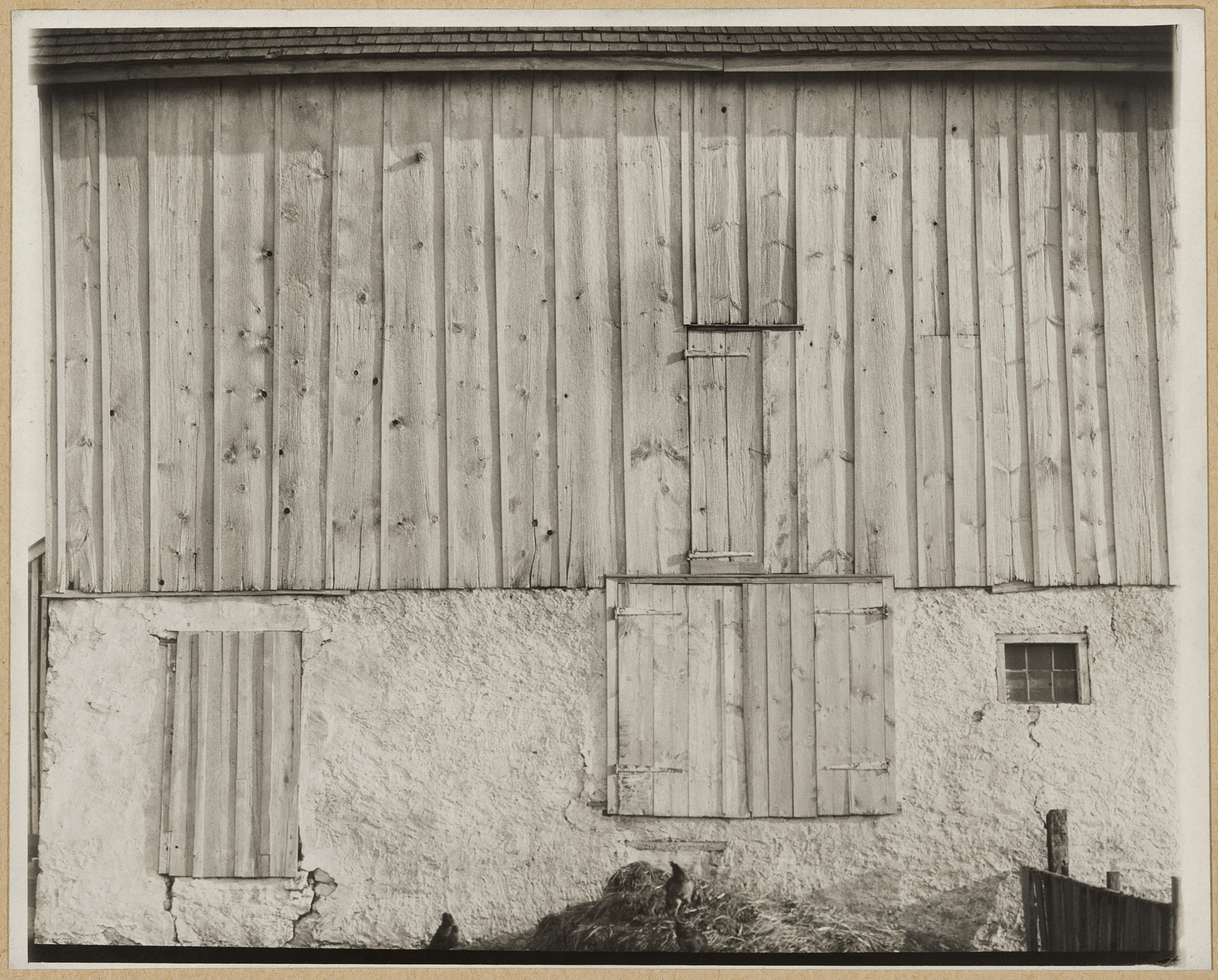
Charles Sheeler (American, 1883-1965) 'Side of White Barn, Bucks County, Pennsylvania' 1915 from the exhibition Exhibition: 'Charles Sheeler from Doylestown to Detroit' at Museum of Fine Arts, Boston, July - November, 2017


Charles Sheeler (American, 1883-1965)
Side of White Barn, Bucks County, Pennsylvania
1915
Gelatin silver print
© The Lane Collection
Courtesy, Museum of Fine Arts, Boston


Paul Strand (American, 1890 - 1976) 'White Fence, Port Kent, New York' 1916 (negative); 1945 (print)


Paul Strand (American, 1890-1976)
White Fence, Port Kent, New York
1916 (negative); 1945 (print)
© Paul Strand Archive, Aperture Foundation


Charles Sheeler is a cracking good photographer who’s work has not got the recognition that it deserves – in comparison to, say, Stieglitz, Strand, Steichen or Weston. When you think of those top echelon artists from the early twentieth century, his name is never mentioned. And it should be.

Sheeler’s Side of White Barn, Bucks County, Pennsylvania (1915, above) predates one of the most famous early modernist photographs, Strand’s White Fence, Port Kent, New York (1916, above) by a year, yet is hardly known. While Strand’s image possesses low depth of field, strong lighting and a focus on the fence as physical, geometric, sculptural object within the picture frame, Sheeler’s photograph is much more subtle but no less effective in its modernist vocation. The pictorial space is flattened into geometric shapes, the bottom of the photograph grounded by a cracked wall, hay, chickens and a fence, the top of the image foreclosed by the tiled roof of the barn and its attendant shadow (showing that the sun was high in the sky when this image was taken). Within the boundaries of the rectangle are subtle graduations of tone, colour and form, almost like an modernist etching with light, so beautifully does the artist both understand what he is seeing and how to render it through the physicality of the print. Unlike Strand’s “knock you over the head with the white picket fence”, Sheeler’s subtle paean to the modern world requires contemplation on the nature of light, photography and the fine art print. This is a masterpiece in the history of photographic art.

I am similarly convinced by Sheeler’s Ford Plant – CrissCrossed Conveyors (1927, below), in my opinion one of the top ten photographs of all time.

I cannot fault this image. The light falling on the subject is incredible (notice the shadow from the beam mid-upper left, telling us the time of day the photograph was taken), the tonality superb, the framing of the subject admirable – all elements tensioned perfectly within the pictorial plane. The bottom of the photograph is grounded by stacked tyres and the structure ascends to the heavens from there… not just in one element, but in five! The main criss-cross of the conveyors is placed off centre supported by an iron tower, which allows the eye to roam freely across the image. The placement also allows for another elevator to ascend behind the main two, while a set of steps climbs higher and higher eventually exiting the picture stage left. Behind the criss-crossed conveyors the depth of space that must exist in reality is proposed by two tanks, further reinforced by 8 chimney stacks, and yet this photograph evidences no such depth of field. While everything is reduced to flattened shapes in this machine age, modernist, objectified world – and while no human being is presented for scale – the human hand is all over this image: in the construction of such technology, in the presence of the human scale stairs, in the ascension to the sky of the organ pipes of the industrial cathedral, in the comprehending eye of the photographer, and in the presence, the aura, of this magnificent print. While this image may seem the antithesis of humanist photography in one sense, conversely it reaffirms the very act of humanity in another. Or perhaps I’m just an old romantic.

Dr Marcus Bunyan


Many thankx to the Museum of Fine Arts Boston for allowing me to publish the photographs in the posting. Please click on the photographs for a larger version of the image.


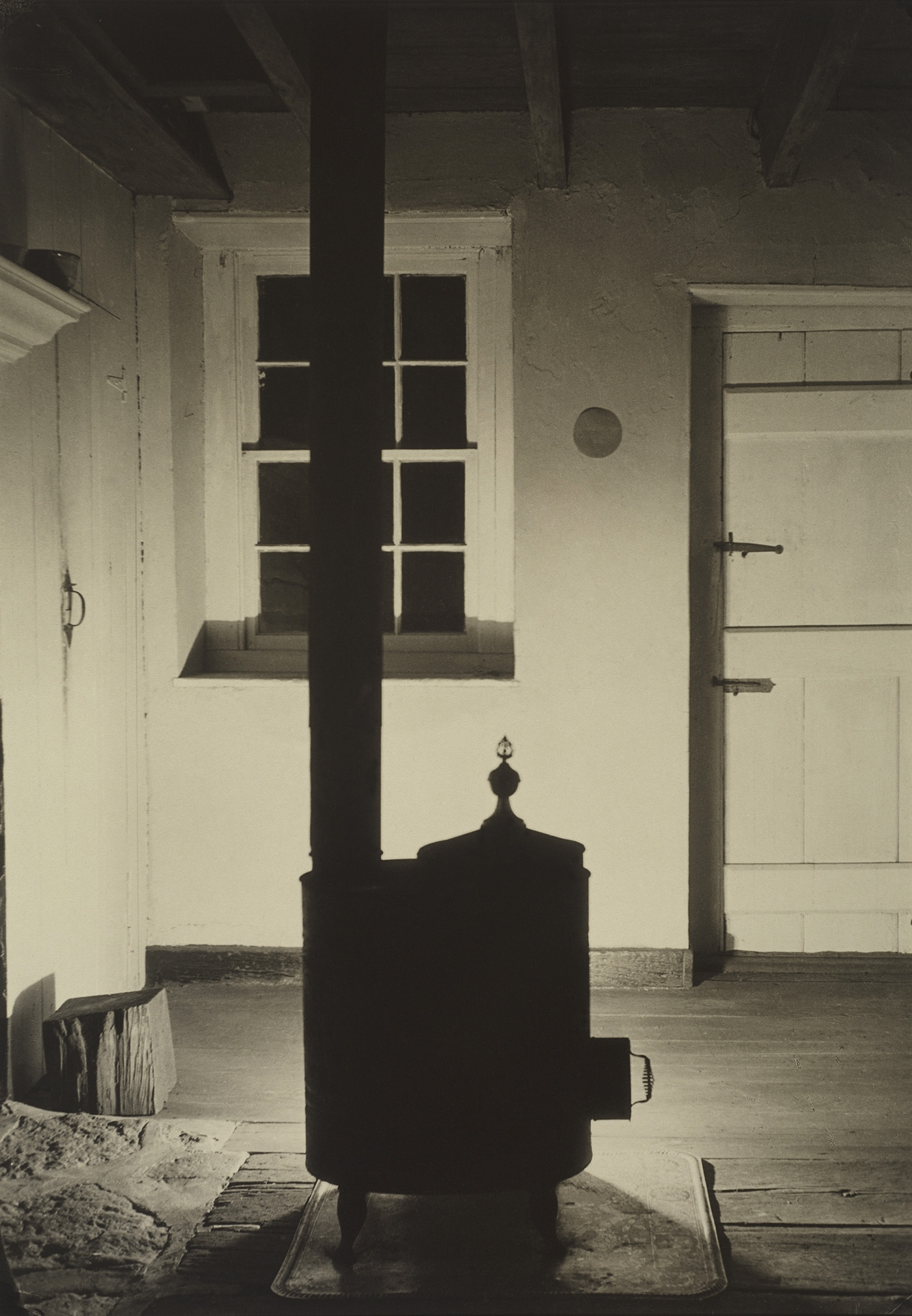
Charles Sheeler (American, 1883-1965) 'Doylestown House - The Stove' about 1917 from the exhibition Exhibition: 'Charles Sheeler from Doylestown to Detroit' at Museum of Fine Arts, Boston, July - November, 2017


Charles Sheeler (American, 1883-1965)
Doylestown House – The Stove
about 1917
Gelatin silver print
© The Lane Collection
Courtesy, Museum of Fine Arts, Boston


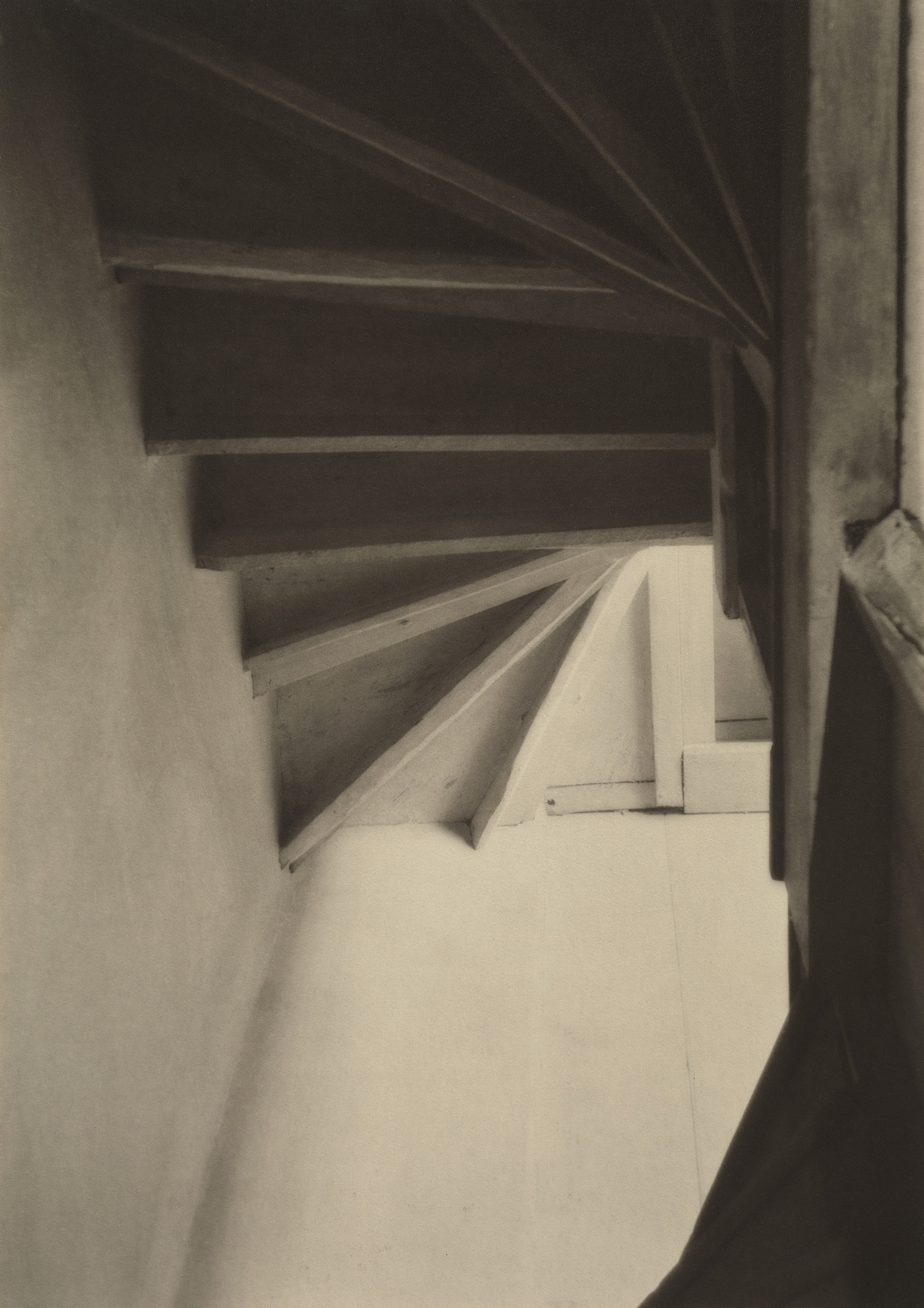
Charles Sheeler (American, 1883-1965) 'Doylestown House - Stairs from Below' Negative date: about 1916-1917


Charles Sheeler (American, 1883-1965)
Doylestown House – Stairs from Below
Negative date: about 1916-1917
Gelatin silver print
© The Lane Collection
Courtesy, Museum of Fine Arts, Boston


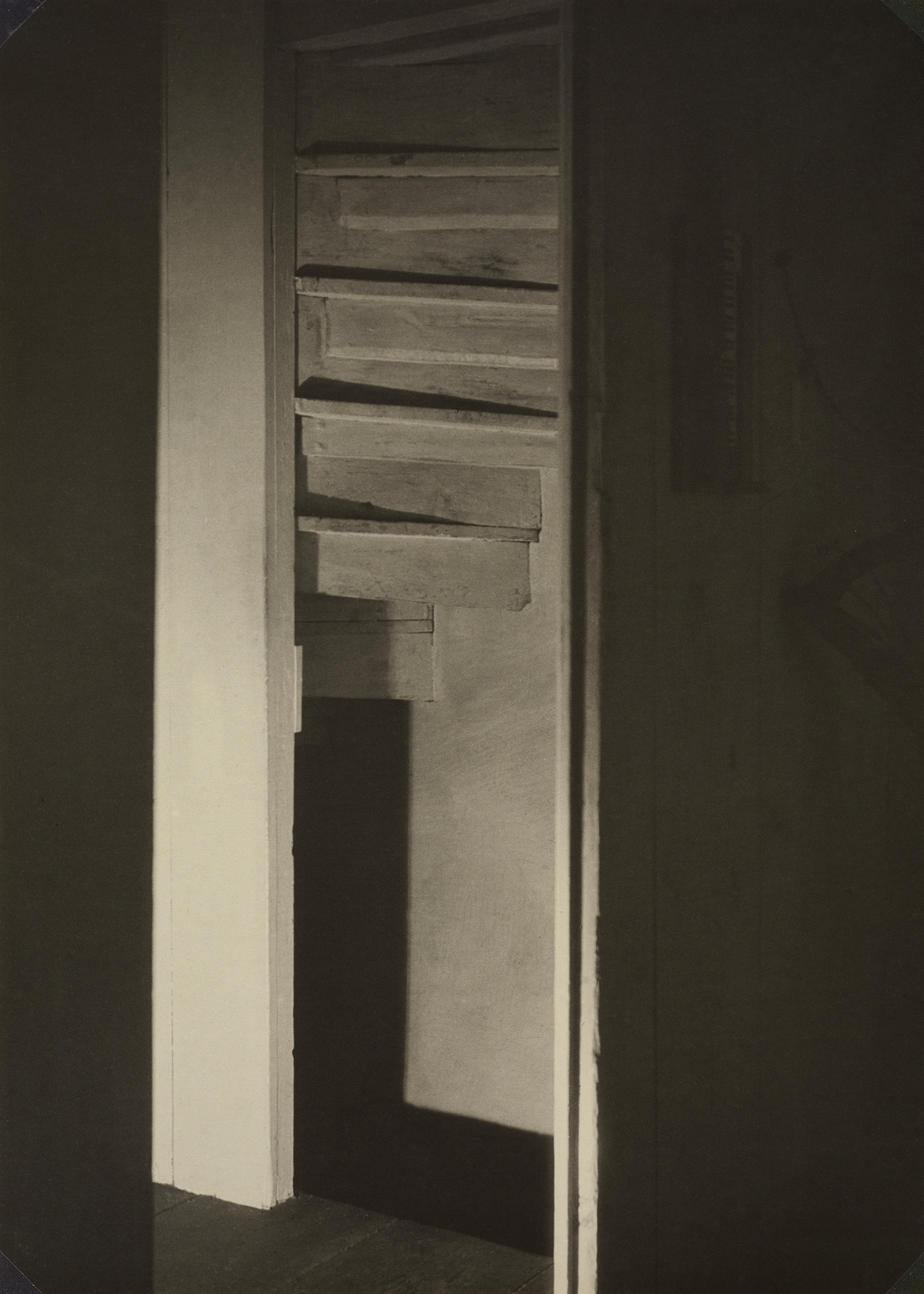
Charles Sheeler (American, 1883-1965) 'Doylestown House - Stairwell' Negative date: about 1916-1917


Charles Sheeler (American, 1883-1965)
Doylestown House – Stairwell
Negative date: about 1916-1917
Gelatin silver print
© The Lane Collection
Courtesy, Museum of Fine Arts, Boston


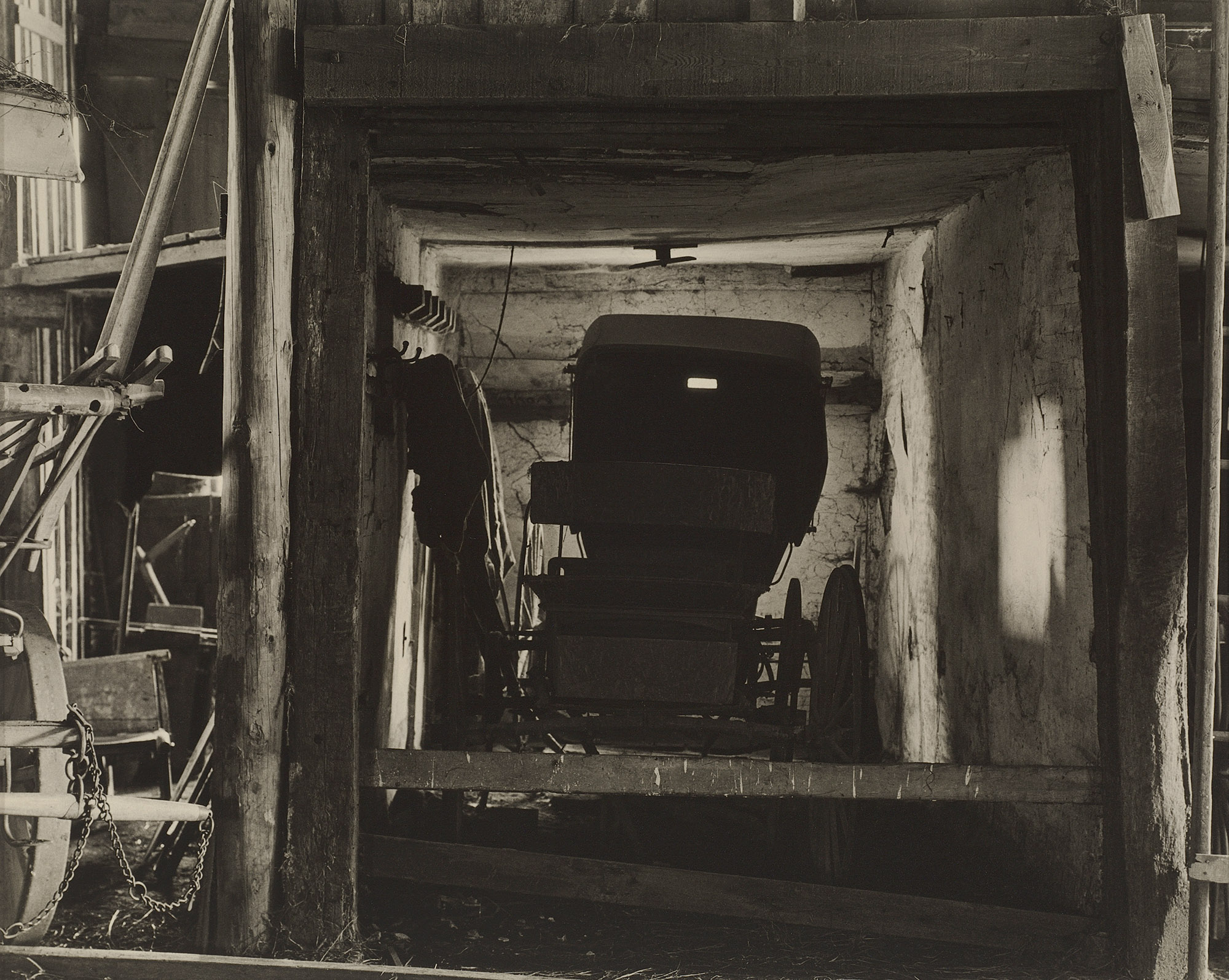
Charles Sheeler (American, 1883-1965) 'Buggy, Doylestown, Pennsylvania' Negative date: 1917


Charles Sheeler (American, 1883-1965)
Buggy, Doylestown, Pennsylvania
Negative date: 1917
Gelatin silver print
© The Lane Collection
Courtesy, Museum of Fine Arts, Boston


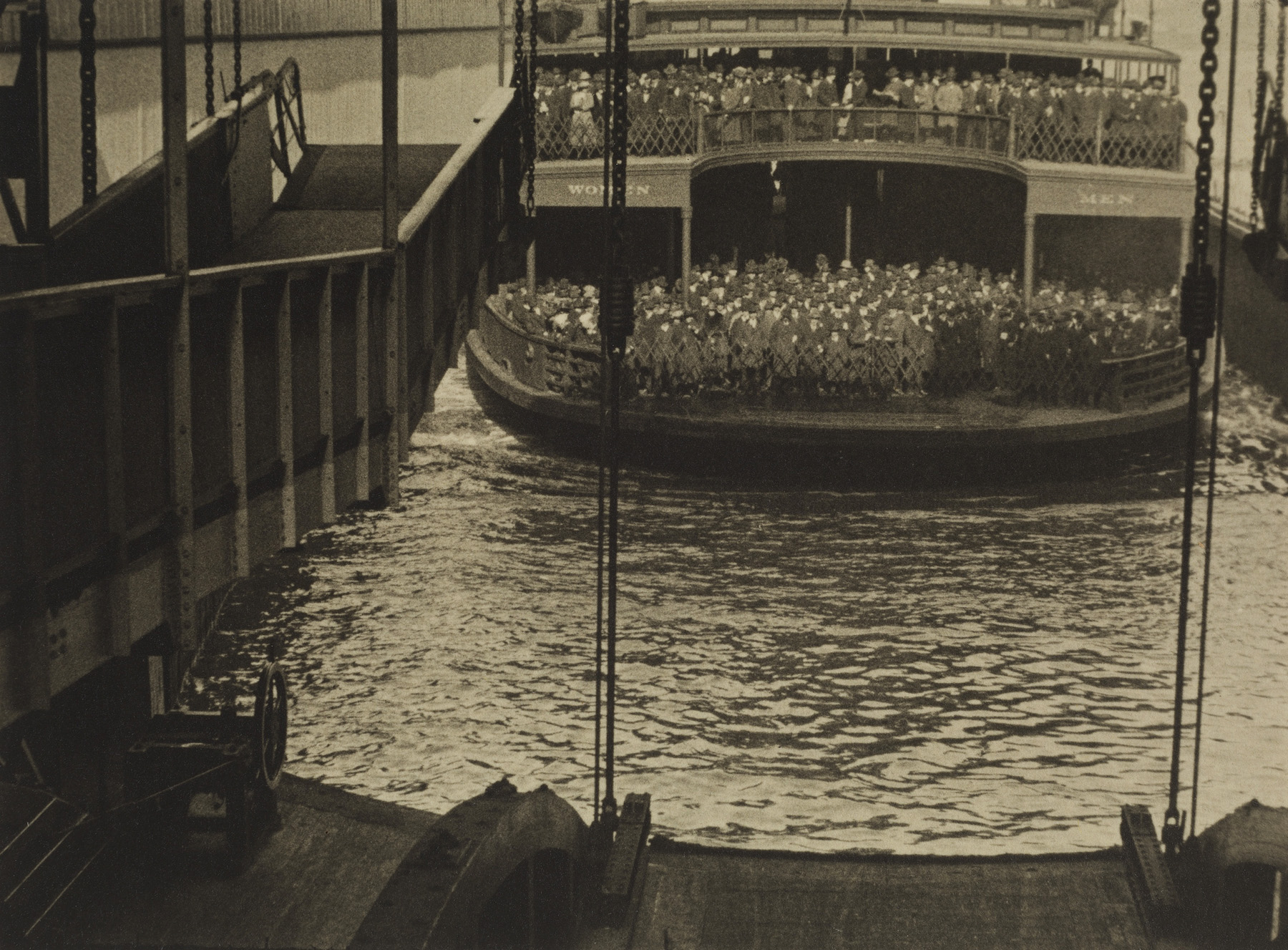
Charles Sheeler (American, 1883-1965) 'Manhatta - Ferry Docking' Negative date: 1920


Charles Sheeler (American, 1883-1965)
Manhatta – Ferry Docking
Negative date: 1920
Gelatin silver print
© The Lane Collection
Courtesy, Museum of Fine Arts, Boston


This exhibition celebrates the MFA’s unparalleled holdings of works by Charles Sheeler (1883-1965), presenting 40 photographs from three significant series created during the heyday of his career as a founder of American modernism.

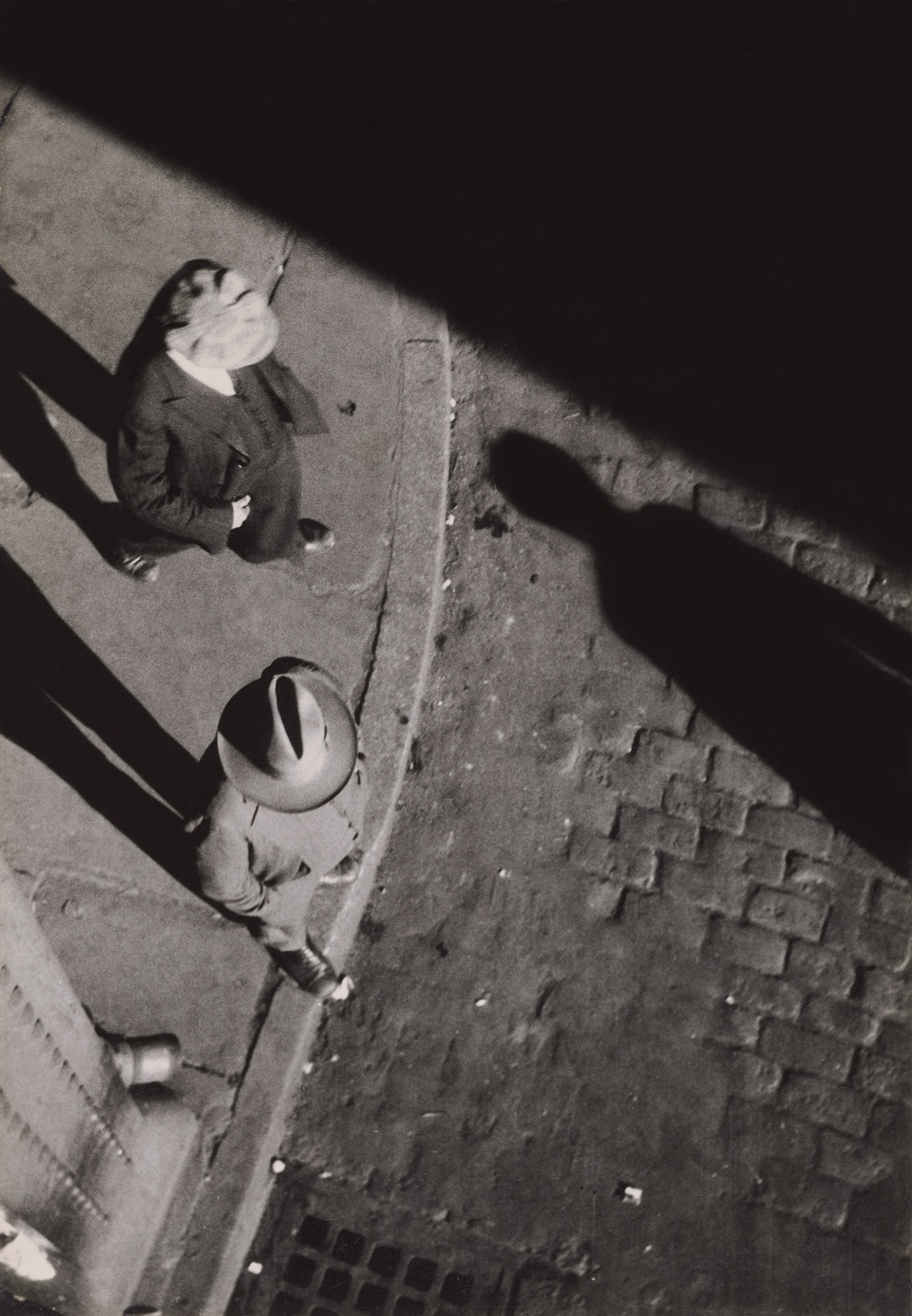
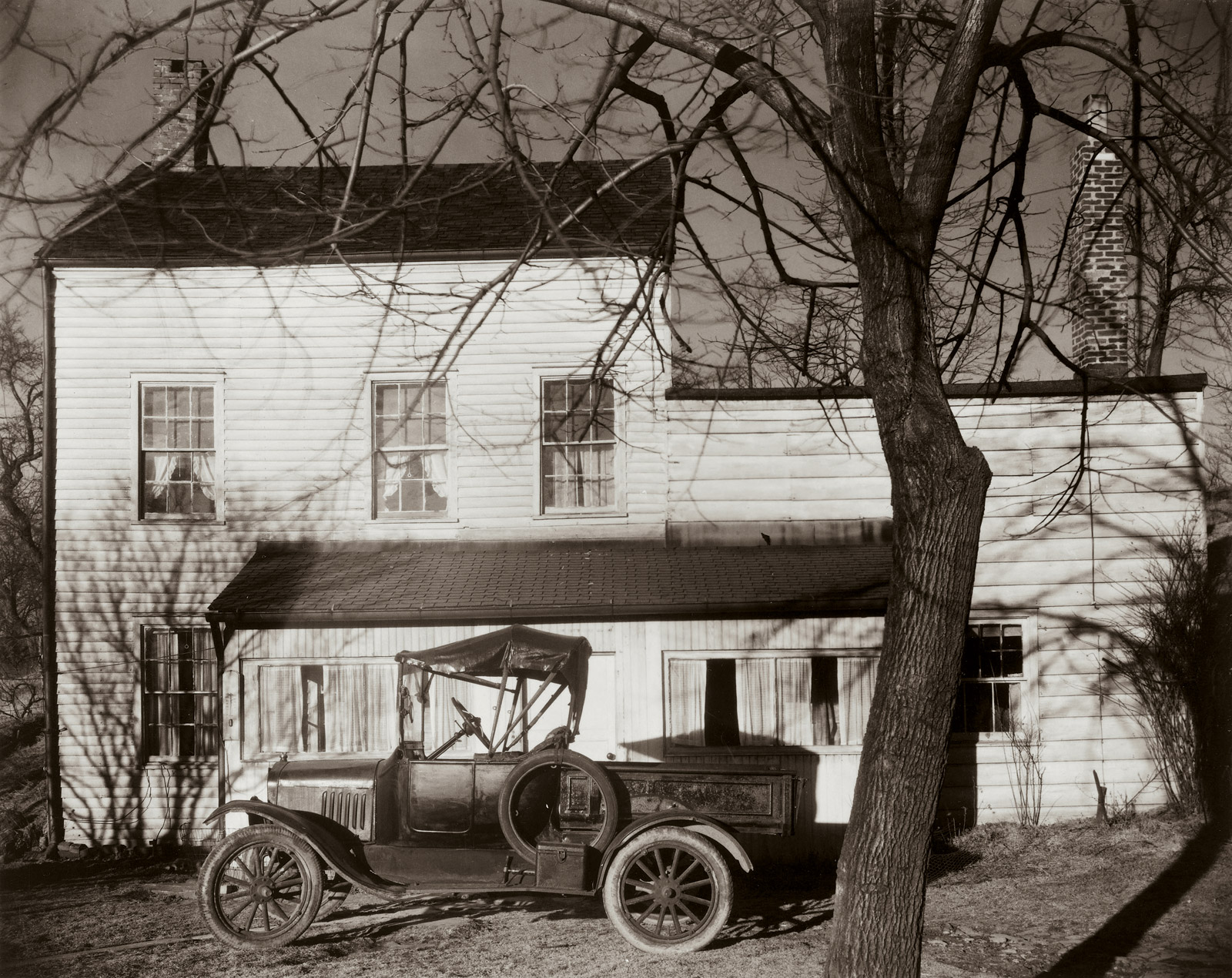
After enjoying success as a painter, Sheeler initially took up photography as a way to make a living. His experiments with the medium included the 1916-1917 series of photographs capturing various elements of an 18th-century house he rented in Doylestown, Pennsylvania. The sequence of stark, geometric compositions was among the most abstract and avant-garde work being made in the US at the time – created in response to the Cubist art of Picasso and Braque that Sheeler had previously encountered in Europe.

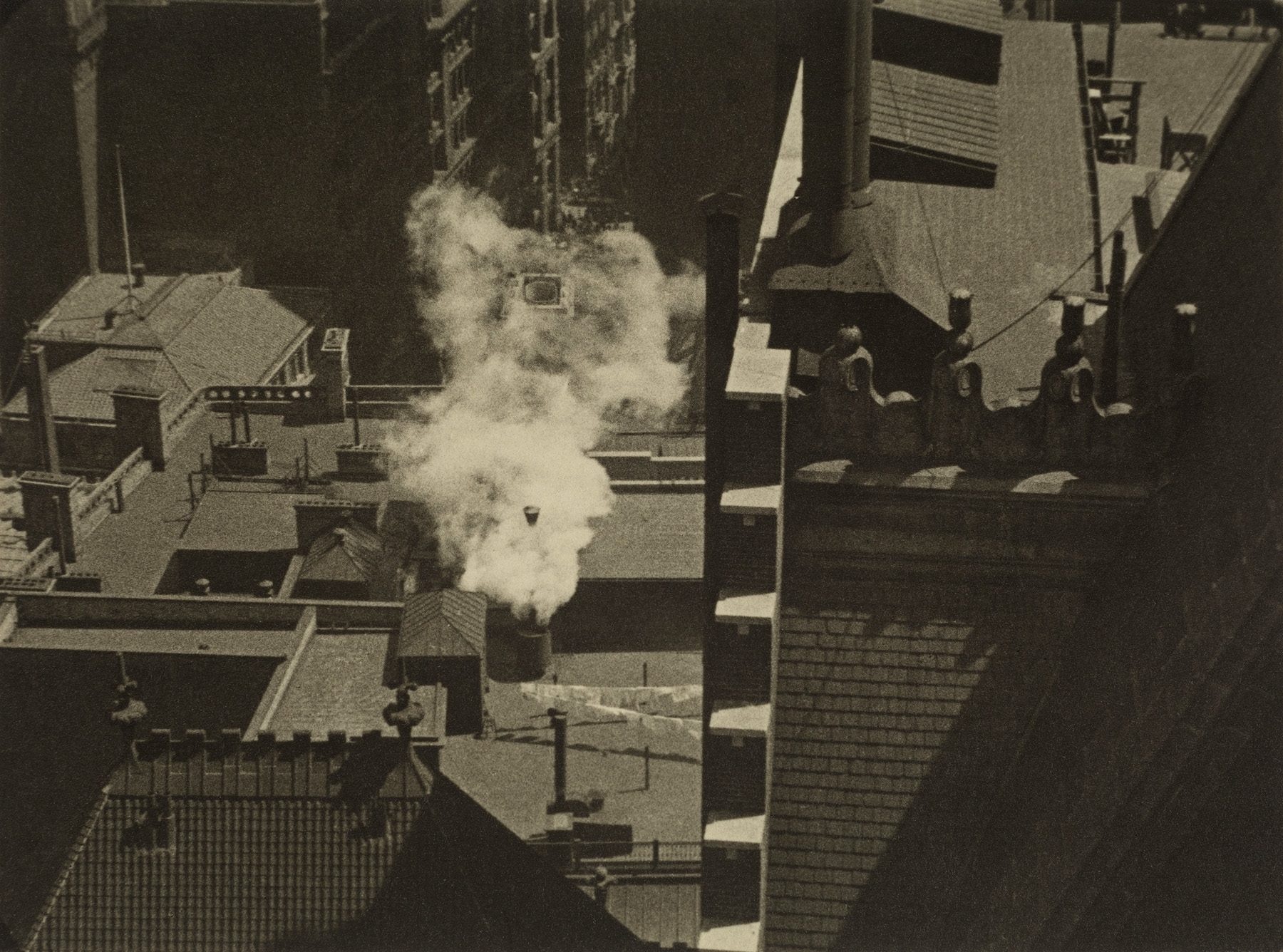
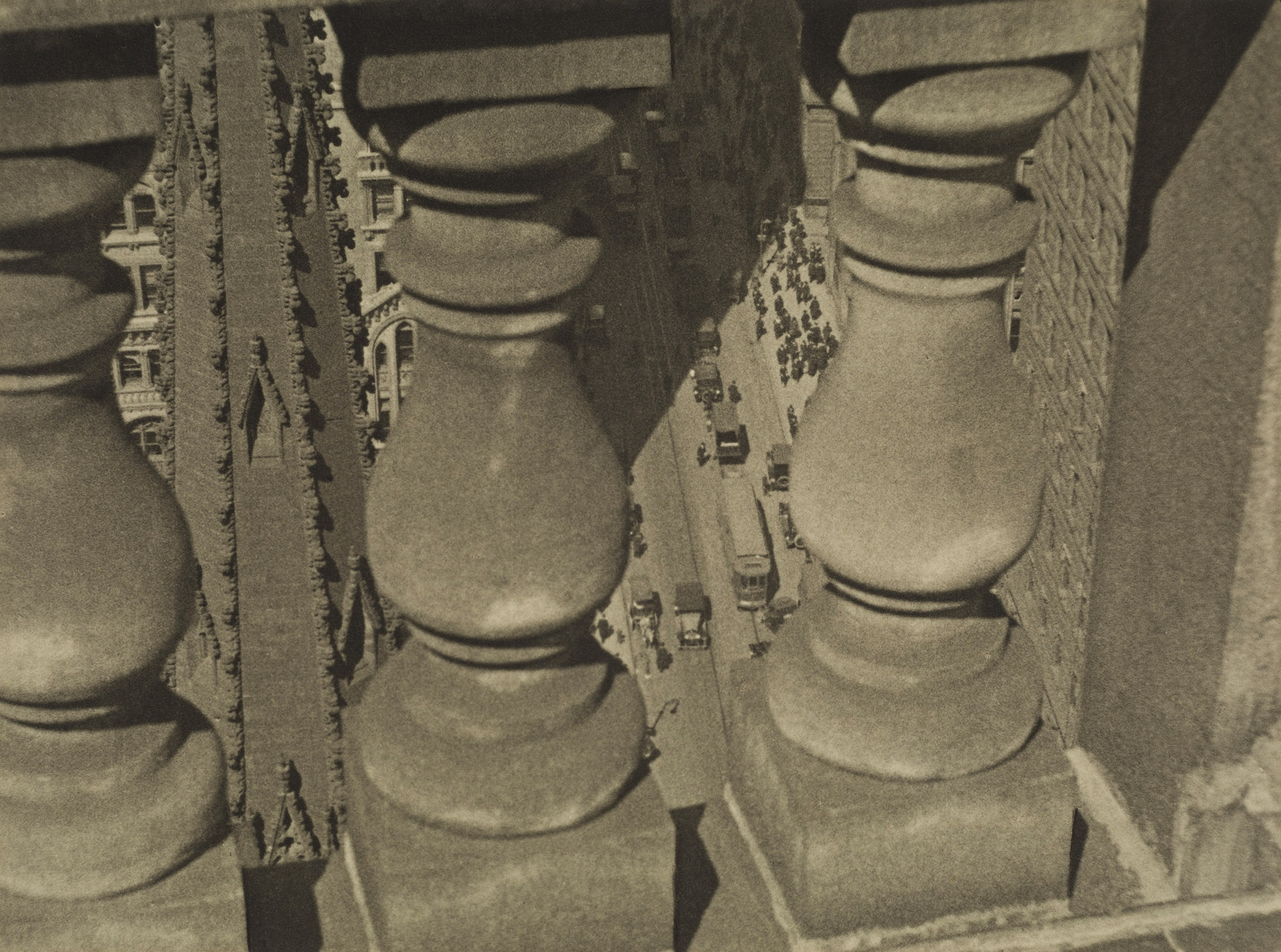
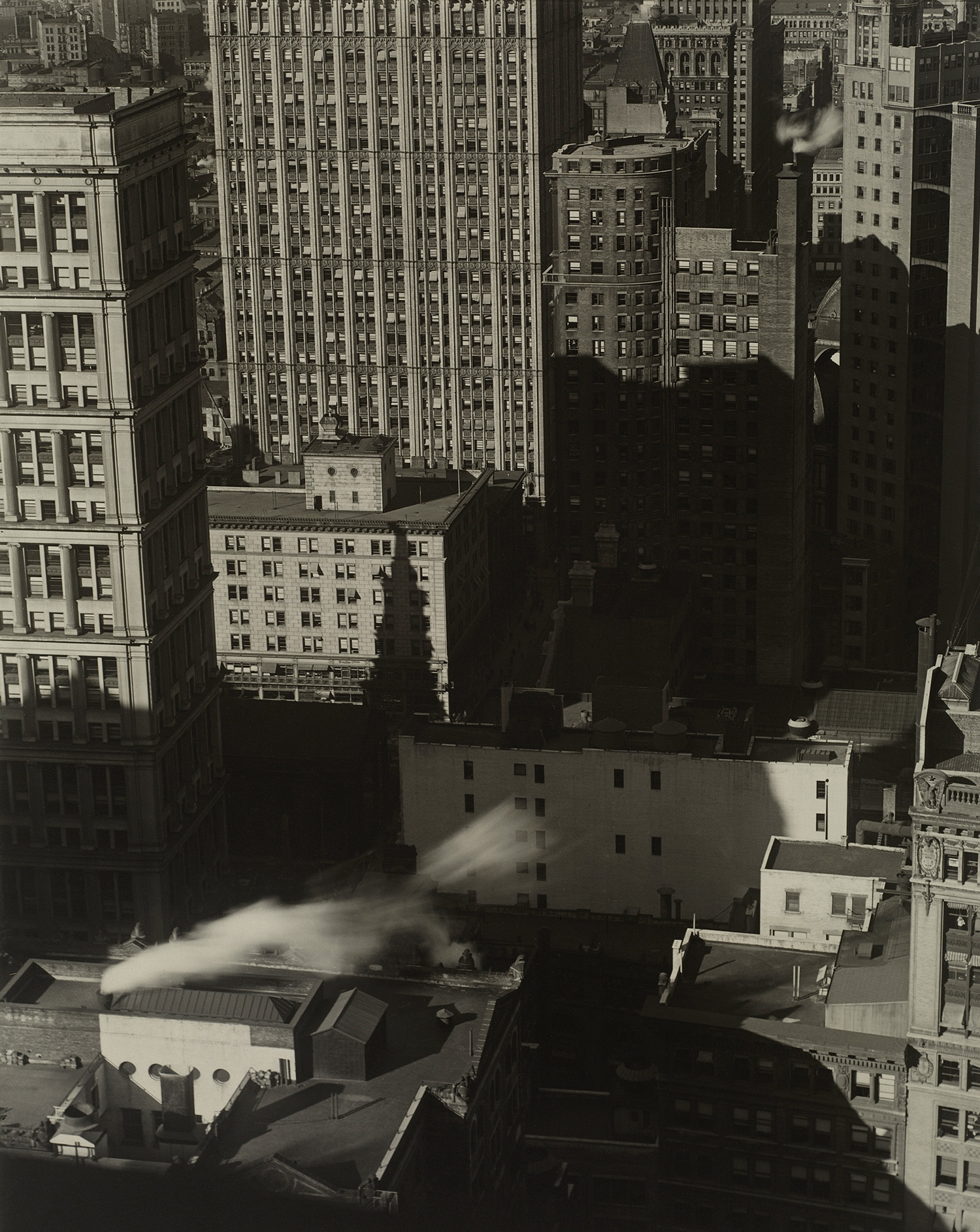
In 1920, Sheeler collaborated with fellow photographer Paul Strand on the short film Manhatta, presenting dramatic views of lower Manhattan. Abstract stills from the 35mm film, which was shot from steep angles, are presented alongside larger prints of Sheeler’s cinematic images of New York City, produced shortly after Manhatta – which he used as source material for his paintings. The film Manhatta is on view in the gallery.

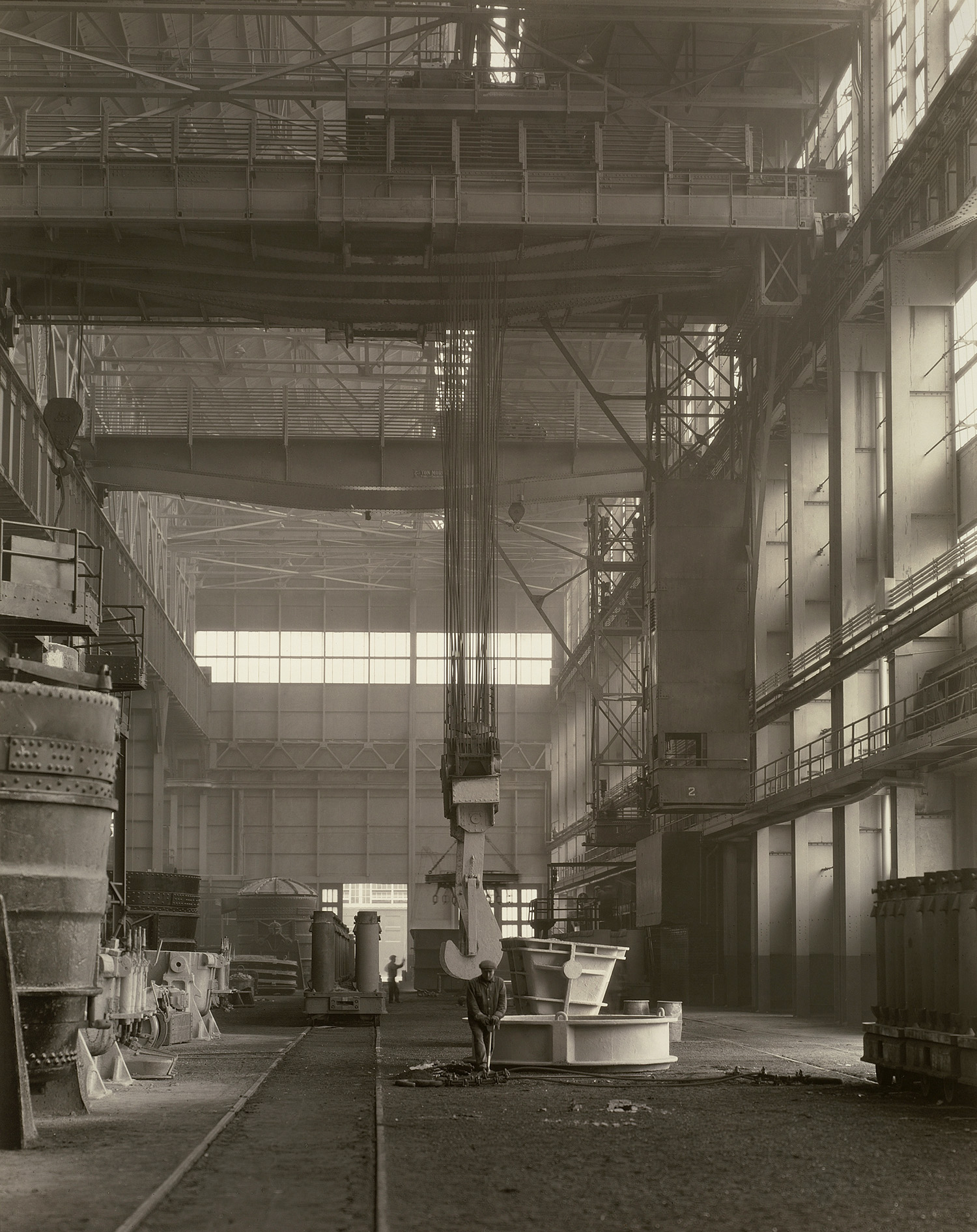
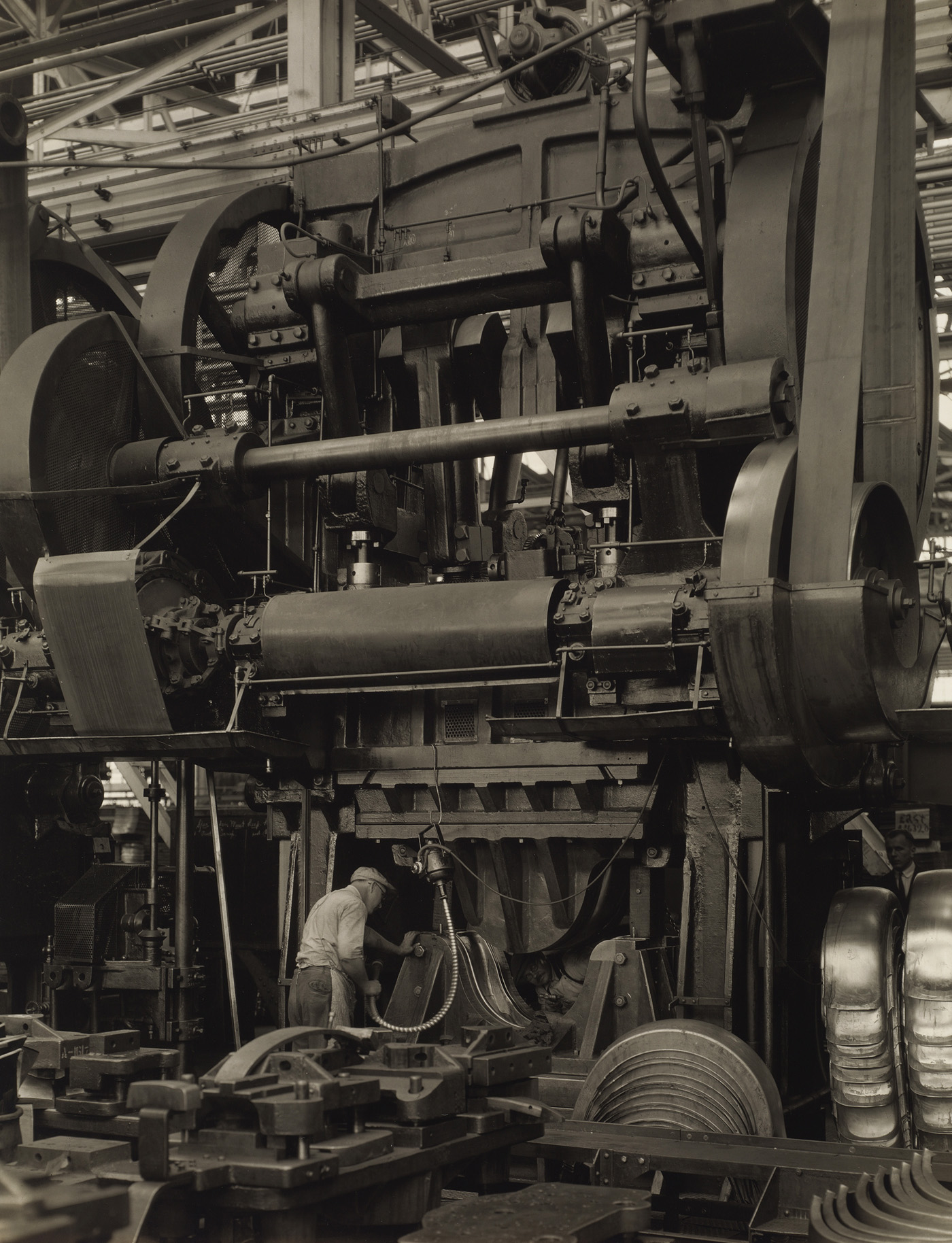
Charles Sheeler from Doylestown to Detroit culminates with the 1927 photographs of the Ford Motor Company plant in River Rouge, Michigan, commissioned to celebrate the introduction of Ford’s Model A. The cathedral-like scenes convey an optimism for American industry, and are now considered icons of Machine Age photography. All of the photographs in the exhibition are drawn from the Museum’s Lane Collection – one of the finest private holdings of 20th-century American art in the world, including Sheeler’s entire photographic estate – given to the MFA in 2012.

Text from the MFA website


Paul Strand and Charles Sheeler
Manhatta
1921
Courtesy of the Museum of Modern Art, New York
© Aperture Foundation Inc., Paul Strand Archive


In 1920 Paul Strand and artist Charles Sheeler collaborated on Manhatta, a short silent film that presents a day in the life of lower Manhattan. Inspired by Walt Whitman’s book “Leaves of Grass,” the film includes multiple segments that express the character of New York. The sequences display a similar approach to the still photography of both artists. Attracted by the cityscape and its visual design, Strand and Sheeler favoured extreme camera angles to capture New York’s dynamic qualities. Although influenced by Romanticism in its view of the urban environment, Manhatta is considered the first American avant-garde film.


Charles Sheeler (American, 1883-1965) 'Manhatta - Rooftops' Negative date: 1920


Charles Sheeler (American, 1883-1965)
Manhatta – Rooftops
Negative date: 1920
Gelatin silver print
© The Lane Collection
Courtesy, Museum of Fine Arts, Boston


Charles Sheeler (American, 1883-1965) 'Manhatta - Through a Balustrade' Negative date: 1920


Charles Sheeler (American, 1883-1965)
Manhatta – Through a Balustrade
Negative date: 1920
Gelatin silver print
© The Lane Collection
Courtesy, Museum of Fine Arts, Boston


Charles Sheeler (American, 1883-1965) 'New York, Buildings in Shadows and Smoke' Negative date: 1920


Charles Sheeler (American, 1883-1965)
New York, Buildings in Shadows and Smoke
Negative date: 1920
Gelatin silver print
© The Lane Collection
Courtesy, Museum of Fine Arts, Boston


Charles Sheeler (American, 1883-1965) 'Ford Plant - Criss-Crossed Conveyors' 1927


Charles Sheeler (American, 1883-1965)
Ford Plant – CrissCrossed Conveyors
1927
Gelatin silver print
© The Lane Collection
Courtesy, Museum of Fine Arts, Boston


Charles Sheeler (American, 1883-1965) 'Ford Plant - Ladle Hooks, Open Hearth Building' Negative date: 1927


Charles Sheeler (American, 1883-1965)
Ford Plant – Ladle Hooks, Open Hearth Building
Negative date: 1927
Gelatin silver print
© The Lane Collection
Courtesy, Museum of Fine Arts, Boston


Charles Sheeler (American, 1883-1965) 'Ford Plant - Stamping Press' Negative date: 1927


Charles Sheeler (American, 1883-1965)
Ford Plant – Stamping Press
Negative date: 1927
Gelatin silver print
© The Lane Collection
Courtesy, Museum of Fine Arts, Boston


Museum of Fine Arts, Boston
Avenue of the Arts
465 Huntington Avenue
Boston, Massachusetts

Opening hours:
Sunday 10am – 5pm
Monday 10am – 5pm
Tuesday Closed
Wednesday 10am – 5pm
Thursday 10am – 10pm
Friday 10am – 10pm
Saturday 10am – 5pm

Museum of Fine Arts, Boston website

LIKE ART BLART ON FACEBOOK

Back to top

Exhibition: ‘The Summer of Love: Photography and Graphic Design’ at the Museum of Fine Arts, Boston

Exhibition dates: 6th July – 22nd October, 2017


Bonnie MacLean (American, 1939-2020) 'Muddy Waters, Buffalo Springfield, Richie Havens (Fillmore Auditorium, 1-6 August 1967)' 1967 from the exhibition 'The Summer of Love: Photography and Graphic Design' at the Museum of Fine Arts, Boston, July - Oct, 2017


Bonnie MacLean (American, 1939-2020)
Muddy Waters, Buffalo Springfield, Richie Havens (Fillmore Auditorium, 1-6 August 1967)
1967
Offset lithographic poster
Gift of Robert Bradford Wheaton and Barbara Ketcham Wheaton
Photograph: © Museum of Fine Arts, Boston


Aubrey Beardsley and “The Yellow Book,” Art Nouveau and the Vienna Secession, Josef Albers, Dada, Surrealism, William Blake (a favourite of mine), photography, typography and graphic design. You couldn’t ask for more… except for those psychedelic colours!

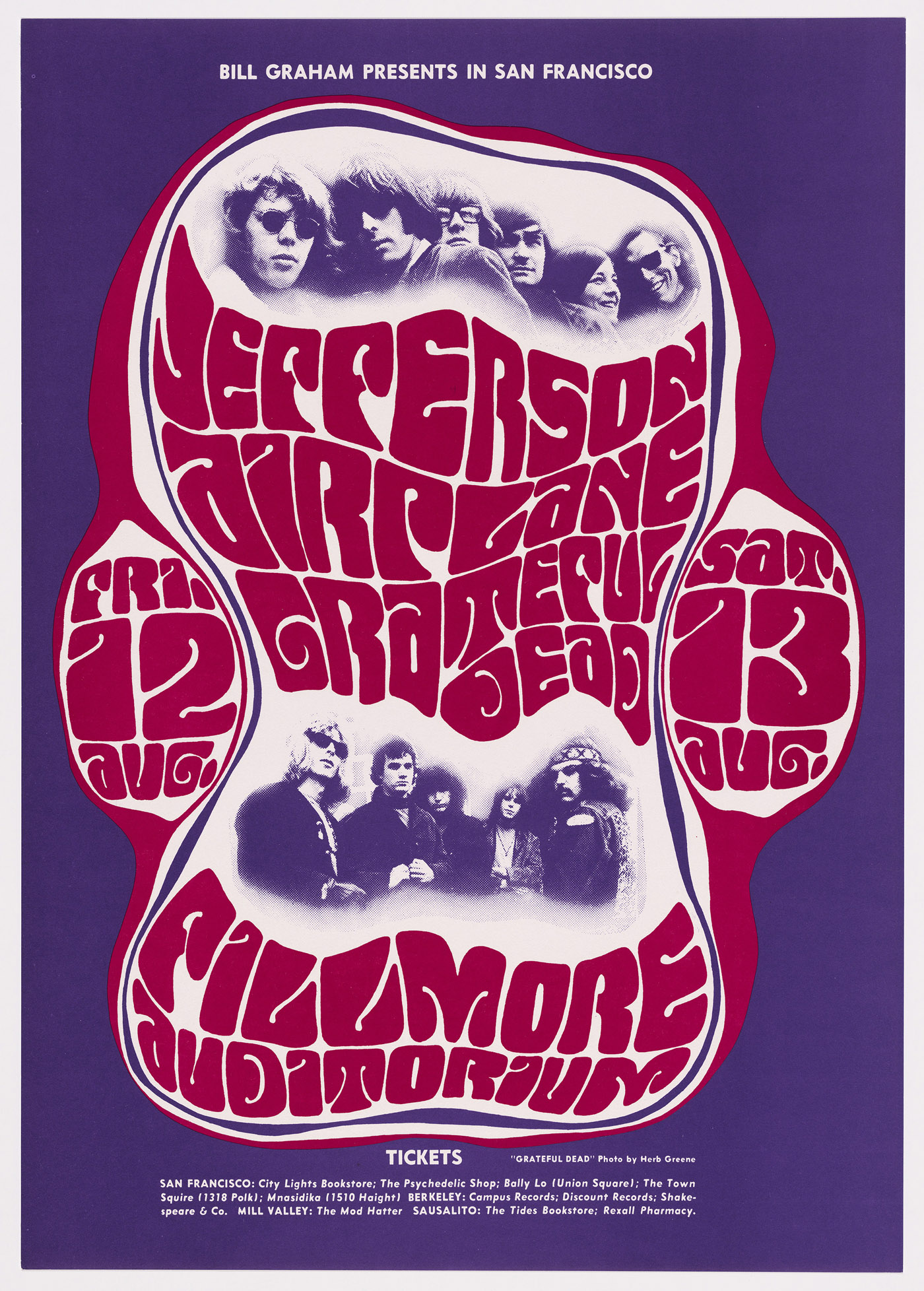
As a friend of mine observed of the Grateful Dead, Oxford Circle (1966) poster – look where the tickets were sold: psychedelic shops, book stores, record shops and coffee houses. He actually saw the Grateful Dead play live while he was in America, and he said it was quite a trip. As Mark Feeney keenly observes, this art was “liberation in two dimensions.”

He is correct, for these posters and record covers reflect the cultural era from which they emerge – the official beginnings of Gay Liberation, Feminism, student revolt, protests against war and racism, civil rights, drugs, free love and peace. They are powerful and eloquent works of art that summon the noisy spirit of the age, a riotous poltergeist hell bent on change.

And all these years later, they still look as fresh and as relevant (perhaps even more so in this conservative world), as they day they were created. Just fab!

Dr Marcus Bunyan

PS. It always amazes me the cultural contexts in which photography can be put to use.


Many thankx to the Museum of Fine Arts, Boston for allowing me to publish the photographs in the posting. Please click on the photographs for a larger version of the image.


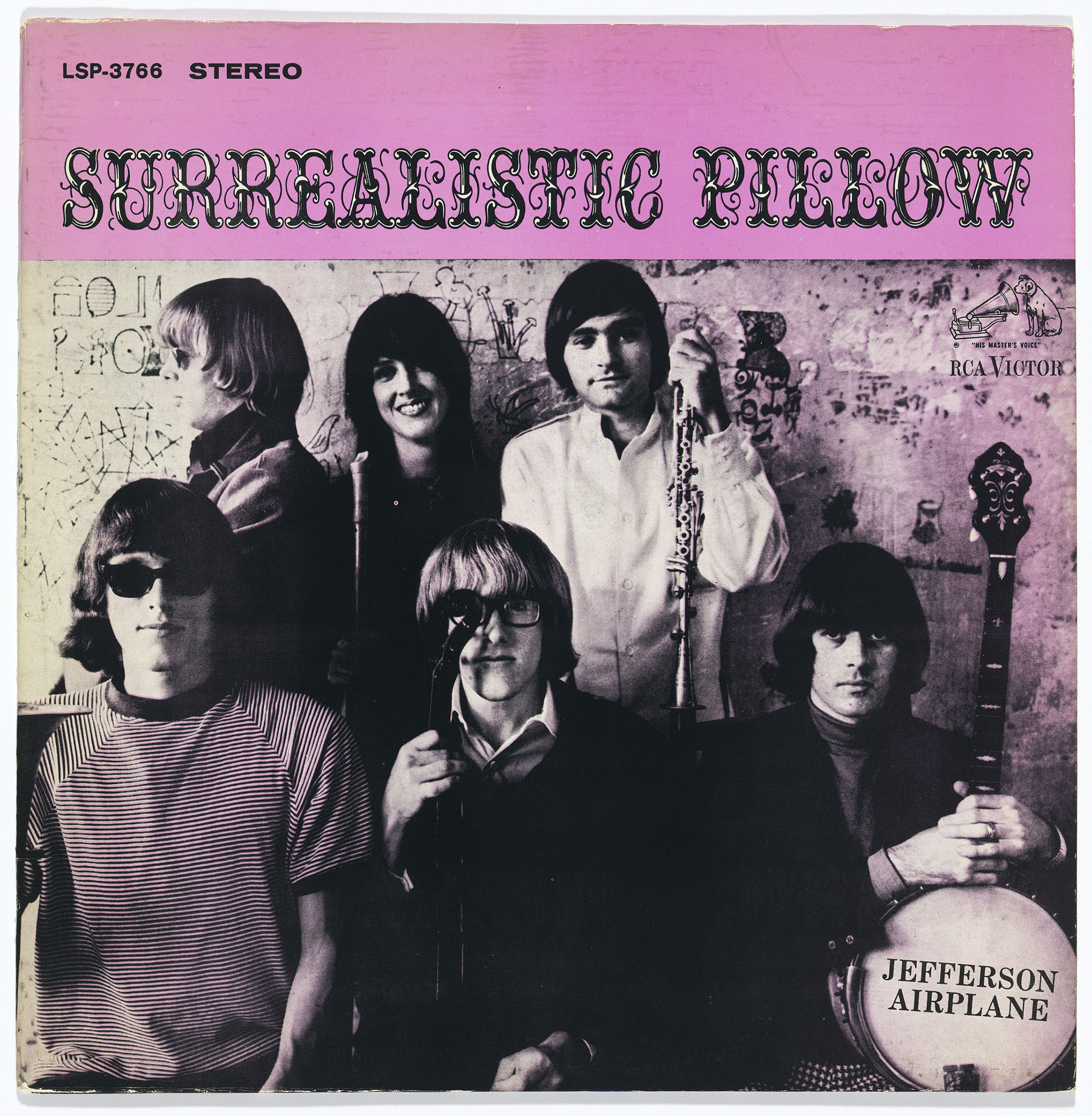
“What’s fascinating is how the graphic designs manage to have a kind of coherence despite being such a jumble. Certain principles recur: curves, yes, angles, no; a pugilistic employment of colour (psychedelia really did look … psychedelic); legibility as afterthought. So do certain influences: Aubrey Beardsley and “The Yellow Book,” Art Nouveau and the Vienna Secession, Dada, Surrealism (among the album covers on display is, yes, the Jefferson Airplane’s “Surrealistic Pillow”). The presiding spirit is William Blake: “The road of excess leads to the palace of wisdom.” The last thing the Haight cared about was history, but history’s hand lay all over it.

The look of these designs is assaultive, overly busy, restrained only by the confines of poster size or album cover. That look still feels exhilarating: liberation in two dimensions. It must have felt close to Martian back then. NASA wanted to put a man on the moon. Why stop there? Gravity was just another law to flout. One of the 32 Herb Greene photographs in “The Summer of Love” shows Airplane lead singer Grace Slick looking at the camera and flipping the bird. Maybe that image, even more than Blakean excess, is the presiding spirit.”


Mark Feeney. “The MFA celebrates San Francisco’s Summer of Love,” on the Boston Globe website July 6th 2017 [Online] Cited 02/01/2022. No longer available online


Victor Moscoso (American born Spain, b. 1936) 'The Chambers Brothers (The Matrix, 28 March-6 April 1967)' 1967 from the exhibition 'The Summer of Love: Photography and Graphic Design' at the Museum of Fine Arts, Boston, July - Oct, 2017


Victor Moscoso (American born Spain, 1936)
The Chambers Brothers (The Matrix, 28 March-6 April 1967)

1967
Offset lithographic poster
Gift of Robert Bradford Wheaton and Barbara Ketcham Wheaton
© ’67 Neon Rose
Photograph: © Museum of Fine Arts, Boston


Victor Moscoso (Spanish-American, b. 1936)

Victor Moscoso (born Galicia in 1936) is a Spanish-American artist best known for producing psychedelic rock posters, advertisements, and underground comix in San Francisco during the 1960s and 1970s.

Moscoso was the first of the rock poster artists of the 1960s era with formal academic training and experience. After studying art at Cooper Union in New York City and at Yale University, he moved to San Francisco in 1959. There, he attended the San Francisco Art Institute, where he eventually became an instructor. Moscoso’s use of vibrating colours was influenced by painter Josef Albers, one of his teachers at Yale. He was the first of the rock poster artists to use photographic collage in many of his posters.

Professional success came in the form of the psychedelic rock and roll poster art created for San Francisco’s dance halls and clubs. Moscoso’s posters for the Family Dog dance-concerts at the Avalon Ballroom and his Neon Rose posters for the Matrix resulted in international attention during the 1967 Summer of Love.

Text from the Wikipedia website


Stanley Miller (Mouse) (American, born in 1940) and Alton Kelley (American, 1940-2008) 'Moby Grape, Sparrow, The Charlatans (Avalon Ballroom, 13-14 January 1967)' 1967


Stanley Miller (Mouse) (American, b. 1940) and Alton Kelley (American, 1940-2008)
Moby Grape, Sparrow, The Charlatans (Avalon Ballroom, 13-14 January 1967)
1967
Poster, offset lithograph
Collection of Patrick Murphy
Courtesy, Museum of Fine Arts, Boston


Bonnie MacLean (American, 1939-2020) 'The Yardbirds, The Doors, James Cotton Blues Band, Richie Havens (Fillmore Auditorium, 25-30 July 1967)' 1967


Bonnie MacLean (American, 1939-2020)
The Yardbirds, The Doors, James Cotton Blues Band, Richie Havens (Fillmore Auditorium, 25-30 July 1967)
1967
Poster, offset lithograph
Collection of Patrick Murphy
Photograph: © Museum of Fine Arts, Boston


Bonnie MacLean (American, 1939-2020)

Bonnie MacLean, also known as Bonnie MacLean Graham is an American artist known for her classic rock posters. In the 1960s and 1970s she created posters and other art for the promotion of rock and roll concerts managed by Bill Graham, using the iconic psychedelic art style of the day. MacLean went on to continue her art as a painter focusing mostly of nudes, still lifes and landscapes.

Fillmore posters

Artist Wes Wilson was the main poster artist for the Fillmore Auditorium when he and Bill Graham had a “falling out” and Wilson quit. MacLean had been painting noticeboards at the auditorium in the psychedelic style, and took up the creation of the posters after Wilson left, creating about thirty posters, most in 1967. MacLean’s posters are included in many museum collections including at the Brooklyn Museum, the Fine Arts Museums of San Francisco collection and at the DeYoung museum. A few examples of her posters are in the San Francisco Museum of Modern Art collection.

Text from the Wikipedia website


Stanley Miller (Mouse) (American, b. 1940) and Alton Kelley (American, 1940-2008) 'Grateful Dead, Oxford Circle (Avalon Ballroom, 16-17 September 1966)' 1966


Stanley Miller (Mouse) (American, b. 1940) and Alton Kelley (American, 1940-2008)
Grateful Dead, Oxford Circle (Avalon Ballroom, 16-17 September 1966)
1966
Handbill, offset lithograph
Collection of Patrick Murphy
Photograph: © Museum of Fine Arts, Boston


Stanley Miller (Mouse) (American, b. 1940)

Stanley George Miller (born October 10, 1940), better known as Mouse and Stanley Mouse, is an American artist, notable for his 1960s psychedelic rock concert poster designs for the Grateful Dead and Journey albums cover art as well as many others.

Psychedelic posters

In 1965, Mouse travelled to San Francisco, California with a group of art school friends. Settling initially in Oakland, Mouse met Alton Kelley. Kelley, a self-taught artist, had recently arrived from Virginia City, Nevada, where he had joined a group of hippies who called themselves the Red Dog Saloon gang. Upon arrival in San Francisco Kelley and other veterans of the gang renamed themselves The Family Dog, and began producing rock music dances. In 1966, when Chet Helms assumed leadership of the group and began promoting the dances at the Avalon Ballroom, Mouse and Kelley began working together to produce posters for the events. Later the pair also produced posters for promoter Bill Graham and for other events in the psychedelic community.

In 1967, Mouse collaborated with artists Kelley, Rick Griffin, Victor Moscoso and Wes Wilson to create the Berkeley Bonaparte Distribution Agency. Mouse and Kelley also worked together as lead artists at Mouse Studios and The Monster Company – producing album cover art for the bands Journey and Grateful Dead. The Monster Company also developed a profitable line of T-shirts, utilising the four colour process for silk screening.

The psychedelic posters Mouse and Kelley produced were heavily influenced by Art Nouveau graphics, particularly the works of Alphonse Mucha and Edmund Joseph Sullivan. Material associated with psychedelics, such as Zig-Zag rolling papers, were also referenced. Producing posters advertising for such musical groups as Big Brother and the Holding Company, Quicksilver Messenger Service, and Grateful Dead led to meeting the musicians and making contacts that were later to prove fruitful.

Text from the Wikipedia website


Alton Kelley (American, 1940-2008)

Alton Kelley (June 17, 1940 in Houlton, Maine – June 1, 2008 in Petaluma, California) was an American artist best known for his psychedelic art, in particular his designs for 1960s rock concerts and albums. Along with artists Rick Griffin, Stanley Mouse, Victor Moscoso and Wes Wilson, Kelley founded the Berkeley Bonaparte distribution agency in order to produce and sell psychedelic poster art.

Along with fellow artist Stanley Mouse, Kelley is credited with creating the wings and beetles on all Journey album covers as well as the skull and roses image for the Grateful Dead. Kelley’s artwork on the 1971 self-titled live album, Grateful Dead, incorporated a black and white illustration of a skeleton by Edmund Sullivan, which originally appeared in a 19th-century edition of the Rubáiyát of Omar Khayyám.

Text from the Wikipedia website


Herb Greene (American, 1942-2025) 'Jefferson Airplane' 1966


Herb Greene (American, 1942-2025)
Jefferson Airplane
1966
Photograph, gelatin silver print
Gift of Arlette and Gus Kayafas and The Living New England Artists Purchase Fund, created by The Stephen and Sybil Stone Foundation
© Herb Greene
Photograph: © Museum of Fine Arts, Boston


Cover photograph by Herb Greene (American, 1942-2025) 'Jefferson Airplane, Surrealistic Pillow' 1967


Cover photograph by Herb Greene (American, 1942-2025)
Jefferson Airplane, Surrealistic Pillow
1967
Album cover, offset lithograph
Collection of Patrick Murphy
Photograph: © Museum of Fine Arts, Boston


Wes Wilson (American, 1937-2020) Photograph by Herb Greene (American, 1942-2025) 'Jefferson Airplane, Junior Wells Chicago Blues Band, Tim Rose (Fillmore Auditorium, 16-18 December 1966)' 1966


Wes Wilson (American, 1937-2020)
Photograph by Herb Greene (American, 1942-2025)
Jefferson Airplane, Junior Wells Chicago Blues Band, Tim Rose (Fillmore Auditorium, 16-18 December 1966)
1966
Offset lithographic poster
Gift of Robert Bradford Wheaton and Barbara Ketcham Wheaton
Photograph: © Museum of Fine Arts, Boston


In celebration of the Summer of Love’s 50th anniversary, this exhibition explodes with a profusion of more than 120 posters, album covers and photographs from the transformative years around 1967. That summer, fuelled by sensational stories in the national media, San Francisco’s Haight-Ashbury neighbourhood became a mecca for thousands seeking an alternative to the constrictions of postwar American society. A new graphic vocabulary emerged in posters commissioned to advertise weekly rock concerts at the Fillmore Auditorium and the Avalon Ballroom, with bands such as Jefferson Airplane, the Grateful Dead, and the Janis Joplin-led Big Brother & The Holding Company.

A group of more than 50 concert posters highlights experiments with psychedelic graphic design and meandering typography – often verging on the illegible. These include works by Wes Wilson, who took inspiration from earlier art movements such as the Vienna Secession, and Victor Moscoso, whose studies of colour theory with Josef Albers at Yale University translated into striking use of bright, saturated colours in his own designs. A grid of 25 album covers traces the influence of the famously amorphous lettering in the Beatles’ 1965 album Rubber Soul on countless covers and posters from later in the decade.

At the heart of the exhibition is a group of 32 photographs by Herb Greene, a pioneering member of the Haight-Ashbury counterculture and now a resident of Massachusetts. Many of his iconic images document the city’s burgeoning music scene, while a selection from a newly published portfolio offers a glimpse at everyday life in the Haight during the fabled summer of 1967.

Text from the Museum of Fine Arts website


Herb Greene (American, 1942-2025) 'Ohio to San Fransico: Haight Street 1967 (Plate 17)' 1967, printed 2013


Herb Greene (American, 1942-2025)
Ohio to San Fransico: Haight Street 1967 (Plate 17)
1967, printed 2013
Photograph, gelatin silver print
Private collection
Courtesy, Museum of Fine Arts, Boston


Herb Greene (American, 1942-2025) 'Ohio to San Fransico: Haight Street 1967 (Plate 20)' 1967, printed 2013


Herb Greene (American, 1942-2025)
Ohio to San Fransico: Haight Street 1967 (Plate 20)
1967, printed 2013
Photograph, gelatin silver print
Private collection
Courtesy, Museum of Fine Arts, Boston


Herb Greene (American, 1942-2025) 'Ohio to San Fransico: Haight Street 1967 (Plate 30)' 1967, printed 2013


Herb Greene (American, 1942-2025)
Ohio to San Fransico: Haight Street 1967 (Plate 30)
1967, printed 2013
Photograph, gelatin silver print
Private collection
Courtesy, Museum of Fine Arts, Boston


Herb Greene (American, 1942-2025) 'Dead on Haight' From the portfolio 'Brief Encounters with the Dead' 1966, printed 2006


Herb Greene (American, 1942-2025)
Dead on Haight
From the portfolio Brief Encounters with the Dead
1966, printed 2006
Photograph, gelatin silver print
Collection of Jeanne and Richard S. Press
Photograph: © Museum of Fine Arts, Boston


Herb Greene (American, 1942-2025)

Herb “Herbie” Greene (born April 3, 1942 – March 3, 2025) was an American photographer best known for his portraits of The Grateful Dead, the iconic psychedelic rock band led by Jerry Garcia. Over 50 years, Greene’s photographs traced the band’s evolution from its roots in San Francisco’s psychedelic underground to global stardom.

His portraits of other rock and roll luminaries – including Janis Joplin, Grace Slick, Led Zeppelin, Rod Stewart, Jeff Beck, The Pointer Sisters, Carlos Santana, Sly Stone, and more – have been regularly featured in Rolling Stone magazine and several books documenting the music of the 1960s counterculture.

Known as “Herbie” by his friends, Greene won high praise for his ability to capture intimate portraits of the most revered figures in rock. That access was largely due to his relationships with the bands he photographed. Although he refers to himself as “just the guy with the long hair and the camera,” Greene lived in San Francisco during the 1960s rock revolution and was friends with renowned musicians, promoters, and artists.

1960s San Francisco

In 1961, Greene took photography classes at City College of San Francisco and later enrolled at San Francisco State University, where he majored in anthropology and communications. After moving into an apartment near the famed Haight-Ashbury district, he met Jerry Garcia at a bluegrass café called the Fox and Hound. The two became friends and Greene booked his first gig, a portrait session with Garcia’s band, The Warlocks. (The band would eventually change its name to The Grateful Dead).

As Greene’s reputation grew, some of the decade’s most iconic performers came to him for portraits and album covers. He photographed Big Brother and the Holding Company and its lead singer, Janis Joplin. He shot the cover for the Jefferson Airplane’s second album, Surrealistic Pillow, and captured rare portrait sessions with Rod Stewart, Jeff Beck, Led Zeppelin, Jethro Tull, Procol Harem and others. His portfolio landed him a job as a fashion photographer with Joseph Magnin and Co, a prominent San Francisco department store. Greene began to split his time between San Francisco and a new studio in Los Angeles. As the 1960s came to a close, his work with The Grateful Dead and other iconic rockers continued.

Greene and The Grateful Dead

Greene first met Jerry Garcia in 1963 at The Fox and Hound, a bluegrass café on North Beach in San Francisco. Both were just 21 years old, and Garcia had not yet formed The Warlocks, the band that would eventually become The Grateful Dead. He was playing as part of the Sleepy Hollow Hog Stompers, a folk trio. After one of the Garcia’s sets, Greene introduced himself. It was the start of a lifelong friendship. The pair remained friends until Garcia’s death in August 1995.

While many photographers have captured The Grateful Dead on film, Greene is widely regarded as the group’s unofficial photographer. Over 50 years, he shot just 10 sit-down sessions with the band, but his images’ intimacy offer a rare glimpse into the band’s evolution from a fledgling group to international stars.

Photography style and equipment

Despite ample opportunities, Greene did not photograph musicians on stage. Instead, he shot portraits of his subjects in his studios, backstage, and in his home. His pieces include both one-on-one and group shots, and he is renowned for his ability to capture intimate expressions from revered musical figures.

Green’s portraits were shot in both colour and black-and-white, and the bulk of his work was captured on Kodak Tri-X 120-roll film, using D76 developer. His go-to cameras were a Hasselblad and Mamiya RB67.

Text from the Wikipedia website


Wes Wilson (American, 1937-2020) Photographs by Herb Greene (American, 1942-2025) 'Jefferson Airplane, Grateful Dead (Fillmore Auditorium, 12-13 August 1966)' 1966


Wes Wilson (American, 1937-2020)
Photographs by Herb Greene (American, 1942-2025)
Jefferson Airplane, Grateful Dead (Fillmore Auditorium, 12-13 August 1966)
1966
Poster, offset lithograph
Collection of Patrick Murphy
Photograph: © Museum of Fine Arts, Boston


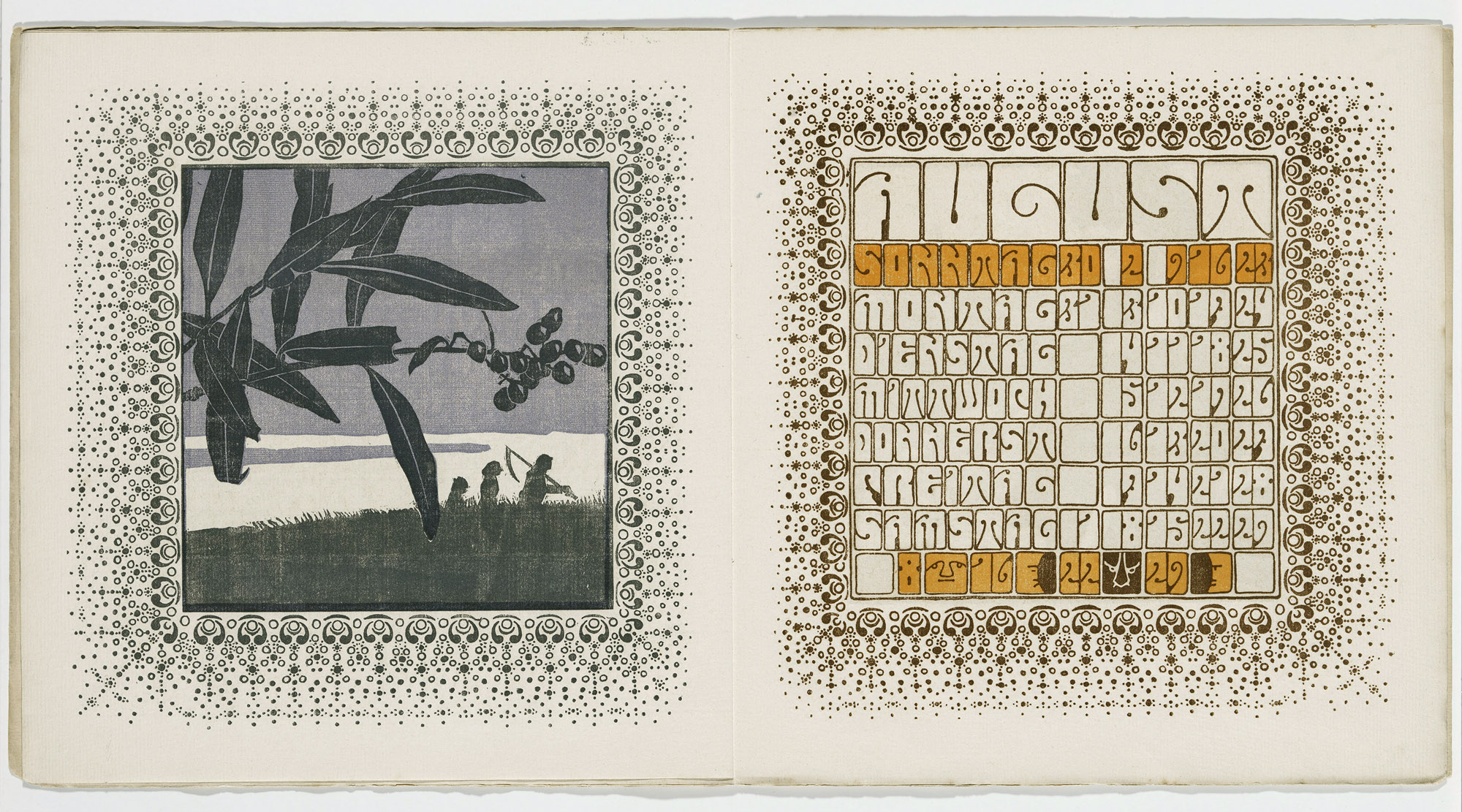
Alfred Roller (Austrian, 1864-1935) 'Ver Sacrum Calendar: August' 1902


Alfred Roller (Austrian, 1864-1935)
Ver Sacrum Calendar: August
1902
Calendar illustrated with colour woodcuts
William A. Sargent Fund
Photograph: © Museum of Fine Arts, Boston


Alfred Roller (Austrian, 1864-1935)

Alfred Roller (2 October 1864 – 21 June 1935) was an Austrian painter, graphic designer, and set designer.

Roller was born in Brünn (Brno), Moravia. He at first studied painting at the Academy of Fine Arts in Vienna under Christian Griepenkerl and Eduard Peithner von Lichtenfels, but eventually became disenchanted with the Academy’s traditionalism. In 1897 he co-founded the Viennese Secession with Koloman Moser, Joseph Maria Olbrich, Josef Hoffmann, Gustav Klimt, and other artists who rejected the prevalent academic style of art. He became a professor of drawing at the University of Applied Arts Vienna (Kunstgewerbeschule) in 1899, and president of the Secession in 1902.

In his early career Roller was very active as a graphic designer and draughtsman. He designed numerous covers and vignettes for the pages the Secessionist periodical Ver Sacrum, as well as the posters for the fourth, fourteenth, and sixteenth Secession exhibitions. He also designed the layout of the exhibitions themselves.

In 1902 Roller was introduced to the composer Gustav Mahler by Carl Moll. Roller expressed an interest in stage design and showed Mahler several sketches he had made for Wagner’s Tristan und Isolde. Mahler was impressed and decided to employ Roller to design the sets for a new production of the piece. The production, which premiered in February 1903, was a great critical success. Roller continued to design sets for Mahler’s productions. Eventually Roller left the Secession and his teaching post at the Kunstgewerbeschule to be appointed chief stage designer to the Vienna State Opera, a position he held until 1909. He died in Vienna in 1935.

Text from the Wikipedia website


Museum of Fine Arts, Boston
Avenue of the Arts
465 Huntington Avenue
Boston, Massachusetts

Opening hours:
Sunday 10am – 5pm
Monday 10 am – 5pm
Tuesday Closed
Wednesday 10am – 5pm
Thursday 10am – 10pm
Friday 10am – 10pm
Saturday 10am – 5pm

Museum of Fine Arts, Boston website

LIKE ART BLART ON FACEBOOK

Back to top

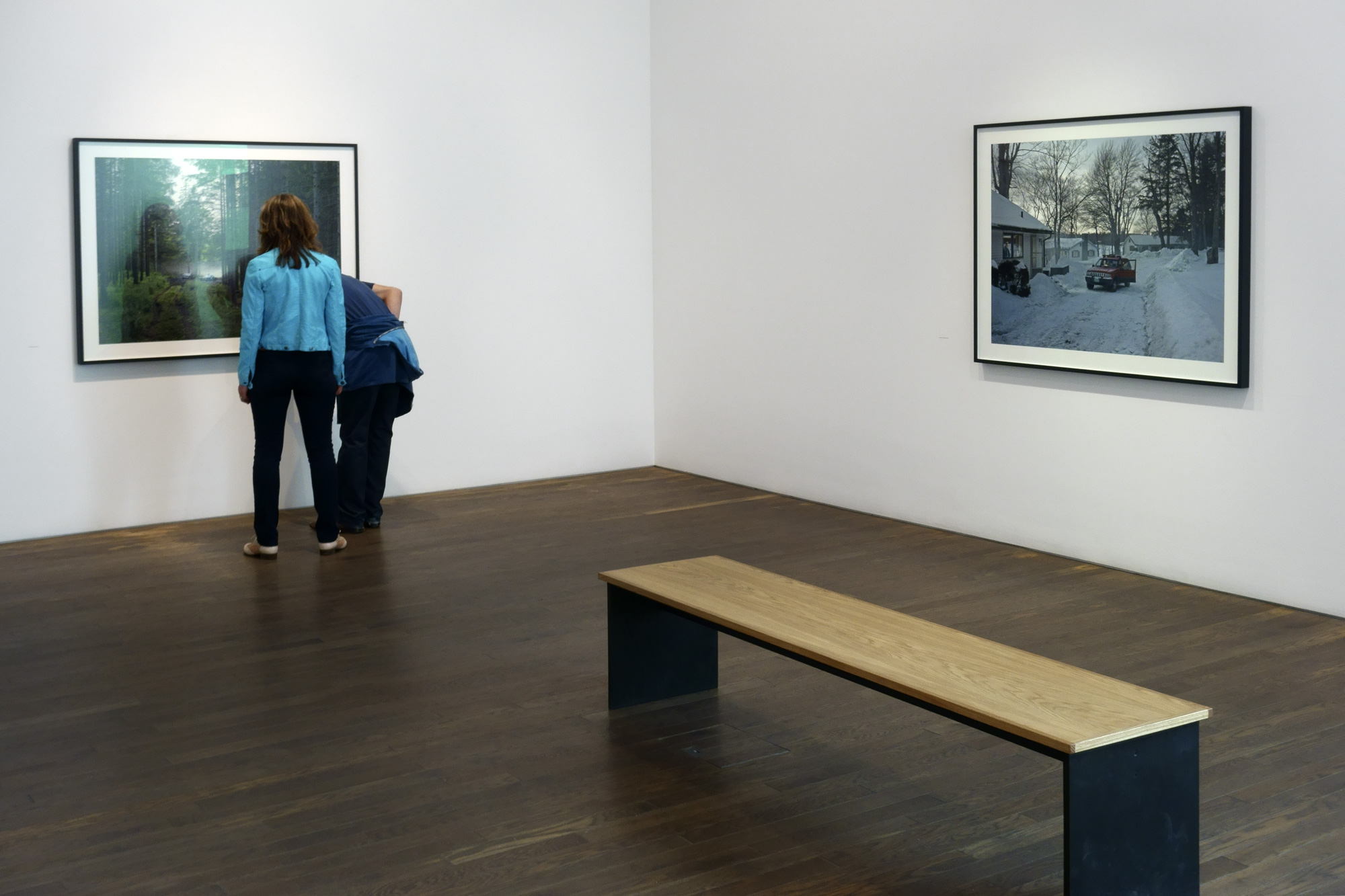
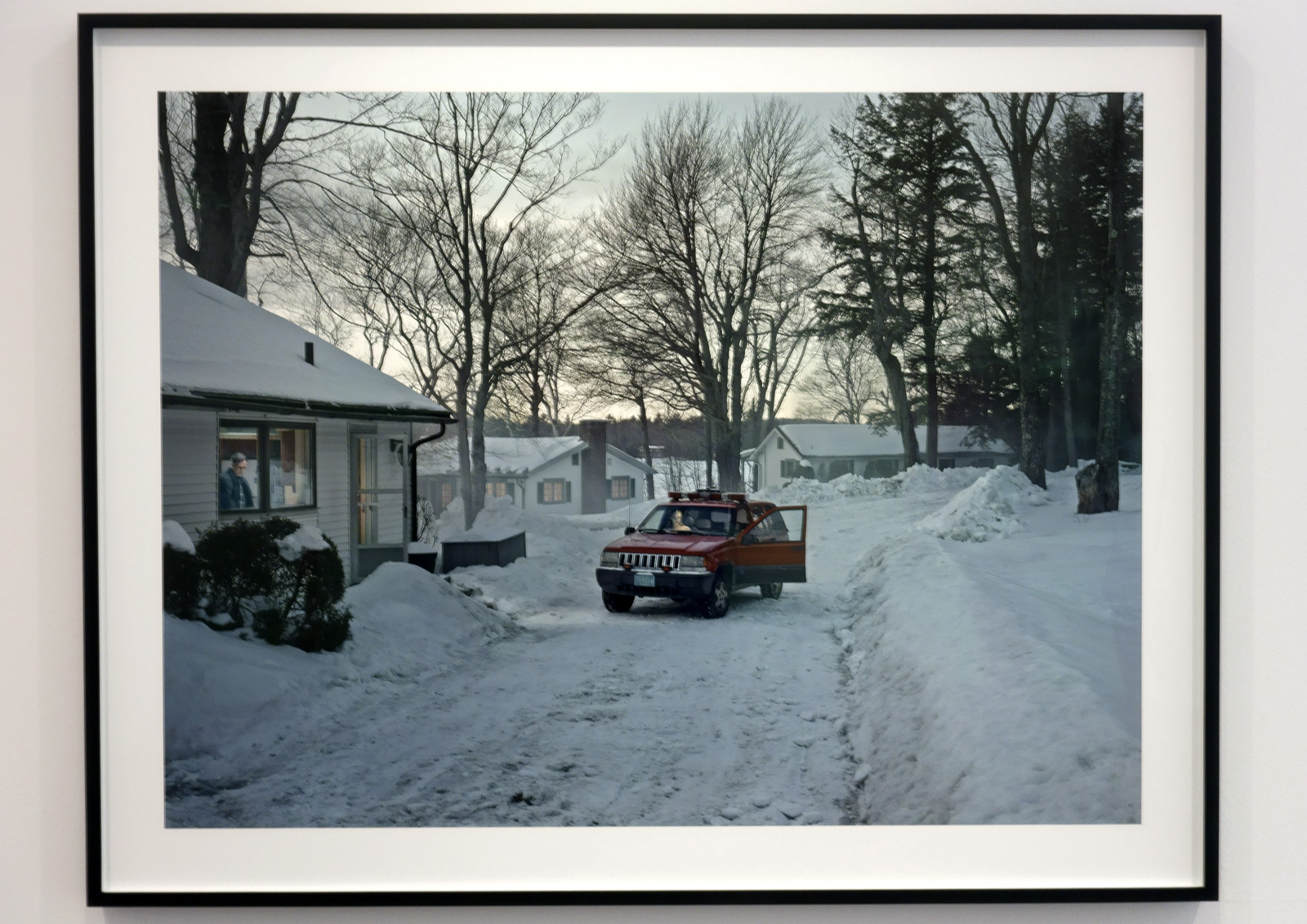
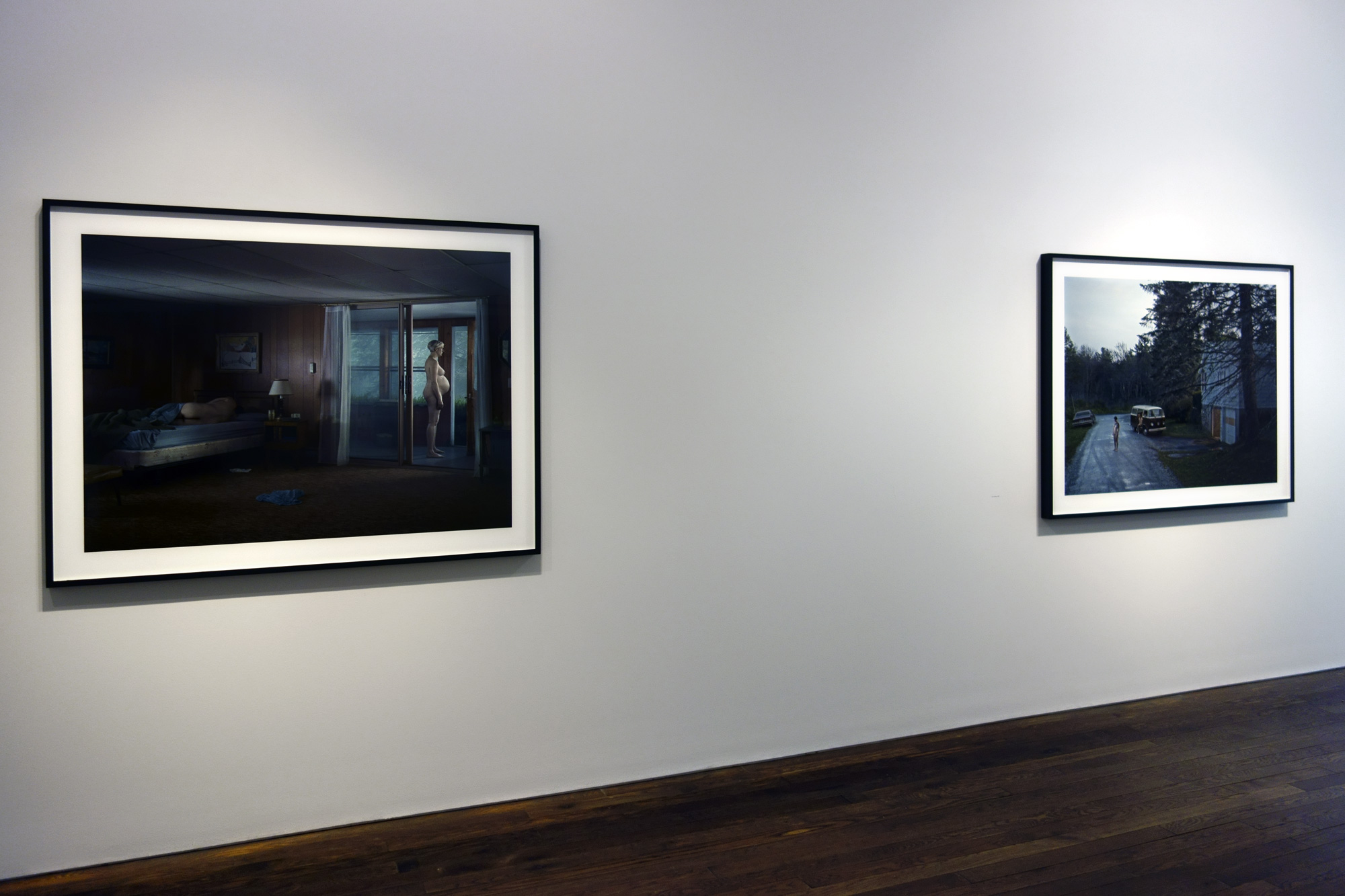
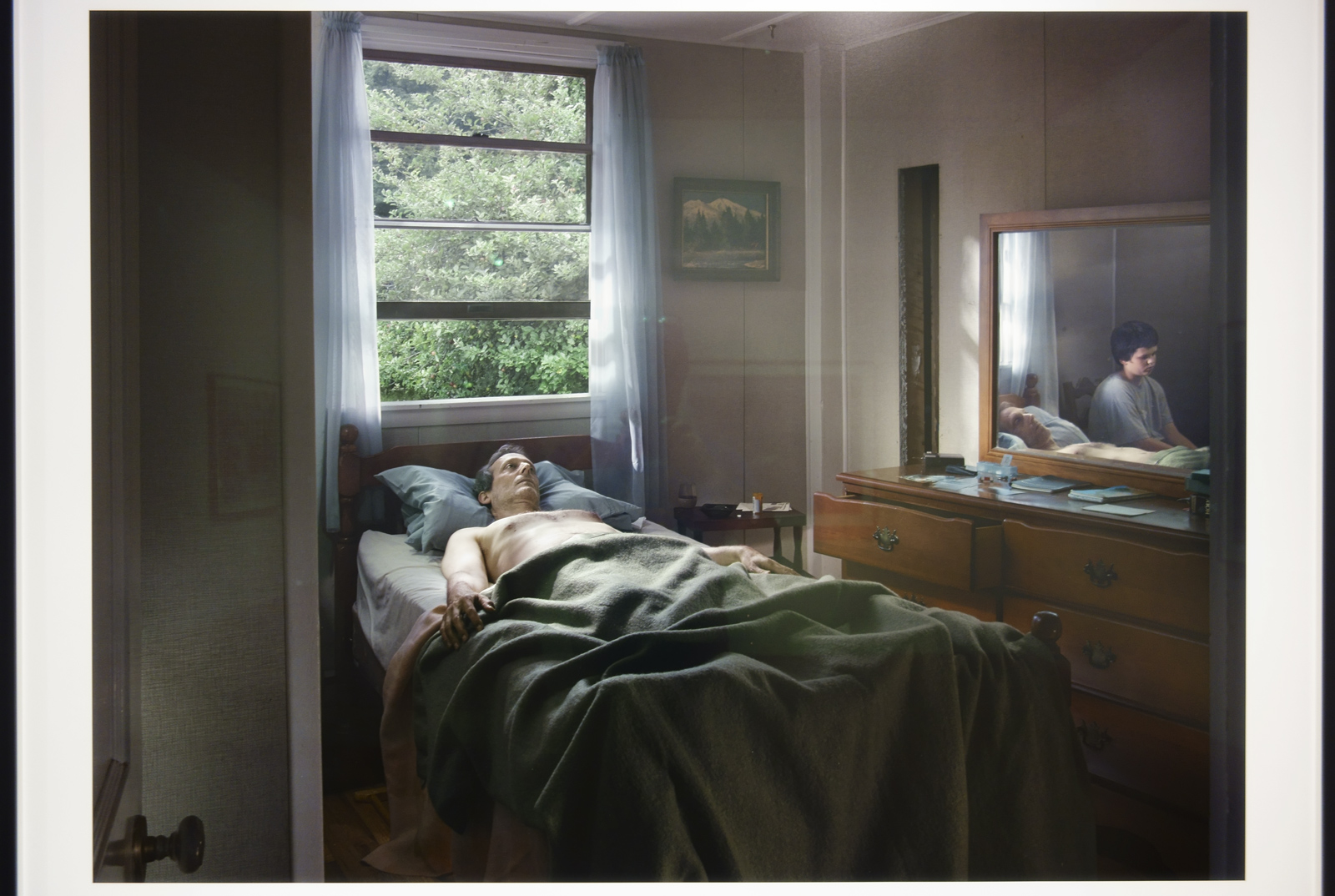
Review: ‘Gregory Crewdson: Cathedral of the Pines’ at The Photographers’ Gallery, London

Exhibition dates: 23rd June – 8th October, 2017


Gregory Crewdson (American, b. 1962) 'The Haircut' 2014 from the exhibition 'Gregory Crewdson: Cathedral of the Pines' at The Photographers' Gallery, London, June - October, 2017


Gregory Crewdson (American, b. 1962)
The Haircut
2014
© Gregory Crewdson. Courtesy Gagosian


End of days

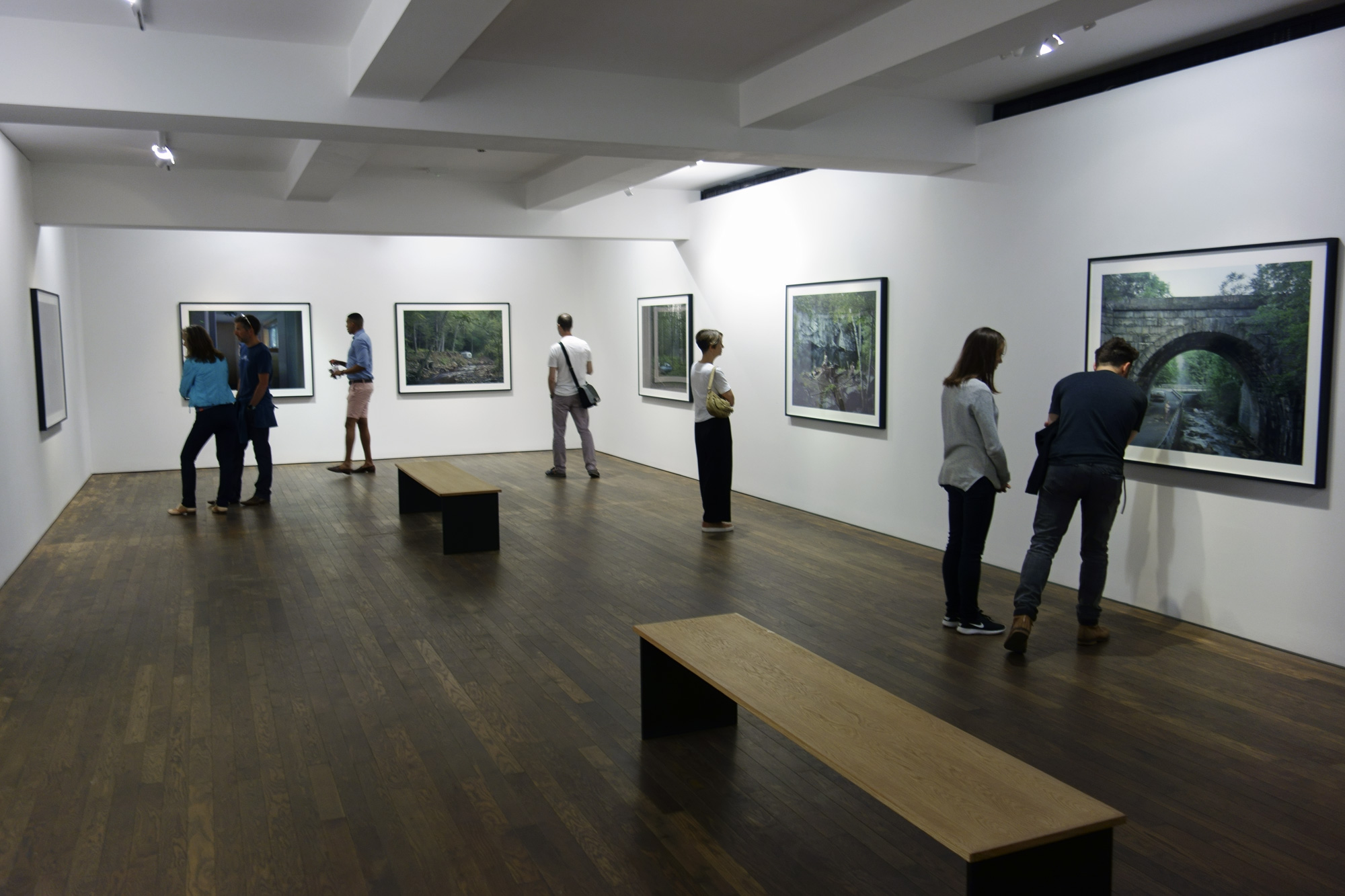
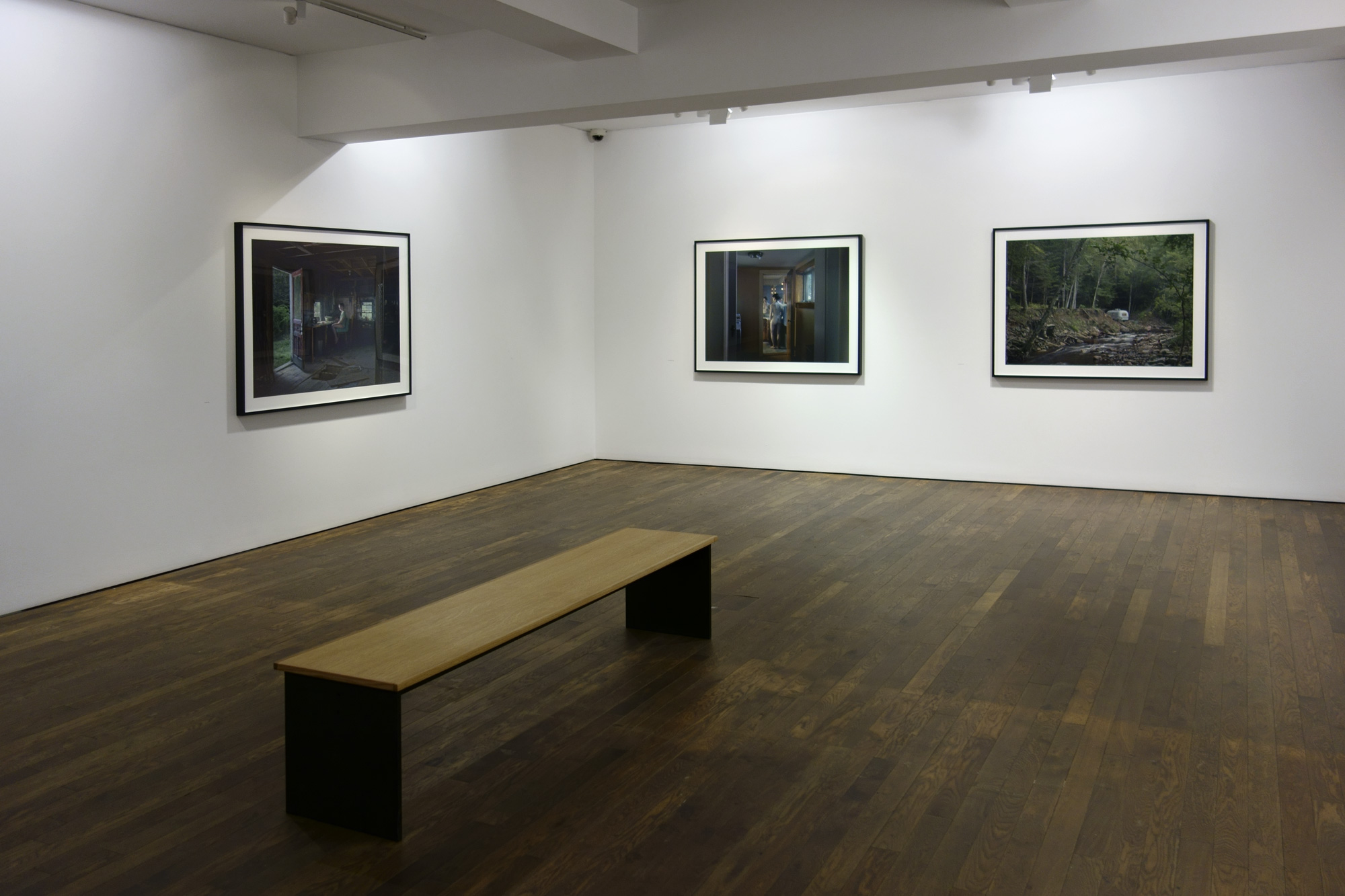
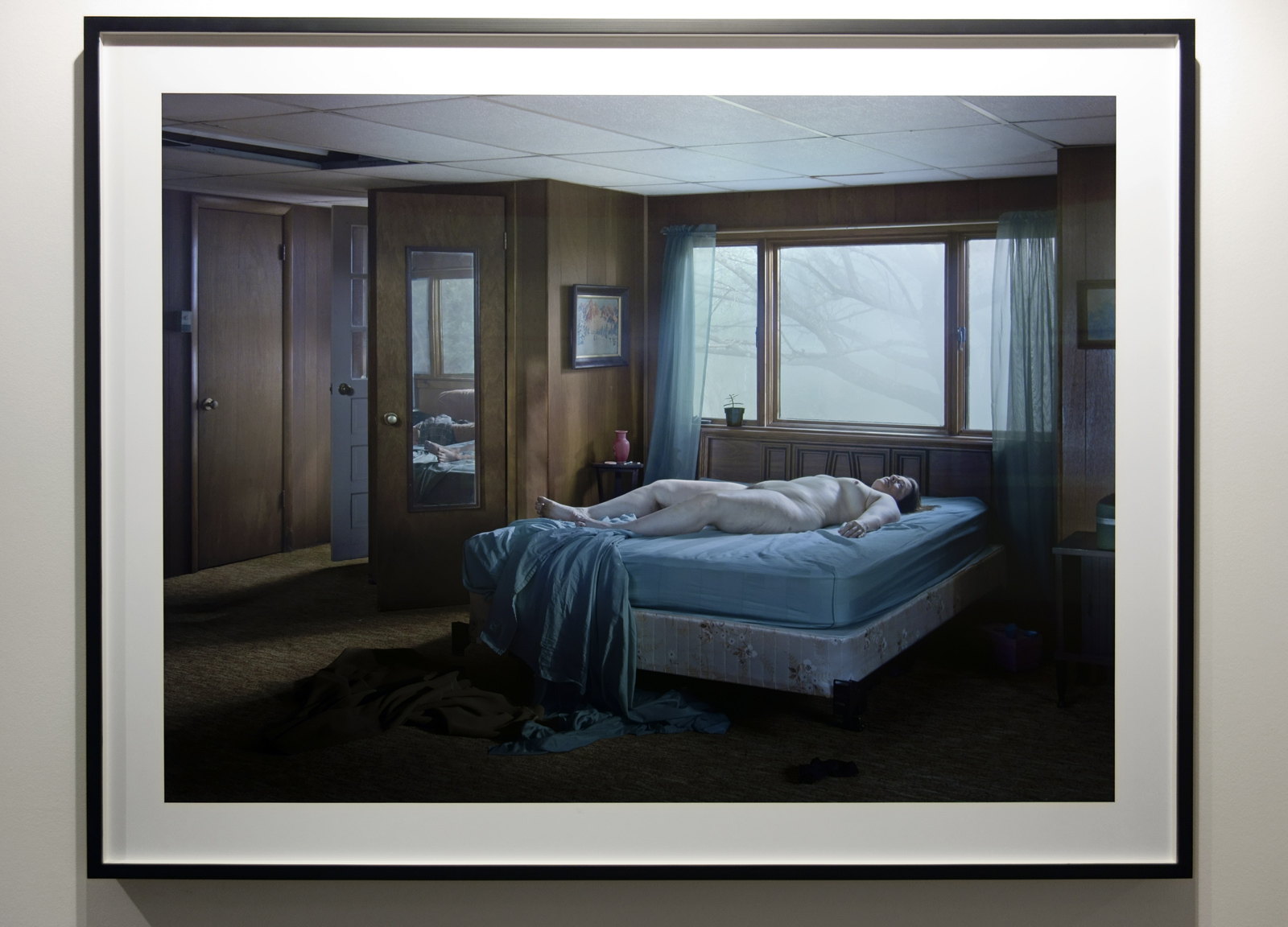
I have written critically and glowingly of Crewdson’s work in the past (see my review of his exhibition at the Centre for Contemporary Photography, Melbourne 2012). With the exhibition Gregory Crewdson: Cathedral of the Pines the same elements are extant: life in the back woods of America, the tableaux beautifully staged and presented in large photographic prints throughout the three floors of the expansive spaces of the Photographers’ Gallery, London. And yet there is something particularly “icky”, if I can use that word, about this new body of work. What made me feel this way?

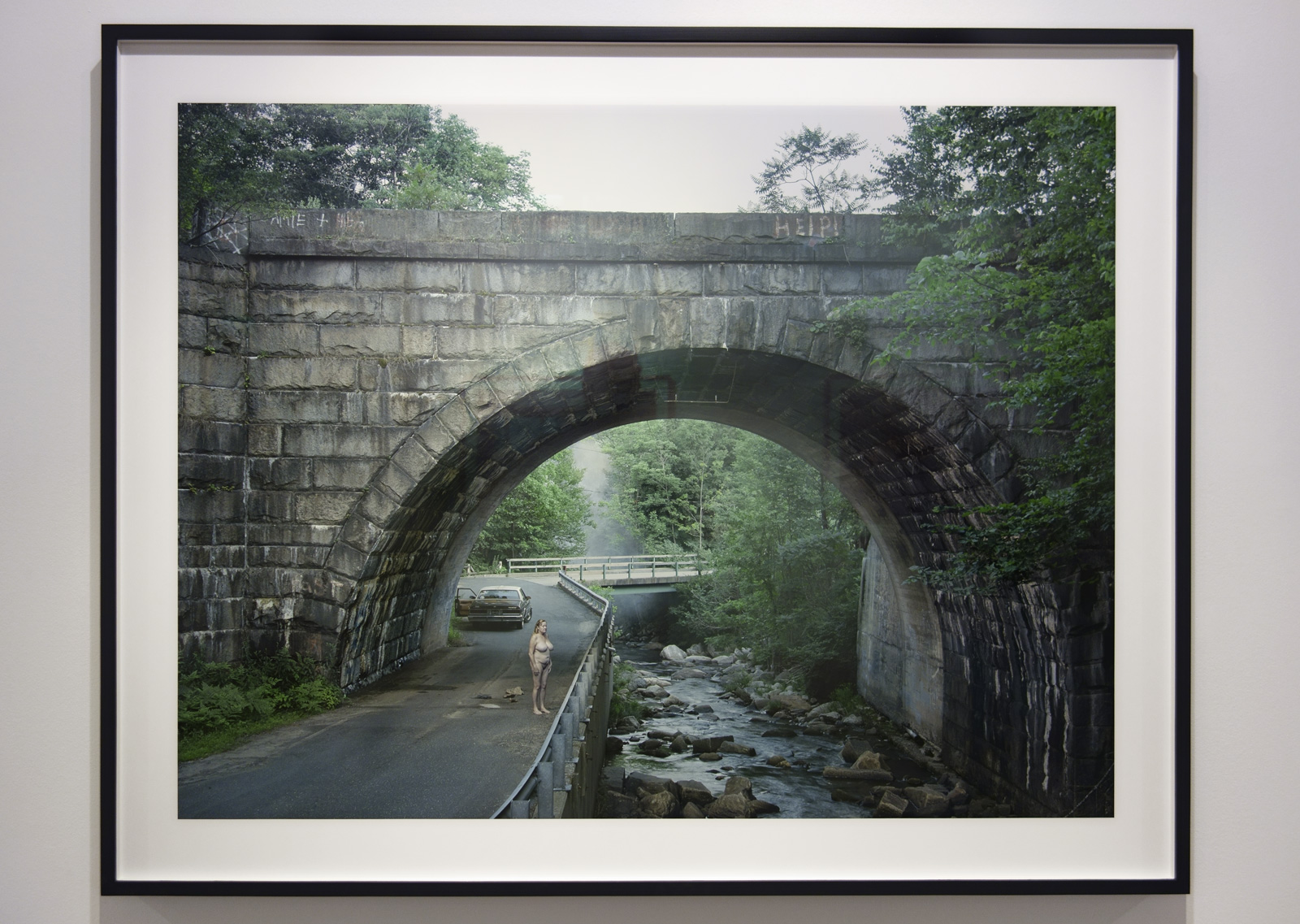
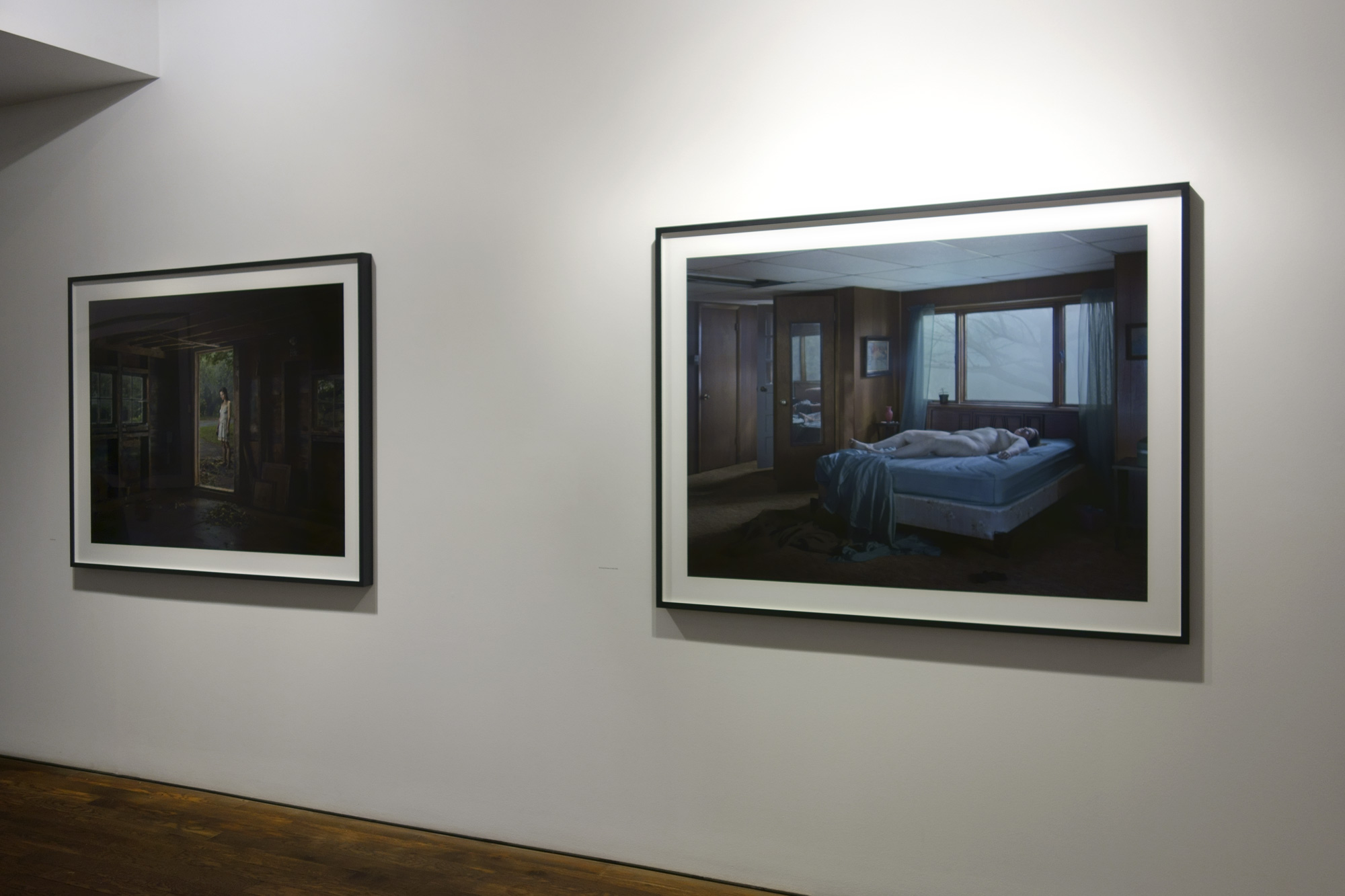
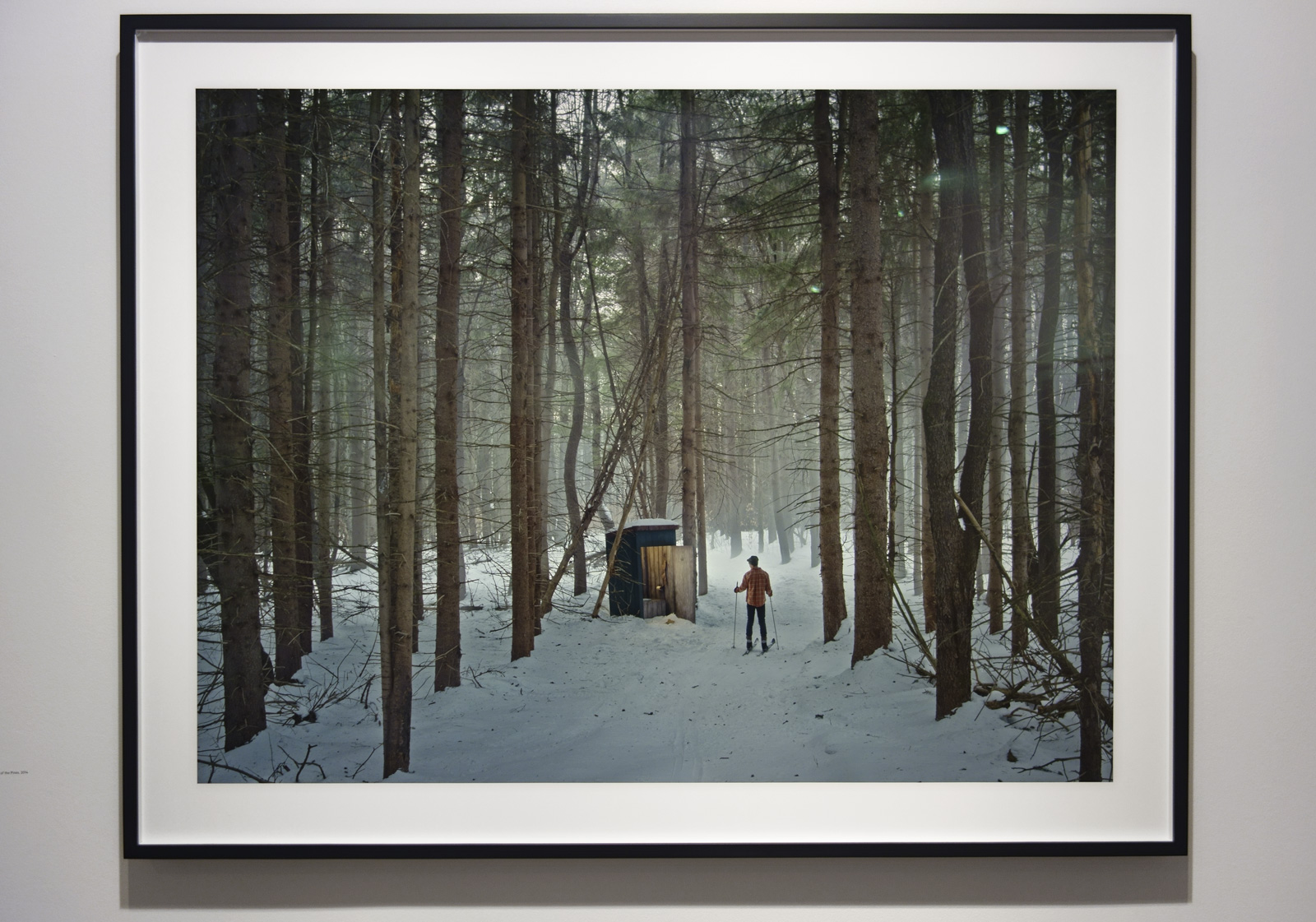
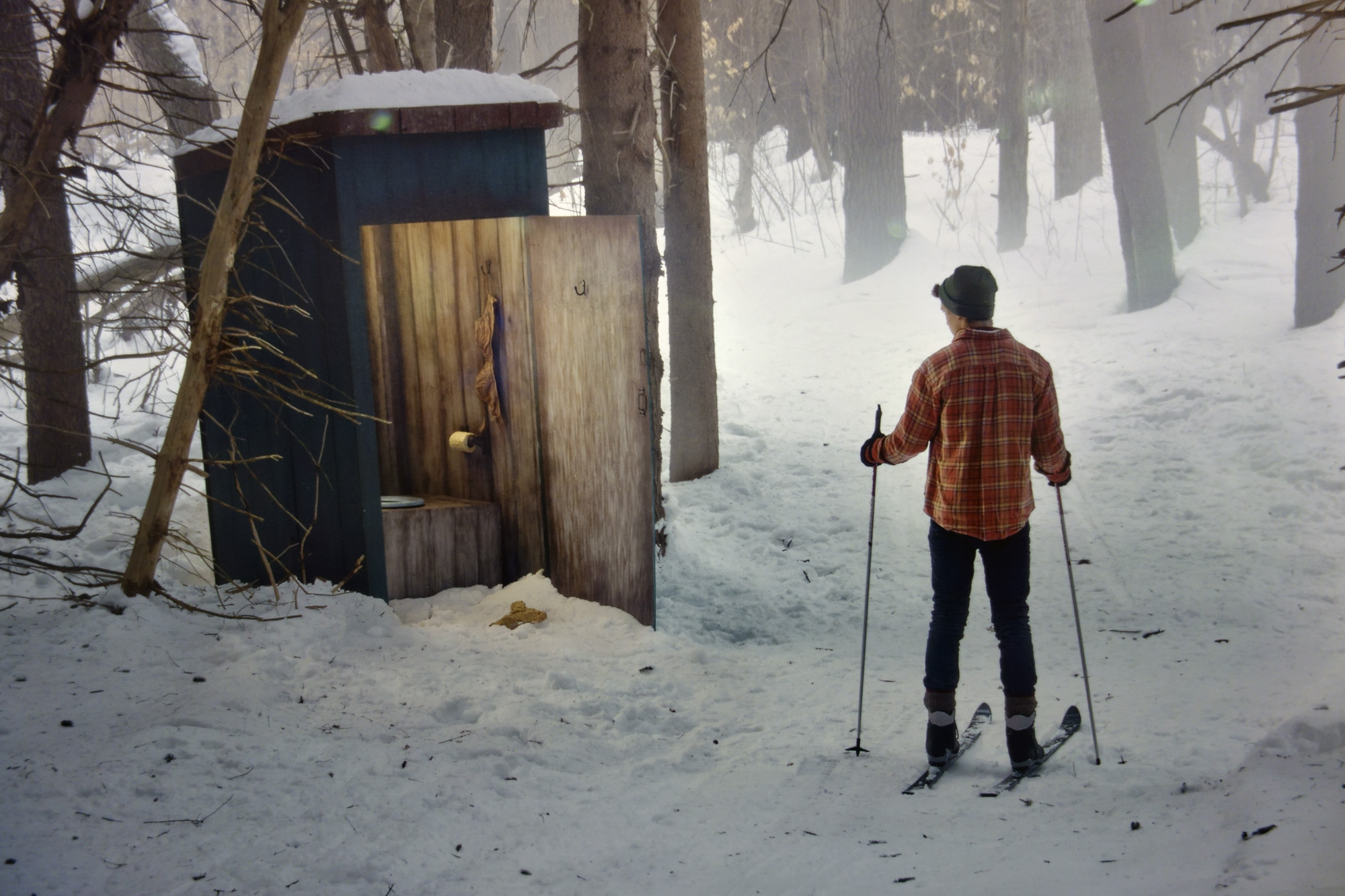
Firstly, I was uncomfortable with the number of naked or half-naked females (compared to men) in the photographs, all looking vulnerable, melancholic and isolated in small, rural town America. If this is how Crewdson sees women in the microcosms he creates – vulnerable women “pictured” in forest and cabin settings – this incessant observation is objectionable to me. These are not powerful, strong, independent women, far from it. These are stateless women who peer endlessly out of windows, or sit on the end of beds looking downcast. It is almost degrading to females that these woman are so passive and objectified. Reinforcing the theme of isolation and desperation is the word “HELP!” painted on the bridge above a naked woman standing on a roadway; reinforcing the feeling of voyeurism is a woman’s bra hanging in a toilet being observed by a man on a pair of skis.

Secondly, compared to the earlier series, the spaces in these new photographs seem to be completely dead. The photographs look handsome enough but they have a very different feel from the previous work. While externally referencing a sense of space and uncertainty present in B grade movies, European and American 19th century landscape paintings (where the human figure is dwarfed by the supposed sublime), and the paintings of Edward Hopper – the spaces in these new works feel closed, locked down and a bit scary. Nothing is real (and never has been) in Crewdson’s work but this time everything seems to be over directed. As my friend Elizabeth Gertsakis observed, “The environmental context is chilling. The palette is extremely cold, there is no warmth at all. The viewer is not welcome, because there is nothing to be welcome to… even for curiosity’s sake. No one is real here – everything is silent.” Or dead. Or lifeless.

The whole series seems apathetic. That is, apathy with extreme effort. While Crewdson observes that the darkness lifted, leading to a reconnection with his artistic process and a period of renewal and intense creativity, this work is clearly at the end of something. As Elizabeth comments, “An invisible wall has come down here… and there is absolutely no entry. This body of work is so much more pervy because it is so obvious and wooden. The camera here is well and truly in the mortuary and the photographer is the undertaker as well as the man who makes dead faces look ‘human’.” But he doesn’t make them human, and there’s the rub. Which all begs the question: where is this work going?

While Crewdson continues to move down a referential and associative path, the work fails to progress conceptually even as the work ultimately stagnates, both visually and emotionally. These wooden mise en scène are based on a very tired conceptual methodology, that of the narrative of the B grade movie which, if you have the money, time and willingness to invest in, can seem sufficiently sophisticated. Of course, buyers want to keep buying a signatory technique or idea that is easily recognisable and this adds to the cachet of the art… but as a critic you have to ask where the work is going, if an artist keeps repeating the same thing over and over and over again in slightly different contexts.

Imagine if Degas had kept painting ballet dancers using the same lighting, the same perspective, the same colour palette, the same psychological investigation painting after painting… what we would be saying about the resulting work? Sure, there is great technical proficiency contained in Crewdson’s work, but is he pushing the work anywhere more interesting?

And the simple answer to that question is, no he isn’t.

No wonder he has been having a tough time reconnecting with his artistic process.

Dr Marcus Bunyan


All installation photographs © Dr Marcus Bunyan, The Photographers’ Gallery and the artist. Please observe that there are reflections in the installation photographs of the surrounding gallery.


“It was deep in the forests of Becket, Massachusetts that I finally felt darkness lift, experienced a reconnection with my artistic process, and moved into a period of renewal and intense creativity.”


Gregory Crewdson


Room 1


Installation view of Room 1 of 'Gregory Crewdson: Cathedral of the Pines' at The Photographers' Gallery

Installation view of Room 1 of 'Gregory Crewdson: Cathedral of the Pines' at The Photographers' Gallery showing 'Woman at Sink' 2014

Gregory Crewdson. Woman at Sink 2014
Installation view of Room 1 of 'Gregory Crewdson: Cathedral of the Pines' at The Photographers' Gallery

Installation view of Room 1 of 'Gregory Crewdson: Cathedral of the Pines' at The Photographers' Gallery showing 'Woman in Parked Car' 2014

Gregory Crewdson. Woman in Parked Car 2014
Installation view of Room 1 of 'Gregory Crewdson: Cathedral of the Pines' at The Photographers' Gallery showing 'The Basement' (2014)

Installation view of Room 1 of 'Gregory Crewdson: Cathedral of the Pines' at The Photographers' Gallery


Installation views of Room 1 of Gregory Crewdson: Cathedral of the Pines at The Photographers’ Gallery, London showing in the bottom two images, The Basement (2014)
Photos: © Dr Marcus Bunyan


Gregory Crewdson (American, b. 1962) 'The Basement' 2014 from the exhibition 'Gregory Crewdson: Cathedral of the Pines' at The Photographers' Gallery, London, June - October, 2017


Gregory Crewdson (American, b. 1962)
The Basement
2014
© Gregory Crewdson. Courtesy Gagosian


This is the first UK exhibition of Cathedral of the Pines, a new body of work by acclaimed American artist Gregory Crewdson, and it is also the first time The Photographers’ Gallery has devoted all three of its gallery spaces to one artist.

With this series, produced between 2013 and 2014, Crewdson departs from his interest in uncanny suburban subjects and explores human relations within more natural environments. In images that recall nineteenth-century American and European paintings, Crewdson photographs figures posing within the small rural town of Becket, Massachusetts, and its vast surrounding forests, including the actual trail from which the series takes its title. Interior scenes charged with ambiguous narratives probe tensions between human connection and separation, intimacy and isolation.

Crewdson describes this project as ‘his most personal’, venturing to retrieve in the remote setting of the forest, a reminiscence of his childhood. The images in Cathedral of the Pines, located in the dystopian landscape of the anxious American imagination, create atmospheric scenes, many featuring local residents, and for the first time in Crewdson’s work, friends and family. In Woman at Sink, a woman pauses from her domestic chores, lost in thought. In Pickup Truck, Crewdson shows a nude couple in the flatbed of a truck in a dense forest – the woman seated, the man turned away in repose. Crewdson situates his disconsolate subjects in familiar settings, yet their cryptic actions – standing still in the snow, or nude on a riverbank – hint at invisible challenges. Precisely what these challenges are, and what fate awaits these anonymous figures, are left to the viewer’s imagination.

Crewdson’s careful crafting of visual suspense conjures forebears such as Diane Arbus, Alfred Hitchcock, and Edward Hopper, as well as the influence of Hollywood cinema and directors such as David Lynch. In Cathedral of the Pines, Crewdson’s persistent psychological leitmotifs evolve into intimate figurative dramas. Visually alluring and often deeply disquieting, these tableaux are the result of an intricate production process: For more than twenty years, Crewdson has used the streets and interiors of small-town America as settings for photographic incarnations of the uncanny.

Maintaining his trademark elaborate production processes, Crewdson works with a large crew to produce meticulously staged images with an obsessive attention to detail. Situated between Hollywood cinema and nineteenth-century American and European Romantic landscape painting, these scenes are charged with ambiguous narratives, which prove tensions between human connection and separation, intimacy and isolation.

Text from The Photographers’ Gallery website and wall text


Room 2


Installation view of Room 2 of 'Gregory Crewdson: Cathedral of the Pines' at The Photographers' Gallery

Installation view of Room 2 of 'Gregory Crewdson: Cathedral of the Pines' at The Photographers' Gallery

Installation view of Room 2 of 'Gregory Crewdson: Cathedral of the Pines' at The Photographers' Gallery showing 'The VW Bus' 2013

Gregory Crewdson. The VW Bus 2013
Installation view of Room 2 of 'Gregory Crewdson: Cathedral of the Pines' at The Photographers' Gallery showing 'Pregnant Woman on Porch' 2013

Gregory Crewdson. Pregnant Woman on Porch 2013
Installation view of Room 2 of 'Gregory Crewdson: Cathedral of the Pines' at The Photographers' Gallery

Installation view of Room 2 of 'Gregory Crewdson: Cathedral of the Pines' at The Photographers' Gallery showing 'Father and Son' 2013

Gregory Crewdson. Father and Son 2013
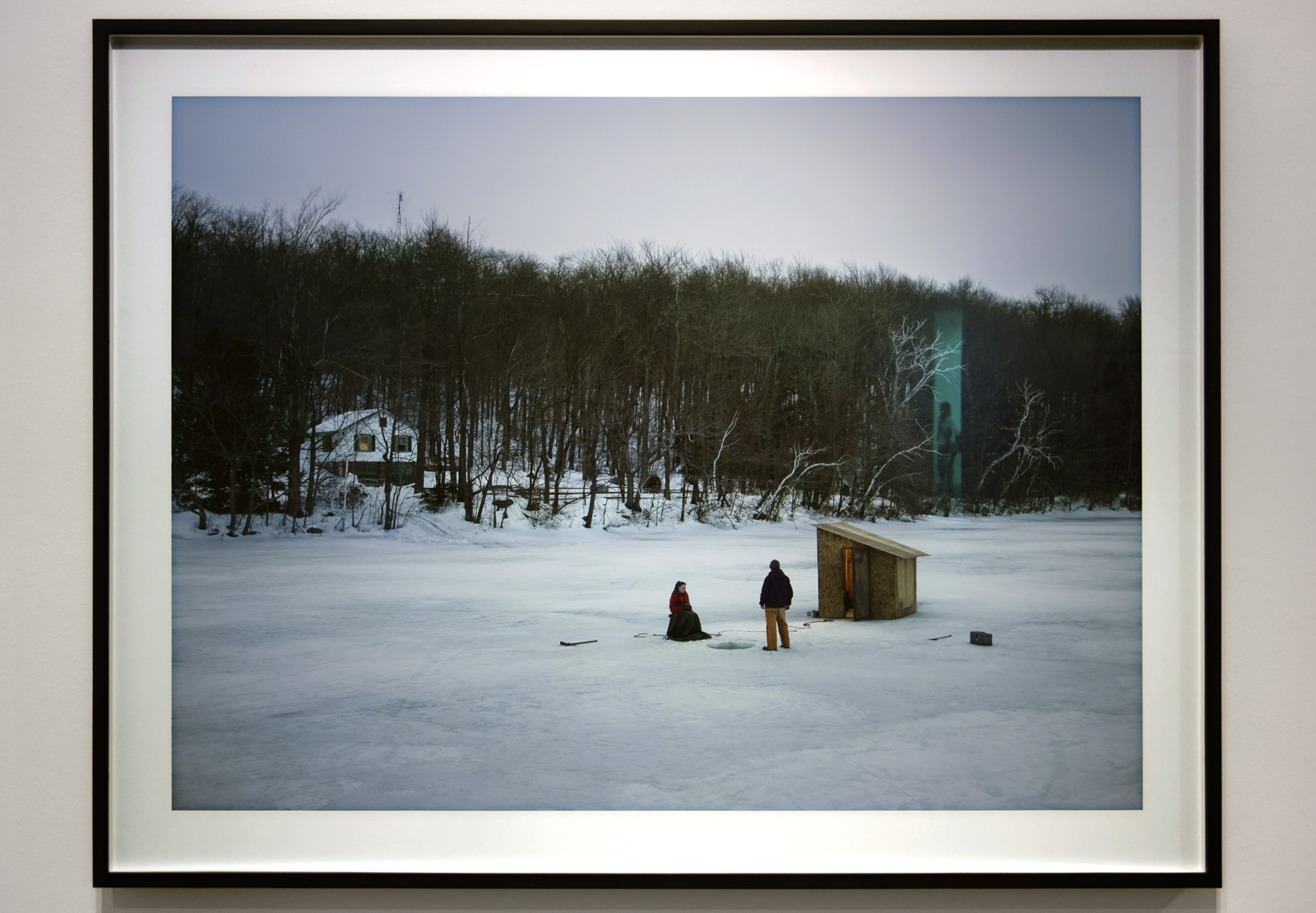
Installation view of Room 2 of 'Gregory Crewdson: Cathedral of the Pines' at The Photographers' Gallery showing 'The Ice Hut' 2014

Gregory Crewdson. The Ice Hut 2014
Installation view of Room 2 of 'Gregory Crewdson: Cathedral of the Pines' at The Photographers' Gallery

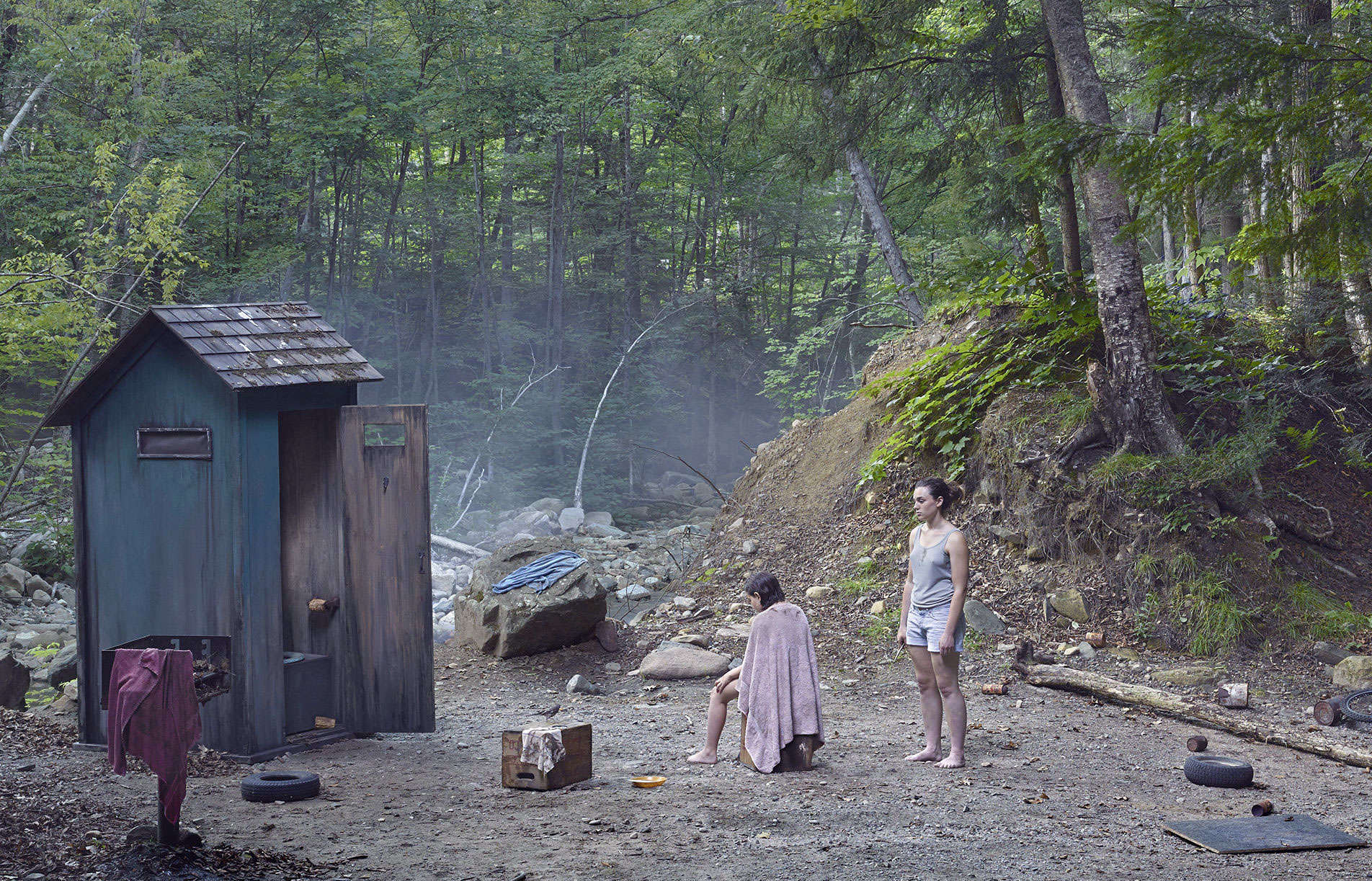
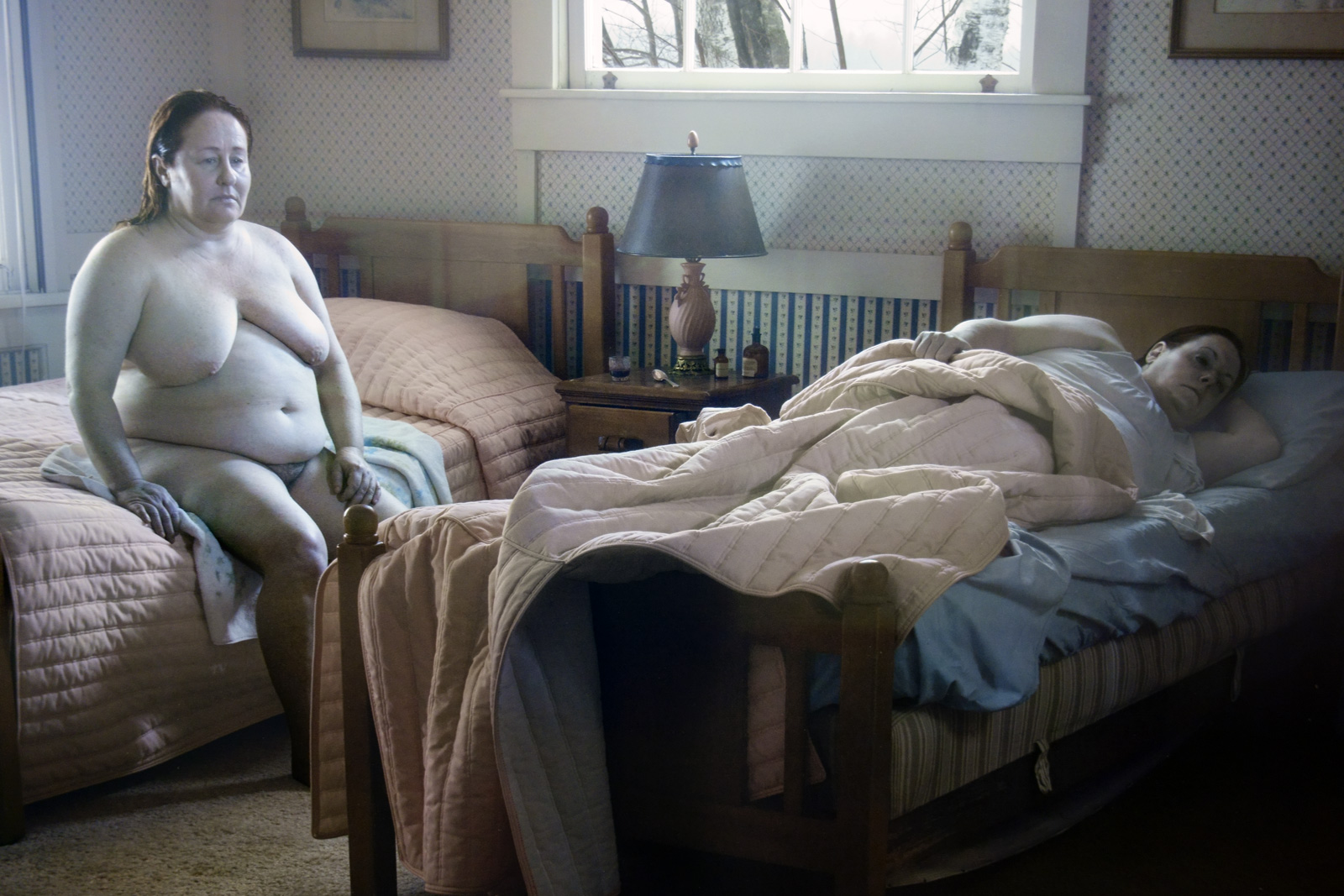
Installation view of Room 2 of 'Gregory Crewdson: Cathedral of the Pines' at The Photographers' Gallery showing 'Sisters' 2014

Gregory Crewdson. Sisters 2014
Installation view of Room 2 of 'Gregory Crewdson: Cathedral of the Pines' at The Photographers' Gallery showing 'Sisters' 2014 (detail)

Gregory Crewdson. Sisters 2014 (detail)
Installation view of Room 2 of 'Gregory Crewdson: Cathedral of the Pines' at The Photographers' Gallery

Installation view of Room 2 of 'Gregory Crewdson: Cathedral of the Pines' at The Photographers' Gallery showing 'The Disturbance' 2014

Gregory Crewdson. The Disturbance 2014 (detail below)
Installation view of Room 2 of 'Gregory Crewdson: Cathedral of the Pines' at The Photographers' Gallery showing 'The Disturbance' 2014 (detail)


Installation views of Room 2 of Gregory Crewdson: Cathedral of the Pines at The Photographers’ Gallery, London showing in the bottom two images, The Disturbance 2014
Photos: © Dr Marcus Bunyan


Gregory Crewdson (American, b. 1962) 'The Disturbance' 2014 from the exhibition 'Gregory Crewdson: Cathedral of the Pines' at The Photographers' Gallery, London, June - October, 2017


Gregory Crewdson (American, b. 1962)
The Disturbance
2014
© Gregory Crewdson. Courtesy Gagosian


Room 3


Installation view of Room 3 of 'Gregory Crewdson: Cathedral of the Pines' at The Photographers' Gallery

Installation view of Room 3 of 'Gregory Crewdson: Cathedral of the Pines' at The Photographers' Gallery showing 'Woman on Road' 2014

Gregory Crewdson. Woman on Road 2014
Installation view of Room 3 of 'Gregory Crewdson: Cathedral of the Pines' at The Photographers' Gallery

Installation view of Room 3 of 'Gregory Crewdson: Cathedral of the Pines' at The Photographers' Gallery

Installation view of Room 3 of 'Gregory Crewdson: Cathedral of the Pines' at The Photographers' Gallery

Installation view of Room 3 of 'Gregory Crewdson: Cathedral of the Pines' at The Photographers' Gallery

Installation view of Room 3 of 'Gregory Crewdson: Cathedral of the Pines' at The Photographers' Gallery

Installation view of Room 3 of 'Gregory Crewdson: Cathedral of the Pines' at The Photographers' Gallery


Installation views of Room 3 of Gregory Crewdson: Cathedral of the Pines at The Photographers’ Gallery, London
Photos: © Dr Marcus Bunyan


The Photographers Gallery
16-18 Ramillies Street
London
W1F 7LW

Opening hours:
Monday – Wednesday: 10.00 – 18.00
Thursday and Friday: 10.00 – 20.00
Saturday: 10.00 – 18.00
Sunday: 11.00 – 18.00

The Photographers’ Gallery website

LIKE ART BLART ON FACEBOOK

Back to top

Exhibition: ‘Autophoto’ at Fondation Cartier pour l’art contemporain, Paris

Exhibition dates: 20th April – 24th September, 2017

Artists: Robert Adams • Eve Arnold • Bernard Asset • Éric Aupol • Theo Baart Et Cary Markerink • Sue Barr • Valérie Belin • Martin Bogren • Nicolas Bouvier • David Bradford • Brassaï • Alain Bublex • Edward Burtynsky • Andrew Bush • Ronni Campana • Gilles Caron • Alejandro Cartagena • Kurt Caviezel • Philippe Chancel • Larry Clark • Langdon Clay • Stéphane Couturier • Bruce Davidson • Jean Depara • Raymond Depardon • John Divola • Robert Doisneau • William Eggleston • Elliott Erwitt • Walker Evans • Barry Feinstein • Pierre De Fenoÿl • Alain Fleischer • Robert Frank • Lee Friedlander • Bernhard Fuchs • Paolo Gasparini • Óscar Fernando Gómez • Jeff Guess • Andreas Gursky • Fernando Gutiérrez • Jacqueline Hassink • Anthony Hernandez • Yasuhiro Ishimoto • Peter Keetman • Seydou Keïta • Germaine Krull • Seiji Kurata • Justine Kurland • Jacques Henri Lartigue • O. Winston Link • Peter Lippmann • Marcos López • Alex Maclean • Ella Maillart • Man Ray • Mary Ellen Mark • Arwed Messmer • Ray K. Metzker • Sylvie Meunier Et Patrick Tourneboeuf • Joel Meyerowitz • Kay Michalak et Sven Völker • Óscar Monzón • Basile Mookherjee • Daido Moriyama • Patrick Nagatani • Arnold Odermatt • Catherine Opie • Trent Parke • Martin Parr • Mateo Pérez • Jean Pigozzi • Bernard Plossu • Matthew Porter • Edward Quinn • Bill Rauhauser • Rosângela Rennó • Luciano Rigolini • Miguel Rio Branco • Ed Ruscha • Sory Sanlé • Hans-christian Schink • Antoine Schnek • Stephen Shore • Malick Sidibé • Guido Sigriste • Raghubir Singh • Melle Smets Et Joost Van Onna • Jules Spinatsch • Dennis Stock • Hiroshi Sugimoto • Juergen Teller • Tendance Floue • Thierry Vernet • Weegee • Henry Wessel • Alain Willaume


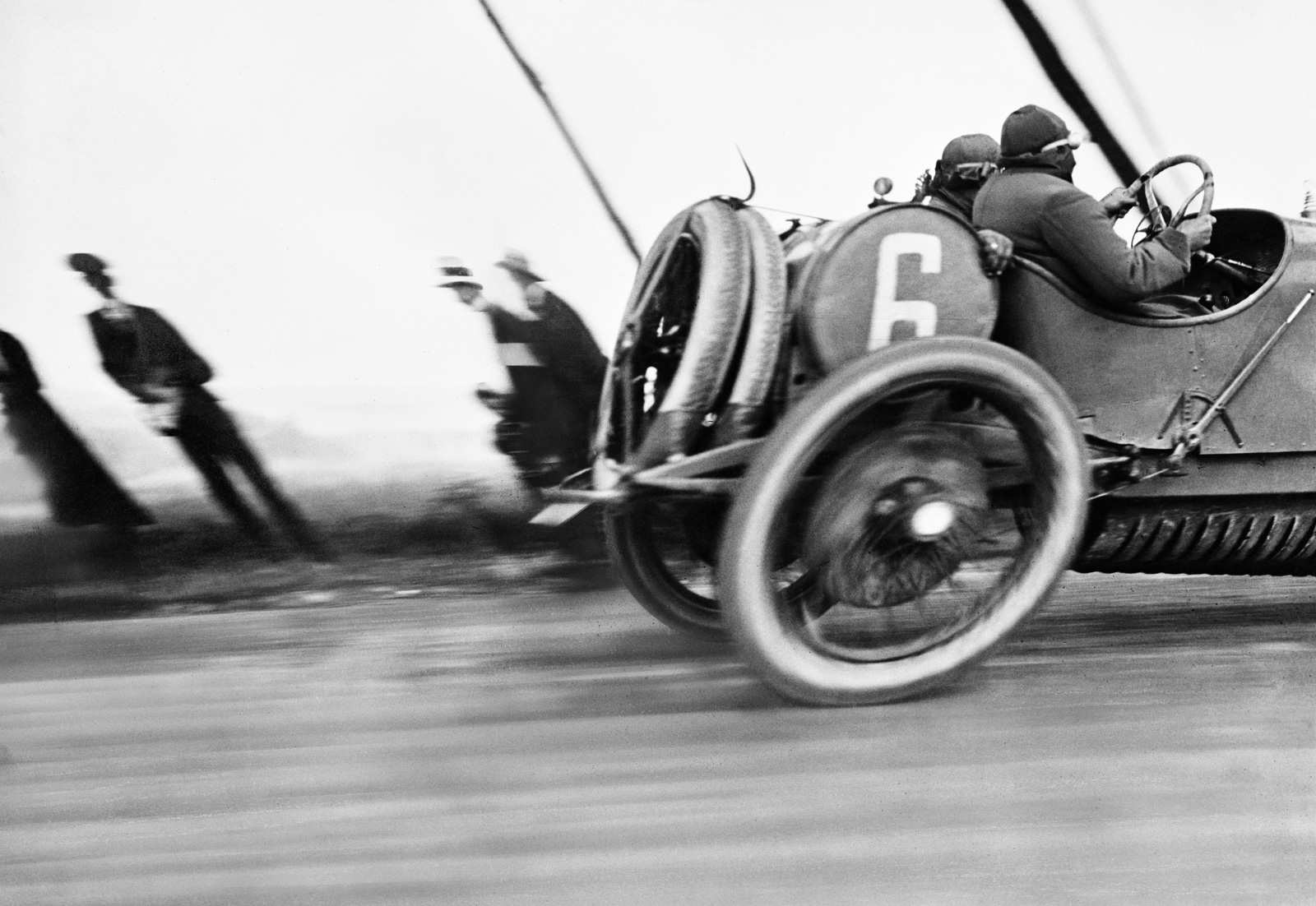
Jacques Henri Lartigue (French, 1894-1986) 'Une Delage au Grand Prix de l’Automobile Club de France, circuit de Dieppe' June 26, 1912 from the exhibition 'Autophoto' at Fondation Cartier pour l'art contemporain, Paris, April - Sept, 2017


Jacques Henri Lartigue (French, 1894-1986)
Une Delage au Grand Prix de l’Automobile Club de France, circuit de Dieppe
June 26, 1912
Gelatin silver print
30 x 40cm
Donation Jacques Henri Lartigue, Charenton-le-Pont Photographie Jacques Henri Lartigue
© Ministère de la Culture – France/AAJHL
Exhibition Autophoto from April 20 to September 24, 2017
Fondation Cartier pour l’art contemporain, Paris


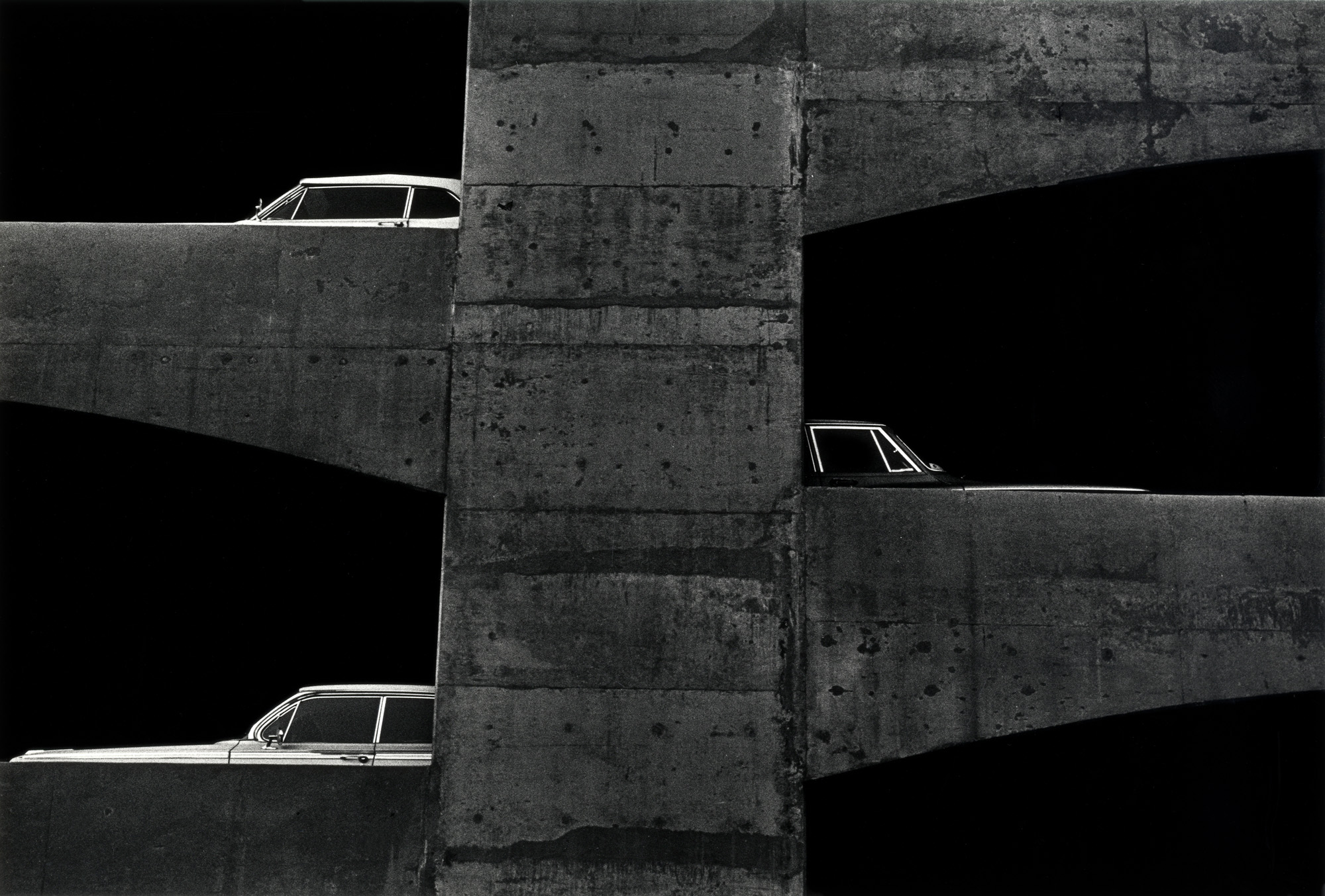
I missed this exhibition when I was in Paris recently. A great pity, I would have liked to have seen it. Some rare photographs that I have never laid eyes on before. I especially love Ray K. Metzker’s Washington, DC. The photography in both Paris and London was disappointing during my month overseas. Other than a large exhibition of Gregory Crewdson’s photographs at the Photographers’ Gallery London, there was not much of interest on offer.

Dr Marcus Bunyan

PS. So many more horizontal photographs than vertical, the automobile obviously lending itself to this orientation. I love this observation: “Photography, a tool of immobility, benefited from the automobile, a mobility tool.” And this from Jean Baudrillard: “Riding is a form spectacular amnesia. Everything to discover, everything to be erased.”


Many thankx to Fondation Cartier pour l’art contemporain for allowing me to publish the photographs in the posting. Please click on the photographs for a larger version of the image.


“Photographing is a profession. Craftsmanship. A job that one learns, that one makes more or less well, like all trades. The photographer is a witness. The witness of his time. The true photographer is the witness of every day, they are the reporter. “


Germaine Krull


“I think that cars today are almost the exact equivalent of the great Gothic cathedrals; I mean the supreme creation of an era, conceived with passion by unknown artists, and consumed in image if not in usage by a whole population which appropriates them as a purely magical object.”


Roland Barthes, Mythologies, Le Seuil, Paris, 1970, p. 150


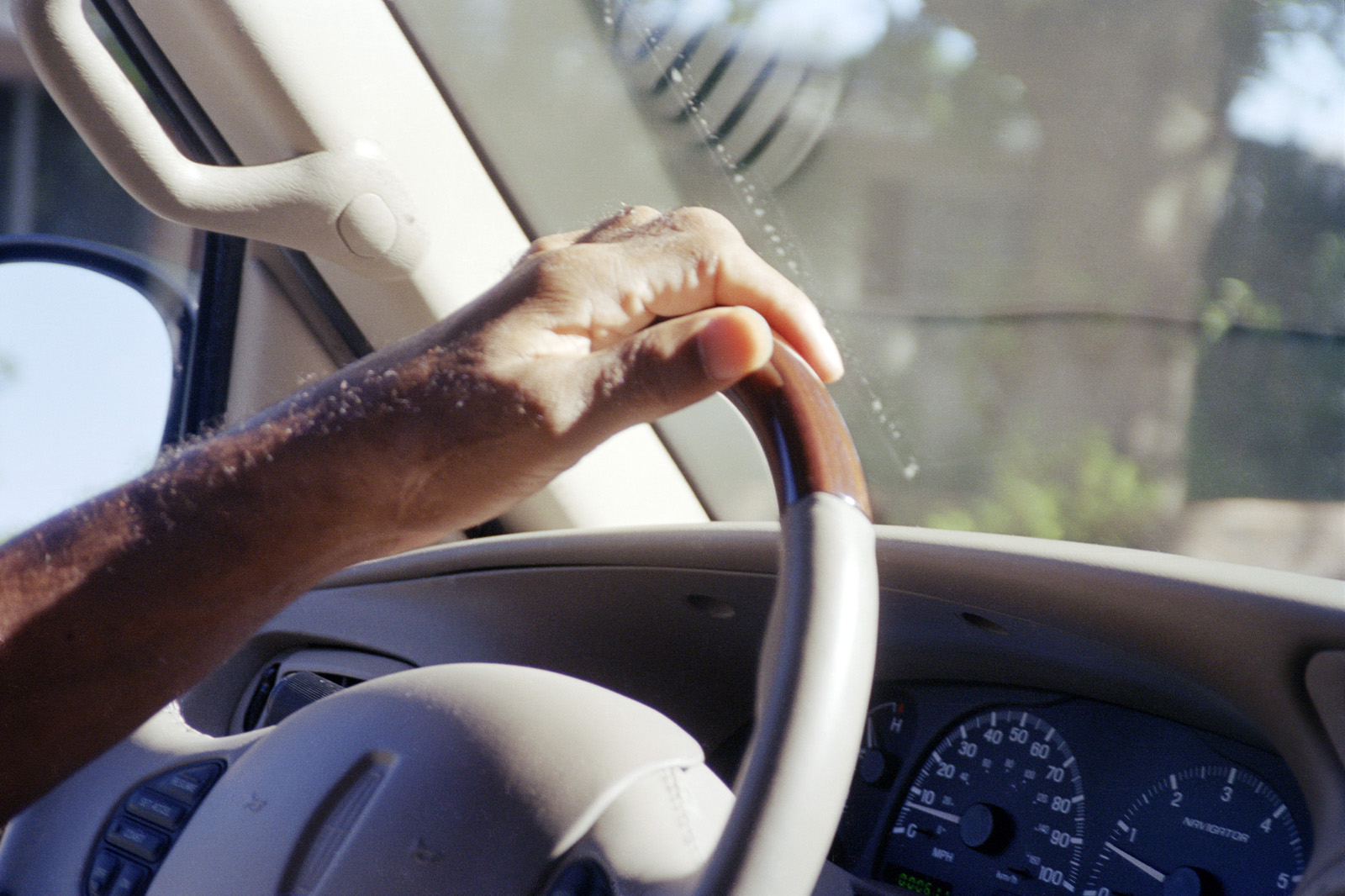
Thirty years after the exhibition Hommage à Ferrari, the Fondation Cartier pour l’art contemporain will once again focus its attention on the world of cars with the exhibition Autophoto, dedicated to photography’s relationship to the automobile. Since its invention, the automobile has reshaped our landscape, extended our geographic horizons, and radically altered our conception of space and time. The car has also influenced the approach and practice of photographers, providing them not only with a new subject but also a new way of exploring the world and a new means of expression. Based on an idea by Xavier Barral and Philippe Séclier, Autophoto will present over 500 works from the beginning of the 20th century to the present. It will invite us to discover the many facets of automotive culture – aesthetic, social, environmental, and industrial – through the eyes of photographers from around the world. The exhibition will bring together over 90 photographers including both famous and lesser-known figures such as Jacques Henri Lartigue, William Eggleston, Justine Kurland and Jacqueline Hassink, who have shown a fascination for the automobile as a subject or have used it as a tool to take their pictures.


Visite de l’exposition – Autophoto – 2017

Thirty years after the Hommage à Ferrari exhibition which put the spotlight on these legendary cars, the Fondation Cartier pour l’art contemporain presents, on a proposal by Xavier Barral and Philippe Séclier, the Autophoto exhibition devoted to the relationship between photography and the automobile. Since its creation, the automobile has shaped the landscape, allowed the discovery of new horizons and upset our conception of time and space.


Juergen Teller (German, b. 1964) 'OJ Simpson no. 5' Miami 2000 from the exhibition 'Autophoto' at Fondation Cartier pour l'art contemporain, Paris, April - Sept, 2017


Juergen Teller (German, b. 1964)
OJ Simpson no. 5
Miami 2000
Giclee print
51 x 61cm
Collection of the artist
© Juergen Teller, 2017


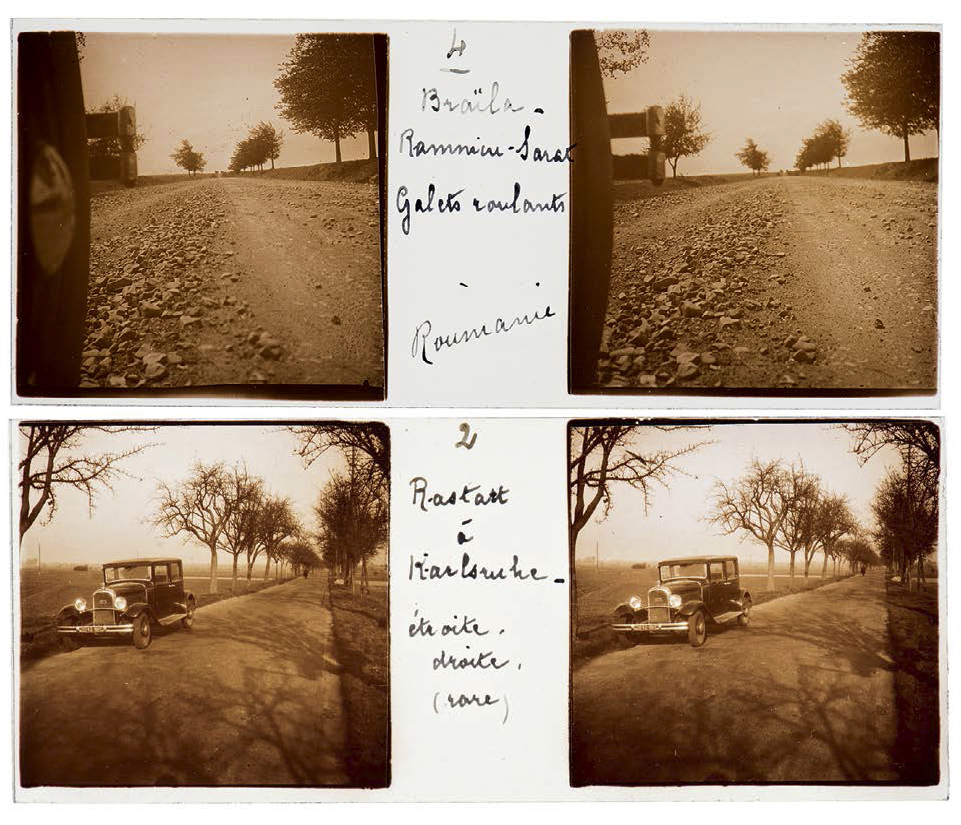
'Relevé photographique des voies de circulation mondiales réalisé par Michelin' c. 1930


Relevé photographique des voies de circulation mondiales réalisé par Michelin
c. 1930
Collection Michelin, Clermont-Ferrand
© Michelin


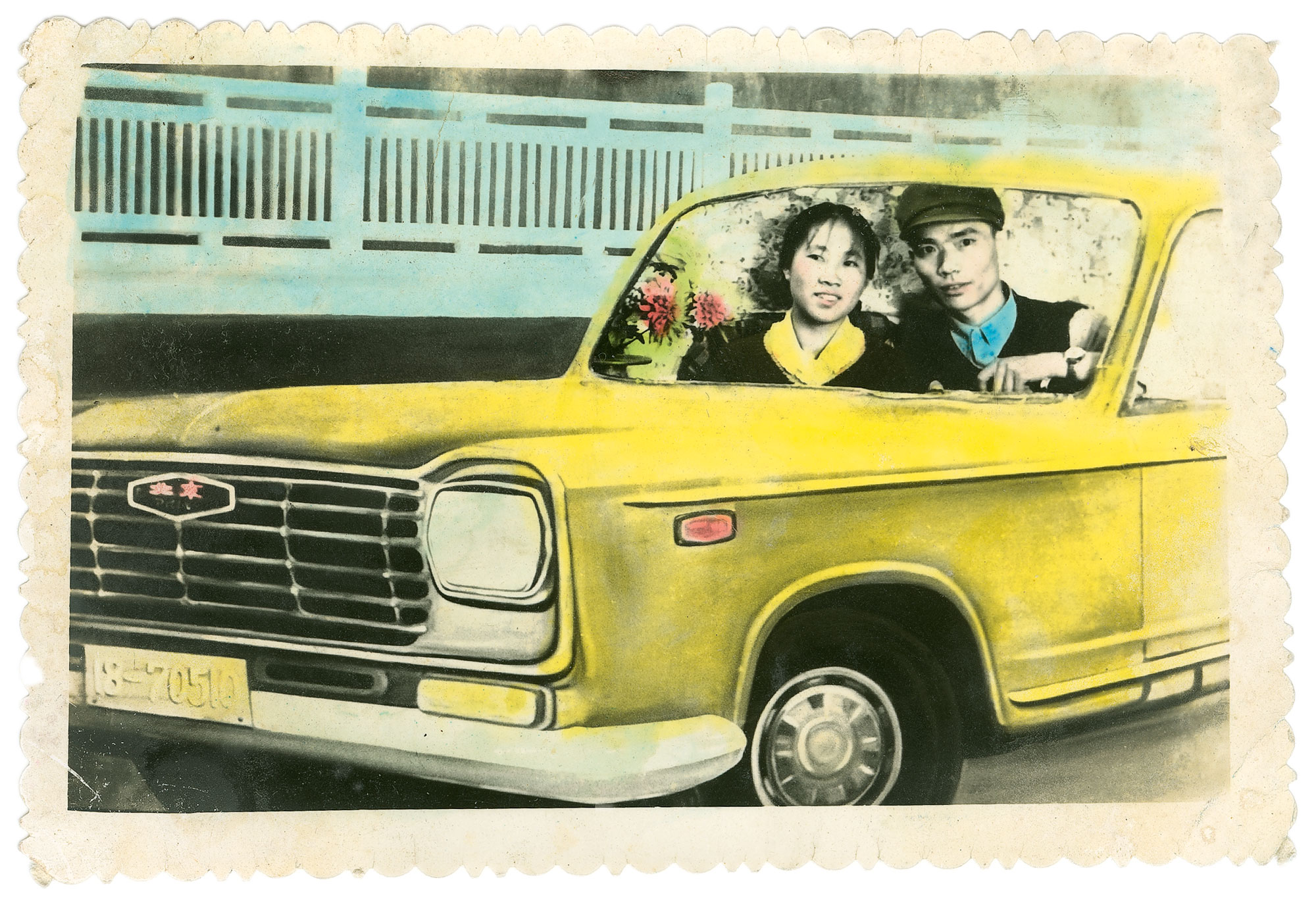
Studio portraits, 'China' c. 1950, collected by Thomas Sauvin


Studio portraits
China
c. 1950
Collected by Thomas Sauvin
Colourised gelatin silver print
7.5 x 11.5cm
Collection Beijing Silvermine/Thomas Sauvin, Paris Photo all rights reserved


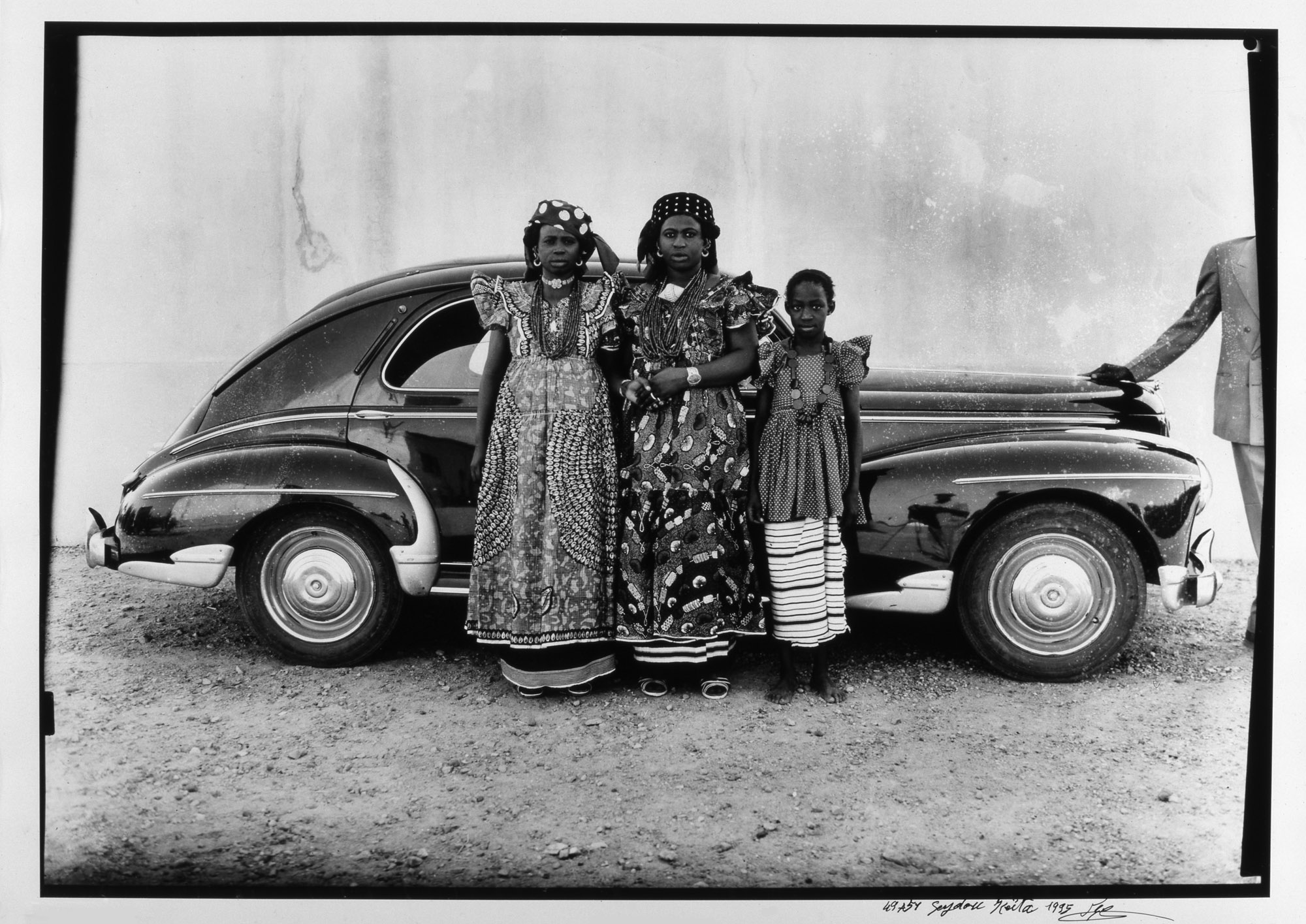
Seydou Keïta (Malian, 1921-2001) 'Untitled' 1952–1955 from the exhibition 'Autophoto' at Fondation Cartier pour l'art contemporain, Paris, April - Sept, 2017


Seydou Keïta (Malian, 1921-2001)
Untitled
1952-1955
Gelatin silver print
50 × 60cm
CAAC – The Pigozzi Collection, Geneva
© SKPEAC (The Seydou Keïta Photography Estate Advisor Corporation)


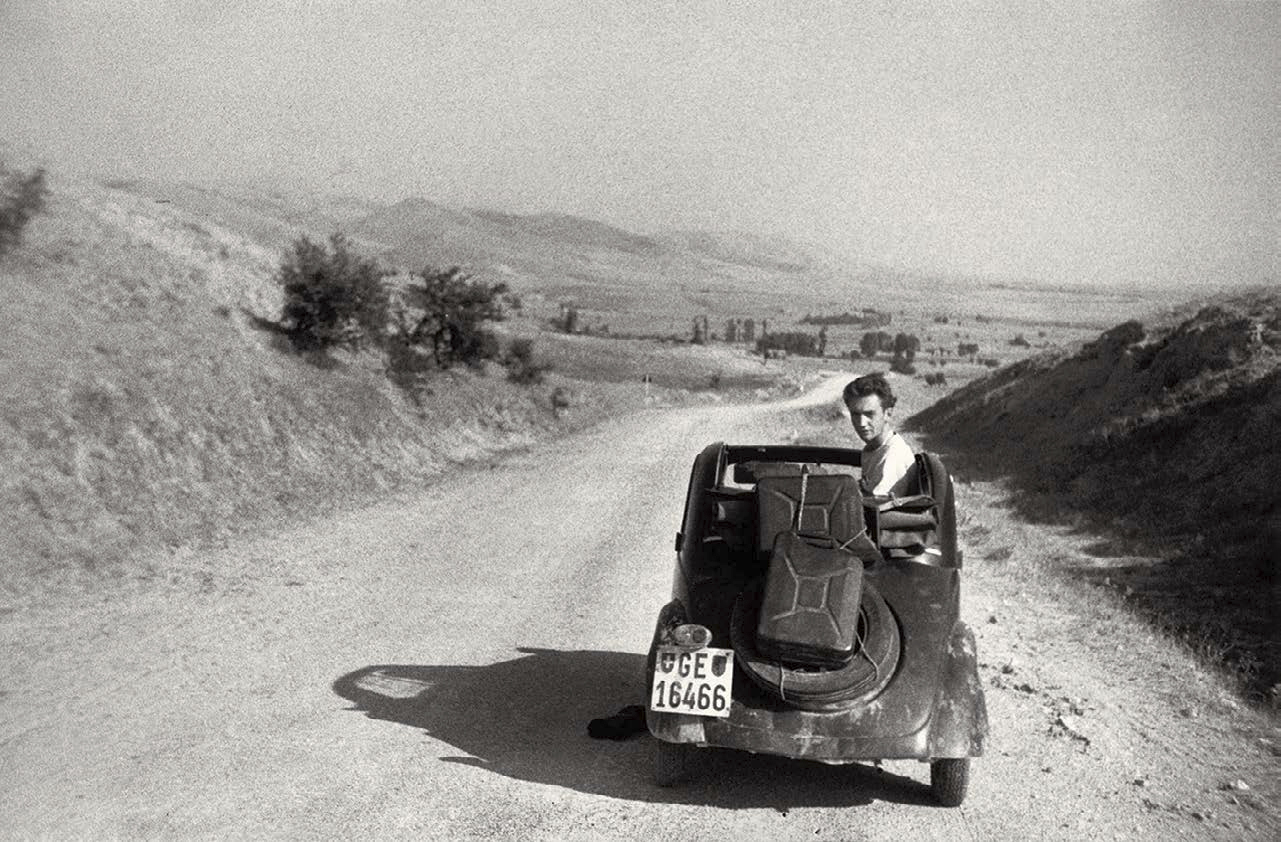
Nicolas Bouvier (Swiss, 1929-1998) 'Entre Prilep et Istanbul, Turquie' 1953


Nicolas Bouvier (Swiss, 1929-1998)
Entre Prilep et Istanbul, Turquie
1953
Musée de l’Élysée, Lausanne
© Fonds Nicolas Bouvier / Musée de l’Élysée, Lausanne


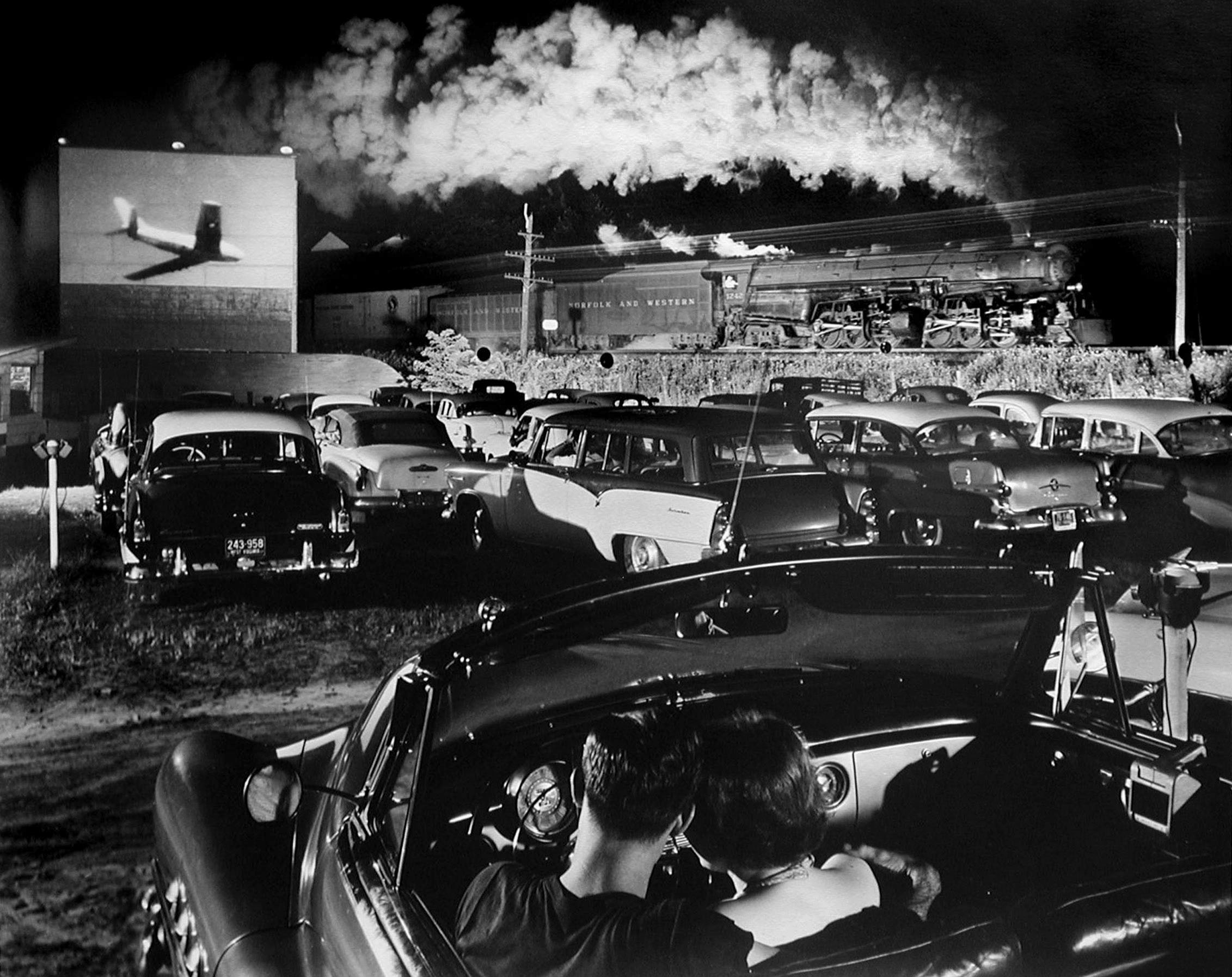
O. Winston Link (American, 1914-2001) 'Hot Shot Eastbound' 1956


O. Winston Link (American, 1914-2001)
Hot Shot Eastbound
1956
Collection Mathé Perrin, Bruxelles
© O. Winston Link


Ray K. Metzker (American, 1931-2014) 'Washington, DC' 1964


Ray K. Metzker (American, 1931-2014)
Washington, DC
1964
Gelatin silver print
20 × 25.5cm
Courtesy Les Douches la Galerie, Paris/Laurence Miller Gallery, New York
© Estate Ray K. Metzker, courtesy Les Douches la Galerie, Paris/Laurence Miller Gallery, New York


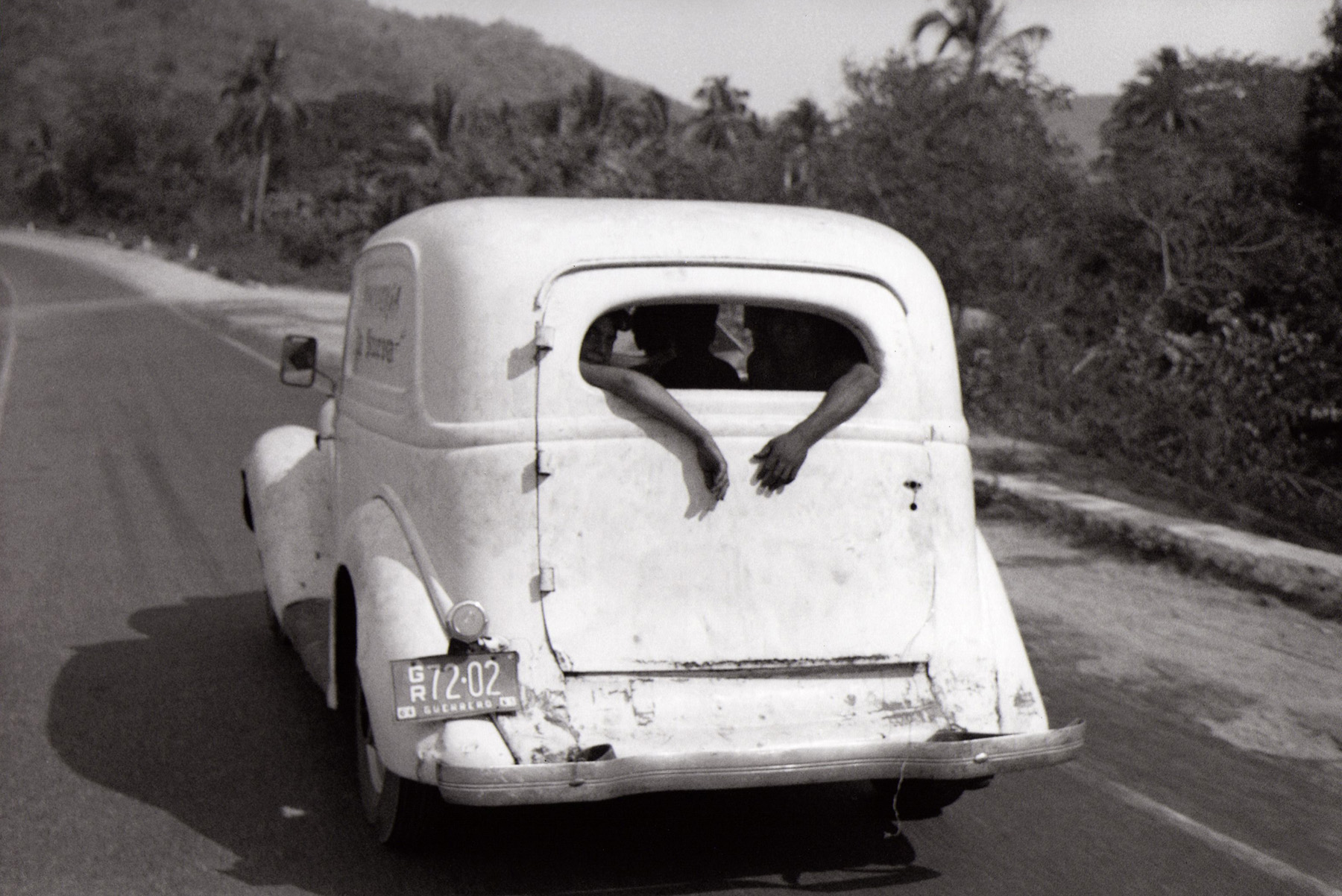
Bernard Plossu (French, b. 1945) 'Sur la route d'Acapulco, Mexique' 1966


Bernard Plossu (French, b. 1945)
Sur la route d’Acapulco, Mexique
1966
From Le Voyage mexicain series
Gelatin silver print
18 × 27cm
Courtesy of the artist/Galerie Camera Obscura, Paris
© Bernard Plossu


Bernard Plossu (French, b. 1945) 'Chiapas, Mexique' 1966


Bernard Plossu (French, b. 1945)
Chiapas, Mexique
1966
From Le Voyage mexicain series
Gelatin silver print
18 × 27cm
Courtesy of the artist/Galerie Camera Obscura, Paris
© Bernard Plossu


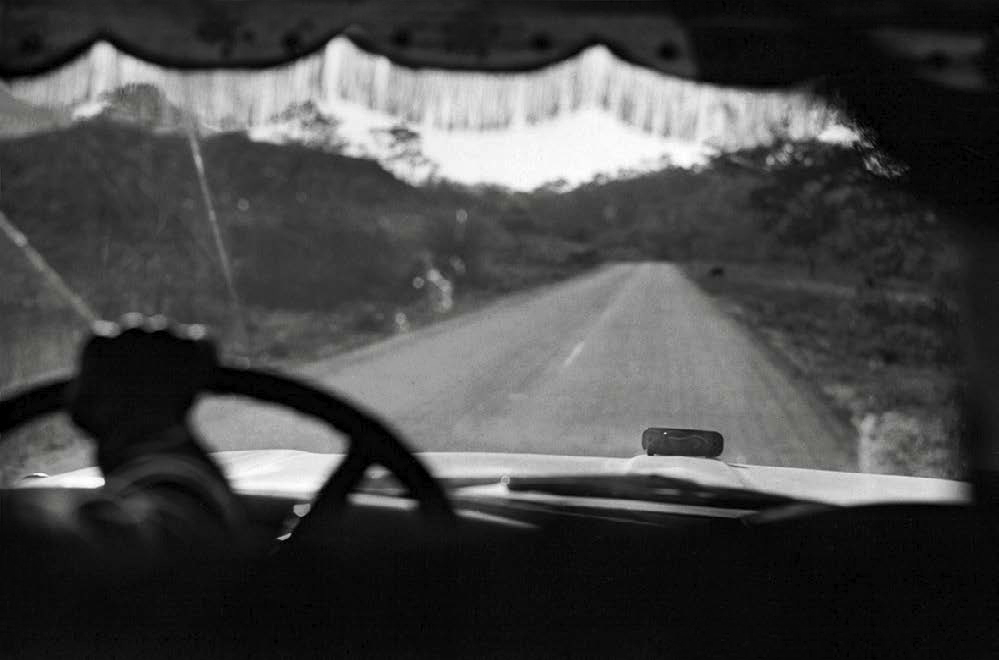
“A panorama framed by the rectangle of the windshield. A long ribbon of asphalt, a line of flight that stretches towards the horizon. For more than a century, we can capture this image and travel the world by car, this photographic “box”. Automotive and photography, two tools to model the landscape, two mechanics of the traction and attraction, have emerged at the end of the nineteenth century, through new rhythms and new rites, the society of modern times. If the photograph allows multiple views and list them, to memorise the movement and leave a trace, the automobile makes it possible to move in space. Photography, a tool of immobility, benefited from the automobile, a mobility tool. And if the automobile like photography is constantly evolving, these two inventions have parallel paths in order to better, to master space-time. “Riding is a form spectacular amnesia. Everything to discover, everything to be erased,”1 writes Jean Baudrillard.”

From the foreword by commissioners of the exhibition Xavier Barral and Philippe Séclier

1/ Jean Baudrillard, Amérique, Grasset, Paris, 1986, p. 15


Henry Wessel (American, 1942-2018) 'Pennsylvania' 1968


Henry Wessel (American, 1942-2018)
Pennsylvania
1968
Courtesy Galerie Thomas Zander, Cologne
© Henry Wessel, courtesy Galerie Thomas Zander, Cologne.


William Eggleston (American, b. 1939) 'Los Alamos' series 1965-1968


William Eggleston (American, b. 1939)
Los Alamos series
1965-1968
Dye-transfer print
40.5 × 50.5cm
Eggleston Artistic Trust, courtesy David Zwirner, New York/London
© Eggleston Artistic Trust. Courtesy David Zwirner, New York/London


Henry Wessel (American, 1942-2018) 'Los Alamos' series c. 1974


Henry Wessel (American, 1942-2018)
Los Alamos series
c. 1974
Inkjet print
56 × 73.5cm
Eggleston Artistic Trust, Memphis
© Eggleston Artistic Trust, Memphis


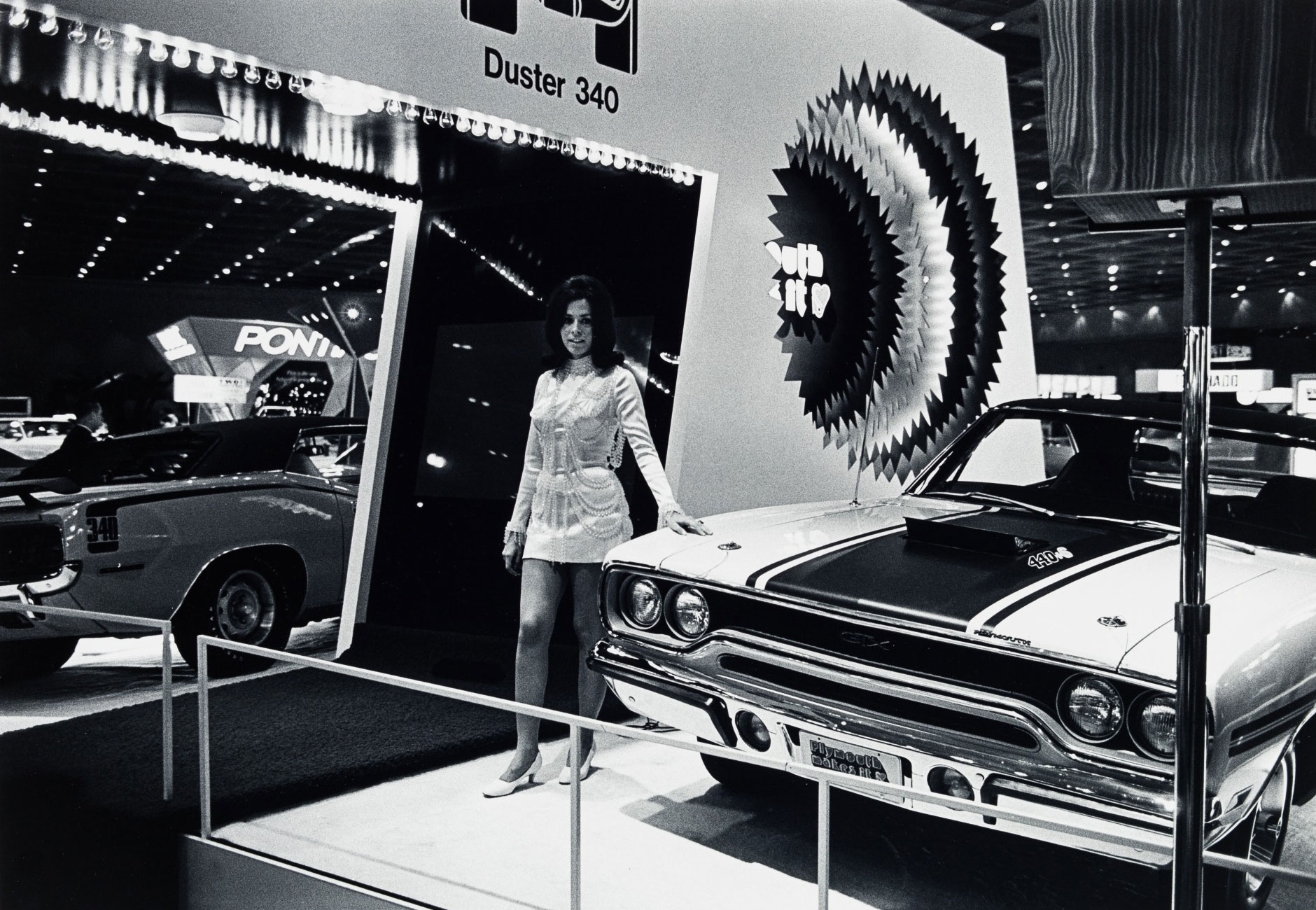
Bill Rauhauser (American, 1918-2017) 'Detroit Auto Show' series c. 1975


Bill Rauhauser (American, 1918-2017)
Detroit Auto Show series
c. 1975
Detroit Institute of Arts, don de l’artiste en mémoire de Doris Rauhauser
© 2007 Rauhauser Photographic Trust. All Rights Reserved


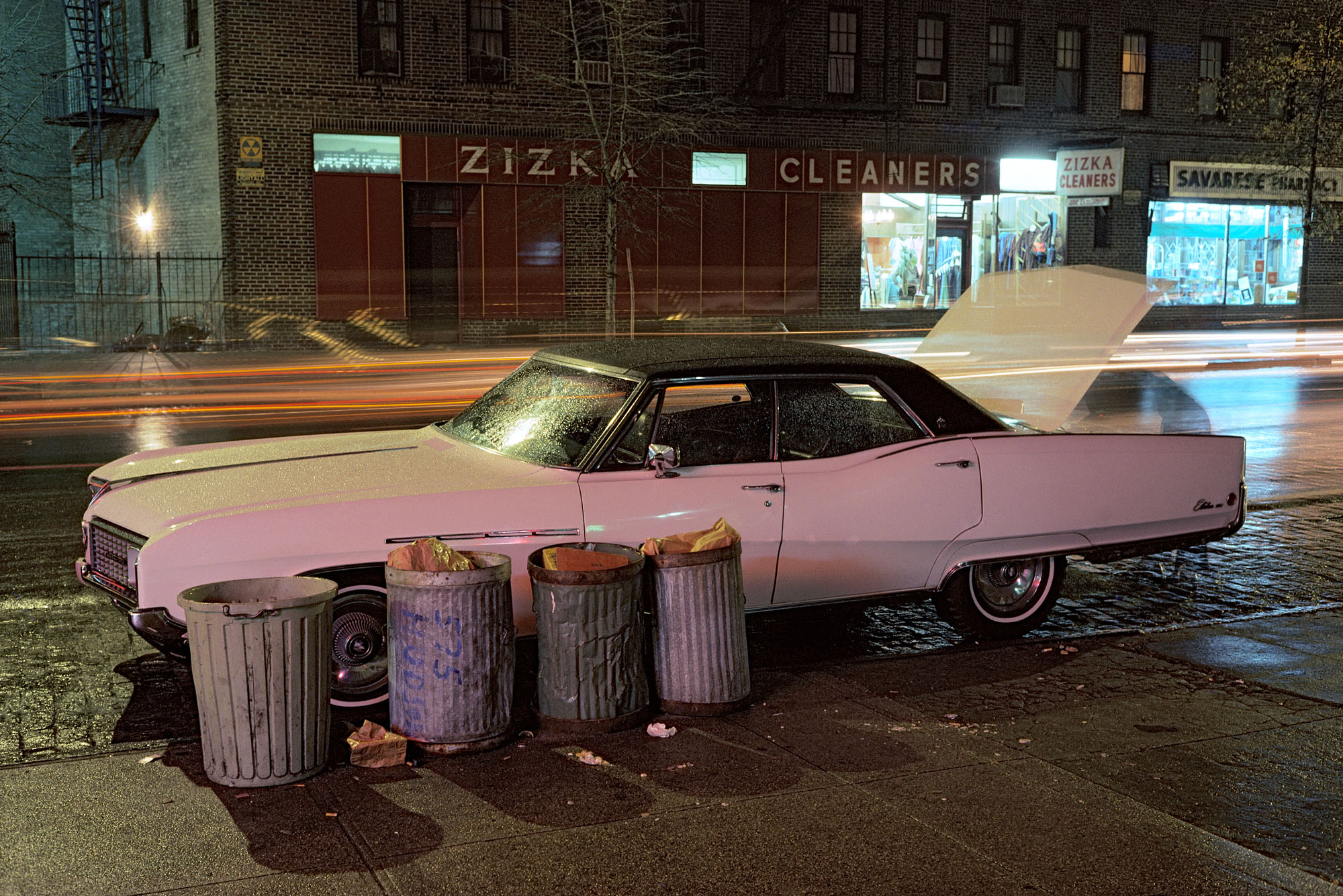
Langdon Clay (American, b. 1949) 'Zizka Cleaners car, Buick Electra' 1976


Langdon Clay (American, b. 1949)
Zizka Cleaners car, Buick Electra
Series Cars, New York City, 1976
Slide-show
Courtesy of the artist
© Langdon Clay


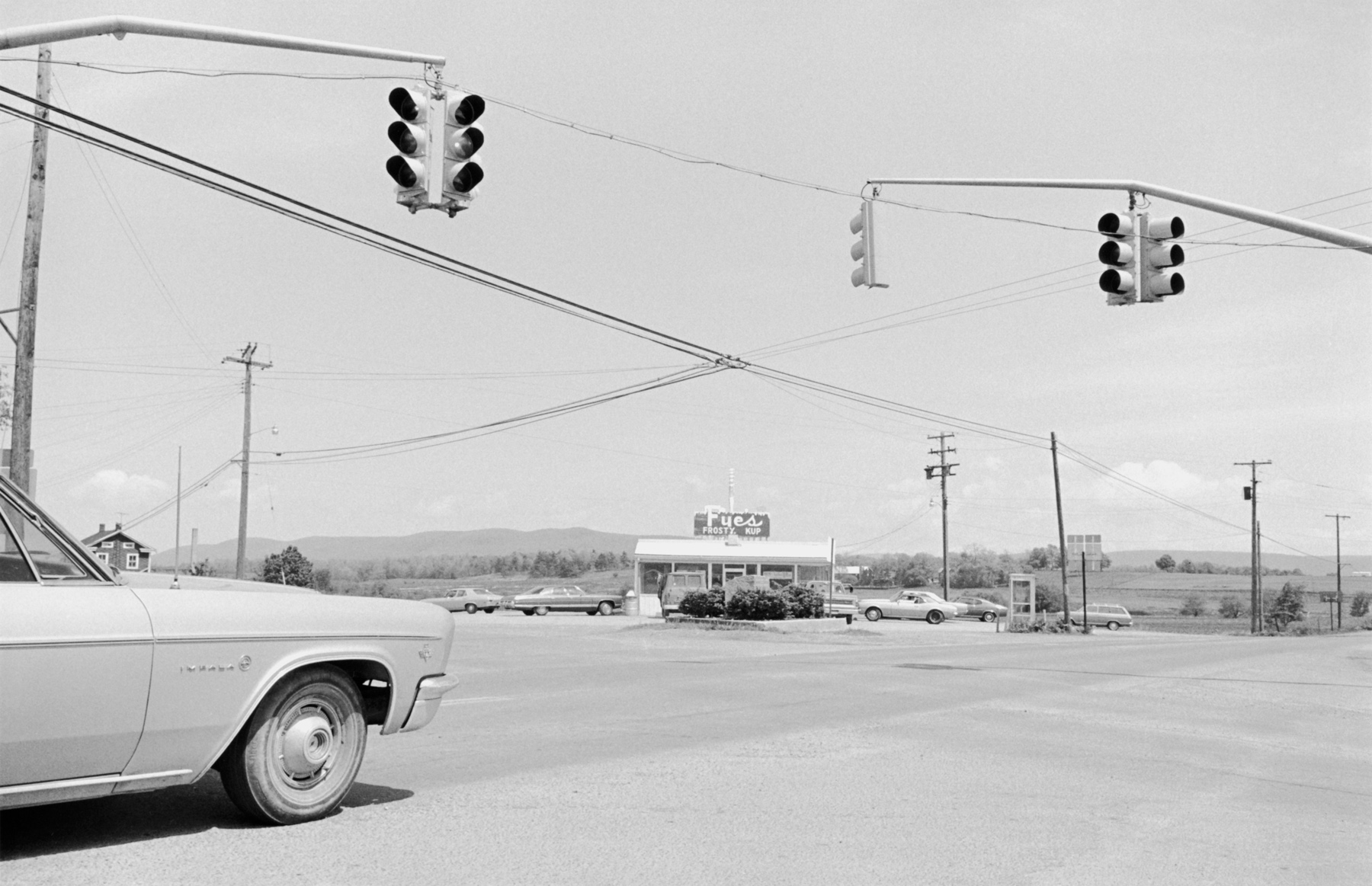
Joel Meyerowitz (American, b. 1938) 'Upstate New York' 1977


Joel Meyerowitz (American, b. 1938)
Upstate New York
1977
Collection Joel Meyerowitz Photography, New York
© Joel Meyerowitz, courtesy Polka Galerie, Paris


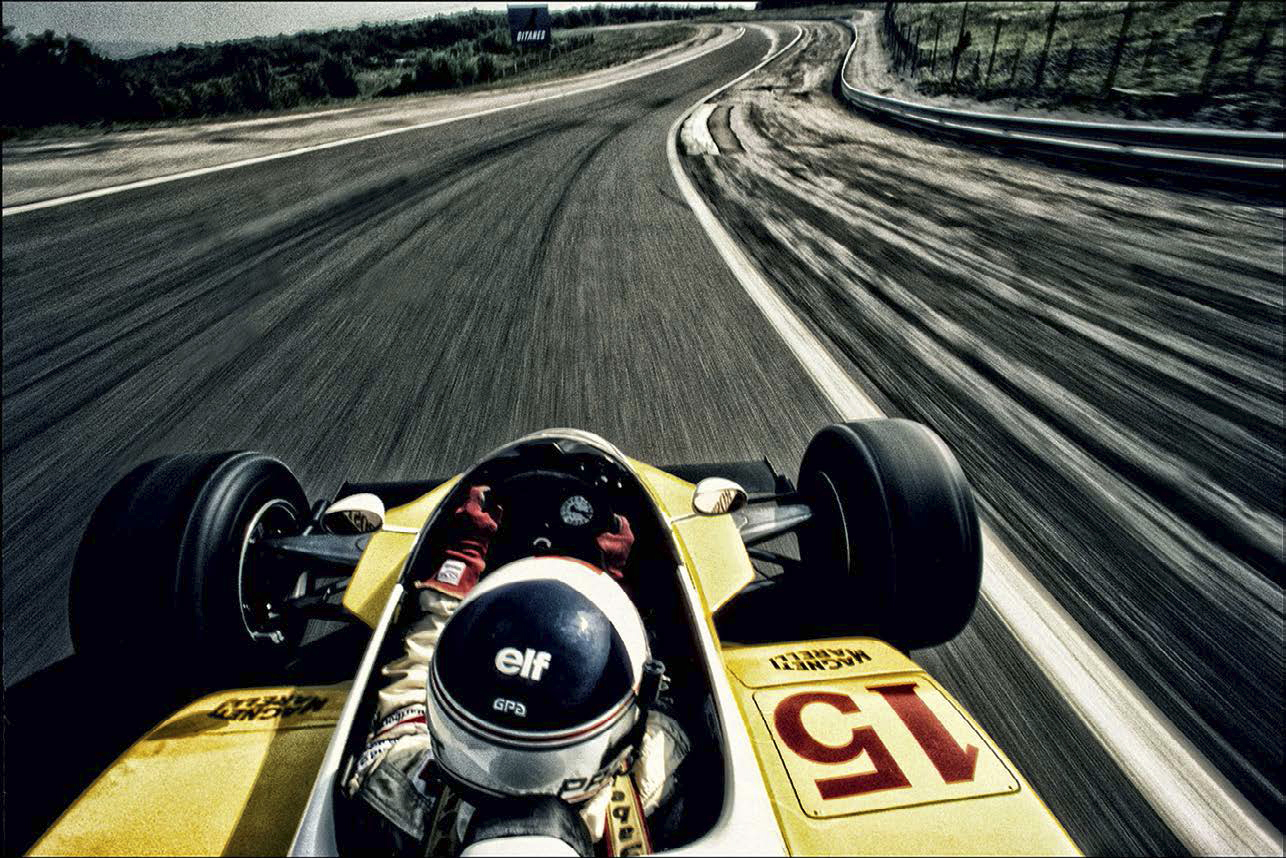
Bernard Asset (French, b. 1955) 'Passager d'Alain Prost (Alain Prost au volant d’une Renault RE30B, tests F1 sur le circuit Dijon-Prenois)' 1982


Bernard Asset (French, b. 1955)
Passager d’Alain Prost (Alain Prost au volant d’une Renault RE30B, tests F1 sur le circuit Dijon-Prenois)
1982
Collection de l’artiste
© Bernard Asset


David Bradford (American, b. 1951) 'Coaster Ride Stealth' 1994


David Bradford (American, b. 1951)
Coaster Ride Stealth
1994
From Drive-By Shootings series
C-print
28 × 35.5cm
Courtesy of the artist
© David Bradford


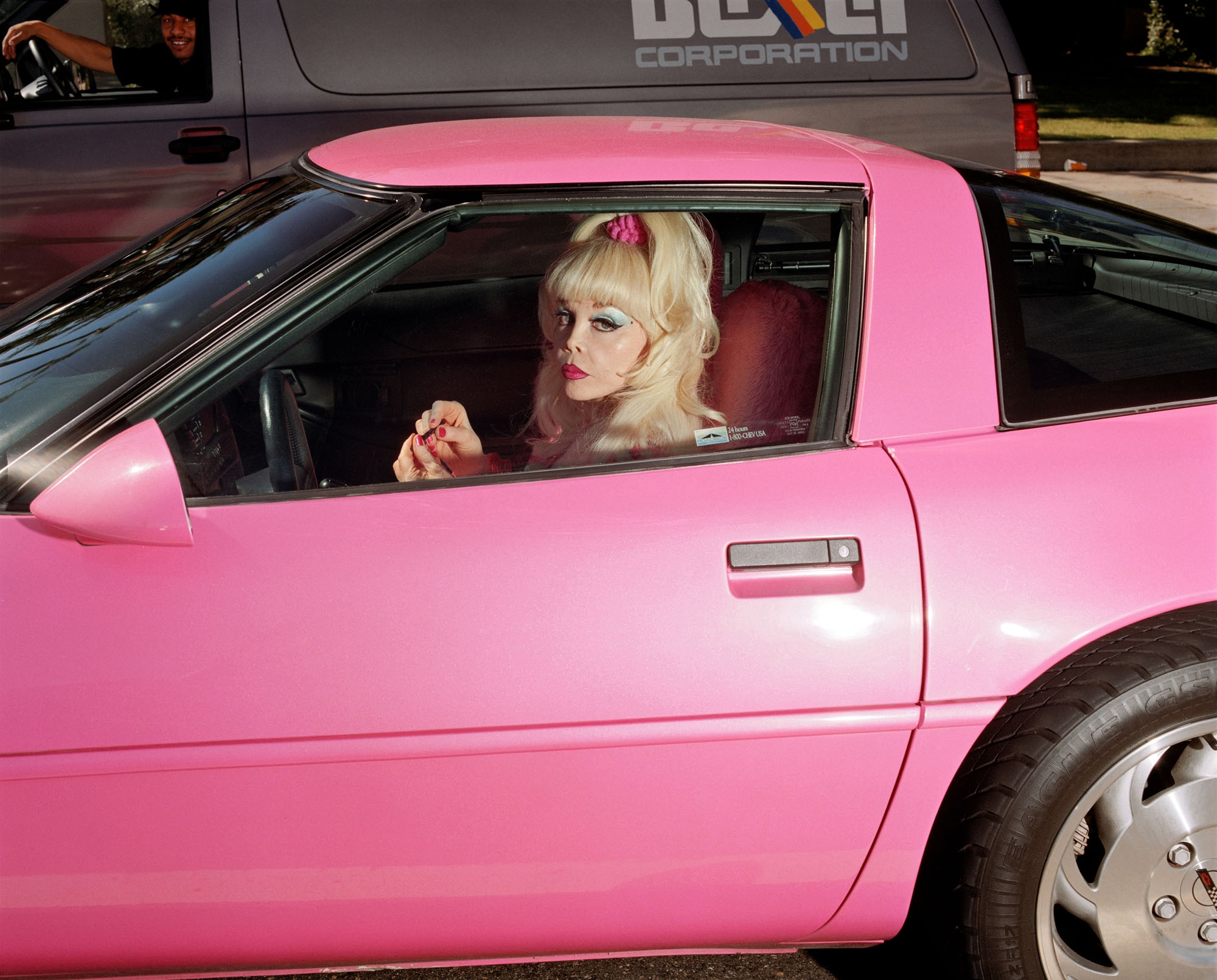
Andrew Bush (American, b. 1956) 'Woman Waiting to Proceed South at Sunset and Highland Boulevards, Los Angeles, at Approximately 11:59 a.m. One Day in February 1997' 1997


Andrew Bush (American, b. 1956)
Woman Waiting to Proceed South at Sunset and Highland Boulevards, Los Angeles, at Approximately 11:59 a.m. One Day in February 1997
1997
From Vector Portraits series
C-print
122 × 151cm
Courtesy M+B Gallery, Los Angeles
© Andrew Bush


Rosângela Rennó (Brazilian, b. 1962) 'Cerimônia do Adeus' series,1997-2003


Rosângela Rennó (Brazilian, b. 1962)
Cerimônia do Adeus series
1997-2003
C-print face-mounted on Plexiglas
50 × 68 cm
Courtesy of the artist/Cristina Guerra Contemporary Art, Lisbon
© Rosângela Rennó


Valérie Belin (French, b. 1964) 'Untitled' 2002


Valérie Belin (French, b. 1964)
Untitled
2002
Gelatin silver print
61 x 71.5cm (framed)
Courtesy of the artist/Galerie Nathalie Obadia, Paris/Brussels
© Valérie Belin/ADAGP, Paris 2017


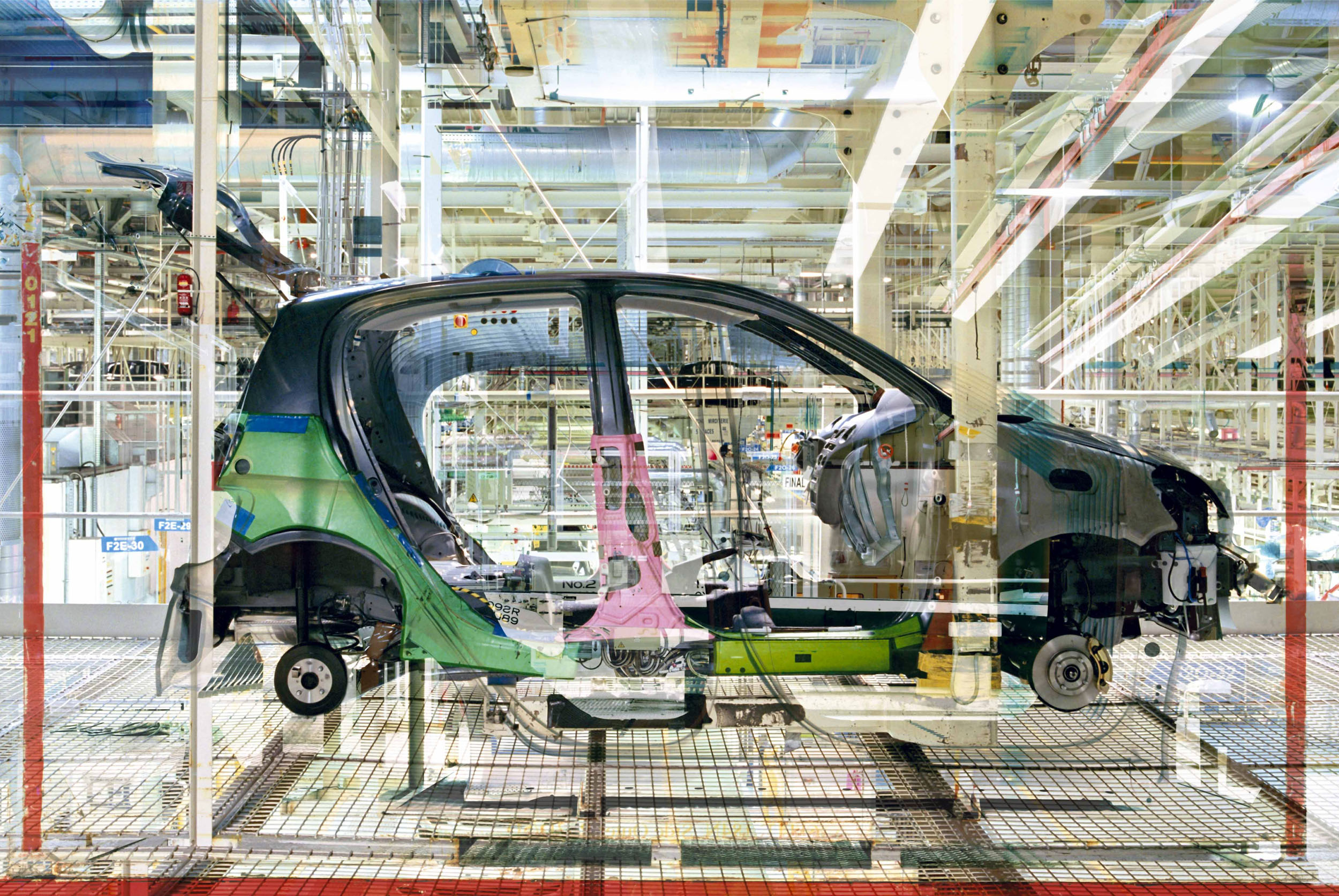
Stéphane Couturier (French, b. 1957) 'MELT, Toyota No 8' 2005


Stéphane Couturier (French, b. 1957)
MELT, Toyota No. 8
2005
From Melting Point, Usine Toyota, Valenciennes series
C-print
92 × 137cm
Collection of the artist
Courtesy La Galerie Particulière, Paris/Brussels
© Stéphane Couturier


Óscar Fernando Gómez (Mexican, b. 1970) 'Windows' series, 2009

Óscar Fernando Gómez (Mexican, b. 1970) 'Windows' series, 2009

Óscar Fernando Gómez (Mexican, b. 1970) 'Windows' series, 2009

Óscar Fernando Gómez (Mexican, b. 1970) 'Windows' series, 2009

Óscar Fernando Gómez (Mexican, b. 1970) 'Windows' series, 2009


Óscar Fernando Gómez (Mexican, b. 1970)
Windows series
2009
Slide show
Courtesy Martin Parr Studio, Bristol
© Óscar Fernando Gómez


Alain Willaume (French, b. 1956) '#5069' 2012


Alain Willaume (French, b. 1956)
#5069
2012
From the Échos de la poussière et de la fracturation series
Collection de l’artiste
© Alain Willaume (Tendance Floue)


Peter Lippmann (American works Paris, b. 1956) 'Citroën Traction 7' 2012


Peter Lippmann (American works Paris, b. 1956)
Citroën Traction 7
2012
From the Paradise Parking series
C-print
75 × 100cm
Collection of the artist
© Peter Lippmann


Justine Kurland (American, b. 1969) '280 Coup' 2012


Justine Kurland (American, b. 1969)
280 Coup
2012
Inkjet Print
47 x 61cm
Courtesy of the artist/Mitchell-Innes & Nash, New York
© Justine Kurland


Melle Smets and Joost Van Onna. 'Turtle 1. Building a Car in Africa' 2016


Melle Smets and Joost Van Onna
Turtle 1. Building a Car in Africa
2016
Courtesy des artistes / Paradox, Edam
© Melle Smets et Joost Van Onna


Luciano Rigolini (Swiss, b. 1950) 'Tribute to Giorgio de Chirico' 2017


Luciano Rigolini (Swiss, b. 1950)
Tribute to Giorgio de Chirico
2017
Duratrans in lightbox
124 x 154cm
Collection of the artist
© Luciano Rigolini (appropriation – unknown photographer, 1958)


First Visions: A New Subject for Photography

In the early 20th century, the automobile and its impact on the landscape had already become a subject of predilection for many photographers, influencing both the form and content of their work. The exhibition will begin by focusing on early photographers like Jacques Henri Lartigue, Germaine Krull, and Brassaï, who used the automobile to varying degrees in their work. They registered the thrill of speed, the chaos of Parisian traffic or the city’s dramatic car-illuminated nocturnal landscape to represent a society in transition at the birth of the modern age. Other photographers of the time were attracted by the promise of freedom and mobility offered by the automobile. Anticipating the modern road trip, Swiss writers and photographers Ella Maillart and Nicolas Bouvier, travelled throughout Asia in the 1930s and 1950s respectively, using their cars and cameras to record their adventures along the way.

Auto Portraits

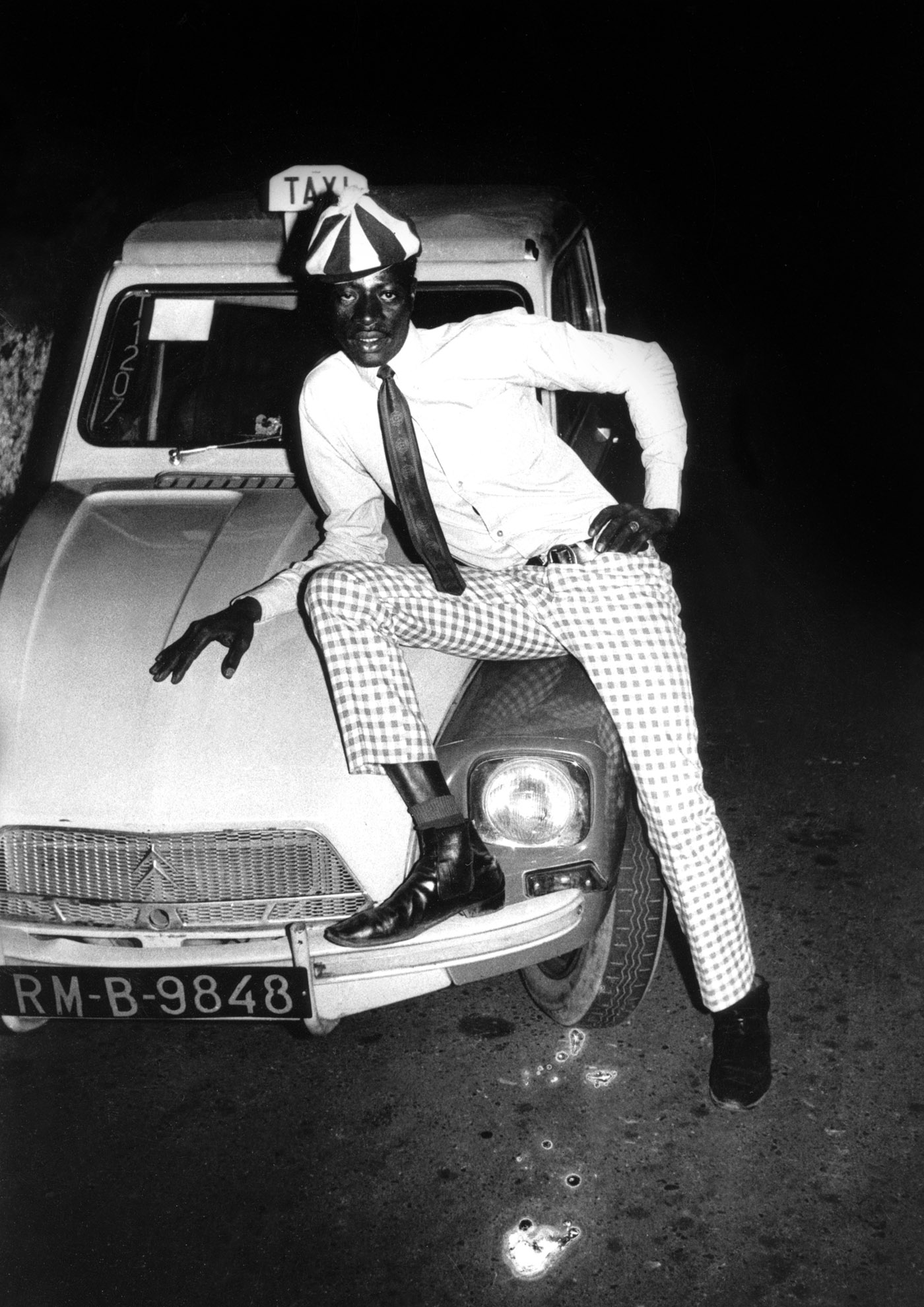
The exhibition will also present a series of “auto portraits”* made by a variety of photographers from the mi-twentieth century to the present. Yashuhiro Ishimoto and Langdon Clay’s photographs, for example, are portraits in profile of cars parked on sparsely inhabited city streets, that immerse the viewer in a different eras and atmospheres. Ishimoto’s black and white photographs, taken in Chicago in the 1950s, emphasise their polished, curved silhouettes in a distanced and serial manner, while Langdon Clay’s colour pictures taken in New York in the 1970s, show their decaying and dented chassis in an eerie nocturnal light. Other works in this section, such as the found photographs of Sylvie Meunier and Patrick Tourneboeuf’s American Dream series, or the flamboyant portraits of African photographers Seydou Keïta and Sory Sanlé, focus on the role of the automobile as a emblem of social mobility showing proud owners posing with their cars.

*A play on words in French: auto portrait meaning self-portrait.

The Car as a Medium: New Perspectives on the Landscape

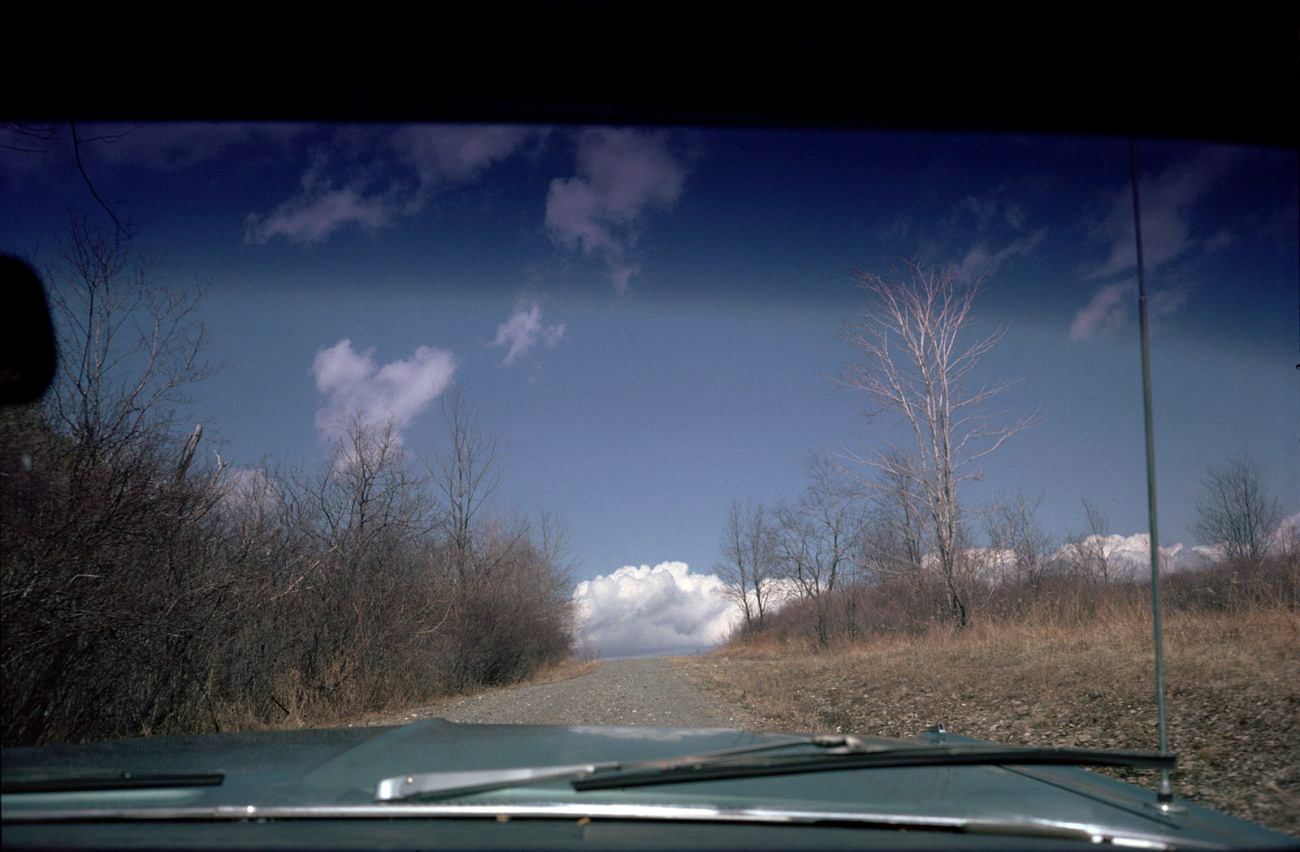
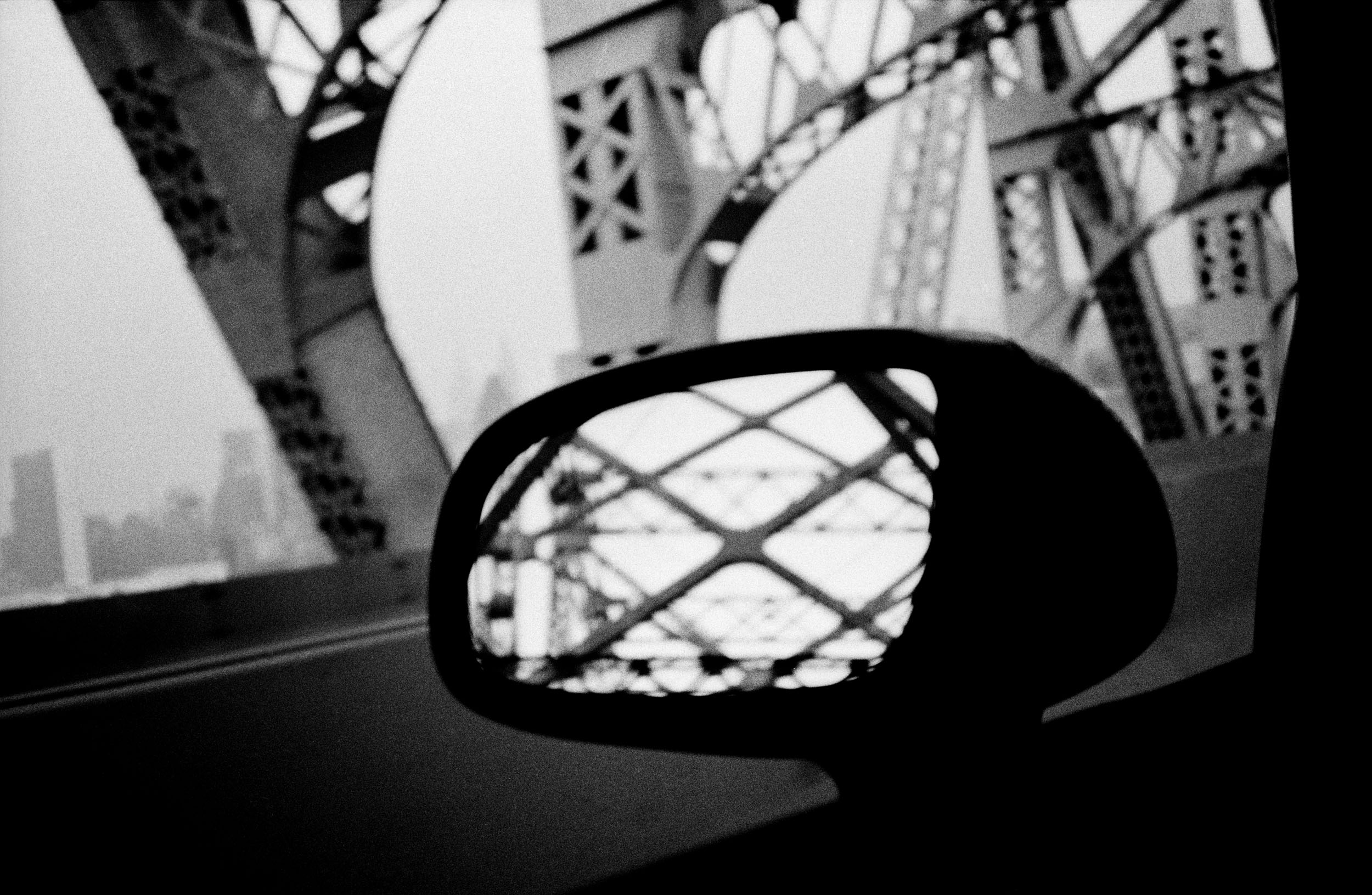
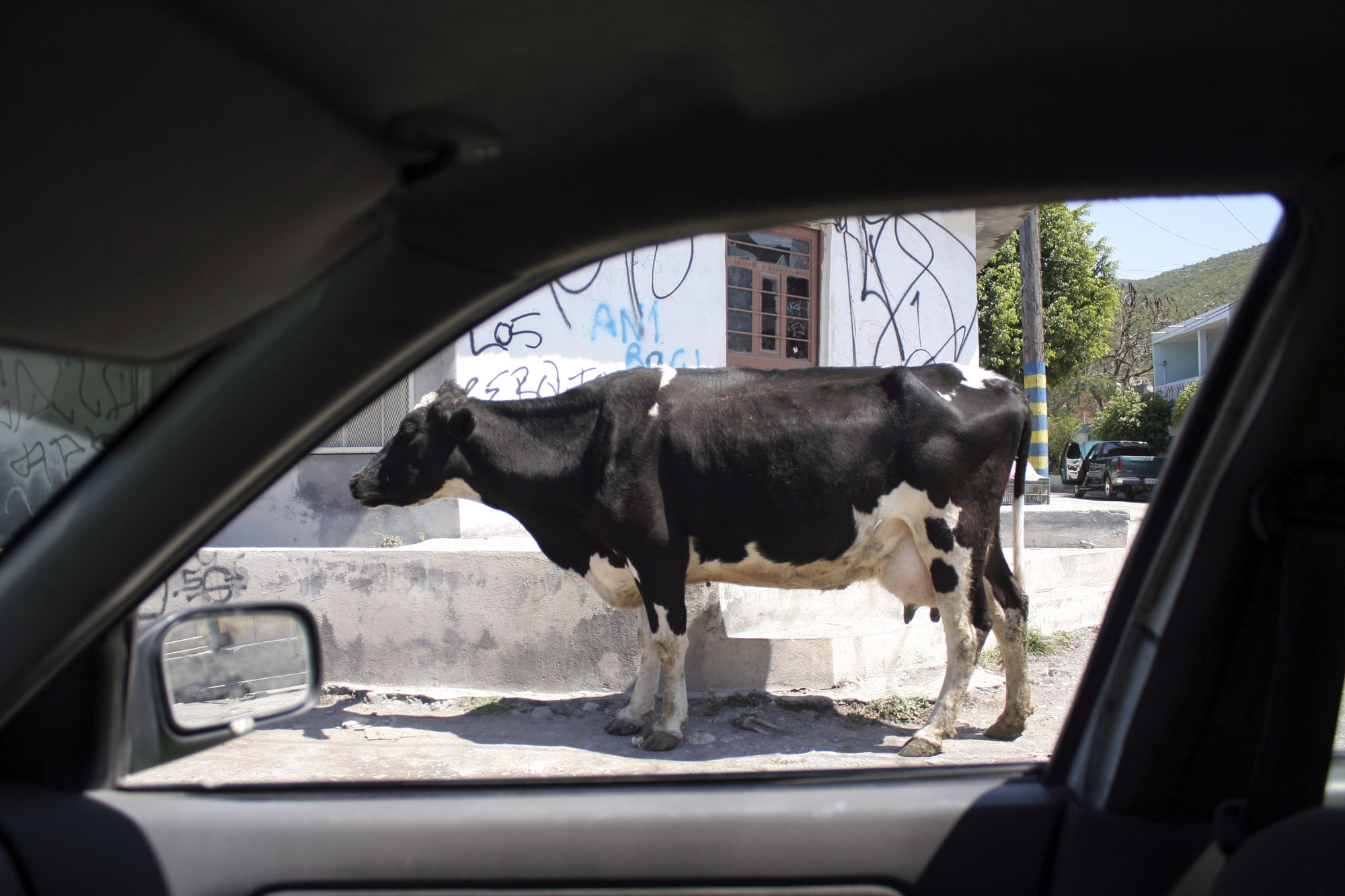
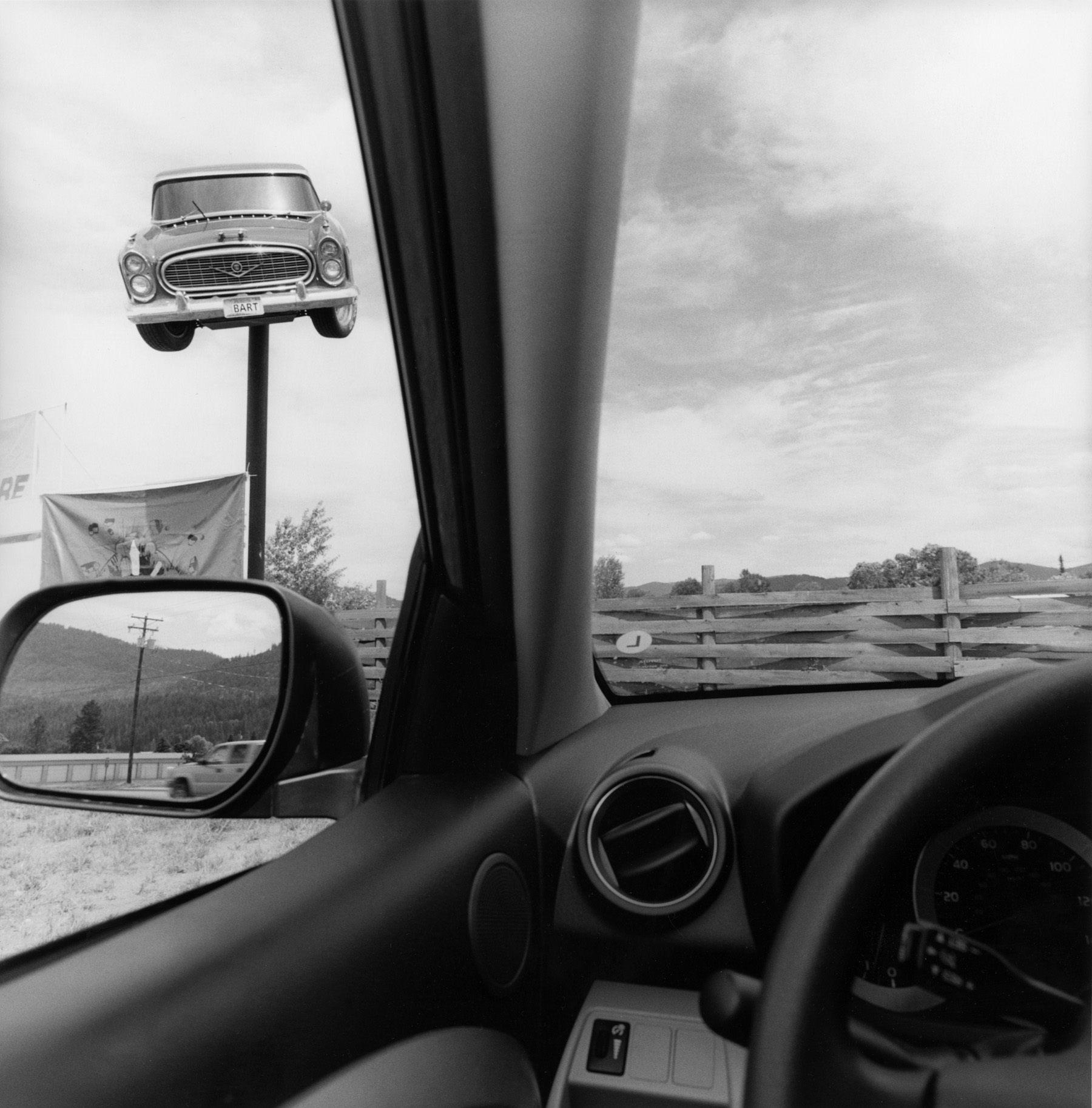
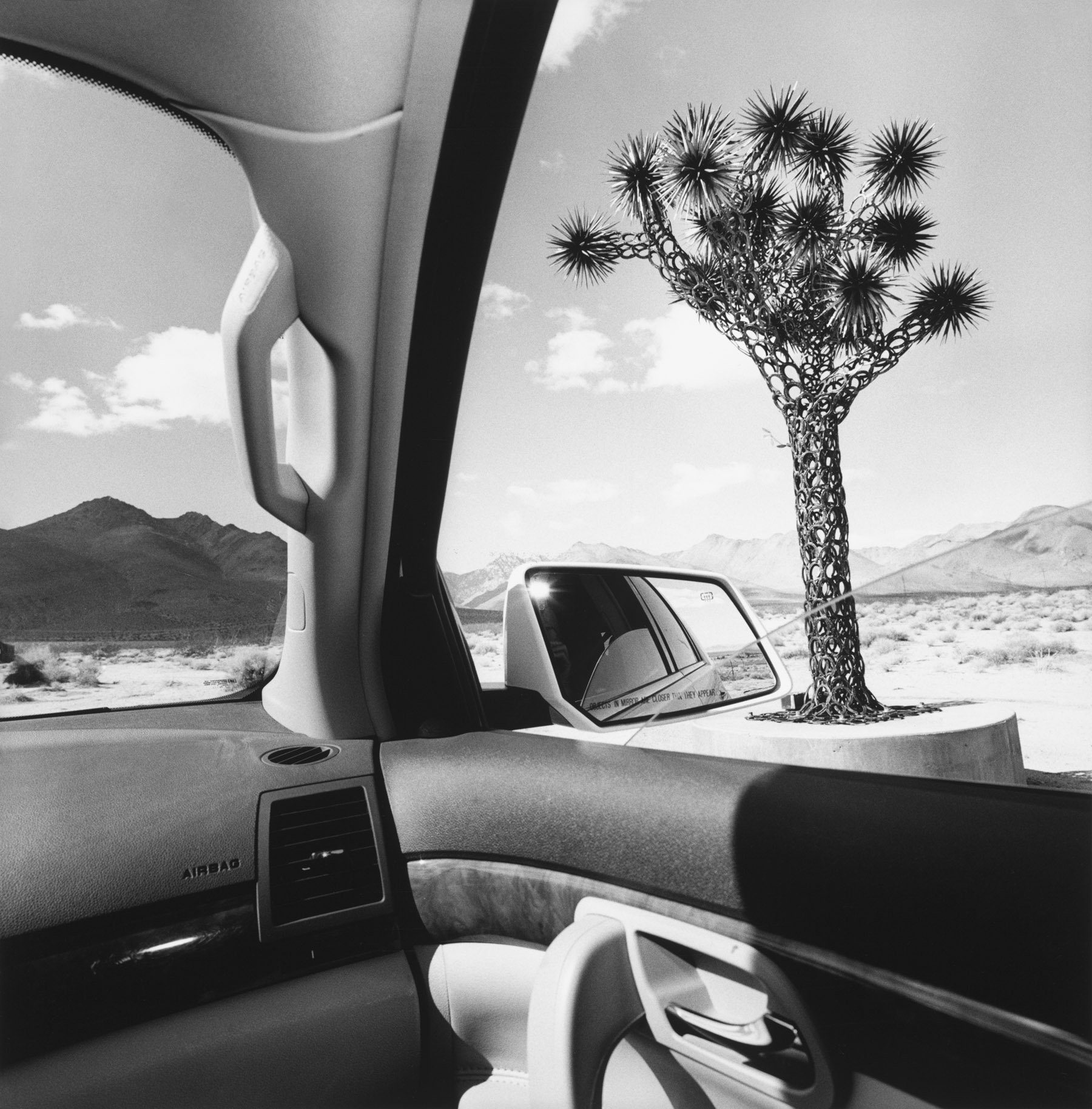
Many photographers have exploited the technical and aesthetic possibilities offered by the automobile, using it like a camera to capture the surrounding landscape through car windows or the reflections in rear-view mirrors.

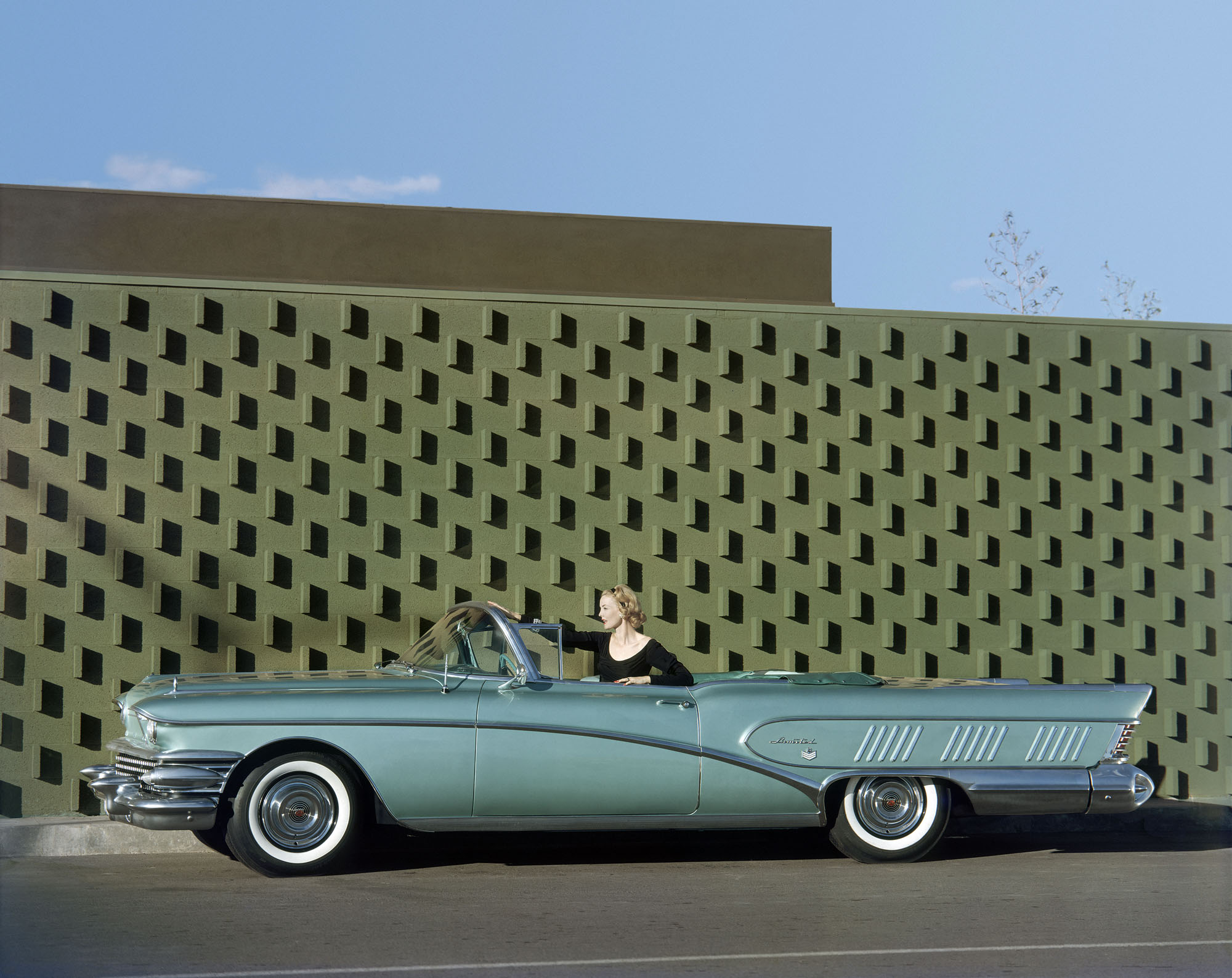
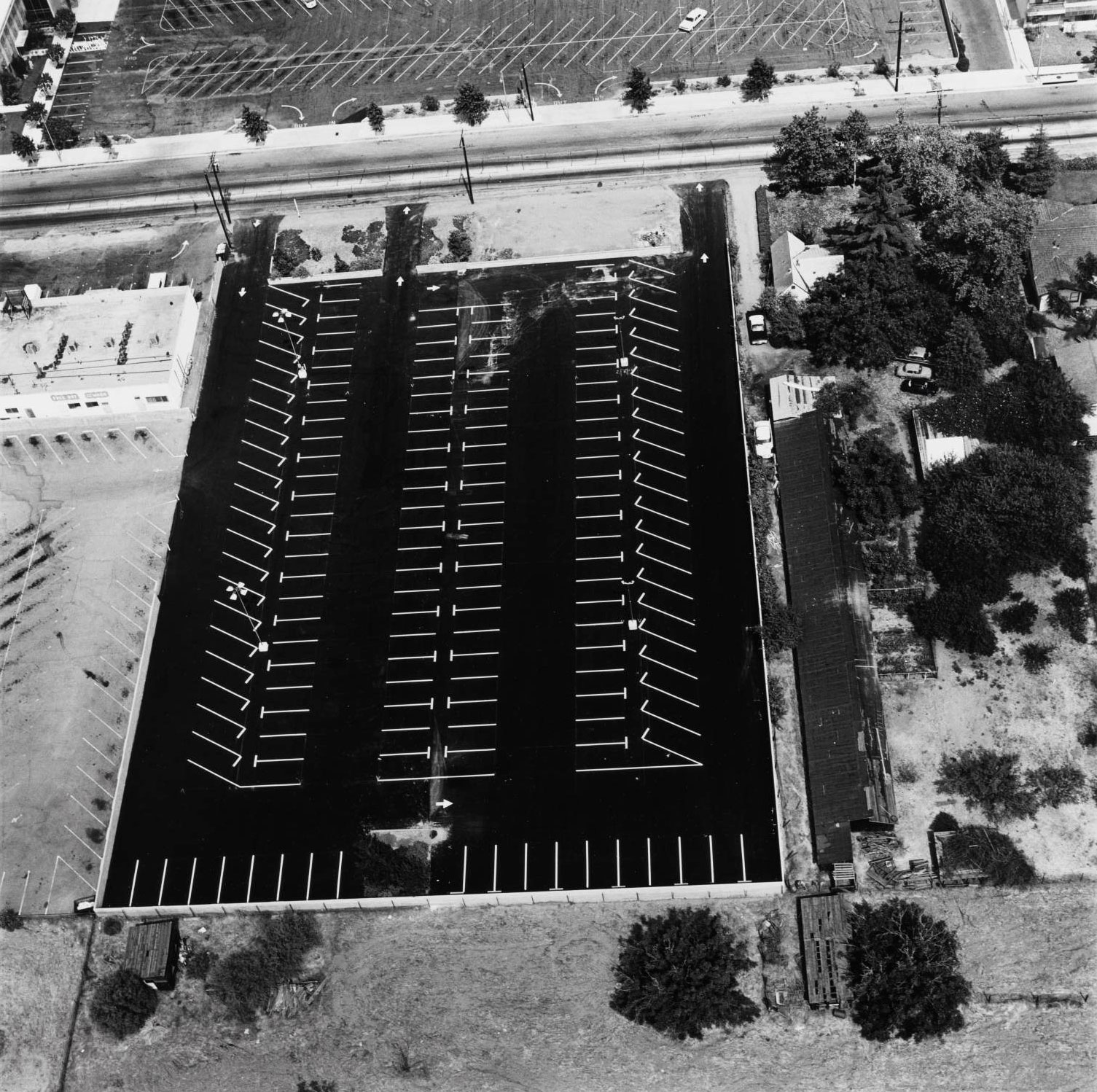
Cars have determined the framing and composition as well as the serial nature of the photographs of Joel Meyerowitz, Daido Moriyama, John Divola and David Bradford who have all worked from moving cars. From behind their windshields, these photographers capture an amusing store sign, a white car behind a wire fence, a dog running along a dusty road, a highway stretching out into the horizon. Other photographers, including Sue Barr, Robert Adams, Ed Ruscha, and Alex MacLean scrutinise our car-altered environment. Their landscape is no longer one of magnificent mountains, wondrous waterfalls or awe-inspiring canyons, but of a world transformed by the automobile with its suburban housing complexes, parking lots, and highway infrastructure.

Our Car Culture: Industry, History and New Ways of Life

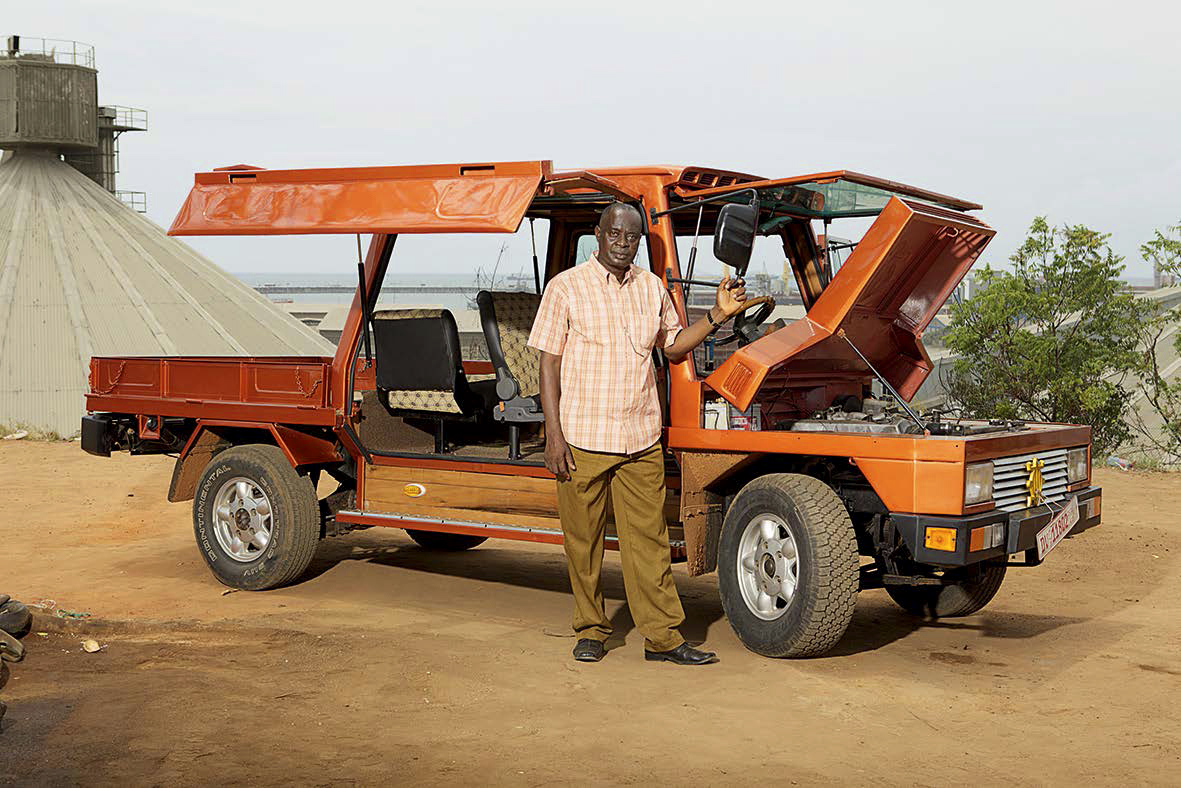
Many photographers have explored other aspects of our car culture, from the car industry and its impact on the environment to its role in history and society. Both Robert Doisneau and Robert Frank registered life in the factory, from the machines and productions lines to the activities of the workers lives, the first at the Renault plant in the 1930s and the second at Ford River Rouge in the 1950s. Their photographs, unique in their attention to individual assembly line workers, contrast with the work of contemporary photographer Stéphane Couturier whose deliberately distanced, impersonal pictures taken at a Toyota factory reflect the increasingly dehumanised nature of contemporary industry. Working in Ghana, far from the automated factory photographed by Stéphane Couturier, Dutch artist Melle Smets, and sociologist Joost Van Onna, put industrial waste from the car industry to good use. Collaborating with local craftsman in a region called Suame Magazine, where cars are disassembled and their parts traded, they created a car specifically for the African market called Turtle 1, using parts from different brands that happened to be available. Their installation, which includes photographs, drawings, and videos, documents the entire fabrication process of this car.

Photographers such as Philippe Chancel, Éric Aupol and Edward Burtynsky are concerned with the car industry’s damage to the environment. Philippe Chancel’s work focuses on the city of Flint and its dismantled General Motors factory, while Éric Aupol’s and Ed Burtynsky’s photographs reveal the sculptural yet apocalyptic beauty of industrial waste sites.

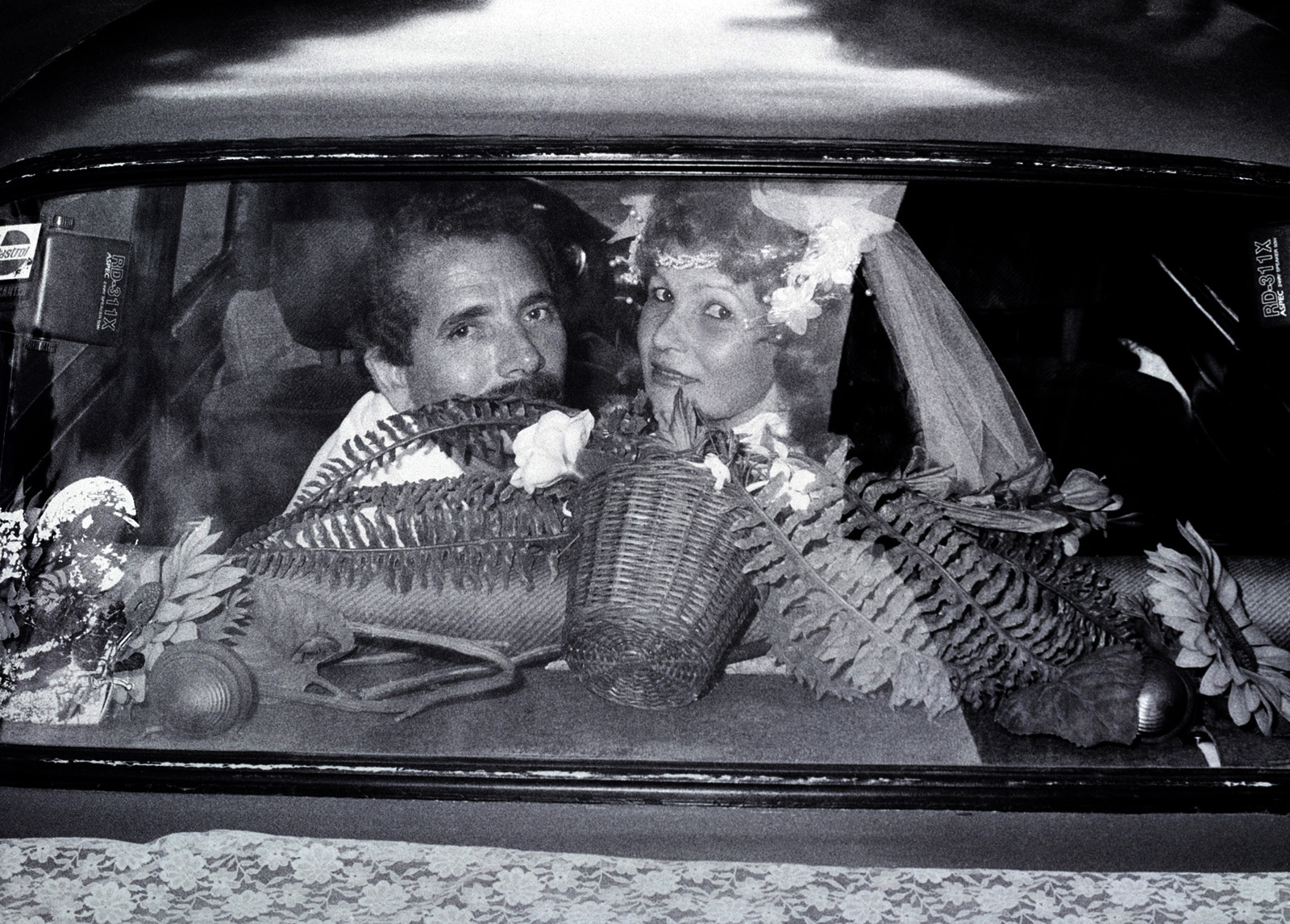
Other photographers reveal how the car plays an important role in historical events, in society and in daily life. Arwed Messmer’s Reenactement series brings together photographs from the archives of the Stasi showing how people used cars in unusual ways to escape from East Germany, and Fernando Gutiérrez work, Secuelas, explores the role of the Ford Falcon, a symbol of Argentina’s military dictatorship, in the collective imaginary of the Argentinean people. Jacqueline Hassink’s immersive projection Car Girls investigates the role and status of women who work in car shows around the world. Martin Parr’s series From A to B chronicles the thoughts dreams and anxieties of British motorists. Still other series by photographers such as Rosângela Rennó, Óscar Monzón, Kurt Caviezel and Bruce Davidson show how the car has become an extension of the home, used for weddings and picnics, living and sleeping, arguments and making love.

The Fondation Cartier has also invited artist Alain Bublex to create for the exhibition a series of 10 model cars that cast a fresh eye on the history of automobile design. His installation combines photographs, drawings and models to explore how the car design has evolved over time incorporating new techniques, forms, and practices.

Despite energy crises, ecology movements, and industrial mismanagement, the car remains essential to our daily lives. At a time when we are questioning the role and the future of the automobile in our society, the Autophoto exhibition reexamines, with nostalgia, humour, and a critical eye, this 20th century symbol of freedom and independence.

The Catalogue

Bringing together over 600 images, the catalogue of the Autophoto exhibition reveals how photography, a tool privileging immobility, benefited from the automobile, a tool privileging mobility. The catalogue features iconic images by both historic and contemporary photographers who have captured the automobile, and transformed this popular accessible object through their passionate and creative vision. Quotes by the artists, and a chronology of automobile design, as well as interviews and texts by specialists provide a deeper understanding of this vast topic through a variety of aesthetic, sociological, and historical perspectives.

Press release from The Fondation Cartier


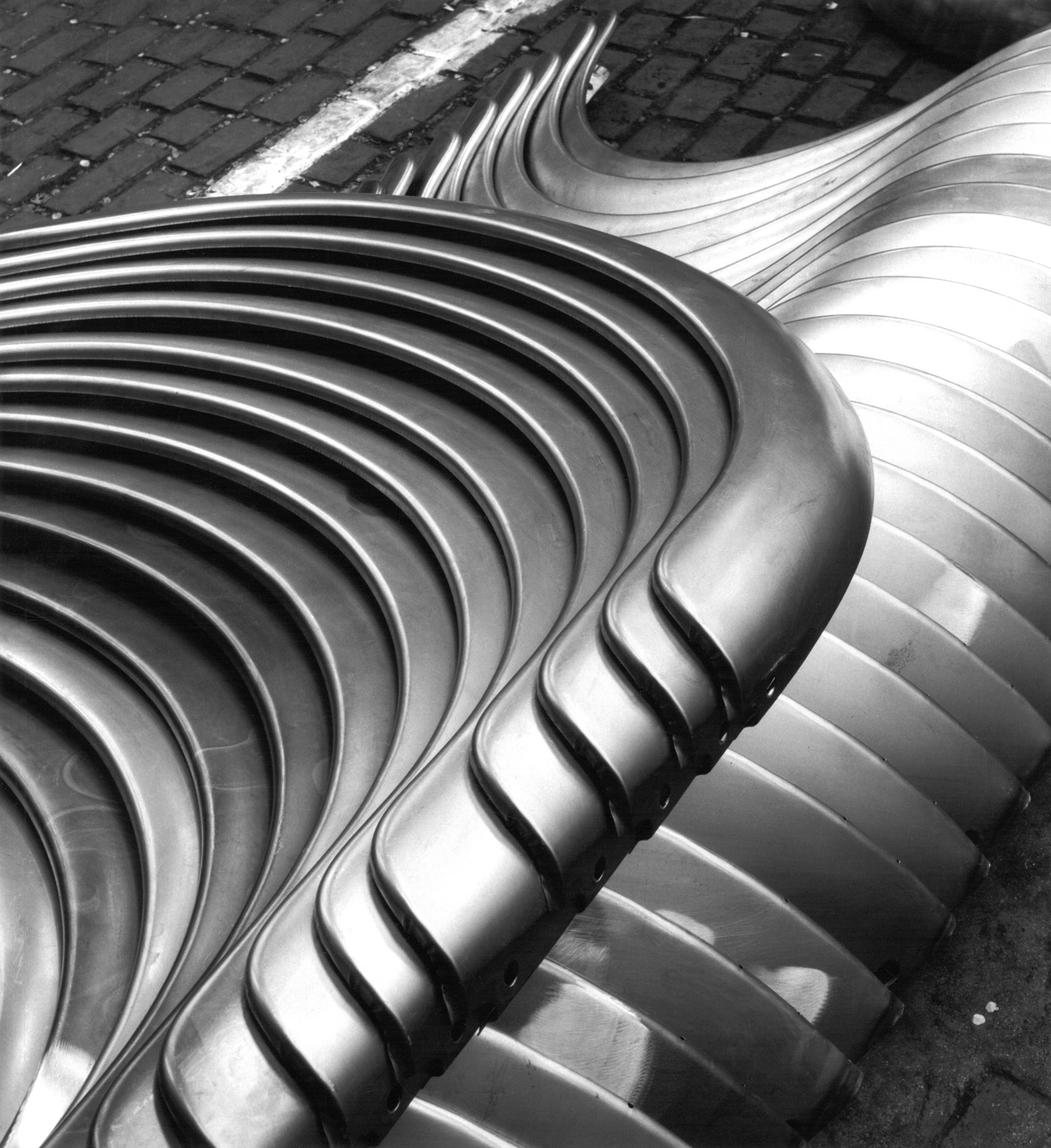
Peter Keetman (German, 1916-2005) 'Hintere Kotflügel' 1953


Peter Keetman (German, 1916-2005)
Hintere Kotflügel (Rear fenders)
1953
From Eine Woche im Volkswagenwerk (A week at the Volkswagenwerk) series
Gelatin silver print
27 × 24.5cm
Nachlass Peter Keetman/Stiftung F.C. Gundlach, Hamburg
© Nachlass Peter Keetman/Stiftung F.C. Gundlach, Hamburg


Ed Ruscha (American, b. 1937) '7133 Kester, Van Nuys' 1967


Ed Ruscha (American, b. 1937)
7133 Kester, Van Nuys
1967
Thirtyfour Parking Lots series
Chipmunk Collection
© Ed Ruscha, courtesy Gagosian Gallery


Malick Sidibé (Malian, 1935-2016) 'Taximan avec voiture' 1970


Malick Sidibé (Malian, 1935-2016)
Taximan avec voiture
1970
Gelatin silver print
40 x 30cm
Courtesy Galerie Magnin-A, Paris
© Malick Sidibé


Lee Friedlander (American, b. 1934) 'Montana' 2008


Lee Friedlander (American, b. 1934)
Montana
2008
From the America by Car series
Gelatin silver print
37.5 × 37.5cm
Courtesy Fraenkel Gallery, San Francisco
© Lee Friedlander, courtesy Fraenkel Gallery, San Francisco


Lee Friedlander (American, b. 1934) 'California' 2008


Lee Friedlander (American, b. 1934)
California
2008
From the America by Car series
Gelatin silver print
37.5 × 37.5cm
Courtesy Fraenkel Gallery, San Francisco
© Lee Friedlander, courtesy Fraenkel Gallery, San Francisco


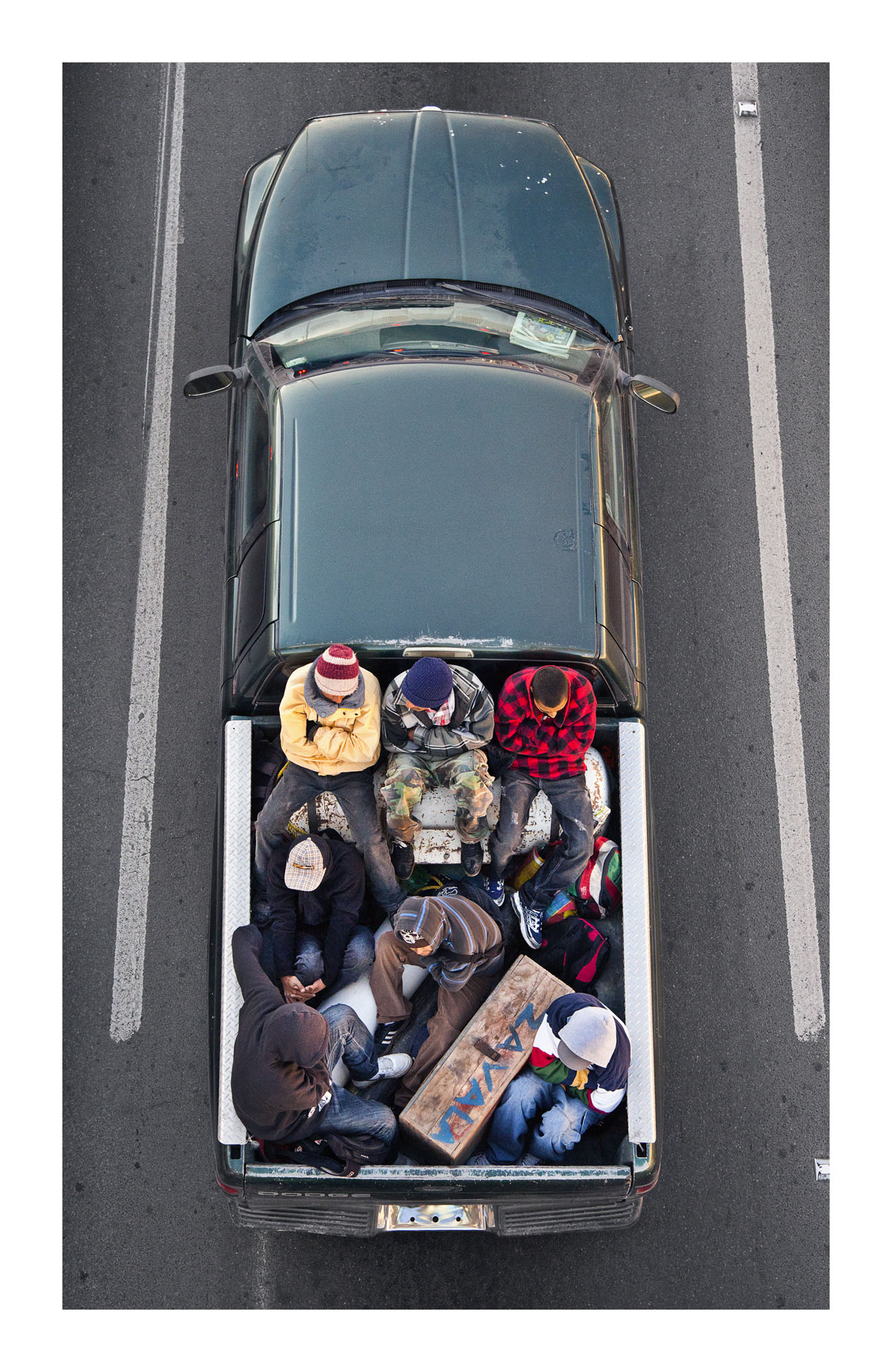
Alejandro Cartagena (Mexican, b. 1977) 'The Carpoolers' series 2011–2012


Alejandro Cartagena (Mexican, b. 1977)
The Carpoolers series
2011-12
Installation of 15 inkjet prints
55.5 × 35.5cm (each)
Courtesy Patricia Conde Galería, Mexico City
© Alejandro Cartagena


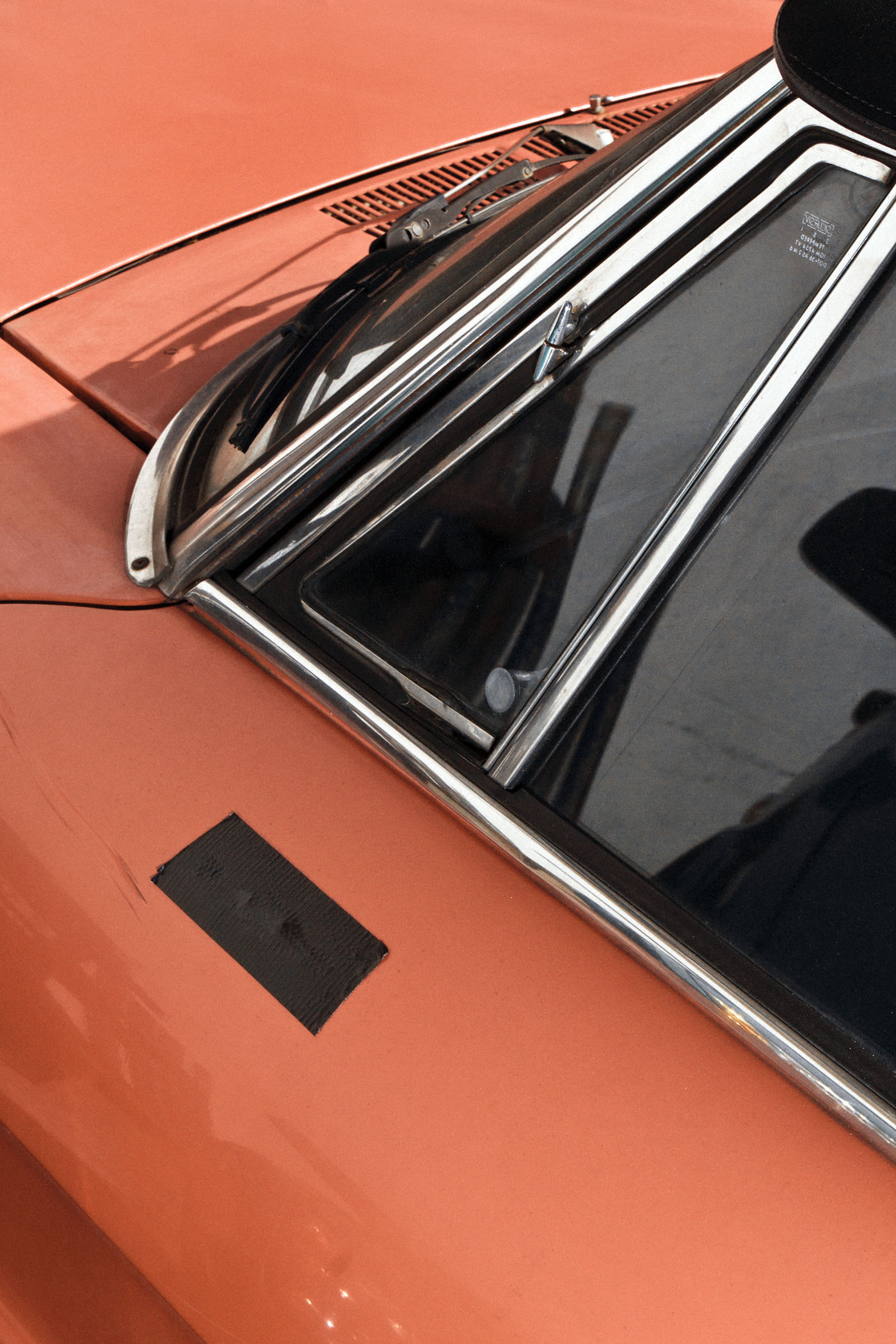
Ronni Campana (Italian, b. 1987) 'Badly Repaired Cars' series 2016


Ronni Campana (Italian, b. 1987)
Badly Repaired Cars series
2016
Inkjet print
60 × 40cm
Collection of the artist
© Ronni Campana


Fondation Cartier pour l’art contemporain
261 Boulevard Raspail, Paris

Opening hours: Every day except Mondays, 11am – 8pm
Opening Tuesday evenings until 10pm

Fondation Cartier website

LIKE ART BLART ON FACEBOOK

Back to top

Exhibition: ‘Louise Lawler: WHY PICTURES NOW’ at the Museum of Modern Art (MoMA), New York

Exhibition dates: 30th April – 30th July, 2017

Curators: Roxana Marcoci, Senior Curator, with Kelly Sidley, Curatorial Assistant, Department of Photography.


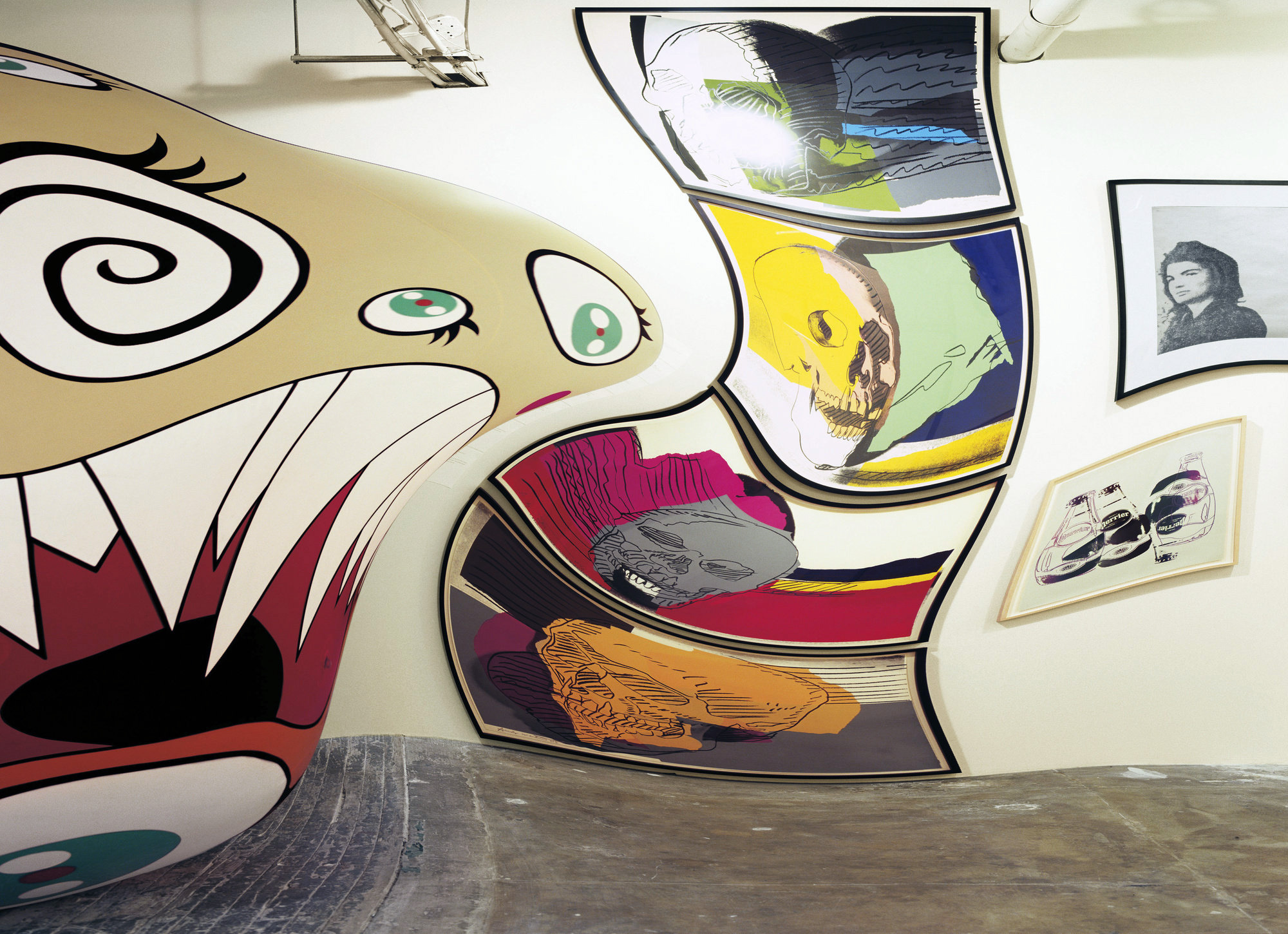
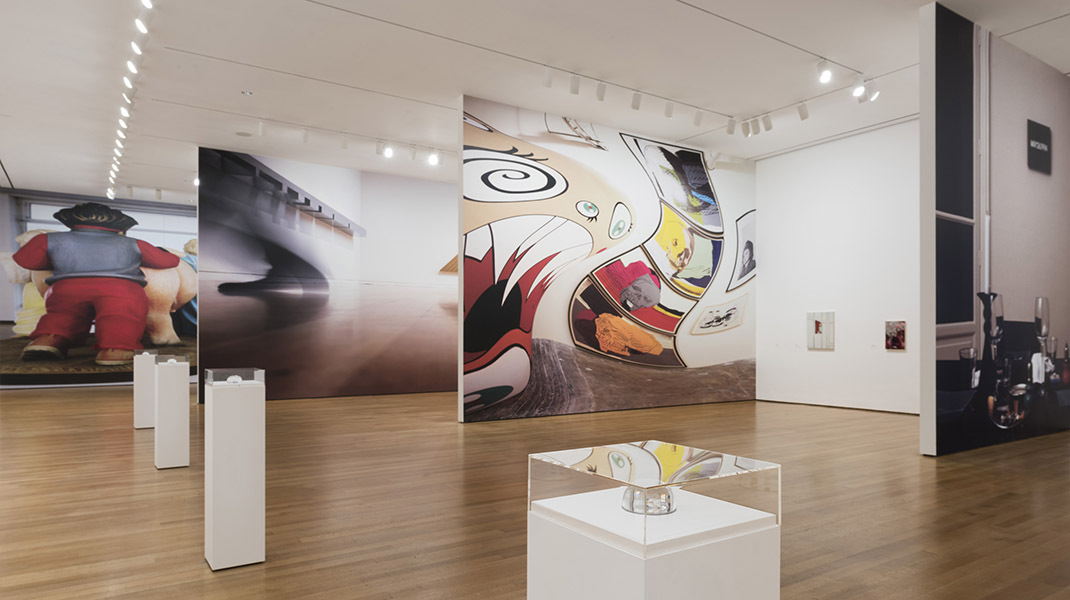
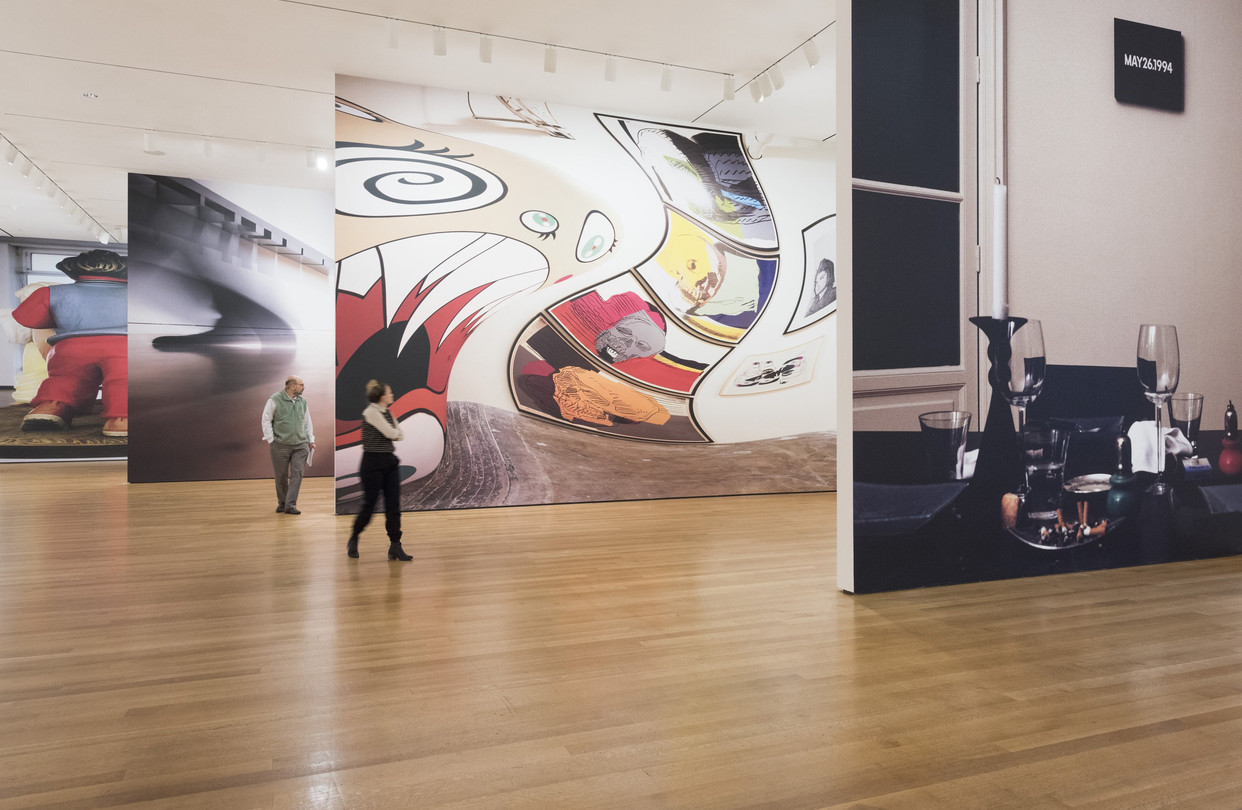
Louise Lawler (American, b. 1947) 'Pollyanna (adjusted to fit) distorted for the times' 2007/2008/2012 from the exhibition 'Louise Lawler: WHY PICTURES NOW' at the Museum of Modern Art (MoMA), New York, April - July, 2017


Louise Lawler (American, b. 1947)
Pollyanna (adjusted to fit) distorted for the times
2007/2008/2012
As adjusted for the MoMA exhibition WHY PICTURES NOW, 2017
Dimensions variable
Courtesy the artist and Metro Pictures
© 2017 Louise Lawler


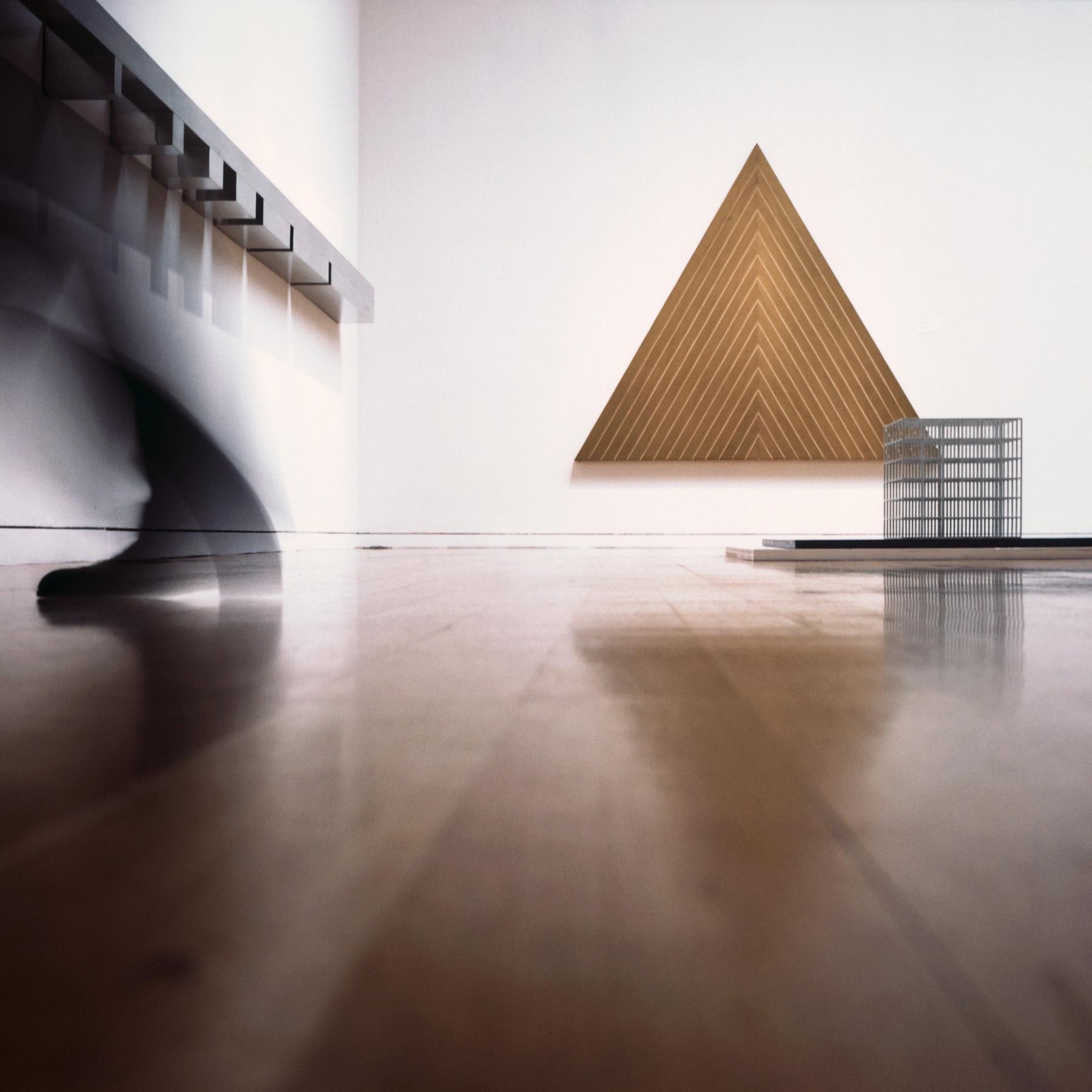
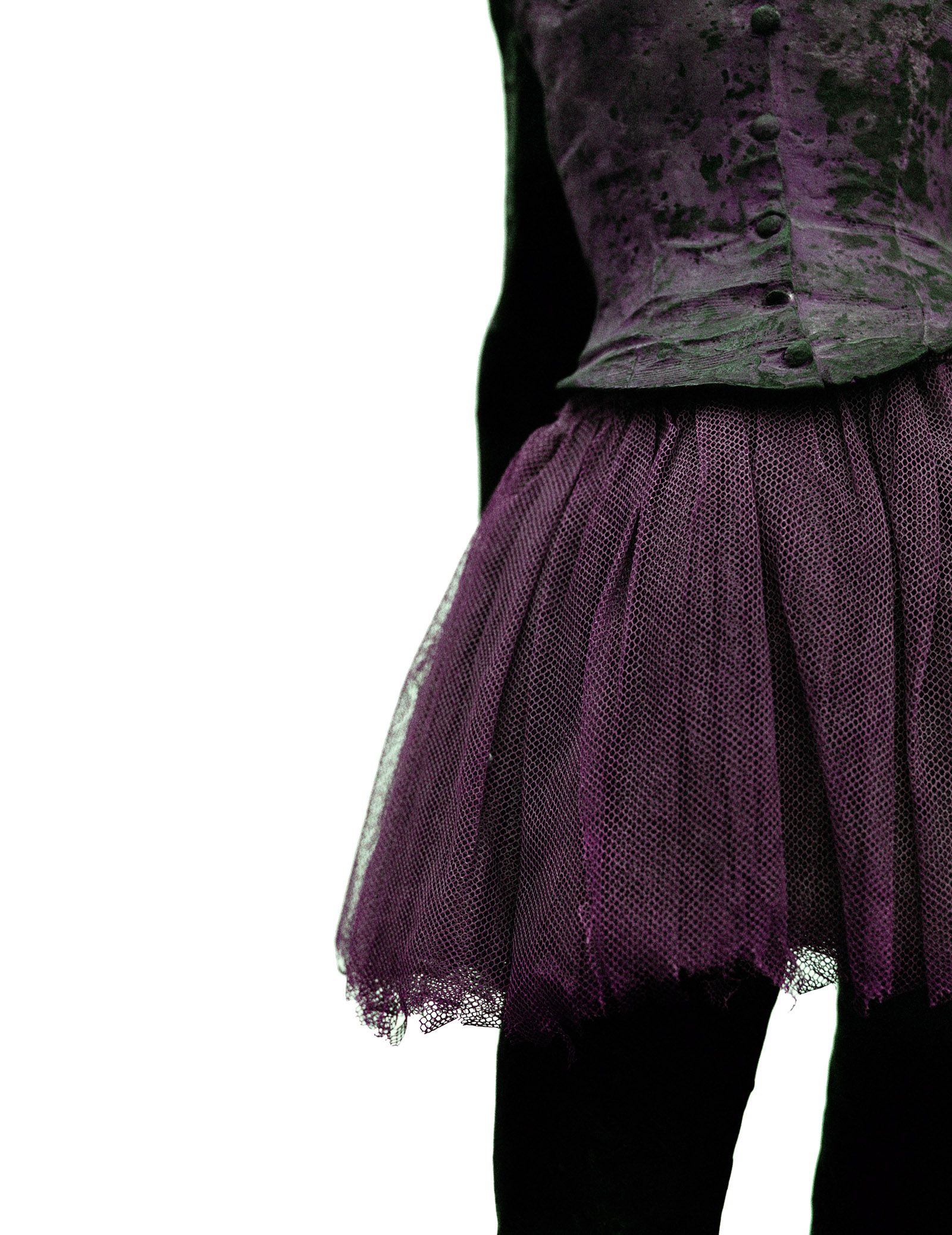
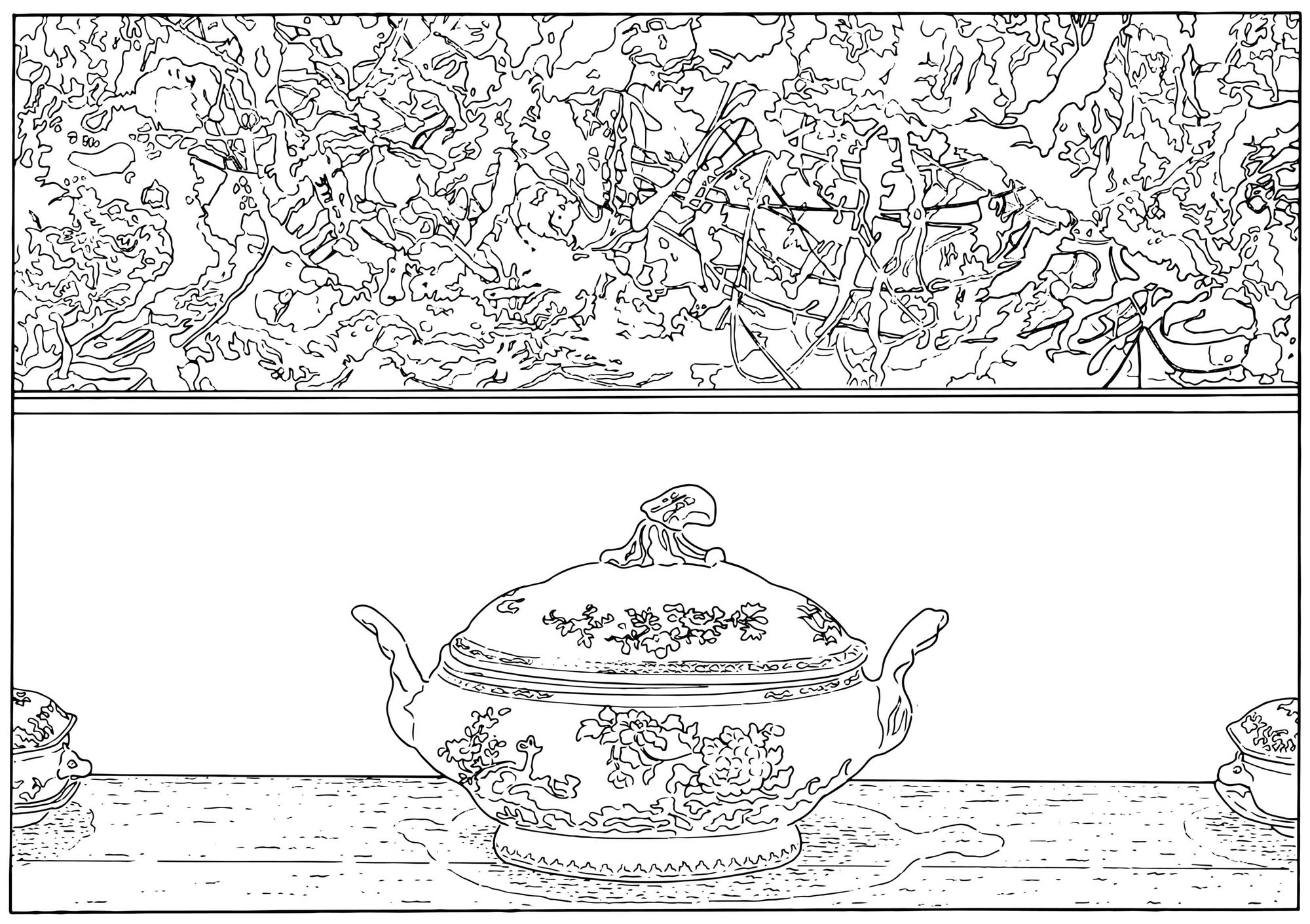
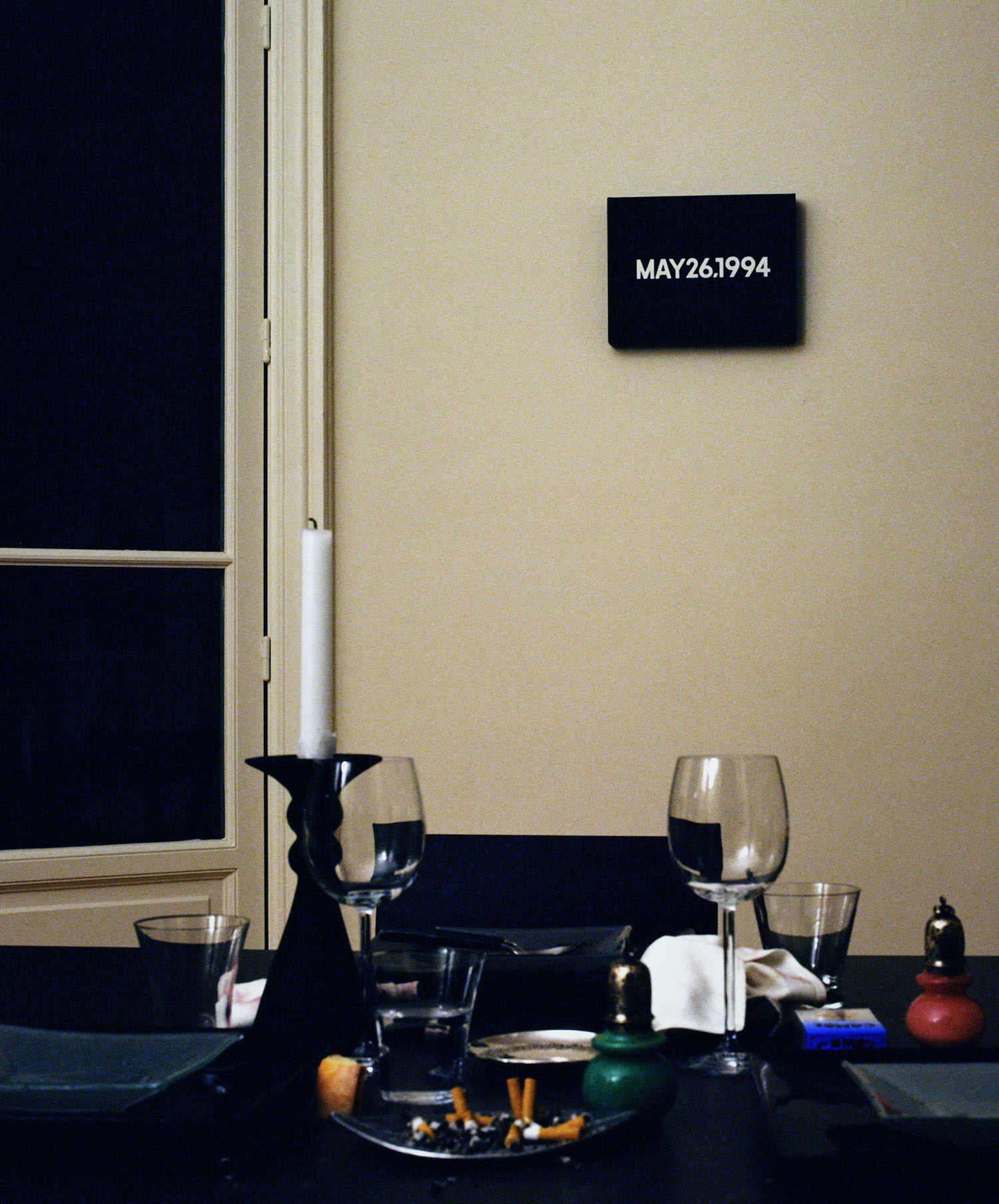
I missed the closing date for this exhibition due to the ongoing problems with my hand. However, I believe it is valuable to post these images because Louise Lawler is an always provocative, thoughtful and interesting artist. She shines a light or, more possibly, pokes a big stick at patriarchal systems of value in art – turning perceived points of view, ways of seeing, and “the cultural circumstances that support art’s production, circulation, and presentation” on their head.

“… behind Ms. Lawler’s shape-shifting works lies a poetic intelligence, a political sharpness and an understanding of the artwork as a form of value, but also as a source and an object of love.”

Well said.

Lawler possesses a unique understanding of the forms of culture embodied within images and also an intimate knowledge of the archetypal forms buried deep within their bones. Is the pattern immanent in the paper (the cosmos), or is the paper a blank slate to be written on by the creator?

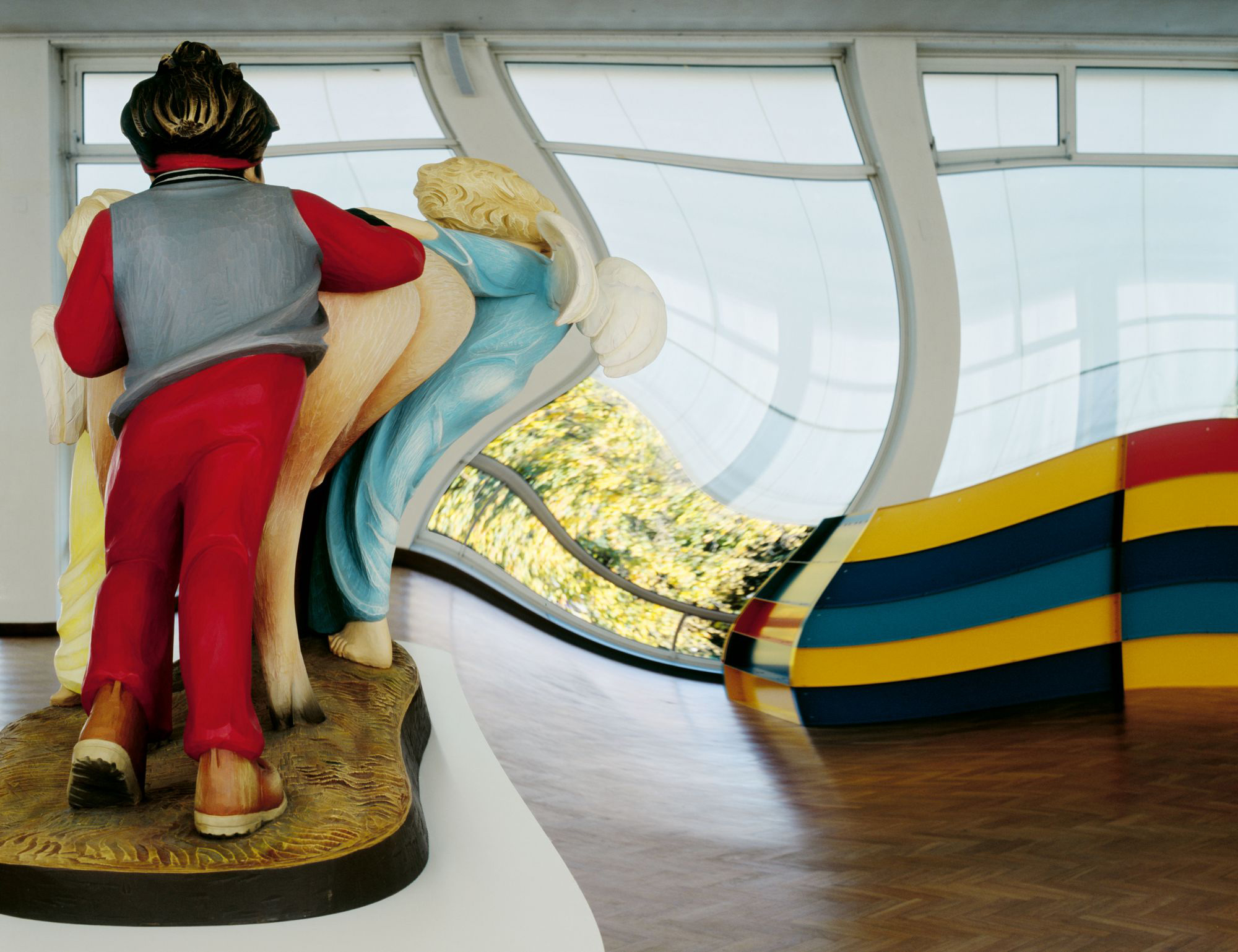
Distorted, restaged, reframed and re-presented for the times…

Dr Marcus Bunyan


Many thankx to MoMA for allowing me to publish the photographs in posting. Please click on the photographs for a larger version of the image.

#art #moma #museumofmodernart #museum #modernart #nyc #education #artist #photography #womenartists #femaleartists #louiselawler #whypicturesnow


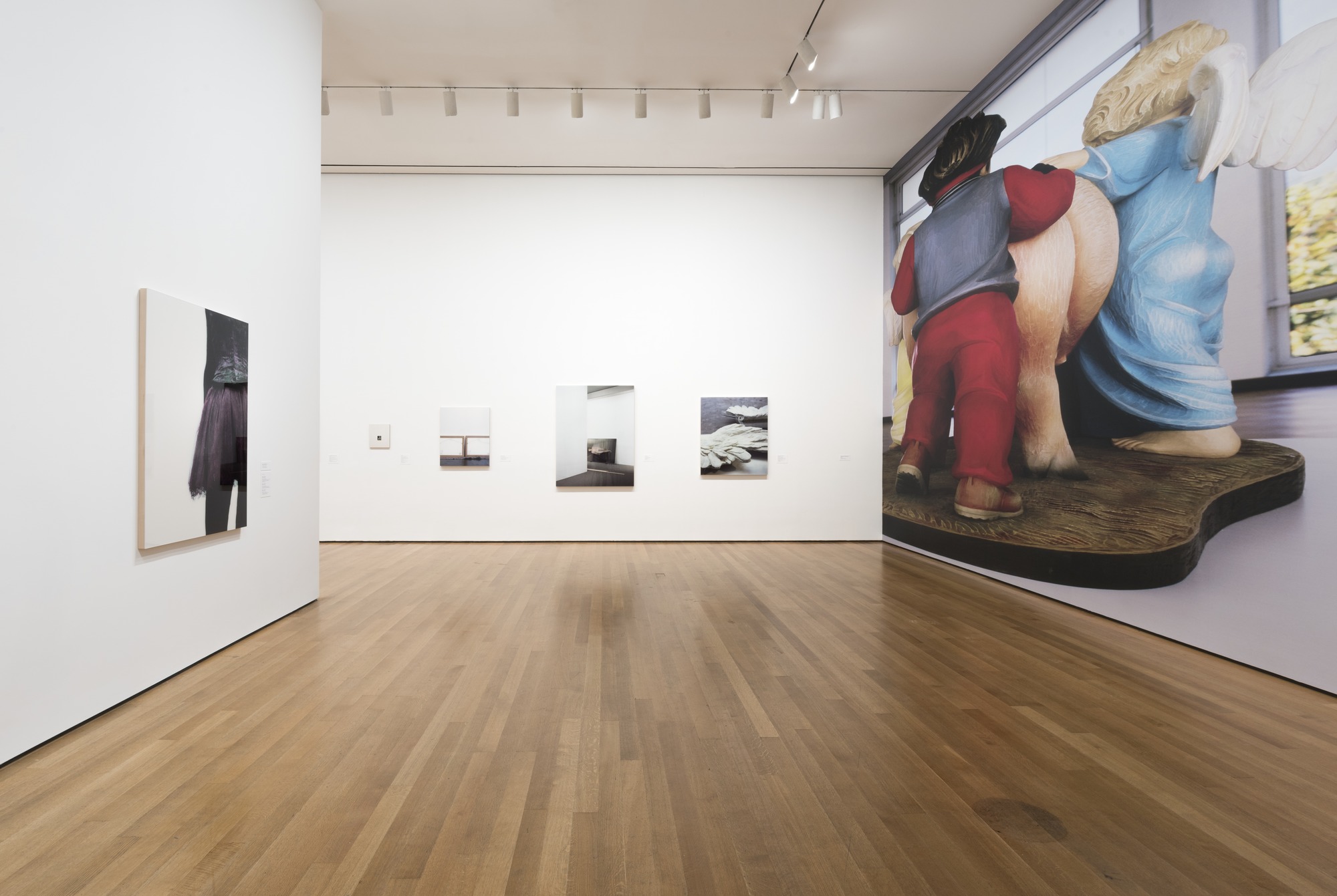
Louise Lawler (American, b. 1947) 'Pollyanna (adjusted to fit)' 2007/2008/2012 from the exhibition 'Louise Lawler: WHY PICTURES NOW' at the Museum of Modern Art (MoMA), New York, April - July, 2017


Louise Lawler (American, b. 1947)
Pollyanna (adjusted to fit)
2007/2008/2012
As adjusted for the MoMA exhibition WHY PICTURES NOW, 2017
Dimensions variable
Courtesy the artist and Metro Pictures
© 2017 Louise Lawler


Louise Lawler (American, b. 1947) 'Produced in 1988, Purchased in 1989; Produced in 1989, Purchased in 1993 (adjusted to fit), distorted for the times' 1995/2010


Louise Lawler (American, b. 1947)
Produced in 1988, Purchased in 1989; Produced in 1989, Purchased in 1993 (adjusted to fit), distorted for the times
1995/2010
Dimensions variable
Courtesy the artist and Metro Pictures
© 2017 Louise Lawler


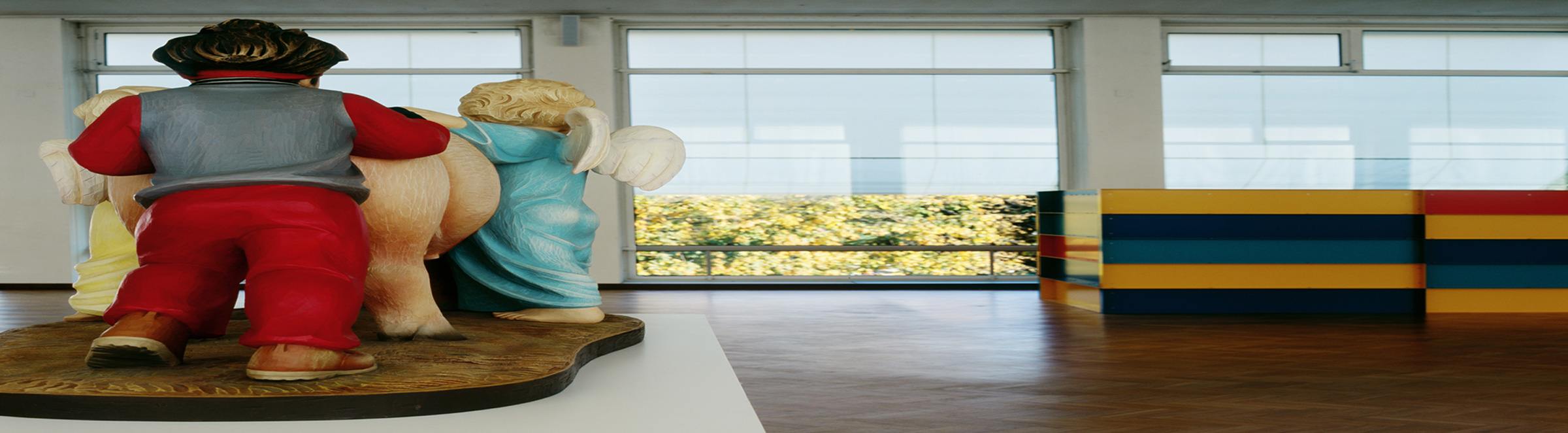
(Note on reproducing Lawler’s Adjusted to Fit works: Each time these images are reproduced, they should be stretched to the space given to the reproduction. The original file (un-stretched) is the origin point for anything that is then adjusted by the photo editor.)


Louise Lawler (American, b. 1947) 'Produced in 1988, Purchased in 1989; Produced in 1989, Purchased in 1993 (adjusted to fit)' 1995/2010


Louise Lawler (American, b. 1947)
Produced in 1988, Purchased in 1989; Produced in 1989, Purchased in 1993 (adjusted to fit), distorted for the times
1995/2010
Dimensions variable
Courtesy the artist and Metro Pictures
© 2017 Louise Lawler


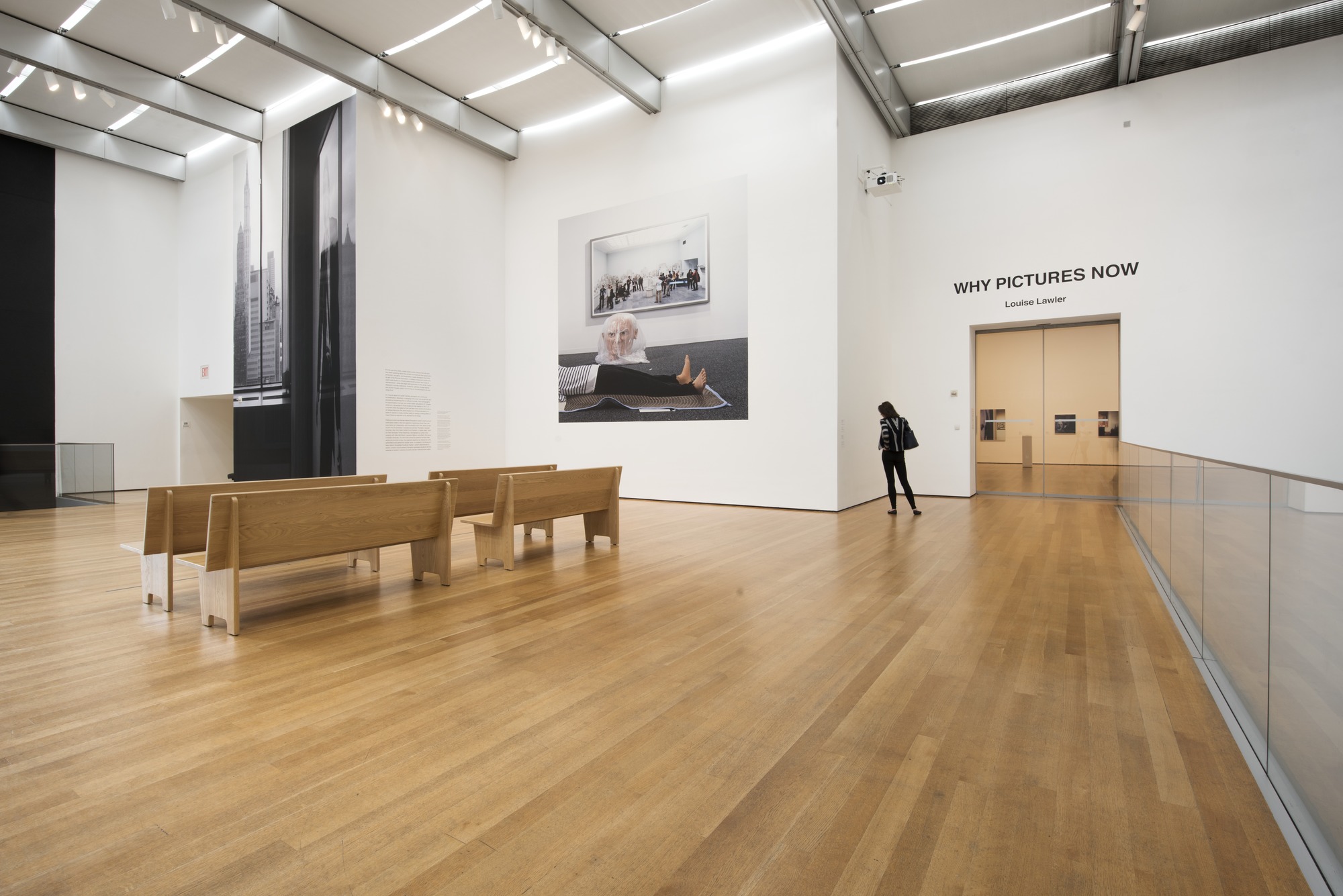
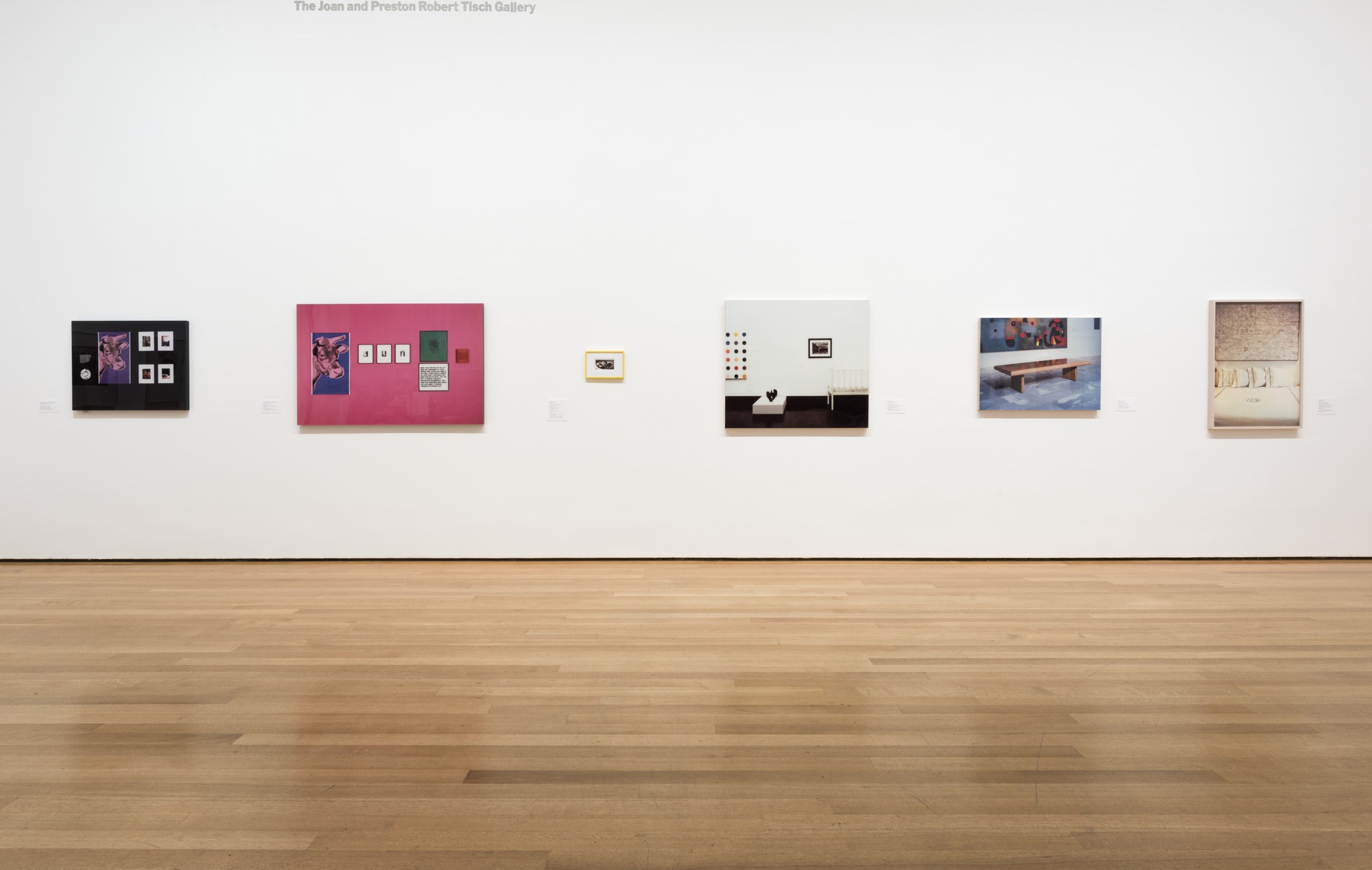
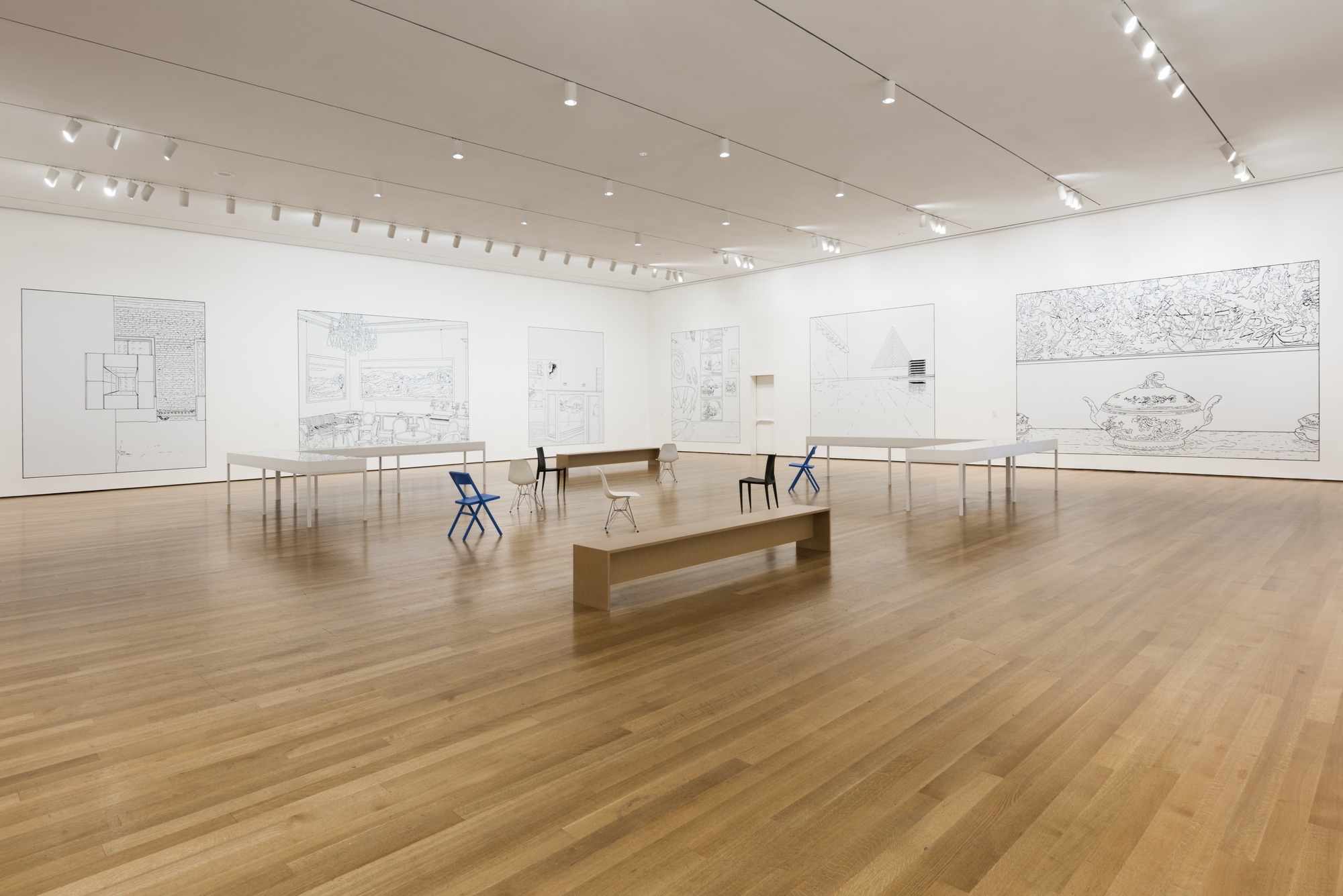
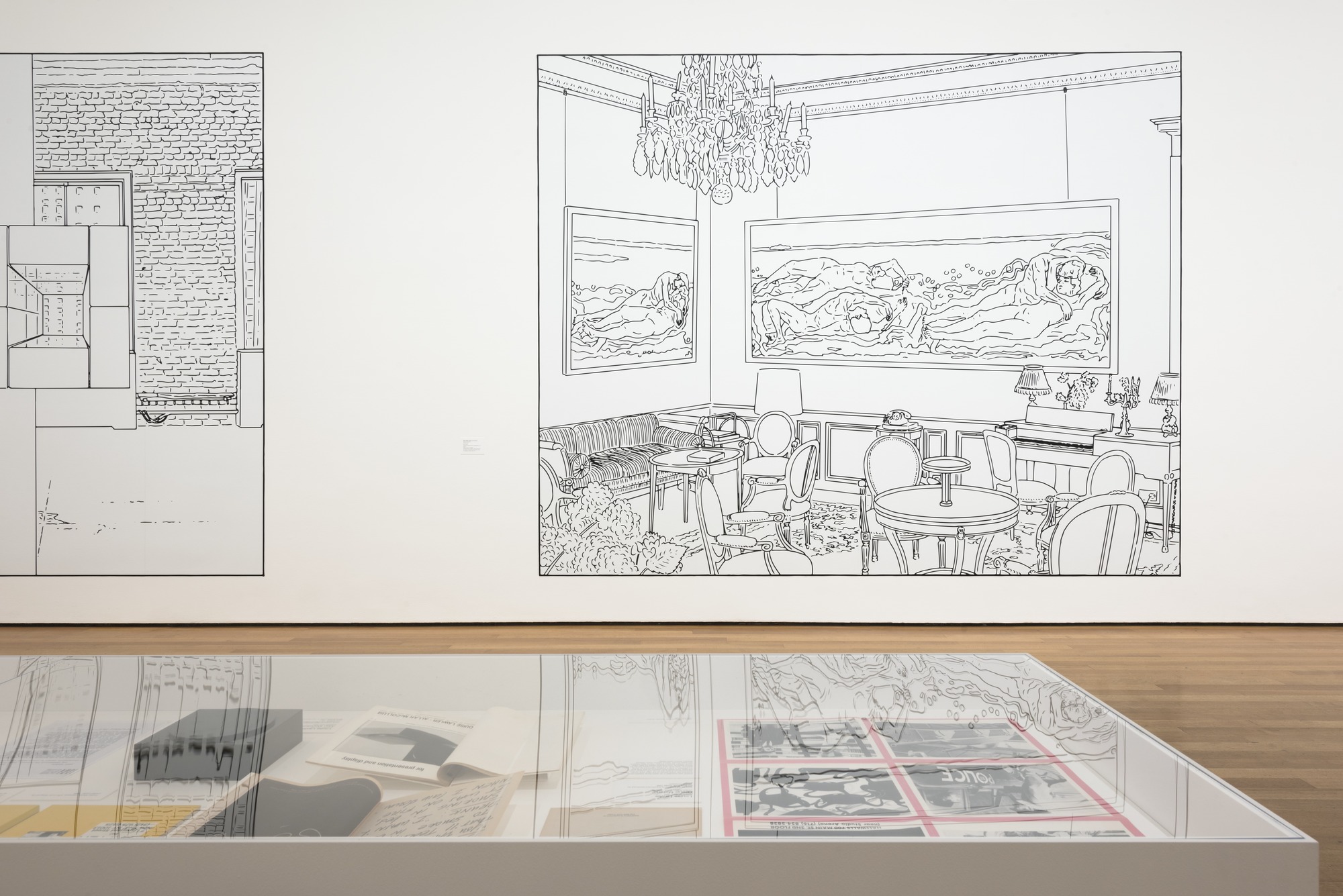
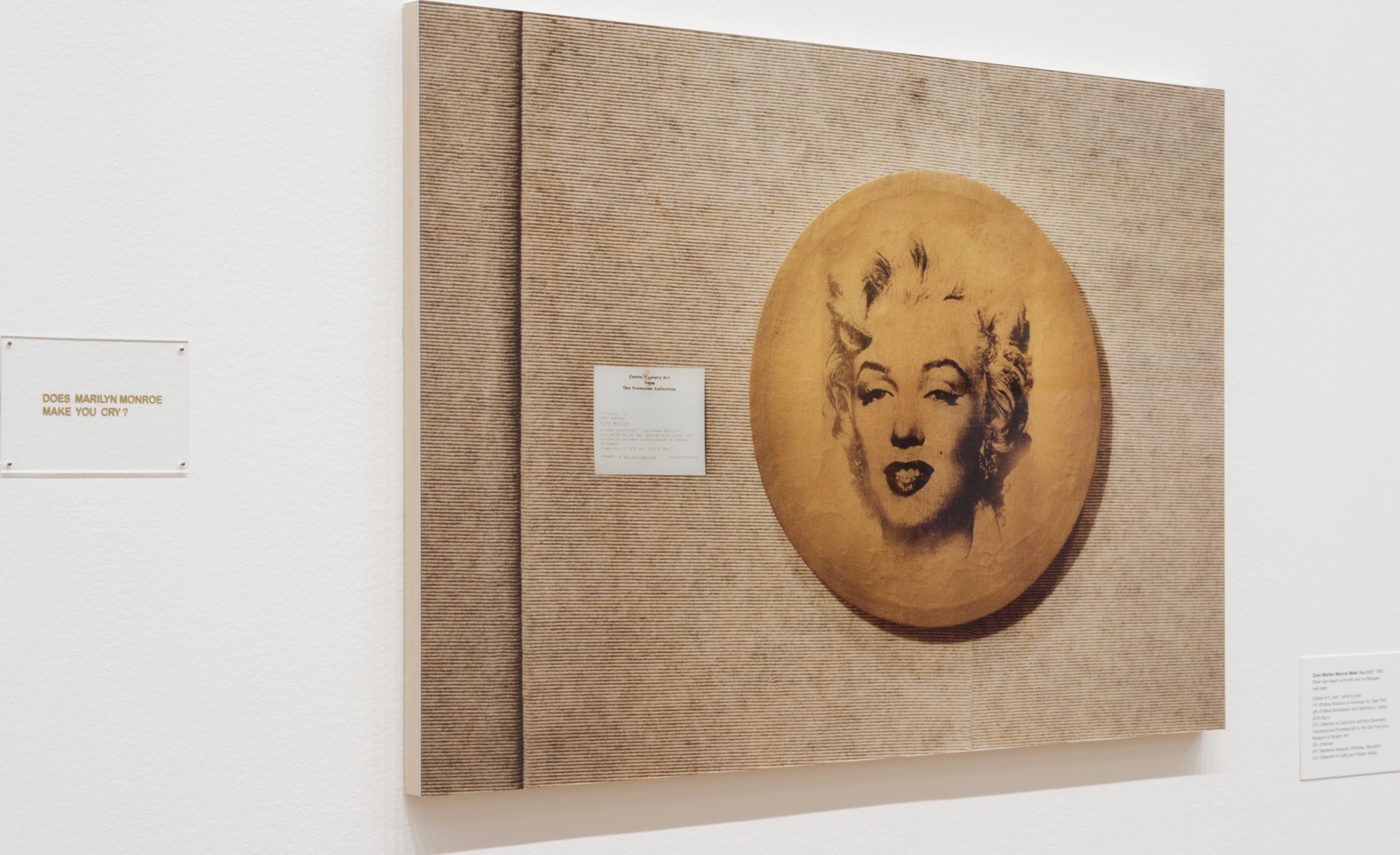
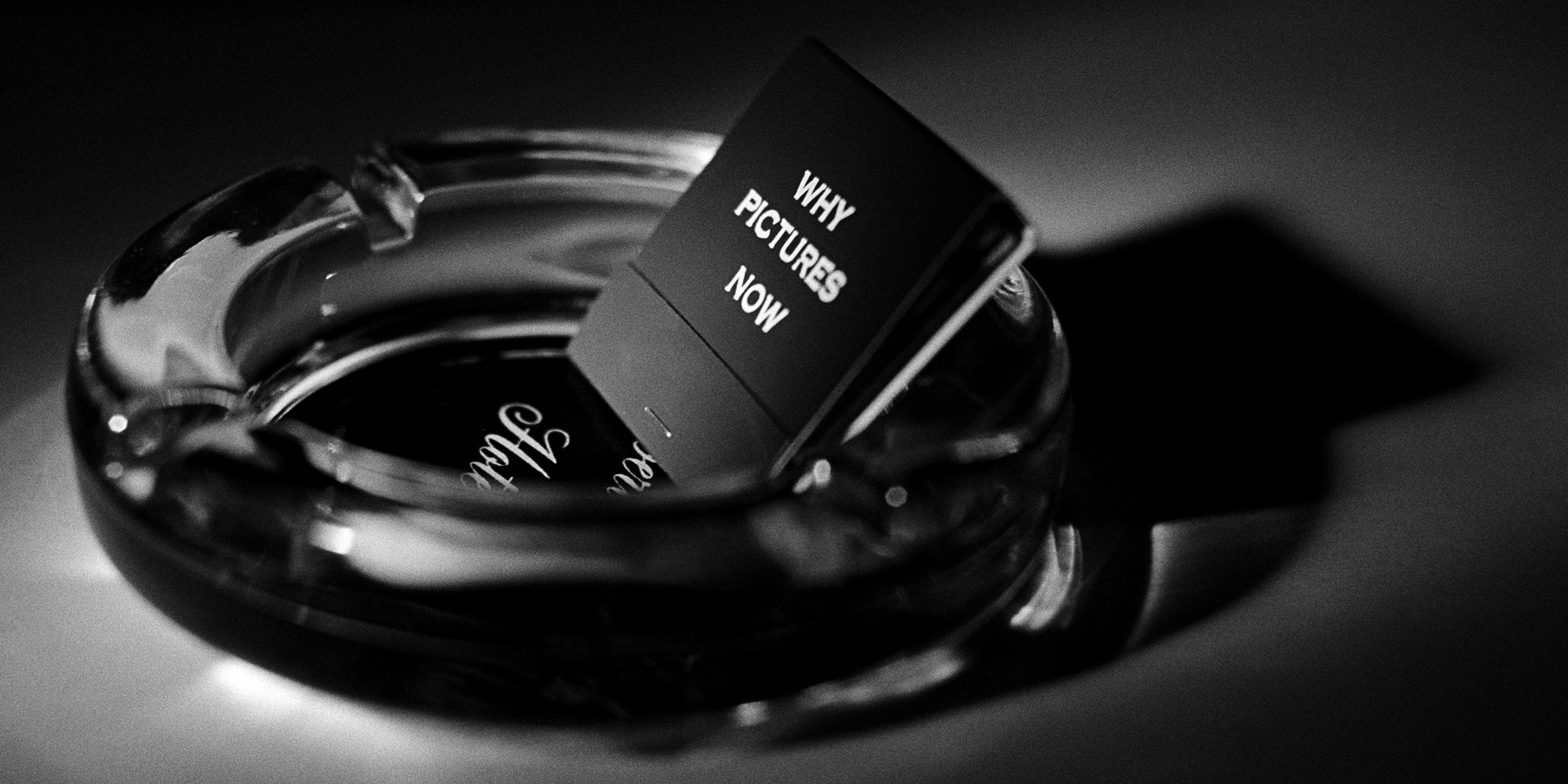
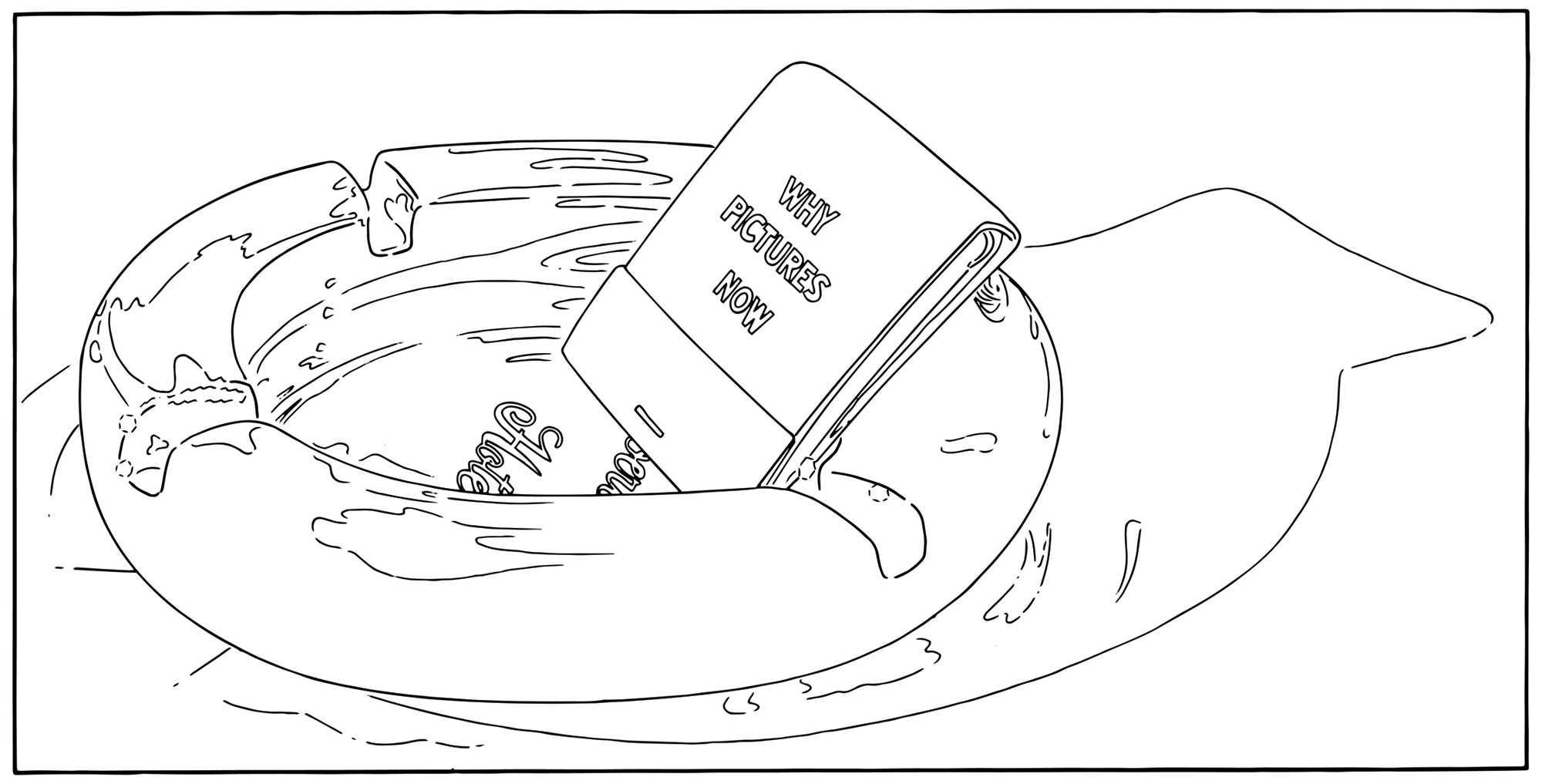
Louise Lawler: WHY PICTURES NOW is the first major survey in New York of the artist Louise Lawler (American, b. 1947), spanning the 40-year creative output of one of the most influential artists working in the fields of image production and institutional critique. The exhibition takes its title from one of Lawler’s most iconic works, Why Pictures Now (1982), a black-and-white photograph showing a matchbook propped up in an ashtray. Reminiscent of an advertising photograph or a film noir still, it asks the viewer to consider why the work takes the form of a picture, and why the artist is making pictures now. Lawler came of age as part of the Pictures Generation, a loosely knit, highly independent group of artists named for an influential exhibition, Pictures, organised in 1977 by art historian Douglas Crimp at Artists Space in New York. These artists used photography and appropriation-driven strategies to examine the functions and codes of representation. Lawler’s signature style was established in the late 1970s and early 1980s, when she began taking pictures of other artists’ works displayed in collectors’ homes, museums, storage spaces, and auction houses to question the value, meaning, and use of art.

WHY PICTURES NOW is organised by Roxana Marcoci, Senior Curator, with Kelly Sidley, Curatorial Assistant, Department of Photography.


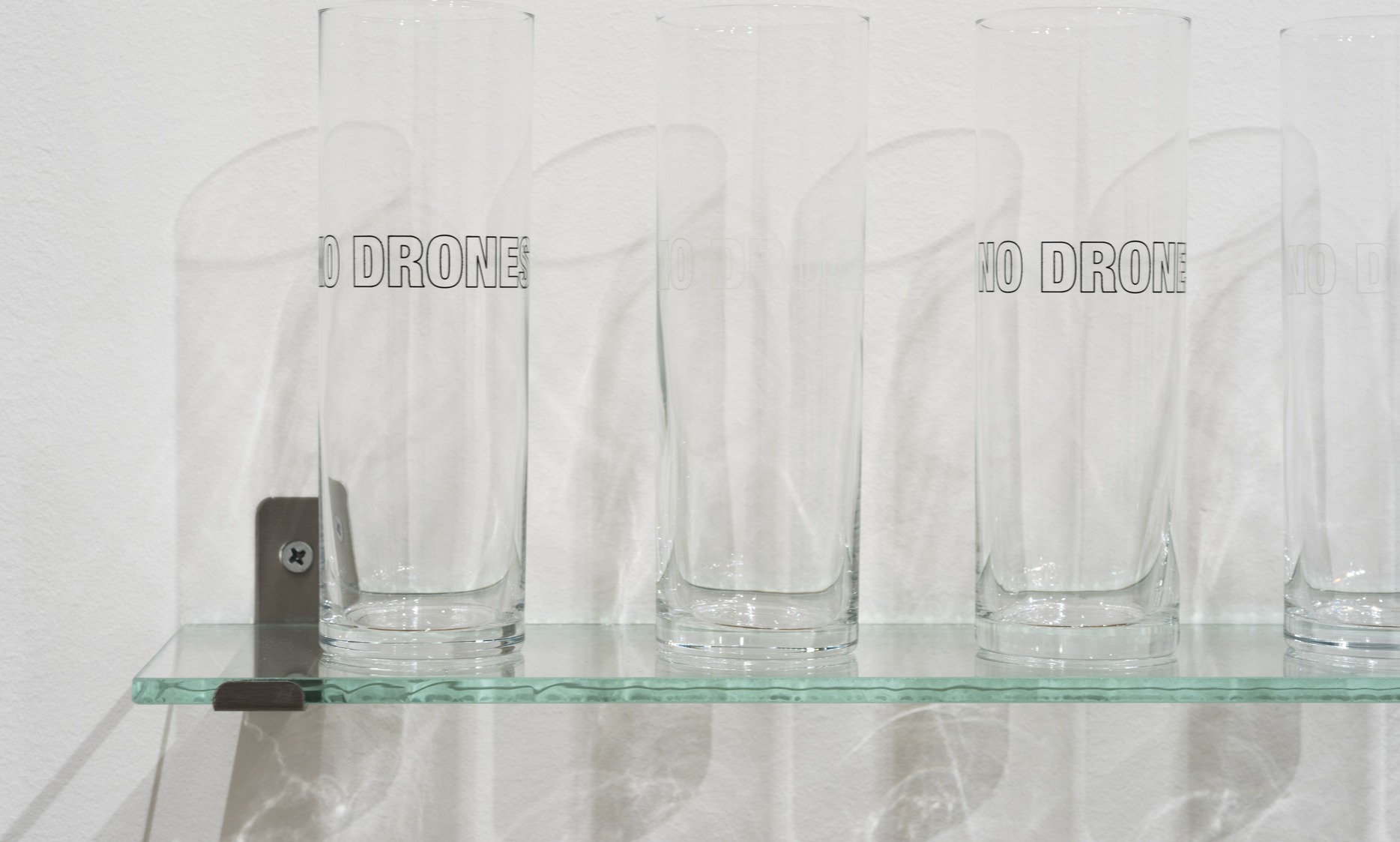
“Ms. Lawler and Roxana Marcoci, the exhibition’s curator, have devised something quite different: an open, airy survey with lots of room for roaming, some chairs for sitting and two conjoined, markedly different halves focusing on Ms. Lawler’s activities with pictures and then words. The first half is dominated by photographs in various shapes and guises, including mural-size images. The second, which seems almost empty at first, contains two large vitrines of ephemera that show off Ms. Lawler’s gifts for graphic design and for language, with displays of everything from matchbook covers and napkins to exhibition announcements and art books that she photo-edited. …

Ms. Lawler’s images have multiple lives, exposing the ceaseless flexibility of photographs. Constantly recycled, they go from framed and portable to paperweights to the wall-covering murals of her “adjusted to fit” series. In the show’s first half, four “adjusted” photos cover immense, staggered walls, looming like ocean liners sliding out of their docks. Their monumentality thrills but also chides the art world for its embrace of spectacle and the overblown. …

It is hard to know if these words [“Why Pictures Now”] proclaim the power, or the worthlessness, of pictures. Probably both. Either way, behind Ms. Lawler’s shape-shifting works lies a poetic intelligence, a political sharpness and an understanding of the artwork as a form of value, but also as a source and an object of love.”


Roberta Smith. “Louise Lawler’s Stealth Aesthetic (and Muted Aura),” on the New York Times website May 11, 2017 [Online] Cited 29/12/2021


Louise Lawler: WHY PICTURES NOW | MoMA LIVE

Join us for a conversation with MoMA director Glenn Lowry and curator Roxana Marcoci on the opening of the exhibition, Louise Lawler: WHY PICTURES NOW. The first New York museum survey of the work of American artist Louise Lawler, this exhibition is an exploration of her creative output, which has inspired fellow artists and cultural thinkers alike for the past four decades.

Among the most intriguing aspects of Lawler’s working process is her continuous re-presentation, reframing, or restaging in the present, a strategy through which she revisits her own images by transferring them to different formats – from photographs to paperweights, tracings, and works she calls “adjusted to fit” (images stretched or expanded to fit the location of their display). Lawler’s critical strategies of reformatting existing content not only suggest the idea that pictures can have more than one life, but underpin the intentional, relational character of her farsighted art.


Louise Lawler | HOW TO SEE the artist with MoMA curator Roxana Marcoci

Can the exact same image have a completely different meaning if its title or medium is changed? Explore the work of one of today’s most influential female artists, Louise Lawler, in the new exhibition Louise Lawler: WHY PICTURES NOW.

MoMA curator Roxana Marcoci gives us a tour of the exhibition that charts Lawler’s continuous re-presentation, reframing, or restaging of the present, a strategy through which Lawler revisits her own images by transferring them to different formats – from photographs to paperweights, tracings, and works she calls “adjusted to fit” (images stretched or expanded to fit the location of their display).


Louise Lawler’s Birdcalls at MoMA

You’re not hearing things. For the duration of the Louise Lawler exhibition, a stroll through our Abby Aldrich Rockefeller Sculpture Garden places you squarely in the middle of Birdcalls, the artist’s defiant, humorous critique of the art world’s captivation with male artists. Find out what exhibition inspired Lawler’s sole sound piece with MoMA curator Roxana Marcoci.


Installation view of 'Louise Lawler: WHY PICTURES NOW' at The Museum of Modern Art

Installation view of 'Louise Lawler: WHY PICTURES NOW' at The Museum of Modern Art

Installation view of 'Louise Lawler: WHY PICTURES NOW' at The Museum of Modern Art

Installation view of 'Louise Lawler: WHY PICTURES NOW' at The Museum of Modern Art

Installation view of 'Louise Lawler: WHY PICTURES NOW' at The Museum of Modern Art

Installation view of 'Louise Lawler: WHY PICTURES NOW' at The Museum of Modern Art

Installation view of 'Louise Lawler: WHY PICTURES NOW' at The Museum of Modern Art

Installation view of 'Louise Lawler: WHY PICTURES NOW' at The Museum of Modern Art

Installation view of 'Louise Lawler: WHY PICTURES NOW' at The Museum of Modern Art


Installation views of Louise Lawler: WHY PICTURES NOW
© 2017 The Museum of Modern Art
Photos: Martin Seck


Lawler’s study of art in its commercial context will be complemented by the display of a work by a younger artist that highlights a different kind of economy. The sculpture New York State Unified Court System (top photo), by artist Cameron Rowland, included in the artist’s knockout exhibition at Artists Space this winter, takes the form of four oak benches used in courtrooms and built using prison labour.

Brian Boucher. “MoMA Plans a Giant Louise Lawler Retrospective for 2017,” on the Artnet website June 23, 2016 [Online] Cited 29/12/2021


Louise Lawler (American, b. 1947) 'Why Pictures Now' 1981


Louise Lawler (American, b. 1947)
Why Pictures Now
1981
Gelatin silver print
3 x 6” (7.6 x 15.2cm)
The Museum of Modern Art, New York
Acquired with support from Nathalie and Jean-Daniel Cohen in honour of Roxana Marcoci
© 2016 Louise Lawler


Louise Lawler (American, b. 1947) 'Why Pictures Now (traced)' 1981/2013


Louise Lawler (American, b. 1947)
Why Pictures Now (traced)
1981/2013
Dimensions variable
Courtesy the artist and Metro Pictures
© 2016 Louise Lawler


Louise Lawler (American, b. 1947) '(Roy Lichtenstein and Other Artists) Black' 1982


Louise Lawler (American, b. 1947)
(Roy Lichtenstein and Other Artists) Black
1982
Silver dye bleach print
28 1/2 x 37 1/4″ (72.4 x 94.6cm)
Courtesy the artist and Metro Pictures
© 2016 Louise Lawler


Louise Lawler (American, b. 1947) '(Andy Warhol and Other Artists) Tulip' 1982


Louise Lawler (American, b. 1947)
(Andy Warhol and Other Artists) Tulip
1982
Silver dye bleach print
38 1/2 x 60 1/2″ (97.8 x 153.7cm)
Courtesy the artist and Metro Pictures
© 2016 Louise Lawler


Louise Lawler (American, b. 1947) 'Monogram' 1984


Louise Lawler (American, b. 1947)
Monogram
1984
Silver dye bleach print
39 1/2 × 28″ (100.3 × 71.1cm)
Courtesy the artist and Metro Pictures, New York
© 2017 Louise Lawler


“Swimming among the show’s images are words and wordplay that can have a few layers. One of Ms. Lawler’s better-known photographs shows Jasper Johns’s creamy “White Flag” (1955) hanging above a bed with an equally creamy monogrammed satin spread. The image is sensibly titled “Monogram,” all the more fittingly since “Monogram” is also the title of one of Robert Rauschenberg’s combines from the 1950s, when he and Mr. Johns were lovers.

Roberta Smith. “Louise Lawler’s Stealth Aesthetic (and Muted Aura),” on the New York Times website May 11, 2017 [Online] Cited 29/12/2021


Louise Lawler (American, b. 1947) 'Untitled, 1950-51' 1987


Louise Lawler (American, b. 1947)
Untitled, 1950-51
1987
Silver dye bleach print
29 3/8 × 39 1/4″ (74.6 × 99.7cm)
Courtesy the artist and Metro Pictures, New York
© 2017 Louise Lawler


Louise Lawler (American, b. 1947) 'Does Andy Warhol Make You Cry?' 1988


Louise Lawler (American, b. 1947)
Does Andy Warhol Make You Cry?
1988
Silver dye bleach print with text on Plexiglass wall label
Image (shown): 27 1/4 x 39″ (69.2 x 99.1cm)
Label: 4 3/8 x 6 3/8 in. (11.1 x 16.2cm)
The Museum of Modern Art, New York
Gift of Gabriella de Ferrari in honour of Karen Davidson
© 2016 Louise Lawler


“Lawler’s suspicion of the image is nothing new. In WHY PICTURES NOW, her career survey currently on view at the Museum of Modern Art, the Pictures Generation artist is again and again engaged in taking the familiar – a famous work of art, different forms of banal ephemera – and making it abnormal through clever subversion. There is a timid jostling of her male peers, a slight nudge off the pedestal of reverence, which is evident in much of her work and makes it eminently appealing – even if some of its institutional critique is diminished under the museum’s glow of prestige. But what is often obscured in Lawler’s work is the way that it’s not only questioning the apparatus of making and displaying art, but also its reception – the formalised way that we, the spectators, are looking.”


Craig Hubert. “Louise Lawler Screens a Movie with No Images,” on the Hyperallergic website May 5, 2017 [Online] Cited 29/12/2021


The Museum of Modern Art announces Louise Lawler: WHY PICTURES NOW, the first major survey in New York of the artist Louise Lawler (American, b. 1947). Spanning the 40-year creative output of one of the most influential artists working in the fields of image production and institutional critique, the exhibition will be on view from April 30 to July 30, 2017, in The Joan and Preston Robert Tisch Exhibition Gallery, sixth floor, along with one sound work, Birdcalls (1972-1981), which will be installed in The Abby Aldrich Rockefeller Sculpture Garden. The exhibition takes its title from one of Lawler’s most iconic works, Why Pictures Now (1982), a black-and-white photograph showing a matchbook propped up in an ashtray. Reminiscent of an advertising photograph or a film noir still, it asks the viewer to consider why the work takes the form of a picture, and why the artist is making pictures at this moment. Lawler came of age as part of the Pictures Generation, a loosely knit, highly independent group of artists named for an influential exhibition, Pictures, organised in 1977 by art historian Douglas Crimp at Artists Space in New York. These artists used photography and appropriation-driven strategies to examine the functions and codes of representation. Lawler’s signature style was established in the late 1970s and early 1980s, when she began taking pictures of other artists’ works displayed in collectors’ homes, museums, storage spaces, and auction houses to question the value, meaning, and use of art. WHY PICTURES NOW is organised by Roxana Marcoci, Senior Curator, with Kelly Sidley, Curatorial Assistant, Department of Photography.

Lawler’s work offers a defiant, witty, and sustained feminist analysis of the strategies that inform art’s production and reception. In 1971, she was invited to assist several artists for independent curator Willoughby Sharp’s Pier 18, an exhibition that featured 27 male artists on an abandoned pier on the Hudson River. While walking home after leaving the pier one evening, Lawler began to mimic birdlike sounds in order to ward off any unwanted interactions, chanting “Willoughby! Willoughby!” This parody evolved into Birdcalls, a seven-minute audio piece in which Lawler squawks, chirps, and twitters the names of famous male artists, from Vito Acconci to Lawrence Weiner – an astute critique of the name recognition enjoyed by her male contemporaries. Birdcalls thematises Lawler’s strategy of resistance to the authoritative and the patronymic proper name. This work will be played throughout the course of the exhibition, in MoMA’s Abby Aldrich Rockefeller Sculpture Garden.

An intriguing aspect of Lawler’s practice is her process of continuous re-presentation, reframing, or restaging in the present: she revisits her own work by transferring her images to different formats, from a photograph to a tracing, and to works that she calls “adjusted to fit.” The “tracings” are large-format black-and-white line versions of her photographs that eliminate colour and detail, functioning instead as “ghosts” of the originals. “Adjusted to fit” images are stretched or expanded to fit the location of their display, not only suggesting the idea that pictures can have more than one life, but also underpinning the intentional, relational character of Lawler’s farsighted art.

The exhibition consists of a sequence of mural-scale, “adjusted to fit” images set in dynamic relation to non-linear groupings of photographs – of collectors’ homes, auction houses, and museum installations – distinctive of Lawler’s conceptual exercises. Additionally, a deceptively empty gallery presents black-and-white tracings of Lawler’s photographs that have been printed on vinyl and mounted directly on the wall. A display of the artist’s ephemera from the 1970s to today highlights the feminist and performative undercurrents of her art. Lawler’s long history of artistic collaborations, with Sherrie Levine, Allan McCollum, Andrea Fraser, Felix Gonzalez-Torres, Christopher d’Arcangelo, Peter Nadin, and Lawrence Weiner, among others, come full circle in the ephemera on display. Furthermore, on the platform outside the gallery space, two “adjusted to fit” images are shown together with Cameron Rowland’s work New York State Unified Court System. Comprised of four oak courtroom benches, it was included in Rowland’s exhibition 91020000, presented at Artists Space in 2016. Lawler and Rowland share an interest in examining the imbalances of exploitative economies, the use value and exchange value of art, the politics of space, and the interplay of power between human relations and larger institutional structures, including markets, museums, prisons, and governments. Additionally, Andrea Fraser will perform her work May I Help You? in the exhibition space. In foregrounding her work’s relationship to the economies of collaboration and exchange, Lawler shifts focus from the individual picture to the broader history of art. Her careful attention to artistic contexts, modes of presentation, and viewers’ receptions generates witty, affective situations that contribute to institutional transformation.

Press release from MoMA


Louise Lawler (American, b. 1947) 'Untitled (Salon Hodler)' 1992


Louise Lawler (American, b. 1947)
Untitled (Salon Hodler)
1992
Paperweight (silver dye bleach print, crystal, felt) with text on wall
Paperweight: 2″ (5.1cm) high, 3 1/2″ (8.9cm) diam.
Courtesy the artist and Metro Pictures, New York
© 2017 Louise Lawler


Louise Lawler (American, b. 1947) 'Salon Hodler (traced)' 1992/1993/2013


Louise Lawler (American, b. 1947)
Salon Hodler (traced)
1992/1993/2013
Dimensions variable
Courtesy the artist and Metro Pictures
© 2016 Louise Lawler


Louise Lawler (American, b. 1947) 'Sentimental' 1999/2000


Louise Lawler (American, b. 1947)
Sentimental
1999/2000
Silver dye bleach print
40 3/4 x 46 3/4 inches (103.5 x 118.7cm)
The Museum of Modern Art, New York
Promised gift of Glenn and Amanda Fuhrman
© 2016 Louise Lawler


Louise Lawler (American, b. 1947) 'WAR IS TERROR' 2001/2003


Louise Lawler (American, b. 1947)
WAR IS TERROR
2001/2003
Silver dye bleach print
30 × 25 3/4″ (76.2 × 65.4cm)
Courtesy the artist and Metro Pictures, New York
© 2017 Louise Lawler


Louise Lawler (American, b. 1947) 'Nude' 2002/2003


Louise Lawler (American, b. 1947)
Nude
2002/2003
Silver dye bleach print
59 1/2 × 47 1/2 inches (151.1 × 120.7cm)
Courtesy the artist and Metro Pictures, New York
© 2017 Louise Lawler


Louise Lawler (American, b. 1947) 'White Gloves' 2002/2004


Louise Lawler (American, b. 1947)
White Gloves
2002/2004
Silver dye bleach print
29 × 27 1/2 inches (73.7 × 69.9cm)
Courtesy the artist and Metro Pictures, New York
© 2017 Louise Lawler


Louise Lawler (American, b. 1947) 'Life After 1945 (Faces)' 2006/2007


Louise Lawler (American, b. 1947)
Life After 1945 (Faces)
2006/2007
Silver dye bleach print
40 x 33 1/4 inches (101.6 x 84.5cm)
The Museum of Modern Art, New York
Promised gift of Glenn and Amanda Fuhrman
© 2016 Louise Lawler


Louise Lawler (American, b. 1947) 'Triangle (adjusted to fit)' 2008/2009/2011


Louise Lawler (American, b. 1947)
Triangle (adjusted to fit)
2008/2009/2011
Dimensions variable
Courtesy the artist and Metro Pictures
© 2016 Louise Lawler


Louise Lawler (American, b. 1947) 'No Drones' 2010/2011


Louise Lawler (American, b. 1947)
No Drones
2010/2011
Chromogenic colour print
29 1/4 x 19 3/4 inches (74.3 x 50.2cm)
Courtesy the artist and Metro Pictures
© 2016 Louise Lawler


Louise Lawler (American, b. 1947) 'Marie +270' 2010/2012


Louise Lawler (American, b. 1947)
Marie +270
2010/2012
Chromogenic colour print
59 x 45 1/2 inches (149.9 x 115.6cm)
The Museum of Modern Art, New York
Promised gift of Ricki Gail Conway
© 2016 Louise Lawler


Louise Lawler (American, b. 1947) 'Pollock and Tureen (traced)' 1984/2013


Louise Lawler (American, b. 1947)
Pollock and Tureen (traced)
1984/2013
Dimensions variable
The Museum of Modern Art, New York
The Abby Aldrich Rockefeller Endowment
© 2016 Louise Lawler


One of her most famous images, “Pollock and Tureen” (1984), shows a fragment of a painting by Jackson Pollock above an antique soup tureen. In the photograph, the colour relationships are clear, offering insight into the choices of the collectors who “arranged” (a favourite word of Lawler’s) the scene. The work is about class, capitalism, and domesticity, not to mention reality and fiction. But when all the site-specific context is removed [in the tracing] … all we’re left with is contemplating the original Lawler artwork’s role in art history and the market.

In Benjamin Buchloh’s essay for Lawler’s retrospective last year at the Museum Ludwig, one of his most cogent points is about the nature of melancholy in her original photographs. “[H]er images,” he writes, “leave equally little doubt that there is hardly a more melancholic space than that of a fulfilled and seemingly satisfied utopian aspiration, one that has, however, not quite lived up to the originary promises … “

Hrag Vartanian. “The Values of Louise Lawler,” on the Hypoallergic website July 21, 2014 [Online] Cited 29/12/2021


Louise Lawler (American, b. 1947) 'Hand on Her Back (traced)' 1997/1998/2013


Louise Lawler (American, b. 1947)
Hand on Her Back (traced)
1997/1998/2013
Dimensions variable
Courtesy the artist and Metro Pictures
© 2016 Louise Lawler


Louise Lawler (American, b. 1947) 'Evening Sale' 2010/2015


Louise Lawler (American, b. 1947)
Evening Sale
2010/2015
Silver dye bleach print
50 x 36 5/8 inches (127 x 93cm)
Courtesy the artist and Metro Pictures
© 2016 Louise Lawler


Louise Lawler (American, b. 1947) 'Big (adjusted to fit)' 2002/2003/2016


Louise Lawler (American, b. 1947)
Big (adjusted to fit)
2002/2003/2016
Dimensions variable
The Museum of Modern Art, New York
Acquired through the generosity of The Modern Women’s Fund and The Contemporary Arts Council
© 2016 Louise Lawler


Louise Lawler (American, b. 1947) 'Still Life (Candle) (adjusted to fit)' 2003/2016


Louise Lawler (American, b. 1947)
Still Life (Candle) (adjusted to fit)
2003/2016
Dimensions variable
Courtesy the artist and Metro Pictures
© 2016 Louise Lawler


Louise Lawler (American, b. 1947) 'Arranged by Donald Marron, Susan Brundage, Cheryl Bishop at Paine Webber Inc. (adjusted to fit)' 1982/2016


Louise Lawler (American, b. 1947)
Arranged by Donald Marron, Susan Brundage, Cheryl Bishop at Paine Webber Inc. (adjusted to fit)
1982/2016
Dimensions variable
Courtesy the artist and Metro Pictures
© 2016 Louise Lawler


The Museum of Modern Art
11 West 53 Street
New York, NY 10019
Phone: (212) 708-9400

Opening hours:
10.30am – 5.30pm
Open seven days a week

MoMA website

LIKE ART BLART ON FACEBOOK

Back to top

Exhibition: ‘Joel-Peter Witkin – Photographs 1980-2016’ at William Mora Galleries, Melbourne

Exhibition dates: 3rd – 25th August, 2017


Joel-Peter Witkin (American, 1939-) 'Arms Broken By A Window, New Mexico' 1980 from the exhibition 'Joel-Peter Witkin – Photographs 1980-2016' at William Mora Galleries, Melbourne, August 2017


Joel-Peter Witkin (American, b. 1939)
Arms Broken By A Window, New Mexico
1980
Tirage argentique
64 x 64cm
Courtesy Baudoin Lebon and William Mora Galleries
© Joel-Peter Witkin


“I think this whole conversation can be compressed into one thing. It’s that life is joyous and wonderful and it’s meant for us to grow as individuals, as citizens, as human beings and spirits. The terrible thing is that we have a choice and usually the negative choice is the easy way. That’s what we regret because we know we’ve harmed and we’re not meant to harm. We’re meant to heal and grow and share and if I had a knife at my neck or a gun to my head I’d say the same thing.”


Joel-Peter Witkin


Magical momenti mori

This will be short and sweet because I am on holiday in Europe.

It was a privilege to visit William Mora Galleries to see the first ever exhibition in Australia of the work of the renowned American photographer Joel-Peter Witkin. To be able to spend time with these photographic constructions in such a tranquil space truly was a blessing.

While it is possible to read all sorts of influences into the work – running from Diane Arbus (masks) through Surrealism, collage and homages to still-life “Vanitas” style paintings from the 1600s, the ‘Storyville’ prostitue photos of E.J. Bellocq, carte-de-visite and the conversant arched form of the window cut-outs of Victorian photo albums, mythological themes, ars moriendi (“The Art of Dying”), post-mortem photography, et al – what makes Witkin’s photographs so unique is that they could only, ever, be the work of this artist. When you look at these beautiful photographs they bear his unmistakable signature.

Witkin is able to construct in a performative space placed before the lens, engaging narratives which often have an allusive mystery embedded in them. I for one do not pretend to understand all that is going on within the images in terms of their symbolism – but this is not necessary. What I can feel is the profound love and affection that the artist has towards his subjects and his craft. Witkin is not afraid: of life, of death, of ambiguities of sexuality, identity and disability, that confront each and every one of us throughout life. He is not afraid to make bold moves in his art, scratching into the surface of the negative, bleaching into the print, collaging over the top of the base print, never afraid of high key moments in the mise-en-scène, all to create the affect that he wants in order to tell the story. He directs his imagination through the presence and physicality of the final print.

Witkin’s allegories, his mediations on the universality of death as memento mori, or meme/n/to (a meme is an element of a culture or system of behaviour passed from one individual to another, as in the multiple rituals of death) mori, remind people of the fragility of their lives and how vain are the glories of earthly life. His imaginative renditions posit this: no matter one’s station in life, the Dance of Death unites us all.

Dr Marcus Bunyan


Many thankx to Anna and William Mora for allowing me to publish the photographs in the posting. All installation photographs © Dr Marcus Bunyan, William Mora Galleries, Melbourne and the artist. Please click on the photographs for a larger version of the image.


A sudden blow: the great wings beating still
Above the staggering girl, her thighs caressed
By the dark webs, her nape caught in his bill,
He holds her helpless breast upon his breast.

How can those terrified vague fingers push
The feathered glory from her loosening thighs?
And how can body, laid in that white rush,
But feel the strange heart beating where it lies?

A shudder in the loins engenders there
The broken wall, the burning roof and tower
And Agamemnon dead.
Being so caught up,
So mastered by the brute blood of the air,
Did she put on his knowledge with his power
Before the indifferent beak could let her drop?


W. B. Yeats (1865-1939)
‘Leda and the Swan’


Joel-Peter Witkin (American, b. 1939) 'The Great Masturbator And The Country He Rode In On, New Mexico' 2017 from the exhibition 'Joel-Peter Witkin – Photographs 1980-2016' at William Mora Galleries, Melbourne, August 2017


Joel-Peter Witkin (American, b. 1939)
The Great Masturbator And The Country He Rode In On, New Mexico
2017
Tirage argentique
35 x 32cm
Courtesy Baudoin Lebon and William Mora Galleries
© Joel-Peter Witkin


“Trump is a child living in a narcissistic hollow man – with the power to destroy the world…

Trump is not qualified to be President. His election to that office represents the ignorance of the American electorate and the corruption of our political representatives. Ours is not an intellectual culture in which thought and reason are unselfishly presented. It is a “Pop Culture” of materialistic escapism which has elected an autocratic, draft dodging, corrupt business man, who has made this country the laughing stock of the world.

The Great Masturbator And The Country He Rode In On took several months to create. The Trump model was willing to pose nude. In his right hand is the nuclear button. On his extended left arm is written: “The Only Conquest Left Is Ivanka.” On his right arm, he is wearing the symbol of Communism, the secret agenda Russia is promoting today under Putin. And for reasons yet unknown, all of us look forward to know why Trump is Putin’s marionette.

I made this photograph because I am involved in mankind. As a citizen of this formally great country, and as an artist, I made this photograph to help defeat the Republican party in the 2018 elections for its cowardice in putting their party ahead of their country. Where are our elected leaders, the Lincoln’s, the Kennedy’s of today? Where are our citizen’s hero’s, the César Chávez’s, the Martin Luther King’s, the Rosa Parks of today?

What ever happened to morality, courage and integrity?”

Joel-Peter Witkin


Installation photographs


Installation view of the exhibition 'Joel-Peter Witkin - Photographs 1980-2016' at William Mora Galleries, Melbourne

Installation view of the exhibition 'Joel-Peter Witkin - Photographs 1980-2016' at William Mora Galleries, Melbourne

Installation view of the exhibition 'Joel-Peter Witkin - Photographs 1980-2016' at William Mora Galleries, Melbourne

Installation view of the exhibition 'Joel-Peter Witkin - Photographs 1980-2016' at William Mora Galleries, Melbourne

Installation view of the exhibition 'Joel-Peter Witkin - Photographs 1980-2016' at William Mora Galleries, Melbourne

Installation view of the exhibition 'Joel-Peter Witkin - Photographs 1980-2016' at William Mora Galleries, Melbourne

Installation view of the exhibition 'Joel-Peter Witkin - Photographs 1980-2016' at William Mora Galleries, Melbourne

Installation view of the exhibition 'Joel-Peter Witkin - Photographs 1980-2016' at William Mora Galleries, Melbourne


Installation views of the exhibition Joel-Peter Witkin – Photographs 1980-2016 at William Mora Galleries, Melbourne
© Dr Marcus Bunyan, William Mora Galleries, Melbourne and the artist


Joel-Peter Witkin (American, b. 1939) 'Man With Dog, Mexico' 1990


Joel-Peter Witkin (American, b. 1939)
Man With Dog, Mexico
1990
Tirage argentique
95 x 72cm
Courtesy Baudoin Lebon and William Mora Galleries
© Joel-Peter Witkin


Joel-Peter Witkin (American, b. 1939) 'Self Portrait Reminiscent As A Self Portrait As A Vanity' 1995


Joel-Peter Witkin (American, b. 1939)
Self Portrait Reminiscent As A Self Portrait As A Vanity
1995
Tirage argentique
42 x 34cm
Courtesy Baudoin Lebon and William Mora Galleries
© Joel-Peter Witkin


Joel-Peter Witkin (American, b. 1939) 'Beauty Had Three Nipples' 1998


Joel-Peter Witkin (American, b. 1939)
Beauty Had Three Nipples
1998
Tirage argentique
55 x 63cm
Courtesy Baudoin Lebon and William Mora Galleries
© Joel-Peter Witkin


Joel-Peter Witkin (American, b. 1939) 'Monsieur Baguette As Orpheo' 2004


Joel-Peter Witkin (American, b. 1939)
Monsieur Baguette As Orpheo
2004
Tirage argentique
72 x 65cm
Courtesy Baudoin Lebon and William Mora Galleries
© Joel-Peter Witkin


Orpheus is a legendary musician, poet, and prophet in ancient Greek religion and myth. The major stories about him are centred on his ability to charm all living things and even stones with his music, his attempt to retrieve his wife, Eurydice, from the underworld, and his death at the hands of those who could not hear his divine music. As an archetype of the inspired singer, Orpheus is one of the most significant figures in the reception of classical mythology in Western culture, portrayed or alluded to in countless forms of art and popular culture including poetry, film, opera, music, and painting.


Joel-Peter Witkin (American, b. 1939) 'Mother Of The Future' 2004


Joel-Peter Witkin (American, b. 1939)
Mother Of The Future
2004
Tirage argentique
67 x 76cm
Courtesy Baudoin Lebon and William Mora Galleries
© Joel-Peter Witkin


Joel-Peter Witkin (American, b. 1939) 'Ars Moriendi' 2007


Joel-Peter Witkin (American, b. 1939)
Ars Moriendi
2007
Tirage argentique
66 x 71cm
Courtesy Baudoin Lebon and William Mora Galleries
© Joel-Peter Witkin


“It happened on a Sunday when my mother was escorting my twin brother and me down the steps of the tenement where we lived. We were going to church. While walking down the hallway to the entrance of the building, we heard an incredible crash mixed with screaming and cries for help. The accident involved three cars, all with families in them. Somehow, in the confusion, I was no longer holding my mother’s hand. At the place where I stood at the curb, I could see something rolling from one of the overturned cars. It stopped at the curb where I stood. It was the head of a little girl. I bent down to touch the face, to speak to it – but before I could touch it someone carried me away.”


Joel-Peter Witkin


Ars Moriendi

The Ars moriendi (“The Art of Dying”) are two related Latin texts dating from about 1415 and 1450 which offer advice on the protocols and procedures of a good death, explaining how to “die well” according to Christian precepts of the late Middle Ages. It was written within the historical context of the effects of the macabre horrors of the Black Death 60 years earlier and consequent social upheavals of the 15th century. It was very popular, translated into most West European languages, and was the first in a western literary tradition of guides to death and dying. There was originally a “long version” and a later “short version” containing eleven woodcut pictures as instructive images which could be easily explained and memorised. …

Ars moriendi consists of six chapters:

1/ The first chapter explains that dying has a good side, and serves to console the dying man that death is not something to be afraid of

2/ The second chapter outlines the five temptations that beset a dying man, and how to avoid them. These are lack of faith, despair, impatience, spiritual pride and avarice

3/ The third chapter lists the seven questions to ask a dying man, along with consolation available to him through the redemptive powers of Christ’s love

4/ The fourth chapter expresses the need to imitate Christ’s life

5/ The fifth chapter addresses the friends and family, outlining the general rules of behaviour at the deathbed

6/ The sixth chapter includes appropriate prayers to be said for a dying man

Allegorically the images depicted the contest between angels and demons over the fate of the dying man. In his dying agony his soul emerges from his mouth to be received by one of a band of angels. Common themes portrayed by illustrators include skeletons, the Last Judgement, corpses, and the forces of good and evil battling over souls.

Text from Wikipedia website


Joel-Peter Witkin (American, b. 1939) 'Bad Student' 2007


Joel-Peter Witkin (American, b. 1939)
Bad Student
2007
Tirage argentique
86 x 70cm
Courtesy Baudoin Lebon and William Mora Galleries
© Joel-Peter Witkin


Joel-Peter Witkin (American, b. 1939) 'Myself As A Dead Clown' 2007


Joel-Peter Witkin (American, b. 1939)
Myself As A Dead Clown
2007
Tirage argentique
93 x 99cm
Courtesy Baudoin Lebon and William Mora Galleries
© Joel-Peter Witkin


Joel-Peter Witkin (American, b. 1939) 'La Giovanissima' 2007


Joel-Peter Witkin (American, b. 1939)
La Giovanissima
2007
Tirage argentique
87 x 76cm
Courtesy Baudoin Lebon and William Mora Galleries
© Joel-Peter Witkin


Joel-Peter Witkin (American, b. 1939) 'The Scale, Bogota' 2008


Joel-Peter Witkin (American, b. 1939)
The Scale, Bogota
2008
Tirage argentique
77 x 88cm
Courtesy Baudoin Lebon and William Mora Galleries
© Joel-Peter Witkin


I was born and grew up with this sexual controversy enduring ridicule and insults and humiliations. My family took advantage of me for being joto. And I’m not to blame for being born so tired of so much reproach I left my house to study and fight against everything. I made my life and I’m happy. I hope you catch me sometime and to Saint Sebastian I thank that I left with the good of this operation that changed my life. Bogota 2008


Joel-Peter Witkin (American, 1939-) 'Model At The End Of Art School' 2009


Joel-Peter Witkin (American, b. 1939)
Model At The End Of Art School
2009
Tirage argentique
72 x 65cm
Courtesy Baudoin Lebon and William Mora Galleries
© Joel-Peter Witkin


Beauty for some provides escape,
Who gain a happiness in eyeing
The gorgeous buttocks of the ape
Or Autumn sunsets exquisitely dying.

Julian Huxley (1887-1975)
Ninth Philosopher’s Song (1920)


Joel-Peter Witkin (American, b. 1939) 'The Paris Triad : Venus in Chains, Paris' 2010


Joel-Peter Witkin (American, b. 1939)
The Paris Triad: Venus in Chains, Paris
2010
Tirage argentique
123 x 95cm
Courtesy Baudoin Lebon and William Mora Galleries
© Joel-Peter Witkin


Joel-Peter Witkin (American, b. 1939) 'The Green Princess, Paris' 2011


Joel-Peter Witkin (American, b. 1939)
The Green Princess, Paris
2011
Tirage argentique
82 x 73cm
Courtesy Baudoin Lebon and William Mora Galleries
© Joel-Peter Witkin


Joel-Peter Witkin (American, b. 1939) 'A History Of The White World' 2011


Joel-Peter Witkin (American, b. 1939)
A History Of The White World
2011
Tirage argentique
67 x 76cm
Courtesy Baudoin Lebon and William Mora Galleries
© Joel-Peter Witkin


Joel-Peter Witkin (American, b. 1939) 'Presenter Of The End Of Time Award' 2013


Joel-Peter Witkin (American, b. 1939)
Presenter Of The End Of Time Award
2013
Tirage argentique
113 x 103cm
Courtesy Baudoin Lebon and William Mora Galleries
© Joel-Peter Witkin


Joel-Peter Witkin (American, b. 1939) 'Imperfect Thirst' 2016


Joel-Peter Witkin (American, b. 1939)
Imperfect Thirst
2016
Tirage argentique
67 x 54cm
Courtesy Baudoin Lebon and William Mora Galleries
© Joel-Peter Witkin


The symbolism of food and drink [in European painting 1400-1800] has roots in classical literature. Fruits, nuts, herbs, and grain are discussed in treatises on farming and natural history, and appear widely in mythology as attributes of gods and goddesses – grapes for Bacchus, god of wine; a sheaf of corn or wheat for Ceres, the grain goddess – and in metaphors for virtue and vice. Early religious writings such as the Bible and the Apocrypha, and Christian texts of the Middle Ages and Renaissance are also rich in this imagery, often borrowing from pagan symbolism and occasionally supplanting it. The pomegranate, for example, is depicted in mythological paintings as an attribute of Venus and a symbol of desire, fertility – because of its many seeds – and marriage, but appears as frequently in sacred images of the Virgin and Child. There are several legends of the pomegranate’s creation, contributing to its symbolic potency; according to one, it grew out of blood streaming from the wounded genitals of the lustful Acdestis. The pomegranate is perhaps best known, however, for its fateful role in the myth of Proserpina. Ovid tells in the Metamorphoses of Proserpina’s abduction by Pluto, ruler of the Underworld. Proserpina’s mother, Ceres, secured her release from Hades, but, before leaving Proserpina, ate the seeds from a pomegranate and, because she had consumed food in the Underworld, was compelled to spend part of every year there. Proserpina’s cyclical descent to Hades and rise to Earth was believed to bring about the changing of seasons, and the pomegranate was thus seen as a symbol of resurrection and immortality.

Jennifer Meagher. “Food and Drink in European Painting, 1400-1800,” on The Met website [Online] Cited 06/08/2017


William Mora Galleries
60 Tanner Street, Richmond
Victoria, Australia 3121

Opening hours:
Wednesday – Friday 10am – 4pm

William Mora Galleries website

LIKE ART BLART ON FACEBOOK

Back to top

Exhibition: ‘Walker Evans’ at the Centre Pompidou, Paris

Exhibition dates: 26th April – 14th August, 2017

Curator: Mnam/Cci, Clément Cheroux


Walker Evans (American, 1903-1975) 'Stamped Tin Relic' 1929 from the exhibition 'Walker Evans' at the Centre Pompidou, Paris, April - August, 2017


Walker Evans (American, 1903-1975)
Stamped Tin Relic
1929
Gelatin silver print
23.3 x 28cm
Collection Centre Pompidou, Paris Achat en 1996
© Walker Evans Archive, The Metropolitan Museum of Art
Photo: © Centre Pompidou / Dist.RMN-GP


The un/ordinariness of ordinariness

What a pleasure.

I’ve never liked the term ‘”vernacular” photography’ because, for me, every time someone presses the shutter of the camera they have a purpose: to capture a scene, however accidental or incidental. That context may lie outside recognised networks of production and legitimation but it does not lie outside performance and ritual. As Catherine Lumby observes, what the promiscuous flow of the contemporary image culture opens up, “is an expanded and abstracted terrain of becoming… whereby images exceed, incorporate or reverse the values that are presumed to reside within them in a patriarchal social order.”1 Pace Evans.

His art of an alternate order, his vision of a terrain of becoming is so particular, so different it has entered the lexicon of America culture.

Dr Marcus Bunyan

1/ Lumby, Catharine. “Nothing Personal: Sex, Gender and Identity in The Media Age,” in Matthews, Jill (ed.,). Sex in Public: Australian Sexual Cultures. St. Leonards: Allen and Unwin, 1997, pp. 14-15.


Walker Evans: “The passionate quest to identify the fundamental features of American vernacular culture… the term “vernacular” designates those popular or informal forms of expression used by ordinary people for everyday purposes – essentially meaning all that falls outside art, outside the recognised networks of production and legitimation, and which in the US thus serves to define a specifically American culture. It is all the little details of the everyday environment that make for “Americanness”: wooden roadside shacks, the way a shopkeeper lays out his wares in the window, the silhouette of the Ford Model T, the pseudo-cursive typography of Coca-Cola signs. It is a crucial notion for the understanding of American culture.”

Text from press release


Many thankx to the Centre Pompidou for allowing me to publish the artwork in the posting. Please click on the art work for a larger version of the image.


Walker Evans (American, 1903-1975) 'Coney Island Beach' c. 1929 from the exhibition 'Walker Evans' at the Centre Pompidou, Paris, April - August, 2017


Walker Evans (American, 1903-1975)
Coney Island Beach
c. 1929
Gelatin silver print
22.5 x 31cm
The J.Paul Getty Museum, Los Angeles, Los Angeles
© Walker Evans Archive, The Metropolitan Museum of Art
Photo: © The J. Paul Getty Museum, Los Angeles


Walker Evans (American, 1903-1975) 'Truck and Sign' 1928-1930


Walker Evans (American, 1903-1975)
Truck and Sign
1928-1930
Gelatin silver print
16.5 x 22.2cm
Collection particulière, San Francisco
© Walker Evans Archive, The Metropolitan Museum of Art
Photo: © Fernando Maquieira, Cromotex


Walker Evans (American, 1903-1975) 'New York City Street Corner' 1929


Walker Evans (American, 1903-1975)
New York City Street Corner
1929
Gelatin silver print
18.4 x 12.7cm
The J. Paul Getty Museum, Los Angeles
© Walker Evans Archive, The Metropolitan Museum of Art
Photo: © The J. Paul Getty Museum, Los Angeles


Walker Evans (American, 1903-1975) 'Self-Portrait in Automated Photobooth' 1930


Walker Evans (American, 1903-1975)
Self-Portrait in Automated Photobooth
1930
Gelatin silver print
18.3 x 3.8cm
The Metropolitan Museum of Art, New York
© Walker Evans Archive, The Metropolitan Museum of Art
Photo: © The Metropolitan Museum of Art, Dist-RMN-GP/Image of the MMA


Walker Evans (American, 1903-1975) 'Self-Portrait in Automated Photobooth' 1930 (detail)

Walker Evans (American, 1903-1975) 'Self-Portrait in Automated Photobooth' 1930 (detail)


Walker Evans (American, 1903-1975)
Self-Portrait in Automated Photobooth (details)
1930
Gelatin silver print
18.3 x 3.8cm
The Metropolitan Museum of Art, New York
© Walker Evans Archive, The Metropolitan Museum of Art
Photo: © The Metropolitan Museum of Art, Dist-RMN-GP/Image of the MMA


Walker Evans (1903-1975) was one of the most important of twentieth-century American photographers. His photographs of the Depression years of the 1930s, his assignments for Fortune magazine in the 1940s and 1950s, and his “documentary style” influenced generations of photographers and artists. His attention to everyday details and the commonplace urban scene did much to define the visual image of 20th-century American culture. Some of his photographs have become iconic.

Conceived as a retrospective of Evans’s work as a whole, the Centre Pompidou exhibition presents three hundred vintage prints in a novel and revelatory thematic organisation. It highlights the photographer’s recurrent concern with roadside buildings, window displays, signs, typography and faces, offering an opportunity to grasp what no doubt lies at the heart of Walker Evans’ work: the passionate quest to identify the fundamental features of American vernacular culture. In an interview of 1971, he explained the attraction as follows: “You don’t want your work to spring from art; you want it to commence from life, and that’s in the street now. I’m no longer comfortable in a museum. I don’t want to go to them, don’t want to be ‘taught’ anything, don’t want to see ‘accomplished’ art. I’m interested in what’s called vernacular. For example, finished, I mean educated, architecture doesn’t interest me, but I love to find American vernacular”.

In the English-speaking countries, and in America more notably, the term “vernacular” designates those popular or informal forms of expression used by ordinary people for everyday purposes – essentially meaning all that falls outside art, outside the recognised networks of production and legitimation, and which in the US thus serves to define a specifically American culture. It is all the little details of the everyday environment that make for “Americanness”: wooden roadside shacks, the way a shopkeeper lays out his wares in the window, the silhouette of the Ford Model T, the pseudo-cursive typography of Coca-Cola signs. It is a crucial notion for the understanding of American culture. It is to be found in the literature as early as the 19th century, but it is only in the late 1920s that it is first deployed in a systematic study of architecture. Its importance in American art would be theorised in the 1940s, by John Atlee Kouwenhoven, a professor of English with a particular interest in American studies who was close to Walker Evans himself.

After an introductory section that looks at Evans’s modernist beginnings, the exhibition introduces the subjects that would fascinate him throughout his career: the typography of signs, the composition of window displays, the frontages of little roadside businesses, and so on. It then goes on to show how Evans himself adopted the methods or visual forms of vernacular photography in becoming, for the time of an assignment, an architectural photographer, a catalogue photographer, an ambulant portrait photographer, while all the time explicitly maintaining the standpoint of an artist.

This exhibition is the first major museum retrospective of Evans’s work in France. Unprecedented in its ambition, it retraces the whole of his career, from his earliest photographs in the 1920s to the Polaroids of the 1970s, through more than 300 vintage prints drawn from the most important American institutions (among them the Metropolitan Museum and the Museum of Modern Art, New York, the J. Paul Getty Museum, Los Angeles, the Art Institute of Chicago, and the National Gallery of Art, Washington D.C.) and also more than a dozen private collections. It also features a hundred or so other exhibits drawn from the post cards, enamel signs, print images and other graphic ephemera that Evans collected his whole life long.

Press release from the Centre Pompidou


Walker Evans (American, 1903-1975) 'Westchester, New York, farmhouse' 1931


Walker Evans (American, 1903-1975)
Westchester, New York, farmhouse
1931
Gelatin silver print pasted on cardboard
18 x 22.1cm
Collection Centre Pompidou, Paris
© W. Evans Arch., The Metropolitan Museum of Art
Photo: © Centre Pompidou / Dist. RMN-GP


Walker Evans (American, 1903-1975) 'Main Street, Saratoga Springs, New York' 1931


Walker Evans (American, 1903-1975)
Main Street, Saratoga Springs, New York
1931
Gelatin silver print
18.73 x 16.19cm
Collection particulière, San Francisco
© Walker Evans Archive, The Metropolitan Museum of Art
Photo: © Fernando Maquieira, Cromotex


Walker Evans (American, 1903-1975) 'License Photo Studio, New York' 1934


Walker Evans (American, 1903-1975)
License Photo Studio, New York
1934
Gelatin silver print
27.9 x 21.6cm (image: 18.3 x 14.4cm)
The J. Paul Getty Museum, Los Angeles
© Walker Evans Archive, The Metropolitan Museum of Art
Photo: © The J. Paul Getty Museum, Los Angeles


Walker Evans (American, 1903-1975) 'Penny Picture Display, Savannah' 1936


Walker Evans (American, 1903-1975)
Penny Picture Display, Savannah
1936
Gelatin silver print
21.9 x 17.6cm
The Museum of Modern Art, New York Gift of Willard Van Dyke
© Walker Evans Archive, The Metropolitan Museum of Art
Photo: © 2016. Digital Image, The Museum of Modern Art, New York / Scala, Florence


Walker Evans (American, 1903-1975) 'Joe's Auto Graveyard' 1936


Walker Evans (American, 1903-1975)
Joe’s Auto Graveyard
1936
Gelatin silver print
11.43 x 18.73cm
Collection particulière, San Francisco
© Walker Evans Archive, The Metropolitan Museum of Art
Photo: © Ian Reeves


Walker Evans (American, 1903-1975) 'Houses and Billboards in Atlanta' 1936


Walker Evans (American, 1903-1975)
Houses and Billboards in Atlanta
1936
Gelatin silver print
16.5 x 23.2cm
The Museum of Modern Art, New York
© Walker Evans Archive, The Metropolitan Museum of Art
Photo: © 2016. Digital Image, The Museum of Modern Art, New York / Scala, Florence


Curator’s point of view


“You don’t want your work to spring from art; you want it to commence from life, and that’s in the street now. I’m no longer comfortable in a museum. I don’t want to go to them, don’t want to be ‘taught’ anything, don’t want to see ‘accomplished’ art. I’m interested in what’s called vernacular.”

Walker Evans, interviewed by Leslie Katz (1971)


Through more than 400 photographs and documents, this retrospective of the work of Walker Evans (1903-1975) explores the American photographer’s fascination with his country’s vernacular culture. Evans was one of the most important of twentieth-century American photographers. His photographs of the Depression years of the 1930s, his “documentary style” and his interest in American popular culture influenced generations of photographers and artists. Bringing together the best examples of his work, drawn from the most important private and public collections, the exhibition also accords a large place to the artefacts that Evans himself collected throughout his life, to offer a fresh approach to the work of one of the most significant figures in the history of photography.

Study of his images – from the very first photographs of the 1920s to the Polaroids of his last years – reveals a fascination with the utilitarian, the domestic and the local. This interest in popular forms and practices emerged very early, when he started to collect postcards as a teenager. More than ten thousand items he had gathered by the time of his death are now held by the Metropolitan Museum, New York. Other everyday objects from his personal collection – enamel signs, handbills and adverts – are exhibited here.

Walker Evans’s attraction to the vernacular finds expression, above all, in his choice of subjects: Victorian architecture, roadside buildings, shopfronts, cinema posters, placards, signs, etc. His pictures also feature the faces and bodies of ordinary people, whether victims of the Depression or anonymous passers-by. Something else “typically American” was the underside of progress. During the 1930s in particular, the American landscape was strewn with ruin and waste. Evans kept an eye on them ever after. Industrial waste, building debris, automobile carcases, wooden houses in ruins, Louisiana mansions fallen in the world, antiques, garbage, faded interiors, bare patches in exterior render: these were the other face of America. Just as much as the towering skyscraper or the gleaming motor car, all this was an element of the modern. This concern with decline and obsolescence gave the photographer a critical edge and reveals a profound fascination with the mechanisms of overproduction and consumption characteristic of the age.

Evans didn’t just collect the forms of the vernacular, he also borrowed its methods. In many of his images, he adopts the codes of applied photography: the shots in series, the frontality, the apparent objectivity. Waiting, camera in hand on the corner of the street or in the subway, he accumulated portraits of city-dwellers by the dozen, releasing his shutter with the mechanical regularity of a photo booth. Working like a post-card photographer or architectural photographer, Evans built up, in surprisingly systematic fashion, a catalogue of churches, doors, monuments and small-town main streets. Sculptures, wrought-iron chairs, household tools: all seem to have been selected for their unique qualities as objects. The repetitivity, the apparent objectivity and the absence of emphasis in these images are typical of commercial photographs produced to order. In 1935, the Museum of Modern Art, New York, asked Evans to photograph the six hundred sculptures of the exhibition of “African Negro Art”. The method he adopted was that of the catalogue photographer, rigorously avoiding dramatic effects by eliminating shadow; tightly framed and set against a neutral background, the pieces find a new elegance. The photographer would often have recourse to this regime in the years that followed, notably for a portfolio entitled “Beauties of the Common Tool”, published in Fortune magazine in July 1955. This adoption of the forms and procedures of non-artistic photography even as Evans laid claim to art prefigures – some decades in advance! – the practices of the conceptual artists of the 1960s.

Clément Chéroux
Julie Jones
in Code Couleur, No. 28, May – August 2017, pp. 14-17


Walker Evans (American, 1903-1975) 'Shoeshine Stand Detail in Southern Town' 1936


Walker Evans (American, 1903-1975)
Shoeshine Stand Detail in Southern Town
1936
Gelatin silver print
14.5 x 17cm
The Metropolitan Museum of Art, New York Anonymous Gift
© Walker Evans Archive, The Metropolitan Museum of Art
Photo: © The Metropolitan Museum of Art, Dist-RMN-GP/Image of the MMA


Walker Evans (American, 1903-1975) 'Negroes' Church, South Carolina' March 1936


Walker Evans (American, 1903-1975)
Negroes’ Church, South Carolina
March 1936, circulation April 1969
Gelatin silver print
25.2 x 20.2cm
Musée des beaux-arts du Canada, Ottawa Acheté en 1969
© Walker Evans Archive, The Metropolitan Museum of Art
Photo: © Musée des Beaux-Arts du Canada, Ottawa


Walker Evans (American, 1903-1975) 'Alabama Tenant Farmer Floyd Bourroughs' 1936


Walker Evans (American, 1903-1975)
Alabama Tenant Farmer Floyd Bourroughs
1936
Gelatin silver print
22.9 x 18.4cm
Collection particulière, San Francisco
© Walker Evans Archive, The Metropolitan Museum of Art
Photo: © Fernando Maquieira, Cromotex


Walker Evans (American, 1903-1975) 'Allie Mae Burroughs, Wife of a Cotton Sharecropper, Hale Country, Alabama' 1936


Walker Evans (American, 1903-1975)
Allie Mae Burroughs, Wife of a Cotton Sharecropper, Hale Country, Alabama
1936
Gelatin silver print
22.3 x 17.3cm
Collection particulière
© Walker Evans Archive, The Metropolitan Museum of Art
Photo: © Collection particulière


Walker Evans (American, 1903-1975) 'Subway Portrait' January 1941


Walker Evans (American, 1903-1975)
Subway Portrait
January 1941
Gelatin silver print
20.9 x 19.1cm
National Gallery of Art, Washington Gift of Kent and Marcia Minichiello, in Honour of the 50th Anniversary of the National Gallery of Art
© Walker Evans Archive, The Metropolitan Museum of Art
Photo: © National Gallery of Art, Washington


Walker Evans (American, 1903-1975) 'Resort Photographer at Work' 1941


Walker Evans (American, 1903-1975)
Resort Photographer at Work
1941
Gelatin silver print, later print
15.9 x 22.4cm
The J. Paul Getty Museum, Los Angeles
© Walker Evans Archive, The Metropolitan Museum of Art
Photo: © The J. Paul Getty Museum, Los Angeles


Walker Evans (American, 1903-1975) 'Anna Maria, Florida' October 1958


Walker Evans (American, 1903-1975)
Anna Maria, Florida
October 1958
Oil on fibreboard
40 × 50.2cm
The Metropolitan Museum of Art, New York. Walker Evans Archive, 1994
© Walker Evans Archive, The Metropolitan Museum of Art
Photo: © The Metropolitan Museum of Art, Dist. RMN-Grand Palais / image of the MMA


Walker Evans (American, 1903-1975) 'Untitled, Detroit' 1946


Walker Evans (American, 1903-1975)
Untitled, Detroit
1946
Gelatin silver print
16 x 11.4cm
Fondation A.Stichting, Bruxelles
© Walker Evans Archive, The Metropolitan Museum of Art
Photo: © Fondation A.Stichting, Bruxelles


Walker Evans (American, 1903-1975) 'Tin Snips by J. Wiss and Sons Co., $1.85' 1955


Walker Evans (American, 1903-1975)
Tin Snips by J. Wiss and Sons Co., $1.85
1955
Gelatin silver print
25.2 x 20.3cm
The J. Paul Getty Museum, Los Angeles
© Walker Evans Archive, The Metropolitan Museum of Art
Photo: © The J. Paul Getty Museum, Los Angeles


Centre Pompidou 
75191 Paris cedex 04
Phone: 00 33 (0)1 44 78 12 33

Opening hours:
Exhibition open every day from 11am – 9pm except on Tuesday
Closed on May 1st

Centre Pompidou website

LIKE ART BLART ON FACEBOOK

Back to top

Exhibition: ‘Irving Penn: Centennial’ at the Metropolitan Museum of Art, New York Part 2

Exhibition dates: 24th April – 30th July, 2017

Curators: Jeff Rosenheim, Curator in Charge, Photographs, The Metropolitan Museum of Art and Maria Morris Hambourg, Independent Curator and Former Curator in Charge, Photographs, The Metropolitan Museum of Art


'Irving Penn: Centennial' at the Metropolitan Museum of Art


Irving Penn. The high priest of high modernist photography.

I know a lot of people adore his photography but I am not an acolyte quietly accepting his elevation to sainthood in the high temple of art museums.

I find Penn’s aesthetic aesthetic, his performing photography if you like, unappealing. To me his work is more about the photographer than it is about the subject. His photographs, in whatever style – portraiture, nude, still life – seem cold and lifeless. Like a dead fish. There is little pleasure to be gained from looking at his photographs or the people in them. I find little celebration of photography in his work, as in, this is what the camera does at its best, a dialogue between photographer and subject.

Penn was a commercial photographer who had aspirations of being an artist. As Mark L. Power observes, “One of the characteristics of the Penn style was the expressive silhouette or outline around the figure, a sculptural delineation of form, at once beautiful and austere, whether his subject was a still life, a fashion model or a portrait.” My god did he love silhouette and shadow, usually played off against a plain backdrop.

There is that key word, play. There is no sense of spontaneity in his photographs, no sense of fun, no sense of an understanding of the aura of the subject.

I think of the portraits of August Sander or Richard Avedon’s series In the American West (the latter using a plain backdrop), both with their depth of vision and feeling for the people they were photographing … and then I look at the Cuzco portraits of Penn. I get nothing back about the lives of these people in Penn’s photographs. I think of the distorted nudes of Bill Brandt with their sensuality and sublime angles … and then I look at the nudes of Penn. They just don’t stack up, they feel clumsy, trite. I look at his colour still life, and I imagine the colour work of Paul Outerbridge, the absolute intensity of feeling that I can recall from Outerbridge’s still life in my mind’s eye. No such feeling exists in Penn’s still life.

If you watch the video of Penn at work in Morocco in 1971 (below), everything is controlled to within an inch of its life. A tilt of the head here, a raise of the chin there. This is a commercial studio photographer at work. As I said earlier, the work is not a celebration of photography but about the control of the photographer through the pose of the subject. Jammed into a wedge of scenery the sitters perform for his camera – Schiaparelli, Capote, Charles James et al – flaccid characters, almost caricatures in their positioning. Other than variants such as the intense eye of Pablo Picasso, or the blindness of Ingmar Bergman, I don’t believe that Penn was ever, will ever be, a great portraitist. He has no feeling for his sitters.

Of course, there is “the relationship of content to form – a relationship that underpins all art” at which Penn excels, but he is no Atget, Evans or Eggleston, where we are constantly surprised at where the photographer places the camera, how they place the frame, how they “form the starting point of the image’s visual structure,” how we wonder at the results, how we day dream the narrative. As Victor Burgin observes, “… what the world ‘is’ depends extensively upon how it is described: in a culture where the expression ‘old bag’ is in circulation to describe an ageing woman that is precisely what she is in perpetual danger of ‘being’.”

In Penn’s work the photograph and its representation is never in any danger of “becoming”, it already is. Penn’s “old bag” never changes. By repeating the same trope over and over – the formalist aesthetic, the silhouette, the plain back drop, the controlled pose – his work never evolves, never moves with an illusive quality to a place that the viewer does not feel they already know. The world of murky imperfection, uncertainty and ephemeral juxtapositions to which our mortal senses have access is replaced by a world of perfection and light in which everything has its predestined place.

Perhaps I just long for the fundamental contradictions of life in art, antinomies, options for now and the future.

Dr Marcus Bunyan

See Part 1 of the posting


Many thankx to the Metropolitan Museum of Art for allowing me to publish the photographs in the posting. Please click on the photographs for a larger version of the image.


Irving Penn on Location in Morocco, 1971

This 8mm film footage, shot by Lisa Fonssagrives-Penn in 1971, shows Irving Penn at work in his portable studio on location in Morocco. Presented in conjunction with the exhibition “Irving Penn: Centennial,” on view at The Met Fifth Avenue from April 24 through July 30, 2017.


Irving Penn Centennial

A preview of the exhibition Irving Penn Centennial April 24 – July 30, 2017 at The Met, featuring Jeff Rosenheim, Curator in Charge, Photographs, The Metropolitan Museum of Art and Maria Morris Hambourg, Independent Curator and Former Curator in Charge, Photographs, The Metropolitan Museum of Art.


“As a way of beginning, one might compare the art of photography to the act of pointing. All of us, even the best-mannered of us, occasionally point, and it must be true that some of us point to more interesting facts, events, circumstances, and configurations than others. It is not difficult to imagine a person – a mute Virgil of the corporeal world – who might elevate the act of pointing to a creative plane, a person who would lead us through the fields and streets and indicate a sequence of phenomena and aspects that would be beautiful, humorous, morally instructive, cleverly ordered, mysterious, or astonishing, once brought to our attention, but that had been unseen before, or seen dumbly, without comprehension. This talented practitioner of the new discipline (the discipline a cross between theater and criticism) would perform with a special grace, sense of timing, narrative sweep, and wit, thus endowing the act not merely with intelligence, but with that quality of formal rigor that identifies a work of art, so that we would be uncertain, when remembering the adventure of the tour, how much of our pleasure and sense of enlargement had come from the things pointed to and how much from a pattern created by the pointer.”


John Szarkowski. “Atget, Pointing”


“The word classic is often used about Penn’s work; it entails a certain gravitas characterised by rigour almost to the point of aloofness, an awareness of beauty throughout many genres, a graphic elegance of line and contour that is uniquely his, and a relationship of his work to artists of the past, usually painters rather than photographers. Although it could be said his photography was an advertisement for a haut monde world, his work was sometimes a subtle and somewhat sly subversion of the values of that lifestyle.”


Mark L. Power. “Irving Penn: Beyond Beauty,” at the Smithsonian Museum of American Art, Washington, DC.


The most comprehensive retrospective to date of the work of the great American photographer Irving Penn (1917-2009), this exhibition will mark the centennial of the artist’s birth. Over the course of his nearly 70-year career, Penn mastered a pared-down aesthetic of studio photography that is distinguished for its meticulous attention to composition, nuance, and detail.

The exhibition follows the 2015 announcement of the landmark promised gift from The Irving Penn Foundation to The Met of more than 150 photographs by Penn, representing every period of the artist’s dynamic career with the camera. The gift will form the core of the exhibition, which will feature more than 200 photographs by Penn, including iconic fashion studies of Lisa Fonssagrives-Penn, the artist’s wife; exquisite still lifes; Quechua children in Cuzco, Peru; portraits of urban labourers; female nudes; tribesmen in New Guinea; and colour flower studies. The artist’s beloved portraits of cultural figures from Truman Capote, Picasso, and Colette to Ingmar Bergman and Issey Miyake will also be featured. Rounding out the exhibition will be photographs by Penn that entered The Met collection prior to the promised gift.


Irving Penn (American, Plainfield, New Jersey 1917-2009 New York) 'Young Quechuan Man, Cuzco' December 1948, printed 1949 from the exhibition 'Irving Penn: Centennial' at the Metropolitan Museum of Art, New York Part 2, April - July, 2017


Irving Penn (American, Plainfield, New Jersey 1917-2009 New York)
Young Quechuan Man, Cuzco
December 1948, printed 1949
Gelatin silver print
7 15/16 x 7 3/16 in. (20.1 x 18.2cm)
Promised Gift of The Irving Penn Foundation
© The Irving Penn Foundation


In Cuzco, Penn photographed both residents and visitors who came to the city from nearby villages with goods to sell or barter at the Christmastime fiestas. Many arrived at the studio to sit for their annual family portraits. Penn later recalled that they “found me instead of him [the local photographer] waiting for them, and instead of paying me for the pictures it was I who paid them for posing.”


Irving Penn (American, Plainfield, New Jersey 1917-2009 New York) 'Cuzco Children' December 1948, printed 1968 from the exhibition 'Irving Penn: Centennial' at the Metropolitan Museum of Art, New York Part 2, April - July, 2017


Irving Penn (American, Plainfield, New Jersey 1917-2009 New York)
Cuzco Children
December 1948, printed 1968
Platinum-palladium print
19 1/2 x 19 7/8 in. (49.5 x 50.5cm)
Promised Gift of The Irving Penn Foundation
© Condé Nast


Irving Penn (American, Plainfield, New Jersey 1917-2009 New York) 'Two Men in White Masks, Cuzco' December 1948, printed 1984


Irving Penn (American, Plainfield, New Jersey 1917-2009 New York)
Two Men in White Masks, Cuzco
December 1948, printed 1984
Gelatin silver print
10 9/16 x 10 7/16 in. (26.8 x 26.5cm)
Promised Gift of The Irving Penn Foundation
© The Irving Penn Foundation


Irving Penn (American, Plainfield, New Jersey 1917-2009 New York) 'Cuzco Father and Son with Eggs' December 1948, printed January 1982


Irving Penn (American, Plainfield, New Jersey 1917-2009 New York)
Cuzco Father and Son with Eggs
December 1948, printed January 1982
Platinum-palladium print
11 3/4 x 11 5/16 in. (29.8 x 28.7cm)
Promised Gift of The Irving Penn Foundation
© Condé Nast


Irving Penn (American, Plainfield, New Jersey 1917-2009 New York) 'Nude No. 18' 1949-1950, printed 1949-1950


Irving Penn (American, Plainfield, New Jersey 1917-2009 New York)
Nude No. 18
1949-1950, printed 1949-1950
Gelatin silver print
41 x 38.4cm (16 1/8 x 15 1/8 in.)
Gift of the artist, 2002
© The Irving Penn Foundation


Irving Penn (American, Plainfield, New Jersey 1917-2009 New York) 'Nude No. 42' 1949-1950, printed 1949-1950


Irving Penn (American, Plainfield, New Jersey 1917-2009 New York)
Nude No. 42
1949-1950, printed 1949-1950
Gelatin silver print
39.1 x 37.5cm (15 3/8 x 14 3/4 in.)
Gift of the artist, 2002
© The Irving Penn Foundation


Irving Penn (American, Plainfield, New Jersey 1917-2009 New York) 'Nude No. 57' 1949-1950, printed 1949-1950


Irving Penn (American, Plainfield, New Jersey 1917-2009 New York)
Nude No. 57
1949-1950, printed 1949-1950
Gelatin silver print
39.4 x 37.5cm (15 1/2 x 14 3/4 in.)
Gift of the artist, 2002
© The Irving Penn Foundation


Irving Penn (American, Plainfield, New Jersey 1917-2009 New York) 'Nude No. 72' 1949-1950, printed 1949-1950


Irving Penn (American, Plainfield, New Jersey 1917-2009 New York)
Nude No. 72, New York
1949-1950, printed 1949-1950
Gelatin silver print
39.7 x 37.5cm (15 5/8 x 14 3/4 in.)
Gift of the artist, 2002
© The Irving Penn Foundation


Irving Penn (American, Plainfield, New Jersey 1917-2009 New York) 'Nude No. 130' 1949-1950, printed 1949-1950


Irving Penn (American, Plainfield, New Jersey 1917-2009 New York)
Nude No. 130
1949-1950, printed 1949-1950
Gelatin silver print
40 x 38.1cm (15 3/4 x 15 in.)
Gift of the artist, 2002
© The Irving Penn Foundation


Irving Penn (American, Plainfield, New Jersey 1917-2009 New York) 'Kerchief Glove (Dior), Paris' 1950, printed 1984


Irving Penn (American, Plainfield, New Jersey 1917-2009 New York)
Kerchief Glove (Dior), Paris
1950, printed 1984
Gelatin silver print
15 3/8 x 15 5/16 in. (39.1 x 38.9cm)
Promised Gift of The Irving Penn Foundation
© Condé Nast


Irving Penn (American, Plainfield, New Jersey 1917-2009 New York) 'Balenciaga Sleeve (Régine Debrise), Paris' 1950


Irving Penn (American, Plainfield, New Jersey 1917-2009 New York)
Balenciaga Sleeve (Régine Debrise), Paris
1950
Gelatin silver print
10 3/16 x 10 7/16 in. (25.9 x 26.5cm)
Promised Gift of The Irving Penn Foundation
© Condé Nast


In general, daughters from nice families were not encouraged to be in-house models. “Being a studio model was viewed as preferable,” said Régine Debrise, who posed for the photographers Irving Penn and Henry Clarke before becoming an editor at French Vogue, “because the hours were contained and the conditions were better. Being in-house meant sharing the cabine, often a cramped room, with 10 other girls, and it lacked any kind of privacy.”

Anonymous. “Cabine fever: inside Dior’s fitting room,” on The Telegraph website [Online] Cited 14/07/2017. No longer available online


Irving Penn (American, Plainfield, New Jersey 1917-2009 New York) 'Balenciaga Mantle Coat (Lisa Fonssagrives-Penn), Paris' 1950, printed 1988


Irving Penn (American, Plainfield, New Jersey 1917-2009 New York)
Balenciaga Mantle Coat (Lisa Fonssagrives-Penn), Paris
1950, printed 1988
Platinum-palladium print
21 15/16 x 17 5/8 in. (55.7 x 44.7cm)
Promised Gift of The Irving Penn Foundation
© Condé Nast


Lisa Fonssagrives (May 17, 1911 – February 4, 1992), born Lisa Birgitta Bernstone was a Swedish fashion model widely credited as the first supermodel.

Before Fonssagrives came to the United States in 1939, she was already a top model. Her image appeared on the cover of many magazines during the 1930s, 1940s and 1950s, including Town & Country, Life, Time, Vogue, and the original Vanity Fair. She was reported as “the highest paid, highest praised, high fashion model in the business”. Fonssagrives once described herself as a “good clothes hanger”.

She worked with fashion photographers including George Hoyningen-Huene, Man Ray, Horst, Erwin Blumenfeld, George Platt Lynes, Richard Avedon, and Edgar de Evia. She married Parisian photographer Fernand Fonssagrives in 1935; they divorced and she later married another photographer, Irving Penn, in 1950. She went on to become a sculptor in the 1960s and was represented by the Marlborough Gallery in Manhattan.

Text from the Wikipedia website


Irving Penn (American, Plainfield, New Jersey 1917-2009 New York) 'Woman with Roses (Lisa Fonssagrives-Penn in Lafaurie Dress), Paris' 1950, printed 1968


Irving Penn (American, Plainfield, New Jersey 1917-2009 New York)
Woman with Roses (Lisa Fonssagrives-Penn in Lafaurie Dress), Paris
1950, printed 1968
Platinum-palladium print
22 x 15 11/16 in. (55.9 x 39.9cm)
Promised Gift of The Irving Penn Foundation
© Condé Nast (Fr.)


Jeanne LaFaurie was a Paris couturiere working from 1925 until 1958. The house was known for dependable, if not spectacular, clothing and fine draping. Courreges worked there as a draftsman in 1947. Michel Goma became the house designer 1950-1958, when he bought the house and renamed it. It closed in 1963.

pastperfectvintage.com. “La Faurie, Jeanne,” on the Vintage Fashion Guild website Jul 17, 2010 [Online] Cited 21/12/2021


Irving Penn (American, Plainfield, New Jersey 1917-2009 New York) 'Rochas Mermaid Dress (Lisa Fonssagrives-Penn), Paris' 1950


Irving Penn (American, Plainfield, New Jersey 1917-2009 New York)
Rochas Mermaid Dress (Lisa Fonssagrives-Penn), Paris
1950
Platinum-palladium print
Image
19 7/8 x 19 11/16 in. (50.5 x 50cm)
Promised Gift of The Irving Penn Foundation
© Condé Nast


Rochas is a fashion, beauty, and perfume house founded in 1925 by French designer Marcel Rochas (born 1902, died 1955) the first designer of 2/3-length coats and skirts with pockets. “His designs could be seen as the polar opposite of Chanel’s simplicity. Dresses were proper gowns and came with the optimum amount of frills, with lace, wide shoulders and nipped-in waists.”


Irving Penn (American, Plainfield, New Jersey 1917-2009 New York) 'Large Sleeve (Sunny Harnett), New York' 1951, printed 1984


Irving Penn (American, Plainfield, New Jersey 1917-2009 New York)
Large Sleeve (Sunny Harnett), New York
1951, printed 1984
Gelatin silver print
14 3/4 x 14 3/4 in. (37.5 x 37.5cm)
Promised Gift of The Irving Penn Foundation
© Condé Nast


Annemarie Margot “Sunny” Harnett (1924 – May 1987) was an American model in the 1950s and actress. She can be found in fashion magazines throughout that era – including frequently on the cover of Vogue – and was often a model of choice by photographer Edgar de Evia. Harper’s Bazaar ranks her as one of the 26 greatest models of all time.


Irving Penn (American, Plainfield, New Jersey 1917-2009 New York) 'Marchand de Concombres [Cucumber Seller]' 1950, printed 1976


Irving Penn (American, Plainfield, New Jersey 1917-2009 New York)
Marchand de Concombres [Cucumber Seller]
1950, printed 1976
Platinum-palladium print
Purchase, The Lauder Foundation and The Irving Penn Foundation Gifts, 2014
© The Irving Penn Foundation


Irving Penn (American, Plainfield, New Jersey 1917-2009 New York) 'Marchande de Ballons, Paris' 1950, printed 1976


Irving Penn (American, Plainfield, New Jersey 1917-2009 New York)
Marchande de Ballons, Paris
1950, printed 1976
Platinum-palladium print
15 3/4 × 12 9/16 in. (40 × 31.9cm)
Purchase, The Lauder Foundation and The Irving Penn Foundation Gifts, 2014
© Les Editions Condé Nast S. A.


Irving Penn (American, Plainfield, New Jersey 1917-2009 New York) 'Window Washer' 1950, printed 1967


Irving Penn (American, Plainfield, New Jersey 1917-2009 New York)
Window Washer
1950, printed 1967
Platinum-palladium print
19 7/8 × 14 13/16 in. (50.5 × 37.6cm)
Purchase, The Lauder Foundation and The Irving Penn Foundation Gifts, 2014
© The Irving Penn Foundation


Irving Penn (American, Plainfield, New Jersey 1917-2009 New York) 'Fishmonger, London' 1950, printed 1976


Irving Penn (American, Plainfield, New Jersey 1917-2009 New York)
Fishmonger, London
1950, printed 1976
Platinum-palladium print
19 11/16 × 14 13/16 in. (50 × 37.6cm)
Purchase, The Lauder Foundation and The Irving Penn Foundation Gifts, 2014
© Condé Nast Publications Ltd.


Irving Penn (American, Plainfield, New Jersey 1917-2009 New York) 'Pablo Picasso at La Californie, Cannes' 1957, printed February 1985


Irving Penn (American, Plainfield, New Jersey 1917-2009 New York)
Pablo Picasso at La Californie, Cannes
1957, printed February 1985
Platinum-palladium print
18 5/8 x 18 5/8 in. (47.3 x 47.3cm)
Promised Gift of The Irving Penn Foundation
© The Irving Penn Foundation


When Penn arrived at Picasso’s house in the south of France, the artist pretended not to be home. But after Penn’s assistant climbed over the locked gate, Picasso granted the photographer ten minutes. Covering his sweat-shirt with a Spanish cape, Picasso tried to playfully deflect him. Variants of this image show how Penn patiently worked the pose, allowing the artist his costume play while progressively boring in to isolate the riveting gaze of his left eye.


Irving Penn (American, Plainfield, New Jersey 1917-2009 New York) 'Ingmar Bergman, Stockholm, 1964' 1964, printed 1992


Irving Penn (American, Plainfield, New Jersey 1917-2009 New York)
Ingmar Bergman, Stockholm, 1964
1964, printed 1992
Gelatin silver print
15 1/16 x 14 15/16 in. (38.3 x 37.9cm)
Promised Gift of The Irving Penn Foundation
© The Irving Penn Foundation


Irving Penn (American, Plainfield, New Jersey 1917-2009 New York) 'Single Oriental Poppy, New York' 1968, printed 1989


Irving Penn (American, Plainfield, New Jersey 1917-2009 New York)
Single Oriental Poppy, New York
1968, printed 1989
Dye transfer print
21 7/8 x 17 1/8 in. (55.5 x 43.5cm)
Promised Gift of The Irving Penn Foundation
© The Irving Penn Foundation


Irving Penn (American, Plainfield, New Jersey 1917-2009 New York) 'Naomi Sims in Scarf, New York, c. 1969' c. 1969, printed 1985


Irving Penn (American, Plainfield, New Jersey 1917-2009 New York)
Naomi Sims in Scarf, New York, c. 1969
c. 1969, printed 1985
Gelatin silver print
10 1/2 x 10 3/8 in. (26.6 x 26.3cm)
Promised Gift of The Irving Penn Foundation
© The Irving Penn Foundation


Naomi Ruth Sims (American, 1948-2009)

Naomi Ruth Sims (March 30, 1948 – August 1, 2009) was an American model, businesswoman and author. She was the first African-American model to appear on the cover of Ladies’ Home Journal, and is widely credited as being the first African-American supermodel. …

She became one of the first successful black models while still in her teens, and achieved worldwide recognition from the late 1960s into the early 1970s, appearing on the covers of prestigious fashion and popular magazines. The New York Times wrote that (her) “appearance as the first black model on the cover of Ladies’ Home Journal in November 1968 was a consummate moment of the Black is Beautiful movement”. She also appeared on the cover of the October 17, 1969 issue of Life magazine. This made her the first African-American model on the cover of the magazine. The images from the 1967 New York Times fashion magazine cover and the 1969 Life magazine cover were exhibited at the Metropolitan Museum of Art in an exhibition entitled The Model as Muse.

Irving Penn (American, Plainfield, New Jersey 1917-2009 New York) 'Ungaro Bride Body Sculpture (Marisa Berenson), Paris, 1969' 1969, printed 1985


Irving Penn (American, Plainfield, New Jersey 1917-2009 New York)
Ungaro Bride Body Sculpture (Marisa Berenson), Paris, 1969
1969, printed 1985
Gelatin silver print
11 15/16 x 9 5/16 in. (30.3 x 23.7cm)
Promised Gift of The Irving Penn Foundation
© Condé Nast


Emanuel (Maffeolit) Ungaro (1933-2019) was a French fashion designer, who founded the fashion house called the House of Emanuel Ungaro in 1965. At the age of 22, he moved to Paris. Three years later he began designing for the House of Cristobal Balenciaga for three years before quitting to work for Courrèges. Four years later, in 1965 with the assistance of Swiss artist Sonja Knapp and Elena Bruna Fassio, Emanuel Ungaro opened his own fashion house in Paris.

Vittoria Marisa Schiaparelli Berenson (born February 15, 1947) is an American actress and model. A fashion model who came to prominence in the 1960s – “I once was one of the highest paid models in the world”, she told The New York Times – Berenson appeared on the cover of the July 1970 issue of Vogue as well as the cover of Time on December 15, 1975. She appeared in numerous fashion layouts in Vogue in the early 1970s and her sister Berry was a photographer for the magazine as well. She was known as “The Queen of the Scene” for her frequent appearances at nightclubs and other social venues in her youth, and Yves Saint Laurent dubbed her “the girl of the Seventies”.

Eventually, she was cast in several prominent film roles, including Gustav von Aschenbach’s wife in Luchino Visconti’s 1971 film Death in Venice, the Jewish department store heiress Natalia Landauer in the 1972 film Cabaret, for which she received acclaim (including two Golden Globe nominations, a BAFTA nomination and an award from the National Board of Review), and the tragic beauty Lady Lyndon in the Stanley Kubrick film Barry Lyndon (1975).

Texts from the Wikipedia website


Irving Penn (American, Plainfield, New Jersey 1917-2009 New York) 'Three Asaro Mud Men, New Guinea, 1970' 1970, printed 1976


Irving Penn (American, Plainfield, New Jersey 1917-2009 New York)
Three Asaro Mud Men, New Guinea, 1970
1970, printed 1976
Platinum-palladium print
20 1/8 x 19 1/2 in. (51.1 x 49.6cm)
Promised Gift of The Irving Penn Foundation
© The Irving Penn Foundation


Irving Penn (American, Plainfield, New Jersey 1917-2009 New York) 'Three Dahomey Girls, One Reclining, 1967' 1967, printed 1980


Irving Penn (American, Plainfield, New Jersey 1917-2009 New York)
Three Dahomey Girls, One Reclining, 1967
1967, printed 1980
Platinum-palladium print
19 11/16 x 19 11/16 in. (50 x 50cm)
Promised Gift of The Irving Penn Foundation
© The Irving Penn Foundation


Irving Penn (American, Plainfield, New Jersey 1917-2009 New York) 'Tribesman with Nose Disc, New Guinea, 1970' 1970, printed 2002


Irving Penn (American, Plainfield, New Jersey 1917-2009 New York)
Tribesman with Nose Disc, New Guinea, 1970
1970, printed 2002
Gelatin silver print
Image: 15 1/2 x 15 3/8 in. (39.4 x 39.1 cm.)
Promised Gift of The Irving Penn Foundation
© The Irving Penn Foundation


Irving Penn (American, Plainfield, New Jersey 1917-2009 New York) 'Cigarette No. 52, New York' 1972, printed April 1974


Irving Penn (American, Plainfield, New Jersey 1917-2009 New York)
Cigarette No. 52, New York
1972, printed April 1974
Platinum-palladium print
23 1/2 x 18 1/2 in. (59.7 x 47cm)
Promised Gift of The Irving Penn Foundation
© The Irving Penn Foundation


Irving Penn (American, Plainfield, New Jersey 1917-2009 New York) 'Cigarette No. 85, New York' 1972, printed Fall 1975


Irving Penn (American, Plainfield, New Jersey 1917-2009 New York)
Cigarette No. 85, New York
1972, printed Fall 1975
Platinum-palladium print
18 1/8 x 23 1/16 in. (46.0 x 58.5cm)
Promised Gift of The Irving Penn Foundation
© The Irving Penn Foundation


Irving Penn (American, Plainfield, New Jersey 1917-2009 New York) 'Cigarette No. 98, New York' 1972, printed June 1974


Irving Penn (American, Plainfield, New Jersey 1917-2009 New York)
Cigarette No. 98, New York
1972, printed June 1974
Platinum-palladium print
23 3/16 x 17 1/16 in. (58.9 x 43.3cm)
Promised Gift of The Irving Penn Foundation
© The Irving Penn Foundation


Irving Penn (American, Plainfield, New Jersey 1917-2009 New York) 'Deli Package, New York' 1975, printed March 1976


Irving Penn (American, Plainfield, New Jersey 1917-2009 New York)
Deli Package, New York
1975, printed March 1976
Platinum-palladium print
15 7/8 x 20 11/16 in. (40.3 x 52.5cm)
Promised Gift of The Irving Penn Foundation
© The Irving Penn Foundation


Irving Penn (American, Plainfield, New Jersey 1917-2009 New York) 'Two Miyake Warriors, New York, 1998' June 3, 1998, printed January-February, 1999


Irving Penn (American, Plainfield, New Jersey 1917-2009 New York)
Two Miyake Warriors, New York, 1998
June 3, 1998, printed January-February, 1999
Platinum-palladium print
21 x 19 5/8 in. (53.4 x 49.8cm)
Promised Gift of The Irving Penn Foundation
© The Irving Penn Foundation


Issey Miyake (born 22 April 1938) is a Japanese fashion designer. He is known for his technology-driven clothing designs, exhibitions and fragrances…

In the late 1980s, he began to experiment with new methods of pleating that would allow both flexibility of movement for the wearer as well as ease of care and production. In which the garments are cut and sewn first, then sandwiched between layers of paper and fed into a heat press, where they are pleated. The fabric’s ‘memory’ holds the pleats and when the garments are liberated from their paper cocoon, they are ready-to wear. He did the costume for Ballett Frankfurt with pleats in a piece named “the Loss of Small Detail” choreographed by William Forsythe and also work on ballet “Garden in the setting”.

Text from the Wikipedia website


The Metropolitan Museum of Art
1000 Fifth Avenue at 82nd Street
New York, New York 10028-0198
Phone: 212-535-7710

Opening hours:
Thursday – Tuesday 10am – 5pm
Closed Wednesday

The Metropolitan Museum of Art website

LIKE ART BLART ON FACEBOOK

Back to top

Exhibition: ‘Irving Penn: Centennial’ at the Metropolitan Museum of Art, New York Part 1

Exhibition dates: 24th April – 30th July, 2017

 Curators: Jeff Rosenheim, Curator in Charge, Photographs, The Metropolitan Museum of Art and Maria Morris Hambourg, Independent Curator and Former Curator in Charge, Photographs, The Metropolitan Museum of Art


'Irving Penn: Centennial' at the Metropolitan Museum of Art


Part 1 of this bumper posting, with some biographical information on the lesser known sitters.

See Part 2 of the posting with my commentary

Dr Marcus Bunyan


Many thankx to the Metropolitan Museum of Art for allowing me to publish the photographs in the posting. Please click on the photographs for a larger version of the image.


The most comprehensive retrospective to date of the work of the great American photographer Irving Penn (1917-2009), this exhibition will mark the centennial of the artist’s birth. Over the course of his nearly 70-year career, Penn mastered a pared-down aesthetic of studio photography that is distinguished for its meticulous attention to composition, nuance, and detail.

The exhibition follows the 2015 announcement of the landmark promised gift from The Irving Penn Foundation to The Met of more than 150 photographs by Penn, representing every period of the artist’s dynamic career with the camera. The gift will form the core of the exhibition, which will feature more than 200 photographs by Penn, including iconic fashion studies of Lisa Fonssagrives-Penn, the artist’s wife; exquisite still lifes; Quechua children in Cuzco, Peru; portraits of urban labourers; female nudes; tribesmen in New Guinea; and colour flower studies. The artist’s beloved portraits of cultural figures from Truman Capote, Picasso, and Colette to Ingmar Bergman and Issey Miyake will also be featured. Rounding out the exhibition will be photographs by Penn that entered The Met collection prior to the promised gift.

Text from the Metropolitan Museum of Art website


Irving Penn (American, Plainfield, New Jersey 1917-2009 New York) 'Union Bar Window, American South' 1941, printed c. 1941-1942 from the exhibition 'Irving Penn: Centennial' at the Metropolitan Museum of Art, New York, April - July, 2017


Irving Penn (American, Plainfield, New Jersey 1917-2009 New York)
Union Bar Window, American South
1941, printed c. 1941-42
Gelatin silver print
7 3/16 x 8 3/4 in. (18.2 x 22.3cm)
Promised Gift of The Irving Penn Foundation
© The Irving Penn Foundation


Irving Penn (American, Plainfield, New Jersey 1917-2009 New York) 'O'Sullivan's Heels, New York' c. 1939


Irving Penn (American, Plainfield, New Jersey 1917-2009 New York)
O’Sullivan’s Heels, New York
c. 1939
Gelatin silver print
9 x 9 3/8 in. (22.9 x 23.8cm)
Promised Gift of The Irving Penn Foundation
© The Irving Penn Foundation


Irving Penn (American, Plainfield, New Jersey 1917-2009 New York) 'Pulquería Decoration, Mexico' 1942


Irving Penn (American, Plainfield, New Jersey 1917-2009 New York)
Pulquería Decoration, Mexico
1942
Gelatin silver print
11 7/8 x 10 9/16 in. (30.2 x 26.8cm)
Promised Gift of The Irving Penn Foundation
© The Irving Penn Foundation


Irving Penn (American, Plainfield, New Jersey 1917-2009 New York) 'Le Corbusier, New York' 1947


Irving Penn (American, Plainfield, New Jersey 1917-2009 New York)
Le Corbusier, New York
1947
Gelatin silver print
9 15/16 x 7 15/16 in. (25.3 x 20.2cm)
Promised Gift of The Irving Penn Foundation
© Condé Nast


Irving Penn (American, Plainfield, New Jersey 1917–2009 New York) 'Elsa Schiaparelli, New York' March 29, 1948, printed c. 1948


Irving Penn (American, Plainfield, New Jersey 1917-2009 New York)
Elsa Schiaparelli, New York
March 29, 1948, printed c. 1948
Gelatin silver print
9 7/8 x 7 7/8 in. (25.1 x 20cm)
Promised Gift of The Irving Penn Foundation
© The Irving Penn Foundation


Irving Penn (American, Plainfield, New Jersey 1917-2009 New York) 'Charles James, New York' February 28, 1948, printed June 2002


Irving Penn (American, Plainfield, New Jersey 1917-2009 New York)
Charles James, New York
February 28, 1948, printed June 2002
Gelatin silver print
9 15/16 x 7 15/16 in. (25.3 x 20.1cm)
Promised Gift of The Irving Penn Foundation
© The Irving Penn Foundation


Charles Wilson Brega James (18 July 1906 – 23 September 1978) was a British-born fashion designer known as “America’s First Couturier”. He is widely considered to have been a master of cutting and is known for his highly structured aesthetic. …

James looked upon his dresses as works of art, as did many of his customers. Year after year, he reworked original designs, ignoring the sacrosanct schedule of seasons. The components of the precisely constructed designs were interchangeable, so that James had a never-ending fund of ideas on which to draw. He is most famous for his sculpted ball gowns made of lavish fabrics and to exacting tailoring standards, but is also remembered for his capes and coats, often trimmed with fur and embroidery, and his spiral zipped dresses. He is also famed for a unique, one of a kind white satin quilted jacket made in 1938 and now in the Victoria and Albert Museum, described as the starting point for “anoraks, space man and even fur jackets”.

Text from the Wikipedia website


Irving Penn (American, Plainfield, New Jersey 1917-2009 New York) 'Ballet Society, New York [Tanaquil Le Clercq with Corrado Cagli, Vittorio Rieti, and George Balanchine]' March 5, 1948, printed November 1976


Irving Penn (American, Plainfield, New Jersey 1917-2009 New York)
Ballet Society, New York [Tanaquil Le Clercq with Corrado Cagli, Vittorio Rieti, and George Balanchine]
March 5, 1948, printed November 1976
Platinum-palladium print
22 3/4 x 18 3/8 in. (57.8 x 46.7cm)
Promised Gift of The Irving Penn Foundation
© Condé Nast


Tanaquil Le Clercq (October 2, 1929 – December 31, 2000) was a principal dancer with the New York City Ballet. Her dancing career ended abruptly when she was stricken with polio in Copenhagen during the company’s European tour in 1956. Eventually regaining most of the use of her arms and torso, she remained paralysed from the waist down for the rest of her life. …

When she was fifteen years old, George Balanchine asked her to perform with him in a dance he choreographed for a polio charity benefit. In an eerie portent of things to come, he played a character named Polio, and Le Clercq was his victim who became paralysed and fell to the floor. Then, children tossed dimes at her character, prompting her to get up and dance again.

Corrado Cagli (Ancona, 1910 – Rome, 1976) was an Italian painter of Jewish heritage, who lived in the United States during World War II. …

He enlisted in the U.S. Army and was involved in the 1944 Normandy landings, and fought in Belgium and Germany. He was with the forces that liberated the Buchenwald concentration camp, and made a series of dramatic drawings on that subject. In 1948, Cagli returned to Rome to take up permanent residence there. From that time forward, he experimented in various abstract and non-figurative techniques (neo-metaphysical, neo-cubist, informal). He was awarded the Guggenheim prize (1946) and the Marzotto prize (1954).

Vittorio Rieti (January 28, 1898 – February 19, 1994) was a Jewish-Italian composer. Born in Alexandria, Egypt, Rieti moved to Milan to study economics. He subsequently studied in Rome under Respighi and Casella, and lived there until 1940. … He emigrated to the United States in 1940, becoming a naturalised American citizen on the 1st of June 1944. He taught at the Peabody Conservatory of Music in Baltimore (1948-49), Chicago Musical College (1950-54), Queens College, New York (1958-60), and New York College of Music (1960-64).

George Balanchine (January 22 [O.S. January 9] 1904 – April 30, 1983) was a choreographer. Styled as the father of American ballet, he co-founded the New York City Ballet and remained its Artistic Director for more than 35 years.

Balanchine took the standards and technique from his time at the Imperial Ballet School and fused it with other schools of movement that he had adopted during his tenure on Broadway and in Hollywood, creating his signature “neoclassical style”. He was a choreographer known for his musicality; he expressed music with dance and worked extensively with leading composers of his time like Igor Stravinsky. Balanchine was invited to America in 1933 by a young arts patron named Lincoln Kirstein, and together they founded the School of American Ballet. Along with Kirstein, Balanchine also co-founded the New York City Ballet (NYCB).

All texts from the Wikipedia website


Irving Penn (American, Plainfield, New Jersey 1917-2009 New York) 'Truman Capote, New York' March 5, 1948


Irving Penn (American, Plainfield, New Jersey 1917-2009 New York)
Truman Capote, New York
March 5, 1948
Gelatin silver print
10 1/16 x 8 3/16 in. (25.5 x 20.8cm)
Promised Gift of The Irving Penn Foundation
© The Irving Penn Foundation


The Metropolitan Museum of Art will present a major retrospective of the photographs of Irving Penn to mark the centennial of the artist’s birth. Over the course of his nearly 70-year career, Irving Penn (1917-2009) mastered a pared-down aesthetic of studio photography that is distinguished for its meticulous attention to composition, nuance, detail, and printmaking. Irving Penn: Centennial, opening April 24, 2017, will be the most comprehensive exhibition of the great American photographer’s work to date and will include both masterpieces and hitherto unknown prints from all his major series.

Long celebrated for more than six decades of influential work at Vogue magazine, Penn was first and foremost a fashion photographer. His early photographs of couture are masterpieces that established a new standard for photographic renderings of style at mid-century, and he continued to record the cycles of fashions year after year in exquisite images characterised by striking shapes and formal brilliance. His rigorous modern compositions, minimal backgrounds, and diffused lighting were innovative and immensely influential. Yet Penn’s photographs of fashion are merely the most salient of his specialties. He was a peerless portraitist, whose perceptions extended beyond the human face and figure to take in more complete codes of demeanour, adornment, and artefact. He was also blessed with an acute graphic intelligence and a sculptor’s sensitivity to volumes in light, talents that served his superb nude studies and life-long explorations of still life.

Penn dealt with so many subjects throughout his long career that he is conventionally seen either with a single lens – as the portraitist, fashion photographer, or still life virtuoso – or as the master of all trades, the jeweller of journalists who could fine-tool anything. The exhibition at The Met will chart a different course, mapping the overall geography of the work and the relative importance of the subjects and campaigns the artist explored most creatively. Its organisation largely follows the pattern of his development so that the structure of the work, its internal coherence, and the tenor of the times of the artist’s experience all become evident.

The exhibition will most thoroughly explore the following series: street signs, including examples of early work in New York, the American South, and Mexico; fashion and style, with many classic photographs of Lisa Fonssagrives-Penn, the former dancer who became the first supermodel as well as the artist’s wife; portraits of indigenous people in Cuzco, Peru; the Small Trades portraits of urban labourers; portraits of beloved cultural figures from Truman Capote, Joe Louis, Picasso, and Colette to Alvin Ailey, Ingmar Bergman, and Joan Didion; the infamous cigarette still lifes; portraits of the fabulously dressed citizens of Dahomey (Benin), New Guinea, and Morocco; the late “Morandi” still lifes; voluptuous nudes; and glorious colour studies of flowers. These subjects chart the artist’s path through the demands of the cultural journal, the changes in fashion itself and in editorial approach, the fortunes of the picture press in the age of television, the requirements of an artistic inner voice in a commercial world, the moral condition of the American conscience during the Vietnam War era, the growth of photography as a fine art in the 1970s and 1980s, and personal intimations of mortality. All these strands of meaning are embedded in the images – a web of deep and complex ideas belied by the seeming forthrightness of what is represented.

Penn generally worked in a studio or in a traveling tent that served the same purpose, and favoured a simple background of white or light grey tones. His preferred backdrop was made from an old theatre curtain found in Paris that had been softly painted with diffused grey clouds. This backdrop followed Penn from studio to studio; a companion of over 60 years, it will be displayed in one of the Museum’s galleries among celebrated portraits it helped create. Other highlights of the exhibition include newly unearthed footage of the photographer at work in his tent in Morocco; issues of Vogue magazine illustrating the original use of the photographs and, in some cases, to demonstrate the difference between those brilliantly coloured, journalistic presentations and Penn’s later reconsidered reuse of the imagery; and several of Penn’s drawings shown near similar still life photographs.

Exhibition credits

Irving Penn: Centennial is co-curated by Maria Morris Hambourg, independent curator and the founding curator of The Met’s Department of Photographs, and Jeff L. Rosenheim, Joyce Frank Menschel Curator in Charge of the Department of Photographs at The Met.

Press release from the Metropolitan Museum of Art


Irving Penn (American, Plainfield, New Jersey 1917-2009 New York) 'Glove and Shoe, New York' July 7, 1947


Irving Penn (American, Plainfield, New Jersey 1917-2009 New York)
Glove and Shoe, New York
July 7, 1947
Gelatin silver print
9 9/16 x 7 3/4 in. (24.3 x 19.7cm)
Promised Gift of The Irving Penn Foundation
© Condé Nast


Irving Penn (American, Plainfield, New Jersey 1917-2009 New York) The 'Tarot Reader (Bridget Tichenor and Jean Patchett), New York' 1949, printed 1984


Irving Penn (American, Plainfield, New Jersey 1917-2009 New York)
The Tarot Reader (Bridget Tichenor and Jean Patchett), New York
1949, printed 1984
Gelatin silver print
19 5/16 x 18 1/2 in. (49 x 47cm)
Promised Gift of The Irving Penn Foundation
© Condé Nast


Bridget Bate Tichenor (born Bridget Pamela Arkwright Bate on November 22, 1917 – died on October 20, 1990), also known as Bridget Tichenor or B.B.T., was a Mexican surrealist painter of fantastic art in the school of magic realism and a fashion editor. Born in Paris and of British descent, she later embraced Mexico as her home. …

Bate Tichenor’s painting technique was based upon 16th-century Italian tempera formulas that artist Paul Cadmus taught her in New York in 1945, where she would prepare an eggshell-finished gesso ground on masonite board and apply (instead of tempera) multiple transparent oil glazes defined through chiaroscuro with sometimes one hair of a #00 sable brush. Bate Tichenor considered her work to be of a spiritual nature, reflecting ancient occult religions, magic, alchemy, and Mesoamerican mythology in her Italian Renaissance style of painting.

The cultures of Mesoamerica and her international background would influence the style and themes of Bate Tichenor’s work as a magic realist painter in Mexico. She was among a group of surrealist and magic realist female artists who came to live in Mexico in the late 1940s and early 1950s.

Jean Patchett (February 16, 1926 – January 22, 2002) was a leading fashion model of the late 1940s, 1950s and early 1960s. She was among the best known models of that era, which included Dovima, Dorian Leigh, Suzy Parker, Evelyn Tripp and Lisa Fonssagrives. Patchett was the subject of two of Vogue Magazine’s most famous covers, both shot in 1950 by Erwin Blumenfeld and Irving Penn. She was famous for being one of the first high-fashion models to appear remote; previously, models had appeared warm and friendly. Irving Penn described her as “a young American goddess in Paris couture”.

Texts from the Wikipedia website


Irving Penn (American, Plainfield, New Jersey 1917-2009 New York) 'The Twelve Most Photographed Models, New York' 1947


Irving Penn (American, Plainfield, New Jersey 1917-2009 New York)
The Twelve Most Photographed Models, New York
1947
Gelatin silver print
13 3/8 x 16 15/16 in. (34 x 43cm)
Promised Gift of The Irving Penn Foundation
© Condé Nast


Irving Penn (American, Plainfield, New Jersey 1917-2009 New York) 'Girl Drinking (Mary Jane Russell), New York' 1949, printed December 1977


Irving Penn (American, Plainfield, New Jersey 1917-2009 New York)
Girl Drinking (Mary Jane Russell), New York
1949, printed December 1977
Platinum-palladium print
20 1/2 x 19 1/4 in. (52.1 x 48.9cm)
Loan from The Irving Penn Foundation
© Condé Nast


Mary Jane Russell (10 July 1926 – 2003) was a successful New York-based American photographic fashion model between 1948 and 1961. She often worked with Louise Dahl-Wolfe and Irving Penn, and appeared on many covers for Vogue and Harper’s Bazaar during the course of her modelling career. …

Russell was … a favourite model of Irving Penn, who remembered her qualities of concentration and tenderness. Two of Penn’s better known images of her were Girl Drinking, published in Vogue in 1949, and the 1951 photograph Girl with Tobacco on Tongue. As Russell did not smoke, the process of taking the latter photograph made her physically sick.

Text from the Wikipedia website


Irving Penn (American, Plainfield, New Jersey 1917-2009 New York) 'Marlene Dietrich, New York' November 3, 1948, printed April 2000


Irving Penn (American, Plainfield, New Jersey 1917-2009 New York)
Marlene Dietrich, New York
November 3, 1948, printed April 2000
Gelatin silver print
10 x 8 1/16 in. (25.4 x 20.4cm)
Promised Gift of The Irving Penn Foundation
© The Irving Penn Foundation


Irving Penn (American, Plainfield, New Jersey 1917-2009 New York) 'Theatre Accident, New York' 1947, printed 1984


Irving Penn (American, Plainfield, New Jersey 1917-2009 New York)
Theatre Accident, New York
1947, printed 1984
Dye transfer print
19 1/2 x 15 1/4 in. (49.6 x 38.8cm)
Promised Gift of The Irving Penn Foundation
© Condé Nast


Irving Penn (American, Plainfield, New Jersey 1917-2009 New York) 'Still Life with Watermelon, New York' 1947, printed 1985


Irving Penn (American, Plainfield, New Jersey 1917-2009 New York)
Still Life with Watermelon, New York
1947, printed 1985
Dye transfer print
22 x 17 1/2 in. (55.9 x 44.5cm)
Promised Gift of The Irving Penn Foundation
© Condé Nast


Irving Penn (American, Plainfield, New Jersey 1917-2009 New York) 'Salad Ingredients, New York' 1947, printed 1984


Irving Penn (American, Plainfield, New Jersey 1917-2009 New York)
Salad Ingredients, New York
1947, printed 1984
Dye transfer print
19 7/16 x 15 3/16 in. (49.3 x 38.6cm)
Promised Gift of The Irving Penn Foundation
© Condé Nast


Irving Penn (American, Plainfield, New Jersey 1917-2009 New York) 'After-Dinner Games, New York' 1947, printed 1985


Irving Penn (American, Plainfield, New Jersey 1917-2009 New York)
After-Dinner Games, New York
1947, printed 1985
Dye transfer print
22 3/16 x 18 1/16 in. (56.4 x 45.8cm)
Promised Gift of The Irving Penn Foundation
© Condé Nast


The Metropolitan Museum of Art
1000 Fifth Avenue at 82nd Street
New York, New York 10028-0198
Phone: 212-535-7710

Opening hours:
Thursday – Tuesday 10am – 5pm
Closed Wednesday

The Metropolitan Museum of Art website

LIKE ART BLART ON FACEBOOK

Back to top

Exhibition: ‘Georgia O’Keeffe: Living Modern’ at the Brooklyn Museum, New York

Exhibition dates: 3rd March – 23rd July, 2017

Curators: guest curator Wanda M. Corn, Robert and Ruth Halperin Professor Emerita in Art History, Stanford University, and coordinated by Lisa Small, Curator of European Painting and Sculpture, Brooklyn Museum


Hilda Belcher (American 1881-1963) 'The Checkered Dress (Young Georgia O'Keeffe)' 1907 from the exhibition 'Georgia O'Keeffe: Living Modern' at the Brooklyn Museum, New York, March - July, 2017


Hilda Belcher (American, 1881-1963)
The Checkered Dress (Young Georgia O’Keeffe)
1907
Oil on canvas


I love this woman. Such style, class and talent.

Fabulous art, clothes and photographs. An icon in every sense of the word.

Dr Marcus Bunyan


Many thankx to the Brooklyn Museum for allowing me to publish the photographs in the posting. Please click on the photographs for a larger version of the image.


Alfred Stieglitz (American, 1864-1946) 'Georgia O'Keeffe at 291' 1917 from the exhibition 'Georgia O'Keeffe: Living Modern' at the Brooklyn Museum, New York, March - July, 2017


Alfred Stieglitz (American, 1864-1946)
Georgia O’Keeffe at 291
1917
Platinum print
9 5/8 x 7 5/8 in. (24.3 x 19.4cm)
Georgia O’Keeffe Museum, Santa Fe, N.M.; Gift of The Georgia O’Keeffe Foundation
© Georgia O’Keeffe Museum


Georgia O'Keeffe (American, 1887-1986) 'Blue #2' 1916


Georgia O’Keeffe (American, 1887-1986)
Blue #2
1916
Watercolour on paper
15 7/8 x 11 in. (40.3 x 27.8cm)
Brooklyn Museum; Bequest of Mary T. Cockcroft, by exchange
Photo: Sarah DeSantis, Brooklyn Museum


“Even in photographs in which O’Keeffe gazes directly at the camera, she telegraphs an elegant aloofness – not a coldness, exactly, but a demand to be seen from a distance, like the vast Southwestern landscapes that she made her own. Looking into her face repeated on gallery walls, I was reminded of the way a horizon invites one’s eye to the farthest possible point. Our gaze shifts; the horizon stays the same.”

Haley Mlotek. “Georgia O’Keeffe’s Powerful Personal Style,” on the The NewYorker website April 6, 2017 [Online] Cited 21/12/2021


Alfred Stieglitz (American, 1864-1946) 'Georgia O'Keeffe' 1918


Alfred Stieglitz (American, 1864-1946)
Georgia O’Keeffe
1918, printed 1920s
National Gallery of Art, Washington, Alfred Stieglitz Collection
© Board of Trustees, National Gallery of Art, Washington


Alfred Stieglitz (American, 1864-1946) 'Georgia O'Keeffe' c. 1920-1922


Alfred Stieglitz (American, 1864-1946)
Georgia O’Keeffe
c. 1920-22
Gelatin silver print
4 1/2 x 3 1/2 in. (11.4 x 9cm)
Georgia O’Keeffe Museum, Santa Fe, N.M.; Gift of The Georgia O’Keeffe Foundation
© Georgia O’Keeffe Museum


Georgia O’Keeffe: Living Modern takes a new look at how the renowned modernist artist proclaimed her progressive, independent lifestyle through a self-crafted public persona – including her clothing and the way she posed for the camera. The exhibition expands our understanding of O’Keeffe by focusing on her wardrobe, shown for the first time alongside key paintings and photographs. It confirms and explores her determination to be in charge of how the world understood her identity and artistic values.

In addition to selected paintings and items of clothing, the exhibition presents photographs of O’Keeffe and her homes by Alfred Stieglitz, Ansel Adams, Annie Leibovitz, Philippe Halsman, Yousuf Karsh, Cecil Beaton, Andy Warhol, Bruce Weber, and others. It also includes works that entered the Brooklyn collection following O’Keeffe’s first-ever museum exhibition – held at the Brooklyn Museum in 1927.

The exhibition is organised in sections that run from her early years, when O’Keeffe crafted a signature style of dress that dispensed with ornamentation; to her years in New York, in the 1920s and 1930s, when a black-and-white palette dominated much of her art and dress; and to her later years in New Mexico, where her art and clothing changed in response to the surrounding colours of the Southwestern landscape. The final section explores the enormous role photography played in the artist’s reinvention of herself in the Southwest, when a younger generation of photographers visited her, solidifying her status as a pioneer of modernism and as a contemporary style icon.

Georgia O’Keeffe: Living Modern is organised by guest curator Wanda M. Corn, Robert and Ruth Halperin Professor Emerita in Art History, Stanford University, and coordinated by Lisa Small, Curator of European Painting and Sculpture, Brooklyn Museum.

Text from the Brooklyn Museum website


Installation view of the exhibition 'Georgia O'Keeffe: Living Modern' at the Brooklyn Museum, New York

Installation view of the exhibition 'Georgia O'Keeffe: Living Modern' at the Brooklyn Museum, New York with Alfred Stieglitz's 'Georgia O'Keeffe at 291' (1917) at left, and Gaston Lachaise's sculpture 'Georgia O'Keeffe' (1925-1927) at centre


Installation views of the exhibition Georgia O’Keeffe: Living Modern at the Brooklyn Museum, New York with Alfred Stieglitz’s Georgia O’Keeffe at 291 (1917) at left, and Gaston Lachaise’s sculpture Georgia O’Keeffe (1925-1927, below) at centre


Gaston Lachaise (American born France, 1882-1935) 'Georgia O’Keeffe' 1925-1927


Gaston Lachaise (American born France, 1882-1935)
Georgia O’Keeffe
1925-27
Alabaster
H. 22 3/4 x W. 7 3/4 x D. 12 1/4 in. (57.8 x 19.7 x 31.1cm); including 5 3/4 in. high base
Weight 70lb (31.8kg)
Alfred Stieglitz Collection, 1949
The Metropolitan Museum of Art


'Georgia O'Keeffe: Living Modern' installation view with her painting 'Clam and Mussel' (1926) second left


Georgia O’Keeffe: Living Modern installation view with her painting Clam and Mussel (1926, below) at second left


Georgia O'Keeffe (American, 1887-1986) 'Clam and Mussel' 1926


Georgia O’Keeffe (American, 1887-1986)
Clam and Mussel
1926
Oil on canvas
48 1/8 × 29 7/9 in. (122.2 × 75.6cm)
Georgia O’Keeffe Museum, Santa Fe / Art Resource, NY
© ARS, NY The Georgia O’Keeffe Museum, Santa Fe


Installation view of the exhibition 'Georgia O'Keeffe: Living Modern' at the Brooklyn Museum, New York with O'Keeffe's painting 'Manhattan' (1932) right

Installation view of the exhibition 'Georgia O'Keeffe: Living Modern' at the Brooklyn Museum, New York with in the bottom image, O'Keeffe's painting 'Manhattan' (1932) left, and 'Brooklyn' Bridge (1949) right


Installation views of the exhibition Georgia O’Keeffe: Living Modern at the Brooklyn Museum, New York with in the bottom image, O’Keeffe’s painting Manhattan (1932, below) at left, and Brooklyn Bridge (1949, below) at right


Georgia O'Keeffe (American, 1887-1986) 'Manhattan' 1932


Georgia O’Keeffe (American, 1887-1986)
Manhattan
1932
Oil on canvas
84 3/8 x 48 1/4 in. (214.3 x 122.6cm)
Smithsonian American Art Museum, Washington, D.C.; Gift of The Georgia O’Keeffe Foundation
Photo: Smithsonian American Art Museum, Washington, D.C./Art Resource, NY


Georgia O'Keeffe (American, 1887-1986) 'Brooklyn Bridge' 1949


Georgia O’Keeffe (American, 1887-1986)
Brooklyn Bridge
1949
Oil on Masonite
48 x 35 7/8 in. (121.8 x 91.1cm)
Brooklyn Museum; Bequest of Mary Childs Draper
Photo: Brooklyn Museum


Installation view of the exhibition 'Georgia O'Keeffe: Living Modern' at the Brooklyn Museum, New York with her painting 'Rams Head, White Hollyhock – Hills (Rams Head and White Hollyhock, New Mexico)' (1935) at right


Installation view of the exhibition Georgia O’Keeffe: Living Modern at the Brooklyn Museum, New York with her painting Rams Head, White Hollyhock – Hills (Rams Head and White Hollyhock, New Mexico) (1935) at right


Installation view of the exhibition 'Georgia O'Keeffe: Living Modern' at the Brooklyn Museum, New York

Installation view of the exhibition 'Georgia O'Keeffe: Living Modern' at the Brooklyn Museum, New York with her painting 'In the Patio IX' (1950, below) at left; and an Emilio Pucci dress second right


Installation view of the exhibition Georgia O’Keeffe: Living Modern at the Brooklyn Museum, New York with her painting In the Patio IX (1950, below) at left; and an Emilio Pucci dress second right


Georgia O'Keeffe (1887-1986) 'In the Patio IX' 1950


Georgia O’Keeffe (1887-1986)
In the Patio IX
1950
Oil on canvas mounted on panel
H- 30 x W- 40 in. (76.2 x 101.6cm)
The Jan T. and Marica Vilcek Collection
© The Vilcek Foundation


Installation view of the exhibition 'Georgia O'Keeffe: Living Modern' at the Brooklyn Museum, New York with her painting 'The Mountain, New Mexico' (1931) at left


Installation view of the exhibition Georgia O’Keeffe: Living Modern at the Brooklyn Museum, New York with her painting The Mountain, New Mexico (1931) at left


Installation view of the exhibition 'Georgia O'Keeffe: Living Modern' at the Brooklyn Museum, New York

Installation view of the exhibition 'Georgia O'Keeffe: Living Modern' at the Brooklyn Museum, New York

Installation view of the exhibition 'Georgia O'Keeffe: Living Modern' at the Brooklyn Museum, New York with 'Georgia O'Keeffe' by Irving Penn (1948) second left, and 'Georgia O'Keeffe' by Laura Gilpin (1953) at right


Installation view of the exhibition Georgia O’Keeffe: Living Modern at the Brooklyn Museum, New York with in the bottom image, Georgia O’Keeffe by Irving Penn (1948) second left, and Georgia O’Keeffe by Laura Gilpin (1953, below) at right

Georgia O’Keeffe: Living Modern installation views
© Jonathan Dorado


Laura Gilpin (American, 1891-1979) 'Georgia O'Keeffe' 1953


Laura Gilpin (American, 1891-1979)
Georgia O’Keeffe
1953
Gelatin silver print
24.1 x 19.4cm
Georgia O’Keeffe Museum, Santa Fe, N.M.
© 1979 Amon Carter Museum of American Art, Fort Worth, TX


Georgia O’Keeffe: Living Modern


Alfred Stieglitz (American, 1864-1946) 'Georgia O'Keeffe' 1922


Alfred Stieglitz (American, 1864-1946)
Georgia O’Keeffe
1922
Gelatin silver print
24.1 x 19.4cm
Art Institute of Chicago, Alfred Stieglitz Collection


Georgia O'Keeffe (American, 1887-1986) 'Pool in the Woods, Lake George' 1922


Georgia O’Keeffe (American, 1887-1986)
Pool in the Woods, Lake George
1922
Pastel on paper
17 x 27 1/2 in. (43.3 x 69.9cm)
Reynolda House Museum of American Art, Winston-Salem, N.C.; Gift of Barbara B. Millhouse in memory of E. Carter, Nancy Susan Reynolds, and Winifred Babcock
Courtesy of Reynolda House Museum of American Art, affiliated with Wake Forest University
© Georgia O’Keeffe Museum/Artists Rights Society (ARS), New York


Georgia O'Keeffe (American, 1887-1986) 'Black Pansy & Forget-Me-Nots (Pansy)' 1926


Georgia O’Keeffe (American, 1887-1986)
Black Pansy & Forget-Me-Nots (Pansy)
1926
Oil on canvas
27 1/8 x 12 1/4 in. (68.9 x 31.1cm)
Brooklyn Museum; Gift of Mrs. Alfred S. Rossin
Photo: Christine Gant, Brooklyn Museum


Alfred Stieglitz (American, 1864-1946) 'Georgia O'Keeffe, Prospect Mountain, Lake George' 1927


Alfred Stieglitz (American, 1864-1946)
Georgia O’Keeffe, Prospect Mountain, Lake George
1927
Gelatin silver print
4 5/8 x 3 5/8 in. (11.8 x 9.3cm)
National Gallery of Art, Washington, D.C.; Alfred Stieglitz Collection
© Board of Trustees, National Gallery of Art, Washington


Attributed to Georgia O'Keeffe. 'Dress (Tunic and Underdress)' c. 1926


Attributed to Georgia O’Keeffe
Dress (Tunic and Underdress)
c. 1926
Ivory silk crepe
Georgia O’Keeffe Museum, Santa Fe, N.M.; Gift of Juan and Anna Marie Hamilton
Photo: © Gavin Ashworth


Georgia O'Keeffe (American, 1887-1986) 'Line and Curve' 1927


Georgia O’Keeffe (American, 1887-1986)
Line and Curve
1927
Oil on canvas
32 x 16 1/4 in. (81.2 x 41.2cm)
National Gallery of Art, Washington, D.C.; Alfred Stieglitz Collection, Bequest of Georgia O’Keeffe
© Board of Trustees, National Gallery of Art, Washington


Georgia O’Keeffe: Living Modern offers a new look at the iconic American artist’s powerful ownership of her identity as an artist and a woman. This major exhibition examines the modernist persona that Georgia O’Keeffe crafted for herself through her art, her dress, and her progressive, independent lifestyle. It will mark the first time O’Keeffe’s understated yet remarkable wardrobe will be presented in dialogue with key paintings, photographs, jewellery, accessories, and ephemera. Opening on March 3, Georgia O’Keeffe: Living Modern represents a homecoming of sorts, as the artist had her first solo museum exhibition at the Brooklyn Museum, in 1927.

On view through July 23, 2017, Georgia O’Keeffe: Living Modern is part of A Year of Yes: Reimagining Feminism at the Brooklyn Museum, a yearlong project celebrating a decade of feminist thinking at the Brooklyn Museum.

In addition to a number of O’Keeffe’s key paintings and never-before-exhibited selections from her wardrobe, the exhibition will also feature portraits of her by such luminary photographers as Alfred Stieglitz, Ansel Adams, Philippe Halsman, Yousuf Karsh, Todd Webb, Cecil Beaton, Bruce Weber, Annie Leibovitz, and others. These images, along with the garments and artworks on view, testify to the ways that O’Keeffe learned to use photographic sittings as a way to construct her persona, framing her status as a pioneer of modernism and as a style icon.

“Fifteen years ago I learned that when Georgia O’Keeffe died and left her two homes to her estate, her closets were filled with her belongings. The O’Keeffe Museum in Santa Fe now owns the homes and their contents, but no one had yet studied the sixty years of dresses, coats, suits, casual wear, and accessories she left behind. I took on that task. The Georgia O’Keeffe who emerged from my research and is presented in this exhibition was an artist not only in her studio but also in her homemaking and self-fashioning,” says guest curator, Wanda M. Corn, Robert and Ruth Halperin Professor Emerita in Art History, Stanford University.

“This exhibition reveals O’Keeffe’s commitment to core principles associated with modernism – minimalism, seriality, simplification – not only in her art, but also in her distinctive style of dress,” says Lisa Small, Curator of European Painting and Sculpture, Brooklyn Museum, who serves as the exhibition’s in-house coordinator.

Georgia O’Keeffe: Living Modern opens with an introduction that demonstrates how O’Keeffe began to craft her signature clothing style as a high school student, dispensing with the bows and frills worn by young women at the time. The exhibition continues in four parts. The first is devoted to New York in the 1920s and ’30s, when she lived with Alfred Stieglitz and made many of her own clothes. It also examines Stieglitz’s multiyear, serial portrait project, which ultimately helped her to become one of the most photographed American artists in history and contributed to her understanding of photography’s power to shape her public image.

Her years in New Mexico comprise the second section, in which the desert landscape – surrounded by colour in the yellows, pinks, and reds of rocks and cliffs, and the blue sky – influenced her painting and dress palette. A small third section explores the influence and importance of Asian aesthetics in her personal style. The final section displays images made after Stieglitz’s era by photographers who came to visit her in the Southwest.

Press release from the Brooklyn Museum


Alfred Stieglitz (American, 1864-1946) 'Georgia O'Keeffe' 1929


Alfred Stieglitz (American, 1864-1946)
Georgia O’Keeffe
1929
National Gallery of Art, Washington, Alfred Stieglitz Collection
© Board of Trustees, National Gallery of Art, Washington


Ansel Adams (American, 1902-1984) 'Georgia O'Keeffe and Orville Cox' 1937


Ansel Adams (American, 1902-1984)
Georgia O’Keeffe and Orville Cox
1937
Gelatin silver print
7 3/4 x 11 in. (19.7 x 27.9cm)
Georgia O’Keeffe Museum, Santa Fe, N.M.; Gift of The Georgia O’Keeffe Foundation
© 2016 The Ansel Adams Publishing Rights Trust


Attributed to Georgia O'Keeffe. 'Blouse' c. early to mid-1930s


Attributed to Georgia O’Keeffe
Blouse
c. early to mid-1930s
White linen
Georgia O’Keeffe Museum, Santa Fe, N.M.; Gift of Juan and Anna Marie Hamilton
Photo: © Gavin Ashworth


Attributed to Georgia O'Keeffe. 'Dress with Matching Belt' c. 1930s


Attributed to Georgia O’Keeffe
Dress with Matching Belt
c. 1930s
Black wool, crepe and white silk
Georgia O’Keeffe Museum, Santa Fe, N.M.; Gift of Juan and Anna Marie Hamilton
Photo: © Gavin Ashworth


Georgia O'Keeffe (American, 1887-1986) 'The Mountain, New Mexico' 1931


Georgia O’Keeffe (American, 1887-1986)
The Mountain, New Mexico
1931
Oil on canvas
30 1/16 × 36 1/8 in. (76.4 × 91.8cm)
Whitney Museum of American Art, New York


Georgia O'Keeffe (American, 1887-1986) 'Rams Head, White Hollyhock - Hills' (Rams Head and White Hollyhock, New Mexico) 1935


Georgia O’Keeffe (American, 1887-1986)
Rams Head, White Hollyhock – Hills (Rams Head and White Hollyhock, New Mexico)
1935
Oil on canvas
30 x 36 in. (76.2 x 91.4cm)
Brooklyn Museum; Bequest of Edith and Milton Lowenthal
Photo: Brooklyn Museum


Ansel Adams (American, 1902-1984) 'Georgia O'Keeffe at Yosemite' 1938


Ansel Adams (American, 1902-1984)
Georgia O’Keeffe at Yosemite
1938
Gelatin silver print
5 3/4 x 3 3/8 in. (14.5 x 8.7cm)
Georgia O’Keeffe Museum, Santa Fe, N.M.; Gift of The Georgia O’Keeffe Foundation
© 2016 The Ansel Adams Publishing Rights Trust


Georgia O'Keeffe (American, 1887-1986) 'Patio with Cloud' 1956


Georgia O’Keeffe (American, 1887-1986)
Patio with Cloud
1956
Oil on canvas
36 x 30 in. (91.4 x 76.2cm)
Milwaukee Art Museum; Gift of Mrs. Edward R. Wehr
© Georgia O’Keeffe Museum/Artists Rights Society (ARS), New York
Photo: P. Richard Eells


Todd Webb (American, 1905-2000) 'Georgia O'Keeffe on Ghost Ranch Portal, New Mexico' c. 1960s


Todd Webb (American, 1905-2000)
Georgia O’Keeffe on Ghost Ranch Portal, New Mexico
c. 1960s
Gelatin silver print
10 x 8 in. (25.4 x 20.3cm)
Georgia O’Keeffe Museum, Santa Fe, N.M.; Gift of The Georgia O’Keeffe Foundation
© Estate of Todd Webb, Portland, ME


'Padded Kimono (Tanzen)' c. 1960s-1970s


Padded Kimono (Tanzen)
c. 1960s-1970s
Silk with woven black and gray stripe
Inner garment: Kimono. White linen (?)
Georgia O’Keeffe Museum, Santa Fe, N.M.; Gift of Juan and Anna Marie Hamilton
Photo: © Gavin Ashworth


Bruce Weber (American, b. 1946) 'Georgia O'Keeffe, Abiquiu, N.M.' 1984


Bruce Weber (American, b. 1946)
Georgia O’Keeffe, Abiquiu, N.M.
1984
Gelatin silver print
14 x 11 in. (35.6 x 27.9cm)
Bruce Weber and Nan Bush Collection, New York
© Bruce Weber


'Emsley. Suit (Jacket, Pants, and Vest)' 1983


Emsley. Suit (Jacket, Pants, and Vest)
1983
Black wool
Inner garment: Lord & Taylor. Shirt
c. 1960s. White cotton
Georgia O’Keeffe Museum, Santa Fe, N.M.; Gift of Juan and Anna Marie Hamilton
Photo: © Gavin Ashworth


Ansel Adams (American, 1902-1984) 'Georgia O'Keeffe, Carmel Highlands, California' 1981


Ansel Adams (American, 1902-1984)
Georgia O’Keeffe, Carmel Highlands, California
1981
Gelatin silver print
10 1/8 x 13 1/8 in. (25.7 x 33.3cm)
Georgia O’Keeffe Museum, Santa Fe, N.M.; Gift of Juan and Anna Marie Hamilton
© 2016 The Ansel Adams Publishing Rights Trust


'Georgia O'Keeffe: Living Modern' by Wanda Corn book cover 2017


Georgia O’Keeffe: Living Modern by Wanda Corn book cover 2017
Courtesy of Delmonico Books Prestel


Brooklyn Museum
200 Eastern Parkway
Brooklyn, NY 11238-6052
Phone: (718) 638-5000

Opening hours:
Wednesday – Sunday 11am – 6pm
Closed Mondays and Tuesdays
Closed Thanksgiving, Christmas, and New Year’s Day

Brooklyn Museum website

LIKE ART BLART ON FACEBOOK

Back to top