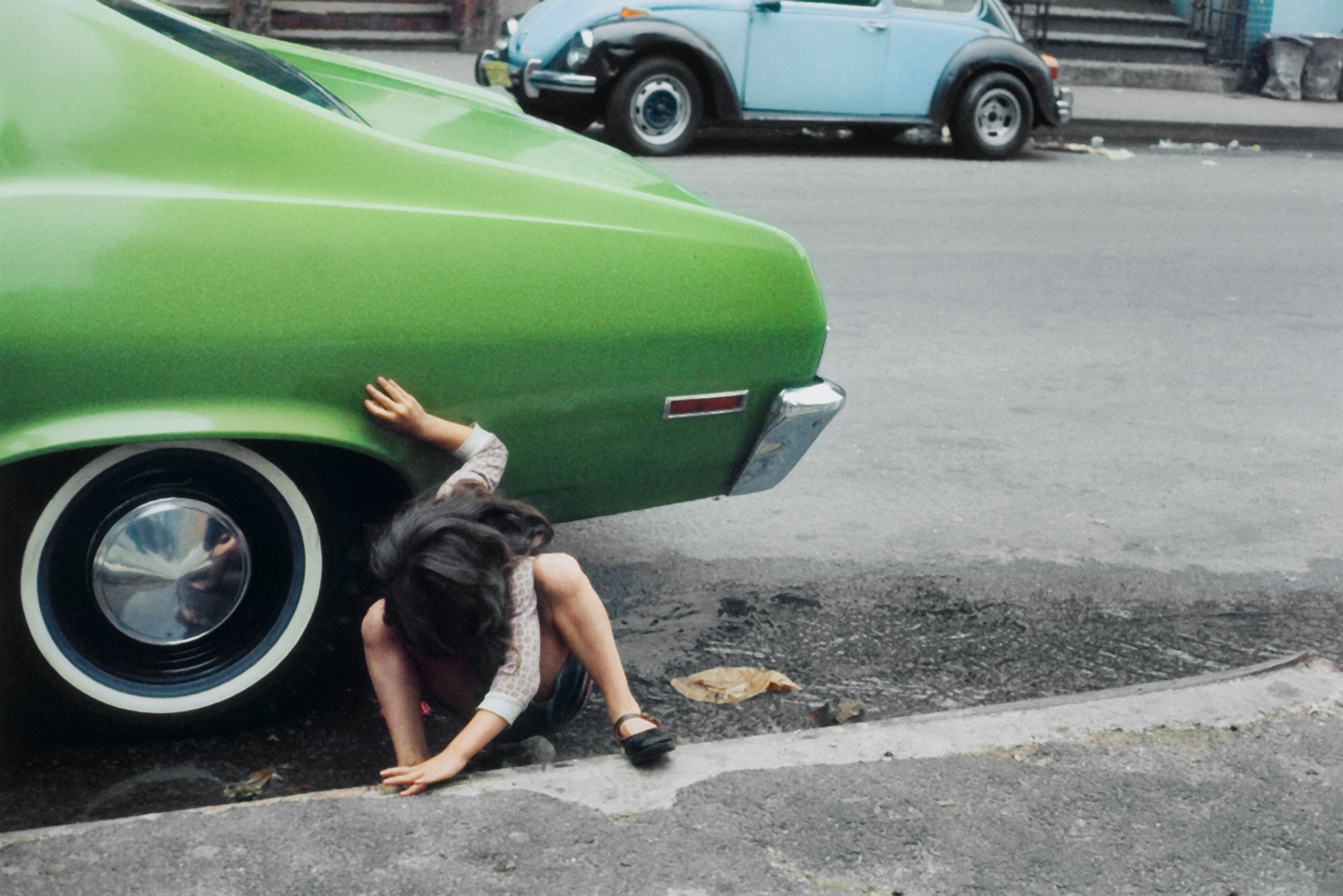
Exhibition: ‘Downstream: Colorado River Photographs of Karen Halverson’ at The Huntington Library, San Marino, California

Exhibition dates: 30th May – 28th September, 2009
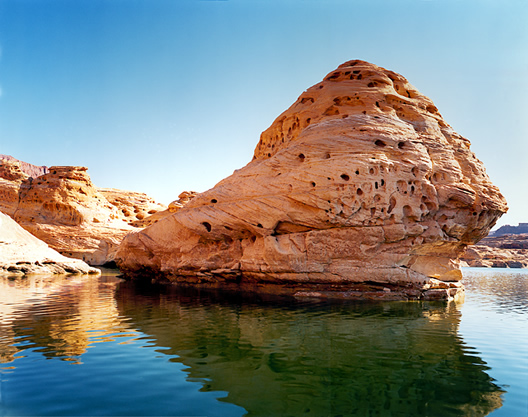
 

Karen Halverson (American, b. 1941) 'Hite Crossing, Lake Powell, Utah' from the 'Downstream' series 1994-1995 from the exhibition 'Downstream: Colorado River Photographs of Karen Halverson' at The Huntington Library, San Marino, California, May - Sept, 2009


Karen Halverson (American, b. 1941)
Hite Crossing, Lake Powell, Utah from the Downstream series
1994-1995


As clear as a bell!

Marcus


Many thankx to the Huntington Library for allowing me to publish the photographs in the posting. Please click on the photographs for a larger version of the image.


Karen Halverson (American, b. 1941) 'Lodore Canyon, Dinosaur National Monument' 1994-1995 from the 'Downstream' series 1994-1995 from the exhibition 'Downstream: Colorado River Photographs of Karen Halverson' at The Huntington Library, San Marino, California, May - Sept, 2009


Karen Halverson (American, b. 1941)
Lodore Canyon, Dinosaur National Monument from the Downstream series
1994-1995
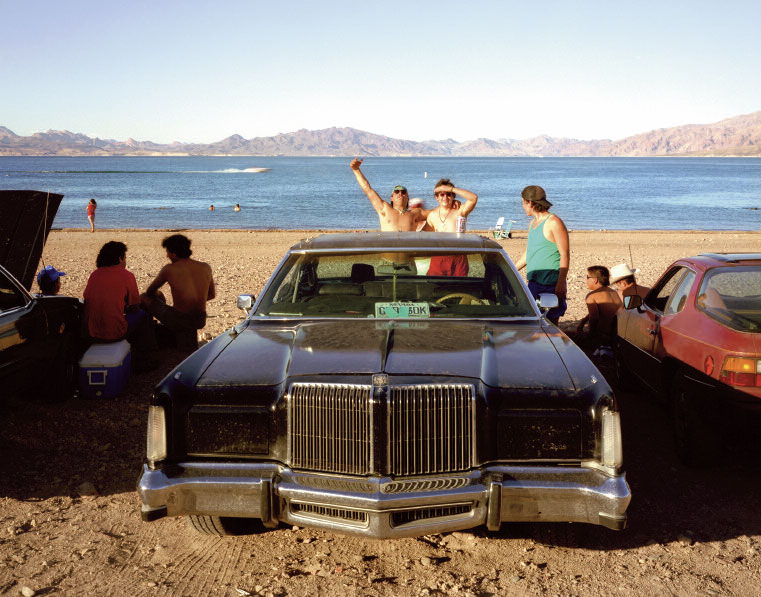
 

Karen Halverson (American, b. 1941) 'Boulder Beach, Lake Mead, Nevada' from the 'Downstream' series 1994-1995


Karen Halverson (American, b. 1941)
Boulder Beach, Lake Mead, Nevada from the Downstream series
1994-1995
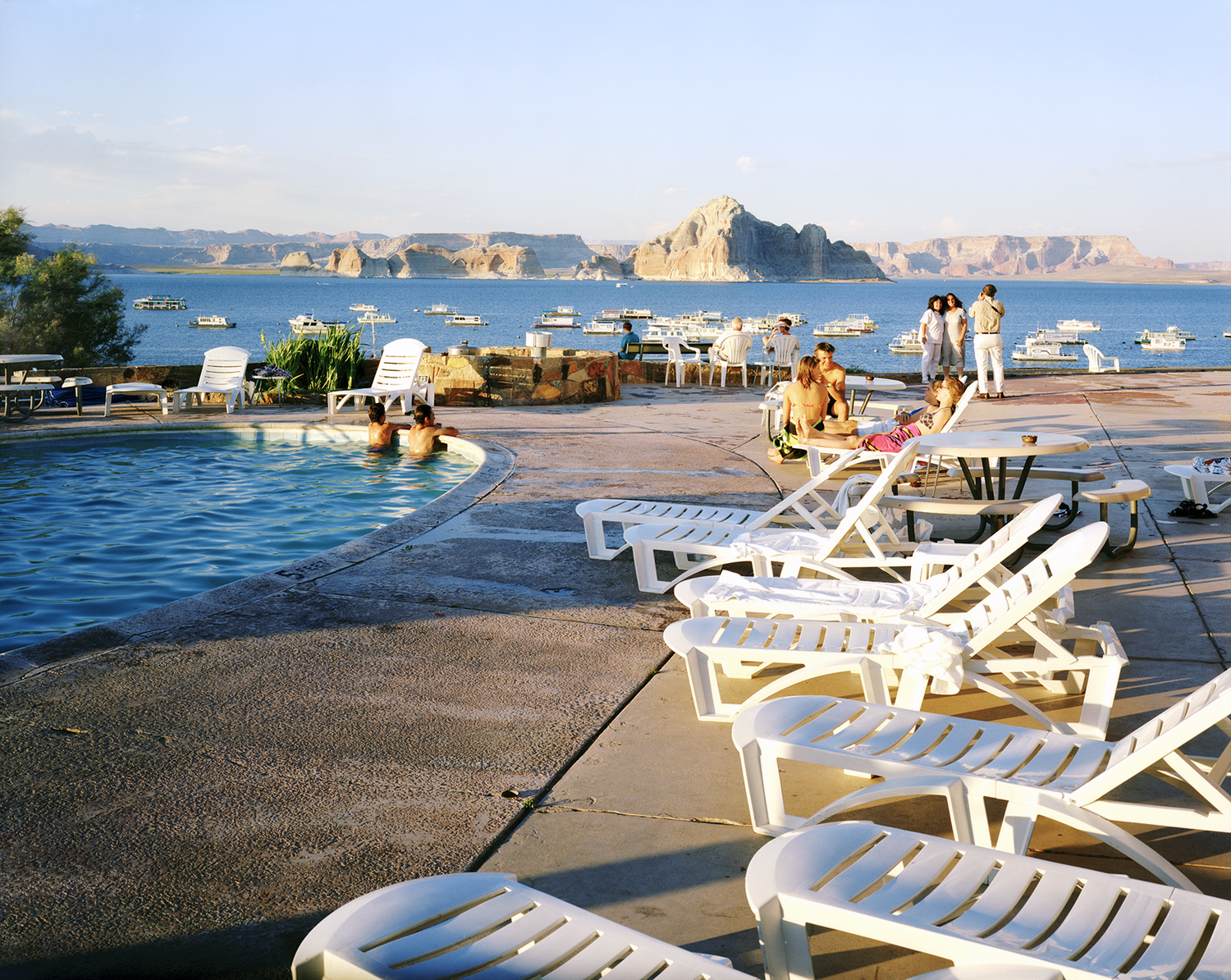
 

Karen Halverson (American, b. 1941) 'Wahweap Pool, Lake Powell, Arizona' 1994-1995


Karen Halverson (American, b. 1941)
Wahweap Pool, Lake Powell, Arizona from the Downstream series
1994-1995


To celebrate the expansion and reinstallation of the Virginia Steele Scott Galleries of American Art, The Huntington Library, Art Collections, and Botanical Gardens presents an exhibition of works from American photographer Karen Halverson’s Colorado River series, on view May 30 through Sept. 28, 2009. Downstream: Colorado River Photographs of Karen Halverson will be on display in the Scott Galleries’ Susan and Stephen Chandler Wing, inaugurating a new changing exhibition space that will highlight photography and works on paper that, because of the fragile nature of the medium, cannot be placed on permanent display.

The exhibition will feature 26 works from Halverson’s Downstream series as well as a sampling of images from The Huntington’s historic holdings related to the Colorado River region, including photographs from John Wesley Powell’s pioneering expedition down the Colorado in 1871 and a snapshot album compiled in 1940 by Mildred Baker, one of the first women to successfully navigate the river from Green River, Wyo., to Boulder (now Hoover) Dam.

Halverson (b. 1941) says she woke one wintry morning in 1994 convinced that she needed to photograph the Colorado River. An accomplished landscape photographer who had already spent 20 years exploring the American West, she embarked on a two-year encounter with the vast terrain along the river’s serpentine route.

The desire to explain, understand, and experience the 1,700-mile river – which originates in Wyoming and Colorado before converging in Utah toward its terminus in Mexico – has exerted a powerful influence on a long line of explorers, scientists, thrill seekers, writers, artists, and photographers. Once largely wild, the modern river has been tamed by dams built to slake the American West’s thirst for water and power. Today the river’s reservoirs supply 30 million people.

“In her resonant imagery, Halverson speaks both to this immutable, rugged past while confronting the river’s complicated and often contested present,” says Jennifer Watts, curator of photographs at The Huntington.

Lush green riverbanks frame a seemingly remote Colorado River in Shafer Trail, Near Moab, Utah – a dramatic departure from the river-turned-lake in Wahweap Marina, Lake Powell, Arizona, in which the setting sun illuminates a satellite dish, a trio of passersby, and a jumble of houseboats set against distant rock outcroppings. Davis Gulch, Lake Powell, Utah captures Halverson’s voice especially succinctly: the power of nature in the form of a gigantic sandstone wall dwarfing a tiny group of plastic lawn chairs, lined up along the river bank, with not a soul in sight.

“In my travels along the Colorado,” says Halverson, “sometimes I find beauty, sometimes desecration, often a perplexing and absurd combination.”

Halverson’s large-format colour photography references the 19th-century era of exploration when the United States, still reeling from the Civil War, saw photographers fan across the West to make pictures for scientific and commercial ends. Many of these iconic views by William H. Bell, John K. Hillers, Timothy O’Sullivan and others form the core of The Huntington’s superlative photography collection. Halverson consulted these works in preparation for her own trips.

The two years Halverson spent hiking, driving, and rafting along the Colorado brought her to a more profound understanding of the river and her relationship to it. During her travels, Halverson wrote, “I feel my place, small and finite in relation to space and time: I feel my self, expansive and trusting.”

Text from The Huntington Library website [Online] Cited 12/06/2009. No longer available online
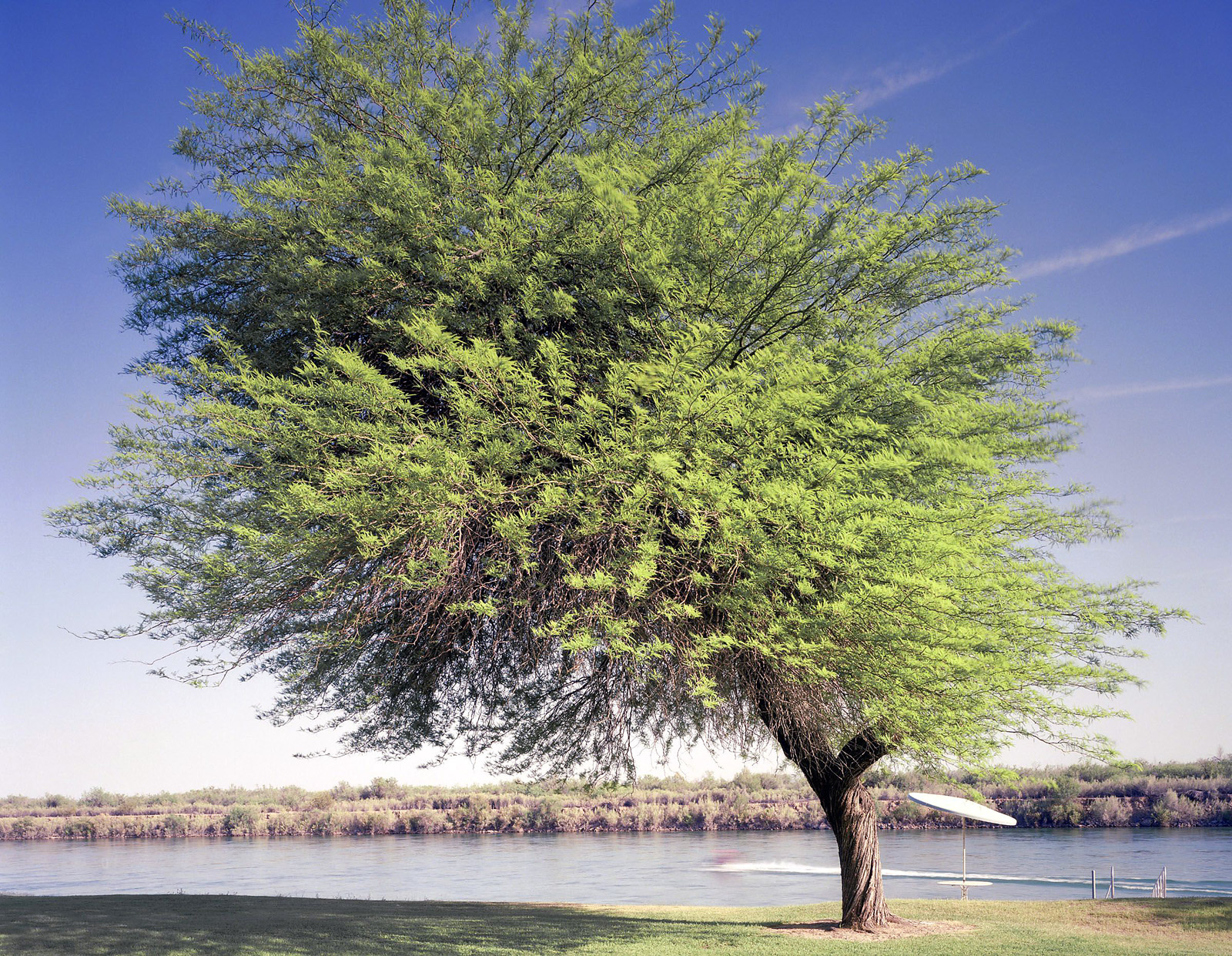
 

Karen Halverson (American, b. 1941) 'Big River, California' 1994-1995


Karen Halverson (American, b. 1941)
Big River, California from the Downstream series
1994-1995
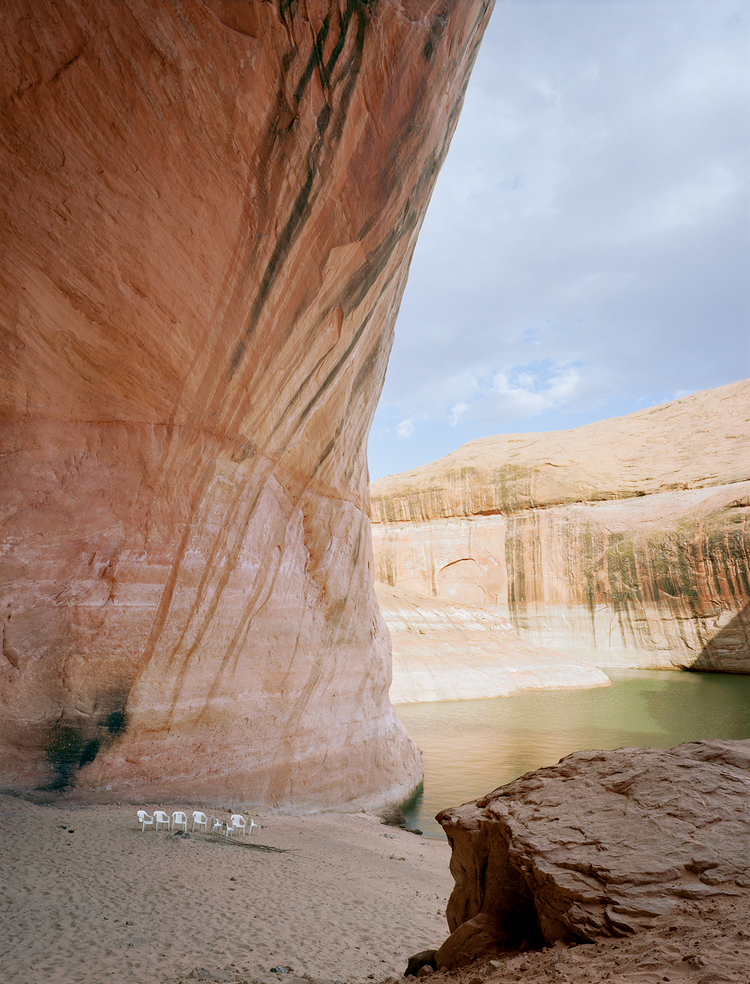
 

Karen Halverson (American, b. 1941) 'Davis Gulch, Lake Powell' 1994-1995


Karen Halverson (American, b. 1941)
Davis Gulch, Lake Powell from the Downstream series
1994-1995


“In my travels along the Colorado, sometimes I find beauty, sometimes desecration, often a perplexing and absurd combination.”


Karen Halverson


One wintry morning in1994, Karen Halverson (b. 1941) awoke convinced she needed to photograph the Colorado River. An accomplished artist who had already spent 20 years exploring the American West, she set off on a two-year encounter with the vast, breathtaking terrain along the river’s serpentine route. “The impulse to photograph the Colorado River came to me out of the blue,” she writes, “but I acted on it as if it were my destiny.” Personal destiny and the Colorado River have long been linked in the lives of the explorers, scientists, writers, artists, and thrill seekers who have sought to understand and experience this remarkable river.

“Nature appears to have been partial to this stream,” noted “Captain” Samuel Adams, who described the river in 1869. The Colorado and its major tributary, the Green River, run 1,700 miles from headwaters in the Rocky Mountains and Wyoming’s Wind River Range to a terminus in Mexico. Sheer size helps explain the river’s enduring allure; the Colorado’s gargantuan watershed covers a quarter of a million miles and runs through seven states. The Colorado is the riparian centre and symbol of the American West. Once wild, the river has been tamed by dams built to slake the arid West’s demand for water and power; 30 million people are dependent on it today.

Halverson’s large-format colour photography alludes to a 19th-century era of exploration when photographers fanned out across the West to make pictures for scientific and commercial ends. Iconic views by William H. Bell (1830-1910), John K. Hillers (1843-1925), Timothy O’Sullivan (c. 1840-1882), and others captured timeless landscapes of fierce, often forbidding, beauty. Halverson looked at these works in preparation for her trips, viewing them as documentary and visual points of departure for her own image making. Beyond the debt she owes these photographic pioneers, Halverson is firmly rooted in a late 20th-century aesthetic that comments on humanity’s use, and misuse, of the environment.

Beginning in the 1970s, a group of photographers, almost all of them men – who are now sometimes called the “New Topographers” – used their cameras to criticise the effects of rampant urban and suburban growth on western lands. Sprawling cities like Los Angeles, Phoenix, and Las Vegas owe their existence almost entirely to the importation of water from the Colorado River. As Halverson rightly claims, today the river is a “water delivery system,” with its dozens of reservoirs, dams, and diversions ensuring the allocation of virtually every drop for human needs.

Yet Downstream is no visual jeremiad railing against environmental abuse. Nor is it a dispassionate travelogue of the two years Halverson spent hiking, driving, and rafting along the Colorado. The wild terrain that flabbergasted early explorers is still here in the Paleozoic strata of gigantic rock outcroppings, the ancient calm of ghostly canyons, the dizzying heights overlooking a ribbon of water far below. And the colours – ochre, cerulean blue, deep red, electric green – are all intensified against the palette of a dammed river running colder and deeper than if it flowed freely. A modern-day beauty even finds itself inscribed in steel and concrete, whether in the sleek form of a pipeline or the still surface of an irrigation canal.

But it is in the bizarre, sometimes humorous, intersections of past and present that Downstream gains its potency. Cheap plastic lawn chairs, sitting vacant, look puny and ridiculous against a looming canyon wall. Weekend revellers pump fists skyward on the shores of Lake Mead, a giant reservoir held in place by Hoover Dam. A garden hose waters a scrawny palm tree in a desert oasis populated by rows of RVs.

What is gained and what is lost by controlling the Colorado River? And what are the river’s limits? Halverson’s Downstream series asks the viewer to contemplate these questions in a time when the arid West’s thirsty population threatens to overwhelm technological as well as natural resources, and when our well-watered urban lives remain utterly disconnected from riparian realities. Through her resonant imagery, Halverson speaks to the immutability of the river’s past while confronting its complex, contested present and future.

Jennifer A. Watts, Curator of Photographs from “Colorado River Photographs of Karen Halverson,” The Huntington Library Halverson Gallery guide [Online] Cited 28/02/2019. No longer available online
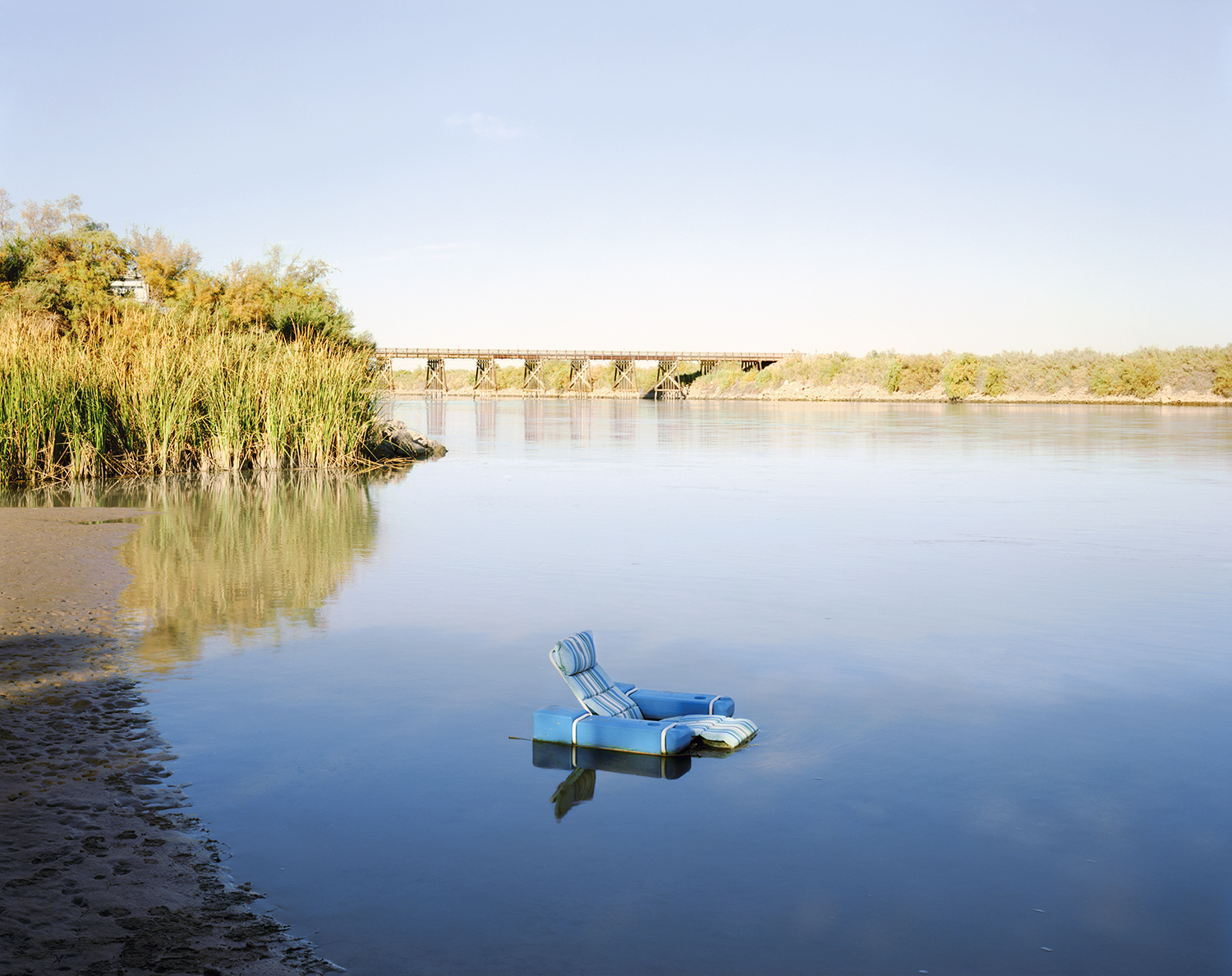
 

Karen Halverson (American, b. 1941) 'Near Palo Verde, California' 1994-1995


Karen Halverson (American, b. 1941)
Near Palo Verde, California from the Downstream series
1994-1995
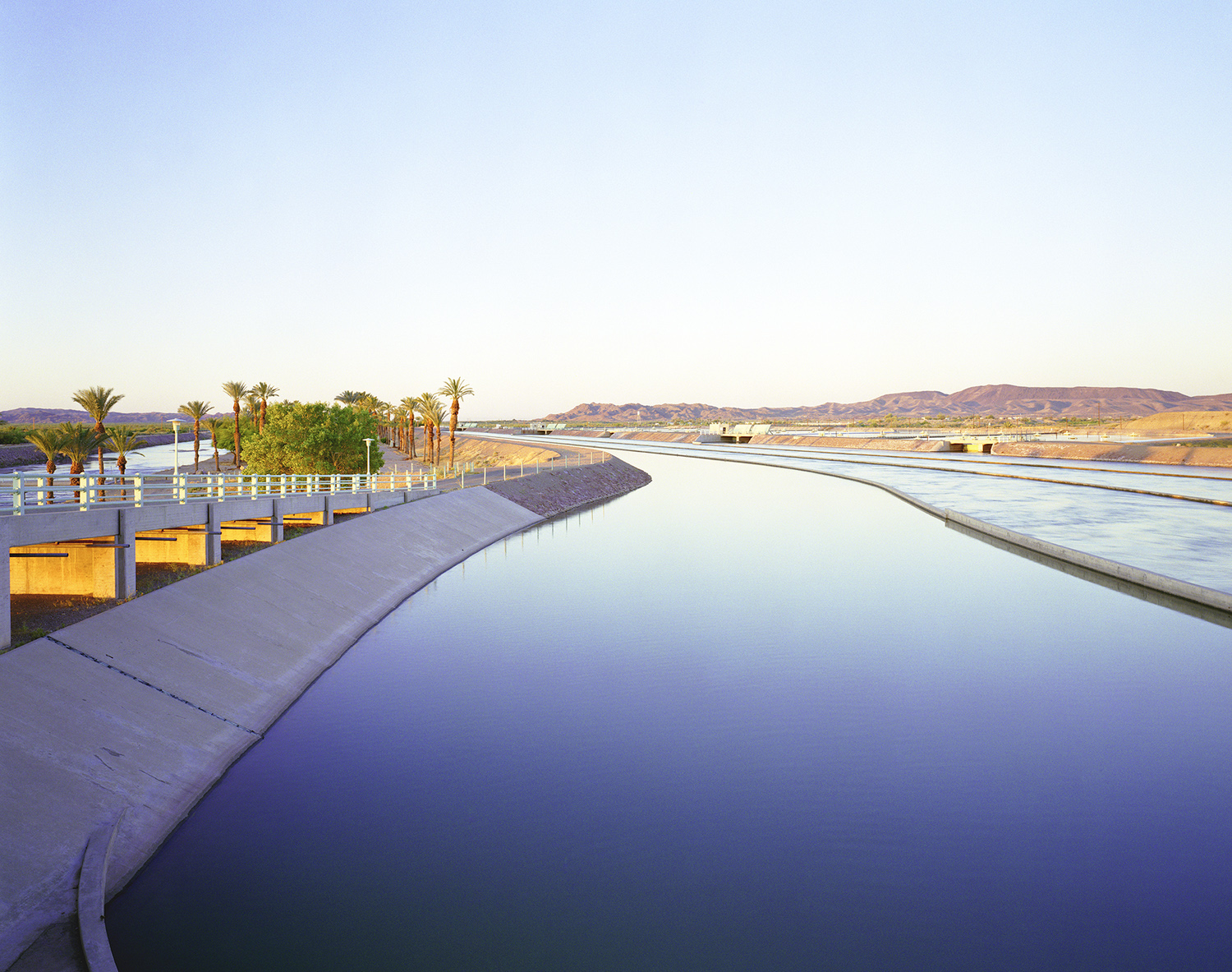
 

Karen Halverson (American, b. 1941) 'Imperial Dam, near Yuma, Arizona' 1994-1995


Karen Halverson (American, b. 1941)
Imperial Dam, near Yuma, Arizona from the Downstream series
1994-1995
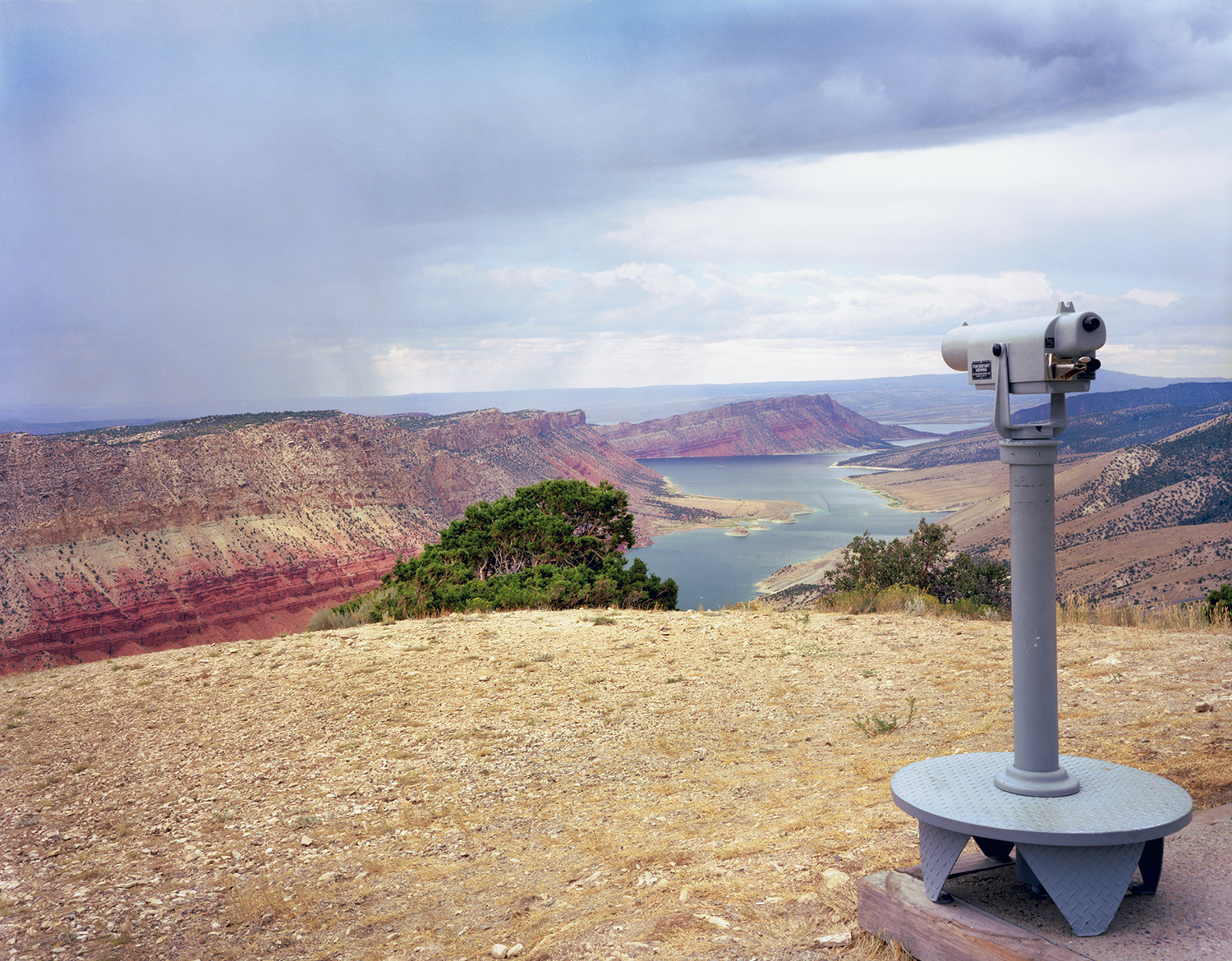
 

Karen Halverson (American, b. 1941) 'Flaming Gorge Reservoir, Wyoming' 1994-1995


Karen Halverson (American, b. 1941)
Flaming Gorge Reservoir, Wyoming from the Downstream series
1994-1995
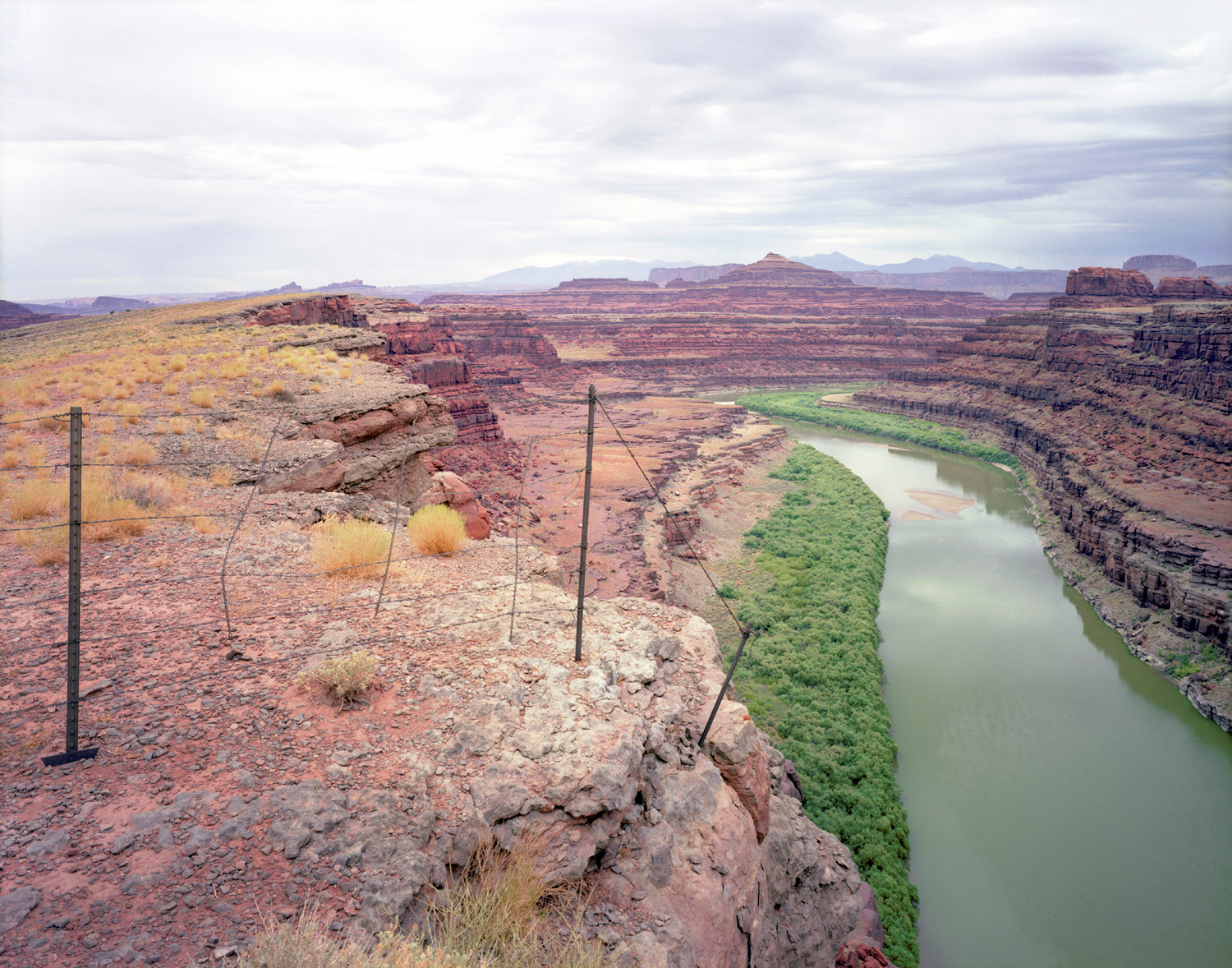
 

Karen Halverson (American, b. 1941) 'Shafer Trail, Near Moab, Utah' 1994-1995


Karen Halverson (American, b. 1941)
Shafer Trail, Near Moab, Utah from the Downstream series
1994-1995


The Huntington Library
The Huntington Library, Art Collections, and Botanical Gardens
1151 Oxford Road
San Marino, CA  91108

Opening hours:
Wednesday – Sunday 10am – 5pm
Closed Tuesdays

The Huntington Library website
Karen Halverson Photographs website

LIKE ART BLART ON FACEBOOK

Back to top

Exhibition: ‘Sawdust Mountain’ photographs by Eirik Johnson at Rena Bransten Gallery, San Francisco

Exhibition dates: 21st May – 27th June, 2009


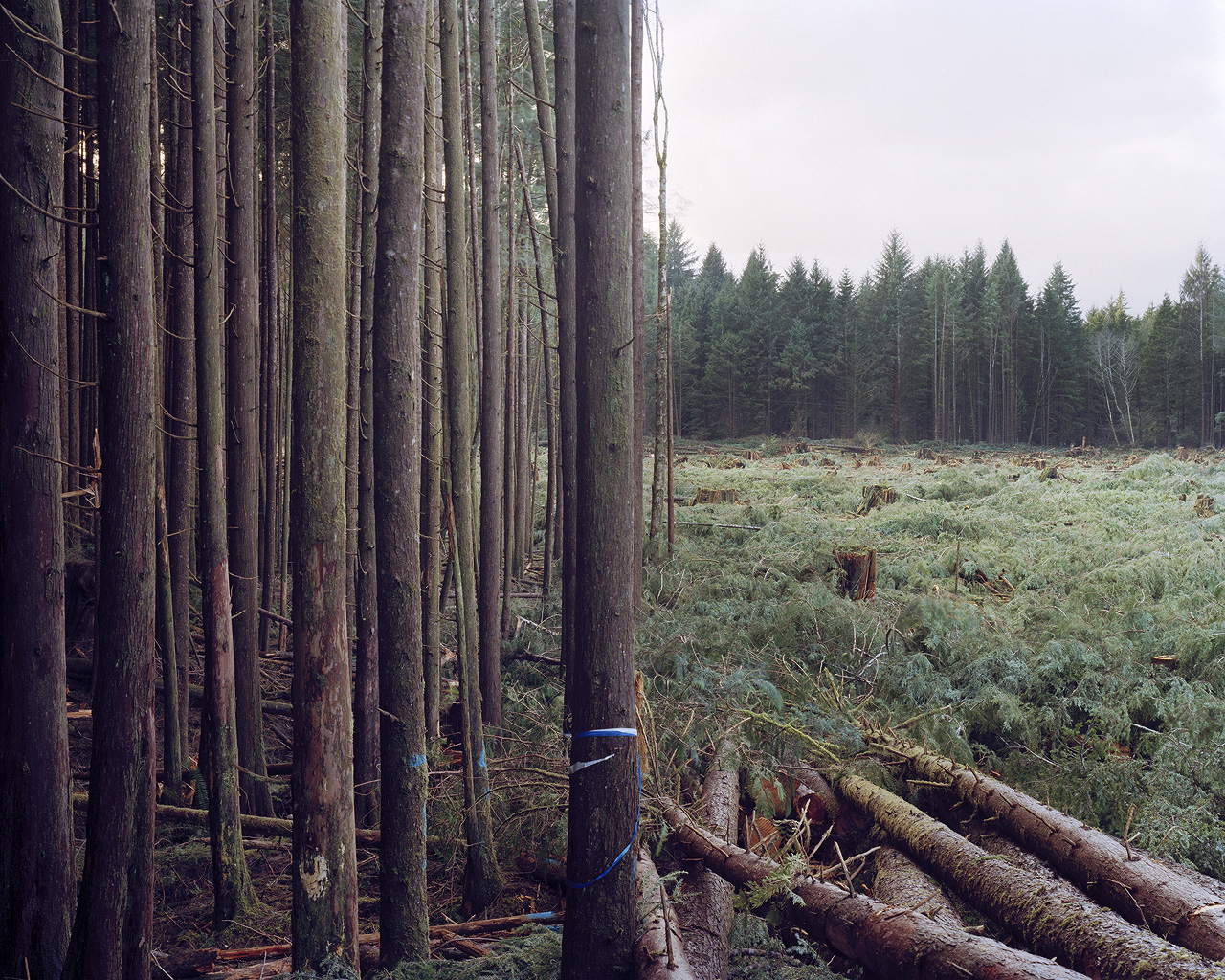
Eirik Johnson (American, b. 1974) 'Freshly Felled Trees, Nemah, Washington' 2007 from the exhibition 'Sawdust Mountain' photographs by Eirik Johnson at Rena Bransten Gallery, San Francisco, May - June, 2009


Eirik Johnson (American, b. 1974)
Freshly Felled Trees, Nemah, Washington from the series Sawdust Mountain
2007


Not much joy in this melancholy tone poem, but there doesn’t need to be. Masses of history, memory, anxiety, isolation and death, all reinforced by Johnson’s photographic perspective, which seems to flatten out the pictorial plane. Some stunning photographs and others that don’t hit the mark, but overall a very strong body of work. View the complex, environmental, social documentary photographs of the Sawdust Mountain series on Eirik Johnson’s website.

Dr Marcus Bunyan


Many thankx to Rena Bransten Gallery for allowing me to publish the photographs in the posting. Please click on the photographs for a larger version of the image.


“When I was a young, my family would hunt for mushrooms in the forests of the Cascade and Olympic Mountains. Some days we would spend afternoons along the shallows of a river watching salmon fight their way to spawning grounds upstream. These were the icons of the region: forest and salmon, pillars of Northwest identity. These photographs address the complicated relationship between the region’s landscape, the industries that rely upon natural recourses, and the communities they support.

‘Sawdust Mountain’ is a melancholy love letter of sorts, a personal reflection on the region’s past, its hardscrabble identity and the turbulent future it must navigate.”


Eirik Johnson


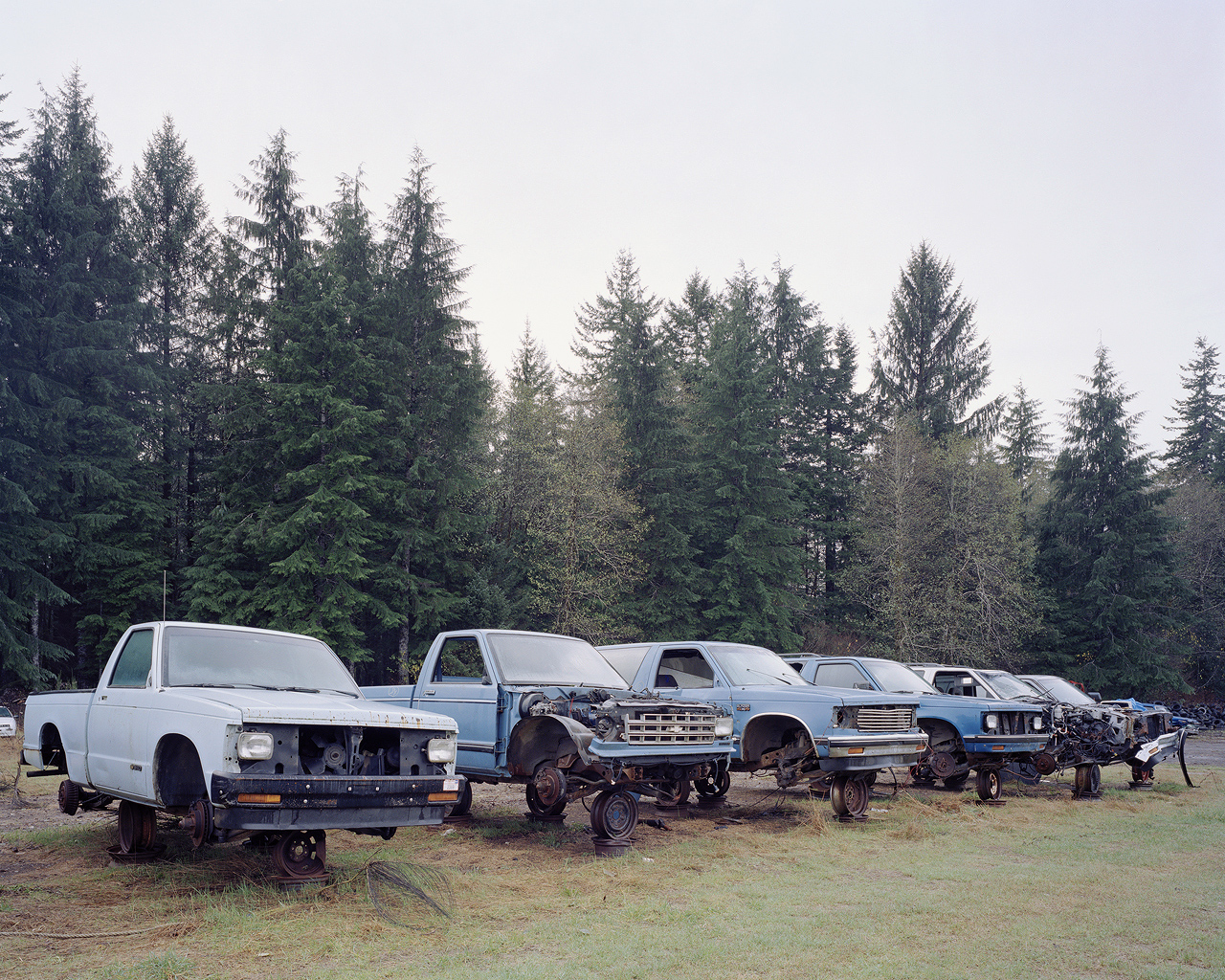
Eirik Johnson (American, b. 1974) 'Junked Blue Trucks, Forks, Washington' 2007 from the exhibition 'Sawdust Mountain' photographs by Eirik Johnson at Rena Bransten Gallery, San Francisco, May - June, 2009


Eirik Johnson (American, b. 1974)
Junked Blue Trucks, Forks, Washington from the series Sawdust Mountain
2007


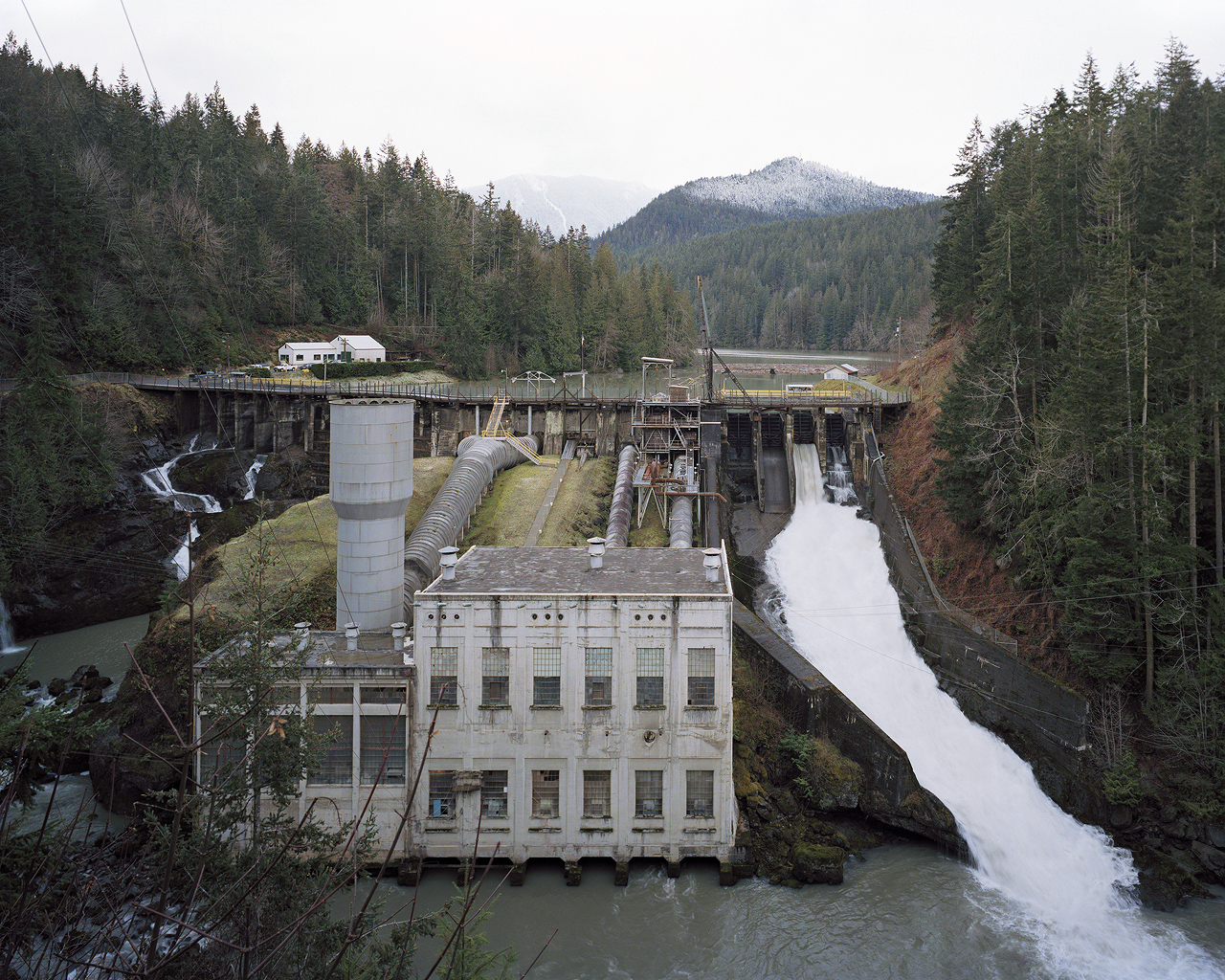
Eirik Johnson (American, b. 1974) 'Elwha River Dam, Washington' 2008


Eirik Johnson (American, b. 1974)
Elwha River Dam, Washington from the series Sawdust Mountain
2008


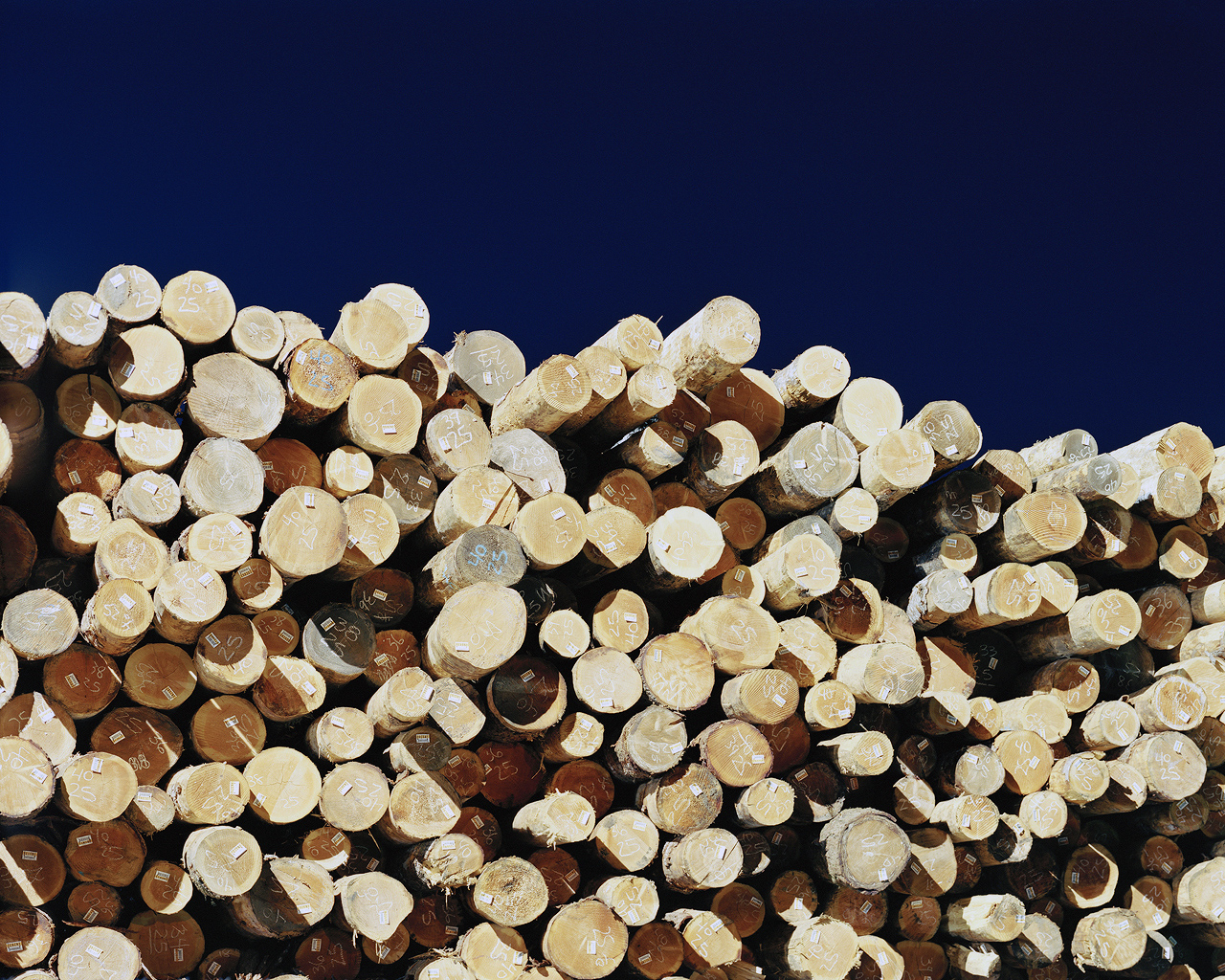
Eirik Johnson (American, b. 1974) 'Stacked logs in Weyerhaeuser sort yard, Cosmopolis, Washington' 2007


Eirik Johnson (American, b. 1974)
Stacked logs in Weyerhaeuser sort yard, Cosmopolis, Washington from the series Sawdust Mountain
2007


Eirik Johnson’s colour photographs chronicle his study of Sawdust Mountain, a once idyllic patch of the Pacific Northwest now in decline after a century of human encroachment. The story is a familiar one – early settlers attracted by the sublime beauty and abundant natural resources – of Washington state in the case – began local nature-based industries that eventually depleted the natural resources. The romance of lumberjacks and fishermen taming the wilderness and living off the land has been replaced by the hardscrabble reality of those now trying to eke out a living as well as conservationists and ecologists trying to save and restore the landscape. Johnson presents a well-rounded portrait of a town and country struggling to find solutions to these conflicting demands. His photographs capture the history and legacy of the industries, the landscape at the centre of the vortex, and the changes undertaken to staunch the economic and ecological declines so all can survive.

Johnson was born in Seattle, WA and graduated with a Bachelor of Fine Arts from the University of Washington, Seattle and with a Master of Fine Arts from the San Francisco Art Institute. Sawdust Mountain photographs will also be exhibited at the Henry Art Gallery at the University of Washington who co-published the accompanying book with Aperture. Other Johnson book and exhibitions include Borderlands from 2006 and Animal Holes from 2007. Johnson is currently living and teaching in Boston at the Massachusetts College of Art and Design.

Text from the Rena Bransten Gallery website [Online] Cited 11/06/2009. No longer available online


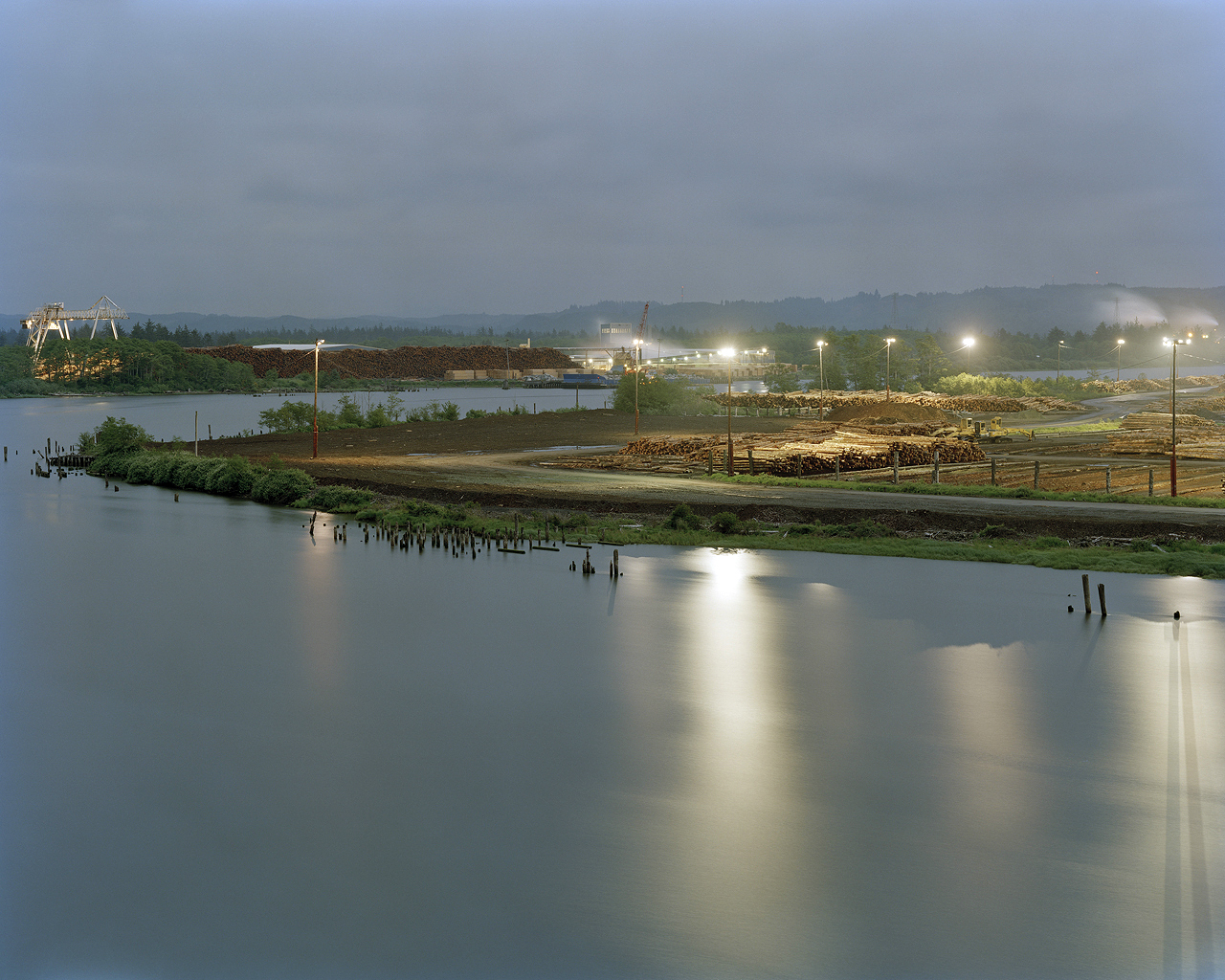
Eirik Johnson (American, b. 1974) 'Weyerhaeuser sorting yard along the Chehalis River, Cosmopolis, Washington' 2006


Eirik Johnson (American, b. 1974)
Weyerhaeuser sorting yard along the Chehalis River, Cosmopolis, Washington from the series Sawdust Mountain
2006


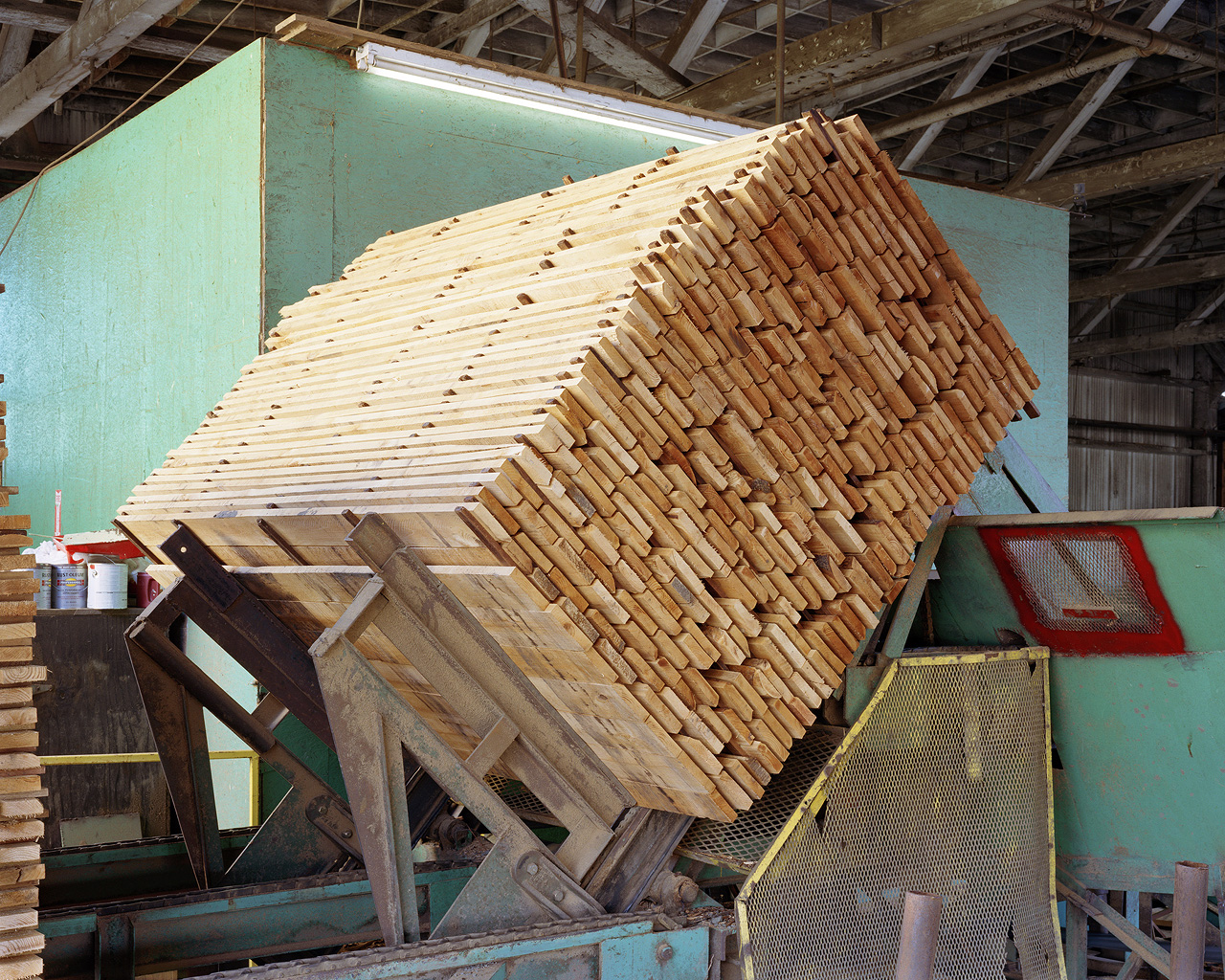
Eirik Johnson (American, b. 1974) 'Stacked alder boards, Seaport Lumber Planer, South Bend, Washington' 2007


Eirik Johnson (American, b. 1974)
Stacked alder boards, Seaport Lumber Planer, South Bend, Washington from the series Sawdust Mountain
2007


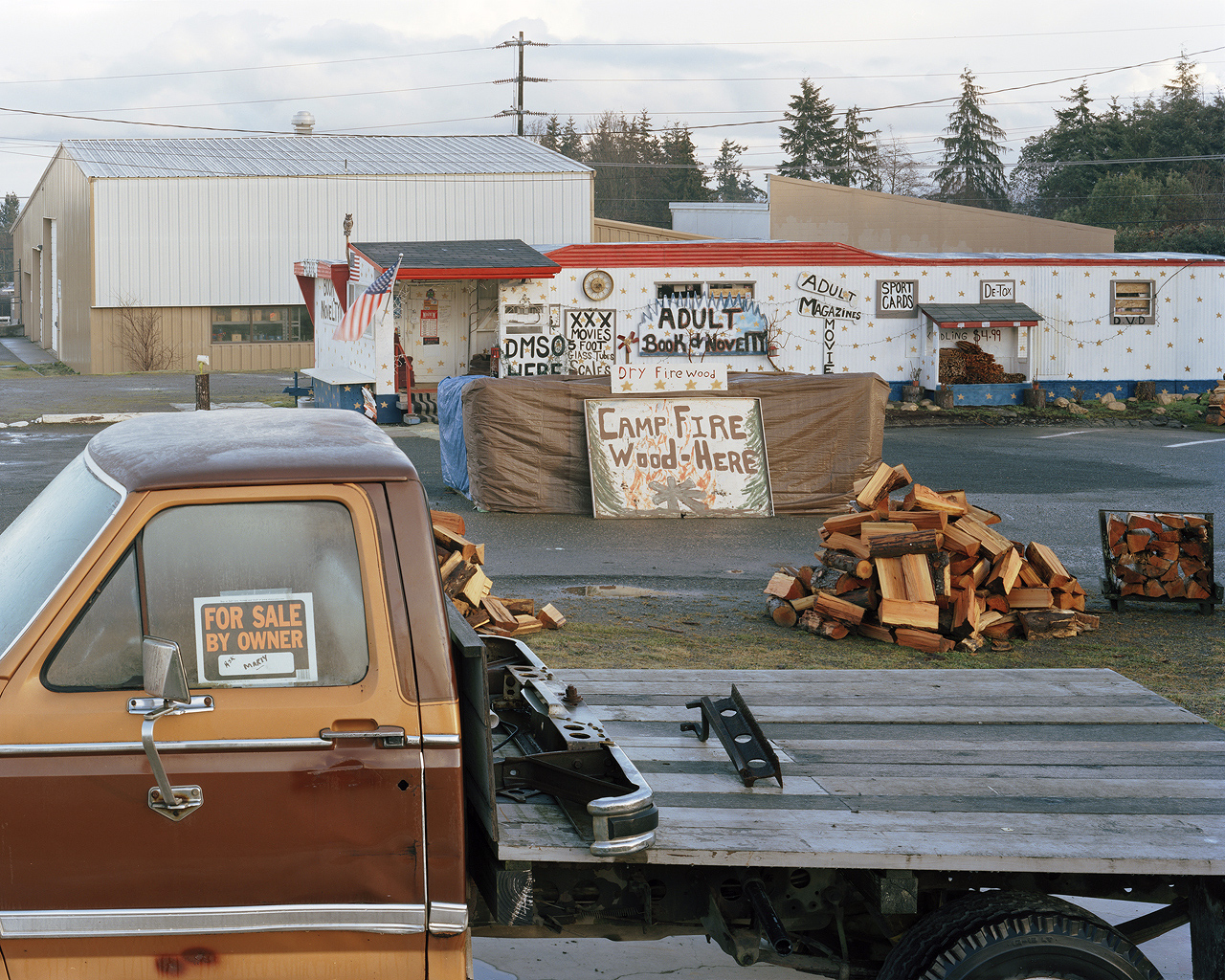
Eirik Johnson (American, b. 1974) 'Adult books, firewood and truck for sale, Port Angeles, Washington' 2008


Eirik Johnson (American, b. 1974)
Adult books, firewood and truck for sale, Port Angeles, Washington from the series Sawdust Mountain
2008


A culmination of four years of photographing throughout Oregon, Washington, and Northern California, Sawdust Mountain focuses on the tenuous relationship between industries reliant upon natural resources and the communities they support.

Timber and salmon are the bedrock of a regional Northwest identity, but the environmental impact of these declining industries has been increasingly at odds with the contemporary ideal of sustainability. In this, his second book, Johnson reveals a landscape imbued with an uncertain future – no longer the region of boomtowns built upon the riches of massive old-growth forests.

Johnson, a Seattle native, describes his photographs as “a melancholy love letter of sorts, my own personal ramblings.” Through this poetic approach, Sawdust Mountain records a region affected by historic economic complexities, and by extension, one aspect of our fraught relationship with the environment in the twenty-first century.

Text from the Aperture Foundation website. No longer available online

The book Sawdust Mountain by Eirik Johnson is available on his website.


Eirik Johnson (American, b. 1974)
'Scrapped train, Arlington, Washington' 2006


Eirik Johnson (American, b. 1974)
Scrapped train, Arlington, Washington from the series Sawdust Mountain
2006


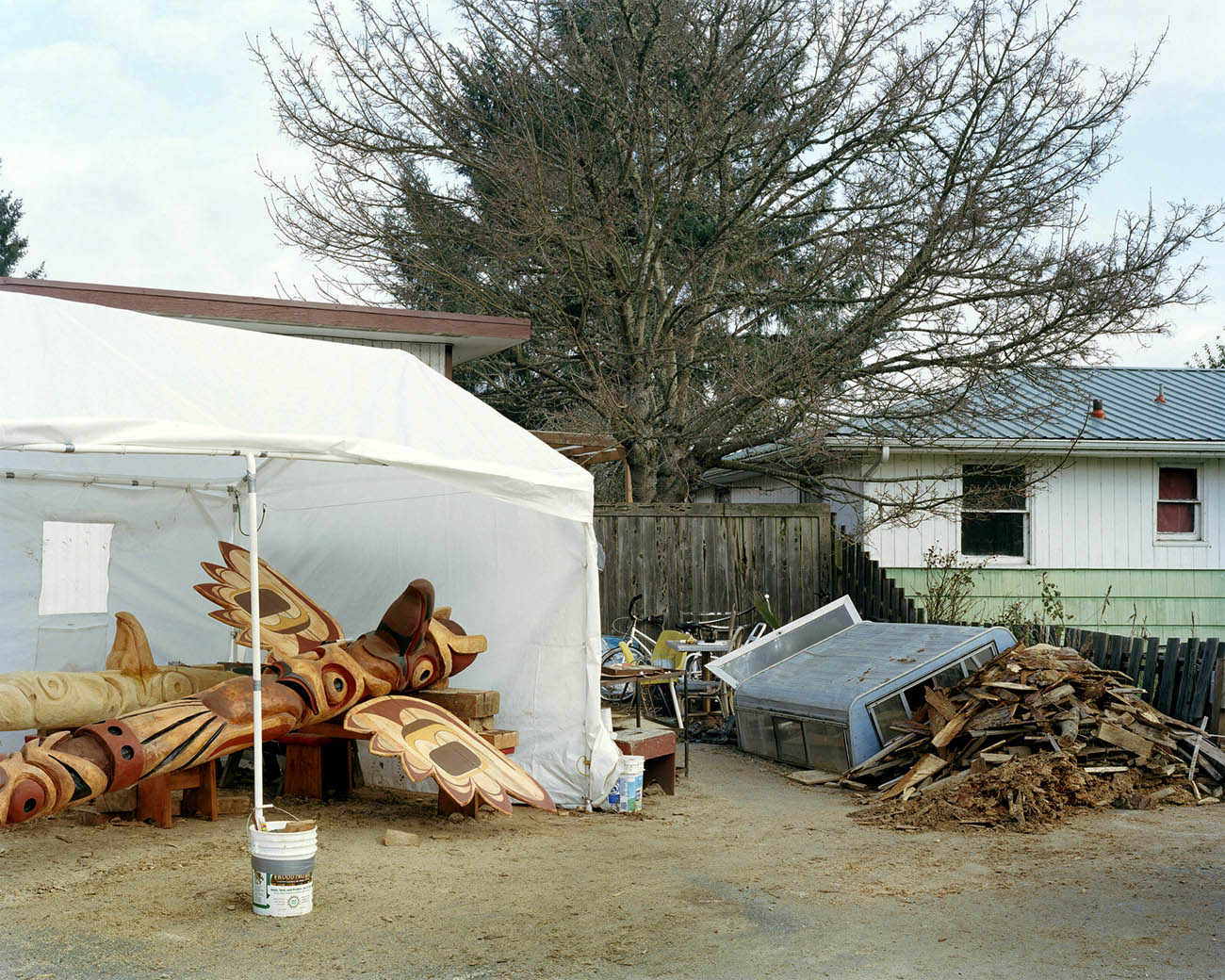
Eirik Johnson (American, b. 1974)
'Totem poles, Winston, Oregon' 2006


Eirik Johnson (American, b. 1974)
Totem poles, Winston, Oregon from the series Sawdust Mountain
2006


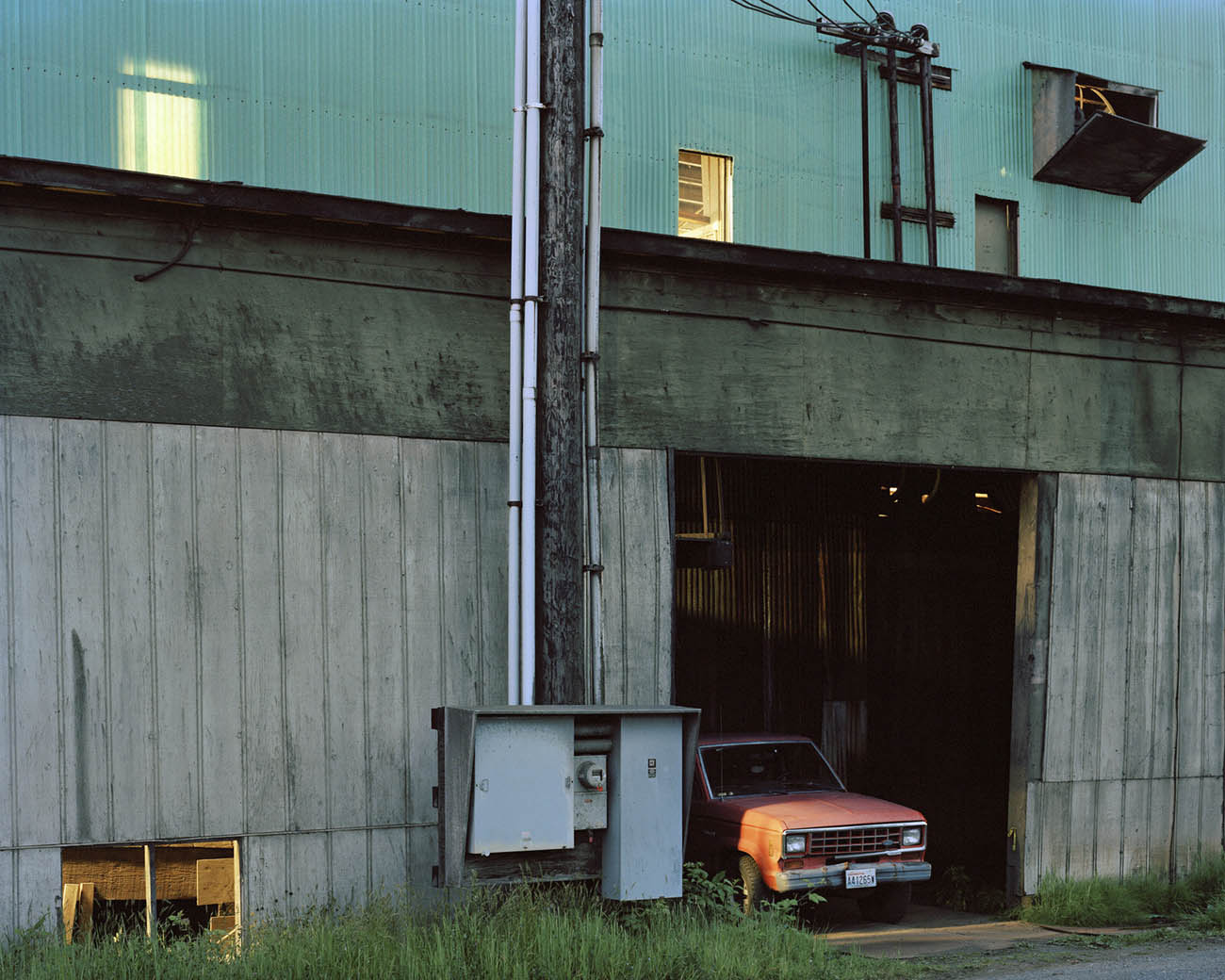
Eirik Johnson (American, b. 1974)
'Mill, Aberdeen, Washington' 2007


Eirik Johnson (American, b. 1974)
Mill, Aberdeen, Washington from the series Sawdust Mountain
2007


Rena Bransten Gallery
1275 Minnesota St.,
San Francisco, CA 94107

Opening hours:
Thursday – Saturday, 12.00 – 4.00pm

Rena Bransten Gallery website

Eirik Johnson website

LIKE ART BLART ON FACEBOOK

Back to top

Exhibition: ‘Walker Evans’ retrospective at Fotomuseum Winterthur, Zurich

Exhibition dates: 30th May – 23rd August, 2009

Curators: Jeff L. Rosenheim and Carlos Gollonet


Walker Evans (American, 1903-1975) 'West Virginia Living Room' 1935 from the exhibition 'Walker Evans' retrospective at Fotomuseum Winterthur, Zurich, May - Aug, 2009


Walker Evans (American, 1903-1975)
West Virginia Living Room
1935
Gelatin silver print
© Walker Evans archive


Many thankx to the Fotomuseum Winterthur for allowing me to publish the photographs in the posting. Please click on the photographs for a larger version of the image.


With this retrospective of the work of Walker Evans (1903-1975) Fotomuseum Winterthur presents one of the twentieth century’s pre-eminent photographers. His lucid and detailed portrayals of American life, especially his images of rural poverty during the Great Depression, made photographic history and went on to influence countless photographers. Walker Evans took an extremely innovative approach, capturing the very essence of the American way of life.

The exhibition, featuring some 120 works (the majority of which are from the most important private collection of Walker Evans’ works) represents every phase of his career: his early street photographs of the 1920s, his poignant documentation of 1930s America and pre-revolutionary Cuba, his landscapes and architectural photography, his subway portraits, storefronts, signage, the later colour Polaroids and more besides. As early as the 1930s, Walker Evans, in a departure from conventional notions of art and style, sought a new direct approach to reality. It is this that makes him a truly modern photographer.

The exhibition was curated by Jeff L. Rosenheim and Carlos Gollonet. Realisation in Winterthur: Urs Stahel. A cooperation with the Fundación MAPFRE, Madrid.

Text from the Fotomuseum Winterthur website


Walker Evans (American, 1903-1975) 'Negro Barbershop Interior, Atlanta' 1936 from the exhibition 'Walker Evans' retrospective at Fotomuseum Winterthur, Zurich, May - Aug, 2009


Walker Evans (American, 1903-1975)
Negro Barbershop Interior, Atlanta
1936
Gelatin silver print
7 7/16 x 9 1/8″ (18.9 x 23.2cm)
© Walker Evans archive


With this major retrospective of the work of Walker Evans (1903-1975) Fotomuseum Winterthur pays homage to one of the twentieth century’s pre-eminent photographers. His insightful and detailed portrayals of American life, especially his images of rural poverty during the Great Depression, made photographic history and went on to influence countless photographers. The 130 works in this retrospective exhibition represent every phase of his career: his early street photographs of the 1920s, his poignant documentation of 1930s America and pre-revolutionary Cuba, his landscapes and architectural photography, his subway portraits, storefronts, signage, and more besides.

On his return from France, where he had tried unsuccessfully to launch a literary career inspired by his love of Flaubert and Baudelaire, Walker Evans turned to photography. From the very start, with his keen eye for street life and the visual freshness of his unexpected slant on what he saw, his work spoke the language of European Modernism. But it was not long before Evans found his true voice – and it was at once profoundly personal and unequivocally American.

Some years before, the direct, undistorted and innovative gaze of Eugène Atget (1857-1927), whose work Evans knew and admired, had quietly paved the way for the split between documentary auteur photography and the purely descriptive photographic tradition. Atget’s unconventional angles, his de-centralised view and his focus on the seemingly trivial all had a major impact on Evans.

Walker Evans’ work is a far remove from what had, until then, been accepted as art photography. He was not interested in superficial beauty, but in a new objectivity. He subscribed to a style that observed undistorted facts and sought to capture things precisely as they were, seemingly without intervention, emotion or idealisation. For the first time in art photography, there were such unusual subjects as a pair of old boots or a subway passenger lost in thought. The artistic quality was based solely on the clarity, intelligence and authenticity of the photographer’s gaze. In this, Walker Evans’ oeuvre represents both a high point and a turning point in the formal and visual evolution of photography.

As the creator of this new, direct style, often referred to as straight photography, which drew upon scenes of sometimes blatant banality and rolled back the boundaries between the ‘important’ and the ‘trivial’, Walker Evans introduced the aesthetics of Modernism into American photography. This seemingly cold detachment spawned a style rich in expressive substance that was not only capable of embracing the lyricism and complexity of the American tradition, but of doing so without a trace of false romanticism, sentimentality or nostalgia. At long last, there was a forward-looking and enduring alternative to the traditional conventions of photography.

Press release from the Fotomuseum Winterthur website [Online] Cited 05/06/2009. No longer available online


Walker Evans (American, 1903-1975) 'Traffic Arrow' between 1973-1974


Walker Evans (American, 1903-1975)
Traffic Arrow
between 1973-1974
Polaroid
7.9 x 7.9cm (3 1/8 x 3 1/8 in.)
© Walker Evans archive


Walker Evans (American, 1903-1975) '[Detail of Stencilled Lettering on Yellow Railroad Car: "DO NOT HUMP"]' September 16, 1974


Walker Evans (American, 1903-1975)
[Detail of Stencilled Lettering on Yellow Railroad Car: “DO NOT HUMP”]
September 16, 1974
Polaroid
7.9 x 7.9cm (3 1/8 x 3 1/8 in.)
© Walker Evans archive


Installation view of the exhibition 'Walker Evans' at Fotomuseum Winterthur, Zurich showing some of his Polaroid photographs


Installation view of the exhibition Walker Evans at Fotomuseum Winterthur, Zurich showing some of his Polaroid photographs


Installation view of the exhibition 'Walker Evans' at Fotomuseum Winterthur, Zurich

Installation view of the exhibition Walker Evans at Fotomuseum Winterthur, Zurich

Installation view of the exhibition Walker Evans at Fotomuseum Winterthur, Zurich

Installation view of the exhibition Walker Evans at Fotomuseum Winterthur, Zurich


Installation views of the exhibition Walker Evans at Fotomuseum Winterthur, Zurich


Walker Evans (1903-1975) 'Penny Picture Display, Savannah' 1936


Walker Evans (American, 1903-1975)
Penny Picture Display, Savannah
1936
Gelatin silver print
© Walker Evans archive


Walker Evans (American, 1903-1975) 'Subway Passengers, New York' 1938


Walker Evans (American, 1903-1975)
Subway Passengers, New York
1938
Gelatin silver print
© Walker Evans archive


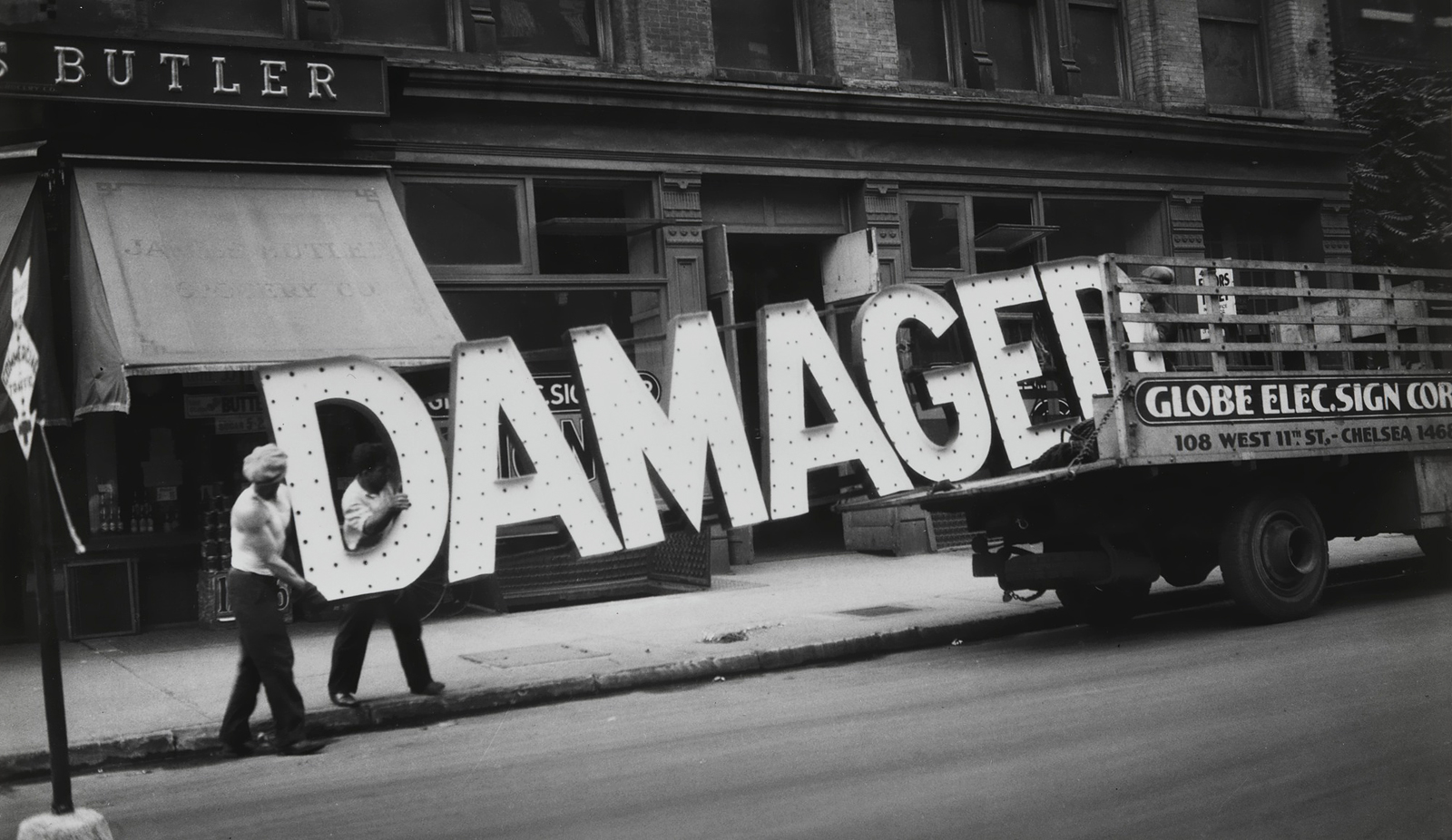
Walker Evans (American, 1903-1975) 'Truck and Sign' 1928-1930


Walker Evans (American, 1903-1975)
Truck and Sign
1928-1930
Gelatin silver print
© Walker Evans archive


Walker Evans (American, 1903-1975) 'Excavation for Lincoln Building, East 42nd Street and Park Avenue' 1929


Walker Evans (American, 1903-1975)
Excavation for Lincoln Building, East 42nd Street and Park Avenue
1929
Gelatin silver print
© Walker Evans archive


Walker Evans (American, 1903-1975) '[Fireplace in Floyd Burrroughs's Bedroom with Bedpost in Foreground, Hale County, Alabama]' 1936


Walker Evans (American, 1903-1975)
[Fireplace in Floyd Burrroughs’s Bedroom with Bedpost in Foreground, Hale County, Alabama]
1936
Gelatin silver print
8 x 10 in.
© Walker Evans archive


Walker Evans (American, 1903-1975) 'Main Street, Saratoga Springs, New York' 1931


Walker Evans (American, 1903-1975)
Main Street, Saratoga Springs, New York
1931
Gelatin silver print
© Walker Evans archive


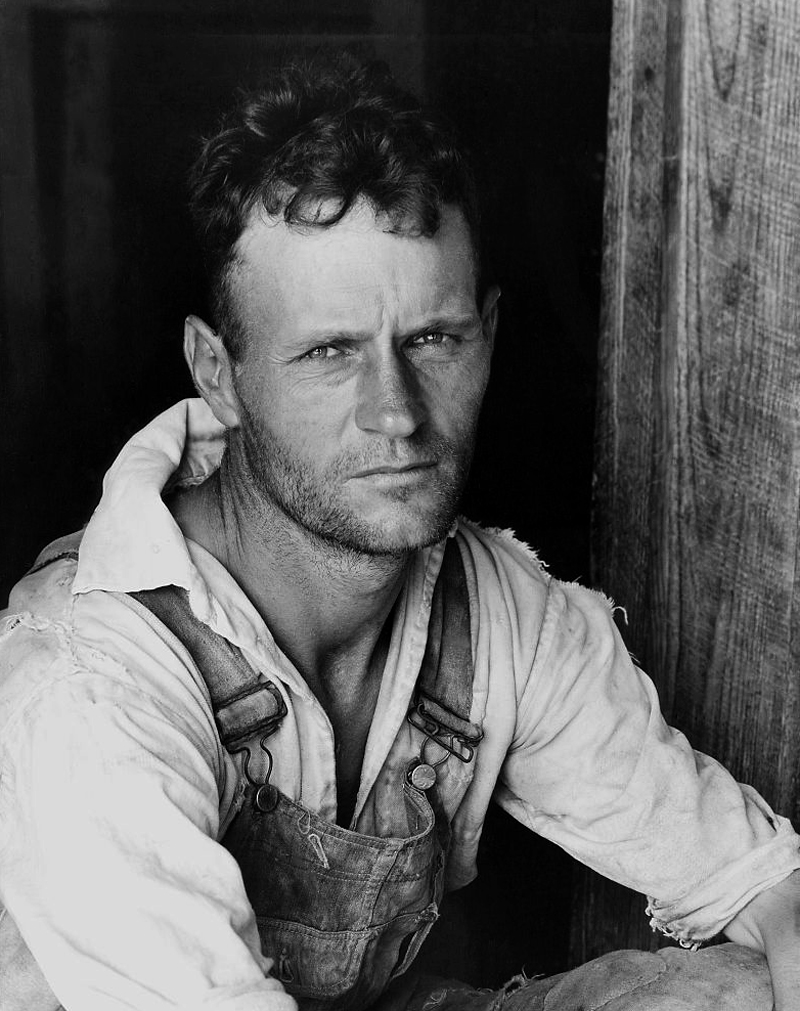
Walker Evans (American, 1903-1975) 'Floyde Burroughs, a cotton sharecropper, Hale County, Alabama' 1936


Walker Evans (American, 1903-1975)
Floyde Burroughs, a cotton sharecropper, Hale County, Alabama
1936
Gelatin silver print
© Walker Evans archive


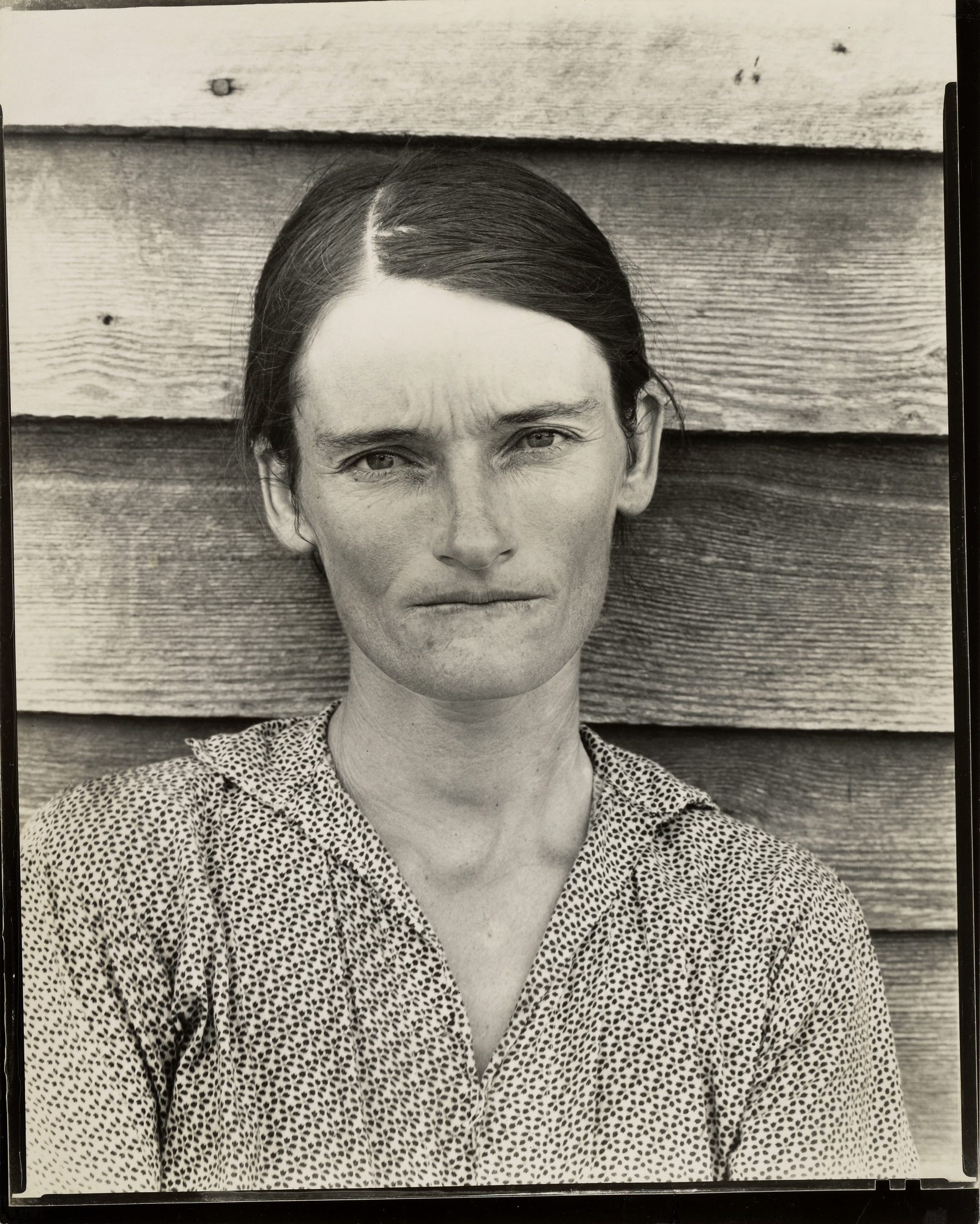
Walker Evans (American, 1903-1975) 'Allie Mae Burroughs, Hale County, Alabama' 1936


Walker Evans (American, 1903-1975)
Allie Mae Burroughs, Hale County, Alabama
1936
Gelatin silver print
© Walker Evans archive


Fotomuseum Winterthur
Grüzenstrasse 44 + 45
CH-8400
Winterthur (Zürich)
Phone: +41 52 234 10 60

Opening hours:
Tuesday – Sunday 11.00 – 18.00
Wednesday 11.00 – 20.00
Monday closed

Fotomuseum Winterthur website

LIKE ART BLART ON FACEBOOK

Back to top

Exhibition: ‘William Eggleston, Paris’ at Fondation Cartier, Paris

Exhibition dates: 4th April – 21st June, 2009


William Eggleston (American, b. 1939) 'Untitled', Paris series, 2006-2008 from the exhibition 'William Eggleston, Paris' at Fondation Cartier, Paris, April - June, 2009


William Eggleston (American, b. 1939)
Untitled from the Paris series
2006-2008
Colour print
27.9 x 35.6cm
Series of 32 works: 27 colour prints, 4 diptychs and 1 painting
Commission for the exhibition William Eggleston, Paris, Fondation Cartier pour l’art contemporain, Paris, 2009
Gift of the artist 2009
© Eggleston Artistic Trust, Memphis


Perhaps it’s just me, but I seem to have become a little jaded towards the recent photographs of William Eggleston.

Other than the green reflection of lights in rainwater (above) the photographs seem to have lost their unique voice, the social insight that gave his earlier work it’s zing – provocative images that challenged how we live through a meditation on subject matter, construction of space, and tone of “colour”. How the colour that surrounds us inflects our very being.

In these photographs it feels like there has been little development in his style over the years with a consequent lessening of their visual impact. Now Eggleston’s colour just feels like a party trick, performed by rote with little consequential meaning to either the colour or the image. Perhaps the way we look at the world (and how we picture it) has finally overtaken the director’s prescient creative vision – his auteurship, his authorship.

Dr Marcus Bunyan


Many thankx to the Fondation Cartier for allowing me to publish the photographs in the posting.


“In Eggleston’s best work, the work that made him famous, color is intrinsic to the meaning of the photograph. Its not simply a garnish to draw the eye. His best photographs are not ‘about’ the color; they are about larger issues that the color is used in the service of.  This is whats missing in his Paris pictures. The color here is pure ornament, eye candy to seduce you into forgetting that the picture has nothing to say.”

Anonymous. “William Eggleston Mails It In From Paris,” on the Leicaphilia website April 21, 2014 [Online] Cited 06/02/2019


William Eggleston (American, b. 1939) 'Untitled', Paris series, 2006-2008 from the exhibition 'William Eggleston, Paris' at Fondation Cartier, Paris, April - June, 2009


William Eggleston (American, b. 1939)
Untitled from the Paris series
2006-2008
Colour print
27.9 x 35.6cm
Series of 32 works: 27 colour prints, 4 diptychs and 1 painting
Commission for the exhibition William Eggleston, Paris, Fondation Cartier pour l’art contemporain, Paris, 2009
Gift of the artist 2009
© Eggleston Artistic Trust, Memphis


William Eggleston (American, b. 1939) 'Untitled', Paris series, 2006-2008


William Eggleston (American, b. 1939)
Untitled from the Paris series
2006-2008
Colour print
27.9 x 35.6cm
Series of 32 works: 27 colour prints, 4 diptychs and 1 painting
Commission for the exhibition William Eggleston, Paris, Fondation Cartier pour l’art contemporain, Paris, 2009
Gift of the artist 2009
© Eggleston Artistic Trust, Memphis


William Eggleston (American, b. 1939) 'Untitled', Paris series, 2006-2008


William Eggleston (American, b. 1939)
Untitled from the Paris series
2006-2008
Colour print
27.9 x 35.6cm
Series of 32 works: 27 colour prints, 4 diptychs and 1 painting
Commission for the exhibition William Eggleston, Paris, Fondation Cartier pour l’art contemporain, Paris, 2009
Gift of the artist 2009
© Eggleston Artistic Trust, Memphis


William Eggleston (American, b. 1939) 'Untitled', Paris series, 2006-2008


William Eggleston (American, b. 1939)
Untitled from the Ωris series
2006-2008
Colour print
27.9 x 35.6cm
Series of 32 works: 27 colour prints, 4 diptychs and 1 painting
Commission for the exhibition William Eggleston, Paris, Fondation Cartier pour l’art contemporain, Paris, 2009
Gift of the artist 2009
© Eggleston Artistic Trust, Memphis


For the last three years, American photographer William Eggleston has photographed the city of Paris as part of a commission for the Fondation Cartier pour l’art contemporain. Taken throughout different seasons, these new images by one of the fathers of colour photography portray the local and the cosmopolitan, the glamorous and the gritty, the everyday and the extraordinary.

This exhibition also provides an exceptional occasion to bring together William Eggleston’s distinctive pictures and his recent paintings, an unknown aspect of his work that has never before been presented to the public.

Text from the Fondation Cartier website


William Eggleston (American, b. 1939) 'Untitled', Paris series, 2006-2008


William Eggleston (American, b. 1939)
Untitled from the Paris series
2006-2008
Colour print
35.6 x 27.9cm
Series of 32 works: 27 colour prints, 4 diptychs and 1 painting
Commission for the exhibition William Eggleston, Paris, Fondation Cartier pour l’art contemporain, Paris, 2009
Gift of the artist 2009
© Eggleston Artistic Trust, Memphis


William Eggleston (American, b. 1939) 'Untitled', Paris series, 2006-2008


William Eggleston (American, b. 1939)
Untitled from the Paris series
2006-2008
Colour print
35.6 x 27.9cm
Series of 32 works: 27 colour prints, 4 diptychs and 1 painting
Commission for the exhibition William Eggleston, Paris, Fondation Cartier pour l’art contemporain, Paris, 2009
Gift of the artist 2009
© Eggleston Artistic Trust, Memphis


William Eggleston (American, b. 1939) 'Untitled', Paris series, 2006-2008


William Eggleston (American, b. 1939)
Untitled from the Paris series
2006-2008
Colour print
35.6 x 27.9cm
Series of 32 works: 27 colour prints, 4 diptychs and 1 painting
Commission for the exhibition William Eggleston, Paris, Fondation Cartier pour l’art contemporain, Paris, 2009
Gift of the artist 2009
© Eggleston Artistic Trust, Memphis


William Eggleston’s recent book Paris, published by Steidl and commissioned by Foundation Cartier, is a collective body of work that comprises his oeuvre of color drawings and recent Paris photographs. Similar to Ben Shahn, Charles Scheeler, Diego Rivera, Man Ray, Robert Rauschenberg and Ed Ruscha, Eggleston has reached out beyond photography to express his creative talents.

The photographs and drawings are intertwined throughout the book, creating an interesting visual cadence. The page spreads illustrate various layout designs, including a single image of either a photograph or drawing on a spread, pairs of drawings and photographs and pairs of drawing facing a photograph. All of the drawings and photographs are contained within the boundaries of the page. …

We know mostly of Eggleston’s photographs, but from the dating on one of the drawings included in this book, we can determine that Eggleston has been working with the drawing medium since 1968. It is interesting to speculate as to how one medium may have influenced the other for Eggleston. As an example, the earlier photographs by Shahn and Scheeler seem to have had an influence on how these two artists subsequently worked their framing, pictorial space, mass & line quality in their subsequent paintings.

The Paris photographs that Eggleston made of graffiti or his tight framing in conjunction with a longer lens to compress the pictorial space are visually similar in style to his drawings. The subjects he photographs are framed to create similar vibrant color masses and lines as his drawing, abstracting reality into basic graphic components. …

Eggleston’s photographs are constructed like spontaneous glances; partial views of what might be consider a traditional subject, creating color abstractions of lines, patterns and mass. Trees, pipes, people, walls, garbage, décor, wall paper, display windows are bisected and truncated, with edges and lines following out of the photographs borders. These images seem to be created by a restless and nervous energy.

With these drawings, paintings and photographs, Eggleston shows a interesting handling of these mediums and offers an insight as to how influential the period of Abstract Expressionism is to his photographic process.

Extract from Douglas Stockdale. “William Eggleston – Paris,” on The PhotoBook Journal website September 12, 2009 [Online] Cited 06/02/2019


William Eggleston (American, b. 1939) 'Untitled', Paris series, 2006-2008


William Eggleston (American, b. 1939)
Untitled from the Paris series
2006-2008
Colour print
35.6 x 27.9cm
Series of 32 works: 27 colour prints, 4 diptychs and 1 painting
Commission for the exhibition William Eggleston, Paris, Fondation Cartier pour l’art contemporain, Paris, 2009
Gift of the artist 2009
© Eggleston Artistic Trust, Memphis


William Eggleston (American, b. 1939) 'Untitled', Paris series, 2006-2008


William Eggleston (American, b. 1939)
Untitled from the Paris series
2006-2008
Colour print
35.6 x 27.9cm
Series of 32 works: 27 colour prints, 4 diptychs and 1 painting
Commission for the exhibition William Eggleston, Paris, Fondation Cartier pour l’art contemporain, Paris, 2009
Gift of the artist 2009
© Eggleston Artistic Trust, Memphis


Fondation Cartier
261, Boulevard Raspail
75014 Paris, France

Opening hours:
Open from Tuesday to Sunday, from 11am – 8pm
Closed on Mondays
Late closing on Tuesday, at 10 pm

Fondation Cartier website

LIKE ART BLART ON FACEBOOK

Back to top

Exhibition: ‘Diane Arbus’ at the National Museum of Wales, Cardiff

Exhibition dates: 9th May – 31st August, 2009


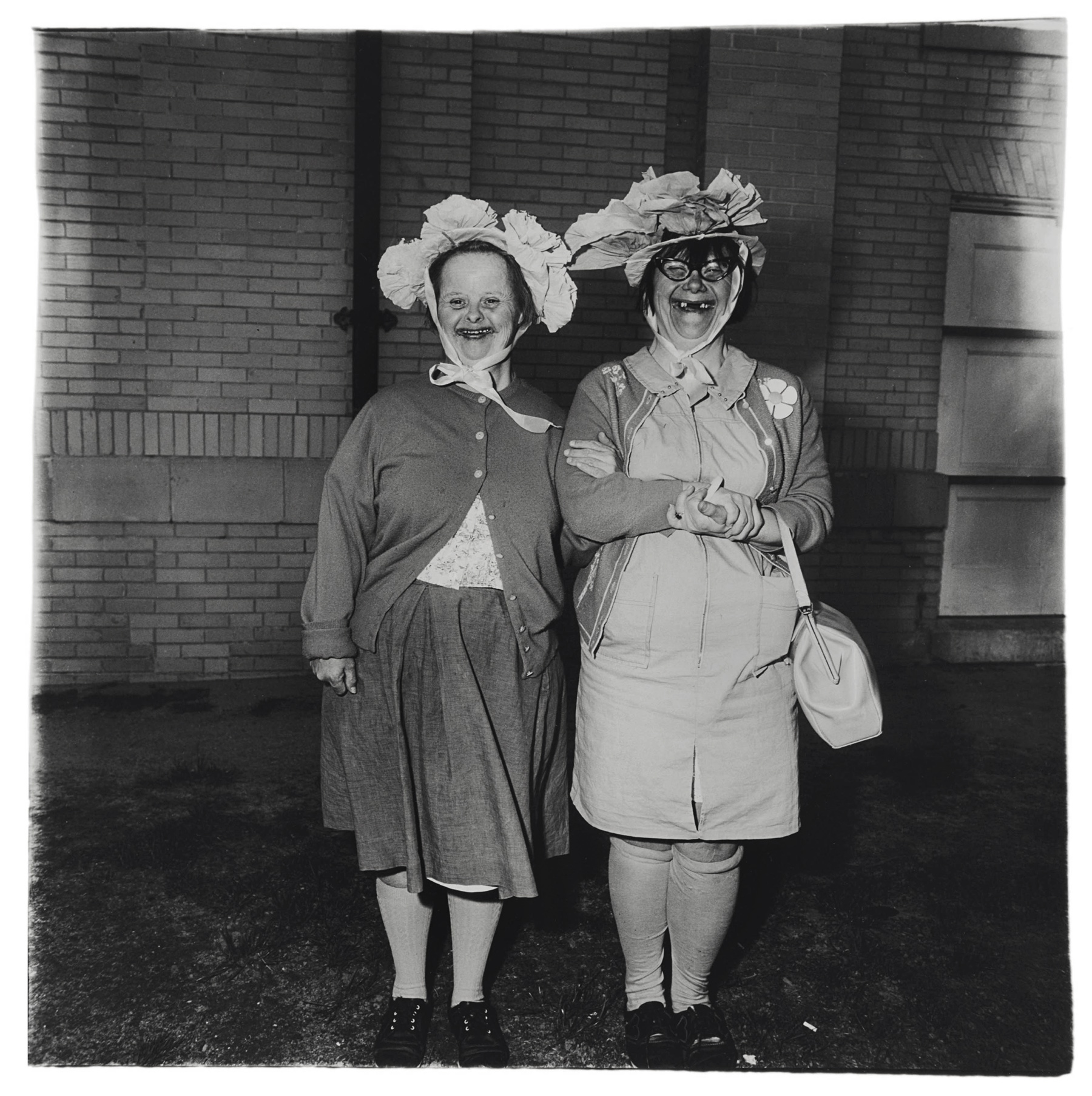
Diane Arbus (American, 1923-1971) 'Tattooed Man at a Carnival, Md.' 1970 from the exhibition 'Diane Arbus' at the National Museum of Wales, Cardiff, may-  Aug, 2009


Diane Arbus (American, 1923-1971)
Tattooed Man at a Carnival, Md.
1970
Gelatin silver print
15 x 14 5/8 in. (38.3 x 37.3 cm)


Diane Arbus is one of my favourite photographs – how I would love to see this exhibition!

I have posted some photographs from the exhibition, including all ten images from the Box of Ten 1971 that features in the show.

Dr Marcus Bunyan


Many thankx to the National Museum of Wales for allowing me to publish the photographs in the posting. Please click on the photographs for a larger version of the image.


“A photograph is a secret about a secret. The more it tells you, the less you know.”


Diane Arbus


Diane Arbus (American, 1923-1971) 'A young man in curlers at home on West 20th St., N.Y.C. 1966' 1966 from the exhibition 'Diane Arbus' at the National Museum of Wales, Cardiff, may-  Aug, 2009


Diane Arbus (American, 1923-1971)
A young man with curlers at home on West 20th Street, N.Y.C.
1966
Gelatin silver print


One of National Museum Cardiff’s main art exhibitions in 2009 reveals the work of legendary New York photographer Diane Arbus (1923 -1971), who transformed the art of photography. Diane Arbus, which comprises 69 black and white photographs including the rare and important portfolio of ten vintage prints: Box of Ten, 1971, is one of the best collections of Arbus’s work in existence. A large selection of these images will be on display at the Museum from 9 May until 31 August 2009.

Capturing 1950s and 1960s America, Arbus is renowned for portraits of people who were then classed on the outskirts of society nudists, transvestites, circus performers and zealots. In one of her most famous works, Identical Twins, Roselle, NJ of 1967, the twins are photographed as if joined at the shoulder and hip with only three arms between them.

Her powerful, sometimes controversial, images often frame the familiar as strange and the strange or exotic as familiar. This singular vision and her ability to engage in such an uncompromising way with her subjects has made Arbus one of the most important and influential photographers of the twentieth century.

This singular vision and her ability to engage in such an uncompromising way with her subjects has made Arbus one of the most important and influential photographers of the twentieth century.

Text from the National Museum of Cardiff website [Online] Cited 18/05/2009. No longer available online


Diane Arbus (American, 1923-1971) 'A Jewish Giant at home with his parents in the Bronx' 1967


Diane Arbus (American, 1923-1971)
A Jewish Giant at home with his parents in the Bronx
1967
Gelatin silver print


From 1969 to 1971 Arbus was absorbed in the creation of a limited edition portfolio, A box of ten photographs. The portfolio was intended to present her work as an artist in the manner of the special print editions offered by new artists’ presses such as Crown Point and Universal Limited Art Editions (ULAE). This group of pictures and its presentation was a very conscious statement of what she stood for, and how she regarded her own photography. The pictures range from the relatively early ones of the Nudists in their summer home and Xmas tree in a living room in Levittown, L.I., both of 1963; through the now iconic Identical twins, Roselle, N.J., 1967 and Westchester Couple sunning themselves on their lawn, to the later pictures of the Jewish giant, the Mexican Dwarf in his hotel room, N.Y.C. and the King and Queen of a senior citizens’ dance, N.Y.C., all of 1970. There is clearly an attempt to be representative of the general idea, the larger plan behind her work. There is also a significant stylistic range, from the graceful daylight in the picture of the older couple in the nudist camp, to the later picture of the elderly king and queen, whom she photographed with sharp flash. She included Xmas tree, a work without human subjects. The prints for this portfolio were selected three years after the New Documents exhibition, before there was thought of another show. But the pictures constituted a kind of exhibition in and of themselves, to be examined one at a time, rather than all at once. From her letters, we know that the idea of a clear box was very important; it was to serve as both a container and a display case allowing the owner to reorder and display the pictures easily. Just as she had wanted the black border of the print to show in the New Documents exhibition, here she wished to exhibit the entire print as it appeared on the photographic paper …

Most of the pictures in the portfolio either depict families or refer to the family. Even the corner of the cellophane-looking room in Levittown is made by peering over the two outstretched arms of a family armchair, posed like the trousered knees of the empty chair in the picture of the Jewish giant. The idea of the family album was a private but expressive metaphor for her. As in a family album, each member is part of the larger group; they are related, perhaps even tolerated, and harmony may be rare and perhaps even uninteresting. But they are all considered with the same intelligent and human regard. She photographed the Jewish giant as a mythic figure, enclosed in a modest Bronx living room, an unconventional member of an otherwise conventional family: ‘I know a Jewish giant who lives in Washington Heights or the Bronx with his little parents. He is tragic with a curious bitter somewhat stupid wit. The parents are orthodox and repressive and classic and disapprove of his carnival career…They are truly a metaphorical family. When he stands with his arms around each he looks like he would gladly crush them. They fight terribly in an utterly typical fashion which seems only exaggerated by their tragedy… Arrogant, anguished, even silly.’

Sandra S. Phillips, senior curator of photography at the San Francisco Museum of Modern Art from the book Diane Arbus Revelations.1

1/ Phillips, Sandra. “The Question of Belief,” in Diane Arbus Revelations. London: Random House, 2003, pp. 66-67.


Diane Arbus (American, 1923-1971) 'Mexican dwarf in his hotel room N.Y.C. 1970' 1970


Diane Arbus (American, 1923-1971)
Mexican Dwarf in his hotel room, N.Y.C.
1970
Gelatin silver print


Diane Arbus (American, 1923-1971) 'Xmas tree in a living room in Levittown, L.I. 1963' 1963


Diane Arbus (American, 1923-1971)
Xmas tree in a living room in Levittown, L.I.
1963
Gelatin silver print


Diane Arbus (American, 1923-1971) 'Identical twins, Roselle, N.J., 1966' 1966


Diane Arbus (American, 1923-1971)
Identical twins, Roselle, N.J.
1967
Gelatin silver print


Diane Arbus (American, 1923-1971) 'King and Queen of a senior citizens' dance, N.Y.C.' 1970


Diane Arbus (American, 1923-1971)
King and Queen of a senior citizens’ dance, N.Y.C.
1970
Gelatin silver print


Diane Arbus (American, 1923-1971) 'A family on their lawn one Sunday in Westchester, N.Y.,' 1968


Diane Arbus (American, 1923-1971)
A family on their lawn one Sunday in Westchester, N.Y., 1968
1968
Gelatin silver print


Diane Arbus (American, 1923-1971) 'Retired man and his wife at home in a nudist camp one morning, N.J.' 1963


Diane Arbus (American, 1923-1971)
Retired man and his wife at home in a nudist camp one morning, N.J.
1963
Gelatin silver print


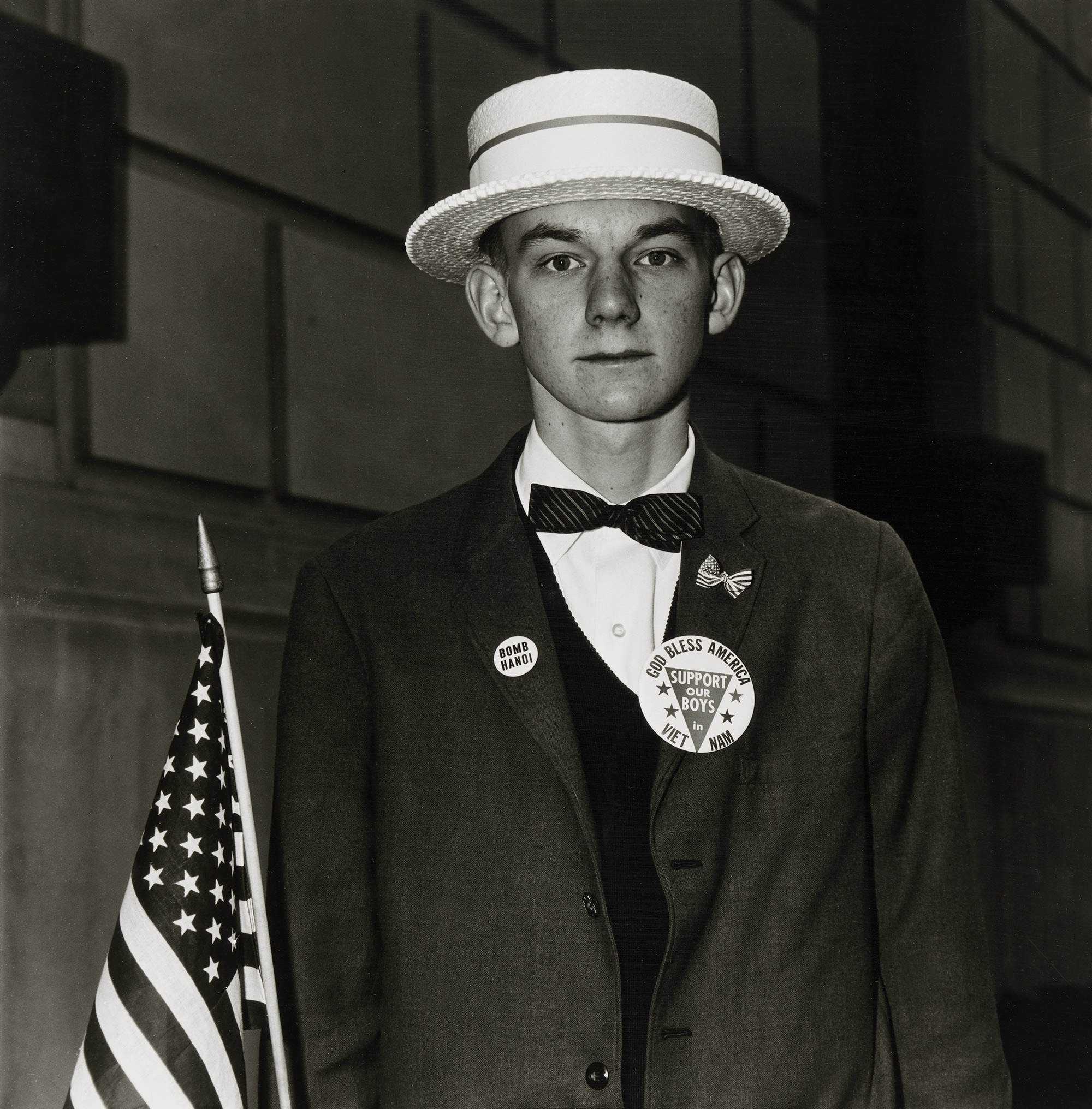
Diane Arbus (American, 1923-1971) 'Boy with a straw hat waiting to march in a pro-war parade, N.Y.C., 1967' 1967


Diane Arbus (American, 1923-1971)
Boy with a straw hat waiting to march in a pro-war parade, N.Y.C., 1967
1967
Gelatin silver print


Diane Arbus (American, 1923-1971) 'A young Brooklyn family going for a Sunday outing, NYC., 1966' 1966


Diane Arbus (American, 1923-1971)
A young Brooklyn family going for a Sunday outing, NYC., 1966
1966
Gelatin silver print


Diane Arbus (American, 1923-1971) 'A child crying, N.J.' 1967


Diane Arbus (American, 1923-1971)
A child crying, N.J.
1967
Gelatin silver print


Diane Arbus (American, 1923-1971) 'A young man and his pregnant wife in Washington Square Park, N.Y.C., 1965' 1965


Diane Arbus (American, 1923-1971)
A young man and his pregnant wife in Washington Square Park, N.Y.C., 1965
1965
Gelatin silver print


Diane Arbus (American, 1923-1971) 'Untitled (1)' 1970-1971


Diane Arbus (American, 1923-1971)
Untitled (1)
1970-1971
Gelatin silver print


Diane Arbus (American, 1923-1971) 'Untitled (1)' 1970-1971


Diane Arbus (American, 1923-1971)
Untitled
1970-1971
Gelatin silver print


National Museum of Wales, Cardiff
Cathays Park, Cardiff CF10 3NP

Opening hours:
Tuesday – Sunday, 10 – 5pm

National Museum of Wales website

LIKE ART BLART ON FACEBOOK

Back to top

Two exhibitions by photographer John Wood: ‘On the Edge of Clear Meaning’ at Grey Art Gallery, New York and ‘Quiet Protest’ at the International Center of Photography, New York

Exhibition dates: Grey Art Gallery, 12th May – 18th July, 2009; International Center of Photography, 15th May – 6th September, 2009


Fantastic to see such a talented artist, a truly ground breaking artist, get the recognition he so richly deserves!


Grey Art Gallery

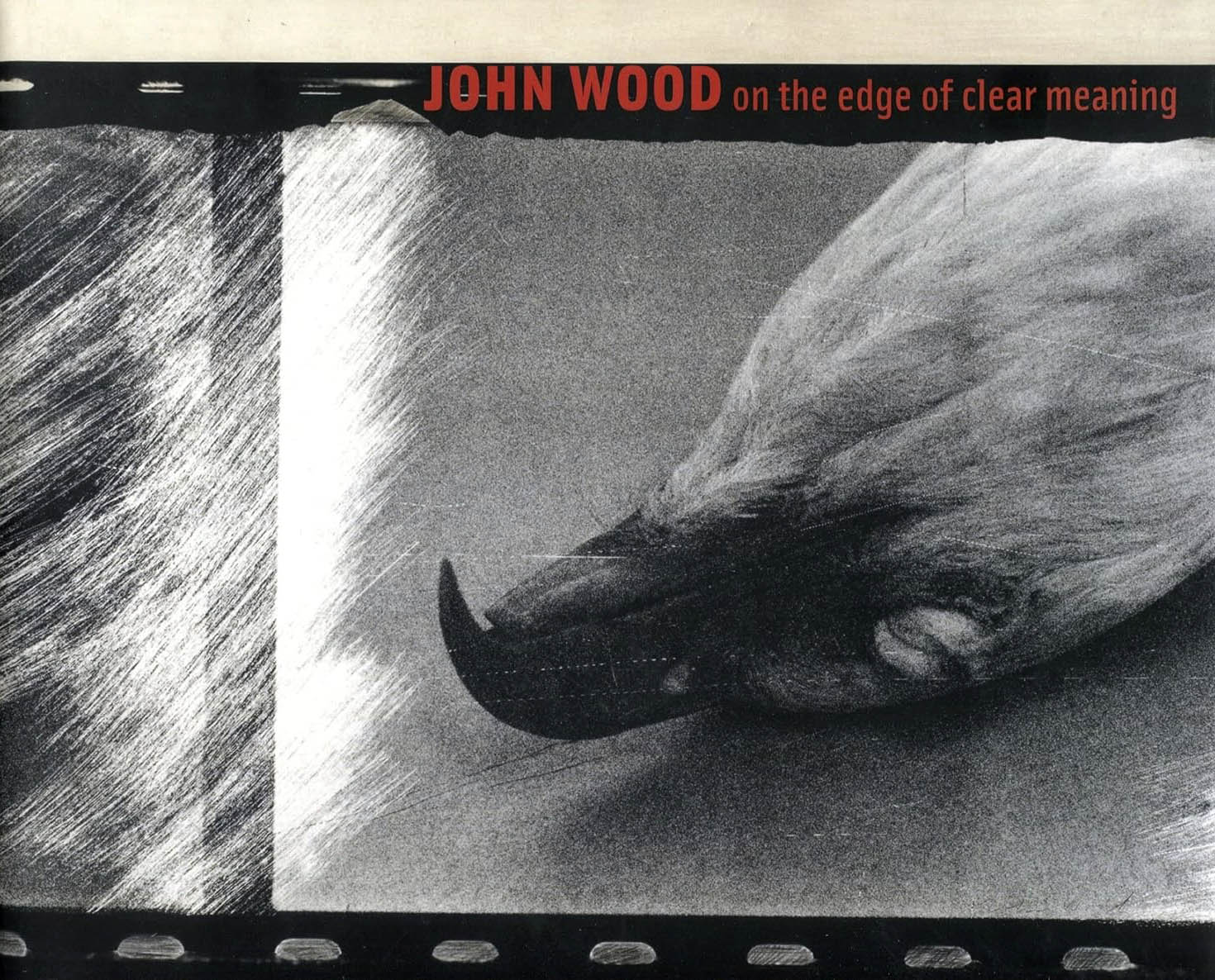
John Wood (American, 1922-2012) 'Untitled' 1986-1989 from the exhibition 'On the Edge of Clear Meaning' at Grey Art Gallery, New York, May - July, 2009


John Wood (American, 1922-2012)
Untitled
1986-1989
Stained gelatin silver print from paper stencil


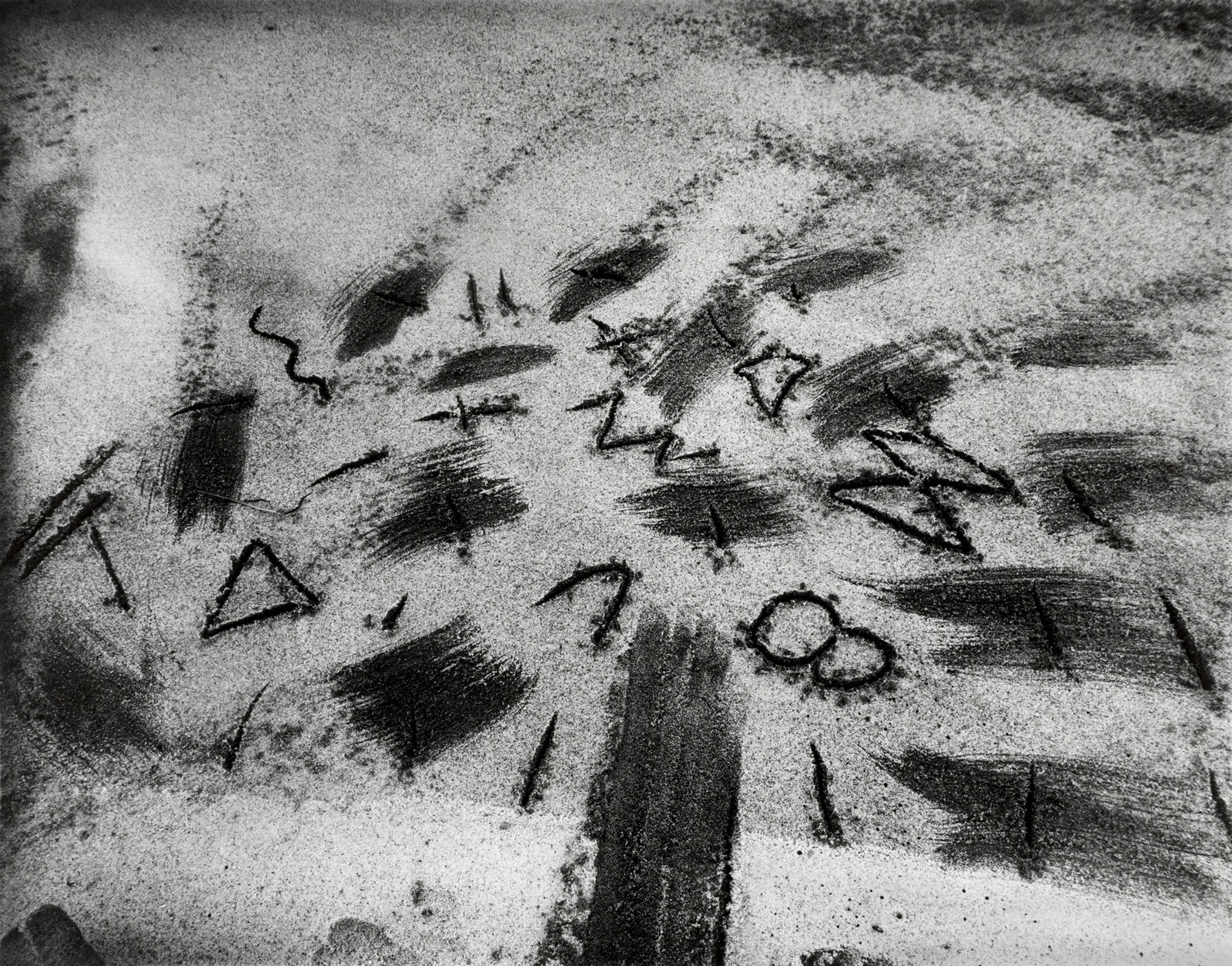
John Wood (American, 1922-2012) 'Beach Drawing' 1983 from the exhibition 'On the Edge of Clear Meaning' at Grey Art Gallery, New York, May - July, 2009


John Wood (American, 1922-2012)
Beach Drawing
1983
Gelatin silver print
14 15/16 x 19 1/8″ (37.8 x 48.5cm)


John Wood: On the Edge of Clear Meaning, on view at the Grey Art Gallery from May 12 through July 18, 2009, is the most comprehensive exhibition of the artist’s work to date. Featuring the full range of his career from the 1960s to the present, the show includes over 150 photographs, mixed-media works, and artists’ books. A selection of Wood’s photomontages, Quiet Protest, will be on view concurrently at the International Center of Photography.

John Wood (born 1922) has consistently challenged traditional photography, often incorporating painting, drawing, and collage as well as cliché verre, solarisation, and offset lithography. The artist emphasises the role of drawing in his work: “Mark making, calligraphy, the kinetic motion of the movement of the hand, are very important to me; probably more important than anything else.” Transgressing the boundaries of “pure photography,” his eclectic practice has helped usher in alternative approaches to the medium. With their adroit manipulations of picture and text, his diaristic, multi-media compositions anticipate today’s digital imagery. On the Edge of Clear Meaning is Wood’s first museum retrospective, spanning his career from the early 1960s to the present.

His early childhood was marked by the Depression, and his family moved frequently. After serving in the Army Air Corps as a B-17 pilot during World War II, he enrolled at the Institute of Design in Chicago. Wood trained as a visual designer and photographer, studying with Harry Callahan and Art Sinsabaugh to hone both conceptual and formal issues in his work. He left Chicago to teach photography and printmaking at the School of Art and Design at Alfred University in Alfred, New York, where he would live for thirty-five years. He now resides in Baltimore, Maryland with his wife, Laurie Snyder, who teaches photography at the Maryland Institute College of Art. They migrate each summer to their home and studio in Ithaca, New York.

In keeping with the Grey Art Gallery’s tradition of presenting the work of under-represented artists, this exhibition introduces John Wood as a master of various multi-media processes and testifies to his insatiable curiosity about new materials and repeated use of favourite sources. Through disciplined but lively investigation of different media, the artist eroded traditional definitions of photography and produced work that is both powerful and subtle. As Lynn Gumpert, Director of the Grey, notes, “John Wood has been a life-long teacher, inspiring and training numerous students, artists, and arts professionals. We are honoured to bring the breadth of his work to New York City, home to many art schools, colleges, and universities.”

Text from the Grey Art Gallery website and press release [Online] Cited 10/05/2009. No longer available online


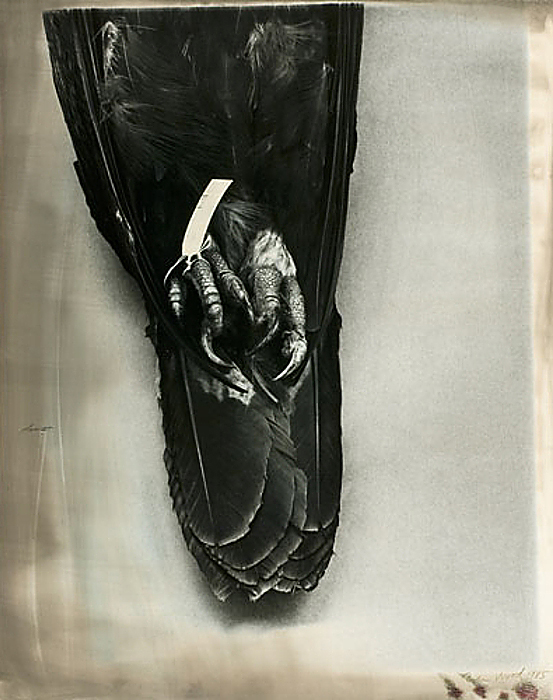
John Wood (American, 1922-2012) 'Eagle Pelt' 1985


John Wood (American, 1922-2012)
Eagle Pelt
1985
Gelatin silver print
20 1/8 x 15 3/8″


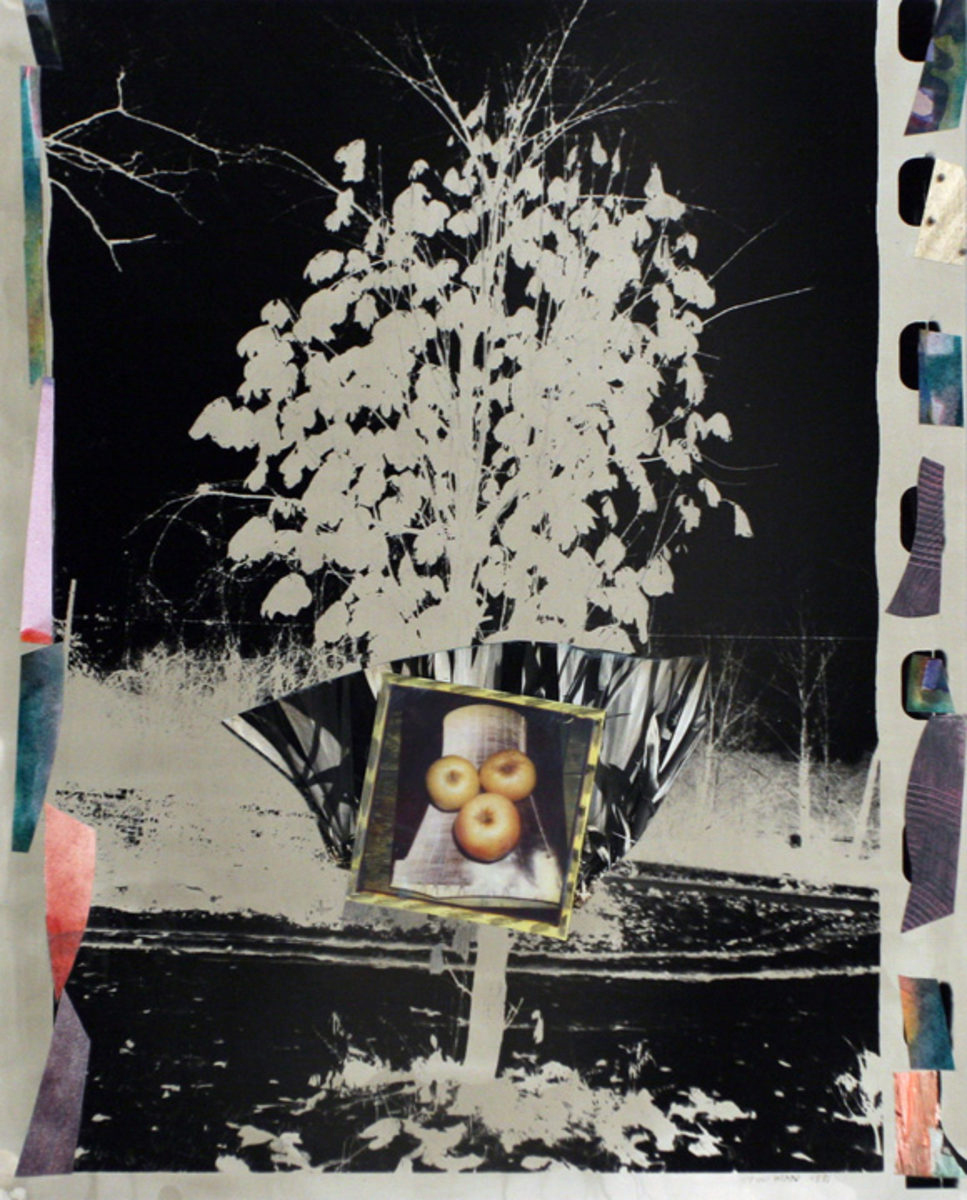
John Wood (American, 1922-2012) 'Pear Tree, Cooling Tower, and Apples' 1991


John Wood (American, 1922-2012)
Pear Tree, Cooling Tower, and Apples
1991
Collage, gelatin silver print, Polaroid SX70, and paper
19 1/4 x 15 3/8″


John Wood (American, 1922-2012) 'Blackbird, Some Have Hunger' 1986


John Wood (American, 1922-2012)
Blackbird, Some Have Hunger
1986
Collage, cyanotype, and graphite
20 x 24″


International Center of Photography

Quiet Protest is a series of photographic works by the noted mixed media artist and educator John Wood, spanning a period from the 1960s through the 1990s. Part of a larger retrospective at New York University’s Grey Art Gallery, the “Quiet Protest” series explores political and social issues of the day through thoughtful photo montage pieces that exist in marked contrast to more traditional aggressive documentary photography. Rather than offering explanations or promoting solutions, Wood’s manipulated photographs present contemplative routes into issues ranging from the Vietnam War to domestic gun violence to ecological concerns. As Wood wrote in 1970, ” …maybe the time has come for creative photography to encompass the large problems without propaganda or journalism…”

Text from the International Center of Photography website [Online] Cited 10/05/2009. No longer available online


John Wood (American, 1922-2012) 'Rifle, Bullets and Daises' 1967 from the exhibition 'Quiet Protest' at the International Center of Photography, New York, May - Sept, 2009


John Wood (American, 1922-2012)
Rifle, Bullets and Daises
1967


John Wood (American, 1922-2012) 'Triangle in the Landscape: Eleven Second 90 Degree Turn of a Paper Triangle' August 6, 1985 (Hiroshima Day) from the exhibition 'Quiet Protest' at the International Center of Photography, New York, May - Sept, 2009


John Wood (American, 1922-2012)
Triangle in the Landscape: Eleven Second 90 Degree Turn of a Paper Triangle
August 6, 1985 (Hiroshima Day)


John Wood (1922-2012)

John Cheney Wood (July 10, 1922 – July 20, 2012) was an American artist and educator who challenged traditional photography and often incorporated other mediums into his work. He was born in California in 1922. In 1943 he volunteered for the Army Air Corps, where he served as a B-17 pilot until 1945. At the time of his death he lived in Baltimore, Maryland, with artist Laurie Snyder.

Wood had the ability to work across a variety of artistic forms, from straight photography, collage, cliché verre, solarization, mixed media, offset lithography to drawing. Wood moved freely between conceptual and visual exploration, not adhering to a single style. Although he often raised questions about political, social and environmental issues, he avoided promoting personal solutions or adding narratives to the images. The artist instead preferred to focus on the viewer’s interpretation and the possibility for multiple meanings.

Text from the Wikipedia website


John Wood (American, 1922-2012) 'Loon, Drawer and Bomb' 1987


John Wood (American, 1922-2012)
Loon, Drawer and Bomb
1987
Collage, cyanotype, and toned silver gelatin print


'John Wood: On the Edge of Clear Meaning' book cover


John Wood: On the Edge of Clear Meaning book cover


Book

In his introductory essay to this monograph – featuring the diverse photo practice that has characterised John Wood’s nearly 50-year career – David Levi Strauss states, “In photo-historical terms, Wood is thought of as one of those renegades who went against ‘pure photography’ by incorporating drawing, painting, collage and every other technique he could get his hands on (not to mention explicit political content), into his practice, thus ushering in the multi-media of the 1960s that caused crisis in ‘straight photography.’ Long before it became the signal medium of the avant-garde, collage was a folk art, practiced by children, lovers and grandmothers.” This comprehensive volume accompanies a retrospective that begins in Rochester, New York at The George Eastman House, The Memorial Art Gallery and the Visual Studies Workshop, then travels to The International Center for Photography and The Grey Art Gallery in New York before concluding at Syracus’ Light Work gallery.

John Wood: On the Edge of Clear Meaning by David Strauss et al (Hardcover) 2008

Available from the Amazon website


Grey Art Gallery
New York University
100 Washington Square East

Opening hours:
Monday – Friday: 12.00 – 5.00pm
Closed weekends

Grey Art Gallery website

International Center of Photography
79 Essex Street New York, NY 10002
between Delancey Street and Broome Street

Opening hours:
Wednesday – Monday: 11.00am – 7.00pm
Closed Tuesdays

International Center of Photography website

LIKE ART BLART ON FACEBOOK

Back to top

Exhibition: ‘Helen Levitt: A Memorial Tribute’ at the Laurence Miller Gallery, New York

Exhibition dates: 9th May – 26th June, 2009


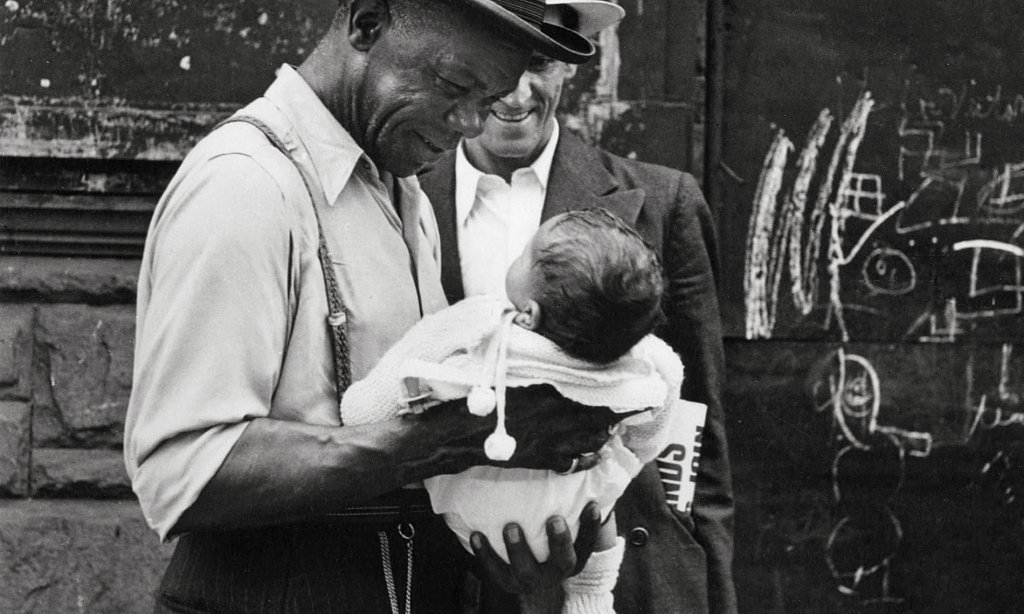
Helen Levitt (American, 1913-2009) 'New York, NY' 1945 from the exhibition 'Helen Levitt: A Memorial Tribute' at the Laurence Miller Gallery, New York, May - June, 2009


Helen Levitt (American, 1913-2009)
New York, NY
1945
Gelatin silver print


Further to my earlier posting about the passing of renowned New York photographer Helen Levitt comes this wonderful exhibition at the Laurence Miller Gallery in New York. How I wish I was in that city to see it – what a joy!

Below are a selection of 1940’s black and white photographs from the exhibition.

Dr Marcus Bunyan


Many thankx to Laurence Miller Gallery for allowing me to publish the photographs in the posting. Please click on the photographs for a larger version of the image.


Helen Levitt (American, 1913-2009) 'Kids Dancing, New York' c. 1940 from the exhibition 'Helen Levitt: A Memorial Tribute' at the Laurence Miller Gallery, New York, May - June, 2009


Helen Levitt (American, 1913-2009)
Kids Dancing, New York
c. 1940
Gelatin silver print


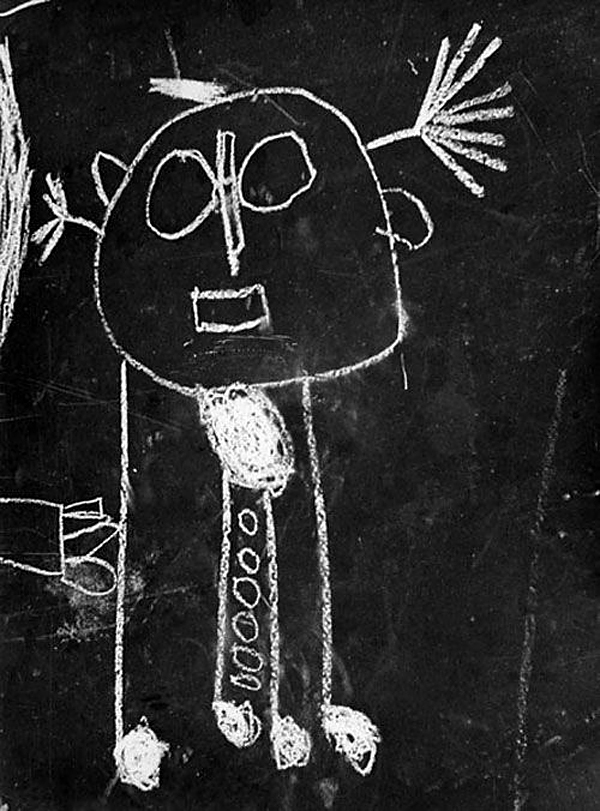
Helen Levitt (American, 1913-2009) 'Kids graffiti, New York' c. 1938


Helen Levitt (American, 1913-2009)
Kids graffiti, New York
c. 1938
Gelatin silver print


Laurence Miller Gallery will present a memorial tribute to Helen Levitt from May 9 – June 26, 2009. Helen Levitt passed away in her Greenwich Village home on March 29, at the age of 95. Ironically, or perhaps fittingly, a show of her work entitled Passages, which Helen had approved, was already in the works, and her death caused a momentary pause in how to proceed. It was decided that Helen would not have wanted her passing to intrude upon best laid plans. Hence, guided by her spirit, we celebrate her legacy with this exhibition, her twelfth at Laurence Miller Gallery.

Helen Levitt: A Memorial Tribute will present a series of passages, in both colour and black-and-white, from her extraordinary 70-year career. Featured will be her pictures of animals, which were among her earliest as well as last pictures taken; a little-known series of portraits taken on the subway using Walker Evans’ camera; children’s street drawings; elderly folks in conversation; and children at play, the photographs for which she is most well-known. Helen Levitt’s classic and rarely seen silent film, In the Street, from 1948, will be shown as well.

One of the tribute’s highlights will be a selection of never-before-exhibited “first proofs.” These early documents of her working methods are often unique. Some are vintage, others were printed as late as the 1970’s, but all were printed by Helen in her bathroom that doubled as the darkroom. Often they are variants of iconic images, and often they are sequences of several shots taken at the same time. They all reveal the photographer’s “dance” as she observes boys climbing up a tree, a large family gathering on the front stoop, two men seated beside a curious cat, or four boys peering into a pool hall. In combination with the film In the Street, the early sequences reinforce her reputation as a cinematographer, and are genuine and valuable records of the working methods of a canny and poetic photographer.”

Text from the Laurence Miller Gallery website [Online] Cited 12/05/2009. No longer available online


In the Street
1948
Directed and edited by Helen Levitt
Cinematography by NYC photographers James Agee, Helen Levitt, Janice Loeb
Re-edited version rereleased by Levitt in 1952 with musical score by Arthur Kleiner
16mm film photographed in Harlem


Helen Levitt (American, 1913-2009) 'New York' c. 1942


Helen Levitt (American, 1913-2009)
New York
c. 1942
Gelatin silver print


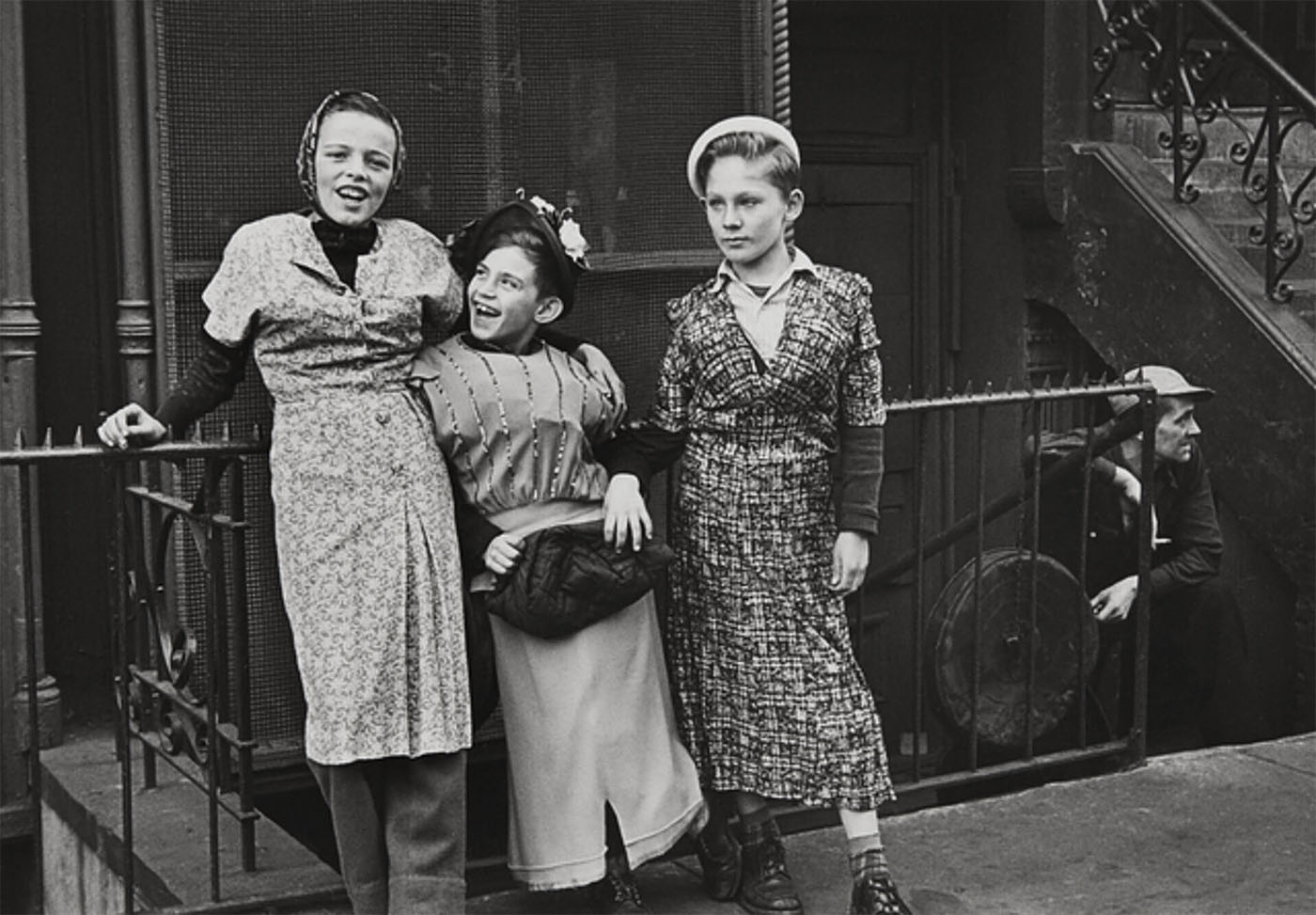
Helen Levitt (American, 1913-2009) 'Three Girls Playing Dress Up, New York' c. 1940


Helen Levitt (American, 1913-2009)
Three Girls Playing Dress Up, New York
c. 1940
Gelatin silver print


Helen Levitt (1913-2009) short biography

Helen Levitt’s playful and poetic photographs, made over the course of sixty years on the streets of New York City, have delighted generations of photographers, students, collectors, curators, and lovers of art in general. The New York Times described her as: “a major photographer of the 20th century who caught fleeting moments of surpassing lyricism, mystery and quiet drama on the streets of her native New York”. Throughout her long career, Helen Levitt’s photographs have consistently reflected her poetic vision, humour, and inventiveness as much as they have honestly portrayed her subjects – men, women, and children acting out a daily drama on the sidewalks and stoops of New York City’s tenements.

She shot and edited the film In the Street with Janice Loeb and James Agee, providing a moving portrait of her still photography. Levitt’s first major museum exhibition was at the Museum of Modern Art in 1943, and a second solo show, of colour work only, was held there in 1974. Major retrospectives of her work have been held at several museums: first in 1991, jointly at the San Francisco Museum of Modern Art and the Metropolitan Museum of Art in New York; in 1997 at the International Center for Photography in New York; and in 2001 at the Centre National la Photographie in Paris.

In 2007 “Helen Levitt: Un Art de l’accident poetique” opened at the Fondation Henri Cartier-Bresson in Paris; in 2008, the Sprengel Museum, Hannover, Germany chose Ms. Levitt as the recipient for the Spectrum International Photography Prize which was accompanied by a major retrospective; and FOAM Museum Amsterdam, mounted another major retrospective in October, 2008. She was a 2008 recipient of the Francis Greenburger award for excellence in the arts.

Text from the Laurence Miller Gallery website [Online] Cited 29/01/2019


Helen Levitt (American, 1913-2009) 'New York [Children with Soap Bubbles, New York City]' c. 1940


Helen Levitt (American, 1913-2009)
New York [Children with Soap Bubbles, New York City]
c. 1940
Gelatin silver print


Helen Levitt (American, 1913-2009) 'New York' c. 1940


Helen Levitt (American, 1913-2009)
New York
c. 1940
Gelatin silver print


Helen Levitt (American, 1913-2009) 'Kid in Tree with Mask, New York' c. 1942


Helen Levitt (American, 1913-2009)
Kid in Tree with Mask, New York
c. 1942
Gelatin silver print


Laurence Miller Gallery

Laurence Miller Gallery is now operating as a private dealer and consultant with no physical exhibition space.

Laurence Miller Gallery website

LIKE ART BLART ON FACEBOOK

Back to top

Exhibition: ‘Frida Kahlo: Through the Lens of Nickolas Muray’ at the Albright-Knox Art Gallery, Buffalo NY

Exhibition dates: 8th May – 5th July, 2009


Nickolas Muray (American, 1892-1965) 'Frida with Olmeca Figurine, Coyoacan' 1939 from the exhibition 'Frida Kahlo: Through the Lens of Nickolas Muray' at the Albright-Knox Art Gallery, Buffalo NY, May - July, 2009


Nickolas Muray (American, 1892-1965)
Frida with Olmeca Figurine, Coyoacan
1939
Colour print, assembly (Carbro) process


Forty-seven exquisite colour and black-and-white photographs of the Mexican artist Frida Kahlo by the American photographer Nickolas Muray are featured in this exhibition organised and circulated by Smith Kramer Fine Art Services. Muray and Kahlo first met in Mexico in 1931 and soon began a love affair that lasted ten years and continued as an enduring friendship throughout their lives. The photographs, selected from the Nickolas Muray Archives, capture the exotic mystery and proud beauty of Frida Kahlo through the eyes of this accomplished portrait photographer, who loved her deeply. Organised at the Albright-Knox by Associate Curator Holly E. Hughes, the exhibition will also include reproductions of Kahlo’s letters to Muray, explanatory wall texts, and an educational brochure.

Text from the Albright-Knox Art Gallery website [Online] Cited 01/05/2009. No longer available online


Many thankx to the Albright-Knox Art Gallery for allowing me to publish the photographs in the posting. Please click on the photographs for a larger version of the image.


Nickolas Muray (American, 1892-1965) 'Frida, Mexico, 1940' c. 1940 from the exhibition 'Frida Kahlo: Through the Lens of Nickolas Muray' at the Albright-Knox Art Gallery, Buffalo NY, May - July, 2009


Nickolas Muray (American, 1892-1965)
Frida, Mexico, 1940
c. 1940
Colour print, assembly (Carbro) process


Nickolas Muray (American, 1892-1965) 'Frida with her sister Cristina, Nickolas Muray, and Rosa Covarrubias, Coyoacán' 1939


Nickolas Muray (American, 1892-1965)
Frida with her sister Cristina, Nickolas Muray, and Rosa Covarrubias, Coyoacán
1939
Colour print, assembly (Carbro) process


Nickolas Muray (American, 1892-1965) 'Frida Painting the Two Fridas, Coyoacan' 1939


Nickolas Muray (American, 1892-1965)
Frida Painting the Two Fridas, Coyoacan
1939
Silver gelatin print


Nickolas Muray (American, 1892-1965) 'Frida with Nick in her Studio, Coyoacán' 1941


Nickolas Muray (American, 1892-1965)
Frida with Nick in her Studio, Coyoacán
1941
Silver gelatin print


Nickolas Muray (American, 1892-1965) 'Frida with Granizo, Coyoacán' 1939


Nickolas Muray (American, 1892-1965)
Frida with Granizo, Coyoacán
1939
Silver gelatin print


Nickolas Muray (American, 1892-1965) 'Frida in the Dining Area, Coyoacán' 1941


Nickolas Muray (American, 1892-1965)
Frida in the Dining Area, Coyoacán
1941
Gelatin silver print


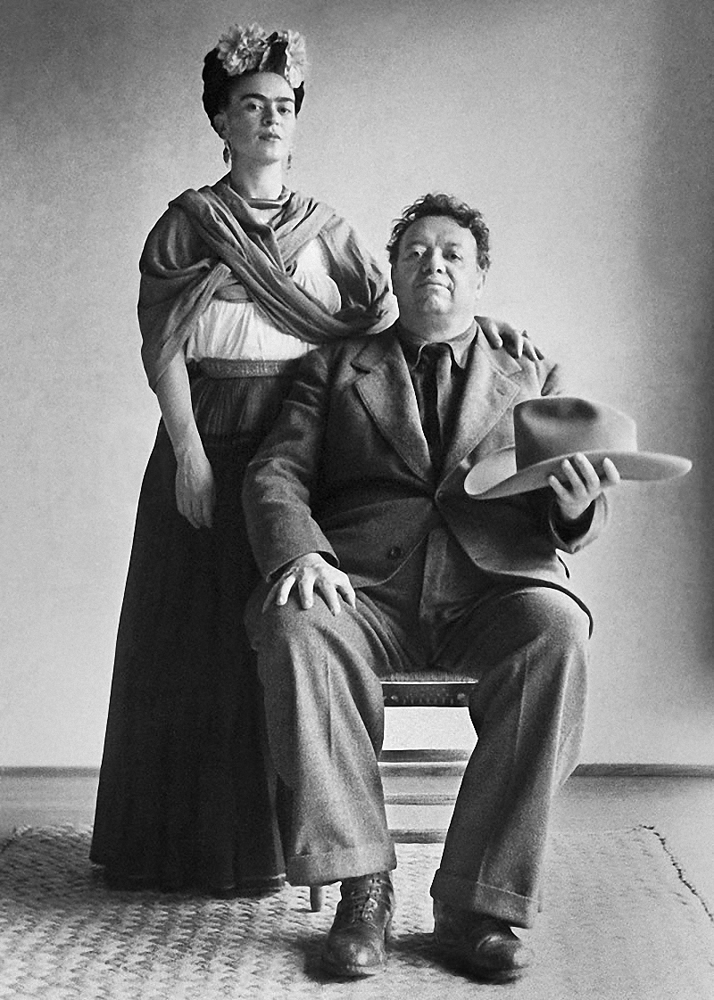
Nickolas Muray (American, 1892-1965) 'Frida and Diego, San Angel' 1941


Nickolas Muray (American, 1892-1965)
Frida and Diego, San Angel
1941
Gelatin silver print


Nickolas Muray (American, 1892-1965) 'Frida Kahlo' c. 1940


Nickolas Muray (American, 1892-1965)
Frida Kahlo
c. 1940
Colour print, assembly (Carbro) process


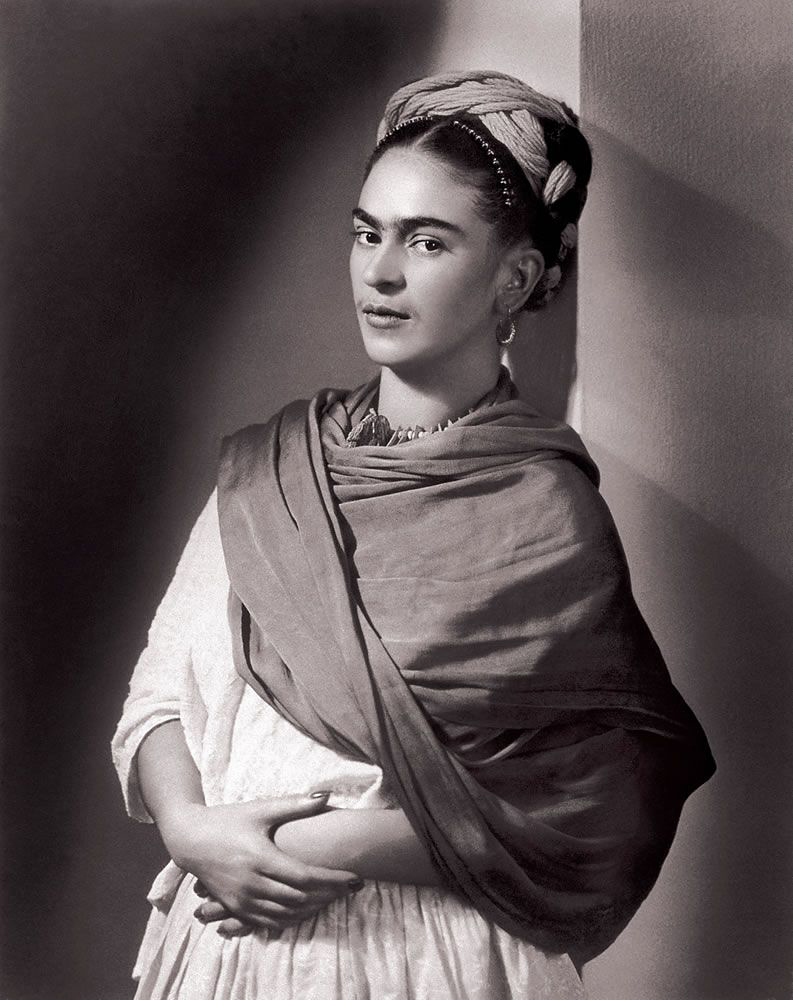
Nickolas Muray (American, 1892-1965) 'The Breton Portrait' 1939


Nickolas Muray (American, 1892-1965)
The Breton Portrait
1939
Silver gelatin print


Nickolas Muray (American, 1892-1965) 'Frida with Magenta Rebozo, New York' 1939


Nickolas Muray (American, 1892-1965)
Frida with Magenta Rebozo, New York
1939
Colour print, assembly (Carbro) process


Nickolas Muray (American, 1892-1965) 'Frida with Magenta Rebozo, New York' 1939


Nickolas Muray (American, 1892-1965)
Frida with Magenta Rebozo, New York
1939
Colour print, assembly (Carbro) process


Nickolas Muray

In 1913, with the threat of war in Europe, Muray sailed to New York City, and was able to find work as a colour printer in Brooklyn.

By 1920, Muray had opened a portrait studio at his home in Greenwich Village, while still working at his union job as an engraver. In 1921 he received a commission from Harper’s Bazaar to do a portrait of the Broadway actress Florence Reed; soon after he was having photographs published each month in Harper’s Bazaar, and was able to give up his engraving job. In 1922 he also made a portrait of the dancer Desha Delteil.

Muray quickly became recognised as an important portrait photographer, and his subjects included most of the celebrities of New York City. In 1926, Vanity Fair sent Muray to London, Paris, and Berlin to photograph celebrities, and in 1929 hired him to photograph movie stars in Hollywood. He also did fashion and advertising work. Muray’s images were published in many other publications, including Vogue, Ladies’ Home Journal, and The New York Times.

Between 1920 and 1940, Muray made over 10,000 portraits. His 1938 portrait of Frida Kahlo, made while Kahlo sojourned in New York, attending her exhibit at the Julien Levy Gallery, became the best known and loved portrait made by Muray. Muray and Kahlo were at the height of a ten-year love affair in 1939 when the portrait was made. Their affair had started in 1931, after Muray was divorced from his second wife and shortly after Kahlo’s marriage to Mexican muralist painter Diego Rivera. It outlived Muray’s third marriage and Kahlo’s divorce and remarriage to Rivera by one year, ending in 1941. Muray wanted to marry, but when it became apparent that Kahlo wanted Muray as a lover, not a husband, Muray took his leave for good and married his fourth wife, Peggy Muray. He and Kahlo remained good friends until her death, in 1954.

After the market crash, Muray turned away from celebrity and theatrical portraiture, and become a pioneering commercial photographer, famous for his creation of many of the conventions of colour advertising. He was considered the master of the three-color carbro process. His last important public portraits were of Dwight David Eisenhower in the 1950s.

Text from the Wikipedia website


Nickolas Muray (American, 1892-1965) 'Frida With Hand at Her Throat, Mexico City' 1940


Nickolas Muray (American, 1892-1965)
Frida With Hand at Her Throat, Mexico City
1940
Colour print, assembly (Carbro) process


Nickolas Muray (American, 1892-1965) 'Frida leaning on a sculpture by Mardonio Magaña, Coyoacán, Mexico' 1940


Nickolas Muray (American, 1892-1965)
Frida leaning on a sculpture by Mardonio Magaña, Coyoacán, Mexico
1940
Colour print, assembly (Carbro) process


Nickolas Muray (American, 1892-1965) 'Frida in Pink and Green Blouse, Coyoacán' 1938


Nickolas Muray (American, 1892-1965)
Frida in Pink and Green Blouse, Coyoacán
1938
Colour print, assembly (Carbro) process


Nickolas Muray (American, 1892-1965) 'Friday on White Bench, New York' 1939


Nickolas Muray (American, 1892-1965)
Frida on White Bench, New York
1939
Colour print, assembly (Carbro) process


An exhibition of photographs of the acclaimed Mexican artist Frida Kahlo taken by her friend and lover, the internationally renowned portrait photographer Nickolas Muray (1892-1965), will be on view at the Albright-Knox Art Gallery from May 8 through July 5, 2009. Frida Kahlo: Through the Lens of Nickolas Muray, From the Collection of the Nickolas Muray Archives celebrates Kahlo’s life and work and comprises approximately fifty colour and black-and-white photographs, along with archival material, including excerpts from letters between Kahlo and Muray. The installation in Buffalo will feature Frida Kahlo’s Self- Portrait with Monkey, 1938, from the Albright-Knox Art Gallery’s Permanent Collection.

Born in Hungary in 1892, Nickolas Muray came to the United States in 1913, marking the beginning of his forty-five-year career living and working in New York City. Originally hired by Condé Nast Publications to prepare illustrations for magazines, in 1920 Muray set up a photography studio at his home in Greenwich Village. Following an assignment in 1921 for Harper’s Bazaar magazine to photograph the Broadway star Florence Reed, Muray’s career as a portrait and celebrity photographer took off. Soon he was photographing “everybody who was anybody” and his work was regularly featured in such publications as Vanity Fair, Vogue, and Ladies’ Home Journal.

Nickolas Muray and Frida Kahlo first met in Mexico in 1931 and soon began a love affair that lasted ten years and continued as a friendship that endured all their lives. The images included in this exhibition, dating from 1937 to 1940, were taken during the height of the couple’s on-again, off-again, ten-year love affair. The photographs included were selected from the Nickolas Muray Archives and capture the exotic mystery and proud beauty of Frida Kahlo through the eyes of this accomplished portrait photographer who loved her deeply.

Text from the Artdaily.org website


Frida Kahlo (Mexican, 1907-1954) 'Self-Portrait with Monkey' 1938


Frida Kahlo (Mexican, 1907-1954)
Self-Portrait with Monkey
1938
Oil on masonite
40.6 cm × 30.5cm (16.0 in × 12.0 in)
Albright-Knox Art Gallery, Buffalo, New York


Of her 143 self-portraits, 55 include Kahlo’s pets. It is as though she saw them as an extension of her own self and being. Spider monkeys are known to have long, spindly legs and arms that look almost disproportionate to their body. Their strange appearance may have reflected Kahlo’s own discomfort with her physical body. Having contracted polio at an early age, she had one leg that was thinner than the other. She used colourful, large skirts to cover the disfigurement.

Kahlo doted on her pet monkeys. In her self-portraits, they are often shown sitting close to her, physically enfolding or grasping her in some way. They appear to be protective, friendly and gentle.

In many cultures, monkeys are used to symbolise lascivious, or primal behaviour. They are a mirror image of man, reminding him of his animal nature and close proximity to the natural world. Through monkeys, man sees his own connection to the animal kingdom with its uncontrollable, primal urges. In renaissance art, fettered monkeys were often used to symbolise men who are entrapped or bound by their desires.

In Kahlo’s paintings, monkeys do not appear in this way. They are more gentle, child-like and tender. Partially due to their wild natures, monkeys are often associated with fertility or lust in Mexican mythology. Kahlo’s trust and connection with her pets may have been in part due to her own feelings of inadequacy and frustration around her inability to carry to children. One of the reasons feminists celebrate Kahlo’s work is her unabashed claim to her own sexuality. She was not afraid to acknowledge her own sexual feelings or desires.

In Kahlo’s painting, the monkeys appear loyal. It feels as though Kahlo is connected with the creatures in some way. There is a bond there. Never the less, the monkeys also often appear by Kahlo’s shoulder or back, reflecting the image of a ‘monkey on your back’, a phrase commonly used to describe a problem or burden of some kind. With their association with animal nature, disfigured or primal humanity and lascivious primal urges, Kahlo may have felt at once supported by and burdened by her connection to her animal ancestors.

Extract from Kitty Jackson. “Symbolism in Art: Frida Kahlo – Self Portrait with Monkey,” on the ArtDependence Magazine website, September 4, 2017 [Online] Cited 20/01/2019


Nickolas Muray (American, 1892-1965) 'Frida in Front of the Cactus Organ Fence, San Angel' 1938


Nickolas Muray (American, 1892-1965)
Frida in Front of the Cactus Organ Fence, San Angel
1938
Colour print, assembly (Carbro) process


Nickolas Muray (American, 1892-1965) 'Frida with Blue Satin Blouse, New York' 1939


Nickolas Muray (American, 1892-1965)
Frida with Blue Satin Blouse, New York
1939
Colour print, assembly (Carbro) process


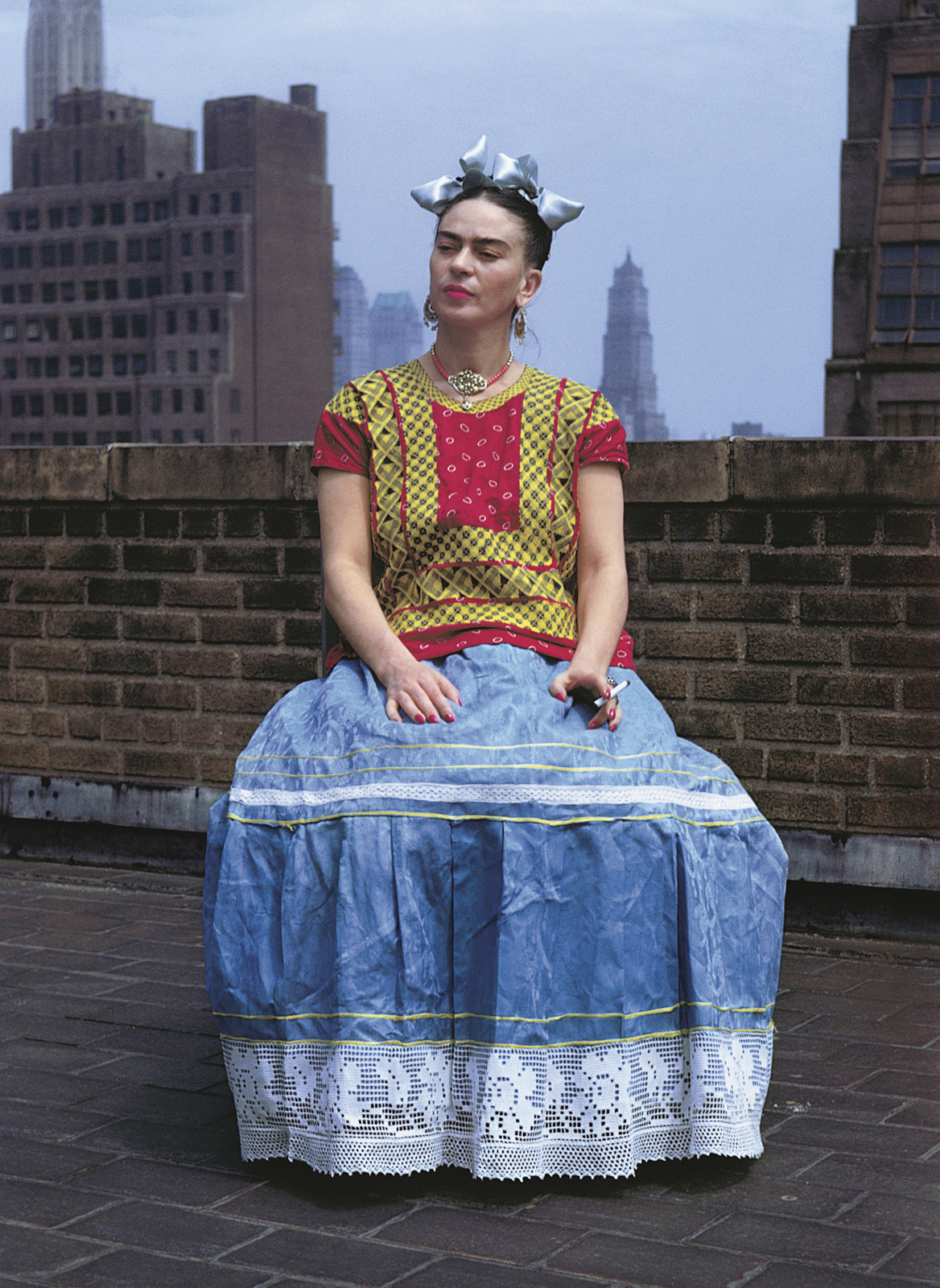
Nickolas Muray (American, 1892-1965) 'Frida on Rooftop, New York' 1946


Nickolas Muray (American, 1892-1965)
Frida on Rooftop, New York
1946
Colour print, assembly (Carbro) process


Nickolas Muray (American, 1892-1965) 'Cristina and Frida, New York' 1946


Nickolas Muray (American, 1892-1965)
Cristina and Frida, New York
1946
Colour print, assembly (Carbro) process


Albright-Knox Art Gallery
1285 Elmwood Avenue
Buffalo, New York 14222-1096

Opening hours:
Tuesday – Sunday 10am – 5pm
Closed Mondays, Tuesdays, and Independence, Thanksgiving, Christmas, and New Year’s Days

Albright-Knox Art Gallery website

LIKE ART BLART ON FACEBOOK

Back to top

Vale Helen Levitt: Always ‘Here and There’

April 2009


Helen Levitt (American, 1913-2009) 'New York' c. 1971


Helen Levitt (American, 1913-2009)
New York
c. 1971
© Helen Levitt


“For the perfect flaneur, for the passionate spectator, it is an immense joy to set up house in the heart of the multitude, amid the ebb and flow of movement, in the midst of the fugitive and infinite. To be away from home and yet to feel oneself everywhere at home; to see the world, to be at the centre of the world, and yet to remain hidden from the world … Thus the lover of universal life enters into the crowd as though it were an immense reservoir of electrical energy …”


Charles Baudelaire. The Painter of Modern Life 1863


“At least a dozen of Helen Levitt’s photographs seem to me as beautiful, perceptive, satisfying, and enduring as any lyrical work that I know. In their general quality and coherence, moreover, the photographs as a whole body, as a book, seem to me to combine into a unified view of the world, an uninsistent but irrefutable manifesto of a way of seeing, and in a gently and wholly unpretentious way, a major poetic work.”


James Agee


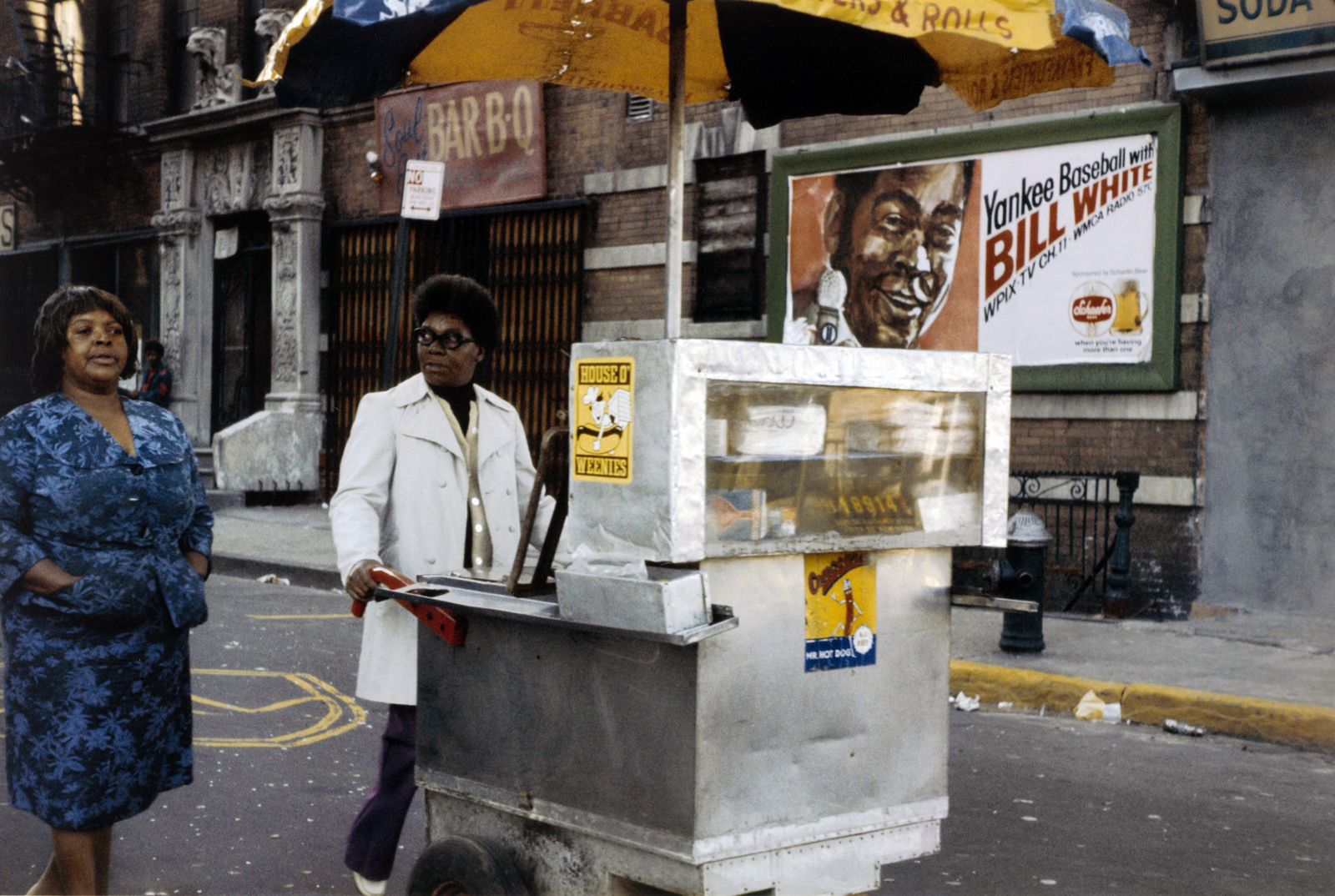
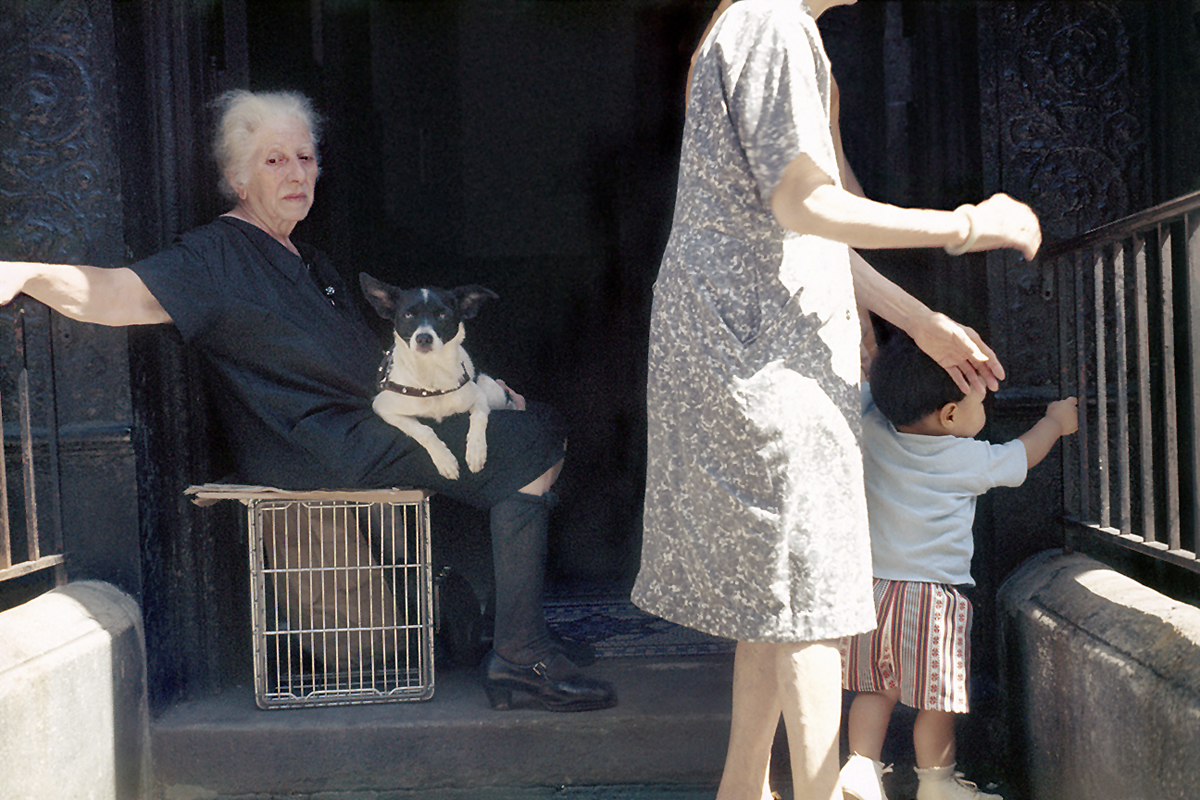
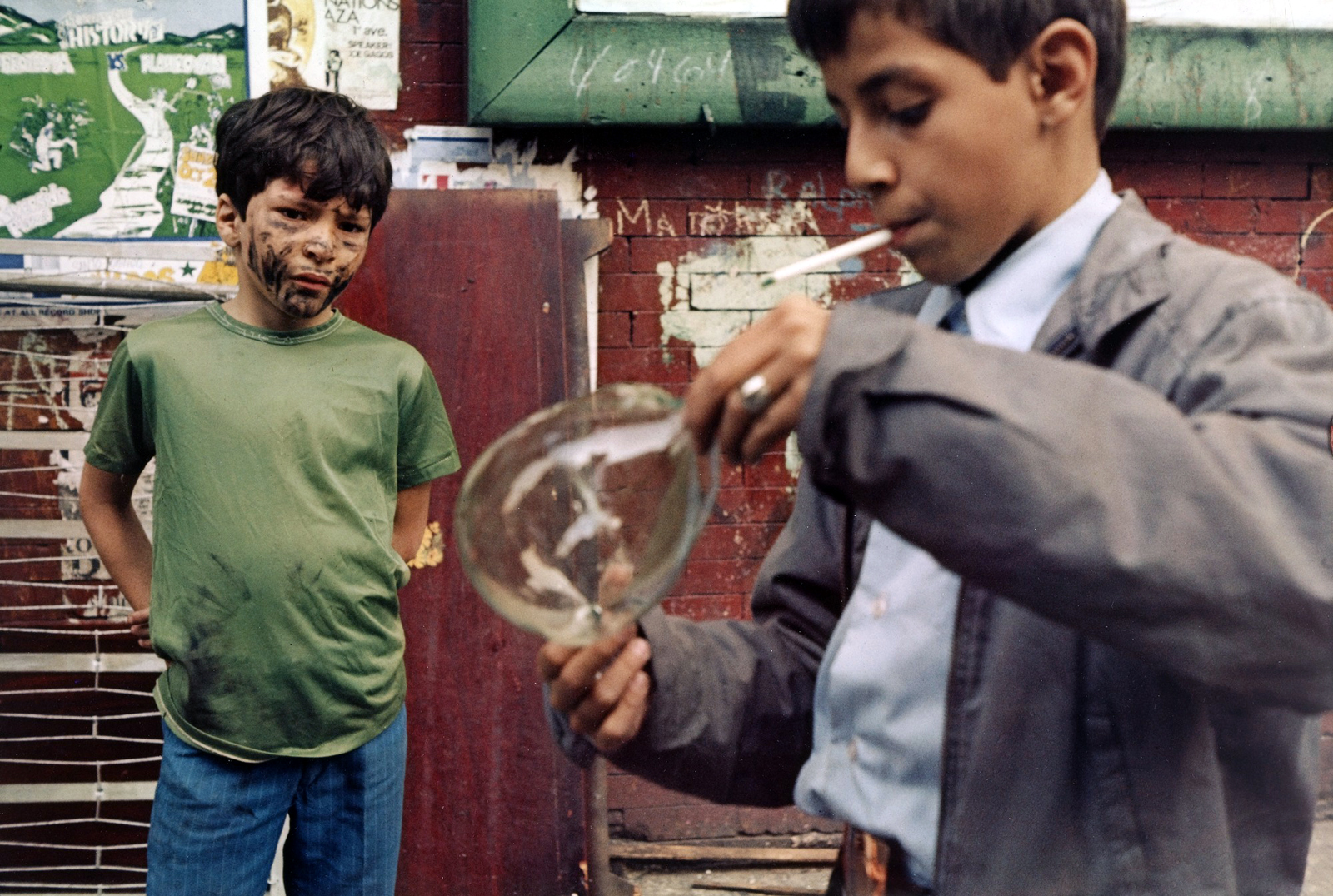
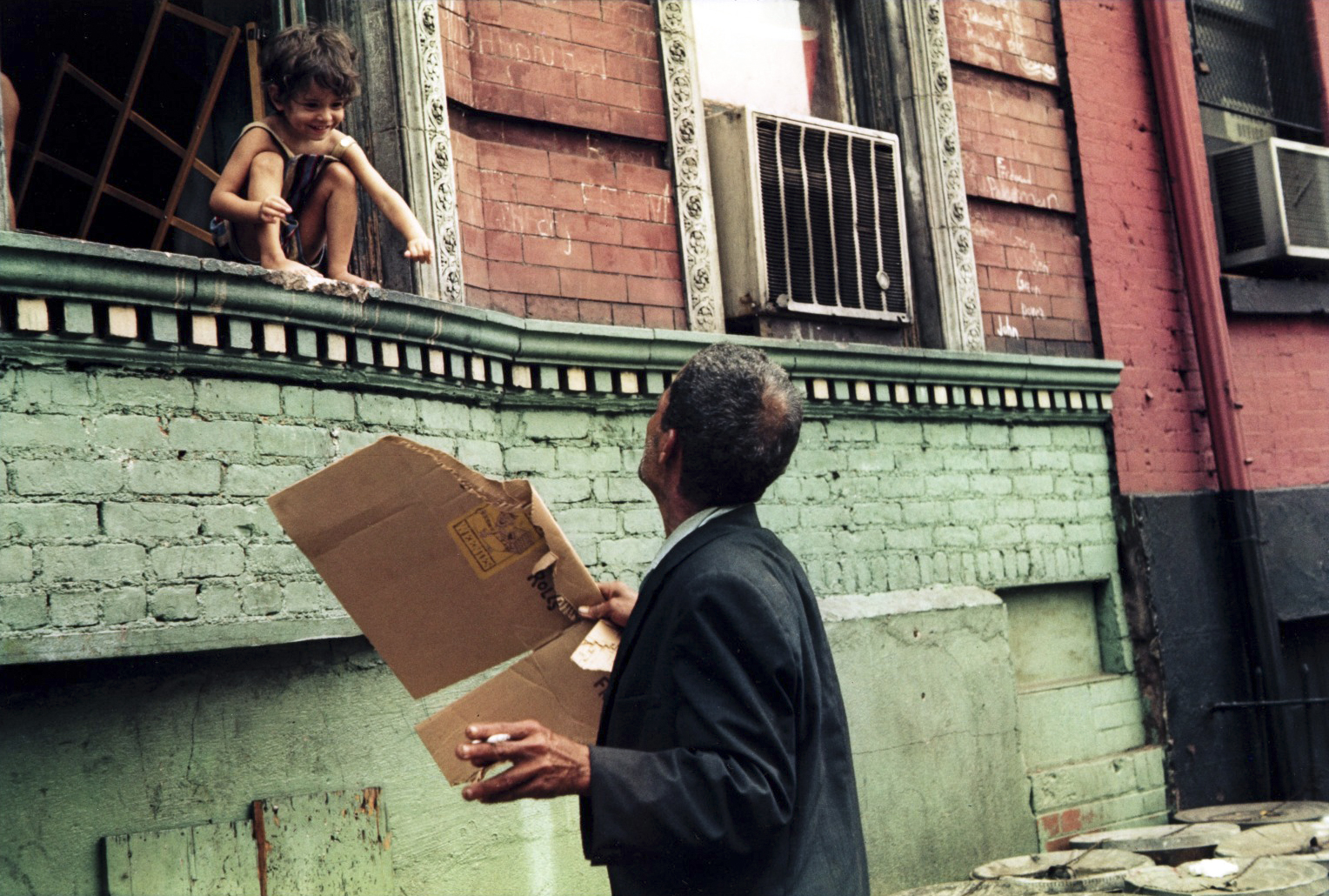
Speaking of pioneers of colour photography the wonderful American photographer Helen Levitt died recently at the end of March. Here is a selection of her colour work from the 1970s – 1980s. With two Guggenheim Foundation grants in 1959 and 1960 she switched from black and white to colour dye-transfer prints photographing the theatre of the street, the serendipity of the decisive moment previsualised and captured through awareness and an intimate knowledge of her subject matter. Unfortunately in a burglary in 1970 most of her colour transparencies and prints were stolen from that initial period.

What remains, as Sally Mann would say, are the eloquent bones of the matter: superb lush colour photographs taken after 1970 that engage the viewer not in memory but in the moment, not in nostalgia but in joy. In colour she found “beauty in correspondences.”

Dr Marcus Bunyan


Please click on some of the photographs for a larger version of the image.


Helen Levitt (American, 1913-2009) 'New York' c. 1971


Helen Levitt (American, 1913-2009)
New York
c. 1971
© Helen Levitt


Helen Levitt (American, 1913-2009) 'New York' 1972


Helen Levitt (American, 1913-2009)
New York
1972
© Helen Levitt


Helen Levitt (American, 1913-2009) 'New York' c. 1971


Helen Levitt (American, 1913-2009)
New York
c. 1971


Helen Levitt (American, 1913-2009) 'New York' 1971


Helen Levitt (American, 1913-2009)
New York
1971
© Helen Levitt


Helen Levitt

… Her pictures were mostly of Spanish Harlem and the Lower East Side. She shot them in black and white, as silver gelatin prints, in the 1930s and 1940s and in colour dye-transfer prints in the 1960s and 1970s. In between, she got into movie-making for a while. Her theme was the same, the streets of New York. Apart from a trip in 1941 to Mexico City, she never found a better subject in her life.

The grittier parts were her particular joy. Her world was run-down streets, rubble-filled building sites, warehouses and litter-strewn front steps. This was urban photography with a vengeance: small scraps of sky, no trees. When she was going with Walker Evans in 1938, borrowing his camera as well (“of course”) as sleeping with him, he used to be afraid of going as far uptown as she did. Some of her young male subjects, lounging around in their zoot suits and fedoras, had an unmistakable air of menace. But mostly she brought back images of gossiping women and her favourite, scrambling children. A right-angle viewfinder allowed her to take the picture without them knowing, even, as Evans showed her, when riding right beside them in the subway.

Here and there

Her birthplace was in Brooklyn, where her father was in the wholesale knitwear business. She aspired to something more artistic, but found she couldn’t draw. For a time she trained in ballet, which taught her to appreciate the musculature of posing bodies and the spontaneous grace of her child subjects. After dropping out of high school she went to work in the darkroom of Florian Mitchell’s commercial portrait-photography studio on $6 a week. There she was hooked.

A good image, she thought, was just lucky. But her New Yorker’s instinct seemed to tell her exactly where to wait for one. A broken-down car would soon attract people to lie under it, peer under the hood or try to push it. A cane chair, put out on the sidewalk, would draw an elderly man with cigar and newspaper, or a plump young woman in a housecoat wilting in the heat. With luck dogs would come out too, rough-haired mutts or poodles with fresh-shampooed coats. The open back of a truck would reveal delivery men moping on piles of sacks, or dozing among pink and blue bales of cloth. Any abandoned thing – a tea-chest, a mirror frame, the pillared entry of an empty building – would soon sport knots of children diving in, climbing up, fighting and contorting their small bodies in every kind of way.

Her pictures did not have names. “New York”, and the year, was the label on most of them. They did not need explaining; they were “just what you see”. Many had a backdrop of posters, graffiti or billboards, which gave a commentary of sorts. “Special Spaghetti 25 cents.” “Post No Bills.” “Nuts roasted daily.” “Buttons and Notions, One Flight Up.” “Bill Jones Mother is a Hore.” Her earliest project with her first, secondhand camera was to photograph children’s chalk drawings on the pavements. She never tried to speculate on them. What mattered was the patterns they made.

In the 1960s, when she got two Guggenheim grants, she began to shoot the streets in colour. The tricky developing ultimately frustrated her, and the streets, too, had changed. The children had retreated indoors to watch television. But where she had found grace and texture in black and white, colour now provided beauty in correspondences. The multi-coloured balls in bubble-gum machines could be picked up in a girl’s dress, or the red of a stiletto shoe matched with the frame of a shop window. Her broken-down cars were now lurid beasts against the stucco walls. And out of her peeling, greenish doorways could come women in furs, or pink hair-curlers, or orange-striped socks.

She did not rate her own work highly. Though her original prints eventually sold for tens of thousands of dollars, she let them pile up in her apartment in boxes labelled “Nothing good” or “Here and there”. Her hopes when she started were for photographs that would make a socialist statement of some sort, but she abandoned that on Cartier-Bresson’s advice. A “nice picture”, as she reluctantly admitted some of hers were, was a work of art that had value in itself, as well as a celebration of the random, teeming work of art that is the city of New York.

Anonymous. “Helen Levitt,” on The Economist website April 8th 2009 [Online] Cited 16/04/2009. No longer available online


Helen Levitt (American, 1913-2009) 'New York' c. 1972


Helen Levitt (American, 1913-2009)
New York
c. 1972
© Helen Levitt


Helen Levitt (American, 1913-2009) 'New York' c. 1972


Helen Levitt (American, 1913-2009)
New York
c. 1972
© Helen Levitt


Helen Levitt (American, 1913-2009) 'New York' 1972


Helen Levitt (American, 1913-2009)
New York
1972
© Helen Levitt


Helen Levitt (American, 1913-2009) 'New York' 1980


Helen Levitt (American, 1913-2009)
New York
1980
© Helen Levitt


Helen Levitt (American, 1913-2009) 'New York' 1971


Helen Levitt (American, 1913-2009)
New York
1971
© Helen Levitt


Slide Show: The Color Photographs of Helen Levitt by John Szarkowski, Powerhouse Books, 2005 is available from the Amazon website. The photograph above is used on the cover of the book.

LIKE ART BLART ON FACEBOOK

Back to top