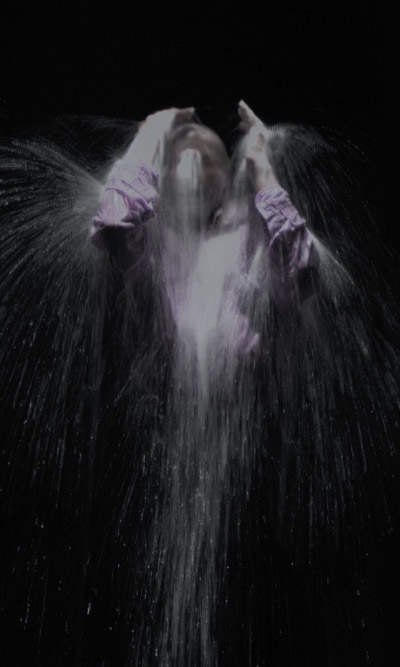
Exhibition: ‘What Is a Photograph?’ at the International Center of Photography, New York

Exhibition dates: 31st January – 4th May 2014

Artist in the exhibition include:

Matthew Brandt b. 1982, Los Angeles; lives and works in Los Angeles. Marco Breuer b. 1966, Landshut, Germany; lives and works in New York State. Liz Deschenes b. 1966, Boston; lives and works in New York City. Adam Fuss b. 1961, London; lives and works in New York City. Owen Kydd b. 1975, Calgary, Canada; lives and works in Los Angeles. Floris Neusüss 1937-2020, German. Marlo Pascual 1972-2020, American. Sigmar Polke 1941-2010; Germany. Eileen Quinlan b. 1972, Boston; lives and works in New York City. Jon Rafman b. 1981, Montreal; lives and works in Montreal. Gerhard Richter b. 1932, Dresden; lives and works in Cologne. Mariah Robertson b. 1975, Indianapolis, Indiana; lives and works in Brooklyn. Alison Rossiter b. 1953, Jackson, Mississippi; lives and works in the metro New York area. Lucas Samaras b. 1936, Macedonia, Greece; lives and works in New York City. David Benjamin Sherry b. 1981, Woodstock, New York; lives and works in Los Angeles. Travess Smalley b. 1986, Huntington, West Virginia; lives and works in New York City. Kate Steciw b. 1978, Bethlehem, Pennsylvania; lives and works in Brooklyn. Artie Vierkant b. 1986, Breinerd, Minnesota; lives and works in New York City. James Welling b. 1951, Hartford, Connecticut; lives and works in Los Angeles. Christopher Williams b. 1956, Los Angeles; lives and works in Cologne, Düsseldorf, and Amsterdam. Letha Wilson b. 1976, Honolulu; lives and works in Brooklyn.


James Welling (American, b. 1951) '6236' 2008


James Welling (American, b. 1951)
6236
2008
© James Welling, courtesy David Zwirner, New York/London


A Vocabulary of Photography: representation and the original, the ‘I can’ of sight

What is a photograph? These days, it can be anything your imagination desires, any imag(in)ing that takes your fancy…

The images in this posting are a case in point. In a postmodern, post-photographic world where there is (allegedly) no centre and periphery, these art works are photography playing at the edges of photography. They examine “the range of creative experimentation that has occurred in photography since the 1970s,” reconsidering and reinventing, “the role of light, color, composition, materiality, and the subject in the art of photography.”

In an earlier posting I talked about A Vocabulary of Printing and the Syntax of the Image. Here we could equally posit a Vocabulary of Photography, a compendium of techniques and imaginings, noting that technology and imagination should never delimit the creativity of the photographer/artist. In other words visions, boundaries and technologies are there to be pushed!

All well and good. To solidify meaning in such a nebulous world, there is penchant for (ambiguous) numbers – titles such as 6236; Untitled (C-1189); 154 – or definitive titles that try to fix ambiguity in a specific time, place or typology (a classification according to general type) eg Image Object Friday 7 June 2013 4:33 PM, 2013 or Supplement ’13 (Mixed Typologies) #3.

However, what is produced by this experimentation, this voluminous vocabulary, seldom leads to satisfying results. When you actually look at this type of work, really look at it with a clear and aware mind (as Krishnamurti would say), a large proportion of it is blather, noise for the sake of making noise, tinkering for a terrestrial world saturated in meaningless images. No wonder I get disillusioned with the “contemporary” in photography. The art work seems to mean very little and takes me nowhere I particularly want to go.

While photographs are no longer necessarily “points of view” analogous to Littré’s rigorous definition: ‘The point of view is a collection of objects to which the eye is directed and on which it rests within a certain distance’,1 and “the image has nothing to do with signification, meaning, as implied by the existence of the world, the effort of truth, the law and the brightness of the day”2 – meaning that there is no single truth, there are only competing narratives and interpretations of a world that cannot be wholly, accurately described3 – for me there still needs to be a re(as)semblance towards some form of inherent truth in the image, ideally some form of human happiness.

The ‘I can’ of site (representation) / sight (vision) …

Dr Marcus Bunyan


1/ Virilio, Paul. The Vision Machine (trans. Julie Rose). Bloomington: Indiana University Press, 1994, p. 19

2/ Blanchot, Maurice. The Gaze of Orpheus. New York: Barrytown, 1981, p. 85

3/ Townsend, Chris. Vile Bodies: Photography and the Crisis of Looking. Munich: Prestel, 1998, p. 10


Many thankx to the International Center of Photography for allowing me to publish the photographs in the posting. Please click on the photographs for a larger version of the image.


“Vision is ordered according to a mode that may be generally called the function of images. This function is defined by a point-by-point correspondence of two unities in space. Whatever optical intermediaries may be used to establish their relation, whether their image is virtual, or real, the point-by-point correspondence is essential. That which is the mode of the image is therefore reducible to the simple schema that enables us to establish anamorphosis, that is to say, to the relation of an image, in so far as it linked to a surface, with a certain point that we shall call the ‘geometrical’ point. Anything that is determined by this method, in which the straight line plays its role of being the path of light, can be called an image.”


Lacan, Jacques. The Four Fundamental Concepts of Psycho-Analysis (trans. Alan Sheridan). London: The Hogarth Press, 1977, p. 86


“With the industrial proliferation of visual and audiovisual protheses and unrestrained use of instantaneous-transmission equipment from earliest childhood onwards, we now routinely see the encoding of increasingly elaborate mental images together with a steady decline in retention rates and recall. In other words we are looking at the rapid collapse of mnemonic [aiding memory] consolidation.

This collapse seems only natural, if one remembers a contrario that seeing, and its spatio-temporal organisation, precede gesture and speech and their co-ordination in knowing, recognising, making known (as images of our thoughts), our thoughts themselves and cognitive functions, which are never passive… (Romains, Jules. La Vision extra-rétinienne et le sens paroptique. Paris: Gallimard, 1964).

Everything I see is in principle within my reach, at least within reach of my sight, marked on the map of the ‘I can’. In this important formulation, Merleau-Ponty pinpoints precisely what will eventually find itself ruined by the banalisation of a certain teletopology. The bulk of what I see is, in fact and in principle, no longer with in my reach. And even if it lies within reach of my sight, it is no longer necessarily inscribed on the map of the ‘I can’. The logistics of perception in fact destroy what earlier modes of representation preserved of the original, ideally human happiness, the ‘I can’ of sight… ”


Virilio, Paul. The Vision Machine (trans. Julie Rose). Bloomington: Indiana University Press, 1994, p. 7 (my bold)


Matthew Brandt (American, b. 1982) 'Grays Lake, ID 7' 2013


Matthew Brandt (American, b. 1982)
Grays Lake, ID 7
2013
© Matthew Brandt, courtesy Yossi Milo Gallery, New York


Alison Rossiter (American, b. 1953) 'Kilborn Acme Kruxo, exact expiration date unknown, ca. 1940s, processed in 2013 (#1)' 2013


Alison Rossiter (American, b. 1953)
Kilborn Acme Kruxo, exact expiration date unknown, ca. 1940s, processed in 2013 (#1)
2013
© Alison Rossiter, courtesy Yossi Milo Gallery, New York


Eileen Quinlan (American, b. 1972) 'The Drink' 2011


Eileen Quinlan (American, b. 1972)
The Drink
2011
© Eileen Quinlan, courtesy Miguel Abreu Gallery, New York


Gerhard Richter (German, b. 1932) '18.2.08' 2008


Gerhard Richter (German, b. 1932)
18.2.08
2008
Overpainted photograph
© Gerhard Richter, courtesy Marian Goodman Gallery, New York


Kate Steciw (American, b. 1978) 'Armchair, Background, Basic, Beauty, Bed, Bedside, Bread, Breakfast, Bright, Cereal, Closeup, Cloth, Color, Contemporary, Couch, Crust, Day, Decor, Fox, Frame, Grain, Ingredient, Interior, Invitation, Irregular, Juice, Life, Living, Loaf, Luxury, Macro, Sofa, Speed, Style, Sweet, Texture' 2013


Kate Steciw (American, b. 1978)
Armchair, Background, Basic, Beauty, Bed, Bedside, Bread, Breakfast, Bright, Cereal, Closeup, Cloth, Color, Contemporary, Couch, Crust, Day, Decor, Fox, Frame, Grain, Ingredient, Interior, Invitation, Irregular, Juice, Life, Living, Loaf, Luxury, Macro, Sofa, Speed, Style, Sweet, Texture
2013
1 and 2 of infinite
© Kate Steciw


On view at the International Center of Photography from January 31 through May 4, 2014, What Is a Photograph? explores the range of creative experimentation that has occurred in photography since the 1970s.

This major exhibition brings together 21 emerging and established artists who have reconsidered and reinvented the role of light, colour, composition, materiality, and the subject in the art of photography. In the process, they have also confronted an unexpected revolution in the medium with the rise of digital technology, which has resulted in imaginative reexaminations of the art of analog photography, the new world of digital images, and the hybrid creations of both systems as they come together.

“Artists around the globe have been experimenting with and redrawing the boundaries of traditional photography for decades,” said ICP Curator Carol Squiers, who organised the exhibit. “Although digital photography seems to have made analog obsolete, artists continue to make works that are photographic objects, using both old technologies and new, crisscrossing boundaries and blending techniques.”

Among those included in the exhibition is Lucas Samaras, who adopted the newly developed Polaroid camera in the late 1960s and early 1970s and immediately began altering its instant prints, creating fantastical nude self-portraits. Another artist who turned to photography in the 1970s was Sigmar Polke. Although better known as a painter, Polke explored nontraditional ways of photographing and printing, manipulating both his film and prints in the darkroom and often drawing and painting on his images.

More recently, Liz Deschenes has used camera-less photography in a subtle investigation of nonrepresentational forms of expression and the outmoded technologies of photography. And, James Welling has created a heterogeneous body of work that explores optics, human perception, and a range of photographic genres both abstract and representational.

Press release from the International Center of Photography website


Letha Wilson (American, b. 1976) 'Colorado Purple' 2012


Letha Wilson (American, b. 1976)
Colorado Purple
2012
Concrete, chromogenic print transfer, and wood frame
Courtesy the artist and Higher Pictures, New York
© Letha Wilson, courtesy Higher Pictures, New York


Adam Fuss (American, b. 1961) 'Untitled' 1988


Adam Fuss (American, b. 1961)
Untitled
1988
© Adam Fuss, courtesy Cheim & Read, New York


Marco Breuer (German, b. 1966) 'Untitled (C-1189)' 2012


Marco Breuer (German, b. 1966)
Untitled (C-1189)
2012
© Marco Breuer, courtesy Yossi Milo Gallery, New York
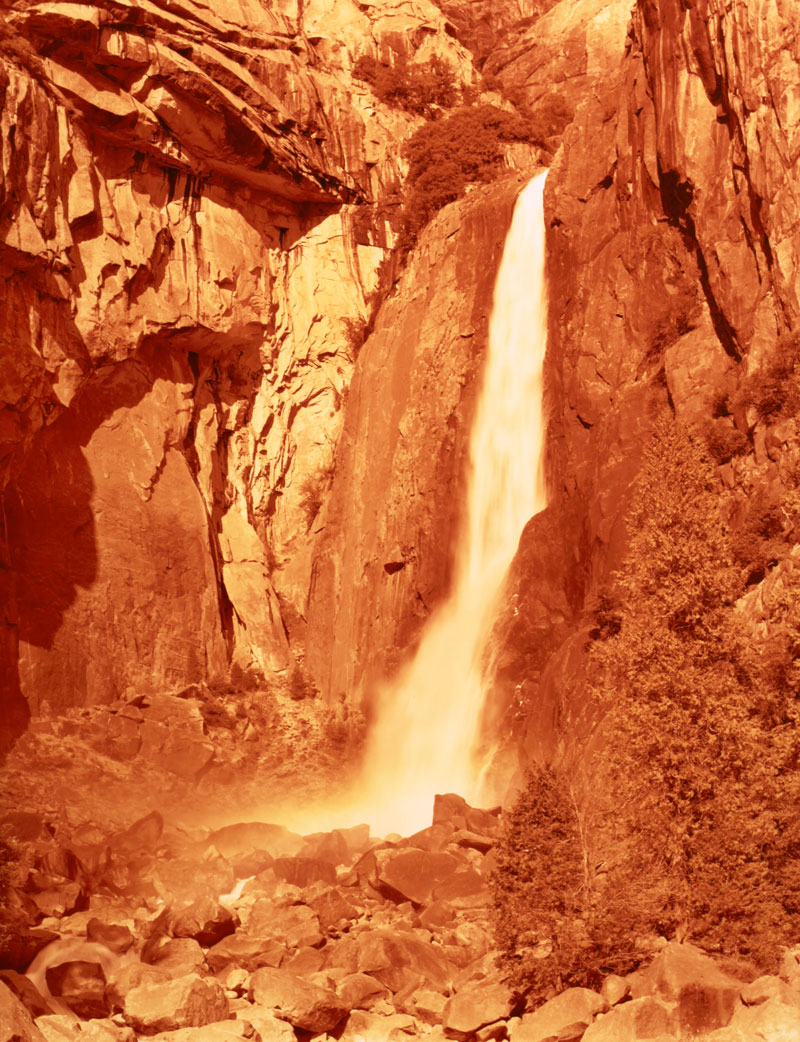
 

David Benjamin Sherry (American, b. 1981) 'Lower Yosemite Falls, Yosemite, California' 2013


David Benjamin Sherry (American, b. 1981)
Lower Yosemite Falls, Yosemite, California
2013
© David Benjamin Sherry, courtesy the artist and Salon 94, New York
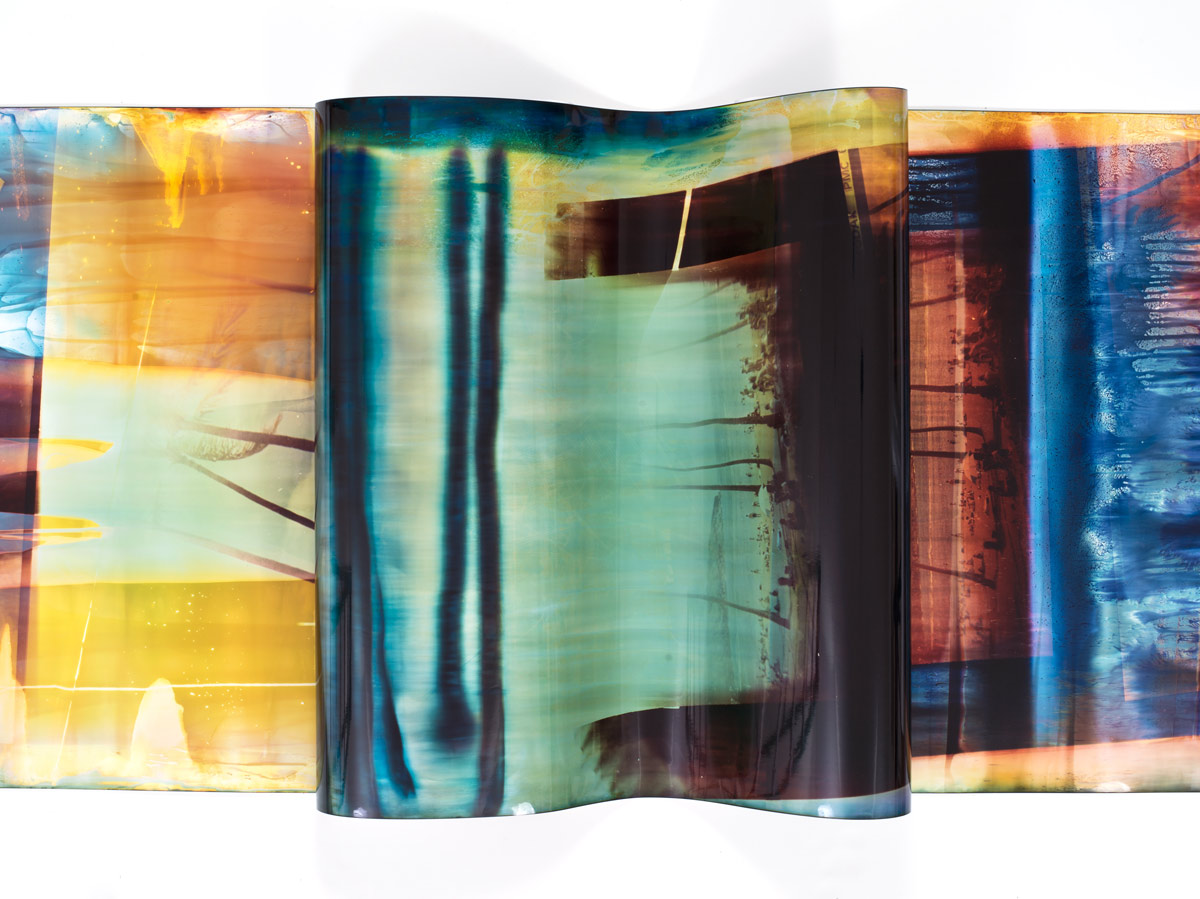
 

Mariah Robertson (American, b. 1975) '154' 2010 (detail)


Mariah Robertson (American, b. 1975)
154 (detail)
2010
© Mariah Robertson, courtesy American Contemporary, New York


Artie Vierkant (American, b. 1986) 'Image Object Friday 7 June 2013 4:33 PM, 2013' 2013


Artie Vierkant (American, b. 1986)
Image Object Friday 7 June 2013 4:33 PM, 2013
2013
© Artie Vierkant, courtesy Higher Pictures, New York


Christopher Williams (American, b. 1956) 'Supplement '13 (Mixed Typologies) #3' 2013 (detail)


Christopher Williams (American, b. 1956)
Supplement ’13 (Mixed Typologies) #3 (detail)
2013
© Christopher Williams, courtesy David Zwirner, New York/London and Galerie Gisela Capitain, Cologne
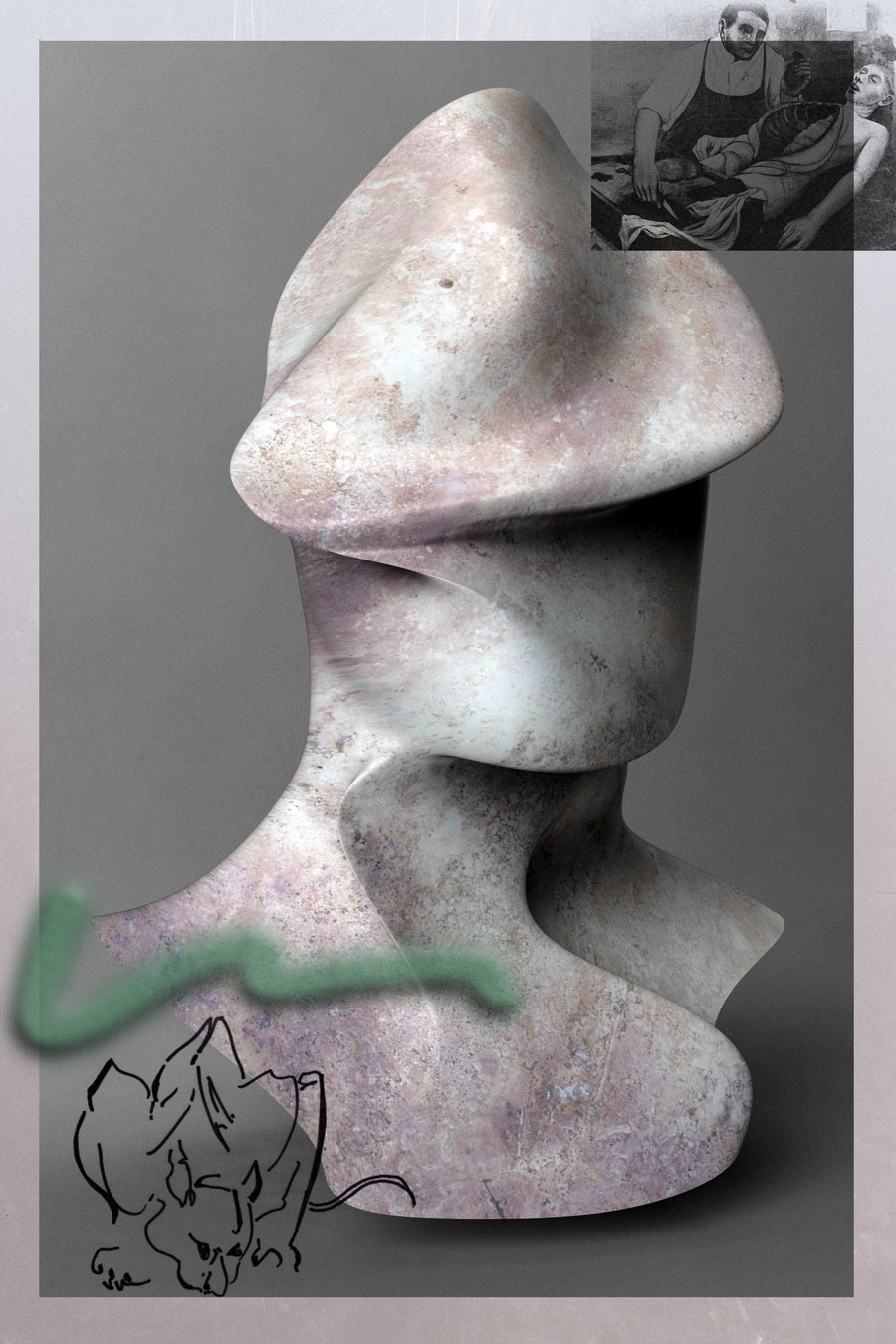
 

Jon Rafman (American, b. 1981) 'New Age Demanded (The heart was a place made fast)' 2013


Jon Rafman (American, b. 1981)
New Age Demanded (The heart was a place made fast)
2013
© Jon Rafman, courtesy the artist and Zach Feuer Galery, New York


Floris Neusüss (German, 1937-2020) 'Tango' 1983


Floris Neusüss (German, 1937-2020)
Tango
1983
© Floris Neusüss, courtesy the artist and Von Lintel Gallery, New York


Marlo Pascual (American, 1972-2020) 'Untitled' 2010


Marlo Pascual (American, 1972-2020)
Untitled
2010
© Marlo Pascual, courtesy the artist and Casey Kaplan, New York
Photo: Jean Vong
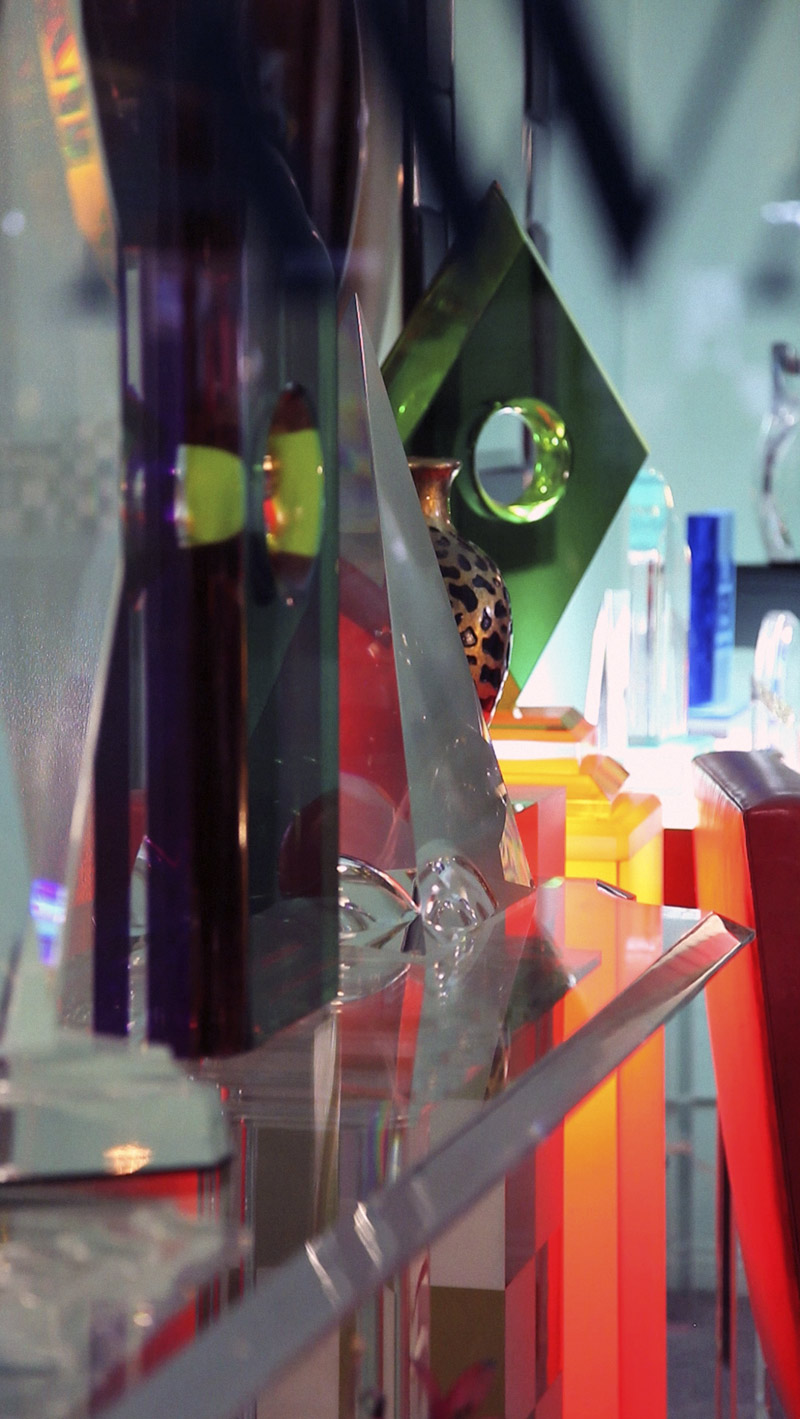
 

Owen Kydd (Canadian, b. 1975) 'Pico Boulevard (Nocturne)' 2012


Owen Kydd (Canadian, b. 1975)
Pico Boulevard (Nocturne)
2012
Courtesy the artist and Nicelle Beauchene Gallery
© Owen Kydd


International Center of Photography
79 Essex Street New York, NY 10002
Phone: 212 857 0000

Opening hours:
Wednesday – Monday 11am – 7pm
Closed Tuesday
International Center of Photography website

LIKE ART BLART ON FACEBOOK

Back to top

Exhibition: ‘James Turrell: A Retrospective’ at The Los Angeles County Museum of Art (LACMA)

Exhibition dates: 26th May 2013 – 6th April 2014


Many thankx to LACMA for allowing me to publish the photographs in the posting. Please click on the photographs for a larger version of the image.


This slideshow requires JavaScript.


James Turrell (American, b. 1943)
Breathing Light
2013
LED light into space
Dimensions cariable
Los Angeles County Museum of Art, purchased with funds provided by Kayne Griffin Corcoran and the Kayne Foundation
© James Turell
Photos: © Florian Holzherr


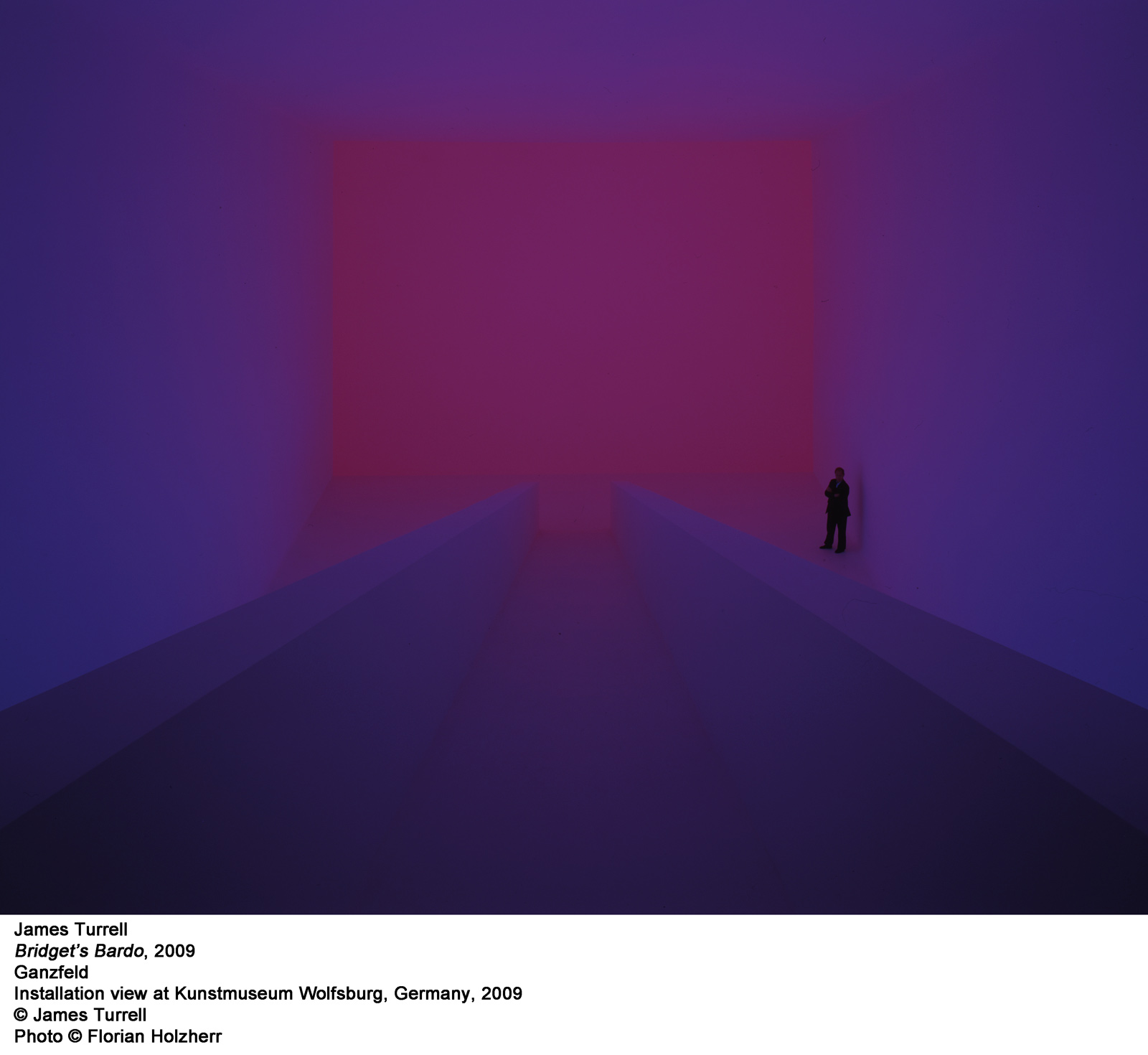
James Turrell (American, b. 1943) 'Bridget's Bardo' 2009


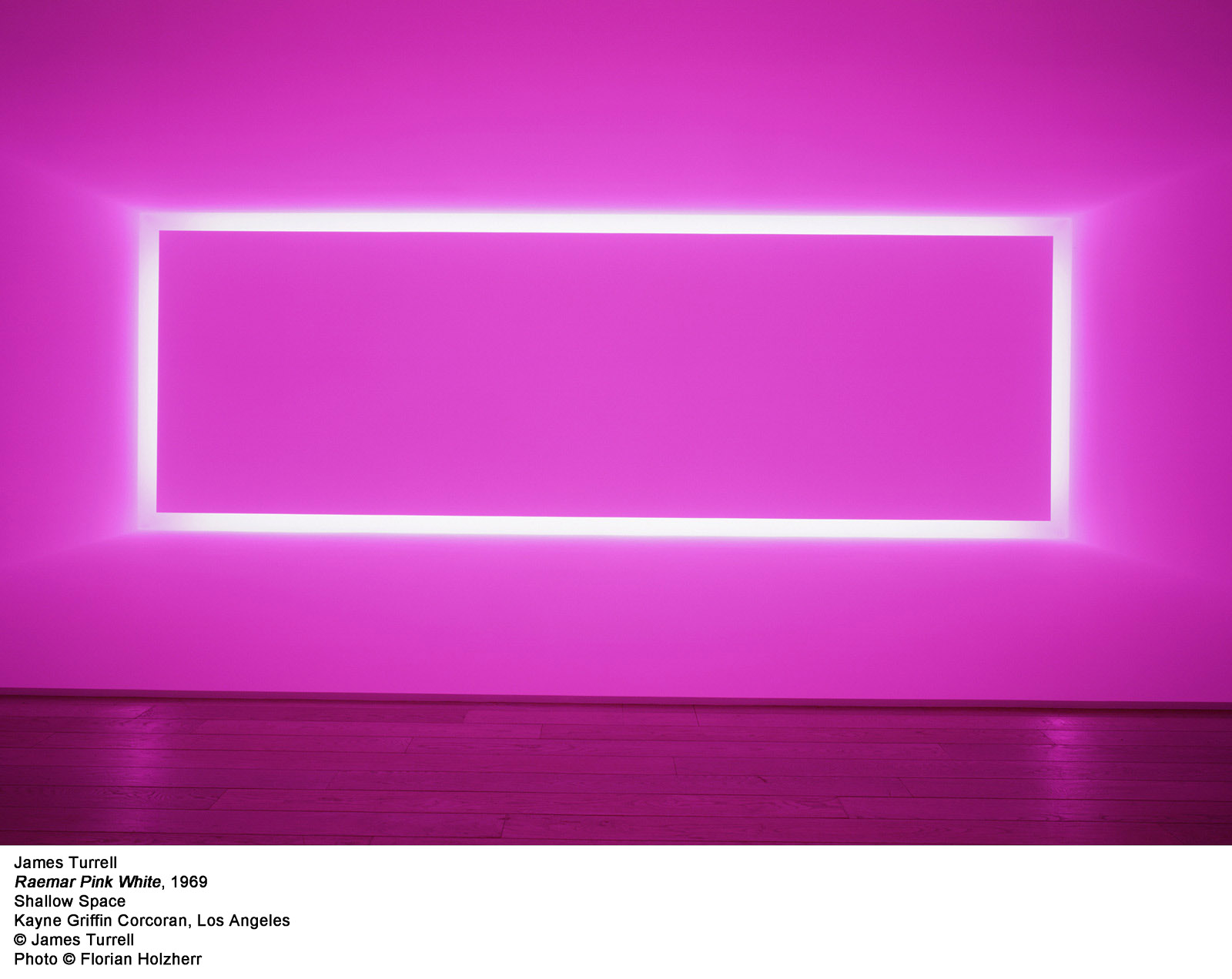
James Turrell (American, b. 1943) 'Raemar Pink White' 1969


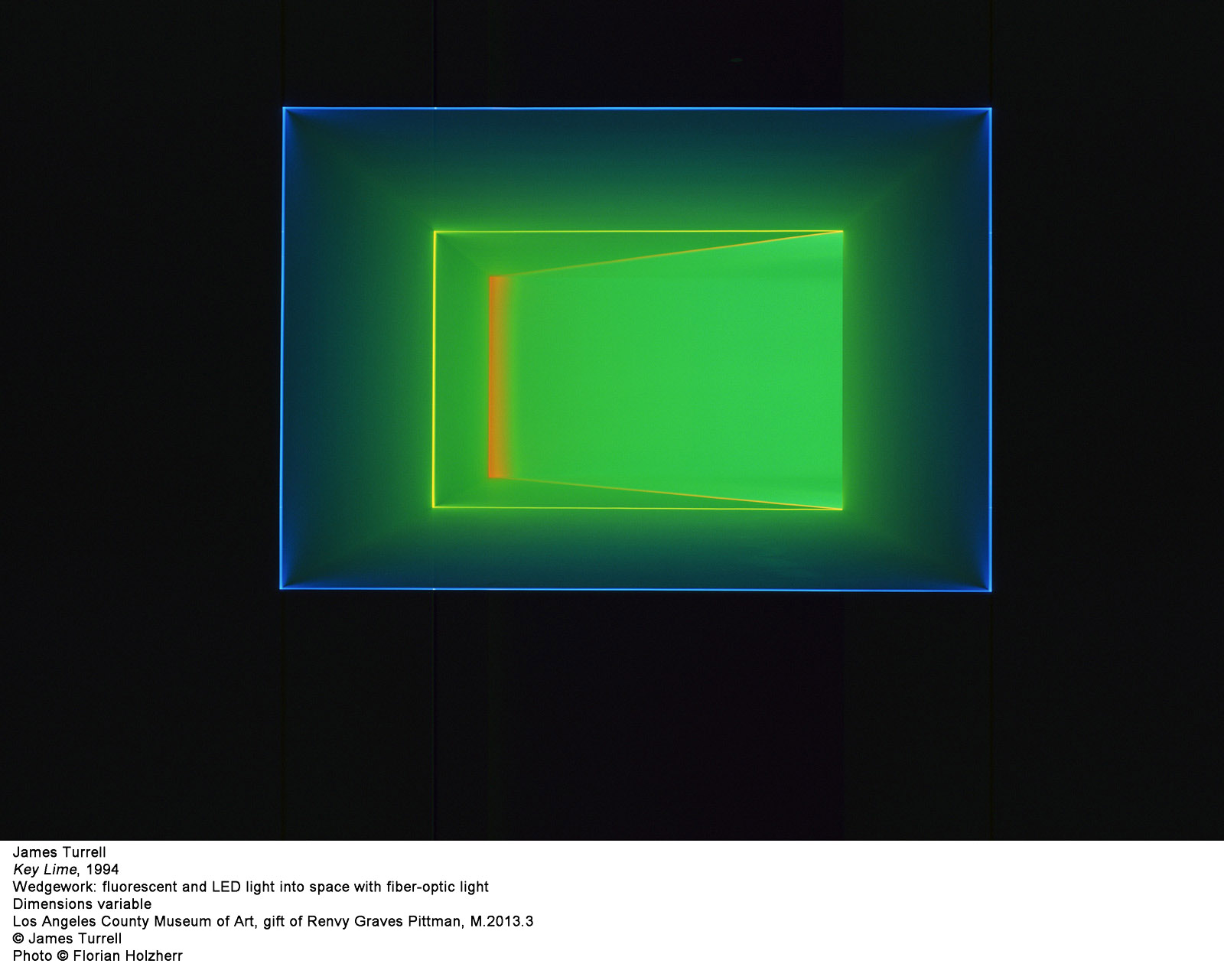
James Turrell (American, b. 1943) 'Key Lime' 1994


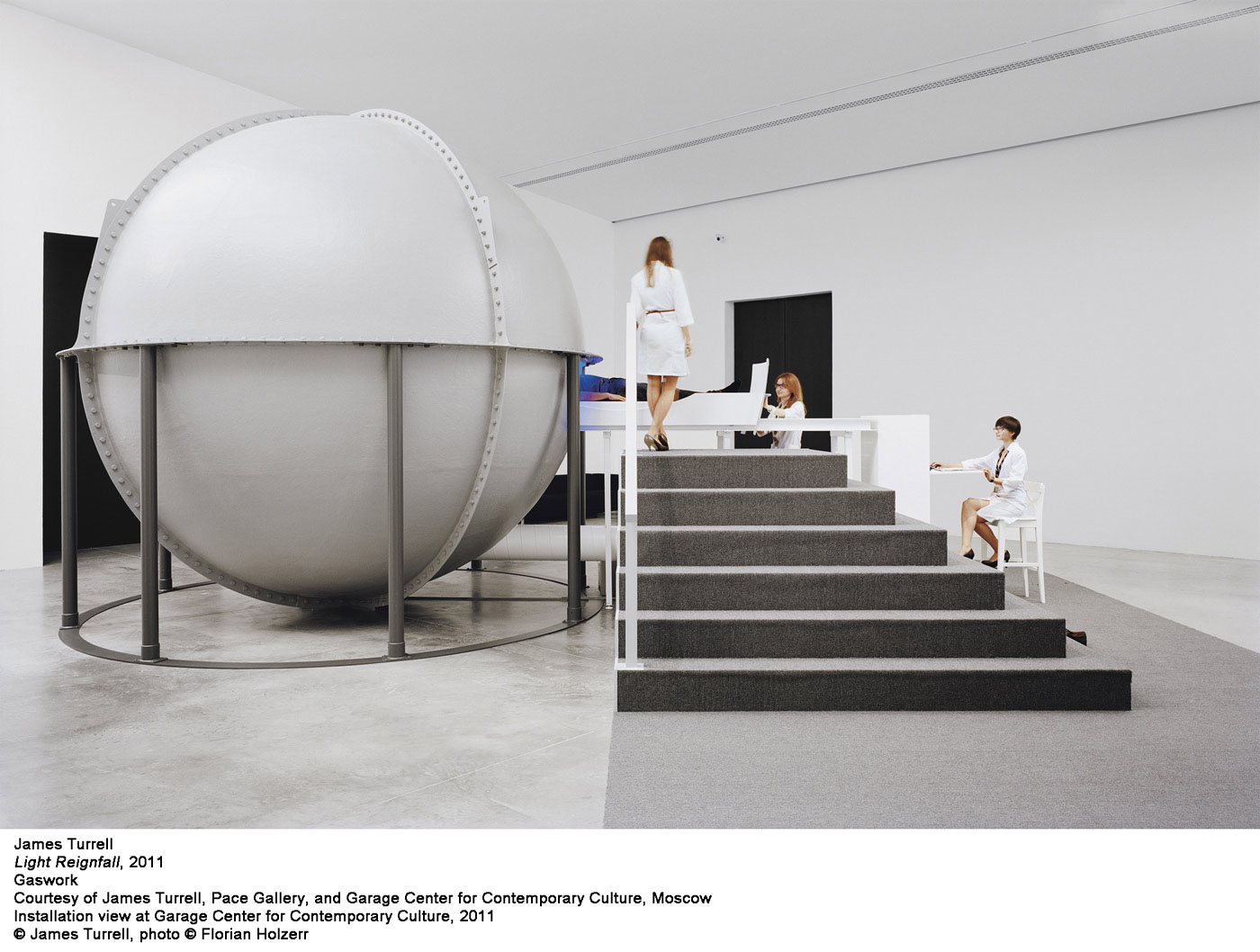
James Turrell (American, b. 1943) 'Light Reignfall' 2011


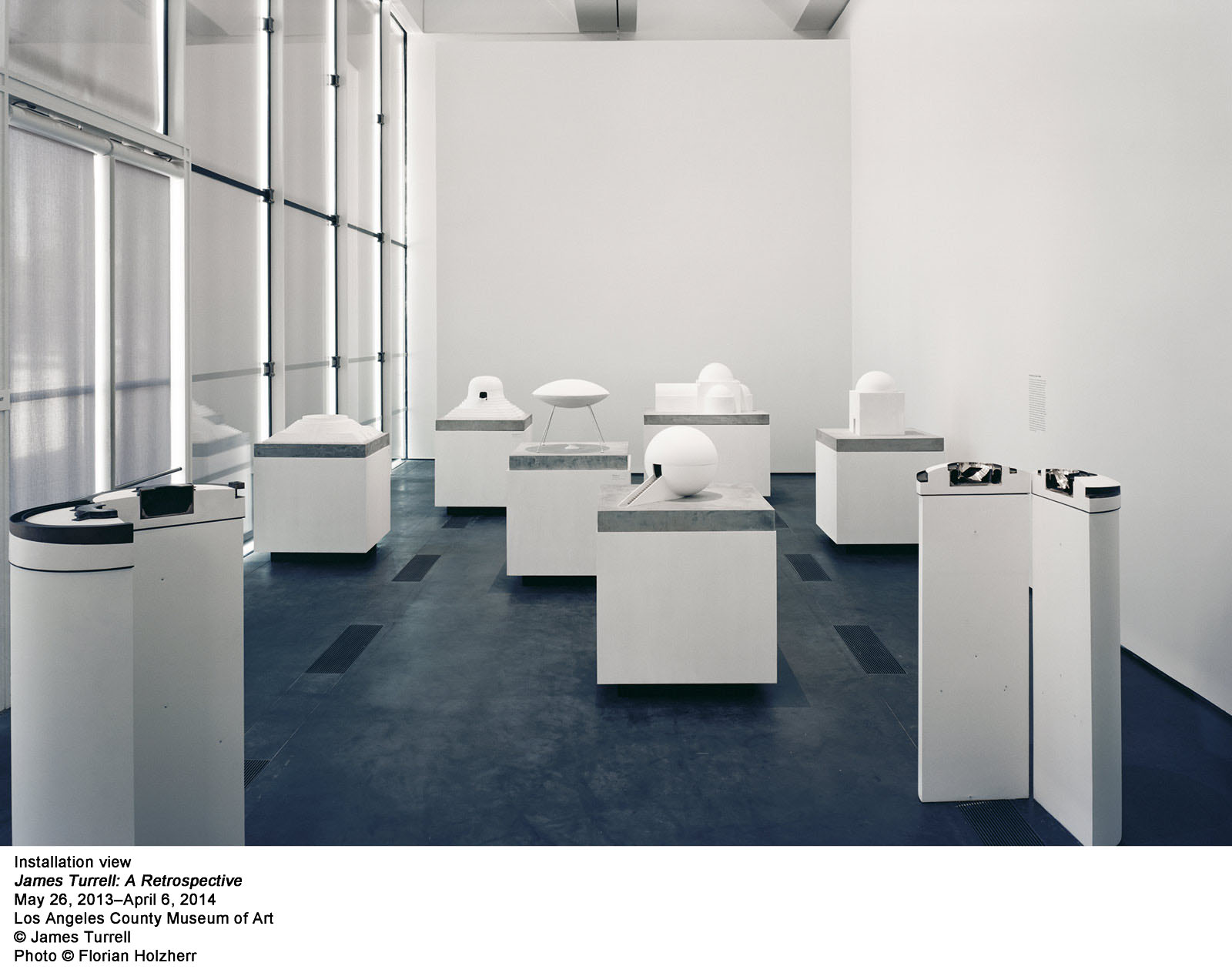
'James Turrell: A Retrospective' installation view at LACMA 2014


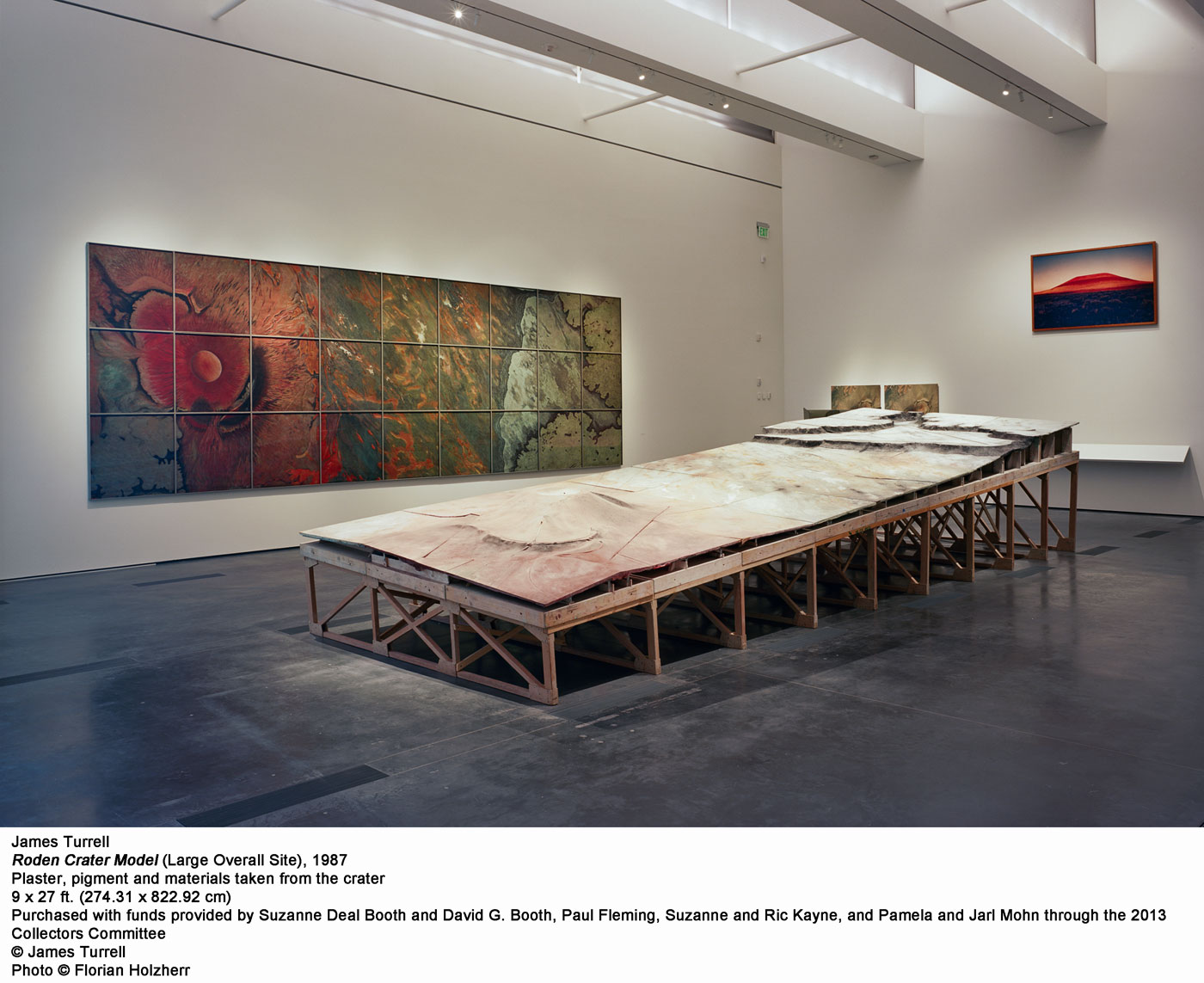
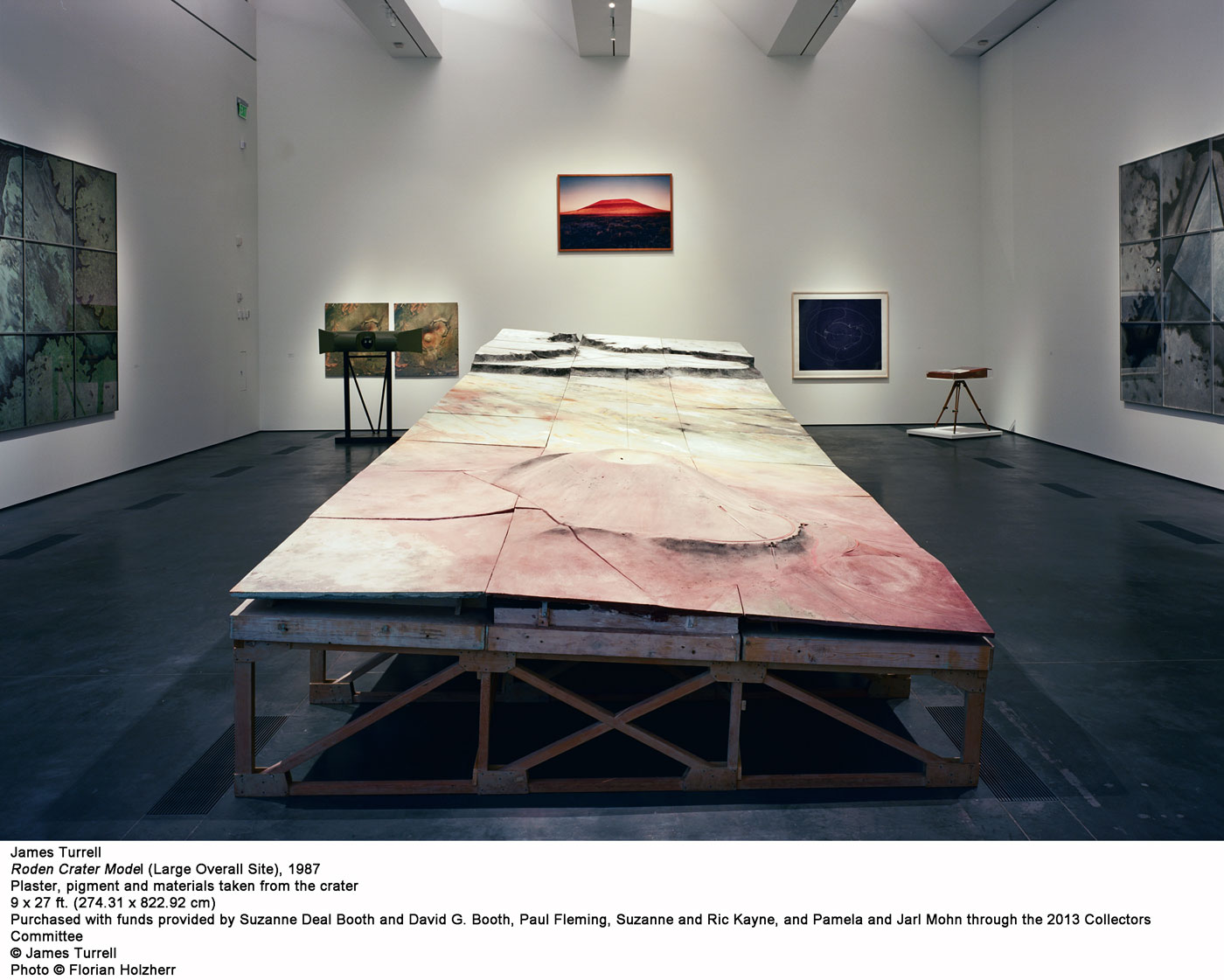
The Los Angeles County Museum of Art (LACMA) presents James Turrell: A Retrospective, the first major U.S. survey of Los Angeles-native James Turrell since 1985. The exhibition features approximately fifty works tracing five decades of the artist’s career. In addition to early light projections, holograms, and an entire section devoted to his masterwork-in-progress, the Roden Crater project, the exhibition features numerous immersive light installations that address our perception and how we see. LACMA’s retrospective is complemented by concurrent, independently curated exhibitions at the Museum of Fine Arts, Houston (MFAH) (June 9 – September 22, 2013); and the Solomon R. Guggenheim Museum, New York (June 21 – September 25, 2013). Additional Turrell exhibitions on view this year include the Academy Art Museum, Easton (April 20 – July 7, 2013); and Villa Panza, Varese, Italy (October 24, 2013 – May 4, 2014).

“The theme of light has preoccupied artists for centuries,” says Michael Govan, CEO and Wallis Annenberg Director of LACMA and exhibition co-curator. “No one, however, has so fully considered the ‘thing-ness’ of light itself – as well as how the experience of light reflects the wondrous and complex nature of human perception – as James Turrell has for nearly five decades.” Christine Y. Kim, exhibition co-curator and Associate Curator of Contemporary Art at LACMA adds, “There is nothing quite like the experience of a Turrell work, which is truly about and for the viewer and his or her perception. Perception is the medium for Turrell, as his work provokes viewers to see themselves see.”

Turrell’s revolutionary use of light in art makes for an experience that is both physical and optical – requiring visitors to spend anywhere from five to twenty minutes with one artwork, often alone in a gallery or with a limited number of fellow viewers.

Exhibition overview

In the mid-1960s, James Turrell was inspired by a beam of light from a slide projector while sitting in the darkened room of an undergraduate art history class at Pomona College. The sight provoked a question: what if light wasn’t the tool that enabled people to see something else but rather became the thing people look at? Thus began an inquiry that has led to a vast, prolific career.

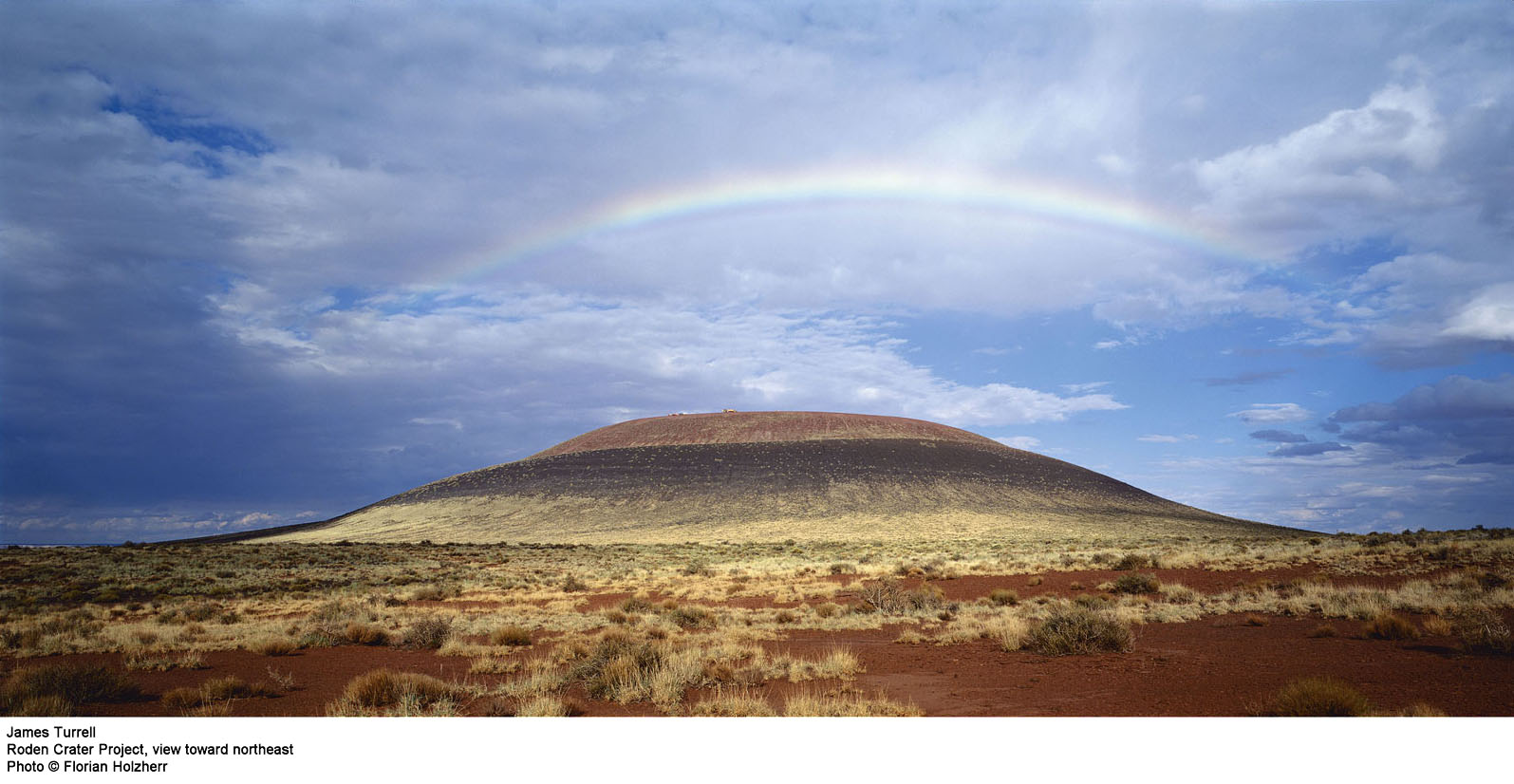
James Turrell: A Retrospective comprises works that range in scale from an intimate watercolour made in 1969 to a 5,000-square-foot “Ganzfeld” installation – designed to entirely eliminate the viewer’s depth perception – offering visitors multiple entry points into Turrell’s practice. Evident in the array of works is the artist’s interest in perception, psychology, religion, astronomy, meditation, and science. The exhibition also draws connections between the artist’s light installations, architectural projects, and his famous masterwork-in progress at Roden Crater, in the high desert of Arizona. James Turrell: A Retrospective presents the most expansive installation of Roden Crater works shown to date, presented in the form of models, drawings, photographs, holograms, and other documents from the 1980s through the present.

Exhibition Organisation

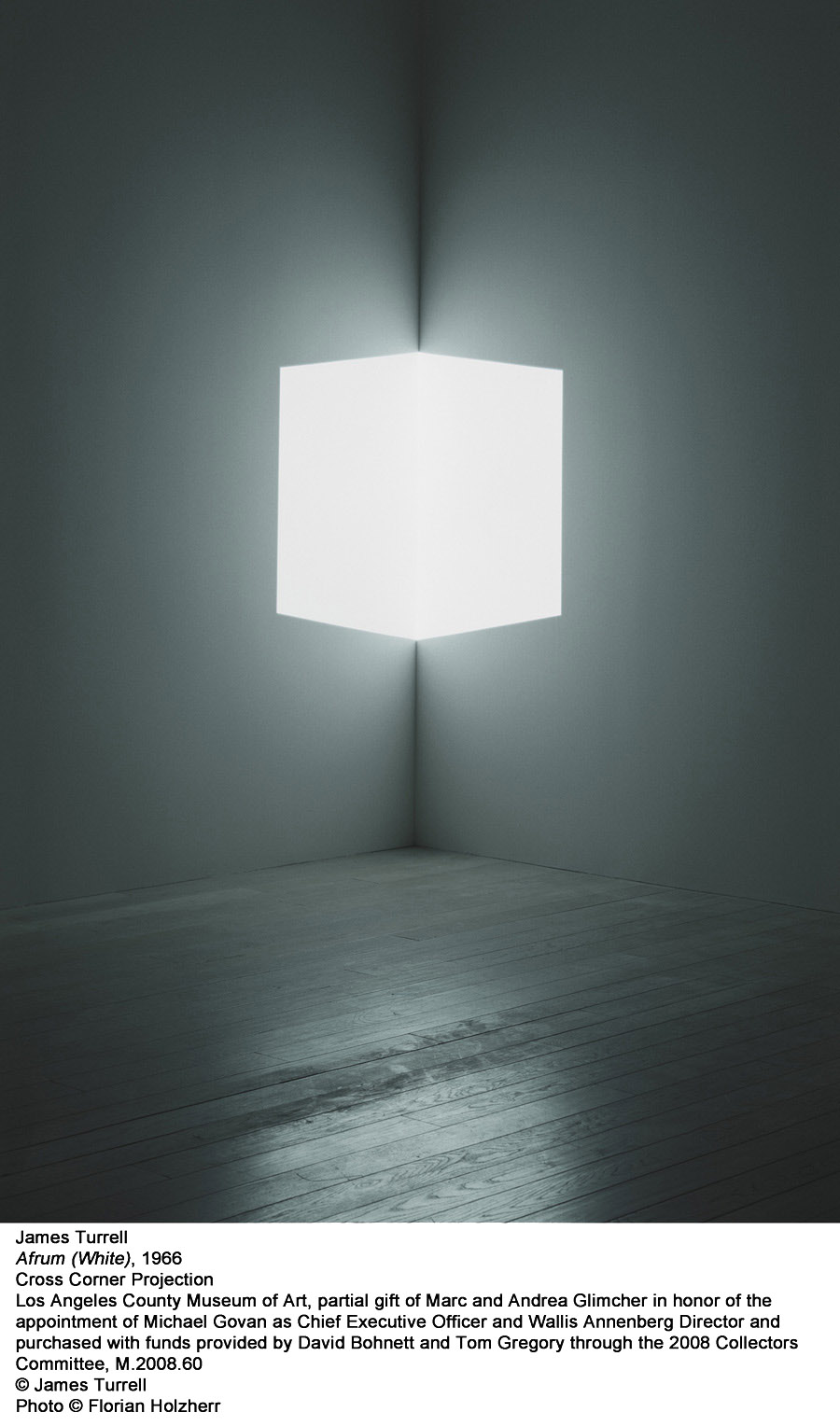
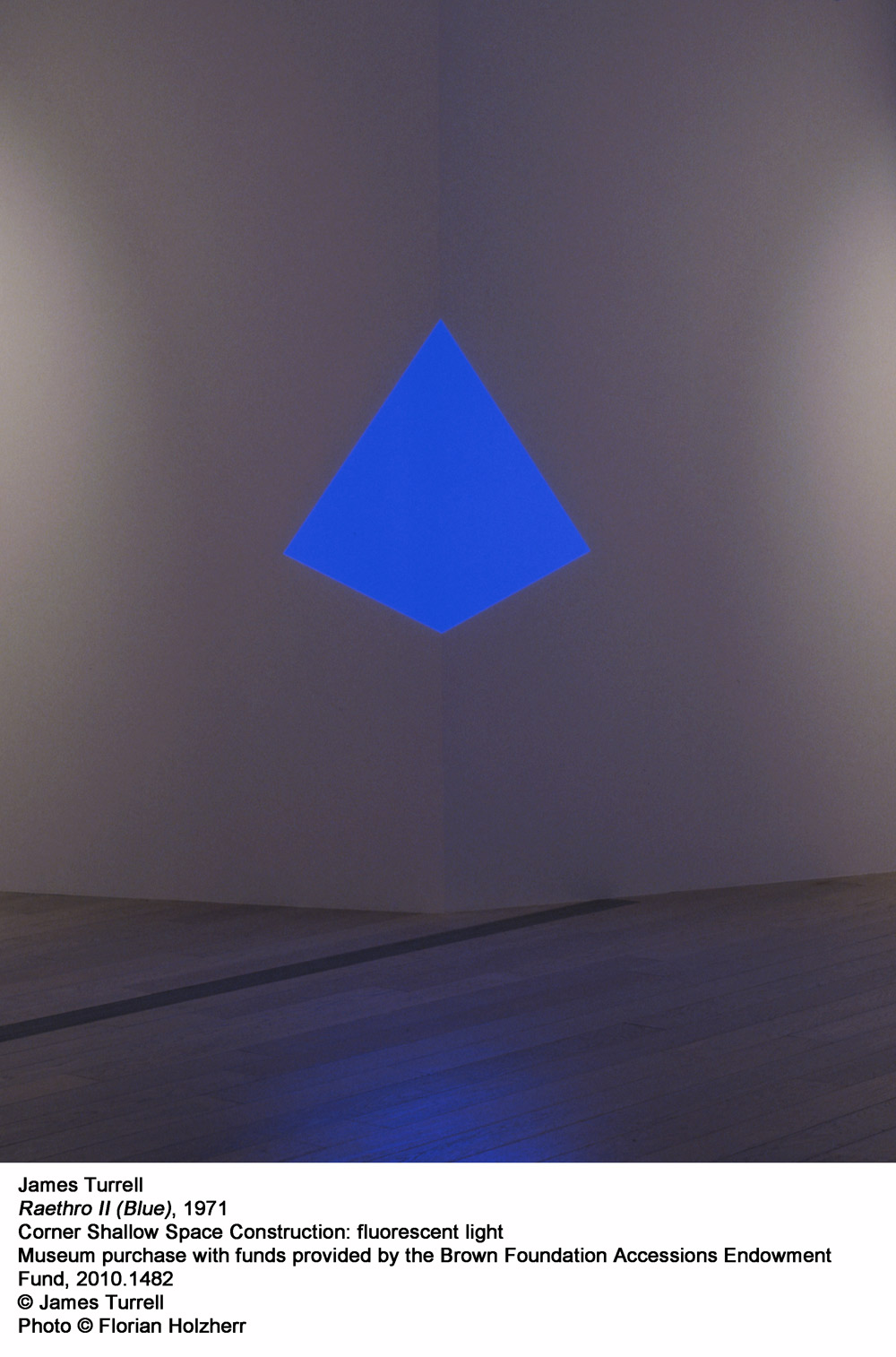
The work of James Turrell requires a vast amount of exhibition space. James Turrell: A Retrospective presents nearly fifty works exhibited in 33,000 square feet populating two venues across LACMA’s campus: the 2nd floor of the Broad Contemporary Art Museum (BCAM) and the east galleries of the Lynda and Stewart Resnick Exhibition Pavilion (Resnick Pavilion). BCAM’s east galleries begin with works that Turrell completed at his Mendota Studio in Santa Monica from the mid-1960s to the early 1970s, followed by a succession of full-room installations that feature projections, holograms, a “Shallow Space” – a large room designed to challenge a viewer’s depth perception – and a “Cross Corner Projection,” in which light is projected in a way that suggests weight and mass. A subsequent gallery contains information and media highlighting a selection of site-specific projects and commissions around the world. BCAM’s west wing is populated with a “Magnatron” work – consisting of an aperture in the shape of an old television screen – followed by three full-scale installations: Key Lime, a “Wedgework” in which the illusion of walls are created through light and architecture; a “Wide Glass,” a type of work that adds a temporal element to Turrell’s light-based installations; and St. Elmo’s Breath, a “Space Division Construction,” which appears to be a flat surface but upon closer inspection reveals itself to be light emitted from a seemingly bottomless cavity in the wall.

Upon entering the Resnick Pavilion, visitors first encounter work that resulted from Turrell’s collaboration with artist Robert Irwin and Dr. Ed Wortz as part of the Art and Technology program at LACMA in 1969, namely a “Perceptual Cell” called Light Reignfall; Dark Matters, a “Dark Space” that presents a seemingly blacked-out room with only a minimally perceivable trace of light; and Breathing Light, a “Ganzfeld.” The Resnick Pavilion also holds an expansive gallery dedicated to the Roden Crater project, including large-scale mixed media drawings and a model contoured with actual cinder from the crater, as well as other models for autonomous spaces.

Press release from the LACMA website


James Turrell (American, b. 1943) 'Roden Crater Model (Large Overall Site)' 1987


James Turrell (American, b. 1943) 'Roden Crater Model (Large Overall Site)' 1987


James Turrell (American, b. 1943) 'Roden Crater Project, view toward northeast' 1987


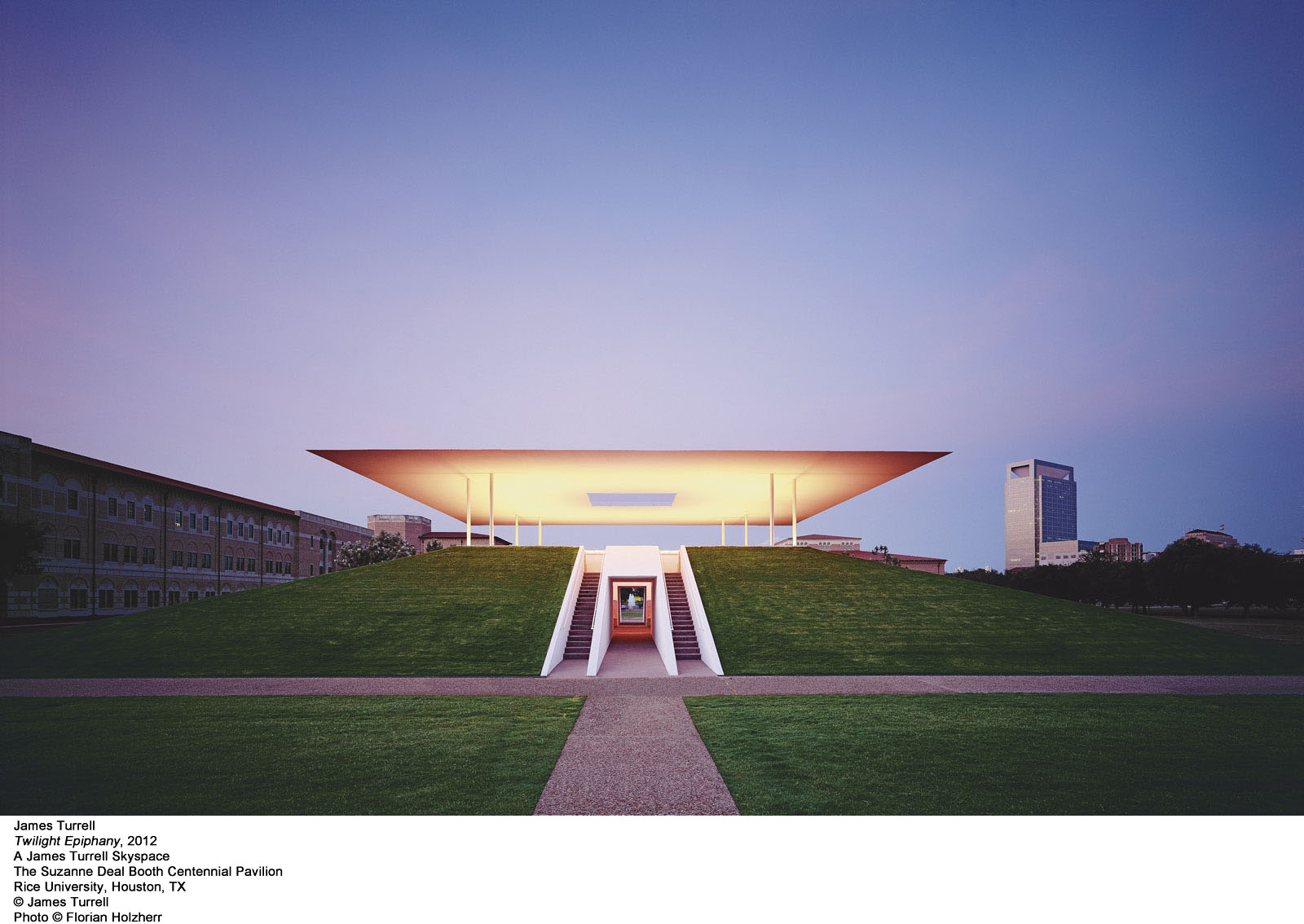
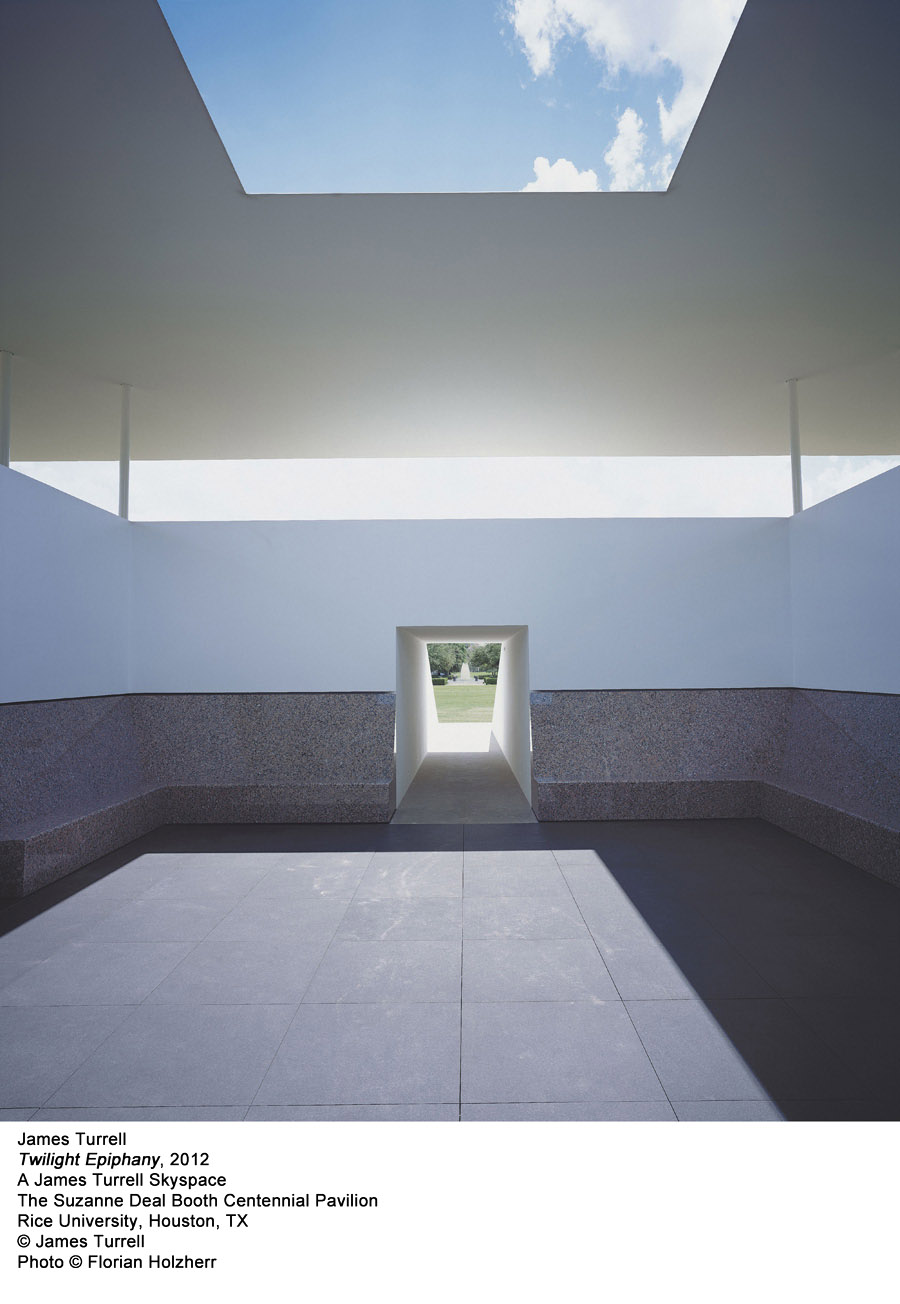
James Turrell (American, b. 1943) 'Twilight Epiphany' 2012


James Turrell (American, b. 1943) 'Twilight Epiphany' 2012


James Turrell (American, b. 1943) 'Twilight Epiphany' 2012


James Turrell (American, b. 1943) 'Afrum (White)' 1966


James Turrell (American, b. 1943) 'Raethro II (Blue)' 1971


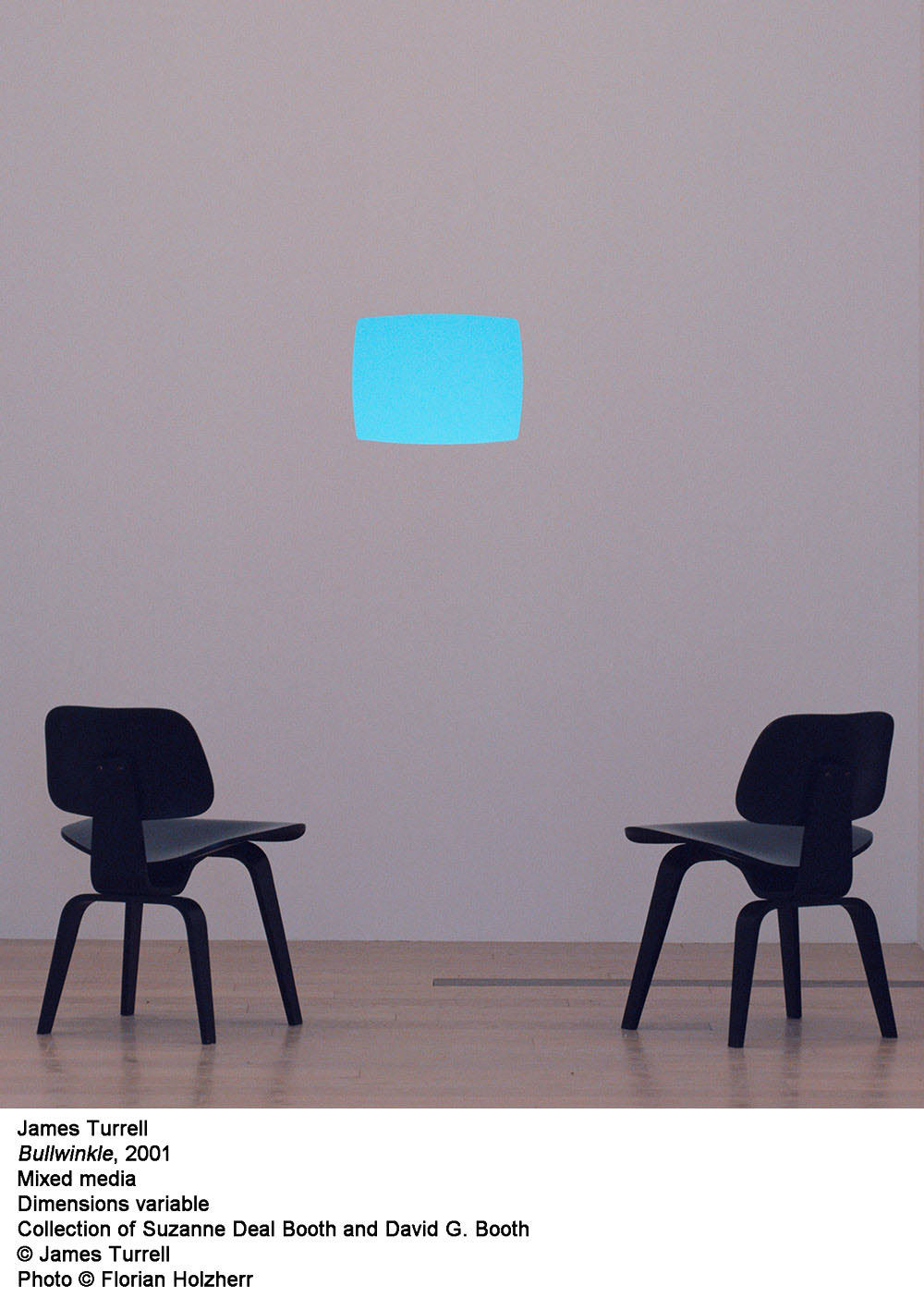
James Turrell (American, b. 1943) 'Bullwinkle' 2001


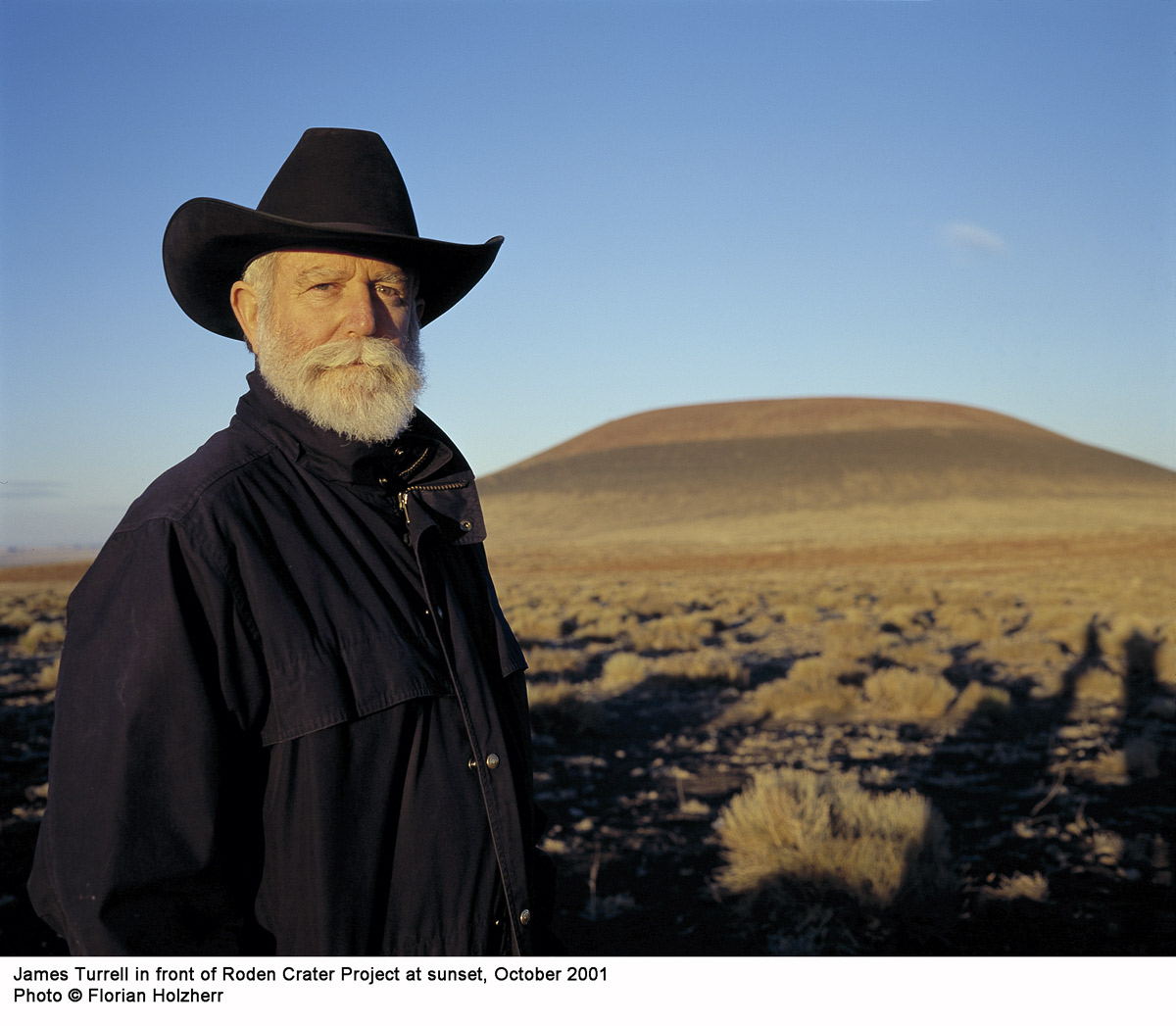
James Turrell in front of Roden Crater Project at sunset, October 2001


Los Angeles County Museum of Art (LACMA)
5905 Wilshire Boulevard (at Fairfax Avenue)
Los Angeles, CA, 90036
Phone: 323 857-6000

Opening Hours:
Monday, Tuesday, Thursday: 11am – 6pm
Friday: 11am – 8pm
Saturday, Sunday: 10am – 7pm
Closed Wednesday

LACMA website

LIKE ART BLART ON FACEBOOK

Back to top

Essay: ‘Made ready: A Philosophy of Moments’ Dr Marcus Bunyan / Exhibition: ‘Reinventing the Wheel: the Readymade Century’ at the Monash University Museum of Art (MUMA), Melbourne

Exhibition dates: 3rd October – 14th December 2013

Presented by Monash University Museum of Art in association with Melbourne Festival


Marcel Duchamp (French-American, 1887-1968) 'Bicycle wheel' 1913 reconstructed 1964 (installation view detail with Dr Marcus Bunyan)


Marcel Duchamp (French-American, 1887-1968)
Bicycle wheel (installation view detail) (with Dr Marcus Bunyan)
1913 reconstructed 1964
Painted wooden stool and bicycle wheel
Stool: 50.4cm (h.); wheel: 64.8cm (diam.); overall: 126.5cm (h.)
Collection: National Gallery of Australia, Canberra
Photo: © Joyce Evans


Monash University Museum of Art (MUMA) is generating an enviable reputation for holding vibrant, intellectually stimulating group exhibitions on specific ideas, concepts and topics. This exhibition is no exception. It is one of the best exhibitions I have seen in Melbourne this year. Accompanied by a strong catalogue with three excellent essays by Thierry de Duve, Dr Rex Butler and Patrice Sharkey, this is a must see exhibition for any Melbourne art aficionado before it closes. My favourite pieces were Jeff Koons’ tactile Balloon dog (Red) (1995, below) and the coupling, copulating lights of Lou Hubbard’s Stretch (2007, below).

I am not going to critique the exhibition pieces per se but offer some thoughts about the nature of the readymade below.

Dr Marcus Bunyan


Many thankx to MUMA for allowing me to publish the photographs in the posting. Please click on the photographs for a larger version of the image. All photographs taken at the opening © Monash University Museum of Art and Dr Marcus Bunyan unless otherwise stated.

Download this essay as a pdf (9.8Mb pdf) Text © Dr Marcus Bunyan


“This transition is a flash, a boundary where this becomes that, not then, not that – falling in love, jumping of a bridge. Alive : dead; presence : absence; purpose : play; mastery : exhaustion; logos : silence; worldly : transcendent. Not this, not that. It is an impossible presence, present – a moment of unalienated production that we know exists but we cannot define it, place it. How can we know love? We can speak of it in a before and after sense but it is always a past moment that we recognise.


Dr Marcus Bunyan. Made Ready: A Philosophy of Moments. December 2013


Made ready: A Philosophy of Moments

Dr Marcus Bunyan

December 2013


The readymade is everywhere in the world (for the readymade can be made of anything); the readymade is nowhere in the world. This is the paradox of the readymade: it does not exist in the world as art until after the artist has named it. In this sense it can be argued that there is no such thing as a readymade. It only comes into being through the will and intention of the artist. The readymade may live unnamed in the world for years but it does not exist in the world as art until the artist has intentionally named it (or made it). As Marcel Duchamp observes,

“It’s not the visual aspect of the readymade that matters, it’s simply that fact that it exists… Visuality is no longer the question: the readymade is no longer visible, so to speak. It is completely grey matter. It is no longer retinal.”1

The readymade is (initially) a concept of the brain and not of the eye. It is a commodity made by man living in the world made ready for identification as art ‘already made’ by the recognition of the artist of its exchange value – the object as transitory metonym which “stands in” for another place of being through a change of name or purpose. It is the intention of the artist to impose an (alternate) order on the object, an order in which the readymade questions aesthetic criteria and categories such as taste, authorship and intentionality. As Dr Rex Butler notes, “The work is not simply intended – which is an obvious fact about any work of art – but about an intention that has come to replace, while entirely reproducing, that which is the very embodiment of the contingent and unpredictable.”2

According to Thierry de Duve, the choosing of the object is accompanied by three other acts: naming the object, signing it and devising some original presentation for it.3 There are the so called unassisted readymades (such as Duchamp’s Bottle dryer, 1914 reconstructed 1964 below) and there are also plain, aided, sick, unhappy, reciprocal and semi-readymades.4 In reality no readymade is unassisted as all are called into being by the mind of the artist. But the concept of the readymade “heralds the realisation that art can be made from anything whatsoever.”5 If this is the case then the readymade “makes of all aesthetic judgements something unconvincing, derivative, second-hand,”6 perhaps even deliberately “invoking” criticism before the artwork is even constructed. If the inherent structural and aesthetic function of all things is predetermined, as though fulfilling some underlying design, it is the artists intentionality in naming the object as art – a model of explanation “that abducts from external products to internal processes, from what is visible to what must be inferred”7 – that deliberately places and fixes these objects in a new moment in space and time.

Through appropriation, readymades “make their claim to the dignity of an art object through some unexpected presentation that decontextualises them and pulls them away from their daily use.”8 Through appropriation, artists laud everyday objects as art for all to see.9 Through appropriation, art institutes emphasise the power of the art institution, the readymade made taxidermied, stuffed object, placed on a stand, an everyday object lauded as art for all to see. In this scenario, the desire of manufacturing that wants consumer objects to be seen as useful, valuable is inverted as readymades become institutional objects of desire just out of reach of the audience (10,000 dollar coins just lying around on the floor!). The death of the object as an object and its reanimation “to the dignity of an art object” is completed “simply by its presence in the museum.”10 As Elizabeth Wilson states, “The only defence against transgressive desire is to turn either oneself or the object of desire to stone.”11 In this case it is the museum officials that turn the object of desire into stone (by lionising them as readymades). In actuality, these objects that artists imagine explore the dichotomy between presence and absence and the nature of transgressive desire.

Essentially, the concept of the readymade is both elastic (like the band that holds together the brick and book cover in Claire Fontaine’s witty La société du spectacle brickbat 2006, below) and fixed (like the brick itself), the readymade being both a performative act (ritualised play) and citational practice by which discourse produces the effects it names.12 Further, a link can be made to Bachelard’s theory of space and imagination which describes literary space as reflexive, resonant and moulded by consciousness.13 In their playfulness the spatial dynamics of readymades challenge and illuminate the human, sensory possibility. They examine how the reality of contemporary life is disguised and concealed from view, and how human beings are alienated from the very objects that they produce. For the French philosopher and sociologist Henri Lefebvre, “(The) critique of everyday life is … at once a rejection of the inauthentic and the alienated, and an unearthing of the human which still lies buried therein.”14

“One avenue for this unearthing is what Lefebvre describes as moments of presence – fleeting, sensate instants in which the “totality of possibilities contained in daily existence” were revealed. While destined to pass in an instant, it is through such moments that we are able to catch glimpses of the relation between the everyday and the social totality.”15 This philosophy or theory of moments was developed in opposition to Bergson’s understanding of time as a linear duration (duree) of separate instances and for Lefebvre, these “moments are “experiences of detachment from the everyday flow of time” which puncture the banality of everyday life…”16

“All the activities that constitute everyday life must then be rethought in terms of a dialectic of presence and absence and each moment is simultaneously an opportunity for alienation and disalienation.”17 The readymade, then, explores the politically radical potential that lies within the everyday through play and the intentionality of the artist. Through representation, readymades mediate between absence and presence; through poësis they begin to inhabit another time and space.

“In the poetic act, presence is the given. Lefebvre intends ‘poetic’ to cover unalienated production – the Greek poësis – as he explained in The Production of Space (1974)… Presence and poësis stand outside social relations of production. Flashes of inspiration, moments when one feels ‘all together’ and ‘in touch’, are not determined by economic relations, and cannot be prevented, even in a prison camp.”18

Readymades are a reaction against the linear production of industry, which is both functional and hierarchical. They are a reaction against the banality and repetition of the everyday – of the hegemony of capitalist production and the social relations of everyday life. In a culture of use and use by, the readymade “inscribes the work of art within a network of signs and pre-existing material.”19 Theses assemblages enable us to ask the question, what makes aesthetic judgement possible. They offer an alternative form of resistance to the imposition of linear repetition, through a form of mental and visual play. The moment of the representation encloses a transition (something transitory, something which ‘traverses’)20 – through a plethora of creative, emotive and imaginative practices – from something stable to un/stable.

This transition is a flash, a boundary where this becomes that, not then, not that – falling in love, jumping of a bridge. Alive : dead; presence : absence; purpose : play; mastery : exhaustion; logos : silence; worldly : transcendent. Not this, not that. It is an impossible presence, present – a moment of unalienated production that we know exists but we cannot define it, place it. How can we know love? We can speak of it in a before and after sense but it is always a past moment that we recognise.

It is the same with the readymade. The inscriptions on the early readymades (such as the bottle dryer and urinal) detailing authorship, dates, times, places can be seen as an attempt to ‘fix’ an individual artwork in the flow of time, to distinguish it from its unacknowledged neighbour – like “fixing” a photograph. It is telling that when the bottle rack was lost and remade in the 1960s the text that was originally on the lower metal ring was lost with the object itself.21 The text sought to fix these transitory moments of absence : presence.

Søren Kierkegaard calls this transition a “leap,” where a human being chooses an ethical life-view, one that resides in the actual and not in an ironic-aesthetic attitude.

“It is important to see that choice, as the characteristic of the ethical lifeview, forms a radical break with the ironic spiral of the aesthetic attitude. Kierkegaard sometimes calls the ethical choice a “leap,” a term that expresses the fundamental uncertainty of each commitment to actuality: contrary to aesthetic fantasy, which is “safely” self-contained, the outcome of the individual’s ethical choice is dependent on actuality and therefore not fully under the individual’s control. This is a decisive difference between aesthetic irony (including meta-irony) and the ethical leap: instead of merely rejecting all actuality, the latter takes responsibility for a certain actuality and tries to reshape it.”22

And tries to reshape it. Thus we can say that readymades are human beings taking responsibility for their actuality by choosing to name an object as art, creating objects that challenge aesthetic value judgements and an ironic-aesthetic lifeview through their very presence, by their very selfness. Remembering (ah memory!), that it is always a past moment that we recognise. The familiar is not necessarily the known – it has to be named.

Dr Marcus Bunyan


Endnotes

1/ Duchamp, Marcel. “Talking about Readymades,” Interview by Phillipe Collin, June 21, 1967, quoted in Girst, Thomas. “Duchamp for Everyone,” in The Indefinite Duchamp. Germany: Hatje Cantz, 2013, p. 55 quoted in Day, Charlotte. “Introduction,” in Reinventing the Wheel: The Readymade Century. Melbourne: Monash University Museum of Art (MUMA), 2013, p. 85

2/ Butler, Rex. “Two Snapshots of the Readymade Today,” in Reinventing the Wheel: The Readymade Century. Melbourne: Monash University Museum of Art (MUMA), 2013, p. 98

3/ Duve, Thierry de. “Readymade,” in Reinventing the Wheel: The Readymade Century. Melbourne: Monash University Museum of Art (MUMA), 2013, p. 92

4/ Ibid.,

5/ Ibid.,

6/ Butler, op. cit.,

7/ Danto, Arthur C. “Criticism, advocacy, and the end-of-art condition: a working paper,” on Artnet website [Online] Cited 01/12/2013. www.artnet.com/magazine_pre2000/features/danto/danto97-3-6.asp

8/ Duve, op. cit. p. 91

9/ “Still, appropriationism, which defines the end-of-art condition, is pretty much the defining principle of our moment, putting, as it does, everything and every combination of things at the service of art, even including bad drawing and bad painting, since these, being designated, tell us only what kind of point the artist who appropriates them intends, not what kind of artist she or he is.”
Danto op. cit.,

10/ Duchamp, Marcel. Definition of the readymade in the Dictionnaire abrégé du Surréalisme quoted in Duve, op. cit. p. 92

11/ Wilson, Elizabeth. “The Invisible Flaneur,” in Watson, Sophie and Gibson, Katherine (eds.,). Postmodern Cities and Spaces. Cambridge, Mass: Blackwell, 1995, p. 75

12/ Butler, Judith. Bodies That Matter. New York: Routledge, 1993, p. 1-2

13/ See Bachelard, Gaston. The Poetics of Space. Boston: Beacon Press, 1958 (1994)

14/ Trebitsch, M. “Preface,” in Lefebvre, Henri. Critique of everyday life Vol. I. London: Verso, 1991, pp.ix-xxviii quoted in Butler, Chris. Law and the Social Production of Space. August 2003, p.60 [Online] Cited 01/12/2013. No longer available online

15/ Harvey, D. “Afterword,” in Lefebvre, Henri. The production of space. Blackwell, Oxford, 1991, see note 1, at p. 429 quoted in Butler, Chris. Ibid., p. 60

16/ Shields, Rob. Lefebvre, love and struggle: spatial dialectics. London: Routledge, 1999, see note 4, at p. 61 quoted in Butler, Chris. Ibid., p. 61

17/ Shields, Rob. Lefebvre, love and struggle: spatial dialectics. London: Routledge, 1999, see note 4, at p. 70 quoted in Butler, Chris. Ibid., p. 61

18/ Shields, Rob. Lefebvre, love and struggle: spatial dialectics. London: Routledge, 1999, p. 99 [Online] Cited 01/12/2013. Google Books website.

19/ Sharkey, Patrice. “When Everything is already a Readymade,” in Reinventing the Wheel: The Readymade Century. Melbourne: Monash University Museum of Art (MUMA), 2013, p. 107

20/ Lefebvre, Henri. The production of space. Blackwell, Oxford, 1991, p. 213 quoted in Shields, Rob op. cit., p. 99

21/ Duve, op. cit. p. 91

22/ Dulk, Allard Den. “Beyond Endless “Aesthetic” Irony: A Comparison of the Irony Critique of Søren Kierkegaard and David Foster Wallace’s Infinite Jest,” in Studies in the Novel Vol. 44, No. 3. University of North Texas: Fall 2012, pp. 325-345


Man Ray (American, 1890-1976) 'Cadeau (Gift)' 1921 reconstructed 1970 (installation view)


Man Ray (American, 1890-1976)
Cadeau (Gift) (installation view)
1921 reconstructed 1970
Iron with brass tacks and wooden base
Overall: 19.0 x 14.9 x 14.9cm; iron & base: 17.9 x 14.9 x 14.9cm; glass cover: 19.0cm (h.)
Collection: National Gallery of Australia, Canberra
Photo: © Marcus Bunyan


Marcel Duchamp. 'Bicycle wheel' 1913 and 'Bottle dryer' 1914 (installation view)


Marcel Duchamp (French-American, 1887-1968)
Bicycle wheel (installation view)
1913 reconstructed 1964
Painted wooden stool and bicycle wheel
Stool: 50.4cm (h.); wheel: 64.8cm (diam.); overall: 126.5cm (h.)
Collection: National Gallery of Australia, Canberra

Marcel Duchamp (French-American, 1887-1968)
Bottle dryer (installation view)
1914 reconstructed 1964
Galvanised iron bottle dryer
65 x 44 x 43cm (overall); base: 37.5cm (diam.)
Collection: National Gallery of Australia, Canberra

Martin Creed (British, b. 1968)
Work no. 88 A sheet of A4 paper crumpled into a ball (installation view)
1995
A4 paper, ed. 625/Unlimited
Approx. 2 in / 5.1cm diameter
Courtesy of the artist and Hauser & Wirth, London

Aleks Danko (Australian, b. 1950)
Art stuffing (installation view)
1970
Synthetic polymer paint on paper-stuffed hessian bag
75 x 58 x 30cm
Collection: Art Gallery of New South Wales – John Kaldor Family Collection
Photos: © Marcus Bunyan


Barry Humphries (Australian, 1934-2023) 'Battle of the plate' 1958 (installation view)


Barry Humphries (Australian, 1934-2023)
Battle of the plate (installation view)
1958
Welded steel forks
28.5 x 87 x 26.5cm
Heide Museum of Modern Art, Melbourne
Bequest of Barrett Reid 2000
Photo: © Joyce Evans


Haim Steinbach (Israeli-American, b. 1944) 'Untitled (graters, Victorian iron banks)' 1990 (installation view)

Haim Steinbach (Israeli-American, b. 1944) 'Untitled (graters, Victorian iron banks)' 1990 (installation view detail)

Haim Steinbach (Israeli-American, b. 1944) 'Untitled (graters, Victorian iron banks)' 1990 (installation view detail)


Haim Steinbach (Israeli-American, b. 1944)
Untitled (graters, Victorian iron banks) (installation view details)
1990
Aluminium laminated wood shelf with glass display case and objects
150 x 150 x 62cm (overall installed)
Collection: Art Gallery of New South Wales
Photos: © Marcus Bunyan


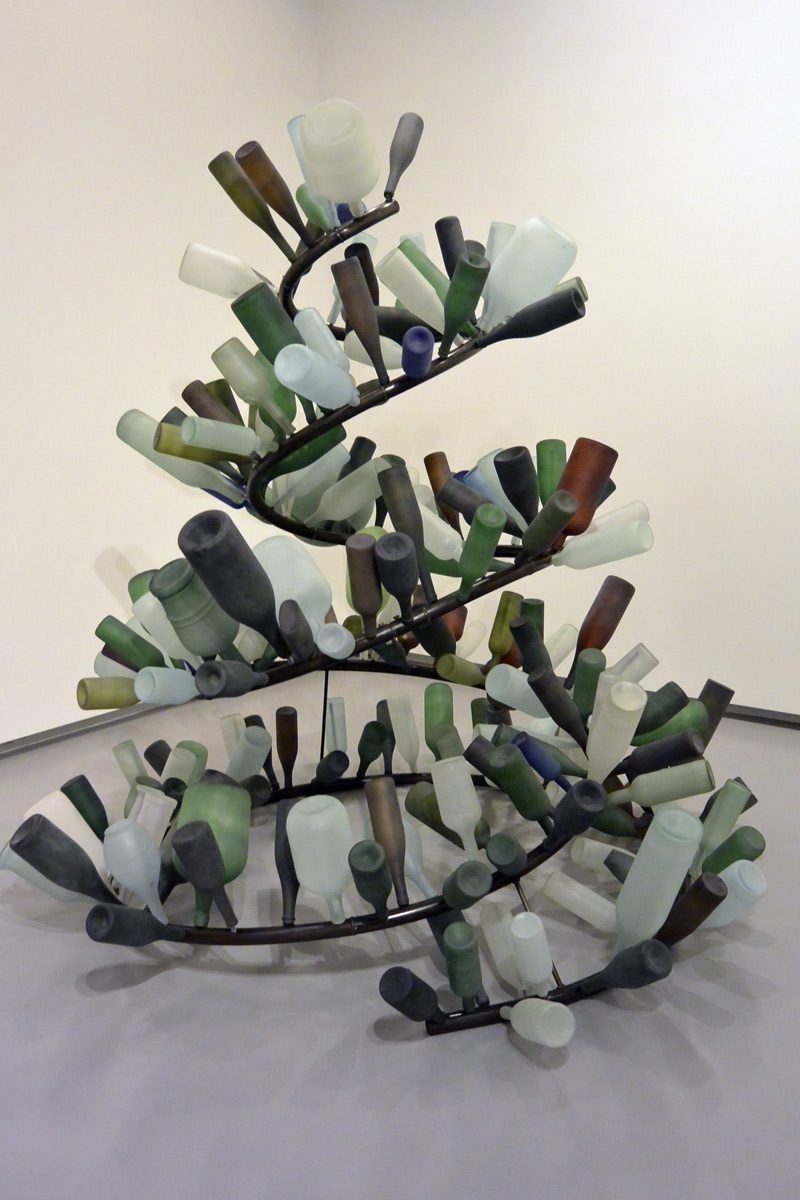
Tony Cragg (British, b. 1949) 'Spyrogyra' 1992 (installation view)

Tony Cragg (British, b. 1949) 'Spyrogyra' 1992 (installation view)


Tony Cragg (British, b. 1949)
Spyrogyra (installation views)
1992
Glass and steel
220.0 x 210.0cm
Collection: Art Gallery of New South Wales
Photo: © Marcus Bunyan


Tony Cragg (British, b. 1949) 'Spyrogyra' 1992 (installation view detail)


Tony Cragg (British, b. 1949)
Spyrogyra (installation detail)
1992
Glass and steel
220 x 210 cm
Collection: Art Gallery of New South Wales
Photo: © Marcus Bunyan


Arguably the most influential artistic development of the twentieth century, the readymade was set in motion one hundred years ago when Marcel Duchamp mounted an upturned bicycle wheel on a stool. Duchamp’s conversion of unadorned, everyday objects into fine art completely inverted how artistic practice was considered. Suddenly, art was capable of being everywhere and in everything. It was a revolutionary moment in modern art and the ripples from this epochal shift still resonate today.

Reinventing the Wheel: the Readymade Century pays tribute to Duchamp’s innovation, including two key examples of his work: Bicycle wheel 1913 and Bottle dryer 1914. Other important historical works that MUMA has borrowed for the exhibition reveal the readymade’s presence in Minimalism and Conceptual art as well as its echoes in Pop art. The exhibition traces some of the ways the readymade has been reinterpreted by subsequent artists in acts of homage to Duchamp or further expanding the possibilities the readymade has unfurled.

Among the various trajectories of the readymade, Reinventing the Wheel traces its elaborations in neo-dada practices, with a particular focus on everyday and vernacular contexts; the mysterious and libidinous potential of sculptural objects; institutional critique and nominal modes of artistic value. These discursive contexts also provide a foundation to explore more recent tendencies related to unmonumental and social sculpture, post-Fordism and other concerns, particularly among contemporary Australian artists. Bringing together works by over forty artists – from Duchamp and Man Ray to Andy Warhol and Martin Creed, along with some of Australia’s leading practitioners – this is a one-of-a-kind salute to an idea that continues to define the very nature of contemporary art.

“This is the most ambitious exhibition that MUMA has yet presented, including works that establish the historical moment of the readymade in Europe and its reception in the USA and in Australia. Most exciting is the opportunity for living artists to see their work as part of this ongoing history,” said Charlotte Day, Director of MUMA.

Press release from the MUMA website


Joseph Kosuth (American, b. 1945) 'One and three tables' 1965 (installation view)


Joseph Kosuth (American, b. 1945)
One and three tables (installation view)
1965
Wooden table, gelatin silver photograph, and photostat mounted on foamcore
Installation dimensions variable
Collection: Art Gallery of New South Wales
Photo: © Marcus Bunyan


Julian Dashper (New Zealand, b. 1960) 'Untitled (The Warriors)' 1998 (installation view)


Julian Dashper (New Zealand, b. 1960)
Untitled (The Warriors) (installation view)
1998
Vinyl on drumheads, drum kit
Dimensions variable
Courtesy of the Julian Dashper Estate and Michael Lett Auckland
Photo: © Marcus Bunyan


Masato Takasaka (Japanese Australian, b. 1977) 'Smile! Bauhaus babushka sundae boogie woogie (model for a prog rock SCULPTURE PARK)' 1999-2007/2013 (installation view detail)


Masato Takasaka (Japanese Australian, b. 1977)
Smile! Bauhaus babushka sundae boogie woogie (model for a prog rock SCULPTURE PARK) (installation view detail)
1999-2007/2013
MDF, vinyl, marker on foamcore, soft drink cans, acrylic, paper notepad from Bauhaus Museum giftshop, plastic wrapper, cardboard, polycarbonate sheeting, marker on paper, Metallica babushka dolls, toy guitar, sundae keyring
Dimensions variable
Courtesy of the artist and Studio Masatotectures, Melbourne
Photo: © Marcus Bunyan


Jeff Koons (American, b. 1955) 'Balloon dog (Red)' 1995 designed (installation view)


Jeff Koons (American, b. 1955)
Balloon dog (Red) (installation view)
1995 designed
Porcelain, ed. 1113/2300
11.3 x 26.3cm diameter
National Gallery of Victoria, Melbourne
Photo: © Marcus Bunyan


Lou Hubbard (Australian, b. 1957) 'Stretch' 2007 (installation view)


Lou Hubbard (Australian, b. 1957)
Stretch (installation view)
2007
Two ‘Studio K’ Planet lamps, fluorescent lights, MDF, acrylic paint and Perspex
108.3 x 251.8 x 29cm
Courtesy of the artist and Sarah Scout, Melbourne
Photo: © Marcus Bunyan


Andrew Liversidge (Australian, b. 1979) 'IN MY MIND I KNOW WHAT I THINK BUT THAT’S ONLY BASED ON MY EXPERIENCE' 2009 (installation view)


Andrew Liversidge (Australian, b. 1979)
IN MY MIND I KNOW WHAT I THINK BUT THAT’S ONLY BASED ON MY EXPERIENCE (installation view)
2009
10,000 $1 coins (AUD)
30 x 30 x 30cm
Courtesy of the artist and The Commercial Gallery, Sydney
Photo: © Marcus Bunyan


Andrew Liversidge (Australian, b. 1979) 'IN MY MIND I KNOW WHAT I THINK BUT THAT’S ONLY BASED ON MY EXPERIENCE' 2009 (installation view)


Andrew Liversidge (Australian, b. 1979)
IN MY MIND I KNOW WHAT I THINK BUT THAT’S ONLY BASED ON MY EXPERIENCE (installation view)
2009
10,000 $1 coins (AUD)
30 x 30 x 30cm
Courtesy of the artist and The Commercial Gallery, Sydney
Photo: © Joyce Evans


Callum Morton (Australian born Canada, b. 1965) 'Mayor' 2013 (installation view)


Callum Morton (Australian born Canada, b. 1965)
Mayor (installation view)
2013
Polyurethane resin, wood, fibreglass, synthetic polymer paint
290 x 200 x 26cm
City of Melbourne Art and Heritage Collection
Photo: © Marcus Bunyan


Claire Fontaine (Italian, b. 1975) 'La société du spectacle brickbat' 2006 (installation view)


Claire Fontaine (Italian, b. 1975)
La société du spectacle brickbat (installation view)
2006
Bricks and brick fragments, laser impression
178 x 108 x 58cm
Courtesy of the artist and Metro Pictures, New York
Photo: © Marcus Bunyan


Word History

The earliest sense of brickbat, first recorded in 1563, was “a piece of brick.” Such pieces of brick have not infrequently been thrown at others in the hope of injuring them; hence, the figurative brickbats (first recorded in 1929) that critics hurl at performances they dislike. The appearance of bat as the second part of this compound is explained by the fact that the word bat, “war club, cudgel,” developed in Middle English the sense “chunk, clod, wad,” and in the 16th century came to be used specifically for a piece of brick that was unbroken on one end.

1/ A piece of brick or similar material, esp one used as a weapon
2/ Blunt criticism the critic threw several brickbats at the singer


Monash University Museum of Art (MUMA)
Ground Floor, Building F.
Monash University Caulfield campus
900 Dandenong Road
Caulfield East, VIC 3145
Phone: 61 3 9905 4217

Opening hours:
Tuesday – Friday 10am – 5pm
Saturday 12 – 5pm
Closed Sunday and Monday

Monash University Museum of Art (MUMA) website

LIKE ART BLART ON FACEBOOK

Back to top

Exhibition: ‘In Focus: Ed Ruscha’ at the J. Paul Getty Museum, Getty Center, Los Angeles

Exhibition dates: 9th April – 29th September 2013


Ed Ruscha (American, b. 1937) 'Contact sheet for Pacific Coast Highway' 1974


Ed Ruscha (American, b. 1937)
Contact sheet for Pacific Coast Highway
1974
Inkjet print
32.8 x 48.2cm (12 15/16 x 19 in.)
The Getty Research Institute, Los Angeles
© Edward Ruscha


“Yes, there’s a certain power to a photograph. The camera has a way of disorienting a person, if it wants to and, for me, when it disorients, it’s got real value.”

“My pictures are not that interesting, nor the subject matter. They are simply a collection of “facts”; my book is more like a collection of “Ready-mades”.”


Ed Ruscha


Cultural curiosities. A language of the street.

Dr Marcus Bunyan


Many thankx to the J. Paul Getty Museum for allowing me to publish some of the photographs in the posting. The rest I sourced from the internet (and spent hours cleaning) to make a better posting about the exhibition. Please click on the photographs for a larger version of the image.


Ed Ruscha (American, b. 1937) 'Camera-ready Maquette for Every Building on the Sunset Strip' 1966


Ed Ruscha (American, b. 1937)
Camera-ready Maquette for Every Building on the Sunset Strip
1966
Gelatin silver print on board
63.5 x 92.1cm (24 15/16 x 36 1/4 in.)
The Getty Research Institute, Los Angeles
© Edward Ruscha


Ed Ruscha (American, b. 1937) 'Beeline, Holbrook, Arizona' 1962


Ed Ruscha (American, b. 1937)
Beeline, Holbrook, Arizona
1962
Gelatin silver print
11.7 x 12.1cm
The J. Paul Getty Museum, Los Angeles
© Ed Ruscha


Ed Ruscha (American, b. 1937) 'Shell, Daggett, California' 1962


Ed Ruscha (American, b. 1937)
Shell, Daggett, California
1962
Gelatin silver print
11.9 x 12cm
The J. Paul Getty Museum, Los Angeles
© Ed Ruscha


Ed Ruscha (American, b. 1937) 'Standard, Figueroa Street, Los Angeles' 1962


Ed Ruscha (American, b. 1937)
Standard, Figueroa Street, Los Angeles
1962
Gelatin silver print
12.4 x 14.6cm
The J. Paul Getty Museum, Los Angeles
© Ed Ruscha


Ed Ruscha (American, b. 1937) 'Standard, Amarillo, Texas' 1962


Ed Ruscha (American, b. 1937)
Standard, Amarillo, Texas
1962
Gelatin silver print
11.8 x 12.1cm
The J. Paul Getty Museum, Los Angeles
© Ed Ruscha


In Focus: Ed Ruscha, on view at the J. Paul Getty Museum, at the Getty Center, April 9 – September 29, 2013, offers a concentrated look at Ruscha’s deep engagement with Los Angeles’s vernacular architecture and the urban landscape. The exhibition is part of Pacific Standard Time Presents: Modern Architecture in Los Angeles, and opens simultaneously with Overdrive: L.A. Constructs the Future, 1940-1990, another exhibition presented at the Getty Museum as part of this regional initiative. The Overdrive exhibition also contains images by Ruscha.

One of the most influential American artists working today, Ed Ruscha moved to Los Angeles in 1956 and continues to live and work in the city, incorporating local architecture, streets, and even the city’s attitude into paintings, prints, drawings, and photographs that are known for their graphic directness. Beginning in the 1960s, he began publishing photo books and using photographs to document thoroughfares in the Los Angeles area.

“Throughout his career, photography has played an important role in Ruscha’s exploration of the vernacular architecture, urban landscape, and car culture of Los Angeles,” commented Timothy Potts, director of the J. Paul Getty Museum. “By bringing together photographs from our collection and archival materials from the Getty Research Institute, we have been able to present a much richer understanding of Ruscha’s work and process.”

Highlighting an important joint acquisition of the artist’s work by the J. Paul Getty Museum and the Getty Research Institute in 2011, this exhibition features a selection of vintage prints related to Twentysix Gasoline Stations (1963) and Some Los Angeles Apartments (1965), the original camera-ready maquettes for Every Building on the Sunset Strip (1966), and contact sheets from this documentation of the Pacific Coast Highway (1974). The exhibition is co-­curated by Virginia Heckert, curator in the Department of Photographs at the Getty Museum, and John Tain, assistant curator in Collection Development at the Getty Research Institute.

“Gas stations and apartment buildings are among the quintessentially Southern Californian motifs that feature in Ruscha’s work,” says Heckert. “The Getty Museum’s acquisition of photographs made in conjunction with his photo books of the early 1960s gives us the opportunity to share his enthusiasm for the logos, signage, and language that enliven even the most banal architecture.”

Adds Tain, “What’s exciting about the photography that came out of Ruscha’s documentation of the Sunset Strip is that it really altered the sense of what was possible with street photography, which had always been from the viewpoint of the pedestrian. Today we have the Google Maps roving fleet of camera cars, but Ruscha was doing this kind of photography more than forty years ago.”

The exhibition gives visitors the opportunity to appreciate Ruscha’s photographs not as halftone reproductions in modest, mass-produced books, but as prints of the period. One of the best known images included in the exhibition is Standard, Amarillo, Texas (1962), which Ruscha used as the basis for his iconic oil painting Standard Station, Amarillo, Texas (1963). Other unpublished images from the iconic series of gasoline stations will be on view as well. Also included are the original camera-ready maquettes and press pulls for Every Building on the Sunset Strip, Ruscha’s fourth and arguably best-known photo book. Due to light sensitive annotations, each panel will be on view for eight weeks. The complete set of three maquettes will be on view during the first week of the exhibition only, April 9-14.

On display for the first time is a selection of contact sheets of the Pacific Coast Highway, representing a small sample of this monumental undertaking. Ruscha’s documentation captures the dramatically different landscapes of both the view west toward the Pacific Ocean and the view east toward the cliffs. The Pacific Coast Highway is just one of several streets that Ruscha has photographed over the past four and a half decades, beginning in 1965 with Sunset Boulevard. These contact sheets are part of Ruscha’s Streets of Los Angeles archive, including thousands of photographic negatives, proof sheets, contact prints, and related documents and ephemera, which was acquired by the Getty Research Institute in 2011. Nearly sixty photographs were acquired by the Getty Museum at the same time, making the Getty a preeminent resource for understanding the role of photography in Ruscha’s practice.

In Focus: Ed Ruscha is co-organised by the J. Paul Getty Museum and the Getty Research Institute, and features 50 works from both collections.

Press release from the J. Paul Getty Museum website


Ed Ruscha (American, b. 1937) '708 S. Barrington Ave. [The Dolphin]' 1965


Ed Ruscha (American, b. 1937)
708 S. Barrington Ave. [The Dolphin]
1965
Gelatin silver print
11.8 x 11.9cm
The J. Paul Getty Museum, Los Angeles
© Ed Ruscha


Ed Ruscha (American, b. 1937) '1018 S. Atlantic Blvd.,' 1965


Ed Ruscha (American, b. 1937)
1018 S. Atlantic Blvd.,
1965
Gelatin silver print
10.8 x 11.1cm
The J. Paul Getty Museum, Los Angeles
© Ed Ruscha


Ed Ruscha (American, b. 1937)'1323 Bronson' 1965


Ed Ruscha (American, b. 1937)
1323 Bronson
1965
Gelatin silver print
11.8 x 12cm
The J. Paul Getty Museum, Los Angeles
© Ed Ruscha


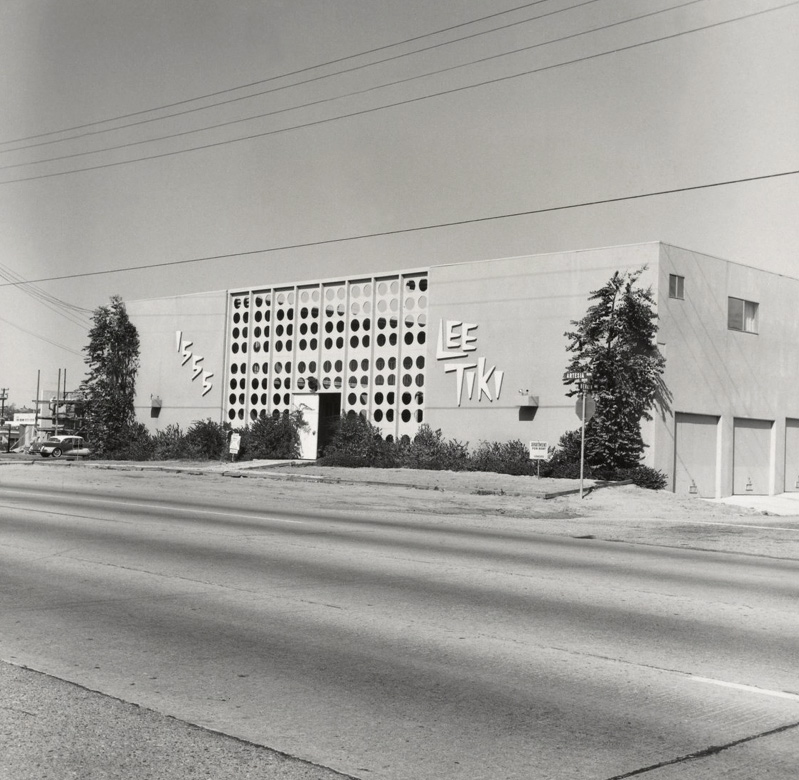
Ed Ruscha (American, born 1937) '1555 Artesia Blvd.,' 1965


Ed Ruscha (American, b. 1937)
1555 Artesia Blvd.,
1965
Gelatin silver print
11.1 x 11.4cm
The J. Paul Getty Museum, Los Angeles
© Ed Ruscha


Ed Ruscha (American, b. 1937) '4489 Murietta Ave.,' 1965


Ed Ruscha (American, b. 1937)
4489 Murietta Ave.,
1965
Gelatin silver print
11.4 x 11.4cm
The J. Paul Getty Museum, Los Angeles
© Ed Ruscha


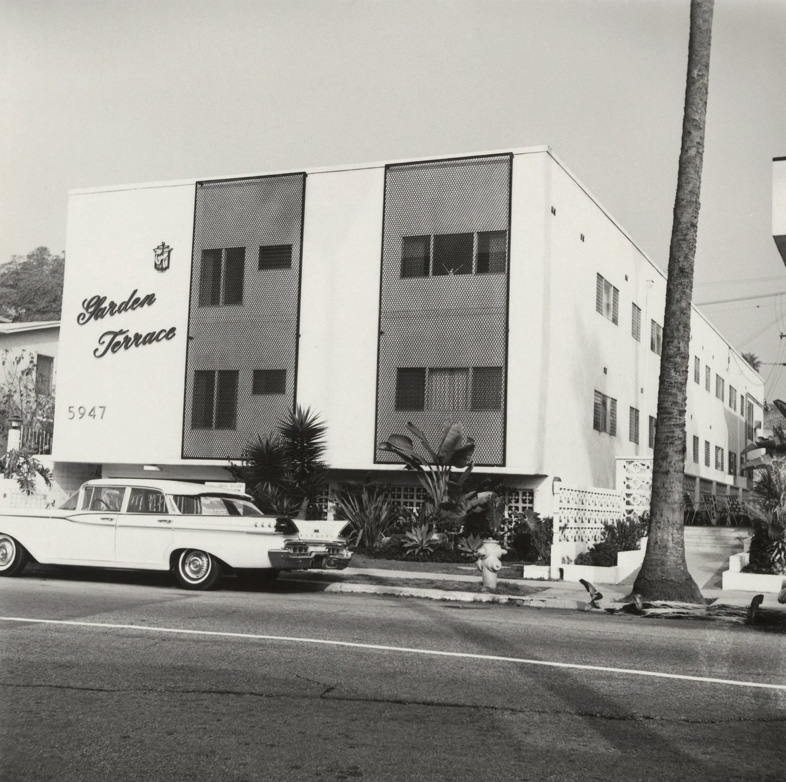
Ed Ruscha (American, b. 1937) '5947 Carlton Way' 1965


Ed Ruscha (American, b. 1937)
5947 Carlton Way
1965
Gelatin silver print
11.9 x 12cm
The J. Paul Getty Museum, Los Angeles
© Ed Ruscha


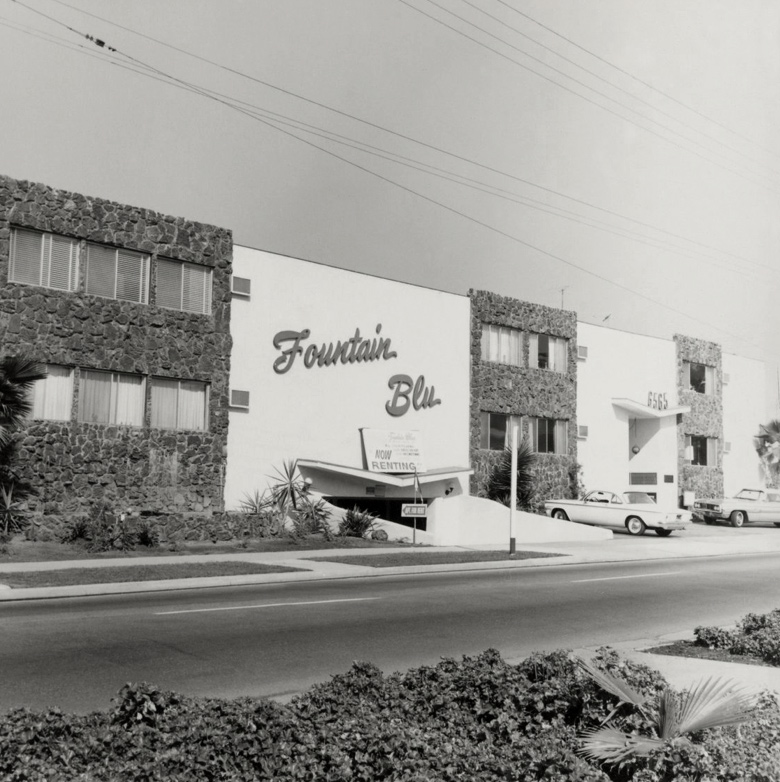
Ed Ruscha (American, b. 1937) '6565 Fountain Ave.,' 1965


Ed Ruscha (American, b. 1937)
6565 Fountain Ave.,
1965
Gelatin silver print
11.8 x 11.8cm
The J. Paul Getty Museum, Los Angeles
© Ed Ruscha


Ed Ruscha (American, b. 1937) '10433 Wilshire Blvd.,' 1965


Ed Ruscha (American, b. 1937)
10433 Wilshire Blvd.,
1965
Gelatin silver print
11.7 x 11.8cm
The J. Paul Getty Museum, Los Angeles
© Ed Ruscha


Ed Ruscha (American, b. 1937) '818 Doheny Dr.,' 1965


Ed Ruscha (American, b. 1937)
818 Doheny Dr.,
1965
Gelatin silver print
11.6 x 11.7cm
The J. Paul Getty Museum, Los Angeles
© Ed Ruscha


Ed Ruscha (American, b. 1937) '3919 N. Rosemead Blvd.,' 1965


Ed Ruscha (American, b. 1937)
3919 N. Rosemead Blvd.,
1965
Gelatin silver print
12 x 12cm
The J. Paul Getty Museum, Los Angeles
© Ed Ruscha


The J. Paul Getty Museum
1200 Getty Center Drive
Los Angeles, California 90049

Opening hours:
Tues – Friday 10am – 5.30pm
Saturday 10am – 8pm
Sunday 10am – 5.30pm
Monday closed

The J. Paul Getty Museum website

LIKE ART BLART ON FACEBOOK

Back to top

Exhibition: ‘Cindy Sherman’ at the Museum of Modern Art (MoMA), New York

Exhibition dates: 26th February – 11th June 2012


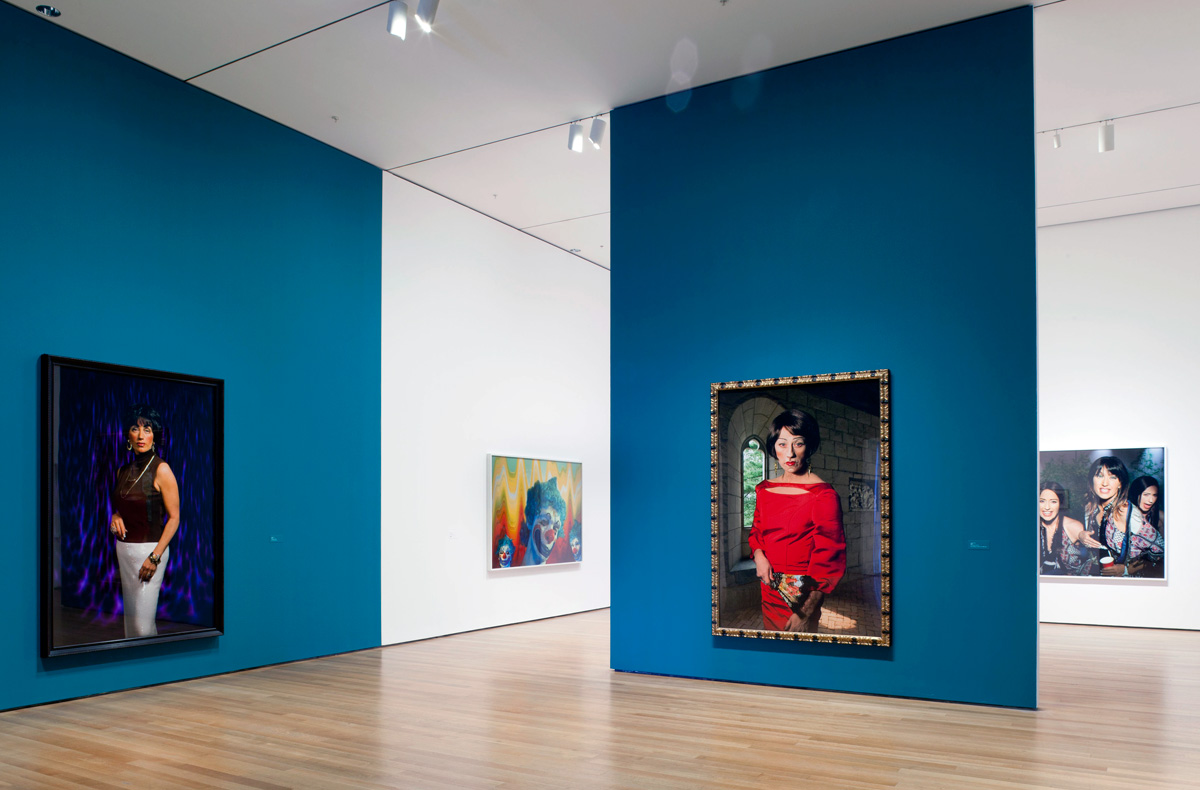
Installation view of the exhibition 'Cindy Sherman' at MoMA, New York showing at left and centre, 'Cindy Sherman society portraits' (2008)


Installation view of the exhibition Cindy Sherman at MoMA, New York showing at left and centre, Cindy Sherman society portraits (2008)


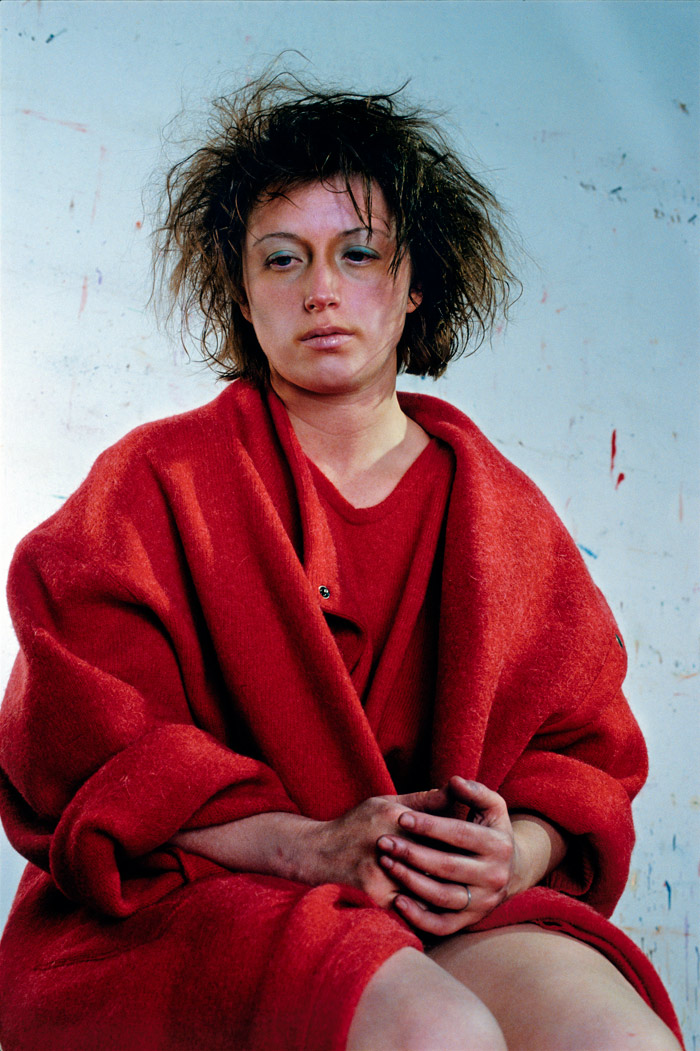
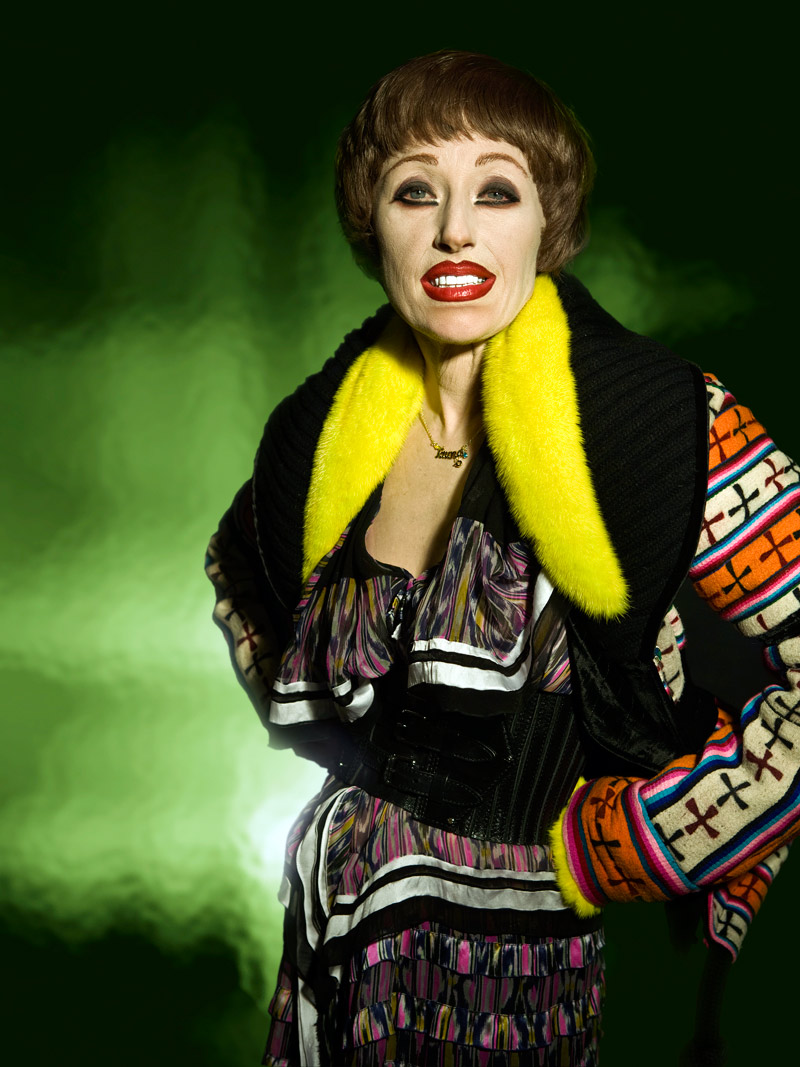
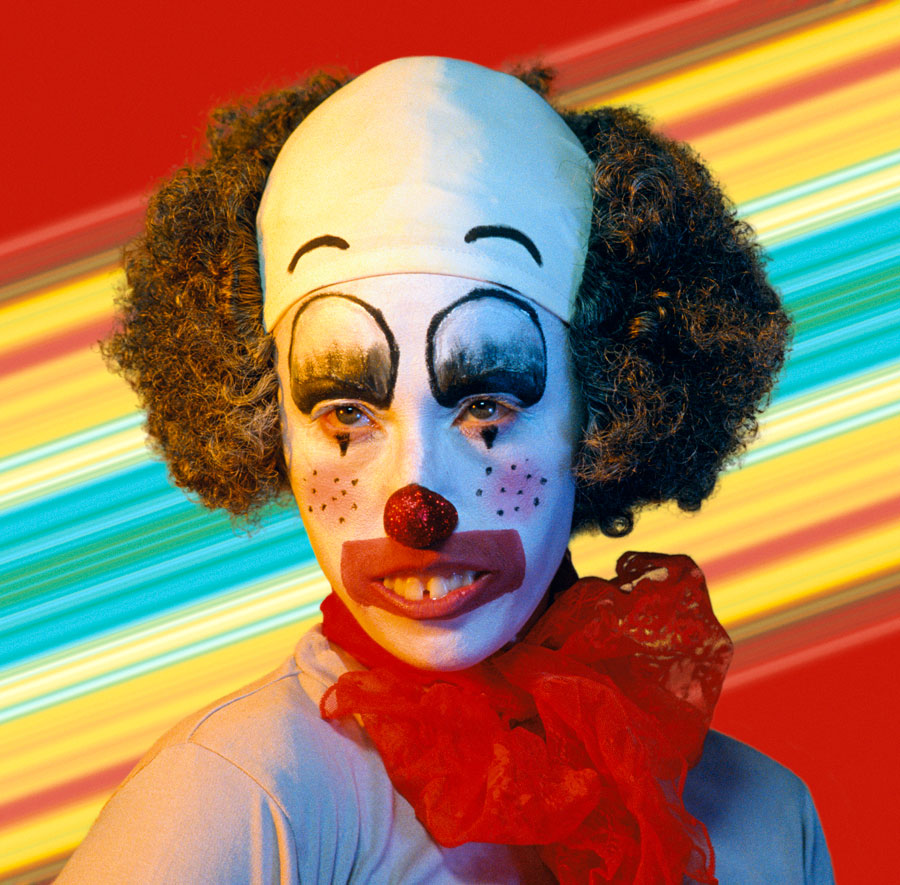
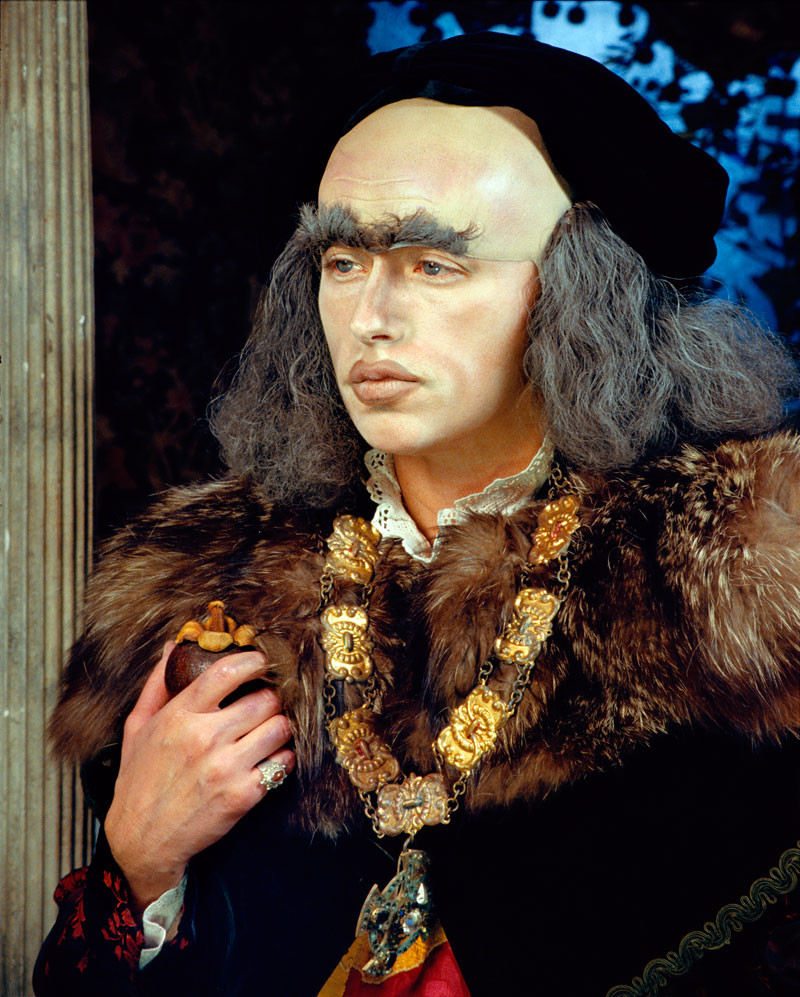
Ceaselessly inventive, the bodies (literally) of work of Cindy Sherman are a wonder to behold. From film stills to head shots, from history portrait to society portraits, Sherman constantly reinvents herself, her variations of identity exploring “the complexity of representation in a world saturated with images,” her iterations into the construction of femininity and masculinity constantly “provocative, disparaging, empathetic, and mysterious.”

Where to next? Her recent series of digitally altered landscapes and portraits (Cindy Sherman at Metro Pictures, New York, April – June 2012) seem less resolved than her earlier work, becoming almost a pastiche of themselves. Despite their massive size they seem to lack resolution, the great female impersonator of our time relying for effect on Self as feminine earth (m)Other, tricked up in dubious, quasi-ethnic regalia. Sherman is almost sacrosanct with regard to criticism but it’s about time someone said it: these images are pretty awful.

After so many simulacra, so many layerings and expositions of identity isn’t it about time Sherman got back to basics and ditched these grandiose notions of identity sublime. The sublimation (an unconscious defence mechanism by which consciously unacceptable instinctual drives are expressed in personally and socially acceptable channels) of her/Self, her actual body, the energy of her (non) presence is finally starting to wear thin. Will the real Cindy Sherman (if ever there is such a thing) please stand up and tell us: what do you really stand for, where as a human being, is your spirit really at?

Dr Marcus Bunyan


Many thankx to MoMA for allowing me to publish the photographs in the posting. Please click on the photographs for a larger version of the image.


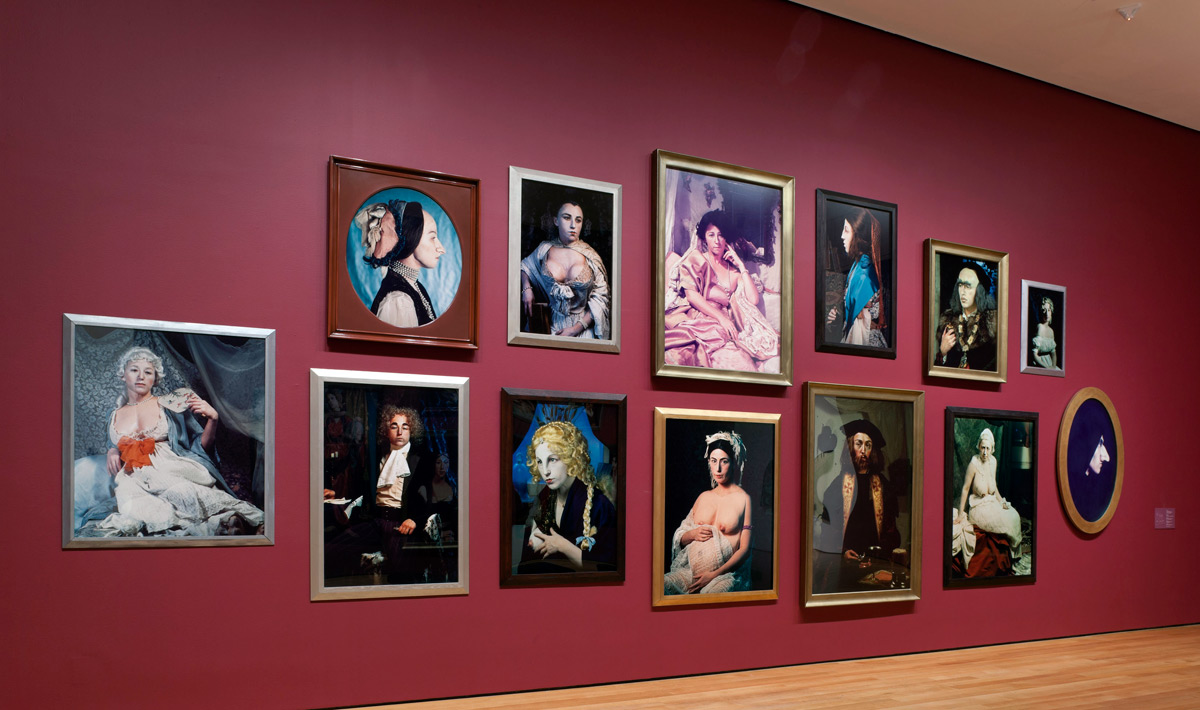
Installation view of the exhibition 'Cindy Sherman' at MoMA, New York showing 'Cindy Sherman history portraits' (1988-1990)


Installation view of the exhibition Cindy Sherman at MoMA, New York showing Cindy Sherman history portraits (1988-1990)


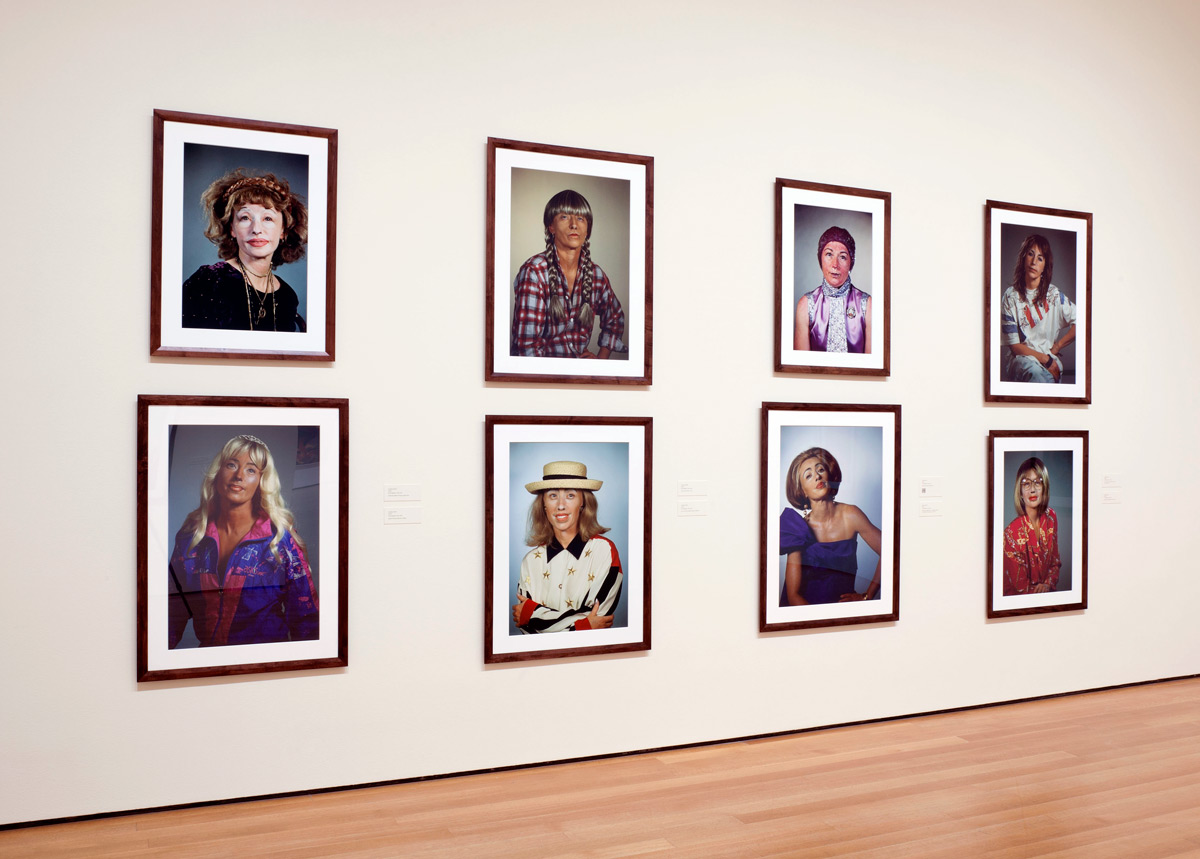
Installation view of the exhibition 'Cindy Sherman' at MoMA, New York showing 'Cindy Sherman headshots' (2000-2002)


Installation view of the exhibition Cindy Sherman at MoMA, New York showing Cindy Sherman headshots (2000-2002)


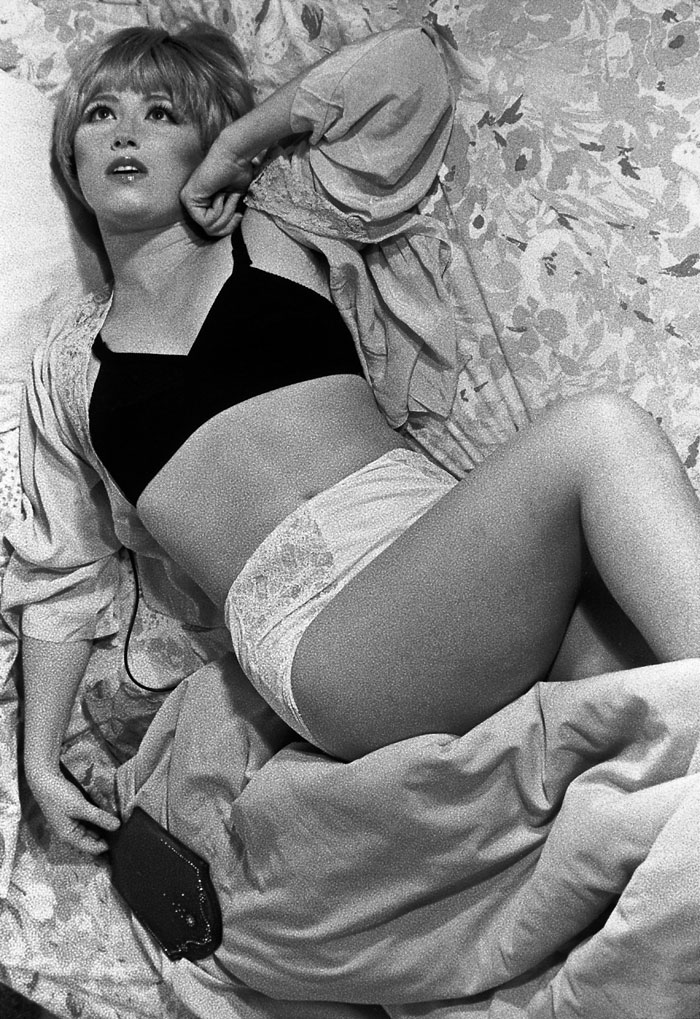
Cindy Sherman (American, b. 1954) 'Untitled Film Still #21' 1978


Cindy Sherman (American, b. 1954)
Untitled Film Still #21 
1978
Gelatin silver print
7 1/2 x 9 1/2″ (19.1 x 24.1cm)
The Museum of Modern Art, New York. Horace W. Goldsmith Fund through Robert B. Menschel


Cindy Sherman (American, b. 1954) 'Untitled Film Still #6' 1977


Cindy Sherman (American, b. 1954)
Untitled Film Still #6 
1977
Gelatin silver print
9 7/16 x 6 1/2″ (24 x 16.5cm)
The Museum of Modern Art, New York
Acquired through the generosity of Jo Carole and Ronald S. Lauder in memory of Eugene M. Schwartz


Cindy Sherman (American, b. 1954) 'Untitled Film Still #56' 1980


Cindy Sherman (American, b. 1954)
Untitled Film Still #56 
1980
Gelatin silver print
6 3/8 x 9 7/16″ (16.2 x 24cm)
The Museum of Modern Art, New York
Acquired through the generosity of Jo Carole and Ronald S. Lauder in memory of Mrs. John D. Rockefeller 3rd


Gallery 2

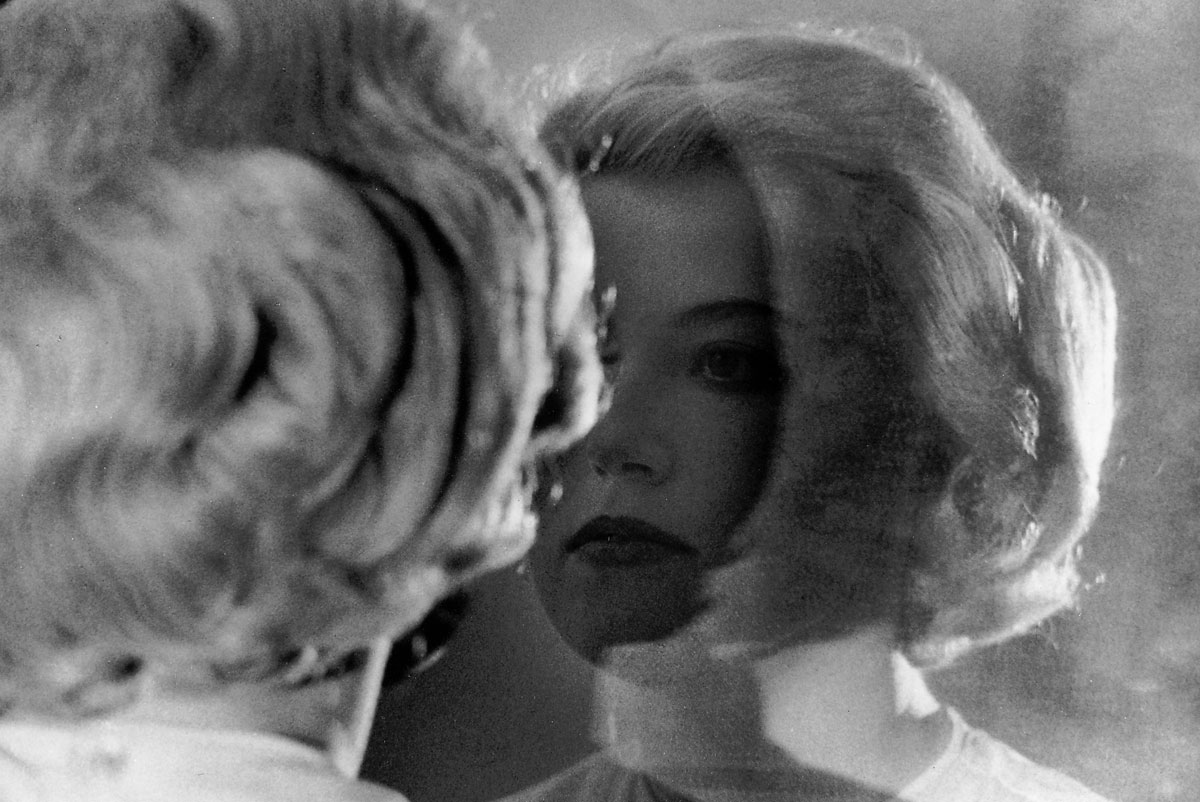
In fall 1977, Sherman began making pictures that would eventually become her groundbreaking Untitled Film Stills. Over three years, the series (presented here in its entirety) grew to comprise a total of seventy black-and-white photographs. Taken as a whole, the Untitled Film Stills – resembling publicity pictures made on movie sets – read like an encyclopaedic roster of stereotypical female roles inspired by 1950s and 1960s Hollywood, film noir, B movies, and European art-house films. But while the characters and scenarios may seem familiar, Sherman’s Stills are entirely fictitious; they represent clichés (career girl, bombshell, girl on the run, vamp, housewife, and so on) that are deeply embedded in the cultural imagination. While the pictures can be appreciated individually, much of their significance comes in the endless variation of identities from one photograph to the next. As a group they explore the complexity of representation in a world saturated with images, and refer to the cultural filter of images (moving and still) through which we see the world.

Wall text from the exhibition


Cindy Sherman (American, b. 1954) 'Untitled #137' 1984


Cindy Sherman (American, b. 1954)
Untitled #137 
1984
Chromogenic colour print
70 1/2 x 47 3/4″ (179.1 x 121.3cm)
Philadelphia Museum of Art
Purchased with the Alice Newton Osborn Fund, 1985


Cindy Sherman (American, b. 1954) 'Untitled #458' 2007-2008


Cindy Sherman (American, b. 1954)
Untitled #458 
2007-08
Chromogenic colour print
6′ 5 3/8″ x 58 1/4″ (196.5 x 148cm)
Glenstone


Gallery 3

Fashion – a daily form of masquerade that communicates culture, gender, and class – has been a constant source of inspiration for Sherman and a leading ingredient in the creation of her work. Throughout her career the artist has completed a number of commissions for fashion designers and magazines, and this gallery gathers many of these works. Sherman’s fashion pictures challenge the industry’s conventions of beauty and grace. Her first such commission, made in 1983, parodies typical fashion photography. Rather than projecting glamour, sex, or wealth, the pictures feature characters that are far from desirable – whether goofy, hysterical, angry, or slightly mad. Later commissions resulted in more extreme images of characters with bloodshot eyes, bruises, and scars. These exaggerated figures reached ostentatious heights in a 2007-08 commission, in which fashion victims – including steely fashion editors, PR mavens, assistant buyers, and wannabe fashionistas – wear clothing designed by Balenciaga and ham it up for the camera. Sherman’s interest in the construction of femininity and the mass circulation of images informs much of her work; the projects that take fashion as their subject illustrate the artist’s fascination with fashion images but also her critique of what they represent.

Wall text from the exhibition


Cindy Sherman (American, b. 1954) 'Untitled #424' 2004


Cindy Sherman (American, b. 1954)
Untitled #424 
2004
Chromogenic colour print
53 3/4 x 54 3/4″ (136.5 x 139.1cm)
Holzer Family Collection


Gallery 5

Sherman, who photographs alone in her studio, has used a variety of techniques to suggest different locations and imaginary (sometimes impossible) spaces, extending the narrative possibilities of her images. In her first foray into colour, in 1980, the artist photographed herself in front of rear-screen projections of various cityscapes and landscapes, evoking films from the 1950s and 1960s that used similar techniques to create the illusion of a change in location. In later series, such as the head shots (2000-2002), clowns (2003-04), and society portraits (2008), the artist used digital tools to create a variety of environments. The garish fluorescent colours in a clown picture contribute to the disturbing quality of the portrait, while a fairy tale forest provides a dreamy backdrop for a well-to-do lady.

Wall text from the exhibition


The Museum of Modern Art presents the exhibition Cindy Sherman, a retrospective tracing the groundbreaking artist’s career from the mid-1970s to the present, from February 26 to June 11, 2012. The exhibition brings together 171 key photographs from the artist’s significant series – including the complete Untitled Film Stills (1977-80), the critically acclaimed centerfolds (1981), and the celebrated history portraits (1988-90) – plus examples from all of her most important bodies of work, ranging from her fashion photography of the early 1980s to the breakthrough sex pictures of 1992 to her 2003-04 clowns and monumental society portraits from 2008. In addition, the exhibition features the American premiere of her 2010 photographic mural. An exhibition of films drawn from MoMA’s collection selected by Sherman will also be presented in the Museum’s theatres in April. Cindy Sherman is organised by Eva Respini, Associate Curator, with Lucy Gallun, Curatorial Assistant, Department of Photography, The Museum of Modern Art.

Cindy Sherman is widely considered to be one of the most important and influential artists of our time and her work is the unchallenged cornerstone of post-modern photography. Masquerading as a myriad of characters in front of her own camera, Sherman creates invented personas and tableaus that examine the construction of identity, the nature of representation, and the artifice of photography. Her works speak to an increasingly image-saturated world, drawing on the unlimited supply of visual material provided by movies, television, magazines, the Internet, and art history.

Ms. Respini says, “To create her photographs, Sherman works unassisted in her studio and assumes multiple roles as photographer, model, art director, make-up artist, hairdresser, and stylist. Whether portraying a career girl or a blond bombshell, a fashion victim or a clown, a French aristocrat or a society lady of a certain age, for over 35 years this relentlessly adventurous artist has created an eloquent and provocative body of work that resonates deeply with our visual culture.”

The American premiere of Sherman’s recent photographic mural (2010) will be installed outside the galleries on the sixth floor. The mural represents the artist’s first foray into transforming space through site-specific fictive environments. In the mural Sherman transforms her face via digital means, exaggerating her features through Photoshop by elongating her nose, narrowing her eyes, or creating smaller lips. The characters, who sport an odd mix of costumes and are taken from daily life, are elevated to larger-than-life status and tower over the viewer. Set against a decorative toile backdrop, her characters seem like protagonists from their own carnivalesque worlds, where fantasy and reality merge. The emphasis on new work presents an opportunity for reassessment in light of the latest developments in Sherman’s oeuvre.

Entering the galleries, the exhibition strays from a chronological narrative typical of retrospectives, and groups photographs thematically to create new and surprising juxtapositions and to suggest common threads across several series. A gallery devoted to her work made for the fashion industry brings together commissions from 1983 to 2011. Sherman’s interest in the construction of femininity and mass circulation of images informs much of the work that takes fashion as its subject, illustrating not only a fascination with fashion images but also a critical stance against what they represent. A gallery exploring themes of the grotesque focuses on bodies of work from the mid-1980s through the mid-1990s, including disasters (1986-89) and sex pictures (1992). Sherman’s investigation of macabre narratives followed a trajectory of the physical disintegration of the body, and features prosthetic parts as a stand-in for the human body. A gallery devoted to Sherman’s exploration of myth, carnival, and fairy tales pairs works from her 2003 clowns with her 1985 fairy tales series. These theatrical pictures revel in their own artificiality, with menacing characters and fantastical narratives.

Galleries devoted to single bodies of work are interspersed among the thematic rooms. Sherman’s seminal series the Untitled Film Stills, comprising 70 black-and-white photographs made between 1977 and 1980, are presented in their entirety (the complete series is in MoMA’s collection). Made to look like publicity pictures taken on movie sets, the Untitled Film Stills read like an encyclopaedic roster of female roles inspired by 1950s and 1960s Hollywood, film noir, B movies, and European art-house films. While the characters and scenarios may seem familiar, Sherman’s Stills are entirely fictitious. Her characters represent deeply embedded clichés (career girl, bombshell, girl on the run, housewife, and so on) and rely on the persistence of recognisable manufactured stereotypes that loom large in the cultural imagination.

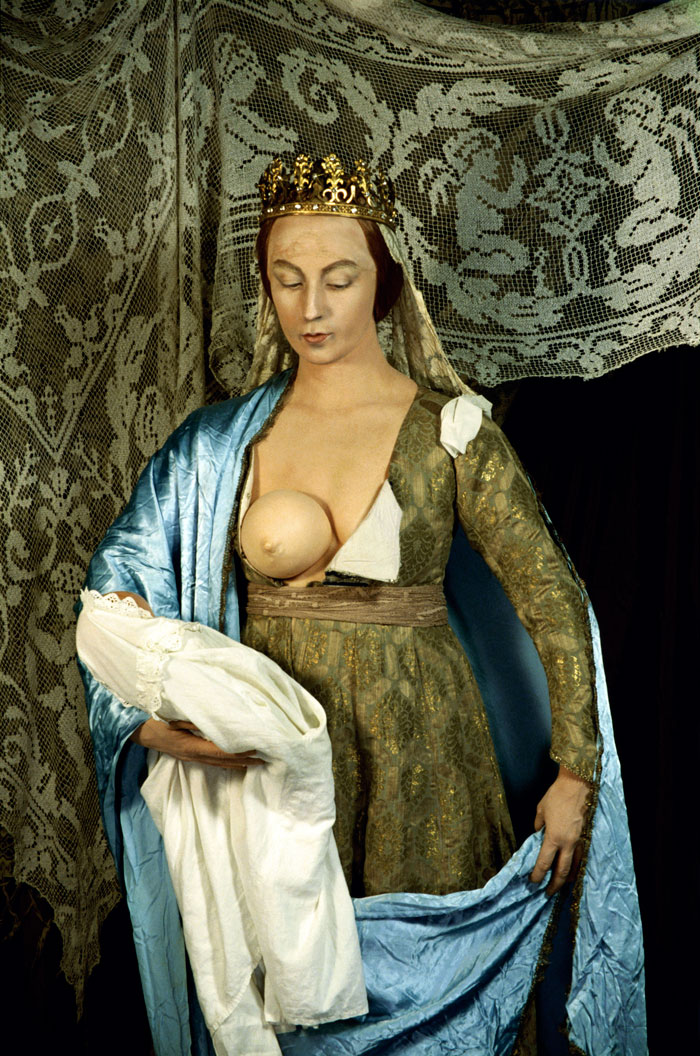
Other series presented in depth include Sherman’s 1981 series of 12-colour photographs known as the centerfolds. Originally commissioned by Artforum magazine, these send-ups of men’s erotic magazine centerfolds depict characters in a variety of emotional states, ranging from terrified to heartbroken to melancholic. With this series, Sherman plays into the male conditioning of looking at photographs of exposed women, but she turns this on its head by taking on the roles of both (assumed) male photographer and female pinup. The history portraits investigate the relationships between painter and model, and are featured in depth in the exhibition. These theatrical portraits borrow from a number of art historical periods, from Renaissance, Baroque, Rococo, and Neoclassical. This free-association sampling creates an illusion of familiarity, but not with any one specific era or style (just as the Untitled Film Stills evoke generic types, not particular films). The subjects (for the first time, many are men) include aristocrats, Madonna and child, clergymen, women of leisure, and milkmaids, who pose with props, elaborate costumes, and obvious prostheses.

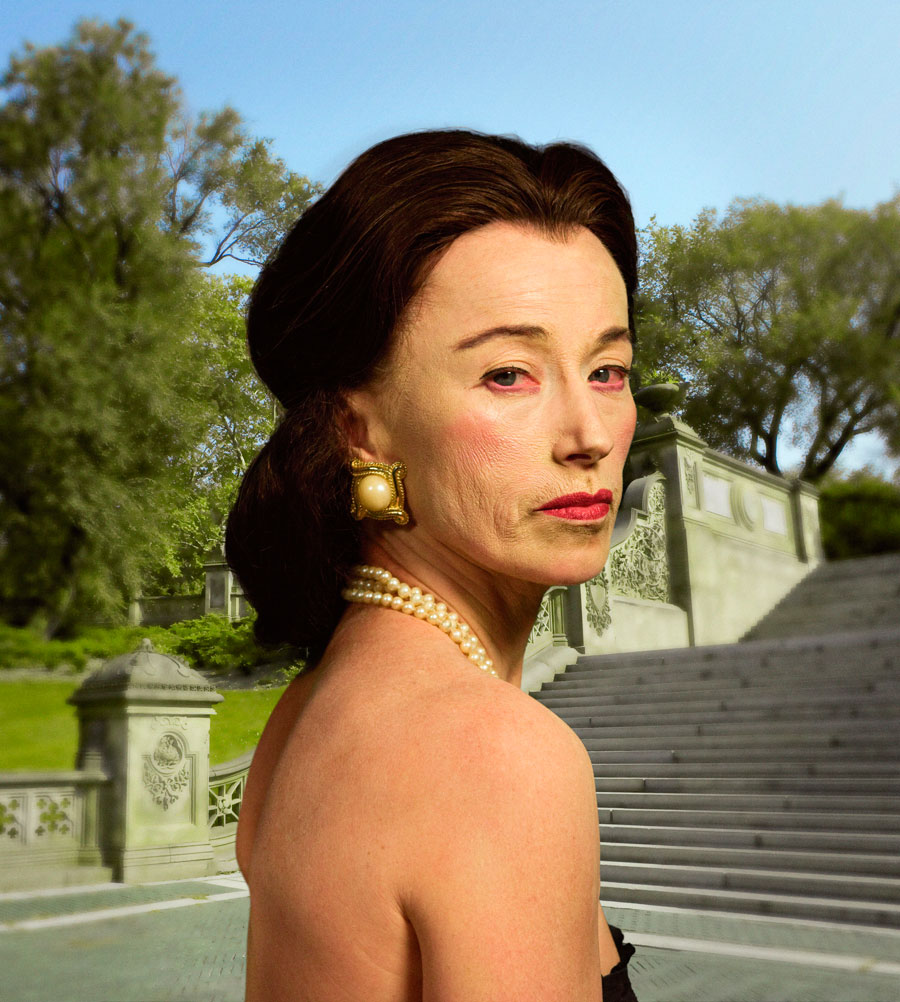
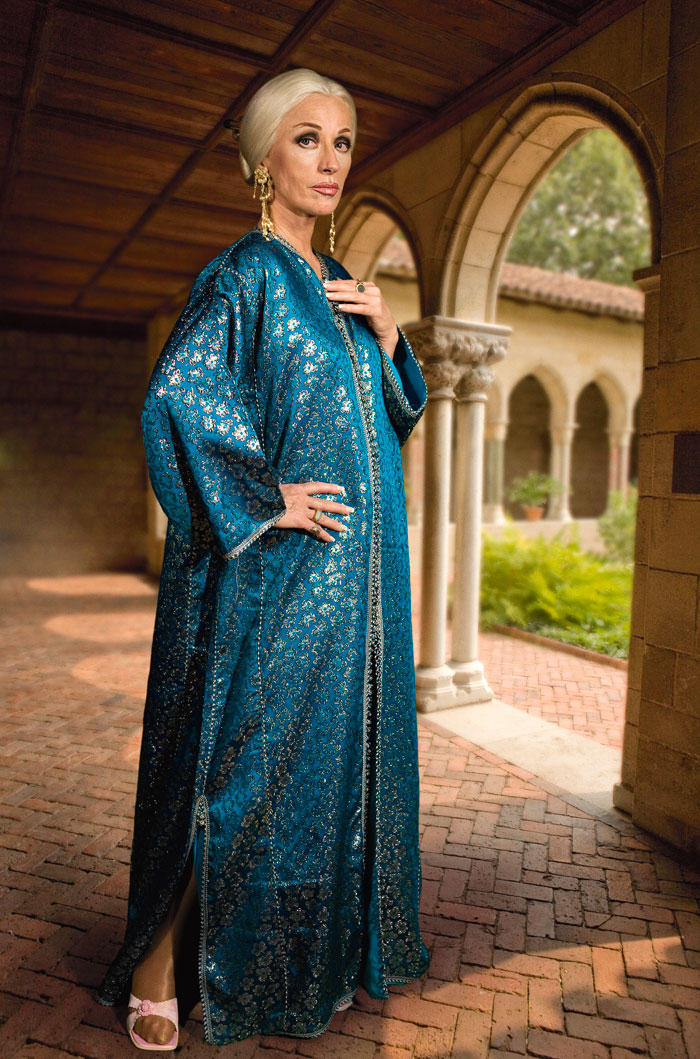
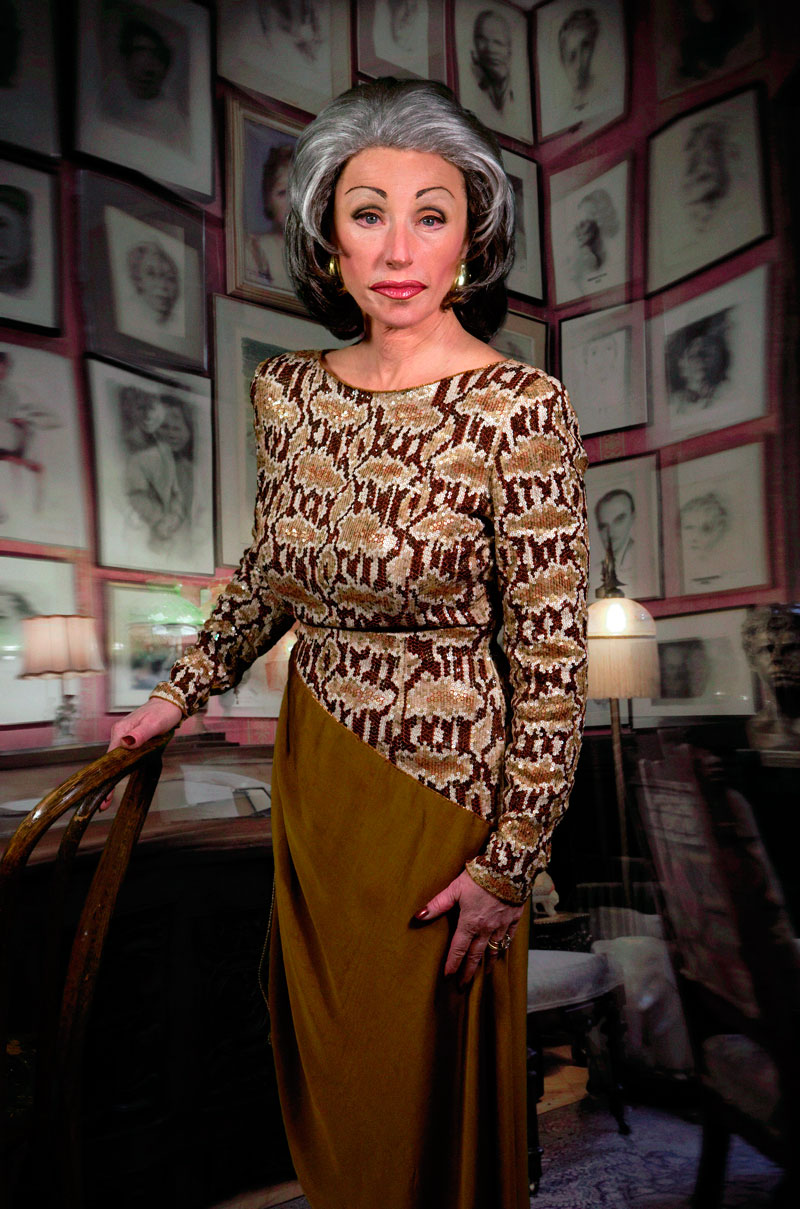
Sherman has explored the experience of ageing in a youth- and status-obsessed society with several bodies of work made since 2000. For her headshots from 2000-2002 (sometimes called Hollywood / Hamptons), the artist conceived a cast of characters of would-be or has-been actors (in reality secretaries, housewives, or gardeners) posing for head shots to get an acting job. With this series, Sherman underscores the transformative qualities of makeup, hair, expression, and pose, and the recognition of certain stereotypes as powerful transmitters of cultural clichés. Her monumental 2008 society portraits feature women “of a certain age” from the top echelons of society who struggle with today’s impossible standards of beauty. The psychological weight of these pictures comes through in the unrelenting honesty of the description of ageing and the small details that belie the attempt to project a certain appearance. In the infinite possibilities of the mutability of identity, these pictures stand out for their ability to be at once provocative, disparaging, empathetic, and mysterious.

Press release from the MoMA website


Cindy Sherman (American, b. 1954) 'Untitled #193' 1989


Cindy Sherman (American, b. 1954)
Untitled #193 
1989
Chromogenic colour print
48 7/8 x 41 15/16″ (124.1 x 106.5cm)
The Doris and Donald Fisher Collection


Cindy Sherman (American, b. 1954) 'Untitled #213' 1989


Cindy Sherman (American, b. 1954)
Untitled #213 
1989
Chromogenic colour print
41 1/2 x 33″ (105.4 x 83.8cm)
Courtesy the artist and Metro Pictures, New York


Cindy Sherman (American, b. 1954) 'Untitled #216' 1989


Cindy Sherman (American, b. 1954)
Untitled #216 
1989
Chromogenic colour print
7′ 3 1/8″ x 56 1/8″ (221.3 x 142.5cm)
The Museum of Modern Art, New York. Gift of Werner and Elaine Dannheisser


Gallery 7

Sherman’s history portraits (1988-90) investigate modes of representation in art history and the relationship between painter and model. These classically composed portraits borrow from a number of art-historical periods – Renaissance, baroque, rococo, Neoclassical – and make allusions to paintings by Raphael, Caravaggio, Fragonard, and Ingres (who, like all the Old Masters, were men). This free-association sampling creates a sense of familiarity, but not of any one specific era or style. The subjects (for the first time for Sherman, many are men) include aristocrats, Madonnas with child, clergymen, women of leisure, and milk-maids, who pose with props, costumes, and obvious prostheses. Theatrical and artificial – full of large noses, bulging bellies, squirting breasts, warts, and unibrows – the history portraits are poised between humorous parody and grotesque caricature.

A handful of Sherman’s portraits were inspired by actual paintings. Untitled #224 was made after Caravaggio’s Sick Bacchus (c. 1593), which is commonly believed to be a self-portrait of the artist as the Roman god of wine. In Sherman’s reinterpretation, the numerous layers of representation – a female artist impersonating a male artist impersonating a pagan divinity – create a sense of remove, pastiche, and criticality. Even where Sherman’s pictures offer a gleam of art-historical recognition, she has inserted her own interpretation of the canonised paintings, creating contemporary artefacts of a bygone era.

Wall text from the exhibition


Cindy Sherman (American, b. 1954) 'Untitled #359' 2000


Cindy Sherman (American, b. 1954)
Untitled #359 
2000
Chromogenic color print
30 x 20″ (76.2 x 50.8cm)
Collection Metro Pictures, New York


Gallery 8

After almost a decade of staging still lifes with dolls and props, in her 2000-2002 head-shots series Sherman returned to a more intimate scale and to using herself as a model. The format recalls ID pictures, head shots, or vanity portraits made in garden-variety portrait studios by professional photographers. First exhibited in Beverly Hills, the series explores the cycle of desire and failed ambition that permeates Hollywood. Sherman conceived a cast of would-be or has-been female actors posing for head shots in order to get acting jobs; later, for an exhibition in New York, she added East Coast types. Whichever part of the country they’re from, we’ve seen these women before – on reality television, in soap operas, or at a PTA meeting. With these pictures, Sherman underscores the transformative qualities of makeup, hair, expression, and pose, and the power of stereotypes as transmitters of cultural clichés. She projects well-drawn personas: the enormous pouting lips of the woman in Untitled #360 suggest a yearning for youth, while the glittery makeup and purple iridescent dress worn by the character in Untitled #400 indicate an aspiration to reach a certain social status. In her role as both sitter and photographer, Sherman has disrupted the usual power dynamic between model and photographer and created new avenues through which to explore the very apparatus of portrait photography itself.


Cindy Sherman (American, b. 1954) 'Untitled #465' 2008


Cindy Sherman (American, b. 1954)
Untitled #465 
2008
Chromogenic colour print
63 3/4 x 57 1/4″ (161.9 x 145.4cm)
Whitney Museum of American Art, New York
Purchase, with funds from the Painting and Sculpture Committee and the Photography Committee, 2009


Cindy Sherman (American, b. 1954) 'Untitled #466' 2008


Cindy Sherman (American, b. 1954)
Untitled #466
2008
Chromogenic colour print


Cindy Sherman (American, b. 1954) 'Untitled #474' 2008


Cindy Sherman (American, b. 1954)
Untitled #474 
2008
Chromogenic colour print
7′ 7″ x 60 1/4″ (231.1 x 153cm)
The Museum of Modern Art, New York
Acquired through the generosity of an anonymous donor, Michael Lynne, Charles Heilbronn, and the Carol and David Appel Family Fund


Gallery 10

Set against opulent backdrops and presented in ornate frames, the characters in Sherman’s 2008 society portraits seem at once tragic and vulgar. The figures are not based on specific women, but the artist has made them look entirely familiar in their struggle with the impossible standards of beauty that prevail in a youth – and status – obsessed culture. At this large scale, it is easy to decipher the characters’ vulnerability behind the makeup, clothes, and jewellery. The psychological weight of these pictures comes through the unrelenting honesty of their description of ageing, the tell-tale signs of cosmetic alteration, and the small details that belie the characters’ attempts to project a polished and elegant appearance. Upon careful viewing, they reveal a dark reality lurking beneath the glossy surface of perfection. As with much of her work, in her society portraits Sherman has demonstrated a remarkable capacity to channel the zeitgeist. These well-heeled divas presaged the financial collapse of 2008, the end of an era of opulence – the size of the photographs alone seems a commentary on an age of excess. Among the numerous iterations of contemporary identity, these pictures stand out as at once provocative, disparaging, empathetic, and mysterious.

Wall text from the exhibition


Cindy Sherman (American, b. 1954) 'Untitled #475' 2008


Cindy Sherman (American, b. 1954)
Untitled #475 
2008
Chromogenic colour print
7′ 2 3/8″ x 71 1/2″ (219.4 x 181.6cm)
The Broad Art Foundation, Santa Monica


Gallery 11

Because the majority of Sherman’s pictures feature the artist as model, they showcase a single character. In the 1970s Sherman experimented with cutouts of multiple figures, in her whimsical 1975 stop-motion animated short film Doll Clothes and her rarely seen 1976 collages, which were achieved through a labor-intensive process of cutting and pasting multiple photographs. When Sherman began working digitally in the early 2000s, she was able to more easily incorporate multiple figures in one frame, allowing for a variety of new narrative possibilities. Where the early works chart the movements and gestures of a single character through space, the multiple figures in recent works interact with one another to create tableaus.

Wall text from the exhibition


The Museum of Modern Art
11 West 53 Street
New York, NY 10019
Phone: (212) 708-9400

Opening hours:
10.30am – 5.30pm
Open seven days a week

MoMA website

LIKE ART BLART ON FACEBOOK

Back to top

Exhibition: ‘Pacific Standard Time: Art in Los Angeles 1950-1980’ at Martin-Gropuis-Bau Berlin

Exhibition dates: 15th March – 10th June 2012

List of artists represented: Peter Alexander, John Altoon, Chuck Arnoldi, John Baldessari, Larry Bell, Billy Al Bengston, Karl Benjamin, Ed Bereal, Tony Berlant, Wallace Berman, Marjorie Cameron, Cameron, Vija Celmins, Judy Chicago, Mary Corse, Ronald Davis, Richard Diebenkorn, Laddie John Dill, Melvin Edwards, Frederick Eversley, Lorser Feitelson, Llyn Foulkes, Sam Francis, Joe Goode, Robert Graham, Frederick Hammersley, George Herms, David Hockney, Stephan von Huene, Craig Kauffman, Edward Kienholz, Helen Lundeberg, John Mason, Allan McCollum, John McLaughlin, Ron Miyashiro, Ed Moses, Lee Mullican, Bruce Nauman, Helen Pashgian, Ken Price, Noah Purifoy, Ed Ruscha, Betye Saar, Henry Takemoto, DeWain Valentine, Gordon Wagner, Norman Zammitt.


Ed Ruscha (American, b. 1937) 'Standard Station, Amarillo, Texas' 1963


Ed Ruscha (American, b. 1937)
Standard Station, Amarillo, Texas
1963
Oil on Canvas
Hood Museum of Art, Dartmouth College, Hanover, New Hampshire
Gift of James Meeker, Class of 1958, in memory of Lee English, Class of 1958, scholar, poet, athlete and friend to all


What a bumper posting – so much to enjoy and something for everyone!

Marcus


Many thankx to Martin-Gropuis-Bau for allowing me to publish the artwork in the posting. Please click on the photographs for a larger version of the image.


Karl Benjamin (American, 1925-2012) 'Stage II' 1959 


Karl Benjamin (American, 1925-2012)
Stage II
1959
Oil on canvas
50 x 70 inches; 127 x 177.8cm


Karl Stanley Benjamin (December 29, 1925 – July 26, 2012[1]) was an American painter of vibrant geometric abstractions, who rose to fame in 1959 as one of four Los Angeles–based Abstract Classicists and subsequently produced a critically acclaimed body of work that explores a vast array of color relationships. Working quietly at his home in Claremont, California, he developed a rich vocabulary of colors and hard-edge shapes in masterful compositions of tightly balanced repose or high-spirited energy. At once intuitive and systematic, the artist was, in the words of critic Christopher Knight, “a colorist of great wit and inventiveness.”

Text from the Wikipedia website


Judy Chicago (American, b. 1939) 'Car Hood' 1964


Judy Chicago (American, b. 1939)
Car Hood
1964
Sprayed acrylic and lacquer on car hood
109 x 125 x 11cm


Betye Saar (African-American, b. 1926) 'The Phrenologer's Window' 1966


Betye Saar (African-American, b. 1926)
The Phrenologer’s Window
1966
Assemblage of two panel wood frame with print and collage
Private Collection; courtesy of Michael Rosenfeld Gallery, LLC, New York, NY


Lee Mullican (American, 1919-1998) 'Untitled (Venice)' 1967


Lee Mullican (American, 1919-1998)
Untitled (Venice)
1967
Oil on canvas


Ronald Davis (American, b. 1937) 'Vector' 1968


Ronald Davis (American, b. 1937)
Vector
1968
Polyester Resin and Fiberglass
60 1/2 x 132 inches (shaped)
Tate Gallery, London


Ronald “Ron” Davis (born 1937) is an American painter whose work is associated with geometric abstraction, abstract illusionism, lyrical abstraction, hard-edge painting, shaped canvas painting, color field painting, and 3D computer graphics. He is a veteran of nearly seventy solo exhibitions and hundreds of group exhibitions.


Eleanor Antin (American, b. 1935) '100 BOOTS Move On' 1971-1973


Eleanor Antin (American, b. 1935)
100 BOOTS Move On
1971-1973
Halftone reproduction
Getty Research Institute, Los Angeles, CA
© Eleanor Antin


Sam Francis (American, 1923-1994) 'Berlin Red' 1969-1970


Sam Francis (American, 1923-1994)
Berlin Red
1969-1970
Acrylic on canvas
Nationalgalerie, Staatliche Museen zu Berlin
© Sam Francis Foundation, Cailfornia / VG Bild-Kunst, Bonn 2012
Foto: bpk / Nationalgalerie, SMB / Jörg P. Anders


Wallace Berman (American, 1926-1976) 'Semina Cover with Wife (Photograph of Shirley Berman)' 1959


Wallace Berman (American, 1926-1976)
Semina Cover with Wife (Photograph of Shirley Berman)
1959
Halftone reproduction on cardstock
Getty Research Institute, Los Angeles, CA


The exhibition project Pacific Standard Time – Art in Los Angeles, 1950-1980 traces the development of the Los Angeles art scene during the post-war period, when the city on the Pacific hosted an impressively varied and versatile art scene, thus proving that it was more than Hollywood and a sprawling metropolis in the land of sunshine and palm trees. Pacific Standard Time features such internationally esteemed artists as John Baldessari, David Hockney, Edward Kienholz or Ed Ruscha as well as protagonists that are yet to be discovered like the abstract painters Helen Lundeberg and Karl Benjamin, the ceramicists Ken Price and John Mason, and sculptors such as De Wain Valentine.

The mega show – over 60 institutions and galleries in Los Angeles were involved – is taking the two main core exhibitions of the Getty Museum and the Getty Research Institute to Europe. The sole European venue is the Martin-Gropius-Bau in Berlin. The section of the exhibition that was to be seen in Los Angeles’ Getty Museum under the title of Crosscurrents in L.A. – Painting and Sculpture, 1950-1970, presents painting and sculpture. In the second part that was to be seen in Los Angeles under the title of Greetings from L.A. – Artists and Publics, 1950-1980, posters, artists’ catalogues, postcards, invitation cards and other memorabilia are shown which offer a deeper insight into the networks of the Los Angeles art scene at that time. For Berlin the show has been supplemented to include photographs by Julius Shulman, whose architectural shots defined the image of the Californian lifestyle in the 1950s. His incomparable sensibility and intuitive feel for composition and the ‘critical moment’ established him as a master of his craft.

Part One: Crosscurrents

The first part of the Berlin show brings together more than 70 works by over 50 artists and traces the rise of the Southern Californian art scene between 1945 and 1980. The list of names reads like a Who’s Who of today’s internationally esteemed artists, as people like John Baldessari, David Hockney, Edward Kienholz, Bruce Nauman or Ed Ruscha began their careers here.

The entrée into Pacific Standard Time begins with British artist David Hockney’s iconic painting A Bigger Splash from the year 1967. It is one of the key pictures of the exhibition and stands for the hedonistic life under palm trees with permanent sunshine and never-ending parties.

The exhibition is structured both chronologically and thematically, comprising six sections that reflect the entire spectrum of the art trends that sprang up simultaneously in Los Angeles. Abstract works – ceramic sculptures and paintings of bleak clarity – are to be seen in the first section. The second section shows assemblage sculptures and collages by artists like George Herms, Wallace Berman and Ed Bereal, who paved the way for this artistic approach in the 1950s, and their successors, including many African-American artists. The third section documents the rise of Los Angeles to become an important art centre, while the fourth shows paintings by internationally recognised Los Angeles artists as Richard Diebenkorn, David Hockney and Ed Ruscha. It becomes clear that Southern California was one of the leading centres for large-format pop art and abstract painting in the 1960s. The fifth section examines how, at a time when painting was growing in significance on the Atlantic Coast of the USA, artists on the West Coast were beginning to extend their notions of traditional painting and sculpture, with perceptual phenomena and the material processes of artistic production coming to the fore. Here we find works that have arisen out of a collision between art and technology, such as a sculpture by De Wain Valentine, who uses industrial materials like polyester casting resin, or a canvas by Mary Corse, into which the smallest, high-grade reflecting glass microspheres have been worked. We are also introduced to a group of artists whose works show traces of their creation, such as those of Joe Goode, Allan McCollum, Ed Moses and Peter Alexander.

Berlin is supplementing the Getty exhibition by devoting a special room to the early international perception of art in Los Angeles. It will feature the works Berlin Red by Sam Francis, a 8 x 12 metre painting that was commissioned by Berlin’s Neue Nationalgalerie in 1969, and Volksempfängers (People’s Wireless) by Edward Kienholz. As a DAAD scholar Kienholz often lived in Berlin from 1973 on.

Another distinctive feature of the exhibition are the various room installations, including Stuck Red and Stuck Blue by James Turrell and Four Corner Piece by Bruce Nauman. In 1966 Turrell began working on his Light Room installations. In the work displayed in the Martin-Gropius-Bau that he designed in 1970, he uses light to dissolve the borders of spatial structures and transform them. In his Four Corner Piece from 1971 Bruce Nauman creates a particular spatial experience through the interplay of physical information vs. visual information.

Part Two: Greetings from L. A.

In the second part of the exhibition, elaborated by the Getty Research Institute, the Martin-Gropius-Bau shows over 200 objects – photographs, artists’ catalogues, books, posters, postcards, invitations, letters and artworks, of which many are on public view for the first time. We are given a sense of how Californian artists, through the involvement of a wide audience, brought art into contact with the general public. We also see how intensely the international networks linking groups of artists functioned.

Greetings from L.A. begins with Making the Scene and describes the gallery scene in Los Angeles from the 1950s to the 1970s. We are introduced to art dealers and collectors of the kind who congregated at La Cienega Boulevard – Rolf Nelson, Riko Mizuno and Betty Asher. On this gallery-lined boulevard, which crosses the Sunset Boulevard immortalised by Ed Ruscha, the reputation of Los Angeles as a city of modern and contemporary art was made.

Public Disturbances, the second section of the show, is devoted to three important exhibitions which drew fierce criticism and even led to arrests. Wallace Berman’s 1957 exhibition in the Ferus Gallery was closed down by the police. Violent controversies were triggered by the War Babies exhibition (1961) in the Huysman Gallery. There were also strong differences of opinion between the Los Angeles County Museum of Art (LACMA) and the Los Angeles County Board of Supervisors over the inclusion of Kienholz’s installation Back Seat Dodge ’38 (1964) in his grand retrospective of 1966.

The Private Assembly section of the exhibition focuses on the works created by Wallace Berman, George Herms, Charles Brittin and their circle in the 1950s and 1960s. The intimacy of these objects is explained not only by the unmistakable traces of artistic authorship they bear, but also by the fact that they were only accessible to a select, non-public audience. Mainly active outside the commercial gallery scene, this group of assemblage artists concentrated their energies on private artworks, which they handed over personally or sent by mail as a token of friendship.

The fourth section, Mass Media, introduces artists who selected the mass media as a model for their own art. Ed Ruscha, Allen Ruppersberg and Chris Burden occupied themselves with popular culture and mass production as alternative means of production and distribution. They used impersonal forms, such as those of objects or advertising materials commercially produced and sold as consumer goods. By avoiding conventional exhibition rooms, these artists reached a new public. They often exhibited anonymously, thus making the identity of artist and work secondary.

Art School as Audience, the fifth section of the exhibition, sheds light on the important role of art schools in the development of contemporary art forms. They served as the static pole, because in them artists constituted the audience of other fellow artists. The California Institute of the Arts, commonly known as CalArts, and its predecessor, the Chouinard Art Institute, were key venues for important groups of artists, as can be seen from the works of such students as Ed Ruscha and Joe Goode, and such teachers as John Baldessari, Miriam Schapiro and Judy Chicago. Other important forums were the new art faculties that came into existence at the universities and other higher education facilities in Los Angeles County. At the campuses of Irvine or San Diego in particular there was a stimulating audience for the experiments of such artists as Martha Rosler, Barbara Smith and Eleanor Antin.

The last section, The Art of Protest, examines how social and political developments mobilised artists to display their works in the street. In the 1960s Los Angeles became the scene of the first protests led by artists against the Vietnam War. This gave rise in 1966 to the construction of a Peace Tower at the corner of La Cienega and Sunset Boulevards. In the following decade it was feminism that moved many artists to become social activists, as can be seen from the work of Suzanne Lacy and Leslie Labowitz-Starus In Mourning and in Rage 1977, a highly esteemed protest performed on the steps of City Hall.

Greetings from L.A. offers a new look at art in Southern California by showing how the artists of this region changed the conventional relations between art and public and developed alternatives for a public role of art and its place in society.

The exhibition affords glimpses into some recently acquired archives, like those of Betty Asher, Hal Glicksman, George Herms, Wolfgang Stoerchle, High Performance magazine, the galleries of Rolf Nelson, Mizuno and Jan Baum as well as of the papers of Charles Brittin and Edmund Teske. These are supplemented by material from archives not normally associated with Southern California, such as the papers of the critics Irving Sandler, Barbara Rose and Lawrence Alloway of New York; of Marcia Tucker, the founder and curator of New York’s New Museum of Contemporary Art; and of the Kasmin Gallery, London.

Part Three: Julius Shulman

The last part of the Berlin exhibition shows over 50 photographs by Julius Shulman – the most important American photographer of architecture in the post-war period. For more than thirty years he photographed Modernist houses – built by Richard Neutra, Frank Lloyd Wright, or Frank Gehry – thus making many of them into architectural icons. The exhibition shows some of his key works.

Press release from Martin-Gropuis-Bau website


Julius Shulman (American, 1910-2009) 'Malin Residence, "Chemosphere”' 1960


Julius Shulman (American, 1910-2009)
Malin Residence, “Chemosphere”
1960
Gelatin silver print
Getty Research Institute, Los Angeles, CA
© J. Paul Getty Trust


Julius Shulman (American, 1910-2009) 'Case Study House #22' 1960


Julius Shulman (American, 1910-2009)
Case Study House #22
1960
Gelatin silver print
Getty Research Institute, Los Angeles, CA
© J. Paul Getty Trust


Charles Brittin (American, 1928-2011) 'Peace Tower' 1966


Charles Brittin (American, 1928-2011)
Peace Tower
1966
Silver-dye bleach print
Getty Research Institute, Los Angeles, CA
© J. Paul Getty Trust


Peter Alexander (American 1939-2020) 'Cloud Box (Large)' 1966


Peter Alexander (American 1939-2020)
Cloud Box (Large)
1966
Cast polyester resin
Janis Horn and Leonard Feldman
© Peter Alexander
Foto: Brian Forrest


Jerry McMillan (American, b. 1936) 'Ed Bereal in His Studio' c. 1961


Jerry McMillan (American, b. 1936)
Ed Bereal in His Studio
c. 1961
Gelatin silver print mounted on board
Getty Research Institute, Los Angeles, CA
Gift of George Herms
© Jerry McMillan


David Hockney (British, b. 1937) 'A Bigger Splash' 1967


David Hockney (British, b. 1937)
A Bigger Splash
1967
Acrylic on canvas
96″ x 96″
© David Hockney
Tate Gallery, London, 2011


Wallace Berman (American, 1926-1976) 'Untitled (Verifax Collage)' 1969


Wallace Berman (American, 1926-1976)
Untitled (Verifax Collage)
1969
Verifax collage on board
Collection of Michael D. Fox, Berkeley CA, Courtesy Steven Wolf Fine Arts, San Francisco CA
© Courtesy of the Estate of Wallace Berman and Michael Kohn Gallery, Los Angeles
Foto: Joe Schopplein


Martin-Gropius-Bau Berlin
Niederkirchnerstraße 7
Corner Stresemannstr. 110
10963 Berlin
Phone: +49 (0)30 254 86-0

Opening Hours:
Wednesday to Monday 10 – 19hrs
Tuesday closed
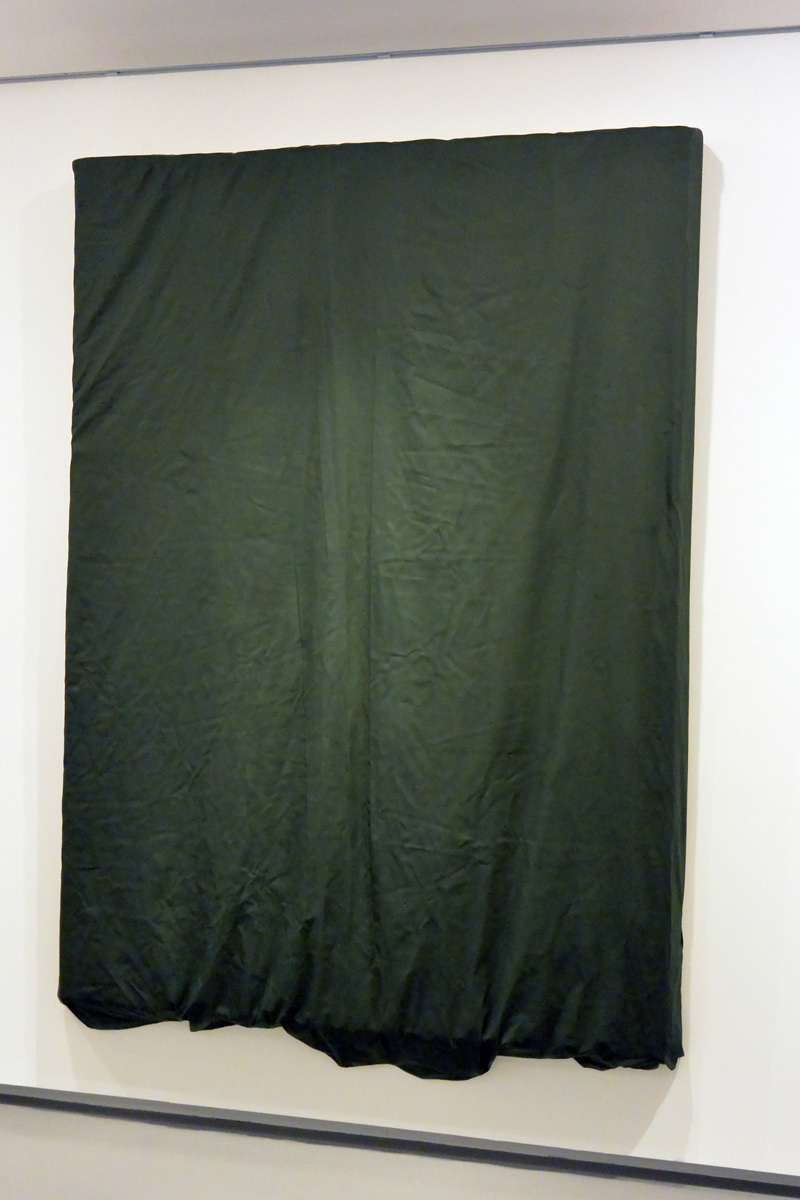
Martin-Gropius-Bau website

LIKE ART BLART ON FACEBOOK

Back to top

Review: ‘Jenny Holzer’ at the Australian Centre for Contemporary Art (ACCA), Melbourne

Exhibition dates: 17th December, 2009 – 28th February, 2010


Jenny Holzer (American, b. 1950) 'Projections' various dates from the exhibition 'Jenny Holzer' at the Australian Centre for Contemporary Art (ACCA), Melbourne, December 2009 - February 2010

Jenny Holzer (American, b. 1950) 'Projections' various dates

Jenny Holzer (American, b. 1950) 'Projections' various dates


Jenny Holzer (American, b. 1950)
Projections
Various dates
With poetry by Wislawa Szymborska


“I draw from everything – from the National Security Archives collection to old material from the FBI’s website to postings by the ACLU. I concentrate on the content. It tends to be very rough material about what’s happened to soldiers in the field, about the good and bad choices they’ve been forced to make, and what has happened to detainees and civilians. I also go to material that’s almost completely gone, either whited out or blacked out, because that represents the issue. You don’t have to spill words when the page is completely black.”


Jenny Holzer


This is a patchy but ultimately redemptive exhibition by Jenny Holzer at the Australia Centre for Contemporary Art (ACCA), Melbourne. The main exhibition space at ACCA is filled with one installation created specifically for the space titled For ACCA (2009) that in essence is the same as the installation for The Massachusetts Museum of Contemporary Art (MASS MOCA)(see photographs above).

The work is projected by a Cameleon Teleprojecteur into the large space and features poems by Wislawa Szymborska with titles such as “The End and the Beginning”, “The Joy of Writing”, “Children of Our Age” and “The Terrorist, He’s Watching” scrolling a la Star Wars opening credits from the bottom upwards into the darkened space. The words that flow into the mis en scene are distorted at the edges like a fish eye lens distorts reality. EVERYTHING IS IN CAPITAL LETTERS TO EMPHASISE THE IMPORTANCE OF THE WORDS, JUST IN CASE WE MISSED THE POINT. It feels like you have been metaphorically hit over the head with the artist’s concern and frankly, I soon lost interest in the mobilisation of meaning:

“I don’t require changes
from the surf,
now diligent, now sluggish,
obeying not me.”

“The Bomb in the bar
will explode at thirteen twenty
Now it’s just thirteen sixteen
There’s still time
for some to go in,
and some to come out.”

“There’s one thing
I won’t agree to:
My own return.
The privilege of presence –
I give it up.”

“I survived you by enough,
and only by enough,
to contemplate from afar – “

“After Every War
Someone has to tidy up.
Things won’t pick
themselves up, after all.”

 
More interesting are the 4 bean bags placed on the floor that are covered in matt grey heat sensitive fabric. As you sit in the bags your indentation heats up the fabric. Upon standing the mark of your body, your body temperature, forms silver Yves Klein-like paintings of glowing phosphorescence. Looking back into the projector from your recumbent position you get an eerie view of the words coming towards you on the floor and going away on the ceiling, your body illuminated in words. What spoils the installation for me is the didactic nature of the protestations, their proselytising soon wearing thin on a body more attuned to the pithy, insightful phrases of Barbara Kruger.

The electronic sculpture Torso (see image below) “emphatically addresses the private body enmeshed and lost in information and government operations.” (catalogue text). Featuring 10 doubled LED projectors programmed with case files of American soldiers accused of war crimes in the Middle East, abuse questions of detainees, ‘For Official Use Only’ texts and personal messages of love the sculpture is at first seen from a distance, framed by two rectangular doorways of the previous galleries. The mainly blue background and pink lettered light emanating from the sculpture is beautiful and quite magical and as one enters the empty space of the gallery the light focuses the eyes on the moving words, their repetition, their flashing, their running at different speeds and colours, all with the same message – words that seem to appear out of the wall and disappear back into it. The effect soon wears thin however; when you delve into the guts of the torso fascination begins to wane and you are left with repetition for repetition’s sake and with ‘pretty’ words that are just that: patterns of perniciousness displayed for our pleasure.

The reason that you must visit this exhibition is the last body of work. Working with declassified documents that relate to the wars in Iraq and Afghanistan Holzer’s Redaction paintings address the elemental force that is man’s (in)humanity to man (in the study of literature, redaction is a form of editing in which multiple source texts are combined (redacted) and subjected to minor alteration to make them into a single work).1 Silkscreen printed as oil on canvas these paintings are some of the most poignant, moving, terrifying, enraging pieces of art that I have seen in a long time. I was moved to tears. They are tough works and they deserve to be.

Autopsy reports, a “Wish List” for alternative interrogation techniques (Wish List/Gloves Off 2007), a handwritten letter from an Iraq student detailing his experience of torture (By the Name of God 2006) and palm prints – (some totally illegible as the censor eradicates human identity, erases with a double violence – to the person themselves, to the validation that they existed) – document a government’s malfeasance.

What a word malfeasance!
Etymology: mal- + obsolete feasance doing, execution …

In these paintings the artist pulls back and lets the work speak for itself – and it is all the more powerful because of this. Using the physical process of the hand in the making of these images implicates every one of us in the complicities of the faceless bureaucrats and military personnel that hide behind blacked out names. The most moving of the hand prints are the partial prints taken after death where some ‘body’ has pressed down the deceased detainees hand to make an impression, mapping an identity already deleted (Faint Hand 2007 – unfortunately I don’t have any images of these paintings to show you). One is even presented as it was taken, upside down (Right Hand Down 2007). These are indescribable images, they tear you up inside.

I left the exhibition feeling shell-shocked after experiencing intimacy with an evil that leaves few traces. In the consciences of the perpetrators? In the hearts of the living! Oh, how I wish to see the day when the human race will truly evolve beyond. We live in hope and the work of Jenny Holzer reminds us to be vigilant, to speak out, to have courage in the face of the unconscionable.

Dr Marcus Bunyan


Many thankx to the Australia Centre for Contemporary Art for allowing me to publish the photographs in the posting. Please click on the photographs for a larger version of the image.


“Date of birth; 1947
Date/time of Death: 26 Nov 2003
Circumstances of Death: This Iraq  _____  died in U.S. custody”

“We are American soldiers, heirs to a long tradition of staying on the high ground. We need to stay there.”


Jenny Holzer (American, b. 1950) 'Torso' 2007 from the exhibition 'Jenny Holzer' at the Australian Centre for Contemporary Art (ACCA), Melbourne, December 2009 - February 2010


Jenny Holzer (American, b. 1950)
Torso
2007
LED projectors


Holzer became well-known in the 1980s for her text-based works and public art. Her first series, Truisms (1977-1979), contains concise, aphoristic statements that reveal and question truths, beliefs, and ideologies. While Truisms first appeared on posters placed in the urban environment, Holzer’s texts later took a number of forms including light projections on high-profile public buildings, LED (light emitting diode) signs, stickers placed on surfaces such as parking metres and telephone booths, and public furniture such as marble and granite benches. While Holzer still at times relies on the thirteen texts she wrote from 1977-2001, her recent practice has turned to incorporating the writings of others, including works by internationally celebrated poets and declassified government documents. Like her own texts, the borrowed writings and documents address personal and public calamities in a range of voices and tones that approximates the complexity of daily life.

Though Holzer has used words and ideas in public spaces for the past thirty years, she has also created large-scale projects for prominent institutions such as the Guggenheim Museum (New York), the Guggenheim Museum (Bilbao), the Whitney Museum of American Art (New York), and the Centre Pompidou (Paris).

For ACCA’s main exhibition hall, Holzer will project poetry in the form of light onto the floors, ceilings, and walls, making the language something felt as well as read. In addition, she will display works from a series that began in 2005 where she translates declassified government documents into paintings. The documents are left exactly as they were found when rendered through silkscreen onto oil-painted grounds. The marks of a censor are seen in the text blocked out by a black scribble or box. These works come, as Holzer has said, from her “frantic worrying about the war and attendant changes in American society.” The projections and paintings will be supplemented by an LED installation titled Torso. In this work, Holzer stacks ten semi-circular signs that display in red, blue, white, and purple light the statements, investigation reports, and emails from case files of soldiers accused of various crimes in the Middle East. Providing these voices, part damning, contradictory, sympathetic, anecdotal, and evidentiary, Holzer layers accounts of abuse and blame.

“Jenny Holzer’s words ask us to consider our thoughts and actions in the world. This essentially humanist and philosophical project encourages us to seek self enlightenment through examining our prejudices, false beliefs, fall back positions, and habits, to reach a new level of tolerance, understanding and self awareness”

Juliana Engberg, ACCA’s Artistic Director

Text from the ACCA website [Online] Cited 01/06/2010. No longer available online


Jenny Holzer (American, b. 1950)
'Left Hand (Palm Rolled)' 2007


Jenny Holzer (American, b. 1950)
Left Hand (Palm Rolled)
2007
Oil on linen
80 x 62 in. (203.2 x 157.5cm)
Text: U.S. government document


What truly adds substance to the style are the Redaction Paintings. These blown-up pieces of censored materials, silk-screened on to stretched canvas, afford an unnerving glimpse at how we fight wars. Authored by countless bureaucratic functionaries, they feel both predictable and eye-opening.

All of the embedded journalists in the world couldn’t produce as clear a picture as the government did in documenting its own malfeasance. Many of these documents feature the blurred type of countless reproductions, a sign that time is burying these paperwork tragedies until they become illegible and unactionable.

Holzer didn’t have to doctor these documents for heightened effect; the black bars that enshroud the names of victims and their tormentors speak for themselves. One autopsy report describes the fatal suffocation of a prisoner of war forced to maintain a stress position. In some cases nearly whole documents are ominously blacked out, like a national Rorschach test.2


Jenny Holzer (American, b. 1950) 'DODDOACID 008769' 2007 from the exhibition 'Jenny Holzer' at the Australian Centre for Contemporary Art (ACCA), Melbourne, December 2009 - February 2010


Jenny Holzer (American, b. 1950)
DODDOACID 008769
2007
Oil on linen


Jenny Holzer (American, b. 1950)
'Right Hand (Palm Rolled)' 2007


Jenny Holzer (American, b. 1950)
Right Hand (Palm Rolled)
2007
Oil on linen
80 x 62 in. (203.2 x 157.5cm)
Text: U.S. government document


Jenny Holzer (American, b. 1950)
'Wish List/Gloves Off' 2006


Jenny Holzer (American, b. 1950)
Wish List/Gloves Off
2006
Oil on linen


“WISH LIST” document:

A captain in the US Army human intelligence division requested a “wish list” from subordinate interrogation teams for, “innovative interrogation techniques that will prove more successful than current methods.” One person interpreted this request to mean, “the captain wanted suggestions legal, illegal and somewhere in between.” The WISH LIST document is a summary of alternative interrogation techniques that the 4th Infantry Division, ICE, devised, including phone book strikes, low voltage electrocution and muscle fatigue inducement.

The document can no longer be found on the American Civil Liberties Union website. The “WISH LIST” is on p. 59.”3


Jenny Holzer (American, b. 1950) 'Right Hand DOD-044403' 2007


Jenny Holzer (American, b. 1950)
Right Hand DOD-044403
2007
Oil on linen


Footnotes

1/ Definition of redaction on Wikipedia website [Online] Cited 6 February 2010

2/ Arizona, Daniel. “Jenny Holzer and the Influence of Anxiety,” on More Intelligent Life.com website [Online] Cited January 2010. No longer available online

3/ Anon. “Jenny Holzer Projections.” on the MASS MOCA website [Online] Cited 17 January 2010. No longer available online


Australian Centre for Contemporary Art (ACCA)
111 Sturt Street
Southbank
Victoria 3006
Australia

Opening hours:
Tuesday to Friday 10am – 5pm
Weekends and Public Holidays 11am – 5pm
Closed Monday
Open all public holidays except Christmas Day and Good Friday

Australian Centre for Contemporary Art website

LIKE ART BLACK ON FACEBOOK

Back to top

Review: ‘Ocean Without A Shore’ video installation by Bill Viola at The National Gallery of Victoria, Melbourne

February 2009


Bill Viola – Ocean Without a Shore | TateShots

Bill Viola’s video installation, Ocean Without a Shore, is presented in the atmospheric setting of the church of San Gallo, Venice. Monitors positioned on three stone altars in the church show a succession of individuals slowly approaching out of darkness and moving into the light, as if encountered at the intersection between death and life. Viola talks about his artistic intentions and the technical challenges of the piece.


Originally installed inside the intimate 15th century Venetian church of San Gallo as part of the 2007 Venice Biennale (see above) incorporating its internal architecture into the piece using the three existing stone altars as support for the video screens, the installation has been recreated in a small darkened room at The National Gallery of Victoria in Melbourne. What an installation it is.

Deprived of the ornate surroundings of the altars of the Venetian chapel – altars of which Viola has said that, “… as per the original development of the origins of Christianity these alters actually are a place where the dead kind of reside and connect with those of us, the living, who are here on earth. And they really are a connection between a cross, between a tomb and an alter – a place to pray,”1 – the viewer is forced to concentrate on the images themselves. This is no bad thing, stripping away as it does a formalised, religious response to mortality.

In the work Viola combines the use of a primitive twenty five year old security black and white analogue video surveillance camera with a high definition colour video camera through the use of a special mirror prism system. This technology allows for the seamless combination of both inputs: the dead appear far off in a dark obscure place as grey ghosts in a sea of pulsating ‘noise’ and gradually walk towards you, crossing the invisible threshold of a transparent water wall that separates the dead from the living, to appear in the space transformed into a detailed colour image. As they do so the sound that accompanies the transformation grows in intensity reminding me of a jet aircraft. You, the viewer, are transfixed watching every detail as the ghosts cross-over into the light, through a water curtain.

The performances of the actors (for that is what they are) are slow and poignant. As Viola has observed, “I spent time with each person individually talking with them and you know when you speak with people, you realise then that everybody has experienced some kind of loss in their life, great and small. So you speak with them, you work with them, you spend time and that comes to the surface while we were working on this project together, you know? I didn’t want to over-direct them because I knew that the water would have this kind of visual effect and so they were able to, I think, use this piece on their own and a lot of them had their own stories of coming back and visiting a relative perhaps, who had died.”1

The resurrected are pensive, some wringing the hands, some staring into the light. One offers their hands to the viewer in supplication before the tips of the fingers touch the wall of water – the ends turning bright white as they push through the penumbrae of the interface. As they move forward the hands take on a stricken anguish, stretched out in rigour. Slowly the resurrected turn and return to the other side. We watch them as we watch our own mortality, life slipping away one day after another. Here is not the distraction of a commodified society, here is the fact of every human life: that we all pass.

The effect on the viewer is both sad but paradoxically uplifting. I cried.

A friend who I went with said that the images reminded her not of the dead temporarily coming back to life, but the birth of a new life – the breaking of water at the birth of a child. The performers seemed to her to behave like children brought anew into the world. One of my favourite moments was when the three screens were filled with just noise and a figure then appears out of the beyond, a dim and distant outline creating a transcendental moment. Unfortunately there are no images of these grainy figures. As noted below Viola uses a variety of different ethnic groups and cultures for his performers but the one very small criticism I have is they have no real individuality as people – there are no bikers with tattoos, no cross dressers, no punks because these do not serve his purpose. There is the black woman, the old woman, the middle aged man, the younger 30s man in black t-shirt: these are generic archetypes of humanity moulded to Viola’s artistic vision.

Viola has commented, “I think I have designed a piece that’s open ended enough, where the people and the range of people, the kind of people we chose are from various ethnic groups and cultures. And I think that the feeling of more this is a piece about humanity and it’s about the fragility of life, like the borderline between life and death is actually not a hard wall, it’s not to be opened with a lock and key, its actually very fragile, very tenuous.

You can cross it like that in an instant and I think religions, you know institutions aside, I think just the nature of our awareness of death is one of the things that in any culture makes human beings have that profound feeling of what we call the human condition and that’s really something I am really interested in. I think this piece really has a lot to do with, you know, our own mortality and all that that means.”1

These series of encounters at the intersection of life and death are worthy of the best work of this brilliant artist. He continues to astound with his prescience, addressing what is undeniable in the human condition.

Long may he continue.

Dr Marcus Bunyan


1/ TateShots. Venice Biennale: Bill Viola. 30 June 2007 [Online] Cited 23/09/2009. No longer available online


“The unfolding of consciousness, the revelation of beauty, present even after death, the moment of awe, the space without words, the emptiness that builds mountains, the joy of loving, the sorrow of loss, the gift of leaving something behind for the next traveler.”


Bill Viola


Bill Viola (American, 1951-2024)
Ocean Without A Shore (excerpt)
2007
Installation in the church of San Gallo, Venice


Bill Viola (American, 1951-2024)
Ocean Without A Shore (excerpt)
2007


Ocean Without a Shore is about the presence of the dead in our lives. The three stone altars in the church of San Gallo become portals for the passage of the dead to and from our world. Presented as a series of encounters at the intersection between life and death, the video sequence documents a succession of individuals slowly approaching out of darkness and moving into the light. Each person must then break through an invisible threshold of water and light in order to pass into the physical world. Once incarnate however, all beings realise that their presence is finite and so they must eventually turn away from material existence to return from where they came. The cycle repeats without end.”

Bill Viola
25 May 2007
Text © Bill Viola 2007


The work was inspired by a poem by the twentieth century Senegalese poet and storyteller Birago Diop:

Hearing things more than beings,
listening to the voice of fire,
the voice of water.
Hearing in wind the weeping bushes,
sighs of our forefathers.

The dead are never gone:
they are in the shadows.
The dead are not in earth:
they’re in the rustling tree,
the groaning wood,
water that runs,
water that sleeps;
they’re in the hut, in the crowd,
the dead are not dead.

The dead are never gone,
they’re in the breast of a woman,
they’re in the crying of a child,
in the flaming torch.

The dead are not in the earth:
they’re in the dying fire,
the weeping grasses,
whimpering rocks,
they’re in the forest, they’re in the house,
the dead are not dead.


Text from the Ocean Without A Shore website [Online] Cited 23/09/2009. No longer available online


Bill Viola (American, 1951-2024) 'Ocean Without A Shore' 2007 video still

Bill Viola (American, 1951-2024) 'Ocean Without A Shore' 2007 video still

Bill Viola (American, 1951-2024) 'Ocean Without A Shore' 2007 video insatllation

Bill Viola (American, 1951-2024) 'Ocean Without A Shore' 2007 video insatllation


Installation photographs of Ocean Without A Shore at the National Gallery of Victoria, Melbourne
Photos: Marcus Bunyan


Bill Viola (American, 1951-2024) 'Ocean Without A Shore' 2007 original video installation at church of San Gallo (still)


Bill Viola (American, 1951-2024)
Ocean Without A Shore (still)
2007
Original installation at church of San Gallo


NGV International
180 St Kilda Road, Melbourne

Open daily 10am-5pm

National Gallery of Victoria International website

Bill Viola website

LIKE ART BLART ON FACEBOOK

Back to top