Photographers: the exhibition features work by Katalin Arkell, Peter Arkell, Cyril Arapoff, Chris Bethell, A.R. Coster, Firmin, John Galt, David Granick, Bert Hardy, Brian Harris, Hawkins, Nick Hedges, David Hoffman, Tom Learmonth, Steve Lewis, Jack London, Marketa Luskacova, Anthony Luvera, MacGregor, Monty Meth, Douglas Miller, Moyra Peralta, Ray Rising, Reg Sayers, Andrew Scott, Alex Slotzkin, Norah Smyth, Humphrey Spender, Andrew Testa, Paul Trevor, Edith Tudor-Hart, as well as several unknown photographers.
1902: a policeman disturbs a rough-sleeping youth in Whitechapel, one of many photographs by the American author Jack London that illustrated his book The People of the Abyss.
Another insightful, socially-minded (ie. actively interested in social welfare or the well-being of society as a whole) exhibition from Four Corners who champion creative expression, education and empowerment and build upon almost 50 years of radical, socially-engaged approaches to photography and film.
“This timely exhibition draws shocking comparisons with today’s housing precarity, high rents and homelessness. From Victorian slums and the first model estates, to the mass postwar council house construction and the subsequent demolition of many tower blocks, it ends with post-Thatcherite gentrification and its impact on affordable housing.” (Press release)
I have included bibliographic information on the artists in the posting where possible.
Dr Marcus Bunyan
PS. For more information on slum photography and urban poverty please see the essay by Sadie Levy Gale. “Exposed,” on the AEON website 21 August 2023 [Online] Cited 31/08/2023
Many thankx to Four Corners for allowing me to publish the photographs in the posting. Please click on the photographs for a larger version of the image.
Jack London (American, 1876-1916) Homeless people in Itchy Park, Spitalfields 1902 From People of the Abyss
NOTE: Photograph not in the exhibition
Images of housing, homelessness and resistance in London’s East End
Our summer exhibition explores how photographers have represented conditions of housing and homelessness for over a century. From workhouses to slums, damp council flats to Thatcherite gentrification, images reveal the systemic poverty that East Londoners have endured and how the medium of photography has been used to campaign for change. We are delighted to feature new artwork by Anthony Luvera, which addresses economic segregation in Tower Hamlets’ housing developments, a phenomenon known as ‘poor doors’. Created with a forum of local residents, this examines the rise of market-driven ‘affordable’ housing and the state of social housing today.
This exhibition is supported using public funding by the National Lottery through Arts Council England and the National Lottery Heritage Fund. We particularly thank Getty Images Hulton Archive and Tower Hamlets Local History Library and Archives for their generous contributions which made this exhibition possible. We are grateful for the kind support of Report Digital.
Text from the Four Corners website
Jack London (American, 1876-1916) View in Hoxton 1902 From People of the Abyss
NOTE: Photograph not in the exhibition
Jack London (American, 1876-1916) Homeless women in Spitalfields Garden 1902 From People of the Abyss
NOTE: Photograph not in the exhibition
Not many people know that the famous American author Jack London was also a skilled documentary photographer and photojournalist. He took thousands of pictures over the years from the slums of London’s East End to the islands of the South Pacific.
In 1902 Jack London visited his namesake city London where he took pictures of its people and their everyday life. In the book “The People of the Abyss”, London describes this first-hand account by living in the East End (including the Whitechapel District) for several months, sometimes staying in workhouses or sleeping on the streets. The conditions he experienced and wrote about were the same as those endured by an estimated 500,000 of the contemporary London poor.
Even before, Jack London had talked about a book on the London slums with George Brett, one of his publishers. Thus, the writer knew what he was ought to expect ‘down there’: “He meant to expose the underside of imperialism, the degradation of the workers…”. The “evolutionary Socialist” wanted to find “the Black Hole of capitalism”.
With this preconceived vision in his mind, he disguised himself as an American sailor who had lost his ship and went into the East End taking pictures and experiencing their life. To be more precise, he wandered about Whitechapel, Hoxton, Spitalfields, Bethnal Green, and Wapping to the East India Docks. Jack London disguised as one of the working-class poor and pretended to be one of them, which made it easier for him to get to know the conditions of their everyday life. …
In his 1903 “The People of the Abyss”, the American gives this description of the poor Londoners: “the air he breathes, and from which he never escapes, is sufficient to weaken him mentally and physically, so that he becomes unable to compete with the fresh virile life from the country hastening on to London Town… It is incontrovertible that the children grow up into rotten adults, without virility or stamina, a weak-kneed, narrow-chested, listless breed, that crumples up and goes down in the brute struggle for life with the invading hordes from the country.”
1914: residents of a street in Bow, photographed by the activist and suffragette Norah Smyth. A street in Bow in 1914 where the East London Federation of the Suffragettes (ELFS) took care of children during the first world war. Smyth documented children in Bow through a series of intimate street photographs.
Norah Smyth
Smyth, a suffragette, socialist and pioneering female photographer was a founding member of the East London Federation of Suffragettes (ELFS) and right-hand woman to Sylvia Pankhurst, who set up the federation in 1914.
Her years of activism included a spell as a prominent member of the Communist Workers’ Party (CWP) during the 1920’s. Her active participation in the international socialist movement came to an end with the dissolution of the CWP. After twelve years in the East End of London, it was time to move on. Smyth decided to join brother Maxwell in Florence, where she took up a post at the British Institute.
1920: a poverty-stricken family make a meal from a loaf of bread in Shadwell, traditionally an area of slum housing where the population lived in closely packed tenements.
Exhibition reveals East End’s history of poor housing and homelessness
Opening at Four Corners Gallery this month, Conditions of Living: Home and Homelessness in London’s East End takes a visual journey from workhouses to slums, damp tower blocks to homeless shelters, exploring how photographers have represented these conditions for over a century. It sheds light on little-known histories: the tenants’ rent strikes of the 1930s, post-war squatting, and ‘bonfire corner’, a meeting place for homeless people at Spitalfields Market for more than twenty years.
This timely exhibition draws shocking comparisons with today’s housing precarity, high rents and homelessness. From Victorian slums and the first model estates, to the mass postwar council house construction and the subsequent demolition of many tower blocks, it ends with post-Thatcherite gentrification and its impact on affordable housing.
The exhibition features new work by the artist Anthony Luvera, which addresses the rise of economic segregation in recent housing developments across Tower Hamlets, a phenomenon commonly known as ‘poor doors’. Also titled Conditions of Living, this socially engaged artwork by Luvera is built upon extensive research into the social, political, and economic contexts behind the rise of market-driven ‘affordable’ housing provision and the state of social housing today, and is created in collaboration with a community forum of local residents who live in the buildings themselves. This new work builds upon Luvera’s twenty-year career dedicated to working collaboratively with people who have experienced homelessness, and addressing issues of housing precarity and housing justice.
Anthony Luvera says: ‘London is one of the world’s last major cities still to ban the practice of allowing property developers to build ‘poor doors’, despite proclamations by successive governments and mayors about stopping the appalling practice. My work with people experiencing homelessness began twenty years ago in Spitalfields. To be back in Tower Hamlets creating this new work about economic segregation in housing developments and the broken social housing system feels urgent, especially at a time when the costs of living crisis has sunk its claws into the lives of ordinary working people.’
Carla Mitchell, Artistic Director at Four Corners says: ‘this is a highly relevant exhibition, given the extortionate London rents which create forms of social cleansing for long established local communities. We were inspired by Four Corners’ own building, which was a Salvation Army working men’s hostel.’
Four Corners
We are a cultural centre for film and photography, based in East London for fifty years. Our exhibitions explore unknown social histories that might not otherwise be told.
Tower Hamlets Local History Library and Archives
THLHLA holds outstanding resources for the study of the history of London’s East End. Run by the London Borough of Tower Hamlets, collections cover the areas of Bethnal Green, Poplar and Stepney. Explore the changing landscape and lived experiences of individuals and communities in Tower Hamlets through original documents, images and reference books.
1932: portrait of an impoverished family in Stepney. Edith Tudor-Hart was one of the most significant documentary photographers of the period. Closely affiliated with the Communist party, she recorded the conditions of the working class.
Edith Tudor-Hart
Edith Tudor-Hart, née Suschitzky, was one of the most significant documentary photographers working in Britain in the 1930s and 1940s. Born in Vienna, she grew up in radical Jewish circles. Edith married Alex Tudor-Hart, a British doctor, and the pair moved to England. There she worked as a documentary photographer, closely associated with the Communist Party, compiling a remarkable archive of images of working people in London and later, the south of Wales. Although still active in the 1950s, the difficulties of finding work as a woman photographer led eventually to Tudor-Hart abandoning photography altogether.
1940: a couple carry their salvaged belongings after bomb damage to their home, photographed by photojournalist Bert Hardy, best known for his work for Picture Post
Bert Hardy
If one photographer sums up the spirit and sheer brilliance of the seminal British newsweekly Picture Post, it is Bert Hardy (1913-1995). Alongside Bill Brandt and Don McCullin, former Victoria & Albert curator Mark Haworth-Booth regarded Hardy as one of the three greatest British photojournalists from the genre’s Golden Age. Indeed, Hardy stands alongside Cartier-Bresson, Robert Capa and Werner Bischoff as the giants of 20th-century photography.
London born and entirely self-taught, Hardy was one of the UK’s first professionals to embrace the 35mm Leica in favour of a traditional large-format press camera. The smaller camera and faster film suited his instinctual shooting style and allowed him to consistently create something unique even in high-pressure situations. His confidence and courage enabled him to produce some of the most memorable images of the Blitz and postwar England and Europe. An inspiration to a generation of photojournalists, Hardy was often greeted as warmly by his subjects as he was by his peers – so much so one dubbed him the ‘professional Cockney’.
Anonymous. “Bert Hardy,” on the Getty Images Gallery website Nd [Online] Cited 04/08/2023
1951: workers stand on the ruins of Trinity church in Poplar, which was destroyed during the Blitz, and overlook new housing built in the wake of slum clearances.
Monty Meth
Monty was born above a barber’s shop in Bethnal Green, east London, the youngest of three sons of Millie Epstein, a domestic servant, and Max Meth, a Czech Jewish immigrant who found intermittent work as a bread roundsman and tailor.
Educated at the local Mansford St Central school, Monty learned photography at the Cambridge and Bethnal Green boys’ club, which he credited with rescuing him from teenage pilfering, and at 14 went to work as a messenger for the Fleet Street picture agency Photopress, then on to the Topical Press agency. He returned after second world war service in the Navy to become a prize-winning photographer and photojournalist.
Martin Adeney. “Monty Meth obituary,” on The Guardian website Sun 28 Mar 2021 [Online] Cited 03/08/2023
1961: the now demolished Stifford Estate in Tower Hamlets, built in the late 1950s to replace slum housing, and comprised of three 17-storey tower blocks. Photographed by lifelong Stepney resident David Granick, who recorded the East End pre-gentrification.
David Granick
David Granick (1912-1980) was a photographer who lived in the East End his whole life. His colour slides laid untouched until 2017 when a local photographer, Chris Dorley-Brown, examined them at Tower Hamlets Local History Library & Archives. These images capture the post-war streets of Stepney, Whitechapel, Spitalfields and beyond in the warm hues of Kodachrome film at a time when black and white photography was the norm.
David Granick was born in 1912 and lived his whole life in Stepney. A Jew, a keen photographer and a long-serving member of the East London History Society, he gave lectures on various local history themes illustrated with colour slides taken by himself or his fellow members of the Stepney Camera Club. Bequeathed to Tower Hamlets Local History Library & Archives after his death in 1980, where they have been preserved ever since, these photographs show the East End on the cusp of social change.
The London East End In Colour 1960-1980 David Granick 2019 Hoxton Mini Press
Photojournalist David Hoffman has spent more than 40 years photographing the happenings on the streets of London, with a particular focus on his East End hometown, and with his lens predominantly focused on those less fortunate than most.
His subjects have included the homeless, the addicted, and the enraged, and spanned slums, shelters, and the streets, in good spirits and bad.
‘Really, my work is about oppression,’ he explains, ‘It’s not about class, but how people’s lives are constrained and shaped by society. And that’s most visible at the bottom of society. You and I are constrained, too, but in far less, and far less damaging, ways.’ Besides, he adds, ‘No one’s going to get a feature published on how the middle class is having a tough time.’
What defines his work, Hoffman says, is that ‘I’m always looking for extremes.’
Hoffman’s first photographic training came from a course at the University of York, where, with Chris Steele-Perkins, he set up a Student Union-sponsored darkroom. Steele-Perkins went on to work for Magnum Photos and become their president. In contrast, after two years Hoffman ‘slung the course in at the same time that they slung me’.
He moved back to London in 1969, to the East End in 1970, and worked ‘rubbish jobs’ to support his photography.
‘I did van driving and jobs like that. I would work to save up money, and then take time off to do photography (until my money ran out).’ A polytechnic course helped: ‘It was a poor course and taught me nothing but I had three years being supported on grants so I could really put some effort into my photography’, and squatting ‘meant that I didn’t have to spend my time working to raise the rent and could build my photography into a survivable income.’
1975: homeless men in Spitalfields, photographed by the Czech documentarist Markéta Luskačová.
Marketa Luskacova
Marketa Luskacova’s work is marked by her own lived experiences. Themes like cultural identity and social behaviour are at the core of her candid photographs. Born in Prague in 1944 during the communist regime, Luskacova graduated from Charles University with a degree in Sociology in 1967 and studied Photography at FAMU (1967-1969). Around this time, she began to take photographs as a means to document local traditions in some of the poorest communities of Slovakia.
She moved to London in 1975, where she continued her career as a photographer. She began to document her surroundings, producing captivating portraits of everyday life in some of the least privileged areas of the city. She felt particularly drawn towards the cultural atmosphere of Brick Lane and Spitalfields street markets, where she used to buy her own groceries.
‘I was poor and I needed to do my shopping there as it was the cheapest place to buy things. I could identify with the people in Brick Lane because they were immigrants and they were in need of cheap goods. Once I had done my shopping, I would leave my bag with a stall holder while I took my photographs.’
In her series London Street Markets, Luskacova documents daily life in the city, capturing powerful and emphatic portraits of its people and their traditions and offering a glimpse into the diverse cultural fabric of London East End’s society in the seventies.
‘I don’t go to Brick Lane regularly anymore, sometimes six months pass between one visit and another … I photographed what I saw there and what I thought it was good to record, be it a face or a smile, an animal or a shoe. I believe in the evidential quality of photography, and I know that unless things are done in a visually interesting way they are not remembered.’
1976: children play on rubble on waste ground on Usher Road, Tower Hamlets.
Tom Learmonth
Born in Liverpool but brought up in England, Wales, India and Australia, he studied on the first BA degree in photographic arts in the UK, at the Polytechnic of Central London. “There I developed a social and political view of what photography could and should do,” he says. “My work concentrated on the community in the East End of London. After graduating I worked in community photography projects in the East End and freelanced as a photojournalist in the wide sense of the word; I wrote as well as photographed.”
1978: Mrs Baldwin on the balcony of her flat on the Mansford Street Estate, Bethnal Green. The estate of more than 700 homes was built over 20 years from 1957.
1994: bailiffs move along rooftops towards protesters as they evict occupants of Claremont Road on the route of the M11 motorway, prior to the demolition of the houses.
2004: assisted self-portrait of Ruben Torosyan by Anthony Luvera. Luvera started the project in 2001, helping homeless people to document their lives and experiences.
Anthony Luvera
Anthony Luvera (born 1974) is an Australian artist, writer and educator, living in London. He is a socially engaged artist who works with photography on collaborative projects, which have included working with those who have experienced homelessness and LGBT+ people. Luvera is an Associate Professor of Photography at Coventry University… Luvera has worked extensively with people who have experienced homelessness. Many of these projects use his “assisted self-portrait” methodology, where the subject of the photograph, assisted by Luvera, makes and selects the pictures.
I had never wanted to photograph homeless people before. I’d read the (de)constructive writings by photo critics on ‘others’, poverty and representation. I knew about the complexities of the find-a-bum school of photography trounced by Martha Rosler. So in December 2001, when it was put to me by a friend to get involved as a photographer at Crisis Open Christmas, the annual event for homeless people in London, the invitation threw me. “I’d much prefer to see what the people I met would photograph.”
Over the following months, the conversation with my friend about photography and homelessness bounced louder in the back of my head. I became extremely interested in how homeless people have been represented and in questions about the process of representation itself. To what degree could the apparently fixed proximities between photographer, subject and camera be dismantled and reconfigured? How could a ‘subject’ become actively involved in the creation of a representation? What use, if any, would all this serve in the meanings offered in the final presentation?
I sourced 1,000 cameras and processing vouchers, and spent every day and many late nights at the following Crisis Open Christmas…
Between 25 and 40 people dropped in to each following weekly session. Around a big communal table, we gathered to look at the photos, to show and tell the stories held in the images, and to drink endless cups of tea. The sessions were high-energy, swarming with vibrant personalities. The youngest participant was 19 and the oldest was nearing 90. Different people got involved for different reasons. Some wanted to make snapshots of their special times, favourite places, friends and family. While others had ideas about art and concepts to explore with photography. I explained how to use the cameras and listened to each participant’s ambitions, encouraging everyone to simply go and do it. I never brought along photography books or showed my own photographs, nor did I tell any of the participants how or what to photograph. When looking at the photographs I asked each participant to pull out their favourites, or the images that best represented what they wanted to show. With permission I took scans of these photographs and held the negatives in a file. Release forms and licenses were provided, written especially for the project by specialist intellectual property copyright lawyers. Permission was not always given, which was always completely respected.
I never asked why anybody was homeless. Though over time stories came out with the photographs. In the four years the sessions have taken place I have worked with over 250 people. Every person I’ve met has a very different and particular story to tell. Some are entirely abject, while others are remarkable for their ordinariness. All are compelling in their own way. And while there may be commonalities between the experiences of particular individuals, not one situation of any participant could be seen as being broadly representative of the cause or experience of homelessness.
Ruben Torosyan
Ruben Torosyan left Georgia in the late 1980’s when the country was still under harsh Soviet rule. Not issued a birth certificate and unable to get a passport, Ruben was determined to get to the capitalist West to create a better life for himself. He spent over five years traveling across Europe attempting to obtain political asylum in over 15 different countries. In every place he was unsuccessful, largely for the same bureaucratic reasons, boiling down to the incredible fact that Ruben has absolutely no official way of proving who he is or where he comes from. In Spain Ruben smuggled himself on to a shipping freight container. Squished in with bottles and bags for his excrement, and packets of biscuits to eat, he travelled for 35 nights in complete darkness to get to New York. After failing to get legal rights to remain there, and escaping detainment, he struggled on the streets of Brooklyn in conditions worse than back home in Georgia. After two years, determined not to go back to Georgia, Ruben did the same shipping container trip to Ireland to get to London, where shortly after we met.
Ruben came to the sessions with a very clear idea about what he wanted to use the cameras to photograph in making his contribution to the archive; the discrepancy between what he expected London to be and what, in his experience, it actually was. Ruben’s depictions of dirty, litter strewn streets (serendipitously replete with the newspaper headline, “I Feel Used”), a naked man with mental health issues running down the road, people begging and a poor woman walking by without shoes, are for him, depictions of the filthy, hostile, brutal and ugly place that is London. Where there is “no mercy and the food is rubbish”.
Anthony Luvera. “Photographs and Assisted Self-Portraits,” in Source, Issue 47 2006 published on the Anthony Luvera website [Online] Cited 03/08/2023 (with permission of the author)
Four Corners 121 Roman Road, Bethnal Green, London E2 0QN Nearest tube: Bethnal Green, Central Line
Opening hours: Tuesday to Saturday 11am – 6pm Thursday 11am – 8pm (July and on 31 Aug)
Curator: The exhibition is curated by Kara Felt, assistant curator of art at the Denver Botanic Gardens and a former Andrew W. Mellon Postdoctoral Curatorial Fellow in the department of photographs at the National Gallery of Art, with the organisational assistance of Diane Waggoner, Curator of Photographs, National Gallery of Art.
Gilles Peress (French, b. 1946) NORTHERN IRELAND. Belfast. Summer evening 1989 Gelatin silver print Corcoran Collection Museum Purchase with funds donated by the Marlin Miller, Jr. Family Foundation and by exchange: John Bryant and Patricia Bauman
I lived through these years in Britain.
Strikes, unemployment, high inflation and economic failure New Right, monetarist ideas and the free market economy The Troubles The Winter of Discontent The queens silver jubilee Glam Rock, punk and then New Romantics; disco and then HiNRG Aston Martin, Triumph TR7, two door Capri and MGB GT Falklands War Charles and Diana 1984-1985 miners’ strike Recession North-South divide Gay Liberation, women’s liberation Clause 28 HIV/AIDS Brixton Riots (September 1985) Racism and the National Front Victorian values and moral behaviour vs the permissive society
and Margaret Thatcher
That one name still sends shivers down my spine.
The photographs in this posting capture the grittiness of those years… and the surreality of the lived experience. From my perspective, I worked really hard and partied even harder at clubs such as Scandals, Adams, Bang and Heaven. I spent as much as I earnt and careered around London in my beloved Mini 1275 GT as fast as I could, listening to David Bowie, Barry White and the Love Unlimited Orchestra, Pink Floyd, and the inimitable Grace Jones.
In black and white, Graham Smith’s Bennetts Corner (Giro Corner), the Erimus Club and Commercial Pub, South Bank, Middlesbrough (1982, below) perfectly encapsulates the depressive, dank mood of the country during these years. The meaning of “Giro corner” in the title references a place where people would go, in this case two pubs, to spend their Giro cheque: an unemployment or income support payment by giro cheque, posted fortnightly.
In colour, Martin Parr’s two photographs of New Brighton, Merseyside(1984, below) reference the absurdity of the British at play: leisure time in “new” Brighton on Mersyside in North West England (many miles from the affluent Brighton on the south coast of England) – eating surrounded by rubbish and relaxing on a hard concrete ramp with crying baby, while other artists capture the isolation of individuals, their working class lives and middle class pretensions.
Dr Marcus Bunyan
Many thankx to the National Gallery of Art for allowing me to publish the photographs in the posting. Please click on the photographs for a larger version of the image.
Profound changes in British society in the 1970s and 1980s inspired a revolution in British photography. This Is Britain highlights the socially conscious photographers who captured this moment in time, among them Vanley Burke, Pogus Caesar, Anna Fox, Paul Graham, Sunil Gupta, Chris Killip, Sirkka-Liisa Konttinen, and Martin Parr. The exhibition features some 45 newly acquired prints in the National Gallery of Art’s collection. It brings together works by photographers who explored the national identity as Britain grappled with deindustrialisation, uprisings in inner cities, the Troubles in Northern Ireland, and the controversial policies of Prime Minister Margaret Thatcher. The exhibition also includes Handsworth Songs (1986, below), a 59-minute film on the uprisings that rocked London and Birmingham in 1985. It was produced by the Black Audio Film Collective and directed by John Akomfrah. The exhibition is organised by the National Gallery of Art.
Text from the National Gallery of Art website
Anna Fox (British, b. 1961) Advertising Agency, Docklands Enterprise Zone 1988 From the series Work Stations Chromogenic print Image (visible): 44.5 x 54.8 cm (17 1/2 x 21 9/16 in.) Framed: 68.5 x 83.8 cm (26 15/16 x 33 in.) National Gallery of Art, Washington, Alfred H. Moses and Fern M. Schad Fund
Anna Fox (British, b. 1961) Conference and Exhibitions Organiser, Euston. Personal Assistant to the Director 1988, printed later From the series Work Stations Chromogenic print Image (visible): 44.5 x 54.8cm (17 1/2 x 21 9/16 in.) Framed: 68.5 x 83.8cm (26 15/16 x 33 in.) National Gallery of Art, Washington, Alfred H. Moses and Fern M. Schad Fund
Anna Fox (British, b. 1961) Cafe, the City. Salesperson 1988 From the series Work Stations Chromogenic print Image (visible): 44.5 x 54.8cm (17 1/2 x 21 9/16 in.) Framed: 68.5 x 83.8cm (26 15/16 x 33 in.) National Gallery of Art, Washington, Alfred H. Moses and Fern M. Schad Fund
Britain experienced profound changes in the 1970s and 1980s, when it was racked by deindustrialization, urban uprisings, the controversial policies of Prime Minister Margaret Thatcher, and the Troubles in Northern Ireland. Photography became a central form of creative expression during this period, supported and disseminated through new schools, galleries, artists’ collectives, magazines, and government funding.
This Is Britain brings together the work of a generation of photographers who were commenting on the deep unrest of these pivotal decades. Vanley Burke, Pogus Caesar, Anna Fox, Paul Graham, Sunil Gupta, Chris Killip, Sirkka-Liisa Konttinen, Martin Parr, and others pictured communities, traditions, and landscapes affected by Britain’s shifting social and economic realities. Together, they photographed a nation redefining what it meant to be British and, ultimately, modern.
Text from the National Gallery of Art website
Profound changes in British society in the 1970s and 1980s inspired a revolution in British photography. This Is Britain: Photographs from the 1970s and 1980s highlights the work of socially conscious photographers who captured this period of unrest. The exhibition features some 45 newly acquired prints by Vanley Burke, Pogus Caesar, Anna Fox, Paul Graham, Sunil Gupta, Chris Killip, Sirkka-Liisa Konttinen, Martin Parr, and others. It brings together photographers who examined national identity as Britain grappled with deindustrialisation, uprisings in inner cities, the Troubles in Northern Ireland, and the sometimes controversial policies of Prime Minister Margaret Thatcher. On view on the Ground Floor of the National Gallery’s West Building from January 29 through June 11, 2023, the exhibition also features the film Handsworth Songs (1986). The 59-minute film, produced by the Black Audio Film Collective and directed by John Akomfrah, explores uprisings in London and Birmingham in 1985. Reece Auguiste, a member of the Black Audio Film Collective, is the guest curator for an accompanying film program.
Beginning in the 1970s, photography gained its contemporary prominence in Britain, with a rapidly expanding network of galleries, artists’ collectives, schools, and magazines dedicated to promoting the medium. Immigrants and artists of colour, reflecting Britain’s growing multiculturalism, introduced fresh perspectives, as did the many women who entered the field. A generation of young photographers moved from largely black-and-white, documentary styles to more conceptual and often humorous projects in colour in the 1980s. As photographers forged new directions, they pictured a country redefining what it meant to be British and, ultimately, modern.
“This Is Britain tells history on an intimate scale, highlighting stories we may have otherwise missed. The addition of these photographs to the National Gallery’s collection allows us to reflect on two decades of artistic innovation and celebrate the talented, diverse group of creators who captured them. We hope that this exhibition inspires visitors, as they contemplate some of the highs and lows experienced by British citizens in the ’70s and ’80s,” said Kaywin Feldman, director of the National Gallery of Art.
Exhibition overview
This Is Britain: Photographs from the 1970s and 1980s focuses on the work of photographers who recorded ways of life that were under threat or disappearing in those tumultuous decades. John Davies’s expansive view of Agecroft Power Station, Salford (1983) emphasises the displacement of industrial structures. Paul Graham’s elegiac series A1: The Great North Road (1982) examines the shift away from the A1 – a major thoroughfare from London to Edinburgh – to the newer, more direct M1 motorway, resulting in businesses along the former highway to suffer. With their forlorn colours and barren spaces, his pictures challenged the expectation that photography on social themes should be in black and white. Reflecting Britain’s growing immigration and multiculturalism during this period of modernisation, Vanley Burke’s Boy with Flag, Winford in Handsworth Park (1970) pictures a Black youth proudly displaying the Union Jack from his bike.
Many artists in the 1980s continued exploring colour photography, using intense hues inspired by advertising to poke fun at the rise of leisure activities, consumerism, and corporate greed. The series The Last Resort (1983-1986) by Martin Parr, arguably Britain’s most influential living photographer, surveys seaside tourists in New Brighton with acerbic wit. Chris Steele-Perkins’s decade-long project The Pleasure Principle (1980-1989) captures Margaret Thatcher’s England through surreal images, such as Hypnosis Demonstration, Cambridge University Ball. Six photographs from Anna Fox’s Work Stations (1987-1988) signal the competition and stress of London office life in the late 1980s. Sunil Gupta strikes a more polemical tone in his series “Pretended” Family Relationships (1988) by responding to Thatcher’s policy prohibiting the promotion of gay and lesbian lifestyles.
The final room presents Handsworth Songs (1986, 59 minutes), a landmark nonfiction film that connects the civil unrest in London and the Handsworth section of Birmingham in 1985 with Britain’s colonial past, weaving contemporary reports and interviews with historical footage and photographs. The film, produced by the Black Audio Film Collective and directed by the acclaimed filmmaker John Akomfrah, features a soundtrack that mixes reggae and post-punk with industrial noises and voiceovers.
Press release from the National Gallery of Art, Washington
Punk Rock, record unemployment, urban uprisings, Margaret Thatcher, the Troubles in Northern Ireland: profound changes shook British society and inspired a revolution in photography in the 1970s and 1980s. A generation of young photographers used their cameras to comment on the deep unrest of these pivotal decades. With a keen eye for social critique and a spirit of rebellion, they photographed a country redefining what it meant to be British and, ultimately, modern.
Photography during this period became a central form of creative expression, fuelled by a rapidly expanding network of galleries, museum departments, artists’ collectives, schools, and magazines dedicated to the medium. Immigrants and artists of colour, reflecting the nation’s growing multiculturalism, introduced new perspectives, as did the many women who entered the field.
Moving from largely black-and-white, documentary styles toward more conceptual projects in colour, photographers adopted new strategies to examine national identity. In the face of severe economic dislocation, widespread civil disorder, and Prime Minister Thatcher’s controversial policies, these artists declared: This is Britain.
Documenting the Deindustrial Revolution
The decline of British heavy industry in the 1970s led to labor disputes and high unemployment in the early 1980s. As the country prioritised modern technologies and greater efficiency, photographers recorded the communities, structures, and ways of life that were under threat or disappearing. Graham Smith and Vanley Burke portrayed people they had known for decades, while Chris Killip, Sirkka-Liisa Konttinen, and Gilles Peress undertook long-term projects to create intimate yet often bleak photographs of life on the margins of society. Paul Graham and John Davies explored England’s uneasy embrace of the future by showing the people and places being left behind. While these photographers held no real hope of inspiring change, they shared an earnest concern for who and what was being lost as the nation modernised.
Picturing Absurdity in the Thatcher Years
As the leader of the Conservative Party from 1975 and as prime minister from 1979 to 1990, Margaret Thatcher was a polarising figure in Britain. She oversaw the development of an American-style free market economy, the resurgence of British nationalism, and major cutbacks to public spending (famously declaring that “there is no such thing” as society). During the Thatcher years, photographers Martin Parr and Anna Fox used the brash colours of advertising to poke fun at the rise of leisure activities, consumerism, and corporate greed. Combining text and image, Karen Knorr and Sunil Gupta considered how traditional English institutions sidelined women, people of colour, and gay and lesbian communities. Their works openly satirise long-held traditions and question emerging values in British society.
Wall text from the exhibition
Tony Ray-Jones (English, 1941-1972) Butlin’s Holiday Camp, Scarborough 1968 Gelatin silver print Image: 15.8 x 24.8cm (6 1/4 x 9 3/4 in.) Sheet: 35.8 x 28cm (14 1/8 x 11 in.) National Gallery of Art, Washington, Alfred H. Moses and Fern M. Schad Fund
Karen Knorr (American born Germany, b. 1954) A mood of Highly Coloured Naturalism 1983 From the series Country Life Gelatin silver print mounted on board Image: 40.2 x 40.9cm (15 13/16 x 16 1/8 in.) Sheet: 60.7 x 51cm (23 7/8 x 20 1/16 in.) National Gallery of Art, Washington, Alfred H. Moses and Fern M. Schad Fund
Karen Knorr (American born Germany, b. 1954) Newspapers are no longer ironed, Coins no longer boiled So far have Standards Fallen 1981-1983, printed 2015 From the series Gentlemen Gelatin silver print Image: 40.6 × 40.5cm (16 × 15 15/16 in.) Sheet: 61.5 × 50.7cm (24 3/16 × 19 15/16 in.) Mat: 71 × 55.8cm (27 15/16 × 21 15/16 in.) National Gallery of Art, Washington, Alfred H. Moses and Fern M. Schad Fund
Karen Knorr (American born Germany, b. 1954) We owe it to the Free world not to Allow Brutal Forces to succeed. When the Rule of law Breaks down, the World takes a further Step towards Chaos 1981-1983, printed 2015 From the series Gentlemen Gelatin silver print Image: 40.5 x 40.7cm (15 15/16 x 16 in.) Sheet: 60.8 x 50.5cm (23 15/16 x 19 7/8 in.) National Gallery of Art, Washington, Alfred H. Moses and Fern M. Schad Fund
Chris Killip (Isle of Man, 1946-2020) Margaret, Rosie, and Val, Seacoal Camp, Lynemouth, Northumberland 1983 Gelatin silver print Image: 40.5 x 50.5cm (15 15/16 x 19 7/8 in.) Sheet: 47.8 x 57.6cm (18 13/16 x 22 11/16 in.) National Gallery of Art, Washington, Alfred H. Moses and Fern M. Schad Fund
Colin Jones (English, 1936-2021) The Black House, London 1973-1976 Gelatin silver print Image: 33.8 x 49.1cm (13 5/16 x 19 5/16 in.) Sheet: 41 x 50.8cm (16 1/8 x 20 in.) National Gallery of Art, Washington, Alfred H. Moses and Fern M. Schad Fund
Vanley Burke (British born Jamaica, b. 1951) Young Men on See-Saw, Handsworth Park, Birmingham 1984, printed 2021 Gelatin silver print Image: 30.1 x 45.4cm (11 7/8 x 17 7/8 in.) Sheet: 40.4 x 50.5cm (15 7/8 x 19 7/8 in.) National Gallery of Art, Washington, Alfred H. Moses and Fern M. Schad Fund
Vanley Burke (British born Jamaica, b. 1951) Boy with Flag, Winford in Handsworth Park 1970, printed 2022 Gelatin silver print National Gallery of Art, Washington, Alfred H. Moses and Fern M. Schad Fund
Sirkka-Liisa Konttinen (Finland, b. 1948) Young Couple in a Backyard on a Summer’s Day 1975, printed 2012 Gelatin silver print Image: 36.1 × 39.3cm (14 3/16 × 15 1/2 in.) Sheet: 40.4 × 50.5cm (15 7/8 × 19 7/8 in.) National Gallery of Art, Washington, Alfred H. Moses and Fern M. Schad Fund Courtesy L. Parker Stephenson Photographs
John Davies (British, b. 1949) Agecroft Power Station, Salford 1983 Gelatin silver print Image: 37.6 × 56.1cm (14 13/16 × 22 1/16 in.) Sheet: 50.5 × 60.4cm (19 7/8 × 23 3/4 in.) National Gallery of Art, Washington, Alfred H. Moses and Fern M. Schad Fund Courtesy L. Parker Stephenson Photographs
Graham Smith (British, b. 1947) Bennetts Corner (Giro Corner), the Erimus Club and Commercial Pub, South Bank, Middlesbrough 1982, printed 2008 Gelatin silver print Image: 37.4 x 47cm (14 3/4 x 18 1/2 in.) Sheet: 47.7 x 57.4cm (18 3/4 x 22 5/8 in.) National Gallery of Art, Washington, Alfred H. Moses and Fern M. Schad Fund
Paul Graham (British, b. 1956) Café Assistants, Compass Café, Colsterworth, Lincolnshire November 1982 Chromogenic print Image: 19.4 x 24cm (7 5/8 x 9 7/16 in.) Sheet: 27.4 x 35cm (10 13/16 x 13 3/4 in.) National Gallery of Art, Washington, Alfred H. Moses and Fern M. Schad Fund
Tom Wood (Irish, b. 1951) Between Chester and Birkenhead 1989 Vintage gelatin silver print Image: 17.2 x 26.1cm (6 3/4 x 10 1/4 in.) Sheet: 27.9 x 35.2cm (11 x 13 7/8 in.) National Gallery of Art, Washington, Alfred H. Moses and Fern M. Schad Fund
Tom Wood (Irish, b. 1951) Lime Street 1995, printed 1997 Analogue hand print Image: 19 x 25.6 cm (7 1/2 x 10 1/16 in.) Sheet: 19.8 x 27.2cm (7 13/16 x 10 11/16 in.) National Gallery of Art, Washington, Alfred H. Moses and Fern M. Schad Fund
Sunil Gupta on Community and Activism
Sunil Gupta, photographer, curator, writer, and activist has maintained a visionary approach to photography, producing bodies of work with keen social and political commentary. Gupta’s diasporic experience of multiple cultures informs a practice dedicated to themes of race, migration, and queer identity. His photographic projects – born from a desire to see himself and others like him represented in art history – draw upon his own life as a point of departure.
The Arnold Newman Lecture Series on Photography provides a forum for leading photographers, primarily known for portraits, to discuss contemporary issues in the medium. Arnold Newman (1918-2006) is acknowledged as one of the great masters of the twentieth and twenty-first centuries whose work changed portraiture. The Arnold and Augusta Newman Foundation generously supported this series to make such conversations available to the public.
A landmark in nonfiction filmmaking, Handsworth Songs was the first film directed by the Ghanaian-born artist John Akomfrah. It was produced by the Black Audio Film Collective (1982-1998), a group of experimental Black artists who examined the diasporic African and Asian experience in Britain. The film weaves archival footage with scenes, interviews, and pictures from contemporary events, including photographs by Vanley Burke, with a haunting soundtrack that mixes reggae and post-punk music with industrial noises and voiceovers. This layered structure connects Britain’s colonial past with unrest in London’s Tottenham and Brixton neighbourhoods and Birmingham’s Handsworth area in 1985. Today, Handsworth Songs reveals the solidarity shared by Britons of African and Asian descent in the face of inequality as it brings historical perspective to civil disturbances in the 1980s.
This film includes depictions of police violence and the use of racial slurs. Viewer discretion is advised.
Wall text from the exhibition
Chris Steele-Perkins (British, b. 1947) Hypnosis Demonstration, Cambridge University Ball 1980-1989 Silver dye bleach print Image: 25.4 × 38.1cm (10 × 15 in.) Sheet: 30.2 × 40.4cm (11 7/8 × 15 7/8 in.) National Gallery of Art, Washington, Alfred H. Moses and Fern M. Schad Fund
Paul Reas (British, b. 1955) Constable County, Flatford Mill, Suffolk c. 1992 From the series Flogging a Dead Horse Inkjet print image: 41 x 50.5cm (16 1/8 x 19 7/8 in.) Sheet: 50.5 x 61cm (19 7/8 x 24 in.) National Gallery of Art, Washington, Alfred H. Moses and Fern M. Schad Fund
National Gallery of Art National Mall between 3rd and 7th Streets Constitution Avenue NW, Washington
Exhibition dates: 7th October, 2022 – 21st May, 2023
Head Curator: Karolina Kühn Curators: Juliane Bischoff, Angela Hermann, Sebastian Huber, Anna Straetmans, Ulla-Britta Vollhardt
Wer’e here, we’re queer, we’re not going anywhere.
Despite years of persecution, death and inequality, the presence of queer identity, diversity and creativity remains undimmed.
There are some fabulous, groundbreaking human beings who are “being seen” in this posting. Equally, there are some fabulous art works that illuminate the(ir) human condition.
Let’s celebrate their existence.
Dr Marcus Bunyan
Many thankx to the Munich Documentation Center for the History of National Socialism for allowing me to publish the photographs in the posting. Please click on the photographs for a larger version of the image.
About the exhibition
TO BE SEEN is an exhibition devoted to the stories of LGBTQI+ in Germany in the first half of the twentieth century. Through historical testimony and artistic positions from then and now, it traces queer lives and networks, the areas of freedom enjoyed by LGBTQI+, and the persecution they suffered.
The exhibition takes an intimate look at a variety of genders, bodies, and identities. It shows how queer life became ever more visible during the 1920s, giving rise to a more open treatment of role models and of desire. During this period, homosexual, trans, and non-binary people achieved their first successes in their fight for equal rights and social acceptance. They organised, fought for scientific and legal recognition of their gender identity, and carved out their own spaces.
But as recognition and visibility in art and culture, science, politics, and society increased, so did resistance. After the Nazis came to power, the LGBTQI+ subculture was largely destroyed. After 1945, their stories and fates were scarcely archived or remembered.
Text from the Munich Documentation Center for the History of National Socialism website
“When a right is withheld from you, you must fight and not give in; that is a moral duty.”
Joseph Schedel opened the first meeting of the Scientific-Humanitarian Committee of Munich on September 24, 1902
Exterior view of the NS Documentation Center in Munich showing a work in the exhibition TO BE SEEN: Queer Lives 1900-1950 – Maximiliane Baumgartner’s “You look at us – we look at you”: Rubbing against the architecture of the executive gaze (Based on a paper by Anita Augspurg ‘Mißgriffe der Polizei’ / ‘Abuses by the Police’, 1902) 2021 Photo: Connolly Weber Photography/NS-Dokumentationszentrum München
Installation view of the exhibition TO BE SEEN: Queer Lives 1900-1950 at the Munich Documentation Center for the History of National Socialism Photo: Connolly Weber Photography/NS-Dokumentationszentrum München
TO BE SEEN | Trailer
The exhibition TO BE SEEN: Queer Lives 1900-1950 is dedicated to the stories of LGBTIQ* in Germany in the first half of the 20th century from October 7th, 2022 to May 21st, 2023 at the Munich Documentation Center. With historical testimonies and artistic positions from then to the present, the exhibition traces queer life plans and networks, freedom and persecution.
The exhibition takes an intimate look at diverse genders, bodies and identities. It shows how queer life became more and more visible in the 1920s and how role models and desires were dealt with more openly. Homosexual, trans* and non-binary people achieved their first successes in their fight for equal rights and social acceptance: they organised themselves, fought for scientific and legal recognition of their gender identity and conquered their own spaces.
In addition to recognition and visibility in art and culture, science, politics and society, resistance also increased. After the National Socialists came to power, the LGBTIQ* subculture was largely destroyed. After 1945 their stories and fates were hardly archived or remembered.
Unknown photographer Lili, Paris 1926 From N. Hoyer (ed.). Man into Woman. An Authentic Record of a Change of Sex. The true story of the miraculous transformation of the Danish painter Einar Wegener (Andreas Sparre). London: Jarrolds, 1933, 1926, opp. p. 40. Attribution 4.0 International (CC BY 4.0)
Lili Elbe, a transgender woman who underwent sex reassignment surgery in Berlin in the 1930s.
Around 1900, queer people in Germany began gaining more and more visibility in public life – in art, culture, science, and politics. Existing role models for men and women were being questioned. Homosexual women and men as well as trans* and non-binary people achieved initial successes in their struggle for equal rights and acceptance: they organised and fought for scientific and legal recognition of their sexual and gender identity.
They met in public places, founded clubs and associations, and started magazines. New terms were coined to describe their identities and create a sense of belonging. Urning, lesbian, girlfriend, Bubi, homosexual: more than a hundred years ago there were already many expressions for what we call queer today. But as their visibility grew, so did the social and political backlash. The Nazi takeover in 1933 was a defining moment for queer people – their subculture was largely destroyed. In the postwar years, discrimination continued.
Even decades later, LGBTQI+ history is still hardly remembered or preserved in archives. Through historical testimonies and artistic positions from then and now, TO BE SEEN traces queer lives and networks, the spaces of freedom enjoyed by LGBTQI+ people, and the persecution they suffered.
Police photo of Liddy Bacroff, taken after an arrest, 1933. Barcoff described themself as a “homosexual transvestite”, lived from sex work, and was convicted several times. In 1943, they was murdered in the Mauthausen concentration camp.
Liddy Bacroff, a transgender woman initially from Ludwigshafen, who moved to Hamburg and lived for the majority of her life publicly presenting herself as a woman. She did not perceive herself to be a man (and, indeed, in papers she left after having been imprisoned, she determined what her name would be while also conspicuously referring to herself as “Liddy Bacroff, Transvestit”). But this was effectively her own form of self-ID. Certainly the authorities didn’t see her as such — her records remain filed under her deadname and identify her as a homosexual man – and, though she’d have been given a Transvestitenschein in Berlin, she wasn’t IN Berlin. Having not visited Hirschfeld and his Institut, it’s a marvel she uses the term “Transvestit”; elsewhere she does refer to herself as a “Mann-Weib” (a “male woman”), and frequently as a girl or a woman. The authorities, again, call her a man or, occasionally, a “Zwitter.” (NB. “Zwitter” means “hermaphrodite” and is here not meant literally but rather as an epithet recorded in the official files – an insult to her.) So the language that is used to describe trans people is inconsistent and, often, absent (depending on the sources). Reading between the lines is necessary, especially in the official records, which view trans women (regardless their lived circumstances or their appearance) only as homosexual men, and charge them as such. And while Hirschfeld was conscientious, the police were… not. This is especially true as the 1930s unfolded and the country Nazified. I wrote a very long thread a while back about “Heinrich Bode”, who was assigned male at birth but frequently presented as a woman. I used that thread to highlight difficulties of definition because Bode denounced their appearance as a woman in court filings and personal testimony, but at the same time also hinted that there was something much deeper than “just” dressing as a woman. But as they were subjected to prosecution by the Nazified judiciary and security state, they were under duress. So, do we assume that Bode was trans, and denied it because of the threat of punishment? Or was their presentation simply playing with the conventions of gender?
Dr. Bodie A. Ashton Historiker, Universität Erfurt. Text from his Twitter account
The androgynous dancer created new body images and developed the swapping of clothes into a stage genre of its own.
Installation view of the exhibition TO BE SEEN: Queer Lives 1900-1950 at the Munich Documentation Center for the History of National Socialism Photo: Connolly Weber Photography/NS-Dokumentationszentrum München
Queer
“Queer” originally referred to anything that did not fit into the usual categories. In English the word queer (meaning strange, other, suspicious), was used earlier as a derogative term for homosexuals. Since the 1990s, however, the term has been adopted by many non heterosexual and non-binary people as a positive self-designation. Within the exhibition, queer is used as a catch-all term for a variety of sexual and gender identities and practices that deviate from heterosexual ideas. The term primarily, but not only, refers to LGBTQI+ – in other words lesbian, gay, bisexual, trans and intersexual persons. Furthermore, “queering” can be understood as a practice of combating various forms of discrimination and exclusion. Applied to gender, sexuality, and identity issues, it means casting a critical gaze at the worldview that regards a heterosexual relationship between two persons as the social norm. The rigid binary division of gender into man and woman and the associated role models are thrown into question. In the exhibition, historical self-designations are used where they can be traced through sources.
Self empowerment
In the German Empire, politics, the economy, and society were dominated by men. The gender order, which was maintained over centuries by state and church, was strictly divided into two parts: men and women were assigned clear roles within which they must operate. People who did not conform to these role models and lived gender and sexual identities outside the normative order were ostracised. They were considered immoral, criminal, or ill. According to Paragraph 175 of the Imperial Criminal Code of 1871, sexual acts between men were forbidden and punishable by imprisonment. In Austria, sex between women was also punishable.
But there were individuals who rebelled against the prevailing gender order and fought for a more open society. They opposed the outlawing of homosexuality and transsexuality, advocated a change in criminal law, and assertively engaged in the recognition of their identities. New alliances and self-images emerged. Many of these pioneers paid a high price for their rebellion: they lost their jobs, their families, and their friendships, and were socially isolated.
In TO BE SEEN #QueerLives we present individuals and movements who rebelled against the gender order that prevailed around 1900 and advocated a more open society. In their fight for equal rights and acceptance, they showed solidarity with each other, organised themselves in clubs, founded magazines, coined new terms and met in bars and clubs.
One of them was the chansonnière and cabaret artist Claire Waldoff (1884-1957). Born as Clara Wortmann in Gelsenkirchen, she is a central figure in the Berlin cultural scene of the 1920s. Her songs are known throughout Germany. She lives openly with her partner Olga (Olly) von Roeder and shapes the city’s lesbian scene.
Emil Orlik (European born Prague, 1870-1932)
Emil Orlik (21 July 1870 – 28 September 1932) was a painter, etcher and lithographer. He was born in Prague, which was at that time part of the Austro-Hungarian Empire, and lived and worked in Prague, Austria and Germany.
Emil Orlik was born the son of a tailor on July 21, 1870, in Prague, then the capital of a province within the Austro-Hungarian empire. He first studied art at the private art school of Heinrich Knirr, where one of his fellow pupils was Paul Klee. Other friends at this time included Franz Kafka, Max Brod, and Rainer Maria Rilke.
Starting in 1891, Orlik studied at the Munich Academy under Wilhelm Lindenschmit. He later learned engraving from Johann Leonhard Raab and proceeded to experiment with various printmaking processes, including woodcut, which he and his friend, Bernard Pankok, experimented with in 1896.
Orlik left the Academy in 1893. He performed his military service for a year before returning to Prague in 1894. He relocated to Munich in 1896, where he worked for the magazine Jugend (Youth). He spent most of 1898 travelling through Europe, visiting the Netherlands, Great Britain, Belgium, and Paris.
Emil Orlik’s prints and techniques went through extensive changes as he traveled internationally, learning new methods wherever he went. Known for his portraits of a wide variety of well-known individuals including Josephine Baker, Albert Einstein, and Marc Chagall, Orlik was an artistic chameleon, never sticking to one genre or style but studying many. His prints catalog his travels, creating a kind of pictorial diary of the years 1892 to 1900 in particular. Many of his works, often produced in color, appeared in the European periodical PAN, along with the work of Toulouse-Lautrec, Kathe Kollwitz, and Max Klinger.
Japanese art and culture fascinated Orlik. He was aware of the impact Japanese art was having on European art and decided to visit Japan. In 1900, he traveled to Japan and spent a year studying Japanese woodblock cutting and printing. His studies of the Japanese culture led him to the art of Utamaro and Hiroshige. Orlik studied the language before his departure and within four months of his arrival he was proficient enough in Japanese to converse with the artisans whose work he admired and under whom he studied.
Orlik never limited himself to popular subject matter. He studied any scene that inspired him, major events or everyday life. He produced fourteen lithographs of the trial of Arthur Schnitzler and his fellow actors; reenactment of the banned play, “Aus dem Reigin,” for which Orlik was a defence witness. After the trial, Orlik began working for the theatre as a designer of costumes, stage sets, and posters.
He kept all his early woodblocks and, in 1920, he published his celebrated portfolio Kleine Holzschnitte (Small woodcuts) in an edition of 100, which also contained the text of his descriptions of each of the prints. The portfolio contained thirty-four woodcuts, eighteen of which were printed in colours. The complete portfolio is now very rarely found. It included such delightful items as Aus London and the superb colour woodcut Schneiderwerkstatt bei Orlik in Prag (the Orlik tailoring workshop in Prague), which depicts his father and colleague’s busy sewing.
Orlik was also commissioned to design colour posters for the Best-Litovsk Peace Conference at which Russia and Germany ended their conflict. He produced seventy-two lithographs, including a number portraits of Leon Trotsky. Around this time he also began to study photography, and by the mid-1920s was photographing celebrities such as Marlene Dietrich and Albert Eintstein.
Emil Orlik died of a heart attack on September 28, 1932. His brother Hugo was willed the estate, and with it the numerous works of art Orlik had collected throughout the years. Hugo Orlik and his family perished in WWII at the hands of the Nazis, and the only survivor was an aunt who regained what little was left of Emil’s effects. To this day Orlik’s work is still exhibited throughout the world.
Anonymous. “Emil Orlik Biography” on The Annex Galleries website Nd [Online] Cited 17/04/2023. Used under fair use conditions for the purposes of education and research
Installation views of the exhibition TO BE SEEN: Queer Lives 1900-1950 at the Munich Documentation Center for the History of National Socialism Photo: Connolly Weber Photography/NS-Dokumentationszentrum München
Bars and clubs, magazines, organisations, private or public places: queer subcultures and networks emerged in Germany beginning at the turn of the century and especially in the 1920s. Political goals were formulated together. People communicated using their own codes, ciphers, and symbols.
The public sphere continued to be reserved primarily for men – heterosexual, white, and Christian men. But the experience of conquering one’s own spaces against all social opposition, of joining forces and stepping into the public sphere together, led to a growing self-confidence in the queer scenes. In the process, they not only fought for their own interests; political bonds were forged and coalitions formed that bridged differences.
Visions for a society with equal rights for all people were drafted, and existing structures of power were questioned. But internal conflicts emerged as well, and not all queer groups pulled together.
§ 175 des Reichsstrafgesetzbuchs
Trancript: “Paragraph 175: Perverse fornication committed between persons of the male sex or by persons with animals is punishable by imprisonment; loss of civil rights may also be imposed.”
According to Paragraph 175 of the Imperial Criminal Code, sexual intercourse between men was punishable. This provision originated in the Prussian Criminal Code and was introduced throughout Germany with the founding of the German Empire in 1871. Prior to this, homosexuality was exempt from punishment in some German states, such as Bavaria, Württemberg, and Baden, following the example of France. The paragraph was controversial from the beginning: ecclesiastical conservatives and extreme right-wing parties demanded it be made more severe; liberals, social democrats, and communists called for its abolition.
Organisations and the conquest of public space
At the end of the nineteenth century, gay men joined forces to fight against persecution based on Paragraph 175. They founded clubs and associations and sought supporters to achieve their vision of a more open society. Berlin became the hub of this movement and developed into a leading centre of attraction for queer people. It was in Berlin that, in 1897, the Scientific-Humanitarian Committee was founded, which aimed to achieve legal and social equality for homosexual and trans* people.
Some activists from the women’s movements joined this struggle, especially when the extension of Paragraph 175 to encompass women was debated in 1909. Their goal was far-reaching sexual and social reform: a woman’s right to sexual self-determination, abortion, extramarital relations, and independence from her husband. Some leading women’s rights activists lived with another woman, but only few openly identified as lesbian.
Queer subcultures flourished in the Weimar Republic. A diverse landscape of organisations emerged that represented the interests of gays, lesbians, and trans* persons. However, the struggle against Paragraph 175 was not always synonymous with advocacy for an open society. Among gay activists there were also those who paid homage to a homoerotic male cult. They excluded – in addition to women – all those who did not conform to their heroic, in some cases also racist ideas of masculinity.
Adolf Brand (publisher) Der Eigene (The Unique) 1926
Founded in 1896 by Adolf Brand, “Der Eigene” was the longest-running homosexual journal. With its literary-artistic contributions it evoked the image of heroic masculinity.
Struggle against Paragraph 175: the Scientific-Humanitarian Committee
The physician Magnus Hirschfeld (1868-1935) came from a liberal Jewish family and began actively campaigning for the abolition of Paragraph 175 at the end of the nineteenth century. His actions were motivated by the persecution to which gay men were subjected. As a sexual reformer and founder of the Scientific-Humanitarian Committee, he fought against the prevailing rigid sexual morality and contributed significantly to the visibility of queer people.
Magnus Hirschfeld utilised modern means in his educational activities. The silent film drama was shot in 1919 with his active participation. It is considered the first film to deal openly with Anders als die Andern (Different from the Others) the subject of homosexuality. Heavily attacked by conservative and right-wing extremists, and by some with anti-Semitic motives, the film was used as an opportunity to curtail the artistic freedom introduced after the 1918 revolution. After being screened publicly for a full year, the film was banned by censors in 1920 and almost all copies were destroyed.
“Anders als die Andern” is about a homosexual musician who is subject to blackmail. When he no longer knows what to do and files charges, not only is the blackmailer convicted, but he himself is also sentenced – for violating Paragraph 175. He is shattered by the verdict and takes his own life.
Excerpts from Different From the Others (Anders als die Andern) (Germany, 1919), which was preserved by UCLA Film & Television Archive as part of the Outfest UCLA Legacy Project. Funding provided by The Andrew J. Kuehn Jr. Foundation and the members of Outfest.
Synopsis
The concert violinist Paul Koerner takes a student under his wing, much to the worry of the boy’s parents. Koerner is meanwhile being blackmailed by a former lover, since in Germany any homosexual relations at that time were punishable under the law, codified in Article 175, which was not removed from the books until the 1960s. The German film, Different From the Others is, as far as we know, the first fiction feature film to address a specifically gay audience. Fortunately, even though more than 90% of all German silent films have disappeared, this film exists today in at least half its original length. When the film was first shown in 1919, gay and lesbian audiences must have been amazed that a mainstream fiction feature film would portray their situation as a fact of nature, rather than a perversion. Today, this film celebrates the brief opening of that door, before it slammed shut for another 50 years.
The film was produced and directed by Richard Oswald, at that time one of Germany’s most prolific independents, who made films cheaply and premiered them in a Berlin cinema he owned, where his wife would often handle the office box. Oswald had earned a fortune in 1917 / 1918 with a number of “educational” feature films about sexually transmitted diseases, which were approved by the censorship authorities, simply because syphilis was rampant in the trenches. Oswald would continue to produce controversial films, like his acknowledged masterpiece, The Captain from Koepenick (1931) based on Carl Zuckmayer’s anti-authoritarian play. The Nazis never forgave Oswald for Anders als die Andern or Koepenick, forcing Oswald into exile and eventually to Hollywood, where he directed several films and televisions shows. Although long under appreciated in Germany, recent critical reappraisals have valued his in-your-face aesthetic and modern subject matter.
Only a severely truncated version of the film has survived, with Ukrainian titles, as Gosfilmofond in Russia. It was restored previously to a semblance of the original 1919 release by the Munich Film Museum. The UCLA restoration is based on that Munich reconstruction, with some changes and additions made.
Credits
Richard-Oswald-Produktion. Screenwriters: Magnus Hirschfeld and Richard Oswald. Cinematographer: Max Fassbender. With: Conrad Veidt, Leo Connard, Ilse von Tasso-Lind, Alexandra Willegh, Ernst Pittschau, Fritz Schulz.
Different From Others: A Legacy Preserved (2012)
Featurette about the restoration of German silent film Different From Others (1919). Produced for the Outfest Legacy Project and the UCLA Film & Television Archive.
On October 6 the exhibition TO BE SEEN: Queer lives 1900-1950 opens at the Munich Documentation Center for the History of National Socialism. TO BE SEEN is devoted to the stories of LGBTQI+ in Germany in the first half of the 20th century. Through historical testimony and artistic positions from then and now, it traces queer lives and networks, the areas of freedom enjoyed by LGBTQI+, and the persecution they suffered.
The exhibition takes an intimate look at a variety of genders, bodies, and identities. It shows how queer life became ever more visible during the 1920s, giving rise to a more open treatment of role models and of desire. During this period, homosexual, trans, and non-binary people achieved their first successes in their fight for equal rights and social acceptance. They organised, fought for scientific and legal recognition of their gender identity, and carved out their own spaces.
But as recognition and visibility in art and culture, science, politics, and society increased, so did resistance. After the Nazis came to power, the LGBTQI+ subculture was largely destroyed. After 1945, their stories and fates were scarcely archived or remembered.
Participating artists
Katharina Aigner, Maximiliane Baumgartner, Pauline Boudry & Renate Lorenz, Claude Cahun, Zackary Drucker & Marval Rex, Nicholas Grafia, Philipp Gufler, Richard Grune, Lena Rosa Händle, Hannah Höch, Paul Hoecker, Nina Jirsíková, Germaine Krull, Elisar von Kupffer, Zoltán Lesi & Ricardo Portilho, Herbert List, Heinz Loew, Jeanne Mammen, Michaela Melián, Henrik Olesen, Emil Orlik, Max Peiffer Watenphul, Jonathan Penca, Lil Picard, Karol Radziszewski, Alexander Sacharoff, Gertrude Sandmann, Christian Schad, Renée Sintenis, Mikołaj Sobczak, Wolfgang Tillmans and others.
TO BE SEEN will be accompanied by an extensive program of events and outreach on topics such as the persecution of LGBTQI+ persons under National Socialism, the queer history of Munich, intersectionality and drag, as well as queer identity in literature and film. All information and updates can be found at nsdoku.de/tobeseen.
The accompanying publication features a collection of texts and artworks from the exhibition as well as essays by key voices that shed light on past and present queer lives from an academic and social perspective. The book in German and English will be published in December 2022 by Hirmer Verlag. It features contributions by, among others, Gürsoy Doğtaş, Michaela Dudley, Sander L. Gilman, Dagmar Herzog, Ulrike Klöppel, Ben Miller, Cara Schweitzer, Sebastien Tremblay.
TO BE SEEN: Queer lives 1900-1950 takes place under the patronage of Claudia Roth, Minister of State for Culture and Media. The exhibition was funded by the German Federal Cultural Foundation and the German Federal Government Commissioner for Culture and the Media.
Director: Mirjam Zadoff Head Curator: Karolina Kühn Curators: Juliane Bischoff, Angela Hermann, Sebastian Huber, Anna Straetmans, Ulla-Britta Vollhardt Project Management: Karolina Kühn, Anna Straetmans, Sebastian Huber
Press release from the Munich Documentation Center for the History of National Socialism
In April 1933, the film “The Mystery of the Gender” ran in Viennese cinemas for about two weeks before it was banned. The film is a mixture of romance and medical educational film, including close-ups of the women’s genitals. Among the protagonists are – without mentioning their names – Toni Ebel, Charlotte Charlaque and Dora Richter. You can find an excerpt of the film in our storytelling http://www.tobeseen.nsdoku.de
Toni Ebel converted to Judaism in early 1933, but reversed the conversion as the pressure of persecution increased. After 1945 she was recognised in the GDR as a victim of fascism. Ebel was able to start a new life as a painter.
Charlotte Charlaque and Toni Ebel remained in correspondence after their forced separation in 1942. In 1946 Charlaque told her friend about her loneliness, her arrival as a refugee in New York and the difficulties in getting her female name recognised.
Dora Richter became known as one of the first trans* women to undergo gender reassignment surgery. Since it was difficult for trans* people to find work, she took a job as a housemaid at the Institute for Sexology, which was looted by National Socialist groups in 1933. Nothing is known of Richter’s fate after 1933.
Text from the Munich Documentation Center for the History of National Socialism Instagram page
Installation view of the exhibition TO BE SEEN: Queer Lives 1900-1950 at the Munich Documentation Center for the History of National Socialism showing at rear, an enlargement of an image by an unknown photographer of the Eldorado in the Motzstrasse (1932, below); and at left centre in the display cabinet, an image by an unknown photographer Trans* people in the Eldorado in Berlin (1926, above) Photo: Connolly Weber Photography/NS-Dokumentationszentrum München
The Eldorado on Lutherstraße was one of the city’s infamous cabaret bars.
The Eldorado was the name of multiple nightclubs and performance venues in Berlin before the Nazi Era and World War II. The name of the cabaret Eldorado has become an integral part of the popular iconography of what has come to be seen as the culture of the period in German history often referred to as the “Weimar Republic”. …
Eldorado was a gay cabaret in that along with gay, lesbian, bisexual, trans* patrons, a heterosexual-identifying audience (artists, authors, celebrities, tourists) would have been present as well. “Cross-dressing” was tolerated on the premises, though for the most part legally prohibited and / or sharply regulated in public (and to an extent in private) at the time. This exception to everyday life attracted not only male patrons who wished to dress in the “clothing of the opposite sex”, and their admirers, but also to no small extent women who wished to do the same, and their admirers. Wealthy lookers-on were encouraged to come and drink and watch as so-called “Zechenmacher” (tab payers). The practice was particularly common in so-called “Lesbian bars” or at so-called “Lesbian balls” in the neighbourhood at the time and up the 1960s in places like the Nationalhof at nearby Bülowstraße 37. As women’s incomes were on average much lower than men’s then as now, male spectators with money to spend were explicitly welcome, and it was not uncommon that there were sex-workers present to offer their services. Eldorado also included what have come to be called drag shows as a regular part of the cabaret performances.
The Eldorado, which opened in 1926 on Lutherstrasse in Berlin-Schoeneberg, was – along with its counterpart, the “new Eldorado” on Motzstrasse – one of the internationally most well-known trendy bars of its time. Magnus Hirschfeld, Claire Waldoff, Anita Berber and Marlene Dietrich often and happily visited the Eldorado, as did the prominent National Socialist Ernst Röhm. With its shows, it attracted a wealthy audience, which soon consisted not only of homosexuals and trans* people, but above all of onlookers heterosexuals. Guests could purchase tokens that could be exchanged for a dance with the Eldorado’s “transvestite” staff.
A popular accessory for lesbian women in the 1920s was the “dance monocle”
Short hair, ties, tails, and top hats were other identifying marks within part of the lesbian scene – and soon to be common among modern heterosexual women as well. The “New Woman” of the 1920s broke away from traditional gender images and appropriated new things and spaces that had previously been occupied by men.
In the Berlin scene, but also in other cities, numerous gay and lesbian clubs that rented premises, called for social activities, but also explicitly pursued political and emancipatory goals. One of the largest “women’s clubs” was the Violetta Ladies’ Club, founded in Berlin in 1926.
The founder of the women’s club Violetta was the lesbian activist Lotte Hahm (1890-1967), who also wrote for “The Girlfriend”. Together with her Jewish partner Käthe Fleischmann (1899-1967) she ran the lesbian bar Monokel-Diele in Berlin. After 1933, both initially tried to maintain lesbian networks and meeting places under cover names. Fleischmann, persecuted as a Jew, survived the Nazi era in various hiding places.
Text from the Munich Documentation Center for the History of National Socialism Instagram page
A lively scene for homosexuals and trans* persons emerged in Germany during the 1920s. Especially in major cities, a number of clubhouses, bars, and clubs functioned as meeting places. The undisputed centre of queer life was Berlin. Police authorities there followed a more liberal course than elsewhere after the end of the nineteenth century. Nearly two hundred subcultural venues are documented in the imperial capital between 1919 and 1933, about eighty of them for lesbian women.
In conservative Munich, as in smaller cities and rural areas, fewer venues existed. Homosexual men had to resort to informal meeting places, due to the ongoing criminal persecution. They used public parks and toilets as “pick-up spots” to socialise or have sex. In doing so, they always ran the risk of being denounced or stopped by the police.
Magazines and informal networks
Magazines were an important means of communication for queer subcultures. They listed relevant clubs and bars, bookstores, and associations, and served as contact exchanges. These references and opportunities were essential particularly for queer people in rural areas, where there were no functioning networks. However, the publishers had to reckon with the banning of their print products at any time. It was not uncommon for entire print runs or volumes to be labeled as “trash texts” and confiscated.
In order to avoid police persecution and social exclusion, the scene employed its own linguistic codes. Camouflage terms such as “friend”, “girlfriend”, “ideal friendship”, “friendly exchange of ideas”, or “ideal-minded” were used to refer to lesbian and gay connections. Lonely hearts ads in relevant magazines were often the only way to find like-minded people, especially in smaller towns and in the countryside.
Installation view of the exhibition TO BE SEEN: Queer Lives 1900-1950 at the Munich Documentation Center for the History of National Socialism showing historical magazines
In TO BE SEEN you can leaf through historical magazines. They were an important means of communication for queer subcultures.
Magazines such as “Die Freundsblatt”, “DasFreundschaftsblatt” or “Frauenliebe” referred to relevant pubs, bookstores and associations and served as contact exchanges. Especially for queer people in rural areas, where there were no functioning networks, these tips and opportunities were essential. However, the publishers had to expect their printed products to be banned at any time. It is not uncommon for entire editions or volumes to be marked as “trash and dirty writing” and confiscated.
“The Girlfriend” (subtitle “The Ideal Friendship Journal”, later “Weekly Journal for Ideal Female Friendship”) was a magazine for lesbian women from 1924 to 1933 in Berlin during the Weimar Republic. It is considered the first lesbian magazine and was first published monthly, then every two weeks, and later even weekly.
The editor was Friedrich Radzuweit (1876-1932), chairman of the Federation for Human Rights. The content focuses on information on lesbian life and meeting places for lesbians, political topics, short stories, serialised novels and classifieds. Although “The Girlfriend” was primarily aimed at a lesbian readership, there are also numerous articles that deal with topics such as ‘transvestism’ or transgender. It was discontinued a few weeks after the National Socialists seized power in January 1933: the last issue appeared on March 15, 1933, a week before the Enabling Act was passed.
Covers from Die Freundin (The Girlfriend), September 1932, and Liebende Frauen (Women in Love), 1929
The “Zwischenstufenwand” (sexual transitions wall) in the Institute for Sexology illustrated Hirschfeld’s theory that all people have male and female qualities in them.
The famous picture wall, illustrating Hirschfeld’s sex and gender theories. It was first exhibited in Leipzig (1922) on occasion of the German Natural Scientists’ and Physicians’ centenary and then in Vienna (1930) at the World League for Sexual Reform’s congress. The picture wall (2×1 m by 4×5 m) always had a prominent place in the Institute and was used to explain sexual theories to visitors.
Installation view of the exhibition TO BE SEEN: Queer Lives 1900-1950 at the Munich Documentation Center for the History of National Socialism
Knowledge, diagnosis, control
Scientific interest in sexuality and gender was expanding around the turn of the century. The amount of sexological research and number of publications increased. Most writings described homosexuality or trans* identities as “pathological” conditions. This assumption has since been scientifically refuted. At the same time, groundbreaking theories emerged, for example Magnus Hirschfeld’s model of “sexual intermediates.” In it, the sexologist anticipated the later realisation that numerous other gender identities besides man and woman exist.
Yet, then as now, knowledge also meant power and control. People were examined, described, classified, and judged as patients. Some sexologists incorporated ideas in their research that drew on biologism and eugenics. These were spread throughout society and later played a central role for the Nazis: their conception of so-called “racial hygiene” distinguished between “valuable” and “unworthy” life.
The driving forces in the German-speaking world from the 1860s on were the lawyer and physician Karl Heinrich Ulrichs and the physician Richard von Krafft-Ebing. Ulrichs in particular fought for the decriminalisation and recognition of homosexuality. His insights into the diversity of sexuality and gender are still essential today. Other scientists understood the “third sex” as a pathological phenomenon and wanted to effect the “re-education” and “healing” of their patients with methods that were sometimes questionable. The result was often physical or psychological trauma.
The Institute for Sexology and its patients
Magnus Hirschfeld was the best-known representative of sexology in the German-speaking world. He combined a pursuit for emancipation and a scientific perspective, was a champion of decriminalisation and a physician at the same time. His Institute for Sexology, founded in Berlin in 1919, became the centre of the liberal-leftist sexual reform movement of the Weimar Republic. In addition to research and medical consulting, the institute operated a library, an archive, and a museum. Unlike conservative sexologists, Hirschfeld and his staff worked towards the self-acceptance of homosexuals and trans* persons.
This “adaptation therapy” or “milieu therapy” aimed to help people adapt to the queer milieu that suited them, instead of repressing their identity. Many important people from the gay community, such as Lili Elbe, were treated here. Homosexual writers such as André Gide and Christopher Isherwood visited the institute. People who today would be considered intersex were also counselled. From the beginning, the Nazis were disturbed by liberal sexology, Hirschfeld, and his institute. Many of the institute’s employees were, like Hirschfeld himself, Jewish. In 1933, Nazi students and SA members demolished the institute; Hirschfeld was on a world tour at the time and remained in exile in France.
The institute grew to become a refuge for “transvestites”. This is how people who we understand today as trans* persons were called at the time. Some of them lived in the institute and earned their living there. They were particularly dependent on it. Despite the institute’s great merits, the relationship between doctors and “patients” was not unproblematic from today’s point of view.
By mediating between queer people and state power, Hirschfeld and his colleagues were able to protect their patients and fight for more rights and freedom for them. But in order to do so, they cooperated with the police and the courts, thus providing the state institutions with access and control. Then as now, intersex and trans* people were rarely perceived as experts on themselves, making them dependent on the recognition bestowed by medicine and the justice system. This was accompanied by a scientific and state-regulatory view of their bodies that pushed them into the role of patients, externally controlled subjects, instead of granting them autonomy over their bodies as well as their own voice.
Hirschfeld’s medical practices are controversial today
However, Magnus Hirschfeld also referred those male homosexuals who, based on his biological research, assumed that homosexuality could also be treated, to other doctors. They castrated the patients and implanted heterosexual testicles in them.
Not only Magnus Hirschfeld’s medical practices, but also his scientific approach is controversial today. His absolute belief in biology leaned towards social Darwinism and eugenics. He founded a “Medical Society for Sexology and Eugenics”. He thus promoted “sexual selection” in order to improve the “mental fitness of the offspring”. He was thus at the same time far away and entirely in line with the National Socialists.
The National Socialists saw Hirschfeld as a security risk, a threat to the population growth of the “Aryan race” and not only in him. Tens of thousands of gay men are sentenced to prison, jail, and concentration camps, the gay civil rights movement is crushed, gay hangouts are closed, magazines are banned, and then, on May 6, 1933, the Institute for Sex Research is looted and its library burned.
Gabi Schlag and Benno Wenz. “Magnus Hirschfeld – pioneer of sex research,” on the SWR website 29.7.2021 [Online] Cited 12/04/2023. Used under fair use conditions for the purposes of education and research.
Session of the “International Conference for Sex Reform on a Sexological Basis”, organised by Hirschfeld 1921 in Berlin at the Langenbeck-Virchow-Haus. (Hirschfeld, leaning forward, is seated just beneath the lectern.) This was the first sexological congress held anywhere, and it laid the groundwork for the Copenhagen congress of 1928.
Titled “Transvestites in Front of the Institute of Sexology” this photograph was taken on the occasion of the First International Congress for Sexual Reform on the Basis of Sexology in Berlin, 1921.
Willy Römer (December 31 , 1887 in Berlin – October 26, 1979 in West Berlin ) was a press photographer. His picture agency was one of the ten most important of the Weimar period. The pictures mainly illustrate life in Berlin from 1905 to 1935. It is thanks to a rare stroke of luck that his extensive picture archive survived the Second World War almost unscathed.
Starting in 1900, “Transvestite Certificates” were issued by a doctor, that officially certified that a person was known to be “wearing men’s clothing” or “wearing women’s clothing”.
In TO BE SEEN #QueerLives we also show Gerd Katter’s “Transvestite License”. From 1900, “transvestite certificates” were issued in some cities. It is a medically certified official confirmation that a person is known as “wearing men’s clothing” or “wearing women’s clothing”. The authorities refrain from making an arrest if you show them during checks. However, those affected are thus registered with the police and can be monitored more easily.
Gerd Katter (1910-1995) came to the Institute for Sexology at the age of 16 – at that time still with a female birth name. Barred from having his breasts amputated because of his youth, Katter tries to operate on himself, which requires an emergency amputation. Katter is one of many people who receive concrete, albeit unconventional, help at the institute. So he is prescribed to visit bars where “transvestites” meet. According to the adaptation therapy pursued at the institute, those seeking advice should be brought into contact with like-minded people. This is how they should learn to accept themselves.
Magnus Hirschfeld repeatedly invited Gerd Katter to the institute to show his guests a medical case study – a practice of displaying people and their bodies that was common at the time, but which is problematic from today’s medical-ethical point of view. Gerd Katter later completed an apprenticeship as a carpenter and lived in the GDR.
Text from the Munich Documentation Center for the History of National Socialism Instagram page
Female homosexuality and bisexuality received little attention in the male-dominated field of sexology. An exception was the research of Charlotte Wolff (1897-1986). The physician situated precisely these topics at the centre of her work. After 1933, left-wing, Jewish, and openly lesbian women in Germany were increasingly targeted by the Nazis. Being Jewish, she emigrated to Paris in 1933, and to London in 1936. Her research on lesbian sexuality and bisexuality earned her international recognition beginning in the 1960s.
Feeling Bodies, Seeing Images
At the same time as the advancements in sexology, new notions of the body, gender, and intimacy were finding expression in art and culture. Literature, theatre, film, and the visual arts offered an opportunity to question gender stereotypes and to create new roles and body images. These served as the basis for imagining freer ways of living and to lay the foundation for what we perceive today as queer aesthetics.
While Article 142 of the Weimar Constitution promised extensive artistic freedom, censorship was simultaneously introduced for the new medium of film. Munich in particular had numerous bans on film and theatre performances deemed offensive.
In the first half of the twentieth century, artists experimented with new representations of the human body. They conceived of a wide spectrum of possible identities and sexualities situated outside the dominant categories. Artists subverted binary notions of gender, whether through ambiguities, gender-neutral codes, or playing with androgynous body images.
In 1933, the Nazis put an end to this diversity. Avant-garde works by artists such as Hannah Höch or Jeanne Mammen were denounced as “degenerate” and confiscated, banned, or destroyed. The regime instead honoured artists such as Arno Breker, Leni Riefenstahl, and Josef Thorak, who immortalised traditional gender images in monumental depictions. Such images supported the Nazi regime’s racial ideals, and endured well into the postwar period.
Hannah Höch worked with clichés and role models in her art and was a significant influence on the Dada movement.
Hannah Höch (German, 1889-1878)
Hannah Höch (German: [hœç]; 1 November 1889 – 31 May 1978) was a German Dada artist. She is best known for her work of the Weimar period, when she was one of the originators of photomontage. Photomontage, or fotomontage, is a type of collage in which the pasted items are actual photographs, or photographic reproductions pulled from the press and other widely produced media.
Höch’s work was intended to dismantle the fable and dichotomy that existed in the concept of the “New Woman”: an energetic, professional, and androgynous woman, who is ready to take her place as man’s equal. Her interest in the topic was in how the dichotomy was structured, as well as in who structures social roles.
Other key themes in Höch’s works were androgyny, political discourse, and shifting gender roles. These themes all interacted to create a feminist discourse surrounding Höch’s works, which encouraged the liberation and agency of women during the Weimar Republic (1919-1933) and continuing through to today.
Installation view of the exhibition TO BE SEEN: Queer Lives 1900-1950 at the Munich Documentation Center for the History of National Socialism Photo: Connolly Weber Photography/NS-Dokumentationszentrum München
Lovers
The works gathered here show homosexual couples and their intimate relationship with each other. At a time when gay and lesbian love could almost solely take place in secret, capturing queer intimacy within art became a political statement. The images represent an act of self-assertion within a discriminatory environment. They propose utopias and alternative realities that make togetherness possible – partly with recourse to antiquity, partly with a visionary view of future forms of loving and being.
Gertrude Sandmann (16 November 1893 – 6 January 1981) was a German artist and Holocaust survivor. Born into a wealthy German-Jewish family, Sandmann studied at the Verein der Berliner Künstlerinnen and had private tutelage from Käthe Kollwitz. In 1935 she was banned from practicing her profession due to the Nuremberg Laws. Given a deportation order in 1942, she ignored it, faked her own suicide, and hid with friends in Berlin until the end of the war. She lived in an apartment in Berlin-Schöneberg until the end of her life. She was a lesbian and, after the war, worked to improve the rights and visibility of LGBT people. Much of her oeuvre is held by the Potsdam Museum.
Gertrude Sandmann (1893-1981), who trained in Berlin and Munich, took private lessons from Käthe Kollwitz in the 1920s. She and the older artist remained lifelong friends. Unlike Kollwitz, however, Sandmann was less focused on social critique. A committed feminist, women were her favourite theme, as they were for her colleague Jeanne Mammen, who was about the same age.
Installation view of the exhibition TO BE SEEN: Queer Lives 1900-1950 at the Munich Documentation Center for the History of National Socialism showing at centre, Dora Kallmus’ photograph The trapeze artist Barbette (Nd, below) Photo: Connolly Weber Photography/NS-Dokumentationszentrum München
The stage as site of utopias
In the Weimar Republic, vaudevilles, theatres, and nightclubs emerged in many major cities, on whose stages a freer treatment of sexuality and gender identities was allowed. Stage celebrities became role models for alternative gender roles, with drag performances developing into a genre in its own right.
The 1920s, often referred to as “golden” years, were by no means characterised by prosperity for most citizens, even though more and more people gained access to entertainment culture. War trauma and economic hardship stimulated the need to escape the worries of everyday life.
For many people, the bars and clubs of this period were places where they came into contact with alternative gender images and homosexuality, as well as where social debates were sparked.
The trapeze artist Barbette (real name Vander Clyde, 1899-1973) celebrated great success in Europe from the mid-1920s. Barbette performed, among other things, in the Berlin Varieté Wintergarten. The sensational productions of the “female impersonators” became increasingly known to a mass audience – and thus also helped the male and female impersonators of the Berlin scene to gain acceptance.
Dora Philippine Kallmus (Madame D’Ora) (Austrian, 1881-1963)
Dora Philippine Kallmus (20 March 1881 – 28 October 1963), also known as Madame D’Ora or Madame d’Ora, was an Austrian fashion and portrait photographer.
Early life
Dora Philippine Kallmus was born in Vienna, Austria, in 1881 to a Jewish family. Her father was a lawyer. Her sister, Anna, was born in 1878 and deported in 1941 during the Holocaust. Although her mother, Malvine (née Sonnenberg), died when she was young, her family remained an important source of emotional and financial support throughout her career.
She and her sister, Anna, were both “well-educated,” spoke English and French, and played the piano. They had also traveled throughout Europe.
She became interested in the photography field while assisting the son of the painter Hans Makart, and in 1905 she was the first woman to be admitted to theory courses at the Graphische Lehr- und Versuchsanstalt (Graphic Training Institute). That same year she became a member of the Association of Austrian photographers. At that time she was also the first woman allowed to study theory at the Graphischen Lehr- und Versuchsanstalt, which in 1908 granted women access to other courses in photography.
Career
In 1907, she established her own studio with Arthur Benda in Vienna called the Atelier d’Ora or Madame D’Ora-Benda. The name was based on the pseudonym “Madame d’Ora”, which she used professionally. D’ora and Benda operated a summer studio from 1921 to 1926 in Karlsbad, Germany, and opened another gallery in Paris in 1925. The Karlsbad gallery allowed D’Ora to cater to the “international elite vacationers.” These same clients later convinced her to open her Paris studio.
Between 1917 and 1927, D’Ora’s studio “produced” photographs for Ludwig Zwieback & Bruder, a Viennese department store. She was represented by Schostal Photo Agency (Agentur Schostal) and it was her intervention that saved the agency’s owner after his arrest by the Nazis, enabling him to flee to Paris from Vienna.
Her subjects included Josephine Baker, Coco Chanel, Tamara de Lempicka, Alban Berg, Maurice Chevalier, Colette, and other dancers, actors, painters, and writers.
Unknown photographer Dance study of Alexander Sakharoff 1912 Deutsche Kunst und Dekoration: illustr. Monatshefte für moderne Malerei, Plastik, Architektur, Wohnungskunst u. künstlerisches Frauen-Arbeiten – 30.1912
Installation view of the exhibition TO BE SEEN: Queer Lives 1900-1950 at the Munich Documentation Center for the History of National Socialism Photo: Connolly Weber Photography/NS-Dokumentationszentrum München
Life under dictatorship
After the Nazis took power in 1933, every form of queer life was threatened and continued to exist only in private spaces or secret locations. Hopes for a tacit tolerance of homosexuality by the Nazis were finally dashed after the murder of Ernst Röhm, chief of- staff of the SA (Storm Troopers). The period of open persecution had begun.
During the first major Nazi raids against homosexuals on October 20, 1934, 145 men were arrested in Munich alone. Paragraph 175 of the penal code was made more severe in June 1935: any act between men bearing sexual suggestion was now punishable.
About 57,000 homosexual men were sentenced to prison, and between 6,000 and 10,000 of them were deported to concentration camps, of whom at least half were murdered.
Female homosexuality was not prosecuted in the dictatorship, but was socially ostracised. If lesbian women and persons who did not conform to their gender were denounced, they were threatened with police investigations, house searches, and interrogations. If political opposition, social deviance, or racial persecution additionally occurred, they faced repression or even internment in a concentration camp.
The graphic artist Richard Grune (1903-1983) was imprisoned almost continuously from 1934 to 1945 because of his homosexuality. After his liberation from the concentration camp, he processed what he had experienced through art.
“Solidarity,” a lithograph of one prisoner supporting another, by German artist Richard Grune, who spent eight years in Nazi concentration camps after being convicted for homosexuality.
Trained as an artist and graphic designer, 29-year-old Richard Grune moved to Berlin the same month that the police began forcing these establishments to shut down. Although prominent nightclubs like the Eldorado faced closure, members of these communities still found ways to continue gathering more privately. For example, Grune hosted two parties for friends in his studio in fall 1934. He was denounced afterward – along with dozens of others – by a private citizen who often passed information to police. Grune was then arrested for alleged violations of Paragraph 175, the statute of the German criminal code that criminalised sexual relations between men. He was imprisoned for several months before being convicted and sentenced to a year in prison.
After serving his sentence, Grune was arrested again by the Gestapo and held indefinitely in what was misleadingly referred to as “protective custody” (“Schutzhaft”) – an experience shared by many convicted of violating Paragraph 175 under the Nazi regime.5 Grune spent the next decade in concentration camps, including Sachsenhausen and Flossenbürg. He escaped from Flossenbürg in April 1945 as American forces approached and camp authorities evacuated the prisoners.
Grune created the featured lithograph6 – “Solidarity: Prisoner Supports His Exhausted Comrade” – in 1945 as part of a series of images inspired by his experiences as a prisoner in the Nazi camp system. These lithographs were reproduced in two published portfolios in 1947.7 Grune’s artwork reflects many of his own experiences, but it does not reference his persecution as a gay man in any specific way. Instead, his lithographs seem to suggest the idea of shared suffering among all concentration camp prisoners. Because sexual relations between men remained criminalised for decades in Germany after the end of World War II, many people convicted under Paragraph 175 chose to conceal the details of their past persecution under the Nazi regime.8
After the war, Grune chose to portray himself as a political prisoner of Nazism, but he was not able to obtain official recognition or compensation for his suffering. Although his lithographs are among the most important artistic representations of concentration camp experiences created immediately after the war, Grune could not support himself as an artist. He did occasionally find design and illustration work, but he made his living by working as a bricklayer. Grune died in obscurity in Kiel, Germany in 1983.
Anonymous. “Lithograph by Richard Grune,” on the Holocaust Sources in Context website Nd [Online] Cited 10/04/2023. Used under fair use conditions for the purposes of education and research.
“This is how the Führer cleaned up!” Front page of the extra issue of the Völkischer Beobachter, June 30, 1934, Berlin edition Public domain
Homosexuality in Nazi organisations and in the military
The proscription of homosexuality was used by various sides in the political struggle. In 1931 / 1932, the Social Democrats utilised Ernst Röhm’s homosexuality to harm the Nazi Party. The Röhm case served the notion of “gay Nazis” gathering together in male associations, a phenomenon that did exist. Beginning in the mid-1930s, the Nazi regime increasingly cracked down on homosexual activity in the army, police, and Nazi associations. Intimacy between men was now punished particularly severely in party organisations and the police. Nazi propaganda labeled homosexual men as “enemies of the state” to legitimise this persecution. Nevertheless, clandestine homosexual encounters continued to occur.
Adapting to survive
After the dismantling of gay and lesbian subcultures across the entire state and the harshening of criminal law, homosexual contact took place almost exclusively in private spaces. Fear of denunciation and persecution drove most homosexuals to hide their sexuality and conform.
This also applied to lesbian women and trans* persons, who were not prosecuted per se. They could remain unhampered as long as they did not attract attention. Marriages of convenience were one of many survival strategies. Certain prominent artists were tolerated by the Nazi regime despite their widely known homosexuality. The regime, which needed these stars for its propaganda, held off on persecution, and demanded that they conform in their way of living.
Persecution and imprisonment
The Nazi regime’s treatment of homosexuals and trans* persons was not uniform. Initially, most of the men convicted under Paragraph 175 were released after serving their prison sentences. Especially since 1940 many were transferred to concentration camps. Lesbian women and trans* persons were sometimes charged with other crimes, such as prostitution or indecent behaviour. Others were persecuted for political, social, or racist reasons.
The Nazi regime’s treatment of homosexuals and trans* persons was not uniform. Initially, most of the men convicted under Paragraph 175 were released after serving their prison sentences. Especially since 1940 many were transferred to concentration camps. Lesbian women and trans* persons were sometimes charged with other crimes, such as prostitution or indecent behaviour. Others were persecuted for political, social, or racist reasons.
Part of the diary entry by Elisabeth (Lilly) Wust on the deportation of her Jewish partner Felice Schragenheim to the Theresienstadt concentration camp, August 21, 1944
Elisabeth (Lilly) Wust (1913-2006) and Felice Schragenheim (1922-1945) met in Berlin in 1942, shortly after Schragenheim went into hiding as a Jew. They moved in together a little later and promised to marry in June 1944. On August 21, 1944, Felice Schragenheim was discovered and taken to a Berlin collection point for Jews. Lilly Wust visited her there several times before the deportation to the Theresienstadt ghetto. In the hope of being able to help her beloved, Lilly Wust travelled to Theresienstadt herself in the fall of 1944.
Felice was deported to Auschwitz a little later. She died in early 1945, probably in the Bergen-Belsen concentration camp. Lilly Wust searched for her for years.
The love story of Lily Wust and Felice Schragenheim gained notoriety in the 1990s through the book “Aimée & Jaguar” and the feature film of the same name. However, there is another version of the story: Elenai Predski-Kramer, a former girlfriend of Felice Schragenheim, tells her perspective on the love story after the book was published and expresses the suspicion that Lilly Wust herself might have betrayed Felice Schragenheim. However, there is no evidence for this.
Text from the Munich Documentation Center for the History of National Socialism Instagram page
Only a few homosexual and trans* people succeeded in escaping Nazi persecution through emigration. This option was usually only open to the wealthy or those who had international contacts and could find work abroad thanks to their education and language skills. Leaving Nazi Germany was made more difficult by the measures against capital transfer, which were tightened in 1934. The “Reich Flight Tax” reduced assets by 25 percent upon departure, the export of foreign currency was prohibited, and the transfer of bank or securities assets was made almost impossible.
Individual homosexual or transgender people decided to actively resist the Nazi regime, also in the territories occupied by Germany. They documented the crimes of the Nazi regime, called for resistance, carried out sabotage, committed attacks, or fought as partisans or members of foreign troops against Hitler’s Germany.
Jewish-French author and photographer Claude Cahun (French, 1894-1954) and her partner Marcel Moore (French, 1892-1972) put up resistance against the Nazi regime.
After four years of subversive activity, the pair were arrested by the Germans in 1944. Initially, the Nazi authorities couldn’t believe that the women carried it out by themselves. “They believed that there must be somebody else involved, there must be a man involved,” says Downie.
While waiting to be questioned, Cahun and Moore attempted suicide. They both took pills – barbiturates – which put them into a coma. Once they were well enough, they were sentenced to death for undermining the German forces. But the Bailiff of Jersey and the French Consul pleaded on their behalf – by that time, the Normandy landings had happened and Saint-Malo (the main connecting port) had been liberated, so they could no longer be deported to camps in Europe – and their sentence was commuted.
Although their lives had been saved, Moore and Cahun were not pleased. “They wanted to be martyrs for their cause,” says Downie. “To them, that would’ve been the realisation of their life of resistance, to be a martyr for freedom.”
At 3.40pm on May 9, 1945, the swastika was lowered from Fort Regent, a 19th-century fortification in St Helier, and the Union Jack was hoisted, signalling the official end of the occupation. Then the celebrations began. Cahun joined the crowds in Royal Square cheering, flag-waving, and holding a sailor aloft. Despite ill health from their time in prison, they kept on creating work after the war. In the same month, a photograph shows them gripping a Nazi eagle badge brazenly between their teeth, a silk scarf tied around their head, their hands dug into their coat pockets, their eyes staring defiantly at the camera.
Queer history was hardly remembered or archived after 1945. To this day, we know only some of the pioneers of the queer emancipation movement. We know even less about the life of those who were persecuted, driven into exile, murdered – or simply remained invisible.
After the end of the war, queer people continued to be marginalised. Gay men in particular continued to suffer in large numbers under Paragraph 175, many of whom did not go free but were transferred from concentration camps directly to prisons.
The ongoing discrimination by state and society changed only slowly. In 1969, Paragraph 175 was reformed and criminal law liberalised. Beginning in the 1970s, new social movements emerged, including a homosexual emancipation movement. Various groups reclaimed the “pink triangle” as a symbol to stand up for the rights of queer people.
Lesbian and feminist groups also gained popularity during the 1970s. Although lesbian sexuality was not directly persecuted by the state, many suffered from the misogynistic legal situation. The legal preferential treatment of men made it difficult to live out lesbian relationships, due to discrimination in labor and marriage laws.
The emergence of HIV in the 1980s affected many gay men and trans* people: thousands became infected, developed AIDS, and died. The state did not help, but instead relied on stigmatising measures and an aggressive rhetoric of exclusion, especially in Bavaria. For those affected, this recalled the previous period of open persecution.
Thanks to the efforts of activists, the health, political, and social situation of LGBTQI+ persons has improved since the 1990s. Today, queer people in Germany can celebrate some achievements and are also represented in politics. However, much remains to be done for LGBTQI+ equality. In many places around the world the situation is increasingly deteriorating. Trans* people in particular continue to face great discrimination.
Therefore, the commitment to queer self-determination is not over, but more relevant than ever. Because in the end, it not only ensures the preservation of LGBTIQ* human rights, but creates a more just society for all.
Installation view of the exhibition TO BE SEEN: Queer Lives 1900-1950 at the Munich Documentation Center for the History of National Socialism showing in the bottom image at left on the wall, Paul Hoecker’s painting Head of a youth / Portrait of a boy (1901); and at right on the wall, Paul Hoecker’s painting Pierrot (Nd) Photo: Connolly Weber Photography/NS-Dokumentationszentrum München
Paul Hoecker (German, 1854-1910) Young Man’s Head Cover of Jugend magazine, volume 44, 1901 Public domain
A chapter of TO BE SEEN #QueerLives is dedicated to the artist Paul Hoecker (1854-1910). It was created in collaboration with @forummuenchenev, which researches Hoecker’s story to honor and commemorate his life and work.
Paul Hoecker shaped the Munich art scene in the late 19th century. After his homosexuality became known, the artist was excluded and fell into oblivion. As a professor at the Munich Academy of Fine Arts, Hoecker had a great deal of influence during his lifetime: almost all the painters in the artist group “Die Scholle” and many illustrators for the magazines “Simplicissimus” and “Die Jugend” were among his students. The co-founder of the Munich Secession also received great recognition for his artistic work.
Hoecker privately exchanged views with the sexologist Magnus Hirschfeld about the fact that he has “contrasexual tendencies”, i.e. is gay. When a sex worker was recognised in the model of his acclaimed work “Ave Maria”, he was involuntarily outed. Paul Hoecker forestalled a scandal by resigning from his professorship. In this way he was able to avoid having to take a public position on his sexuality. He withdrew first to Italy and later to his home in Silesia, Oberlangenau.
Text from the Munich Documentation Center for the History of National Socialism Instagram page
Paul Hoecker (German, 1854-1910)
Paul Hoecker (11 August 1854, Oberlangenau – 13 January 1910, Munich) was a German painter of the Munich School and founding member of the Munich Secession…
The Munich Academy
In 1891, at the young age of 36, he was appointed to the Munich Academy, where he replaced Friedrich August von Kaulbach, who had resigned suddenly. He was the first teacher at the academy to take his students on field trips, which often lasted two weeks. He was also one of the first “modern” teachers there, exposing his students to impressionism and the latest developments from the Barbizon School. His studio was often referred to as the “Geniekasten” (Genius Box).
Due to the pervasive influence of Franz von Lenbach, very little exhibition space was available for any art that was considered modern. In 1892, shortly after being appointed a professor, this problem motivated Hoecker to become one of the founding members of the Munich Secession, acting as its secretary. The Secession ultimately inspired similar movements in Berlin and other cities.
Scandal
In 1897, a scandal broke out when it was rumoured that Hoecker had used a male prostitute as a model for a painting of the Madonna. Eventually, the scandal became more personal in nature, and he chose to resign from the academy. He then travelled to Capri, where he stayed at the Villa Lysis, home of industrialist and poet Jacques d’Adelswärd-Fersen, who had left Paris in the wake of his own scandal. While there, Hoecker painted several portraits of Fersen’s lover, Nino Cesarini, a professional model. Though the Jugend magazine published one of his Nino portraits in 1904 – a fully clothed version. By 1901 he returned to Oberlangenau. In 1910, he died of what was diagnosed as “Roman Malaria”.
Posthumous recognition
Despite his important role for the Munich art scene of the late 19th century, Paul Hoecker is hardly known today. This is probably due to the fact that he left the professorship in connection with his homosexuality. In October 2019 a research group was formed at the Forum Queeres Archiv München to investigate the life and work of the painter. Part of the family owned estate of Paul Hoecker has found its way into the archive of the Forum Queeres Archiv München and was digitalised.
Elisàr August Emanuel von Kupffer (20 February 1872 – 31 October 1942) was a Baltic German artist, anthologist, poet, historian, translator, and playwright. He used the pseudonym “Elisarion” for most of his writings…
Career
In 1895 he published Leben und Liebe (Life and Love), a book of poetry. In autumn of that year he moved to Berlin to study at the Berlin Art Academy and moved in with Von Mayer. The following year, he left Agnes and wrote the dramas Der Herr der Welt (Master of the World), and Irrlichter (Wisps) as well as three one-act plays. In 1897 he published the anthology Ehrlos (Infamous, or Dishonorable).
Von Mayer graduated in 1897 and they travelled throughout Italy, Sicily, Southern France and Geneva before returning to Berlin. They spent the summer in Thuringia and Heiligendamm and went back to Italy in 1899. Early next year, Adolf Brand published Von Kupffer’s influential anthology of homoerotic literature, Lieblingminne und Freundesliebe in der Weltliteratur (roughly, “Love of Favourites and Love Between Friends in World Literature”. Lieblingminne is a neologism created by Von Kupffer). The anthology was researched and created, in part, as a protest against the imprisonment of Oscar Wilde in England. It was reprinted in 1995.
In 1908 he published a book on Il Sodoma, the Renaissance artist. In 1911, he and Von Mayer founded the publishing house Klaristische Verlag Akropolis in Munich and Von Kupffer published three major works: a play, Aino und Tio, Hymnen der heiligen Burg (Hymns of the Holy Castle) and Ein neuer Flug und eine heilige Burg (A New Flight and a Holy Castle). His work was also published and reviewed in the gay magazine Akademos, published by Jacques d’Adelswärd-Fersen. That same year, he and Von Meyer announced the creation of a “new religion”, Klarismus (Clarity), and established a community in Weimar. The following year he published a book on Klarismus called Der unbekannte Gott (The Unknown God). In 1913, the Brogi Gallery in Florence hosted his first art exhibition. Later that year, a Klarist community was established in Zürich.
Later life and death
In 1915, with World War I in progress and growing animosity towards Germans, they left Italy and moved to Ticino, where Von Kupffer established himself as a painter and muralist in Locarno, Switzerland. They were granted Swiss citizenship in 1922. From 1925 to 1929 they transformed their villa in Minusio, near Lake Maggiore, into an opulent collection of art, the “Sanctuarium Artis Elisarion”. He was also a photographer, making photographic studies of boys for use in the creation of his paintings, but most of his works featured a youthful version of himself. The Klarist “Elisarion Community” was founded at Minusio in 1926. During the 1930s, the number of visitors increased, then sharply decreased; stopping altogether just before the onset of World War II.
As his health declined, he became reclusive and died on 31 October 1942. Since 1981 the “Sanctuarium Artis Elisarion” has been a Museum dedicated to Von Kupffer’s work. The villa was willed to the municipality of Minusio, and his ashes are interred inside, together with Von Meyer’s. The Elisarion Community was satirically referenced as the “Polysadrion” (roughly; Place of Many Idiots), in the 1931 novel Schloss Gripsholm by Kurt Tucholsky.
Germaine Luise Krull (20 November 1897 – 31 July 1985) was a photographer, political activist, and hotel owner. Her nationality has been categorised as German, French, and Dutch, but she spent years in Brazil, Republic of the Congo, Thailand, and India. Described as “an especially outspoken example” of a group of early 20th-century female photographers who “could lead lives free from convention”, she is best known for photographically illustrated books such as her 1928 portfolio Métal.
Max Peiffer Watenphul (German, 1896-1976) Stillleben mit Mimosen (Still Life with Mimosas) 1932
Max Peiffer Watenphul (1896 – 13 July 1976) was a German artist. Described as a “lyric poet of painting”, he belongs to a “tradition of German painters for whom the Italian landscape represented Arcadia.” In addition to Mediterranean scenes, he regularly depicted Salzburg and painted many still lifes of flowers. As well as oil paintings, his extensive body of work encompasses watercolours, drawings, enamel, textiles, graphic art, and photographs.
Gerda Wegener (Danish, 1885-1940) Lili with a Feather Fan 1920
Gerda Wegener (Danish, 1885-1940) Lili Elbe c. 1928
Gerda Wegener (Danish, 1885-1940) At the mirror 1931-1936
On December 31, 1932 … this advertisement for Hella Knabe’s tailoring studio appeared in “Die Freund”. In the 1920s, a separate infrastructure was also created for “transvestites” – people who preferred the clothing of the opposite sex, including trans* people. Hella Knabe’s made-to-measure studio became a nationwide attraction. The hairdresser and seamstress, whose husband was a “transvestite” himself, advertised not only in scene magazines, but also in national magazines such as Jugend and Simplicissimus.
Hella Knabe made women’s underwear, artificial busts, corsets and chastity belts for her customers and ran a mail order business. In addition, she received boarders, clothed them, applied make-up and enabled them to live in the opposite sex for a short time. She continued to offer her services after 1933 and kept in touch with her clients through her own magazine with subcultural content. In 1938 she was therefore fined for distributing “lewd literature”.
Text from the Munich Documentation Center for the History of National Socialism Instagram page
Jeanne Mammen (German, 1890-1976) Damenbar (Lesbian Bar) c. 1930-1932 Lithograph
Jeanne Mammen (German, 1890-1976) Siesta c. 1930-1932
Jeanne Mammen (21 November 1890 – 22 April 1976) was a German painter and illustrator of the Weimar period. Her work is associated with the New Objectivity and Symbolism movements. She is best known for her depictions of strong, sensual women and Berlin city life.
Jeanne Mammen was born in Berlin, the daughter of a successful German merchant. She and her family moved to Paris when she was five years old. She studied art in Paris, Brussels and Rome from 1906-1911. Her early work, influenced by Symbolism, Art Nouveau, and the Decadent movement, was exhibited in Brussels and Paris in 1912 and 1913.
In 1916 Mammen and her family fled Paris to avoid internment during World War I. While her parents moved to Amsterdam, Mammen chose instead to return to Berlin. She was now financially on her own for the first time, as the French government had confiscated all of her family’s property. For several years Mammen struggled to make ends meet, taking any work she could find, and spending time with people from different class backgrounds. These experiences and newfound sympathies are reflected in her artwork from the period.
In time Mammen was able to find work as a commercial artist, producing fashion plates, movie posters, and caricatures for satirical journals such as Simplicissimus, Ulk, and Jugend. In the mid-1920s she became known for her illustrations evoking the urban atmosphere of Berlin. Much of her artwork depicted women. These women subjects often included haughty socialites, fashionable middle-class shop girls, street singers, and prostitutes. Her drawings were often compared to those of George Grosz and Otto Dix. Throughout the late 1920s and early 1930s she worked mainly in pencil with watercolour washes, and in pen and ink.
In 1921, Mammen moved into an apartment with her sister in Berlin. This apartment was a former photographer’s studio which she lived in until her death. Aside from Art throughout her life Mammen also was interested in science. She was close friends with Max Delbrück who left Europe and took some of her artwork with him and exhibited them in California. In addition to bringing these art works to be exhibited he also sent Mammen care packages from the United States with art supplies.
In 1930 she had a major exhibition in the Fritz Gurlitt gallery. Over the next two years, at Gurlitt’s suggestion, she created one of her most important works: a series of eight lithographs illustrating Les Chansons de Bilitis, a collection of lesbian love poems by Pierre Louÿs.
In 1933, following Mammen’s inclusion in an exhibition of female artists in Berlin, the Nazi authorities denounced her motifs and subjects as “Jewish”, and banned her lithographs for Les Chansons de Bilitis. The Nazis were also opposed to her blatant disregard to for apparent ‘appropriate’ female submissiveness in her expressions of her subjects. Much of her work also includes imagery of lesbians. The Nazis shut down most of the journals she had worked for, and she refused to work for those that complied with their cultural policies. Until the end of the war she practiced a kind of “inner emigration”. She stopped exhibiting her work and focused on advertising. For a time she also peddled second-hand books from a handcart.
In the 1940s, in a show of solidarity, Mammen began experimenting with Cubism and expressionism, a risky move given the Nazis’ condemnation of abstract art as “degenerate”. After the war she took to collecting wires, string, and other materials from the streets of bombed-out Berlin to create reliefs. In the late 1940s she began exhibiting her work again, as well as designing sets for the Die Badewanne cabaret. She created abstract collages from various materials, including candy wrappers. In the 1950s she adopted a new style, combining thick layers of oil paint with a few fine marks on the surface.
In the 1970s there was a resurgence of interest in Mammen’s early work as German art historians, as well as art historians of the women’s movement, rediscovered her paintings and illustrations from the Weimar period. In 2013 her later, more abstract work was featured in “Painting Forever!”, a large-scale exhibition held during Berlin Art Week. In 2017-2018, the Berlinische Galerie mounted a major exhibition of Mammen’s work, titled, “Jeanne Mammen: Die Beobachterin: Retrospektive 1910-1975” (Jeanne Mammen: The Observer: Retrospective 1910-1975), which included more than 170 works in various media, covering the period from the 1920s to her late work in the 1960s and beyond. The show was conceived as an update to a show mounted by the Galerie at the Martin Gropius Bau in 1997, which featured primarily works from the 1920s. In 2010 the Des Moines Art Center exhibited 13 water colour paintings done by Mammen which were inspired by Berlin in the Weimer era.
Renée Sintenis, née Renate Alice Sintenis (20 March 1888 – 22 April 1965), also known as Frau Emil R. Weiss, was a German sculptor, medallist, and graphic artist who worked in Berlin. She created mainly small-sized animal sculptures, female nudes, portraits, and sports statuettes. She is especially known for her Berlin Bear sculptures, which was used as the design for the Berlinale’s top film award, the Golden Bear…
Career
When Renée Sintenis (as she called herself from then on) met the sculptor Georg Kolbe in 1910, she became his model. She modelled for a now lost life-sized statue.
Inspired by this activity, she began creating in sculpture female nudes, expressive heads like those of André Gide and Joachim Ringelnatz, athletes like the Finnish runner Paavo Nurmi, and self-portraits in drawings, sculptures (in terracotta) and etchings.
After 1915, the concise animal figures emerged, which became the subject of her artistic life. Since she rejected monumentality in sculpture, she mainly created small-format sculptures. These small works of art such as horses, deers, donkeys and dogs, enjoyed great popularity with the public because they were cheaper, suitable as gifts and could be placed in small rooms.
From attending Kolbe’s studio, a long-term friendship developed, which he accompanied artistically. In the 1913 Berlin autumn exhibition, the first major exhibition of the Free Secession, Sintenis took part (as in the following years) with small-format plaster sculptures.
From 1913 on, she had her works cast in the Hermann Noack fine art foundry, which she attended artistically for decades.
In 1917 she married the type artist, book designer, painter and illustrator Emil Rudolf Weiß, whom she had met years earlier as her teacher and was also and then as a fatherly friend. He supported her and introduced her to numerous other artists. Their collaboration was limited to a few joint projects, of which the edition of the 22 Songs of the poems by Sappho, for which she created the etchings and Weiß made the font designs, achieved particular fame.
From 1913 she exhibited her sculptures regularly and was highly valued by her colleagues from the Free Secession, the most important Berlin artists’ association, among others, by Max Liebermann, Max Beckmann, and Karl Schmidt-Rottluff. The opening of a gallery in Berlin in 1922 made her the most important protagonist of the well-known Flechtheim art circle in those years. The art-interested public was infatuated with her athletic figures, portraits of friends and the small-format self-portraits.
In addition, due to her body size, slim figure, charisma, her self-confident, fashionable demeanor and androgynous beauty, she was often portrayed by artists like her husband, Emil Rudolf Weiß and Georg Kolbe, and by photographers, like Hugo Erfurth, Fritz Eschen and Frieda Riess. She embodied perfectly the type of the ‘new woman’ of the 1920s, even if she appeared rather reserved.
During the Weimar Republic, Renée Sintenis became an internationally recognised artist, with exhibitions in the Berlin Nationalgalerie, in Berlin, in Paris, the Tate Gallery, in London, the Museum of Modern Art, in New York, Glasgow and Rotterdam. Her small-sized depictions of athletes (boxers, footballers, runners) and portrait busts of their circle of friends were found in public and private collections around the world.
In 1928 Sintenis won the bronze medal in the sculpture section of the art competition for the Summer Olympics in Amsterdam, for her “Footballeur”. She is thought to be the first LGBTQ+ Olympic medallist. Renée Sintenis took part in the 1929 exhibition of the German Association of Artists in the Cologne State House, with five small-format animal sculptures. In 1930 she met the French sculptor Aristide Maillol in Berlin. In 1931 she was appointed as the first sculptor, and second woman after Käthe Kollwitz, together with 13 other artists, to join the Berlin Academy of the Arts – Fine Arts section, although the National Socialists forced her to leave in 1934.
In 1932, she created a statue of the Berlin Bear, a bear standing on its hind legs with its arms raised, based on the Coat of arms of Berlin. The design was popular, and she sold many 15 cm (5.9 in) statues of the bear, which brought wealth and was taken up again in later life.
Third Reich
Emil Rudolf Weiß was dismissed from his university post on 1 April 1933, because of an angry statement against the Nazi regime and the law to reintroduce the civil service. Sintenis herself was excluded from the Academy of the Arts in 1934 because of her Jewish origins – her maternal grandmother was Jewish before her conversion. Nevertheless, she was able to stay in the Reich Chamber of Culture, even if her works were removed from public collections by the National Socialists.
During the Third Reich, Renée Sintenis and her husband Emil Rudolf Weiß lived with considerable restrictions. She continued to exhibit, although one of her self-portraits was shown in the Degenerate Art exhibition in Munich in 1934. Since she was not banned from exhibiting, she was represented in Düsseldorf by the art dealer Alex Vömel, Flechtheim’s successor. In contrast to the 1920s, she was not doing well financially, which was reinforced by the bronze casting ban of 1941.
Until the forced dissolution of the Deutscher Künstlerbund in 1936, Sintenis remained a member of the German Association of Artists. That she was sponsored by the NSDAP propagandist Hans Hinkel, as it was later claimed, has not been proven and is highly unlikely.
Her husband died unexpectedly on 7 November 1942 in Meersburg on the Lake Constance. His death plunged Sintenis into a deep crisis. As a result, she took over his studio in the Künstlerhaus on Kurfürstenstrasse, where Max Pechstein also worked. His family took temporarily on her when her studio house was destroyed by arson and several Allied bombings in 1945. Sintenis lost almost all of her possessions; all papers and parts of her work were lost. While most of the cast models were preserved, the plaster frames of most of the portrait heads were also destroyed. In a self-portrait mask from 1944, the hardships of the war years are visible in her features.
Post-war career
After the war, Sintenis and her partner Magdalena Goldmann moved into an apartment on Innsbrucker Strasse in 1945, where they both lived until their deaths. In 1948, Sintenis received the art prize of the city of Berlin and was appointed by Karl Hofer to the Berlin University of Fine Arts. She was appointed full professor in 1955, although she gave up teaching the same year. She was also appointed to the newly founded Academy of the Arts of Berlin (West) in 1955.
In the 1950s, she became very successful once again. She stayed true to her artistic focus and motifs, which she called “making animals”.
Lena Rosa Händle (German, b. 1976) Girl Under Trees 2016 Courtesy the artist Photo: @frau_orla
In “These hands – a world without equal” (2022, below), the artist Lena Rosa Händle explores the continuation of hidden lesbian codes from the 1920s to the present day. Händle refers to the dancer Tilly Losch, the painter Mariette Lydis and the artist Claude Cahun and focuses on the motif of the hands as a gesture and code of lesbian people. In her photographs, @lenarosahaendle, together with DJane and curator @tonicahunter, reinterprets traditional gestures and is reminiscent of the first female photo studios of the 1920s.
For her work “Girls under Trees” (2016, above), Händle draws on the motif of a tapestry that schoolgirls painstakingly embroidered in 1941 in needlework classes, which were compulsory for girls at the time. Händle adds two personal ads from the newsreel published in Vienna in 1942 to the motif: “Miss is looking for correspondence with a girlfriend under modern” and “Lady wants a girlfriend for the purpose of cinema and theatre”. Advertisements like these are testimonies to the few coded signs of lesbian subculture during the Nazi era. Terms such as “Miss”, “Girlfriend” and “Lady” served as lesbian identification codes, as did the colours lilac and violet. In doing so, the artist sensitively refers to issues such as political power structures, socially enforced expectations and the resulting subtlety of lesbian aesthetics.
Text from the Munich Documentation Center for the History of National Socialism Instagram page
Lena Rosa Händle (German, b. 1976) These hands – a world without equal 2022 Courtesy the artist
Installation view of the exhibition TO BE SEEN: Queer Lives 1900-1950 at the Munich Documentation Center for the History of National Socialism showing Wolfgang Tillmans’s photograph The Cock (Kiss) (2002, below) Photo: Connolly Weber Photography/NS-Dokumentationszentrum München
Wolfgang Tillmans (German, b. 1968) The Cock (Kiss) 2002 Courtesy Galerie Buchholz
In their audiovisual piece Schreber is a Woman, the Barcelona-based artists’ collective El Palomar delves into the mind of Daniel Paul Schreber, a German lawyer (1842-1911) who became famous for his reports from a psychiatric clinic that later inspired Freud. In his Memoirs of My Nervous Illness from 1903 Schreber recounts feeling like a woman, among other experiences. The book influenced Sigmund Freud to elaborate his theories on paranoia and schizophrenia. Relevant to Schreber’s story is the fact that his father, Dr. Moritz Schreber, authored several books that proposed strict authoritarian models for the physical and moral education of children, which were very popular in Germany and other parts of Europe at the turn of the nineteenth century.
El Palomar uncover and reinterpret the writings of Schreber from a transfeminist perspective to deconstruct the Freudian link between Schreber and schizoprenic paranoia trough a queer viewpoint. Focusing on the images and sounds that Schreber describes in his memoirs, the film offers a rereading of the case as rooted in a period when gender identities were restricted to classical binary archetypes. Schreber is a Woman subverts the original circumstances of queer lineage, recontextualizing gender and pleasure in the present.
Anonymous. “Schreber is a Woman – Video Art on Queer and Trans History,” on the Munich Documentation Center for the History of National Socialism website Oct 7, 2022 [Online] Cited 10/04/2023. Used under fair use conditions for the purposes of education and research.
Installation view of the exhibition TO BE SEEN: Queer Lives 1900-1950 at the Munich Documentation Center for the History of National Socialism showing work from Philipp Gufler’s series Quilts, in the bottom image Quilt #43 (Sophia Goudstikker) (2021) Photo: Connolly Weber Photography/NS-Dokumentationszentrum München
Philipp Gufler (German, b. 1989) Quilt #50 (Lil Picard) 2022 Screenprint on fabric Courtesy the artist and Galerie Françoise Heitsch Photo: @frau_orla
In his quilts Philipp Gufler references queer artists, scholars, and places of queer life that have found little or no place in written memories and the historical canon. The series thus becomes an alternative archive that generates a form of intergenerational memory through the technique of “quilting.” In this technique the textiles left behind by deceased people are reassembled and contextualised. The fine materiality of the fabrics stands in direct contrast to the often massive, solid stone monuments of Western historiography. By reusing a variety of historical relics, he creates diverse personal and ancestral forms of memory of different origins. The choice of materials in the works is just as important as the choice of motifs and the associated stories that are told.
Text from the Munich Documentation Center for the History of National Socialism Instagram page
Zoltán Lesi (Hungarian, b. 1982) and Ricardo Portilho (Brazilian) In Frauenkleidung (In Women’s Clothing) 2019 Courtesy the artists and Edition Mosaik Salzburg Foto: @frau_orla
The poetry collection “In Frauenkleidung” (In Women’s Clothing, above) is a joint work by the lyricist Zoltán Lesi and the designer Ricardo Portilho and is dedicated to the lives of intergender athletes in the early 1930s. In their book, both artists combine documentary language with historical photographs and newspaper clippings drawn from Lesi’s image archive, which has been in the making since 2017. The resulting surrealistic collage uses historical distance to question facts, construction, and truth in a humorous yet sensitive way.
Parallel to the publication, they have created the audio installation “Ein Sprung und der Hummer” (A Jump and the Lobster, below) which, in the form of a Dadaist assemblage inspired by Joseph Cornell, blurs the line between fiction and the documentation of the biographies of the athletes, contributing another layer to the narrative level of the book of poems.
Text from the Munich Documentation Center for the History of National Socialism Instagram page
Zoltán Lesi (Hungarian, b. 1982) and Ricardo Portilho (Brazilian) Ein Sprung und der Hummer (A Jump and the Lobster) (installation view) 2018/2022 Courtesy the artists Foto: @frau_orla
Zoltán Lesi (Hungarian, b. 1982) and Ricardo Portilho (Brazilian) Ein Sprung und der Hummer (A Jump and The Lobster) (installation view) 2018/2022 Courtesy the artists Foto: @frau_orla
Munich Documentation Center for the History of National Socialism Max-Mannheimer-Platz 1 80333 Munich Phone: +49 (0)89 233-67000
Curator: Julie Robinson is Senior Curator, Prints, Drawings and Photographs at AGSA
Bob Adelman (American, 1930-2016) Andy Warhol on the red couch at the Factory, New York 1964 Pigment print Courtesy of Bob Adelman Estate
LOOK – SOCIAL
CELEBRITY–POLAROID
SELF – PORTRAIT
STUDIO–STREET
SCREEN – PRINT
QUEER – INFLUENCE(R)
CAMP–POP
PHOTO–GRAPHIC – PRODUCTION
PICTURE–ART
the photograph is a vehicle for performance
“In the scopic field, the gaze is outside, I am looked at, that is to say, I am a picture …. The gaze is the instrument through which light is embodied and through which – if you will allow me to use a word, as I often do, in a fragmented form – I am photo-graphed.”
~ Lacan, The Four Fundamental Concepts, p. 106
Dr Marcus Bunyan
Many thankx to the Art Gallery of South Australia for allowing me to publish the photographs in the posting. Please click on the photographs for a larger version of the image.
SEE MORE INTERESTING AND ESSENTIAL PHOTOGRAPHS BY ANDY WARHOL:
“A good picture is … of a famous person doing something unfamous. It’s about being in the right place at the wrong time.”
Andy Warhol
“Warhol was a famously detached person, and numerous accounts call attention to the verbal, psychological and technological barriers the artist created between himself and the world around him. Yet, here he describes technology as integrated into the social dynamic of the Factory. Photography became a vital tool in the formation and commemoration of this emerging countercultural community, and the photographs of Name, Berlin and other Factory denizens document everything from the making Warhol’s films and paintings to the Factory crowd at lunch at the local diner. Similar to the family reunion, the tourist vacation or a growing child, the Factory seems to realise itself through this kind of documentation. As the saying goes: pictures, or it didn’t happen.”
Catherine Zuromskis, Associate Professor, School of Photographic Arts and Sciences, College of Art and Design, at Rochester Institute of Technology, USA
“In subtitling the show, A Social Media, Robinson is emphasising the way Warhol surrounded himself with two kinds of people: those who were to be photographed, and those who were photographing him. In the first category there was room for the whole world. In the second, we find a succession of photographers of varying levels of professionalism. Early on there is Billy Name, who took over camera duties when Warhol became bored with the technical stuff. There was David McCabe, whom Warhol paid to follow and photograph him for a whole year in 1964-65. There were long-term friends and colleagues such as Brigid Berlin and Gerard Malanga; and finally, Makos, a constant companion in the latter part of Warhol’s career, who took those startling pictures of the artist made up as a glamorous blonde woman.
Andy Warhol and Photography: A Social Media reveals an unseen side of celebrated Pop artist Andy Warhol through his career-long obsession with photography. Whether he was behind or in front of the camera, photography formed an essential part of his artistic practice while also capturing an insider’s view of his celebrity social world.
Exclusive to AGSA, this exhibition features photographs, experimental films and paintings by Warhol, including his famed Pop Art portraits of Marilyn Monroe and Elvis Presley from the 1960s. It also contains works by his photographic collaborators and creative contemporaries such as Christopher Makos, Gerard Malanga, Robert Mapplethorpe, David McCabe, and Duane Michals.
Decades before social media, Warhol’s photography was candid, collaborative and social, attuned to the power of the image to shape his public persona and self-identity. Many of his photographs from the 1970s and 1980s offer behind-the-scenes glimpses into his own life and the lives of friends and celebrities such as Muhammad Ali, Bob Dylan, Debbie Harry, Mick Jagger, John Lennon, Liza Minnelli, Lou Reed and Elizabeth Taylor. This exhibition asks the question, was Warhol the original influencer?
Text from the AGSA website
Christopher Makos on Andy Warhol
Henry Gillespie on Andy Warhol
Installation views of the exhibition Andy Warhol and Photography: A Social Media at the Art Gallery of South Australia, Adelaide Photos: Saul Steed
“My idea of a good photograph is one that’s in focus and of a famous person doing something unfamous. It’s being in the right place at the wrong time.”
~ Andy Warhol
The first exhibition in Australia to explore Andy Warhol’s career-long obsession with photography opens at the Art Gallery of South Australia on 3 March 2023, as part of the 2023 Adelaide Festival. Exclusive to Adelaide, Andy Warhol and Photography: A Social Media will reveal an unseen side of the celebrated Pop artist through more than 250 works, spanning photographs, experimental films, screenprints and paintings, many on display in Australia for the first time.
Warhol’s close friend and collaborator, Christopher Makos, will travel from New York City to join Andy Warhol and Photography curator Julie Robinson in conversation as part of the exhibition’s opening weekend program. Speaking about his decade-long friendship with Warhol and his own career as a photographer, Makos will reminisce about his time as part of Warhol’s inner circle, socialising with celebrities at Studio 54 and Warhol’s studio, always with a camera by his side.
Decades before social media, Warhol’s photography was candid, collaborative and social, attuned to the power of the image to shape his public persona and self-identity. Andy Warhol and Photography offers a fresh perspective on the influential artist, as well as behind-the-scenes glimpses into his own life and the lives of friends and celebrities, including Muhammad Ali, Bob Dylan, Debbie Harry, Mick Jagger, John Lennon, Liza Minnelli, Lou Reed and Elizabeth Taylor.
Headlining the 2023 Adelaide Festival’s visual arts program, Andy Warhol and Photography: A Social Media is curated by AGSA’s Senior Curator of Prints, Drawings & Photographs, bringing together works from national and international collections, as well as AGSA’s own extensive collection of 45 Warhol photographs which will be shown together for the first time.
AGSA Director, Rhana Devenport ONZM says, ‘Some 35 years after his death, this exhibition attests to Andy Warhol’s enduring relevance as an artist and cultural figure in an era defined by social media. With cross-generational appeal, this is an exhibition of our times which begs the question, was Warhol the original influencer?’
Revealing Warhol from both in front of and behind the camera, the exhibition will also feature works by his photographic collaborators and creative contemporaries such as Brigid Berlin, Nat Finkelstein, Christopher Makos, Gerard Malanga, Robert Mapplethorpe, Duane Michals and Billy Name. Andy Warhol and Photography will also include iconic Warhol paintings never-before-seen in Adelaide, including his famed Pop Art portraits of Marilyn Monroe and Elvis Presley from the 1960s, demonstrating how Warhol translated many of his photographs into paintings and screenprints.
Exhibition curator, Julie Robinson says, ‘Photography underpinned Warhol’s whole artistic practice – both as an essential part of his working method and as an end in its own right. He took some 60,000 photographs in his lifetime. His candid images, which capture his own life as well as the lives of his celebrity friends, offer audiences a revealing insight into Warhol the person, taking viewers beneath the veneer of his Pop paintings and persona.’
Adelaide Festival Artistic Director, Ruth Mackenzie CBE, said, ‘It is thrilling to be working with AGSA to explore Andy Warhol’s ground-breaking work which speaks so immediately to everybody. Today more than ever, with the popularity of social media, Warhol’s idea of 15 minutes of fame is incredibly relatable and this exhibition will be a must-see during the festival season next year.’
The cultural theorist José Esteban Muñoz gave a name to the process by which those outside a social, racial, or sexual mainstream negotiate majority culture, not by aligning themselves with or against exclusionary representations (staying in their own lane, so to speak), but by transforming mainstream representations for their own purposes. They might do this by identifying with models of aspiration or experience denied to them. Muñoz called this ‘disidentification’; to ‘disidentify’ was ‘to read oneself and one’s own life narrative in a moment, object, or subject’ with which one was ‘not culturally coded to “connect”‘.[7] LGBTQI people have long understood this kind of identification intuitively. (This is not quite the same as drag, though there is similar energy in drag-ball performances of categories like ‘Executive Realness’, for example.[8]) Disidentifying means identifying in spite of, or at an angle to, the model prescribed for you by a dominant culture; it involves the scrambling and reconstructing of coded meanings of cultural objects to expose the encoded message’s universalising – and therefore exclusionary – machinations, recircuiting its workings to include and empower minority identifications.[9]
We see something like this in the early works by Warhol that draw on found photography. Elvis, 1963, [fig1, above] for instance, uses a publicity still from the iconic singer’s role in the Western Flaming Star (1960) as the basis for an image that references the sex idol star’s performative embodiment of a particular mythic trope of US masculinity – the frontiersman caught on the edge of a moral dilemma. The ‘outlaw sensibility’ associated with such a model, Elisa Glick argues, came to signify in gay male culture in a version of what Muñoz would call disidentification.[10] Other examples might include Montgomery Clift in Red River, or James Dean in Rebel Without a Cause (not a Western, but with similar energies).[11] Apparently straight figures, apparently the embodiment of the spirit of liberty, promise and rebellion, a heady (and sometimes internally contradictory) mix in popular US culture, they are also objects of coded identification at an angle (of disidentification) for queer subjects, black subjects (etcetera).
Elvis is emblematic of Warhol’s interest in performance and replication, in other words, but also, viewed as an act of disidentification, deeply transgressive. Most of the celebrities the artist would go on to image in similar serial form would be female, often women who had suffered some kind of trauma. These are disidentificatory subjects too, but they are also perhaps more cautious models for a queer artist (especially one whose sensibilities were formed before the Stonewall Rising), whether models of resilience or of sacrifice, in a hostile, straight-male-dominated world. Or, as Jonathan Katz argues, activating the suggestiveness of Warhol’s most iconic represented commodity, they constitute ‘camp bells’ (perhaps also belles) in Warhol’s oeuvre.[12] They announce something, chiming with popular press adoration of the beautiful, but they do not sound the alarm bells that might have rung had Warhol focused (only) on beautiful men. Perhaps there was something too obviously queer in Elvis more easily hidden in plain sight in representations of women.
[7] José Esteban Muñoz, Disidentifications, University of Minnesota Press, Minneapolis, 1999, p. 12. [8] One might recall the memorable Harlem Ballroom scenes in Jennie Livingston’s film Paris is Burning (1990). [9] See Muñoz, Disidentifications, p. 31. [10] Elisa Glick, Materializing queer desire: Oscar Wilde to Andy Warhol, State University of New York Press, Albany, NY, 2009, 145. [11] Of course, modern audiences for those films might now know more about both stars’ sexuality, but the point is that they performed a certain kind of sensibility that (closeted) gay men in the 1950s and 1960s did not feel was available to them, or which they performed as cover. [12] Jonathan D. Katz, ‘From Warhol to Mapplethorpe: postmodernity in two acts’, in Patricia Hickson (ed.), Warhol & Mapplethorpe: guise & dolls, Yale Univ. Press, New Haven, CT, and London, 2015. The allusion is to Campbell’s soup cans, the subject of one of Warhol’s most famous early works. Katz notes the ‘repeated evocation[s] of a historically specific mode of queer political redress spoken in and through the names of iconic female stars’ (p. 22).
Bob Adelman (American, 1930-2016) Andy Warhol in Gristedes Supermarket, New York City 1965 Pigment print Courtesy of Bob Adelman Estate
Curator’s Insight – Andy Warhol and Photography: A Social Media
Julie Robinson
Exclusive to Adelaide, Andy Warhol & Photography: A Social Media is the first Australian exhibition to survey Warhol’s career-long obsession with photography. As the title suggests, the exhibition explores the social aspects of Warhol’s photography, including the collaborative nature of his photographic practice, the role photography had in his social interactions with others, and the candid social media ‘look’ of his images, which were taken decades before today’s obsession with social media.
These concepts apply to the two strands of Warhol’s photographic practice that are brought together in this exhibition – photography as an essential part of his working method and photography as an end in its own right.
From the beginning of Warhol’s career, photographs became important source material and were used by the artist as the basis of his paintings and screenprints. Included were existing photographs from magazines, advertisements, publicity portraits of movie stars, and photographs taken by his friends. Warhol’s painting of Elvis Presley, for instance, is based on a publicity still from the movie Flaming Star (1960); while photographs by Edward Wallowitch, Warhol’s boyfriend at the time, formed the basis of Warhol’s printed imagery in A Gold Book, 1957.
During the 1970s and 1980s, when commissioned portraits became a significant part of his artistic practice, Warhol based these portraits on Polaroid snapshots taken by him during photo shoots in his studio. The instantaneous nature of Polaroid photography allowed Warhol and the sitter to immediately select a favoured image to be transformed into a painting. Warhol’s studio photo shoots were often a social and collaborative affair, with studio assistants and others photographing alongside Warhol, while studio guests watched on. Film and video footage provides rare behind-the-scenes insights into Warhol’s studio practice for several of his portraits, including the excitement in the studio on Friday 17 February 1978, when John Lennon unexpectedly arrived during Liza Minnelli’s photo session, with the two celebrities meeting for the first time.
During the 1960s, in addition to creating his Pop Art paintings, Warhol was a leading underground film maker, making hundreds of experimental films. Some were silent, some were loosely scripted and others were largely improvised; most invariably relied upon friends and acquaintances as ‘actors’, such as in his 1965 film Camp. The exhibition also includes various screentests or ‘stillies’ – three-minute silent portraits of sitters who were instructed to sit motionless and gaze directly at the camera.
Warhol’s engagement with still photography for most of the 1960s was through the myriad of photographers who were drawn into his circle and studio, which was known as the Silver Factory.[1] Their images captured an insider’s view of Warhol’s world and studio practice, as Billy Name, the Factory’s resident photographer explained, ‘Cameras were as natural to us as mirrors. We were children of technology … It was almost as if the Factory became a big box camera – you’d walk into it, expose yourself and develop yourself’.[2] As well as Name, other photographers from this period represented in the exhibition include Duane Michals, David McCabe, Bob Adelman, Nat Finkelstein and Steve Schapiro. In 1969 Warhol’s closest confidante and a fellow artist, Brigid Berlin, bought a Polaroid camera and over the next five years obsessively photographed her life and surroundings. Inspired by her example and attracted to the immediacy of the medium, Warhol himself bought a Polaroid camera and similarly used it to compulsively document his life and social milieu until 1976, when he purchased a new type of camera, which took on this role in his photographic practice.[3] The new camera, a Minox 35 EL, the smallest type of 35 mm camera at that time, facilitated a new direction for him – black-and-white photography – which lasted until his death in 1987 and resulted in many thousands of 8 x 10 inch gelatin-silver photographs, each of which exists as a work of art in its own right.
Warhol took his camera everywhere; it was a constant presence in private and social situations, where he captured his friends and celebrities in candid moments with a ‘snapshot’ aesthetic. The nature of Warhol’s gelatin-silver photographic practice was publicly revealed when he published his first photographic book, Andy Warhol’s Exposures, in 1979. At that time he described his philosophy on photography: ‘My idea of a good picture is one that’s in focus and of a famous person doing something unfamous. It’s being in the right place at the wrong time’.[4] Warhol also stated that his favourite photographer was paparazzi photographer Ron Galella. The pair occasionally found themselves photographing at the same social events – Galella as a press photographer and Warhol as an invited guest, an insider.
In 1980 Warhol’s Swiss-based gallerist, Bruno Bischofberger, published the only two editioned portfolios of Warhol’s photographs. In this exhibition these two portfolios – one comprising twelve photographs and the other, forty photographs – are for the first time in Australia being shown together. Bischofberger, who had a long association with Warhol, considers Warhol’s gelatin-silver photographs to be part of his diaristic tendency to record his life, writing that Warhol’s tape recordings and dictated diaries could be regarded as his verbal memories, while his photographs became his ‘pictorial or visual memory’.[5] Warhol’s contact sheets reveal his daily journeys, the people he meets, and his wry observations of details from everyday life, including shop windows, signage and roadside rubbish.[6] Warhol’s eye was also drawn to serial imagery and abstract patterns, such as a shadow on a sidewalk, images he was collecting for his intended ‘stitched’ photographs.
Most of Warhol’s gelatin-silver photographs were printed by Christopher Makos; each week they would review the contact sheets together and select the images for printing. Makos, one of the young photographers working for Warhol’s Interview magazine, was also art director of the book Andy Warhol’s Exposures, and became a key photographic companion of and collaborator with Warhol. As Makos said, ‘I undoubtably learnt a great deal from him, but he also learnt from me, especially about photography. We were in constant confrontation, continually exchanging impressions and ideas’.[7] They often photographed the same subjects side by side – whether travelling or in the studio – and Makos also took many photographs of his friend. The exhibition includes Makos portraits of Warhol doing everyday or ‘unfamous things’, including rowing a boat on a lake in Paris, having a massage, or posing wearing a clown nose. Perhaps their most enduring collaboration was the suite of Altered Image photographs: Warhol dressed in male attire but with female wigs and make-up. Makos remembers that Warhol ‘didn’t want to look like a beautiful woman, he wanted to show the way it felt to be beautiful’.[8]
Warhol exhibited very few of his photographs during his lifetime, although in January 1987, just weeks before he died, he revealed a new approach to his photography in an exhibition of ‘stitched photographs’ at Robert Miller Gallery, New York. Made by sewing several identical photographs together in a grid formation, these works frequently used photographs with strong abstract qualities in order to enhance the visual impact of the work.
AGSA’s exhibition Andy Warhol & Photography: A Social Media presents a new perspective on Warhol for Australian audiences.[9] Tracing Warhol’s photographic practice both behind and in front of the camera, and focusing primarily on portraiture, the exhibition explores the social nature of Warhol’s photographic practice and in doing so offers new insights into his art and life.
Julie Robinson is Senior Curator, Prints, Drawings and Photographs at AGSA
[1] So called because from 1964 to 1968 Warhol’s studio was on the site of a former hat factory on East 47th Street. Warhol asked Billy Linich, known as Billy Name, to decorate the interior with silver foil and paint, as Billy had done for his own apartment. [2] Billy Name, All tomorrow’s parties, Frieze, London and D.A.P. New York, 1997, p. 18. [3] In the studio, however, Warhol continued to use his Polaroid camera for portrait shoots for the rest of his career. [4] Andy Warhol, with Bob Colacello, ‘Introduction: social disease’ in Andy Warhol’s Exposures, Hutchison, London, 1979, p. 19. [5] Bruno Bischofberger, ‘Andy Warhol’s visual memory’, 2001, p. 4, https://www.brunobischofberger.com/_files/ugd/d90357_015362edc78746d3b4ec6654231933ef.pdf accessed 23 December 2022. [6] Warhol’s contact sheets archive is held at the Cantor Arts Center, Stanford University. [7] Christopher Makos, Andy Warhol, Charta, in collaboration with Edition Bruno Bischofberger, Zurich, 2002, p. 8. [8] Christopher Makos, ‘Lady Warhol the book, Altered Image’, https://www.makostudio.com/gallery/2717, accessed 23 December 2022. [9] I am grateful to the many supporters who have made this exhibition possible, including sponsors and donors, lenders in Australia and overseas, artists and artists’ estates, sitters and their families, colleagues at other institutions, and the staff at AGSA.
Gerard Malanga (American, b. 1943) Andy Warhol 1971 Gelatin silver photograph 33.7 x 22.6cm (image), 35.6 x 27.8cm (sheet) National Gallery of Australia, Canberra Purchased 1973
Andy Warhol (American, 1928-1987) Muhammad Ali, his infant daughter, Hanna, and wife, Veronica at Ali’s training camp in Deer Lake, PA August 18, 1977 Gelatin silver photograph
Warhol’s queer practice – what we might, with a nod to the mechanics of repetition at the heart of the project, call his queer ‘technics’ – involved less an embrace of commodification than a recognition of radical difference and equality. These were always mutually dependent in Warhol’s work and the basis for what we might regard as a philosophical commitment, one that informed his entire career.
I believe we see this especially in Warhol’s films and photography, those aspects of artistic practice most overlooked by the critical establishment who rushed to canonise Warhol as the High Prince of affectless serial pop in the 1990s. Warhol’s photographs and films not only attest to the radical collectivism and performance-art culture of his Factory (the name is significant), they are also the most resistant to market logic. The photographs have been reproduced as saleable commodities less often – or to lesser degree – than his work in other media (screenprints, paintings). They also attest to some of the key paradoxes at the heart of Warhol’s whole body of work.
Photographs, after all, are often treated as aide-mémoire ephemera and are (almost) endlessly reproducible: the negative renders theoretically infinite numbers of positives. Warhol’s photographs, however, tended to the singular as well as the serial: polaroids (one of a kind) and silver-gelatin prints (from a negative, able to be multiplied), the ephemeral (throwaway records of a moment) and the auratic (emanating the aura of singularity and originality). They could be both simultaneously, too. Warhol’s photographic subjects are also more varied than the celebrity images that many associate with his screenprint practice: they range from unidentified objects of vicarious desire to glitterati – although Warhol’s celebrity subjects were often represented in ways that subverted or manipulated their mass-produced public image for effect, in line with the radical equality that is the essence of machine reproduction.
Nonetheless, the openness to technology and looseness of approach to the medium that Hujar identifies in Warhol’s practice suggest ways in which we might understand much of Warholian photographic work. This is particularly the case if we consider how his practice predicts our own moment of photographic hyperproduction, casualisation, and omnipresence: Warhol’s use of the Polaroid almost has the immediacy of the camera phone – although without the same capacity for taking an image discreetly, even voyeuristically, or the potential for instant global transmission. But like the inundation of images awash on social media today (and the status of digital photograph as virtual ‘object’), the polaroid has the potential for public circulation, as well as total privacy – the image of the beloved, the erotic image that requires no third party to develop and print it. Warhol’s polaroids of male nudes, but also those of him in drag, activate energies of the private-public continuum, teasing the public viewer with imagery that suggests a zone of private erotic fetish as much as an exploration of the limits and mutability of the self.[11] Warhol’s Polaroid nudes also anticipate the social media phenomenon of people trading explicit images of the self (and sometimes of others as deceptive proxies for a fantasy self) as tease, invitation, or souvenir of intimate encounters.
Despite the clear differences in their practice and philosophy of photography, Warhol and Hujar produced bodies of photographic work that are significantly connected and entangled. This is not only attributable to their having in common queer subjects like Factory stars Candy Darling and Jackie Curtis, early reality television icon Lance Loud, theorist and writer Susan Sontag, and poet John Ashbery, each of whom had their image made by both artists to very different effect.
If Hujar left us with hauntingly beautiful – and often painterly – images of such figures, photographs that seem to capture the sitter’s animating spirt, Warhol offers a more direct impression of what his subjects were like as people in the world on a particular day.
The connections and possible dynamics of influence are also evident in Hujar’s and Warhol’s parallel movement between impulses of street photography [fig 1], studio work, celebrity and self-portraiture, documentation and celebration of the male nude (whether eroticised, stylised, or aestheticised), fascination with animal and architectural subjects, as well as their exploration of the performance culture of drag. While Warhol’s images across these genres may not occupy the same category of ‘beauty’ as Hujar’s, there is unmistakable beauty of a different variety; this might be characterised as a beauty of immediacy, of the candid moment and ephemeral gesture, a beauty that takes informality as its impulse, and which does not try to hide its flaws. It is, in a real sense, a very democratic beauty.
Robert Mapplethorpe (American, 1946-1989) Andy Warhol 1986 Gelatin silver photograph 61.0 x 51.0cm National Gallery of Australia, Canberra Purchased 1989
Art Gallery of South Australia North Terrace Adelaide Public information: 08 8207 7000
O’Keeffe was unconcerned with creating perfect photographic prints and none of these photographs by Georgia O’Keeffe are memorable but the photographs help inform her art practice, acting as a form of documentary sketch rather than being about the art of photography. Perhaps for O’Keeffe it’s about a clarity of looking, and then looking again at the pictorial plane, in order to abrogate in her paintings a photographic reality that is always unreal in the first place.
Form, light, perspective and place in photographs are all reframed through O’Keeffe’s intuitive mind’s eye resulting in the physical painting so conceived. They inform her creative reimag(in)ings and expressive compositions of the landscape. The formal elements of the photographs, their light and shade, their depth and weight, are rendered – depicted artistically, become, made, translated, performed, surrendered – abstractly in the medium of paint, substituting one perceived reality for another. But the paradox is, what is being seen here, what does O’Keeffe see in her relations with the camera?
“To apprehend myself as seen is, in fact, to apprehend myself as seen in the world and from the standpoint of the world. The look does not carve me out in the universe; it comes to search for me at the heart of my situation and grasps me only in irresolvable relations with instruments. If I am seen as seated, I must be seen as “seated-on-a-chair,” … But suddenly the alienation of myself, which is the act of being-looked-at, involves the alienation of the world which I organise. I am seated on this chair with the result that I do not see it at all, that it is impossible for me to see it …”1
Everything (photography, painting, self, world) is in dis/agreement, everything is up for negotiation – as nothing is “in fact”. What did you say?
Dr Marcus Bunyan
1/ Jean-Paul Satre. Being and Nothingness (trans. Hazel Barnes). London: Methuen, 1966, p. 263.
Many thankx to the Cincinnati Art Museum for allowing me to publish the photographs in the posting. Please click on the photographs for a larger version of the image.
How well do we know iconic American artist, Georgia O’Keeffe? Scholars have examined her paintings, home, library, letters, and even her clothes. Yet, despite O’Keeffe’s long and complex association with the American photographic avant-garde, no previous exhibition has explored her work as a photographer.
Georgia O’Keeffe, Photographer presents nearly 100 photographs by the artist, together with a complementary selection of paintings and drawings. These works illuminate O’Keeffe’s use of the camera to further her modernist vision, showing how she embraced photography as a unique artistic practice and took ownership of her relationship with the medium. Discover, for the first time, O’Keeffe’s eloquent and perceptive photographic vision.
Through Another Lens: Georgia O’Keeffe’s Photography
Georgia O’Keeffe is revered for her iconic paintings of flowers, skyscrapers, animal skulls, and Southwestern landscapes. Her photographic work, however, has not been explored in depth until now. Originating exhibition curator Lisa Volpe joins us from The Museum of Fine Arts, Houston, to discuss O’Keeffe’s relationship to and personal use of photography, the research that brought this history to light, and the discoveries still waiting to be made.
“There’s an incredible clarity in the way that she thought about composition and the way that forms fill a space the most beautifully… That was her primary concern, and that’s what she’s interested in photographing. It’s not about making a pretty picture or even showing what her dogs look like or any of those things. It’s about what the image looks like as a picture.”
Nathaniel Stein, Cincinnati Art Museum curator of photography
Before the advent of digital retouching, flaws in a photographic print, such as dust spots or scratches, were covered on the print surface with a brush and spot tone dye. “Spotting” is a demanding process that requires patience, precision, and a sensitivity to tone. O’Keeffe first learned the technique while assisting Alfred Stieglitz (1864-1946) in the late 1910s. Decades later, she used her kit again, to eliminate visual interference in the perfect tonal masses and shapes in her own photographs. O’Keeffe’s mastery of painting easily translated to spotting – her touch-ups are so fine that they are almost imperceptible.
Large print label to the exhibition
Most people know renowned artist Georgia O’Keeffe as a painter. What they probably don’t know? O’Keeffe was also a passionate photographer. Soon, visitors can see a selection of her photographs at the exhibition Georgia O’Keeffe, Photographer, coming to the Cincinnati Art Museum February 3 – May 7, 2023.
In the first major investigation of O’Keeffe’s 30-year engagement with photography, Cincinnati Art Museum visitors can gain a rare, new understanding of the artist. More than 100 photographs and a complementary selection of paintings, drawings and objects from O’Keeffe’s life tell the story of her eloquent use of the camera to pursue her singular artistic vision.
“For me, an exciting facet of this project is how it shifts the paradigm for multiple audiences,” states Cincinnati Art Museum Curator of Photography Nathaniel M. Stein, PhD. “Photography buffs are learning her relationship with photography was larger and more complicated than we knew. I think those audiences will be surprised by the sophistication and rigour of O’Keeffe’s own exploration of photographic seeing, even as they have to let go of an assumption that she would be making photographs in service of her painting practice. On the other hand, audiences arriving out of admiration for O’Keeffe as a painter are coming to know the artist’s vision in an entirely new way, seeing her digest the world more clearly and gaining an understanding of elemental tenets of photographic composition and form through her eyes.”
Exhibition overview
Georgia O’Keeffe is the widely admired “Mother of American Modernism” who has long been examined by scholars for her paintings of flowers, skulls, and desert landscapes. Despite being one of the most significant artists of the 20th century, no previous exhibition has explored her work as a photographer … until now.
The exhibition is accompanied by a richly illustrated catalogue containing new scholarship by Museum of Fine Arts, Houston Curator of Photography Lisa Volpe and a contribution from Georgia O’Keeffe Museum Curator of Fine Arts Ariel Plotek. The catalogue will significantly broaden readers’ understanding of one of the most innovative artists of the 20th century. It will be available soon for purchase from the museum shop in person and online.
Gallerist, publisher, and photographer Alfred Stieglitz made his first portrait of O’Keeffe in 1917 at the beginning of their romantic relationship. Over the next 20 years, he photographed her more than 300 times. Due in large part to Stieglitz’s epic portrait project and his outsized legacy in the American art world, historians have assumed that O’Keeffe’s relationship to photography was passive – that of a sitter, assistant, or spectator. However, O’Keeffe’s photographs prove that she developed her own visionary practice behind the camera.
Large print label to the exhibition
“It is only by selection, by elimination, by emphasis that we get at the real meaning of things.”
Georgia O’Keeffe
American artist Georgia O’Keeffe (1887-1986) strived to give visual form to “the unexplainable thing in nature that makes me feel the world is big far beyond my understanding … to find the feeling of infinity on the horizon line or just over the next hill.”
After nearly thirty years rendering the vistas of the Southwest on canvas, O’Keeffe still sought new ways to express the beauty and essential forms of the land in all its cycles. She produced more than 400 photographs of her New Mexico home, its surrounding landscape, and other subjects in the 1950s, 60s, and 70s. Photography offered a new means of artistic engagement with her world. Revisiting subjects she painted years or even decades earlier, O’Keeffe explored new formal and expressive possibilities with the camera.
Like her work in other media, O’Keeffe’s photographs demonstrate an acute attention to composition and passion for nature. Her photography provides a window into an artistic practice based on tireless looking and reconsideration. O’Keeffe used the camera to capture both momentary impressions and sustained investigations over the course of days, seasons, and years. Alongside her better-known paintings and drawings, O’Keeffe’s photographs open new insight into her unending dialogue with the world around her.
Introduction
From the mid-1950s until the 1970s, Georgia O’Keeffe (1887-1986) produced more than 400 photographic images, focused primarily on her New Mexico home and the surrounding landscape. After rendering the vistas of the Southwest on canvas and paper for over 25 years, the artist still sought new ways to express the beauty of the land in all its cycles and forms. Photography offered O’Keeffe a new means of artistic engagement with her world. Revisiting subjects she painted years, or even decades, earlier, the artist’s photographs explored new formal and expressive possibilities.
Her photographs reveal the same passion for nature and acute attention to composition that we see in her paintings and drawings. Through photography, O’Keeffe captured multiple momentary impressions and recorded sustained investigations over the course of days, seasons, and years. Alongside her better-known paintings and drawings, O’Keeffe’s photographs reveal her unending, unique dialogue with the natural world.
A Life in Photography
O’Keeffe was no stranger to photography. Family photos and travel snapshots marked her early decades. Sophisticated photographers – including her husband, Alfred Stieglitz (1864-1946) – were drawn to picture the enigmatic artist throughout her life. O’Keeffe’s approach to the medium was informed by past encounters, but principally guided by her own interests. O’Keeffe dedicated her life to expressing her unique perspective, whether through her clothing, home décor, paintings, or photographs. By the time she began her photographic practice in earnest in the mid-1950s, O’Keeffe brought her singular, fully formed identity and artistic vision to her camera work.
Unknown Photographer Georgia O’Keeffe and Friends in a Boat 1908 Gelatin silver print Georgia O’Keeffe Museum, Santa Fe Museum Purchase
By 1890, the Eastman Company had sold millions of $1 Kodak Brownie cameras and photography was part of daily life for many people. Family photographs, studio portraits, and snapshots taken by O’Keeffe and her friends mark the artist’s earliest decades.
Born in Wisconsin, O’Keeffe studied and worked in Virginia, Illinois, New York, South Carolina, and Texas before she was 30. As she moved from place to place, she kept her close friendships in part by trading snapshots. Her friend Anita Pollitzer wrote, “Won’t you send me a Kodak picture… of you?” O’Keeffe responded with her own request, noting, “I want to know what you are looking like this fall.” O’Keeffe continued this practice when she began photographing with a clear artistic intention in the late 1950s, sending her photos to family and friends.
Large print label to the exhibition
Between 1907-1908, Georgia O’Keeffe attended the Art Students League in New York and studied with William Merritt Chase, F. Luis Mora, and Kenyon Cox. In June of 1908, she was awarded League’s Still Life Scholarship and attended the League’s Outdoor School at Lake George, New York.
O’Keeffe’s years as a young student were marked by the release of the first easy-to-use handheld cameras that made photography more widely available. This amateur photograph shows a 21-year-old O’Keeffe enjoying the day on a boat with her friends.
Text from the Georgia O’Keeffe Museum Instagram website
Georgia O’Keeffe (American, 1887-1986) Stieglitz at Lake George c. 1923 Gelatin silver print Georgia O’Keeffe Museum, Santa Fe Museum
This double exposure – produced when two images are captured on the same frame of film – shows two views of the Stieglitz family property at Lake George, New York. In the vertical image, Alfred Stieglitz walks ahead on a path, while the horizontal image shows an expanse of the family’s summer residence. Though the double exposure was probably unintentional, O’Keeffe kept this photograph for more than 60 years, suggesting she found the image noteworthy even though it was the result of operator error. Her later photographic practice also demonstrated a sense of certainty in her own visual instincts over and above the rules of technique.
Large print label to the exhibition
Georgia O’Keeffe (American, 1887-1986) The Black Place c. 1970 Black-and-white Polaroid Georgia O’Keeffe Museum, Santa Fe Georgia O’Keeffe Papers
Georgia O’Keeffe (American, 1887-1986) Small Purple Hills 1934 Oil on panel Crystal Bridges Museum of American Art, Bentonville, Arkansas
Beginning in 1929, O’Keeffe spent part of almost every year in New Mexico until moving there permanently in 1949. Her beloved Southwestern landscape was a continual source of inspiration. “I never seem to get over my excitement in walking about here – I always find new places or see the old ones differently,” she wrote in 1943. O’Keeffe’s paintings, such as Small Purple Hills, conveyed her pleasure in the forms and colours of New Mexico. These same vistas would become the subjects of her photographs. In photography, O’Keeffe continued the formal exploration of those places that had ignited her artistic passions.
Large print label to the exhibition
Georgia O’Keeffe (American, 1887-1986) Red Hill and White Shell 1938 Oil on canvas The Museum of Fine Arts, Houston Gift of Isabel B. Wilson in memory of her mother, Alice Pratt Brown
Red Hill and White Shell embodies O’Keeffe’s experiments with the fresh colours and dynamism of the natural world. Using the dual elements of a massive sandstone mesa and a small iridescent shell, the painting expresses attentiveness to environmental forms, both great and small. O’Keeffe’s careful abstractions in both painting and photography strove for a perfect union of aesthetic order and emotional expression. She wrote, “It is only by selection, by elimination, by emphasis that we get at the real meaning of things.”
Large print label to the exhibition
LIFE magazine (publisher) “Georgia O’Keeffe Turns Dead Bones to Live Art” February 14, 1938 The Museum of Fine Arts, Houston: Courtesy of the Hirsch Library
During O’Keeffe’s lifetime, articles in newspapers and magazines made her face as recognisable to the public as her art, linking O’Keeffe, the woman, to the landscapes and objects she painted. This LIFE essay from 1938 juxtaposes the artist’s Horse’s Head with Pink Rose (1930) with three photos of her handling bones from New Mexico, presenting her art and her life as synonymous.
Like her photographs, Ghost Ranch Cliffs reveals O’Keeffe’s restless experimentation with composition. Drawing upon lessons from her teacher, Arthur Wesley Dow, O’Keeffe would frame and reframe her landscape sketches, searching for the most expressive arrangement of forms. Accustomed to framing on paper, O’Keeffe’s transition to framing with a camera was a natural one.
Large print label to the exhibition
Todd Webb (American, 1905-2000) Georgia O’Keeffe in Salita Door July 1956, printed later Inkjet print Courtesy of the Todd Webb Archive
Georgia O’Keeffe (American, 1887-1986) Todd Webb in the Salita Door July 1956, printed later Inkjet print The Museum of Fine Arts, Houston Museum Purchases funded by the Director’s Accessions Endowment
In 1955 O’Keeffe’s interest in beginning a photographic practice was sparked by a visit from her friend, photographer Todd Webb. Over the next few summers, Webb visited O’Keeffe in New Mexico, and the pair photographed together, often trading his cameras back and forth. Here, the friends took turns posing for each other in O’Keeffe’s Abiquiú courtyard. “As you can see, you are a very good portrait photographer,” Webb wrote encouragingly to O’Keeffe. “I like the one of me in the doorway very much.”
Like her paintings of New York, many of O’Keeffe’s photographs of the city explore aspects of its monumentality and modernity. “One can’t paint New York as it is, but rather as it is felt,” she noted. O’Keeffe took this photo of the architect Ludwig Mies van der Rohe’s minimalist Seagram Building soon after it opened. Her dramatic, low camera angle presents the structure’s innovative vertical beams as endless lines stretching into the sky. Her view of the Chrysler Building [see first image in the posting] seems to grapple with a related experience, as a sense of quiet intimacy coexists with the vast scale and loftiness of the modern urban environment.
Unlike most photographers, O’Keeffe was unconcerned with creating perfect photographic prints. More interested in the image than the final print, she used her instant Polaroid camera, printed her work at drugstores, or asked Todd Webb to create test prints or enlarged contact sheets of her pictures. These approaches did not align with the norms of contemporary art photography, yet they match O’Keeffe’s larger artistic practice.
In 1939, O’Keeffe accepted an invitation from an advertising company to go to Hawaii to produce paintings for the Hawaiian Pineapple Company. She kept these photographs for the remaining five decades of her life. The “Hawaii snaps,” as she referred to them, capture subject matter that is quintessentially O’Keeffe – dramatic landforms and perfect flower blooms.
O’Keeffe made her first significant body of photographs on her 1939 trip to Hawaii. These photographs make clear that O’Keeffe had an intuitive interest in the photographic frame. Later, reframing would become a central tool in her sustained exploration of the medium.
Large print label to the exhibition
Though a handful of scattered snapshots made before 1939 can be attributed to O’Keeffe, her trip to Hawaii that year produced her first significant body of photographs. From this group of images, you can see O’Keeffe already framing and reframing the same landscape. These early photographs reveal that reframing was a method she intuitively brought to the medium and not one she learned from others nearly two decades later.
Here, O’Keeffe uses subtle reframing to seek an ideal expression of her experience of the place. She works with four boldly simplified elements – arch, water, sky, and coast – within a square picture area. In the top image, O’Keeffe uses the shoreline to bisect the middle of the picture plane, resulting in a composition that feels natural and balanced. In the bottom image, she has raised the shoreline within the frame, compressing the ocean, arch, and sky. How does your experience of the picture change because of her compositional choices?
O’Keeffe’s small oil painting Black Lava Bridge, Hana Coast No. 2 depicts the same coastline as her nearby photographs. Compared to the square pictures, the painting’s wider, lateral format emphasises the massy character of the rock formation itself, drawing our attention to its horizontality and relationship with the water.
In many of her letters home from Maui, O’Keeffe described her desire to photograph the island’s landscape and vistas. “The black sands of Hawaii – have something of a photograph about them,” she wrote. Perhaps the artist was responding to the chromatic simplicity of lacy white sea foam on black sand. Yet, there is also a notable relationship between O’Keeffe’s attraction to reframing and the constantly changing, expressive compositions created by nature as the edges of waves skim over the beach. Here, she seems to explore exactly that visual potential.
In 1940, O’Keeffe purchased a cottage on Ghost Ranch, northwest of Abiquiú, New Mexico. Ghost Ranch would become her summer and fall home – a place of solitude where she concentrated on painting. In 1945 she purchased a home in Abiquiú, where she would spend the winter and spring seasons. She moved to the Southwest permanently in 1949. In the mid-1950s, O’Keeffe took up the camera in earnest to continue her relentless search for ideal artistic expression. She made most of her photographs on or near her Abiquiú property.
The Abiquiú studio door is a subject unique to O’Keeffe’s photography. In this series of photographs, she explored ways to visually compress the subject into two dimensions using the arrangement of forms within the frame. Photographing her studio door from a vantage point inside her garage (which is located across an open courtyard), she positioned her camera to include more or less of the garage ceiling. The linear pattern of vigas (round roof beams) and latillas (ceiling slats) change the way space seems to work in the picture, moving from three-dimensional depth to increasingly flattened planes of form.
“As I climbed and walked about in the ruin, I found a patio with a very pretty well house and bucket to draw up water. It was a good-sized patio with a long wall with a door on one side. That wall with a door in it was something I had to have.”
~ Georgia O’Keeffe
On many occasions, O’Keeffe claimed that the dark salita door – the door leading into her salita, or sitting room – was the reason she purchased her Abiquiú home. She depicted this door in her work with notable frequency, producing 23 paintings and drawings from 1946 until 1960 and numerous photographs beginning in 1956. “It’s a curse – the way I feel I must continually go on with that door,” she noted.
On many occasions, O’Keeffe claimed that the salita door was the reason she purchased her Abiquiú property. This interior door separates the central patio from the salita, or sitting room. O’Keeffe used the salita as a workroom and storage space for her paintings, making the door a physical and metaphorical link between her home and her art. “I’m always trying to paint that door – I never quite get it,” O’Keeffe wrote. Her 23 paintings and drawings of the door were followed by a series of photographs.
Large print label to the exhibition
This door separates the central patio from the salita, or sitting room, which O’Keeffe used as a workroom and storage space for her paintings. The door can be seen as a physical and metaphorical link between her home and her art. “I’m always trying to paint that door – I never quite get it,” O’Keeffe wrote.
The multiple doors and windows of the central patio in O’Keeffe’s Abiquiú home lent themselves to experiments in reframing. By moving the position and orientation of her camera, the artist could explore a huge variety of precise compositions in her own domestic space. Here, she turned toward the entryway of the zaguan – a central passage between the interior courtyard and the exterior of the house. O’Keeffe’s reflection, sometimes visible in a window at the left of the frame, captures the artist carefully framing the scene.
Large print label to the exhibition
Georgia O’Keeffe (American, 1887-1986) Salita Door 1956-1958 Gelatin silver print Metropolitan Museum of Art, New York Anonymous Gift
One of O’Keeffe’s first photographs of her Abiquiú, New Mexico home was a carefully and beautifully rendered image of the salita door in her courtyard. In the picture, the dark rectangle of the door breaks the adobe wall. A long, sleek shadow cuts diagonally through the frame, and a silvery sage bush fills the bottom left corner.
In 1957, O’Keeffe produced a group of eight photographs of big sagebrush (Artemisia tridentata) near Barranca, New Mexico. She pictured the three, tightly grouped shrubs at close range, in contrast to the rolling horizon, or framed against the packed ground. Moving her camera with each capture, she altered the arrangement of the forms and changed the overall organisation of the scene. The resulting images are radically different, though each contains the same basic elements.
While O’Keeffe organised most of her photographic compositions within single film frames, a few noteworthy examples demonstrate her interest in testing that limitation. In July 1957, O’Keeffe visited Canyon de Chelly, Arizona, making three images at White House Overlook. Together, the images form a panorama, moving from the starburst form of a crag, through the winding canyon below, to the tall sandstone spire of Spider Rock. O’Keeffe’s choice to use vertical frames to capture a sweeping horizontal vista is distinctive. What might have interested her about this approach?
Large print label to the exhibition
In July 1957, O’Keeffe visited Canyon de Chelly, Arizona, and produced three images at White House Overlook. Together, the three images form a panorama, moving from the starburst form of a crag, through the winding canyon below, to the tall sandstone spire of Spider Rock. O’Keeffe’s choice to capture a sweeping, horizontal vista through three vertical photos is another characteristic of her photography.
Text from the Denver Art Museum website
Light
Georgia O’Keeffe (American, 1887-1986) Dark Rocks 1938 Oil on canvas The Museum of Fine Arts, Houston Gift of Patricia Barrett Carter
The painting Dark Rocks exemplifies O’Keeffe’s talent for abstracting natural forms. Her rendering of stacked rocks includes precisely placed areas of highlight and shadow. These formal elements result in an ambiguous relationship between positive and negative space. What is solid and what is mere shadow? This play of depth and weight is also evident in O’Keeffe’s photographs of her chow chows, which she rendered in her art as abstract round forms – much like these rocks. O’Keeffe often used light and dark to explore the qualities of form, dimension, and depth.
Large print label to the exhibition
Georgia O’Keeffe (American, 1887-1986) Bo II (Bo-Bo) 1960-1961 Gelatin silver print Georgia O’Keeffe Museum, Santa Fe
In these photographs, O’Keeffe’s chow Bo II (also known as Bo-Bo) curls up on sun-bleached tree trunks outside the artist’s studio door. The dog’s body is a dark, weighty form juxtaposed in various ways against the light cylindrical forms of the tree trunks. At the same time, the shadow of a ladder suggests the dog’s form could read as a shadow – a negative space without depth or weight.
Large print label to the exhibition
Georgia O’Keeffe (American, 1887-1986) Untitled (Dog) 1951 Graphite on paper Georgia O’Keeffe Museum, Santa Fe Gift of the Georgia O’Keeffe Foundation
O’Keeffe owned eight chow chows – seven blue and one red – over the course of more than 20 years. She received her first two, Bo and Chia, as Christmas presents in 1951. O’Keeffe often described her dogs in formal terms. She wrote to her sister Claudia, “I have two new chow puppies – half grown… not quite blue and against the half snow has a frosty colour – very pretty.” The artist appreciated the dogs’ dark fur in contrast to the bright New Mexico environment and their ambiguous shape when they lay curled on the ground.
Large print label to the exhibition
Georgia O’Keeffe (American, 1887-1986) Forbidding Canyon, Glen Canyon September 1964 Black-and-white Polaroids Georgia O’Keeffe Museum, Santa Fe
During her second trip to Glen Canyon in Utah and Arizona, O’Keeffe and her group camped for four nights at a picturesque location near Forbidding Canyon. There, the monumental form of two cliffs meeting in a “V” shape provided a spectacular view each morning. The strong morning light turned one cliff into a bright white form, while the other, cast in shade, became a dark mass. As the sun moved across the morning sky, the shadows quickly shifted. O’Keeffe’s Polaroids tracked the changing proportions of dark and light in this dynamic scene, much like she had looked at the surf on the black sands of Maui 25 years earlier.
In the Patio VIII depicts the interior courtyard of O’Keeffe’s Abiquiú home. In the painting, she uses a bold band of a shadow to pick out the geometry of the space. The dark angular shape cuts across the lower half of the painting, differentiating the planes of walls and ground. It is as if the shadow lends the space a three-dimensional nature. For O’Keeffe, shadows were entities that could define a composition.
The door, wall, and sagebrush at the north corner of O’Keeffe’s Abiquiú patio presented the artist with an eye-catching array of lines, shadows, and shapes. Characteristically, she used these features of her environment relentlessly to search for the perfect arrangement of forms.
O’Keeffe produced these two photographs in rapid succession. Often, she rendered light as a bright white form and shadow as a weighty dark object. By placing a white bowl to the left of the ladder in one frame and one of her pet dogs to the right in the other, O’Keeffe created startlingly different compositions through one minor change.
O’Keeffe shared her photographs with family and friends, often mailing prints with handwritten notes on the back. For the artist, these photographs provided her friends with glimpses of her home and artistic world. Skull, Ghost Ranch was printed multiple times. On the verso of one print, O’Keeffe hand wrote to an unknown acquaintance, “Another present this is. It is beside the Studio door. Pretty isn’t it!”
“It never occurs to me that [skulls] have anything to do with death. They are very lively,” O’Keeffe noted. “I have enjoyed them very much in relation to the sky.” For O’Keeffe, the artistry in rendering skulls lay in juxtaposition. The harmonious relation of the skull’s form to other elements resulted in an artistic play of light and shadow and positive and negative space that sustained her interest.
Large print label to the exhibition
Georgia O’Keeffe (American, 1887-1986) Goat’s Head 1957 Oil on canvas McNay Art Museum, San Antonio Gift of the Estate of Tom Slick
Skulls were a favourite subject for O’Keeffe, appearing in her paintings from the 1930s until the 1960s and in her photographs until the 1970s. These bones, however, were never depicted in isolation. O’Keeffe’s skulls were always juxtaposed with other elements: cloth backgrounds, desert landscapes, architectural forms, and blue skies. In Goat’s Head, O’Keeffe presents the skull against alternating planes of light and shadow, suggesting a retreating desert landscape. The careful cropping of the composition, like a photograph, unites the forms of the skull and landscape and encourages a comparison of bone and background.
Streaked by morning shadows, O’Keeffe’s photographs of her “roofless room” at Abiquiú are stunning studies of the dimensional quality of shadows. As the sun’s position changed throughout the day, the shadows cast by the latillas (ceiling slats) crept down the walls and across the bare floor, reframing the scene. In each image, O’Keeffe uses these dramatic shadows to articulate the planes and angles of the room.
Large print label to the exhibition
Seasons
In the Southwest, each season brings subtle and dramatic shifts in the quality of sunlight and the appearance of the landscape. While full, leafy trees cast deep shadows in the summer, the same place offers bare branches and evenly lit, snowy ground in the low sun of winter. O’Keeffe photographed her environment in all seasons, allowing the change in nature to act as an inherent formal characteristic in her artwork.
Georgia O’Keeffe (American, 1887-1986) Road from Abiquiú 1964-1968 Black-and-white Polaroids Georgia O’Keeffe Museum, Santa Fe
“The valley is wide and flat with a row of bare trees on the far side – masking the river that I do not see because of them – then a very fine long mountain rises beyond. It is all frosty this morning – The sun this time of year hits the mountain first – then the trees – with a faint touch of pink – then spreads slowly across the valley as sun light.” O’Keeffe’s sensitivity to the seasonal change outside her bedroom windows is evident in her multiple photographs of those views, which capture the landscape in winter, spring, summer, and fall.
Large print label to the exhibition
Georgia O’Keeffe (American, 1887-1986) Road out Bedroom Window Road out Bedroom Window Probably 1957 Gelatin silver prints Metropolitan Museum of Art, New York Anonymous Gift, 1977
Several extant photographs of the mesa and road outside O’Keeffe’s east window track the view at different times of the year. In addition to overtly reframing the scene, the artist allowed nature’s changes to alter the relationships of form and light within the composition. The strong summer sun cast hard shadows onto the silvery road in one photograph, while in another, the diffuse light of spring highlights the new growth of the thin foliage.
Large print label to the exhibition
Georgia O’Keeffe (American, 1887-1986) Road Past the View 1964 Oil on canvas Collection of Carl & Marilynn Thoma
In her 1976 Viking Press book, titled Georgia O’Keeffe, the artist included the following text next to the seductive painting Road Past the View: “The road fascinates me with its ups and downs and finally its wide sweep as it speeds toward the wall of my hilltop to go past me. I had made two or three snaps of it with a camera.” It is notable that this anecdote about photography was included in a book with limited text covering an impressive 60-year career. O’Keeffe was sure to write photography into her story.
Large print label to the exhibition
Todd Webb (American, 1905-2000) Georgia O’Keeffe Photographing the Chama River 1961, printed later Inkjet print Courtesy of the Todd Webb Archive
In 1957 Todd Webb wrote to O’Keeffe, “Will we stand on the bridge and watch the Chama in flood?” The pair often visited this spot, located between O’Keeffe’s Ghost Ranch property and her main house in Abiquiú. In these three frames, Webb captured O’Keeffe as she moved along the rise, reframing the river view with her camera.
Large print label to the exhibition
Georgia O’Keeffe and Todd Webb met in 1946. That year she was the first woman to be honored with a retrospective exhibition at the Museum of Modern Art (MoMA). Webb, a photographer and protégé of the artist’s husband Alfred Stieglitz, documented the exhibition. That same year, Webb’s urban scenes were shown at the Museum of the City of New York, curated by influential photographic historian Beaumont Newhall. Despite these professional accomplishments, it was also a time of loss as Stieglitz died in July of that year. They went on to have a long friendship and Webb visited O’Keeffe in New Mexico multiple times. Their friendship is documented in a series of photographs on exhibit alongside works by O’Keeffe.
In 1961, O’Keeffe traveled with Lucille and Todd Webb along with a dozen other friends on a ten-day raft trip down the Colorado River to Glen Canyon, Utah. After the trip, Webb presented O’Keeffe with an album of photographs from their shared experience. With his camera focused on the artist, he also framed the extraordinary beauty of the canyons accessible only on the water…
In a 1981 letter to the photographer, O’Keeffe remembered a day in 1946 which solidified their friendship. She was packing artwork for her MoMA exhibition. “I had the world to myself to pack up thirty or forty paintings to go. It looked like quite a formidable task… When you saw the problem you started right in to help me. I may have seen you before, talking with Stieglitz, but I never spoke with you. However, I will never forget your helping me for hours – a person, almost a stranger – till we had everything packed and ready to go.”
Anonymous. “Todd Webb,” on the Georgia O’Keeffe Museum website 2016 [Online] Cited 07/04/2023
Georgia O’Keeffe (American, 1887-1986) Chama River 1957-1963 Gelatin silver prints Georgia O’Keeffe Museum, Santa Fe
Located between O’Keeffe’s Abiquiú home and Ghost Ranch, this south-facing elevation overlooks the Chama River as it makes a tight bend. O’Keeffe photographed the view in a variety of seasons, capturing the changing depth of the rushing water, the density of foliage, and the deepness of shadows throughout the year.
O’Keeffe’s photographs of jimsonweed flowers exemplify her interest in seasonal change. The trumpet-like flowers of the jimsonweed began blooming around her home in late summer and continued through the first frost. The flowers obey both the cycle of the seasons and a shorter daily cycle, opening in the afternoon and closing with the rising sun the next day.
O’Keeffe’s many photographs of jimsonweed present the bright white flower in contrast to its dark surrounding leaves. Individually or in groups of blooms, jimsonweed signals O’Keeffe’s ongoing fascination with nature’s transformation in all its forms.
“Well – I made you take time to look at what I saw and when you took time to really notice my flower you hung all your own associations with flowers on my flower and you write about my flower as if I think and see what you think and see of the flower – and I don’t,” O’Keeffe scolded. For the artist, her renderings of flowers were about detail, light and shade, and formal juxtaposition. Though many critics read other meanings into these works, O’Keeffe maintained that they signified only the artistic potential of flowers. Here, she distills their potential not with pencil or paint, but with her camera.
Large print label to the exhibition
Georgia O’Keeffe (American, 1887-1986) White Flower 1929 Oil on canvas The Cleveland Museum of Art, Hinman B. Hurlbut Collection
Georgia O’Keeffe is perhaps best known for her paintings of flowers. Their magnified structures fill the canvas and absorb the viewer in her unique vision of nature. She magnified her painted flowers so that people would “be surprised into taking time to look at it.” O’Keeffe rendered her blooms at their peak, capturing this fleeting view of nature in enveloping detail.
Large print label to the exhibition
Cincinnati Art Museum 953 Eden Park Drive Cincinnati, Ohio 45202 Phone: (513) 721-ARTS (2787)
“Look beyond the facts and you may discover, there are new facts, that upon careful examination are not facts but assumptions. The human eye is prejudiced.”
Drager Meurtant
Many thankx to the J. Paul Getty Museum for allowing me to publish the photographs in the posting. Please click on the photographs for a larger version of the image.
“To photograph in my home is a matter of convenience but it’s a way of saying that vision happens everywhere. Working with what’s around me all the time is to drive home that point and to get people to think about what is around them all the time, what is in the immediate environment.”
Uta Barth
“I consider the framing and mounting and display of the work to be a continuation of the work itself,” Barth says. “I look at the gallery space as a sculptural problem to solve. The space between pieces matters as much as the pieces themselves. Artwork, architecture and light – I want to give equal strength to all of those elements. From the beginning, I had to tell everyone [at the museum] this is not a collection of pictures. It’s an installation.” …
Barth unsettles the figure/ground relationship by assuming but omitting a clearly focused figure. What remains, and what Barth champions as plenty, is the ground. What conventionally would register as secondary becomes primary; the peripheral becomes all. These pictures aren’t out of focus, she has explained now for decades; rather, they are focused on the point unoccupied by that absent figure.
For more than forty years, Los Angeles-based artist Uta Barth (born in West Germany, 1958) has made photographs that investigate the act of looking. In her multipart works, she explores the ephemeral qualities of light and its ability to overwhelm and entirely destabilise human vision. In certain series, the repetition of motifs – including aspects of her home – creates a rhythm that suggests movement, carrying viewers from one image to the next. Barth also highlights photography’s abiding connection to the passage of time with her sequential images captured at intervals over a particular period.
This exhibition traces Barth’s career from her early experimentations as a student to later studies of the eye’s capabilities and the camera’s role in helping an artist translate visual information into a photograph. Barth’s most recent work is displayed here for the first time: a project commissioned in celebration of the Getty Center’s twentieth anniversary.
“Dated 1979-82 (2010), these small, square-format black and white prints are hung individually and in groups of up to sixteen sequenced images. They offer interesting and in some cases revelatory connections to aspects of Barth’s mature work, specifically her preoccupation with compositional framing and the behaviour of light, her depiction of everyday environments, and her use of the anonymous figure. For example, in the eleven-panel piece One Day, the artist documented a day’s progression of the shadow of an unnamed figure cast from light passing through a sliding glass door onto a vinyl floor. And, in the diptych Untitled #1, a figure stands adjacent to, then enters, a rectangle of shadow cast upon a white wall. While elements of the student work are echoed in to walk, they appear more overtly in other recent projects, such as Sundial (2007), which records the passage of light on an interior space as a temporally ambiguous series of perceptual shifts.”
Works from the start of Barth’s career are multifaceted and experimental. They exemplify the fits and starts of a young artist trying to translate complex ideas into physical prints. At the University of California, Los Angeles (UCLA), where she earned her master’s degree in fine arts (1985), Barth was strongly influenced by theories of the “gaze,” or how the perceptions of individuals define power relations within social dynamics.
The artist’s body plays a central role in many of her works from the 1980s. In their exploration of the physical experience of being looked at or being blinded by light, some photographs are inherently confrontational. Others display words written directly on her skin that provoke questions or form the connective tissue of a sentence. By isolating these small elements of language, Barth rejected the possibility of creating a specific narrative, leaving us with an inscrutable fragmentary text. Devoid of greater context, the photographs appear to embrace the potential for ambiguity in both images and language.
“The principal reveal is that Barth belongs to a category all her own – one that begs definition but is cued by recalling that “camera” means “room”. Through a disciplined technique developed over years of training and teaching, Bart manipulates light and space to create rooms within rooms and, most interestingly, the illusion of a camera recording itself. Using for the most part her home as the world, with subjects extending from scattered or grouped household objects to clouds, branches and rooftops seen through a window, Barth has invented a new visual language – one that exercises an almost atrophied muscle, grown lazy by habit, which separately powers the eye and the brain to reveal how, not what the eye sees, and how the brain processes what is seen.
Her focus is neither on self (as with a portrait) nor on the object (as in a painting) but rather on how forms are perceived if the focus is shifted from the object to the surround. To achieve this skewed way of seeing – which the show titles (wrongly, I think) “peripheral vision” – Barth might focus her lens on an object placed where the viewer would stand, then remove it before shooting. The resulting blurry image doesn’t present as blurred (as do those of Gerhard Richter, William Klein and Rolf Sachs), but rather as the visual echo of a partially registered scene.” …
Random domestic items and studio ephemera slip out of the frame while registering what’s in it; the surround overtakes the centre; spaces are left for the viewer to complete; and although Barth’s serial works sequence from one image to the next, unlike film they resist narrative. The Getty’s photography curator Arpad Kovacs’s brilliant staging heeds her injunction to mount the work as an installation rather than a photography show to encourage the eye to focus separately on each image, and even the modestly scaled works to command their space. …
Such is the rigour of Barth’s technique, now fully adept at portraying the ground behind the subject, and adapted to the self-imposed limitations of portraying virtually nothing outside her living and workspace, that even the few literal images of domestic objects tweak perception, and even the longer series, though unavoidably filmic, are so charged with atmosphere as to resist narrative.
Most magical are the rhythmic forms seemingly sculpted with light into both waves and still-lives. In this sense, at her core, Barth is an environmentalist, creating a charged electrical field from light, shadow and her deceptive take on focus. …
The biggest takeaway is the revelation of what, in the hands of a master, the camera can do: namely, break the frame or create an artificial one; create the optical effect of an after-image left after looking into headlights; position the viewer both in front of and inside the scene, choreograph a lit surface to create rhythm, and, most radically, manipulate light to brain-shift perception. Realising Barth’s career goal of “how to get someone to think about thinking, not about what they’re looking at”, the blurred or serial images achieved with subtle interventions of light, camera angles and removing the focused-on object create palimpsests of the absent to produce a truly new way of seeing.
Jill Spalding. “Uta Barth: Peripheral Vision,” on the Studio International website 9th January 2023 [Online] Cited 27/01/2023
Perceptual Shift: Thoughts on the Photographs of Uta Barth
Los Angeles-based photographer Uta Barth has spent her career exploring subtle changes of light as it illuminates various surfaces, documenting the passage of time, and investigating the differences between how the human eye and the camera perceive the world. In this conversation, curators and critics Russell Ferguson and Jan Tumlir discuss major themes and motifs in Barth’s work and delve into the ways she approaches her artistic practice. Moderated by Getty curator Arpad Kovacs, the conversation also explores her most significant sources of inspiration and her years as an educator in Southern California.
Speakers
Russell Ferguson is a curator and a writer. Formerly a curator at the Museum of Contemporary Art, Los Angeles; chief curator at the Hammer Museum, Los Angeles; and a professor at the University of California, Los Angeles, he has organized many solo and group exhibitions.
Arpad Kovacs (moderator) is an assistant curator in the Department of Photographs at the Getty Museum. His exhibitions focus on 20th-century and contemporary photography, with a specific interest in conceptual practices.
Jan Tumlir is an art writer, teacher, and curator who lives in Los Angeles. He is a founding editor of the local art journal X-TRA and a regular contributor to Artforum.
Uta Barth’s Atmospheric Photographs
“The camera sort of teaches you to see in a really different way and to experience your environment in a different way, and to pay attention to the act of looking.”
Photographer Uta Barth’s photographs focus on the act of looking. She has long been interested in creating images in which there is no discernable subject, but rather the image or light itself is the subject. Barth’s conceptual photographs examine how we see and how we define foreground and background. Her series are often long-term engagements; she photographs the same place over many months, or even years, to understand how light changes a space over time. She recently completed a series at the Getty Center taken over the course of a year and comprising over 60,000 images. Barth has received fellowships from the National Endowment for the Arts, the Guggenheim Memorial Foundation, and the MacArthur Foundation.
In this episode, Barth discusses her approach to making images through several of her bodies of work including Ground, Figure, and her new Getty series. Her career will be the subject of a retrospective at the Getty Center in fall 2022.
Uta Barth
Modern Art Notes Podcast
Ground
1994-1997
In this series, Barth focused on an unoccupied plane in space, resulting in photographs that appear blurry and make ordinary places and objects appear elusive and ultimately hard to discern. Slivers of architectural details and furnishings are occasionally evident in the images of interior spaces from 1994, but these prints yield little narrative information.
A single photograph in the gallery, Ground #52, presents the central subject, the top of a sofa, in clear focus. Displayed amid prints that make use of blur, this work suggests that crisp detail invites quick glances, while images that are more difficult to understand slow the viewer down. By removing the traditional subject, the artist creates photographs that are more atmospheric than descriptive, encouraging us to consider the very act of looking.
“For an in-depth discussion of the phenomenological aspects of Barth’s work, see Pamela M. Lee’s “Uta Barth and the Medium of Perception,” in Pamela lee, Matthew Higgs, and Jeremy Gilbert-Rolfe, eds., Uta Barth (London: Phaidon Press, 2004), 36-97.”
In the 1990s Barth deliberately blurred the focus of her camera to create images that destabilise the viewer’s expectation of a photograph.
The atmospheric urban scenes depicted in the Field series relate to film production stills like those used in storyboards. Barth has likened the works to location scouting, an activity closely associated with Los Angeles and the film industry. Rather than literal descriptions of specific places, these photographs are suggestive of a mood.
In the mid-1990s Barth made ……………………in passing.”, a portfolio of images torn from magazines that she cropped to isolate out-of-focus backgrounds, thereby pushing the figures to the edges of the frame. The results highlight backgrounds containing little discernible information, emphasising the importance of details along the periphery.
The untitled diptychs present an almost stereoscopic view of outdoor spaces. In this series Barth sought for the first time to render a delayed visual reaction through sequential images. The works represent the moment when we passively perceive the world and catch sight of a detail that briefly holds our interest, compelling us to look again. Barth’s second image, made minutes or even hours later, is never the same as the first.
In 2000 the Getty Museum invited eleven artists to create works in response to art in the collection. Barth found inspiration in Claude Monet’s Wheatstacks, Snow Effect, Morning, 1891, a painting that demonstrates the role of light in altering the perception and appreciation of a subject. In a series of multipart photographs, she examined the daylight streaming through her living room window, producing variations on the scene of a sparsely appointed interior bathed in warm, soft light. The series underscores how prolonged observation, especially of our immediate surroundings, prompts a nuanced understanding of the mundane.
“A key point made in much writing about Barth’s work, including her own reflections, is the relative unimportance of the actual objects before her camera. In the suite white blind (bright red) (2002), for example, an image of tree branches against sky outside of Barth’s house is repeated multiple times. Each iteration represents a shift in perception that might occur over the course of a prolonged stare.”
During a period of bed rest following an illness, Barth found herself looking out the window at power lines and gnarled tree branches visible against a clear blue sky. The experience of prolonged staring at this dense network of interconnected lines resulted in optical fatigue. When she closed her eyes, the lingering afterimages captured her imagination.
Inspired by this experience, Barth rendered the subjects in a highly schematic manner, occasionally reducing individual limbs to thin linear forms. These photographs oscillate between faithful description and an intentionally distorted view that suggests the deterioration of vision.
By interspersing certain frames with planes of nearly solid colour and images in which tonalities are digitally inverted, Barth created a dreamlike state in which crisp details and bursts of colour are equally disorienting.
Observing the movement of shadows is a long-standing, universal method of tracking the sun’s progress across the sky. It is also an important way of situating oneself temporally and spatially. Exploring the passage of time in her immediate environment by photographing shadows has been a primary concern of Barth’s for over twenty years.
The photographs in Barth’s Sundial series were most often made at dusk, sometimes minutes apart. They capture the various qualities of fading light as it streamed through the windows of Barth’s home, bathing the interior in a warm glow. The palette alternates between soft, alluring colours and jarring inversions of hues. The transformed scenes suggest moments of visual disengagement and the afterimages that appear when we close our eyes yet continue to see a version of what we have just witnessed.
In this series, Barth manipulated light to “draw” lines that she then photographed. After noticing a horizontal sliver of light on the diaphanous curtains in her bedroom, she began to manoeuvre the fabric, altering the shape of the beam, which grew in width in the waning hours of the day. By sequencing the panels to show ever-widening bands of light, she made the passage of time palpable.
The presence of Barth’s hand in one panel reintroduces the artist’s body into her work, after it had been largely absent for over twenty years
In her home, Barth observed rectilinear shapes of light cast on a set of closet doors. She strategically opened and closed the window shades to manipulate blocks of light and shadow, organising them into a pictorial composition.
Over the last decade, Barth has repeatedly drawn inspiration from twentieth-century painters, with a specific interest in artists who continually returned to a motif or method of creation. This series shows the influence of geometric abstraction as developed by the Modernist Dutch painter Piet Mondrian (1872-1944).
Each composition in this series is divided into three parts. At the top is a long, narrow band of windows, often reflecting fragments of tree branches or a cloudless sky. Along the bottom is a thin band of gravel. An expansive white surface in the centre reveals the uneven texture of the rough-hewn plaster wall of Barth’s studio, illuminated by Southern California’s peculiarly bright sunlight. The imperfections in this area chart the wall’s retention of moisture over an extended period of dry heat. The surfaces bring to mind the Minimalist canvases of the American painter Robert Ryman (1930-2019), whose career was dedicated primarily to exploring the sheer diversity of tone that could be achieved with white paint.
The prints in this series are awash with colourful refractions and stark shadows of glass vessels. As the title suggests, this body of work is an homage to the canvases of the Italian painter Giorgio Morandi (1890-1964), whose still lifes often feature humble domestic containers rendered in a manner that emphasises their sculptural forms.
To capture the shadow of the vessels without including her own silhouette in the frame, Barth positioned the camera at an extreme angle and later digitally corrected the distortion. The unconventional shape of these works is the result of parallax, which occurs when an object’s position appears to change depending on the vantage point of the viewer.
UB This spring I will do a solo show with Galeria Elvira González in Madrid. Aside from that I have started on a project titled In the light and shadow of Morandi. I am fascinated by his work, by his relentless repetition of the same subject matter, in order to talk about composition and painting itself. I share this fascination and this use of repetition in much of my own work. So I am playing around with these repetitive still lifes, but I am only photographing the shadows they cast. I want the image to be deferred, and as in the recent projects, I want to draw with light, the refraction of light as it moves through glass and liquids, to draw with shadow, and again, to use light as the subject in and of itself.
SM That makes me think of the series called From My Window by André Kertész … do you look at him at all?
UB I think more about a Robert Frank photograph I love. It is part of The Americans and is a view from a window onto the rooftops of the town [View from hotel window – Butte, Montana, 1956 below]. He moved the camera back to include the curtains of the window he is looking out of and thereby moved the attention to himself as the onlooker, rather than just the scene itself. It is a small move, yet it totally changes the reading of the image. I have used that same move in much of my work.
Commissioned to make a work in celebration of the Getty Center’s twentieth anniversary, Barth created a multi-panel project responding to the architect Richard Meier’s complex structure. Her tightly formed, gridded installation references the square panels that adorn the Center’s facade, while individual images capture the architecture’s way of amplifying light and casting shadows, which animates parts of the campus as the sun moves across the sky.
Twice a month for a year, the artist set up her camera to make exposures every five minutes from dawn until dusk. Alternating between clear representations of a specific location – an entrance to the Harold M. Williams Auditorium – and atmospheric renderings characterised by soft focus and inverted colours, the work reacts to the sense of overwhelming brightness reflected by the travertine and painted-aluminium surfaces of the site. Barth has described the intensity of this light, enhanced by the architect’s choice of materials, as “viscerally disorienting.” Prints with inverted colours evoke the experience of afterimages, the optical phenomenon of continuing to see a version of what you just witnessed after closing your eyes.
Press release from the J. Paul Getty Museum website
So many words have been written about the gritty photographs of British photographer Chris Killip that sometimes it feels hard to say something new, something that reveals more about the work. Perhaps I am just adding to the noise around the artist? What can I say that is insightful / eloquent?
Please allow me to talk about how the work makes me feel … interspersed with some of the facts that we know.
I feel humble before this work. Somehow less important as human being than the directness of the photographers vision and the stories he tells through his photographs about salt of the earth people. Human beings existing, getting by, in hardship, in winter, gathering coal at the edge of the sea under the ramparts of a power station – a tough place but not an unhappy place.
“Killip says that Lynemouth, where the sea-coalers worked, was a “tough place, but it wasn’t an unhappy place … There was lots of energy and lots of fun,” he adds. “There was rivalry and enthusiasms and passions. People were not despairing. It was a very complex community and with a great sense of purpose, which was: get the coal and make money. And I’ve always been interested in places that had purpose.”1
Killip’s purpose was to capture human dignity amid industrial decline in England’s north-east, “the human element of economic deprivation” and the resilience of communities affected. He embedded himself in his community – “I stayed in Newcastle for fifteen years. I mean, to get the access to photograph the sea-coal workers took eight years. You do get embroiled in a place”2 – in order for people to accept his presence and be relaxed in front of his large format camera. It’s almost as though the photographer and his very big, very visible camera were part of the scenery, as though the photographer and his equipment became invisible, indivisible from the story.
“In Winter 1983, believing his photographs felt too ‘remote’, Killip acquired a caravan of his own, and moved it onto the beach. Despite storm and snow, he could now photograph at will, in accordance with he rhythms of life on the camp itself. Killip tempers the extreme conditions of work with intimacy, kinships, and the quiet dignities of family life – so much so, that ‘photography’ seems hardly involved.”3
So much so, that ‘photography’ seems hardly involved. Just take a second to think about that statement.
And so admiration is another feeling that swells in the breast, through an understanding of how difficult these poetic images would have been to take with a large format camera (slung around the photographer’s neck, fired using a pistol grip in his hand without Killip ever looking through the lens, the artist just going on when it felt right to take a photograph and the intensity of the moment). How much patience, time, knowledge of the history of art and photography, technique and visualisation it would take to imagine these images into existence: these intimate photographs of families, friends, dogs, motorcycles, cars, ships, cranes and idle time that showcase not only Killip’s empathy for subject matter but also for himself, for he is also part of the story.4
“For a photographer whose work was grounded in the urgent value of documenting “ordinary” peoples’ lives, these nuanced images – radiating a vast stillness of light and time, embedded with the granularity of lives lived – reveal Killip’s conviction that no life is ordinary: everyday lives are sublime.”5
Killip’s visualisations always engage with the light of being and the place of existence with honesty and integrity. To see this, just look at the pairing and sequencing of images from Creative Camera in May 1977 at the end of the posting. A graveyard overlooked by a far away power station opposite two old men, the bald man’s hat hanging on the railing, overlooked by an “all out” demonstration poster; a man with platform shoes and flares, slumped on the ground bracing himself with a tattooed arm, surrounded by graffiti, supports a sleeping almost dead child in the crook of his other arm… whilst opposite a desolate scene of public housing, bleak pillars and fleeing mother and child overwhelmed by concrete madness; and a shrouded, dark, bent, woman in silhouette opposite the trappings of power in the civic robes of the mayors of Jarrow and South Shields. Every life is valuable.
Early influences in the Isle of Man images come from photographers such as August Sander, Paul Strand and Frank Sutcliffe. Later photographs have hints of the photo stories of Bill Brandt. Ultimately Killip forged his own authentic voice as an artist through his persistence in documenting “the human element of economic deprivation” and the resilience of communities affected. As he observed, “I wanted to record people’s lives because I valued them. I wanted them to be remembered. If you take a photograph of someone they are immortalised, they’re there forever. For me that was important, that you’re acknowledging people’s lives, and also contextualising people’s lives.”6
Killip’s focused (ie. in the zone, a mental state of focused concentration on the performance of an activity, in which one dissociates oneself from distracting or irrelevant aspects of one’s environment), complex and layered photographs are forever present. In a world where “there is nothing permanent except change” (Heraclitus), and where there are few traces left of the transitional worlds that Killip was documenting – “The sea-coal camp has gone, so have the coal mine and the power station. The area has been landscaped and now looks like an unused golf course. You would never know that the sea-coal camp had existed.”7 – Killip’s palpable realities make these human beings live and breathe again.
We care about them because Killip’s photographs enable within us a clarity of perception that means we are able to grasp what is there, the way it is. “If reality enters you without distortion, that is proper perception. The rest is distortion.” (Sadhguru)
Clear seeing and clear feeling. Where the forever is ever present.
Dr Marcus Bunyan
1/ Carolina A. Miranda. “Seven photos, seven stories: Chris Killip on capturing the declining industrial towns of England in the ’70s and ’80s,” on the Chicago Tribune website Jul 22, 2017 [Online] Cited 27/01/2023. No longer available online
4/ Here we could adapt what Pierre Boulez said about his work Pli selon pli (Fold by fold): “So, fold by fold, as the five movements develop, a portrait of Killip is revealed.” See Anonymous. “Pli selon pli,” on the Wikipedia website Nd Footnote 3 [Online] Cited 10/02/2023
Many thankx to The Photographers’ Gallery for allowing me to publish the photographers in the posting. Please click on the photographs for a larger version of the image.
“The photography that I practice takes place in a specific time and place, depicting real moments in peoples lives. In many ways I think of myself as a historian, but not of the world. History is most often written from a distance, and rarely from the viewpoint of those who endured it.”
“I don’t want photography to transcend its subject matter, but for many art historians that is the limitation of photography … I don’t see it as a limitation; it puts me more in the camp of photography than art when I say I don’t acknowledge that as a limitation, I acknowledge it as an interesting fact and strength. Why would I want to transcend the subject when I am interested in the subject matter.”
Chris Killip
“The working class get it in the neck basically, they’re the bottom of the pile,” says Chris Killip. “I wanted to record people’s lives because I valued them. I wanted them to be remembered. If you take a photograph of someone they are immortalised, they’re there forever. For me that was important, that you’re acknowledging people’s lives, and also contextualising people’s lives.”
‘I didn’t set out to be the photographer of the English de-Industrial Revolution. It happened all around me during the time I was photographing’ Chris Killip, 2019
Grounded in sustained immersion and participation in the communities he photographed, Chris Killip’s keenly observed work chronicled ordinary people’s lives in stark, yet sympathetic, detail. His photographs are recognized as some of the most important visual records of 1980s Britain; as editor of this book Ken Grant reflects, they tell the story of those who ‘had history “done to them”, who felt its malicious disregard and yet, like the photographer with whom they shared so much of their lives, refused to yield or look away’.”
Anonymous. “Chris Killip,” on the Magnum Photos website Nd [Online] Cited 26/01/2023
Chris Killip’s continued efforts to value and document the lives of those affected by the economic shifts in the North of England, throughout the 1970s and 80s, have made him one of the most influential figures of British Photography. This retrospective exhibition of more than 140 works, serves as the most comprehensive survey of the photographer’s work to date and includes previously unseen works.
His sustained immersion into the communities he photographed remains without parallel. Whilst marking a moment of deindustrialisation, Killip’s stark yet tender observation moves beyond the urgency to record such circumstances, to affirm the value of lives he grew close to – lives that, as he once described ‘had history done to them’, who felt history’s malicious disregard and yet, like the photographer himself, refused to yield or look away.
Against a background of shipbuilding and coal mining, he witnessed the togetherness of communities and the industries that sustained them and stayed long enough to see their loss.
Text from The Photographers’ Gallery website
Chris Killip, retrospective trailer – The Photographers’ Gallery (7 October 22 – 19 February 23)
This retrospective exhibition of more than 140 works, serves as the most comprehensive survey of the photographer’s work to date and includes previously unseen works. Chris Killip’s continued efforts to value and document the lives of those affected by the economic shifts in the North of England, throughout the 1970s and 80s, have made him one of the most influential figures of British Photography.
Chris Killip, retrospective – An Interview with Exhibition Curators Tracy Marshall Grant and Ken Grant
An interview with Chris Killip, retrospective exhibition curators Tracy Marshall-Grant and Ken Grant.
CAMERA Exhibitions: Chris Killip, retrospective. The Photographers Gallery
This retrospective exhibition of more than 140 works, serves as the most comprehensive survey of Chris Killip’s work to date and includes previously unseen works.
Chris Killip
In 1963, aged 17, Chris Fillip opened a copy of Paris Match magazine hoping for news of the Tour de France cycle race, and instead found Henri Cartier-Bresson’s photograph of a boy carrying two bottles of wine in Rue Mouffetard, Paris. Sensing the potential for photography to serve as an untethered means of expression, Killip’s life took a new turn. He didn’t own a camera, yet nevertheless told his father he would become a photographer. A summer working as a beach photographer earned him enough to leave for London in 1964, where he finally secured a position assisting the commercial photographer Adrian Flowers.
Killip’s immersion into the London cultural scene of te 1960s, share with painters and musicians, brought an appreciation for its buoyant gallery culture and an education that was both self-directed and formative. Quickly establishing himself as a sought-after freelance assistant, he led the production of major campaigns, until a 1969 trip to New York prompted an epiphany and a return to his native Isle of Man. There, he began the first of the long-term bodies of worksheet would define his career, each of which are characterised by their independence, tenderness and profound humanity.
Chris Killip’s legacy bears witness to an era of deindustrialisation, whilst serving as a portent to its longer consequences. From that first urgent return to the Isle of Man, into the early 1970s, when he first photographed in the North of England, until his death in October 2020, Fillip remained close to those he photographed ‘those’, he once said, ‘who’d had history done to them’.
Wall text from the exhibition
Isle of Man 1970-1973
In Autumn 1969, while in New York for a commercial photo shoot, a visit to Bill Brandt’s exhibition at the Museum of Modern Art would cause Killip’s life to change course again. It was the permanent collection that inspired him most: Paul Strand, August Sander, Walker Evans… each offered license to make photography for its own sake, free of commercial imperatives, and Fillip left the museum reeling. That same evening, he rang his father, telling him he would return to the Isle of Man to photograph.
By the late 1960s, a peasant culture that had long word the land and sea had been joined by many working financial enterprises on the island. Two instinct Isles of Man were emerging, one of which was now threatened. Between 1970 and 1972, Fillip photographed during the day and worked evenings in his father’s pub. Time away from the island had clarified the political shifts and external influences that were coming to bear on his family and their community, and he knew the urgency of his task. Though completed in 1973, Isle of Man: A book about the Manx, was published in 1980.
Mr Radcliffe remained a bachelor all his life. When he was given a print of this photograph he folded it in four and put it in his pocket, but told the photographer he was glad to have it as he had lost his cat in the meantime to a traffic accident.
In Thrashing, Grenaby … I think I failed better, although I suspect that its atmosphere of ‘bucolic idyll’ would be a different sort of problem. This photograph more accurately describes threshing work, and shows something from the past: agricultural labour as communal effort.
“Making a portrait fills me with a certain amount of dread. It’s the impertinence of what you are about to do in reducing a human being into one fixed moment. You think about the subject’s complexity (knowing them makes this worse) and the predetermined limitations that surround any attempt at portraiture. Then you convince yourself that you have to try, and you go ahead. This brief moment between you and the person in front of you is based on their trust in your intent.”
~ Chris Killip
Early work 1974-1977
In 1972, a commission by the Arts Council of Great Britain led Fillip to photograph Bury St Edmunds and Huddersfield. Drawn to the Yorkshire city’s mills, tenement housing and workplaces, he photographed widely in the region, making portraits in the street, and settling on an approach that would continue in subsequent decades.
After a move to Newcastle in 1975 to undertake a British Gas / Northern Arts Fellowship, Fillip used his non-contracted time to photograph independently. From the edges of the shipyards near his new home, to the coalmining towns of Castleford and Workington, he gathered an understanding of the industrial regions of the North and built an accord with the communities bound by them. An early search for a Newcastle darkroom led to Amber Films, an association that would eventually see him taking on the directorship of Amber’s Side Gallery between 1977-1979.
In May 1977, the editors of Creative Camera magazine [see the end of this posting] gave over the entire issue to a portfolio of Killip’s Northeast photographs – a rare move that acknowledged the work’s authority, whilst suggesting something of the potential future sequencing of work drawn from across the region.
The boy with his Punk hair and boots seems to be a study in bravado and insecurity, recorded with magnifying glass clarity by a 5 × 4 camera. Chris later told me that he had captured this unlikely picture by putting a false lens on the side of his view camera (à la Paul Strand) and wearing a hazard jacket, like a council surveyor.
Mark Haworth-Booth. “Chris Killip,” on the V&A Blog website October 30, 2020 [Online] Cited 26/01/2023
“When I was making my shipbuilding photographs I didn’t show them to anyone, as shipbuilding on Tyneside had become a personal obsession. I made them with a sense of urgency as I thought it wasn’t going to last. I didn’t set out to be the photographer of the English de-industrial revolution, it happened all around me during the time I was photographing.”
~ Chris Killip
This photograph belongs to a bigger series by Chris Killip called The Last Ships, which traces the decline of shipbuilding on the Tyne. “I made them with a sense of urgency, as I thought it wasn’t going to last,” Killip said later. “I didn’t set out to be the photographer of the English de-Industrial Revolution. It happened all around me during the time I was photographing.”
Killip was intrigued by the contrast between the epic scale of the ships that loomed over the streets of Wallsend and South Shields and the working-class communities that lived in their shadow. Here, children play on a quiet terraced street beneath the towering outline of the Tyne Pride, the biggest ship ever built on the Tyne and, as it turned out, one of the last. The red-brick houses, the stone wall, the fog lend the scene an almost Victorian feel. Within a few years, though, that way of life came to an end with a brutal finality. Just two years after this photograph was taken, Killip made another in the same place: the street was demolished, the community scattered. …
Many of Killip’s shipbuilding photographs, though, remained unseen until recently. Now, alongside three other series he made in the north-east – The Station (1985), Skinningrove (1981-84) and Portraits (1970-89) – The Last Ships (1975-1977) has been published as a large format zine. The scale suits the subject matter perfectly. The images, which move from the epic to the intimate, evoke another England in which the terms “working class” and “community” were still synonymous. It seems an eternity ago.
“The ship was so massive you could see it from miles around dominating the area, not to mention the cranes and the noises from the yard which could be heard clattering through the night. When I think of those yards, which have just been filled in, flattened and abandoned, I think it’s a crying shame. We’re an island nation that cannot build a ship. If I had to pick a symbol to represent what the shipyards meant to me, it was the comradeship in the yards. We were a close-knit community of people living and working together. Everyone relied on each other and are all linked. When I look at the remains of what’s left I feel nothing. The community’s gone. There’s nothing left. It hasn’t changed for the best. You’ve saved money and destroyed this community.”
Frank Duke quoted in Hunter Charlton. Landscape and Change: Shipbuilding and Identity on the Tyne. University of Bristol, 2015, p. 4.
Killip first attempted to photograph the beach at Lynemouth, Northumberland, in 1976, only to be chased away by men on horse-drawn carts wary of any stranger. He’d hoped to photograph as winter tides returned the waste coal expelled into the sea from a nearby mine. After attempts over several years were met with violent rejection, Killip’s eventual acceptance came in 1982, when visiting a pub the seculars frequented to make a final plea. A man recognised him as the Manx photographer he’d give tea and shelter to during a rainstorm at Appleby Horse Fair, and confirmed Killip’s intentions were good.
In Winter 1983, believing his photographs felt too ‘remote’, Killip acquired a caravan of his own, and moved it onto the beach. Despite storm and snow, he could now photograph at will, in accordance with he rhythms of life on the camp itself. Killip tempers the extreme conditions of work with intimacy, kinships, and the quiet dignities of family life – so much so, that ‘photography’ seems hardly involved. Perhaps that’s what Killip liked so much when, years later, he called the words of seacoaler Brian Ladler, ‘…the commandment: love one another. It’s not a bad idea, is it Chris?’
In 1975 Chris Killip received a fellowship from the Northern Gas Board to photograph the laying of a natural gas pipeline near Newcastle, which for him became the start of a deep engagement with that area of the North East. He first attempted to photograph on Lynemouth Beach in 1976 but was quickly given the boot by those living and working there – again he tried, and in the end it took nearly six years to gain the trust of the community.
Between 1982 to 1984, Killip lived on and off in a caravan at the seacoal camp in Lynemouth – becoming an embedded part of the community, Killip observed the daily struggles to work and survive in this inhospitable environment. As well as the scenes of hard working conditions, images of tenderness in the relationships between the residents show kindness and camaraderie in times of uncertainty as the region underwent rapid de-industrialisation.
‘I remember speaking with Josef Koudelka in 1975 about why I should stay in Newcastle. Josef said that you could bring in six Magnum photographers, and they could stay and photograph for six weeks – and he felt that inevitably their photographs would have a sort of similarity. As good as they were, their photographs wouldn’t get beyond a certain point. But if you stayed for two years, your pictures would be different, and if you stayed for three years they would be different again. You could get under the skin of a place and do something different, because you were then photographing from the inside. I understood what he was talking about. I stayed in Newcastle for fifteen years. I mean, to get the access to photograph the sea-coal workers took eight years. You do get embroiled in a place.’
Killip’s photos have an austere beauty to them – such as the image of a man nicknamed “Cookie” purposefully walking through a snowstorm. But the stories behind them can be quite humorous.
“Cookie was one of the people I was very friendly with,” Killip says. “It was a Sunday morning and his horse, Creamy, had just won a trotting race against guys from town. He’d won a £1,000. The race takes place very early so the police aren’t around. Then we go to the pub – at half past 7 in the morning – and the drinks are on Cookie because he has all of this money.
“Walking back to camp, I knew Cookie had to come back that way,” he adds. “I put the camera on the tripod and I’m swaying quite a bit because I’m drunk. But I knew exactly when I was going to take the picture of him. He didn’t lift his head. I took that one picture, just one frame.” …
Killip says that Lynemouth, where the sea-coalers worked, was a “tough place, but it wasn’t an unhappy place.”
“There was lots of energy and lots of fun,” he adds. “There was rivalry and enthusiasms and passions. People were not despairing. It was a very complex community and with a great sense of purpose, which was: get the coal and make money. And I’ve always been interested in places that had purpose.”
Carolina A. Miranda. “Seven photos, seven stories: Chris Killip on capturing the declining industrial towns of England in the ’70s and ’80s,” on the Chicago Tribune website Jul 22, 2017 [Online] Cited 27/01/2023. No longer available online
Chris Killip: I’m still in touch with the sea-coalers that I was big friends with and I’m up to date with how they are doing now that they have moved away from the area. The sea-coal camp has gone, so have the coal mine and the power station. The area has been landscaped and now looks like an unused golf course. You would never know that the sea-coal camp had existed.
I went back to Skinningrove three years ago and that was a big shock as it was so quiet as only two boats do any fishing from there. Everyone else has stopped as they couldn’t keep up with European Economic Community and Health and Safety regulations. It was as if all the life had gone out of the place.
The Photographers’ Gallery this autumn presents a full-career retrospective of work by one of the UK’s most important and influential post-war documentary photographers, Chris Killip (1946-2020).
Taking place over two upper floors of the Gallery, the retrospective exhibition of more than 150 works serves as the most comprehensive survey of the photographer’s work to date and includes previously unseen ephemera and colour works.
Grounded in his sustained immersion into the communities he photographed, Chris Killip’s photographs of those affected by economic shifts throughout the 1970s and 80s in the North of England remain without parallel. Whilst marking a moment of deindustrialisation, Killip’s stark yet tender observation moves beyond the urgency to record such circumstances, to affirm the value of lives he grew close to – lives that, as he once described ‘had history done to them’, who felt history’s malicious disregard and yet, like the photographer himself, refused to yield or look away.
From early work made in his native Isle of Man, through overlapping series’ made over two decades in the North of England, Killip’s approach to portraying communities is explored. Against a background of shipbuilding and coal mining, he witnessed the togetherness of communities and the industries that sustained them and stayed long enough to see their loss. At Lynemouth, for his series ‘Seacoal’, he photographed men on horse-driven carts reclaiming coal which had been discarded into the sea by a nearby mine, and at Skinningrove he documented a group of young men, their friendships and labours as they waited for the tide to turn.
The exhibition, curated by Tracy Marshall-Grant and Ken Grant, also draws upon less familiar work by a photographer whose life and career has proved so influential in shaping British photography. Killip’s dedicated recording of the miners’ strike of 1984-1985 and his engagement with shipbuilding a decade earlier, remain lesser known yet pivotal works that betrayed not only a changing economy, but the concerns of a photographer moved to witness them. In dialogue with the prints made by the photographer towards the end of his life, the exhibition also considers Killip’s photo books, drawing on early maquettes to map the development of books acknowledged as landmarks in the genre and offer new perspectives on the photographer’s storytelling.
The exhibition is accompanied by a major monograph co-published with Thames and Hudson, edited by Ken Grant and Tracy Marshall-Grant and designed by Niall Sweeney. The book includes a foreword by Brett Rogers, in depth essays by Ken Grant and texts by Amanda Maddox, Greg Halpern and Lynsey Hanley. The exhibition will tour to the BALTIC Centre of Contemporary Art in 2023. Exhibition supported by the Isle of Man Arts Council.
Chris Killip
Born in Douglas, Isle of Man in 1946, Chris Killip left school at age sixteen and joined the only four star hotel on the Isle of Man as a trainee hotel manager. In June 1964 he decided to pursue photography full time. He worked as a freelance assistant for various photographers in London from 1966-1969. In 1969, after seeing his very first exhibition of photography at the Museum of Modern Art in New York, he decided to return to photograph in the Isle of Man. In 1972 he received a commission from The Arts Council of Great Britain to photograph Huddersfield and Bury St Edmunds for the exhibition Two Views – Two Cities. In 1975, he moved to live in Newcastle-upon-Tyne on a two year fellowship as the Northern Arts Photography Fellow. He was a founding member, exhibition curator and advisor of Side Gallery, Newcastle-upon-Tyne, as well as its director, from 1977-1979. In 1989 he received the Henri Cartier Bresson Award and in 1991 was invited to be a Visiting Lecturer at the Department of Visual and Environmental Studies, Harvard University. In 1994 he was made a tenured professor and was department chair from 1994-1998. He retired from Harvard in December 2017 and died in 2020. His work is featured in the permanent collections of major institutions such as the Museum of Modern Art, New York; George Eastman House; Fine Arts Museum of San Francisco; Museum Folkwang, Essen; the Stedelijk Museum, Amsterdam; National Gallery of Australia, Canberra; and the Victoria and Albert Museum, London.
Press release from The Photographers’ Gallery
The Time of In Flagrante 1976-1987
In 1985, David Godwin, then Editor at Secker & Warburg, had written to Fillip to suggest that if he wished to make another book, he would like to publish it. Although Secker had no track record of working with photography, Fillip liked the prospect of reaching a wider audience and a collaboration began with editor Mark Holborn and designer Peter Dyer that led to the 1988 book In Flagrante.
In Flagrante‘s achievements are manifold. Whilst Fillip threw himself into long term series, like the 1984-85 Miners’ Strike, the uncoupling of photographs from their original contexts freed them from more conventional narratives. Mindful of the Yeats poem He wishes for the cloths of heaven, which head chosen to open the book, Killip reads softly, to achieve work that John Berger recognised as being ‘branded, like a hundred cattle, with the tenderness of those eight lines.’
Wall text from the exhibition
He wishes for the cloths of heaven
W.B. Yeats 1899
Had I the heavens’ embroidered cloths, Enwrought with golden and silver light, The blue and the dim and the dark cloths Of night and light and the half light, I would spread the cloths under your feet: But I, being poor, have only my dreams; I have spread my dreams under your feet; Tread softly because you tread on my dreams.
Replaced in In Flagrante Two (2016) with:
“The photographs date from 1973 to 1985 when the Prime Ministers were: Edward Heath, Conservative (1970-1974), Harold Wilson, Labour (1974-1976), James Callaghan, Labour (1976-1979), Margaret Thatcher, Conservative (1979-1990).”
“In Flagrante means ‘caught in the act,’ and that’s what my pictures are. You can see me in the shadow, but I’m trying to undermine your confidence in what you’re seeing, to remind people that photographs are a construction, a fabrication. They were made by somebody. They are not to be trusted. It’s as simple as that.” ~ Chris Killip
Chris Killip: My camera’s very visible. It’s big. And there’s something good about this, where you have to deal with the fact that I am a photographer and I am here. Look at this great big contraption.
Laura Hubber: When you take a picture of someone, what are you hoping to capture or convey?
CK: I don’t know. You want the picture to be good. You want the picture to represent the complexity that you know that this person has.
My pictures are a mixture of people I know well and intimately and people I don’t know.
It’s more difficult when you have strong feelings about the person. Sometimes you’re more successful when you know less about someone, because I think I see them more clearly. I don’t see them as my friend, or the people that I know, or a person that I maybe even don’t like that much or something. They have no baggage. I see them just as a visual thing with no preconditions.
“You’re going to get a picture by being there. It’s never easy. Sometimes you’re good and they’re good… I’d never seen them before and I never saw them again.” ~ Chris Killip
Killip photographed Skinningrove, North Yorkshire, between 1982 and 1984, but first noted it during an early drive up the east coast of England in 1974. He’d been impressed by the steelworks, which had sat above the village since the 1870s to service ironstone excavation, and noticed that, by any measure, Skinningrove was ‘a difficult place to see’.
Villagers dovetailed shifts on the hill with fishing, forcibly discouraging those inclined to trespass in their waters. Killip’s presence in the village was made easier by a young local called Leso, who calmed anyone nervous of the camera. Leso’s life was tragically cut short after the fishing boat in which he and some friends had been at sea overturned. Leso and his friend David drowned, while Bever was washed ashore. After David’s mother asked for photographs of her lost son, Killip made her an album of three dozen photographs showing the boy between the ages of thirteen and seventeen. He would go on to do the same for Leso’s father, later reflecting that if this gesture, between precious life and loss, was the only reason to have even been in the village at all, perhaps that was reason enough.
Wall text from the exhibition
Killip’s working practice is distinctive for the way he immerses himself into the communities he photographs and builds relationships with his subjects over a long period of time. This close level of involvement shows itself through images that are sensitive to the local environment and its inhabitants, as seen in the Skinningrove series.
There’s nothing showy about these pictures. Framing and composition just seem to occur — which is, of course, the highest compliment one can pay a photographer. A photograph like “Crabs and People” requires a second look, or even a third, to realize how much is going on in it: the people, the dogs, the interplay of car and pram and cart, of ocean and rock.
Mark Feeney. “Where the greeting is ‘now then’ rather than ‘hello’,” on The Boston Globe website May 15, 2019 [Online] Cited 27/01/2023. No longer available online
Chris Killip’s Crabs and People, Skinningrove, North Yorkshire, UK 1981 showing the construction of the pictorial plane, including Killip’s use of opposing triangles, the two people looking away to form the vanishing point, the man in the car looking towards the camera and the two dogs facing out of the picture in opposite directions.
Chris Killip might not be as well known as Martin Parr or have the cult kudos of Tony Ray-Jones, but the work he produced in the 1970s and ’80s arguably stands above either of them. Killip was born on the Isle of Man and returned there after quitting commercial photography in the early 1970s to concentrate on the communities he grew up amongst. It still looks like the 1930s: men till fields with horses, stone walls grid the landscape under glowering skies. Killip’s portraits are full of dignity and empathy for the relentless bleak toil of these people’s lives. It would be a fine body of work in itself, but it’s what comes next that makes this show so vital.
Taking his cues from the changes he saw happening to the traditional Manx way of life, Killip started exploring other disintegrating communities in the north of England: Tyne shipbuilders, steelworkers in Yorkshire and seacoal scavengers on the Northumbrian coast. The prow of gigantic oil tanker Tyne Pride appears suddenly and surreally at the end of a glum terraced street as children play in its shadow. But the ship’s buyer fell through, and when Killip returns two years later, the shipyard is gone and the street is being demolished. …
Killip isn’t brutal for brutality’s sake. If anything, the overriding emotion here is tenderness coupled with a certain discreet awe that people want to continue, to strive, to live. That’s the real power of this show. Whether it’s gangs of glue-sniffers or burly men trying to get a rare ray of seaside sunshine, the people that Killip portrays, and the landscapes they inhabit, are always shockingly, immediately alive, full of interest and possibility. Possibility that they are always denied, except through Killip’s photography.
In the short film, “Skinningrove,” 2013, Chris Killip tells personal stories about the people in his photographs. Director Michael Almereyda made the film from a lecture Killip gave at Harvard University.
Killip points out he spent years getting to know the area, living in Newcastle for 26 years (from 1975, when he won a two-year fellowship from Northern Arts to photograph North East England, until 1991, when he started teaching at Harvard).
He says he stayed because he liked it, and that he might never have left had the Harvard job not come along – but he was also inspired by the Magnum photographer Josef Koudelka, who came to visit him early on and “talked about the importance of being in one place, to get under the surface of things”. He was also interested in how differently Paul Strand and Manuel Alvarez Bravo photographed Mexico, he says, despite Strand’s sympathetic, card-carrying Communist credentials.
“Strand beautifies poverty and simplifies the Mexican people into ‘the poor Mexicans, but isn’t this wonderful visually’,” he says. “But Alvarez Bravo was Mexican, his pictures are very complicated because he was able to accept ambiguities and contradictions, which Strand couldn’t… I think because I lived in Newcastle for so long I was able to accept ambiguities and not worry about them, just accept them and show them. I wanted to be there and be more accepting.”
‘I went to my father and said: Dad, I’m going to become a photographer’ Interview with Chris Killip
Born on the Isle of Man in 1946, Chris Killip was a Professor of Visual and Environmental Studies at Harvard University where he had taught from 1991. Since 2012 he has held solo exhibitions at Museum Folkwang, Essen; Le Bal, Paris; Tate Britain, London; Museo Reina Sofia, Madrid; and the J. Paul Getty Museum, Los Angeles. Killip’s works are held in the permanent collections of institutions including the Museum of Modern Art, New York; George Eastman House, Rochester; and the Victoria and Albert Museum, London. His books with Steidl are ‘Pirelli Work’ (2006), ‘Seacoal’ (2011), ‘Arbeit / Work’ (2012), ‘Isle of Man Revisited’ (2015), ‘In Flagrante Two’ (2016) and most recently ‘The Station’ (2020).
“Inside, the place was painted black. The ceiling was black, the floor was black. There were no lights. I was photographing with my big 4×5 plate camera and Norman flash. And in the end, there was a sameness about all the pictures. So after about six months I stopped because I felt I was repeating myself.
I used one photo for my book ‘In Flagrante’ and packed the rest away. I forgot I even had them. Then in 2016 my son was in my studio looking through some boxes and said, ‘Dad you should really do something with these photos.’ That’s how the book, The Station, came about. Looking back, I didn’t realise what I had. If my son hadn’t kicked me up the backside to go and look at them again, they’d still be in that box now. …
“There is a great value in capturing these cultural moments. It’s a part of somebody else’s history, and it’s a history that gets overlooked. Young people doing something – succeeding at doing something, organising this club, running it successfully – it’s all forgotten. My hope is that it can be an inspiration to young people today. As in: get your act together, don’t ask permission, get on with it and do it. Raise some money, you know. That’s what they did.”
Chris Killip. “Chris Killip’s timeless portrait of working class punk culture,” on the Huck website 4th September, 2020 [Online] Cited 26/01/2023. No longer available online
In 1985, Chris Killip was “trying unsuccessfully to photograph nightlife in Newcastle” when a friend told him about the Station, a former police social club in nearby Gateshead that had been turned into a live venue by a collective of local punks.
“I went there and everything else around it had been demolished,” he recalls. “You could hear the music echoing across this vast urban wasteland as you approached the building. Inside, the noise coming off the stage was deafening and the punks were thrashing around, banging into each other, drinks flying. I just stood there. It was so loud and so intense that I was overwhelmed.”
Nevertheless, between March and October, Killip returned to the Station “about 20 times”, placing himself in the centre of the maelstrom in order to capture the visceral energy of the place. …
He describes the Station fondly as “a total anarcho-punk zone: black walls, black ceiling, black floor. There was a big sign saying, ‘No glue, no glass bottles’, but there was a bit of glue-sniffing and gallons of strong cheap cider. Basically they didn’t have money for better drugs.”
The atmosphere, he says, was charged but never threatening despite the pummelling music and the ritual aggression enacted on the dance floor. Throughout his time there, he never witnessed a single fight or experienced any hassle save for one “mad-eyed guy” who would occasionally emerge from the melee “to take a swing” at his head.
In the pitch-black interior of the Station, he cut a curious figure, carrying a big plate camera around his neck as well as a flash and an outsized battery that was strapped to his waist. “No one ever said, ‘Who the fuck are you?’ They were in their own world and I was in mine. I was concentrating so much that I never had time to chat. After three hours in there, I’d be totally exhausted. I used to drive home and go straight to sleep, the noise ringing in my ears.” …
“It [The Station] created its own scene, not dependent on elsewhere. For the people who went there every week, it was part of their identity. It had a meaning for them that outsiders would have found hard to understand. It was a place for them to consolidate their identity. In Thatcher’s Britain, they were the ignored, the overlooked, the dismissed. The Station was their home. It was them.”
Jim Dow (American, b. 1942) “Fortune Teller” Sign. US 79 & 80, Greenwood, Louisiana 1975 Gelatin silver print 15 5/8 × 19 9/16 inches (39.7 × 49.68cm) The Nelson-Atkins Museum of Art Gift of the Hall Family Foundation
These photographs build on the lexicon of existing photographs of this type (Americurbana) from photographers such as Dorothea Lange, Berenice Abbott, Walker Evans, Margaret Bourke-White, Minor White and Harry Callahan. As such they add to the pantheon of known images on a subject. Dow studied with not just Harry Callahan, but also Walker Evans and Minor White, and these are early images in the development of the artist, when he was starting to find his artistic signature.
In some of the first images such as Lott’s Grocery Store. US 11, Bessemer, Alabama (1968, below) we can see Dow’s indebtedness to his teacher, Walker Evans’ vision; in other later photographs (1972 onwards) we see Dow’s concentration on detail, so that the sign fills the frame. In these contextless, groundless photographs the signs become floating signs, floating signifiers, where interpretation is left wholly up to the viewer.
In this sense, Dow is developing a different artistic and visual language to describe the American vernacular… graphic, isolated, strong and more than slightly surreal images that creep into the imagination as if in a bad dream. The robotic head covered in neon; the bowling ball struck through with an arrow; the diver like a swooping fighter plane; the skeletal horse and rider; and the look of fear on the child’s face as he gets inoculated. Weird tales and gothic fiction.
Dr Marcus Bunyan
Many thankx to The Nelson-Atkins Museum of Art for allowing me to publish the photographs in the posting. Please click on the photographs for a larger version of the image.
“Late in the fall of 1965, I met Walker Evans. I had no idea who he was or anything about his work. But his book ‘American Photographs’ completely changed the way I thought about photography. The pictures were descriptive, literate and distinct. They could be read slowly; information was packed into every square inch. They were intense but not dramatic. Rigorous in their making, they demanded attentive scrutiny. It was clear that I had a template for my education through a classic method: at first emulate, then lease the space and ultimately own the process, until taking pictures was no longer a re-enactment. …
I never travelled around the US to find myself. I went to find people, places and things I didn’t know about. Leaving familiar confines is an outward-facing process best done by car on older two- or three-lane roads, stopping, looking and listening every step of the way.”
Jim Dow in the book Signs: Photographs by Jim Dow
Vivid, clear-sighted images of American vernacular signage and architecture encountered along old US highways showcase the early black-and-white work of the acclaimed photographer Jim Dow.
The American photographer Jim Dow (b. 1942) is renowned for photographs that depict the built environment – he first gained attention for his panoramic triptychs of baseball stadiums – and for his skill at conveying the “human ingenuity and spirit” that suffuse the spaces. This book is the first to focus on Dow’s early black-and-white pictures, featuring more than 60 photographs made between 1967 and 1977, a majority of which have never before been published. Indebted to the work of Walker Evans, a key mentor of Dow’s, these photographs depict time-worn signage taken from billboards, diners, gas stations, drive-ins, and other small businesses. While still recognisable as icons of commercial Americana, without their context Dow’s signs impart ambiguous messages, often situated between documentation and abstraction. Including a new essay by Dow that reveals his own perspective on the development of the work, Signs suggests how these formative years honed the artist’s sensibility and conceptual approach.
Signs: Photographs by Jim Dow, with essays by Jim Dow and April M. Watson Distributed for The Nelson-Atkins Museum of Art
Jim Dow (American, b. 1942) Lott’s Grocery Store. US 11, Bessemer, Alabama 1968 Gelatin silver print 3 3/4 × 4 3/4 inches (9.53 × 12.07cm) The Nelson-Atkins Museum of Art Gift of the Hall Family Foundation
Jim Dow (American, b. 1942) Abandoned Truck Stop. US 61/AR 150, near Number Nine, Arkansas 1970 Gelatin silver print 7 15/16 × 9 11/16 inches (20.14 × 24.61cm) The Nelson-Atkins Museum of Art Gift of the Hall Family Foundation
Jim Dow (American, b. 1942) Bowling Pin with Arrow. US 1, Branford, Connecticut 1971 Gelatin silver print 7 7/8 x 9 11/16 inches (19.99 × 24.61cm) The Nelson-Atkins Museum of Art Gift of Jim and Jacquie Dow
Jim Dow (American, b. 1942) Horse Painting on Sign, Ranch Entrance. US 87, Billings, Montana 1972 Gelatin silver print 15 7/8 × 20 1/16 inches (40.31 × 50.95cm) The Nelson-Atkins Museum of Art Gift of the Hall Family Foundation
Jim Dow (American, b. 1942) Curlicue Arrow Sign. US 2, near Wenatchee, Washington 1972 Gelatin silver print 7 15/16 × 9 5/8 inches (20.14 × 24.46cm) The Nelson-Atkins Museum of Art Gift of the Hall Family Foundation
Jim Dow (American, b. 1942) Rear of Screen, Van Nuys Drive-In Theatre. Old US 101, Van Nuys, California 1973 Gelatin silver print 15 9/16 x 19 ½ inches (39.52 × 49.53cm) The Nelson-Atkins Museum of Art Gift of the Hall Family Foundation
Jim Dow (American, b. 1942) Detail, Diving Lady Sign. Near US 19, Blairsville, Georgia 1973 Gelatin silver print 7 15/16 x 9 11/16 inches (20.14 × 24.61cm) The Nelson-Atkins Museum of Art Gift of the Hall Family Foundation
For American photographer Jim Dow, a road trip was not just an excuse to travel from one place to another; it provided an opportunity to find inspiration in the unique structures lining old U. S. highways. Between 1967 and 1977, a decade marking the first ten years of his career, Dow traveled over 150,000 miles on multiple cross-country road trips, photographing vernacular architecture, signage, and commercial billboards that conveyed a unique sense of human spirit and industry. A new, free exhibition at The Nelson-Atkins Museum of Art in Kansas City, Signs: Photographs by Jim Dow, draws visitors into Dow’s fascination with the everyday structures that constitute the landscapes we inhabit.
“Although most of Dow’s subjects have long since disappeared, the impetus to make one’s mark on the land through an assertion of livelihood, values, and aspiration remains,” said Julián Zugazagoitia, Menefee D. and Mary Louise Blackwell CEO & Director of the Nelson-Atkins. “There will always be a desire to express individual agency and creativity, and Dow’s photographs remind us that as difficult as that may be, it remains vital for understanding ourselves and our community.”
Signs: Photographs by Jim Dow opens May 7 and features 62 black-and-white photographs from the early part of Dow’s career, as well as a small selection of recent colour photographs that extend the themes forged during his formative years.
“Dow travelled on back roads rather than the interstate system,” said April M. Watson, Senior Curator of Photography. “He always sought unusual or unique subjects that stood apart from the corporate chains that had begun to dominate the social landscape, often isolating specific details so they appear unmoored from their immediate surroundings.”
Born in 1942, Dow grew up in Belmont, Massachusetts and attended the Rhode Island School of Design. As an undergraduate, he majored in graphic design, and in his senior year, had the good fortune to take his introductory photography classes with renowned photographer Harry Callahan. Thanks to Callahan’s influence, Dow was able to continue graduate studies at RISD, completing his MFA in photography in 1968.
A meeting with Walker Evans while Dow was in graduate school made a profound impact on him. Dow found Evans’s sophisticated embrace of vernacular American subject matter and straightforward, descriptive application of the medium to be revelatory. Between 1969 and 1971, he worked closely with Evans when printing Evans’s work for a career retrospective at the Museum of Modern Art in New York. In the late 1960s, Dow began searching for his own subject matter, taking numerous road trips. Roadside diners, drive-in movie theatres, ice cream stands, burger joints, billboards, gas stations, and small-town, storefront murals all became part of Dow’s regular roster of subjects, as he refined his own artistic vision. Grants from the National Endowment for the Arts in 1973, and a Guggenheim Fellowship in 1974 allowed Dow to continue his project.
This exhibition is accompanied by a fully illustrated catalogue with essays by Dow and Watson, distributed by Yale University Press. Signs: Photographs by Jim Dow runs through Oct. 9, 2022.
Jim Dow (American, b. 1942) Trailer Park Sign. US 27, Red Bank, Tennessee 1973 Gelatin silver print 7 7/8 × 9 11/16 inches (19.99 × 24.61cm) The Nelson-Atkins Museum of Art Gift of the Hall Family Foundation
Jim Dow (American, b. 1942) Neon Cowboy Sign. US 66, Duarte, California 1973 Gelatin silver print 8 × 9 15/16 inches (20.32 × 25.22cm) The Nelson-Atkins Museum of Art Gift of the Hall Family Foundation
Jim Dow (American, b. 1942) Lady Reclining on La-Z-Boy Sign. PA 61, Shamokin, Pennsylvania 1973 Gelatin silver print 8 × 9 15/16 inches (20.32 × 25.22cm) The Nelson-Atkins Museum of Art Gift of the Hall Family Foundation
Jim Dow (American, b. 1942) Coffee At It’s Best Sign. US 11, Pittston, Pennsylvania 1973 Gelatin silver print 8 x 9 15/16 inches The Nelson-Atkins Museum of Art Gift of the Hall Family Foundation
Jim Dow (American, b. 1942) “Heated Pool” Sign at Motel. US 99, Bakersfield, California 1975 Gelatin silver print 7 11/16 × 9 11/16 inches (19.53 × 24.61cm) The Nelson-Atkins Museum of Art Gift of the Hall Family Foundation
Jim Dow (American, b. 1942) Detail, Coy Getting on Inoculation Sign. US 20, Idaho Falls, Idaho 1975 Gelatin silver print 15 7/8 × 19 7/8 inches (40.31 × 50.47cm) The Nelson-Atkins Museum of Art Gift of the Hall Family Foundation
“Jim was extremely fortunate to study with not just Harry Callahan, but also Walker Evans and Minor White; three of the most outstanding figures in photographic history, and all masters of black and white. His formal approach to his work obviously stems from their teaching, and in some ways, his love of “collecting culture” with his 8 x 10 view camera does as well. Like Evans and to some degree, Minor White, Jim is attracted to aspects of material culture which often speak to a fading history – that of small town America. He doesn’t seek out majestic or sublime subject matter, rather, he simply elevates the everyday. This characteristic of his work aligns him with other photographers working in colour in the 1970s and 80s, such as Stephen Shore, William Eggleston, and Joel Sternfeld who were all similarly enchanted with revealing the true textures of the world immediately around us and feeding our popular imaginations. And like his peers, Jim is indelibly part of the tried and true American tradition of hitting the road and traveling extensively to make his work. His wanderlust has led him throughout the country and he has amassed an impressive archive of the American vernacular in the process.”
Jim Dow (American, b. 1942) Detail, School Crossing Sign. Albany, Georgia 1975 Gelatin silver print 7 11/16 x 9 5/8 inches The Nelson-Atkins Museum of Art Gift of the Hall Family Foundation
When Dow took to the road, he always sought unusual or unique subjects that stood apart from the ever-increasing presence of corporate chains. Rather than focusing on the entirety of his subjects, he often isolated specific details of image and text so that they appear unmoored from their immediate surroundings. Roadside diners, drive-in movie theatres, ice cream stands, burger joints, billboards, gas stations and small-town, storefront murals all became part of Dow’s regular roster, as he refined his own artistic vision and organically developed categories of subject matter. …
More often than not, Dow’s subjects bear the marks of time’s passage, evident in the weather-worn surfaces, outdated clichés, and stereotyped imagery that prevailed in mid-20th-century American consumer culture but had begun to deteriorate in the shifting socioeconomic and political landscape of the early 1970s. It is this sense of things passing out of one time period and into another that permeates Dow’s photographs, which are less of a particular time than about the passage of time itself. Though most of the subjects Dow photographed have long since disappeared, the impetus to make one’s mark on the land through an assertion of livelihood, values and aspiration remains. In a nation where economic prosperity relies on a perpetual renewal of tastes, trends and styles, there will always be a desire to express individual agency and creativity. Dow’s photographs remind us that as difficult as that endeavour may be in an era of monopolised, corporate consumption, it remains vital for understanding our sense of self and community.
April M. Watson, Senior Curator, Photography. “Signs: Photographs by Jim Dow,” on the K C Studio website March 11, 2022 [Online] Cited 31/08/2022
Jim Dow (American, b. 1942) Papier-mâché Elephant. US 202, Gwynedd, Pennsylvania 1977 Gelatin silver print 7 15/16 × 9 7/8 inches (20.14 × 25.07cm) The Nelson-Atkins Museum of Art Gift of the Hall Family Foundation
Jim Dow (American, b. 1942) Hardware Store Painting on Wall. Nashville, Tennessee 1977 Gelatin silver print 15 15/16 × 19 7/8 inches (40.46 × 50.47cm) The Nelson-Atkins Museum of Art Gift of the Hall Family Foundation
Jim Dow Trailer
Signs: Photographs by Jim Dow book cover
The Nelson-Atkins Museum of Art 4525 Oak Street Kansas City, MO 64111
Ludwig Meidner (German, 1884-1966) Selfportrait (installation view) 1913 Oil on canvas Hessisches Landesmuseum Darmstadt Photo: Aubrey Perry
A portent of things to come…
In Germany, the years 1919-1933 were an extraordinary period of turbulence, emancipation, depravation and creativity. After the humiliation of defeat at the end of the First World War, revolution swept Germany which led to the establishment of democracy through the Weimar Republic, which was born out of the struggle for a new social order and political system.
The flowering of German Expressionism (modern art labelled by Hitler Entartete Kunst or “Degenerate Art” in the 1920s) in painting and sculpture took place under the Weimar Republic of the 1920s and the country emerged as a leading centre of the avant-garde. This exhibition focuses on the art and culture of the Neue Sachlichkeit (New Objectivity), a style which was a challenge to Expressionism and which advocated a return to realism and social commentary in art. “As its name suggests, it offered a return to unsentimental reality and a focus on the objective world, as opposed to the more abstract, romantic, or idealistic tendencies of Expressionism.”1
This multidisciplinary exhibition is structured into eight thematic sections corresponding to the groups and sociocultural categories created by August Sander in his seminal work Menschen des 20. Jahrhunderts (People of the 20th century), “intended, as he stated, to be “a physiognomic image of an age,” and a catalogue of “all the characteristics of the universally human.””2 In other words, Sander focused more on “archetypes” than on individuals, using his photographs to classify groups of people, to create a taxonomic ordering of society. At the time physiognomy (the art of discovering temperament and character from outward appearance) – today classified as a pseudoscience but at the time regarded as a genuine science – used photography to classify individuals and groups, notably used by the Nazis to classify Untermensch, that is, “non-Aryan “inferior people” notably Jews, Roma, and Slavs (Poles, Serbs, Ukrainians, and Russians). The term was also applied to Mixed race and Black people. Jewish, Polish and Romani people, along with the physically and mentally disabled, as well as homosexuals and political dissidents were to be exterminated in the Holocaust.” (Wikipedia)
“[Johannes] Molzahn, [László] Moholy-Nagy and others anticipated photography’s eventual achievement of a universally accessible and highly efficient form of communication. Germany’s immediate future did not fulfil such emancipatory predictions. By the end of the Weimar Republic, it was clear that one of photography’s most significant achievements was repackaging physiognomy, the ancient practice of identifying and classifying people according to racial and ethnic type, as a modern visual language… Declarations of photography as a new universal language and its revival of physiognomic looking went hand in hand with the racialized and metaphysical pursuits of National Socialist photography. This continuity points to uncomfortable connections between Weimar modernism and the fascist ideology of totalitarian regimes. As Eric Kurlander points out … scholars acknowledge that National-Socialist-era culture developed from – rather than broke with – Weimar aesthetic traditions.”3
The Weimar Republic and its culture is full of contradictions. On the one hand you have changes in gender norms, such as the open appearance of homosexuality, the emergence of the emancipated female, the establishment of Magnus Hirschfeld’s Scientific-Humanitarian Committee and World League for Sexual Reform which carried out “the first advocacy for homosexual and transgender rights”, and the disclosed existence of people such as Lili Elbe, who was a Danish painter and transgender woman, and among the early recipients of sex reassignment surgery. At the time of Elbe’s last surgery, her case was already a sensation in newspapers of Denmark and Germany. “Artists are also interested in changes in gender norms, like August Sander, who photographs “La femme” in Menschen des 20. Jahrhunderts. With an almost sociological eye, they construct a typology of the emancipated Neue Frau (New Woman): Bubikopf (short variant of the bob cut), cigarette, wearing of a shirt or even a tie become recurring attributes in the female portraits of the time.” (Text from the exhibition)
On the other hand you have male artists whose depiction of women – and not just the emancipated female – is highly misogynistic. Women are seen as a threat to men … and in many art works from this period, women’s bodies are mutilated, decapitated and hung. These art works attest to the misogyny of many male artists,4 to the desire of men to control women, to see them as fantasies (to be disfigured or killed), or to see them as unfit for purpose.
For example, Rudolf Schlichter’s smiling / grimacing Mutilated proletarian woman (1922-1923) who is missing a hand and half her forearm whilst still holding a child (which can just be seen in an installation image below), presages against her ability to be a “good” mother; Schlichter’s Der Künstler mit zwei erhängten Frauen (The Artist with Two Hanged Women) (1924) focuses on private fantasies of sexualised murder which was a recurrent theme within this period and the public interest in the rise of suicide; Otto Dix’s group of Lustmord (Sex Murder) paintings (one of which is pictured below) “attest to the anxieties of ’emasculated’, defeated men toward newly independent women. Such depraved fantasies of control, accomplished not by gunshots but gashes, were exploited and sensationalized in the rightwing press”5; and Heinrich Maria Davringhausen’s The Dreamer (1919, below) “is an especially surreal example: a grey-faced figure sits at a table, staring out; a bloody straight razor lays by his hand, while in the corner is a woman with her throat cut; above, the ceiling phases into a beach.”6
“The post-war period saw an emancipation of women, which influenced fashion towards masculinity: short hair, shirt, tie and flat chest. you see women active in all the technical fields previously reserved for male heroes. But… these are exceptions reserved for a certain urban high society because the traditional woman remains KKK (Kirchen, Küchen, Kinders: church, kitchen, children).
It is also the time of a liberation of morals, where Jeanne Mammen draws lesbian encounters… and Christian Schad of boys lovingly entwined… But, an opposite current is born towards a biological determinism of homosexuality, artists make violent reminders of the norm and Rudolf Schlichter, Karl Hubbuch or Otto Dix, for example, multiply the representations of sexual crimes by patients: the emancipated female is seen as a threat.”7
The interwar German interregnum was a period of incredible sensitivity and brutality at one and the same time. It was a period of disease (Spanish Flu), disfigurement (homecoming soldiers after the First World War), and economic depression and inflation (especially during the Great Depression of 1929). It was a period of the rise of the machine (machine gun, tank, aeroplane, total war). It saw the rise of aerodynamics, modernist architecture, graphic design, new typography, and photography (notably through the Bauhaus) as prolific forms of visual communication in which reading would be an obsolete skill. ‘”Stop reading! Look!” will be the motto in education,’ Molzahn wrote, ‘”Stop Reading! Look!” will be the guiding principle of daily newspapers’.”8 The period also saw the development of archetypes as socio-cultural norms, of the montage of “things” and their standardisation and rationalisation as utilities to be used (and abused).9
In Europe, the interwar period was one of the most wonderful eras of creativity the world has ever seen, the one to which I would most like to return if I had the possibility of going back in time. It was a period of transgression and experimentation, in which the new possibilities and new points of view opened up to the inquiring mind. The cabaret of life was in full flow in Europe in the interwar years: revolution and street battles, poverty and perversion, living for the moment… for tomorrow might never come, evidenced by the brutality a disillusioned society had witnessed during the First World War. The advances to social freedom and female emancipation which occurred during the period were only the scab that covered a gaping wound beneath, a wounding that would be brutally exposed anew during the repression, genocide and conflagration leading up to and during the Second World War. The depictions of life and death, of the i/rational, in the “objective” art of Neue Sachlichkeit were a portent of things to come…
Dr Marcus Bunyan
Word count: 1,235
Footnotes
1/ Anonymous text. “New Objectivity,” on the German Expressionism MoMA website Nd [Online] Cited 07/08/2022
4/ “During the years following World War I, and until the consolidation of the Nazi party in 1933, paintings and drawings of butchered, semi-nude women proliferated in the art galleries and publications of the Weimar Republic.2 This phenomenon coincided with the sensationalized serial killings of women and children by men who were known as – among other names – Lustmörders.Lustmord, a term derived from criminology and psychology, was the label assigned to this sensational genre.3 The Weimar Lustmördes clearly bother modern scholars, who are faced with the challenge that Weimar critics failed to comment on how these paintings represented the disfiguring of women. The misogyny of these works, uncommented upon in their own time, has become the central focus of much modern Lustmord scholarship, which ultimately defines this treatment of the female form as implicit attacks on the so-called New Woman, a name given to middle- and upper-class women pushing against the traditional roles and restrictions imposed upon them by society.”4
5/ Travis Diehl. “New Objectivity,” in Frieze magazine 10 March 2016 [Online] Cited 07/08/2022
6/ Ibid.,
7/ Anonymous text. “la Nouvelle Objectivité, Allemagne années 20,” on the Almanart website Nd [Online] Cited 04/08/2022 (translated from the French by Google translate)
8/ Johannes Molzahn. ‘Nicht mehr lessen! Sehen!’ Das Kunstblatt 12: 3 (1928), p. 80, quoted in Pepper Stetler, Op cit.,
9/ “Rationality is an important aspect of literary representations of Lustmord, and the suggestion of the metropolis as a rational sphere is linked to the role of the male protagonist.14 The male figure is depicted as intellectual and cultured, and even though he commits Lustmord, it is because his rational foundation has been somehow destroyed.15 The manifestation of this violence, this monstrosity that overtakes the rational male, is rooted in the feminine and consequently lashes out at women.”
Jay Michael Layne. “Uncanny Collapse: Sexual Violence and Unsettled Rhetoric in German-Language Lustmord Representations, 1900-1933” (PhD diss., University of Michigan, 2008, pp. 60-671) quoted in Stephanie Bender. “Lady Killers and Lust-Murderers: The Lustmord Paintings of Weimar Germany,” in Athanor XXIX (Vol. 29), 2011, pp. 77-83. Florida Online Journals [Online] Cited 07/08/2022
Many thankx to the Centre Pompidou for allowing me to publish some of the images in the posting. Thankx also to Aubrey Perry for the use of most of the installation photographs of the exhibition (except the five noted below)
0 – Introduction 1 – Prologue
2 – Standardisation
What is standardisation? The singularities are erased, in favour of recourse to models, standardised types, simple forms reproducible in series. Here we see paintings like those of George Grosz, with his faceless figures, schematic human beings with neutral expressions set in empty towns. This corresponds, in architecture, to the launch in Germany of major programs of housing estates, as in Frankfurt, for which the habitat is designed from standardized models. Here we see engravings made by Gernd Arntz, where people are schematized and geometricized. The silhouettes appear in a simple and subtle game of black and white: the stripes of a prisoner play with the grid, the attitudes of the workers are repeated to the rhythm of the wheels of the machine.
[Anglea Lampe, curator of the exhibition]: The attention of the artists is focused on the social belonging of the people. The sociological notion becomes important, especially with the group which was created in Cologne with the artists Gerd Arntz, Heinrich Hoerle, Franz W. Seiwert, who form the Cologne Progressives group with whom August Sander exhibits. Arntz produced the series of engravings Häuser der Zeit (12 Houses of the Time), where he represents social classes according to a set of codes. It’s a very political speech of the time. Arntz continues to develop this approach with the philosopher and economist Otto Neurath, who works in Vienna: he develops a universal visual language, called isotype. Isotype is the acronym for “international system of typographic picture education”, in other words it is the precursor of the pictogram or emoticons.
In the 1920s, there was the desire, this dream to create universal languages. These pictograms, which are associated with a colour code, make up, for example, a typology of professions, social categories or elements of daily life, for a democratization of knowledge. Economic and societal problems could be visualised and broadcast thanks to this new visual system… it really is a system of infographics before the letter.
3 – Visages de ce temps (Face of our time)
[Florian Ebner, curator of the “August Sander” section]: This two-part exhibition explores the dialogue between August Sander and the Progressive artists of Cologne. We see on the wall the portraits that Sander dedicated to artists and next to it, paintings by artists like Heinrich Hoerle, Franz Seiwert and Anton Räderscheidt. We see how much Sander is inspired by their art and it is a magical moment.
We see on a large table the exchanges between Sander and the Progressives of Cologne: the letters, but also the reproductions he made of their paintings. And at that moment, there is an opening in the picture rail which gives the perspective on the Sander corridor and we see the first group, Les Paysans (Farmers). We see these two forces that run through his work, both rooted in the land – he comes from Westerwald – and revolutionary energy. These are twelve sources of energy that make part of the productive tensions that marked his work.
“By seeing, observing and thinking, with the aid of the photo apparatus and adding a date indication, we can fix universal history and, thanks to the expressive possibilities of photography as a universal language, influence all of humanity.” ~ August Sander
[Florian Ebner]: To return to photography as a universal language, the 1920s in Germany are marked by discussions on the different types of society. It is a society that has asked many questions about itself.
“The fundamental idea of my photographic work People of the Twentieth Century, which I began in 1910 and which contains about five to six hundred photos, a selection of which was published in 1929 under the Antlitz der Zeit (Face of Our Time), is nothing but a profession of faith in photography as a universal language and the attempt to paint a physiognomic portrait of the German man, based on the optical-chemical process of the photography, therefore on the pure shaping of light.” ~ August Sander
[Florian Ebner]: I think Sander’s portraiture embodies something specific in photography: he invites people to stage themselves in front of his camera, to take a posture for several seconds. It is therefore a “self-portrait assisted”, according to photography historian Olivier Lugon, and at the same time he assigns these people a place in his theory of society.
The idea of editing society is exactly that: then in his photographic archives, he assigns models and their images a place in these seven groups and 45 portfolios. Face of our time, his book, allows people to understand in a subtle and fine way the class differences of the Weimar Republic.
4 – Montage
Photomontage appeared during the war among Dada artists. A few years later, this technique is taken up in painting, photography, cinema, literature, to be put at the service of the analysis of society. The mix of patterns or information, dissociated in reality, allows artists to offer a form of visual synthesis of the time.
5 – Les Choses (Things)
The scrutinising gaze of New Objectivity artists brings them take objects as models. Due to its supposedly objective technique, photography seems adapted to the precise rendering of things in their materiality. A dialogue is established between the two arts, painting and photography.
[Angela Lampe]: The paintings are animated by this tension between this inert plant and this bare and geometric environment which gives the false appearance of a bourgeois interior but which is completely artificial and fictitious. Architecture, geometric, abstract, these are the attributes that fascinate artists.
[Sophie Goetzmann]: No photo is objective from the moment there is a framing, a choice of motif, a choice of object photographed, we are in the order of choice. There is a whole practice of plant staging, sometimes point-based original views, close-ups, with attention to rendering detail and matter of these plants. These plants are photographed truly as objects. We are not interested in plants as living beings; they have no vividness, whether in paintings or photographs, they are very rigid, they are placed in neutral and empty environments. They are still life very dead!
6 – Persona froide (Cold persona)
The four murderous years of the war that ended in defeat cause general disappointment. Humiliation breeds a culture of shame. In the 1920s appears what the university specialist in culture German Helmut Lethen calls the “cold persona”.
[Sophie Goetzmann]: Helmut Lethen explains that guilt and shame are two different things. Guilt is having made a mistake and racking your brain, torturing yourself with this mistake to try to fix it; so the guilt, according to him, has to do with interiority.
Shame is having made a mistake but, instead of going into introspection, it’s about thinking outward, to think, “What are people going to think of me? How do I save face with others, how do I erase this shame?”. This is what he calls the culture of shame, people are dominated by a shame of ideas that they never had before the First World War, in particular because everyone had gone merrily to war. The war was a real moment of patriotism in Germany as in France, and all these people found themselves face to face with the reality of war: mutilation, dead, traumatised, bereaved families. At the end of the First World War there is a kind of shame that takes hold people compared to their ideas of four years ago.
How is it transcribed in portraits and in attitudes in general? Through a new way of being, of playing the detached person, of protecting oneself using a mask of indifference. In portraits, people don’t smile, do not display any particular expression, are detached on a neutral background. At the same time, portraits say something about people. In place to express their interiority, they show their position in the social order or their occupation. New Objectivity artists put people in boxes and represent people according to their profession, their place of work.
The portraits say something in general, which is to hide one’s feelings. In this section, there is a portrait of a woman putting on makeup. The make-up is a symbol of this new social attitude which is to put a layer of make-up on oneself so as not to reveal one’s torment, one’s feelings to others, it becomes something embarrassing to do that. Another example is the painter Otto Dix who represents the journalist Sylvia von Harden without complacency, as a typical emancipated intellectual of the Weimar Republic. She has short hair, wears a monocle, smokes and drinks a glass of alcohol. His sentimental torments are reflected in the choice of attributes: her bottom is undone, her pose is constrained, she is uncomfortable in a feminized pink universe. Its interior is exposed.
[Florian Ebner] There is a second meeting point where the two paths intersect. This is Chapter 6: The Cold Persona for the New Objectivity Exposition and group 3 of Sander dedicated to the woman. For women, he thinks about five portfolios that attempt to describe the role of women in society. The first three describe the woman passively; it is always someone else who defines the woman: The Woman and the Child, The Woman and the Man, The Family. It’s still a quite conservative design about society and the role of women. The last two portfolios, The Elegant Woman, The Intellectual Woman underline the new role and type of woman, the Neue Frau, the new woman. We can see together, the very beautiful portrait painted by Otto Dix of the journalist Sylvia von Harden and that of a German radio secretary photographed by Sander: the game of gestures, the hand, the cigarette, the clothes, they could be sisters, twins.
It is a conception of the portrait that no longer speaks of the interiority of a person but how to describe a person by external attributes, by gesture, accessories, the habitus. At this point, the dialogue between the painted portraits and the photographs of August Sander is very rich.
7 – Rationalité (Rationality)
After the war, it was the economic crisis in Germany, which experienced hyperinflation. In 1924, the Dawes Plan aimed to help Germany reconnect with the growth, thanks to the injection of American capital. It then develops in Germans a fascination for America which has invested generously. The model society of the United States is methodical, harmonious, innovative because it is governed by technology. It is in this context that rationalisation infuses culture in Germany, from how to organise interiors to popular entertainment, through graphic design.
[Angela Lampe]: The rationalisation of work developed by Taylor is imported into German companies, leading to rapid industrialisation and a mechanisation of tasks. The principle of rationalisation soon becomes a new norm that structures social and cultural life itself. For example, the graphic designer Paul Renner develops the Futura font, based on geometric shapes elementary. This new standard of rationality also applies to the development interior. Viennese architect Margarete Schütte-Lihotzky, who works in Frankfurt, designs a modern and functional kitchen.
8 – Utilité
New musical styles imported from America appear in Germany in the 1920s and became very popular. especially jazz and dance music like foxtrot. Composers Ernst Krenek, Kurt Wild or Paul Hindemith drew inspiration from it to create a new musical genre, the Zeitoper, in French: topical opera. The plots take place in the contemporary world, the sets incorporate modern machines like trains, cars, telephones. The opera then addresses a wide audience and draws its references from popular culture.
[Angela Lampe]: There is a great democratisation of this, let’s say, elitist medium, which was the opera. An important figure in the theatre of the 1920s was Bertolt Brecht. At the antipodes of the lyrical outpourings of expressionism it was he, Bertolt Brecht, with the director Erwin Piscator, who developed new forms of theatre, what is called epic theatre, episches theater. In fiction, they introduce scenic devices into their plays that allow the viewer to analyse the plot in order to participate in its awakening Politics. They work from the effects of distancing. The introduction, for example, of the narrator or the break in the unity of the action are all elements generating a distance that encourages reflection. The goal is really to make the spectator.
There are other moments, which can be called moments of neo-objectivity, so Neue Sachlichkeit, in Brecht. It is the theme of sport, he is keen on sport. Moreover, he compares the theatre to sporting events, especially boxing, which really becomes a very important reference for his pieces. There is also his dry and very sober style, which distinguishes it as a representative of this New Objectivity, especially in his poetry.
It is prose that takes precedence over poetry. It’s really another form of literature, which is with an approach, let’s say, rather sociological than poetic. Brecht shares with the New Objectivity also the concern for a democratisation of art. He was interested in the possibilities offered by mass broadcasting devices. For example, he works with recorded poems and radio plays, so broadcast on the radio which spread very quickly in German homes during that time. It’s really a novelty of the mass media, as they say today, which makes it possible to disseminate and democratise culture.
9 – Transgressions
[Sophie Goetzmann]: We have two forms of transgression which are shown in these rooms. The transgression of gender norms, first: the idea of gender norms that will shift, especially in expression, in clothes, for example, that we are going to choose, and in particular the women of that time.
So, often, the women of the upper middle class, who live in the big cities, will resort to men’s fashion, dress boyishly, wear short hair, a flat torso, ties, to modify the feminine fashion of the time. So transgression of gender norms and transgression of heterosexuality because, in the Berlin of the 1920s, there was a whole very important homosexual subculture, in particular through clubs, meeting places, restaurants, bars.
[Angela Lampe]: The painter and designer Jeanne Mammen creates watercolours featuring the daily life of lesbian meeting places, depicting the relationships between women with a certain tenderness, just like Christian Schad, who draws two young boys lovingly embraced. Otto Dix, in his portraits, depicts on the other hand its models according to a more heteronormative vision. The dancer Anita Berber, an openly bisexual star with multiple escapades, is caricatured as a personification of sin. All in red, she is presented as a figure really out of hell. She is truly the embodiment of Babylon, sinful.
[Sophie Goetzmann]: It is these two forms of transgression that are shown in the first two rooms. The last room in the section shows what is rather the opposite of a transgression, i.e. a reminder of the norm and the attitude of most male artists in the face of these transgressions, which is an attitude of anguish, which is an attitude of fear of seeing lesbian women who openly display their sexuality, to see gender norms that are blurred.
Doesn’t that open the door to a mix, too, of gender roles, a take on the power of women over men? So many of these men will multiply the images of women bruised, murdered, butchered, which also echoes the various facts of the time, where there is a whole phenomenon with serial killers that make the headlines, photographs of murders that are broadcast in the press. These are images that draw a lot of inspiration from this visual culture, almost, murder at that time. These are works that translate a certain anguish of these artists in the face of all these transgressions of the standards of gender and these transgressions of heterosexuality.
The shame felt by the men following the defeat of Germany after the First World War, is expressed through representations of violence against women because, too, women progressed on the social ladder during the First World War. Most of the time, positions that have been left vacant by men who went to the front were taken by women.
10 – Regard vers le bas (Look back)
In this last section, we are interested in artists who have been excluded, the losers from the appearance of Taylorism, who are obviously the workers who are exploited and which become an interchangeable mass and simple cogs in enormous machinery that overtakes them. But also, all the people who live in a form of marginality, whether war-disabled, or the unemployed, or people who live on the fringes of cities and who do not go to shows, operas or Zeitoper, or Brecht’s shows which are visible in city centres, but who are completely excluded from all this entertainment and who are doomed to a form of marginality in their life, in their place of living, and who are completely crushed by the capitalist economic machinery.
[Angela Lampe]: Far from the bustling boulevards and their neon signs, the painters like Hans Baluschek and Hans Grundig paint those excluded from urban entertainment, like poor families moving through these terrains, waves relegated to the fringes of cities. During these years, there was really a gap between what we call the rich and poor, between underprivileged backgrounds and bourgeois backgrounds, even industrialised capitals. This gap was widening during these years.
[Florian Ebner]: So Sander is going to dedicate portfolio 11 to this group, La grande ville, where we also see the youth of the big city, the young high school girl, the young high school student, dressed in a very chic way, but we also see the uprooted from society, we also see the invalids of the First World War, we see the left-behinds of the system capitalist.
There is a portfolio called The People Who Came to My Door, which is as a sort of mise-en-abyme of his method. That is to say, he invites people who came to ask for money (beggars, hawkers, unemployed), to have their photograph taken in the frame of their door, in front of the entrance wall. It is a true typology of these people. And there is a very beautiful sentence, a very nice idea, where he asks himself: “Can you imagine taking in all the employment offices in Germany, at the same time, a photograph. What strong image would that give of poverty?”
“Here, the photo speaks a very cultured language that can be heard by everybody; it is another language, but just as expressive, as photography would speak if cameras were installed in the 365 existing unemployment offices today on the sole territory of the German Reich and if we made them work simultaneously. If we photographed the people in these offices, then we gathered the results thus obtained and we added the date, 1931, the tragedy of this photographic language would certainly be understandable, without further comment, by all men today and in times to come.” ~ August Sander
11 – Epilogue
Text from the exhibition podcast transcription on the Centre Pompidou website translated from the French by Google translate
This exhibition on the art and culture of the Neue Sachlichkeit (New Objectivity) in Germany is the first overview presented in France of this artistic trend. Apart from painting and photography, the project brings together architecture, design, film, theatre, literature and music.
People of the 20th century, the masterwork by photographer August Sander, establishes the motif of a cross-section of a society, an “exhibition in the exhibition”, as a structural principle, the two interlinked perspectives opening up a large panorama of German art in the late 1920s.
This multidisciplinary exhibition is structured into eight thematic sections corresponding to the groups and sociocultural categories created by August Sander.
A review of German history in the context of contemporary Europe with populist movements and divergent societies in the throes of the digital revolution invites us to observe the political resonances and media analogies between yesterday’s situations and those of today.
Installation views of the exhibition Germany / 1920s / New Objectivity / August Sander at Centre Pompidou, Paris showing at right in the bottom image, works by Rudolf Schlichter: from left to right, Arbeiter mit Mütze (Worker with hat), 1926; Verstümmelte Proletarierfrau (Mutilated proletarian woman), 1922-1923; and Schwachsinnige II (Imbeciles II), 1923-1924 Photos: Centre Pompidou, Paris
Wall text from the exhibition Germany / 1920s / New Objectivity / August Sander at Centre Pompidou, Paris
Les choses / Things
The artists of the New Objectivity were particularly interested in the genre of still life and represented objects with great clarity, their gaze being both scrutinising and cutting. Because of its supposed objectivity, photography seems particularly suited to the precise rendering of things in their materiality. Inspired by this hyperrealistic fidelity, the painters appropriated the visual language of photography. Rubber cacti and fig trees were very popular in 1920s Germany, where they were sought after for their exoticism. Artists are passionate about these plants then perceived as the plant equivalent of crystalline stone: architectural, geometric, abstract. Xaver Fuhr and Alexander Kanoldt paint figs with great meticulousness, in uncluttered compositions that bring out their clear structure. Georg Scholz values the stiffness of the cactus, in resonance with the rigid pictorial style of the New Objectivity.
This reified nature is part of a broader fascination with the world of objects. Photographers and painters are also interested in glass objects, light bulbs and tableware, often depicted in plunging or unusual perspectives.
Persona froide / Cold persona
The four murderous years of the war ended in defeat engendered a form of general disillusion in Germany. According to literary historian Helmut Lethen, the humiliation inflicted by the victors gave rise to a culture of shame, characterised by widespread embarrassment about pre-war utopias. If guilt implies an introspective approach and supposes questioning oneself about one’s wrongs, shame is external and requires above all to preserve one’s image with others. In the 1920s, what Lethen called the “cold persona” appeared, a new social type that consisted of seeking to escape feelings of humiliation by displaying a mask of coldness and indifference.
This new behaviour profoundly modifies the practice of portraiture. Previously turned towards the interiority and the psychological expression of the model, it now focuses on the external signs of individuals. The artists of the New Objectivity thus represent less personalities than social types, defined by their profession. Often displayed in the very title of the work (businessman, textile merchant, doctor, etc.), it is also identifiable through attributes that allow it to be recognised.
In Menschen des 20. Jahrhunderts (People of the 20th century), August Sander devotes a group to “Socio-professional categories”, photographing less individual characters than occupations.
Like Julius Bissier, who represents himself forging his own image without emotion or affect (see below), the portraits appear cold, emptied of all feeling, in resonance with their often neutral and deserted backgrounds. The subjects appear alone and wear a detached expression, an absent, even empty gaze. Like the young girl represented by Lotte Laserstein, they seem to seek to disguise their feelings behind an impenetrable appearance.
Artists are also interested in changes in gender norms, like August Sander, who photographs “La femme” in Menschen des 20. Jahrhunderts. With an almost sociological eye, they construct a typology of the emancipated Neue Frau (New Woman): Bubikopf (short variant of the bob cut), cigarette, wearing of a shirt or even a tie become recurring attributes in the female portraits of the time.
Rationalité / Rationality
The economic crisis and spectacular post-war inflation were followed by a period of stabilisation and relative growth, favoured in particular by the Dawes Plan and the injection of American capital in 1924. A fascination for America and its model of society seen as methodical and harmonious, governed by technique, was born in Germany.
The rationalisation of work developed by Taylor is imported into German companies, leading to rapid industrialisation and the mechanisation of tasks. The aestheticisation of machines is found in the artists of the New Objectivity, who praise their beauty. Carl Grossberg’s paintings show sparkling clean industrial sites in clean, meticulously detailed compositions. The cult of technology continued with the appearance of the radio, a new domestic machine perceived by the painter Max Radler or the playwright Bertolt Brecht as a potential tool for emancipation.
The principle of rationalisation soon becomes a new norm that structures social and cultural life. The interior layout of the small-sized accommodation is studied by the architects and designers to optimise the space. Along the same lines, Marcel Breuer and Franz Schuster developed sleek, space-saving furniture that freed up as much space as possible. The architect Margarete Schütte-Lihotzky has designed a modern and functional kitchen in Frankfurt, organised as a workspace to limit the movements of the housewife. This concern to improve the daily life of women is part of a general desire for emancipation: the 1920s are those of the appearance of a financially independent Neue Frau (New Woman), who leaves her traditional role to confront to modern technology or to sports previously reserved for men.
Transgressions
In Germany, traditional gender roles were redefined after the First World War. After occupying vacant positions during the conflict, women are now established in the labor market, and obtain the right to vote in 1918. This new position leads them to adopt an androgynous appearance by appropriating the codes of masculinity: short hair, shirt, tie and flat chest, as shown in Selbstbildnis als Malerin (Self-Portrait as a Painter) (1935, below) by Kate Diehn-Bitt (1900-1978), oil on plywood.
In Berlin, in the famous Eldorado cabaret, transvestite artists push this confusion of genres even further. An important homosexual subculture develops in these clubs tolerated by the police. The painter and designer Jeanne Mammen creates watercolours that capture the daily life of lesbian meeting places, depicting the relationships between women with a certain tenderness.
The portraits of Otto Dix, on the other hand, are more imbued with the homophobic stereotypes of the time. The dancer Anita Berber, openly bisexual star with multiple escapades, is caricatured as a personification of sin. Jeweller Karl Krall appears with disproportionately scooped and wide hips, echoing physiologist Eugen Steinach’s ideas about “feminized men”.
Transgressions of heterosexuality and decompartmentalisation of genres generate anxiety in some male artists which is reflected in their works by a violent reminder of the norm. Rudolf Schlichter, Karl Hubbuch or Otto Dix multiply the representations of Lustmörder, sexual crimes showing women violently murdered by knife or hanging.
Regard vers le bas / Look down
The fascination for industry and machines clashes with the harsh reality of the daily life of the most modest populations. Driven by a desire to represent the reverse side of triumphant capitalism, certain artists of the New Objectivity turn their gaze towards those invisible things that technical progress excludes or condemns. Although pretending to a representation objective of the social world, they refuse political neutrality, most of them being committed to the Communist Party.
Karl Völker and Oskar Nerlinger create portraits of anonymous crowds of workers in the oppressive environment of industrial architecture: de-individuated, they are no more than simple cogs in the capitalist economic machine. Using a detached style, the artists represent the precarious populations living on the edge of large modern urban centres, showcases of German capitalism. Far from the bustling boulevards and their neon signs, Hans Baluschek and Hans Grundig paint those excluded from urban entertainment, poor families living in vacant lots on the outskirts of cities.
Max Radler (Polish, 1904-1971) Der Radiohörer (The Radio Listener) 1930 Oil on canvas
Wilhelm Heise (German, 1892–1965) Verblühender Frühling. Selbstbildnis als Radiobastler (Faded Spring. Self-portrait as a radio amateur) 1926 Oil on canvas
Raoul Hausmann (Austrian, 1886-1971) Mechanischer Kopf (Der Geist Unserer Zeit)The Mechanical Head (The Spirit of Our Time) 1919 Assemblage Wooden hairdresser’s puppet and various objects attached to it: telescopic beaker, a leather case, pipe stem, white cardboard bearing the number 22, a piece of a seamstress’ tape measure, a double decimeter, a watch cog, a roll of character d printing 32.5 x 21 x 20cm Pompidou Centre collection Purchase, 1974
“I wanted to unveil the spirit of our time, the spirit of everyone in its rudimentary state.”
Reducing the individual to a series of figures, this head criticises a harmful mechanisation revealed by the Great War. It also constitutes the announcement of a new, rational and impersonal man in tune with modern society. Anti-bourgeois and corrosive, does Raoul Hausmann reject the present or does he project himself into the future?
The most famous work by Hausmann, Mechanischer Kopf (Der Geist Unserer Zeit), “The Mechanical Head (The Spirit of Our Time)”, c. 1920, is the only surviving assemblage that Hausmann produced around 1919-1920. Constructed from a hairdresser’s wig-making dummy, the piece has various measuring devices attached including a ruler, a pocket watch mechanism, a typewriter, some camera segments and a crocodile wallet.
“Der Geist Unserer Zeit – Mechanischer Kopf specifically evokes the philosopher George Wilhelm Friedrich Hegel (1770-1831). For Hegel… everything is mind. Among Hegel’s disciples and critics was Karl Marx. Hausmann’s sculpture might be seen as an aggressively Marxist reversal of Hegel: this is a head whose “thoughts” are materially determined by objects literally fixed to it. However, there are deeper targets in western culture that give this modern masterpiece its force. Hausmann turns inside out the notion of the head as seat of reason, an assumption that lies behind the European fascination with the portrait. He reveals a head that is penetrated and governed by brute external forces.”
Carl Grossberg (German, 1894-1940) Jacquard-Weberei (Jacquard weaving workshop) 1934 Oil on wood
Hans Baluschek (German, 1870-1935) Sommernacht (Summer Evening) (installation view) 1929 Oil on canvas 120 x 151cm Photo: Aubrey Perry
Hans Baluschek (German, 1870-1935) Sommernacht (Summer Evening) 1929 Oil on canvas 120 x 151cm
Hans Baluschek (German, 1870-1935)
Hans Baluschek (9 May 1870 – 28 September 1935) was a German painter, graphic artist and writer.
Baluschek was a prominent representative of German Critical Realism, and as such he sought to portray the life of the common people with vivid frankness. His paintings centred on the working class of Berlin. He belonged to the Berlin Secession movement, a group of artists interested in modern developments in art. Yet during his lifetime he was most widely known for his fanciful illustrations of the popular children’s book Little Peter’s Journey to the Moon (German title: Peterchens Mondfahrt).
Hans Baluschek, after 1920, was an active member of the Social Democratic Party of Germany, which at the time still professed a Marxist view of history.
Installation view of the exhibition Germany / 1920s / New Objectivity / August Sander at Centre Pompidou, Paris showing at left, Karl Hubbuch’s Twice Hilde II and Twice Hilde (c. 1929, below); and at right, Otto Dix’s An die Schönheit (Selbstbildnis) (To the beauty (Selfportrait)) (1922, below) Photo: Centre Pompidou, Paris
Wall text from the exhibition Germany / 1920s / New Objectivity / August Sander at Centre Pompidou, Paris
Karl Hubbuch (German, 1891-1979) Zweimal Hilde II (Twice Hilde II) (installation view) c. 1929 Oil on canvas mounted on masonite Museo Nacional Thyssen-Bomemsiza, Madrid Photo: Aubrey Perry
Karl Hubbuch (German, 1891-1979) Zweimal Hilde (Twice Hilde) (installation view) c. 1929 Oil on canvas mounted on masonite Museo Nacional Thyssen-Bomemsiza, Madrid Photo: Aubrey Perry
Karl Hubbuch, who was originally from Karlsruhe, often travelled to Berlin. It was there that he met George Grosz and Rudolf Schlichter, with whom he joined the radical Novembergruppe and Rote Gruppe, and later the Neue Sachlichkeit. Despite his radical ideological stance, the critical accent of his painting was tempered by the more moderate and classical style characteristic of the Karlsruhe artists.
Twice Hilde II is a double image of Hubbuch’s wife, whom he painted on numerous occasions. Hilde Isai (1905-1971), one of his drawing from life students at the Karlsruhe academy, whom he married in 1928, was an energetic and independent woman who eventually left her husband to devote herself to her passion for photography at the Dessau Bauhaus. The composition, in the manner of a Doppelgänger, was initially designed as a quadruple portrait which the artist later cut into two after the central part was damaged by a leak. The two pieces, which were exhibited together on a few occasions, and the preparatory drawings provide a progressive sequence of Hilde’s personality. Hubbuch, who was very fond of multiple portraits, instead of attempting to capture Hilde’s personality in a single figure, breaks it down into numerous facets, from the image on the left – which shows her seated with crossed legs on a modern tube chair designed by Marcel Breuer in a serious, prim pose wearing glasses that give her an intellectual air – to the provocative, coquettish woman in her underclothes on the far right of the Munich double portrait. Like most of the members of the German New Objectivity movement, Hubbuch was attracted by everyday scenes and by rendering various objects and textures in minute detail.
Although the painting has often been dated to 1923, in the catalogue of the retrospective exhibition of the painter’s work in 1981, the first serious critical study of his oeuvre, Wolfgang Hartmann ascribed it to 1929 on the grounds of particular stylistic features and the fact that Hubbuch did not meet Hilde until 1926.
Paloma Alarcó. “Karl Hubbuch,” on the Museo Nacional Thyssen-Bomemsiza website Nd [Online] Cited 02/08/2022
Karl Hubbuch (German, 1891-1979) Zweimal Hilde II (Twice Hilde II) c. 1929 Oil on canvas mounted on masonite Museo Nacional Thyssen-Bomemsiza, Madrid
Heinrich Maria Davringhausen (German, 1894-1970) The Dreamer II (installation view) 1919 Photo: Aubrey Perry
Heinrich Maria Davringhausen (German, 1894-1970)
Heinrich Maria Davringhausen (1894-1970) spent his youth in Aachen and studied sculpture at the Düsseldorf Art Academy in 1913-14, where he met Carlo Mense. Rhenish Expressionism, with its leanings towards Fauvism, Cubism and Futurism, exerted a formative influence on Davringhausen’s palette and composition.
In the years that followed, Davringhausen travelled constantly and met Georg Schrimpf at the Monte Verità artists’ colony near Ascona. Several portraits were done of him in a realistically overpainted manner which show the artist against a coloured Futurist background. The loss of an eye in his childhood ensured that Davringhausen was spared military service when the first world war broke out. Heinrich Maria Davringhausen returned to Germany, moved to Munich in 1918 and joined the group of Düsseldorf artists known as Das junge Rheinland.
Under the influence of the Cologne “progressives”, Davringhausen now painted primarily abstract pictures with colour surfaces, some of them conceived in series. Between 1924 and 1925 the artist lived in Toledo, Spain, but chose to settle in Cologne in 1928, where he founded “Gruppe 32” with Anton Räderscheidt et al.
After he married Lore Auerbach, the daughter of a Jewish industrialist, Davringhausen emigrated with his wife to Cala Ratjada on Mallorca in 1933. The outbreak of the Spanish Civil War in 1936 compelled Davringhausen to flee to Ascona via Marseilles and Paris. A year later his work was shown in the exhibition of Degenerate Art. In 1939 Davringhausen was expelled from Switzerland and moved with his family to Haut-de-Cagnes near Nice. After managing to escape from Les Milles, where he was interned in 1939-1940, Davringhausen hid with his wife in Auvergne, returning to Haut-de-Cagnes after the war.
Most of Davringhausen’s work was lost during the war due to his being outlawed by the National Socialists and being continually on the run. In the postwar years Davringhausen exhibited his work, which reveals a close affinity with “Neue Sachlichkeit”, at many galleries across the world.
By the close of the 1950s art history was beginning to take notice of the New Objectivist style. As a result, Heinrich Maria Davringhausen’s early work was shown at numerous exhibitions and was included in publications dealing with the “Neue Sachlichkeit” movement. The artist’s comprehensive body of late work is primarily geometric and abstract yet it did not win much recognition. Heinrich Maria Davringhausen died in Nice on 13 December 1970.
Heinrich Maria Davringhausen (German, 1894-1970) The Dreamer 1919
Christian Schad (German, 1894-1982) Die Melancholische (The Melancholy) (installation view) 1931 Photo: Aubrey Perry
Christian Schad (21 August 1894 – 25 February 1982) was a German painter and photographer. He was associated with the Dada and the New Objectivity movements. Considered as a group, Schad’s portraits form an extraordinary record of life in Vienna and Berlin in the years following World War I.
The four devastating years of World War I, which ended in defeat for Germany, led to a general sense of disillusionment among the people. Abandoning the visionary, spiritual and psychological aesthetics of expressionism, the disabused artists turned to reality. In painting, this paradigm shift was reflected in the emergence of a more neutral and less expressive figurative style that tended towards greater objectivity.
The German empire was succeeded by a new political regime, the Weimar Republic, which promoted the development of a new democratic culture focused on the masses. The exaltation of the individual was replaced by an ideal of standardisation: singularities were erased in favour of models, standardised types and simple forms reproduced in series. In urban development, the unprecedented shortage of housing at the end of World War I led to the construction of large housing blocks with simple and identical forms, designed according to a principal of rationalisation. The notion of utility which was linked to the new objectivity movement, emerged in theatre, music and literature. This new concept promoted the creation of works intended for a wide audience, strongly anchored in their time and designed to be immediately understandable.
Art also expressed the social upheavals under the new German democracy. After World War I, women joined the labour market and obtained the right to vote in 1918; this very definition of traditional gender roles was a subject explored by painters and photographers. From 1924 onwards, the injection of American Capital ushered in a period of relative economic stabilisation, but many Germans remained excluded from the benefits of growth. Artists who are members of the communist party depicted labourers, the unemployed and beggars, driven by a desire to represent the underside of triumphant capitalism.
Carl Grossberg (German, 1894-1940) Self portrait 1928 Oil on panel 70.1 x 60cm
August Sander (German, 1876-1964) Hausierer (Peddler) 1930 Gelatin silver print 17.5 x 11.8cm (6.9 x 4.6 in)
August Sander (German, 1876-1964) Bailiff c. 1930 Gelatin silver print 10 3/16 × 7 3/8″ (25.8 × 18.7cm)
August Sander (German, 1876-1964) [Unemployed Man in Winter Coat, Hat in Hand] 1920 Gelatin silver print 23.0 x 14.7cm (9 1/16 x 5 13/16 in)
August Sander (German, 1876-1964) Frau eines Architekten (Dora Lüttgen) (Architect’s Wife (Dora Lüttgen)) 1926 Gelatin silver print 25.8 × 18.7cm
Otto Dix (German, 1891-1969) Rothaarige Frau (Damenporträt) (Red-haired woman (female portrait)) 1931 Photo: Aubrey Perry
Otto Dix (German, 1891-1969) Rothaarige Frau (Damenporträt) Red-haired woman (female portrait) 1931
Installation view of the exhibition Germany / 1920s / New Objectivity / August Sander at Centre Pompidou, Paris showing at centre left, Rudolf Schlichter’s Margot (1924, below); and at second right, Otto Dix’s Bildnis der Journalistin Sylvia von Harden (Portrait of the journalist Sylvia von Harden) (1926, below) Photo: Centre Pompidou, Paris
The prostitute Margot was portrayed several times by Rudolf Schlichter around 1924. Margot, portrayed in the pose of baroque portraits of rulers with a challenging look and self-confident right arm on her hips, bob haircut and cigarette, presents the type of the new woman. She buys her emancipation with the sale and – her swollen left eyelid indicates it – with the maltreatment of her body. The background shows a dreary tenement barracks, their “kingdom” is the street.
Text from the Städel Museum website
Rudolf Schlichter (German, 1890-1955)
Rudolf Schlichter (or Rudolph Schlichter) (December 6, 1890 – May 3, 1955) was a German painter and one of the most important representatives of the Neue Sachlichkeit (New Objectivity) movement.
Schlichter was born in Calw, Württemberg. After an apprenticeship as an enamel painter at a Pforzheim factory he attended the School of Arts and Crafts in Stuttgart. He subsequently studied under Hans Thoma and Wilhelm Trübner at the Academy in Karlsruhe. Called for military service in World War I, he carried out a hunger strike to secure early release, and in 1919 he moved to Berlin where he joined the Communist Party of Germany and the “November” group. He took part in a Dada fair in 1920 and also worked as an illustrator for several periodicals.
A major work from this period is his Dada Roof Studio, a watercolour showing an assortment of figures on an urban rooftop. Around a table sit a woman and two men in top hats. One of the men has a prosthetic hand and the other, also missing a hand, appears on closer scrutiny to be mannequin. Two other figures in gas masks may also be mannequins. A child holds a pail and a woman wearing high button shoes (for which Schlichter displayed a marked fetish) stands on a pedestal, gesturing inexplicably.
In 1925 Schlichter participated in the “Neue Sachlichkeit” exhibit at the Mannheim Kunsthalle. His work from this period is realistic, a good example being the Portrait of Margot (1924, above) now in the Berlin Märkisches Museum. It depicts a prostitute who often modelled for Schlichter, standing on a deserted street and holding a cigarette.
When Adolf Hitler took power, bringing to an end the Weimar period, his activities were greatly curtailed. In 1935 he returned to Stuttgart, and four years later to Munich. In 1937 his works were seized as degenerate art, and in 1939 the Nazi authorities banned him from exhibiting. His studio was destroyed by Allied bombs in 1942.
At the war’s end, Schlichter resumed exhibiting works. His works from this period were surrealistic in character. He died in Munich in 1955.
Rudolf Schlichter (German, 1890-1955) Damenkneipe (Ladies’ Bistro) c. 1925 Watercolour, India ink and pencil on paper
Otto Dix (German, 1891-1969) Bildnis der Journalistin Sylvia von Harden (Portrait of the journalist Sylvia von Harden) (installation view) 1926 Oil and tempera on wood 121 x 89cm Pompidou Centre collection Purchase, 1961 Photo: Aubrey Perry
Who is this woman who dares to appear in public alone, cigarette in hand, at a table of the Romanische Café, a haunt of the Berlin art worlds?
Sylvia von Harden was a journalist in Berlin in the 1920s. Her nonchalant stance is a statement of her emancipated intellectual role. Otto Dix undermines her arrogance with the detail of a loose stocking and her rather awkward pose. Her red-check dress contrast with the pink environment, typically Art Nouveau. The cold, satirical realism typifies the New Objectivity movement to which the painter belonged. Inspired by early 16th-century German masters (Cranach, Holbein), he embraced the tempera on wood panel technique as well as the choice to exhibit the ugliness.
Anton Räderscheidt (German, 1892-1970) Junger Mann mit gelben Handschuhen (Young man with yellow gloves) 1921 Oil on panel 27.4 x 18.6cm
Anton Räderscheidt (German, 1892-1970)
Anton Räderscheidt (October 11, 1892 – March 8, 1970) was a German painter who was a leading figure of the New Objectivity.
Räderscheidt was born in Cologne. His father was a schoolmaster who also wrote poetry. From 1910 to 1914, Räderscheidt studied at the Academy of Düsseldorf. He was severely wounded in the First World War, during which he fought at Verdun. After the war he returned to Cologne, where in 1919 he cofounded the artists’ group Stupid with other members of the local constructivist and Dada scene. The group was short-lived, as Räderscheidt was by 1920 abandoning constructivism for a magic realist style. In 1925 he participated in the Neue Sachlichkeit (“New Objectivity”) exhibition at the Mannheim Kunsthalle.
Many of the works Räderscheidt produced in the 1920s depict a stiffly posed, isolated couple that usually bear the features of Räderscheidt and his wife, the painter Marta Hegemann. The influence of metaphysical art is apparent in the way the mannequin-like figures stand detached from their environment and from each other. A pervasive theme is the incompatibility of the sexes, according to the art historian Dennis Crockett. Few of Räderscheidt’s works from this era survive, because most of them were either seized by the Nazis as degenerate art and destroyed, or were destroyed in Allied bombing raids. His work was also part of the painting event in the art competition at the 1932 Summer Olympics.
His marriage to Marta ended in 1933. In 1934-1935 he lived in Berlin. He fled to France in 1936, and settled in Paris, where his work became more colourful, curvilinear and rhythmic. He was interned by the occupation authorities in 1940, but he escaped to Switzerland. In 1949 he returned to Cologne and resumed his work, producing many paintings of horses shortly before adopting an abstract style in 1957.
Räderscheidt was to return to the themes of his earlier work in some of his paintings of the 1960s. After suffering a stroke in 1967, he had to relearn the act of painting. He produced a penetrating series of self-portraits in gouache in the final years of his life. Anton Räderscheidt died in Cologne in 1970.
Anton Räderscheidt (German, 1892-1970) Junger Mann mit gelben Handschuhen (Young man with yellow gloves) (installation view) 1921 Oil on panel 27.4 x 18.6cm Photo: Aubrey Perry
Anton Räderscheidt (German, 1892-1970) Painter with Model (Self Portrait) (installation view) 1928 Photo: Aubrey Perry
Anton Räderscheidt (German, 1892-1970) Painter with Model (Self Portrait) 1928
Installation views of the exhibition Germany / 1920s / New Objectivity / August Sander at Centre Pompidou, Paris showing Otto Dix’s Bildnis der Tänzerin Anita Berber (Portrait of the dancer Anita Berber) (1925, below) Photos: Aubrey Perry
Wall text from the exhibition Germany / 1920s / New Objectivity / August Sander at Centre Pompidou, Paris
This is Anita Berber in real life. The painted portrait was her at 26. She died three years later. “Sex, drugs, and rock & roll”
George Grosz (Georg Ehrenfried Gross) (German, 1893-1959) Porträt des Schriftstellers Max Herrmann-Neiße (Portrait of the writer Max Herrmann-Neisse) (installation view) 1925 Oil on canvas 100 x 101.50cm From the Pompidou Centre collection Photo: Aubrey Perry
Wall text from the exhibition Germany / 1920s / New Objectivity / August Sander at Centre Pompidou, Paris
August Sander (German, 1876-1964) Proletarian Intellectuals [Else Schuler, Tristan Rémy, Franz Wilhelm Seiwert, Gerd Arntz] c. 1925 Gelatin silver print From the Pompidou Centre collection
Hannah Höch (German, 1889-1978) Gläser (Glasses) (installation view) 1927 Oil on canvas 77.50 x 77.50cm From the Pompidou Centre collection Photo: Aubrey Perry
Better known for her Dadaist collages and photomontages, the Berlin artist Hannah Höch creates here a hyperrealistic still life whose composition is strongly influenced by photography of the time: overhanging point of view, tight framing, neutral space, absence of context particular. The texture of the glass objects is rendered with great precision: this transparency symbolises a new conception of painting, which must show the objects in a limpid manner, without filter. In the very foreground, in an inverted reflection, the painter has represented herself at her easel in front of a window.
Installation view of the exhibition Germany / 1920s / New Objectivity / August Sander at Centre Pompidou, Paris showing at second left, Franz Wilhelm Seiwert’s Wandbild für einen Fotografen (Mural for a Photographer) (1925, below); and at right, George Grosz’s Konstruktion (Ohne Titel) (1920, below) Photo: Aubrey Perry
Franz Wilhelm Seiwert (German, 1894-1933) Wandbild für einen Fotografen (Mural for a Photographer) (installation view) 1925 Oil on canvas 109.5 × 154.5cm Photo: Aubrey Perry
Franz Wilhelm Seiwert (German, 1894-1933) Wandbild für einen Fotografen (Mural for a Photographer) 1925 Oil on canvas 109.5 × 154.5cm
George Grosz (Georg Ehrenfried Gross) (German, 1893-1959) Konstruktion (Ohne Titel) (Construction (Untitled)) (installation view) 1920 Photo: Aubrey Perry
Franz Wilhelm Seiwert (German, 1894-1933) Freudlose Gasse (Joyless Street) (installation view) 1927 Oil on canvas 65.5 x 80cm Photo: Aubrey Perry
Franz Wilhelm Seiwert (German, 1894-1933)
Franz Wilhelm Seiwert (March 9, 1894 – July 3, 1933) was a German painter and sculptor in a constructivist style. He was also politically active as a communist making significant contributions, both graphic and theoretical to Die Aktion.
Seiwert was born in Cologne. He was seriously burned in 1901, at the age of seven, in an experimental radiological treatment. As a result, he subsequently lived with the fear that his life would be short.
He studied from 1910 to 1914 at the Cologne School of Arts and Crafts. In 1919 he met Max Ernst and took part in Dada activities. He was invited to exhibit in the large Dada exhibit in Cologne but withdrew at the last moment. In that same year he formed the Stupid group which included Heinrich Hoerle and Anton Räderscheidt. According to Ernst, “Stupid was a secession from Cologne Dada. As far as Hoerle and especially Seiwert were concerned, Dada’s activities were aesthetically too radical and socially not concrete enough”.
His first large solo exhibition was in Cologne at the Kunstverein in 1923, and by the mid-1920s he was a leader of the “Group of Progressive Artists”, who sought to reconcile constructivism with realism while expressing radical political views. In 1929 he founded the magazine “a-z”, a journal of progressive art. This became a vehicle for the exposition of Figurative Constructivism.
Seiwert was actively involved in the international discussions concerning proletarian culture during the revolutionary upsurge following the First World War. “Throw out the old false idols! In the name of the coming proletarian culture.”
Seiwert was the leading theorist of Figurative Constructivism describing its origins as “From the expressionist-cubist art-form abstract constructivism was developed, which in turn led into Figurative Constructivism”.
When Hitler came to power in 1933, Seiwert briefly fled to the mountain range Siebengebirge, but his health was badly deteriorating, and friends brought him back to Cologne, where he died on July 3, 1933.
Franz Wilhelm Seiwert (German, 1894-1933) Freudlose Gasse (Joyless Street) (installation view) 1927 Oil on canvas 65.5 x 80cm
Installation view of the exhibition Germany / 1920s / New Objectivity / August Sander at Centre Pompidou, Paris showing at left, Kate Diehn-Bitt’s Self Portrait as an Artist (1935, below); at middle, Gert Wollheim’s Untitled (Couple) (1926, below); and at right, Otto Dix’s Portrait of the Jeweller Karl Krall (1923, below) Photo: Aubrey Perry
Kate Diehn-Bitt (German, 1900-1978) Self Portrait as an Artist (installation view) 1935 Photo: Aubrey Perry
Gert Wollheim (German, 1894-1974) Untitled (Couple) (installation view) 1926 Oil on canvas Photo: Aubrey Perry
Gert Heinrich Wollheim (German, 1894-1974)
Gert Heinrich Wollheim (11 September 1894 – 22 April 1974) was a German expressionist painter later associated with the New Objectivity, who fled nazi Germany and worked in the United States after 1947.
Gert Heinrich Wollheim was born in Dresden-Loschwitz. From 1911 to 1913, he studied at the College of Fine Arts in Weimar , where his instructors included Albin Egger-Lienz and Gottlieb Forster. From 1914-1917 he was in military service in World War I, where he sustained an abdominal wound. After the war he lived in Berlin until 1919, when Wollheim, Otto Pankok (whom he had met at the academy in Weimar), Ulfert Lüken, Hermann Hundt and others created an artists’ colony in Remels, East Frisia.
At the end of 1919, Wollheim and Pankok went to Düsseldorf and became founding members of the “Young Rhineland” group, which also included Max Ernst, Otto Dix, and Ulrich Leman. Wollheim was one of the artists associated with the art dealer Johanna Ey, and in 1922 he was taken to court over a painting displayed at her gallery. In 1925, he moved to Berlin, and his work, which always emphasised the theatrical and the grotesque, began a new phase of coolly objective representation. His work was part of the art competitions at the 1928 Summer Olympics and the 1932 Summer Olympics.
After Hitler seized power in 1933 Wollheim’s works were declared degenerate art and many were destroyed. He fled to France and became active in the Resistance. He was one of the co-founders of the Union des Artistes Allemandes Libres, an organisation of exiled German artists founded in Paris in autumn 1937. In that same year, he became the companion of the dancer Tatjana Barbakoff. Meanwhile, in Munich, three of his pictures were displayed in the defamatory Nazi exhibition Entartete Kunst (Degenerate Art) in 1937.
From Paris, Wollheim fled to Saarbrücken and later to Switzerland. He was arrested in 1939 and held in a series of labour camps in France (Vierzon, Ruchard, Gurs and Septfonds) until his escape in 1942, after which he and his wife hid in the Pyrénées with the help of a peasant woman. At war’s end in 1945 he returned to France.
In 1947 he moved to New York and became an American citizen. He died in New York in 1974.
Gert Wollheim (German, 1894-1974) Untitled (Couple) 1926 Oil on canvas
Otto Dix (German, 1891-1969) Portrait of the Jeweller Karl Krall (installation view) 1923 Kunst- und Museumsverein im Von der Heydt-Museum Wuppertal Photo: Aubrey Perry
When the Nazis came to power in 1933, Dix was dismissed from his professorship teaching art at the Dresden Academy, where he had worked since 1927. The reason given was that, through his painting, he had committed a ‘violation of the moral sensibilities and subversion of the militant spirit of the German people’.
In the years following, some 260 of his works were confiscated by the Nazi Propaganda Ministry. Several of these works, including The Jeweller Karl Krall 1923, appeared in the Entartete Kunst (degenerate art) exhibition of 1937-1938. The exhibition was staged by the Nazis to destroy the careers of those artists they considered mentally ill, inappropriate or unpatriotic.
Otto Dix (German, 1891-1969) Portrait of the Art Dealer Alfred Flechtheim (installation view) 1926 Photo: Aubrey Perry
Alfred Flechtheim entered the art world as a collector of Far Eastern art. In 1910, he married the daughter of a wealthy Dortmund merchant. This union helped provide him with the means to open a gallery in 1913. On the eve of the First World War, Flechtheim’s gallery was filled with works by the French avant-garde. He had a reputation as Francophile with a particular affection for Cubism. In Düsseldorf, local artists unfairly suggested that he had turned his back on German art. In this unflattering, uncommissioned work by Dix, he is surrounded by Cubist works. He clutches one in one hand and bills in another. To Dix, he’s little more than a salesman in a cheap suit, hawking foreign merchandise for the local Bourgeoisie.
Otto Dix (German, 1891-1969) Portrait of the Art Dealer Alfred Flechtheim 1926
Julius Bissier (German, 1893-1965) Bildhauer mit Selbstbildnis (Sculptor with Self-portrait) 1928 Oil on canvas 77 x 61cm Museum für Neue Kunst, Städtische Museen Freiburg, Germany
Jeanne Mammen (German, 1890-1976) Two Women, Dancing (installation view) c. 1928 Watercolour and pencil on paper 48 x 36cm Private Collection, Berlin Photo: Aubrey Perry
She was born in Germany in 1890, but her family moved to Paris where she enjoyed a carefree and progressive upbringing (including art studies at the Académie Julian, as well as at the Académie Royale des Beaux-Arts in Brussels). In 1914, she returned to Germany and, from 1919, worked from a small fourth-floor, two-room living-quarters-cum-studio at Kurfürstendamm 29 in Berlin for more than 60 years, until her death in 1976.
During her lifetime, she gained a reputation beyond Berlin as a chronicler of life in the city, providing for herself largely by designing film posters for the then booming UFA studios and selling her illustrations to fashion and satirical magazines, including Simplicissimus, Uhu and Jugend. Especially during the 20s and 30s, when out and about, she was never without her sketchbook – several of which are included in the exhibition – capturing the goings-on in cafes, bars and on the streets…
In her early years in Berlin, Mammen lived with her sister Mimi. She was close friends with Hans Uhlmann, later visiting him in prison, following his arrest for distributing flyers in 1933, and some posit more than a friendship between the two artists; others, however, in particular the scholar Laurel Lampela, suppose that Mammen may have been more attracted to women, arguing that such intimate and tender paintings of lesbian couples could only have been made from experience.
Whatever the case, Mammen often withdrew from the world entirely, with repeated periods of isolation. She survived the years of dictatorship from 1933-1945 with the help of friends and mini-commissions, as well as by selling used books from a handcart. Although she had the opportunity to seek exile abroad, she did not want to start afresh for a second time in a foreign country. Instead, she lived the life of a recluse, working by candlelight after her building had been bombed, and often scarcely leaving her studio for days at a time. When she did, she noted (in the only interview she ever gave, carried out a year before her death): “I have always wanted to be just a pair of eyes, walking through the world unseen, only to be able to see others.”
Jeanne Mammen (1890-1976) Valeska Gert 1928-1929 Oil on canvas
Jeanne Mammen (German, 1890-1976) Café Nollendorf c. 1931 Watercolour and India ink over pencil on paper
Georg Scholz (German, 1890-1945) The House of Gatekeeper (installation view) 1924 Photo: Aubrey Perry
Georg Scholz (German, 1890-1945)
Georg Scholz (October 10, 1890 – November 27, 1945) was a German realist painter.
Scholz was born in Wolfenbüttel and had his artistic training at the Karlsruhe Academy, where his teachers included Hans Thoma and Wilhelm Trübner. He later studied in Berlin under Lovis Corinth. After military service in World War I lasting from 1915 to 1918, he resumed painting, working in a style fusing cubist and futurist ideas.
In 1919 Scholz became a member of the Communist Party of Germany, and his work of the next few years is harshly critical of the social and economic order in postwar Germany. His Industrial Farmers of 1920 is an oil painting with collage that depicts a Bible-clutching farmer with money erupting from his forehead, seated next to his monstrous wife who cradles a piglet. Their subhuman son, his head open at the top to show that it is empty, is torturing a frog. Perhaps Scholz’ best-known work, it is typical of the paintings he produced in the early 1920s, combining a controlled, crisp execution with corrosive sarcasm.
Scholz quickly became one of the leaders of the New Objectivity, a group of artists who practiced a cynical form of realism. The most famous among this group are Max Beckmann, George Grosz and Otto Dix, and Scholz’s work briefly vied with theirs for ferocity of attack. By 1925, however, his approach had softened into something closer to neoclassicism, as seen in the Self-Portrait in front of an Advertising Column of 1926 and the Seated Nude with Plaster Bust of 1927.
In 1925, he was appointed a professor at the Baden State Academy of Art in Karlsruhe, where his students included Rudolf Dischinger. Scholz began contributing in 1926 to the satirical magazine Simplicissimus, and in 1928 he visited Paris where he especially appreciated the work of Bonnard.
With the rise to power of Hitler and the National Socialists in 1933, Scholz was quickly dismissed from his teaching position. Declared a Degenerate Artist, his works were among those seized in 1937 as part of a campaign by the Nazis to “purify” German culture, and he was forbidden to paint in 1939.
In 1945, the French occupation forces appointed Scholz mayor of Waldkirch, but he died that same year, in Waldkirch.
Anonymous artist Isotype Brochure Around 1935 Sheet, front University of Reading, Otto and Marie Neurath Isotype Collection
Anonymous artist Isotype Brochure Around 1935 Sheet, front University of Reading, Otto and Marie Neurath Isotype Collection
Installation view of the exhibition Germany / 1920s / New Objectivity / August Sander at Centre Pompidou, Paris showing at right, Grethe Jürgens’s Stoffhändler (Fabric Merchant) (1936, below) Photo: Aubrey Perry
Grethe Jürgens (German, 1899-1981)
Grethe Jürgens (February 15, 1899 – May 8, 1981) was a German painter associated with the New Objectivity.
Jürgens was born in Holzhausen and grew up in Wilhelmshaven.[1] In 1918 she enrolled in the Berlin Technical College, where she studied architecture. From 1919 until 1922 she studied at the Hanover School of Arts and Crafts under Fritz Burgr-Mühlfeld. She was employed in advertising as a draftswoman for the Hackethal Wire Company in Hanover from 1923 to 1927, and continued afterward to work as a freelance commercial artist. Her paintings from this period, such as Garden Picture (1928) and Employment Exchange (1929), show the influence of French artists such as Henri Rousseau and Auguste Herbin.
From 1931 to 1932, Jürgens edited the 12-issue run of the magazine Der Wachsbogen, which served as a theoretical organ of the Hanover artists of the New Objectivity movement. In an essay she published in the magazine, she described the group’s artistic approach:
“One paints a landscape, trees, houses, vehicles, and sees the world in a new way. Unemployed people, tramps, or beggars are painted, not because they are “interesting characters” … or through a desire to appeal to the sympathy of society, but because one suddenly realizes that it is in these people that the most powerful expression of the present time is to be found.”
In 1932, she participated in the exhibition “Neue Sachlichkeit in Hanover” (“New Objectivity in Hanover”) at the Herzog Anton Ulrich Museum in Brunswick. In 1933 she had a solo exhibition in Cologne. After 1933, she worked extensively as an illustrator and designer of book covers. In 1951, the Wilhelm Busch Museum in Hanover presented a retrospective exhibition of her works. Jürgens died in 1981 in Hanover.
Installation view of the exhibition Germany / 1920s / New Objectivity / August Sander at Centre Pompidou, Paris showing at left, Lotte Laserstein’s Russian Girl with Compact (1928, below); and at right, Rudolf Schlichter’s Margot (1924, below) Photo: Aubrey Perry
Lotte Laserstein (German-Swedish, 1898-1993) Russian Girl with Compact (Russisches Mädchen mit Puderdose) 1928 Oil on panel 31.7 x 41cm Städel Museum Acquired in 2014 with means provided by the Werner Wirthle bequest
With a critical gaze, the Russian Girl with Compact examines her face in her pocket mirror. Her other hand is holding a fluffy powder puff. Facing the viewer, she is nonetheless interested only in what is hidden from our view. And yet the viewer still gets to see the young woman’s reflection, in the profile of her in the mirror on the wall. This duplication heightens her presence, as does the red colour of her elegant blouse. Lotte Laserstein repeatedly painted different types of women. Here, she portrays a modern woman of the 1920s: her bob hairstyle, clothing and use of make-up point to this new type of emancipated woman.
Text from the Städel Museum website
Lotte Laserstein (28 November 1898 – 21 January 1993) was a German-Swedish painter. She was an artist of figurative paintings in Germany’s Weimar Republic. The National Socialist regime and its anti-Semitism forced her to leave Germany in 1937 and to emigrate to Sweden. In Sweden, she continued to work as a portraitist and painter of landscapes until her death. The paintings she created during the 1920s and 1930s fit into the movement of New Objectivity in Germany.
Bernhard Dörries (German, 1898-1978) Breakfast Still Life (installation view) 1927 Photo: Aubrey Perry
Bernhard Dörries (German, 1898-1978)
Bernhard Dörries ( May 26, 1898 in Hanover – July 15, 1978 in Bielefeld ) was a German painter and art writer .
Bernhard Dörries was a son of the Protestant theologian Bernhard Dörries (1856-1934), his older brother was the church historian Hermann Dörries (1895-1977).
In 1917 Dörries studied architecture at the Technical University of Hanover, but through Kurt Schwitters he began painting and studied at the Art Academy in Berlin. During study visits he got to know Italy, Spain and France. From 1924 he became a board member of the Kunstverein Hannover. In 1933 Dörries joined the National Socialist German Workers’ Party (NSDAP). At the Paris World Exhibition of 1937 he won a “Grand Prix” for a portrait of a girl. After the death of Georg Schrimpf in 1938, he received a professorship at the Art Academy in Berlin, which he held until the end of the Second World War held. From 1937 to 1944, Dörries was represented with 10 paintings at seven major German art exhibitions in Munich.
After the war, Dörries lived in Langenholtensen near Northeim until 1949 and then in Hanover. In 1955 he became a professor again at the Berlin University of the Arts and retired in 1970. From 1973 he was a member of the German Association of Artists.
Bernhard Dörries (German, 1898-1978) Breakfast Still Life 1927
Gert Heinrich Wollheim (German, 1894-1974) Abshied von Düsseldorf (Farewell from Dusseldorf) (installation view) 1924 Oil on canvas Kunstpalast, Düsseldorf Photo: Aubrey Perry
Gert Heinrich Wollheim (German, 1894-1974)
Gert Heinrich Wollheim (11 September 1894 – 22 April 1974) was a German expressionist painter later associated with the New Objectivity, who fled Nazi Germany and worked in the United States after 1947.
Gert Heinrich Wollheim was born in Dresden-Loschwitz. From 1911 to 1913, he studied at the College of Fine Arts in Weimar , where his instructors included Albin Egger-Lienz and Gottlieb Forster. From 1914-1917 he was in military service in World War I, where he sustained an abdominal wound. After the war he lived in Berlin until 1919, when Wollheim, Otto Pankok (whom he had met at the academy in Weimar), Ulfert Lüken, Hermann Hundt and others created an artists’ colony in Remels, East Frisia.
At the end of 1919, Wollheim and Pankok went to Düsseldorf and became founding members of the “Young Rhineland” group, which also included Max Ernst, Otto Dix, and Ulrich Leman. Wollheim was one of the artists associated with the art dealer Johanna Ey, and in 1922 he was taken to court over a painting displayed at her gallery. In 1925, he moved to Berlin, and his work, which always emphasised the theatrical and the grotesque, began a new phase of coolly objective representation. His work was part of the art competitions at the 1928 Summer Olympics and the 1932 Summer Olympics.
After Hitler seized power in 1933 Wollheim’s works were declared degenerate art and many were destroyed. He fled to France and became active in the Resistance. He was one of the co-founders of the Union des Artistes Allemandes Libres, an organisation of exiled German artists founded in Paris in autumn 1937. In that same year, he became the companion of the dancer Tatjana Barbakoff. Meanwhile, in Munich, three of his pictures were displayed in the defamatory Nazi exhibition Entartete Kunst (Degenerate Art) in 1937.
From Paris, Wollheim fled to Saarbrücken and later to Switzerland. He was arrested in 1939 and held in a series of labor camps in France (Vierzon, Ruchard, Gurs and Septfonds) until his escape in 1942, after which he and his wife hid in the Pyrénées with the help of a peasant woman. At war’s end in 1945 he returned to France.
In 1947 he moved to New York and became an American citizen. He died in New York in 1974.
Wall text from the exhibition Germany / 1920s / New Objectivity / August Sander at Centre Pompidou, Paris
Gert Heinrich Wollheim (German, 1894-1974) Abshied von Düsseldorf (Farewell from Dusseldorf) 1924 Oil on canvas Kunstpalast, Düsseldorf
Otto Dix (German, 1891-1969) Karton zum “Groβstadt-Triptychon” (Cartoon for “The Grande Ville triptych”) (installation view) 1927-1928 Charcoal, chalk, pencil, sanguine, gouache on drawing paper laid down on tile 3 panels Photo: Aubrey Perry
Wall text from the exhibition Germany / 1920s / New Objectivity / August Sander at Centre Pompidou, Paris
Otto Dix (German, 1891-1969) Karton zum “Groβstadt-Triptychon” (Cartoon for “The Grande Ville triptych”) (installation view detail) 1927-1928 Charcoal, chalk, pencil, sanguine, gouache on drawing paper laid down on tile 3 panels Photo: Aubrey Perry
Otto Dix (German, 1891-1969) Karton zum “Groβstadt-Triptychon” (Cartoon for “The Grande Ville triptych”) (installation view detail) 1927-1928 Charcoal, chalk, pencil, sanguine, gouache on drawing paper laid down on tile 3 panels Photo: Aubrey Perry
Otto Dix (German, 1891-1969) Karton zum “Groβstadt-Triptychon” (Cartoon for “The Grande Ville triptych”) (installation view detail) 1927-1928 Charcoal, chalk, pencil, sanguine, gouache on drawing paper laid down on tile 3 panels Photo: Aubrey Perry
Georg Scholz (German, 1890-1945) Weiblicher Akt auf dem Sofa (Female nude on the sofa) 1928 Oil on canvas
Hans Grundig (German, 1901-1958) Am Stadtrand (On the outskirts) 1926 Oil on canvas
Hans Grundig (German, 1901-1958)
Hans Grundig (February 19, 1901 – September 11, 1958) was a German painter and graphic artist associated with the New Objectivity movement.
He was born in Dresden and, after an apprenticeship as an interior decorator, studied in 1920–1921 at the Dresden School of Arts and Crafts. He then studied at the Dresden Academy from 1922 to 1923. During the 1920s his paintings, primarily portraits of working-class subjects, were influenced by the work of Otto Dix. Like his friend Gert Heinrich Wollheim, he often depicted himself in a theatrical manner, as in his Self-Portrait during the Carnival Season (1930).
He had his first solo exhibition in 1930 at the Dresden gallery of Józef Sandel. He made his first etchings in 1933.
Politically anti-fascist, he joined the German Communist Party in 1926, and was a founding member of the arts organisation Assoziation revolutionärer bildender Künstler in Dresden in 1929.
Following the fall of the Weimar Republic, Grundig was declared a degenerate artist by the Nazis, who included his works in the defamatory Degenerate Art exhibition in Munich in 1937. He expressed his antagonism toward the regime in paintings such as The Thousand Year Reich (1936). Forbidden to practice his profession, he was arrested twice – briefly in 1936, and again in 1938, after which he was interned in Sachsenhausen concentration camp from 1940 to 1944.
In 1945 he went to Moscow, where he attended an anti-fascist school. Returning to Berlin in 1946, he became a professor of painting at the Dresden Academy of Fine Arts. In 1957 he published his autobiography, Zwischen Karneval und Aschermittwoch (“Between Shrovetide carnival and Ash Wednesday”). He was awarded the Heinrich Mann Prize in Berlin in 1958, the year of his death.
Hanna Nagel (German, 1907-1975) Untitled (Bare-Breasted Woman in Front of a Printing Press) 1929 Graphite and watercolour on paper 46 x 60.5cm
Hanna Nagel (German, 1907-1975)
The daughter of a merchant and a teacher, Hanna Nagel was trained as a bookbinder before enrolling in the Fine Arts School in Karlsruhe in 1919. In an institution that had set up a lithographic and engraving studio at the beginning of the century, the young artist naturally turned towards these techniques, in which she demonstrated great skill. She took courses with Walter Conz, Wilelm Schnarrenberger and, most importantly, Karl Hubbuch, head of the Baden branch of the Neue Sachlichkeit (New Objectivity), the post-war German movement that advocated for a realist representation of the contemporary world. This began the first period in the artist’s work: she followed the example of her professor in terms of themes, highly social content, as well as in her bold and sharp style, which was generally unflattering for models. However, contrary to K. Hubbuch, she chose to treat her figures alone, isolated in their environment, giving them a strange presence (Zigeunerin (gypsy), Munich, 1928; Mädchen mit Blauem Mantel (girl in blue coat), 1929). In 1929, she moved to Berlin, where she took courses with Hans Meid and Emil Orlik at the Fine Arts Academy. She married the painter Hans Fischer in 1931. This marked the end of her realist period.
Christian Schad (German, 1894-1982) Graf St. Genois d’Anneaucourt (installation view) 1927 Photo: Aubrey Perry
Christian Schad (German, 1894-1982) Graf St. Genois d’Anneaucourt 1927
Christian Schad (German, 1894-1982) Anna Gabbioneta 1927 Oil on canvas
Christian Schad (German, 1894-1982) Bildnis Dr. Haustein (Portrait of Dr. Haustein) 1928 Oil on canvas
Willi Müller-Hufschmid (German, 1890-1966) Akademie modell (Academic model) c. 1922 Oil on paper on plywood
Willi Müller-Hufschmid studied from 1908 at the Academy of Fine Arts in Karlsruhe. During this time he got to know Rudolf Schlichter, Georg Scholz and other painters from the “Rih” group. He became known as a representative of the New Objectivity towards the end of the 1920s. In the 1950s he turned to abstract painting.
Installation view of the exhibition Germany / 1920s / New Objectivity / August Sander at Centre Pompidou, Paris showing at left, Georg Scholz’s Kacteen und Semaphore (Cacti and semaphores) (1923, below); at centre, Rudolf Dischinger’s Grammophon (Gramophone) (1930, below); and at right, Franz Xaver Fuhr’s Stillleben (Gummibaum) (Still life (Rubber tree)) (c. 1925, below) Photo: Aubrey Perry
Georg Scholz (German, 1890-1945) Kacteen und Semaphore (Cacti and semaphores) 1923 Oil on hardboard
Franz Xaver Fuhr (German, 1898-1973) Stillleben (Gummibaum) (Still life (Rubber tree)) c. 1925 Oil on canvas
Franz Xaver Fuhr (German, 1898-1973)
Franz Xaver Fuhr was born in Mannheim-Neckarau on 23 September 1898. As a painter Fuhr was an autodidact. Obeying his father’s wishes, he learned the painter’s trade. When Fuhr presented his watercolours at the Mannheim “Kunsthalle” for appraisal, the “Kunsthalle” immediately bought several works. As a token of his high esteem of Fuhr’s work the director of the Kunsthalle, Gustav Hartlaub, offered the artist financial support as well as a studio and an apartment in the Mannheim palace.
The artist exhibited watercolours in the autumn exhibition at the Berlin Akademie in 1927 as well as at the Gallery Nierendorf in 1928. Exhibitions in Danzig, Königsberg, Düsseldorf and Lübeck followed.
Fuhr was admitted to the “Deutscher Künstlerbund” and participated regularly in the association’s exhibitions. A sign of public appraisal was the award of the Prize of the “Preußische Akademie” and the Villa-Romana-Prize in 1930 and 1931. During this period Fuhr’s work is characterised by a delicate, flowing colour combined with a grid-like, austere linearity which structures the composition. The artist consistently elaborated this compositional principle during the early 1930s. His works became less austere for the benefit of a more painterly aspect. The deteriorating economic situation and the effects of National Socialist cultural politics also effected Fuhr. The “Städtische Kunsthalle” took his works off show as early as 1934 and three years later 23 of his works were confiscated in German museums. Several works were shown in the exhibition “Degenerate Art”. Fuhr was banned from pursuing his profession.
When his apartment in Mannheim was hit during an air-raid in 1943 the painter decided to leave his home town. He moved to Nabburg, where he stayed until 1950, and then took up residence in Regensburg. The painter was appointed professor at the “Akademie der Bildenden Künste” in Munich in 1946, a post which he held for 20 years.
Franz Xaver Fuhr retreated during the last years of his life and died on 16 December 1973.
Anonymous text. “Franz Xaver Fuhr,” on the Art Directory website Nd [Online] Cited 03/08/2022
Rudolf Dischinger (German, 1904-1988) Grammophon (Gramophone) 1930 Oil on plywood
Rudolf Dischinger studied at the Baden State Art School with Georg Scholz and Karl Hubbuch. In 1927 he graduated from school with the drawing teacher examination and worked as a teacher in Freiburg until 1939. During this time he painted urban landscapes and still lifes in the New Objectivity style. From 1939 until he was wounded in 1942 he was a soldier in France and Russia. From 1946 he lived again as a freelance artist in Freiburg. There he taught at the art academy until it was closed in 1954. He then worked again in school until his retirement in 1965. In 1976 he received the Reinhold Schneider Prize of the City of Freiburg. After 1945 he started abstract painting. In his last years he turned back to representational painting.
Alexander Kanoldt (German, 1881-1939) Stillleben mit Gitarre (Still Life with Guitar) 1926 Oil on canvas
Alexander Kanoldt (German, 1881-1939)
Alexander Kanoldt (29 September 1881 – 24 January 1939) was a German magic realist painter and one of the artists of the New Objectivity. …
Alexander Kanoldt was born on 29 September 1881 in Karlsruhe in Baden-Württemberg, Germany. His father was the painter Edmund Kanoldt [de], a late practitioner of the Nazarene style.
After studies at the Academy of Fine Arts Karlsruhe he went to Munich in 1908, where he met a number of modernists such as Alexej von Jawlensky, Wassily Kandinsky and Gabriele Münter. He became a member of the Munich New Secession in 1913, with Jawlensky and Paul Klee.
After military service in World War I from 1914 to 1918, the still lifes Kanoldt painted show the influence of Derain and an adaptation of cubist ideas.
By the early 1920s Kanoldt developed the manner for which he is best known, a magic realist rendering of potted plants, angular tins, fruit and mugs on tabletops. He also painted portraits in the same severe style, as well as geometrical landscapes. In 1925 he was made a professor at Breslau Academy, a post he held until 1931. During this time he came into conflict with the Bauhaus faction at the Academy, and he was increasingly at odds with the avant garde. From 1933 until his resignation in 1936 he was the director of the State School of Art in Berlin.
With the rise of the Nazi regime in 1933 Kanoldt attempted accommodation, painting in a romantic style, but nonetheless many of his works were seized by the authorities as degenerate art in 1937. He died in Berlin on 24 January 1939.
Franz Lenk (German, 1898-1968) Amaryllis 1930 Egg tempera on canvas on wood 66 x 44cm
Franz Lenk (German, 1898-1968)
Franz Lenk (June 21, 1898 Langenbernsdorf, Germany – September 13, 1968 Schwäbisch Hall, Germany) was a landscape artist and co-founder of the group “The Seven”.
After an apprenticeship as a decorative painter and lithograph from 1912 to 1915, Franz Lenk studied at the Dresden Academy in 1916. Lenk was drafted for military service, and after from 1922 onwards he continued his studies. In 1928, Lenk was co-founder of the “Die Sieben” group and in 1929 Lenk was a member of the Berlin Artists’ Association, a member of the Berlin Secession in 1936, and a member of the Prussian Academy of Arts in 1937.
From 1933 to 1936 Franz Lenk was a member of the presidential council of the Reichskammer der bildenden Künste. Also in 1933, he was appointed professor to the United States School in Berlin. In 1937, Lenk denied his participation in the Great German Art Exhibition at the House of German Art and laid down his lecture at the United State School in protest against the defamation of his colleagues and against the repressive “art policy” in the “Third Reich”.
In 1950, he received a teaching assignment at the Carnegie Institute in Pittsburgh. In 1959, Lenk settled in Schwäbisch Hall, where he became the city’s cultural commissioner.
Anonymous text. “Lenz, Frank,” on the Hundertmarkartfair website Nd [Online] Cited 03/08/2022
Franz Lenk (German, 1898-1968) Stillleben mit gelber Tüte (Still life with a yellow bag) 1927 Mixed technique on canvas
Oskar Nerlinger (German, 1893-1969) Straßen der Arbeit (Labour routes) 1930 Tempera on cardboard
Karl Völker (German, 1889-1962) Beton c. 1924 Oil on canvas
Karl Völker (German, 1889-1962) Industriebild (Picture of Industry) 1924 Oil on canvas
Karl Völker (German, 1889-1962) Bahnhof (Train station) 1924-1926 Oil on wood
Centre Pompidou 75191 Paris cedex 04 Phone: 00 33 (0)1 44 78 12 33
I am not sure any of these kinds of exhibition – supposed extrapolations on the work of an earlier famous photographer, in this case contemporary photographers responding in diverse ways to renowned German photographer August Sander (1876-1964), icon of 20th century photography – serve any kind of lasting useful purpose, other than perhaps to acknowledge the alleged and, in most cases, slight influence of the earlier photographer.
While the contemporary work is strong in its own right, too often it seems shoehorned into the concept of the exhibition, artistic positions exhibited in order to revitalise the work of August Sander both directly and indirectly. Sander does not need revitalising… nor do the contemporary artists need the prop of his fame nor his conceptualisation of German identity, family and life to succeed with their projects. Their changed views of life and new influences on the individual are cogent enough – clear, logical, and convincing – not to need a conceptual walking frame.
However, the exhibition does give us the ability to, once more, marvel at the apparent simplicity and directness of Sanders’ portraits and the monumentality of his project “People of the 20th Century”. Frontal, low depth of field, beautiful light, tightly framed photographs which portray individuals as true characters who have undeniable “presence” in the viewers eyes. When thinking about the human condition, nothing in the rest of the exhibition comes close to their insight and intensity…
Dr Marcus Bunyan
Many thankx to the Museum für Gegenwartskunst Siegen for allowing me to publish the photographs in the posting. Please click on the photographs for a larger version of the image.
At second left, August Sander’s Pastry Cook 1928; at fifth left, Coal Delivery Man c. 1915; at seventh left, Handlanger (Bricklayer / Handyman) 1928; and at eighth right, Working-class Mother 1927
At left, Mother and daughter 1912; at third left, August Sander’s Village Band 1913; and at fourth left, Farmer on his Way to Church 1925-1926; and at right, Cretin 1924
With his collection of portraits, “People of the 20th Century”, August Sander (1876-1964) produced a monumental life’s work that not only made photographic history but went on to influence generations of artists. The photographer, who was born in Herdorf near Siegen, depicted professional groups and social classes for several decades. Altogether he collected more than 600 images in forty-five portfolios, organising them into seven categories: The Farmer, The Skilled Tradesmen, The Woman, Classes and Professions, The Artists, The City (city dwellers), and The Last People, who were found on the fringes of society. A selection was first assembled in the publication “Face of Our Time” (1929). By working on a portrait of society during his time, Sander not only developed archetypal images but also aimed to study the nature of man in relation to his community.
“After August Sander” combines the work of the world-famous yet regionally-based photographer with a contemporary perspective of 13 artists. At the heart of the exhibition is a group of 70 large-format photographs that Sander compiled as late as the early 1960s, also for presentations in the Siegerland. As a gift from Barbara Lambrecht-Schadeberg to mark the MGKSiegen’s 20th birthday, these are now being shown here for the first time. Starting out from this important group of works, the exhibition directs attention towards portraits of people in the 21st century and initiates further examination of images showing contemporary types.
The artistic positions exhibited revitalise the work of August Sander both directly and indirectly. The deliberate leap in time of about 100 years visualises our changed views of life and new influences on the individual. Despite the historical reference, “After August Sander” does not stick exclusively to the medium of photography, but presents video installations and sculptures in a reflection of our times.
With contributions by August Sander, Mohamed Bourouissa, Alice Ifergan-Rey, Jos de Gruyter and Harald Thys, Hans Eijkelboom, Omer Fast, Soham Gupta, Sharon Hayes, Bouchra Khalili, Ilya Lipkin, Sandra Schäfer, Collier Schorr, Tobias Zielony and Artur Zmijewski.
Supported by Kunststiftung NRW
Text from the Museum für Gegenwartskunst Siegen website
The selection of large-format exhibition copies of People of the 20th Century being shown for the first time in the Museum für Gegenwartskunst was compiled from various portfolios by Sander himself in 1961/63. They were intended for presentations in the Siegerland region and printed by his son Gunther Sander under his own supervision. The occasion for this was provided by, amongst others, two exhibitions entitled Antlitz der Zeit (Face of Our Time), shown in Siegen in 1964 and in the fire station close to Herdorf town hall in 1965. Beyond its international significance, for several reasons August Sander’s work also has considerable regional identification value. Sander was born in Herdorf and spent his childhood between Siegerland and the Westerwald. Siegen-based photographers Friedrich Schmeck and Carl Siebel inspired the young Sander to take up photography. Photographs dating from before 1914 were taken in or near his hometown and were subsequently included in the well-known picture atlas. He frequently spent time in the Westerwald and moved his residence to Kuchhausen due to the war in 1942. This exhibition brings a circle to a close in the MGKSiegen. Works by August Sander can now be shown permanently and as part of the collection in Siegen for the first time since the museum’s opening in 2001.
Sandra Schäfer’s artistic practice is concerned with the development of urban and geopolitical space and its history. Her works are often based on long-term research that involves a re-presentation of images, documents, and narratives. In her video installation Westerwald: Eine Heimsuchung (2021), Schäfer – starting out from August Sander’s series of Westerwald farmers and rural labourers – deals with the transformation of the rural region in which she grew up, and by which she has been strongly influenced. Her great-great-great- aunt Katharina Horn, born Schäfer, and her husband Adam Horn, were also the famous farming couple that Sander photographed as early as 1912. The artist juxtaposes August Sander’s perspective with her own, contemporary view in the form of a double projection and two photographs. Schäfer shows how the landscape depicted and its agricultural use have changed over the course of time. She talks to relatives and farmers, as well as to photographic curators about Sander, his photos and the situation in the village of Kuchhausen. She is also interested in the value and varying attributions that the images have experienced in the art world and in private memories. The artist questions existing pictorial orders and narratives with her work, and so ventures her own personal search for home.
Hans Eijkelboom (Dutch, b. 1949) Photo Note October 21, 2006 (Camouflage) 2006 Courtesy the artist
Hans Eijkelboom (Dutch, b. 1949) Photo Note October 21, 2006 (Camouflage) (detail) 2006 Courtesy the artist
Hans Eijkelboom (Dutch, b. 1949)
As early as 1981, Hans Eijkelboom realised an “Ode to August Sander” by asking and categorising citizens of Arnhem, where he lived at the time, on the basis of their distinguishing features and developing the results into a multi-part series of street photographs. Since the early 1990s, the artist has been taking photographs in the business districts of large cities around the world. Unnoticed, he analyses the pedestrians passing by and focuses on them according to formal criteria of their external appearance. Eijkelboom’s gaze – with a thoroughly benevolent sense of humour – falls on the people’s clothing. Fashion statements and similarities in behaviour interest him in formal terms, as uniform codes. He arranges his snapshot-like Photo Notes into groups according to the motif and date of the shot, and then presents them in wall-sized tableaus. Arranged in this way, the exclusively colour portraits direct the viewer’s attention towards the human need to distinguish oneself by means of external features and so underline one’s own identity. In Eijkelboom’s photographs, this striving for individuality is exposed as an illusion due to global trends and milieu-related codes.
Hans Eijkelboom (Dutch, b. 1949) Photo Note October 23, 2015 (Hoed) 2015 Courtesy the artist
Hans Eijkelboom (Dutch, b. 1949) Photo Note October 23, 2015 (Hoed) (detail) 2015 Courtesy the artist
Room 6
Omer Fast (Israeli, b. 1972) August 2016 Still Courtesy the artist Photo: Stephan Ciupek/Filmgalerie 451
Omer Fast (Israeli, b. 1972)
In his films, Omer Fast frequently tells stories of trauma, war and relationships. His working method enables him to question current and historical events as well as the conventions of the cinematic narrator. The short film August (2016), shot in 3D, revolves around the life and work of August Sander, painting a fictional picture of his last days in the early 1960s. The cinematic flashbacks are oriented on biographical facts. In surreal dream sequences, Sander is haunted by memories: recalling his son Erich, who died as a victim of political persecution in a Nazi prison in 1944, as well as iconic motifs such as the Young Farmers or Workers hauling bricks. The film August shows both the visionary artist and the powerless man, scarred by personal loss and entangled in the political circumstances. Omer Fast deconstructs and at the same time contextualises the artist and man August Sander on the basis of his attitudes in an extremely difficult time politically, the late phase of the Weimar Republic and the transition to National Socialist Germany.
New Pictures: Omer Fast, Appendix exhibition video
This “New Pictures” exhibition [at the Minneapolis Institute of Art 2018] features two films by the Berlin-based Israeli artist Omer Fast (b. 1972), along with more than 20 portraits by the German photographer August Sander (1876-1964) from his series People of the Twentieth Century, selected from Mia’s and Minneapolis-based collections. Through reflections of Sander’s portraits, including Young Farmers (1914) and Bricklayer (1928), Fast’s latest film, August (2016), portrays Sander at the end of his life, tracing the photographer’s career during the transition from the Weimar Republic to Nazi Germany. Fast’s para-fictional (i.e., blending facts and fiction) film subverts the boundary between collective history and personal memory, questioning photography’s ability to tell the truth.
Text from the YouTube website
Omer Fast (Israeli, b. 1972) August 2016 Still Courtesy the artist Photo: Stephan Ciupek/Filmgalerie 451
Room 7
Jos de Gruyter (Belgium, b. 1965) and Harald Thys (Belgium, b. 1966) Mondo Cane (The Town Crier) 2019 Courtesy the artists and Galerie Isabella Bortolozzi, Berlin Photo: Nick Ash
Jos de Gruyter (Beligian, b. 1965) and Harald Thys (Belgian, b. 1966)
Jos de Gruyter’s and Harald Thys’ works are devoted to the absurdity of the everyday. Their interest in the psychological state of societies leads them to create portraits of human existence both tragic and comical. The figures assembled here were part of the exhibition Mondo Cane (eng. Dog World) produced for the Belgian Pavilion at the 58th Venice Biennale in 2019. The presentation was conceived as a kind of folkloristic museum examining the human condition and its grotesque diversity. In the shape of partly mechanised, life-sized dolls, it gathered together simple artisans as well as madmen and outcasts. The doll heads were modelled on fictional characters as well as real people. Scattered throughout the exhibition rooms in Siegen we find a ventriloquist, a town crier, a Stasi spy and a French denunciator from the World War II era. As protagonists, they occupy the museum for the duration of the exhibition and interact with the other works. As representatives, the humorous and sinister characters refer to popular stereotypes as well as to historical attitudes and relationships within Europe.
Jos de Gruyter’s and Harald Thys’ work Mondo Cane (2019) at Biennale Arte 2019 – Belgium
After August Sander, Exhibition view, MGKSiegen Work by Jos de Gruyter and Harald Thys, Madame Legrand, 2019 Courtesy the artists and Galerie Micheline Szwajcer Photo: Philipp Ottendörfer
Room 8
Sharon Hayes (American, b. 1970) Ricerche: one 2019 Still Courtesy the artist and Tanya Leighton, Berlin
Sharon Hayes (American, b. 1970)
Sharon Hayes’ videos, performances and installations address the complex processes of shaping public opinion on politics, history, identity and language. Her film series Ricerche (engl. Research) began in 2013 and now consists of five parts. Her starting point was the documentary film Love Meetings (1964, ital. Comizi d’amore) by Pier Paolo Pasolini, who travelled through Italy to ask people of different ages and social backgrounds explicit questions about love, sexuality, and morality. Hayes follows the structure of the film and the conceptual idea of interviewing people outdoors and in groups. The video diptych Ricerche: one (2019) portrays two age groups: 5-8 year olds and young adults. All the participants in the video, shot in Provincetown (Massachusetts, USA), are children of queer parents. Depending on their age, they give fragmented or detailed insights into their complex family structures. The artist mirrors social understanding of gender dominated by the norm, sexuality and family constellations. She shows how present conditions shape national, religious and ethnic identities.
Collier Schorr (American, b. 1963) Swimming Pool Eyes 1996 Black and white photograph Courtesy the artist and Modern Art, London and 303 Gallery, New York
Collier Schorr (American, b. 1963) A Possible Mutation 1994 C-print Courtesy the artist and Modern Art, London and 303 Gallery, New York
Collier Schorr (American, b. 1963)
Collier Schorr’s portraits can be positioned in the border area between documentation, staging and fiction. Her photographs explore the relationship between nationality, gender, and identity. For over 20 years, Schorr travelled to southern Germany every summer to visit the small town of Schwäbisch Gmünd. Her portraits of the town’s inhabitants taken against an authentic local backdrop reflect a fascination with a culture that was initially foreign to her. Collier Schorr places androgynous-looking teenagers in the German landscape, which she sees as pastoral. They are mostly male adolescents from her close environment, photographed in the garden, in front of and on trees, or in the forest. One of the main characters is Horst, and she adds a later self-portrait to this group: Collier as Horst (2021), wearing men’s underpants and gripping her crotch. These stagings, which dissolve gender boundaries by means of clothing, makeup and props, also include portraits of uniformed soldiers as pictorial subjects. In Matti at Attention (Durlangen) (2001), which shows a young man as a soldier in a forest clearing, the landscape takes on a symbolic charge and becomes a speculative space of remembrance. Aware of Sander’s photographic approach and the gaps in his reception, Schorr sets out to find her own Face of our Time that incorporates her Jewish origins and personal ideas of Germany.
After Horst
“I had these ideas about modern West Germany. It was silent. It was empty. The figures were small, or they were art students lined up in front of coloured squares of paper. Whatever I saw in the work of Andreas Gursky and Thomas Struth and Thomas Ruff was somewhat perfect, organised, static, airless. And frozen in time that looked like the 70’s. West Germany itself, a word I might see on a watch face or an Olympic memorial to the Israeli wrestlers killed by Palestinians in Munich. Somehow, I was there and not there. Dead, memorialised, alive and dead again.
I went to Germany in 1989. And again, for 20 summers. During the third summer I started taking photographs. I was convinced the German landscape held some truth other than the one I had seen in the large-scale imports I saw at 303 Gallery and Marian Goodman Gallery. Schwäbisch Gmünd was soft and pastoral. And the local boys seemed soft and pastoral. I would have never made photos in New York. Nan Goldin, Jack Pierson and Larry Clark already made them. But in Germany, I could take a figure of my imagination and place them in the landscape memorialised by the Düsseldorf School. And I could as they say now – queer the space. So I shot my girlfriend’s nephew Horst and a fusion of myself and him, of a young girl and of a young boy of a woman who looked like a boy. I wanted to make him suffer for his luxury… as if he knew he had this luxury which I can never know. Ultimately, it’s a simple proposition. An image of queerness in an open airfield, rather than a club or a closet or a tenement New York apartment or West Side street corner. One image is called After Cindy Sherman because of how I wished I could use myself to talk about myself. But to do that I would have to find my image bearable and I did not. I saw Germany as a very romantic place and I attacked it and was seduced by it every year. I took the one category in August Sander’s work that the Düsseldorf kids didn’t touch: the Nazi’s. I thought to myself, wow, they really left those soldiers out. Don’t they realise that’s the guts and the ghosts worth tearing apart? I began to enjoy the fact that my story about Germany, my Antlitz Der Zeit, was completely ignored. Too romantic, too gay but not authored by a gay male, too Jewish but not Jewish enough, too personal.
Now I look at Horst and I think about my own body naked on the cover of Frieze magazine and dancing in a ballet I’m making. And posing with Jordan Wolfson in Fantastic Man. The same face the same hair. Over 30 years difference. Suddenly acceptable. Perhaps because the queer figure has more presence agency representation. I still find Horst, with his Levis’s and sweat socks, the tropes of Christopher Street and his teenage girl make up somewhat radical. Because he looks like a living paper doll. Dressed and pasted into a landscape to disrupt the pristine crisis of a German photograph, transmounted, with a wide white border, expansive and somewhat toeing the line.”
Collier Schorr. “After Horst,” on the Modern Art website March 2021 [Online] Cited 02/04/2022
Collier Schorr (American, b. 1963) After Cindy Sherman 1994 C-print Courtesy the artist and Modern Art, London and 303 Gallery, New York
Collier Schorr (American, b. 1963) Wes Portrait 2009-2018 Black and white photograph Courtesy the artist and Modern Art, London and 303 Gallery, New York
In her films, photographs, installations and publications, Bouchra Khalili examines the effects of colonial history on migration and political self-image. She provides a voice for social minorities, repeatedly formulating the links between individual actions and collective history. For the video work The Tempest Society (2017), which was shown for the first time at documenta 14, a group of Athenians come together on the stage of a former factory to talk about Europe and their own homeland. It is a portrait of three people from different social backgrounds who joined together to form a theatre group called The Tempest Society. The title is homage to Al Assifa (arab: The Tempest), a project by North African workers and French students who founded an ensemble in Paris in the 1970s to address issues such as racism and social inequality. The individuals in Khalili’s The Tempest Society also address similar problems in contemporary society: Ghani, Katerina and Malek talk about their experiences as people living in Europe and share their stories with each other. At the same time, it is about sharing a collective space – both on stage and in life, and about how the European continent may provide a home.
Bouchra Khalili. The Tempest Society / Twenty-Two Hours 24. August – 21. Oktober 2018
Artur Żmijewski (Polish, b. 1966) Dieter, Patricia, Ursula 2007 Still Courtesy the artist, Galerie Peter Kilchmann, Zürich, and Foksal Gallery Foundation, Warschau
Artur Żmijewski (Polish, b. 1966)
Artur Żmijewski is known for his works investigating historical as well as current social orders – often in a radical way, employing mechanisms of power and oppression. The human body is an essential means of expression in his provocative works, which are mainly interviews, documentaries or experimental settings. The trilogies Dieter, Patricia, Ursula (2007) and Katarzyna, Barbara, Zofia (2012) belong to a ten-part series, for which Żmijewski observed people in Germany, Italy, Mexico and Poland with his camera – each for over 24 hours, as they carried out a simple but often physically strenuous activity. In this case, he accompanies an excavator driver, a snack vendor, a tram driver and three cleaners in their everyday lives – from the moment they get up in the morning until they go to bed. From the footage, Żmijewski created a 15-minute portrait of each person, following the artist’s narrative structure alone, and simply showing what happens without any commentary. Routine and moments of repetition are common to all the portraits. Apparently individual, they are also representative of a group within society. The artist therefore functions, on the one hand, as a sociological catalyst of snapshots; on the other hand, the medium of documentary filming operates as an objective instance.
After August Sander, Exhibition view, MGKSiegen Work by Ilya Lipkin, Untitled, 2019, Courtesy the artist and Lars Friedrich, Berlin Photo: Philipp Ottendörfer
Ilya Lipkin (Latvian, b. 1982) Untitled 2019 Courtesy the artist and Lars Friedrich, Berlin
Ilya Lipkin (Latvian, b. 1982)
In his work, Ilya Lipkin breaks with the conventions of applied and artistic photography, moving playfully between fashion and art, studio and street photography. His work is characterised by a self-reflective approach incorporating contemporary trends and styles. The series Untitled (2019) assembles a number of photographs of young women, all taken in public places in various cities around the world, including on Alexanderplatz in Berlin. Photographed with a fast-focus digital camera in burst mode, the images have been retouched and edited according to the usual standards of fashion photography. In some cases, the background was removed and replaced with bright red or neutral white. This immediacy reveals a generation of girls and young women who are extremely conscious of their own image, but also influenced visually by the clichéd image conventions of social media channels. Quite intuitively, they seem to deny us any insight into their inner selves. By means of clothing, style and technology, they express their desire to please in a global society rather than in specific subcultures.
Ilya Lipkin (Latvian, b. 1982) Untitled 2019 Courtesy the artist and Lars Friedrich, Berlin
Ilya Lipkin (Latvian, b. 1982) Untitled 2019 Courtesy the artist and Lars Friedrich, Berlin
After August Sander, Exhibition view, MGKSiegen Work by Tobias Zielony, Selection of: Curfew, 2001, Ha Neu, 2003, Quartier Nord, 2003, Big Sexyland, 2006, The Cast, 2007, Trona – Armpit of America, 2008, Manitoba, 2009-2011, Jenny Jenny, 2013, Golden, 2018, Courtesy the artist and KOW, Berlin Photo: Philipp Ottendörfer
Tobias Zielony (Germany, b. 1973) Jay 2007 Courtesy the Artist and KOW, Berlin
Tobias Zielony (Germany, b. 1973) Skandalous 2007 Courtesy the Artist and KOW, Berlin
Tobias Zielony (Germany, b. 1973)
In his photographs and videos, Tobias Zielony directs artistic attention towards youth subcultures and marginalised groups in society. His image cycles, developed over a long period of time and drawing on various means of pictorial reportage, are always characterised by a special intimacy and direct proximity. Social, media and subcultural changes provide the thematic framework for these photographs. In his work, Zielony has dealt frequently with the significance of origins, fashion, and the representation of identity. For this exhibition and with a view to August Sander’s portfolio work, he has now assembled a first selection of portraits from the last twenty years. On view are single, double, and group portraits ranging from the early series Curfew (2001), depicting youths in Bristol, to a more recent series, Golden, featuring Riga’s queer underground scene. The presentation highlights strategies of portraiture, masking as well as the increased intermingling of social and visual codes in global, mediatised cultural development. Zielony’s fascination with the people photographed reveals a fundamental human interest in the Other in the sense of experiencing foreignness and vibrancy apart from traditional social categories.
Tobias Zielony (Germany, b. 1973) Two boys 2008 Courtesy the Artist and KOW, Berlin
Tobias Zielony (Germany, b. 1973) From the series Golden 2018 Courtesy the Artist and KOW, Berlin
Room 13
After August Sander, Exhibition view, MGKSiegen Work by Soham Gupta, Untitled, from the series Angst (2013-2017), Courtesy the artist Photo: Philipp Ottendörfer
Soham Gupta (Indian, b. 1988) Untitled From the series Angst (2013-2017) Collection Museum Folkwang Essen Courtesy the artist
Soham Gupta (Indian, b. 1988)
As early as 10 years ago, Soham Gupta began photographing people he encountered in the darkness by Howrah Bridge in the Indian megacity, Calcutta. The bridge connects the two Indian cities of Calcutta and Howrah across the Hugli River. Nearby is Howrah Railway Station, one of the largest railway stations in India. His photographs in colour and black and white capture people across all age groups, who seem to belong to the lower class. The living spaces captured in the photographs leave no doubt about their poverty and their status as social outsiders, abandoned and cast out. While these snapshots – glaring flash images set against dark backdrops – have a certain fleeting character and convey the impression of spontaneous shots, they are in fact the partly staged results of a development in the relationship between the photographer and the respective sitter. These people – individuals, couples or small groups – look towards the camera, towards the artist or their bodies are angled in his direction. Sometimes, they assume poses that seem grotesque. The series Fear poses the question of the photographer’s ambivalent role between the apparent objectivity of documentary photography and the importance of a subjective perspective. In essence, Gupta’s photographs focus on the human condition and search for a connection with marginalised groups in a society.
Soham Gupta (Indian, b. 1988) Untitled From the series Angst (2013-2017) Collection Museum Folkwang Essen Courtesy the artist
Soham Gupta (Indian, b. 1988) Untitled From the series Angst (2013-2017) Collection Museum Folkwang Essen Courtesy the artist
Soham Gupta (Indian, b. 1988) Untitled From the series Angst (2013-2017) Collection Museum Folkwang Essen Courtesy the artist
Museum für Gegenwartskunst Siegen Unteres Schloss 1 57072 Siegen Phone: 0271 405 77 10



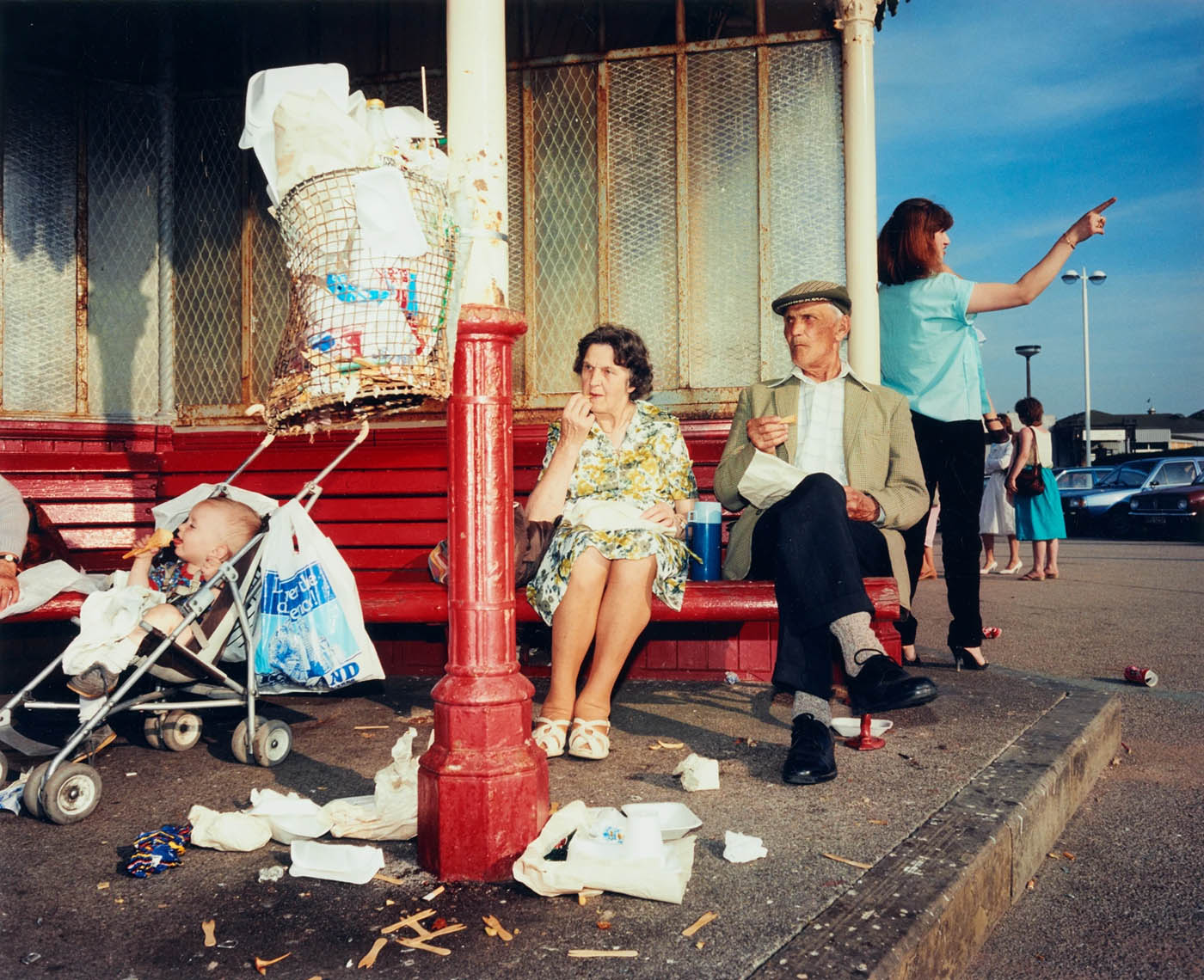
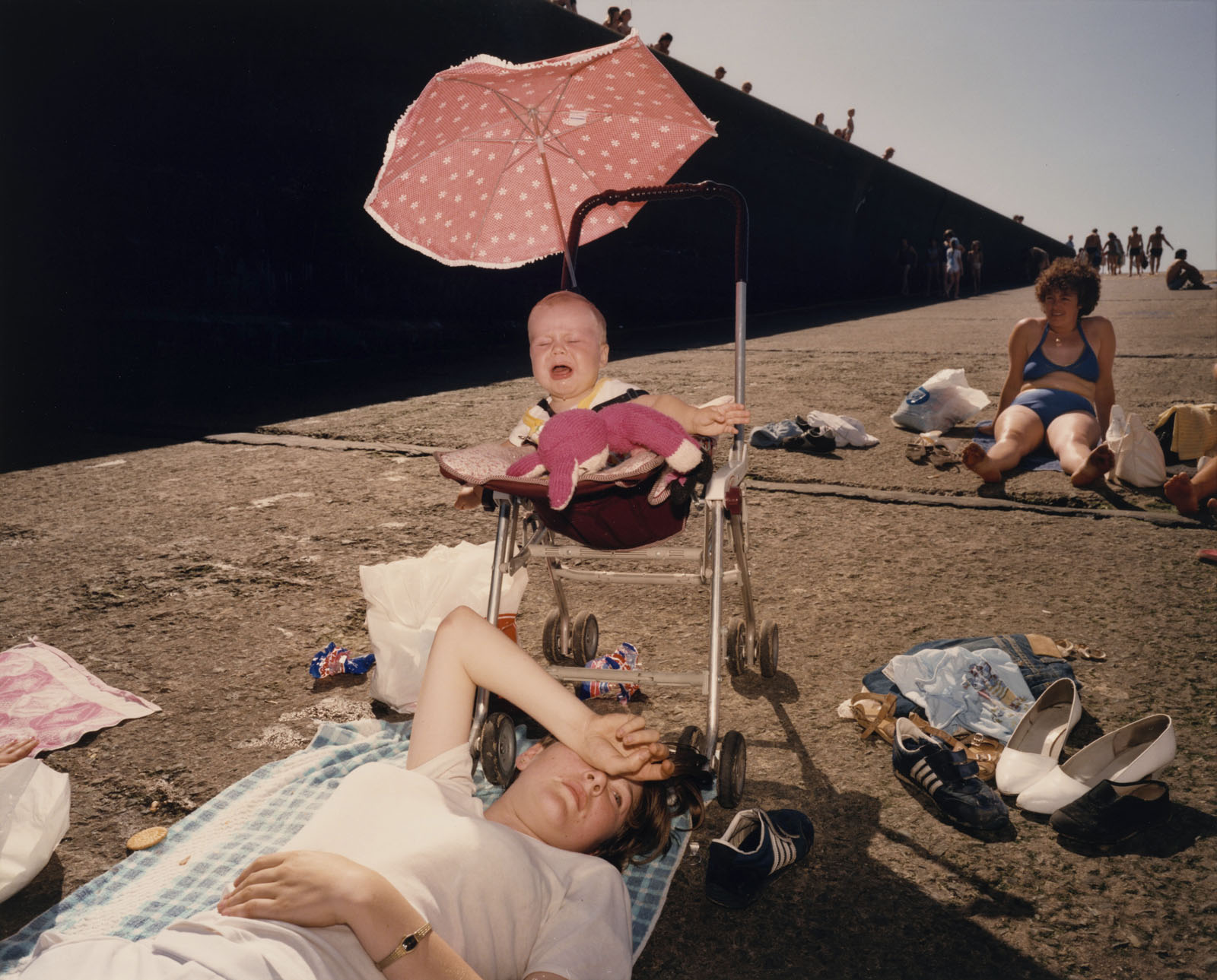


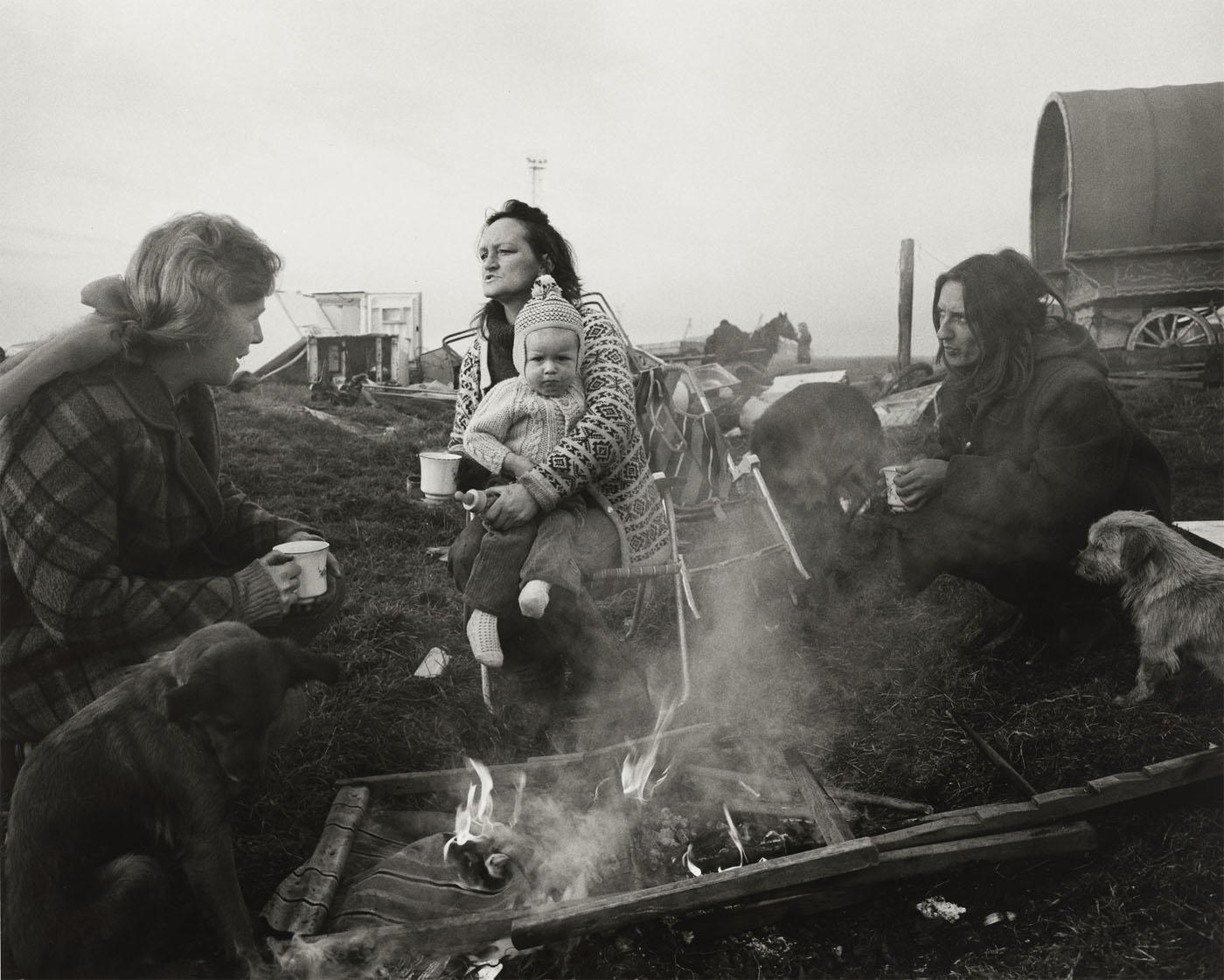


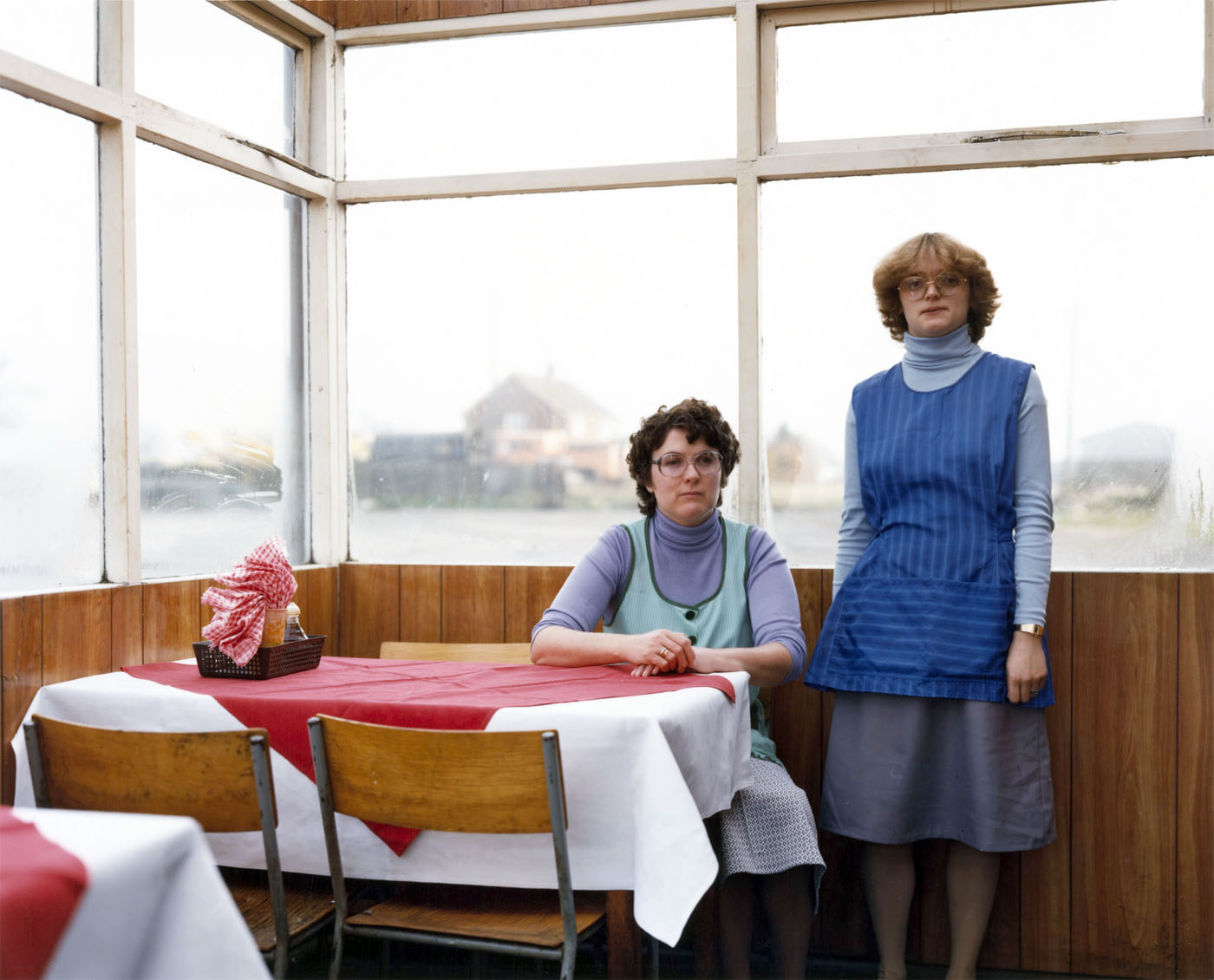


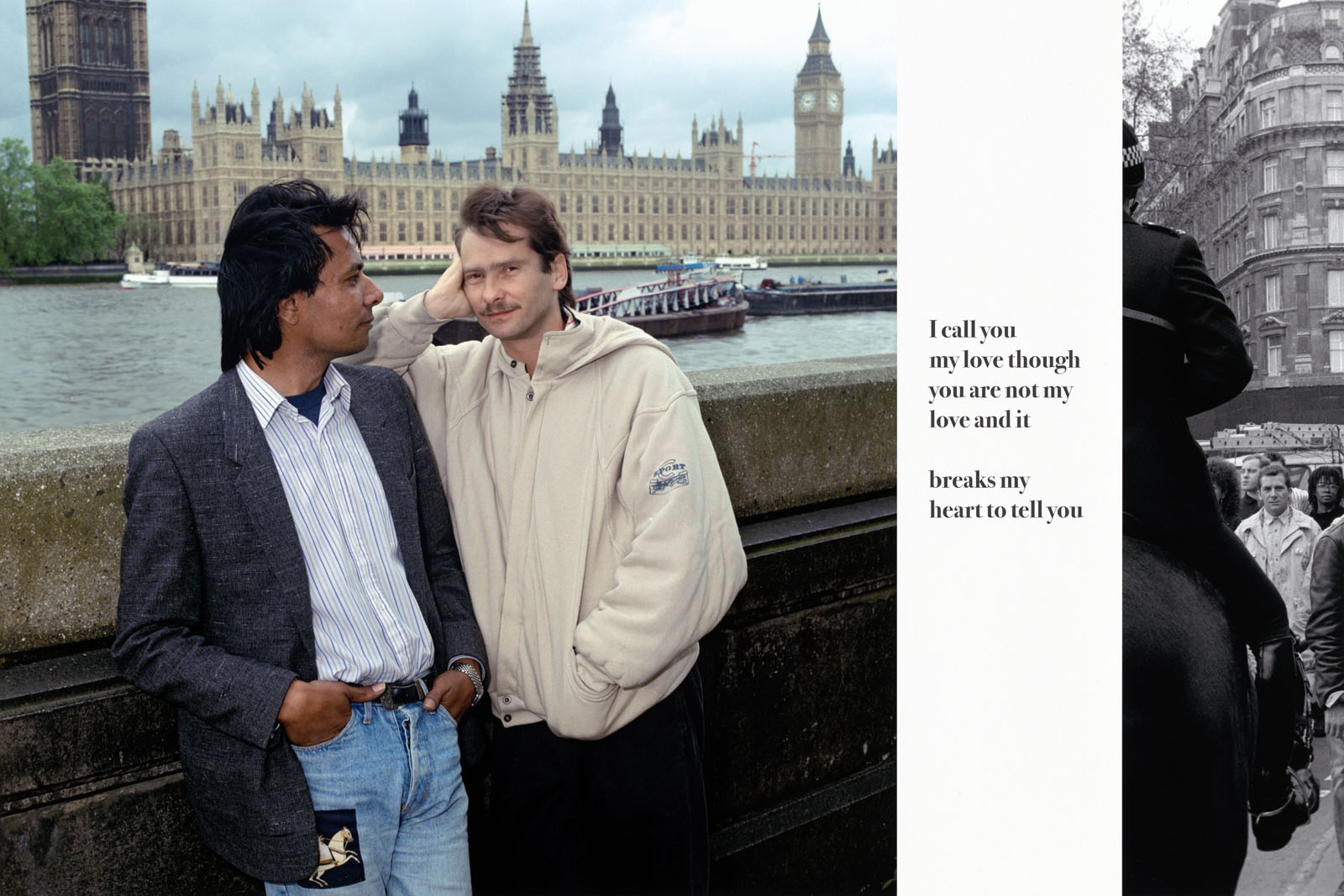


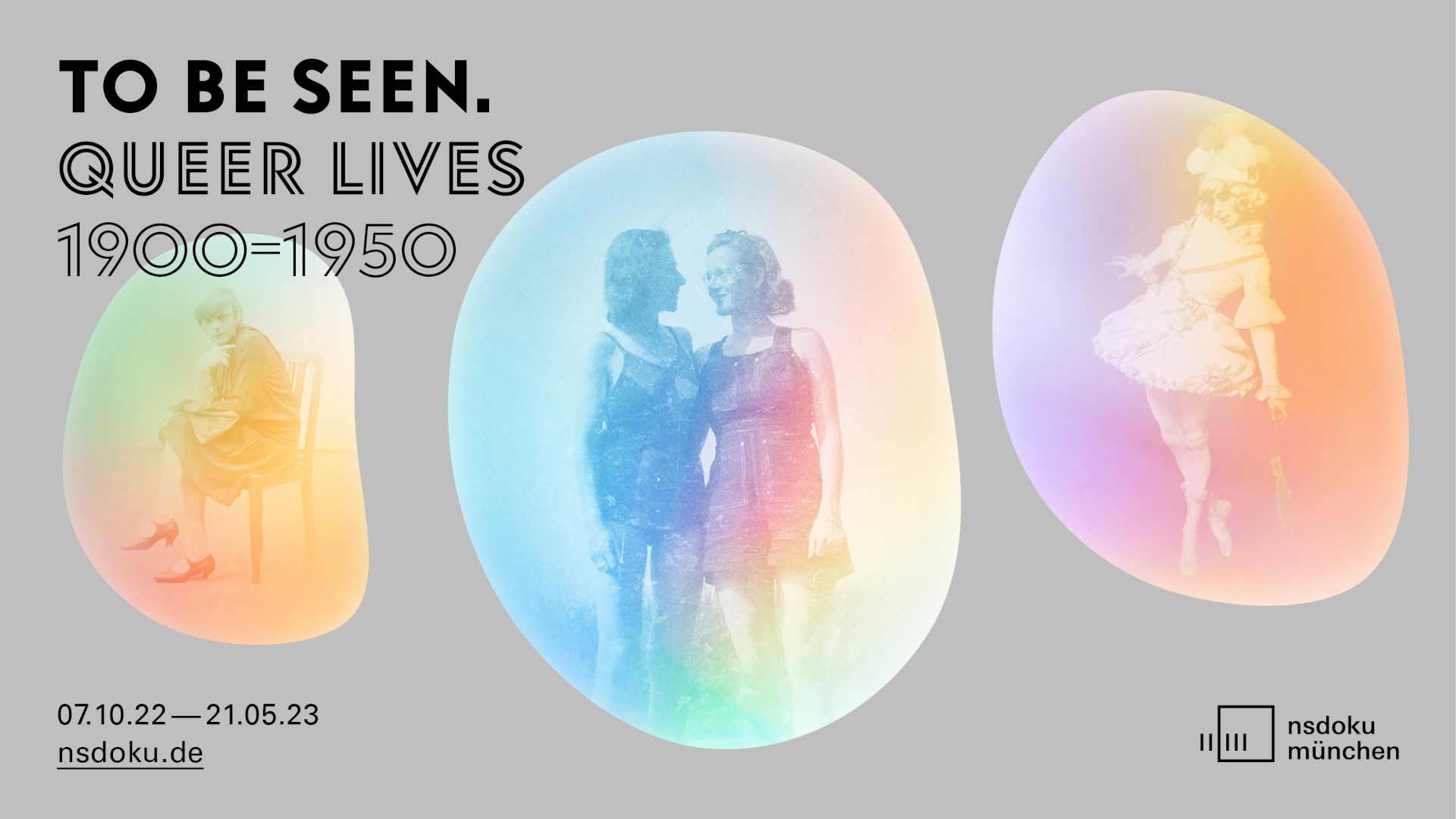
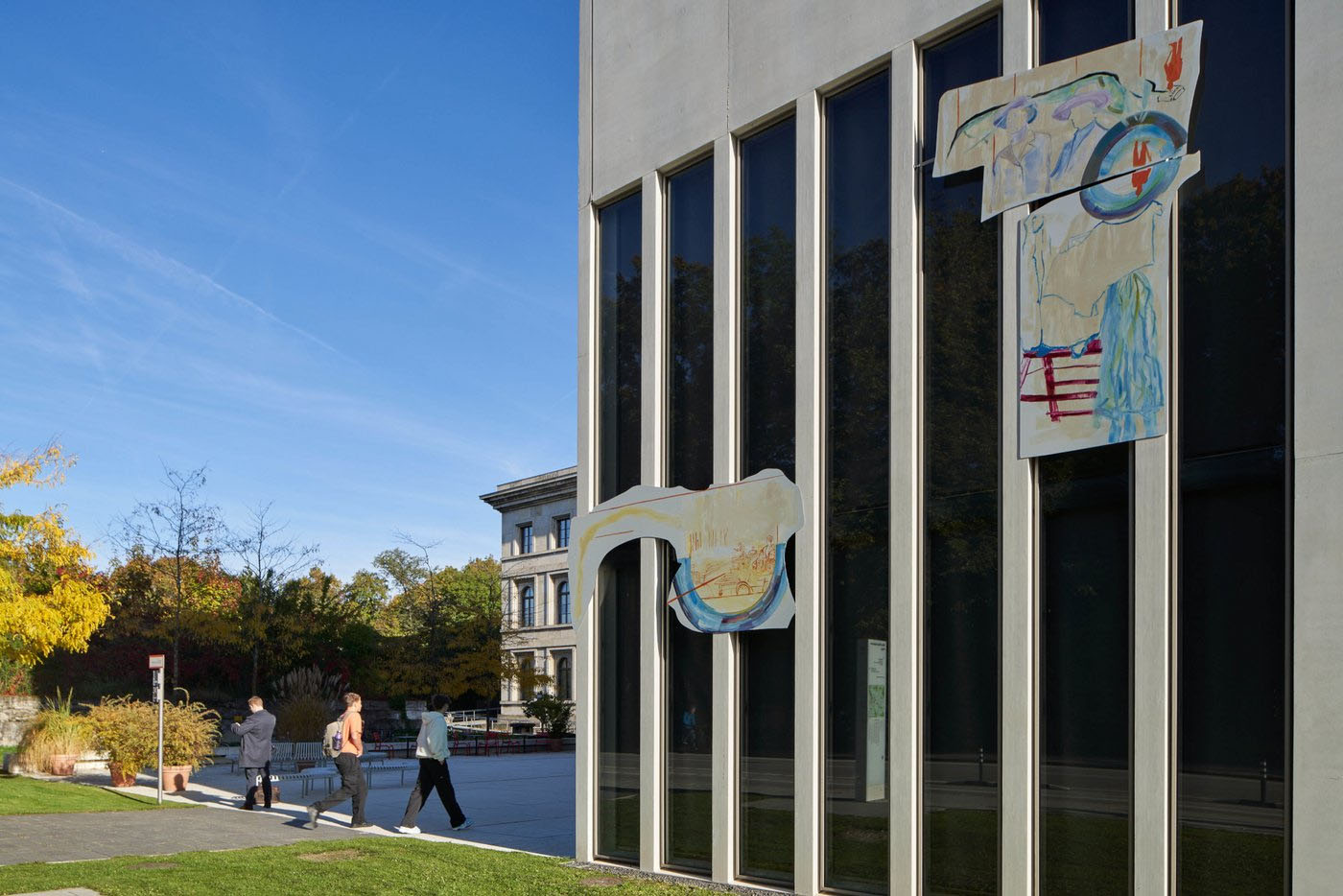
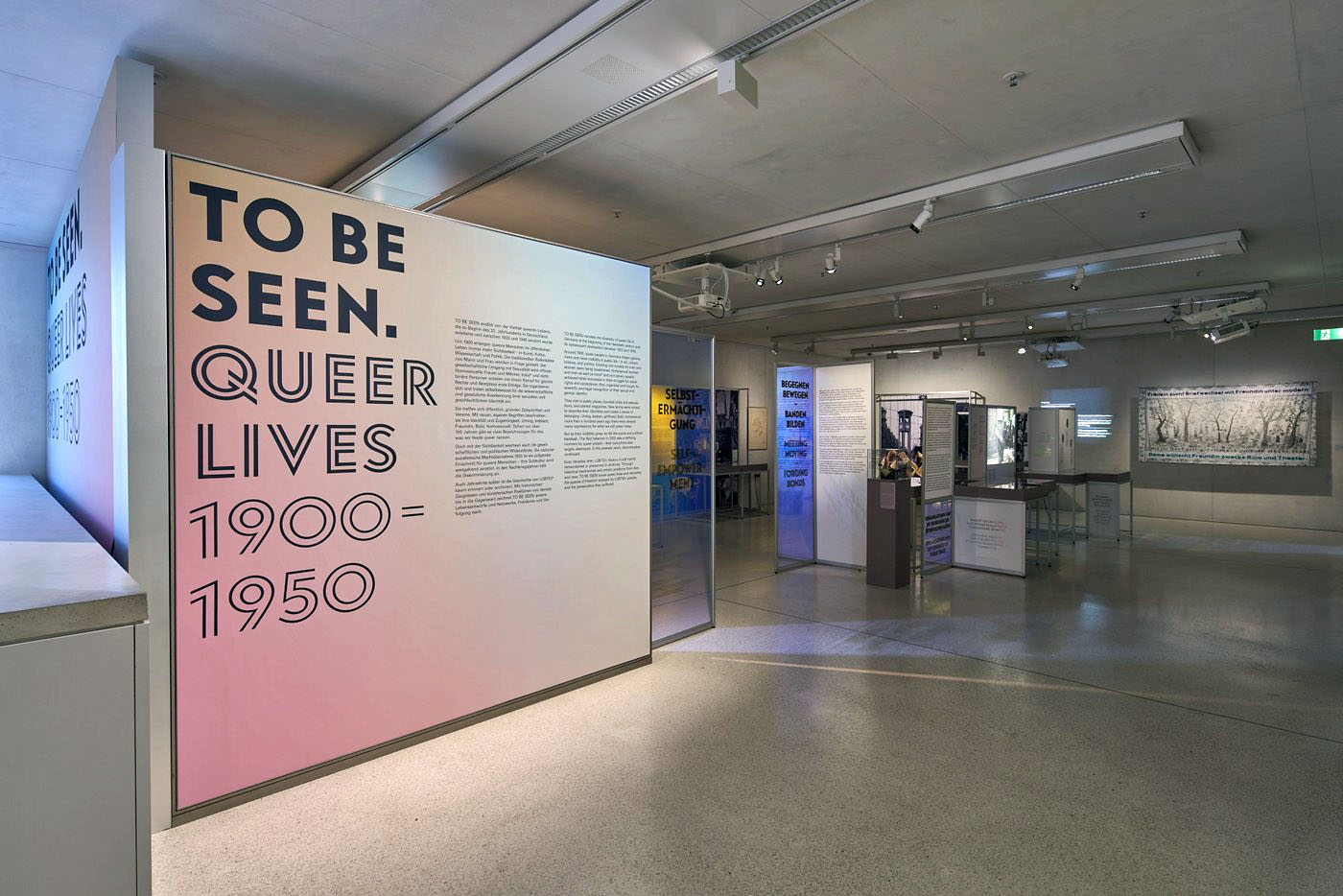


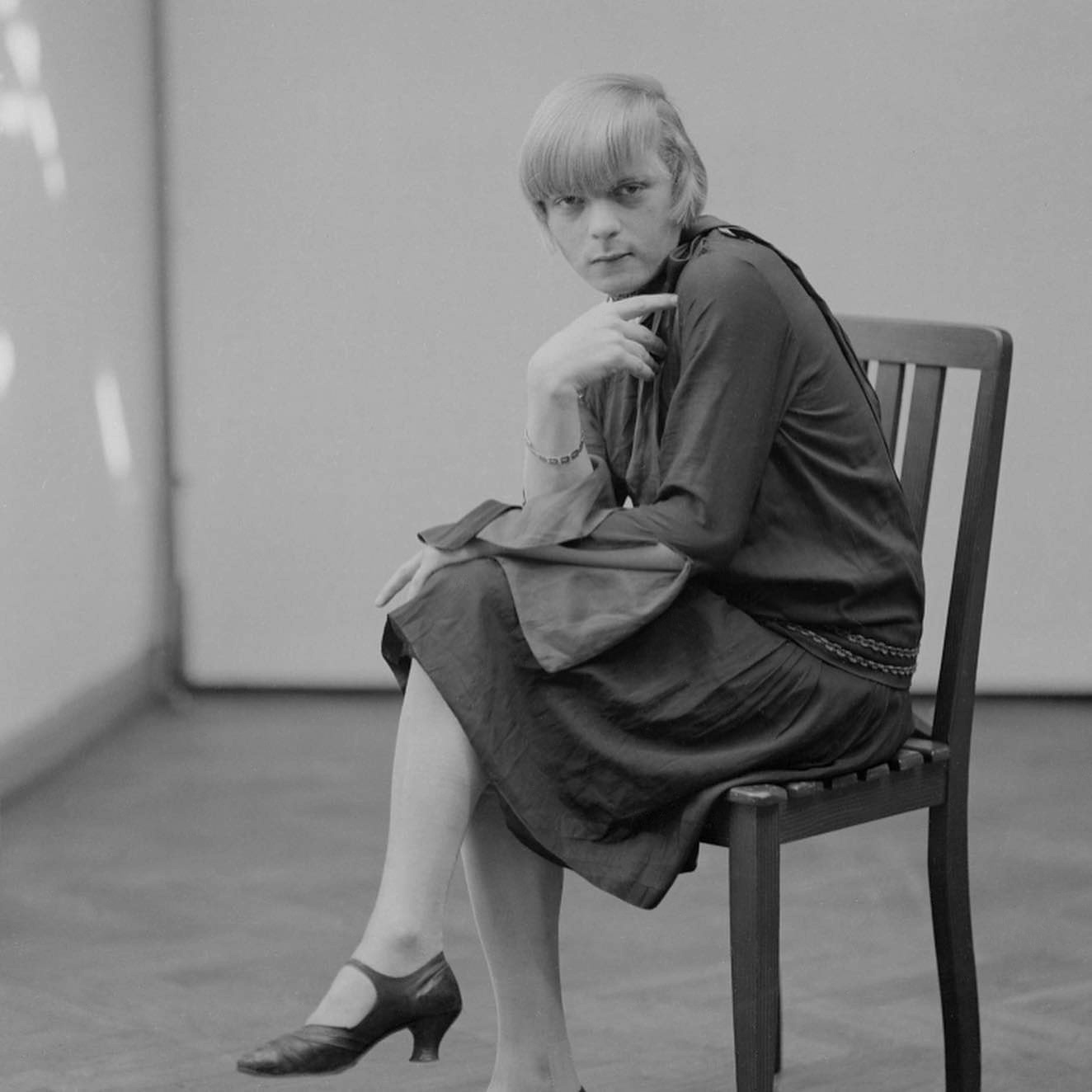
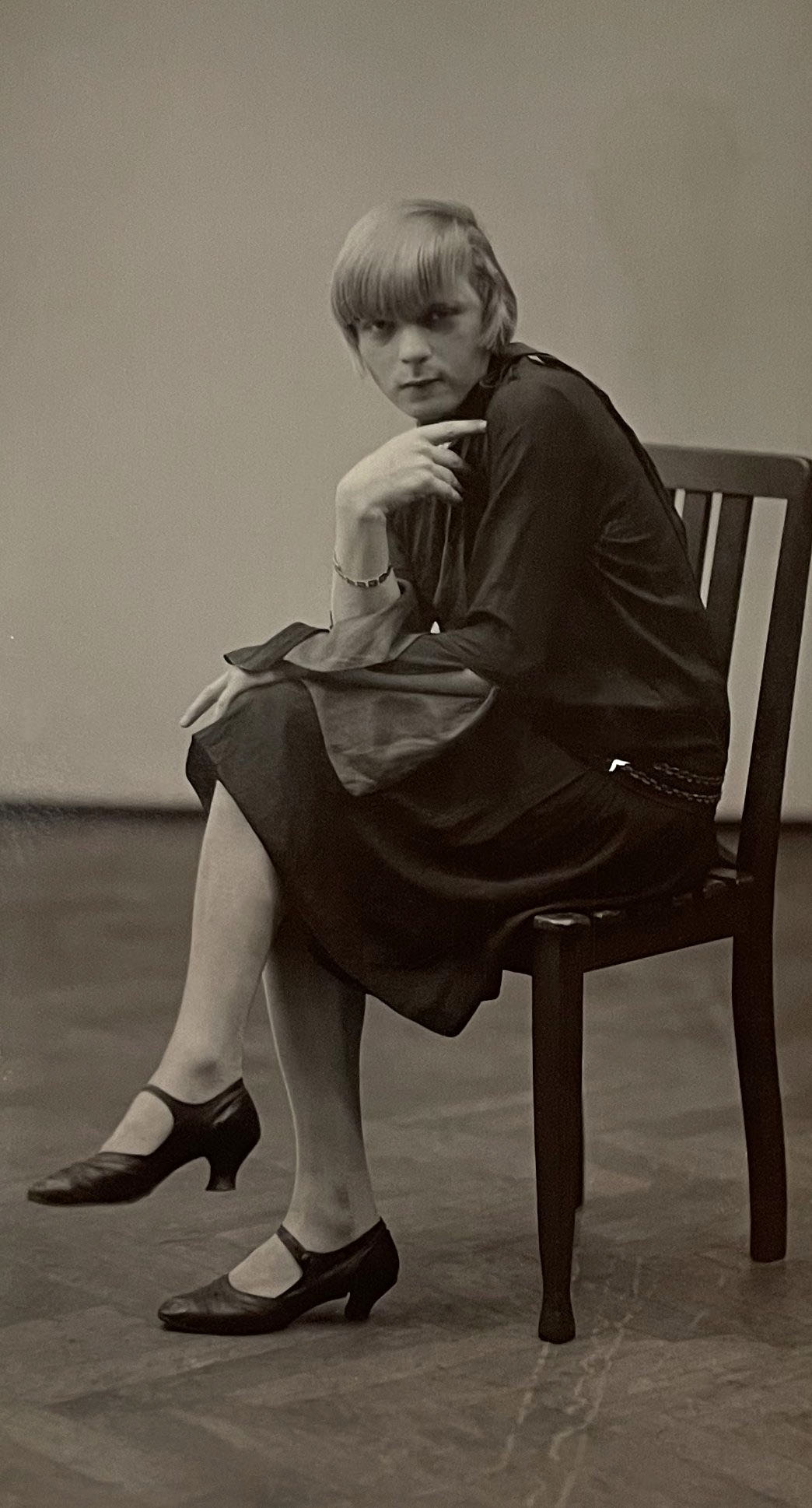
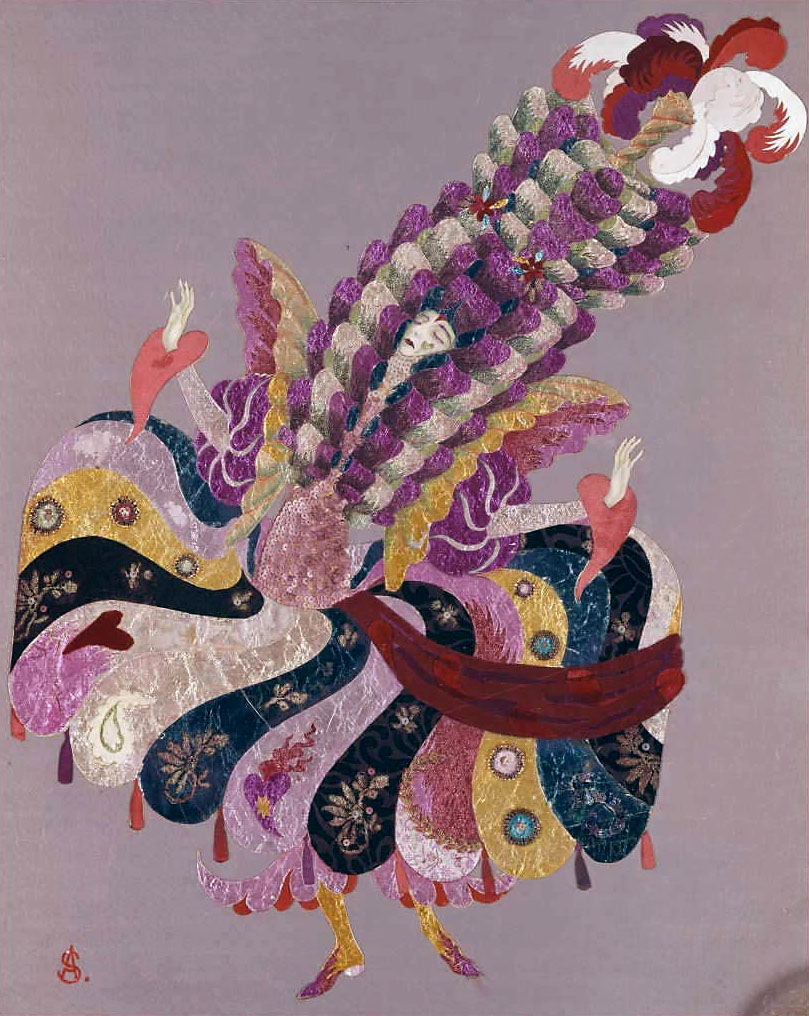

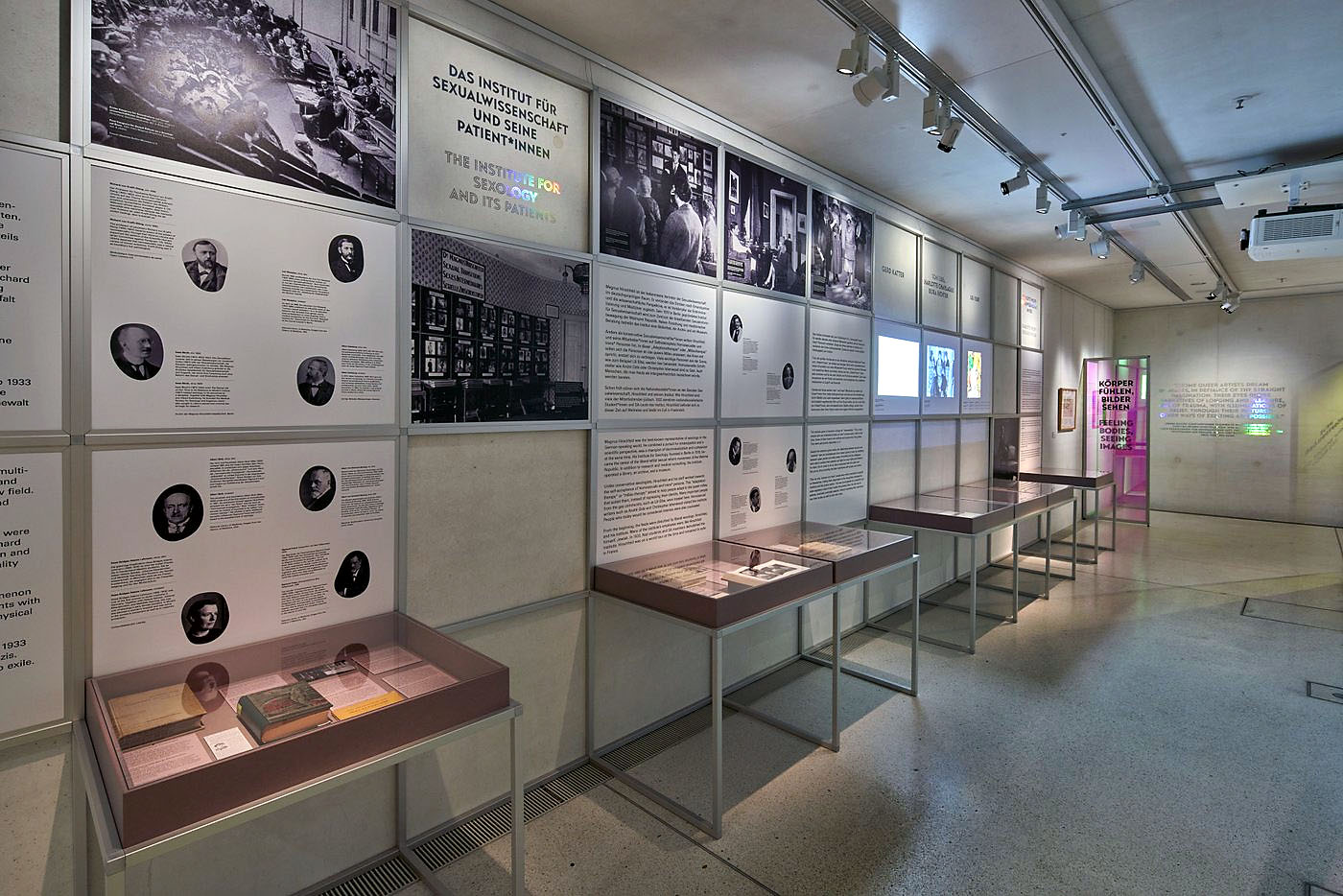
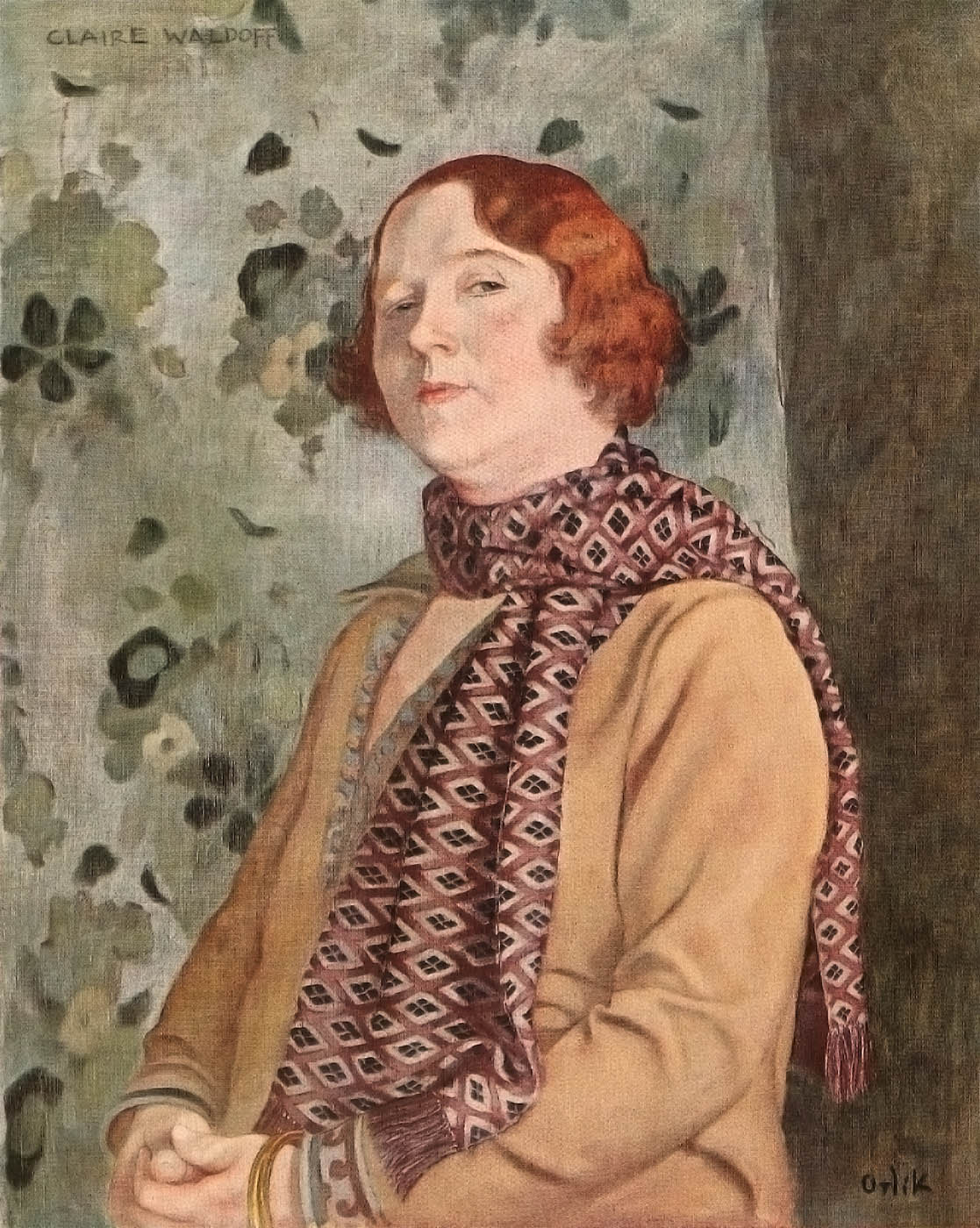
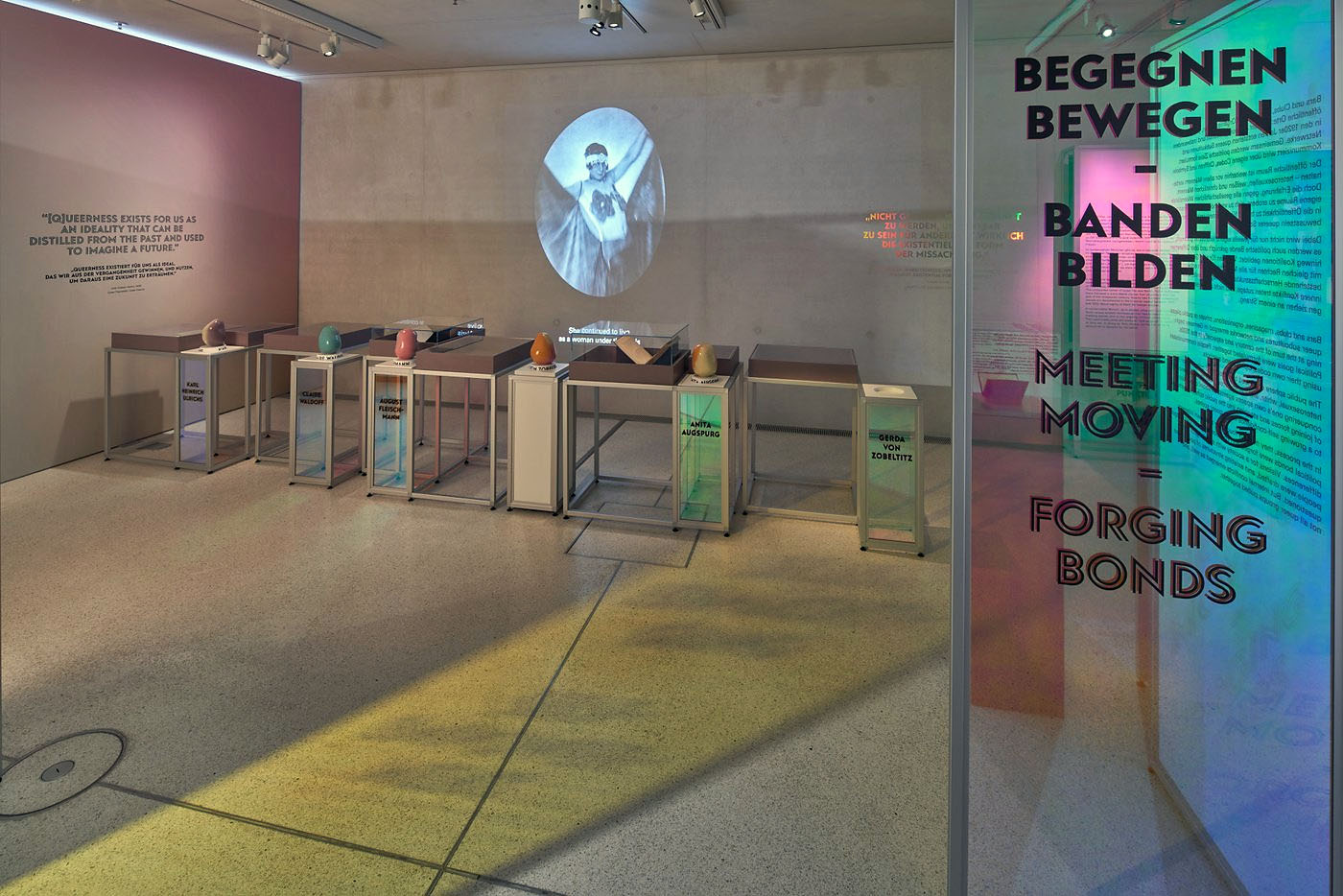


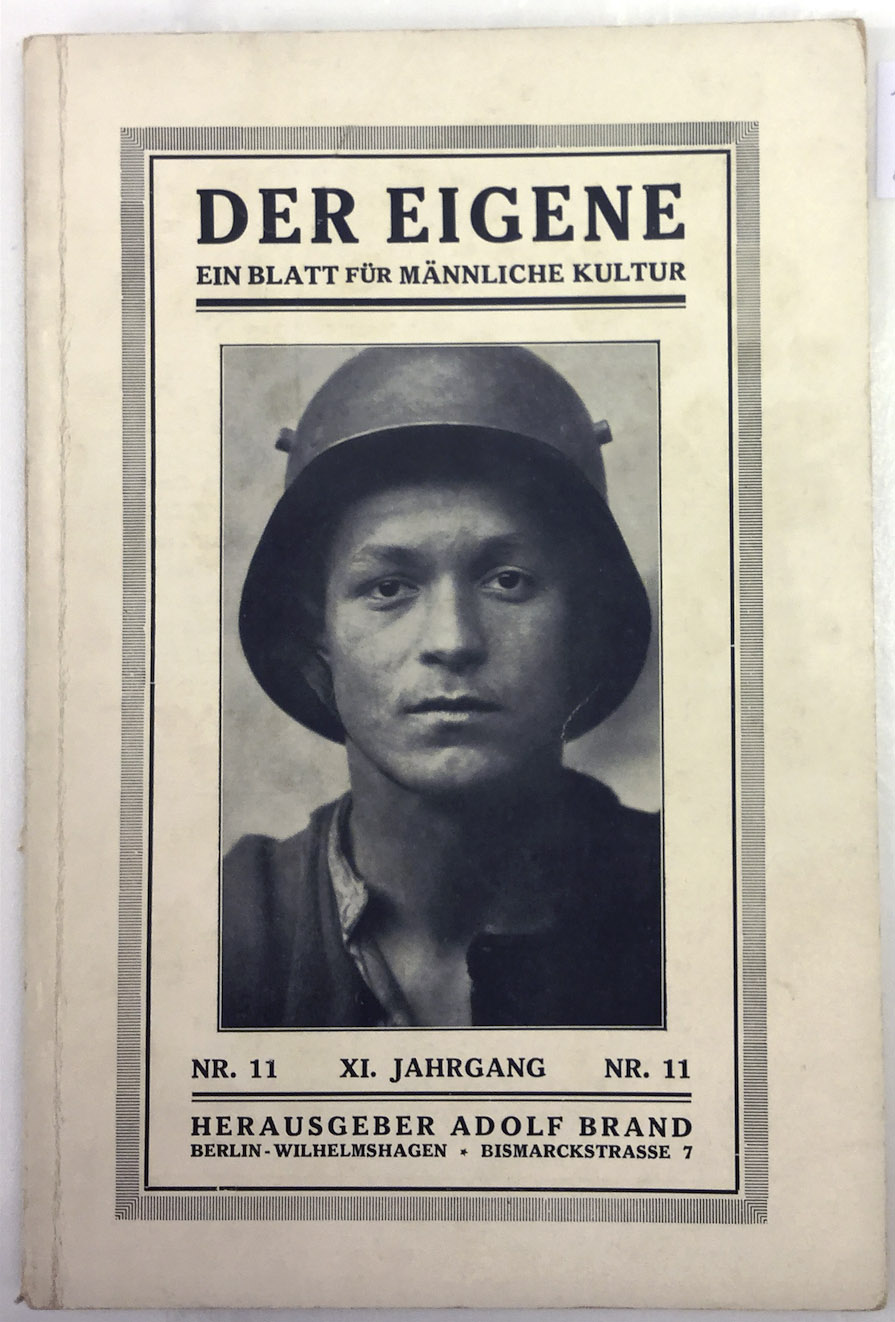

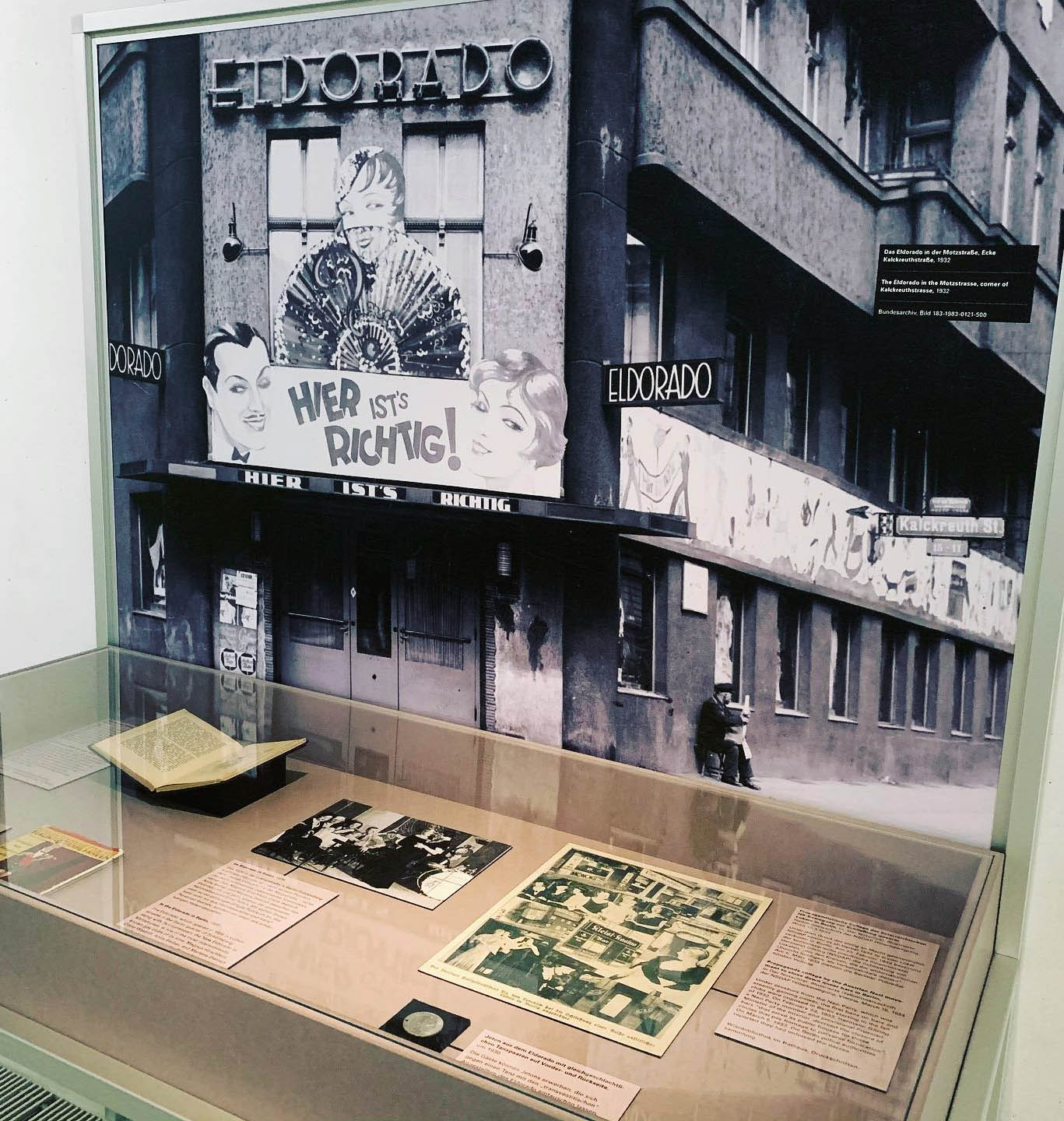
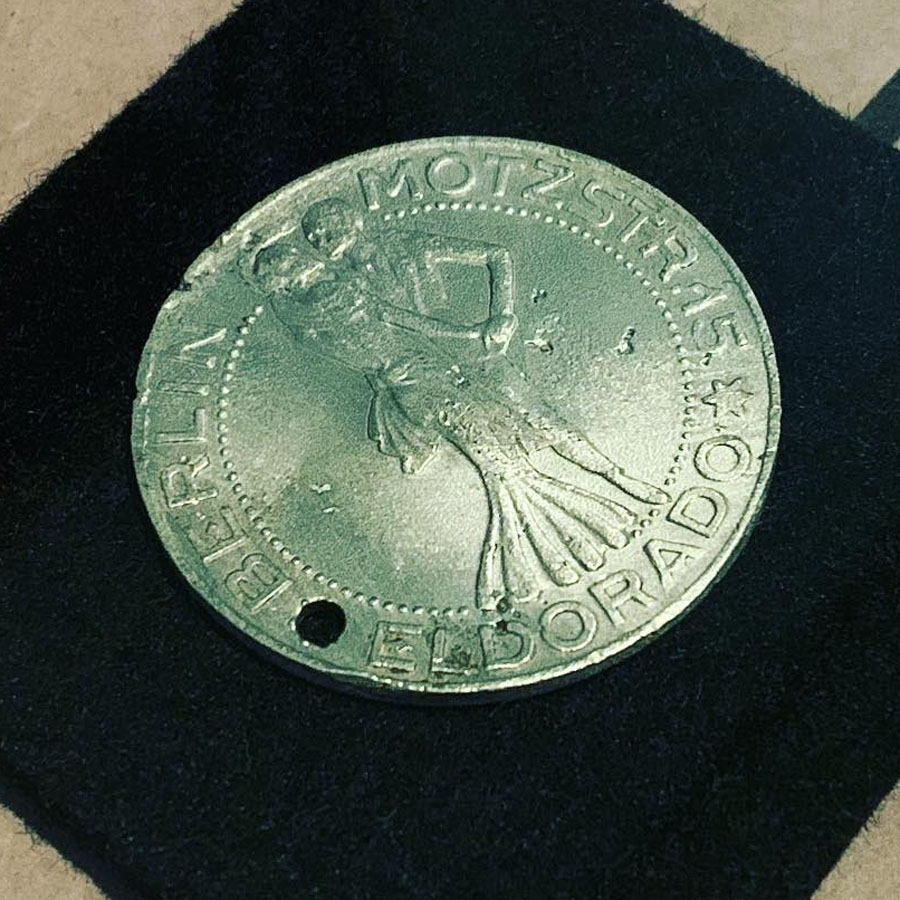


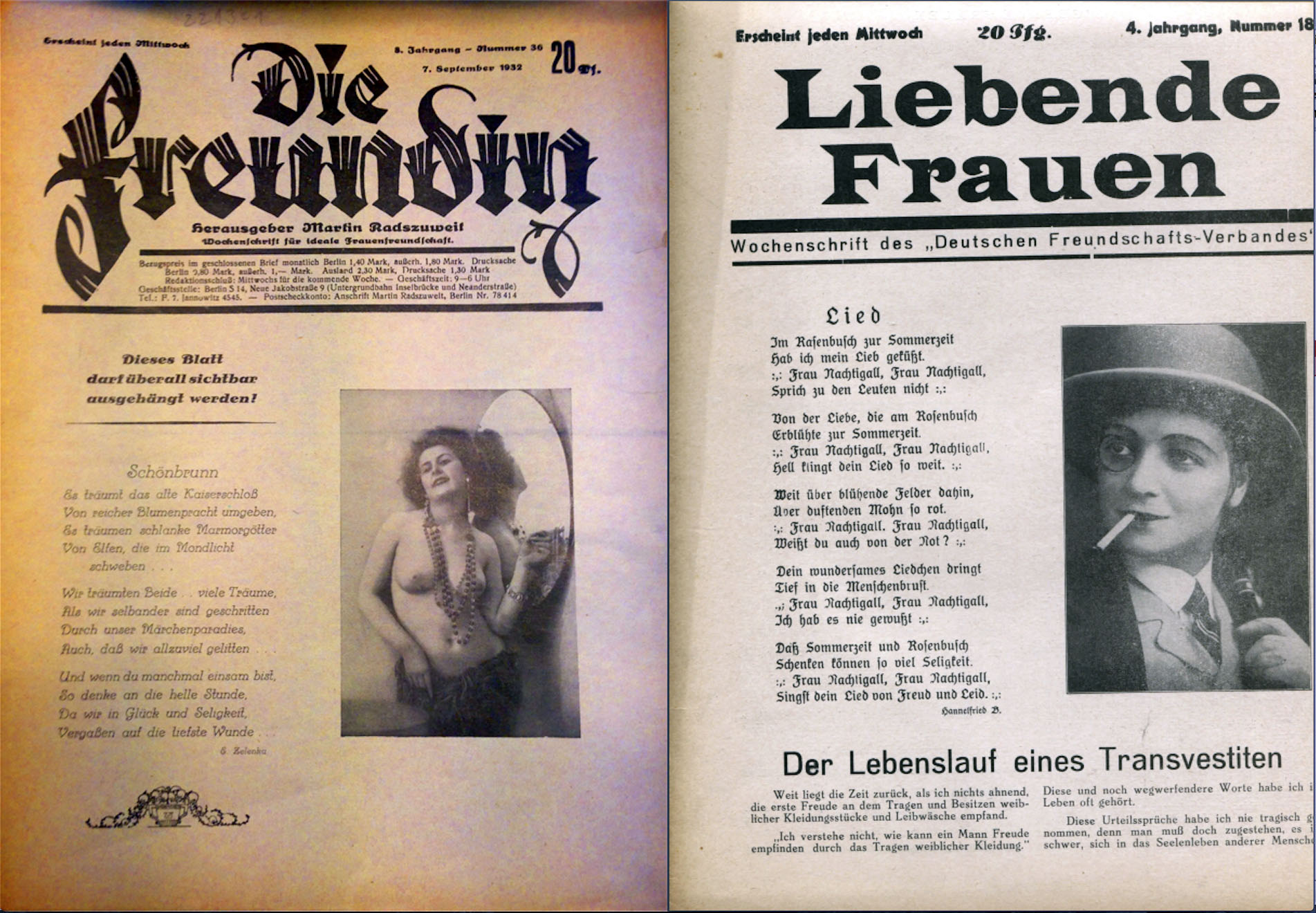


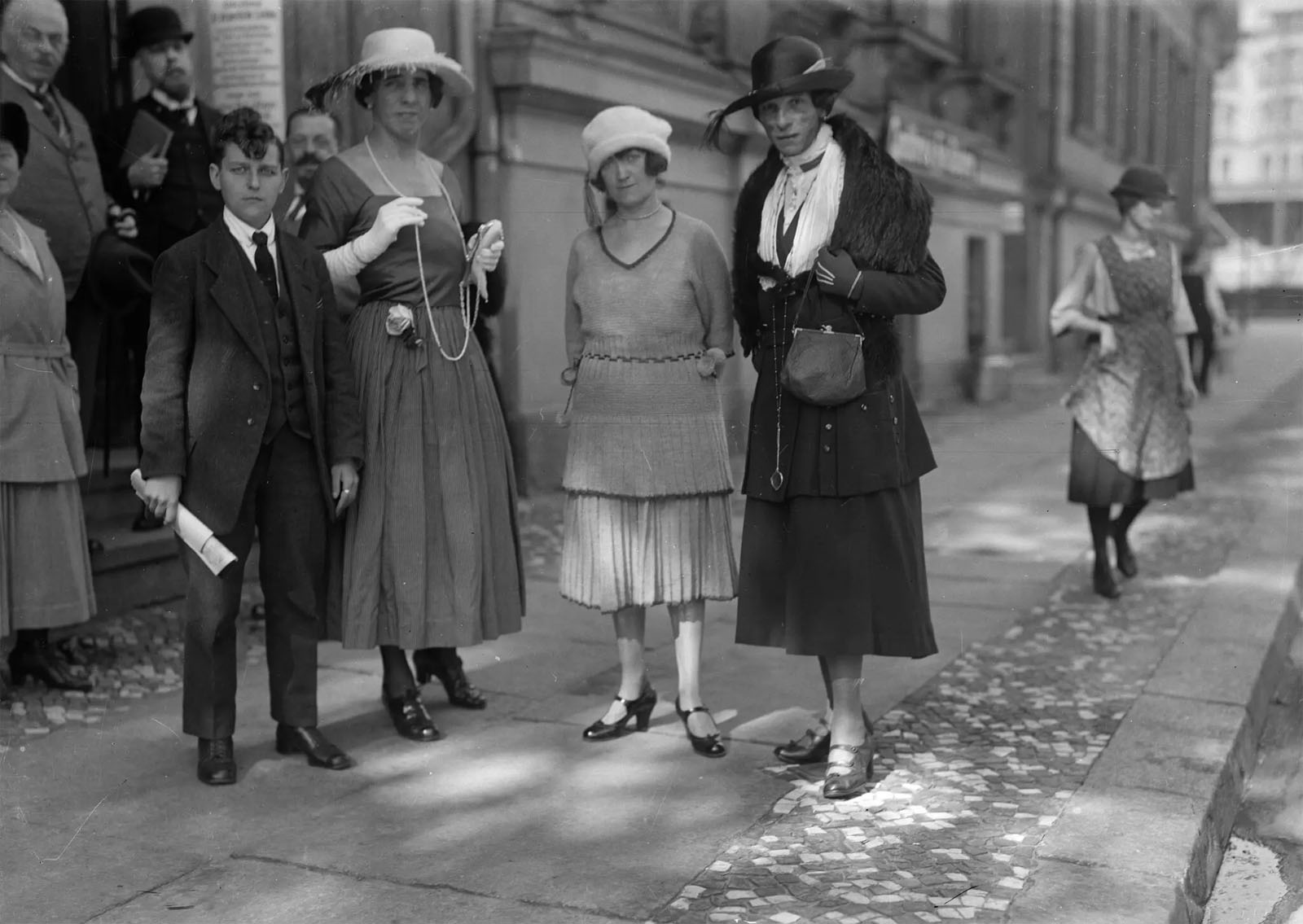


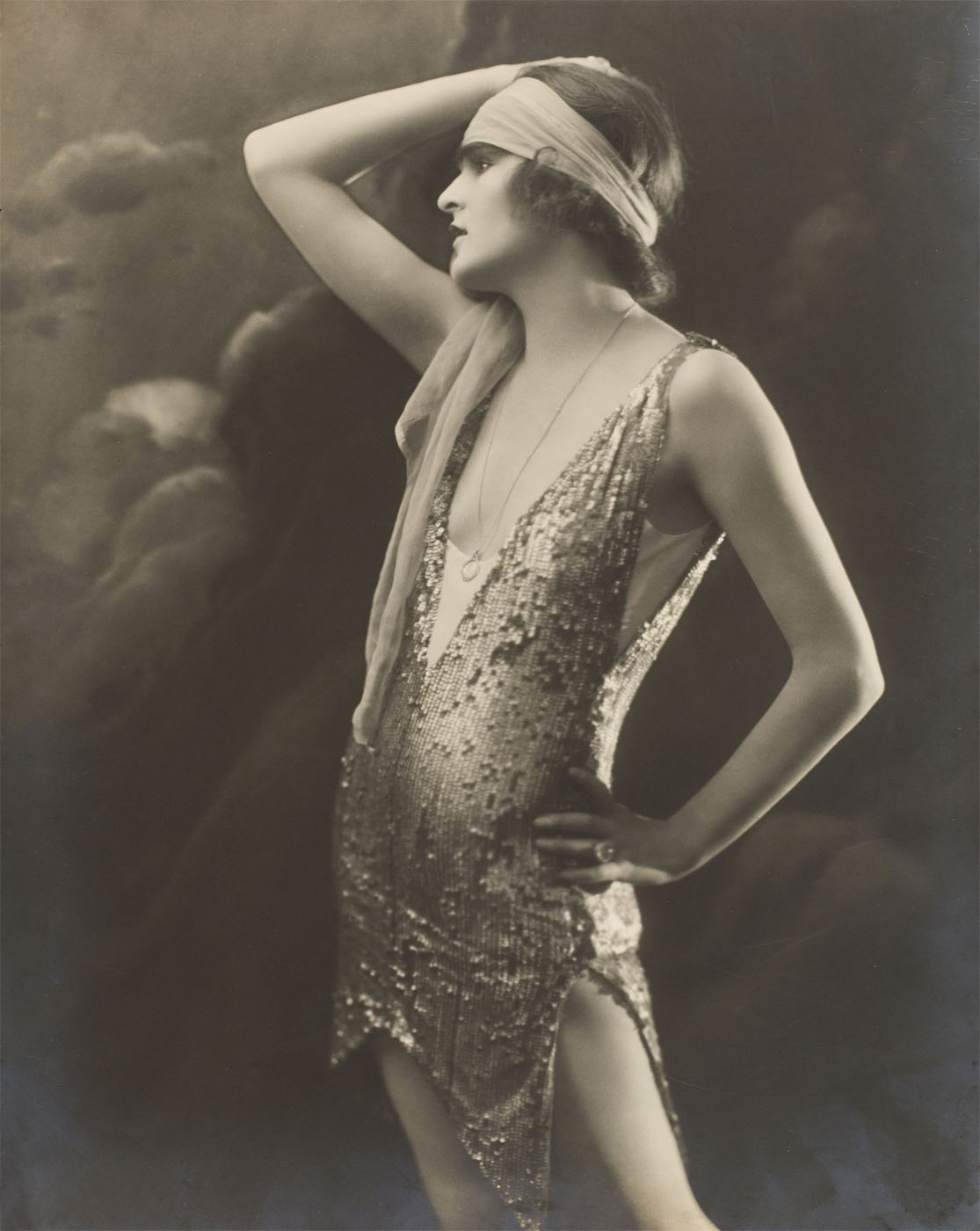
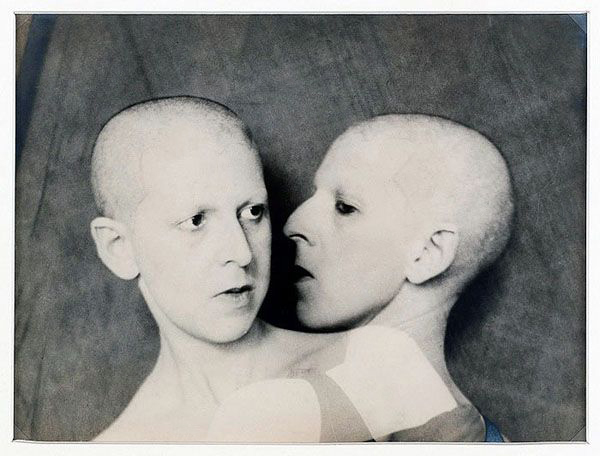

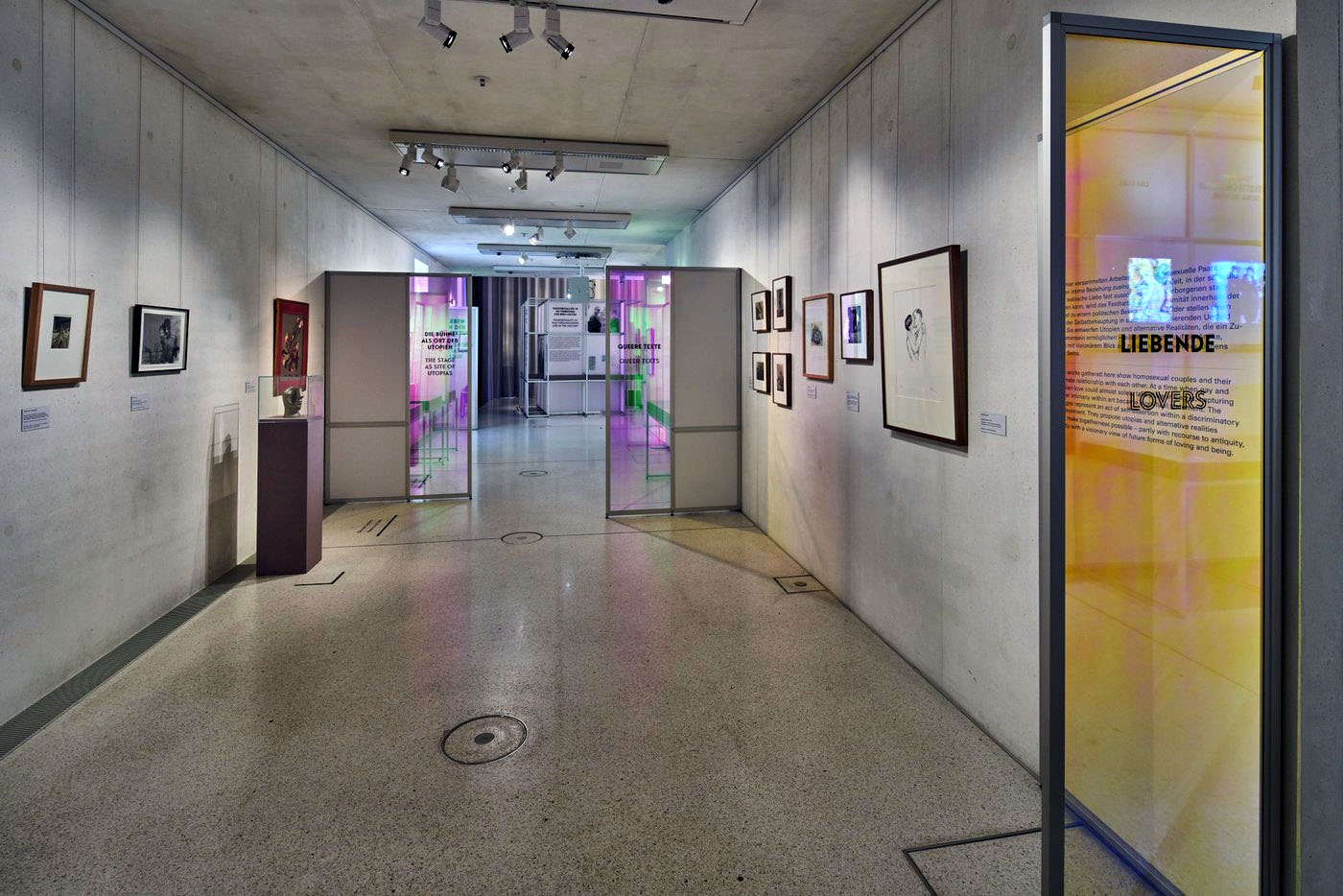
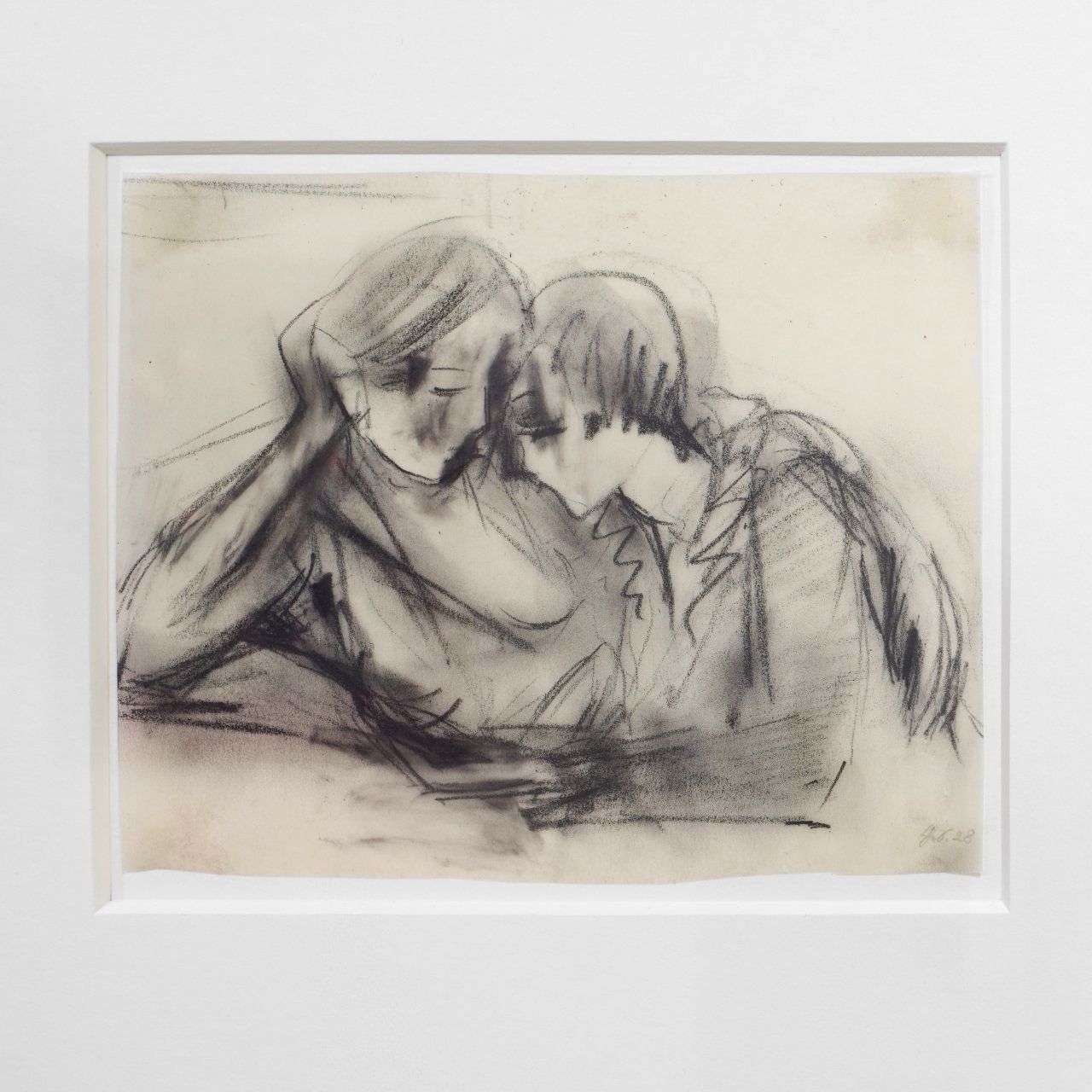
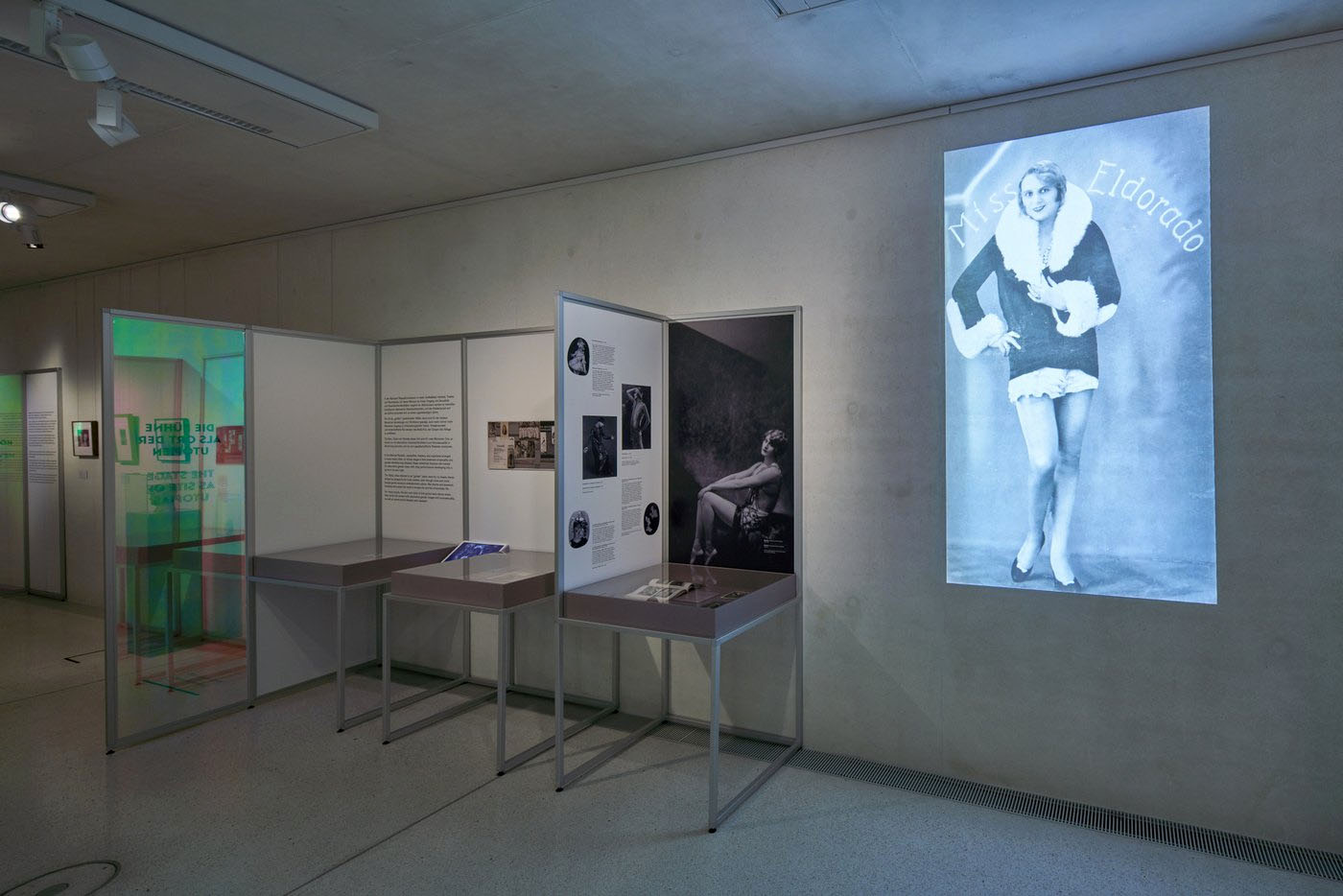
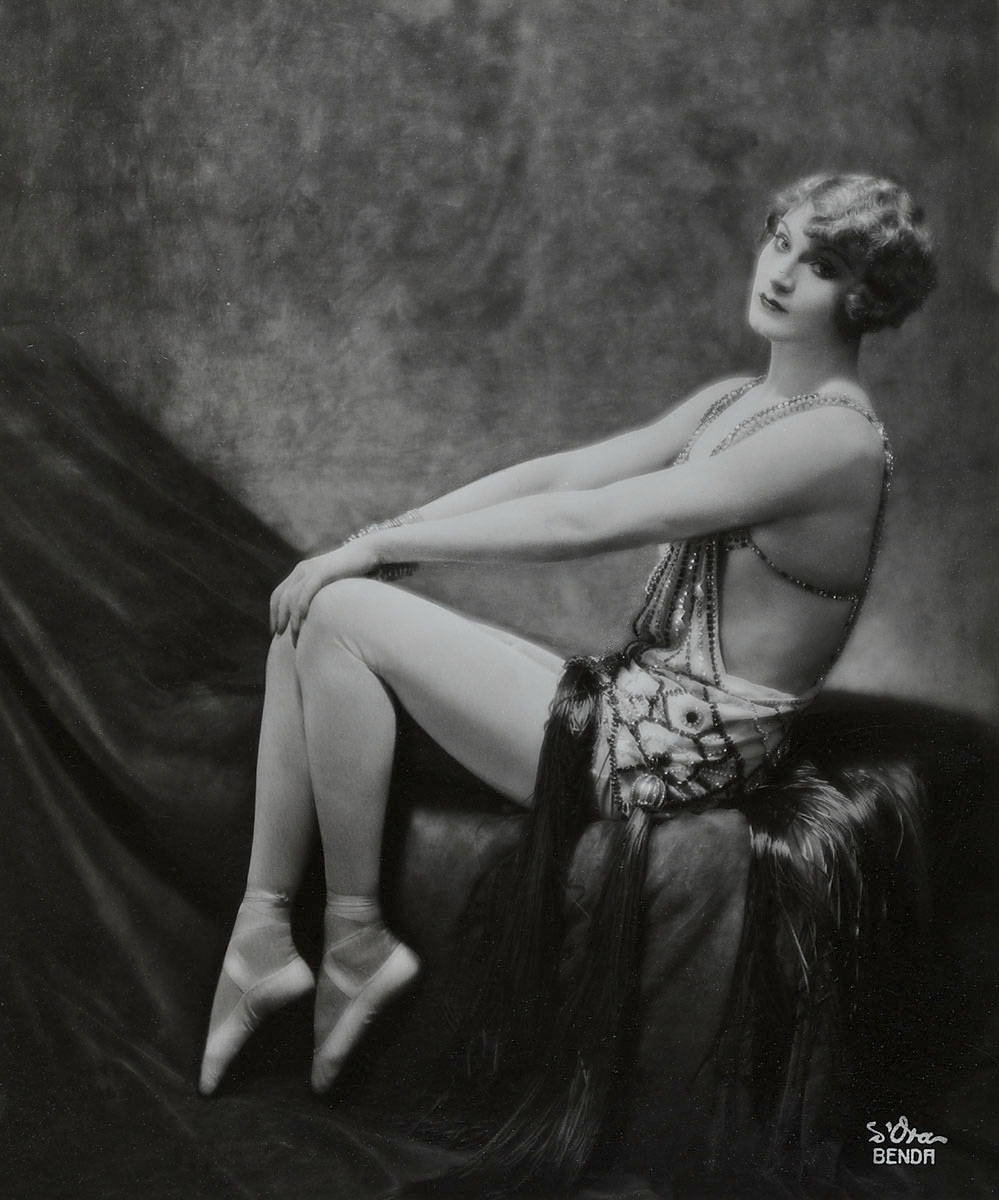


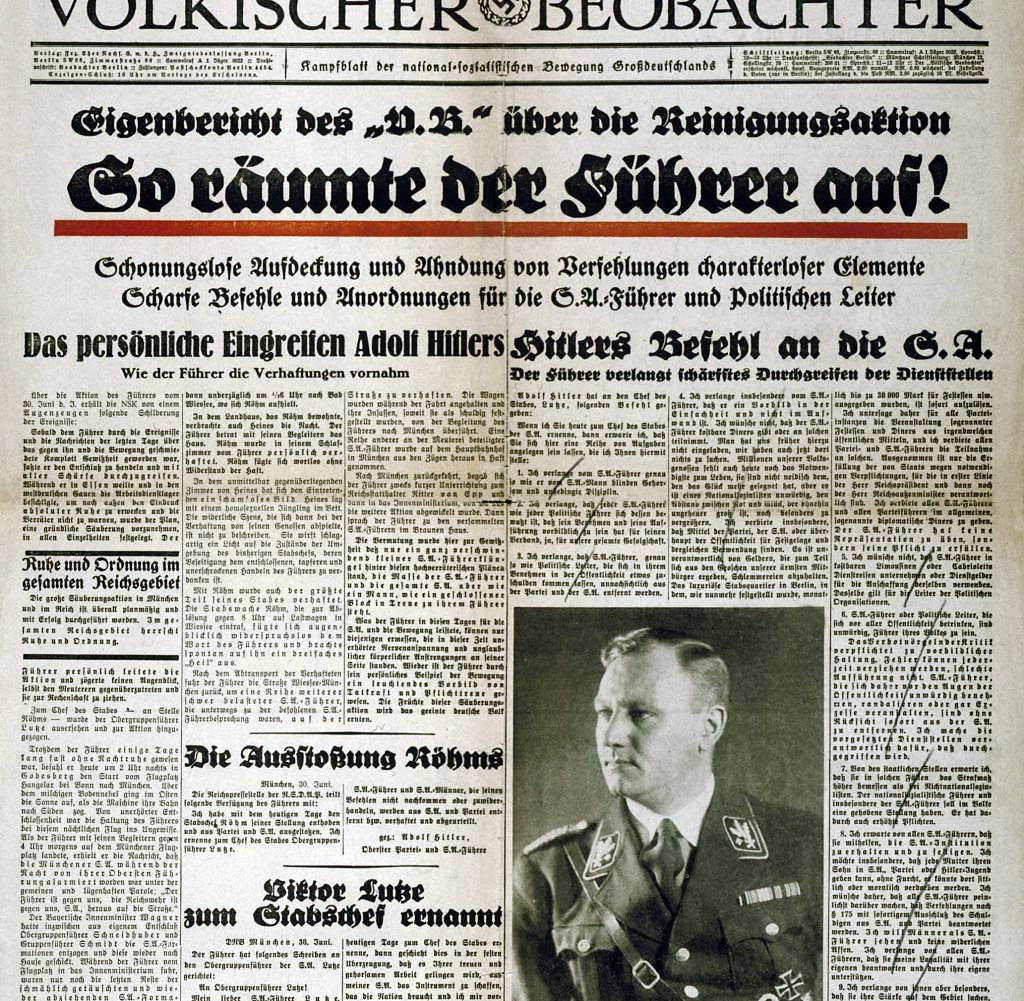
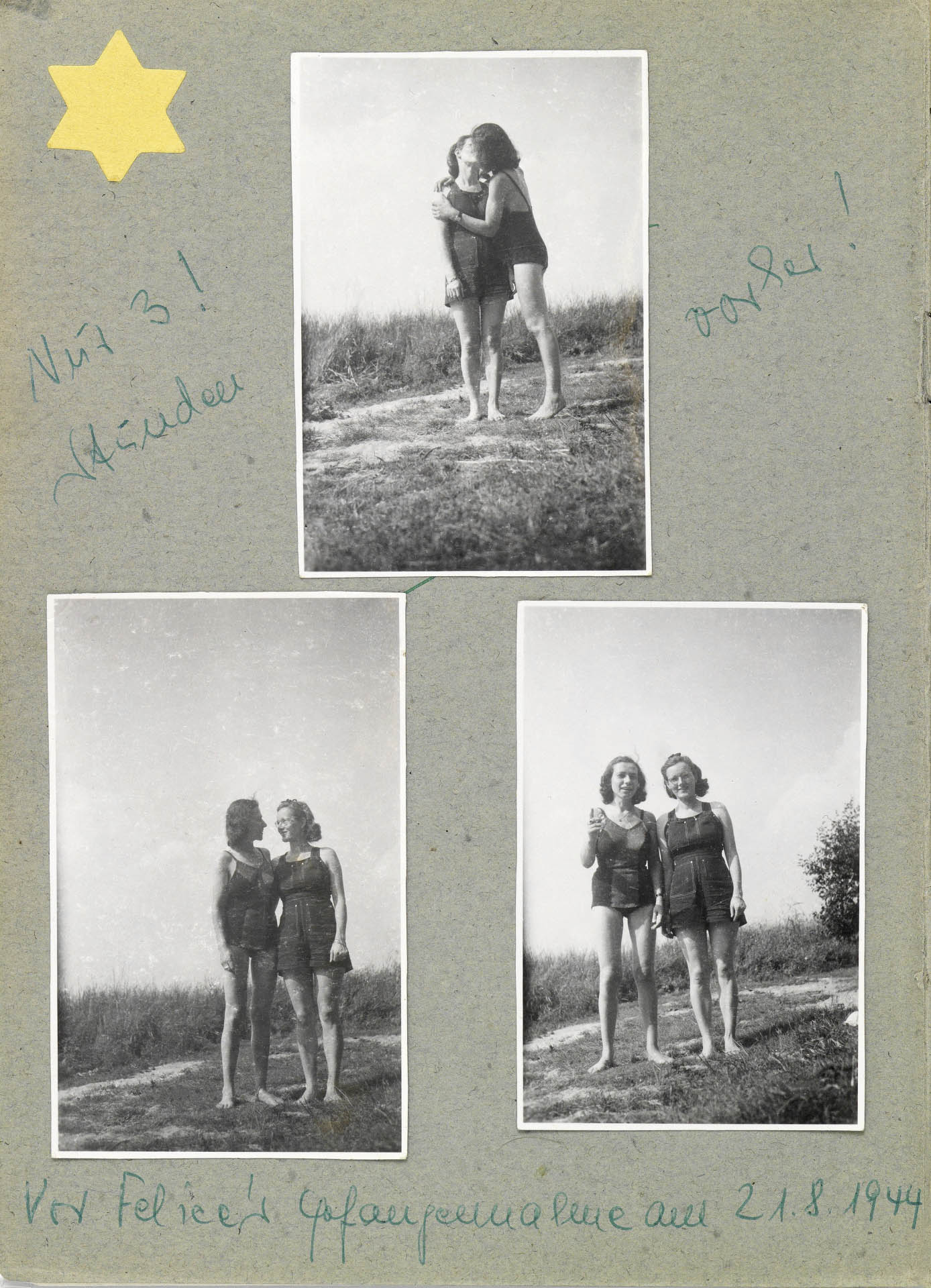
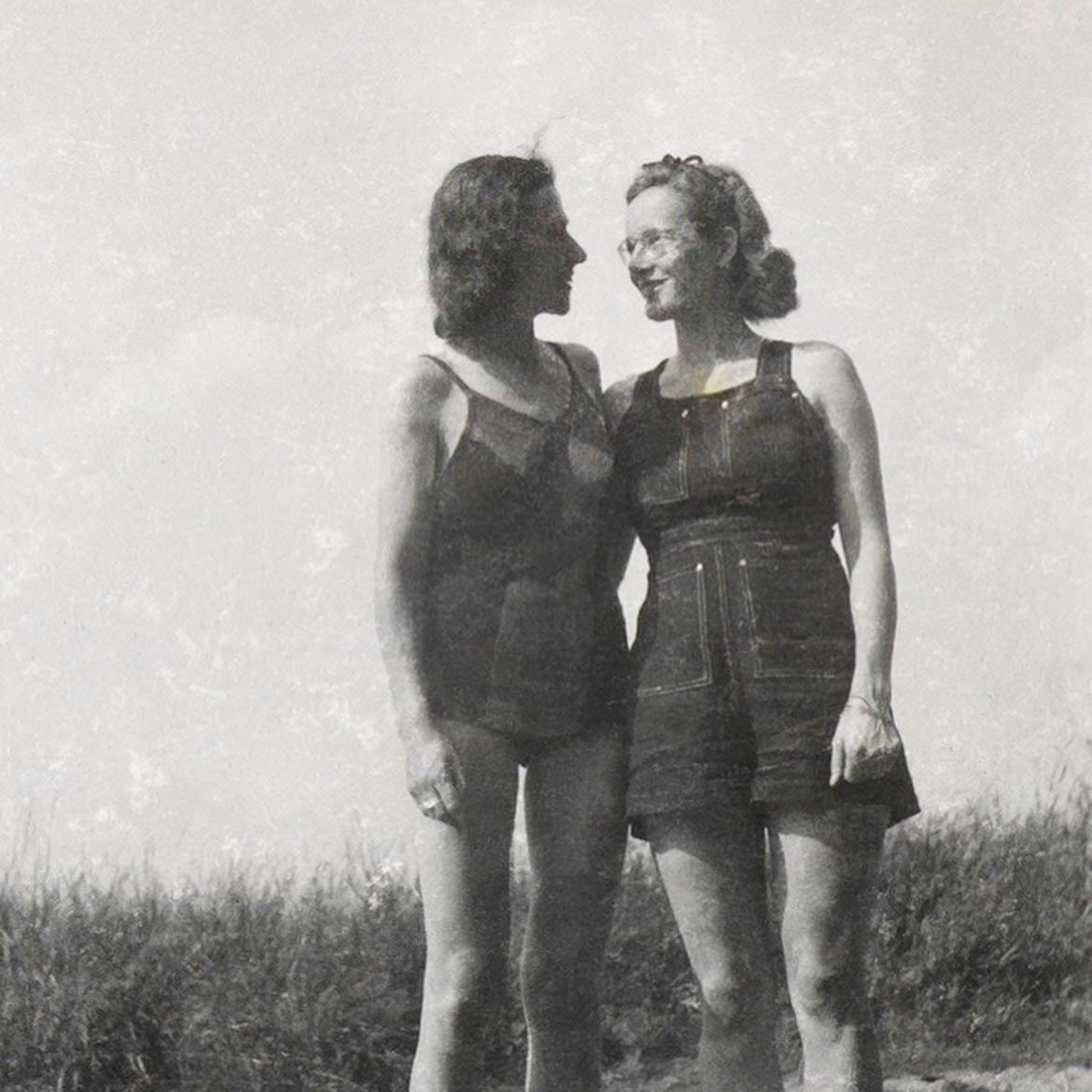


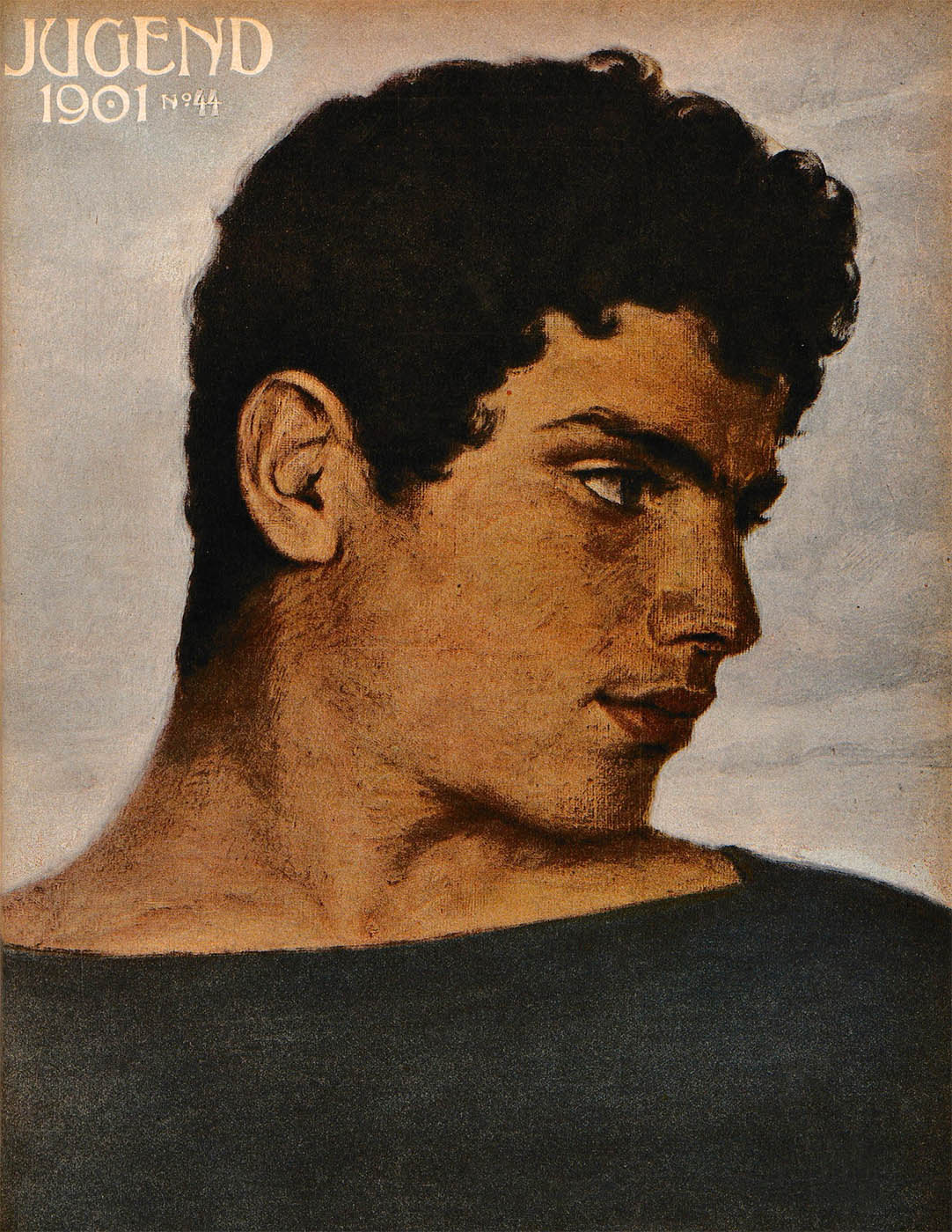
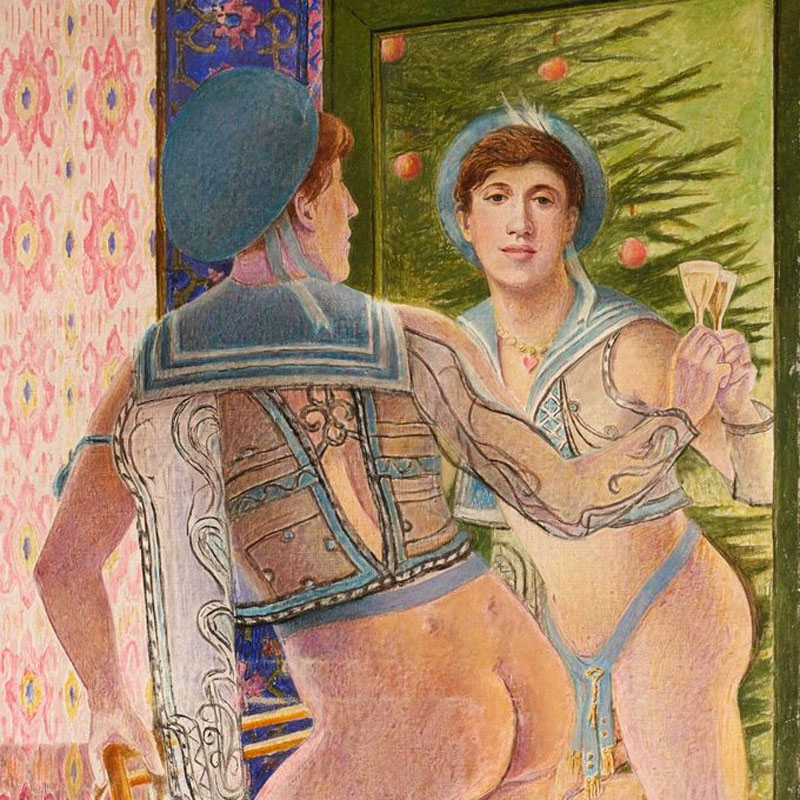

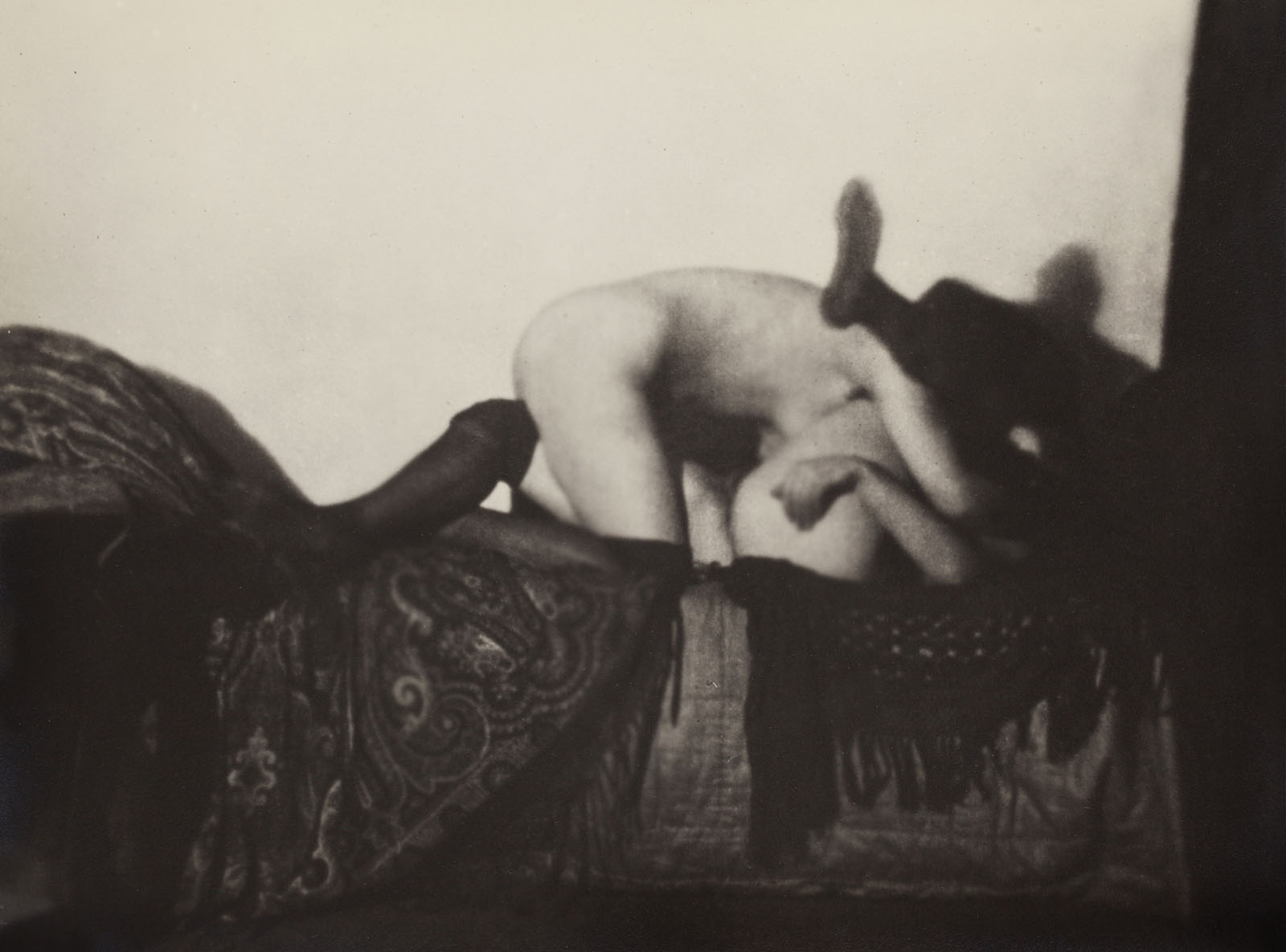
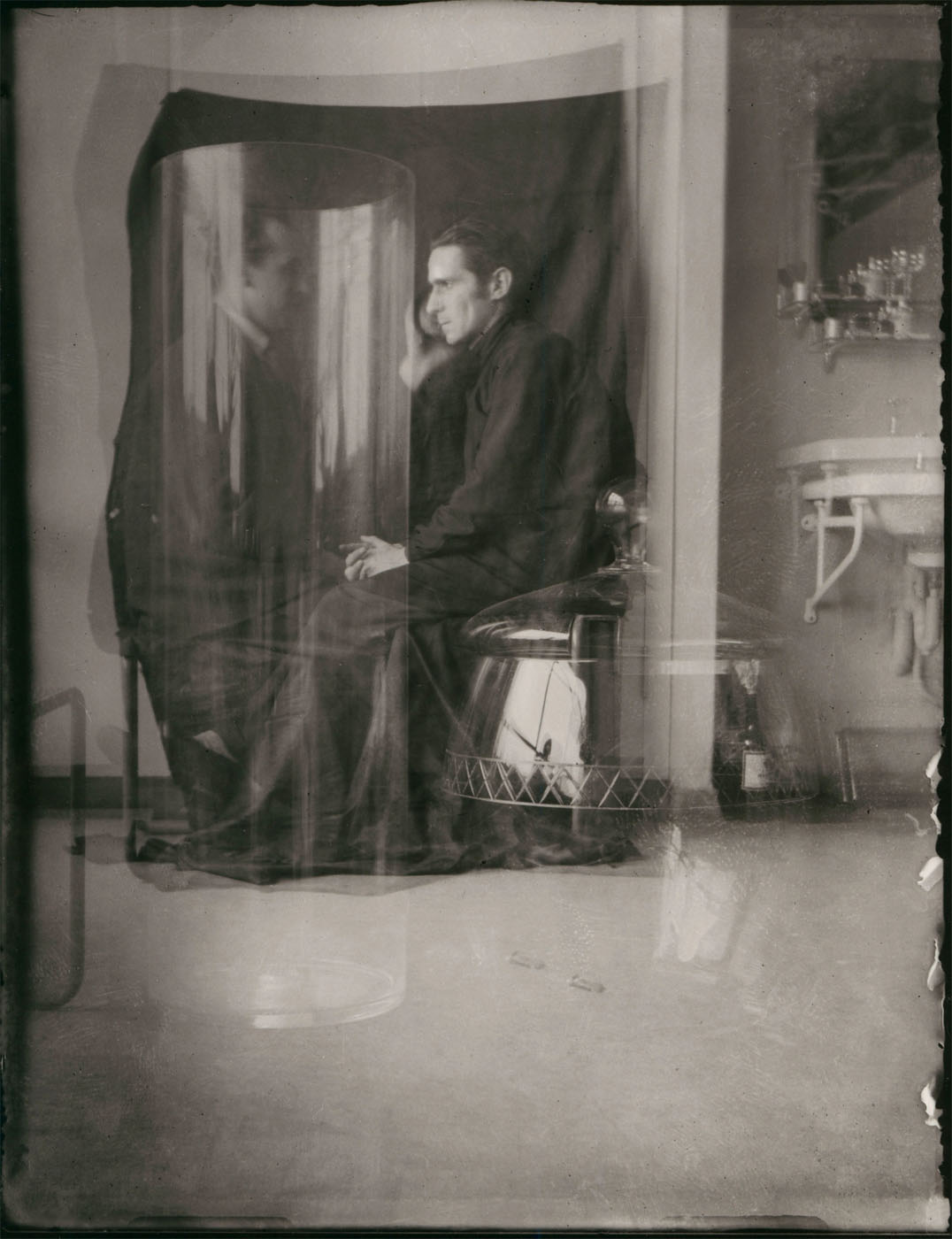
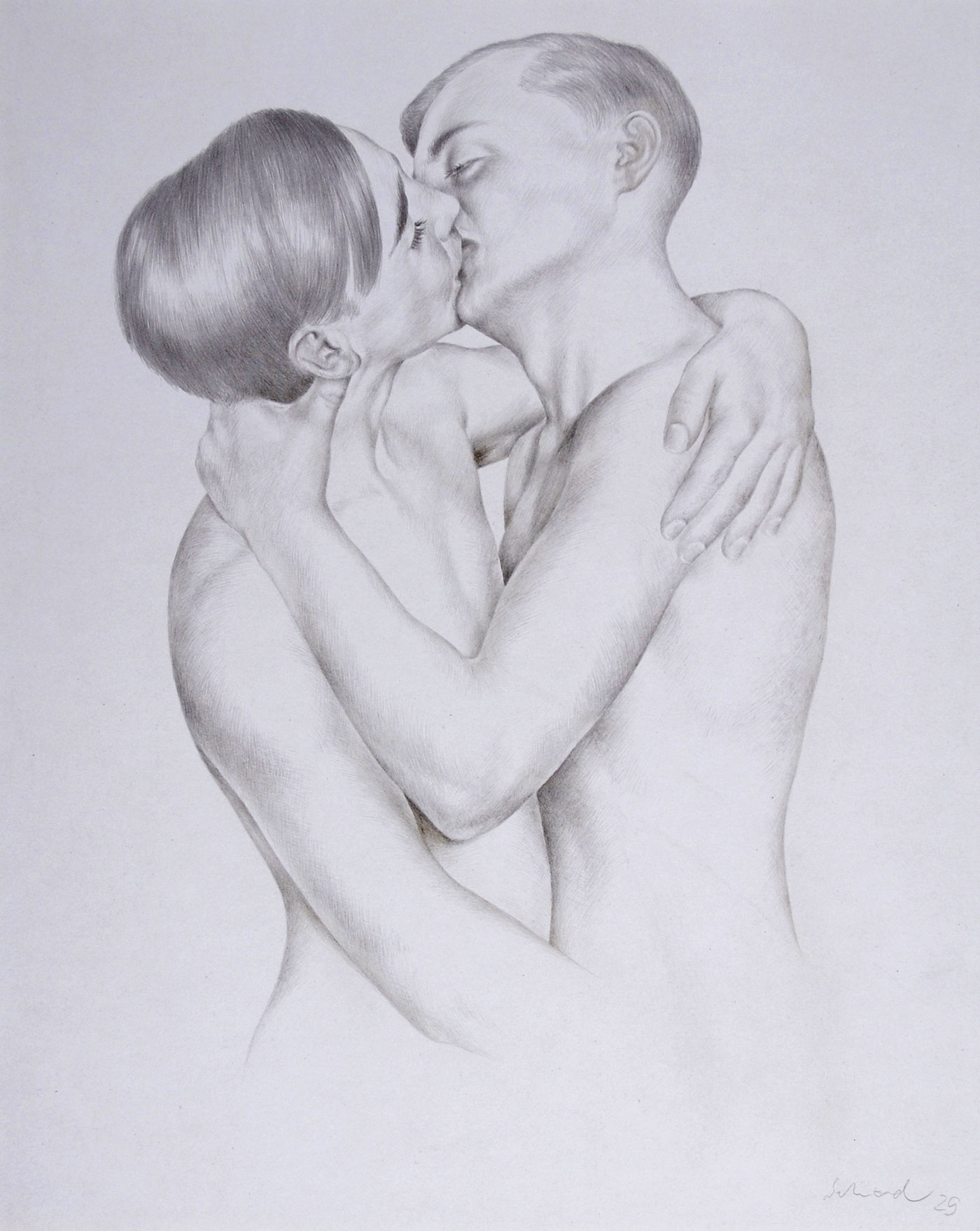


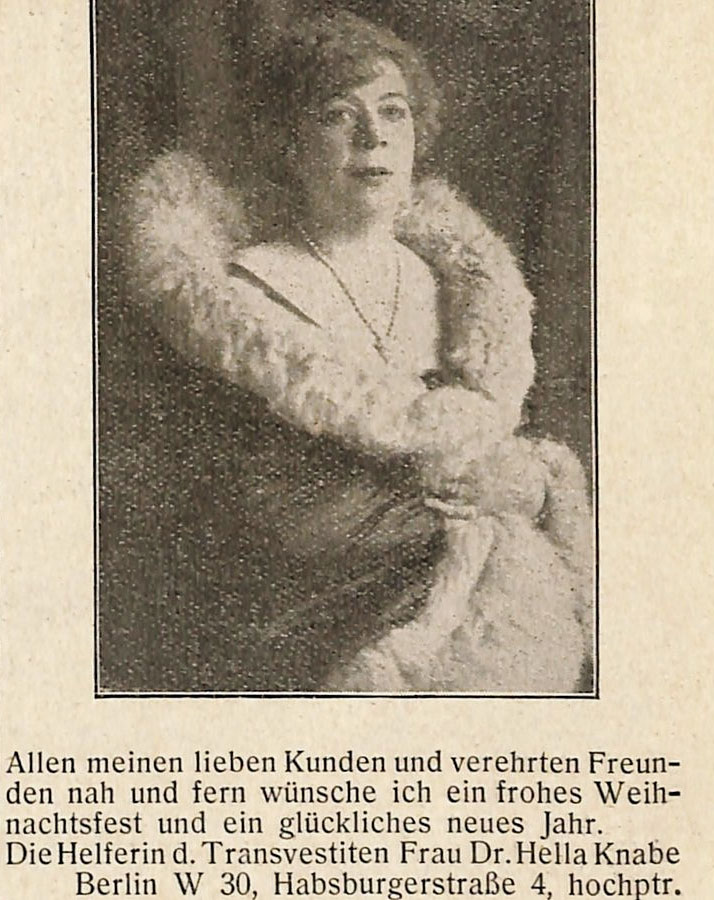


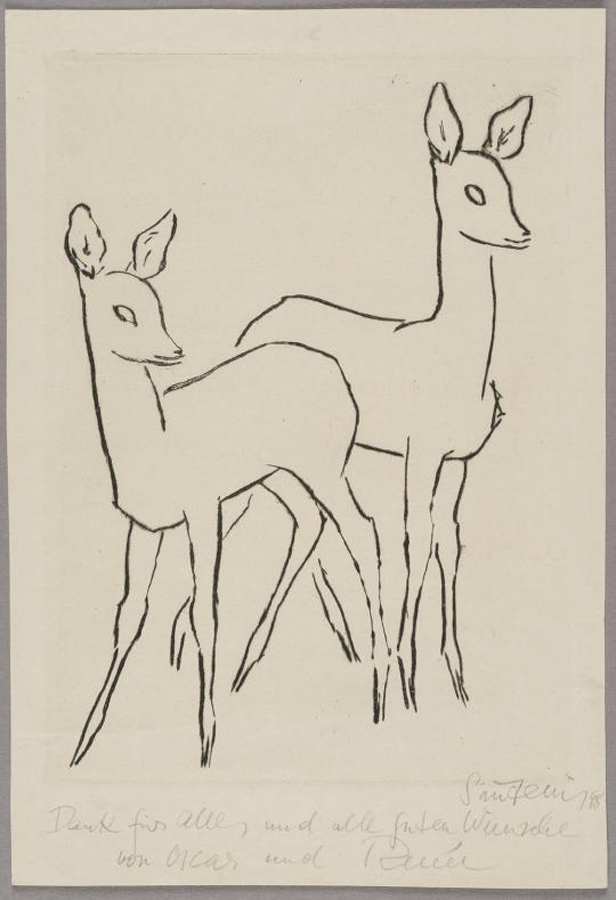

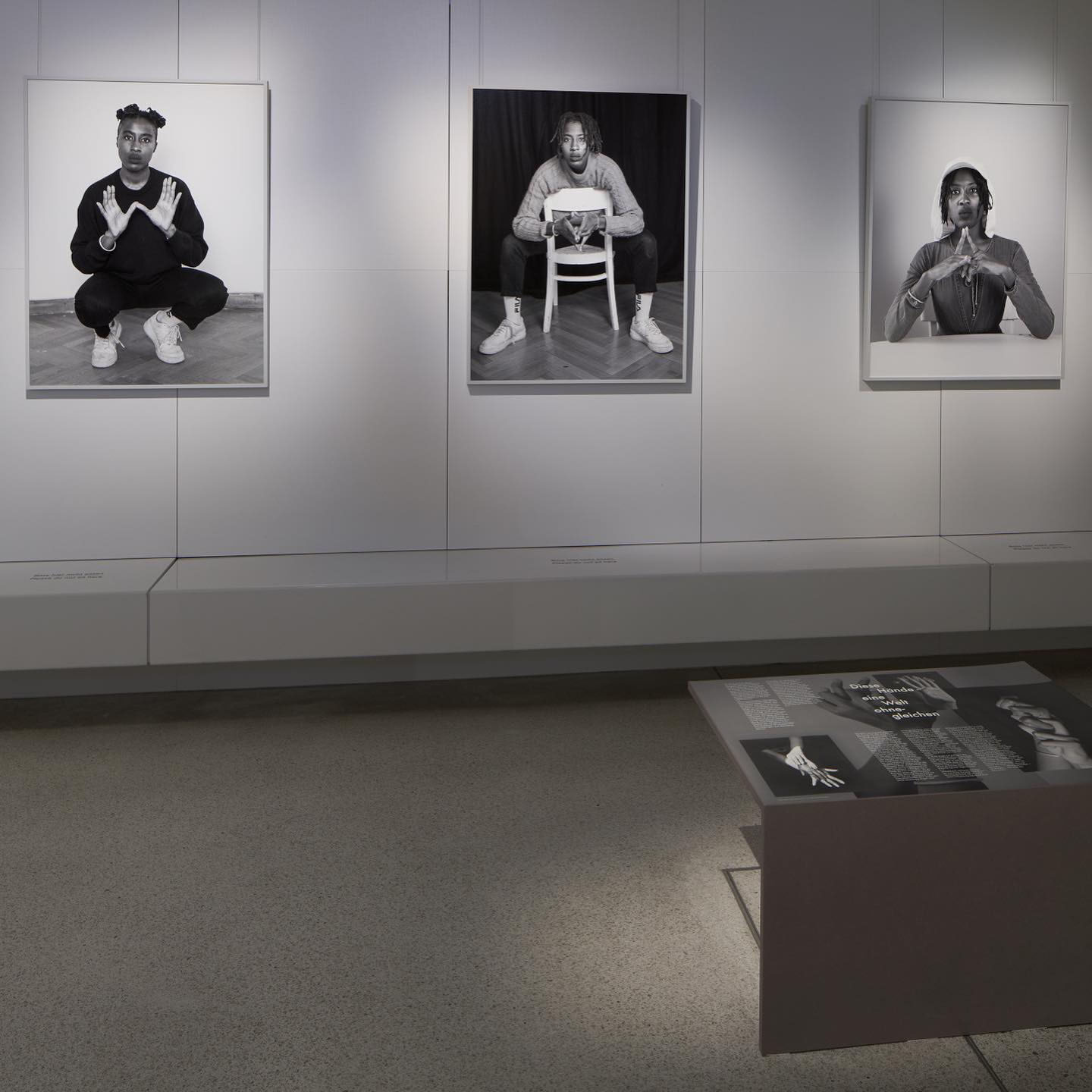
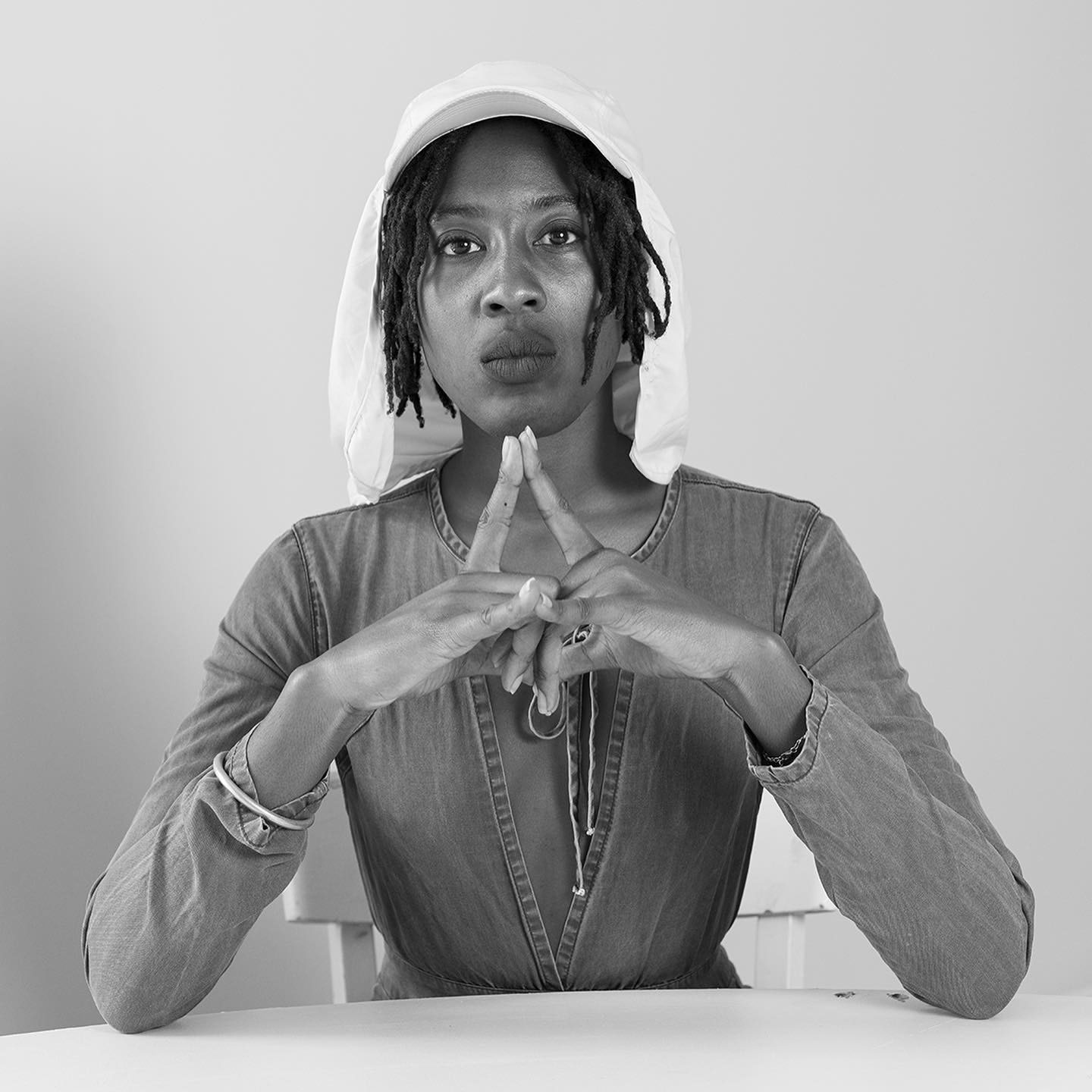


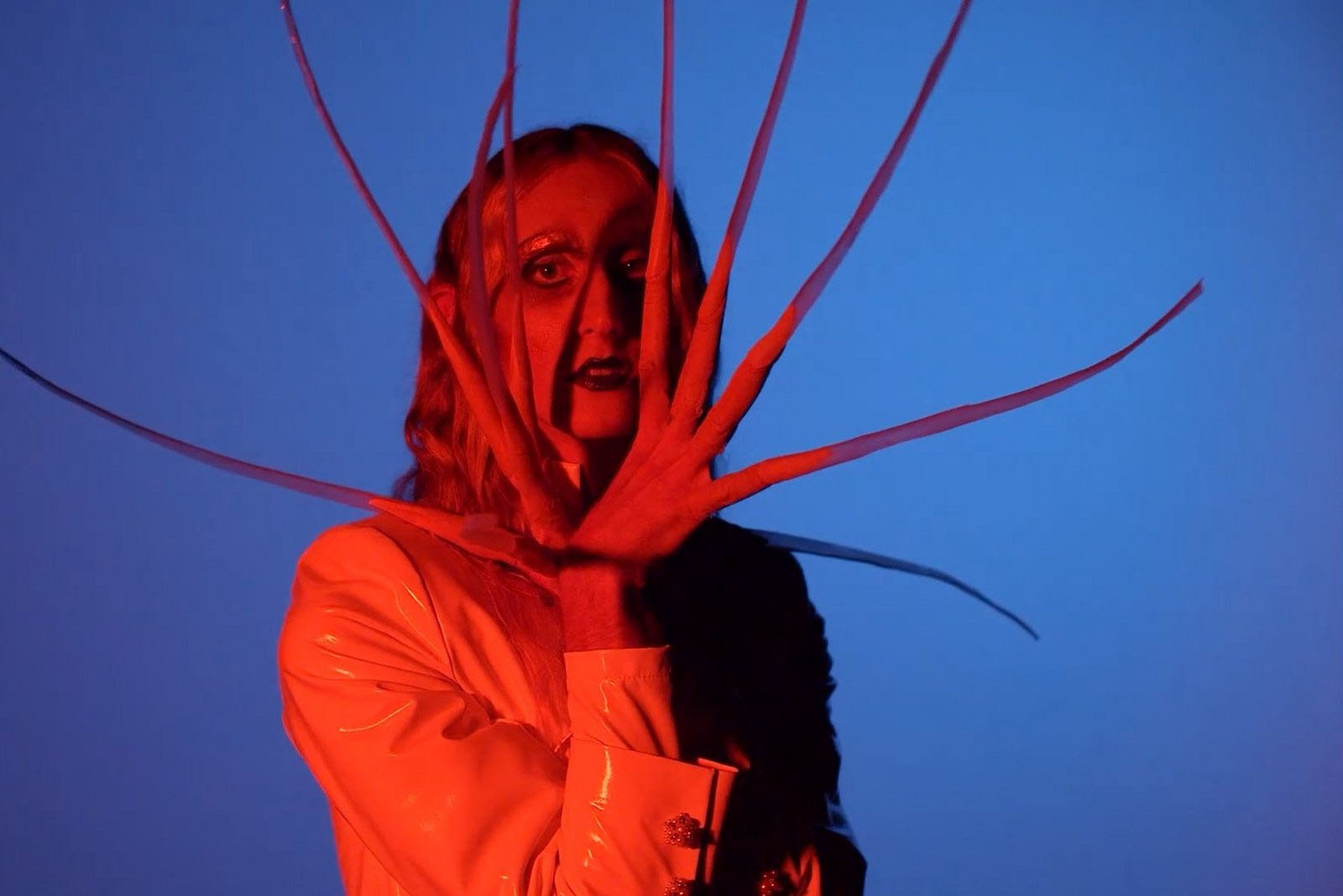
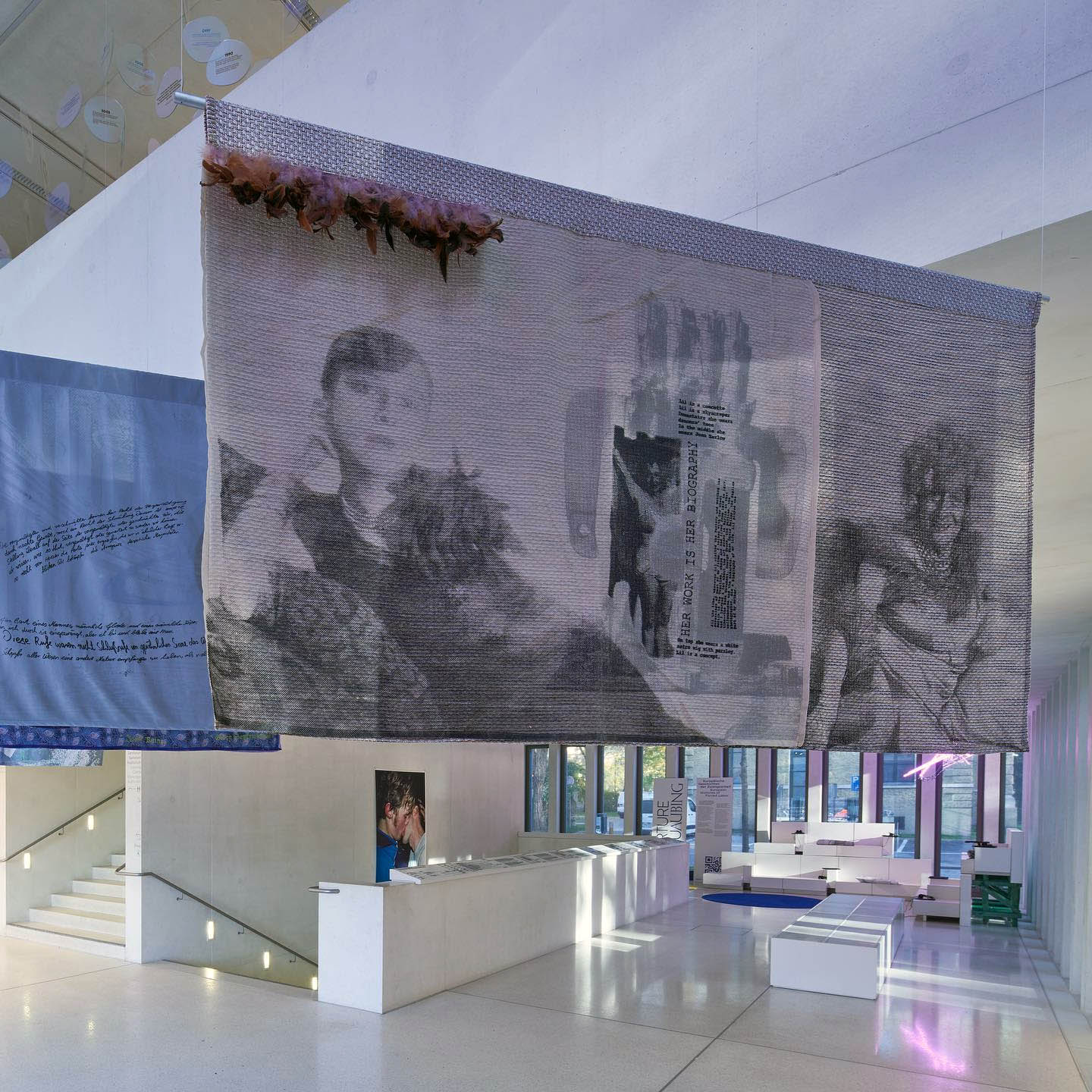

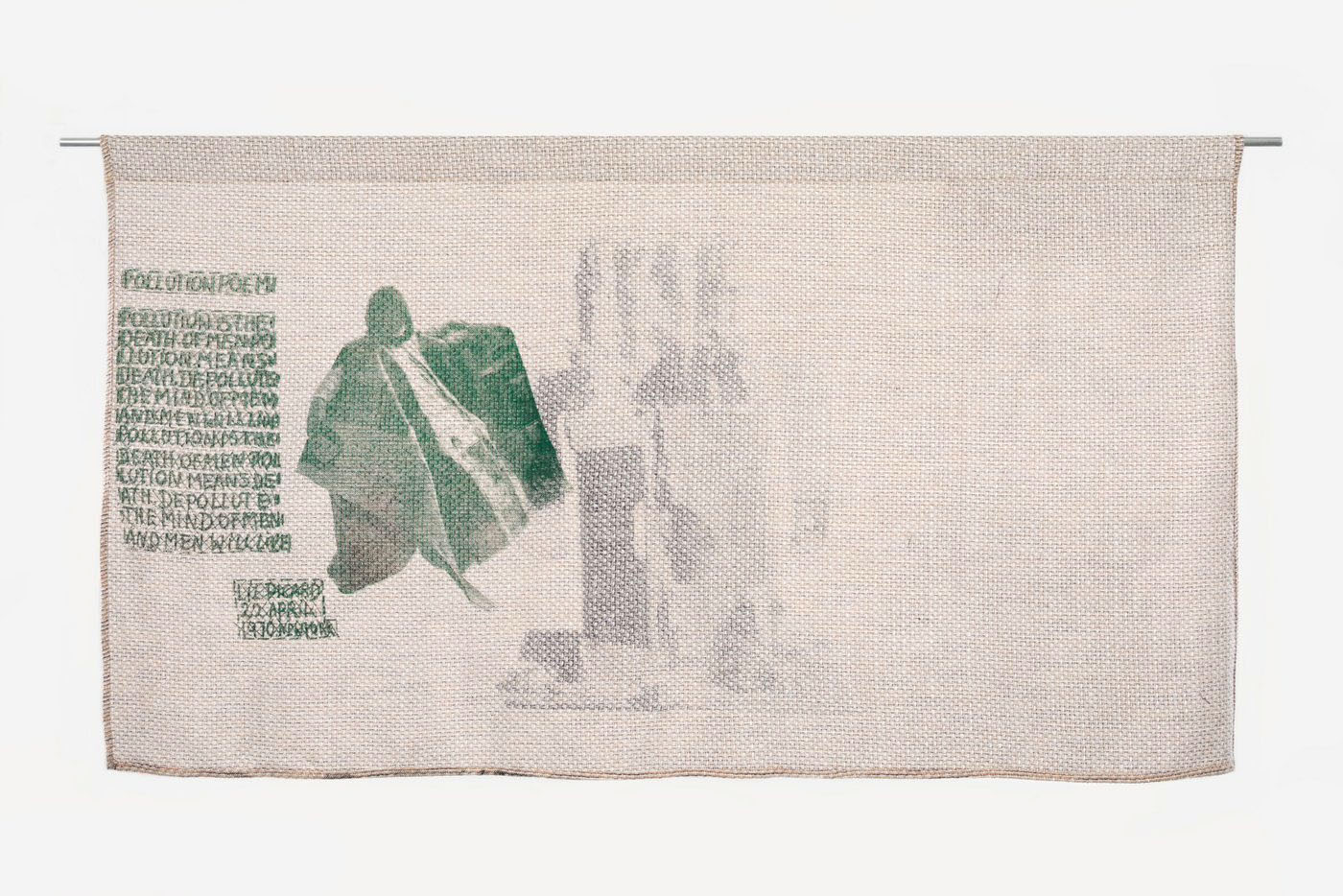









































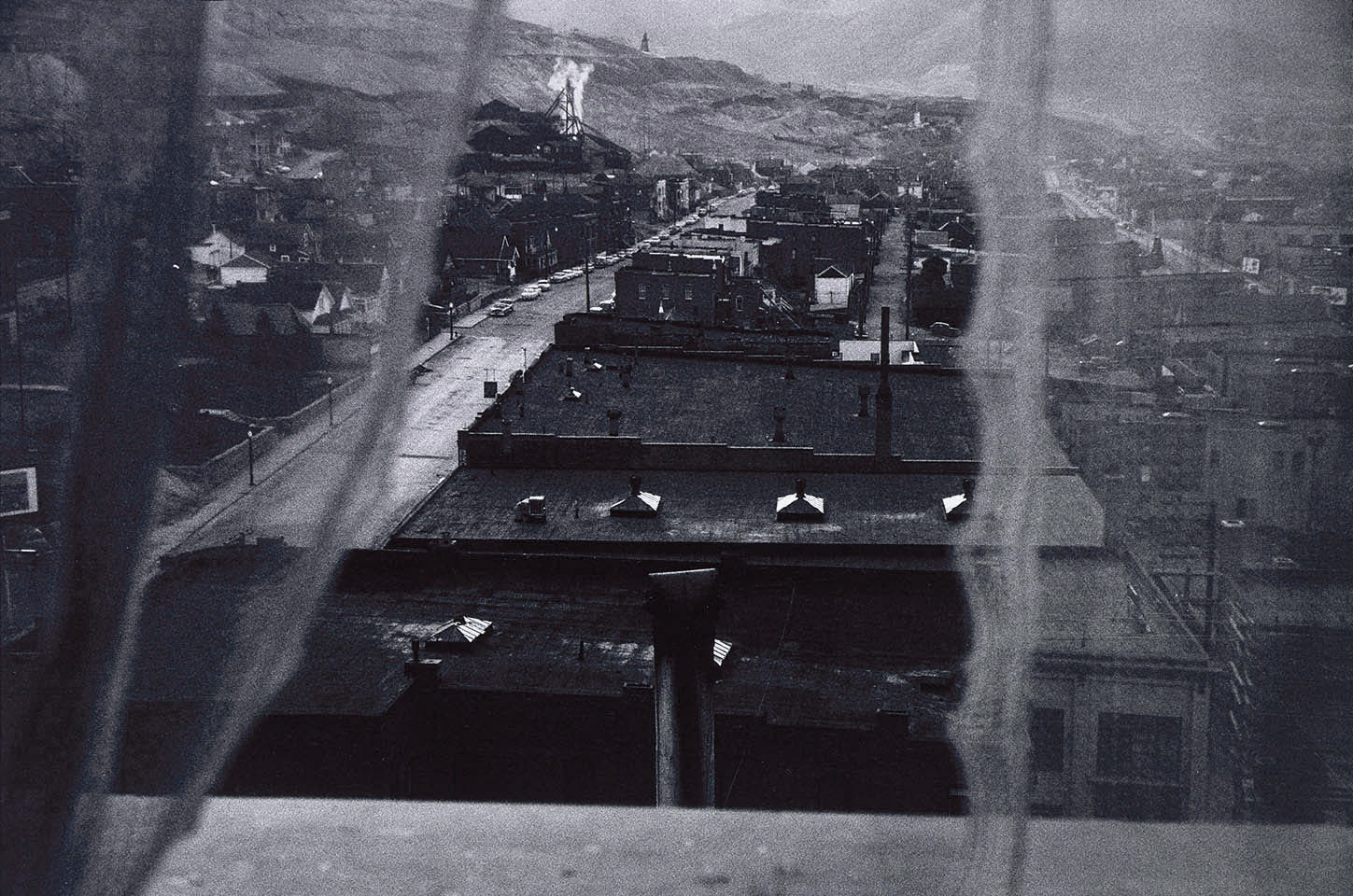



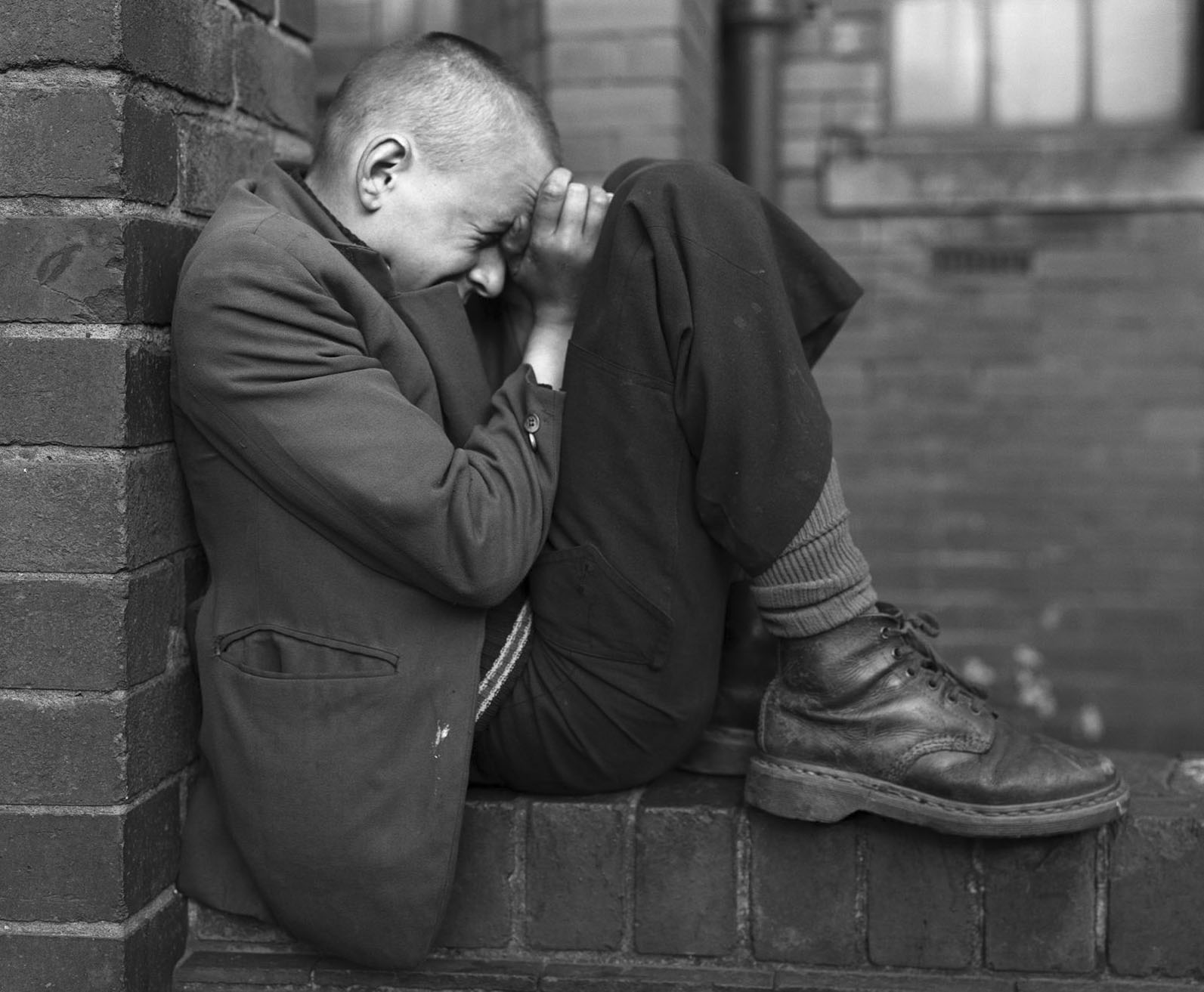


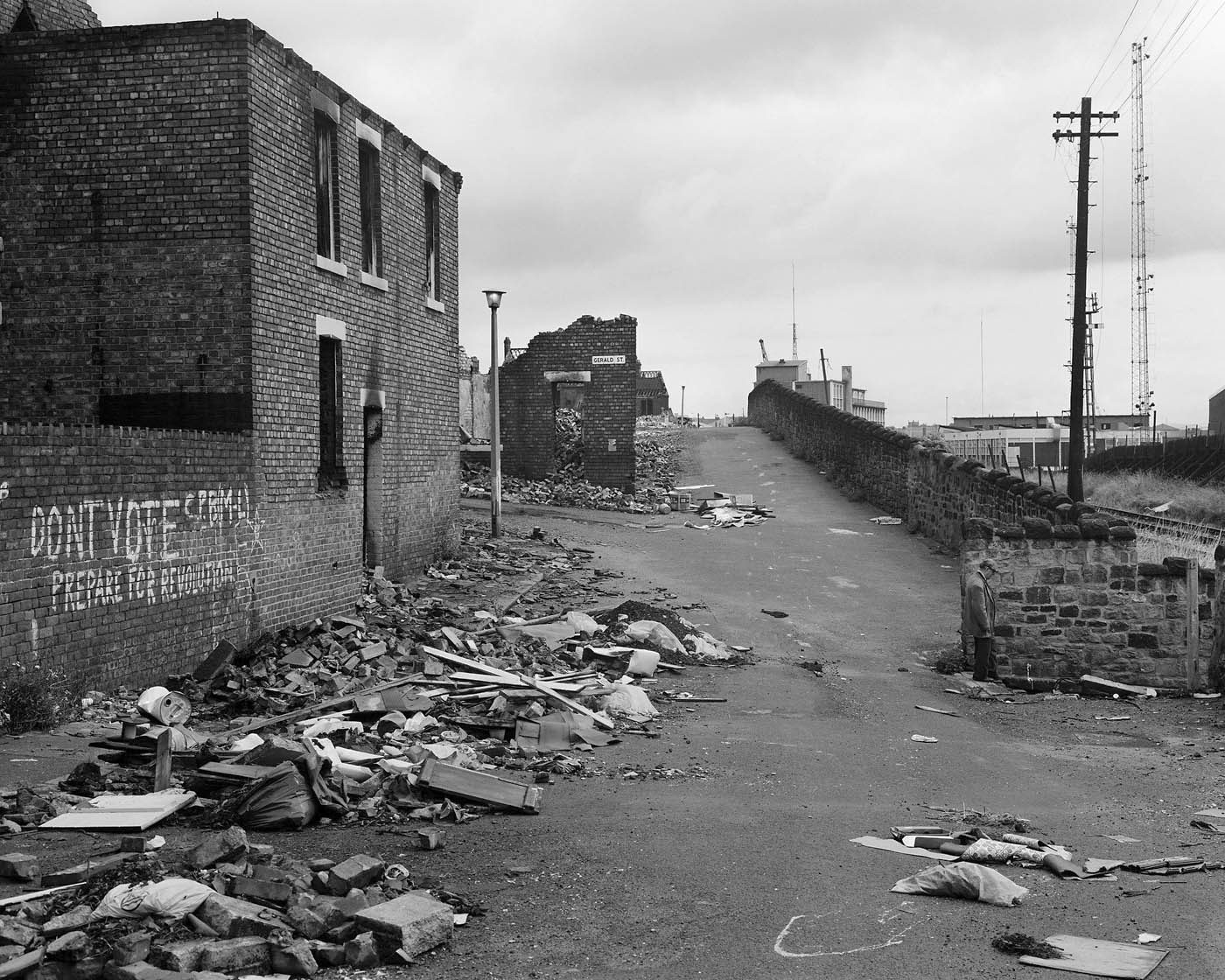


![Chris Killip (British, 1946-2020) 'Untitled? [Shipbuilding on Tyneside]' 1975-1977](https://artblart.com/wp-content/uploads/2023/01/killip-shipbuilding-on-tyneside.jpg "Chris Killip (British, 1946-2020) 'Untitled? [Shipbuilding on Tyneside]' 1975-1977")


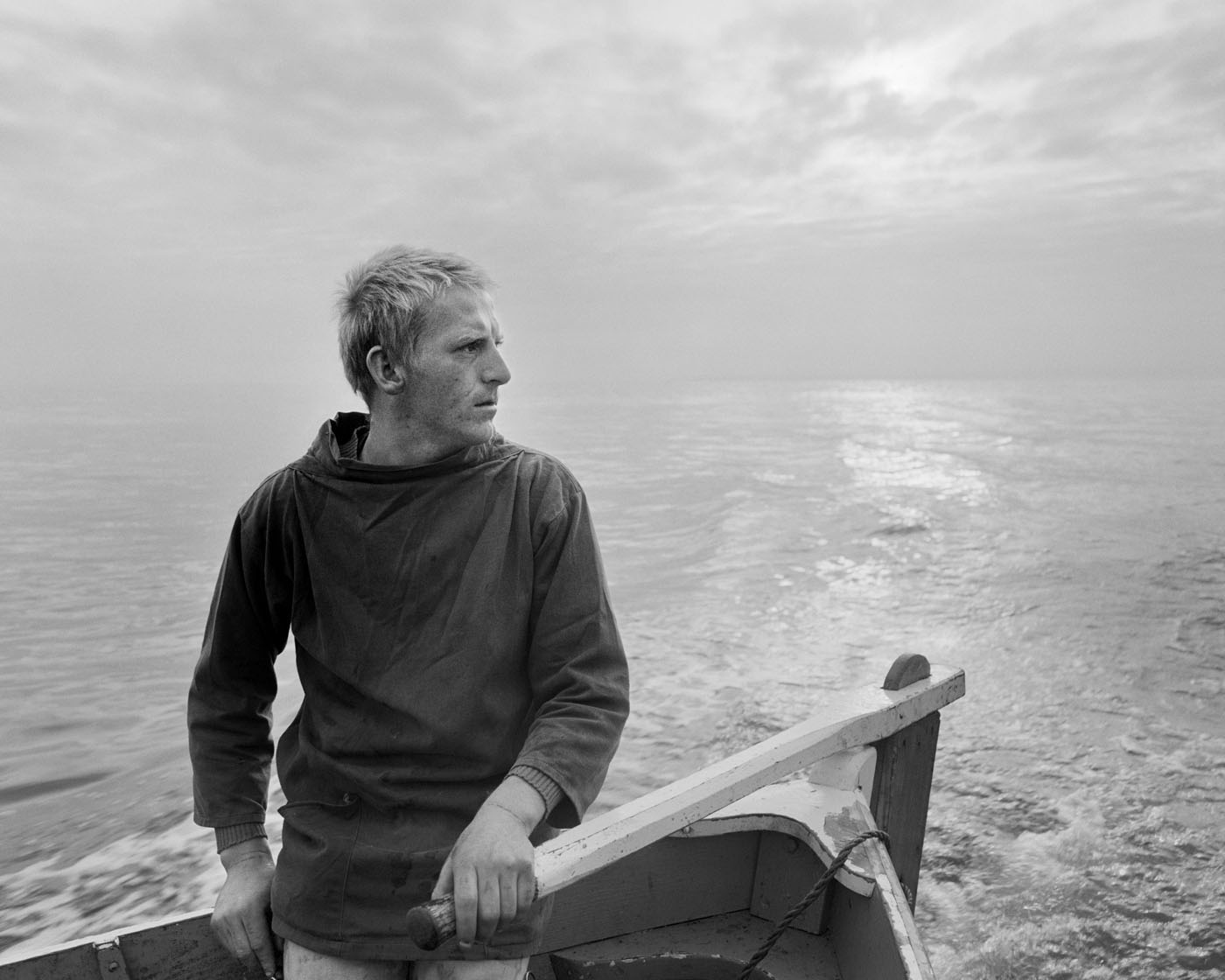


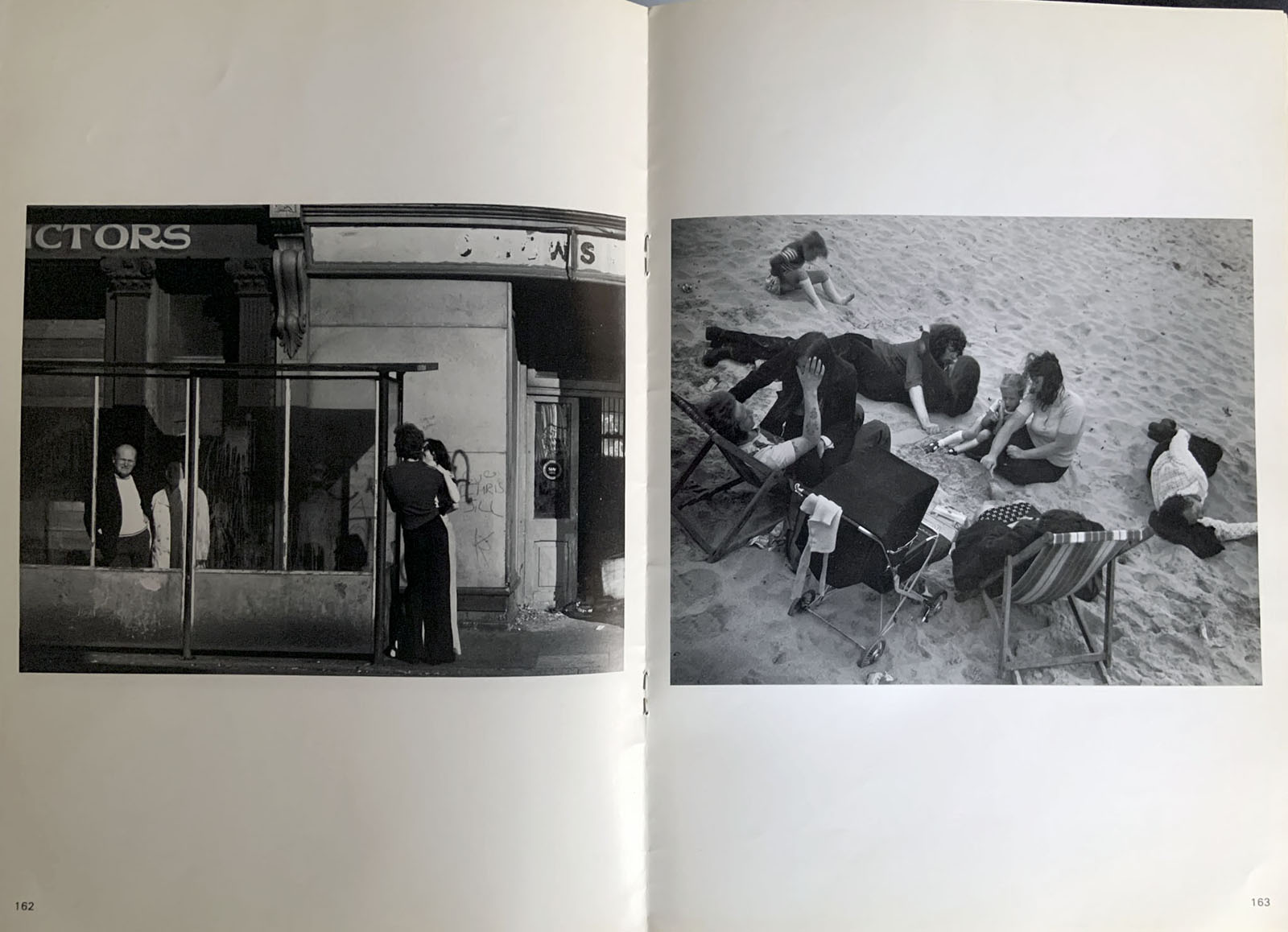


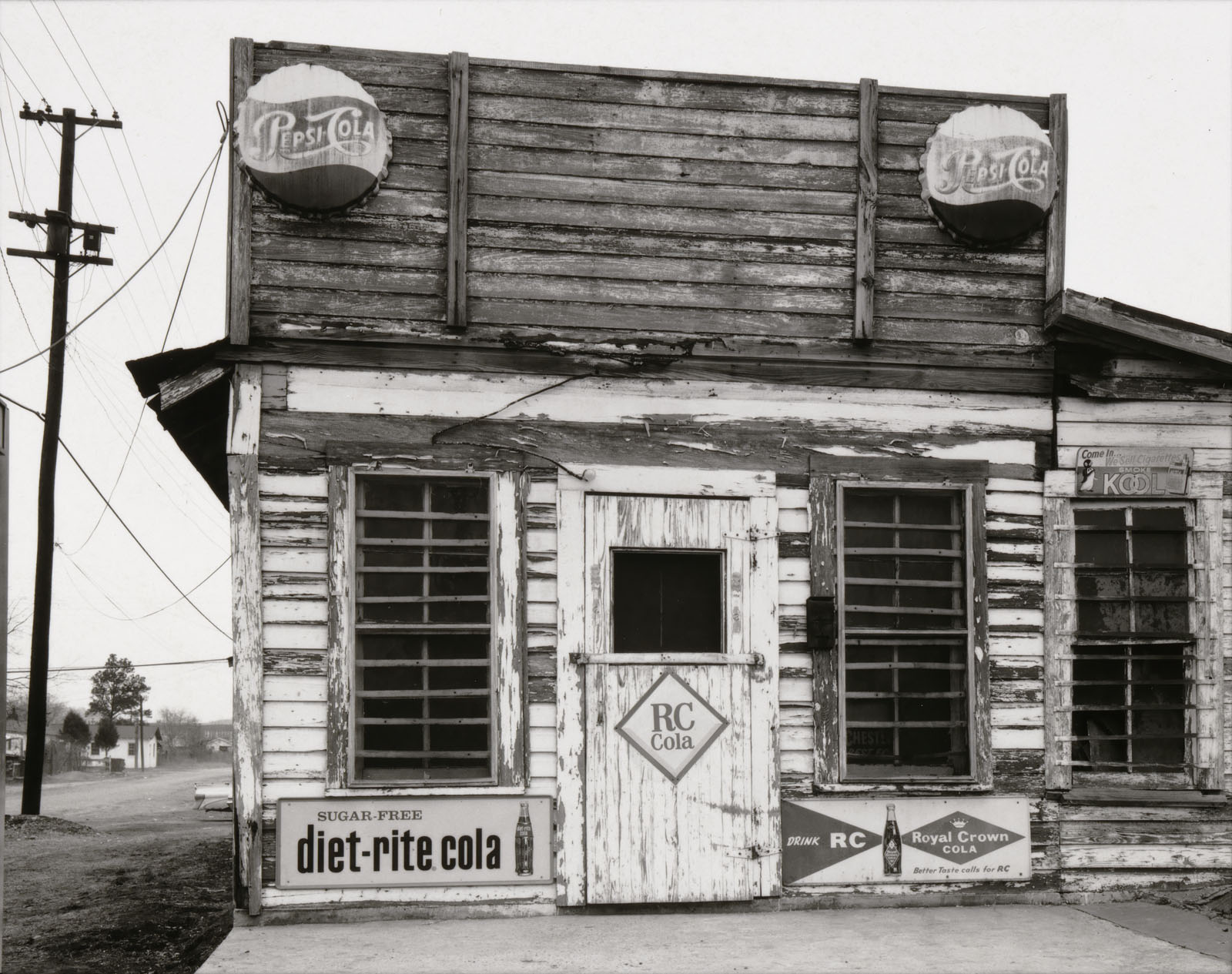
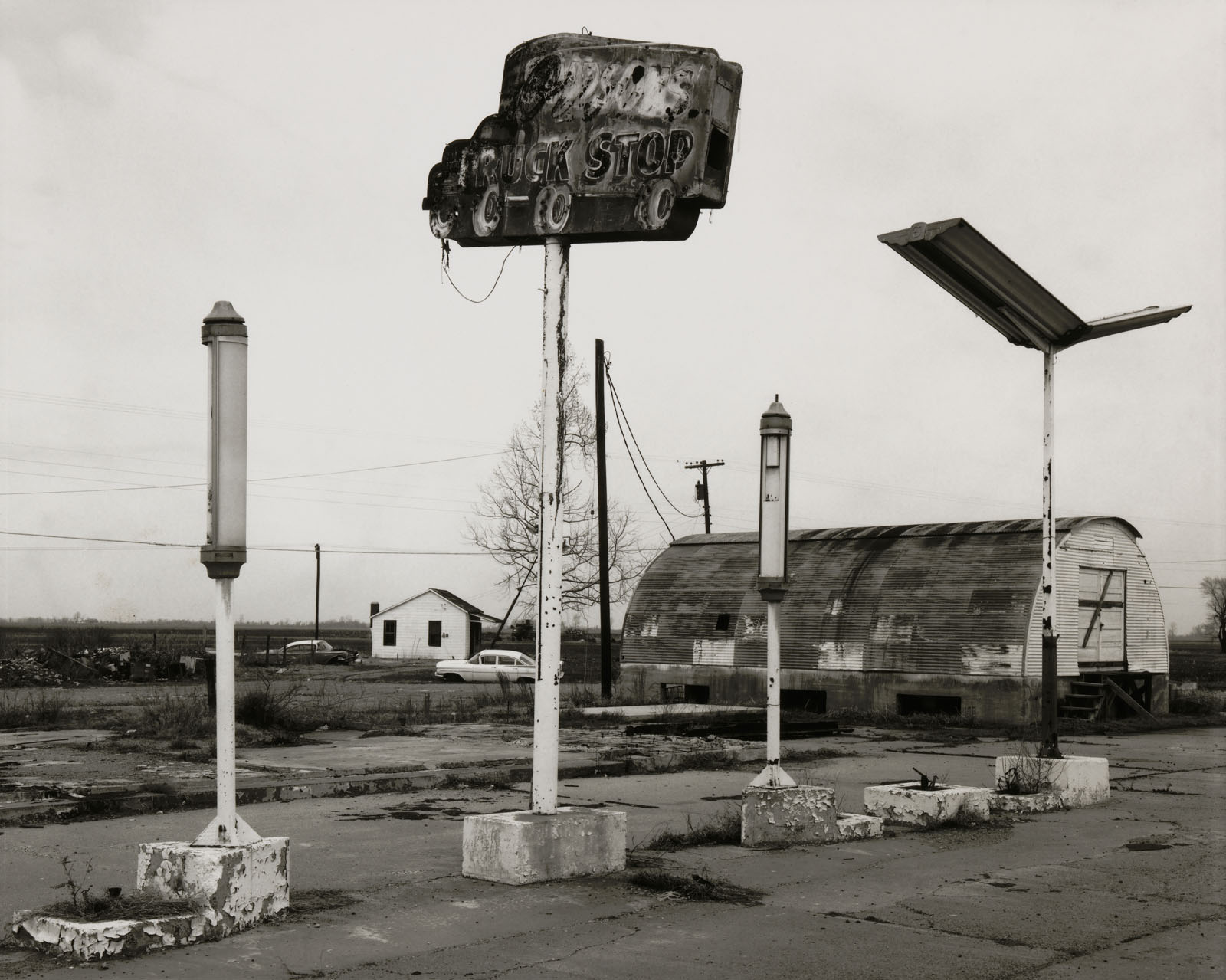











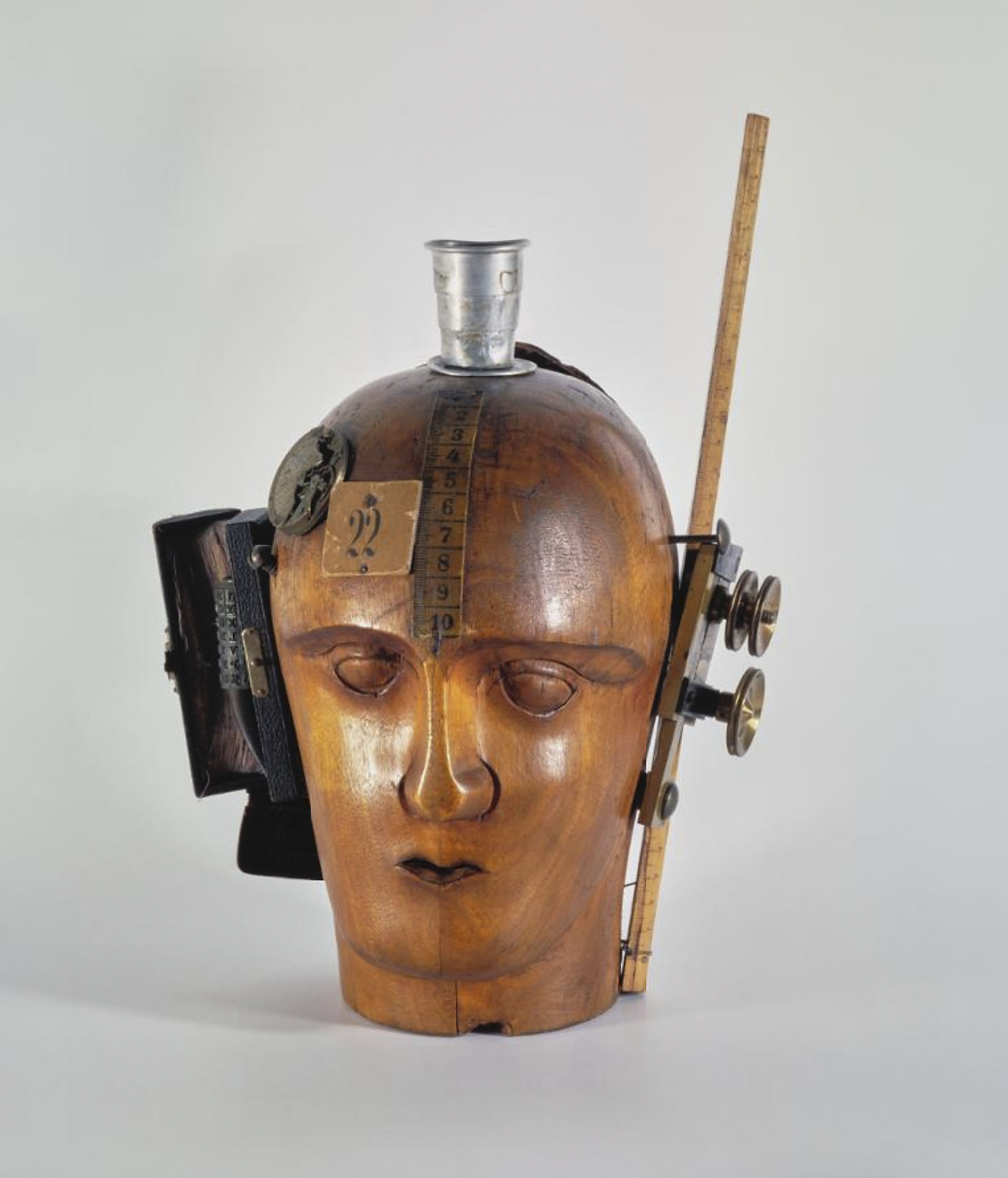


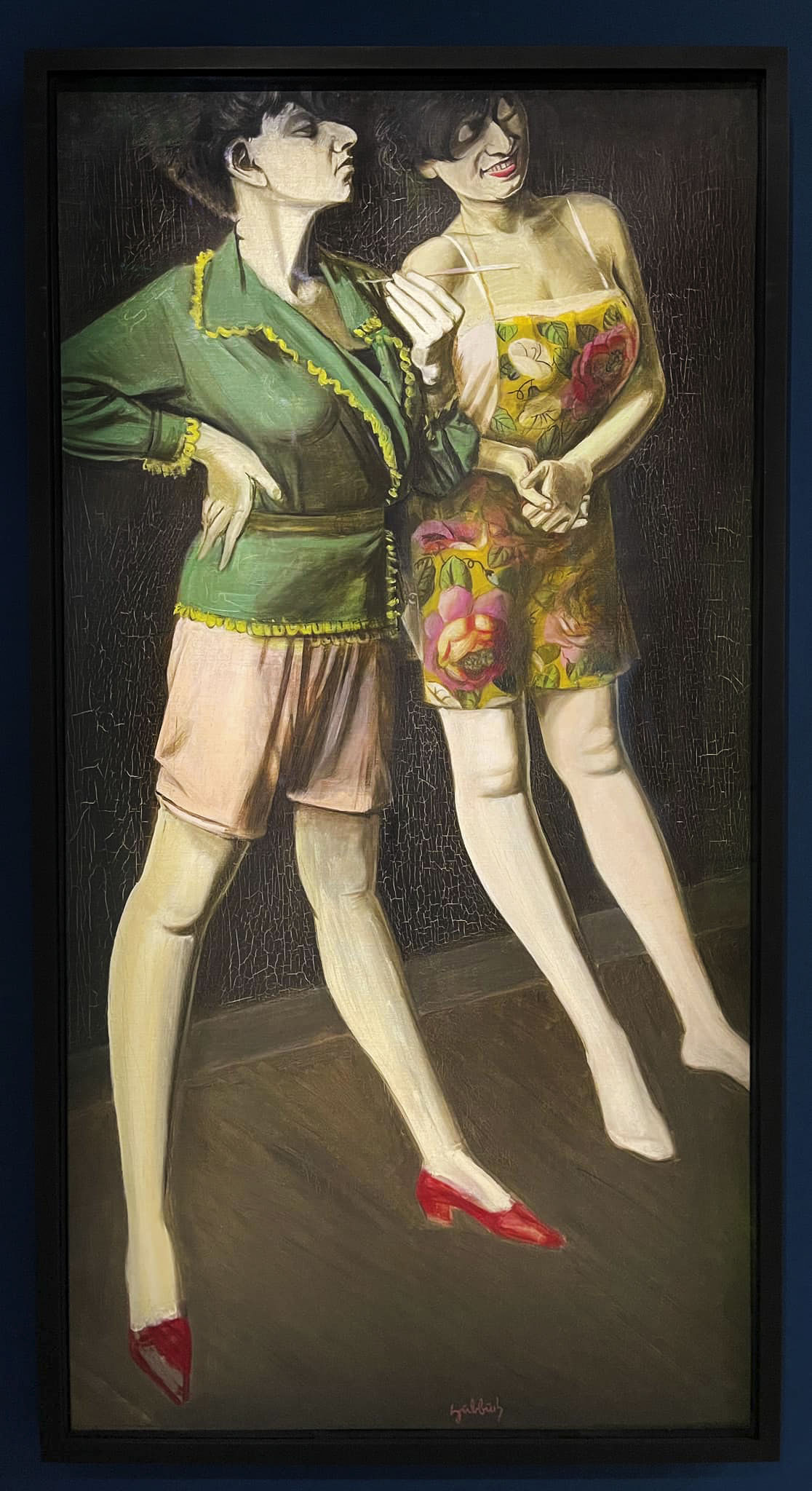
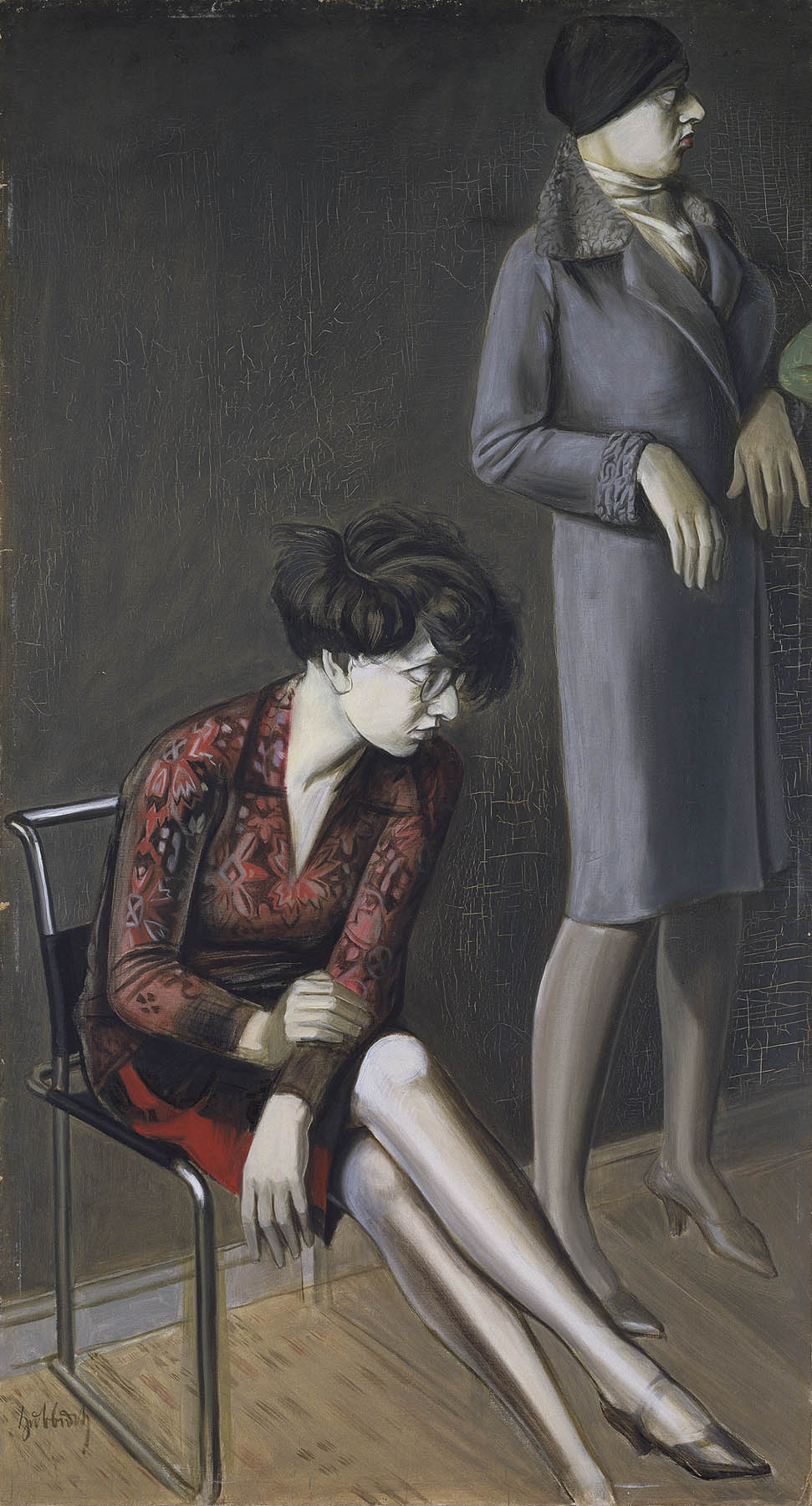


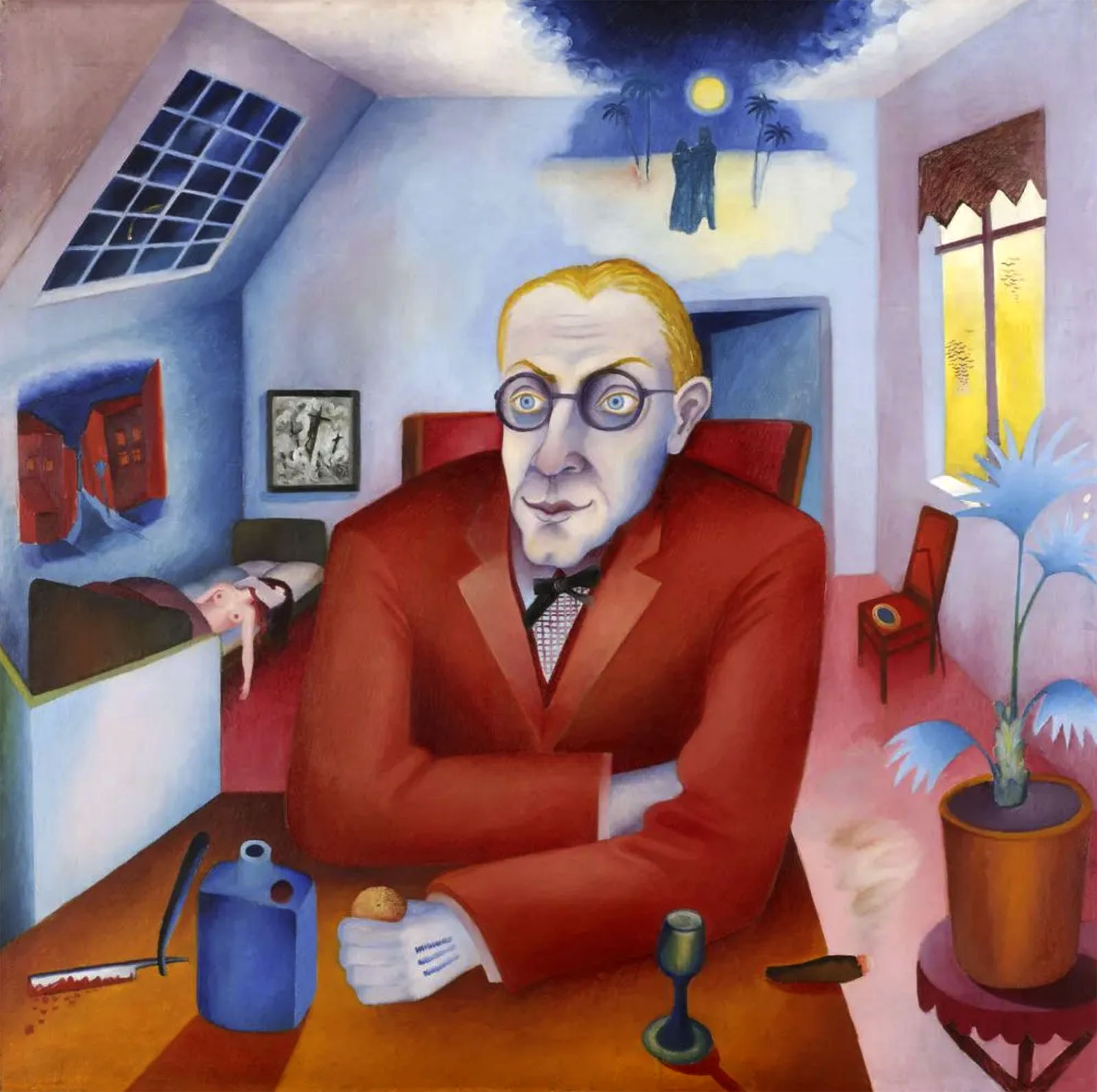


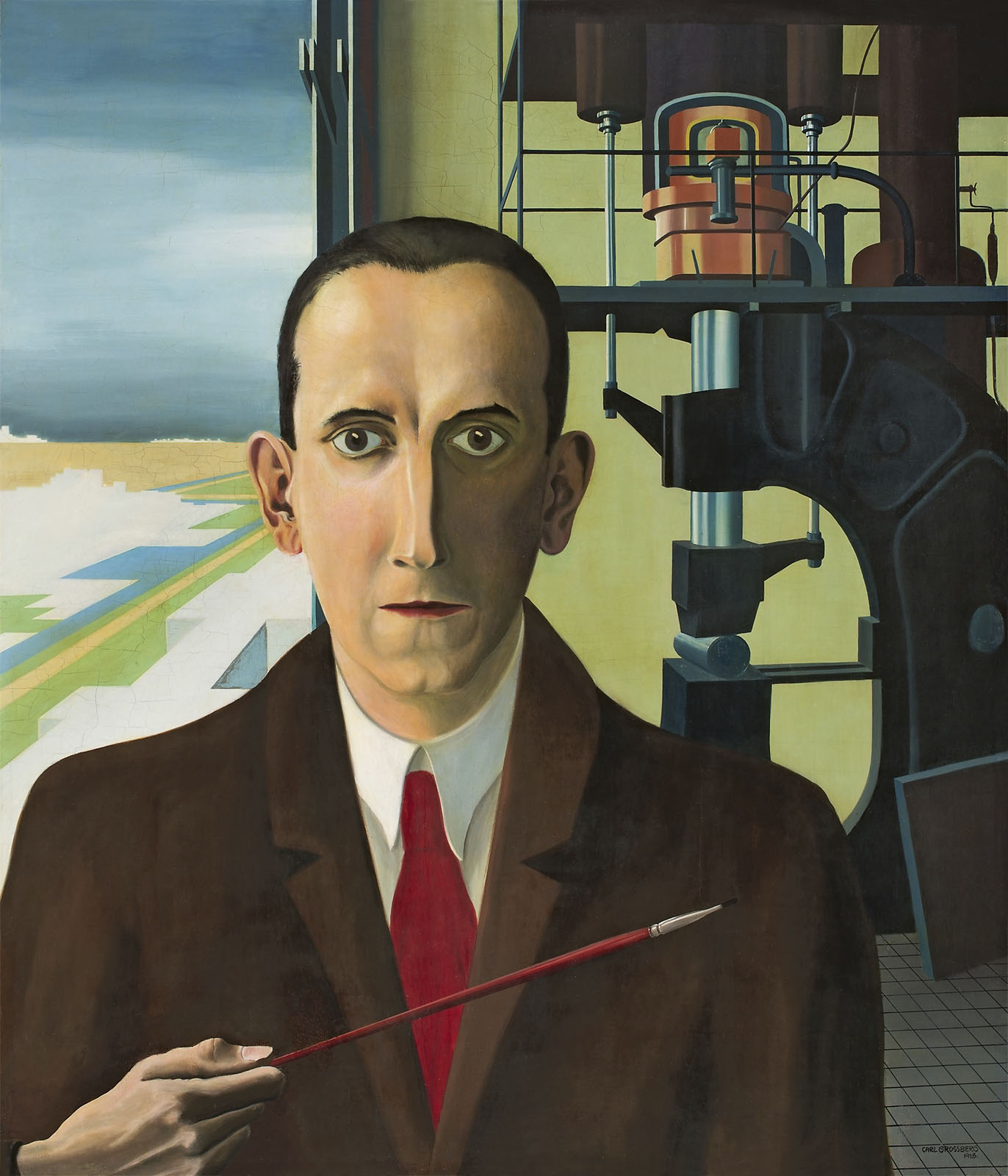


![August Sander (German, 1876-1964) '[Unemployed Man in Winter Coat, Hat in Hand]' 1920](https://artblart.com/wp-content/uploads/2013/10/unemployed-man-in-winter-coat-hat-in-hand-1920-august-sander1.jpg "August Sander (German, 1876-1964) '[Unemployed Man in Winter Coat, Hat in Hand]' 1920")


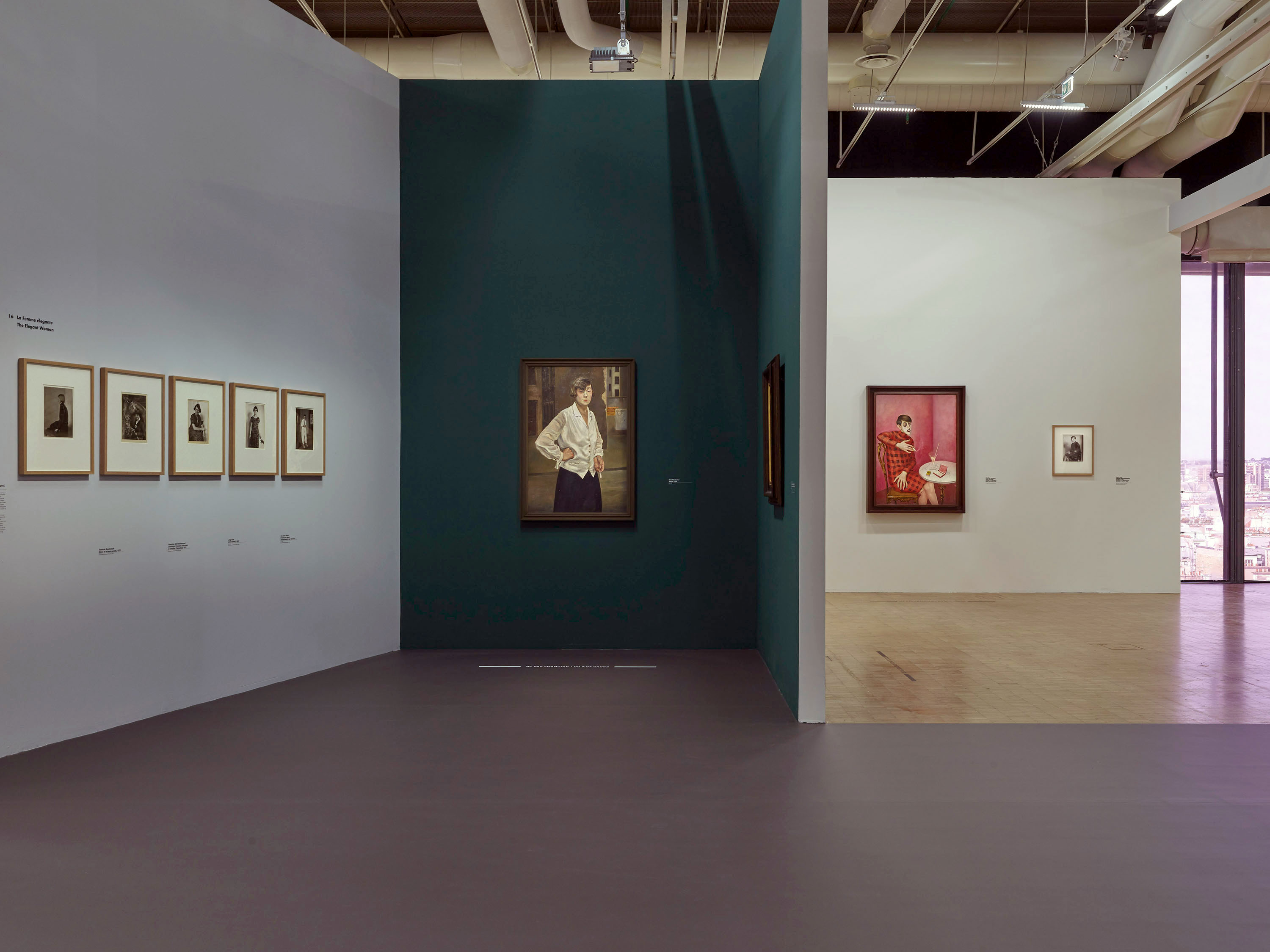


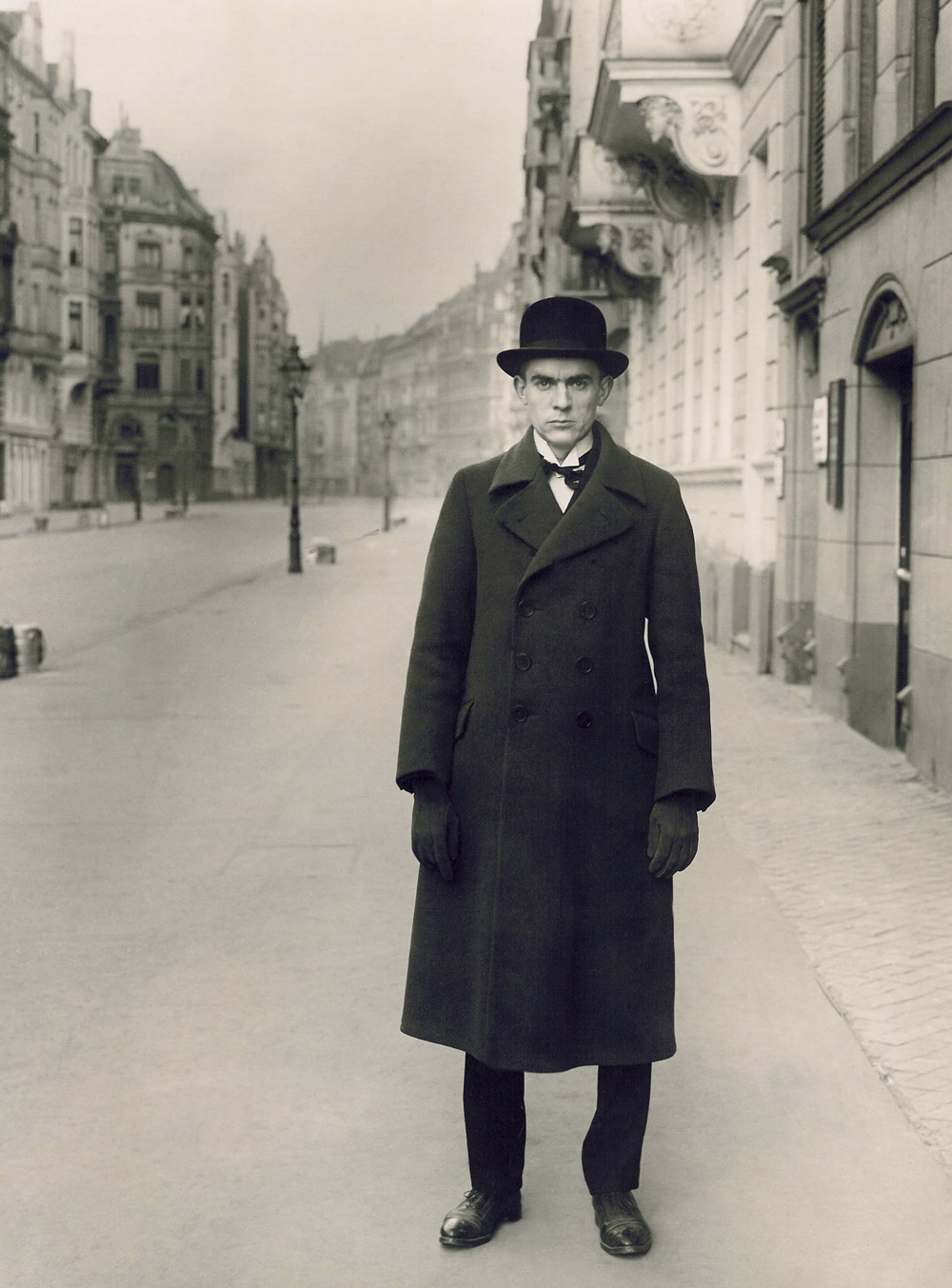


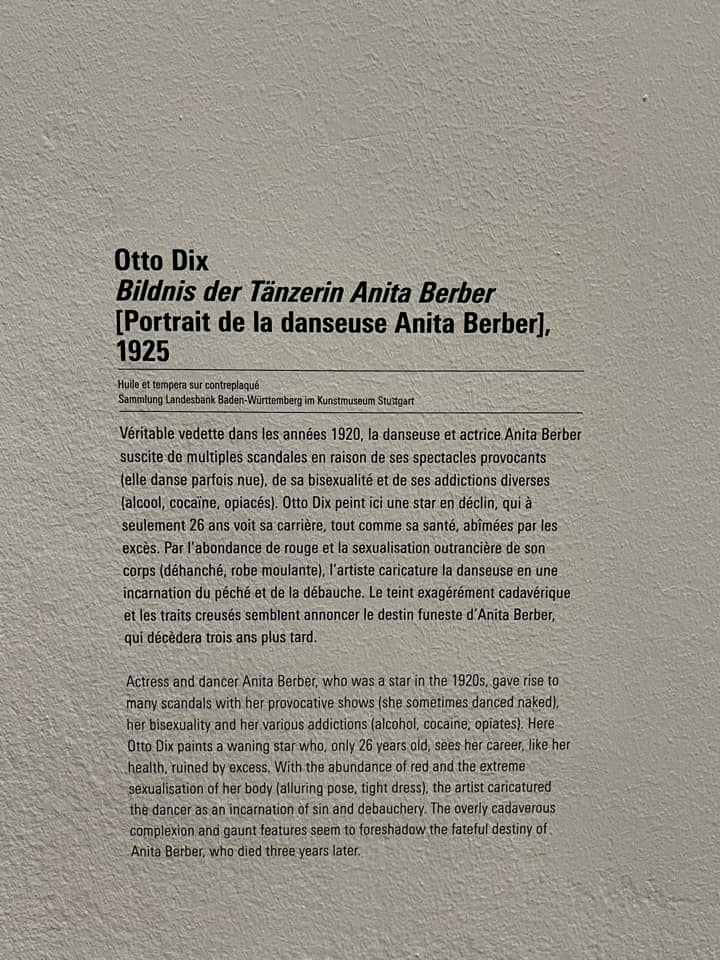

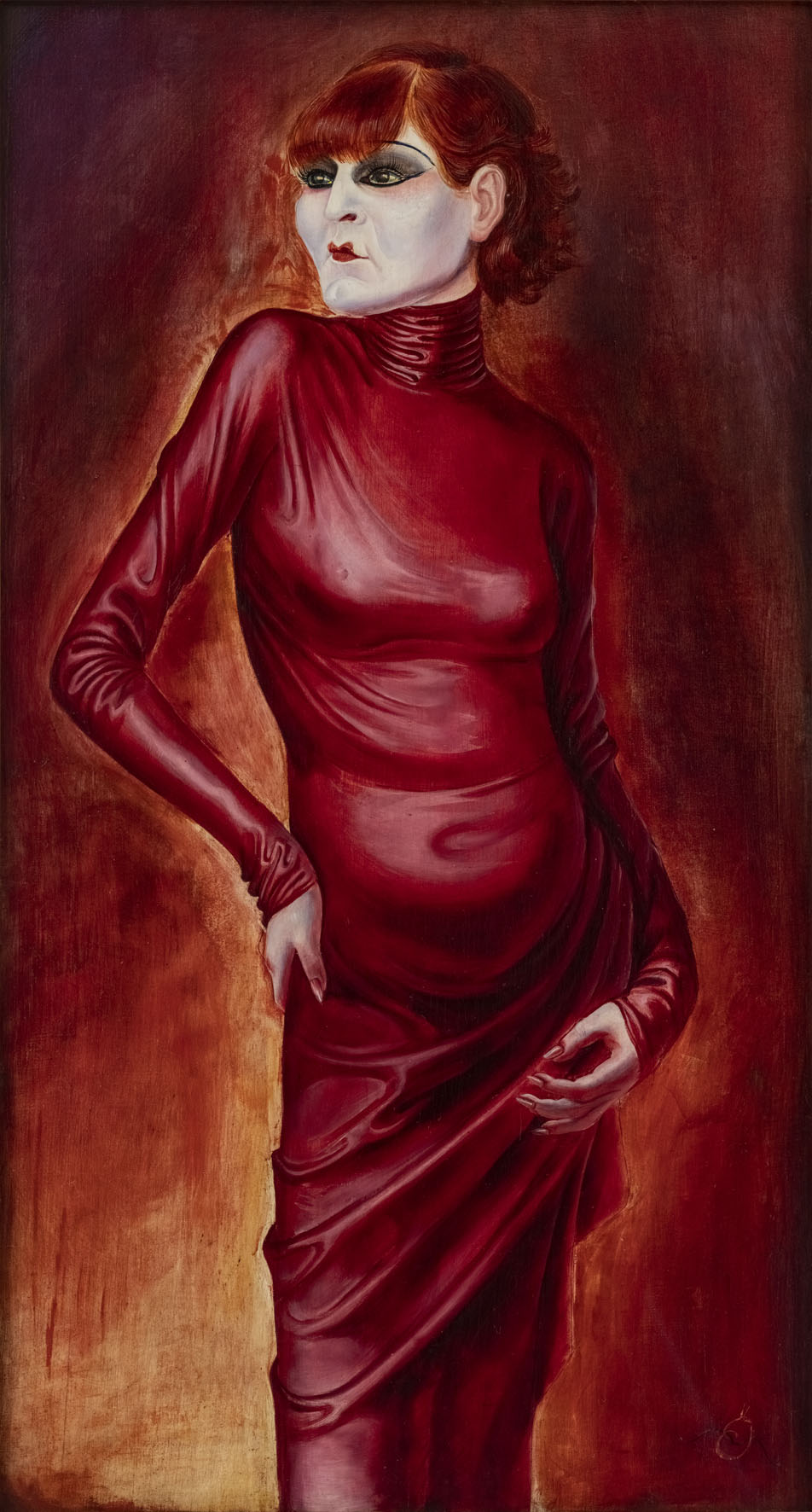
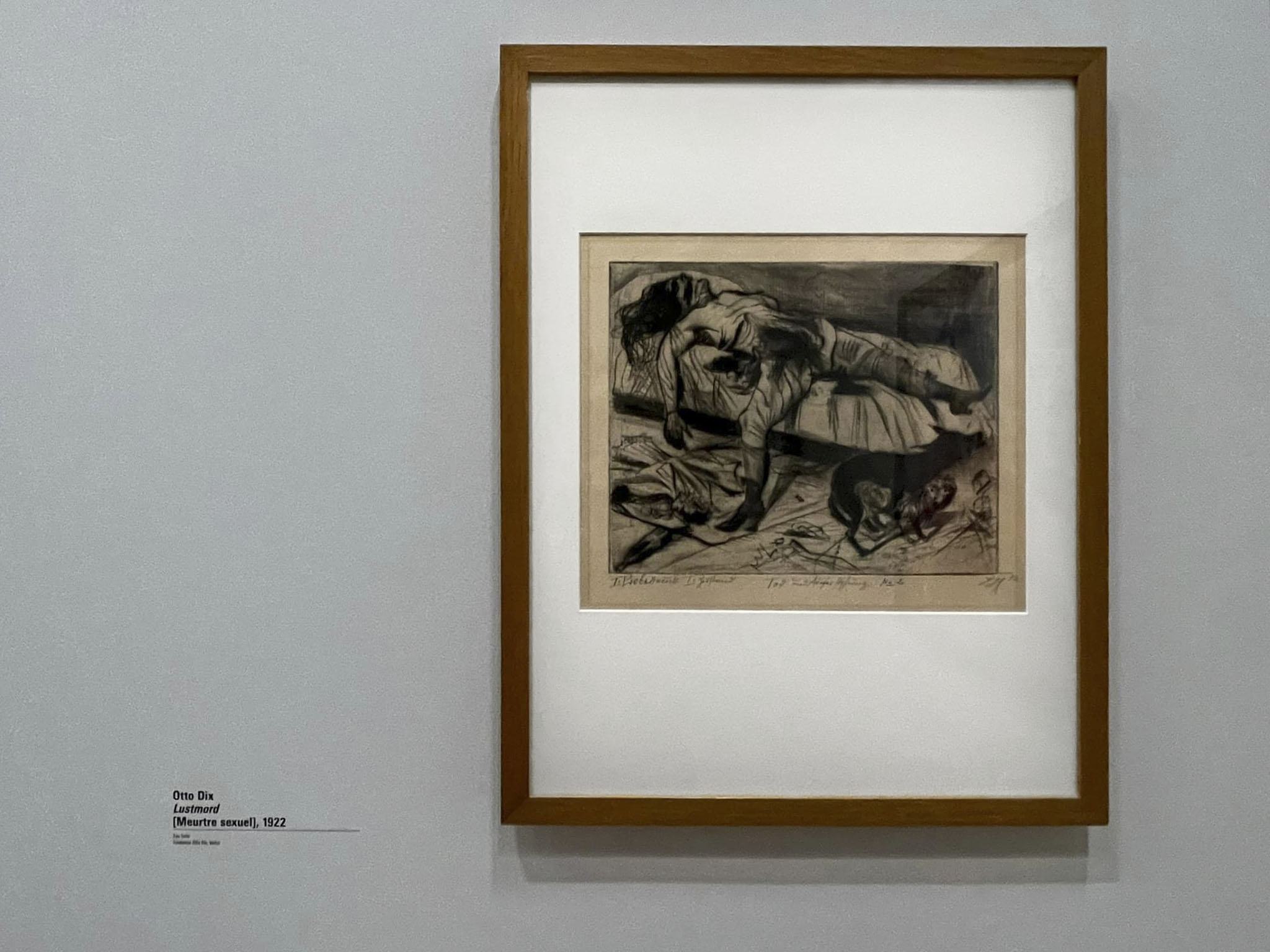


![August Sander (German, 1876-1964) 'Painter [Heinrich Hoerle]' 1928-1932](https://artblart.com/wp-content/uploads/2014/08/sander-maler-web.jpg "August Sander (German, 1876-1964) 'Painter [Heinrich Hoerle]' 1928-1932")


![August Sander (German, 1876-1964) 'Proletarian Intellectuals' [Else Schuler, Tristan Rémy, Franz Wilhelm Seiwert, Gerd Arntz] c. 1925](https://artblart.com/wp-content/uploads/2022/07/august-sander-proletarian-intellectuals.jpg "August Sander (German, 1876-1964) 'Proletarian Intellectuals' [Else Schuler, Tristan Rémy, Franz Wilhelm Seiwert, Gerd Arntz] c. 1925")


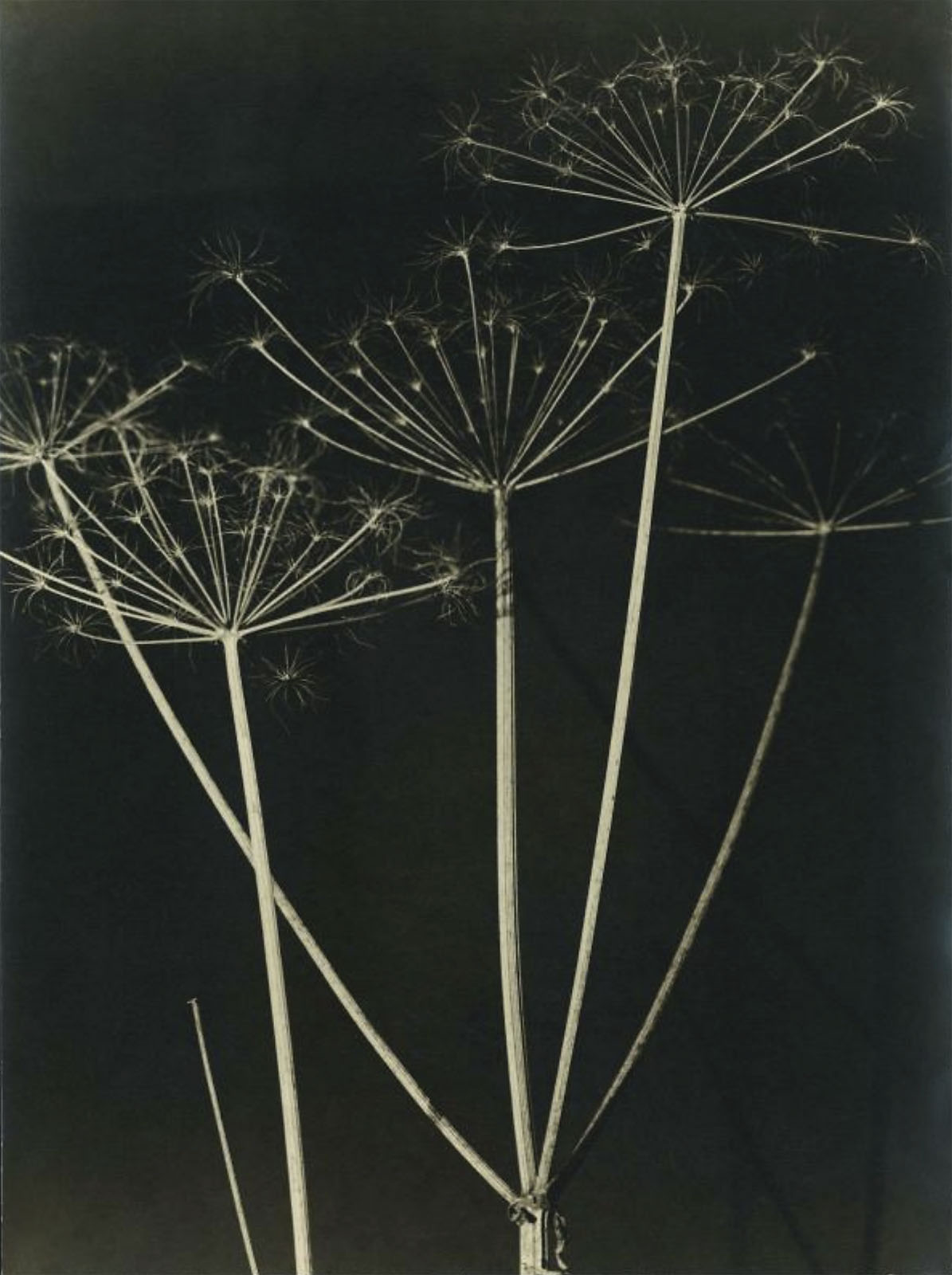


![George Grosz (Georg Ehrenfried Gross) (German, 1893-1959) 'Construction (Untitled)' (Konstruktion [Ohne Titel]) 1920 (installation view)](https://artblart.com/wp-content/uploads/2022/08/germany-installation-g.jpg "George Grosz (Georg Ehrenfried Gross) (German, 1893-1959) 'Construction (Untitled)' (Konstruktion [Ohne Titel]) 1920 (installation view)")
![George Grosz. 'Construction (Untitled) (Konstruktion [Ohne Titel])' 1920](https://artblart.com/wp-content/uploads/2016/01/grosz-construction.jpg "George Grosz. 'Construction (Untitled) (Konstruktion [Ohne Titel])' 1920")


![Albert Renger-Patzsch (1897-1966) 'Bügeleisen für Schuhfabrikation, Faguswerk Alfeld [Shoemakers' irons, Fagus factory, Alfeld]' 1928](https://artblart.com/wp-content/uploads/2018/01/renger-patzsch-bugeleisen-fur-schuhfabrikation.jpg "Albert Renger-Patzsch (1897-1966) 'Bügeleisen für Schuhfabrikation, Faguswerk Alfeld [Shoemakers' irons, Fagus factory, Alfeld]' 1928")













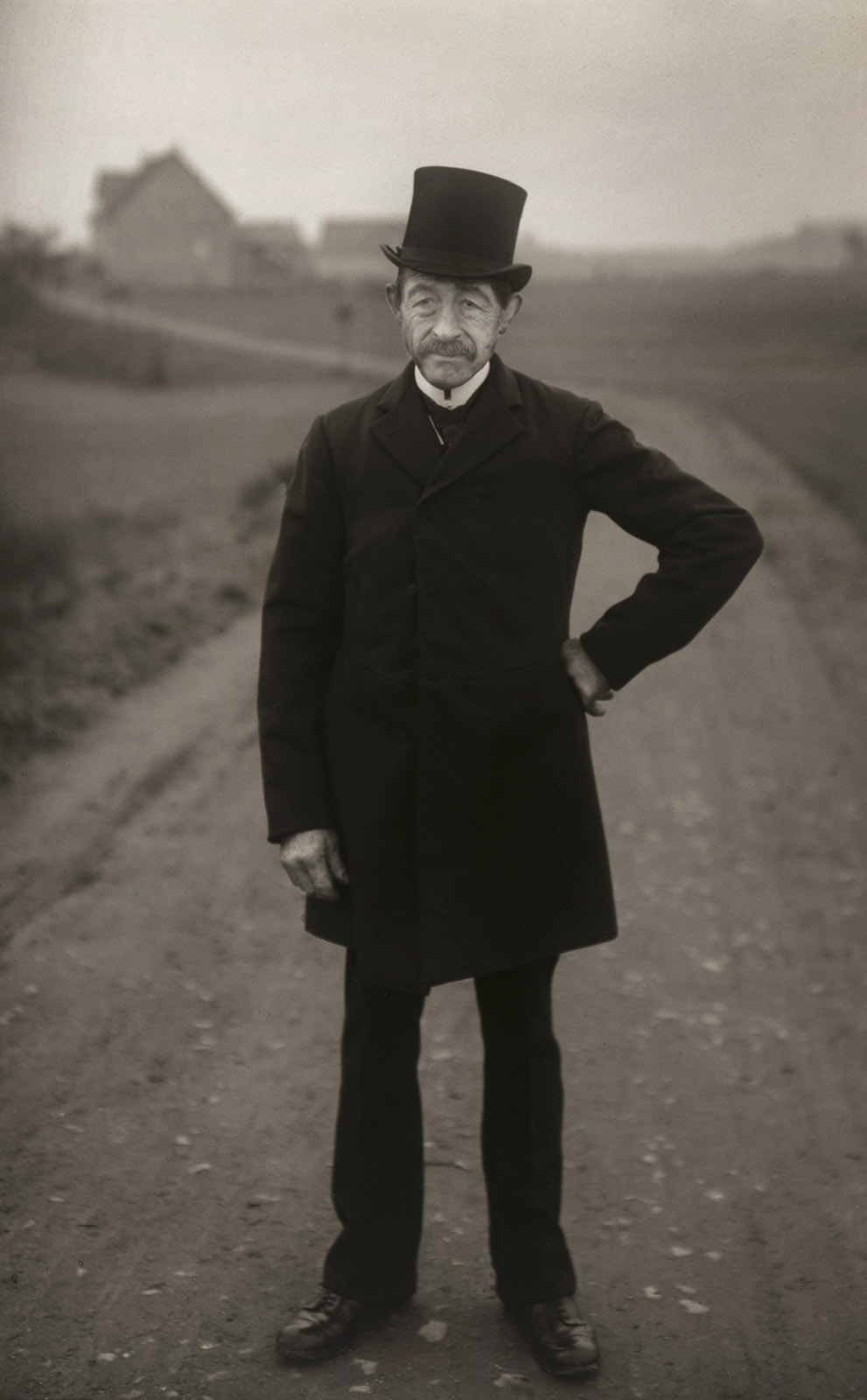
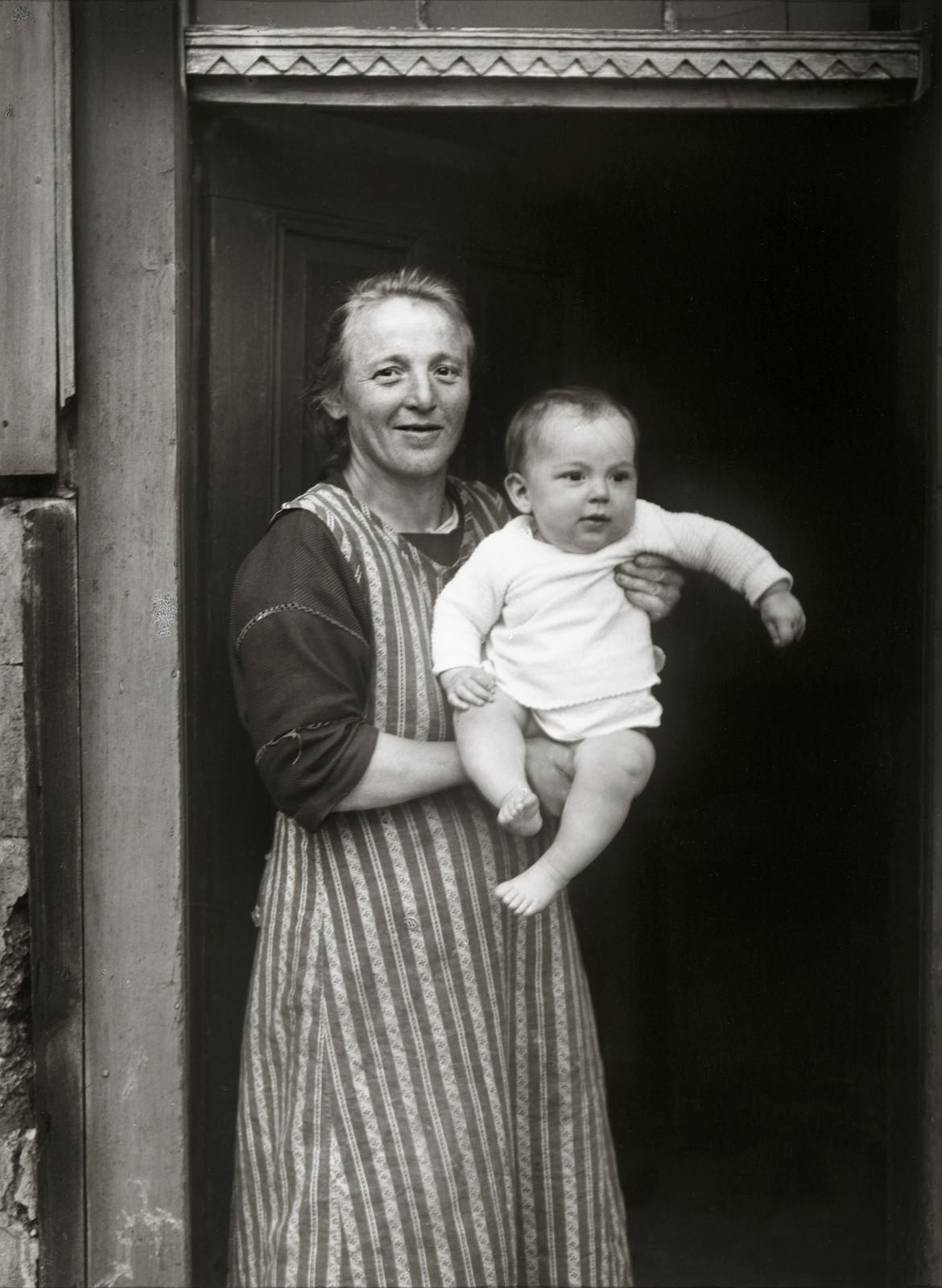
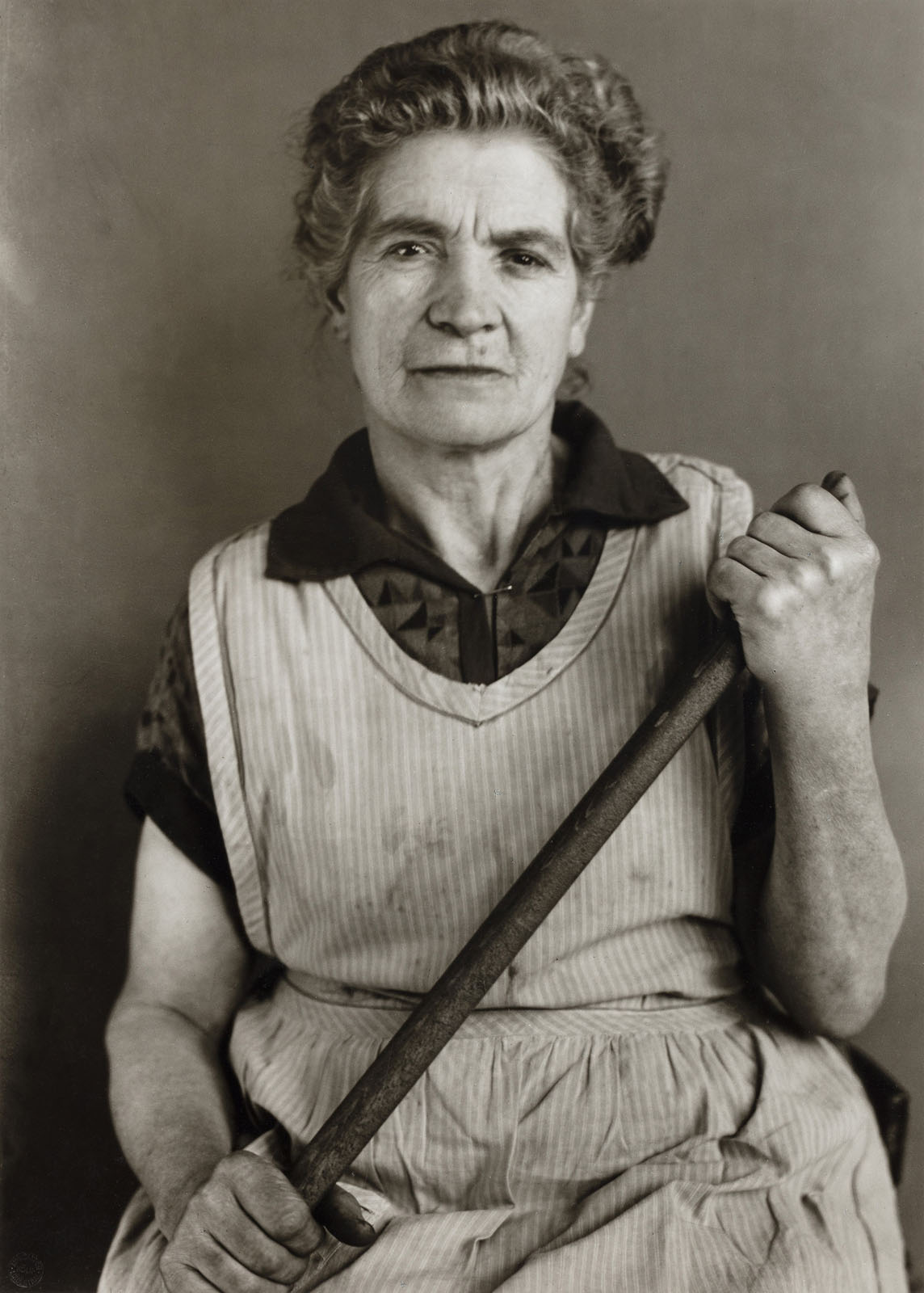

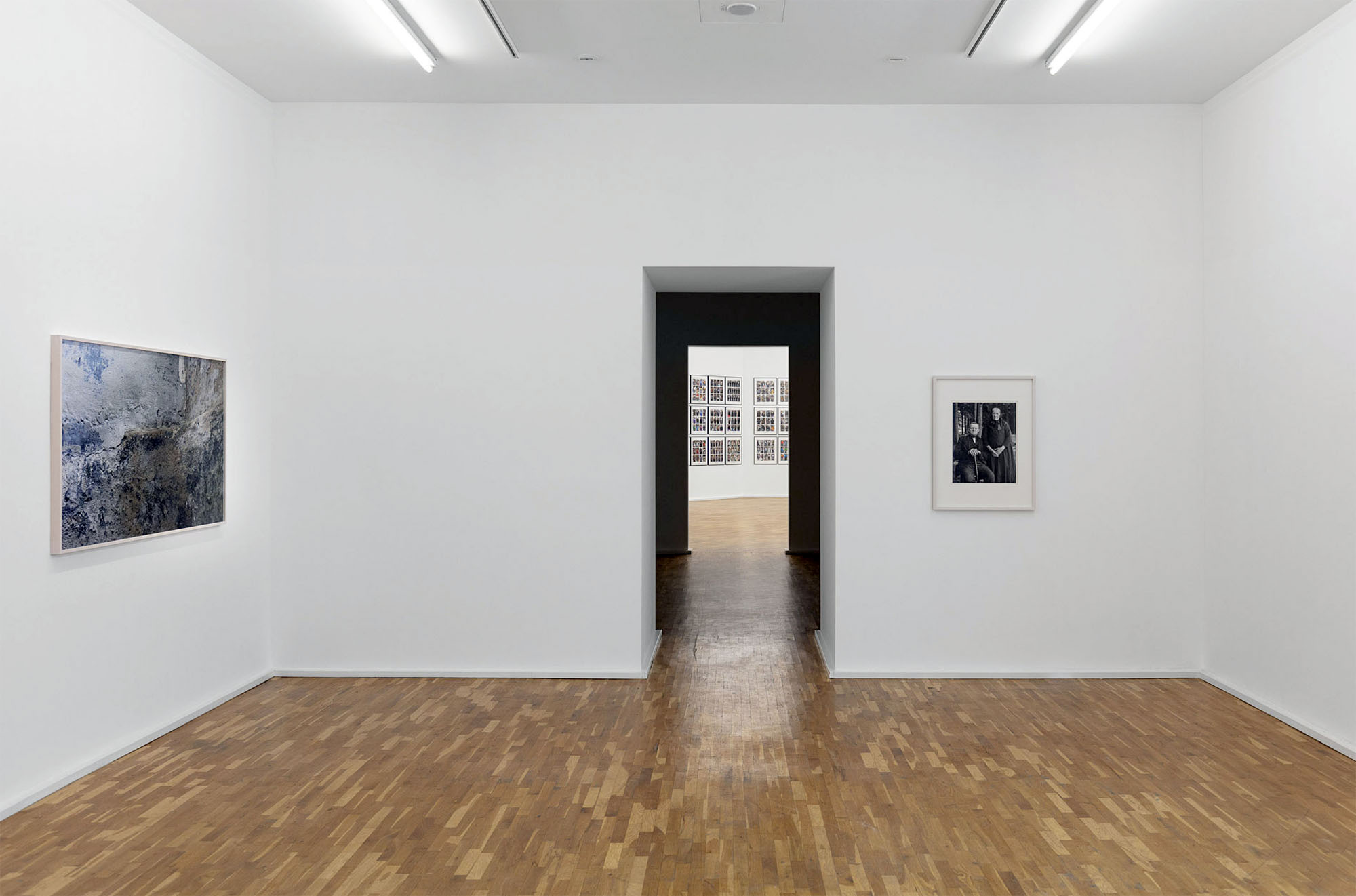



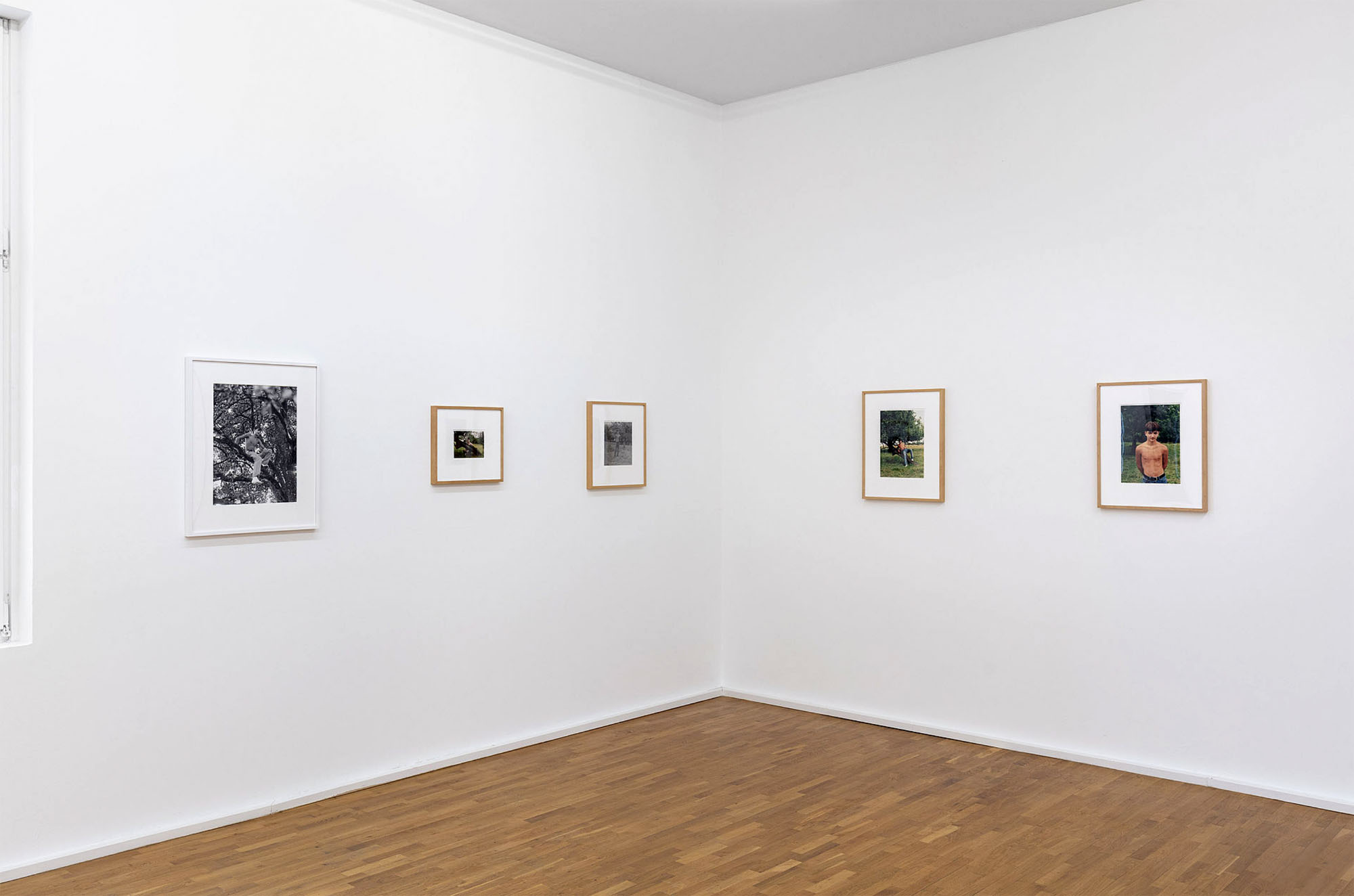
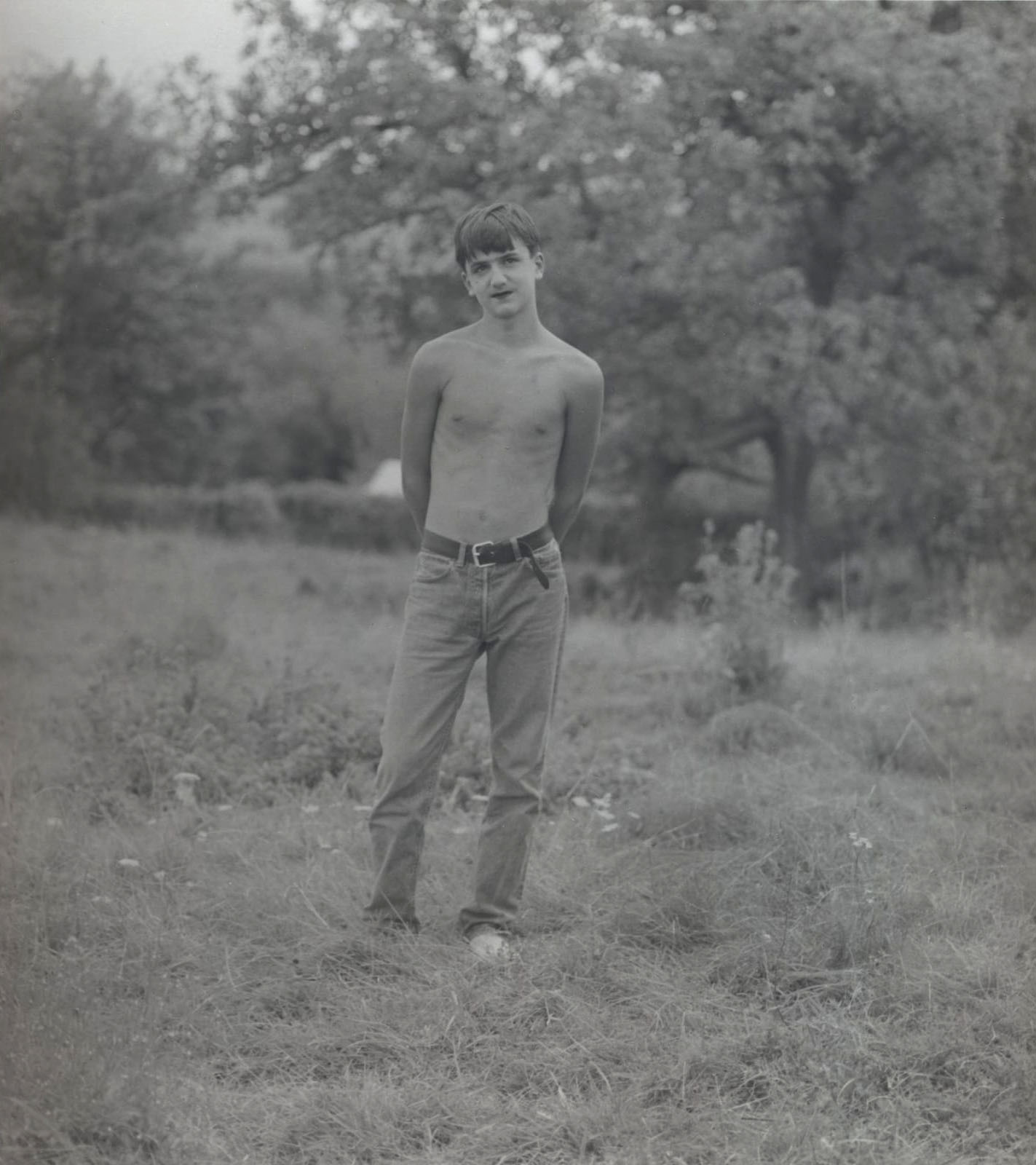
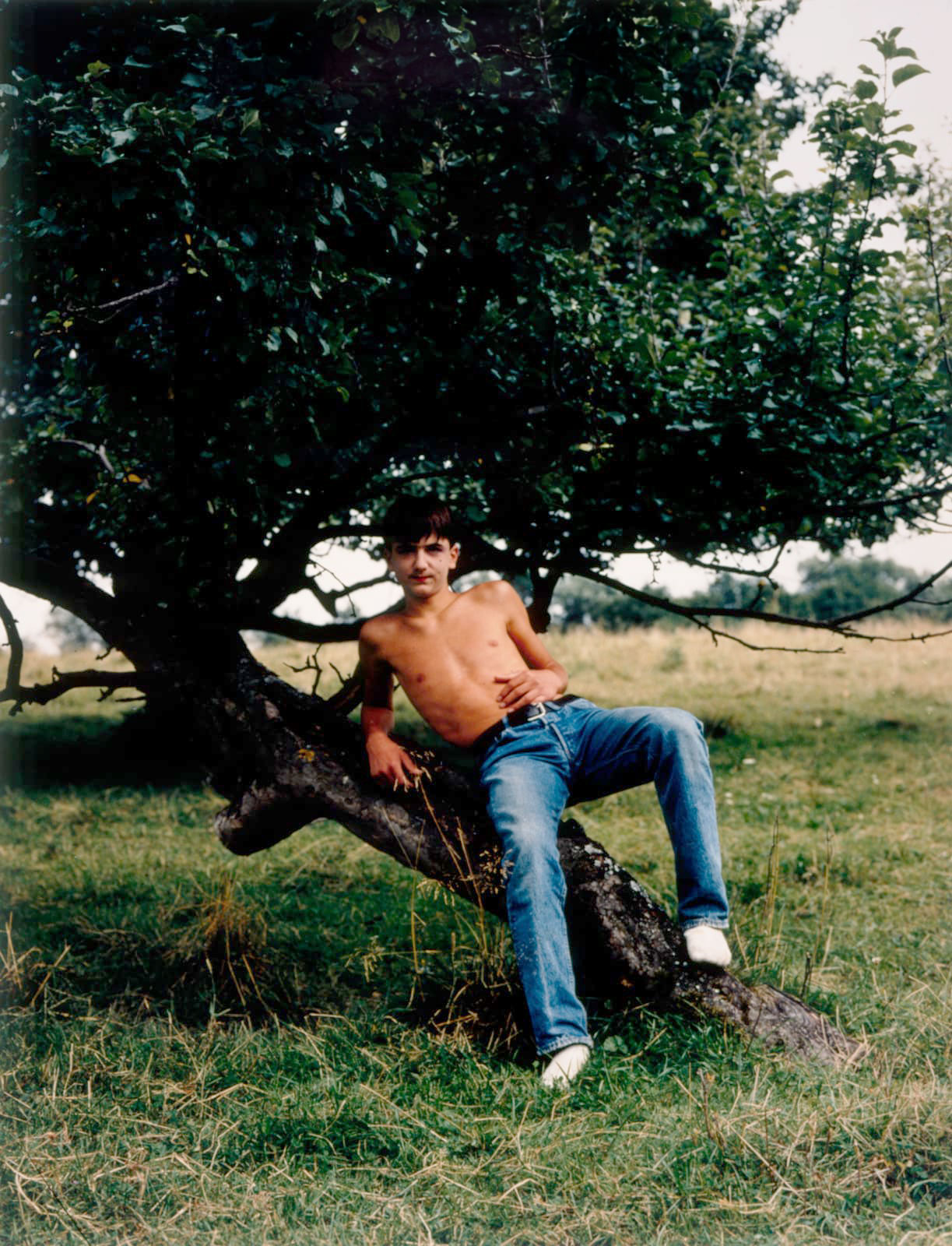






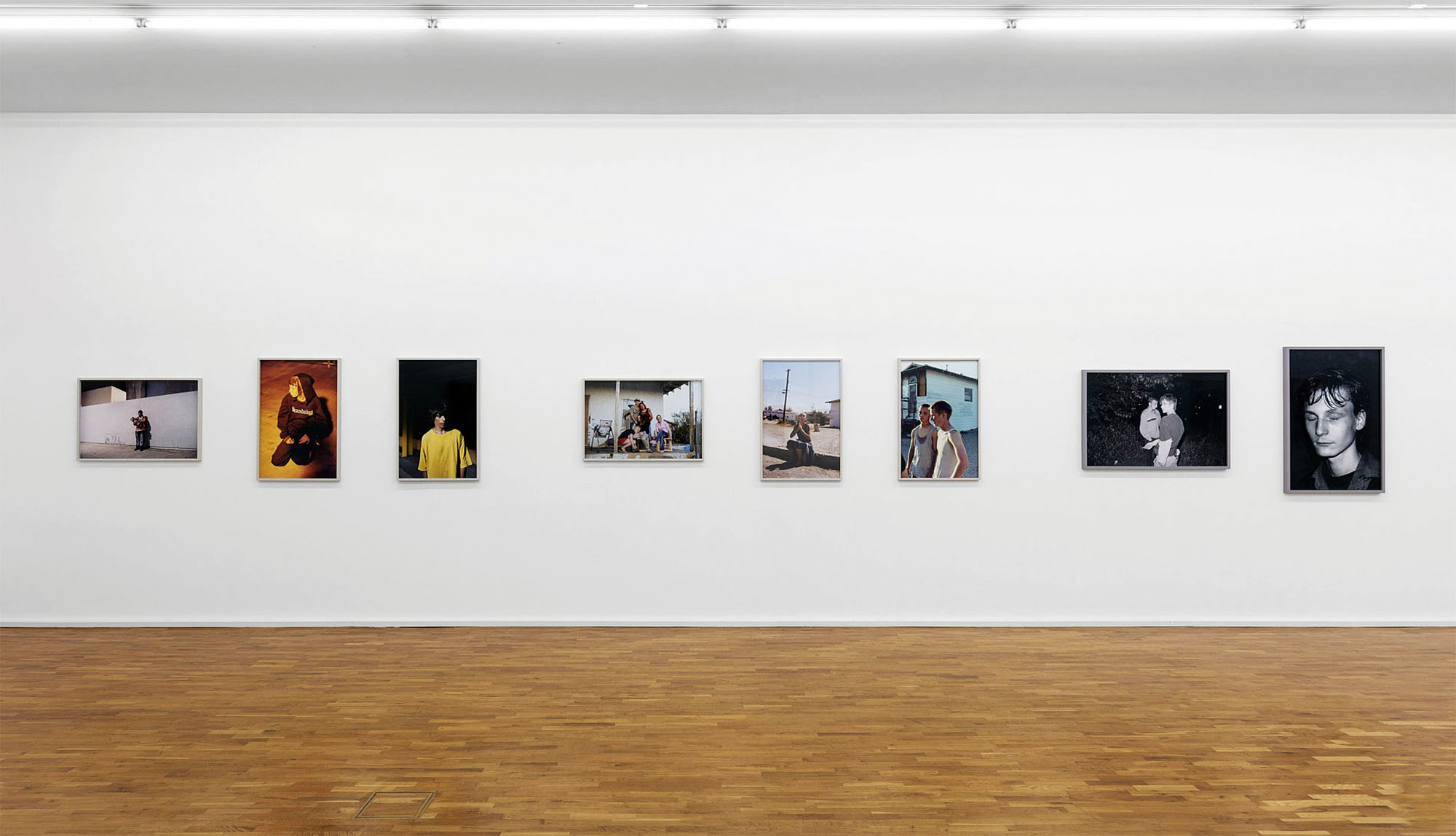
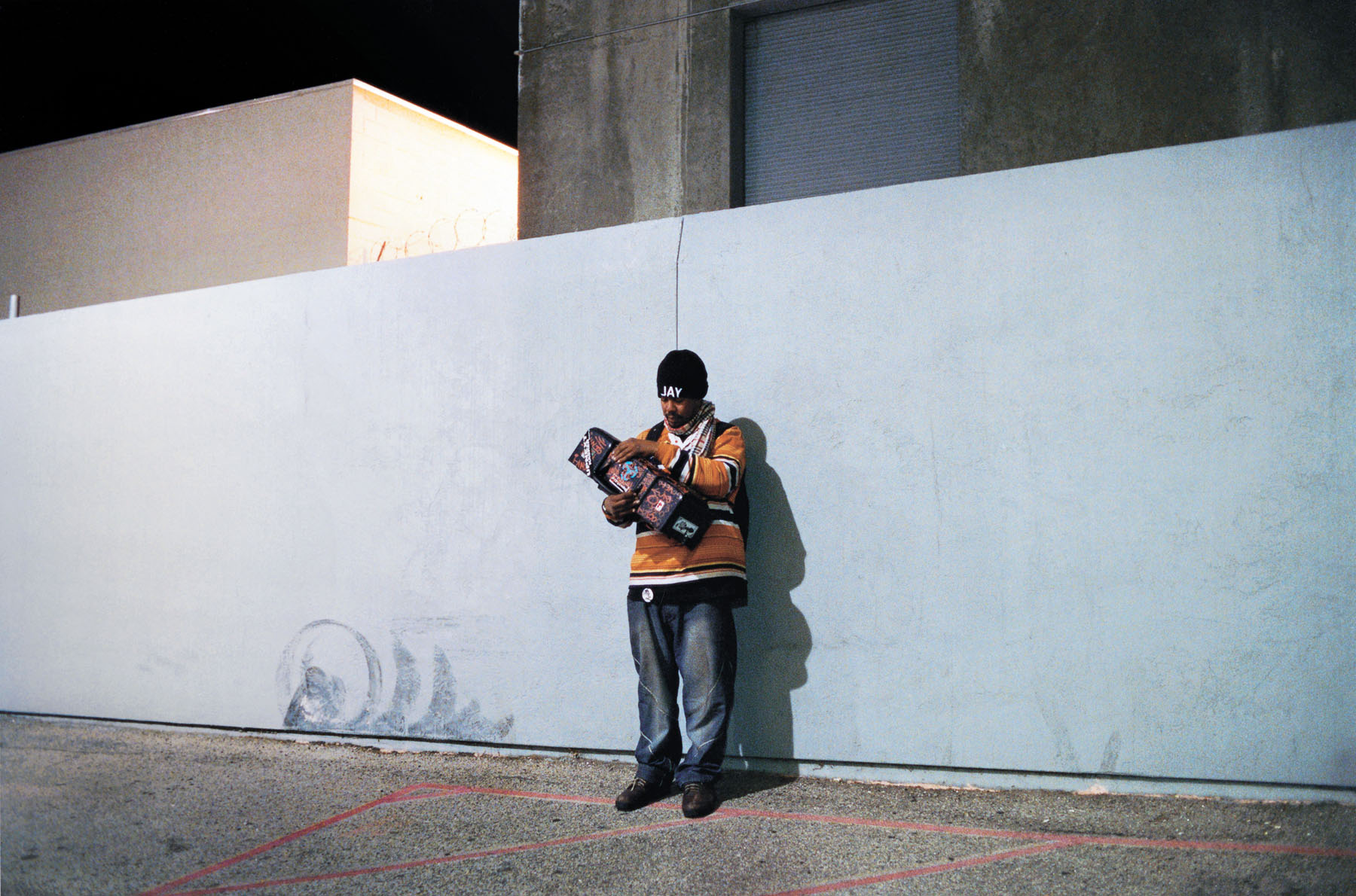
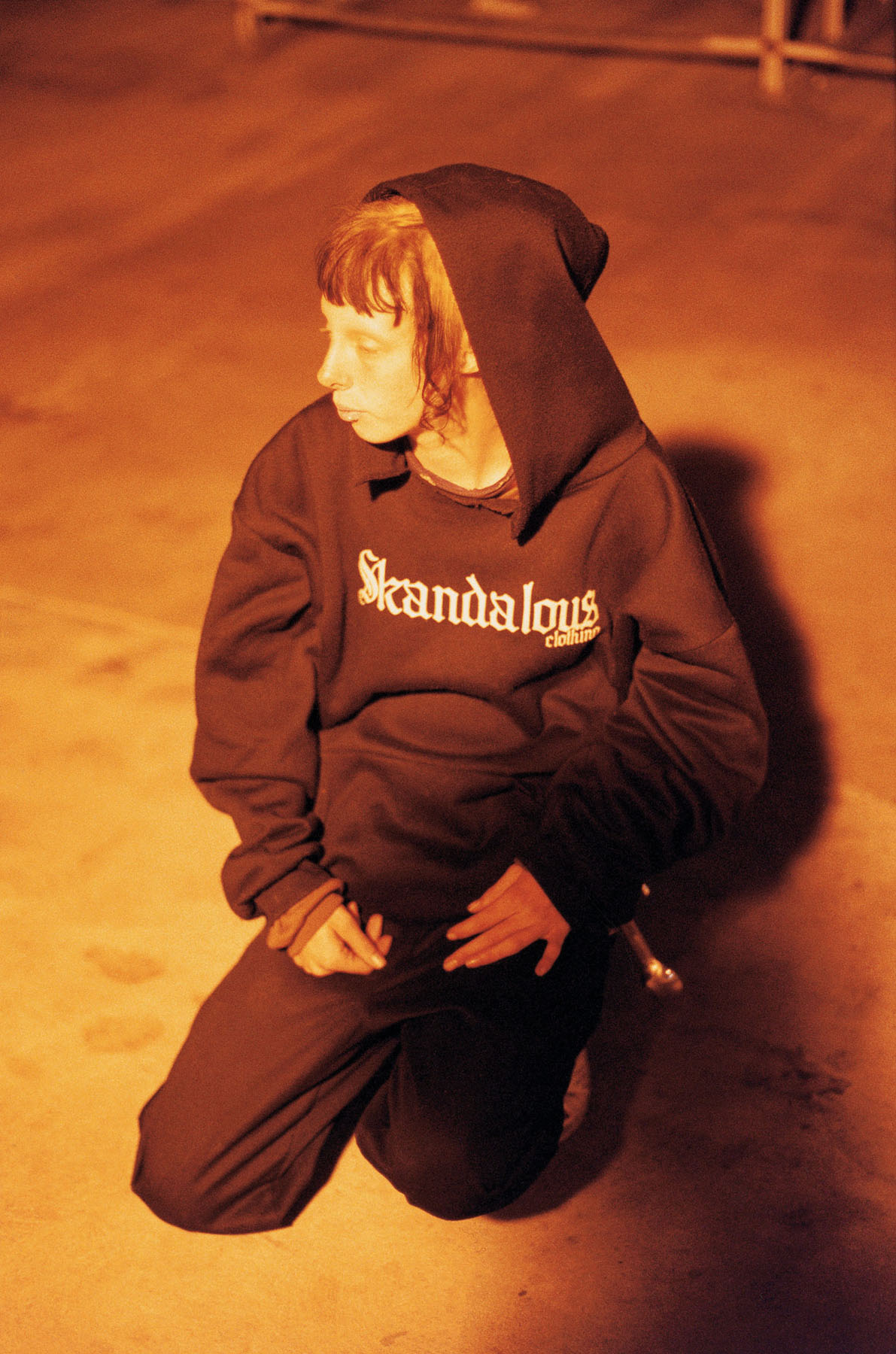


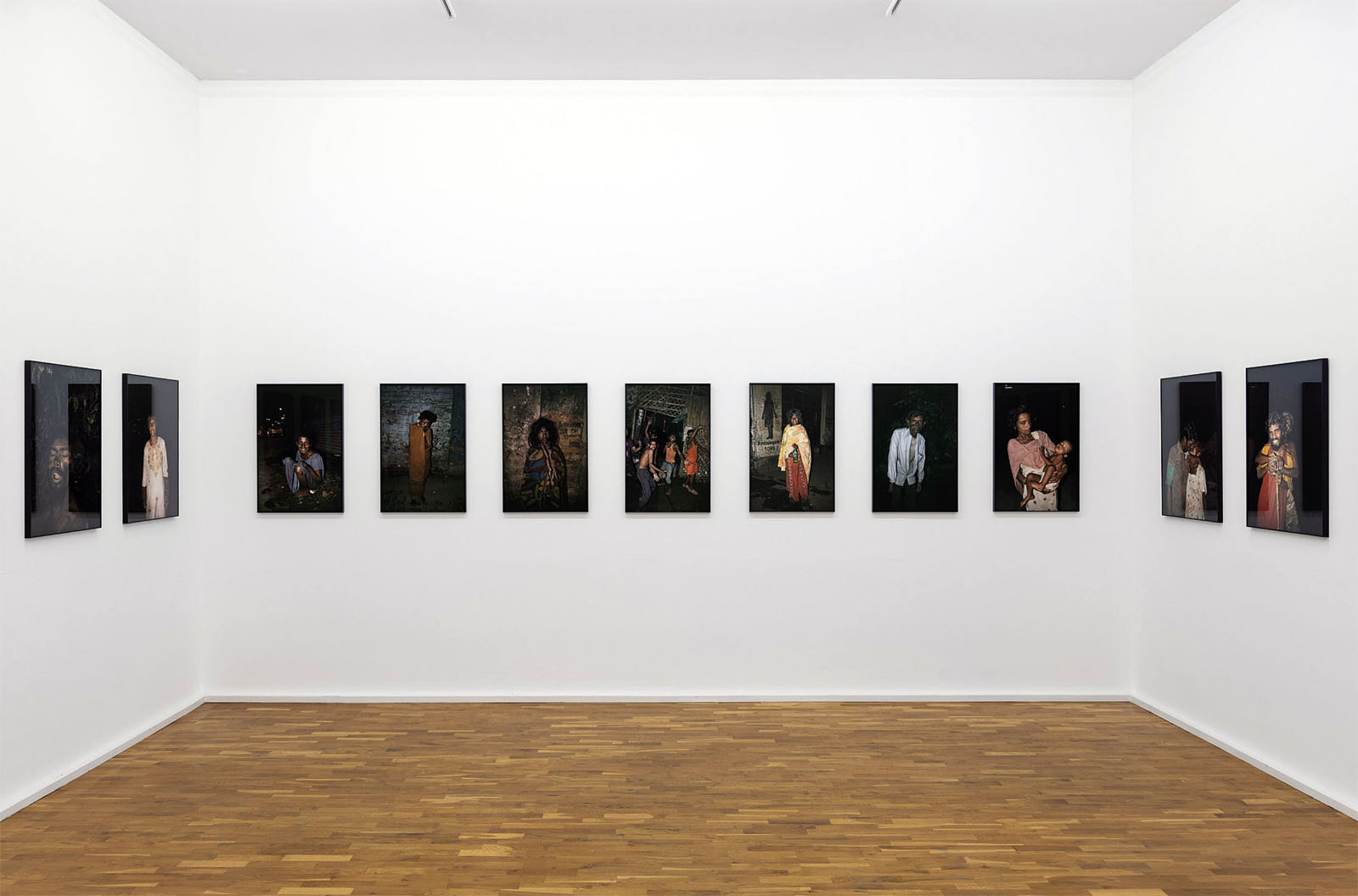


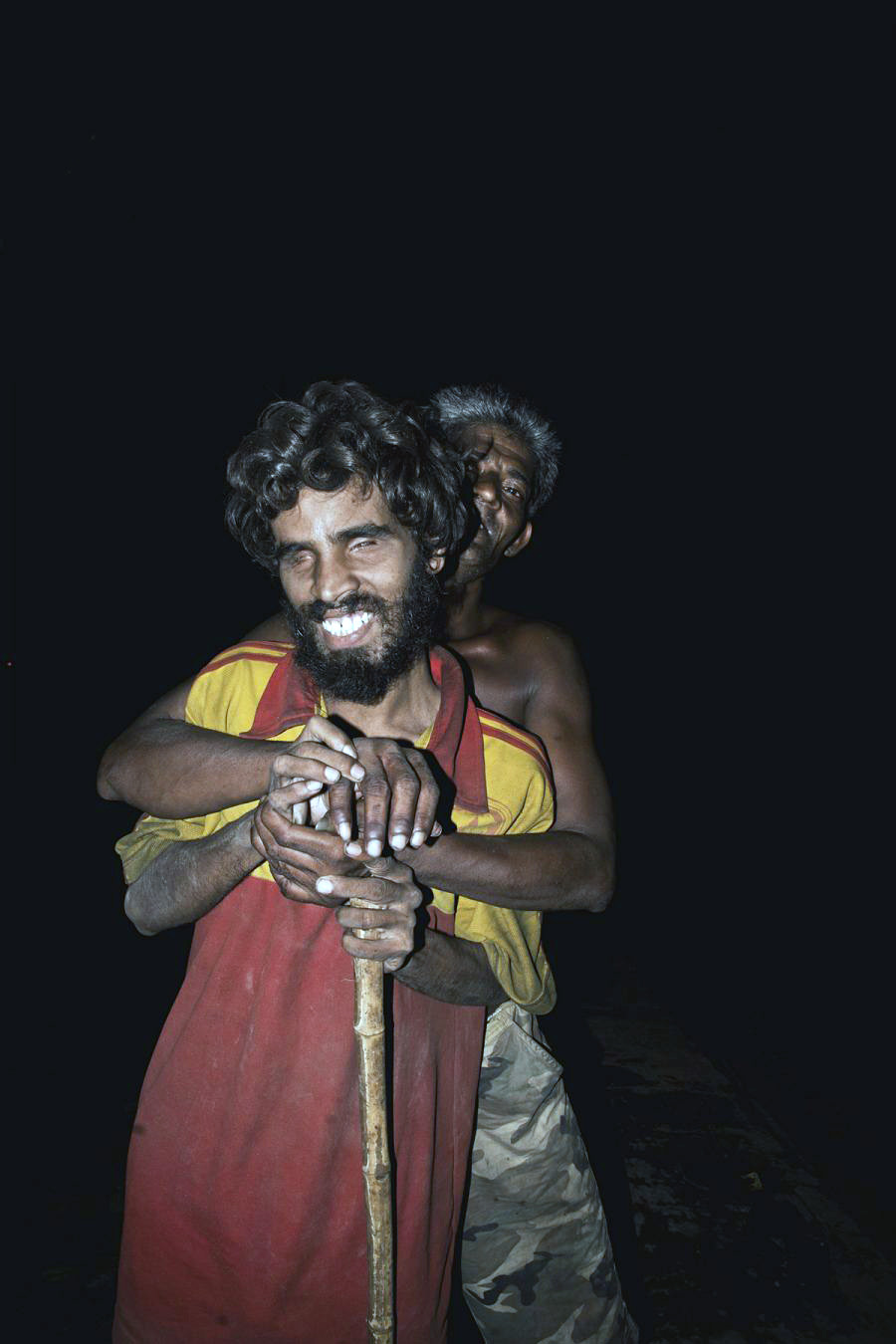

 Art Blart _ art and cultural memory archive
You must be logged in to post a comment.