Projects: Ming Smith is organised by Thelma Golden, Director and Chief Curator, The Studio Museum in Harlem, and Oluremi C. Onabanjo, Associate Curator, Department of Photography, The Museum of Modern Art, with the assistance of Kaitlin Booher, Beaumont and Nancy Newhall Curatorial Fellow, Department of Photography, The Museum of Modern Art, and Habiba Hopson, Curatorial Assistant, The Studio Museum in Harlem.
Another fascinating, stimulating, challenging artist finally getting their due.
Music, spirit, transcendence, light, blur, dreams, improvisation, composition, jamming, joy, rhythm, respect, wonder, emotion, African American culture. Conjoined in a mysterious, reverent wistfulness…
“You don’t make art for money, especially as a Black artist. You do it because there is that need to create – and that has been part of my survival; that has helped me survive.”
I feel that too. Creativity has kept the black dog from the door, creativity has helped me survive. I’m sure it does for many artists.
Dr Marcus Bunyan
Many thankx to the Museum of Modern Art for allowing me to publish the photographs in the posting. Please click on the photographs for a larger version of the image.
“You don’t make art for money, especially as a Black artist. You do it because there is that need to create – and that has been part of my survival; that has helped me survive.”
“My work as a photographer was to record, culturally, the period of time in which I lived – and I recorded it as an artist.”
“Oh no, it’s all discovery, it’s all improvisation. It’s like when jazz musicians solo. They improvise, and photography is definitely that, for me.”
“Whether I’m photographing a person on the street, someone I know, or on an assignment, I’m doing it because I admire them. I like the sense of exchange – they’re giving and I’m taking, but I’m also giving them something back. There were certain people who would understand what I was looking for and would try to give me a photograph by posing. Whatever I’m shooting, whether it’s a portrait or a place, my intention is to capture the feeling I have about that exchange and that energy.”
“I evolved as a photographer with the series Invisible Man [1990-1991], just like a jazz musician who plays the head [the known melody of a song] before they start improvising. Ralph Ellison’s book Invisible Man [1952] was an inspiration, especially the idea of what it means not to be seen, but I didn’t consciously set out to make work about it. I wanted to capture the feeling of painting and make photographs on an artistic scale. Living in a Black environment, the people I photographed didn’t have to put on any airs, they were just living their life. The series was about a feeling, an expression. Anyone could identify it. We were present but we weren’t there. We were visible but also invisible.”
“Living in Harlem was an authentic experience for me, and I was trying to capture that authenticity. I was living and my work came out of my life. I would go out with my camera to shoot events like the Million Youth March [1998] or meet musical figures like Dr. Edward Boatner or academics like Dr. John Henrik Clarke, and even watch Duke Ellington on TV – these people had so much history in them. Some people look at certain areas and only see the depravity and the struggle, but there’s so much love and genius there; there’s warmth. I think that was my motive in photographing Harlem, to communicate that warmth.”
Ming Smith
The Museum of Modern Art announces Projects: Ming Smith, on view in the Museum’s street-level galleries from February 4 through May 29, 2023. A photographer who has lived and worked in New York since the 1970s, Ming Smith has served as a precedent for a generation of artists engaging the politics and poetics of the photographic image. Through a deep exploration of the artist’s archive, the exhibition will offer a critical reintroduction to Smith’s work through her distinctive approach to movement, light, rhythm, and shadow, highlighting how she transforms the image from a document of photographic capture into a space of emotive expression.
Text from the MoMA website
The moody magic of a long exposure photograph | Ming Smith | UNIQLO ArtSpeaks
Photography curator Oluremi Onabanjo examines Smith’s 1991 “Invisible Man, Somewhere, Everywhere,” a poignant image from this series inspired by Ralph Ellison’s 1952 novel “Invisible Man.”
Installation views of Projects: Ming Smith, on view at The Museum of Modern Art, New York from February 4, 2023 – May 29, 2023 Photos: Robert Gerhardt
The Museum of Modern Art announces Projects: Ming Smith, on view in the Museum’s street-level galleries from February 4 through May 29, 2023. A photographer who has lived and worked in New York since the 1970s, Ming Smith has served as a precedent for a generation of artists engaging the politics and poetics of the photographic image. Through a deep exploration of the artist’s archive, the exhibition will offer a critical reintroduction to Smith’s work through her distinctive approach to movement, light, rhythm, and shadow, highlighting how she transforms the image from a document of photographic capture into a space of emotive expression. Projects: Ming Smith is organised by Thelma Golden, Director and Chief Curator, The Studio Museum in Harlem, and Oluremi C. Onabanjo, Associate Curator, Department of Photography, The Museum of Modern Art, with the assistance of Kaitlin Booher, Beaumont and Nancy Newhall Curatorial Fellow, Department of Photography, The Museum of Modern Art, and Habiba Hopson, Curatorial Assistant, Permanent Collection, The Studio Museum in Harlem.
As Oluremi C. Onabanjo states, “For Ming Smith, the photographic medium is a site where the senses and the spirit collide. Calling attention to the synesthetic range of her photographic approach, this exhibition highlights how her images collapse the senses, encouraging us to attend to the hue of sound, the rhythm of form, and the texture of vision.” Works featured in the exhibition showcase a wide array of subjects, ranging from finely attuned studies of Black avant-garde musicians and dancers to depictions of everyday life in Harlem and Pittsburgh’s Hill District through photographic series made in response to Ralph Ellison’s novel Invisible Man and August Wilson’s Pittsburgh Cycle of plays.
Projects: Ming Smith is the fourth exhibition in MoMA’s ongoing Projects collaboration with The Studio Museum in Harlem. It takes up the work of a photographer who is important to the history of both museums. MoMA was the first institution to acquire Smith’s work (in 1979), and the Studio Museum has shown Smith’s work since the beginning of her career, when she was the first female member of the trailblazing Black photography collective the Kamoinge Workshop.
Thelma Golden says, “Almost from the day she arrived in New York City, Ming Smith was at the centre of an extraordinary cultural ferment, contributing to the Black Arts Movement while creating a space for herself within Harlem’s legendary Kamoinge Workshop. Working for over five decades, her contribution to modern photography is deeply significant – she continues to influence countless photographers through her singular documentation of, society’s humanity and pageantry. I’m thrilled that audiences who know her work will have the opportunity to revisit and reappraise her many achievements, and that new audiences will have the excitement of discovering her graceful, stunning images through Projects: Ming Smith.”
Projects: Ming Smith is accompanied by Ming Smith: Invisible Man, Somewhere, Everywhere, a new volume in MoMA’s One on One series, written by Oluremi C. Onabanjo. The book provides a sustained meditation on Smith’s photograph Invisible Man, Somewhere, Everywhere (1991) in MoMA’s collection.
Press release from the Museum of Modern Art
Introduction
For Ming Smith, photography is a site where the senses and the spirit collide through the prism of light. “I’m dealing with all these elements, getting that precise moment,” Smith has said. “Getting the feeling, the way the light hits the person – to put it simply, these pieces are like the blues.”
Projects: Ming Smith offers a critical reintroduction to a photographer who has lived in New York since the 1970s, and whose work has served as a precedent for generations of artists engaging the politics and the poetics of the photographic image in relation to experiences of Blackness. Through her skilful deployment of long exposures – which involves slowing the shutter speed of the camera lens to render movement as blur – Smith dissolves the boundaries between her subjects and their surroundings. Her dreamlike, abstract compositions are led by intuition and perfected through repetition.
The result of a deep dive into Smith’s archive, this exhibition reckons with the crucial position of this artist in the history of photography, and in the institutional memories of both The Museum of Modern Art and The Studio Museum in Harlem. MoMA was the first institution to acquire Smith’s work (in 1979), and the Studio Museum has shown Smith’s work since the beginning of her career, when she was the first female member of the trailblazing Black photography collective the Kamoinge Workshop. Bridging the distance between the present and the past, Projects: Ming Smith creates a photographic portal through which to encounter Smith’s images anew. It highlights how her pictures collapse the senses, encouraging us to attend to the hue of sound, the rhythm of form, and the texture of vision.
Text from the Museum of Modern Art
Installation view of Projects: Ming Smith, on view at The Museum of Modern Art, New York from February 4, 2023 – May 29, 2023 Photo: Robert Gerhardt
Page from Projects: Ming Smith extended labels (photographs below)
The stellar photographer Ming Smith remembers walking past the Museum of Modern Art when she was in her early 20s and telling herself, “I’m going to be in that museum one day.”
Anyone hearing her might have thought: Dream on. This was the 1970s. Smith was Black, female, new to New York City, with zero art credentials of the kind demanded by any museum of even the brashest up-and-comer, which Smith – a self-described low-key loner – was not.
But even then some changes were afoot – a few, isolated, sporadic – for artists and institutions alike. In 1979, in response to an open call by MoMA’s photography department for new work, Smith dropped off her portfolio. (The receptionist assumed she was a courier.) The museum bought two pictures, making her the first Black woman photographer to enter MoMA’s collection.
Forty years later came another landmark. In 2019, when MoMA opened its new Geffen Wing and the Studio Museum in Harlem, where Smith had shown over several decades, closed to build its new home, the two institutions began collaborating on exhibitions at MoMA’s Midtown and Long Island City locations.
The current show, called “Projects: Ming Smith,” installed on the ground floor at MoMA on 53rd Street (which has free public access), is the latest of these joint ventures, and it’s a beauty. With 52 pictures, mostly black and white, several being exhibited for the first time anywhere, it gives a good sense of Smith’s subject range and of her distinctive, self-invented style: improvisatory, multilayered, painterly, shadow-soaked, with images blurred as if shot at very high or low velocity, or viewed through retreating memory, or a volcanic rain.
Born in Detroit, raised in Columbus, Ohio, Smith started taking pictures when she was young – her pharmacist father was an amateur photographer – and learned the formal ropes as she went. While majoring in premed biology at Howard University she took a photography class and was told by the teacher that, given her race and gender, her prospects of a career in that field were next to nil. After graduating in 1971, she moved to New York City, where she supported herself as a fashion model, and kept taking pictures.
She soon plugged into a crucial support system. In 1972 she joined the Kamoinge Workshop, a Black photography collective based in Harlem. Kamoinge’s first female member, she participated in their notoriously hard-hitting group crits and for a while worked closely with one of the originating members, Anthony Barboza, accompanying him on a working trip to Senegal.
As was clear from a traveling survey of Kamoinge artists organised by the Virginia Museum of Fine Arts in 2020 – it later came to the Whitney Museum – the collective’s original members were eclectic in their styles and interests. But almost all their work adhered to the genre loosely known as “street photography,” grounded in a direct capturing of images, candid and unposed, of everyday life, with results that were documentary in effect and humanistic in intent. Smith’s work basically comes out of this aesthetic too, but also radically, romantically departs from it.
Many of her images, including the 1972 “Raise Your Window High,” the show’s earliest entry, are of city life, which became a long-term subject. A selection of Harlem-related pictures includes shots of the Apollo Theater marquee, a church service in progress, Alvin Ailey’s 1989 funeral, and a fist-pumping rally for the 1998 Million Youth March.
At the same time, much of her urban photography is not event-oriented, or even geographically specific. A series of photos taken in Pittsburgh in 1991, conceived as a visual response to a series of plays by August Wilson set there, could, by the look of them, have been shot in almost any city. A woman and child sit pensively on a Greyhound bus. A man in a pool hall practices cue moves. A dark silhouette of a figure trudges at night down a snow-covered street. Mood, not place or even people, is the real subject here. The title of the snowstorm picture, “Invisible Man, Somewhere, Everywhere,” says as much. So does the fact that the image once appeared in a MoMA show devoted to New York City.
Smith is a longtime jazz and blues devotee. She married a musician (saxophonist David Murray) and has photographed many. A visual equivalent of jazz performance has produced her most experimental work. Applied to street photography’s fairly set subject matter, her use of quick, reflexive shooting, manipulated shutter speeds, and multiple exposure printing opens the possibility for perceptual accident, and for improvisation, to be followed wherever it might lead, which is often in an abstracting direction. In addition, her penchant for framing small areas of light in fields of prevailing darkness gives a bluesy cast to all of this.
The show’s organisers — Thelma Golden, director of the Studio Museum in Harlem, and Oluremi C. Onabanjo, an associate curator of photography at MoMA, working with curatorial fellows Kaitlin Booher and Habiba Hopson – provide a chance to consider a wide and varied sampling of work at a glance in a group of 17 photographs from the 1970s and ’80s, printed large and small, and installed up and across a high gallery wall.
Many of Smith’s favoured subjects are here: city life, performance, travel. A white cloth whips in the wind on a tenement clothesline. The moon, a vortex of brightness, hangs tangled in trees in a Tokyo park. Alvin Ailey dancers flicker like vigil lights in a dark theater. Saxophonist Pharoah Sanders looks rock-solid onstage in New York while another musician, Sun Ra, is clearly an ET about to lift off, his sparkling gold scarf streaming like a comet tail behind him.
There’s a street-level mystic at work in Smith’s art. You sense it in her tremorous cityscapes, especially in her images of people – the primary subject, after all, of street photography. She shoots straightforward portraits, sometimes identifying the sitter by name (composer Edward Boatner; dancer Judith Jamison; writer Amiri Baraka), sometimes not. She makes self-portraits, though they’re hard to read. In one from 1992 called “Womb,” which Smith shot on a trip to Egypt, she appears to be emanating, barely materialised, from a pyramid behind her.
And then there are what I can only call holy pictures in which charismatic figures are transcendentally lifted up. In one, from 1979, titled “James Baldwin in Setting Sun Over Harlem,” Smith, using double exposure, overlays very faintly a photo she took of Baldwin onto a skyscape of light-shot dark clouds. In a second picture using the same technique, she floats above the city the visage of the immortal Harlem photographer James Van Der Zee. Sure, these images are just blatant hero worship. They’re also, like so much of Smith’s art, just wow.
Holland Cotter. “Ming Smith’s Poetic Blur,” on The New York Times website 16 February 2023 [Online] Cited 19/02/2023
“The image is always moving, even if you’re standing still.”
Ming Smith
“I like catching the moment, catching the light, and the way it plays out,” the photographer Ming Smith has said. “I go with my intuition… it’s about always looking at lines and the quality of the movement. It’s about seeking energy, breath, and light. The image is always moving, even if you’re standing still.”1 For Smith, these are the central tenets of her approach to image-making: a practice attuned to bodily movement and spatial relations that maintains a commitment to the poetry of light and shadow.
In the early 1970s, Smith arrived in New York City after graduating from Howard University. She had studied microbiology and chemistry, but took the university’s only photography class to sustain a passion for the image inculcated in her by her father. Supporting herself as a model while shooting on the city streets, Smith spent time in Anthony Barboza’s studio and met photographers such as Louis Draper and Joe Crawford, swiftly becoming immersed in fiery debates about the stakes of photography as an art form.2 In 1972, Draper invited Smith to join The Kamoinge Workshop, a collective of African American photographers who gathered weekly to review and critique each other’s work. Its name derived from the Kikuyu word for “a group of people acting together,” Kamoinge was founded in 1963 and emerged as a shared political and artistic space for photographic improvement and, especially, self-determination. It was a powerful sentiment at a time of pivotal gains for the US Civil Rights Movement and decolonization across the African continent.
Joining Kamoinge was transformational for Smith’s photography and self-perception as an artist. She cut her teeth as a photographer and sharpened her conceptual focus, mining the structural and psychological tensions that animate experiences of Blackness. By turns dense and diaphanous, Smith’s pictures sustain hefty blacks alongside frothy swirls of gray and white. These mercurial, moody scenes resist spectacular clarity or straightforward interpretation. As historian and curator Maurice Berger has said, “Ms. Smith’s subjects are often suspended between visibility and invisibility: faces turned away, or are blurred or shrouded in shadow, mist or darkness, a potent metaphor of the struggle for African-American visibility in a culture in which black men and women were disparaged, erased or ignored.”3 In this way, Smith gives shape to the quotidian idiosyncrasies of Black life.
In an unending oscillation between light and darkness, Smith revels in the emotive elements of her subjects. Key to this is the photographer’s command of the blur, which critic Jessica Lynne succinctly defines as “the technique by which Smith collapses the boundaries between a photograph’s subject and its background.”4 Executed with rhythmic pacing and maintaining an acuity of vision, her engagement with sonic and lyrical forms is particularly notable. Subjects and captions refer to the plays of August Wilson, the words of Ralph Ellison’s Invisible Man (1952), and the music of Marvin Gaye and Billie Holiday, John Coltrane and David Murray. These intertextual references bring forward recognizable figures while affirming the function of these photographs as speculative compositions, shaped through intuition. “In the art of photography, I’m dealing with light, I’m dealing with all these elements, getting that precise moment,” Smith has said. “Getting the feeling, getting the way the light hits the person – to put it simply, these pieces are like the blues.”5
Oluremi C. Onabanjo, Associate Curator, The Robert B. Menschel Department of Photography, 2022
1/ Ming Smith quoted in “A Portrait of the Artist: Ming Smith in Conversation with Janet Hill Talbert,” in Ming Smith (New York & Dallas: Aperture & Documentary Arts, 2020). 15.
In Mother and Child Deciding (1991), a young woman is seated at a diner booth with a child, both bundled in winter jackets. Her body is turned to the right, with her leg hoisted onto the booth’s seat, revealing a worn sneaker; her right elbow is placed on the booth’s table, and her little finger touches her lower lip. Her turned face and her outward gaze into the middle distance indicate that she is contemplating the menu posted on a board, or the photographs hung on the wall above the wood paneling. But her wistful face tells us that her thoughts are occupied by worries that have accompanied her here – worries that she cannot share with the child.
Recent postings have hit a rich vein with exhibitions on artists and concepts which challenge the patriarchal, hegemonic status quo… through an exploration of diversity and the enunciation of different points of view. Postings have included exhibitions on the femme fatale, queer lives and Ukranian modernist painting and artists such as Samuel Fosso, Jimmy DeSana, and Andy Warhol.
Upcoming postings continue the theme with exhibitions by Ming Smith, Ernest Cole, Hannah Villiger, Dawoud Bey and Carrie Mae Weems, and Lucinda Devlin.
Dr Marcus Bunyan
Many thankx to the Fotomuseum Winterthur for allowing me to publish the photographs in the posting. Please click on the photographs for a larger version of the image.
VALIE EXPORT – The Photographs is the first exhibition to focus on the photographic oeuvre of the artist VALIE EXPORT (b. 1940), whose at times provocative performances and experimental installations have been a source of controversy. The show examines EXPORT’s use of photography as a critical exploration of processes of depiction and representation. At the interface of film, video art, drawing and body art the photographs offer a new perspective on her creative oeuvre.
“As usual, the film is ‘shown’ in the dark. But the cinema has shrunk somewhat – only two hands fit inside it. To see (i.e. feel, touch) the film, the viewer (user) has to stretch his hands through the entrance to the cinema. At last, the curtain which formerly rose only for the eyes now rises for both hands. The tactile reception is the opposite of the deceit of voyeurism. For as long as the citizen is satisfied with the reproduced copy of sexual freedom, the state is spared the sexual revolution. Tap and Touch Cinema is an example of how re-interpretation can activate the public.”
~ Valie Export
At age twenty-eight, Waltraud Hollinger changed her name to VALIE EXPORT, in all uppercase letters, to announce her presence in the Viennese art scene. Eager to counter the male – dominated group of artists known as the Vienna Actionists – including Günter Brus, Otto Mühl, Hermann Nitsch, and Rudolf Schwarzkogler – she sought a new identity that was not bound by her father’s name (Lehner) or her former husband’s name (Hollinger). Export was the name of a popular cigarette brand. This act of provocation would characterise her future performances, especially TAPP und TASTKINO (TOUCH and TAP Cinema) and Aktionhose: Genitalpanik (Action Pants: Genital Panic). Challenging the public to engage with a real woman instead of with images on a screen, in these works she illustrated her notion of “expanded cinema,” in which film is produced without celluloid; instead the artist’s body activates the live context of watching. Born of the 1968 revolt against modern consumer and technical society, her defiant feminist action was memorialised in a picture taken the following year by the photographer Peter Hassmann in Vienna. VALIE EXPORT had the image screen printed in a large edition and fly-posted it in public spaces.
Gallery label from Transmissions: Art in Eastern Europe and Latin America, 1960-1980, September 5, 2015 – January 3, 2016 from the MoMA website Nd [Online] Cited 05/05/2023
VALIE EXPORT’s multimedia work eludes any simplistic categorisation or definition. As a pioneer of performance art, installation art and video art, EXPORT has consistently broken through the boundaries separating media genres, while using her own body as an artistic medium. Photography has always played a key role in her practice – be it for documentary or experimental purposes, as an element in multimedia installations or as art in its own right. EXPORT has had a constant awareness of the importance of visually recording her performances. Back in 1968 two of her best-known performances, “TAPP und TASTKINO” and the action “Aus der Mappe der Hundigkeit”, were attended by photographers and filmmakers. For the performance “TAPP und TASTKINO”, a request was put out by megaphone asking spectators and passers-by to touch EXPORT’s breasts, which were covered by a box inspired by a cinema auditorium with a curtain that the artist wore like a garment. Participants had to maintain eye contact with EXPORT for a defined period of time while touching her, with the artist thereby reversing the voyeuristic male gaze, a typical feature of cinema. For “Aus der Mappe der Hundigkeit”, EXPORT took artist Peter Weibel through the centre of Vienna on a lead, with him crawling on all fours, provocatively drawing attention to the prevailing gender relations and power dynamics by reversing them. Photography was not merely used to make a complete document of EXPORT’s work. Rather, action and photography entered into a dialogue, creating a mutual dependency between them: on the one hand, actions were recorded (and ultimately communicated too) by means of photography; on the other, by virtue of their production, publication and reception – especially of key moments such as the interaction between artist and participants in “TAPP und TASTKINO” and their switch of perspective – EXPORT’s action photos acquired a status that was independent of the performances. EXPORT’s focus on the critical examination of mechanisms of representation dates right back to the start of her career, when she began dealing with the different characteristics of the photographic image and imaging media, questioning the way they worked and subjecting photography to conceptual analysis by lifting the lid on the conditions governing the technical processes of image-making. Deconstructing the photographic gaze and its implicit power structures were of key importance here.
VALIE EXPORT – The Photographs is the first exhibition to focus on the photographic oeuvre of the artist VALIE EXPORT (b. 1940), whose at times provocative performances and experimental installations have been a source of controversy. The show examines EXPORT’s use of photography as a critical exploration of processes of depiction and representation. At the interface of film, video art, drawing and body art the photographs offer a new perspective on her creative oeuvre. VALIE EXPORT’s multimedia work eludes any simplistic categorisation or definition. As a pioneer of performance art, installation art and video art, EXPORT has consistently broken through the boundaries separating media genres, while using her own body as an artistic medium. Photography has always played a key role in her practice – be it for documentary or experimental purposes, as an element in multimedia installations or as art in its own right.
EXPORT has had a constant awareness of the importance of visually recording her performances. Back in 1968 two of her best-known performances, TAPP und TASTKINO and the action Aus der Mappe der Hundigkeit, were attended by photographers (and filmmakers). For the performance TAPP und TASTKINO, a request was put out by megaphone asking spectators and passers-by to touch EXPORT’s breasts, which were covered by a box inspired by a cinema auditorium with a curtain that the artist wore like a garment. Participants had to maintain eye contact with EXPORT for a defined period of time while touching her, with the artist thereby reversing the voyeuristic male gaze, a typical feature of cinema. For Aus der Mappe der Hundigkeit, EXPORT took artist Peter Weibel through the centre of Vienna on a lead, with him crawling on all fours, provocatively drawing attention to the prevailing gender relations and power dynamics by reversing them.
Photography was not merely used to make a complete document of EXPORT’s work. Rather, action and photography entered into a dialogue, creating a mutual dependency between them: on the one hand, actions were recorded (and ultimately communicated too) by means of photography; on the other, by virtue of their production, publication and reception – especially of key moments such as the interaction between artist and participants in TAPP und TASTKINO and their switch of perspective – EXPORT’s action photos acquired a status that was independent of the performances.
EXPORT’s focus on the critical examination of mechanisms of representation dates right back to the start of her career, when she began dealing with the different characteristics of the photographic image and imaging media, questioning the way they worked and subjecting photography to conceptual analysis by lifting the lid on the conditions governing the technical processes of image-making. Deconstructing the photographic gaze and its implicit power structures were of key importance here.
For EXPORT, the critical analysis of systems of representation invariably went hand in hand, in the context of both media and society, with a questioning of the male gaze directed at a body viewed as female. Making reference to her own body, she repeatedly probed the role of the woman, the artist and the subject in patriarchal sociopolitical structures. In 1970, for example, EXPORT had a garter tattooed on her thigh for Body Sign Action to give visible expression to the woman’s status as a sexual object and projection surface for male fantasies. Besides capturing the act of being tattooed, EXPORT also took photographs of the tattoo itself. The work expresses the pain involved – quite literally – in having patriarchal norms inscribed on a body that is seen as female. With her series Body Configurations (1972–1982), EXPORT investigates the relationships between the subject and power-political structures through body postures too. She explicitly couches her critique of the processes of depiction and representation in feminist terms: her work centres on the relationship between subject and space, body and gaze, femaleness and representation.
The exhibition VALIE EXPORT – The Photographs, which was devised in close collaboration with the artist, focuses on the impact that photography has had on her creative output. However, following the logic of EXPORT’s work, the exhibition not only presents photographs but also juxtaposes different media and works created between 1968 and 2007.
About VALIE EXPORT
VALIE EXPORT was born in 1940 in Linz, Austria, and now lives and works in Vienna. She is one of the pioneers of performance art and conceptual art. In 1967, in what was a radical gesture at the time, she gave up her father’s and her ex-husband’s names and laid claim to a new identity, VALIE EXPORT. Her works have been shown worldwide as part of numerous solo and group exhibitions. EXPORT has taught at various international institutions and was a professor for performance and multimedia at the Academy of Media Arts Cologne from 1995 to 2005. The VALIE EXPORT Center Linz was established through the acquisition of the artist’s estate in 2015, thus laying the foundations for an international research centre to foster artistic and academic engagement with media art and performance art.
In her series Body Configurations, the artist had herself or female colleagues photographed in local streets, stairwells, and alleyways, contorting their bodies to mimic the harsh geometries of the city. Influenced not only by the Actionists but also by the human sculpture of Robert Morris, Export complicates the coolly inhuman systems of Minimalism by reintroducing the human body into abstraction, an intimate yet public gesture that effortlessly transmutes the personal into the political.
Curator: Julie Robinson is Senior Curator, Prints, Drawings and Photographs at AGSA
Bob Adelman (American, 1930-2016) Andy Warhol on the red couch at the Factory, New York 1964 Pigment print Courtesy of Bob Adelman Estate
LOOK – SOCIAL
CELEBRITY–POLAROID
SELF – PORTRAIT
STUDIO–STREET
SCREEN – PRINT
QUEER – INFLUENCE(R)
CAMP–POP
PHOTO–GRAPHIC – PRODUCTION
PICTURE–ART
the photograph is a vehicle for performance
“In the scopic field, the gaze is outside, I am looked at, that is to say, I am a picture …. The gaze is the instrument through which light is embodied and through which – if you will allow me to use a word, as I often do, in a fragmented form – I am photo-graphed.”
~ Lacan, The Four Fundamental Concepts, p. 106
Dr Marcus Bunyan
Many thankx to the Art Gallery of South Australia for allowing me to publish the photographs in the posting. Please click on the photographs for a larger version of the image.
SEE MORE INTERESTING AND ESSENTIAL PHOTOGRAPHS BY ANDY WARHOL:
“A good picture is … of a famous person doing something unfamous. It’s about being in the right place at the wrong time.”
Andy Warhol
“Warhol was a famously detached person, and numerous accounts call attention to the verbal, psychological and technological barriers the artist created between himself and the world around him. Yet, here he describes technology as integrated into the social dynamic of the Factory. Photography became a vital tool in the formation and commemoration of this emerging countercultural community, and the photographs of Name, Berlin and other Factory denizens document everything from the making Warhol’s films and paintings to the Factory crowd at lunch at the local diner. Similar to the family reunion, the tourist vacation or a growing child, the Factory seems to realise itself through this kind of documentation. As the saying goes: pictures, or it didn’t happen.”
Catherine Zuromskis, Associate Professor, School of Photographic Arts and Sciences, College of Art and Design, at Rochester Institute of Technology, USA
“In subtitling the show, A Social Media, Robinson is emphasising the way Warhol surrounded himself with two kinds of people: those who were to be photographed, and those who were photographing him. In the first category there was room for the whole world. In the second, we find a succession of photographers of varying levels of professionalism. Early on there is Billy Name, who took over camera duties when Warhol became bored with the technical stuff. There was David McCabe, whom Warhol paid to follow and photograph him for a whole year in 1964-65. There were long-term friends and colleagues such as Brigid Berlin and Gerard Malanga; and finally, Makos, a constant companion in the latter part of Warhol’s career, who took those startling pictures of the artist made up as a glamorous blonde woman.
Andy Warhol and Photography: A Social Media reveals an unseen side of celebrated Pop artist Andy Warhol through his career-long obsession with photography. Whether he was behind or in front of the camera, photography formed an essential part of his artistic practice while also capturing an insider’s view of his celebrity social world.
Exclusive to AGSA, this exhibition features photographs, experimental films and paintings by Warhol, including his famed Pop Art portraits of Marilyn Monroe and Elvis Presley from the 1960s. It also contains works by his photographic collaborators and creative contemporaries such as Christopher Makos, Gerard Malanga, Robert Mapplethorpe, David McCabe, and Duane Michals.
Decades before social media, Warhol’s photography was candid, collaborative and social, attuned to the power of the image to shape his public persona and self-identity. Many of his photographs from the 1970s and 1980s offer behind-the-scenes glimpses into his own life and the lives of friends and celebrities such as Muhammad Ali, Bob Dylan, Debbie Harry, Mick Jagger, John Lennon, Liza Minnelli, Lou Reed and Elizabeth Taylor. This exhibition asks the question, was Warhol the original influencer?
Text from the AGSA website
Christopher Makos on Andy Warhol
Henry Gillespie on Andy Warhol
Installation views of the exhibition Andy Warhol and Photography: A Social Media at the Art Gallery of South Australia, Adelaide Photos: Saul Steed
“My idea of a good photograph is one that’s in focus and of a famous person doing something unfamous. It’s being in the right place at the wrong time.”
~ Andy Warhol
The first exhibition in Australia to explore Andy Warhol’s career-long obsession with photography opens at the Art Gallery of South Australia on 3 March 2023, as part of the 2023 Adelaide Festival. Exclusive to Adelaide, Andy Warhol and Photography: A Social Media will reveal an unseen side of the celebrated Pop artist through more than 250 works, spanning photographs, experimental films, screenprints and paintings, many on display in Australia for the first time.
Warhol’s close friend and collaborator, Christopher Makos, will travel from New York City to join Andy Warhol and Photography curator Julie Robinson in conversation as part of the exhibition’s opening weekend program. Speaking about his decade-long friendship with Warhol and his own career as a photographer, Makos will reminisce about his time as part of Warhol’s inner circle, socialising with celebrities at Studio 54 and Warhol’s studio, always with a camera by his side.
Decades before social media, Warhol’s photography was candid, collaborative and social, attuned to the power of the image to shape his public persona and self-identity. Andy Warhol and Photography offers a fresh perspective on the influential artist, as well as behind-the-scenes glimpses into his own life and the lives of friends and celebrities, including Muhammad Ali, Bob Dylan, Debbie Harry, Mick Jagger, John Lennon, Liza Minnelli, Lou Reed and Elizabeth Taylor.
Headlining the 2023 Adelaide Festival’s visual arts program, Andy Warhol and Photography: A Social Media is curated by AGSA’s Senior Curator of Prints, Drawings & Photographs, bringing together works from national and international collections, as well as AGSA’s own extensive collection of 45 Warhol photographs which will be shown together for the first time.
AGSA Director, Rhana Devenport ONZM says, ‘Some 35 years after his death, this exhibition attests to Andy Warhol’s enduring relevance as an artist and cultural figure in an era defined by social media. With cross-generational appeal, this is an exhibition of our times which begs the question, was Warhol the original influencer?’
Revealing Warhol from both in front of and behind the camera, the exhibition will also feature works by his photographic collaborators and creative contemporaries such as Brigid Berlin, Nat Finkelstein, Christopher Makos, Gerard Malanga, Robert Mapplethorpe, Duane Michals and Billy Name. Andy Warhol and Photography will also include iconic Warhol paintings never-before-seen in Adelaide, including his famed Pop Art portraits of Marilyn Monroe and Elvis Presley from the 1960s, demonstrating how Warhol translated many of his photographs into paintings and screenprints.
Exhibition curator, Julie Robinson says, ‘Photography underpinned Warhol’s whole artistic practice – both as an essential part of his working method and as an end in its own right. He took some 60,000 photographs in his lifetime. His candid images, which capture his own life as well as the lives of his celebrity friends, offer audiences a revealing insight into Warhol the person, taking viewers beneath the veneer of his Pop paintings and persona.’
Adelaide Festival Artistic Director, Ruth Mackenzie CBE, said, ‘It is thrilling to be working with AGSA to explore Andy Warhol’s ground-breaking work which speaks so immediately to everybody. Today more than ever, with the popularity of social media, Warhol’s idea of 15 minutes of fame is incredibly relatable and this exhibition will be a must-see during the festival season next year.’
The cultural theorist José Esteban Muñoz gave a name to the process by which those outside a social, racial, or sexual mainstream negotiate majority culture, not by aligning themselves with or against exclusionary representations (staying in their own lane, so to speak), but by transforming mainstream representations for their own purposes. They might do this by identifying with models of aspiration or experience denied to them. Muñoz called this ‘disidentification’; to ‘disidentify’ was ‘to read oneself and one’s own life narrative in a moment, object, or subject’ with which one was ‘not culturally coded to “connect”‘.[7] LGBTQI people have long understood this kind of identification intuitively. (This is not quite the same as drag, though there is similar energy in drag-ball performances of categories like ‘Executive Realness’, for example.[8]) Disidentifying means identifying in spite of, or at an angle to, the model prescribed for you by a dominant culture; it involves the scrambling and reconstructing of coded meanings of cultural objects to expose the encoded message’s universalising – and therefore exclusionary – machinations, recircuiting its workings to include and empower minority identifications.[9]
We see something like this in the early works by Warhol that draw on found photography. Elvis, 1963, [fig1, above] for instance, uses a publicity still from the iconic singer’s role in the Western Flaming Star (1960) as the basis for an image that references the sex idol star’s performative embodiment of a particular mythic trope of US masculinity – the frontiersman caught on the edge of a moral dilemma. The ‘outlaw sensibility’ associated with such a model, Elisa Glick argues, came to signify in gay male culture in a version of what Muñoz would call disidentification.[10] Other examples might include Montgomery Clift in Red River, or James Dean in Rebel Without a Cause (not a Western, but with similar energies).[11] Apparently straight figures, apparently the embodiment of the spirit of liberty, promise and rebellion, a heady (and sometimes internally contradictory) mix in popular US culture, they are also objects of coded identification at an angle (of disidentification) for queer subjects, black subjects (etcetera).
Elvis is emblematic of Warhol’s interest in performance and replication, in other words, but also, viewed as an act of disidentification, deeply transgressive. Most of the celebrities the artist would go on to image in similar serial form would be female, often women who had suffered some kind of trauma. These are disidentificatory subjects too, but they are also perhaps more cautious models for a queer artist (especially one whose sensibilities were formed before the Stonewall Rising), whether models of resilience or of sacrifice, in a hostile, straight-male-dominated world. Or, as Jonathan Katz argues, activating the suggestiveness of Warhol’s most iconic represented commodity, they constitute ‘camp bells’ (perhaps also belles) in Warhol’s oeuvre.[12] They announce something, chiming with popular press adoration of the beautiful, but they do not sound the alarm bells that might have rung had Warhol focused (only) on beautiful men. Perhaps there was something too obviously queer in Elvis more easily hidden in plain sight in representations of women.
[7] José Esteban Muñoz, Disidentifications, University of Minnesota Press, Minneapolis, 1999, p. 12. [8] One might recall the memorable Harlem Ballroom scenes in Jennie Livingston’s film Paris is Burning (1990). [9] See Muñoz, Disidentifications, p. 31. [10] Elisa Glick, Materializing queer desire: Oscar Wilde to Andy Warhol, State University of New York Press, Albany, NY, 2009, 145. [11] Of course, modern audiences for those films might now know more about both stars’ sexuality, but the point is that they performed a certain kind of sensibility that (closeted) gay men in the 1950s and 1960s did not feel was available to them, or which they performed as cover. [12] Jonathan D. Katz, ‘From Warhol to Mapplethorpe: postmodernity in two acts’, in Patricia Hickson (ed.), Warhol & Mapplethorpe: guise & dolls, Yale Univ. Press, New Haven, CT, and London, 2015. The allusion is to Campbell’s soup cans, the subject of one of Warhol’s most famous early works. Katz notes the ‘repeated evocation[s] of a historically specific mode of queer political redress spoken in and through the names of iconic female stars’ (p. 22).
Bob Adelman (American, 1930-2016) Andy Warhol in Gristedes Supermarket, New York City 1965 Pigment print Courtesy of Bob Adelman Estate
Curator’s Insight – Andy Warhol and Photography: A Social Media
Julie Robinson
Exclusive to Adelaide, Andy Warhol & Photography: A Social Media is the first Australian exhibition to survey Warhol’s career-long obsession with photography. As the title suggests, the exhibition explores the social aspects of Warhol’s photography, including the collaborative nature of his photographic practice, the role photography had in his social interactions with others, and the candid social media ‘look’ of his images, which were taken decades before today’s obsession with social media.
These concepts apply to the two strands of Warhol’s photographic practice that are brought together in this exhibition – photography as an essential part of his working method and photography as an end in its own right.
From the beginning of Warhol’s career, photographs became important source material and were used by the artist as the basis of his paintings and screenprints. Included were existing photographs from magazines, advertisements, publicity portraits of movie stars, and photographs taken by his friends. Warhol’s painting of Elvis Presley, for instance, is based on a publicity still from the movie Flaming Star (1960); while photographs by Edward Wallowitch, Warhol’s boyfriend at the time, formed the basis of Warhol’s printed imagery in A Gold Book, 1957.
During the 1970s and 1980s, when commissioned portraits became a significant part of his artistic practice, Warhol based these portraits on Polaroid snapshots taken by him during photo shoots in his studio. The instantaneous nature of Polaroid photography allowed Warhol and the sitter to immediately select a favoured image to be transformed into a painting. Warhol’s studio photo shoots were often a social and collaborative affair, with studio assistants and others photographing alongside Warhol, while studio guests watched on. Film and video footage provides rare behind-the-scenes insights into Warhol’s studio practice for several of his portraits, including the excitement in the studio on Friday 17 February 1978, when John Lennon unexpectedly arrived during Liza Minnelli’s photo session, with the two celebrities meeting for the first time.
During the 1960s, in addition to creating his Pop Art paintings, Warhol was a leading underground film maker, making hundreds of experimental films. Some were silent, some were loosely scripted and others were largely improvised; most invariably relied upon friends and acquaintances as ‘actors’, such as in his 1965 film Camp. The exhibition also includes various screentests or ‘stillies’ – three-minute silent portraits of sitters who were instructed to sit motionless and gaze directly at the camera.
Warhol’s engagement with still photography for most of the 1960s was through the myriad of photographers who were drawn into his circle and studio, which was known as the Silver Factory.[1] Their images captured an insider’s view of Warhol’s world and studio practice, as Billy Name, the Factory’s resident photographer explained, ‘Cameras were as natural to us as mirrors. We were children of technology … It was almost as if the Factory became a big box camera – you’d walk into it, expose yourself and develop yourself’.[2] As well as Name, other photographers from this period represented in the exhibition include Duane Michals, David McCabe, Bob Adelman, Nat Finkelstein and Steve Schapiro. In 1969 Warhol’s closest confidante and a fellow artist, Brigid Berlin, bought a Polaroid camera and over the next five years obsessively photographed her life and surroundings. Inspired by her example and attracted to the immediacy of the medium, Warhol himself bought a Polaroid camera and similarly used it to compulsively document his life and social milieu until 1976, when he purchased a new type of camera, which took on this role in his photographic practice.[3] The new camera, a Minox 35 EL, the smallest type of 35 mm camera at that time, facilitated a new direction for him – black-and-white photography – which lasted until his death in 1987 and resulted in many thousands of 8 x 10 inch gelatin-silver photographs, each of which exists as a work of art in its own right.
Warhol took his camera everywhere; it was a constant presence in private and social situations, where he captured his friends and celebrities in candid moments with a ‘snapshot’ aesthetic. The nature of Warhol’s gelatin-silver photographic practice was publicly revealed when he published his first photographic book, Andy Warhol’s Exposures, in 1979. At that time he described his philosophy on photography: ‘My idea of a good picture is one that’s in focus and of a famous person doing something unfamous. It’s being in the right place at the wrong time’.[4] Warhol also stated that his favourite photographer was paparazzi photographer Ron Galella. The pair occasionally found themselves photographing at the same social events – Galella as a press photographer and Warhol as an invited guest, an insider.
In 1980 Warhol’s Swiss-based gallerist, Bruno Bischofberger, published the only two editioned portfolios of Warhol’s photographs. In this exhibition these two portfolios – one comprising twelve photographs and the other, forty photographs – are for the first time in Australia being shown together. Bischofberger, who had a long association with Warhol, considers Warhol’s gelatin-silver photographs to be part of his diaristic tendency to record his life, writing that Warhol’s tape recordings and dictated diaries could be regarded as his verbal memories, while his photographs became his ‘pictorial or visual memory’.[5] Warhol’s contact sheets reveal his daily journeys, the people he meets, and his wry observations of details from everyday life, including shop windows, signage and roadside rubbish.[6] Warhol’s eye was also drawn to serial imagery and abstract patterns, such as a shadow on a sidewalk, images he was collecting for his intended ‘stitched’ photographs.
Most of Warhol’s gelatin-silver photographs were printed by Christopher Makos; each week they would review the contact sheets together and select the images for printing. Makos, one of the young photographers working for Warhol’s Interview magazine, was also art director of the book Andy Warhol’s Exposures, and became a key photographic companion of and collaborator with Warhol. As Makos said, ‘I undoubtably learnt a great deal from him, but he also learnt from me, especially about photography. We were in constant confrontation, continually exchanging impressions and ideas’.[7] They often photographed the same subjects side by side – whether travelling or in the studio – and Makos also took many photographs of his friend. The exhibition includes Makos portraits of Warhol doing everyday or ‘unfamous things’, including rowing a boat on a lake in Paris, having a massage, or posing wearing a clown nose. Perhaps their most enduring collaboration was the suite of Altered Image photographs: Warhol dressed in male attire but with female wigs and make-up. Makos remembers that Warhol ‘didn’t want to look like a beautiful woman, he wanted to show the way it felt to be beautiful’.[8]
Warhol exhibited very few of his photographs during his lifetime, although in January 1987, just weeks before he died, he revealed a new approach to his photography in an exhibition of ‘stitched photographs’ at Robert Miller Gallery, New York. Made by sewing several identical photographs together in a grid formation, these works frequently used photographs with strong abstract qualities in order to enhance the visual impact of the work.
AGSA’s exhibition Andy Warhol & Photography: A Social Media presents a new perspective on Warhol for Australian audiences.[9] Tracing Warhol’s photographic practice both behind and in front of the camera, and focusing primarily on portraiture, the exhibition explores the social nature of Warhol’s photographic practice and in doing so offers new insights into his art and life.
Julie Robinson is Senior Curator, Prints, Drawings and Photographs at AGSA
[1] So called because from 1964 to 1968 Warhol’s studio was on the site of a former hat factory on East 47th Street. Warhol asked Billy Linich, known as Billy Name, to decorate the interior with silver foil and paint, as Billy had done for his own apartment. [2] Billy Name, All tomorrow’s parties, Frieze, London and D.A.P. New York, 1997, p. 18. [3] In the studio, however, Warhol continued to use his Polaroid camera for portrait shoots for the rest of his career. [4] Andy Warhol, with Bob Colacello, ‘Introduction: social disease’ in Andy Warhol’s Exposures, Hutchison, London, 1979, p. 19. [5] Bruno Bischofberger, ‘Andy Warhol’s visual memory’, 2001, p. 4, https://www.brunobischofberger.com/_files/ugd/d90357_015362edc78746d3b4ec6654231933ef.pdf accessed 23 December 2022. [6] Warhol’s contact sheets archive is held at the Cantor Arts Center, Stanford University. [7] Christopher Makos, Andy Warhol, Charta, in collaboration with Edition Bruno Bischofberger, Zurich, 2002, p. 8. [8] Christopher Makos, ‘Lady Warhol the book, Altered Image’, https://www.makostudio.com/gallery/2717, accessed 23 December 2022. [9] I am grateful to the many supporters who have made this exhibition possible, including sponsors and donors, lenders in Australia and overseas, artists and artists’ estates, sitters and their families, colleagues at other institutions, and the staff at AGSA.
Gerard Malanga (American, b. 1943) Andy Warhol 1971 Gelatin silver photograph 33.7 x 22.6cm (image), 35.6 x 27.8cm (sheet) National Gallery of Australia, Canberra Purchased 1973
Andy Warhol (American, 1928-1987) Muhammad Ali, his infant daughter, Hanna, and wife, Veronica at Ali’s training camp in Deer Lake, PA August 18, 1977 Gelatin silver photograph
Warhol’s queer practice – what we might, with a nod to the mechanics of repetition at the heart of the project, call his queer ‘technics’ – involved less an embrace of commodification than a recognition of radical difference and equality. These were always mutually dependent in Warhol’s work and the basis for what we might regard as a philosophical commitment, one that informed his entire career.
I believe we see this especially in Warhol’s films and photography, those aspects of artistic practice most overlooked by the critical establishment who rushed to canonise Warhol as the High Prince of affectless serial pop in the 1990s. Warhol’s photographs and films not only attest to the radical collectivism and performance-art culture of his Factory (the name is significant), they are also the most resistant to market logic. The photographs have been reproduced as saleable commodities less often – or to lesser degree – than his work in other media (screenprints, paintings). They also attest to some of the key paradoxes at the heart of Warhol’s whole body of work.
Photographs, after all, are often treated as aide-mémoire ephemera and are (almost) endlessly reproducible: the negative renders theoretically infinite numbers of positives. Warhol’s photographs, however, tended to the singular as well as the serial: polaroids (one of a kind) and silver-gelatin prints (from a negative, able to be multiplied), the ephemeral (throwaway records of a moment) and the auratic (emanating the aura of singularity and originality). They could be both simultaneously, too. Warhol’s photographic subjects are also more varied than the celebrity images that many associate with his screenprint practice: they range from unidentified objects of vicarious desire to glitterati – although Warhol’s celebrity subjects were often represented in ways that subverted or manipulated their mass-produced public image for effect, in line with the radical equality that is the essence of machine reproduction.
Nonetheless, the openness to technology and looseness of approach to the medium that Hujar identifies in Warhol’s practice suggest ways in which we might understand much of Warholian photographic work. This is particularly the case if we consider how his practice predicts our own moment of photographic hyperproduction, casualisation, and omnipresence: Warhol’s use of the Polaroid almost has the immediacy of the camera phone – although without the same capacity for taking an image discreetly, even voyeuristically, or the potential for instant global transmission. But like the inundation of images awash on social media today (and the status of digital photograph as virtual ‘object’), the polaroid has the potential for public circulation, as well as total privacy – the image of the beloved, the erotic image that requires no third party to develop and print it. Warhol’s polaroids of male nudes, but also those of him in drag, activate energies of the private-public continuum, teasing the public viewer with imagery that suggests a zone of private erotic fetish as much as an exploration of the limits and mutability of the self.[11] Warhol’s Polaroid nudes also anticipate the social media phenomenon of people trading explicit images of the self (and sometimes of others as deceptive proxies for a fantasy self) as tease, invitation, or souvenir of intimate encounters.
Despite the clear differences in their practice and philosophy of photography, Warhol and Hujar produced bodies of photographic work that are significantly connected and entangled. This is not only attributable to their having in common queer subjects like Factory stars Candy Darling and Jackie Curtis, early reality television icon Lance Loud, theorist and writer Susan Sontag, and poet John Ashbery, each of whom had their image made by both artists to very different effect.
If Hujar left us with hauntingly beautiful – and often painterly – images of such figures, photographs that seem to capture the sitter’s animating spirt, Warhol offers a more direct impression of what his subjects were like as people in the world on a particular day.
The connections and possible dynamics of influence are also evident in Hujar’s and Warhol’s parallel movement between impulses of street photography [fig 1], studio work, celebrity and self-portraiture, documentation and celebration of the male nude (whether eroticised, stylised, or aestheticised), fascination with animal and architectural subjects, as well as their exploration of the performance culture of drag. While Warhol’s images across these genres may not occupy the same category of ‘beauty’ as Hujar’s, there is unmistakable beauty of a different variety; this might be characterised as a beauty of immediacy, of the candid moment and ephemeral gesture, a beauty that takes informality as its impulse, and which does not try to hide its flaws. It is, in a real sense, a very democratic beauty.
Robert Mapplethorpe (American, 1946-1989) Andy Warhol 1986 Gelatin silver photograph 61.0 x 51.0cm National Gallery of Australia, Canberra Purchased 1989
Art Gallery of South Australia North Terrace Adelaide Public information: 08 8207 7000
Exhibition dates: 11th November 2022 – 2nd April 2023
Co-curated by Skirball curators Cate Thurston and Laura Mart and Lara Rabinovitch, renowned writer, producer, and specialist in immigrant food cultures. The exhibition was coordinated at New-York Historical by Cristian Petru Panaite with Marilyn Kushner, curator and head, Department of Prints, Photographs, and Architectural Collections.
Ei Katsumata (American) Carnegie Deli, New York, NY 2008 Photo by Ei Katsumata /Alamy Stock Photo
Culture and its history – past, present and future – is always so fascinating!
Dr Marcus Bunyan
Many thankx to the New-York Historical Society for allowing me to publish the photographs in the posting. Please click on the photographs for a larger version of the image.
Our special exhibition examines how Jewish immigrants, mostly from Central and Eastern Europe, imported and adapted traditions to create a uniquely American restaurant and reveals how Jewish delicatessens became a cornerstone of American food culture.
Organised by the Skirball Cultural Center, “I’ll Have What She’s Having”: The Jewish Deli examines how Jewish immigrants, mostly from Central and Eastern Europe, imported and adapted traditions to create a uniquely American restaurant and reveals how Jewish delicatessens became a cornerstone of American food culture.
The exhibition explores the food of immigration, the heyday of the deli in the interwar period, delis and Broadway, stories of Holocaust survivors and war refugees who worked in delis, the shifting and shrinking landscapes of delis across the country, and delis in popular culture. On display are neon signs, menus, advertisements, deli workers’ uniforms, and video documentaries. The local presentation is enriched with artwork, artefacts, and photography from New-York Historical’s collection along with restaurant signs, menus and fixtures from local establishments, mouthwatering interactives, and a Bloomberg Connects audio tour. And families: Be sure to pick up a copy of our kid-centric guide to the exhibition in the gallery.
Text from the New-York Historical Society website
2nd Ave Deli // “I’ll Have What She’s Having”: The Jewish Deli
New-York Historical Society
What makes the 2nd Ave Deli so special? The New-York Historical Society takes a trip to the Midtown landmark to talk to the owner, managers, workers, and customers about the special magic of the decades-old delicatessen where they “prepare the foods that our mothers and grandmothers made.”
James Reuel Smith (American, 1852-1935) Louis Klepper Confectionary and Sausage Manufacturers, 45 E. Houston Street, New York c. 1900 Patricia D. Klingenstein Library, New-York Historical Society
James Reuel Smith (1852-1935) was an American photographer and amateur historian who worked in the late 19th century to early 20th century. He was known for his documentary photographs of historical springs and wells in New York City before they were buried beneath the concrete of the rapidly growing city. Many of these natural water resources disappeared as the New York municipal water system developed.
Smith’s photographs documented a vanishing way of life in urban America. Drawing and fetching water had been an essential activity of daily life prior to the development of the modern municipal water system. In the 1870s New York City undertook efforts to eradicate the natural open wells and springs as they were perceived to be hazardous to health. The official municipal source for city water was the Croton Aqueduct which was endorsed by the NYC sanitation officers, rather than local neighbourhood wells and springs.
Hester Street, Lower East Side c. 1900 Postcard Patricia D. Klingenstein Library, New-York Historical Society
Unknown photographer (American) Anne Russ Federman serving customers at New York’s Russ & Daughters, with Hattie Russ Gold in the background 1939 From the collection of Russ & Daughters
Benjamin Segan (American, 1924-2017) Letter to Judith Berman, April 23, 1944 Caserta, Italy Patricia D. Klingenstein Library, New-York Historical Society
Benjamin David “Ben” Segan was born in New York City on 27 August 1924, to Jacob and Lillian Segan, immigrants from Vilnius, Lithuania. Ben attended George Washington High School in Manhattan, where he met his future wife, Judith “Judy” Berman. During his senior year he attended school by night to work in a defense plant by day.
Nineteen-year-old Ben was drafted into the United States Army as a private on 28 April 1943. His initial processing took place at Fort Dix, New Jersey, where he began his correspondence with Judy, writing to her almost daily until he left the service. By mid-May 1943 he was at Camp Croft, South Carolina, where he remained in basic training through late September and to operate radio equipment.
By October 1943 he was sent to Fort George G. Meade, Maryland, and from there shipped to Italy to join the 93rd Armored Field Artillery Battalion. In Europe he served in Italy, southern France, and Germany. During the Battle of Monte Cassino (a.k.a. the Battle for Rome), January-May 1944, he worked in the 93rd’s communication section.
Although he saw combat, Ben refrained from graphic descriptions in writing to his fianceé. Some of his reticence was due to restrictions imposed by the censors. For example, on 7 April 1945, during the liberation of the Buchenwald concentration camp from the Nazis, which he witnessed, Ben wrote, cryptically (in letter 574), “I’ve been extremely busy recently darling, & don’t think it’s so necessary to tell you as you must have a[n] inkling from the latest news reports on our progress.”
The war in Europe ended on 8 May 1945, but Ben was still there as late as November 10th (the date of his last letter in the collection), when he wrote from the French port of Le Havre, unsure of which ship he’d be on or indeed when it would sail.
Ben was honoured with the American Service Medal, the European-African-Middle Eastern Service Medal, the Good Conduct Medal, and the World War II Victory Medal.
Once home he married Judy on 10 March 1946 at Temple Ansche Chesed on Manhattan’s Upper West Side. They raised two children and worked together for many years in New York City’s Garment District.
Lionel S. Reiss (American born Poland, 1894-1988) Frankfurter and Lemonade from Manhattan Crosstown series c. 1945 Watercolour, black ink, white gouache, and graphite on paper 11 × 8 in. (27.9 × 20.3cm) New-York Historical Society, Foster-Jarvis Fund, and contribution of Harry Goldberg
Lionel S. Reiss (1894-1988) was a Polish-American Jewish painter born in Jaroslaw, Poland (then in the Austro-Hungarian Empire), and grew up on the Lower East Side of Manhattan where he studied commercial art. His family had moved to the United States in 1898 when he was four years old. As immigrants to the United States, Reiss’ parents joined the ranks of other Eastern European Jews who were fleeing their native countries at the start of the 20th century. Lionel Reiss’ family settled on New York’s Lower East Side neighbourhood and Reiss himself spent the majority of his life in the city. Reiss worked as a commercial artist for newspapers, publishers, and a motion picture company. Eventually he became art director for Paramount Studios and is credited to be the creator of the Leo the Lion logo of Metro-Goldwyn-Mayer Studios.
Reiss became known for his portraits of Jewish people and landmarks in Jewish history, which he made during his trip to Europe, Africa, and the Middle East in the early 1920s. Being American and Jewish himself, Reiss became fascinated with Jewish life in the Old World. In 1919 Reiss temporarily left the United States to travel to the aforementioned regions, and recorded the everyday life that he encountered in the ghettos. His trip resulted in exhibitions in major American cities.
At the dawn of the Holocaust in 1938, Reiss, who had long returned to the United States, published his book My Models Were Jews, in which he illustratively argued that there is no such thing as a “Jewish ethnicity”, but the Jewish people are rather a cultural group, whereby there is significant diversity within Jewish communities and between different communities in different geographical regions. Reiss was therefore presenting an argument against what he considered to be a common misconception that existed about the Jews. Later works included a 1954 book, New Lights and Old Shadows, which dealt with “the new lights” of a reborn Israel and the “old shadows” of an almost eradicated European Jewish culture. In his last book, A World of Twilight, published in 1972, with text by Isaac Bashevis Singer, Reiss presented a portrait of the Jewish communities in Eastern Europe before the Holocaust.
Reuben’s Delicatessen Menu [autographed by Arnold Reuben] 1946 Patricia D Klingenstein Library, New-York Historical Society
This fall, New-York Historical Society presents “I’ll Have What She’s Having”: The Jewish Deli, a fascinating exploration of the rich history of the Jewish immigrant experience that made the delicatessen so integral to New York culture. On view November 11, 2022 – April 2, 2023, the exhibition, organised by the Skirball Cultural Center in Los Angeles, where it is on view through September 18, examines how Jewish immigrants, mostly from Central and Eastern Europe, imported and adapted traditions to create a cuisine that became a cornerstone of popular culture with worldwide influence. The exhibition explores the food of immigrants; the heyday of the deli in the interwar period; delis in the New York Theater District; stories of Holocaust survivors and war refugees who found community in delis; the shifting and shrinking landscapes of delis across the country; and delis in popular culture. On display are neon signs, menus, advertisements, and deli workers’ uniforms alongside film clips and video documentaries. New-York Historical’s expanded presentation includes additional artwork, artefacts, photographs of local establishments, and objects from deli owners, as well as costumes from The Marvelous Mrs. Maisel, a mouthwatering interactive, and a Bloomberg Connects audio tour.
“It’s our great pleasure to present an exhibition on a topic so near and dear to the hearts of New Yorkers of all backgrounds,” said Dr. Louise Mirrer, president and CEO of New-York Historical. “‘I’ll Have What She’s Having’: The Jewish Deli tells a deeply moving story about the American experience of immigration – how immigrants adapted their cuisine to create a new culture that both retained and transcended their own traditions. I hope visitors come away with a newfound appreciation for the Jewish deli, and, with it, the story of the United States.”
“Whether you grew up eating matzoball soup or are learning about lox for the first time, this exhibition demonstrates how Jewish food became a cultural touchstone, familiar to Americans across ethnic backgrounds,” said co-curators Cate Thurston and Laura Mart. “This exhibition reveals facets of the lives of Central and Eastern European Jewish immigrants in the late 19th and early 20th centuries that echo in contemporary immigrant experiences. It shows how people adapt and transform their own cultural traditions over time, resulting in a living style of cooking, eating, and sharing community that is at once deeply rooted in their own heritage and continuously changing.”
“I’ll Have What She’s Having” is co-curated by Skirball curators Cate Thurston and Laura Mart along with Lara Rabinovitch, renowned writer, producer, and specialist in immigrant food cultures. It was coordinated at New-York Historical by Cristian Petru Panaite with Marilyn Kushner, curator and head, Department of Prints, Photographs, and Architectural Collections. The exhibition explores topics including deli culture, the proliferation of delis alongside the expansion of New York’s Jewish communities, kosher meat manufacturing, shortages during World War II, and advertising campaigns that helped popularise Jewish foods throughout the city.
Highlights include a letter in New-York Historical’s Patricia D. Klingenstein Library collection from a soldier fighting in Italy during World War II writing to his fiancée that he “had some tasty Jewish dishes just like home” thanks to the salami his mother had sent – a poignant addition to Katz’s famous “Send a Salami to Your Boy in the Army” campaign. Images show politicians and other notable figures eating and campaigning in delis. Movie clips and film stills include the iconic scene in Nora Ephron’s romantic comedy When Harry Met Sally…, which inspired the exhibition title. This and other movie scenes underscore the prominent role of Jewish delis in American popular culture.
Unique to New-York Historical’s presentation is a closer look at the expansion of Jewish communities at the turn of the 20th century, not just on the Lower East Side but also in Brooklyn, Queens, and the Bronx. In the 1930s, some 3,000 delis operated in the city; today, only about a dozen remain. The exhibition gives special attention to dairy restaurants, which offered a safe meatless eating experience; a portion of the neon sign from the Famous Dairy Restaurant on the Upper West Side is on display. Salvaged artefacts, like the 2nd Avenue Delicatessen storefront sign and vintage meat slicers and scales from other delis, are also on view, along with costumes by Emmy Award-winning costume designer Donna Zakowska from the popular Prime Video series The Marvelous Mrs. Maisel.
Visitors are invited to build their own sandwiches named after celebrities, such as Milton Berle, Sophie Tucker, Frank Sinatra, Ethel Merman, and Sammy Davis Jr., in a digital interactive inspired by menu items from Reuben’s Deli and Stage Deli. On the Bloomberg Connects app, exhibition goers can enjoy popular songs like “Hot Dogs and Knishes” from the 1920s, along with clips of Mayor Fiorello La Guardia discussing kosher meat pricing, 1950s radio ads, and interviews with deli owners forced to close during the pandemic lockdown.
In a nostalgic tribute to departed delis that continue to hold a place in the hearts of many New Yorkers, photographs show restaurants that closed in recent years. Eateries include the Upper West Side’s Fine & Schapiro Kosher Delicatessen, Jay & Lloyd’s Kosher Delicatessen in Brooklyn, and Loeser’s Kosher Deli in the Bronx. An exuberant hot dog-shaped sign from Jay & Lloyds Delicatessen, which closed in May 2020, and folk artist Harry Glaubach’s monumental carved and painted signage for Ben’s Best Kosher Delicatessen in Queens, also pay tribute to beloved establishments. The exhibition concludes on a hopeful note, highlighting new delis that have opened their doors in the past decade, such as Mile End and Frankel’s, both in Brooklyn, and USA Brooklyn Delicatessen, located steps from the site of the former Carnegie and Stage Delis in Manhattan.
Support
“I’ll Have What She’s Having”: The Jewish Deli is organised and circulated by the Skirball Cultural Center, Los Angeles, California. Exhibitions at New-York Historical are made possible by Dr. Agnes Hsu-Tang and Oscar Tang, the Saunders Trust for American History, the Evelyn & Seymour Neuman Fund, the New York City Department of Cultural Affairs in partnership with the City Council, and the New York State Council on the Arts with the support of the Office of the Governor and the New York State Legislature. WNET is the media sponsor.
Press release from the New-York Historical Society
Norman Rockwell (American, 1894-1978) Save Freedom of Worship: Buy War Bonds 1943 Poster; offset lithograph 28 x 20 inches Public domain
World War II poster encouraging individuals to buy war bonds. The poster includes an image by Norman Rockwell and was published by the United States Government Printing Office in Washington, DC, in 1943.
The poster depicts men and women of various races and faiths, including a woman with rosary beads, with hands clasped in prayer. Norman Rockwell was a 20th-century American painter and illustrator. His works enjoy a broad popular appeal in the United States for their reflection of American culture. Rockwell is most famous for the cover illustrations of everyday life scenarios he created for The Saturday Evening Post magazine for more than four decades. The Four Freedoms or Four Essential Human Freedoms is a series of four oil paintings that Rockwell produced in 1943 for reproduction in The Saturday Evening Post alongside essays by prominent thinkers of the day. Later they were the highlight of a touring exhibition sponsored by the Saturday Evening Post and the United States Department of the Treasury. The Four Freedoms theme was derived from the 1941 State of the Union Address by United States President Franklin Roosevelt in which he identified four essential human rights (Freedom of Speech, Freedom of Worship, Freedom from Want, and Freedom from Fear) that should be universally protected. The Office of War Information printed four million sets of Four Freedoms posters by the end of the war. World War II was a massive conflict which involved a majority of the nations of the world, and became the most widespread and deadliest event in human history; it had profound ramifications politically and economically that lasted into the next century. …
Posters were used extensively throughout the war by countries on both sides for purposes such as propaganda, morale, and the broad dissemination of information. The United States Office of War Information (OWI) was a U.S. government agency created during World War II to consolidate government information services. It operated from June 1942 until September 1945. It coordinated the release of war news for domestic use, and, using posters and radio broadcasts, worked to promote patriotism, warn about foreign spies and recruit women into war work. The office also established an overseas branch, which launched a large scale information and propaganda campaign abroad. The War Finance Committee was placed in charge of supervising the sale of all bonds, and the War Advertising Council promoted voluntary compliance with bond buying. More than a quarter of a billion dollars worth of advertising was donated during the first three years of the National Defense Savings Program. The government appealed to the public through popular culture. Norman Rockwell’s painting series, the Four Freedoms, toured in a war bond effort that raised $132 million.
Unknown photographer Rena Drexler on the day of her liberation from Auschwitz Poland, 1945 Private collection
Installation view of the exhibition “I’ll Have What She’s Having”: The Jewish Deli at the New-York Historical Society showing at centre, a photograph by an unknown photographer Rena and Harry Drexler at Drexler’s Deli, North Hollywood, CA (c. 1970s, below)
Unknown photographer (American) Rena and Harry Drexler at Drexler’s Deli, North Hollywood, CA c. 1970s Private collection
Unknown photographer (American) Vienna Beef Factory, inspecting sausages Chicago, IL c. 1950s Vienna Beef Museum
Unknown photographer (American) Vienna Beef Factory, curing pastrami Chicago, IL, c. 1950s Vienna Beef Museum
Paula Weissman’s Hotel and Restaurant Employees Union Books 1958-1983 Courtesy of Paula Weissman
Installation view of ads from the “You don’t have to be Jewish to love Levy’s real Jewish Rye” campaign (1960s). Despite the campaign’s success, the ads relied on both ethnic stereotypes and a narrowly focused white, Eurocentric view of Jewish identity that excluded Jews of Color. Photo by Robert Wedemeyer.
With a self-reflection that is arguably as Jewish as its subject, the exhibition doesn’t shy away from an awareness that the deli, created by Eastern and Central European immigrants, is an almost exclusively Ashkenazi institution, and thus limited in its view of Jewish life and culture. Take, for example, the commentary on the posters featuring the famous “You don’t have to be Jewish to love Levy’s” series of rye bread ads. Considered progressive for their time because of the diversity of the models, in retrospect the ads suggest that racial diversity among the Jewish community is an anomaly, which is not the case.
Howard Zieff (photographer) You don’t have to be Jewish to love Levy’s real Jewish Rye [New York : s.n., 1965?] Photomechanical print (poster): offset, colour Library of Congress Public domain
Howard Zieff (photographer) You don’t have to be Jewish to love Levy’s real Jewish Rye [New York : s.n., 1965?] Photomechanical print (poster): offset, colour Library of Congress Public domain
Menu from 2nd Avenue Delicatessen (outside cover) New York City, 1968 Patricia D. Klingenstein Library, New-York. Historical Society
Menu from 2nd Avenue Delicatessen New York City, 1968 Patricia D. Klingenstein Library, New-York. Historical Society
Katz’s Delicatessen Napkin 1980-2000 Paper Overall: 5 × 5 in. (12.7 × 12.7cm) Gift of Bella C. Landauer
Unknown photographer (American) Abe Lebewohl with hero, from the 2nd Ave Deli, New York, NY c. 1990
Unknown photographer (American) Snack at Manny’s Delicatessen Chicago, IL, 2010 Image Professionals GmbH / Alamy Stock Photo
New-York Historical Society 170 Central Park West at Richard Gilder Way (77th Street) New York, NY 10024 Phone: (212) 873-3400
Eugène Atget (French, 1857-1927) Sur les quais – La sieste / Les p’tits métiers de Paris On the quays – The siesta / The little jobs in Paris c. 1898-1900, printed 1904 Collotype 8.8 x 13.7cm Museo Nacional Centro de Arte Reina Sofía
“While human truth may be ephemeral qualities like justice are not; the struggle is to define justice and to live it. And for artists to display it.”
Dr Marcus Bunyan
Another fascinating exhibition that extends the remit of “documentary” photography back to the earliest days of the medium and the “the empire of photography”: the rise of a new visual regime that became an instrument for the system of bourgeois, industrial and colonial culture in the second half of the nineteenth century.
In other words in the hands of the powerful (both national and personal) photography became an instrument which reinforced the entitlement and social position of the privileged while depriving the disenfranchised of a visual voice, and thus legitimacy and recognition of their plight. Photography also became the means to form a taxonomic ordering of supposed genetic deficiencies, ethnicities, criminals, homosexuals and revolutionaries, amongst others.
“The democratic promise of photography was long unfulfilled and remained, for over almost a century, an instrument in the hands of bourgeois culture and its means of representation. Thus, the portraits of the working and subaltern classes were an accidental and marginal incursion, an involuntary presence inside pictures with another intention.” (Press release)
Here I would disagree with the assertion that portraits of the working classes were an accidental and marginal incursion, an involuntary presence inside pictures with another intention. “Incursion” means an invasion or attack. “Involuntary” means done without will or conscious control. So images of the poor appear, without any conscious control, as an attack inside / against images that reinforce their prerogative meaning?
Perhaps the poor are just human beings that lived and breathed the same air as the photographer, that perchance appeared through serendipity in the images with no ulterior motive attached to their being … other than those that have been attached to their representation at a later date. Interpretations of photographs change over time and we have to think how these photographs would have been read when they were first taken.
The terms accidental and marginal are critical. In the work of politically engaged now called social documentary photographers – for example Lewis Hine, Jacob Riis, John Thomson, Hill and Adamson, O.G. Rejlander and Paul Martin – these artists captured photographs of the working classes that are neither accidental nor marginal. They are deliberate and provocative photographs taken to raise awareness of social conditions and injustice in order to bring about a change in the law (such as the anti-slavery laws and child labor laws in the United States) or a change in social conditions of the poor such as the state of slum housing or tenement house evils for example.
There is nothing marginal about these photographs, no margin in which to ostracise, nor any accident of inclusion, for the human beings in them are placed front and centre before the public ‘in order’ to expose an immorality or injustice that was supposed to be hidden from view.
Dr Marcus Bunyan
Many thankx to the Museo Nacional Centro de Arte Reina Sofía for allowing me to publish the photographs in the posting. Please click on the photographs for a larger version of the image.
“During the 1830s, a period covered by [the novel] Middlemarch, much was changing in terms of class/social structure. During the Victorian era, the rates of people living in poverty increased drastically. This is due to many factors, including low wages, the growth of cities (and general population growth), and lack of stable employment. The poor often lived in unsanitary conditions, in cramped and unclean houses, regardless of whether they lived in a modern city or a rural town. Victorian attitudes towards the poor were rather muddled. Some believed that the poor were facing their situations because they deserved it, either because of laziness or because they were simply not worthy of fortune. However, some believed it was up to personal circumstances. It is important to note that many charities have their roots from this era in English history, because of how overwhelming the issue of poverty became at this time.”
At centre, Lewis Hine exhibition panels 1913-1914 (see below)
At left rear, pages from Carl Dammann’s [Races of Mankind]: Ethnological Photographic Gallery of the Various Races of Men 1876 (see below)
Wounded men from the American Civil War
Pages from the book Oriental and Occidental Northern and Southern Portrait Types of the Midway Plaisance by N.D. Thompson Publishing Company, 1894, photographs by unknown artists, with at centre left an image of Bachibonzouk, a Greek wearing traditional Turkish needlework and embroidery reminiscent of the uniforms worn by the Sultan’s officers, as seen at the World’s Columbian Exposition in Chicago, Illinois, 1893 (see below)
Installation views of the exhibition Documentary Genealogies: Photography 1848-1917 at the Museo Nacional Centro de Arte Reina Sofía, Madrid
Documentary Genealogies. Photography 1848-1917 starts from Walter Benjamin’s remark in his essay The Work of Art in the Age of Its Technological Reproducibility (1936) on the parallel emergence of photography and of socialism. Following such parallel allows the hypothesis that the ideas and iconographies used to represent the everyday life of the working class – which is the constitutive impulse for the rise of documentary discourse and practices in the 1920s, as a specific form of filmic and photographic poetics – were already latent or active in 1840s visual culture. The seminal figure of the bootblack on Boulevard du Temple [Boulevard of the Temple, 1838], one of Louis Daguerre’s first daguerreotypes, is the first appearance of the worker in photography: the root of the historical narrative around class relations and conflicts, an axis for the documentary discourse to come.
This exhibition presents a cartography of practices related to the appearance and evolution of representations of subaltern identities – workers, servants, proletarians, beggars, the deprived – stretching from the rise of photography to the turn of the century (more specifically, between the European revolutionary cycle of 1848 and the Russian Revolution in 1917), and inside the framework termed by historian André Rouillé as “the empire of photography”: the rise of a new visual regime that became an instrument for the system of bourgeois, industrial and colonial culture in the second half of the nineteenth century. Such subaltern figures can also be understood as metaphors of Charles Baudelaire’s famous and seminal condemnation to photography which he consigned to a subordinate position, as “the servant of the arts”. The democratic promise of photography was long unfulfilled and remained, for over almost a century, an instrument in the hands of bourgeois culture and its means of representation. Thus, the portraits of the working and subaltern classes were an accidental and marginal incursion, an involuntary presence inside pictures with another intention.
Documentary Genealogies. Photography 1848-1917 closes a series that began in 2011 in the Museo Reina Sofía with the exhibitions A Hard, Merciless Light. The Worker Photography Movement, 1926-1939 and continued in 2015 with Not Yet. On the Reinvention of Documentary and the Critique of Modernism, both of which offered an alternative narrative of the rise and evolution of documentary discourse in the history of photography, based on case studies at key moments in the twentieth century. This final exhibition contributes to this narrative from a different, proto-historical perspective: an observation of the early promises and potential of photography contained in the fact that the documentary idea and function are as old as photography itself.
Text from the Museo Nacional Centro de Arte Reina Sofía website
Louis Daguerre (French, 1787-1851) Boulevard du Temple Between 24 April 1838 and 4 May 1838 Daguerreotype Public domain
This image is not in the exhibition
Boulevard du Temple, Paris, 3rd arrondissement, Daguerreotype. Made in 1838 by inventor Louis Daguerre, this is believed to be the earliest photograph showing a living person. It is a view of a busy street, but because the exposure lasted for 4 to 5 minutes (see shutter speed Daguerre photo explained) the moving traffic left no trace. Only the two men near the bottom left corner, one apparently having his boots polished by the other, stayed in one place long enough to be visible. As with most daguerreotypes, the image is a mirror image.
Unknown photographer Rahlo Jammele. (Jewish Dancing Girl.) c. 1894 From the book Oriental and Occidental Northern and Southern Portrait Types of the Midway Plaisance N.D. Thompson Publishing Company, 1894
Unknown photographer Jeanette Le Barre. (French Peasant Girl.) c. 1894 From the book Oriental and Occidental Northern and Southern Portrait Types of the Midway Plaisance N.D. Thompson Publishing Company, 1894
Unknown photographer William. (Samoan.) c. 1894 From the book Oriental and Occidental Northern and Southern Portrait Types of the Midway Plaisance N.D. Thompson Publishing Company, 1894
Oriental and Occidental Northern and Southern Portrait Types of the Midway Plaisance
N.D. Thompson Publishing Company, 1894
Putnam, F. W. (Frederic Ward), 1839-1915/ Oriental and occidental, northern and southern portrait types of the Midway Plaisance: a collection of photographs of individual types of various nations from all parts of the world who represented, in the Department of Ethnology, the manners, customs, dress, religions, music and other distinctive traits and peculiarities of their race: with interesting and instructive descriptions accompanying each portrait, together with an introduction. St. Louis : N.D. Thompson, 1894.
Paul Strand (American, 1890-1976) Blind Woman Camera Work 49/50, July 1917 Photoengraving on paper 23.3 x 16.7cm Museo Nacional Centro de Arte Reina Sofía
Lewis Hine (American, 1874-1940) Making Human Junk Exhibition panel from the National Child Labor Committee Facsimile reconstruction 1913-1914 Image courtesy of Prints & Photographs Division, Library of Congress, Washington D.C.
Lewis Hine (American, 1874-1940) Children’s Rights vs States’ Rights Exhibition panel from the National Child Labor Committee Facsimile reconstruction 1913-1914 Image courtesy of Prints & Photographs Division, Library of Congress, Washington D.C.
George Bretz (American, 1842-1895) Miner using coal auger, Kohinoor Colliery, Eastern Pennsylvania c. 1884 Albumen paper 19.5 x 23cm Photography Collection, University of Maryland, Baltimore County
George M. Bretz (1842-1895) was an American photographer who is best known for his photographs of the Northeastern Pennsylvania Coal Region and its coal miners.
A collection of Bretz’s original glass plate negatives from the Kohinoor Mine at the Shenandoah Colliery were recently rediscovered at the National Museum of American History. Taken circa 1884, this was one of the earliest fully illuminated photo shoots in an underground mine. These photographs were displayed at the 1884 World Cotton Centennial in New Orleans, and again at the 1893 World’s Columbian Exposition in Chicago. Bretz is also known for his photos of alleged Molly Maguires, radical coal miners who fought against unfair labor practices in the coal fields. For the rest of his life, Bretz was considered an authority on coal mining, and articles about his photography were widely published.
Coal mining was central to the lives of the people in Eastern Pennsylvania especially during the era of 1870 to 1895 when photographer George M. Bretz (1842-1895) lived and worked in Pottsville, the gateway to the Anthracite Coal Mining Region. Bretz achieved distinction if not fame for his photographs related to coal mining and the people who depended upon coal for their livelihood.
Born in Carlisle, Pennsylvania, Bretz worked at local businesses in Carlisle before heading to New York City where he worked successively for two companies in 1859. Letters of reference indicated that he had become a fine young businessman. He worked briefly in 1862 for a photographer before receiving an appointment as a clerk in the quartermaster’s department of the Union Army in Tennessee during the Civil War. Although he was not on the front lines, he was close enough to the war that being captured was often on his mind. He even wrote a will describing the disposition of his body in case he was killed. Serious illness rather than capture or death took him away from the war in 1863. He was sent home to Carlisle to recuperate, and did not rejoin the service until the next year when he became a clerk in the provost marshal’s office, a job that he held until the end of the war.
Photography became Bretz’s focus after the war. He and a friend opened a studio in Newville, Pennsylvania, and continued in operation until 1867 when Bretz went to work in the studio of A.M. Allen in Pottsville. In 1870, Bretz opened his own studio in Pottsville, and made sculptures as well as photographic portraits and landscape views. Among the portraits that Bretz made were images of the alleged Molly Maguires, radical coal miners who turned to violence against unfair labor practices in the coal fields. Bretz made portraits of the alleged Mollies in 1877 on the day before the ten men were to be hanged. Such iconic photographs became the rule rather than the exception for Bretz. In 1884 at the request of the Smithsonian Institution, Bretz descended into a coal mine to photograph miners at work. Using a dynamo that had been set up in the mine, electric light was generated to provide illumination. One critic at the time wrote: “Even in direct sunshine one would hardly undertake to photograph a heap of anthracite coal.” So successful were Bretz’s photographs in the mines, that he gained notoriety for his accomplishment. The photographs were displayed at the New Orleans World’s Industrial and Cotton Centennial Exposition in 1884, and again with additional images at the 1893 World’s Columbian Exposition in Chicago. For the rest of his life, Bretz was considered an authority on coal mining and articles about him were periodically published in newspapers and photography magazines.
Anonymous. “George Bretz Collection,” on the University of Maryland, Baltimore County (UMBC) website Nd [Online] Cited 02/02/2023
Unknown photographer Work scenes from the Krupp Works at Essen: wheel tire transport Nd Silver chloride gelatin 22 x 18cm Historisches Archiv Krupp, Essen
This exhibition presents a specific cartography within the set of practices that André Rouillé termed “the empire of photography”: the new visual regime created by the rise of photography in the bourgeois, industrial, and colonial cultural system in the mid-nineteenth century. Within this new visual regime, the exhibit traces the appearance and early evolution of the representations of subaltern subjectivities: hired-hands, beggars, workers, the unemployed, slaves, prison inmates, the sick, the ill and so on. The representation of the working classes will be the emancipatory impulse for the rise of documentary discourse in the 1920s, but it appears early on as an accidental or marginal interruption, a presence running against the grain in images that have another intention altogether.
1848
The historical narrative begins with the earliest photographic images of a revolution, namely the European revolutionary cycle of 1848. Contemporary historiography cites this “Springtime of the Peoples” as the moment when the proletariat acquired class consciousness, and as the starting point of working-class political struggles. A contradictory starting point, indeed. In January 1848, Karl Marx and Friedrich Engels released The Communist Manifesto with the famous diagnosis that the specter of communism was haunting Europe – to be confirmed a month later with the uprisings in Paris. However, shortly after in The Eighteenth Brumaire of Louis Bonaparte (1852), Marx would offer a critical interpretation of 1848 as a parody of the 1789 French Revolution: great world-historic events happen twice, first as tragedy, then as farce.
Image of the People
Beginning in the 1850s, photographic campaigns documenting national monuments, such as the Heliographic Mission in France, were one of the defining drives behind the rise of the “empire of photography”. The Heliographic Mission is a paradigm of how the discourse of national historic monuments was instrumental for the ideology of the nation-state and for nationalist discourses throughout Europe. Several European countries launched their own such campaigns, the pioneer in Spain being Charles Clifford. Clifford retraced Queen Isabella II’s travels in album form, which constitute the earliest photographic statement on the Spanish nation and its heritage. However, the bourgeois nationalist ideology underlying these campaigns and albums was countered by the appearance of certain figures of alterity around the periphery of these images: servants in palaces, the Roma in the Alhambra, small trade and work scenes, beggars, and picturesque street characters who appear spontaneously alongside the architecture.
The Other Half
A second catalyst for the “empire of photography” was the spatial reorganisation of historic urban centres according to the logic and demands of industrialisation. The expansions and reforms, undertaken around 1860 in cities such as Paris, Vienna, Barcelona, and Madrid, gave rise to photography campaigns of both the old streets and medieval city walls that were being demolished, as well as of the new avenues and urban infrastructure. Most emblematic of this process was Charles Marville’s documentation of Georges-Eugène Haussmann’s renovation of Paris, which also included images of construction workers and labourers.
As a counterpoint to these photographs of grand urban redevelopments, we find the first images of the urban proletariat. In the New York of the 1880s, muckraking journalist Jacob Riis photographed the miserable conditions of the Lower East Side working-class tenements. He used the images as slides in his public lectures and published the foundational book How the Other Half Lives (1890). With a similar focus and use at public slide lectures, in 1904 Hermann Drawe photographed the Viennese underworld of vagrants and the poor, in collaboration with journalist Emil Kläger. Their reportage was also published as a book. The turn-of-the-century urban peripheries, the terrains vagues [The French term ‘terrain vague’ is used by architects and urban planners to describe forgotten spaces which are left behind as a result of post-industrial urbanisation] created by the razing of the old city walls, and their poor inhabitants, or subproletarians, were photographed by Eugène Atget in Paris, by Heinrich Zille in Berlin, and by Ferdinand Ritter von Staudenheim in Vienna.
Men at Work
The promotion of the new industrial processes, and the grand feats of engineering and infrastructure – another facet of the mid-nineteenth-century construction of the modern nation-state – were also the target of the nascent photographic visual regime. World’s fairs were the mass events that closely followed and helped spread industrialisation. They were also a means for photography to burst into the public sphere. The Great Exhibition of 1851 in London was, in this sense, a key moment. In Spain, Charles Clifford was once again a pioneer, documenting such works as the Isabella II Canal – inaugurated in 1858 to definitely solve the issue of Madrid’s water supply. It is also in this context that the first images of factory labor and industrial workers appeared. The 1890 photographic studies of workers and machinery in the Krupp steelworks in Essen are possibly the pioneering images of the kind. They laid the basis for the most influential iconographies of industrial labor of the twentieth century.
Forced labour was often employed in the grand infrastructure projects, which attests to how industrial capitalism prospered upon the radical exploitation of the working class. In fact, some images of public works and penal colonies may easily be mistaken for one another. In the daguerreotypes of the works led by engineer Lucio del Valle, a pioneer in Spain for photographic documentation of public works, we see prison labourers in chains. Convicts and enslaved labourers are to be found, as well, in images of railroad construction and other work sites during the Civil War period in the United States, and also at the turn of the century in the mines of the Russian penal colony on Sakhalin Island. As part of his production for the Fortieth Parallel Survey, Timothy O’Sullivan reported underground mining using an innovative system of lighting. It is interesting to relate these images to the enigmatic scenes of the Paris catacombs taken by Nadar, souvenirs from a hellish underworld.
The Body and the Archive
Another subtext in photography’s rise during the colonial era is its inscription in modern technologies of social discipline and governance. Photography as a technology of industrialisation was part of a new episteme in the natural and social sciences, and contributed to a new archival unconscious that was symptomatic of the hegemony of positivism. While photography in service of geological exploration had its early golden age in the surveys of the US Western territories that began in the late 1860s after the Civil War. The first such survey was of the Fortieth Parallel, led by geologist Clarence King, with Timothy O’Sullivan as lead photographer.
The immense encyclopaedic catalog of human races by German photographer Carl Dammann, published from 1874 onward, is one of the great monuments to the aspirations of positivism in the study of human diversity. Photography changed the methodology of the human sciences. Another example is the art historian Aby Warburg’s study of Hopi Indians in the US southwest in 1895, which he thought of as a journey into the ancient pagan world and led to a famous slide conference in 1923. The trip and conference were instrumental for the emergence of Warburg’s iconological method, which would change the historiography of art by introducing a cultural or anthropological approach. However, it was the work on the Trobriand Islands, by Bronisław Malinowski and his collaborators around 1900, when the use of photography in fieldwork would finally reach maturity. A series of the Trobriand people photographs would later be published, in 1922, in a book that would be essential for modern ethnography, Argonauts of the Western Pacific.
The expansion of anthropological uses of photography in the last decades of the nineteenth century ran parallel to its rise in the medical and judiciary practices. The Civil War in the US yielded a notable corpus of anatomical photographs and various catalogs of the wounded, amputees, and deceased. In Europe, Nadar had already carried out some photographic experiments on medical issues around 1860, such as his research on “hermaphroditism.” Yet the great pioneer of photography in medical experimentation would be neurologist Jean-Martin Charcot, who studied the then so-called hysteria in women and other neuropsychiatric pathologies in the Parisian Hospital de Pitié-Salpêtrière, beginning in the 1870s. His illustrated publications from the following decade had a huge influence on modern neurology. These practices emerged at the same time as the judiciary and police use of photography, and the standardisation of modern methods of photographic identification, based on the work of Alphonse Bertillon in France, Cesare Lombroso in Italy, and Francis Galton in England. Just as medical photography is inextricable from discourses on health versus pathology or on deviations from the norm, police photography produces typologies of criminal and deviant personalities.
Revolution
The 1871 Paris Commune stands as a foundational experiment in working class self-government. It would become a legendary reference for the political culture of the workers’ movement. The Commune was also the first event to generate an extensive photographic market of a revolution, one which grew from the seeds of the 1848 Parisian daguerreotypes. As a consequence, a visual grammar for the future of revolutionary iconography was set – even if the multiple images of the uprising, produced industrially as albums and souvenirs, had in fact a counterrevolutionary focus. The visual catalog of the barricades, the destruction of monuments such as the Vendôme Column, and the burning of major institutional buildings such as the Paris city hall creates a dystopian, undisciplined image of the city in ruins – as corresponds to the time of uncertainty following the dissolution of the established governmental order.
Social Photography
Following the different revolutionary outbursts and the organisation of the workers’ movement throughout the nineteenth century, some improvements in social rights came about, as well as new public policies to ease the living conditions of the working class within a fledgling welfare state. Lewis Hine was a pioneer in the articulation of photography and social reform politics. Begun in 1907, his photographic work for the National Child Labor Committee “(NCLC)” makes him a founding figure.
Lewis Hine was a professor of photography at the Ethical Culture School in New York City. One of his students was Paul Strand, rendered the founder of photographic modernism because of his work begun in 1916. Influenced by the reception in New York of the Paris pictorial avant-garde, Strand published two portfolios in the modernist magazine Camera Work (1916 and 1917), jointly shaping a sort of manifesto for the future of photography. The 1930s were a time of ideological awakening for Strand, and he would become involved with the Photo League, the New York branch of the international Worker’s Photography Movement. His role as a link between an era that was coming to an end and another that was about to begin make him both the symbol and the most significant symptom of the ambiguity between factuality and idealisation that the documentary idea will carry throughout twentieth-century photography.
Text from the Museo Nacional Centro de Arte Reina Sofía
Charles François Thibault (French) Barricade de la Rue de la Faubourg du Temple 25 June 1848 Daguerreotype, facsimile copy (original from 1848) Musée Carnavalet – Histoire de Paris CCO Paris Musées / Musee Carnavalet – Histoire de Paris
This daguerreotype is part of a series of two exceptional views of the barricades taken during the popular insurrection of June 1848. Disseminated in the form of woodcuts in the newspaper L’Illustration at the beginning of the following July, these photographs were realised by an amateur named Thibault, from a point of view overlooking the Rue Saint-Maur-Popincourt, June 25 and 26, before and after the assault. The first photographs reproduced in the press, they show the value of proof given to the medium in the processing of information since the middle of the nineteenth century, well before the development of photomechanical reproduction techniques. The inaccuracies and ghostly traces caused by a long exposure time limit the accuracy lent to the medium. Also the engraver allowed himself to “rectify” the views for the newspaper, adding clouds here and there and specifying the posture or the detail of the silhouettes. The remarkable interest of these daguerreotypes, however, resides in their indeterminate aspect. In fact, they reveal the singular temporality of these events: both short (since each second counts during the confrontations) and at the same time extended (in the moments of preparation and waiting). The temporalities proper to events and photography are thus combined in order to offer the perennial image of an invisible uprising and therefore always in potentiality.
Text from the Jeu de Paume website translated by Google translate
The first photo of an insurrectionary barricade
This photo was taken by a young photographer, by the name of Charles-François Thibault, at the level of no. 92 of the current rue du Faubourg-du-Temple on the morning of Sunday June 25, 1848. The insurrection is coming to an end, and only the last defences of the working-class districts of eastern Paris resist.
Thibault used twice, probably between 7 am and 8 am, his daguerreotype, a primitive process of photography which fixed the image on a metal plate. These two pictures are visible in Parisian museums, the first at the Carnavalet museum, the second (featured image) at the Musée d’Orsay. One distinguishes there in particular a flag planted in the axle of a wheel on the first barricade (which according to the researches of Olivier Ilh [La Barricade reversed, history of a photograph, Paris 1848, Editions du Croquant, 2016] carried the inscription “Democratic and social Republic”) as well as silhouettes of back.
These are the first pictures showing an insurrection and complete barricades. This scene is also regarded as the first photographic illustration of a report in the newspapers, since it was published a few days later in the form of engraving (one could not reproduce at the time directly the daguerreotype in a printed document) in the newspaper L’Illustration, with the caption “The barricade on rue Saint-Maur Popincourt on Sunday morning, from a plate daguerreotyped by M.Thibault.”
On the Rue du Faubourg du Temple in June 1848. The shot is said to be the first photographic illustration of a newspaper report. The scene captured by this famous daguerreotype is the Rue du Faubourg du Temple during the bloody days of June 1848. The picture shows a barricade on an empty street at 7.30am, Sunday 25 June. On the following 8 July the newspaper L’Illustration published two of these shots as woodcuts. Against the backdrop of insurrection, they celebrated the return to order. Yet even though two of Thibault’s plates have been kept at the Orsay Museum, and another at the Carnavalet Museum, little is known about their author. The plates are nevertheless considered to be one of the founding events of the history of photography. Manifestly, the place photographed, the operator’s identity, the motive behind the shot: everything here is indeed enigmatic.
Unknown photographer (French) Barricade de la Rue de la Roquette, Place de Bastille 18 March 1871 Albumen print Album de photographies et d’articles de journaux sur la guerre Franco-Prussienne et la Commune de Paris Album of photographs and newspaper articles on the Franco-Prussian War and the Paris Commune 1870-1871 Musée Carnavalet – Histoire de Paris CCO Paris Musées / Musee Carnavalet – Histoire de Paris
Commune of Paris
Commune of Paris, also called Paris Commune, French Commune de Paris, (1871), was an insurrection of Paris against the French government from March 18 to May 28, 1871. It occurred in the wake of France’s defeat in the Franco-German War and the collapse of Napoleon III’s Second Empire (1852-70).
The National Assembly, which was elected in February 1871 to conclude a peace with Germany, had a royalist majority, reflecting the conservative attitude of the provinces. The republican Parisians feared that the National Assembly meeting in Versailles would restore the monarchy.
To ensure order in Paris, Adolphe Thiers, executive head of the provisional national government, decided to disarm the National Guard (composed largely of workers who fought during the siege of Paris). On March 18 resistance broke out in Paris in response to an attempt to remove the cannons of the guard overlooking the city. Then, on March 26, municipal elections, organised by the central committee of the guard, resulted in victory for the revolutionaries, who formed the Commune government. Among those in the new government were the so-called Jacobins, who followed in the French Revolutionary tradition of 1793 and wanted the Paris Commune to control the Revolution; the Proudhonists, socialists who supported a federation of communes throughout the country; and the Blanquistes, socialists who demanded violent action. The program that the Commune adopted, despite its internal divisions, called for measures reminiscent of 1793 (end of support for religion, use of the Revolutionary calendar) and a limited number of social measures (10-hour workday, end of work at night for bakers).
With the quick suppression of communes that arose at Lyon, Saint-Étienne, Marseille, and Toulouse, the Commune of Paris alone faced the opposition of the Versailles government. But the Fédérés, as the insurgents were called, were unable to organize themselves militarily and take the offensive, and, on May 21, government troops entered an undefended section of Paris. During la semaine sanglante, or “bloody week,” that followed, the regular troops crushed the opposition of the Communards, who in their defense set up barricades in the streets and burned public buildings (among them the Tuileries Palace and the City Hall [Hôtel de Ville]). About 20,000 insurrectionists were killed, along with about 750 government troops. In the aftermath of the Commune, the government took harsh repressive action: about 38,000 were arrested and more than 7,000 were deported.
“Commune of Paris” 1871 on the Britannica website [Online] Cited 03/02/2023
Bronislaw Malinowski (Polish-British, 1884-1942) The tasasoria on the beach of Kaulukuba: stepping the masts and getting the sails for the run Plate from the book Argonauts of the Western Pacific 1915-1916 Gelatin silver print LSE Library, The British Library of Political and Economic Science
Federico Ballell Maymí (Guayama, 1864 – Barcelona, 1951) was a Spanish photojournalist, born in Puerto Rico. …
Work
Photo of the Garcia-Bravo couple April 12, 1913 published in Mundo Gráfico on April 30, 1913 as an advertisement for Capilar Americano distributed at the American Clinic in Barcelona by Juan Garcia-Bravo Menéndez.
Ballell’s photographic work is important due to its volume, the quality of his photographs and the wide range of topics covered. He was one of the founding members of the Barcelona Daily Press Association, where he participated until 1940. The work he did after the 1920s is little known. Reliable information on Ballell is not available again until 1944, when he contacted the Barcelona City Council , concerned about the future of his collection of negatives, which, in July 1945, would end up in the Historical Archive of the City of Barcelona.
His work has been exhibited on various occasions: thus, in April 2000 his first anthology was presented with the title “Frederic Ballell, photojournalist” at the Palacio de la Virreina. The figure of the photographer was presented with a selection of copies of the time to show the different photographic procedures used, in addition a thematic selection was presented again in large enlargements, which allowed showing the great thematic diversity treated by the photographer throughout of his trajectory. The same year a part of his production related to marine disasters was exhibited in the exhibition hall of the Historical Archive of the City of Barcelona with the title “Disaster”, organised by the Photographic Archive of Barcelona. These exhibitions were later exhibited in other places outside of Barcelona.
In 2010, an exhibition of a unique set of photographs was held at the headquarters of the Barcelona Photographic Archive, entitled “Frederic Ballell. La Rambla 1907-1908”. In this exhibition it was possible to see more than one hundred original photographs that offered a vision of La Rambla and the different characters that made it up. In this set of images, Ballell captured the daily evolution of one of the most important communication centres of the early 20th century.
Photographic background
Frederic Ballell’s photographic collection contains a wealth of information on life in Barcelona, mainly in the first quarter of the 20th century. His participation in the important public acts of the moment make him a faithful follower of the evolution of citizen events, both urban and social. His constant presence led him to generate a corpus of some 2,600 photographs published only in Ilustració Catalana and Feminal between 1903 and 1917. Also in the magazine Actualidades since its creation in 1908.
He was a correspondent for Blanco y Negro, Nuevo Mundo, 1 ABC and La Esfera, where we found many images also published in this period.
His collection was acquired between June and July 1945 and the set of negatives entered the Historical Archive of the City of Barcelona. Subsequently, a selection of negatives was made that was taken to be printed in Francisco Fazio’s photographic workshop and made available to the public, those that were not printed were stored in the Archive depository. In 2000, after documentary research and physical conditioning of the negatives and positives, the entire collection was left for public consultation at the Photographic Archive of Barcelona .
Carl Dammann (German, 1819-1874) publisher Amazonenstrom-Gebiet (Amazon River area) 1873-1876 From [Races of Mankind]: Ethnological Photographic Gallery of the Various Races of Men 1876 Albumen, paper, cardboard Museo Nacional de Antropologia MNA FD 4325
Carl Dammann (German, 1819-1874) publisher Australian 1873-1876 From [Races of Mankind]: Ethnological Photographic Gallery of the Various Races of Men 1876 Albumen, paper, cardboard Museo Nacional de Antropologia MNA FD 4350
Carl Dammann (German, 1819-1874) publisher Brazilian Neger 1873-1876 From [Races of Mankind]: Ethnological Photographic Gallery of the Various Races of Men 1876 Albumen, paper, cardboard Museo Nacional de Antropologia MNA FD 4324
Carl Dammann (German, 1819-1874) publisher Indischer Archipel (Indian archipelago) 1873-1876 From [Races of Mankind]: Ethnological Photographic Gallery of the Various Races of Men 1876 Albumen, paper, cardboard Museo Nacional de Antropologia MNA FD 4340
Carl Dammann (German, 1819-1874) publisher Kaukasien (Caucasian) 1873-1876 From [Races of Mankind]: Ethnological Photographic Gallery of the Various Races of Men 1876 Albumen, paper, cardboard Museo Nacional de Antropologia MNA FD 4344
Carl Dammann (German, 1819-1874) publisher Malaischer Archipel (Malay Archipelago) 1873-1876 From [Races of Mankind]: Ethnological Photographic Gallery of the Various Races of Men 1876 Albumen, paper, cardboard Museo Nacional de Antropologia MNA FD 4341
Carl Dammann (German, 1819-1874) publisher Mittel-Aegypten (Central Egypt) 1873-1876 From [Races of Mankind]: Ethnological Photographic Gallery of the Various Races of Men 1876 Albumen, paper, cardboard Museo Nacional de Antropologia MNA FD 4310
Carl Dammann (German, 1819-1874) publisher Ostkuste von Afrika (Eastern coast of Africa) 1873-1876 From [Races of Mankind]: Ethnological Photographic Gallery of the Various Races of Men 1876 Albumen, paper, cardboard Museo Nacional de Antropologia MNA FD 4308
Carl Dammann
Photographer based in Hamburg Author of “Ethnological photographic gallery of the various races of men.”
C. Dammann F.W. Dammann
Collectors of anthropological photographs and some were published in C. & F.W. Dammann, 1876, [Races of Mankind]: Ethnological Photographic Gallery of the Various Races of Men, (London: Trubner).
24 pages of plates: illustrations, portraits; 32 x 43cm Cover title:Races of mankind
Museo Nacional Centro de Arte Reina Sofía Sabatini Building Santa Isabel, 52 Nouvel Building Ronda de Atocha (with plaza del Emperador Carlos V) 28012 Madrid Phone: (34) 91 774 10 00
So many words have been written about the gritty photographs of British photographer Chris Killip that sometimes it feels hard to say something new, something that reveals more about the work. Perhaps I am just adding to the noise around the artist? What can I say that is insightful / eloquent?
Please allow me to talk about how the work makes me feel … interspersed with some of the facts that we know.
I feel humble before this work. Somehow less important as human being than the directness of the photographers vision and the stories he tells through his photographs about salt of the earth people. Human beings existing, getting by, in hardship, in winter, gathering coal at the edge of the sea under the ramparts of a power station – a tough place but not an unhappy place.
“Killip says that Lynemouth, where the sea-coalers worked, was a “tough place, but it wasn’t an unhappy place … There was lots of energy and lots of fun,” he adds. “There was rivalry and enthusiasms and passions. People were not despairing. It was a very complex community and with a great sense of purpose, which was: get the coal and make money. And I’ve always been interested in places that had purpose.”1
Killip’s purpose was to capture human dignity amid industrial decline in England’s north-east, “the human element of economic deprivation” and the resilience of communities affected. He embedded himself in his community – “I stayed in Newcastle for fifteen years. I mean, to get the access to photograph the sea-coal workers took eight years. You do get embroiled in a place”2 – in order for people to accept his presence and be relaxed in front of his large format camera. It’s almost as though the photographer and his very big, very visible camera were part of the scenery, as though the photographer and his equipment became invisible, indivisible from the story.
“In Winter 1983, believing his photographs felt too ‘remote’, Killip acquired a caravan of his own, and moved it onto the beach. Despite storm and snow, he could now photograph at will, in accordance with he rhythms of life on the camp itself. Killip tempers the extreme conditions of work with intimacy, kinships, and the quiet dignities of family life – so much so, that ‘photography’ seems hardly involved.”3
So much so, that ‘photography’ seems hardly involved. Just take a second to think about that statement.
And so admiration is another feeling that swells in the breast, through an understanding of how difficult these poetic images would have been to take with a large format camera (slung around the photographer’s neck, fired using a pistol grip in his hand without Killip ever looking through the lens, the artist just going on when it felt right to take a photograph and the intensity of the moment). How much patience, time, knowledge of the history of art and photography, technique and visualisation it would take to imagine these images into existence: these intimate photographs of families, friends, dogs, motorcycles, cars, ships, cranes and idle time that showcase not only Killip’s empathy for subject matter but also for himself, for he is also part of the story.4
“For a photographer whose work was grounded in the urgent value of documenting “ordinary” peoples’ lives, these nuanced images – radiating a vast stillness of light and time, embedded with the granularity of lives lived – reveal Killip’s conviction that no life is ordinary: everyday lives are sublime.”5
Killip’s visualisations always engage with the light of being and the place of existence with honesty and integrity. To see this, just look at the pairing and sequencing of images from Creative Camera in May 1977 at the end of the posting. A graveyard overlooked by a far away power station opposite two old men, the bald man’s hat hanging on the railing, overlooked by an “all out” demonstration poster; a man with platform shoes and flares, slumped on the ground bracing himself with a tattooed arm, surrounded by graffiti, supports a sleeping almost dead child in the crook of his other arm… whilst opposite a desolate scene of public housing, bleak pillars and fleeing mother and child overwhelmed by concrete madness; and a shrouded, dark, bent, woman in silhouette opposite the trappings of power in the civic robes of the mayors of Jarrow and South Shields. Every life is valuable.
Early influences in the Isle of Man images come from photographers such as August Sander, Paul Strand and Frank Sutcliffe. Later photographs have hints of the photo stories of Bill Brandt. Ultimately Killip forged his own authentic voice as an artist through his persistence in documenting “the human element of economic deprivation” and the resilience of communities affected. As he observed, “I wanted to record people’s lives because I valued them. I wanted them to be remembered. If you take a photograph of someone they are immortalised, they’re there forever. For me that was important, that you’re acknowledging people’s lives, and also contextualising people’s lives.”6
Killip’s focused (ie. in the zone, a mental state of focused concentration on the performance of an activity, in which one dissociates oneself from distracting or irrelevant aspects of one’s environment), complex and layered photographs are forever present. In a world where “there is nothing permanent except change” (Heraclitus), and where there are few traces left of the transitional worlds that Killip was documenting – “The sea-coal camp has gone, so have the coal mine and the power station. The area has been landscaped and now looks like an unused golf course. You would never know that the sea-coal camp had existed.”7 – Killip’s palpable realities make these human beings live and breathe again.
We care about them because Killip’s photographs enable within us a clarity of perception that means we are able to grasp what is there, the way it is. “If reality enters you without distortion, that is proper perception. The rest is distortion.” (Sadhguru)
Clear seeing and clear feeling. Where the forever is ever present.
Dr Marcus Bunyan
1/ Carolina A. Miranda. “Seven photos, seven stories: Chris Killip on capturing the declining industrial towns of England in the ’70s and ’80s,” on the Chicago Tribune website Jul 22, 2017 [Online] Cited 27/01/2023. No longer available online
4/ Here we could adapt what Pierre Boulez said about his work Pli selon pli (Fold by fold): “So, fold by fold, as the five movements develop, a portrait of Killip is revealed.” See Anonymous. “Pli selon pli,” on the Wikipedia website Nd Footnote 3 [Online] Cited 10/02/2023
Many thankx to The Photographers’ Gallery for allowing me to publish the photographers in the posting. Please click on the photographs for a larger version of the image.
“The photography that I practice takes place in a specific time and place, depicting real moments in peoples lives. In many ways I think of myself as a historian, but not of the world. History is most often written from a distance, and rarely from the viewpoint of those who endured it.”
“I don’t want photography to transcend its subject matter, but for many art historians that is the limitation of photography … I don’t see it as a limitation; it puts me more in the camp of photography than art when I say I don’t acknowledge that as a limitation, I acknowledge it as an interesting fact and strength. Why would I want to transcend the subject when I am interested in the subject matter.”
Chris Killip
“The working class get it in the neck basically, they’re the bottom of the pile,” says Chris Killip. “I wanted to record people’s lives because I valued them. I wanted them to be remembered. If you take a photograph of someone they are immortalised, they’re there forever. For me that was important, that you’re acknowledging people’s lives, and also contextualising people’s lives.”
‘I didn’t set out to be the photographer of the English de-Industrial Revolution. It happened all around me during the time I was photographing’ Chris Killip, 2019
Grounded in sustained immersion and participation in the communities he photographed, Chris Killip’s keenly observed work chronicled ordinary people’s lives in stark, yet sympathetic, detail. His photographs are recognized as some of the most important visual records of 1980s Britain; as editor of this book Ken Grant reflects, they tell the story of those who ‘had history “done to them”, who felt its malicious disregard and yet, like the photographer with whom they shared so much of their lives, refused to yield or look away’.”
Anonymous. “Chris Killip,” on the Magnum Photos website Nd [Online] Cited 26/01/2023
Chris Killip’s continued efforts to value and document the lives of those affected by the economic shifts in the North of England, throughout the 1970s and 80s, have made him one of the most influential figures of British Photography. This retrospective exhibition of more than 140 works, serves as the most comprehensive survey of the photographer’s work to date and includes previously unseen works.
His sustained immersion into the communities he photographed remains without parallel. Whilst marking a moment of deindustrialisation, Killip’s stark yet tender observation moves beyond the urgency to record such circumstances, to affirm the value of lives he grew close to – lives that, as he once described ‘had history done to them’, who felt history’s malicious disregard and yet, like the photographer himself, refused to yield or look away.
Against a background of shipbuilding and coal mining, he witnessed the togetherness of communities and the industries that sustained them and stayed long enough to see their loss.
Text from The Photographers’ Gallery website
Chris Killip, retrospective trailer – The Photographers’ Gallery (7 October 22 – 19 February 23)
This retrospective exhibition of more than 140 works, serves as the most comprehensive survey of the photographer’s work to date and includes previously unseen works. Chris Killip’s continued efforts to value and document the lives of those affected by the economic shifts in the North of England, throughout the 1970s and 80s, have made him one of the most influential figures of British Photography.
Chris Killip, retrospective – An Interview with Exhibition Curators Tracy Marshall Grant and Ken Grant
An interview with Chris Killip, retrospective exhibition curators Tracy Marshall-Grant and Ken Grant.
CAMERA Exhibitions: Chris Killip, retrospective. The Photographers Gallery
This retrospective exhibition of more than 140 works, serves as the most comprehensive survey of Chris Killip’s work to date and includes previously unseen works.
Chris Killip
In 1963, aged 17, Chris Fillip opened a copy of Paris Match magazine hoping for news of the Tour de France cycle race, and instead found Henri Cartier-Bresson’s photograph of a boy carrying two bottles of wine in Rue Mouffetard, Paris. Sensing the potential for photography to serve as an untethered means of expression, Killip’s life took a new turn. He didn’t own a camera, yet nevertheless told his father he would become a photographer. A summer working as a beach photographer earned him enough to leave for London in 1964, where he finally secured a position assisting the commercial photographer Adrian Flowers.
Killip’s immersion into the London cultural scene of te 1960s, share with painters and musicians, brought an appreciation for its buoyant gallery culture and an education that was both self-directed and formative. Quickly establishing himself as a sought-after freelance assistant, he led the production of major campaigns, until a 1969 trip to New York prompted an epiphany and a return to his native Isle of Man. There, he began the first of the long-term bodies of worksheet would define his career, each of which are characterised by their independence, tenderness and profound humanity.
Chris Killip’s legacy bears witness to an era of deindustrialisation, whilst serving as a portent to its longer consequences. From that first urgent return to the Isle of Man, into the early 1970s, when he first photographed in the North of England, until his death in October 2020, Fillip remained close to those he photographed ‘those’, he once said, ‘who’d had history done to them’.
Wall text from the exhibition
Isle of Man 1970-1973
In Autumn 1969, while in New York for a commercial photo shoot, a visit to Bill Brandt’s exhibition at the Museum of Modern Art would cause Killip’s life to change course again. It was the permanent collection that inspired him most: Paul Strand, August Sander, Walker Evans… each offered license to make photography for its own sake, free of commercial imperatives, and Fillip left the museum reeling. That same evening, he rang his father, telling him he would return to the Isle of Man to photograph.
By the late 1960s, a peasant culture that had long word the land and sea had been joined by many working financial enterprises on the island. Two instinct Isles of Man were emerging, one of which was now threatened. Between 1970 and 1972, Fillip photographed during the day and worked evenings in his father’s pub. Time away from the island had clarified the political shifts and external influences that were coming to bear on his family and their community, and he knew the urgency of his task. Though completed in 1973, Isle of Man: A book about the Manx, was published in 1980.
Mr Radcliffe remained a bachelor all his life. When he was given a print of this photograph he folded it in four and put it in his pocket, but told the photographer he was glad to have it as he had lost his cat in the meantime to a traffic accident.
In Thrashing, Grenaby … I think I failed better, although I suspect that its atmosphere of ‘bucolic idyll’ would be a different sort of problem. This photograph more accurately describes threshing work, and shows something from the past: agricultural labour as communal effort.
“Making a portrait fills me with a certain amount of dread. It’s the impertinence of what you are about to do in reducing a human being into one fixed moment. You think about the subject’s complexity (knowing them makes this worse) and the predetermined limitations that surround any attempt at portraiture. Then you convince yourself that you have to try, and you go ahead. This brief moment between you and the person in front of you is based on their trust in your intent.”
~ Chris Killip
Early work 1974-1977
In 1972, a commission by the Arts Council of Great Britain led Fillip to photograph Bury St Edmunds and Huddersfield. Drawn to the Yorkshire city’s mills, tenement housing and workplaces, he photographed widely in the region, making portraits in the street, and settling on an approach that would continue in subsequent decades.
After a move to Newcastle in 1975 to undertake a British Gas / Northern Arts Fellowship, Fillip used his non-contracted time to photograph independently. From the edges of the shipyards near his new home, to the coalmining towns of Castleford and Workington, he gathered an understanding of the industrial regions of the North and built an accord with the communities bound by them. An early search for a Newcastle darkroom led to Amber Films, an association that would eventually see him taking on the directorship of Amber’s Side Gallery between 1977-1979.
In May 1977, the editors of Creative Camera magazine [see the end of this posting] gave over the entire issue to a portfolio of Killip’s Northeast photographs – a rare move that acknowledged the work’s authority, whilst suggesting something of the potential future sequencing of work drawn from across the region.
The boy with his Punk hair and boots seems to be a study in bravado and insecurity, recorded with magnifying glass clarity by a 5 × 4 camera. Chris later told me that he had captured this unlikely picture by putting a false lens on the side of his view camera (à la Paul Strand) and wearing a hazard jacket, like a council surveyor.
Mark Haworth-Booth. “Chris Killip,” on the V&A Blog website October 30, 2020 [Online] Cited 26/01/2023
“When I was making my shipbuilding photographs I didn’t show them to anyone, as shipbuilding on Tyneside had become a personal obsession. I made them with a sense of urgency as I thought it wasn’t going to last. I didn’t set out to be the photographer of the English de-industrial revolution, it happened all around me during the time I was photographing.”
~ Chris Killip
This photograph belongs to a bigger series by Chris Killip called The Last Ships, which traces the decline of shipbuilding on the Tyne. “I made them with a sense of urgency, as I thought it wasn’t going to last,” Killip said later. “I didn’t set out to be the photographer of the English de-Industrial Revolution. It happened all around me during the time I was photographing.”
Killip was intrigued by the contrast between the epic scale of the ships that loomed over the streets of Wallsend and South Shields and the working-class communities that lived in their shadow. Here, children play on a quiet terraced street beneath the towering outline of the Tyne Pride, the biggest ship ever built on the Tyne and, as it turned out, one of the last. The red-brick houses, the stone wall, the fog lend the scene an almost Victorian feel. Within a few years, though, that way of life came to an end with a brutal finality. Just two years after this photograph was taken, Killip made another in the same place: the street was demolished, the community scattered. …
Many of Killip’s shipbuilding photographs, though, remained unseen until recently. Now, alongside three other series he made in the north-east – The Station (1985), Skinningrove (1981-84) and Portraits (1970-89) – The Last Ships (1975-1977) has been published as a large format zine. The scale suits the subject matter perfectly. The images, which move from the epic to the intimate, evoke another England in which the terms “working class” and “community” were still synonymous. It seems an eternity ago.
“The ship was so massive you could see it from miles around dominating the area, not to mention the cranes and the noises from the yard which could be heard clattering through the night. When I think of those yards, which have just been filled in, flattened and abandoned, I think it’s a crying shame. We’re an island nation that cannot build a ship. If I had to pick a symbol to represent what the shipyards meant to me, it was the comradeship in the yards. We were a close-knit community of people living and working together. Everyone relied on each other and are all linked. When I look at the remains of what’s left I feel nothing. The community’s gone. There’s nothing left. It hasn’t changed for the best. You’ve saved money and destroyed this community.”
Frank Duke quoted in Hunter Charlton. Landscape and Change: Shipbuilding and Identity on the Tyne. University of Bristol, 2015, p. 4.
Killip first attempted to photograph the beach at Lynemouth, Northumberland, in 1976, only to be chased away by men on horse-drawn carts wary of any stranger. He’d hoped to photograph as winter tides returned the waste coal expelled into the sea from a nearby mine. After attempts over several years were met with violent rejection, Killip’s eventual acceptance came in 1982, when visiting a pub the seculars frequented to make a final plea. A man recognised him as the Manx photographer he’d give tea and shelter to during a rainstorm at Appleby Horse Fair, and confirmed Killip’s intentions were good.
In Winter 1983, believing his photographs felt too ‘remote’, Killip acquired a caravan of his own, and moved it onto the beach. Despite storm and snow, he could now photograph at will, in accordance with he rhythms of life on the camp itself. Killip tempers the extreme conditions of work with intimacy, kinships, and the quiet dignities of family life – so much so, that ‘photography’ seems hardly involved. Perhaps that’s what Killip liked so much when, years later, he called the words of seacoaler Brian Ladler, ‘…the commandment: love one another. It’s not a bad idea, is it Chris?’
In 1975 Chris Killip received a fellowship from the Northern Gas Board to photograph the laying of a natural gas pipeline near Newcastle, which for him became the start of a deep engagement with that area of the North East. He first attempted to photograph on Lynemouth Beach in 1976 but was quickly given the boot by those living and working there – again he tried, and in the end it took nearly six years to gain the trust of the community.
Between 1982 to 1984, Killip lived on and off in a caravan at the seacoal camp in Lynemouth – becoming an embedded part of the community, Killip observed the daily struggles to work and survive in this inhospitable environment. As well as the scenes of hard working conditions, images of tenderness in the relationships between the residents show kindness and camaraderie in times of uncertainty as the region underwent rapid de-industrialisation.
‘I remember speaking with Josef Koudelka in 1975 about why I should stay in Newcastle. Josef said that you could bring in six Magnum photographers, and they could stay and photograph for six weeks – and he felt that inevitably their photographs would have a sort of similarity. As good as they were, their photographs wouldn’t get beyond a certain point. But if you stayed for two years, your pictures would be different, and if you stayed for three years they would be different again. You could get under the skin of a place and do something different, because you were then photographing from the inside. I understood what he was talking about. I stayed in Newcastle for fifteen years. I mean, to get the access to photograph the sea-coal workers took eight years. You do get embroiled in a place.’
Killip’s photos have an austere beauty to them – such as the image of a man nicknamed “Cookie” purposefully walking through a snowstorm. But the stories behind them can be quite humorous.
“Cookie was one of the people I was very friendly with,” Killip says. “It was a Sunday morning and his horse, Creamy, had just won a trotting race against guys from town. He’d won a £1,000. The race takes place very early so the police aren’t around. Then we go to the pub – at half past 7 in the morning – and the drinks are on Cookie because he has all of this money.
“Walking back to camp, I knew Cookie had to come back that way,” he adds. “I put the camera on the tripod and I’m swaying quite a bit because I’m drunk. But I knew exactly when I was going to take the picture of him. He didn’t lift his head. I took that one picture, just one frame.” …
Killip says that Lynemouth, where the sea-coalers worked, was a “tough place, but it wasn’t an unhappy place.”
“There was lots of energy and lots of fun,” he adds. “There was rivalry and enthusiasms and passions. People were not despairing. It was a very complex community and with a great sense of purpose, which was: get the coal and make money. And I’ve always been interested in places that had purpose.”
Carolina A. Miranda. “Seven photos, seven stories: Chris Killip on capturing the declining industrial towns of England in the ’70s and ’80s,” on the Chicago Tribune website Jul 22, 2017 [Online] Cited 27/01/2023. No longer available online
Chris Killip: I’m still in touch with the sea-coalers that I was big friends with and I’m up to date with how they are doing now that they have moved away from the area. The sea-coal camp has gone, so have the coal mine and the power station. The area has been landscaped and now looks like an unused golf course. You would never know that the sea-coal camp had existed.
I went back to Skinningrove three years ago and that was a big shock as it was so quiet as only two boats do any fishing from there. Everyone else has stopped as they couldn’t keep up with European Economic Community and Health and Safety regulations. It was as if all the life had gone out of the place.
The Photographers’ Gallery this autumn presents a full-career retrospective of work by one of the UK’s most important and influential post-war documentary photographers, Chris Killip (1946-2020).
Taking place over two upper floors of the Gallery, the retrospective exhibition of more than 150 works serves as the most comprehensive survey of the photographer’s work to date and includes previously unseen ephemera and colour works.
Grounded in his sustained immersion into the communities he photographed, Chris Killip’s photographs of those affected by economic shifts throughout the 1970s and 80s in the North of England remain without parallel. Whilst marking a moment of deindustrialisation, Killip’s stark yet tender observation moves beyond the urgency to record such circumstances, to affirm the value of lives he grew close to – lives that, as he once described ‘had history done to them’, who felt history’s malicious disregard and yet, like the photographer himself, refused to yield or look away.
From early work made in his native Isle of Man, through overlapping series’ made over two decades in the North of England, Killip’s approach to portraying communities is explored. Against a background of shipbuilding and coal mining, he witnessed the togetherness of communities and the industries that sustained them and stayed long enough to see their loss. At Lynemouth, for his series ‘Seacoal’, he photographed men on horse-driven carts reclaiming coal which had been discarded into the sea by a nearby mine, and at Skinningrove he documented a group of young men, their friendships and labours as they waited for the tide to turn.
The exhibition, curated by Tracy Marshall-Grant and Ken Grant, also draws upon less familiar work by a photographer whose life and career has proved so influential in shaping British photography. Killip’s dedicated recording of the miners’ strike of 1984-1985 and his engagement with shipbuilding a decade earlier, remain lesser known yet pivotal works that betrayed not only a changing economy, but the concerns of a photographer moved to witness them. In dialogue with the prints made by the photographer towards the end of his life, the exhibition also considers Killip’s photo books, drawing on early maquettes to map the development of books acknowledged as landmarks in the genre and offer new perspectives on the photographer’s storytelling.
The exhibition is accompanied by a major monograph co-published with Thames and Hudson, edited by Ken Grant and Tracy Marshall-Grant and designed by Niall Sweeney. The book includes a foreword by Brett Rogers, in depth essays by Ken Grant and texts by Amanda Maddox, Greg Halpern and Lynsey Hanley. The exhibition will tour to the BALTIC Centre of Contemporary Art in 2023. Exhibition supported by the Isle of Man Arts Council.
Chris Killip
Born in Douglas, Isle of Man in 1946, Chris Killip left school at age sixteen and joined the only four star hotel on the Isle of Man as a trainee hotel manager. In June 1964 he decided to pursue photography full time. He worked as a freelance assistant for various photographers in London from 1966-1969. In 1969, after seeing his very first exhibition of photography at the Museum of Modern Art in New York, he decided to return to photograph in the Isle of Man. In 1972 he received a commission from The Arts Council of Great Britain to photograph Huddersfield and Bury St Edmunds for the exhibition Two Views – Two Cities. In 1975, he moved to live in Newcastle-upon-Tyne on a two year fellowship as the Northern Arts Photography Fellow. He was a founding member, exhibition curator and advisor of Side Gallery, Newcastle-upon-Tyne, as well as its director, from 1977-1979. In 1989 he received the Henri Cartier Bresson Award and in 1991 was invited to be a Visiting Lecturer at the Department of Visual and Environmental Studies, Harvard University. In 1994 he was made a tenured professor and was department chair from 1994-1998. He retired from Harvard in December 2017 and died in 2020. His work is featured in the permanent collections of major institutions such as the Museum of Modern Art, New York; George Eastman House; Fine Arts Museum of San Francisco; Museum Folkwang, Essen; the Stedelijk Museum, Amsterdam; National Gallery of Australia, Canberra; and the Victoria and Albert Museum, London.
Press release from The Photographers’ Gallery
The Time of In Flagrante 1976-1987
In 1985, David Godwin, then Editor at Secker & Warburg, had written to Fillip to suggest that if he wished to make another book, he would like to publish it. Although Secker had no track record of working with photography, Fillip liked the prospect of reaching a wider audience and a collaboration began with editor Mark Holborn and designer Peter Dyer that led to the 1988 book In Flagrante.
In Flagrante‘s achievements are manifold. Whilst Fillip threw himself into long term series, like the 1984-85 Miners’ Strike, the uncoupling of photographs from their original contexts freed them from more conventional narratives. Mindful of the Yeats poem He wishes for the cloths of heaven, which head chosen to open the book, Killip reads softly, to achieve work that John Berger recognised as being ‘branded, like a hundred cattle, with the tenderness of those eight lines.’
Wall text from the exhibition
He wishes for the cloths of heaven
W.B. Yeats 1899
Had I the heavens’ embroidered cloths, Enwrought with golden and silver light, The blue and the dim and the dark cloths Of night and light and the half light, I would spread the cloths under your feet: But I, being poor, have only my dreams; I have spread my dreams under your feet; Tread softly because you tread on my dreams.
Replaced in In Flagrante Two (2016) with:
“The photographs date from 1973 to 1985 when the Prime Ministers were: Edward Heath, Conservative (1970-1974), Harold Wilson, Labour (1974-1976), James Callaghan, Labour (1976-1979), Margaret Thatcher, Conservative (1979-1990).”
“In Flagrante means ‘caught in the act,’ and that’s what my pictures are. You can see me in the shadow, but I’m trying to undermine your confidence in what you’re seeing, to remind people that photographs are a construction, a fabrication. They were made by somebody. They are not to be trusted. It’s as simple as that.” ~ Chris Killip
Chris Killip: My camera’s very visible. It’s big. And there’s something good about this, where you have to deal with the fact that I am a photographer and I am here. Look at this great big contraption.
Laura Hubber: When you take a picture of someone, what are you hoping to capture or convey?
CK: I don’t know. You want the picture to be good. You want the picture to represent the complexity that you know that this person has.
My pictures are a mixture of people I know well and intimately and people I don’t know.
It’s more difficult when you have strong feelings about the person. Sometimes you’re more successful when you know less about someone, because I think I see them more clearly. I don’t see them as my friend, or the people that I know, or a person that I maybe even don’t like that much or something. They have no baggage. I see them just as a visual thing with no preconditions.
“You’re going to get a picture by being there. It’s never easy. Sometimes you’re good and they’re good… I’d never seen them before and I never saw them again.” ~ Chris Killip
Killip photographed Skinningrove, North Yorkshire, between 1982 and 1984, but first noted it during an early drive up the east coast of England in 1974. He’d been impressed by the steelworks, which had sat above the village since the 1870s to service ironstone excavation, and noticed that, by any measure, Skinningrove was ‘a difficult place to see’.
Villagers dovetailed shifts on the hill with fishing, forcibly discouraging those inclined to trespass in their waters. Killip’s presence in the village was made easier by a young local called Leso, who calmed anyone nervous of the camera. Leso’s life was tragically cut short after the fishing boat in which he and some friends had been at sea overturned. Leso and his friend David drowned, while Bever was washed ashore. After David’s mother asked for photographs of her lost son, Killip made her an album of three dozen photographs showing the boy between the ages of thirteen and seventeen. He would go on to do the same for Leso’s father, later reflecting that if this gesture, between precious life and loss, was the only reason to have even been in the village at all, perhaps that was reason enough.
Wall text from the exhibition
Killip’s working practice is distinctive for the way he immerses himself into the communities he photographs and builds relationships with his subjects over a long period of time. This close level of involvement shows itself through images that are sensitive to the local environment and its inhabitants, as seen in the Skinningrove series.
There’s nothing showy about these pictures. Framing and composition just seem to occur — which is, of course, the highest compliment one can pay a photographer. A photograph like “Crabs and People” requires a second look, or even a third, to realize how much is going on in it: the people, the dogs, the interplay of car and pram and cart, of ocean and rock.
Mark Feeney. “Where the greeting is ‘now then’ rather than ‘hello’,” on The Boston Globe website May 15, 2019 [Online] Cited 27/01/2023. No longer available online
Chris Killip’s Crabs and People, Skinningrove, North Yorkshire, UK 1981 showing the construction of the pictorial plane, including Killip’s use of opposing triangles, the two people looking away to form the vanishing point, the man in the car looking towards the camera and the two dogs facing out of the picture in opposite directions.
Chris Killip might not be as well known as Martin Parr or have the cult kudos of Tony Ray-Jones, but the work he produced in the 1970s and ’80s arguably stands above either of them. Killip was born on the Isle of Man and returned there after quitting commercial photography in the early 1970s to concentrate on the communities he grew up amongst. It still looks like the 1930s: men till fields with horses, stone walls grid the landscape under glowering skies. Killip’s portraits are full of dignity and empathy for the relentless bleak toil of these people’s lives. It would be a fine body of work in itself, but it’s what comes next that makes this show so vital.
Taking his cues from the changes he saw happening to the traditional Manx way of life, Killip started exploring other disintegrating communities in the north of England: Tyne shipbuilders, steelworkers in Yorkshire and seacoal scavengers on the Northumbrian coast. The prow of gigantic oil tanker Tyne Pride appears suddenly and surreally at the end of a glum terraced street as children play in its shadow. But the ship’s buyer fell through, and when Killip returns two years later, the shipyard is gone and the street is being demolished. …
Killip isn’t brutal for brutality’s sake. If anything, the overriding emotion here is tenderness coupled with a certain discreet awe that people want to continue, to strive, to live. That’s the real power of this show. Whether it’s gangs of glue-sniffers or burly men trying to get a rare ray of seaside sunshine, the people that Killip portrays, and the landscapes they inhabit, are always shockingly, immediately alive, full of interest and possibility. Possibility that they are always denied, except through Killip’s photography.
In the short film, “Skinningrove,” 2013, Chris Killip tells personal stories about the people in his photographs. Director Michael Almereyda made the film from a lecture Killip gave at Harvard University.
Killip points out he spent years getting to know the area, living in Newcastle for 26 years (from 1975, when he won a two-year fellowship from Northern Arts to photograph North East England, until 1991, when he started teaching at Harvard).
He says he stayed because he liked it, and that he might never have left had the Harvard job not come along – but he was also inspired by the Magnum photographer Josef Koudelka, who came to visit him early on and “talked about the importance of being in one place, to get under the surface of things”. He was also interested in how differently Paul Strand and Manuel Alvarez Bravo photographed Mexico, he says, despite Strand’s sympathetic, card-carrying Communist credentials.
“Strand beautifies poverty and simplifies the Mexican people into ‘the poor Mexicans, but isn’t this wonderful visually’,” he says. “But Alvarez Bravo was Mexican, his pictures are very complicated because he was able to accept ambiguities and contradictions, which Strand couldn’t… I think because I lived in Newcastle for so long I was able to accept ambiguities and not worry about them, just accept them and show them. I wanted to be there and be more accepting.”
‘I went to my father and said: Dad, I’m going to become a photographer’ Interview with Chris Killip
Born on the Isle of Man in 1946, Chris Killip was a Professor of Visual and Environmental Studies at Harvard University where he had taught from 1991. Since 2012 he has held solo exhibitions at Museum Folkwang, Essen; Le Bal, Paris; Tate Britain, London; Museo Reina Sofia, Madrid; and the J. Paul Getty Museum, Los Angeles. Killip’s works are held in the permanent collections of institutions including the Museum of Modern Art, New York; George Eastman House, Rochester; and the Victoria and Albert Museum, London. His books with Steidl are ‘Pirelli Work’ (2006), ‘Seacoal’ (2011), ‘Arbeit / Work’ (2012), ‘Isle of Man Revisited’ (2015), ‘In Flagrante Two’ (2016) and most recently ‘The Station’ (2020).
“Inside, the place was painted black. The ceiling was black, the floor was black. There were no lights. I was photographing with my big 4×5 plate camera and Norman flash. And in the end, there was a sameness about all the pictures. So after about six months I stopped because I felt I was repeating myself.
I used one photo for my book ‘In Flagrante’ and packed the rest away. I forgot I even had them. Then in 2016 my son was in my studio looking through some boxes and said, ‘Dad you should really do something with these photos.’ That’s how the book, The Station, came about. Looking back, I didn’t realise what I had. If my son hadn’t kicked me up the backside to go and look at them again, they’d still be in that box now. …
“There is a great value in capturing these cultural moments. It’s a part of somebody else’s history, and it’s a history that gets overlooked. Young people doing something – succeeding at doing something, organising this club, running it successfully – it’s all forgotten. My hope is that it can be an inspiration to young people today. As in: get your act together, don’t ask permission, get on with it and do it. Raise some money, you know. That’s what they did.”
Chris Killip. “Chris Killip’s timeless portrait of working class punk culture,” on the Huck website 4th September, 2020 [Online] Cited 26/01/2023. No longer available online
In 1985, Chris Killip was “trying unsuccessfully to photograph nightlife in Newcastle” when a friend told him about the Station, a former police social club in nearby Gateshead that had been turned into a live venue by a collective of local punks.
“I went there and everything else around it had been demolished,” he recalls. “You could hear the music echoing across this vast urban wasteland as you approached the building. Inside, the noise coming off the stage was deafening and the punks were thrashing around, banging into each other, drinks flying. I just stood there. It was so loud and so intense that I was overwhelmed.”
Nevertheless, between March and October, Killip returned to the Station “about 20 times”, placing himself in the centre of the maelstrom in order to capture the visceral energy of the place. …
He describes the Station fondly as “a total anarcho-punk zone: black walls, black ceiling, black floor. There was a big sign saying, ‘No glue, no glass bottles’, but there was a bit of glue-sniffing and gallons of strong cheap cider. Basically they didn’t have money for better drugs.”
The atmosphere, he says, was charged but never threatening despite the pummelling music and the ritual aggression enacted on the dance floor. Throughout his time there, he never witnessed a single fight or experienced any hassle save for one “mad-eyed guy” who would occasionally emerge from the melee “to take a swing” at his head.
In the pitch-black interior of the Station, he cut a curious figure, carrying a big plate camera around his neck as well as a flash and an outsized battery that was strapped to his waist. “No one ever said, ‘Who the fuck are you?’ They were in their own world and I was in mine. I was concentrating so much that I never had time to chat. After three hours in there, I’d be totally exhausted. I used to drive home and go straight to sleep, the noise ringing in my ears.” …
“It [The Station] created its own scene, not dependent on elsewhere. For the people who went there every week, it was part of their identity. It had a meaning for them that outsiders would have found hard to understand. It was a place for them to consolidate their identity. In Thatcher’s Britain, they were the ignored, the overlooked, the dismissed. The Station was their home. It was them.”
After last week’s long piece of writing something more succinct this week…
“Luces y Sombras translates as Lights and Shadows. The exhibition reflects many themes: the landscape, urban life, fantasy and, especially among younger generations, gender and invented situations infused with symbolism. It begins with works by photographers active at the conclusion of the Mexican Revolution (1910-1920), notably Manuel Álvarez Bravo, considered Mexico’s first truly modern photographer. It also includes visiting artists such as the Americans Paul Strand and Edward Weston.
Later works by such figures as Manuel Carrillo, Mariana Yampolsky, and Graciela Iturbide reveal the ongoing emphasis by Mexican photographers on everyday life and Mexico’s Indigenous communities. Recent generations of photographers have found new purpose in documenting how ways of life in Mexico continue to be changed by urbanisation, migration, and the pervasive influence of popular Western culture and mass media.” (Exhibition text from the TAM)
It is interesting to hear British photographer Chris Killip’s thoughts on Mexico through a foreign lens. This quote from an upcoming posting on Killip’s work:
He says he stayed [in Newcastle] because he liked it, and that he might never have left had the Harvard job not come along – but he was also inspired by the Magnum photographer Josef Koudelka, who came to visit him early on and “talked about the importance of being in one place, to get under the surface of things”. He was also interested in how differently Paul Strand and Manuel Alvarez Bravo photographed Mexico, he says, despite Strand’s sympathetic, card-carrying Communist credentials.
“Strand beautifies poverty and simplifies the Mexican people into ‘the poor Mexicans, but isn’t this wonderful visually’,” he says. “But Alvarez Bravo was Mexican, his pictures are very complicated because he was able to accept ambiguities and contradictions, which Strand couldn’t… I think because I lived in Newcastle for so long I was able to accept ambiguities and not worry about them, just accept them and show them. I wanted to be there and be more accepting.”1
As I have said in a previous posting on Mexican photography there is something so essential and grounded, so darkly soulful about Mexican photography. They never pull their punches, not just interested in the beauty of people and place but also the rituals, traditions and politics of Mexican society.
As ever, it is the work of Mexican artist Manuel Álvarez Bravo that steals my heart. His work exudes the spirit of the country through its sensitivity and connection to the earth from which he was born. The light and form in Bravo La Siesta de los Peregrinos; the light and form in Retrato de lo Eterno (1935, below). I have studied his work quite closely. He is the blessed one. Through his music, he captures the light and life of Mexico, the spirit of the eternal, “the sunlight [as] a discreet veil that turns the shadows into velvet.” His work is the art of the People.
Further,
“One of my early heroes in photography was Manuel Alvarez Bravo whom I rate as one of the best photographers that has ever lived, up there with Atget and Sudek. His photograph Parabola optica (Optical Parable, 1931, below) lays the foundation for an inherent language of Mexican photography: that of a parable, a short allegorical story designed to illustrate or teach some truth, religious principle, or moral lesson. Many Mexican photographs tell such stories based on the mythology of the country: there are elements of the absurd, surrealism, macabre, revolution, political and socio-economic issues, also of death, violence, beauty, youth, sexuality and religion to name but a few – a search for national identity that is balanced in the photographs of Bravo by a sense of inner peace and redemption. This potent mix of issues and emotions is what makes Mexican photography so powerful and substantive. In the “presence” (or present, the awareness of the here and now) of Mexican photography there is a definite calligraphy of the body in space in most of the work. This handwriting is idiosyncratic and emotive; it draws the viewer into an intimate narrative embrace.
Unlike most Australian documentary photography where there is an observational distance present in the photographs – a physical space between the camera/photographer and the subject – Mexican documentary photography is imbued with a revolutionary spirit and validated by the investment of the photographer in the subject itself, as though the image is the country is the photographer. There is an essence and energy to the Mexican photographs that seems to turn narrative on its head, unlike the closed loop present in the tradition of Australian story telling. The intimate, swirling narratives of Mexican photography could almost be termed lyrical socio-realist.”2
What is a revelation to me in this posting is work by two Mexican photographers who I have never heard of before and I should have because they are very good: Manuel Carrillo and Flor Garduño. Carillo joined the Club Fotográfico de México at the age of 49. As James McArdle observes the politics of Carrillo’s photographic work is anchored to his own cultural identity as a Mexican by birth and his time spent in America.
“He quickly found his voice by making images of everyday life throughout Mexico, celebrating local culture and the human spirit. His work is an extension of Mexicanidad, a movement begun in the 1920s to forge a Mexican national identity free of foreign influence… His interest in indigenous cultures and his use of bright sunlight to create compositions with dramatic shadows and bold geometric forms has roots in the photographic work of Edward Weston and Paul Strand, American modernist photographers active in Mexico in the 1920s and 1930s. Rather than idealising, aestheticising, or moralising, Carrillo portrays Mexico from the perspective of an affectionate observer, transforming ordinary moments into expressions of quiet eloquence.”3
A certain paradox can be noted here: the wish for a Mexican identity free of foreign influence and photographs forged in the American modernist tradition. Interesting. It doesn’t stop the visceral photographs being very “Mexican” for all that.
“Garduño’s photographs create a bridge between the present and the past by portraying natural elements such as water, trees, earth, animals, and atmosphere. Garduño worked for the Department of Public Education in her native Mexico, traveling to rural areas to work with indigenous communities. From this she developed her style and got to know what she has referred to as the “profound truth” of the countryside in the Americas. Her work was also influenced by artists Kati Horna, who worked in a surrealistic vein, and Manuel Álvarez Bravo, who attended carefully to the tonal qualities of his photographs. Garduño similarly uses compositional and darkroom techniques to achieve moody, evocative images.”4
In the work of Mexican photographers – Manuel Álvarez Bravo, Graciela Iturbide, Manuel Carrillo and Flor Garduño – you can palpably feel the essentialness of the Mexican people and begin to understand their connection to the land from which they come. Much as in the work of Chris Killip in England with his embeddedness5 with the people of North Yorkshire … there is an honesty, integrity and openness to their work which, in the case of Mexican photography, has continuous strands (like a river) running through it: that is, a synthesis of aesthetics, politics, land and spirit. Their work is of the people for the people offering a “profound truth” about the nature of their existence in the countryside in the Americas.
5/ Embeddedness: an exchange that takes place within and is regulated by society rather than being located in a social vacuum.
Many thankx to the Tacoma Art Museum, Mark I. Chester and Steven Miller for allowing me to publish the photographs in the posting. Please click on the photographs for a larger version of the image.
More than 100 photographs spanning more than 85 years of Mexican culture and history are coming to Tacoma Art Museum in the exhibition Luces y Sombras: Images of Mexico I Photographs from the Bank of America Collection.
Luces y Sombras reflects a broad span of Mexico’s modern history, beginning with work by photographers active in the 1920s, not long after the conclusion of the Mexican Revolution. A struggle for political power that began with the overthrow in 1911 of Mexico’s authoritarian president, Porfirio Díaz, became the catalyst for a popular uprising of campesinos, agrarian indigenous and mestizo (mixed race) people who fought for agrarian and social reform. Revolutionary leader Emiliano Zapata’s rallying cry, “Tierra y Libertad” (Land and Liberty), not only galvanised the hundreds of thousands of campesinos who joined the revolt but in its wake, came to represent the affirmation of rural people, whose lives were inextricably tied to the land.
Many images in this exhibition manifest the cultural values that came to the fore in the decades following the Revolution, when politicians and intellectuals alike endeavoured to reconstruct and, indeed, re-envision their nation. In the cultural sphere, Mexico’s new leadership sought to purge the nation of the European influence favoured by the Díaz regime. Nationalist ideals and a broad-based exploration of Mexicanidad (the quality of being Mexican) were accompanied by a new reverence for Mexico’s indigenous roots and for everyday men and women. Photographs made throughout the last century of indigenous and mestizo people reflect not only the survival of indigenous communities and traditions, but also the realities of poverty and social marginalisation that persist for a large lower class up to the present day.
Luces y Sombras reflects many other themes embraced by photographers in Mexico, both native and foreign-born – the landscape, urban life and, especially among younger generations, gender and invented situations infused with symbolism. The inclusion of such foreign photographers as Paul Strand, Elliott Erwitt, Aaron Siskind, Danny Lyon, and Nan Goldin speaks to another key component of the history of photography in Mexico – the significance of a nation seen through foreign eyes.
In gathering work by such a diversity of voices, Luces y Sombras provides vivid testimony to the character of life in a nation in the throes of reinvention, modernisation and continued change over the course of the last century.
Text from the TAM website
Ana Casas Broda (Mexican born Spain, b. 1965) Milk III (2) (Leche III (2)) 2010 from the series Kinderwunsch (The Desire to Have Children)(El deseo de tener hijos) Inkjet print on cotton paper Image Overall: 23 5/8 × 35 1/2 in. (60 x 90.2cm) Bank of America Collection
Manuel Carrillo (Mexican, 1906-1989) Mendicant girl – close up, Guanajuato, Guanajuato (Sin título (Pordiocerita – close up, Guanajuato, Guanajuato)) 1930 Gelatin silver print Image Overall: 7 1/2 × 9 1/4 in. (19.1 x 23.5cm) Bank of America Collection
Manuel Carrillo (Mexican, 1906-1989) Untitled (Man inside store, contrasted, baskets on the wall, Zacapoaxtla, Pueblo) (Sin título (Hombre dentro tienda, contrastada, canastas, pared, Zacapoaxtla, Pueblo)) 1975 Gelatin silver print Image Overall: 7 3/4 × 10 in. (19.7 x 25.4cm) Bank of America Collection
Manuel Carrillo worked in Mexico in the middle of the 20th century, a time in Mexico that witnessed great political changes and social transformations and a moment in the country’s history when it was establishing its strong cultural identity.
Carrillo’s work, along with the well-known Manuel Alvarez Bravo, Tina Modotti and the American photographer Edward Weston, among others, was a contributing force as to how Mexico saw itself and how the rest of the world came to perceive that complex country. A bit of the understanding and empathy for the daily life of the Mexican people seen in Carrillo’s work would be of great help in how Mexico is perceived today.
Manuel Carrillo (Mexican, 1906-1989) Untitled (Seller of ropes and belts, Oaxaca, Oaxaca) (Sin título (Vendedor reatas y cinturónes, Oaxaca, Oaxaca)) Nd Gelatin silver print Image Overall: 7 3/8 × 9 5/8 in. (18.7 x 24.4cm) Bank of America Collection
Manuel Carrillo (Mexican, 1906-1989) Untitled (Shawl in the air, Oaxaca, Oaxaca) (Sin título (Rebozo al aire, Oaxaca, Oaxaca)) 1958 Gelatin silver print Image Overall: 9 1/2 × 8 5/8 in. (24.1 x 21.9cm) Bank of America Collection
Manuel Carrillo (Mexican, 1906-1989) Untitled (Dog on grave, cemetery, Dolores, Mexico City) (Sin título (Perro sobre tumba, panteon, Dolores, México D.F.) 1930 Gelatin silver print Image Overall: 8 × 10 3/4 in. (20.3 x 27.3cm) Bank of America Collection
Mexican photographer Manuel Carrillo (1906-1989) turned to the camera fairly late in life, joining the Club Fotográfico de México at the age of 49. He quickly found his voice by making images of everyday life throughout Mexico, celebrating local culture and the human spirit. His work is an extension of Mexicanidad, a movement begun in the 1920s to forge a Mexican national identity free of foreign influence. Stylistically, however, Carrillo was inspired by Mexican artists trained abroad and international artists who converged on Mexico during that fertile period. His interest in indigenous cultures and his use of bright sunlight to create compositions with dramatic shadows and bold geometric forms has roots in the photographic work of Edward Weston and Paul Strand, American modernist photographers active in Mexico in the 1920s and 1930s. Rather than idealising, aestheticising, or moralising, Carrillo portrays Mexico from the perspective of an affectionate observer, transforming ordinary moments into expressions of quiet eloquence.
Anonymous. “Manuel Carrillo: Mexican Modernist,” on the New Mexico Museum of Art website Nd [Online] Cited 28/01/2023. No longer available online
Manuel Carrillo (Mexican, 1906-1989) Untitled (Sick woman on bench, San Miguel Allende) (Sin título (Enferma en banca, San Miguel Allende)) 1970 Gelatin silver print Image Overall: 8 × 10 3/4 in. (20.3 x 27.3cm) Bank of America Collection
Manuel Carrillo (Mexican, 1906-1989) Untitled (Camila from above, two faces – close up), Mexico City (Sin título (Camila desde arriba, dos cars – close up), México D.F.)) 1961 Gelatin silver print Image Overall: 7 3/4 × 7 in. (19.7 x 17.8cm) Bank of America Collection
By contrast, one might consider the mobility of framing in the work of Mexican Manuel Carrillo (b. 1906) who died on this date in 1989. The influence of American Modernist photographers and artists of his time, and of his better-known compatriot and contemporary Manuel Álvarez Bravo (1902-2002), is evident in this extreme point of view.
The aerial angle presents the tops of subjects’ heads, but with sufficient offset to allow a reading of the faces; the curiosity of the young boy and the protectiveness of the mother, both enclosed within a continuous ribbon of cloth and embraced by the square camera frame. The top-down view gives privileged entrée into that intense maternal relationship, encompassed by the geometry of the tiled background that contrasts with the cloth, set at an angle that enhances the figures’ complementary emotional impulses.
Aside from aesthetics, the politics of Carrillo’s photographic work is anchored to his own cultural identity as a Mexican by birth and as an American through his crossing into that country at the age of 16, when in 1922 he left Mexico for New York, becoming an Arthur Murray waltz and tango champion. When in 1930 he returned to Mexico City, he remained until his retirement. Taking up photography in 1955, he joined, at age 49, the Club Fotografico de Mexico and the Photographic Society of America, and within 5 years held his first international exhibition titled, Mi Pueblo (“My People”) in 1960 at the Chicago Public Library. Like influential writers, photographers, and artists, such as Frida Kahlo and Diego Rivera, Carrillo identified with Mexicanidad, a nationalist and anti-colonial cultural movement that emerged in the 1920s after Mexico’s Revolution. He was inducted as an honorary citizen of EL Paso, Texas in 1980 by the Photographic Society of America.
James McArdle. “January 20: Angle,” on the On This Date in Photography website 20/01/2018 [Online] Cited 31/12/2022
Manuel Carrillo (Mexican, 1906-1989) Untitled (Cross, human shadow, Tepeapulco, Mexico) (Sin título (Cruz, sombra humana, Tepeapulco, México)) 1973 Gelatin silver print Image Overall: 9 × 7 in. (22.9 x 17.8cm) Bank of America Collection
Manuel Carrillo (Mexican, 1906-1989) Untitled (Old lady, alley, pyramidal shadows, Guanajuato) (Sin título (Viejita, callejón, sombras piramidales, Guanajuato)) Nd Gelatin silver print Image Overall: 9 × 7 in. (22.9 x 17.8cm) Bank of America Collection
Manuel Carrillo (Mexican, 1906-1989) Untitled (Toluca pulque bar (Drunken Barrels)), Toluca, Mexico) (Sin título (Pulquería de Toluca Barriles beodos)), Toluca, México)) 1970 Gelatin silver print Image Overall: 7 3/4 × 9 3/4 in. (19.7 x 24.8cm) Bank of America Collection
The photographs in Luces y Sombras span the post-Revolutionary era of the 1920s up until the present day. With work by 28 photographers, both Mexican and other nationalities, this exhibition provides vivid testimony to the character of life in a nation in the throes of reinvention, modernisation and continued change, over the course of the last century. …
Luces y Sombras reflects a wide range of modern Mexican history, beginning with the works of photographers active in the 1920s, shortly after the conclusion of the Mexican Revolution. A struggle for political power that began with the 1911 overthrow of Mexico’s authoritarian President Porfirio Díaz and became a catalyst for a popular uprising of peasants, agrarian Indians, and mestizos (of mixed race) who fought for land and social reform. The rallying cry of peasant leader Emiliano Zapata, “Land and Liberty,” not only galvanised the hundreds of thousands of peasants who joined the revolt, but became the affirmation of the rural people, whose lives were inextricably linked to the earth.
Many images in this exhibition manifest the cultural values that emerged in the decades after the Revolution, as politicians and intellectuals strove to rebuild, and indeed, disimagine their nation. In the cultural sphere, Mexico’s new leadership sought to purge the nation of the European influence favored by the Díaz regime. Nationalist ideals and a broad exploration of mexicanidad (the quality of being Mexican), were accompanied by a new reverence for Mexico’s indigenous roots and for ordinary men and women. The photographs taken throughout the last century of indigenous and mestizo peoples reflect not only the survival of indigenous communities and traditions, but also the reality of poverty and social marginalisation that persist for a large lower class to this day.
Luces y Sombras translates as Lights and Shadows. The exhibition reflects many themes: the landscape, urban life, fantasy and, especially among younger generations, gender and invented situations infused with symbolism. It begins with works by photographers active at the conclusion of the Mexican Revolution (1910-1920), notably Manuel Álvarez Bravo, considered Mexico’s first truly modern photographer. It also includes visiting artists such as the Americans Paul Strand and Edward Weston.
Later works by such figures as Manuel Carrillo, Mariana Yampolsky, and Graciela Iturbide reveal the ongoing emphasis by Mexican photographers on everyday life and Mexico’s Indigenous communities. Recent generations of photographers have found new purpose in documenting how ways of life in Mexico continue to be changed by urbanisation, migration, and the pervasive influence of popular Western culture and mass media. Alongside these images, photographs by artists such as Alejandra Laviada, Karina Juárez, and Humberto Ríos explore contemporary issues or convey the artist’s personal reactions to the world around them.
This exhibition and gallery texts have been provided by the Bank of America Art in our Communities® program.
Luces y Sombras refleja una amplia gama de la historia moderna de México, comenzado con las obras de fotógrafos activos en la década de 1920, poco después de la conclusión de la Revolución Mexicana. Una lucha por el poder político que comenzó con el derrocamiento en 1911 del presidente autoritario de México, Porfirio Díaz, y que se convirtió en catalizador de un levantamiento popular de campesinos, indígenas agrarios y mestizos (de raza mixta) que lucharon por la reforma agraria y social. El grito de guerra del líder campesino Emiliano Zapata, “Tierra y Libertad“, no solo galvanizó a los cientos de miles de campesinos que se unieron a la revuelta, sino que se convirtió en la afirmación de la gente rural, cuyas vidas estaban inextricablemente vinculadas a la tierra.
Muchas imágenes en esta exposición manifiestan los valores culturales que surgieron en las décadas posteriores a la Revolución, cuando políticos e intelectuales se esforzaron por reconstruir, y de hecho, desimaginar su nación. En la esfera cultural, el nuevo liderazgo de México busco purgar la nación de la influencia europea favorecida por el régimen de Díaz. Los ideales nacionalistas y una amplia exploración de la mexicanidad (la cualidad de ser mexicano), fueron acompañados por una nueva reverencia por las raíces indígenas de México y por los hombres y mujeres comunes. Las fotografías realizadas a lo largo del último siglo de los pueblos indígenas y mestizos refleja no solo la supervivencia de las comunidades y tradiciones indígenas, sino también la realidad de la pobreza y marginación social que persisten para una gran clase baja hasta el presente día.
Luces y Sombras refleja muchos otros temas abarcados por los fotógrafos en México, tanto nativos como extranjeros: el paisaje, la vida urbana y, especialmente entre las generaciones mas jóvenes, el género y situaciones inventadas infundidas de simbolismo. La inclusión de fotógrafos extranjeros como Paul Strand, Elliot Erwitt, Aaron Siskind, Danny Lyon y Nan Goldin habla de otro componente clave de la historia de la fotografía en México: el significado de una nación vista a travéz de ojos extranjeros.
Al recopilar las obras de una diversidad de voces, Luces y Sombras brinda un testimonio vívido del carácter de la vida en una nación en pleno proceso de invención, modernización y cambio continuo a lo largo del siglo pasado.
Esta exhibición y los textos de esta galería fueron brindados por el programa Bank of America Art in our Communities®.
Mexico Through a Foreign Lens
Mexico became a magnet for American artists and photographers in the post-Revolutionary era, an idealistic period when artists, musicians, writers and other intellectuals sought to forge a cohesive nationalist identity through the arts. This cultural renaissance, led by such celebrated figures as Diego Rivera and Frida Kahlo, if not for the country’s sheer exoticism to foreigners, endowed Mexico with an allure similar to that of Paris for earlier generations of artists.
Mexico held great appeal for figures such as Edward Weston and his partner, the Italian Tina Modotti, who arrived in Mexico City in 1923 in search of bohemian freedom and new creative possibilities. During his few years in Mexico, Weston transformed his artistic vision, articulating a modernist aesthetic that veered away from the picturesque, soft-focus style of photography prevalent at the turn of the century, in favour of an approach that emphasised sharp resolution and form. the details, or as he once wrote, “the quintessence of the thing itself.” Both photographers had a lasting impact in Mexico – Weston by promoting an aesthetic that decisively influenced the course of modern photography, and Modotti, as a pioneering photographer and model of the socially and politically engaged artist.
Another key early figure in Mexico is Paul Strand, who took a deeply humanistic approach in photographing indigenous people and their environments while traveling around the country in the 1930s. This exhibition also contains work by American photographers active in the 1950s and 1960s. Mexico remained a destination for artists and free spirits in these years, including members of the Beat Generation, counter-culture writers and musicians active at mid-century who found in Mexico ample opportunity for both creative inspiration and debauchery. Such photographers who are now considered leading figures of this era, including Elliott Erwitt, Aaron Siskind, Harry Callahan and Danny Lyon, spent extended time in Mexico and created significant bodies of work.
México a travéz de una lente extranjera
México se convirtió en un imán para los artistas y fotógrafos americanos en la era posrevolucionaria, un período idealista en el que artistas, músicos, escritores y otros intelectuales buscaron forjar una identidad nacionalista cohesiva a través de las artes. Este renacimiento cultural, liderado por figuras tan célebres como Diego Rivera y Frida Kahlo – sino fuera por el exotismo del país para los extranjeros – dotó a México un atractivo similar al de París para los artistas de generaciones anteriores.
México tuvo un gran atractivo para figuras como Edward Weston y su compañera, la italiana Tina Modotti, que llegaron a la Ciudad de México en 1923 en busca de libertad bohemia y nuevas posibilidades creativas. Durante sus pocos años en México, Weston transformó su visión artística, articulando una estética modernista que se apartó del estilo pintoresco de enfoque suave de la fotografía que prevalecía a principios del siglo, en favor de un enfoque que enfatizaba la forma y la resolución nítida de los detalles, o como escribió una vez, “la quintaesencia de la cosa misma.” Ambos fotógrafos tuvieron un impacto duradero en México – Weston al promover una estética que influyó decisivamente en el curso de la fotografía moderna, y Modotti, como una fotógrafa pionera y modelo del artista social y políticamente comprometido.
Otra figura clave en México es Paul Strand, quien adoptó un enfoque profundamente humanista al fotografiar a los indígenas y sus entornos mientras viajaba por el país en la década de 1930. Esta exposición también contiene las obras de fotógrafos americanos activos en las décadas de 1950 y 1960. México siguió siendo un destino para artistas y espíritus libres en estos años, incluidos los miembros de Beat Generation, escritores de contracultura y músicos activos a mediados de siglo que encontraron en México una gran oportunidad tanto de inspiración creativa. Tales fotógrafos que ahora se consideran figuras destacadas de esta era como Elliott Erwitt, Aaron Siskind, Harry Callahan y Danny Lyon, pasaron mucho tiempo en México y crearon importantes obras.
Contemporary Voices
Photography made in Mexico over the last twenty years or so encompasses distinct tendencies. There exists, on the one hand, the continued vitality of an aesthetic that can be traced as far back as the 1920s, favouring sharp-focus black-and-white photography and a preoccupation with recording everyday life. But especially since the 1980s, photographers have approached the medium with a sense of freedom, embracing forms of image that radically depart from long-established modes. This kind of experimentation with the medium, although a lesser recognised aspect of photography in Mexico, is not new. As early as the 1920s, smaller numbers of photographers created images with unconventional approaches, whether through darkroom manipulation, photomontage or constructing scenes for the camera. Younger generations have extended this spirit of experimentation, deploying the medium in conceptual projects and elaborately staging images to craft pointed statements about race, gender and political issues. As a result, the current photography scene in Mexico is remarkably diverse. Its practitioners respect the medium’s remarkable history in their country while illuminating timely subject matter and devising new modes of working with the camera and with digital means.
This exhibition contains the work of younger photographers whose work examines the complex construction of identity in the millennial era, whether with Ana Casas Broda’s idiosyncratic explorations of childhood, or portrayals of gender by Luis Arturo Aguirre, Nelson Morales and Roberto Tondopó. Photographs by Alejandra Laviada and Humberto Ríos reflect another mode in contemporary photography: to stage scenes, whether with individuals or with objects, for the camera – often a means of evoking dreams, the subconscious and psychological states.
Voces contemporáneas
La fotografía realizada en México durante los últimos veinte años abarca distintas tendencias. Por un lado, existe le vitalidad continúa de una estética que se remonta a la década de 1920, favoreciendo la fotografía en blanco y negro con enfoque nítido y la preocupación por la grabación de la vida cotidiana. Pero especialmente desde la década de 1980, los fotógrafos se ha acercado al medio con un sentido de libertad, abrazando formas de imagen que se alejan radicalmente de los modos establecidos desde hace mucho tiempo. Este tipo de experimentación con el medio, aunque es un aspecto menos reconocido de la fotografía en México, no es nuevo. Ya en la década de 1920, un número menor de fotógrafos crearon imágenes con enfoques no convencionales, ya sea a través de la manipulación en el cuarto oscuro, el fotomontaje o la construcción de escenas para la cámara. Las generaciones más jóvenes han ampliado este espíritu de experimentación, desplegando el medio en proyectos conceptuales y elaborando imágenes para hacer declaraciones puntuales sobre cuestiones de raza, género y problemas políticos. Como resultado, la escena fotográfica actual en México es notablemente diversa. Sus profesionales respetan la extraordinaria historia del medio en su país al tiempo que ilustran temas oportunos y diseñan nuevos modos de trabajar con la cámara y con medios digitales.
Esta exposición contiene las obras de fotógrafos mas jóvenes, que examina la compleja construcción de la identidad en la era del milenio, ya sea con las idiosincrásicas exploraciones de la infancia de Ana Casas Broda, o representaciones del género de Luis Arturo Aguirre, Nelson Morales y Roberto Tondopó. Las fotografías de Alejandra Laviada y Humberto Ríos reflejan otro modo en la fotografía contemporánea: crear escenas, ya sea con individuos o con objetos, para la cámara, a menudo un medio de evocar sueños, estados subconscientes y psicológicos.
Before the Conquest, all art was of the people, and popular art has never ceased to exist in Mexico. The art called popular is fugitive in character, with less of the impersonal and intellectual characteristics of the schools. It is the work of talent nourished by personal experience and that of the community – rather than being taken from the experiences of painters in other times and other cultures. ~ Manuel Álvarez Bravo
The perspective of Mexicanidad, the quality of being Mexican, sought to remove colonial influences from Mexican art. After the Mexican Revolution of 1910–1920, artists and intellectuals came together to forge a new Mexican culture, one that placed new value on Mexico’s indigenous, working-class and agrarian roots as a repudiation of dictator Porfirio Díaz’s focus on wealthy, powerful and often white individuals. Known as the Mexican Cultural Renaissance, this movement gave rise to art that defined a new sense of Mexican identity. Manuel Álvarez Bravo, Latin America’s best-known photographer, made visually sophisticated photographs with a formally complex approach often including symbolic elements. He didn’t identify as such, but many viewers have seen surrealist aspects in his work. His work often looks at Mexico’s traditional cultures as they experience significant and rapid change.
Artists active in the decades after the Mexican Revolution, examined what it meant to be Mexican, without the colonial, European focus of the dictatorship. Manuel Carrillo documented street scenes, workers and children with empathy and care, seeking to record a cultural identity with attention to form and composition. Graciela Iturbide makes documentary photographs that are rich with metaphor and grace, finding spirituality and beauty in traditions and everyday life.
Antes de la Conquista, todo el arte era popular. El arte nunca ha dejado de existir en México. El arte llamado popular es de carácter fugitivo, con menos de las características impersonales e intelectuales de las escuelas. Son obras de talento alimentado por la experiencia personal y la de la comunidad – en lugar de ser tomado de las experiencias de los pintores en otros tiempos y otras culturas. ~ Manuel Álvarez Bravo
La perspectiva de la mexicanidad, la cualidad de ser mexicano, buscaba eliminar las influencias coloniales del arte mexicano. Después de la revolución mexicana de 1910-1920, los artistas e intelectuales se unieron creando una nueva cultura mexicana dieron un nuevo valor a las raíces indígenas, de la clase trabajadora y agrarias de México como un repudio al enfoque del dictador Porfirio Díaz en los individuos ricos, poderosos y a menudo blancos. Este movimiento, conocido como el Renacimiento Cultural Mexicano, dio lugar a un arte que le atribuyó un nuevo sentido a la identidad mexicana. Manuel Álvarez Bravo, el fotógrafo mas conocido de América Latina, hizo fotografías visualmente sofisticadas con un enfoque formalmente complejo que a menudo incluye elementos simbólicos. No se identificó como tal, pero muchos espectadores han visto elementos surrealistas en sus obras. Estas a menudo analizan las culturas tradicionales de México a medida que experimentan un cambio significativo y rápido.
Artistas activos en las décadas posteriores a la Revolución Mexicana, examinaron lo que significaba ser mexicano, sin el enfoque colonial y europeo de la dictadura. Manuel Carrillo documentó escenas callejeras, trabajadores y niños con empatía y cuidado, buscando registrar una identidad cultural con atención a la forma y composición. Graciela Iturbide hace fotografías documentales que son ricas en metáfora y gracia, encontrando espiritualidad y belleza en las tradiciones y en la vida cotidiana.
Exhibition text from the TAM
Elliott Erwitt (American, 1928-2023) Guanajuato, Mexico 1957 Gelatin silver print Image Overall: 8 1/2 × 13 1/2 in. (21.6 x 34.3cm) Bank of America Collection
Flor Garduño (Mexican, b.1957) Cloud, Mexico (Nube, México) 1982 Gelatin silver print Image Overall: 13 × 17 in. (33 x 43.2cm) Bank of America Collection
Flor Garduño (Mexican, b. 1957) Tree of Life, Mexico (Arbol de la vida, México) 1982 Gelatin silver print Image Overall: 13 × 17 in. (33 x 43.2cm) Bank of America Collection
Garduño’s photographs create a bridge between the present and the past by portraying natural elements such as water, trees, earth, animals, and atmosphere. Garduño worked for the Department of Public Education in her native Mexico, traveling to rural areas to work with indigenous communities. From this she developed her style and got to know what she has referred to as the “profound truth” of the countryside in the Americas. Her work was also influenced by artists Kati Horna, who worked in a surrealistic vein, and Manuel Álvarez Bravo, who attended carefully to the tonal qualities of his photographs. Garduño similarly uses compositional and darkroom techniques to achieve moody, evocative images.
Flor Garduño (Mexican, b. 1957) Zinacantec Wedding, Mexico (Matrimonio Zinacanteco, México) 1987 Gelatin silver print Image Overall: 17 5/8 × 13 1/2 in. (44.8 x 34.3cm) Bank of America Collection
Graciela Iturbide’s Mexico
The photographs of Graciela Iturbide not only bear witness to Mexican society but express an intense personal and poetic lyricism about her native country. One of the most influential photographers active in Latin America today, Iturbide captures everyday life and its cultures, rituals, and religions, while also raising questions about paradoxes and social injustice in Mexican society. Her photographs tell a visual story of Mexico since the late 1970s – a country in constant transition, defined by the coexistence of the historical and modern as a result of the culture’s rich amalgamation of cultures. For Iturbide, photography is a way of life and a way of seeing and understanding Mexico and its beauty, challenges, and contradictions.
In the summer of 2018, Kristen Gresh, Estrellita and Yousuf Karsh Senior Curator of Photographs, and members of the exhibition team visited Graciela Iturbide at her home and studio in Mexico City. In this documentary, produced by the MFA, the artist discusses the different series and themes explored in this exhibition, as well as her creative process.
Graciela Iturbide (Mexican, b. 1942) Cemetery, Juchitán, Oaxaca (Cementerio, Juchitán, Oaxaca) 1992 Gelatin silver print Image Overall: 12 1/4 × 8 3/4 in. (31.1 x 22.2cm) Bank of America Collection
Graciela Iturbide (Mexican, b. 1942) The Chickens, Juchitán, México (Los pollos, Juchitán, México) 1979 (negative); print c. 1992 Image Overall: 11 3/4 × 7 3/4 in. (29.8 x 19.7cm) Bank of America Collection
Graciela Iturbide (Mexican, b. 1942) Sponge Vendor, Oaxaca (Vendedora de zacate, Oaxaca) 1974 (negative); print 1992 Gelatin silver print Image Overall: 18 1/8 × 12 1/2 in. (46 x 31.8cm) Bank of America Collection
Graciela Iturbide (Mexican, b. 1942) The Sacrifice, La Mixteca, Oaxaca (El sacrificio, la Mixteca, Oaxaca) 1992 Gelatin silver print Image Overall: 16 7/8 × 12 1/4 in. (42.9 x 31.1cm) Bank of America Collection
Graciela Iturbide (Mexican, b. 1942) Angel Woman, Sonora Desert, Mexico (Mujer ángel, desierto de Sonora, México) 1979 (negative); printed later Gelatin silver print Image Overall: 9 1/2 × 13 in. (24.1 x 33cm) Bank of America Collection
Kenro Izu (Japanese, b. 1949) Tajín #13 1987 (negative and print) From the series Sacred Places Platinum palladium print Image Overall: 7 3/4 × 9 3/4 in. (19.7 x 24.8cm) Bank of America Collection
Danny Lyon (American, b. 1942) Truck in Nueva Casas Grandes, Chihuahua, Mexico (Camión en nuevas casas grandes, Chihuahua, México) 1975 (negative and print) Gelatin silver print Image Overall: 8 × 12 in. (20.3 x 30.5cm) Bank of America Collection
Paul Strand (American, 1890-1976) Church, Cuapiaxtla, Mexico (Iglesia, Cuapiaxtla, México) 1933 (negative); print 1967 from The Mexican Portfolio Photogravure Image Overall: 6 1/4 × 4 7/8 in. (15.9 x 12.4cm) Bank of America Collection
Paul Strand (American, 1890-1976) Woman, Pátzcuaro, Michoacán, Mexico (Mujer, Pátzcuaro, Michoacán, México) 1933 (negative); print 1967 from The Mexican Portfolio Photogravure Image Overall: 6 3/8 × 5 in. ( 16.2 x 12.7cm) Bank of America Collection
Paul Strand (American, 1890-1976) Women of Santa Ana, Michoacán, Mexico (Mujeres de Santa Ana, Michoacán, México) 1933 (negative); print 1967 From The Mexican Portfolio Photogravure Image Overall: 5 5/8 × 6 1/8 in. (14.3 x 15.6cm) Bank of America Collection
Paul Strand (American, 1890-1976) Woman and Baby, Hidalgo, Mexico (Mujer y bebe, Hidalgo, México) 1933 (negative); print 1967 from The Mexican Portfolio Photogravure Image Overall: 5 1/2 × 6 1/2 in. (14 x 16.5cm) Bank of America Collection
Paul Strand (American, 1890-1976) Near Saltillo, Mexico (Cerca de Saltillo, Mexico) 1933 (negative); print 1967 From The Mexican Portfolio Photogravure Image Overall: 5 3/8 × 6 3/4 in. (13.7 x 17.1cm) Bank of America Collection
Paul Strand (American, 1890-1976) Young Woman and Boy, Toluca de Lerdo, Mexico (Mujer joven y niño, Toluca de Lerdo, México) 1933 (negative); print 1967 from The Mexican Portfolio Photogravure Image Overall: 5 1/2 × 6 1/2 in. (14 x 16.5 cm) Bank of America Collection
Paul Strand (American, 1890-1976) Men of Santa Ana, Lake Pátzcuaro, Michoacán (Hombres de Santa Ana, Lake Pátzcuaro, Michoacá) 1933 (negative); print 1967 from The Mexican Portfolio Photogravure Image Overall: 6 7/8 × 5 1/4 in. (17.5 x 13.3cm) Bank of America Collection
Paul Strand (American, 1890-1976) White Plaza, Puebla, Mexico (Plaza blanca, Puebla, México) 1933 (negative); print 1967 from The Mexican Portfolio Photogravure Image Overall: 5 1/2 × 6 1/2 in. (14 x 16.5cm) Bank of America Collection
Paul Strand (American, 1890-1976) Boy, Uruapan, Michoacán, Mexico (Niño, Uruapan, Michoacán, México) 1933 (negative); print 1967 From The Mexican Portfolio Photogravure Image Overall: 10 × 7 7/8 in. (25.4 x 20cm) Bank of America Collection
Paul Strand (American, 1890-1976) Man, Tenancingo de Degollado, Mexico (Hombre, Tenancingo de Degollado, México) 1933 (negative); print 1967 From The Mexican Portfolio Photogravure Image Overall: 6 3/8 × 5 in. (16.2 x 12.7cm) Bank of America Collection
Paul Strand (American, 1890-1976) Boy, Uruapan, Michoacán, Mexico (Niño, Uruapan, Michoacán, México) 1933 (negative); print 1967 From The Mexican Portfolio Photogravure Image Overall: 6 1/2 × 5 1/4 in. (16.5 x 13.3cm) Bank of America Collection
Paul Strand (American, 1890-1976) Virgin San Felipe, Oaxaca, Mexico (Virgen San Felipe, Oaxaca, Mexico) 1933 (negative); print 1967 From The Mexican Portfolio Photogravure Image Overall: 10 1/4 × 7 7/8 in. (26 x 20cm) Bank of America Collection
Paul Strand (American, 1890-1976) Cristo, Oaxaca, Mexico (Cristo, Oaxaca, México) 1933 (negative); print 1967 From The Mexican Portfolio Photogravure Image Overall: 11 × 8 1/2 in. (27.9 x 21.6cm) Bank of America Collection
Paul Strand (American, 1890-1976) Church Gateway, Hidalgo, Mexico (Puerta de iglesia, Hidalgo, México) 1933 (negative); print 1967 From The Mexican Portfolio Photogravure Image Overall: 10 1/2 × 8 1/4 in. (26.7 x 21cm) Bank of America Collection
Paul Strand (American, 1890-1976) Cristo with Thorns, Huexotla, Mexico (Cristo con espinas, Huexotla, México) 1933 (negative); print 1967 From The Mexican Portfolio Photogravure Image Overall: 10 1/8 × 7 7/8 in. (25.7 x 20cm) Bank of America Collection
Andrés Juárez Troncoso (Mexicano, b. 1972) The Virgin of the Heights (La virge n de las alturas) 2016 From the series The Spotless Others Digital print Image Overall: 20 1/8 × 29 1/2 in. (51.1 x 74.9cm) Bank of America Collection
Edward Weston (American, 1886-1958) Pyramid of the Sun, Mexico (Pirámide del Sol, México) 1923 Gelatin silver print Image Overall: 7 1/2 × 9 3/8 in. (19.1 x 23.8cm) Bank of America Collection
Mariana Yampolsky (Mexican, 1925-2002) Stable (Caballeriza) 1982 (negative); print c. 1992 Gelatin silver print Image Overall: 13 × 17 3/4 in. (33 x 45.1cm) Bank of America Collection
Mariana Yampolsky (Mexican, 1925-2002) Caress, San Simón de la Laguna (Caricia, San Simón de la Laguna) 1989 Gelatin silver print Image Overall: 9 × 12 1/4 in. (22.9 x 31.1cm) Bank of America Collection
Mariana Yampolsky (Mexican, 1925-2002) Head Cover, Pinotepa Nacional, Oaxaca (Huipil de tapar, Pinotepa Nacional, Oaxaca) 1989 Gelatin silver print Image Overall: 13 1/2 × 13/12 in. (34.3 x 34.3cm) Bank of America Collection
Tacoma Art Museum 1701 Pacific Avenue Tacoma, WA 98402
Gordon Parks: Stokely Carmichael and Black Power book cover
Visible Man / Invisible photographer
Only five of Black American Gordon Parks’ photographs of controversial young activist Stokely Carmichael were published in Life magazine in May 1967 in a photo essay with text by Parks titled “Whip of Black Power” out of the 700 photographs that he had actually taken for the assignment. This exhibition dives into these unseen photographs.
“”Whip of Black Power” recounts Parks’s travels with Carmichael from fall 1966 to spring 1967. While the Life essay contained only five photographs, this exhibition presents 53 of Parks’s images from those critical months, a time that coincided with larger social shifts within the civil rights movement and a rising resistance to the Vietnam War. Parks challenged the disparaging view of Carmichael in the mass media, presenting him as a multifaceted and honourable character.”1
“…Parks’s text and photo essay for Life conveyed the nuanced range of Carmichael as a person – not only his anger at America’s deeply rooted racism, but his self-effacing humour, his private moments with family, and his own feelings of dismay that the justice he and the movement sought would not be attained in his lifetime – all part of a “truth,” as Parks described, “the kind that comes through looking and listening.”2
As chairman of the Student Nonviolent Coordinating Committee, the charismatic Carmichael had “issued the call for Black Power in a speech in Mississippi in June 1966, eliciting national headlines, and media backlash.” “For once, black people are going to use the word they want to use – not just the words whites want to hear. And they will do this no matter how often the press tries to stop the use of the slogan by equating it with racism or separatism.” (Stokely Carmichael) The call for Black Power was consistently misunderstood and misrepresented in the press. “What Carmichael was advocating in his call for Black Power was not revolution but the goal of self-determination: “The goal of black self-determination and black self-identity – Black Power,” Carmichael and Hamilton wrote, “is full participation in the decision-making processes affecting the lives of black people, and recognition of the virtues in themselves as black people.”3
What Parks’ photographs accomplish is to put a human face to Stokely Carmichael the revolutionary firebrand and the culture of black protest, process and progress in which he is embedded, “presenting the complexities and tensions in the ongoing struggle for civil rights and highlighting photography’s capacity to present a powerful statement against hate and fear.”4 Parks’ photographs confront “the inequalities and brutalities of our society” whilst “thrusting forth its images of hope, human fraternity, and individual self-realization.”5 Here, living, a valuable and fruitful life whilst discovering an authentic personal identity, and fighting for personal and collective freedom was the objective.
Black people have their own history, traditions and rituals that form a cohesive and complex culture which is the source of a full sense of identity. “As a photographer – through his studies of crime and gang violence to his profiles of black nationalism – Parks illuminated the diversity and richness of black life while also exposing the absurd, systemic injustice that defined the United States. Alongside his photographs, Parks’s writing encourages us to see the complexity of black life, which though demeaned by white racist institutions and behaviors is not reducible to some uniform Black experience. Rather, his own political perspective, which is decidedly more liberal than the black political figures he chose as subjects, is a testament to the diverse strivings, political positions, and discrete prerogatives that have defined black political life during and after Jim Crow.”6
The quest for a viable identity is a universal human challenge which is not dependent on colour, race or religion. As the Black American writer Ralph Ellison observes when quoted in an article by Anne Seidlitz, “black and white culture were inextricably linked, with almost every facet of American life influenced and impacted by the African-American presence – including music, language, dance, folk mythology, clothing styles and sports. Moreover, he [Ellision] felt that the task of the writer is to “tell us about the unity of American experience beyond all considerations of class, of race, of religion.”7
This is what I am hammering on about here: whilst the civil rights movement and the call for Black Power promoted a new politics of black autonomy and militancy which embodied a new politics of black self-assertion and meaningful self-determination, everything is linked together… nothing can be seen other than within a nexus of networked links which inform and affect each other. In this sense Parks’ text and images, together, present a multi-dimensional profile of this charismatic leader, this complex character – as a portrait of his perseverance, gentleness, frustration, despair, joy, anger, laughter, enthusiasm, energy, and passion – sketching the musical and rhythmic character of Stokely Carmichael embedded within the history of interconnected moments, in the contexts of the times, seen through multiple openings in the space / time continuum as the camera lens opens and closes. Parks photographs “put the viewer exactly at the moment of capture letting us be there at the scene.” And they make Stokely Carmichael visible, then and now. At the time the photographer was nearly invisible.
“Now, it’s interesting to note that when I [Lisa Volpe] would share the photos with those men and women captured in them [Parks’ photographs], they all had a very similar reaction. Each one of them remembered the scene. They remembered that meeting, or that lecture, they remembered what was being discussed and how they felt. They really had perfect recall for pretty much everything within the frame … but what was interesting was that they were all shocked to see the photographs. Not a single person I talked to remembered Gordon Parks ever being in the room. Now… when he was on assignment he truly became a fly on the wall in order to get the most truthful images possible. And yes, even speaking to these ladies [in the photograph Sanamu Nyeusi (left) and Hasani Soto (right) of the US Organization at the Watts rally, Will Rogers Park, Los Angeles (1966,below)], they did not even notice Gordon Parks probably three feet in front of them taking their photo.”8
As the recognition of Parks as a photographer has risen over the last 10 years (see the many exhibition postings on Art Blart below), with specialist exhibitions like this that analyse and promote previously hidden aspects and bodies of his work, now at last the invisible photographer stands before us, his portrait of Stokely Carmichael finally revealed in all its subtlety and complexity, intuition and com/passion. In this exhibition for example, all Parks’ negatives on the Life contact sheets were in the wrong order, and / or where from different roll of negatives on the same contact sheet (see video below).9 Through research and the reordering of the negatives we can finally see and feel what images Parks thought were important to the story that he wanted to tell about this man and his crusade (A crusader is a person who works hard or campaigns forcefully for a cause). And through this enunciation of his vision, we the viewer may come to better know what an insightful and compassionate photographer Gordon Parks was… as he now stands before us in the evident presence and generosity of his photographs.
Dr Marcus Bunyan
Footnotes
1/ Text from the Museum of Fine Arts, Houston website
2/ Text from the press release from the Museum of Fine Arts, Houston
3/ Cedric Johnson. “Luminous Exposures: Gordon Parks, Stokely Carmichael, and the Birth of Black Politics,” in Lisa Volpe. Gordon Parks: Stokely Carmichael and Black Power. Steidl / The Gordon Parks Foundation / The Museum of Fine Arts, Houston, 2022, p. 28-34
8/ Text from the video of Lisa Volpe, curator of photography, discussing acclaimed photographer Gordon Parks and offering an overview of the exhibition. Lecture | Gordon Parks: Stokely Carmichael and Black Power on the YouTube website 8th January 2023 [Online] Cited 14/01/2022
Many thankx to the Museum of Fine Arts, Houston for allowing me to publish the photographs in the posting. Please click on the photographs for a larger version of the image.
In 1967, Life magazine published photographer Gordon Parks’ groundbreaking images and profile of Stokely Carmichael, the young and controversial civil-rights leader who, as chairman of the Student Nonviolent Coordinating Committee, issued the call for Black Power in a speech in Mississippi in June 1966, eliciting national headlines, and media backlash. On the road with Carmichael and the SNCC that fall and into the spring of 1967, Parks took more than 700 photographs as Carmichael addressed Vietnam War protesters outside the U.N. building in New York, with Martin Luther King, Jr.; spoke with supporters in a Los Angeles living room; went door to door in Alabama registering Black citizens to vote; and officiated at his sister’s wedding in the Bronx. In his finely drawn sketch of a charismatic leader and his movement, Parks, then the first Black staff member at Life, reveals his own advocacy of Black Power and its message of self-determination.
Gordon Parks: Stokely Carmichael and Black Power at the Museum of Fine Arts, Houston exhibition walk through
Lecture | Gordon Parks: Stokely Carmichael and Black Power
Lisa Volpe, curator of photography, discusses acclaimed photographer Gordon Parks and offers an overview of the exhibition, which captures the civil-rights movement and activist Stokely Carmichael in the 1960s.
Gordon Parks: Stokely Carmichael and Black Power book cover
Installation views of the exhibition Gordon Parks: Stokely Carmichael and Black Power at the Museum of Fine Arts, Houston
“‘What Their Cry Means to Me’ – A Negro’s Own Evaluation” Life, May 31, 1963 Text and photographs by Gordon Parks
“‘I Was a Zombie Then – Like All Muslims, I Was Hypnotized'” Life, March 5, 1965 Text by Gordon Parks Photographs by Ted Russell, Bob Gomel, Henri Dauman, and Greg Harris
Gordon Parks, Born Black, J. B. Lippincott Company, 1971.
The MFAH exhibition centres on Gordon Parks’s five iconic images of controversial young activist Stokely Carmichael, published in Life magazine in May 1967. Organised with the Gordon Parks Foundation, the show presents dozens more photographs from Parks’s series that have never before been published or exhibited
Fifty-five years ago today, Life magazine published photographer Gordon Parks’s groundbreaking images and profile of Stokely Carmichael, the young and controversial civil-rights leader who, as chairman of the Student Nonviolent Coordinating Committee, issued the call for Black Power in a speech in Mississippi in June 1966, eliciting national headlines, and media backlash. On the road with Carmichael and the SNCC that fall and into the spring of 1967, Parks took more than 700 photographs as Carmichael addressed Vietnam War protesters outside the U.N. building in New York, with Martin Luther King, Jr.; spoke with supporters in a Los Angeles living room; went door to door in Alabama registering Black citizens to vote; and officiated at his sister’s wedding in the Bronx. In Parks’s finely drawn sketch of a charismatic leader and his movement, Parks, the first Black staff member at Life, reveals his own advocacy of Black Power and its message of self-determination.
On view only at the Museum of Fine Arts, Houston (October 16, 2022, to January 16, 2023), the exhibition Gordon Parks: Stokely Carmichael and Black Power will present the five images from Parks’s 1967 Life article, in the context of nearly 50 additional photographs and contact sheets that have never before been published or exhibited, as well as footage of Carmichael’s speeches and interviews.
“Extending the Museum’s commitment to photography from the civil-rights era, and following our presentation of the exhibition Soul of a Nation in 2020, which included Gordon Parks’s famous 1942 American Gothic, I am very pleased that we are able to present Parks’s landmark project for Life magazine, in collaboration with the Gordon Parks Foundation,” commented Gary Tinterow, Director and Margaret Alkek Williams Chair of the MFAH. “Parks is well known as one of America’s most important 20th-century photographers; this exhibition will further illuminate his accomplishments as a writer and journalist, as well.”
Commented Lisa Volpe, exhibition curator and MFAH curator of photography, “Gordon Parks’s portrayal of Stokely Carmichael illustrates Parks’s unmatched talent in producing illuminating and sensitive profiles. Through dynamic photographs and a personal text, he sketches both his subject and the complexities and tensions inherent in the ongoing struggle for civil rights. It is as relevant to our current moment as it was to Life‘s readers in 1967. I am grateful to the Gordon Parks Foundation for the opportunity to present these never-before-seen works and to celebrate Parks’s legacy.”
Exhibition Background
Parks met Stokely Carmichael (later, Kwame Ture) in September 1966, as Carmichael’s rallying cry for “Black Power” was grabbing national attention. Parks was a prominent contributor to Life magazine, photographing and writing essays that chronicled, with his characteristic humanity, Benedictine monks and Black Muslims; a Harlem family and a teenage gang member. Carmichael, then 25 and a recent graduate with a philosophy degree from Howard University, was consistently in the news, whether publishing his own writing in the New York Review of Books or being profiled in Esquire and Look magazines.
As chair of the Student Nonviolent Coordinating Committee (SNCC), Carmichael was the figure most identified with the call for Black Power, and was routinely depicted as a representative of anger and separatism. But Parks’s text and photo essay for Life, “Whip of Black Power,” conveyed the nuanced range of Carmichael as a person – not only his anger at America’s deeply rooted racism, but his self-effacing humour, his private moments with family, and his own feelings of dismay that the justice he and the movement sought would not be attained in his lifetime – all part of a “truth,” as Parks described, “the kind that comes through looking and listening.”
Exhibition Organisation and Catalogue
This exhibition is organised by the Museum of Fine Arts, Houston, in collaboration with the Gordon Parks Foundation.
The accompanying catalogue, Gordon Parks: Stokely Carmichael and Black Power, published by Steidl, explores Parks’s groundbreaking presentation of Carmichael, and provides detailed analysis of Parks’s images and accompanying text. The book is the latest instalment in a series that highlights Parks’s bodies of work throughout his career, published by the Gordon Parks Foundation and Steidl. Essays by Lisa Volpe, MFAH associate curator of photography, and Cedric Johnson, professor of African American studies and political science at the University of Illinois at Chicago, shed critical new light on the subject: Volpe explores Parks’s nuanced understanding of the movement and its image, and Johnson frames Black Power within the heightened social and political moment of the late 1960s. Carmichael’s September 1966 essay in the New York Review of Books, “What We Want,” is reproduced in the book.
Gordon Parks
Parks (1912-2006) was one of the 20th century’s preeminent American photographers. Beginning in the 1940s and through the early 2000s, he created work that focused on social justice, race relations, the civil-rights movement, and the African American experience. Born into poverty and segregation in Fort Scott, Kansas, Parks won a Julius Rosenwald Fund fellowship in 1942, and went on to create groundbreaking work for the Farm Security Administration and magazines such as Ebony, Vogue, and Life, where he was staff photographer for more than two decades. Beyond his work in photography, Parks was a respected film director, composer, memoirist, novelist, and poet.
Stokely Carmichael
Carmichael (1941-1998) was born in Trinidad; he moved to New York City’s Harlem neighbourhood when he was 11 and became a naturalised U.S. citizen two years later. An effortless orator, a brilliant student, and a captivating leader, Carmichael found his calling as an activist. While an undergraduate at Howard University, he joined the Freedom Riders on several trips. After graduation, he was a field organiser for the Student Nonviolent Coordinating Committee (SNCC) and became national chairman in 1966. Carmichael heralded a new chapter in the civil-rights movement when he called for Black Power. In 1969 he moved to Conakry, Guinea, where, having adopted the name Kwame Ture, he dedicated his work to Pan-Africanism and liberation movements worldwide.
The Gordon Parks Foundation
The Foundation permanently preserves the work of Gordon Parks; makes it available to the public through exhibitions, books, and digital media; and supports artistic and educational activities that advance what Parks described as “the common search for a better life and a better world.”
Press release from the Museum of Fine Arts, Houston
Gordon Parks Interprets Ralph Ellison’s “Invisible Man” | UNIQLO ARTSPEAKS
A prelude to the Civil Rights movement. Naeem Douglas, a content producer on the Creative Team (at MoMA), finds contemporary resonance in a selection of photographs – including 1952’s “Emerging Man, Harlem, New York” – that Gordon Parks created to celebrate Ralph Ellison’s “Invisible Man.”
Carmichael on the road in Lowndes County, Alabama, 1966
In defiance of the governing party’s symbol – a white rooster with the phrase “White supremacy for the right” above it – Lowndes County Freedom Organization (LCFO) chose a black panther as its symbol, an animal that becomes ferocious when cornered.
Carmichael proudly wore his Black Panther sweatshirt when he was working in Lowndes County. Taken from a low angle, Parks’s portrait presents Carmichael as a heroic figure, fighting for the rights emblazoned on his shirt: freedom and justice.
Carmichael at his desk at SNCC’s Atlanta headquarters, 1966
In his profile of Carmichael, Parks aimed to combat the mass media’s one-sided depictions of the civil rights leader by capturing his complex character and emotions. At SNCC headquarters in Atlanta, Georgia, Parks documented Carmichael in a moment of weary frustration. A portrait of Malcolm X, photographs of Lowndes County residents, and SNCC pamphlets hang above the modest desk. Carefully composed, Parks’s photo guides viewers to a more holistic understanding of Carmichael. The view of the slumped leader with images above him also recalls scenes of religious pilgrims at an altar, deep in thought and prayer.
Label text from the exhibition
Gordon Parks Introduction wall text
In fall 1966 the American photographer and writer Gordon Parks (1912-2006) was contracted by Life magazine to profile 25-year-old Stokely Carmichael, one of the most maligned and misunderstood men in America.
Carmichael, the newly elected chairman of the Student Nonviolent Coordinating Committee (SNCC, pronounced “snick”), issued the first public call for Black Power on June 16, 1966, in Greenwood, Mississippi. This robust vision for a Black, self-determined future combined Black unity for social and political advancement, the breaking of psychological barriers to self-love, and self-defence when necessary. Yet, media organisations dissected and defined Black Power for white audiences with various levels of prejudice and fear, and Carmichael was cast as a figure of racial violence – a distortion of his character and his message.
“Whip of Black Power,” recounts Parks’s travels with Carmichael from fall 1966 to spring 1967. While the Life essay contained only five photographs, this exhibition presents 53 of Parks’s images from those critical months, a time that coincided with larger social shifts within the civil rights movement and a rising resistance to the Vietnam War. Parks challenged the disparaging view of Carmichael in the mass media, presenting him as a multifaceted and honourable character.
Produced more than 40 years ago, Gordon Parks’s revealing profile on Stokely Carmichael is as relevant to our current moment as it was in 1967, presenting the complexities and tensions in the ongoing struggle for civil rights and highlighting photography’s capacity to present a powerful statement against hate and fear.
Unless otherwise noted, all works are by Gordon Parks (American, 1912-2006) and are courtesy of The Gordon Parks Foundation.
“We were in the home of [Carmichael’s] friend and adviser Charles V. Hamilton, chairman of the political science department, located near Oxford, PA,” Parks noted in his Life essay. Parks captured Carmichael and Hamilton writing and editing portions of the book, Black Power: The Politics of Liberation in America, published in October 1967. The text was one of many attempts to clarify the meaning of Black Power for a larger audience. Parks’s images from one writing session show the authors alternating between moments of intense concentration and overwhelming joy.
The Community Alert Patrol (CAP) was formed in the aftermath of the 1965 Watts Uprising. Ron Wilkins, whose car is pictured in the background, noted, “CAP volunteers constituted the first community organisation in the U.S. whose members put their lives on the line to police the police in an effort to end law enforcement’s campaign of terror against Black people.” Fearing police interference, CAP members drove Stokely Carmichael and Gordon Parks to the Watts rally in 1966.
Label text from the exhibition
Gordon Parks Section Panels
Lowndes County, Alabama, and Atlanta, Georgia
Although 80 percent of Lowndes County was Black, by 1965, not one Black resident was registered to vote. That year, Carmichael created the Lowndes County Freedom Organization (LCFO), a political party formed of Black residents with candidates and an agenda drawn from the community. Carmichael was certain, “If we can break Lowndes County, the rest of Alabama will fall into line.” The young leader set a dizzying schedule throughout the end of 1966 and start of 1967, travelling between Lowndes and SNCC events across the nation. Gordon Parks documented his efforts along the way, revealing Carmichael’s adaptability and charisma.
Watts, California
The Watts Uprising took place in August 1965 in a Black neighbourhood of South Central Los Angeles. It began with the arrest of a local man, Marquette Frye, by a highway patrol officer and ended with 4,000 arrests, 1,000 injuries, and 34 deaths. Carmichael spoke to thousands of residents one year later at the Watts rally. In a speech that resonates today, Carmichael declared, “We have to have community alert patrols, not to patrol our neighbourhoods, but to patrol the policeman.” Gordon Parks recorded the jubilant reactions of the community in words and pictures and opened his Life photo-essay by describing the energetic scene.
Across the Country
At a press conference following his election as chairman in May 1966, Carmichael found the white press members vehemently opposed to SNCC’s call for Black Power. He recalled, “[It was] as though they were stuck in 1960 with the student sit-ins and we were speaking in unknown tongues… [They] missed that the new direction was simply a necessary response to current political realities.” To clarify the position, Carmichael wrote persuasive articles, oversaw hundreds of press releases, agreed to dozens of interviews, and spoke across the country. Despite these efforts, Black Power was consistently misunderstood and misrepresented in the press. Carmichael noted the only fair assessment was Gordon Parks’s Life photo-essay.
New York, New York
On April 15, 1967, outside the United Nations headquarters, Dr. Martin Luther King, Jr., Harry Belafonte, Dr. Benjamin Spock, Stokely Carmichael, and others addressed a massive crowd at the Spring Mobilization against the War in Vietnam. Carmichael’s rousing speech at the anti–Vietnam War demonstration inspired Parks to write, “[Carmichael] was on fire, spitting his heat into the crowd.” Parks’s photographs from the event similarly depict Carmichael as a fiery figure, leaning toward his audience, his gaze direct and burning, his open coat thrashing the air like licking flames.
Houston, Texas
Just days after Gordon Parks’s photo-essay “Whip of Black Power” was printed in Life magazine, Stokely Carmichael visited Houston. He delivered speeches at the University of Houston (UH) and at Texas Southern University (TSU). “We will define ourselves as we see fit. We will use the term that will gather momentum for our movement,” Carmichael said, addressing public critiques of Black Power. The speeches were part of a SNCC nationwide campus tour. Yet, Carmichael’s appearance in Houston was auspiciously timed. Spring 1967 was a time of heightened social unrest in the city, and local universities were hubs of civil rights activism.
Members of the US Organization, including James Doss-Tayari (left), Tommy Jaquette-Mfikiri (behind Carmichael), and Ken Seaton-Msemaji (right), walking with Carmichael to the Watts rally, Los Angeles, 1966.
Parks had little control over the final pictures and captions chosen by Life‘s editors. However, his role as both a writer and photographer allowed him more influence than most. With knowledge gained through experience, Parks carefully crafted a statement in words and pictures that was less vulnerable to the editing process. The largest of only five images published in Life, this photo was like many others in the press at the time, presenting Carmichael as cocky and determined. Yet, the vast majority of Parks’s other images captured him in tender and humanising moments, bringing out the full character of this public figure.
Carmichael addresses the Watts crowd from a truck bed, Los Angeles 1966
In the essay, Parks quotes Carmichael, “Black Power means black people coming together to form a political force either electing representatives or forcing their representatives to speak their needs. It’s an economic and physical bloc that can exercise its strength in the black community instead of letting the job go to the Democratic or Republican parties or a white-controlled black man set up as a puppet to represent black people. Black Power doesn’t mean anti-white, violence, separatism, or any other racist things the press says it means. It’s saying. ‘Look, buddy, we’re not laying a vote on you unless you lay so many schools, hospitals, playground and jobs on us.'”
Members of civil rights organisations across Southern California came together to present a panel of speakers at the Watts rally in November 1966, culminating in a keynote speech from Stokely Carmichael. Parks was struck by the intensity of those gathered and chose to focus on the energy of the crowd both in his Life essay and in his numerous photographs from the day. In this photograph, members of the cultural nationalist organisation “Us” react to Carmichael’s fiery speech. Their yellow sweatshirts bearing the image of Malcolm X were a reminder to unite in brotherhood.
Parks wrote in his essay, “On the way out [of the Watts rally], groups of boys and girls rushed the car. Stokely waved at them. … ‘People think I’m militant. Wait until those kids grow up! There are young cats around here that make me look like a dove of peace.'”
Parks shadowed Carmichael as he went door to door to register voters in Lowndes County, marveling at the young activist’s ability to “adjust to any environment,” and noting how Carmichael changed his manner of dress and speech to put his audience at ease. While Carmichael’s tireless efforts recommended him for the role of chairman of the Student Nonviolent Coordinating Committee (SNCC), he always felt more suited for community organising. He revealed to Parks that he was “anxious to return” to field work and resigned from leadership in May 1967, just days before Parks’s photo-essay was published in Life.
This contact sheet shows nine of Gordon Parks’s photographs of Stokely Carmichael walking at daybreak through Lowndes County. Each image bears a striking resemblance to the opening photograph of the 1948 Life photo-essay “Country Doctor,” by W. Eugene Smith. In that famous image, Dr. Ernest Ceriani walks through a field at dawn to reach a sick patient. Here, Parks harnessed the temperamental skies, rural setting, and lone figure to intentionally echo Smith’s image. By doing so, Parks cast Carmichael, like the Country Doctor, as a selfless local hero, working for the benefit of others.
Mary Charles Carmichael serving her children Lynette and Stokely at Lynette’s wedding dinner in the Bronx, 1966
Weddings were a frequent subject in Life‘s photographs. Parks knowingly exposed several rolls of film at Carmichael’s sister’s wedding in December 1966. The variety, amount, and quality of the images would have encouraged the editors to add one of the photos to the final printed essay. Parks knew that showing Carmichael as part of this conservative tradition would contradict the popular impression of him as an anarchist and outsider.
In “Whip of Black Power,” Parks wrote, “In the four months that I traveled with him I marvelled at his ability to adjust to any environment. Dressed in overalls, he tramped the backlands of Lowndes County, Alabama, urging Negroes, in a Southern-honey drawl, to register and vote. The next week, wearing a tight dark suit and Italian boots, he was in Harlem lining up ‘cats’ for the cause… A fortnight later, jumping from campuses to intellectual salons, where he was equally damned and lionised, he spoke with eloquence and ease about his cause, quoting Sartre, Camus and Thoreau.”
Luminous Exposures: Gordon Parks, Stokely Carmichael, and the Birth of Black Politics
Cedric Johnson
Gordon Parks’s 1967 Life magazine article on Stokely Carmichael, “Whip of Black Power,” still radiates more than a half century since its publication. It is an invaluable artifact of black political life during the sixties, but so much more. In images and words, Parks depicted the warmth and generous spirit of Carmichael, the youthful civil rights activist morphing into celebrity. In hindsight, the essay also effectively captures Carmichael in political twilight, at the height of his political relevance. Parks’s essay portends the triumphs and new social contradictions set in motion by Black Power militancy. Within a few years of Parks’s Life article, Carmichael would go into exile, taking up residence in the Guinean capital of Conakry, and rather than stoking revolution on American soil, the Black Power slogan he popularized would produce broad, unprecedented black political and economic integration into American society.
Stokely Standiford Churchill Carmichael was born on June 29, 1941, in Port of Spain, Trinidad. His early years were spent among a large extended family on the island, and at age eleven he joined his parents in New York City. Carmichael’s father, Adolphus, was a master carpenter who also worked as a taxi driver and at various odd jobs. Carmichael often said his father died of hard work, suffering a heart attack in his forties. Carmichael’s mother, Mabel, a native of Montserrat, supported the family through domestic work and as a passenger ship stewardess. She remained a dominant influence for Carmichael. “This little dynamo of a woman,” he wrote, “was the stable moral presence, the fixed center around which the domestic life of this migrant African family revolved. … We children quickly learned to see her as tireless, omnipresent, and all-seeing, the ever vigilant enforcer of order and family standards, whose displeasure was to be avoided at all costs.”1 Carmichael was, for a time, the sole black member of the Morris Park Dukes, a youth gang in the mostly Jewish and Italian Tremont section of the Bronx, and he was also among the most promising students admitted to the prestigious Bronx High School of Science. Acclaimed science fiction writer and fellow Bronx Science alumnus Samuel R. Delany, who met Carmichael in freshman gym class, recalled him as someone who “had always been quick with banter and repartee with the gym teacher, who’d alternated between enjoying it and being frustrated by it.”2 When the two students once spent detention together, Carmichael held court with the teacher assigned to supervise them and managed to soften him up to the point of laughter. Carmichael’s capacity to win people over with humor and charisma would serve him well when he dove deeper into political life in his twenties.
As a boy in Trinidad, Carmichael had expressed a precocious interest in politics, and his friendship with Gene Dennis, Jr., a classmate at Bronx Science and a red-diaper baby [a child of parents who were members of the United States Communist Party (CPUSA) or were close to the party or sympathetic to its aims], further politicized the young Carmichael, introducing him to the world of the New York left and acquaintances such as socialist and civil rights strategist Bayard Rustin [American, 1912-1987, an African American leader in social movements for civil rights, socialism, nonviolence, and gay rights]. Although he was initially skeptical and at times dismissive of desegregation protests, Carmichael was eventually drawn to the gathering southern movement, and after he witnessed the heroism of lunch counter protesters in 1960, as he described it, “something happened to me. Suddenly I was burning.”3 The next year, while a freshman at Howard University, he traveled as a Freedom Rider to Mississippi, where he was arrested and detained at the notorious Parchman Farm prison for forty-nine days [Mississippi State Penitentiary (MSP), also known as Parchman Farm, is a maximum-security prison farm located in unincorporated Sunflower County, Mississippi, in the Mississippi Delta region]. During his time at Howard, Carmichael spent three summers working for the Student Nonviolent Coordinating Committee (SNCC, pronounced “snick”), organizing voter registration drives, and in 1966, after graduating, he became chairman of the organization. Concurrent with his new leadership position, Carmichael’s political development tracked the transition from the southern campaigns against Jim Crow to the increasingly militant protests of late-sixties urban rebellions and anti-Vietnam mobilizations.
In “Whip of Black Power,” Parks summed up Carmichael’s charismatic manner and the new politics of black autonomy and militancy: “Cool, outwardly imperturbable, Stokely gives the impression he would stroll through Dixie in broad daylight using the Confederate flag for a handkerchief.”4 Parks’s images present Carmichael in all his glory. Youthful, confident, hip, and exuberant, Carmichael embodied a new politics of black self-assertion. His words were sharp, witty, and playful, yet deadly serious in their indictment of American racism and imperialism. But Parks also sensed naivete and disingenuous motives in the new black militancy, later writing that many younger activists seemed “obsessed with a hunger for danger.”5
The Origins of Black Power
By the time Parks’s photo essay was published in Life, Carmichael was widely seen as the progenitor of Black Power. The slogan had emerged from the ranks of SNCC activists, propelled in part by longer-standing, simmering tensions over strategy and tactics, interracialism, and the promise of liberal democracy, which sharpened as the movement produced historic victories in the form of national civil rights legislation. Even in the aftermath of historic reform, white vigilante retaliation against the southern movement tested the resolve of SNCC cadre, with some increasingly embracing black political autonomy and armed self-defense, in stark contrast to the interracialist and nonviolent commitments of the organization’s founding.
After the March 1965 murder of Viola Liuzzo, a white NAACP member who had traveled from Michigan to join the Selma-to-Montgomery marches, SNCC activists began organizing in Lowndes County, Alabama. At the time, the county was 86 percent black but had no black registered voters, reflecting the pervasive disfranchisement through the cotton counties of the Black Belt on the eve of the Voting Rights Act. Carmichael and other SNCC activists formed the Lowndes County Freedom Organization to register voters and elect the area’s first black political candidates. Members adopted the image of a pouncing black panther as the organization’s logo.6 One of the more striking pictures in Parks’s 1967 article is of Carmichael staring plaintively on a gravel road in Lowndes, smartly dressed, his hands in his back pockets, his sweatshirt emblazoned with the panther symbol.
Carmichael came to head SNCC through a contentious process. In early 1966, John Lewis, a soft-spoken Alabama native, was reelected as chairman, but at the end of a late-night meeting and after many staff members had gone home, Lewis’s election was overturned by the remaining attendees, and Carmichael was installed. As historian Clayborne Carson and others have noted, Carmichael made a choice in the ensuing months between, on one hand, continuing the grounded political work SNCC had conducted in places like Lowndes, and on the other, “becoming preoccupied with rhetorical appeals for the unification of black people on the basis of separatist ideals.”7 This development would be tragic for SNCC, which, along with the Congress of Racial Equality (CORE), proceeded to expel white members. Carmichael and some SNCC members embraced more militant posturing and drifted further away from the local organizing campaigns that had won real victories for black southerners, and what resulted was the precipitous decline and political irrelevance of the organization.
Some SNCC members used the slogan “Black Power for Black People” during the Alabama voting rights campaigns of 1965. In Harlem, leaders including Congressman Adam Clayton Powell, Jr., and tenant organizer Jesse Gray had also used the phrase “Black Power,” as had Richard Wright, who published a travelogue of his time in newly independent Ghana with that title.8 It was SNCC activist Willie Ricks, however, who began using the phrase in speeches throughout the South, often asking from the podium, “What do you want?” to audiences, who shouted back, “Black Power!”
The slogan reached national consciousness amid the 1966 Meredith March Against Fear. In June 1966, James Meredith, who had integrated the University of Mississippi, set out on a lone march from Memphis, Tennessee, to Jackson, Mississippi, through the staunchly segregationist Delta counties. He was shot in ambush on the second day of his journey and had to be hospitalized. Martin Luther King, Jr., and the Southern Christian Leadership Conference, as well as the younger, more militant CORE and SNCC, decided to continue the march on Meredith’s behalf. During an overnight stop in Greenwood, Mississippi, Carmichael used the chant Ricks had developed, sparking excitement from the crowd, consternation from the civil rights establishment, and hysteria from the white press. In the wake of the Meredith March, Black Power militancy reoriented black political life, igniting public debate, new mobilizations and local campaigns, and heightened scrutiny of the established leadership, strategies, and goals that had defined the postwar civil rights movement.
The demand for Black Power, intended to build real power for the most dispossessed working-class denizens of black southern towns and northern ghettos, had many unintended consequences. Black poverty would be cut in half in the years after major civil rights reforms, and the ranks of the black middle class would expand greatly through antipoverty measures, access to higher education, and public employment, but real, meaningful self-determination for those trapped at the bottom of the nation’s socioeconomic ladder would remain elusive.
Seeing Black Political Life with Gordon Parks
Representation of the growing Black Power movement in the popular press was key to both its successes and its failures. Although Parks was among several photographers whose images of the movement throughout its evolution influenced its perception, his position as a black photographer working for a publication targeted at a predominantly white audience placed him in a unique position. He was among America’s greatest twentieth-century intellectuals, a designation denied to him by the yoke of Jim Crow that dominated that century. As a photographer – through his studies of crime and gang violence to his profiles of black nationalism – Parks illuminated the diversity and richness of black life while also exposing the absurd, systemic injustice that defined the United States. Alongside his photographs, Parks’s writing encourages us to see the complexity of black life, which though demeaned by white racist institutions and behaviors is not reducible to some uniform Black experience. Rather, his own political perspective, which is decidedly more liberal than the black political figures he chose as subjects, is a testament to the diverse strivings, political positions, and discrete prerogatives that have defined black political life during and after Jim Crow. His voice, especially in the context of his work on black nationalism, adds a critical-sympathetic view of this political alternative to the postwar civil rights movement.
In his writings on black nationalism – ranging from his 1963 Life article on the Nation of Islam, “‘What Their Cry Means to Me,'” to his 1967 essay on Carmichael – we find Parks, like many black people at the time, cautious, curious, and not always in full agreement, but certainly inspired by the example of these black nationalist figures and movements. As Parks said of Malcolm X in the wake of his murder, “He was brilliant, ambitious and honest. And he was fearless. He said what most of us black folk were afraid to say publicly.”9 In many ways, Parks’s politics were undoubtedly closer to those of the vast majority of black people living through the end of Jim Crow. His commitment to work for a mainstream magazine was criticized by his black peers, at a time when many were touting black cultural autonomy and the formation of separate institutions. His choice to use the Life magazine platform reflected the liberal democratic spirit of the civil rights movement and prefigured the unprecedented integration of black actors, writers, musicians, and producers into the culture industry in the closing decades of the twentieth century.
Parks’s work remains sympathetic to black nationalism, however, in as much as he provides an antidote to the slander, fear mongering, and “black domination” narratives that defined mainstream press coverage, such as The Hate That Hate Produced, the 1959 CBS documentary co-produced by Mike Wallace and black journalist Louis Lomax. Parks’s photographs and essays during the sixties reflect the optimism and surging sense of political efficacy coursing through black life at the time, as well as lurking social and political contradictions.
In his exchanges with Carmichael, we find Parks reflective and at times skeptical. In an especially poignant, self-effacing conclusion to his 1967 “Whip of Black Power” article, Parks momentarily compares Carmichael’s position on the Vietnam War to that of his own son, David, who was serving as an Army tank gunner. Carmichael had expressed the increasingly popular view in black communities that Vietnam was not their war. “Our stake will come from the struggle against white supremacy here at home,” Carmichael said. “I’d rather die fighting here tomorrow than live 20 years fighting over there. Why should I go help the white man kill other dark people while he’s still killing us here at home?”10 Parks’s son David had been awarded the Purple Heart medal for bravery in combat, but in the face of Carmichael’s sharp criticism, Parks now “wondered which boy was giving himself to a better cause.”11 “There was no immediate answer,” he concluded. “But in the face of death, which was so possible for both of them, I think Stokely would surely be more certain of why he was about to die.”12
The Meaning of Black Power
The same year “Whip of Black Power” was published, Carmichael and political scientist Charles V. Hamilton published Black Power: The Politics of Liberation in America, an attempt to operationalize the political slogan. They rejected reactionary claims that Black Power meant “racism in reverse” and “black supremacy.” Although Carmichael’s public rhetoric constantly evoked a coming revolution, the actual definition of Black Power he and Hamilton provided was something tamer, the pursuit of black empowerment in the mold of urban ethnic politics. “The goal of black self-determination and black self-identity – Black Power,” Carmichael and Hamilton wrote, “is full participation in the decision-making processes affecting the lives of black people, and recognition of the virtues in themselves as black people.” Black Power, they continue, meant that “in Lowndes County, Alabama, a black sheriff can end police brutality. A black tax assessor and tax collector and county board of revenue can lay, collect, and channel tax monies for the building of better roads and schools serving black people.”13
National legislation and demographic changes made the pursuit of this black ethnic politics touted by Carmichael and Hamilton possible in various locales from northern urban centers to the majority-black rural counties of the southern Black Belt. The Black Power slogan emerged from the internal debates over strategy and organizing approaches within SNCC as members sought to empower black southerners who had endured a long winter of disfranchisement and dispossession. The national popularity of Black Power, however, was propelled by the political possibilities created by the victories of the Second Reconstruction, the restoration of black suffrage rights and passage of anti-discrimination and antipoverty legislation under the Johnson administration. In terms of urban investments, the 1964 Economic Opportunity Act and, later, the Model Cities program channeled federal grants to local jurisdictions, and these policy initiatives had the longer-term effect of cultivating and empowering a post-segregation generation of black urban political leadership.14 In addition, the demography of many American cities was changing rapidly due to suburbanization, and as whites vacated old-ethnic enclaves in the urban core, many cities became majority or near-majority black.
Black Power as employed by Carmichael and Hamilton advanced two political myths that remain prevalent and dangerous into our own times – that interracial coalitions are ineffective and doomed to failure, and that black unity is a necessary part of black political life. Both notions are predicated on the false assumption that political interests are synonymous with racial affinity. Surely, practical black solidarity was central to the local boycotts, lunch counter sit-ins, and other demonstrations that would defeat Jim Crow, but the political triumphs of the postwar civil rights movement were always interracial in composition, with Americans of diverse racial and ethnic backgrounds and classes contributing to the movement as donors, volunteers, legal counsel, activists, trainers, participants, lobbyists, legislators, and supporters. And both of those anti-interracialist notions run counter to the basic majoritarian premise of liberal democratic society, where broad coalitions and mass pressure have been fundamental to whatever real social justice has ever been accomplished in the United States.
While Carmichael would leave the United States for West Africa and become the leading spokesperson for the All-African People’s Revolutionary Party after the death of its founder, deposed Ghanaian president Kwame Nkrumah, many of his SNCC comrades would enter institutional politics in the United States. John Lewis would go on to become a long-serving congressman from Georgia, Eleanor Holmes Norton was the District of Columbia’s nonvoting delegate in Congress, and Marion Barry would win multiple terms as a city councilman and as Washington, D.C.’s first elected black mayor. Other SNCC veterans would play important roles as campaign organizers and politicos, with many former SNCC members migrating to the nation’s capital in the seventies. In contrast, Carmichael for the rest of his life would remain a political outsider and an evangelist for anticapitalist revolution and Pan-African unity, even after many of the Third World left regimes that inspired such politics had long collapsed into dictatorship, civil war, and underdevelopment.
Waiting for Revolution
Parks’s 1967 photographs and text convey the impressive stamina of Carmichael and his movement comrades, and equally, the tremendous physical and psychological toll of their work. “In the four months that I traveled with him,” Parks recalled of Carmichael, “I marveled at his ability to adjust to any environment.”15 Carmichael was chameleon-like, shifting in ways to effectively connect and communicate with his audience: “Dressed in bib overalls, he tramped the backlands of Lowndes County, Alabama, urging Negroes, in a Southern-honey drawl, to register and vote. The next week, wearing a tight dark suit and Italian boots, he was in Harlem lining up ‘cats’ for the cause, using the language they dig most – hip and very cool. A fortnight later, jumping from campuses to intellectual salons, where he was equally damned and lionized, he spoke with eloquence and ease about his cause, quoting Sartre, Camus and Thoreau.”16
The Life magazine article depicts Carmichael in a moment when he is moving quickly from grounded political organizing within a powerful social movement to becoming an enduring symbol of black radicalism, though sadly lacking any real constituency. Mass media played a powerful role in amplifying, influencing, and, in part, undoing the black movements of the fifties and sixties. In the wake of Emmett Till’s murder in Money, Mississippi, in 1955, black journalists were crucial in building opposition to Jim Crow after the teen’s mother, Mamie Till, decided to hold an open-casket funeral so everyone could see what racist vigilantes had done to her son. Throughout the southern campaigns, television broadcasts and the images of well-dressed black marchers being bludgeoned by white police and attacked with dogs and firehoses helped shift public sentiment against the perpetuation of Jim Crow. And yet the same media coverage bore negative consequences, contributing to processes of leadership certification that proved divisive, antidemocratic, and careerist, by too often elevating more telegenic personalities, breeding internal tensions, and shifting priorities away from the grounded politics that had been so central to the movement’s successes.17 Parks clearly sought to cast a different light on Carmichael against the popular white anxieties conjured by the Black Power slogan.
The broader machinery of publicity, however, took its toll on Carmichael and the internal lives of movement organizations, heightening rivalries and fueling overinflated rhetoric and posturing that ran counter to building effective political power – the goal of any movement worthy of the name. Parks’s article captures some of these sharpening tensions within the nascent Black Power movement, when he discusses the friction between the US Organization and other black political formations in Los Angeles over providing security for Carmichael during his visit. The FBI and local police would aggravate existing cleavages within and between black groups like US and the Black Panther Party, instigating and inflaming conflicts that would ultimately destroy lives, optimism, and political momentum.
Carmichael spent the decades after the sixties touring the world and lecturing at universities and in community centers, unwavering in his commitment to revolutionary Pan-Africanism [a worldwide movement that aims to encourage and strengthen bonds of solidarity between all Indigenous and diaspora peoples of African ancestry]. I had a chance to meet him briefly during one of those stateside tours, in the fall of 1989, when I was a first-year student at Southern University-Baton Rouge, at the time the largest historically black college in the United States. Carmichael delivered an afternoon talk in Stewart Hall, which then housed the Junior Division, essentially a community college within the university that repaired the damage wrought by poorly funded public schools whence many of our students hailed. His Afro and goatee were graying, but his wide grin, quick wit, and gregarious manner recalled the youthful activist, his slim mod suit now replaced with a brocade dashiki. Since his exile, he had taken the name Kwame Ture, an homage to the anti-colonial revolutionaries Kwame Nkrumah and Sékou Touré. The room was only about half full, but that didn’t dissipate Carmichael’s energy. We matched his enthusiasm, laughing and shouting at various turns. Carmichael was in vogue again for our cohort, the sons and daughters of the civil rights generation now suffering the waning years of the Reagan-Bush administration. We were living through a prolonged period of urban implosion, the social chaos of the crack cocaine crisis, rising gun violence, and the ramped-up policing and imprisonment of black men – what we would later come to know as mass incarceration. We were drawn to the rhetorical style of Carmichael, Malcolm X, and the Panthers and the criticisms they leveled against white supremacy and the goal of racial integration still promoted by the old civil rights vanguard. Carmichael’s criticisms of capitalism resonated with us in a town where the smokestacks of petrochemical refineries dominated the skyline, their stench filling the North Baton Rouge air day and night. After the talk, I stood around with a handful of other students engaging Carmichael. He seemed to take all our questions, however errant they might have been, with seriousness. He didn’t appear bored or impatient, and he tarried with us for some time.
In his memoir Dreams from My Father, Barack Obama characterized Carmichael in disparaging terms after a similar collegiate encounter with him – “his eyes glowed inward as he spoke, the eyes of a madman or a saint.”18 As he ascended to national leadership, Obama often disassociated from black radicalism and socialist politics. Recall how he publicly rejected his one time pastor, the Reverend Jeremiah Wright, the man who officiated at his wedding, once that association became a political liability on the campaign trail. It is not surprising that Carmichael’s damning criticism of American hypocrisy and empire rattled the young Obama. For those of us confined to underfunded and failing urban school districts and equally maligned black colleges, and angered by the bipartisan decimation of the welfare state, Carmichael’s words were like manna, affirming our sense that we were not failures, but that the society itself had failed to live up to its most basic promises.
Carmichael was neither madman nor saint. Since 1969 he was something more tragic – a revolutionary without a revolution. His decades-long exile estranged him from the very political constituencies responsible for his fame, and the world itself had changed dramatically in the same period. The defeat and collapse of socialist and progressive- left postcolonial regimes across Africa, Latin America, the Caribbean, and Asia, the end of the Cold War, and limited but very real cultural and political changes hewn by the Second Reconstruction in the United States rendered his calls for revolutionary Pan-Africanism simultaneously alluring, overly nostalgic, and tragically out of step with the world we lived in. His criticisms still echoed loudly in the lecture hall but did not offer black laboring classes grappling with day-to-day existence under austerity and resurgent capitalist class power any legitimate, workable political alternative. What was needed then and now wasn’t so much the correct ideological line, a favorite diversion of the American left for decades, but rather a politics that returned to the beginning, to places like Lowndes County, where Carmichael once went house to house, patiently conversing with black sharecroppers about their needs and hopes, gaining their trust, and, in careful and protracted collaboration, building effective popular power.
Carmichael’s longtime friend Michael Thelwell, a SNCC veteran and novelist, provides a touching elegy, reminding us how even as his body was ravaged by cancer, Carmichael’s spirit burned ever brighter. In the waning days of his illness, after he had returned to Guinea for the last time, Carmichael was met with a steady stream of visitors, “humble folk and dignitaries alike,” Thelwell recalled.19 One such group included Mozambican amputees who had traveled to Conakry, prompting Thelwell to ask: What motive “could have brought simple farmers and old soldiers so great a distance?” They were, he came to understand, propelled by a deep sense of gratitude. When Carmichael learned of the horrible consequences of war and land mines wrought on these men and their communities, he appealed to the Cuban embassy, which responded with a supply of prosthetics.
Carmichael stands alongside King, Rustin, Liuzzo, Ella Baker, James Forman, Fannie Lou Hamer, Rosa Parks, E. D. Nixon, and a broad pantheon of activists, martyrs, and forgotten figures who defeated Jim Crow and ushered unprecedented black political progress. Parks’s images and impressions of Carmichael should remind us of his historical significance, his limitations, virtues, and sacrifices, and the decisive role that mass political pressure has played in making concrete progressive advances in American society. And what role popular social movements must play again if we want to build on this progress and effectively abolish the myriad injustices in our midst.
Cedric Johnson. “Luminous Exposures: Gordon Parks, Stokely Carmichael, and the Birth of Black Politics,” in Volpe, Lisa. Gordon Parks: Stokely Carmichael and Black Power. Steidl / The Gordon Parks Foundation / The Museum of Fine Arts, Houston, 2022, p. 28-34
Footnotes
1/ Stokely Carmichael with Ekwueme Michael Thelwell, Ready for Revolution: The Life and Struggles of Stokely Carmichael (Kwame Ture) (New York: Scribner, 2005), 49. 2/ Samuel R. Delany, The Motion of Light in Water: Sex and Science Fiction Writing in the East Village (Minneapolis: University of Minnesota Press, 2004), 85. 3/ Gordon Parks, “Whip of Black Power,” Life, May 19, 1967, 80. 4/ Parks, “Whip of Black Power,” 78. 5/ Gordon Parks, Voices in the Mirror: An Autobiography (New York: Nan A. Talese/Doubleday, 1990), 238. 6/ Hasan Kwame Jeffries, Bloody Lowndes: Civil Rights and Black Power in Alabama’s Black Belt (New York: New York University, 2009). 7/ Clayborne Carson, In Struggle: SNCC and the Black Awakening of the 1960s (Cambridge, MA, and London: Harvard University Press, 1981), 206. 8/ Richard Wright, Black Power: A Record of Reactions in a Land of Pathos (New York: Harper & Brothers, 1954). 9/ Gordon Parks, “‘I Was a Zombie Then – Like All Muslims, I Was Hypnotized,'” Life, March 5, 1965, 30. 10/ Parks, “Whip of Black Power,” 82. 11/ Parks, “Whip of Black Power,” 82. 12/ Parks, “Whip of Black Power,” 82. 13/ Stokely Carmichael and Charles V. Hamilton, Black Power: The Politics of Black Liberation in America (New York: Vintage Books, 1992 [1967]), 47. 14/ Kent B. Germany, New Orleans After the Promises: Poverty, Citizenship and the Search for the Great Society (Atlanta: University of Georgia, 2007); Adolph Reed, Jr., Stirrings in the Jug: Black Politics in the Post-segregation Era (Minneapolis: University of Minnesota Press, 1999). 15/ Parks, “Whip of Black Power,” 78. 16/ Parks, “Whip of Black Power,” 78. 17/ Todd Gitlin, The Whole World Is Watching: Mass Media in the Making and Unmaking of the New Left (Berkeley: University of California Press, 1980). 18/ Barack Obama, Dreams from My Father: A Story of Race and Inheritance (New York: Crown, 2004), 140. 19/ Carmichael with Thelwell, Ready for Revolution, 783.
Curators: Kristen Gresh, Estrellita and Yousuf Karsh Senior Curator of Photographs at the MFA; Katherine A. Bussard, Peter C. Bunnell Curator of Photography at Princeton University Art Museum; and Alissa Schapiro, an independent curator and doctoral candidate in art history at Northwestern University
Continuing the illustrated magazine theme from the last Bill Brandt post, here presented are images, cover and photo essay by major photographers such as Robert Capa, Alfred Eisenstaedt, Margaret Bourke‑White, Henri Cartier‑Bresson and Gordon Parks which appeared in the influential American magazine Life (1926-1972).
“This exhibition takes a closer look at the creation and impact of the carefully selected images found in the pages of Life – and the precisely crafted narratives told through these pictures – in order to reveal how the magazine shaped conversations about war, race, technology, national identity, and more in the 20th-century United States. The photographs on view capture some of the defining moments – celebratory and traumatic alike – of the last century, from the Birmingham civil rights demonstrations to the historic Apollo 11 moon landing. Far from simply nostalgic and laudatory, the exhibition critically reconsiders Life‘s complex, and sometimes contradictory, approach to such stories through works by photographers from different backgrounds and perspectives who captured difficult images of ethnic discrimination and racialised violence, from the Holocaust to white supremacist terror of the 1960s.” (Exhibition text)
Of particular interest in the posting is the contact sheet to Eisenstaedt’s famed set of the sailor kissing the nurse and other images of the Times Square VJ‑Day celebrations (1945, below) … in order to note how the artist chose that particular negative out of the four (good exposure, less confusing background to the central characters); how he marked the contact sheet with the usual red pencil that black and white photographers use to indicate his negative preference and the cropping of the image that was required (notice the arrow at bottom left, a crop which was not heeded in the final print); and how the final print is much darker than the contact sheet (notice the dark pavement and lack of detail in the sailors outfits).
In the final print the negative has been cropped up from the bottom to tension the lifting of the nurse’s raised leg as it floats above the ground (here, the distance from the bottom of the shoe to the bottom of the image is critical in order to make the shoe “float”), the man at right now makes half an appearance, and the man at far left has been included and “burnt in” under the enlarger so that he recedes from and does not detract from the importance of the figures in the foreground. The background figures form a triangle behind the sailor and the nurse, forming a stage for them, and a supporting and encircling cast of characters. The vanishing point of the image and the buildings does the rest.
Dr Marcus Bunyan
Many thankx to the Museum of Fine Arts Boston for allowing me to publish the photographs in the posting. Please click on the photographs for a larger version of the image.
In the period from the Great Depression to the Vietnam War, the majority of photographs printed and consumed in the U.S. appeared on the pages of illustrated magazines. Among them, Life – published weekly from 1936 to 1972 – was both extraordinarily popular and visually revolutionary. Estimates for pass-along readership – the number of people who shared each copy of Life in spaces like waiting rooms and offices – suggest that the magazine may have regularly reached about one in four people in the country. The photographers who worked for Life bore witness to some of the most defining moments of the 20th century – and the magazine’s use of photography shaped the way many Americans experienced, perceived and remembered these events. Co-organised by the Museum of Fine Arts, Boston (MFA), and the Princeton University Art Museum, Life Magazine and the Power of Photography offers a revealing look at the collaborative processes behind many of the publication’s most recognisable, beloved and controversial images and photo essays. The exhibition brings together more than 180 objects, including original press prints, contact sheets, shooting scripts, internal memos and layout experiments – drawing on unprecedented access to Life‘s picture and paper archives. Added to the exhibition for its presentation at the MFA, Life Magazine and the Power of Photography also incorporates works by contemporary artists Alexandra Bell, Alfredo Jaar and Julia Wachtel, whose critical reflections on photojournalism and the politics of images frame urgent conversations about implicit biases and systemic racism in contemporary media.
Life Magazine and the Power of Photography is on view at the MFA from October 9, 2022 through January 16, 2023 in the Ann and Graham Gund Gallery. Member Preview takes place October 5-8. Timed-entry exhibition tickets, which include general admission, are required for all visitors and can be reserved on mfa.org starting September 14 for MFA members and September 20 for the general public.
Life Magazine and the Power of Photography is sponsored by Bank of America. Generously supported by Patti and Jonathan Kraft, with additional support from Kate Moran Collins and Emi M. and William G. Winterer. With gratitude to the Phillip Leonian and Edith Rosenbaum Leonian Charitable Trust for its generous support of Photography at the MFA. The exhibition is co-organised by the Museum of Fine Arts, Boston and the Princeton University Art Museum.
“This major exhibition is an invitation for our visitors to experience a time when photographs first began to influence world events and narratives – and how they continue to do so today,” said Matthew Teitelbaum, Ann and Graham Gund Director. “Life‘s groundbreaking use of photography shaped important 20th-century dialogues in the U.S. around war, race, technology, art and national identity. Through a generous collaboration with the Princeton University Art Museum, we are exploring this process in a more critical and complex way than ever done before, and at a moment when technologies of distribution have evolved and disrupted the recording of history.”
Life Magazine and the Power of Photography was curated by Kristen Gresh, Estrellita and Yousuf Karsh Senior Curator of Photographs at the MFA; Katherine A. Bussard, Peter C. Bunnell Curator of Photography at Princeton University Art Museum; and Alissa Schapiro, an independent curator and doctoral candidate in art history at Northwestern University. In 2016 the curators were among the first to delve deeply into the Time Inc. Records Archive, which was newly available at the New-York Historical Society. In 2019, the MFA and Princeton University Art Museum became the first museums to be granted full access to the LIFE Picture Collection, the magazine’s photographic archive. (The exhibition debuted at Princeton in February 2020, but closed after three weeks due to the COVID-19 pandemic.). The exhibition and the accompanying book grew out of these unparalleled research opportunities, which helped to advance new scholarly perspectives on Life’s pictorial journalism. The book was named the 2021 recipient of the Alfred H. Barr Jr. Award for museum scholarship.
“I am thrilled to be adding three contemporary moments to the exhibition in Boston. Through powerful and provocative works by Alexandra Bell, Alfredo Jaar and Julia Wachtel, who each interrogate news media through their practice, viewers are invited to reflect on contemporary media consumption and our inherited historical narratives,” said Gresh.
Exhibition Overview
Among the over 30 photographers featured in Life Magazine and the Power of Photography are Margaret Bourke-White, Robert Capa, Henri Cartier-Bresson, Frank Dandridge, Alfred Eisenstaedt, Charles Moore, Gordon Parks and W. Eugene Smith. The exhibition also emphasises the contributions of women to the magazine’s success – not only photographers such as Bourke-White, whose monumental image of the Fort Peck Dam graced the first issue, but also negative and picture editors such as Peggy Sargent and Natalie Kosek. Additionally, Life Magazine and the Power of Photography considers the ways in which the magazine – through the vision of its founder, Henry R. Luce, its editorial teams’ points of view and the demographics of its readers – promoted a predominantly white, middle-class perspective on politics, daily life and culture, even when documenting the country’s reckoning with racism and xenophobia. The exhibition makes a point to trace Life‘s complex, and sometimes contradictory, approach to such stories through the inclusion of works by photographers from different backgrounds and perspectives that captured difficult images of ethnic discrimination and racialised violence, ranging from the Holocaust to white supremacist violence of the 1960s.
The exhibition is divided into three historical sections, interspersed with immersive contemporary moments. The first section, “Getting the Picture,” focuses on the creation of Life photographs, exploring multiple factors such as the details of the assignment, the idea for the story developed by the editorial staff, the selection of a particular photographer for the job, and the photographer’s own decisions about how to best capture the images needed to construct a story. Once a photographer completed an assignment, his or her undeveloped rolls of film and notes were sent to Life‘s offices, where editorial teams selected images and determined how to adapt them for the printed page. The second section, “Crafting Photo Stories,” examines the making of a photo-essay, a format with stunning visuals and minimal text that Life claimed to have invented. The complex process involved negative editors, picture editors, art directors, layout artists, writers, researchers and fact-checkers in the construction of each page. The third section, “Life‘s Photographic Impact,” considers the power and reach of the magazine, whose circulation peaked at 8.5 million in 1969. Here, the exhibition explores not only responses from readers – who wrote letters to the editor and even offered assistance to individuals profiled in the magazine – but also how Life perpetuated its own influence by repackaging its photographs and using technical sophistication and business savvy to outpace its competitors.
Contemporary works by Alfredo Jaar (born Santiago, Chile, 1956), Alexandra Bell (born 1983) and Julia Wachtel (1956) appear in immersive moments installed between the three historical sections. Jaar questions the ethics of representation and the politics of images in his photography, installations, films and new media works. The exhibition features Real Pictures (1995) from his Rwanda Project and the U.S. debut of his multimedia installation The Silence of Nduwayezu (1997) from the same series. It also includes the triptych Life Magazine, April 19, 1968 (1995), in which he manipulates the magazine’s iconic photograph of Dr. Martin Luther King Jr.’s funeral procession to point to the disproportionate number of Black mourners relative to white ones. Similarly, works from Bell’s Counternarratives series (2017-2018) highlight racial biases in annotated pages from The New York Times. Finally, in a newly commissioned work by the MFA, Wachtel directly responds to photographs from Life and engages in deep critical discourse about popular culture and politics, as well as media consumption.
Publication
The accompanying 336-page book, published by the Princeton University Art Museum and distributed by Yale University Press, examines Life‘s groundbreaking role in mid-20th-century American culture and the history of photography by considering the complexity of the magazine’s image-making and publishing enterprise. The book includes essays and contributions by the three co-curators and 22 additional scholars of art history, American studies, history and communication studies. It was the winner of the College Art Association’s 2021 Alfred H. Barr Jr. Award, praised for “bring[ing] a new complexity to Life‘s legendary picture-making enterprise and suggest[ing] why Life‘s signal role in fostering consensus and collective memory is ripe for further unpacking.”
Press release from the Museum of Fine Arts , Boston
Reconsidering the pictures we remember. Revealing the stories we don’t know.
From the Great Depression to the Vietnam War, almost all of the photographs printed for consumption by the American public appeared in illustrated magazines. Among them, Life magazine – published weekly from 1936 to 1972 – was both wildly popular and visually revolutionary, with photographs arranged in groundbreaking dramatic layouts known as photo-essays. This exhibition takes a closer look at the creation and impact of the carefully selected images found in the pages of Life – and the precisely crafted narratives told through these pictures – in order to reveal how the magazine shaped conversations about war, race, technology, national identity, and more in the 20th-century United States. The photographs on view capture some of the defining moments – celebratory and traumatic alike – of the last century, from the Birmingham civil rights demonstrations to the historic Apollo 11 moon landing. Far from simply nostalgic and laudatory, the exhibition critically reconsiders Life‘s complex, and sometimes contradictory, approach to such stories through works by photographers from different backgrounds and perspectives who captured difficult images of ethnic discrimination and racialised violence, from the Holocaust to white supremacist terror of the 1960s.
Drawing on unprecedented access to Life magazine’s picture and paper archives as well as photographers’ archives, the exhibition brings together more than 180 objects, including vintage photographs, contact sheets, assignment outlines, internal memos, and layout experiments. Visitors can trace the construction of a Life photo-essay from assignment through to the creative and editorial process of shaping images into a compelling story. This focus departs from the historic fascination with the singular photographic genius and instead celebrates the collaborative efforts behind many now-iconic images and stories. Particular attention is given to the women staff members of Life, whose roles remained forgotten or overshadowed by the traditional emphasis on men at the magazine. Most photographs on view are original working press prints – made to be used in the magazine’s production – and represent the wide range of photographers who worked for Life, such as Margaret Bourke-White, Larry Burrows, Henri Cartier-Bresson, Frank Dandridge, Gordon Parks, and W. Eugene Smith.
Interspersed throughout the exhibition, three immersive contemporary “moments” feature works by artists active today who interrogate news media through their practice. A multimedia installation by Alfredo Jaar, screen prints by Alexandra Bell, and a new commission by Julia Wachtel frame larger conversations for visitors about implicit biases and systemic racism in contemporary media.
Life Magazine and the Power of Photography offers a revealing look at the collaborative processes behind many of Life‘s most recognisable, beloved, and controversial images and photo-essays, while incorporating the voices of contemporary artists and their critical reflections on photojournalism.
The exhibition is accompanied by a multi-authored catalogue, winner of the College Art Association’s 2021 Alfred H. Barr Jr. Award.
Text from the Museum of Fine Arts, Boston website
Gordon Parks (American, 1912-2006) Red Jackson, Harlem, New York 1948 Gelatin silver print Princeton University Art Museum Courtesy of and copyright The Gordon Parks Foundation Courtesy Museum of Fine Arts, Boston
National Aeronautics and Space Administration (NASA) Vintage NASA Photograph of the Apollo 11 Moon Landing 1969 Photograph, chromogenic print Abbott Lawrence Fund Courtesy Museum of Fine Arts, Boston
Alfredo Jaar (Chilean living New York, b. 1956) The Silence of Nduwayezu 1997 One million slides, light table, magnifiers, illuminated wall text 78 7/10 × 118 1/10 in. (200 × 300cm)
One million slides featuring eyes in close-up of boy who witnessed murder of his parents.
“In 1994, in the face of what he described as “the criminal, barbaric indifference of the so-called world community”, Jaar travelled to Rwanda to witness the horrific aftermath of one of history’s most violent conflicts. Three months prior, an estimated one million Rwandans had been systematically killed during one hundred days of civil unrest. The artist dedicated six years to this project in which he seeks to bring attention to personal stories to pay tribute to the victims of the genocide.
The centrepiece of the exhibition is an installation titled The Silence of Nduwayezu, which comprises one million slides featuring a pair of eyes in close-up. The eyes belong to Nduwayezu, a five year old Tutsi boy who Jaar met at a refugee camp in Rubavu. Like many Rwandan children, Nduwayezu had witnessed the killing of his own parents, a trauma so deep it affected his ability to speak.
“The installation tangibly represents the steadily escalating number of Tutsis killed in the massacre by showing one million identical slides of Nduwayezu’s eyes piled high on a giant light table. […] By borrowing Nduwayezu’s eyes and making them stare at us as if we were gazing in a mirror, Jaar reminds us of the silence of the international community – the absence of images – that exacerbated the calamity and consequences experienced by the people of Rwanda. […] The Silence of Nduwayezu fills the information void left by the silence of the international community, yet at the same time, it is also a meditative gesture, casting doubt on the ability of photographs to ever relay the enormity of raw human experience, or to make it part of the viewer’s world.”
Anonymous text. “Alfredo Jaar: 25 Years Later,” on the Goodman Gallery website January 2022 [Online] Cited 06/12/2022. No longer available online
“It’s imperative to show how a turn of phrase or a misplaced photo has real consequences for people at the margins who are still suffering under the weight of unfair and biased representation.” ~ Alexandra Bell
Presented as a series of boldly reworked New York Times articles, each of the six works exhibited in Counternarratives perform visual examinations that reveal news media’s complicity in perpetuating racial prejudice in America. Through redactions of original text, revised headlines, and margins replete with red sharpie annotations, Bell reveals the implicit biases that control how narratives involving communities of colour are depicted and in turn disseminated under the aegis of journalistic ‘objectivity.’ Bell identifies misleading frameworks and false equivalencies in journalism’s coverage of events like the murder of the unarmed 18-year-old Michael Brown by Ferguson, MO police officer, Darren Wilson in 2014, which is explored in her work “A Teenager With Promise.” The series demonstrates the extent to which white-centered, sympathetic news coverage remains pervasive within even liberal news organisations. By arguing back and calling out these inequities, Bell gives voice to the ways in which power operates through language to articulate our lived, bodily experiences in the world.
Curators:Bill Brandt: Inside the Mirror is curated by Carol Jacobi, Curator of British Art 1850-1915 and James Finch, Assistant Curator of 19th Century British Art at Tate Britain, supported by Yasufumi Nakamori, Senior Curator of International Art (Photography), Tate Modern.
The swimmer is Moran Scott, who knew Brandt in Varengeville-sur-mer.
I have written about the German-British photographer Bill Brandt in other postings on Art Blart: Bill Brandt at the Fundación Mapfre, Madrid in 2021; and Bill Brandt: Shadow and Light at the Museum of Modern Art, New York in 2013. After viewing installation photographs of this exhibition at Tate Britain it seems a particularly sparse and limited representation of the great artists work.
Of interest are cabinets where we can see Brandt’s many photobooks and magazine spreads and observe the pairing of the images and their compositional rhymes, but some of these are facsimiles. We also notice the different cropping of the image Toppers (below) from the same image with a different title seen earlier, Hatter’s window, Bond Street (c. 1931-1935, below).
For me, the most exciting experience is seeing the double page magazine spread ‘The Perfect Parlourmaid’ from Picture Post magazine 29 July 1939 featuring photographs from Brandt’s book The English at Home (1936). I have never seen this before, nor many of the images the spread contains. It shows how the editors and photographer constructed the story they wanted to tell.
Dr Marcus Bunyan
Many thankx to Tate Britain for the four press images. Installation images are courtesy of my friend and artist Drager Meurtant who took them at my request. Many thankx to him for his effort.
British photographer Bill Brandt (1904-1983) was a leading photographer in the mid-20th century. This period of experimentation and rapid growth saw photography displayed in art galleries and seen by millions in illustrated magazines.
Brandt’s images of daily life merged documentary with art. He was inspired by many sources, from books such as Alice in Wonderland to the sculpture of Henry Moore and the film Citizen Kane.
This exhibition of works in Tate’s collection reveals how Brandt changed his practice throughout his career and crafted each photograph to capture the surreal beauty he saw in the everyday.
Installation view of the exhibition Bill Brandt: Inside the Mirror at Tate Britain, London, October 2022 – January 2023 showing at centre, Brandt’s Woman Swimming (modern mural enlargement, above) Photo:Drager Meurtant
‘The photographer has to wait until something between dreaming and action occurs in the expression of the face.’
Bill Brandt
Installation view of the exhibition Bill Brandt: Inside the Mirror at Tate Britain, London, October 2022 – January 2023 showing from left to right, Brandt’s photographs Louise Nevelson’s Eye (1963, below); Pablo Picasso at “La Californie” (1955, below); Georges Braque on the beach at Varengeville, Normandy (1955, below); and Glenda Jackson (1971, below) Photo:Drager Meurtant
Installation view of the exhibition Bill Brandt: Inside the Mirror at Tate Britain, London, October 2022 – January 2023 showing Brandt’s photograph Louise Nevelson’s Eye (1963, below) Photo:Drager Meurtant
Brandt’s first job as a photographer was in the studio of Grete Kolliner, in Vienna. Greta taught Brandt to compose and light the scene and modify the image in the darkroom to create the desired effect. in the studio of Man Ray in Paris, he learned the surreal potential of manipulating and distorting these techniques.
In the 1950s and 60s Brandt represented artists by their eyes, including the sculptor Louise Nevelson. Her gaze avoids us, suggesting inner thought. The extreme close-up makes her features unfamiliar and strange; their textures and reflections take on the vastness of a landscape.
Installation view of the exhibition Bill Brandt: Inside the Mirror at Tate Britain, London, October 2022 – January 2023 showing Brandt’s photograph Georges Braque on the beach at Varengeville, Normandy (1955, below) Photo:Drager Meurtant
After the Second World War, Brandt could travel again and he spent time on the north and south French coast. He photographed artists Pablo Picasso and Georges Braque.
Picasso was 74 when Brandt photographed him in his villa on the Cote d’Azur, for the American magazine Harper’s Bazaar. Brandt wrote a self-deprecating account of Picasso avoiding the sitting. The portrait turned out relatively conventionally, the close-up head and preoccupied gaze sharp against the soft-focus complexities of the cluttered room.
Accepted by HM Government in Lieu of inheritance Tax and allocated to Tate 2019
Installation view of the exhibition Bill Brandt: Inside the Mirror at Tate Britain, London, October 2022 – January 2023 showing from left to right, Brandt’s photograph Louise Nevelson’s Eye (1963, above); Pablo Picasso at “La Californie” (1955, above); Georges Braque on the beach at Varengeville, Normandy (1955, above) Photo:Drager Meurtant
Installation views of the exhibition Bill Brandt: Inside the Mirror at Tate Britain, London, October 2022 – January 2023 showing at left in the bottom image, Brandt’s photograph Glenda Jackson (1971, above) next to a modern mural enlargement Photos:Drager Meurtant
Installation views of the exhibition Bill Brandt: Inside the Mirror at Tate Britain, London, October 2022 – January 2023 showing at right, Brandt’s photograph Portrait of a Young Girl, Eaton Place(1955, below) next to a modern mural enlargement Photos:Drager Meurtant
Citizen Kane
Brandt saw Orson Welles revolutionary film Citizen Kane many times after its release in 1941. Its style was openly artificial. Theatrical lighting, deep focus and wide angles distorted figures, making familiar settings appear strange and surreal.
‘I’d never seen a film in which real rooms were used and you could see everything, the ceiling, the terrific perspective. I was very much inspired by it and I thought I must make photographs like that.’
In 1944, Brandt bought a simpler camera, the Kodak Wide Angle. This type of camera was used by auctioneers or the police for recording merchandise and evidence, because it could capture a whole room. He began a series of experimental interiors that changed his photographic style.
Brandt photographed people in rooms with a Kodak Wide Angle camera. The lens was fixed and kept everything beyond four feet away in focus. Her profile is enlarged in contrast to the small, distant windows that appear sharp in the background.
Judith looms like Alice in Wonderland. Her pose creates a dreamlike effect and her eyes are in shadow. The formal interior recalls the beginning of Alice’s adventure. The empty chair adds to the uncanny atmosphere. A similar button-backed, seat featured in Alice Through the Looking Glass. It was a prop in many of Brandt’s photographs.
Gift of Eric and Louise Franck London Collection 2013
Wall text
Kodak wide angle view camera / Bill Brandt. The camera is equipped with a Carl Zeiss Protar 1:18 8.5cm lens. This very rare Kodak wide angle view camera is very slim, and does not have bellows. The front accepts interchangeable panels should the user wish to fit other suitable lenses. There is a spring-back with a ground glass, two plate holders and a transport case. Bill Brandt used one of these cameras for photographs in his book “Wide Angle Nudes”. Format 6.5 x 8.5 inches (16.5 x 21.5cm) The wide angle lens has a very large depth of field, and the aperture of f45 eliminates the need to focus. The field of view is 110° or the equivalent to a rectilinear lens of 14 or 15 mm on a 35 mm camera.
What Brandt had bought was a rare Kodak Wide Angle Camera with Zeiss Protar Lens, used by police for recording crime scenes. The wide angle lens captured the whole scene while the small f45 aperture gave full depth-of-field. Essentially it was a fixed focus box camera allowing untrained coppers to get the shot on the generous full plate film. The lens was a Carl Zeiss Jena f18 Protar of 85mm focal length, giving a very wide 110 degree angle of view, equivalent to 15mm lens on 35mm format.
These cameras are extremely rare, perhaps only made for the police force, but John Rushton’s website has one and you can see all the details. It is an original design, as the pictures show, with curious features such as the small “feet” on the back which allows you to lay it on the ground to shoot vertically up.
Greg Neville. “Bill Brandt’s camera,” on the Greg Neville photography blog October 26, 2015 [Online] Cited 05/11/2022. No longer available online
Wide-angle Kodak View camera
Today Tate Britain opens a free exhibition dedicated to celebrated British photographer Bill Brandt (1904-1983). 44 original photographs from across his career are displayed alongside the magazines and photobooks in which these images were most often seen. Entitled Bill Brandt: Inside the Mirror, this is Tate’s first Brandt exhibition. It reveals the secrets of his artistry and the fascinating ways he staged and refined his photographs. Drawn from Tate’s collection, the show includes many recent acquisitions which reflect Tate’s ongoing commitment to strengthening its holdings of photography.
Bill Brandt was first known as a photojournalist, renowned in the 1930s for his observations of British life and later for his landscapes, portraits and nudes. But his images were always carefully crafted to ‘enter the mirror’, as he put it, employing formal experimentation and artistic interventions to evoke the surreal beauty he saw in everyday life. This exhibition celebrates his theatrical direction of people and setting, his mastery of composition and abstraction, and his dialogues with the work of other artists.
Although Brandt’s images can appear candid and spontaneous, he did not capture people unaware. He worked closely with those he photographed, directing and lighting them to cast ‘the spell that charges the commonplace with beauty’. He sometimes waited for hours to capture effects at specific times of day – as in Woman Swimming – and some of his most mysterious scenes were taken at night. Brandt developed his own film and printed his own photographs, giving him further opportunities to rebalance light and dark, and change the composition through cropping and enlarging. He even used ink and pencil to alter prints, for example introducing plumes of smoke onto Hail, Hell & Halifax. The series of Brandt’s nudes shown in the exhibition include some of his best-known and most evocative works, which further explore his interest in altered perspectives, surreal effects and abstract compositions.
As well as being an artist in his own right, Brandt took inspiration from many other artists and art forms. The exhibition explores some of these conversations between his photographs and other imagery, from Gustave Doré’s engravings of London to Henry Moore’s air raid shelter drawings to Orson Welles’ 1941 movie Citizen Kane. Brandt’s handmade photobook ‘A Dream’ – which is being exhibited for the first time – reveals further influences, such as John Tenniel’s surreal illustrations to Alice in Wonderland and the dramatic shadows of Expressionist cinema. Brandt also became famous for his portraits of artists, such as the actor Glenda Jackson at home in the early 1970s, and an arresting close-up of sculptor Louise Nevelson’s eye.
The exhibition at Tate Britain coincides with a group of newly opened photography displays at Tate Modern. These include a room of recently acquired photographs by Martha Rosler, two photographic series by Laura Aguilar and Lyle Ashton Harris, and a selection of photobooks documenting the war in Bosnia. There is also a display of images from Liz Johnson Artur’s series Time don’t run here, depicting the Black Lives Matter protests in London over the summer of 2020, which is accompanied by a new book about Artur from Tate Publishing.
Press release from the Tate Museum
Installation view of the exhibition : Inside the Mirror at Tate Britain, London, October 2022 – January 2023 showing Brandt’s photograph Race Goers, Auteuil Races, Paris(1931, below) Photo:Drager Meurtant
Brandt often photographed the spectacle of horse races. These racegoers are dressed in fashionable clothing of the time – Brandt mischievously mischievously twins their ties, collars and bowler hats. The sophisticated air is further subverted by their anxious matching gestures as they watch the race.
The softly focused natural setting contrasts with the sharply suited figures. Brandt enhanced this by brightening details such as the pocket handkerchief, scratched away to expose white paper. This print has been rephotographed from an earlier print.
Accepted by HM Government in Lieu of inheritance Tax and allocated to Tate 2019
Wall text
Installation view of the exhibition Bill Brandt: Inside the Mirror at Tate Britain, London, October 2022 – January 2023 showing at left, Brandt’s photograph Butcher in Notting Hill Gate (1930); and at right, Regency Houses, Park Lane, Mayfair (c. 1930-1939, below) Photos:Drager Meurtant
A lorry, bus and carriage pass prosperous old houses whose blank windows give nothing away. This later exhibition print is larger then the version in The English At Home, with greater contrast to stress shape and pattern. The traffic is cropped to divert less attention from the rhythm of the railings. Shadows have been added to the curved facades so they stand out adjacent the flat ones.
Wall text
Installation view of the exhibition Bill Brandt: Inside the Mirror at Tate Britain, London, October 2022 – January 2023 showing at centre, Brandt’s photograph Hatter’s window, Bond Street (c. 1931-1935, below) Photo:Drager Meurtant
Like many photographers in Britain in the 1930s, Brandt made his name documenting contemporary society for illustrated magazines. Inspired by the success of the book Paris by Night (1933) by Hungarian-French photographer Brassaï, who was an early influence, Brandt published groundbreaking photobooks The English At Home (1936) and A Night in London (1937).
Brandt did not seek to capture people unaware or catch a decisive moment, as Henri Cartier-Bresson called it. He felt he could attempt a more meaningful kind of realism by engaging and gaining cooperation with those he photographed. The people in this room posed for him or were played by friends and family like a drawing he planned and sketched, staged and directed…
Wall text
Installation view of the exhibition Bill Brandt: Inside the Mirror at Tate Britain, London, October 2022 – January 2023 showing at rear right, Brandt’s photograph A Billingsgate Porter (c. 1934) Photo:Drager Meurtant
Installation view of the exhibition Bill Brandt: Inside the Mirror at Tate Britain, London, October 2022 – January 2023 showing Brandt’s photograph Flowerseller in Hampstead, All a blowin’ and a growin’ (1936, below) Photo:Drager Meurtant
Flower sellers were well-known figures from London life and literature during the Victorian and Edwardian eras (1837-1910), most famously Eliza Doolittle in George Bernard Shaw’s play, Pygmalion (1913). The bright noon day sun casts strong shadows on the flower seller’s face and feet. The black dress and had, perhaps strengthened in the printing, give her a solid silhouette. Her feathered hat stands out against the white sign.
Installation view of the exhibition Bill Brandt: Inside the Mirror at Tate Britain, London, October 2022 – January 2023 showing Brandt’s photograph Housewife, Bethnal Green (1937, below) Photo:Drager Meurtant
This young woman posed from Brandt at her work, but like many people he photographed, her name was not recorded. Brandt retouched the print to enhance stains on the apron and the pavement, playing into some stereotypes about the hardship of working-class life in Bethnal Green, a lower income area. The title and location tell us that she is cleaning her own step and is not a domestic worker. Brandt has enhanced the gleam of her wedding ring, suggesting this is her married home.
Wall text
Installation views of the exhibition Bill Brandt: Inside the Mirror at Tate Britain, London, October 2022 – January 2023 showing the cover and pages from Brandt’s photobook The English At Home (1936) Photos:Drager Meurtant
The pictures of Brandt’s photobooks were carefully paired. He wrote that although he found the social contrast of the thirties ‘visually exciting… I never intended them for political propaganda.’ The 63 photographs in The English At Home were arranged to prompt visual and human comparisons, rather than political ones.
Cabinet text
All Dressed up for the Show All a blowin’ and a growin’ From The English At Home (1936) Photo:Drager Meurtant
Brandt’s titles often draw attention to conservations between the images; the men are ‘dressed up’ in buttonholes like those the flower seller trades. There are also compositional rhymes; the street sign in All a blowing’ and a growin’ mirrors he sign in All Dressed up for the Show.
Cabinet text
All Dressed up for the Show From The English At Home (1936)
A Whitechapel Blind Beggar A Billingsgate Porter From The English At Home (1936) Photo:Drager Meurtant
As an immigrant to Britain, Brandt was interested in other incomers to the city. In this pair, the Italian porter, Ernie Delmonte faces a street vendor whose name is not recorded. Many sailors and dockworkers from countries that Britain had colonised lived in Whitechapel. This man may have been a veteran of the First World War.
The vendor is selling lottery tickets. Brandt’s title refers to the name of a Whitechapel pub, commemorating Henry de Montfort, a medieval aristocrat who lost his sight in battle and lived as a poor man in the area. It chimes with the vendor’s imperious presence, despite the shabby suit.
Cabinet text
A Whitechapel Blind Beggar From The English At Home (1936)
A Billingsgate Porter From The English At Home (1936)
Middle-class Tailors Toppers From The English At Home (1936) Photo:Drager Meurtant
This pairing explores Brandt’s fascination with the language of clothes. Both photographs set high status garments in the working world of the trade. The untidy backgrounds of shop and workshop make visual and thematic connections. The ripple of silk in the jacket rhymes with the reflection in the vitrine. The dark and light heads of the tailors provide a surreally humorous echo of the dark and light top hats.
Cabinet text
NB. Notice the different cropping of the image Toppers from the same image with a different title seen earlier, Hatter’s window, Bond Street (c. 1931-1935, above) ~ Marcus
Toppers From The English At Home (1936)
Brighton Beach Brighton Belle From The English At Home (1936) Photo:Drager Meurtant
Brighton Beach From The English At Home (1936)
Brighton Belle From The English At Home (1936)
‘The Perfect Parlourmaid’ Picture Post magazine 29 July 1939 Photo:Drager Meurtant
Double page magazine spread ‘The Perfect Parlourmaid’ from Picture Post magazine 29 July 1939 featuring photographs from The English at Home (1936) Photo:Drager Meurtant
In Brandt’s first book, The English at Home (1936), he juxtaposed the privileged and working classes, frequently using his friends and family as subjects. Pratt, the stern parlourmaid in the country house of one of the photographer’s wealthy uncles, was a particular favourite of Brandt’s, perhaps because she so thoroughly inhabited her role.
Text from the Metropolitan Museum of Art website
Installation view of the cover of Bill Brandt’s photobook A Night in London (1937) Photo:Drager Meurtant
Homeless Girl Footsteps Coming Closer From A Night in London (1937) Photo:Drager Meurtant
Ride In A Handsom Cab Admiralty Arch Almost Empty Of Traffic From A Night in London (1937) Photo:Drager Meurtant
(at right)
Unchanging London
which is
Bill Brandt (British born Germany, 1904-1983) Tooting Broadway Tube Station 1938 Photo:Drager Meurtant
Installation view of the exhibition Bill Brandt: Inside the Mirror at Tate Britain, London, October 2022 – January 2023 showing Brandt nudes from the 1950s Photo:Drager Meurtant
Installation view of the exhibition Bill Brandt: Inside the Mirror at Tate Britain, London, October 2022 – January 2023 showing Brandt’s nudes from the 1950s Photo:Drager Meurtant
Installation view of the exhibition Bill Brandt: Inside the Mirror at Tate Britain, London, October 2022 – January 2023 showing a 1950s Brandt nude Photo:Drager Meurtant
Interactive film of section 6 of Perspective of Nudes
Brandt’s book, Perspective of Nudes, published in 1961 (in the display case nearby) was divided into six sections. Throughout the book, images were paired so their compositions complemented each other. The last section can be viewed on this screen.
Bill Brandt (British born Germany, 1904-1983) Nude, St. John’s Wood, London (installation view) 1955 Gelatin silver print on paper, later print Accepted by HM Government in Lieu of inheritance Tax and allocated to Tate 2019 Photo:Drager Meurtant
In the 1950s, Brandt photographed in a more modern studio. The geometry of the paintings of his brother [in the background], Rolf, compliments the abstraction of the nudes. He experimented with distorting effects that were not dependent on the camera.
Wall text
Bill Brandt (British born Germany, 1904-1983) Nude, London (installation view) 1952 Gelatin silver print on paper, later print Photo:Drager Meurtant
One of Brandt’s best-known nudes is unusual in its intimacy and focus on the sitter’s face. This later variation removes grey and the figure is flattened into black and white shapes. These contrast with touches of texture around the nipple and eyebrow, and three dimensionality at the curves of the eyes, lips and breast.



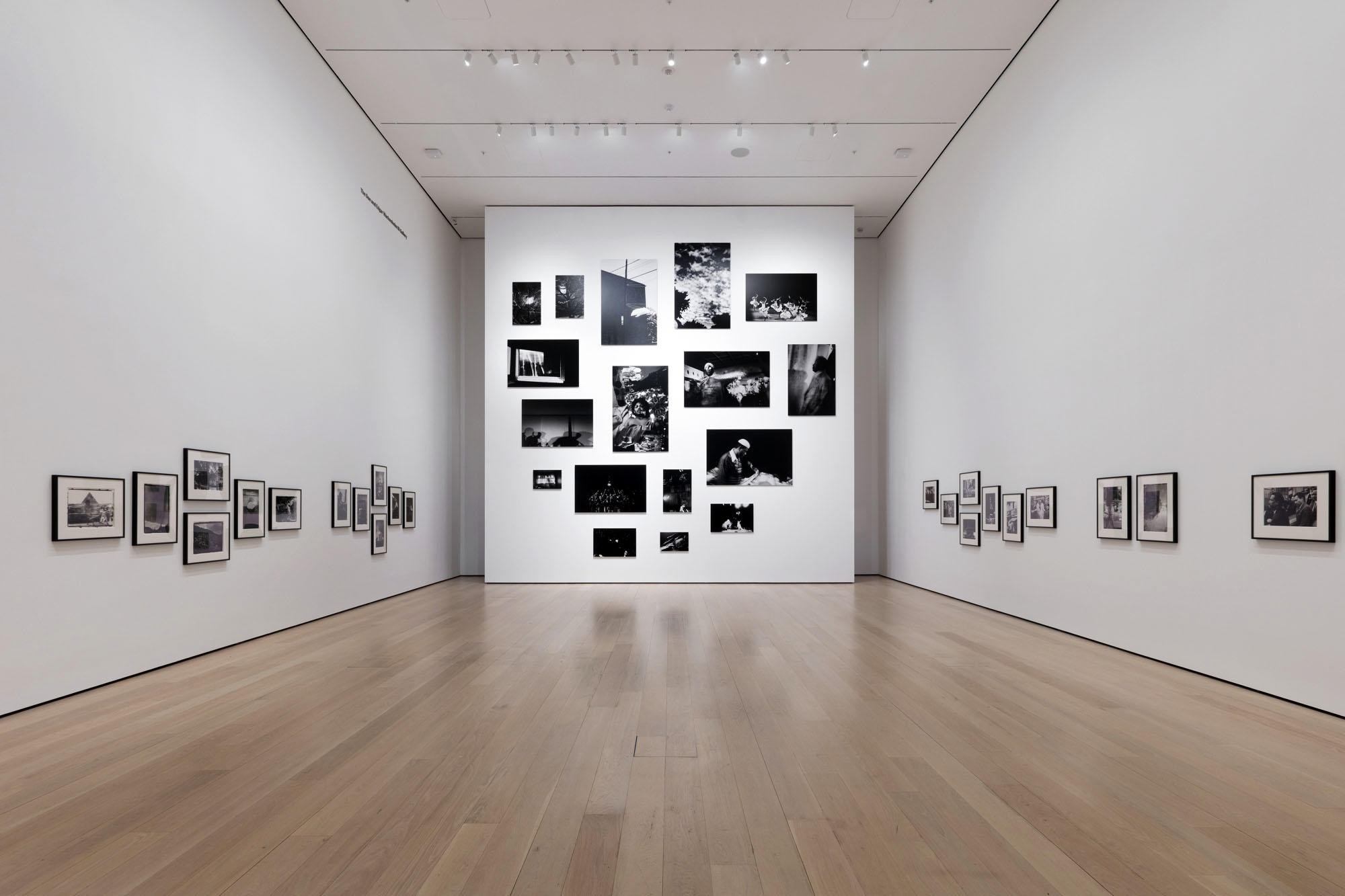


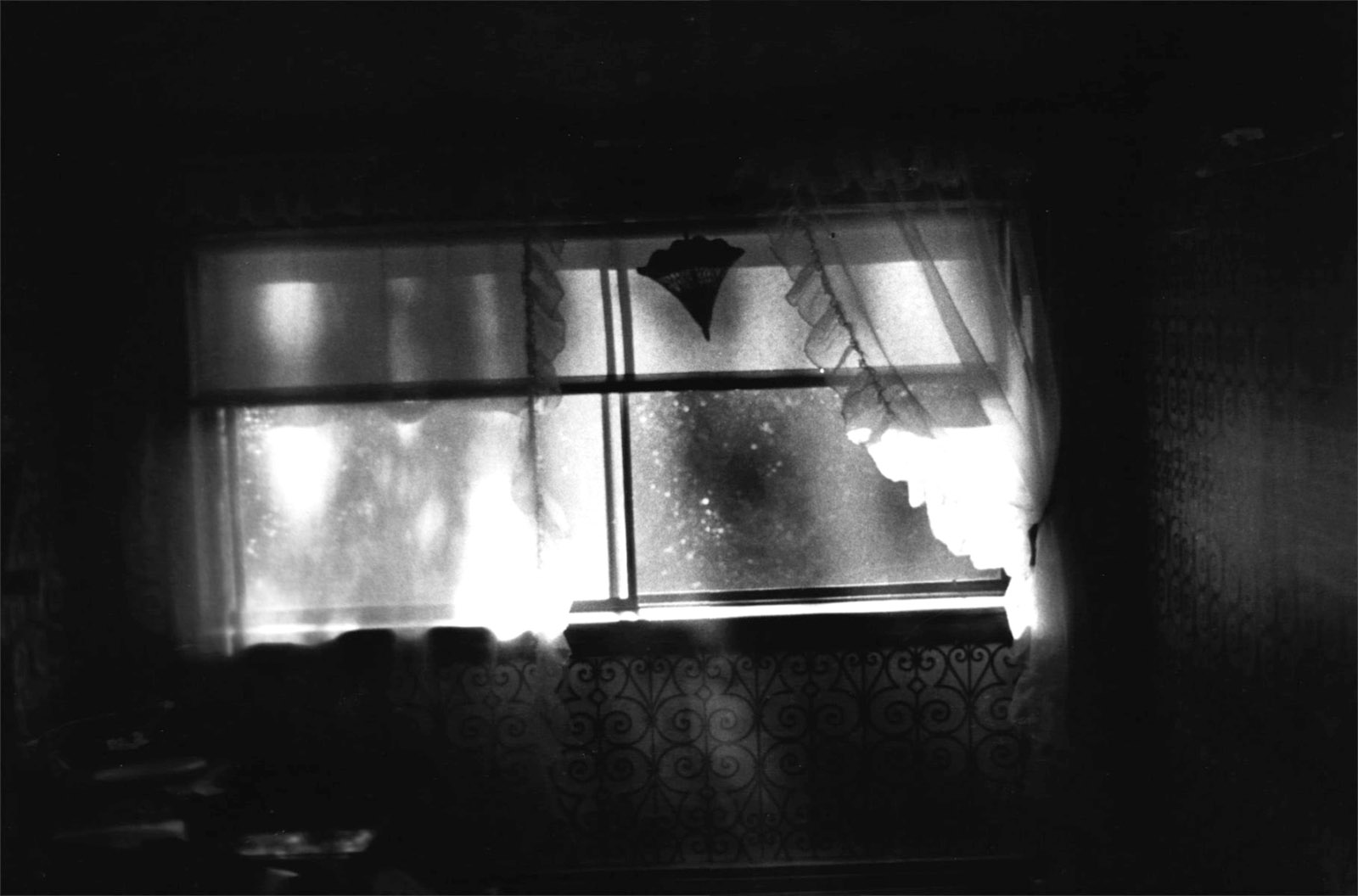


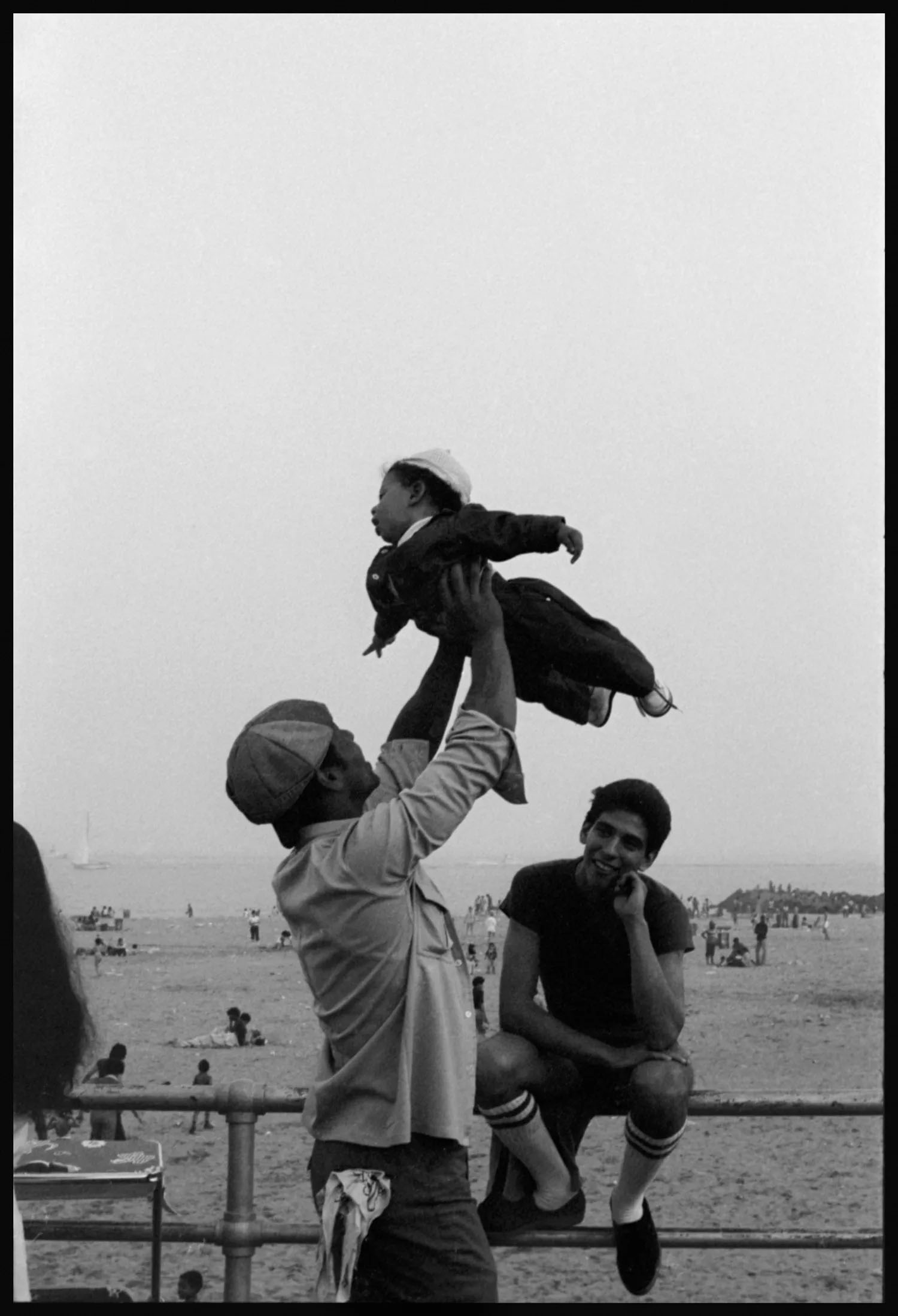
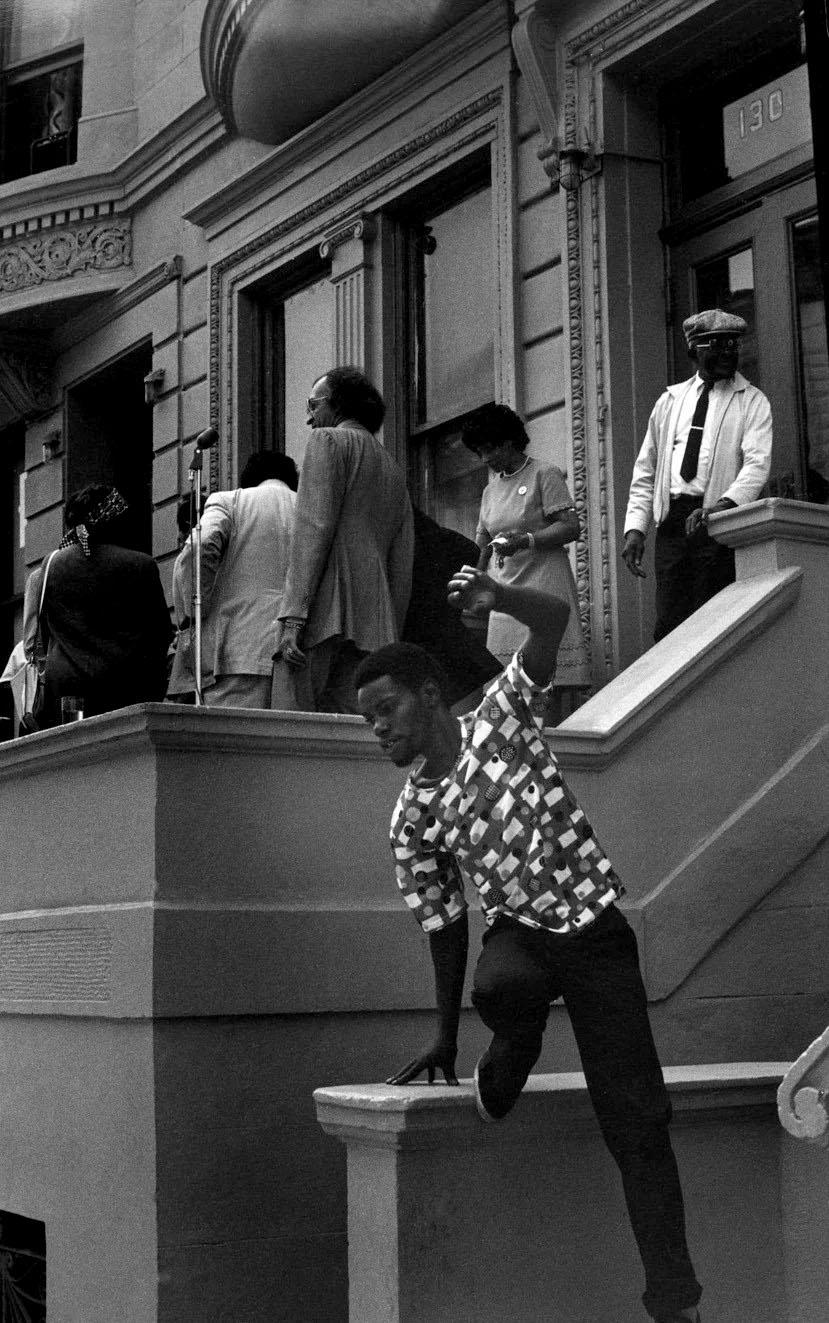


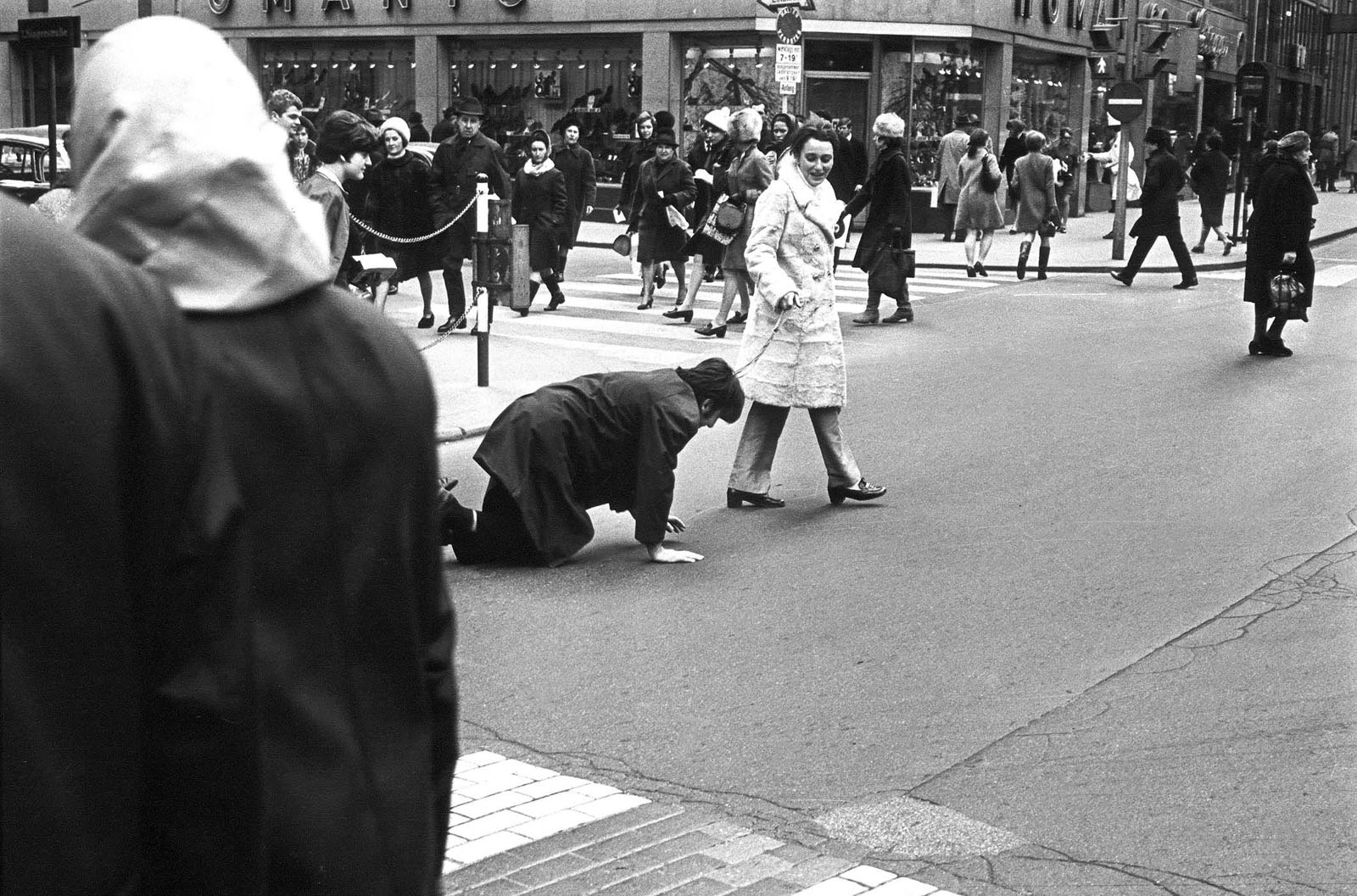
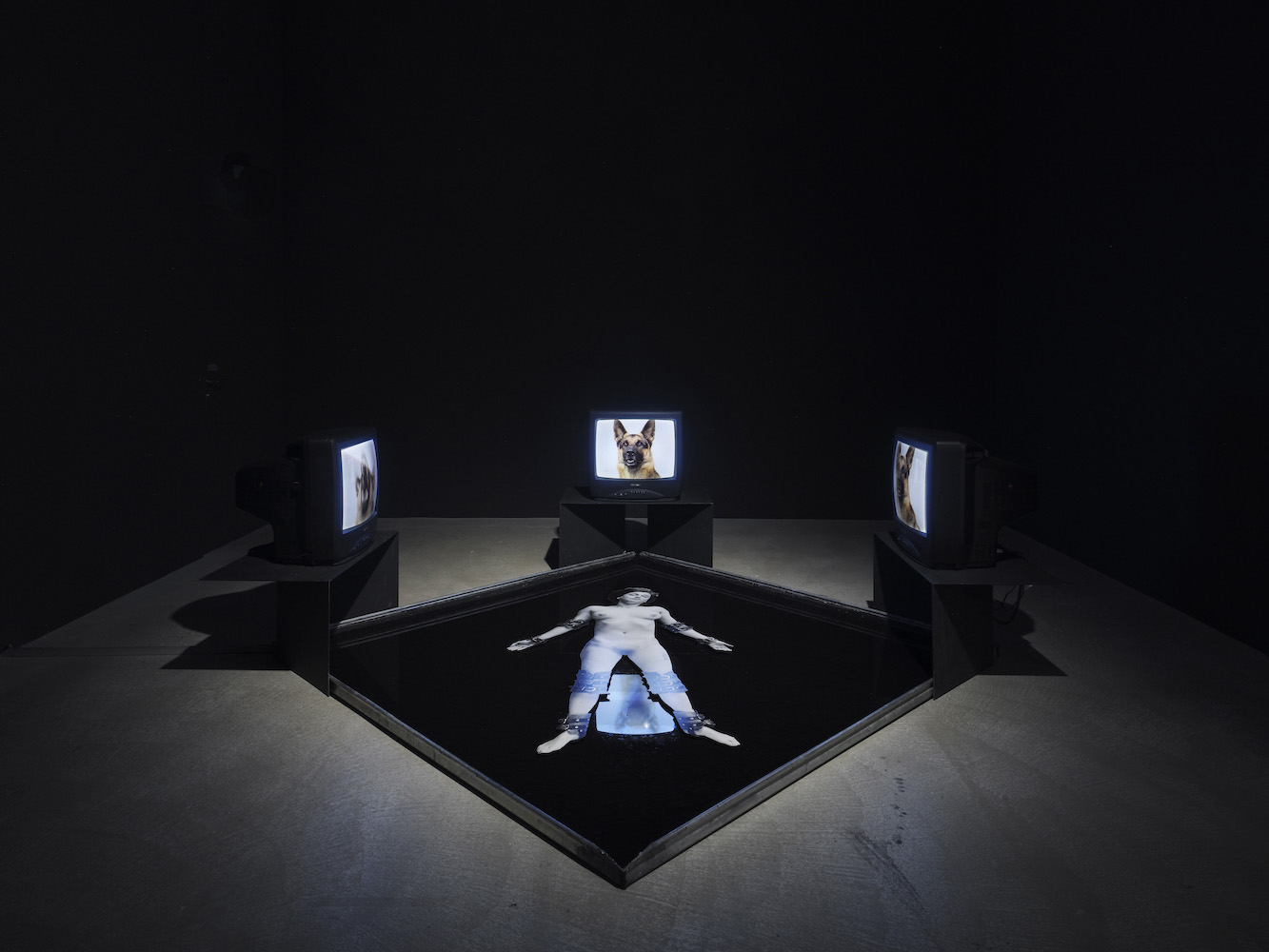

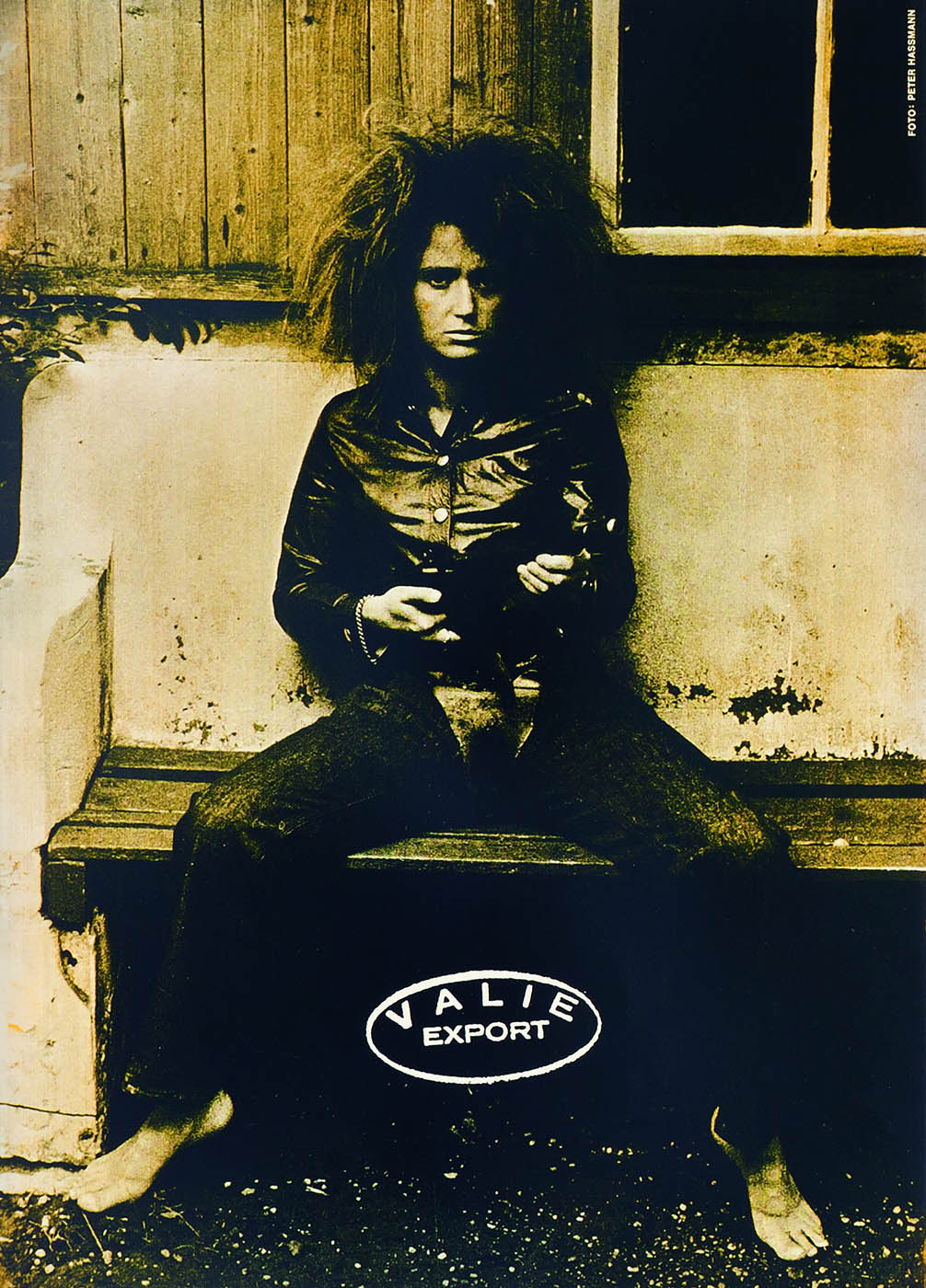
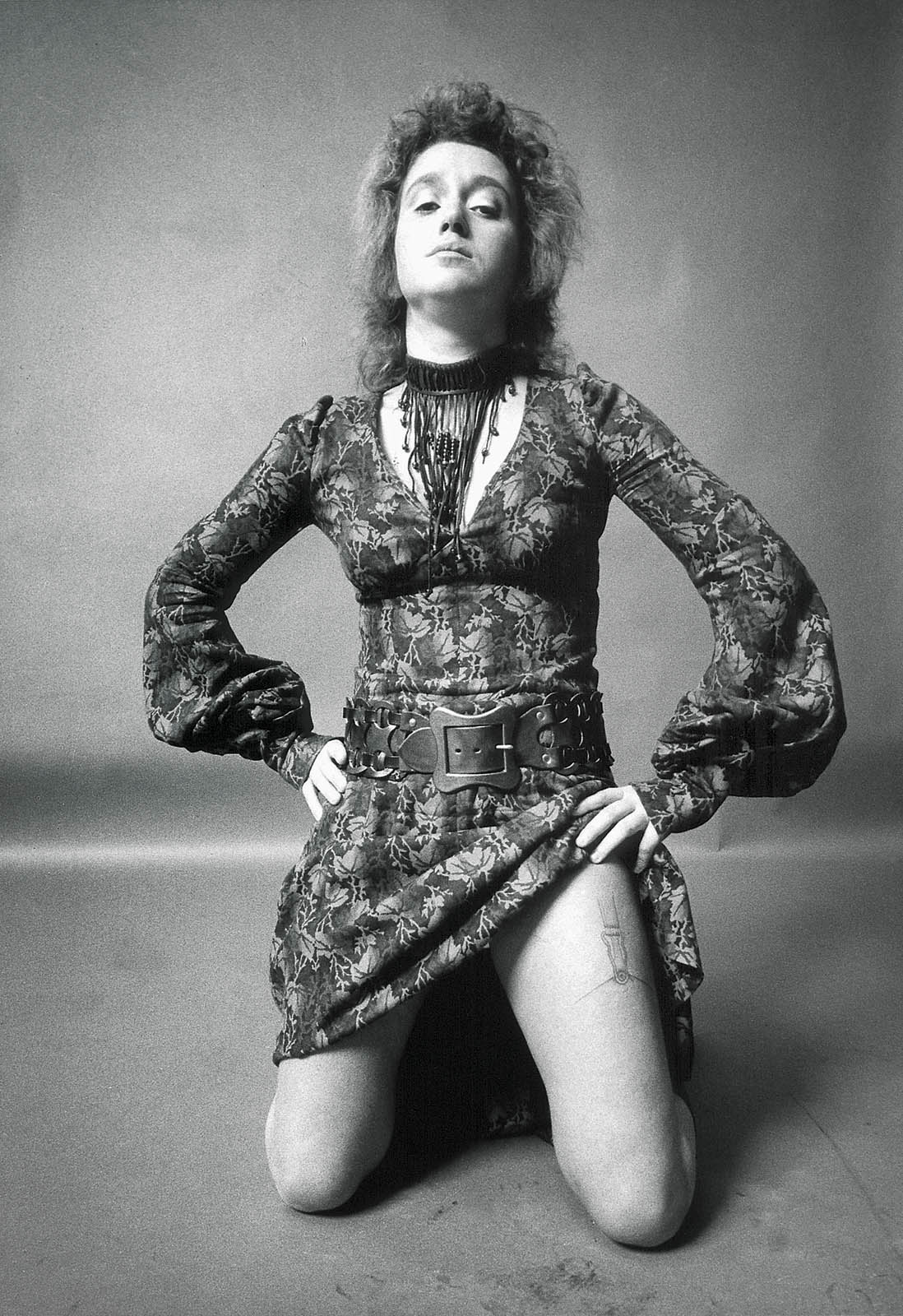

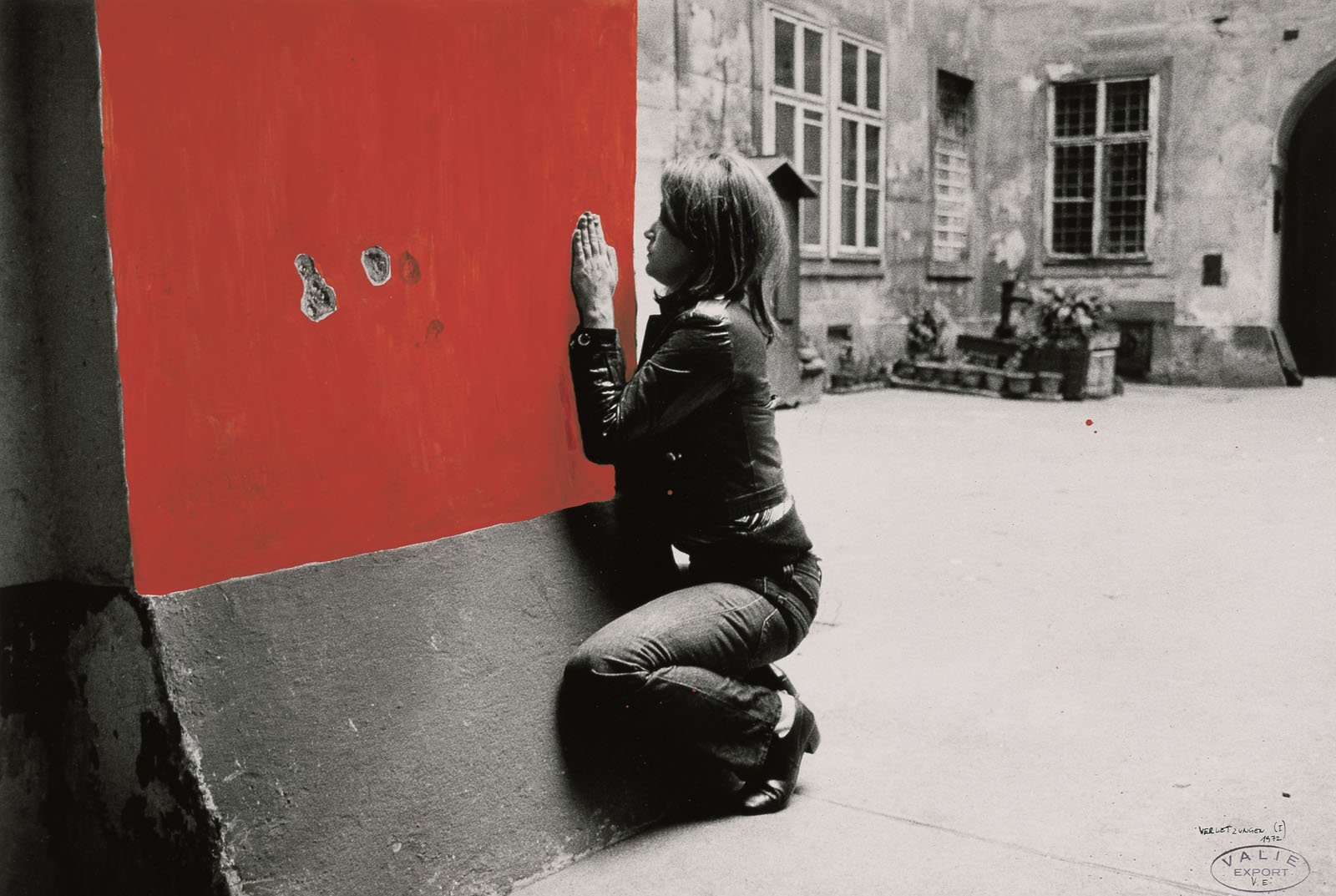
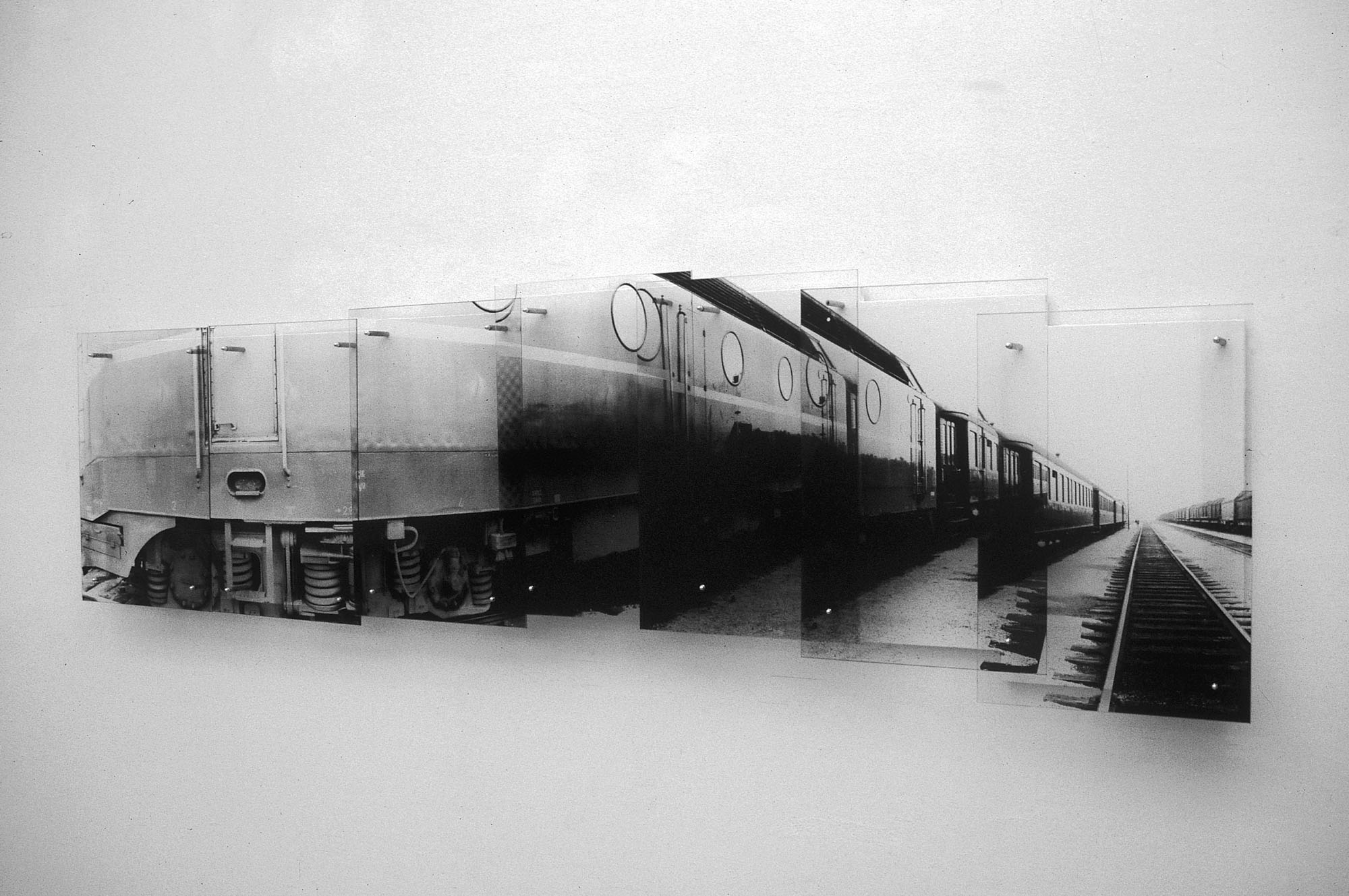
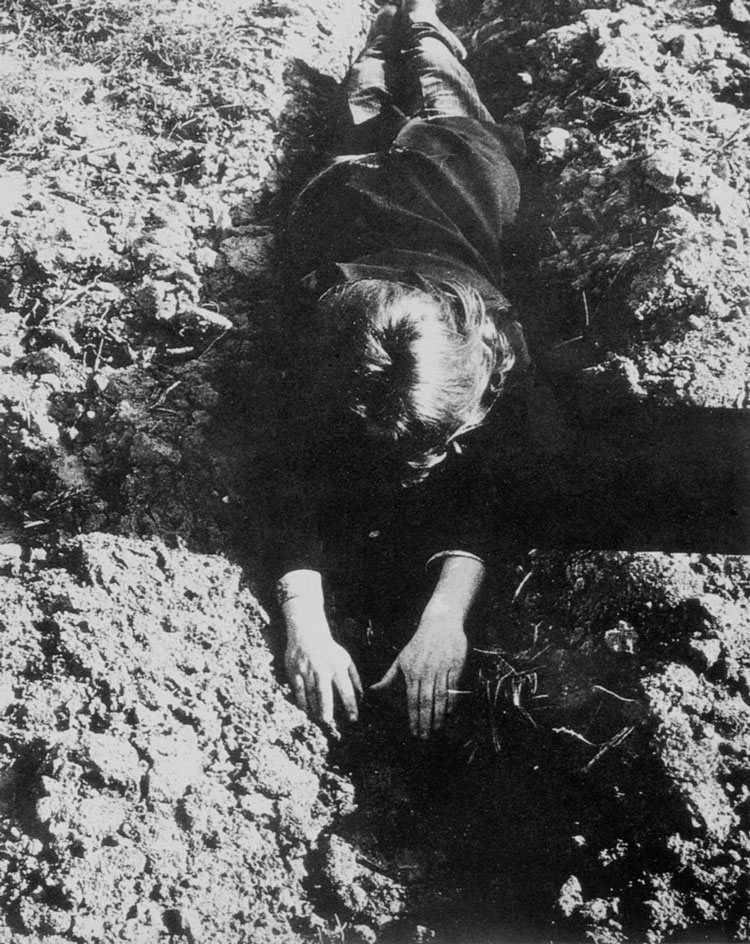

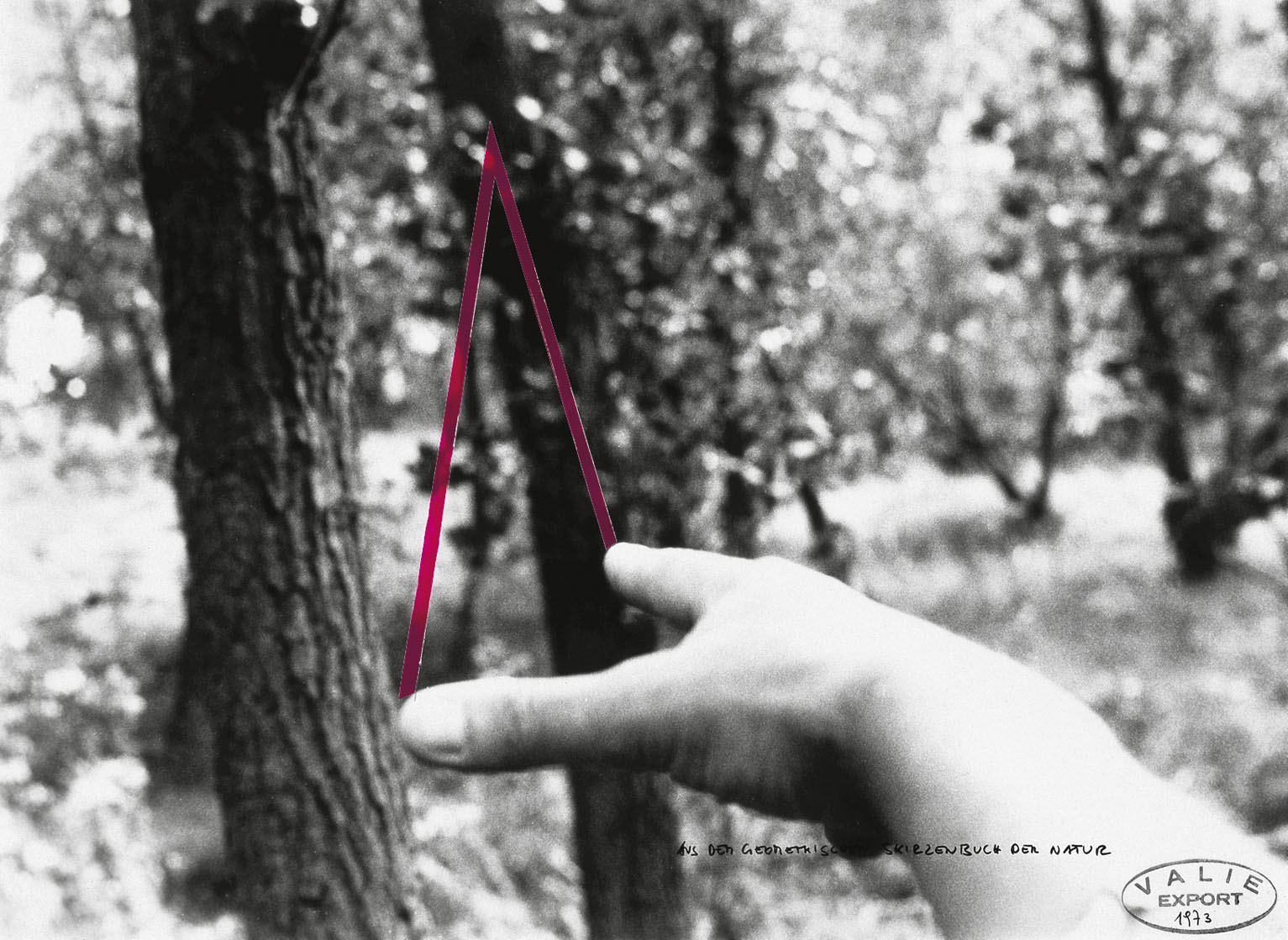

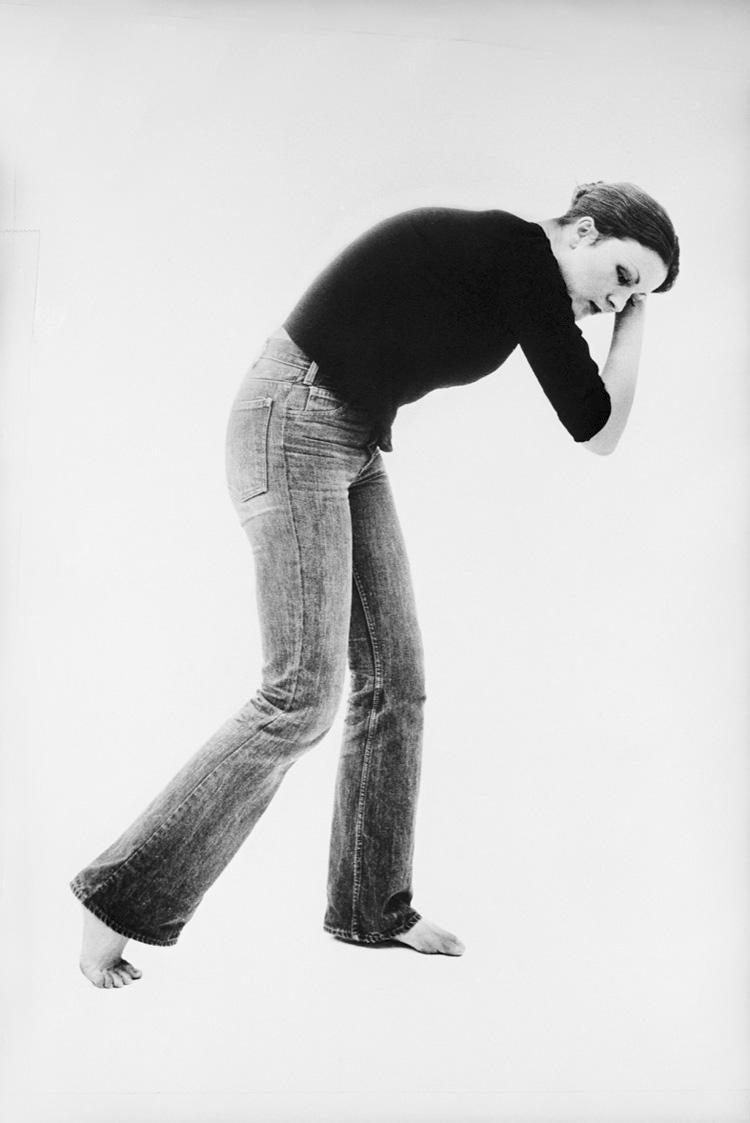


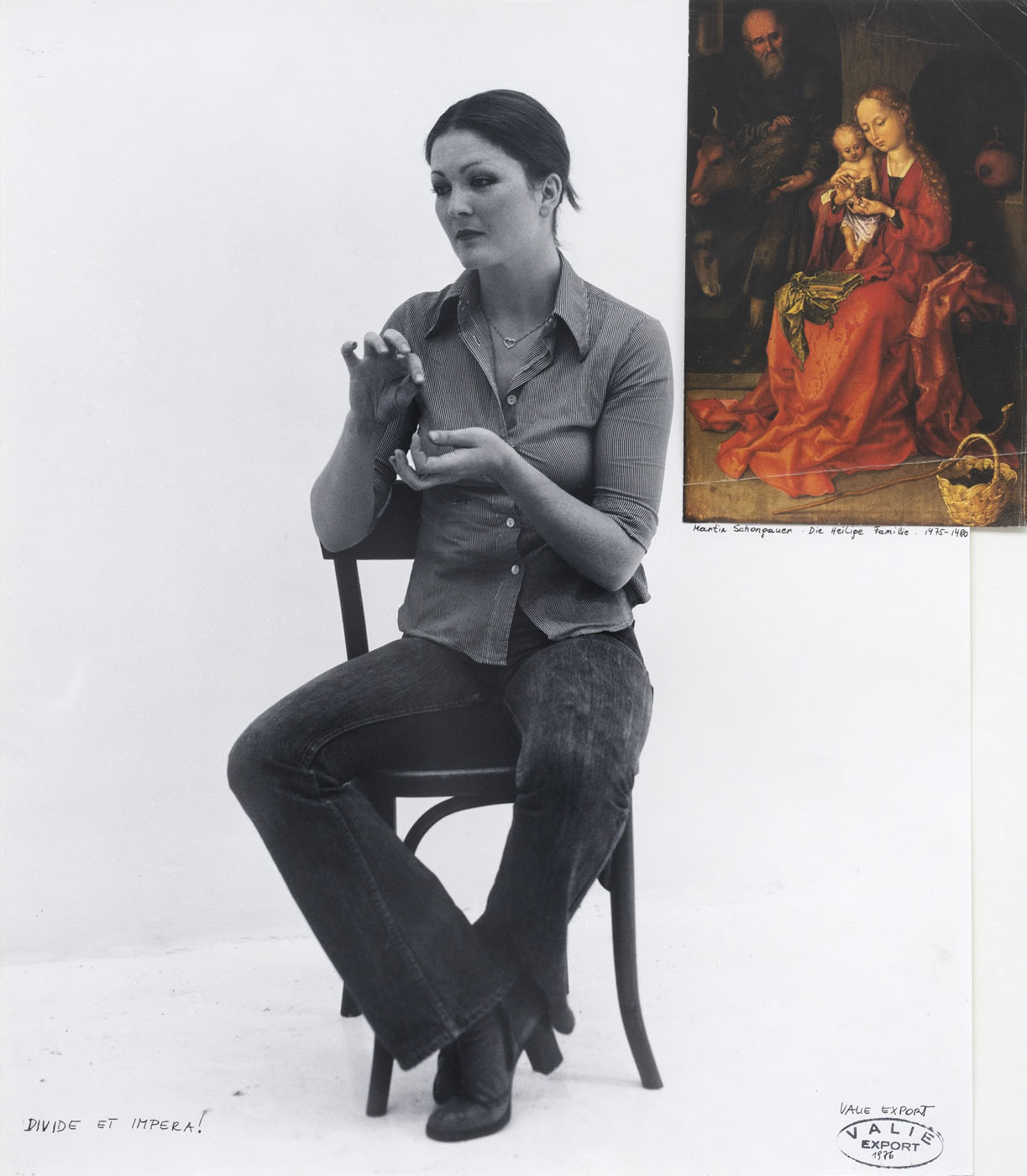
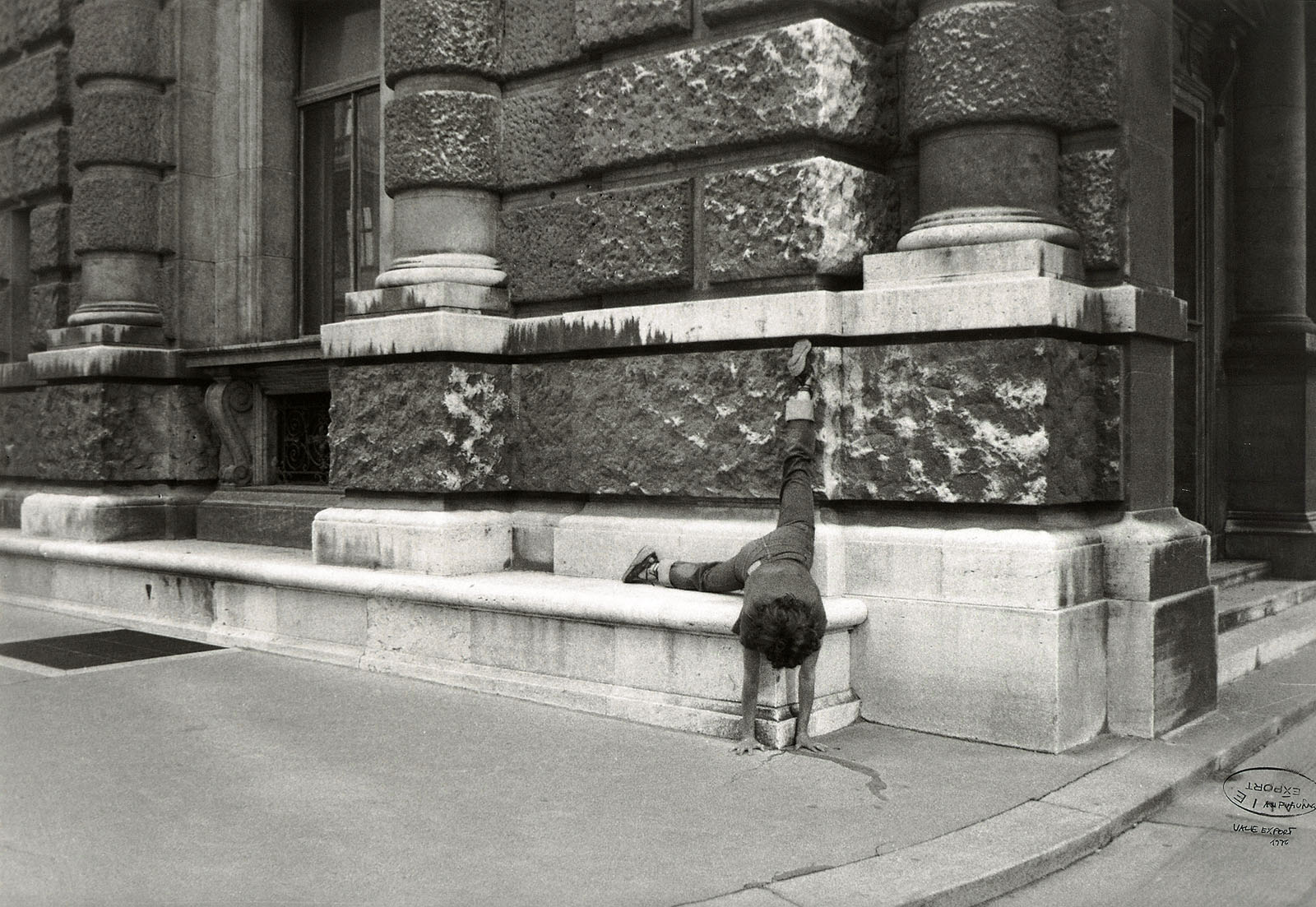
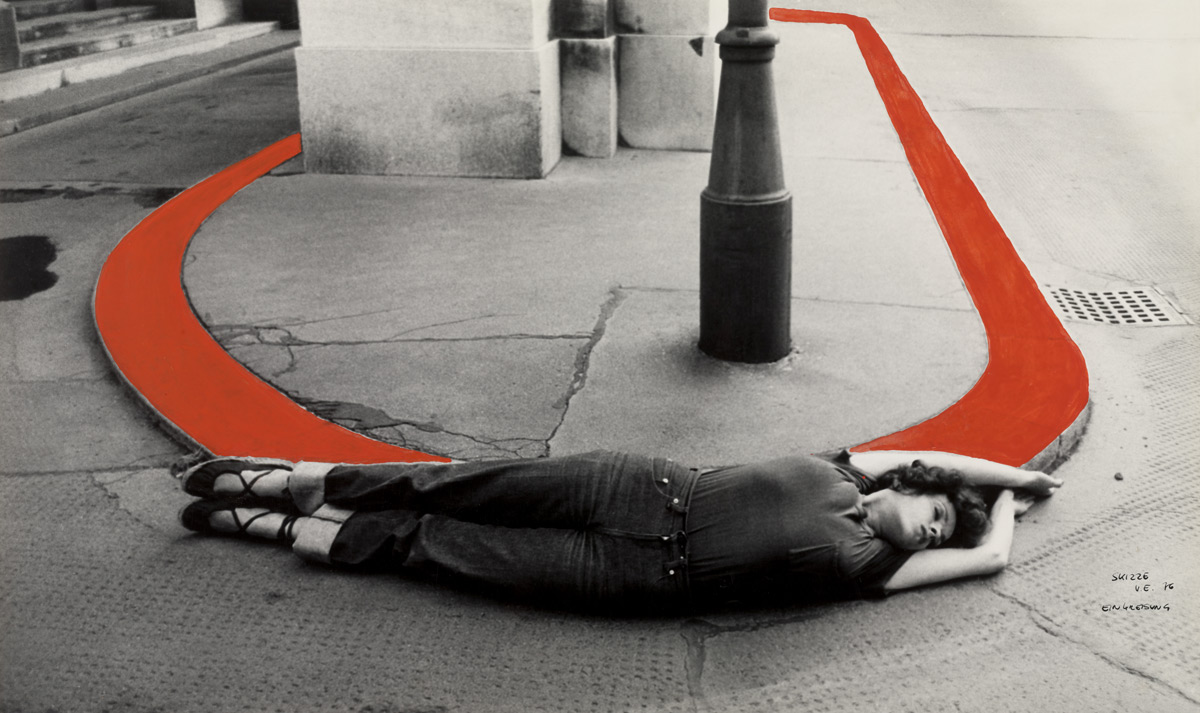
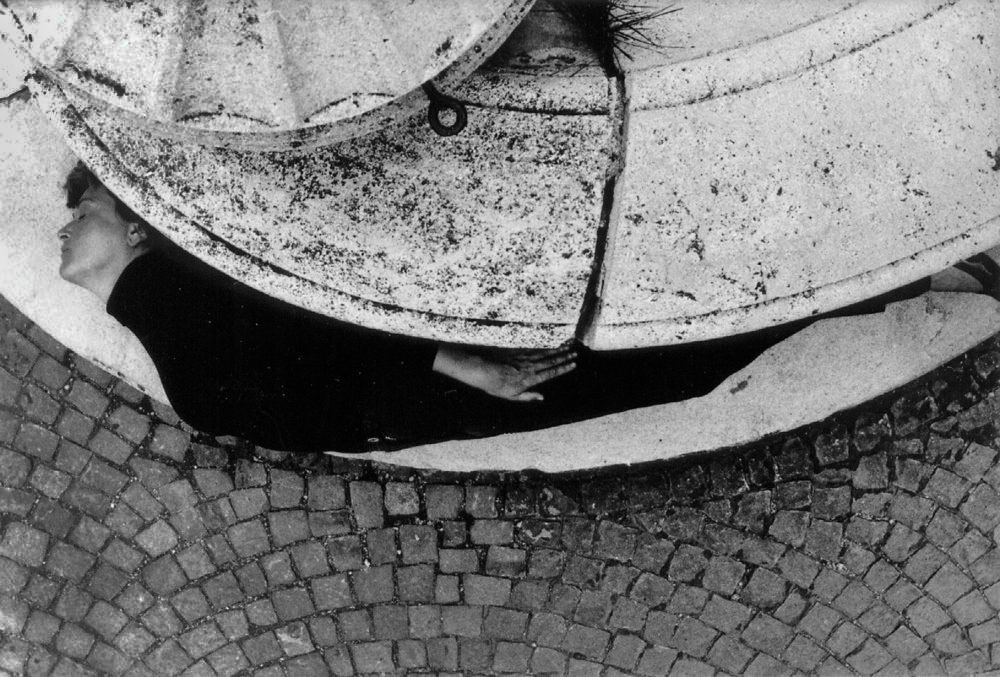
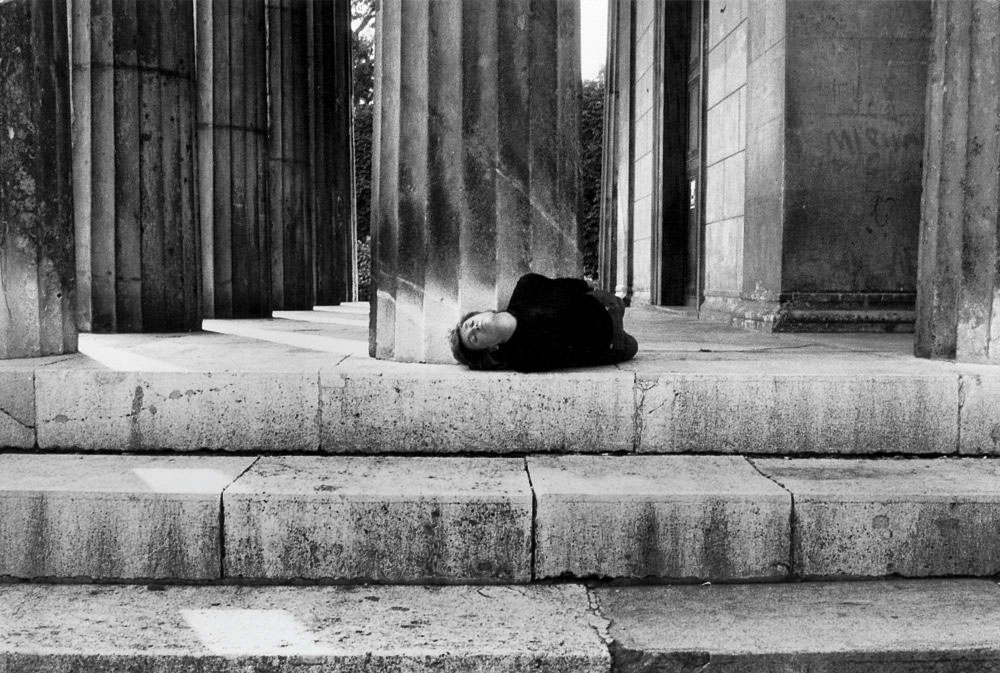
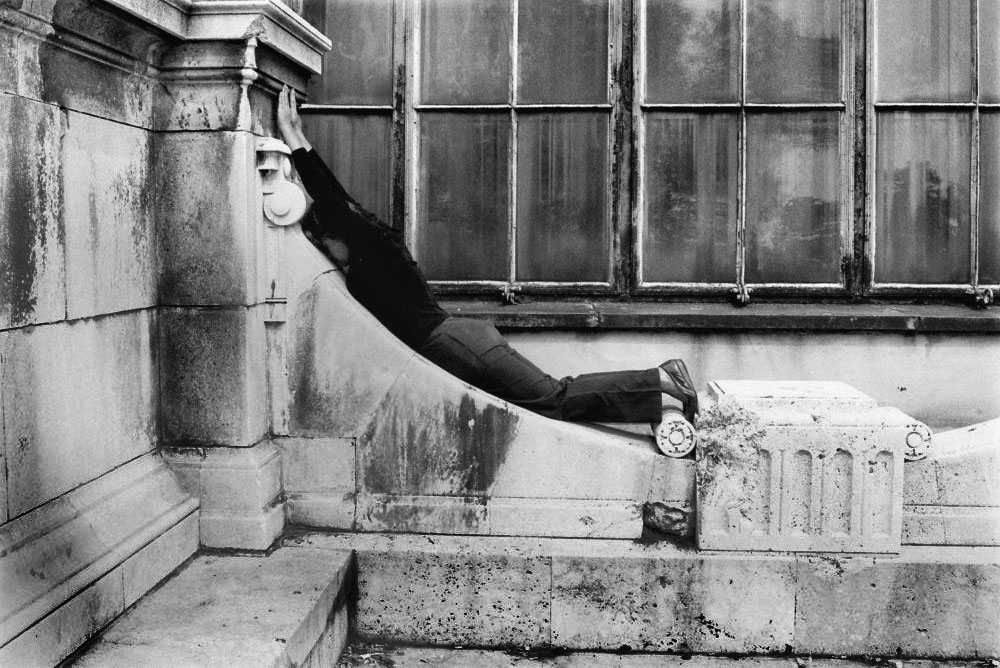

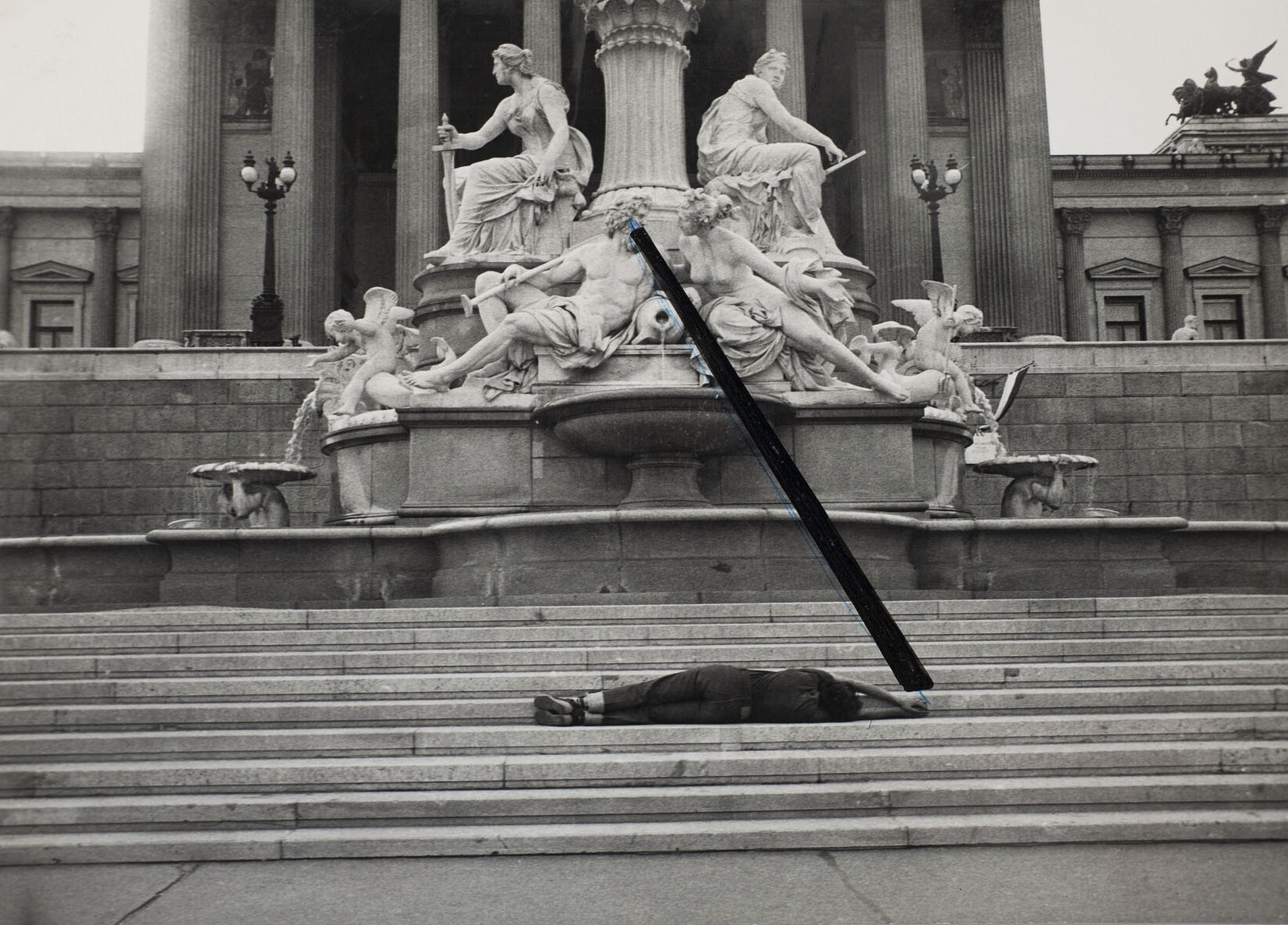
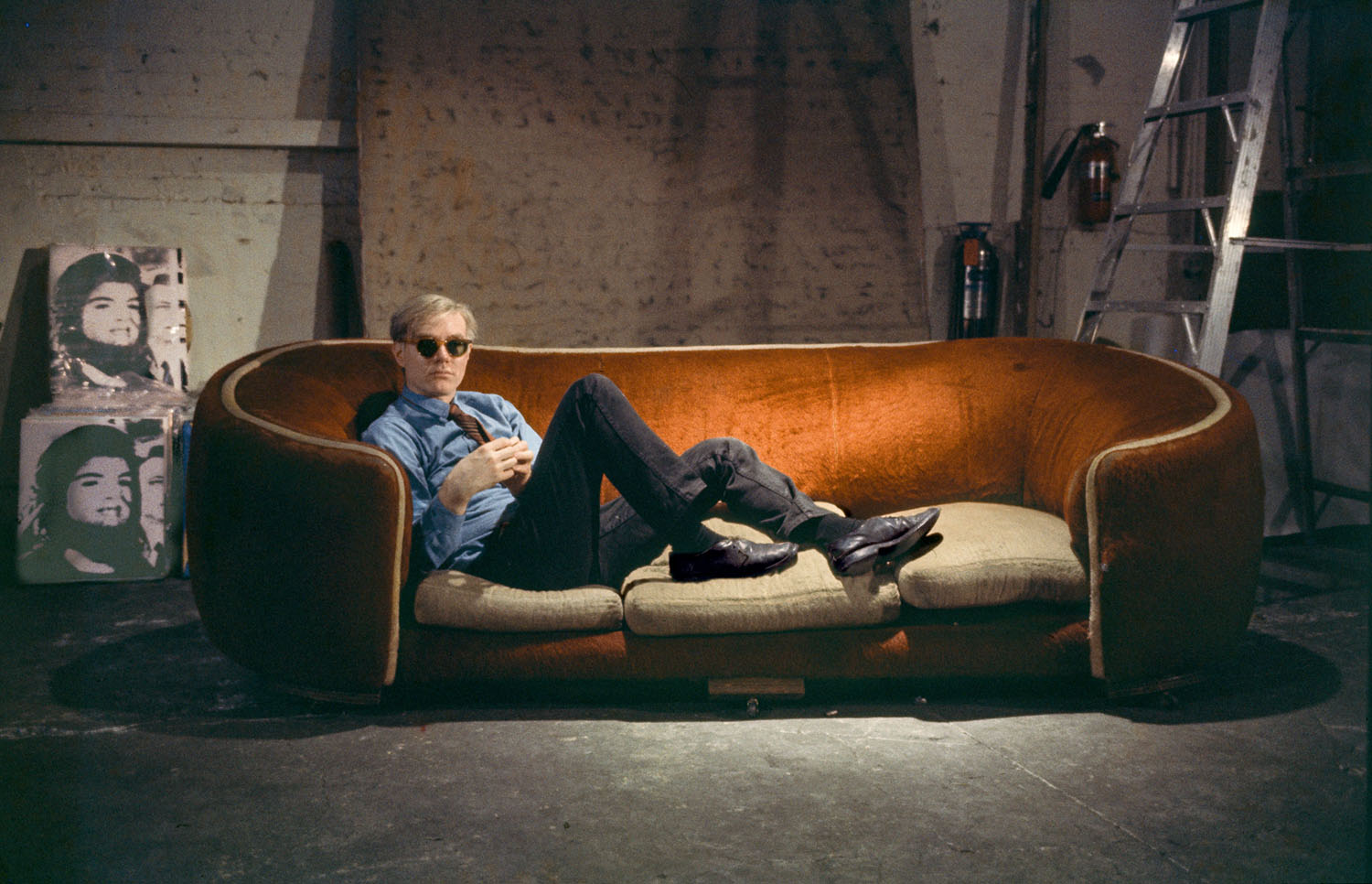


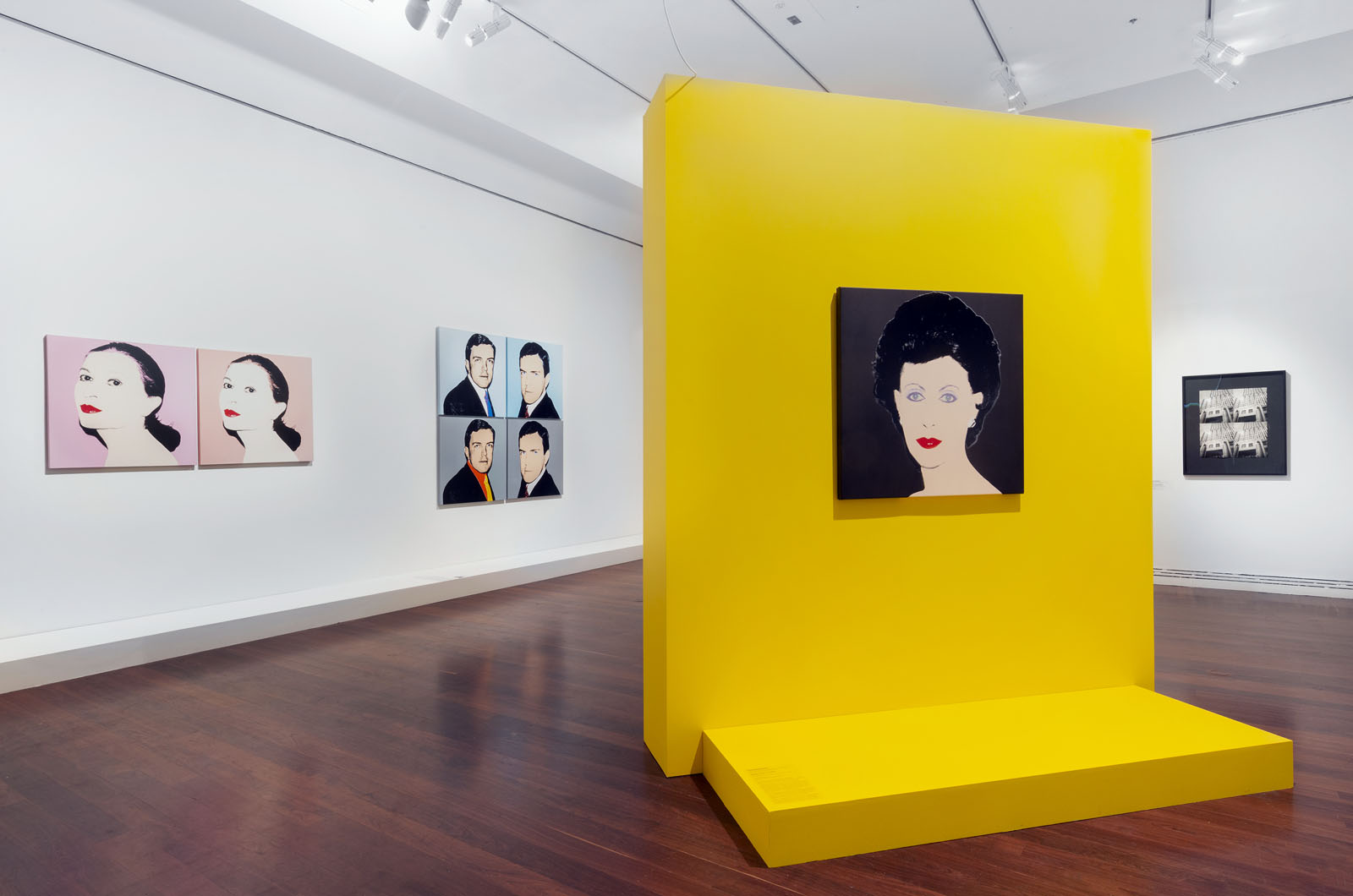


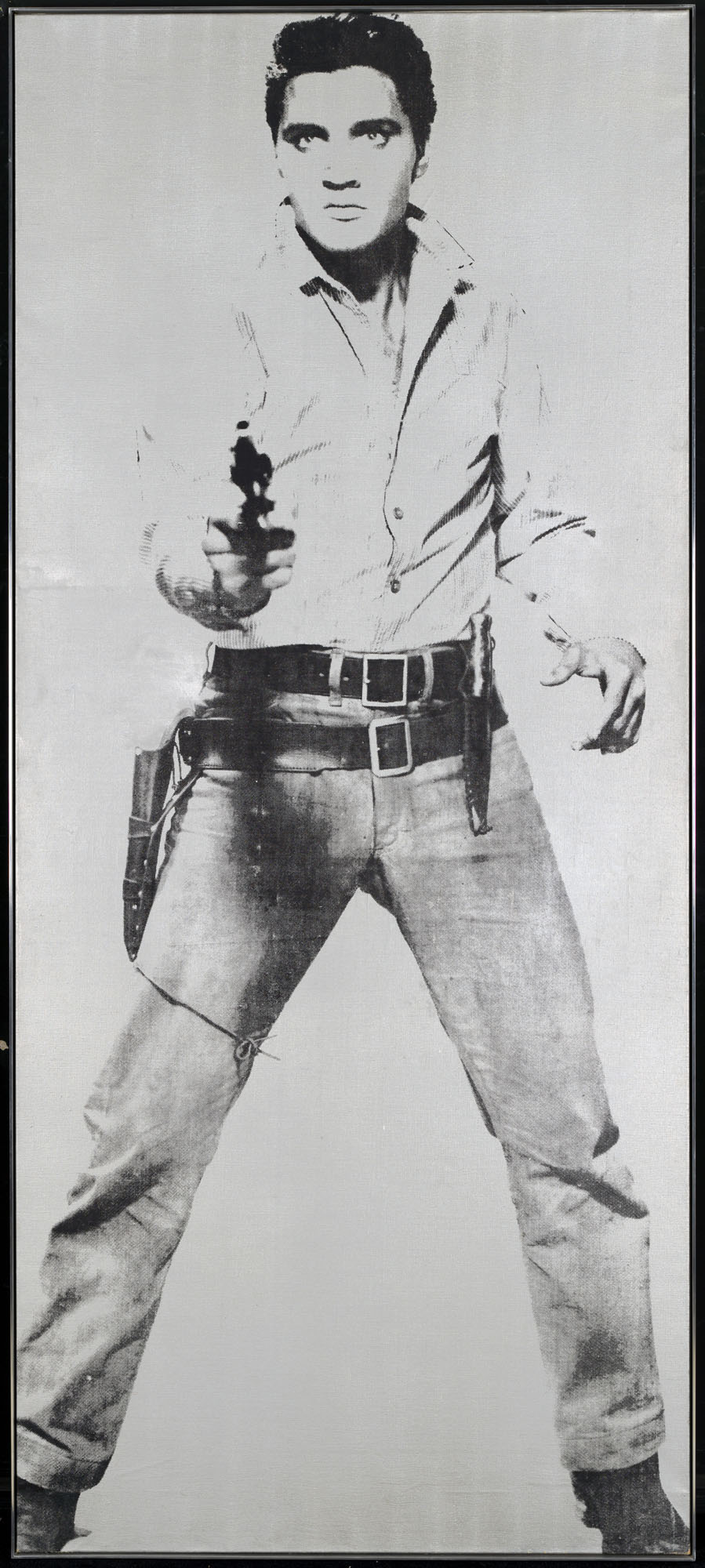

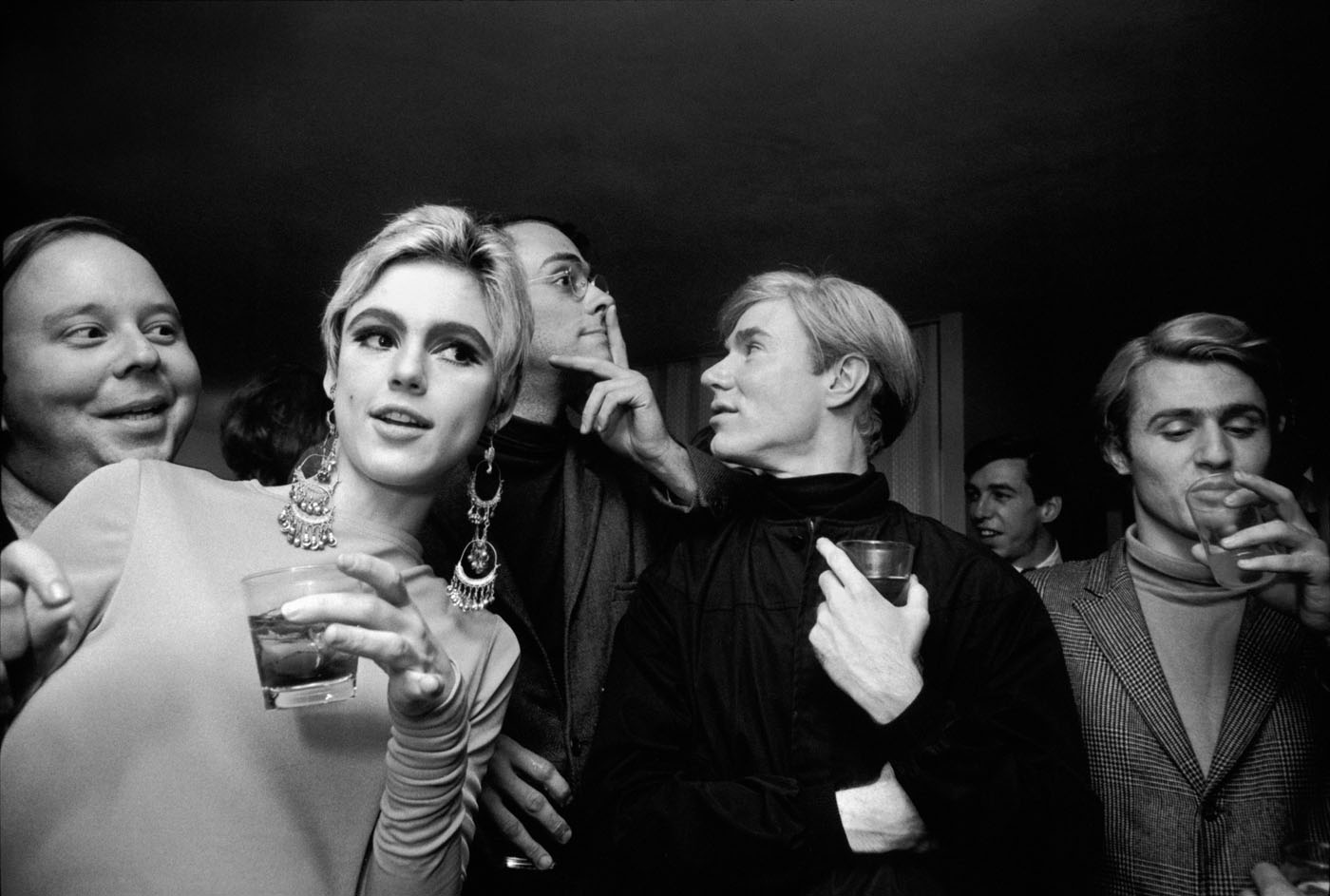


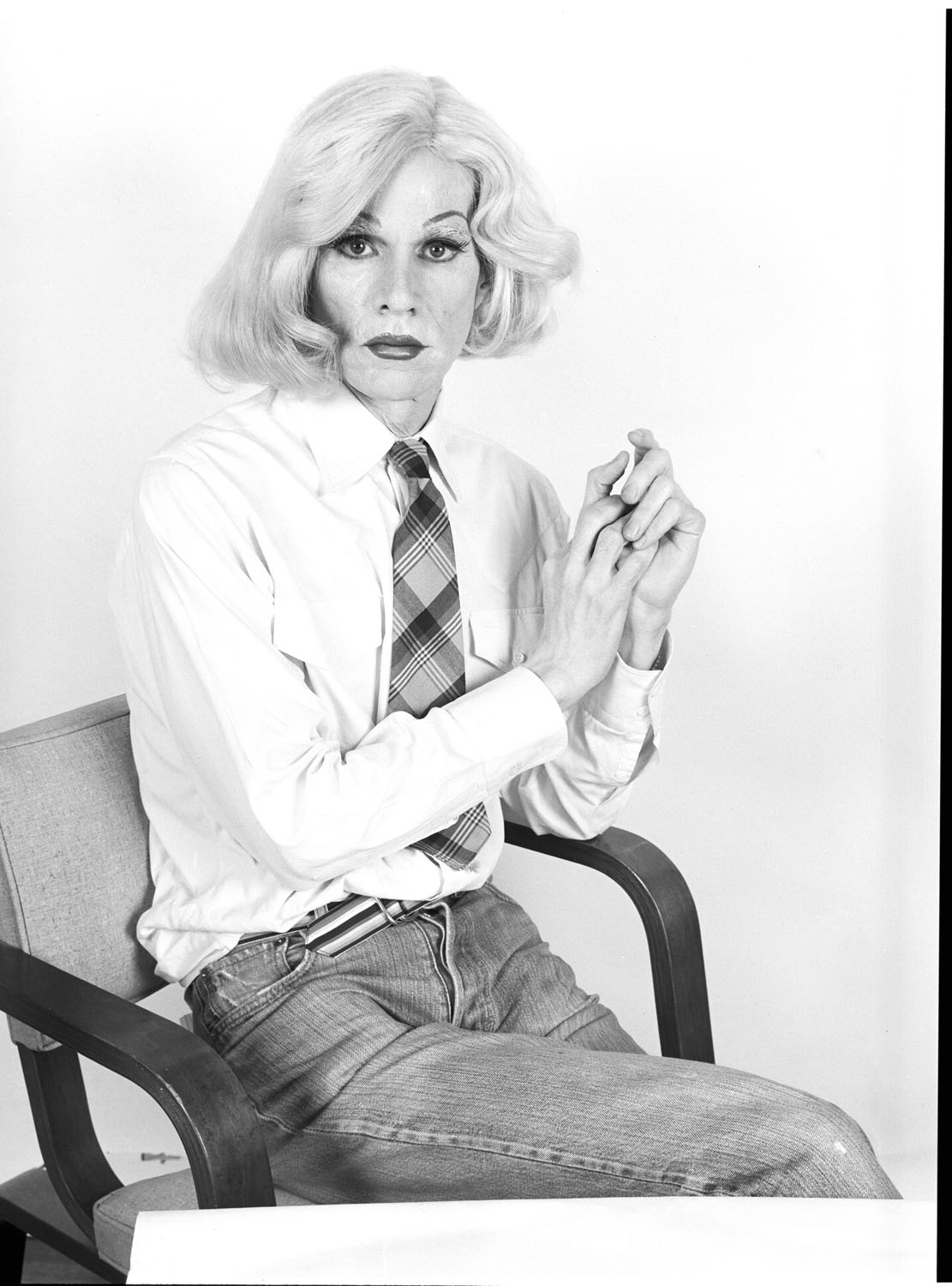


!['Reuben's Delicatessen Menu [autographed by Arnold Reuben]' 1946](https://artblart.com/wp-content/uploads/2023/02/reubensdelicatessenmenu.jpg "'Reuben's Delicatessen Menu [autographed by Arnold Reuben]' 1946")


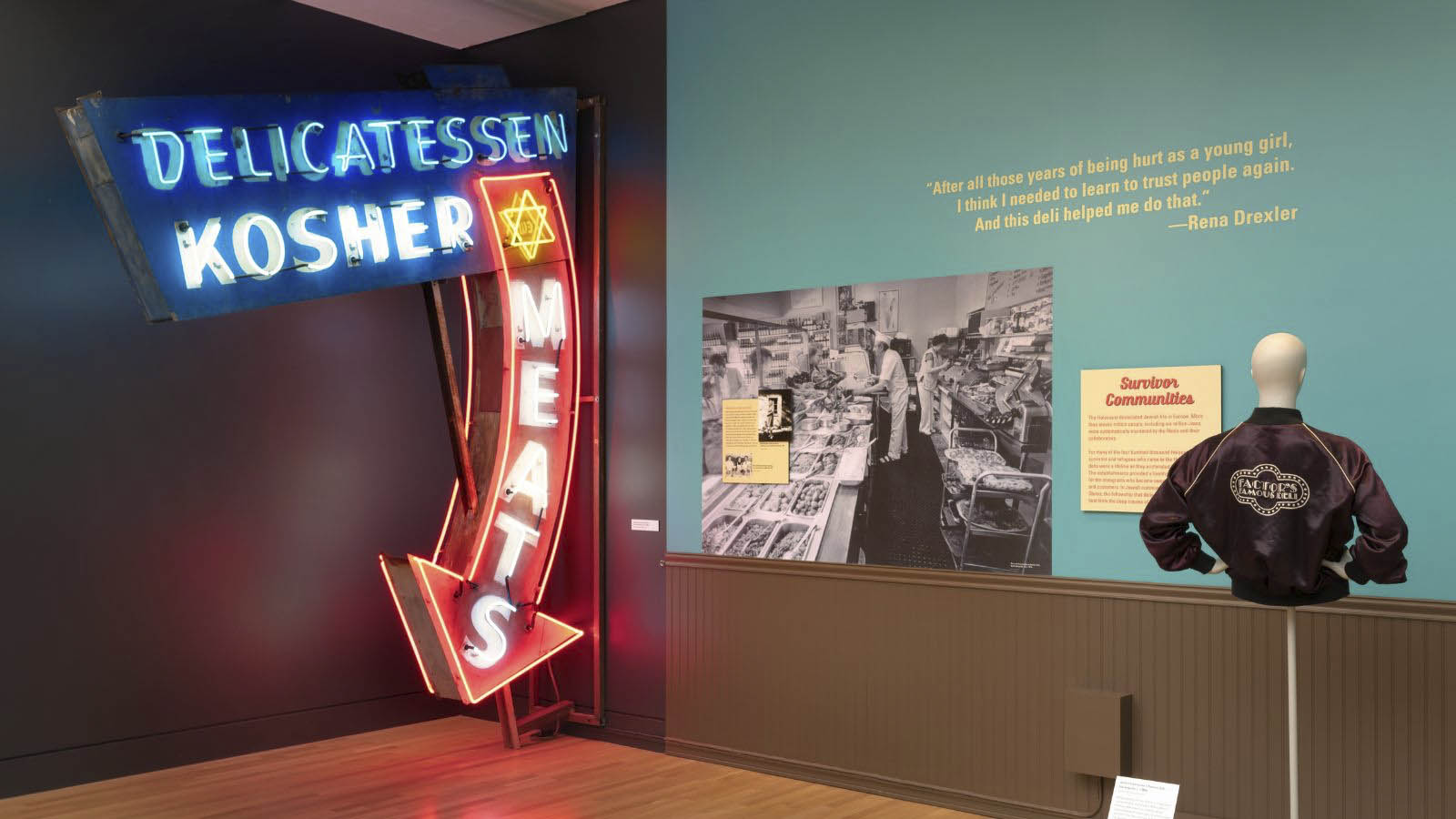


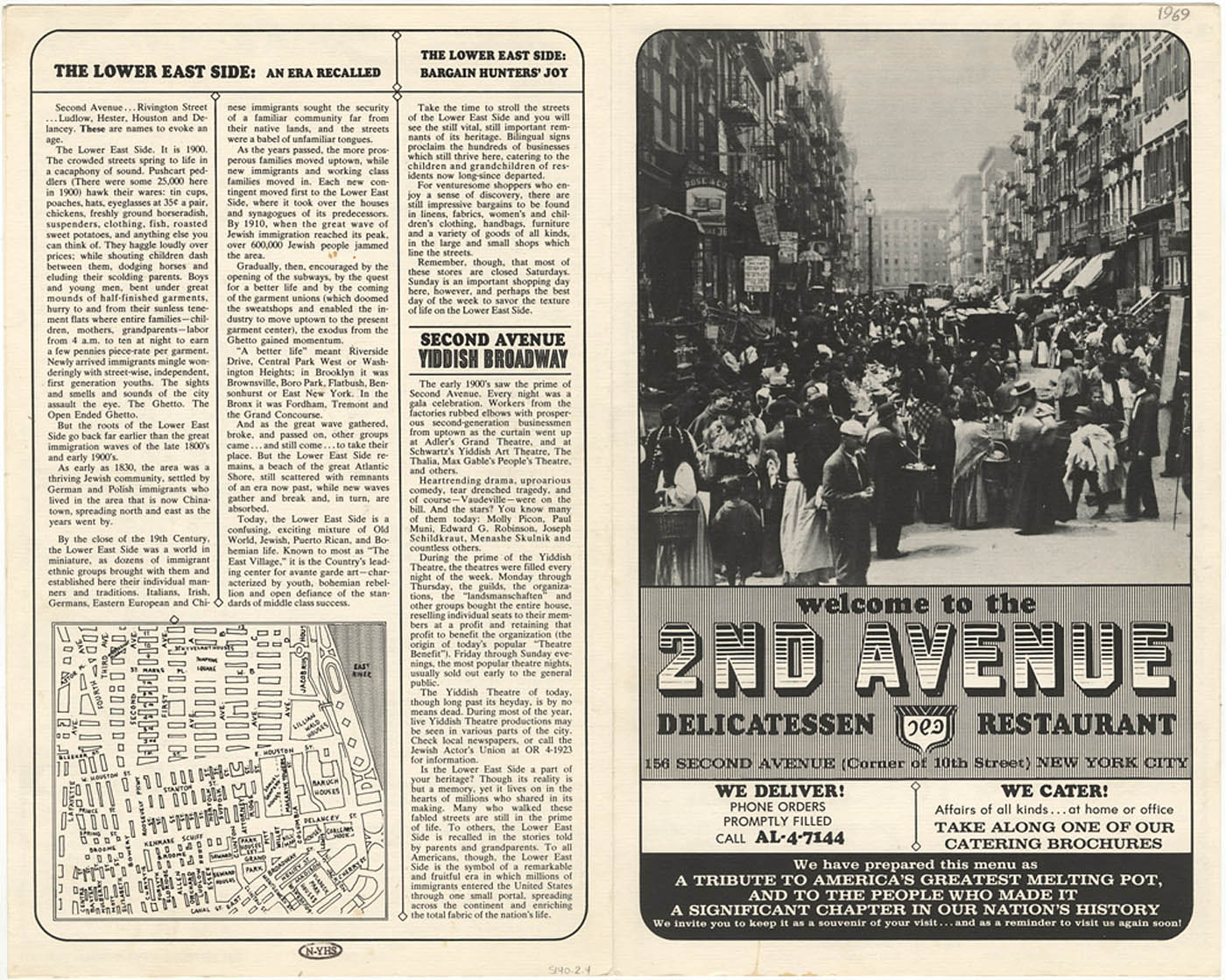


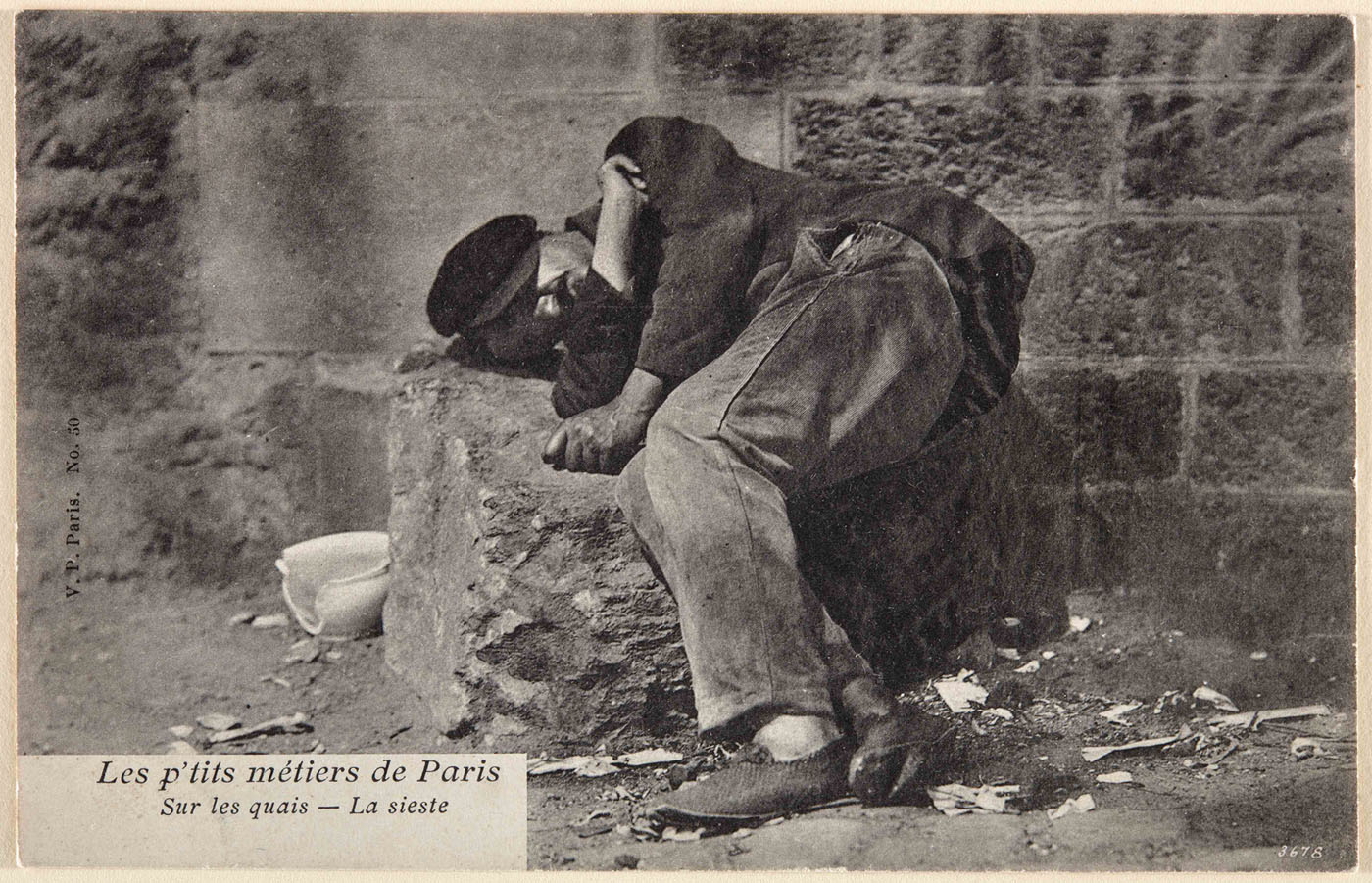
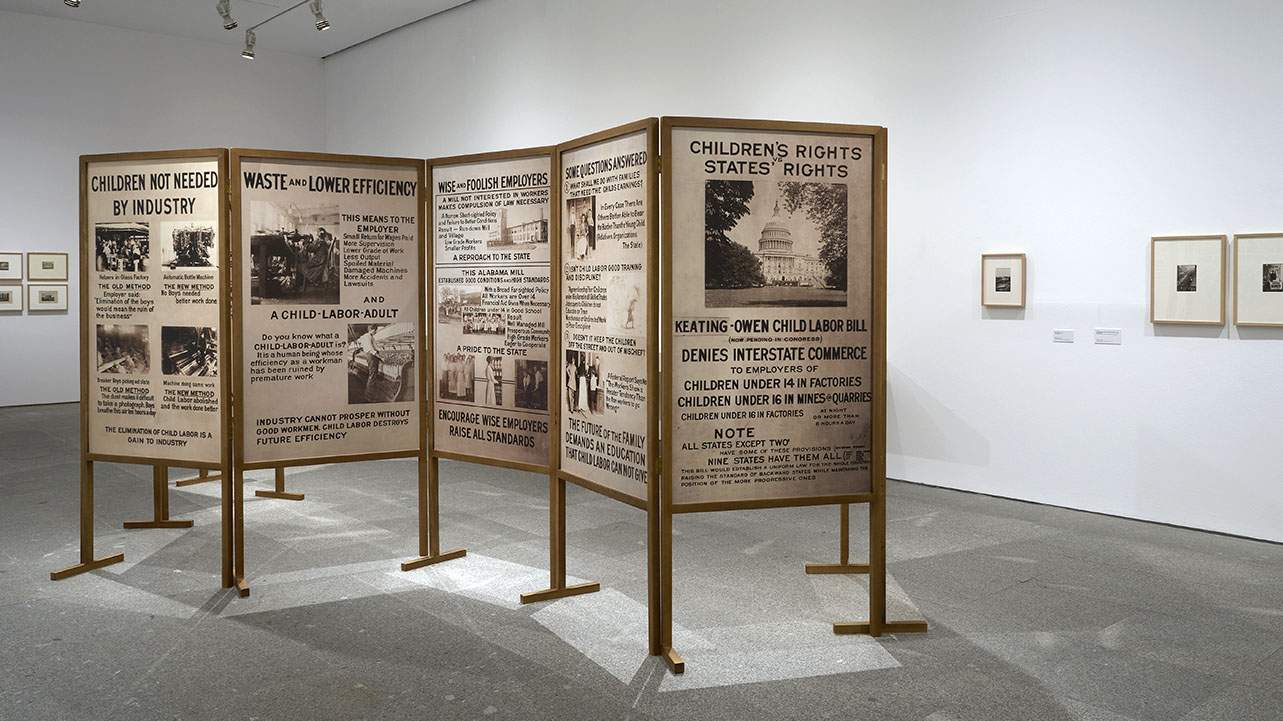

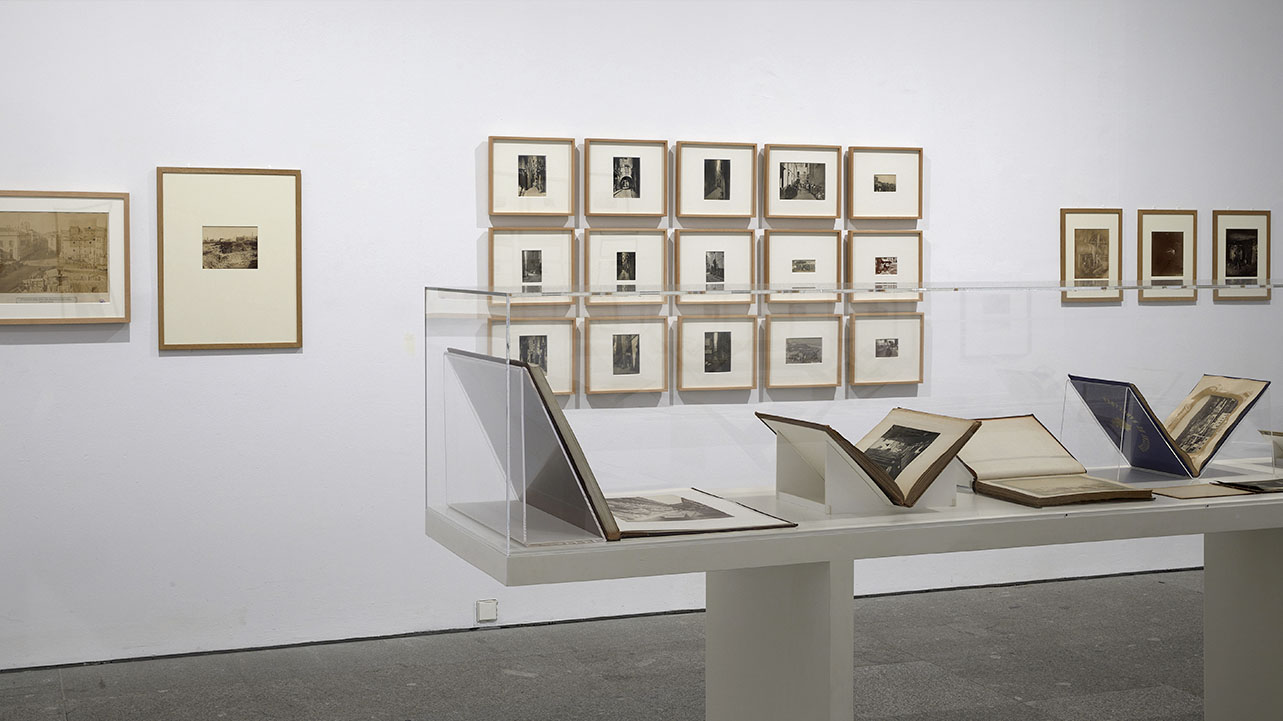
![Installation view of the exhibition 'Documentary Genealogies: Photography 1848-1917' at the Museo Nacional Centro de Arte Reina Sofía, Madrid showing at left rear, pages from Carl Dammann's '[Races of Mankind]: Ethnological Photographic Gallery of the Various Races of Men' 1876](https://artblart.com/wp-content/uploads/2023/02/documentary-genealogies-installation-d.jpg "Installation view of the exhibition 'Documentary Genealogies: Photography 1848-1917' at the Museo Nacional Centro de Arte Reina Sofía, Madrid showing at left rear, pages from Carl Dammann's '[Races of Mankind]: Ethnological Photographic Gallery of the Various Races of Men' 1876")
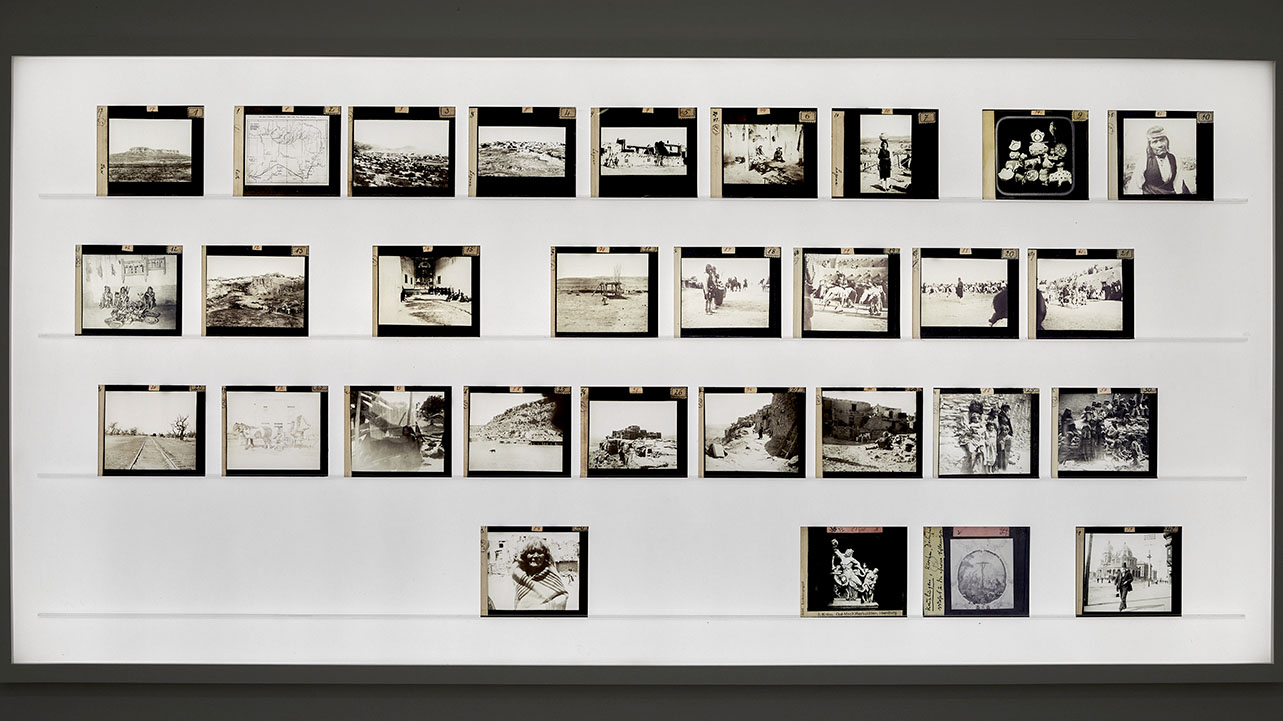

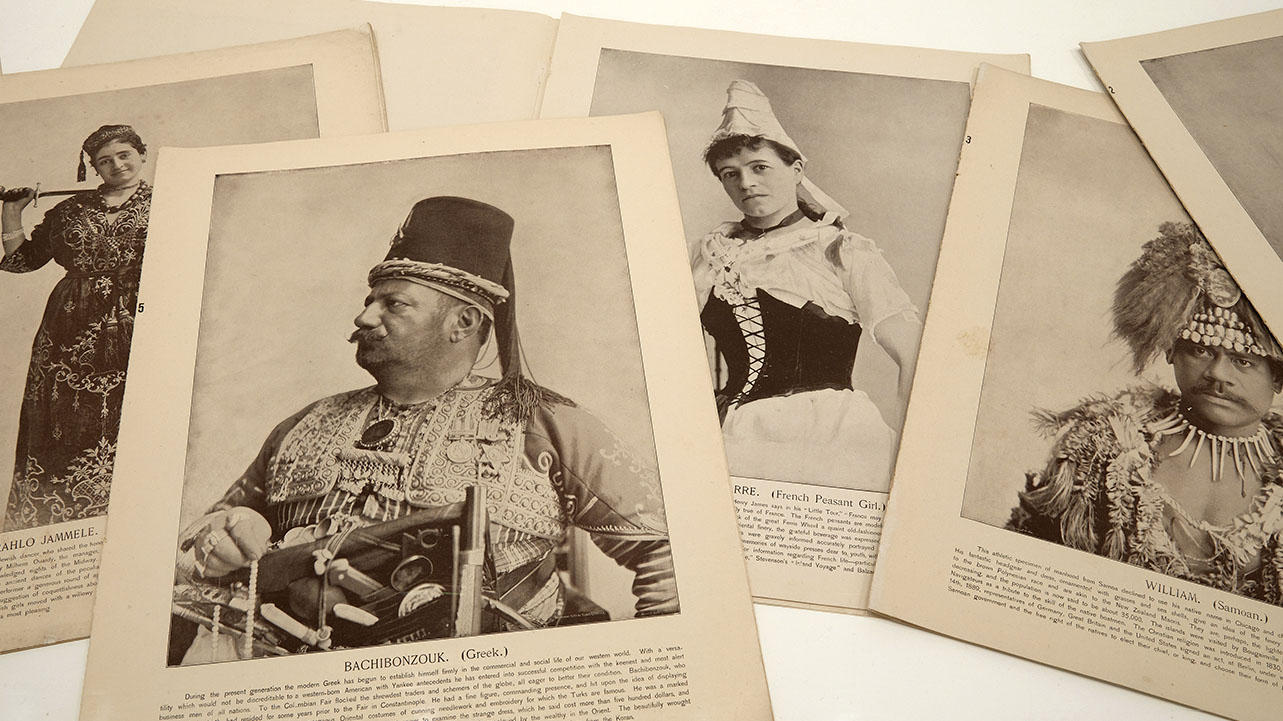

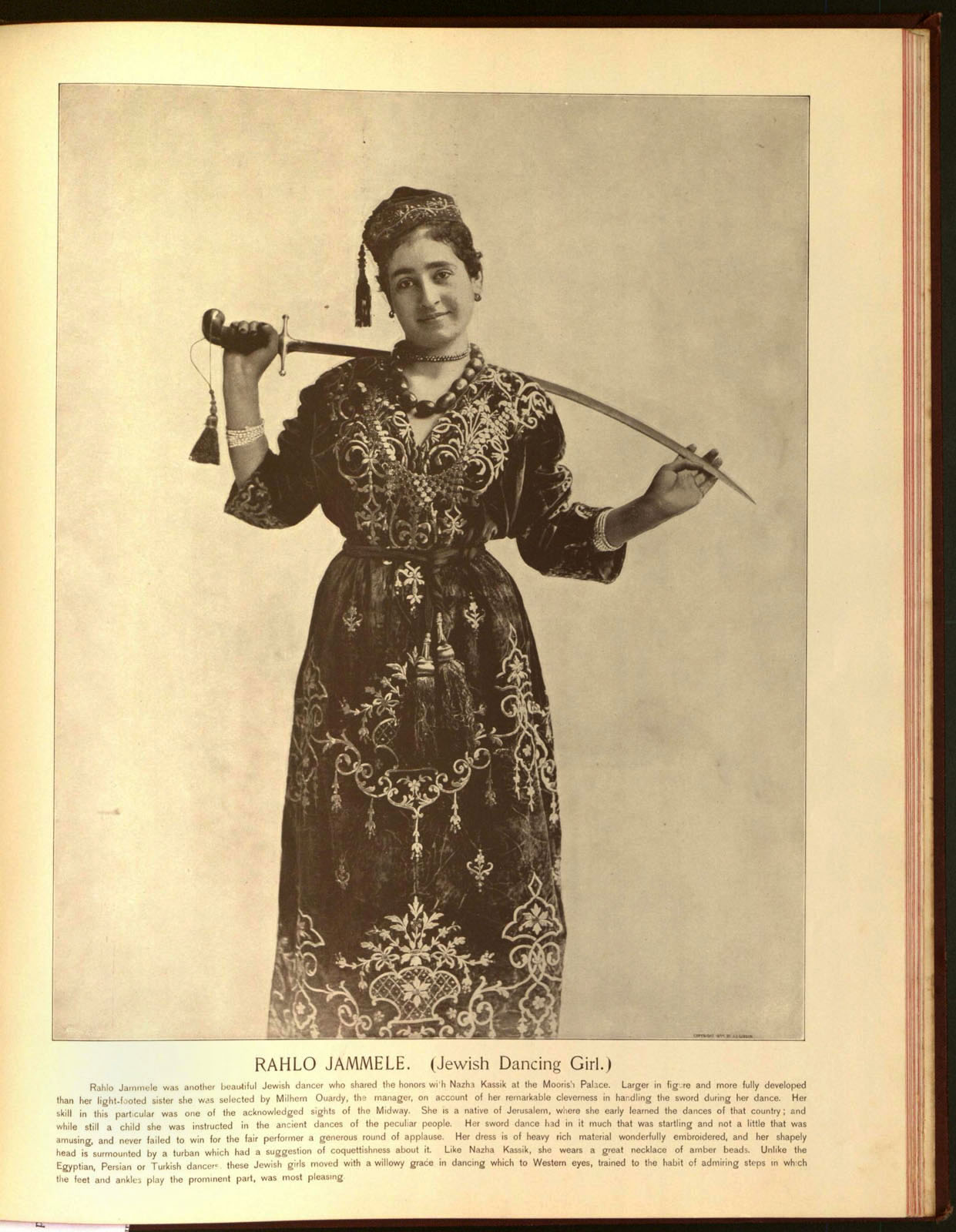


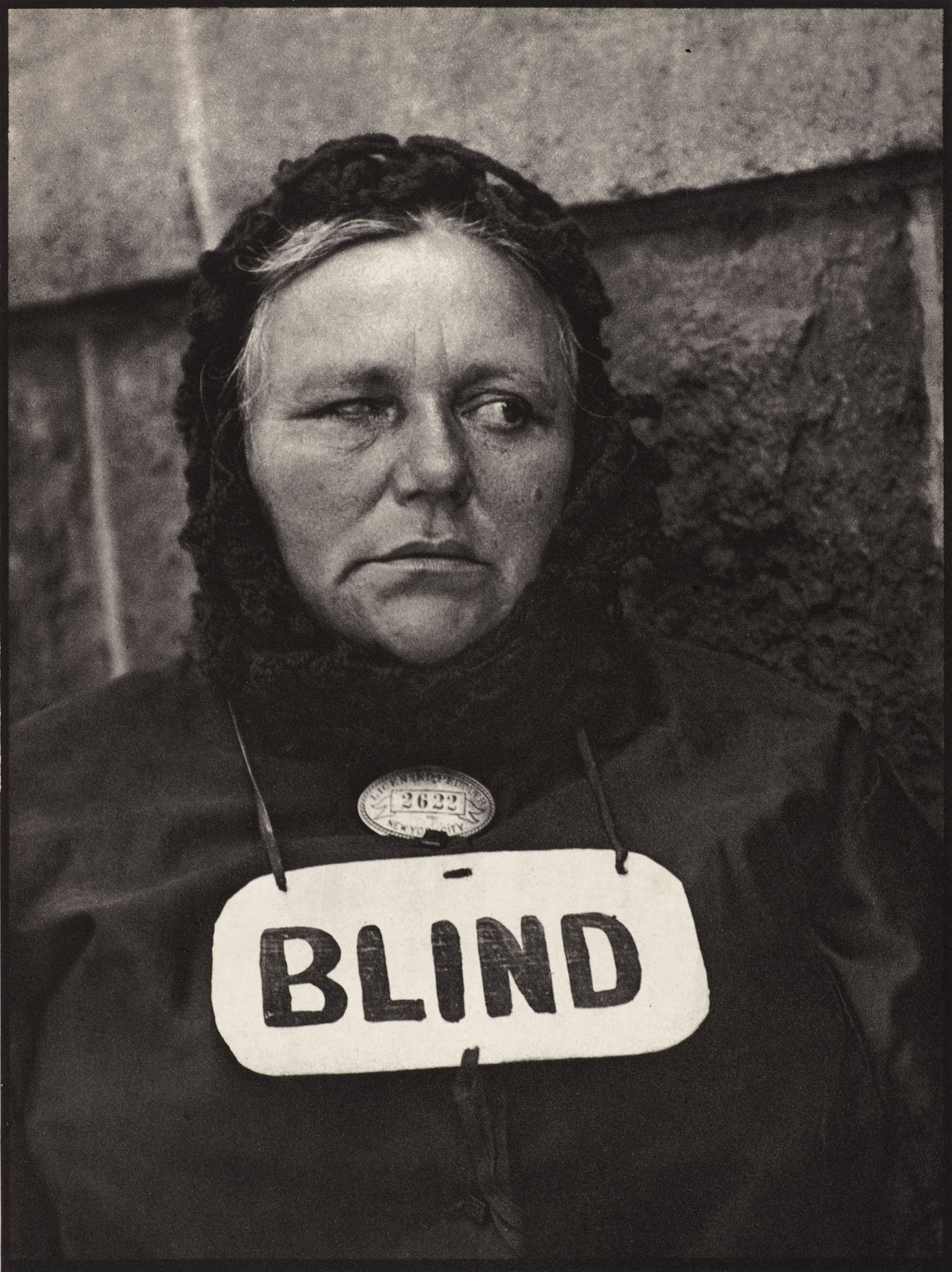
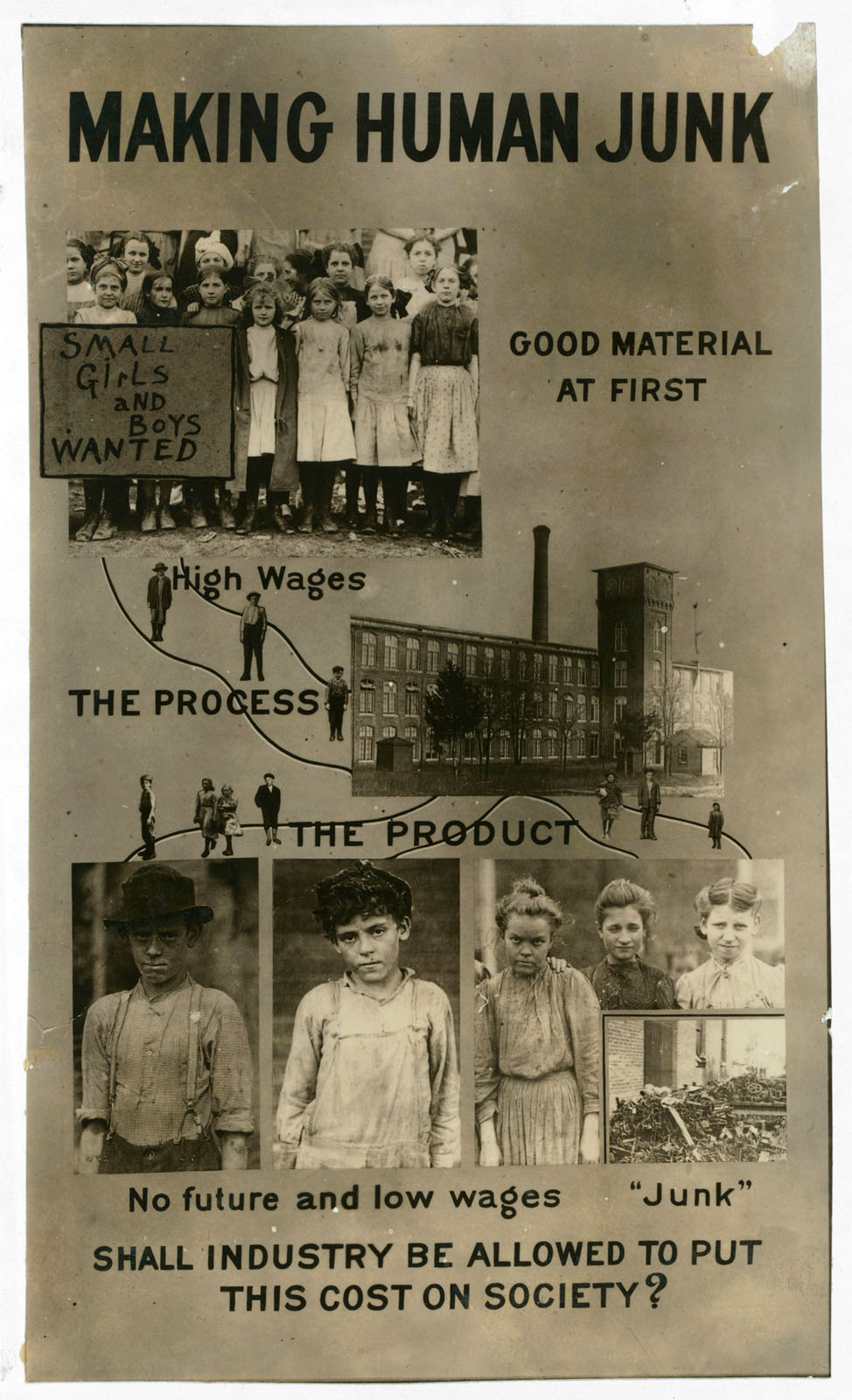

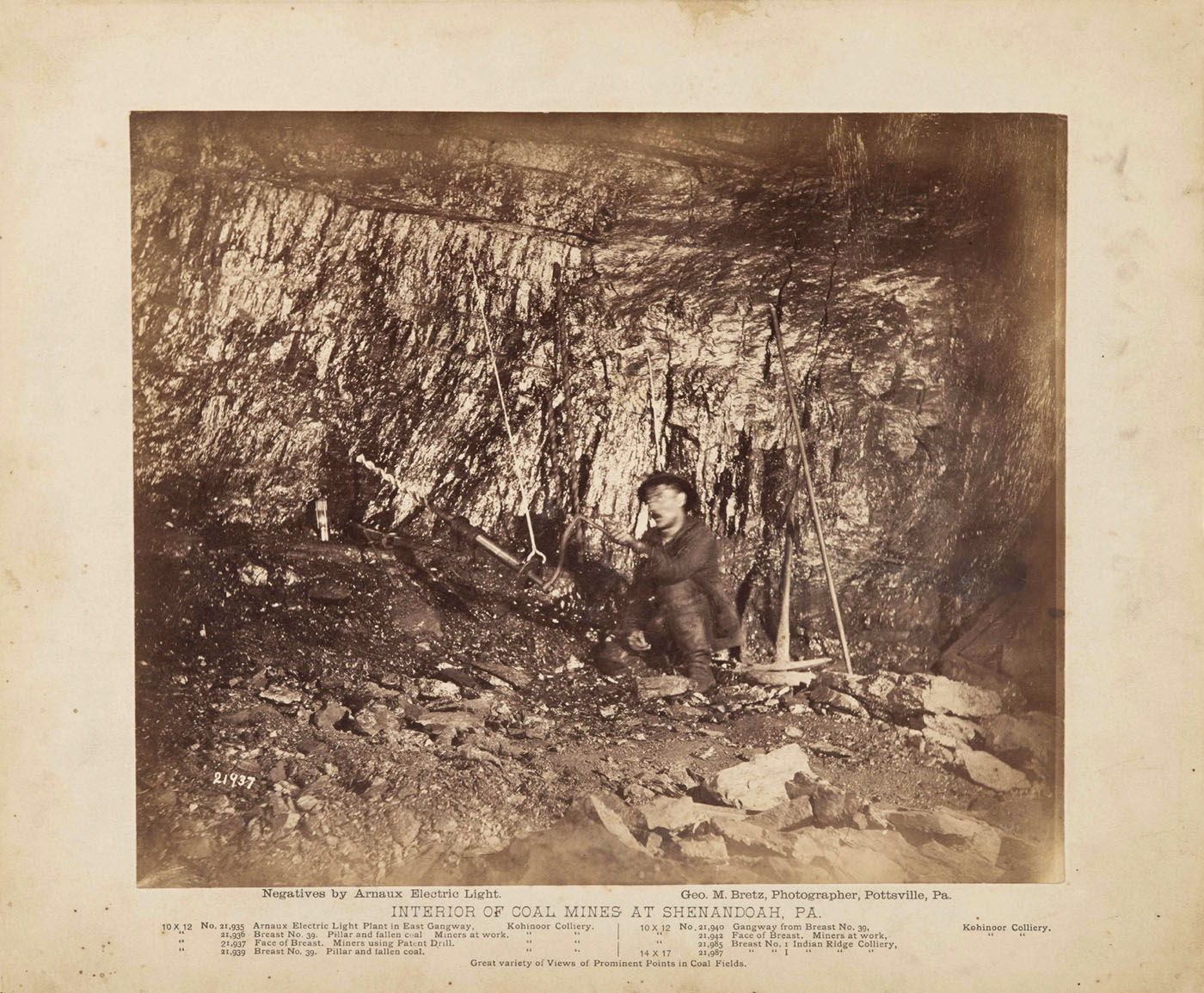








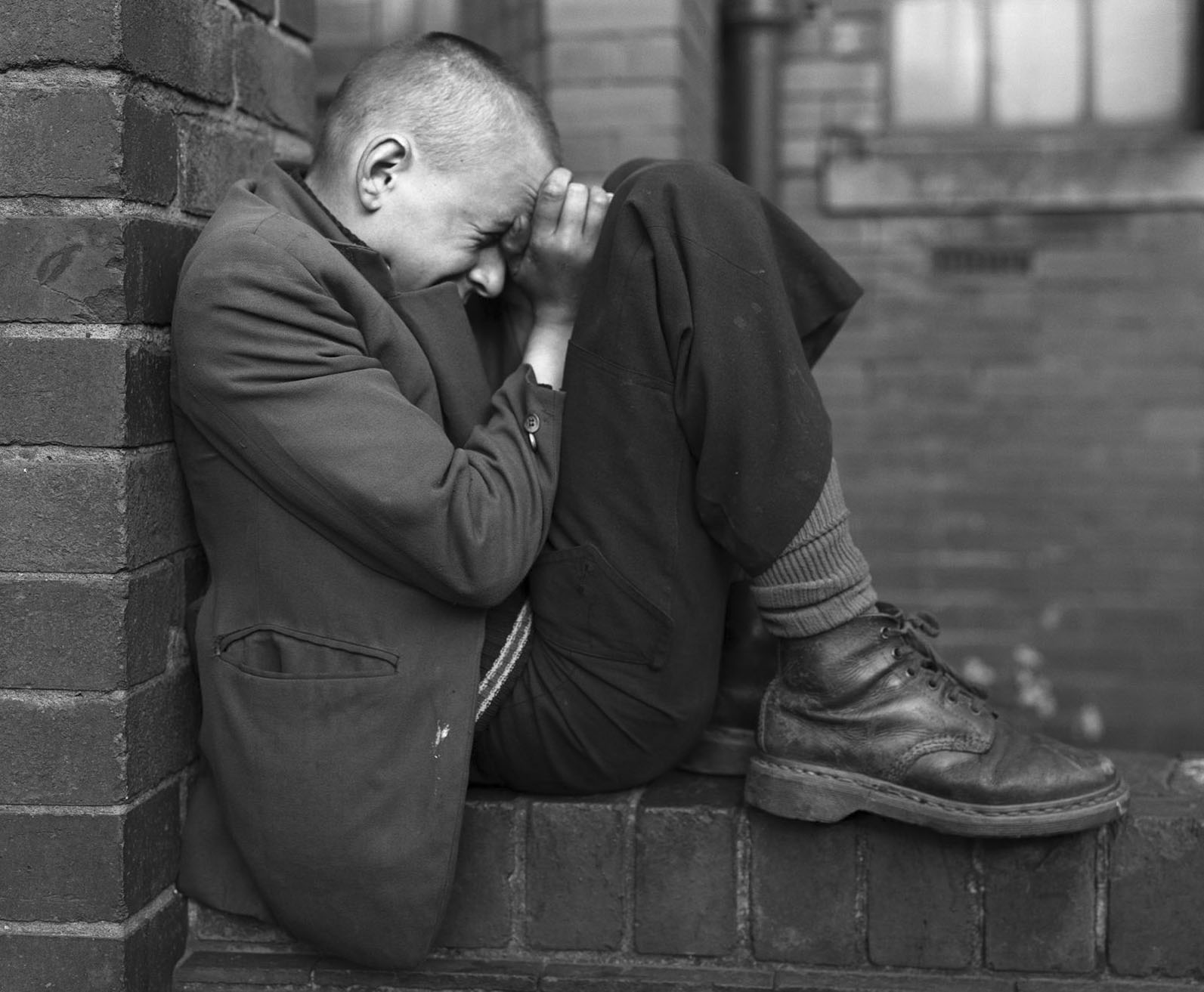


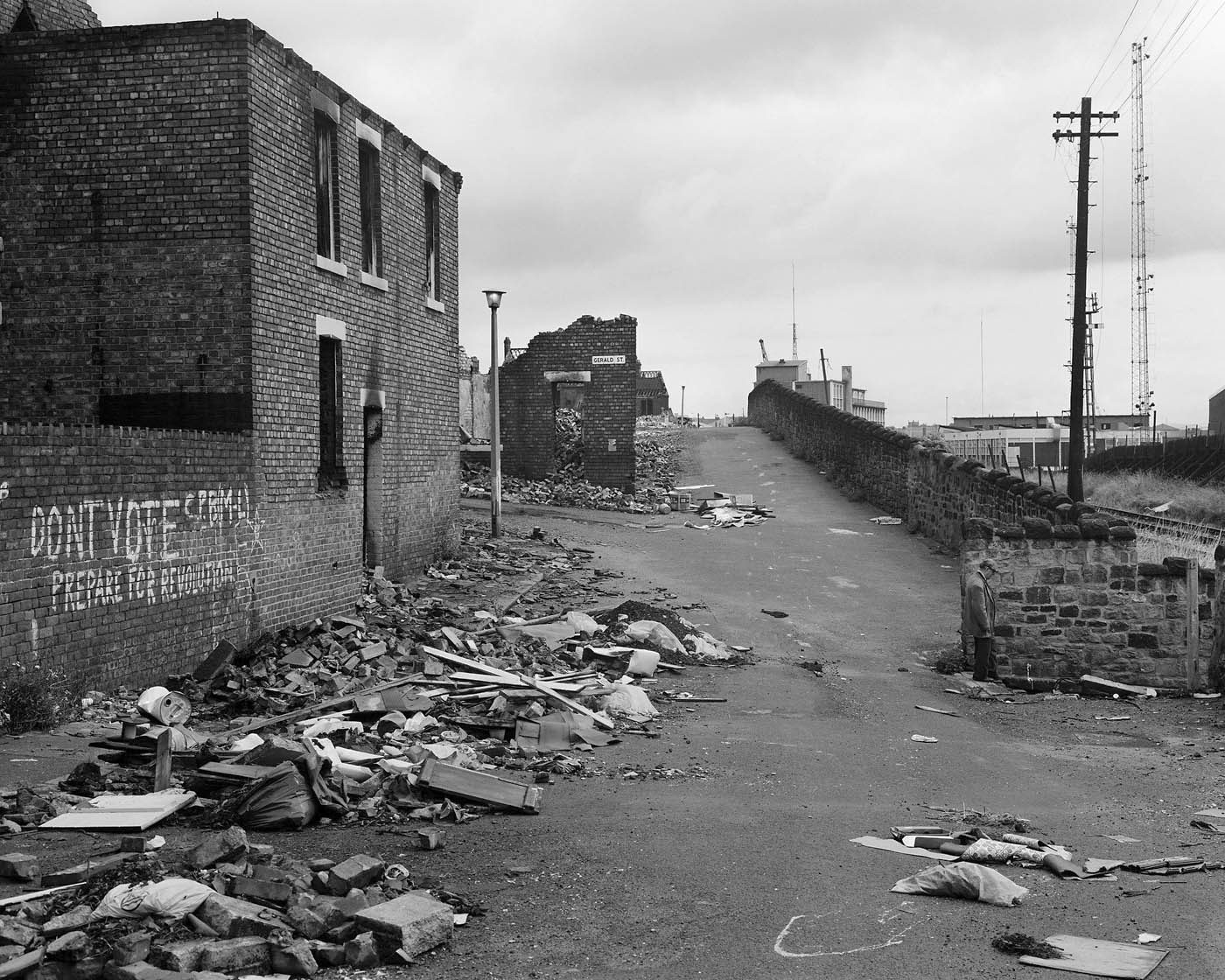


![Chris Killip (British, 1946-2020) 'Untitled? [Shipbuilding on Tyneside]' 1975-1977](https://artblart.com/wp-content/uploads/2023/01/killip-shipbuilding-on-tyneside.jpg "Chris Killip (British, 1946-2020) 'Untitled? [Shipbuilding on Tyneside]' 1975-1977")


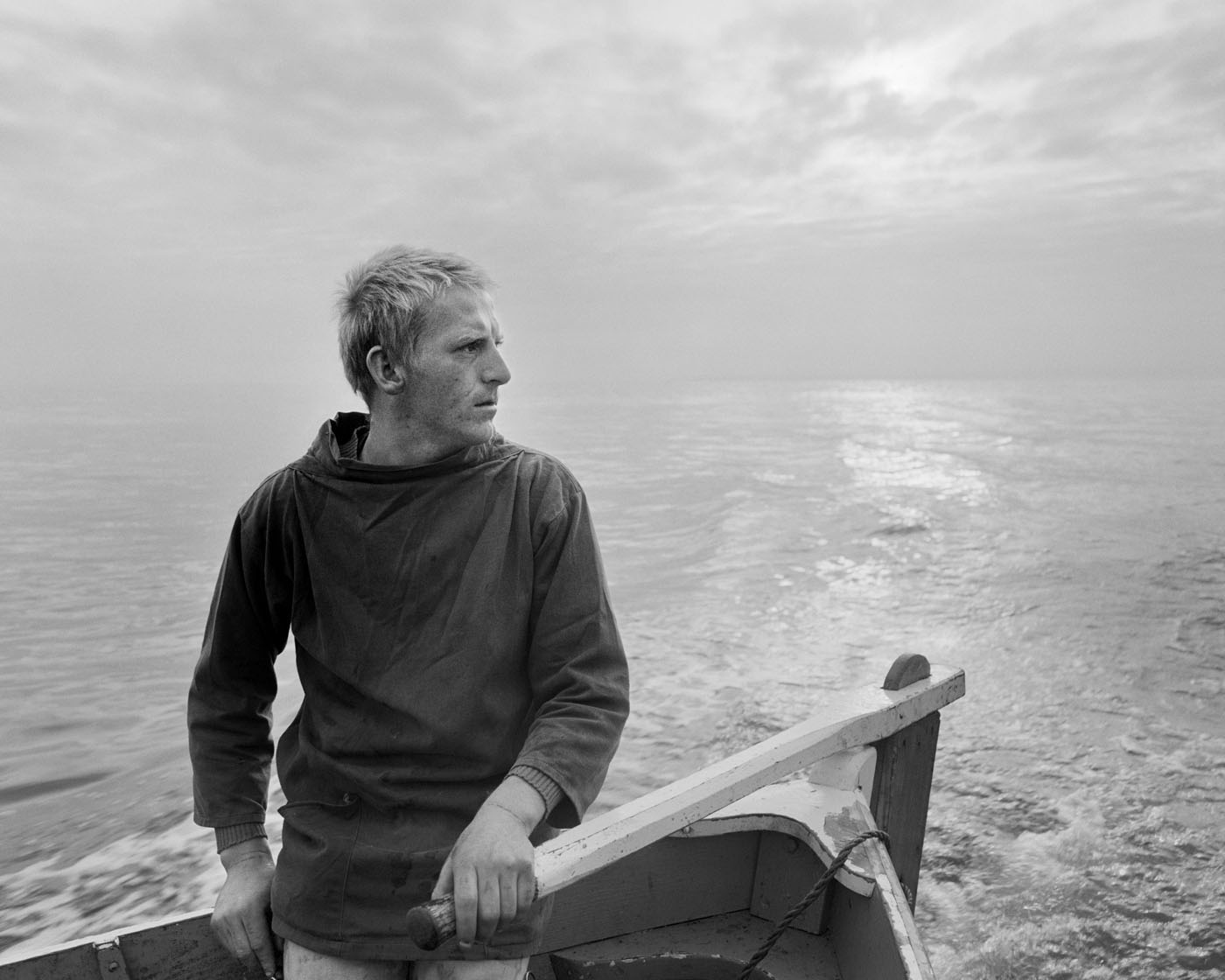


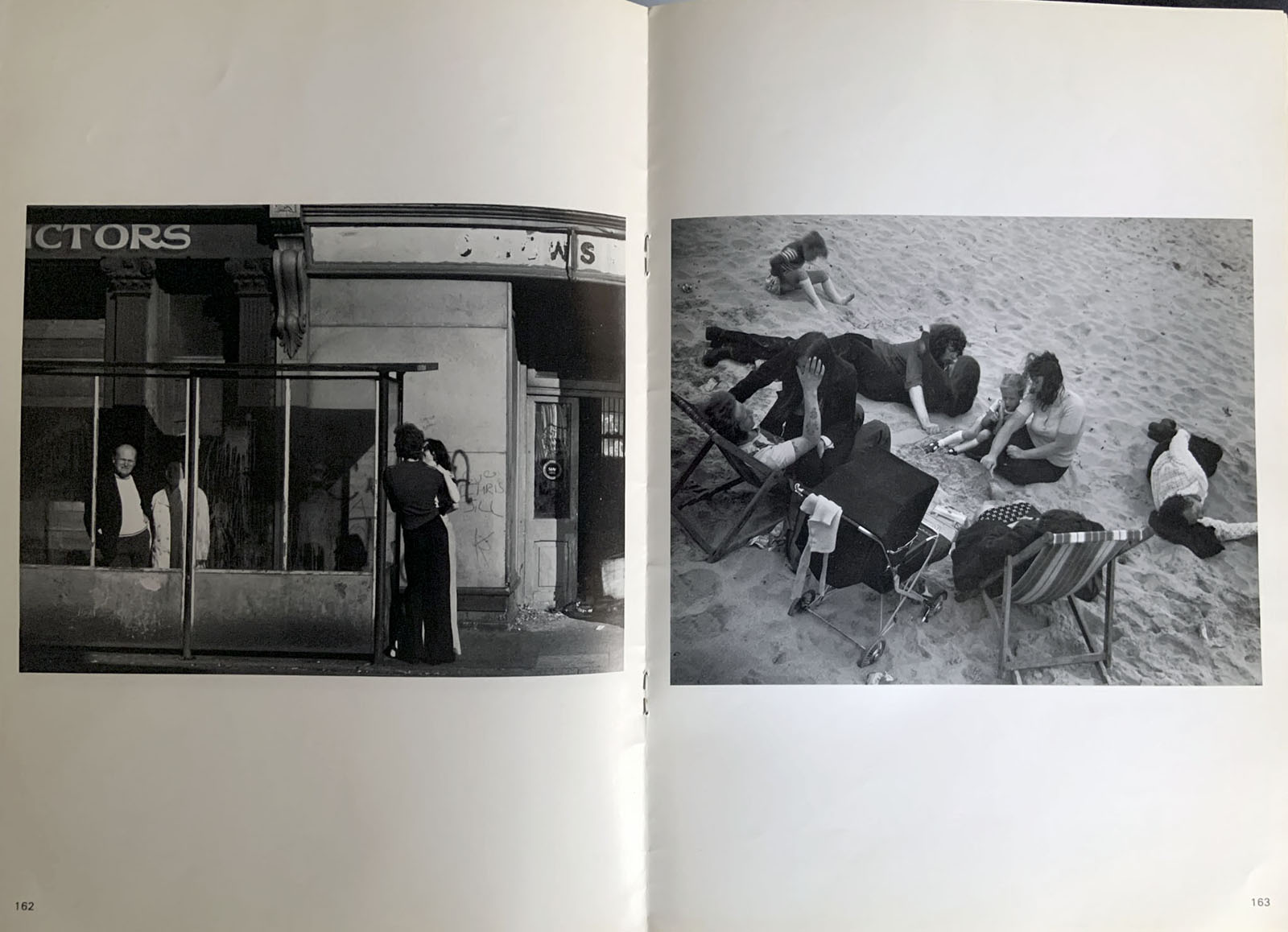


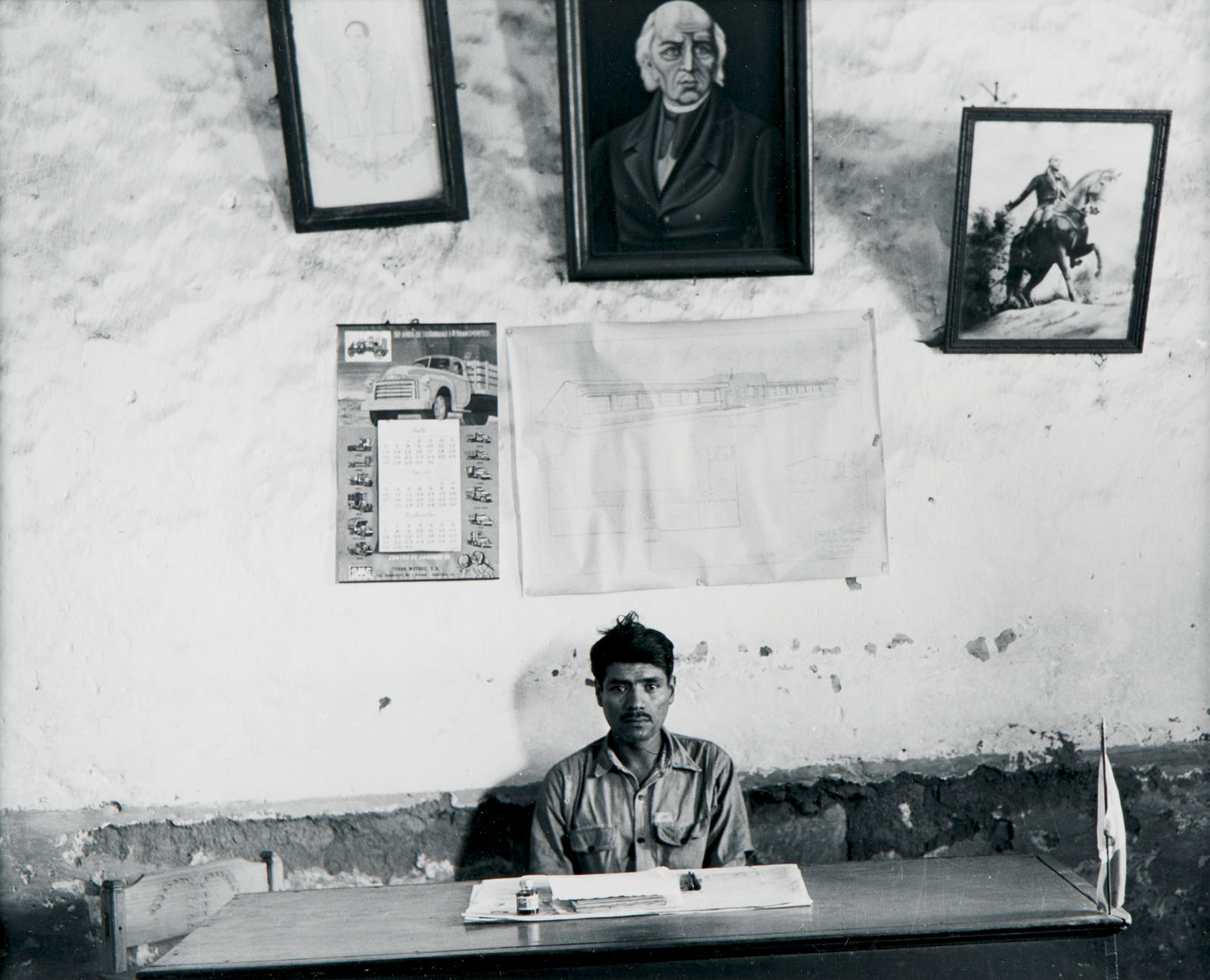


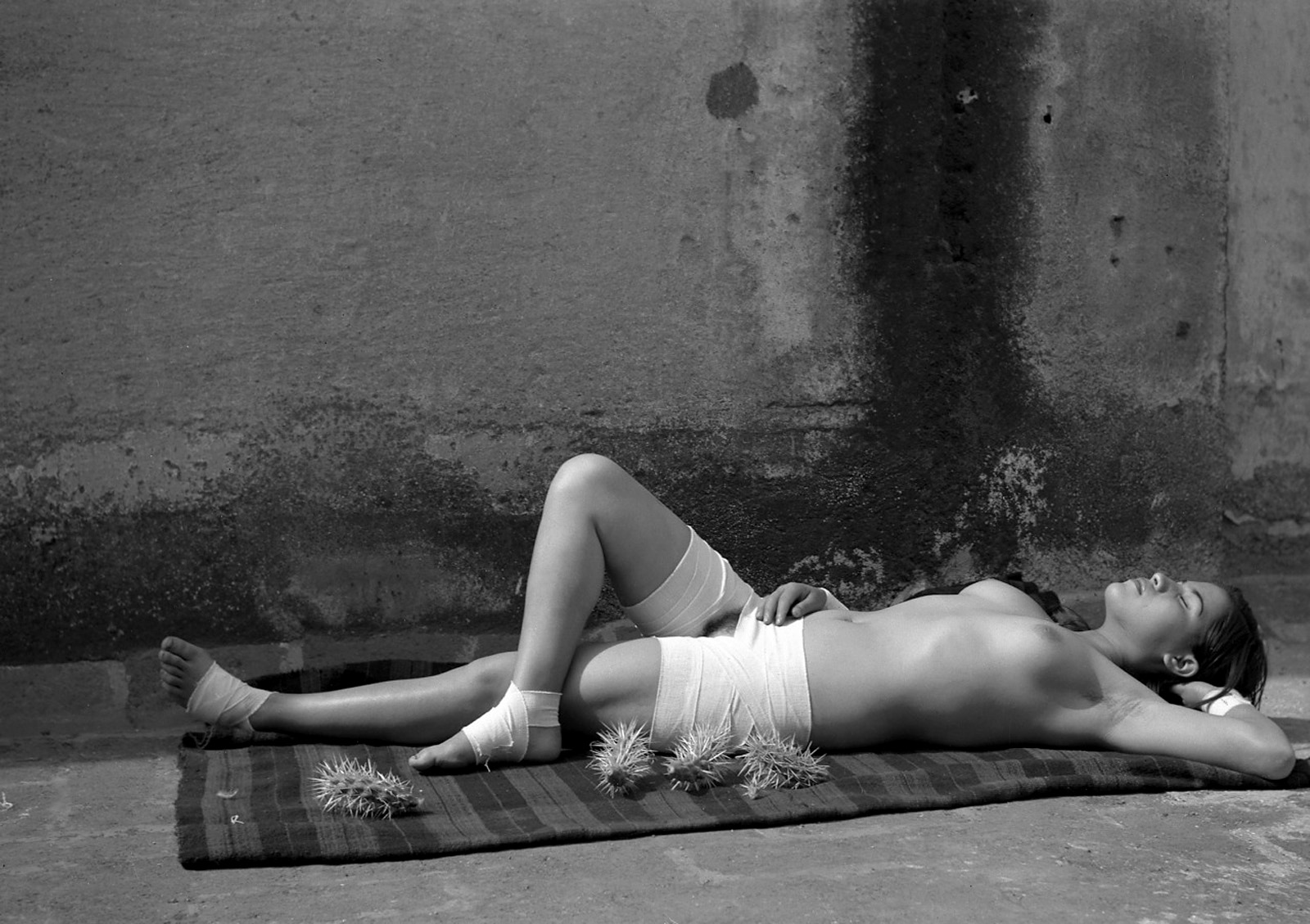
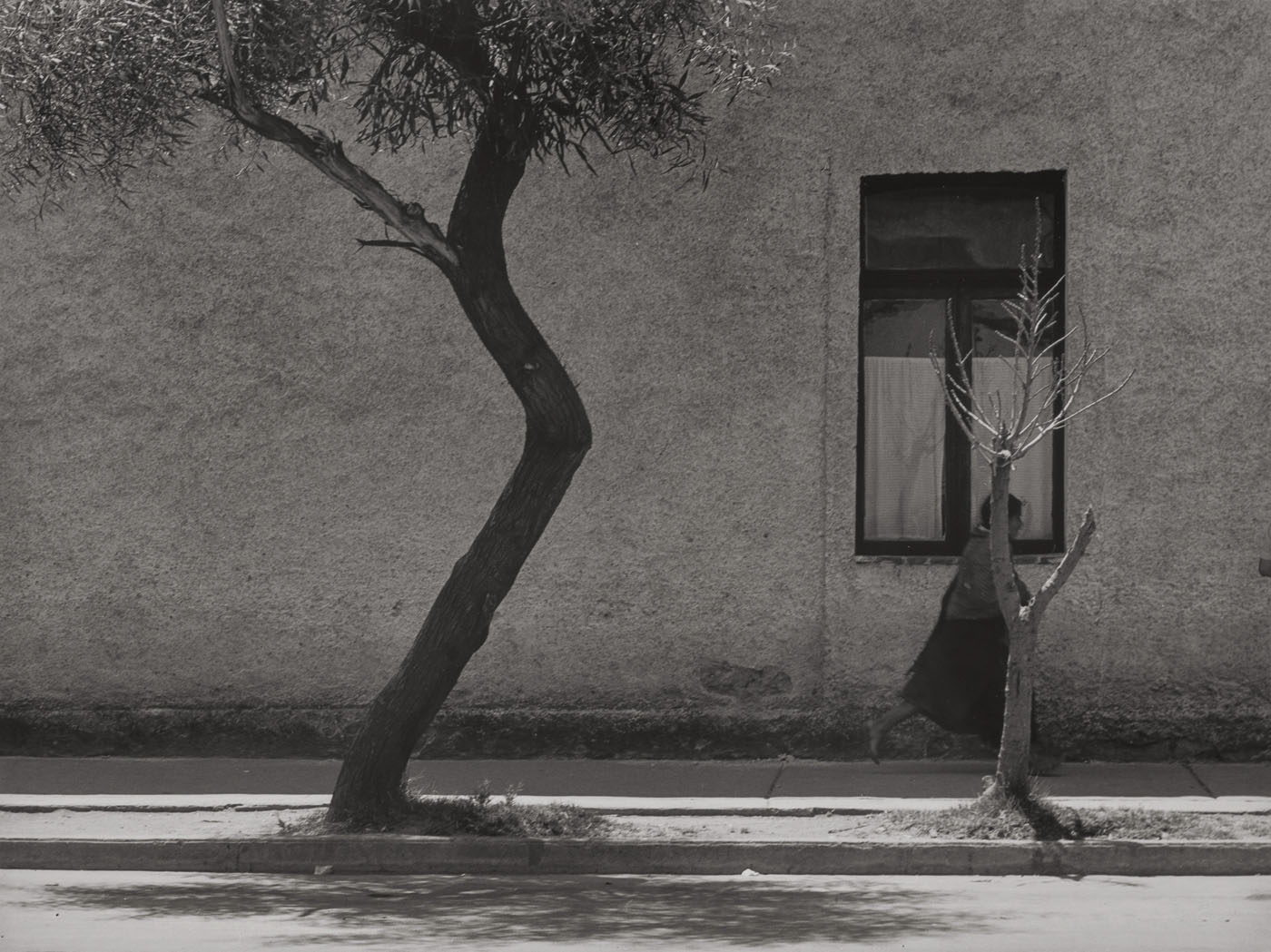


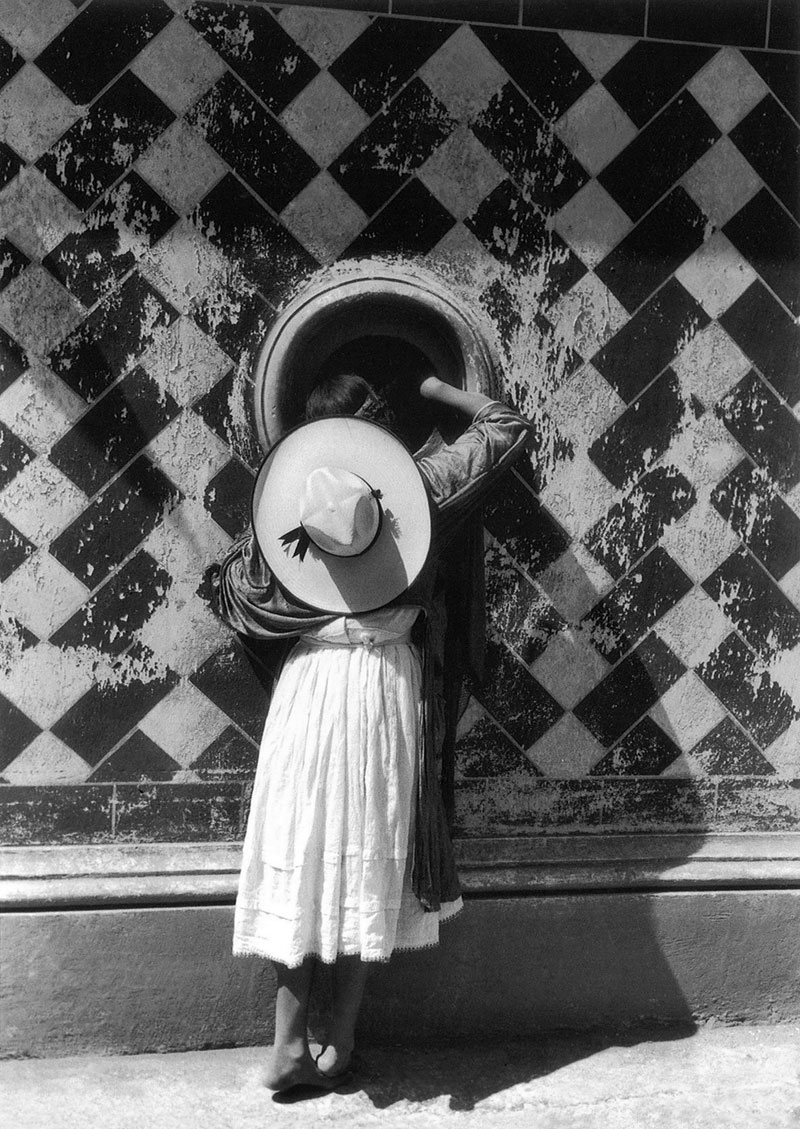


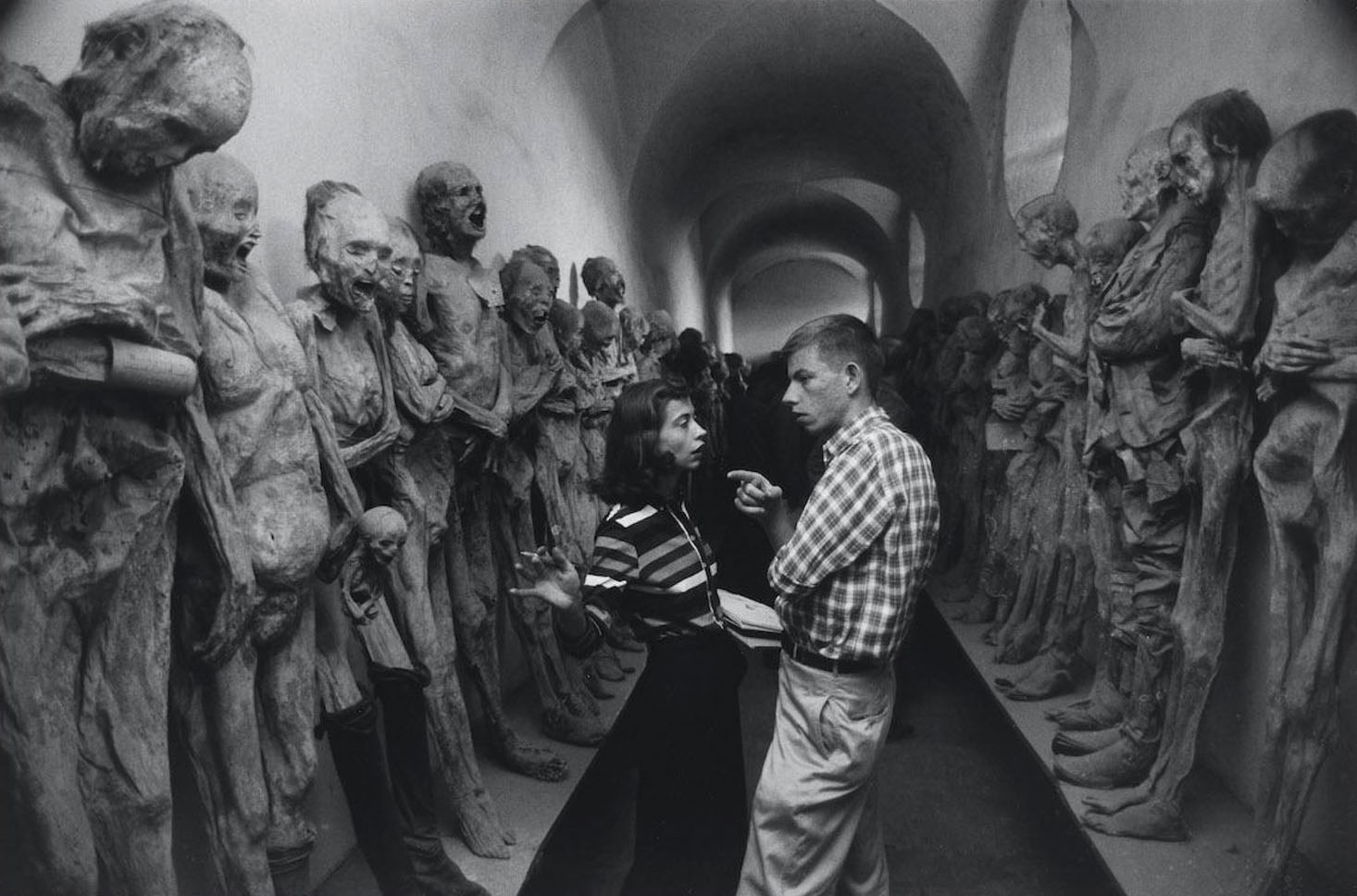
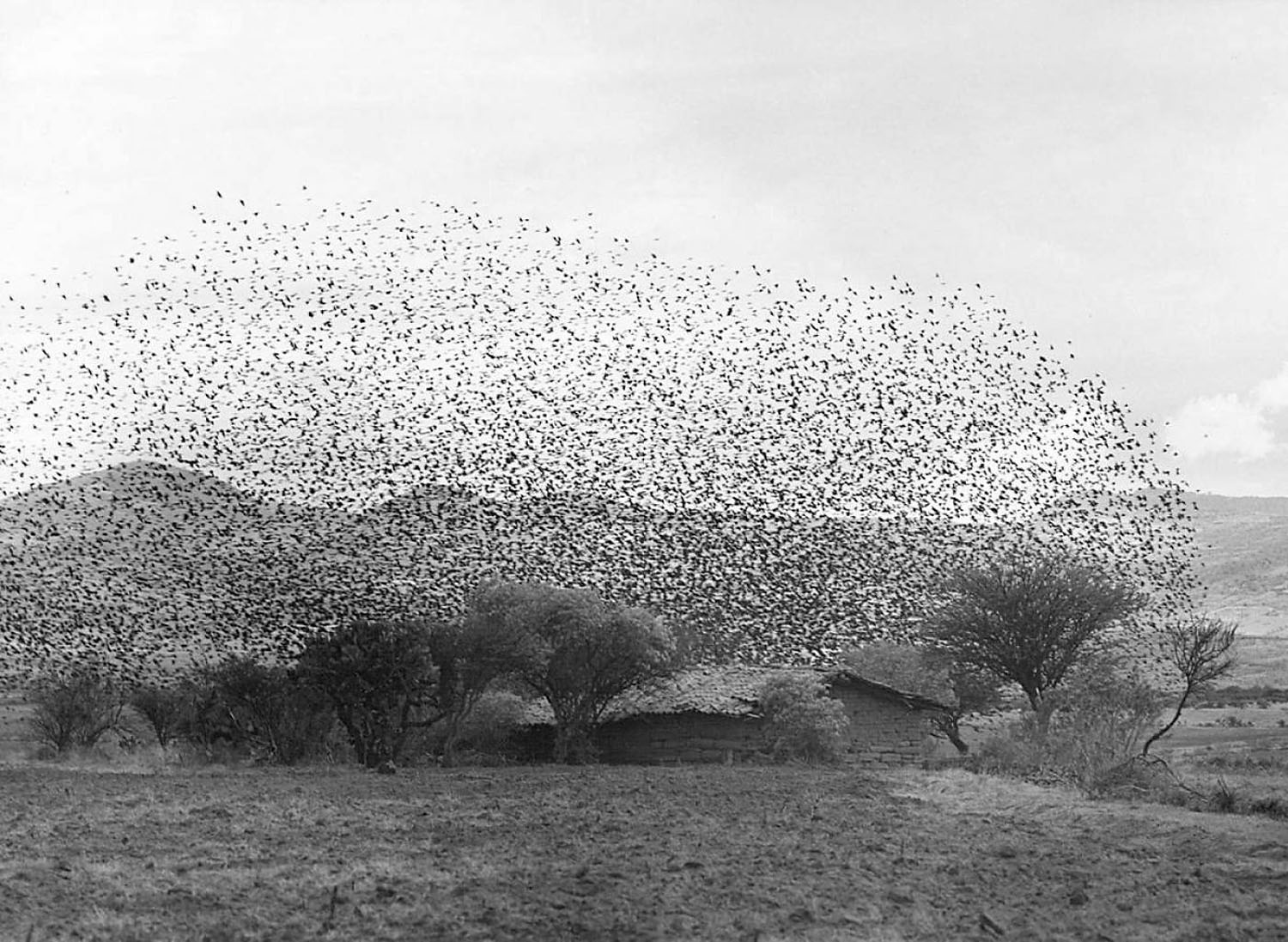

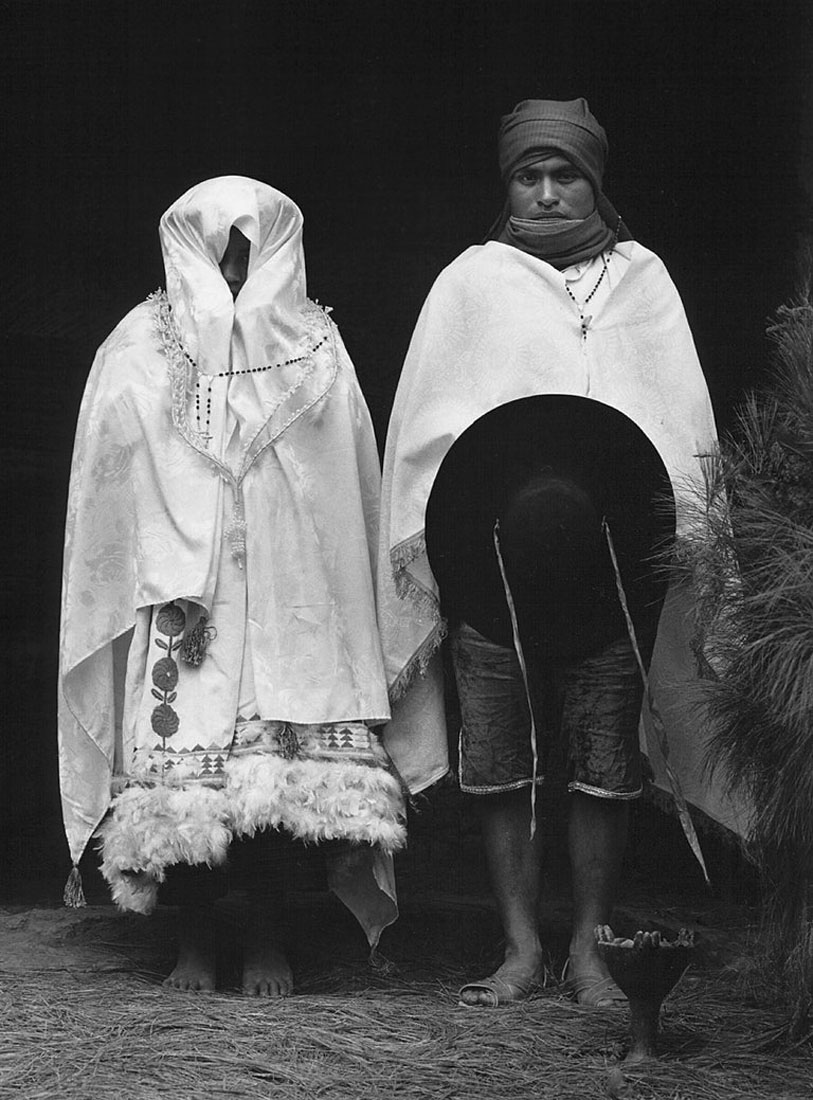
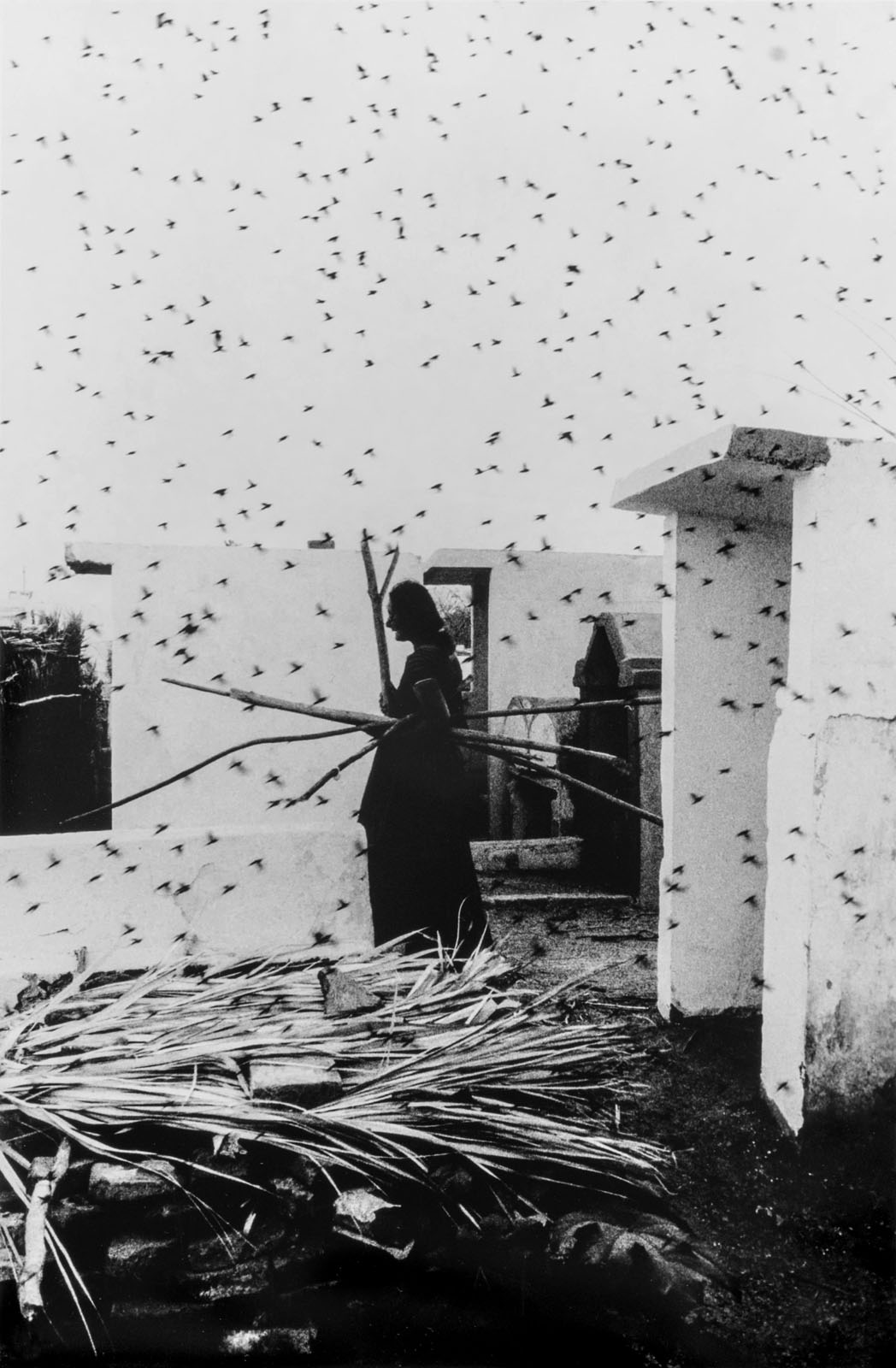


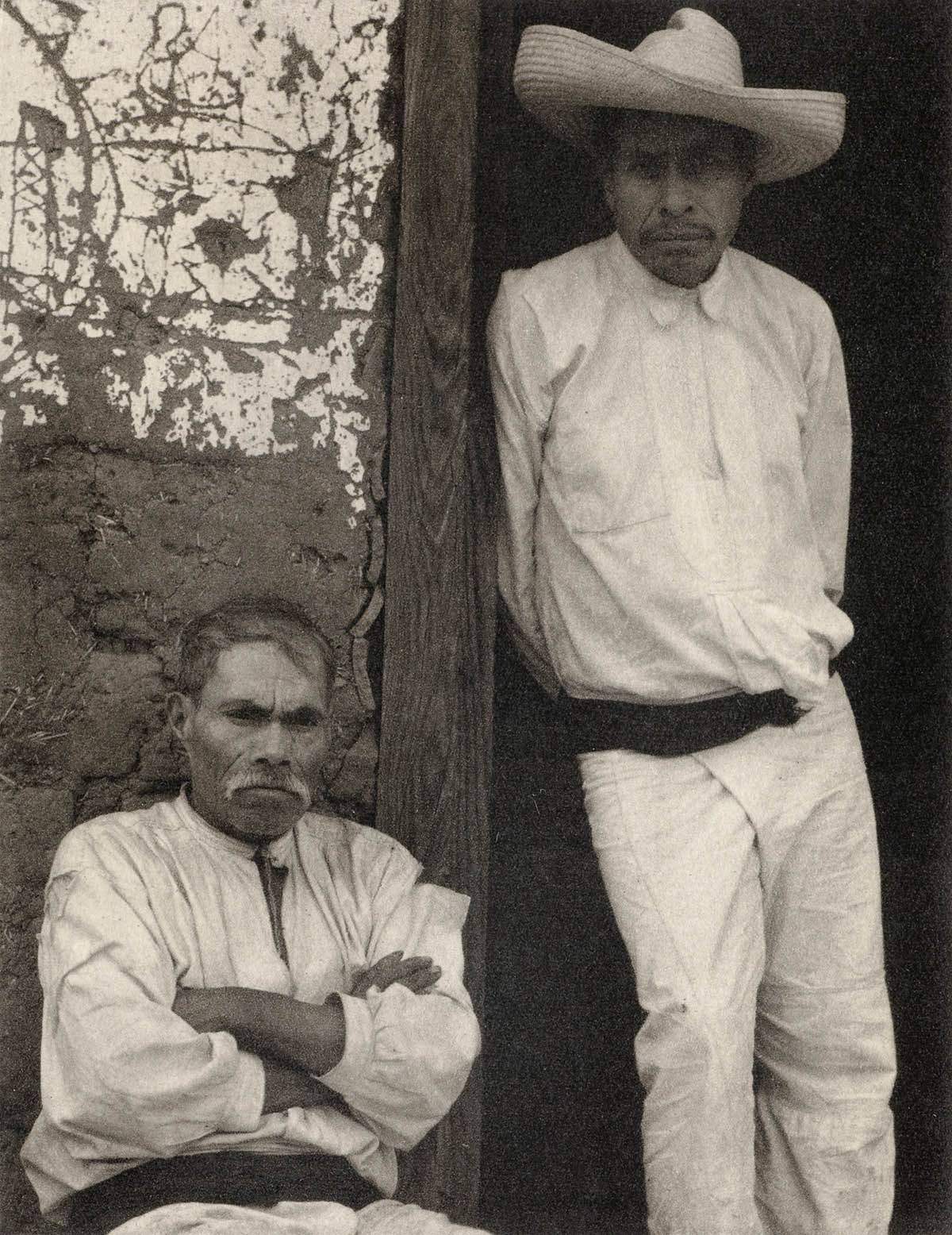
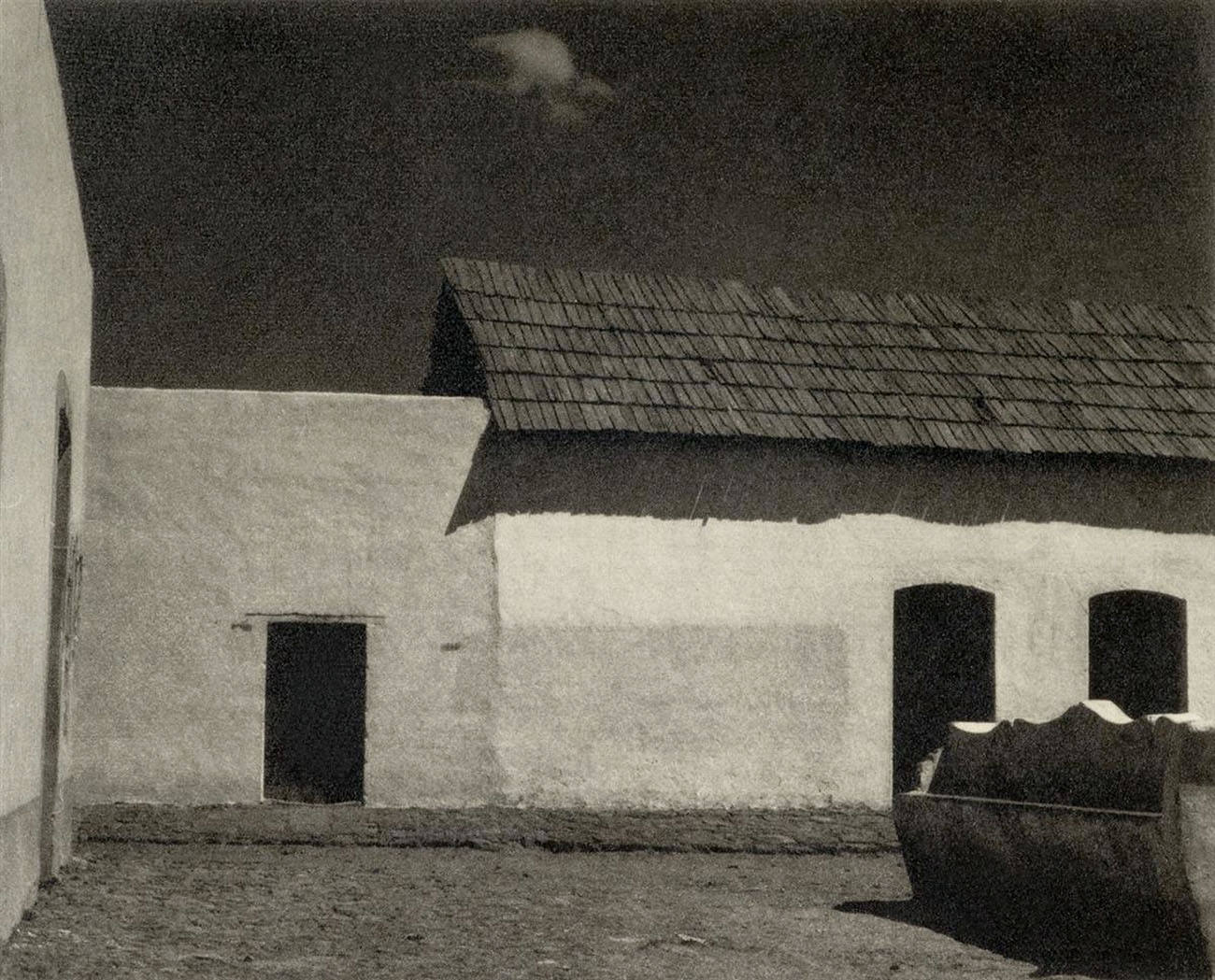


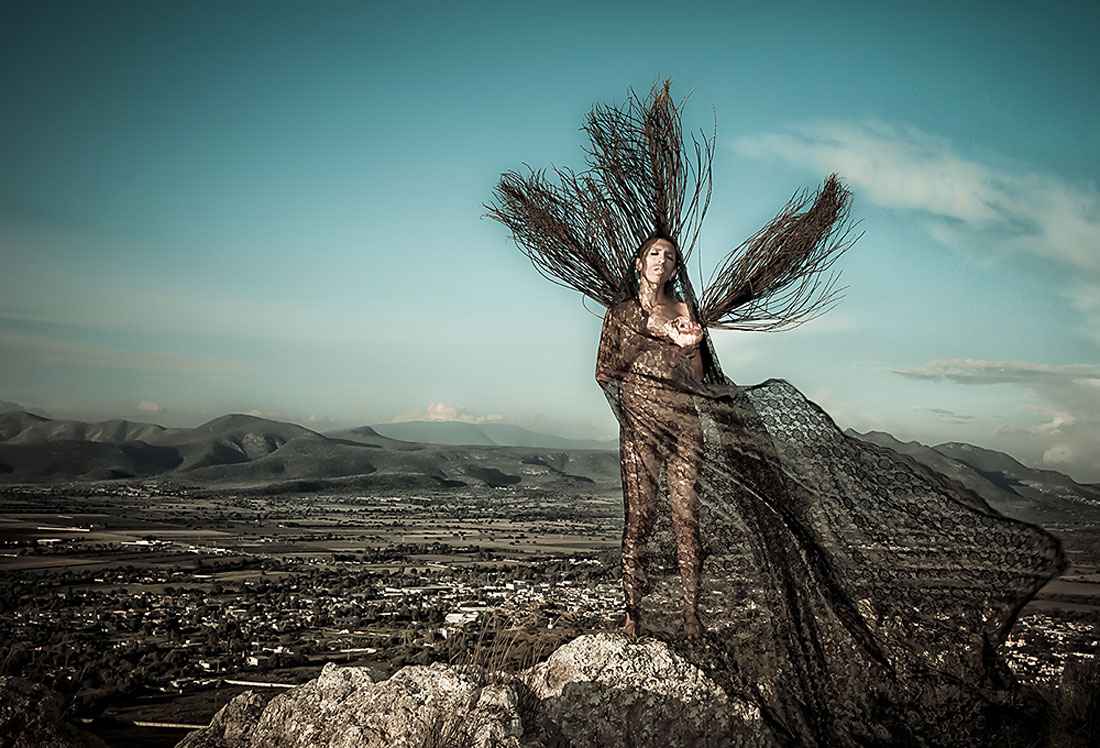


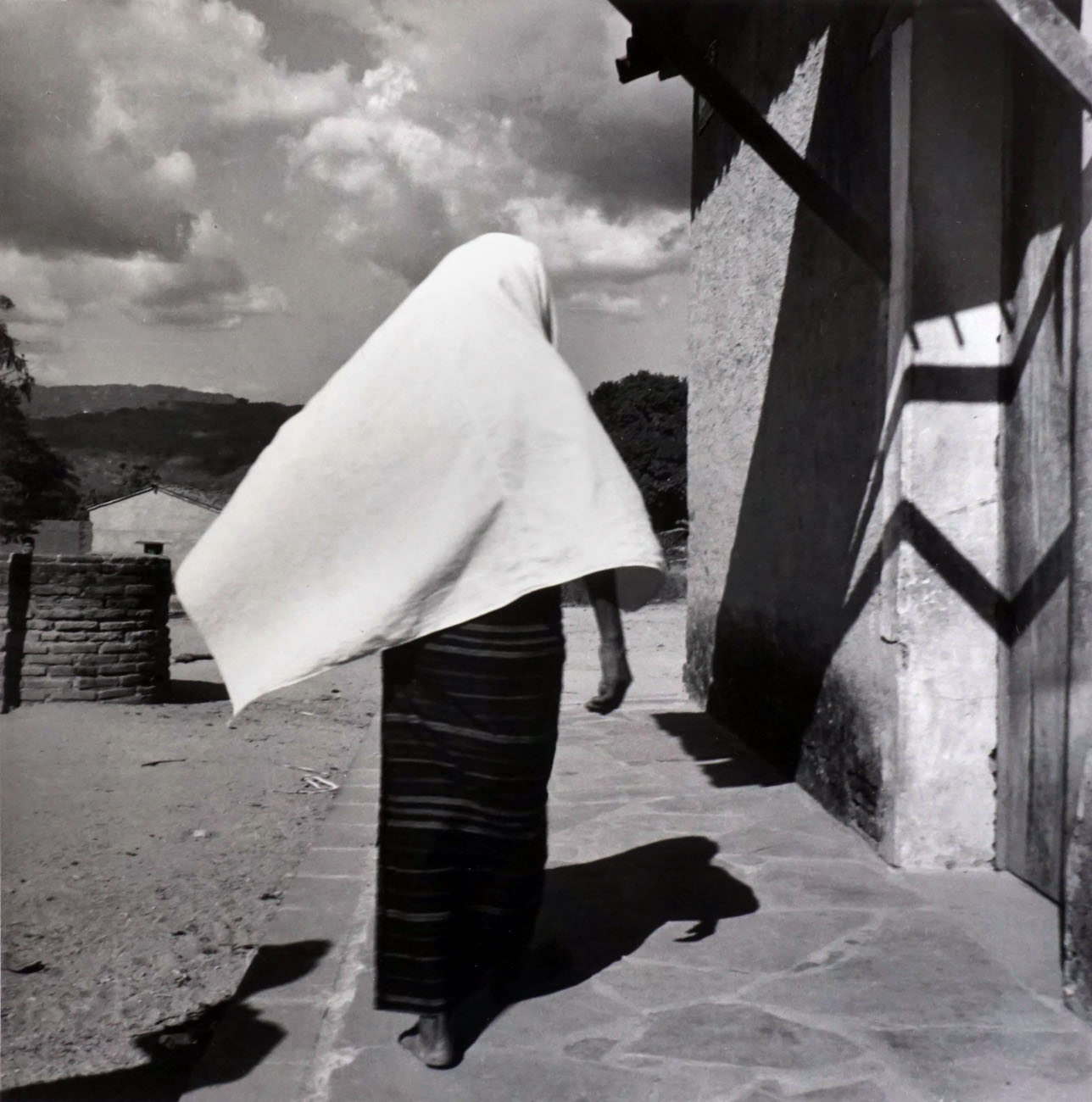

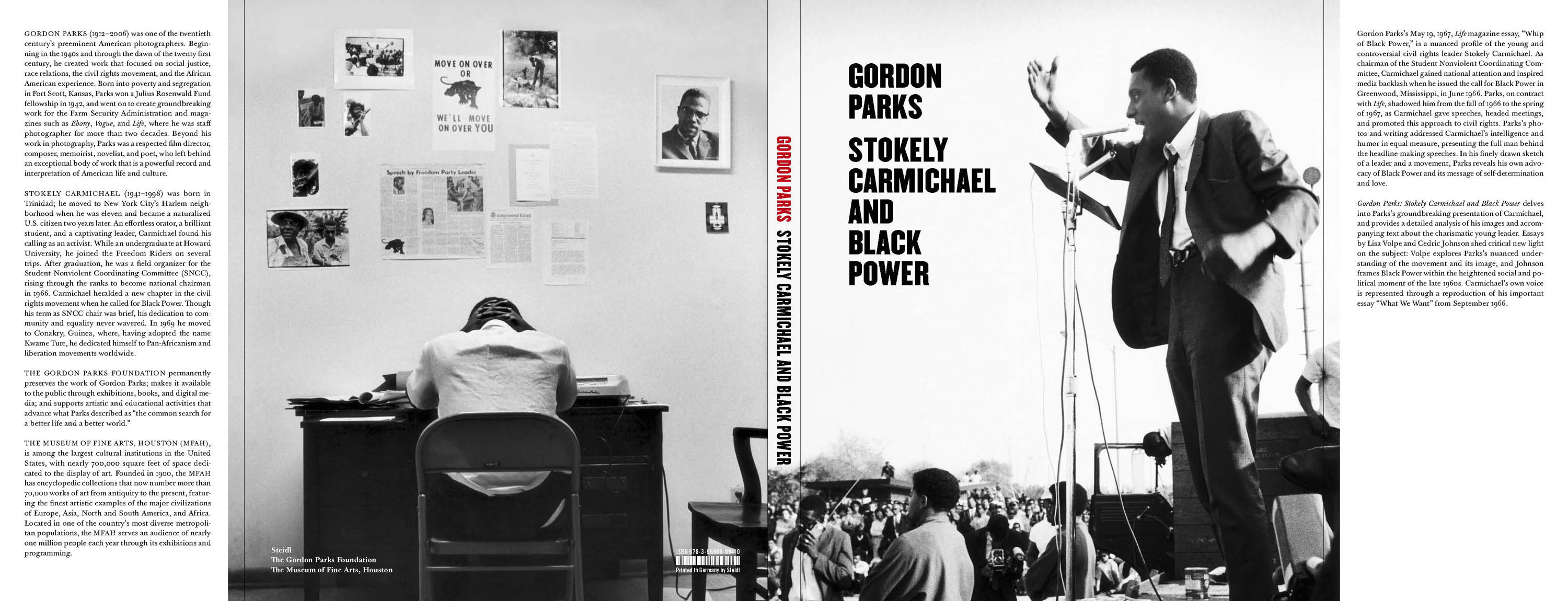


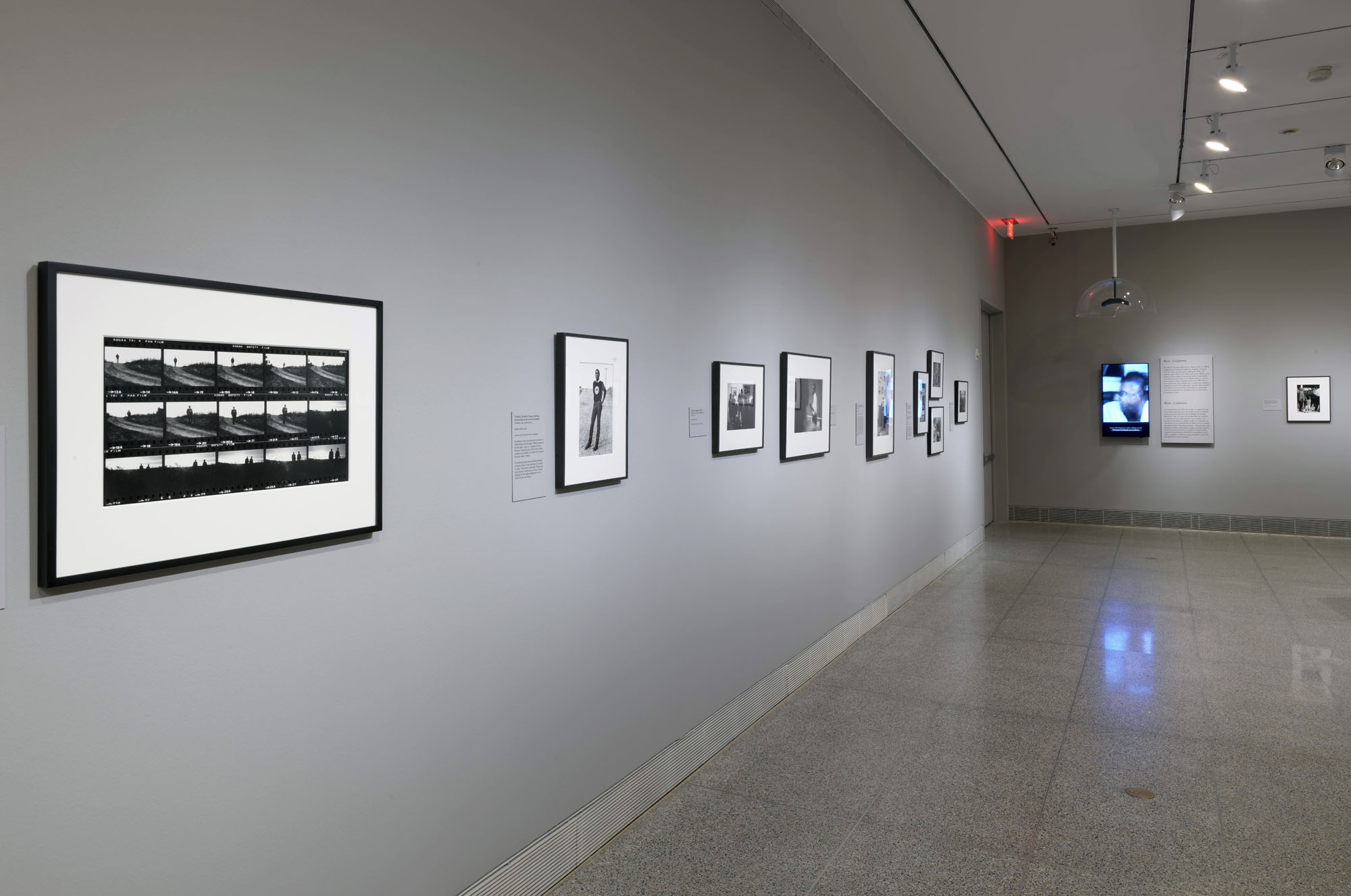











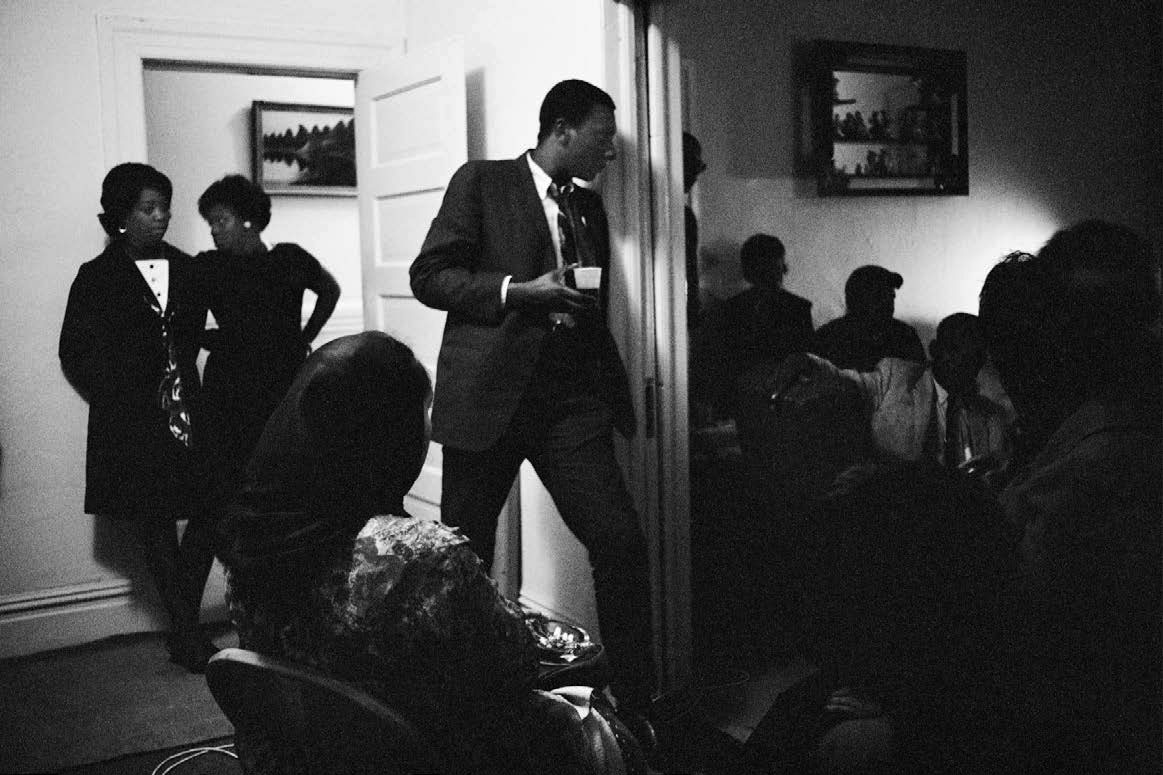
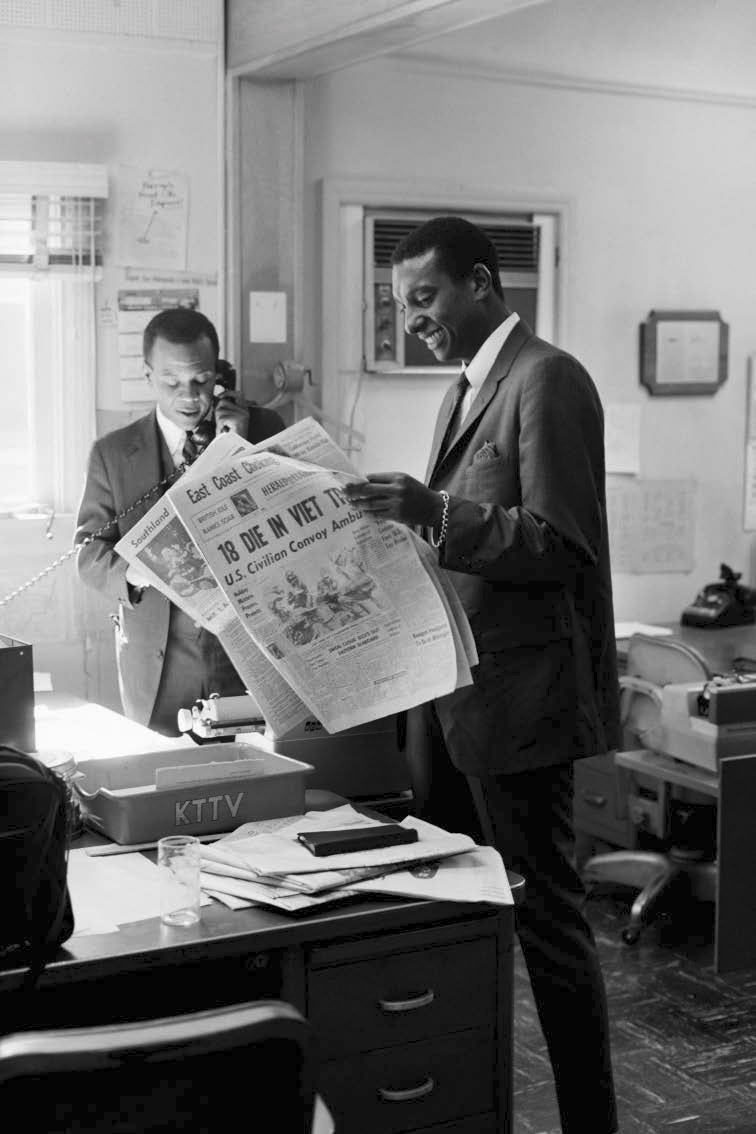
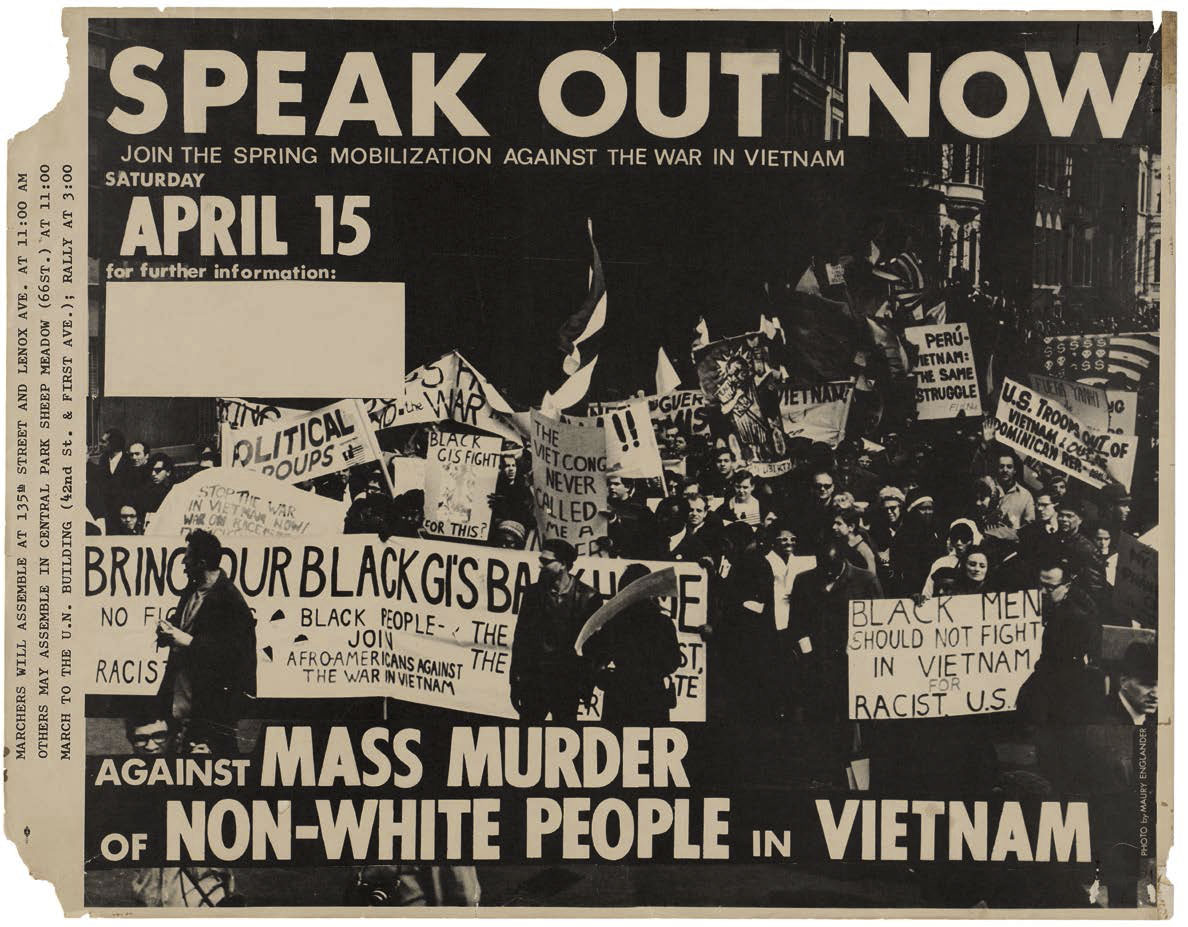


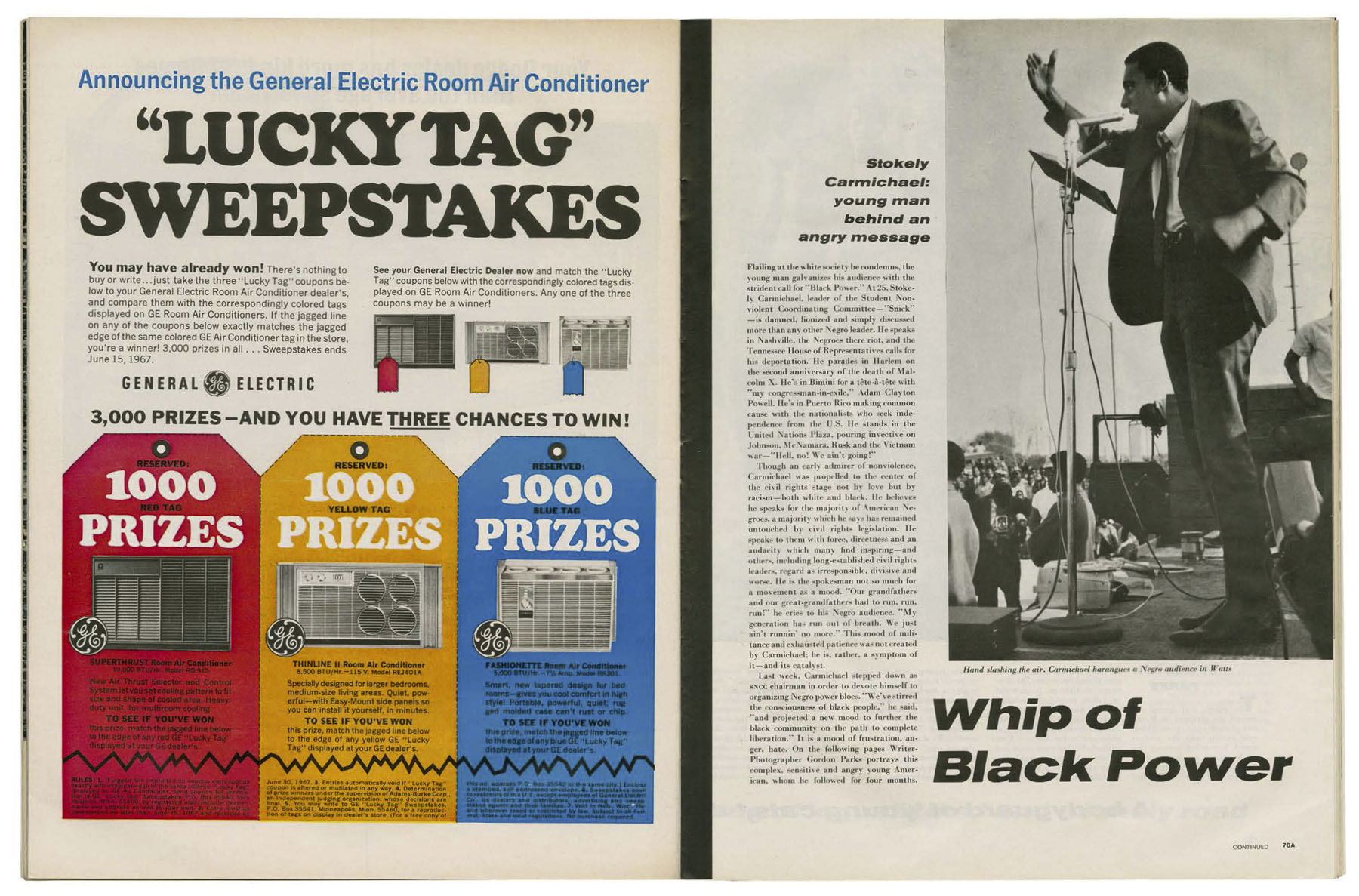

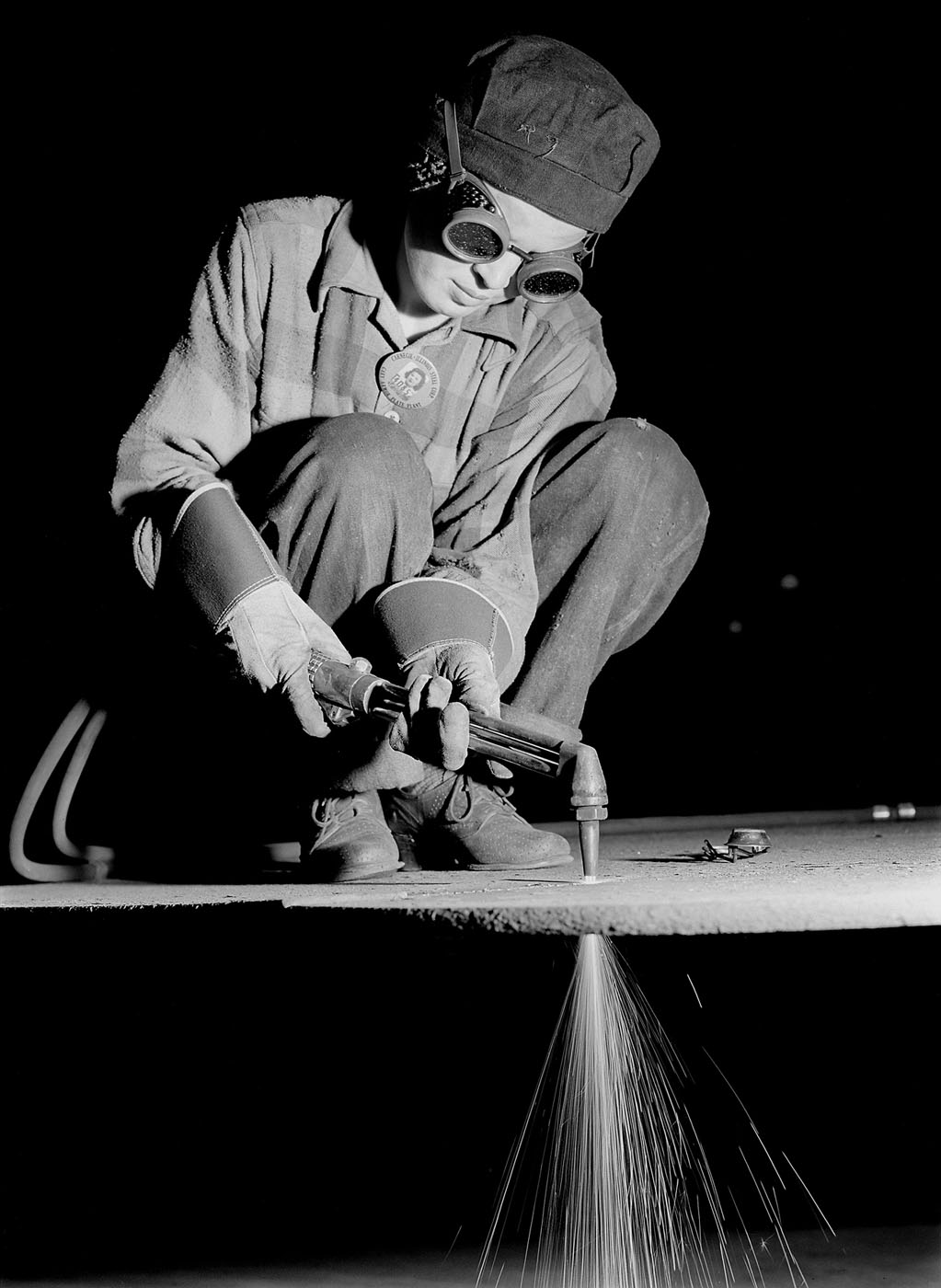


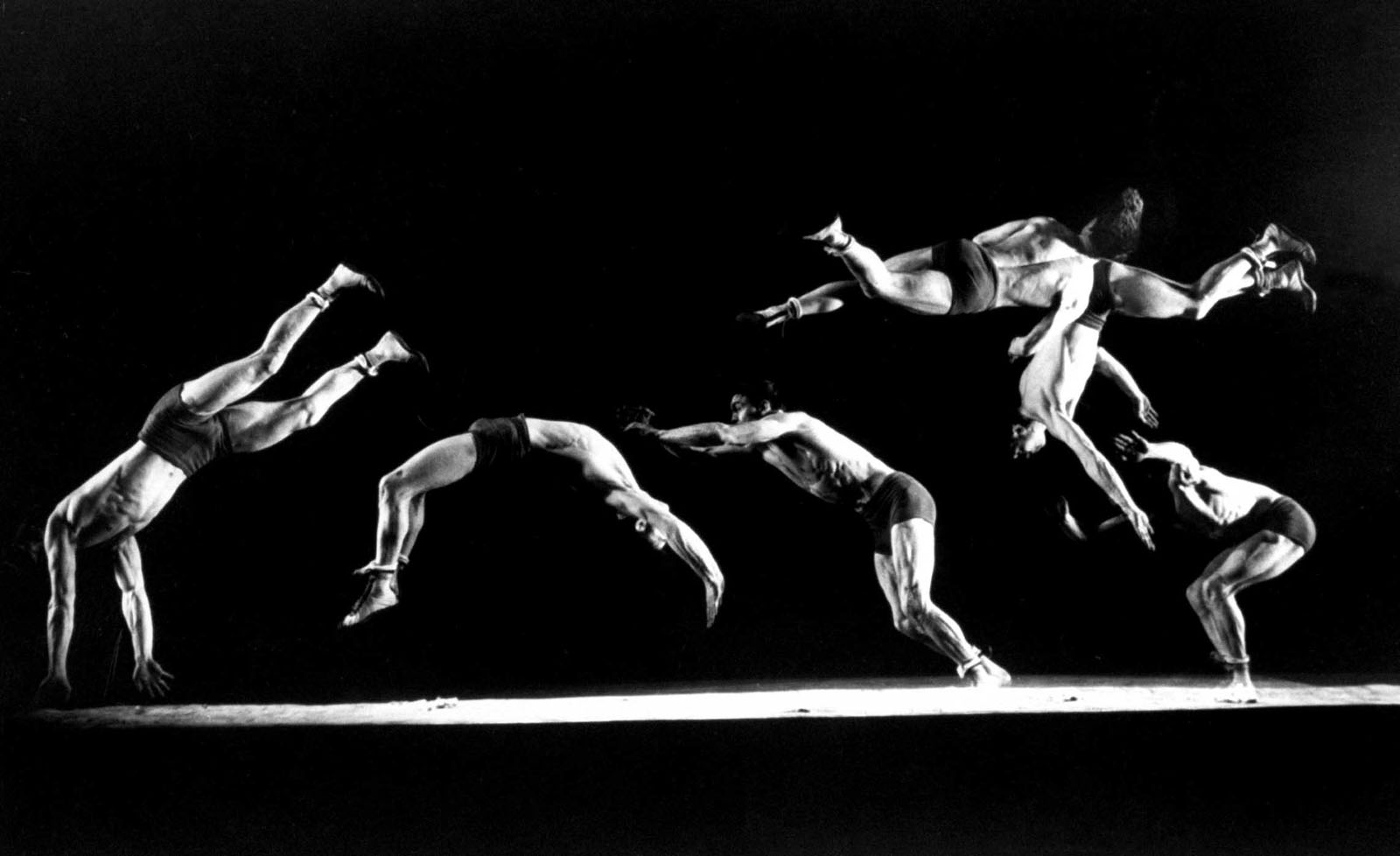


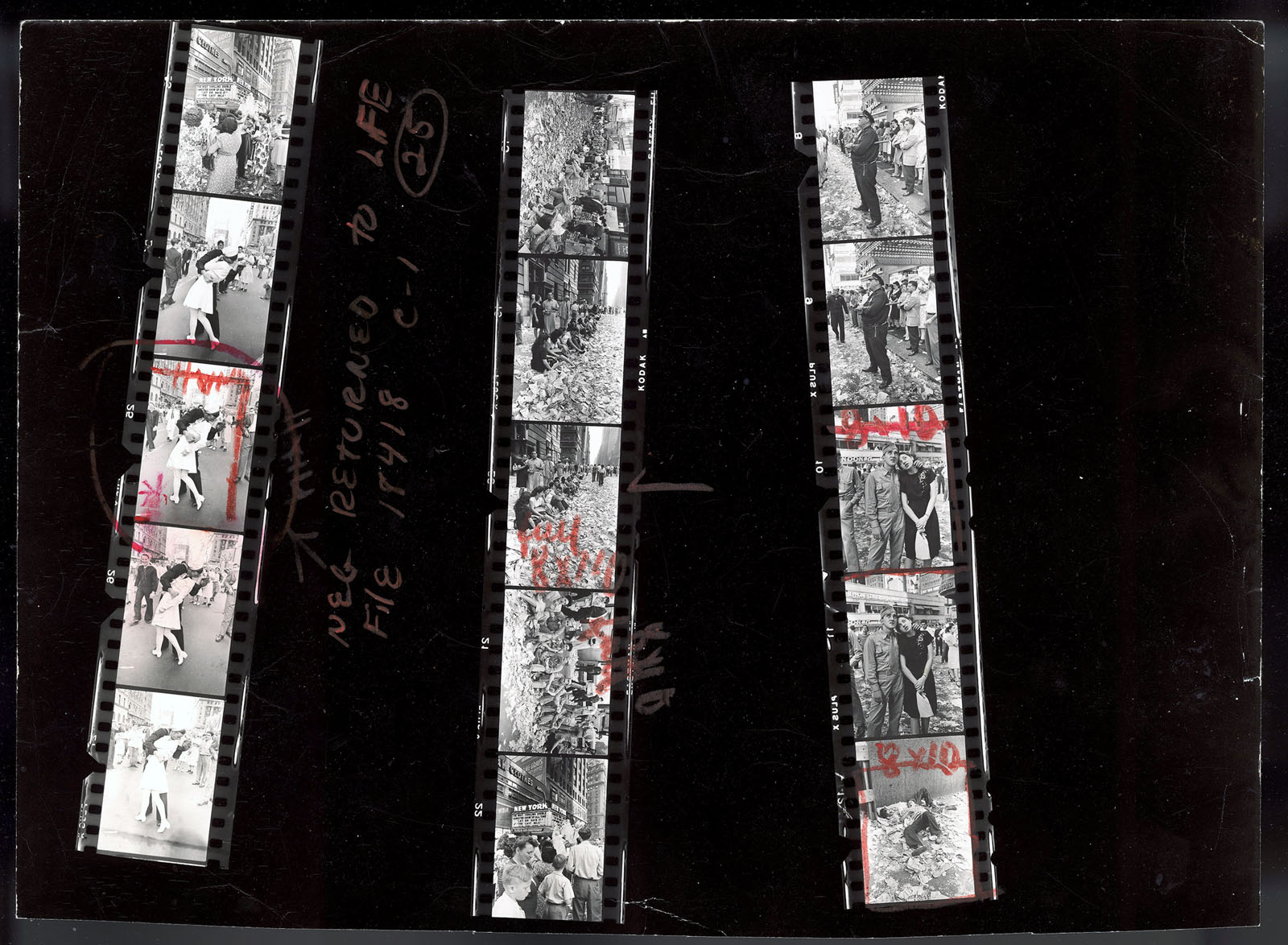


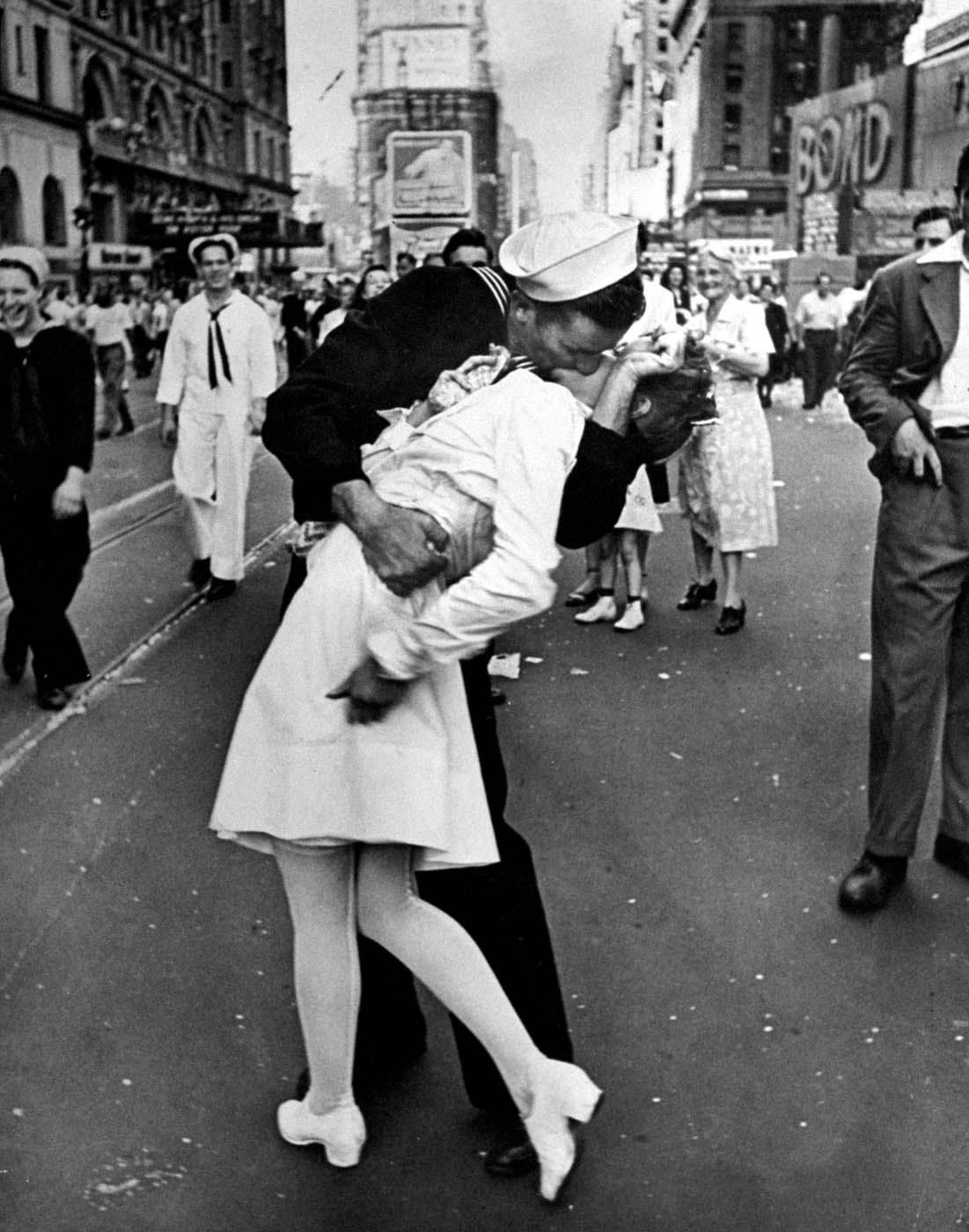

![Life Magazine (1883-1972) '[Harlem Gang Leader opening spread]' 1948](https://artblart.com/wp-content/uploads/2022/12/15_p.-96_97-harlem-gang-leader-opening-spread.jpg "Life Magazine (1883-1972) '[Harlem Gang Leader opening spread]' 1948")






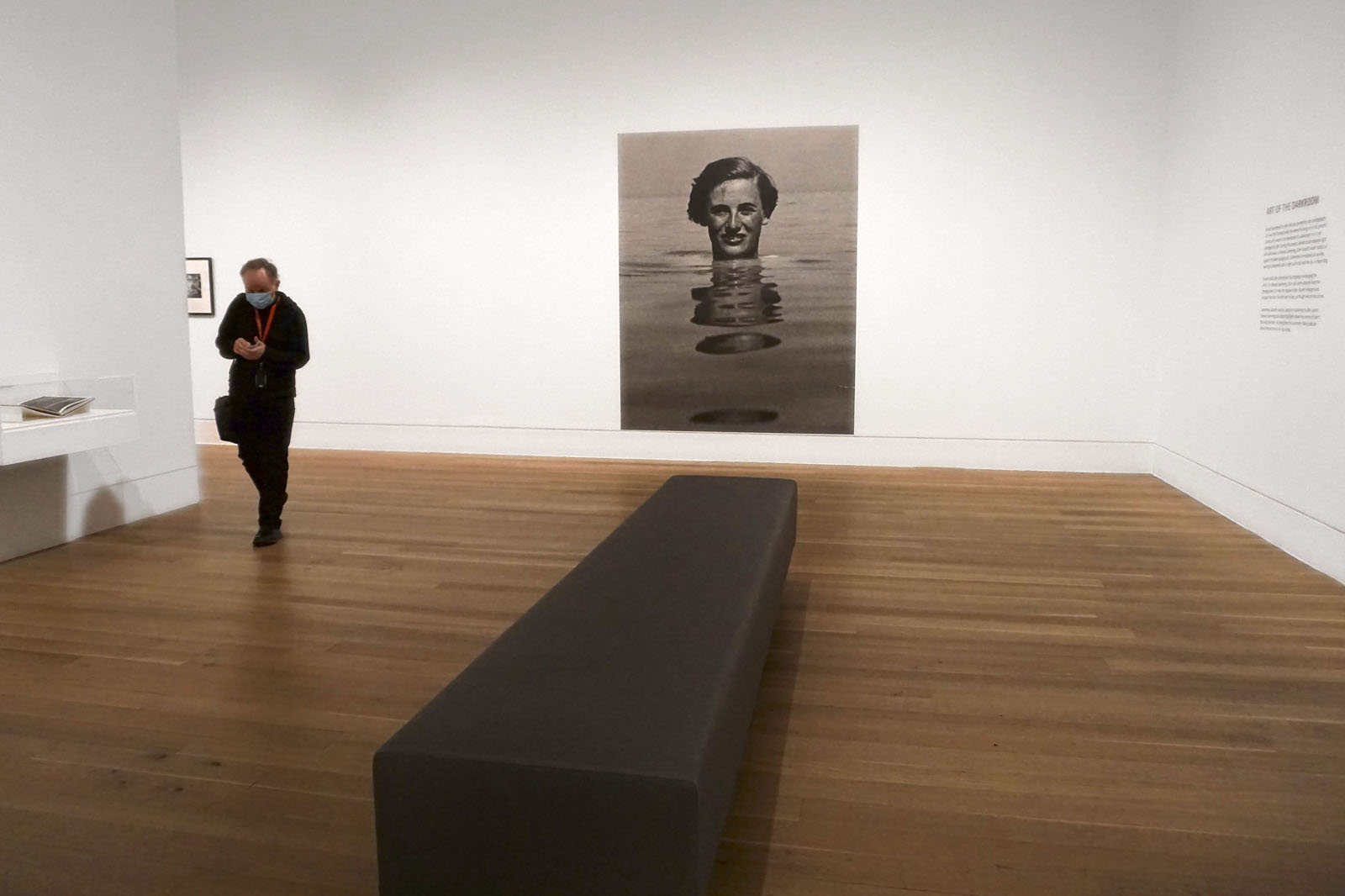


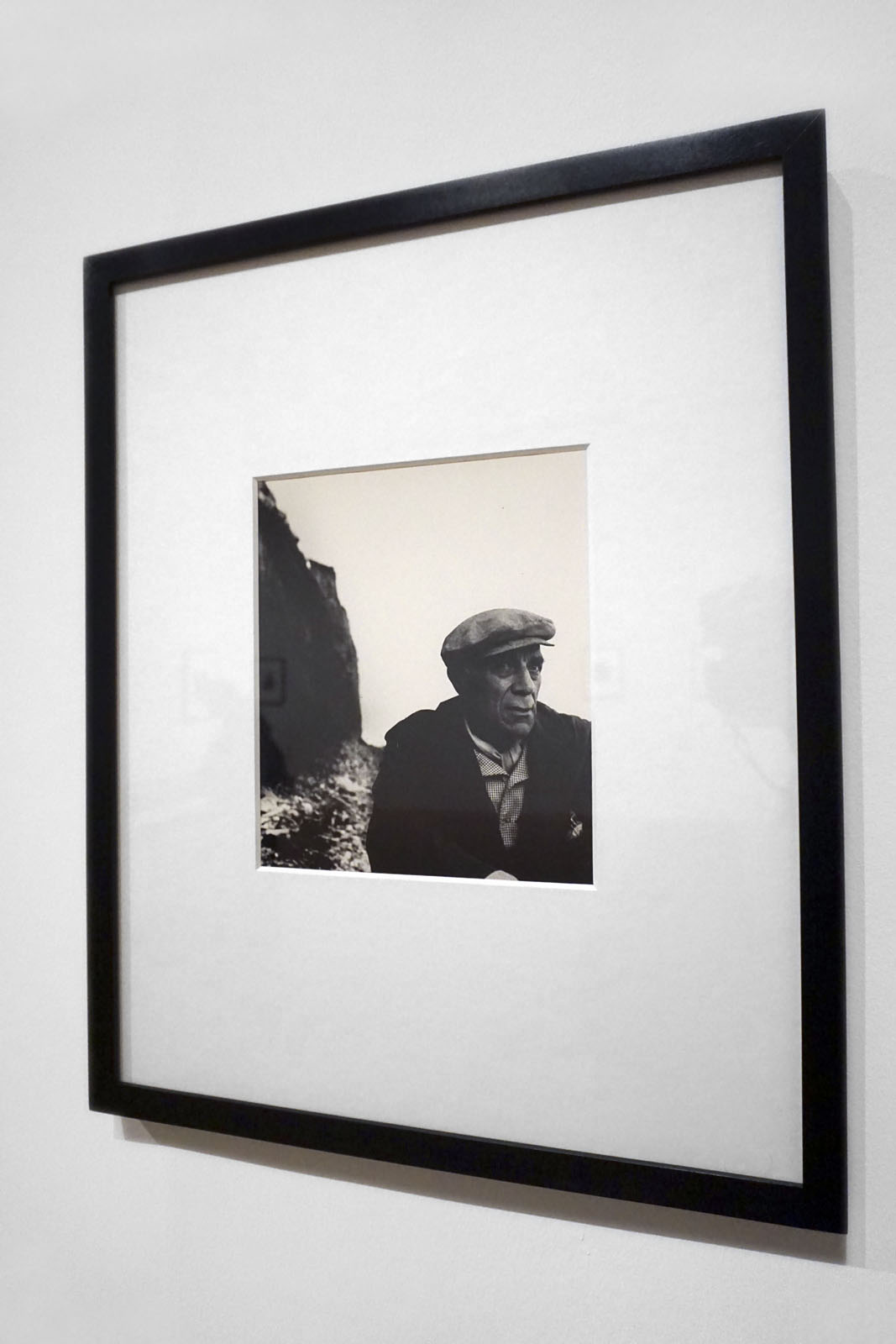


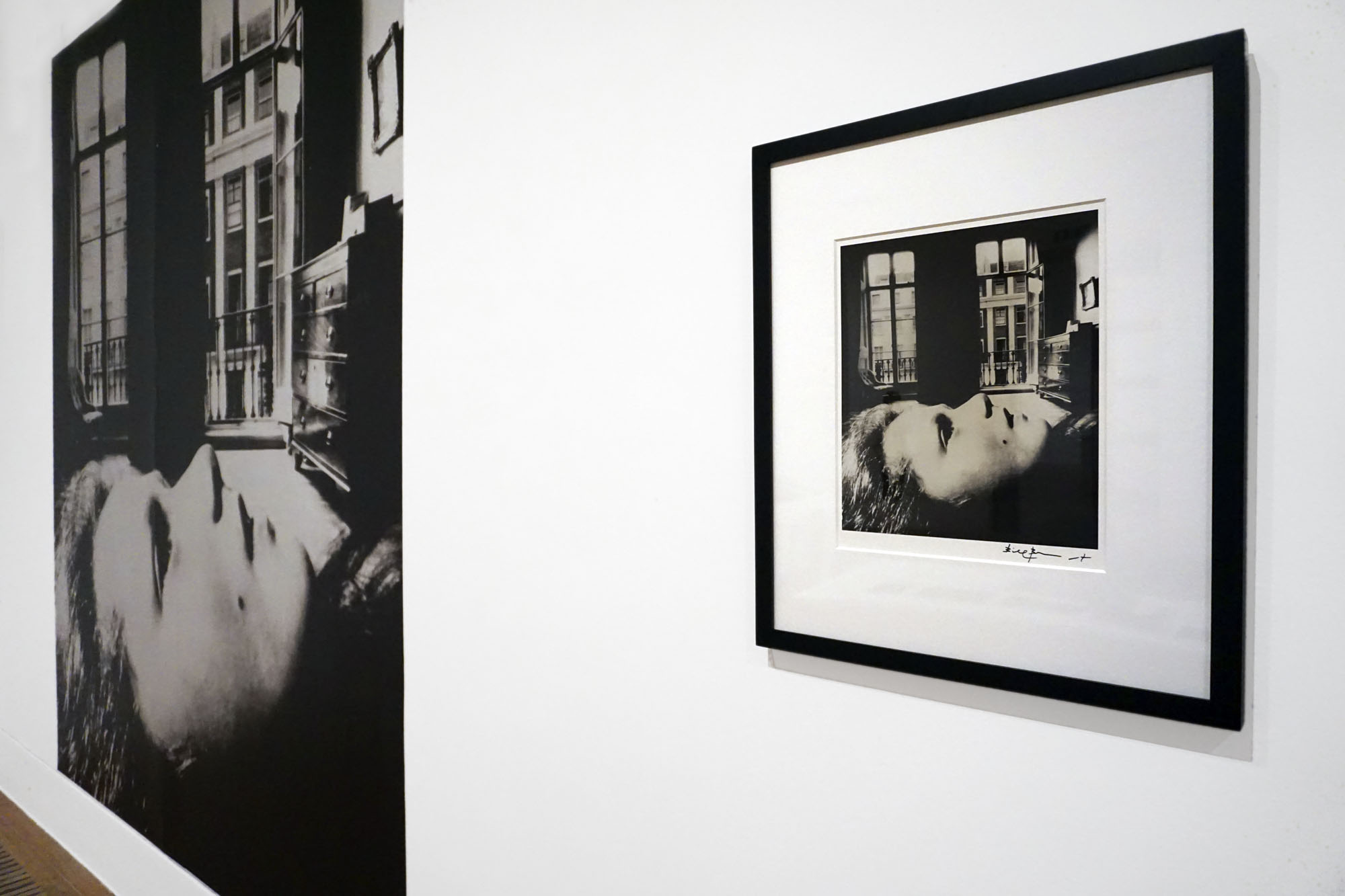








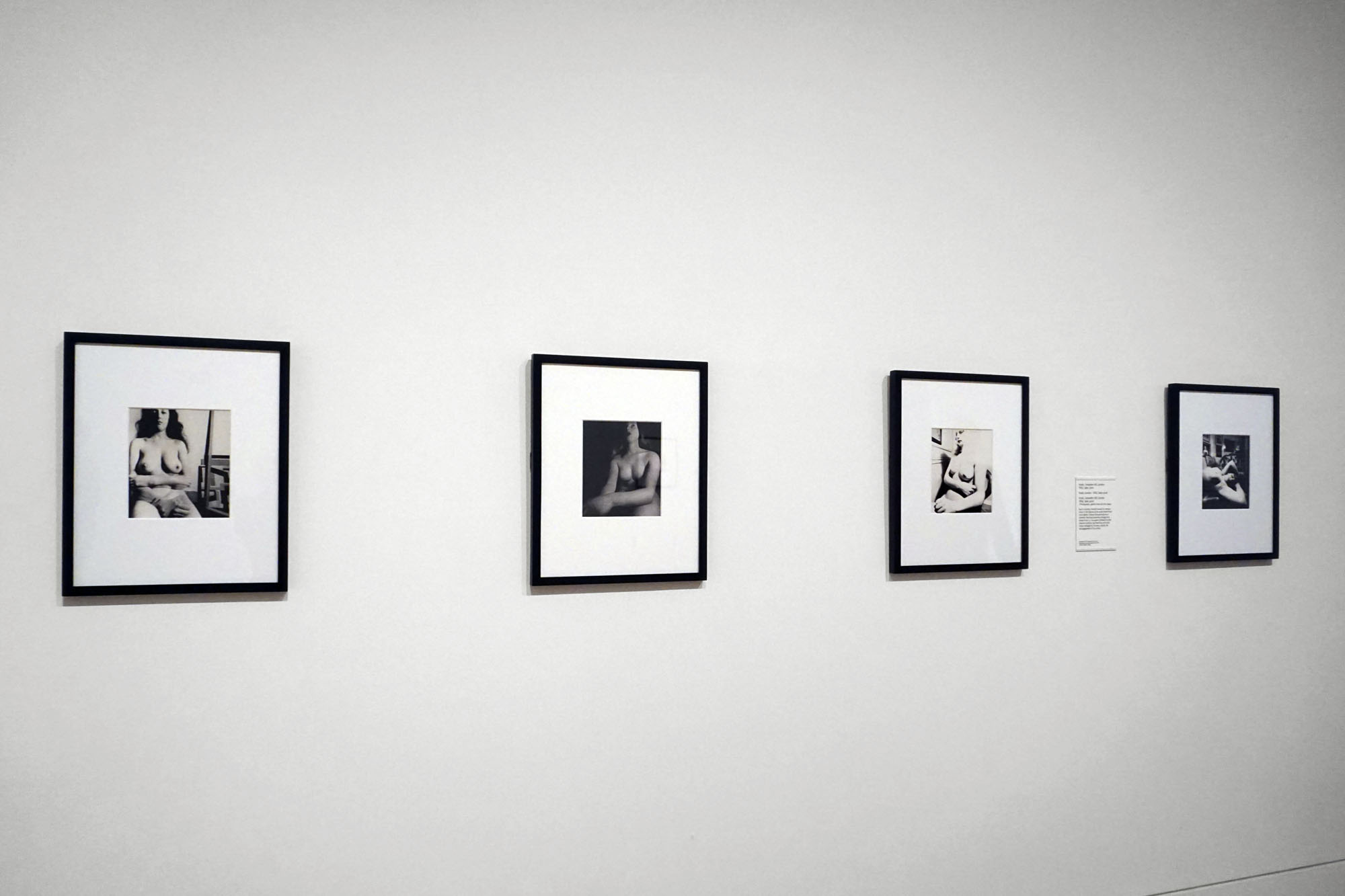

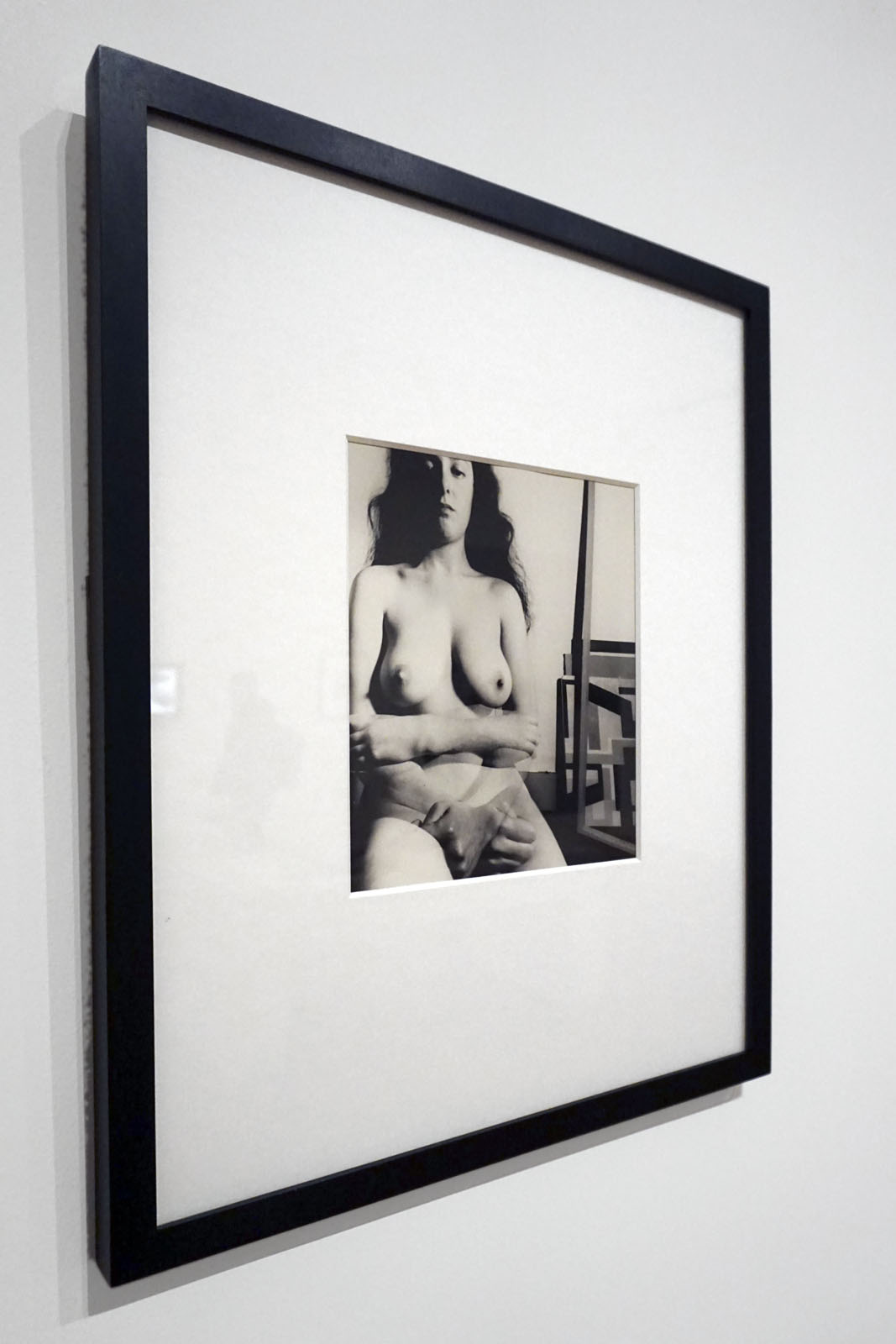


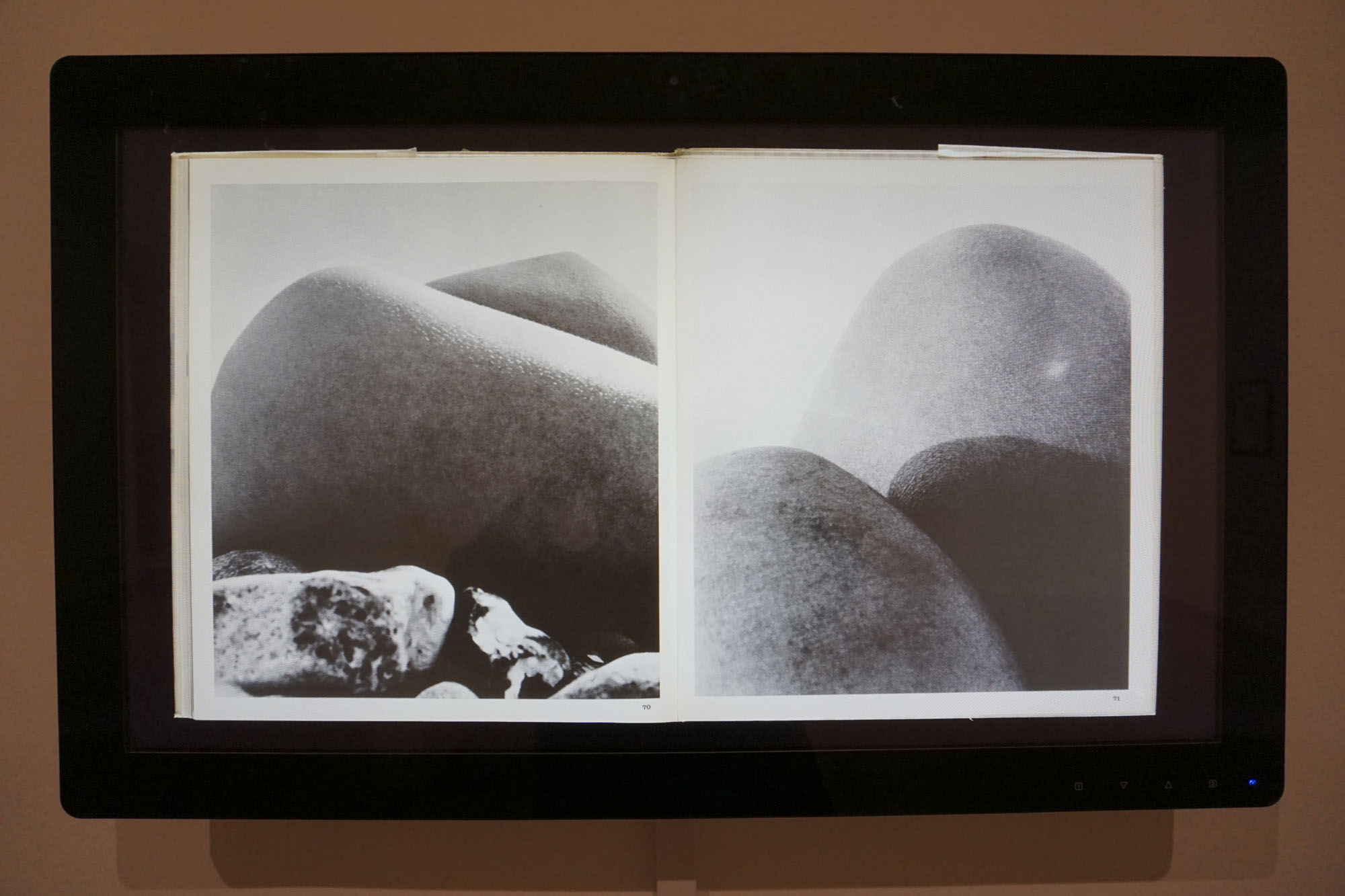


 Art Blart _ art and cultural memory archive
You must be logged in to post a comment.