Exhibition: ‘The Weak Sex – How Art Pictures the New Male’ at Kunstmuseum Bern

Exhibition dates: 18th October 2013 – 9th February 2014

Curator: Kathleen Bühle

Participating artists: Vito Acconci / Bas Jan Ader / Luc Andrié / Lynda Benglis / Luciano Castelli / Martin Disler / VALIE EXPORT and Peter Weibel / Gelitin / Pascal Häusermann / Alexis Hunter / Cathy Joritz / Jesper Just / Jürgen Klauke / Frantiček Klossner / Elke Silvia Krystufek / Marie-Jo Lafontaine / Peter Land / Littlewhitehead / Sarah Lucas / Urs Lüthi / Manon / Paul McCarthy / Tracey Moffatt / Josef Felix Müller / Ursula Palla / Adrian Piper / Anne-Julie Raccoursier / Ugo Rondinone / Carole Roussopoulos / Rico Scagliola and Michael Meier / Sylvia Sleigh / Nedko Solakov / Megan Francis Sullivan / Sam Taylor-Johnson / Costa Vece / William Wegman / Silvie Zürcher.

PLEASE NOTE: THIS POSTING CONTAINS ART PHOTOGRAPHS OF MALE NUDITY AND MALE SEXUAL AROUSAL – IF YOU DO NOT LIKE PLEASE DO NOT LOOK, FAIR WARNING HAS BEEN GIVEN


Alexis Hunter (New Zealand, b. 1948) 'Approach to Fear: XVII: Masculinisation of Society – exorcise' 1977


Alexis Hunter (New Zealand, b. 1948)
Approach to Fear: XVII: Masculinisation of Society – exorcise
1977
10 Colour photographs, mounted on two panels, both 25 x 101cm
Courtesy of Richard Saltoun Gallery
© 2013 ProLitteris, Zürich
(From the section Experiments)


The Cult of Muscularity


“… muscularity is a key term in appraising men’s bodies … this comes from men themselves. Muscularity is the sign of power – natural, achieved, phallic.”


Richard Dyer. Only Entertainment. London: Routledge, 1992, p. 114


“The formation of ‘The Cult of Muscularity’ (Elliott Gorn. The Manly Art. London: Robson Books, 1986) in the last decade of the 19th century was a reaction to the perceived effeminisation of heterosexual masculinity. The position of the active, heroic hetero-male was under attack from the passivity of industrialisation, from the expansion of women’s rights and their ability to become breadwinners, and through the naming of deviant sexualities that were seen as a threat to the stability of society. By naming deviant sexualities they became visible to the general public for the first time, creating apprehension in the minds of men gazing upon the bodies of other men lest they be thought of as ‘pansies’. (Remember that it was in this decade the trials of Oscar Wilde had taken place in England after he was accused of being a sodomite by The Marquis of Queensbury. It is perhaps no coincidence that the rules that governed boxing, a very masculine sport in which a man could become a popular hero, were named after his accuser. By all accounts he was a brute of a man who despised and beat his son Lord Alfred Douglas and sought revenge on his partner, Oscar Wilde, for their sexual adventures). Muscles became the sign of heterosexual power, prowess, and virility. A man had control over his body and his physical world. His appearance affected how he interacted with this world, how he saw himself, and was seen by others, and how closely he matched the male physical ‘ideal’ impacted on his own levels of self-esteem. The gymnasium became a meeting point for exercise, for health, for male bonding, and to show off your undoubted ‘masculinity’…”

The development of ‘The Cult of Muscularity’ may also have parallels in other social environments which were evolving at the turn of the century. For example, I think that the construction of the muscular mesomorphic body can be linked to the appearance of the first skyscrapers in cities in the United States of America. Skyscrapers were a way increasing visibility and surface area within the limited space of a crowded city. One of the benefits of owning a skyscraper like the Chrysler Building in New York, with its increased surface area, was that it got the company noticed. The same can be said of the muscular body. Living and interacting in the city, the body itself is inscribed by social interaction with its environment, its systems of regulation and its memories and historicities (his-tor-i-city, ‘tor’ being a large hill or formation of rocks). Like a skyscraper, the muscular body has more surface area, is more visible, attracts more attention to its owner and is more admired. The owner of this body is desired because of his external appearance which may give him a feeling of superiority and power over others. However this body image may also lead to low self-esteem and heightened body dissatisfaction in the owner (causing anxiety and insecurity in his identity) as he constantly strives to maintain and enhance his body to fulfil expectations he has of himself.

Of course, body image is never a static concept for the power of muscular images of the male body resides in their perceived value as a commodity. This value is reinforced through social and moral values, through fluid personal interactions, and through the desire of self and others for a particular type of body image; it is a hierarchical system of valuation. It relies on what type of body is seen as socially desirable and ‘beautiful’ in a collective sense, even though physical attractiveness is very much a personal choice.”

Dr Marcus Bunyan. Excerpt from “Bench Press” in Pressing the Flesh: Sex, Body Image and the Gay Male, PhD thesis, RMIT University, Melbourne, 2001.

“Re-Pressentation” chapter from Pressing the Flesh: Sex, Body Image and the Gay Male. Phd Research, RMIT University, Melbourne, 2001

“In Press” chapter from Pressing the Flesh: Sex, Body Image and the Gay Male. Phd research, RMIT University, Melbourne, 2001

“Bench Press” chapter from Pressing the Flesh: Sex, Body Image and the Gay Male. Phd research, RMIT University, 2001

“Historical Pressings” chapter from Pressing the Flesh: Sex, Body Image and the Gay Male. Phd research, RMIT University, 2001


Many thankx to the Kunstmuseum Bern for allowing me to publish the art work in the posting. Please click on the photographs for a larger version of the image.


Ugo Rondinone (Switzerland, b. 1962) 'I Don't Live Here Anymore' 1998


Ugo Rondinone (Switzerland, b. 1962)
I Don’t Live Here Anymore
1998
C-prints between Alucobond and Plexiglas
Each 180 × 125cm
Kunstmuseum Bern, purchased with the donation of an Art Lover
(From the section Masculinity as Masquerade)


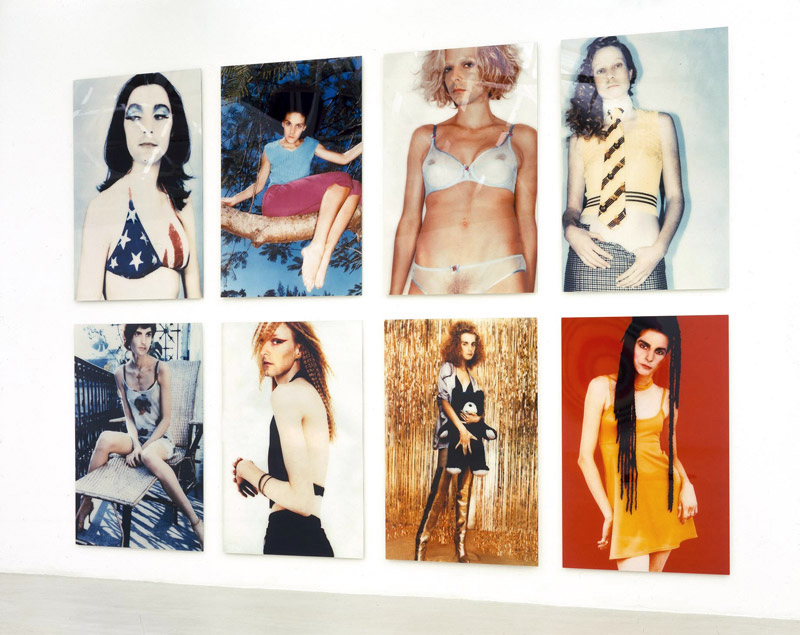
Digitally manipulates photos of women depicted in various suggestive poses, replacing their features with his own in a sufficiently consistent way for the image to retain its erotic content. By slipping into different bodies, he tests his own body and appearance, and he raises the issue of reality. The artist can only offer his own, man-made version.


Lynda Benglis (American, b. 1941) 'Artforum Advertisement in: Artforum, November 1974, Vol. 13, No. 3, S. 3-4' 1974


Lynda Benglis (American, b. 1941)
Artforum Advertisement in: Artforum, November 1974, Vol. 13, No. 3, S. 3-4
1974
26.7 × 26.5 × 0.5cm
Bayerische Staatsbibliothek, München
(From the section Experiments)


Peter Land (Danish, b. 1966) 'Peter Land d. 5. maj 1994' 1994


Peter Land (Danish, b. 1966)
Peter Land d. 5. maj 1994
1994
Colour video
Time, 25 Min.
Courtesy Galleri Nicolai Wallner
(From the section Crisis and Criticism)


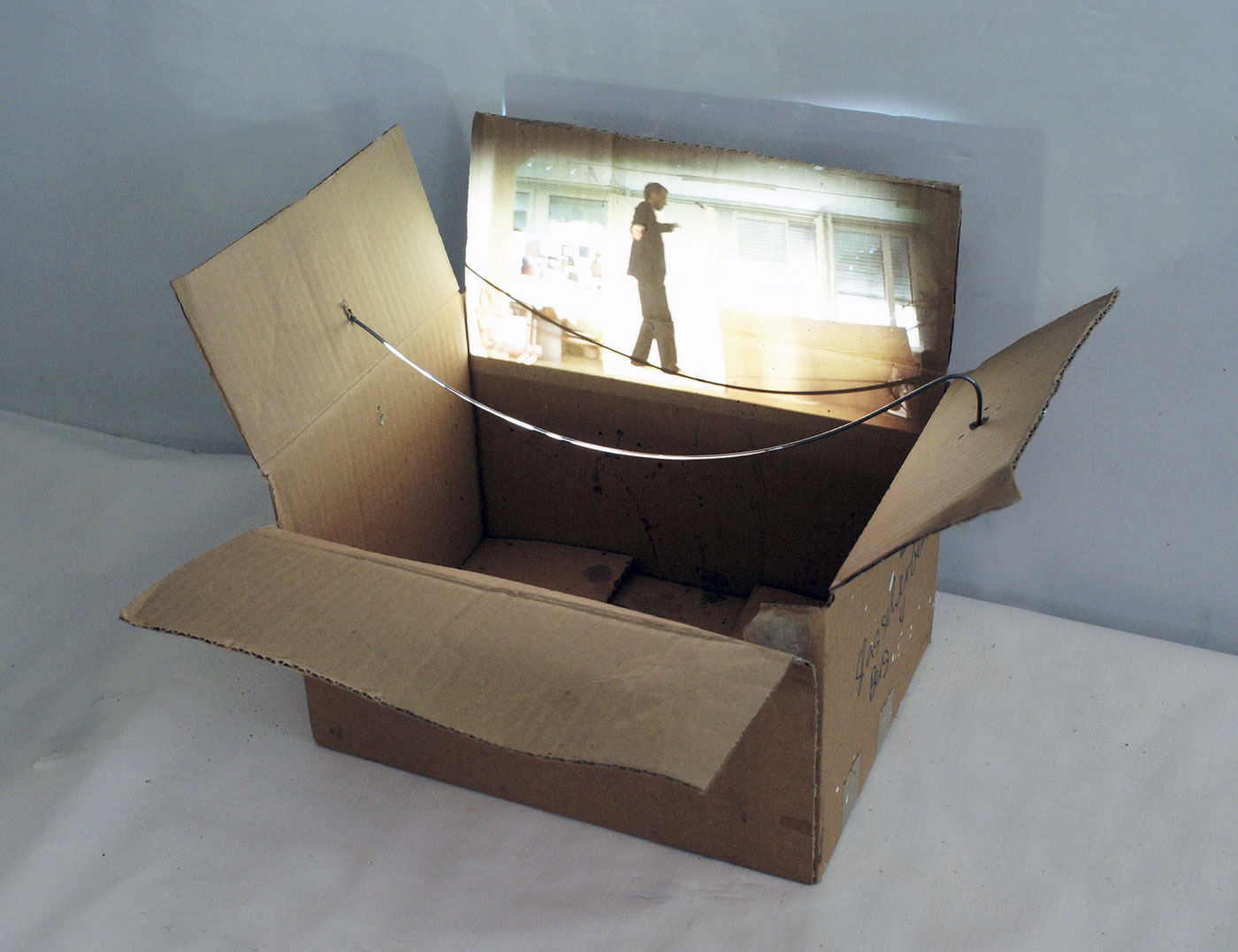
Ursula Palla (Switzerland, b. 1961) 'balance' 2012


Ursula Palla (Switzerland, b. 1961)
balance
2012
Colour video installation
Time, 8 Min.
Courtesy the artist
(From the section Crisis and Criticism)


Masculinity under scrutiny

This themed group exhibition is our contribution to the discussion on new role definitions of the male gender, a topic that has long been on the agenda of academia and popular culture. Works by artists of both sexes will address the issue of how contemporary art stages male role models and masculinity, critically scrutinising the content of the same.

Who or what makes a man? How do men define themselves in art since feminism; how do they reflect on their gender and the portrayal thereof? Whereas the preferred angle of engaging with female artists is still today via “gender”, this is still a novel angle for looking at male artists. And as feminist art has finally become an established entity in major institutions, it is time to take a closer look at the art produced by men about men. The Sexual Revolution as well as the feminist and gay movements did not have only one side to them: they likewise impacted the roles of men and transformed images of masculinity. The exhibition therefore explores how contemporary Western artists of both sexes have, since the 1960s, invented new notions of masculinity or shattered existing ones. It does this with some 45 installations, some of which are large and extensive.

With this exhibition, the Kunstmuseum Bern is addressing a topic that, until now, has hardly been tackled in a museum context: the “normal” white heterosexual male, hitherto the ultimate measure for everything we consider characteristically human, is now facing a crisis. The exhibition and catalogue draw on the reflections and insights gained from masculinities studies to throw light on the consequences of the contemporary male crisis and how it is reflected in art, making the extent of the crisis visually palpable.

The works selected for the show have been divided up into six sections. These sections explore what “normal” might be and what the new nuances inherent in being “male” are today. The prescribed tour of the exhibition begins with the chapter on “Strong Weaknesses” and then proceeds through the sections focusing thematically on “Experiments”, “Emotions”, “Eroticism”, “Critique and Crisis”, and “Masculinity as Masquerade”. This route follows, at the same time, a roughly chronological order. The show is accompanied by a rich fund of educational programs with tours of the exhibition, discussions of artworks with invited guests, as well as a film program in collaboration with the cinema Kino Kunstmuseum, and not least, workshops for schools.

Text from the Kunstmuseum Bern website


Tracey Moffat (Australian, b. 1960) 'Heaven' 1997 (still)

Tracey Moffat (Australian, b. 1960) 'Heaven' 1997 (still)

Tracey Moffat (Australian, b. 1960) 'Heaven' 1997 (still)


Tracey Moffat (Australian, b. 1960)
Heaven (3 stills)
1997
Colour video
Time, 28 Min.
© 2013 ProLitteris, Zürich
(From the section Eroticism)


Male to the Hilt: Images of Men

The exhibition The Weak Sex – How Art Pictures the New Male zeroes in on the evolution of male identity since the 1960s. On view are works by 40 artists regardless of gender who question masculinity and stage it anew. The Kunstmuseum Bern seeks to foster dialogue in the exhibition and is therefore increasing its focus on social media. For the first time our visitors can respond to issues raised by an exhibition immediately on location…

The whole spectrum of art media and male images

The exhibition is presenting works that cover the entire range of media used by artists, including paintings, drawings, photographs, films, videos, sculptures and performance-installations. Artists of all ages are represented in the exhibition, enabling it to highlight images of men in all age groups. Each of the artworks questions social norms, who or what a man is, while orchestrating masculinity in novel ways and reflecting on what it means to be a “man”. The artworks in the show take up the theme of masculinity or male emotions – as discussed in society in general or as openly demonstrated by men today: as weeping sport heroes, the disadvantaged position of divorced fathers, overstrained top managers or criminal youths.

Of strong weaknesses, eroticism and the male in crisis

The exhibition is divided into six sections that explore key aspects of masculinity studies and thus simultaneously follow a loose art-historical chronological thread. The introductory section takes up the theme of “Strong Weaknesses” with representations of men weeping or expressing fear. The second section “Experiments” scrutinises the exciting events that took place in conjunction with the social movements of the 1960s and 1970s. The section “Emotions” presents male emotionality in intensely stirring artistic orchestrations. The section “Eroticism” take us through a selection of artworks that investigate men as objects of desire. The last two sections of the exhibition “Crisis and Critique” and “Masculinity as Masquerade” investigate traditional male images and give us an account of the potential of new gender orientations.

Press release from the Kunstmuseum Bern website


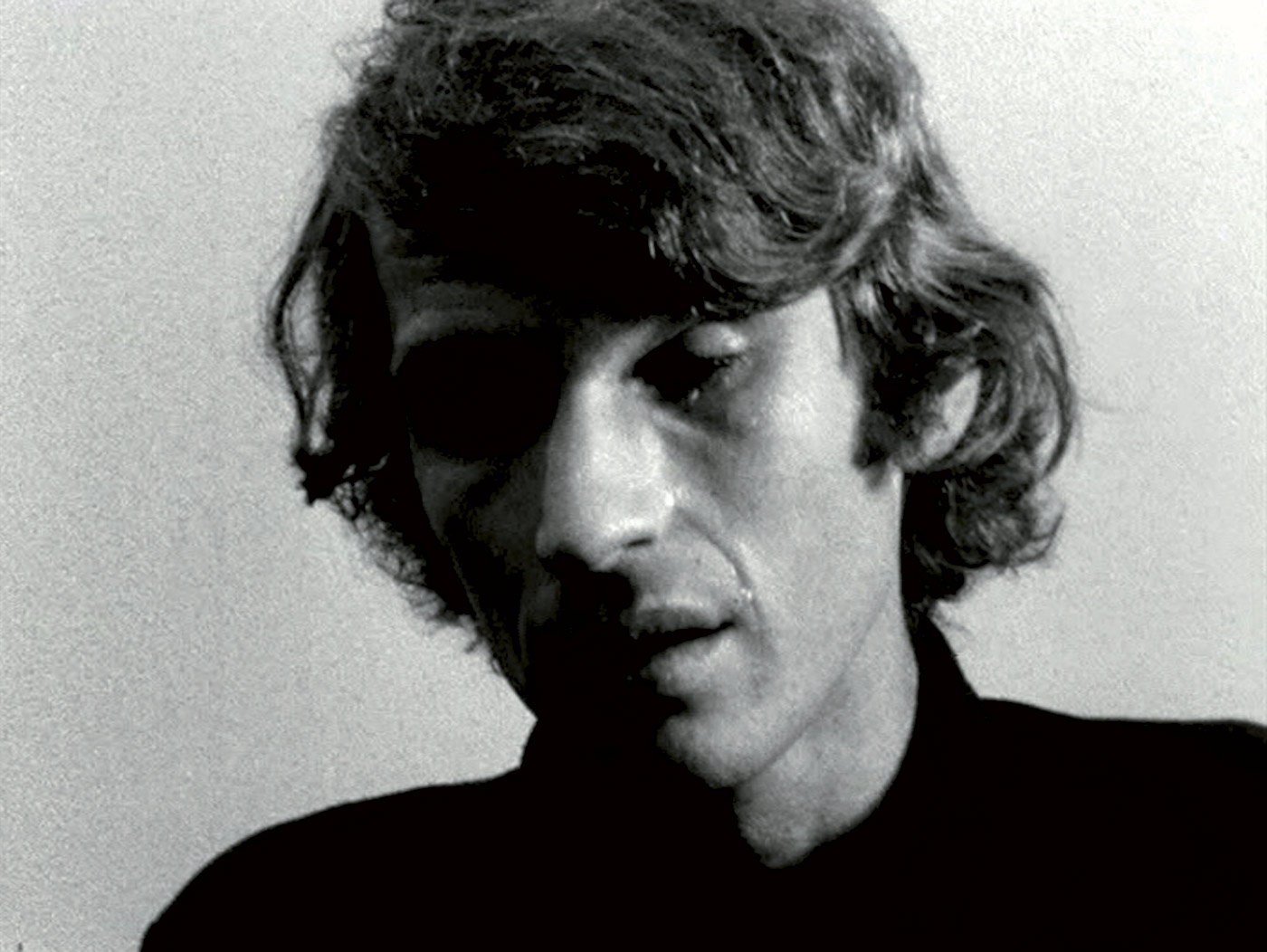
Bas Jan Ader (born Winschoten, Netherlands, 1942, died 1975 presumably on the high seas. Lived in California, USA, as of 1963) 'I'm Too Sad to Tell You' 1970-1971


Bas Jan Ader (born Winschoten, Netherlands, 1942, died 1975 presumably on the high seas. Lived in California, USA, as of 1963)
I’m Too Sad to Tell You
1970-1971
16mm, s/w
Time, 3:34 Min.
Museum Boijmans Van Beuningen, Rotterdam
(From the section Strong Weaknesses)


Sylvia Sleigh (born Llandudno, Wales, Great Britain, 1916; died New York, USA, 2010) 'Paul Rosano in Jacobson Chair' 1971


Sylvia Sleigh (born Llandudno, Wales, Great Britain, 1916; died New York, USA, 2010)
Paul Rosano in Jacobson Chair
1971
Oil on canvas
131 x 142cm
Courtesy The Estate of Sylvia Sleigh & Freymond-Guth Fine Arts Zürich
(From the section Eroticism)


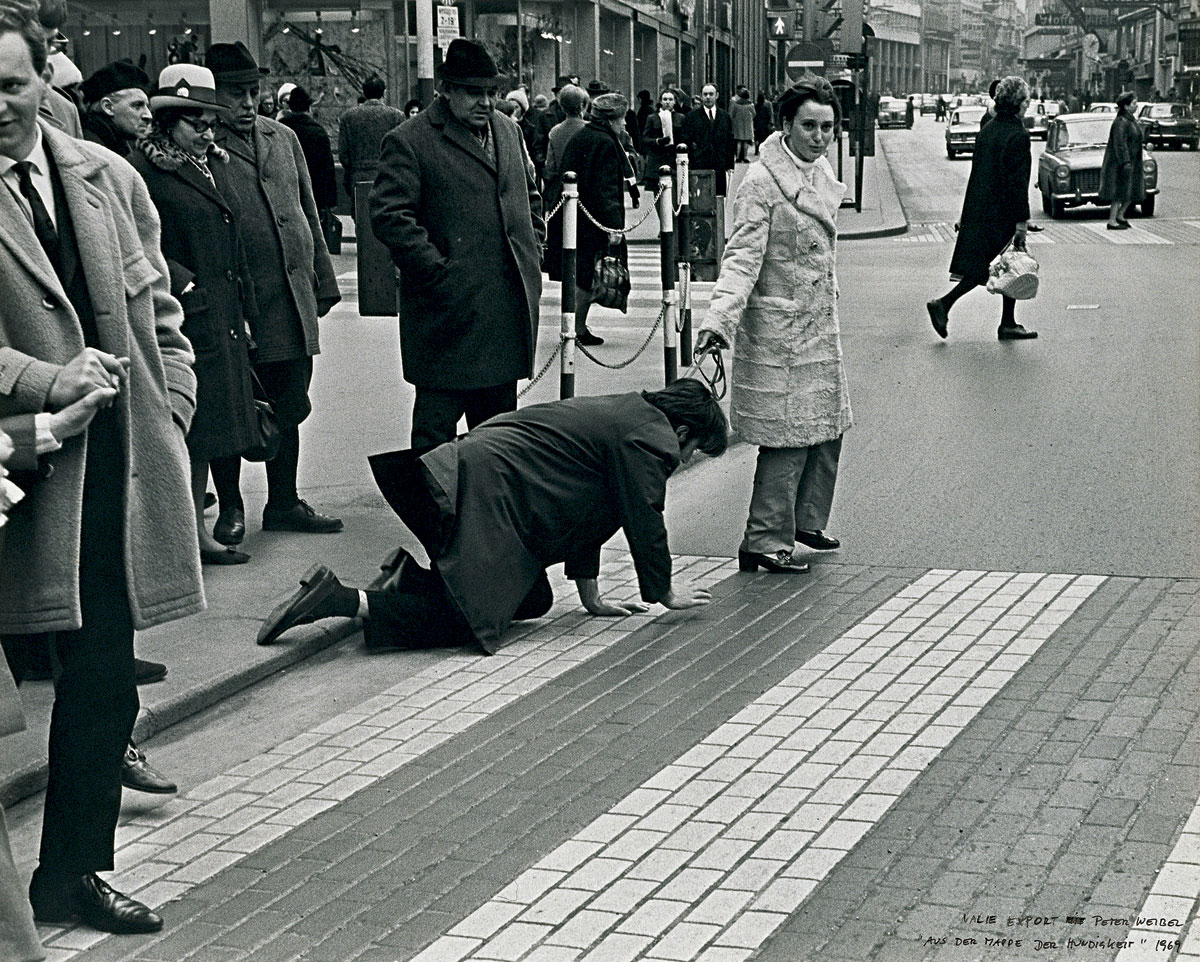
Peter Weibel with Valie EXPORT. 'Peter Weibel Aus der Mappe der Hundigkeit' (Peter Weibel From the Underdog File) 1969


Peter Weibel (Austrian, b. 1944) with Valie EXPORT (Austrian, b. 1940)
Peter Weibel Aus der Mappe der Hundigkeit (Peter Weibel From the Underdog File)
1969
Documentation of the action
5 s/w photographs, 40.4 x 50cm / 50 x 40.4cm
Sammlung Generali Foundation
Vienna Foto: Josef Tandl
© Generali Foundation © 2013 ProLitteris, Zürich
(From the section Experiments)


Gelitin. 'Ständerfotos – Nudes' (Standing Photos – Nudes) 2000


Gelitin
Ständerfotos – Nudes (Standing Photos – Nudes)
2000
Series of 15 Lambda prints
Various dimensions
(From the section Eroticism)


Gelitin. 'Ständerfotos – Nudes' (Standing Photos – Nudes) 2000


Gelitin
Ständerfotos – Nudes (Standing Photos – Nudes)
2000
Series of 15 Lambda prints
Various dimensions
(From the section Eroticism)


Austrian artists’ collective with Wolfgang Gantner, Ali Janka, Florian Reither, and Tobias Urban. Apparently became acquainted at a summer camp in 1978. Changed their name from Gelatin to Gelitin in 2005.


Those who lived through their childhood and youth as members of the baby-boomer generation in the period of the late nineteen-fifties to the mid-seventies, as we did, received a clear view of the world along the way. It was the Cold War. There were precise dividing lines, and it was possible to completely separate good and evil, right and wrong, from one other. The division of roles between men and women was regulated in a way that was just as self-evident. For many children of this time, it was natural that the father earned the money while the mother was at home around the clock and, depending on her social position, went shopping and took care of the laundry herself, or left the housework to employees in order to be able to dedicate herself to “nobler” tasks such as, for instance, beauty care. Family and social duties were clearly distributed between husband and wife: the “strong” sex was responsible for the material basics of existence and for the social identity of the family. The “weak” or also fair sex, in contrast, was responsible for the “soft” factors inside: children, housekeeping, and the beautification of the home. The year 1968 did away with bourgeois concepts of life. Feminism and emancipation anchored the equality of men and women in law. And since the nineteen-sixties, art has also dealt intensively and combatively with feminism and gender questions.

Since VALIE EXPORT walked her partner Peter Weibel on a leash like a dog in their public action that unsettled the public in 1968, legions of creators of art, primarily of the female sex, have questioned the correlations between the genders and undertaken radical reassessments. The formerly “strong” gender has thus long since become a “weak” one. Nevertheless, the exhibition The Weak Sex: How Art Pictures the New Male is not dedicated first and foremost to the battlefield of the genders. Nor is the gender question, which has so frequently been dealt with, posited in the foreground. The Weak Sex is instead dedicated to man as object of research. In what state does he find himself now that his classical role has been invalidated? How does he behave after the shift from representative external appearance to work within the family unit? And where does he stand in the meantime in the midst of so many strong women? What has become of the proud and self-assured man who once signed the school report cards with praise or reproach as head of the family? What has become of the XY species since then is presented – insightfully, sarcastically, and wittily – in the exhibition by Kathleen Bühler.

Part of the Preface to the exhibition by Matthias Frehner, Director of the Kunstmuseum Bern and Klaus Vogel, Director of the Deutsches Hygiene-Museum Dresden


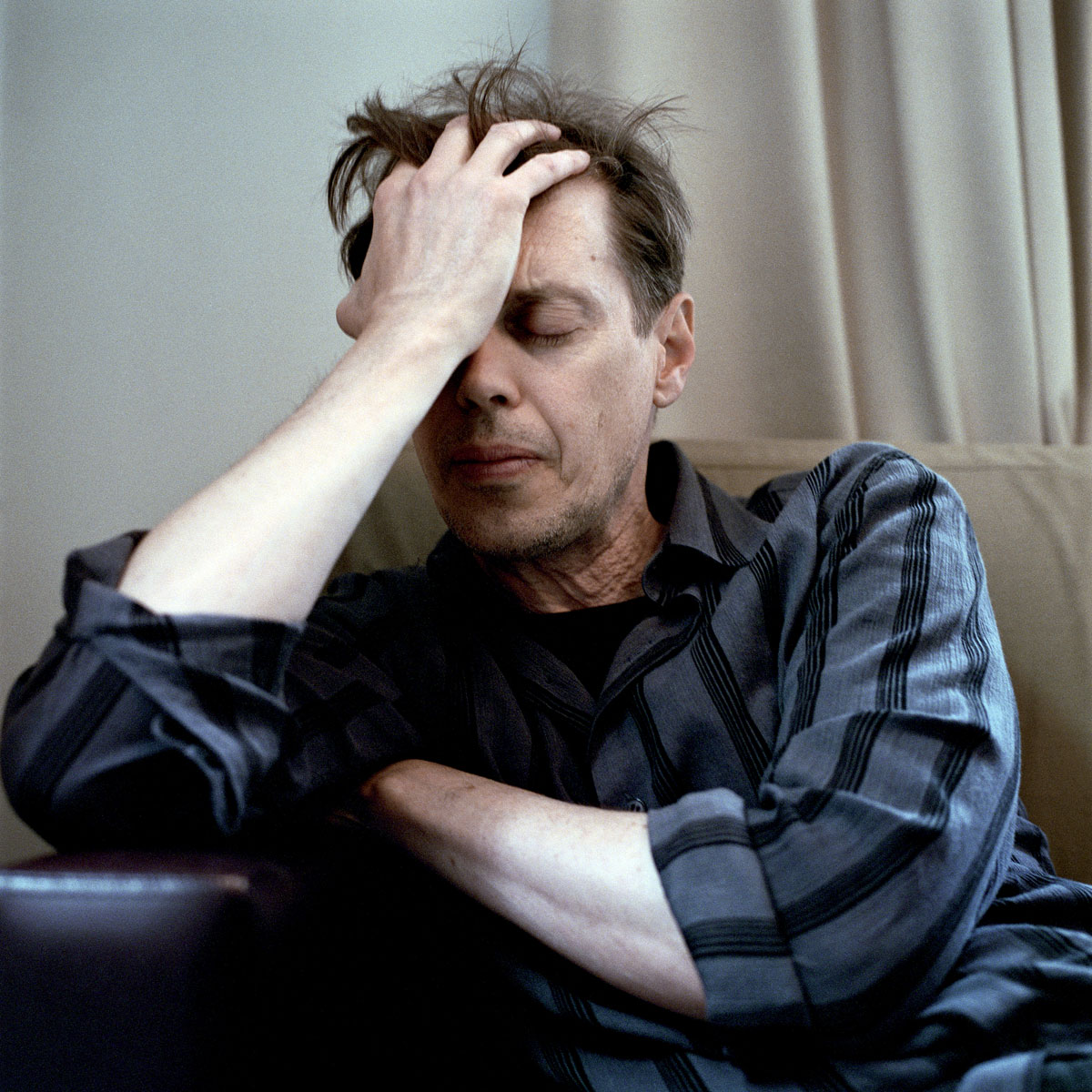
Sam Taylor-Johnson (British, b. 1967) 'Steve Buscemi' 2004


Sam Taylor-Johnson (British, b. 1967)
Steve Buscemi
2004
From the series: Crying Men, 2002-2004
C-Print
99.2 x 99.2cm framed
Courtesy White Cube
© Sam Taylor-Johnson
(From the section Strong Weaknesses)


Sam Taylor-Johnson (British, b. 1967) 'Gabriel Byrne' 2002


Sam Taylor-Johnson (British, b. 1967)
Gabriel Byrne
2002
From the series: Crying Men, 2002-2004
C-Print
86.2 x 86.2cm framed
Courtesy White Cube
© Sam Taylor-Johnson
(From the section Strong Weaknesses)


Costa Vece (Swiss, b. 1969) 'Me as a Revolutionary, Dictator, Guerilla, Freedom Fighter, Terrorist, Jesus Christ' 2007


Costa Vece (Swiss, b. 1969)
Me as a Revolutionary, Dictator, Guerilla, Freedom Fighter, Terrorist, Jesus Christ
2007
Ultrachrome – Digitalprint
106 × 80cm
(From the section Crisis and Criticism)


Ugo Rondinone (Swiss, b. 1962) 'I Don't Live Here Anymore' 1998


Ugo Rondinone (Swiss, b. 1962)
I Don’t Live Here Anymore
1998
C-print between Alucobond and Plexiglas
180 × 125cm
Kunstmuseum Bern, purchased with the donation of an Art Lover
(From the section Masculinity as Masquerade)


Rico Scagliola & Michael Meier (Swiss, b. 1985; Swiss, b. 1982) Nude, Leaves and Harp 2012


Rico Scagliola & Michael Meier (Swiss, b. 1985; Swiss, b. 1982)
Nude, Leaves and Harp
2012
Floor Installation, HD Digital Print on Novilux traffic, dimensions variable
Ed. 1/5


Jürgen Klauke (Germany, b. 1943) 'Rot' 1974


Jürgen Klauke (Germany, b. 1943)
Rot
1974
Series of 7 photographs
Each 40 × 30cm
Kunstmuseum Bern
(From the section Experiments)


Stronger and Weaker Sexes: Remarks on the Exhibition

Kathleen Bühler Curator Kunstmuseum Bern

In 1908, the Genevan politician and essayist William Vogt wrote the book Sexe faible (The Weak Sex), in which he examines the “natural” weaknesses and inabilities of the female gender. Intended as a “response to absurd exaggerations and feminist utopias,”1 since then the catchy title has shaped the battle of the sexes as a dictum. Like Otto Weininger’s misogynistic study Geschlecht und Charakter (Sex and Character, 1903), Sexe faible is one of the texts from the turn of the previous century that justified the legal, political, and social subordination of women based on their anatomical and, according to the opinion of the author, thus also intellectual inferiority in comparison with men.2 The perception of women as the “weak sex” persisted tenaciously. It is first in recent years that this ascription has slowly been shifted to men, as for instance in the report by neurobiologist Gerald Huther called Das schwache Geschlecht und sein Gehirn (The Weak Sex and His Brain) published in 2009.

Polemics has long since yielded to statistics, and the most recent biological discoveries are gaining currency, such as the fact that male babies are already at risk in the womb because they lack a second X chromosome.3 This genetic “weakness” would apparently lead seamlessly to a social weakness, since males more frequently have problems in school, turn criminal, and die earlier.4 In addition to the findings on biologically based weaknesses also comes the social, economic, and political challenge, which has for some years been discussed as a “crisis of masculinity.” With this metaphor, “an attempt is made to apprehend all the changes that contribute to the fact that the dominance of the male gender, which was formerly consolidated to a large extent, … has lost the obviousness of being self-evident.”5 Nothing therefore demonstrates the transience of gender stereotypes more clearly, and one might rightly ask whether the earlier “weaknesses” might long since have come to be considered new “strengths.” The exhibition at the Kunstmuseum Bern takes up the thread that was already spun by the small but noteworthy exhibition in Switzerland Helden Heute (Heroes Today) in 2005.6 At that time, the focus was put on hero images in contemporary art and on society’s current need for strong men in art and politics.7 The current exhibition in Bern, in contrast, argues quite differently that specifically images of “weak” men best represent the social and cultural liberation movements of the twentieth and twenty-first centuries. The fact that men today are allowed to express their feelings publicly, as is shown for instance by the example of the exceptional Swiss athlete Roger Federer, or that they are staged by female artists as object of desire and no longer as subject of desire is a crucial innovation in the visualisation of gender identities. After various exhibitions in recent years were dedicated to gender relations, gender imprinting, or the social latitude in performative stagings of gender,8 the exhibition at the Kunstmuseum Bern focuses exclusively on men in contemporary art for the first time.9 It brings together the points of view of male and female artists who deal either with their own experiences with men and / or being a man, or with an examination of the images of men that are available. This exhibition has been long overdue.

Nonetheless, what first needs to be overcome is the perception that “gender” themes are a woman’s matter and that only marginalised positions have addressed their social gender. Hegemonic male types – thus men who, according to general opinion, embody the dominant masculine ideal most convincingly – have only been reflected in public through media for a relatively short time, even though the male gender is also a sociocultural construct, just like that of women, transgender, or inter-gender individuals.10 What comes to be expressed here is the invisibility of norms. As is generally known, it is those social groups that hold the most power that actually expose their own status the least. In Western cultural tradition, these are physically sound, white heterosexual men.11 They remain the norm unchallenged as a “blind spot” without their position of power and their power to make decisions ever becoming a focus. The masculine-heterosexual dominance succeeds in “remaining out of the question itself,” as the art historian Irit Rogoff has criticised, by subordinating all representations of the “other” to their own norm, including women, individuals with a different sexual orientation, and non-whites.12

The fact that male bodies are becoming visible today in the most unexpected places is demonstrated in a striking way by the work Nude, Leaves and Harp (2012) by Rico Scagliola and Michael Meier, which graces the entrance area to the exhibition in Bern. The artist duo incorporated detailed images of their naked, sculpted bodies into a palm and marble decor on the floor. The path to the exhibition literally leads over their nakedness. Two exhibitions in Austria were also recently dedicated to this new presence of the naked man,13 with numerous works documenting “the deconstruction of hegemonic models of masculinity – the look of desire at the male body as well as body cult and exploitation,” which is also a focus of the exhibition in Bern.14 However, while those responsible in Linz and Vienna assumed a distanced, art-historical perspective by taking an iconographic approach based on the selection of motifs or a chronological approach according to epoch, the exhibition in Bern favours a different perspective. It focuses on representations of masculinity in art since the nineteen-sixties while simultaneously taking the historical conditions of being a man into consideration by utilising central issues in masculinity research as a guide. What thus results is a logical division of the exhibition and this publication into six chapters.

The introductory chapter “Strong Weaknesses” revolves around the change in gender virtues and considers this based on the example of the weeping and fearful man. The chapter “Experiments” presents eccentric artistic stagings and socio-critical actions that were influenced by the sexual revolution. The chapter “Emotions” highlights the point in time at which men themselves increasingly cast aside the image of the successful and unflinching hero and explore men’s emotionality through doing so. The chapter “Eroticism” describes the change in gaze and position from the male subject to object of desire. The final two chapters “Crisis and Criticism” and “Masculinity as Masquerade,” in contrast, are dedicated to a younger generation of artists who deal out criticism of their “fathers” and also discover the arsenal of gender stagings and their utopian potential anew.


Footnotes

1/ Une riposte aux exagérations, aux absurdités et aux utopies du féminisme is the subtitle.

2/ Otto Weininger, Geschlecht und Charakter, 19th ed. (Leipzig and Vienna, 1920), p. 390. Both Weininger’s book and Vogt’s pamphlet, which saw signs of cultural decay in the women’s movement, are considered to be expressions of a growing antifeminism. The often-used term “weak sex” then also provided the title of a theatre piece by Edouard Bourdet in 1929, which was even filmed in 1933.

3/ “Männer – Das schwache Geschlecht und sein Gehirn: Peter Schipek im Gespräch mit Prof. Dr. Gerald Hüther,” p. 2 (accessed July 2013) No long available online.

4/ Carmen Sadowski, “Der Mann: das schwache Geschlecht,” Express.de, (accessed July 14, 2013) No longer available online.

5/ Michael Meuser and Sylka Scholz, “Krise oder Strukturwandel hegemonialer Männlichkeit?,” in In der Krise? Männlichkeiten im 21. Jahrhundert, ed. Mechthild Bereswill and Anke Neuber (Münster, 2011), p. 56. See also the text by Michael Meuser in this book.

6/ Helden Heute: Das Heldenbild in der zeitgenössischen Kunst, Centre Pasquart, Biel, 2005.

7/ Sociologists interpret this as a sign of need in times of social upheaval. See Dolores Denaro, in Helden Heute: Das Heldenbild in der zeitgenössischen Kunst, ed. Dolores Denaro, exh. cat. Centre Pasquart (Biel, 2005), p. 20.

8/ Oh boy! It’s a Girl, Kunstverein München, 1994; Féminin – Masculin, Centre Georges Pompidou, Paris, 1995; Rosa für Jungs: Hellblau für Mädchen, Neue Gesellschaft für Bildende Kunst, Berlin, 1999; Das achte Feld, Museum Ludwig, Cologne, 2006; to name but a few.

9/ To date, this has occurred only in smaller exhibition spaces, above all during the nineteen-eighties and nineties, and has remained practically undocumented. An exception in this respect was the exhibition Women’s Images of Men (1984) at the Institute of Contemporary Art, London, organised by Joyce Agee, Catherine Elwes, Jacqueline Morreau, and Pat Whiteread.

10/ Inge Stephan, “Im toten Winkel: Die Neuentdeckung des ‘ersten Geschlechts’ durch men’s studies und Männlichkeitsforschung,” in Männlichkeit als Maskerade: Kulturelle Inszenierungen vom Mittelalter bis zur Gegenwart, ed. Claudia Benthien and Inge Stephan (Cologne et al., 2003), p. 13.

11/ Richard Dyer, “Introduction,” in The Matter of Images: Essays on Representation, ed. Richard Dyer (London and New York, 1993), p. 4.

12/ Irit Rogoff, “Er selbst: Konfigurationen von Männlichkeit und Autorität in der Deutschen Moderne,” in Blick-Wechsel: Konstruktionen von Männlichkeit und Weiblichkeit in Kunst und Kunstge-schichte, ed. Ines Lindner et al. (Berlin, 1989), p. 141.

13/ Nude Men, Leopold Museum, Vienna, 2012-2013; The Naked Man, Lentos Museum, Linz, 2012-2013.

14/ Barnabàs Bencsik and Stella Rollig, “Vorwort,” in Der nackte Mann: Texte, exh. cat. Lentos Kun-stmuseum Linz and Ludwig Museum – Museum of Contemporary Art (Budapest, 2012), p. 7.


Urs Lüthi (Swiss, b. 1947) 'Lüthi weint auch für Sie' (Lüthi also cries for you) 1970


Urs Lüthi (Swiss, b. 1947)
Lüthi weint auch für Sie (Lüthi also cries for you)
1970
Offset printing on paper
85.5 x 58.6cm
Ed. 15/100
Kunstmuseum Bern Sammlung Toni Gerber (Schenkung 1983)
© Urs Lüthi
(From the section Experiments)


Luciano Castelli (Swiss, b. 1951) 'Lucille, Straps Attractive' 1973


Luciano Castelli (Swiss, b. 1951)
Lucille, Straps Attractive
1973
Collage on cardboard
100 x 70cm
Kunstmuseum St. Gallen
© 2013 ProLitteris, Zürich
(From the section Experiments)


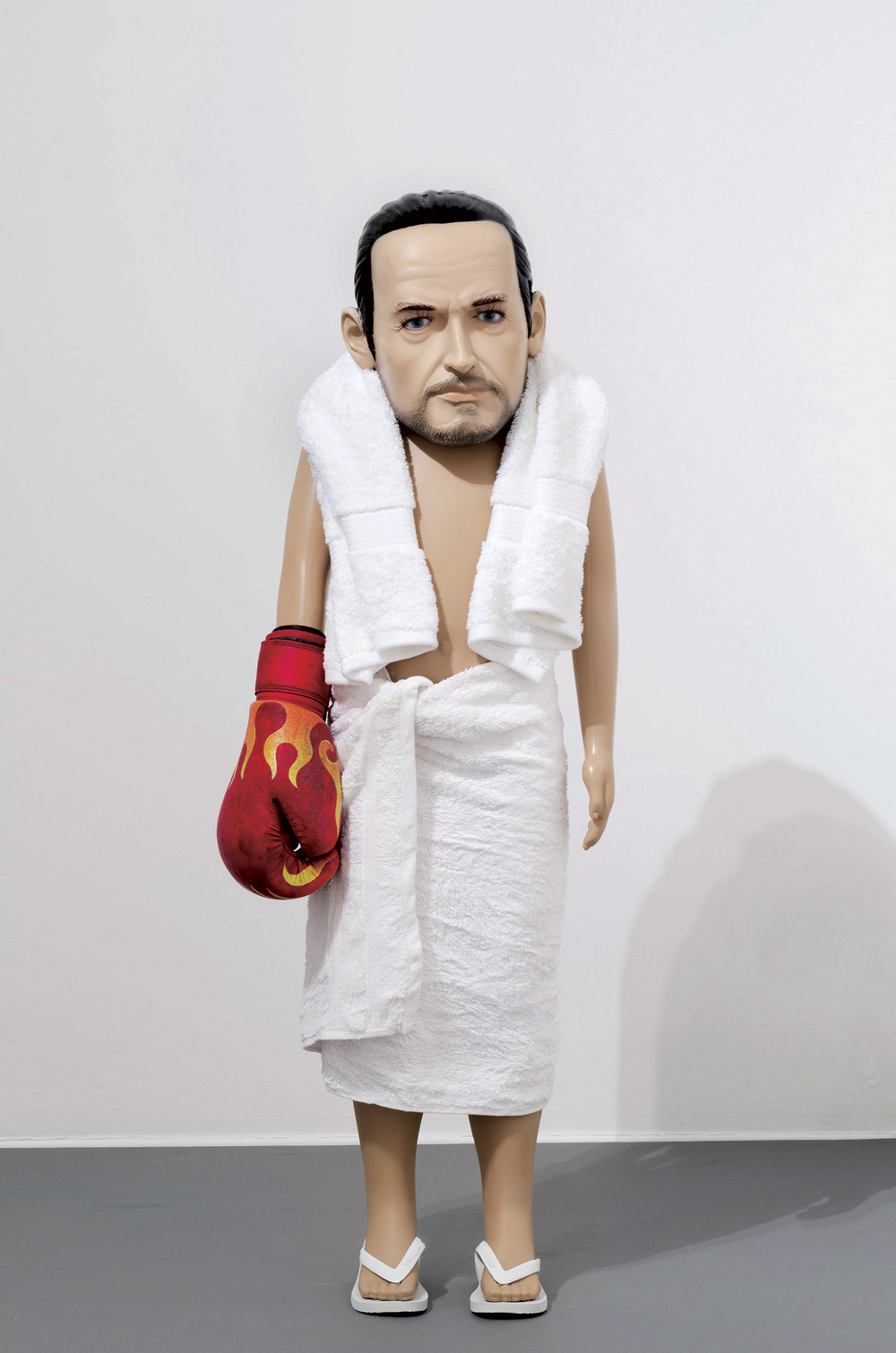
littlewhitehead (Craig Little, born Glasgow (UK), 1980. Blake Whitehead, born Lanark (UK), 1985) 'The Overman' 2012


littlewhitehead (Craig Little, born Glasgow (UK), 1980. Blake Whitehead, born Lanark (UK), 1985)
The Overman
2012
Mannequin, towels, Boxing Glove, wooden base
120 x 120 x 120cm
Saatchi Collection, London Courtesy of the artist/Sumarria Lunn Gallery/Saatchi Collection
(From the section Crisis and Criticism)


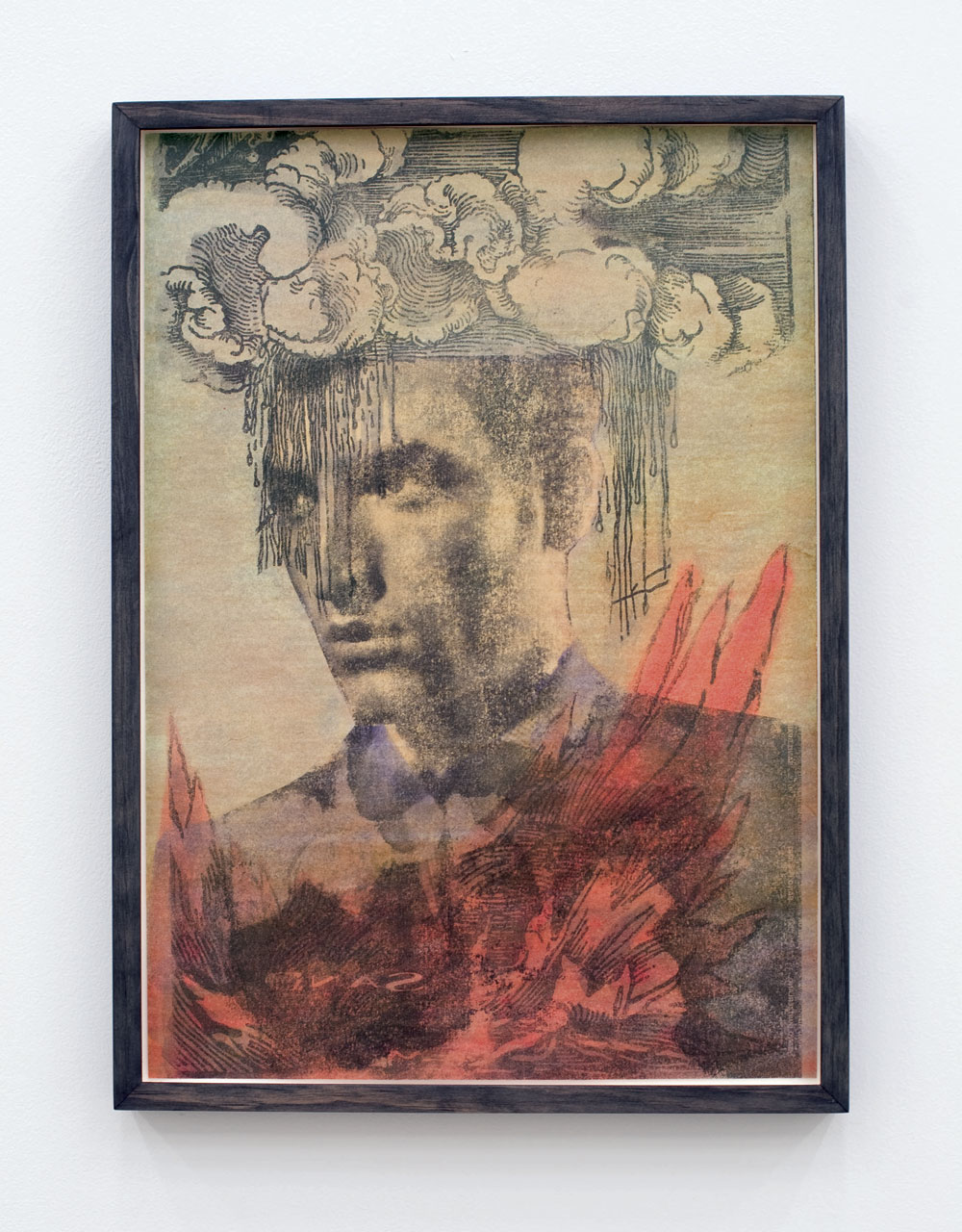
Pascal Häusermann (Swiss, b. 1973) 'Megalomania, No. 8' 2009


Pascal Häusermann (Swiss, b. 1973)
Megalomania, No. 8
2009
Monotype, oil paint, shellac
43 x 29cm
Private Collection, Courtesy the artist
(From the section Crisis and Criticism)


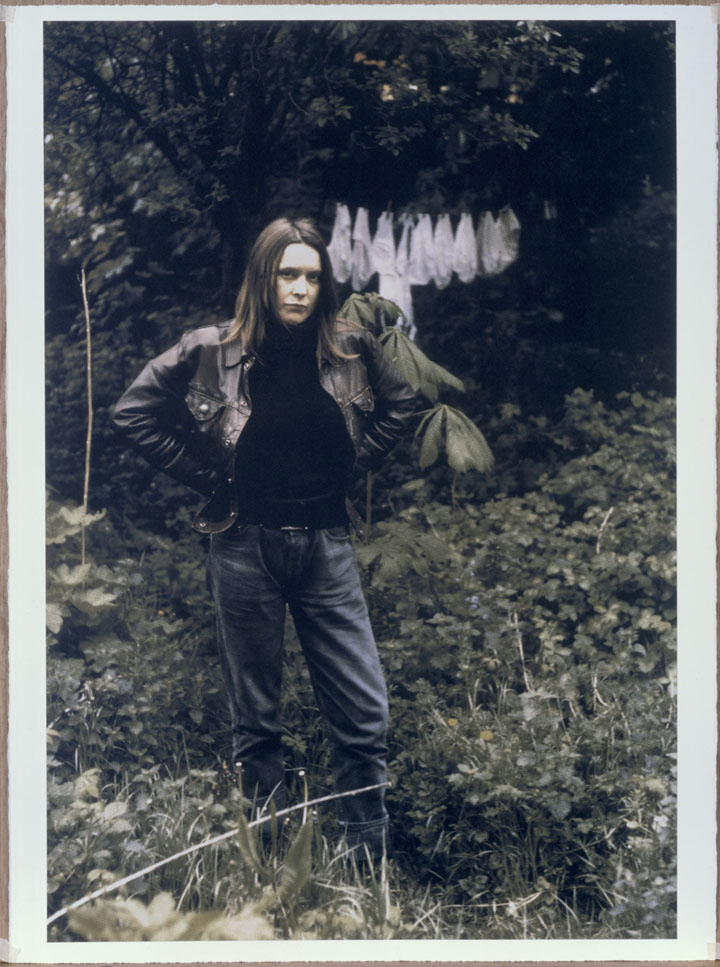
Sarah Lucas (British, b. 1962) 'Self Portrait with Knickers' 1999


Sarah Lucas (British, b. 1962)
Self Portrait with Knickers
1999
From Self Portraits 1990-1999
1999
Iris print on watercolour paper
80 x 60cm
© Sarah Lucas, courtesy Sadie Coles HQ, London
(From the section Masculinity as Masquerade)


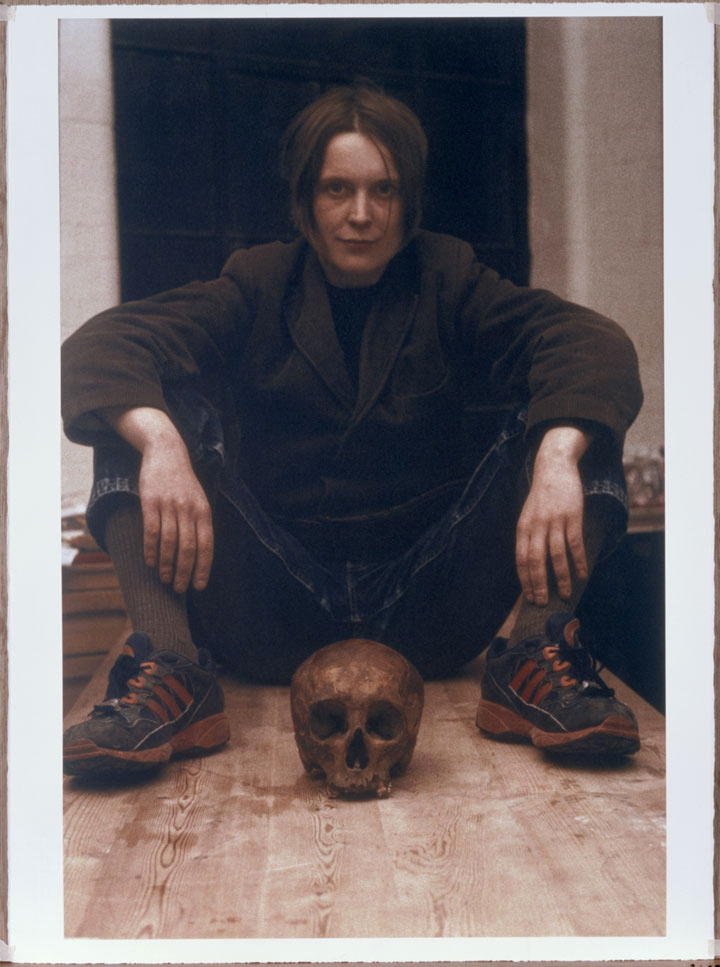
Sarah Lucas (British, b. 1962) 'Self Portrait With Skull' 1996


Sarah Lucas (British, b. 1962)
Self Portrait With Skull
1996
From Self Portraits 1990-1999
1999
Iris print on watercolour paper
80 x 60cm
© Sarah Lucas, courtesy Sadie Coles HQ, London
(From the section Masculinity as Masquerade)


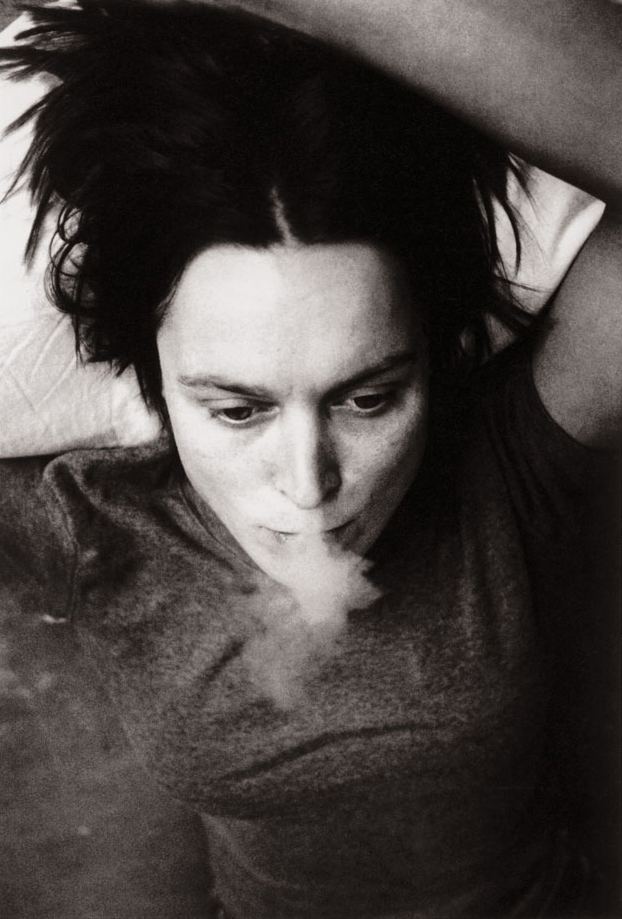
Sarah Lucas (British, b. 1962) 'Smoking' 1998


Sarah Lucas (British, b. 1962)
Smoking
1998
From Self Portraits 1990-1999
1999
Iris print on watercolour paper
80 x 60cm
© Sarah Lucas, courtesy Sadie Coles HQ, London
(From the section Masculinity as Masquerade)


Silvie Zürcher (Swiss, b. 1977) 'Blue Shorts' 2005-2006


Silvie Zürcher (Swiss, b. 1977)
Blue Shorts
2005-2006
From the series I Wanna Be a Son
Collage
31.5 x 24.4cm
Courtesy Silvie Zürcher
(From the section Masculinity as Masquerade)


Kunstmuseum Bern
Hodlerstrasse 12
3000 Bern 7
Phone: +41 31 328 09 44
Email: info@kunstmuseumbern.ch

Opening hours:
Tuesday: 10h – 21h
Wednesday to Sunday: 10h – 17h
Mondays: closed

Kunstmuseum Bern website

LIKE ART BLART ON FACEBOOK

Back to top

Research at the State Library of Victoria

23rd January 2014


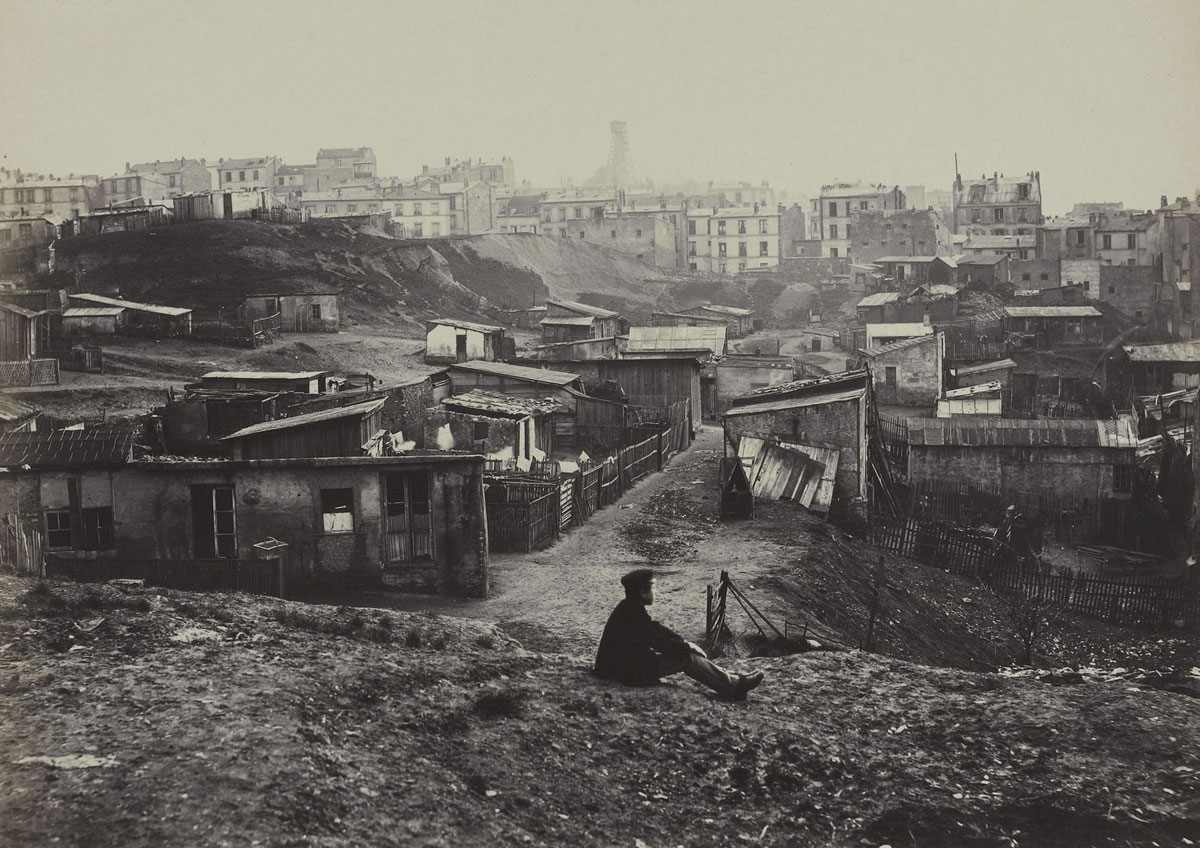
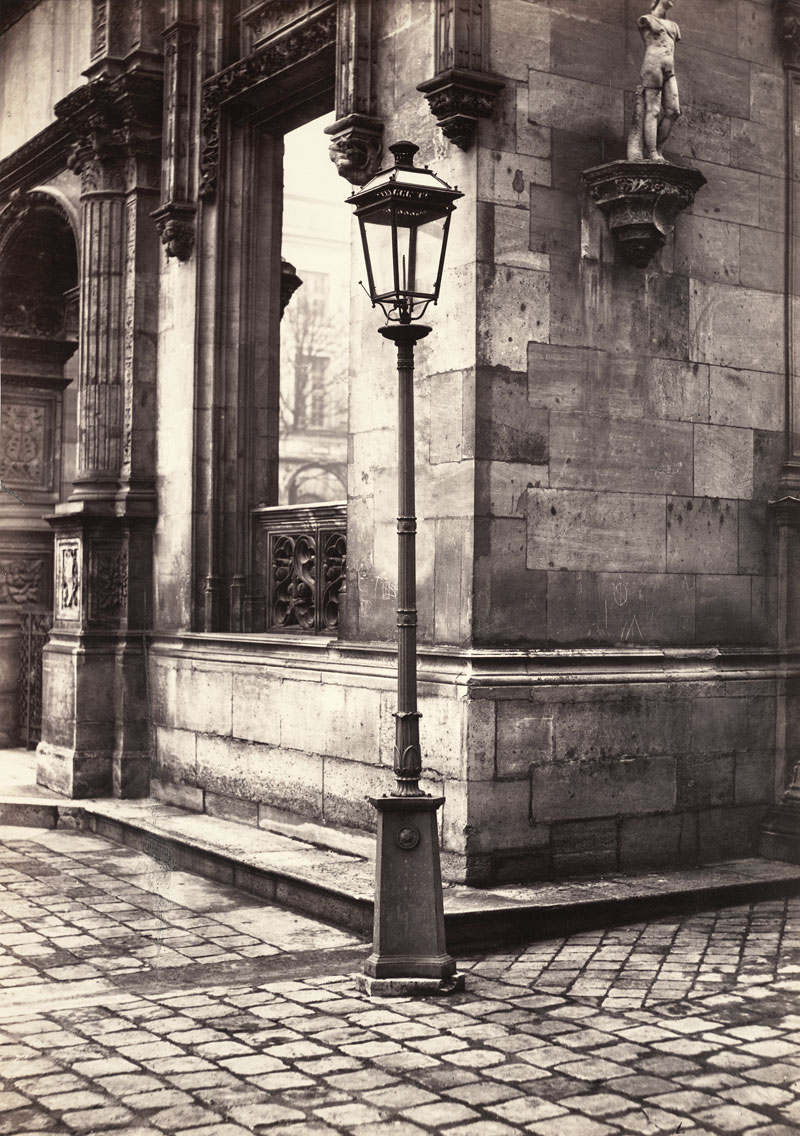
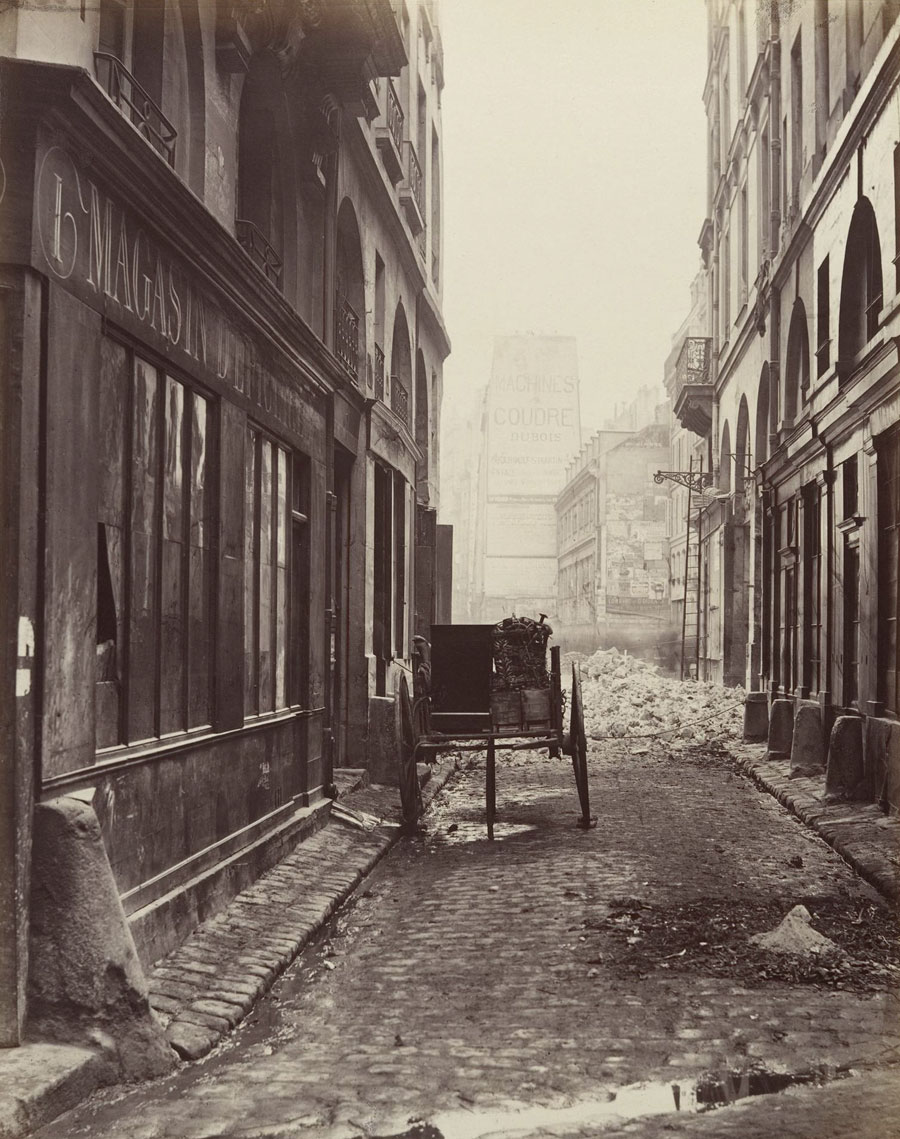
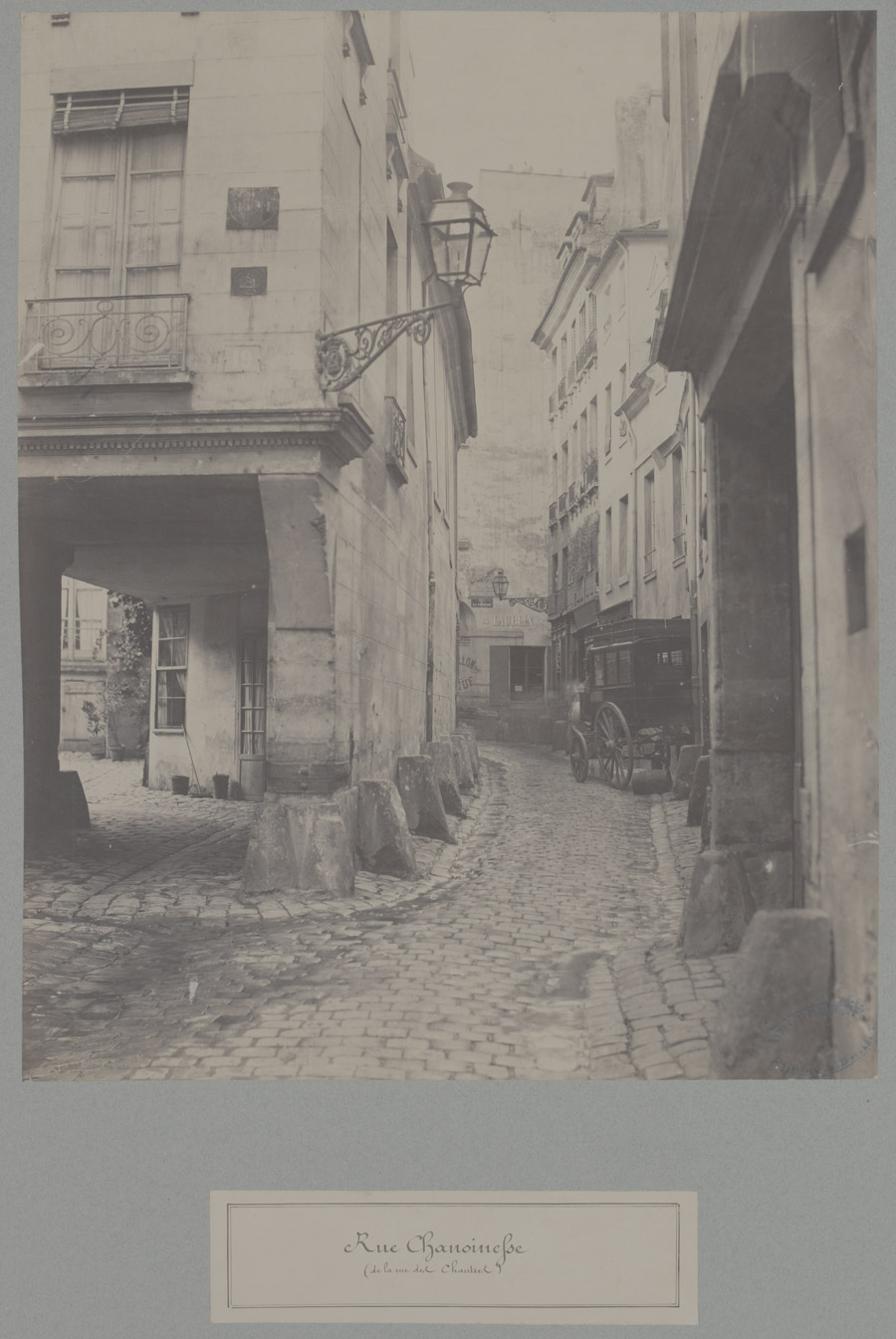
Charles Marville (French, 1813-1879) 'Rue Chanoinesse (de la rue des Chantres)' c. 1853 - c. 1870


AS SEEN ONLINE

Charles Marville (French, 1813-1879)
Rue Chanoinesse (de la rue des Chantres)
c. 1853 – c. 1870
In collection: Photographic views of Paris
Undated, dates assigned from time of Haussman’s renovation of Paris
Photographic print mounted on cardboard : albumen silver
34 x 27cm
Gift; Government of France; 1880


Research experience on the Charles Marville photographs at the State Library of Victoria


I don’t usually get upset but this is an exception, and rightly so. They say that any publicity is good publicity but not in this case, because this posting goes right around the world.

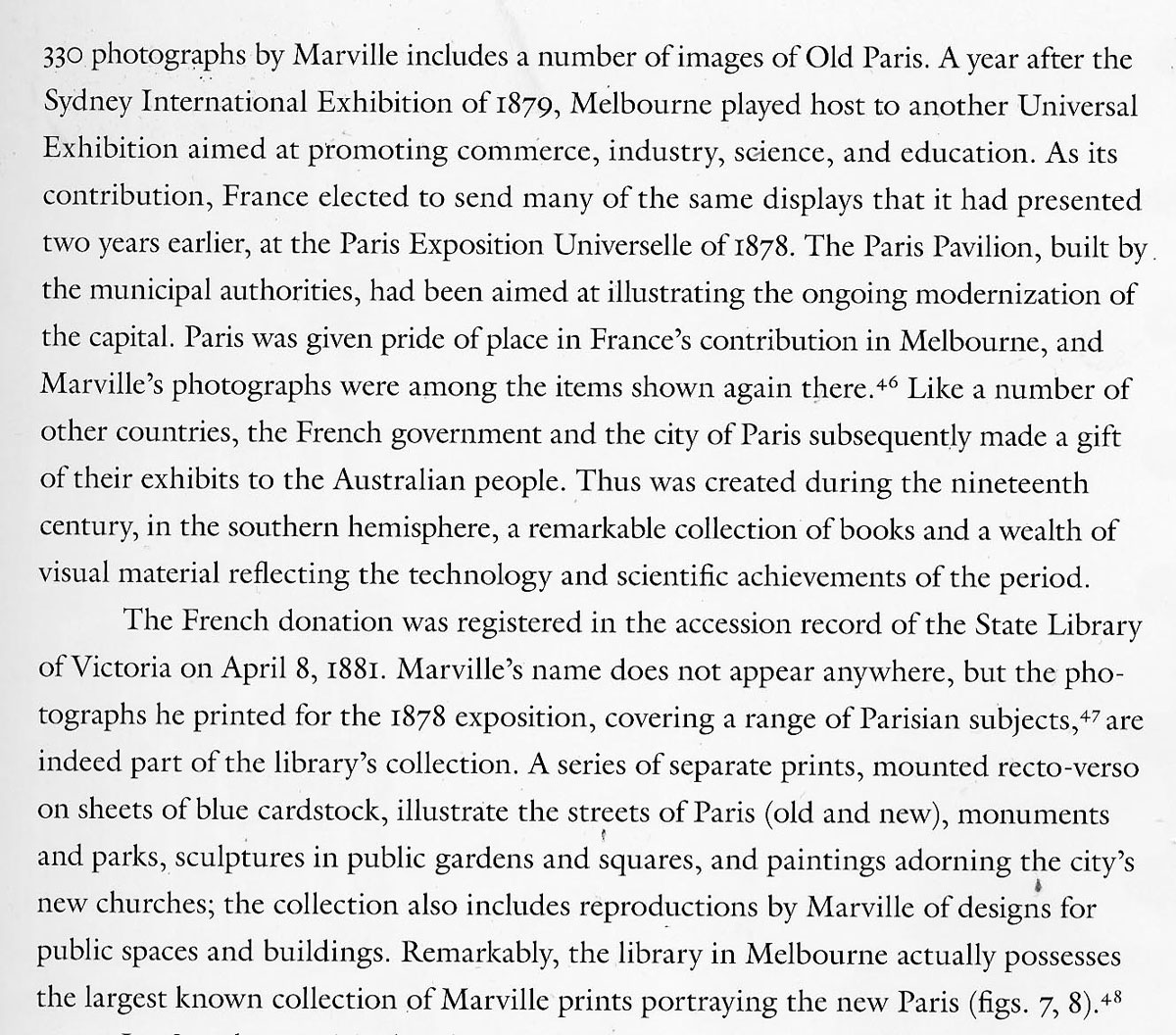
After my recent posting on Charles Marville: Photographer of Paris at the National Gallery of Art, Washington I was contacted by Robert Heather, Manager Collection Interpretation at SLV about the 330 Marville’s they have in the Pictures collection, donated by the French Government in 1881 after the Melbourne International Exhibition of 1880 had finished. I had know about these photographs from pages 203-205 of the catalogue from the above exhibition (see images below). The Manager of Collection Interpretation encouraged me to make an appointment to come in an see the Marville.

Naturally I was excited at the prospect of doing some research on these recently rediscovered images. An idea was forming in my mind – about research that linked the redevelopment of Paris at the time of the Marville photographs with images of the expanding and developing Melbourne around the same time. The comparisons between cities and photographers, photographs, styles (such as Charles Nettleton pre-1880 and J. W. Lindt and Nicholas Caire post-1880), I thought would be illuminating.

Don’t forget I was encouraged to come in and see the marvellous Marville!

Contacted by the Picture Librarian, I was asked to select TWO, yes TWO images out of 330 to look at. I think I was lucky to be able to choose two but I chose three.

Upon arrival the Picture Librarian failed to introduce themselves and said, “Oh, your Marcus” in the most off hand manner. This person was brusque to the point of rudeness, so efficacious in their duty to protect the art work that I felt it was almost criminal to be there. It was like stepping back into the Victoria era their attitude was so unhelpful.

The Marville’s are not in albums as I had supposed (and the librarian had no knowledge of whether they had ever been in albums), but were mounted on blue cards and kept in plastic (presumably archival) sleeves. When I asked for the photographs to be removed so that I could look at the images I had chosen, I was refused! How can you possibly study an artist’s work, in this case photographs, without being able to see the surface of the print? It is just impossible to study these works under opaque plastic…

Even if the sleeves are archival, photographs need to breathe and not be suffocated in plastic. It’s like a Stradivarius violin – they need to be played, not kept locked up in a museum display cabinet because then they loose all of their resonance. And when I asked this person about what conservation was being undertaken on the images they had no idea, blithely announcing that the photographs had been on those cards for a century. This does not mean that the card is not leaching acid into the photographs and the necessary testing should be carried out to assess the stability of the material and photographs (see the response from the State Library below). And if they have been stable and survived for a hundred years as this person suggested, then what is the harm of actually showing them to people. A piece of cardboard that was shown to me as coming off one of the sheets is no reason to deny people the right to see these objects in the flesh.

This person had no idea who I was nor did they care that I am a professional researcher, writer and artist. But that is not the point, I could have been anyone from Joe Public wanting to look at something in the collection: it is a public institution and they have a duty and obligation to show things to the general public. In their ‘Vision Statement’ they say, and I quote:

“We want to be a place where all Victorians can discover, learn, create and connect. We want to be a cultural and heritage destination for Victorians, and a catalyst for generating new knowledge and ideas… We will focus on developing: services and physical facilities tailored to your needs.”

New knowledge and ideas. Services and physical facilities tailored to your needs. After the appalling experience that I had I am not so sure. I was going to apply for a Fellowship hoping to do the research I mentioned at the top of the posting, but after my awful experience I am thinking better of it. While all the Marville’s are online and downloadable at high resolution, which is a wonderful thing in itself, at this rate the Marville’s might as well be buried for another 100 years, other than being shown in an upcoming exhibition. At least at the National Gallery of Victoria when you go in to look at the work, you can actually see the photographs.

I have now requested another appointment to see the Marville’s and this time I don’t want to see just THREE PHOTOGRAPHS behind plastic – I want to see as many photographs as I would like, and be left in peace to study them, out of the plastic.

As a public institution the State Library of Victoria has a duty to make these photographs available for research. I have asked them to let me know when this visit can be conducted and have yet to receive a reply.

I don’t usually get upset, dear readers, but this situation is intolerable for anyone, let alone a person who loves photography. The attitude spoiled what was going to be a special and magical experience. Imagine if a researcher from overseas had arrived to view these works and they had had this reception. Unbelievable.

I will, of course, keep you updated with news.

Dr Marcus Bunyan


“Gee have you been using these plastic sleeves for a long time?”

“Do you have many people asking to see these images out of their covers?”

Thankx to my mentor Ian Lobb for these pearls of wisdom…

I think people are too afraid to speak out these days for fear of having an opinion, being seen as judgemental, upsetting the powers that be. I am not afraid to call them out, especially on a subject in which I have knowledge over many years. I have been studying the new Left of the 1960s and how they put their bodies on the line out on the streets – for anti-Vietnam, pro-Communist, gay liberation, feminism and Aboriginal rights. I grew up in an era where you say what you think, fight for your freedom and have the courage of your convictions…

Addendum

A response from the State Library of Victoria.

Hi Marcus, we’re sorry to hear your experience was not a positive one. The Marville Collection is an extraordinary anthology of photographs to be celebrated. While we certainly don’t wish to keep this treasure from the public, we do want to ensure these photographs are preserved for future generations to enjoy.

So that everyone can access these photographs at any time, we have digitised the entire collection in high resolution and made available online. We also arrange viewings of the original photographic prints by appointment but due to their age, size and delicate nature, it’s preferable that only a selection are brought out at any one time and handled with care. The plastic envelopes in which the photographs are kept are archival and the blue card on which they’re mounted is how the prints were exhibited in 1880 and include the original captions. Conservation staff have assessed the prints and original backing card and are of the opinion that the card is not causing any damage to these photographs.

Our Collection Services Manager is getting in touch with you to arrange another visit where you can see more from this wonderful collection. We look forward to seeing you back at the Library soon.


Charles Marville (French, 1813-1879) 'Rue Chanoinesse (de la rue des Chantres)' c. 1853 - c. 1870


AS SEEN IN THE FLESH

Charles Marville (French, 1813-1879)
Rue Chanoinesse (de la rue des Chantres)
c. 1853 – c. 1870
In collection: Photographic views of Paris
Undated, dates assigned from time of Haussman’s renovation of Paris
Photographic print mounted on cardboard : albumen silver
34 x 27cm
Gift; Government of France; 1880


Extract from page 203 of Reynaud, Françoise. "Marville and Old Paris," in Kennel, Sarah. Charles Marville: Photographer of Paris. Washington: National Gallery of Art, 2013

Extract from page 205 of Reynaud, Françoise. "Marville and Old Paris," in Kennel, Sarah. Charles Marville: Photographer of Paris. Washington: National Gallery of Art, 2013


Extracts from pages 203 and 205 of Reynaud, Françoise. “Marville and Old Paris,” in Kennel, Sarah. Charles Marville: Photographer of Paris. Washington: National Gallery of Art, 2013.


State Library of Victoria
328 Swanston St,
Melbourne VIC 3000
Phone: (03) 8664 7000

Opening hours:
Daily 10am – 6pm

State Library of Victoria website

LIKE ART BLART ON FACEBOOK

Back to top

Exhibition: ‘Everyday Epiphanies: Photography and Daily Life Since 1969’ at The Metropolitan Museum of Art, New York

Exhibition dates: 25th June, 2013 – 26th January, 2014

 Curator: Doug Eklund, curator in the Department of Photographs


John Baldessari (American, 1931-2020) 'Hands Framing New York Harbor' 1971


John Baldessari (American, 1931-2020)
Hands Framing New York Harbor
1971
Gelatin silver print
25.4 x 18cm (10 x 7 1/16 in.)
Purchase, The Horace W. Goldsmith Foundation Gift, through Joyce and Robert Menschel, 1992
Shunk-Kender © Roy Lichtenstein Foundation


Epiphany: a moment in which you suddenly see or understand something in a new or very clear way.

Stephen Shore’s photographs are the most insightful epiphanies in this posting, picturing as they do “what he ate, the rest stops he visited, the people he met.” In other words, the wor(l)d as he saw it.

Dr Marcus Bunyan


Many thankx to The Metropolitan Museum of Art, New York for allowing me to publish the photographs in the posting. Please click on the photographs for a larger version of the image.


“With the unspoken rules that exhibitions in the Met’s contemporary photography gallery must be drawn exclusively from the museum’s permanent collection and be organised as surveys of the period from the late 1960s to the present, it’s no wonder that these long running shows are often so broad that their themes seem to dissolve into edited collections of everything. The newest selection of images is tied up under the umbrella of “everyday epiphanies”, a construct that implies a delight in the ordinary, the quotidian, or the familiar, but in fact, reaches outward beyond these routine boundaries to works that have a wide variety of conceptual underpinnings and points of view. With some effort, it’s possible to follow the logic of why each piece has been included here, but when seen together, the diversity of the works on view diminishes the show’s ability to deliver any durable insights… The works that function best inside this theme are those that capture moments of unexpected, elemental elegance, often as a result of the way the camera sees the world.”


Loring Knoblauch. “Everyday Epiphanies: Photography and Daily Life Since 1969 @Met,” on the Collector Daily website August 14, 2013 [Online] Cited 20/01/2014. Used under fair use conditions for the purposes of education and research


Martha Rosler (American, b. 1943) 'Semiotics of the Kitchen' 1975 (still)


Martha Rosler (American, b. 1943)
Semiotics of the Kitchen (still)
1975
Video
Purchase, Henry Nias Foundation Inc. Gift, 2010
Courtesy Electronic Arts Intermix (EAI), New York


Jan Groover (American, 1943-2012) 'Untitled' 1980


Jan Groover (American, 1943-2012)
Untitled
1980
Platinum print
19 x 24cm (7 1/2 x 9 7/16 in.)
David Hunter McAlpin Fund, 1981
The Metropolitan Museum of Art
© Jan Groover


Carrie Mae Weems (American, b. 1953) 'Untitled (Man Smoking)' 1990


Carrie Mae Weems (American, b. 1953)
Untitled (Man Smoking)
1990
From the Kitchen Table Series
Gelatin silver print
Image: 71.8 × 71.8cm (28 1/4 × 28 1/4 in.)
Courtesy of the artist and Jack Shainman Gallery, New York


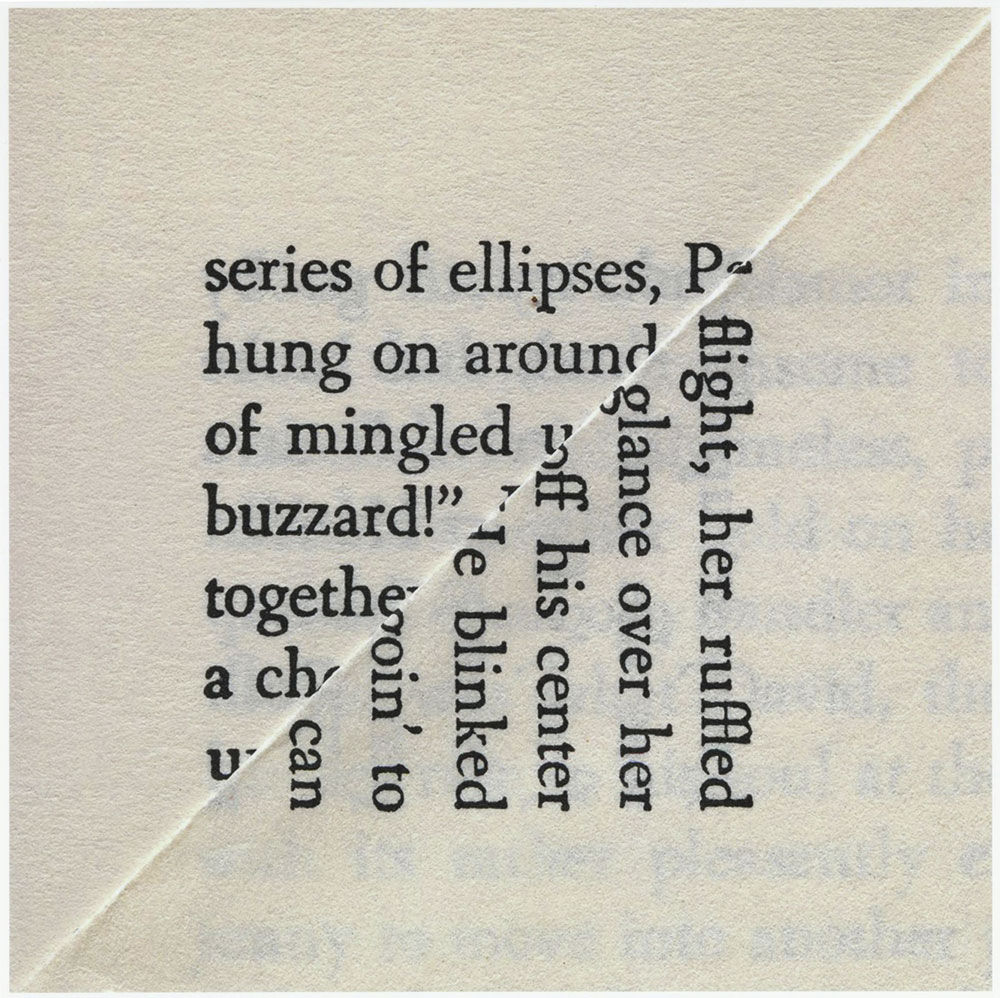
Erica Baum (American, b. 1961)  'Buzzard' 2009


Erica Baum (American, b. 1961) 
Buzzard
2009
Inkjet print
22.9 x 22.9cm (9 x 9 in.)
Purchase, Marian and James H. Cohen Gift, in memory of their son, Michael Harrison Cohen, 2012
The Metropolitan Museum of Art
© Erica Baum


Since the birth of photography in 1839, artists have used the medium to explore subjects close to home – the quotidian, intimate, and overlooked aspects of everyday existence. Everyday Epiphanies: Photography and Daily Life Since 1969, an exhibition of 40 works at The Metropolitan Museum of Art, presents photographs and videos from the last four decades that examine these ordinary moments. The exhibition features photographs by a wide range of artists including John Baldessari, Philip-Lorca diCorcia, Fischli & Weiss, Jan Groover, Robert Gober, Nan Goldin, Elizabeth McAlpine, Gabriel Orozco, David Salle, Robert Smithson, Stephen Shore, and William Wegman, as well as videos by Martha Rosler, Ilene Segalove, Brandon Lttu, and Svetlana and Igor Kopytiansky.

Daily life, as it had been lived in Western Europe and America since the 1950s, was called into question in the late 1960s by a counterculture that rebelled against the prior “cookie-cutter” lifestyle. Everything from feminism to psychedelic drugs to space exploration suggested a nearly infinite array of alternative ways to perceive reality; and artists and thinkers in the ’60s and ’70s proposed a “revolution of everyday life.” A four-part work by David Salle from 1973 exemplifies the artist’s flair for piquant juxtaposition at an early stage in his career. In depicting four women in bathrobes standing before their respective kitchen windows in contemplative states, Salle goes against the grain of feminist orthodoxy – revealing a penchant for courting controversy that he would expand in his later paintings; pasted underneath the black-and-white images of the women are brightly coloured labels of their preferred coffee brands, with the arbitrarily differentiated brands signifying an insufficient substitute for true freedom in the postwar era. Martha Rosler’s bracingly caustic video Semiotics of the Kitchen and Ilene Segalove’s wistfully funny The Mom Tapes complete a trio of works investigating the role of women in a rapidly changing society.

In the 1980s, artists’ renewed interest in conventions of narrative and genre led to often highly staged or produced images that hint at how even our deepest feelings are mediated by the images that surround us. In the wake of the economic crash of the late 1980s, photographers focused increasingly on what was swept under the carpet – the repressed and the taboo. Sally Mann’s Jesse at Five (1987) depicts the artist’s daughter as the central figure, half-dressed, dolled-up, and posed like an adult. Mann often created these frank images of her children and caused some controversy during the culture wars of the late 1980s and early 1990s. However, her photographs of her children are remarkable for the artist’s assured handling of a potentially explosive subject with equanimity and grace.

During the following decade, artists created photographs and videos that confused the real and the imaginary in ways that almost eerily predicted the epistemological quandaries posed by the digital revolution. Meanwhile, a trio of recently made works by Erica Baum, Elizabeth McAlpine, and Brandon Lattu combine process and product in novel ways to comment obliquely on the shifting sands of how we come to know the world in our digital age.

Press release from The Metropolitan Museum of Art website


Jean-Marc Bustamante (French, b. 1952) 'Untitled' 1997


Jean-Marc Bustamante (French, b. 1952) 
Untitled
1997
Chromogenic print
40 x 59cm (15 3/4 x 23 1/4 in.)
Purchase, The Horace W. Goldsmith Foundation Gift, through Joyce and Robert  Menschel, 1999
The Metropolitan Museum of Art
© Jean-Marc Bustamante


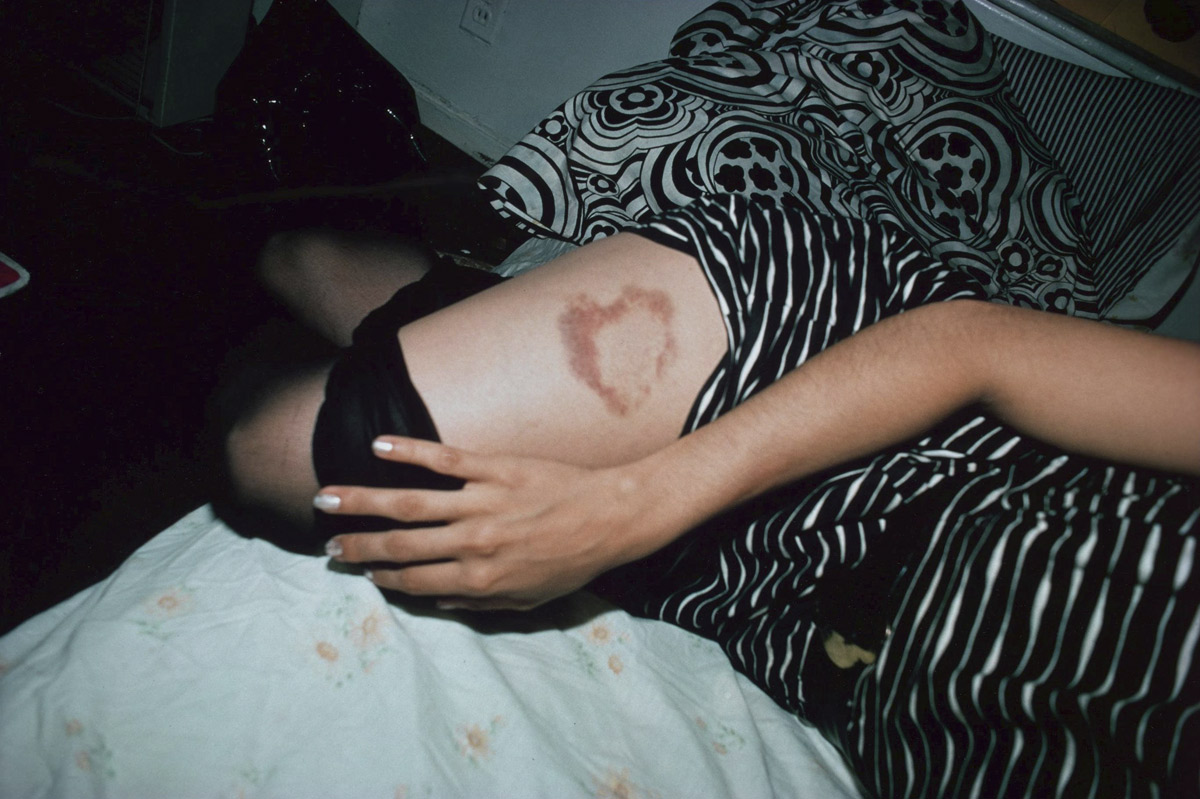
Nan Goldin (American, b. 1953) 'Heart-Shaped Bruise, NYC' 1980


Nan Goldin (American, b. 1953)
Heart-Shaped Bruise, NYC
1980
Silver dye bleach print
50.8 x 60.96cm (20 x 24 in.)
Purchase, The Horace W. Goldsmith Foundation Gift, through Joyce and Robert  Menschel, 2001
The Metropolitan Museum of Art
© Nan Goldin, Courtesy Matthew Marks Gallery, New York


Larry Sultan (American, 1946-2009) 'My Father Reading the Newspaper' 1989


Larry Sultan (American, 1946-2009)
My Father Reading the Newspaper
1989
Chromogenic print
Stewart S. MacDermott Fund, 1991
© Larry Sultan


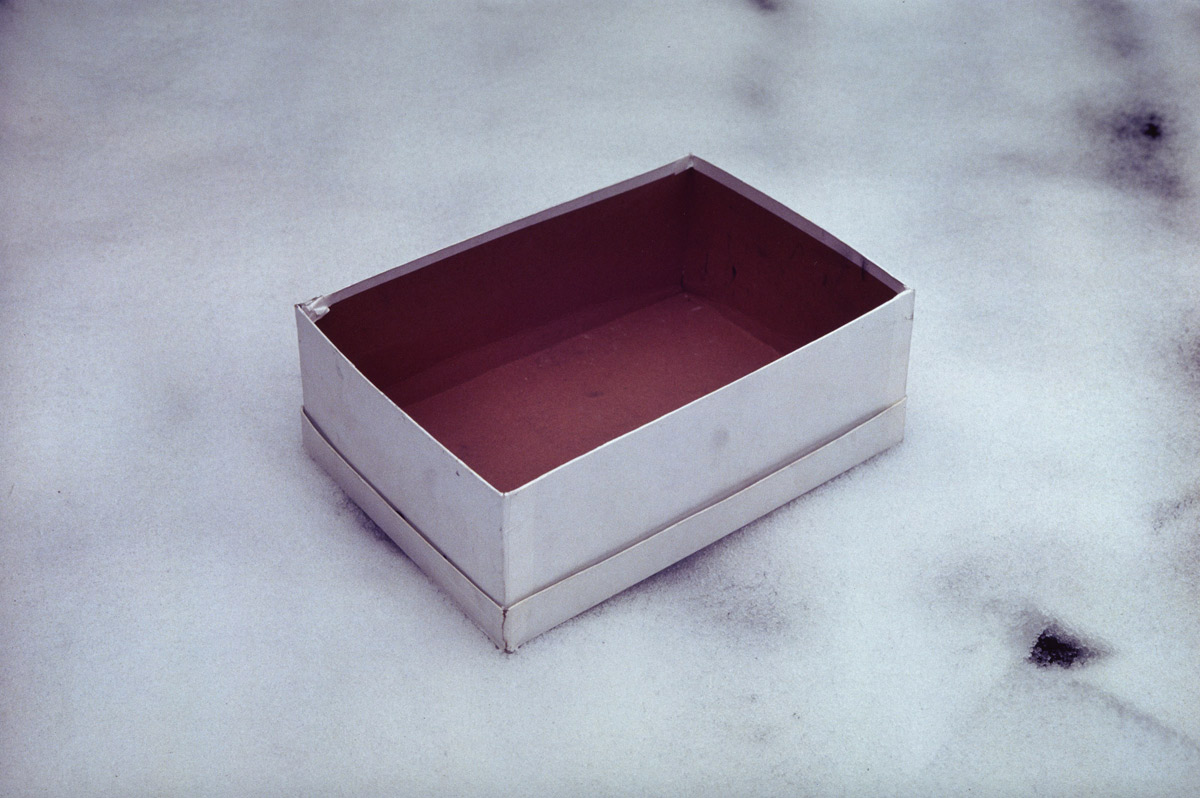
Gabriel Orozco (Mexican, b. 1962) 'Caja vacia de zapatos' (Empty shoebox) 1993


Gabriel Orozco (Mexican, b. 1962)
Caja vacia de zapatos (Empty shoebox)
1993
Silver dye bleach print
31.8 x 46.4cm (12 1/2 x 18 1/4 in.)
Gift of the artist, 1995
The Metropolitan Museum of Art
© Gabriel Orozco


Gabriel Orozco (Mexican born Jalapa Enriquez, b. 1962) 'Vitral' 1998


Gabriel Orozco (Mexican, born Jalapa Enriquez, b. 1962)
Vitral
1998
Silver dye bleach print
40.6 x 50.8cm (16 x 20 in.)
Purchase, The Judith Rothschild Foundation Gift, 1999
© Gabriel Orozco


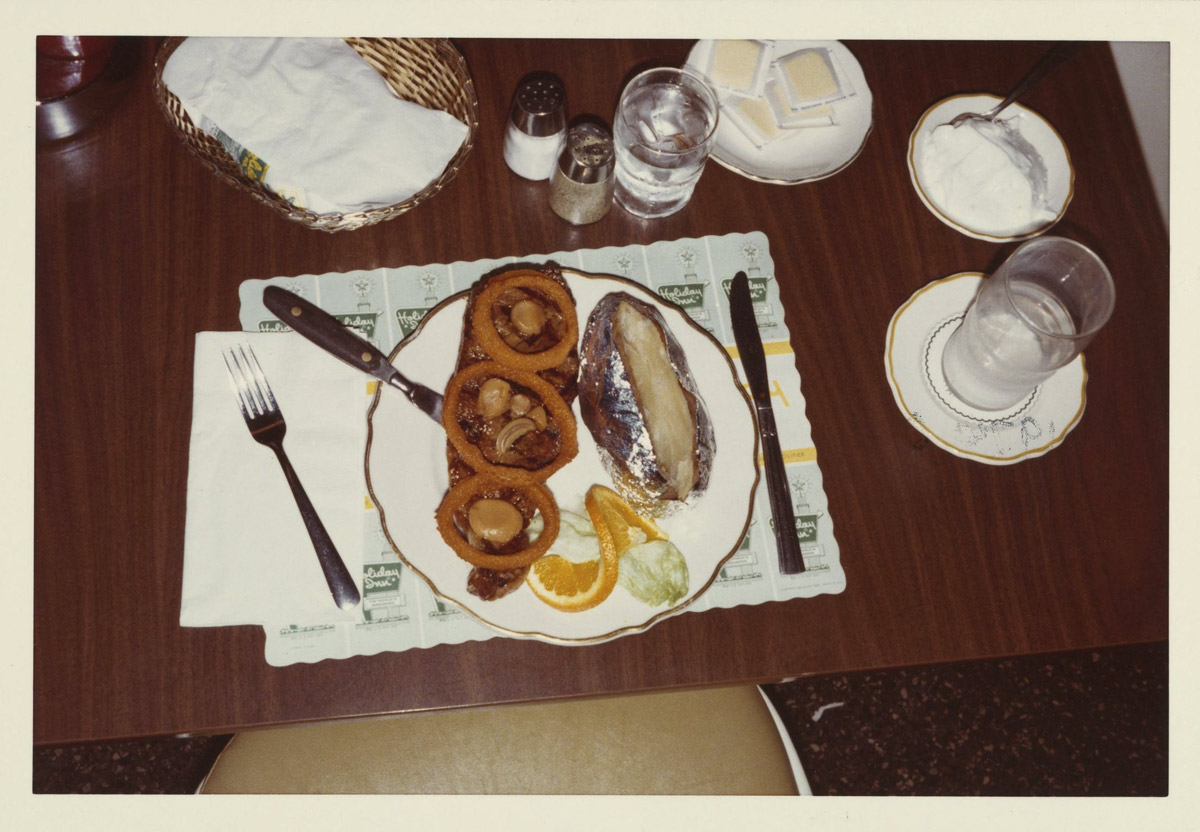
Stephen Shore (American, b. 1947) 'Oklahoma City, Oklahoma' July 9, 1972


Stephen Shore (American, b. 1947)
Oklahoma City, Oklahoma
July 9, 1972
From the series American Surfaces
Chromogenic print
Gift of Weston J. Naef, 1974
© Stephen Shore


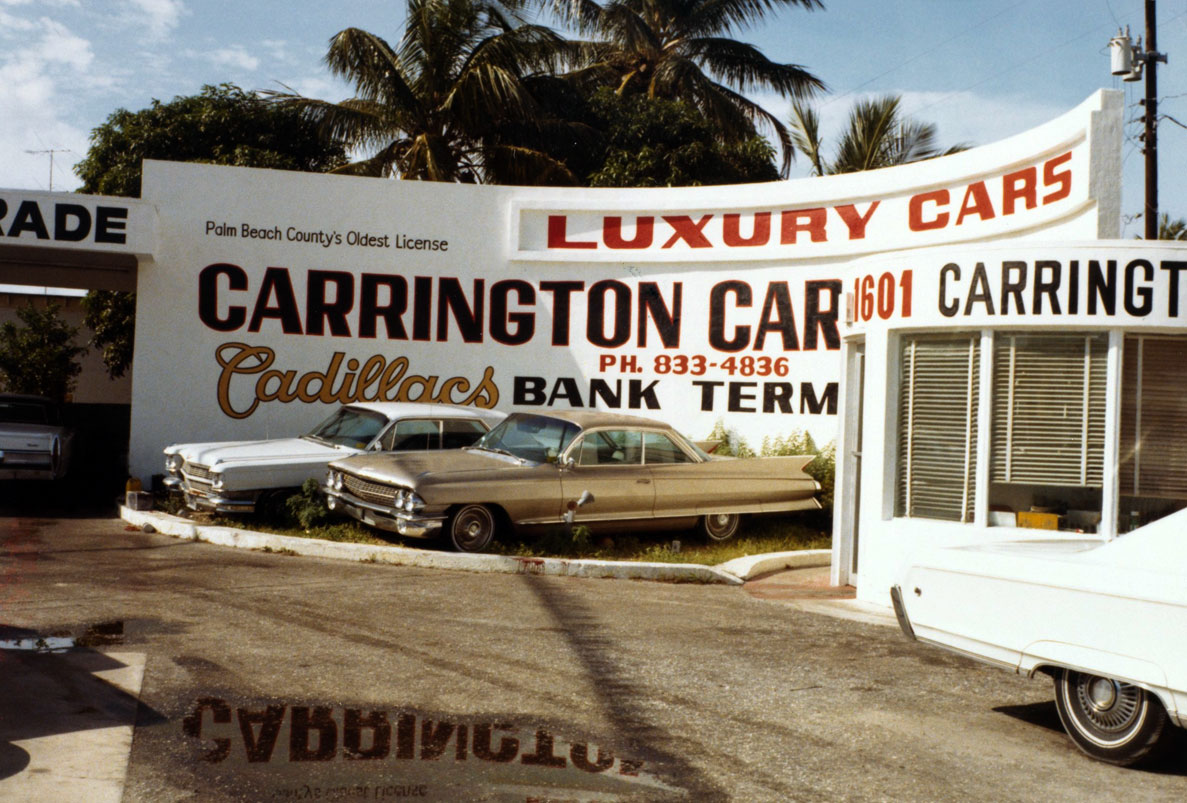
As a teenager in the 1960s, Shore was one of two in-house photographers at Andy Warhol’s Factory. During his first cross-country photographic road trip, Shore adopted the catholic approach of his mentor, accepting into his art everything that came along – what he ate, the rest stops he visited, the people he met. He then processed his colour film as “drugstore prints”, the imprecise, colloquial term for the kind of amateur non-specialised snapshots that filled family photo albums. The entire series of 229 prints was shown for the first time in 1974 and acquired by the Metropolitan from that exhibition.


Stephen Shore (American, b. 1947) 'West Palm Beach, Florida' January 1973


Stephen Shore (American, b. 1947)
West Palm Beach, Florida
January 1973
From the series American Surfaces
Chromogenic print
Gift of Weston J. Naef, 1974
© Stephen Shore


Stephen Shore (American, b. 1947) 'Clovis, New Mexico' 1974


Stephen Shore (American, b. 1947)
Clovis, New Mexico
1974
From the series American Surfaces
Chromogenic print
Gift of Weston J. Naef, Jr., 1974
The Metropolitan Museum of Art
© Stephen Shore


The Metropolitan Museum of Art
1000 Fifth Avenue at 82nd Street
New York, New York 10028-0198
Phone: 212-535-7710

Opening hours:
Sunday – Tuesday and Thursday: 10am – 5pm
Friday and Saturday: 10am – 9pm
Closed Wednesday

The Metropolitan Museum of Art website

LIKE ART BLART ON FACEBOOK

Back to top

Exhibition: ‘Photography at NOMA’ at The New Orleans Museum of Art

Exhibition dates: 10th November, 2013 – 19th January, 2014

Curator: Brian Piper, Freeman Family Curator of Photographs, Prints, and Drawings at NOMA


André Kertész (American born Hungary, 1894-1985) 'Leger's Studio' 1926-1927 from the exhibition 'Photography at NOMA' at The New Orleans Museum of Art, November 2013 - January 2014


André Kertész (American born Hungary, 1894-1985)
Leger’s Studio
1926-1927
Gelatin silver print
Image: 3 1/8 x 4 1/4in. (8 x 10.8cm)
The New Orleans Museum of Art
Museum purchase, Women’s Volunteer Committee Fund


There are some rare and beautiful photographs in this posting. I have never seen the Kertész (Leger’s Studio 1926-1927) with its wonderful structure and tonality nor the unusual Mapplethorpe (Staircase, 1140 Royal 1982). I particularly like the Bellocq (Bedroom Mantel, Storyville c. 1911-1913) with its complex medley of shapes and images.

Dr Marcus Bunyan


Many thankx to The New Orleans Museum of Art for allowing me to publish the photographs in the posting. Please click on the photographs for a larger version of the image.


Lee Friedlander (American, b. 1934) 'Untitled (Self-Portrait Reflected in Window, New Orleans)' c. 1965 from the exhibition 'Photography at NOMA' at The New Orleans Museum of Art, November 2013 - January 2014


Lee Friedlander (American, b. 1934)
Untitled (Self-Portrait Reflected in Window, New Orleans)
c. 1965
Gelatin silver print
Image: 7 x 10 3/4 in. (17.6 x 27.2cm)
Mount: 11 x 14 in. (27.9 x 35.5cm)
The New Orleans Museum of Art
Museum purchase through the National Endowment for the Arts Grant


Robert Frank (American, 1924-2019) 'Canal Street, New Orleans' 1955


Robert Frank (American, 1924-2019)
Canal Street, New Orleans
1955
Gelatin silver print
Image: 11 x 13 4/5 in. (28 x 35.2cm)
The New Orleans Museum of Art
Museum purchase through the National Endowment for the Arts and Museum Purchase Funds


Ilse Bing (American, 1899-1998) 'New York, The Elevated and Me' 1936


Ilse Bing (American, 1899-1998)
New York, The Elevated and Me
1936
Gelatin silver print
Image: 7 15/16 x 11 in. (18.6 x 28cm)
The New Orleans Museum of Art
Museum purchase through the National Endowment for the Arts Matching Grant
© Estate of Ilse Bing


Henri Cartier-Bresson (French, 1908-2004) 'Louisiana' 1947, printed circa 1975


Henri Cartier-Bresson (French, 1908-2004)
Louisiana
1947, printed c. 1975
Gelatin silver print
Image: 9 5/8 x 14 3/16 in. (24.4 x 36cm)
Paper: 12 x 16 in. (30.3 x 40.4cm)
The New Orleans Museum of Art
Museum purchase, General Acquisition Fund


Theodore Lilienthal (American, 1829-1894) 'Charles Hotel, New Orleans' c. 1867


Theodore Lilienthal (American, 1829-1894)
Charles Hotel, New Orleans
c. 1867
Albumen print
Image: 10 3/4 x 13 13/16 in. (27.2 x 35.1cm)
Mount: 17 x 22 1/4 in. (43.3 x 56.6cm)
The New Orleans Museum of Art
Museum Purchase


Featuring masterworks by photographers Edward Weston, William Henry Fox Talbot, André Kertész, Robert Mapplethorpe, and many more, the New Orleans Museum of Art’s upcoming exhibition, Photography at NOMA, explores the Museum’s rich permanent photography collection through a selection of some of its finest works from the early 1840s to the 1980s.

The first comprehensive presentation of works from NOMA’s collection since the 1970s, the exhibition includes over 130 of the most important photographs in the Museum’s collection and presents rare and unusual examples from throughout photography’s history. On view November 10, 2013 through January 19, 2014, the exhibition highlights the tremendous depth and breadth of the Museum’s collection and includes photographs made as works of art as well as advertising images, social documents, and more. The photographers featured in the exhibition range from some of the most recognisable names in the field, including Henri Cartier-Bresson, Robert Frank, and Lewis Hine, to unknown photographers – reflecting the vast spectrum of photographic activity since the medium’s inception in the 19th century.

“NOMA began collecting photographs seriously in the early 1970s when photography was not commonly found in American art museum collections. Today our holdings include nearly 10,000 works, representing a broad range of creative energy and achievement,” said Susan Taylor, NOMA’s Director. “Our collection has strong roots in New Orleans history. Our city has long been an epicentre for the work of established and emerging photographers and we are delighted to share this aspect of New Orleans history with our audiences.”

“Since its origins, photography has infiltrated every aspect of modern life, from art to war, and religion to politics and many of these applications are represented in NOMA’s extensive collection,” said Russell Lord, Freeman Family Curator of Photographs. “Despite the collection’s long history, it remains one of the best kept secrets in this country. Photography at NOMA is an opportunity to re-examine and bring to the fore the diverse range of works found in the collection.”

Since the 1970s, NOMA has built an extensive collection of photographs that represents a wide range of achievement in that medium from the 1840s to the present. Today the collection comprises nearly 10,000 works with images by some of the most significant photographic artists including Berenice Abbott, Ansel Adams, Diane Arbus, Ilse Bing, and Edward Steichen, among many others. The collection includes examples that reflect photography’s international scope, from an 1843 view from his hotel window in Paris by William Henry Fox Talbot to a view of Mount Fuji by Kusakabi Kimbei, but it is also strong in photographs made in and around New Orleans by regional and national photographers such as E. J. Bellocq, Walker Evans, Clarence John Laughlin, and Robert Polidori.

Photography at NOMA features works by Berenice Abbott, Ansel Adams, Diane Arbus, Henri Cartier-Bresson, Walker Evans, Robert Frank, Robert Mapplethorpe, William Henry Fox Talbot, and Edward Weston, among many others.

Press release from the NOMA website


Felix Moissenet (American, b. circa 1814) 'Freeman' c. 1855


Felix Moissenet (American, b. circa 1814)
Freeman
c. 1855
Sixth plate daguerreotype
Image: 3 1/4 x 2 3/4 in. (8 x 6.8cm)
Case (open): 3 5/8 x 6 3/8 in. (9.2 x 16.1cm)
The New Orleans Museum of Art
Museum purchase


Thomas Augustine Malone (British, 1823-1867) 'Demonstration of the Talbotype' December 11, 1848


Thomas Augustine Malone (British, 1823-1867)
Demonstration of the Talbotype
December 11, 1848
Calotype (Talbotype) negative
7 3/8 x 9 2/16 in. (18.8 x 23.3cm)
The New Orleans Museum of Art
Museum purchase


Robert Mapplethorpe (American, 1946-1989) 'Staircase, 1140 Royal' 1982


Robert Mapplethorpe (American, 1946-1989)
Staircase, 1140 Royal
1982
Gelatin silver print
Image: 15 1/5 x 15 1/5 in. (38.5 x 38.5cm)
Paper: 20 x 16 in. (50.6 x 40.4cm)
The New Orleans Museum of Art
Promised gift from H. Russell Albright, MD


William Henry Fox Talbot (British, 1800-1877) 'View of the Paris Boulevards from the First Floor of the Hôtel de Louvais, Rue de la Paix' 1843


William Henry Fox Talbot (British, 1800-1877)
View of the Paris Boulevards from the First Floor of the Hôtel de Louvais, Rue de la Paix
1843
Salted paper print from a paper negative
Image: 6 3/8 x 6 3/4 in. (16.2 x 17.1cm)
Paper: 7 1/2x 9 in. (19 x 23cm)
The New Orleans Museum of Art
Museum purchase, 1977 Acquisition Fund Drive


Paul Outerbridge (American, 1896-1958) 'Groom Detective Agency' 1923


Paul Outerbridge (American, 1896-1958)
Groom Detective Agency
1923
Platinum print
Image: 4 1/2 x 3 1/2 in. (11.5 x 9cm)
Paper: 14 x 11 in. (35.5 x 28cm)
Paul Outerbridge, Jr.
© 2013 G. Ray Hawkins Gallery, Beverly Hills, CA


Morton Schamberg (American, 1881-1918) 'Cityscape' 1916


Morton Schamberg (American, 1881-1918)
Cityscape
1916
Gelatin silver print
Image: 9 1/2 x 7 1/2 in. (24 x 19cm)
Mount: 15 3/4 x 13 in. (40 x 33cm)
The New Orleans Museum of Art
Museum purchase, Women’s Volunteer Committee Fund


Clarence John Laughlin (American, 1905-1985) 'A Mangled Staircase (No. 2)' 1949


Clarence John Laughlin (American, 1905-1985)
A Mangled Staircase (No. 2)
1949
Gelatin silver print
Image: 13 1/2 x 10 13/16 in. (34.2 x 27.5cm)
Mount: 17 x 14 in. (43 x 35.5cm)
The New Orleans Museum of Art
Bequest of Clarence John Laughlin


E. J. Bellocq (American, 1873-1949) 'Bedroom Mantel, Storyville' c. 1911-1913


E. J. Bellocq (American, 1873-1949)
Bedroom Mantel, Storyville
c. 1911-1913
Glass negative
Plate: 10 x 8 in. (25.2 20.2cm)
Museum purchase


Lewis Hine (American, 1874-1940) '[Mechanic and Steam Pump]' c. 1930


Lewis Hine (American, 1874-1940)
[Mechanic and Steam Pump]
c. 1930
Gelatin silver print
Image: 9 1/2 x 7 in. (24.3 x 17.6cm)
Paper: 10 x 8 in. (25.2 x 20.3cm)
The New Orleans Museum of Art
Museum Purchase


The New Orleans Museum of Art
One Collins Diboll Circle, City Park
New Orleans, LA 70124
Phone: (504) 658-4100

Opening hours:
Tuesday – Sunday: 10am – 5pm
Closed Mondays

The New Orleans Museum of Art website

LIKE ART BLART ON FACEBOOK

Back to top

Exhibition: ‘Edith Tudor Hart – In the Shadow of Tyranny’ at the Wien Museum, Vienna

Exhibition dates: 26th September, 2013 – 12th January, 2014

Curators: Duncan Forbes (then of the National Galleries of Scotland / Fotomuseum Winterthur) and Frauke Kreutler of the Wien Museum


Edith Tudor-Hart (Austrian-British, 1908-1973) From the series 'Moving and Growing' 1951


Edith Tudor-Hart (Austrian-British, 1908-1973)
From the series Moving and Growing
1951
© Wien Museum


More images from this wonderful photographer who was a low-level Soviet agent while exiled in Britain after the Second World War and who destroyed most of her photos as well as many negatives out of fear of prosecution in 1951. Thanks to contemporary research we can begin to see the vision of this artist. In her photo essays, an impassioned record, she imaged social injustice and showed it to the world… creating her own inimitable style and a “comprehensive and freestanding body of work.”

“Her photos are impressive for the quality of the dialogue with those portrayed and the social context is always visible and tangible. “The women, children and workers photographed by her seem less objectified and, to some extent at least, are placed in a better position to represent themselves,” writes Duncan Forbes, curator of the exhibition.” (press release)

The quality of the dialogue with those portrayed.

You can feel that in these images, that the photographer has a care and respect for the people that she is photographing, probably more so than the photographs of Bill Brandt from the same period. She seems to have a greater connection and concern for her subject matter.

I also love their grittiness, poignancy and above all their humanity. Look at the arrangement of figures in Family, Stepney, London (about 1932, below) as the viewers eye is led by the two staggered boys on the bed up to the eldest daughter, looking away off camera, while the mother steadfastly gazes directly into the camera clutching her youngest daughter tightly. The smile on the little girls face is a joy.

“No Home, No Dole” was the reality of life in London back then, with the Great Depression taking hold. I remember growing up in the 1960s and things weren’t much better in my grandmothers house, even the old farmhouse I grew up in. No hot running water, my mother bathing us kids in a tin tub on the kitchen floor with water heated up in the kettle on the stove. It was subsistence living for we were the poorest of the poor.

That Edith Tudor Hart had the courage of her convictions and recorded these environments shows a human being of great moral character.

We are grateful that the images survive.

Dr Marcus Bunyan


Many thankx to the Wien Museum for allowing me to publish the photographs in the posting. Please click on the photographs for a larger version of the image. View the exhibition online catalogue.


Edith Tudor-Hart (Austrian-British, 1908-1973) 'Unemployed Workers' Demonstration, Trealaw, South Wales' 1935


Edith Tudor-Hart (Austrian-British, 1908-1973)
Unemployed Workers’ Demonstration, Trealaw, South Wales
1935
© Scottish National Portrait Gallery / Archive presented by Wolfgang Suschitzky 2004


“If curator Duncan Forbes and photographers Owen Logan and Joanna Kane have resurrected an amazing archive, Tudor-Hart’s own life is curiously out of focus. Her struggles and sorrows are mute beneath the weight of her images. Her late life feels only half-lived: she struggled under the scrutiny of the security services until her death in 1973; she destroyed much documentation, including her list of negatives. As a woman photographer with left-wing associations, work became scarce. As a communist and a suspected traitor she was blacklisted and in the 1950s she gave up photography altogether.

What’s left, or rather what has been patiently reconstructed, is an impassioned record of the terrible long shadow of ­tyranny in Europe, and of a ­divided Britain that makes you both deeply ashamed and ­occasionally proud.”

Moria Jeffrey review of the exhibition 04/07/2013 on the Art Global website [Online] Cited 06/01/2014. No longer available online. Used under fair use conditions for the purposes of education and research


Edith Tudor-Hart (Austrian-British, 1908-1973) 'Prater Ferris Wheel, Vienna' 1931


Edith Tudor-Hart (Austrian-British, 1908-1973)
Prater Ferris Wheel, Vienna
1931
© Scottish National Portrait Gallery / Archive presented by Wolfgang Suschitzky 2004


The rediscovery of a great Austrian-British photographer Edith Tudor-Hart (1908-1973), who is known in Austrian history of photography as Edith Suschitzky, belonged to the group of those politically engaged photographers who faced political developments in the inter-war years with socially critical force.

Edith Suschitzky studied at the Bauhaus in Dessau and worked as a photographer in Vienna around 1930 – while simultaneously a Soviet agent. In 1933 she married an Englishman who likewise had close connections to the Communist Party, and fled with him to Great Britain. There she created brilliant social reportage in the slums of London or in the coal mining areas of Wales, today some of the key examples of British workers’ photography. The exhibition is the first monographic presentation of Edith Tudor-Hart’s work. As well as the period in England, a selection from the early Viennese works are on show. Her unpretentious, documentary-influenced photographs on social themes come mainly from the collections of the National Galleries of Scotland

Following Barbara Pflaum, Elfriede Mejchar and Trude Fleischmann, the Wien Museum is once again putting on a solo exhibition dedicated to a great Austrian photographer: Edith Tudor-Hart (1908-1973), also known in the annals of photographic history by her maiden name Edith Suschitzky. She belonged to the group of politically engaged male and female photographers who, from the 1920s onwards, responded to political developments from a socially critical standpoint – both in Austria and in exile in England, where she became an important figure in the Worker Photography Movement. The exhibition, which was previously on show in Edinburgh, is the first ever overview of the work of this in equal measure fascinating and significant artist. It arose out of a cooperation between the National Galleries of Scotland and the Wien Museum and has been curated by Duncan Forbes, the long-standing Senior Curator of Photography at the National Galleries of Scotland and the new Director of the Fotomuseum Winterthur.

Edith Tudor-Hart was born in Vienna in 1908 as Edith Suschitzky and grew up in a social-democratic household; her father ran a workers’ bookshop in the Favoriten district of Vienna and a revolutionary publishing house. She had contact with the Communist Party of Austria (KPÖ) and the Communist International already from a young age and both charged her with tasks – with legal party work as well as with intelligence activities. Early on, Tudor-Hart become interested in pedagogy; she completed training in the Montessori method and moved in circles that promoted radical, anti-authoritarian school and education reforms. It was likely the period of study at the Bauhaus in Dessau (1928-1930) that first brought her to photography, even though Tudor-Hart is listed in the archives only as a participant on the famous preparatory course and not as a student in the photography department. Her first pictures were taken in about 1930 and “show a technically accomplished photographer, who explored subjects such as the deprivation of the working class and the reform-oriented culture of Austrian Social Democracy as well as the threat posed by military and fascist forces” (as the historian of photography Anton Holzer has written). At the same time she embarked on a career as a photo journalist for illustrated publications.

It was the period in which, thanks to technological advances, photography in the mass media had gained immensely in importance. From the beginning, Tudor-Hart viewed the camera as a political weapon that could be used to document social injustices; she had little time for the formal experiments of the avant-garde. Photography had ceased to be “an instrument for recording events and became instead the means to bring events about and to influence them. It became a living art form that involved the people” (Edith Tudor-Hart). Her first photo series, published in the magazines Der Kuckuck, Arbeiter-Illustrierte-Zeitung and Die Bühne, include a reportage on the deprived East End of London and a series on everyday life in the Vienna Prater. That she was a Communist and yet was working for a social-democratic publication such as Der Kuckuck was down to the fact that the KPÖ played a minimal role in the media (and political) landscape of Austria – in this respect the young photographer had to adapt to the commercial realities of her profession. However, she was also active for the Soviet news agency TASS and, in addition, she continued with her intelligence activities. She was described by a fellow agent as “modest, competent and brave”, ready “to give her all for the Soviet cause”. This eventually became Edith Tudor-Hart’s undoing: when the Austrian government moved against Nazis and Communists, she was arrested without further ado. In the same year she married the English doctor Alexander Tudor-Hart, which allowed her to escape to Great Britain in 1934. “When one views Suschitzky’s photographic work from her Vienna years, it becomes clear that already in her early period, she created a comprehensive and freestanding body of work,” writes Anton Holzer.

Among the miners in Wales

In exile, Edith Tudor-Hart’s photographs took on a sharper socially critical edge. She went with her husband to South Wales, where he practised as a doctor in the coal mining region. The economic crisis had hit heavy industry and mining in northern England particularly hard and in many small towns and villages, nine out of ten men were unemployed. The photos from the mining and shipbuilding region of Tyneside also tell of crippling economic hardship and social decline. With her pictures, Tudor-Hart clearly stood out from the mainstream of British photography, characterised at that time by a bourgeois, somewhat sweet and sentimental aesthetic. Her photos are impressive for the quality of the dialogue with those portrayed and the social context is always visible and tangible. “The women, children and workers photographed by her seem less objectified and, to some extent at least, are placed in a better position to represent themselves,” writes Duncan Forbes, curator of the exhibition. During the slight economic recovery of the mid-1930s, Tudor-Hart was able to build up a photo studio in London: “Edith Tudor-Hart – Modern Photography” it said on her headed paper. She specialised in portraiture and was also able to obtain some advertising work, for example for the toy manufacturer Abbatt Toys. In addition, she supplied photos to new British illustrated publications, including the magazine Lilliput and the popular paper Picture Post, as well as to government departments such as the British Ministry of Education. For her, working for the traditional papers of Fleet Street was, however, not an option. Alongside the equally consistent and nuanced workers’ photography, Tudor-Hart concentrated on work with children, especially after the Second World War, and in this she could call on a wide network of contacts. These included the Austrian paediatrician and curative educator Karl König as well as Anna Freud and Donald Winnicott, two of the leading protagonists of child psychoanalysis. She was concerned with issues of child welfare, heath and education and received commissions from agencies such as the British Medical Association, Mencap and the National Baby Welfare Council. In contrast to the static, studio-based portrait photography customary at the time, Tudor-Hart showed families and especially children as natural and lively.

After the Second World War and with the onset of the Cold War, Tudor-Hart’s personal situation worsened as she was still active as a low-level Soviet agent. In 1951, shortly after the Soviet spy Kim Philby was interrogated for the first time, she destroyed most of her photos as well as many negatives out of fear of prosecution. “Her life as a partisan for the Soviet cause ended with her a defeated and demoralised woman,” writes Duncan Forbes. She stopped publishing photos at the end of the 1950s, presumably at the request of the British secret services. Despite being questioned numerous times she was never arrested. Edith Tudor-Hart lived out her final years until her death in 1973 as an antiques dealer in Brighton.

That her photographic work was rediscovered is thanks to her brother, the photographer and cameraman Wolfgang Suschitzky. He saved a number of negatives from destruction and, in 2004, presented his sister’s photographic archive to the Scottish National Galleries. This exhibition and catalogue make Edith Tudor-Hart’s exceptional work accessible to a wider public for the first time. The exhibition was on show at the National Galleries of Scotland in Edinburgh in spring 2013 and, after its run at the Wien Museum, will also be on display in Berlin. For the first time, it offers an overview of Tudor-Hart’s work from her years in both Vienna and England; many of the photos have never been seen before. Furthermore, the first comprehensive work on this great Austrian artist is being published on the occasion of this exhibition.

Press release from the Wien Museum website


Edith Tudor-Hart (Austrian-British, 1908-1973) 'Family, Stepney, London' about 1932


Edith Tudor-Hart (Austrian-British, 1908-1973)
Family, Stepney, London
About 1932
© Scottish National Portrait Gallery / Archive presented by Wolfgang Suschitzky 2004


Edith Tudor-Hart (Austrian-British, 1908-1973) 'Gee Street, Finsbury, London' about 1936


Edith Tudor-Hart (Austrian-British, 1908-1973)
Gee Street, Finsbury, London
About 1936
© Scottish National Portrait Gallery / Archive presented by Wolfgang Suschitzky 2004


Edith Tudor-Hart (Austrian-British, 1908-1973) 'Unemployed Family, Vienna' 1930


Edith Tudor-Hart (Austrian-British, 1908-1973)
Unemployed Family, Vienna
1930
© Wien Museum


Edith Tudor-Hart (Austrian-British, 1908-1973) '"No Home, No Dole" London' about 1931


Edith Tudor-Hart (Austrian-British, 1908-1973)
“No Home, No Dole” London
About 1931
© Scottish National Portrait Gallery / Archive presented by Wolfgang Suschitzky 2004


Edith Tudor-Hart (Austrian-British, 1908-1973) 'Self-portrait, London' about 1936


Edith Tudor-Hart (Austrian-British, 1908-1973)
Self-portrait, London
About 1936
© Scottish National Portrait Gallery / Archive presented by WolfgangSuschitzky 2004


Wien Museum
1040 Vienna, Karlsplatz 8
Phone: +43 (0)1 505 87 47 0

Opening hours:
Tuesday – Sunday and public holidays 10am – 6pm

Wien Museum website

LIKE ART BLART ON FACEBOOK

Back to top

Melbourne’s magnificent nine 2013

January 2014


Darron Davies (Australian) 'Encased' 2012


Darron Davies (Australian)
Encased 
2012
Archival Pigment Print on Photo Rag
80 x 80cm / edition of 6


Here’s my pick of the nine best local exhibitions which featured on the Art Blart art and cultural memory archive in 2013 (plus a favourite of the year from Hobart). Enjoy!

Dr Marcus Bunyan


1/ Review: Terraria by Darron Davies at Edmund Pearce Gallery, Melbourne

This is the first “magical” exhibition of photography that I have seen in Melbourne this year. Comprising just seven moderately large Archival Pigment Print on Photo Rag images mounted in white frames, this exhibition swept me off my feet. The photographs are beautiful, subtle, nuanced evocations to the fragility and enduring nature of life…

A sense of day / dreaming is possible when looking at these images. Interior / exterior, size / scale, ego / self are not fixed but fluid, like the condensation that runs down the inside of these environments (much like blood circulates our body). This allows the viewer’s mind to roam at will, to ponder the mysteries of our short, improbable, joyous life. The poetic titles add to this introspective reflection. I came away from viewing these magical, self sustaining vessels with an incredibly happy glow, more aware of my own body and its relationship to the world than before I had entered Darron Davies enveloping, terrarium world.


Darron Davies (Australian) 'The Red Shard' 2012


Darron Davies (Australian)
The Red Shard 
2012
Archival Pigment Print on Photo Rag
80 x 80cm / edition of 6


2/ Review: Confounding: Contemporary Photography at NGV International, Melbourne

Presently, contemporary photography is able to reveal intangible, constructed vistas that live outside the realm of the scientific. A photograph becomes a perspective on the world, an orientation to the world based on human agency. An image-maker takes resources for meaning (a visual language, how the image is made and what it is about), undertakes a design process (the process of image-making), and in so doing re-images the world in a way that it has never quite been seen before.

These ideas are what a fascinating exhibition titled Confounding: Contemporary Photography, at the National Gallery of Victoria, Melbourne investigates. In the confounding of contemporary photography we are no longer witnessing a lived reality but a break down of binaries such as sacred and profane, public and private, natural and artificial, real and dreamed environments as artists present their subjective visions of imagined, created worlds. Each image presents the viewer with a conundrum that investigates the relationship between photographs and the “real” world they supposedly record. How do these photographs make you feel about this constructed, confounding world? These fields of existence?


Thomas Demand (German b. 1964) 'Public housing' 2003


Thomas Demand (German b. 1964)
Public housing
2003
Type C photograph
100.1 x 157cm (image and sheet)
National Gallery of Victoria, Melbourne
Purchased with funds donated by the Bowness Family Fund for Contemporary Photography, 2010
© Thomas Demand/VG Bild-Kunst, Bonn. Licensed by VISCOPY, Sydney


Eliza Hutchison (Australian, b. 1965) 'The ancestors' 2004


Eliza Hutchison (Australian, b. 1965)
The ancestors
2004
Light-jet print
95.4 x 72.9cm (image), 105.4 x 82.9cm (sheet)
National Gallery of Victoria, Melbourne
Purchased with funds arranged by Loti Smorgon for Contemporary Australian Photography, 2005
© Eliza Hutchison, courtesy Murray White Room


3/ Review: Louise Bourgeois: Late Works at Heide Museum of Modern Art, Melbourne


'Louise Bourgeois: Late Works' installation view Heide Museum of Modern Art, Melbourne


Louise Bourgeois: Late Works installation view
Heide Museum of Modern Art, Melbourne
Photograph: John Gollings 2012


Louise Bourgeois (French-American, 1911-2010) 'Untitled' 2002


Louise Bourgeois (French-American, 1911-2010)
Untitled
2002
Tapestry and aluminium
43.2 x 30.5 x 30.5cm
Courtesy Cheim & Read and Hauser & Wirth
Photo: Christopher Burke
© Louise Bourgeois Trust


This is a tough, stimulating exhibition of late works by Louise Bourgeois at Heide Museum of Modern Art, Melbourne. All the main themes of the artist’s work explored over many years are represented in these late works: memory, emotion, anxiety, family, relationships, childhood, pain, desire and eroticism are all present as are female subjectivity and sexuality, expressed through the body…

Bourgeois’ work gives me an overall feeling of immersion in a world view, one that transcends the pain and speaks truth to power. Bourgeois confronted the emotion, memory or barrier to communication that generated her mood and the work. She observed, “My art is an exorcism. My sculpture allows me to re-experience fear, to give it a physicality, so that I am able to hack away at it.” By weaving, stitching and sewing Bourgeois threaded the past through the present and enacted, through artistic performance, a process of repair and reconstruction, giving meaning and shape to frustration and suffering. I have not been so lucky. My mother refuses to discuss the past, will not even come close to the subject for the pain is so great for her. I am left with a heaviness of heart, dealing with the demons of the past that constantly lurk in the memory of childhood, that insistently impinge on the man I am today. Louise Bourgeois’ sculptures brought it all flooding back as the work of only a great artist can, forcing me to become an ethical witness to her past, my past. A must see exhibition this summer in Melbourne.


4/ Exhibition: Petrina Hicks: Selected Photographs, 2013 at Helen Gory Galerie, Prahran, Melbourne

A stunning, eloquent and conceptually complex exhibition buy Petrina Hicks at Helen Gory Galerie…

I am just going to add that the photograph Venus (2013, below) is one of the most beautiful photographs that I have seen “in the flesh” (so to speak) for a long while. Hicks control over the ‘presence’ of the image, her control over the presence within the image is immaculate. To observe how she modulates the colour shift from blush of pink within the conch shell, to colour of skin, to colour of background is an absolute joy to behold. The pastel colours of skin and background only serve to illuminate the richness of the pink within the shell as a form of immaculate conception (an openness of the mind and of the body). I don’t really care who is looking at this photograph (not another sexualised male gaze!) the form is just beauty itself. I totally fell in love with this work.

Forget the neo-feminist readings, one string of text came to mind: The high fidelity of a fetishistic fecundity.


Petrina Hicks (Australian, b. 1972) 'Venus' 2013


Petrina Hicks (Australian, b. 1972)
Venus
2013
Pigment print, Edition of 8
100 x 100cm


Petrina Hicks (Australian, b. 1972) 'Enigma' 2013


Petrina Hicks (Australian, b. 1972)
Enigma
2013
Pigment print, Edition of 8
100 x 100cm


5/ Exhibition: Density by Andrew Follows at Anita Traverso Gallery, Richmond

I include this in my list of magnificent photographic exhibitions for the year not because I curated it, but because of the conceptualisation, the unique quality of the images and the tenacity of a visually impaired artist to produce such memorable work.

A wonderful exhibition by vision impaired photographer Andrew Follows at Anita Traverso Gallery, Richmond. It has been a real pleasure to mentor Andrew over the past year and to see the fruits of our labour is incredibly satisfying. The images are strong, elemental, atmospheric, immersive. Due to the nature of Andrew’s tunnel vision there are hardly any traditional vanishing points within the images, instead the ‘plane of existence’ envelops you and draws you in.


Density n.

The degree of optical opacity of a medium or material, as of a photographic negative;

Thickness of consistency;

Complexity of structure or content.


Andrew Follows (Australian, d. 2019) 'Number 31, Eltham' 2013


Andrew Follows (Australian, d. 2019)
Number 31, Eltham
2013
Digital photograph on archival cotton rag
130 cm x 86.5cm


Andrew Follows (Australian, d. 2019) 'Green, Montsalvat' 2013


Andrew Follows (Australian, d. 2019
Green, Montsalvat
2013
Digital photograph on archival cotton rag
130 cm x 86.5 cm


Carol Jerrems (Australian, 1949-1980) 'Mark and Flappers' 1975


Carol Jerrems (Australian, 1949-1980)
Mark and Flappers
1975
Gelatin silver photograph
National Gallery of Australia, Canberra
© Ken Jerrems and the Estate of Lance Jerrems


Carol Jerrems (Australian, 1949-1980) 'Carol Jerrems, self-portrait with Esben Storm' c. 1975


Carol Jerrems (Australian, 1949-1980)
Carol Jerrems, self-portrait with Esben Storm
c. 1975
Gelatin silver photograph
National Gallery of Australia, Canberra
Gift of Mrs Joy Jerrems 1981
© Ken Jerrems and the Estate of Lance Jerrems


6/ Review: Carol Jerrems: photographic artist at the Monash Gallery of Art, Wheelers Hill, Melbourne

This is a fascinating National Gallery of Australia exhibition about the work of Australian photographer Carol Jerrems at Monash Gallery of Art, Wheelers Hill – in part both memorable, intimate, informative, beautiful, uplifting and disappointing…

The pity is that she died so young for what this exhibition brought home to me was that here was an artist still defining, refining her subject matter. She never had to time to develop a mature style, a mature narrative as an artist (1975-1976 seems to be the high point as far as this exhibition goes). This is the great regret about the work of Carol Jerrems. Yes, there is some mediocre work in this exhibition, stuff that really doesn’t work at all (such as the brothel photographs), experimental work, individual and collective images that really don’t impinge on your consciousness. But there are also the miraculous photographs (and for a young photographer she had a lot of those), the ones that stay with you forever. The right up there, knock you out of the ball park photographs and those you cannot simply take away from the world. They live on in the world forever.

Does Jerrems deserve to be promoted as a legend, a ‘premier’ of Australian photography as some people are doing? Probably not on the evidence of this exhibition but my god, those top dozen or so images are something truly special to behold. Their ‘presence’ alone – their physicality in the world, their impact on you as you stand before them – guarantees that Jerrems will forever remain in the very top echelons of Australian photographers of all time not as a legend, but as a women of incredible strength, intelligence, passion, determination and vision.


7/ Exhibition: Edward Steichen & Art Deco Fashion at NGV International, Melbourne

What a gorgeous exhibition. It’s about time Melbourne had a bit of style put back into the National Gallery of Victoria, and this exhibition hits it out of the park. Not only are the photographs absolutely fabulous but the frocks are absolutely frocking as well. Well done to the NGV for teaming the photographs with the fashion and for a great install (makes a change to see 2D and 3D done so well together). Elegant, sophisticated and oozing quality, this is a sure fire winner….


Installation photograph of the exhibition 'Edward Steichen & Art Deco Fashion' at NGV International


Installation photograph of the exhibition Edward Steichen & Art Deco Fashion at NGV International


Edward Steichen (American 1879-1973, emigrated to United States 1881, worked in France 1906-1923) 'Marlene Dietrich' 1934


Edward Steichen (American 1879-1973, emigrated to United States 1881, worked in France 1906-1923)
Marlene Dietrich
1934
Gelatin silver photograph
Courtesy Condé Nast Archive
© 1924 Condé Nast Publications


8/ Exhibition: Reinventing the Wheel: the Readymade Century at the Monash University Museum of Art (MUMA), Melbourne

Monash University Museum of Art (MUMA) is generating an enviable reputation for holding vibrant, intellectually stimulating group exhibitions on specific ideas, concepts and topics. This exhibition is no exception. It is one of the best exhibitions I have seen in Melbourne this year. Accompanied by a strong catalogue with three excellent essays by Thierry de Duve, Dr Rex Butler and Patrice Sharkey, this is a must see exhibition for any Melbourne art aficionado before it closes.

“This transition is a flash, a boundary where this becomes that, not then, not that – falling in love, jumping of a bridge. Alive : dead; presence : absence; purpose : play; mastery : exhaustion; logos : silence; worldly : transcendent. Not this, not that. It is an impossible presence, present – a moment of unalienated production that we know exists but we cannot define it, place it. How can we know love? We can speak of it in a before and after sense but it is always a past moment that we recognise.”

Dr Marcus Bunyan. Made Ready: A Philosophy of Moments. December 2013


Jeff Koons (American, b. 1955) 'Balloon dog (Red)' 1995 designed


Jeff Koons (American, b. 1955)
Balloon dog (Red)
1995 designed
Porcelain, ed. 1113/2300
11.3 x 26.3 cm diameter
National Gallery of Victoria, Melbourne
Photo: Marcus Bunyan


Andrew Liversidge (Australian, b. 1979) 'IN MY MIND I KNOW WHAT I THINK BUT THAT’S ONLY BASED ON MY EXPERIENCE' 2009


Andrew Liversidge (Australian, b. 1979)
IN MY MIND I KNOW WHAT I THINK BUT THAT’S ONLY BASED ON MY EXPERIENCE
2009
10,000 $1 coins (AUD)
30 x 30 x 30cm
Courtesy of the artist and The Commercial Gallery, Sydney
Photo: Marcus Bunyan


9/ Review: Claudia Terstappen: In The Shadow Of Change at the Monash Gallery of Art, Wheelers Hill, Melbourne


Claudia Terstappen (Australian born Germany, b. 1959) 'Cabbage trees (Queensland, Australia)' 2002


Claudia Terstappen (Australian born Germany, b. 1959)
Cabbage trees (Queensland, Australia)
2002
From the series Our ancestors 1990-
Gelatin silver print
29 x 29cm
Courtesy  of the artist


Claudia Terstappen (Australian born Germany, b. 1959) 'Zion Park (USA)' 1996


Claudia Terstappen (Australian born Germany, b. 1959)
Zion Park (USA)
1996
From the series Sacred land of the Navajo Indians 1990-
Gelatin silver print
37 x 37cm
Courtesy  of the artist


Without doubt this is the best pure photography exhibition I have seen this year in Melbourne. The exhibition is stimulating and enervating, the image making of the highest order in its aesthetic beauty and visual complexity. The artist explores intangible spaces which define our physical and spiritual relationship with the un/known world…

In Terstappen’s work there is no fixed image and no single purpose, a single meaning, or one singular existence that the images propose. They transcend claims about the world arising from, for example, natural or scientific attitudes or theories of the ontological nature of the world. As the artist visualises, records the feeling of the facts, such complex and balanced images let the mind of the viewer wander in the landscape. In their fecundity the viewer is enveloped in that situation of not knowing. There is the feeling of the landscape, a sensitivity to being “lost” in the landscape, in the shadow of ‘Other’, enhanced through the modality of the printing. Dreamworld vs analytical / descriptive, there is the enigma of the landscape and its spiritual places. Yes, the sublime, but more an invocation, a plea to the gods for understanding. This phenomenological prayer allows the artist to envelop herself and the viewer in the profundity – the great depth, intensity and emotion – of the landscape. To be ‘present’ in the the untrammelled places of the world as (divine) experience…

I say to you that this is the most sophisticated reading of the landscape that I have seen in a long time – not just in Australia but from around the world. This is such a joy of an exhibition to see that you leave feeling engaged and uplifted. Being in the gallery on your own is a privilege that is hard to describe: to see (and feel!) landscape photography of the highest order and by an Australian artist as well.


10/ Exhibition: Joan Ross: Touching Other People’s Shopping at Bett Gallery, Hobart

The claiming of things
The touching of things
The digging of land
The tagging of place
The taking over of the world

Tag and capture.
Tag and capture.
Shop, dig, spray, destroy.


An ironic critique of the pastoral, neo/colonial world, tagged and captured in the 21st century.

Excellent work. The construction, sensibility and humour of the videos is outstanding. I also responded to the two works Tag and capture and Shopping for butterfly (both 2013, below).


Joan Ross (Australian, b. 1961) 'Tag and capture' 2013


Joan Ross (Australian, b. 1961)
Tag and capture
2013
Hand painted pigment print on cotton rag paper
50 x 47cm (image size)
Edition of 3


Joan Ross (Australian, b. 1961) 'Shopping for butterfly' 2013


Joan Ross (Australian, b. 1961)
Shopping for butterfly
2013
Hand painted pigment print on cotton rag paper
51.5 x 50cm (image size)
Edition of 3


LIKE ART BLART ON FACEBOOK

Back to top

Exhibition: ‘At the Window: The Photographer’s View’ at the J. Paul Getty Museum, Getty Center, Los Angeles

Exhibition dates: 1st October, 2013 – 5th January, 2014

Curator: Karen Hellman was as an assistant curator in the Department of Photographs at the Getty Museum


Robert Frank (Swiss, 1924-2019) 'Trolley - New Orleans' 1955


Robert Frank (Swiss, 1924-2019)
Trolley – New Orleans
1955
Gelatin silver print
Image: 22.9 x 34cm (9 x 13 3/8 in.)
Trish and Jan de Bont


Another fascinating exhibition from the J. Paul Getty Museum that features classic photographs and some that I have never seen before. In my opinion, the two most famous photographs of windows have to be Minor White’s rhapsodic Windowsill Daydreaming, Rochester (1958, below) and Paul Strand’s Wall Street (1915, below, originally known as Pedestrians raked by morning light in a canyon of commerce) which, strangely, is not included in the exhibition.

I can’t understand this omission as this is the seminal image of windows in the history of photography.

Dr Marcus Bunyan


Many thankx to the J. Paul Getty Museum for allowing me to publish the photographs in the posting. Please click on the photographs for a larger version of the image.


Paul Strand (American, 1890-1976 'Wall Street, New York' 1915


Paul Strand (American, 1890-1976)
Wall Street
1915
Platinum print

This photograph is not in the exhibition


In this photo, taken by morning light 1915, the recently built J.P. Morgan Co. building appears sinister and foreboding and dwarfs (perhaps consumes even) the humanity of suited men and women, their long shadows dragging behind them, walked alongside its facade.

Paul Strand studied under Lewis Hine and Alfred Steiglitz. Although he set up in New York as a portrait photographer, Strand often visited Stieglitz’s gallery to see the new European painting which it exhibited. In 1914-1915, under the influence of this new form of art, Strand turned from soft-focus Pictoralism towards abstraction. It was in this spirit that the above photo was taken, originally named, “Pedestrians raked by morning light in a canyon of commerce”. Strand did not intended to show Wall Street in a bad light, he admitted. However, as the Great Depression happened (criticism was squarely towards Wall Street back then as it is today) and Strand turned more communist, he later spoke of “sinister windows” and “blind shapes” inherent in the above picture.

The photo, now simply titled “Wall Street”, was one of six Paul Strand pictures Stieglitz published in Camera Work. In three of the six pictures, humanity strides out from abstract ideas, and each figure was a study in itself – an irregular item complimented by modular formats that surround it. Another set of eleven Strand photos were published in the magazine’s final issue in 1917, and those pictures, overwhelmingly endorsed by Stieglitz as ‘brutally direct’ made Strand’s reputation.

Alex Selwyn-Holmes. “Wall Street by Paul Strand,” on the Iconic Photos blog, December 2010 [Online] Cited 12/01/2021. Used under fair use conditions for the purposes of education and research


Arthur Rothstein (American, 1915-1985) 'Girl at Gee's Bend' 1937 from the exhibition 'At the Window: The Photographer's View' at the J. Paul Getty Museum, Getty Center, Los Angeles, October 2013 - January 2014


Arthur Rothstein (American, 1915-1985)
Girl at Gee’s Bend
1937
Silver gelatin print
Image: 40 x 49.7cm (15 3/4 x 19 9/16 in.)
The J. Paul Getty Museum, Los Angeles


Edmund Collein (German, 1906-1992) '[Four Women Looking Through Window]' about 1928 from the exhibition 'At the Window: The Photographer's View' at the J. Paul Getty Museum, Getty Center, Los Angeles, October 2013 - January 2014


Edmund Collein (German, 1906-1992)
[Four Women Looking Through Window]
About 1928
Gelatin silver print
Image: 8.2 x 11.1cm (3 1/4 x 4 3/8 in.)
The J. Paul Getty Museum, Los Angeles
© Ursula Kirsten-Collein, Berlin


Walker Evans (American, 1903-1975) 'Wall Street Windows' about 1929


Walker Evans (American, 1903-1975)
Wall Street Windows
About 1929
Gelatin silver print
Image: 29.8 x 19.2cm (11 3/4 x 7 9/16 in.)
The J. Paul Getty Museum, Los Angeles
© Walker Evans Archive, The Metropolitan Museum of Art


William Henry Fox Talbot (English, 1800-1877) '[The Milliner's Window]' before January 1844


William Henry Fox Talbot (English, 1800-1877)
[The Milliner’s Window]
Before January 1844
Salted paper print from a Calotype negative
Image: 14.3 x 19.5cm (5 5/8 x 7 11/16 in.)
The J. Paul Getty Museum, Los Angeles


Paul Strand (American, 1890-1976) 'Barn Window and Ice, East Jamaica, Vermont' 1943


Paul Strand (American, 1890-1976)
Barn Window and Ice, East Jamaica, Vermont
1943
Gelatin silver print
Image (trimmed to mount): 19.4 x 24.3cm (7 5/8 x 9 9/16 in.)
The J. Paul Getty Museum, Los Angeles
© Aperture Foundation


Brett Weston (American, 1911-1993) 'Rain Drops' 1953


Brett Weston (American, 1911-1993)
Rain Drops
1953
Gelatin silver print
Image: 20.2 x 25cm (7 15/16 x 9 13/16 in.)
The J. Paul Getty Museum, Los Angeles, Gift of Christian K. Keesee
© The Brett Weston Archive


Sebastião Salgado (Brazilian, b. 1944) 'Ho Chi Minh City, Vietnam' Negative 1995; print 2009


Sebastião Salgado (Brazilian, b. 1944)
Ho Chi Minh City, Vietnam
Negative 1995; print 2009
Gelatin silver print
Image: 34.3 x 51.4cm (13 1/2 x 20 1/4 in.)
The J. Paul Getty Museum, Los Angeles
© Sebastião Salgado


In many respects, the window was where photography began. As early as 1826, the sill of an upstairs window in the home of the French inventor Joseph Nicéphore Niépce served as a platform for his photographic experiments. His View from the Window at Le Gras is today considered to be the first photograph. Since then, the window motif in photographs has functioned formally as a framing device and conceptually as a tool for artistic expression. It is also tied metaphorically to the camera itself which is, at its most rudimentary, a “room” (the word camera means “chamber”) and its lens a “window” through which images are projected and fixed. The photographs in At the Window: A Photographer’s View, on view October 1, 2013 – January 5, 2014 at the J. Paul Getty Museum, Getty Center, explore varying aspects of the window as frame or mirror – formally or metaphorically – for photographic vision.

“The Getty Museum’s extensive collection allows us to explore themes and subjects within the history of photography that highlight not only the most famous masters and iconic images they produced, but also less obvious subjects, methods and practitioners of the medium whose contributions have not yet been fully acknowledged. At the Window is one such an exhibition, and holds in store many surprises, even for those who know the field well,” explains Timothy Potts, director of the J. Paul Getty Museum. “The exhibition also allows us to celebrate a substantial body of work that was recently added to the collection with funds provided by the Museum’s Photographs Council, whose mission it is to help us support the growth of the collection, and a number of highly important loans from private collections.”

Shop Windows and Architecture

Featured in the exhibition is an exceedingly rare early photograph, William Henry Fox Talbot’s The Milliner’s Window (before January 1844) which depicts not an actual window but a carefully constructed one: shelves were placed outdoors and propped in front of black cloth, while various ladies’ hats were arranged to simulate the look of a shop display. Throughout the history of photography, actual shop fronts have been a popular subject and reflections in their windows a source for unexpected juxtapositions. This motif is well represented in the exhibition with photographs by William Eggleston, Eugène Atget, and Walker Evans.

Photographers have also taken an interest in the distinctive formal arrangements made possible by the architectural facades found in a cityscape. André Kertész’s Rue Vavin, Paris (1925), a view from his apartment window, is one of the first photographs he took upon arriving in Paris from Budapest. Photographers like Alfred Stieglitz carefully framed their views of urban exteriors, using the window as a unifying device within the composition.

The Window as Social Documentary

While windows provide an opportunity to observe life beyond a single room, the camera’s lens opens a window to the world at large. Arthur Rothstein believed in photography’s ability to enact social change – his Girl at Gee’s Bend (1937) features a young girl framed in the window of her log-and-earth home in Alabama, highlighting the schism between magazine images and the actual lives of most Americans at the time. Similarly, Robert Frank’s Trolley – New Orleans (1955) frames racial segregation through windows in a trolley, while Sebastião Salgado’s Ho Chi Minh City, Vietnam (negative 1995; print 2009) uses the barely separated windows of a housing structure to evoke the cramped quarters and dire economic situation of its inhabitants.

The Window as a Conceptual Tool

Artists have used the window in other novel ways, whether to create an enigmatic mood or suggest a suspenseful scene. In Gregory Crewdson’s Untitled (2002) from the series Twilight, the image of a woman standing in a room and turned toward a window creates a suspended, unsettling moment of anticipation that is never resolved. In her Stranger series (2000), Shizuka Yokomizo actively engages subjects by sending letters to randomly selected apartment residents, asking them to stand in front of a window at a particular date and time in order to be photographed. Uta Barth’s diptych …and of time (2000), where the path of a window’s light and shadow is followed across the wall of the artist’s living room, illustrates something the artist phrased as “ambient vision.”

“The window has been a recurrent and powerful theme for photographers from the beginning of the medium,” explains Karen Hellman, assistant curator of photographs at the J. Paul Getty Museum and curator of the exhibition. “In a collection such as the Getty’s that is particularly rich in work by important photographers from the beginnings of the medium to the present day, the motif provides a unique way to travel through the history of photography.”

The Window in Photographs (Getty Publications, $24.95, hardcover) investigates the recurrence of windows both as a figurative and literal theme throughout the history of photography. From the very vocabulary we use to describe cameras and photographic processes to the subjects of world-renowned photographers, windows have long held powerful sway over artists working in the medium. When documented on film, windows call into question issues of representation, the malleability of perception, and the viewer’s experience of the photograph itself, and the window’s evocative power is often rooted in the interplay between positive and negative, darkness and light, and inside and out.

Yet despite the ubiquity of windows in photography, this subject has been rarely addressed head on in a single exhibition or publication. From the birth of the Daguerreotype to the development of digital imagery, this volume presents a full account of the motif of the window as a symbol of photographic vision. Its eighty featured colour plates, all drawn from the Getty Museum’s permanent collection, are arranged thematically rather than chronologically, allowing the window’s many uses in photography to be highlighted and explored stylistically. Including images from all-star contributors such as Uta Barth, Gregory Crewdson, William Eggleston, Walker Evans, Robert Frank, and Minor White, The Window in Photographs is a remarkable examination of a theme that has inspired photographers for over a century. This book is published to coincide with the exhibition At the Window: The Photographer’s View at the J. Paul Getty Museum from October 1, 2013 to January 5, 2014.

Press release from the J. Paul Getty Museum website


Minor White (American, 1908-1976) 'Windowsill daydreaming' 1958


Minor White (American, 1908-1976)
Windowsill Daydreaming, Rochester
Negative July 1958; print 1960
Gelatin silver print, selenium toned
Image: 28.6 x 22.2cm (11 1/4 x 8 3/4 in.)
The J. Paul Getty Museum, Los Angeles,
Purchased in part with funds provided by the Greenberg Foundation
© Trustees of Princeton University, Minor White Archive


Charles Swedlund (American, b. 1935) 'Buffalo, NY' about 1970


Charles Swedlund (American, b. 1935)
Buffalo, NY
About 1970
Gelatin silver print
Image: 18.7 x 15.9cm (7 3/8 x 6 1/4 in.)
The J. Paul Getty Museum, Los Angeles
Purchased in part with funds provided by an anonymous donor in memory of James N. Wood
© Charles Swedlund


Walker Evans (American, 1903-1975) 'Penny Picture Display, Savannah' 1936


Walker Evans (American, 1903-1975)
Penny Picture Display, Savannah / Photographer’s Window Display, Birmingham, Alabama / Studio Portraits, Birmingham, Alabama
1936
Gelatin silver print
Image: 25.6 x 19.9cm (10 1/16 x 7 7/8 in.)
The J. Paul Getty Museum, Los Angeles


Eugène Atget (French, 1857-1927) 'Petit Bacchus, 61, rue St. Louis en l'Ile' (The Little Bacchus Café, rue St. Louis en l'Ile) 1901-1902


Eugène Atget (French, 1857-1927)
Petit Bacchus, 61, rue St. Louis en l’Ile (The Little Bacchus Café, rue St. Louis en l’Ile)
1901-1902
Albumen silver print
Image: 22.1 x 17.8cm (8 11/16 x 7 in.)
The J. Paul Getty Museum, Los Angeles


Alfred Stieglitz (American, 1864-1946) '[From My Window at the Shelton, North]' 1931


Alfred Stieglitz (American, 1864-1946)
[From My Window at the Shelton, North]
1931
Gelatin silver print
Image (trimmed to mount): 24.3 x 19.1cm (9 9/16 x 7 1/2 in.)
The J. Paul Getty Museum, Los Angeles
© Georgia O’Keeffe Museum


Yuki Onodera (Japanese, b. 1962) 'Look Out the Window, No. 18' 2000


Yuki Onodera (Japanese, b. 1962)
Look Out the Window, No. 18
2000
Gelatin silver print
Image: 59 x 49.2cm (23 1/4 x 19 3/8 in.)
The J. Paul Getty Museum, Los Angeles, Purchased with funds provided by the Photographs Council
© Yuki Onodera


Shizuka Yokomizo (Japanese, b. 1966) 'Stranger (15)' 1998-2000


Shizuka Yokomizo (Japanese, b. 1966)
Stranger (15)
1998-2000
Chromogenic print
Mount: 124.5 x 104.9cm (49 x 41 5/16 in.)
The J. Paul Getty Museum, Los Angeles,
Purchased with funds provided by the Photographs Council
© Shizuka Yokomizo


Alex Prager (American, b. 1979) 'Megan' 2007


Alex Prager (American, b. 1979)
Megan
2007
Chromogenic print
Framed: 125.7 x 62.9cm (49 1/2 x 24 3/4 in.)
Michael and Jane Wilson


Gregory Crewdson (American, b. 1962) 'Untitled' from the series 'Twilight' 2002


Gregory Crewdson (American, b. 1962)
Untitled from the series Twilight
2002
Chromogenic print
Image: 122 x 152cm (48 1/16 x 59 13/16 in.)
The J. Paul Getty Museum, Los Angeles
Gift of Trish and Jan de Bont
© Gregory Crewdson


Uta Barth (German, b. 1958) 'Untitled (...and of time. #4)' 2000


Uta Barth (German, b. 1958)
Untitled (…and of time. #4)
2000
Chromogenic print
Image: 88.9 x 114.3cm (35 x 45 in.)
The J. Paul Getty Museum, Los Angeles
© 2000 Uta Barth


The J. Paul Getty Museum
1200 Getty Center Drive
Los Angeles, California 90049

Opening hours:
Tuesday – Friday 10am – 5.30pm
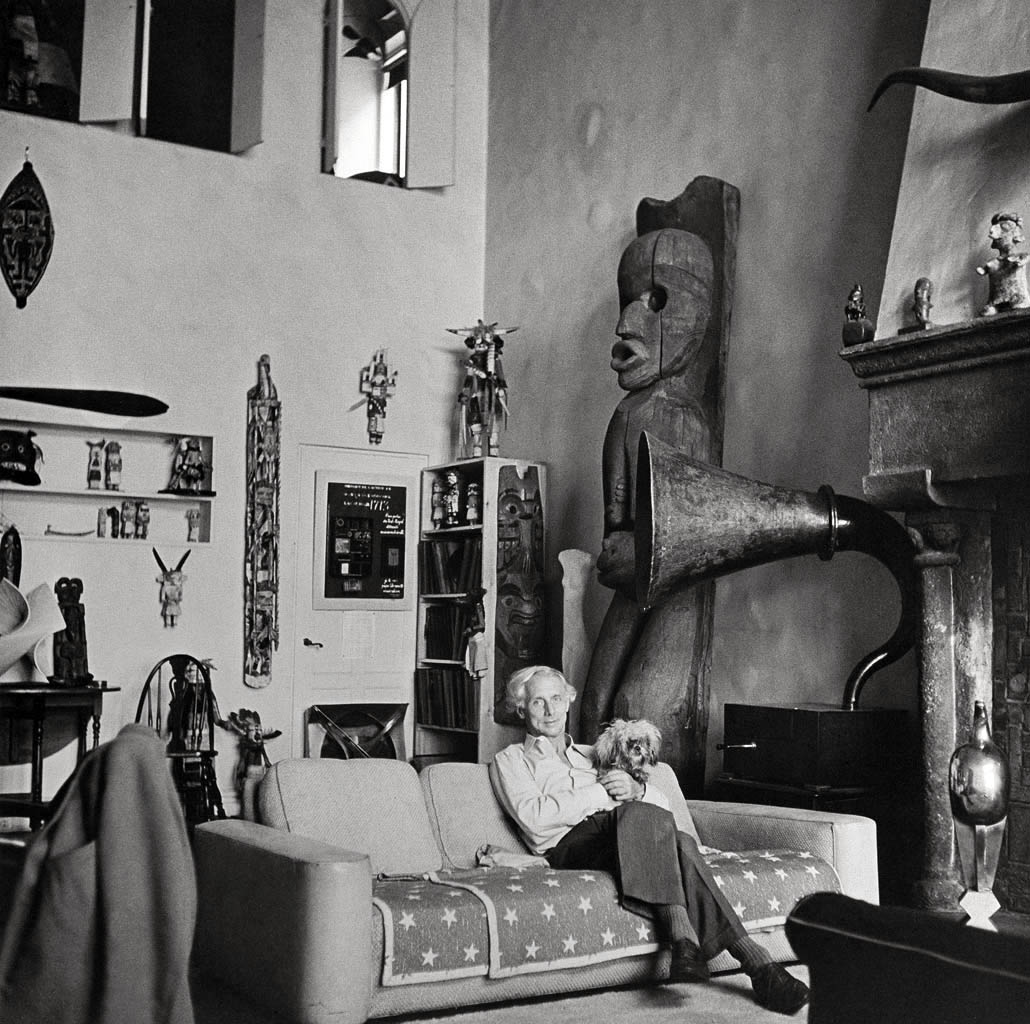
Saturday 10am – 8pm
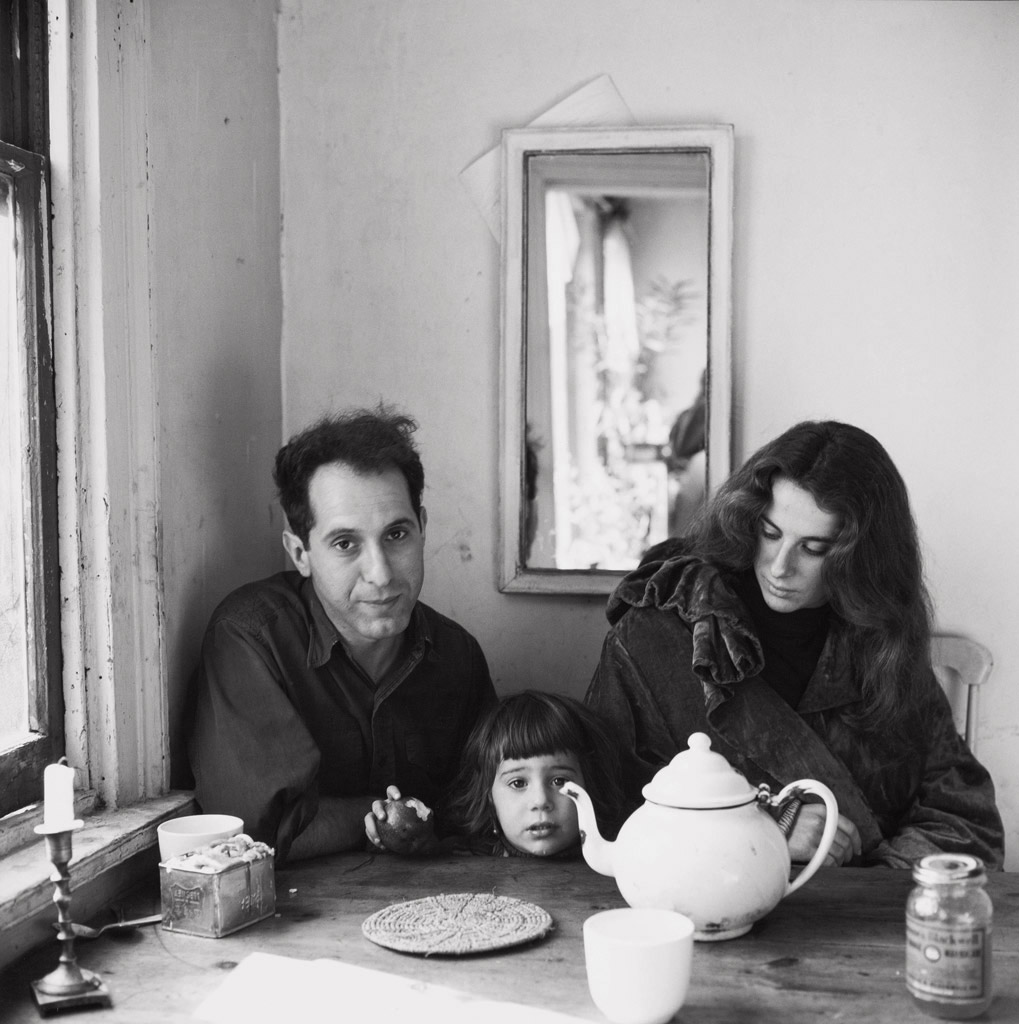
Sunday 10am – 5.30pm
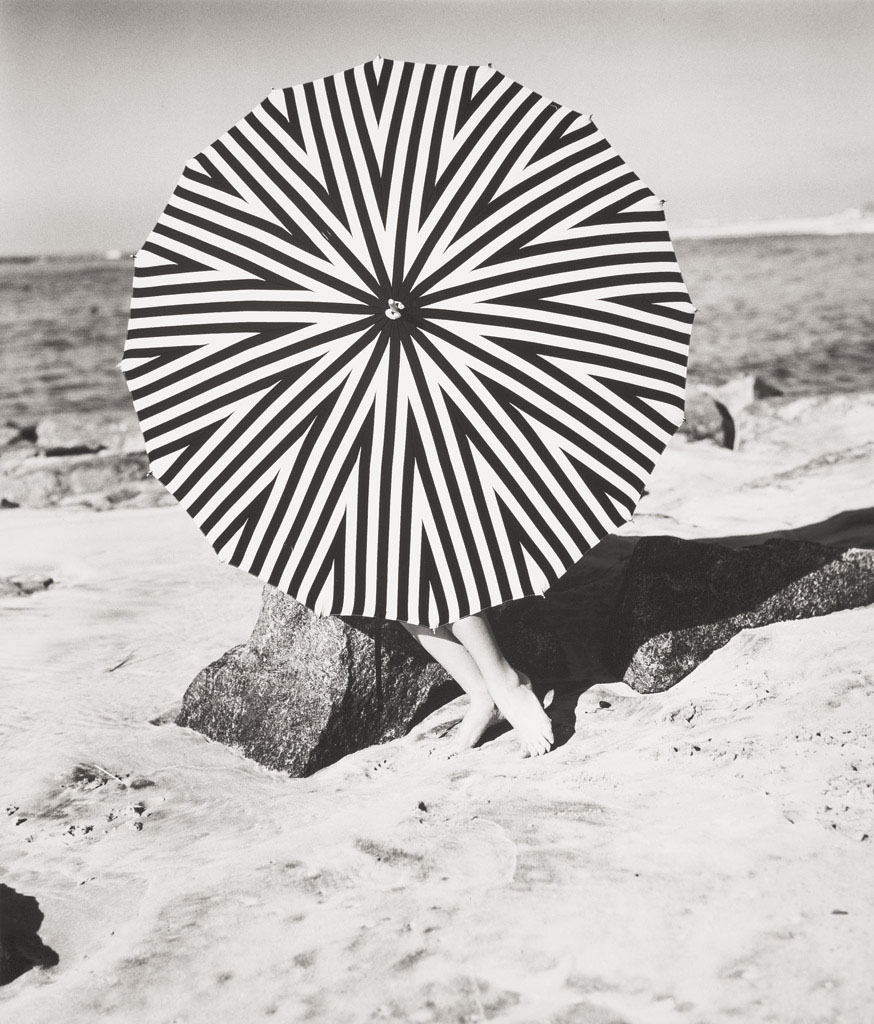
Monday closed
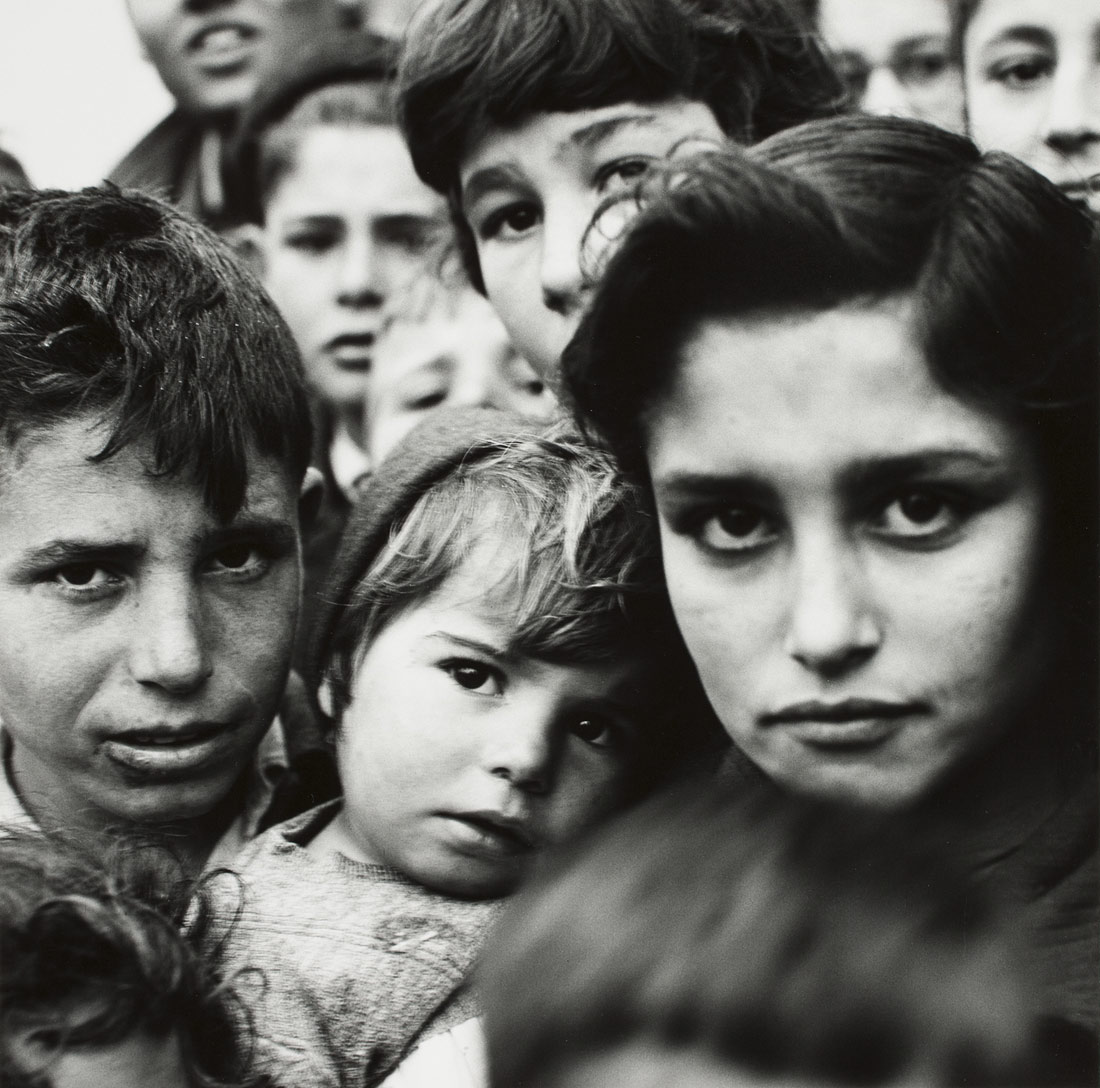
The J. Paul Getty Museum website

LIKE ART BLART ON FACEBOOK

Back to top

Exhibition: ‘A Democracy of Images: Photographs from the Smithsonian American Art Museum’ at the Smithsonian American Art Museum, Washington DC

Exhibition dates: 28th June, 2013 – 5th January, 2014

Browse the exhibition and related works on the exhibition website

Guest curator: Merry Foresta


Unidentified artist. '[Bird in Basin with Thread Spool and Patterned Cloth]' c. 1855 from the exhibition 'A Democracy of Images: Photographs from the Smithsonian American Art Museum' at the Smithsonian American Art Museum, Washington DC, June 2013 - January 2014


Unidentified artist
[Bird in Basin with Thread Spool and Patterned Cloth]
c. 1855
Daguerreotype
Plate: 2 3/4 x 3 1/4 in. (6.9 x 8.2cm)
Smithsonian American Art Museum
Museum purchase from the Charles Isaacs Collection made possible in part by the Luisita L. and Franz H. Denghausen Endowment


The next two weeks sees a lot of exhibitions finish their run on the 5th January 2014.

Here is a bumper posting which contains one of my favourite photographs of all time: Danny Lyon’s Crossing the Ohio River, Louisville (1966, below). From a distance, this looks to be a very interesting exhibition on a large topic, delineated for the viewer into four main sections. The task of the curator cannot have been easy, picking 113 images to represent a “democracy” of images out of a collection of over 7,000 images. Of course there can never be a true “democracy” of images as some will always be more valued within our culture than others. There is a meritocracy in this exhibition which features images by masters of the medium but this is balanced by the inclusion of images by anonymous photographers, little known photographers and vernacular and street photography.

What is most impressive is the specially developed website which includes many images from the different sections of the exhibition. These images are of good quality and, along with relevant text, help the viewer place the images in context. Related content is also suggested from the full photographic collection at The Smithsonian which has been placed online with good image quality. This is a far cry from many exhibitions at state galleries in Australia where there are hardly any dedicated exhibition websites. Most of the photographic collection from these galleries is not available online and if it has been scanned, the image quality is generally poor. How many times have I searched a state gallery or library collection and come up with the answer: “Image not available” ?

Dr Marcus Bunyan


Many thankx to the Smithsonian American Art Museum for allowing me to publish the photographs and text in the posting. Please click on the photographs for a larger version of the image.


“More often, though, the moments, places, people and views that have been collected here feel offhand and stumbled upon, telling a fragmentary, incomplete tale. Sometimes it’s literally a glance, as in “Girl Holding Popsicle,” a 1972 image by Mark Cohen, who rarely even looked through his viewfinder. Other times, it’s more like a long stare, as in William Christenberry’s 1979 “China Grove Church – Hale County, Alabama,” a locale that the Washington-based artist and Alabama native returned to again and again. These 113 pictures are, at the same time, quietly telling, revealing bits of America in oblique, prismatic ways.”


Part of Michael O’Sullivan’s review of the exhibition in The Washington Post.


American Characters

Photographers have captured the texture of everyday life since the medium’s arrival in the United States in 1839. Photographic portraits have made both the iconic and the commonplace serve as stand-ins for all of us, forging a shared language of political and social understanding. In charting the passing parade of history – the faces of the anonymous and the famous; evolving stories of immigration, disenfranchisement, and assimilation; as well as emblematic objects and celebrated landmarks lodged within our collective memory – photographs reveal the complexities of America.
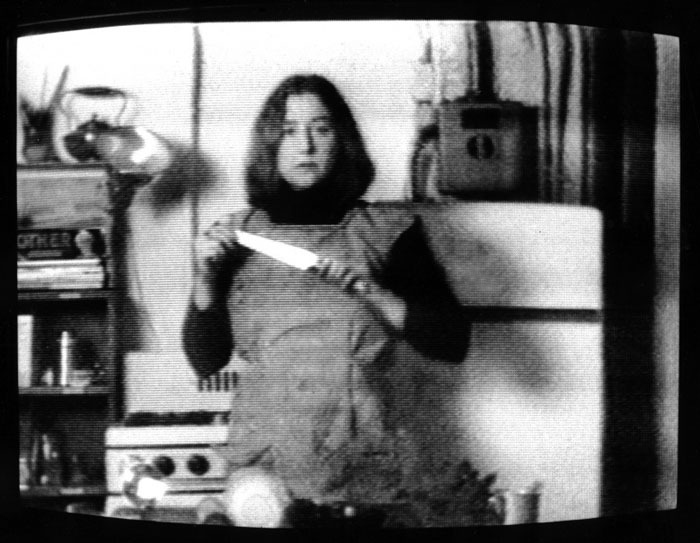
 

Larry Sultan (American, 1946-2009) 'Portrait of My Father with Newspaper' 1988 from the exhibition 'A Democracy of Images: Photographs from the Smithsonian American Art Museum' at the Smithsonian American Art Museum, Washington DC, June 2013 - January 2014


Larry Sultan (American, 1946-2009)
Portrait of My Father with Newspaper
1988
Chromogenic print
Image: 28 5/8 x 34 5/8 in. (72.7 x 87.9cm)
Smithsonian American Art Museum
Gift of Nan Tucker McEvoy
© 1988, Larry Sultan


In Portrait of My Father with Newspaper, Irving Sultan reads the Los Angeles Times as light pours in behind him. This carefully composed portrait reveals the artist’s father almost entirely through reflections and shadows. Thin newsprint shields his body from the camera, while only a vague profile of his face is discernible on the right half of the spread. Prompted by the discovery of a box of home movies, Larry Sultan embarked on an eight-year enquiry into his parents’ lives. He stayed in their home for weeks at a time, interviewing them about their marriage and photographing their domestic activities.


Eugene Richards (American, b. 1944) 'First Communion (Dorchester, Mass.)' 1976


Eugene Richards (American, b. 1944)
First Communion (Dorchester, Mass.)
1976
Gelatin silver print
Image: 8 x 12 in. (20.3 x 30.5cm)
Sheet: 11 x 14 in. (27.9 x 35.6cm)
Smithsonian American Art Museum
Transfer from the National Endowment for the Arts
© 1974, Eugene Richards


Mark Cohen (American, b. 1943) 'Girl Holding Popsicle' 1972, printed 1983


Mark Cohen (American, b. 1943)
Girl Holding Popsicle
1972, printed 1983
Gelatin silver print
Sheet: 14 x 17 in. (35.5 x 43.2cm)
Smithsonian American Art Museum
Gift of Dene and Mel Garbow
© 1972, Mark Cohen


In Girl Holding Popsicle a young girl twists shyly as she poses before a graffiti-inscribed brick wall. Mark Cohen took this photograph spontaneously as he passed through a back alley. Cohen does not hesitate to get assertively close to the strangers he meets in his hometown of Wilkes-Barre, Pennsylvania. Many of his photographs are made without looking through a viewfinder, and so remain a mystery even to Cohen until they are developed.


Unidentified artist. '[Gold Nugget]' c. 1860s


Unidentified artist
[Gold Nugget]
c. 1860s
Albumen silver print
Image: 2 1/8 x 3 5/8 in. (5.4 x 9.2cm)
Sheet: 2 3/8 x 3 7/8 in. (6.1 x 9.8cm) irregular
Smithsonian American Art Museum
Gift of Charles Isaacs and Carol Nigro


Mathew B. Brady (American, 1823-1896) 'Reviewing Stand in Front of the Executive Mansion, Washington, D.C., May, 1865' 1865, printed early 1880s


Mathew B. Brady (American, 1823-1896)
Reviewing Stand in Front of the Executive Mansion, Washington, D.C., May, 1865
1865, printed early 1880s
Albumen silver print
Sheet and image: 6 1/2 x 9 in. (16.5 x 22.9cm)
Smithsonian American Art Museum
Museum purchase through the Julia D. Strong Endowment


Kevin Bubriski (American, b. 1954) 'World Trade Center Series, New York City' 2001


Kevin Bubriski (American, b. 1954)
World Trade Center Series, New York City
2001
Gelatin silver print
Image: 18 x 18 in. (45.7 x 45.7cm)
Smithsonian American Art Museum
Gift of the Consolidated Natural Gas Company Foundation
© 2001, Kevin Bubriski


In the weeks and months following the World Trade Center attacks on September 11, 2001, Kevin Bubriski photographed people who gathered at Ground Zero. Frozen in awe, struck with disbelief, and overcome with loss, people stood before the destroyed building site to confront the horrible tragedy. More than ten years later, Bubriski’s photographs preserve the emotional impact of this infamous day through images of those who witnessed its aftermath first-hand.
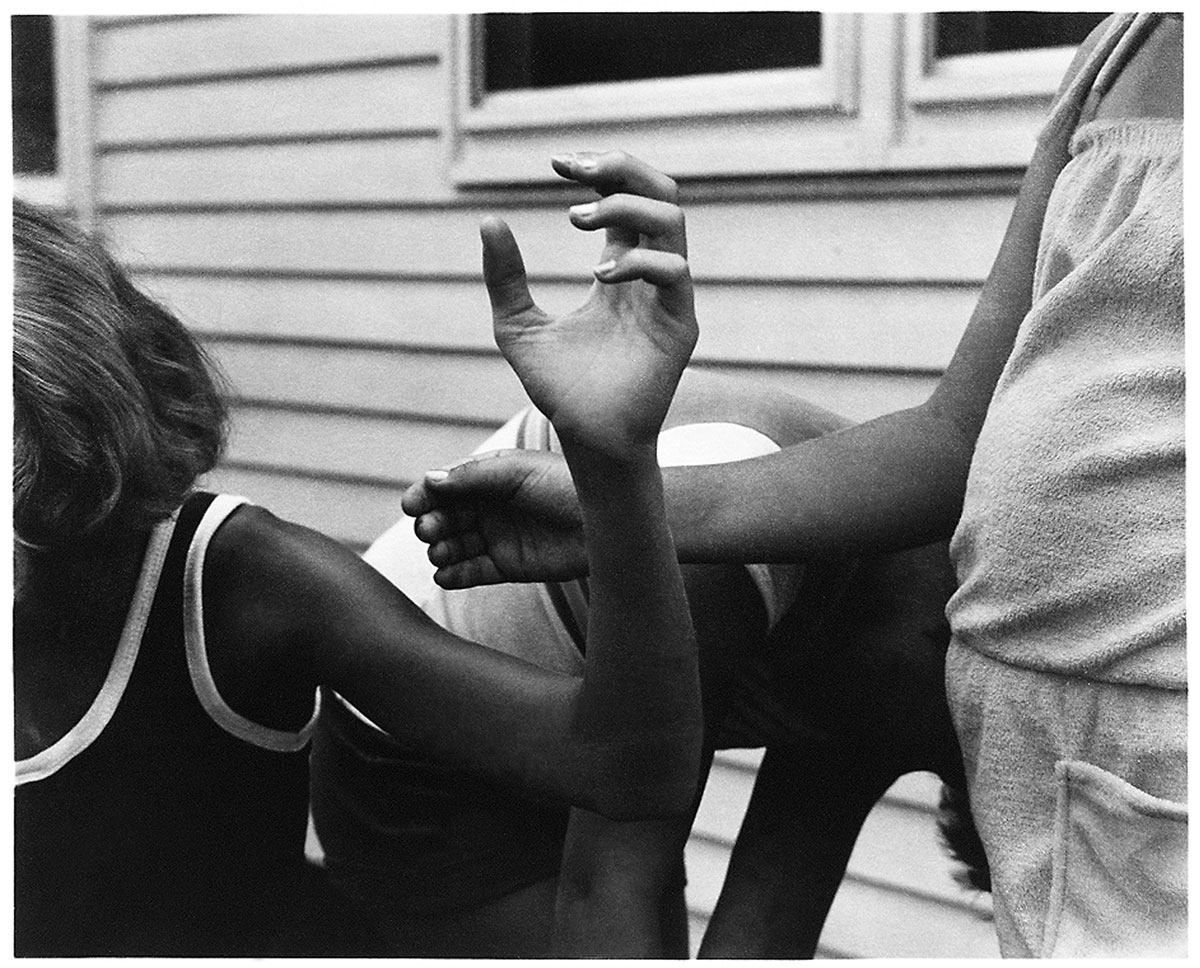
 

Deborah Luster (American, b. 1951) '01-26 Location. 1800 Leonidas Street (Carrollton) Date(s). July 14, 2009 7:55 a.m. Name(s). Brian Christopher Smith (22) Notes. Face up with multiple gunshot wounds' 2008-2012
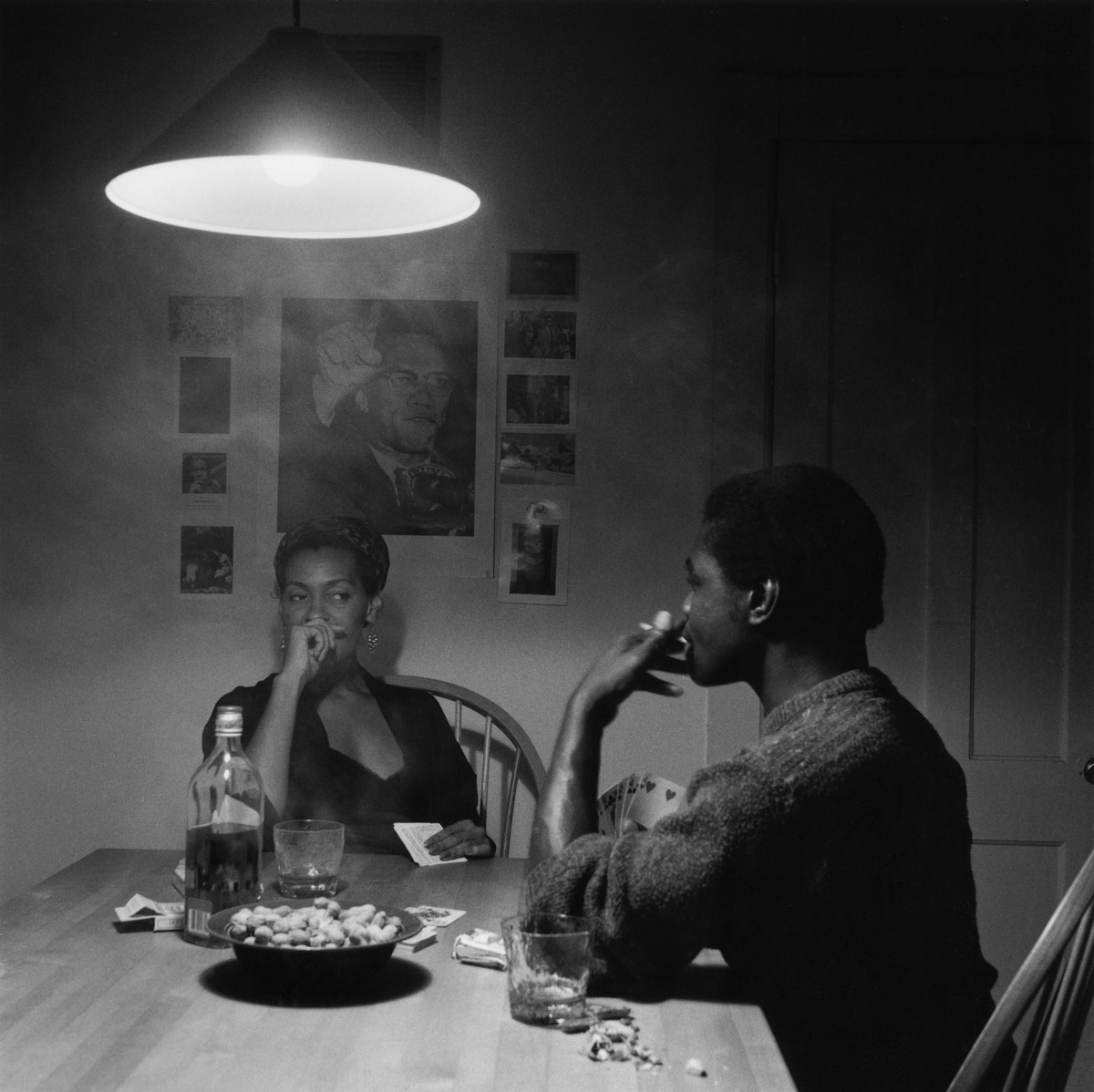
 

Deborah Luster (American, b. 1951)
01-26 Location. 1800 Leonidas Street (Carrollton) Date(s). July 14, 2009 7:55 a.m. Name(s). Brian Christopher Smith (22) Notes. Face up with multiple gunshot wounds
2008-2012
Gelatin silver print
55 x 55 in. (139.7 x 139.7cm)
Smithsonian American Art Museum
Museum purchase through the Luisita L. and Franz H. Denghausen Endowment
© 2010, Deborah Luster


This photograph, from a series that documents contemporary and historical homicide sites in New Orleans, presents Deborah Luster’s interpretation of the last view of the crime victim lying face up on the ground. The title is the entry from the New Orleans Police blotter, but the photograph is Luster’s meditation on looking, seeing, and the power of images to haunt our imagination.


Unidentified artist. '[Two Workmen Polishing a Stove]' c. 1865


Unidentified artist
[Two Workmen Polishing a Stove]
c. 1865
Albumen silver print
Sheet and image: 14 1/8 x 11 in. (35.9 x 28cm)
Smithsonian American Art Museum
Museum purchase from the Charles Isaacs Collection made possible in part by the Luisita L. and Franz H. Denghausen Endowment


Anthony Barboza (American, b. 1944) '"Marvelous" Marvin Hagler, boxer' 1981


Anthony Barboza (American, b. 1944)
“Marvelous” Marvin Hagler, boxer
1981
Gelatin silver print
Image: 13 7/8 x 13 7/8 in. (35.2 x 35.2cm)
Smithsonian American Art Museum
Gift of Kenneth B. Pearl
© 1981, Anthony Barboza


Edward S. Curtis (American, 1868-1952) 'Girl and Jar – San Ildefonso' 1905


Edward S. Curtis (American, 1868-1952)
Girl and Jar – San Ildefonso
1905
Photogravure
16 5/8 x 12 1/4 in. (12.3 x 31.1cm)
Smithsonian American Art Museum
Transfer from the United States Marshal Service of the U.S. Department of Justice


Between 1900 and 1930, Edward S. Curtis traveled across the continent photographing more than seventy Native American tribes. The photographs, compiled into twenty volumes, presented daily activities, customs, and religions of a people he called “a vanishing race.” Curtis hoped to preserve the legacy of Native peoples in lasting images. To this end, Curtis often costumed his subjects and set up scenes, mixing tribal artefacts and traditions to match his romantic vision of the people he studied. In this intimate portrait, a young Tewa woman named Povi-Tamu (“Flower Morning”) balances a large jug with help from a hidden fiber ring. She is from the San Ildefonso Pueblo of New Mexico, which is famed for its rich tradition of fine pottery. Curtis associated the serpentine design of the vessel with the serpent cult, which he noted was central to Tewa life.


Oliver H. Willard (American, active 1850s-1870s, died 1875) 'Portrait of a Young Woman' c. 1857


Oliver H. Willard (American, active 1850s-1870s, died 1875)
Portrait of a Young Woman
c. 1857
Salted paper print
8 7/8 x 6 3/4 in. (22.5 x 17.1cm)
Smithsonian American Art Museum
Museum purchase through the Horace W. Goldsmith Foundation, 1999.29.1


Spiritual Frontier

The earliest photographs made in America describe an awesome land blessed with such an abundance of natural beauty that it seemed heaven sent. Images of waterfalls, mountains, and vast open spaces conveyed the beauty, the grandeur, the sublimity, and dynamics of a great spiritual endeavour. In the nineteenth century photographers pictured wilderness landscapes that symbolised American greatness. More recently, photographers have described a landscape no less romantic, but now recalibrated to account for the interaction of nature and culture.


Eadweard Muybridge (English, 1830-1904) 'Valley of the Yosemite from Union Point' 1872


Eadweard Muybridge (English, 1830-1904)
Valley of the Yosemite from Union Point
1872
Albumen silver print
Sheet: 17 x 21 1/2 in. (43.2 x 54.6cm)
Smithsonian American Art Museum
Gift of Dr. and Mrs. Charles T. Isaacs


Eadweard Muybridge went to great lengths to photograph the best possible views of the West. He chopped down trees if they obstructed his camera, and ventured to “points where his packers refused to follow him.” Muybridge was determined to produce the most comprehensive photographs ever made of Yosemite and the surrounding region. His views were sold widely in both large-format prints and stereograph cards, which are viewed through a device that creates the illusion of three-dimensional space. This allowed Muybridge to transport his audience, if just for a moment, to a faraway place caught on film.


Robert Frank (Swiss, 1924-2019) 'Butte, Montana' 1956, printed 1973


Robert Frank (Swiss, 1924-2019)
Butte, Montana
1956, printed 1973
Gelatin silver print
Image: 8 3/4 x 13 in. (22.2 x 33cm)
Smithsonian American Art Museum
Museum purchase


Robert Adams (American, b. 1937) 'New Housing, Longmont, Colorado' 1973


Robert Adams (American, b. 1937)
New Housing, Longmont, Colorado
1973
Gelatin silver print
Sheet: 6 x 7 5/8 in. (15.1 x 19.3cm)
Smithsonian American Art Museum
Transfer from the National Endowment for the Arts
© 1973, Robert Adams


As both a photographer and writer, Robert Adams is committed to describing the western American landscape as both awe-inspiring and scarred by man. In New Housing, Longmont Colorado, Adams contrasted the vast space of the distant landscape view with a foreground image of the wall of a newly constructed suburban tract house. Adams invites a consideration of the balance between myth and reality and the land as home as well as scenic backdrop.


Charles L. Weed (American, 1824-1903) 'Mirror Lake and Reflections, Yosemite Valley, Mariposa County, California' 1865


Charles L. Weed (American, 1824-1903)
Mirror Lake and Reflections, Yosemite Valley, Mariposa County, California
1865
Albumen silver print
Sheet and image: 15 1/2 x 20 1/4 in. (39.4 x 51.4cm)
Smithsonian American Art Museum
Gift of Dr. and Mrs. Charles T. Isaacs


Like Carleton Watkins, his better-known competitor, Charles Weed recognised the pictorial dividend to be gained by showing Yosemite’s glorious geological features in duplicate, using the valley’s lakes as reflecting ponds. Weed first traveled to what was then known as “Yo-Semite,” in 1859, but with a relatively small camera; he returned in 1865 with a larger model capable of using what were called mammoth plates. Like Watkins, he sold his prints to buyers eager to own a photograph of majestic natural beauty.


Ansel Adams (American, 1902-1984) 'Monolith: The Face of Half Dome, Yosemite Valley' 1926-1927, printed 1927


Ansel Adams (American, 1902-1984)
Monolith: The Face of Half Dome, Yosemite Valley
1926-1927, printed 1927
Gelatin silver print
Sheet: 11 7/8 x 9 7/8 in. (30.2 x 25.1cm)
Smithsonian American Art Museum
Museum purchase
© 2013 The Ansel Adams Publishing Rights Trust


At just over 4,700 feet above the valley, Half Dome is the most iconic rock formation in Yosemite National Park. Adams squeezed the monolith into the frame to emphasise the majesty of its scale and the drama of its cliff. As it thrusts out of the brilliant white snow, Half Dome stands as a symbol of the unspoiled western landscape. Ansel Adams made his first trip to the Sierra Nevada mountain range when he was fourteen years old, and he returned every year until the end of his life, often for month-long stretches. Throughout his career Adams traveled widely – from Hawaii to Maine – to photograph the most picturesque vistas in America. After his death in 1984, a section of the Sierra Nevada was named the Ansel Adams Wilderness in his honour.


John Pfahl (American, 1939-2020) 'Goodyear #5, Niagara Falls, New York' 1989


John Pfahl (American, 1939-2020)
Goodyear #5, Niagara Falls, New York
1989
Chromogenic print
Sheet: 20 x 24 in. (50.8 x 61.0cm)
Smithsonian American Art Museum
Gift of the Consolidated Natural Gas Company Foundation
© 1989, John Pfahl


John Pfahl’s photographs embody the conflict between progress and preservation. Throughout the 1980s he focused on oil refineries and power plants. He chose the sites strategically based on their location in picturesque landscapes, where he observed a “transcendental” connection between industry and nature. In Goodyear #5 a nuclear power plant occupies the horizon. The setting sun provides a romantic colour palette as light filters through clouds of billowing steam. The landscape is reduced to an abstract composition that celebrates colour and texture. Pfahl’s intention with this series, titled Smoke, was to “make photographs whose very ambiguity provokes thought.” This photograph complicates popular notions of power plants by revealing an uncommonly beautiful view of a controversial structure.


A Democracy of Images: Photographs from the Smithsonian American Art Museum celebrates the numerous ways in which photography, from early daguerreotypes to contemporary digital works, has captured the American experience. The photographs presented here are selected from the approximately 7,000 images collected since the museum’s photography program began thirty years ago, in 1983. Ranging from daguerreotype to digital, they depict the American experience and are loosely grouped around four ideas: American Characters, Spiritual Frontier, America Inhabited, and Imagination at Work.

The exhibition’s title is inspired by American poet Walt Whitman’s belief that photography provided America with a new, democratic art form that matched the spirit of the young country and his belief that photography was a quintessentially American activity, rooted in everyday people and ordinary things and presented in a straightforward way. Known as the “poet of democracy,” Whitman wrote after visiting a daguerreotype studio in 1846: “You will see more life there – more variety, more human nature, more artistic beauty… than in any spot we know.” At the time of Whitman’s death, in 1892, George Eastman had just introduced mass market photography when he put an affordable box camera into the hands of thousands of Americans. The ability to capture an instant of lasting importance and fundamental truth mesmerised Americans then and continues to inspire photographers working today. Marking the thirtieth anniversary of the establishment of the museum’s pioneering photography collection, the exhibition examines photography’s evolution in the United States from a documentary medium to a full-fledged artistic genre and showcases the numerous ways in which it has distilled our evolving idea of “America.”

The exhibition features 113 photographs selected from the museum’s permanent collection, including works by Edward S. Curtis, Timothy H. O’SullivanBerenice AbbottDiane ArbusRoy DeCaravaWalker Evans,Irving PennTrevor Paglen, among others, as well as vernacular works by unknown artists. A number of recent acquisitions are featured, including works by Ellen CareyMitch EpsteinMuriel HasbunAlfredo Jaar, Annie Leibovitz, Deborah Luster, and Sally Mann. Landscapes, portraits, documentary-style works from the New York Photo League and images from surveying expeditions sent westward after the Civil War are among the images on display, and explore how photographs have been used to record and catalogue, to impart knowledge, to project social commentary, and as instruments of self-expression.

Photography’s arrival in the United States in 1840 allowed ordinary people to make and own images in a way that had not been previously possible. Photographers immediately became engaged with the life of the emerging nation, the activity of new urban centers, and the possibilities of unprecedented access to the vast western frontier. From the nineteenth to the twentieth century, photography not only captured the country’s changing cultural and physical landscape, but also developed its own language and layers of meaning.

A Democracy of Images: Photographs from the Smithsonian American Art Museum is organised around four major themes that defined American photography. “American Characters” examines the ways in which photographs of individuals, places, and objects become a catalogue of our collective memory and have contributed to the ever-evolving idea of the American character. “Spiritual Frontier” investigates early ideas of a vast, inexhaustible wilderness that symbolised American greatness. “America Inhabited” traces the nation’s rapid industrialisation and urbanisation through images of speed, change, progress, immigration, and contemporary rural, urban, and suburban landscapes. “Imagination at Work” demonstrates how photography’s role of spontaneous witness gradually gave way to contrived arrangement and artistic invention. The exhibition is organised by Merry Foresta, guest curator and independent consultant for the arts. She was the museum’s curator of photography from 1983 to 1999.

Connecting online

A complementary website designed for viewing on tablets includes photographs on view in the exhibition, an expanded selection of works from the museum’s collection and a timeline of American photography. It is available through tablet stations in the exhibition galleries, online, and on mobile devices.”

Press release from the Smithsonian American Art Museum website


America Inhabited

Photography’s early presence in America coincided with the rise of an industrial economy, the growth of major urban population centers, and the fulfilling of what some saw as the Manifest Destiny of spanning the continent from sea to sea. Images of progress and industry, as well as of city and suburbs, quickly added themselves to photography’s catalogue of places and people. Some of these images reflect idealistically, and at times nostalgically, on the beauty and humanity of our own backyards. Others stand as social documents that can be seen as critical and ironic, inviting outrage as well as compassion about the way we now live our lives.


Helen Levitt (American, 1913-2009) 'New York' c. 1942, printed later


Helen Levitt (American, 1913-2009)
New York
c. 1942, printed later
Gelatin silver print
Image: 7 1/8 x 10 1/2 in. (18.1 x 26.6cm)
Smithsonian American Art Museum
Museum purchase
© 1981, Helen Levitt


Caught before they run off into the streets, three masked youngsters pause on their front stoop. Expressive postures and mysterious disguises give this trio a theatrical quality. Helen Levitt, who found poetry in the uninhibited gestures of children, used a right-angle viewfinder to capture boys and girls roaming freely and playing with found objects. Working in New York City during the years surrounding World War II, her photographs show the drama of life that unfolded on the sidewalks of poor and working-class neighbourhoods.


Louis Faurer (American, 1916-2001) 'Broadway, New York, N.Y.' 1949-1950, printed 1980-1981


Louis Faurer (American, 1916-2001)
Broadway, New York, N.Y.
1949-1950, printed 1980-1981
Gelatin silver print
Image: 8 3/8 x 12 9/16 in. (21.3 x 32cm)
Smithsonian American Art Museum
Gift of David L. Davies and John D. Weeden and museum purchase
© Estate of Louis Faurer


Danny Lyon (American, b. 1942) 'Crossing the Ohio River, Louisville' 1966, printed 1985


Danny Lyon (American, b. 1942)
Crossing the Ohio River, Louisville
1966, printed 1985
Gelatin silver print
Image: 8 3/4 x 12 7/8 in. (22.2 x 32.7cm)
Smithsonian American Art Museum
Museum purchase made possible by Mrs. Marshall Langhorne
Photo courtesy Edwynn Houk Gallery


William Eggleston (America, born July 27, 1939) 'Memphis' c. 1970


William Eggleston (American, b. 1939)
Tricycle (Memphis)
About 1975, printed 1980
Dye transfer print
Smithsonian American Art Museum, Gift of Amy Loeserman Klein


An ordinary tricycle is made monumental in this playful colour photograph. Taken from below, it suggests a child’s perspective – elevating this rusty tricycle to a symbol of innocence and freedom. The quiet Memphis suburb in the background typifies the safe neighbourhoods where children could spend hours playing after school. This print was made with the expensive and exacting dye imbibition process, which was typically used for fashion and advertising at the time. Eggleston began experimenting with colour photography in the mid-1960s. Inspired by trips to a commercial photography lab, he developed an approach that imitates the random, imperfect style of amateur snapshots to describe his immediate surroundings combined with a keen interest in the effects of colour.


Tina Barney (American, b. 1945) 'Marina's Room' 1987


Tina Barney (American, b. 1945)
Marina’s Room
1987
Chromogenic print
Sheet: 48 x 60 in. (121.9 x 52.3cm)
Smithsonian American Art Museum
Museum purchase
© 1987, Tina Barney, Courtesy Janet Borden, Inc.


Aaron Siskind (American, 1903-1991) 'Untitled' 1937, printed later


Aaron Siskind (American, 1903-1991)
Untitled
1937, printed later
Gelatin silver print
Sheet: 10 x 14 in. (25.4 x 35.5cm)
Smithsonian American Art Museum
Gift of Tennyson and Fern Schad, courtesy of Light Gallery
© 1940, Aaron Siskind


In this untitled photograph Aaron Siskind focused on the regular grid of boarded-up windows on a derelict tenement building. Once portals into intimate domestic spaces, the windows represent loss in a community plagued by poverty, unemployment, and racial discrimination. Building upon the traditions of social documentary photographers before him, Siskind used his camera to raise public awareness of Harlem’s struggle, even as he created a modernist work of art.


Walker Evans (American, 1903-1975) 'Kitchen Wall, Alabama Farmstead' 1936, printed 1974


Walker Evans (American, 1903-1975)
Kitchen Wall, Alabama Farmstead
1936, printed 1974
Gelatin silver print
Sheet and image: 9 3/8 x 12 in. (23.9 x 30.5cm)
Smithsonian American Art Museum
Gift of Lee and Maria Friedlander


During the summer of 1936, Walker Evans joined writer James Agee in rural Alabama to work on a magazine assignment on cotton farming. Evans and Agee met with three tenant farm families and documented every detail of their experiences. The result, which the magazine declined to publish, was released as the book Let Us Now Praise Famous Men in 1941. It contains some of the most iconic and contentious photographs to document the Great Depression. Kitchen Wall, Alabama Farmstead reads like a modern novel. Every crack in the wood, every speck of paint tells part of the story. Evans drew special attention to the scarcity of cooking tools at the family’s disposal. These everyday utensils illustrate a metaphor for the struggle to meet basic needs.


Judy Fiskin (American, b. 1945) 'Long Beach Pike (broken fence)', from the 'Long Beach, California Documentary Survey Project' 1980


Judy Fiskin (American, b. 1945)
Long Beach Pike (broken fence), from the Long Beach, California Documentary Survey Project
1980
Gelatin silver print
Image: 2 1/2 x 2 1/2 in. (6.2 x 6.2cm)
Smithsonian American Art Museum
Transfer from the National Endowment for the Arts
© 1980, Judy Fiskin


For this series, sponsored by the National Endowment of the Art’s Long Beach Documentary Survey Project, Judy Fiskin focused on the Long Beach Pike, an amusement park that was demolished soon after she made the photographs. By printing in high contrast and restricting the scale of her prints, Fiskin reduced form to its bare essentials. Devoid of superfluous detail, these photographs appear more like conjured images than documents of reality. Judy Fiskin systematically catalogues the world of architecture and design in order to study variations of historical styles. Her series carefully investigate esoteric subjects such as military base architecture, “dingbat” style houses in southern California, and the art of flower arranging.


Berenice Abbott (American, 1898-1991) 'Brooklyn Bridge, Water and Dock Streets, Brooklyn' 1936


Berenice Abbott (American, 1898-1991)
Brooklyn Bridge, Water and Dock Streets, Brooklyn
1936
Gelatin silver print
Sheet: 18 x 14 3/8 in. (45.7 x 36.6cm)
Smithsonian American Art Museum
Transfer from the Evander Childs High School, Bronx, New York through the General Services Administration


Berenice Abbott returned home in 1929 after nearly eight years abroad and found herself fascinated by the rapid growth of New York City. She saw the city as bristling with new buildings and structures which seemed to her as solid and as permanent as a mountain range. Aiming to capture “the past jostling the present,” Abbott spent the next five years on a project she called Changing New York. In Brooklyn Bridge, Water and Dock Streets, Brooklyn, Abbott presented a century of history in a single image. The Brooklyn Bridge, once a marvel of modern engineering, seems dark and heavy compared with the skeletal structure beneath it. The construction site at center suggests the never-ending cycle of death and regeneration. And the Manhattan skyline, veiled and weightless, hangs just out of reach, its shape accommodating the ambitious spirit of American modernism.


Robert Disraeli (American, 1905-1987) 'Cold Day on Cherry Street' 1932


Robert Disraeli (American, 1905-1987)
Cold Day on Cherry Street
1932
Gelatin silver print
Image and sheet: 14 x 11 in. (35.5 x 28cm)
Smithsonian American Art Museum
Museum purchase made possible by Mr. and Mrs. G. Howland Chase, Mrs. James S. Harlan (Adeline M. Noble Collection), Lucie Louise Fery, Berthe Girardet, and Mrs. George M. McClellan
© 1932, Robert Disraeli


Imagination at Work

Nineteenth-century French commentator Alexis de Tocqueville observed that in America, nothing is ever quite what it seems. Yet the idea that “seeing is believing” is deeply ingrained in the American character. By yoking together style and subject under the guise of the real, today’s photographers borrow from photography’s rich past while embracing the conceptual framework of contemporary art. They read reality as something on the surface of a picture or, more complexly, as something located in the mind of its beholder.


Sonya Noskowiak (American born Germany, 1900-1975) 'Calla Lily' c. 1930s


Sonya Noskowiak (American born Germany, 1900-1975)
Calla Lily
c. 1930s
Gelatin silver print
Sheet: 7 3/8 x 9 3/4 in. (18.8 x 24.7cm)
Smithsonian American Art Museum
Museum purchase made possible through Deaccession Funds


Ray K. Metzker (American, 1931-2014) 'Composites: Philadelphia (Car and Street Lamp)' 1966


Ray K. Metzker (American, 1931-2014)
Composites: Philadelphia (Car and Street Lamp)
1966
Gelatin silver prints
Image: 25 3/8 x 17 3/4 in. (64.5 x 45cm)
Smithsonian American Art Museum
Museum purchase
© 1966, Ray K. Metzker


Ray Metzker’s Composites series, begun in 1964, connected in a dramatic fashion his interests in contrasts of light and shadow, his strong sense of design, and his earlier explorations of the multiple image. Metzker studied at Chicago’s Institute of Design, where a rigorously formal, problem-solving approach to photography was taught. For this series he assembled grids of individual photographs to create complex image-fields. When viewed from a distance, this work reads as an abstract, rhythmic pattern of light and dark. On closer inspection, however, many crisply descriptive images are revealed. The Composites function somewhat like short filmstrips. The mystery of these brief narratives is exaggerated by the repetitive design and provides a unique opportunity, in Metzker’s words, “to deal with complexity of succession and simultaneity, of collected and related moments.”


Irving Penn (American, 1917-2009) 'Mud Glove – New York' 1975, printed 1976


Irving Penn (American, 1917-2009)
Mud Glove – New York
1975, printed 1976
Platinum-palladium print
Sheet and image: 29 3/4 x 22 1/4 in. (75.5 x 56.5cm)
Smithsonian American Art Museum
Gift of the artist


Irving Penn was one of the most important and influential photographers of the twentieth century. In a career that spanned almost seventy years, Penn worked across multiple genres, from celebrity portraits to fashion, from still lives to images of native cultures in remote places of the world. Throughout his career Penn also worked on a series of photographs of discarded objects: things that had been lost, neglected, or misused. Printed in platinum, these detailed photographs of objects such as a lost glove found in the gutter, are Penn’s photographic memento mori, offering beauty compromised by age or disuse.


Edward Weston (American, 1886-1958) 'Pepper no. 30' 1930


Edward Weston (American, 1886-1958)
Pepper no. 30
1930
Gelatin silver print
Sheet: 9 1/2 x 7 1/2 in. (24.3 x 19.2cm)
Smithsonian American Art Museum
Museum purchase


Imogen Cunningham (American, 1883-1976) 'Auragia' 1953, printed c. 1960s


Imogen Cunningham (American, 1883-1976)
Auragia
1953, printed c. 1960s
Gelatin silver print
Sheet and image: 11 1/8 x 8 3/4 in. (28.3 x 22.2cm)
Smithsonian American Art Museum
Gift of Charles Isaacs and Carol Nigro


Ellen Carey (American, b. 1952) 'Dings and Shadows' 2012


Ellen Carey (American, b. 1952)
Dings and Shadows
2012
Chromogenic print
Sheet and image: 40 x 30 in. (101.6 x 76.2cm)
Smithsonian American Art Museum
Gift of Linda Cheverton Wick and Walter Wick
© 2012, Ellen Carey


Ellen Carey created the series she calls Dings and Shadows by exposing photosensitive paper to light projected through primary and complementary colour filters. The artist first folds and crushes paper; then after exposing the paper to light from a colour enlarger, flattens it out again for processing. In doing so, Carey dissects the process of developing film, and evokes the hand-crafted nature of early photographic techniques.


Some images from the Timeline on the website

1843

Daguerreotypists Albert S. Southworth and Josiah Johnson Hawes begin a partnership, establishing Southworth & Hawes as the most highly regarded portrait studio in Boston, Mass. The studio caters to the city’s elite, and is visited by Charles Dickens, Ralph Waldo Emerson, and Oliver Wendell Holmes, among many other influential people of the time.


Albert Sands Southworth (American, 1811-1894) and Josiah Johnson Hawes (American, 1808-1901) 'A Bride and Her Bridesmaids' 1851


Albert Sands Southworth (American, 1811-1894) and Josiah Johnson Hawes (American, 1808-1901)
A Bride and Her Bridesmaids
1851
Daguerreotype
Smithsonian American Art Museum
Museum purchase made possible by Walter Beck


1853

The New York Daily Tribune estimates that in the United States, three million daguerreotypes are being produced annually.


Unidentified artist. 'Mother and Son' c. 1855


Unidentified artist
Mother and Son
c. 1855
Daguerreotype with applied colour
Smithsonian American Art Museum
Museum purchase from the Charles Isaacs Collection made possible in part by the Luisita L. and Franz H. Denghausen Endowment


1857

Julian Vannerson and Samuel Cohner make the first systematic photographs of Native American delegations to visit Washington, D.C. They photograph ninety delegates representing thirteen tribes who conduct treaty and other negotiations with government officials.


Julian Vannerson (American, 1827-1875) 'Shining Metal' 1858


Julian Vannerson (American, 1827-1875)
Shining Metal
1858
Salted paper print
Smithsonian American Art Museum
Museum purchase from the Charles Isaacs Collection made possible in part by the Luisita L. and Franz H. Denghausen Endowment


1861

American Civil War begins with shots fired on Fort Sumter by Confederate troops. Portrait photographer Mathew Brady is given permission by President Abraham Lincoln to photograph the First Battle of Bull Run, but comes so close to the battle that he narrowly avoids capture. Using paid assistants Alexander Gardner, Timothy O’Sullivan, George N. Barnard, and others, Brady’s studio makes thousands of photos of the sites, material, and people of the war. Civilian free-lance photographer Egbert Guy Fowx sells numerous negatives to Brady’s studio, which publishes and copyrights many of them. Many other images are credited to Fowx, including this group of Union officers.


Egbert Guy Fowx (American, 1821-1889) 'New York 7th Regiment Officers' c. 1863


Egbert Guy Fowx (American, 1821-1889)
New York 7th Regiment Officers
c. 1863
Salted paper print
Smithsonian American Art Museum
Museum purchase from the Charles Isaacs Collection made possible in part by the Luisita L. and Franz H. Denghausen Endowment


1867

Eadweard Muybridge begins trip to photograph in Yosemite Valley. He publishes his photographs under the name “Helios,” which is also the name of his San Francisco studio. An exhibition of more than 300 photographic portraits of Native American delegates to Washington, D.C., opens in the Smithsonian Castle. Clarence R. King begins direction of the U.S. Geological Expedition of the Fortieth Parallel, appointing Timothy O’Sullivan as the official photographer. Photographer Carleton Watkins joins the survey in 1871.


Timothy H. O'Sullivan (American born Ireland, 1840-1882) 'Tufa Domes, Pyramid Lake, Nevada' 1867


Timothy H. O’Sullivan (American born Ireland, 1840-1882)
Tufa Domes, Pyramid Lake, Nevada
1867
Albumen silver print
Smithsonian American Art Museum
Museum purchase from the Charles Isaacs Collection made possible in part by the Luisita L. and Franz H. Denghausen Endowment


1869

Andrew J. Russell’s album, The Great West Illustrated in a Series of Photographic Views across the Continent; Taken along the Line of the Union Pacific Railroad from Omaha, Nebraska, Volume I, is published. George M. Wheeler begins direction of the United States Geological Surveys West of the 100th Meridian for the U.S. Army Corps of Engineers. Wheeler makes fourteen trips to the West over the next eight years. Photographer Timothy O’Sullivan accompanies him in 1871, 1873, and 1874.


Andrew Joseph Russell (American, 1829-1902) 'Sphinx of the Valley' 1869


Andrew Joseph Russell (American, 1829-1902)
Sphinx of the Valley
1869
Albumen silver print
Smithsonian American Art Museum
Museum purchase from the Charles Isaacs Collection made possible in part by the Luisita L. and Franz H. Denghausen Endowment


1967

The Friends of Photography is founded in Carmel, California, by Ansel Adams, Beaumont and Nancy Newhall, Brett Weston, and others, with the aim of promoting creative photography and supporting its practitioners. It remains in existence until 2001.


Brett Weston (American, 1911-1993) 'Untitled (Snow Covered Mountains)' 1973


Brett Weston (American, 1911-1993)
Untitled (Snow Covered Mountains)
1973
Gelatin silver print
Smithsonian American Art Museum
Transfer from the National Endowment for the Arts
© 1973, Brett Weston


1975

New Topographics: Photographs of a Man-Altered Landscape opens at the International Museum of Photography in Rochester, N.Y. It includes photographs by Robert Adams, Lewis Baltz, Bernd and Hilla Becher, Joe Deal, Frank Gohlke, Nicholas Nixon, John Schott, Stephen Shore, and Henry Wessel Jr.


Frank Gohlke (American, b. 1942) 'Grain Elevator, Dumas, Texas, 1973' 1973, printed 1994


Frank Gohlke (American, b. 1942)
Grain Elevator, Dumas, Texas, 1973
1973, printed 1994
Gelatin silver print
Smithsonian American Art Museum, Museum purchase through the Luisita L. Franz H. Denghausen Endowment
© 1973, Frank Gohlke


Smithsonian American Art Museum
8th and F Streets, N.W.
Washington, D.C. 20004

Opening hours:
11.30am – 7.00pm daily

Smithsonian American Art Museum website

A Democracy of Images website

LIKE ART BLART ON FACEBOOK

Back to top

Videos: William Klein

December 2013


William Klein: In Pictures from Tate Modern


William Klein – Photographer Technique & Process

William Klein talks about his works, technique and process.

William Klein (1928-2022) is an American-born French photographer and filmmaker noted for his ironic approach to both media and his extensive use of unusual photographic techniques in the context of photojournalism and fashion photography. He was ranked 25th on Professional Photographer’s list of 100 most influential photographers.

Klein trained as a painter, studying under Fernand Léger and found early success with exhibitions of his work. He soon moved on to photography and achieved widespread fame as a fashion photographer for Vogue and for his photo essays on various cities. He has directed feature-length fiction films, numerous short and feature-length documentaries and has produced over 250 television commercials.

He has been awarded the Prix Nadar in 1957, the Royal Photographic Society’s Centenary Medal and Honorary Fellowship (HonFRPS) in 1999, and the Outstanding Contribution to Photography Award at the Sony World Photography Awards in 2012.


LIKE ART BLART ON FACEBOOK

Back to top

Exhibition: ‘Color! American Photography Transformed’ at the Amon Carter Museum of American Art, Fort Worth, Texas

Exhibition dates: 5th October, 2013 – 5th January, 2014

Curator: John Rohrbach, Senior Curator of Photographs at the Amon Carter Museum of American Art


Alex Prager (American, b. 1979) 'Crowd #1 (Stan Douglas)' 2010


Alex Prager (American, b. 1979)
Crowd #1 (Stan Douglas)
2010
Dye coupler print
© Alex Prager, courtesy of the artist and Yancey Richardson Gallery


A very big subject to cover in one exhibition.

Marcus


Many thankx to the Amon Carter Museum of American Art for allowing me to publish the photographs in the posting. Please click on the photographs for a larger version of the image.


Jack Delano (American, 1914-1997) 'Chopping cotton on rented land near White Plains, Greene County, Georgia, 1941' 1941


Jack Delano (American, 1914-1997)
Chopping cotton on rented land near White Plains, Greene County, Georgia, 1941
1941
Inkjet print, 2013
Courtesy the Library of Congress


Laura Gilpin (American, 1891-1979) 'Still Life with Peaches' 1912


Laura Gilpin (American, 1891-1979)
Still Life with Peaches
1912
Lumière Autochrome
© 1979 Amon Carter Museum of American Art, Fort Worth, Texas


Jan Groover (American, 1943-2012) 'Untitled' 1978


Jan Groover (American, 1943-2012)
Untitled
1978
Dye coupler print
Amon Carter Museum of American Art, Fort Worth, Texas
© 1978 Jan Groover


Unknown photographer. 'Untitled (Woman with two daughters)' c. 1850s


Unknown photographer 
Untitled (Woman with two daughters)
c. 1850s
Salted paper print with applied color
Amon Carter Museum of American Art


Gregory Crewdson (American, b. 1962) 'Untitled (Dylan on the Floor)' from the 'Twilight Series' 1998-2002


Gregory Crewdson (American, b. 1962)
Untitled (Dylan on the Floor)
1998-2002
From the Twilight Series
Dye coupler print
© Gregory Crewdson, Courtesy Gagosian Gallery


On October 5, the Amon Carter Museum of American Art opens Color! American Photography Transformed, a compelling examination of how colour has changed the very nature of photography, transforming it into today’s dominant artistic medium. Color! includes more than 70 exceptional photographs by as many photographers and is on view through January 5, 2014.

“Color is so integral to photography today that it is difficult to remember how new it is or realise how much it has changed the medium,” says John Rohrbach, senior curator of photographs.

The exhibition covers the full history of photography, from 1839, when Frenchman Louis-Jacques-Mandé Daguerre (1787-1851) introduced his daguerreotype process, to the present. From the start, disappointed that photographs could only be made in black and white, photographers and scientists alike sought with great energy to achieve colour. Color! begins with a rare direct-colour photograph made in 1851 by Levi L. Hill (1816-1865), but explains how Hill could neither capture a full range of colour nor replicate his achievement. It then shows finely rendered hand-coloured photographs to share how photographers initially compensated for the lack of colour.

When producing colour photographs became commercially feasible in 1907 in the form of the glass-plate Autochrome, leading artists like Alfred Stieglitz (1864-1946) were initially overjoyed, according to Rohrbach. Color! offers exquisite examples of their work even as it explains their ultimate rejection of the process because it was too difficult to display and especially because they felt it mirrored human sight too closely to be truly creative.

“Although many commercial photographers embraced colour photography over succeeding decades, artists continued to puzzle over the medium,” Rohrbach explains. Color! reveals that many artists from Richard Avedon (1923-2004) to Henry Holmes Smith (1909-1986) tried their hand at making colour photographs through the middle decades of the 20th century, and it shows the wide range of approaches they took to colour. It also shares the background debates among artists and photography critics over how to employ colour and even whether colour photographs could have the emotional force of their black-and-white counterparts.

Only in 1976, when curator John Szarkowski at the Museum of Modern Art in New York heralded the young Memphis photographer William Eggleston’s (b. 1939) snapshot-like colour photographs as the solution to artful colour, did fine art colour photography gain full acceptance.

“Eggleston revealed how colour can simultaneously describe objects and stand apart from those objects as pure hue,” Rohrbach says. “In so doing, he successfully challenged the longstanding conception of photography as a medium that found its calling on close description.”

Color! illustrates through landmark works by Jan Groover (1943-2012), Joel Meyerowitz (b. 1938) and others the blossoming of artists’ use of colour photography that followed in the wake of Szarkowski’s celebration of Eggleston. It also reveals artists’ gradual absorption of the notion that colour could be used flexibly to critique cultural mores and to shape stories. In this new colour world, recording the look of things was important, but it was less important than conveying a message about life. In this important shift, led by artists as diverse as Andres Serrano (b. 1950) and Laurie Simmons (b. 1949), the exhibition explains, photography aligned itself far more closely with painting.

Color! shows how the rise of digital technologies furthered this transformation, as photographers such as Gregory Crewdson (b. 1962), Richard Misrach (b. 1949) and Alex Prager (b. 1979) have explicitly embraced the hues, scale, and even subjects of painting and cinema.

“Photography still gains its power and wide popularity today from its ability to closely reflect the world,” explains Rohrbach, “but Color! reveals how contemporary artists have been using reality not as an end unto itself, but as a jumping off point for exploring the emotional and cultural power of colour, even blurring of line between record and fiction to make their points. These practices, founded on colour, have transformed photography into the dominant art form of today even as they have opened new questions about the very nature of the medium.”

The exhibition will include an interactive photography timeline enabling visitors to contribute to the visual dialogue by sharing their own colour images. The photographs will be displayed along the timeline and on digital screens in the museum during the exhibition to illustrate how quantity, format and colour quality have evolved over time.

“By telling the full story of colour photography’s evolution, the exhibition innovatively uncovers the fundamental change that colour has brought to how photographers think about their medium,” says Andrew J. Walker, museum director. “The story is fascinating and the works are equally captivating. Photography fans and art enthusiasts in general will revel in the opportunity to see works by this country’s great photographers.

Press release from the Amon Carter Museum of American Art website


Patrick Nagatani (American, b. 1945) and Andree Tracey (American, b. 1948) 'Alamogordo Blues' 1986


Patrick Nagatani (American, b. 1945) and Andree Tracey (American, b. 1948)
Alamogordo Blues
1986
Dye diffusion print
Center for Creative Photography, University of Arizona
© Patrick Nagatani and Andree Tracey


Laurie Simmons (American, b. 1949) 'Woman/Red Couch/Newspaper' 1978


Laurie Simmons (American, b. 1949)
Woman/Red Couch/Newspaper
1978
Silver dye-bleach print
Los Angeles County Museum of Art, Ralph M. Parsons Fund
© Laurie Simmons


Sandy Skoglund (American, b. 1946) 'Revenge of the Goldfish, 1980' 1980


Sandy Skoglund (American, b. 1946)
Revenge of the Goldfish, 1980
1980
Silver dye-bleach print
St. Louis Art Museum, Gift of Mr. and Mrs. Fielding Lewis Holmes
© 1981 Sandy Skoglund


Mark Cohen (American, b. 1943) 'Boy in Yellow Shirt Smoking' 1977


Mark Cohen (American, b. 1943)
Boy in Yellow Shirt Smoking
1977
Dye coupler print
Courtesy the artist and ROSEGALLERY
© Mark Cohen


John F. Collins (American, 1888?-1988) 'Tire' 1938


John F. Collins (American, 1888?-1988)
Tire
1938
Silver dye-bleach print
Courtesy Howard Greenberg Gallery


Richard Misrach (American, b. 1949) 'Paradise Valley (Arizona), 3.22.95, 7:05 P.M.' 1995


Richard Misrach (American, b. 1949)
Paradise Valley (Arizona), 3.22.95, 7:05 P.M.
1995
Dye coupler print
© Richard Misrach, courtesy Fraenkel Gallery, San Francisco, Marc Selwyn Fine Art, Los Angeles and Pace/MacGill Gallery, NY


Henry Holmes Smith (American, 1909-1986) 'Tricolor Collage on Black' 1946


Henry Holmes Smith (American, 1909-1986)
Tricolor Collage on Black
1946
Dye imbibition print over gelatin silver print
Indiana University Art Museum, Henry Holmes Smith Archive
© Smith Family Trust


Mitch Epstein (American, b. 1952) 'Flag' 2000


Mitch Epstein (American, b. 1952)
Flag
2000
Dye coupler print
Private collection
© Black River Productions


Trevor Paglen (American, b. 1974) 'The Fence (Lake Kickapoo, Texas)' 2010


Trevor Paglen (American, b. 1974)
The Fence (Lake Kickapoo, Texas)
2010
Dye coupler print, 2011
Amon Carter Museum of American Art, Fort Worth, Texas
© Trevor Paglen


Joaquin Trujillo (American, b. 1976) 'Jacky' 2003


Joaquin Trujillo (American, b. 1976)
Jacky
2003
From the series Los Niños
Inkjet print, 2011
Amon Carter Museum of American art, purchase with funds provided by the Stieglitz Circle of the Amon Carter Museum of American Art
© Joaquin Trujillo 2013


James N. Doolittle (American, 1889-1954) 'Ann Harding' c. 1932


James N. Doolittle (American, 1889-1954)
Ann Harding
c. 1932
Tricolor carbro print
Nelson-Atkins Museum of Art, Kansas City, MO


Amon Carter Museum
3501 Camp Bowie Boulevard
Fort Worth, TX 76107-2695

Opening hours:
Tuesday, Wednesday, Friday, Saturday:
 10am – 5pm
Thursday: 10am – 8pm
Sunday: 12am – 5pm
Closed Mondays and major holidays.

Amon Carter Museum of American Art website

LIKE ART BLART ON FACEBOOK

Back to top