Exhibition: ‘FAKE! Early Photo Collages and Photomontages’ at Rijksmuseum, Amsterdam

Exhibition dates: 6th February – 25th May, 2026

Curator:  Hans Rooseboom, Curator of Photography at the Rijksmuseum
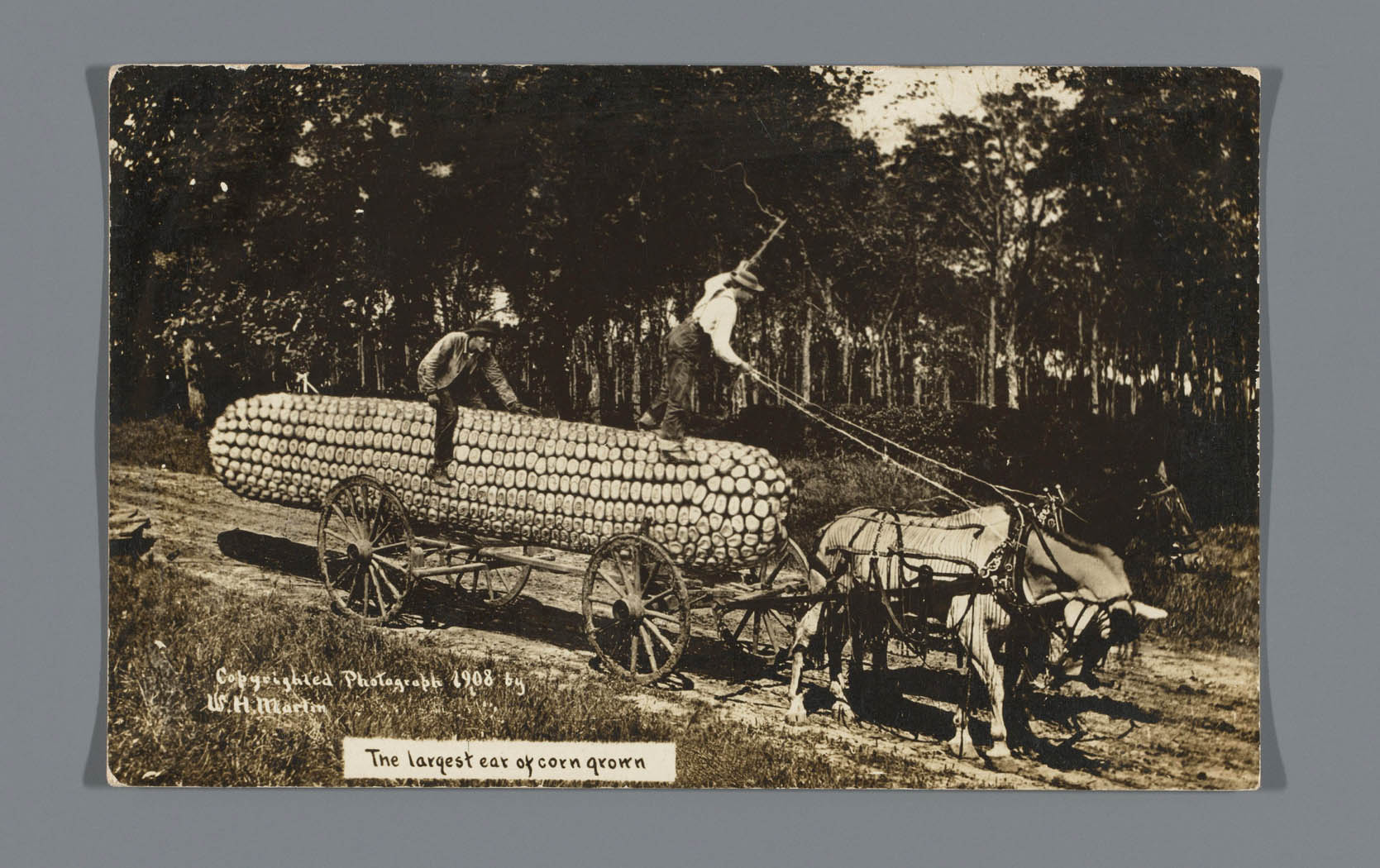
 

W.H. Martin (American, 1865-1940) (photographer) The North American Post Card Co. (publisher) 'The largest ear of corn grown' 1908 from the exhibition 'FAKE!' At the Rijksmuseum, Amsterdam, February - May, 2026


W.H. Martin (American, 1865-1940)(photographer)
The North American Post Card Co. (publisher)
The largest ear of corn grown
1908
Postcard
Rijksmuseum
Purchase 2018


William H. “Dad” Martin of Ottawa, Kan., is considered to be the father of the exaggerated postcard. Some of his better work featured huge ears of corn, giant apples and peaches, stalks of wheat taller than any man and massive pumpkins uprooting a farmstead. Such cards were hugely successful throughout the Great Plains states where agriculture was the life’s blood of rural America.

W.H. Martin moved to Ottawa in 1899 to serve as an apprentice under photographer E.H. Corwin. Eight years later, Martin purchased Corwin’s studio and began crafting the tall tale postcards that would eventually make him a millionaire.


To fake or not to fake, that is the question…

Since the very inception of photography people have been making “fake” photographs. Indeed, one of the very first self-portraits ever taken, Hippolyte Bayard’s Le Noyé [The Drowned Man], made on October 18, 1840, is of the artist experimenting, using himself as a subject, posing himself in a fake suicide, expressing frustration “about his position in the photography world and about how little respect he felt he had been given in comparison to fellow photographer Louis Daguerre.”

There are many photographs pre digital manipulation that can be seen as “fake”1 but to me this is a disingenuous word, a sensationalist word, to describe photographs that basically undermine the photograph and its link to truth, the link of the photograph to the indexicality of its referent. But what is “truth” in a photograph?

Photographs have always deceived,2 depending on where you place the camera, which point of view you decide to capture and which to exclude, and when you decide to press the shutter … or what collage of photographs you put together and in what order. Thus, from one point of view, there is no such thing as a fake photograph, just different versions of (de)constructed realities.

Conversely you could argue that ALL photographs are “fake” as the photograph is only, can only ever be, a symbolic representation of a reality that never existed in the first place (“Ceci n’est pas une pipe”).

Photographs are tricky little things.

In the case of this exhibition, early photo collages and photomontages are seen as “fake” only in terms of their relation to a certain version of a photographic reality. They are not fake in terms of the reality of their construction, produced in the IMAGINATION of the artist, expressed in the final image. In those terms they are as real as the surrealist interpretation of dreams, or cubist dissection of the image plane. And we don’t call those photographs or paintings “fake”.

Today, photography is delimited in terms of what a photograph can be. And it has been so since the very beginning of the medium if only we look hard enough. Dreams or nightmares, impossible, absurd or humorous scenes, believable and unbelievable: there is no such thing as genuine or fake – only the space between – expressed in pictorial compositions governed by the creativity and breadth of your imagination.

Dr Marcus Bunyan


1/ This exhibition adds to a previous exhibition on the subject titled Faking It: Manipulated Photography Before Photoshop staged at The Metropolitan Museum of Art, New York, October 2012 – January 2013 and The National Gallery of Art, Washington, February – May, 2013

2/ “Fake” describes something not genuine, real, or authentic, intended to look like something else to deceive, cheat, or pretend.

.
Many thankx to the Rijksmuseum for allowing me to publish the photographs in the posting. Please click on the photographs for a larger version of the image.


“… photomontage is the fabrication of a composite but single image made up of a number of distinct photographic parts. It “results from the association of photographic elements, which have diverse origins, natures and proportions, combined in such a way as to express with force a particular idea.””


José Pierre, “Hannah Höch et le photomontage des Dadaists berhnois,” in Techniques Graphiques, no. 66 (November – December 1966), p. 352 quoted in Robert A. Sobieszek. “Composite Imagery and the Origins of Photomontage, Part 1: The Naturalistic Strain,” in Artforum, Vol. 17, No. 1, September 1978 on the Artforum website [Online] Cited 18/02/2026
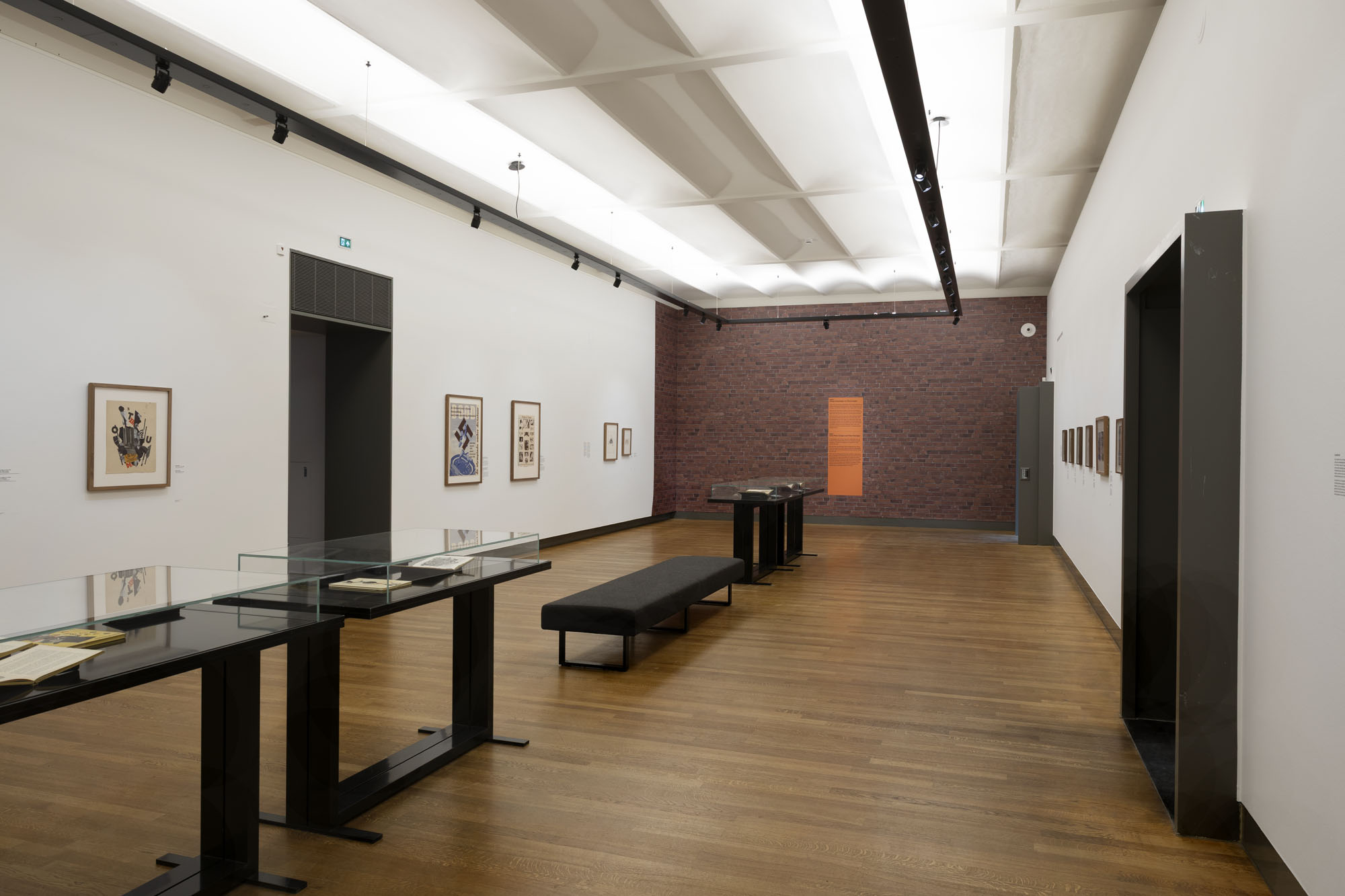
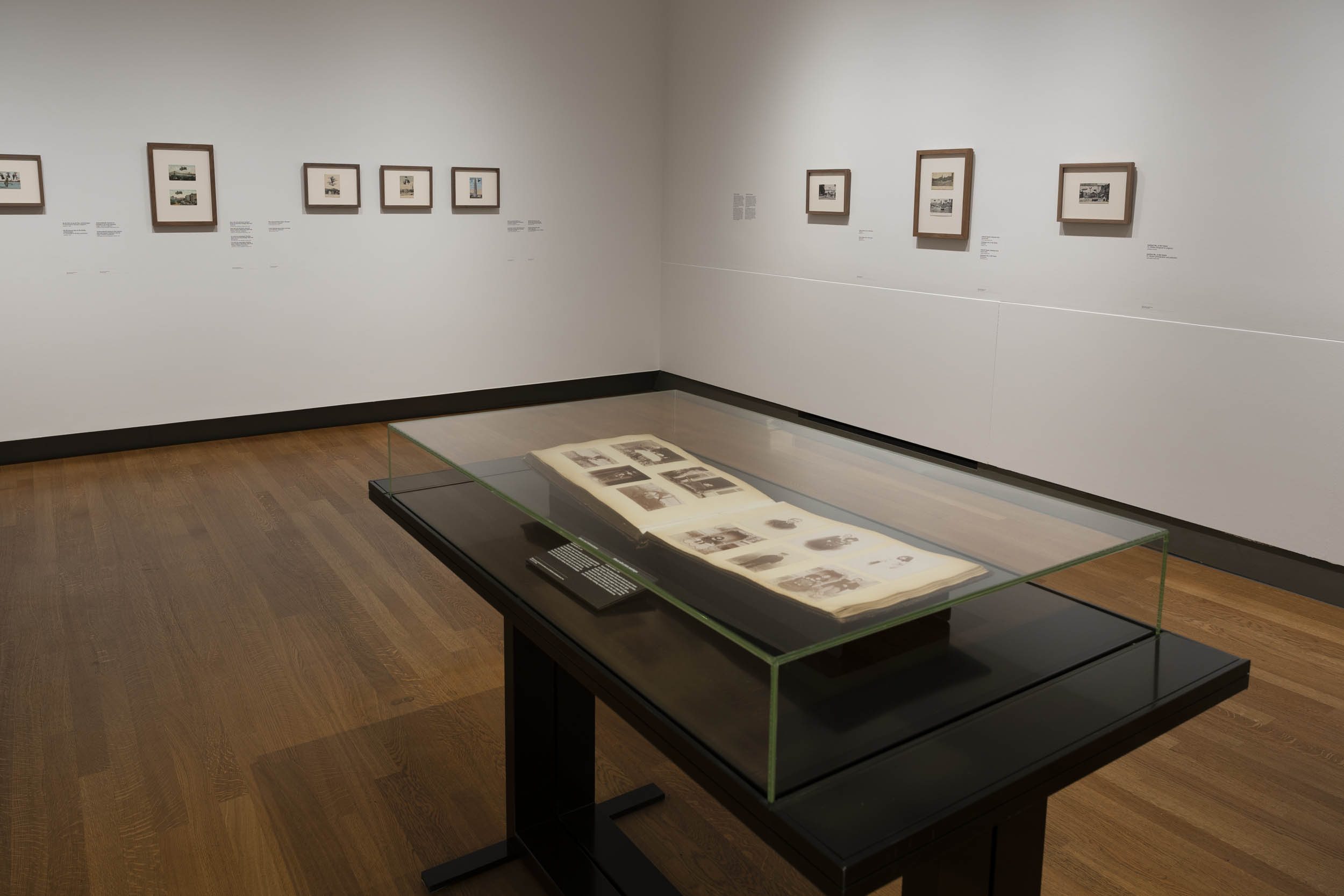


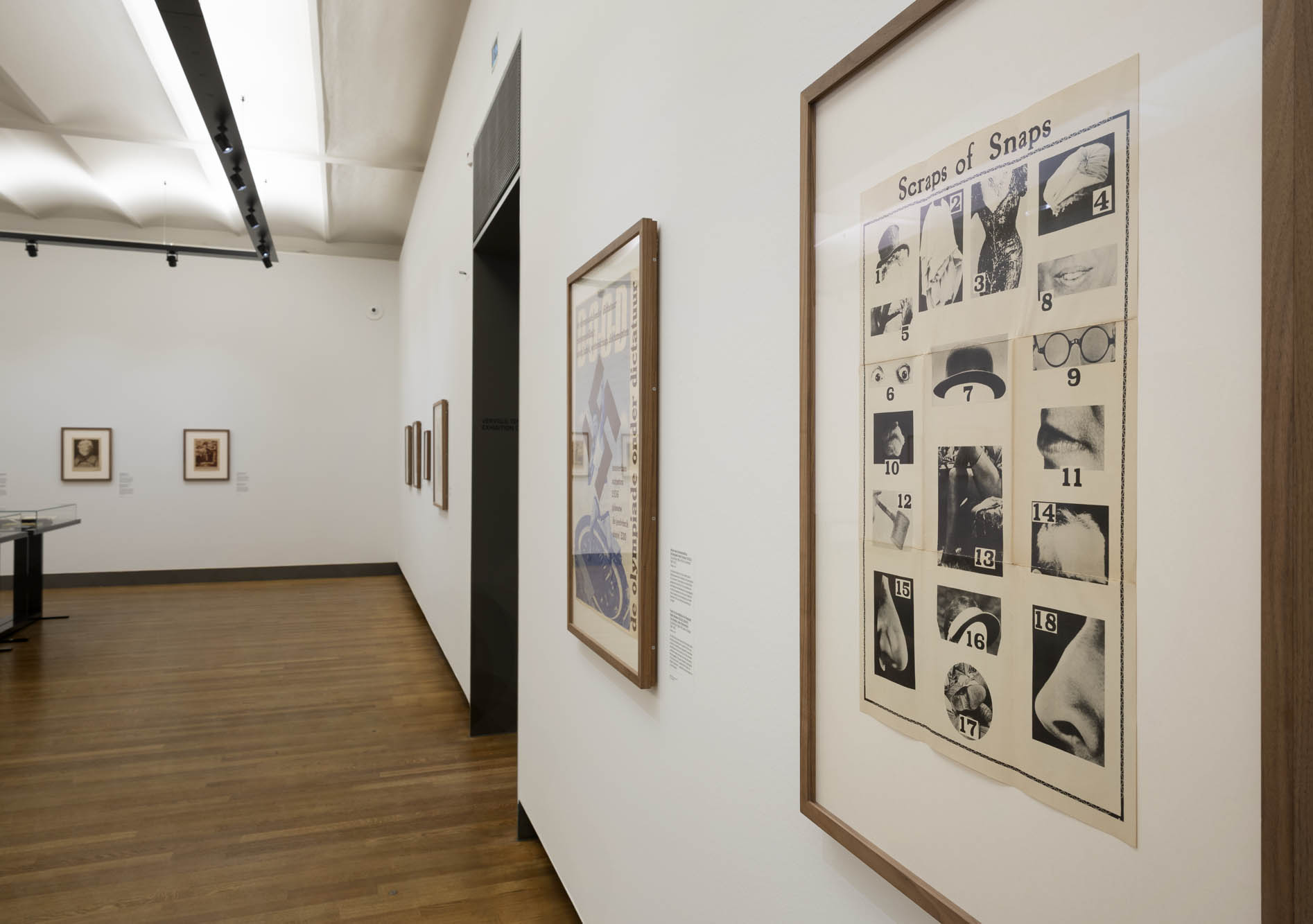
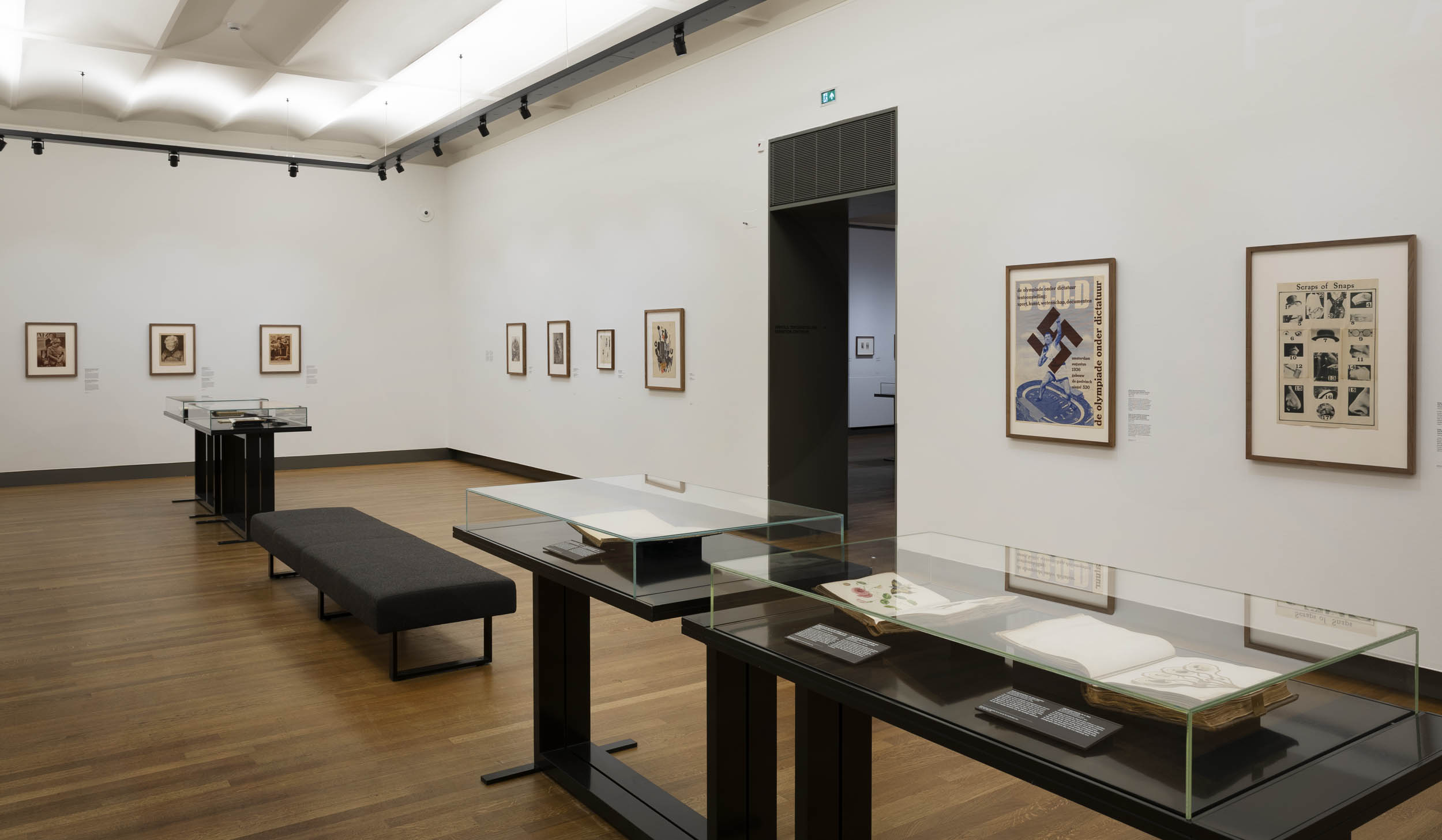
Installation view of the exhibition 'FAKE!' At the Rijksmuseum, Amsterdam


Installation views of the exhibition FAKE! At the Rijksmuseum, Amsterdam, February – May, 2026
Photos: Albertine Dijkema/Rijksmuseum
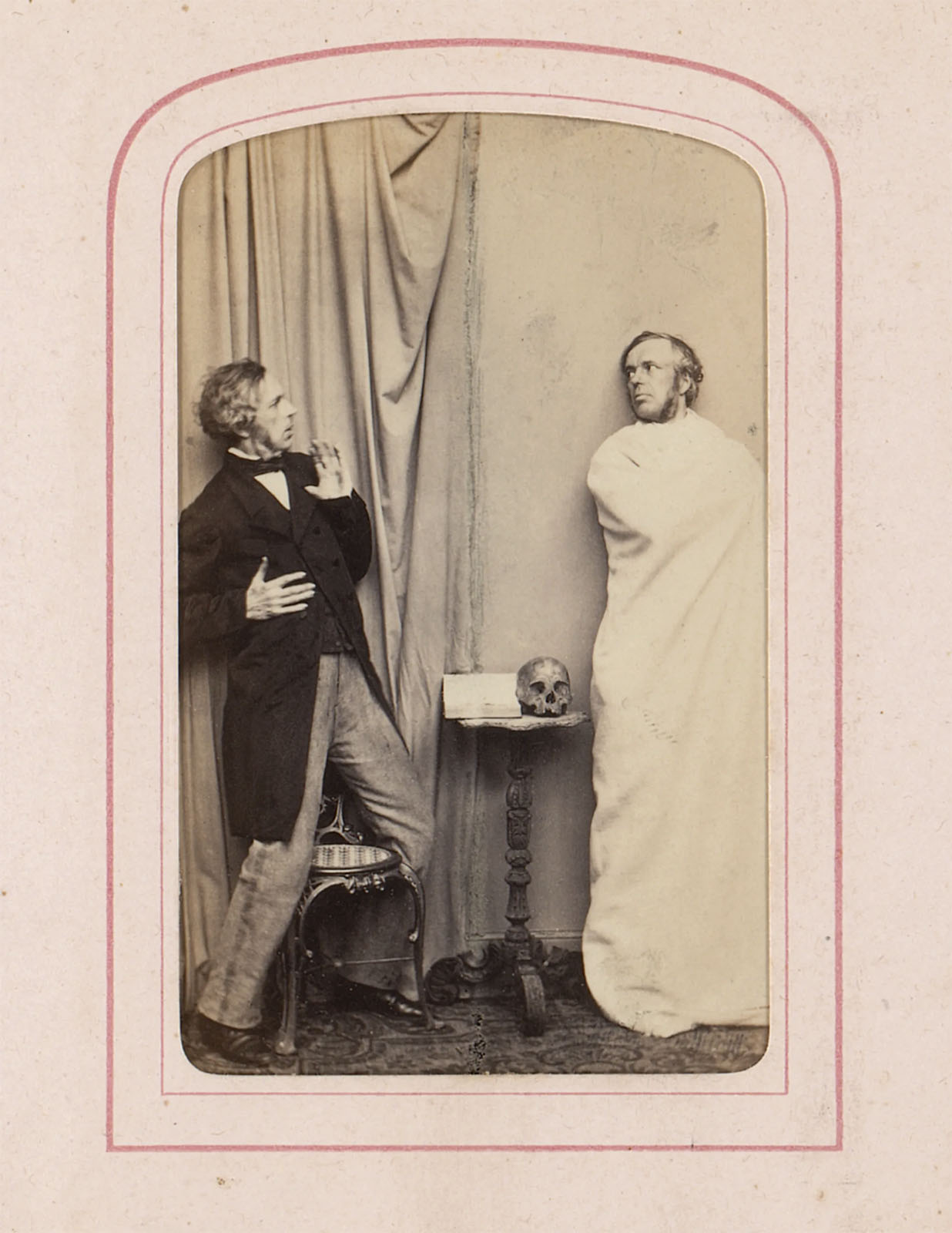
 

Leonard de Koningh (Dutch, 1810-1887) 'Man startled by his own reflection' c. 1870–1880


Leonard de Koningh (Dutch, 1810-1887)
Man startled by his own reflection
c. 1870-1880
Cartes de visite


In this comical memento mori, where a man comes face to face with his ghost, the painter and photographer Leonard de Koningh exposed just half of the photographic plate, then had the subject adopt a different pose before exposing the other half. Photography might have been a relatively new art, but the transition between the two images is imperceptible. “It’s like a magician,” marvels Rooseboom. “You know you are being tricked, but you don’t know how the photographer does it.” Quoting Oscar Gustave Rejlander, a trailblazer for this type of composite printing, the photographer Robert Sobieszek (1943-2005) stated: “This manner of working led not to falsehood but to truth. An image made by a single negative [claimed Rejlander] ‘is not true, nor will it ever be so – the focus cannot be everywhere’.”

Deborah Nicholls-Lee. “‘Image manipulation has always been around’: 10 early photographic ‘fakes’ that trick the eye,” on the BBC website 18th February 2026 [Online] Cited 18/02/2026. Used under fair use conditions for the purposes of education and research
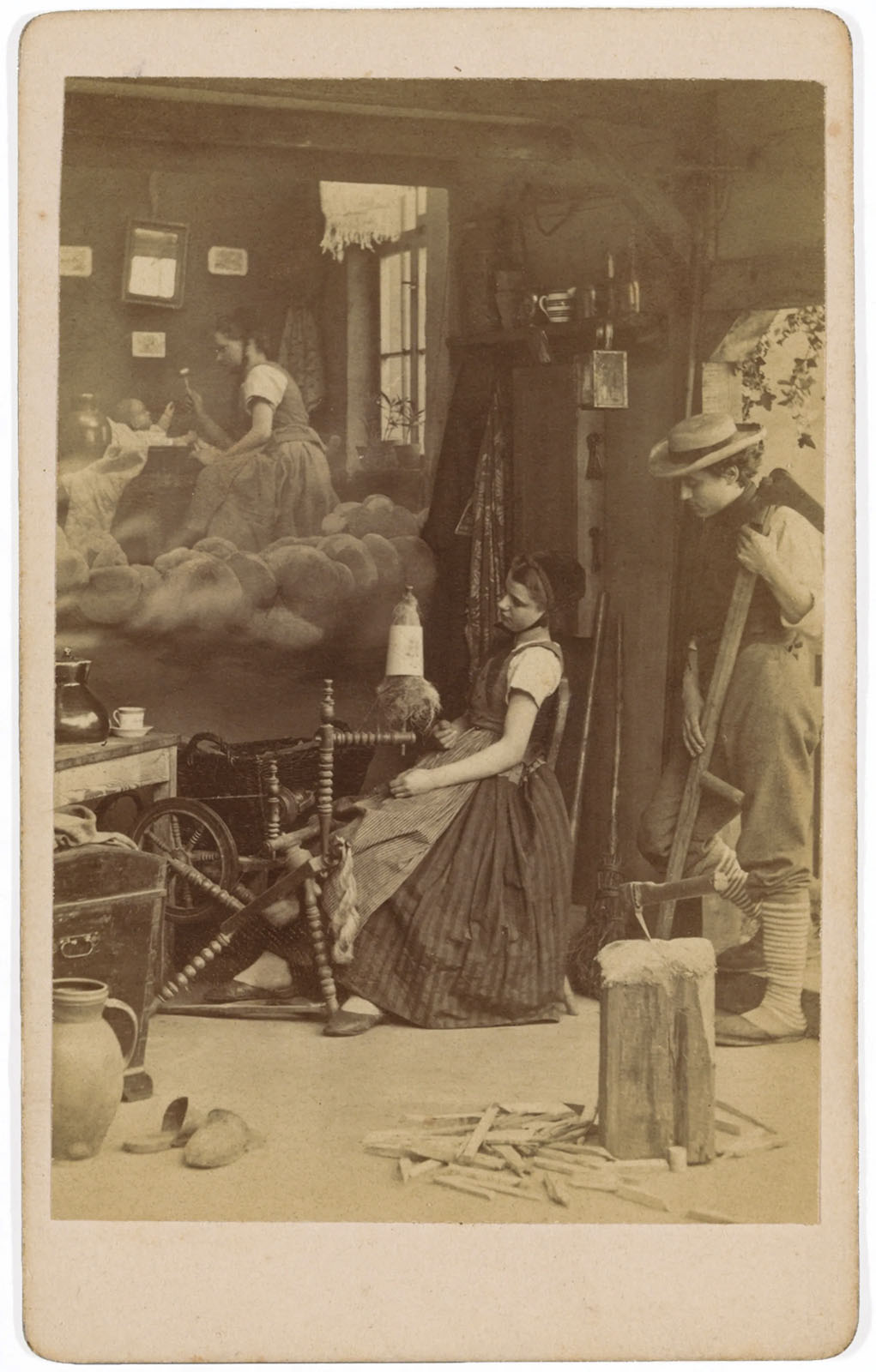
 

Anonymous photographer. 'Daydream' c. 1870–1890


Anonymous photographer
Daydream
c. 1870-1890
Cartes de visite


In this one we see the present: a woman and her partner both with the tools of their trades; and an imagined future: her daydream of becoming a mother. The image, explains Rooseboom, was “a darkroom trick”, achieved by shielding part of the photographic paper from the light and then adding a second negative to it later. Such images took photography into a new dimension, suggesting the innermost thoughts of their subjects, and paving the way for the comic strips of the future with their speech bubbles and thought clouds.

Deborah Nicholls-Lee. “‘Image manipulation has always been around’: 10 early photographic ‘fakes’ that trick the eye,” on the BBC website 18th February 2026 [Online] Cited 18/02/2026. Used under fair use conditions for the purposes of education and research
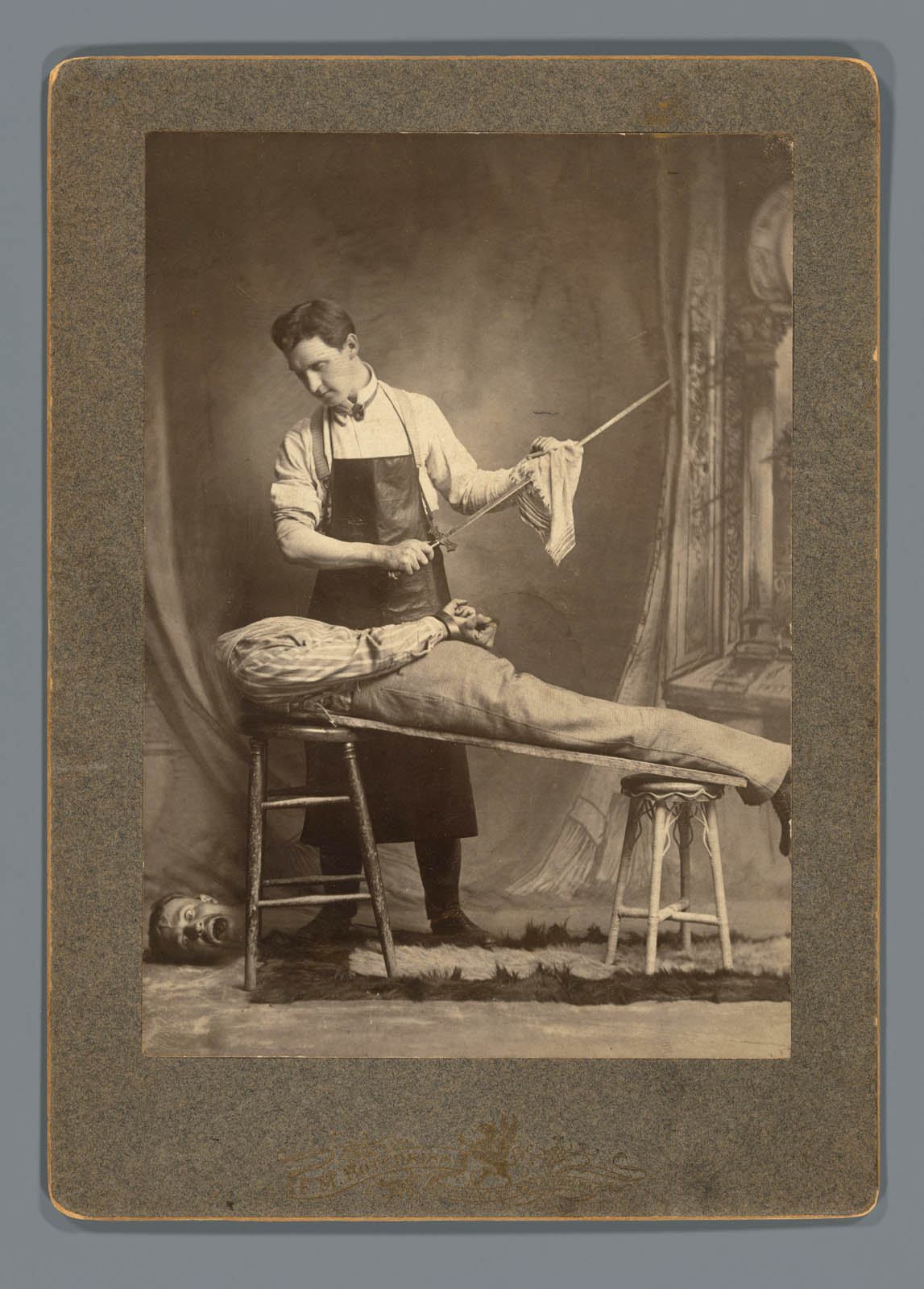
 

F.M. Hotchkiss (active 1870-1900) 'Beheading' c. 1880-1900


F.M. Hotchkiss (active 1870-1900)
Beheading
c. 1880-1900
Cabinet card
Purchase 2025


“We still expect photography to bring the truth, but this idea only really emerged from the illustrated magazines of the 1930s in order to inform readers how things worked elsewhere in the world,” says Rooseboom. Until then, the creative freedom to alter the image was unchallenged. “Anything possible would be tried out and produced,” he says. “There was no ethical restraint on producing non-realistic images. No-one would forbid you from doing this.” Removing and moving someone’s head, for example, presented the photographer with a pleasing puzzle. In the case of this cabinet card – a style of print mounted on card had taken over from the smaller carte de visite by the 1880s – with its black humour, the creative mission was highly successful. Only the positioning of the curtain, that would have concealed the original head, and some light retouching visible under a microscope, offer clues to how the photographer created the deception.

Deborah Nicholls-Lee. “‘Image manipulation has always been around’: 10 early photographic ‘fakes’ that trick the eye,” on the BBC website 18th February 2026 [Online] Cited 18/02/2026. Used under fair use conditions for the purposes of education and research
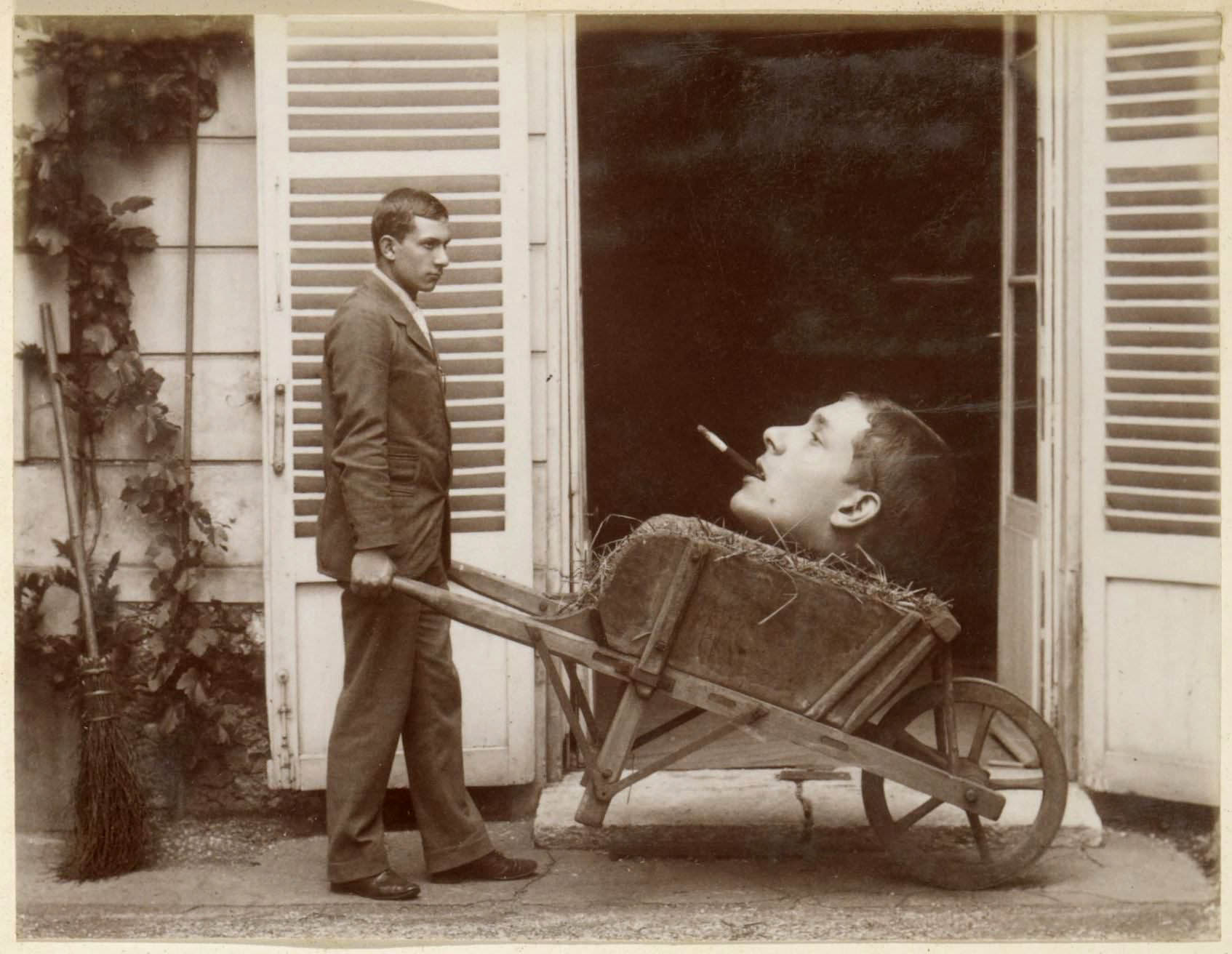
 

Anonymous photographer. 'Photomontage of a man pushing a wheelbarrow containing a head' c. 1900 – c. 1910 from the exhibition 'FAKE!' At the Rijksmuseum, Amsterdam, February - May, 2026


Anonymous photographer
Photomontage of a man pushing a wheelbarrow containing a head
c. 1900 – c. 1910
Gelatin silver print


This photomontage, created from two negatives, was found in a French photo album, and featured in the science magazine La Nature. Here, the displaced head illusion goes a step further as the photographer plays with scale, prefiguring the Surrealist movement which gathered pace as the century unrolled, disrupting conventional shapes and sizes to create confusing, dreamlike scenes. The open doorway provides a conveniently plain, dark background in which to smuggle in the cut-and-pasted portion before re-photographing the image as a whole. Some of these images were most likely purchased as portraits to show others, to see their look of surprise. “It’s hard to see where the trick starts and ends,” says Rooseboom. “This is showing off. Something is unbelievable, impossible, it’s improbable, but still it’s there in a photographic image which suggests we see a real scene that really unfolded in front of the camera.”

Deborah Nicholls-Lee. “‘Image manipulation has always been around’: 10 early photographic ‘fakes’ that trick the eye,” on the BBC website 18th February 2026 [Online] Cited 18/02/2026. Used under fair use conditions for the purposes of education and research


Almost immediately after the invention of the medium people began manipulating photographs – some with scissors and glue, others through ingenious photographic techniques. Drawing on more than 50 historical images from the museum’s own collection, the exhibition FAKE! Early Photo Collages and Photomontages, shows how image manipulation developed – from the birth of photography to the Second World War – and explores the motives behind it. The exhibition runs from 6 February to 25 May 2026 in the Photo Gallery of the Rijksmuseum.

“Many photo collages and composites depict impossible, absurd or humorous scenes that no one would have mistaken for reality. Yet even then, the boundary between genuine and fake, believable and unbelievable, was often hard to see.” ~ Hans Rooseboom, Curator of Photography

Cut and paste

The exhibition covers 1860-1940, a period when the possibilities of cutting and pasting photographs were widely explored. People also started experimenting with other methods of image manipulation. One trick that became popular shortly after the invention of photography was to show the same person twice in a single image: first, one half of the plate was exposed; then the subject would move, strike a different pose, and the other half of the plate was exposed. This technique was mostly used for harmless visual jokes, purely for entertainment, but the exhibition also shows how it was sometimes employed with very serious intent.

Political protest

Exaggeration, humour and incongruous visual combinations also played a major role in political protest. The best-known creator of political photo composites is John Heartfield (pseudonym of Helmut Herzfeld, 1891-1968), who opposed Hitler’s Nazi movement. Several examples of his work appear in the exhibition.

Press release from the Rijksmuseum
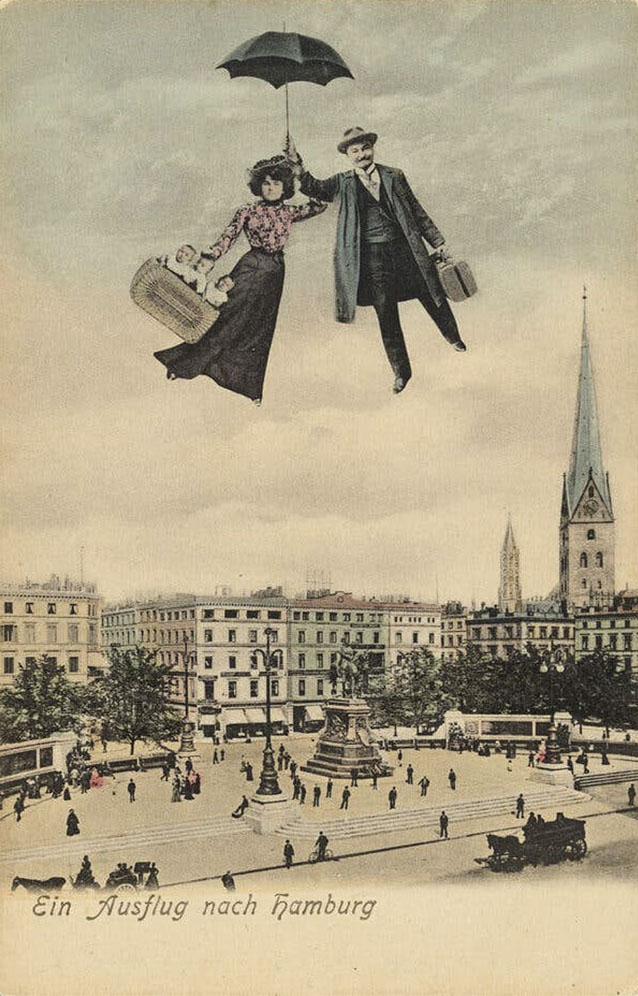
 

P. Michaelis (Berlin, publisher) 'Man and woman with briefcase and three babies above Hamburg' c. 1900-1910


P. Michaelis (Berlin, publisher)
Man and woman with briefcase and three babies above Hamburg
c. 1900-1910
Postcard
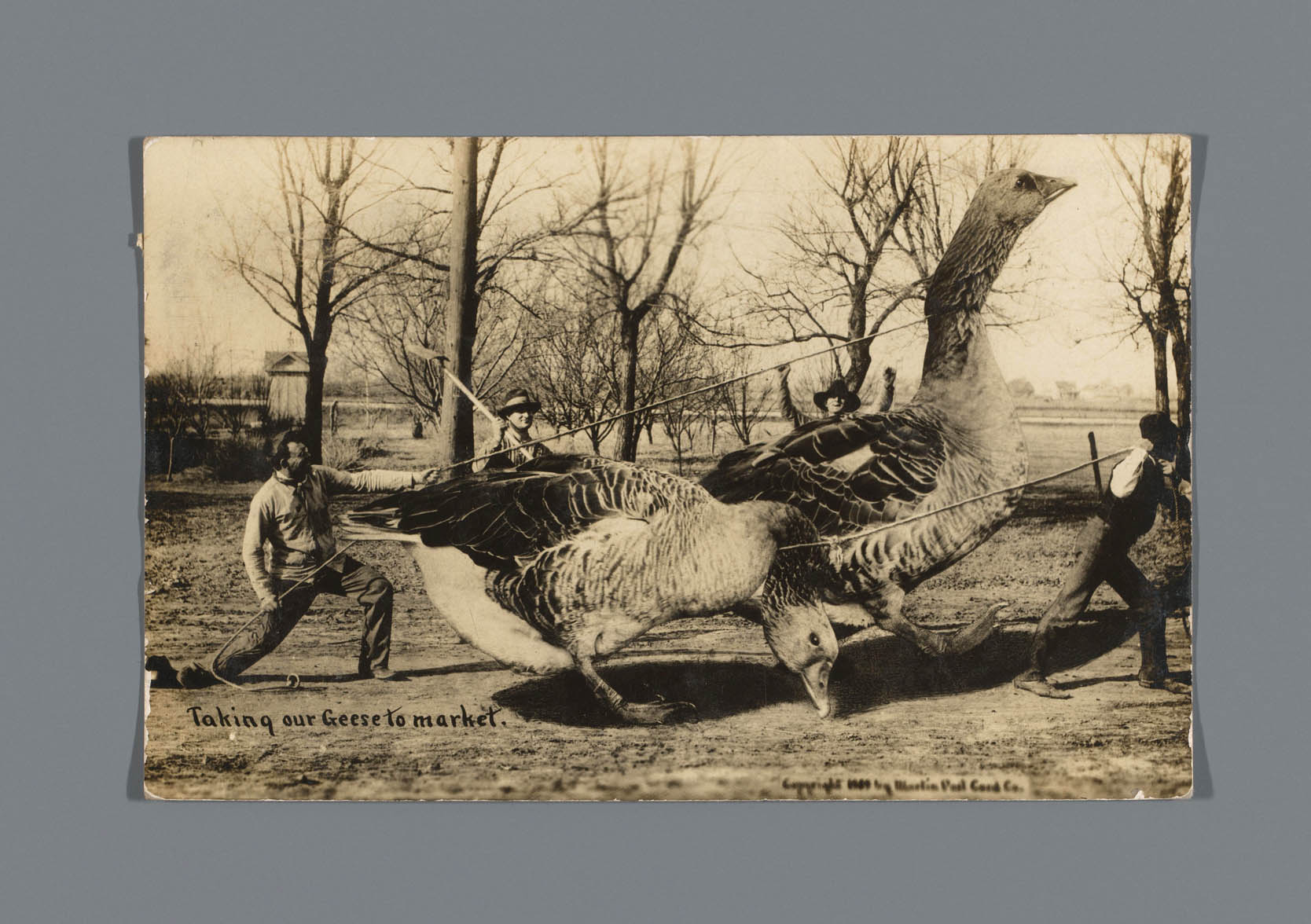
 

Martin Post Card Company (American) 'Taking our Geese to market' 1908


Martin Post Card Company (American)
Taking our Geese to market
1908
Postcard
Rijksmuseum
Purchase 2019


The trend for playing with images of impossible proportions spawned a genre known as “Exaggerations” or “Tall Tales”. This US photograph was printed during the “Golden Age” of picture postcards, shortly after the US decreed that messages could be written on the address side of the card. We see again the pioneering role photo manipulation plays in artistic developments such as Surrealism, but the use of scale here is also a marketing ploy to create myths about the agricultural superiority of a region. In this case, it’s the celebrated stuffed geese of Watertown, Wisconsin. Elsewhere in the show, Nebraska boasts about its bountiful produce with an ear of corn the length of a horse-drawn carriage. As US author and folklorist Roger Welsch noted in Tall Tale Postcards (1976): “Photography brought into being visual effects that tall-tale tellers through the centuries had seen only in their fertile imaginations.”

Deborah Nicholls-Lee. “‘Image manipulation has always been around’: 10 early photographic ‘fakes’ that trick the eye,” on the BBC website 18th February 2026 [Online] Cited 18/02/2026. Used under fair use conditions for the purposes of education and research


William H. Martin, (1865 – c. 1940) also known by the nickname “Dad“, was an American photographer and postcard designer known for using photomontage to depict exaggerated scenes with out-of-scale plants and animals. His works featured fanciful depictions of the American frontier inspired by tall tales. His depictions of abundant crops and large livestock served to humorously parody the struggles of farmers in the Midwestern United States who faced drought. They also mocked the exaggerated promises of fertile land and abundant livestock that companies used to lure settlers to the West. Martin was a pioneer of the art form of collage in the United States, and is considered to be the “father” of the exaggeration postcard genre.

Martin was originally from Maple City, Kansas. and was born in 1865. When he was 21 years old, he moved to Ottawa, Kansas to study under the photographer E.H. Corwin. He had no prior experience in photography. He proved successful, and bought Corwin’s photography studio in 1894.

He used photomontage and trick photography and, in 1908, began producing wildly exaggerated postcards for commercial sale. His cards typically featured out-of-scale scenes with people alongside giant plants and animals, created by cutting and pasting together different photographs. His postcards were popular with Western settlers, who sent them back to their families in the Eastern United States. His business was successful, and by 1909 he had built a two-story business building behind his home and employed around 20 people, who produced around 10,000 postcards every day. His photographs proved so popular that they were often plagiarised by other postcard companies and sold under different names.

Text from the Wikipedia website
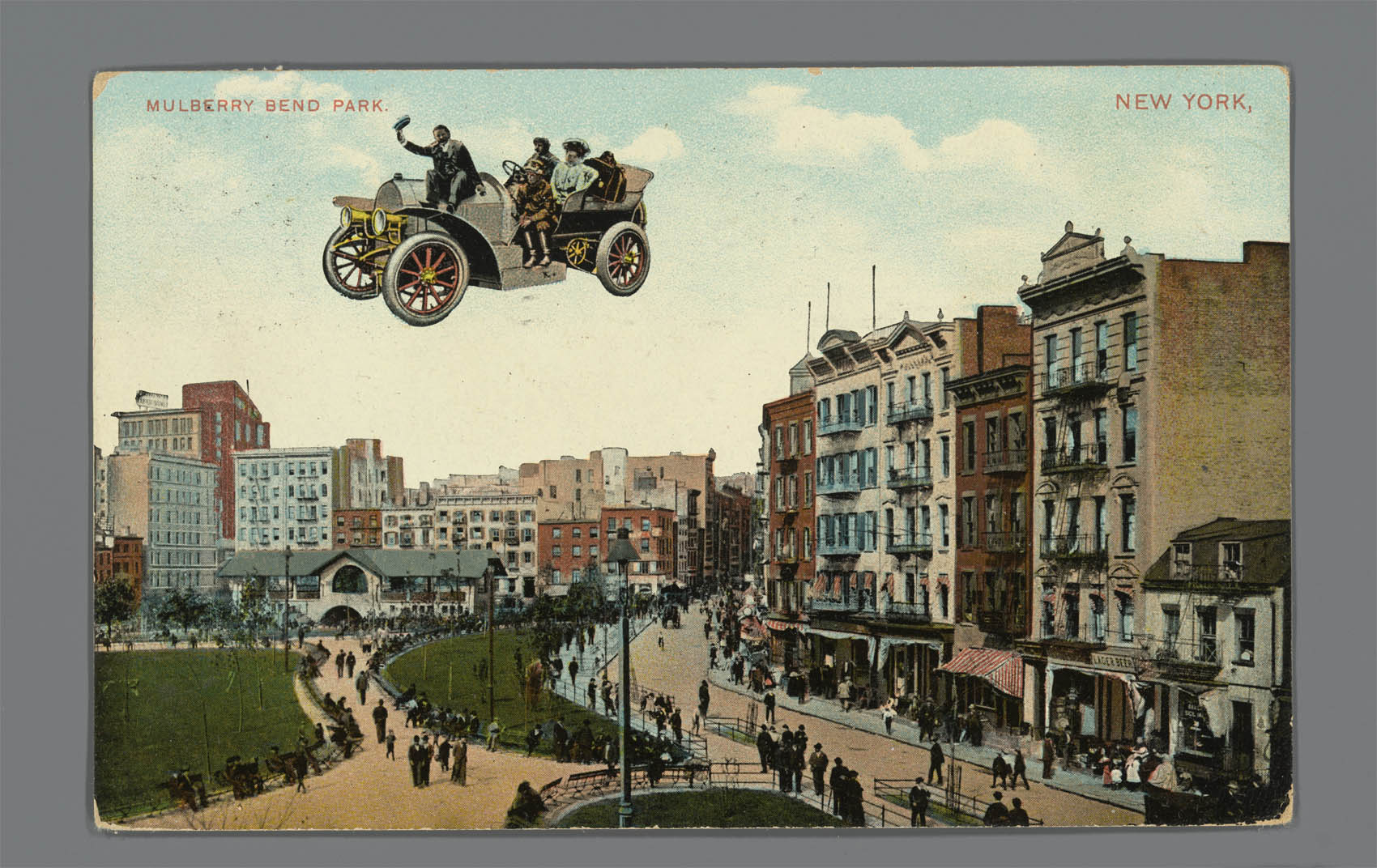
 

Theodor Eismann (publisher) (Leipzig, Germany) 'Car flying over Mulberry Bend Park, New York' before 1908


Theodor Eismann (publisher) (Leipzig, Germany)
Car flying over Mulberry Bend Park, New York
before 1908
Postcard
Rijksmuseum
Purchase 2025


Eismann established the company in Leipzig around 1884 and was instrumental in the pre-World War I postcard boom in Germany for the U.S. market. Theochrom was name given to the printing process used.


Fake photographs activated the imagination, presenting imagined possibilities yet to come. This example of a toekomstbeeld (vision of the future) envisages a world where cars could fly. Elsewhere in the exhibition we see futuristic cityscapes: town centres transformed by sky rails and zeppelins thanks to some deft copy and pasting, and skyborne visitors floating over Boston, Hamburg and The Hague in scenes reminiscent of Mary Poppins. Eismann’s New York photomontage [above] now features colour but is no more truthful, its limited range of inks added during the printing process at the whim of the designer.

Deborah Nicholls-Lee. “‘Image manipulation has always been around’: 10 early photographic ‘fakes’ that trick the eye,” on the BBC website 18th February 2026 [Online] Cited 18/02/2026. Used under fair use conditions for the purposes of education and research
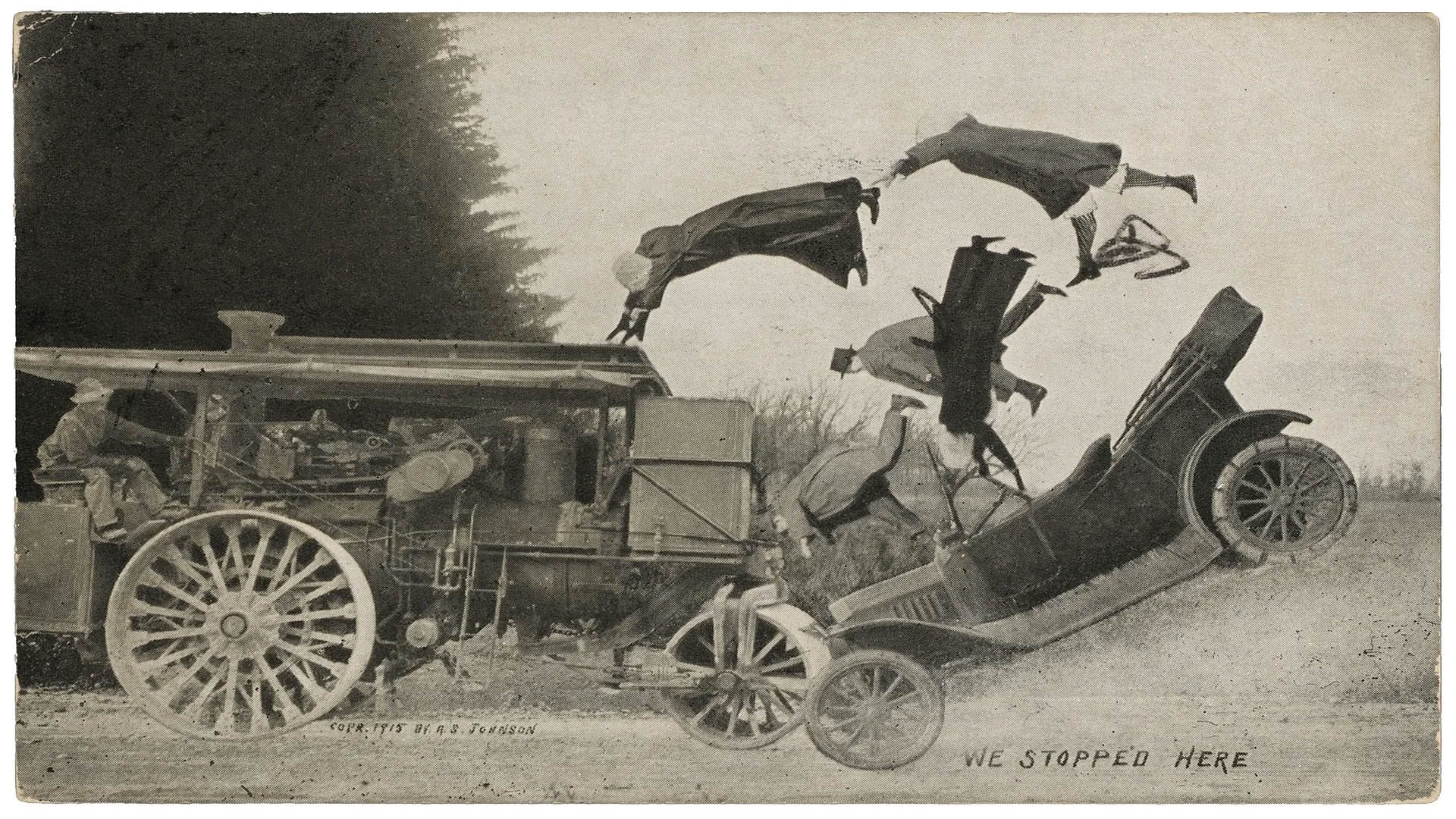
 

Alfred Stanley Johnson Jr. (American, 1863-1932) 'Collision between a car and a steamroller' 1915


Alfred Stanley Johnson Jr. (American, 1863-1932)
Collision between a car and a steamroller
1915
Tall-tales postcard (exaggerated postcard)
Waupun catalog no. P126


We’ve come to think of photo trickery as something sinister, but in his research on its use in early photography, Rooseboom says he was surprised to find that “three-quarters of all the images were made for fun”. In this photomontage by Alfred Stanley Johnson Jr, the clever placement of a series of individual − sometimes overlapping − images provides a humorous snapshot in time. The unusually dynamic, action-filled scene features flying coattails and frilly bloomers as the passengers of a car are catapulted through the air, inviting a before-and-after narrative in the mind of the viewer. “Many photomontages obviously depict impossible situations,” states a text at the exhibition. “The intention was not to mislead, but rather to entertain the viewer.”

Deborah Nicholls-Lee. “‘Image manipulation has always been around’: 10 early photographic ‘fakes’ that trick the eye,” on the BBC website 18th February 2026 [Online] Cited 18/02/2026. Used under fair use conditions for the purposes of education and research


Alfred and Elizabeth were living at 315 South Madison Street (in Dodge County) and their son Stanley – who was now going by his middle name – and wife Myrtie were living at 315 North Madison Street (in Fond du Lac County), with their son Alfred S. (the III), who was less than a year old. The Johnson photo studio/gallery was then located at 11-17 North Madison, just off Main Street. This was only a few years after Stanley began producing his tall-tale postcards, probably assisted by his wife, Myrtie, who was listed in the 1905 State Census as being a “photographer” and the 1910 Census as a “photo retoucher.” Although he apparently was known locally by the name of Stanley, he used the name “Alfred Stanley Johnson, Jr.” on most of his postcards.

Stanley Johnson, Sr. died December 3, 1914, and his wife Elizabeth died December 9, 1919; both are buried in the family plot in Forest Mound Cemetery in Waupun. Stanley continued in the photo business at 11 North Madison Street – while living at 17 N. Madison – until a few years before his death on March 1, 1932. His obituary in the Waupun Leader News stated that he had “been in poor health for about 30 years,” which would have been since about the time he started creating his exaggerated postcards. Perhaps the cards provided the extra income needed to pay ongoing medical bills.

Anonymous. “Johnson, Alfred Stanley,” on the Wisconsin Historical Society website Nd [Online] 18/02/2026. Used under fair use conditions for the purposes of education and research
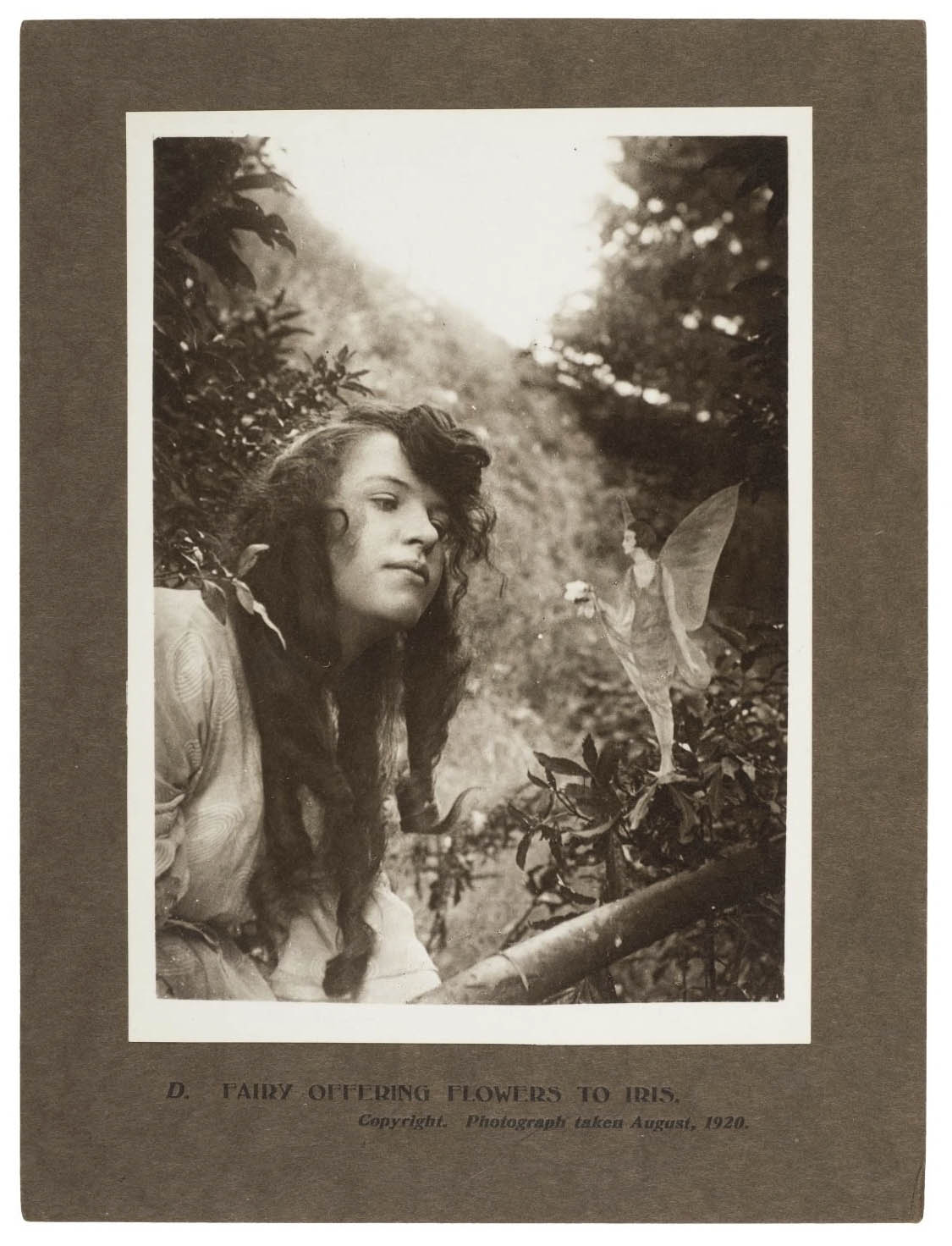
 

Elsie Wright (British, 1901-1988) and Frances Griffiths (British, 1907-1986) 'Fairy Offering Flowers to Iris' 1920


Elsie Wright (British, 1901-1988) and Frances Griffiths (British, 1907-1986)
Fairy Offering Flowers to Iris
1920
From the Cottingley Fairies series
Gelatin silver print


The Cottingley Fairies are the subject of a hoax which purports to provide evidence of the existence of fairies. They appear in a series of five photographs taken by Elsie Wright and Frances Griffiths, two young cousins who lived in Cottingley, near Bradford in England. In 1917, when the first two photographs were taken, Elsie was 16 years old and Frances was 9. The pictures came to the attention of writer Sir Arthur Conan Doyle, who used them to illustrate an article on fairies he had been commissioned to write for the Christmas 1920 edition of The Strand Magazine. Doyle was enthusiastic about the photographs, and interpreted them as clear and visible evidence of supernatural phenomena. Public reaction was mixed; some accepted the images as genuine, others believed that they had been faked.

Interest in the Cottingley Fairies gradually declined after 1921. Both girls married and lived abroad for a time after they grew up, and yet the photographs continued to hold the public imagination. In 1966 a reporter from the Daily Express newspaper traced Elsie, who had by then returned to the United Kingdom. Elsie left open the possibility that she believed she had photographed her thoughts, and the media once again became interested in the story.

Text from the Wikipedia website
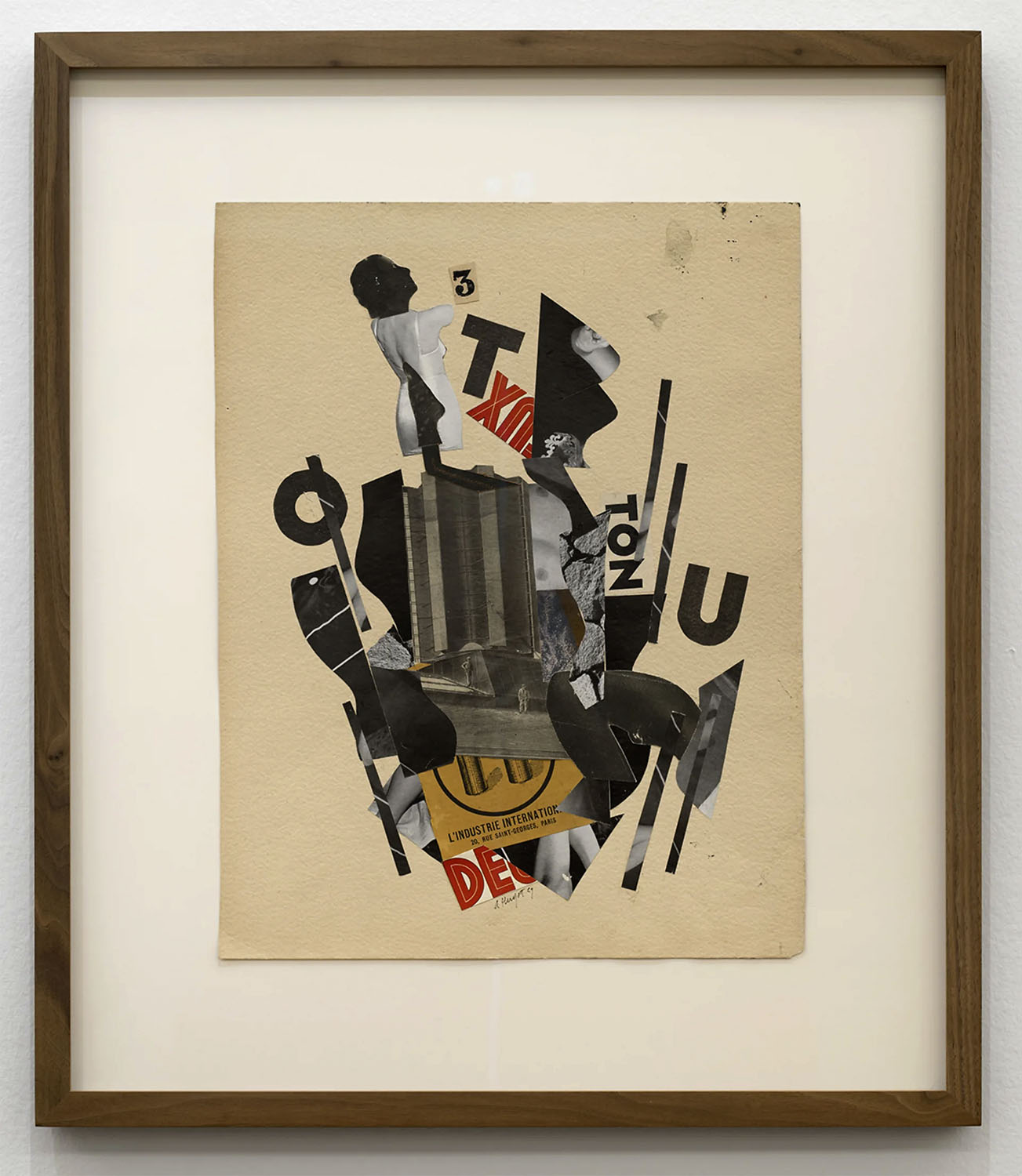
 

Albert Huyot (French, 1872-1968) 'Photo collage' 1929


Albert Huyot (French, 1872-1968)
Photo collage
1929


The cutting up of images and rearranging them on paper with glue was once a popular pastime. People made celebrity photo quizzes, sometimes featuring just a nose or a pair of eyes; and the photographed faces of friends and family were superimposed onto drawings for comic effect. Photo collages were also undertaken by established artists. In this piece, which is influenced by Dadaism and Cubism, French artist Albert Huyot manipulates fragments of photographic images into surprising new artistic forms. More intricate photographic artworks can be seen in the show on the pages of the Hungarian artist László Moholy-Nagy’s seminal book Painting, Photography, Film (1925). In it he argues that photography is not just about recording reality. Instead, it should explore the visual language unique to its medium.

Deborah Nicholls-Lee. “‘Image manipulation has always been around’: 10 early photographic ‘fakes’ that trick the eye,” on the BBC website 18th February 2026 [Online] Cited 18/02/2026. Used under fair use conditions for the purposes of education and research


The son and grandson of artists, Albert Huyot was a pupil of Diogène Maillart and Gustave Moreau. His first paintings were done in a generic Post-Impressionist manner indebted to the example of the Nabis, but he soon became influenced by Cubism. He exhibited regularly at the Salon des Indépendants, the Salon d’Automne and the Salon des Tuileries, and also participated in the Grande Exposition in Brussels in 1910; in the same year he also spent some time in Russia. Huyot was a friend of Henri Matisse, and around 1912 his work reveals the influence of Fauvism; André Derain was another particular influence. After 1920, however, Huyot seems to have abandoned the rigour of his earlier work in favour of landscape painting. An exhibition of his work was held at the Galerie Berthe Weill in Paris in 1926.

Text from the Stephen Ongpin Fine Art website
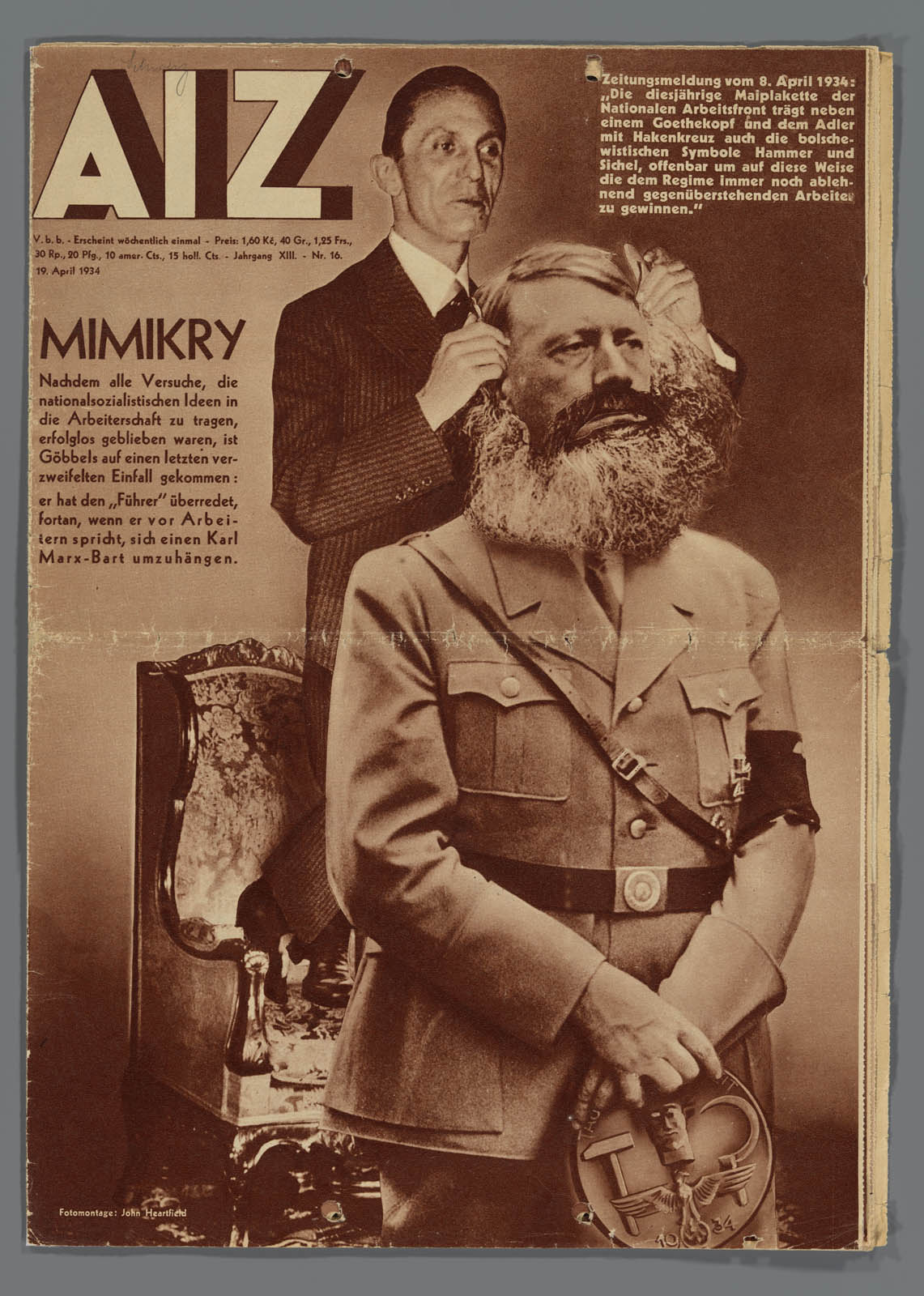
 

John Heartfield, pseudonym of Helmut Herzfeld (German, 1891-1968) 'Mimikry, Arbeiter-Illustrierte-Zeitung (A-I-Z), 19 April 1934' 1934


John Heartfield, pseudonym of Helmut Herzfeld (German, 1891-1968) Mimikry, Arbeiter-Illustrierte-Zeitung (A-I-Z), 19 April 1934
1934


Sometimes, in a surprising twist, photographic trickery was a tool for conveying a perceived truth. Anti-Nazi campaigner Helmut Herzfeld, who changed his name to the anglicised John Heartfield in protest against Hitler’s regime, created over 200 handcrafted political photomontages for the leftist AIZ publication, many seeking to expose the hidden dangers of the Nazi dictatorship and the lies it disseminated. Mimicry depicts Joseph Goebbels, the Nazi Minister of Propaganda, disguising Hitler as the 19th-Century revolutionary communist Karl Marx. The artist is warning the working classes not to be fooled by Hitler’s promises that he genuinely supports workers’ rights. Such work is comparable with political memes today that aim to speak truth to power. Image manipulation can both mislead us and help us find our way.

Deborah Nicholls-Lee. “‘Image manipulation has always been around’: 10 early photographic ‘fakes’ that trick the eye,” on the BBC website 18th February 2026 [Online] Cited 18/02/2026. Used under fair use conditions for the purposes of education and research


Rijksmuseum
Museumstraat 1
1071 XX Amsterdam

Opening hours:
Open daily 9 – 17h

Rijksmuseum website

LIKE ART BLART ON FACEBOOK

Back to top


Text / exhibition: ‘Australian vernacular photography’ at the Art Gallery of New South Wales (AGNSW), Sydney

Exhibition dates: 8th February – 18th May, 2014

Curators: Senior Curator of Photographs Judy Annear and Assistant Curator Eleanor Weber


John F Williams (Australian, 1933-2016) 'The Rocks, Sydney' 1973 from the exhibition 'Australian vernacular photography' at the Art Gallery of New South Wales (AGNSW), Sydney, February - May, 2014


John F Williams (Australian, 1933-2016)
The Rocks, Sydney
1973
Gelatin silver photograph
22.6 x 34.1cm
Purchased 1989
© John F Williams


Australian vernacular photography. Such a large subject. Such a small exhibition.

With only 27 photographs from various artists (18 of which are shown in this posting), this exhibition can only ever be seen as the runt of the litter. I would have thought such a large area of photographic investigation needed a more expansive exposition than is offered here. There are no photobook, photo booth, Aboriginal, anonymous, authorless, family, gay or marginalised cultural photographs / snapshots. There are no light leaks, blur, fingers obstructing lenses, double exposures – all examples of serendipity and happenstance which could enter into an aesthetic arena.

Vernacular photography1 can be defined as the “creation of photographs, usually by amateur or unknown photographers both professional and amateur, who take everyday life and common things as subjects… Examples of vernacular photographs include travel and vacation photos, family snapshots, photos of friends, class portraits, identification photographs, and photo-booth images. Vernacular photographs are types of accidental art, in that they often are unintentionally artistic.”2 ‘Found photography’ is the recovery of a lost, unclaimed, or discarded vernacular photograph or snapshot.

While all of the photographs in the exhibition are unique images, some are definitely not vernacular in their construction – they are planned and staged photographs, what I would call planned happenstance (after John Krumboltz’s theory of career development). A perfect example of this are the photographs by Sue Ford (Sue Pike, 1963, printed 1988, below), Anne Zahalka (The girls #2, Cronulla beach, 2007, below) and Fiona Hall (Bondi Beach, Sydney, Australia, October 1975, below) which have an air of ceremonial seriousness that belies their classification as part of this exhibition. My favourites are the fantastic images by Glen Sloggett – witty, colourful, humorous with the photographer “acutely aware of the photographer and photograph’s role in pointedly constructing a narrative around Australian identity and history” – they are nevertheless self-deprecating enough that this does not impact on their innate “found” quality, as though the artist had just wandered along and captured the shot.

The route that the AGNSW has taken is similar to that of MoMA. Residing in the collection and shot by artists, these “vernacular” photographs are placed in a high art context. Their status as amateur or “authorless” photographs is undermined. This exhibit does not present vernacular photographs as just that. As the article on the One Street blog notes, what is being exhibited is as much about what has been collected by the AGNSW, its methodical and historicising classification, as it is about vernacular photographic form: chance, mistake and miscalculation. It is about creating a cliché from which to describe an ideal Australian identity, be it the beach, larrikinism, or the ANZAC / sporting “warrior”, and not about a true emotional resonance in the image that is created by, or come upon by, chance.

Dr Marcus Bunyan


Many thankx to the Art Gallery of New South Wales for allowing me to publish the photographs in the posting. Please click on the photographs for a larger version of the image.


1/ “What is vernacular photography? Too broad to be understood as a genre per se, it can encompass anonymous snapshots, industrial photography, scientific photography, “authorless” photography, advertising, smut, as well as work that might be perceived as “other” than any of this random list. It could be understood as an oppositional photography – outside technical or artistic histories, yet, especially with the snapshot, it could also be entirely conventionalised, a manifestation of visual banalities, or an image so enigmatic that its meaning or genesis is entirely obscured. It is mistakes & failures as much as it may not be, & how we understand the images may or may not be separate from their initial intents. Is this a category we are making up?

The idea of the vernacular in photography is also an indication of photography as a medium informing the everyday, prevalent, “naturalised.””

One Way Street. “Vernacular photography,” on One Way Street blog 20th October 2007 [Online] Cited 11/05/2014

2/ Szarkowski, John. “INTERVIEW: “Eyes Wide Open: Interview with John Szarkowski” (2006)” by Mark Durden, Art in America, May, 2006, cited in “Vernacular photography,” on the Wikipedia website [Online] Cited 11/05/2014. No longer available online. Used under fair use conditions for the purposes of education and research


Ed Douglas (United States of America, Australia, b. 6 May 1943) 'City-spaces #28, (John Williams), Sydney' 1976 printed 2012 from the exhibition 'Australian vernacular photography' at the Art Gallery of New South Wales (AGNSW), Sydney, February - May, 2014


Ed Douglas (United States of America, Australia, b. 6 May 1943)
City-spaces #28, (John Williams), Sydney
1976 printed 2012
From the series City-spaces 1975-78
Purchased with funds provided by the Photography Collection Benefactors’ Program 2012
© Ed Douglas


Words and Photos: Geoffrey Batchen’s Writing About Vernacular Photography

“At first, I was simply interested in bringing attention to a diverse range of photographic objects and practices that had not been much written about. But I soon recognised that these objects represented a significant challenge to the predominant history of photography. This history, dominated by the values ​​and tropes of art history, was not well-equipped to talk about photographs that were openly commercial, hybrid and mundane. Ie: the history of photography ignores most types of photography. My interest, therefore, has become more methodological and theoretical, in an effort to establish new ways to think of photography that could address the medium as a whole. I suggest that any substantial inclusion of vernacular photographs into a general history of photography will require a total transformation of the character of that history…

I suggest that any inclusion of vernacular photography in the larger story, will require a complete transformation of the character of that story; it will require a new kind of history altogether. My writings may have encouraged this idea, but I am just one of many scholars who have been pursuing this goal. Indeed, I would say that this idea is now the norm. The next step is to look beyond this and engage other parts of the history of photography that have been similarly neglected. For example, there are many researchers at the moment that are examining the photographs produced outside Europe and the United States, such as China, Indonesia, and Africa…

Snapshots are complicated objects. They are unique to each maker and almost always completely generic. They happily adopt the visual economy that mediates most photographic practices: same but different. You might say that every snapshot is an authentic copy of a prescribed set of middle-class values and familiar pictorial clichés. That does not make them any less fascinating, especially for people who treasure them. But it does make them difficult to write about…

It is certainly possible to recognise the existence of regional practices of photography. I wrote, for example, about the making of fotoescultura in Mexico, and about a specific form of ambrotype in Japan. No doubt one could claim to see some regional aspects of snapshots made in the United States that distinguish them from ones made in Australia or, say, Indonesia. But the more challenging task is to talk about those things that can’t be seen. For example, snapshots made in Australia and China may look exactly the same to my eye, but it stands to reason that they don’t mean the same thing (after all, access to the camera for personal photos is a fairly recent phenomenon in China). We must learn how to write these kind of differences.”

Interview by LG. “Words and Photos: Geoffrey Batchen’s Writing About Vernacular Photography,” on the LesPHOTOGRAPHES.com website Nd (translated from the French) [Online] Cited 04/05/2014. No longer available online. Used under fair use conditions for the purposes of education and research


Ed Douglas (United States of America, Australia, b. 6 May 1943) 'City-spaces #40, Sydney' 1976 printed 2012


Ed Douglas (United States of America, Australia, b. 6 May 1943)
City-spaces #40, Sydney
1976 printed 2012
From the series City-spaces 1975-78
Gelatin silver photograph
23.6 x 30.7cm image
Purchased with funds provided by the Photography Collection Benefactors’ Program 2012
© Ed Douglas


After relocating from USA to Australia in 1973, Ed Douglas spent a few years living in the country prior to taking on a teaching position at Sydney College for the Arts in 1976. The series City-spaces was commenced in Sydney and then developed further when Douglas moved to Adelaide in 1977. Having been schooled in the formal traditions of American documentary photography, Douglas’s images appear like notations of an urban explorer attempting to locate himself in a new country. Seemingly fragmentary, they look at the specificities of the mundane and the ordinary. Close acquaintances such as photographers Ingeborg Tyssen and John F. Williams appear in City spaces #29 and City spaces #28, indicating the personal nature of the series.

Intimately scaled and tonally rich, the black and white images exalt the formal beauty which can be found in the random textures of daily existence. They are also permeated with gentle humour and a sense of quiet drama that unfolds in the strangely misplaced confluences of objects, figures and spaces. Douglas’s interest in the formal and emotional qualities of topography was emblematic of new approaches in documentary photography of the time. His 1983 series of colour photographs depicting the gypsum mine on Kangaroo Island (collection of AGNSW) developed this trajectory further by fusing the aesthetics of abstraction and objective documentation.


Gerrit Fokkema (Papua New Guinea, Australia, b. 1954) 'Woman hosing, Canberra' 1979 from the exhibition 'Australian vernacular photography' at the Art Gallery of New South Wales (AGNSW), Sydney, February - May, 2014


Gerrit Fokkema (Papua New Guinea, Australia, b. 1954)
Woman hosing, Canberra
1979
Gelatin silver photograph
34.9 x 46.5 cm image
© Gerrit Fokkema


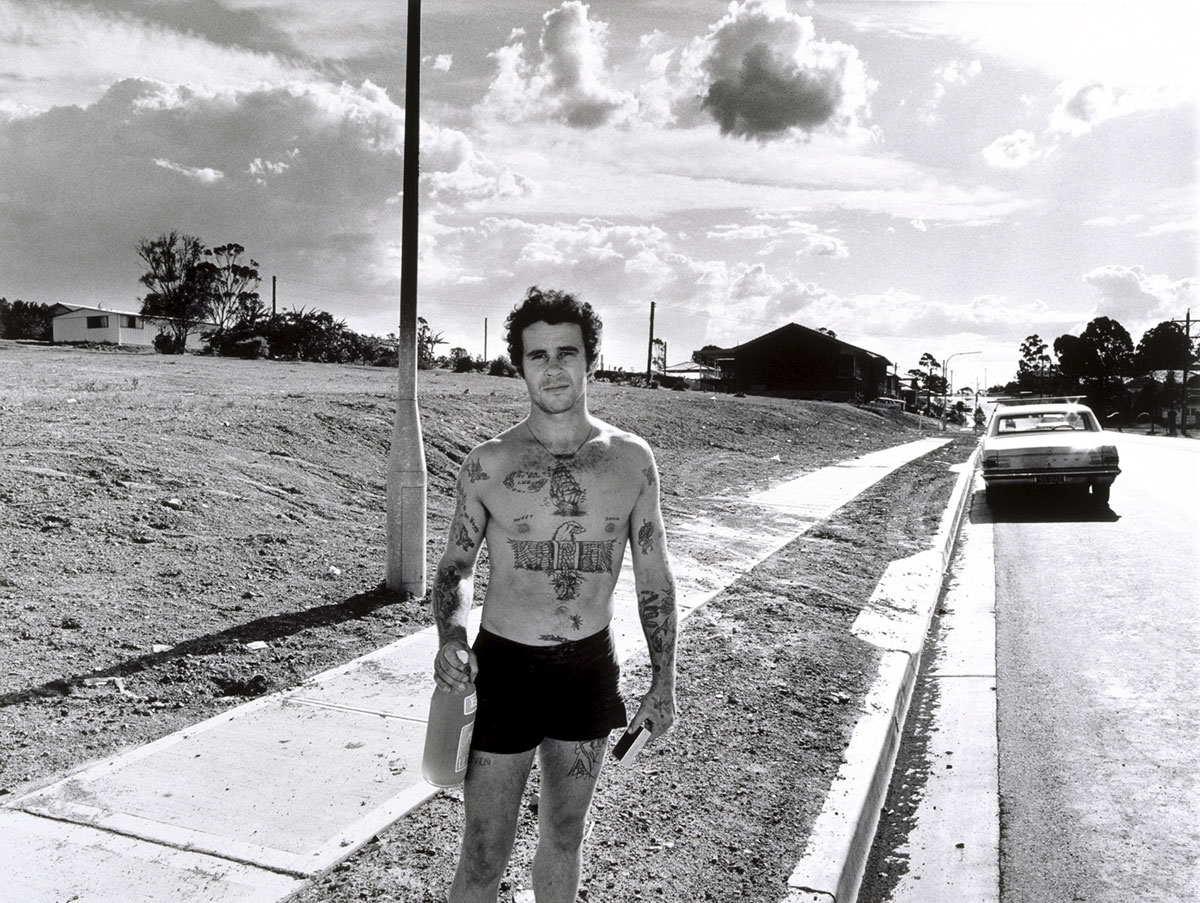
Gerrit Fokkema’s photographs of everyday Sydney and Canberra in the early 1980s are examples of Australian photography becoming more self-aware. These decisive snapshots of suburban life reveal an irony and conjure Fokkema’s own history growing up in Queanbeyan. Though captured in seemingly banal settings, the images intrigue, pointing to issues beyond what is represented in the frame. The housewife watering the road and a young tattooed man in front of a car are both depicted alone within a sprawling suburban landscape, suggesting the isolation and boredom in the Australian dream of home ownership. The sense of strangeness in these images is consciously sought by Fokkema, aided by his embrace of the glaring and unforgiving ‘natural’ Australian light.

Gerrit Fokkema’s Woman hosing, Canberra is an affectionate and gently ironic portrait of suburban life in Canberra. Fokkema was familiar with his subject matter, raised as he was in the nearby township of Queanbeyan. After studying photography at Canberra Technical College 1974-77 he became the staff photographer for the Canberra Times in 1975. He held his first exhibition in the same year at the Australian Centre for Photography, Sydney. His career as a photo-journalist lead him to work with the Sydney Morning Herald in 1980 and participation with several international Day in the life of…. projects between 1986 and 1989.

Fokkema uses the ‘decisive moment’ of photo-journalism to reveal the incidental quirks of ordinary life in this image. The bland uniformity of the streetscape, with its identical archways and mundanely shuttered doors, is punctuated by the absurd proposition of a woman watering the street rather than the adjacent grass. Her presence is the only sign of life in an otherwise inanimate scene, and her actions suggest a kind of strangeness that lies within the normality of suburbia. Many of Fokkema’s images play with such chance incidences and odd juxtapositions, revealing his interest in surrealism and the notion of automatism. Indeed, the repeated archways and the lone figure inhabiting otherwise empty urban space of Woman hosing, Canberra recall the proto-typical surrealist painting, Mystery and melancholy of a street 1914, by Giorgio de Chirico. Fokkema’s image is, however, very much a product of Australia – of its bright ‘available’ light and of the dream of home-ownership. Fokkema has continued to document the Australian way of life. In 1986 he left newspapers to freelance as a commercial photographer and published Wilcannia, portrait of an Australian town. He has since exhibited works based on tender observations of his family members and of family life.

© Art Gallery of New South Wales Photography Collection Handbook, 2007


Gerrit Fokkema (Papua New Guinea, Australia, b. 1954) 'Blacktown man' 1983


Gerrit Fokkema (Papua New Guinea, Australia, b. 1954)
Blacktown man
1983
Gelatin silver photograph
30.6 x 40.6cm image
© Gerrit Fokkema


The work of Gerrit Fokkema exhibits a particular sensitivity to the uneasiness of people in Australian landscapes, both urban and rural. Fokkema was born in New Guinea in 1954, but raised in Canberra and worked as a press photographer before freelancing from 1986. Although his photographs demonstrate an interest in the formal qualities of landscape, the sense of rhythm his compositions generate also evoke the monotony of Australian space – sweeping terracotta roofs and long straight paths. This monotony is only interrupted by the presence of the human figure, usually isolated, alone and awkwardly out of place. In Blacktown Man 1983, the flat image of the man appears dramatically superimposed on the land and sky of the suburban street. By reminding us of our sometimes uncomfortable relationship with the spaces we inhabit, Fokkema’s work rejects any attempt to romanticise Australian life.


Trent Parke (Australian, b. 1971) 'Backyard swing set, QLD' 2003


Trent Parke (Australian, b. 1971)
Backyard swing set, QLD
2003
From the series Minutes to midnight
Type C photograph
109.9 x 164cm
Gift of Albie Thoms in memory of Linda Slutzkin, former Head of Public Programmes, Art Gallery of New South Wales 2006
© Trent Parke


Australian vernacular photography traces developments in photographic practice from the postwar period through to the present day, with images ranging from documentary or ‘straight’ photography (where the subjects are usually unaware of the camera), through to those that look self-reflexively at the constructed nature of the medium.

The increasing role of photography in the latter part of the 20th century attests to the rising need Australians felt to apprehend the nation, personal identity and society through images. Many of these photographs offer frank perspectives on Australian culture without the romanticising tendencies of earlier photographers. Photographing the everyday became a way of understanding how Australia saw (and sees) itself, with recurrent themes such as beach culture, suburbia, race relations, protest and the role of women among the central concerns of image-makers then and now.

By the 1960s Australian photographers were comparing their work with international peers, thanks to photographic publications and the watershed 1959 tour of The family of man exhibition organised by the Museum of Modern Art, New York. Institutional support for photography didn’t come until the 1970s; however those committed to the medium forged on, intent on capturing their visions of Australia photographically. The family of man exhibition toured Australia in 1959 and was enormously influential, with its themes of birth, love and death common to all humanity. However, possibilities for Australian photographers to be noticed were rare until the 1970s due to the lack of institutional support. Nonetheless, photographers from David Moore and Robert McFarlane to the young Sue Ford forged on, trying to find their own vision of Australian life and how it could be represented photographically. This exhibition looks at some of the photographers from then as well as those working more recently – such as Anne Zahalka, Trent Parke and Glenn Sloggett – to consider their various approaches to the depiction of modern Australian life.

In the Australian Photography Annual of 1947, photographer and director of the Art Gallery of NSW Hal Missingham wrote: “In a country supposedly occupied by people indulging in a vigorous outdoor life, where are the [photographic] records of beach and sport… where are the photographs of the four millions of people who live and work in our cities? What are they like – what do they do – what do they wear, and think?”

Text from the AGNSW website


Jeff Carter (Australia, 05 Aug 1928 - Oct 2010) 'The Sunbather' 1966


Jeff Carter (Australia, 05 Aug 1928 – Oct 2010)
The Sunbather
1966
Gelatin silver photograph
39.1 x 27.6cm image
© Jeff Carter


“I don’t regard photography as an art form, although I know it can be for others… To me the camera is simply an unrivalled reporter’s tool. It is an aid to getting the story “properly true,”” Jeff Carter said in 2006. Working mainly as a photojournalist, Carter wanted to make images that depicted social reality. He aimed to show the ‘unknown’, those people who are rarely seen. His approach resulted in frank, arguably even unflattering, images of Australian life, such as this of a beach-goer in the 1960s, heralding the changing social mores of the time.


John F. Williams (Australia, 1933-2016) 'Sydney' 1964, printed later


John F Williams (Australia, 1933-2016)
Sydney
1964, printed later
Gelatin silver photograph
24.3 x 24.3 cm image
© John F Williams


Sydney photographer, lecturer and historian John F. Williams has a long and personal interest in the ramifications of the Allies’ commitment to and sacrifice in the First World War which he later explored in his 1985 series From the flatlands. Williams became an amateur street photographer, inspired by Henri Cartier-Bresson and the photojournalist W. Eugene Smith. He read The family of man catalogue and saw the exhibition in 1959 but he rejected its “saccharine humanism and deliberate ahistoricism” choosing instead to socially document the raw character of Australia.1

When interviewed in 1994 Williams said: “After the [First World War] you had a range of societies which were pretty much exhausted, and they tended to turn inwards. In a society like Australia which had a poorly formed image of itself, where there was no intellectual underpinning, the image of the soldier replaced everything else as a national identity.”2

Sydney expresses the ‘Anzac spirit’ born in the battlefields of Gallipoli, the Somme and Flanders, a character study of an independent, introspective soldier. With an air of grit, determinedly smoking and wearing his badge, ribbons and rosemary as remembrance, Sydney stands apart from the crowd, not marching with his regiment. Williams embraced the ‘element of chance’ or the ‘decisive moment’ as he documented the soldier in a public place observing the procession. Taken from a low angle and very close up the man is unaware of the photographer at the moment the shot was taken, apparently lost in his own memories. The old soldier represents a generation now lost to history but portraits such as these continue to reinforce the myth of national identity.

1/ Jolly, M. “Faith sustained,” in Art Monthly, September 1989, pp. 18-19
2/ “John Williams – photographer and historian: profile,” in Sirius, winter, Macquarie University, Sydney, 1994, p. 5

© Art Gallery of New South Wales Photography Collection Handbook, 2007


Robert McFarlane (Australia, b. 1942) 'Happening Centennial Park, Sydney' c. 1968


Robert McFarlane (Australia, b. 1942)
Happening Centennial Park, Sydney
c. 1968
Gelatin silver photograph
25.9 x 17.6cm image
© Robert McFarlane


Hal Missingham (Australia, 08 Dec 1906 - 07 Apr 1994) 'Surf carnival, Cronulla' 1968, printed 1978


Hal Missingham (Australia, 08 Dec 1906 – 07 Apr 1994)
Surf carnival, Cronulla
1968, printed 1978
Media category
Gelatin silver photograph
38.1 x 26.3cm image
© Hal Missingham Estate


Photographer and former Art Gallery of NSW director, Hal Missingham wrote in the 1947 Australian Photography annual: “In a country supposedly occupied by people indulging in a vigorous outdoor life, where are the [photographic] records of beach and sport…? Where are the photographs of the four millions of people who live and work in our cities? What are they like – What do they do – What do they wear, and think?” This image points to Missingham’s own attempts to answer that question. An interesting counterpoint to the images taken at Cronulla around 40 years later, here Missingham shows a group of young women standing behind a fence watching as young men train to be lifesavers.

Hal Missingham often holidayed at his beach house at Garie in the Royal National Park south of Sydney, not far from Cronulla. In 1970 he published Close focus a book of photographic details of rocks, pools, sand and driftwood. As a beachcomber and observer of beach culture Missingham delighted in his immediate environment. Surf carnival, Cronulla is a quintessential Australian scene, one that frames an important aspect of national identity and culture. As passive observers, the 1960s was a time when many girls were still ‘minding the towels’ for the boys who surfed or competed in carnivals. Barricaded from the beach and its male activity the young women in bikinis are oblivious to the photographer who has foregrounded their relaxed tanned bodies behind the wire as they in turn observe and discuss the surf lifesavers in formation at the water’s edge. Although a beach is accessible for the majority of Australians and is now an accepted egalitarian space where women bodysurf, ride surfboards and compete along with beachgoers from diverse ethnic backgrounds, Surf carnival, Cronulla suggests a specific demography.

© Art Gallery of New South Wales Photography Collection Handbook, 2007


Fiona Hall (Australia, b. 1953) 'Bondi Beach, Sydney, Australia, October 1975' 1975


Fiona Hall (Australia, b. 1953)
Bondi Beach, Sydney, Australia, October 1975
1975
Gelatin silver photograph
28.2 x 27.9cm image
Hallmark Cards Australian Photography Collection Fund 1987
© Fiona Hall


Australian vernacular photography considers how photographers have used their cameras to depict Australian life, and how ideas of the nation have been constructed through photographic images.

Sixteen Australian photographers are represented by some 27 photographs taken from the 1960s to the 2000s. The photographs range from the more conventionally photo-documentary through to later works by photographers positioned more consciously in an art context. A selection of photography books of the period are also on display.

Artists include: Jeff Carter, Ed Douglas, Peter Elliston, Gerrit Fokkema, Sue Ford, Fiona Hall, Robert McFarlane, Hal Missingham, David Moore, Trent Parke, Roger Scott, Glenn Sloggett, Ingeborg Tyssen, John F Williams, William Yang and Anne Zahalka. Each of these artists in their own way interweave personal, documentary and fictional aspects through their images.

The works in Australian vernacular photography expose the sense of humour or larrikinism often seen as typical to Australia through showing aspects of beach and urban culture that hadn’t been imaged so bluntly before the 1960s. The characters that emerge range from leathery sunbathers, beer-drinking blokes and hippies, to beach babes, student protesters and suburban housewives, shedding light on the sense of liberation and self-recognition that arose during this period.

As photography struggled to gain recognition as an art form in the mid 20th century, the influence of exhibitions such as the Museum of Modern Art, New York’s Family of Man, which toured Australia in 1959, was vital in allowing Australian photographers to compare their work to that of their international peers.

Throughout the 1960s and ’70s, photographers such as Jeff Carter, Sue Ford, David Moore, Roger Scott and John F Williams worked in a photo-documentary mode that was less about staging a shot or creating formal harmony within the frame than about capturing a moment of lived reality. To this end, such photographs involved minimal intervention from the photographer, both before and after the shutter release. Subjects were often unaware of being photographed and extensive darkroom manipulation was frowned upon, the rawness of prints was supposed to signal authenticity.

This approach resulted in images that seemed to offer a frank perspective on Australian culture, without the romanticising tendencies of earlier photography, which had sought to construct ideals rather than document what was actually there. As artists began to realise what they could do with the camera, so too did the images evolve. By the 1980s and ’90s photographers were making images that showed the subject’s awareness of being photographed, as with Gerrit Fokkema, or presented a harsh, even aggressive perspective on the depicted situations by removing people altogether, as with Peter Elliston. This signalled the increasingly self-conscious role of photographers themselves in the equation, suggesting the influence of post-modern theories of subjectivity and their effect on the images produced.

By the time we reach the 2000s, artists such as William Yang, Anne Zahalka and Trent Parke are acutely aware of the photographer and photograph’s role in pointedly constructing a narrative around Australian identity and history. The exhibition maps out this history and offers unexpected insight into the construction of a particularly Australian vernacular within photographic practice.

Press release from the AGNSW


Sue Ford (Australia, 1943 - 06 Nov 2009) 'Sue Pike' 1963, printed 1988


Sue Ford (Australia, 1943 – 06 Nov 2009)
Sue Pike
1963, printed 1988
Media category
Gelatin silver photograph
34.2 x 34.2cm image
Gift of Tim Storrier 1989
© Estate of Sue Ford


Sue Ford’s photograph of her friend Sue Pike blow-drying her hair in the kitchen captures the young woman preparing for a night out. Ford often photographed those close to her as well as continually making self-portraits throughout her career. The photograph is domestic and intimate, showing a common aspect of life for young women in the 1960s. It suggests the procedure of preening necessary to go out and find ‘marriage and children’, while the alcohol and cigarette indicates the emerging movement for women’s liberation.

“My earliest “studio portraits” … were of my friends from school … These photo sessions were approached with a ceremonial seriousness, My friends usually brought different clothes with them and during the sessions we would change clothes and hairstyles.” Sue Ford 1987 1

Sue Ford took the majority of her photographs at this time with the camera set on a 1/60th of a second at f/11, a ‘recipe’ she wrote which had more chance of success. Poetic, fragmentary text relating to Ford’s 1961 photo-essay in “A sixtieth of a second: portraits of women 1961-1981” identify the young women’s recipe for flirtatious endeavour – ‘gossamer hairspray’, ‘peroxide’, ‘plucked eyebrows’, ‘big hair rollers to achieve “La Bouffant”‘, ‘Saturday nite’ and ‘Jive’. Sue Pike exemplifies the era of girls preparing for a night out with the boys in their ‘FJ Holdens and Hot Rods’. Staged in the kitchen, probably on a Saturday afternoon, Sue Pike, in a padded brunch coat with hair in rollers plugged into a portable hair dryer, will be a part of the action, the gossip and camaraderie. A further portrait taken in the same year shows Sue Pike metamorphosed as a beautiful bride, carefully coifed ash blonde hair under a white net veil, eyes momentarily shut, traditionally decorated with pearls and posy. Ford suggests in her prose and portraits that there are choices to be made – ‘marriage and children’ or mini-skirts and the Pill, as her old school friends go in different directions.

1/ Ford. S. “A sixtieth of a second: portraits of women 1961-1981,” Experimental Art Foundation, Adelaide, 1987, p. 4

© Art Gallery of New South Wales Photography Collection Handbook, 2007


Anne Zahalka (Australia, b. 1957) 'The girls #2, Cronulla beach' 2007


Anne Zahalka (Australia, b. 1957)
The girls #2, Cronulla beach
2007
Type C photograph
72.5 x 89.5cm image
Gift of the artist 2011. Donated through the Australian Government’s CulturalGifts Program
© Anne Zahalka. Licensed by Viscopy, Sydney


As part of a generation of Australian women artists who came to the fore in the early 1980s, Anne Zahalka’s practice has always been concerned with questioning dominant myths and cultural constructs. The broad sweep of Zahalka’s oeuvre has often been underpinned by a common strategy: the world in her images appears as theatre where place, gender and national identity are questioned.

Many of Zahalka’s more recent works are located outside the studio though the natural environment can be seen to be equally constructed. In The girls #2, Cronulla beach, the photographer has returned to the seaside, which was the setting for one of her most iconic series, Bondi: playground of the Pacific 1989. The girls was made as a response to the Cronulla riots and after an introduction to Aheda Zanetti, the designer of the burqini. Zahalka “also knew of a documentary film being made following the recruiting of Lebanese men and women into the lifesaving club. It seemed like there was change adrift on the beachfront.”1 The permutations and post-modern anxiety about what constitutes Australian identity seen in the Bondi… series, have spilled out into the real world. But the image of these young Muslim women lifeguards seems to celebrate the potential to transgress accepted value systems.

Anne Zahalka said in 1995: “I am primarily concerned with… representations to do with place, identity and culture. Through the appropriation and reworking of familiar icons and styles I seek to question (and understand) their influence, meaning and value.” Twelve years later, Zahalka continues this line of inquiry with the series Scenes from the Shire. In this image, three Muslim girls wearing Burqinis (swimwear made for Muslim women conceived by Lebanese-Australian designer Aheda Zanetti) are standing cross-armed on Cronulla beach, a lifesaving raft is in the background. Zahalka made this work in response to the Cronulla riots of 2005. The image juxtaposes Muslim tradition with the Australian icon of the lifesaver, suggesting cultural overlap and changing national identity.

1/ A. Zahalka et al, “Hall of mirrors: Anne Zahalka portraits 1987-2007,” Australian centre of photography, Sydney 2007, p. 43


William Yang (Australia, b. 1943) 'Ruby's kitchen Enngonia' 2000, printed 2002


William Yang (Australia, b. 1943)
Ruby’s kitchen Enngonia
2000, printed 2002
From the series miscellaneous obsessions
Type C photograph
35.5 x 53.5cm image
© William Yang


William Yang was born in North Queensland, a third generation Chinese-Australian. He is known both as a photographer and for his monologues with slides which he has presented around the world to great acclaim. One of these, Sadness 1992, was adapted for the screen by Tony Ayres and won AWGIEs amongst other awards. A major retrospective of Yang’s work, Diaries, was held at the State Library of NSW in 1998. Through April 24 – June 1, 2003 Yang presented all his monologues at Belvoir St Theatre, Sydney.

Yang has documented various subcultures over the last 30 years and this is reflected in his photographs as well as his monologues. A remarkable storyteller with a unique style, his current work is a synthesis of his ongoing concerns. While these concerns spring very much from his experiences growing up with a Chinese background in far north Queensland, through to his exploration of the gay community in Sydney, the work transcends the personal and becomes a meditation on the subtleties of the ordinary and everyday.

This series of images reflects Yang’s current life of travel and contact with his far flung friends and extended family. Though the subject, at its most superficial, is food, where, when and who is there at the time is of equal importance. Consequently each photograph in the series presents a web of connections and is underpinned with similar intentions to Yang’s other work, regardless of the subject.

“I don’t think I have a great technical attitude but I am interested in people,” William Yang said in 1998. Yang is known for his candid photographs of friends and situations he encounters. The images are usually accompanied by a story about his life, sometimes handwritten on the print itself, sometimes spoken aloud in performative contexts. He uses narrative as a way of locating his images in a particular moment in his personal history as well as social history at large. Yang explores themes around Australian and gay identity in a way that is frank and sometimes confronting. In this work, from a series about food, a chunk of kangaroo meat sits casually atop a laminate bench; other Australian icons such as Wonder White and Weet-Bix are also visible. The work allows for a multiplicity of signs to coexist: the slaughtered Australian mascot, the drab generic kitchen, the processed ‘white’ bread, with the Chinese-Australian photographer observing it all.


Glenn Sloggett (Australia, b. 1964) 'Cheaper & deeper' 1996


Glenn Sloggett (Australia, b. 1964)
Cheaper & deeper
1996
From the series Cheaper & deeper
Type C photograph
80.0 x 79.9cm image
Gift of Amanda Love 2011. Donated through the Australian Government’s Cultural Gifts Program
© Glenn Sloggett


Based in Melbourne, Glen Sloggett has exhibited extensively across Australia, including a touring exhibition with the Australian Centre for Photography, New Australiana 2001. Internationally, his work was included in the 11th Asian Art Biennale in Bangladesh, 2004 and the 9th Mois de la Photo ‘Image and Imagination’ in Montreal 2005.

Sloggett’s work depicts scenes from Australian suburbia with a startling mix of warmth and melancholy. Devoid of people, his photographs reflect the isolation and abandonment that afflicts the fringes of Australian urban centres. His images don’t flinch from the ugly, kitsch, and bleak. Sloggett says, “No matter where I go, I always find places and environments that are in the process of falling down. These are the images of Australia that resonate most strongly for me as an artist. I want to capture the last signs of optimism before inevitable disrepair.” (Glen Sloggett, quoted in A. Foster. Cheaper and deeper, ex. Bro. ACP 2005) His images of disrepair are infused with black humour and at the same time, affection for Australian suburbia.

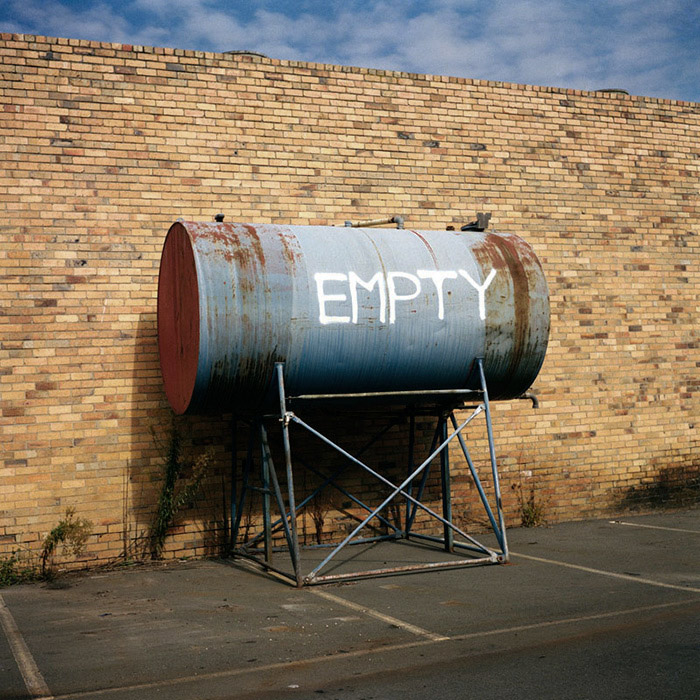
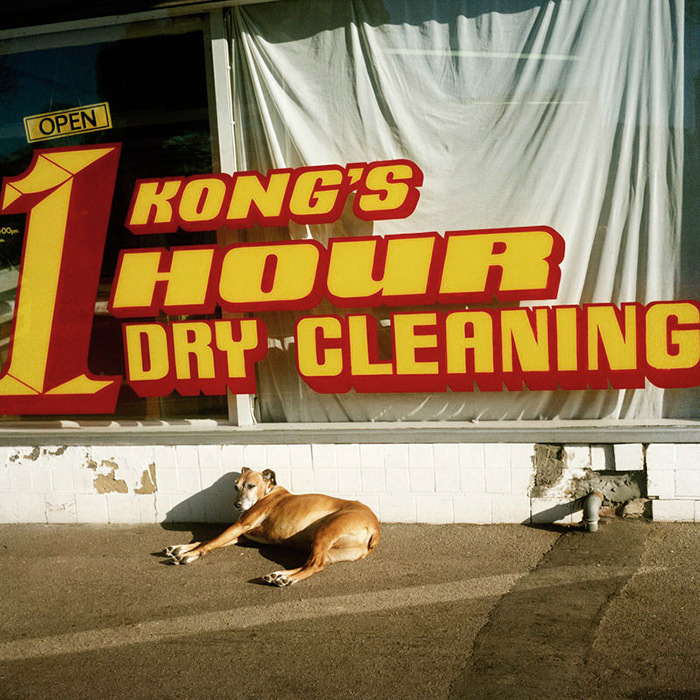
From dumpy derelict flats to pavements graffitied with the words ‘mum killers’, Sloggett’s photographs capture an atmosphere of neglect. One classic image depicts a pink hearse, with the slogan Budget burials cheaper & deeper!! stencilled in vinyl on the side window. Another image shows an industrial barrel, on which is scrawled the evocative word ‘Empty’. In a third image, a dog rests on the pavement outside ‘Kong’s 1 hour dry cleaning’ – the bold red and yellow lettering on its window in stark contrast to the cracked paint of the exterior wall, and half-clean sheet that forms a makeshift curtain. These images have a profundity that is at once touching and surprising; as Alasdair Foster has commented, “In a world of rabid materialism and shallow sentiment, Sloggett’s photographs show us that life really is much cheaper and deeper.”

These five works by Glenn Sloggett serve as forms of photographic black humour. Devoid of people and always in colour, his photographs often take mundane elements from the world and make us notice their tragicomedy. This group is rooted in a play with text, where the tension between what is written and what we see is paramount. Sloggett makes comment on Australian life and culture, showing how the fringes of towns and the paraphernalia of the everyday give insight into the Australian psyche.


Glenn Sloggett (Australia, b. 1964) 'Hope Street' 2000


Glenn Sloggett (Australia, b. 1964)
Hope Street
2000
From the series Cheaper & deeper
Type C photograph
80.4 x 80.6cm image
Gift of Amanda Love 2011. Donated through the Australian Government’s Cultural Gifts Program
© Glenn Sloggett


Glenn Sloggett (Australia, b. 1964) 'Empty' 2000


Glenn Sloggett (Australia, b. 1964)
Empty
2000
From the series Cheaper & deeper
Type C photograph
80.4 x 80.6cm image
Gift of Amanda Love 2011. Donated through the Australian Government’s Cultural Gifts Program
© Glenn Sloggett


Glenn Sloggett (Australia, b. 1964) 'Kong's 1 hour dry cleaning' 1998


Glenn Sloggett (Australia, b. 1964)
Kong’s 1 hour dry cleaning
1998
From the series Cheaper & deeper
Type C photograph
80.2 x 80.0cm image
Gift of Amanda Love 2011. Donated through the Australian Government’s Cultural Gifts Program
© Glenn Sloggett


Art Gallery of New South Wales
Art Gallery Road, The Domain
Sydney NSW 2000, Australia

Opening hours:
Open every day 10am – 5pm
except Christmas Day and Good Friday

Art Gallery of New South Wales website

LIKE ART BLART ON FACEBOOK

Back to top