
Exhibition dates: 6th February – 25th May, 2026
Curator: Hans Rooseboom, Curator of Photography at the Rijksmuseum
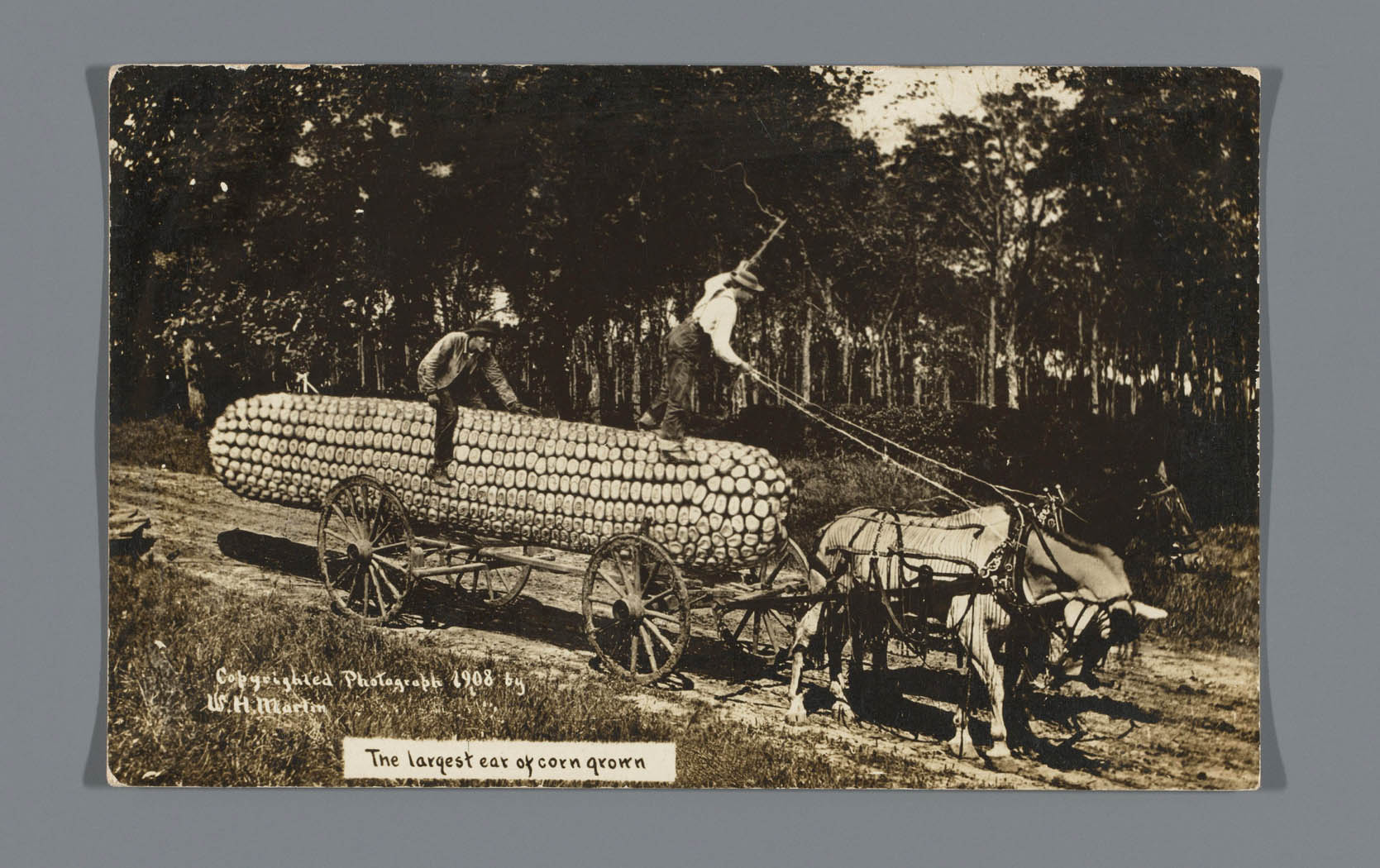
W.H. Martin (American, 1865-1940)(photographer)
The North American Post Card Co. (publisher)
The largest ear of corn grown
1908
Postcard
Rijksmuseum
Purchase 2018
William H. “Dad” Martin of Ottawa, Kan., is considered to be the father of the exaggerated postcard. Some of his better work featured huge ears of corn, giant apples and peaches, stalks of wheat taller than any man and massive pumpkins uprooting a farmstead. Such cards were hugely successful throughout the Great Plains states where agriculture was the life’s blood of rural America.
W.H. Martin moved to Ottawa in 1899 to serve as an apprentice under photographer E.H. Corwin. Eight years later, Martin purchased Corwin’s studio and began crafting the tall tale postcards that would eventually make him a millionaire.
To fake or not to fake, that is the question…
Since the very inception of photography people have been making “fake” photographs. Indeed, one of the very first self-portraits ever taken, Hippolyte Bayard’s Le Noyé [The Drowned Man], made on October 18, 1840, is of the artist experimenting, using himself as a subject, posing himself in a fake suicide, expressing frustration “about his position in the photography world and about how little respect he felt he had been given in comparison to fellow photographer Louis Daguerre.”
There are many photographs pre digital manipulation that can be seen as “fake”1 but to me this is a disingenuous word, a sensationalist word, to describe photographs that basically undermine the photograph and its link to truth, the link of the photograph to the indexicality of its referent. But what is “truth” in a photograph?
Photographs have always deceived,2 depending on where you place the camera, which point of view you decide to capture and which to exclude, and when you decide to press the shutter … or what collage of photographs you put together and in what order. Thus, from one point of view, there is no such thing as a fake photograph, just different versions of (de)constructed realities.
Conversely you could argue that ALL photographs are “fake” as the photograph is only, can only ever be, a symbolic representation of a reality that never existed in the first place (“Ceci n’est pas une pipe”).
Photographs are tricky little things.
In the case of this exhibition, early photo collages and photomontages are seen as “fake” only in terms of their relation to a certain version of a photographic reality. They are not fake in terms of the reality of their construction, produced in the IMAGINATION of the artist, expressed in the final image. In those terms they are as real as the surrealist interpretation of dreams, or cubist dissection of the image plane. And we don’t call those photographs or paintings “fake”.
Today, photography is delimited in terms of what a photograph can be. And it has been so since the very beginning of the medium if only we look hard enough. Dreams or nightmares, impossible, absurd or humorous scenes, believable and unbelievable: there is no such thing as genuine or fake – only the space between – expressed in pictorial compositions governed by the creativity and breadth of your imagination.
Dr Marcus Bunyan
1/ This exhibition adds to a previous exhibition on the subject titled Faking It: Manipulated Photography Before Photoshop staged at The Metropolitan Museum of Art, New York, October 2012 – January 2013 and The National Gallery of Art, Washington, February – May, 2013
2/ “Fake” describes something not genuine, real, or authentic, intended to look like something else to deceive, cheat, or pretend.
.
Many thankx to the Rijksmuseum for allowing me to publish the photographs in the posting. Please click on the photographs for a larger version of the image.
“… photomontage is the fabrication of a composite but single image made up of a number of distinct photographic parts. It “results from the association of photographic elements, which have diverse origins, natures and proportions, combined in such a way as to express with force a particular idea.””
José Pierre, “Hannah Höch et le photomontage des Dadaists berhnois,” in Techniques Graphiques, no. 66 (November – December 1966), p. 352 quoted in Robert A. Sobieszek. “Composite Imagery and the Origins of Photomontage, Part 1: The Naturalistic Strain,” in Artforum, Vol. 17, No. 1, September 1978 on the Artforum website [Online] Cited 18/02/2026
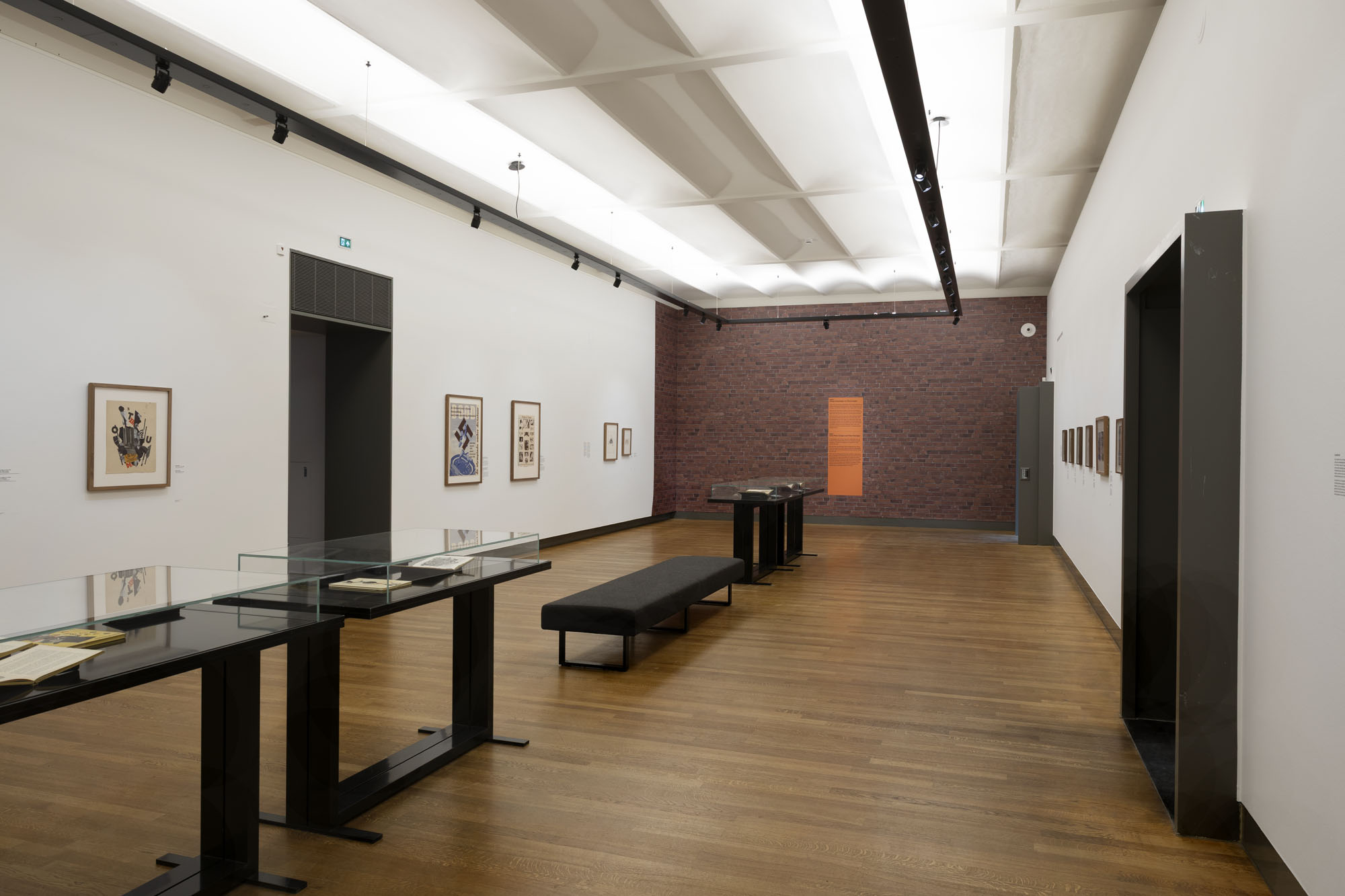
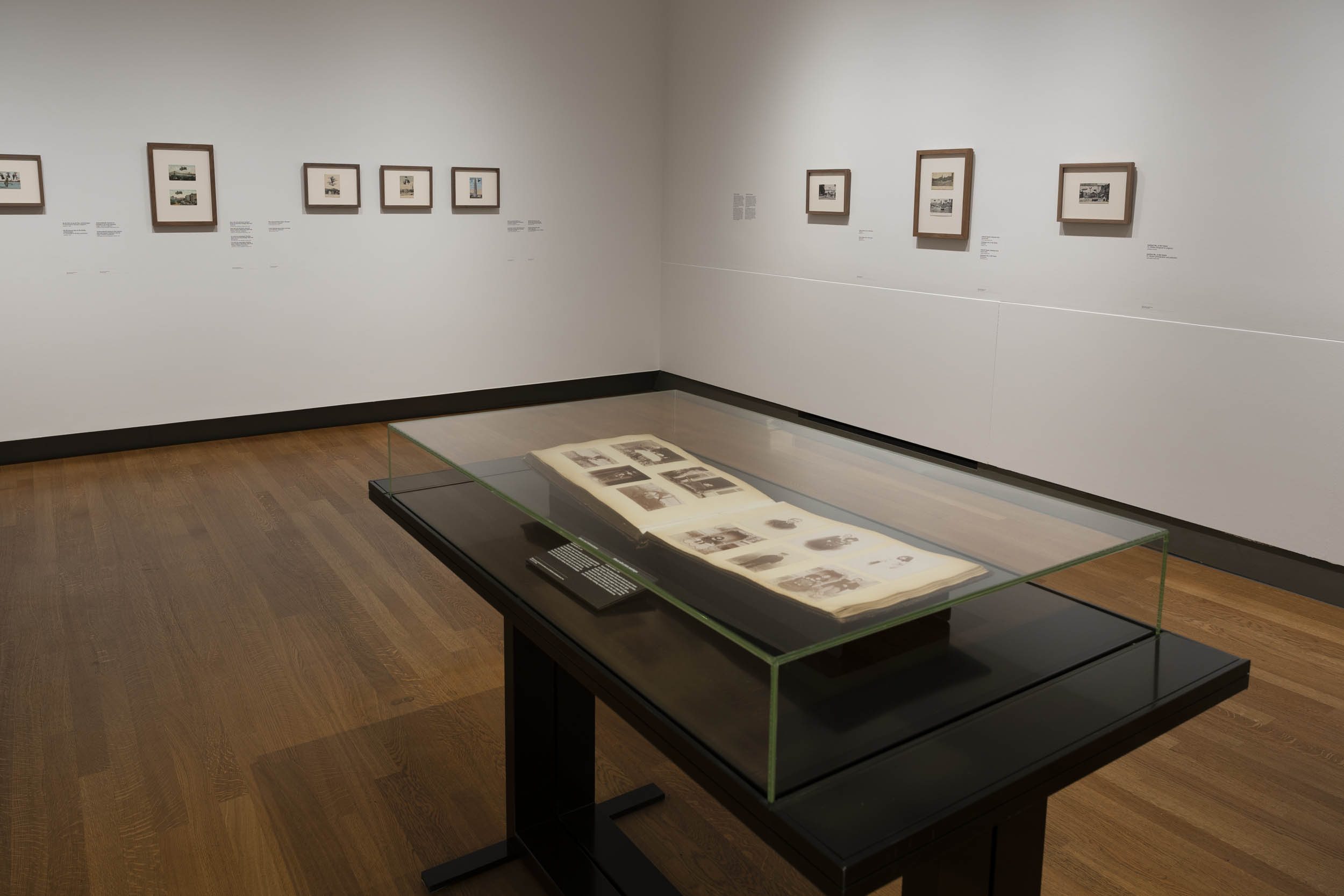
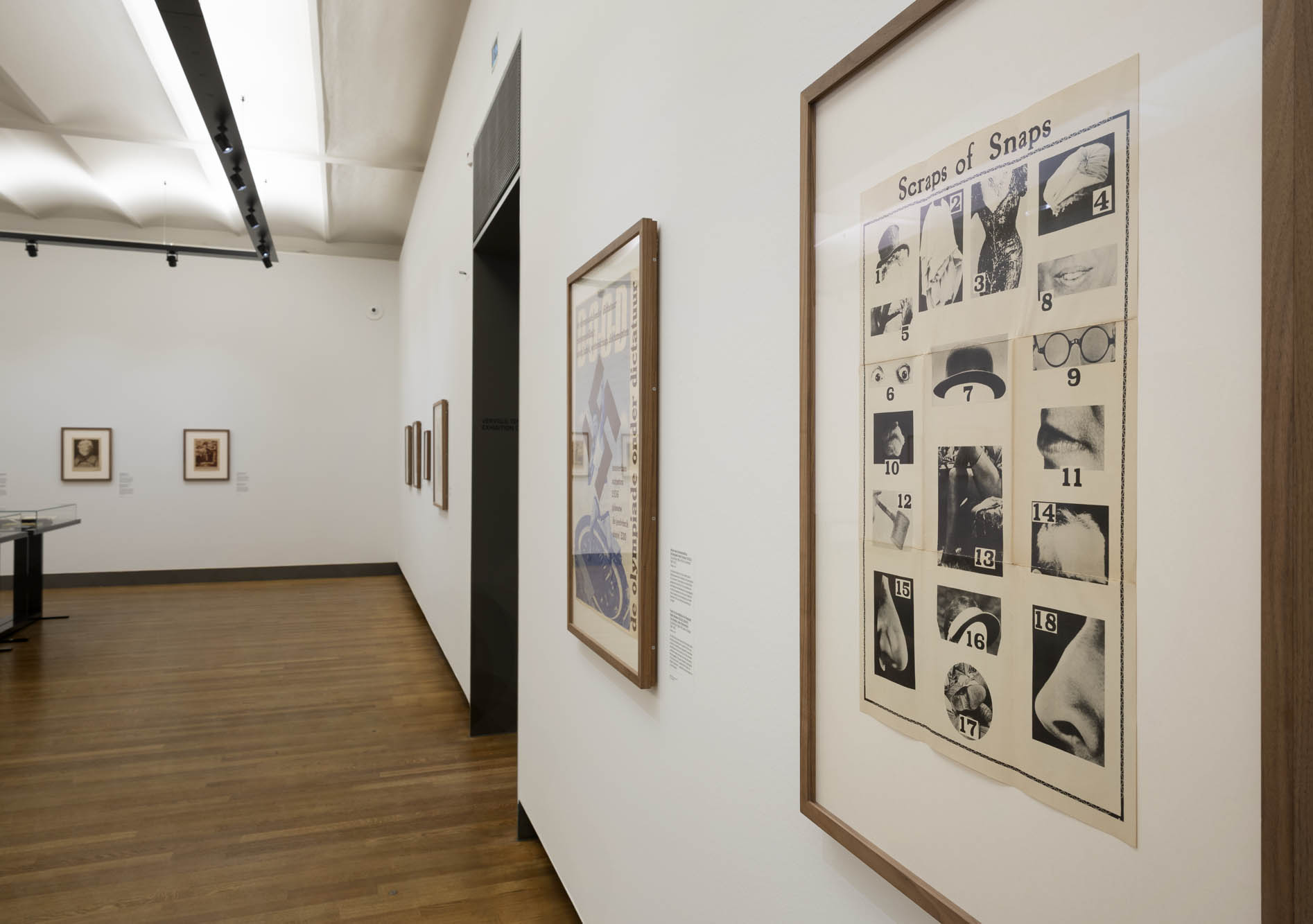
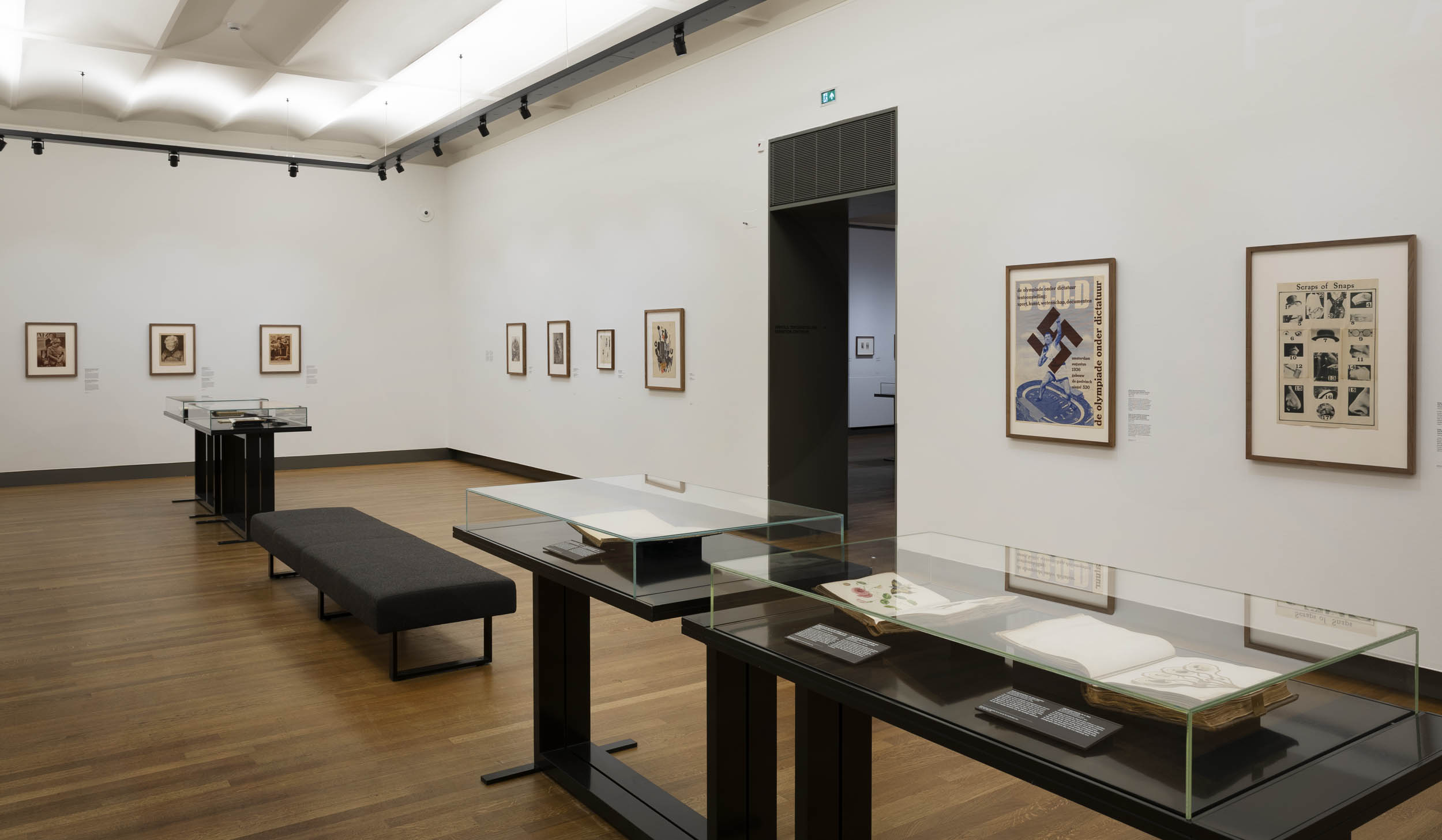
Installation views of the exhibition FAKE! At the Rijksmuseum, Amsterdam, February – May, 2026
Photos: Albertine Dijkema/Rijksmuseum
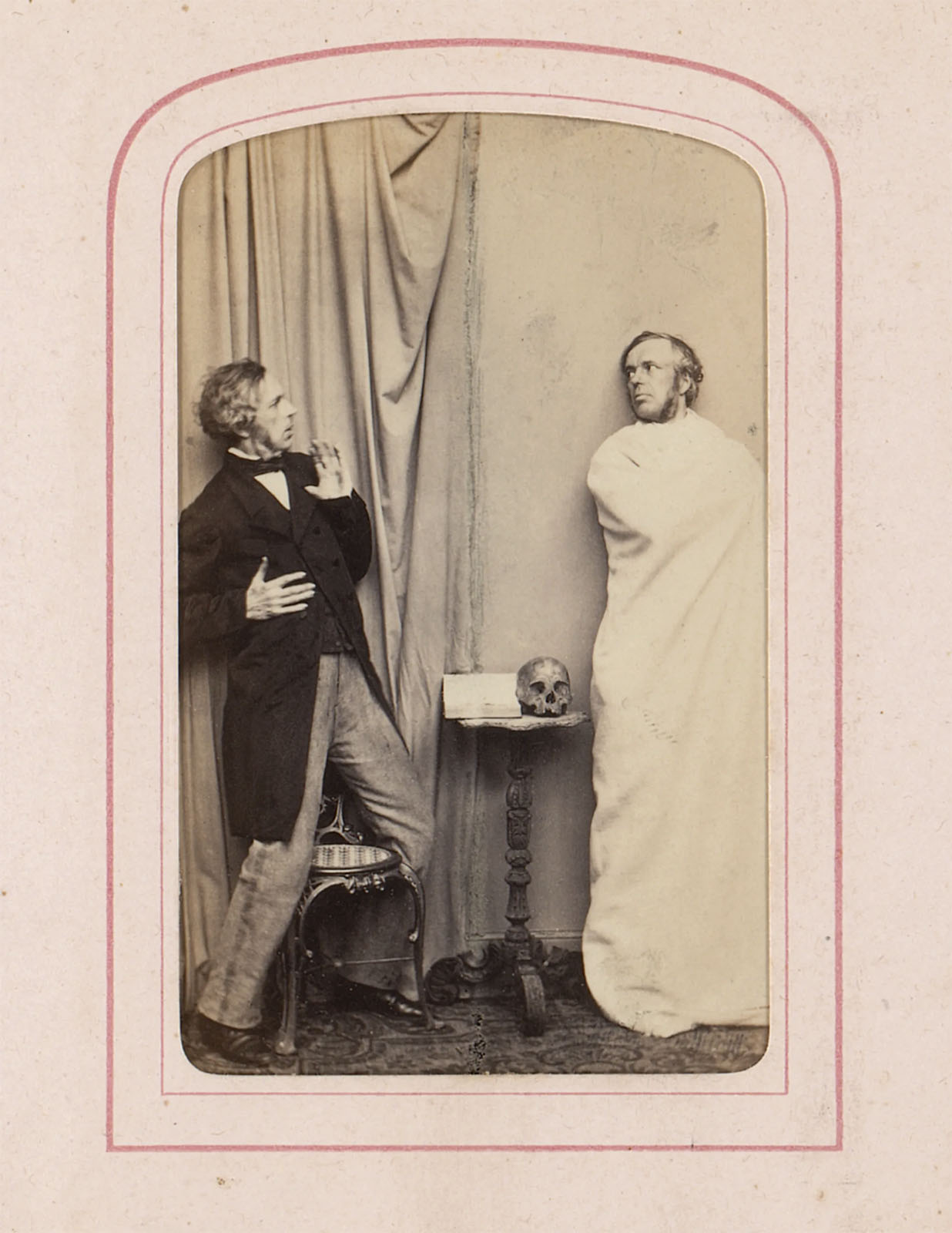
Leonard de Koningh (Dutch, 1810-1887)
Man startled by his own reflection
c. 1870-1880
Cartes de visite
In this comical memento mori, where a man comes face to face with his ghost, the painter and photographer Leonard de Koningh exposed just half of the photographic plate, then had the subject adopt a different pose before exposing the other half. Photography might have been a relatively new art, but the transition between the two images is imperceptible. “It’s like a magician,” marvels Rooseboom. “You know you are being tricked, but you don’t know how the photographer does it.” Quoting Oscar Gustave Rejlander, a trailblazer for this type of composite printing, the photographer Robert Sobieszek (1943-2005) stated: “This manner of working led not to falsehood but to truth. An image made by a single negative [claimed Rejlander] ‘is not true, nor will it ever be so – the focus cannot be everywhere’.”
Deborah Nicholls-Lee. “‘Image manipulation has always been around’: 10 early photographic ‘fakes’ that trick the eye,” on the BBC website 18th February 2026 [Online] Cited 18/02/2026. Used under fair use conditions for the purposes of education and research
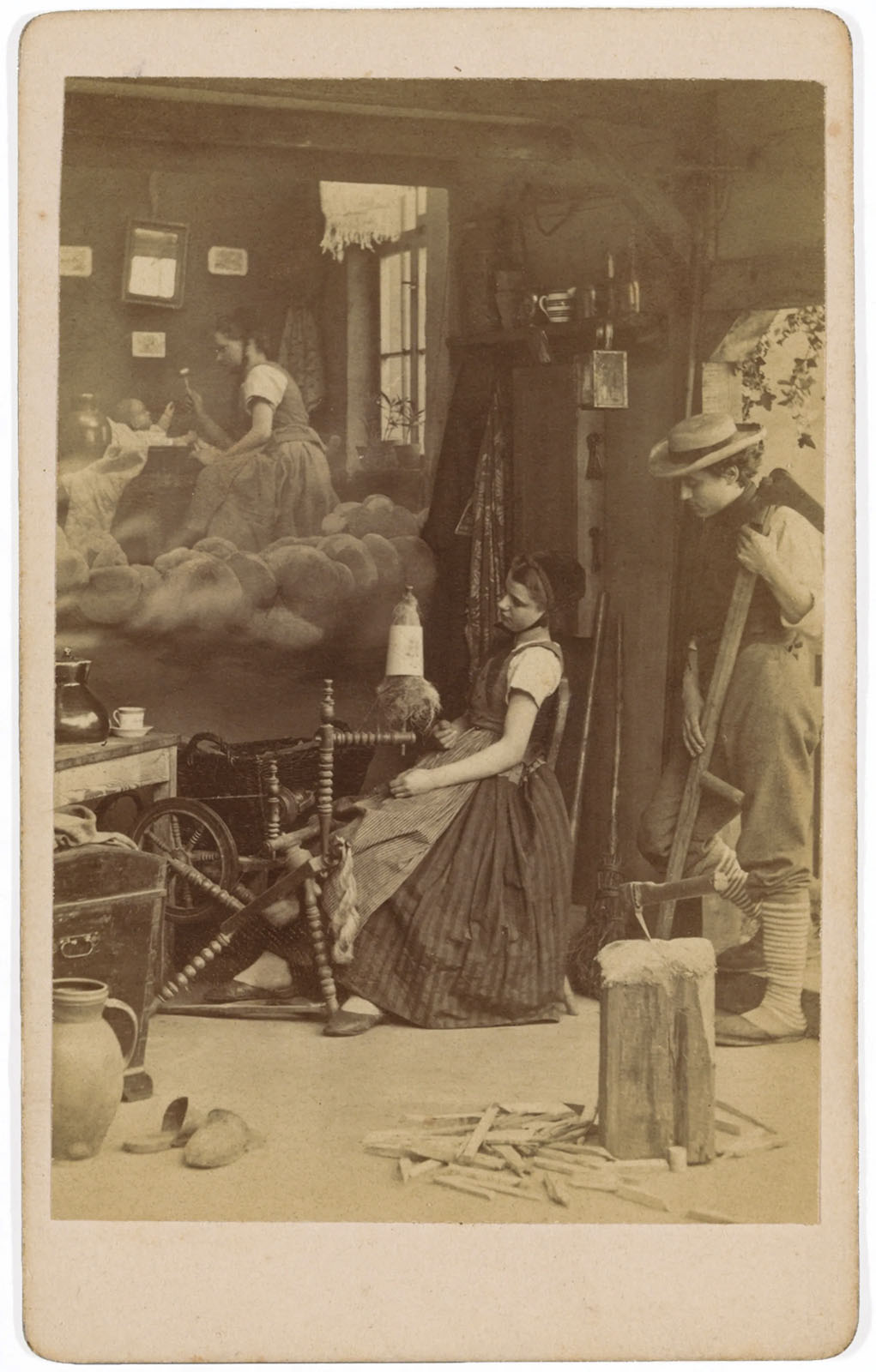
Anonymous photographer
Daydream
c. 1870-1890
Cartes de visite
In this one we see the present: a woman and her partner both with the tools of their trades; and an imagined future: her daydream of becoming a mother. The image, explains Rooseboom, was “a darkroom trick”, achieved by shielding part of the photographic paper from the light and then adding a second negative to it later. Such images took photography into a new dimension, suggesting the innermost thoughts of their subjects, and paving the way for the comic strips of the future with their speech bubbles and thought clouds.
Deborah Nicholls-Lee. “‘Image manipulation has always been around’: 10 early photographic ‘fakes’ that trick the eye,” on the BBC website 18th February 2026 [Online] Cited 18/02/2026. Used under fair use conditions for the purposes of education and research
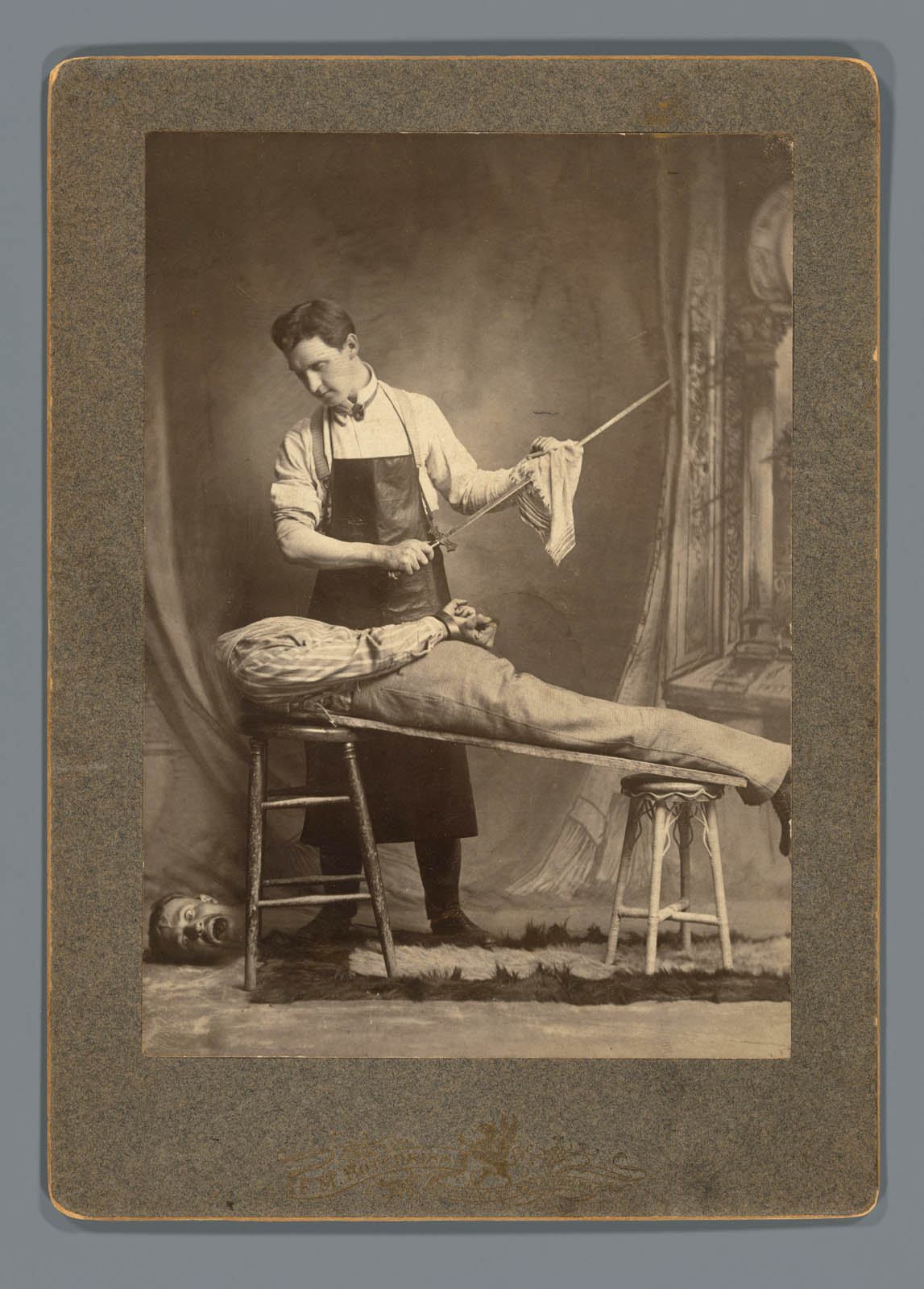
F.M. Hotchkiss (active 1870-1900)
Beheading
c. 1880-1900
Cabinet card
Purchase 2025
“We still expect photography to bring the truth, but this idea only really emerged from the illustrated magazines of the 1930s in order to inform readers how things worked elsewhere in the world,” says Rooseboom. Until then, the creative freedom to alter the image was unchallenged. “Anything possible would be tried out and produced,” he says. “There was no ethical restraint on producing non-realistic images. No-one would forbid you from doing this.” Removing and moving someone’s head, for example, presented the photographer with a pleasing puzzle. In the case of this cabinet card – a style of print mounted on card had taken over from the smaller carte de visite by the 1880s – with its black humour, the creative mission was highly successful. Only the positioning of the curtain, that would have concealed the original head, and some light retouching visible under a microscope, offer clues to how the photographer created the deception.
Deborah Nicholls-Lee. “‘Image manipulation has always been around’: 10 early photographic ‘fakes’ that trick the eye,” on the BBC website 18th February 2026 [Online] Cited 18/02/2026. Used under fair use conditions for the purposes of education and research
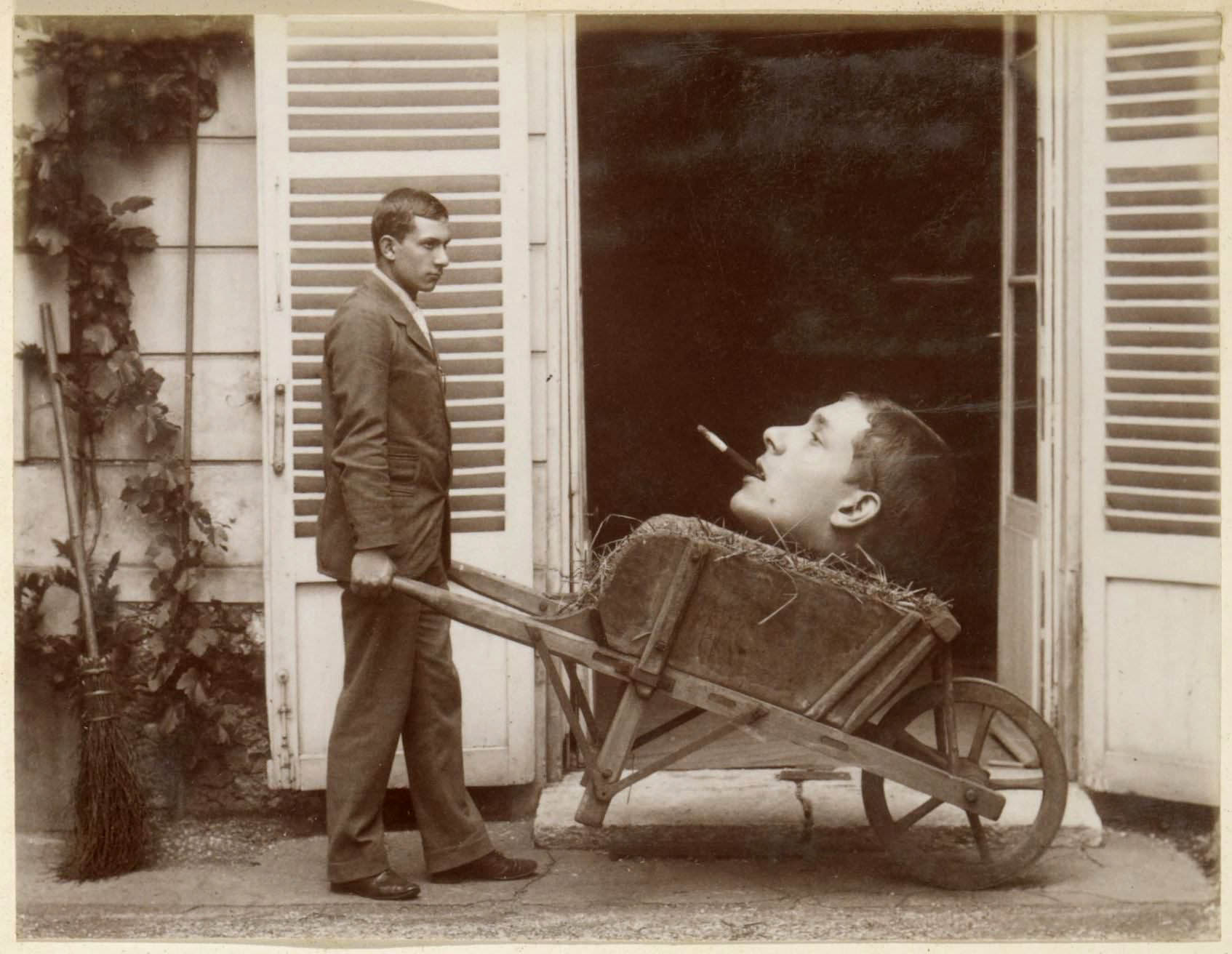
Anonymous photographer
Photomontage of a man pushing a wheelbarrow containing a head
c. 1900 – c. 1910
Gelatin silver print
This photomontage, created from two negatives, was found in a French photo album, and featured in the science magazine La Nature. Here, the displaced head illusion goes a step further as the photographer plays with scale, prefiguring the Surrealist movement which gathered pace as the century unrolled, disrupting conventional shapes and sizes to create confusing, dreamlike scenes. The open doorway provides a conveniently plain, dark background in which to smuggle in the cut-and-pasted portion before re-photographing the image as a whole. Some of these images were most likely purchased as portraits to show others, to see their look of surprise. “It’s hard to see where the trick starts and ends,” says Rooseboom. “This is showing off. Something is unbelievable, impossible, it’s improbable, but still it’s there in a photographic image which suggests we see a real scene that really unfolded in front of the camera.”
Deborah Nicholls-Lee. “‘Image manipulation has always been around’: 10 early photographic ‘fakes’ that trick the eye,” on the BBC website 18th February 2026 [Online] Cited 18/02/2026. Used under fair use conditions for the purposes of education and research
Almost immediately after the invention of the medium people began manipulating photographs – some with scissors and glue, others through ingenious photographic techniques. Drawing on more than 50 historical images from the museum’s own collection, the exhibition FAKE! Early Photo Collages and Photomontages, shows how image manipulation developed – from the birth of photography to the Second World War – and explores the motives behind it. The exhibition runs from 6 February to 25 May 2026 in the Photo Gallery of the Rijksmuseum.
“Many photo collages and composites depict impossible, absurd or humorous scenes that no one would have mistaken for reality. Yet even then, the boundary between genuine and fake, believable and unbelievable, was often hard to see.” ~ Hans Rooseboom, Curator of Photography
Cut and paste
The exhibition covers 1860-1940, a period when the possibilities of cutting and pasting photographs were widely explored. People also started experimenting with other methods of image manipulation. One trick that became popular shortly after the invention of photography was to show the same person twice in a single image: first, one half of the plate was exposed; then the subject would move, strike a different pose, and the other half of the plate was exposed. This technique was mostly used for harmless visual jokes, purely for entertainment, but the exhibition also shows how it was sometimes employed with very serious intent.
Political protest
Exaggeration, humour and incongruous visual combinations also played a major role in political protest. The best-known creator of political photo composites is John Heartfield (pseudonym of Helmut Herzfeld, 1891-1968), who opposed Hitler’s Nazi movement. Several examples of his work appear in the exhibition.
Press release from the Rijksmuseum
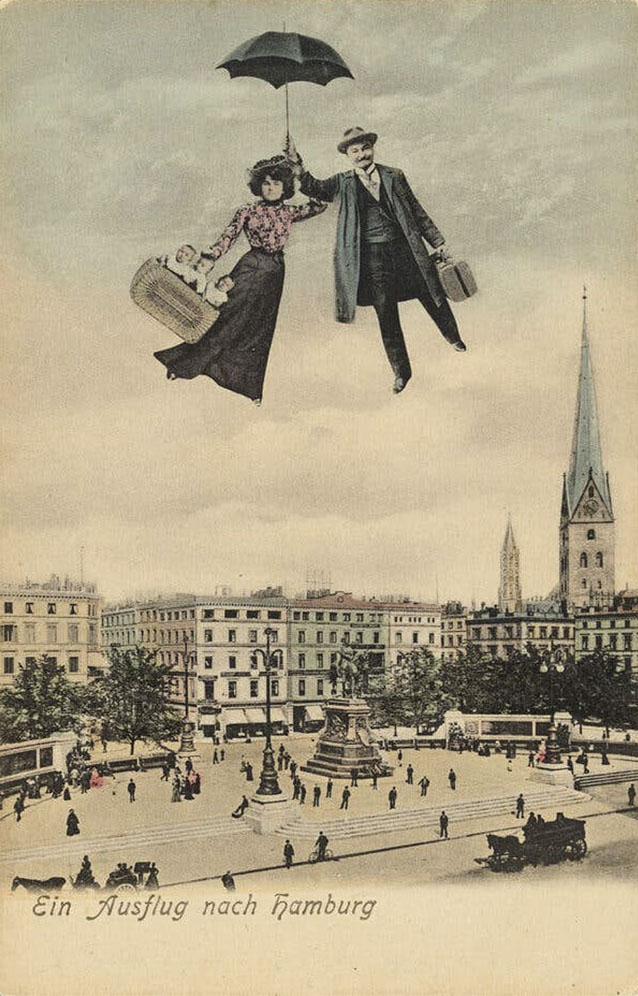
P. Michaelis (Berlin, publisher)
Man and woman with briefcase and three babies above Hamburg
c. 1900-1910
Postcard
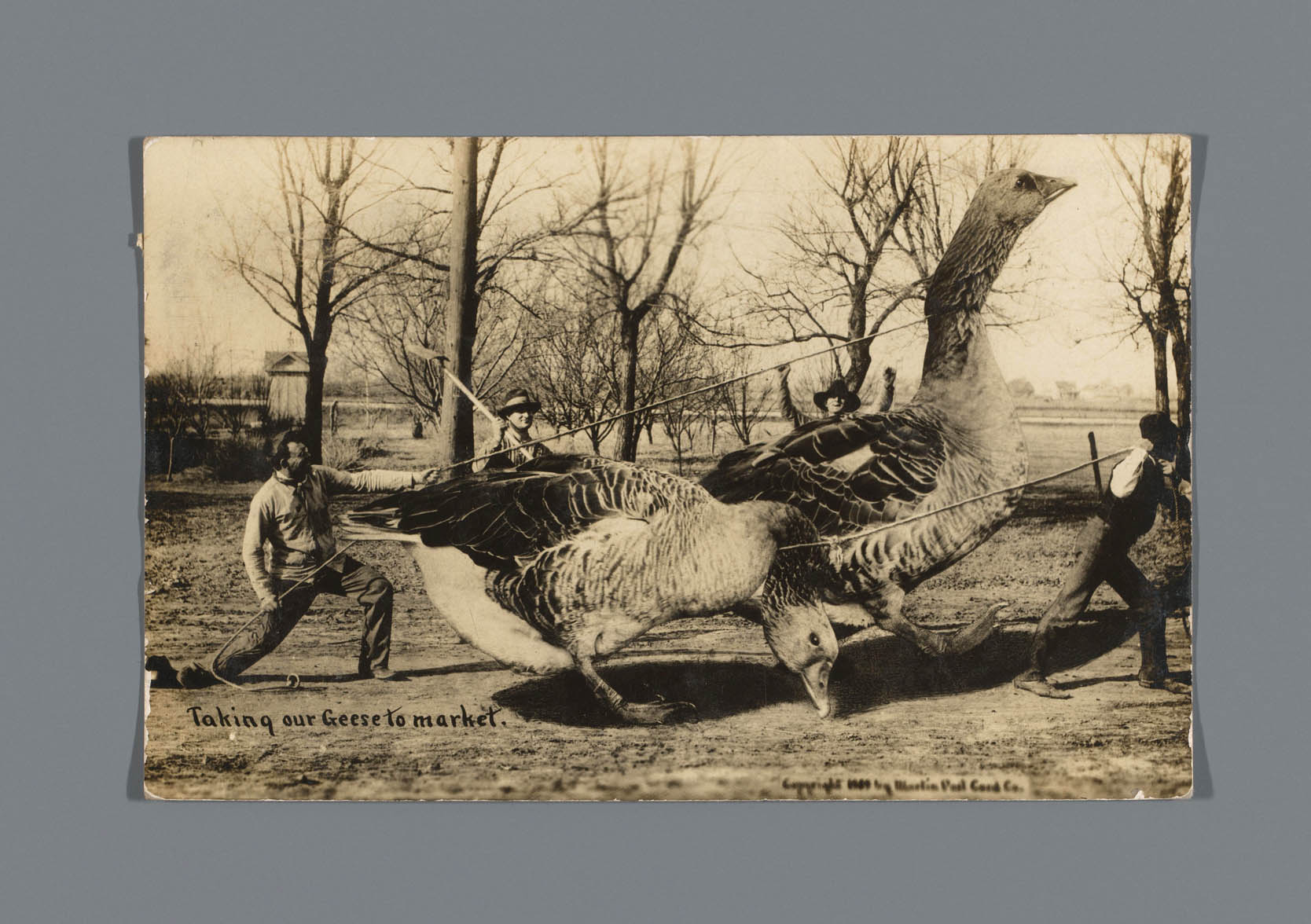
Martin Post Card Company (American)
Taking our Geese to market
1908
Postcard
Rijksmuseum
Purchase 2019
The trend for playing with images of impossible proportions spawned a genre known as “Exaggerations” or “Tall Tales”. This US photograph was printed during the “Golden Age” of picture postcards, shortly after the US decreed that messages could be written on the address side of the card. We see again the pioneering role photo manipulation plays in artistic developments such as Surrealism, but the use of scale here is also a marketing ploy to create myths about the agricultural superiority of a region. In this case, it’s the celebrated stuffed geese of Watertown, Wisconsin. Elsewhere in the show, Nebraska boasts about its bountiful produce with an ear of corn the length of a horse-drawn carriage. As US author and folklorist Roger Welsch noted in Tall Tale Postcards (1976): “Photography brought into being visual effects that tall-tale tellers through the centuries had seen only in their fertile imaginations.”
Deborah Nicholls-Lee. “‘Image manipulation has always been around’: 10 early photographic ‘fakes’ that trick the eye,” on the BBC website 18th February 2026 [Online] Cited 18/02/2026. Used under fair use conditions for the purposes of education and research
William H. Martin, (1865 – c. 1940) also known by the nickname “Dad“, was an American photographer and postcard designer known for using photomontage to depict exaggerated scenes with out-of-scale plants and animals. His works featured fanciful depictions of the American frontier inspired by tall tales. His depictions of abundant crops and large livestock served to humorously parody the struggles of farmers in the Midwestern United States who faced drought. They also mocked the exaggerated promises of fertile land and abundant livestock that companies used to lure settlers to the West. Martin was a pioneer of the art form of collage in the United States, and is considered to be the “father” of the exaggeration postcard genre.
Martin was originally from Maple City, Kansas. and was born in 1865. When he was 21 years old, he moved to Ottawa, Kansas to study under the photographer E.H. Corwin. He had no prior experience in photography. He proved successful, and bought Corwin’s photography studio in 1894.
He used photomontage and trick photography and, in 1908, began producing wildly exaggerated postcards for commercial sale. His cards typically featured out-of-scale scenes with people alongside giant plants and animals, created by cutting and pasting together different photographs. His postcards were popular with Western settlers, who sent them back to their families in the Eastern United States. His business was successful, and by 1909 he had built a two-story business building behind his home and employed around 20 people, who produced around 10,000 postcards every day. His photographs proved so popular that they were often plagiarised by other postcard companies and sold under different names.
Text from the Wikipedia website
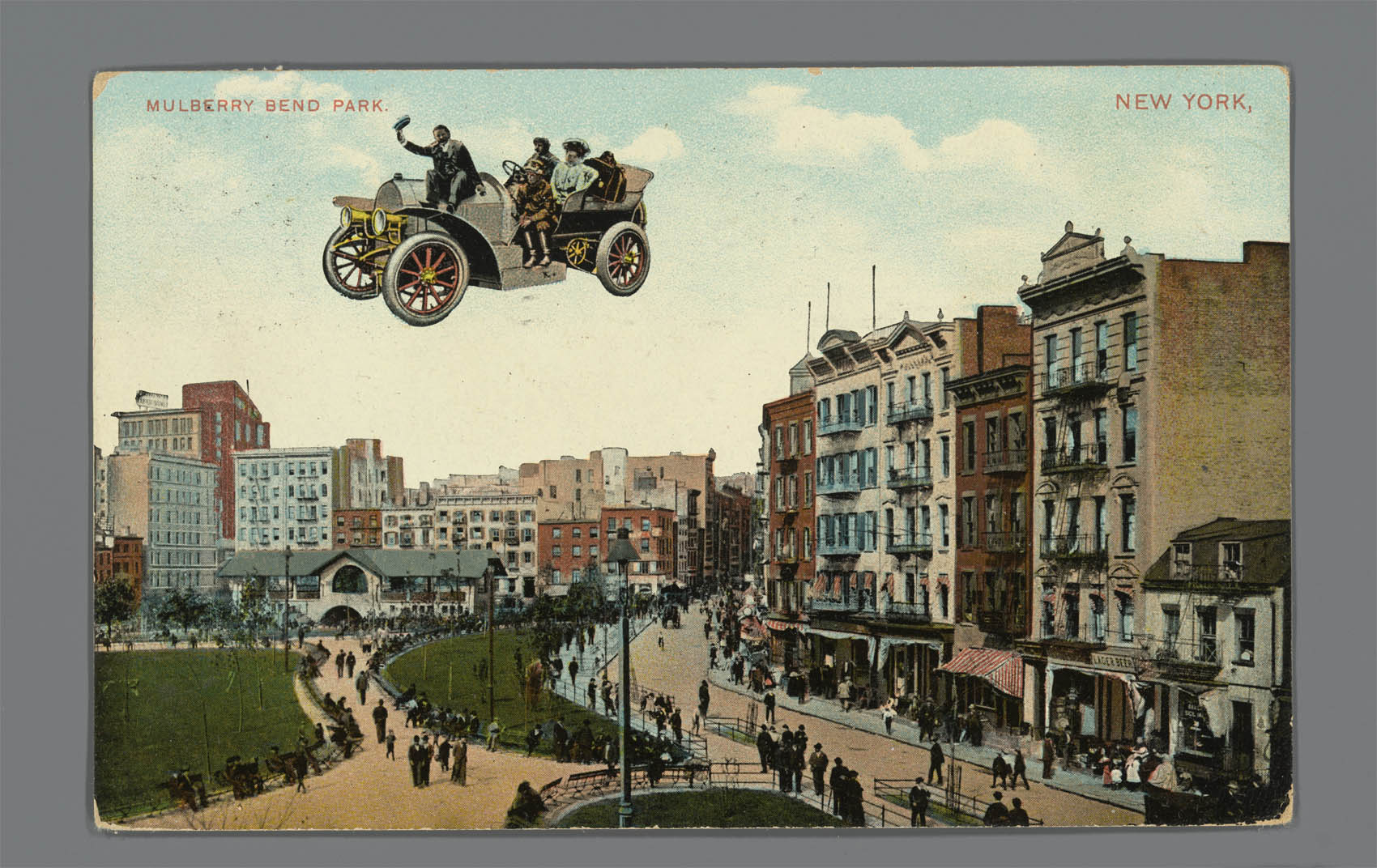
Theodor Eismann (publisher) (Leipzig, Germany)
Car flying over Mulberry Bend Park, New York
before 1908
Postcard
Rijksmuseum
Purchase 2025
Eismann established the company in Leipzig around 1884 and was instrumental in the pre-World War I postcard boom in Germany for the U.S. market. Theochrom was name given to the printing process used.
Fake photographs activated the imagination, presenting imagined possibilities yet to come. This example of a toekomstbeeld (vision of the future) envisages a world where cars could fly. Elsewhere in the exhibition we see futuristic cityscapes: town centres transformed by sky rails and zeppelins thanks to some deft copy and pasting, and skyborne visitors floating over Boston, Hamburg and The Hague in scenes reminiscent of Mary Poppins. Eismann’s New York photomontage [above] now features colour but is no more truthful, its limited range of inks added during the printing process at the whim of the designer.
Deborah Nicholls-Lee. “‘Image manipulation has always been around’: 10 early photographic ‘fakes’ that trick the eye,” on the BBC website 18th February 2026 [Online] Cited 18/02/2026. Used under fair use conditions for the purposes of education and research
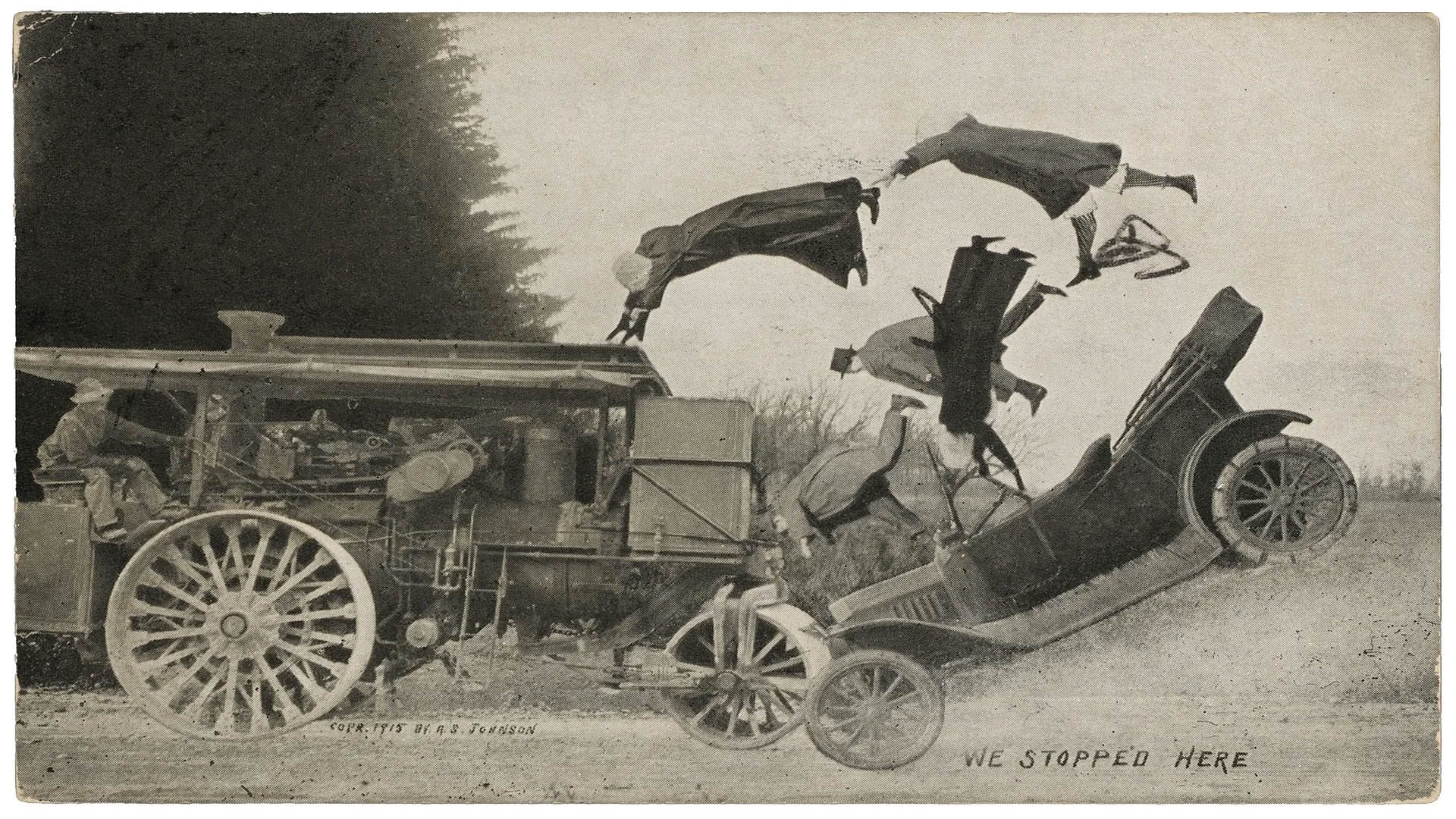
Alfred Stanley Johnson Jr. (American, 1863-1932)
Collision between a car and a steamroller
1915
Tall-tales postcard (exaggerated postcard)
Waupun catalog no. P126
We’ve come to think of photo trickery as something sinister, but in his research on its use in early photography, Rooseboom says he was surprised to find that “three-quarters of all the images were made for fun”. In this photomontage by Alfred Stanley Johnson Jr, the clever placement of a series of individual − sometimes overlapping − images provides a humorous snapshot in time. The unusually dynamic, action-filled scene features flying coattails and frilly bloomers as the passengers of a car are catapulted through the air, inviting a before-and-after narrative in the mind of the viewer. “Many photomontages obviously depict impossible situations,” states a text at the exhibition. “The intention was not to mislead, but rather to entertain the viewer.”
Deborah Nicholls-Lee. “‘Image manipulation has always been around’: 10 early photographic ‘fakes’ that trick the eye,” on the BBC website 18th February 2026 [Online] Cited 18/02/2026. Used under fair use conditions for the purposes of education and research
Alfred and Elizabeth were living at 315 South Madison Street (in Dodge County) and their son Stanley – who was now going by his middle name – and wife Myrtie were living at 315 North Madison Street (in Fond du Lac County), with their son Alfred S. (the III), who was less than a year old. The Johnson photo studio/gallery was then located at 11-17 North Madison, just off Main Street. This was only a few years after Stanley began producing his tall-tale postcards, probably assisted by his wife, Myrtie, who was listed in the 1905 State Census as being a “photographer” and the 1910 Census as a “photo retoucher.” Although he apparently was known locally by the name of Stanley, he used the name “Alfred Stanley Johnson, Jr.” on most of his postcards.
Stanley Johnson, Sr. died December 3, 1914, and his wife Elizabeth died December 9, 1919; both are buried in the family plot in Forest Mound Cemetery in Waupun. Stanley continued in the photo business at 11 North Madison Street – while living at 17 N. Madison – until a few years before his death on March 1, 1932. His obituary in the Waupun Leader News stated that he had “been in poor health for about 30 years,” which would have been since about the time he started creating his exaggerated postcards. Perhaps the cards provided the extra income needed to pay ongoing medical bills.
Anonymous. “Johnson, Alfred Stanley,” on the Wisconsin Historical Society website Nd [Online] 18/02/2026. Used under fair use conditions for the purposes of education and research
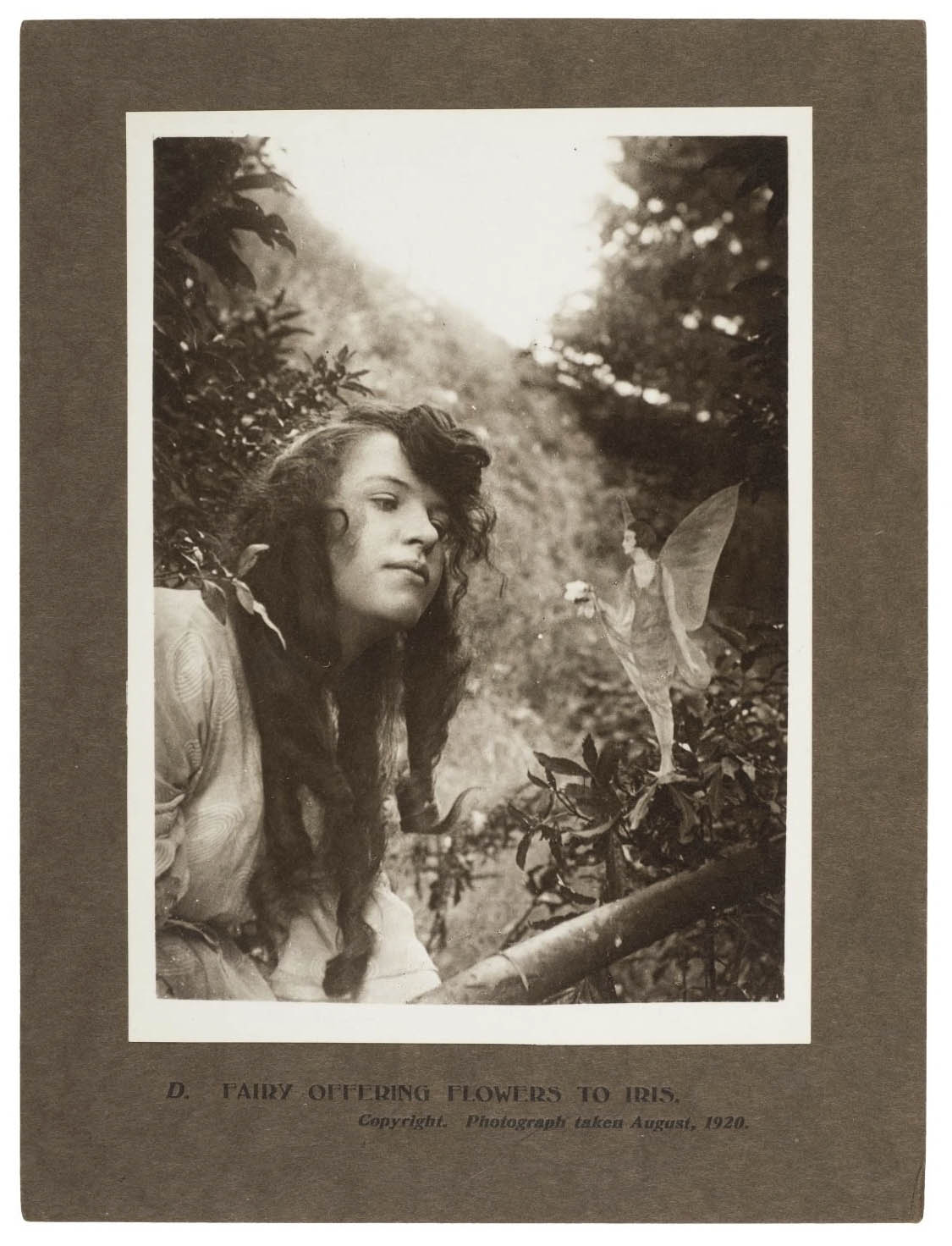
Elsie Wright (British, 1901-1988) and Frances Griffiths (British, 1907-1986)
Fairy Offering Flowers to Iris
1920
From the Cottingley Fairies series
Gelatin silver print
The Cottingley Fairies are the subject of a hoax which purports to provide evidence of the existence of fairies. They appear in a series of five photographs taken by Elsie Wright and Frances Griffiths, two young cousins who lived in Cottingley, near Bradford in England. In 1917, when the first two photographs were taken, Elsie was 16 years old and Frances was 9. The pictures came to the attention of writer Sir Arthur Conan Doyle, who used them to illustrate an article on fairies he had been commissioned to write for the Christmas 1920 edition of The Strand Magazine. Doyle was enthusiastic about the photographs, and interpreted them as clear and visible evidence of supernatural phenomena. Public reaction was mixed; some accepted the images as genuine, others believed that they had been faked.
Interest in the Cottingley Fairies gradually declined after 1921. Both girls married and lived abroad for a time after they grew up, and yet the photographs continued to hold the public imagination. In 1966 a reporter from the Daily Express newspaper traced Elsie, who had by then returned to the United Kingdom. Elsie left open the possibility that she believed she had photographed her thoughts, and the media once again became interested in the story.
Text from the Wikipedia website
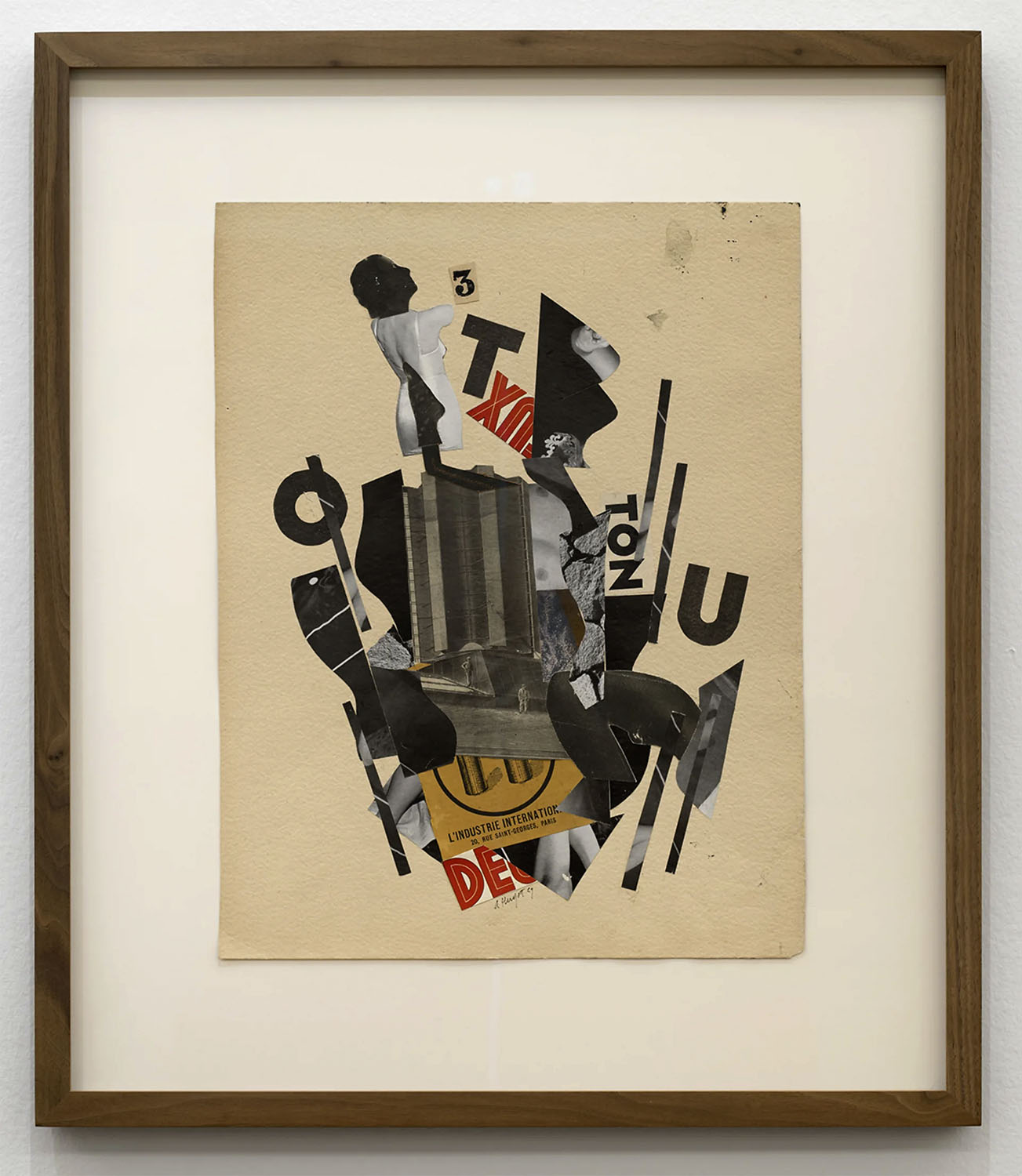
Albert Huyot (French, 1872-1968)
Photo collage
1929
The cutting up of images and rearranging them on paper with glue was once a popular pastime. People made celebrity photo quizzes, sometimes featuring just a nose or a pair of eyes; and the photographed faces of friends and family were superimposed onto drawings for comic effect. Photo collages were also undertaken by established artists. In this piece, which is influenced by Dadaism and Cubism, French artist Albert Huyot manipulates fragments of photographic images into surprising new artistic forms. More intricate photographic artworks can be seen in the show on the pages of the Hungarian artist László Moholy-Nagy’s seminal book Painting, Photography, Film (1925). In it he argues that photography is not just about recording reality. Instead, it should explore the visual language unique to its medium.
Deborah Nicholls-Lee. “‘Image manipulation has always been around’: 10 early photographic ‘fakes’ that trick the eye,” on the BBC website 18th February 2026 [Online] Cited 18/02/2026. Used under fair use conditions for the purposes of education and research
The son and grandson of artists, Albert Huyot was a pupil of Diogène Maillart and Gustave Moreau. His first paintings were done in a generic Post-Impressionist manner indebted to the example of the Nabis, but he soon became influenced by Cubism. He exhibited regularly at the Salon des Indépendants, the Salon d’Automne and the Salon des Tuileries, and also participated in the Grande Exposition in Brussels in 1910; in the same year he also spent some time in Russia. Huyot was a friend of Henri Matisse, and around 1912 his work reveals the influence of Fauvism; André Derain was another particular influence. After 1920, however, Huyot seems to have abandoned the rigour of his earlier work in favour of landscape painting. An exhibition of his work was held at the Galerie Berthe Weill in Paris in 1926.
Text from the Stephen Ongpin Fine Art website
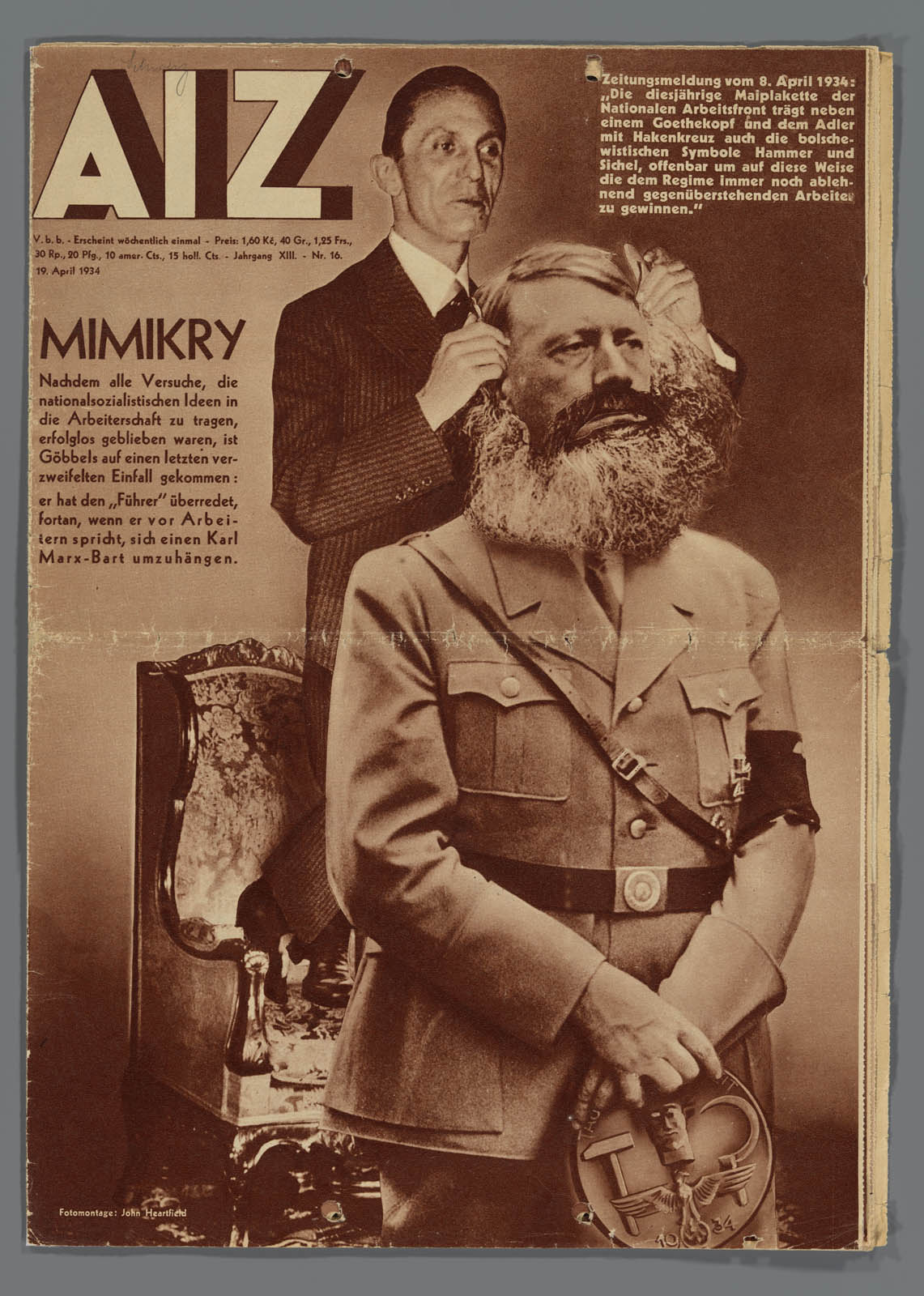
John Heartfield, pseudonym of Helmut Herzfeld (German, 1891-1968) Mimikry, Arbeiter-Illustrierte-Zeitung (A-I-Z), 19 April 1934
1934
Sometimes, in a surprising twist, photographic trickery was a tool for conveying a perceived truth. Anti-Nazi campaigner Helmut Herzfeld, who changed his name to the anglicised John Heartfield in protest against Hitler’s regime, created over 200 handcrafted political photomontages for the leftist AIZ publication, many seeking to expose the hidden dangers of the Nazi dictatorship and the lies it disseminated. Mimicry depicts Joseph Goebbels, the Nazi Minister of Propaganda, disguising Hitler as the 19th-Century revolutionary communist Karl Marx. The artist is warning the working classes not to be fooled by Hitler’s promises that he genuinely supports workers’ rights. Such work is comparable with political memes today that aim to speak truth to power. Image manipulation can both mislead us and help us find our way.
Deborah Nicholls-Lee. “‘Image manipulation has always been around’: 10 early photographic ‘fakes’ that trick the eye,” on the BBC website 18th February 2026 [Online] Cited 18/02/2026. Used under fair use conditions for the purposes of education and research
Rijksmuseum
Museumstraat 1
1071 XX Amsterdam
Opening hours:
Open daily 9 – 17h




You must be logged in to post a comment.