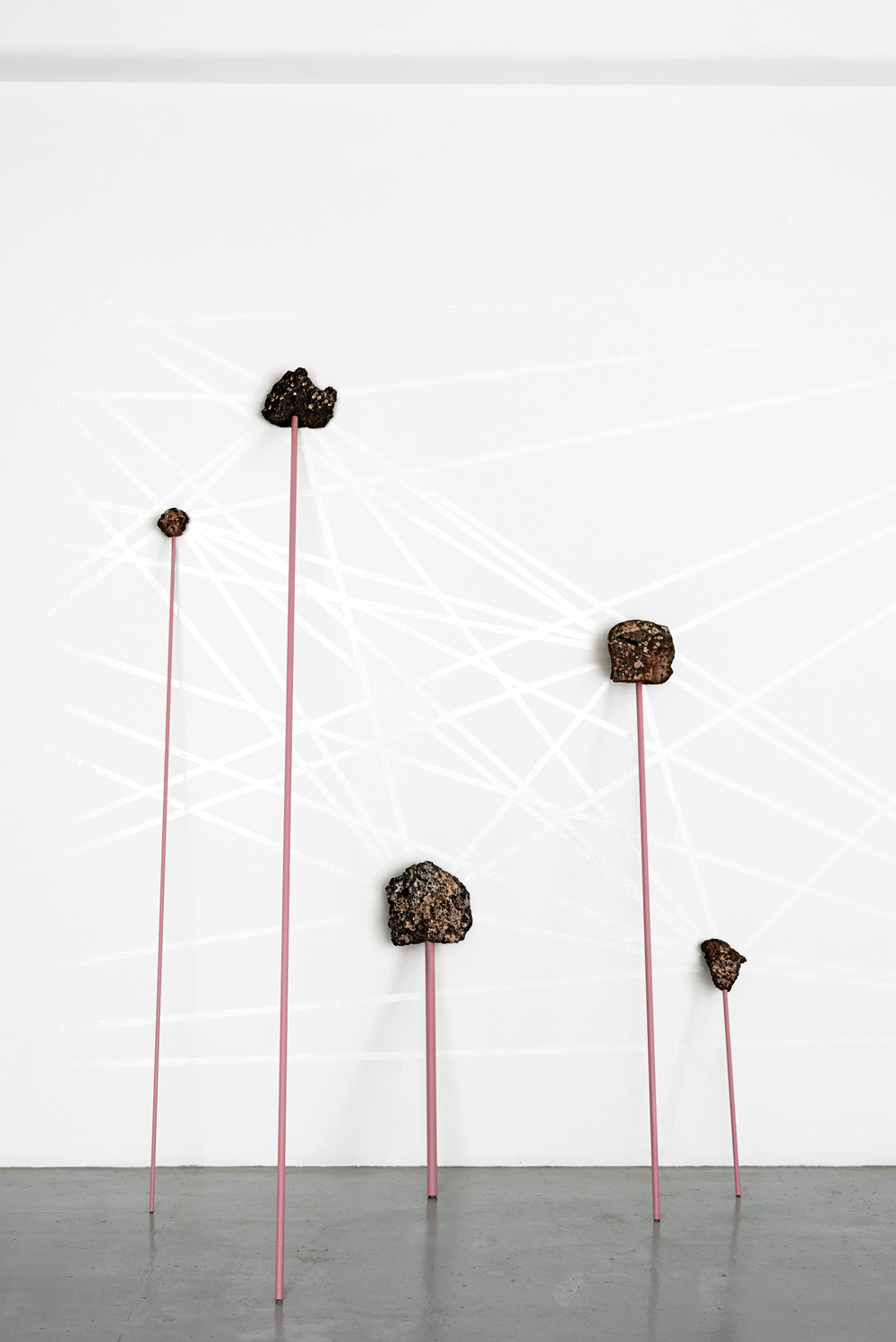
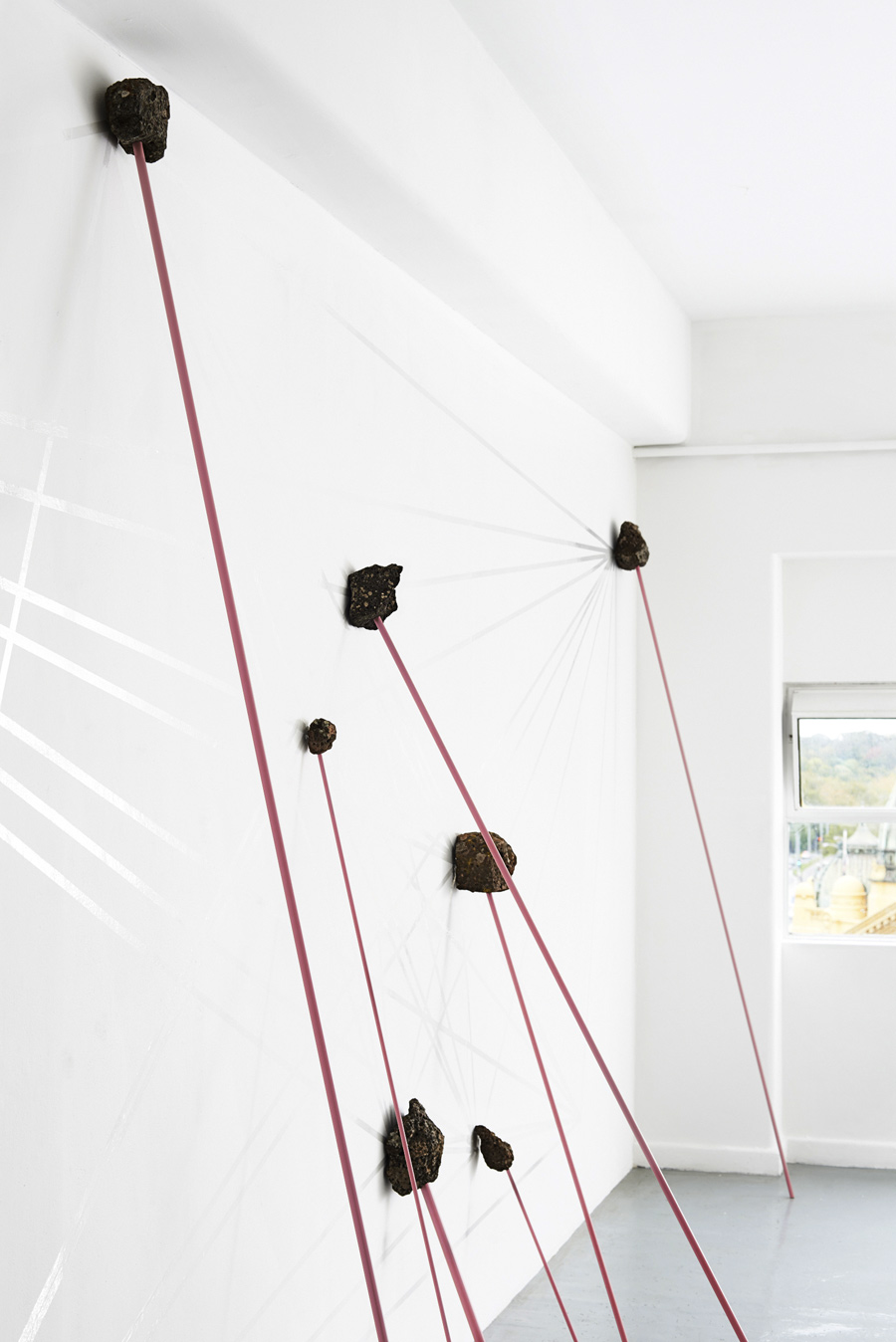
Exhibition: ‘Knud Lonberg-Holm: The Invisible Architect’ at Ubu Gallery, New York Part 2

Exhibition dates: 6th May – 30th September 2014


Knud Lonberg-Holm (Danish, 1895-1972) 'Design for the Chicago Tribune Tower Competition' West elevation 1922


Knud Lonberg-Holm (Danish, 1895-1972)
Design for the Chicago Tribune Tower Competition
West elevation
1922
Vintage photograph mounted on board
9 1/8 x 3 5/8 inches (23.2 x 9.2cm)
The Knud Lonberg-Holm Archive from the Marc Dessauce Collection; Courtesy Ubu Gallery, New York


The second part of this posting about the work of architect Knud Lonberg-Holm. “Backside-views of buildings and fire escapes, rather than historicist ornamental facades, are presented in their “unselfconscious beauty” in opposition to traditional, pictorialist architectural photography.” You only have to look at the photographs of the city by Alfred Stieglitz or Berenice Abbott taken at around the same time to notice the difference – less romantic, more “modern” in their geometry and form.

If it weren’t for the shock of seeing 1920s cars at the bottom of some of the images (for example, Detroit, Rear Façade of a Hotel, 1924 below) you could almost believe that they had been made 40 years later, around the time of Bernd and Hilla Becher. These photographs are monumental, industrial, but are tinged with humanity – the billboards, cars, people and advertising signs that hover at the bottom or in the deep shadows of the image. Then look at the tonality and atmosphere of the images, including the vibration of light in the two Dazzlescapes (New York, Madison Square and New York, Times Square, both 1923 below).

I don’t think I have ever seen a better collection of images of city architecture.

Dr Marcus Bunyan


Many thankx to Ubu Gallery for allowing me to publish the photographs in the posting. Please click on the photographs for a larger version of the image.


“I’ve always been annoyed by rummaging through the past; the future interests me much more.”


Knud Lonberg-Holm
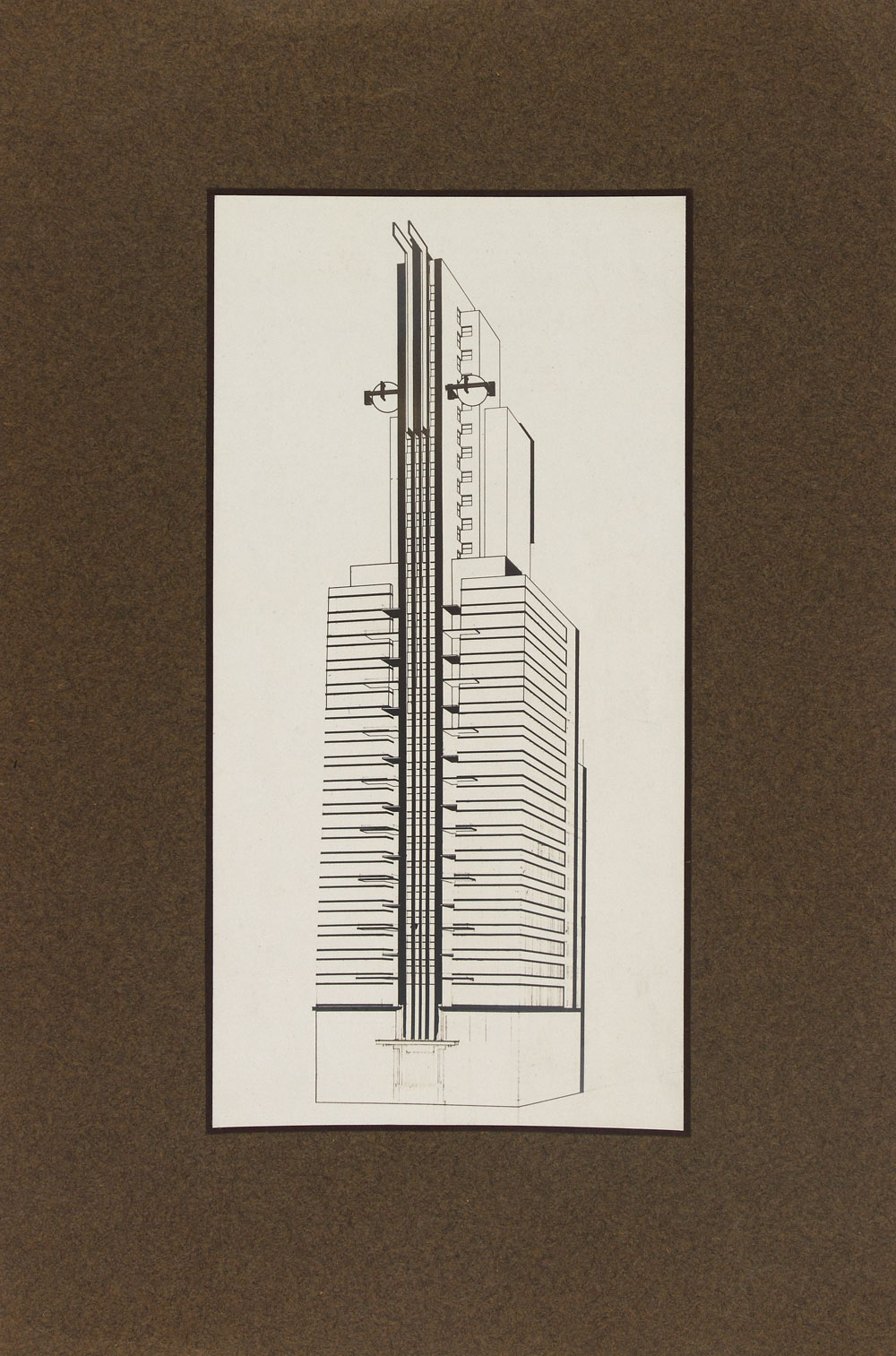


Knud Lonberg-Holm (Danish, 1895-1972) 'Design for the Chicago Tribune Tower Competition' West view axonometric 1922


Knud Lonberg-Holm (Danish, 1895-1972)
Design for the Chicago Tribune Tower Competition
West view axonometric
1922
Vintage photograph mounted on board
8 7/8 x 4 5/8 inches (22.5 x 11.7cm)
The Knud Lonberg-Holm Archive from the Marc Dessauce Collection; Courtesy Ubu Gallery, New York
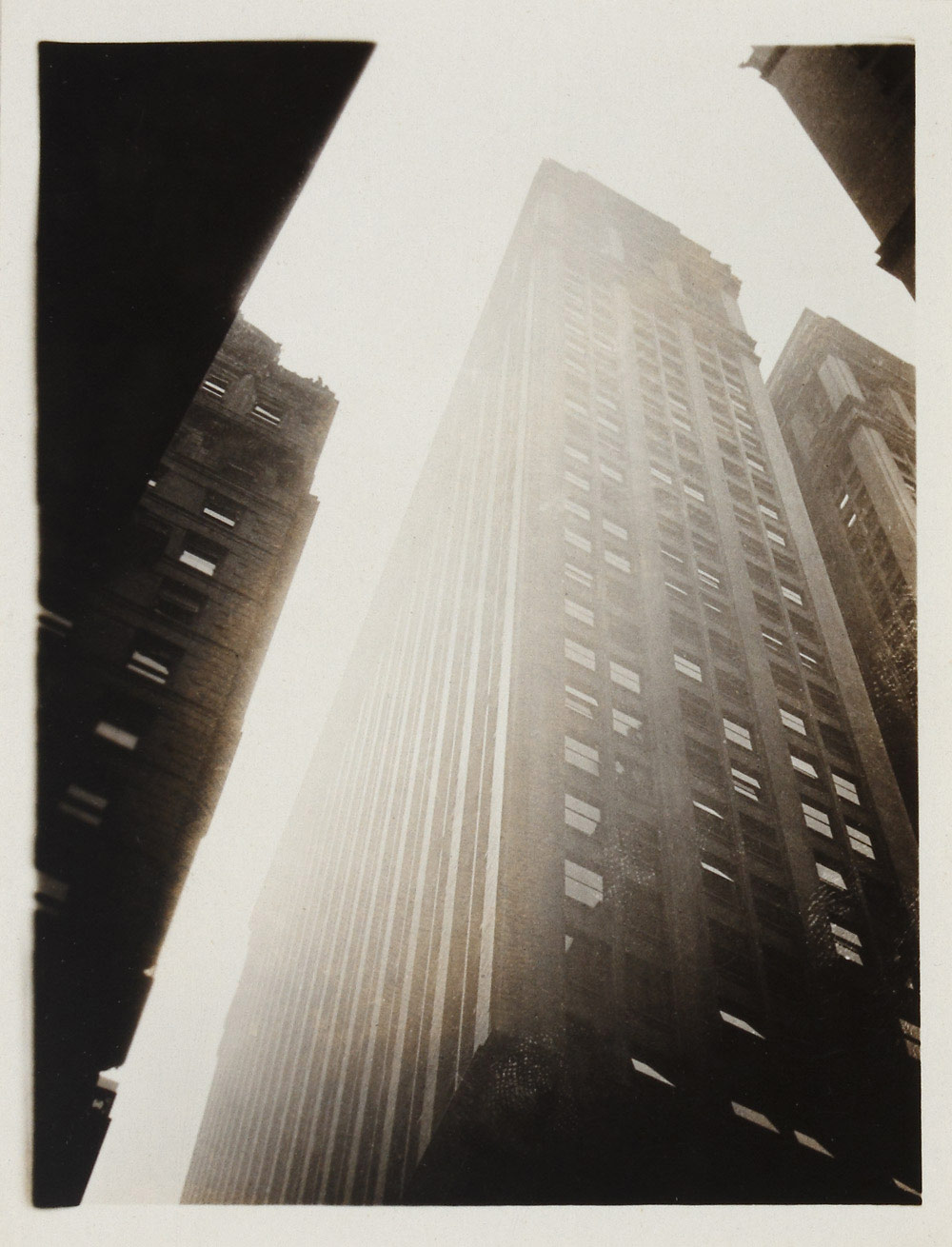
 

Knud Lonberg-Holm (Danish, 1895-1972) 'Equity Trust Building – Oblique View' 1923


Knud Lonberg-Holm (Danish, 1895-1972)
Equity Trust Building – Oblique View
1923
Reproduced in Erich Mendelsohn’s Amerika, p. 41
Vintage gelatin silver print
4 3/8 x 3 1/4 inches (11.1 x 8.3cm)
The Knud Lonberg-Holm Archive from the Marc Dessauce Collection; Courtesy Ubu Gallery, New York


Knud Lonberg-Holm (Danish, 1895-1972) 'Woolworth Building – Oblique View' 1923


Knud Lonberg-Holm (Danish, 1895-1972)
Woolworth Building – Oblique View
1923
Reproduced in Erich Mendelsohn’s Amerika, p. 40
Vintage gelatin silver print
4 1/4 x 3 1/4 inches (10.8 x 8.3cm)
The Knud Lonberg-Holm Archive from the Marc Dessauce Collection; Courtesy Ubu Gallery, New York


Knud Lonberg-Holm (Danish, 1895-1972) 'Design for the Chicago Tribune Tower Competition' Side elevation with Tribune sign visible 1922


Knud Lonberg-Holm (Danish, 1895-1972)
Design for the Chicago Tribune Tower Competition
Side elevation with Tribune sign visible
1922
Vintage photograph mounted on board
9 1/8 x 4 7/8 inches (23.2 x 12.4cm)
The Knud Lonberg-Holm Archive from the Marc Dessauce Collection; Courtesy Ubu Gallery, New York


Knud Lonberg-Holm (Danish, 1895-1972) 'Design for the Chicago Tribune Tower Competition' Preliminary side elevation 1922


Knud Lonberg-Holm (Danish, 1895-1972)
Design for the Chicago Tribune Tower Competition
Preliminary side elevation
1922
Photograph mounted on board
9 x 4 5/8 inches (22.9 x 11.7cm)
The Knud Lonberg-Holm Archive from the Marc Dessauce Collection; Courtesy Ubu Gallery, New York


Throughout the 1920s, he traveled to other American cities like Chicago and New York City, where, with a 35-millimetre handheld Leica, he took worm’s-eye views and extreme close-ups of skyscrapers, the back sides of buildings, fire escapes, billboards, and dazzling “lightscapes,” ignoring – for the most part – the facades of the buildings. Some of these images would appear, uncredited, in Erich Mendelsohn’s 1926 publication Amerika: Bilderbuch eines Architekten, the first book on the “International Style” in American architecture. (Only in an expanded, later edition from 1928 is Lonberg-Holm credited for 17 of the images.)

Soon the photographs cropped up in design and architecture journals in Holland, Germany, and Russia. “They received acclaim for being progressive and dynamic presentations of technology, commerce, and urbanisation,” says Adam Boxer, founder and owner of Ubu Gallery. “To expose Lonberg-Holm’s role as photographer means one can situate him in his deserved role – a pioneer of New Photography.” As a correspondent for the avant-garde, having his images and writings appear in radical European Modernist reviews – such as the Functionalist-Constructivist Swiss bulletin ABC Beitrage zum Bauen (Contributions on Building) and the Dutch i10 – were of crucial importance, since they circulated amongst members of the European vanguard. By the 1930s, however, Lonberg-Holm had given up architecture for marketing research, and his photographs, never signed or dated, no longer circulated. …

Lonberg-Holm also questioned how architecture was practiced and he pioneered the idea of the life cycle of a building. Decades before William McDonough discovered cradle-to-cradle thinking, Lonberg-Holm had been trying to put across the concept that all buildings, like all organisms, are subject to a life cycle, as predictable and as inevitable as the cycles in nature. “The building cycle involves research, design, construction, use, and elimination – and repeat,” wrote an editor in the January 1960 issue of Architectural Forum. “One of Lonberg-Holm’s chief contentions is that design that anticipates the cycle as a whole makes each succeeding step more rational and easier… Lonberg-Holm’s principle, ‘Anticipate remodelling in the initial design’, carries a corollary, which might be put this way, in keeping with the very important principle of design articulation: ‘Design each “system” in the building – the structural system, the heating or the air-conditioning system, the wiring, the plumbing, etc. – to be self-contained for easy assembly, with interconnections to other systems held to a minimum and made easy to alter’.

Extract from Paul Makovsky. “The Invisible Architect of Invisible Architecture,” on the Metropolis website [Online] Cited 18/07/2014. No longer available online.


Knud Lonberg-Holm (Danish, 1895-1972) 'Detroit' 1924


Knud Lonberg-Holm (Danish, 1895-1972)
Detroit
1924
Reproduced in Erich Mendelsohn’s Amerika, p. 67
Vintage gelatin silver print
4 1/4 x 3 1/4 inches (10.8 x 8.3cm)
The Knud Lonberg-Holm Archive from the Marc Dessauce Collection; Courtesy Ubu Gallery, New York


Knud Lonberg-Holm (Danish, 1895-1972) 'Detroit, Rear Areaway' 1924


Knud Lonberg-Holm (Danish, 1895-1972)
Detroit, Rear Areaway
1924
Reproduced in Erich Mendelsohn’s Amerika, p. 91
Vintage gelatin silver print
4 1/2 x 3 1/2 inches (11.4 x 8.9cm)
The Knud Lonberg-Holm Archive from the Marc Dessauce Collection; Courtesy Ubu Gallery, New York


During the 1920s, Lonberg-Holm traveled to American cities like Detroit, Chicago, and New York. With his 35-millimetre Leica camera, he took extreme close-ups of skyscrapers (such as this rear view Detroit Hotel, above), the back sides of buildings, fire escapes, billboards, and dazzling nighttime views.


Knud Lonberg-Holm (Danish, 1895-1972) 'Detroit' 1924


Knud Lonberg-Holm (Danish, 1895-1972)
Detroit
1924
variant cropping reproduced in Erich Mendelsohn’s Amerika, p. 21
Vintage gelatin silver print
4 3/8 x 3 3/8 inches (11.1 x 8.6cm)
The Knud Lonberg-Holm Archive from the Marc Dessauce Collection; Courtesy Ubu Gallery, New York


Knud Lonberg-Holm (Danish, 1895-1972) 'Detroit, Rear Façade of a Hotel' 1924


Knud Lonberg-Holm (Danish, 1895-1972)
Detroit, Rear Façade of a Hotel
1924
Reproduced in Erich Mendelsohn’s Amerika, p. 89
Vintage gelatin silver print
4 1/2 x 3 3/8 inches (11.4 x 8.6cm)
The Knud Lonberg-Holm Archive from the Marc Dessauce Collection; Courtesy Ubu Gallery, New York


Knud Lonberg-Holm (Danish, 1895-1972) 'Chicago, Skyscraper of the Second Period' c. prior to 1926


Knud Lonberg-Holm (Danish, 1895-1972)
Chicago, Skyscraper of the Second Period
c. prior to 1926
Reproduced in Erich Mendelsohn’s Amerika, p. 77 (right)
Vintage gelatin silver print
4 3/8 x 3 3/8 inches (11.1 x 8.6cm)
The Knud Lonberg-Holm Archive from the Marc Dessauce Collection; Courtesy Ubu Gallery, New York


Knud Lonberg-Holm (Danish, 1895-1972) 'Chicago, 2 Skyscrapers' c. prior to 1926


Knud Lonberg-Holm (Danish, 1895-1972)
Chicago, 2 Skyscrapers
c. prior to 1926
Reproduced in Erich Mendelsohn’s Amerika, p. 75
Vintage gelatin silver print
4 1/2 x 3 1/2 inches (11.4 x 8.9cm)
The Knud Lonberg-Holm Archive from the Marc Dessauce Collection; Courtesy Ubu Gallery, New York


Knud Lonberg-Holm: The Invisible Architect

“Lonberg-Holm was the first architect in my knowledge to talk about the ultimately invisible architecture. In 1929, when I first met him, he said the greatest architect in history would be the one who finally developed the capability to give humanity completely effective environmental control without any visible structure and machinery. Thus we have in our day an unsung Leonardo of the building industry, whose scientific foresight and design competence are largely responsible for the present world-around state of advancement of the building arts.”


Buckminster Fuller, 1968


The historical documents in this collection represent a hitherto unexplored aspect of the influence of European modernist architects – specifically, those who emigrated to the United States early and voluntarily, before the rise of fascism necessitated the wholesale evacuation of the European avant-garde. The seemingly disparate archive of photographs, drawings, diagrams and correspondence can be grouped around a unifying theme: the realisation of the avant-garde ambition of integration and control of architectural production through industrialisation; and around a central figure: the architect Knud Lonberg-Holm. The documents bear witness to a complex history that is not easily tracked elsewhere. This is due, in part, to the fact that they bridge two continents, and in part because they unveil processes of reform, such as the scientific conversion of the institutions of architectural practice and the transformation of the project, that were aimed at the most mundane level of building, not at exceptional structures. Moreover, the documents show this professional and anonymous destiny together in line with inversely artistic and revolutionary origins. Thus, the archive documents a phenomenon of cultural disappearance, bringing missing substance to the link between the Americanism of the European avant-garde and the history of modern architecture in the United States.

A native of Denmark, which he leaves in 1923 for the United States, Knud Lonberg-Holm (1895-1972) is the emblematic figure of this disappearance. Initially considered a “pioneer of modern architecture” by the anthropologists of the 1920s, and even held representative of “the space-time conception” by Henry Russell Hitchcock, his true contributions will be ever more unacknowledged as they become more fundamental. First of the modernist émigrés in the United States, he becomes the obliged correspondent for the European avant-garde, in particular for the De Stijl group and also the Berlin Constructivists, with whom he was closest. He was a contributor to both ABC and i10, a member of ASNOVA, a collaborator of Buckminster Fuller, and also the American delegate to CIAM with Richard Neutra. His experiments with photography in the early 1920s (diffused widely by J.J.P. Oud, Moholy-Nagy, Erich Mendelsohn, and others) were received with critical success in Europe and the USSR. This is due as much to the revolutionary use of extreme viewpoints from below and above, as to the renewal of the iconographic sources of modernism: the substitution of the imagery of the grain elevators and the “balancing of the masses,” for an aesthetic of structure and tension gleaned from the metallic skeletons of unfinished skyscrapers. In Lonberg-Holm, this aesthetic schism is accompanied by a renouncement of the project – a sort of Duchampian abandonment of the traditional identity of the architect, which intervenes at the moment he arrives in his work at a controlled resolution of the opposing influences of rationalism and neo-plasticism, for example in the McBride Residence project of 1926.

Lonberg-Holm’s institutional itinerary begins at the University of Michigan, Ann Arbor, in 1924-1925, where he introduces a basic design course similar to that of the Soviet Vkhutemas. Moving to New York in 1929, he enters the organisation of the F.W. Dodge publishing corporation, initially at the journal The Architectural Record, where he devises both content and format, and then as the head of the research department of Sweet’s Catalog Service, the indispensable architect’s handbook of building products. The reorganisation of Sweet’s Catalog, perhaps Lonberg-Holm’s most tangible contribution to modern architectural production in America, gives substance to his doctrinaire activity of the 1930s, concerned with urban obsolescence, cycles of production, and information theory. In collaboration with Czech designer Ladislav Sutnar, Sweet’s Catalog becomes a complete oeuvre of industrial and plastic organisation. Its critical and enduring importance in the process of architectural production makes it an implemented avant-garde project, at an appreciable scale, and testament to Lonberg-Holm’s heretofore-unacknowledged influence on the development of a truly modern American architecture.

Marc Dessauce, 2003


Marc Dessauce (1962-2004) was an architectural historian who lived and worked in NYC and Paris. His research, exhibitions, and writings focused on the foundations of both American and European avant-garde architecture in the twentieth century. Marc assembled this archive between 1986 and 1995 when he was a PhD candidate at Columbia University in the department of Art History. His book The Inflatable Moment: Pneumatics and Protest in ’68, was published by Princeton Architectural Press in 1999.


Knud Lonberg-Holm (Danish, 1895-1972) 'New York, Madison Square' 1923


Knud Lonberg-Holm (Danish, 1895-1972)
New York, Madison Square
1923
Reproduced in Erich Mendelsohn’s Amerika, p. 31
Vintage gelatin silver print
4 1/8 x 3 1/4 inches (10.5 x 8.3cm)
The Knud Lonberg-Holm Archive from the Marc Dessauce Collection; Courtesy Ubu Gallery, New York
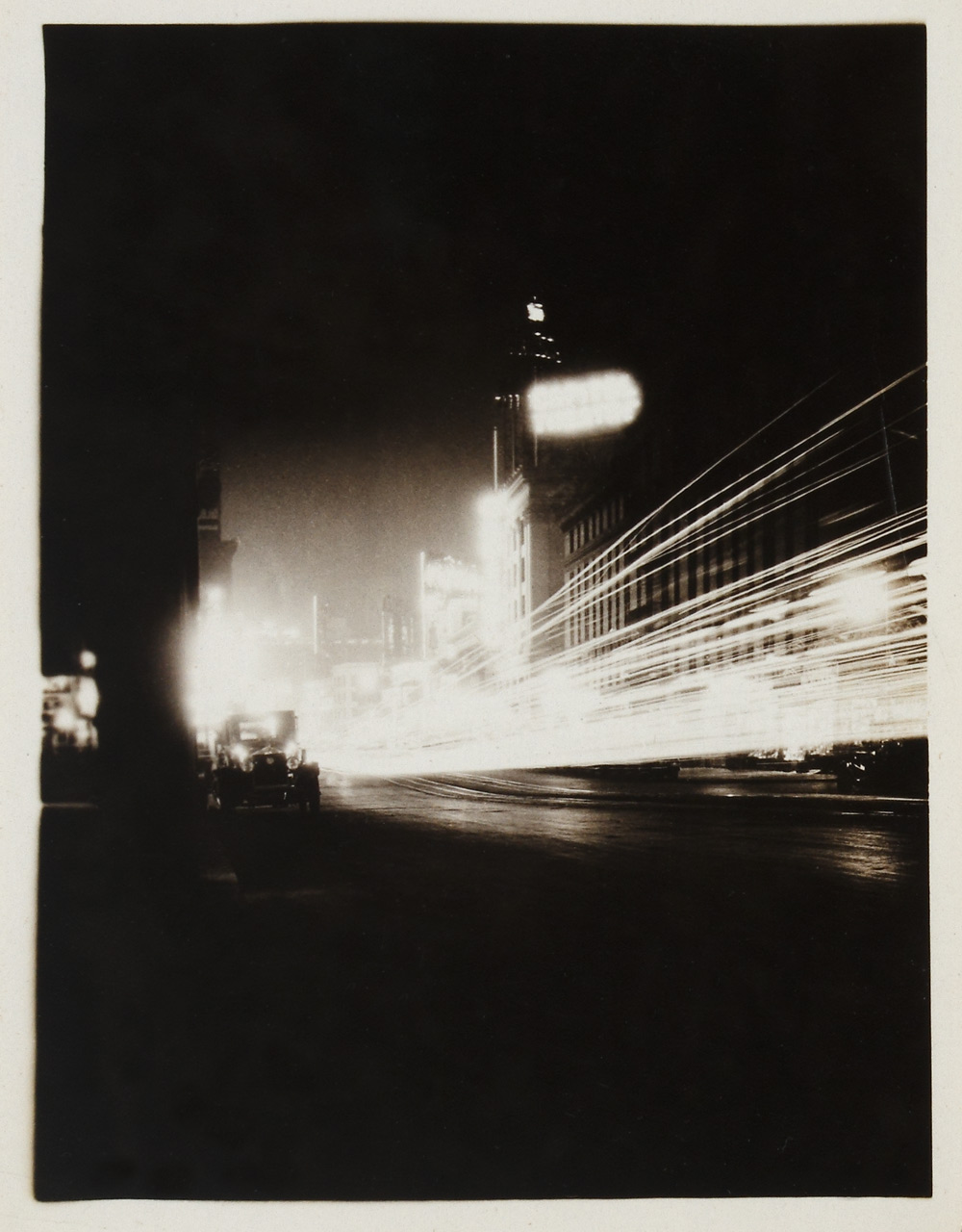
 

Knud Lonberg-Holm (Danish, 1895-1972) 'New York, Times Square' 1923


Knud Lonberg-Holm (Danish, 1895-1972)
New York, Times Square
1923
Reproduced in Erich Mendelsohn’s Amerika, p. 6
Vintage gelatin silver print
4 1/4 x 3 3/8 inches (10.8 x 8.6cm)
The Knud Lonberg-Holm Archive from the Marc Dessauce Collection; Courtesy Ubu Gallery, New York


Amerika: Bilderbuch eines Architekten

Seventeen of Lonberg-Holm’s photographs appeared uncredited in Erich Mendelsohn’s 1926 book, a very influential volume on modern American architecture. Only in a later, expanded edition was Lonberg-Holm given credit. El Lissitzky was so impressed with Amerika that he said the volume “thrills us like a dramatic film. Before our eyes move pictures that are absolutely unique. In order to understand some of the photographs you must lift the book over your head and rotate it.”


Knud Lonberg-Holm (Danish, 1895-1972) 'Sweet's Display, Exposition des Techniques Américianes de l’Habitation et de l'Ubranisme (Information 1, 2, 3)' Paris, Grand Palais, June 14-July 21, 1946


Knud Lonberg-Holm (Danish, 1895-1972)
Sweet’s Display
Exposition des Techniques Américianes de l’Habitation et de l’Ubranisme
(Information 1, 2, 3)
Paris, Grand Palais, June 14-July 21, 1946
Vintage gelatin silver print
7 1/8 x 7 1/4 inches (18.1 x 18.4cm)
The Knud Lonberg-Holm Archive from the Marc Dessauce Collection; Courtesy Ubu Gallery, New York


Knud Lonberg-Holm (Danish, 1895-1972) 'Sweet's Display, Exposition des Techniques Américianes de l'Habitation et de l'Ubranisme (Biblioteque SS)' Paris, Grand Palais, June 14-July 21, 1946


Knud Lonberg-Holm (Danish, 1895-1972)
Sweet’s Display
Exposition des Techniques Américianes de l’Habitation et de l’Ubranisme
(Biblioteque SS)
Paris, Grand Palais, June 14-July 21, 1946
Vintage gelatin silver print
7 1/8 x 7 1/8 inches (18.1 x 18.1cm)
The Knud Lonberg-Holm Archive from the Marc Dessauce Collection; Courtesy Ubu Gallery, New York


A diagram from Development Index


A diagram from Development Index illustrating the interrelations of cultural and social factors, which Lonberg-Holm and Larson considered necessary to the practice of design. The index was a screening system intended to manage incoming and outgoing streams of data.

Larson and Knud Lonberg-Holm later collaborated on the idea of a “Development Index” – a systems-thinking approach and research tool that studied the interaction of human activity, environmental relations, and communications with the idea to improve the built environment. It was an attempt to manage information flow and, in a pre-Internet sort of way, provide relevant data through a centralised system, using what was then state-of-the-art media such as microfilm, microfiche, and electronics.
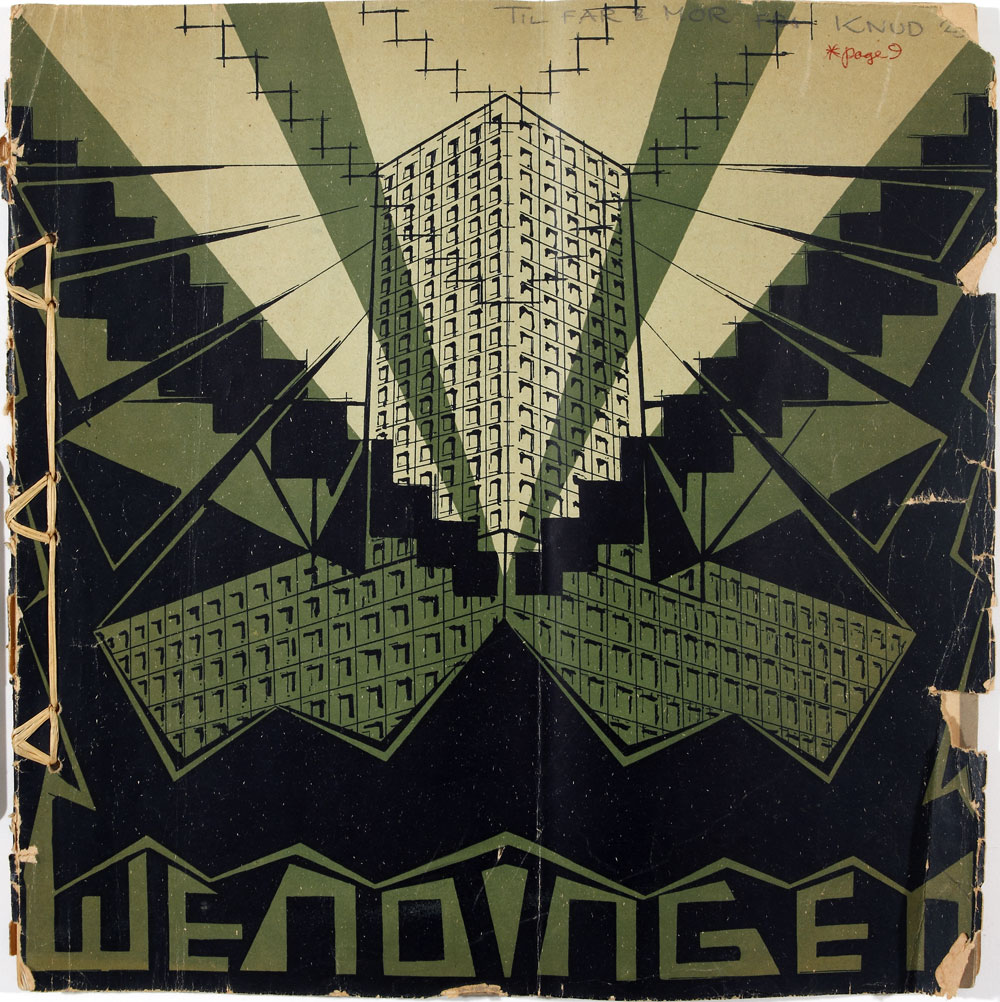
 

Wendingen. "Skyscraper as a solution of the Housing Problem" No. 3, 1923


Wendingen
“Skyscraper as a solution of the Housing Problem”
No. 3, 1923
Paperbound volume
12 7/8 x 13 inches (32.7 x 33cm)
The Knud Lonberg-Holm Archive from the Marc Dessauce Collection; Courtesy Ubu Gallery, New York
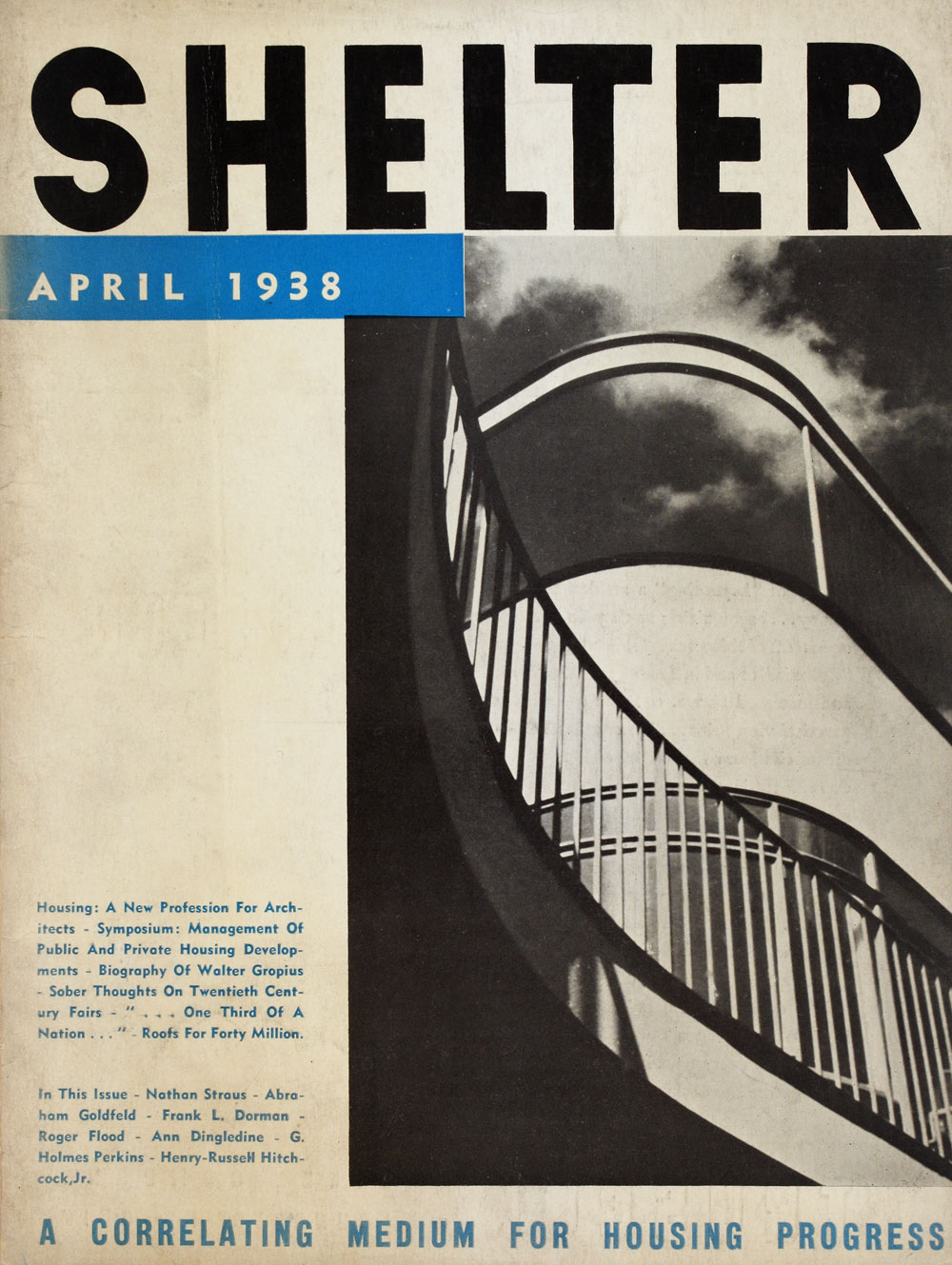
 

'Shelter' Cover design by Knud Lonberg-Holm April 1938


Shelter
Cover design by Knud Lonberg-Holm
April 1938
Magazine cover
11 x 9 inches (27.9 x 22.9cm)
The Knud Lonberg-Holm Archive from the Marc Dessauce Collection; Courtesy Ubu Gallery, New York


'Shelter now' Cover design by Knud Lonberg-Holm Vol. 2, No. 4, May 1932


Shelter now
Cover design by Knud Lonberg-Holm
Vol. 2, No. 4, May 1932
Magazine cover
12 x 9 inches (30.5 x 22.9cm)
The Knud Lonberg-Holm Archive from the Marc Dessauce Collection; Courtesy Ubu Gallery, New York


Knud Lonberg-Holm with Latislav Sutnar. 'Multi-Measure (MM) Metal Enclosures' catalog cover c. 1942-1944


Knud Lonberg-Holm with Latislav Sutnar
Multi-Measure (MM) Metal Enclosures
c. 1942-1944
Cover of catalog
11 x 8 1/2 inches (27.9 x 21.6cm)
The Knud Lonberg-Holm Archive from the Marc Dessauce Collection; Courtesy Ubu Gallery, New York


The cover of a catalog for Multi-Measure Metal Enclosures, Inc., designed with Ladislav Sutnar between 1942 and 1944. Lonberg-Holm collaborated with architect C. Theodore Larson at F.W. Dodge Corporation’s Sweet’s Catalog division to develop a systematic approach to organising the information needed by the building industry. When graphic designer Ladislav Sutnar later joined him, they radically altered the way business information was streamlined, designed, and packaged, becoming pioneers of “information design” along the way.


i10 "America, Reflections" (by Knud Lonberg-Holm) No. 15, October 20, 1928


i10
“America, Reflections” (by Knud Lonberg-Holm)
No. 15, October 20, 1928
Paperbound volume
11 3/4 x 8 1/4 inches (29.8 x 21cm)
The Knud Lonberg-Holm Archive from the Marc Dessauce Collection; Courtesy Ubu Gallery, New York


Lonberg-Holm’s 1928 essay on America for i10 – focused on the country’s obsession with time and efficiency – shows that the fields of communications, the car industry, elevators, railways, and the movie industry were more important to him. He wrote: “Time-study is a profession. And a highly paid profession. What the [Saint] Peters church was for the European Renaissance, Henry Ford’s assembly line is for America of today. The most perfect expression for a civilisation whose god is efficiency. Detroit is the Mecca of this civilisation. And the pilgrims come from all over the world to meditate before this always-moving line.”


Knud Lonberg-Holm (Danish, 1895-1972) 'Photograph of "Modern Architecture" at Fifth Avenue' c. 1923-1924


Knud Lonberg-Holm (Danish, 1895-1972)
Photograph of “Modern Architecture” at Fifth Avenue
c. 1923-1924
Vintage gelatin silver print
4 1/2 x 2 3/4 inches (11.4 x 7cm)
The Knud Lonberg-Holm Archive from the Marc Dessauce Collection; Courtesy Ubu Gallery, New York


Knud Lonberg-Holm (Danish, 1895-1972) 'Automobile Plant Detroit' 1931


Knud Lonberg-Holm (Danish, 1895-1972)
Automobile Plant
Detroit, 1931
Vintage gelatin silver print
5 1/4 x 4 1/4 inches (13.3 x 10.8cm)
Titled on verso
The Knud Lonberg-Holm Archive from the Marc Dessauce Collection; Courtesy Ubu Gallery, New York
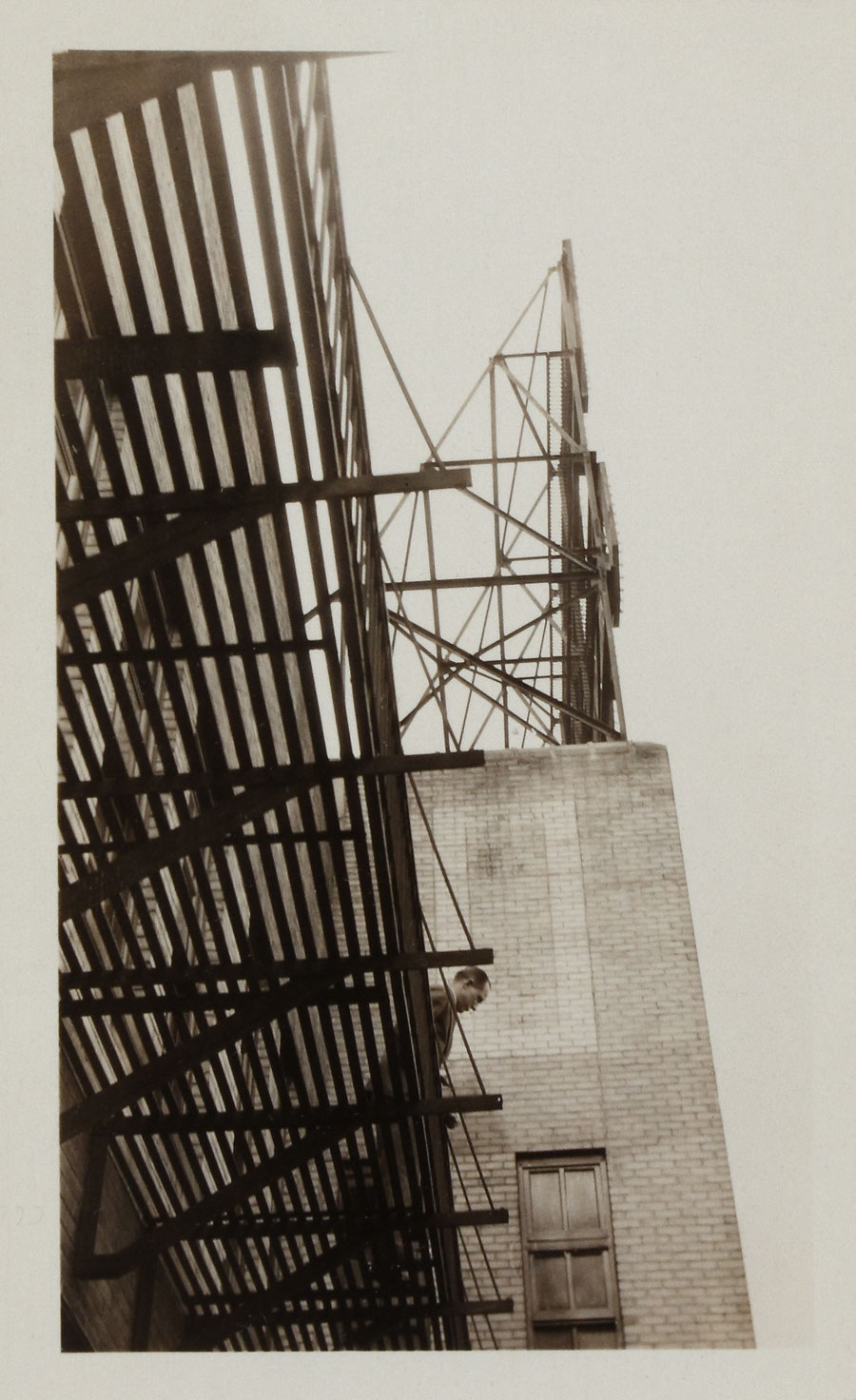
 

Knud Lonberg-Holm (Danish, 1895-1972) 'Photograph of Longberg-Holm' c. 1923-1924


Knud Lonberg-Holm (Danish, 1895-1972)
Photograph of Longberg-Holm
c. 1923-1924
Vintage gelatin silver print
4 1/2 x 2 3/4 inches (11.4 x 7cm)
The Knud Lonberg-Holm Archive from the Marc Dessauce Collection; Courtesy Ubu Gallery, New York


Knud Lonberg-Holm (Danish, 1895-1972) '48th Street/St. Nicholas Church scaffolding' c. 1923-1924


Knud Lonberg-Holm (Danish, 1895-1972)
48th Street/St. Nicholas Church scaffolding
c. 1923-1924
Vintage gelatin silver print
4 1/2 x 2 3/4 inches (11.4 x 7cm)
The Knud Lonberg-Holm Archive from the Marc Dessauce Collection; Courtesy Ubu Gallery, New York


Knud Lonberg-Holm (Danish, 1895-1972) 'Photograph of Antenna' c. 1923-1924


Knud Lonberg-Holm (Danish, 1895-1972)
Photograph of Antenna
c. 1923-1924
Vintage gelatin silver print
4 1/2 x 3 1/2 inches (11.4 x 8.9cm)
The Knud Lonberg-Holm Archive from the Marc Dessauce Collection; Courtesy Ubu Gallery, New York


Note from Iwao Yamawaki to Knud Lonberg-Holm Dessau, July 9, 1931


Note from Iwao Yamawaki to Knud Lonberg-Holm
Dessau, July 9, 1931
The Knud Lonberg-Holm Archive from the Marc Dessauce Collection; Courtesy Ubu Gallery, New York


Knud Lonberg-Holm (Danish, 1895-1972) and Iwao Yamawaki (Japanese, 1898-1987) (attributed) 'Knud & his wife Ethel outside of Bauhaus' 1931


Knud Lonberg-Holm (Danish, 1895-1972)
Iwao Yamawaki
(Japanese, 1898-1987) (attributed)
Knud & his wife Ethel outside of Bauhaus
1931
Vintage gelatin silver print
4 3/8 x 3 3/8 inches (11.1 x 8.6cm)
Dated & inscribed on verso
The Knud Lonberg-Holm Archive from the Marc Dessauce Collection; Courtesy Ubu Gallery, New York


This photo, attributed to the Japanese Bauhaus-trained photographer Iwao Yamawaki, shows Lonberg-Holm and his wife, Ethel (who later became an art director for J. Walter Thompson advertising agency), at the Bauhaus in 1931. A friend of Bauhaus instructors László Moholy-Nagy, Josef Albers, Hannes Meyer, Walter Gropius, and Mies van der Rohe, Lonberg-Holm taught the first foundational course based on the Bauhaus model at the University of Michigan in 1924.


Knud Lonberg-Holm (1895-1972), an overlooked but highly influential Modernist architect, photographer, and pioneer of information design


Knud Lonberg-Holm (1895-1972), an overlooked but highly influential Modernist architect, photographer, and pioneer of information design
The Knud Lonberg-Holm Archive from the Marc Dessauce Collection; Courtesy Ubu Gallery, New York


Ubu Gallery
416 East 59th Street
New York 10022
Phone: 212 753 4444

Opening hour:
Monday – Friday 11am – 6pm

Ubu Gallery website

LIKE ART BLART ON FACEBOOK

Back to top

Exhibition: ‘Knud Lonberg-Holm: The Invisible Architect’ at Ubu Gallery, New York Part 1

Exhibition dates: 6th May – 30th September 2014


Knud Lonberg-Holm (Danish, 1895-1972) 'The New – The Coming, Detroit, Streetcars' 1924


Knud Lonberg-Holm (Danish, 1895-1972)
The New – The Coming, Detroit, Streetcars
1924
Reproduced in Erich Mendelsohn’s Amerika, p. 73
Vintage gelatin silver print
3 1/4 x 4 1/4 inches (8.3 x 10.8cm)
The Knud Lonberg-Holm Archive from the Marc Dessauce Collection; Courtesy Ubu Gallery, New York


I am so excited by this monster two-part posting about the work of architect Knud Lonberg-Holm. Not only are his drawings and models incredible but his photographs of industry and skyscrapers, taken mainly between 1924-26, are a revelation. The textures and inky blackness of his Dazzlescapes and the New Photography images of skyscrapers (both in Part 2) mark these images as the greatest collection of photographs of skyscrapers that I have ever seen. More comment tomorrow but for now just look at the dark Gotham-esque photograph The New – The Coming, Detroit, Streetcars (1924, below). The streetcar reminds me of the armoured trains so popular during the inter-war years and during World War II. And what a title: The New – The Coming…

Dr Marcus Bunyan


Many thankx to Ubu Gallery for allowing me to publish the photographs in the posting. Please click on the photographs for a larger version of the image.


“Lonberg-Holm was the first architect in my knowledge ever to talk about the ultimately invisible architecture. In 1929, when I first met him, he said the greatest architect in history would be the one who finally developed the capability to give humanity completely effective environmental control without any visible structure and machinery.”


Buckminster Fuller


Knud Lonberg-Holm (Danish, 1895-1972) 'View from the roof' Detroit, 1924


Knud Lonberg-Holm (Danish, 1895-1972)
View from the roof
Detroit, 1924
Vintage gelatin silver print
2 3/4 x 4 1/2 inches (7 x 11.4cm) approx.
The Knud Lonberg-Holm Archive from the Marc Dessauce Collection; Courtesy Ubu Gallery, New York


Knud Lonberg-Holm (Danish, 1895-1972) 'Detroit' 1924


Knud Lonberg-Holm (Danish, 1895-1972)
Detroit
1924
reproduced in Erich Mendelsohn’s Amerika, p. 71 (top)
Vintage gelatin silver print
3 3/8 x 4 3/8 inches (8.6 x 11.1cm)
The Knud Lonberg-Holm Archive from the Marc Dessauce Collection; Courtesy Ubu Gallery, New York


Knud Lonberg-Holm (Danish, 1895-1972) 'Detroit, A New Street' 1924


Knud Lonberg-Holm (Danish, 1895-1972)
Detroit, A New Street
1924
reproduced in Erich Mendelsohn’s Amerika, p. 71 (bottom)
Vintage gelatin silver print
3 3/8 x 4 3/8 inches (8.6 x 11.1cm)
The Knud Lonberg-Holm Archive from the Marc Dessauce Collection; Courtesy Ubu Gallery, New York


Ubu Gallery is pleased to present Knud Lonberg-Holm: The Invisible Architect, a debut exhibition devoted to this overlooked, yet highly influential, 20th Century modernist. Never-before-seen photographs, architectural drawings, letters, graphic design, and ephemera from Lonberg-Holm’s remarkably diverse career will be on view through August 1, 2014. The exhibition, which consists of selections from the extensive archive assembled by architectural historian Marc Dessauce, will solidify the importance of this emblematic figure in early 20th Century cultural and architectural history. Metropolis Magazine, the national publication of architecture and design, will publish an article on Knud Lonberg-Holm to coincide with this groundbreaking exhibition.

Born in Denmark, Knud Lonberg-Holm (January 15, 1895 – January 2, 1972), was an architect, photographer, author, designer, researcher, and teacher. Lonberg-Holm’s early work in Denmark and Germany initially associated him with the Berlin Constructivist and Dutch De Stijl groups. An émigré to America in 1923, Lonberg-Holm was a fundamental correspondent with prominent European architects and their modernist counterparts in the U.S. The exhibition will feature a selection of letters to Lonberg-Holm from a pantheon of the European avant-garde including László Moholy-Nagy, Walter Gropius, Theo Van Doesburg, Buckminster Fuller, Hannes Meyer, J.J.P. Oud, El Lissitzky, and Richard Neutra.

From 1924–1925, Lonberg-Holm was a colleague of Eliel Saarinen at the University of Michigan at Ann Arbor, where he taught a course in basic design modeled on the famed Bauhaus Vorkurs, the first-ever introduced in U.S. design schools. An agent of inter-continental communication, his reports on the state of American architecture appeared abroad. Lonberg-Holm’s 1928 article, Amerika: Reflections, featured buildings on the University of Michigan campus and appeared in the Dutch avant-garde publication i10, which employed Moholy-Nagy as its photo editor. The article not only contributed to international discourse on the building industry, but also touched on the “time-space convention,” a subject Lonberg-Holm would explore throughout his career. This publication, among others, will be on display.

Lonberg-Holm’s interest in American industry is best viewed in his collection of photographs taken between 1924-1926. These works document his pioneering views of industry and technology in burgeoning, jazz-age New York, Detroit, and Chicago; they would appear later, un-credited, in Erich Mendelsohn’s seminal 1926 publication Amerika, the first book on the ‘International Style’ in American architecture. Thirteen vintage photographs reproduced in Amerika will be on exhibit, as well as additional early photographs depicting technological advancements, such as cable cars and radio antennae, American culture in mass crowds and billboards, and the commercial architecture of skyscrapers and factories. Backside-views of buildings and fire escapes, rather than historicist ornamental facades, are presented in their “unselfconscious beauty” in opposition to traditional, pictorialist architectural photography. The content of the works coupled with progressive view points, like worm’s eye perspectives and extreme close-ups, align them squarely within the then emerging ‘New Photography’. El Lissitzky wrote that the dynamic photos “grip us like a dramatic film.”1 Mendelsohn’s publication, featuring Lonberg-Holm’s dynamic photography, received immediate acclaim, domestically and abroad.

While still in Germany, Lonberg-Holm created a submission for the Chicago Tribune Tower competition of 1922. Although never officially submitted, the project was published widely in magazines and newspapers, alongside other prominent architects’ designs. From his office in the historically designed Donner Schloss in Altona, Germany, Lonberg-Holm envisioned a modern construction for Chicago that incorporated references to American mass culture, specifically the automobile. The West elevations on view show the Chicago Tribune sign, which includes circular signage reminiscent of headlights. The Side elevation exhibited clearly demonstrates how the printing plant function of the ground floors of the building, rendered in black, are visually distinct from the offices of the higher floors, rendered in white with black accents for visual continuity throughout the building. Lonberg-Holm’s proposed construction, whose outward visual design distinguished its internal functions, was reproduced in L’Architecture vivante, La Cite, Le Courbusier’s Almanach d’architecture in France and Walter Gropius’ Internationale Architektur in Munich; the Berliner Illustrirte Zeitung displayed his building next to that of Mies van der Rohe and a full spread devoted to the skyscraper, featuring Lonberg-Holm’s Chicago design adjacent to plans by Walter Gropius, Saarinen and van der Rohe, appeared in H. Th. Wijdeveld’s November / December 1923 issue of the innovative publication Wendingen.

The drawings Lonberg-Holm created during this first decade as an émigré are striking for their early use of European modernist, particularly Neo-plastic, influences. He was close with the DeStijl movement in Holland, and corresponded with both Theo van Doesburg and J.J.P. Oud, with whom he would continue to work within CIAM, the Congrès Internationaux d’Architecture Modern. Early renderings done by Lonberg-Holm in the U.S. demonstrate an affinity for DeStijl principles. His plans for the 1926 MacBride residence in Ann Arbor are dynamic and asymmetrical, with intersecting planes in simple primary colors. Surely the first American allusion to Gerrit Rietvel’s iconic 1924 Schröder House in Utrecht, Holland, the MacBride residence is one of the first ‘International Style’ modernist houses designed in the Western hemisphere.

Lonberg-Holm’s importance to and knowledge of European architectural trends resulted in an invitation by Jane Heap to participate in the 1927 landmark New York exhibition, Machine Age, which was heralded as “the first international exposition of architecture held in America.” This exhibition, held at the New York Scientific American Building, May 16-28, stressed the new mechanical world and its key player, the Engineer. Lonberg-Holm’s 1925 Detroit project, Radio Broadcasting Station, was featured. The New York’s review of the exhibition explicitly referenced Lonberg-Holm’s project, noting its “delicacy and exquisite technique of execution.”

Lonberg-Holm worked with the F.W. Dodge corporation for 30 years, first in the division responsible for The Architectural Record (1930-1932), and then as head of the research department of Sweet’s Catalog Service (1932-1960.) At The Architectural Record, Lonberg-Holm acted as research editor and wrote technical news, a precursor to his lifelong interest in data-driven analytics. During his New York based employment, Lonberg-Holm’s involvement with international architectural trends did not diminish. In addition to prolonged correspondence with the various directors of the Bauhaus, including Hannes Meyer, he and his wife Ethel would visit the Bauhaus at Dessau in 1931. In 1946, Lonberg-Holm was also ultimately a candidate to replace Moholy-Nagy as director of the Institute of Design in Chicago.

At the same time, Lonberg-Holm was involved in domestic architecture and building theory. Richard Neutra would reach out to Lonberg-Holm in 1928 for illustrations and photographs to include in his account of the modern architecture movement in the US; he would approach him again in 1932 to lecture on the West Coast. Lonberg-Holm and Neutra were the “American” representatives to CIAM. It was Lonberg-Holm who nominated Buckminster Fuller and Theodore Larson for membership into CIAM in 1932.

What little scholarship exists about Knud Lonberg-Holm briefly examines his nearly twenty-year relationship with the Czech pioneering graphic designer Ladislav Sutnar, with whom Lonberg-Holm worked at Sweet’s Catalog Service. From 1942 through 1960 at the research department of Sweet’s, the bible for all the building trades, Lonberg-Holm and Sutnar revolutionized the catalog by standardizing information techniques. They presented systemised communication through a simple, modern, and intelligible visual language that influenced all areas of architectural and graphic design. Together, Lonberg-Holm and Sutnar co-authored Catalog Design (1944), Designing Information (1947), and Catalog Design Progress (1950).

The vital roles and communication between city planning, architecture, and civil productivity where important to Lonberg-Holm and would be explored throughout his career. In A. Lawerence Kocher’s letter to Lonberg-Holm, the article “Architecture-or organized space” is referenced. This 1929 essay, published in Detroit, addressed the “building problem” in the US – the “an-organic structure of its cities” – and proposed “a new conception of city-planning based on a clearer understanding of the organic functions of a community.” Lonberg-Holm would be an important participant in the city planning survey of Detroit, one of CIAM’s analytical initiatives in 1932-1933. Field Patterns and Fields of Activity, a visual diagram further illustrating the interconnectivity of intelligence, welfare, production, and control in a community, graphically illustrates these early principles.

Collaboration was critical to Lonberg-Holm, who would work with Theodore Larson to improve information indexing and the production cycle. Field Patterns, as well as the visuals for Planning for Productivity (1940), were components of Lonberg-Holm’s collaboration with Theodore Larson. Lonberg-Holm sought to apply some of the theories set forth in Development Index. This collaborative project with Larson was published by the University of Michigan in 1953 and focused on the relationship between community, industry, and education, analytical theories that were proposed by Lonberg-Holm during the formation of the University’s Laboratory of Architectural Research. Lonberg-Holm’s 1949 visual diagram of the relationship between the university, the building industry, and the community, is on view, as well as the Sutnar-designed steps of Planning for Productivity. Lonberg-Holm had returned to the University as a guest lecturer and professor in the late 1940s and early 1950s. At the suggestion of Lonberg-Holm, Theordore Larson was among the new faculty hired at the University in 1948, along with Walter Sanders and William Muschenheim, whom Lonberg-Holm had worked with in the Detroit survey.

In 1949, Lonberg-Holm was issued a Dymaxion License and became a trustee to the Fuller Institute/Research Foundation; among the trustees are his contemporaries George Nelson and Charles Eames. Initially meeting Buckminster Fuller in c. 1929, he and Fuller would correspond throughout Lonberg-Holm’s life. Lonberg-Holm was a member of the Structural Studies Associates (SSA), a short-lived group of architects in the 1930s surrounding Fuller and his briefly published architectural magazine Shelter. A number of Shelter issues are on view, many of which have contributions by Lonberg-Holm; the cover of the May 1932 issue was designed by Lonberg-Holm. Planning for Productivity and Development Index were later data-driven projects that furthered the SSA’s and Fuller’s principles – that the evolution of science and technology would influence social progress and could be beneficial to the community only through research, analysis and macroapplication.

Arriving to the US a decade before his European contemporaries, Lonberg-Holm occupied a unique position as a cultural bridge, communicating between the US and Europe in a period when the state of art and architecture was radically changing. He exposed his students and colleagues to European protagonists of avant-garde architecture theory while enthusiastically exploring American industry and building. Exclusively through collaboration, Lonberg-Holm worked to modernise both architecture and design. Integral to Lonberg-Holm’s principles was that technology alone could not suffice as the sole perpetuator of architecture – advancements in building and new designs needed to promote human culture in an ever-evolving manner where new information was continuously integrated into design theory. Throughout his career, Lonberg-Holm embodied the antithesis of the stereotype architect, egocentric and insulated from the community in which his designs were to exist. From his beginnings at The Architectural Record to his final project, Plan for Europe 2000: Role of the Mass Media in Information and Communication, Lonberg-Holm held to the belief that a collective approach, with applied research, could form a generative knowledge base that could be cultivated for altruistic means.

Text from the Ubu Gallery website

1/ Beaumont Newhall, The History of Photography from 1839 to the Present, London, Seeker & Warburg, 1982, p. 1.


'Portrait of Knud Lonberg-Holm' New York, 1950s (prior to 1960)


Portrait of Knud Lonberg-Holm
New York, 1950s (prior to 1960)
Vintage gelatin silver print
6 7/8 x 10 inches (17.5 x 25.4cm)
The Knud Lonberg-Holm Archive from the Marc Dessauce Collection; Courtesy Ubu Gallery, New York


'Portrait of Knud Lonberg-Holm' New York, 1950s (prior to 1960)


Portrait of Knud Lonberg-Holm
New York, 1950s (prior to 1960)
Vintage gelatin silver print
7 7/8 x 9 1/2 inches (20 x 24.1cm)
The Knud Lonberg-Holm Archive from the Marc Dessauce Collection; Courtesy Ubu Gallery, New York


Knud Lonberg-Holm (Danish, 1895-1972) 'Le Corbusier at CIAM Conference' c. 1954-1964


Knud Lonberg-Holm (Danish, 1895-1972)
Le Corbusier at CIAM Conference
c. 1954-1964
Vintage gelatin silver print
5 5/8 x 8 3/8 inches (14.3 x 21.3cm)
The Knud Lonberg-Holm Archive from the Marc Dessauce Collection; Courtesy Ubu Gallery, New York


Knud Lonberg-Holm (Danish, 1895-1972) 'Buckminster Fuller, Lonberg-Holm and other' Bayside, New York Nd


Knud Lonberg-Holm (Danish, 1895-1972)
Buckminster Fuller, Lonberg-Holm and other
Bayside, New York
Nd
Vintage gelatin silver print
3 x 4 1/4 inches (7.6 x 10.8cm)
The Knud Lonberg-Holm Archive from the Marc Dessauce Collection; Courtesy Ubu Gallery, New York


Knud Lonberg-Holm (Danish, 1895-1972) 'Photograph of the Dymaxion Car' Bridgeport, Connecticut, July 21, 1933


Knud Lonberg-Holm (Danish, 1895-1972)
Photograph of the Dymaxion Car
Bridgeport, Connecticut, July 21, 1933
Vintage gelatin silver print
7 5/8 x 9 3/4 inches (19.4 x 24.8cm)
Stamped on verso
The Knud Lonberg-Holm Archive from the Marc Dessauce Collection; Courtesy Ubu Gallery, New York


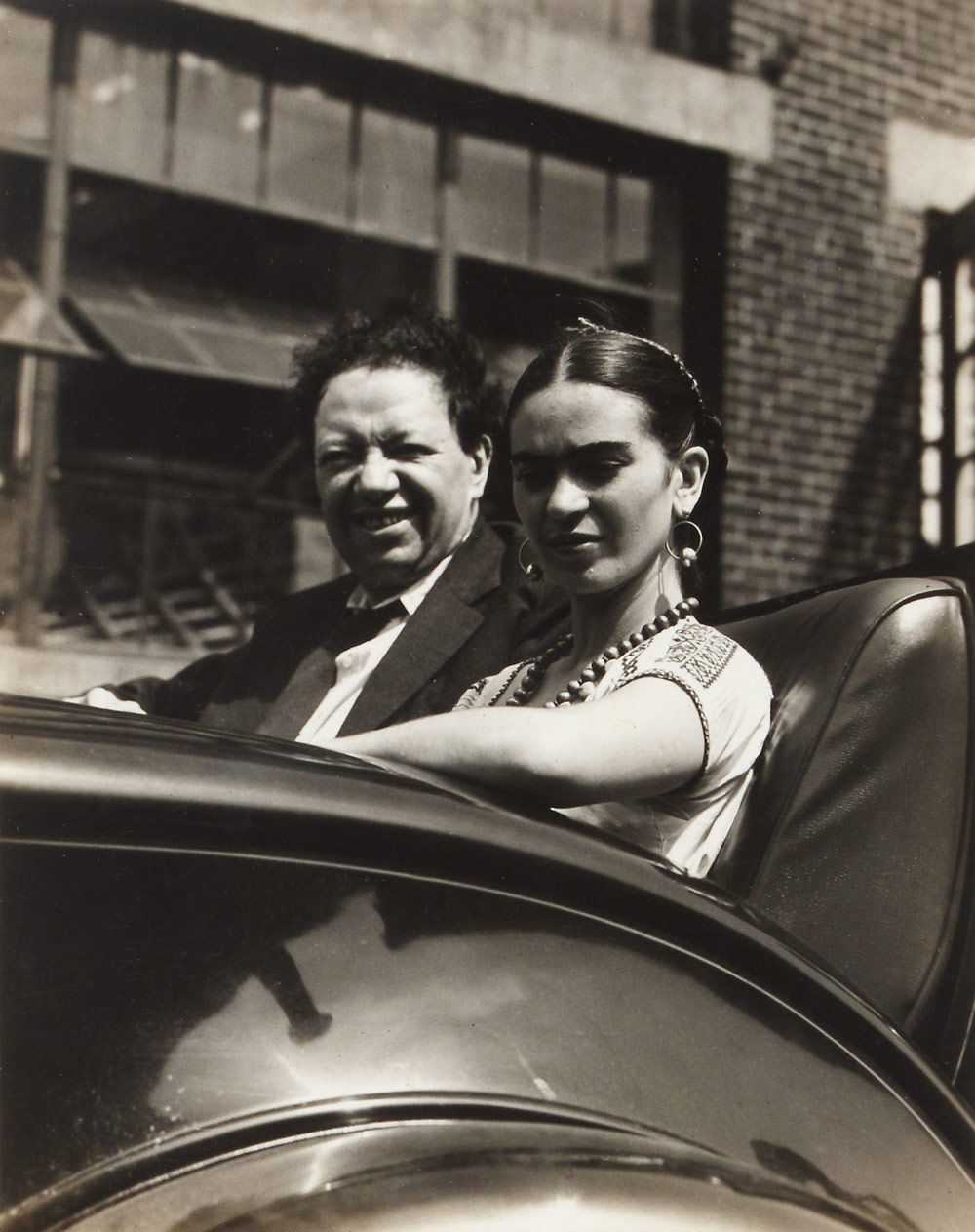
In July of 1933, the Dymaxion car was introduced in Bridgeport, Connecticut, where it caused a great stir. Lonberg-Holm can be seen holding the car door open while the artist Diego Rivera (who was in attendance with his wife and artist Frida Kahlo) looks on, coat on his arm.


Knud Lonberg-Holm (Danish, 1895-1972) 'Diego Rivera and Frida Kahlo' Bridgeport, Connecticut, July 21, 1933


Knud Lonberg-Holm (Danish, 1895-1972)
Diego Rivera and Frida Kahlo
Bridgeport, Connecticut, July 21, 1933
Vintage gelatin silver print
The Knud Lonberg-Holm Archive from the Marc Dessauce Collection; Courtesy Ubu Gallery, New York


Knud Lonberg-Holm (Danish, 1895-1972) 'Radio Broadcasting Station' Photograph of Model Detroit, 1925


Knud Lonberg-Holm (Danish, 1895-1972)
Radio Broadcasting Station
Photograph of Model
Detroit, 1925
Vintage gelatin silver print
4 7/8 x 6 7/8 inches (12.4 x 17.5cm)
The Knud Lonberg-Holm Archive from the Marc Dessauce Collection; Courtesy Ubu Gallery, New York


Knud Lonberg-Holm (Danish, 1895-1972) 'Radio Broadcasting Station' Photograph of Model Detroit, 1925


Knud Lonberg-Holm (Danish, 1895-1972)
Radio Broadcasting Station

Photograph of Model
Detroit, 1925
Vintage gelatin silver print
5 3/8 x 7 1/2 inches (13.7 x 19.1cm)
The Knud Lonberg-Holm Archive from the Marc Dessauce Collection; Courtesy Ubu Gallery, New York


Knud Lonberg-Holm (Danish, 1895-1972) 'Photograph of Chicago's new skyline North of Randolph Street All new since 1926 except Wrigley and Tribune buildings' May 1929


Knud Lonberg-Holm (Danish, 1895-1972)
Photograph of Chicago’s new skyline
North of Randolph Street
All new since 1926 except Wrigley and Tribune buildings
May 1929
Vintage gelatin silver print
2 1/4 x 4 1/2 inches (5.7 x 11.4cm)
Titled on verso
The Knud Lonberg-Holm Archive from the Marc Dessauce Collection; Courtesy Ubu Gallery, New York


Ubu Gallery
416 East 59th Street
New York 10022
Phone: 212 753 4444

Opening hours:
Monday – Friday 11am – 6pm

Ubu Gallery website

LIKE ART BLART ON FACEBOOK

Back to top

Exhibition: ‘Posing Beauty in African American Culture’ at the Virginia Museum of Fine Arts, Richmond, Virginia

Exhibition dates: 26th April – 27th July 2014


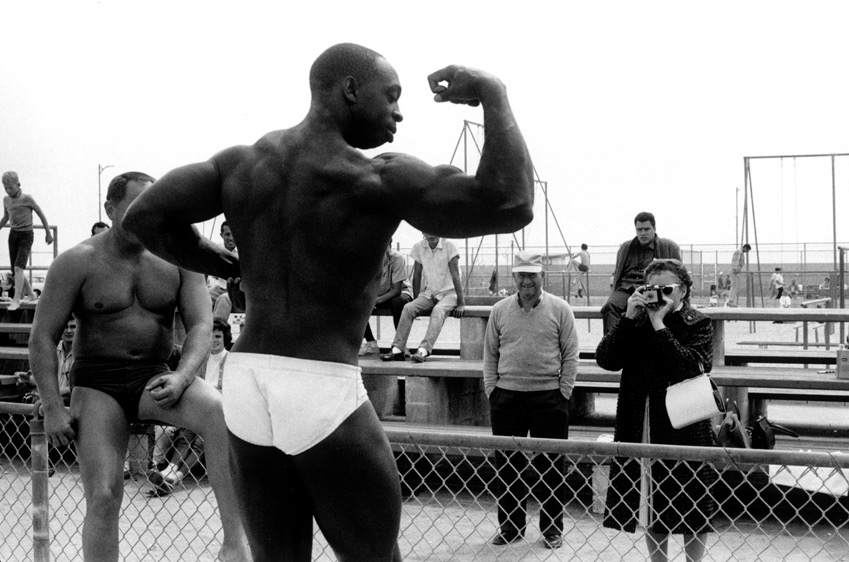
Bruce Davidson (American, b. 1933) 'Body Builder on Venice Beach, California' 1964


Bruce Davidson (American, b. 1933)
Body Builder on Venice Beach, California
1964
Gelatin silver print
8 1/4 x 12 1/4 in.
Courtesy of Howard Greenberg Gallery, New York


An exhibition that questions the ways in which our contemporary understanding of beauty has been constructed and framed through the body and invites a deeper reading of beauty, its impact on mass culture and individuals and how the display of beauty affects the ways in which we see and interpret the world and ourselves. According to author and historian Barbara Summers: “Beauty is power. And the struggle to have the entire range of Black beauty recognised and respected is a serious one.”

If beauty is only skin deep, and colour deep, why the need to differentiate? Surely it doesn’t matter what colour your skin, beauty just is. You know it when you see it, regardless of colour. Not everything is about power; not everything is a site of contestation… to me, recognising true beauty is an acknowledgement of the light that shines from within, not something that is imposed from without. When you see true beauty, you know it instinctively. Intuitively. Enough of this posing – are you image or essence?

Dr Marcus Bunyan


Many thankx to the Virginia Museum of Fine Arts for allowing me to publish the photographs in the posting. Please click on the photographs for a larger version of the image.


“That there are so few images of African-American women circulating in popular culture or in fine art is disturbing; the pathology behind it is dangerous … We got a sistah in the White House, and yet mediated culture excludes us, denies us, erases us. But in the face of refusal, I insist on making work that includes us as part of the greater whole,” said Carrie Mae Weems in a 2009 interview conducted by Dawoud Bey for ‘BOMB Magazine’.


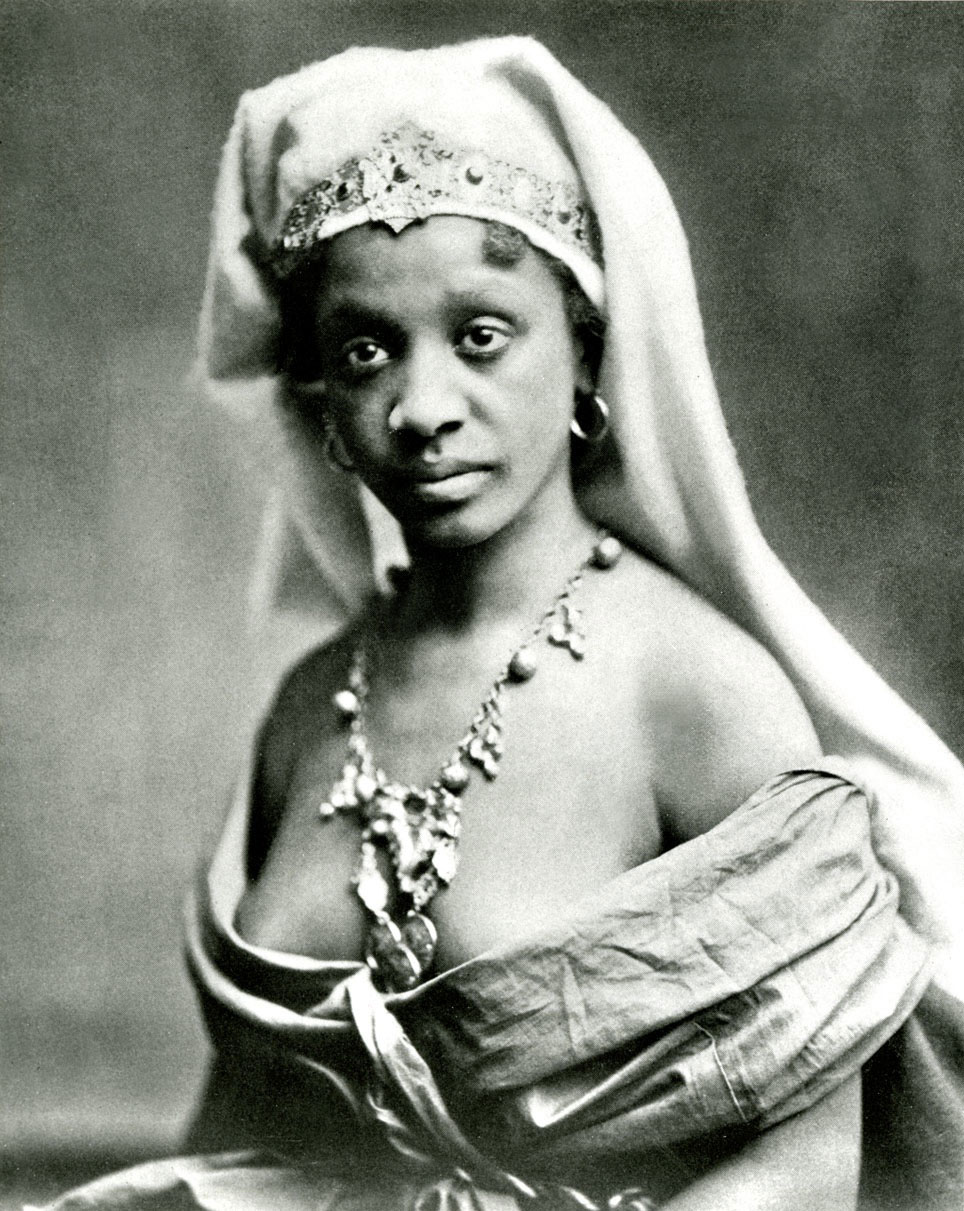
Edward Curtis (American, 1868-1952) 'A Desert Queen' 1898 (printed 2009)


Edward Curtis (American, 1868-1952)
A Desert Queen
1898 (printed 2009)
Modern digital print
20 x 16 inches
Special Collections, University of Washington Libraries


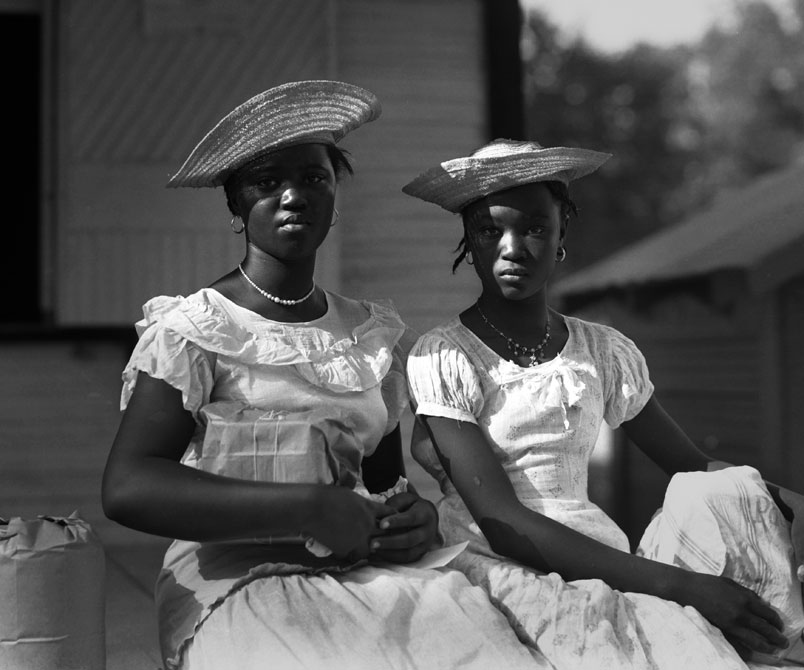
Theodore Fonville Winans (American, 1911-1992) 'Dixie Belles, Central Louisiana' 1938


Theodore Fonville Winans (American, 1911-1992)
Dixie Belles, Central Louisiana
1938
Courtesy of the Ogden Museum of Southern Art and Bob Winans


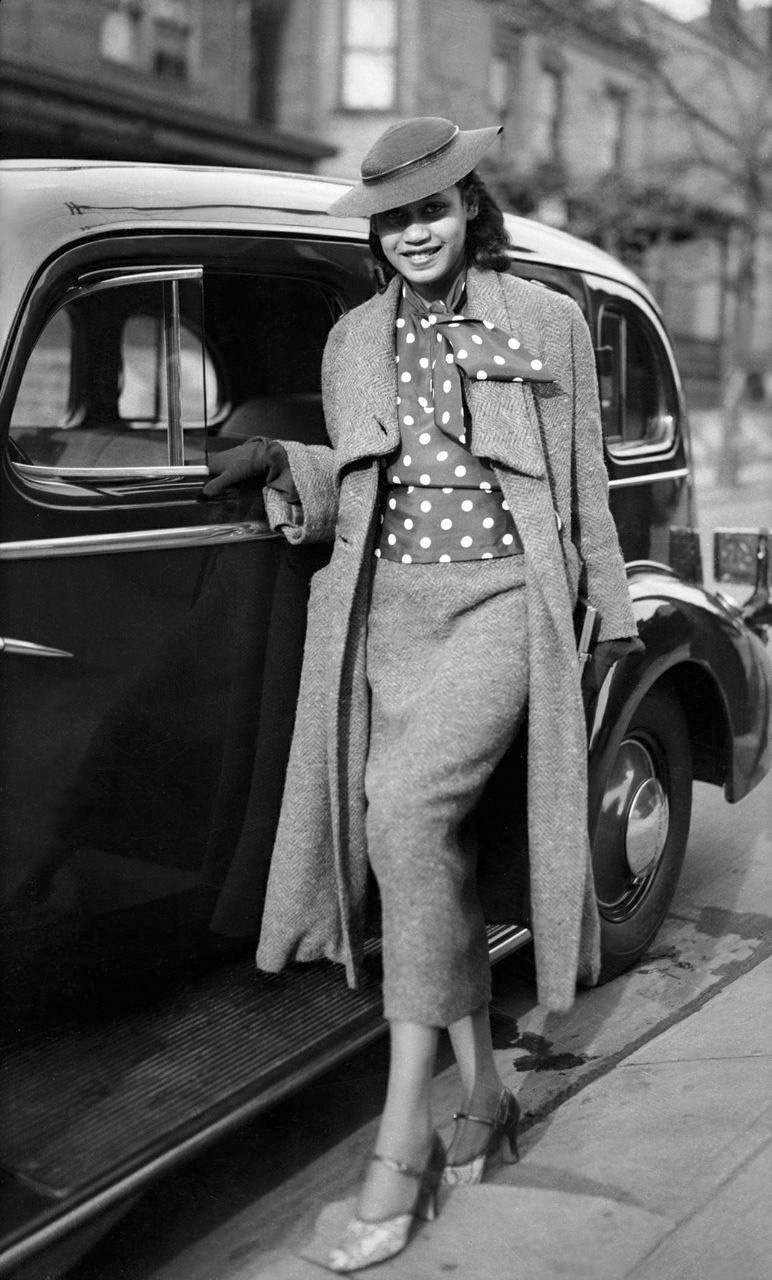
Charles "Teenie" Harris (American, 1908-1998) 'Mary Louise Harris on Mulford Street, Homewood, Pittsburgh, Pennsylvania' c. 1930-1939


Charles “Teenie” Harris (American, 1908-1998)
Mary Louise Harris on Mulford Street, Homewood, Pittsburgh, Pennsylvania
c. 1930-1939
Gelatin silver print
20 x 16cm
© 2004 Carnegie Museum of Art, Charles “Teenie” Harris Archive


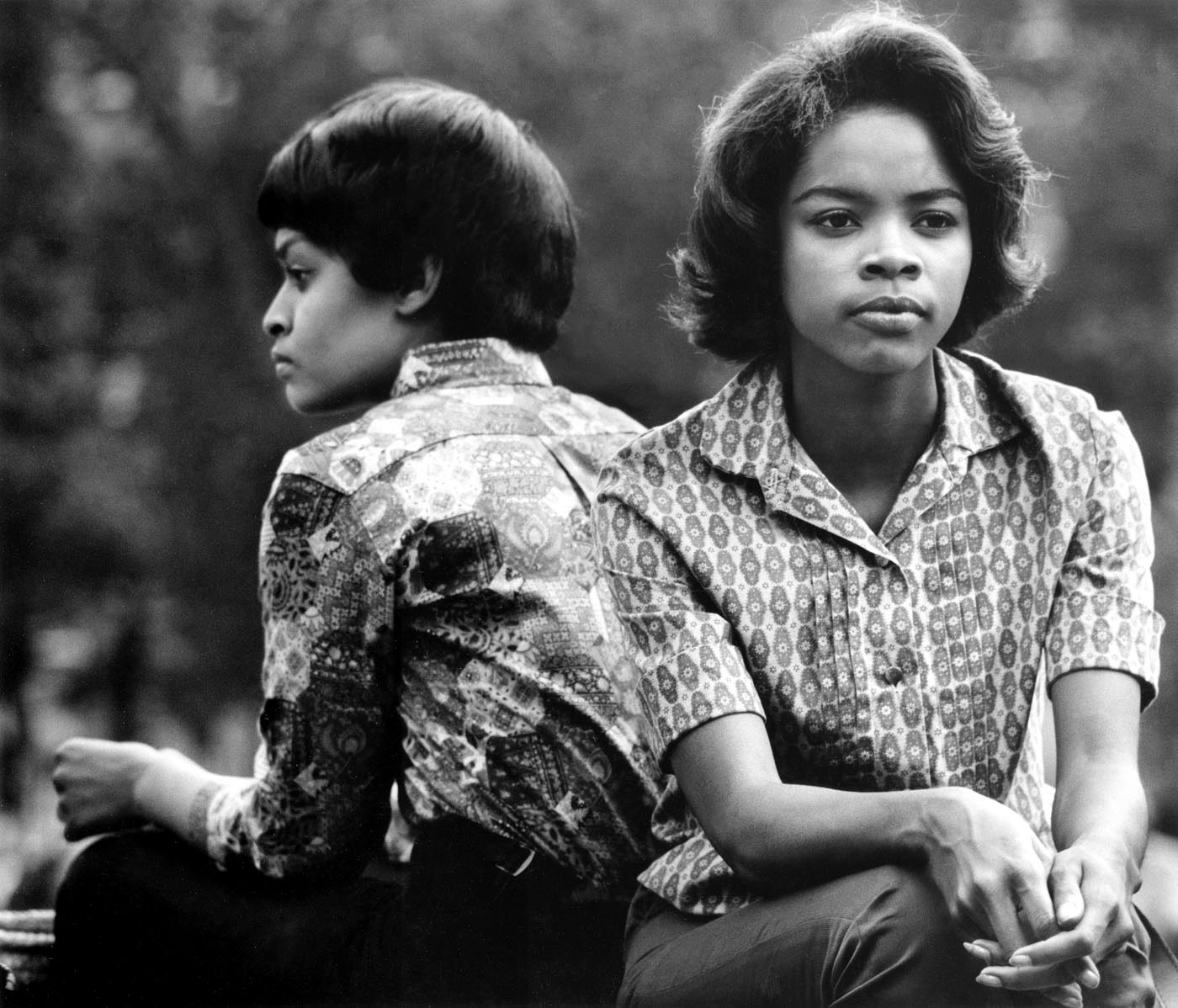
Dave Heath (American, 1931-2016) 'Washington Square, New York City' 1960


Dave Heath (American, 1931-2016)
Washington Square, New York City
1960
Silver gelatin print


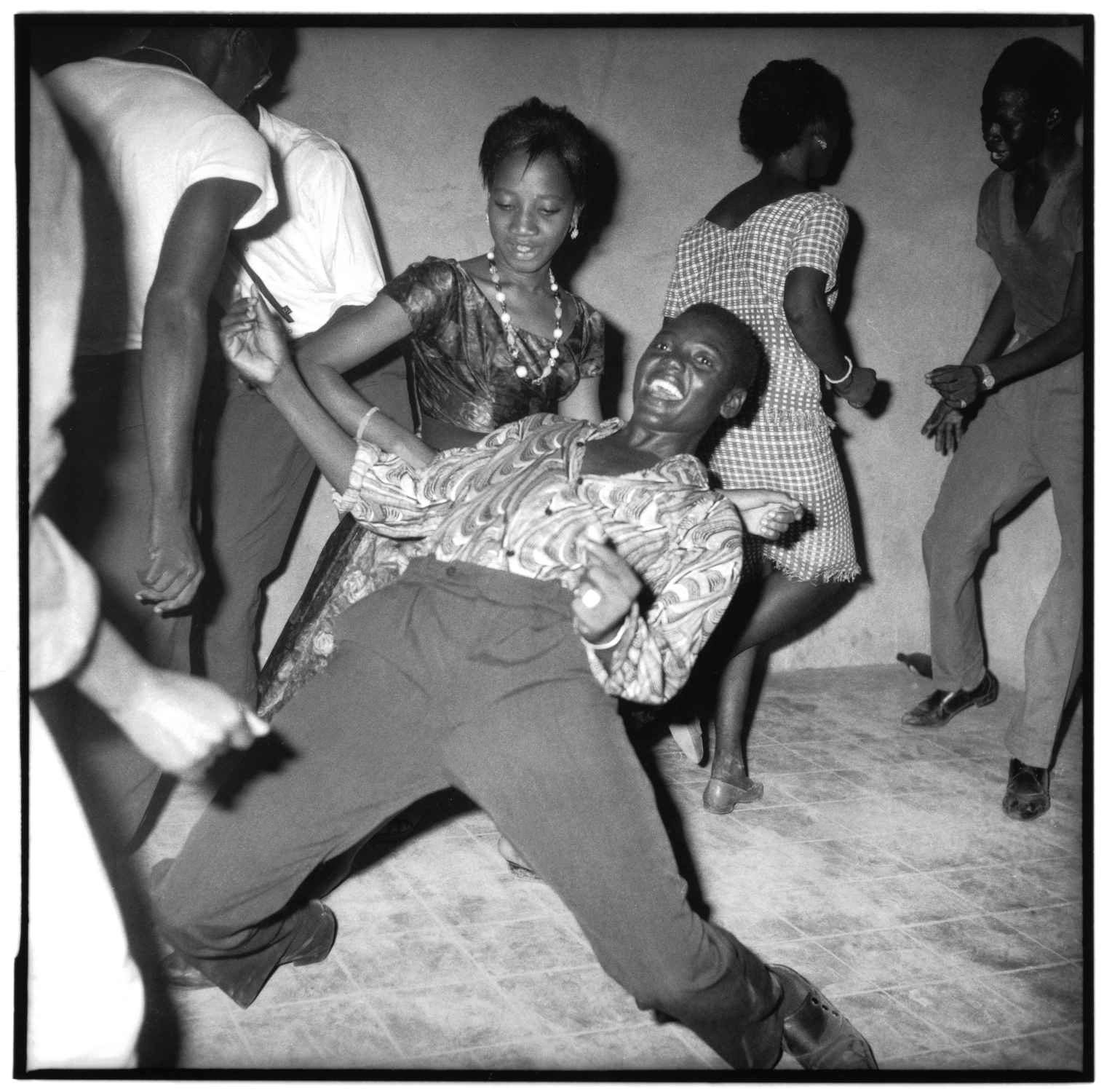
Malick Sidibé (Malian, 1935-2016) 'Regardez-moi!' 1962


Malick Sidibé (Malian, 1935-2016)
Regardez-moi!
1962
Gelatin silver print
50 x 60cm – 19.5 x 23.5 inches
© Malick Sidibé


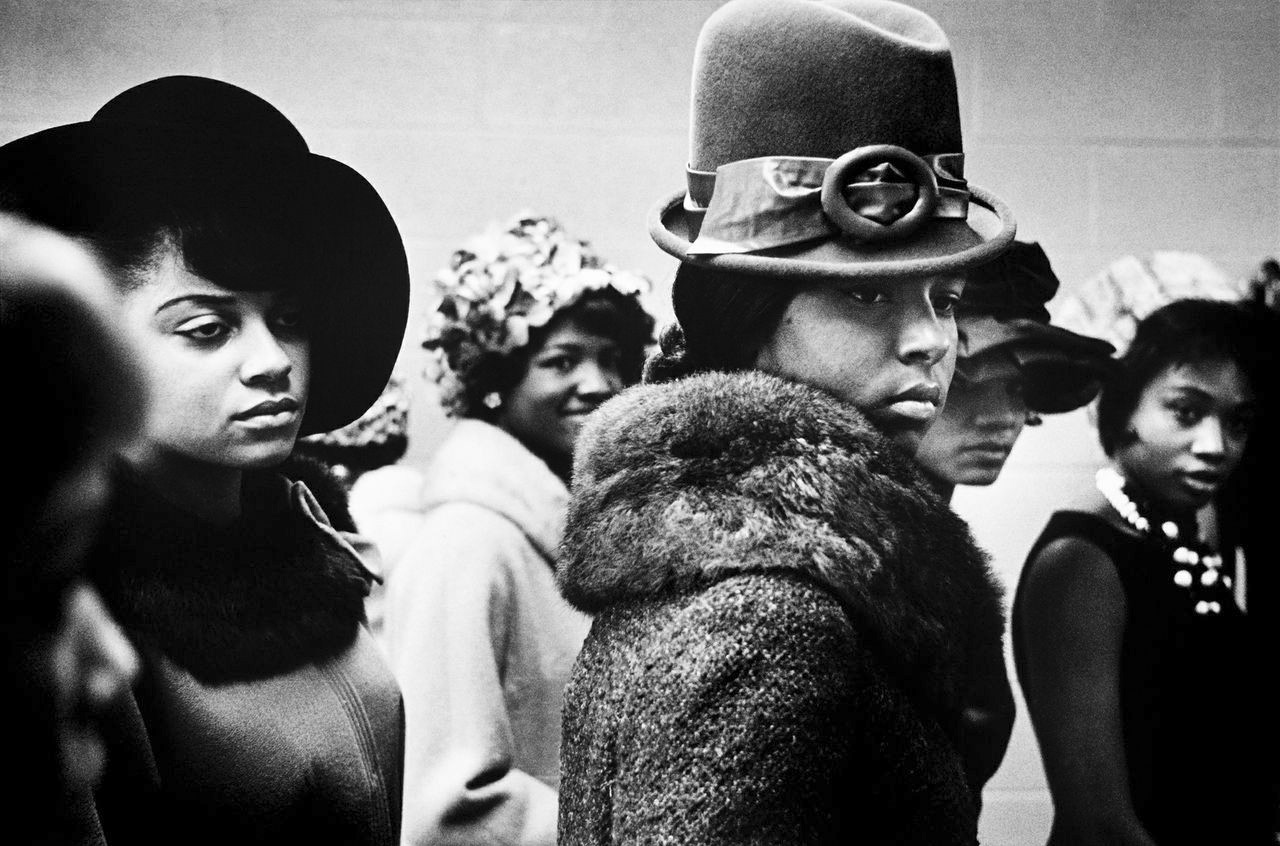
Leonard Freed (American, 1929-2006) 'Harlem Fashion Show, Harlem' 1963


Leonard Freed (American, 1929-2006)
Harlem Fashion Show, Harlem
1963
Gelatin silver print
17 x 21 1/4 inches
Magnum Photos


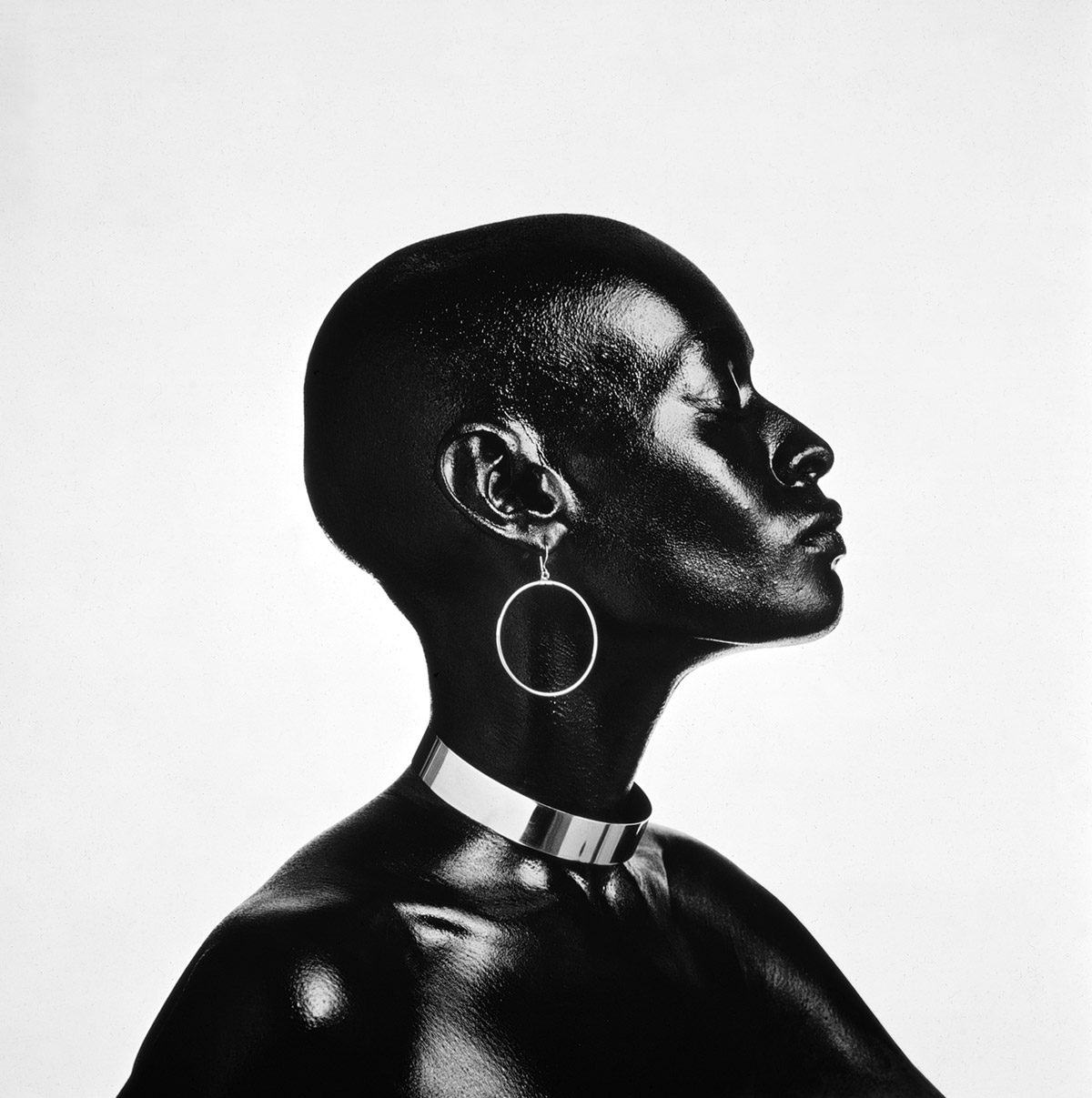
Anthony Barboza (African-American, b. 1944) 'Pat Evans' c. 1970s


Anthony Barboza (African-American, b. 1944)
Pat Evans
c. 1970s
Digital print
24 1/2 x 24 inches
Courtesy of the photographer


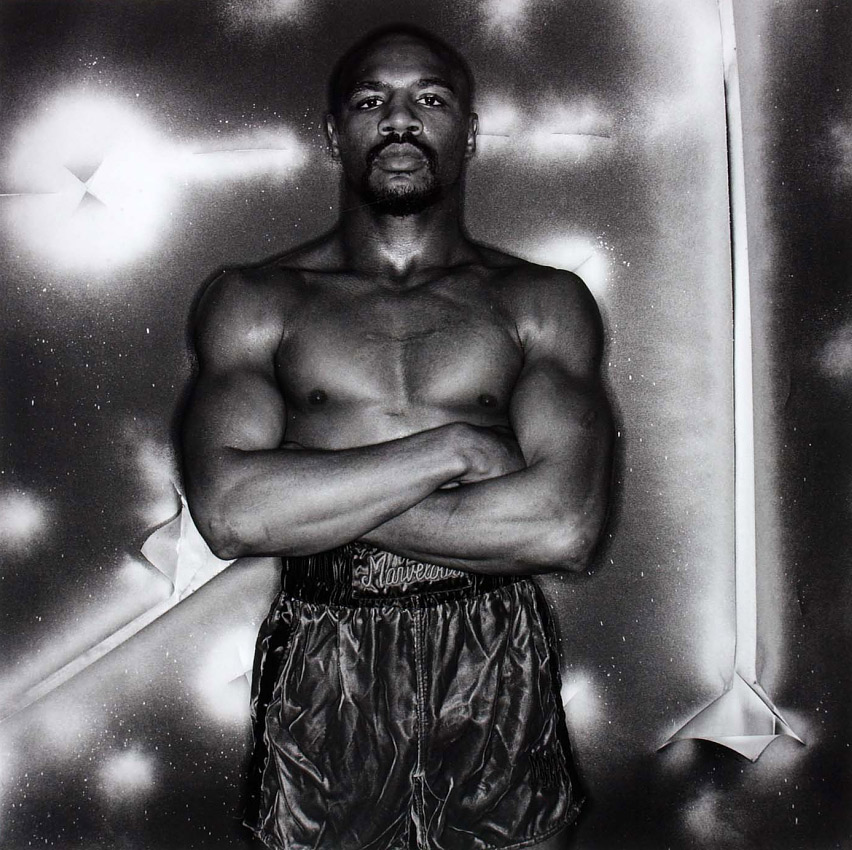
Anthony Barboza (African-American, b. 1944) ''Marvelous' Marvin Hagler, boxer' 1981


Anthony Barboza (African-American, b. 1944)
‘Marvelous’ Marvin Hagler, boxer
1981
Gelatin silver print


Exploring contemporary understandings of beauty, Posing Beauty in African American Culture frames the notion of aesthetics, race, class, and gender within art, popular culture, and political contexts. The exhibition – and its companion, Identity Shifts – will be on view April 26 – July 27, 2014.

Posing Beauty in African American Culture examines the contested ways in which African and African American beauty has been represented in historical and contemporary contexts through a diverse range of media including photography, film, video, fashion, advertising, and other forms of popular culture such as music and the Internet. The exhibition explores contemporary understandings of beauty by framing the notion of aesthetics, race, class, and gender within art, popular culture, and political contexts. The exhibition is organised by the Department of Photography & Imaging at New York University, Tisch School of the Arts, traveled by Curatorial Assistance Traveling Exhibitions, and curated by Dr. Deborah Willis. The touring exhibition is made possible in part by the JP Morgan Chase Foundation. Additional support has been provided by grants from the Tisch School of the Arts Office of the Dean’s Faculty Development Fund, Visual Arts Initiative Award from the NYU Coordinating Council for Visual Arts, and NYU’s Advanced Media Studio. Drawn from public and private collections, Posing Beauty features approximately 85 works by artists such as Carrie Mae Weems, Charles “Teenie” Harris, Eve Arnold, Gary Winogrand, Sheila Pree Bright, Leonard Freed, Renee Cox, Anthony Barboza, Bruce Davidson, Mickalene Thomas, and Jeanne Moutoussamy-Ashe.

Posing Beauty is divided into three thematic sections. The first theme, Constructing a Pose, considers the interplay between the historical and the contemporary, between self-representation and imposed representation, and the relationship between subject and photographer. The second theme, Body and Image, questions the ways in which our contemporary understanding of beauty has been constructed and framed through the body. The last section, Modeling Beauty and Beauty Contests, invites a deeper reading of beauty, its impact on mass culture and individuals and how the display of beauty affects the ways in which we see and interpret the world and ourselves.

According to author and historian Barbara Summers: “Beauty is power. And the struggle to have the entire range of Black beauty recognised and respected is a serious one.”

Press release from the Virginia Museum of Fine Arts website


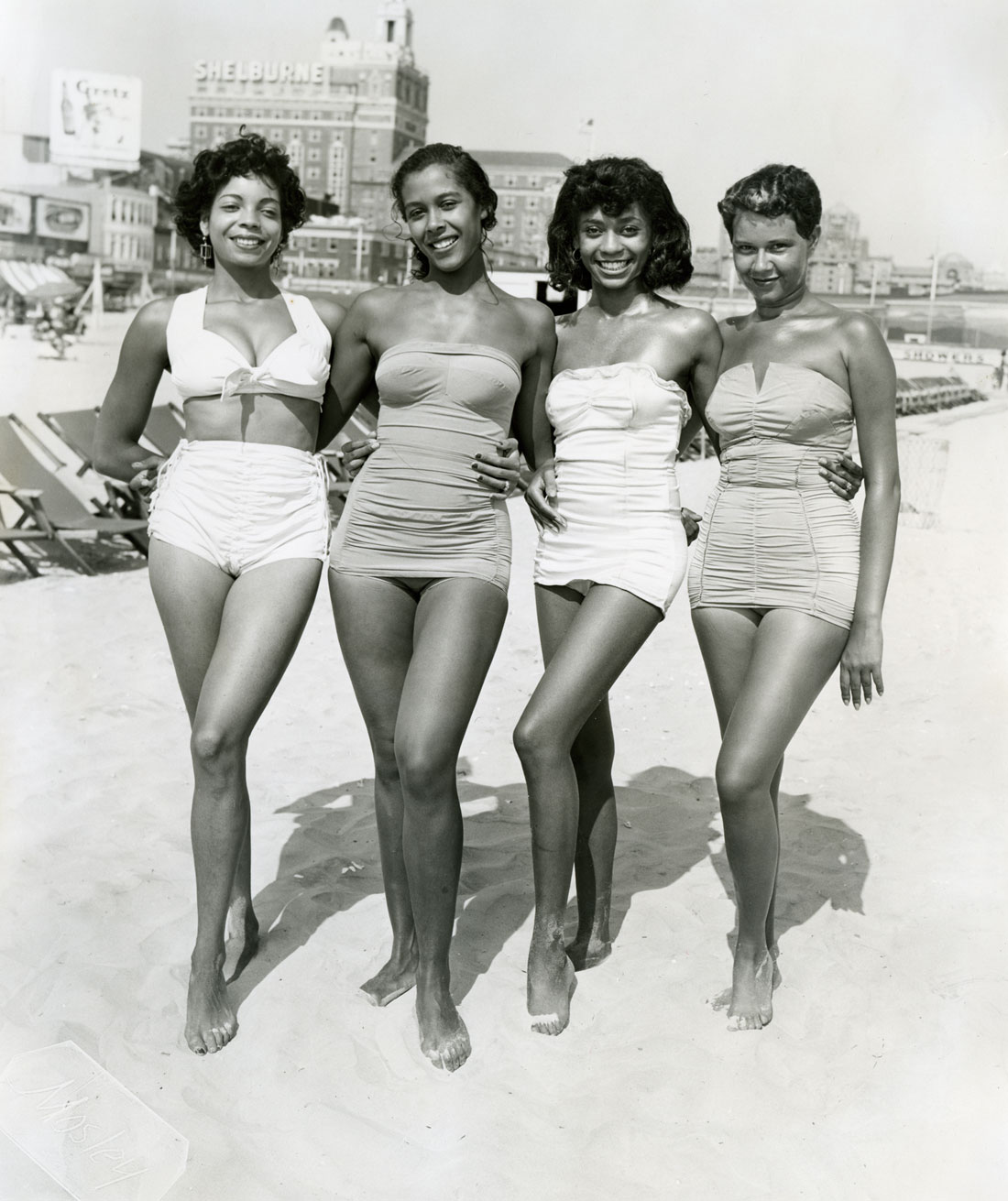
John W. Mosley (American, 1907-1969) 'Atlantic City, Four Women' c. 1960s


John W. Mosley (American, 1907-1969)
Atlantic City, Four Women
c. 1960s
Gelatin silver print
20 x 16 inches
Charles L. Blockson Afro-American Collection, Temple University


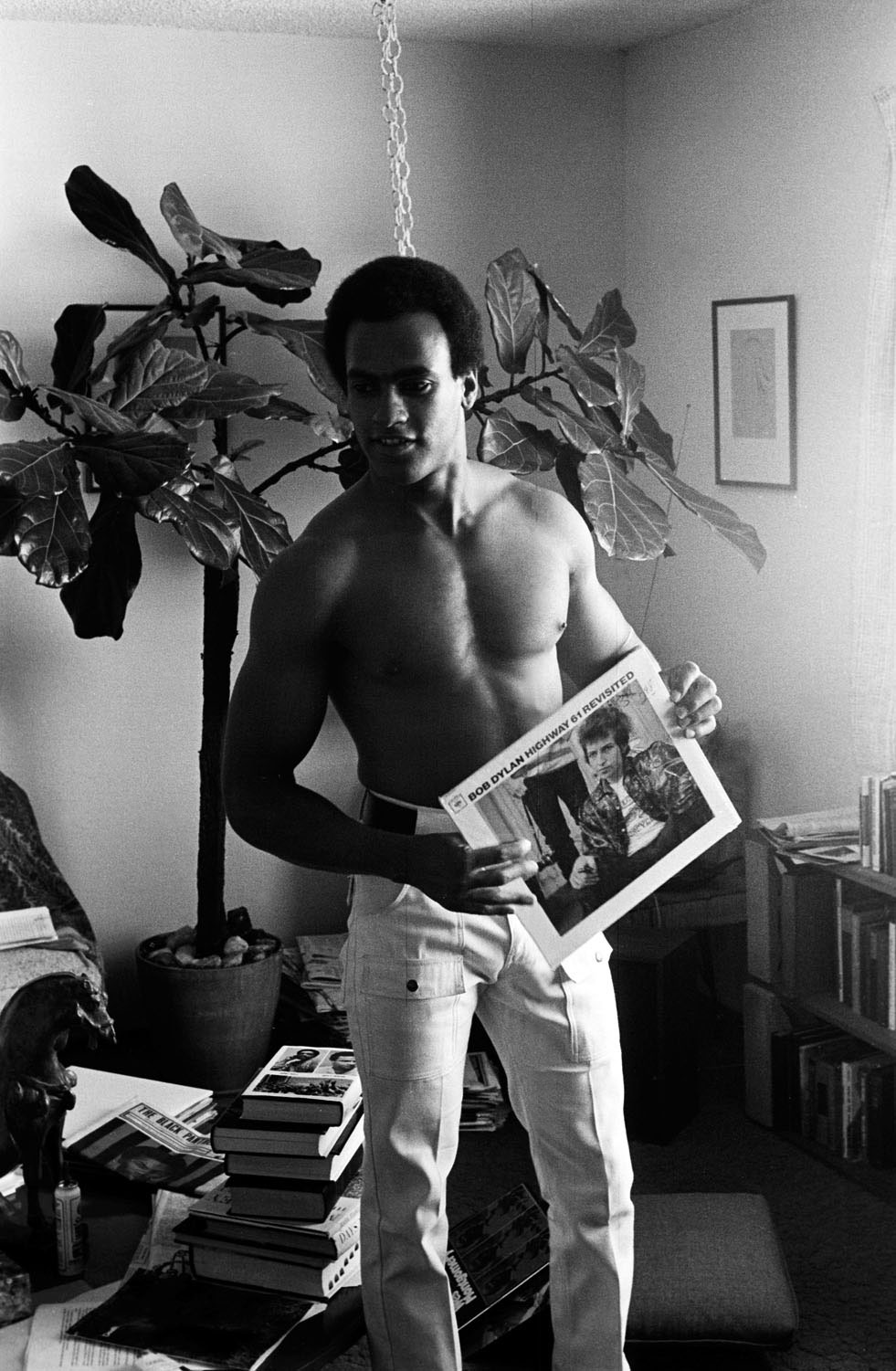
Stephen Shames (American, b. 1947) 'Huey P Newton holds a Bob Dylan album at home after he was released from jail' c. 1967


Stephen Shames (American, b. 1947)
Huey P Newton holds a Bob Dylan album at home after he was released from jail
c. 1967
Photograph
© Stephen Shames


Huey Percy Newton (February 17, 1942 – August 22, 1989) was an African-American political and urban activist who, along with Bobby Seale, co-founded the Black Panther Party in 1966. Newton had a long series of confrontations with law enforcement, including several convictions, while he participated in political activism. He continued to pursue an education, eventually earning a Ph.D. in Social Science. Newton spent time in prison for manslaughter and was involved in a shooting that killed a police officer, for which he was later acquitted. In 1989 he was shot and killed in Oakland, California by Tyrone “Double R” Robinson, a member of the Black Guerrilla Family.

Text from Wikipedia website


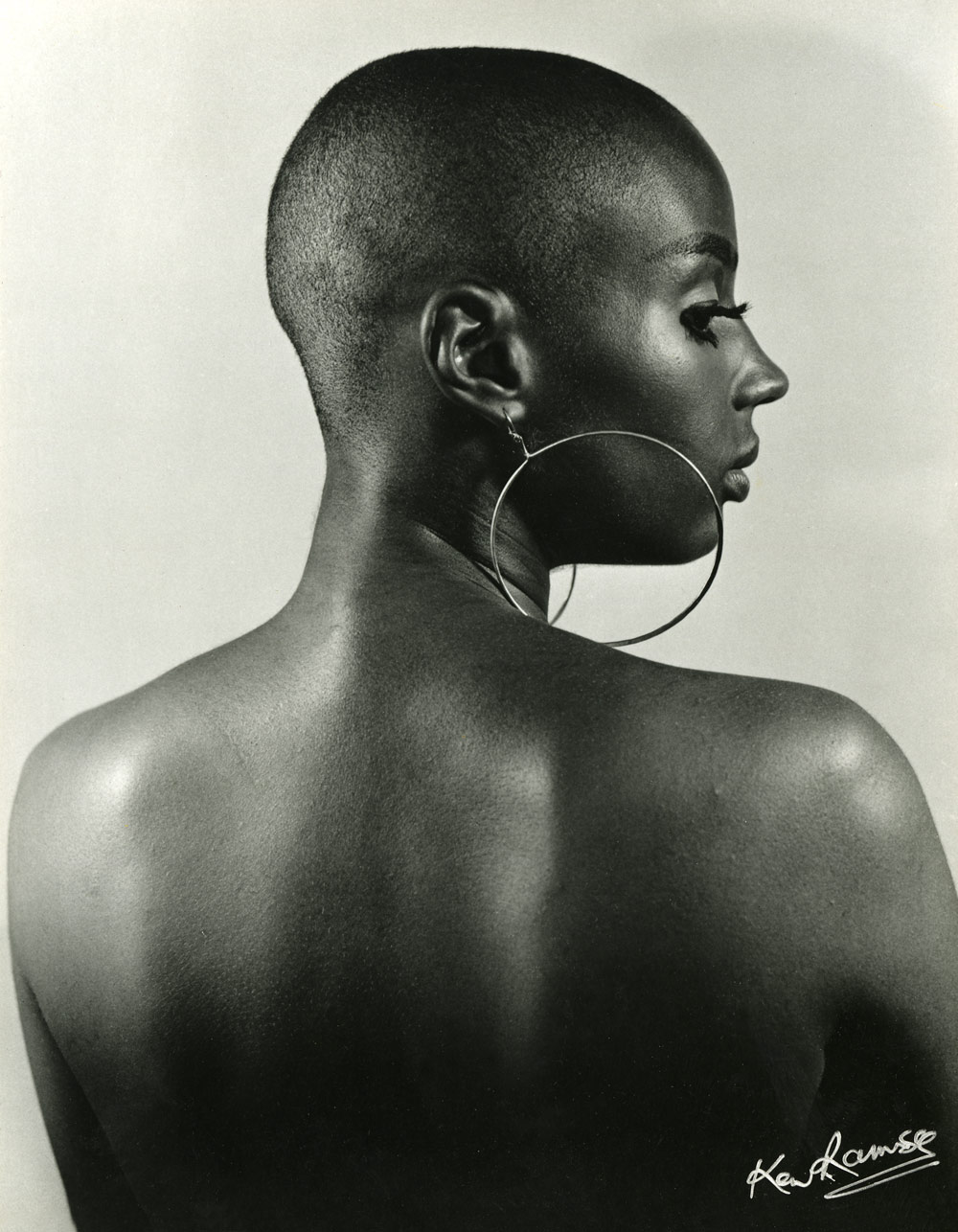
Ken Ramsay (Jamaican, 1935-2008) 'Susan Taylor, as Model' c. 1970s


Ken Ramsay (Jamaican, 1935-2008)
Susan Taylor, as Model
c. 1970s
Gelatin silver print
26.5 x 20 inches
Courtesy of the photographer


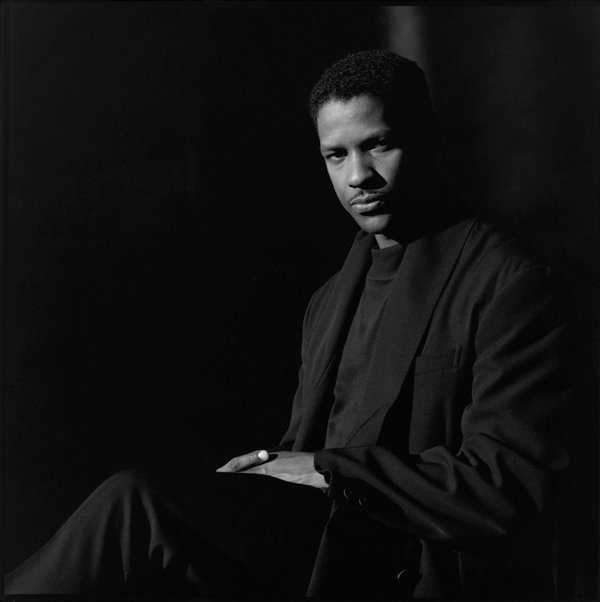
Jeffrey Henson Scales (American, b. 1954) 'Denzel Washington, Los Angeles' 1990s


Jeffrey Henson Scales (American, b. 1954)
Denzel Washington, Los Angeles
1990s


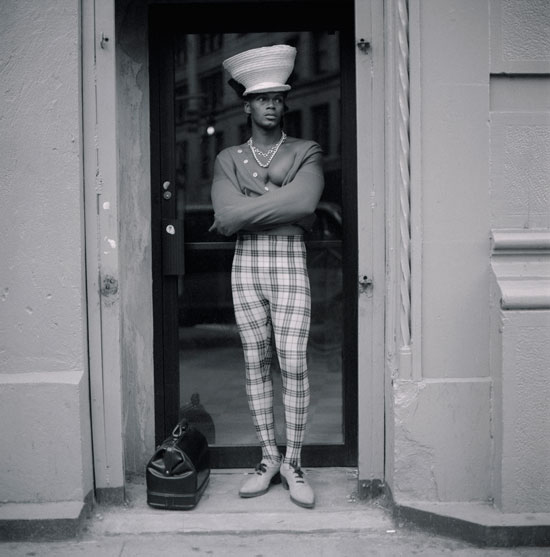
Jeffrey Henson Scales (American, b. 1954) 'Young Man in Plaid, New York City' 1992


Jeffrey Henson Scales (American, b. 1954)
Young Man in Plaid, New York City
1992
Digital print
44.5 x 44 inches
Courtesy of the photographer


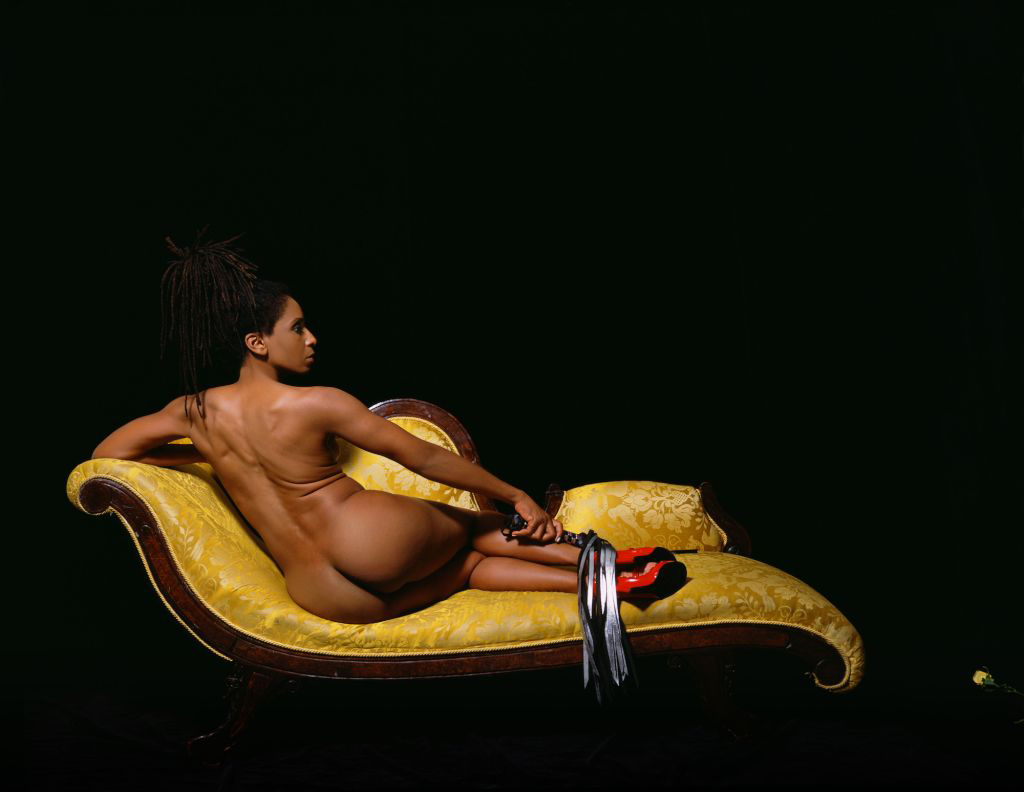
Renee Cox (American, b. 1960) 'Baby Back', from the series 'American Family' 2001


Renee Cox (American, b. 1960)
Baby Back,
from the series American Family
2001
Archival digital print
30 x 40 in.
Courtesy of the artist


Lauren Kelley (American, b. 1975) 'Pickin'' 2007


Lauren Kelley (American, b. 1975)
Pickin’
2007
Colour-coupler print
23 x 23 1/8 inches
Courtesy of the photographer


Virginia Museum of Fine Arts
200 N. Boulevard
Richmond, Virginia USA

Opening hours:
Saturday – Tuesday: 10am – 5pm
Wednesday – Friday: 10am – 9pm

Virginia Museum of Fine Arts website

LIKE ART BLART ON FACEBOOK

Back to top

Exhibition: ‘Out of the closets, into the streets: gay liberation photography 1971-73’ at Edmund Pearce Gallery, Melbourne

Exhibition dates: Tuesday 22nd July – Saturday 26th July, 2014

Opening: Tuesday 22nd July 6-8pm

Nite Art: Wednesday 23rd July until 11pm
Artists represented: Philip Potter, John Storey, John Englart, Barbara Creed, Ponch Hawkes, Rennie Ellis
Curators: Dr Marcus Bunyan and Nicholas Henderson
Catalogue essay by Professor Dennis Altman (below)


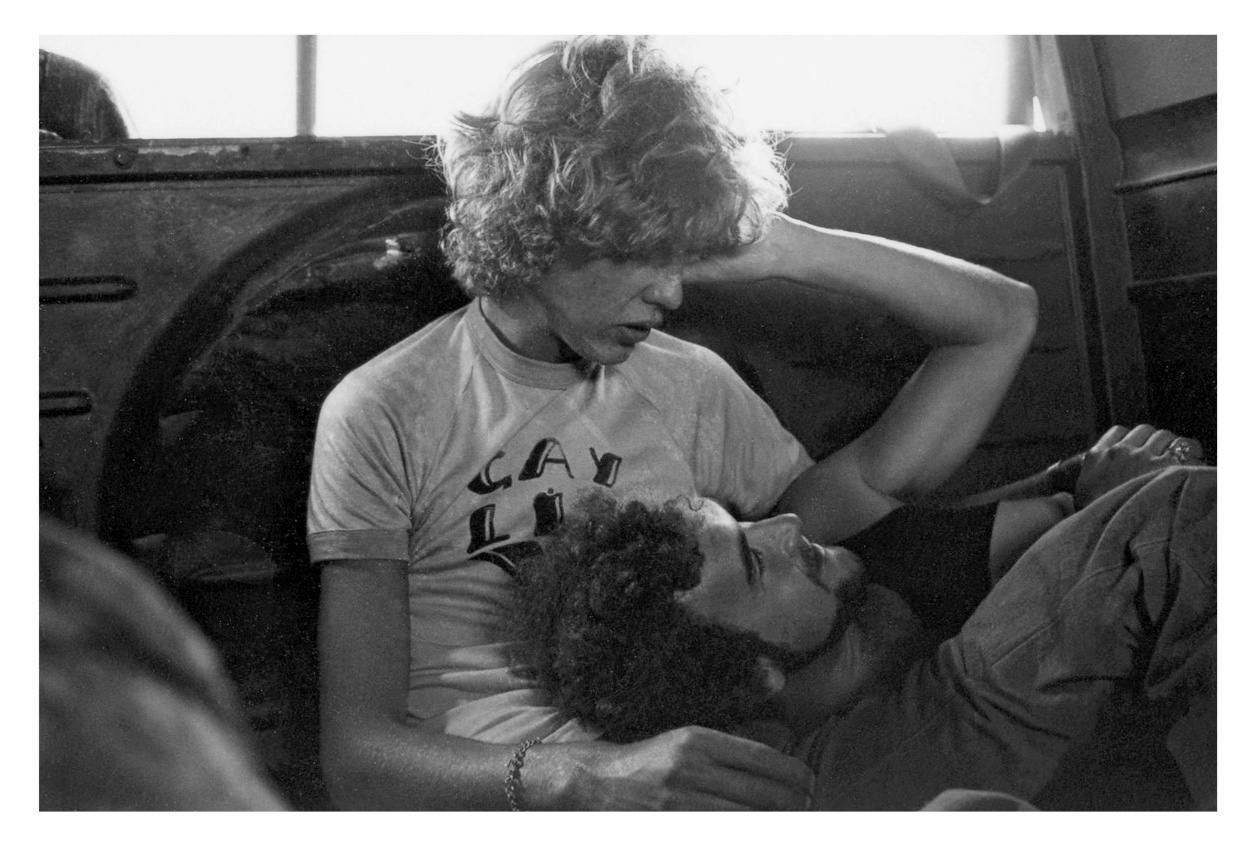
Barbara Creed (Australian, b. 1943) 'Julian Desaily and Peter McEwan in the back of a VW Combi van, Melbourne' Melbourne, c. 1971-1973


Barbara Creed (Australian, b. 1943)
Julian Desaily and Peter McEwan in the back of a VW Combi van, Melbourne
Melbourne, c. 1971-1973
Digital C type print on Kodak Endura Matte
© Barbara Creed


Five days, that’s all you’ve got! Just five days to see this fabulous exhibition. COME ALONG TO THE OPENING (Tuesday 22nd July 6-8pm) or NITE ART, the following night!

The exhibition Out of the closets, into the streets: gay liberation photography 1971-73 pictures the very beginning of the gay liberation movement in Australia through the work of Philip Potter, John Storey, John Englart, Barbara Creed, Ponch Hawkes and Rennie Ellis. The exhibition examines for the first time images from the period as works of art as much as social documents. The title of the exhibition is a slogan from the period.

As gay people found their voice in the early 1970s artists, often at the very beginning of their careers, were there to capture meetings in lounge rooms, consciousness raising groups and street protests. The liberation movement meant ‘being there’, putting your body on the line. “It was a key feature of the new left that this embodied politics couldn’t stop in the streets: that is, the public arena as conventionally understood. ‘Being there’ politically also applied to households, classrooms, sexual relations, workplaces and the natural environment.”1

Curated by Dr Marcus Bunyan and Nicholas Henderson and with a catalogue essay by Professor Dennis Altman (see below), the show is a stimulating experience for those who want to be inspired by the history and art of the early gay liberation movement in Australia.

The exhibition coincides with AIDS 2014: 20th International AIDS Conference (20-25 July 2014) and Nite Art which occurs on the Wednesday night (23rd July 2014). The exhibition will travel to Sydney to coincide with the 14th Australia’s Homosexual Histories Conference in November at a venue yet to be confirmed.

Dr Marcus Bunyan


1/ Connell, Raewyn. “Ours is in colour: the new left of the 1960s,” in Carolyn D’Cruz and Mark Pendleton (eds.,). After Homosexual: The Legacies of Gay Liberation. Perth: UWA Publishing, 2013, p. 43.


Many thankx to all the artists for allowing me to publish the photographs in the posting. Please click on the photographs for a larger version of the image.


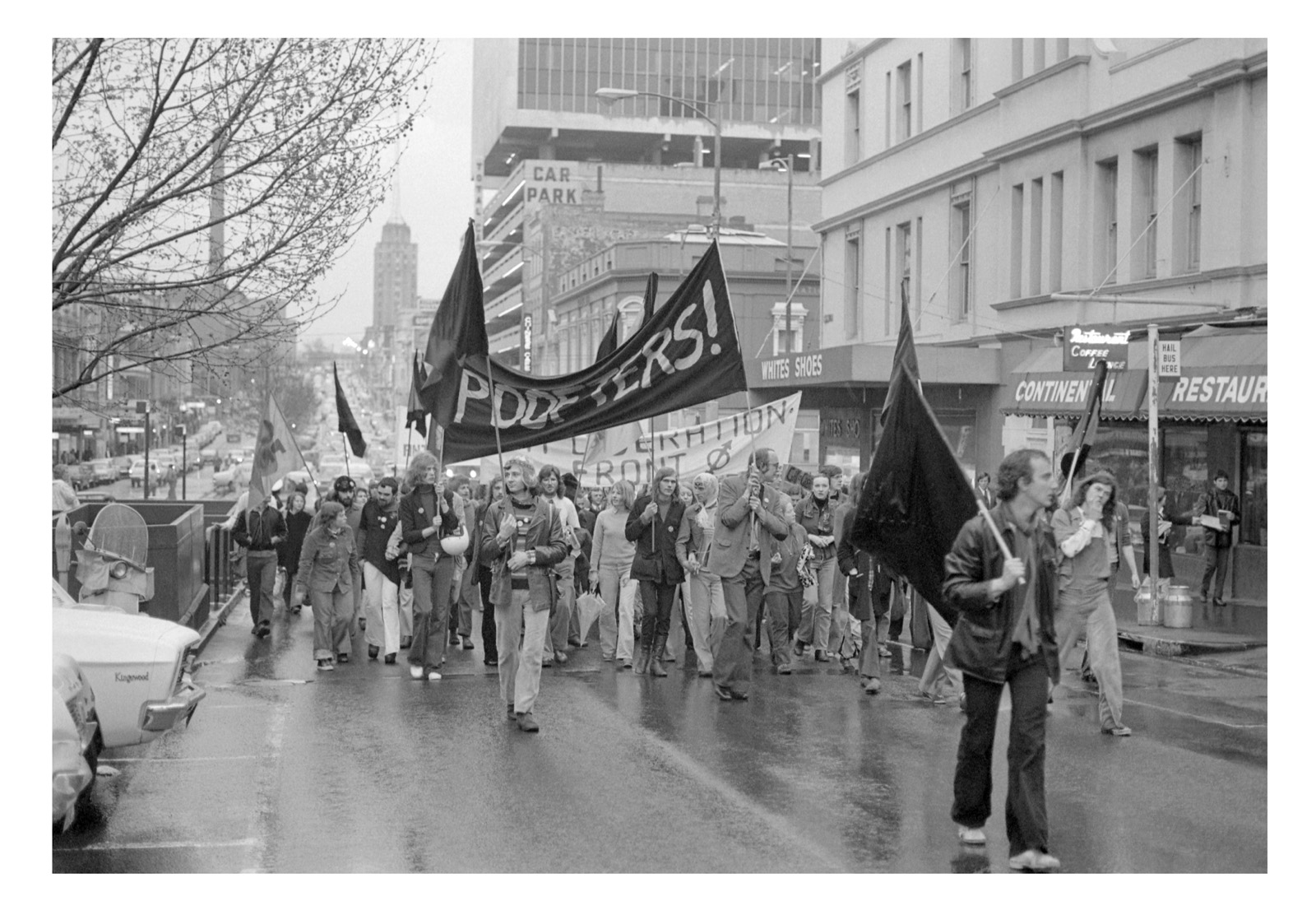
Ponch Hawkes (Australian, b. 1946) 'Gay Liberation march, Russell Street, Melbourne' Melbourne, 1973


Ponch Hawkes (Australian, b. 1946)
Gay Liberation march, Russell Street, Melbourne
Melbourne, 1973
Digital C type print on Kodak Endura Matte
© Ponch Hawkes


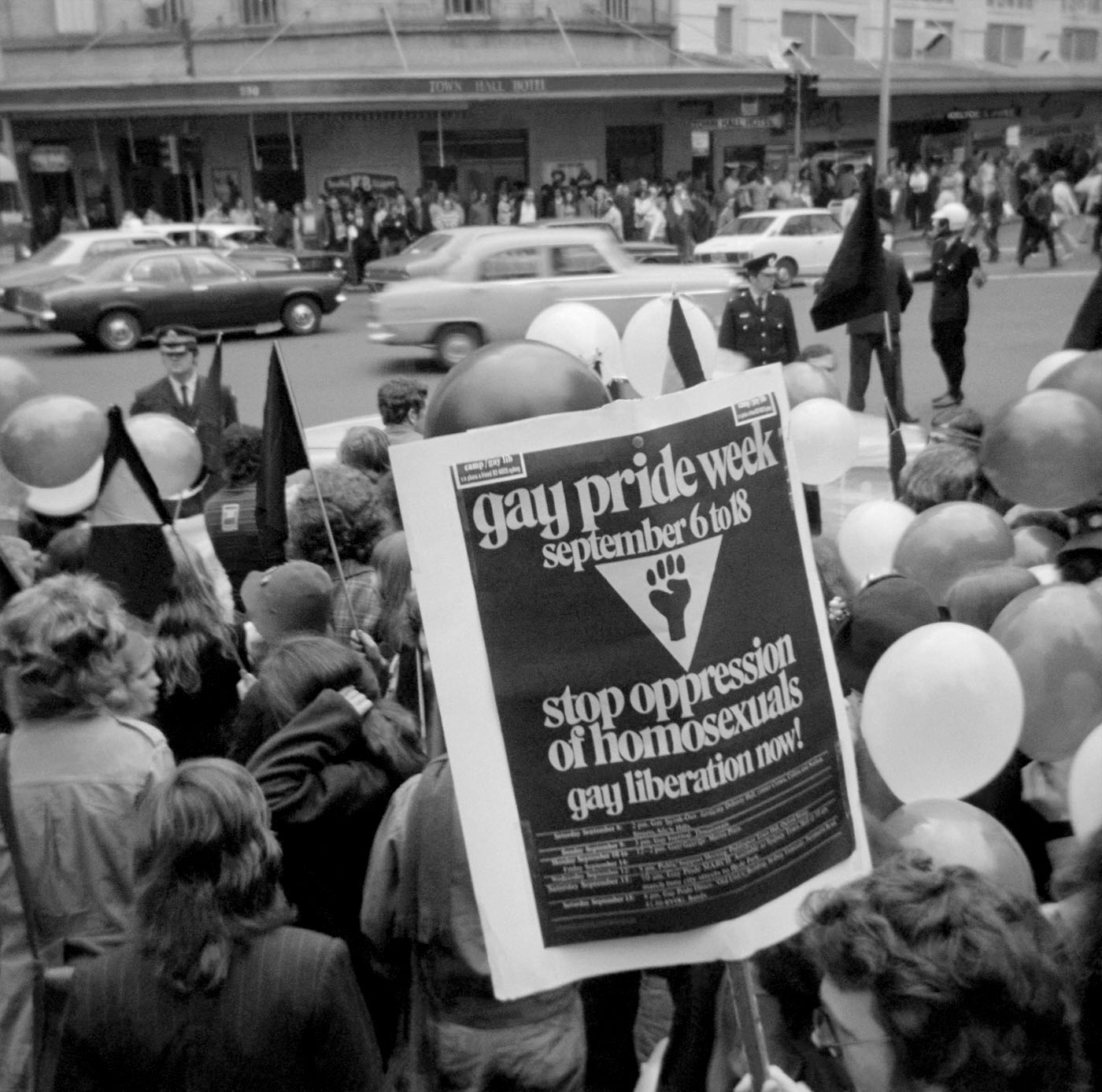
John Englart (Australian, b. 1955) 'Gay Pride Week poster, outside the Town Hall Hotel, Sydney Town Hall' Sydney, 1973


John Englart (Australian, b. 1955)
Gay Pride Week poster, outside the Town Hall Hotel, Sydney Town Hall
Sydney, 1973
Digital C type print on Kodak Endura Matte
© John Englart


Out of the closets, onto the streets

Professor Dennis Altman


This exhibition chronicles a very specific time in several Australian cities, the period when lesbians and gay men first started demonstrating publicly in a demand to be accorded the basic rights of recognition and citizenship. Forty years ago to be homosexual was almost invariably to lead a double life; the great achievement of gay liberation was that a generation – although only a tiny proportion of us were ever Gay Liberationists – discovered that was no longer necessary.

The Archives have collected an extraordinary range of materials illustrating the richness of earlier lesbian and gay life in Australia, but this does not deny the reality that most people regarded homosexuality as an illness, a perversion, or a sin, and one for which people should be either punished or cured. It is revealing to read the first avowedly gay Australian novel, Neville Jackson’s No End to the Way [published in 1965 – in Britain – and under a pseudonym] to be reminded of how much has changed in the past half century.

Gay Liberation had both local and imported roots; the Stonewall riots in New York City, which sparked off a new phase of radical gay politics – when ‘gay’ was a term understood to embrace women, men and possibly transgender – took place in June 1969. They were barely noticed at the time in Australia, where a few people in the civil liberties world, most of them not homosexual, had started discussing the need to repeal anti-sodomy laws.

Small law reform and lesbian groups had already existed, but the real foundation of an Australian gay movement came in September 1970 when Christabel Pol and John Ware announced publicly the formation of CAMP, an acronym that stood for the Campaign Against Moral Persecution but also picked up on the most used Australian term for ‘homosexual’. Within two years there were both CAMP branches in most Australian capital cities, as well as small gay liberation groups that organised most of the demonstrations illustrated in this exhibition.

The differences between gay liberation and CAMP were in practice small, but those of us in Gay Liberation prided ourselves on our radical critique, and our commitment to radical social change. CAMP, with its rather daggy social events and its stress on law reform – at a time in history when homosexual conduct between men was illegal across the country – seemed to us too bourgeois, though ironically it was CAMP which organised the first open gay political protest in Australia [immediately identified by the balloons in the Exhibition photos].

It is now a cliché to say “the sixties” came to Australia in the early 1970s, but a number of forces came together in the few years between the federal election of 1969, when Gough Whitlam positioned the Labor Party as a serious contender for power, and 1972, the “It’s Time” election, when the ALP took office for the first time in 23 years. We cannot understand how a gay movement developed in Australia without understanding the larger social and cultural changes of the time, which saw fundamental shifts in the nature of Australian society and politics.

The decision of the Menzies government in 1965 to commit Australian troops to the long, and ultimately futile war in Vietnam, led to the emergence of a large anti-war movement, capable of mobilising several hundred thousand people to demonstrate by the end of the decade. Already under the last few years of Liberal government the traditional White Australia Policy was beginning to crumble, as it became increasingly indefensible, and awareness of the brutal realities of dispossession and discrimination against indigenous Australians was developing. Perhaps most significant for a movement based on sexuality, the second wave feminist movement, already active in the United States and Britain, began challenging the deeply entrenched sexist structures of society.

To quote myself, this at least reduces charges of plagiarism: “Anyone over fifty in Australia has lived through extraordinary changes in how we imagine the basic rules of sex and gender. We remember the first time we saw women bank tellers, heard a woman’s voice announce that she was our pilot for a flight, watched the first woman read the news on television. Women are now a majority of the paid workforce; in 1966 they made up twenty-nine per cent. When I was growing up in Hobart it was vaguely shocking to hear of an unmarried heterosexual couple living together and women in hats and gloves rode in the back of the trams (now long since disappeared). As I look back, it seems to me that some of the unmarried female teachers at my school were almost certainly lesbians, although even they would have been shocked had the word been uttered.”

In Australia Germaine Greer’s book The Female Eunuch became a major best seller, and Germaine appeared [together with Liz Fell, Gillian Leahy and myself] at the initial Gay Liberation forum at Sydney University in early 1972; looking back it is ironic that a woman who has been somewhat ambivalent in her attitudes to homosexuality was part of the public establishment of the gay movement.

But the early demonstrations illustrated in this exhibition did often include sympathetic “straights” – a term that seems to have disappeared from the language – for whom gay liberation was part of a wider set of cultural issues. It is essential to recognise that while political demonstrations may seem to assert certain claims they play widely different roles for those who participate. For some of us a public protest is a form of “coming out”; indeed many people had never been public about their sexuality before they attended their first demonstration. For others a demonstration is primarily a place to find solidarity, friendship, and, if lucky, sex.

For the gay movement more than any other just to declare oneself as gay was to take an enormous step, a step that some found remarkably easy while others had to wait until late in life to discover that actually almost everyone knew anyway. I remember the now dead Sydney playwright, Nick Enright, who was one of the first people to be open about his homosexuality, and was so without any sense of difficulty; at the same time there are still people who go to great lengths to hide their sexuality even while acknowledging they would face little risk of discrimination were they not to do so

Maybe there is a parallel for people who now declare their lost Aboriginal heritage, unsure how they will be regarded but aware that this is crucial to their sense of self. Every generation has its own version of coming out stories, this exhibition hones in on that time in our national history when everything seemed in flux, and gay liberation seemed a small part of creating a brave new world in which old hierarchies and restraints would disappear.

Looking back at the photos creates a certain nostalgia – we all look so young, so sure that we were changing the world, though in reality most of us were putting on a brave front. The oddest thing is that in some ways we did change the world. Forty years ago we looked at the police as threatening, symbolised in the photograph from Melbourne Gay Pride 1973 where the policeman is clearly telling people to move on. Today openly lesbian and gay cops march with us in the streets, and the very idea that homosexuality could be criminalised, as it still is in many parts of the world, has largely disappeared from historical memory. Indeed to many people attending this exhibition that may be the first time they confront the reality that being gay in Australia in the early 1970s was to live in a world of silence, evasion and fear.

Professor Dennis Altman
July 2014

© Dennis Altman
Reproduced with permission


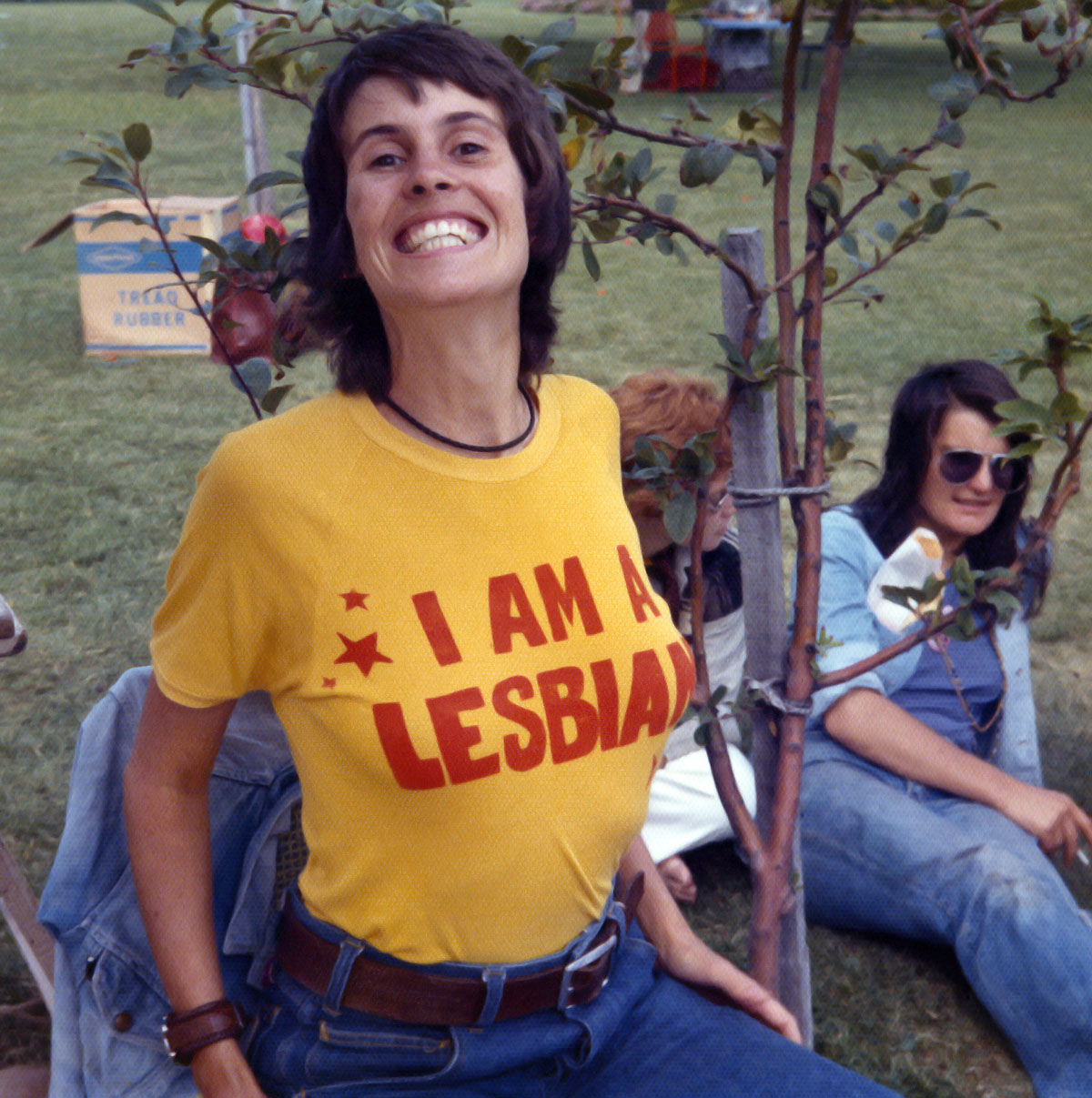
Anonymous photographer. 'I am a Lesbian, Gay Pride Week' Adelaide, 1973


Anonymous photographer
I am a Lesbian, Gay Pride Week
Adelaide, 1973
Digital C type print on Kodak Endura Matte
© Australian Lesbian and Gay Archives


Anonymous photographer. 'Man in black hat and red shirt, Gay Pride Week' Adelaide, 1973


Anonymous photographer
Man in black hat and red shirt, Gay Pride Week
Adelaide, 1973
Digital C type print on Kodak Endura Matte
© Australian Lesbian and Gay Archives


Sponsored by

CPL Digital logo

For photographic services in Australia, Art Blart highly recommends CPL Digital (03) 8376 8376 cpldigital.com.au

Art Blart logo

Dr Marcus Bunyan and the best photography archive sponsor this event artblart.com

Australian Queer Archives

The Archives actively collects and preserves lesbian and gay material from across Australia queerarchives.org.au/

Supported by

Rennie Ellis logo

Rennie Ellis is an award winning photographer and writer (03) 9525 3862 www.rennieellis.com.au


AIDS 2014: 20th International AIDS Conference
20 July – 25 July 2014
Melbourne, Australia

Edmund Pearce Gallery

This gallery has now closed.

LIKE ART BLART ON FACEBOOK

Back to top

Exhibition: ‘View from the Window’ at Edmund Pearce Gallery, Melbourne

Exhibition dates: 2nd – 19th July 2014

Curated by: Vivian Cooper Smith and Jason McQuoid

Artists include: Sean Barrett, Danica Chappell, Kim Demuth, Jackson Eaton, Mike Gray, Megan Jenkinson, Benjamin Lichtenstein, Phuong Ngo, Izabela Pluta, Kate Robertson, Jo Scicluna, Vivian Cooper Smith, Melanie Jayne Taylor and Justine Varga


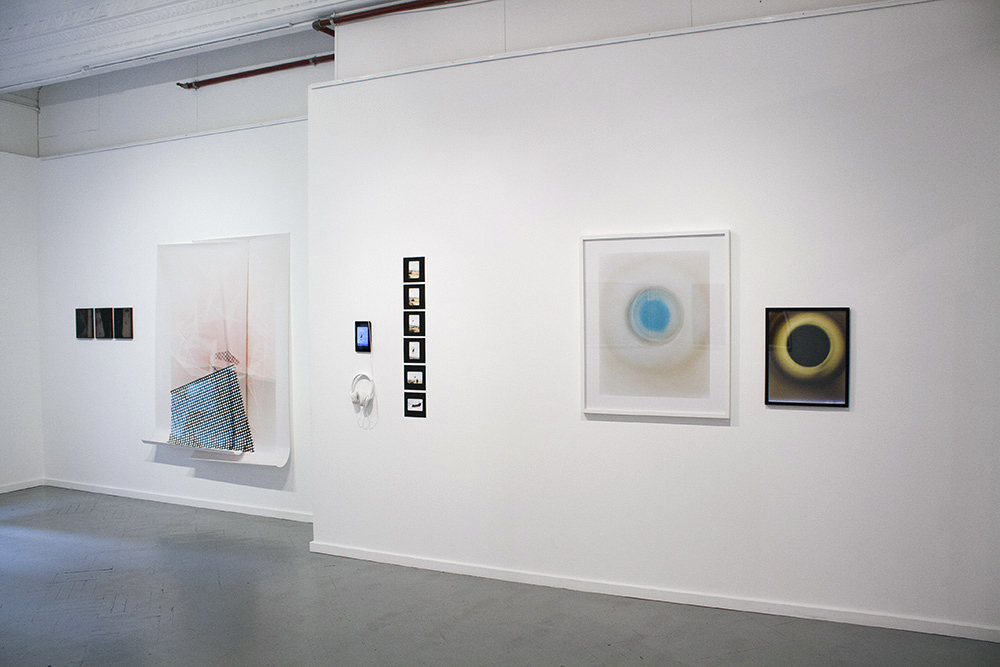
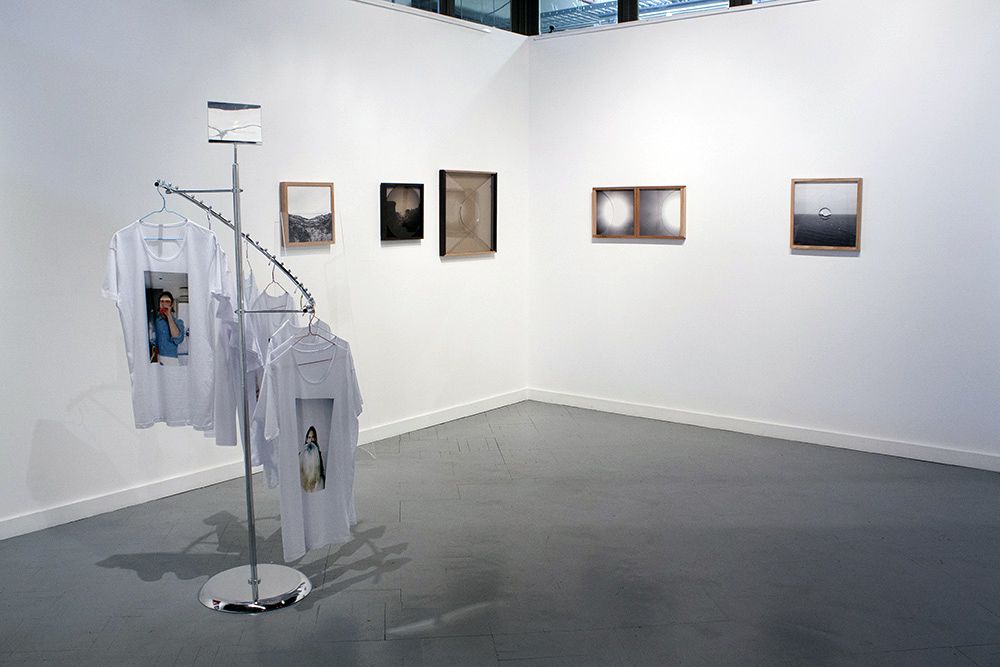
Installation view of the exhibition 'View from the Window' at Edmund Pearce Gallery, Melbourne, July 2014


Installation view of the exhibition View from the Window at Edmund Pearce Gallery, Melbourne, July 2014


Photography can be anything your heart desires (or so they say)…

Another stimulating exhibition at Edmund Pearce Gallery, Melbourne.

My personal favourites are the works of Jo Scicluna and the two large “sculptural” photographs by Kim Demuth, but every artist in the exhibition had something interesting to offer.

Marcus


Many thankx to Edmund Pearce Gallery for allowing me to publish the photographs in the posting. Please click on the photographs for a larger version of the image.


Justine Varga (Australian, b. 1984) 'Morning' from the series 'Sounding Silence' 2014


Justine Varga (Australian, b. 1984)
Morning from the series Sounding Silence
2014
Type C print
77 x 61cm
Edition of 6 + 1AP
Images courtesy of the artist, Stills Gallery, Sydney and Hugo Michell Gallery, Adelaide


Justine Varga (Australian, b. 1984) 'Evening' from the series 'Sounding Silence' 2014


Justine Varga (Australian, b. 1984)
Evening
from the series Sounding Silence
2014
Type C print
47 x 38.5cm
Edition of 6 + 1AP
Images courtesy of the artist, Stills Gallery, Sydney and Hugo Michell Gallery, Adelaide


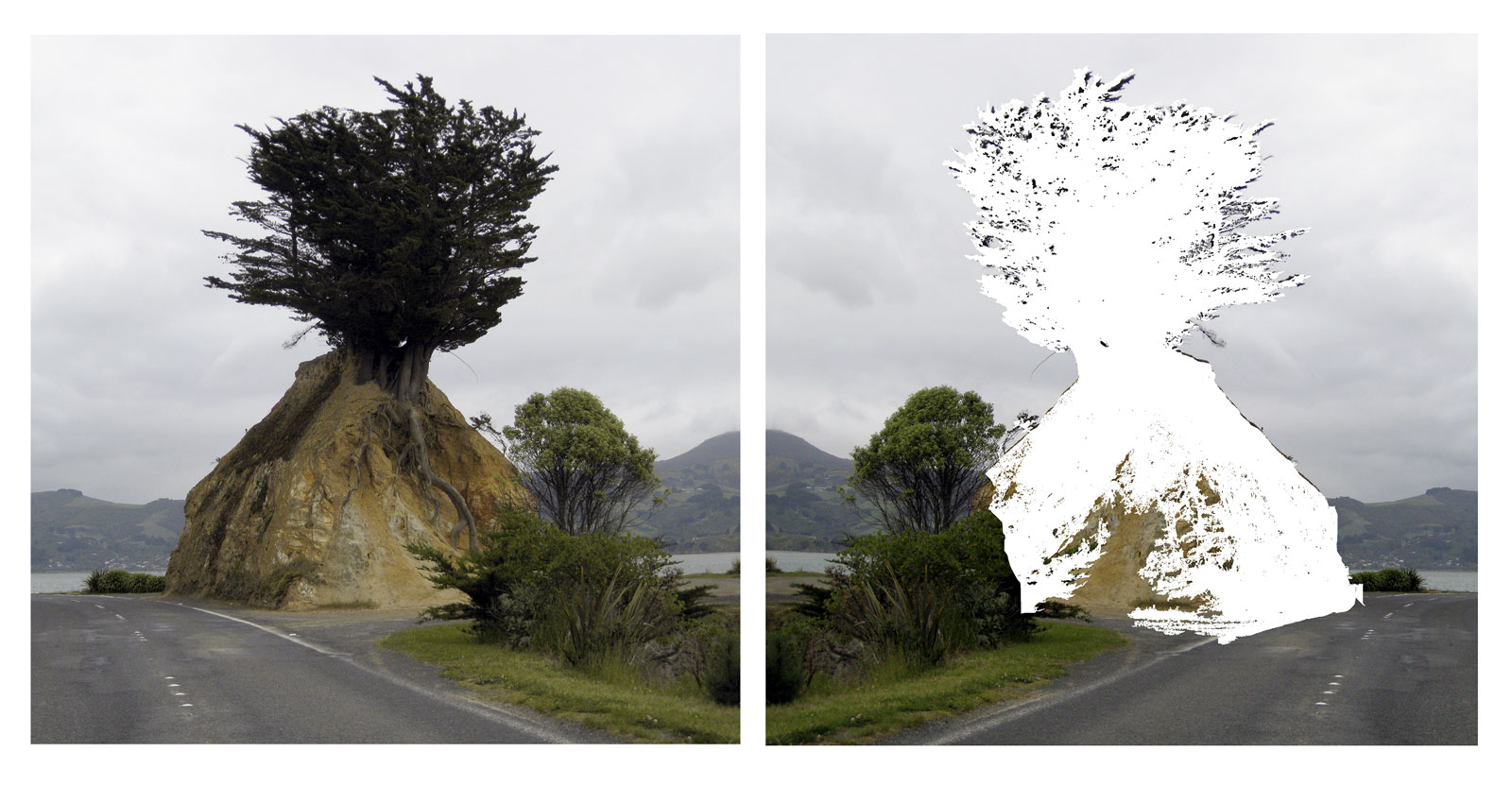
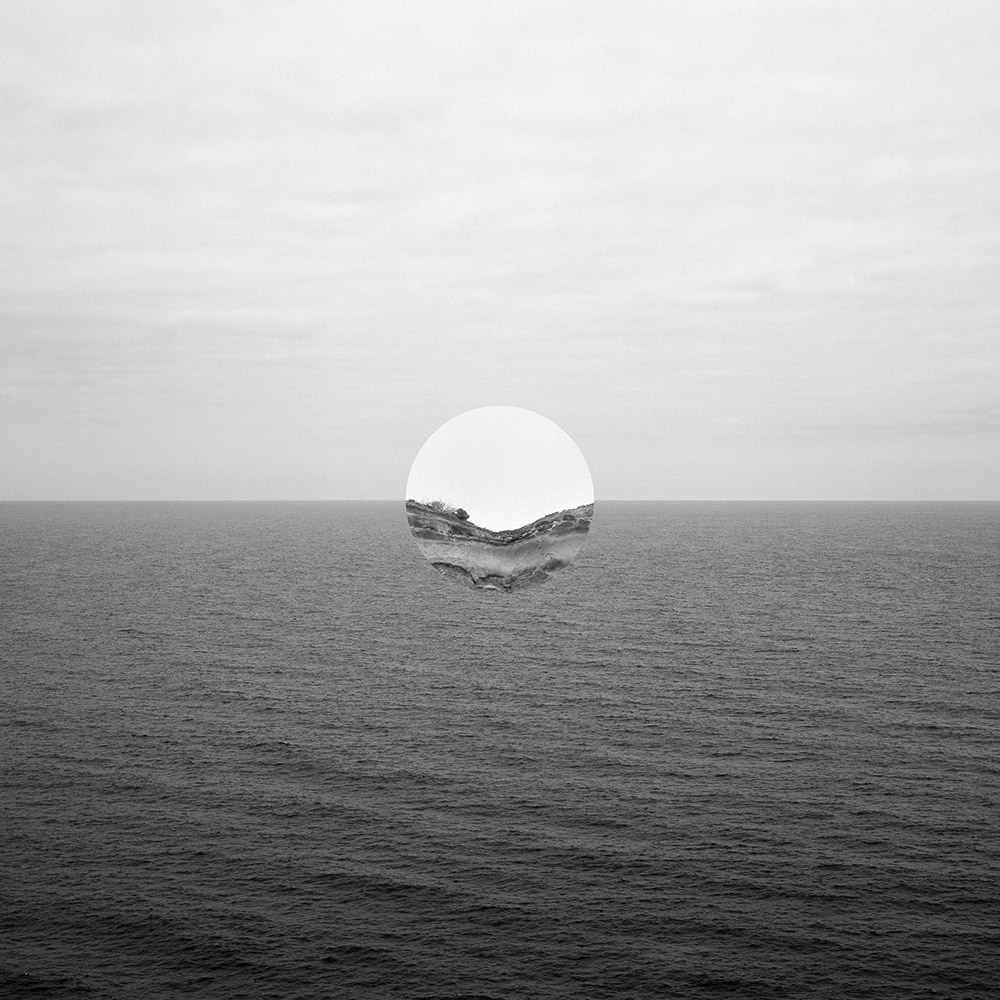
Izabela Pluta (Australian born Poland, b. 1979) 'Study for a sham ruin #7 and #8' 2012 (installation view)


Izabela Pluta (Australian born Poland, b. 1979)
Left: Study for a sham ruin #7, pigment print, 50 x 50cm, 2012 (installation view)
Right: Study for a sham ruin #8, acrylic on pigment print, 50 x 50cm, 2012
Images courtesy of the artist, Dianne Tanzer Gallery + Projects, Melbourne and Galerie pompom, Sydney


Izabela Pluta (Australian born Poland, b. 1979) 'Study for a sham ruin #7 and #8' 2012


Izabela Pluta (Australian born Poland, b. 1979)
Left: Study for a sham ruin #7, pigment print, 50 x 50cm, 2012
Right: Study for a sham ruin #8, acrylic on pigment print, 50 x 50cm, 2012
Images courtesy of the artist, Dianne Tanzer Gallery + Projects, Melbourne and Galerie pompom, Sydney


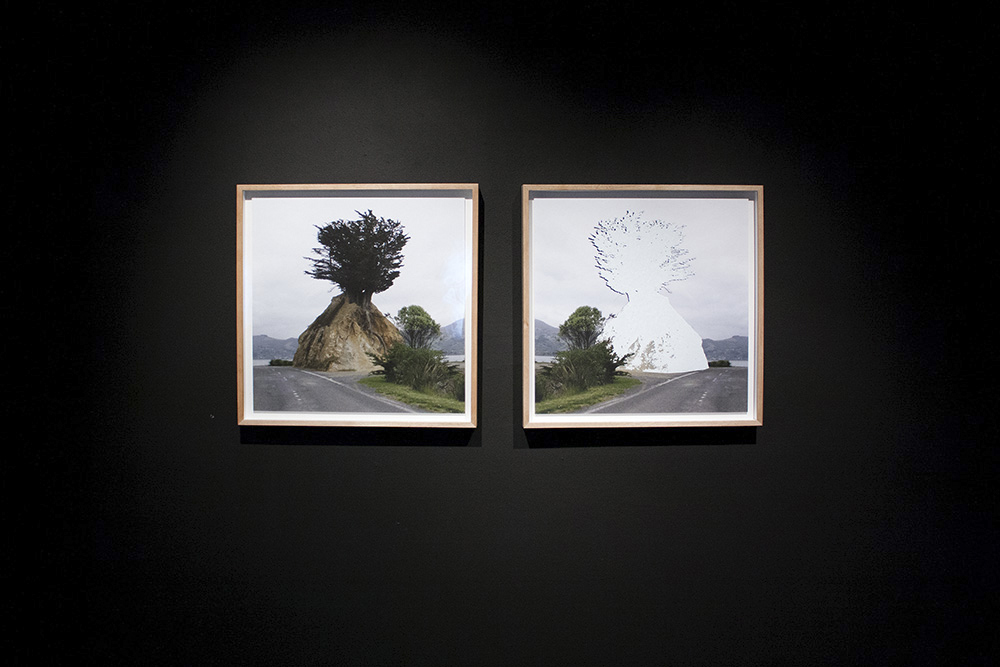
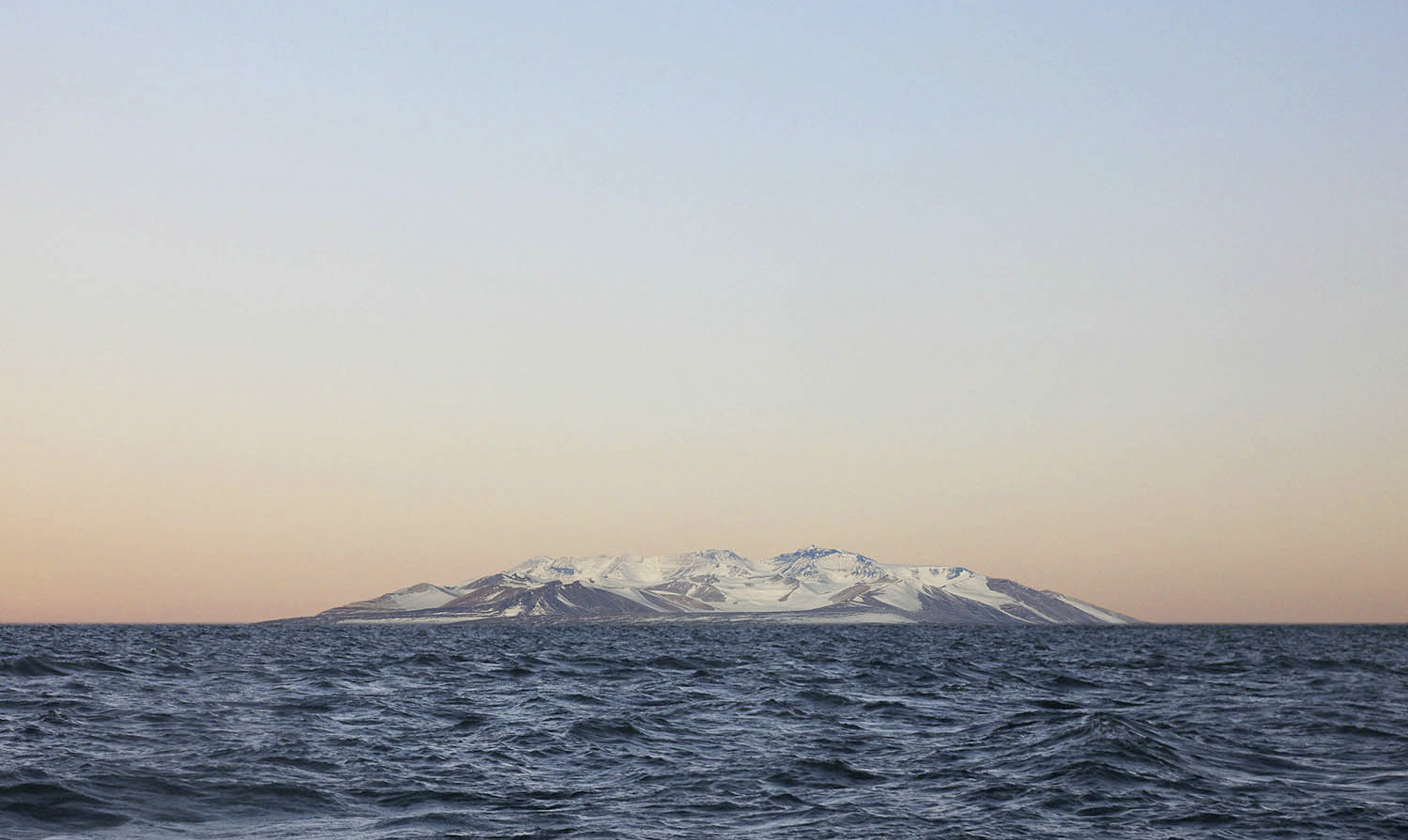
Megan Jenkinson (New Zealand, b. 1958) 'Promise – Morrell’s Islands' 2009


Megan Jenkinson (New Zealand, b. 1958)
Promise – Morrell’s Islands
2009
Type lenticular
22.6 x 38cm
Edition of 5
Image courtesy the artist and Stills Gallery, Sydney


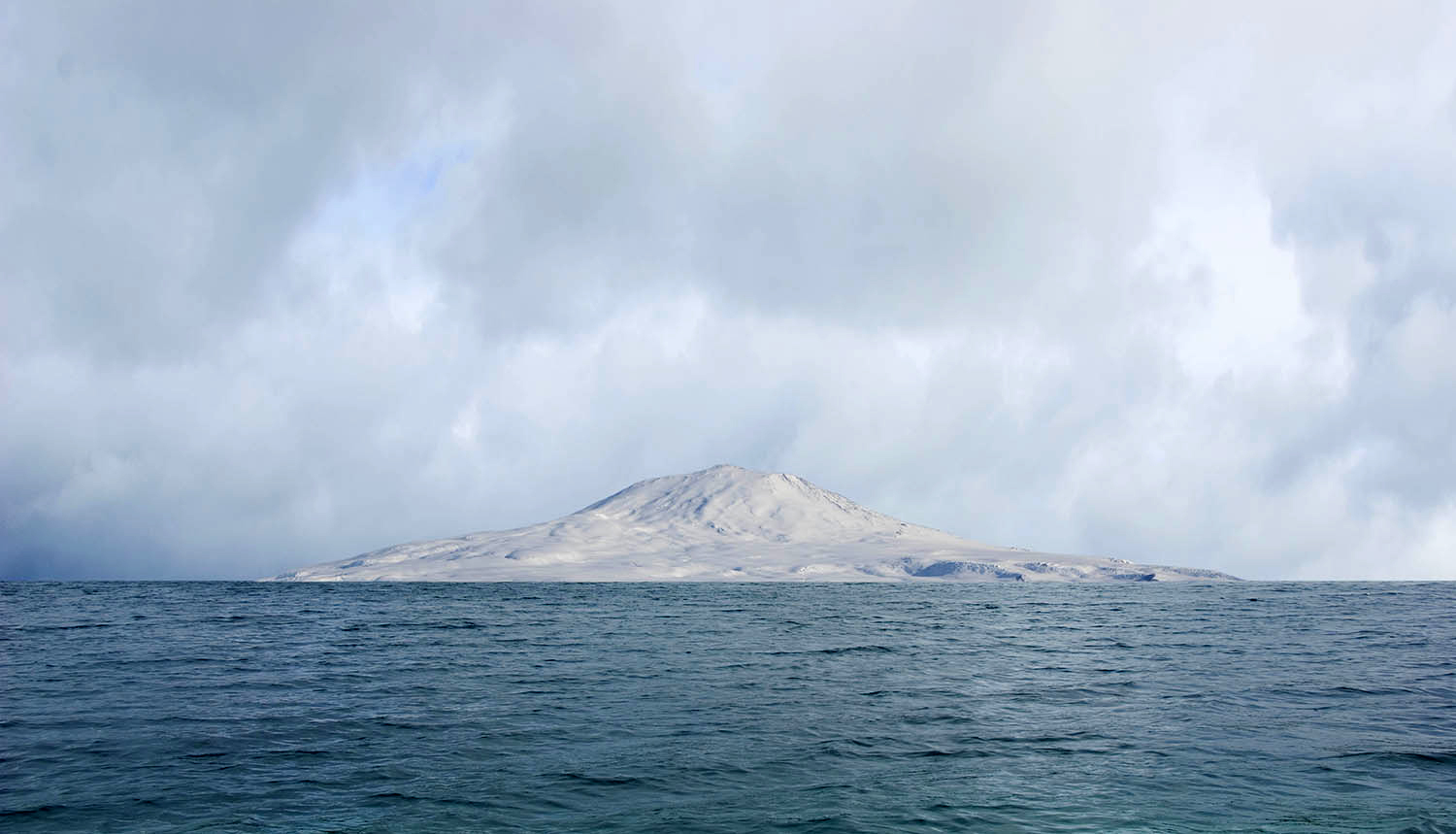
Megan Jenkinson (New Zealand, b. 1958) 'Solace – Morrell's Islands' 2009


Megan Jenkinson (New Zealand, b. 1958)
Solace – Morrell’s Islands
2009
Type lenticular
21.7 x 38cm
Edition of 5
Image courtesy the artist and Stills Gallery, Sydney


View from the Window presents current thinking around photography (if we can even talk of something called photography any more).

The exhibition adapts its name from the oldest existing camera photograph, View from the Window at Le Gras by Nicéphore Niépce. Created with a cumbersome process using Bitumen of Judeah, it remains a trace of a day nearly two hundred years ago and a fragile, enigmatic object today. Since that time, photography has undergone continual seismic shifts in its short history. Given its technological foundations it was inevitable that as new processes and techniques were discovered they would influence current photographic practice. From daguerreotypes, cyanotypes through to Kodachrome, C-41, digital negatives and Photoshop just about everything has changed how we engage with the medium.

With the ubiquity of the modern photographic image View from the Window attempts to highlight the need for considered reflection upon the place and value of current photographic practices. The artists respond to this by considering what ‘photography’ is, and in doing so re-shape, re-imagine, expand and break it down. They explore new thinking with traditional techniques and invent new methods of image making. The work is digital and analogue, flat and sculptural, conceptual and experiential, whole and fragmented. Despite all this, the photographic ‘idea’ remains – reshaping the way we see the world.

Press release from the Edmund Pearce Gallery website


Installation view of the exhibition 'View from the Window' at Edmund Pearce Gallery, Melbourne, July 2014


Installation view of the exhibition View from the Window at Edmund Pearce Gallery, Melbourne, July 2014


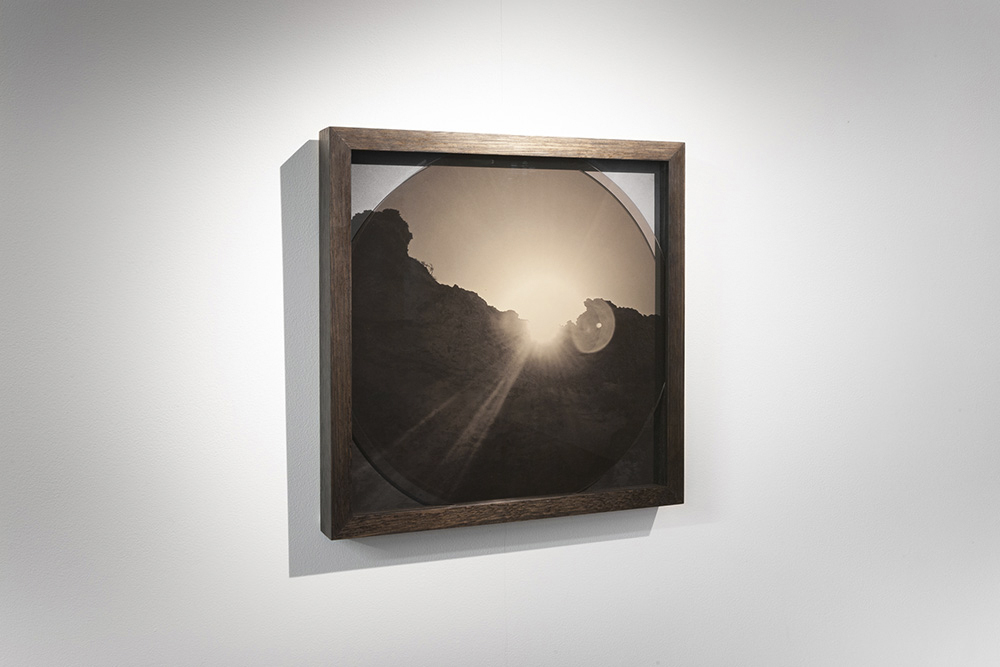
Jo Scicluna (Australian, b. 1969) 'Where A Circle Meets A Line (#4)' 2014 (installation view)


Jo Scicluna (Australian, b. 1969)
Where A Circle Meets A Line (#4)
(installation view)
2014
Archival pigment ink on cotton rag, victorian ash timber, tinted acrylic
37.5 x 37.5cm
Edition of 5
Image courtesy of the artist


Jo Scicluna (Australian, b. 1969) 'Where I Have Always Been (An Island)' 2014 (detail)


Jo Scicluna (Australian, b. 1969)
Where I Have Always Been (An Island) (detail)
2014
Archival pigment ink on cotton rag, Victorian Ash timber, acrylic
45 x 45cm
Edition of 5
Image courtesy of the artist


Extracts from the catalogue essay View from the Window

Over 180 years ago, the French inventor Nicéphore Niépce produced View from the Window at Le Gras. Depicting the view over a series of buildings and the countryside surrounding a French estate, this fragile work was produced in a camera obscura by focusing light onto a pewter plate coated with Bitumen of Judea. Its archaic form and production seem far removed from the digitally-augmented, large-scale work of many contemporary artists, yet it still haunts photography. As well as recalling the origins of photography, it indicates a number of enduring polarities: analogue and digital; image and object; physical darkroom practices and digital post-production; personal and institutional or collective experiences; and duration and snapshot…

As these artists’ works demonstrate, the field of contemporary photography is fundamentally multifarious, constantly eluding attempts to delimit and define it. Despite the diversity of these practices, they share a sense of critical inquiry. Whether working with analogue photographs in darkrooms or digital images in post-production, building physical objects or emphasising the immaterial, these artists all foreground the capacity for photography to interrogate our understanding of the world. Consequently these practices recall art historian Bernd Stiegler’s vision of photography as a ‘reflective medium’.5 By this term Stiegler refers to the inextricable link between photography and realism, but importantly not a form of realism understood as naïve mimesis. Rather, for Stiegler, photography reflects upon the structures and assumptions through which we perceive the world, it ‘plumbs the conditions and limits of our understanding of reality’.6 More than a veridical document or hollow simulacrum, photography thus exists as image, object and process, potentially all simultaneously.

The complexity of these works signals a second common element: the investment of time. All these artists expend considerable time and effort in producing their work, as do any dedicated artists. However, the relevance of this observation is that this temporal investment differentiates such work from the overwhelming glut of photographic images that circulate through the electronic networks of globalised society. Although it would be disingenuous and insensitive to claim that tourist snaps of well-travelled monuments are only meaningless ephemera or signs of globalised homogeneity,7 the near ubiquity of photographic images highlights the need for considered reflection upon the place and value of photographic practices. Committed to extended periods of observation and experimentation, these artists display the patience and persistence to interrogate the problems and possibilities of photography. At their gentle request we repay this dedication through our own extended viewing, for without the time to look we might lose the time to think.

Christopher Williams-Wynn
2014

Christopher Williams-Wynn is an art history honours graduate of The University of Melbourne, and co-founder and co-editor of Dissect Journal.


5/ Bernd Stiegler, ‘Photography as the Medium of Reflection’ in Robin Kelsey and Blake Stimson (eds), The Meaning of Photography. Williamstown, MA: Sterling and Francine Clark Art Institute, 2008, pp. 194-197.
6/ Ibid., p. 197.
7/ John Urry and Jonas Larsen, The Tourist Gaze 3.0, London: SAGE Publications, 2011, pp. 155-187.


Kim Demuth (Australian born England) '12.16am 18.02.2009' 2012


Kim Demuth (Australian born England)
12.16am 18.02.2009
2012
Sculptural photography
110 x 92 x 6.5cm
Edition of 3
Image courtesy of the artist


Kim Demuth (Australian born England) '9.55am 11.06.2008' 2012


Kim Demuth (Australian born England)
9.55am 11.06.2008
2012
Sculptural photography
110 x 88 x 6.5cm
Edition of 3
Image courtesy of the artist


Sean Barrett. 'Cool Aether' 2014


Sean Barrett
Cool Aether
2014
Duratrans on blackwood lightbox
80 x 60cm
Edition of 3
Image courtesy of the artist


Sean Barrett. 'Bright Swarm' 2014


Sean Barrett
Bright Swarm
2014
Duratrans on blackwood lightbox
80 x 60cm
Edition of 3
Image courtesy of the artist


Sean Barrett. 'Dual Aurora' 2014


Sean Barrett
Dual Aurora
2014
Duratrans on blackwood lightbox
80 x 60cm
Edition of 3
Image courtesy of the artist


Edmund Pearce Gallery

This gallery has now closed.

LIKE ART BLART ON FACEBOOK

Back to top

Exhibition: ‘Transmissions: Archiving HIV/AIDS – Melbourne 1979-2014’ at George Paton Gallery, The University of Melbourne

Exhibition dates: 14th July – 25th July 214

Curators: Michael Graf and Russell Walsh

Artists include: Marcus Bunyan, Juan Davila, Andrew Foster, Brent Harris, Mathew Jones, Peter Lyssiotis, Lex Middleton, Andi Nellsün, Marcus O’Donnell, Scott Redford, and Ross T Smith.

Opening: Wednesday 16 July 5.30 pm – 7.30 pm


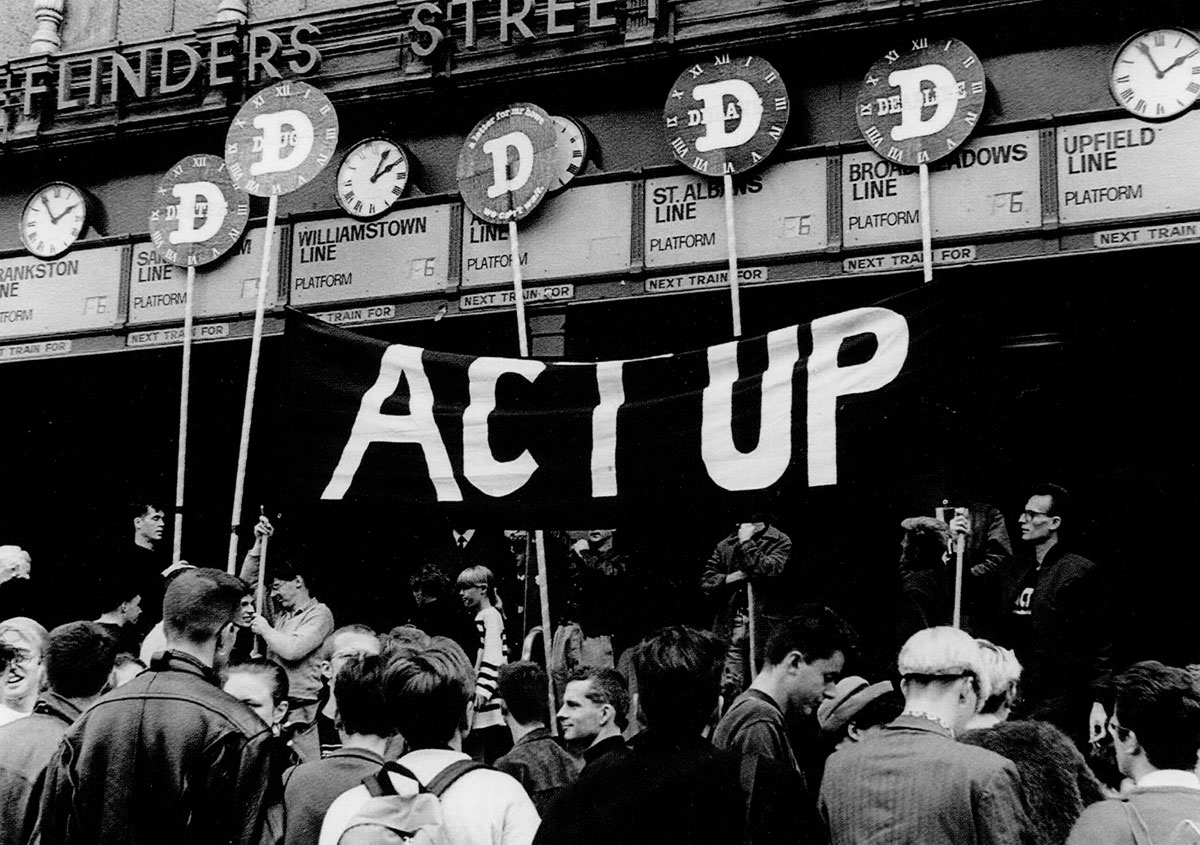
Unknown photographer. 'ACT UP D-Day on the steps of Flinders St. Station, 6 June 1991' 1991


Unknown photographer
ACT UP D-Day on the steps of Flinders St. Station, 6 June 1991
1991
Image courtesy of the Australian Queer Archives


Another important exhibition to coincide with the 20th International AIDS Conference to be held in Melbourne this July. The exhibition – which focuses on the seminal exhibition Don’t Leave Me This Way: Art In The Age Of AIDS, curated by Ted Gott at the National Gallery of Australia in Canberra in 1994 – is supported by an extensive program of public events (see below) some of which I hope to get to. The community lost so many good people.

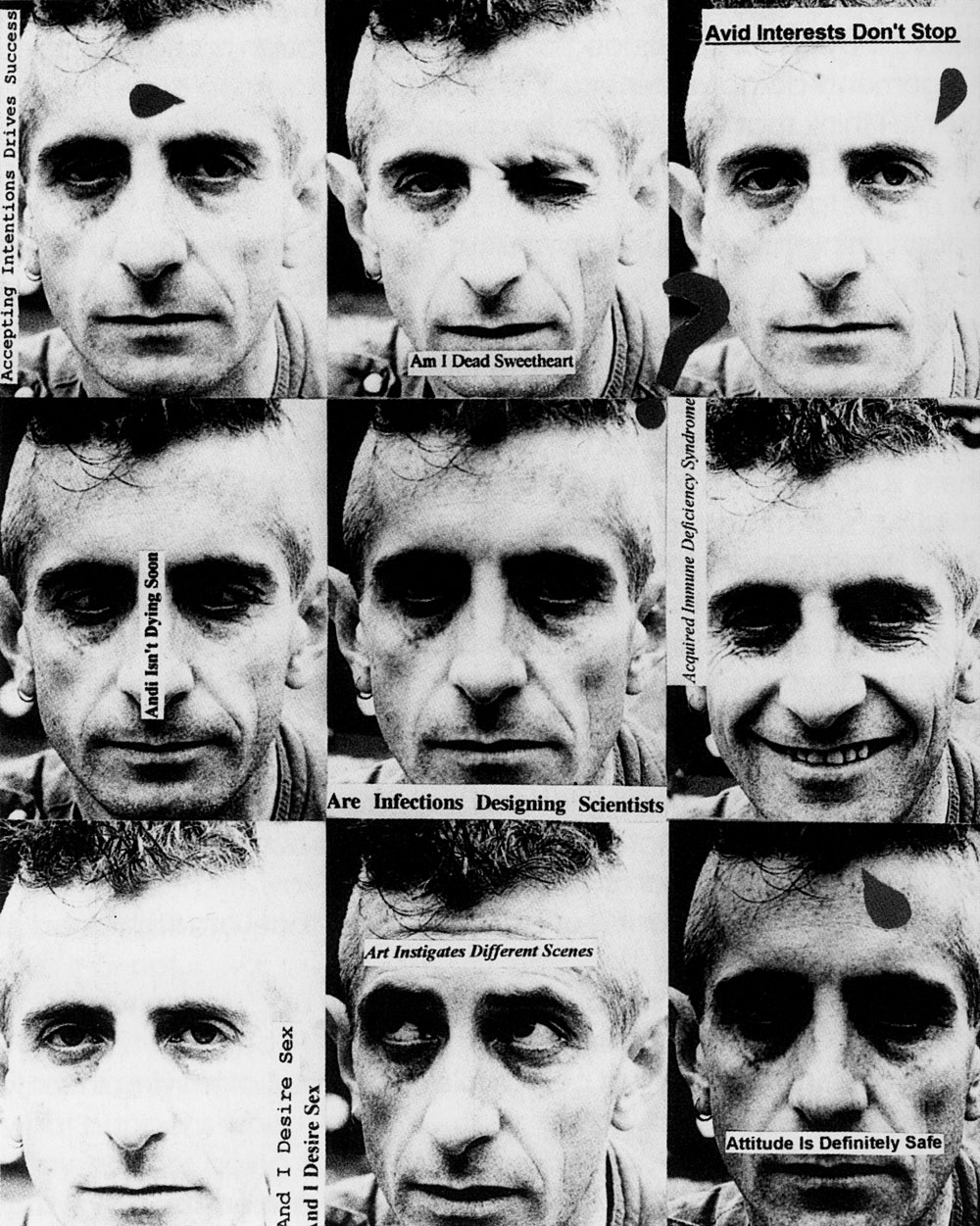
I just want to say ‘good on ya, Andi’, hope your smiling up there somewhere!

Dr Marcus Bunyan


Many thankx to Michael Graf and The George Paton Gallery for allowing me to publish the art work in the posting. Please click on the photographs for a larger version of the image. The exhibition will be open until 9pm on Wednesday 23 July as part of the Nite Art Walk.


Andi Nellsün (Australian) 'Matr'x' 1993


Andi Nellsün (Australian)
Matr’x
1993


To coincide with the 20th International AIDS Conference to be held in Melbourne in July, TRANSMISSIONS | Archiving HIV/AIDS | Melbourne 1979-2014 is an exhibition of artworks, manuscripts, and other material from private collections and public archives. It will focus on the partnership between government, health professionals, and Melbourne’s gay community, and on relations between activism, art and design.

Australia is recognised for having implemented one the world’s most successful HIV/AIDS prevention campaigns. The exhibition and conference, however, coincide with a twenty-year high in infection rates. To be able to reach a younger generation,current health promotion campaigns have become increasingly sophisticated. TRANSMISSIONS will investigate several of these campaigns in relation to others from the past thirty years.

TRANSMISSIONS will feature artworks by Marcus Bunyan, Juan Davila, Andrew Foster, Brent Harris, Mathew Jones, Peter Lyssiotis, Lex Middleton, Andi Nellsün, Marcus O’Donnell, Scott Redford, and Ross T Smith.

A publication and a comprehensive public program will accompany this two-week exhibition.

Exhibition curated by Michael Graf and Russell Walsh.


Andi Nellsün (Australian) 'Synergy' 1993


Andi Nellsün (Australian)
Synergy
1993


Free Public program

Wednesday 16 July 5.30 pm – 7.30 pm – Exhibition Launch

Thursday 17 July, 5.30 pm – 6.30 pm – Introduction to the archives
Nick Henderson (Australian Queer Archives) and Katie Wood (University of Melbourne Archives) in conversation with Russell Walsh.

Friday 18 July, 5.30 pm – 6.30 pm – Activism, archives and history
Graham Willett (Australian Lesbian & Gay Archives) in conversation with Russell Walsh.

Saturday 19 July, 3 pm – 4 pm – Curator floor-talk with Michael Graf and Russell Walsh

Wednesday 23 July – exhibition open till 9pm for Nite Art Walk

Wednesday 23 July 7.00 pm – 8.00 pm – Hares and Hyenas Word is Out presents: Charles Roberts, Infected Queer – 20 years on
Melbourne writer Javant Biarujia will read from the polemical AIDS diary that he helped edit and publish in 1994.

Thursday 24 July, 5.30 pm – 6.30 pm – Don’t Leave Me This Way: Art In The Age Of AIDS: 20 years on
Ted Gott, Curator of the seminal exhibition at the National Gallery of Australia in 1994, in conversation with Michael Graf, with several of the exhibition’s artists present for comment.

Friday 25 July, 5.30 pm – 6.30 pm – The Face of HIV/AIDS: Photographic Portraiture and HIV/AIDS 1984-1994
Susannah Seaholm-Rolan reflecting on why many of the artists featured in Don’t Leave Me This Way: Art In The Age Of AIDS worked in the medium of photographic portraiture and self-portraiture (includes exhibition closing drinks).

Please note: all events will commence sharply at advertised times owing to the early closure of the Student Union Building


Lex Middleton (Australian) 'Gay Beauty Myth' 1992


Lex Middleton (Australian)
Gay Beauty Myth
1992
Gelatin silver photographs


Juan Davila (Chilean-Australian, b. 1946) 'LOVE' 1988


Juan Davila (Chilean-Australian, b. 1946)
LOVE
1988
Oil on canvas
© Juan Davila, Courtesy Kalli Rolfe Contemporary Art


The central theme of the exhibition is the response from Melbourne’s LGBT community to the HIV/AIDS epidemic. It will contain artworks from this period as well as activist, government and other cultural responses – some of the works have never been exhibited before.

Michael Graf is co-curator of Transmissions, along with Russell Walsh. Both Graf and Walsh have spent the past seven months trawling through the Australian Queer Archives (AQuA) and the University of Melbourne Archives, where they have discovered some of the most moving and unique stories in Melbourne’s LGBT history.

“We wanted to focus on some of the cultural responses to the crisis,” Graf says. “The main part of that has been Ted Gott’s exhibition at the National Gallery of Australia in 1994: Don’t leave me this way: art in the age of AIDS. That exhibition became an incredibly important event for a lot of people. The NGA actually thought they would get 10,000 people through the space in four or five months – they got 140,000 people.

“It became a kind of pilgrimage for people from Melbourne and Sydney and other places around Australia. They went to Canberra specifically to see that exhibition. It was the first time a national gallery anywhere in the world put on an exhibition about HIV/AIDS.”

Transmissions includes copies of the visitors books from Don’t leave me this way: art in the age of AIDS. As the exhibition became a place where people remembered those they had lost, they poured their emotions and their experiences of the exhibition into the visitors books.

“There are some extraordinary accounts,” Graf says. “They had this experience in a national gallery to actually grieve.”

Graf and Walsh also tracked down artists from this exhibition. While many concede that Don’t leave me this way has been long forgotten, the milieu surrounding Transmissions is that it is time for this work to be considered again.

“They [the artists] have also said this is the perfect time to remember it,” Graf says. “Sometimes these things have to wait until they have receded enough back into history before they can be looked at again.” …

Graf hopes people visiting Transmissions will take away the richness of these collections. He also hopes they attract a younger audience as well as those who will remember what life was like in the gay community at the height of the HIV/AIDS epidemic.

“We’re hoping people might be inspired to access places such as the Australia Lesbian and Gay Archives and for a younger generation of people in Melbourne to be exposed to this incredible important history.”

Rachel Cook. “Transmissions: Archiving HIV/AIDS – Melbourne 1979 – 2014,” on the Gay News Network website, 2nd July 2014 [Online] Cited 06/07/2014. No longer available online


Marcus Bunyan (Australian, b. 1958) 'How will it be when you have changed' 1994


Marcus Bunyan (Australian, b. 1958)
How will it be when you have changed
1994
Silver gelatin photograph


Marcus Bunyan (Australian, b. 1958) 'Tell me your face before you were born' 1994


Marcus Bunyan (Australian, b. 1958)
Tell me your face before you were born
1994
Silver gelatin photograph


George Paton Gallery
Level 1 Arts and Cultural Building
Monash Road, the University of Melbourne

Opening hours:
Monday – Friday 11am – 5pm

George Paton Gallery website

The University of Melbourne website Australian Queer Archives website
Nite Art Melbourne website
George Paton Gallery University of Melbourne Student Union
The Ian Potter Museum of Art

LIKE ART BLART ON FACEBOOK

Back to top

Exhibition: ‘Ana Mendieta: Traces’ at the Museum der Moderne Salzburg

Exhibition dates: 29th March – 6th July 2014

PLEASE NOTE: THIS POSTING CONTAINS PHOTOGRAPHS WHICH MAY BE DISTRESSING TO SOME PEOPLE


Ana Mendieta (Cuban-American, 1948-1985) 'Untitled (Facial Hair Transplant)' 1972


Ana Mendieta (Cuban-American, 1948-1985)
Untitled (Facial Hair Transplant)
1972
Suite of seven colour photographs, estate prints 1997
© The Estate of Ana Mendieta Collection, L.L.C.
Courtesy Galerie Lelong, New York and Paris and Alison Jacques Gallery, London


If I had half of this artists courage, I might not even have a quarter of her talent.

Marcus


Many thankx to the Museum der Moderne Salzburg for allowing me to publish the photographs and text in the posting. Please click on the photographs for a larger version of the image.

View the catalogue essays Ana Mendieta: Traces by Stephanie Rosenthal and Embers by Adrian Heathfield (2.66Mb pdf)


“Art is a material act of culture, but its greatest value is its spiritual role, and that influences society, because it’s the greatest contribution to the intellectual and moral development of humanity that can be made”

“My art is grounded on the belief in one universal energy which runs through everything; from insect to man, from man to spectre, from spectre to plant, from plant to galaxy.”

“To me, the work has existed on different levels. It existed on the level of being in nature and eventually being eroded away. But obviously when it’s shown to someone as a photograph, that’s what it is.”


Ana Mendieta


The few women working with the body at that time were in instant affinity with each other… The struggle for all of us was to keep the sensuousness of the body and to de-eroticize it in terms of cultural expectations. It was gratifying and exciting to discover her work. Those of us who had already been situating the body as central to our visual aesthetic could also anticipate the resistance that would be around her.

I see her death as part of some larger denial of the feminine. Like a huge metaphor saying, we don’t want this depth of feminine eroticism, nature, absorption, integration to happen. It’s too organic. It’s too sacral. In a way, her death also has a symbolic trajectory. More than Ana dies, when she dies.”


Carolee Schneeman quoted in Camhi, Leslie. “ART; Her Body, Herself,” on the New York Times website published June 20, 2004 [Online] Cited 20/06/2014


“You do feel the sadness that she’s not with us and you wonder where she would have gone with her work.”


Raquelin
 Mendieta


Ana Mendieta (Cuban-American, 1948-1985) 'Untitled (Facial Cosmetic Variations)' 1972 (detail)


Ana Mendieta (Cuban-American, 1948-1985)
Untitled (Facial Cosmetic Variations)
(detail)
1972
Suite of eight colour photographs (estate prints, 1997)
Each 50.8 x 406cm
The Estate of Ana Mendieta Collection; courtesy Galerie Lelong, New York and Paris


Ana Mendieta (Cuban-American, 1948-1985) 'Rape' 1973


Ana Mendieta (Cuban-American, 1948-1985)
Rape
1973
Colour photograph (lifetime print)
20.4 x 25.4cm
The Estate of Ana Mendieta Collection; courtesy Galerie Lelong, New York and Paris


Ana Mendieta (Cuban-American, 1948-1985) 'Rape Scene' 1973


Ana Mendieta (Cuban-American, 1948-1985)
Rape Scene
1973
Colour photograph (lifetime print)
39.8 x 31 x 3.2cm (framed)
Tate: Presented by the American Patrons of Tate, courtesy of the Latin American Acquisitions Committee 2010


Rape Scene (1973) was part of series of works devised in response to the rape and murder of a fellow student on the Iowa University campus, where Mendieta completed her BA, MA (painting) and an MFA (inter-media). She invited friends and fellow students to her apartment. The viewer entered through a slightly ajar door into a dark apartment into a room where the artist appeared under a single source of light revealing Mendieta stripped from the waist down. The artist stood slouched and bound over a table, nude from the waist down with her body smeared in blood. Around her was an assemblage of broken plates and blood on the floor. Her direct identification with a specific victim meant that she could not be seen as an anonymous object in a theatrical tableau.


Ana Mendieta (Cuban-American, 1948-1985) 'Untitled (Self-Portrait with Blood)' 1973 (detail)


Ana Mendieta (Cuban-American, 1948-1985)
Untitled (Self-Portrait with Blood)
(detail)
1973
Suite of six colour photographs (estate prints 1997)
Each 50.8 x 40.6cm
Private collection, London; Courtesy Alison Jacques Gallery, London


Ana Mendieta (Cuban-American, 1948-1985) 'Untitled (Body Tracks)' 1974


Ana Mendieta (Cuban-American, 1948-1985)
Untitled (Body Tracks)
1974
Colour photograph, lifetime print
Collection of Igor DaCosta
© The Estate of Ana Mendieta Collection, L.L.C.
Courtesy Galerie Lelong, New York and Paris and Alison Jacques Gallery, London


Ana Mendieta (Cuban-American, 1948-1985) 'Untitled (Glass on Body Imprints)' 1972


Ana Mendieta (Cuban-American, 1948-1985)
Untitled (Glass on Body Imprints)
1972
Suite of six colour photographs, estate prints
© The Estate of Ana Mendieta Collection, L.L.C.
Courtesy Galerie Lelong, New York and Paris and Alison Jacques Gallery, London


Ana Mendieta (Cuban-American, 1948-1985) 'Untitled' 1973


Ana Mendieta (Cuban-American, 1948-1985)
Untitled
1973
Lifetime colour photograph
Collection Walker Art Center, Minneapolis, T. B. Walker Acquisition Fund, 2011
© The Estate of Ana Mendieta Collection, L.L.C.
Courtesy Galerie Lelong, New York and Paris and Alison Jacques Gallery, London


Ana Mendieta (Cuban-American, 1948-1985) 'Blood and Feathers #2' 1974


Ana Mendieta (Cuban-American, 1948-1985)
Blood and Feathers #2
1974
Colour photograph, lifetime print
Collection Raquelín Mendieta Family Trust
© The Estate of Ana Mendieta Collection, L.L.C.
Courtesy Galerie Lelong, New York and Paris and Alison Jacques Gallery, London


Ana Mendieta (Cuban-American, 1948-1985) 'Imagen de Yagul' 1973


Ana Mendieta (Cuban-American, 1948-1985)
Imagen de Yagul
1973
Lifetime colour photograph
Glenstone
© The Estate of Ana Mendieta Collection, L.L.C.
Courtesy Galerie Lelong, New York and Paris and Alison Jacques Gallery, London


Ana Mendieta: Traces is the first comprehensive survey of this influential artist’s work to be presented in Great Britain or the German-speaking world. It persuasively demonstrates that her art, while very much rooted in the concerns of her day, maintains a powerful connection to our present moment. Born in Cuba in 1948, Mendieta was forced to immigrate to the United States as a child due to her father’s political situation, and much of her work is obliquely haunted by the exile’s sense of displacement, while also reflecting her position as a double minority in North America’s largely white, male art world of the 1970s and 1980s. From the beginning, motifs of transience, absence, violence, belonging, and an identity in flux animated her multidisciplinary art, which ranged nomadically across practices associated with body art, land art, performance, sculpture, photography and film. At its core lay her recurring use of her own body – its physical and photographic traces – and her interest in marginal outdoor sites and elemental materials.

Spanning her brief, yet remarkably productive, career, this exhibition explores the many distinct facets of her practice. It captures her powerfully visceral evocation of ritual and sacrifice, as well as cycles of life and decay, while also highlighting her pioneering role as a conceptual border-crosser. Including photographs, drawings, sculptures, Super-8 films and a substantial selection of photographic slides, most of which have not been exhibited until now, Ana Mendieta: Traces reveals an artist whose underlying concerns led her to bravely re-work and re-combine genres, to draw on different cultures, both archaic and contemporary, while challenging the limits of the art discourse of her time. Her work continues to profoundly challenge, disturb, influence and inspire.

The Museum der Moderne Salzburg will open an extensive retrospective of the work of Ana Mendieta, one of our era’s most important and influential artists. Mendieta was born to a politically active family in Havana, Cuba in 1948. In the wake of the Cuban revolution, when she was only twelve years old, her parents sent her together with her sister to the United States. In 1985, at just thirty-six years old, she died under tragic circumstance in New York. During her short yet prolific career, she developed a unique visual language that is mesmerising in its intimacy, and equally challenging. Her pioneering work has been acknowledged by large retrospectives in the United States and Europe, and is represented in the collections of major museums.

According to Sabine Breitwieser, director at the Museum der Moderne Salzburg, who has arranged the exhibition, “a comprehensive exhibition in the German-speaking area, especially in Austria, and the German monograph on Ana Mendieta are long overdue. The artist’s distinctive work, in which she stages her body within the landscape, seems to be ideally exhibited at this site, where nature and the theatrical take on such a major role. Due to the fragility of the work, this could possibly be one of the last extensive Mendieta exhibitions.”

Among the central themes in Mendieta’s artistic work are exile and cultural displacement. In her search for identity and finding her place in the world, she attempted to create a dialogue between the landscape and the female body. Her work reveals numerous points of contingency with the emerging art movements of the 1960s and 1970s – Conceptual art, land art, and performance art. Nonetheless, it refuses any kind of categorisation and instead addresses missing links or gaps between different media and art forms. “Through my art I want to express the immediacy of life and the eternity of nature,” wrote Mendieta in 1981. Using her own body and elementary materials, such as blood, fire, earth, and water, she created transitory pieces that combine rituals with metaphors for life, death, rebirth, and spiritual transformation. Her disembodied “earth body” sculptures were private, meditative ceremonies in nature documented in the form of slides and films. From them, Mendieta developed the so-called Siluetas (silhouettes), which form the core of her work. In the 1980s, Mendieta’s body disappeared from her artworks and she started to generate indoor works for galleries. Her engagement with nature continued in her sculptures and drawings, which she created as lasting works.

The exhibition presents roughly 150 works, which are organised throughout twelve spaces; two of these spaces are reconstructions of the original exhibitions by the artist. The works shown are in a multitude of media ranging from photography, film, and sculpture through to drawing. A further section will present the artist’s archive. Slides and photographs, notebooks and postcards offer insight into Mendieta’s working methods. The concern of Stephanie Rosenthal, chief curator of the Hayward Gallery London, is “to show Ana Mendieta’s outstanding work in all of its facets, and to place her artistic process at the center.”

While the artistic media that Mendieta utilises in her works could not be any more diverse, the pictures that she produces are characterised by an unmistakable, overwhelming and mystical poetry. This exhibition makes clear that almost thirty years after the artist’s premature death, her work has lost none of its singularity and uniqueness.

Text from the Museum der Moderne Salzburg website


Ana Mendieta (Cuban-American, 1948-1985) 'Untitled (Silueta Series)' 1978


Ana Mendieta (Cuban-American, 1948-1985)
Untitled (Silueta Series)
1978
Gelatin silver print
20.3 x 25.4cm
Solomon R. Guggenheim Museum


Ana Mendieta (Cuban-American, 1948-1985) 'Alma, Silueta en Fuego' (Soul, Silhouette on Fire) 1975 (still)


Ana Mendieta (Cuban-American, 1948-1985)
Alma, Silueta en Fuego (
Soul, Silhouette on Fire) (still)
1975
Super-8 colour, silent film transferred to DVD
3:07 minutes
The Estate of Ana Mendieta Collection; Courtesy Galerie Lelong, New York and Paris, and Alison Jacques Gallery, London


Ana Mendieta (Cuban-American, 1948-1985) 'Anima, Silueta de Cohetes (Firework Piece)' 1976 (still)


Ana Mendieta (Cuban-American, 1948-1985)
Anima, Silueta de Cohetes (Firework Piece)
(still)
1976
(Soul, Silhouette of Fireworks)
Super-8 colour, silent film transferred to DVD
2:22 minutes
The Estate of Ana Mendieta Collection; courtesy Galerie Lelong, New York and Paris


Ana Mendieta (Cuban-American, 1948-1985) 'Untitled (Cuilapán Niche)' 1973


Ana Mendieta (Cuban-American, 1948-1985)
Untitled (Cuilapán Niche)
1973
Black and white photograph (lifetime print)
25.4 x 20.4cm
Private collection, London; Courtesy Gallery Lelong, New York and Paris, and Alison Jacques Gallery London


Ana Mendieta died at just 36 years old, but the imprint of her life digs deeper than most. Mendieta’s work occupies the indeterminate space between land, body and performance art, refusing to be confined to any one genre while working to expand the horizons of them all. With the immediacy of a fresh wound and the weightlessness of a half-remembered song, Mendieta’s artwork remains as haunting and relevant today as ever.

Her haunting imagery explores the relationship between earth and spirit while tackling the eternally plaguing questions of love, death and rebirth. Like an ancient cave drawing, Mendieta’s art gets as close as possible to her subject matter allowing no excess, using primal and visceral means to navigate her themes. Decades after her death, the Museum der Moderne Salzburg will show a retrospective of the late feminist artist’s work, simply titled “Ana Mendieta: Traces.”

Mendieta, who was born in Havana, Cuba in 1948, moved to the U.S. at 12 years old to escape Castro’s regime. There she hopped between refugee camps and foster homes, planting inside her an obsession with ideas of loss, belonging and the impermanence of place. As an artist in the 1970s, Mendieta embarked upon her iconic series “Silhouettes,” in which she merged body and earthly material, making nature both canvas and medium. In her initial “Silhouette,” Mendieta lay shrouded in an ancient Zapotec grave, letting natural forms eat up her diminutive form.

Her “earth-body” sculptures, as they came to be known, feature blood, feathers, flowers and dirt smothered and stuck on Mendieta’s flesh in various combinations. In “Imagen de Yagul,” speckled feverishly in tiny white flowers, she appears as ethereal and disembodied as Ophelia, while in “Untitled Blood and Feathers” Mendieta looks simultaneously the helpless victim and the guilty culprit. “She always had a direction – that feeling that everything is connected,” Ana’s sister Raquelin said of her work.

An uncertain mythology runs throughout Mendieta’s oeuvre, a feeling at once primal, pagan and feminine. Admirers have cited the Afro-Cuban religion of Santeria as an influence, as well as the ancient rituals of Mexico, where Mendieta made much of her work. Yet many of Mendieta’s pieces removed themselves from the spiritual realm to address present day events, for example “Rape Scene,” a 1973 performance based off the rape and murder of a close friend. For the piece Mendieta remained tied to a table for two hours, motionless, her naked body smeared with cow’s blood. In another work, Mendieta smushes her face and body against glass panes, like a child eager to peek into an off-limits locale, or a bug that’s crashed into a windshield. Against the glass, her scrambled facial features almost resemble a Cubist artwork.

Mendieta died tragically young in 1985, falling from her New York City apartment window onto a delicatessen below. She was living with her husband of eight months, minimalist sculptor Carl Andre at the time. Andre was convicted of murder following the horrific incident and later acquitted. Though the art world remains captivated by the mysterious nature of Mendieta’s passing, her sister emphasised the importance of removing Ana’s work from her life story. “I don’t want it to get in the way of the work,” she said. “Her death has really nothing to do with her work. Her work was about life and power and energy and not about death.”

Fellow feminist performance artist Carolee Schneeman disagrees, however, telling The New York Times in 2004: “I see her death as part of some larger denial of the feminine. Like a huge metaphor saying, we don’t want this depth of feminine eroticism, nature, absorption, integration to happen. It’s too organic. It’s too sacral. In a way, her death also has a symbolic trajectory.”

Since many of Mendieta’s artworks were bodily performances, the ephemera that remain are but traces of her original endeavours. For an artist whose career was built on imprints, ghosts and impressions, this seems aptly fitting. Visceral yet distant, bodily yet spiritual, Mendieta’s images speak a language very distant from the insular artistic themes that so often populate gallery and museum walls. Mendieta’s works present the female body turned out, at once vulnerable and all-powerful, frail and supernatural. As her retrospective makes obvious, her artistic traces are still oozing lifeblood.

Priscilla Frank. “The Haunting Traces Of Ana Mendieta Go On View (NSFW),” on the Huffington Post website February 4, 2014 [Online] Cited 30/06/2014


Ana Mendieta (Cuban-American, 1948-1985) 'Untitled' 1976 "Silueta Series, Mexico"


Ana Mendieta (Cuban-American, 1948-1985)
Untitled
1976
“Silueta Series, Mexico”
Colour photograph (lifetime print)
39.8 x 31 x 3.2cm (framed)
Tate: Presented by the American Patrons of Tate, courtesy of the Latin American Acquisitions Committee 2010


Mendieta formed a silueta on the beach at La Ventosa, Mexico, filling it with red tempera that was ultimately washed away by the ocean waves. The artist documented the obliteration of the figure by the tide in a sequence of 35 mm slides.


Ana Mendieta (Cuban-American, 1948-1985) 'Tree of Life' 1976


Ana Mendieta (Cuban-American, 1948-1985)
Tree of Life
1976
Colour photograph, lifetime print
Collection Raquelín Mendieta Family Trust
© The Estate of Ana Mendieta Collection, L.L.C.
Courtesy Galerie Lelong, New York and Paris and Alison Jacques Gallery, London


Ana Mendieta (Cuban-American, 1948-1985) 'Untitled' 1978 "Silueta Series, Iowa"


Ana Mendieta (Cuban-American, 1948-1985)
Untitled
1978
“Silueta Series, Iowa”
Colour photograph (lifetime print)
25.4 x 20.3cm
The Estate of Ana Mendieta Collection; courtesy Galerie Lelong, New York and Paris


Ana Mendieta (Cuban-American, 1948-1985) 'Itiba Cahubaba (Esculturas Rupestres)' [Old Mother Blood (Rupestrian Sculptures)] 1982


Ana Mendieta (Cuban-American, 1948-1985)
Itiba Cahubaba (Esculturas Rupestres) [Old Mother Blood (Rupestrian Sculptures)]
1982
Black and white photograph, box mounted, exhibition copy
Collection Ignacio C. Mendieta
© The Estate of Ana Mendieta Collection, L.L.C.
Courtesy Galerie Lelong, New York and Paris and Alison Jacques Gallery, London


Ana Mendieta (Cuban-American, 1948-1985) 'Untitled' 1982


Ana Mendieta (Cuban-American, 1948-1985)
Untitled
1982
Graphite on leaf of a copey tree (Clusia major)
E. Righi Collection
© The Estate of Ana Mendieta Collection, L.L.C.
Courtesy Galerie Lelong, New York and Paris and Alison Jacques Gallery, London


Ana Mendieta with 'Untitled' wood sculpture, 1984-1985


Ana Mendieta with Untitled wood sculpture, 1984-1985
© The Estate of Ana Mendieta Collection, L.L.C.
Courtesy Galerie Lelong, New York and Paris and Alison Jacques Gallery, London


Ana Mendieta (Cuban-American, 1948-1985) 'El Laberinto de Venus' (Labyrinth of Venus) 1985


Ana Mendieta (Cuban-American, 1948-1985)
El Laberinto de Venus (Labyrinth of Venus)
1985
Acrylic on paper
Collection Raquelín Mendieta Family Trust
© The Estate of Ana Mendieta Collection, L.L.C.
Courtesy Galerie Lelong, New York and Paris and Alison Jacques Gallery, London


Museum der Moderne Salzburg
Mönchsberg 32
5020 Salzburg
Phone: +43 662 842220

Opening hours:
Tuesday – Sunday: 10.00am – 6.00pm
Wednesday: 10.00am – 8.00pm
Monday: closed

Museum der Moderne website

LIKE ART BLART ON FACEBOOK

Back to top

Exhibition: ‘Public Intimacy: Art and Other Ordinary Acts in South Africa’ at the Yerba Buena Center for the Arts, San Francisco

Exhibition dates: 21st February – 29th June 2014

Exhibition artists

Public Intimacy presents

~ Photography by Ian Berry, Ernest Cole, David Goldblatt, Terry Kurgan, Sabelo Mlangeni, Santu Mofokeng, Billy Monk, Zanele Muholi, Lindeka Qampi, Jo Ractliffe, and Mikhael Subotzky and Patrick Waterhouse
~ Video works by William Kentridge, Donna Kukama, Anthea Moys, and Berni Searle
~ Painting and sculpture by Nicholas Hlobo and Penny Siopis
~ Puppetry by Handspring Puppet Company
~ Publications, prints, graphic works, and public interventions by Chimurenga, ijusi (Garth Walker), Anton Kannemeyer, and Cameron Platter
~ Performances by Athi-Patra Ruga, Kemang Wa Lehulere, and Sello Pesa and Vaughn Sadie with Ntsoana Contemporary Dance Theatre


Santu Mofokeng (South Africa, 1956-2020) 'Opening Song, Hand Clapping and Bells' 1986


Santu Mofokeng (South Africa, 1956-2020)
Opening Song, Hand Clapping and Bells
1986
From the series Train Church
Pigment print
9 13/16 x 13 3/4 in. (25 x 35cm)
© Santu Mofokeng


Continuing my fascination with South African art and photography, here is another exhilarating collection of work from an exhibition jointly arranged between SFMOMA and the Yerba Buena Center for the Arts, San Francisco. This art has so much joy, life, movement and “colour”. I particularly like The Future White Women of Azania series by Athi-Patra Ruga, who presented his work at the 55th Venice Biennale in the African pavilion. Thank god not another rehashed colonial image, even though he is working with the tropes of myth and the history of Africa as a contemporary response to the post-apartheid era.

Dr Marcus Bunyan


Many thankx to SFMOMA and Yerba Buena Center for the Arts for allowing me to publish the installation photographs in the posting. Most of the other photographs were gathered from the internet. Please click on the photographs for a larger version of the image.


“Disrupting expected images of South Africa, the 25 contemporary artists and collectives featured in Public Intimacy eloquently explore the poetics and politics of the everyday. This collaboration with Yerba Buena Center for the Arts presents pictures from SFMOMA’s collection of South African photography alongside works in a broad range of media, including video, painting, sculpture, performance, and publications – most made in the last five years, and many on view for the first time on the West Coast. Coinciding with the 20th anniversary of democracy in South Africa, Public Intimacy reveals the nuances of human interaction in a country still undergoing significant change, vividly showing public life there in a more complex light.”

Text from the SFMOMA website


Santu Mofokeng (South Africa, 1956-2020) 'Leading in Song, Johannesburg – Soweto Line' 1986


Santu Mofokeng (South Africa, 1956-2020)
Leading in Song, Johannesburg – Soweto Line
1986
From the series Train Church
Pigment print
9 13/16 x 13 3/4 in. (25 x 35cm)
© Santu Mofokeng


Santu Mofokeng (South Africa, 1956-2020) 'Hands in Worship, Johannesburg – Soweto Line' 1986


Santu Mofokeng (South Africa, 1956-2020)
Hands in Worship, Johannesburg – Soweto Line
1986
From the series Train Church
Pigment print
9 13/16 x 13 3/4 in. (25 x 35cm)
© Santu Mofokeng


These images, by the South African photographer Santu Mofokeng, ostensibly depict scenes of segregated transport during apartheid. Yet in their composition they evoke something more: the rhythms and textures of everyday life. Taken from within and among a crowd of commuters, the pictures seem to sway with the velocity of the train carriage. Shards of light blur the edges of figures, interplaying with shifting shadows as passengers move in unison. Titled “Train Church,” Mofokeng’s series was made during a few weeks in 1986, and in South Africa it became veritably synonymous with his name. Mofokeng, who died in January, at the age of sixty-three, was a photographer whose body of work – both images and text – waded through themes of history and land, memory and spirituality, and helped shape the course of South African photography.

Oluremi C. Onabanjo. “How Santu Mofokeng Shaped South African Photography,” on The New Yorker website February 24, 2020 [Online] Cited 10/04/2021.


Santu Mofokeng (South Africa, 1956-2020) 'Supplication, Johannesburg – Soweto Line' 1986


Santu Mofokeng (South Africa, 1956-2020)
Supplication, Johannesburg – Soweto Line
1986
From the series Train Church
Pigment print
9 13/16 x 13 3/4 in. (25 x 35cm)
© Santu Mofokeng


Ian Berry (British, b. 1934) 'Guests at a 'moffie'drag party' Cape Town, South Africa, 1960


Ian Berry (British, b. 1934)
Guests at a ‘moffie’drag party
Cape Town, South Africa, 1960
Silver gelatin photograph


Ian Berry was born in Lancashire, England. He made his reputation in South Africa, where he worked for the Daily Mail and later for Drum magazine. He was the only photographer to document the massacre at Sharpeville in 1960, and his photographs were used in the trial to prove the victims’ innocence.

He moved to South Africa in 1952, where he soon taught himself photography. He worked under the tutelage of Roger Madden, a South African photographer who had been an assistant to Ansel Adams. After some time as an amateur photographer, Berry began photographing communities and weddings. During this period he met Jürgen Schadeberg, also a European immigrant and photographer. Schadeberg was offered a position with the new African Sunday newspaper eGoli but declined, suggesting Berry apply for the position instead. After working there only 10 months, the newspaper closed, and Berry began working for the Benoni City Times, but he soon became more interested in freelance work.

Berry returned to Great Britain and traveled for some time but returned to South Africa in the early 1960s and worked for the Daily Mail. Later Tom Hopkinson, previously editor of the British Picture Post, hired Berry to work for Drum magazine. He was in Sharpeville on 21 March 1960, when a peaceful protest turned violent, leading to the deaths of 69 people and the wounding of 178 others by police. There were no other photographs documenting the events, and Berry’s were entered into evidence in the court proceedings proving that the victims had done nothing wrong. Berry was invited by Henri Cartier-Bresson to join Magnum Photos in 1962 when he was based in Paris; five years later he became a full member. In 1964 he moved to London and began working for Observer Magazine. He has since traveled the globe, documenting social and political strife in China, Republic of Congo, Czechoslovakia, Ethiopia, Israel, Ireland, Vietnam, and the former Soviet Union. He has contributed to publications including Esquire, Fortune, Geo, Life, National Geographic, Paris-Match, and Stern.

Text from the Wikipedia website


Billy Monk (South African, 1937-1982) 'The Catacombs, 30 September 1967' 1967, printed 2011


Billy Monk (South African, 1937-1982)
The Catacombs, 30 September 1967
1967, printed 2011
Gelatin silver print
10 1/16 x 14 15/16 in. (25.56 x 37.94 cm)
Collection SFMOMA, Accessions Committee Fund purchase
© Estate of Billy Monk


Billy Monk (South African, 1937-1982) 'The Catacombs, 5 February 1968' 1968, printed 2011


Billy Monk (South African, 1937-1982)
The Catacombs, 5 February 1968
1968, printed 2011
Gelatin silver print
11 x 16 in. (27.94 x 40.64cm)
Courtesy of Stevenson, Cape Town and Johannesburg
© Estate of Billy Monk


William John Monk (died 31 July 1982) was a South African, known for his photographs of a Cape Town nightclub between 1967 and 1969, during apartheid. In 2012 a posthumous book was published, Billy Monk: Nightclub Photographs. …

When Monk’s work as a bouncer did not work out he took up photography. Still working in The Catacombs, he began to make his living taking pictures of the diverse clientele in a seedy bar. He used a Pentax camera, with a 35 mm focal-length lens, a small flash and Ilford FP4 film. Monk stopped taking pictures in 1969. His photographs show a variety of the underbelly of Cape Town life at the time – ranging from old men with young wives and gay couples, to midgets and mixed race relationships, he shows a side of life under apartheid that is rarely seen elsewhere.

Discovery of his work

Monk’s work was discovered in 1979 by Jac de Villiers, when he moved into Monk’s old studio. Not only were they already well constructed by the photographer, they were also impeccably annotated with dates and names, which made curation a simple and enjoyable process. The first exhibition of Monk’s work took place at the Market Gallery in Johannesburg in 1982 – and although Monk could not attend the event it was subject to much critical acclaim.

Apartheid

Monk was working during apartheid in South Africa – a time when the colour of your skin was indicative of where you could live, work, who you could marry, and where you could drink. The underground lifestyle of The Catacombs allowed for dissent. Monk chose to take pictures originally as a way of making money, by selling them to his clients.

His photographs reveal a variety of clientele. Some are sloppy, some are neat and put together. Many of the women are heavily made up with short dresses, and almost all the photographs are highly sexually charged. The photographs reveal much of what was not allowed under apartheid rule – specifically a variety of same sex and mixed race couples.

Text from the Wikipedia website


Zanele Muholi (South Africa, b. 1972) 'Nomonde Mbusi, Berea, Johannesburg' 2007


Zanele Muholi (South Africa, b. 1972)
Nomonde Mbusi, Berea, Johannesburg
2007
From the Faces and Phases series
Gelatin silver print
23 13/16 in. x 34 1/16 in. (60.5 cm x 86.5cm)
Courtesy of the artist and Stevenson, Cape Town and Johannesburg
© Zanele Muholi


Zanele Muholi, born 1972

Muholi’s work addresses the reality of what it is to be LGBT (lesbian, gay, bisexual, transgender) in South Africa. She identifies herself as a visual activist, dealing with issues of violation, violence and prejudice that she and her community face, despite South Africa’s progressive constitution.

In Faces and Phases, she sets out to give visibility to black lesbians and to celebrate the distinctiveness of individuals through the traditional genre of portraiture. The portraits are taken outdoors with a hand-held camera to retain spontaneity and often shown in a grid to highlight difference and diversity. In the series Beulahs, she shows young gay men, wearing Zulu beads and other accessories usually worn by women, who invert normative gender codes in both costume and pose. At the same time her photographs evoke tourist postcards and recycled stereotypes of Africans and recall traditional anthropological and ethnographic iconography.

Faces and Phases, is a group of black and white portraits that I have been working on from 2006 until now – it has become a lifetime project. The project is about me, the community that I’m part of. I was born in the township: I grew up in that space. Most of us grew up in a household where heterosexuality was the norm. When you grow up, you think that the only thing that you have to become as a maturing girl or woman is to be with a man; you have to have children, and also you need to have lobola or “bride price” paid for you. For young men, the expectation for them is to be with women and have wives and procreate: that’s the kind of space which most of us come from. We are seen as something else by society – we are seen as deviants. We’re not going to be here forever, and I wanted to make sure that we leave a history that is tangible to people who come after us.”

Zanele Muholi, interviewed by Tamar Garb, South Africa, 2010.
Text from the V&A website


David Goldblatt (South Africa, 1930-2018) 'Woman smoking, Fordsburg, Johannesburg' 1975


David Goldblatt (South Africa, 1930-2018)
Woman smoking, Fordsburg, Johannesburg
1975
Pigment inkjet print
23 5/8 in. x 29 1/2 in. (60 cm x 75cm)
Collection SFMOMA, Accessions Committee Fund purchase
© David Goldblatt


David Goldblatt HonFRPS (29 November 1930 – 25 June 2018) was a South African photographer noted for his portrayal of South Africa during the period of apartheid. After apartheid had ended he concentrated more on the country’s landscapes. What differentiates Goldblatt’s body of work from those of other anti-apartheid artists is that he photographed issues that went beyond the violent events of apartheid and reflected the conditions that led up to them. His forms of protest have a subtlety that traditional documentary photographs may lack: “[M]y dispassion was an attitude in which I tried to avoid easy judgments. … This resulted in a photography that appeared to be disengaged and apolitical, but which was in fact the opposite.”


Jointly organised by the San Francisco Museum of Modern Art (SFMOMA) and Yerba Buena Center for the Arts (YBCA), Public Intimacy: Art and Other Ordinary Acts in South Africa brings together 25 artists and collectives who disrupt expected images of a country known through its apartheid history. The exhibition features an arc of artists who look to the intimate encounters of daily life to express the poetics and politics of the “ordinary act,” with work primarily from the last five years as well as photographic works that figure as historical precedents. On view at YBCA February 21 through June 29, 2014, Public Intimacy presents more than 200 works in a wide range of mediums, many of them making U.S. or West Coast debuts.

The exhibition joins SFMOMA’s important and growing collection of South African photography with YBCA’s multidisciplinary purview and continued exploration of the Global South. Significant documentary photography is paired with new photographs and work in other mediums, including video, painting, sculpture, performance, and publications, to reveal the multifaceted nuances of everyday life in a country still undergoing significant change. Coinciding with the 20th anniversary of democracy in South Africa, Public Intimacy looks at the way artists imagine present and future possibilities in South Africa. A new orientation emerges through close-up views of street interactions, portraiture, fashion and costume, unfamiliar public actions, and human imprints on the landscape.

The exhibition’s three curators – Betti-Sue Hertz, director of visual arts at YBCA; Frank Smigiel, associate curator of public programs at SFMOMA; and Dominic Willsdon, Leanne and George Roberts Curator of Education and Public Programs at SFMOMA – developed the show after visits to South Africa, where they met with artists, curators, and critics. The exhibition – and a companion publication to be published in fall 2014 – grew out of this research.

“Although South Africa’s political history remains vital to these artists and is important for understanding their work, Public Intimacy offers a more subtle view of the country through personal moments,” said Hertz. “It goes against expectations in order to reveal the smaller gestures and illuminate how social context has affected artists and how they work.”

“The familiar image of contemporary South Africa as a place of turmoil is, of course, not the whole story,” added Willsdon. “The art in this exhibition restages how those violent incidents fit in the broader realm of human interactions – a way of showing public life there in a more complex light.”

“Another central aspect of the exhibition is live performance,” said Smigiel. “Three major live works will unfold both in and outside the gallery context, offering a way to situate and reframe San Francisco through the lens of what artists are producing in South Africa.”

Public Intimacy is part of SFMOMA’s collaborative museum exhibitions and extensive off-site programming taking place while its building is temporarily closed for expansion construction through early 2016. As neighbours across Third Street in San Francisco, YBCA and SFMOMA have partnered in the past on various performance and exhibition projects, but Public Intimacy represents the deepest collaboration of shared interests to date between the two institutions. It also brings together SFMOMA’s approach to curating live art and YBCA’s multidisciplinary interest in exhibitions, social practice, and performances.

Exhibition highlights

While the exhibition explores new approaches to daily life in post-apartheid South Africa, it also makes visible the continued commitment of artists to activism and contemporary politics. Beginning with photographs from the late 1950s and after, the exhibition includes vital moments in the country’s documentary photography – from Ian Berry’s inside look at an underground drag ball to Billy Monk’s raucous nightclub photos – each capturing a moment of celebration within different social strata of South African society. Ernest Cole’s photographs of miners’ hostels and bars and Santu Mofokeng’s stirring photographs of mobile churches on commuter trains reveal everyday moments both tender and harsh.

David Goldblatt’s photographs depict the human landscape in apartheid and after, providing the genesis of the idea of “public intimacy.” Over decades of photographs in urban, suburban, and rural locations, Goldblatt has chronicled the changing nature of interpersonal engagement in South Africa. At the same time, they provide a historical backdrop and visual precedent for other artists in the exhibition, including Zanele Muholi and Sabelo Mlangeni.

Muholi has won several awards for her powerful photographic portraits as well as her activism on behalf of black lesbians in South Africa. Although best known for her photographs – in particular her Faces and Phases series – Muholi continuously experiments with an expanded practice including documentary film, beadwork, text, and her social-action organisation Inkanyiso, which gives visibility to conditions facing lesbians of colour in her country. “Sexual politics has been looked at less than racial politics in South Africa, but in many ways, the two have always been intertwined,” said Willsdon.

Mikhael Subotzky and Patrick Waterhouse bring another perspective to the upheavals of life in the city of Johannesburg with works from their Ponte City (2008-10) series, comprised of photographs, video, and a publication offering various views of this centrally located and iconic 54-story building. The works illustrate the struggles facing many native and immigrant South Africans in the years following the dissolution of apartheid, including stalled economic growth and social opportunities.

In contrast to the daily realities pictured in photographic works in the exhibition, Athi-Patra Ruga’s ongoing performance series The Future White Women of Azania (2010-present) features fantastical characters – usually played by the artist – whose upper bodies sprout colourful balloons while their lower bodies pose or process in stockings and high heels. Ruga’s Azania is a changing utopia, and Smigiel notes the shift: “The balloons are filled with liquid, and as the figure moves through the streets, they start popping, so the character dissolves and reveals a performer, and the liquid spills out and into a rather sloppy line drawing.” A new iteration of the series, The Elder of Azania, will premiere in the YBCA Forum during the exhibition’s opening weekend.

Chimurenga, an editorial collective working at the intersection of pan-African culture, art, and politics produces publications, events, and installations. Founded in 2002 by Ntone Edjabe, the collective has created the Chimurenga Library, an online archiving project that profiles independent pan-African paper periodicals from around the world. Expanding upon this concept, their presence in Public Intimacy will have two elements: a text and media resource space in YBCA’s galleries and an intervention at the San Francisco Public Library main branch that will explore the history of pan-African culture in the Bay Area, scheduled to open in late May.

Providing one of the most personally vulnerable moments in the exhibition, Penny Siopis’s series of 90 small paintings on enamel, Shame (2002), provokes a visceral reaction. With red paint reminiscent of blood and bruises, Siopis mixes colour and text in an attempt to convey emotion rather than narrative. While she is interested in the guilt and embarrassment most frequently associated with shame, she also looks at the possibility for empathy that emerges from traumatic experiences.

In all of these works, explains Hertz, “We are looking at how art and activism align, but we’re also interested in how politics is embedded in less obviously political practices, such as Sabelo Mlangeni’s photographs of mining workers’ hostels, Penny Siopis’s powerful painting series about human vulnerability, or Nicholas Hlobo’s large-scale, organically shaped sculptures made primarily of rubber.

Text from the SFMOMA website


Installation view of the exhibition 'Public Intimacy: Art and Other Ordinary Acts in South Africa' at the Yerba Buena Center for the Arts, San Francisco

Installation view of the exhibition 'Public Intimacy: Art and Other Ordinary Acts in South Africa' at the Yerba Buena Center for the Arts, San Francisco

Installation view of the exhibition 'Public Intimacy: Art and Other Ordinary Acts in South Africa' at the Yerba Buena Center for the Arts, San Francisco

Installation view of the exhibition 'Public Intimacy: Art and Other Ordinary Acts in South Africa' at the Yerba Buena Center for the Arts, San Francisco

Installation view of the exhibition 'Public Intimacy: Art and Other Ordinary Acts in South Africa' at the Yerba Buena Center for the Arts, San Francisco

Installation view of the exhibition 'Public Intimacy: Art and Other Ordinary Acts in South Africa' at the Yerba Buena Center for the Arts, San Francisco


Installation views of the exhibition Public Intimacy: Art and Other Ordinary Acts in South Africa at the Yerba Buena Center for the Arts, San Francisco with, in the last photo, Nicholas Hlobo, Umphanda ongazaliyo (installation view), 2008; rubber, ribbon, zips, steel, wood, plaster; ICA Boston; © Nicholas Hlobo; photo: John Kennar.


Sabelo Mlangeni (South Africa, b. 1980) 'Couple Bheki and Sipho' 2009


Sabelo Mlangeni (South Africa, b. 1980)
Couple Bheki and Sipho
2009
From the series Country Girls
Gelatin silver print
40 x 30cm
Courtesy the artist and Stevenson, Cape Town and Johannesburg
© Sabelo Mlangeni


Figures & Fictions: Sabelo Mlangeni from Victoria and Albert Museum on Vimeo.


Anton Kannemeyer (South Africa, b. 1967) 'D is for dancing ministers' 2006


Anton Kannemeyer (South Africa, b. 1967)
D is for dancing ministers
2006
From the series Alphabet of Democracy
Lithograph on Chine Collé
22 1/16 x 24 in. (56 x 61cm)
Courtesy the artist and Stevenson, Cape Town and Johannesburg
© Anton Kannemeyer


Anton Kannemeyer (born 1967) is a South African comics artist, who sometimes goes by the pseudonym Joe Dog.

Anton Kannemeyer was born in Cape Town. He studied graphic design and illustration at the University of Stellenbosch, and did a Master of Arts degree in illustration after graduating. Together with Conrad Botes, he co-founded the magazine Bitterkomix in 1992 and has become revered for its subversive stance and dark humour. He has been criticised for making use of “offensive, racist imagery”. Kannemeyer himself said that he gets “lots of hate mail from white Afrikaners”.

His works challenge the rigid image of Afrikaners promoted under Apartheid, and depict Afrikaners having nasty sex and mangling their Afrikaans. “X is for Xenophobia”, part of his “Alphabet of Democracy”, depicts Ernesto Nhamwavane, a Mozambican immigrant who was burnt alive in Johannesburg in 2008. Some of Kannemeyer’s works deal with the issues of race relations and colonialism, by appropriating the style of Hergé’s comics, namely from Tintin in the Congo. In “Pappa in Afrika”, Tintin becomes a white African, depicted either as a white liberal or as a racist white imperialist in Africa. In this stereotyped satire, the whites are superior, literate and civilised, and the blacks are savage and dumb. In “Peekaboo”, a large acrylic work, the white African is jumping up in alarm as a black man figure pokes his head out of the jungle shouting an innocuous ‘peekaboo!’ A cartoon called “The Liberals” has been interpreted as an attack on white fear, bigotry and political correctness: a group of anonymous black people (who look like golliwogs) are about to rape a white lady, who calls her attackers “historically disadvantaged men”.

Text from the Wikipedia website


Terry Kurgan (South Africa, b. 1958) 'Hotel Yeoville' 2012


Terry Kurgan (South Africa, b. 1958)
Hotel Yeoville
2012
Digital print on bamboo hahnemulle paper
Courtesy the artist
© Terry Kurgan


Penny Siopis (South Africa, b. 1953) 'Untitled' from the series 'Shame' 2002


Penny Siopis (South Africa, b. 1953)
Untitled from the series Shame
2002
Paint on enamel
© Penny Siopis


Siopis established herself as one of the most talented and challenging artists in South Africa and beyond, by working across painting, installation and film, bringing together diverse references and materials in ways that disturb disciplinary boundaries and binaries.

Concepts of time run through all her work often manifesting in the actual physical changes of her materials; in her early cake paintings oil paint is made to be unnaturally affected by gravity, age and decay; in her films using archival footage time is marked as much by the effects of age on the celluloid as by the historical period caught in the sweep of the camera; in her accumulations of found objects in her installations, ideas of the heirloom come to the fore with her ongoing conceptual work Will (1997- ) – in which she bequeaths objects to beneficiaries – being the ultimate time piece only becoming complete on her death; her glue and ink paintings index flux as they record the material transformation that happens when viscous glue matter reacts with pigment, gravity, the artist’s bodily gestures, and the drying effects of the air.

Siopis sees her art practice as ‘open form’, operating as an intimate model in which the physical changes of her materials can be extrapolated into a larger ethics of personal and political transformation. According to Achille Mbembe this quality marks her interest in process as a perpetual state of becoming and entails “the crafting of an unstable relation between form and formlessness, in the understanding that the process of becoming proceeds in ways that are almost always unpredictable and at times accidental.”

Shame paintings

Siopis began the Shame paintings in 2002 and they became a key feature of her exhibition Three Essays on Shame (2005), an intervention in the museum of Sigmund Freud, once his house, in London. It was part of a project that marked the centenary of Freud’s groundbreaking publication Three Essays on the Theory of Sexuality. Responding to Freud, Siopis’ installation consisted of three parts located in Freud’s study (with the famous couch), dining room and bedroom and titled Voice, Gesture and Memory. The small paintings shown in a grid in this room were presented as a frieze in the Memory section of the original exhibition. The artist invokes this exhibition here through the arrangement of some of the objects from the installation on a table reminiscent of that in Freud’s dining room, where she had placed Baubo, one of Freud’s objects from his collection of antiquities. Baubo is a small terracotta figurine who gestures to her genitalia in a provocative way, an act some have interpreted as a show of shame that speaks of both vulnerability and empowerment.

In the installation Siopis also evoked a complex dialogue between Freud’s ideas and her personal experiences by inserting references (voice recordings and objects) to the traumatic proceedings of the South African Truth and Reconciliation Commission and colonial and apartheid history. Once again she was interested in binding the traces of human vulnerability and the dramatic effects of sweeping historical narratives.

In this body of work Siopis manipulates thick and gooey lacquer gel paint, used in home-craft to create stained glass and coloured mirror effects on surfaces. For her it is a physical process that moulds anxiety into form. It translates the result of childhood trauma that we know as shame onto a painted surface. Through the reflective qualities of the medium Siopis blends the bodily sensation with the experience of being looked at, both of which define shame. The use of language in the form of ready-made rubber stamped clichés that clash with the raw power of this familiar emotion further underscores the ‘unspeakable’ character of the experience.

Text from the Wikipedia website


Athi-Patra Ruga (South Africa, b. 1984) 'The Future White Women of Azania' 2012


Athi-Patra Ruga (South Africa, b. 1984)
The Future White Women of Azania
2012
Performed as part of Performa Obscura in collaboration with Mikhael Subotzky
Commissioned for the exhibition Making Way, Grahamstown, South Africa
Photo: Ruth Simbao, courtesy Athi-Patra Ruga and WHATIFTHEWORLD/GALLERY


Athi-Patra Ruga (South Africa, b. 1984) 'The Future White Women of Azania' 2012


Athi-Patra Ruga (South Africa, b. 1984)
The Future White Women of Azania
2012
Performed as part of Performa Obscura in collaboration with Mikhael Subotzky
Commissioned for the exhibition Making Way, Grahamstown, South Africa
Photo: Ruth Simbao, courtesy Athi-Patra Ruga and WHATIFTHEWORLD/GALLERY


Athi-Patra Ruga (born in 1984) is a South African artist who uses performance, photography, video, textiles, and printmaking to explore notions of utopia and dystopia, material and memory. His work explores the body in relation to sensuality, culture, and ideology, often creating cultural hybrids. Themes such as sexuality, HIV/AIDS, African culture, and the place of queerness within post-apartheid South Africa also permeate his work. …

Future White Women of Azania (FWWoA, 2010-2016)

FWWoA consists of several works, including performance, tapestry, sculpture, video, and photography creating a saga. FWWoA is an allegory of post apartheid nationalism, where Ruga then becomes the “elder” or historian. Creating this constellationary history, drawing references from pre Xhosa history and post apartheid South Africa, tells the history of the non-dynastic line of queens who rule the lands of Azania. Ruga’s works are attentive to the demands for justice for his ancestors and the need for radical transformation in the future, to shatter the ideologies of “rainbowism”. By using Azania as the framework for a critical history of South Africa, FWWoA reveals the silencing of black voices that extends back to the first moments of colonial contact, while also addressing the impossible and unrealized ideologies of forgiveness, reconciliation and redemption practiced in a post apartheid South African.

Azania’s allegorical capacity derives from its status as a symbol of a liberated South Africa during the anti-apartheid struggle. However, the term has a specific history that complicates such dreams. The place name ‘Azania’ first appears in The Periplus of the Erythraean Sea (40 AD) to refer to the lands of southern and eastern Africa. By designating the lands of Africa as ‘Azania’, Ruga understands the label as one example in a long history of constructing Africa as uninhabited until European colonial contact.

Ruga’s tapestries in the FWWoA saga chronicles allegorical depictions of queens, maps, and other iconography of Azania. The struggles of the non-dynastic line of queens depicting signifiers of an Azanian national identity: national seal, crest, flower, maps, while also including Ruga’s long standing interest in popular culture. Taking inspirations from Gustave Eiffel’s ‘Statue of Liberty’ or Eugene Delacroix’s ‘Liberty Leading the People’, Ruga brings about the idea of objectifying the woman’s body as the conflict, but in his own work creates them as powerful but passive. In his work ‘The Lands of Azania’, Ruga reworks the map of Eastern Africa. Insetting a national animal, the saber-tooth zebra, the Azanian flag, and giving several countries new names. Throughout the geography of Azania he further explores the overlaps of exile and diaspora in the African and Jewish communities.

A narrative with five characters, a national flower, crest and animal including the rainbow coloured balloon characters. One of Ahti-Patra’s goals was to make a myth accessible even for children. A cute figure that has the capacity to be festive, create fanfare yet become disquieting when it violently pops and bleeds.

Text from the Wikipedia website


Athi-Patra Ruga (South Africa, b. 1984) 'The Night of the Long Knives I' 2013


Athi-Patra Ruga (South Africa, b. 1984)
The Night of the Long Knives I
2013


Archival inkjet Print on Photorag Baryta
202 x 157cm


The Future White Woman of Azania is an ongoing series of performances first conceived in 2010 and evolving to engage new definitions of nationhood in relation to the autonomous body. In the enactment of the site-specific work commissioned for the 55th Venice Biennale, the performance takes the form of an absurdist funerary procession. The participants are the ABODADE – the sisterhood order of Azania and the central protagonist – The Future White Woman.

“Azania, as a geographic location, is first described in 1stCentury Greek records of navigation and trade, The Peryplus of the Erythrean Sea and is thought to refer to a portion of the East and Southern African coast. The word Azania itself is thought to have been derived from an Arabic word referring to the ‘dark-skinned inhabitants of Africa.’

Azania is then eulogised in the black consciousness movement as a pre-colonial utopian black homeland – this Promised Land, referenced in struggle songs, political sermons and African Nationalist speeches. In Cold War pop culture, Marvel Comics used Azania as a fictional backdrop to a Liberation story that bares a close resemblance to the situation that was Apartheid in Old South Africa… so it is at once a mythical and faintly factual place/state that this performance unfolds… Who are the Azanians for what it’s worth? It is in this liminal state that the performance unfolds…”

Seeking to radically reimage the potential of Azania and its inhabitants, the performance questions the mythical place that we mourn for and asks who its future inhabitants may be. Using the “Nation-Finding language of pomp and procession,” Ruga proposes a bold and iconoclastic break with the past Utopian promise of the elders and instead presents us with a new potential and hybridity.

Text from the Athi-Patra Ruga blog March 17, 2015 [Online] Cited 08/04/2021.


Athi-Patra Ruga (South Africa, b. 1984) 'Uzuko' 2013


Athi-Patra Ruga (South Africa, b. 1984)
Uzuko
2013
Wool, thread and artificial flowers on tapestry canvas
200 x 180 cm


Athi-Patra Ruga is one of a handful of artists, working in South Africa today, who has adopted the tropes of myth as a contemporary response to the post-apartheid era. Ruga has always worked with creating alternative identities that sublimate marginalised experience into something strangely identifiable.

In The Future White Women of Azania he is turning his attention to an idea intimately linked to the apartheid era’s fiction of Azania – a Southern African decolonialised arcadia. It is a myth that perhaps seems almost less attainable now than when the Pan Africanist Congress (PAC) appropriated the name in 1965 as the signifier of an ideal future South Africa – then at least was a time to dream more optimistically largely because the idea seemed so infinitely remote.

But Ruga, in his imaginings of Azania, has stuck closer to the original myth, situating it in Eastern Africa as the Roman, Pliny the Elder, did in the first written record of the name. Here Ruga in his map The Lands of Azania (2014-2094) has created lands suggestive of sin, of decadence and current politics. Countries named Palestine, Sodom, Kuntistan, Zwartheid and Nunubia are lands that reference pre-colonial, colonial and biblical regions with all their negative and politically disquieting associations. However, in what seems like something of a response to the ‘politically’ embroidered maps of the Italian artist Alighiero e Boetti, Ruga infers that the politicisation of words are in a sense prior to the constructed ideology of the nation state.

What is more Azania is a region of tropical chromatic colours, which is populated with characters whose identities are in a state of transformation. At the centre of the panoply of these figures stands The Future White Woman whose racial metamorphosis, amongst a cocoon of multi-coloured balloons, suggests something disturbing, something that questions the processes of a problematic cultural assimilation. And it is here that the veracity of the myth of a future arcadia is being disputed if not entirely rejected.

To be sure, unlike Barthes’ suggestion in his essay ‘Myth Today’, Ruga is not creating myth in an act that depoliticises, simplifying form in order to perpetuate the idea of an erroneous future ‘good society’. Instead, placing himself in amongst the characters in a lavish self portrait Ruga imagines himself into the space of the clown or jester (much like the Rococo painter Watteau did in his painting ‘Giles’), into the space of interpreter as well as a cultural product of the forces outside of his own control.

Ruga’s Azania is a world of confusing transformations whose references are Rococo and its more modern derivative Pop. But whatever future this myth is foreshadowing, with its wealth, its tropical backdrop, its complicated and confusing identities, it is not a place of peaceful harmony – or at least not one that is easily recognisable. As Ruga adumbrated at a recent studio visit, his generation’s artistic approach of creating myths or alternative realities is in some ways an attempt to situate the traumas of the last 200 years in a place of detachment. That is to say at a farsighted distance where their wounds can be contemplated outside of the usual personalised grief and subjective defensiveness.

Statement from WHATIFTHEWORLD.com on the Empty Kingdom website [Online] Cited 20/06/2014. No longer available online


Mikhael Subotzky and Patrick Waterhouse. 'Ponte City from Yeoville Ridge' 2008


Mikhael Subotzky and Patrick Waterhouse
Ponte City from Yeoville Ridge
2008
Lightjet chromogenic print
Courtesy the artists and Goodman Gallery
© Mikhael Subotzky and Patrick Waterhouse


Mikhael Subotzky and Patrick Waterhouse. 'Ponte City, Johannesburg' 2008


Mikhael Subotzky and Patrick Waterhouse
Ponte City, Johannesburg
2008
Lightjet chromogenic print
Courtesy the artists and Goodman Gallery
© Mikhael Subotzky and Patrick Waterhouse


Mikhael Subotzky and Patrick Waterhouse. 'Ponte City, Johannesburg' 2008


Mikhael Subotzky and Patrick Waterhouse
Ponte City, Johannesburg
2008
Lightjet chromogenic print
Courtesy the artists and Goodman Gallery
© Mikhael Subotzky and Patrick Waterhouse


Mikhael Subotzky and Patrick Waterhouse. 'Cleaning the Core, Ponte City, Johannesburg' 2008


Mikhael Subotzky and Patrick Waterhouse
Cleaning the Core, Ponte City, Johannesburg
2008
Lightjet chromogenic print
49 7/16 x 59 1/16 in. (125.5 x 150cm)
Courtesy the artists and Goodman Gallery
© Mikhael Subotzky and Patrick Waterhouse


Mikhael Subotzky and Patrick Waterhouse. 'Untitled I, Ponte City, Johannesburg' 2008


Mikhael Subotzky and Patrick Waterhouse
Untitled I, Ponte City, Johannesburg
2008
Lightjet chromogenic print
Courtesy the artists and Goodman Gallery
© Mikhael Subotzky and Patrick Waterhouse


Originally intended as a nuclear point in the upwardly mobile social cartography of Johannesburg’s Hillbrow, the 173 meter-high cylindrical apartment building Ponte City became an urban legend, and an essential part of visual renderings of the city. It was the conflicted spectacle of Ponte City that drew South African photographer, Mikhael Subotzky and Patrick Waterhouse, a British artist, to look more closely in rather than at the tower.


Mikhael Subotzky and Patrick Waterhouse. 'Lift Portrait 2, Ponte City, Johannesburg (0328)' 2008


Mikhael Subotzky and Patrick Waterhouse
Lift Portrait 2, Ponte City, Johannesburg (0328)
2008
C-print mounted on Dibond
124 cm x 151.5cm


Yerba Buena Center for the Arts
701 Mission Street
San Francisco, CA 94103

Opening hours:
Sunday and Wednesday noon – 6.00pm
Thursday – Saturday noon – 8.00pm
Free First Tuesday of the month noon – 8.00pm

SFMOMA website

LIKE ART BLART ON FACEBOOK

Back to top

Exhibition and videos: ‘Richard Mosse: The Enclave’ – winner of Deutsche Börse Photography Prize 2014 at The Photographers’ Gallery, London

Exhibition dates: 11th April – 22nd June 2014


Richard Mosse (Ireland, b. 1980) 'Man-size, North Kivu, eastern Congo' 2012


Richard Mosse (Ireland, b. 1980)
Man-size, North Kivu, eastern Congo
2012
Digital C print
72 x 90 inches


Men are bastards. War is bastardry.

Bastardry: the unpleasant behaviour of a bastard (objectionable person).


“Beauty is effective, the sharpest tool in the box. If you can seduce the viewer and you can make them feel aesthetic pleasure regarding a landscape in which human rights violations happen all the time, then you can put them into a very problematic place for themselves – they feel ethically compromised and they feel angry with themselves and the photographer for making them feel that. That moment of self awareness is a very powerful thing.”


Richard Mosse


Richard Mosse, winner of the Deutsche Börse Photography Prize 2014 for his exhibition The Enclave at the Venice Biennale Irish Pavillion.


Mosse documents a haunting landscape touched by appalling human tragedy in eastern Democratic Republic of Congo (DRC), where 5.4 million people have died of war related causes since 1998. Shot on discontinued military surveillance film, the resulting imagery registers an invisible spectrum of infrared light, and renders the jungle warzone in disorienting psychedelic hues. At the project’s heart are the points of failure of documentary photography, and its inability to adequately communicate this complex and horrific cycle of violence, “through six monumental double-sided screens ‘forcing’ the viewer to interact from an array of different viewpoints.”


Biennale Arte 2013 – Ireland 


This desperate situation echoes the barbarity of the Belgian occupation of the Congo that provided the backdrop for Joseph Conrad’s Heart of Darkness (1899) … Mosse had Conrad’s allusiveness in mind when he chose to employ a type of infrared film called Aerochrome, developed during the Cold War by Kodak in consultation with the United States government…

Mosse renders the viewer’s point-of-view identical with that of the camera, immersing us in these scenes, while Frost’s score leaves a buzzing, ringing sound in our ears. Occasionally we stumble across a body lying on the ground in a village, or by the side of a road like a dead animal. It would be gruesome, perhaps unbearable, if it weren’t for the views of the tropical landscape and the ubiquitous pink that gives the action such an unearthly touch.

Even as we feel the looming violence of this place the pink backdrop transforms each segment into a stage set, in a deliberate refusal of the ‘realism’ claimed by conventional photojournalism. Instead of the black-and-white certainties of a world in which good and evil are easily identified, we are plunged into a bright pink nightmare, our every move fraught with danger.

Mosse is seeking to engage the senses, not simply the intellect, but that flood of pink sends mixed messages. It’s an ingratiating colour – a colour that tries too hard, lapsing into camp and kitsch. Such impressions are difficult to reconcile with the subject matter of this installation but Mosse makes no attempt to ease our disorientation. The work is his response to a bewildering, intractable conflict that doesn’t recognise anybody’s rules.”

Extract from John McDonald. Richard Mosse & William Kentridge,” on the John McDonald website May 10, 2014 [Online] Cited 29/10/2022


Jonh Kelly meet Richard Mosse, an artist whose beautiful, provocative film installations and photographs are challenging the accepted norms of war photography.


Richard Mosse (Ireland, b. 1980) 'Safe From Harm, North Kivu, Eastern Congo' 2012


Richard Mosse (Ireland, b. 1980)
Safe From Harm, North Kivu, Eastern Congo
2012
Digital C print
48 x 60 inches


The uniqueness of the military film stock is its register of an invisible spectrum of infrared light, turning green landscape into an array of glaring colours… The result is that Mosse’s landscapes appear cancerous, we notice that life is extinct, that something deadly has swept through an otherwise idyllic world…

The Congolese National Army, rebel militia, and warring tribes fight over ownership of the land, their violence extending to rape of women, murdering civilian populations, all in the interests of staking a claim to the land. A struggle that is never actually seen in Mosse’s photographs is nevertheless made undeniable by the aesthetic struggle of unnatural colours in what might otherwise be an untouched world. These hills are blanketed in violence and corruption…

Mosse’s images visually penetrate and make manifest the insidious spread of disease, war and violence, all of which is begun by greed.”

Frances Guerin. “Richard Moss, The Enclave,” on the Fx Reflects blog Wednesday, June 18, 2014 [Online] Cited 05/04/2021.


Richard Mosse (Ireland, b. 1980) 'Platon, North Kivu, Eastern Congo' 2012


Richard Mosse (Ireland, b. 1980)
Platon, North Kivu, Eastern Congo
2012
Digital C print


Richard Mosse (Ireland, b. 1980) 'Men of Good Fortune, North Kivu, Eastern Congo' 2011


Richard Mosse (Ireland, b. 1980)
Men of Good Fortune, North Kivu, Eastern Congo
2011
Digital C print


Richard Mosse (Ireland, b. 1980) 'Nowhere To Run, South Kivu, Eastern Congo' 2010


Richard Mosse (Ireland, b. 1980)
Nowhere To Run, South Kivu, Eastern Congo
2010
Digital C print


The photograph I was initially drawn to in the exhibition, Men of Good Fortune (2011), is a picturesque composition of gentle grassy slopes, pastoral figures and trees that might have been artfully placed by a Capability Brown. These hills were originally inhabited by Congolese tribes who grew crops and hunted for bush meat, until they were driven out by pastoralists who cut down the forest for grazing. Richard Mosse’s camera renders this landscape’s history of intimidation and human rights abuses in shocking pink, like superficially healthy teeth subjected to a plaque disclosing tablet. Nowhere to Run (2010) shows another vista of unearthly pink hills, which seem to have undergone the kind of transformation J. G. Ballard described in The Crystal World. This rose quartz-coloured terrain is, according to the caption, ‘rich in rare earth minerals like gold, cassiterite and coltan, which are extracted by artisanal miners who must pay taxes to the rebels.’

Of course one question these photographs raise is whether the aesthetic pleasure they provide is a distraction from what is really happening in The Enclave.

Andrew Ray. “The Enclave” on the Some Landscapes blog Tuesday June 17, 2014 [Online] Cited 05/04/2021.


Richard Mosse (Ireland, b. 1980) 'Ruby Tuesday, North Kivu, Eastern Congo' 2011


Richard Mosse (Ireland, b. 1980)
Ruby Tuesday, North Kivu, Eastern Congo
2011
Digital C print


Richard Mosse (Ireland, b. 1980) 'Of Lillies and Remains' 2012


Richard Mosse (Ireland, b. 1980)
Of Lillies and Remains
2012
Digital C print


Richard Mosse (Ireland, b. 1980) 'Suspicious Minds' 2012


Richard Mosse (Ireland, b. 1980)
Suspicious Minds
2012
Digital C print


Richard Mosse (Ireland, b. 1980) 'A Dream That Can Last' 2012


Richard Mosse (Ireland, b. 1980)
A Dream That Can Last
2012
Digital C print


Richard Mosse (Ireland, b. 1980) 'We Hate It When Our Friends Become Successful, North Kivu, Eastern Congo' 2010


Richard Mosse (Ireland, b. 1980)
We Hate It When Our Friends Become Successful, North Kivu, Eastern Congo
2010
Digital C print


Richard Mosse (Ireland, b. 1980) 'Even Better Than The Real Thing, North Kivu, Eastern Congo' 2011


Richard Mosse (Ireland, b. 1980)
Even Better Than The Real Thing, North Kivu, Eastern Congo
2011
Digital C print


Richard Mosse (Ireland, b. 1980) 'Only Love Can Break Your Heart' 2012


Richard Mosse (Ireland, b. 1980)
Only Love Can Break Your Heart
2012
Digital C print


Richard Mosse (Ireland, b. 1980) 'Madonna and Child, North Kivu, Eastern Congo' 2012


Richard Mosse (Ireland, b. 1980)
Madonna and Child, North Kivu, Eastern Congo
2012
Digital C print
35 x 28 inches


The Photographers’ Gallery
16-18 Ramillies Street
London
W1F 7LW

Opening hours:
Mon – Wed: 10.00 – 18.00
Thursday – Friday: 10.00 – 20.00
Saturday: 10.00 – 18.00
Sunday: 11.00 – 18.00

The Photographers’ Gallery website

LIKE ART BLART ON FACEBOOK

Back to top

Review: ‘Standing Stone’ by Catherine Evans at BLINDSIDE, Melbourne

Exhibition dates: 30th April – 17th May 2014


Catherine Evans (Australian) 'Standing Stone' 2014


Catherine Evans (Australian)
Standing Stone
2014
Aluminium, steel, volcanic rocks, sticky tape
7 x 3m
© Catherine Evans
Photo: Matthew Stanton, 2014


I like this exhibition, I like it a lot.

The premise, spelt out in the intelligent and articulate catalogue essay by Laura Skerlj (below), is the holistic connection between an Aboriginal stone circle of the Western Victorian Volcanic Plains used for astronomy > the moles on the artists back as lexias or nodal points of energy > and the energy of celestial bodies in the cosmic sky, arranged by humans into pictures.

Evans precariously suspends pieces of rock (taken from near the site of the Aboriginal stone circle) in the air on the end of long poles in the position of the moles on her back – and then maps out the energy lines between them, connecting them with translucent Sellotape on the gallery wall. These lines become a trans/figured form of ley line, those lines of energy that exist within the earth that link spiritual places together. The lines could also be linked to reflexology, chakras, the positioning of stones on the body in reiki healing and Kundalini: a form of feminine shakti or “corporeal energy”, an unconscious, instinctive or libidinal force. As the press release notes, “Standing Stone encompasses both the geographic and the corporeal time scales in order to examine the latent histories of these materials – that traverse the mineral to organic, the human and geologic, the infinite to the micro. At once personal and universal, Standing Stone opens up compelling new dialogues about the body and materiality.” The work traverses both time and space, macro and micro. It undermines dichotomies and makes liminal connections which allows the viewer to embrace a quality of ambiguity or disorientation. Ultimately this lets them see the world and the cosmos from different, multiple perspectives via new associations and energies.

There are a couple of missed steps. The colour pink (associated with the flesh of the body) on the poles did not really work for me. It was too didactic. Better some translucent perspex rods that would have continued the theme of the Sellotape and would have made the rocks seem to float in the air more, made the balancing more ambiguous. Both the press release (“the raw materials of photography, such as unprocessed photographic paper exposed to ambient light”) and the catalogue essay (“Flesh-pink geometric shapes, made from unprocessed (and still-processing) photographic paper, provide platforms for rock-relics: two materials accumulating time at vastly different rates”) make reference to elements that were not in the exhibition. Flesh pink geometric shapes were to be placed under rocks on the ground and this would have made the flesh pink rods seem more logical and tied the exhibition together… but they were not necessary. While the installation of such a work is always going to be a fluid process, and the pared down version is ultimately a lot better, it is unfortunate that the catalogue had been printed and the press release not amended to reflect the changes. Such is energy and life.

The other element that envisioned a jarring note was the image of the bruise on the thigh of the artist (which I initially thought was an elbow). A beautifully ambiguous image in its own right I can see why Catherine included it in the exhibition (as it links specifically to the energy of the moles on her back), but it brought to my mind issues of domestic violence, control and power, and I don’t know whether these additional thoughts needed to be placed in the mind of the viewer. I loved the image, I liked some of its energies but others, not so much.

Having said all that, this is a fascinating, intelligent, thoughtful and beautiful installation. Like the artist herself, it has great energy and presence. I really enjoyed spending time with both.

Dr Marcus Bunyan


Many thankx to Catherine Evans for allowing me to publish the photographs in the posting and to Laura Skerlj for allowing me to publish the catalogue essay. Please click on the photographs for a larger version of the image. All artworks courtesy of the artist, installation documentation by Matthew Stanton, 2014


Catherine Evans (Australian) 'Constellation II' 2014


Catherine Evans (Australian)
Constellation II
2014
Ballpoint pen on photographic paper
21 x 30cm
© Catherine Evans


Standing Stone is an exhibition of photographs and sculpture that transposes the marks on our own bodies into a large-scale map using basalt boulders, sticky tape and the raw materials of photography, such as unprocessed photographic paper exposed to ambient light.

In this exhibition the artist will create a large-scale constellation where precariously suspended volcanic rocks collected from the Western Victorian Volcanic Plains mark the positions of moles on the artist’s own back. With reference to the Indigenous stone arrangement, Wurdi Youang,* that is situated on these plains, Standing Stone encompasses both the geographic and the corporeal time scales in order to examine the latent histories of these materials – that traverse the mineral to organic, the human and geologic, the infinite to the micro. At once personal and universal, Standing Stone opens up compelling new dialogues about the body and materiality.

This exhibition is the outcome of a mentorship with artist Susan Jacobs, supported by the Victorian College of the Arts and Arts Victoria through its Graduate Mentorship program. Accompanying the exhibition will be an essay by Laura Skerlj.

About the artist

Catherine Evans is a Melbourne-based artist who incorporates photography, video and sculpture to explore the latent history of materials. Often working with volcanic rocks and the raw materials of photography, she juxtaposes and isolates them against images of the body, testing the limits of scale and gravity.

Since completing first class Honours at the Victorian College of the Arts in 2011, Catherine has participated in many group and solo exhibitions. She is a current recipient of the inaugural VCA Graduate Mentorship (2013-2014) and was selected as a finalist in the Substation Contemporary Art Prize (2013 and 2011). Grants include an Australia Council ArtStart grant (2012) and a National Gallery of Victoria Trustee Award (2010).

Press release from Blindside


This exhibition and research took place on the lands of both the Wurundjeri and Wathaurong people who have been the traditional custodians of these lands for thousands of years, and whose sovereignty was never ceded. This exhibition is supported by the Victorian College of the Arts and Arts Victoria through its Graduate Mentorship program.

*The Wurdi Youang stone arrangement in Victoria was built by the Wathaurung people before European settlement, but all records of its use have now disappeared. This egg-shaped ring of stones, about 50m in diameter, has its major axis almost exactly East-West. In a paper published in May 2013 in Rock Art Research, Ray Norris and his colleagues confirm a suggestion (originally made by John Morieson) that some outlying stones seem to indicate the setting positions of the Sun at the equinoxes and solstices, and have shown that these same astronomically significant directions are built into the shape of the main ring. They also show, using a Monte Carlo statistical test, that this is unlikely to have occurred by chance, but instead the builders of this stone ring intentionally aligned it on the setting Sun on these astronomically significant dates. More information…


Installation view of 'Standing Stone' by Catherine Evans at BLINDSIDE, Melbourne 2014


Installation view of Standing Stone by Catherine Evans at BLINDSIDE, Melbourne
2014
© Catherine Evans
Photo: Matthew Stanton, 2014


Installation view of 'Standing Stone' by Catherine Evans at BLINDSIDE, Melbourne 2014 (detail)


Installation view of Standing Stone by Catherine Evans at BLINDSIDE, Melbourne (detail)
2014
© Catherine Evans
Photo: Matthew Stanton, 2014


With the Universe at Our Backs

We have long looked skyward, consumed by a desire to arrange celestial bodies into pictures. Sometimes these formations are difficult to see amid the city’s night-haze of light and pollution. Yet, on a drive out of town, these cosmic arrangements come into view. Constellations describe a visual relationship between groups of stars, which, over time, become culturally recognisable. To make a constellation, a dreamer must draw a line from one bright body to the next: the stars implicated in this formation need not be close to one another in reality, but merely form a visual engagement when viewed from an Earthly vantage point. For millennia, ancient cultures have made these connections, constructing apparitions in the ether that recall existential stories. However, these cosmic sketches have also served as insightful gauges of time.

In the volcanic plains of Western Victoria – the third largest of its kind in the world – lies a geological constellation. It is an Indigenous ‘map’ made of ancient stones, named by the Wathaurong people as Wurdi Youang. This egg-shaped arrangement is relatively humble in size, and up until recently was thought to be an initiation site. However, Wurdi Youang is now being considered a geological record of equinoxes and solstices, with each stone set at a considered angle, marking the movements of the sun over time.1 For artist Catherine Evans, this cosmic calendar held within it a latent agency that was both intimate and expansive. Through its very construction, the Indigenous peoples of the area had used a prehistoric material to articulate a schema that connected themselves, and their activities, with the unreachable workings of the universe: “I find the contrast in time scales at this site fascinating – that on the one hand we have an ancient time scale of the land (geologic), and on the other the human time scale, which in comparison is only a blip.”2

In Evans’ current exhibition, Standing Stone, the artist has used rocks from the plains nearby Wurdi Youang to recreate a constellation of markings found on her own body. The layout for these marks was initially realised on an inverted black and white photograph Evans took of her back: in this image, her usually pale skin appears darker than its illuminated blemishes. Using a biro and ruler, moles and freckles were connected with diagrammatic lines, just as planets, stars and dark nebula are drawn to one another in astronomical illustrations. In the exhibition, this exact configuration of blemishes is re-presented using volcanic rocks in a sculptural installation. Across the walls and floor, each point is connected with a gleaming line of transparent cello-tape.

Here, two seemingly opposing containers of time – the body and the universe – are depicted as insulated, yet reflexive, systems. Just as skin imperfections are reminders of age, trauma, exposure and adaptation, the individual rocks at Wurdi Youang are conscious notations of the sun’s movements in the sky. Each rock or blemish represents a passed event that, in conjunction, forms the schema for a cosmos. Although more commonly understood as the extraterrestrial zone outside the Earth’s atmosphere (and therefore, outside of ourselves), the etymology of ‘cosmos’ is derived from the less-boastful ‘ornament’: a sphere seen as ultimately expansive is reined into a handheld trinket. This oscillation becomes an underlying consideration in Evans’ new work, as temporality swings between what is known, even embodied, and what is all encompassing.

In understanding these holistic systems, we can draw on biosemiotician Jakob von Uexküll’s concept of ‘umwelt’. Umwelt describes the ‘phenomenal world’ or ‘self world’ of an animal, as shaped by a series of functions necessary for survival. These sets of functions are programmed to suit each specific organism, creating a harmonious motion, or pattern, for existence. In consequence, all animals, from the simplest to the most complex, are fitted into their unique worlds with equal completeness: “A simple world corresponds to a simple animal, a well-articulated world to a complex one.”3 From this theory, both the humble body and the celestial sphere could be seen to exist within an umwelt, or environment, tuned to its innate processes.

In Evans’ work, it is the configuration of a constellation that represents these sets of motions as markers on a temporal scale. For example, the blemishes found on our bodies, or the rocks moved by Indigenous people at Wurdi Youang thousands of years ago, exist in perfect accord with each organism, or system’s, relative lifespan. That could be a sunspot the artist developed one summer, 17 years into her life, or the fusion of gases that combined to form a star 13 billion years ago in the Milky Way’s galactic halo. As Uexküll explains, the animal or subject creates time through its own set of harmonious processes, no matter how simple or complex: “Instead of saying… that without time, there can be no living subject, we shall now have to say that without a living subject, there can be no time.”4

The visualisation of these essential movements is euphonious. Feminist and cultural theorist Elizabeth Grosz articulated Uexküll’s umwelt as nature set to counterpoint.5 In her interpretation, the environment works in a similar way to a musical melody, following a set of instructions that can be syncopated with another. She recalls one of Uexküll’s most examined specimens, the tick, describing the way in which it “lives in a simplified world, a harmonic world of its own rhythms and melody.”6 This melody, according to Grosz, is composed of the animal’s umwelt, as the conjunction of its three most vital processes: moving up a twig following the warmth of the sun; smelling the butyric acid expelled from the sweat of an animal; dropping onto the animal to suck its blood. In turn, the tick becomes what she describes as “a connective, an instrument.”7

This musicality is innate within Evans’ new work. Here, rocks intonate the room, propped at varied heights like notes on musical score, while reflective tape connects the specimens to one another in directional locomotion. Flesh-pink geometric shapes, made from unprocessed (and still-processing) photographic paper, provide platforms for rock-relics: two materials accumulating time at vastly different rates. Just as the vision of celestial space seen at night expands our image of the natural world, the constellation found on the artist’s back is magnified out into the gallery as an assemblage that connects ancient time with personal time. It is within this singular temporal frame that the intimate (that nebula-birthmark on your wrist) is a reflection of the processes that, even now, evade us (tangible stars imagined into dream shapes).

Consequently, Standing Stone envisions landscape as a phenomenological site, where the body and the universe share the same harmonic processes. As British archaeologist Chris Tilley explains, to perceive landscape as phenomenological resists any precise topographical boundary: as we have seen, landscape in its holistic form – as a cosmos – can transcend terrestrial limitations. Instead, he perceives landscape as “embodied sets of relationships between places, a structure of human feeling, emotion, dwelling, movement and practical activity.”8 In this way, Evans presents a landscape that is both intimate and expansive. Just as the celestial exterior looks down upon us, it shifts into us, reflecting back the documents we make. These documents are many, printed on our bodies and arranged in sophisticated groupings in the environment. The constellation, therefore, flips and folds, not just across a horizontal plane, but vertically, between what is cast in the night sky and its earthen recollection.”

Laura Skerlj is a Melbourne-based artist and writer

Laura Skerlj website


Installation view of 'Standing Stone' by Catherine Evans at BLINDSIDE, Melbourne 2014 (detail)

Installation view of 'Standing Stone' by Catherine Evans at BLINDSIDE, Melbourne 2014 (detail)


Installation views of Standing Stone by Catherine Evans at BLINDSIDE, Melbourne (detail)
2014
© Catherine Evans
Photos: Matthew Stanton, 2014


Catherine Evans (Australian) 'Bruise II' 2014


Catherine Evans (Australian)
Bruise II
2014
Framed photograph
51 x 76cm
© Catherine Evans
Photo: Matthew Stanton, 2014


BLINDSIDE
Room 14, Level 7
Nicholas Building,
37 Swanston Street,
Melbourne VIC 3000

Opening hours:
Wednesday – Saturday, 12 – 6pm
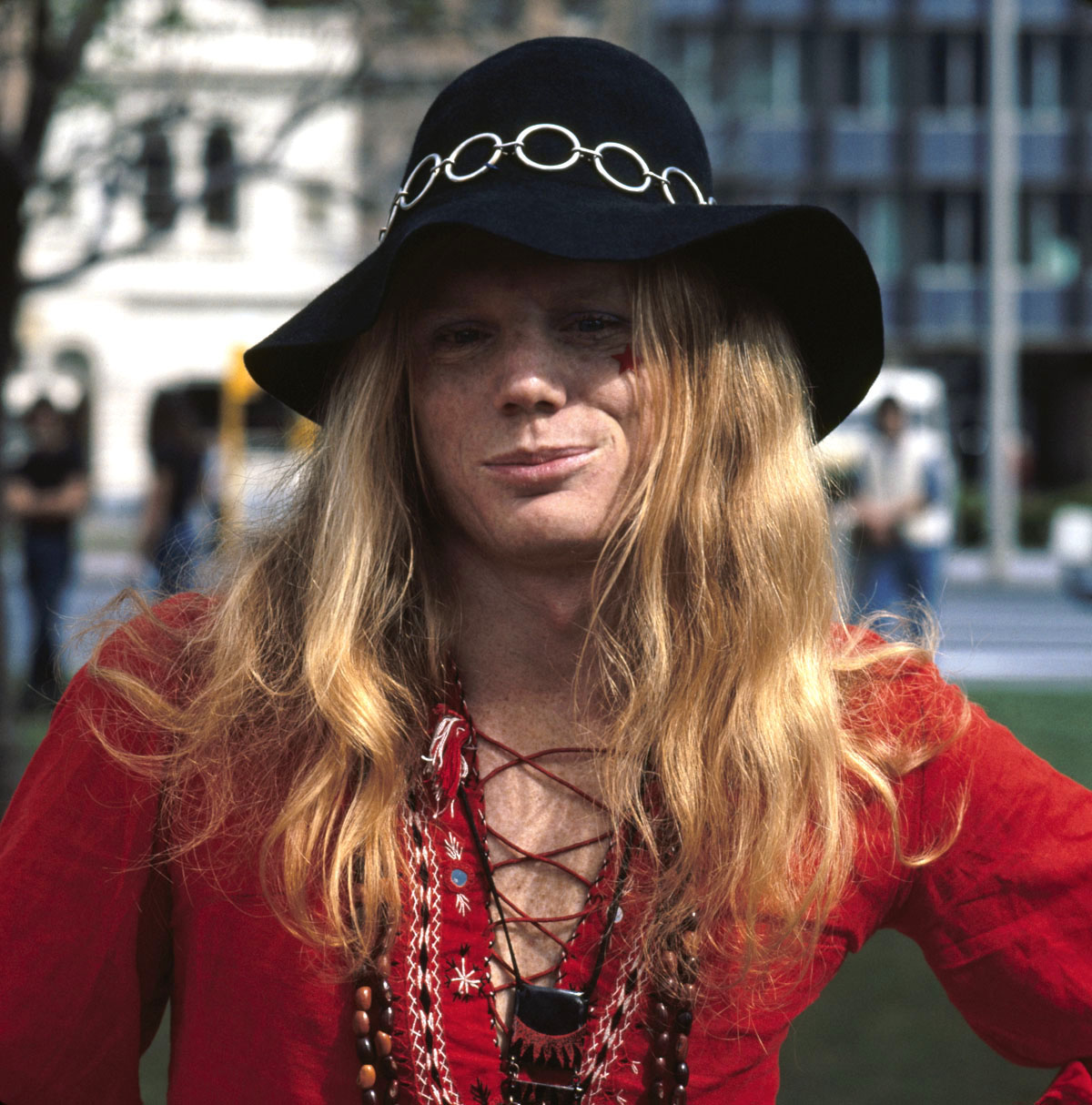
BLINDSIDE website

Laura Skerlj website

Catherine Evans website

LIKE ART BLART ON FACEBOOK

Back to top