Apollonian and Dionysian ideals are two sides of the same coin.
Dr Marcus Bunyan
Many thankx to the Los Angeles County Museum of Art for allowing me to publish the photographs in the posting. Please click on the photographs for a larger version of the image.
An extract from one of my earliest piece’s of research and writing (1996)
“In the work of the American photographer Robert Mapplethorpe, we can see the formalised classical aesthetic of beauty combined with content which many people are repelled by (pornography, sexuality, violence, power) creating work which is both Apollonian and Dionysian.14 Peoples’ disgust at the content of some of Mapplethorpe’s images is an Apollonian response, an aesthetic judgement, a backing away from a connection to ‘nature’, meaning ‘that which is born’. Mapplethorpe said, “I’ve done everything I show in my photographs,”15 revealing a connection to an inner self, regardless of whether he intended to shock. Those seeking suppression of Mapplethorpe’s photographs, mainly conservative elements of society, cite the denigration of moral values as the main reason for their attacks. However Mapplethorpe’s S&M photographs sought to re-present the identity of a small subculture of the gay community that exists within the general community and by naming this subculture he sought to document and validate its existence. The photograph can and does lie but here was the ‘truth’ of these Dionysian experiences, which conservative bigots could not deny – that they exist.
In the NEA/Cincinnati Contemporary Arts Center controversy surrounding Mapplethorpe16 his work was defended on aesthetic grounds, not on the grounds of homoerotic content, of freedom of expression or artistic freedom. The classical Apollonian form of his images was emphasised. As one juror put it, “Going in, I would never have said the pictures have artistic value. Learning as we did about art, I and everyone else thought they did have some value. We are learning about something ugly and harsh in society.”17 Ugly and harsh. To some people in the world S&M scenes are perfectly natural and beautiful and can lead to the most transcendent experience that a human being can ever have in their life. Who is to decide for the individual his or her freedom to choose?
This Apollonian fear of the Dionysian ‘Other’, the emotional chaotic self, was found to involve fear of that which is potentially the ‘same as’ – two sides of the same coin. This fear of ‘the same’, or of the proximity of the same, or of the threat of the same, can lead to violence, homophobia, racism and bigotry. Mapping out sexual identities’ toleration of difference, which is ‘the same as’, recognises that there are many different ways of being, and many truths in the world.”
14/ Danto, Arthur C. Mapplethorpe – Playing With The Edge. Essay. London: Jonathon Cape, 1992, p. 331
15/ Interview with Robert Mapplethorpe quoted in Cooper, Emmanuel. The Sexual Perspective. London: Routledge, 1986, p. 286
16/ Ellenzweig, p. 205, Footnote 1
17/ Cembalest, Robin. “The Obscenity Trial: How They Voted To Acquit,” in Art News December 1990 89 (10), p. 141 quoted in Ellenzweig, Allan. The Homoerotic Photograph. New York: Columbia University, 1992, p. 208
The Los Angeles County Museum of Art (LACMA) presents Robert Mapplethorpe: The Perfect Medium, a major retrospective examining the work and career of one of the most influential visual artists of the 20th century. Robert Mapplethorpe: The Perfect Medium is co-organised by LACMA and the J. Paul Getty Museum. In a historic collaboration, the two institutions will trace the artist’s working methods and materials, presenting the improvisational, experimental aspects of his practice alongside the refined perfection of his prints. The works on display provide new context for understanding the key genres that Mapplethorpe pursued: portraiture, the nude, and still life. His personal connections to sitters, his ability to manage a successful studio, and his ambition to elevate photography to the status of contemporary art will be demonstrated through rarely seen correspondence, books, and other ephemera, including those from the artist’s archive held by the Getty Research Institute.
LACMA’s presentation (March 20 – July 31, 2016) focuses on Mapplethorpe’s working methods, sources, and creative processes – the experimental and performative aspects of his work – while the J. Paul Getty Museum (March 15 – July 31, 2016) highlights the artist’s disciplined studio practice, figure studies, and legacy. Between the two museums, more than 300 works by Mapplethorpe will be on view, making this one of the largest-ever presentations of his work. The objects on view in Robert Mapplethorpe: The Perfect Medium are drawn almost entirely from the landmark joint acquisition of art and archival materials made in 2011 by the J. Paul Getty Trust and LACMA from The Robert Mapplethorpe Foundation.
“4 years ago LACMA and the Getty came together to jointly acquire the art and archives of Robert Mapplethorpe,” said Michael Govan, LACMA CEO and Wallis Annenberg Director. “It has been an exciting collaboration ever since, as our researchers, conservators, and curators have all spent time with this trove of Mapplethorpe’s art. Now, we are glad to present this large-scale joint exhibition to Los Angeles and the world.”
“Through this historic collaboration, the LACMA and J. Paul Getty Museum exhibitions offer a new perspective on this influential artist,” said Britt Salvesen, curator and head of the Wallis Annenberg Photography department. “Robert Mapplethorpe: The Perfect Medium reveals the rich resources of the Mapplethorpe archive, which provides a broader context for the iconic images that brought him fame. Mapplethorpe’s refined style challenged viewers to consider his portraits, flowers, and sexually explicit images as equal expressions of a personal vision. His drive to capture the perfect moment is the core of his art.”
Following its Los Angeles debut, Robert Mapplethorpe: The Perfect Medium will travel internationally beginning with the Montreal Museum of Fine Arts in Canada (September 10, 2016 – January 15, 2017), the Art Gallery of New South Wales, Sydney, Australia, (October 28, 2017 – February 4, 2018), and another international venue. This will be the first major traveling retrospective in North America since the landmark exhibition The Perfect Moment, organized in 1988 by the Institute of Contemporary Art in Philadelphia.
The exhibition is accompanied by a fully illustrated book, Robert Mapplethorpe: The Photographs, co-published by LACMA and the J. Paul Getty Museum. A comprehensive guide to the artist’s work and career, this publication will feature an introduction by co-curators Britt Salvesen and Paul Martineau, five scholarly essays, an illustrated chronology, and a selected exhibition history and bibliography.
Exhibition organisation
The LACMA presentation is organised in five thematic sections. The first gallery establishes Mapplethorpe in the milieu of 1970s and 1980s urban gay culture, depicting himself and his models openly declaring their sexuality through clothing, body adornment, and gesture. The second gallery highlights the work Mapplethorpe created in the late 1960s and early 1970s before he took up photography in earnest. As a student of graphic design at the Pratt Institute, he demonstrated an early facility for draftsmanship and a penchant for geometric composition. He designed jewellery and temporary assemblages using items of clothing. Inspired by Andy Warhol, Jasper Johns, and Robert Rauschenberg, he also experimented with collages and constructions, often incorporating Catholic iconography and appropriated imagery from homosexual periodicals.
Mapplethorpe borrowed a Polaroid camera from a friend in 1970 and, over the course of the next year, honed his vision as a photographer. These early unique images, installed in the third gallery, reveal his observational acuity and his ability to be in the moment. Mapplethorpe was one of his own best subjects, as his many self-portraits attest, and he was open about being a participant in the scenarios he depicted. The fourth gallery focuses on Mapplethorpe’s engagement with the leather and bondage community, his appropriation of pornographic source material, and his exploration of the African American male nude. Additionally, this gallery features ephemera relating to Mapplethorpe’s first breakout exhibitions in New York, including a joint exhibition at The Kitchen and Holly Solomon Gallery in 1977. The fifth gallery presents work from the mid-1980s, when Mapplethorpe was running a successful studio and producing many commissioned portraits. Among his favourite subjects were the artists, musicians, and other performers he first encountered in the downtown art scene in the ’70s. He commented that photography was “the perfect medium for the 70s and 80s, when everything was fast. If I were to make something that took two weeks to do, I’d lose my enthusiasm. It would become an act of labor and the love would be gone.”
Exhibition highlights
Self-portrait (1980)
Mapplethorpe’s turn to photography in the early 1970s coincided with his embrace of New York’s leather subculture, and, throughout the decade, he explored the potential of both forms of expression simultaneously. His 1980 self-portrait as a surly, smoking leatherman captures the hyper masculine posturing that was concomitant with the choice of leather as a fashion statement and as a sexual fetish. Staring defiantly into the camera, Mapplethorpe declares his participation in the leather community. At the same time, the photograph expresses the playful and performative aspects of his studio practice. An element of dress-up and theater is evident in much of his portraiture. This self-portrait shows the artist posing in the role of an archetypal tough-guy – a greaser complete with popped collar, a lit cigarette dangling from his lip, and hair styled into a pompadour.
Patti Smith (1978)
Mapplethorpe was studying art at the Pratt Institute, in Brooklyn, when he met Patti Smith in spring 1967. Mapplethorpe and Smith spent the next decade in close proximity, inspiring one another’s artistic aspirations. Mapplethorpe chose photography as his medium in the early 1970s, whereas Smith gravitated toward poetry and music, and the two collaborated in a number of portrait sessions. Here, Smith poses in the act of cutting her hair, a gesture of defiance. As she explained in a 1975 interview, she didn’t “want to walk around New York looking like a folk-singer. I like rock ‘n’ roll. So I got hundreds of pictures of Keith Richards, and I hung them up and then just took scissors and chopped away until I had a real Rolling Stones haircut.” Mapplethorpe captured Smith’s androgynous style, composing the photograph to emphasise contrasts of black and white in Smith’s features and wardrobe, in the background, and even in the cat.
Lisa Lyon (1982)
Mapplethorpe met Lisa Lyon at a party in 1979, and he would go on to produce nearly 200 photographs of her over the next several years. The first woman to win the International Federation of Body Builders female competition, Lyon had an androgynous, muscular physique that appealed to Mapplethorpe’s interest in the sculptural body. “I’d never seen anybody that looked like that before,” he said. “Once she took her clothes off it was like seeing something from another planet.” The pinnacle of their collaboration came with the release of the book Lady (1983), a series of portraits of Lyon. In this portrait, Mapplethorpe captures Lyon in her work-out attire, a nod to her role as an early advocate for fitness and weight training, which came to be a defining feature of early and mid-1980s American culture.
Complementary exhibition
The LACMA exhibition will also be accompanied by the installation Physical: Sex and the Body in the 1980s, which will feature roughly 30 works from the museum’s permanent collection. Placing Mapplethorpe’s work in dialogue with his contemporaries, the installation examines the cultural and artistic upheavals of a pivotal decade in the history of American art and society. Featured artists include Bruce Weber, Kiki Smith, Sarah Charlesworth, Laura Aguilar, and Marina Abramovic, among others. Physical: Sex and the Body is curated by Ryan Linkof, assistant curator of the Wallis Annenberg Photography department.
Press release from the Los Angeles County Museum of Art
Keso Dekker, Dutch-born visual artist (b. 1946), has designed sets and costumes for over 500 theatre productions, with some 70 directors and choreographers across Europe and the United States. Initially a painter, designer of private and public spaces and museum exhibitions, he also taught, published and wrote for television and organised exhibitions – always on the subjects of design, fashion, dance and the visual arts, plus their histories.
Kathy Acker (1947-1997) was an American experimental novelist, poet, playwright, essayist, critic, performance artist, and postmodernist writer, known for her idiosyncratic and transgressive writing that dealt with complex themes such as childhood trauma, sexuality, language, identity, and rebellion.
The Perfect Moment, The Perfect Medium and … Mapplethorpe, that seminal exhibition for Australia that I saw at the Museum of Contemporary Art (MCA) in Sydney in 1995.
The technical brilliance, ravishing platinum prints (even though he never printed them himself), formalism, beauty, sensuality and, dare I say it – morality of his work fair bowled me over. His was an eye with a innate sensibility: “a quick sense of the right and wrong, in all human actions. And other objects considered in every view of morality and taste.”
I have never forgotten that exhibition, yet until recently there was hardly a sentence online about Mapplethorpe at the MCA. Now, thankfully, there are a some installation photographs and four paragraphs of text up on the MCA website.
The lack of information about this exhibition was one of the driving forces behind the setting up of Art Blart. Museums spend inordinate amounts of money putting on these exhibitions and after they are finished and the art work packed up, the catalogue shelved in a bookcase, that’s it. I wanted this website to be a form of cultural memory where I could record the exhibition objects, installation photos and my thoughts about them so that they could live on, online.
I had great fun sequencing these images from the Getty (part of a double exhibition with the Los Angeles County Museum of Art (LACMA) second posting to follow): self-portraits in chronological order; portraits of the body as flesh and stone spliced by sculptural grapes; Lily and Lisa Lyon’s leg; the cross-over between tulips and white curtain; the sinuousness of Poppy and fabric of Lisa Lyon’s gown; Hermes / Moody / Sherman; and the blindness of all three men – the perfect Ken Moody, the darker (in both psychological and bodily sense) Ajitto, and the roughest, Jim, Sausalito.
I doubt that Mapplethorpe would have ever have sequenced them thus, but I hope it gives insight and a different perspective into his work.
Dr Marcus Bunyan
Many thankx to the J. Paul Getty Museum for allowing me to publish the photographs in the posting. Please click on the photographs for a larger version of the image.
“I don’t understand the way my pictures are. It’s all about the relationship I have with the subject that’s unique to me. Taking a picture and sexuality are parallels. They’re both unknowns. And that’s what excites me most.”
Since his death in 1989, Robert Mapplethorpe (American, 1946-1989) has become recognised as one of the most significant artists of the late 20th century. He is best known for his perfectly composed photographs that explore gender, race, and sexuality, which became hallmarks of the period and exerted a powerful influence on his contemporaries. The J. Paul Getty Museum will present one half of Robert Mapplethorpe: The Perfect Medium, a major retrospective exhibition of Mapplethorpe’s work, on view March 15-July 31, 2016 at the Getty Center. The Los Angeles County Museum of Art (LACMA) will host the other half of the exhibition March 20-July 31, 2016. The two exhibitions are drawn from the landmark joint acquisition and gift of art and archival materials made in 2011 by the J. Paul Getty Trust and LACMA from the Robert Mapplethorpe Foundation.
“The historic acquisition of Mapplethorpe’s art and archival materials in 2011 has enabled our institutions’ curators and other scholars to study and assess Mapplethorpe’s achievement in greater depth than ever before,” says Timothy Potts, director of the J. Paul Getty Museum. “The rich photographic holdings in the Getty Museum and LACMA, together with the artist’s archive housed at the Getty Research Institute, make Los Angeles an essential destination for anyone with a serious interest in the late 20th-century photography scene in New York. These exhibitions will provide the most comprehensive and intimate survey of Mapplethorpe’s work ever seen.”
The Getty’s exhibition features the full range of Mapplethorpe’s photographs from his portraits, self-portraits, and figure studies to his floral still lifes. It includes some of Mapplethorpe’s best-known images alongside work that has been seldom exhibited. Key themes include Mapplethorpe’s studio practice, the controversy provoked by the inclusion of his sexually explicit pictures in the 1988-90 retrospective exhibition The Perfect Moment, and the legacy he left behind after his death from AIDS-related complications in 1989.
The exhibition begins with a survey of some of Mapplethorpe’s most familiar portraits, including those of his long-time benefactor and lover Samuel J. Wagstaff Jr., poet-musician Patti Smith, and fashion designer Carolina Herrera, among others. It also includes a number of intimate self-portraits, images of artists, and a rarely exhibited series of portraits of the eleven dealers who dominated the downtown New York City art scene during the late 1970s.
Mapplethorpe searched for well-proportioned models and underscored their powerful physical presence through obsessive attention to detail, the precision of their statuesque poses, and sophisticated lighting. This interest becomes evident in examples of the sculptural bodies he enlisted as subjects through the years. In particular, Mapplethorpe was attracted to the colour of black skin (he liked to refer to it as “bronze”), and the exhibition includes a number of photographs of African-American models such as Ajitto and Thomas, whom he frequently used to evoke classical themes.
Mapplethorpe’s Ken and Lydia and Tyler (1985) suggests the ancient trope of the Three Graces through three models of different racial backgrounds, while select photographs of model Lydia Cheng were further idealised through the application of a shimmering bronze powder on her skin.
One of Mapplethorpe’s frequent subjects was Lisa Lyon, a bodybuilding champion who considered herself a performance artist or sculptor whose body was her medium. After meeting Lyon at a party in 1979, Mapplethorpe and his new model embarked on a six-year collaboration that resulted in 184 editioned portraits. A selection of these images in the exhibition shows her dressed, undressed, and in various guises, ranging from ingénue to dominatrix. In his art Mapplethorpe was a perfectionist who preferred to make photographs in the highly controlled environment of his New York City studio loft. His style was predominately directorial – during a shoot he used short verbal commands and gestures to communicate the poses he wanted his models to strike. Afterwards, he would spend hours reviewing his contact sheets and hired master printer Tom Baril to make finely crafted gelatin silver prints.
“Mapplethorpe was more sophisticated than most people realise,” says Paul Martineau, associate curator of photographs at the J. Paul Getty Museum and curator of the exhibition. “He was an artist who understood the value of his own intuition and eye, who taught himself the history of photography, how to network, how to run a studio, and how to keep the public interested in him.”
The exhibition includes a selection of Mapplethorpe’s floral still lifes, which further demonstrate his skill in the studio. In these photographs he imbued orchids, calla lilies, poppies, and irises with an erotic charge through carefully orchestrated compositions and meticulous lighting. The Getty’s installation also features Mapplethorpe’s X Portfolio, which depicts the gay s&m community of which he was not just an observer, but a participant. It comprises 13 photographs of sex acts that Mapplethorpe staged for the camera with particular attention to the harmonious arrangement of forms. The careful selection, sizing, sequencing, and packaging of these prints in a luxurious portfolio case wrapped in black silk help to blur the line between fine art and pornography.
The exhibition directly addresses Robert Mapplethorpe: The Perfect Moment, a retrospective exhibition that opened in 1988 at the Institute of Contemporary Art at the University of Pennsylvania in Philadelphia before beginning an eight-venue tour. After the exhibition caught the attention of conservative politicians, it was canceled at the Corcoran Gallery of Art in Washington, D.C., two weeks before its scheduled opening. When it was later shown at the Contemporary Arts Center in Cincinnati, director Dennis Barrie was arrested and charged with pandering obscenity – a charge of which he was acquitted. The exhibition also traveled to the Washington Project for the Arts (WPA), where it had record-breaking attendance. The Getty exhibition documents the media uproar surrounding The Perfect Moment through items that include a 1989 cover of ArtForum International featuring a protest that took place outside the Corcoran, exhibition catalogues that include images that were considered “obscene,” by some and Mapplethorpe’s photograph of an American flag.
“When planning this exhibition, I wanted the focus to be on Mapplethorpe’s work and not on the sensationalism that accompanied The Perfect Moment. I’ve included it in a small way because that exhibition not only represents a highpoint in Mapplethorpe’s career, but the controversy it engendered puts his sex pictures in a historical context,” says Paul Martineau. “I’m afraid that the first thing that comes to people’s minds when they think of Mapplethorpe is that controversy. There is so much more to discover about Mapplethorpe and his work than that. He continues to have an enormous impact on the photographic scene.”
The exhibition also emphasises the care that Mapplethorpe took to craft his legacy. After being diagnosed with AIDS in 1986, Mapplethorpe continued to work more ardently than ever. In 1988 he established the Robert Mapplethorpe Foundation to steward his own work into the future, provide support for photography at the institutional level, and help fund AIDS research. A 1988 self-portrait on view shows Mapplethorpe’s face revealing signs of illness, his hand gripping a skull-topped cane, a symbol of his impending death. The simple composition and brutal honesty combine to make this photograph one of his most visually and psychologically powerful images.
The two complementary presentations at the Getty and LACMA highlight different aspects of the artist’s complex personality. LACMA’s exhibition underscores the artist’s relationship to New York’s underground, as well as his experimentation with a variety of media. Following its Los Angeles debut, the exhibition will go on an international tour, traveling to the Montreal Museum of Fine Arts in Montreal, Canada (8/29/16 – 1/22/17), the Art Gallery of New South Wales in Sydney, Australia (10/28/17 – 2/4/18), and another international venue. The Getty and LACMA will be the exhibition’s sole U.S. venues, and the exhibitions will be combined and toured as one for the international locations. The LACMA exhibition is curated by Britt Salvesen, Department Head and Curator, Wallis Annenberg Photography Department and the Department of Prints and Drawings at LACMA.
Two books will be published in conjunction with the Mapplethorpe exhibition: Robert Mapplethorpe: The Photographs by Paul Martineau and Britt Salvesen with an essay by Eugenia Parry and an introduction by Weston Naef, and Robert Mapplethorpe: The Archive by Frances Terpak and Michelle Brunnick, with essays by Patti Smith and Jonathan Weinberg.
Robert Mapplethorpe (American, 1946-1989) Patrice, N.Y.C. 1977 from The X Portfolio Selenium toned gelatin silver print mounted on black board 19.5 x 19.5cm (7 11/16 x 7 11/16 in.) Jointly acquired by the J. Paul Getty Trust and the Los Angeles County Museum of Art; partial gift of The Robert Mapplethorpe Foundation; partial purchase with funds provided by the J. Paul Getty Trust and the David Geffen Foundation Robert Mapplethorpe Foundation
The J. Paul Getty Museum 1200 Getty Center Drive Los Angeles, California 90049
Curators: Jeff L. Rosenheim (Curator in Charge of the Department of Photographs), with Doug Eklund (Curator and a key organiser) and Mia Fineman (Associate Curator), with Beth Saunders (Curatorial Assistant)
Unknown photographer (American) [Jeff Briggs, Robert Sims, Otis Hall, and Peter Pamphlet; Full-Length Mugshot from the Chicago Police Department] 1936 Gelatin silver prints Image: 5 15/16 × 9 1/8 in. (15.1 × 23.1cm) Sheet: 6 1/8 × 9 5/16 in. (15.6 × 23.6cm) Twentieth-Century Photography Fund, 2014
One wrong does not a life make
A very large posting on a fascinating subject, for an exhibition that examines “the numerous ways that photography has influenced that favourite human activity, speculating about crimes and the people who commit them.” As the press release notes, “Since the earliest days of the medium, photographs have been used for criminal investigation and evidence gathering, to record crime scenes, to identify suspects and abet their capture, and to report events to the public. This exhibition explores the multifaceted intersections between photography and crime…”
And all this history displayed in just two gallery spaces!
What the press release fails to note is that it is often the people in power (the police, judiciary, and even the photographer) who name and shame those whose likenesses are captured by the camera. In other words, the people in these photographs are already labelled – deviant, lifter, wife poisoner, forger, sneak thief; cracksman, pickpocket, burglar, highwayman; murderer, counterfeiter, abortionist – before their photograph is ever taken. They have already been dressed for the part.
This verdict is further reinforced when images, such as those by Weggee, appear in newspapers and, using Walker Evans phrase, the “Ladies and gentlemen of the jury” confirm what has been fed to them. As noted in the text in the posting about the photographs of Samuel G. Szabó, “Would the serious young man in the overcoat and silk top hat appear roguish without the caption “John McNauth alias Keely alias little hucks / Pick Pocket” below his portrait?” I think not (which is what the viewer does when confronted with the veracity of the photograph and the text supplied by those in a position of power)…
What strikes me about the “mugshot” photographs of Samuel G. Szabó and Alphonse Bertillon is the ordinariness of the people he captured – tailor, printer, accountant, photographer, seamstress – and how they have forever been labelled “anarchists”. Nothing is known of the rest of their lives and a search on the internet reveals nothing about them, except those people indelibly printed onto the fabric of history: Ravachol, murderer and anarchist who was bent on improving the conditions of the poor (no name or age under his photograph); and Félix Fénéon – head and eyes directed away from the camera whereas most others stare straight into the camera (upon direction) – all haughty superiority, as though the process of being photographed as an “anarchist” was beneath the witty critique (no name or age under his photograph as well). Only by this is it recorded that they are morally suspicious and this is done at the behest of the authorities. Whatever else they did in their life counts as if for nothing.
What also strikes me about the “en situ” photographs of the habitats of the murdered victims and the places where they were found, is again the mundanity of the interiors and places of execution. In the photographs that document the Assassination of Monsieur V. Lecomte, 74 Rue des Martyrs, 1902 we note the ephemera of human existence – the photographs standing on three-tiered wooden shelves, the open box on the table, the body on the floor – photographed from both directions, once with the camera pointing towards the windows, the other from 180 degrees, with the camera pointing into the room. And then we notice the mantlepiece photographed from another direction, with the open box on the table. And the bound and gagged man on the floor is still on the floor out of frame. And then another place of murder, that of the ending of a life, marked out in Bertillon’s photograph “Place where the corpse was found” by two pieces of wood laying on the ground and two pieces of wood propped at 45 degrees against the wall. As though this is all that is left of the existence of Mademoiselle Mercier along a street (Rue de l’Yvette) that still exists in Paris to this day … a photograph of pieces of wood and an empty space. Pace HEAD by Weggee.
It’s all about the stories, or the lack of them, that these photographs tell/sell. Weggee’s photographs of a sixteen-year old child killer, Frank Pape, are brutal in their exposure of this adolescent man. The way the horizontal negative has been cropped over and over again, to gain best effect, best value for the tabloid dollar, gives an idea of the pejorative pronunciation of guilt upon this individual before trial. What happened to Frank Pape? I’ve been digging, trying to find out… but nothing. Did he live, was he executed? What led him to that point and what happened to the rest of his life? This is the great unknown after the click of the shutter, the key in the lock, the silence of history. Here I am not advocating for the celebrity of the criminal, as in Richard Avedon’s photographs of the murderer Dick Hickock, but an acknowledgement that one wrong does not a life make.
But then again, for the victim, in shootings like that of Sen. Robert F. Kennedy – the pain of the photograph and the look in his eyes says it all. Here he is a victim, twice over (the victim of the assassin and the camera), and is to remain a victim for eternity, as long as people look at this photograph. This is such a sad and painful photograph. I remember the day it happened. I was ten years old at the time, and it’s one of those events that you will always remember the rest of you life, where you were, who you were with – like the moon landings or 9/11. I was in a car outside a small shop and the news came on the radio. Robert F. Kennedy had been shot – first aural, then visual on the black and white tv that night, then textual in the newspapers and then visual again with this photograph. The pain of the loss of those heady days of hope lessen not.
Today we live in a police state where surveillance and recognition are everything, where those in power seek to control and regulate ever more the freedom of the people, and the people are lost to anonymity and time.
Dr Marcus Bunyan
Word count: 1,046
Many thankx to the Metropolitan Museum of Art for allowing me to publish the photographs in the posting. Please click on the photographs for a larger version of the image.
“Crime Stories: Photography and Foul Play,” an exhibit currently on display at the Metropolitan Museum of Art, proposes to examine the numerous ways that photography has influenced that favorite human activity, speculating about crimes and the people who commit them. This would be an ambitious undertaking for a ten-room show; this one is limited to only two. The result is something of a hodgepodge, hemmed in by a vague set of constraints. The bulk of the photos were taken in the United States between the mid-nineteenth and mid-twentieth centuries, none after the seventies, and all are in black and white, as if to emphasize their historical remove from our own filtered times. But the aesthetic and ethical questions the exhibit raises – about the American attraction to criminal glamour, and our queasy, not always critical fascination with looking at violence – are the right ones to ask during the current vogue for “true crime,” that funny phrase we use for stories told in public about terrible things others suffer privately.
Since the earliest days of the medium, photographs have been used for criminal investigation and evidence gathering, to record crime scenes, to identify suspects and abet their capture, and to report events to the public. This exhibition explores the multifaceted intersections between photography and crime, from 19th-century “rogues’ galleries” to work by contemporary artists inspired by criminal transgression. The installation will feature some 70 works, drawn entirely from The Met collection, ranging from the 1850s to the present.
Among the highlights of the installation is Alexander Gardner’s documentation of the events following the assassination of President Lincoln, as well as rare forensic photographs by Alphonse Bertillon, the French criminologist who created the system of criminal identification that gave rise to the modern mug shot. Also on display is a vivid selection of vintage news photographs related to cases both obscure and notorious, such as a study of John Dillinger’s feet in a Chicago morgue in 1934; Jack Ruby shooting Lee Harvey Oswald in 1963; and Patty Hearst captured by bank surveillance cameras in 1974. In addition to exploring photography’s evidentiary uses, the exhibition will feature work by artists who have drawn inspiration from the criminal underworld, including Richard Avedon, Larry Clark, Walker Evans, John Gutmann, Andy Warhol, and Weegee.
This press photo of John Dillinger, the celebrity gangster from Chicago shot down at age 31, morbidly embodies the twentieth-century’s obsession with fame and hunger for physical contact with media personae. As the Depression era’s most successful bank robber, Dillinger had become a folk hero for his brash, cocky manner and disregard for authority. This unflinching view of Dillinger laid out on a slab in the Chicago morgue not only bares the facts but ironically recalls Mantegna’s The Lamentation Over the Dead Christ (c. 1490).
John Dillinger & “Baby Face” Nelson Hunted by FBI
Unknown photographer (American) [Jeff Briggs, Robert Sims, Otis Hall, and Peter Pamphlet; Full-Length Mugshot from the Chicago Police Department] 1936 Gelatin silver prints Image: 5 15/16 × 9 1/8 in. (15.1 × 23.1cm) Sheet: 6 1/8 × 9 5/16 in. (15.6 × 23.6cm) Twentieth-Century Photography Fund, 2014
The Chicago Police Department likely made these discarded file photographs when arrested suspects entered the precinct for booking. Each is accompanied by a typewritten caption recording the subjects’ names, vital statistics, and, in some cases, the crimes for which they were arrested (carrying concealed weapons, assault and robbery at gunpoint). With their subjects lined up theatrically against a dark velvet curtain, the images vividly evoke an era and milieu familiar to fans of film noir and hard-boiled detective fiction of the 1930s and 1940s.
A similar defiant dignity is evident in two booking photographs taken by the Chicago Police Department, part of a series made between 1936 and 1946. In the first, four black men in suits line up in front of what seems to be a theatre curtain. In the second, they strike the same pose, now in longer coats and with hats, as if auditioning for different parts in the same play. One of the men smiles affably, a flash of personality in a process meant to cloak it. The others look out evenly, returning the camera’s gaze and reminding whoever is behind the shutter that they, too, have the power to see.
“Ladies and gentlemen of the jury,” Evans called his unwitting subjects. In this example, a smirking, vaguely menacing young man is engrossed in his copy of the Daily News. PAL TELLS HOW GUNGIRL KILLS, reads the headline. An obese woman, obviously not an acquaintance, sits miserably beside him.
During the winter months between 1938 and 1941, Evans strapped a camera to his midsection, cloaked it with his overcoat, and snaked a cable release down his suit sleeve to photograph New York City subway passengers unawares. In his book of these unposed portraits, Many Are Called (1966), the artist referred to his quarry as “the ladies and gentlemen of the jury.” What he was after stylistically, though, was more in keeping with the criminal mug shot: frontal and without emotional inflection. In this photograph, the tabloid headline “PAL TELLS HOW GUNGIRL KILLED” across the newspaper nods to Evans’s interest in vernacular source material.
Inspired by the incisive realism of Honoré Daumier’s Third-Class Carriage, Walker Evans sought to avoid the vanity, sentimentality, and artifice of conventional studio portraiture. The subway series, he later said, was “my idea of what a portrait ought to be: anonymous and documentary and a straightforward picture of mankind.”
Walker Evans’ candid photos of 1930s subway passengers are early conceptual art | Art, Explained
“I think it is one of the first conceptual art projects that I’m aware of.”
Art, Explained invites 100 curators from across the Museum to talk about 100 works of art that changed the way they see the world.
In April 1960 Avedon traveled to Garden City, Kansas, to photograph the individuals connected with the savage murder of the four-member Clutter family in their remote farmhouse. He came at the request of his friend Truman Capote, who was there gathering material for his groundbreaking true-crime novel In Cold Blood (1966). Working with a handheld Rolleiflex camera, Avedon made this striking photograph of one of the killers, Richard “Dick” Hickcock, while he was in jail awaiting trial. The mug shot-like portrait captures Hickock’s sullen, lopsided face with mesmerising clarity, as if searching for physiognomic clues to his criminal pathology.
“One of the show’s most striking pictures is a Richard Avedon portrait of Dick Hickock, one of the two murderers immortalized in Truman Capote’s true-crime touchstone “In Cold Blood.” Hickock and Perry Smith, both ex-convicts out on parole, had set out to rob the home of Herbert Clutter, a farmer in Holcomb, Kansas; when they didn’t find the safe they’d been looking for, they killed Clutter, his wife, and his two children. Looking at Hickock’s mug shot, Capote writes, the wife of the case’s investigator is reminded “of a bobcat she’d once seen caught in a trap, and of how, though she’d wanted to release it, the cat’s eyes, radiant with pain and hatred, had drained her of pity and filled her with terror.” Here, Hickock gets the soft-focus celebrity treatment, the line between notoriety and fame as blurred as ever. Hickock, according to Capote, had always been self-conscious about his long, lopsided face. His nose juts out at a Picasso angle, and while his right eye meets Avedon’s lens straight on, his smaller left one seems to look inward. The result is a double portrait, part persona, part awkward, vulnerable self, both haunted by Capote’s own verbal portrait of Hickock’s victims, the Clutter family, at their funeral: “The head of each was completely encased in cotton, a swollen cocoon twice the size of an ordinary blown-up balloon, and the cotton, because it had been sprayed with a glossy substance, twinkled like Christmas-tree snow.”
“Richard Avedon is represented by his 1960 portrait of Dick Hickock, the Kansas murderer who was one of the subjects of Truman Capote’s In Cold Blood. In his typical style, Avedon presents a large-scale investigation of Hickock’s face: the black greased pompadour combed just so, the slightly fleshy nose, the disturbingly engaging eyes, all of it ever so slightly skewed by the impression of Hickock’s inscrutable lopsided grievance. (Hickock had suffered a brain injury in an automobile accident when he was nineteen.) As with Gardner’s 1865 portrait of Lewis Powell (who was also executed by hanging for his crime), you sense how seriously Hickock takes being photographed, his wish to give something of himself, to influence, if not control, the emanations of his image and how he is being portrayed.”
Michael Greenberg. “Caught in the Act,” on The New York Review of Books website, April 7, 2016 [Online] Cited 22/06/2016
Robert H. Jackson (American, born 1934) FATAL BULLET HITS OSWALD. Jack Ruby fires bullet point blank into the body of Lee Harvey Oswald at Dallas Police Station. Oswald grimaces in agony November 24, 1963 Gelatin silver print Image: 16.8 x 19.5 cm (6 5/8 x 7 11/16 in.) Sheet: 20.5 x 20.1 cm (8 1/16 x 7 15/16 in.) Twentieth-Century Photography Fund, 2011
Before today’s fast-paced twenty-four hour news cycle, an eager American public followed the development of criminal investigations through the grey tones of press photographs. News outlets used a wire service to send images via in-house or portable transmitters, converting black-and-white tones into electrical pulses that were instantaneously received and printed using the same technology. Mundane courtroom proceedings, such as arraignments and evidence display, became newsworthy through the immediacy of reportage. Every small detail was devoured by a public impatient for news about notorious bank robbers and murderers – some of whom, like John Dillinger, were elevated to the status of folk heroes. In other instances, such as the assassinations of Robert F. Kennedy and Lee Harvey Oswald, newspapers and television brought the drama and intensity of firsthand observation into people’s homes.
Boris Yaro (American, 1938-2020) LOS ANGELES. KENNEDY MOMENTS AFTER SHOOTING. Sen. Robert F. Kennedy Lies Gravely Wounded on the floor at the Ambassador Hotel in Los Angeles shortly after midnight today, moments after he was shot during a celebration of his victory in yesterday’s California primary election June 5, 1968 Gelatin silver print 17.2 x 21.1cm (6 3/4 x 8 5/16 in.) Twentieth-Century Photography Fund, 2010
June 5, 1968: “Presidential candidate Robert F. Kennedy lies on the floor at the Ambassador Hotel in Los Angeles moments after he was shot in the head. He had just finished his victory speech upon winning the California primary. Times photographer Boris Yaro was standing 3 feet from Kennedy when the shooting began. “The gunman started firing at point-blank range. Sen. Kennedy didn’t have a chance,” Yaro recounted in a June 6, 1968, story for The Times. The Democratic senator, 42, was alive for more than 24 hours and was declared dead on the morning of June 6. The shooter was later identified as Sirhan B. Sirhan, who was found guilty of Kennedy’s assassination on April 17, 1969. His motives remain a mystery and controversy to this day.”
1964 Pulitzer Prize, Photography, Robert Jackson, Dallas Times Herald November 22, 1963
Andy Warhol (American, Pittsburgh, Pennsylvania 1928 – 1987 New York) Electric Chair 1971 Printer: Silkprint Kettner, Zurich Publisher: Bruno Bischofberger Portfolio of ten screenprints 35 1/2 x 48 inches (90.2 x 121.9cm) Gift of Robert Meltzer, 1972
Assassination of Monsieur V. Lecomte, 74 Rue des Martyrs, 1902 (and detail)
Assassination of Monsieur V. Lecomte, 74 Rue des Martyrs, 1902 (and detail)
Assassination of Monsieur V. Lecomte, 74 Rue des Martyrs, 1902 (and detail)
Assassination of Monsieur V. Lecomte, 74 Rue des Martyrs, 1902 (and detail)
Murder of Madame Veuve Bol, Projection on a Vertical Plane (and detail)
1st November 1902. Assassination of Mademoiselle Mercier, Rue de l’Yvette á Bouvry la Reine. Photograph of the corpse.
Place where the corpse was found (and detail)
House of the victim (and detail)
Attributed to Alphonse Bertillon (French, 1853-1914) [Album of Paris Crime Scenes] 1901-1908 Gelatin silver prints Overall: 24.3 x 31cm (9 9/16 x 12 3/16in.) Page: 23 x 29cm (9 1/16 x 11 7/16 in.) Gilman Collection, Purchase, The Howard Gilman Foundation Gift, 2001
Alphonse Bertillon, the chief of criminal identification for the Paris police department, developed the mug shot format and other photographic procedures used by police to register criminals. Although the images in this extraordinary album of forensic photographs were made by or under the direction of Bertillon, it was probably assembled by a private investigator or secretary who worked at the Paris prefecture. Photographs of the pale bodies of murder victims are assembled with views of the rooms where the murders took place, close-ups of objects that served as clues, and mug shots of criminals and suspects. Made as part of an archive rather than as art, these postmortem portraits, recorded in the deadpan style of a police report, nonetheless retain an unsettling potency.
Samuel G. Szabó (Hungarian, active America c. 1854-1861) Rogues, a Study of Characters c. 1860 Salted paper prints from glass negatives From 8.8 x 6.6cm (3 7/16 x 2 5/8 in.) to 11.5 x 8.8cm (4 1/2 x 3 7/16 in.) Gilman Collection, Purchase, Ann Tenenbaum and Thomas H. Lee Gift, 2005 The Metropolitan Museum of Art
Lifter, wife poisoner, forger, sneak thief; cracksman, pickpocket, burglar, highwayman; murderer, counterfeiter, abortionist – each found a place in this gallery of rogues. Photography was first put to service for the identification and apprehension of criminals in the late 1850s. In New York, for example, 450 photographs of known criminals could be viewed by the public in a real rogues’ gallery at police headquarters, the portraits arranged by category, such as “Leading pickpockets, who work one, two, or three together, and are mostly English.”
Little is known of Samuel G. Szabó, his methods or his intentions. He appears to have left his native Hungary in the early or mid-1850s by necessity, but the reason for his exile remains a mystery.
In the United States Szabó moved frequently. Between May 1857 and his return to Europe in July 1861 he traveled to New Orleans, Cincinnati, Chicago, Saint Louis, Philadelphia, and New York, settling for a brief period in Baltimore, where he was listed in the city directory as a daguerreotypist. His whereabouts when he made this album are unknown. One may speculate that Szabó made these portraits while working for, or with the cooperation of, the police, and some of the 218 prints in the album appear to be copy prints made from other photographic portraits.
But this is more than a collection of mug shots; it is a study of characters by a “photogr[aphic] artist,” as Szabó signed the title page of this album. Just as Mathew Brady believed that portraits of America’s great men and women held clues to the nobility of their character and could serve as moral and political exemplars to those who contemplated them, others attempted to discern in photographs such as Szabó’s physical characteristics of the criminal psyche. Yet, as in Hugh Diamond’s portraits of the insane (no. 30), the reading of individual portraits is not always self-evident. Would the serious young man in the overcoat and silk top hat appear roguish without the caption “John McNauth alias Keely alias little hucks / Pick Pocket” below his portrait?
Eyebrows, eyelids, globes, orbits, wrinkles
Alphonse Bertillon (French, 1853-1914) Tableau synoptic des traits physionomiques: pour servir a l’étude du “portrait parlé” (and details) c. 1909 Gelatin silver print 39.4 x 29.5cm (15 1/2 x 11 5/8 in.) The Metropolitan Museum of Art, New York Twentieth-Century Photography Fund, 2009
Nineteenth-century police headquarters were host to disorganised “rogues’ galleries” swollen with photographic portraits of criminals, which turned even the simplest of searches into a Sisyphean labor. As a response, police clerk Alphonse Bertillon introduced a rigorous system of classification, or signalment, to help organise archives, a process that included not only quantitative anthropometric measurements of the head, body, and extremities but also qualitative descriptions of the face. Photography’s potential for exactitude made it a crucial tool for Bertillon’s system, and his portrait parlé – the basis for today’s mugshot – posited a powerful analogy between a photographic likeness and the ink fingerprint.
Akin to a cheat-sheet for police clerks, this composite photograph illustrates how the mugshot could yield a series of classifications, dividing the male criminal’s face into discrete units of information. Such points of identification include the precise differentiation between left ear and right, the angle of inclination of the chin, and the pattern of the folds on the brow. Although intended merely as a filing aide, this image of the human face in all its striations of repetition and difference renders surveillance as a terrifying manifestation of the modern sublime.
“Bertillon’s other major legacy in the field of forensics was his invention of the mug shot. In the mid-nineteenth century, criminal photography focussed on identifying types of offenders; the exhibit’s earliest images are from an album of “rogues,” taken around 1860 in the United States by the photographer Samuel G. Szabó, who sought to distinguish the physiognomy of a counterfeiter from that of a “sneak thief,” a burglar, and a pickpocket. (Whatever revealing differences Szabó may have discerned, his subjects all look mad as hell to be stuck in his perp pictures.) Bertillon countered this hypothetical typology with empirical method, taking “anthropometric” measurements – determining the length of a convict’s middle finger, for example – as well as making elaborate verbal descriptions of a subject’s physical aspect, covering everything from his wrinkles to his eyelids, and two standardised photographs of his face, one from the front, one in profile.”
Alphonse Bertillon (French, 1853-1914) Véret. 0ctave-Jean. 19 ans, né à Paris XXe. Photographe. Anarchiste. 2/3/94 1894 Albumen silver print from glass negative 10.5 x 7 x 0.5cm (4 1/8 x 2 3/4 x 3/16 in.) Gilman Collection, Museum Purchase, 2005
Alphonse Bertillon (French, 1853-1914) Beaulieu. Henri, Félix, Camille. 23 ans, né le 30/11/70 à Paris Ve. Comptable. Anarchiste. 23/5/94 1894 Albumen silver print from glass negative 10.5 x 7 x 0.5cm (4 1/8 x 2 3/4 x 3/16 in.) Gilman Collection, Museum Purchase, 2005
Alphonse Bertillon (French, 1853-1914) Soubrier. Annette (femme Chericotti). 28 ans, né Paris Ille. Coutiére. Anarchiste. 25/3/94 1894 Albumen silver print from glass negative 10.5 x 7 x 0.5cm (4 1/8 x 2 3/4 x 3/16 in.) Gilman Collection, Museum Purchase, 2005
Alphonse Bertillon (French, 1853-1914) Schulé. Armand. 21 ans, né le 28/2/73 Choisy-le-Roi. Comptable. Anarchiste. 2/7/94 1894 Albumen silver print from glass negative 10.5 x 7 x 0.5cm (4 1/8 x 2 3/4 x 3/16 in.) Gilman Collection, Museum Purchase, 2005
Alphonse Bertillon (French, 1853-1914) Roobin. Joseph. 40 ans, né Bourgneuf (Loire-Inférieure). Terrassier. Anarchiste. 2/3/94 1894 Albumen silver print from glass negative 10.5 x 7 x 0.5cm (4 1/8 x 2 3/4 x 3/16 in.) Gilman Collection, Museum Purchase, 2005
Alphonse Bertillon (French, 1853-1914) Robillard. Guillaume, Joseph. 24 ans, né le 17/11/68 Vaucresson. Fondeur en cuivre. Anarchiste. 2/7/94 1894 Albumen silver print from glass negative 10.5 x 7 x 0.5cm (4 1/8 x 2 3/4 x 3/16 in.) Gilman Collection, Museum Purchase, 2005
Alphonse Bertillon (French, 1853-1914) Ravachol. François Claudius Kœnigstein. 33 ans, né St-Chamond (Loire). Condamné le 27/4/92 1892 Albumen silver print from glass negative 10.5 x 7 x 0.5 cm (4 1/8 x 2 3/4 x 3/16 in.) Gilman Collection, Museum Purchase, 2005
Condemned 27/04/1892
François Claudius Koenigstein, known as Ravachol (1859-1892), was a French anarchist. He was born on 14 October 1859, at Saint-Chamond, Loire and died guillotined on 11 July 1892, at Montbrison.
François Koenigstein was born in Saint-Chamond, Loire as the eldest child of a Dutch father (Jean Adam Koenigstein) and a French mother (Marie Ravachol). As an adult, he adopted his mother’s maiden name as his surname, following years of struggle after his father abandoned the family when François was only 8 years old. From that time on he had to support his mother, sister, and brother; he also looked after his nephew. He eventually found work as a dyer’s assistant, a job which he later lost. He was very poor throughout his life. For additional income he played accordion at society balls on Sundays at Saint-Étienne.
Ravachol became politically active. He joined the anarchists as well as groups organising to improve working conditions. Labor unrest resulted in fierce reprisals by police. On 1 May 1891, at Fourmies, a workers demonstration took place for the eight-hour day; confrontations with the police followed. The Police opened fire on the crowd, resulting in nine deaths amongst the demonstrators. The same day, at Clichy, serious incidents erupted in a procession in which anarchists were taking part. Three men were arrested and taken to the commissariat of police. There they were interrogated (and brutalised with beatings, resulting in injuries). A trial (the Clichy Affair (fr)) ensued, in which two of the three anarchists were sentenced to prison terms (despite their abuse in jail.
In addition to these events, authorities kept up repression of the communards, which had continued from the time of the insurrection of the Paris Commune of 1871. Ravachol was aroused to take action in 1892 against members of the judiciary. He placed bombs in the living quarters of the Advocate General, Léon Bulot (executive of the Public Ministry), and Edmond Benoît, the councillor who had presided over the Assises Court during the Clichy Affair.
An informant told of his actions, and Ravachol was arrested on 30 March 1892 for his bombings at the Restaurant Véry. The day before the trial, anarchists bombed the restaurant where the informant worked. Ravachol was tried at the Assises Court of Seine on 26 April. He was convicted and condemned to prison for life. On 23 June, Ravachol was condemned to death in a second trial at the Assises Court of Loire for three murders. His participation in two of them is disputed (he confessed only to the murder of the hermit of Montbrison, claiming it was due to his own poverty). On 11 July 1892, Ravachol was publicly guillotined.
Cover page of “Le Petit Journal” illustrating the arrest of French anarchist and assassin Ravachol (1859-1892) Bibliothèque nationale de France
Alphonse Bertillon (French, 1853-1914) Rampin. Pierre. 3/7/94 1894 Albumen silver print from glass negative 10.5 x 7 x 0.5cm (4 1/8 x 2 3/4 x 3/16 in.) Gilman Collection, Museum Purchase, 2005
Alphonse Bertillon (French, 1853-1914) Peticolin. Henri. 23 ans, né le 8/6/71 Goersdorf (Bas-Rhin). Vernisseur. Anarchiste. 2/7/94 1894 Albumen silver print from glass negative 10.5 x 7 x 0.5cm (4 1/8 x 2 3/4 x 3/16 in.) Gilman Collection, Museum Purchase, 2005
Varnisher. Anarchist.
Alphonse Bertillon (French, 1853-1914) Olguéni Gustave. 24 ans, né à Sala (Suède) le 24-5-69. Artiste-peintre. Anarchiste. 14-3-94 1894 Albumen silver print from glass negative 10.5 x 7 x 0.5cm (4 1/8 x 2 3/4 x 3/16 in.) Gilman Collection, Museum Purchase, 2005
Olguéni Gustave. 24 years old, born in Sala (Sweden) on 24-5-69. Painter. Anarchist. 14-3-94
Alphonse Bertillon (French, 1853-1914) Adnet. Clotilde. 19 ans, née en décembre 74 à Argentant (Orne). Brodeuse. Anarchiste. Fichée le 7/1/94 1894 Albumen silver print from glass negative 10.5 x 7 x 0.5cm (4 1/8 x 2 3/4 x 3/16 in.) Gilman Collection, Museum Purchase, 2005
Embroiderer. Anarchist.
Alphonse Bertillon (French, 1853-1914) Nic. Celestin. 20 ans, né Conflans-St-Honorine (Seine & Oise). Emballeur. 26/2/94 1894 Albumen silver print from glass negative 10.5 x 7 x 0.5cm (4 1/8 x 2 3/4 x 3/16 in.) Gilman Collection, Museum Purchase, 2005
Alphonse Bertillon (French, 1853-1914) Mocquet. Georges, Gustave. 17 ans, né le 17/5/76 Paris IXe. Tapissier. Anarchiste. 6/1/94 1894 Albumen silver print from glass negative 10.5 x 7 x 0.5cm (4 1/8 x 2 3/4 x 3/16 in.) Gilman Collection, Museum Purchase, 2005
Alphonse Bertillon (French, 1853-1914) Feneon. Felix. Clerk of the Galerie Berheim Jeune 1894-1895 Albumen silver print from glass negative 10.5 x 7 x 0.5cm (4 1/8 x 2 3/4 x 3/16 in.) Gilman Collection, Museum Purchase, 2005
Félix Fénéon (22 June 1861, Turin, Italy – 29 February 1944, Châtenay-Malabry) was a Parisian anarchist and art critic during the late 19th century. He coined the term “Neo-Impressionism” in 1886 to identify a group of artists led by Georges Seurat, and ardently promoted them.
Felix Fénéon was a prominent literary stylist, art critic, and anarchist born in Turin, Italy in 1861.He was later raised in Burgundy, presumably because his father was a travelling salesman. After placing first in the competitive exams for jobs, Fénéon moved to Paris to work for the War Office where he achieved the rank of chief clerk.During his time in the war office he edited many works, including those of Rimbaud and Lautréamont, as well as helped to advance the fledgling pointillist movement under Georges Seurat.He was also a regular at Mallarmé’s salons on Tuesday evenings as well as active in anarchist circles.
Fénéon, ironically, worked 13 years at the War Office while remaining heavily active in supporting anarchist circles and movements.In March 1892 French police talked about Fénéon as an ‘active Anarchist’, and they had him shadowed.In 1894 Fénéon was arrested on suspicion of conspiracy because of an anarchist bombing of the Foyot restaurant, a popular haunt of politicians.He was also suspected of connection with the assassination of the French President, Sadi Carnot, by an Italian anarchist.He and twenty-nine others were arrested under charges of conspiracy in what became known as the “Trial of Thirty”. Fénéon was acquitted with many of the original thirty.However, the trial was a high point in publicity for Fénéon, normally behind the scenes, as he championed his wit to the amusement of the jury. Of the courtroom scene, Julian Barnes writes, “When the presiding judge put it to him that he had been spotted talking to a known anarchist behind a gas lamp, he replied coolly: Can you tell me, Monsieur le Président, which side of a gas lamp is its behind?”
After the trial, Fénéon became even more elusive. In 1890, the Neo-Impressionist Paul Signac asked to produce a portrait of the lauded critic. Fénéon refused several times before agreeing, on the condition that Signac produced a full face effigy. Signac naturally refused, painting instead a famous profile of Fénéon with his characteristic goatee, a picture that largely became a symbol of the movement, spawning many variations. Fénéon, though displeased, hung the picture on his wall until Signac’s death 45 years later. Aside from Novels in Three Lines that first appeared as clippings in the Parisian Le Matins in 1906 and later as a collection, only because his mistress Camille Pateel had collected them in an album, Fénéon published only a 43-page monograph in Les Impressionists (1886). When asked to produce Les Nouvelles en Trois Lignes as a collection, Fénéon famously replied with an angry “I aspire only to silence”.As Luc Sante points out, Fénéon, one might say, is invisibly famous, having affected so much without being recognisable to many.
Alphonse Bertillon (French, 1853-1914) Dupuis. Augustin. 53 ans, né le 24/6/41 Dourdan (Seine & Oise). Charron, forgeron. Anarchiste. 3/7/94 1894 Albumen silver print from glass negative 10.5 x 7 x 0.5cm (4 1/8 x 2 3/4 x 3/16 in.) Gilman Collection, Museum Purchase, 2005
Wheelwright, blacksmith. Anarchist.
Alphonse Bertillon (French, 1853-1914) Charrié. Cyprien. 26 ans, né le 7/10/67 Paris XVIlle. Imprimeur. Anarchiste 2/7/94 1894 Albumen silver print from glass negative 10.5 x 7 x 0.5cm (4 1/8 x 2 3/4 x 3/16 in.) Gilman Collection, Museum Purchase, 2005
Alphonse Bertillon (French, 1853-1914) Bellemans. Eugène (ou Michel). 23 ans, né à Gand (Belgique). Tailleur d’habits. Anarchiste. 9/3/94 1894 Albumen silver print from glass negative 10.5 x 7 x 0.5cm (4 1/8 x 2 3/4 x 3/16 in.) Gilman Collection, Museum Purchase, 2005
Born into a distinguished family of scientists and statisticians, Bertillon began his career as a clerk in the Identification Bureau of the Paris Prefecture of Police in 1879. Tasked with maintaining reliable police records of offenders, he developed the first modern system of criminal identification. The system, which became known as Bertillonage, had three components: anthropometric measurement, precise verbal description of the prisoner’s physical characteristics, and standardised photographs of the face.
In the early 1890s Paris was subject to a wave of bombings and assassination attempts carried out by anarchist proponents of “propaganda of the deed.” One of Bertillon’s greatest successes came in March 1892, when his system of criminal identification led to the arrest of an anarchist bomber and career criminal who went by the name Ravachol. The publicity surrounding the case earned Bertillon the Legion of Honor and encouraged police departments around the world to adopt his anthropometric system.
Unknown photographer (American) [Broadside for the Capture of John Wilkes Booth, John Surratt, and David Herold] Artist: Alexander Gardner (American, Glasgow, Scotland 1821 – 1882 Washington, D.C.) Photography Studio: Silsbee, Case & Company (American, active Boston) Photography Studio: Unknown April 20, 1865 Ink on paper with three albumen silver prints from glass negatives Sheet: 60.5 x 31.3cm (23 13/16 x 12 5/16 in.) Each photograph: 8.6 x 5.4cm (3 3/8 x 2 1/8 in.) Gilman Collection, Purchase, The Horace W. Goldsmith Foundation Gift, through Joyce and Robert Menschel, 2005
On the night of April 14, 1865, just five days after Lee’s surrender to Grant at Appomattox, John Wilkes Booth shot Lincoln at the Ford Theatre in Washington, D.C. Within twenty-four hours, Secret Service director Colonel Lafayette Baker had already acquired photographs of Booth and two of his accomplices. Booth’s photograph was secured by a standard police search of the actor’s room at the National Hotel; a photograph of John Surratt, a suspect in the plot to kill Secretary of State William Seward, was obtained from his mother, Mary (soon to be indicted as a fellow conspirator), and David Herold’s photograph was found in a search of his mother’s carte-de-visite album. The three photographs were taken to Alexander Gardner’s studio for immediate reproduction. This bill was issued on April 20, the first such broadside in America illustrated with photographs tipped onto the sheet.
The descriptions of the alleged conspirators combined with their photographic portraits proved invaluable to the militia. Six days after the poster was released Booth and Herold were recognised by a division of the 16th New York Cavalry. The commanding officer, Lieutenant Edward Doherty, demanded their unconditional surrender when he cornered the two men in a barn near Port Royal, Virginia. Herold complied; Booth refused. Two Secret Service detectives accompanying the cavalry, then set fire to the barn. Booth was shot as he attempted to escape; he died three hours later. After a military trial Herold was hanged on July 7 at the Old Arsenal Prison in Washington, D.C.
Surratt escaped to England via Canada, eventually settling in Rome. Two years later a former schoolmate from Maryland recognised Surratt, then a member of the Papal Guard, and he was returned to Washington to stand trial. In September 1868 the charges against him were nol-prossed after the trial ended in a hung jury. Surratt retired to Maryland, worked as a clerk, and lived until 1916.
Alexander Gardner (American, Glasgow, Scotland 1821 – 1882 Washington, D.C.) Lewis Powell [alias Lewis Payne] April 27, 1865 Albumen silver print from glass negative 22.4 × 17.4cm (8 13/16 × 6 7/8 in.) Gilman Collection, Purchase, The Horace W. Goldsmith Foundation Gift, through Joyce and Robert Menschel, 2005
Alexander Gardner’s 1865 portrait of Lewis Powell, a conspirator with John Wilkes Booth. At roughly the same time that John Wilkes Booth shot President Lincoln, Lewis Paine attempted unsuccessfully to murder Secretary of State William Seward. The son of a Baptist minister from Alabama, Paine (alias Wood, alias Hall, alias Powell) was one of at least five conspirators who planned with Booth the simultaneous assassinations of Lincoln, Vice President Andrew Johnson, and Seward. A tall, powerful man, Paine broke into the secretary’s house, struck his son Frederick with the butt of his jammed pistol, brutally stabbed the bedridden politician, and then escaped after stabbing Seward’s other son, Augustus.
Four days later, Paine was caught in a sophisticated police dragnet and arrested at the H Street boarding house of fellow conspirator Mary Surratt. Detained aboard two iron-clad monitors docked together on the Potomac, Paine and seven other presumed conspirators were photographed by Alexander Gardner on April 27. Gardner made full-length, profile, and full-face portraits of each of the men, presaging the pictorial formula later adopted by law-enforcement photographers. Of the ten known photographs of Paine, six show him against a canvas awning on the monitor’s deck, the others against the dented gun turret. In this portrait, Paine, towering more than a head above the deck officer, appears menacingly free of handcuffs. He was twenty years old.
Alexander Gardner (American, Glasgow, Scotland 1821 – 1882 Washington, D.C.) Execution of the Conspirators July 7, 1865 Albumen silver print from glass negative 16.8 x 24.2cm (6 5/8 x 9 1/2 in.) Gilman Collection, Purchase, The Horace W. Goldsmith Foundation Gift, through Joyce and Robert Menschel, 2005
Alexander Gardner’s intimate involvement in the events following President Lincoln’s assassination would have challenged even the most experienced twentieth-century photojournalist. In just short of four months, Gardner documented in hundreds of portraits and views one of the most complex national news stories in American history. The U.S. Secret Service provided Gardner unlimited access to individuals and places unavailable to any other photographer. Free to retain all but one of his negatives-a portrait of Booth’s corpse-Gardner attempted to sell carte-de-visite and large-format prints of the whole picture story. America, still wounded from the four-year war, was less than interested.
The photographs of the execution of Mary Surratt, Lewis Paine, David Herold, and George Atzerodt on July 7, 1865, were, however, highly sought after by early collectors of Civil War ephemera beginning in the 1880s. This photograph shows the final preparations on the scaffolding in the yard of the Old Arsenal Prison. The day was extremely hot and a parasol shades Mary Surratt, seated at the far left of the stage. (She would become the first woman in America to be hanged.) Two soldiers stationed beneath the stage grasp the narrow beams that hold up the gallows trapdoors. The soldier on the left would later admit he had just vomited, from heat and tension. Only one noose is visible, slightly to the left of Surratt; the other three nooses moved during the exposure and are registered by the camera only as faint blurs. Members of the clergy crowd the stage and provide final counsel to the conspirators. A private audience of invited guests stands at the lower left. Minutes after Gardner’s exposure, the conspirators were tied and blindfolded and the order was given to knock out the support beams.
Unknown photographer (American) Policeman Posing with Four “Collared” Thugs c. 1875 Tintype Image: 4 5/8 × 3 9/16 in. (11.7 × 9cm), visible Plate: 5 7/16 × 4 1/16 in. (13.8 × 10.3cm), approx. Gift of Stanley B. Burns, MD and The Burns Archive, in honour of Elizabeth A. Burns, 2016
This rare narrative tintype of a policeman posing with four criminals handcuffed to one another may be viewed as an occupational portrait of sorts. The officer’s police cap and gleaming badge indicate his profession, while his pose and central placement emphasise his authority.
Unknown photographer (American) [Five Members of the Wild Bunch] c. 1892 Tintype Image: 8.4 x 6.2cm (3 5/16 x 2 7/16 in.) Gilman Collection, Gift of The Howard Gilman Foundation, 2005
The Wild Bunch was the largest and most notorious band of outlaws in the American West. Led by two gunmen better known by their aliases, Butch Cassidy (Robert LeRoy Parker) and Kid Curry (Harvey Logan), the Wild Bunch was an informal trust of thieves and rustlers that preyed upon stagecoaches, small banks, and especially railroads from the late 1880s to the first decade of the twentieth century.
This crudely constructed tintype portrait of five members of the gang dressed in bowler hats and city clothes shows, clockwise, from the top left, Kid Curry, Bill McCarty, Bill (Tod) Carver, Ben Kilpatrick, and Tom O’Day. Without their six shooters and cowboy hats the outlaws appear quite civilised and could easily be mistaken for the sheriffs and Pinkerton agents who pursued them in a “Wild West” already much tamed by the probable date of this photograph. Gone was the open range – instead, homesteads and farms dotted the landscape and barbed-wire fences frustrated the cattleman’s drive to market. Gone too was the anonymity associated with distance, as the camera and the telegraph conspired to identify criminals. Bank and train robbery were still lucrative, but the outlaw’s chances for escape gradually shifted in favour of the sheriff’s chances for arrest and conviction.
By 1903 the Wild Bunch had disbanded. A few members of the gang followed Butch Cassidy to South America, while the majority remained in the West, trying to avoid capture. McCarty was shot dead in 1893, in a street in Delta, Colorado, after a bank robbery; Carver died in prison; Kilpatrick was killed during a train robbery in 1912; Tom O’Day was captured by a Casper, Wyoming, sheriff in 1903; and Kid Curry died either by his own hand in Parachute, Colorado, in 1904, or, as legend has it, lived until he was killed by a wild mule in South America in 1909. The photograph comes from the collection of Camillus S. Fly, a pioneer photographer in Tombstone, Arizona, in the 1880s and sheriff of Cochise County in the 1890s.
In spite of the universal ban on cameras in American death chambers, news editors have long recognised the public’s hunger for eyewitness images of high-profile executions. In January 1928 Tom Howard made tabloid history when he photographed, using a miniature camera strapped to his ankle, the electrocution of the convicted murderer Ruth Snyder at Sing Sing prison in Ossining, New York. The sensational picture ran under banner headlines on the front page of the New York Daily News two days in a row.
“In 1925, Snyder, a housewife from Queens Village, Queens, New York City, began an affair with Henry Judd Gray, a married corset salesman. She then began to plan the murder of her husband, enlisting the help of her new lover, though he appeared to be very reluctant. Her distaste for her husband apparently began when he insisted on hanging a picture of his late fiancée, Jessie Guishard, on the wall of their first home, and named his boat after her. Guishard, whom Albert described to Ruth as “the finest woman I have ever met”, had been dead for 10 years.
Ruth Snyder first persuaded her husband to purchase insurance, with the assistance of an insurance agent (who was subsequently fired and sent to prison for forgery) “signed” a $48,000 life insurance policy that paid extra (“double indemnity”) if an unexpected act of violence killed the victim. According to Henry Judd Gray, Ruth had made at least seven attempts to kill her husband, all of which he survived. On March 20, 1927, the couple garrotted Albert Snyder and stuffed his nose full of chloroform-soaked rags, then staged his death as part of a burglary.Detectives at the scene noted that the burglar left little evidence of breaking into the house; moreover, that the behaviour of Mrs. Snyder was inconsistent with her story of a terrorised wife witnessing her husband being killed.
Then the police found the property Ruth claimed had been stolen. It was still in the house, but hidden. A breakthrough came when a detective found a paper with the letters “J.G.” on it (it was a memento Albert Snyder had kept from former love Jessie Guishard), and asked Ruth about it. A flustered Ruth’s mind immediately turned to her lover, whose initials were also “J.G.,” and she asked the detective what Gray had to do with this. It was the first time Gray had been mentioned, and the police were instantly suspicious. Gray was found upstate, in Syracuse. He claimed he had been there all night, but eventually it turned out a friend of his had created an alibi, setting up Gray’s room at a hotel. Gray proved far more forthcoming than Ruth about his actions. He was caught and returned to Jamaica, Queens and charged along with Ruth Snyder.Dorothy Parker told Oscar Levant that Gray tried to escape the police by taking a taxi from Long Island to Manhattan, New York, which Levant noted was “quite a long trip.” According to Parker, in order “not to attract attention, he gave the driver a ten-cent tip.” …
Snyder became the first woman executed in Sing Sing since 1899. She went to the electric chair only moments before her former lover. Her execution (by “State Electrician” Robert G. Elliott) was caught on film, by a photograph of her as the electricity was running through her body, with the aid of a miniature plate camera custom-strapped to the ankle of Tom Howard, a Chicago Tribune photographer working in cooperation with the Tribune-owned New York Daily News. Howard’s camera was owned for a while by inventor Miller Reese Hutchison,then later became part of the collections of the Smithsonian’s National Museum of American History.”
Unknown photographer (French) Publisher: Le Petit Parisien (French, active 1876–1944) Marius Bourotte 1929 Gelatin silver print with applied colour 11.6 x 16.2cm (4 9/16 x 6 3/8 in.) Purchase, The Horace W. Goldsmith Foundation Gift, through Joyce and Robert Menschel, 1996
These photographs of thieves and assassins were heavily retouched with ink and gouache to facilitate their reproduction in illustrated newspapers and magazines. Although they were not conceived as typological studies, the cropping and retouching deliberately intensified their sinister aspect, producing caricatures of criminality that satisfied the sensationalism of the picture press.
Unknown photographer (American) [Automobile Murder Scene] c. 1935 Gelatin silver print 24.3 x 20.1cm (9 9/16 x 7 15/16 in.) Twentieth-Century Photography Fund, 2008
This picture is a master class in the aesthetics of the crime photograph. As the writer Luc Sante has noted, photography stops time, while crime photography shows the stopped time of an individual life cut short. The anonymous cameraman (whose shadow can be seen in the image) may have worked for the police but was more likely a newspaper photographer. His editors must have considered this an absolute bull’s-eye combination of titillation, voyeurism, and fig-leaf moralising that lets readers have their cake and eat it too. Most importantly, the stopped time of the crime photograph imparts a heightened significance to all the details within the frame, which could either be clues or random accident.
It is hard to decide which of the several mysteries contained in this macabre photograph is the most bizarre: the murder to which the title alludes, the headless bodies standing flat-footedly around a bodyless head, the “scriptboy” who enters at upper left, how the police photographer can be both rooted to the spot and levitating above it, why he wears his hat as he works, or where Weegee is standing.
Trained as a painter, Gutmann fled Germany for America in 1933. In need of money, the artist began photographing across the country as a foreign correspondent for the tremendously popular picture magazines of his homeland, which had an insatiable appetite for all things American. What began as an assignment in exile – travelling from New York, Chicago, and Detroit to New Orleans and San Francisco – became a remarkable lifelong career in a new medium and country.
One of the earliest and most inventive practitioners of street photography, Gutmann was one of the great poets and chroniclers of a particularly American kind of city life – the endless supply of characters and spontaneous dramas set against a backdrop of skyscrapers, signs, and graffiti.
Weegee Tells How
Arthur Fellig, better known as Weegee, was a New York city freelance news photographer from the 1930s to the 1950s. Here he talks about his career and gives advice to those wanting to become news photographers.
Working as a freelance press photographer in New York City during the mid-1930s and 1940s, Weegee achieved notoriety through sensational photographs of a crime-ridden metropolis. Although his nickname derived from an earlier job as a “squeegee boy” drying photographic prints in a professional darkroom, through brazen self-styling he designated himself a human Ouija board, who always seemed to know where the next big scoop would be. In fact, he lived across the street from police headquarters and used a department-issued radio. Here, Weegee distills the genre of the crime scene photograph into a minimalist trace: the camera’s flashbulb illuminates a hastily drawn chalk outline bearing the stark label “HEAD.”
PHOTOGRAPH NOT IN EXHIBITION. Taken prior to the famous image by Weggee below.
The first of these 8 by 10s (above), although not without its pleasures (the sad ambivalence registered on Pape’s face; the awkward delicacy with which he toys with his cap; the encroaching elbow at right announcing the crowdedness of the photographic field here), is utterly banal. It is “photojournalism” as generally understood, an ostensibly uncomplicated document relating the newsworthy event, its composition dictated only by the informational concern of Pape’s bittersweet apprehension in the wake of the false accusation of the victim’s older brother.
Weegee (Arthur Fellig) (American born Ukraine (Austria), Złoczów (Zolochiv) 1899 – 1968 New York) Frank Pape, Arrested for Homicide 1944 Gelatin silver print 33.6 x 26.4cm (13 1/4 x 10 3/8 in.) Anonymous Gift, 2005
“For Weegee… a photographic print was usually nothing more than a by-product. Weegee’s prints served as the matrices from which halftone and gravure printing plates were made (by others) for reproduction in magazines, books, and newspapers. Weegee intended these mass-produced multiples, and not the photographic prints themselves, to be the final forms of his imagery… He did not expect or intend his work to be experienced in the form of photographic prints.”
A. D. Coleman, “Weegee as Printmaker: An Anomaly in the Marketplace,” in Tarnished Silver: After the Photo Boom. New York: Midmarch, 1996, p. 28. (Emphasis added.) quoted in Jason E. Hill.
The subject of this photograph, a sixteen-year-old boy, confessed to tying up and strangling four-year-old William Drach in the Bronx on October 29, 1944, allegedly mimicking what he had seen in a movie. Here, Weegee adapts the traditional tropes of portraiture, in which the sitter’s hands and facial features are of the utmost importance, to present a caged criminal still armed with his weapons. Exploiting the cramped quarters of the police van, Weegee frames the boy’s placid face within the crisscross of the chain-linked fence. The boy’s hands – the presumed tools of his crime – are eerily dismembered from his body.
“On November 9, 1944, the American photographer Weegee made three exposures of Frank Pape, moments after the sixteen year old was arraigned on homicide charges for the accidental strangling death of a four-year-old neighbor and as he was escorted into a police wagon outside the Manhattan Police Headquarters, on Centre Market Place, en route to the 161st Street courthouse in the Bronx.1 Of these, the third expo- sure, which pictures the young Pape through the luminously articulated mesh of that police wagon’s grated rear window and is the basis for Frank Pape, Arrested for Homicide, November 10, 1944 in the Thomas Walther Collection, now stands among the photographer’s best-known and most widely collected and reproduced works.”
1/ On October 29, 1944, four-year-old Billy Drach was found by his father and eight-year-old brother, Bobby, bound and gagged in the basement of the apartment building where the family lived. Initially Bobby confessed that he had tied Billy up while playing “commando,” and the police ruled the death accidental. The Drach family, however, pressed for further investigation, which ultimately led to the confession of Pape, who lived nearby. Pape said that he had wanted to mimic a scene from a movie he had just seen, had found Billy drawing with chalk on the street, and had asked him, “Want to play tie-up?” As the tabloid story that accompanied the publication of Weegee’s photograph recounts (see fig. 9), Pape claimed he panicked when Billy began to struggle, and he left the younger boy bound with rope in the basement, with a handkerchief in his mouth and a burlap sack over his head. See “Neighbor Boy Admits Tying Bobby Drach,” PM, November 10, 1944, p. 15.
This print, made by Sid Kaplan in 1983, shows the entire view of Weegee’s original negative for the third exposure he took of Frank Pape in November 1944. Coloured frames indicate the cropping of prints, now in various collections, derived from the negative: Sid Kaplan’s portfolio of Weegee’s prints, International Center of Photography, New York (red); Frank Pape, Arrested for Homicide, J. Paul Getty Museum, Los Angeles (blue); Sixteen-Year-Old Boy Who Strangled a Four-Year-Old Child to Death, Museum of Fine Arts, Boston (dark green); Frank Pape, Arrested for Homicide, November 10, 1944, National Gallery of Art, Washington, D.C. (brown); Frank Pape, Arrested for Homicide, November 10, 1944, The Museum of Modern Art, New York (orange); Frank Pape, Arrested for Strangling Boy to Death, New York, International Center of Photography (yellow); the image as it was first published in PM (white); the image as it appeared in Weegee’s 1945 book, Naked City (light green).
William Klein (American, 1928-2022) Gun 1, New York 1954, printed 1986 Gelatin silver print 45.4 x 33.3cm (17 7/8 x 13 1/8 in.) Gift of the artist, in honor of his mother, Mrs. Helen Klein, 1987
Upon his return home in the late 1940s after eight years abroad in the army, Klein found his native New York City familiar but strange. Commissioned by Vogue to create a photographic book about the city, Klein recorded its vibrancy and grittiness, producing an uncompromising portrait that the magazine ultimately rejected. He subsequently took his photographs to Paris and published them under the title Life is Good & Good for You in New York. For this photograph, Klein asked two boys on Upper Broadway to pose. One pointed a gun at the camera, his face erupting with rage, mimicking the stereotypical poses of criminals in our image-saturated society.
United Press International (American) Person in Photograph: Patricia Hearst (American, b. 1954) SAN FRANCISCO. Fugitive newspaper heiress Patricia Hearst and three other members of the Symbionese Liberation Army (SLA) were reported captured in the Mission District here 9/18, bringing to an end one of the most bizarre criminal cases in U.S. History. In this photo released by the FBI 4/15/74, a girl resembling Miss Hearst is shown with a weapon in hand during a robbery of the Hibernia Bank 1974 Gelatin silver print 22.4 x 17.5cm (8 13/16 x 6 7/8 in.) Gift of Alan L. Paris, 2011
The newspaper heiress Patricia Hearst in a 1974 shot from a bank surveillance camera.
The kidnapping of newspaper heiress Patty Hearst by the Symbionese Liberation Army (SLA) was one of the most sensational news stories of the twentieth century. As part of its mission to dismantle the U.S. government and its capitalist values, the SLA abducted Hearst, an act that catapulted the terrorist group onto an international stage. A few months later, the SLA released tapes of Hearst declaring that she had joined their crusade, and within weeks she was photographed participating in a San Francisco bank robbery. The bank’s surveillance camera captured the photographs, vividly demonstrating the power of the medium to render a dramatic image of an event, even without a person behind the lens.
A child of Eisenhower’s strait laced and conformist 1950s America, Clark saw the camera as a way to “turn back the years” and photograph a younger crowd doing the kinds of things he either did or wanted to have done when he himself was a teenager – shooting drugs, shacking up with prostitutes, and committing all manner of crimes. Because of the nature of who and what he was photographing, almost all of Clark’s work from this period would become memorial in nature. This double portrait makes manifest the dangerous allure that is often attached to portrayals of criminality.
United Press International (American) [Bank Robber Aiming at Security Camera, Cleveland, Ohio] March 8, 1975 Gelatin silver print Image: 6 7/8 × 4 13/16 in. (17.4 × 12.2cm) Sheet: 7 1/2 × 5 7/8 in. (19.1 × 15cm) Twentieth-Century Photography Fund, 2015
This startling photograph captures a robber firing his pistol at a bank camera to prevent it from recording his identity. Although he and his accomplices absconded with $11,600 in the heist, the gunman was too slow for the ever-watchful eye of the security camera, which caught his face right before the shot rang out, enabling authorities to identify their suspect.
The Metropolitan Museum of Art 1000 Fifth Avenue at 82nd Street New York, New York 10028-0198 Phone: 212-535-7710
Opening hours: Sunday – Tuesday and Thursday: 10am – 5pm Friday and Saturday: 10am – 9pm Closed Wednesday
Last day for this exhibition from one of the masters of photography. Apologies to the gallery and the readers that I did not get the posting up earlier but I have just been so busy at work. At least we have a record of the exhibition online.
Some of the media images were in a really shocking state. I can’t believe that an artist of Paul Strand’s standing would ever have wanted his photographs distributed in such a state – for example, enlarge the unrestored Milly, John and Jean MacLellan, South Uist, Hebrides (1954, detail) below, and then look at the restored version above that I have digitally cleaned.
What can you say about Strand that has not already been said before? He is a seminal figure in the history of photography. His Wall Street, New York (1915, below) is still one of my favourite images of all time – for its light, foreboding, and incisive comment on capitalism and the worker. Follow this by one of the first truly “modernist” images, and one that changed the course of photography (and what a difference a year, and an image makes), White Fence, Port Kent, New York (1916, below) and you set the scene for a stellar career. To have that natural perspicaciousness: a penetrating discernment – a clarity of vision or intellect which provides a deep understanding and insight – is an element of wisdom that cannot be taught. As an artist, you’ve either got it or you haven’t.
As is observed in the Wikipedia entry on perspicacity, “In 17th century Europe René Descartes devised systematic rules for clear thinking in his work Regulæ ad directionem ingenii (Rules for the direction of natural intelligence). In Descartes’ scheme, intelligence consisted of two faculties: perspicacity, which provided an understanding or intuition of distinct detail; and sagacity, which enabled reasoning about the details in order to make deductions. Rule 9 was De Perspicacitate Intuitionis (On the Perspicacity of Intuition). He summarised the rule as
Oportet ingenii aciem ad res minimas et maxime faciles totam convertere, atque in illis diutius immorari, donec assuescamus veritatem distincte et perspicue intueri.
We should totally focus the vision of the natural intelligence on the smallest and easiest things, and we should dwell on them for a long time, so long, until we have become accustomed to intuiting the truth distinctly and perspicuously.”
Intuiting the truth distinctly and perspicuously… quick to pick out, from among the thousands of things he sees, those that are significant, and to synthesise observations. This is what Strand does so well. His photographs are honest, direct, without ego. They just are. They live and breathe the subject. How do you get that look, that presence such as in Young Boy, Gondeville, Charente, France (1951, below). That presence is repeated again and again – in rocks, tendrils, people, buildings, landscapes – and finally, in the last years of his life, in intimate, sensitive and complex images of his garden at Orgeval.
God bless that we have great artists like Paul Strand.
Dr Marcus Bunyan
Many thankx to the V&A for allowing me to publish the photographs in the posting. Please click on the photographs for a larger version of the image.
Installation photographs of the exhibition Paul Strand: Photography and Film for the 20th Century at the Victoria & Albert Museum, London
For the first time in the UK in 40 years a major retrospective on the American photographer Paul Strand (1890-1976) opens at the V&A. The exhibition is the first of its kind since Strand’s death in 1976 and shows how the pioneering photographer defined the way fine art and documentary photography is understood and practiced today.
Part of a tour organised by Philadelphia Museum of Art, in collaboration with Fundación MAPFRE and made possible by the Terra Foundation for American Art, the V&A exhibition reveals Strand’s trailblazing experiments with abstract photography, screens what is widely thought of as the first avant-garde film and shows the full extent of his photographs made on his global travels beginning in New York in 1910 and ending in France in 1976. Newly acquired photographs from Strand’s only UK project – a 1954 study of the island of South Uist in the Scottish Hebrides – are also on show, alongside other works from the V&A’s own collection.
Paul Strand: Photography and Film for the 20th Century encompasses over 200 objects from exquisite vintage photographic prints to films, books, notebooks, sketches and Strand’s own cameras to trace his career over sixty years. Arranged both chronologically and thematically, the exhibition broadens understanding of Strand as an international photographer and filmmaker with work spanning myriad geographic regions and social and political issues.
Martin Barnes, curator of the exhibition said: “The V&A was one of a handful of UK institutions to collect Paul Strand’s work during his lifetime and the Museum now houses the most extensive collection of his prints in the UK. Through important additional loans, the exhibition explores the life and career of Strand, but also challenges the popular perception of Strand as primarily a photographer of American places and people of the early 20th century.”
The exhibition begins in Strand’s native New York in the 1910s, exploring his early works of its financial district, railyards, wharves and factories. During this time he broke with the soft-focus and Impressionist-inspired ‘Pictorialist’ style of photography to produce among the first abstract pictures made with a camera. The influence of photographic contemporaries Alfred Stieglitz and Alvin Langdon Coburn as well European modern artists such as Braque and Picasso can be seen in Strand’s experiments in this period. On display are early masterpieces such as Wall Street which depicts the anonymity of individuals on their way to work set against the towering architectural geometry and implied economic forces of the modern city. Strand’s early experiments in abstraction, Abstraction, Porch Shadows and White Fence are also shown, alongside candid and anonymous street portraits, such as Blind Woman, made secretly using a camera with a decoy lens.
The exhibition explores Strand’s experiments with the moving image with the film Manhatta (1920-21). A collaboration with the painter and photographer Charles Sheeler, Manhatta was hailed as the first avant-garde film, and traces a day in the life of New York from sunrise to sunset punctuated by lines of Walt Whitman’s poetry. Strand’s embrace of the machine and human form is a key focus of the exhibition. In 1922, he bought an Akeley movie camera. The close-up studies he made of both his first wife Rebecca Salsbury and the Akeley during this time are shown alongside the camera itself. Extracts of Strand’s later, more politicised films, such as Redes (The Wave), made in cooperation with the Mexican government are featured, as well as the scarcely-shown documentary Native Land, a controversial film exposing the violations of America’s workforce.
Strand travelled extensively and the exhibition emphasises his international output from the 1930s to the late 1960s, during which time he collaborated with leading writers to publish a series of photobooks. As Strand’s career progressed, his work became increasingly politicised and focused on a type of social documentary alongside the desire to depict a shared humanity. The exhibition features Strand’s first photobook Time in New England (1950), alongside others including a homage to his adopted home France and his photographic hero Eugène Atget, La France de profil, which he made in collaboration with the French poet, Claude Roy. One of Strand’s most celebrated images, The Family, Luzzara, (The Lusetti’s) was taken in a modest agricultural village in Italy’s Po River valley for the photobook Un Paese, for which he collaborated with the Neo-Realist screen writer, Cesare Zavattini. On display, this hauntingly direct photograph depicts a strong matriarch flanked by her brood of five sons, all living with the aftermath of the Second World War.
From the late 1950s to the mid-1960s, Strand photographed in Egypt, Morocco and Ghana, all of which had gone through transformative political change. The exhibition shows Strand’s most compelling pictures from this period, including his tender portraits, complemented by street pictures showing public meetings and outdoor markets. The exhibition concludes with Strand’s final photographic series exploring his home and garden in Orgeval, France, where he lived with his third wife Hazel until his death in 1976. The images are an intimate counterpoint to Strand’s previous projects and offer a rare glimpse into his own domestic happiness.
Fred Zinnemann and Emilio Gómez Muriel (directors) Paul Strand (photography) Silvestre Revueltas (music) Redes / The Wave 1936 Filmada en Alvarado, Veracruz (México)
Paul Strand and Leo Hurwitz (directors) Paul Strand (photography) Native Land 1942 VOSE (Tierra Natal)
Ahead of the first UK retrospective on Paul Strand in over 40 years, the V&A has acquired nine rare photographs from the pioneering 20th century photographer’s only UK-based series. Taken in 1954 in the Outer Hebrides in Scotland, the photographs document the threat to traditional Gaelic life during the Cold War. The photographs will be unveiled for the first time together as part of the exhibition, Paul Strand: Photography and Film for the 20th Century, opening 19 March.
Paul Strand defined the way fine art and documentary photography is understood and practiced today through his revolutionary experiments with the medium. The major acquisition, purchased for the V&A with the assistance of its Photographs Acquisition Group, comprise an intimate set of nine exquisite black and white vintage prints originally made for Strand’s photobook Tir A’Mhurain (‘Land of Bent Grass’).
A committed Marxist, Strand fled McCarthyism in the U.S. in 1950, pursued by the FBI. He settled in France, and carried out work there and in Italy before arriving on the Hebridean island of South Uist in 1954. Inspired by a BBC radio programme on Gaelic song, and news that the island would become home to a testing range for America’s new nuclear missile, Strand raced to capture the sights, sounds and textures of the place steeped in the threatened traditions of Gaelic language, fishing and agricultural life of pre-Industrial times. The photographs reveal Strand’s meticulous and methodical approach to photography, much like a studio photographer in the open air. They capture not only a pivotal moment in time, but also the end of a particular way of life for the islanders.
The acquisition encompasses four portraits of islanders staring directly at the camera, exuding strength and dignity. Each was photographed in their own environment, usually in or around their home, and is framed by weathered walls, doors or window frames – devices used often by Strand and borrowed from his 19th century photographic heroes David Octavius Hill and Robert Adamson. The V&A has also acquired five of Strand’s evocative landscapes, revealing the island’s reliance on the land and sea.
John MacLellan was eight years’ old when he was photographed by Strand with his two sisters for the picture Milly, John and Jean MacLellan, South Uist (below). Of the experience, he said: “I was very young when I met Strand, but I knew he must have been a serious photographer because of the quality of his camera. Me and my sisters were lined up and knew to look at the camera. Looking at the picture, my mother had combed our hair and dressed us in our smartest clothes. I’ve since read that Strand was motivated to take these photographs by the idea that things would change. I know so many people in the photographs, it’s wonderful to be able to look at them now and remember the place I used to call home.”
Martin Barnes, Senior Curator of Photographs at the V&A said: “The photographs made by Strand in the Hebrides are for me a high point in his long and distinguished career. Strand worked slowly yet deliberately and with great poise in his pictures. By this time, his vision for his work had fully matured. His approach to sequencing and editing images in books such as ‘Tir A’Mhurain’ was informed by his collaborative experience making films for over twenty years. The Scottish book contains establishing panoramas of landscapes and the sea, a cast of characters with memorable faces, details of homes and workplaces and close-ups of the rocks, sands and grasses of the natural environment. The accompanying text by Basil Davidson is eloquent and informative about life on the islands, both in the past and at a pivotal time in the 1950s.The whole is a subtle sequence of meditative, revealing pictures and texts that avoid sentimentality and are yet full of empathy. These pictures make a surprising British link with this major American Modernist photographer and will have a satisfying legacy as part of the permanent collection at the V&A.”
Strand is an important figure in the history of photography not only because his career spanned much of the 20th century, but because he relentlessly trialled and pioneered myriad photographic approaches, subjects and technologies. Ironically it was his variety and failure to coin a signature style, and his belief in the integrity of the photographic print as an original artwork, that have seen him increasingly overlooked in the 40 years since his death. The V&A’s exhibition seeks to redress the balance, covering all aspects of Strand’s long career, from his trailblazing experiments in abstraction and dynamic views of New York in the 1910s to his final intimate pictures of his home and garden in France made during the 1970s.
He is making an image – his lower hand is about to go to the shutter button – the lens doesn’t have to be a camera lens, it could be an enlarger lens = note how the lens is tilted slightly forward to extend the depth of field… He has dressed up to take photos!!”
After I questioned holding a camera like this to take a photograph without using a tripod:
“Strand may not be making a picture – he may be just pretending. But he might be shooting @ f4. He might be showing off!!”
Victoria and Albert Museum Cromwell Road London SW7 2RL Phone: +44 (0)20 7942 2000
I loved putting the Florence Henri and the skull together. Too exhausted after a long day at work to say much else!
Marcus
Many thankx to Museum Bellerive for allowing me to publish the photographs in the posting. Please click on the photographs for a larger version of the image.
“I believe in the future resolution of these two states, dream and reality, which are seemingly so contradictory, into a kind of absolute reality, a surreality, if one may so speak.”
In 1930 Stern and Ellen Rosenberg Auerbach founded ringl+pit, a critically acclaimed, prize-winning Berlin based photography and design studio. They used equipment purchased from Peterhans and became well known for innovative work in advertising. The name ringl+pit is from their childhood nicknames (Ringl for Grete, Pit for Ellen).
Intermittently between April 1930 and March 1933, Stern continued her studies with Peterhans at the Bauhaus photography workshop in Dessau, where she met the Argentinian photographer Horacio Coppola. In 1933 the political climate of Nazi Germany led her to emigrate with her brother to England, where Stern set up a new studio, soon to resume her collaboration there with Auerbach.
Stern first traveled to Argentina in the company of her new husband, Horacio Coppola in 1935. The newlyweds mounted an exhibition in Buenos Aires at Sur magazine, which according to the magazine, was the first modern photography exhibition in Argentina. In 1958, she became a citizen of Argentina.
In 1948 Stern began working for Idilio, an illustrated women’s magazine, targeted specifically at lower / lower-middle class women. In the late 1940s and early 1950s, Stern created Los Sueños as illustrations for the woman’s magazine Idilio and its column “El psicoanálisis te ayudará” (Psychoanalysis Will Help You). Readers were encouraged to submit their dreams to be analysed by the ‘experts’ as an aid for its readers to find “self-knowledge and self-aid that would help them succeed in love, family and work”. Each week, one dream would be selected, analysed in depth by the expert, Richard Rest, and then illustrated by Stern through photomontage. Stern created about 150 of these photomontages, of which only 46 survive in negatives. Stern’s photomontages are surreal interpretations of the readers’ dreams that often subtly pushed back on the traditional values and concepts in Idilio magazine by inserting feminist critique of Argentinian gender roles and the psychoanalytic project in her images. The Idilio series has often been compared to Francisco Goya’s Sueños drawings, a series of preliminary drawings for his later body of work, Los Caprichos; they have also been directly compared to Los Caprichos themselves.
Stern provided photographs for the magazine and served for a stint as a photography teacher in Resistencia at the National University of the Northeast in 1959 and continued to teach until 1985.
In 1985, she retired from photography, but lived another 14 years until 1999, dying in Buenos Aires on 24 December at the age of 95.
Avant-garde photographs seem like pictures from a dream world. From new kinds of compositions and perspectives to photomontage, technical experiments, and staged scenes, Real Surreal offers a chance to rediscover the range and multifacetedness of photography between the real and the surreal. The exhibition leads the visitor through the Neues Sehen (New Vision) movement in Germany, Surrealism in France, and the avant-garde in Prague. Thanks to rare original prints from renowned photographers between 1920 and 1950, this exhibition offers a chance to see these works in a new light. In addition to some 220 photographs, a selection of historical photography books and magazines as well as rare artists’ books allow visitors to immerse themselves in this new view of the world. Furthermore, examples of films attest to the fruitful exchanges between avant-garde photography and cinema during this time.
An exhibition in cooperation with the Kunstmuseum Wolfsburg
Artistic polymath Herbert Bayer was one of the Bauhaus’s most influential students, teachers, and proponents, advocating the integration of all arts throughout his career. Bayer began his studies as an architect in 1919 in Darmstadt. From 1921 to 1923 he attended the Bauhaus in Weimar, studying mural painting with Vasily Kandinsky and typography, creating the Universal alphabet, a typeface consisting of only lowercase letters that would become the signature font of the Bauhaus. Bayer returned to the Bauhaus from 1925 to 1928 (moving in 1926 to Dessau, its second location), working as a teacher of advertising, design, and typography, integrating photographs into graphic compositions.
He began making his own photographs in 1928, after leaving the Bauhaus; however, in his years as a teacher the school was a fertile ground for the New Vision photography passionately promoted by his close colleague László Moholy-Nagy, Moholy-Nagy’s students, and his Bauhaus publication Malerei, Photographie, Film (Painting, photography, film). Most of Bayer’s photographs come from the decade 1928-38, when he was based in Berlin working as a commercial artist. They represent his broad approach to art, including graphic views of architecture and carefully crafted montages.
In 1938 Bayer emigrated to the United States with an invitation from Alfred H. Barr, Jr., founding director of The Museum of Modern Art, to apply his theories of display to the installation of the exhibition Bauhaus: 1919-28 (1938) at MoMA. Bayer developed this role through close collaboration with Edward Steichen, head of the young Department of Photography, designing the show Road to Victory (1942), which would set the course for Steichen’s influential approach to photography exhibition. Bayer remained in America working as a graphic designer for the remainder of his career.
Introduction by Mitra Abbaspour, Associate Curator, Department of Photography, 2014 on the MoMA website [Online] Cited 01/10/2021.
Genia Rubin (actually Jewgeni Germanowitsch Rubin, 1906-2001) was a Russian fashion and portrait photographer and painter .
Rubin left Russia in 1927 and initially assisted the cameraman Karl Freund in Berlin. He then studied photography at AGFA IG Farben. In 1929 Rubin went to Paris, where he worked as a still photographer in the Pathé film studios and as a portrait photographer. In 1931 he returned to Berlin, met the photographer Rolf Mahrenholz and opened his own photo studio on Berlin’s splendid boulevard, the Kurfürstendamm. It was soon discovered and launched by Franz Wolfgang Koebner, editor-in-chief of the popular magazines Das Magazin and Elegante Welt. In 1935 Rubin moved back to Paris, where he met Harry Ossip Meerson; after his departure for America Meerrson took over his studio. During this time Rubin photographed fashion for “Femina”, Harper’s Bazaar and Australian “The Home”. After the war he met the English court photographer Baron (Stirling Henry Nahum); until 1956 he worked alternately as a “fashion guest photographer” in “Baron’s Studios” in London and as a Parisian photo correspondent for the Daily Express.
Rubin had started to paint in Paris at this time. Through his acquaintance with André Breton, for example, he came into contact with contemporary painting in Paris and was among other things. In 1947 he took part in the international surrealist exhibition at the Maeght Gallery .
In 1957 Rubin stopped photographing fashion and took pictures of parks, gardens, palaces and art objects in France, England and Italy for “Maison et Jardin” (“House and Garden”, Condé-Nast ). From 1959 he devoted himself again to modern painting, also as a collector.
“… Olga Solarics (1896-1969) and her husband Adorjan von Wlassics (1893-1946) ran the Manasse’ Foto-Salon in Vienna from 1922-1938. Olga seems to have been the one interested in the photographic nude. She (or they) exhibited at the 1st International Salon of Nude Photography in Paris in 1933…”
“… Studio Manasse, which flourished in the 1930s in Vienna, captured more than just portrait photography bursting with erotic charge; it immortalised the fluid state of beauty and the ‘new woman’: confident in her own sexuality as she struggled to redefine her position in the modern world. Each picture offers a conflict of concepts, as provocative poses are presented in such traditional roles that the cynicism intended renders them humorously absurd. Adorjan and Olga Wlassics, a husband-and-wife team, founded Studio Manasse in the early 1920s. The first Manasse illustrations appeared in magazines in 1924, a booming industry at the time, as the movie industry skyrocketed and publications aimed to satisfy a public obsessed with glimpses into the world of glamour. Attracting some of the leading ladies of the time from film, theatre, opera, and vaudeville, Studio Manasse created masterpieces, employing all the techniques of makeup, retouching, and overpainting to keep their subjects happy while upholding an uncompromised artistic vision. Moulded bodies were dreams with alabaster or marble-like skin; backgrounds were staged so that the photographer could control each environment. And as their art found a home, the Wlassics found themselves able to afford a style of life similar to those reflected in their photographs. Their clients ran the gamut, from the advertising agencies to private buyers. When the Wlassics opened a new studio in Berlin, their business in Vienna was managed more and more by associates, until 1937, when the firm’s name was sold to another photographer. Adorjan passed away just 10 years later; Olga remarried and died in 1969… “
Text from the Historical Ziegfeld Group website Nd [Online] Cited 20/06/2016, No longer available online
Installation view of the opening room of the exhibition Jan Senbergs: Observation – Imagination at The Ian Potter Centre: NGV Australia Photo: Marcus Bunyan
You only have five days left to catch what I consider to be one of the best exhibitions I have seen this year in Melbourne.
If ever there was a man deserving of a large retrospective, it is Jan Senbergs. This wondrous, intelligent, immersive exhibition by this iconic Australian artist is a joy. Particularly so as you witness the gestation of the artist, the journey from very first exhibition to latest work.
Witness is a particularly apt metaphor for Senbergs – he is a witness to the world who uses his imagination to create, as he says, “maybe something architectonic or machine-like, but not quite: and ambiguous … I was trying to create something irrational, something out of the imagination but belonging to the world.” He belongs to the world but creates things not of the world as we know it. It is a twisted world n/visioned in multiple forms. Twisted labyrinthine structures – mechanistic, naturalistic, humanistic – swirling around in his head, put down as marks on paper, synthetic polymer paint on canvas.
Mark making is important to this man. He maps mechanistic and biomorphic elements, always intelligently informed by sources as diverse as “literature, history, architecture and non-Western art, and finds imagery within obscure technical journals, ancient mythology and illustrated encyclopaedias.” His influences are various – German Expressionism, Max Beckmann, Neo-Expressionist painting of the early 1980s, Brutalism, Eduardo Paolozzi, Pop Art and the writing of American postmodernist author Donald Bartheme – to name but a few. And his perspective is unique, as John Olsen insightfully observes, “not often on the vanishing point, but … more related to the spatial orientation in Chinese or Islamic art. This kind of perspective gives weight to an object; the sensation is abrupt and very blunt, ideally related to his vision.”
Standing in front of the huge six painting wall of Senbergs’ Antarctic paintings you feel the power of that (topographical? analytical? cut-away) vision. I dare you not to.
There are downsides. When they do appear in his paintings, his literal figures and landscapes (such as people, boats and bays), are weak. But that’s not what this artist is about. His screen print work of the mid to late 1970s lead him into a formally stylistic dead end. But he was an intelligent enough artist to recognise it as such and returned to mark making: “But it was a period when I was getting too confident. It was time to leave it alone, go back to the mark.” And his popularist map paintings of Sydney and Melbourne, painted in a brighter colour palette, don’t have the depth of feeling and response to the world that other works possess.
His limited colour palette – all blacks and subdued colours in the early enamel work; green and browns in the 1970s work; greys, blacks and beiges in the early 1980s; blues and greens with splashes of colour for the Antarctic and mining paintings; through to the more colourful map paintings of the 1990s and the recent oranges of the bushfire paintings – has always given weight to the object, weight to his constructed upside-down world, weight to his vision of a place where anything might happen. And frequently does.
Irrational, perhaps (but the irrational can only exist if there is the rational). Something out of the imagination but belonging to the world, indubitably. A world that is neither dysfunctional in vision nor balance.
“I was always interested in painting buildings and things and I tried to make them half human, trying to put figures into them, in the end they blended together as one, the figures, the buildings and the people.”
Jan Senbergs, 1965
“I was always trying to invent new forms, different forms, shapes which were recognisable – maybe something architectonic or machine-like, but not quite: and ambiguous … I was trying to create something irrational, something out of the imagination but belonging to the world.”
Jan Senbergs, 2008
Alan Kilner Jan Senbergs, Melbourne c. 1959 Image courtesy Jan Senbergs
This is the first comprehensive retrospective of renowned Melbourne artist Jan Senbergs. Throughout his long career, Senbergs’ work has been characterised by a fundamental humanist vision, a finely-honed sense of the absurd, and a rigorous studio practice spanning printmaking, drawing and painting. He is considered to be amongst Australia’s leading painters and his large-scale expressive drawings are highly regarded. More recently Senbergs has created labyrinthine views of cities, employing aerial perspectives to present a bird’s eye view of humankind’s endeavours. The exhibition includes paintings, drawings and prints from his first exhibition in 1960 until the present day, borrowed from public and private collections around Australia.
Jan Senbergs is one of Australia’s most distinctive artists. He is both an acute observer and a creator of fantastical imagery. Since his first exhibition in 1960, Senbergs’s work has undergone many transformations of style, technique and subject, yet there have also been recurring themes and motifs. Elements from his very first works have reappeared, reworked and reinterpreted, throughout his career.
Senbergs’s artistic imagination has been fed by many sources, including his love of literature and poetry; his interest in no-Western artistic traditions and the work of outsider artists; journeys to distant locales as well as familiar places close to home. The artist has often referred to himself as a ‘visual scavenger’ of images – photographs, scientific diagrams, maps – which he transforms and incorporates into his own work. Above all, Senbergs’s art reflects his essential humanism, humour and wide-ranging curiosity.
Literature has always been an important source of imagery for Senbergs. This work, one of his earliest, is based upon an episode in The Trial (1925) by Czech writer Franz Kafka. In the painting two figures cower beneath ‘the whipper’, who metes out a brutal punishment to them. This work was included in Senbergs’s second solo exhibition at the Argus Gallery, Melbourne, in 1962.
Jan Senbergs (born Latvia 1939, arrived Australia 1950, died Melbourne 2024) Two heads 1961 Enamel paint on composition board Private collection, Melbourne
“I was always interested in painting buildings and things and I tried to make them half-human, trying to put the figures into them; in the end they blended together as one, the figures and the buildings and the people.”
Jan Senbergs (born Latvia 1939, arrived Australia 1950, died Melbourne 2024) The night parade (installation views) 1966 Enamel paint on composition board Mornington Peninsula Regional Gallery Gift of the artist, 1977 Photos: Marcus Bunyan
At the time of its creation, this was Senbergs’s largest and most ambitious painting to date, and it formed the centrepiece of his 1966 exhibition at Georges Gallery in Melbourne. The triptych format recalls the work of German Expressionist painter Max Beckmann, one of Senbergs’s earliest and ongoing artistic heroes. In his review of the exhibition, critic Allan McCulloch wrote: “Instead of simply looking at abstract pictures we have the feeling of standing on the perimeter of a vast industrial landscape in which hills and slag heaps, factories and cities are relentlessly pushed and jostled by an omni-present parade of silent watchers. The huge triptych “The night parade’ … illustrates the point.”
On his return to Melbourne in late 1967, Senbergs’ work changed dramatically. He ceased painting with enamel on Masonite composition boards, and instead started working with oil or acrylic on canvas and began to incorporate screen printed elements into his paintings. Of his year in Europe he later recalled, “I got a lot out of it, it completely made me revise and rethink a whole lot of things regarding my painting, my work, my attitudes and so on … I felt very refreshed and confident when I came back.”
By the mid 1960s Senbergs’ imagery was becoming increasingly sculptural, merging mechanistic and biomorphic elements, in part stimulated by his interest in the work of Scottish Pop artist Eduardo Paolozzi. Senbergs entered what he refers to as his ‘axle-grease’ period, when his colours became darker and more sombre, which he considered would enhance form in his work.
Installation views of the exhibition Jan Senbergs: Observation – Imagination at The Ian Potter Centre: NGV Australia showing at right, Column and still objects 1 (1968) Photos: Marcus Bunyan
Jan Senbergs (born Latvia 1939, arrived Australia 1950, died Melbourne 2024) Column and still objects 1 (detail) 1968 The Edith Cowan University Art Collection Donated through the Australian Government’s Cultural Gifts Program by Mr Timothy James Bernadt
Jan Senbergs (born Latvia 1939, arrived Australia 1950, died Melbourne 2024) Black garden (detail) 1972 Synthetic polymer paint, oil screenprint on canvas plywood National Gallery of Australia, Canberra Purchased 1973
In 1972 Senbergs exhibition sixteen new paintings at Melbourne’s Gallery A, including Black garden, in which he created ambiguous cityscapes from surrealistic combinations of screen printed fragments of images. With their absurdist sensibility and disjointed fragmentary images, these paintings emulate the writing of American postmodernist author Donald Bartheme, whose short stories Senbergs admired greatly and whom he credits with being a major influence upon him.
The paintings Senbergs created in 1973 in response to his selection to represent Australia at the 12th São Paolo Biennial in Brazil were larger and more imposing than his 1972 paintings, and often incorporated an image of a ramp to suggest entry into the forms. With their realistic modelling of architectural forms set against a horizon line, these works evoke the real world, yet remain defiantly resistant to interpretation.
“The printing technique was very important to me because I was a kind of scavenger of odd sorts of images. I mean a lot of those sort of shapes and forms were things that one saw perhaps in an old engraving book, a little detail of a section of some background somewhere and I’d look into it and see certain sorts of forms there … I was a collector, a scavenger. I used to go to libraries and collect these images and I’d buy a lot of books.”
~ Jan Senbergs
“When I was doing these prints and as I was coming to a conclusion to them, I also realised I was handling it in a more sophisticated way. The prints were becoming more refined, more in control … But it was a period when I was getting too confident. It was time to leave it alone, go back to the mark.”
~ Jan Senbergs 2008
Installation views of the exhibition Jan Senbergs: Observation – Imagination at The Ian Potter Centre: NGV Australia Photos: Marcus Bunyan
While living in Canberra, on his walk home Senbergs would see Parliament House: “I’d see this white glowing dreadnought in the distance … that’s the way it appeared, sort of floating, just this whiteness because it was lit up … This form fascinated me. But also, and on another level, I was there in ’75 when all the political things happened and [after that] it didn’t have that sort of purity and whiteness that it appeared to have beforehand. In a way that gave me more liberty to change the imagery of the building.”
Jan Senbergs (born Latvia 1939, arrived Australia 1950, died Melbourne 2024) Observatory of hard edges (detail) 1976 Synthetic polymer paint, oil screen print on canvas National Gallery of Australia, Canberra Purchased 1976
This is one of Senbergs’ most architectonic images; its massing of asymmetrical forms, pronounced geometry and pale colours bring to mind the contemporaneous style of Brutalist architecture.
Jan Senbergs (born Latvia 1939, arrived Australia 1950, died Melbourne 2024)
Port piers and overpass (top left) 1979 Pastel on paper Courtesy of the artist and Niagara Galleries, Melbourne
Port structure (bottom left) 1979 Pastel on paper Courtesy of the artist and Niagara Galleries, Melbourne
Station Pier (top right) 1980 Pastel on paper Courtesy of the artist and Niagara Galleries, Melbourne
Port signals (bottom right) 1980 Pastel on paper Courtesy of the artist and Niagara Galleries, Melbourne Photo: Marcus Bunyan
“Yesterday I visited Jan Senbergs at his studio in Port Melbourne … I was greatly impressed by what I saw: he has moved away from a photo image to observation, perhaps with [Max] Beckmann as his distant father. His line is slow and sullen and he creates a feeling of junk-heap menace … His perspective is not often on the vanishing point, but is more related to the spatial orientation in Chinese or Islamic art. This kind of perspective gives weight to an object; the sensation is abrupt and very blunt, ideally related to his vision.”
Installation view of the exhibition Jan Senbergs: Observation – Imagination at The Ian Potter Centre: NGV Australia with Sticht’s view to the smelters 1 at right Photo: Marcus Bunyan
Jan Senbergs (born Latvia 1939, arrived Australia 1950, died Melbourne 2024) Sticht’s view to the smelters 1 (installation view) 1982 Synthetic polymer paint on canvas Tasmanian Museum and Art Gallery, Hobart Purchase with funds presented by Renison Goldfields Consolidated, 1983 Photo: Marcus Bunyan
Jan Senbergs (born Latvia 1939, arrived Australia 1950, died Melbourne 2024) Sticht’s view to the smelters 1 (detail) 1982 Synthetic polymer paint on canvas Tasmanian Museum and Art Gallery, Hobart Purchase with funds presented by Renison Goldfields Consolidated, 1983
Robert Carl Sticht was an American metallurgist who in 1897 became general manager of the copper mine at Mount Lyell on the remote and rugged west coast of Tasmania. There he introduced a new technique of smelting which released large amounts of deadly sulphur into the air, one of the principal agents of destruction of the natural environment of the region.
In the Copperopolis – Mt Lyell series, Senbergs moved away from the smooth surfaces and clearly articulated forms of his Port Liardet paintings to a more gestural, painterly mode, in accord with the style of Neo-Expressionist painting of the early 1980s.
Predrag Cancar/NGV Photographic Services Jan Senbergs in his studio 2015
From the vast expanses of Antarctica to labyrinthine Melbourne cityscapes, more than five decades of artist Jan Senbergs’ prolific oeuvre will be revealed in the major retrospective Jan Senbergs: Observation – Imagination.
The exhibition, Senbergs’ first-ever comprehensive survey, will feature over 120 works including large-scale paintings, drawings and prints which depict sprawling aerial views of Australian cities, dystopic industrial landscapes, raging bushfires in the Victorian Otways, the remote deserts of north-Western Australia and more. The exhibition spans Senbergs’ first exhibition in 1960 through to the present day, representing all periods of his career. Recognised for his sheer visual inventiveness and sitting outside any defined artistic trend, Senbergs draws inspiration from a remarkably diverse range of influences; literature, history, architecture and non-Western art, and finds imagery within obscure technical journals, ancient mythology and illustrated encyclopaedias.
Tony Ellwood, Director, NGV, said, “As one of Australia’s leading contemporary artists, Jan Senbergs is an extraordinary inventor of his own visual language, at once simple and bold. From lush landscapes to barren urban spaces, his body of work signifies an artist who has continually experimented with shape, form and motif, and one who to this day continues to push his art in new and unexpected directions. The NGV is pleased to present the first major retrospective of Jan Senbergs’ work and offer visitors the opportunity to experience the full spectrum and constant evolution of his career.”
Senbergs, born in 1939 in Latvia, moved to Melbourne in 1950 following the end of World War II. Among other honours, he represented Australia at the prestigious 12th São Paolo Biennial in 1973 and was appointed to the Visiting Chair in Australian Studies at Harvard University in 1989, the first artist to hold this illustrious post. Observation – Imagination will include key works from Senbergs’ most important and critically acclaimed series including his 1973 São Paolo Biennial paintings, the Copperopolis – Mt Lyell mining landscape series, 1983, and his immense multi-panelled studio drawings of 1993-1995.
Senbergs’ Antarctica series is considered one of the most significant artistic responses to the continent. In 1987, Senbergs spent six weeks with the Australian Antarctic Division, travelling with fellow artists Bea Maddock and John Caldwell, on an annual resupply mission. Observation – Imagination will include key works such as his epic landscapes Mawson and Davis. The exhibition will also present Senbergs’ epic, 4.6 metre long Pulaski Skyway painting, which reflects the post-industrial landscape of the five and a half kilometre freeway that crosses the wasteland of western New Jersey from Newark to Jersey City. In this, Senbergs found a metaphor for the American experience and its splendour and decay.
More recently Senbergs has produced intricate labyrinthine views of cities, combining memory and imagination, and the exhibition will include map-like images of Melbourne, Sydney, Geelong, Wollongong and Port Kembla. The exhibition will also feature works from Senbergs’ recent 2014 Victorian bushfire series, which burst with visual drama and chromatic brilliance. Senbergs often refers to himself as a scavenger and collector of imagery taken from a wide variety of sources, and Observation – Imagination will include an enormous showcase, created by the artist, filled with cut-outs, photographs and personal artefacts that reference the people, places and artworks which have fuelled his visual imagination.
Press release from the National Gallery of Victoria
Installation views of the exhibition Jan Senbergs: Observation – Imagination at The Ian Potter Centre: NGV Australia showing in the top image, Blue angel of Wittenoom at top left (1988, below); and Otway night at bottom right (1994, below) Photos: Marcus Bunyan
The blue angel in the painting refers to the dangers of asbestos in the mining town of Wittenoom.
Wittenoom is a ghost town 1,106 kilometres (687 mi) north-north-east of Perth in the Hamersley Range in the Pilbara region of Western Australia. The area around Wittenoom was mainly pastoral until the 1930s when mining began in the area. By 1939, major mining had begun in Yampire Gorge, which was subsequently closed in 1943 when mining began in Wittenoom Gorge. In 1947 a company town was built, and by the 1950s it was Pilbara’s largest town. During the 1950s and early 1960s Wittenoom was Australia’s only supplier of blue asbestos. The town was shut down in 1966 due to unprofitability and growing health concerns from asbestos mining in the area.
Today, six residents still live in the town, which receives no government services. In December 2006, the Government of Western Australia announced that the town’s official status would be removed, and in June 2007, Jon Ford, the Minister for Regional Development, announced that the townsite had officially been degazetted. The town’s name was removed from official maps and road signs and the Shire of Ashburton is able to close roads that lead to contaminated areas.
The Wittenoom steering committee met in April 2013 to finalise closure of the town, limit access to the area and raise awareness of the risks. Details of how that would be achieved were to be determined but it would likely necessitate removing the town’s remaining residents, converting freehold land to crown land, demolishing houses and closing or rerouting roads. by 2015 six residents remained.
Jan Senbergs (born Latvia 1939, arrived Australia 1950, died Melbourne 2024) Otway night (detail) 1994 Synthetic polymer paint on canvas Art Gallery of New South Wales Purchase with assistance from Ruth Komon, 1994
After purchasing a holiday house at Aireys Inlet, Senbergs became interested in the history of Victoria’s west coast and the story of escaped convict William Buckley, ‘the wild white man’ who lived with the local Wathaurung people from 1803 until 1835 before being integrated back into colonial society.
Jan Senbergs (born Latvia 1939, arrived Australia 1950, died Melbourne 2024) Mawson (detail) 1987 Synthetic polymer paint on canvas Private collection, Melbourne
“As in previous settlements in history, in Antarctica we are again squatting on the edge of yet another continent and bringing our cultural baggage with us. Already there is a sense of history there: architectural, social and visual.”
~ Jan Senbergs, 2002
Installation views of the exhibition Jan Senbergs: Observation – Imagination at The Ian Potter Centre: NGV Australia showing in the bottom image at top left, Bea Maddock being lifted onto the Icebird – Heard Island (1987, below); at top middle, Antarctic night (1989, below); at bottom left, Mawson; and at bottom middle, Platcha (1987, below) Photos: Marcus Bunyan
Senbergs was one of three artists invited by the Australian Antractic Division to take part in the resupply Voyage Six to Antarctica as observers. Leaving Hobart in early January 1987, during their six‐week journey the artists visited Heard Island, Scullin Monolith, Law Base, Davis, Mawson and the Russian base at Mirny. This painting depicts fellow artist Bea Maddock who broke her leg while disembarking at Heard Island and needed to be winched back on board. Unfortunately, she was incapacitated for the remainder of the trip.
“In a “cut-away” view, [Antarctic night] shows the interior of a winterer’s hut with its wall covered in a “tapestry” of pin-up images – from the earliest “pin‐up”, the Venus of Willendorf, to the Playboy centrefolds of the 1950s and 1960s … The more you saw of it, the more it seemed like an Antarctic Pop Art movement.”
Installation view of the exhibition Jan Senbergs: Observation – Imagination at The Ian Potter Centre: NGV Australia Photo: Marcus Bunyan
Installation view of New Guinea sheilas triptych (centre row) and New Guinea male triptych (bottom row) both 1993 Pastel on paper Courtesy of the artist and Niagara Galleries, Melbourne Photo: Marcus Bunyan
Detail view of New Guinea sheilas triptych (centre row) and New Guinea male triptych (bottom row) both 1993 Pastel on paper Courtesy of the artist and Niagara Galleries, Melbourne Photo: Marcus Bunyan
“I enjoy the freedom of drawing, the directness of what I call my “Long Arm Drawing” with a black pastel or an oil stick, where there’s no room for corrections or embellishments – dancing in front of a sheet of paper, keeping a spontaneous line, and if you hesitate, it shows. It’s “unforgiving” drawing and if you’re out of form you lose, and sheets of paper end up in the bin. Like an athlete or a dancer, you’ve got to put in the hours to make the confident mark.”
“[The] map-like images of the city that I’ve developed – of Melbourne, Sydney, Wollongong, Barcelona – they come out of a fascination with map-making, particularly early map-making … I started to look for an imagined way of painting and drawing actual places like Melbourne or Sydney: not exactly what you see in front of you but what you know to be there … It’s like those early maps, imaginary maps where people were drawing what they knew, not what they saw or measured.”
Figures and heads made from mechanistic and architectural elements was one of Senbergs’s earliest subjects. He returned to this motif recently in several monumental paintings, including Paolozzi’s city, 2010, and The elated city, 2009.
In the history of painting, a capriccio refers to an architectural fantasy where buildings and other architectural elements and places come together in imaginary settings. Senbergs’ Melbourne capriccio offers the viewer the pleasure of a bird’s-eye view of familiar landmarks, seen through a rich blend of memory and imagination.
As a young artist in the 1960s, Senbergs greatly admired Scottish Pop artist Edouardo Paolozzi’s strange fusions of machine and organic forms, and explored similar ideas in his own paintings and screen prints. In Paolozzi’s city Senbergs has created a fantastical head out of buildings and roads, and pays homage to one of his first artistic heroes.
“One of the rarest qualities in contemporary painting is wit … Jan Senberg’s ‘Geelong capriccio’ is in every way a painting of wit, its single and absurd proposition as to what the world would look like if Geelong had become the capital and the site of Melbourne remained open paddocks … It seems to be a very Antipodean painting: the upside-down world, which Europe imagined Australia to be, a place where anything might happen.”
Installation view of the opening room of the exhibition Jan Senbergs: Observation – Imagination at The Ian Potter Centre: NGV Australia showing at top, Extended Melbourne labyrinth (2013, above); at left, Geelong capriccio (if Geelong were settled instead of Melbourne) (2010, above); at right Melbourne capriccio 3 Photo: Marcus Bunyan
Installation views of the opening room of the exhibition Jan Senbergs: Observation – Imagination at The Ian Potter Centre: NGV Australia showing at left in both images, The elated city followed by Paolozzi’s city Photo: Marcus Bunyan
In contrast to the enclosed, almost claustrophobic spaces of the studio interiors, by the end of the 1990s Senbergs had embarked upon a new series of map-like paintings, sprawling bird’s-eye view of cities, which continue to occupy him to the present day. Initially inspired by seeing Melbourne from a high-rise building, these works reflect the artist’s long fascination with early and non-Western map-making traditions. Like these maps, Senbergs’ views are not scientifically measured recordings; rather they are imaginative constructions of place based on observation and memory.
At the same time Senbergs began his most extensive group of landscapes, painting the rugged terrain of the Victorian west coast, an area that he knew well. While some of these works depict untouched wilderness, others include roads and townships and employ multiple perspectives to convey the experience of travelling through the landscape. Senbergs’ recent Heat – Fire – Smoke series is a response to the 2014 bushfires in Victoria, a new subject for the artist, in which he reflects on the cycle of destruction and regeneration. (Wall text from the exhibition)
“In January 2014 in Melbourne we had four days of forty-plus degrees of intense heat – with bushfires raging in the countryside casting a pall of acrid smoke over the extended city and all around ominous skies that seemed to portend an inferno that would be all engulfing. That oppressive atmosphere and that sense of threat at the edges of the extended city seemed as if an overwhelming and merciless force was at the gates and ready to break down the barricades.”
~ Jan Senbergs, 2015
The Ian Potter Centre: NGV Australia Federation Square Corner of Russell and Flinders Streets, Melbourne
Edward S. Curtis (American, 1868-1952) Winter – Apsaroke 1908 Photogravure Courtesy of the Christopher G. Cardozo Collection
Not only was he one of the greatest ethnographic photographers of all time (as well as being an ethnographer recording more than 10,000 songs on a primitive wax cylinder, and writing down vocabularies and pronunciation guides for 75 languages) … he was also an aesthetic photographer. Looking at his photographs you can feel that he adhered to the principles of the nature and appreciation of beauty situated within the environment of the Native American cultures and peoples. He had a connection to the people and to the places he was photographing.
Curtis created a body of work unparrallleled in the annals of photography – an ethnographic study of an extant civilisation before it vanished (or so they thought at the time). Such a project stretched over thirty years, producing 45-50 thousand negatives “many of them on glass and some as large as fourteen by seventeen inches” of which 2,200 original photographs appeared in his magnum opus:
“The North American Indian: a twenty-volume, twenty-portfolio set of books hand – bound in leather, with hand-set letter press text and hand -pulled photogravure prints, all printed on handmade, imported etching stock. [It] contained more than 2,200 original photographs, printed in photogravure, and nearly 4,000 pages of anthropological text including transcriptions of language and music. Each set included twenty quarto-size volumes containing approximately seventy-five original photogravures and two hundred pages of text. The volumes were supplemented by bound portfolios, each containing approximately thirty-six oversize gravures on eighteen-by-twenty-two-inch etching stock. Curtis offered subscribers their choice of three premium handmade papers: Dutch Van Gelder, Japanese Vellum, and India Proof Paper (commonly known as tissue).” (Text from the Cardoza Fine Art website)
While all great photographers have both technical skill and creative ability it is the dedication of this artist to his task over so many years that sets him apart. That dedication is critically coupled with his innate ability to capture the “spirit” of the Native American cultures and peoples, their humanity. In other hands this material could have felt dead but as the text from the Cardoza Fine Art website states:
“Having become deeply impassioned by the power and dignity of the American Indian, Curtis began to realise for the first time that he might create a record preserving the history of these magnificent people and their extraordinary culture. In the same letter to Grinnell, Curtis went on to say, “But I can start-and sell prints of my pictures as I go along. I’m a poor man, but I’ve got my health, plenty of steam, and something to work for.” Curtis was thirty-two years old, with a family and a thriving business. His willingness to put at risk everything he had worked for up until then is a testament to his enlightened view of humanity, the strength of his individualism, and his creative genius… Yet Curtis had no way of knowing that he was about to embark on a thirty-year odyssey that would have unforeseen tragic consequences; his wife would divorce him, and he would lose his family, his financial success, and his physical and emotional health – all in the pursuit of his big dream.”
He might have been a poor man but he was strong in spirit. You can feel it in his work. And he had a vision – “It’s such a big dream, I can’t see it all.”
For that dream and for his inspiration, we are eternally grateful.
Dr Marcus Bunyan
Many thankx to the Palm Springs Art Museum for allowing me to publish the photographs in the posting. Please click on the photographs for a larger version of the image. All texts about each tribe are taken from the Wikipedia website.
“When he started in 1896, Indians were at their low ebb, with a total population that had dwindled to less than 250,000. Many scholars thought they would disappear within a generation’s time. Curtis set out to document lifestyle, creation myths and language. He recorded more than 10,000 songs on a primitive wax cylinder, and wrote down vocabularies and pronunciation guides for 75 languages.”
Thomas Eagan, biographer of Edward S. Curtis
“One of Curtis’ enthusiastic early backers, Theodore Roosevelt – who authored the introduction to Volume One – was, “like many of Curtis’ eventual supporters,” writes Valerie Daniels, “more interested in obtaining a record of vanishing Native American cultures as a testament to the superiority of his own civilization than out of any concern over their situation or recognition of his own role in the process.” Though Curtis did not necessarily share these views, and later became “radical in his admonition of government policies toward Native Americans,” he also had to please his financiers and his audience, most of whom would have felt the way Roosevelt did. We should bear this cultural context in mind as we take in Curtis’ work, and ask how it shaped the creation and reception of this truly impressive record of both American history and American myth.”
Edward S. Curtis (American, 1868-1952) A Mono Home 1924 Photogravure Courtesy of the Christopher G. Cardozo Collection
Mono
The Mono/ˈmoʊnoʊ/ are a Native American people who traditionally live in the central Sierra Nevada, the Eastern Sierra (generally south of Bridgeport), the Mono Basin, and adjacent areas of the Great Basin…
Throughout recorded history, the Mono have also been known as “Mona,” “Monache,” or “Northfork Mono,” as labeled by E.W. Gifford, an ethnographer studying people in the vicinity of the San Joaquin River in the 1910s. The tribe’s western neighbours, the Yokuts, called them monachie meaning “fly people” because fly larvae was their chief food staple and trading article. That led to the name Mono. The Mono referred to themselves as Nyyhmy in the Mono language; a full blooded Mono person was called cawu h nyyhmy.
Today, many of the tribal citizens and descendants of the Mono tribe inhabit the town of North Fork (thus the label “Northfork Mono”) in Madera County. People of the Mono tribe are also spread across California in: the Owens River Valley; the San Joaquin Valley and foothills areas, especially Fresno County; and in the San Francisco Bay Area.
Edward S. Curtis (American, 1868-1952) Kutenai Duck Hunter 1910 Photogravure Courtesy of the Christopher G. Cardozo Collection
Kutenai / Ktunaxa
The Ktunaxa (English pronunciation: /tʌˈnɑːhɑː/tun-ah-hah; Kutenai pron. [ktunʌ́χɑ̝]), also known as Kutenai (English /ˈkuːtᵊneɪ, –ni/), Kootenay (predominant spelling in Canada) and Kootenai (predominant spelling in the United States), are an indigenous people of North America. There are four bands that form the Ktunaxa Nation and the historic allied and through intermarriage kindred Shuswap Indian Band in British Columbia, in Montana together with the Bitterroot Salish (also known as Flathead) and Upper Pend d’Oreilles they are part of the Confederated Salish and Kootenai Tribes of the Flathead Nation. There are also the Kootenai Tribe of Idaho in Idaho and small populations in Washington in the United States, where they are part of the Confederated Tribes of the Colville Reservation.
The Kutenai language is an isolate, unrelated to the languages of neighbouring peoples… The Ktunaxa people today live in southeastern British Columbia, Washington State, Idaho, and Montana. In Montana they are known as Ksanka. Ktunaxa is the term that these tribes call themselves, which is pronounced Ta-na-ha, with a barely perceptible ‘k’ sound at the beginning of the word. Traditionally these people have been known as Kootenay or Kootenai, which is an anglicisation of the Blackfoot word used to refer to the Ktunaxa, so in some of their tribal organisations and activities, the Ktunaxa refer to themselves as Kootenay, or in Montana, Kootenai.
Edward S. Curtis (American, 1868-1952) An Oasis in the Badlands 1905 Photogravure Courtesy of the Christopher G. Cardozo Collection
This classic Curtis image was made in the heart of the Bad Lands of South Dakota. The subject is Red Hawk who was born 1854 and was a fierce warrior who ultimately engaged in 20 battles, including the Custer fight in 1876. This lyrical image is widely considered to be Curtis’ most important and beautiful Great Plains peopled landscape. Curtis loved the visual and metaphorical qualities of water, and the image conveys the beauty of water as an aesthetic element. The compelling composition and subject matter have helped make this one of Curtis’ most sought-after images, even one hundred years after it was originally created.
Text from Cardoza Fine Art website
Edward S. Curtis (American, 1868-1952) Canyon de Chelly – Navaho 1904 Photogravure Courtesy of the Christopher G. Cardozo Collection
Canyon de Chelly
Canyon de Chelly long served as a home for Navajo people before it was invaded by forces led by future New Mexico governor Lt. Antonio Narbona in 1805. In 1863 Col. Kit Carson sent troops to either end of the canyon to defeat the Navajo population within. The resulting devastation led to the surrender of the Navajos and their removal to Bosque Redondo, New Mexico.
Navaho
The Navajo (Navajo: Diné or Naabeehó) are a Native American people of the Southwestern United States. They are the second largest federally recognised tribe in the United States with 300,460 enrolled tribal members as of 2015.The Navajo Nation constitutes an independent governmental body that manages the Navajo reservation in the Four Corners area, including over 27,000 square miles of land in Arizona, Utah, and New Mexico. The Navajo language is spoken throughout the region with most Navajo speaking English as well.
The states with the largest Navajo populations are Arizona (140,263) and New Mexico (108,306). Over three-quarters of the Navajo population reside in these two states.
The Long Walk
Beginning in the spring of 1864, around 9,000 Navajo men, women and children were forced to embark on a trek of over 300 miles (480 km) to Fort Sumner, New Mexico for internment at Bosque Redondo. The internment at Bosque Redondo was a failure for many reasons as the government failed to provide an adequate supply of water, wood, provisions, and livestock for 4,000-5,000 people. Large scale crop failure and disease were also endemic during this time, as well as raids by other tribes and civilians. In addition, a small group of Mescalero Apaches, long enemies of the Navajo, had been relocated to the area resulting in conflicts. In 1868, a treaty was negotiated between Navajo leaders and the Federal government allowing the surviving Navajo to return to a reservation on a portion of their former homeland. The Navajos were not provided with much protection that other enemies of the Navajos would swoop in and take Navajo women and children back to their camps and force them to work as slaves. While at Bosque Redondo the government did not provide the Navajos with food or shelter and some Navajos froze during the winter because of poor shelters that they had to make on their own.
Edward S. Curtis (American, 1868-1952) Untitled (Raven-ma) – Qagyuhl 1914 Gelatin silver Courtesy of the Christopher G. Cardozo Collection
Edward S. Curtis (American, 1868-1952) Watching the Dancers 1906 Photogravure Courtesy of the Christopher G. Cardozo Collection
Three Hopi girls, wrapped in heavy blankets and wearing the squash blossom hairstyle of maidens, sit and stand on an adobe rooftop, watching a pueblo dance below. A fourth girl is hidden behind the girl at right, with only a single twist of her hair visible over the standing girl’s shoulder. The standing girl glances suspiciously at the photographer, Edward Curtis, who has invaded the girls’ privacy with his camera’s presence. In this photograph, the onlookers have themselves become an event to be witnessed.
Text from the J. Paul Getty Museum website
Curtis visited the Hopi on multiple occasions and went as early as 1900, went back in 1902, 1904, 1906, 1911, 1912, and 1919, so dating which images where shot when can pose something of a challenge, but he does note that the traditional squash blossom hairdo was discontinued by the second decade of the twentieth century. In these early images, “Watching the Dancers” and “The Hopi Maiden,” Curtis captured young unwed women at a time when they still wore their hair in the traditional style. So one can understand that such images confirmed his, and other’s views, that traditional ways of life where passing, and for Curtis, it confirmed the popular view, which his images helped to cement in the popular imagination – that Native Americans were a “vanishing race.”
The Hopi are a Native American tribe, who primarily live on the 2,531.773 sq mi (6,557.26 km2) Hopi Reservation in northeastern Arizona. As of 2010, there were 18,327 Hopi in the United States, according to the 2010 census.The Hopi language is one of the 30 of the Uto-Aztecan language family. The majority of Hopi people are enrolled in the Hopi Tribe of Arizona but some are enrolled in the Colorado River Indian Tribes…
The name Hopi is a shortened form of their autonym, Hopituh Shi-nu-mu (“The Peaceful People” or “Peaceful Little Ones”).The Hopi Dictionary gives the primary meaning of the word “Hopi” as: “behaving one, one who is mannered, civilised, peaceable, polite, who adheres to the Hopi way.” In the past, Hopi sometimes used the term “Hopi” and its cognates to refer to the Pueblo peoples in general, in contrast to other, more warlike tribes. Hopi is a concept deeply rooted in the culture’s religion, spirituality, and its view of morality and ethics. To be Hopi is to strive toward this concept, which involves a state of total reverence and respect for all things, to be at peace with these things, and to live in accordance with the instructions of Maasaw, the Creator or Caretaker of Earth. The Hopi observe their traditional ceremonies for the benefit of the entire world.
Traditionally, Hopi are organised into matrilineal clans. When a man marries, the children from the relationship are members of his wife’s clan. These clan organisations extend across all villages. Children are named by the women of the father’s clan. On the twentieth day of a baby’s life, the women of the paternal clan gather, each woman bringing a name and a gift for the child. In some cases where many relatives would attend, a child could be given over forty names, for example. The child’s parents generally decide the name to be used from these names. Current practice is to either use a non-Hopi or English name or the parent’s chosen Hopi name. A person may also change the name upon initiation into one of the religious societies, such as the Kachina society, or with a major life event.
The Hopi have always viewed their land as sacred. Agriculture is a very important part of their culture, and their villages are spread out across the northern part of Arizona. The Hopi and the Navajo did not have a conception of land being bounded and divided. They lived on the land that their ancestors did. On December 16, 1882 President Arthur passed an executive order creating a reservation for the Hopi. It was much smaller than the Navajo reservation, which was the largest in the country.
Edward S. Curtis (American, 1868-1952) Bear’s Belly – Arikara 1908 Photogravure Courtesy of the Christopher G. Cardozo Collection
Born in 1847 in the present day North Dakota, Bear’s Belly was a highly respected and honoured warrior and became a member of the Bears in the Medicine Fraternity. He acquired his bearskin in a dramatic battle in which he single-handedly killed three bears, thus gaining his personal “medicine”. This image was printed as a photogravure, plate 150 from Portfolio V, with the text below from the accompanying Volume V of Curtis’ The North American Indian.
Born in 1847 at Fort Clark in the present North Dakota. He had no experience in war when at the age of nineteen he joined Custer’s scouts at Fort Abraham Lincoln, having been told by old men of the tribe that such a course was the surest way to gain honours. Shortly after his arrival, Custer led a force into the Black Hills country; in the course of which, the young Arikara counted two first coups and one second. Bear’s Belly fasted once. Going to an old man for advice, he was taken to the outskirts of the village to an old buffalo skull, commanded to strip, smear his body with white clay, and sit in front of the skull. When he had taken the assigned position, the old man held up a large knife and an awl while he addressed the buffalo skull: “this young man sits in front of you, and is going to endure great suffering. Look upon him with great favour, you and Neshanu, and give him a long, prosperous life.” With that he cut pieces of skin from the faster’s breast and held them out to the buffalo skull. Bear’s Belly married at the age of nineteen. He became a member of the Bears in the medicine fraternity and relates the following story of an occurrence connected with that event:
“Needing a bearskin in my medicine-making, I went, at the season when the leaves were turning brown, into the White-Clay hills. All the thought of my heart that day was to see a bear and kill him. I passed an eagle trap, but did not stop: it was a bear I wanted, not an eagle. Coming suddenly to the brink of a cliff I saw me three bears. My heart wished to go two ways: I wanted a bear. But to fight three was hard. I decided to try it, and, descending, crept up to within forty yards of them, where I stopped to look around for a way of escape if they charged me. The only way out was by the cliff, and as I could not climb well in moccasins I removed them. One bear was standing with his side toward me, another was walking slowly toward him on the other side. I waited until the second one was close to the first and pulled the trigger. The farther one fell; the bullet had passed through the body of one and into the brain of the other. The wounded one charged, and I ran, loading my rifle, then turned and shot again, breaking his backbone. He lay there on the ground only ten paces from me and I see his face twitching. A noise caused me to remember the third bear, which I saw rushing upon me only six or seven paces away, I was yelling to keep up my courage and the bear was growling in his anger. He rose on his hind legs, and I shot, with my gun nearly touching his chest. He gave a howl and ran off. The bear with the broken back was dragging himself about with his forelegs, and I went to him and said, “I came looking for you to be my friend, to be with me always.” Then I reloaded my gun and shot him through the head. His skin I kept, but the other two I sold.”
Text from the Cardoza Fine Art website, November 23, 2011 [Online] Cited 21/05/2016. No longer available online
Edward S. Curtis (American, 1868-1952) Sioux Mother and Child 1905 Platinum print Courtesy of the Christopher G. Cardozo Collection
Sioux
The Sioux/ˈsuː/ are a Native American tribe and First Nations band government in North America. The term can refer to any ethnic group within the Great Sioux Nation or any of the nation’s many language dialects. The Sioux comprise three major divisions based on language variety and subculture: the Santee, the Yankton-Yanktonai, and the Lakota.
The Santee (Isáŋyathi; “Knife”) reside in the extreme east of the Dakotas, Minnesota and northern Iowa. The Yankton and Yanktonai (Iháŋktȟuŋwaŋ and Iháŋktȟuŋwaŋna; “Village-at-the-end” and “Little village-at-the-end”), collectively also referred to by the endonym Wičhíyena, reside in the Minnesota River area. They are considered to be the middle Sioux, and have in the past been erroneously classified as Nakota. The Lakota, also called Teton (Thítȟuŋwaŋ; possibly “Dwellers on the prairie”), are the westernmost Sioux, known for their hunting and warrior culture.
Today, the Sioux maintain many separate tribal governments scattered across several reservations, communities, and reserves in North Dakota, South Dakota, Nebraska, Minnesota, and Montana in the United States; and Manitoba and southern Saskatchewan in Canada.
Edward S. Curtis (American, 1868-1952) The Apache Maiden 1906 Platinum print Courtesy of the Christopher G. Cardozo Collection
Palm Springs Art Museum is presenting the extraordinary Edward S. Curtis: One Hundred Masterworks exhibition, featuring vintage photographs that represent an important historical documentary of the Indians of North America; and Changing the Tone: Contemporary American Indian Photographers, showcasing works by living artists of Native American heritage. The exhibitions are on view now through May 29, 2016.
Beginning in 1900, Edward S. Curtis (1868-1952) set out on a monumental quest to create an unprecedented, comprehensive record of the Indians of North America. The culmination of his 30-year project led to his magnum opus, “The North American Indian,” a twenty-volume, twenty-portfolio set of handmade books containing a selection of over 2,200 original photographs. Today One Hundred Masterworks stands as a landmark in the history of photography, book publishing, ethnography, and the history of the American West, producing an art historical record of enormous and irreplaceable importance.
One Hundred Masterworks presents an extraordinary selection of vintage photographs by Curtis that highlight both iconic and little known images that reveal the aesthetic, emotional, and spiritual qualities of his art. The exhibition showcases seven photographic print mediums including photogravure, platinum, goldtone (orotone), toned and un-toned gelatin silver, cyanotype, and gold-toned printing-out paper prints. Arranged by geographic region, the exhibition includes a selection of Curtis’s most compelling and rare photographs that look beyond the documentary nature of his work to focus on his aesthetic and technical contributions to the art of photography. Accompanying the exhibition is a 184-page catalogue available for purchase at the Museum Store at Palm Springs Art Museum.
In conjunction with Edward S. Curtis: One Hundred Masterworks, the museum presents a special installation of photographs taken by Curtis on loan from the collections of the Agua Caliente Band of Cahuilla Indians and Agua Caliente Cultural Museum, along with a selection of Native American objects from Palm Springs Art Museum’s permanent collection.
The exhibition Edward S. Curtis: One Hundred Masterworks has been organised by the Foundation for the Exhibition of Photography, Minneapolis / New York City / Paris / Lausanne, in collaboration with Palm Springs Art Museum. The Palm Springs showing is funded in part by the museum’s Western Art Council and its Gold Sponsors Donna MacMillan and Harold Matzner, and Mary Ingebrand-Pohlad, along with support from Carol and Jim Egan, Terra Foundation for American Art through Board Member Gloria Scoby, Luc Bernard and Mark Prior, and the museum’s Photography Collection Council. Exhibition Season Sponsors are Dorothy Meyerman and Marion and Bob Rosenthal.
Changing the Tone: Contemporary American Indian Photographers features photographs and videos by artists of Native American heritage including Gerald Clarke, Will Wilson, Kent Monkman, Nicholas Galanin, Shelley Niro, and Lewis de Soto. In images that reflect on portraiture, cultural heritage, and their relationship to the land, these artists offer diverse perspectives on Native American identity as well as on critical issues around photography as a documentary medium, i.e., the extent to which it is fact, fiction, or some combination of both. These works provide a contemporary context for Curtis’s historical photographs. Changing the Tone is organised by Palm Springs Art Museum with generous support from Roswitha Kima Smale and John Renner.
Press release from the Palm Springs Art Museum
More images from the exhibition
These reproductions are freely available online (from websites such as the Library of Congress and Wikipedia).
Edward S. Curtis (American, 1868-1952) Self Portrait 1899 Photogravure
Edward S. Curtis (American, 1868-1952) Chief Joseph – Nez Perce 1903 Photogravure
The earth is the mother of all people, and all people should have equal rights upon it.
I believe much trouble would be saved if we opened our hearts more.
Treat all men alike. Give them the same law. Give them an even chance to live and grow.
It does not require many words to speak the truth.
Chief Joseph
Hin-mah-too-yah-lat-kekt, Hinmatóowyalahtq̓it in Americanist orthography, popularly known as Chief Joseph or Young Joseph (March 3, 1840 – September 21, 1904), succeeded his father Tuekakas (Chief Joseph the Elder) as the leader of the Wal-lam-wat-kain (Wallowa) band of Nez Perce, a Native American tribe indigenous to the Wallowa Valley in northeastern Oregon, in the interior Pacific Northwest region of the United States.
He led his band during the most tumultuous period in their contemporary history when they were forcibly removed from their ancestral lands in the Wallowa Valley by the United States federal government and forced to move northeast, onto the significantly reduced reservation in Lapwai, Idaho Territory. A series of events that culminated in episodes of violence led those Nez Perce who resisted removal, including Joseph’s band and an allied band of the Palouse tribe, to take flight to attempt to reach political asylum, ultimately with the Lakota led by Sitting Bull, who had sought refuge in Canada.
They were pursued eastward by the U.S. Army in a campaign led by General Oliver O. Howard. This 1,170-mile (1,900km) fighting retreat by the Nez Perce in 1877 became known as the Nez Perce War. The skill with which the Nez Perce fought and the manner in which they conducted themselves in the face of incredible adversity led to widespread admiration among their military adversaries and the American public.
Coverage of the war in United States newspapers led to widespread recognition of Joseph and the Nez Perce. For his principled resistance to the removal, he became renowned as a humanitarian and peacemaker. However, modern scholars, like Robert McCoy and Thomas Guthrie, argue that this coverage, as well as Joseph’s speeches and writings, distorted the true nature of Joseph’s thoughts and gave rise to a “mythical” Chief Joseph as a “red Napoleon” that served the interests of the Anglo-American narrative of manifest destiny.
Nez Perce
‘The Nez Perce’/ˌnɛzˈpɜːrs/ (autonym: Niimíipu) are an Indigenous people of the Plateau, who live in the Pacific Northwest region of the United States, which is on the Columbia River Plateau. They are federally recognized as the Nez Perce Tribe and currently govern their reservation in Idaho. Anthropologists have written that the Nez Perce descend from the Old Cordilleran Culture, which moved south from the Rocky Mountains and west into lands where the tribe coalesced. Their name for themselves is Nimíipuu (pronounced [nimiːpuː]), meaning, “The People,” in their language, part of the Sahaptin family…
Nez Perce is a misnomer given by the interpreter of the Lewis and Clark Expedition at the time they first encountered the Nez Perce in 1805.It was a French term meaning “pierced nose.” This is an inaccurate description of the tribe. They did not practice nose piercing or wearing ornaments. The “pierced nose” tribe lived on and around the lower Columbia River in the Pacific Northwest and are commonly called the Chinook tribe by historians and anthropologists. The Chinook relied heavily upon salmon, as did the Nez Perce. The peoples shared fishing and trading sites but the Chinook were much more hierarchical in their social arrangements.
Edward S. Curtis (American, 1868-1952) At the Old Well – Acoma 1904 Photogravure
Acoma Pueblo (/ˈækəmə/; Western Keresan: Haak’u; Zuni: Hakukya; Navajo: Haak’oh) is a Native American pueblo approximately 60 miles (97 km) west of Albuquerque, New Mexico in the United States. Three villages make up Acoma Pueblo: Sky City (Old Acoma), Acomita, and Mcartys. The Acoma Pueblo tribe is a federally recognised tribal entity.The historical land of Acoma Pueblo totaled roughly 5,000,000 acres (2,000,000 ha). Only 10% of this land remains in the hands of the community within the Acoma Indian Reservation.
Edward S. Curtis (American, 1868-1952) Geronimo – Apache 1905 Platinum print
Geronimo
Geronimo (Mescalero-Chiricahua: Goyaałé[kòjàːɬɛ́] “the one who yawns”; June 16, 1829 – February 17, 1909) was a prominent leader from the Bedonkohe band of the Chiricahua Apache tribe. From 1850 to 1886 Geronimo joined with members of three other Chiricahua Apache bands – the Chihenne, the Chokonen and the Nednhi – to carry out numerous raids as well as resistance to US and Mexican military campaigns in the northern Mexico states of Chihuahua and Sonora, and in the southwestern American territories of New Mexico and Arizona. Geronimo’s raids and related combat actions were a part of the prolonged period of the Apache-American conflict, that started with American settlement in Apache lands following the end of the war with Mexico in 1848…
Geronimo was not counted a chief among the Apache. At any one time, only about 30 to 50 Apaches would be numbered among his personal following. However, since he was a superb leader in raiding and revenge warfare he frequently led numbers larger than his own following. Among Geronimo’s own Chiricahua tribe many had mixed feelings about him – while respected as a skilled and effective leader of raids or warfare, he emerges as not very likeable, and he was not widely popular among the other Apache. Nevertheless, Apache people stood in awe of Geronimo’s “powers” which he demonstrated to them on a series of occasions. These powers indicated to other Apaches that Geronimo had super-natural gifts that he could use for good or ill. In eye-witness accounts by other Apaches Geronimo was able to become aware of events, as they happened, though they were at a far distant place, and he was able to anticipate events that were in the future. He also demonstrated powers to heal other Apaches.
Apache
The Apache (/əˈpætʃiː/; French: [a.paʃ]) are culturally related Native American tribes from the Southwestern United States and Northern Mexico. These indigenous peoples of North America speak Southern Athabaskan languages, which are related linguistically to Athabaskan languages in Alaskaand western Canada. Apache people traditionally have lived in Eastern Arizona, Northern Mexico (Sonora and Chihuahua), New Mexico, West Texas, and Southern Colorado. Apacheria, their collective homelands, consists of high mountains, sheltered and watered valleys, deep canyons, deserts, and the southern Great Plains…
Apache groups are politically autonomous. The major groups speak several different languages and developed distinct and competitive cultures. The current post-colonial division of Apache groups includes Western Apache, Chiricahua, Mescalero, Jicarilla, Lipan, and Plains Apache (also known as the Kiowa-Apache). Apache groups live in Oklahoma and Texas and on reservations in Arizona and New Mexico. Apache people have moved throughout the United States and elsewhere, including urban centres.
Edward S. Curtis (American, 1868-1952) The Piki Maker 1906 Vintage goldtone
Piki is a bread made from corn meal used in Hopi cuisine.
Edward S. Curtis (American, 1868-1952) Qahatika Girl 1907 Photogravure
Qahatika
The Qahatika (or Kohatk) were a Native American tribe of the Southwestern United States. They were apparently a sub-tribe of the Tohono O’Odham, and lived in the vicinity of present-day Quijotoa, Arizona.
According to Edward Sheriff Curtis, the Qahatika belonged to the Pima group of tribes and lived in five villages “in the heart of the desert south of the Gila River”, about forty miles from the Pima reservation. A legend said that after the Pima suffered defeat in a war with Apache, the tribe fled and split. One splinter of the tribe, the ancestors of Qahatika, went into the barren desert and settled there in separation from other Pimas. The Qahatika, according to Curtis, managed to find land suitable for growing wheat. Their method of “dry farming” relied exclusively on winter rainfall: the soil near their villages was capable of retaining winter moisture for a whole season, and a few winter rains guaranteed a fair crop in summer. The Qahatika seen by Curtis were “almost identical in appearance” to Pima and Papago. They retained the Pima art of basket weaving and developed their own tradition of pottery. Their houses were built almost exclusively of dried giant cactus carcasses.
Edward S. Curtis (American, 1868-1952) Shot in the Hand – Apsaroke 1908 Photogravure
Crow or Apsaroke
The Crow, called the Apsáalooke in their own Siouan language, or variants including Absaroka, are Native Americans, who in historical times lived in the Yellowstone River valley, which extends from present-day Wyoming, through Montana and into North Dakota, where it joins the Missouri River. Today, they are enrolled in the federally recognised Crow Tribe of Montana.
Pressured by the Ojibwe and Cree peoples (the Iron Confederacy), who had earlier and better access to guns through the fur trade, they had migrated there from the Ohio Eastern Woodland area to settle south of Lake Winnipeg, Canada. From there, they were pushed to the west by the Cheyennes. Both the Crow and the Cheyennes were then pushed farther west by the Lakota (Sioux), who took over the territory from the Black Hills of South Dakota to the Big Horn Mountains of Montana; the Cheyennes finally became close allies of the Sioux, but the Crows remained bitter enemies of both Sioux and Cheyennes. The Crow were generally friendly with the whites and managed to retain a large reservation of over 9300km despite territorial losses. Since the 19th century, Crow people have been concentrated on their reservation established south of Billings, Montana. They also live in several major, mainly western, cities. Tribal headquarters are located at Crow Agency, Montana.
Edward S. Curtis (American, 1868-1952) Waiting in the Forest – Cheyenne 1910 Photogravure
Cheyenne
The Cheyenne (/ʃaɪˈæn/shy-an) are one of the groups of indigenous people of the Great Plains and their language is of the Algonquian language family. The Cheyenne comprise two Native American groups, the Só’taeo’o or Só’taétaneo’o (more commonly spelled as Suhtai or Sutaio) and the Tsétsêhéstâhese (also spelled Tsitsistas). These tribes merged in the early 19th century. Today, the Cheyenne people are split into two federally recognised groups: Southern Cheyenne, who are enrolled in the Cheyenne and Arapaho Tribes in Oklahoma, and the Northern Cheyenne, who are enrolled in the Northern Cheyenne Tribe of the Northern Cheyenne Indian Reservation in Montana.
Palm Springs Art Museum 101 Museum Drive Palm Springs CA 92262
Darron Davies (Australian) Voyager 2016 From the series The Travellers Pigment print
I opened this exhibition for Darron Davies at the Centre for Theology and Ministry, Melbourne. I can’t remember exactly what I said but it went something like this…
When artists find themselves on a path to new ways of seeing the world, to new forms of enlightenment, then that is a magical and energising place to be. And so it is with this new body of work by Darron Davies. A path of many patterns and possibilities.
I spoke of synaesthesia – the production of a sense impression relating to one sense or part of the body by stimulation of another sense or part of the body. Here, colour and form produce music. As in Messiaen’s music, rather than being a decorative element Davies shows that colour can be a structural, a fundamental element which is the material of the music itself. Little vibrations of energy (in the universe), are caught in time and space and brought forth into consciousness through colour.
I extemporised on the question – is the [origami] model immanent in the paper, or is the paper a blank slate to be written on by the creator? – by asking, are these images already in Davies’ mind before he creates them as a kind of subconscious previsualisation, before he looks through the camera lens, before he relies on the serendipity and happenstance to capture what emerges out of the ether. Does the artist’s consciousness bring forth what he needs to see as an artist so that he can recognise it as such, forms that are already buried in the structure of the cosmos itself.
Perhaps this recognition does allow the artist (and subsequently the viewer) to go on a journey, to travel into other realms of being, of existence, to probe the boundaries of what is possible and what is probable. This work is about just that – being in the world and transcending it, and recognising that we can exist between the phenomenal and the noumenal. As has been said of Joseph Cornell’s boxes, “They partake of both dream and reality, and of something else that doesn’t have a name. They tempt the viewer in two opposite directions. One is to look and admire… and the other is to make up stories about what one sees… Neither (way) by itself is sufficient. It’s the mingling of the two that makes up the third image.”1
The Thirdspace – in which “everything comes together… subjectivity and objectivity, the abstract and the concrete, the real and the imagined, the knowable and the unimaginable, the repetitive and the differential, structure and agency, mind and body, consciousness and the unconscious, the disciplined and the transdisciplinary, everyday life and unending history”2 – allows that none of these couples, such as the phenomenal and the noumenal, can be divided by an either-or attitude. “This… does not mean differences are denied, instead, it most of all means the inevitable reciprocity of any pair of definitions. In such a case both leave a mark on the other. It is a question of both-and – how each of the pair influences the other.”3 In the case of Davies’ work, this reciprocity allows the images to possess a multivalent narrative, which is neither here nor there. It allows the work to be accessible to different interpretations, meanings, and values: a new door or path opens up on the basis of very diverse needs and objectives. For the artist the possibilities are endless.
Dr Marcus Bunyan
Footnotes
1/ Simic, Charles. “First, there are,” in Dime Store Alchemy. New York: The Ecco Press, 1992, p. 60 quoted in Heaney, Seamus. The Redress of Poetry. Faber and Faber, London, 1995, p. 181.
2/ Soja, Edward W. Thirdspace. Malden (Mass.): Blackwell, 1996, p. 57 quoted in “Edward Soja” on the Wikipedia website [Online] Cited 01/05/2016.
3/ Hannula, Mika. “Third space – a merry-go-round of opportunity,” on the Kiasma Magazine website No 12 Vol 4, 2001 [Online] Cited 01/05/2016. No longer available online
Many thankx to Darron Davies for allowing me to publish the photographs in the posting. Please click on the photographs for a larger version of the image.
Darron Davies (Australian) Horizon 2016 From the series The Travellers Pigment print
Darron Davies (Australian) Unbridle 2016 From the series The Travellers Pigment print
Darron Davies (Australian) Emanation 2016 From the series The Travellers Pigment print
Darron Davies (Australian) The Break 2016 From the series The Travellers Pigment print
The Travellers is a series exploring light, in particular its abstractions as it passes through glass. Utilising a framework that supports glass sheets, a light, filters, and all manner of glass ranging from old ash trays to vases, I use a macro lens to focus on patterns created by the interaction of light. The prismatic effects are extraordinary. The narrow depth of field allows patterns to be further discovered within the glass.
Based on the experiments of photographers such as Wynn Bullock – his much under-recognised light abstraction work from 1959 to 1965 utilising similar experimentation – this project uses a digital camera to create fascinating landscapes. These landscapes in their variety of forms, at times volcanic, primordial, celestial, or atomic, are a metaphor for the ancient and current travellers – perhaps the subatomic world – that shape and have shaped our world.
Apart from slightly adjusting the blowing out of light caused by the delicate uneveneness of light within the macro image none of these images are highly photoshopped. What is captured is pretty much true to what is seen through the lens – an extraordinary world at play within light and colour fields. I have a heard the story that the experimental filmmaker Stan Brakhage once changed a film about the interior of a house to a pure focus of patterns that he found in ashtrays lying on a table. Fantastic! See the film The Text of Light. This is an interesting tradition embracing the likes of Brakhage, Bullock , Len Lye and the Cantrills.
At the discussion session after the premiere of his film The Text of Light at the Carnegie Institute, Pittsburgh in 1974, he (Brakhage) paraphrased the later English ‘Light Philosopher’ Robert Grosseteste: “all that sense can comprehend, is Light: because it partakes of that which it is. To comprehend dark, or a shape, it must withdraw from its own nature – it must withdraw or turn against its own electrical illuminating nature in order to comprehend a shape”.
Courtesy Cantrill’s Filmnotes, 21/22, (April 1975) photography. (Arthur was my lecturer at Melb State College in the early 80s and he and Corinne live now in Castlemaine, where I live, so have discussed these ideas on many occasions, as well as assisted them with their screenings).
Extract from the artist’s statement
Darron Davies (Australian) Horizon 2016 From the series The Travellers Pigment print
Darron Davies (Australian) Embodiment 2016 From the series The Travellers Pigment print
Darron Davies (Australian) Guise 2016 From the series The Travellers Pigment print
Darron Davies (Australian) Frame 2016 From the series The Travellers Pigment print
Darron Davies (Australian) The Self Returning 2016 From the series The Travellers Pigment print
Darron Davies (Australian) Advent 2016 From the series The Travellers Pigment print
Darron Davies (Australian) The Mainspring 2016 From the series The Travellers Pigment print
Darron Davies (Australian) Designer 2016 From the series The Travellers Pigment print
The Centre for Theology and Ministry 29 College Crescent, Parkville, Melbourne, Victoria Phone: (03) 9340 8800
Gallery hours: Monday to Friday 9am – 5pm (not weekends)
Roger Ballen (South African born America, b. 1950) Caged 2011 Image courtesy of the artist and Stills Gallery
Taken as a whole, the artist Roger Ballen’s body of work is exceptionally strong. From his early documentary series Dorps (1986) and Platteland (1996) which featured alienated and poverty poverty stricken whites in South Africa struggling with their place in the world after Apartheid; through my favourite series Outland (2001), Shadow Chamber (2005) and Boarding House (2009) which portrayed down and out whites on the fringe of South African society in a surrealist, performative art; to the more recent Animal Abstraction (2011), I Fink U Freeky (2013) and Asylum of the Birds (2014) … through each of these series you can trace the development of this preternatural artist, whose work seems to exist almost beyond nature itself.
The move from documentary photographer to director / collaborator / actor / observer was critical to the development of Ballen’s art. As the text on the Outland web page on Roger Ballen’s website states, “Where previously his pictures, however troubling, fell firmly into the category of documentary photography, these pictures move into the realms of fiction. Ballen’s characters act out dark and discomfiting tableaux, providing images which are exciting and disturbing in equal measure. One is forced to wonder whether they are exploited victims, colluding directly in their own ridicule, or newly empowered and active participants within the drama of their representation.” [No longer available online]
From the videos included in this posting, it is obvious that the latter statement is the correct interpretation. Through this thematic development, the viewer may come to understand the nature of the artist’s collaboration with the people, places and things that he photographs. The empathy that these photographs and videos evidence, the interchangeable director/actor roles, and the connection that he has with his subject matter gives insight into the compassion of this man. He never judges anyone. He accepts them for who they are and works with them to create these challenging art works.
Apparently these photographs, “have a singular ability to cause disquiet to the viewer.” Personally, they have never caused me disquiet for I find them quite fascinating. They follow on from a long line of photographers who have observed the marginalised in society, from the circus freak show photographs, through Diane Arbus and Arthur Tress (who also has a book called Theater of the Mind) to Joel Peter-Witkin and Roger Ballen. Much like the earlier Robert Frank’s seminal book The Americans, which featured an outsider photographing a world from a different point of view, Ballen moved to South Africa from America in 1982 and has never fully lost that outsider status. As John McDonald observes, “He has been there long enough to be an insider, but retains the probing eye of an outsider, able to see a side of life that native-born can’t see, or don’t wish to see.” And that is the point: all of these artists, with their probing eyes, can perceive difference and accept it on its own terms. They portray the world through a horizontal consciousness (an equal “living field” if you like), not a hierarchical system of privilege, power and control, where some are better, more worthy than others.
But what nature is he investigating? Is it human nature and its ability to survive under the most dire circumstances? Is it the nature of the relationship of the body to its environment, or the human to animals, or the relationship between our souls and our subconscious? It’s all of these and more. Ballen probes these nexus, the strands that connect and link our lives together: our dreams, nightmares and desires. His photographs act as a form of binding together, bringing the periphery of society into the centre (of attention). He creates an extant reality in which we are asked to question: how do we feel towards these people and how do we feel about our own lives?
He achieves this creation through the use of what I call “heightened awareness” – both situationally and subconsciously. Ballen is fully aware and receptive towards the conditions of his environment and his dreams. Instead of a desire to possess the object of his longing and then to be possessed by that desire (desire to possess / possessed by desire) Ballen has learnt, as Krishnamurti did, not to make images out of every word, out of every vision and desire. Ballen understands that he must be attentive to the clarity of not making images – of desire, of prejudice, of flattery – because only then might you become aware of the world that surrounds us, just for what it is and nothing more. He accepts what he can create and what is given to him by being fully aware. Then you are sensitive to every occasion, it brings its own right action.1 His images become a blend of the space of intimacy and world-space as he strains toward, “communion with the universe, in a word, space, the invisible space that man can live in nevertheless, and which surrounds him with countless presences.”2
His photographs become an enveloping phenomenon in which the viewer is draped in their affect… this ‘wearing of images’ is both magical and all encompassing.
We are the people in his pictures. We are their dreams.
Dr Marcus Bunyan
Footnotes
1/ Concepts from Krishnamurti. Beginnings of Learning. Harmondsworth: Penguin Books, 1978, pp. 130-131.
2/ Bachelard, Gaston. The Poetics of Space. (trans Maria Jolas). Boston: Beacon Press, 1994, p. xxxv.
Many thankx to SCA Galleries for allowing me to publish the photographs in the posting. Please click on the photographs for a larger version of the image.
“Archetypal levels of the deeper subconscious pervade my photographs… When I create my photographs I often travel deep into my own interior, a place where dreams and many of my images originate. I see my photographs as mirrors, reflectors, connectors into the mind… The light comes from the dark.”
“These pictures are a very complex way of seeing, a very complex way of viewing the world and you know perhaps this went back to the time I was in my mother’s stomach… I can’t really say what exactly is the primary cause of what I do.”
“So the thing is is my pictures, my better pictures or a lot of my pictures, embed themselves deeply in the subconscious, because the mind isn’t ready for those photographs, they don’t have any corresponding experience in some way or another, so the pictures tend to have more of an impact on the person’s deeper mind than something we would normally think of as disturbing because the pictures get into the mind. People aren’t used to having things get in there and stay in there and threaten their image of themselves in some way or another and so that’s why they call them disturbing, they’re not actually disturbing a better way of saying it is that if somebody has some kind of consciousness they’re actually enlightening.”
Roger Ballen
Roger Ballen’s Asylum of the Birds (full film)
To mark the publication of his long-awaited new monograph Asylum of the Birds, photographer Roger Ballen, with director Ben Crossman, has produced this psychologically powerful, unforgettable film that follows Roger into a world synonymous with his photographs, as never before seen on film.
Roger Ballen’s Outland (2015)
Phaidon Press has released a revised version of the iconic book Outland by photographer Roger Ballen. Film maker Ben Jay Crossman takes us on a journey to the Outland to show us the mind inside the mind.
ROGER BALLEN: PHOTOGRAPHS 1982-2009 Part 3: Outland
Roger Ballen talks about his past projects leading up to his current work in the celebrated exhibition ROGER BALLEN: PHOTOGRAPHS 1982-2009, on display at George Eastman House from Feb. 27 – June 6, 2010. Hear more from the curator of the exhibition, Eastman House director Dr. Anthony Bannon, discussing Ballen’s work in ‘Embracing Difficult Art’
His raw, black & white images are alluring, fascinating and disturbing. He is one of the most important and exciting photographers of the 21st century. The intriguing work of Roger Ballen is coming to Australia, to Sydney College of the Arts (SCA), this March in the artist’s first major Sydney exhibition. Staged to coincide with the 20th Biennale of Sydney, Roger Ballen’s Theatre of the Mind is a provocative exhibition of 75 contemporary works created by the artist over the last two decades.
Professor Colin Rhodes, Dean of the University of Sydney’s contemporary art school and curator of the exhibition, said: “For a long time Roger Ballen’s photography has trodden a path where others are too timid to tread, toying with our innermost dreams, nightmares and desires. The raw, atmospheric exhibition spaces at Sydney College of the Arts [the site of the former Rozelle Psychiatric Hospital] are the ideal setting to articulate this core aspect of Ballen’s work.”
Born in New York in 1950, Ballen has lived in Johannesburg since the 1970s. His work as a geologist took him across the countryside and led him to explore, through the camera lens, the smaller South African towns. His early photographs of the hidden lives of people living on the fringes of society made considerable impact, receiving acclaim from American writer and filmmaker Susan Sontag among others.
Through the medium of black and white photography, Ballen has achieved a unique integration of drawing, painting and installation that have been compared to the masters of art brut. His peculiar and somewhat shocking imagery confronts the viewer and drags them into the work. Viewers are participants in the work – not merely observers – taking them on a journey into the recesses of their minds, as Ballen explores his own.
Roger Ballen’s Theatre of the Mind consists of five sections that see people, birds, animal and inanimate subjects become the ‘cast’ in an exhibition that is hard-hitting, psychological theatre. The Sydney exhibition includes a new installation work created onsite at SCA by Ballen in response to the site’s mental health history, in the labyrinth of underground cells of the former Rozelle hospital.
The show includes Ballen’s award-winning music video ‘I Fink U Freeky’ (2012) by South African rap-rave group Die Antwoord, which has received over 76 million hits on YouTube and earned a cult following. In addition, the public will be able to access his equally remarkable video works Outland and Asylum of the Birds.
The worldwide impact of Ballen’s work was celebrated in major retrospective exhibition at Washington DC’s Smithsonian National Museum of African Art from 2013 to 2014. It was this exhibition that drove Rhodes’ interest to bring Ballen’s work to Australia.
“When I first saw Ballen’s work en masse, I was struck by the role of drawing in his photos and what seemed to me a relationship with Art Brut or Outsider Art. The artist’s interest in and knowledge of Outsider Art is a key part of understanding the growth of Ballen’s identity as an international artist,” said Professor Rhodes.
Roger Ballen will present a public talk in Sydney at SCA on 9 March, ahead of the official opening of his Sydney exhibition on Tuesday 15 March. Roger Ballen’s Theatre of the Mind is showing at SCA Galleries from 16 March to 7 May 2016. A 96-page book will accompany the exhibition featuring Ballen’s photography and an essay by Professor Rhodes.
Press release from SCA Galleries
Roger Ballen (South African born America, b. 1950) Bewitched 2012 Image courtesy of the artist and Stills Gallery
Roger Ballen (South African born America, b. 1950) Untitled 2015 Image courtesy of the artist and Stills Gallery
Roger Ballen (South African born America, b. 1950) Twirling Wires 2001 Image courtesy of the artist and Stills Gallery
Roger Ballen (South African born America, b. 1950) Mirrored 2012 Image courtesy of the artist and Stills Gallery
Ballen has no qualms about creating dramatic scenarios in his search for “archetypal” symbols that speak to the viewer’s subconscious. He began as a documentary photographer but over the years his pictures have become filled with drawings, paintings and sculptural brac-a-brac, created by the artist himself, or by his subjects. In works such as Collision (2005) or Deathbed (2010), there are no figures, but the human presence is implied by a face drawn on a pillow or the broken head of a doll. The walls in both photos are covered in crude drawings and dirty marks – signs of previous occupation…
[Ballen] argues that these images are primarily psychological, not sociological. He wants to address that deep, dark part of the mind that Freud called “the Id”. As a concept it’s more poetic than biological – a shared repository of instinctive drives that remains buried under the trappings of civilisation…
Despite the extreme nature of her work, Diane Arbus remained within the documentary tradition, whereas a figure such as Joel-Peter Witkin constructs his own theatrical tableaux in the studio. Ballen’s work is somewhere between these two poles. The subjects of his photographs are society’s misfits, but his approach is shamelessly theatrical. His figures are not posing passively, they are collaborating with someone who has won their trust, creating a form of ad hoc performance art in bare, filthy rooms…
It’s more interesting to ask what Ballen feels when he enters such environments. To take these photos he has immersed himself in a world of violence and madness. If he has built up a rapport with his subjects it is by treating them not as freaks, but as people with their own sense of dignity. He refuses to buy into conventional distinctions about what is normal and abnormal, presumably as a legacy of his early exposure to the counterculture and the anti-psychiatry movement.
John McDonald. “Roger Ballen,” on the John McDonald website April 7, 2016 [Online] Cited 25/04/2016
Roger Ballen (South African born America, b. 1950) Lunchtime 2001 Image courtesy of the artist and Stills Gallery
Roger Ballen (South African born America, b. 1950) Take off 2012 Image courtesy of the artist and Stills Gallery
Roger Ballen (South African born America, b. 1950) Cat and Mouse 2001 Image courtesy of the artist and Stills Gallery
Roger Ballen (South African born America, b. 1950) School Room 2003 Image courtesy of the artist and Stills Gallery
Roger Ballen (South African born America, b. 1950) Portrait of sleeping girl 2000
Roger Ballen (South African born America, b. 1950) Deathbed 2010
Roger Ballen (South African born America, b. 1950) Three hands 2006
Roger Ballen (South African born America, b. 1950) Head inside shirt 2001
SCA Galleries Sydney College of the Arts (University of Sydney) Kirkbride Way, off Balmain Road, Lilyfield (enter opposite Cecily Street) Phone: +61 2 9351 1008
Exhibition dates: 4th December, 2015 – 10th April, 2016
Curators: Dr. Shaune Lakin, Senior Curator of Photography at NGA with collaborator Anne O’Hehir, Curator of Photography at NGA
Man Ray (United States of America 1890 – France 1976) No title (Woman with closed eyes) c. 1928 Gelatin silver photograph Not signed, not dated. Stamp, verso, l.r., “Man Ray / 81 bis. Rue / Campagne Premiere / Paris / XIV”. Image: 8.9 x 12.8cm National Gallery of Australia, Canberra, purchased 1984
Despite a focus on the camera’s relationship to the beauty and pure form of the modern world – “the attraction and charm of the surface” – these photographs are more than just being skin deep. In their very straightforwardness the photographs propose a “rigorous sensitivity to form revealed patterns of beauty and order in the natural and man-made alike.” But more than the portrayal of something we would not see if it were not for the eye of the photographer, the lens of the camera, the speed of the film, the sensitivity of the paper, the design of the architect, the genetics of nature … is the mystery of life itself.
Modernist structures and mass-produced objects can never beat a good mystery. Just look at Man Ray’s Woman with closed eyes (c. 1928, above) or the look in the eyes of Robert Frank’s son, Pablo. You can never pin that down.
While form may be beauty, mystery will always be beautiful.
Dr Marcus Bunyan
Please click on the photographs to view a larger version of the image.
Walker Evans (United States of America, 1903-1975) Graveyard and steel mill, Bethlehem, Pennsylvania 1935 Gelatin silver photograph Image: 19.1 h x 24.0cm Sheet: 20.2 x 25.2cm National Gallery of Australia, Canberra, purchased 1980
“The world is beautiful is an exhibition of photographs taken over the last 100 years from the National Gallery of Australia’s magnificent photography collection, including work by Diane Arbus, Henri Cartier-Bresson, Max Dupain, Bill Henson, Robert Mapplethorpe, Man Ray, Cindy Sherman and many more.
It draws its title from one of the twentieth-century’s great photographic moments, the publication of Albert Renger-Patzsch’s book The world is beautiful in 1928. Renger-Patzsch’s approach embodied his belief that ‘one should surely proceed from the essence of the object and attempt to represent it with photographic means alone’.
Inspired by this confidence in the medium, the exhibition looks at the way the camera interacts with things in the world. One of photography’s fundamental attributes is its capacity to adopt a range of relationships with its subject, based on the camera’s physical proximity to it. Indeed, one of the most basic decisions that a photographer makes is simply where he or she places the camera. The pictures in this exhibition literally take you on a photographic trip, from interior worlds and microscopic detail to the cosmic: from near to far away.
Together, these photographs capture some of the delight photographers take in turning their cameras on the world and re-imaging it, making it beautiful through the power of their vision and their capacity to help us see the world in new ways.”
Text from the National Gallery of Australia website
Near
Close up, the world can be surprising. There is an undeniable intensity and focus that comes with getting up close to people and objects. It is rude to stare, but photography has no such scruples.
Pioneers of the medium attempted to photograph organic forms through a microscope, making once-hidden worlds accessible. The pleasure photographers take in getting up close to their subject has followed the medium’s progress. This was especially the case during the twentieth century, when advances in photographic technology and profound shifts in our relationship to space brought about by events such as war often turned our attention away from the outside world.
For many photographers, the camera’s capacity to subject people and objects to close scrutiny has provided a way of paring back vision to its essence, to view the world unencumbered by emotion and sentiment. For others, getting up close is not just about physical proximity; it is also about psychological and emotional states that are otherwise difficult to represent. Experiences such as intimacy, love and emotional connection, as well as disquiet, anxiety and hostility, can all be suggested through the use of the close-up. Photographers have also used it literally to turn inwards, escaping into the imagination to create dreamworlds. The camera-eye really can see what the human eye cannot.
Text from the National Gallery of Australia website
Albert Renger-Patzsch (German, 1897-1966) Mantelpavian [Hamadryas Baboon] c. 1925 Gelatin silver photograph 23.8 x 16.8cm National Gallery of Australia, Canberra
“In photography one should surely proceed from the essence of the object and attempt to represent it with photographic terms alone.”
~ Albert Renger-Patzsch
Renger-Patzsch’s primary interest was in the object as a document, removed from its usual context and unencumbered with sentiment. Die Welt ist schön [The world is beautiful], published in Munich in 1928, is one of the great photographic books in the history of photography and its influence across the world was profound. It is an astounding study of the world, celebrating beauty wherever the photographer found it – in modernist structures and mass-produced objects or in plants and animals. The connection and continuity of industry to the natural world is conveyed by emphasising underlying structural and formal similarities. The Gallery has a major holding of works by Renger-Patzsch, including a copy of Die Welt ist schön and 121 vintage prints, most of which were reproduced in the book.
Renger-Patzsch was always firmly committed to the principle of the photograph as a document or record of an object. While the title for his most famous contribution to photography came from his publisher, he wanted his now-iconic 1928 book Die Welt ist schön (The world is beautiful) to be titled simply Die Dinge (Things). In 1937 he wrote that the images in his book, ‘consciously portray the attraction and charm of the surface’. Indeed, the power of these pictures resides in their straightforwardness.
“German photographer Albert Renger-Patzsch was a pioneering figure in the New Objectivity movement, which sought to engage with the world as clearly and precisely as possible.
Rejecting the sentimentality and idealism of a previous generation, Neue Sachlichkeit (New Objectivity) emerged as a tendency in German art, architecture and literature in the 1920s. Applying this attitude to the field of photography, Renger-Patzsch espoused the camera’s ability to produce a faithful recording of the world. ‘There must be an increase in the joy one takes in an object, and the photographer should be fully conscious of the splendid fidelity of reproduction made possible by his technique’, he wrote.
This selection reflects the range of subjects that Renger-Patzsch returned to throughout his career. It includes his early wildlife and botanical studies, images of traditional craftsmen, formal studies of mechanical equipment, commercial still lifes, and landscape and architectural studies. His images of the Ruhr region, where he moved in 1928, document the industrialisation of the area in almost encyclopaedic detail. All of his work demonstrates his sustained interest in the camera’s relationship to the beauty and complexity of the modern world.
In 1928 Renger-Patzsch published The World is Beautiful, a collection of one hundred photographs whose rigorous sensitivity to form revealed patterns of beauty and order in the natural and man-made alike. Embodying a new, distinctly modern way of looking at the world, the book established Renger-Patzsch as one of the most influential photographers of the twentieth century.”
Text by Emma Lewis on the Tate website [Online] Cited 01/04/2016. No longer available online
Edward Weston (American, 1886-1958) No title (Guadalupe, Mexico, 1924): from “Edward Weston fiftieth anniversary portfolio 1902-1952” 1924 Gelatin silver photograph 20.7 x 17.8cm National Gallery of Australia, Canberra, purchased 1981
In 1923 Weston travelled from San Francisco to Mexico City with his son, Chandler and his model and lover, Tina Modotti. The photographs he made there represented a startling, revolutionary breakthrough. Everything got stripped down to its essence, with objects isolated against neutral backgrounds. For these heroic head shots, he moved out of the studio, photographing in direct sunlight, from below and with a hand-held camera. They are monumental but still full of life: Weston was excited by the idea of capturing momentary expressions, in people he found ‘intense and dramatic’.
Robert Frank (Swiss-American, 1924-2019) Pablo 1959 Gelatin silver photograph Image: 20.8 x 31.0cm Sheet: 27.0 x 35.4cm National Gallery of Australia, Canberra, purchased 1980
Frank set out on a two-year road trip across the States in 1955. The images he made of race and class divisions, poverty, alienated youth and loneliness expose America’s dark soul. Others, such as this haunting image of his son, Pablo, were more personal. A selection appeared in The Americans, published in Paris in 1958 and in the States the following year. Many saw it as a bitter indictment of the American Dream, others saw an evocative, melancholic vision of humanity that is deeply moving. As Jack Kerouac commented in his introduction to the American edition, Frank ‘sucked a sad, sweet, poem out of America’
“I try to reveal something about people, because they are so separate, so isolated, maybe it’s a way of bringing people together I don’t want to exploit people. I care about them.”
~ Carol Jerrems, 1977
Carol Jerrems became prominent in the 1970s as part of a new wave of young photographers. Influenced by the counter-culture values of the 1960s, they used art to comment on social issues and engender social change. Jerrems photographed associates, actors and musicians, always collaborating with her subjects, thereby declaring her presence as the photographer. Vale Street raises interesting questions about what is artifice and what is real in photography. She deliberately set up this image, employing her aspiring actress friend and two young men from her art classes at Heidelberg Technical School. Vale Street has achieved an iconic status in Australian photography; the depiction of a confident young woman taking on the world is an unforgettable one. It is an intimate group portrait that is at once bold and vulnerable. In 1975 it was thought to be an affirmation of free love and sexual licence. The image also appears to be about liberation from society’s norms and taboos – ‘we are all three bare-chested, we have tattoos and so what?’
The implication that this scene is perfectly natural is reinforced by locating the figures in a landscape. The young woman is strong and unafraid of the judgement of the viewer. The necklace around her neck is an ankh – a symbol of the new spiritualty of the Age of Aquarius and a re-affirmation of the ancient powers of women.
Paul Outerbridge (United States of America, 1896-1958; Paris 1925-1928, Berlin and London 1928) Nude lying on a love seat c. 1936 Carbro colour photograph 30.2 x 41cm National Gallery of Australia, Canberra, purchased 1980
Like the Australian-born Anton Bruehl, Paul Outerbridge studied at the Clarence White School of Photography in New York. White was keen to see photography establish itself as a practical art that could be used in the service of the rapidly expanding picture magazine industry. Within a year of enrolling in the school, Outerbridge’s work was appearing in Vogue and Vanity Fair. During his lifetime, Outerbridge was known for his commercial work, particularly his elegant, stylish still-life compositions which show the influence of earlier studies in painting. He was also admired for the excellence of his pioneering colour work, which was achieved by means of a complicated tri-colour carbro process.
Much of Outerbridge’s fame now rests on work that he made following more private obsessions. His fetishistic nude photographs of women are influenced primarily by eighteenth-century French painters such as Ingres. Although the depiction of nudes was a genre pursued from the inception of photography, Outerbridge’s interest in breaking down taboos resulted in this material, if known at all, being passed over or vilified in his lifetime. Outerbridge sought to express what he described as an ‘inner craving for perfection and beauty’ through these often mysterious, languid and richly toned images.
Cindy Sherman (American, b. 1954) Untitled #92 1981 Type C colour photograph 61.5 x 123.4cm National Gallery of Australia, Canberra, purchased 1983
This is one of 12 Centerfolds made by Sherman in 1981. The Centerfolds present Sherman posing in a range of situations, each suggesting heightened emotional states and violent narratives; these associations are augmented by the uncomfortably tight framing and the panoramic format used by Sherman across the series. Initially commissioned for the art magazine Artforum, the Centerfolds were never published because they were deemed, with their apparently voyeuristic points of view, to reaffirm misogynist views of women.
William Eggleston (American, b. 1939) Greenwood, Mississippi 1973, printed 1979 Dye transfer colour photograph Image: 29.5 x 45.4cm Sheet: 40.2 x 50.8cm National Gallery of Australia, Canberra, purchased 1980
With its intense red, Eggleston’s picture of the spare room in a friend’s home is one of the most iconic of all colour photographs. Often called The red room, this photograph was intended to be shocking: Eggleston described the effect of the colour as like ‘red blood that is wet on the wall’. But the radicalness of the picture is not just in its juicy (and impossible to reproduce) redness; it is also found in the strange view it provides of a domestic interior, one that Eggleston has described as a ‘fly’s eye view’.
Imogen Cunningham (American, 1883-1976) Magnolia Blossom 1925 Gelatin silver photograph Image: 17.1 x 34.6cm Mount: 38.2 x 50.7cm National Gallery of Australia, Canberra, purchased 1978
During the 1920s, raising three young sons, Cunningham began to focus on her immediate surroundings. This restricted environment encouraged Cunningham to develop a new way of working, as she began to place her camera closer to the subject: to zebras on a trip to the zoo, to snakes brought to her by her sons, and perhaps most famously to the magnolia blossoms and calla lilies she grew in her garden. Observing what she termed the ‘paradox of expansion via reduction’, the intensity and focus attendant to this way of seeing flooded her work with sensuality and reductive power.
Olive Cotton (Australian, 1911-2003) Skeleton leaf 1964 Gelatin silver photograph Image: 50.4 x 40.8cm Sheet: 57.8 x 47.6cm National Gallery of Australia, Canberra, purchased 1987
This leaf skeleton – a leaf that has had its pulp removed with heat and soda – was probably photographed in front of a window in Cotton’s home near Cowra, NSW. Since the 1930s Cotton had been drawn to the close study of nature, and many of her best photographs feature close-ups of flowers, tufts of grass and foliage. This photograph is notable because it was taken in the studio, and reflects the austerity and simplicity that pervaded Cotton’s work in the decades after the Second World War.
Lee Friedlander (American, b. 1934) Nashville, 1963 1963 Gelatin silver photograph Image: 28.2 x 18.7cm Sheet: 35.3 x 27.8cm National Gallery of Australia, Canberra, purchased 1981
Middle distance
The further away we move from a subject, the more it and its story open up to us. While the close-up or compressed view tends to be very frontal (the camera presses up against the subject), the defining characteristic of much mid-century photography was its highly mobile relationship to space: its extraordinary capacity to survey and to organise the world.
The space between the camera and its subject can suggest impartiality and detachment. Documentary photographers and photojournalists, for example, open their cameras up to their subjects, as if to ‘let them speak’. But the depiction of the space between the camera and its subject, and the way that it is rendered through the camera’s depth of field, can also reflect decision making on the part of the photographer. By adjusting the camera’s settings, and thus choosing to render part of the subject in focus, the photographer can direct our focus and attention to certain parts of an image. In this way, photographers put forward an argument based on their world view. Photography can change the way we think about the world.
Text from the National Gallery of Australia website
Ilse Bing (Germany 1899 – United States of America 1998; France 1930-1941 United States from 1941) Eiffel Tower, Paris 1931 Gelatin silver photograph Signed and dated recto, l.r., pen and ink “Ilse Bing/ 1931” Image: 22.3 x 28.2cm National Gallery of Australia, Canberra, purchased 1989
Bing took up photography in 1928 and quickly developed a reputation as a photojournalist and photographer of modernist architecture. Inspired by an exhibition of modern photography and the work of Paris-based photographer Florence Henri, Bing moved to Paris 1930 and quickly became associated with the city’s photographic avant-garde. Bing worked exclusively with the fledgling Leica 35mm-format camera; her interest in the pictorial possibilities of the hand-held Leica can clearly be seen in this striking view of the Eiffel Tower.
Winogrand had a tremendous capacity to photograph people in public spaces completely unawares. This image records a group of visitors to the 1964 World’s Fair; it focuses on three young women – Ann Amy Shea, whispering into the ear of Janet Stanley, while their friend Karen Marcato Kiaer naps on Stanley’s bosom. The figures fill the space between the picture’s fore- and middle-grounds, to the extent of allowing the viewer to examine people’s expressions and interactions in close detail. This in turn allows us to encroach on the personal space of people we don’t know.
Diane Arbus (American, 1923-1971) Child with toy hand grenade, in Central Park, New York City 1962 Gelatin silver photograph Image: 20 x 17.2cm Sheet: 32.8 x 27.6cm National Gallery of Australia, Canberra, purchased 1980
During workshops with Lisette Model, Arbus was encouraged to develop a direct, uncompromising approach to her subjects. She did this using the square configuration of a medium-format camera which Arbus most usually printed full frame with no cropping. Model also convinced Arbus, who had been interested in myth and ritual, that the more specific her approach to her subjects, the more universal the message. In many ways this image of a boy caught hamming it up in Central Park, with his contorted body and grimacing face, captures and prefigures many of the anxieties of America during the sixties, a country caught in an unwinnable war in Vietnam and undergoing seismic social change.
Henri Cartier-Bresson (French, 1908-2004) Rue Mouffetard, Paris 1954, printed c. 1980 Gelatin silver photograph Image: 35.9 x 24.2cm Sheet: 39.4 x 29.6cm National Gallery of Australia, Canberra, purchased 1982
Helen Levitt (United States of America, 1913 – 2009) New York 1972 Dye transfer colour photograph Image: 23.9 x 36.2cm Sheet: 35.6 x 42.9cm National Gallery of Australia, Canberra, purchased 1984
“The streets of the poor quarters of the great cities are, above all, a theatre and a battleground.”
~ Helen Levitt
Inspired by seeing work by Walker Evans and Henri Cartier-Bresson in 1935, Levitt took to the streets. Children became her most enduring subject. Like Evans, Levitt was famously shy and self-effacing, seeking to shoot unobserved by fitting a prism finder on her Leica. Her approach eschews the sensational; instead she is interested in capturing small, idiosyncratic actions in the everyday. Her images were often shot through with a gentle, lyrical humour though a dark strangeness also surfaces at times.
Helen Levitt (American, 1913-2009) New York 1972 Dye transfer colour photograph Image: 23.4 x 35.6cm Sheet: 35.4 x 42.9cm National Gallery of Australia, Canberra, purchased 1984
Ernst Haas (Austria 1921 – United States of America 1986; United States from 1951) Albuquerque, New Mexico 1969 Dye transfer colour photograph Image: 44.9 x 67.8cm Sheet: 52.3 x 75.7cm National Gallery of Australia, Canberra, purchased 2000
For Haas, colour photography represented the end of the grey and bitter war years and he started seriously working in the medium after moving to America in 1951. Work on his photoessay, Land of Enchantment and film stills assignments for The Misfits, The Bible and Little Big Man took Haas to the Southwest. The desert landscape of Albuquerque, located on Route 66, had been totally transformed by progress since the 1920s. Photographing the street after rain, Haas has signified that evolution by way of his distinctive ability to translate the world into shimmering energy.
Photography has a long-standing interest in faraway places. In 1840, right in photography’s infancy, astronomical photography was launched when the first photograph of the moon was made. As photographic imaging technology has improved, so has the medium’s capacity to make faraway places accessible to us.
Photography can bring foreign places and people closer to home, or collect together images of places and structures that are located in different places. It can also attempt to give a picture to experiences that are otherwise difficult to grasp or represent, such as complex weather events or transcendental phenomena.
Against the odds, there are photographers who make images that are about what cannot be seen. Faraway is often used as a metaphor for thinking about the ineffable and the inexplicable. Science and spirit go hand-in-hand. ‘The most beautiful thing we can experience is the mysterious’, Albert Einstein believed. Photographers can take us to new worlds.
Text from the National Gallery of Australia website
Ansel Adams (San Francisco, California, United States of America 1902 – Carmel, California, United States of America 1984) Moonrise, Hernandez, New Mexico 1941 Ansel Adams Museum Set Gelatin silver photograph Image: 38.6 x 49cm Mount: 55.6 x 71cm National Gallery of Australia, Canberra, purchased 1980
Adams became the most famous landscape photographer in the world on the back of his images of America’s West. While mass tourism was invading these wilderness areas, Adams’s photographs show only untouched natural splendour. His landscapes are remarkable for their deep, clear space, distinguishable by an uncanny stillness and clarity. The story of Moonrise is legendary: driving through the Chama River Valley toward Española, Adams just managed by a few seconds to catch this fleeting moment before the dying sunlight stopped illuminating the crosses in the graveyard. Through hours of darkroom manipulation and wizardry, Adams created an image of almost mystical unworldliness.
Tracey Moffatt (Australian, b. 1960) Up in the sky [Up in the sky – a set of 25 photolithographs] 1997 No. 8 in a series of 25 Photolithograph Image: 61.0 x 76.0cm Sheet: 72.0 x 102.0cm KODAK (Australasia) PTY LTD Fund 1997 National Gallery of Australia, Canberra
Up in the sky is unusual in Moffatt’s oeuvre for being shot out of doors on location. Her photomedia practice is informed by an upbringing watching television, fascinated by film and pop culture. This series takes many of its visual cues from Pier Paolo Pasolini’s Accattone of 1961 as well as the Mad Max series – the references, twisted and re-imagined, are like half-forgotten memories. She addresses race and violence, presenting a loose narrative set against the backdrop of an outback town. The sense of unease is palpable: Moffatt here is a masterful manipulator of mood.
Laurence Aberhart (Aotearoa New Zealand, b. 1949) Taranaki, from Oeo Road, under moonlight, 27-28 September 1999 1999 Gelatin silver photograph 19.4 x 24.3cm Gift of Peter Fay 2005 National Gallery of Australia, Canberra
For four decades, Aberhart has photographed the Taranaki region of New Zealand’s North Island, including its settled landscape and its most distinctive feature, the sacred TeMounga (Mount) Taranaki. Using an 8 x 10-inch view camera, Aberhart has over time built up an important archive documenting the social geography and landscape of the Taranaki. Aberhart describes the conical mountain as a ‘great physical and spiritual entity’ and sees his photographs of it as a counterbalance to the countless images of the mountain that circulate on tea towels and postcards.



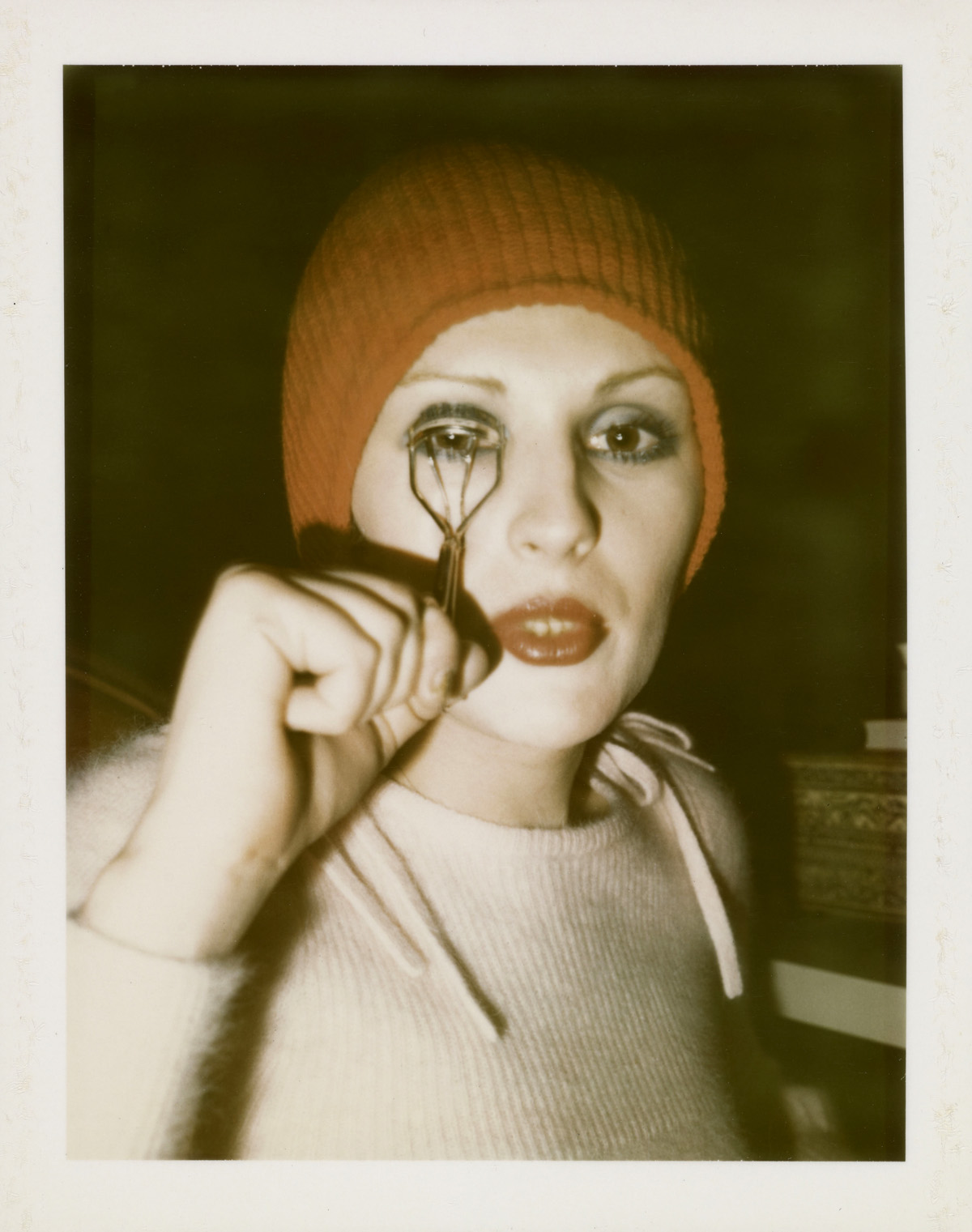
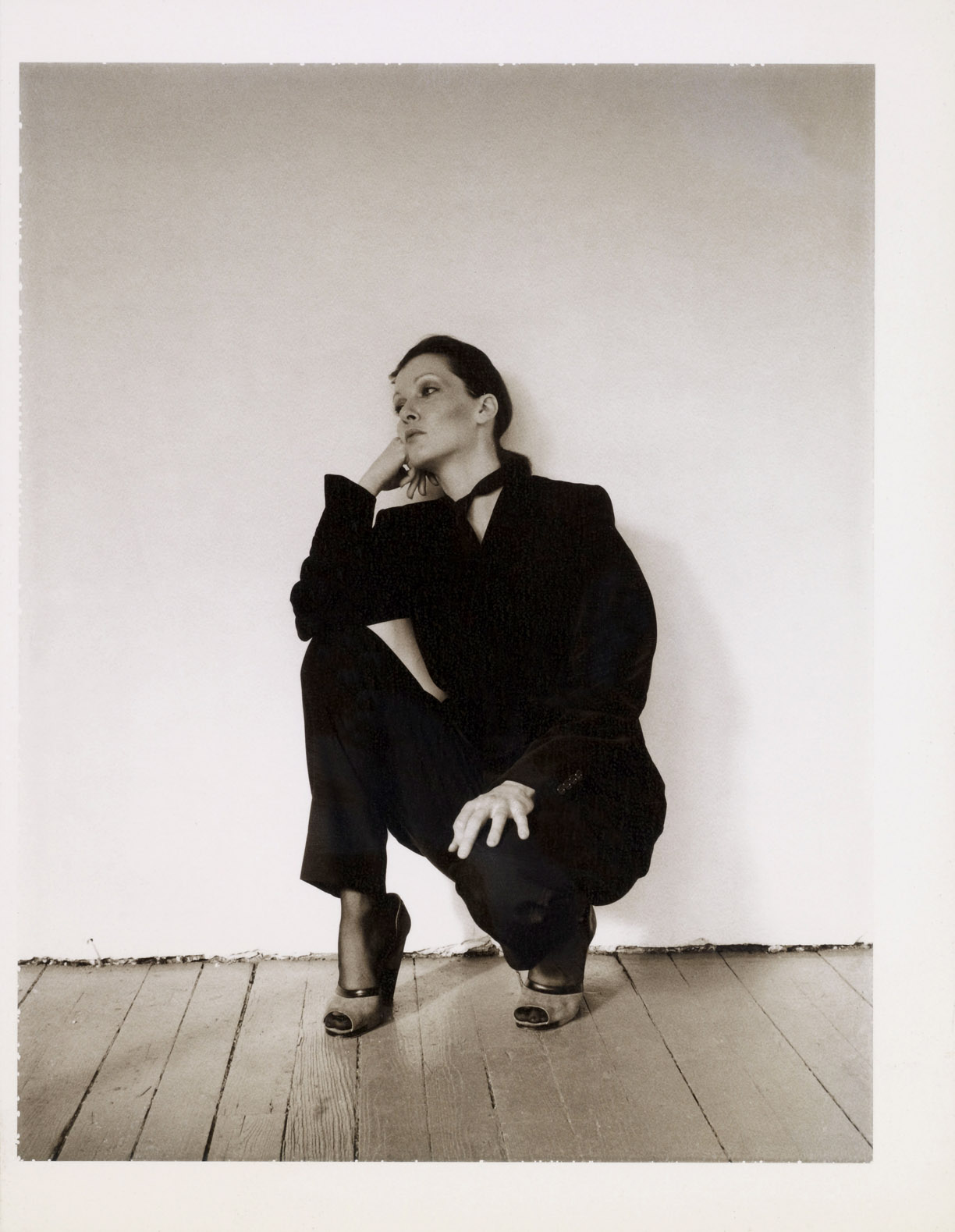
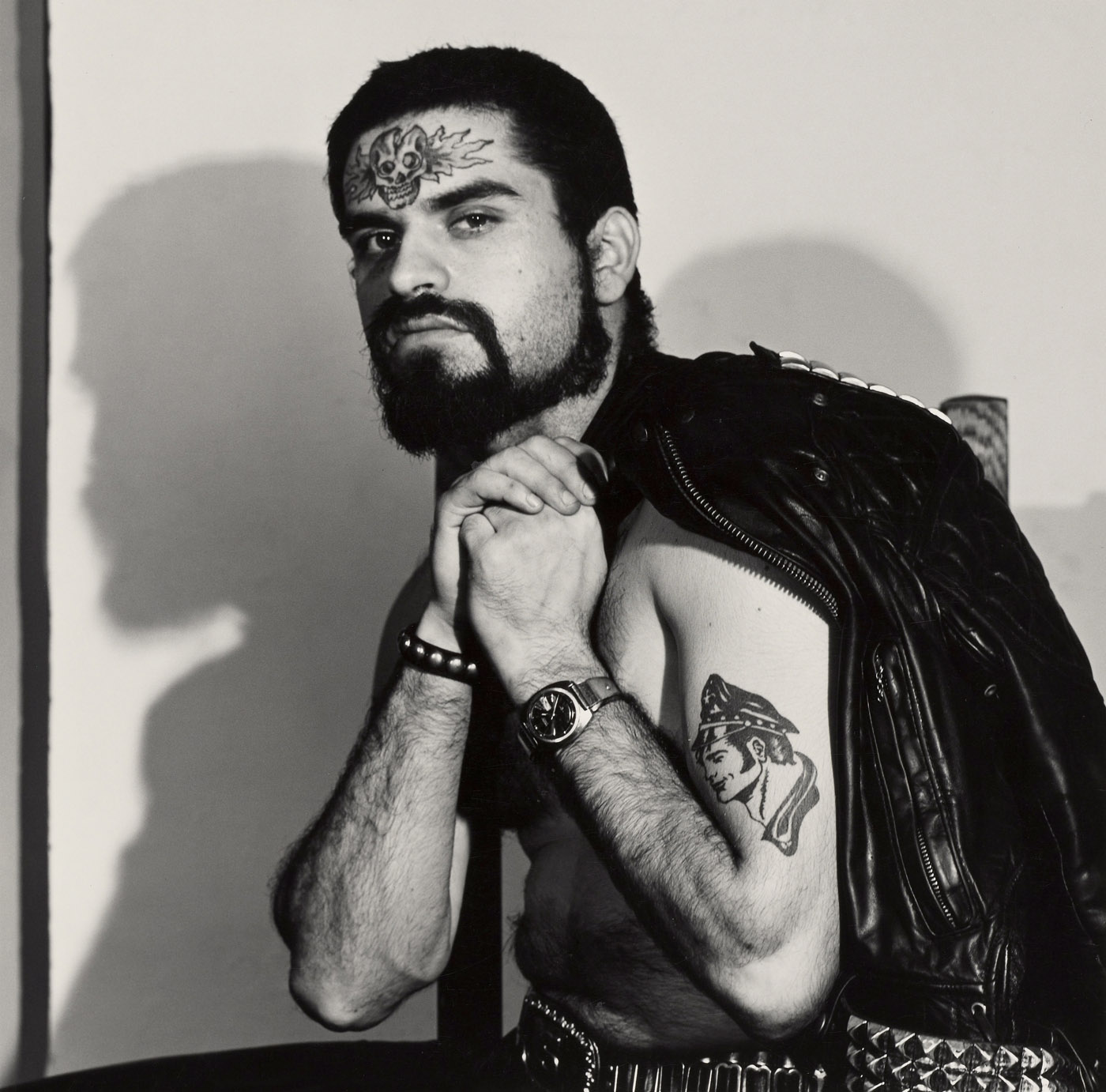
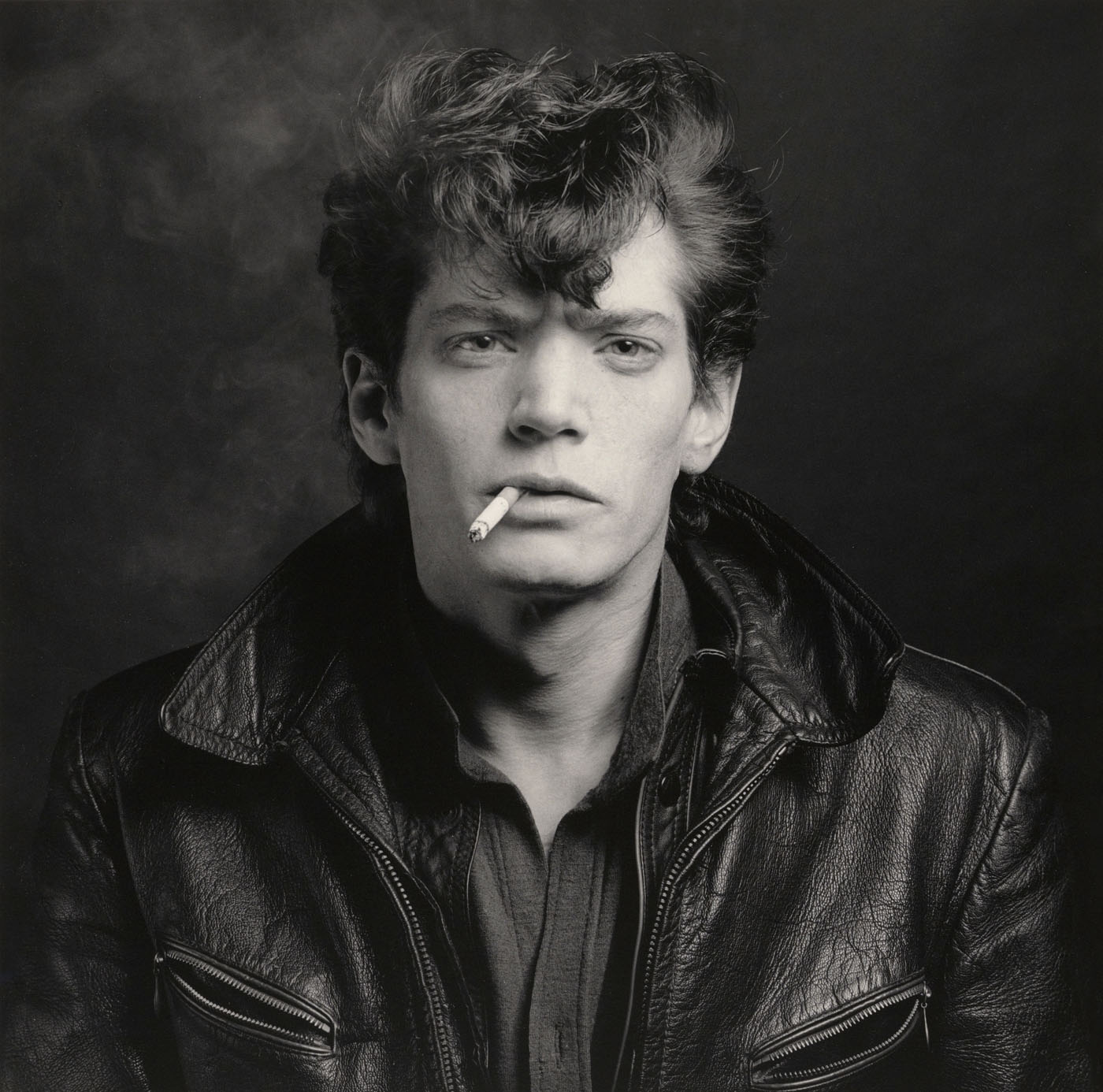


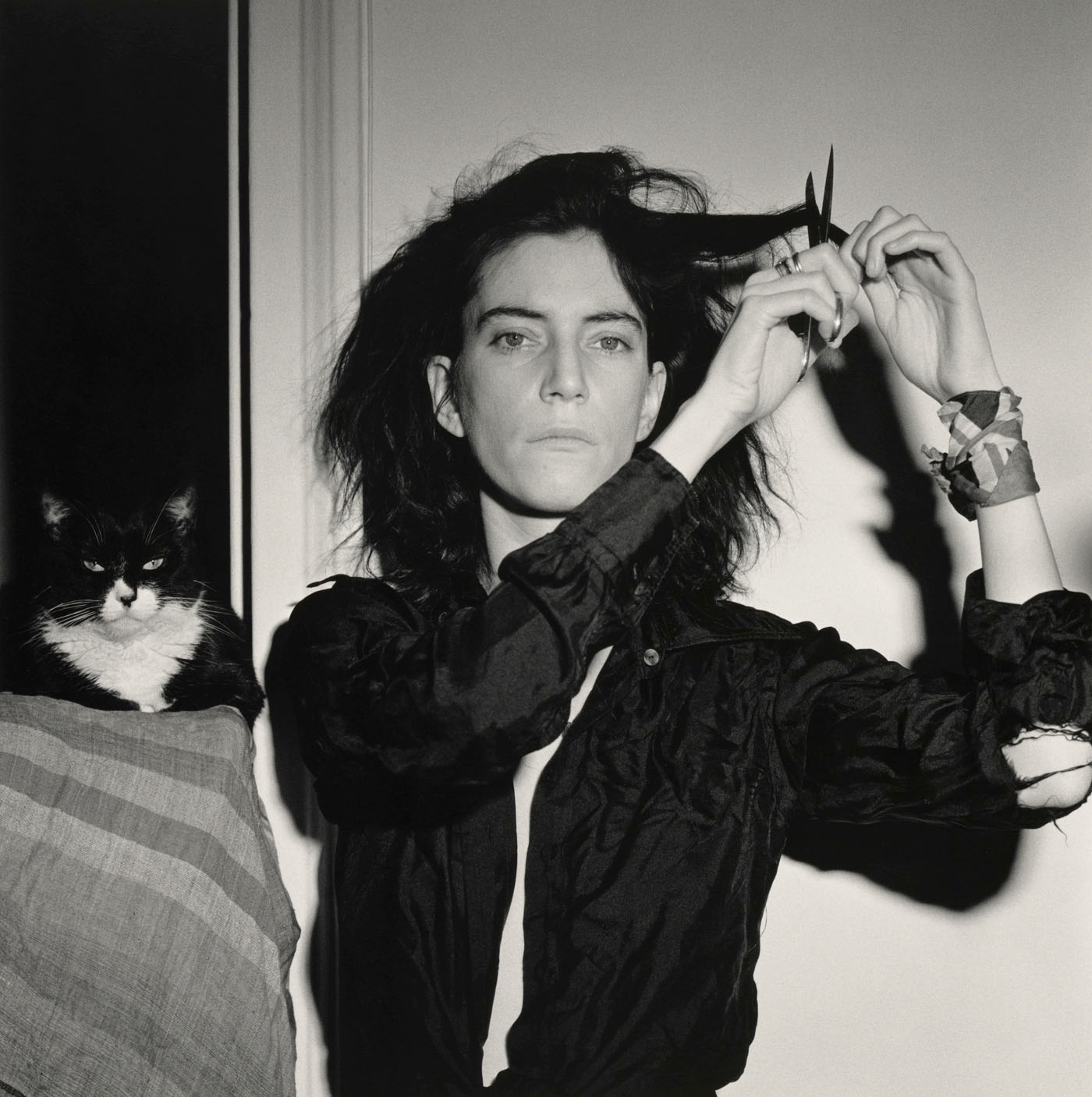
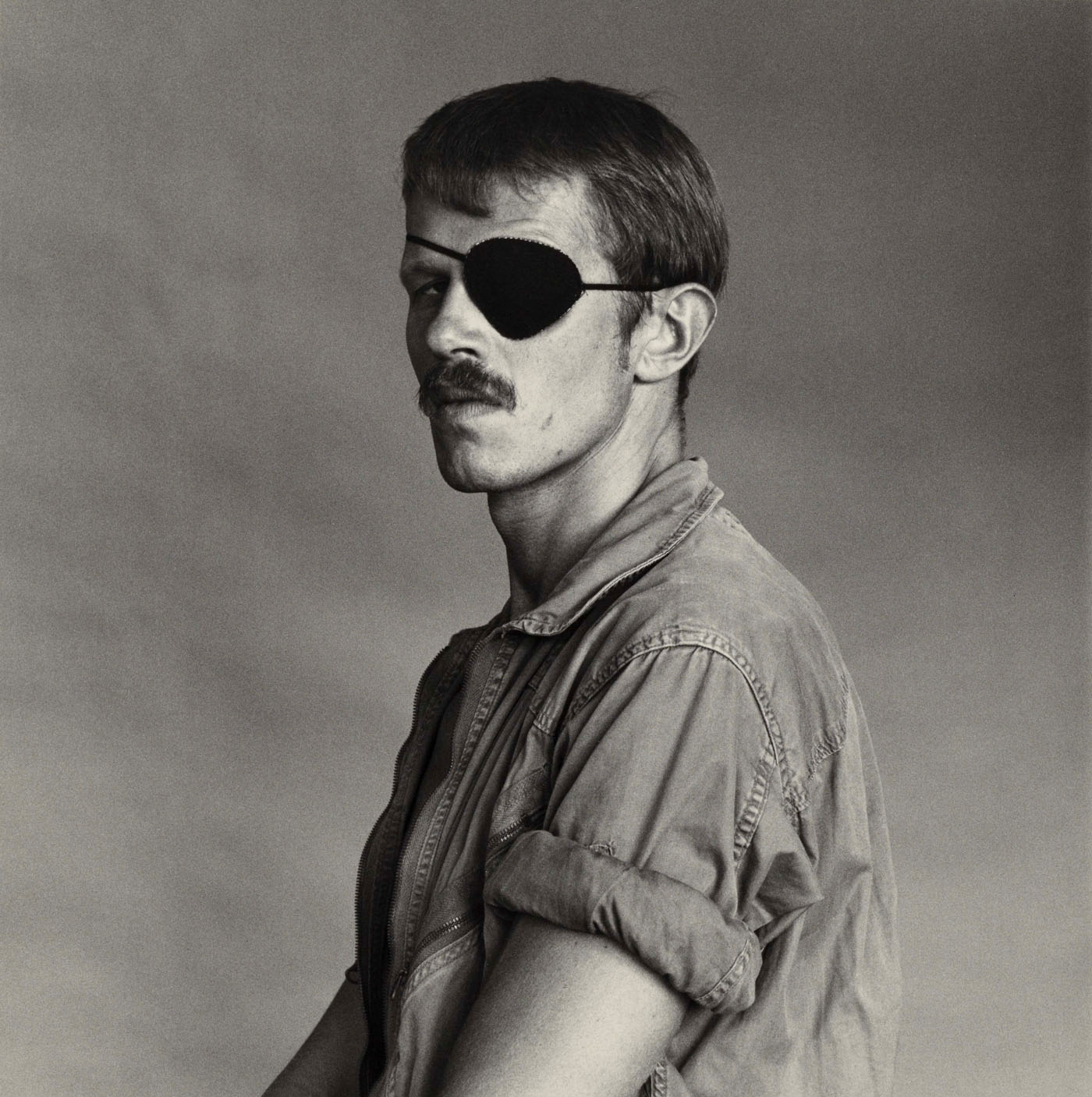
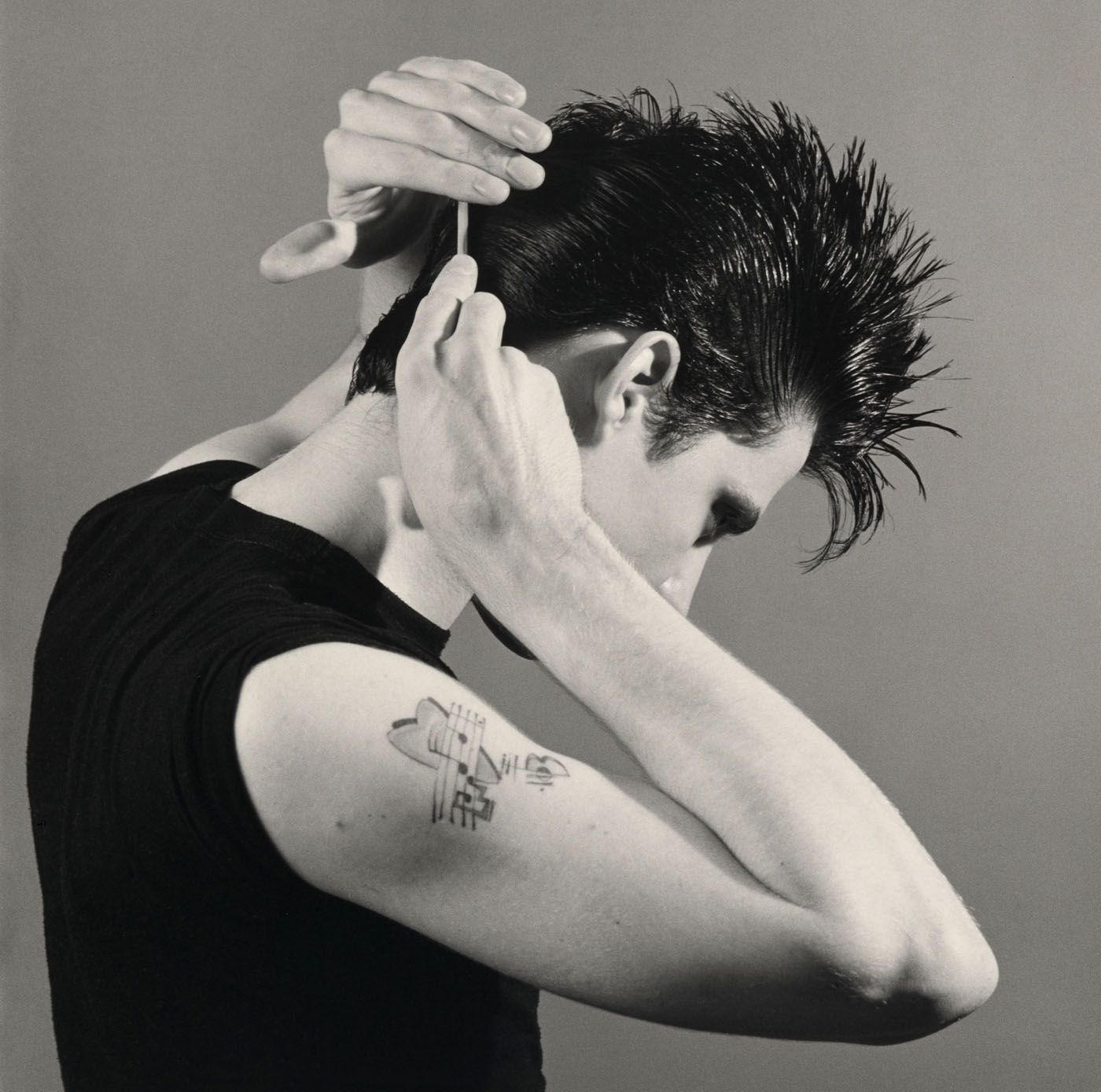
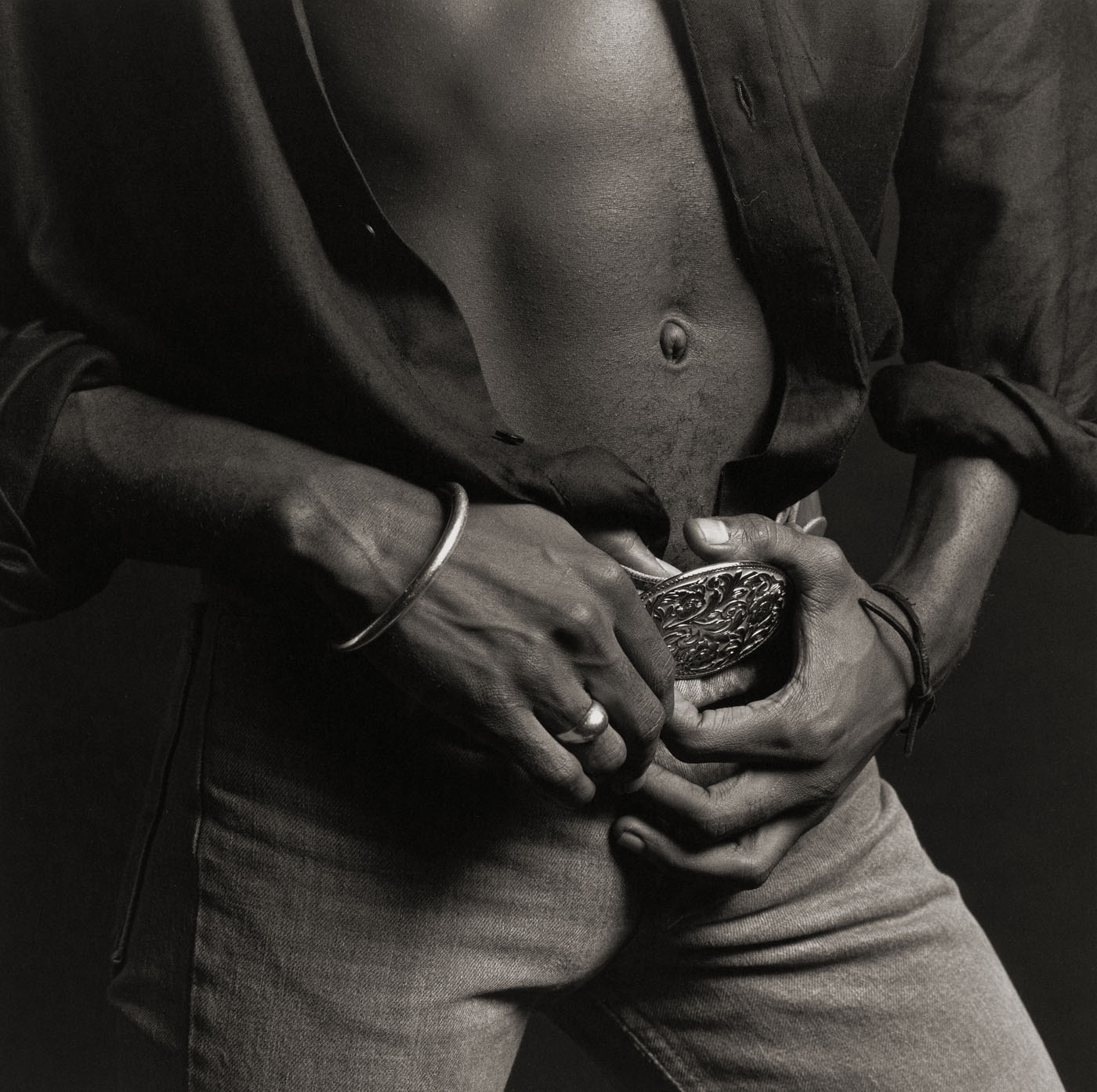
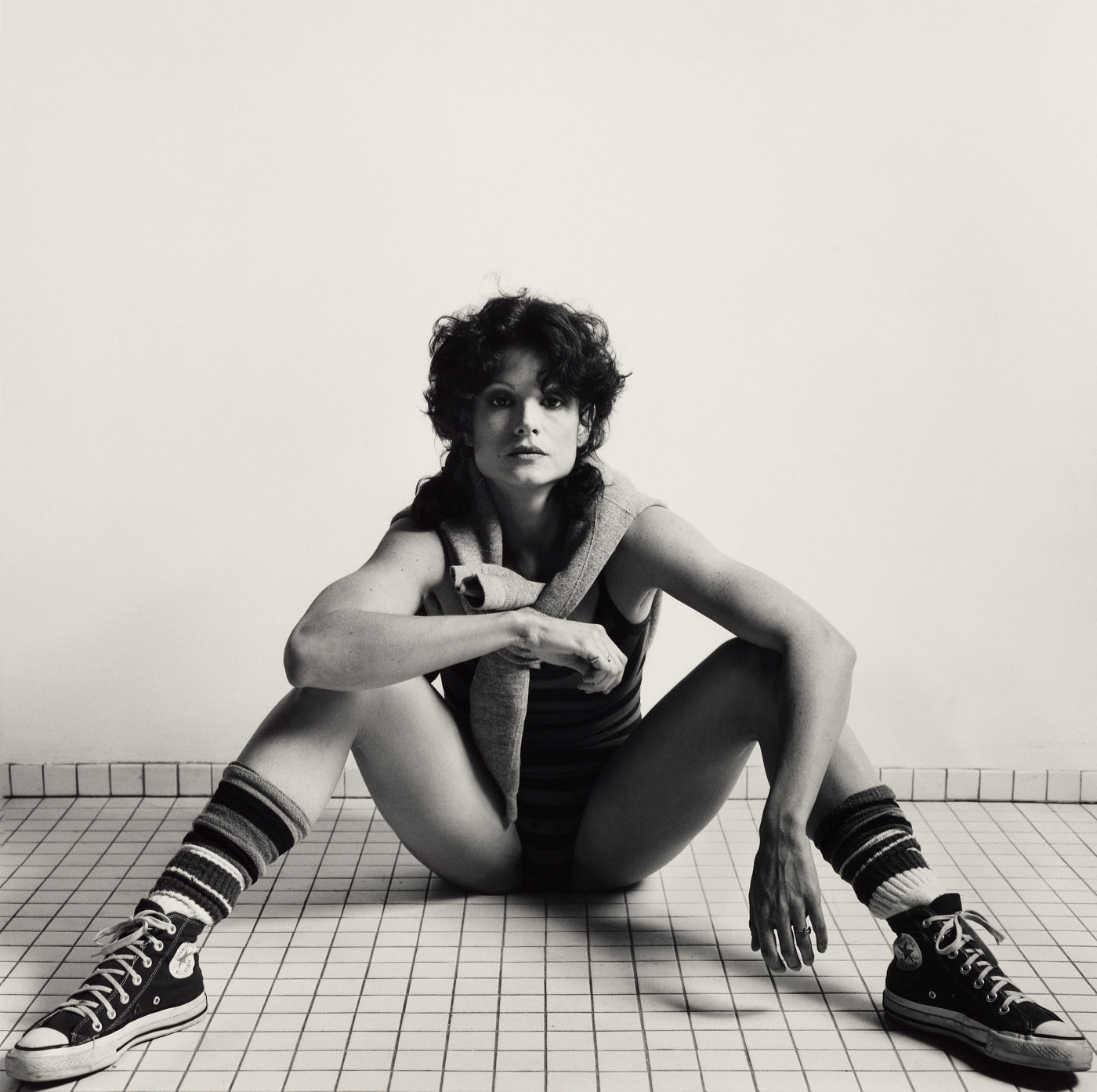
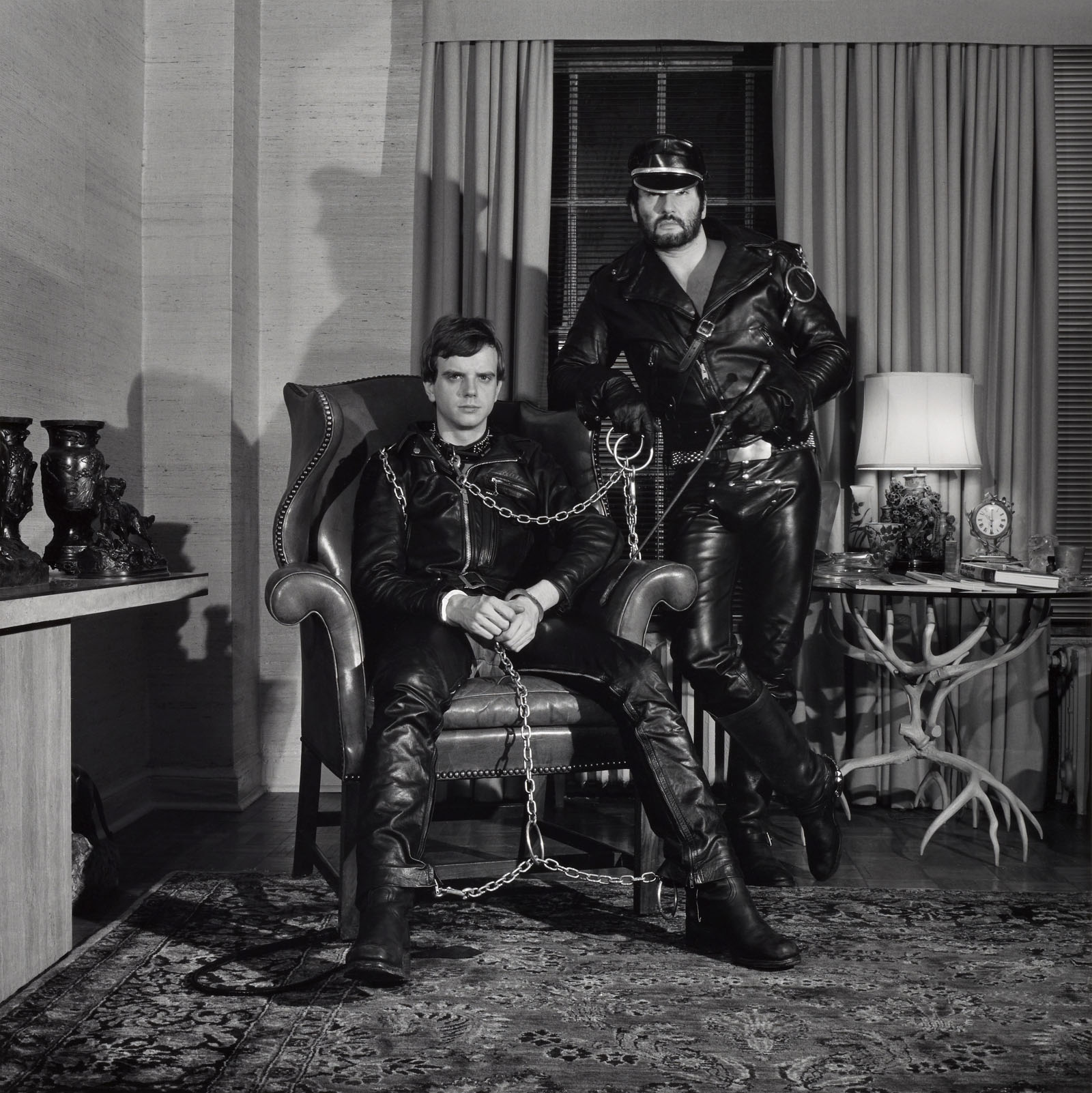
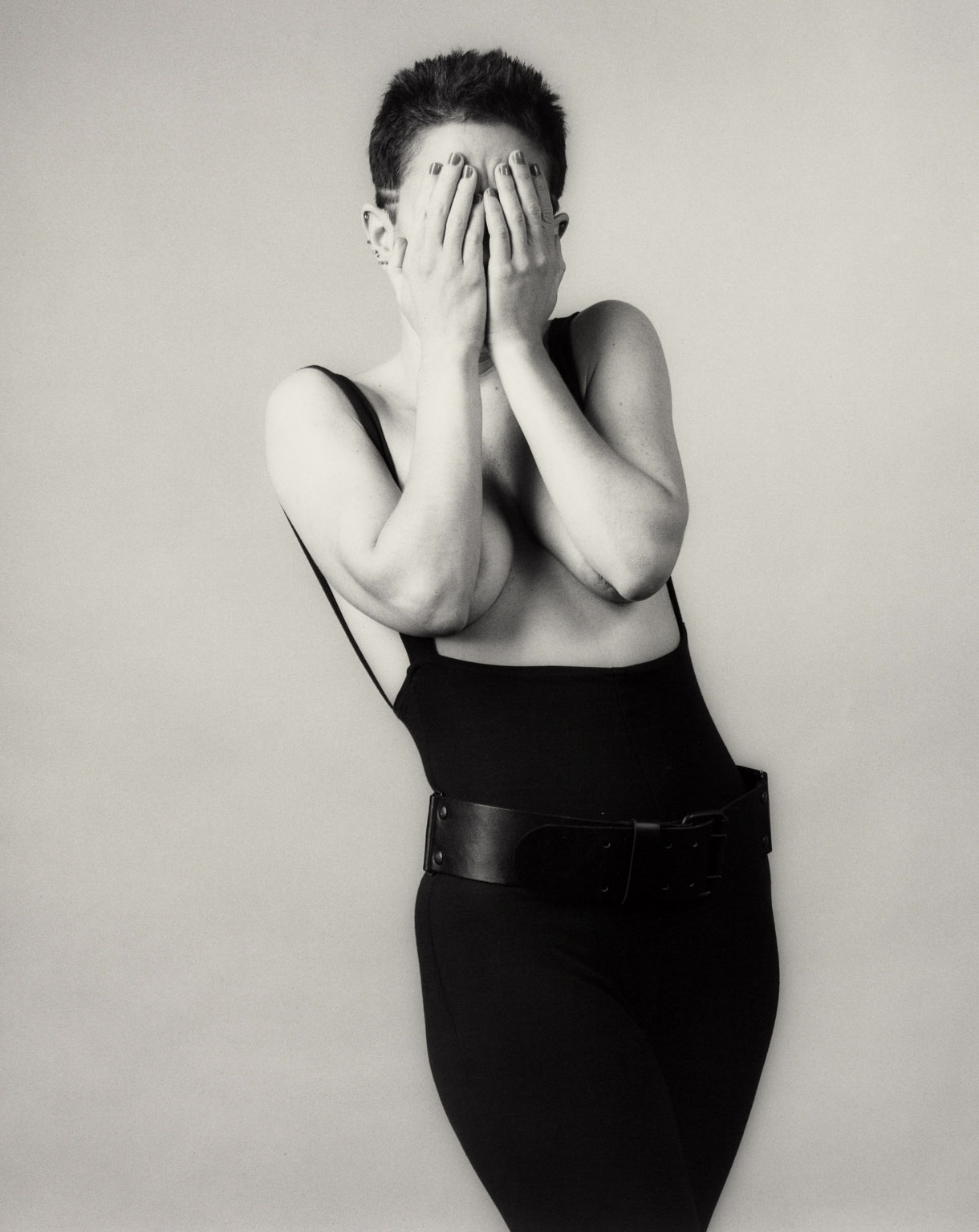
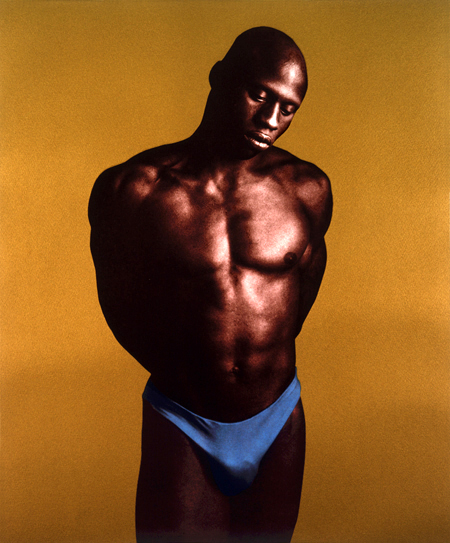
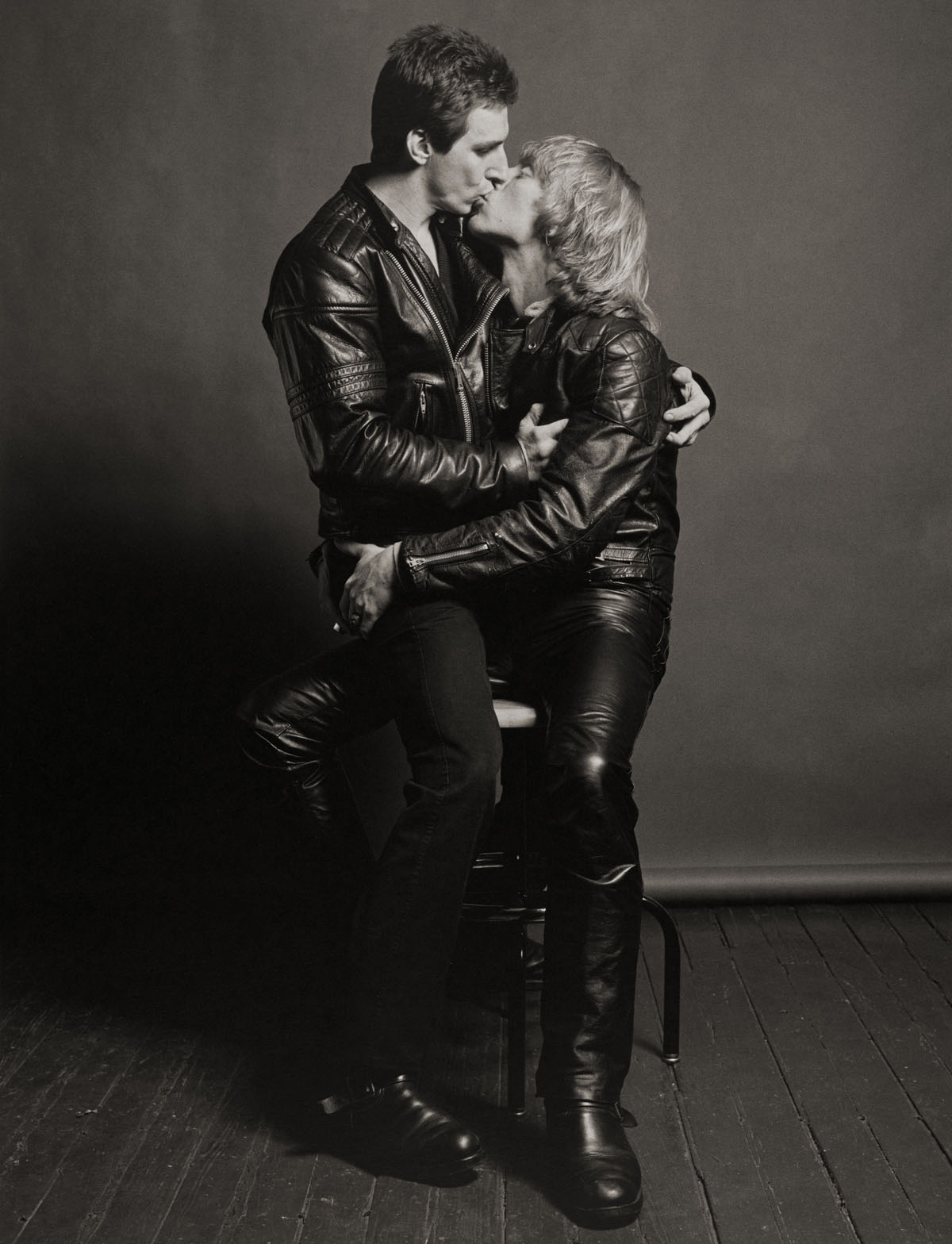
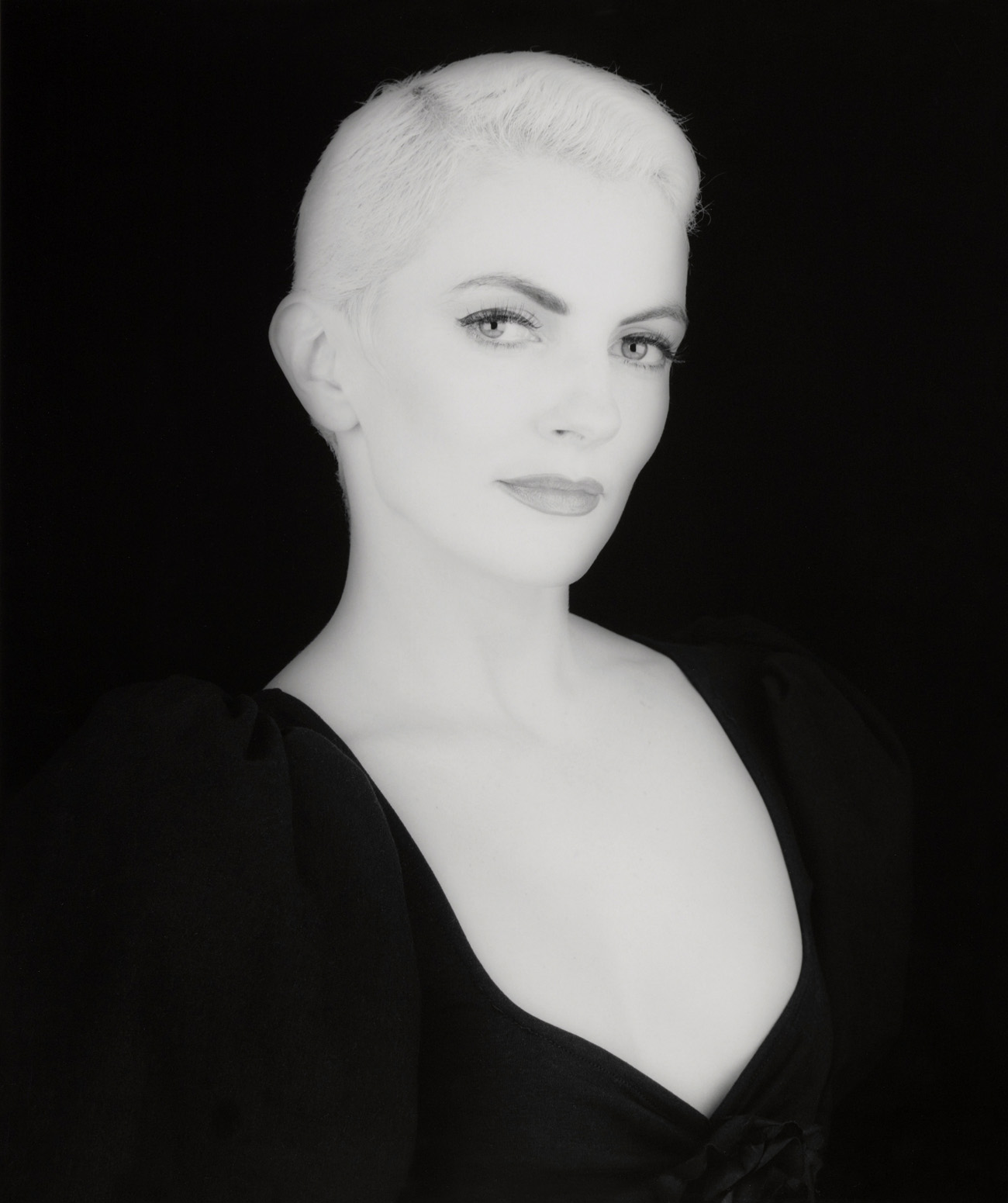
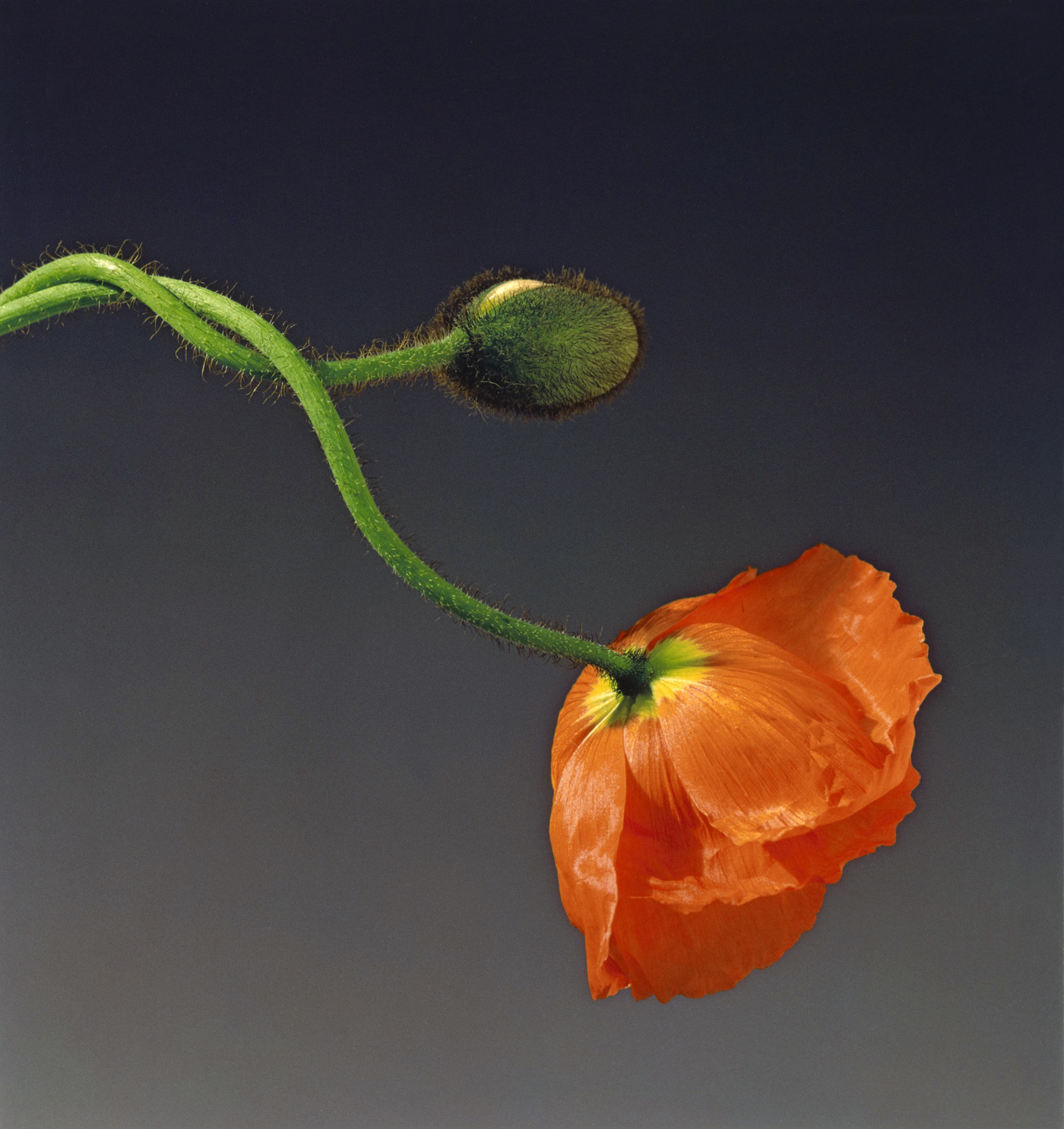
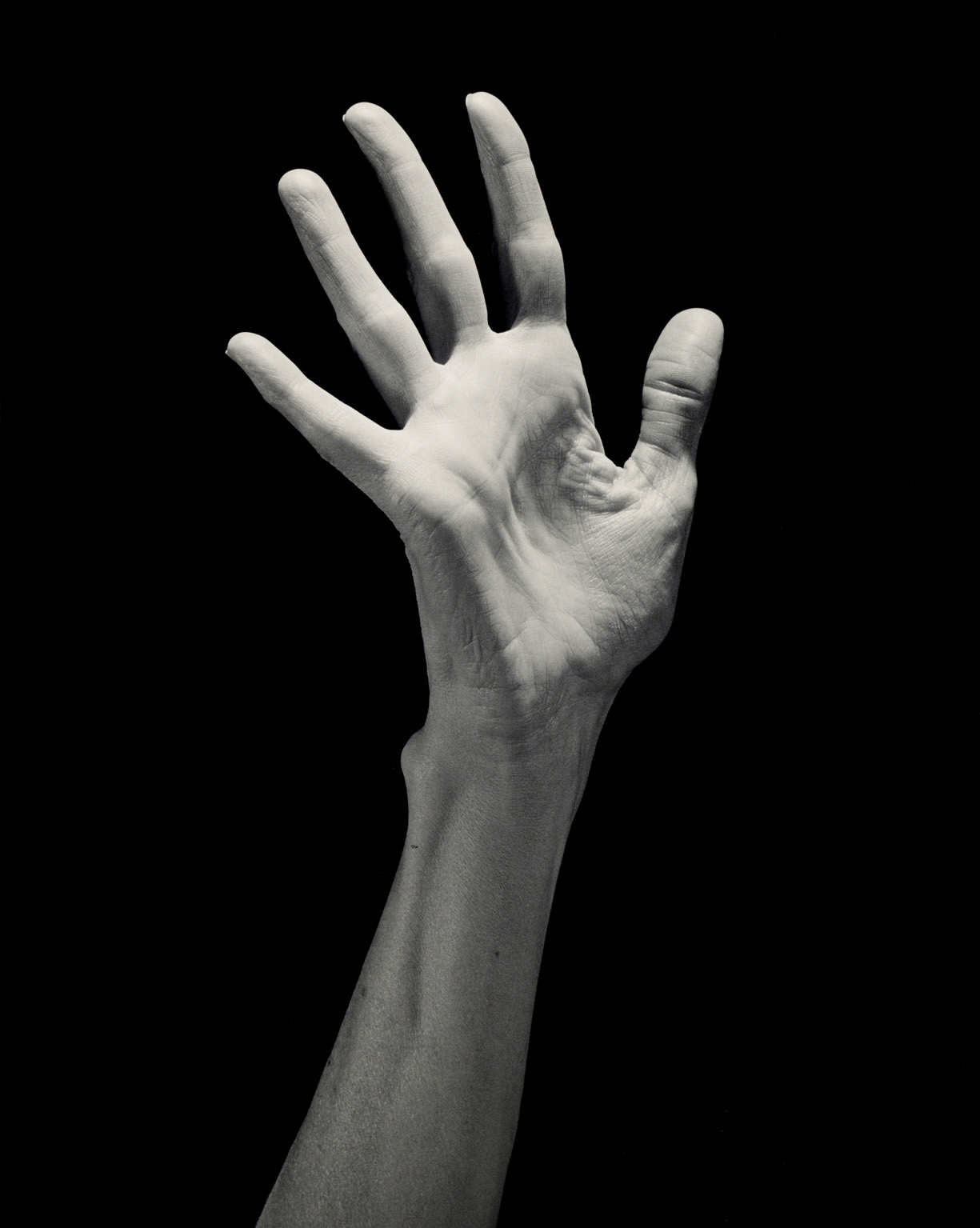
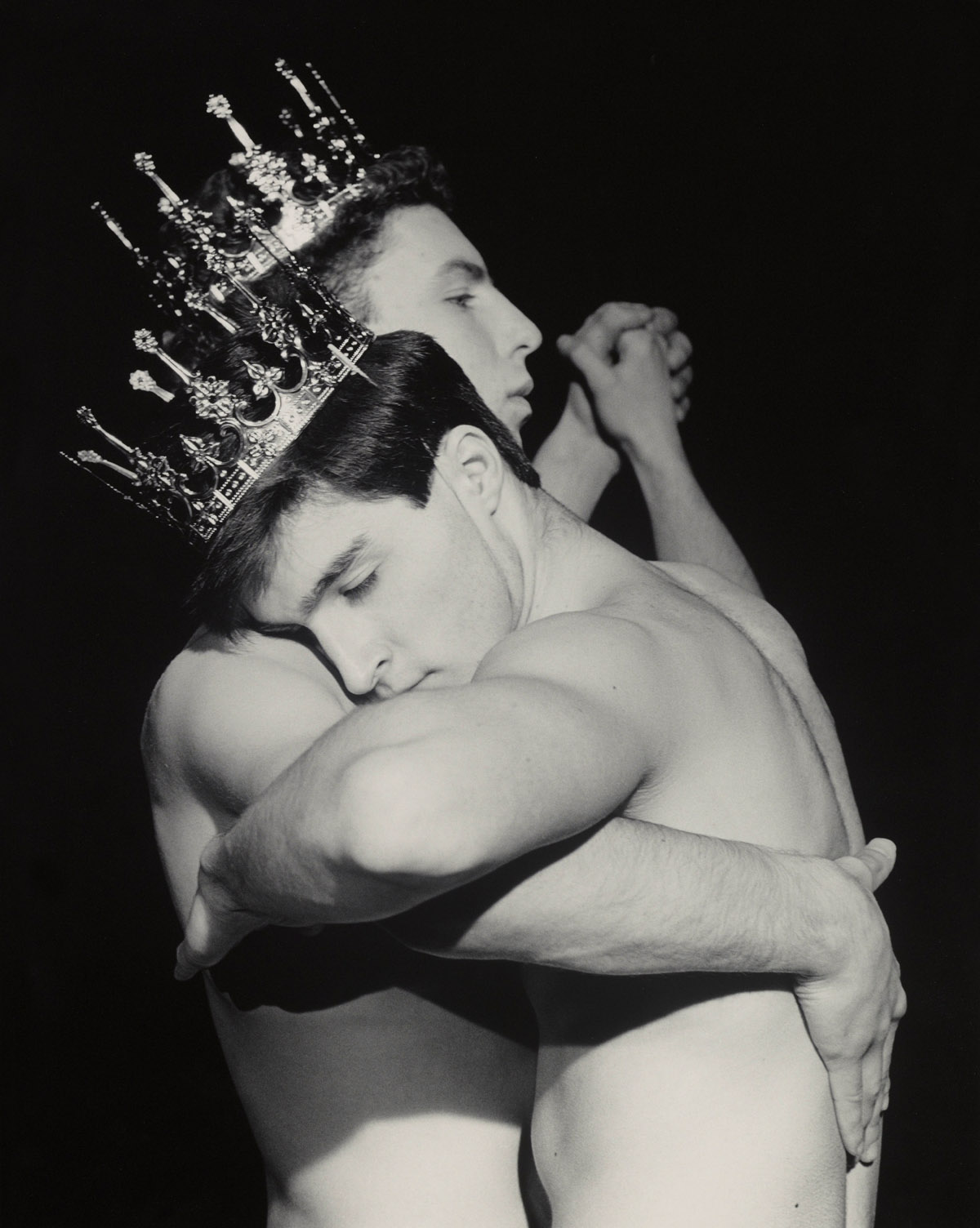


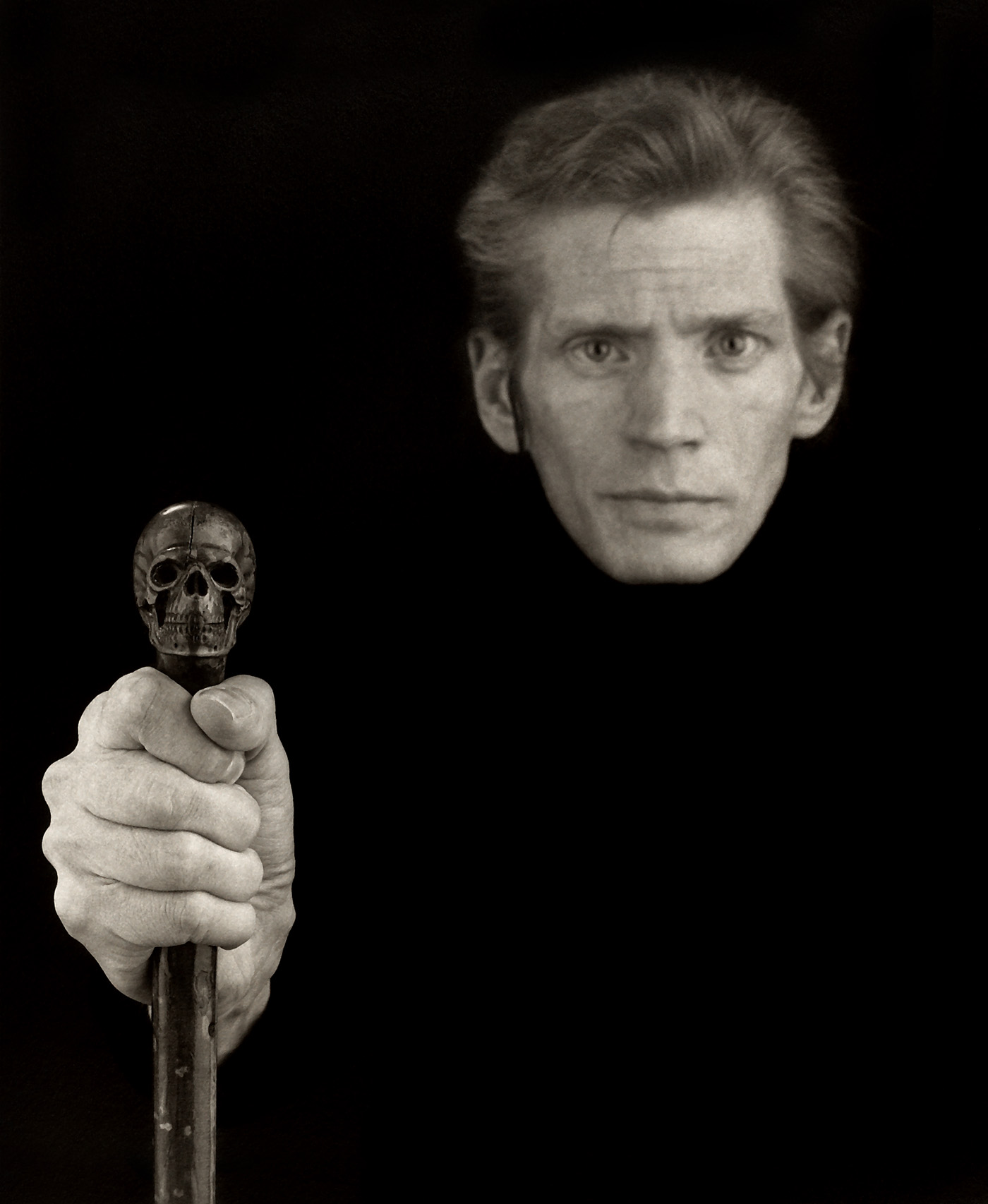
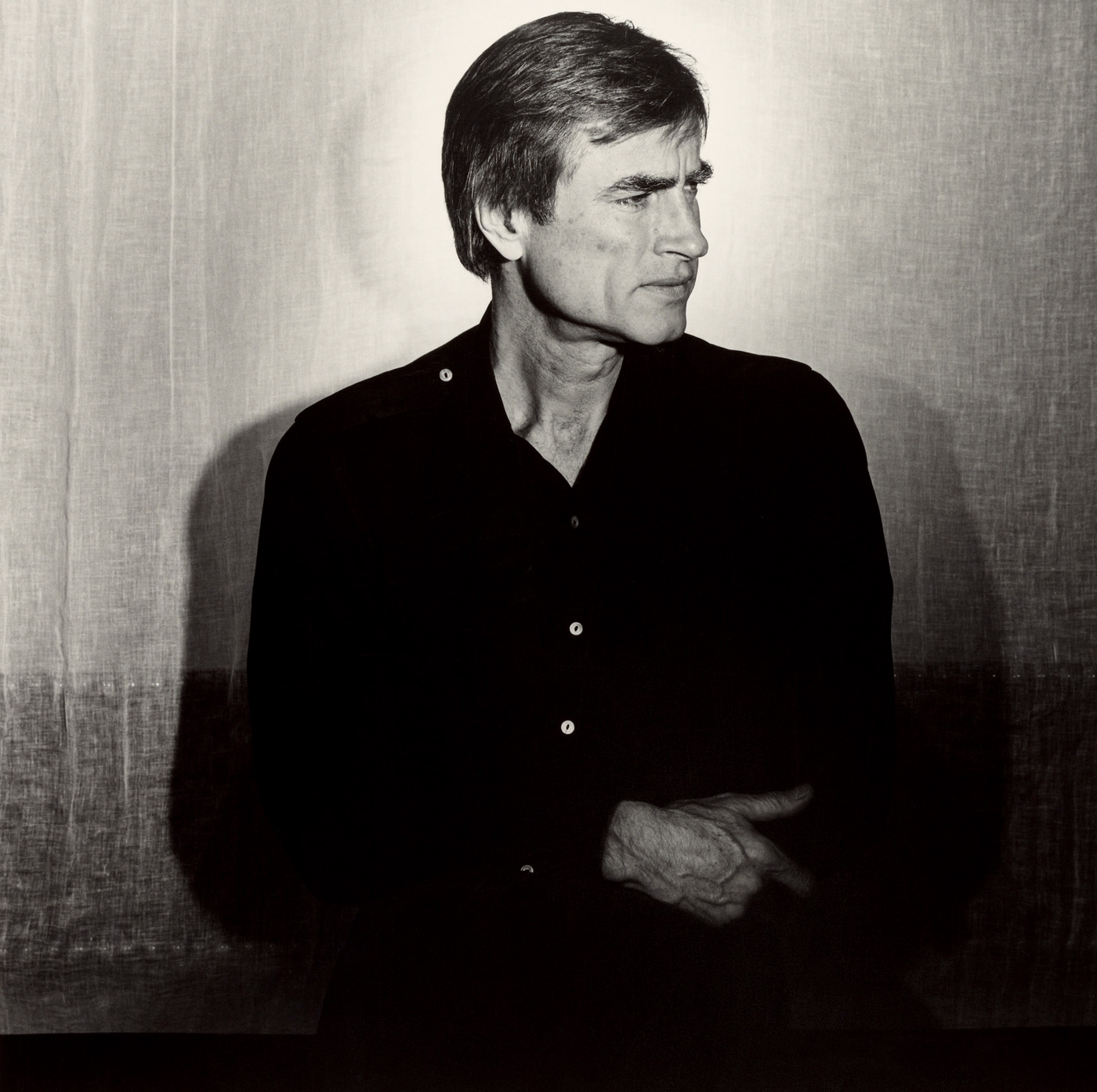
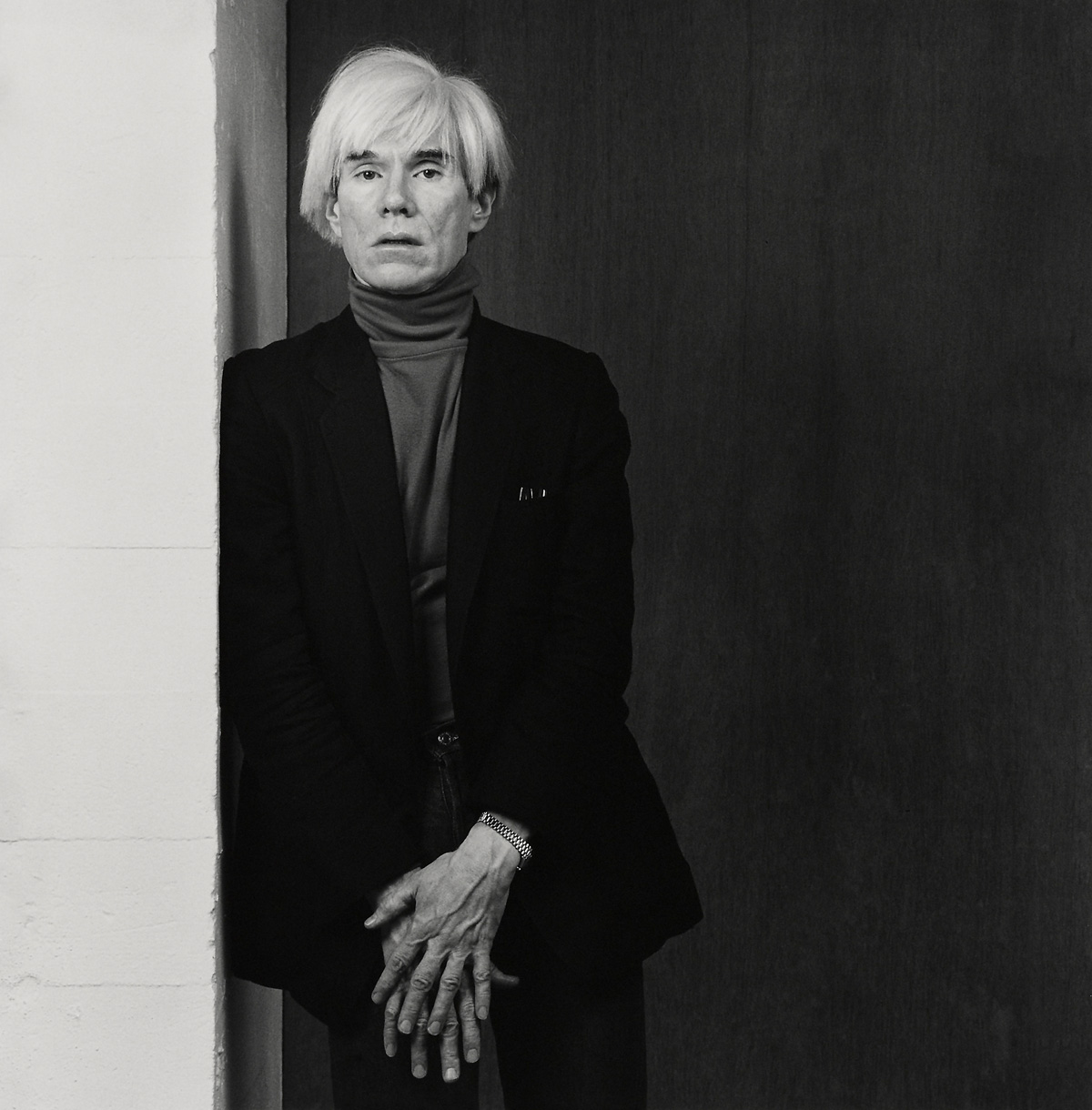


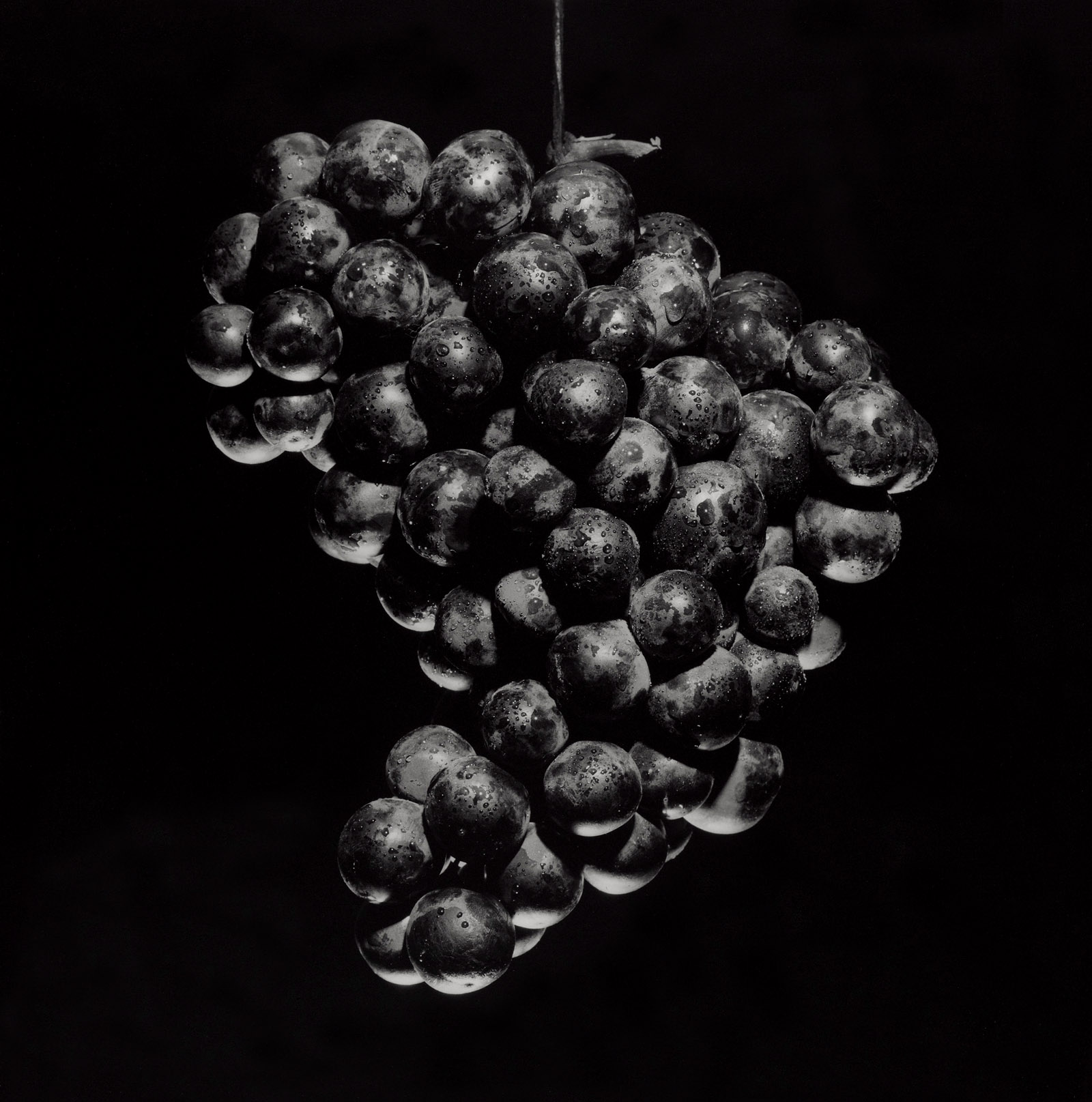
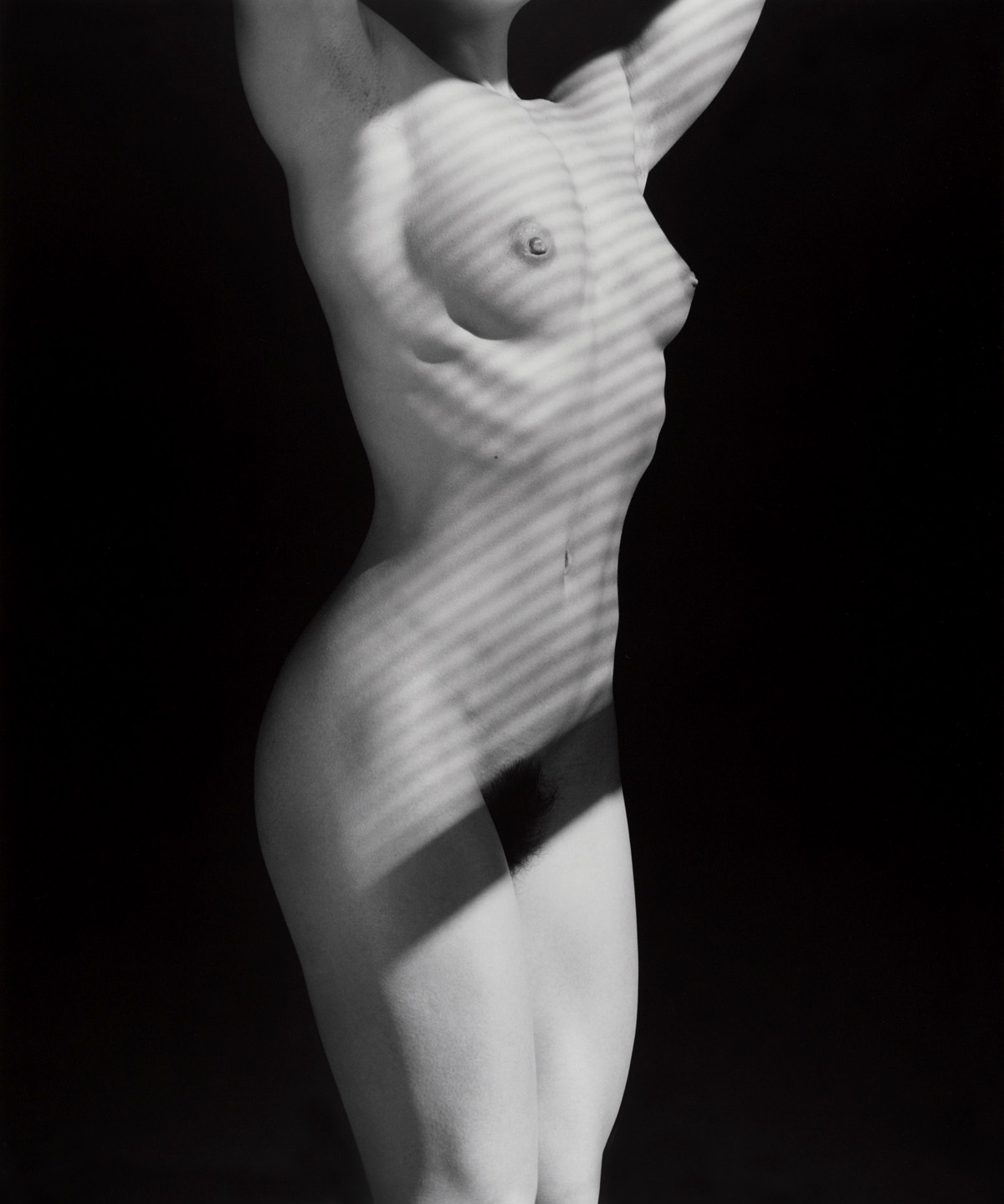


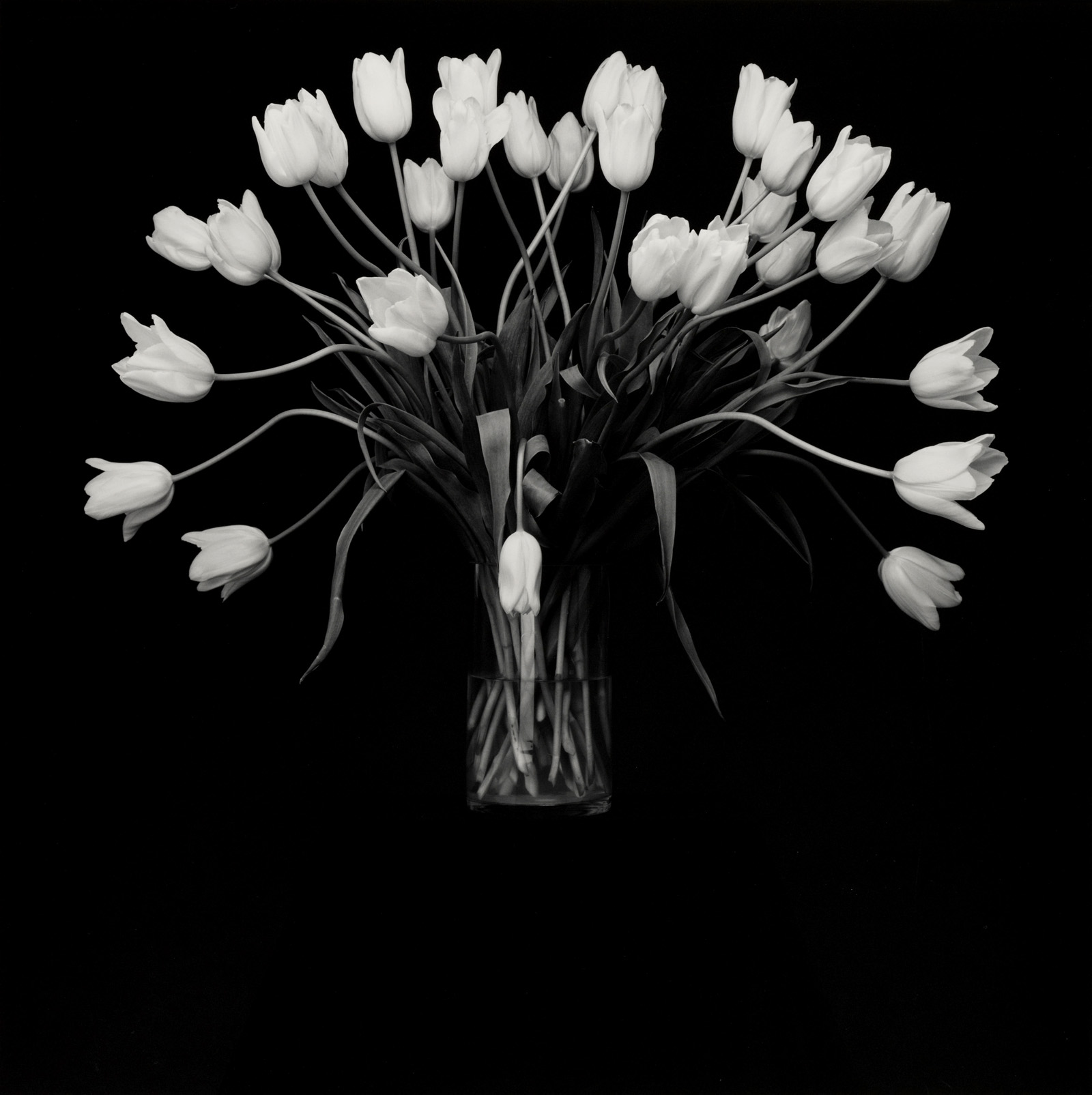
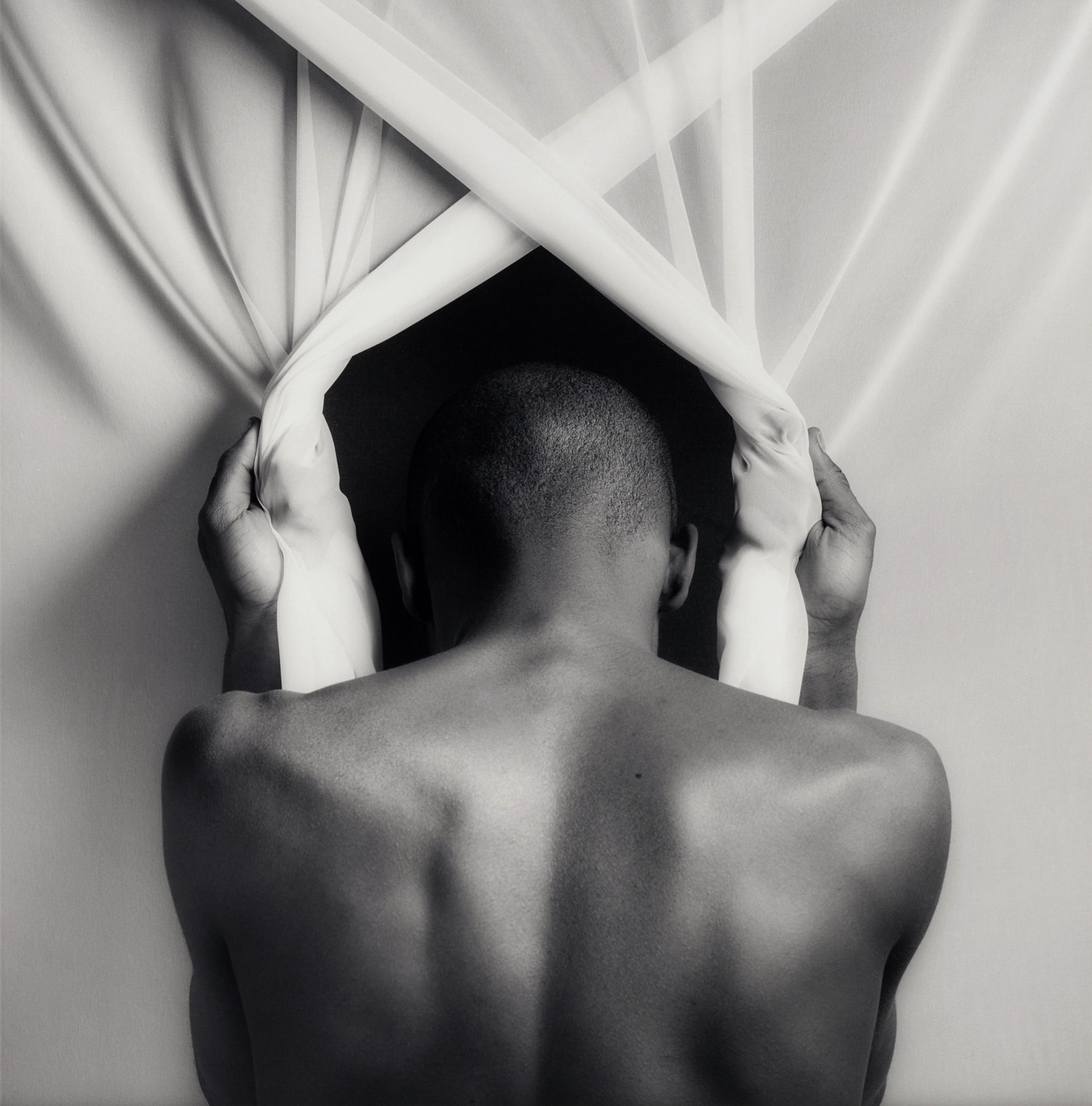
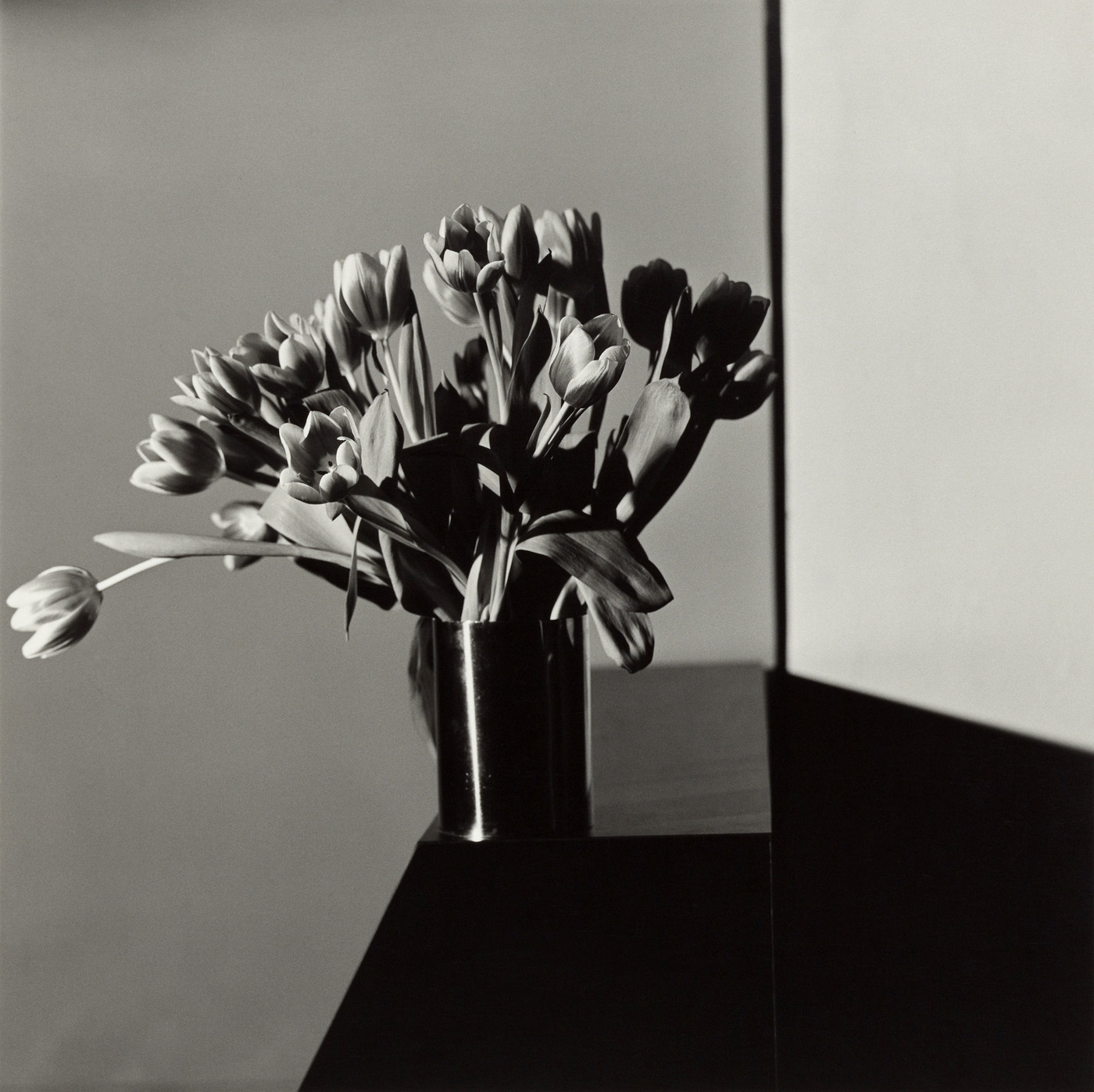

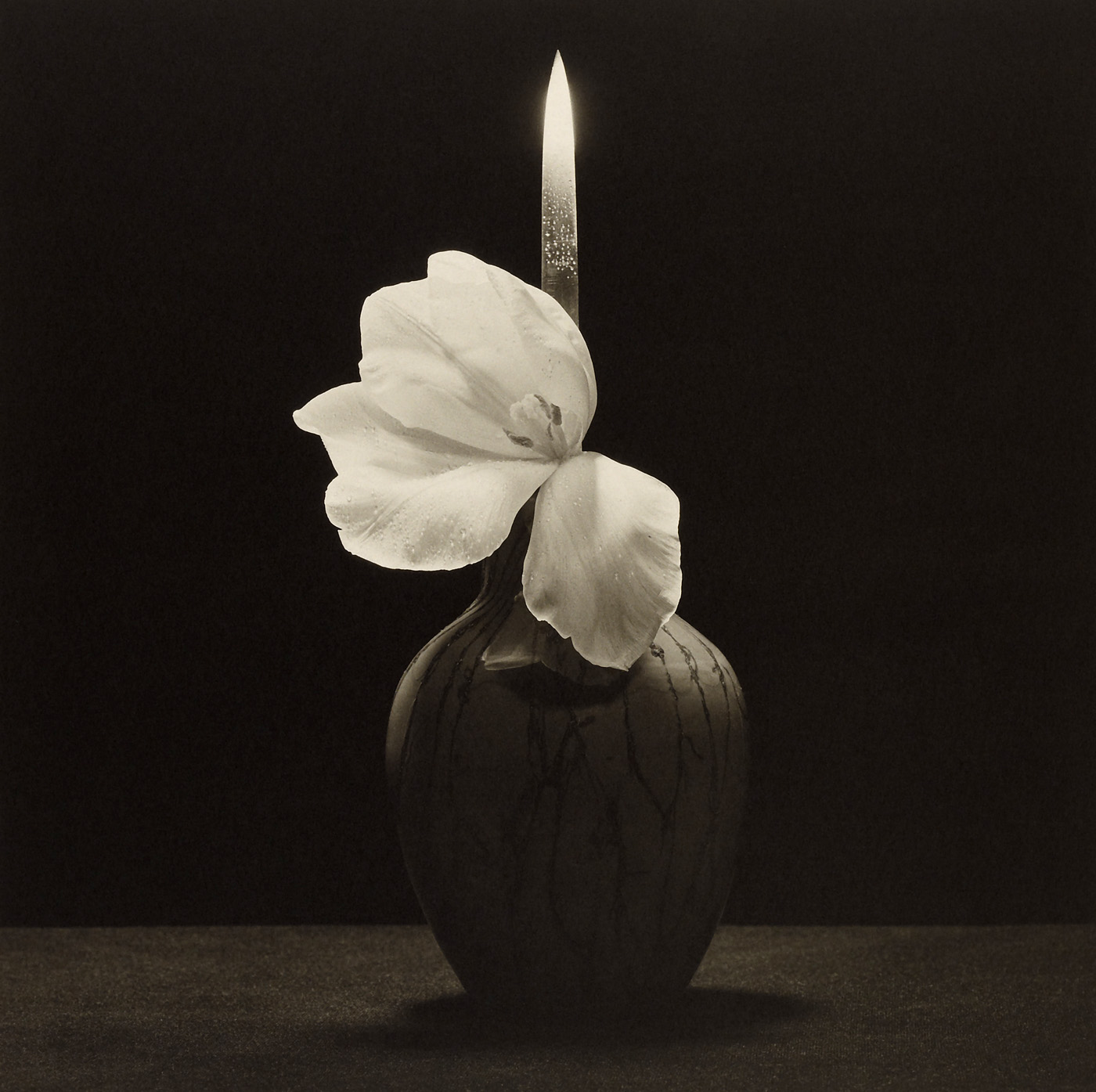
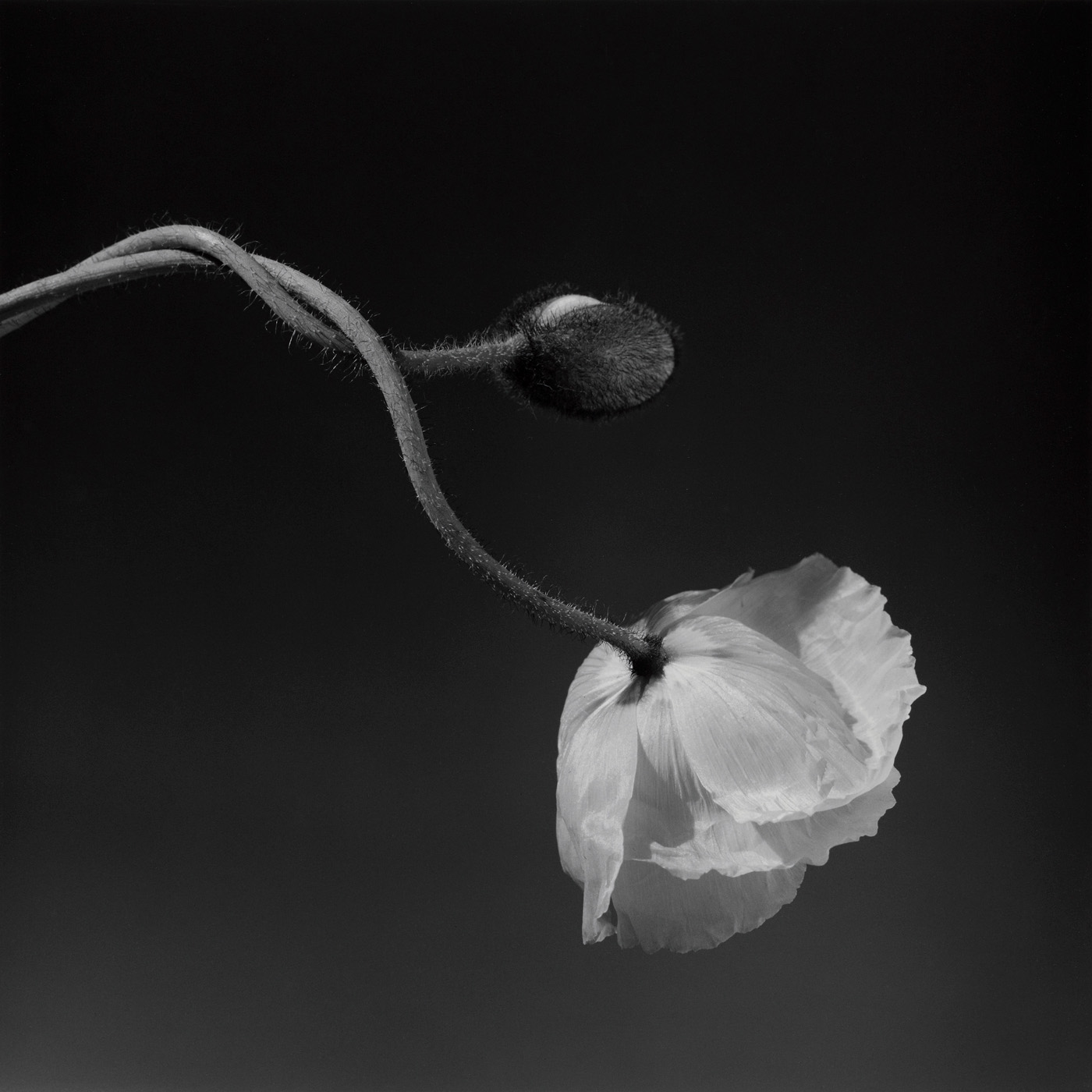

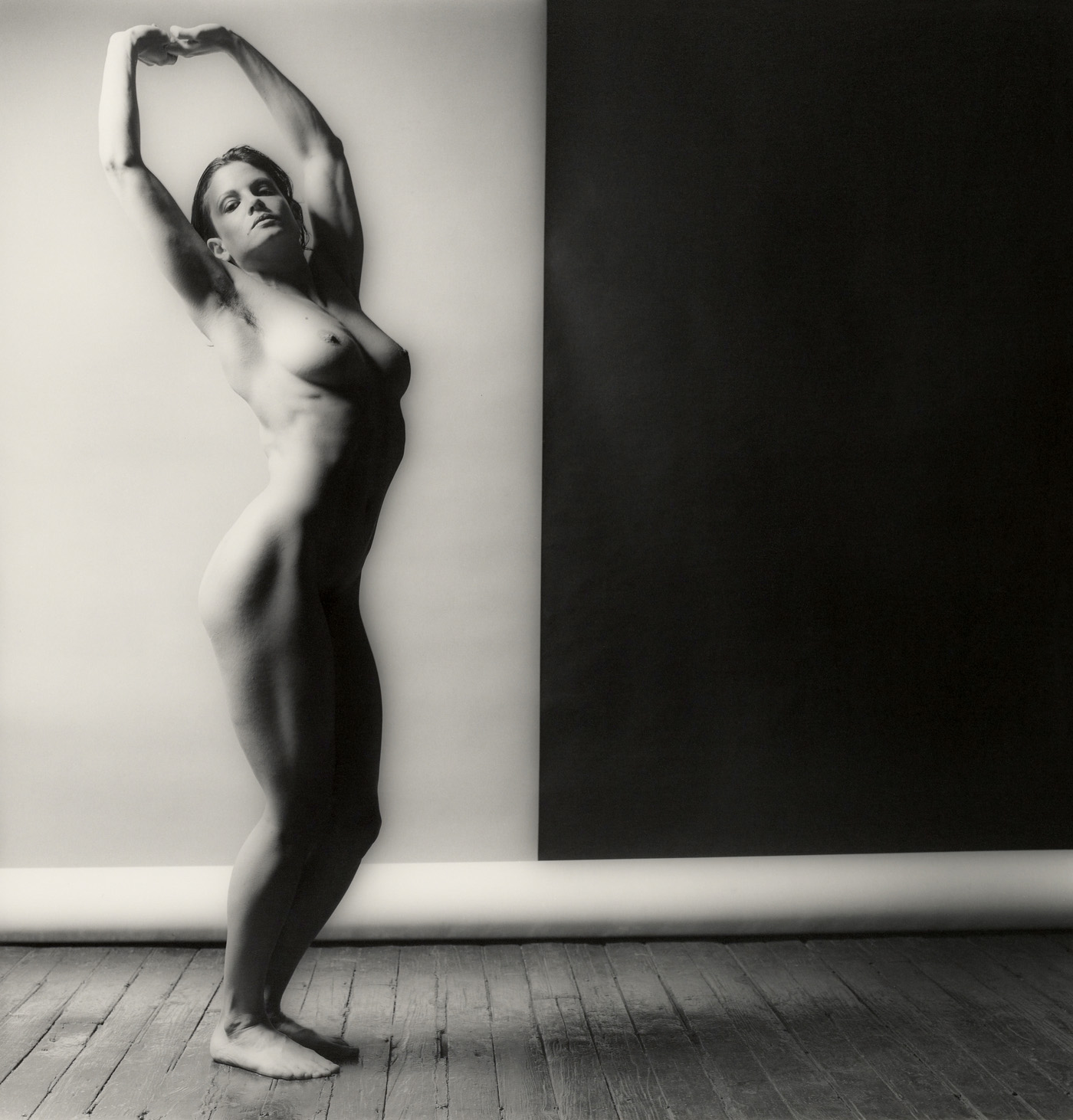
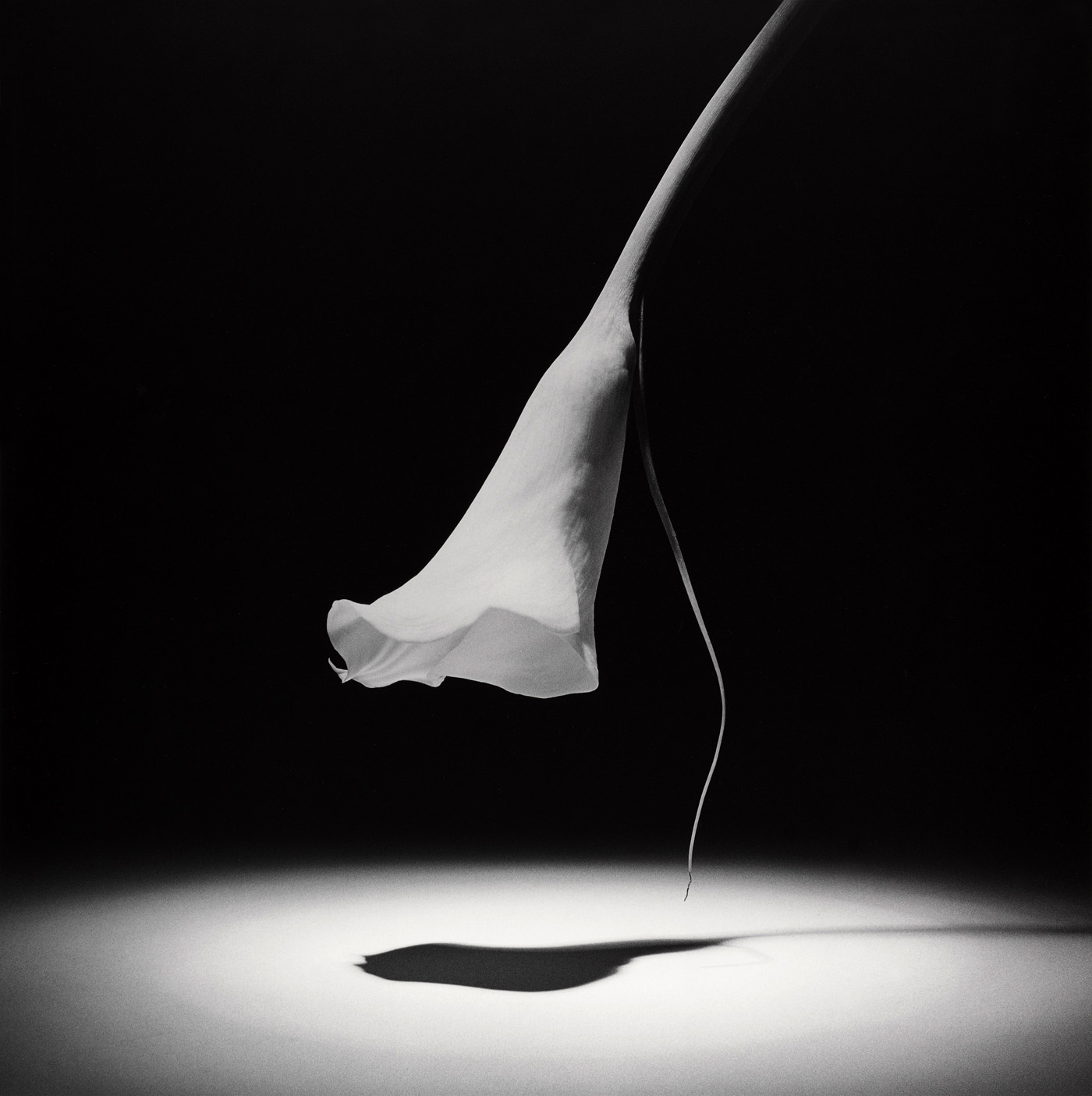
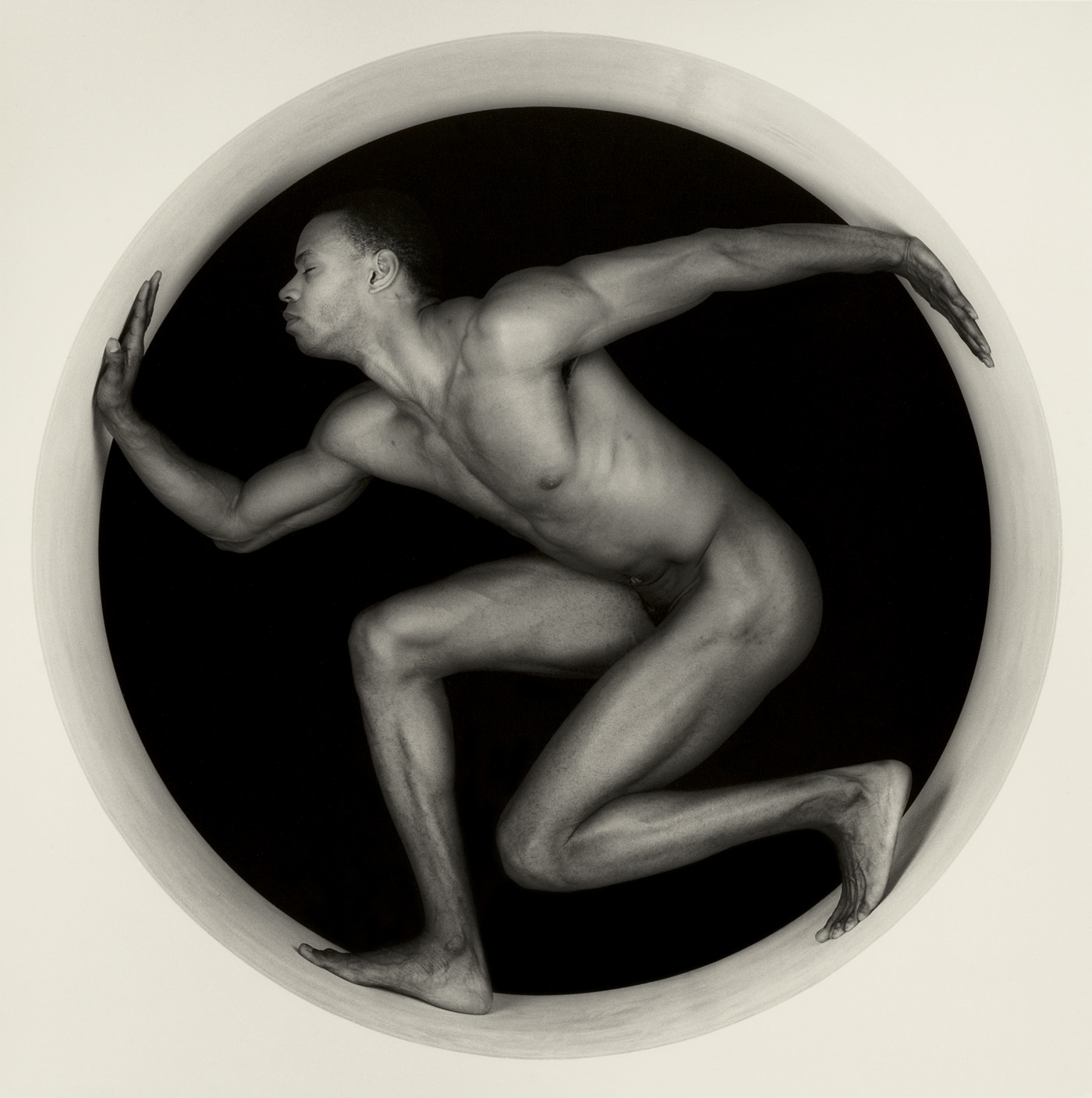

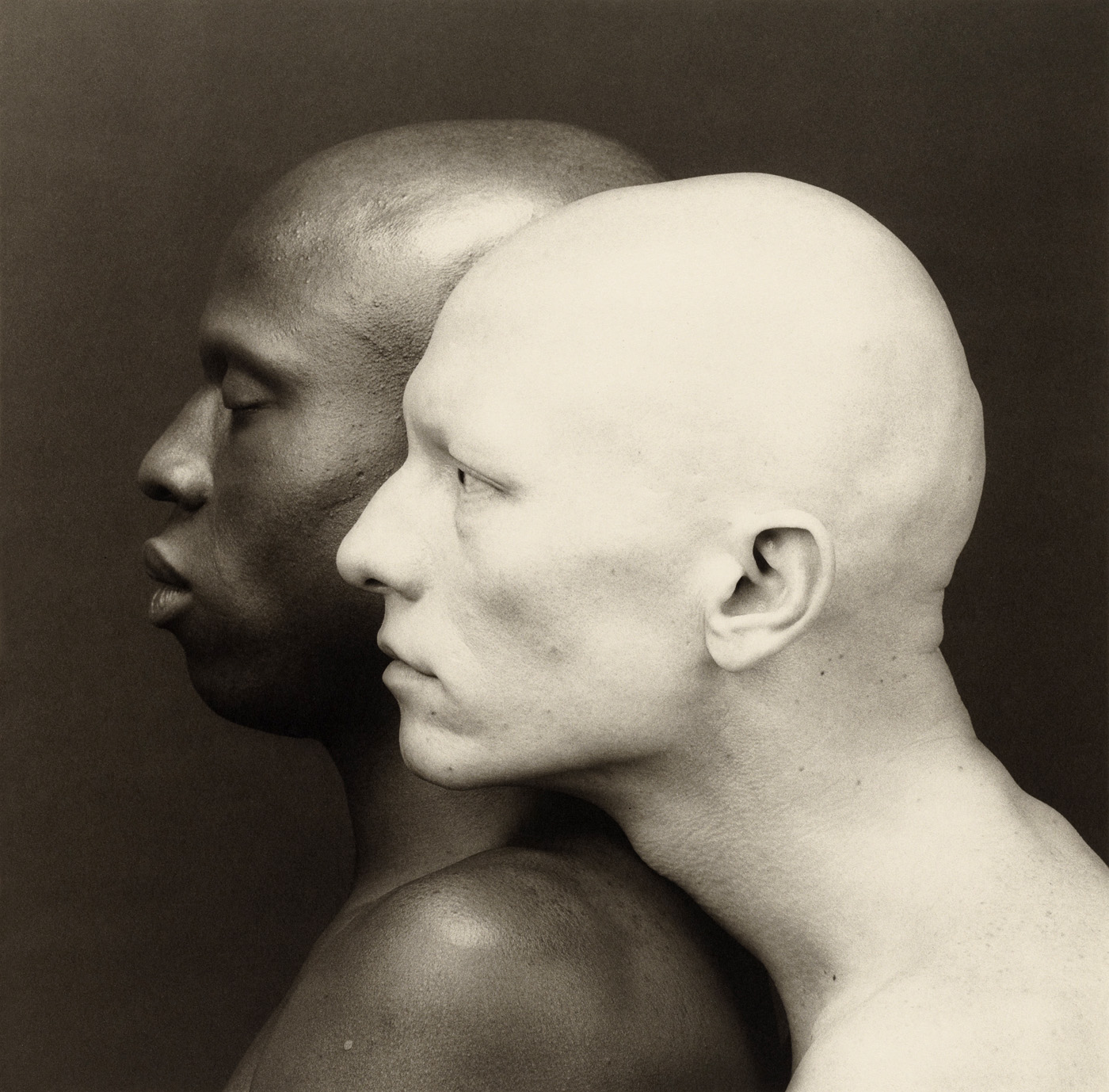
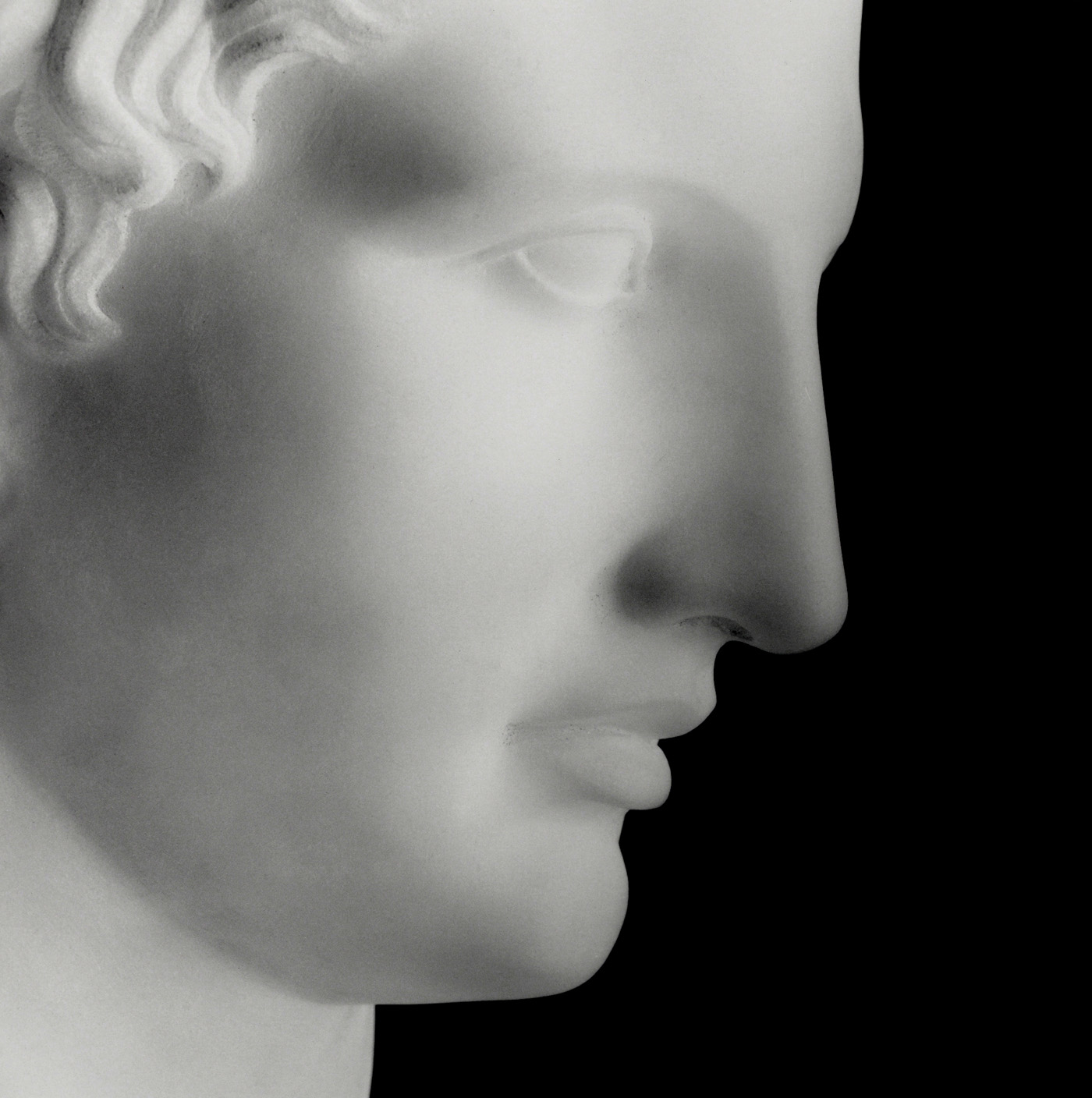

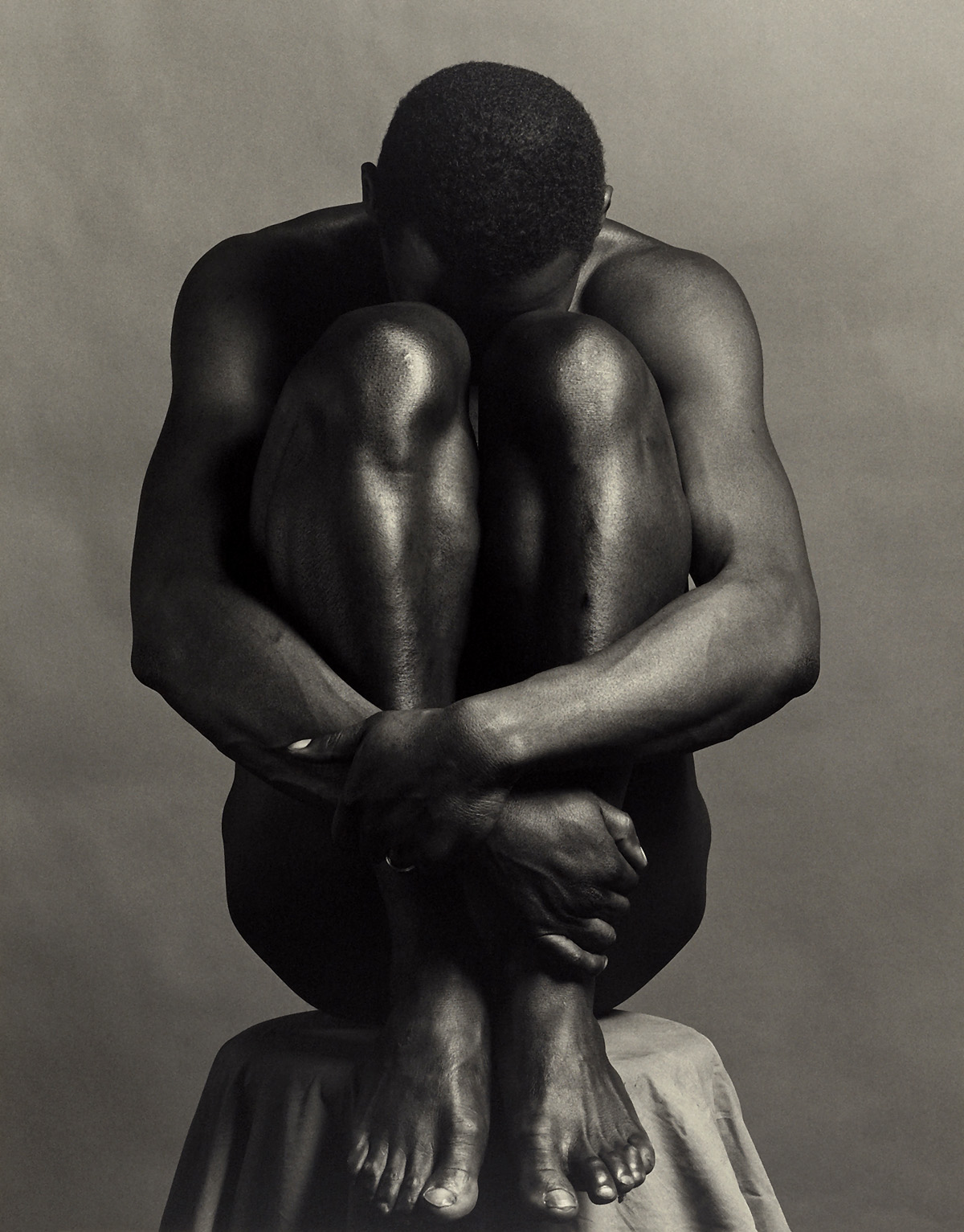


![Unknown photographer (American) '[Jeff Briggs, Robert Sims, Otis Hall, and Peter Pamphlet; Full-Length Mugshot from the Chicago Police Department]' 1936 from the exhibition 'Crime Stories: Photography and Foul Play' at the Metropolitan Museum of Art, New York, March - July, 2016](https://artblart.com/wp-content/uploads/2016/07/mug-shot1-web.jpg "Unknown photographer (American) '[Jeff Briggs, Robert Sims, Otis Hall, and Peter Pamphlet; Full-Length Mugshot from the Chicago Police Department]' 1936 from the exhibition 'Crime Stories: Photography and Foul Play' at the Metropolitan Museum of Art, New York, March - July, 2016")
![Unknown photographer (American) '[John Dillinger's Feet, Chicago Morgue]' 1934 from the exhibition 'Crime Stories: Photography and Foul Play' at the Metropolitan Museum of Art, New York, March - July, 2016](https://artblart.com/wp-content/uploads/2016/07/john-dillingers-body-web.jpg "Unknown photographer (American) '[John Dillinger's Feet, Chicago Morgue]' 1934 from the exhibition 'Crime Stories: Photography and Foul Play' at the Metropolitan Museum of Art, New York, March - July, 2016")
![Unknown photographer (American) '[Jeff Briggs, Robert Sims, Otis Hall, and Peter Pamphlet; Full-Length Mugshot from the Chicago Police Department]' 1936](https://artblart.com/wp-content/uploads/2016/07/mug-shot2-web.jpg "Unknown photographer (American) '[Jeff Briggs, Robert Sims, Otis Hall, and Peter Pamphlet; Full-Length Mugshot from the Chicago Police Department]' 1936")
![Walker Evans (American, St. Louis, Missouri 1903–1975 New Haven, Connecticut) '[Subway Passengers, New York City]' 1938](https://artblart.com/wp-content/uploads/2016/07/walker-evans-subway-passengers-new-york-city-web.jpg "Walker Evans (American, St. Louis, Missouri 1903–1975 New Haven, Connecticut) '[Subway Passengers, New York City]' 1938")


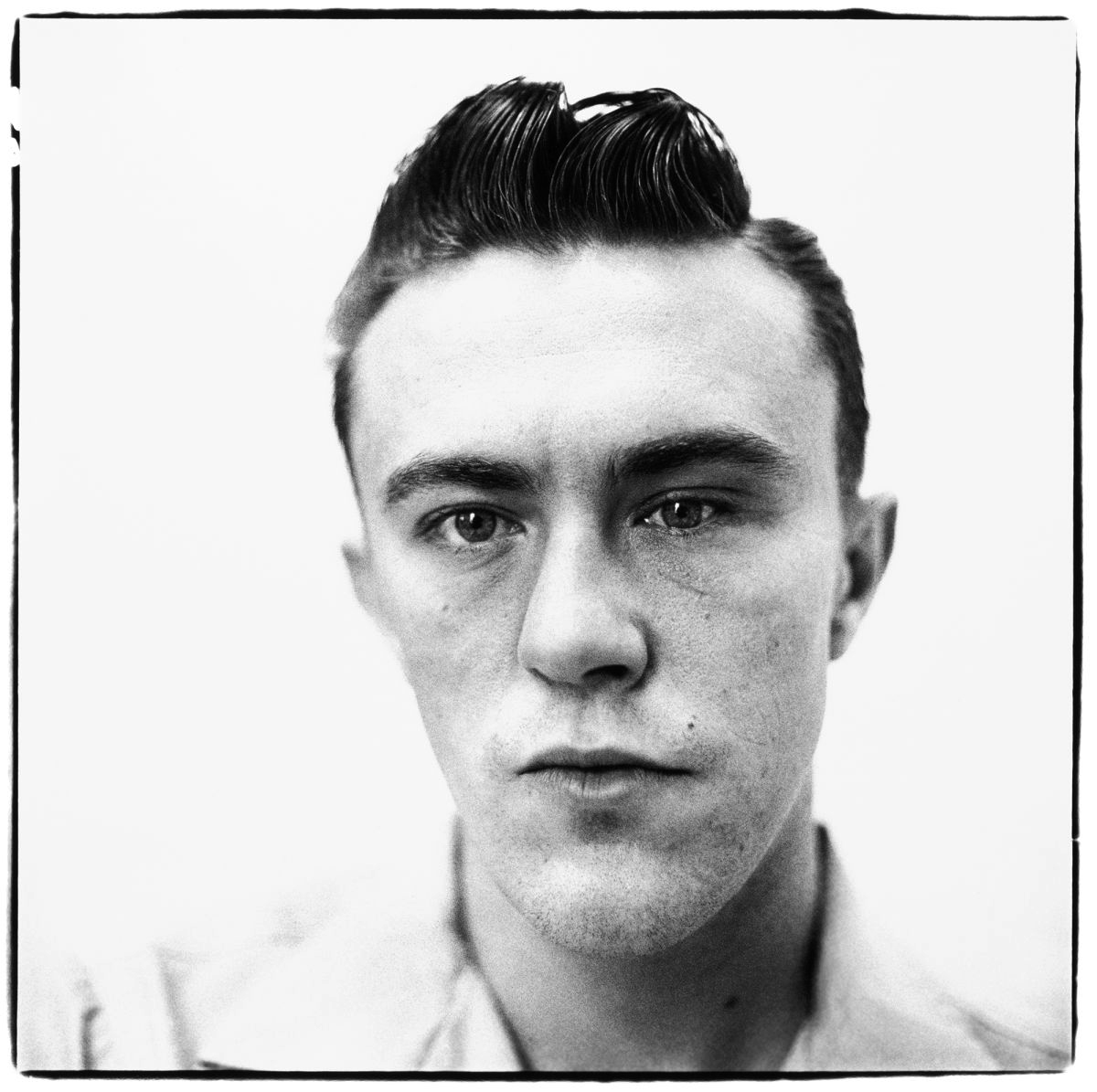
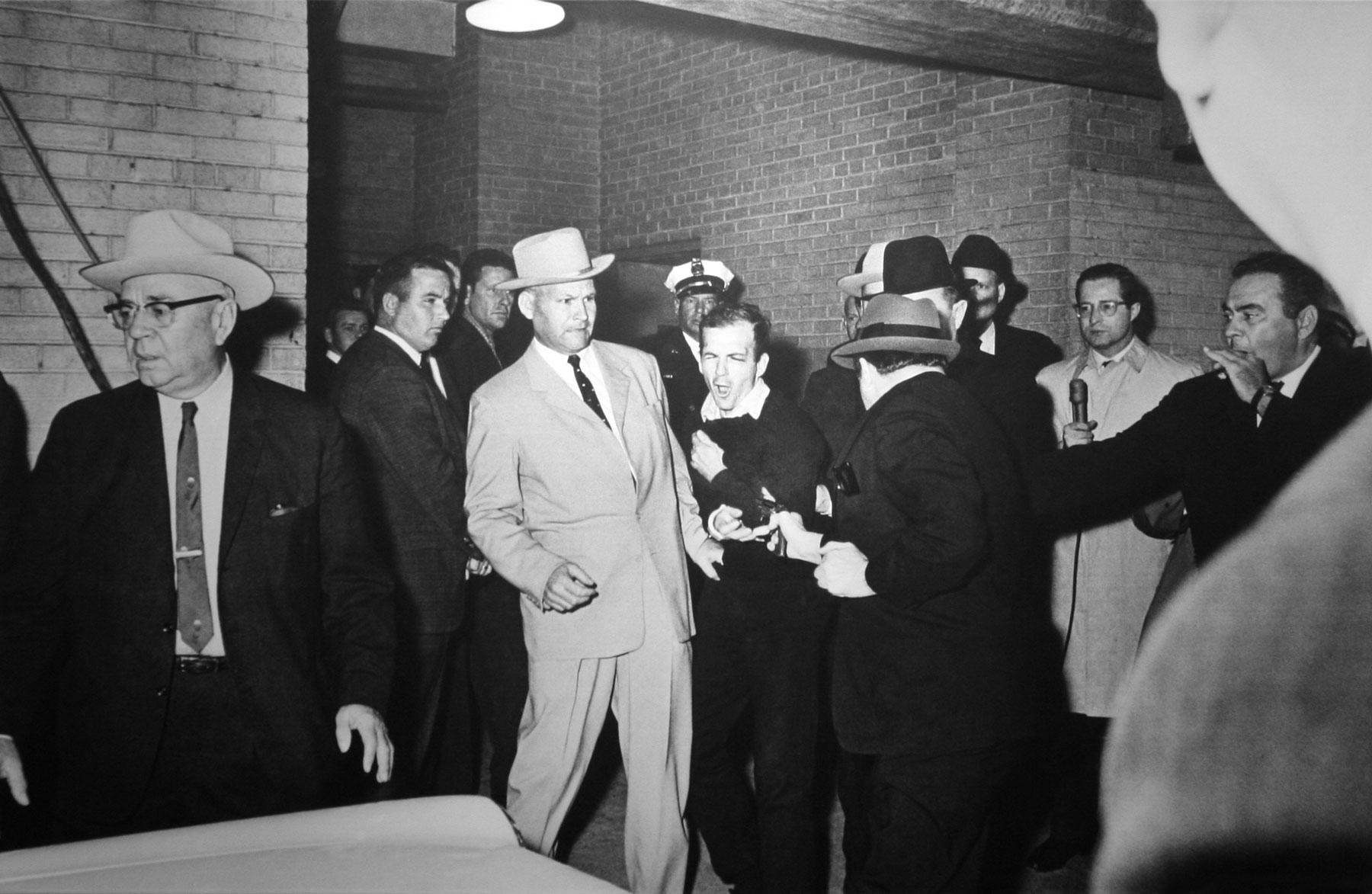
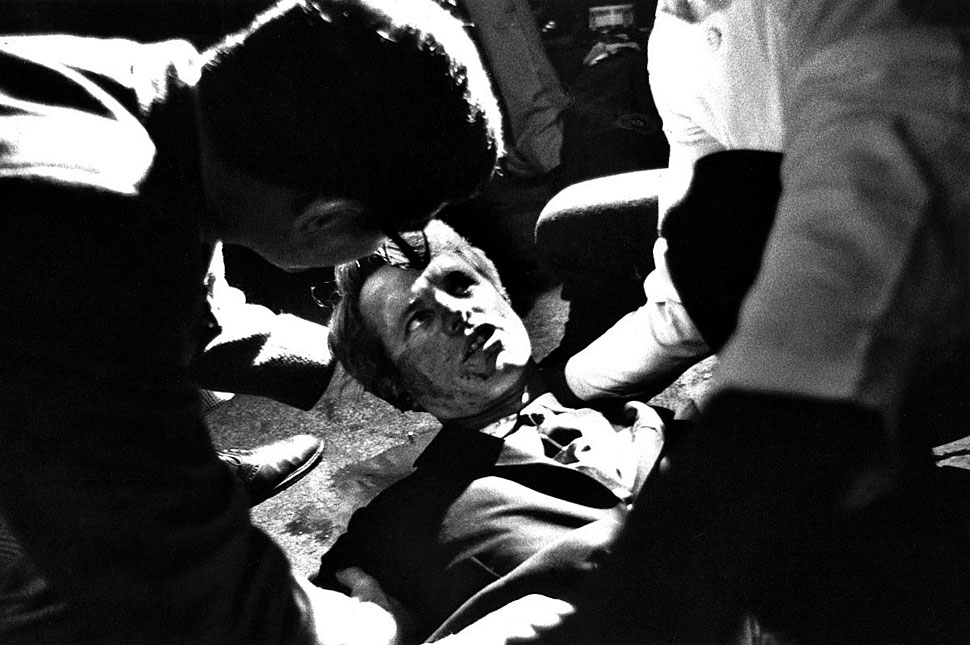

![Alphonse Bertillon (French, 1853-1914) '[Album of Paris Crime Scenes]' 1901-1908](https://artblart.com/wp-content/uploads/2016/07/bertillon-a-web.jpg "Alphonse Bertillon (French, 1853-1914) '[Album of Paris Crime Scenes]' 1901-1908")
![Alphonse Bertillon (French, 1853-1914) '[Album of Paris Crime Scenes]' 1901-1908 (detail)](https://artblart.com/wp-content/uploads/2016/07/bertillon-a-detail.jpg "Alphonse Bertillon (French, 1853-1914) '[Album of Paris Crime Scenes]' 1901-1908 (detail)")
![Alphonse Bertillon (French, 1853-1914) '[Album of Paris Crime Scenes]' 1901-1908](https://artblart.com/wp-content/uploads/2016/07/bertillon-b-web.jpg "Alphonse Bertillon (French, 1853-1914) '[Album of Paris Crime Scenes]' 1901-1908")
![Alphonse Bertillon (French, 1853-1914) '[Album of Paris Crime Scenes]' 1901-1908 (detail)](https://artblart.com/wp-content/uploads/2016/07/bertillon-b-detail.jpg "Alphonse Bertillon (French, 1853-1914) '[Album of Paris Crime Scenes]' 1901-1908 (detail)")
![Alphonse Bertillon (French, 1853-1914) '[Album of Paris Crime Scenes]' 1901-1908](https://artblart.com/wp-content/uploads/2016/07/bertillon-c-web.jpg "Alphonse Bertillon (French, 1853-1914) '[Album of Paris Crime Scenes]' 1901-1908")
![Alphonse Bertillon (French, 1853-1914) '[Album of Paris Crime Scenes]' 1901-1908 (detail)](https://artblart.com/wp-content/uploads/2016/07/bertillon-c-detail.jpg "Alphonse Bertillon (French, 1853-1914) '[Album of Paris Crime Scenes]' 1901-1908 (detail)")
![Alphonse Bertillon (French, 1853-1914) '[Album of Paris Crime Scenes]' 1901-1908](https://artblart.com/wp-content/uploads/2016/07/bertillon-d-web.jpg "Alphonse Bertillon (French, 1853-1914) '[Album of Paris Crime Scenes]' 1901-1908")
![Alphonse Bertillon (French, 1853-1914) '[Album of Paris Crime Scenes]' 1901-1908 (detail)](https://artblart.com/wp-content/uploads/2016/07/bertillon-d-detail.jpg "Alphonse Bertillon (French, 1853-1914) '[Album of Paris Crime Scenes]' 1901-1908 (detail)")
![Alphonse Bertillon (French, 1853-1914) '[Album of Paris Crime Scenes]' 1901-1908](https://artblart.com/wp-content/uploads/2016/07/bertillon-h-web.jpg "Alphonse Bertillon (French, 1853-1914) '[Album of Paris Crime Scenes]' 1901-1908")
![Alphonse Bertillon (French, 1853-1914) '[Album of Paris Crime Scenes]' 1901-1908 (detail)](https://artblart.com/wp-content/uploads/2016/07/bertillon-h-detail.jpg "Alphonse Bertillon (French, 1853-1914) '[Album of Paris Crime Scenes]' 1901-1908 (detail)")
![Alphonse Bertillon (French, 1853-1914) '[Album of Paris Crime Scenes]' 1901-1908](https://artblart.com/wp-content/uploads/2016/07/bertillon-e-web.jpg "Alphonse Bertillon (French, 1853-1914) '[Album of Paris Crime Scenes]' 1901-1908")
![Alphonse Bertillon (French, 1853-1914) '[Album of Paris Crime Scenes]' 1901-1908 (detail)](https://artblart.com/wp-content/uploads/2016/07/bertillon-e-detail.jpg "Alphonse Bertillon (French, 1853-1914) '[Album of Paris Crime Scenes]' 1901-1908 (detail)")
![Alphonse Bertillon (French, 1853-1914) '[Album of Paris Crime Scenes]' 1901-1908](https://artblart.com/wp-content/uploads/2016/07/bertillon-f-web.jpg "Alphonse Bertillon (French, 1853-1914) '[Album of Paris Crime Scenes]' 1901-1908")
![Alphonse Bertillon (French, 1853-1914) '[Album of Paris Crime Scenes]' 1901-1908 (detail)](https://artblart.com/wp-content/uploads/2016/07/bertillon-f-detail.jpg "Alphonse Bertillon (French, 1853-1914) '[Album of Paris Crime Scenes]' 1901-1908 (detail)")
![Alphonse Bertillon (French, 1853-1914) '[Album of Paris Crime Scenes]' 1901-1908](https://artblart.com/wp-content/uploads/2016/07/bertillon-g-web.jpg "Alphonse Bertillon (French, 1853-1914) '[Album of Paris Crime Scenes]' 1901-1908")
![Alphonse Bertillon (French, 1853-1914) '[Album of Paris Crime Scenes]' 1901-1908 (detail)](https://artblart.com/wp-content/uploads/2016/07/bertillon-g-detail.jpg "Alphonse Bertillon (French, 1853-1914) '[Album of Paris Crime Scenes]' 1901-1908 (detail)")


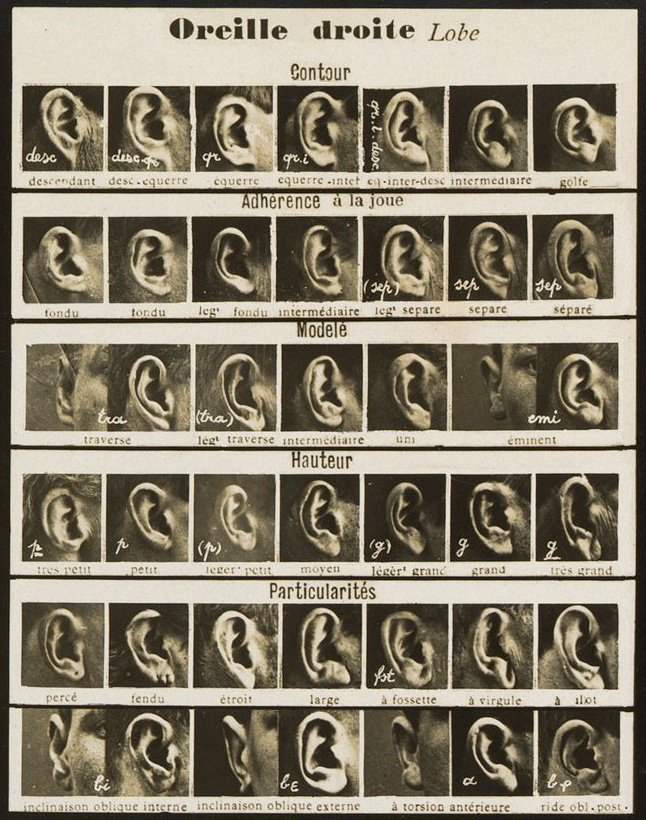


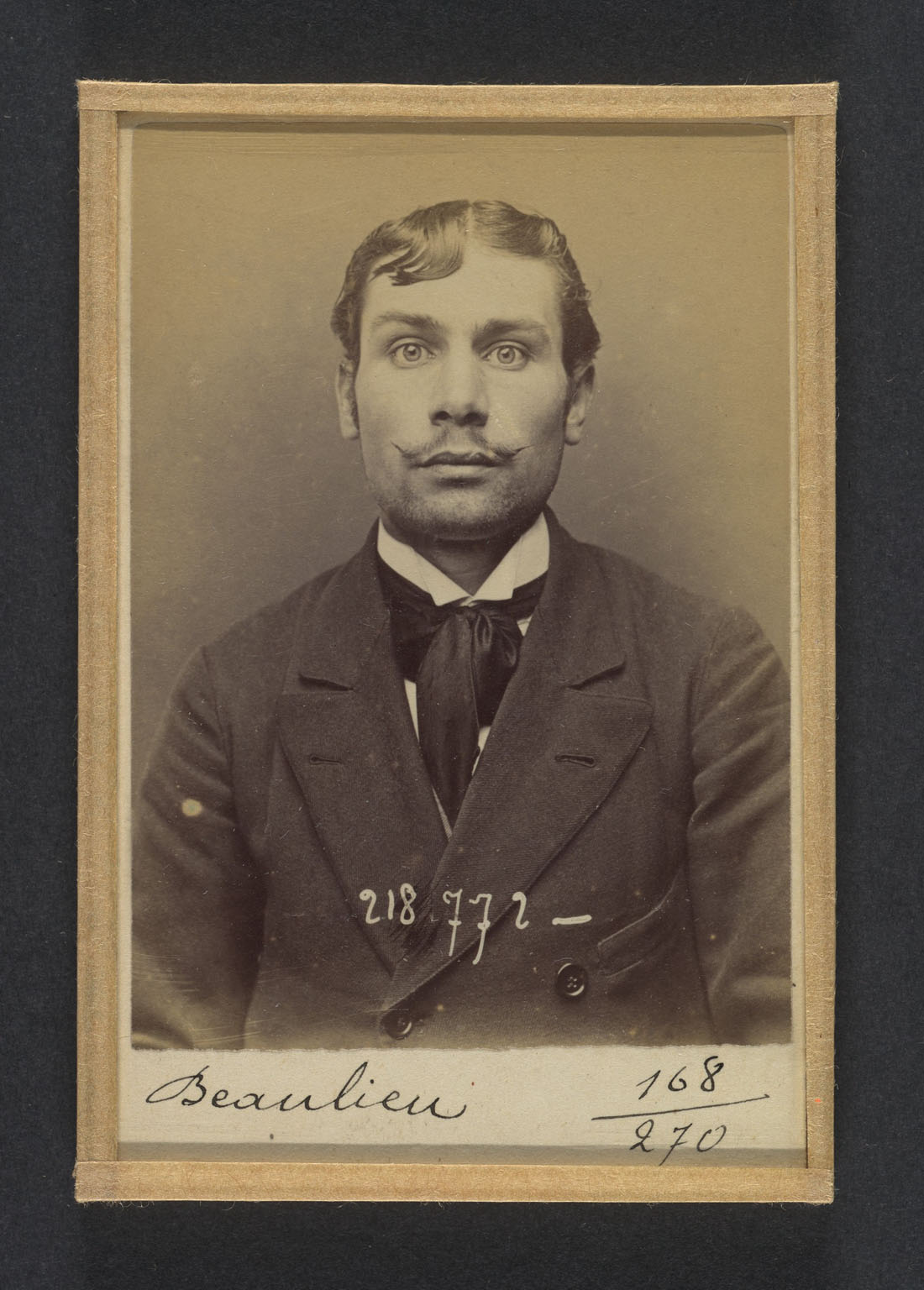


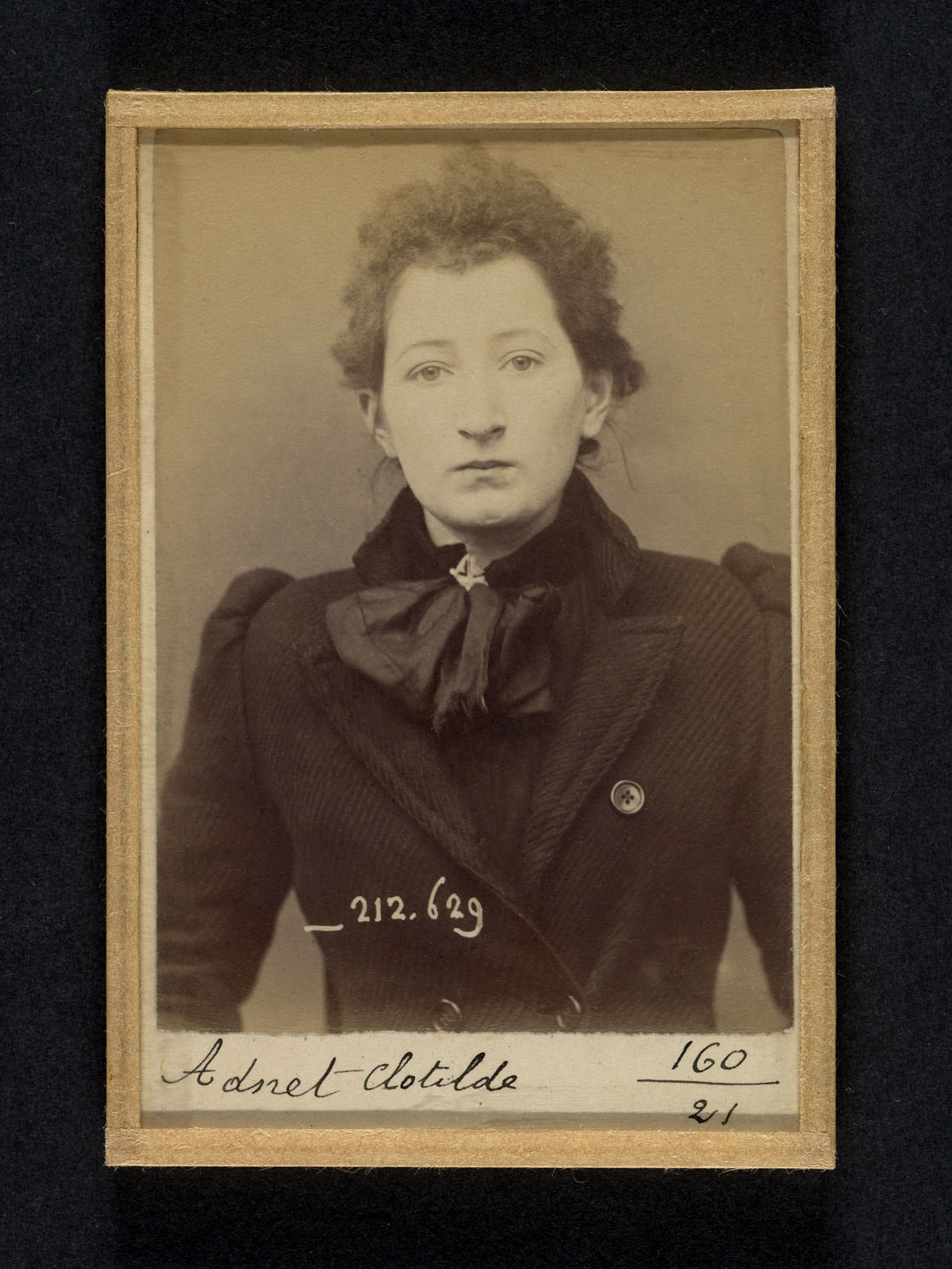

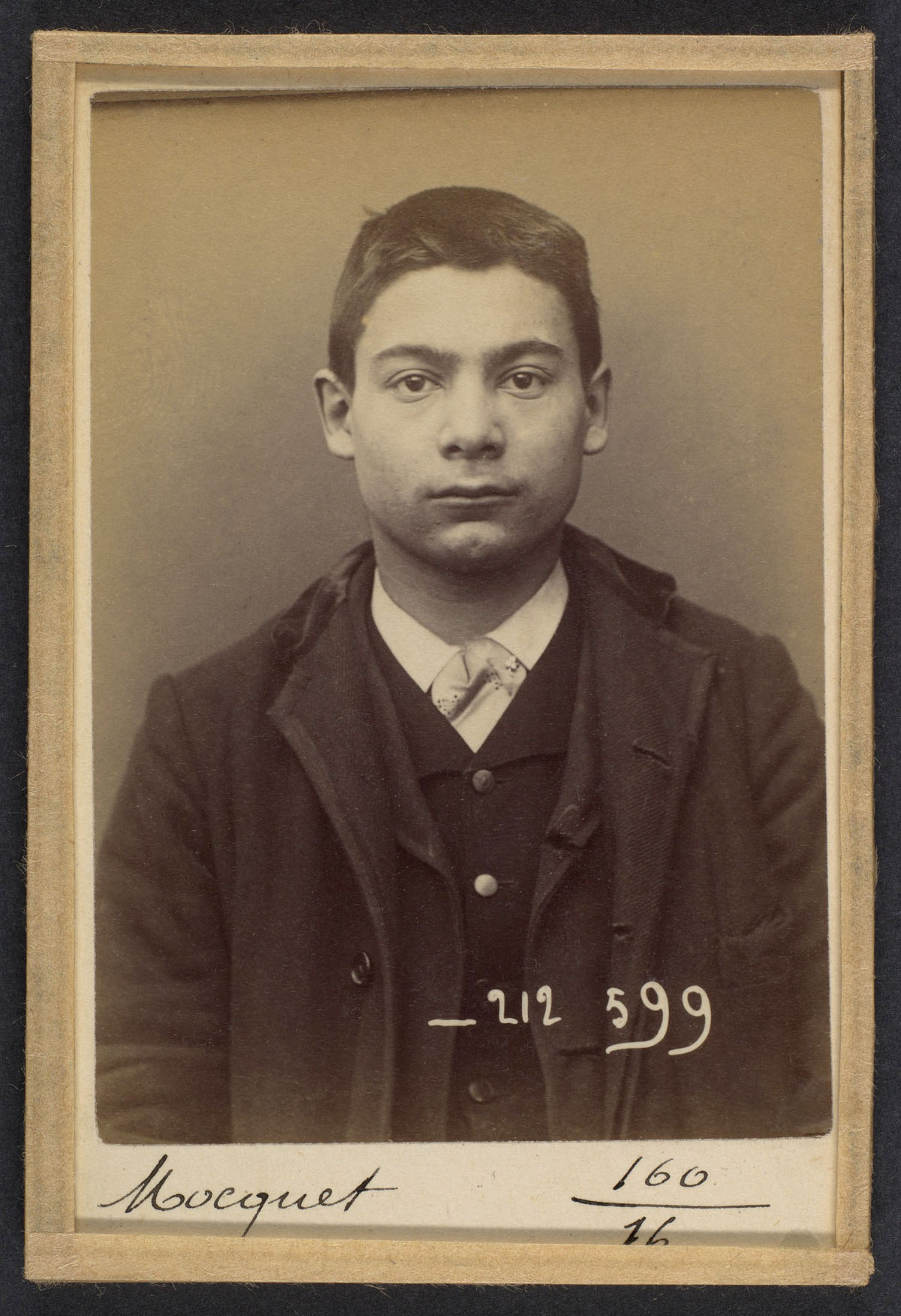


![Unknown photographer (American) '[Broadside for the Capture of John Wilkes Booth, John Surratt, and David Herold]' 1865](https://artblart.com/wp-content/uploads/2014/04/dp274835-murder-web.jpg "Unknown photographer (American) '[Broadside for the Capture of John Wilkes Booth, John Surratt, and David Herold]' 1865")
![Alexander Gardner (American, Glasgow, Scotland 1821 - 1882 Washington, D.C.) 'Lewis Powell [alias Lewis Payne]' April 27, 1865](https://artblart.com/wp-content/uploads/2016/07/lewis-powell-web.jpg "Alexander Gardner (American, Glasgow, Scotland 1821 - 1882 Washington, D.C.) 'Lewis Powell [alias Lewis Payne]' April 27, 186")


![Unknown photographer (American). '[Five Members of the Wild Bunch]' c. 1892](https://artblart.com/wp-content/uploads/2016/07/the-wild-bunch-web.jpg "Unknown photographer (American). '[Five Members of the Wild Bunch]' c. 1892")
![Tom Howard (American, 1894-1961) '[Electrocution of Ruth Snyder, Sing Sing Prison, Ossining, New York]' 1928](https://artblart.com/wp-content/uploads/2016/07/electrocution-of-ruth-snyder-web.jpg "Tom Howard (American, 1894-1961) '[Electrocution of Ruth Snyder, Sing Sing Prison, Ossining, New York]' 1928")

![Unknown photographer (American) '[Automobile Murder Scene]' c. 1935](https://artblart.com/wp-content/uploads/2016/07/automobile-murder-scene-circa-1935-web.jpg "Unknown photographer (American) '[Automobile Murder Scene]' c. 1935")
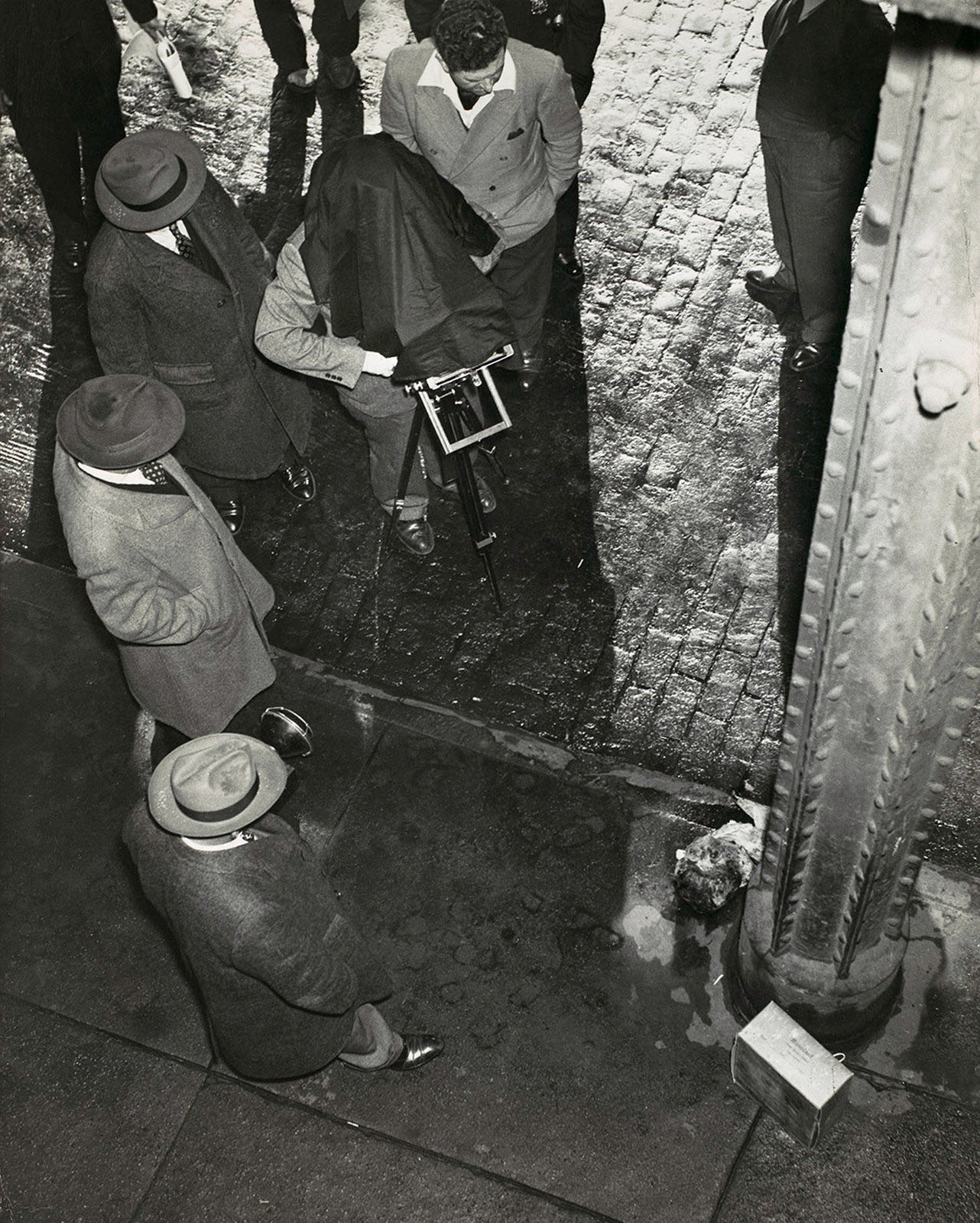

![Weegee (American, born Ukraine (Austria), Złoczów (Zolochiv) 1899 - 1968 New York) '[Outline of a Murder Victim]' 1942](https://artblart.com/wp-content/uploads/2016/07/weegee-outline-web.jpg "Weegee (American, born Ukraine (Austria), Złoczów (Zolochiv) 1899 - 1968 New York) '[Outline of a Murder Victim]' 1942")


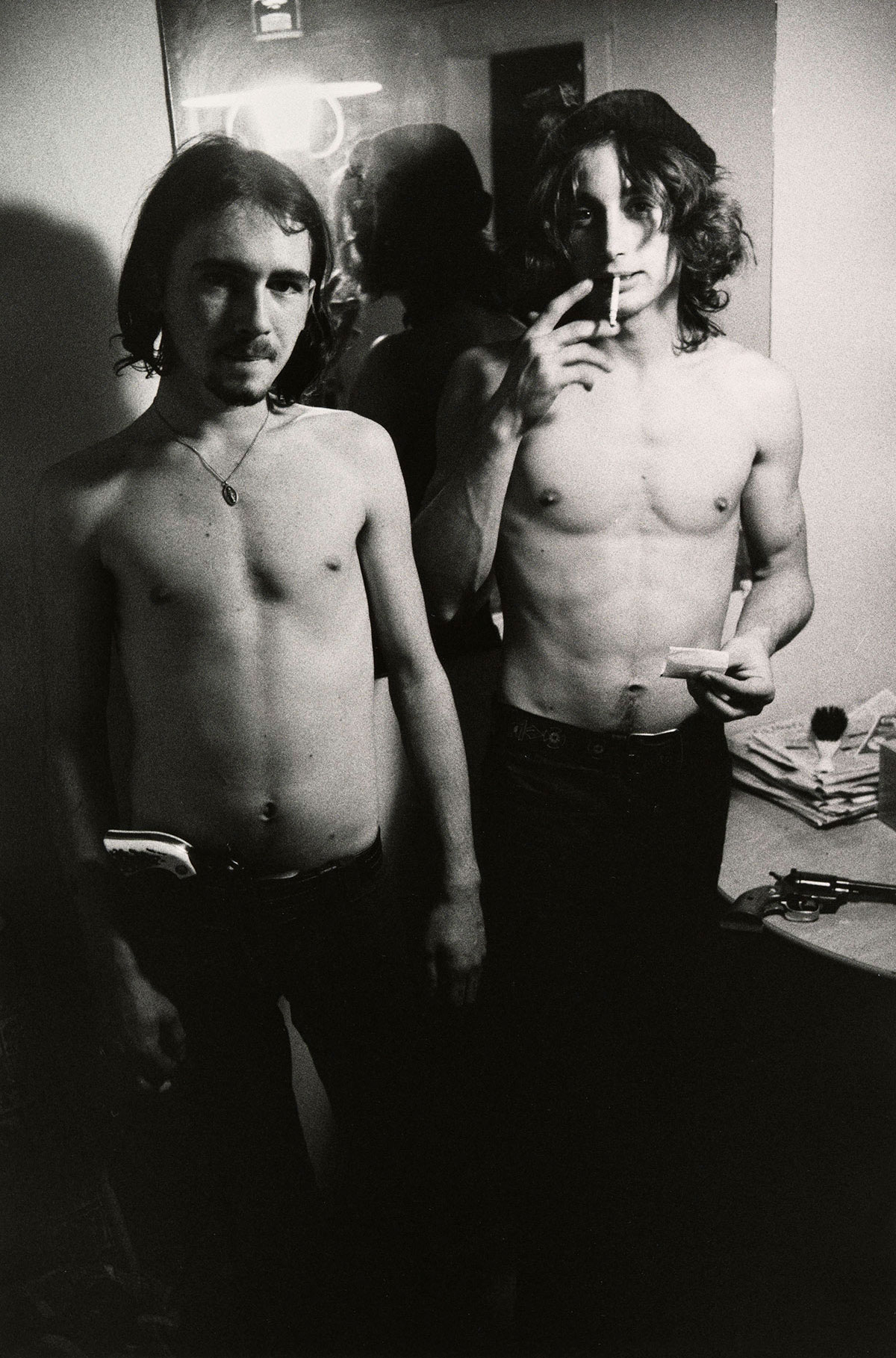
![United Press International (American) '[Bank Robber Aiming at Security Camera, Cleveland, Ohio]' March 8, 1975](https://artblart.com/wp-content/uploads/2016/07/cleveland-1975-web1.jpg "United Press International (American) '[Bank Robber Aiming at Security Camera, Cleveland, Ohio]' March 8, 1975")

































![Albert Renger-Patzsch (German, 1897-1966) 'Mantelpavian [Hamadryas Baboon]' c. 1925 from the exhibition 'The world is beautiful: photographs from the collection' at the National Gallery of Australia, Canberra, Dec 2015 - April 2016](https://artblart.com/wp-content/uploads/2016/03/albert-renger-patzsch-baboon-web.jpg "Albert Renger-Patzsch (German, 1897-1966) 'Mantelpavian [Hamadryas Baboon]' c. 1925 from the exhibition 'The world is beautiful: photographs from the collection' at the National Gallery of Australia, Canberra, Dec 2015 - April 2016")


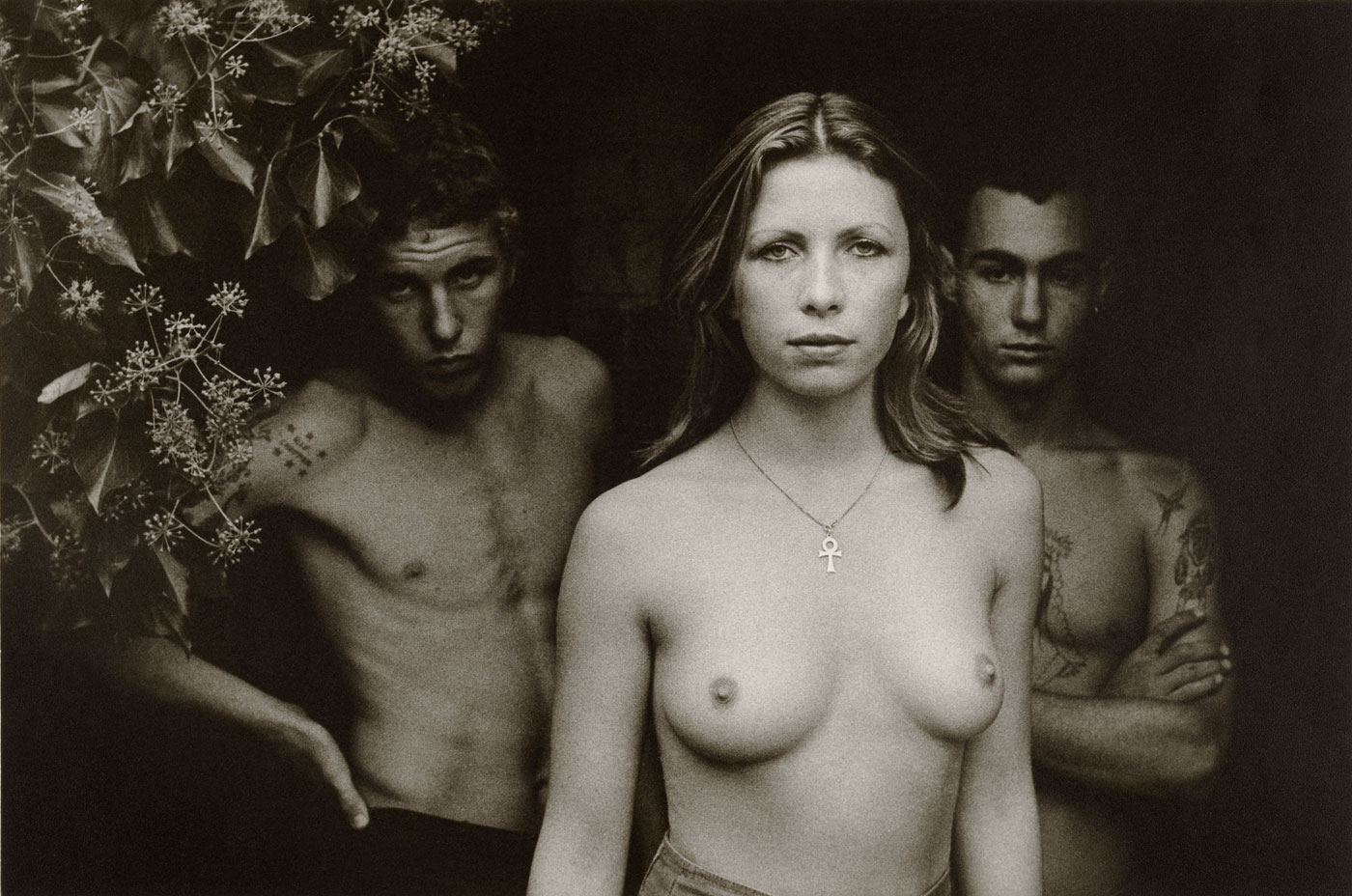









 Art Blart _ art and cultural memory archive
You must be logged in to post a comment.