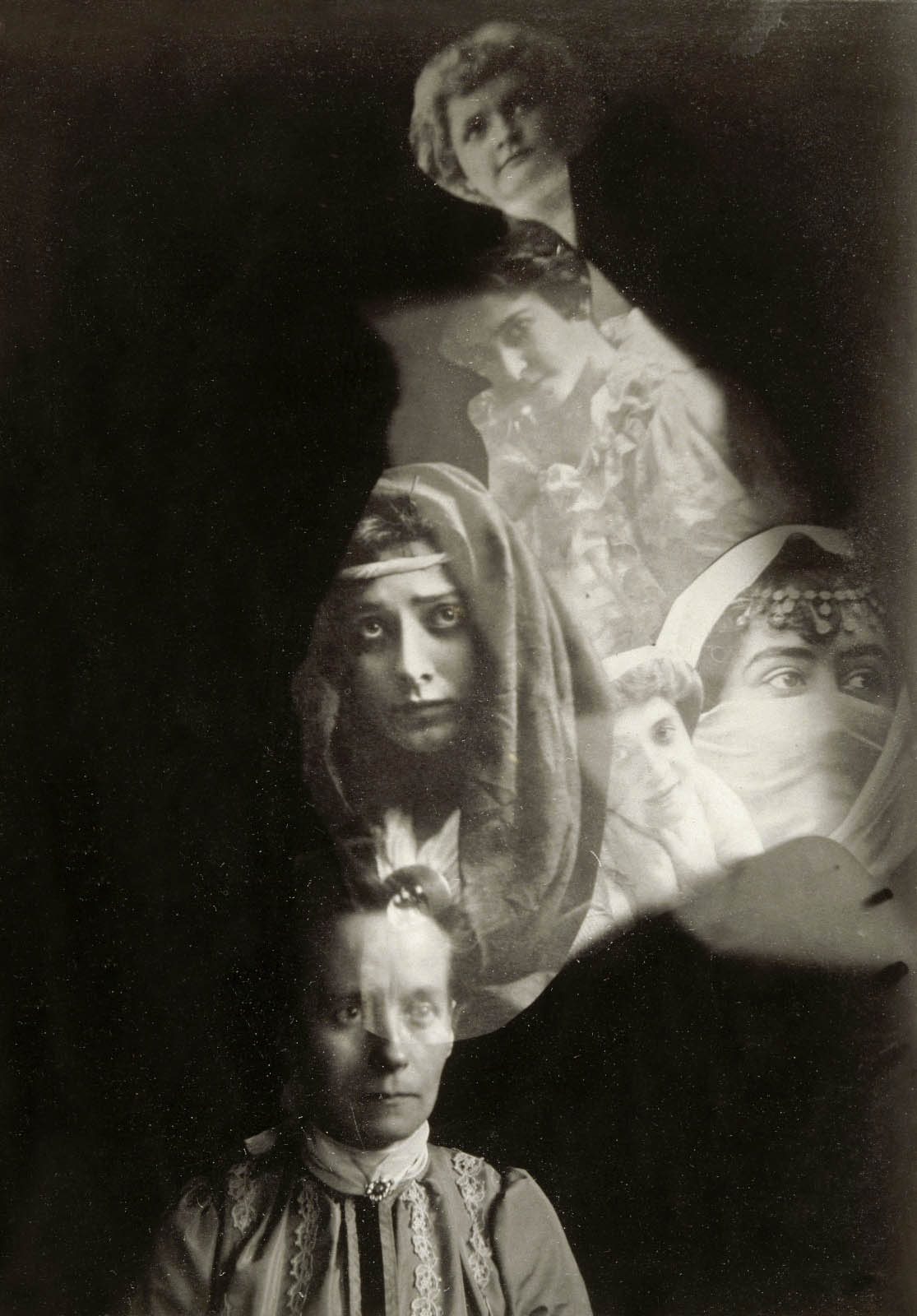
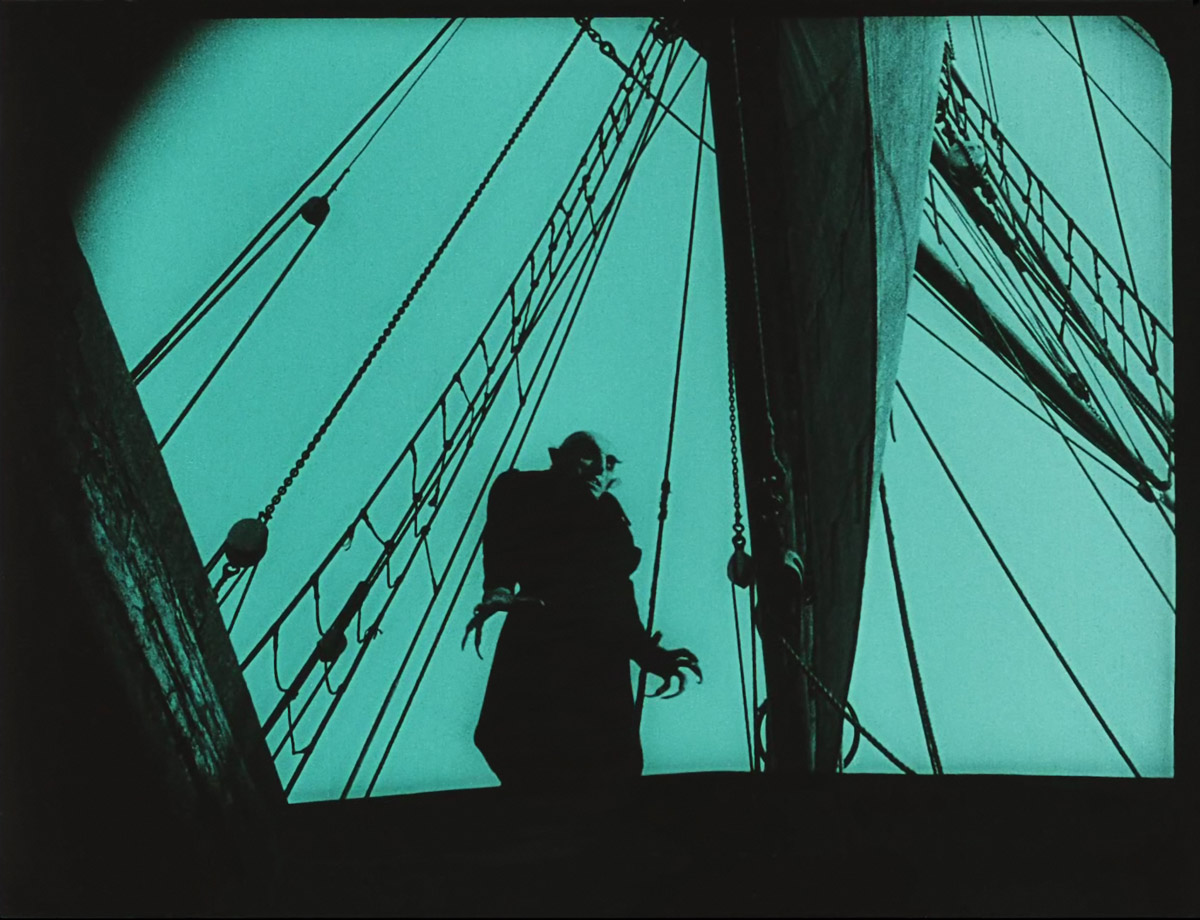
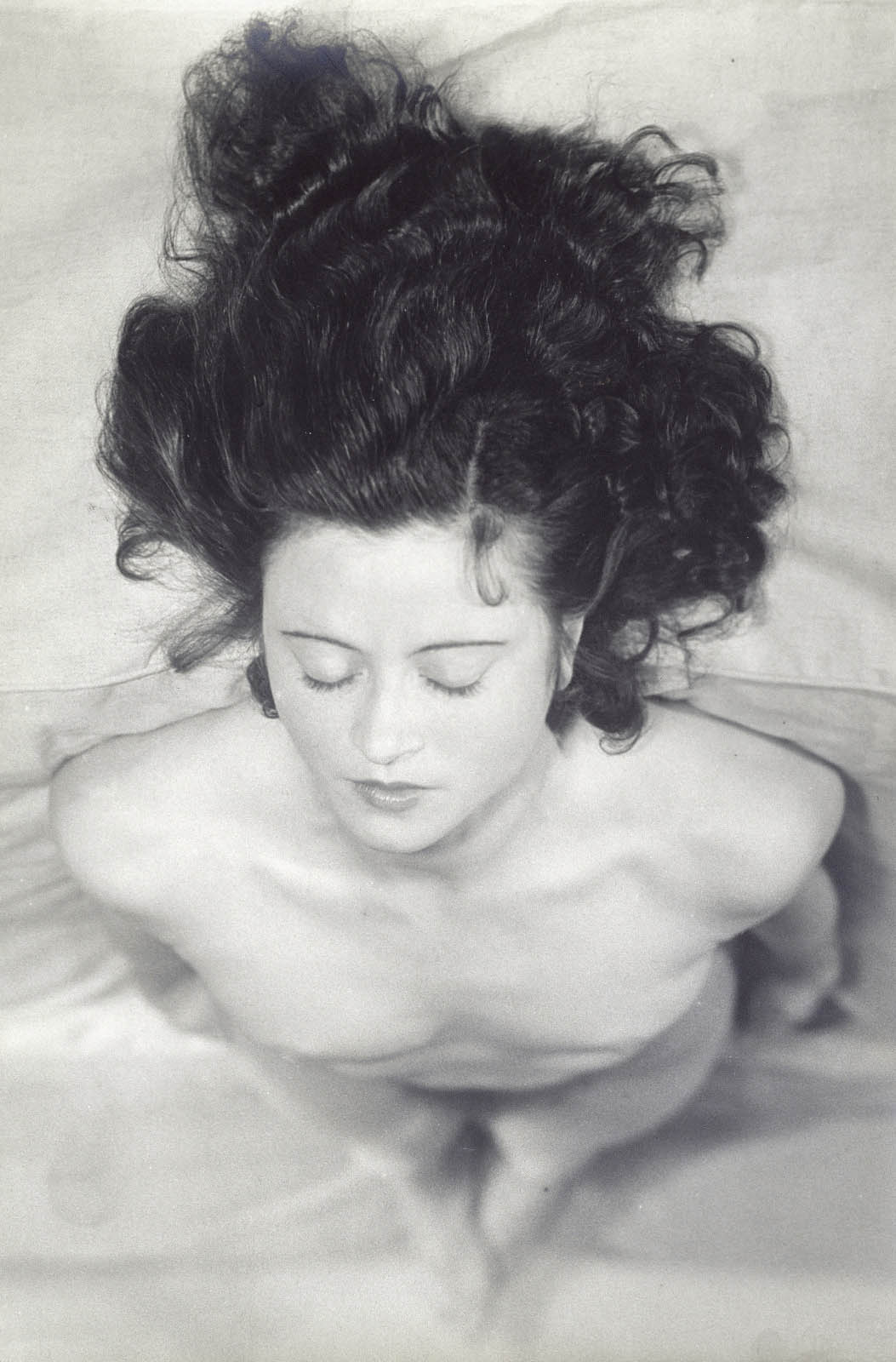
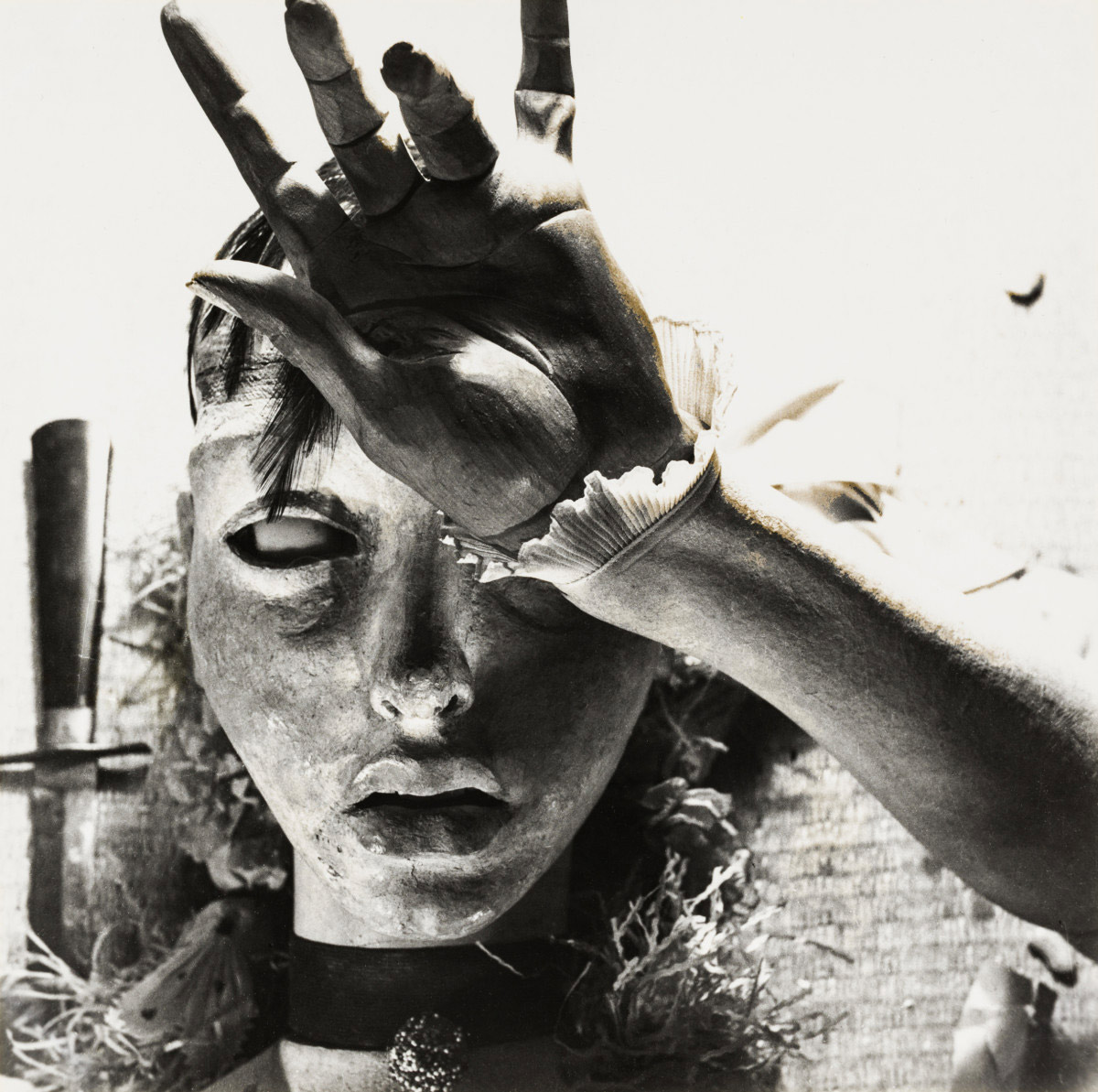
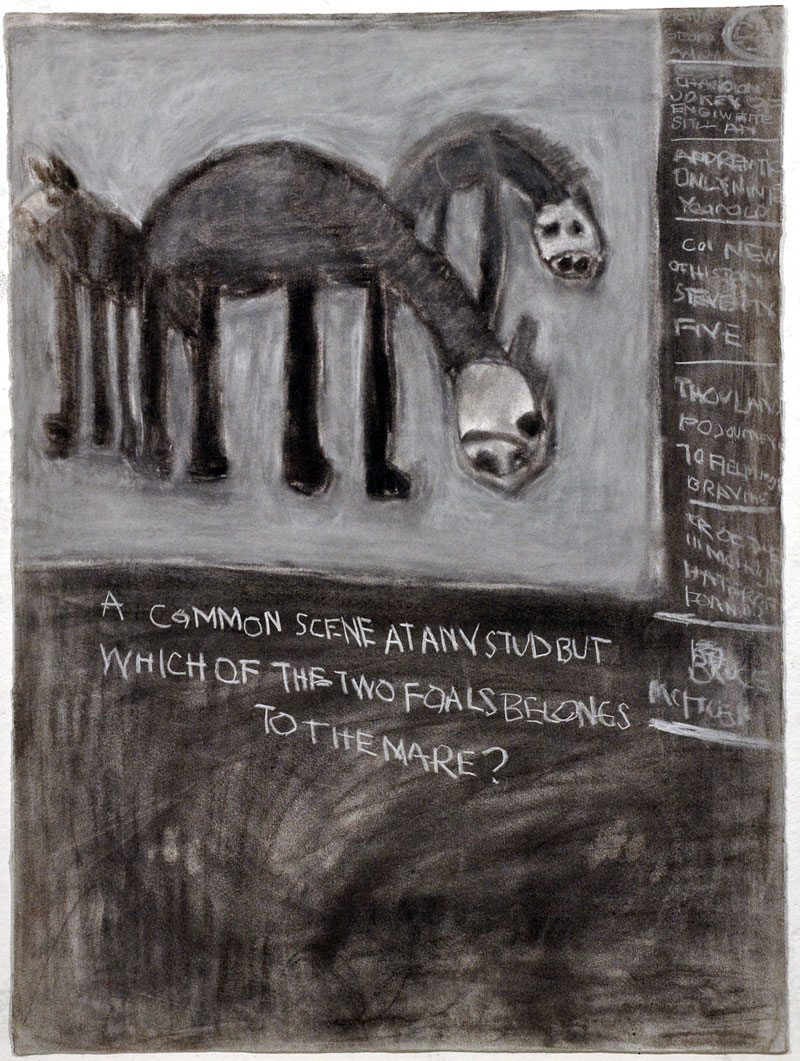
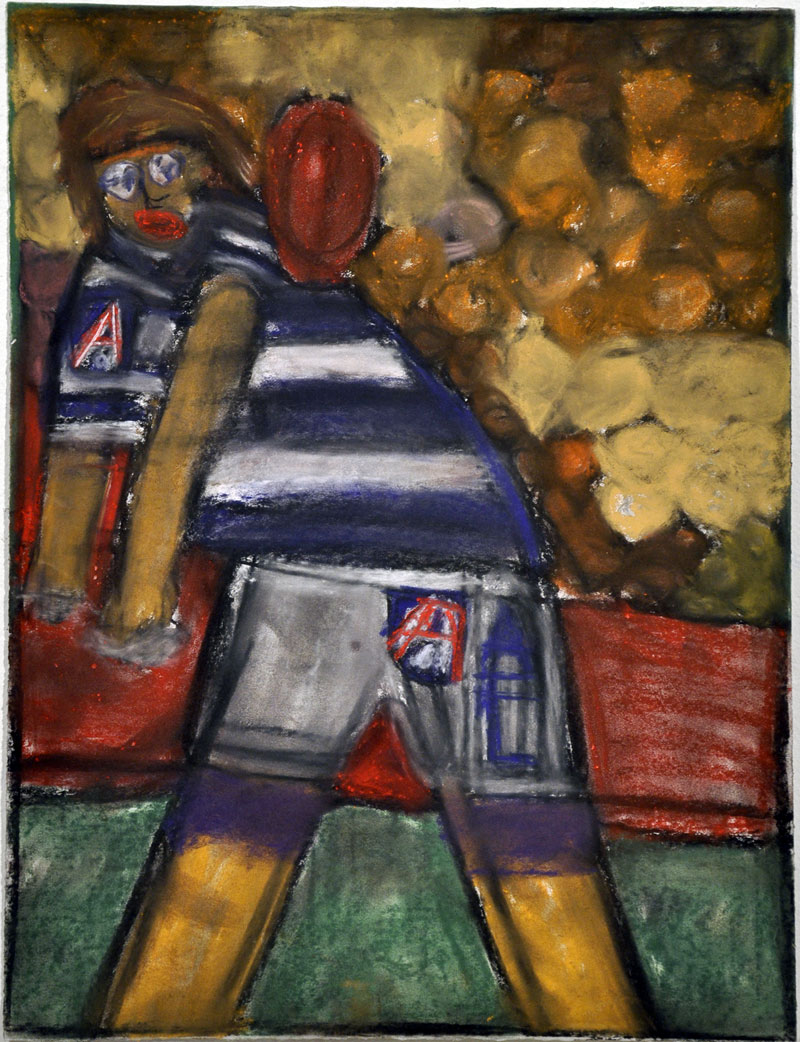
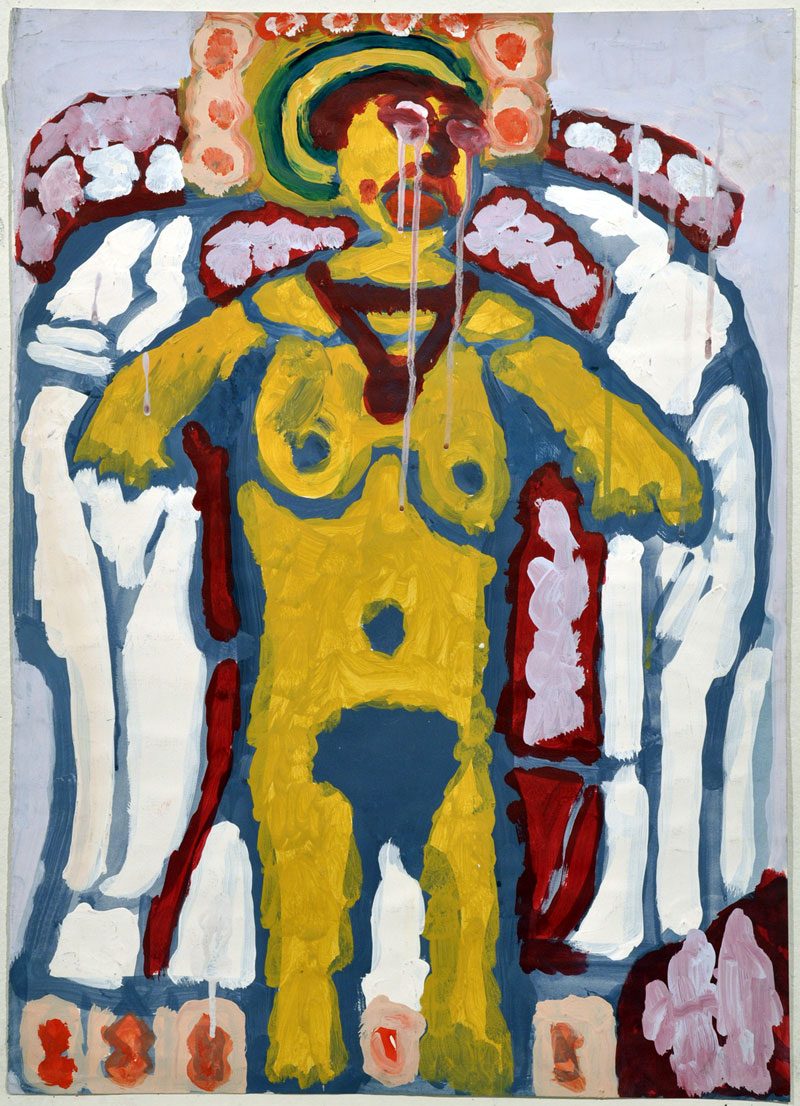
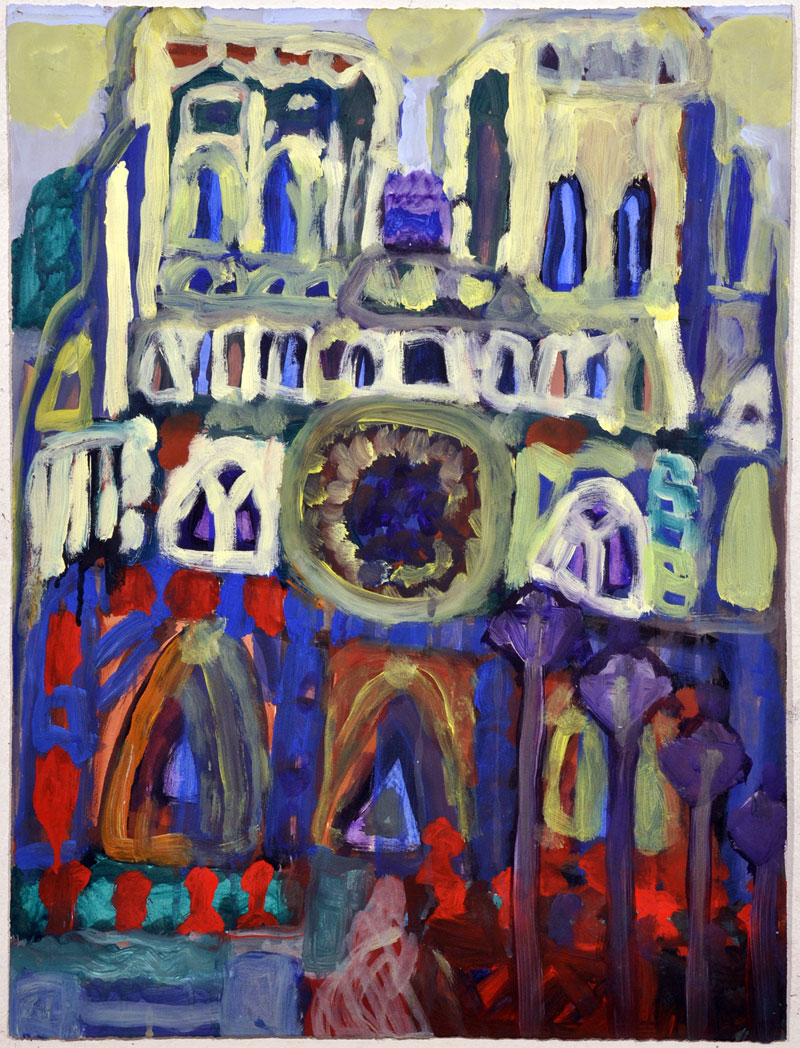
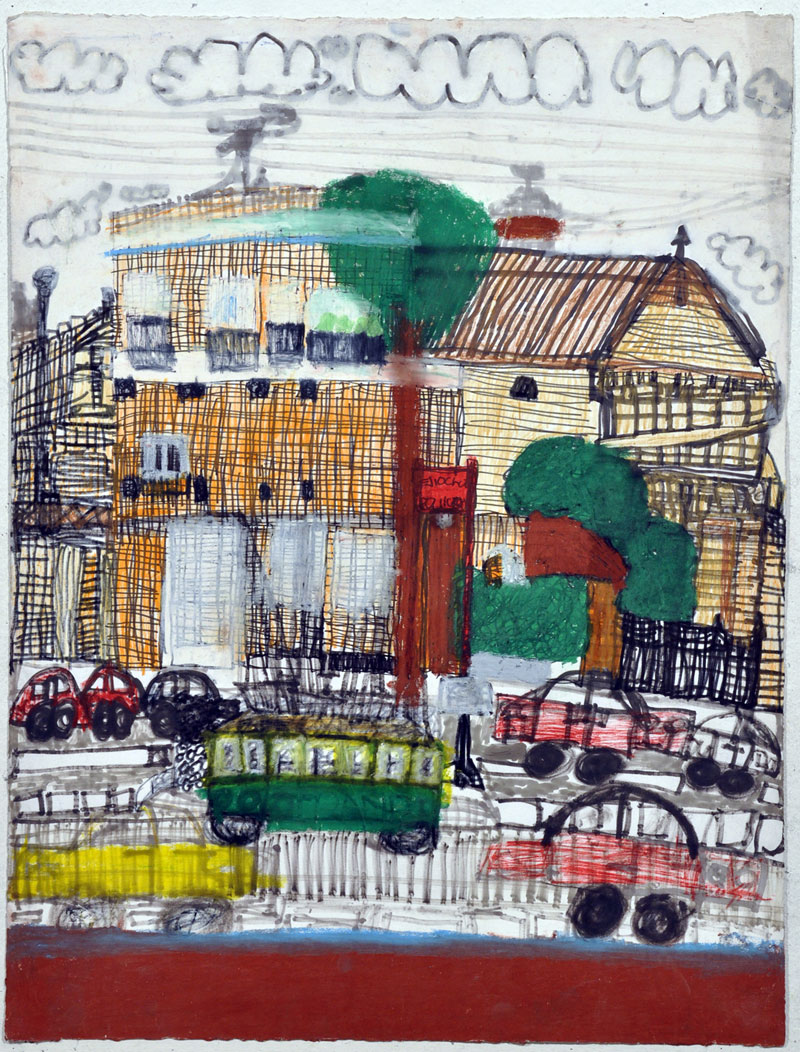
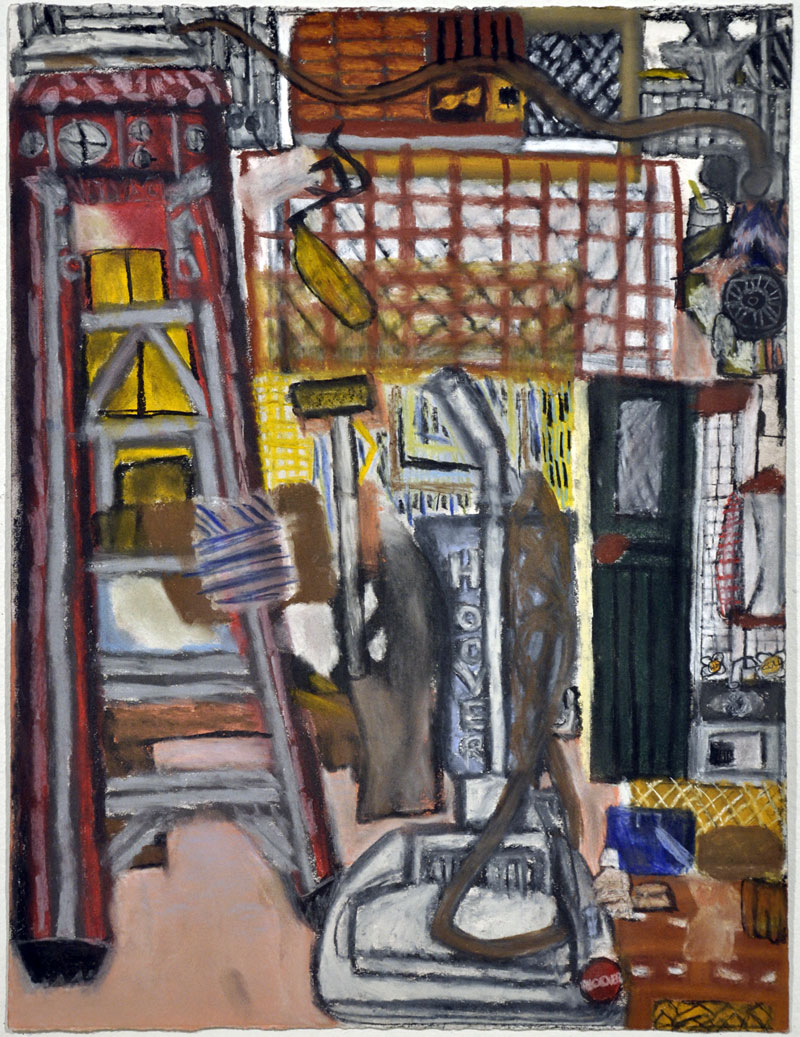
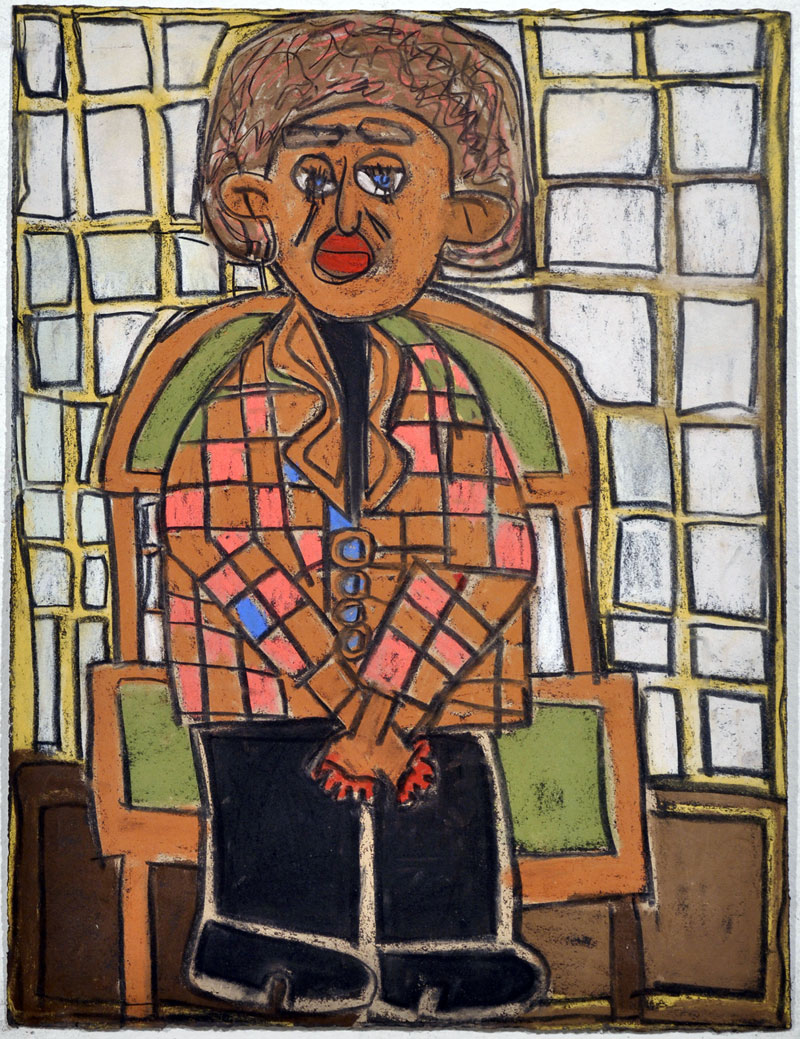
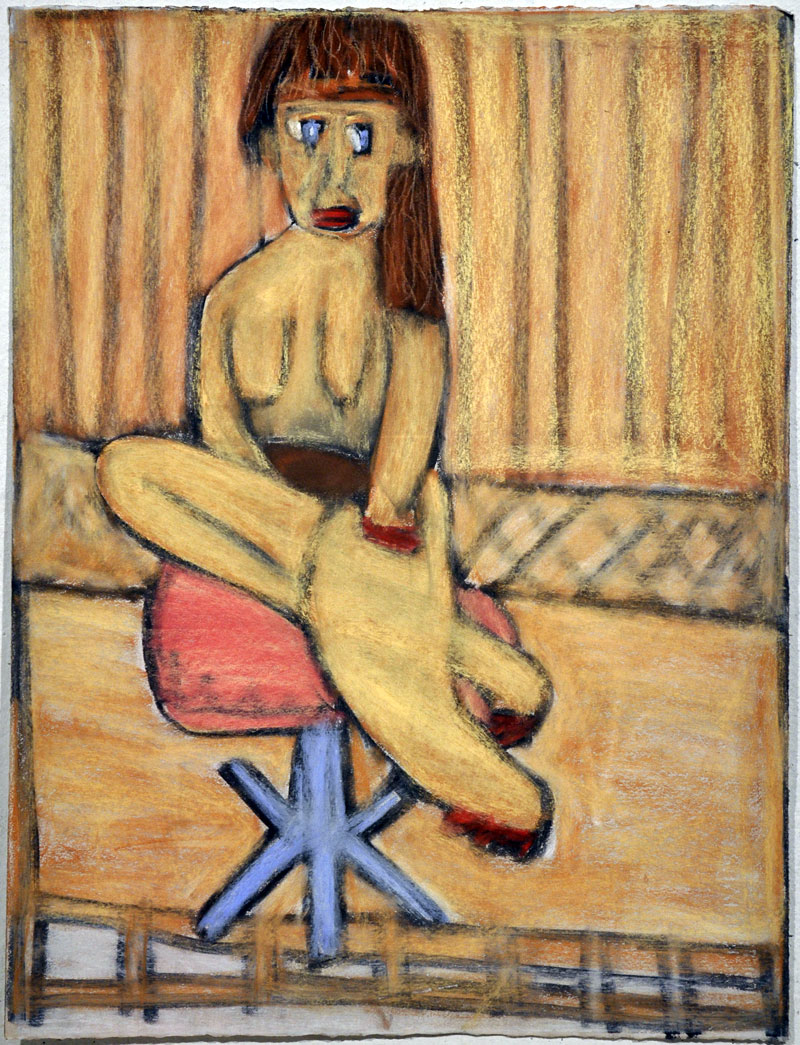
Text: ‘Orality, (n)framing and enactment in the art of Jacqui Stockdale’ in IANN magazine Vol.8, ‘Unfound in Australia’, October 2012

January 2013


Jacqui Stockdale (Australian, b. 1968) 'Negro Returno, Long Gully' 2012


Jacqui Stockdale (Australian, b. 1968)
Negro Returno, Long Gully
2012
Type C Print
100 x 78cm


“What does it mean, to rediscover an unknown continent through the medium of photography in the 21st century? The seven artists that appear in this “Unfound in Australia” issue are well versed in the photographic technique and language familiar to modern art, yet show cultural distinctness that is nothing short of extraordinary. Our readers might experience a sense of shock or alienation from their work, which combines the new with the old. This kind of unsettling feeling may very well be an unconscious reaction to what we consider to be the ‘other.’ It is my hope that our readers will rediscover the power of photography as a chronological and visual language through these works of long under appreciated modern Australian photography.


IANN magazine
Vol.8, “Unfound in Australia,” October 2012 ‘IANN Magazine’ website [Online] Cited 06/01/2013


My text that appears in IANN magazine Vol.8, “Unfound in Australia” (October 2012) on the art of Jacqui Stockdale is a reworking of the review of her exhibition Jacqui Stockdale: The Quiet Wild at Helen Gorie Galerie in April – May 2012. It is a good piece of writing but it is the “lite” version of the text that I wrote. Instead of the “heavy” version fragmenting away on some long forgotten backup hard drive, and for those of you that like a little more conceptual meat on the bone, it is published below.

Other artists featured in the Volume 8 edition of IANN magazine include Marian Drew, Henri Van Noordenburg, Justine Khamara, Magdalena Bors and Christian Thompson.

Dr Marcus Bunyan


Orality, (n)framing and enactment in the art of Jacqui Stockdale

The concept of Orality is important in the art of Australian Jacqui Stockdale for her works are visual tone poems. Portraying identities in flux, her mythological creatures rise above the threshold of visibility to engage our relationship with time and space, to challenge the trace of experience.

Stockdale uses the body not as passive object but as descriptive and rhapsodic theme, the body as pliable flesh acting as a kind of threshold or hinge of experience – between interior and exterior, viewer and photograph, longing and desire. Drawing on personal places and stories, assemblage and performance (the process of painting the models and the outcome of this interaction), Stockdale creates a wonderful melange of archetypal characters that subvert traditional identities and narratives. Her creatures “shape-shift” and frustrate attempts at categorisation and assimilation.

The artist inverts cultural stereotypes (which embody elements of fixity, repetition, and ambivalence) located within the realms of the fetish, the scopic, and the Imaginary in order to dis/place the collective memory of viewers that have been inscribed with a stereotypical collective vernacular. In this process the work elides “fantasy” which Bhabha suggests plays a formative role in colonial exercises of power.1 In Stockdale’s upside-down world (quite appropriate for the “land down under”), “Each new identity is one of inversion; man becomes woman, child becomes adult, animals transform into humans and vice-versa.”2

An example of this inversion can be seen in her latest series of photographs, The Quiet Wild (2012). Here Stockdale unsettles traditional textual readings, the titles of her photographic portraits indecipherable to the uninitiated, a coded language of identity and place. Lagunta, Leeawuleena and Jaara for example, are three Aboriginal names meaning, respectively, Tasmanian Tiger, the name for the land around Cradle Mountain on that island and the name for the Long Gully region around Bendigo, Victoria (Stockdale’s native area); El Gato is the cat and Gondwanan the name for the southernmost of two supercontinents (the other being Laurasia) before the world split apart into the structure that we known today.

Stockdale’s performative tactics and multiple modes of address, her polyvocal subject if you like, may be said to be an effect of intertextuality3: “a conscious recognition and pursuit of an altogether different set of values and historical and cultural trajectories.”4 Undeniably her re-iterations and re-writings of cultural trajectories as ritual performative acts have links to Bakhtin’s idea of the carnivalesque and the carnival paradigm, which accords to certain patterns of play where “the social hierarchies of everyday life… are profaned and overturned by normally suppressed voices and energies.”5

It is through this “play” that the context of the photographs and their relationship to each other and the viewer are “framed.” This device emphasises the aesthetic rather than information and encourages the viewer to think about the relationship between the body, the world of which it is part and the dream-reason of time.6

This intertextual (n)framing (n meaning unspecified number in mathematics) encourages the viewer to explore the inbetween spaces in the meta-narrative, “and by leaps (intuitive leaps, poetic leaps, leaps of faith)”7 encourage escapism. Through the (n)framing of the body and the enactment of multiple selves Stockdale narrativises her mythological creatures, her charged bodies initiating new conditions of Otherness in the mise-en-scène of being. This is why her images are so powerful for her art approaches Otherness using a visual Orality and a theatrical openness that encourages disparate meanings to emerge into consciousness. It is up to us as viewers to seek the multiple, disparate significances of what is concealed in each photograph – in the myth of origin; in something that can’t be explained by man; in the expression of meaning of the things that are beyond us.

Dr Marcus Bunyan
August 2012


Footnotes

1/ “According to Bhabha, stereotypes are located within the realms of the fetish, the scopic, and the Imaginary. He suggests that fantasy plays a formative role in colonial exercises of power. Bhabha describes the mechanism of cultural stereotypes as embodying elements of fixity, repetition, fantasy, and ambivalence, and suggests that if certain types of images are constantly presented in a range of different contexts, they will become imprinted onto the collective memory of viewers and inscribed within a collective vernacular.”
Vercoe, Caroline. Agency and Ambivalence: A Reading of Works by Coco Fusco,” in Fusco, Coco. The Bodies That Were Not Ours. London: Routledge, 2001, p. 240.

2/ Stockdale, Jacqui. Artist statement 2012

3/ Intertextuality “is always an iteration which is also a re-iteration, a re-writing which foregrounds the trace of the various texts it both knowingly and unknowingly places and dis-places.” Intertexuality is how a text is constituted. It fragments singular readings. “The reader’s own previous readings, experiences and position within the cultural formation” also influences these re-inscriptions.”
Keep, Christopher, McLaughlin, Tim and Parmar, Robin. “Intertextuality,” on The Electronic Labyrinth website [Online] Cited 13/11/2011

4/ Fisher, Jean. “Witness for the Prosecution: The Writings of Coco Fusco,” in Fusco, Coco. The Bodies That Were Not Ours. London: Routledge, 2001, pp. 227-228.

5/ Anon. “Carnivalesque,” on the Wikipedia website. [Online] Cited 13/05/2012

6/ Bacon, Julie Louise. “Liquid Archive: On Ambivalence,” in Liquid Archive. Melbourne: Monash University Museum of Art (MUMA), 2012, p. 119

7/ Kirshenblatt-Gimblett, Barbara. “The Museum – A Refuge for Utopian Thought,” in Rüsen, Jörn; Fehr Michael, and Ramsbrock, Annelie (eds.). Die Unruhe der Kultur: Potentiale des Utopischen. Velbrück Wissenschaft, 2004. In German.


Marcus Bunyan writings

LIKE ART BLART ON FACEBOOK

Back to top

Exhibition: ‘America in View: Landscape Photography 1865 to Now’ at the Museum of Art Rhode Island School of Design, Providence

Exhibition dates: 21st September 2012 – 13th January 2013

 

Unknown artist (American). 'Providence Panorama from Grosvenor or Bannigan Building' c. 1900


Unknown artist (American)
Providence Panorama from Grosvenor or Bannigan Building
c. 1900
Six cyanotype prints
RISD Museum: Mary B. Jackson Fund


I hope you enjoy this HUGE posting. There are some rare photographs and little known artists. I have kept the photographs in the sections of the exhibition as explained by the accompanying wall text. Three essays from the catalogue investigating history, landscape and photography can be found as pdfs below, essential reading for anyone interested in the subject (especially the first two essays):

Douglas Nickel. Photography, Perception, and the Landscape 2012 (645kb pdf)
Deborah Bright. Photographing Nature, Seeing Ourselves 2012 (2Mb pdf)
Jan Howard. Landscape as Stage 2012 (775kb pdf)

Dr Marcus Bunyan


Many thankx to  the Museum of Art Rhode Island School of Design for allowing me to publish the text and most of the photographs in the posting (the others I researched myself). Please click on the photographs for a larger version of the image.


“An understanding of landscape theory therefore suggests that not every photograph of land is a landscape, and not every landscape necessarily features the land. The standard definition points to places – places in the world, or places seen in pictures – which take on the quality of a thing. But “landscape” is probably better understood as that set of expectations and beliefs – about both the environment and the conventions of its representation – that we project upon the world. These conventions and expectations are subject to historical change and are culturally specific…”


Douglas Nickel. ‘Photography, Perception, and the Landscape’ 2012 in ‘America in View: Landscape Photography 1865 to Now’ catalogue, p. 26


“Once continental expansion had reached its limits, however, and no existential threats to white settlement remained, American landscape images began to reflect a new criticality – at turns romantic and realistic – that persists to this day. Indeed, for the last century, landscape photography has consistently mirrored Americans’ anxieties about nature, or rather its imminent loss, whether due to industrialisation, pollution, population growth, real estate profiteering, or bioengineering. Alternately portraying nature as a balm for the alienated modern soul or a dystopian fait accompli, modern and postmodern photographic landscapes mark a progressively disquieting understanding of humanity’s relationship to the natural universe.”


Deborah Bright. Photographing Nature, Seeing Ourselves 2012 in America in View: Landscape Photography 1865 to Now catalogue, p. 32
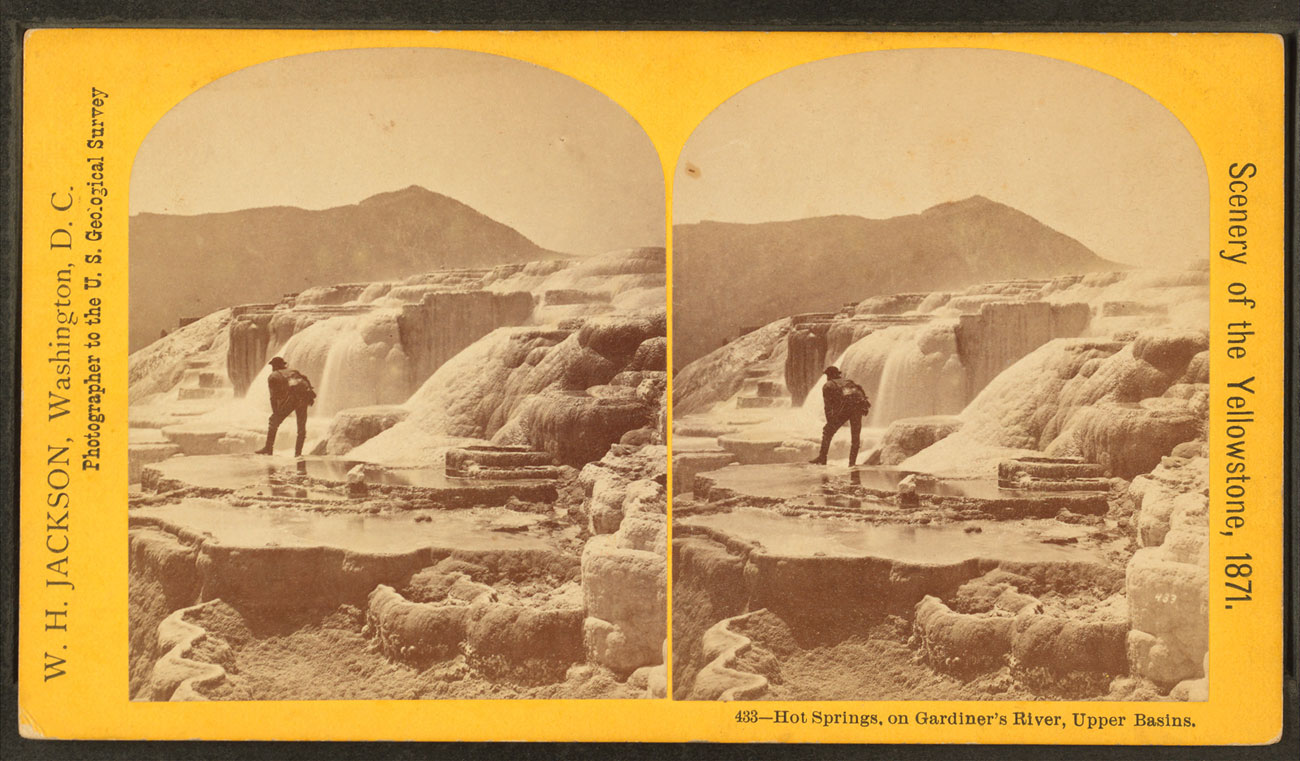


William Henry Jackson (American, 1843-1942) 'Gardiners River Hot Springs, Diana's Baths' 1871


William Henry Jackson (American, 1843-1942)
Gardiners River Hot Springs, Diana’s Baths
1871
From U.S. Geological Survey of the Territories
Albumen print
RISD Museum: Jesse Metcalf Fund


In this photograph William Henry Jackson captures the painter Thomas Moran, who was also part of the 1871 survey team. Shot from slightly below and at a distance, the photograph emphasises the textures of the mineral deposits in the foreground, while Moran’s figure seems dwarfed by the rock formations around him. Jackson often included figures in his photographs to impart a sense of scale. This inclusion of a single figure also heightens the impression that the photograph has captured a moment of discovery, the first contact between intrepid explorers and an uncharted land.
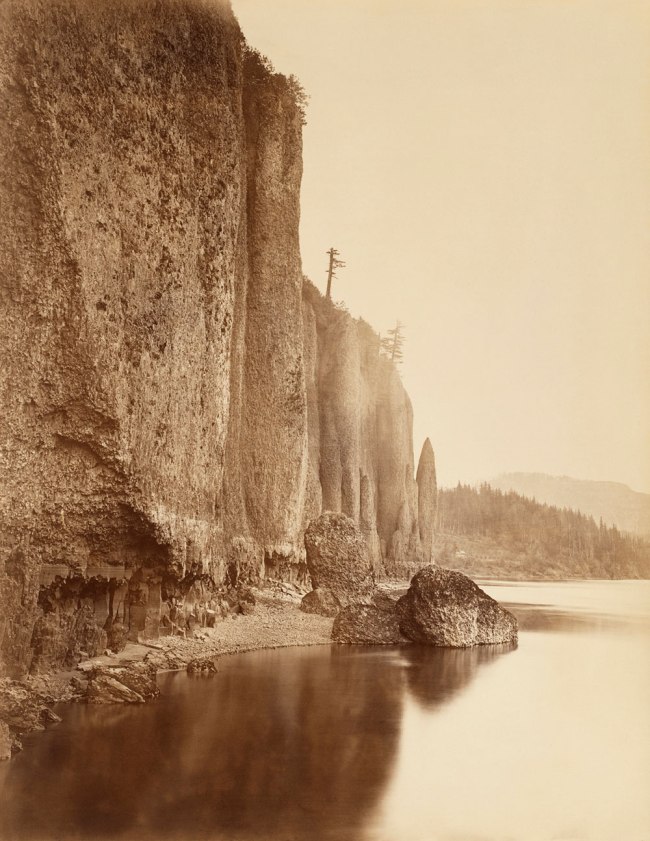
 

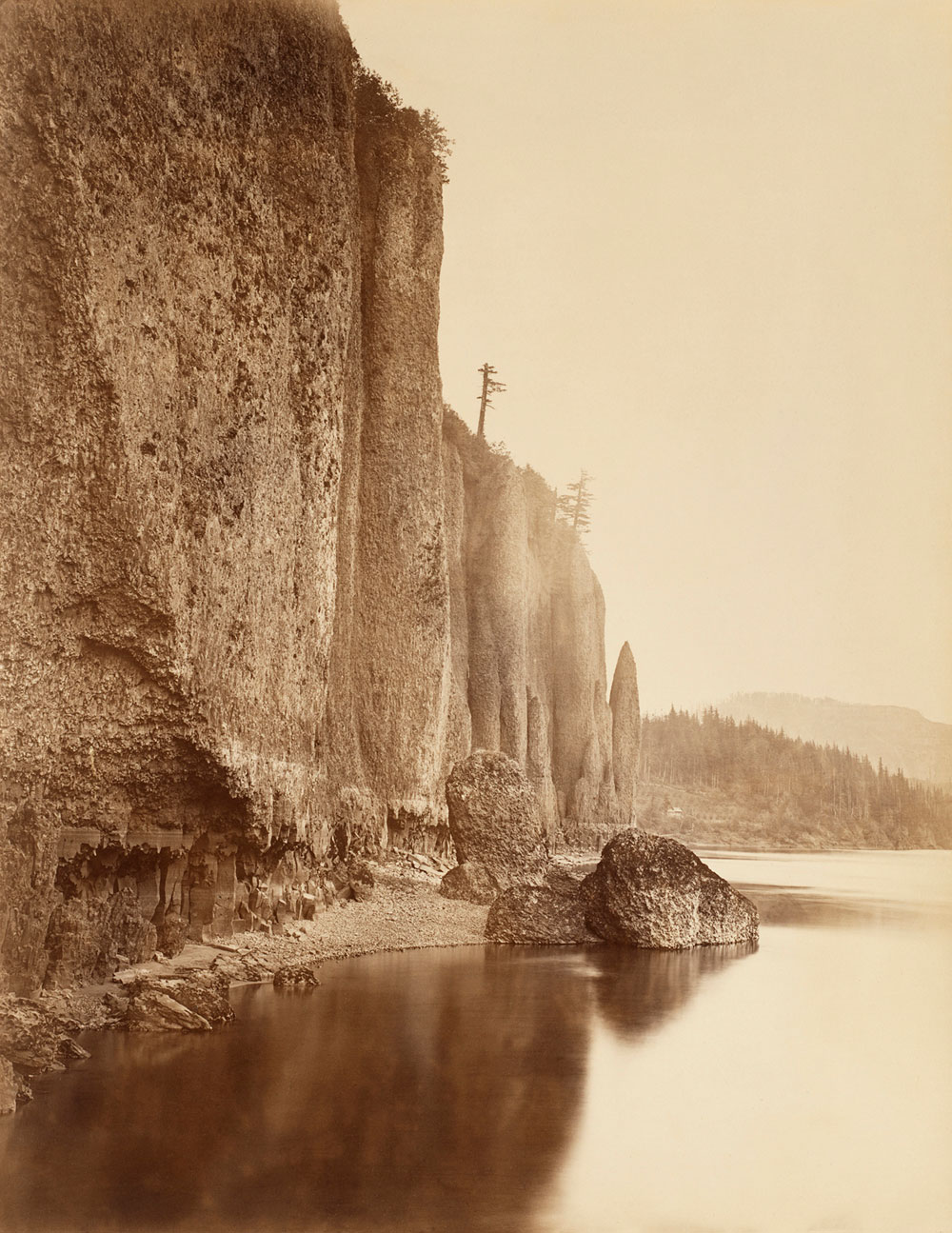
Carleton E. Watkins (American, 1829-1916) 'Cape Horn, Columbia River' 1867


Carleton E. Watkins (American, 1829-1916)
Cape Horn, Columbia River
1867
Helen M. Danforth Acquisition Fund.
Museum of Art Rhode Island School of Design, Providence


Cape Horn, Columbia River exemplifies not only the fine detail characteristic of Carleton Watkins’s images, but also his close attention to pictorial structure. Unlike many of the photographers represented in this gallery, Watkins worked independently of industrial concerns or government sponsorship. To make images that would appeal to an audience more familiar with traditional art forms, Watkins borrowed long-established conventions of landscape paintings, in particular carefully modulated lighting effects and harmonious compositions. Like the painters he emulated, Watkins depicts the West as a romantic wilderness and place of spiritual refuge.
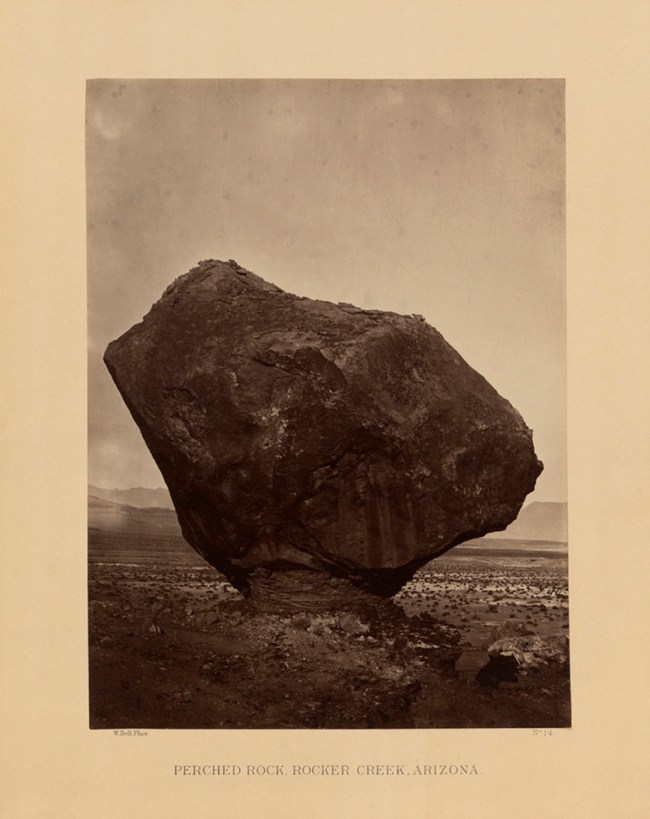
 

William H. Bell (American, 1830-1910) 'Perched Rock, Rocker Creek, Arizona' 1872


William H. Bell (American, 1830-1910)
Perched Rock, Rocker Creek, Arizona
1872
From the album Explorations and Surveys West of the 100th Meridian
Albumen print
Jesse Metcalf Fund. Museum of Art Rhode Island School of Design, Providence


Surveying the Field

At the end of the American Civil War photographers turned their lenses toward both the wild territories of the West and scenic tourist destinations in the newly established national parks. Although these images are now commonly exhibited in art museums, they were not originally considered art objects, nor were the photographers who made them considered artists. Instead, many of the photographers represented here were hired to document the projects of governmental agencies and the progress of federal survey expeditions to the western territories. Others produced images for the growing tourist market or recorded the construction of tracks through the country’s interior for railroad companies. The majority of these images were published in governmental reports and presentation albums.

The albumen prints produced in America through the 1880s were made from glass-plate negatives created by the laborious process of coating glass plates the size of the prints with a thick photosensitive solution called collodion. These plates had to be prepared on-site, exposed, and developed before the collodion dried, so photographers traveled with portable darkrooms. The prints were made later in a studio by placing paper coated with albumen (solution suspended in egg whites) under a glass-plate negative and exposing the paper to sunlight. By contact printing on this glossy surface, the image was recorded in minute detail.


Timothy O'Sullivan (American born Ireland, 1840-1882) 'Water Rhyolites, Near Logan Springs, Nevada' 1871


Timothy O’Sullivan (American born Ireland, 1840-1882)
Water Rhyolites, Near Logan Springs, Nevada
1871
From the album Explorations and Surveys West of the 100th Meridian
Albumen print
RISD Museum: Jesse Metcalf Fund


Timothy O’Sullivan and William H. Bell, official photographers on survey expeditions through Nevada and Arizona from 1871 to 1873, disavowed the traditional conventions of landscape painting in favour of unadorned observation. Spare and anti-picturesque, O’Sullivan’s radical views – depicting the western territories as foreign-looking, even hostile – accorded perfectly with the interests of those invested in seeing these empty territories studied, secured, and settled. One scholar has postulated that O’Sullivan’s photographs were intentionally crafted to look like products of technology – optically precise, printed on glossy albumen papers – a look that stood for industrial progress within a milieu that valued the machine-made over the handmade. In Perched Rock, Rocker Creek, Arizona and Rock Carved by Drifting Sand, Below Fortification Rock, Arizona, the two photographers treat unusual rock formations like specimens, isolating them from the surrounding landscape to be examined and measured.


Luminous Realms

Kodak’s introduction of the handheld camera in 1888 made photography an affordable and popular leisure-time amusement, creating a generation of amateur photographers seemingly overnight. At the same time, photographers with artistic ambitions feared that the mechanical, point-and-shoot approach of the new “button pressers” would jeopardise the medium’s elevation to the status of high art. In response, this group of artists – who called themselves Pictorialists – emphasised the photographer’s expertise and embraced labor-intensive processes to create expressive and impressionistic images. Many favoured platinum prints because of their wide range of tones, soft contrast, and matte surface – qualities of more traditional artistic media such as drawings and etchings. The Pictorialists’ landscape photographs are especially evocative. Rather than capturing a particular place and time, they transformed the landscape into a backdrop for human emotions and actions through visual effects and the inclusion of figures.


Clarence H. White (American, 1871-1925) 'Morning' 1905


Clarence H. White (American, 1871-1925)
Morning
1905
From Camera Work, No. 23, July 1908
Photogravure
RISD Museum: Walter H. Kimball Fund
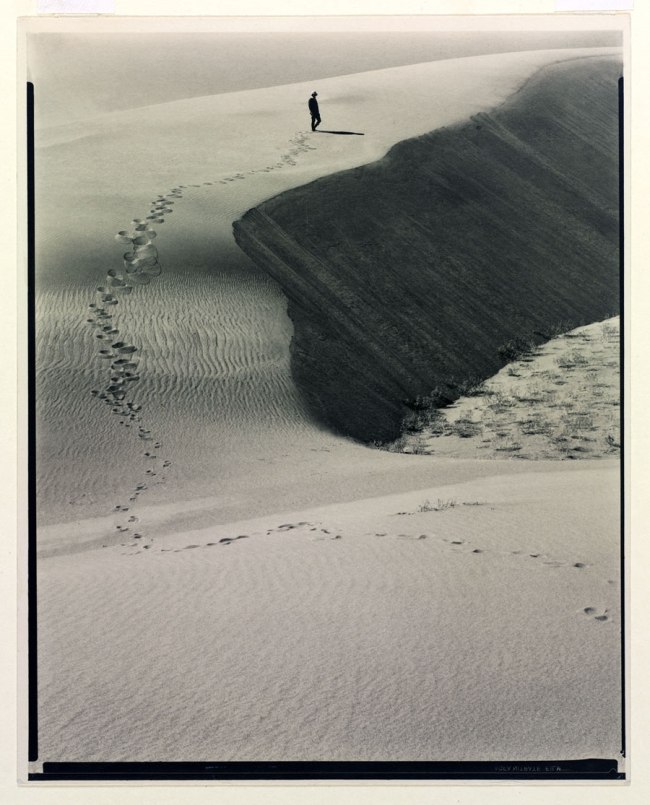
 

Laura Gilpin (American, 1891-1979) 'Footprints in the Sand' 1931


Laura Gilpin (American, 1891-1979)
Footprints in the Sand
1931
Platinum print
RISD Museum: Museum purchase with funds from the National Endowment for the Arts


Laura Gilpin portrays the Colorado sand dunes in the soft-focus style of the Pictorialists, but the reductive forms of her composition are strikingly modern. The sinuous lines of the wind-sculpted dunes are echoed in the subtle patterning of the figure’s footprints. His presence not only provides a sense of scale, but suggests that the human impact on the landscape can be small, fleeting, and beautiful.


Abstracting Nature

In the 1920s, photographers began to question whether Pictorialism was the style best suited to win acceptance for photography as a fine art. On the east coast, Alfred Stieglitz, who had formerly championed Pictorialism, became its most vocal critic. In northern California, a group of photographers who would come to call themselves Group f/64 developed a new style. Opposing the soft focus, painterly approach, the f/64 photographers embraced a hard-edged, sharp-focus machine aesthetic. Optical reality was transformed into surface pattern, rhythm, tone, and line in prints precisely detailed on glossy, gelatin silver papers. Indeed, f/64 refers to the smallest aperture on their large-format cameras, which resulted in sharp focus from foreground to background.

This period revitalised landscape photography, with many photographers looking to views of nature as a place to escape from the problems of urban life. These photographers captured instants of intensified vision that only the camera offered, creating the photograph mentally before it was realised physically. Whether majestic views of dramatic natural features or abstracted details of quiet settings, these images expressed metaphysical, ethical, or personal reflections on humankind’s relationship to nature.
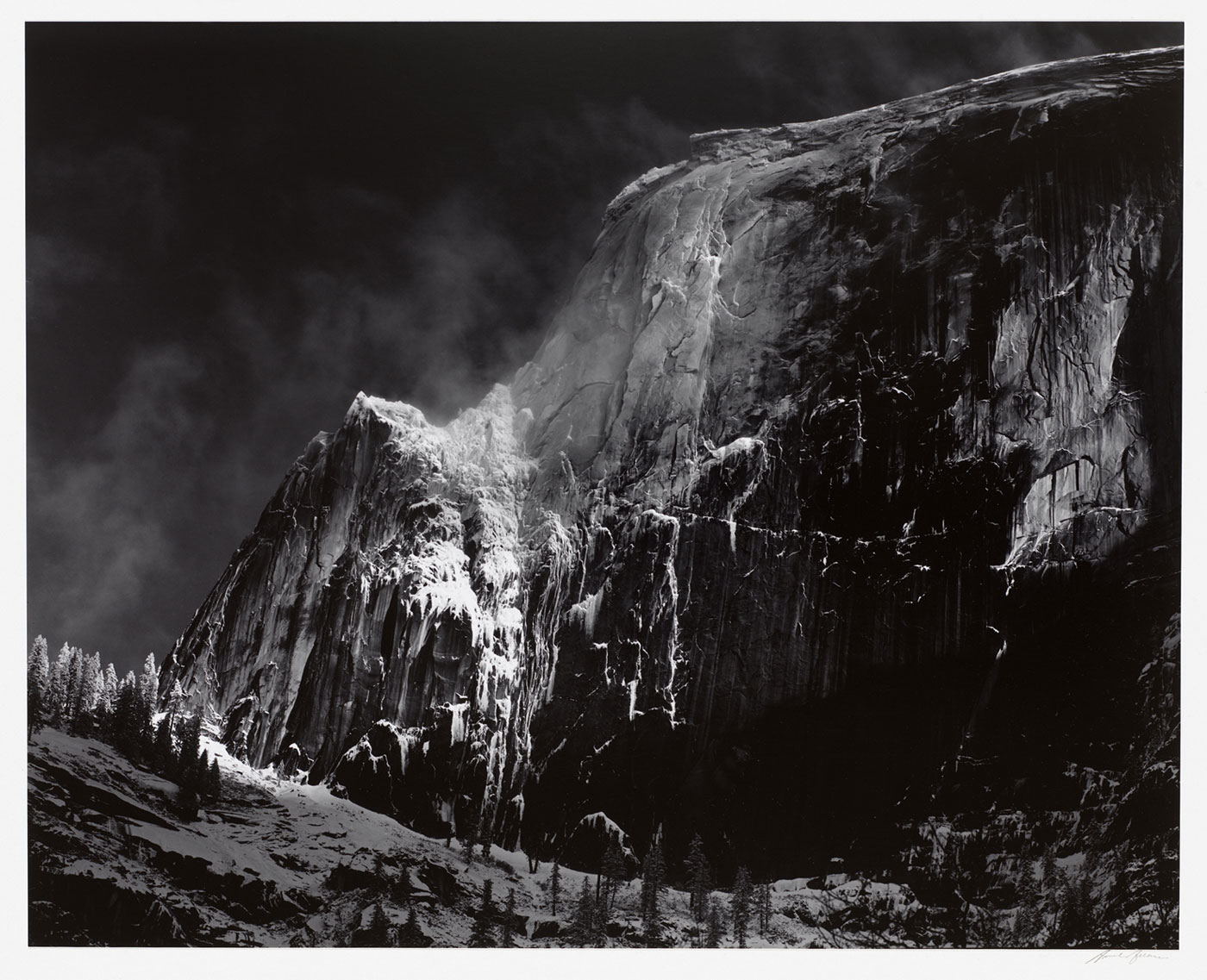
 

Ansel Adams (American, 1902-1984) 'Half Dome, Blowing Snow, Yosemite National Park, California' c. 1955


Ansel Adams (American, 1902-1984)
Half Dome, Blowing Snow, Yosemite National Park, California
ca. 1955 (printed 1970s)
Museum purchase with funds from the National Endowment for the Arts
© 2012 The Ansel Adams Publishing Rights Trust. Museum of Art Rhode Island School of Design, Providence


This photograph depicts the iconic tourist destination of Yosemite as sublime and untouched. By removing any evidence of human impact, Ansel Adams allows us to escape (at least temporarily) from the intrusions of culture. High contrast adds visual drama to an already majestic view, capturing the textures of the rock wall and the light filtering through the blowing snow. Throughout his life, Adams embraced the notion that nature could provide the harried, urbanised citizen of the modern age with a place of spiritual refuge. A long-time member of the Sierra Club, he was a devoted and vocal advocate for wilderness conservation and his photographs were crucial to the conservation effort.
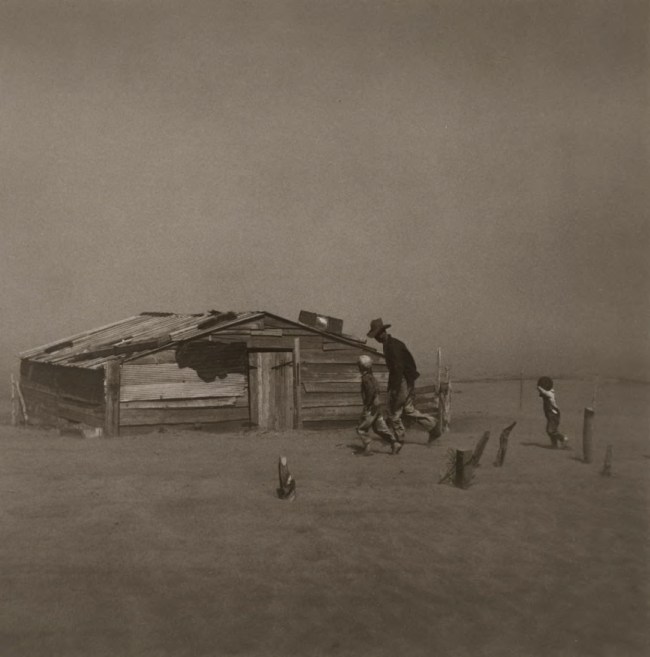
 

Arthur Rothstein (American, 1915-1985) 'Father and Sons Walking in the Face of a Dust Storm, Cimarron County, Oklahoma' 1936


Arthur Rothstein (American, 1915-1985)
Father and Sons Walking in the Face of a Dust Storm, Cimarron County, Oklahoma
1936
Gelatin silver print
RISD Museum: Gift of Mr. and Mrs. Gilman Angier


In 1936 Arthur Rothstein traveled to the Oklahoma panhandle, the area of the country most affected by drought, wind, and erosion. In his image (above) he captured one of the few families in the area that had not yet abandoned their farm. His portrayal of the farmer and his sons fighting to make their way home through the elements can be read as a larger statement about the struggle between man and nature. Rothstein’s dark, low contrast print further conveys the oppressive atmosphere of the dust storm.
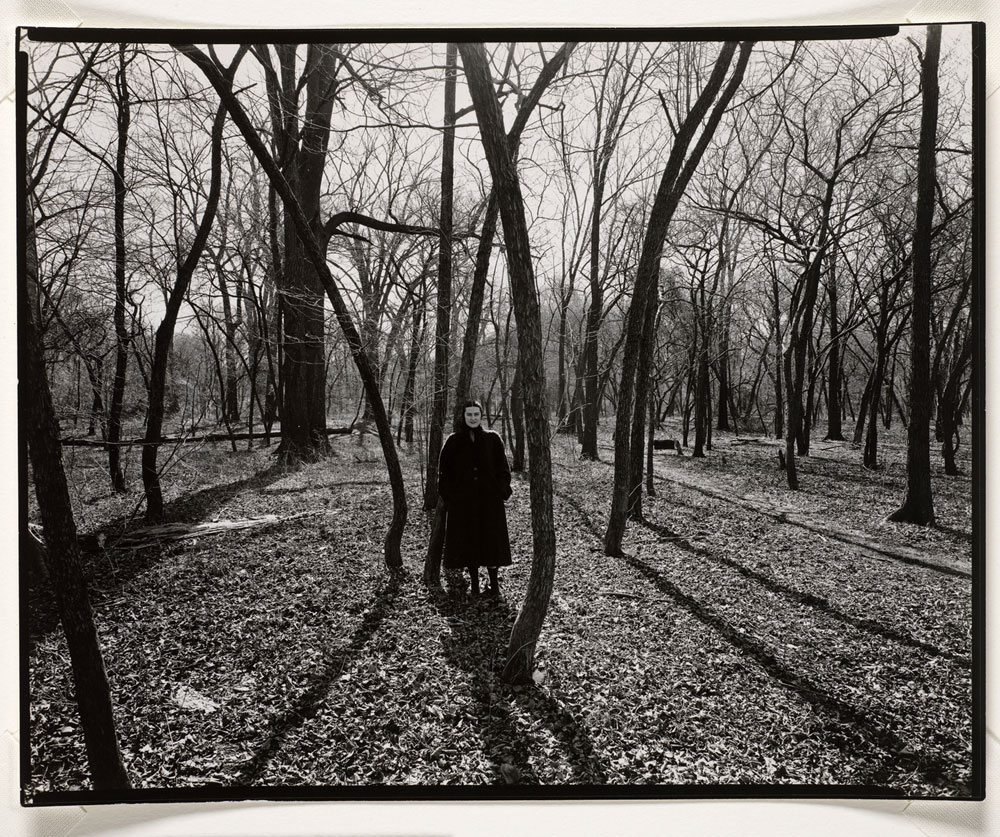
 

Harry Callahan (American, 1912-1999) 'Eleanor, Chicago' c. 1952


Harry Callahan (American, 1912-1999)
Eleanor, Chicago
c. 1952
Gift from Harry Callahan ca. 1953 Wayne Miller
© The Estate of Harry Callahan, courtesy Pace/MacGill Gallery, New York. Museum of Art Rhode Island School of Design, Providence
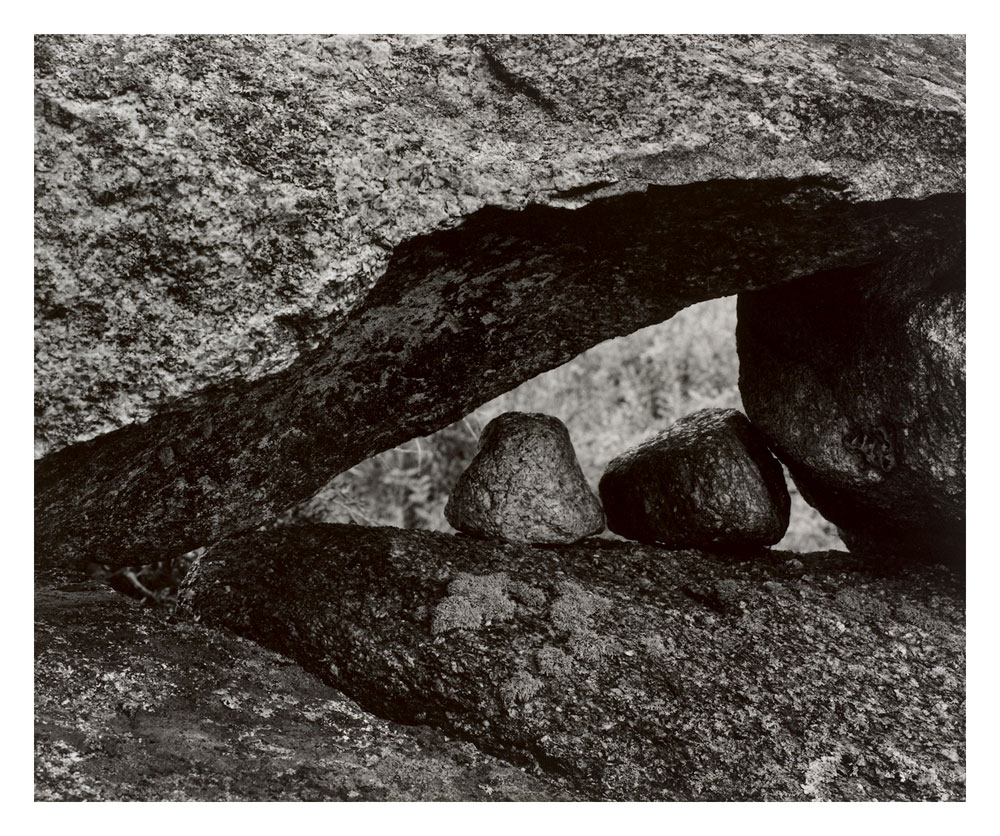
 

Aaron Siskind (American, 1903-1991) 'Martha’s Vineyard, 114B' 1954


Aaron Siskind (American, 1903-1991)
Martha’s Vineyard, 114B
1954
Gift of Mr. Robert B. Menschel. Courtesy Aaron Siskind Foundation
Museum of Art Rhode Island School of Design, Providence


In Martha’s Vineyard 114B, Aaron Siskind focuses on two small rocks nestled in a stone wall. As Siskind explained, he “began to feel the importance of how these rocks hovered over each other, touched each other, pushed against each other.” He likened this contiguity to family relationships, especially that between mother and child. He believed that the pair of rocks pictured in the photograph would – consciously or not – evoke emotions in the viewer, and that these emotions were both deep-seated and universal. In his depiction of the landscape, he found metaphors for what he called “human drama.”
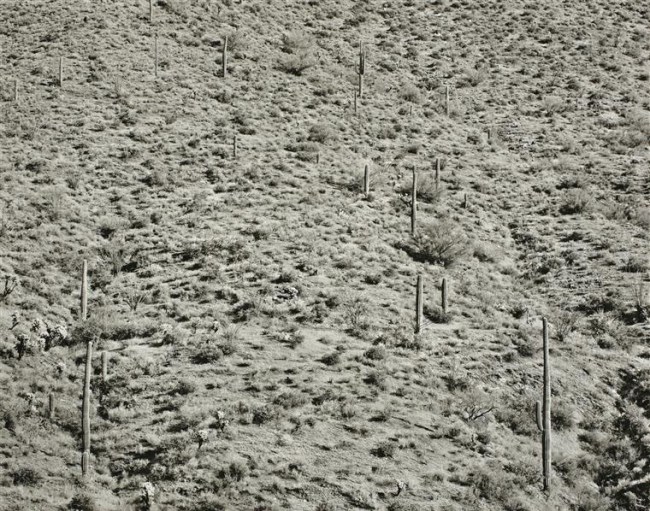
 

Frederick Sommer (American, 1905-1999) 'Arizona Landscape' 1943


Frederick Sommer (American, 1905-1999)
Arizona Landscape
1943
Gelatin silver print
Promised gift from the collection of Marc Harrison


Frederick Sommer’s photographs of the Arizona desert, made between about 1939 and 1945, omit the horizon line to create an overall field of pattern where scale and orientation are confounded. The vast space of the desert is pulled to the surface of the image, making the work less a landscape and more an independent construction. Sommer intently considered much of his work before executing it. He might study an area of the desert for days before deciding how to take the picture and then spend weeks in the darkroom perfecting the print.
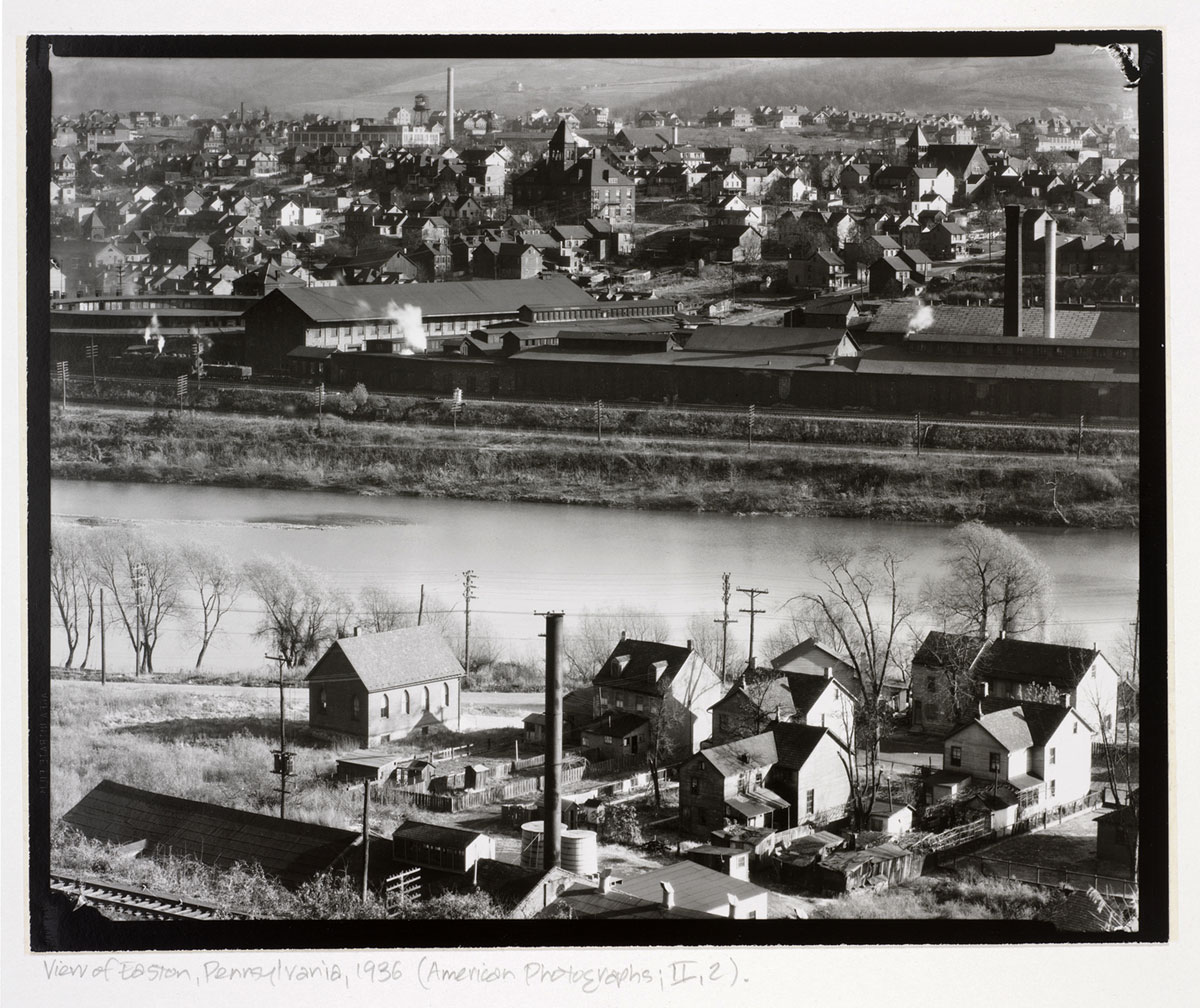
 

Walker Evans (American, 1903-1975) 'View of Easton, Pennsylvania' 1936


Walker Evans (American, 1903-1975)
View of Easton, Pennsylvania
1936
From the portfolio American Photographs II
Gelatin silver print
RISD Museum: Gift of James Dow


By compressing distance and flattening perspective, Walker Evans collapses the two cityscapes of Easton, Pennsylvania, and Phillipsburg, New Jersey, into one plane. Evans’s aesthetically neutral style seems to depict the world without the intervention of the photographer’s point of view. At the same time, he forces the details of every building and smokestack to the surface of the image, making the plight of the cities and their inhabitants – the Depression had crippled the shipping and manufacturing industries that were the lifeblood of both towns – impossible to ignore.
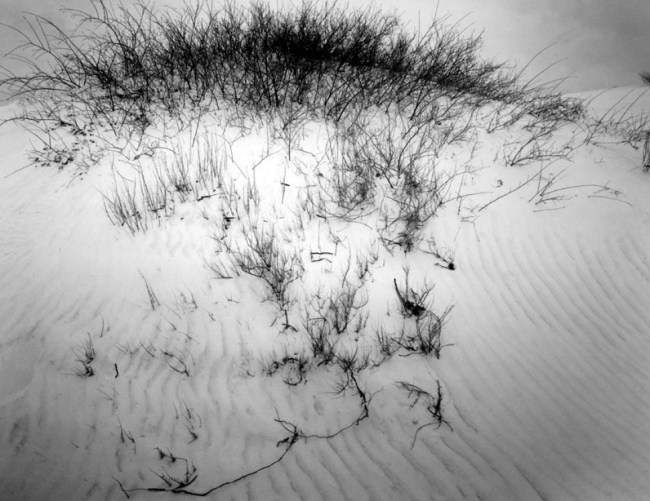
 

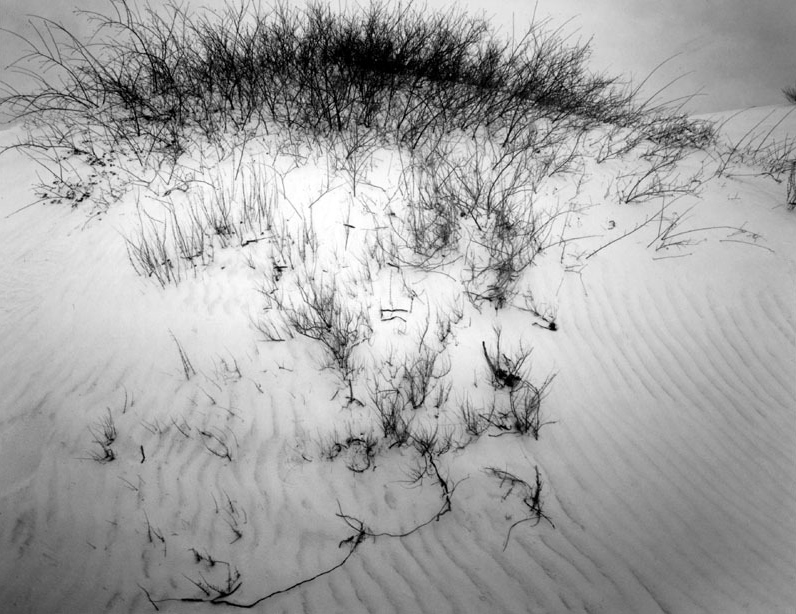
Jack Warren Welpott (American, 1923-2007) 'White Sands' 1977


Jack Warren Welpott (American, 1923-2007)
White Sands
1977
Gelatin silver print
RISD Museum: Gift of Aaron Siskind
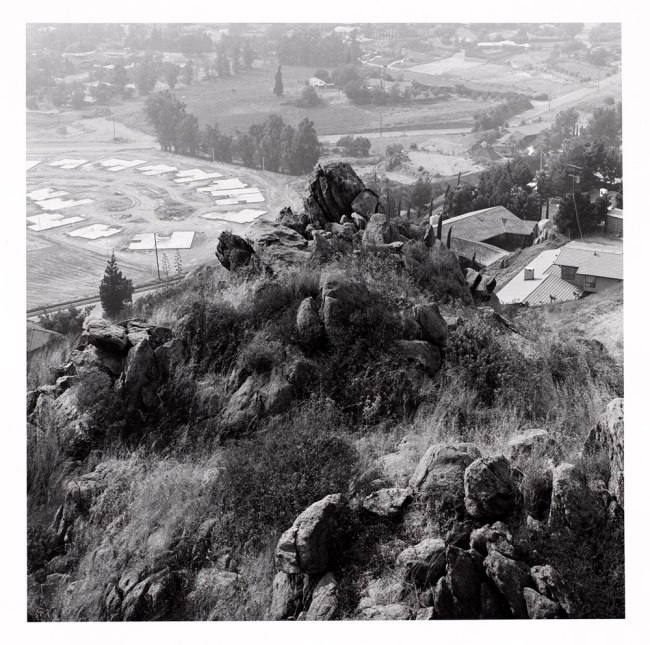
 

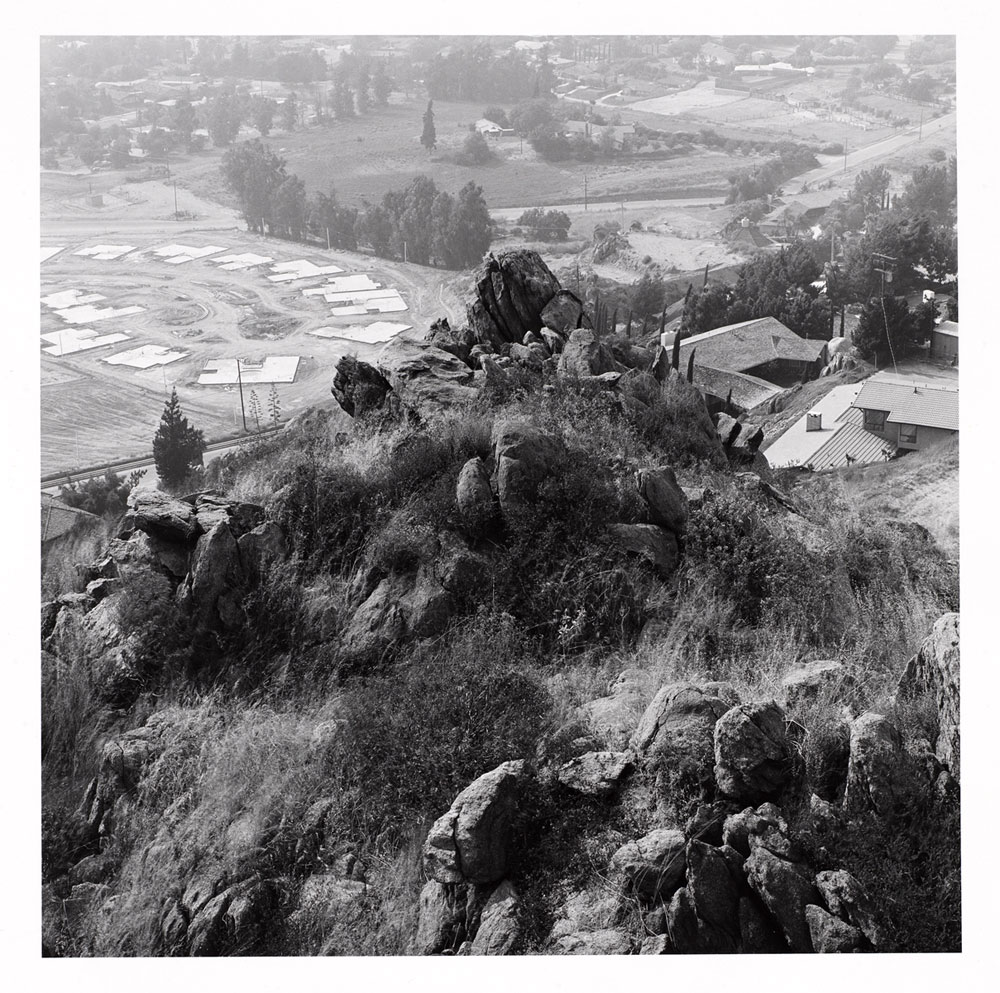
Joe Deal (American, 1947-2010) 'Colton, California' 1978


Joe Deal (American, 1947-2010) (RISD Provost 1999-2005, Faculty 2005-2009)
Colton, California
1978
From the portfolio The Fault Zone 1981
Portfolio of 19 gold-toned gelatin silver prints
Museum Purchase: Georgianna Sayles Aldrich Fund and Gift of James D. and Diane D. Burke
© The Estate of Joe Deal, courtesy Robert Mann Gallery. Museum of Art Rhode Island School of Design, Providence
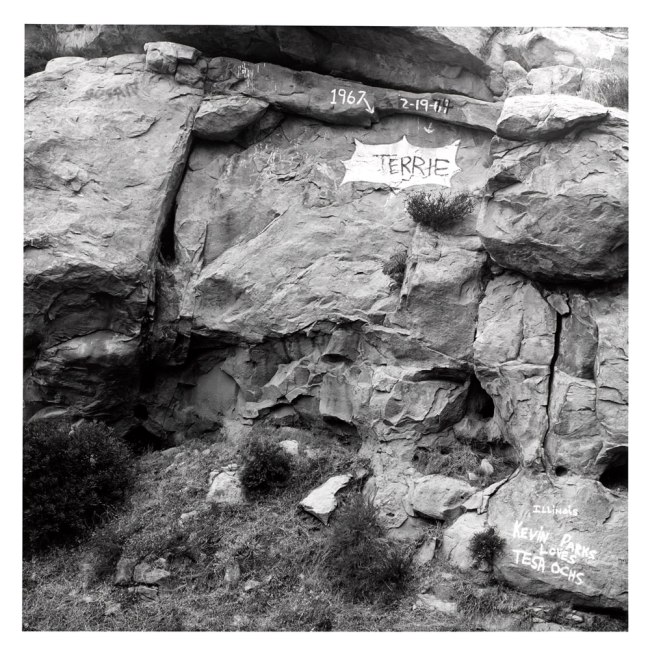
 

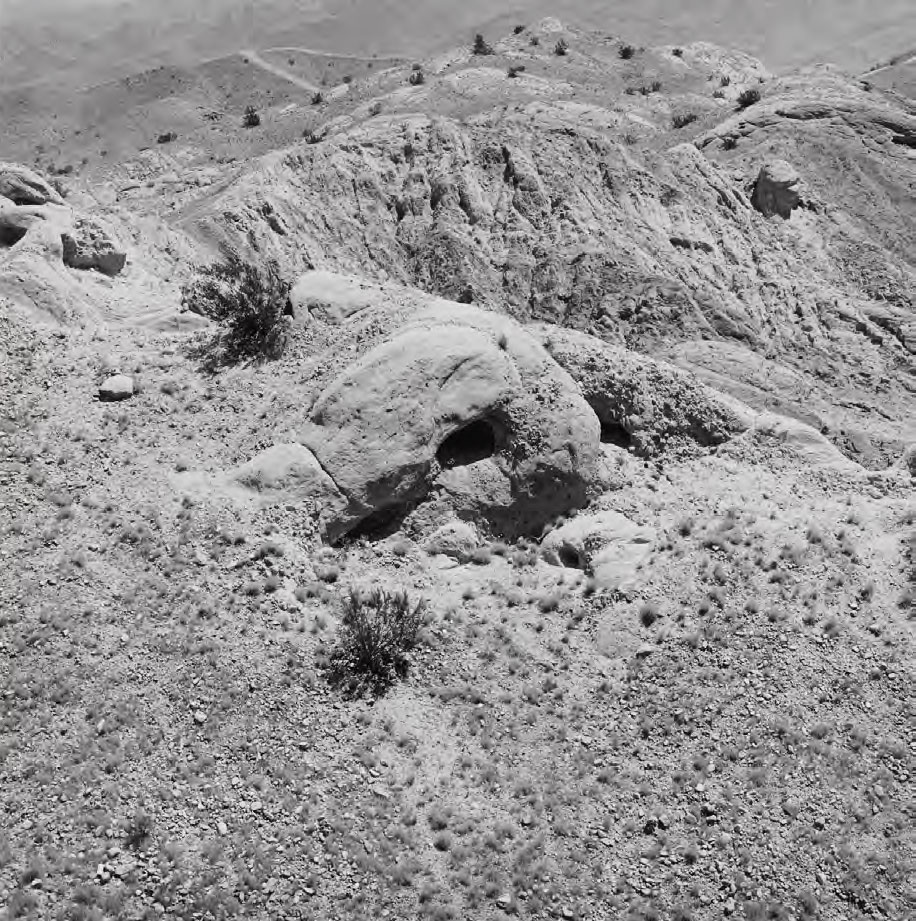
Joe Deal (American, 1947-2010) 'Chatsworth, California' 1980


Joe Deal (American, 1947-2010) (RISD Provost 1999-2005, Faculty 2005-2009)
Chatsworth, California
1980
From the portfolio The Fault Zone 1981
Portfolio of 19 gold-toned gelatin silver prints
Museum Purchase: Georgianna Sayles Aldrich Fund and Gift of James D. and Diane D. Burke
© The Estate of Joe Deal, courtesy Robert Mann Gallery. Museum of Art Rhode Island School of Design, Providence


Joe Deal (American, 1947-2010) 'Indio, California' 1978


Joe Deal (American, 1947-2010) (RISD Provost 1999–2005, Faculty 2005-2009)
Indio, California
1978
From The Fault Zone 1981
Portfolio of 19 gold-toned gelatin silver prints
RISD Museum: Museum Purchase: Georgianna Sayles Aldrich Fund and Gift of James D. and Diane D. Burke


Joe Deal (American, 1947-2010) 'Santa Barbara, California' 1978


Joe Deal (American, 1947-2010) (RISD Provost 1999–2005, Faculty 2005-2009)
Santa Barbara, California
1978
From The Fault Zone 1981
Portfolio of 19 gold-toned gelatin silver prints
RISD Museum: Museum Purchase: Georgianna Sayles Aldrich Fund and Gift of James D. and Diane D. Burke


Inspired by conceptual art, Joe Deal generally developed his work in series, choosing a particular location and adhering to a strict visual formula. As in The Fault Zone, his landscapes were typically square in format, viewed from above, lacking a horizon, and empty of people. Edges and divisions in nature and the landscape fascinated him, and the fault lines in California, though invisible on the surface, in many ways define that landscape. Using maps from the Los Angeles County engineering office that indicated where the fault lines were apt to be, Deal looked for sites that would metaphorically suggest volatility. The first image in the series is the only one that was actually taken on the San Andreas Fault; all others symbolically represent the fault lines with torn or disrupted terrain.


Topographic Developments

By the time the landmark exhibition New Topographics: Photographs of a Man-Altered Landscape opened in 1975, the accelerating degradation of the environment had become an inescapable reality. Inverting the Ansel Adams principle of exclusion, the exhibit voiced the belief that the landscape could no longer be portrayed as a refuge from the ills of industrial life: any consideration of the modern environment had to include both wilderness areas and the vacant lot next door.

The New Topographics photographers captured recently constructed tract homes, industrial parks, and highway culture with medium and large format cameras. As aesthetically neutral as real estate snapshots, the photographs showed the facts without offering their opinions about the rapid development they recorded. Seemingly stripped of expressivity, their photographs have the appearance of objective or “topographic” renderings rather than subjective impressions. In emphasising the landscape of the American West and experimenting with anti-Romantic landscape imagery, these photographers looked back to the works of 19th-century survey photographers and to Walker Evans’s documentary style.


Lewis Baltz (American, 1945-2014) 'Model Home, Shadow Mountain' 1977


Lewis Baltz (American, 1945-2014)
Model Home, Shadow Mountain
1977
From the portfolio Nevada
Gift from the Collection of Joe Deal and Betsy Ruppa
© Lewis Baltz. Museum of Art Rhode Island School of Design, Providence


In Nevada, Lewis Baltz alternates unbuilt views with home construction, trailer parks, and roads in a documentation of a rapidly changing landscape in the desert valleys surrounding Reno, an area he once described as “landscape-as-real-estate.” Baltz, like Joe Deal and Harold Jones, whose works are on view in this gallery, developed projects as portfolios, believing that a single photograph cannot capture a complete portrait of a place. In Baltz’s series, a multifaceted, occasionally contradictory image of Nevada emerges through the accumulation of photographs.


Thomas Barrow (American, b. 1938) 'f/t/s Cancellations (Brown) - Field Star' 1975


Thomas Barrow (American, b. 1938)
f/t/s Cancellations (Brown) – Field Star
1975
Gelatin silver print
Gift from the Collection of Joel Deal and Betsy Ruppa
© Thomas Barrow. Museum of Art Rhode Island School of Design, Providence


Barrow scratched through his landscape negatives, calling attention to the materiality of the medium itself and the fact that regardless of how much information is given, reality remains an accumulation of belief, knowledge, and one’s own experience.


Harold Henry Jones (American, b. 1940) 'With Emmet' 1978


Harold Henry Jones (American, b. 1940)
With Emmet
1978
From the portfolio Tucson
Gelatin silver print
Gift of the artist in honour of Joe Deal
© 1986 Harold Jones. Museum of Art Rhode Island School of Design, Providence


Harold Jones moved to Tucson sight unseen in 1974. The Tucson Portfolio documents his first years living in, exploring, and adapting to this unfamiliar landscape. In an accompanying text he relates his initial impressions of the Southwest, a landscape he had only seen in Westerns and “in the background of Roadrunner cartoons.” It was, he writes, “white bright and oven hot. Driving through the spiney leafless plants of the desert gave me the impression of being on an ocean floor – except someone had removed the water. A primordial landscape in a sea of light. Shocking and enchanting, at the same time.”
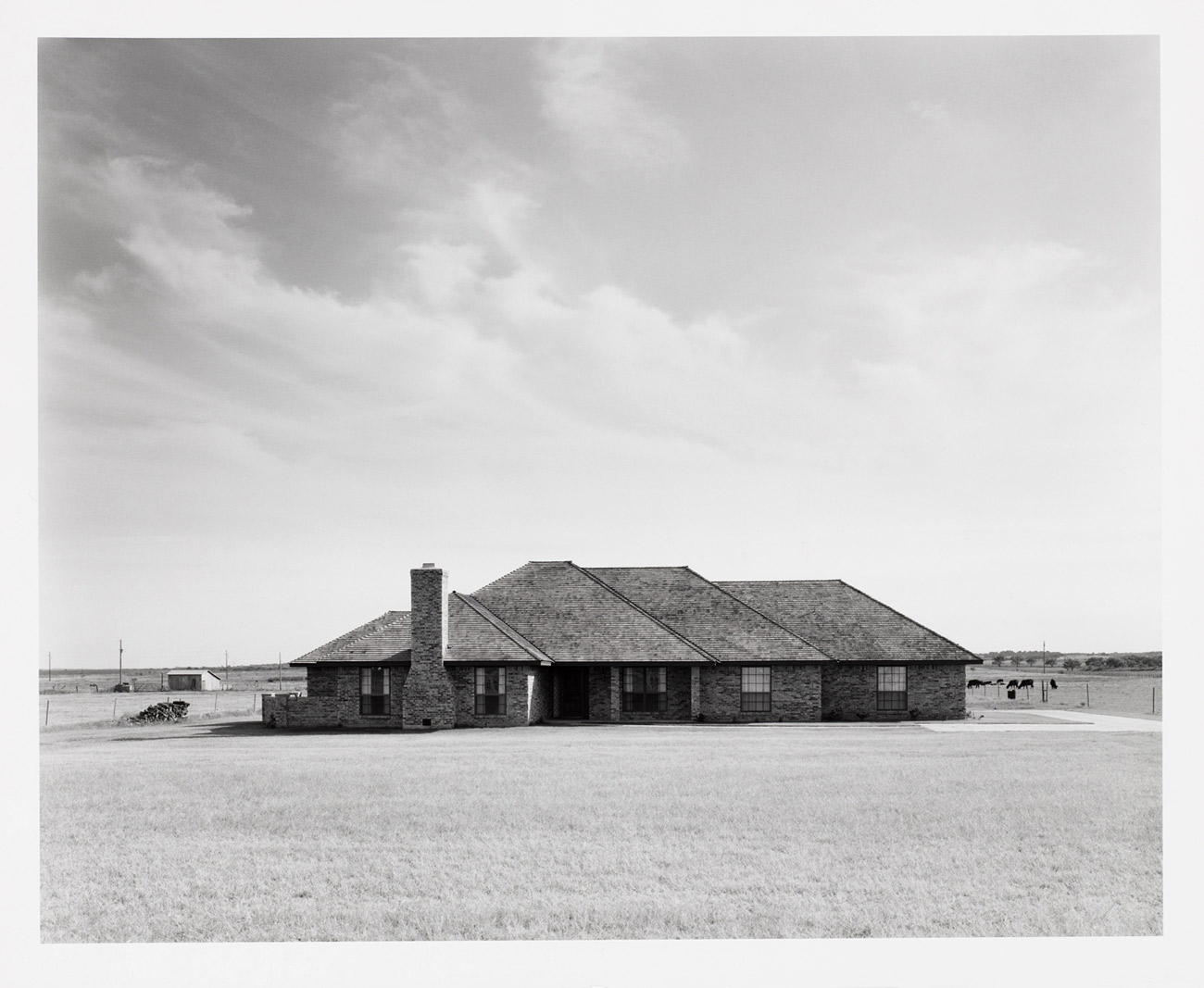
 

Frank Gohlke (American, b. 1942) 'Near Crowley, Texas' 1978


Frank Gohlke (American, b. 1942)
Near Crowley, Texas
1978
Gelatin silver print
RISD Museum: Gift from the Collection of Joe Deal and Betsy Ruppa


Lee Friedlander (American, b. 1934) 'Atlantic City, New Jersey' 1971


Lee Friedlander (American, b. 1934)
Atlantic City, New Jersey
1971
Gelatin silver print
RISD Museum: Museum purchase with funds from the National Endowment for the Arts


Garry Winogrand (American, 1928-1984) 'Utah' 1964


Garry Winogrand (American, 1928-1984)
Utah
1964
From the portfolio Garry Winogrand, 1978
Gelatin silver print
Gelatin silver prints RISD Museum: Gift of Frederick J. Myerson


In the 1960s nature was apt to be viewed from a car window or in a rear-view mirror rather than from a hilltop. The large-format magisterial views of Ansel Adams and Edward Weston were replaced by a 35mm “grab-shot” style that captured the flux and contradictions of modern life with a fresh immediacy. Photographers were among the restless peripatetics crisscrossing the continent on new interstates and side roads, retrieving evidence of the “Americas” they found. The grainy, gritty aesthetic matched the sensations and energy of this environment.


America in View: Landscape Photography 1865 to Now accompanies a major exhibition of that title tracing a history of photographs of the American landscape primarily through the collection of the RISD Museum. The show takes a broad look at the ever-evolving definition of American landscape photography – from seemingly pristine views of nature captured with 19th-century view cameras to images of the decaying contemporary urban streets composed from Google Street View. The RISD Museum’s collection of American landscape photography begins at the end of the Civil War in 1865, when photographers traveled west with government survey teams and railroad companies to record the country’s extraordinary natural features and resources. Ever since, the landscape has remained a compelling subject for photographers who have revealed through their images our nation’s ambition and failings, beauty and degradation, politics and personal stories.

The Museum of Art Rhode Island School of Design announces its major fall exhibition, America in View: Landscape Photography 1865 to Now, a broad panorama of our country’s topographies and correlating narratives that reveals a nation’s ambitions and failings, beauty and loss, politics and personal stories through about 150 photographs spanning nearly 150 years. “The landscape has inspired and challenged artists since the earliest days of our nation,” says Museum Director John W. Smith. “The remarkable works in this exhibition not only capture photography’s evolving relationship with the landscape but also trace the larger narrative of America itself.”

From the earliest images in the show, it is clear how purpose guided style. Carlton Watkins’ 1860s painterly and atmospheric views of the sublime landscape portray the wilderness as a place of spiritual renewal and a refuge from urban problems. In contrast, Timothy O’Sullivan, employed for the government’s geological surveys in the 1870s, made purposefully spare and anti-picturesque images that seemingly provide proof of empty territories needing to be studied, secured, and settled.

In her essay for America in View’s accompanying catalogue, photographer Deborah Bright, chair of the Fine Art Department at Pratt Institute, suggests that some of the historical shifts in environmental consciousness seen in the photographs “illuminate how the works also reflect changing conceptions of landscapes as bearers of cultural meaning.” Ansel Adams, whose mid-20th-century views of nature’s majesty and vastness represent many people’s ideals of American landscape photography, omitted human impact on the land. Widely used by the Sierra Club, his stunning images of untouched wilderness encouraged conservation in the face of an increasingly industrial society.

By the 1970s, artists including the late RISD provost and photography professor Joe Deal saw that the environment entailed both wilderness and the vacant lot next door. Their “New Topographics” imagery depicts recently constructed tract homes, industrial parks, and highway culture – inverting Adams’ exclusion. “‘Landscape’ is probably better understood as that set of expectations and beliefs… we project upon the world,” explains Brown University art historian Douglas Nickel, in the catalogue. “Not every photograph of land is a landscape, and not every landscape necessarily features the land.”

The past 20 years reveal a return to romantic views of the landscape, even in its degraded state, often including figures to create narratives. Justine Kurland’s landscape under an overpass shows a stunning place of fantasy and escape. RISD alumnus Justin Kimball explores fantasies of finding wilderness in public parks – where instead we find others seeking the same.

Press release from the RISD website


Barbara Bosworth (American, b. 1953) 'Niagara Falls' 1986


Barbara Bosworth (American, b. 1953)
Niagara Falls
1986
Gelatin silver print
Private collection
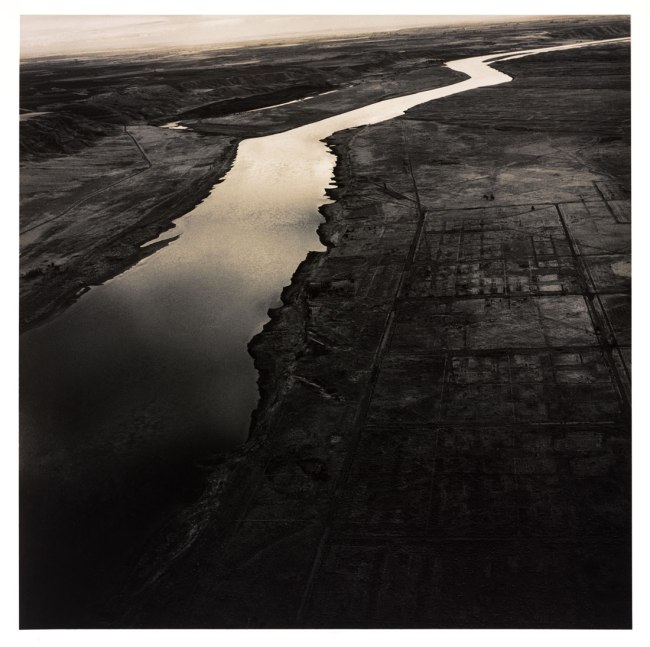
 

Emmet Gowin (American, b. 1941) (RISD MFA 1967) 'Old Hanford City Sites and the Columbia River, Hanford Nuclear Reservation near Richland, Washington' 1986


Emmet Gowin (American, b. 1941) (RISD MFA 1967)
Old Hanford City Sites and the Columbia River, Hanford Nuclear Reservation near Richland, Washington
1986
Toned gelatin silver prints
Promised gift of Dr. and Mrs. William G. Tsiaras
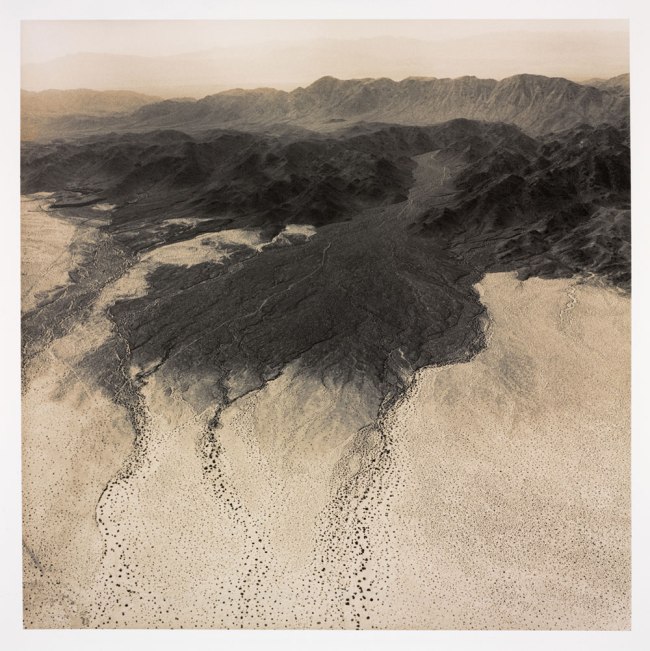
 

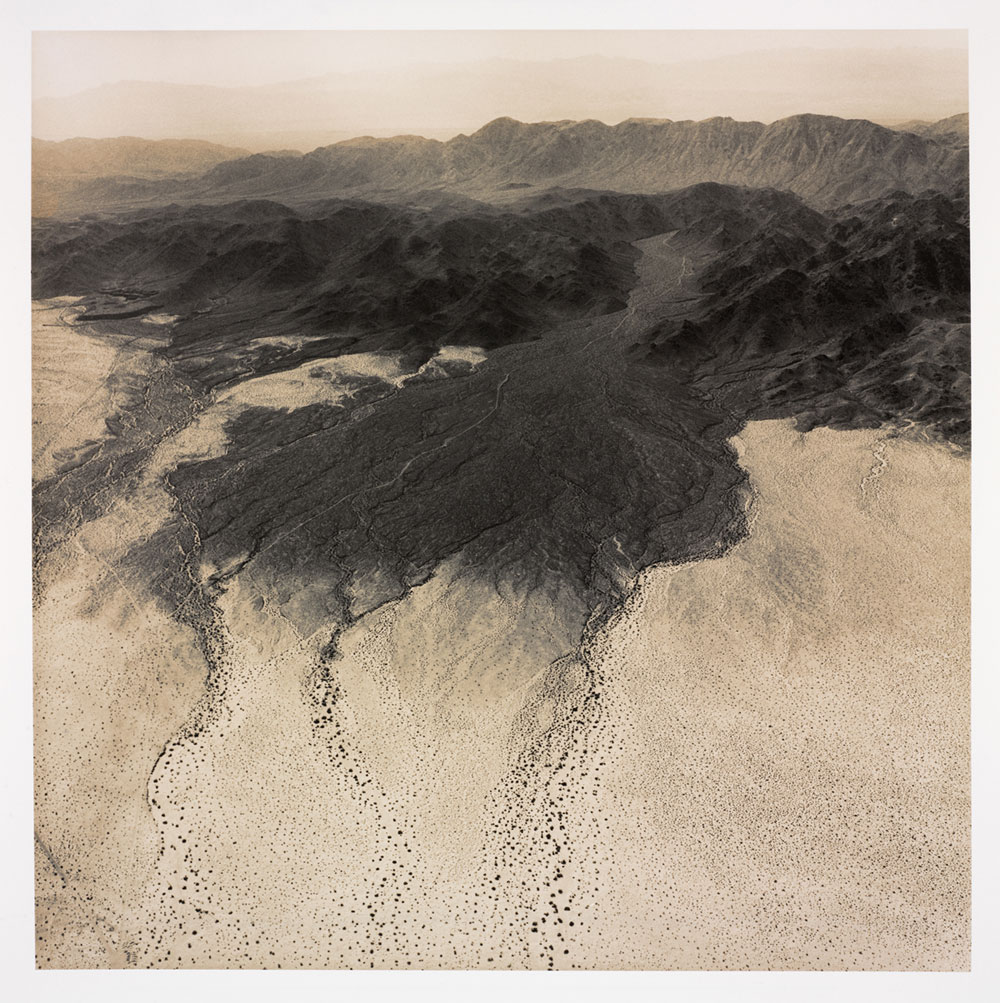
Emmet Gowin (American, b. 1941) 'Alluvial Fan, Natural Drainage near Yuma Proving Ground and the California Arizona Border' 1988


Emmet Gowin (American, b. 1941) (RISD MFA 1967)
Alluvial Fan, Natural Drainage near Yuma Proving Ground and the California Arizona Border
1988
Toned gelatin silver prints
Promised gift of Dr. and Mrs. William G. Tsiaras
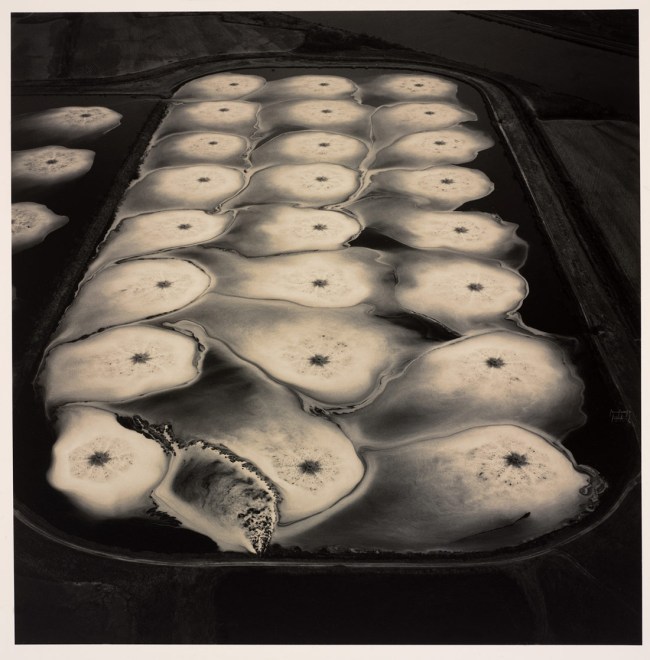
 

Emmet Gowin (American, b. 1941) 'Aeration Pond, Toxic Water Treatment Facility, Pine Bluff, Arkansas' 1989


Emmet Gowin (American, b. 1941) (RISD MFA 1967)
Aeration Pond, Toxic Water Treatment Facility, Pine Bluff, Arkansas
1989
Toned gelatin silver print
RISD Museum: Mary B. Jackson Fund


Emmet Gowin’s carefully constructed prints of strip mining sites, nuclear testing fields, large-scale agriculture, and other scars in the natural landscape seductively draw us in to examine what these lushly patterned and toned images represent. Predating Google Earth, these photographs are shot from the air and provide information about the environment that questions our role as stewards of the planet. A master darkroom printer, Gowin makes images come alive through hand-toning. Each print is transformed from grayscale into hues ranging from warm highlights to cool shadows, emphasising the illusion of three-dimensionality.
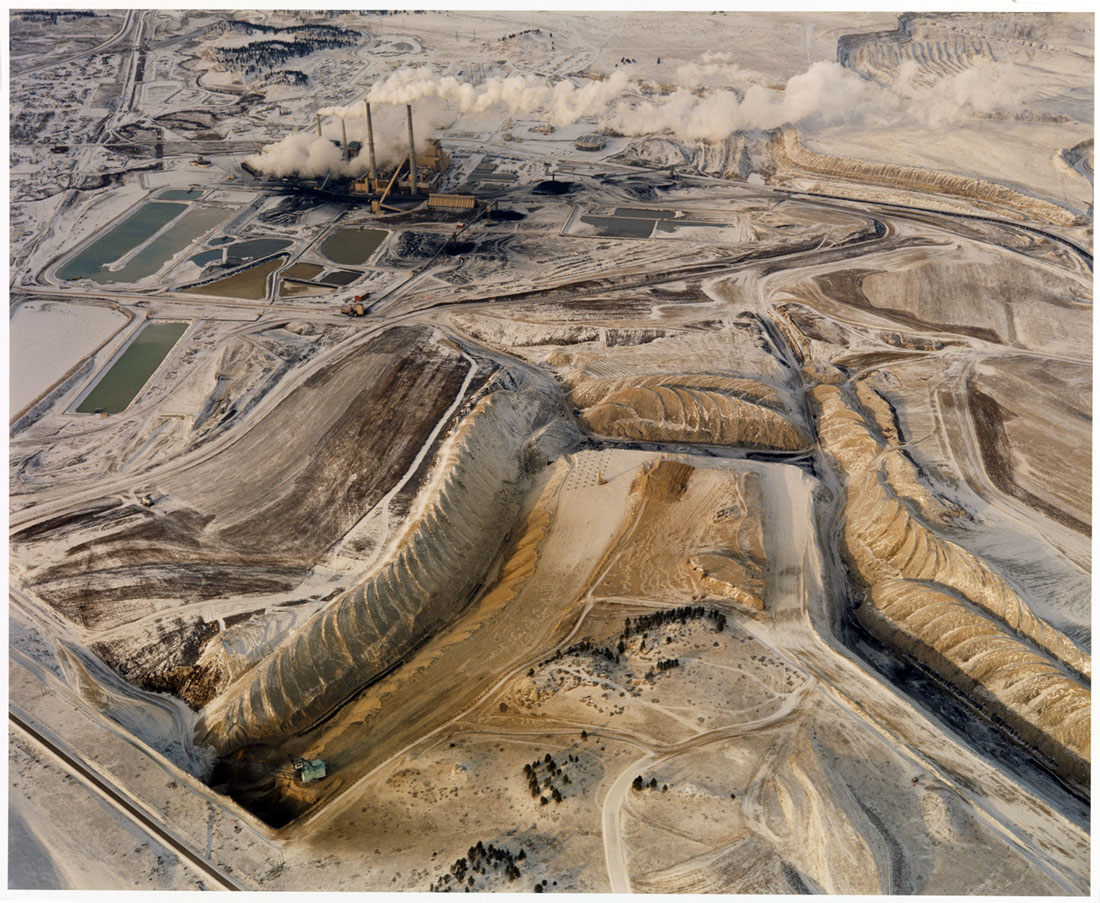
 

David T. Hanson (American, b. 1948) 'Coal Strip Mine, Power Plant and Waste Ponds' 1984


David T. Hanson (American, b. 1948)
Coal Strip Mine, Power Plant and Waste Ponds
1984
Museum Purchase: Gift of the Artist’s Development Fund of the Rhode Island Foundation
© 1984 David T. Hanson, from the book Colstrip, Montana by David T. Hanson (Taverner Press, 2010). Museum of Art Rhode Island School of Design, Providence


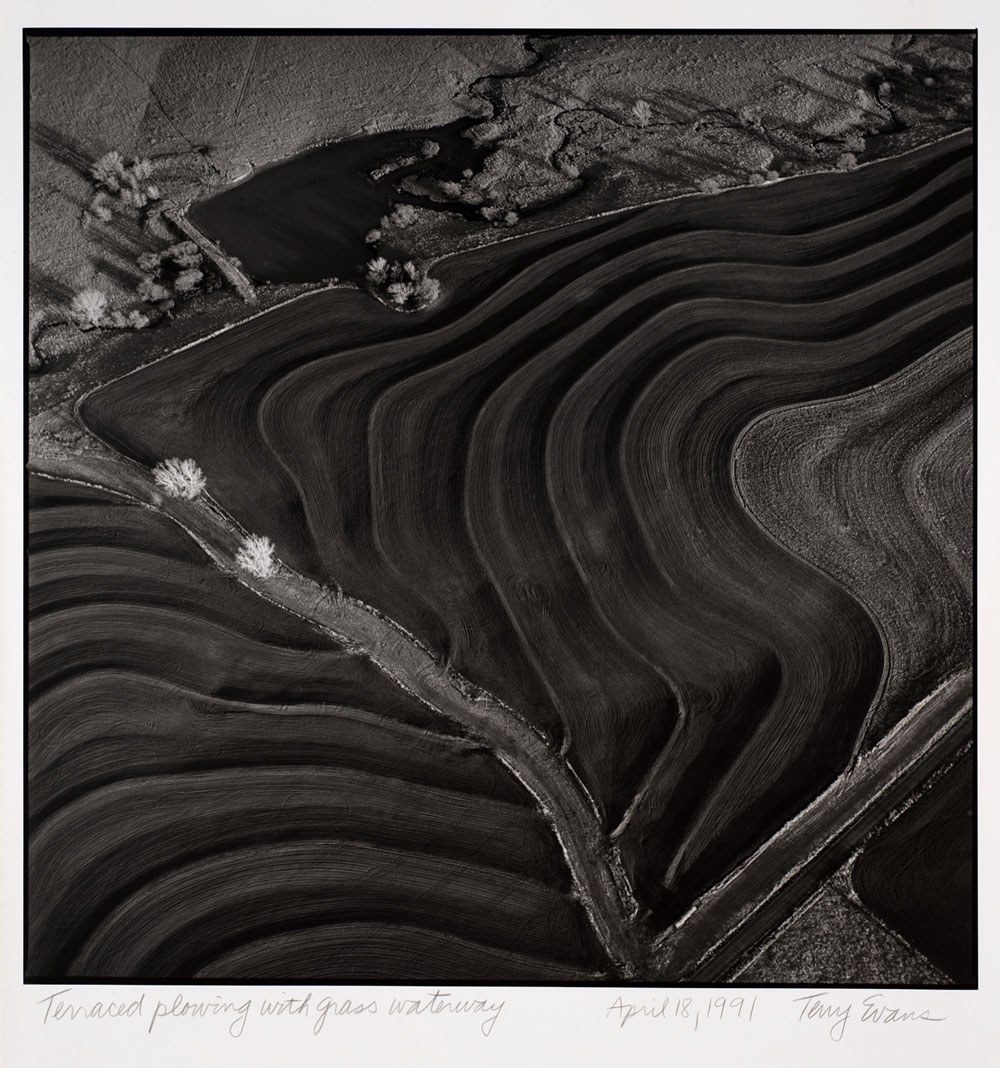
Terry Evans (American, b. 1944) 'Terraced Plowing with a Grass Waterway' 1991


Terry Evans (American, b. 1944)
Terraced Plowing with a Grass Waterway
1991
From the series Inhabited Prairie
Gelatin silver print
RISD Museum: Gift of Jan Howard and Dennis Teepe in honour of Joe Deal


Neither the striking abstract design of the terraced field nor the effectiveness of this type of farming are what interests Terry Evans. She is drawn to the specific place and how the marks on the land, as she has said, “contain contradictions and mysteries that raise questions about how we live on the prairie. All of these places are beautiful to me, perhaps because all land, like the human body, is beautiful.”
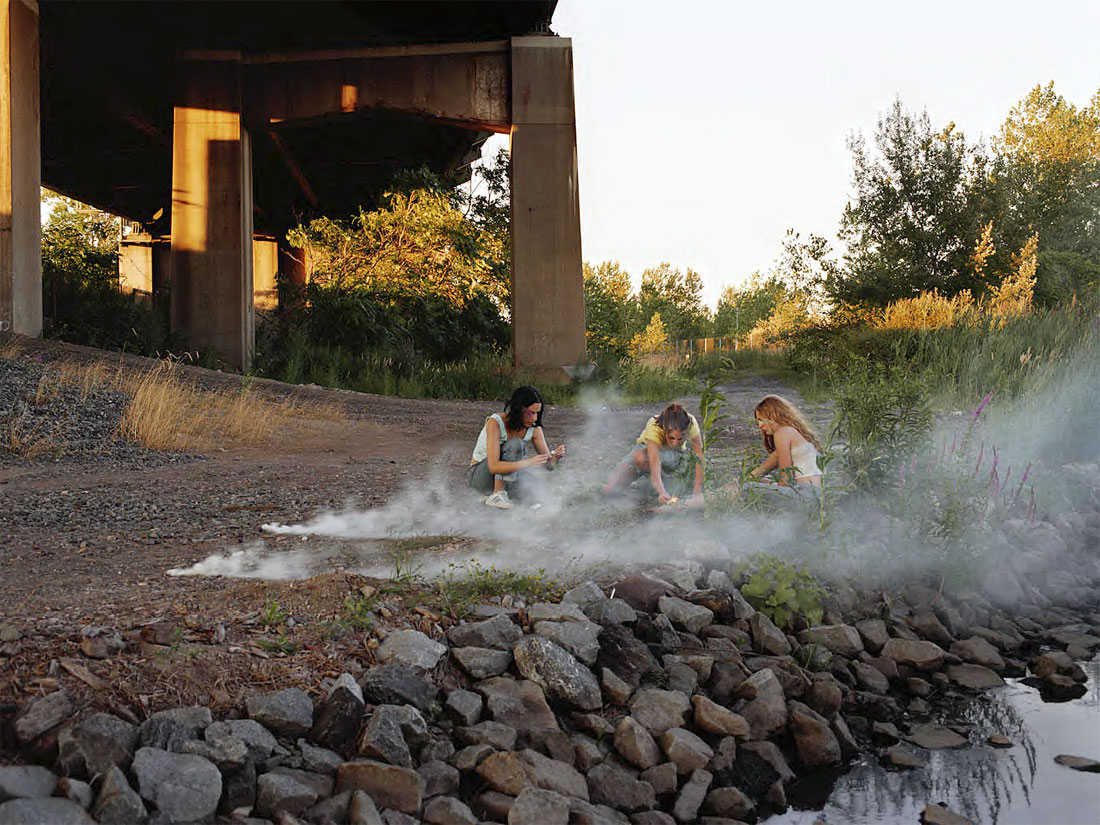
 

Justine Kurland (American, b. 1969) 'Smoke Bombs' 2000


Justine Kurland (American, b. 1969)
Smoke Bombs
2000
From the series Runaway Girls
Colour chromogenic print
RISD Museum: Mary B. Jackson Fund


The neglected space under a New Jersey highway overpass was an ideal spot for three girls to act out Justine Kurland’s fictive story about fugitive teenagers. The figurative grouping recalls pastoral scenes in historical paintings so that the danger of the girls’ pursuit in this dicey no-man’s land is temporarily suspended in the hazy romantic fantasy of escape. The strong light streaming across the scene and the overall beauty of the composition suggests a desire to pursue the sublime even in the most degraded landscapes.


Justin Kimball (American, b. 1961) 'Deep Hole, New Hampshire' 2002


Justin Kimball (American, b. 1961)
Deep Hole, New Hampshire
2002
From the series Where We Find Ourselves
Gift of the artist in honour of Joe Deal
Museum of Art Rhode Island School of Design, Providence


Deep Hole, New Hampshire captures light filtering through the trees as a dozen young men and women distribute themselves among rocky outcroppings, poised for adventure in the water below. The composition recalls the quiet drama of Thomas Eakins’s 19th-century painting of nude swimmers. This reference drew Kimball to the picture as it played out in front of him, along with the palpable sense of elation in the youths’ encounter with the landscape, no matter the deteriorating state of the site due to its heavy use. Kimball’s series Where We Find Ourselves explores the fantasy of finding wilderness in state and national parks, where we only find other people looking for it, too.
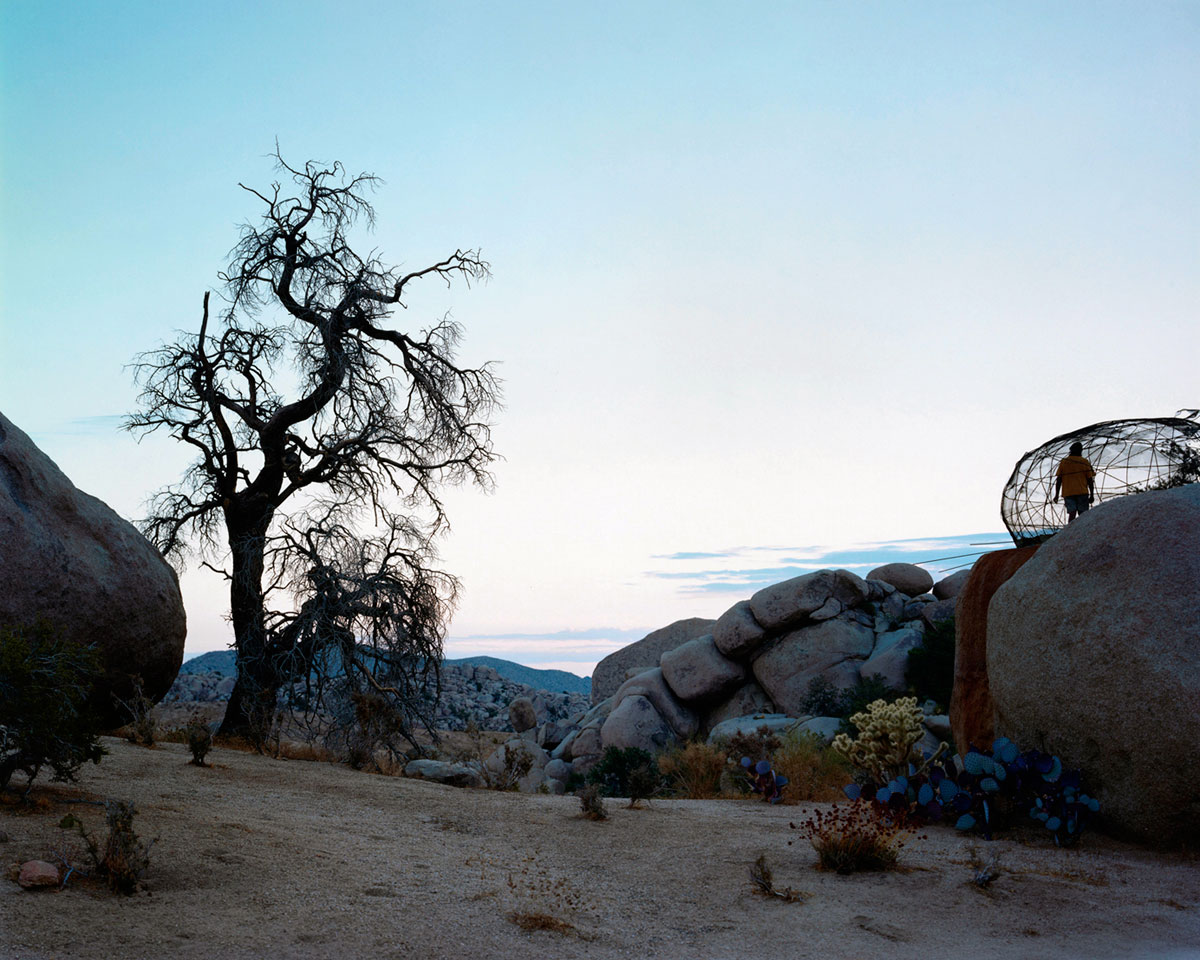
 

Alec Soth (American, b. 1969) '2008_08zl0031' 2008


Alec Soth (American, b. 1969)
2008_08zl0031
2008
Mary Ann Lippitt Acquisition Fund
© Alec Soth
Museum of Art Rhode Island School of Design, Providence


Where We Find Ourselves

Current representations of the American landscape reveal a continually fraught relationship with the environment. Recent landscape photography reflects its history while constructing new notions of what such an image can be. Some artists continue to see the landscape as a place of refuge or spirituality. Others focus on its more disturbing psychological impact, even haunted with battle scars. Some pick up from the 1970s New Topographics approach with a more pointed investigation of environmentalism, documenting and questioning the impact of industry and development on the natural world. Still others have found that with the introduction of the figure the landscape can act as a stage, albeit one charged with political and social resonance.

Notable shifts have also been driven by new processes and techniques. The photographs of the last several decades are predominantly in colour and are much larger than their precedents. While many artists working today use digital technology, their motive is rarely to alter or fabricate imagery but instead to have easier and better control over how these larger images are presented. Surprisingly, many of today’s photographers are using large format cameras very similar to those of the 19th century to create negatives or digital files capable of being enlarged to the scale of contemporary work.
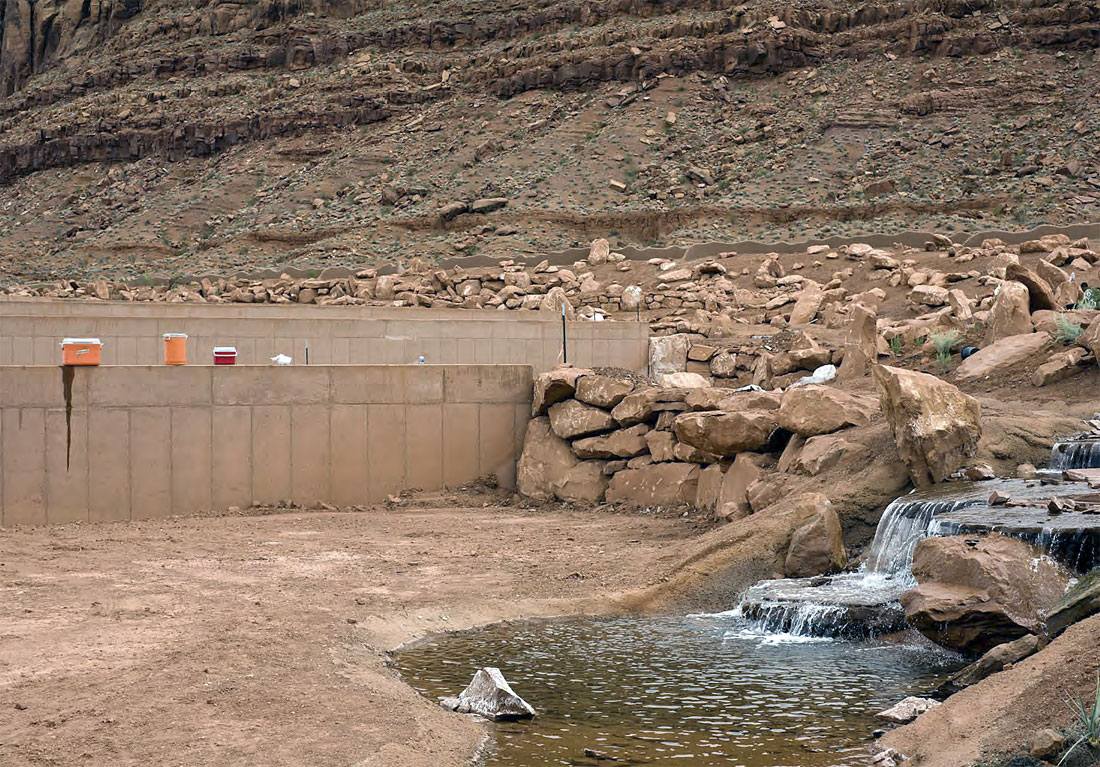
 

Steven B. Smith (American, b. 1963) 'Coolers, Ivins, Utah' 2007


Steven B. Smith (American, b. 1963) (RISD Faculty 1996-present)
Coolers, Ivins, Utah
2007
From the series Irrational Exuberance
Colour inkjet print
RISD Museum: Gift of Heather Smith in honour of Joe Deal


Steven Smith’s subject matter follows in the tradition of the 1970s New Topographic artists. What differentiates Smith’s view of a recently suburbanised desert from his predecessors is the humour with which he captures the extravagant building in this arid place. In this image, from the aptly titled series Irrational Exuberance, fluorescent-coloured coolers, like the red rocks, become part of the landscape, even creating their own waterfall.
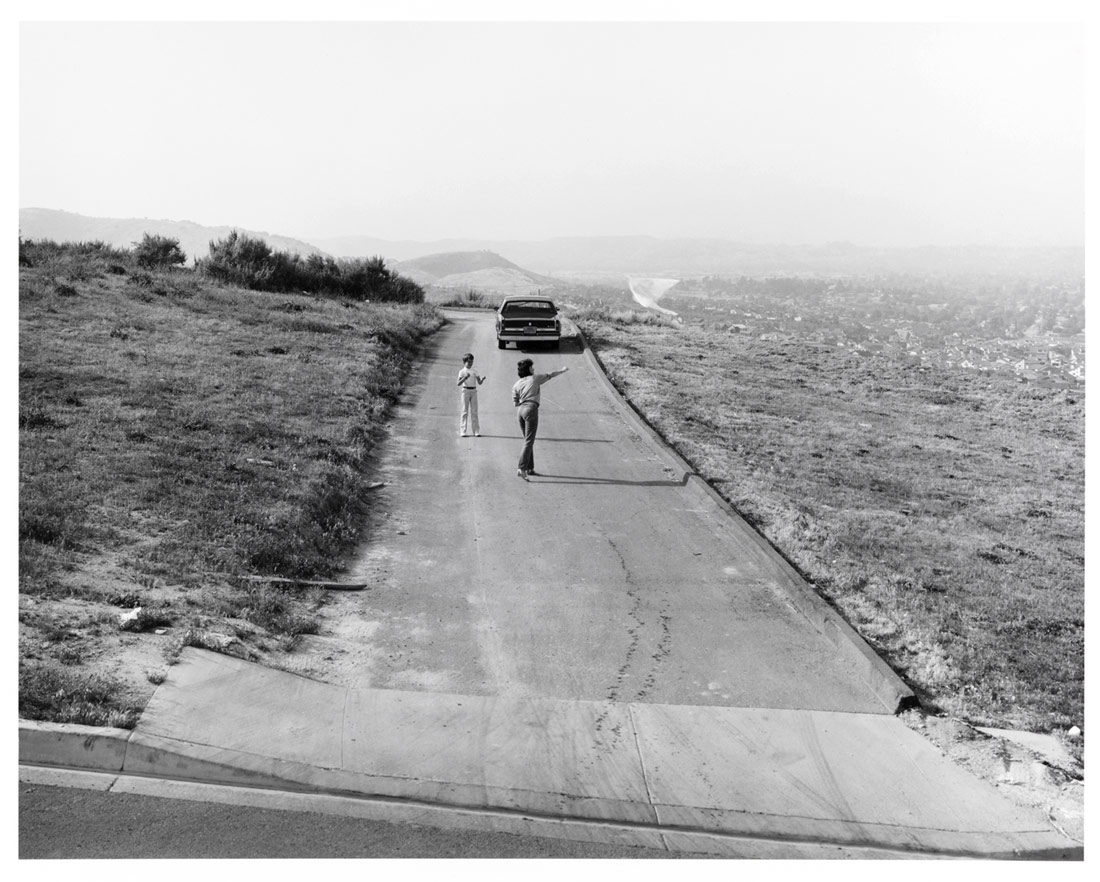
 

Joe Deal (American, 1947-2010) 'Kite, Chino Hills, California' 1984


Joe Deal (American, 1947-2010) (RISD Provost 1999-2005, Faculty 2005-2009)
Kite, Chino Hills, California
1984
From the portfolio Subdividing the Inland Basin
Gift of the artist
© The Estate of Joe Deal, courtesy Robert Mann Gallery. Museum of Art Rhode Island School of Design, Providence


Joe Deal often found his picture at the border between the built and unbuilt landscape. The driveway makes for a convenient spot to fly a kite, surrounded as it is here with a bit of open space remaining in a new development. In the distance to the right the residential growth that will soon cover this piece of land is visible through the atmospheric smog. In the distance to the left are still untouched hills. The inclusion of people – evidence of a rapidly exploding community near the intersection of the Pomona and Orange freeways – marks a shift in Deal’s photography to embracing the landscape as a site for narrative.
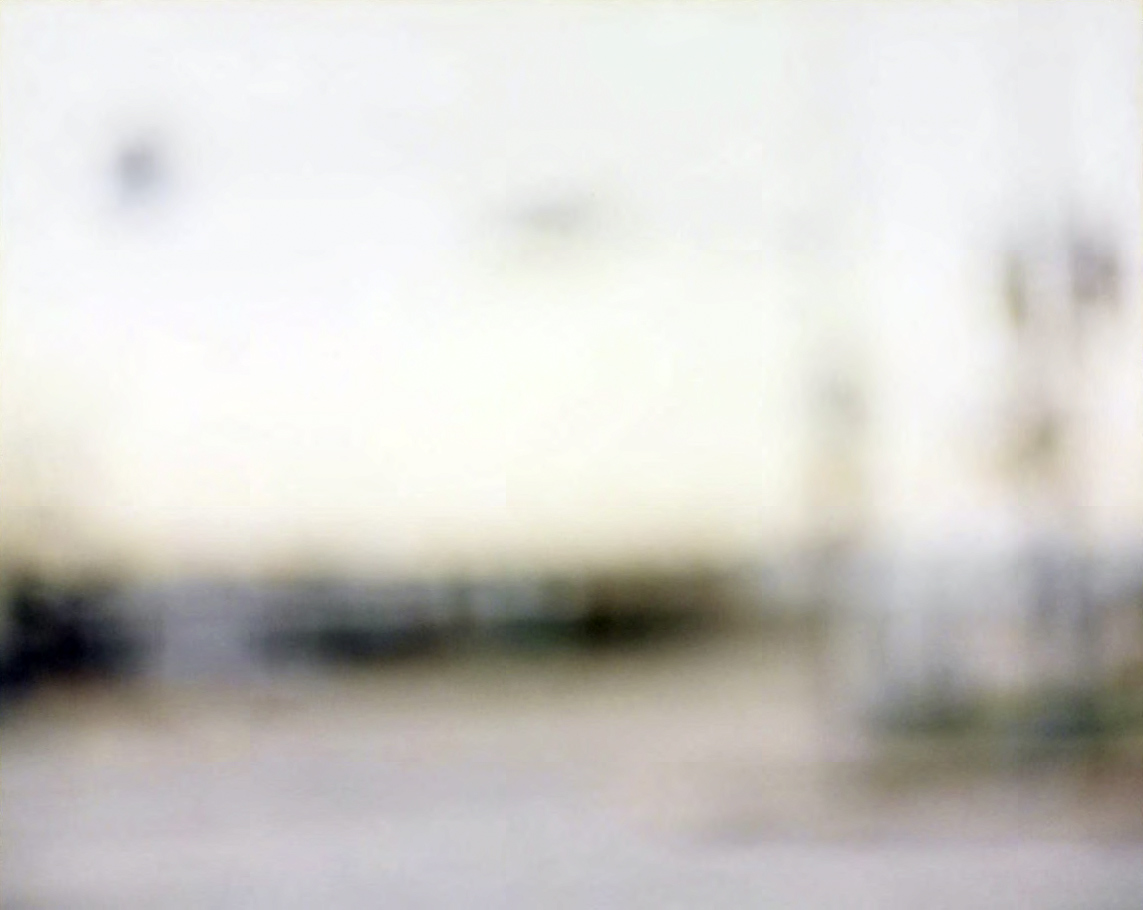
 

Uta Barth (German, b. 1958) 'Field #14' 1996


Uta Barth (German, b. 1958)
Field #14
1996
Colour chromogenic print
RISD Museum: Gift of the Buddy Taub Foundation, Jill and Dennis Roach, Directors


Uta Barth radically softens the camera’s focus to remove all signs of historical specificity and to saturate a flat industrial-looking non-place with a dream-like atmosphere. As such she creates a generic landscape as viewed through a heavily fogged window, with an uncanny sense that is deeply familiar.


Henry Wessel (American, b. 1942) 'Night Walk, Los Angeles, No. 28' 1995


Henry Wessel (American, b. 1942)
Night Walk, Los Angeles, No. 28
1995
From the series Night Walk: LA
Gelatin silver print
RISD Museum: Gift of Mark Pollack
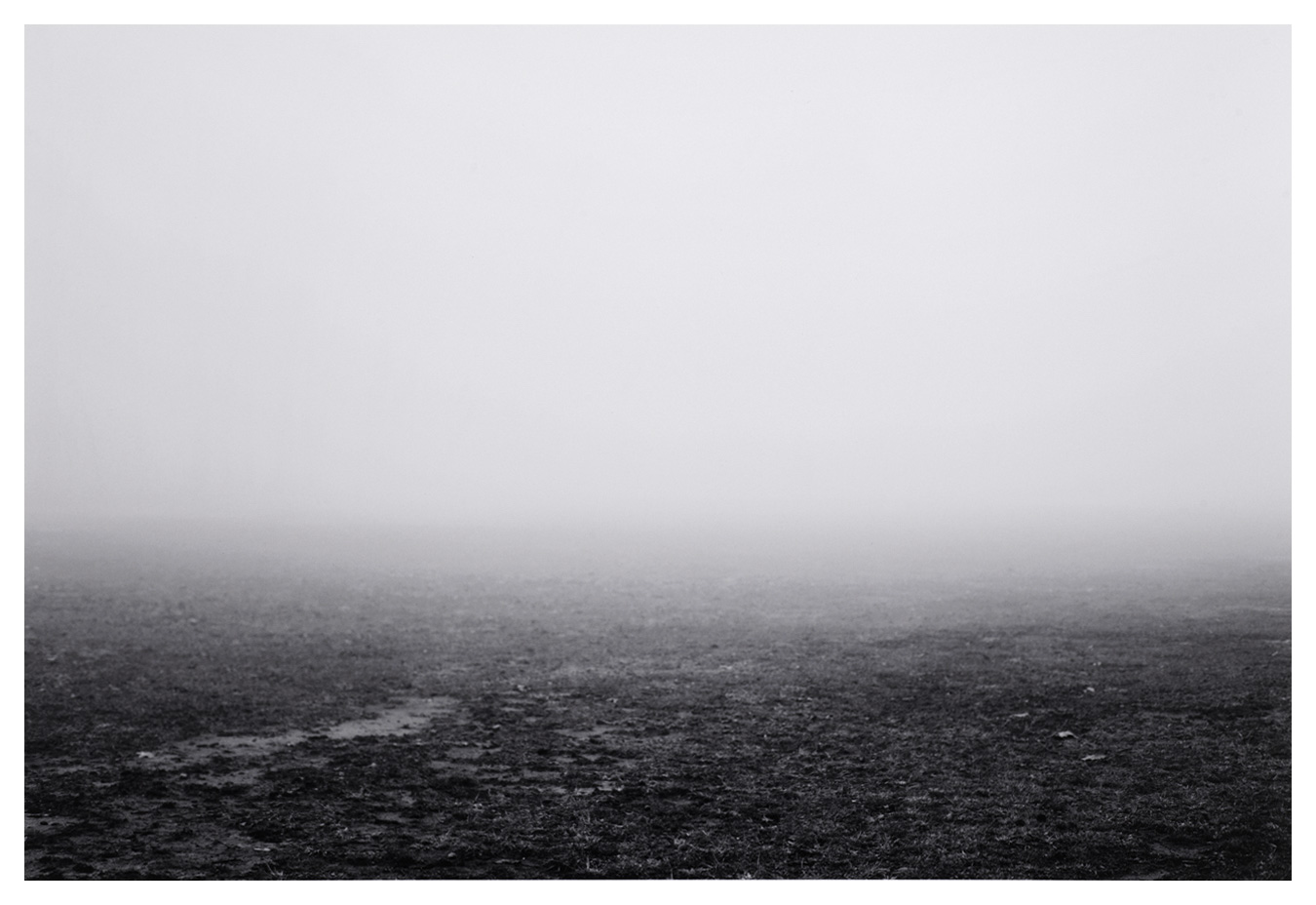
 

Millee Tibbs (American, b. 1976) 'Self-Portrait in the Fog' 2009


Millee Tibbs (American, b. 1976) (RISD MFA 2007)
Self-Portrait in the Fog
2009
From the portfolio Self Portraits
Colour inkjet print
RISD Museum: Gift of the artist in honour of Joe Deal
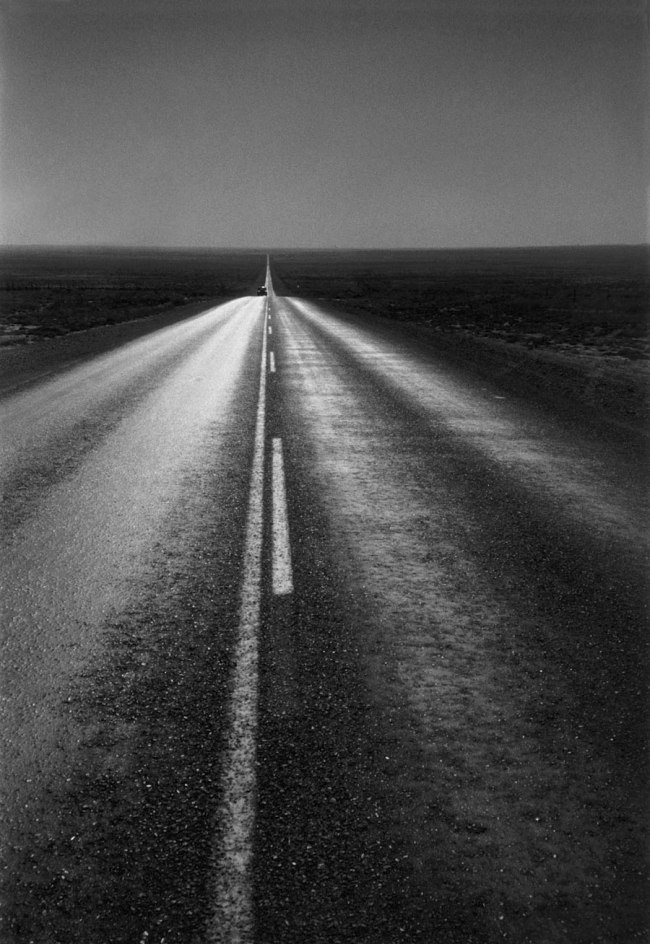
 

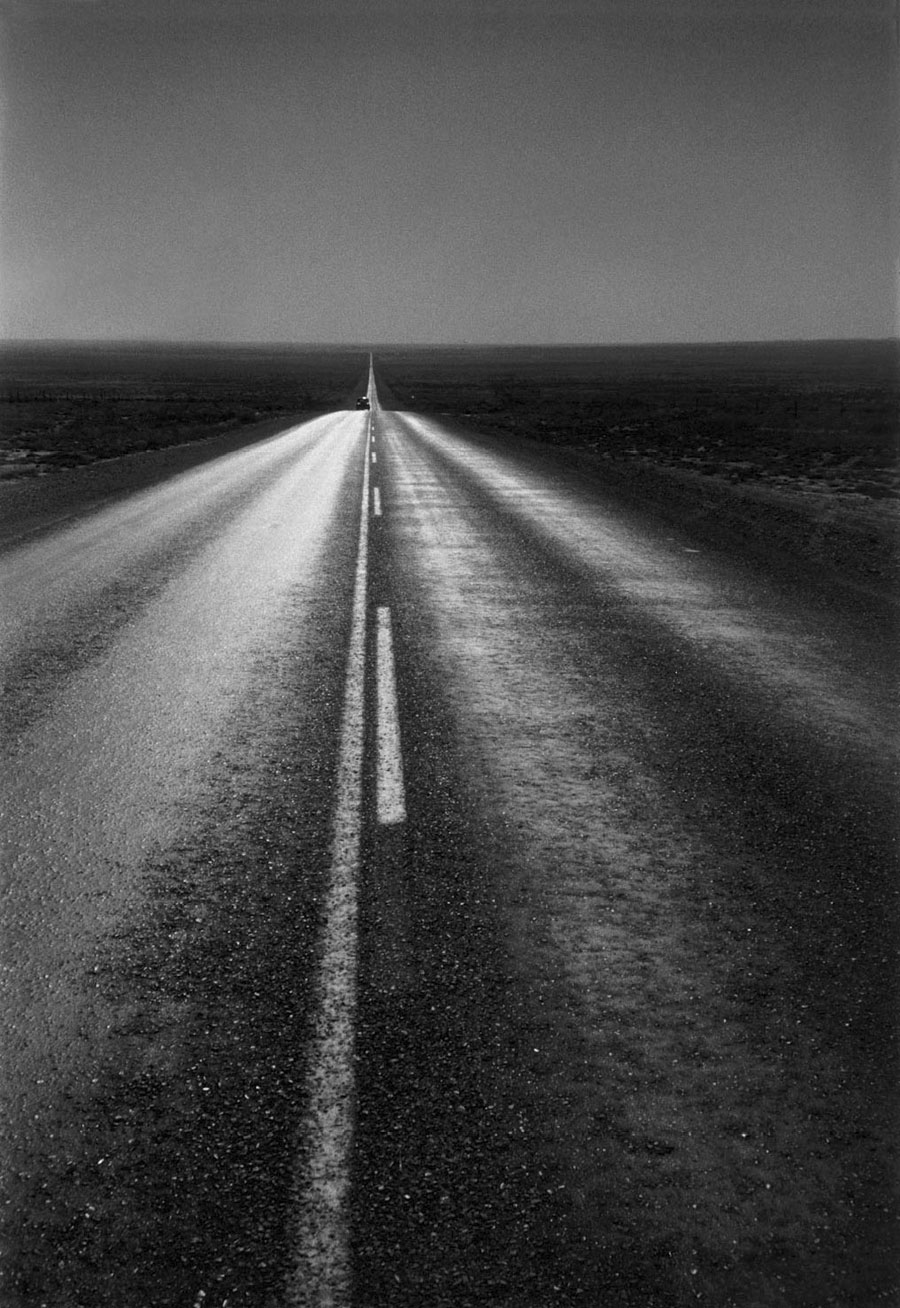
Robert Frank (Swiss, 1924-2019) 'U.S. 285, New Mexico' 1955


Robert Frank (Swiss, 1924-2019)
U.S. 285, New Mexico
1955
Silver gelatin photograph


This slideshow requires JavaScript.


Installation views of America in View: Landscape Photography 1865 to Now at the Museum of Art Rhode Island School of Design, Providence


Museum of Art Rhode Island School of Design (RISD)
224 Benefit Street, Providence, RI 02903
Phone: 401 454-6500

Opening hours:
Tuesdays Wednesdays, Saturdays, Sundays 10am – 5pm
Thursdays – Fridays 12 – 7pm
Closed Mondays

Museum of Art Rhode Island School of Design (RISD) website

LIKE ART BLART ON FACEBOOK

Back to top

Exhibition: ‘Licht-Bilder (Light images). Fritz Winter and Abstract Photography’ at the Pinakothek der Moderne, Munich

Exhibition dates: 9th November 2012 – 17th February 2013


Fritz Winter (German, 1905-1976) 'K 35' 1934


Fritz Winter (German, 1905-1976)
K 35
1934
Oil on paper on canvas
110 x 75cm
Bayerische Staatsgemäldesammlungen Pinakothek der Moderne, München
© VG Bild-Kunst, Bonn 2012


The glorious paintings of Fritz Winter show a beautiful synergy with the abstract photographs. The relationship between painting and photography has always been a symbiotic one, a close mutualist relationship that has benefited both art forms. This is fully evidenced in this outstanding posting, where I have tried to sequence the artworks to reflect the nature of their individuality and their interdependence. Great blessings on the curators that assembled this exhibition: an inspired concept!

Dr Marcus Bunyan


Many thankx to the Pinakothek der Moderne, Munich for allowing me to publish the photographs in the posting. Please click on the photographs for a larger version of the image.


Alvin Langdon Coburn (American, 1882-1966) 'Vortograph' 1917 (1962)


Alvin Langdon Coburn (American, 1882-1966)
Vortograph
1917 (1962)
Gelatin silver print
30.6 x 25.5cm
George Eastman House, Rochester, New York
© Courtesy of George Eastman House, International Museum of Photography and Film


Francis Bruguière (American, 1879-1945) 'Abstract Study' c. 1926


Francis Bruguière (American, 1879-1945)
Abstract Study
c. 1926
Gelatin silver print
24.3 x 19.3cm
George Eastman House, Rochester, New York
© Courtesy of George Eastman House, International Museum of Photography and Film


Fritz Winter (German, 1905-1976) 'Einfallendes Licht II' 1935


Fritz Winter (German, 1905-1976)
Einfallendes Licht II (Incident Light II)
1935
Oil on paper on canvas
44.2 x 33.4cm
Konrad Knöpfel-Stiftung Fritz Winter im Kunstmuseum Stuttgart
© VG Bild-Kunst, Bonn 2012


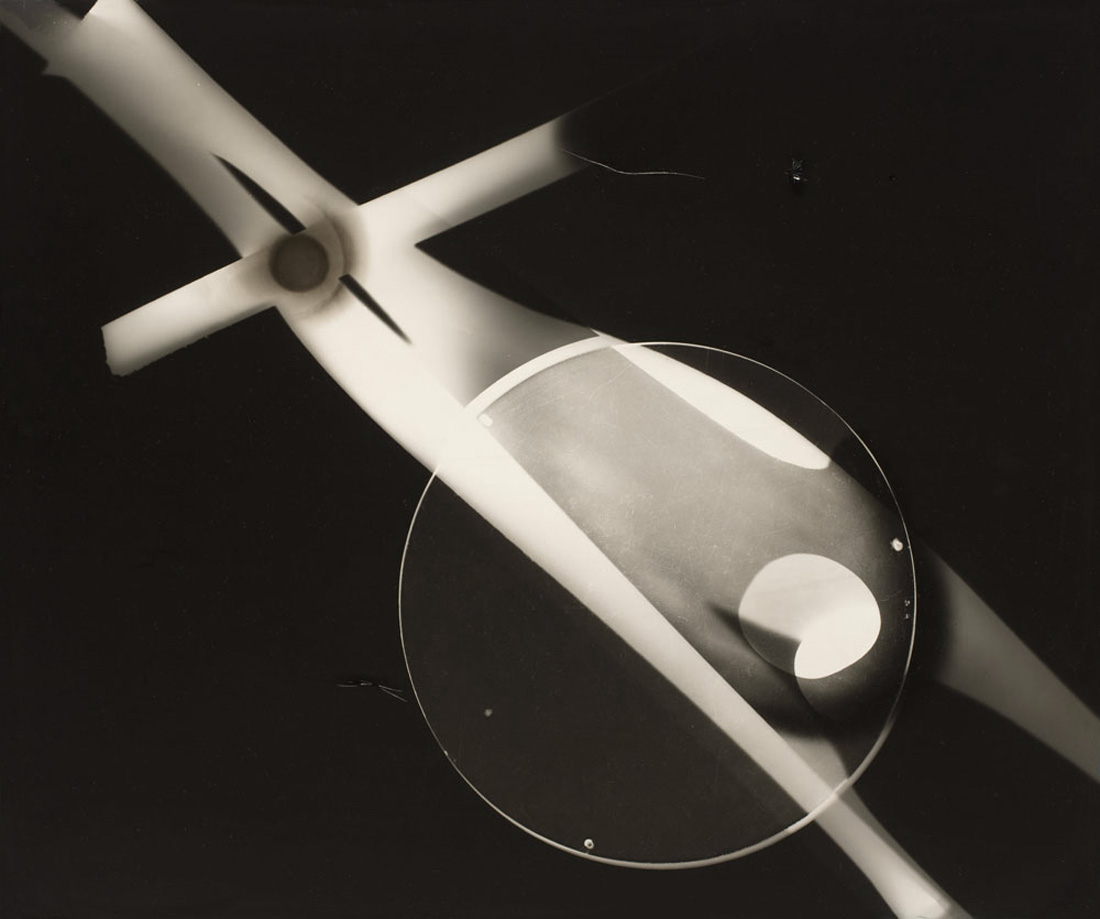
Laszlo Moholy-Nagy (Hungarian, 1895-1946) 'Untitled (Photogram)' c. 1939-1941


Laszlo Moholy-Nagy (Hungarian, 1895-1946)
Untitled (Photogram)
c. 1939-1941
Gelatin Silver Print
40 x 47.8cm
George Eastman House, Rochester, New York
© Artists Rights Society (ARS), New York / VG Bild-Kunst, Bonn 2012 Museum Folkwang, Essen, Fotografische Sammlung
© VG Bild-Kunst, Bonn 2012


In his lesser ­known early work, the German painter Fritz Winter (1905-1976) made an obsessive analysis of the aesthetic aspects of light. As a Bauhaus student he was influenced by the international avant­-garde’s boundless euphoria for light between Expressionism and Constructivism. The light of large cities with headlights, cinemas and illuminated advertisements gave a new impulse to aesthetics; x-­rays, radioactivity and microphotography made it possible to perceive previously unknown sources of energy and natural phenomena.

In his pictures of light beams and crystals created in 1934-1936, Winter devoted himself with virtuosity to aspects such as the reflection, radiation and refraction of light. His virtually monochrome paintings incorporate crystal shapes and bundles of rays; they focus on the earth’s interior and the infinite expanse of the cosmos; they block the pictorial space with dark grids or lend it a glass-­like transparency.

For the first time, 25 Licht-­Bilder by Fritz Winter will be juxtaposed with an international selection of 40 of the earliest abstract photographs in history of art. In the 1910s to 1930s artists experimented with the most varied of photographic techniques to ascertain the genuine qualities of photography beyond the merely representative. The New Vision in photography and abstract painting become immediately obvious through the display of vintage prints and paintings side by side.

The exhibition combines 25 exceptional paintings by Fritz Winter from German museums and private collections as well as 40 international lenders of photographic works including Centre Pompidou, Paris, George Eastman House in Rochester, New York, Museum Folkwang, Essen, Museum für Kunst und Gewerbe, Hamburg, Neue Galerie Kassel, Kunsthalle Mannheim, Ann and Jürgen Wilde Foundation, Munich and Kunstmuseum Stuttgart.

Press release from the Pinakothek der Moderne website


Fritz Winter (German, 1905-1976) 'Stufungen [Gradations]' 1934


Fritz Winter (German, 1905-1976)
Stufungen (Gradations)
1934
Oil on paper on canvas
100.5 x 75.5cm
Konrad Knöpfel-Stiftung Fritz Winter im Kunstmuseum Stuttgart
© VG Bild-Kunst, Bonn 2012


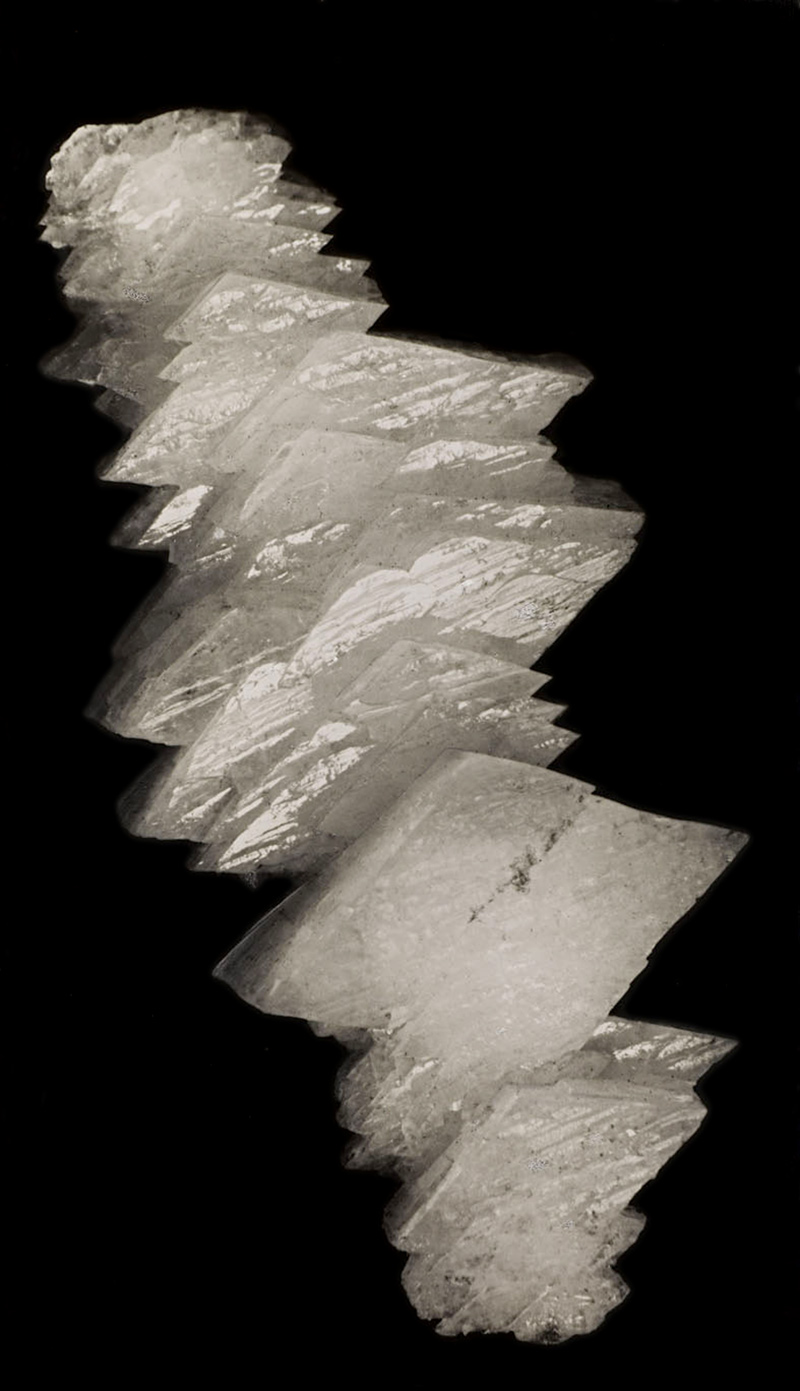
Alfred Ehrhardt (German, 1901-1984) 'Adular, Maderanertal, Schweiz' 1938-39


Alfred Ehrhardt (German, 1901-1984)
Adular, Maderanertal, Schweiz
1938-1939
Gelatin silver print
49.5 x 30cm
Stiftung Ann und Jürgen Wilde, Pinakothek der Moderne, München
© Alfred Ehrhardt Stiftung
© Courtesy of George Eastman House, International Museum of Photography and Film


Fritz Winter (German, 1905-1976) 'Weiß in Schwarz [White in Black]' 1934


Fritz Winter (German, 1905-1976)
Weiß in Schwarz (White in Black)
1934
Oil on paper on canvas
100.5 x 75.5cm
Museumslandschaft Hessen Kassel, Neue Galerie
© VG Bild-Kunst, Bonn 2012


Fritz Winter (German, 1905-1976) 'Licht, A 1' 1934


Fritz Winter (German, 1905-1976)
Licht, A 1
1934
Oil on paper on canvas
59 x 45cm
Private Collection
© VG Bild-Kunst, Bonn 2012


Laszlo Moholy-Nagy (Hungarian, 1895-1946) 'Untitled (Photogram)' 1925


Laszlo Moholy-Nagy (Hungarian, 1895-1946)
Untitled (Photogram)
1925
Gelatin silver print
23.7 x 17.8cm
Museum Folkwang, Essen, Fotografische Sammlung
© VG Bild-Kunst, Bonn 2012 Museum Folkwang, Essen, Fotografische Sammlung
© VG Bild-Kunst, Bonn 2012


Alfred Ehrhardt (German, 1901-1984) 'Beryll, Minas Geraes, Brasilien' 1938-39


Alfred Ehrhardt (German, 1901-1984)
Beryll, Minas Geraes, Brasilien
1938/1939
Gelatin silver print
49.7 x 29.9cm
Stiftung Ann und Jürgen Wilde, Pinakothek der Moderne, München
© bpk, Alfred Ehrhardt Stiftung
© Courtesy of George Eastman House, International Museum of Photography and Film


Pinakothek Der Moderne
Barer Strasse 40
Munich

Opening hours:
Daily except Monday 10am – 6pm
Thursday 10am – 8pm

Pinakothek der Moderne website

LIKE ART BLART ON FACEBOOK

Back to top

Exhibition: ‘Jeff Wall Photographs’ at The Ian Potter Centre: National Gallery of Victoria Australia, Melbourne

Exhibition dates: 30th November 2012 – 17th March 2013


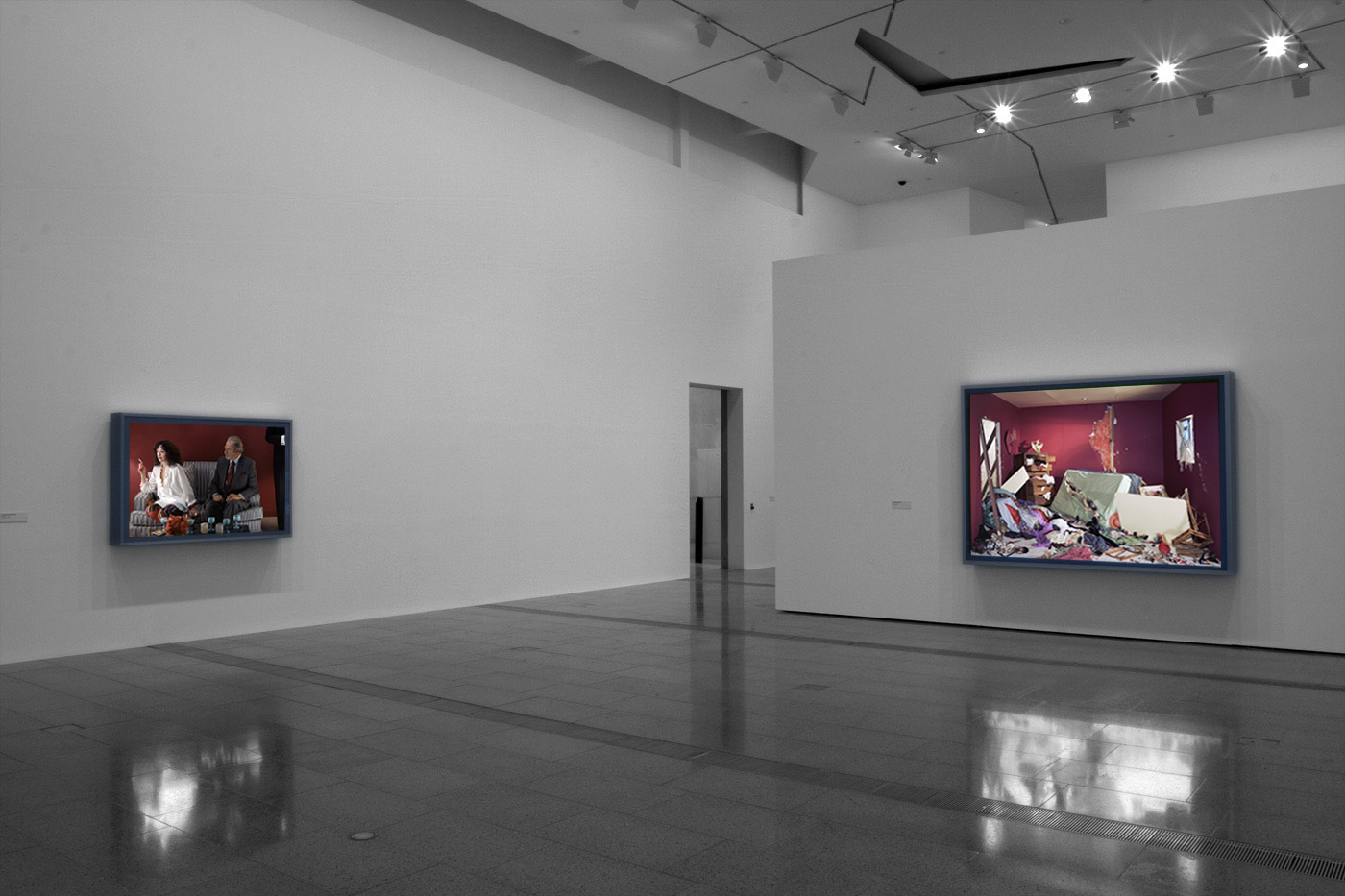
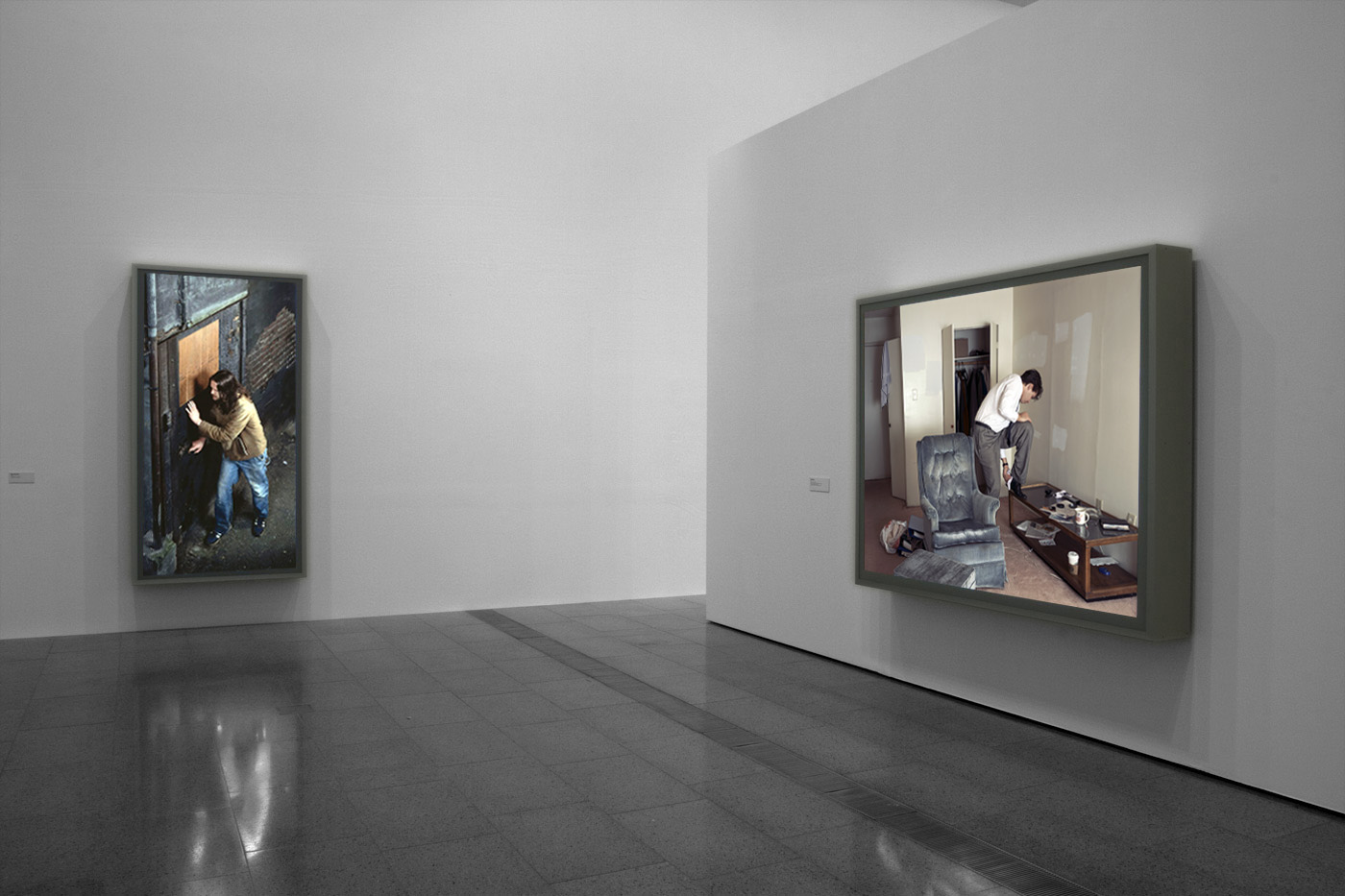
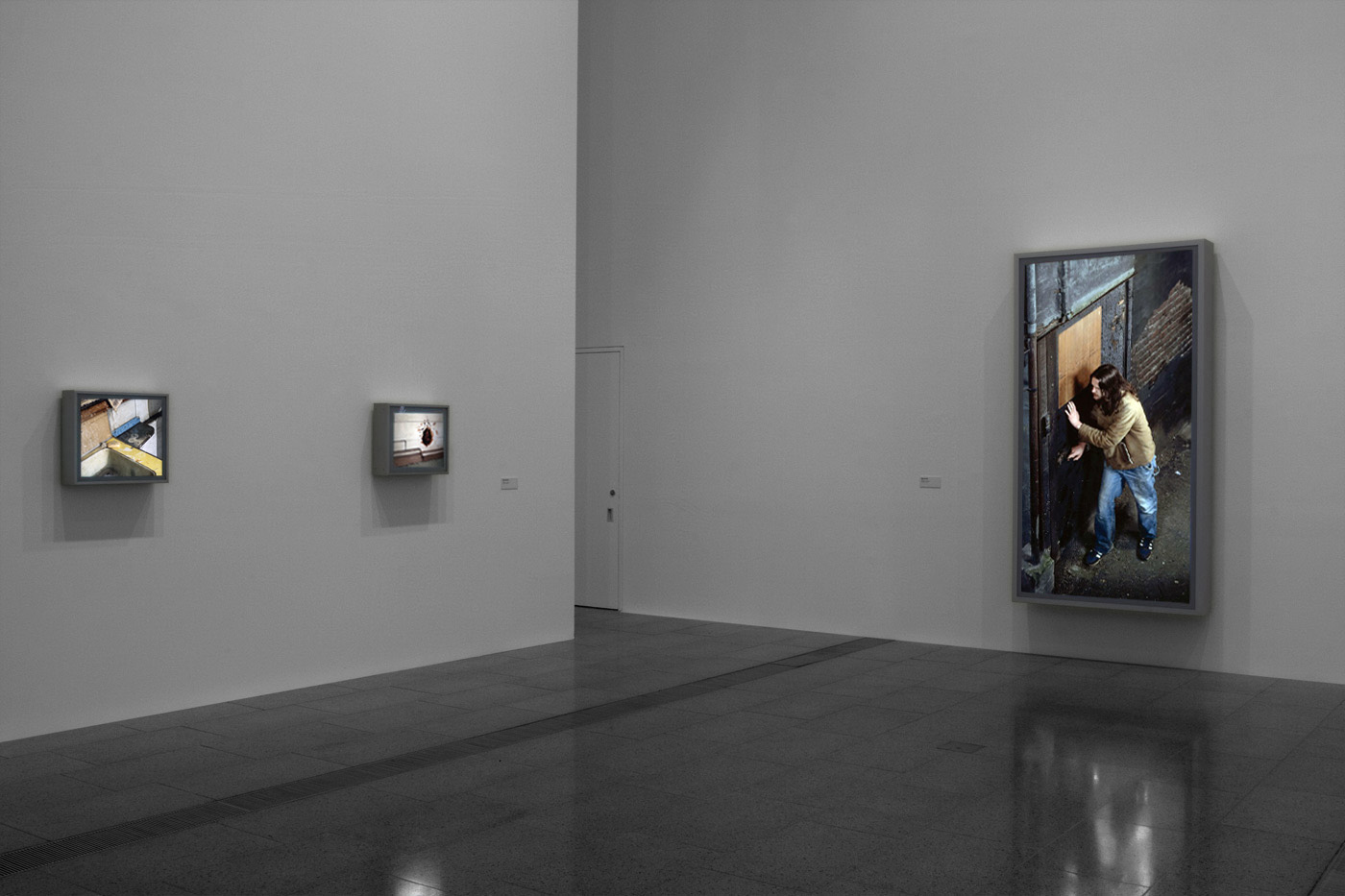
Installation view of 'Jeff Wall Photographs' at NGV Australia showing, at right, 'The Destroyed Room' 1978


Installation view of Jeff Wall Photographs at NGV Australia showing, at right, The Destroyed Room 1978
Photo: Marcus Bunyan


Installation shots of the new Jeff Wall exhibition at NGV Australia. Review to follow in due course.

Many thankx to Jemma Altmeier and all the media team at NGV for all their wonderful help and congratulations to the curators, Susan van Wyk and Dr Isobel Crombie, for their restrained yet contemporary installations and for getting the exhibitions to Melbourne. They look magnificent. Well done!

Dr Marcus Bunyan


Many thankx to the NGV for allowing me to publish the photographs in the posting. Please click on the photographs for a larger version of the image. All photographs © Marcus Bunyan © National Gallery of Victoria. May not be reproduced without permission.


Jeff Wall & Thomas Demand: In Conversation, National Gallery of Victoria


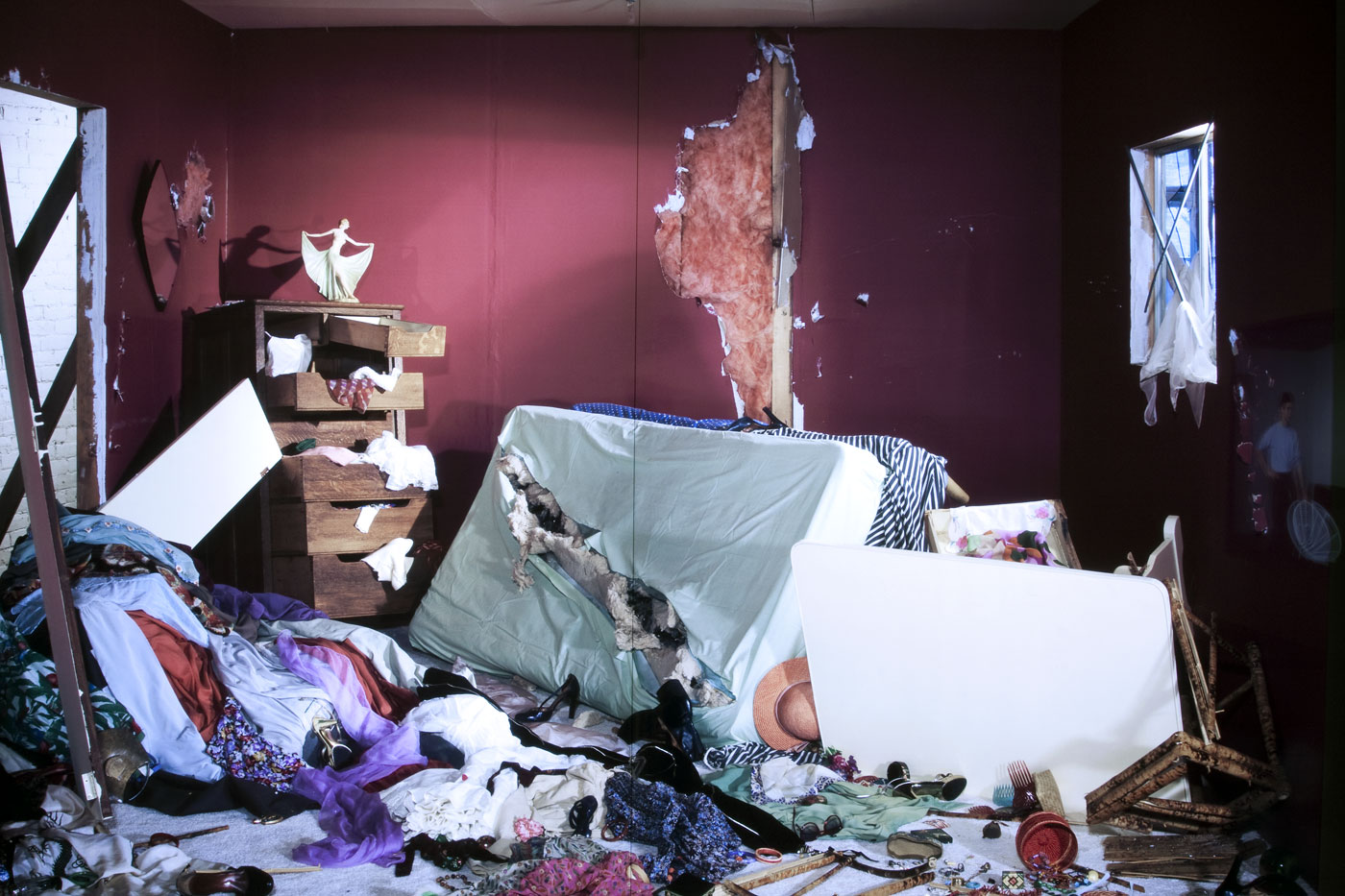
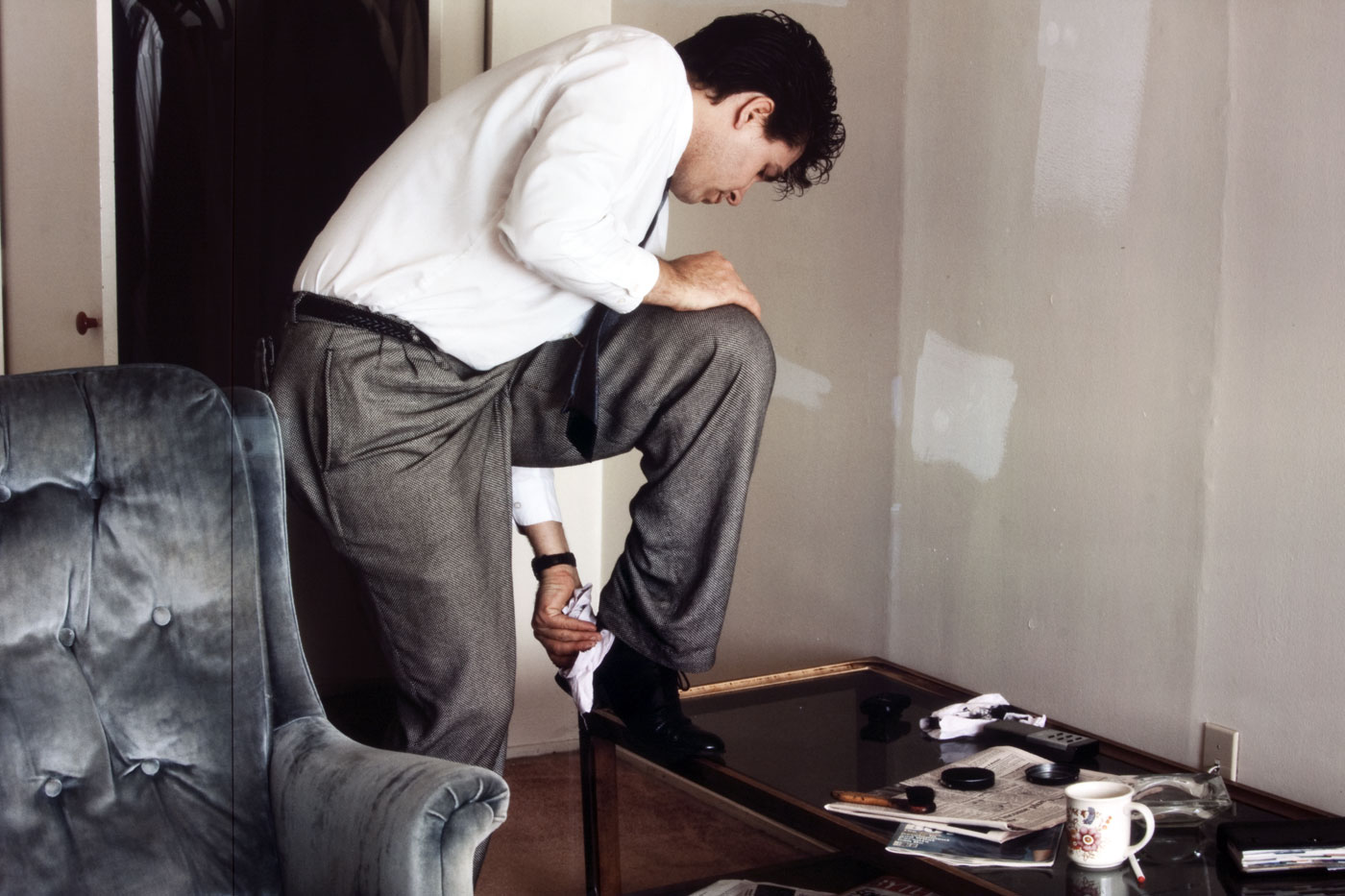
Jeff Wall (Canadian, b. 1946) 'The Destroyed Room' 1978 (detail)


Jeff Wall (Canadian, b. 1946)
The Destroyed Room (detail)
1978
Transparency in light box, AP
159.0 x 234.0cm
Collection of the artist
© Jeff Wall


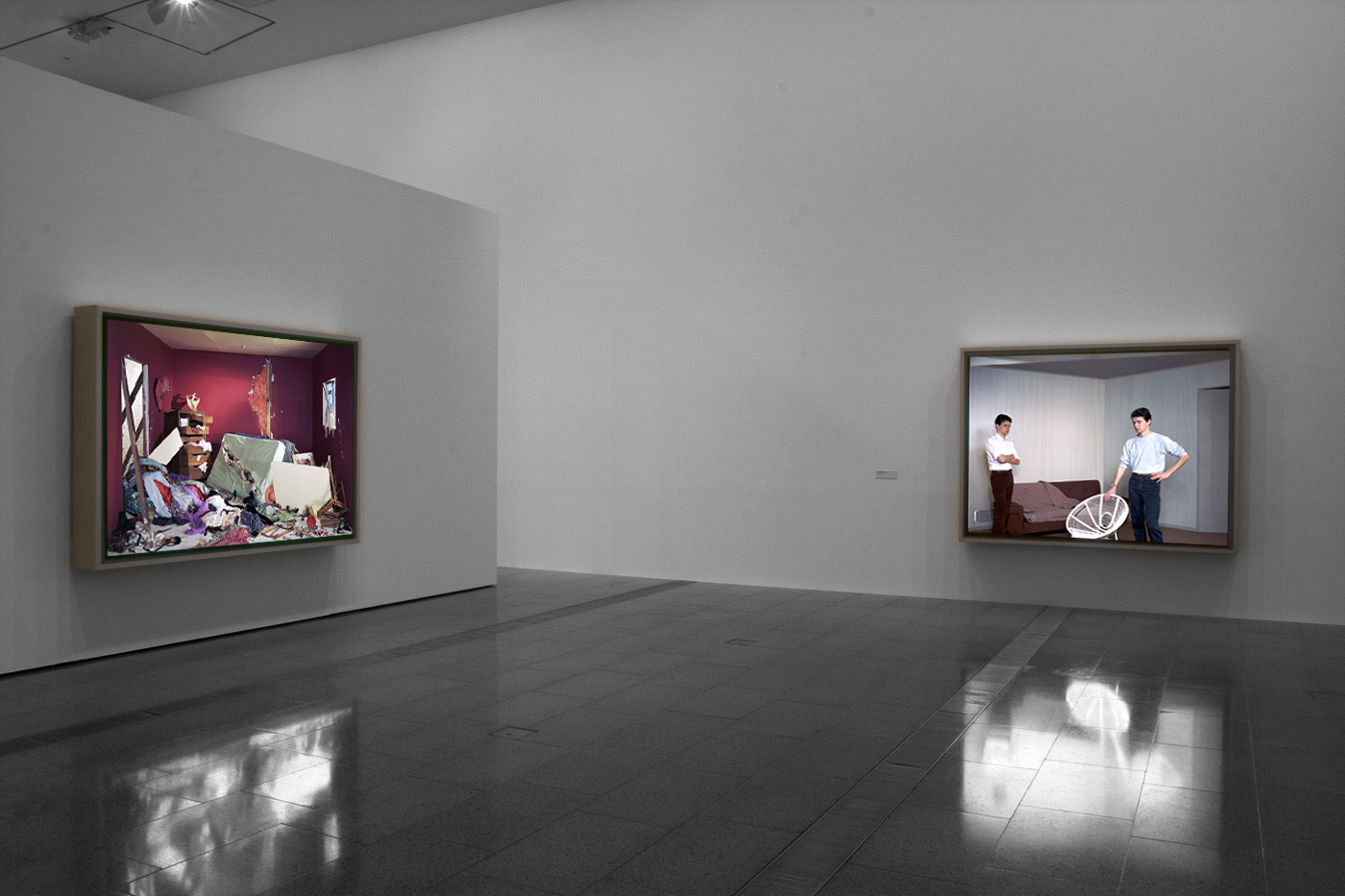
Installation view of 'Jeff Wall Photographs' at NGV Australia showing, at left, 'The Destroyed Room' 1978, and at right, 'Double Self-Portrait' 1979


Installation view of Jeff Wall Photographs at NGV Australia showing, at left, The Destroyed Room 1978, and at right, Double Self-Portrait 1979
Photo: Marcus Bunyan


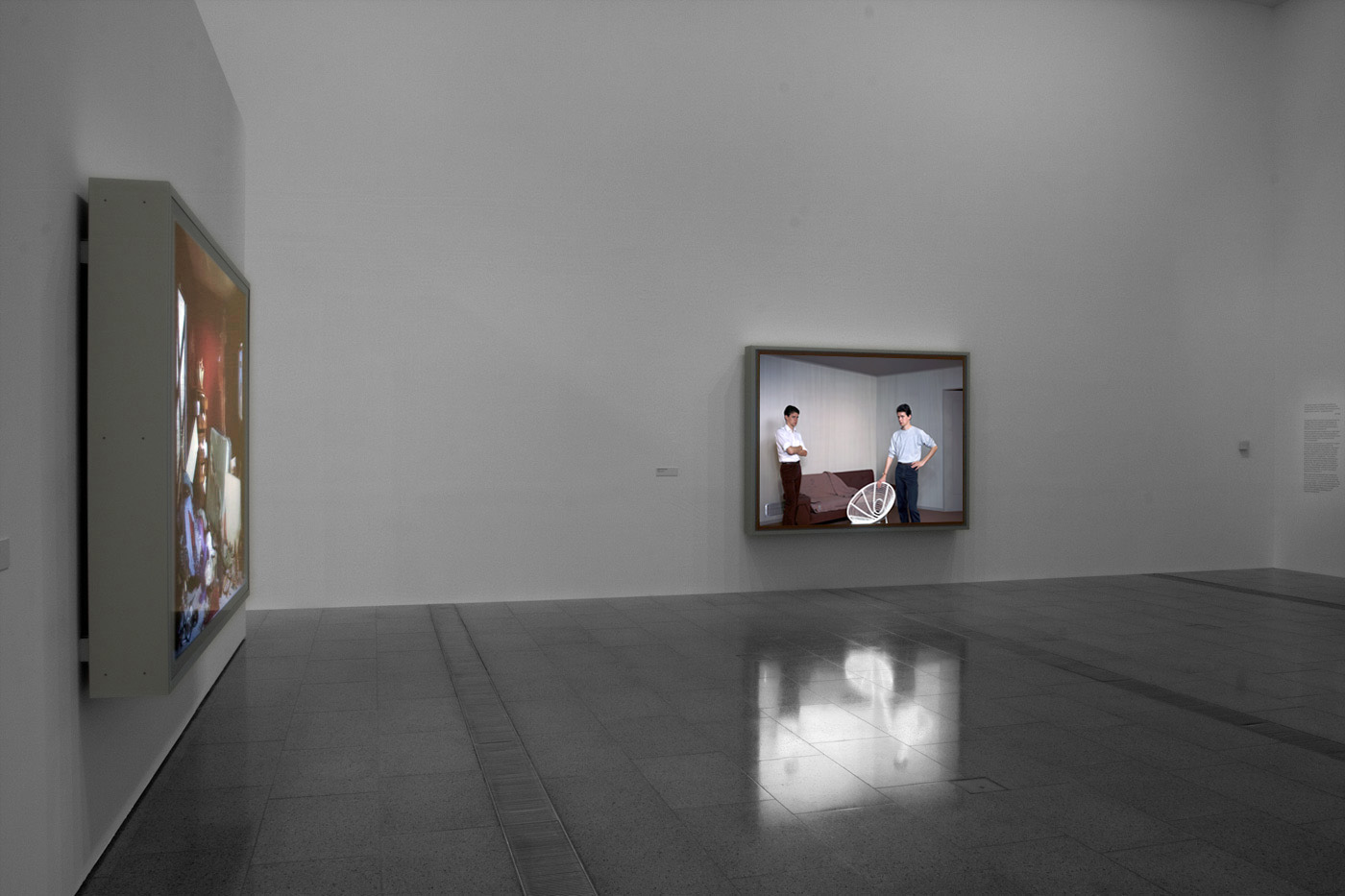
Installation view of 'Jeff Wall Photographs' at NGV Australia showing, at right, 'Double Self-Portrait' 1979


Installation view of Jeff Wall Photographs at NGV Australia showing, at right, Double Self-Portrait 1979
Photo: Marcus Bunyan


Installation view of 'Jeff Wall Photographs' at NGV Australia showing, at left, 'Doorpusher' 1984, and at right, 'Polishing' 1998


Installation view of Jeff Wall Photographs at NGV Australia showing, at left, Doorpusher 1984, and at right, Polishing 1998
Photo: Marcus Bunyan


Jeff Wall (Canadian, b. 1946) 'Polishing' 1998 (detail)


Jeff Wall (Canadian, b. 1946)
Polishing (detail)
1998
Transparency in light box, 1/2
162.0 x 207.0cm
State Art Collection, Art Gallery of Western Australia
Purchased with assistance from the Art Gallery of Western Australia Foundation, 1999
© Jeff Wall


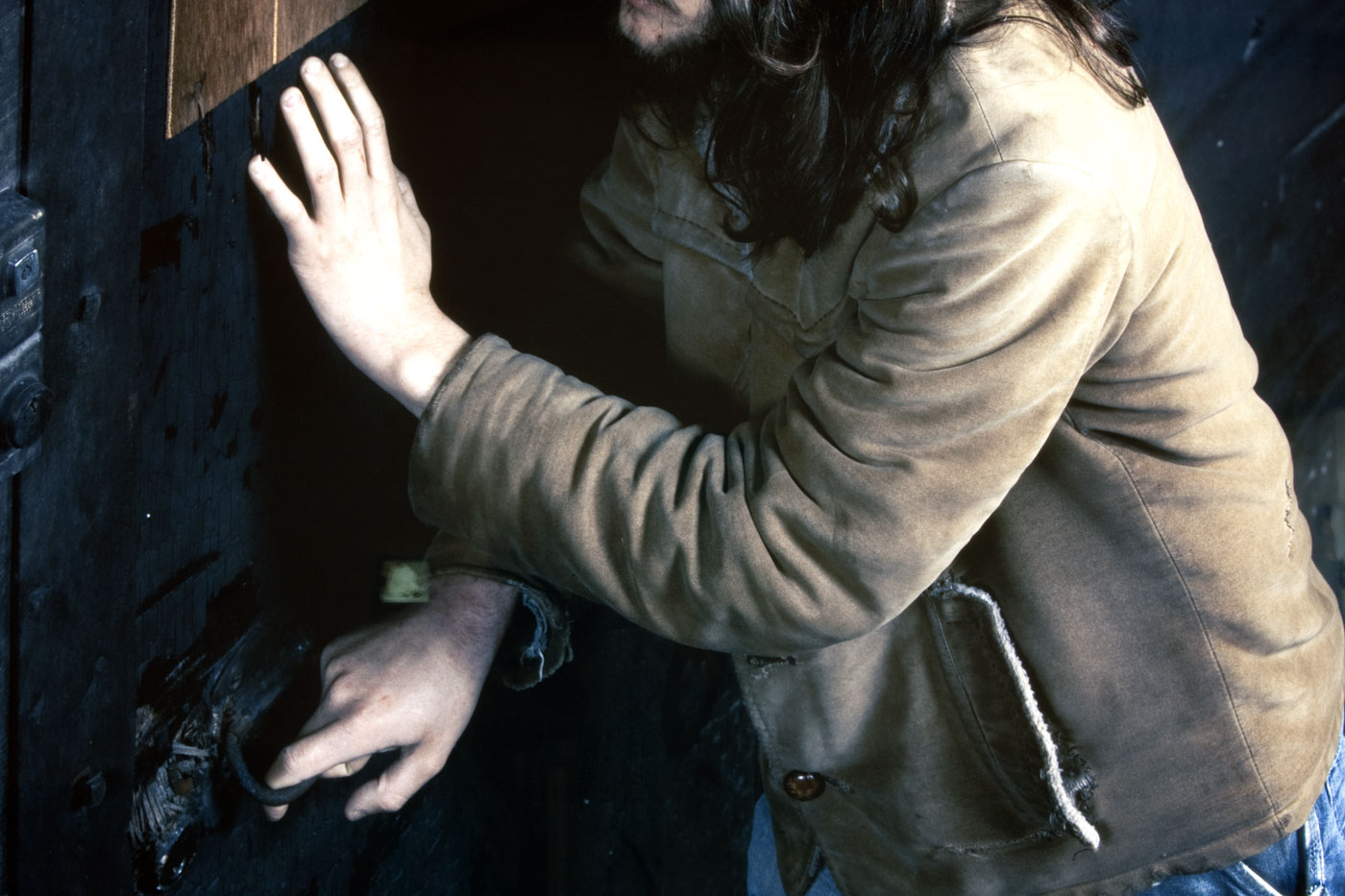
Jeff Wall (Canadian, b. 1946) 'Doorpusher' 1984 (detail)


Jeff Wall (Canadian, b. 1946)
Doorpusher
(detail)
1984
Transparency in lightbox
249 x 122cm
© Jeff Wall


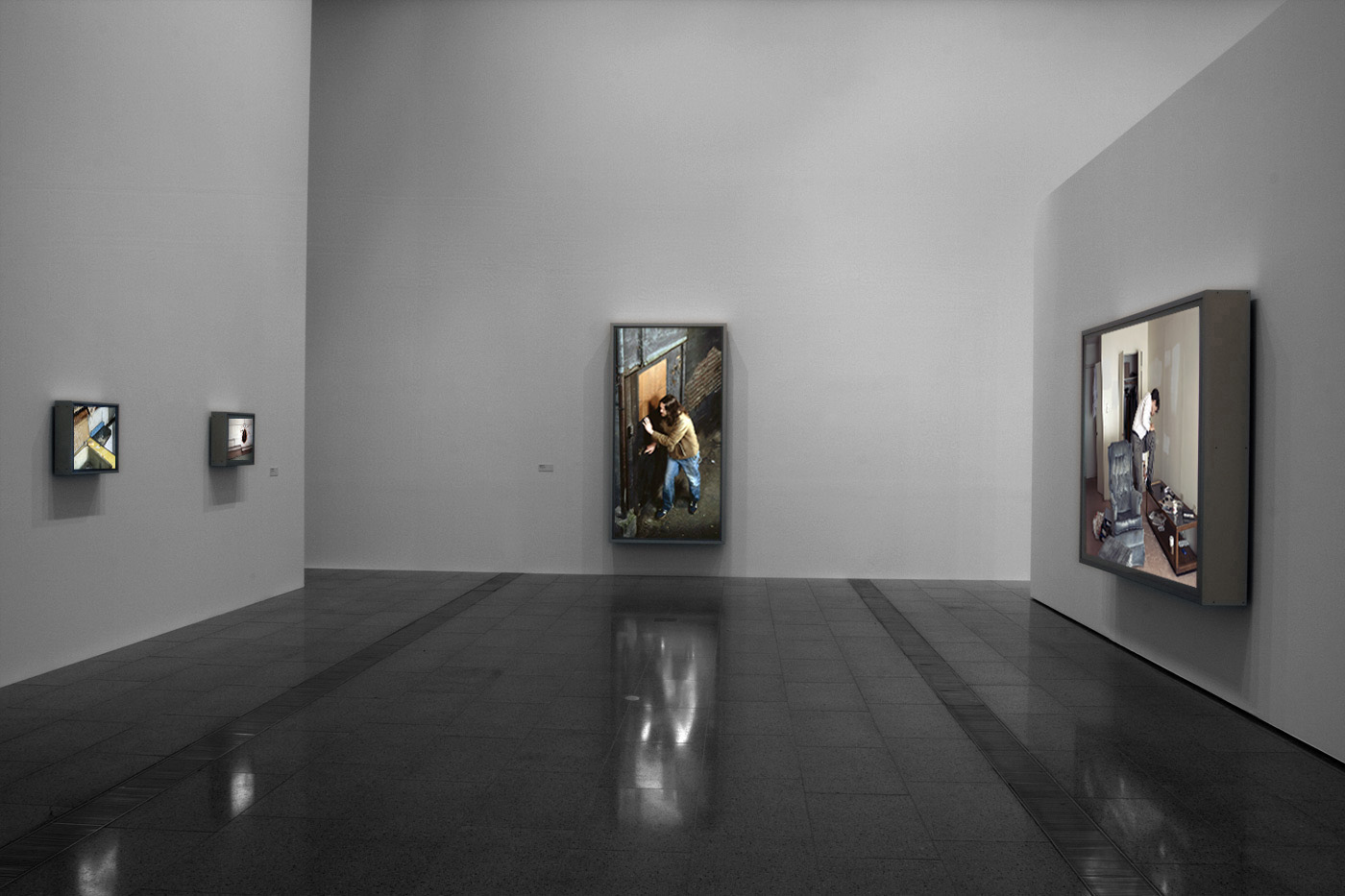
Installation view of 'Jeff Wall Photographs' at NGV Australia showing, at centre, 'Doorpusher' 1984, and at right, 'Polishing' 1998


Installation view of Jeff Wall Photographs at NGV Australia showing, at centre, Doorpusher 1984, and at right, Polishing 1998
Photo: Marcus Bunyan


Installation view of 'Jeff Wall Photographs' at NGV Australia showing, at left, 'Diagonal Composition' 1993, and at right, 'Doorpusher' 1984


Installation view of Jeff Wall Photographs at NGV Australia showing, at left, Diagonal Composition 1993, and at right, Doorpusher 1984
Photo: Marcus Bunyan


Jeff Wall (Canadian, b. 1946) 'Diagonal Composition' 1993


Jeff Wall (Canadian, b. 1946)
Diagonal Composition
1993
Transparency in light box, AP
40 x 46cm
Collection of the artist
© Jeff Wall


Jeff Wall (Canadian, b. 1946) 'Pipe Opening' 2002 (detail)


Jeff Wall (Canadian, b. 1946)
Pipe Opening (detail)
2002
Transparency in light box, AP
40 x 46cm
Collection of the artist
© Jeff Wall


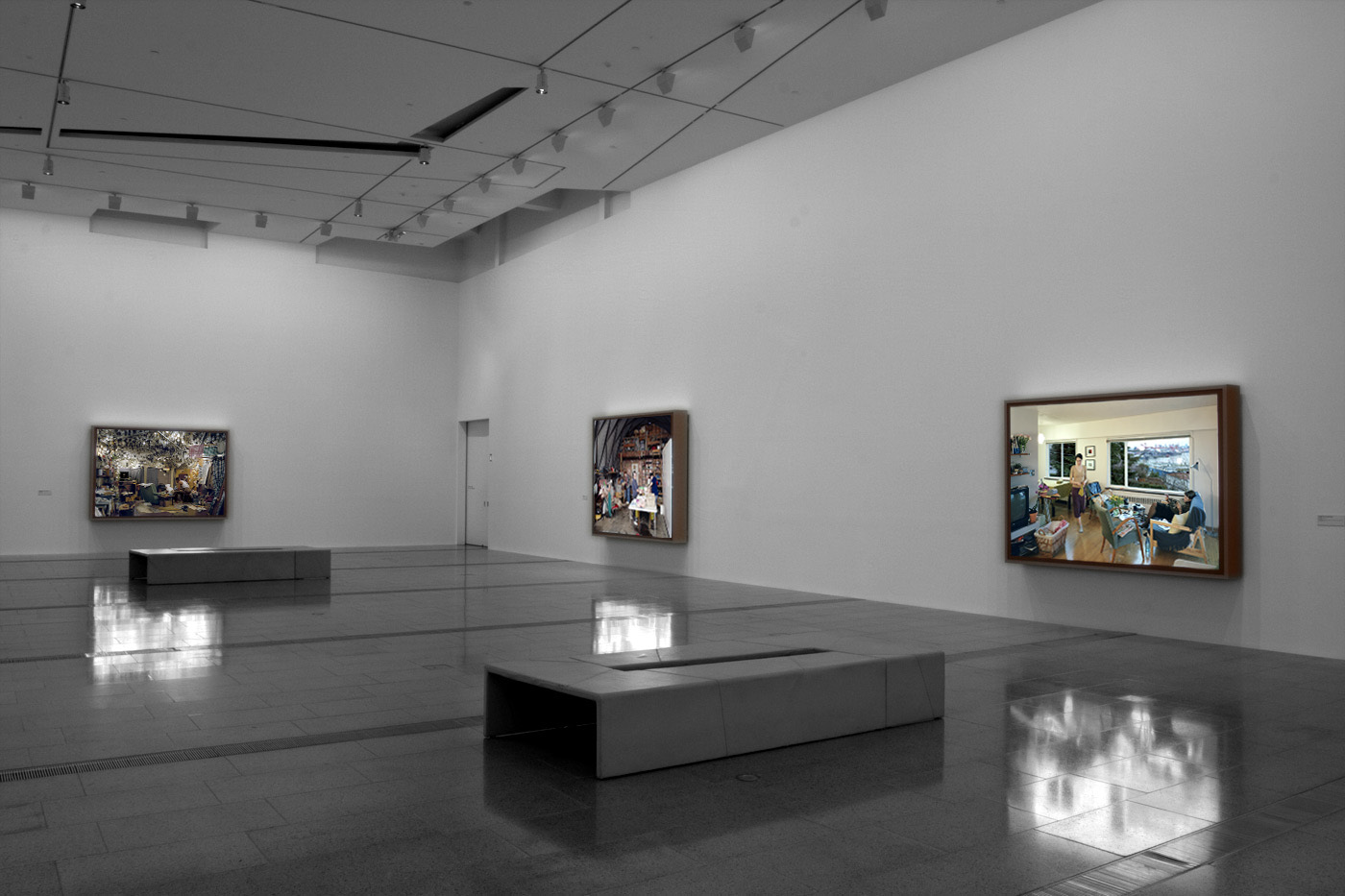
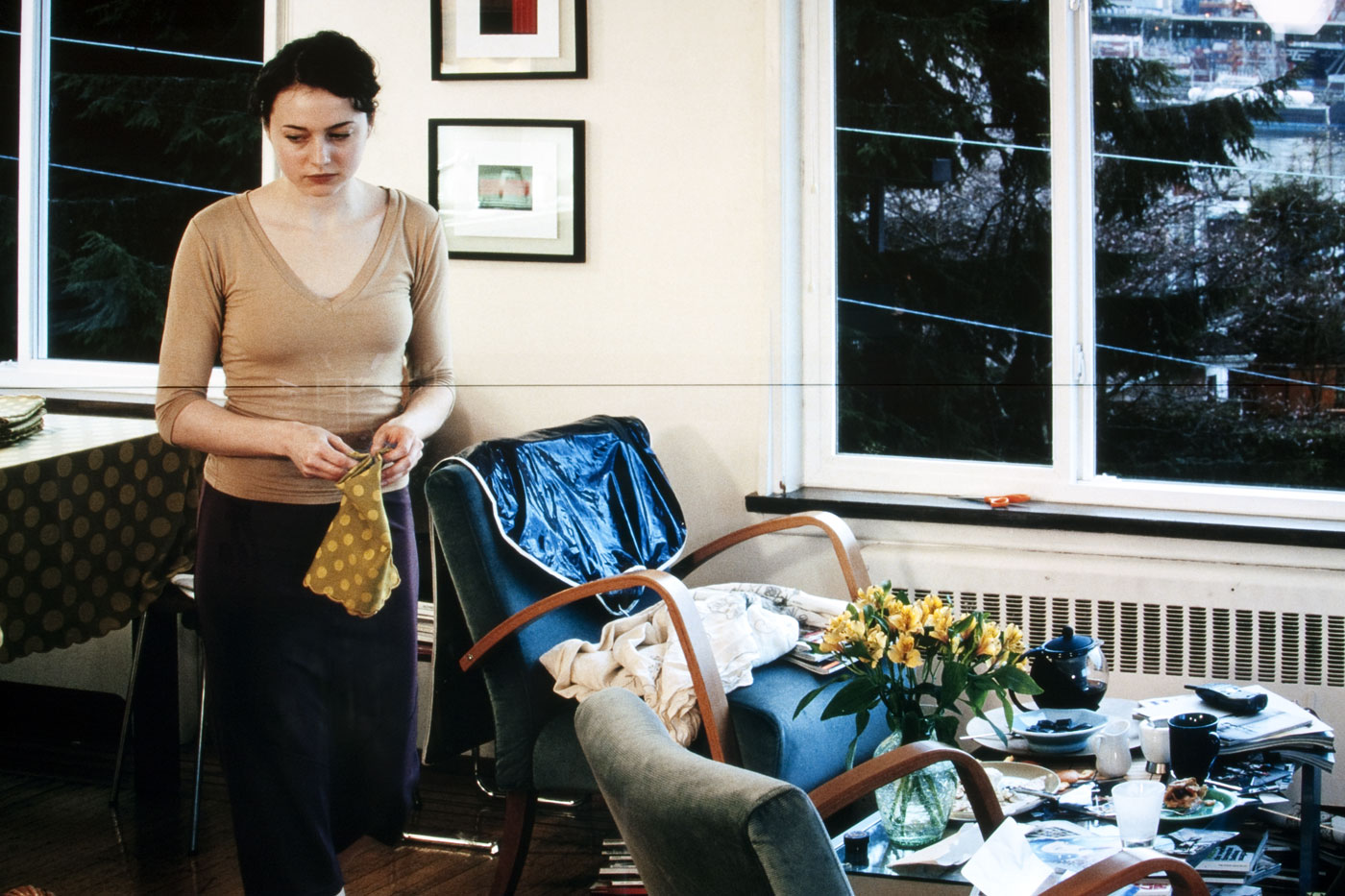
Installation view of 'Jeff Wall Photographs' at NGV Australia showing, at right, 'A view from an apartment' 2004-2005


Installation view of Jeff Wall Photographs at NGV Australia showing, at right, A view from an apartment 2004-2005
Photo: Marcus Bunyan


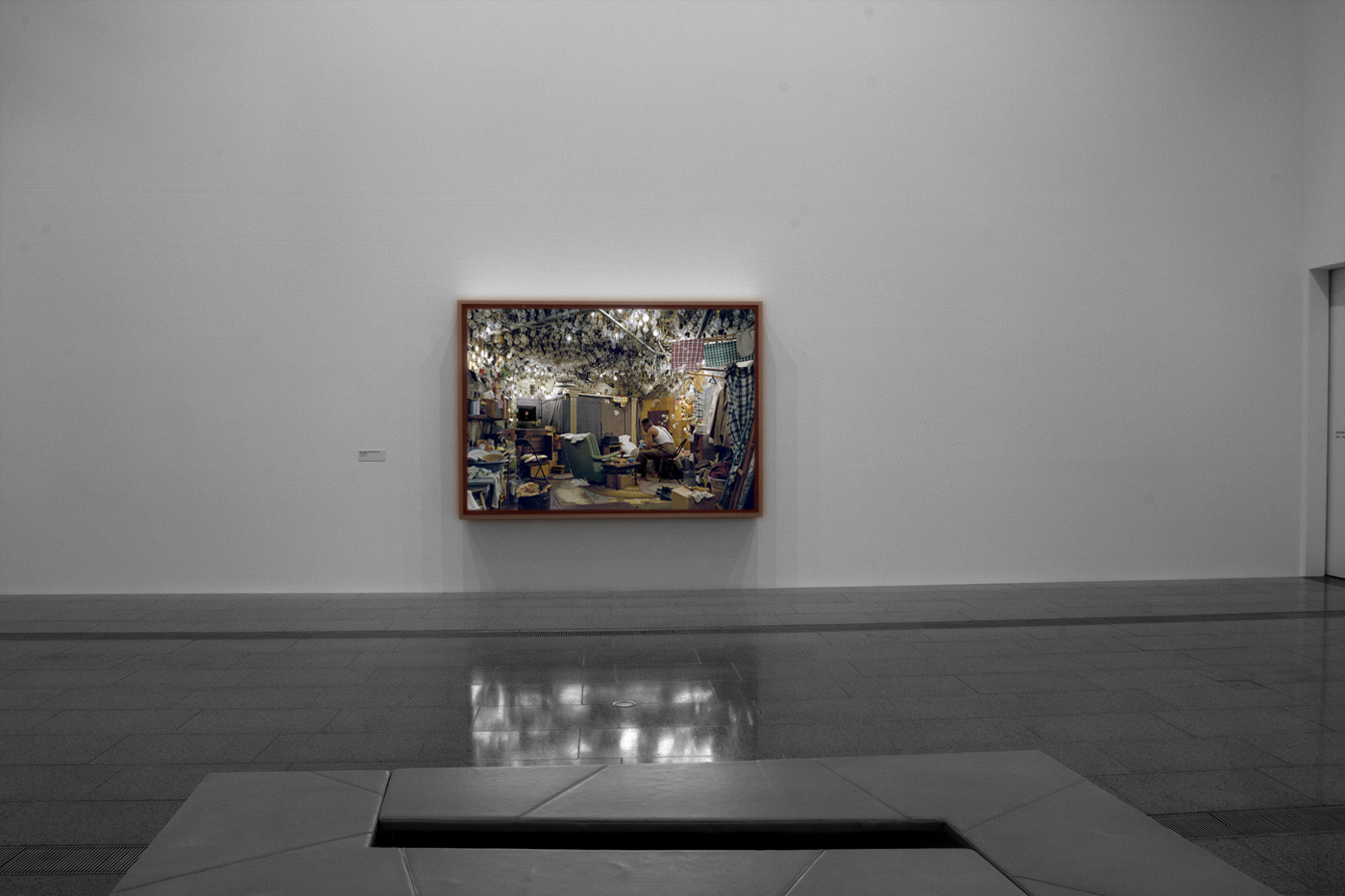
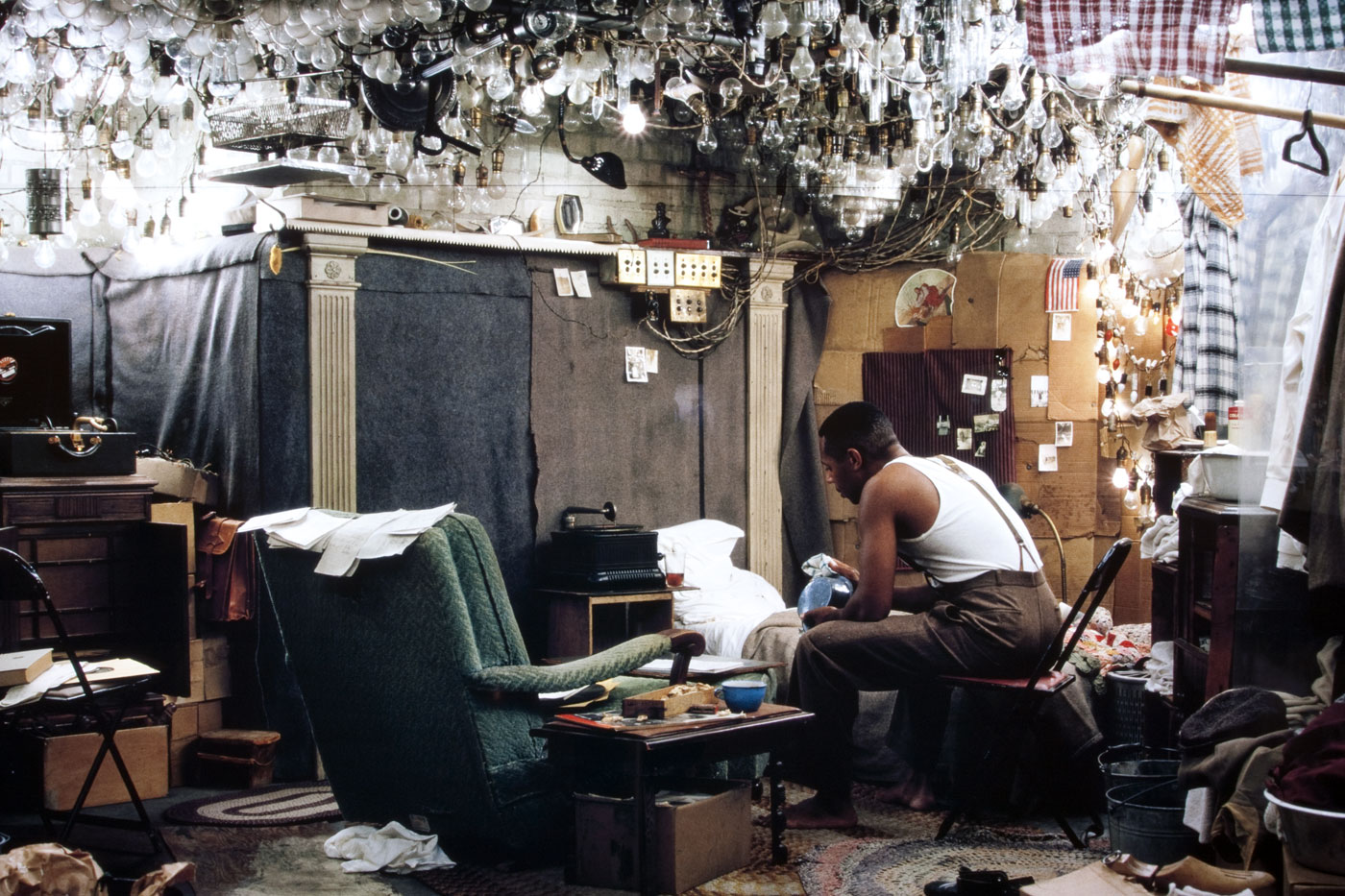
Installation view of 'Jeff Wall Photographs' at NGV Australia showing 'After 'Invisible Man' by Ralph Ellison, the Prologue' 1999-2000


Installation view of Jeff Wall Photographs at NGV Australia showing After ‘Invisible Man’ by Ralph Ellison, the Prologue 1999-2000
Photo: Marcus Bunyan


Jeff Wall (Canadian, b. 1946) 'After 'Invisible Man' by Ralph Ellison, the Prologue' 1999-2000 (detail)


Jeff Wall (Canadian, b. 1946)
After ‘Invisible Man’ by Ralph Ellison, the Prologue (detail)
1999-2000
Transparency in light box, AP
174 x 250.5cm
Collection of the artist
© Jeff Wall


Jeff Wall (Canadian, b. 1946) 'A view from an apartment' 2004-05 (detail)


Jeff Wall (Canadian, b. 1946)
A view from an apartment (detail)
2004-2005
Transparency in light box, 1/2
167.0 x 244.0cm
Tate, London
Purchased with assistance from the American Fund for the Tate Gallery and Tate Members, 2006
© Jeff Wall


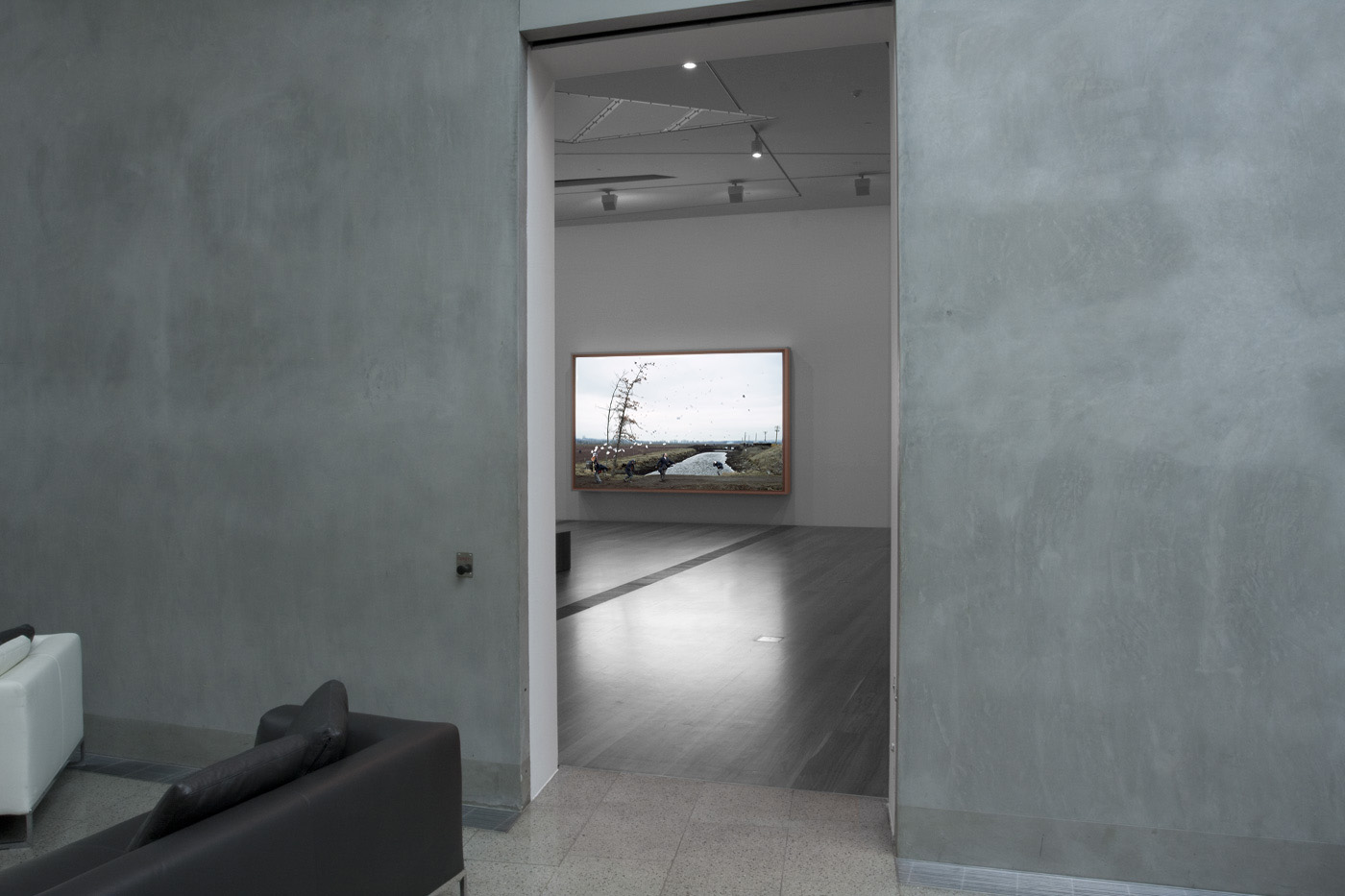
Installation view of 'Jeff Wall Photographs' at NGV Australia showing 'A sudden gust of wind (after Hokusai)' 1993


Installation view of Jeff Wall Photographs at NGV Australia showing A sudden gust of wind (after Hokusai) 1993
Photo: Marcus Bunyan


The Ian Potter Centre: NGV Australia
Federation Square
Corner of Russell and 
Flinders Streets, Melbourne

Opening hours:
Daily 10am – 5pm

National Gallery of Victoria website

LIKE ART BLART ON FACEBOOK

Back to top
Exhibition: ‘Dark Romanticism. From Goya to Max Ernst’ at the Städel Museum, Frankfurt

Exhibition dates: 26th September 2012 – 20th January, 2013


Many thankx to the Städel Museum for allowing me to publish the reproductions of the artwork in the posting. Please click on the photographs for a larger version of the image.


This slideshow requires JavaScript.


Installation photographs of the exhibition Dark Romanticism. From Goya to Max Ernst at the Städel Museum, Frankfurt
Photos: Norbert Miguletz


Installation view of the exhibition 'Dark Romanticism. From Goya to Max Ernst' at the Städel Museum, Frankfurt

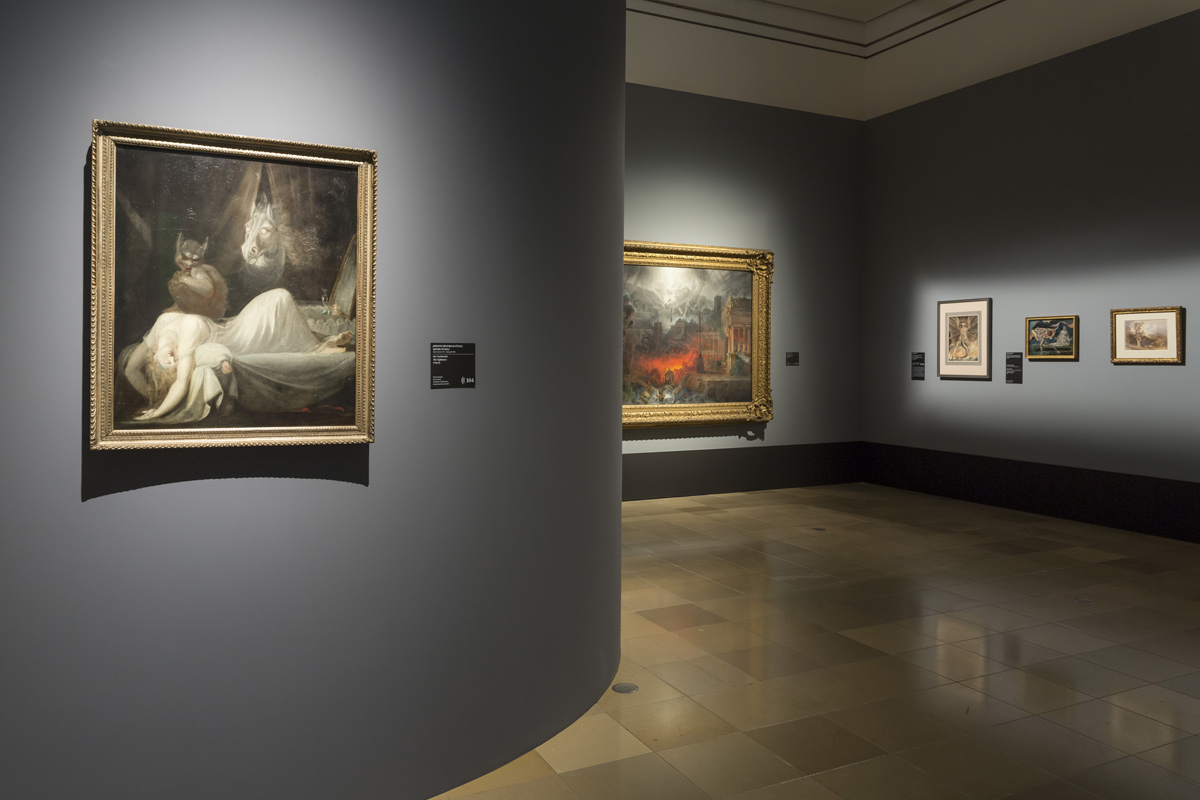
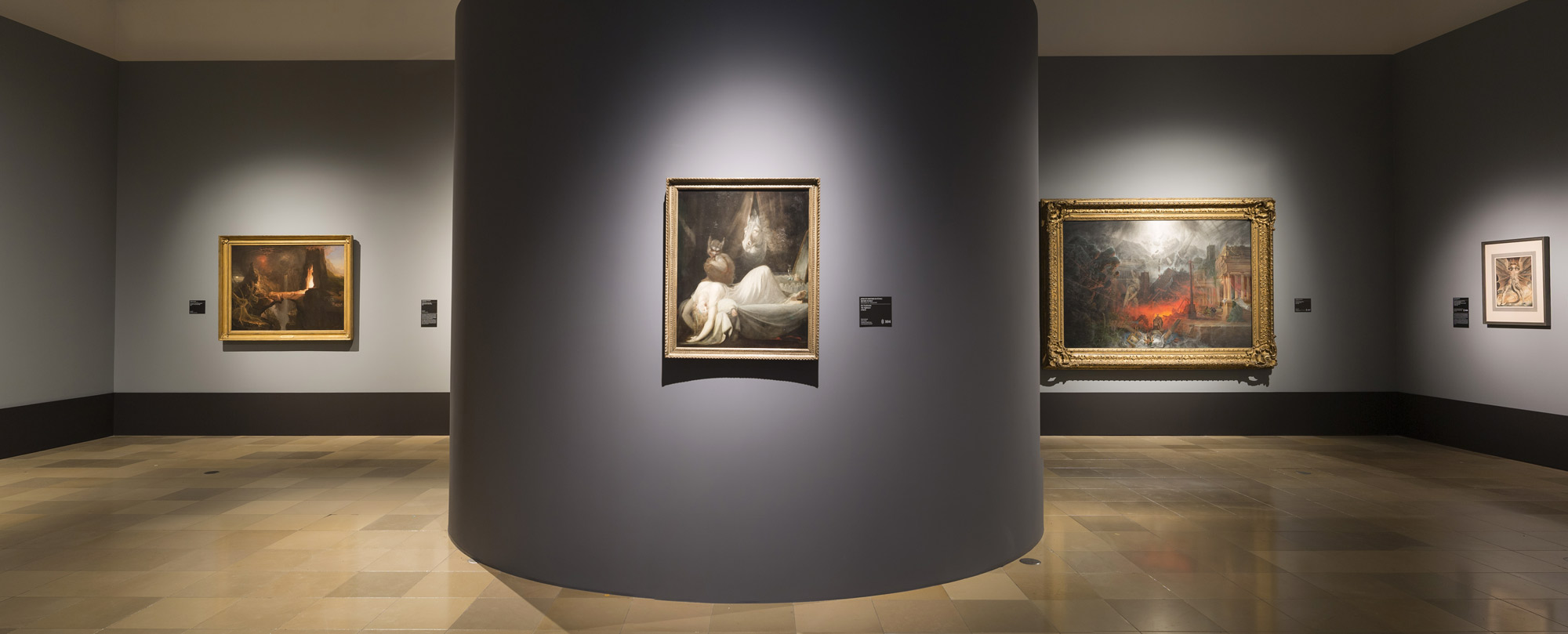
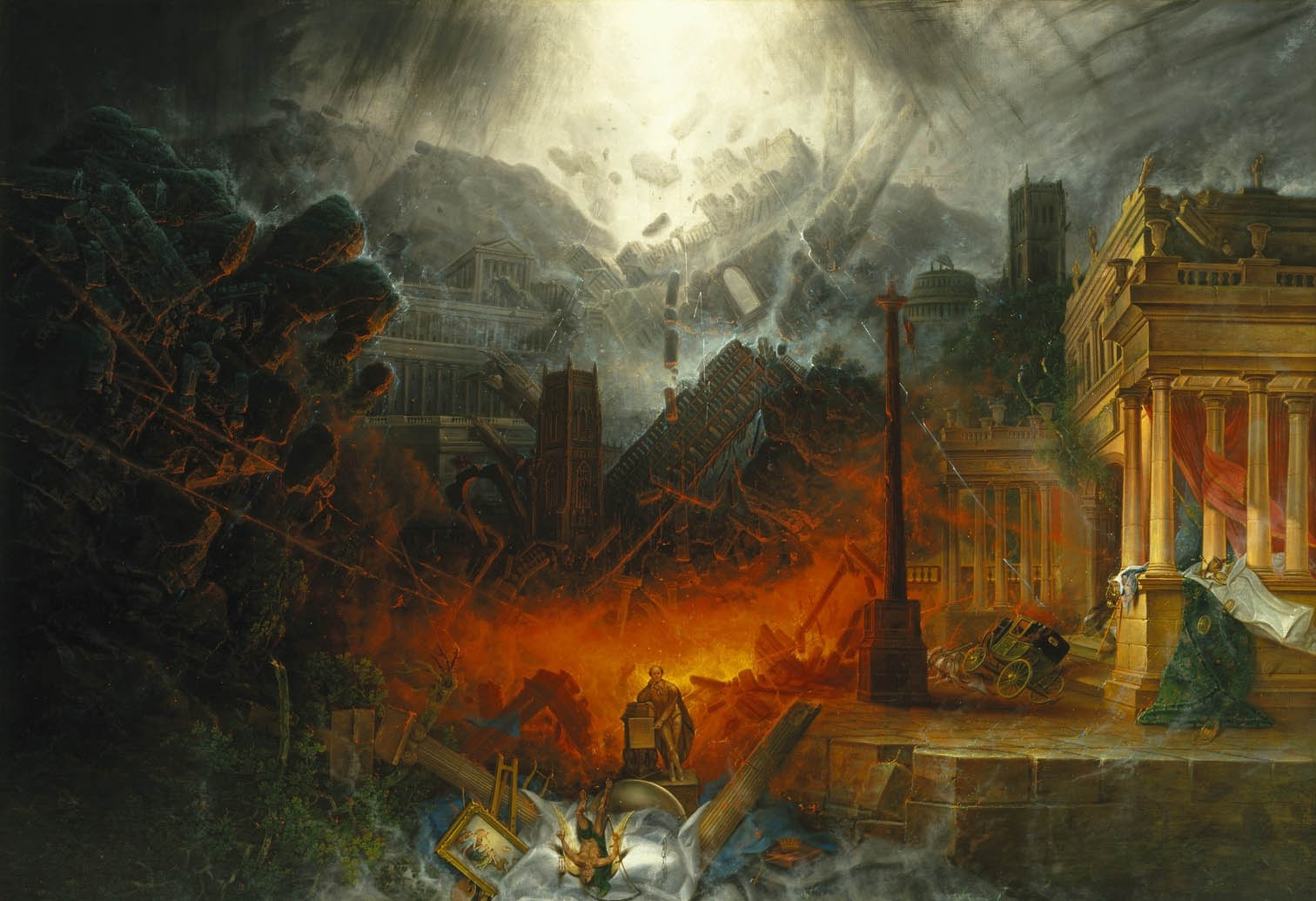
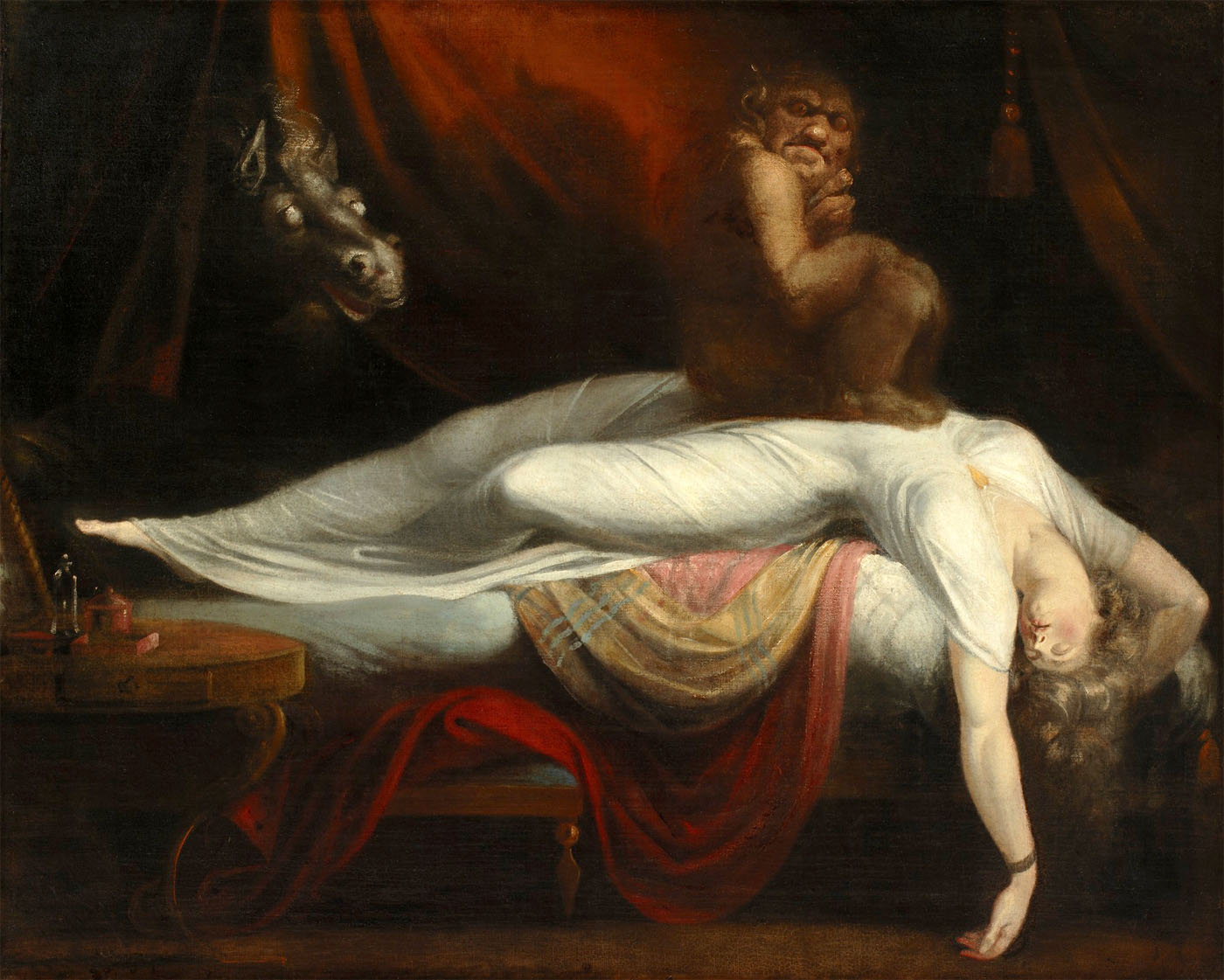
Installation view of the exhibition 'Dark Romanticism. From Goya to Max Ernst' at the Städel Museum, Frankfurt showing at left, Thomas Cole's 'Expulsion: Moon and Firelight '(c. 1828); at centre, Johann Henry Fuseli's 'The Nightmare (The Incubus)' (1781-1782); at second right, Samuel Colman's 'The Edge of Doom' (1836-1838); and at right, William Blake's 'The Great Red Dragon and the Woman Clothed with the Sun' (c. 1803-1805)


Installation views of the exhibition Dark Romanticism. From Goya to Max Ernst at the Städel Museum, Frankfurt showing at left in the bottom image, Thomas Cole’s Expulsion: Moon and Firelight (c. 1828, below); at centre, Johann Henry Fuseli’s The Nightmare (The Incubus) (1781-1782, below); at second right, Samuel Colman’s The Edge of Doom (1836-1838, below); and at right, William Blake’s The Great Red Dragon and the Woman Clothed with the Sun (c. 1803-1805, below)
Photos: Norbert Miguletz


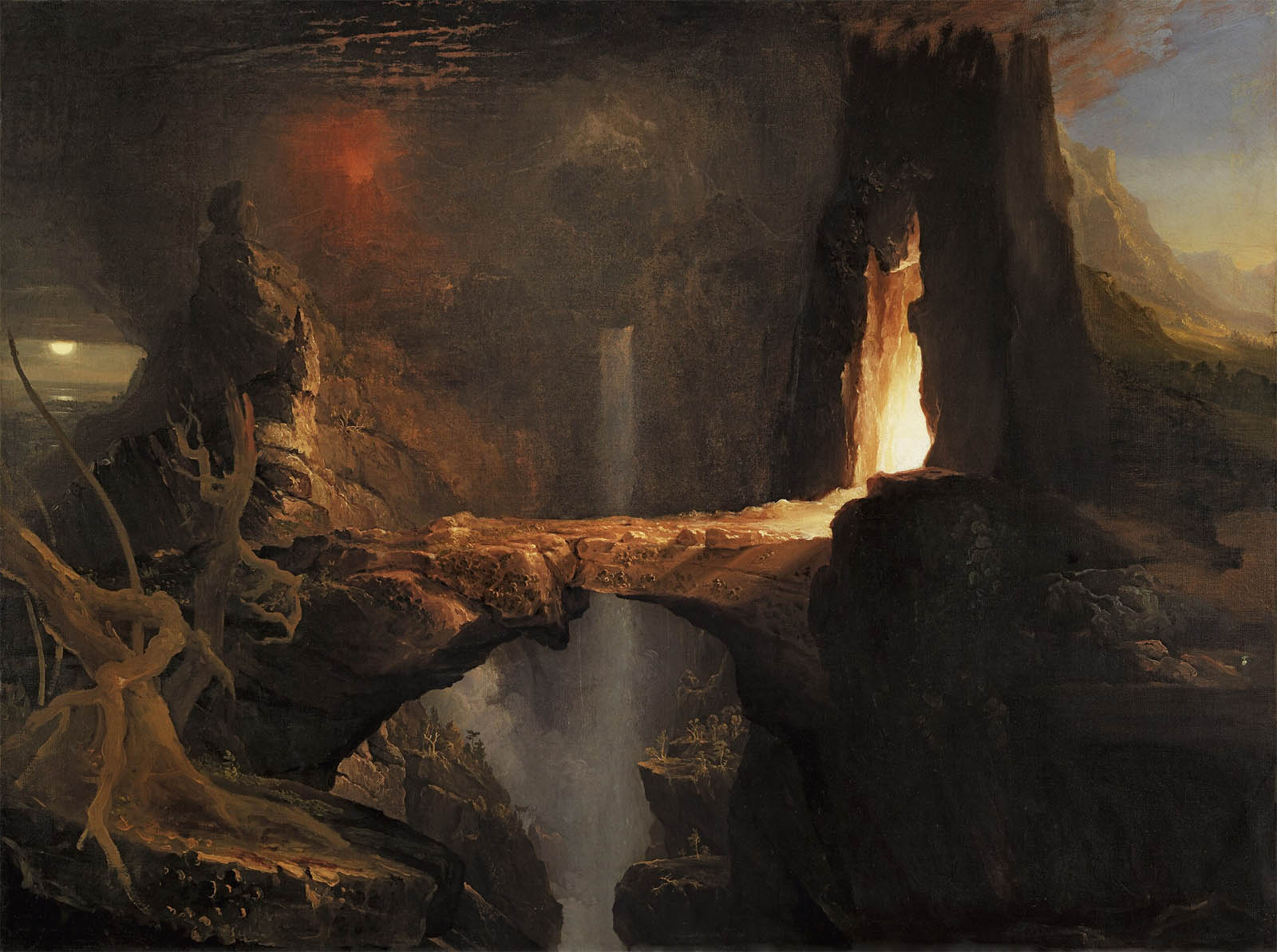
Thomas Cole (American born England, 1801-1848) 'Expulsion: Moon and Firelight' c. 1828


Thomas Cole (American born England, 1801-1848)
Expulsion: Moon and Firelight
c. 1828
Oil on canvas
91.4 by 122cm (36.0 in × 48.0 in)
Thyssen-Bornemisza Museum, Madrid


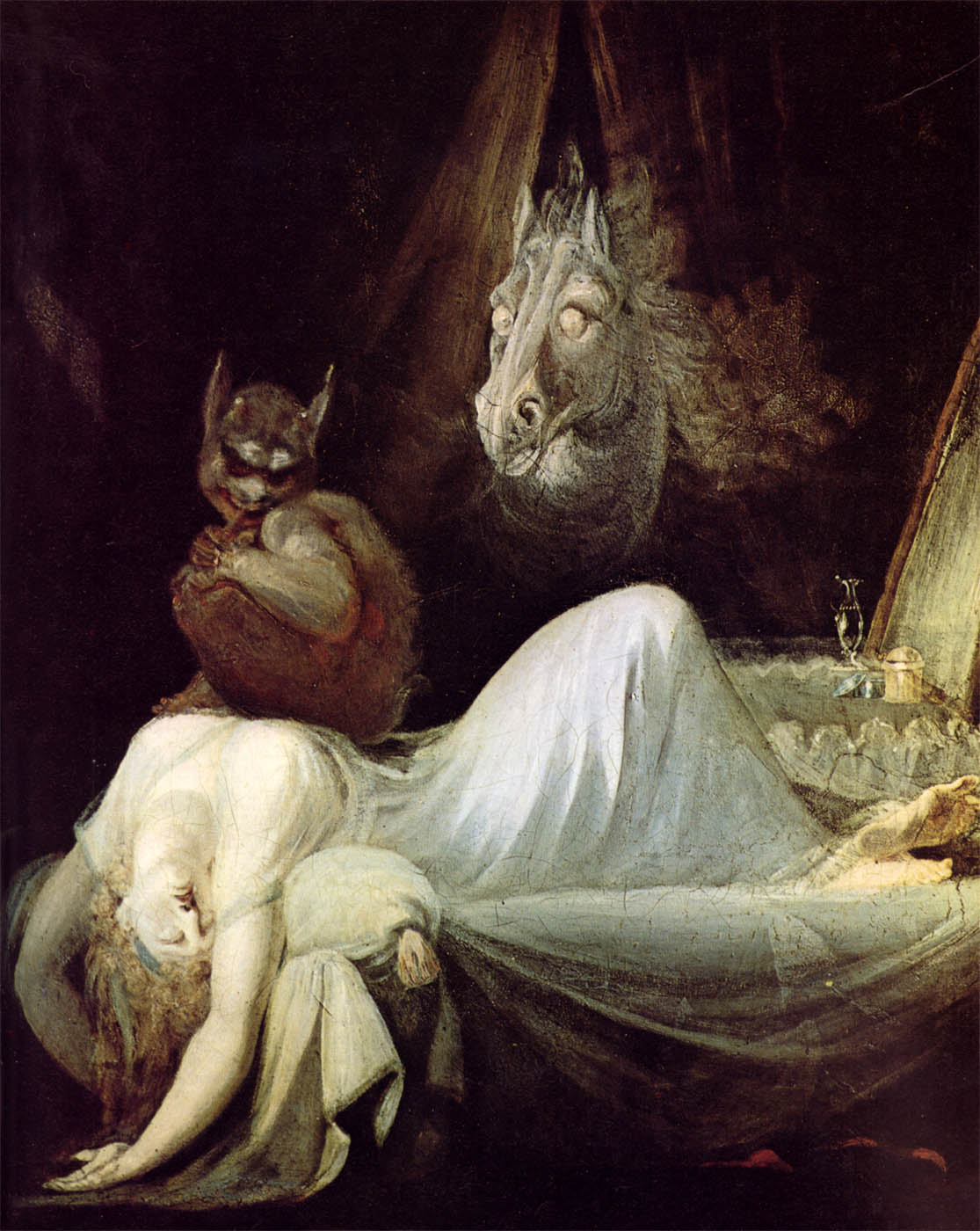
Johann Henry Fuseli (Swiss, 1741-1825) 'The Nightmare (The Incubus)' 1781-1782


Johann Henry Fuseli (Swiss, 1741-1825)
The Nightmare (The Incubus)
1781-1782
Oil on canvas
77cm (30.3 in) x 64cm (25.1 in)
Goethehaus (Frankfurt) collection


Samuel Colman (British, 1780-1845) 'The Edge of Doom' 1836-1838


Samuel Colman (British, 1780-1845)
The Edge of Doom
1836-1838
Oil on canvas
54 x 78 1/2 in. (137.2 x 199.4cm)
Brooklyn Museum


William Blake (British, 1757-1827) 'The Great Red Dragon and the Woman Clothed with the Sun' c.1803-1805


William Blake (British, 1757-1827)
The Great Red Dragon and the Woman Clothed with the Sun
c. 1803-1805
Watercolour, graphite and incised lines
43.7 x 34.8cm
Brooklyn Museum, Gift of William Augustus White


Johann Henry Fuseli (Swiss, 1741-1825) 'The Nightmare' 1781


Johann Henry Fuseli (Swiss, 1741-1825)
The Nightmare
1781
Oil on canvas
101.6 × 126.7cm
Detroit Institute of Arts, Founders Society
© Bridgeman Art Library


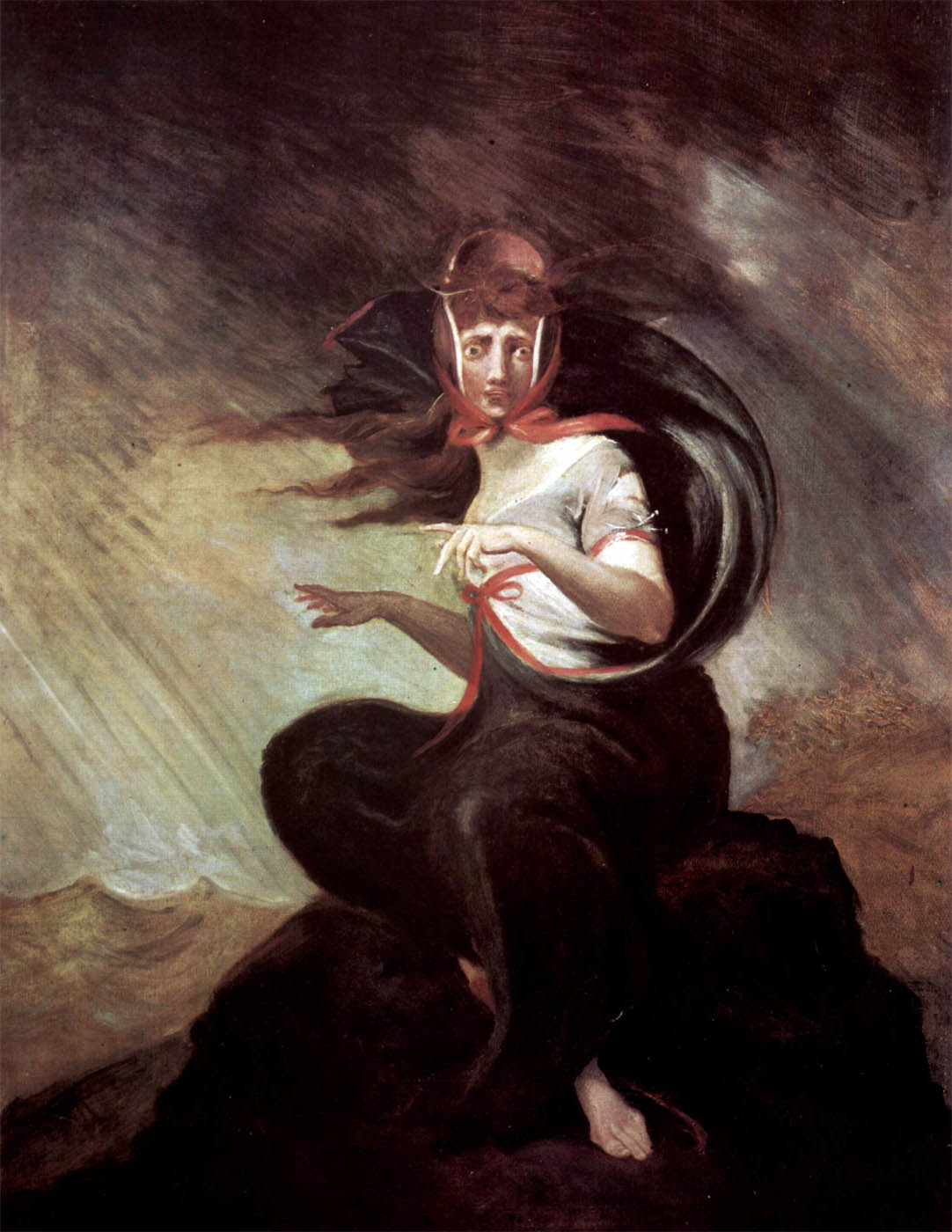
Johann Henry Fuseli (Swiss, 1741-1825) 'Die wahnsinnige Kate'(La folie de Kate) (Mad Kate) 1806-1807


Johann Henry Fuseli (Swiss, 1741-1825)
Die wahnsinnige Kate (La folie de Kate) (Mad Kate)
1806-1807
Oil on canvas
92cm (36.2 in) x 72.3cm (28.4 in)
Francfort-sur-le-Main, Frankfurter Goethe-Haus
Freies Deutsches Hochstift, inv.1955-007
© Ursula Edelmann/ARTOTHEK


Installation view of the exhibition 'Dark Romanticism. From Goya to Max Ernst' at the Städel Museum, Frankfurt showing Paul Delaroche's 'The Wife of the Artist, Louise Vernet, on her Death Bed' (1845)


Installation view of the exhibition Dark Romanticism. From Goya to Max Ernst at the Städel Museum, Frankfurt showing Paul Delaroche’s The Wife of the Artist, Louise Vernet, on her Death Bed (1845, below)
Photo: Norbert Miguletz


Paul Hippolyte Delaroche (French, 1797-1856) 'Louise Vernet, the artist's wife, on her Deathbed' 1845-46


Paul Hippolyte Delaroche (French, 1797-1856)
Louise Vernet, the artist’s wife, on her Deathbed
1845-1846
Oil on canvas
62 x 74.5cm
Musée des Beaux-Arts de Nantes
© Musée des Beaux-Arts de Nantes


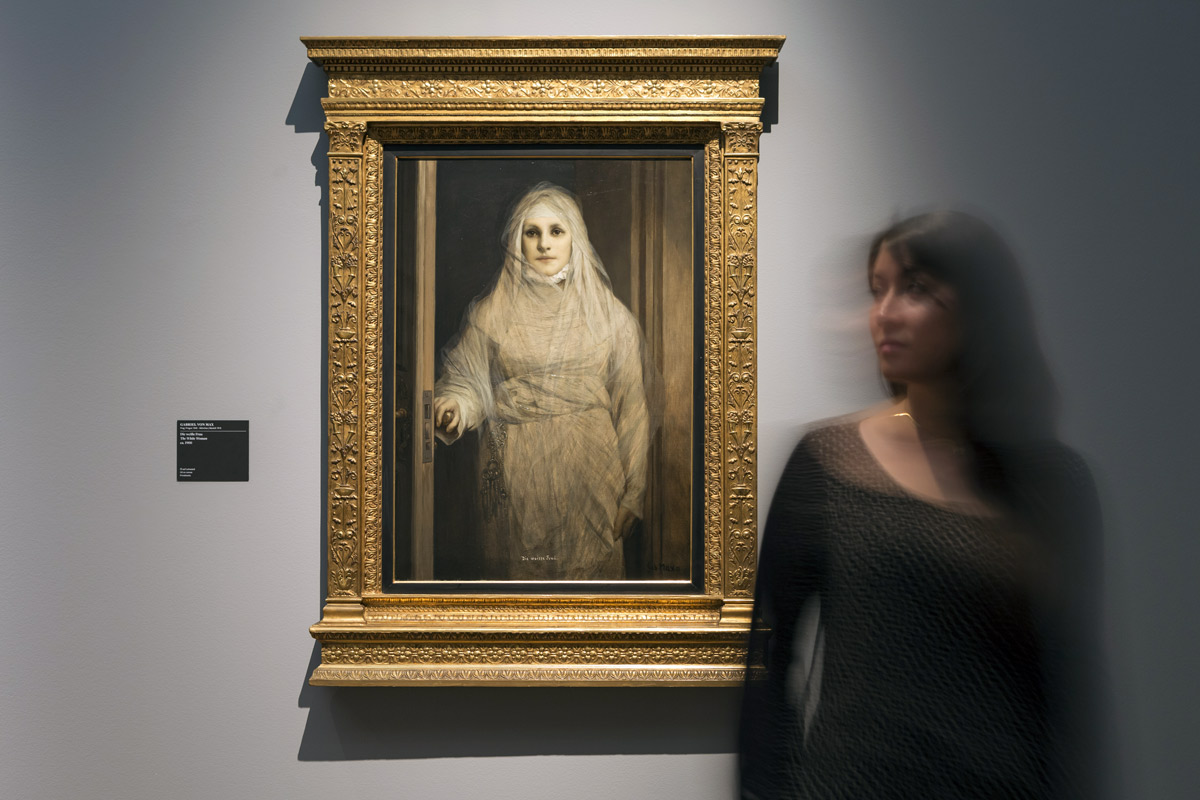
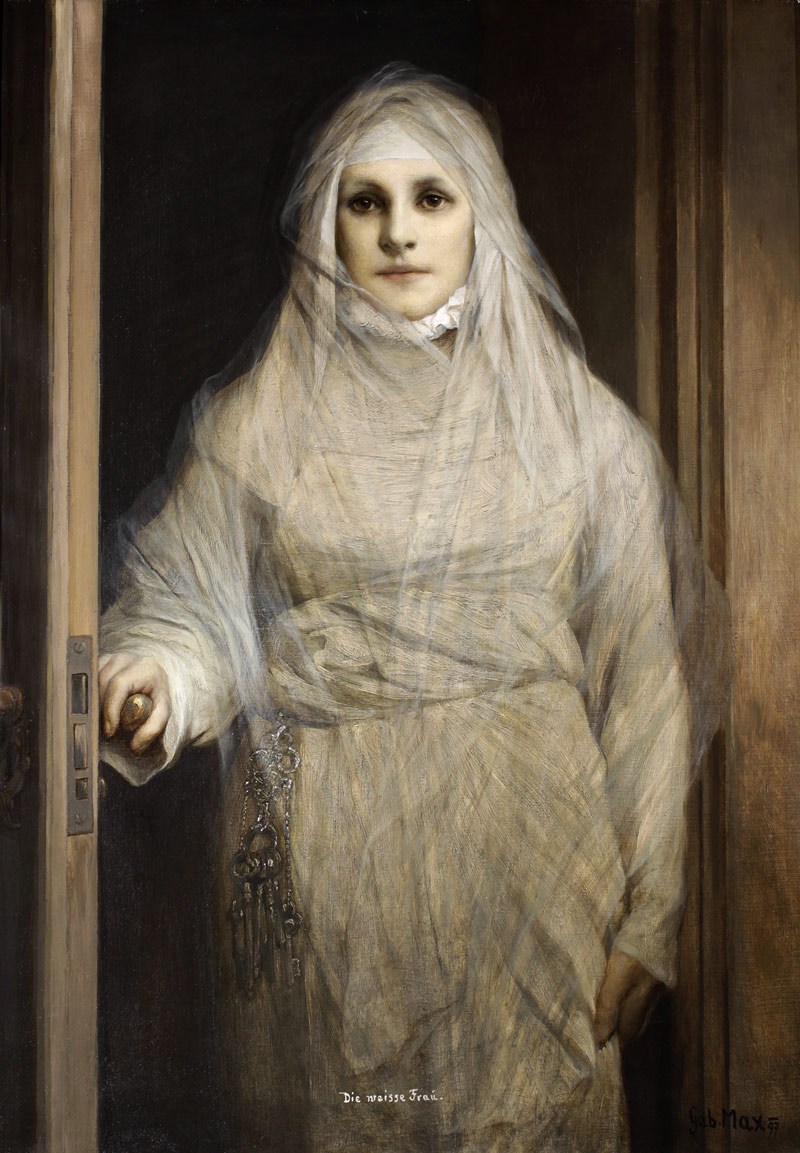
Installation view of the exhibition 'Dark Romanticism. From Goya to Max Ernst' at the Städel Museum, Frankfurt showing Gabriel von Max's 'The White Woman' (1900)


Installation view of the exhibition Dark Romanticism. From Goya to Max Ernst at the Städel Museum, Frankfurt showing Gabriel von Max’s The White Woman (1900, below)
Photo: Norbert Miguletz


Gabriel von Max (Austrian, 1840-1915) 'The White Woman' 1900


Gabriel von Max (Austrian, 1840-1915)
The White Woman
1900
Oil on canvas
100 x 72cm
Private Collection


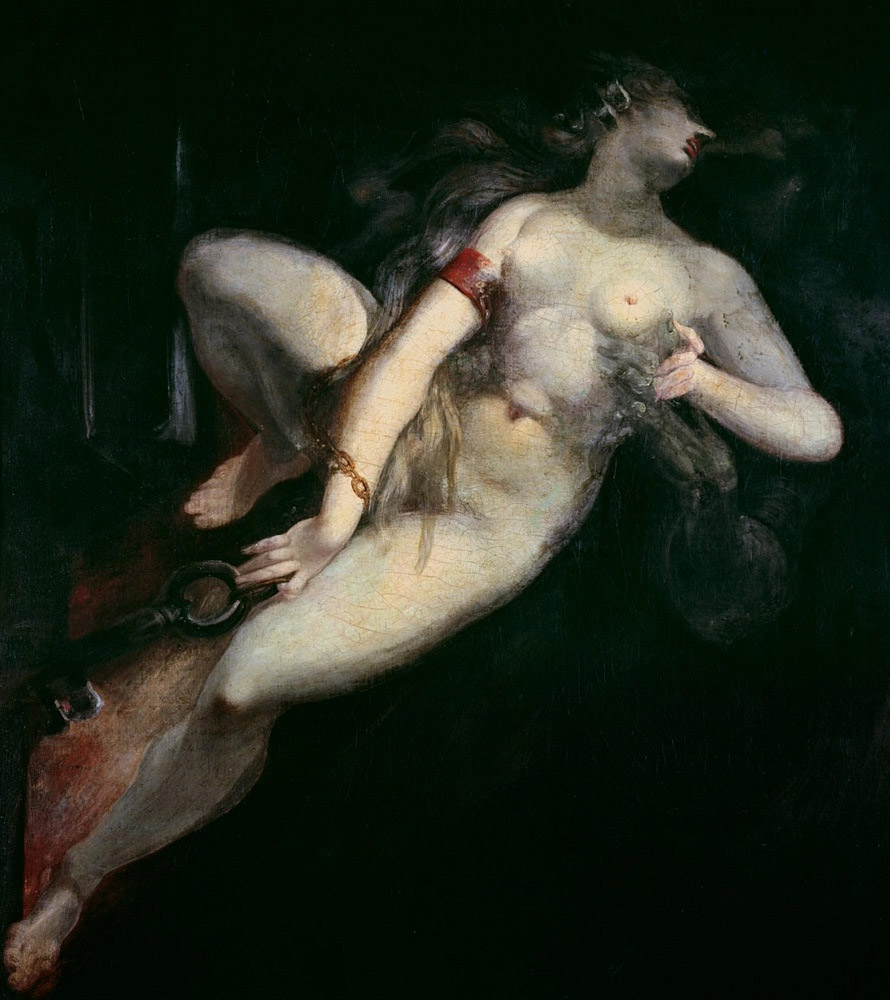
Johann Henry Fuseli (Swiss, 1741-1825) 'Sin Pursued by Death' 1794-1796


Johann Henry Fuseli (Swiss, 1741-1825)
Sin Pursued by Death
1794-1796
Oil on canvas
Kunsthaus, Zürich


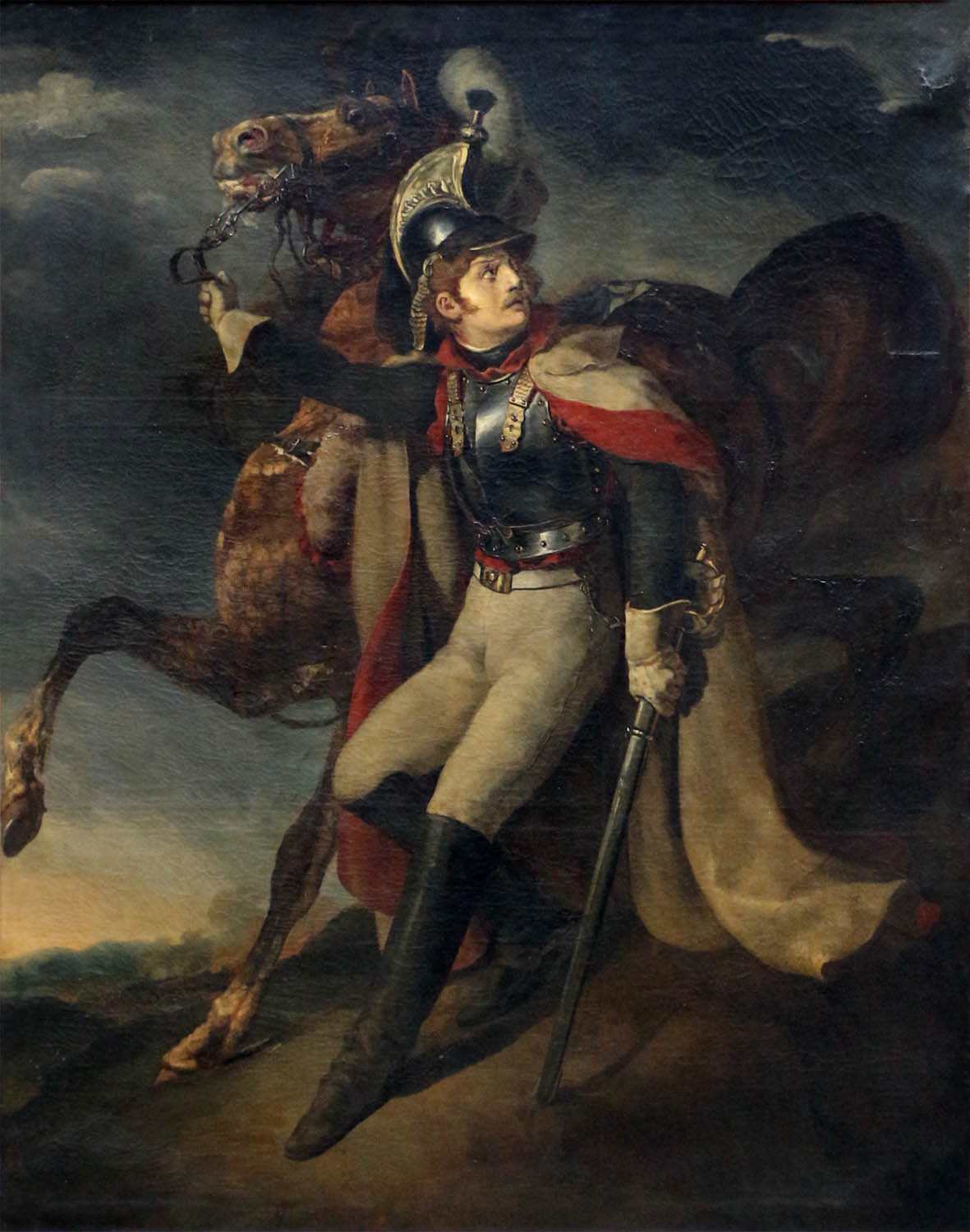
Théodore Géricault (French, 1791–1824) Cuirassier blessé quittant le feu / The Wounded Cuirassier 1814


Théodore Géricault (French, 1791–1824)
Cuirassier blessé quittant le feu / The Wounded Cuirassier
1814
Oil on canvas
358cm (11.7 ft) x 294cm (115.7 in)
Louvre Museum


The Wounded Cuirassier (French: Le Cuirassier blessé quittant le feu) is an oil painting of a single anonymous soldier descending a slope with his nervous horse by the French Romantic painter and lithographer Théodore Géricault (1791–1824). In this 1814 Salon entry, Géricault decided to turn away from scenes of heroism in favour of a subject that is on the losing side of the battle. On display in the aftermath of France’s disastrous military campaign in Russia, this life-size painting captured the feeling of a nation in defeat. There are no visible wounds on the figure, and the title has sometimes been interpreted to refer to soldier’s injured pride. The painting stood in stark contrast with Géricault’s Charging Chasseur, as it didn’t focus on glory or the spectacle of battle. Only his Signboard of a Hoofsmith, which is currently in a private collection, bears any resemblance in form or function to this painting.

The final salon version of The Wounded Cuirassier is at the Musée du Louvre and the smaller, study version, is located at the Brooklyn Museum.

Text from the Wikipedia website


Caspar David Friedrich (German, 1774-1840) 'Kügelgen's Tomb' 1821-1822


Caspar David Friedrich (German, 1774-1840)
Kügelgen’s Tomb
1821-1822
Oil on canvas
41.5 x 55.5cm
Die Lübecker Museen, Museum Behnhaus Drägerhaus, on loan from private collection


Ernst Ferdinand Oehme (German, 1797-1855) 'Procession in the Fog' 1828


Ernst Ferdinand Oehme (German, 1797-1855)
Procession in the Fog
1828
Oil on canvas
81.5 x 105.5cm
Galerie Neue Meister, Staatliche Kunstsammlungen Dresden


Caspar David Friedrich (German, 1774-1840) Rivage avec la lune cachée par des nuages (Clair de lune sur la mer) / Mond hinter Wolken über dem Meeresufer (Meeresküste bei Mondschein) / Moon behind clouds over the seashore (seashore by moonlight) 1836


Caspar David Friedrich (German, 1774-1840)
Rivage avec la lune cachée par des nuages (Clair de lune sur la mer) / Mond hinter Wolken über dem Meeresufer (Meeresküste bei Mondschein) / Moon behind clouds over the seashore (seashore by moonlight)
1836
Hambourg, Hamburger Kunsthalle
© BPK, Berlin, dist. RMN-Grand Palais / Elke Walford


Samuel Colman (American, 1780-1845) 'The Edge of Doom' 1836-1838


Samuel Colman (American, 1780-1845)
The Edge of Doom
1836-1838
Oil on canvas
137.2 x 199.4cm
Brooklyn Museum, Bequest of Laura L. Barnes


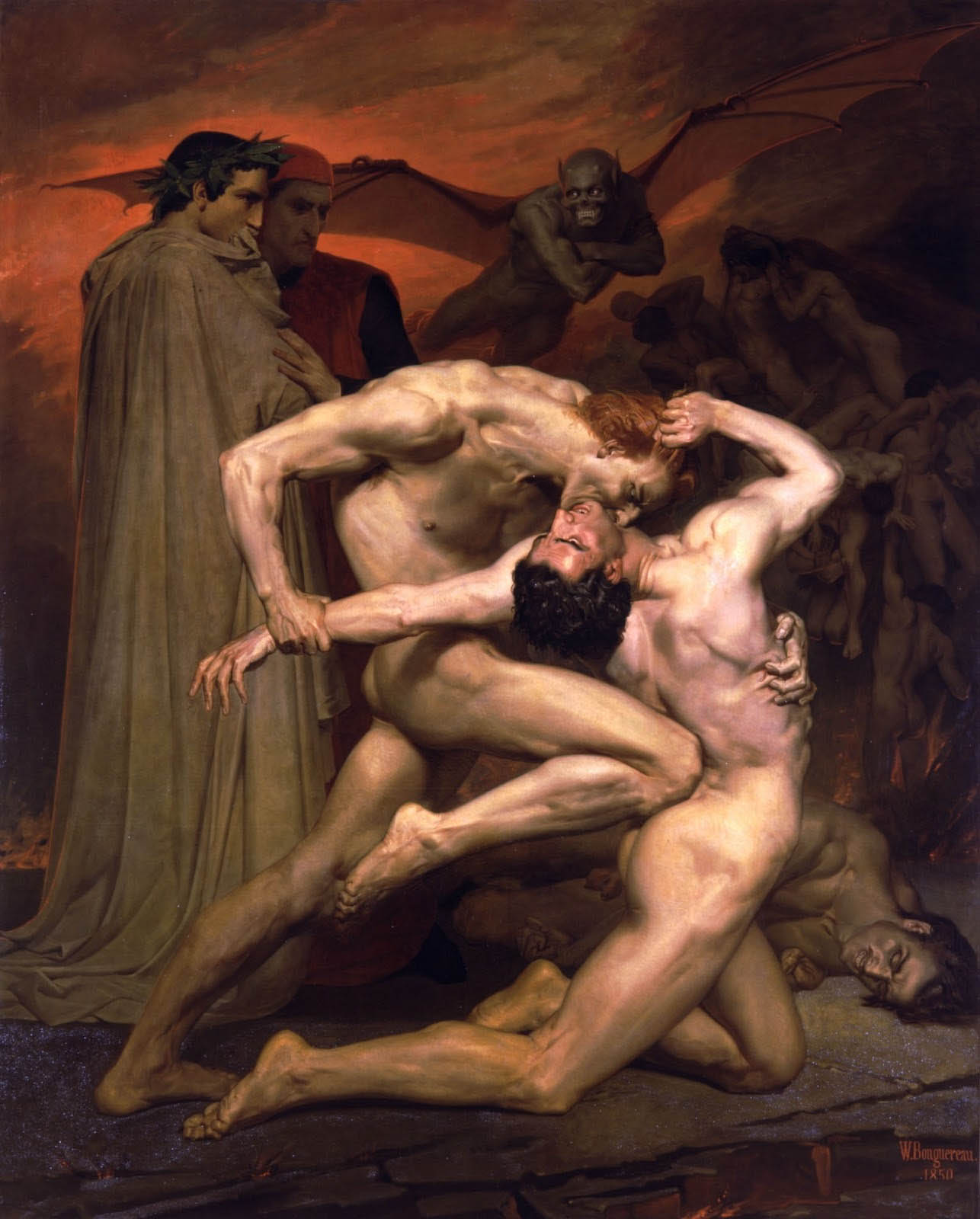
William-Adolphe Bouguereau (French, 1825-1905) 'Dante And Virgil In Hell' 1850


William-Adolphe Bouguereau (French, 1825-1905)
Dante And Virgil In Hell
1850
Oil on canvas
280.5cm (110.4 in) x 225.3cm (88.7 in)
Musée d’Orsay
© Musée d’Orsay, Dist. RMN-Grand Palais / Patrice Schmidt


Arnold Böcklin (Swiss, 1827-1901) 'Villa by the Sea' 1871-1874


Arnold Böcklin (Swiss, 1827-1901)
Villa by the Sea
1871-1874
Oil on canvas
108 x 154cm
Städel Museum, Frankfurt am Main


Serafino Macchiati (Italian, 1860-1916) 'Le Visionnaire' (The Visionary) 1904


Serafino Macchiati (Italian, 1860-1916)
Le Visionnaire (The Visionary)
1904
Oil on canvas
55.0 x 38.5cm
Don Serafino Macchiati, 1916
© Musée d’Orsay, Dist. RMN-Grand Palais / Patrice Schmidt


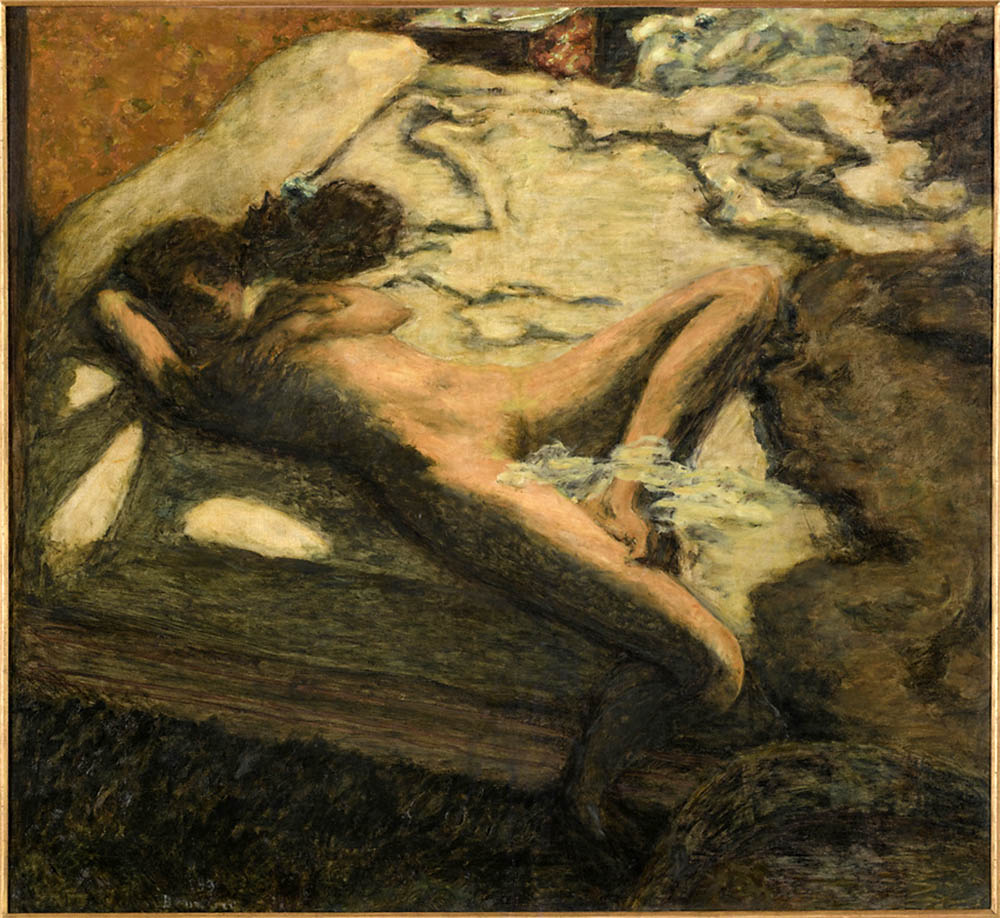
Pierre Bonnard (French, 1867-1945) 'Femme assoupie sur un lit' (Woman sleeping on a bed) 1899


Pierre Bonnard (French, 1867-1945)
Femme assoupie sur un lit (Woman sleeping on a bed)
1899
huile sur toile
96.4 x 105.2cm
Achat en vente publique, 1948
© Musée d’Orsay, Dist. RMN-Grand Palais / Patrice Schmidt


Pierre Bonnard (1867-1947)

A veritable hymn to voluptuousness, The Indolent Woman is a painting which relies on contrasts: the title already clashes with the young woman’s posture. Her body with its tense muscles – the left foot is literally hooked on to the right thigh – belies any idea of rest or laziness. Similarly, the modest gesture of the arm across the breasts is contradicted by the spread thighs. Sinuous lines run throughout the composition, materialised by the dark shadows on the sheets still bearing the undulating line of the bodies and the heavy jumble of the bedclothes. The electric blue “smoke” drifting across the woman’s thigh and ankle and the sumptuous dark hair spread across the bed accentuate the painting’s erotic charge.

This woman spread out for all to see after lovemaking is the epitome of unveiled intimacy, violent, passionate and sombre and, in the end, very “fin de siècle”. We are also struck by the modernity of the composition seen from above, with its monumental bed which seems to tip towards the viewer. The woman’s body, gnawed by shadows, has a tonic vibrant texture which gives it a strong timeless presence.

This is a crucial work in Bonnard’s career because it is one of the first nudes he painted, previously showing little interest in the theme. It can be compared with two other canvases from the same period: Blue Nude from the Kaganovitch collection and Man and Woman.

After seeing this painting, the famous art dealer and publisher Ambroise Vollard asked Bonnard to illustrate a collection of Paul Verlaine’s poetry, Parallèlement, which was published in 1900.

Text from the Musée d’Orsay website


Salvador Dalí (Spanish, 1904-1989) 'Dream caused by the Flight of a Bee around a Pomegranate a Second before Awakening' 1944


Salvador Dalí (Spanish, 1904-1989)
Dream caused by the Flight of a Bee around a Pomegranate a Second before Awakening
1944
Oil on wood
51 x 41cm
Museo Thyssen-Bornemisza, Madrid
© VG Bild-Kunst, Bonn 2012


The Städel Museum’s major special exhibition Dark Romanticism. From Goya to Max Ernst will be on view from September 26th, 2012 until January 20th, 2013. It is the first German exhibition to focus on the dark aspect of Romanticism and its legacy, mainly evident in Symbolism and Surrealism. In the museum’s exhibition house this important exhibition, comprising over 200 paintings, sculptures, graphic works, photographs and films, will present the fascination that many artists felt for the gloomy, the secretive and the evil. Using outstanding works in the museum’s collection on the subject by Francisco de Goya, Eugène Delacroix, Franz von Stuck or Max Ernst as a starting point, the exhibition is also presenting important loans from internationally renowned collections, such as the Musée d’Orsay, the Musée du Louvre, both in Paris, the Museo del Prado in Madrid and the Art Institute of Chicago. The works on display by Goya, Johann Heinrich Fuseli and William Blake, Théodore Géricault and Delacroix, as well as Caspar David Friedrich, convey a Romantic spirit which by the end of the 18th century had taken hold all over Europe. In the 20th century artists such as Salvador Dalí, René Magritte or Paul Klee and Max Ernst continued to think in this vein. The art works speak of loneliness and melancholy, passion and death, of the fascination with horror and the irrationality of dreams. After Frankfurt the exhibition, conceived by the Städel Museum, will travel to the Musée d’Orsay in Paris.

The exhibition’s take on the subject is geographically and chronologically comprehensive, thereby shedding light on the links between different centres of Romanticism, and thus retracing complex iconographic developments of the time. It is conceived to stimulate interest in the sombre aspects of Romanticism and to expand understanding of this movement. Many of the artistic developments and positions presented here emerge from a shattered trust in enlightened and progressive thought, which took hold soon after the French Revolution – initially celebrated as the dawn of a new age – at the end of the 18th century. Bloodstained terror and war brought suffering and eventually caused the social order in large parts of Europe to break down. The disillusionment was as great as the original enthusiasm when the dark aspects of the Enlightenment were revealed in all their harshness. Young literary figures and artists turned to the reverse side of Reason. The horrific, the miraculous and the grotesque challenged the supremacy of the beautiful and the immaculate. The appeal of legends and fairy tales and the fascination with the Middle Ages competed with the ideal of Antiquity. The local countryside became increasingly attractive and was a favoured subject for artists. The bright light of day encountered the fog and mysterious darkness of the night.

The exhibition is divided into seven chapters. It begins with a group of outstanding works by Johann Heinrich Fuseli. The artist had initially studied to be an evangelical preacher in Switzerland. With his painting The Nightmare (Frankfurt Goethe-Museum) he created an icon of dark Romanticism. This work opens the presentation, which extends over two levels of the temporary exhibition space. Fuseli’s contemporaries were deeply disturbed by the presence of the incubus (daemon) and the lecherous horse – elements of popular superstition – enriching a scene set in the present. In addition, the erotic-compulsive and daemonic content, as well as the depressed atmosphere, catered to the needs of the voyeur. The other six works by Fuseli – loans from the Kunsthaus Zürich, the Royal Academy London and the Staatsgalerie Stuttgart – represent the characteristics of his art: the competition between good and evil, suffering and lust, light and darkness. Fuseli’s innovative pictorial language influenced a number of artists – among them William Blake, whose famous water colour The Great Red Dragon from the Brooklyn Museum will be on view in Europe for the first time in ten years.

The second room of the exhibition is dedicated to the Spanish artist Francisco de Goya. The Städel will display six of his works – including masterpieces such as The Witches’ Flight from the Prado in Madrid and the representations of cannibals from Besançon. A large group of works on paper from the Städel’s own collection will be shown, too. The Spaniard blurs the distinction between the real and the imaginary. Perpetrator and victim repeatedly exchange roles. Good and evil, sense and nonsense – much remains enigmatic. Goya’s cryptic pictorial worlds influenced numerous artists in France and Belgium, including Delacroix, Géricault, Victor Hugo and Antoine Wiertz, whose works will be presented in the following room. Atmosphere and passion were more important to these artists than anatomical accuracy.

Among the German artists – who are the focus of the next section of the exhibition – it is Carl Blechen who is especially close to Goya and Delacroix. His paintings are a testimony to his lust for gloom. His soft spot for the controversial author E. T. A. Hoffmann – also known as “Ghost-Hoffmann” in Germany – led Blechen to paint works such as Pater Medardus (Alte Nationalgalerie, Berlin) – a portrait of the mad protagonist in The Devil’s Elixirs. The artist was not alone in Germany when it came to a penchant for dark and disturbing subjects. Caspar David Friedrich’s works, too, contain gruesome elements: cemeteries, open graves, abandoned ruins, ships steered by an invisible hand, lonely gorges and forests are pervasive in his oeuvre. One does not only need to look at the scenes of mourning in the sketchbook at the Kunsthalle Mannheim for the omnipresent theme of death. Friedrich is prominently represented in the exhibition with his paintings Moon Behind Clouds above the Seashore from the Hamburger Kunsthalle and Kügelgen’s Grave from the Lübecker Museums, as well as with one of his last privately owned works, Ship at Deep Sea with full Sails.

Friedrich’s paintings are steeped in oppressive silence. This uncompromising attitude anticipates the ideas of Symbolism, which will be considered in the next chapter of the exhibition. These ‘Neo-Romantics’ stylised speechlessness as the ideal mode of human communication, which would lead to fundamental and seminal insights. Odilon Redon’s masterpiece Closed Eyes, a loan from the Musée d’Orsay in Paris, impressively encapsulates this notion. Paintings by Arnold Böcklin, James Ensor, Fernand Khnopff or Edvard Munch also embody this idea. However, as with the Romantics, these restrained works are face to face with works where anxiety and repressed passions are brought unrestrainedly to the surface; works that are unsettling in their radicalism even today. While Gustave Moreau, Max Klinger, Franz von Stuck and Alfred Kubin belong to the art historical canon, here the exhibition presents artists who are still to be discovered in Germany: Jean-Joseph Carriès, Paul Dardé, Jean Delville, Julien-Adolphe Duvocelle, Léon Frédéric, Eugène Laermans and Lucien Lévy-Dhurmer.

The presentation concludes with the Surrealist movement, founded by André Breton. He inspired artists such as Ernst, Brassaϊ or Dalí, to create their wondrous pictorial realms from the reservoir of the subconscious and celebrated them as fantasy’s victory over the “factual world”. Max Ernst vehemently called for “the borders between the so-called inner and outer world” to be blurred. He demonstrated this most clearly in his forest paintings, four of which have been assembled for this exhibition, one of them the major work Vision Provoked by the Nocturnal Aspect of the Porte Saint-Denis (private collection). The art historian Carl Einstein considered the Surrealists to be the Romantics’ successors and coined the phrase ‘the Romantic generation’. In spite of this historical link the Surrealists were far from retrospective. On the contrary: no other movement was so open to new media; photography and film were seen as equal to traditional media. Alongside literature, film established itself as the main arena for dark Romanticism in the 20th century. This is where evil, the thrill of fear and the lust for horror and gloom found a new home. In cooperation with the Deutsches Filmmuseum the Städel will for the first time present extracts from classics such as Frankenstein (1931), Dracula (1931), Faust (1926), Vampyr (1931-32) and The Phantom Carriage (1921) within an exhibition.

The exhibition, which presents the Romantic as a mindset that prevailed throughout Europe and remained influential beyond the 19th century, is accompanied by a substantial catalogue. As is true for any designation of an epoch, Romanticism too is nothing more than an auxiliary construction, defined less by the exterior characteristics of an artwork than by the inner sentiment of the artist. The term “dark Romanticism” cannot be traced to its origins, but – as is also valid for Romanticism per se – comes from literary studies. The German term is closely linked to the professor of English Studies Mario Praz and his publication La carne, la morte e il diavolo nella letteratura romantica of 1930, which was published in German in 1963 as Liebe, Tod und Teufel. Die schwarze Romantik (literally: Love, Death and Devil. Dark Romanticism).

Press release from the Städel Museum website


Francisco de Goya (Spanish, 1746-1828) 'Witches in the Air' 1797-1798


Francisco de Goya (Spanish, 1746-1828)
Witches in the Air
1797-1798
Oil on canvas
43.5 × 30.5cm (17 1/8 in × 12 in)
Madrid, Museo Nacional del Prado
© Museo Nacional del Prado


Witches’ Flight (Spanish: Vuelo de Brujas, also known as Witches in Flight or Witches in the Air) is an oil-on-canvas painting completed in 1798 by the Spanish painter Francisco Goya. It was part of a series of six paintings related to witchcraft acquired by the Duke and Duchess of Osuna in 1798. It has been described as “the most beautiful and powerful of Goya’s Osuna witch paintings.” …

At center point are three semi-nude witches wearing penitential coroza bearing aloft a writhing nude figure, their mouths close to their victim, as if to devour him or suck his blood. Below, two figures in peasants’ garb recoil from the spectacle: one has thrown himself to the ground covering his ears, the other attempts to escape by covering himself with a blanket, making the fig hand gesture to ward off the evil eye. Finally, a donkey emerges on the right, seemingly oblivious to the rest of the scene.

The general scholarly consensus is that the painting represents a rationalist critique of superstition and ignorance, particularly in religious matters: the witches’ corozas are not only emblematic of the violence of the Spanish Inquisition (the upward flames indicate that they have been condemned as unrepentant heretics and will be burned at the stake), but are also reminiscent of episcopal mitres, bearing the characteristic double points. The accusations of religious tribunals are thus reflected back on themselves, whose actions are implicitly equated with superstition and ritualised sacrifice. The bystanders can then be understood either as appalled but unable to do anything or wilfully ignorant and unwilling to intervene.

The donkey, finally, is the traditional symbol of ignorance.

Text from the Wikipedia website


Eugène Delacroix (French, 1798-1863) 'Mephistopheles in the air, illustration from Goethe's Faust' 1828


Eugène Delacroix (French, 1798-1863)
Mephistopheles in the air, illustration for from Goethe’s Faust
1828
Lithograph
Frankfurt am Main, Städel Museum
© All rights reserved


Francisco de Goya (Spanish, 1746-1828) 'Flying Folly (Disparate Volante)' 1816-1819


Francisco de Goya (Spanish, 1746-1828)
Flying Folly (Disparate Volante)
from “The proverbs (Los proverbios)”, plate 5, 1816-1819, 1
Edition, 1864
Etching and aquatint
21.7 x 32.6cm
Städel Museum, Frankfurt am Main


“I am not afraid of witches, goblins, apparitions, boastful giants, evil spirits, leprechauns, etc., nor of any other kind of creatures except human beings.”


Francisco Goya


An enthusiastic champion of Enlightenment values, Goya was also on close terms with the progressive nobility, but his doubts and disillusionment increased as the French Revolution was succeeded by the Terror, and Europe was torn apart by warring armies.

The deceptively clear distinction between enlightenment and obscurantism was now supplanted by the vision of a new, grey, frightening and uncertain world, in which no sharp line could be drawn between good and evil, reality and fantasy, reason and absurdity, the beliefs of the past and the revolutionary fervour of the present.

But instead of living in the past or doing nothing, Goya swapped his court painter’s brush for the etcher’s unsparing needle. Black in all its shades was the keynote of the many series of engravings he now produced on freely chosen themes, with only the Inquisition’s censors to contend with.

The Caprices, a series produced at the end of the 18th century, reflects his amazement and exasperation at the imaginative wealth of Spanish popular culture, steeped in the superstition, fanaticism and ignorance promoted by the Jesuits.

Ten years later, the atrocities which marked the war against Napoleon inspired The Disasters of War – a cry of outrage and horror at the barbaric excesses of the “Grande Nation” and the terrifying emptiness of a world with no God or morality.

Anonymous. “The Angel of the Odd. Dark Romanticism from Goya to Max Ernst,” on the Musée D’Orsay website Nd [Online] Cited 12/08/2024


Louis Candide Boulanger (French, 1806-1867) 'Les Fantômes' 1829


Louis Candide Boulanger (French, 1806-1867)
Les Fantômes
1829
Oil on canvas
Maison de Victor Hugo


Carl Blechen (German, 1798-1840) 'Scaffold in Storm' 1834


Carl Blechen (German, 1798-1840)
Scaffold in Storm
1834
Oil on canvas and on board
29.5cm (11.6 in) x 46cm (18.1 in)
Galerie Neue Meister


Carl Eduard Ferdinand Blechen (29 July 1798 – 23 July 1840) was a German landscape painter and a professor at the Academy of Arts, Berlin. His distinctive style was characteristic of the Romantic ideals of natural beauty.


Eugène Delacroix (French, 1798-1863) 'Hamlet and Horatio in the Graveyard' 1839


Eugène Delacroix (French, 1798-1863)
Hamlet and Horatio in the Graveyard
1839
Oil on canvas
29.5cm (11.6 in) x 36cm (14.1 in)
Louvre Museum


Gustave Moreau (French, 1826-1898) 'Galatea' c. 1880


Gustave Moreau (French, 1826-1898)
Galatea
c. 1880
Oil on panel
85.5cm (33.6 in) x 66cm (25.9 in)
Musée d’Orsay


Paul Gauguin (French, 1848-1903) 'Madame la Mort' 1890-1891


Paul Gauguin (French, 1848-1903)
Madame la Mort
1890-1891
Charcoal on paper with wash highlights
33,5 x 23cm
Don de la société des Amis du musée d’Orsay, 1991
© RMN-Grand Palais (Musée d’Orsay) / Gérard Blot


Jean Delville (Belgium, 1867-1953) 'L'Idole de la Perversité' (The Idol of Perversity) 1891


Jean Delville (Belgium, 1867-1953)
L’Idole de la Perversité (The Idol of Perversity)
1891
81.5 x 48.5cm
Museum Wiesbaden, Collection Ferdinand Wolfgang Neess


Eugène Grasset (French, 1845-1917) 'Trois Femmes et Trois Loups' 1892


Eugène Grasset (French, 1845-1917)
Trois Femmes et Trois Loups
1892
Pencil, watercolour, Indian ink and gold highlights on paper
35.3 x 27.3cm
Musée des Arts Décoratifs, Paris


Franz von Stuck (German, 1863-1928) 'Le Péché' (Die Sünde) (The Sin) 1893


Franz von Stuck (German, 1863-1928)
Le Péché (Die Sünde) (The Sin)
1893
Zurich, galerie Katharina Büttiker
© Galerie Katharina Büttiker, Zürich


Franz Stuck (German, 1863-1928) 'The Kiss of the Sphinx' (Le Baiser du Sphinx) (Der Kuss der Sphinx) 1895


Franz Stuck (German, 1863-1928)
The Kiss of the Sphinx (Le Baiser du Sphinx) (Der Kuss der Sphinx)
1895
Collection particulière
© Droits réservés


Franz Ritter von Stuck (February 23, 1863 – August 30, 1928), born Franz Stuck, was a German painter, sculptor, printmaker, and architect. Stuck was best known for his paintings of ancient mythology, receiving substantial critical acclaim with The Sin in 1892. In 1906, Stuck was awarded the Order of Merit of the Bavarian Crown and was henceforth known as Ritter von Stuck.


Odilon Redon (French, 1840-1916) 'La Mort: C'est moi qui te rends sérieuse: Enlaçons-nous' (Death: It is I who Makes You Serious; Let Us Embrace) 1896


Odilon Redon (French, 1840-1916)
La Mort: C’est moi qui te rends sérieuse: Enlaçons-nous (Death: It is I who Makes You Serious; Let Us Embrace)
1896
Plate 20 from the series “La Tentation de Saint-Antoine” (The Temptation of Saint Anthony)
Lithograph
Sheet: 17 1/8 in. x 13 in. (43.5 x 33cm)


La Mort: C’est moi qui te rends sérieuse: Enlaçons-nous is one of twenty-four prints by the French artist Odilon Redon (1840-1916) that illustrated Flaubert’s play Temptation of Saint Anthony, a lesser-known work of the literary giant but one that Flaubert laboured on painstakingly throughout his life. A contemporary to Flaubert, Redon had worked in lithography for about two decades when the final version of Temptation of Saint Anthony was published. Already working with a repertoire of dark and absurd subjects, Redon was drawn to the grotesque characters described by Flaubert and wrote fondly of the play, calling it “a literary marvel and a mine for me.”

La Mort depicts a scene in the play where Death and Lust, disguised respectively as an emaciated old woman and a fair young one, reveal their real likenesses after failed attempts to seduce Saint Anthony:

The winding-sheet flies open, and reveals the skeleton of Death. The robe bursts open, and presents to view the entire body of Lust, which has a slender figure, with an enormous development behind, and great, undulating masses of hair, disappearing towards the end.

Death tries to lead Saint Anthony to step into the abyss under the cliff and take his own life, thereby ending all pain. “It is I who make you serious, let us embrace each other,” she says, telling Saint Anthony that, by destroying himself, a work of God, he will become God’s equal.

Redon’s accomplished use of chiaroscuro, the sharp contrast between light and dark, underscores the dramatic nature of this moment. Death’s winding-sheet is enveloped by the dazzling rays of light radiating from the voluptuous body of Lust, and Lust’s hair vanishes into the darkness that seeps through Death;s skeletal body. Although the appearance of Lust differs greatly from that of Death, the overlap of their bodies suggests that they are but different phantoms created by the Devil.

Ningyi Xi. “Odilon Redon,” on the Davis Museum website 2017 [Online] Cited 11/08/2024


Arnold Böcklin (Swiss, 1827-1901) 'Shield with Gorgon's head' (Bouclier avec le visage de Méduse) 1897


Arnold Böcklin (Swiss, 1827-1901)
Shield with Gorgon’s head (Bouclier avec le visage de Méduse)
1897
Papier-mâché
610 x 610cm
© RMN (Musée d’Orsay) / Hervé Lewandowski


Carlos Schwabe (Swiss, 1866-1926) 'La Mort et le fossoyeur' (Death and the Gravedigger) 1900


Carlos Schwabe (Swiss, 1866-1926)
La Mort et le fossoyeur (Death and the Gravedigger)
1900
Paris, musée d’Orsay, conservé au département des Arts Graphiques du musée du Louvre
Legs Michonis, 1902
© RMN (Musée d’Orsay) / Jean-Gilles Berizzi / Patrice Schmidt


Julien Adolphe Duvocelle (French, 1873-1961) 'Crâne aux yeux exorbités et mains agrippées à un mur' (Skull with bulging eyes and hands gripping a wall) 1902


Julien Adolphe Duvocelle (French, 1873-1961)
Crâne aux yeux exorbités et mains agrippées à un mur (Skull with bulging eyes and hands gripping a wall)
1902
Pencil and charcoal mounted on a sheet blackened with charcoal
Paris, musée d’Orsay, conservé au département des Arts Graphiques du musée du Louvre
Don de Mme Fourier en souvenir de son fils, 1995
© DR – RMN-Grand Palais (Musée d’Orsay) / Jean-Gilles Berizzi


Anonymous photographer. 'Photographie spirite (médium et spectres)' / Spiritual photography (medium and ghosts) c. 1910


Anonymous photographer
Photographie spirite (médium et spectres) / Spiritual photography (medium and ghosts)
c. 1910
Musée d’Orsay
© RMN-Grand Palais (Musée d’Orsay) / Hervé Lewandowski / DR


Paul Dardé (French, 1888-1963) 'Eternelle douleur' (Eternal Pain)
1913


Paul Dardé (French, 1888-1963)
Eternelle douleur (Eternal Pain)
1913
Plaster, direct carving
50cm
Musée de Lodève


Paul Dardé created Eternal Pain at 25, even though he had only just finished his year of training. Having gone through the Paris National School of Beaux-Arts and Rodin’s workshop, it is probably his journey to Italy and his mythological reading which fixed the theme of the Medusa in the mind of the artist. Carved from a block of plaster gleaned on the heights of Lodève, the piece would be exhibited seven years later side by side with the great Faun, at the Salon of French artists in 1920.

Text from the Musée de Lodève website


Edvard Munch (Norwegian, 1863-1944) 'Vampire' 1916-1918


Edvard Munch (Norwegian, 1863-1944)
Vampire
1916-1918
Oil on canvas
85 x 110cm
Collection Würth
Photo: Archiv Würth
© VG Bild-Kunst, Bonn 2012


Friedrich Wilhelm Murnau (German, 1888-1931) 'Nosferatu – A Symphony of Horror' Germany 1922


Friedrich Wilhelm Murnau (German, 1888-1931)
Nosferatu – A Symphony of Horror
Germany 1922
Filmstill
Silent film
© Friedrich-Wilhelm-Murnau-Stiftung


Roger Parry (French, 1905-1977) 'Untitled' 1929


Roger Parry (French, 1905-1977)
Untitled
1929
Illustration from Léon-Paul Fargue’s “Banalité” (Paris 1930)
Gelatin silver print
21.8 x 16.5cm
Collection Dietmar Siegert
© VG Bild-Kunst, Bonn 2012


Jacques-André Boiffard (French, 1902-1961) 'Renée Jacobi' 1930


Jacques-André Boiffard (French, 1902-1961)
Renée Jacobi
1930
Paris, Centre Pompidou, musée national d’Art moderne, Centre de création industrielle
© Centre Pompidou, MNAM-CCI, dist. RMN-Grand Palais
Image: Centre Pompidou MNAM-CCI © Mme Denise Boiffard


Hans Bellmer. 'La Poupée (tête et couteau)' / The Doll (head and knife) 1935


Hans Bellmer (German, 1902-1975)
La Poupée (tête et couteau) / The Doll (head and knife)
1935
Collection Dietmar Siegert
© ADAGP, Paris


René Magritte (Belgian, 1898-1967) 'Sentimental Conversation' 1945


René Magritte (Belgian, 1898-1967)
Sentimental Conversation
1945
Oil on canvas
54 x 65cm
Private Collection
© VG Bild-Kunst, Bonn 2012


Städelsches Kunstinstitut und Städtische Galerie
Schaumainkai 63, 60596 Frankfurt
Phone: +49(0)69-605098-170

Opening hours:
Tuesday – Wednesday, Friday – Sunday 10 – 18 h
Thursday 10 – 21 h
Monday closed

Städel Museum website

LIKE ART BLART ON FACEBOOK

Back to top

Artwork: Hamzeh Carr. ‘So the Bright Ones came’ 1926

November 2012


Hamzeh Carr. 'So the Bright Ones came' 1926


Hamzeh Carr
So the Bright Ones came
1926
from Sir Edwin Arnold. The Light of Asia. London: John Lane The Bodley Head Ltd, 1926, p.19
Limited edition of 3,000 copies


Absolutely divine. In the flesh, the colouring and radiance of these plates has to be seen to be believed.
God they knew how to print back then!

I shall be posting more of these stunning works. They deserve to be seen and meditated upon. Please click on the artwork for a larger version of the image.

Marcus


LIKE ART BLART ON FACEBOOK

Back to top

Artwork: Hamzeh Carr. ‘Lord Buddha’ 1926

November 2012


Hamzeh Carr. 'Lord Buddha' 1926


Hamzeh Carr
Lord Buddha
1926
Frontispiece
From Sir Edwin Arnold. The Light of Asia. London: John Lane The Bodley Head Ltd
Limited edition of 3,000 copies


Absolutely divine. In the flesh, the colouring and radiance of these plates has to be seen to be believed.
God they knew how to print back then!

I shall be posting more of these stunning works over the coming weeks. They deserve to be seen and meditated upon. Please click on the artwork for a larger version of the image.

Marcus


Please click on the image for a larger version of the art work.


LIKE ART BLART ON FACEBOOK

Back to top

Review: ‘Valerio Ciccone: Peripheral Observer’ at Arts Project Australia, Melbourne

Exhibition dates: 8th September – 16th October 2012


Valerio Ciccone (Australian, b. 1970) 'Not titled (After Holbein)' 1991


Valerio Ciccone (Australian, b. 1970)
Not titled (After Holbein)
1991
Pastel on paper
50 x 66cm
Courtesy of MADMusee, Belgium


This is a beautiful and vibrant exhibition by Arts Project Australia artist Valerio Ciccone. As you can see from the reproductions in the posting the art work is engaging and enveloping. The work makes me happy, it makes me smile. Arts Project Australia does a wonderful job promoting their artists. It must be very difficult for the curators to append a conceptual idea onto an artist’s work without much input from the artist themselves. Such is the case here. Talking with curator of the exhibition Dr Cheryl Daye, she told me that the title of the exhibition was as much about the person Valerio Ciccone as the work itself; how Valerio circles around people before coming up to say hello, before approaching the subject directly. He is always “keeping an eye out” for what is going on around him.

In the top quotation above – the only paragraph in the two catalogue essays that addresses the conceptual idea of the exhibition – the terms peripheral gaze, peripheral viewer and by extension the title of the exhibition (peripheral observer), are conjoined. Personally, I think that there is a distinct difference between each term that caused me some conceptual unease when they are used together as such.

1/ The peripheral gaze is a temporary, short state of uncertainty, before and between the active or passive state – perhaps! In studying social interaction, Michael Watson (1970) found cultural variability in the intensity of gaze. He distinguished between three forms of gaze:

~ sharp: focusing on the other person’s eyes
~ clear: focusing about the other person’s head and face
~ peripheral: having the other person within the field of vision, but not focusing on his head or face1

2/ A peripheral viewer is active, recipient and creative; sometimes part of the thing itself. They are able to transform into 3, passive.

3/ A peripheral observer can be passive, sometimes unconsciously so, as when someone is watching TV commercials, pictures on a channel that they do not like. Given more choice over control of the channels they become more active and the retain more interest in the program they are watching. The analogy could be that of a flaneur, strolling, looking but not interacting. They are able to transform into 2, active.


According to Jules Romains, “Seeing, and its spatio-temporal organisation, precede gesture and speech and their co-ordination in knowing, recognising, making known (as images of our thoughts), our thoughts themselves and cognitive functions, which are never passive …”2 and Merleau-Ponty notes in an important formulation that, “Everything I see is in principle within my reach, at least within reach of my sight, marked on the map of the ‘I can’.”3

Marked on the map of ‘I can’: active. This is what Valerio does in his artwork, he marks his vision on the map of ‘I can’; not the centre or the periphery (for in postmodernism there is no centre, no periphery for the periphery is the centre!) but an equal balance between what passes before his eyes: background and subject given equal wait / weight within the picture plane where, “in the new democracy of images everything is equal and everything is the same.” This is not a peripheral observer but an artist who actively/passively addresses with equal importance the elements placed before his vision, a passing flow over which he has little control. Sight is decentred and becomes seeing on the field of the other, seeing under the Gaze.

“In the same way, when I see, what I see is formed by paths or networks laid down in advance of my seeing. It may be the case that I feel myself to inhabit some kind of center in my speech, but what decentres me is the network of language. It may be similarly be that I always feel myself to live at the center of my vision – somewhere (where?) behind my eyes; but, again, that vision is decentred by the networks of signifiers that come to me from the social milieu …

Lacan’s analysis of vision unfolds in the same terms: the viewing subject does not stand at the center of the perceptual horizon, and cannot command the chains and series of signifiers passing across the visual domain. Vision unfolds to the side of, in tangent to, the field of the other. And to that form of seeing Lacan gives a name: seeing on the field of the other, seeing under the Gaze.”4


For me Valerio’s work is a result of a direct looking from a tangental position, not the other way around. His subjects and backgrounds are frontal to the viewer, his figures only rarely looking off to the side. The viewing subject, the artist in this case, stands not at the centre of the perceptual horizon and he cannot command what he sees, when he sees it. But what Valerio so brilliantly and sympathetically does is capture the visions that unfold in front of him with a wonderful joy of life that is breathtaking in its tangental difference, in its recognition of Otherness.

Dr Marcus Bunyan


1/ Watson, Michael. Proxemic Behavior: A Cross-Cultural Study. The Hague: Mouton, 1970 quoted in Chandler, Daniel. “Notes on “The Gaze”,” on the Aberystwyth University website [Online] Cited 05/10/2012 No longer available online

2/ Romains, Jules. La Vision extra-rétinienne et le sens paroptique. Paris: Gallimard, 1964 quoted in Virilio, Paul. The Vision Machine (trans. Julie Rose). Bloomington: Indiana University Press, 1994, p. 7

3/ Merleau-Ponty, Maurice. “Eye and Mind” (trans. Carleton Dallery) in The Primacy of Perception: And Other Essays on Phenomenological Psychology. Northwest University Press, 1964, p. 162

4/ Foster, Hal (ed.,). Vision and Visuality. Bay Press, Seattle: Dia Art Foundation Discussions in Contemporary Culture, Number 2, 1988, p. 94


Many thankx to the artist and Arts Project Australia for allowing me to publish the reproductions of the art in the posting. Please click on the photographs for a larger version of the image.


“Whatever medium he chooses, Ciccone’s work reflects a quiet connection with his subject, as well as a delicate poignancy or gentle sense of irony. There is a certain likeness between the peripheral gaze of his subjects and the way in which Ciccone, whilst remaining focused on his work, is able to keep a watchful eye on all that is happening around him. The subjects in Ciccone’s portraits rarely look directly at the viewer. They seem absorbed by action that is taking place off to the side, beyond the picture plane. Yet there is intentness in the expression, the feeling that the peripheral viewer does not miss a trick.”


Dr Cheryl Daye, “Valerio Ciccone: Peripheral Observer,” Arts Project Australia catalogue, 2012, p. 14


“When his gaze moves out into the world. whilst paradoxically he stays in the same spot, we realise that in the new democracy of images everything is equal and everything is the same. Gary Ablett is next to John Howard who sidles up the Kuwaiti Crown Prince. Cathedrals are as important as the corner of a studio, and lions lie with mice, elephants with koala bears. That expands out to other images too, like that of old standard ‘the nude’ or ‘the model’ from life drawing class. Or fluid instinctual portraits of his studio colleagues. Again, not moving far, finding magic around the corner or across the room.”


Glenn Barkly. “This is me – some thoughts on the art of Valerio Ciccone,” Arts Project Australia catalogue, 2012, p. 8


Valerio Ciccone (Australian, b. 1970) 'Not titled' 1991


Valerio Ciccone (Australian, b. 1970)
Not titled
1991
Pastel on paper
56 x 76.5cm
Arts Project Australia Permanent Collection


Valerio Ciccone (Australian, b. 1970) 'Not titled' 1991


Valerio Ciccone (Australian, b. 1970)
Not titled
1991
Pastel on paper
76 x 57cm
Arts Project Australia Permanent Collection


Valerio Ciccone (Australian, b. 1970) 'Not titled (Gary Ablett)' 1998


Valerio Ciccone (Australian, b. 1970)
Not titled (Gary Ablett)
1998
Pastel on paper
66 x 50cm
Arts Project Australia Permanent Collection


Spanning a career of almost thirty years, Valerio Ciccone is an artist of complexity and subtly and this major survey exhibition is a testament to the varied terrain he has covered on his rich artistic journey. Valerio Ciccone: Peripheral Observer is a major survey exhibition that has been curated by Dr Cheryl Daye and will be officially opened by Glenn Barkley, Curator, Museum of Contemporary Art Australia on Saturday 8 September 2012.

Ciccone’s work reflects his fascination with the world around him. With drawing as his primary mode of expression, Ciccone also effectively employs ceramics and animation to create whimsical figures and narratives. Since commencing at Arts Project Australia in 1984, Ciccone’s work has undergone a series of changes: from his earliest watercolours through the powerful text-based monochromatic pastel portraits, to his colourful recreation of scenes from AFL and his enduring repertoire of animals, still life and pop culture icons, he continues to delight with his gentle insights.

Although warm and gregarious, Ciccone likes to place himself as a peripheral observer in relation to his subjects, quietly transforming what he sees into unique visual statements. Curator Dr Cheryl Daye first meet Ciccone in 1984 and says, “Ciccone is a man of few words…  He cannot tell you about his artwork, what it means, how he made it or why. He cannot tell you about the subjects or why he chose them, but the deliberation of each mark made speaks of that which is important to him, his interpretation of the world and desire to share his experience of it.”

Accompanying this exhibition is the Leonard Joel Series catalogue Valerio Ciccone: Peripheral Observer, which is the second publication proudly supported by Leonard Joel.

Press release from the Arts Project Australia website


Valerio Ciccone (Australian, b. 1970) 'Not titled (life model)' 1990


Valerio Ciccone (Australian, b. 1970)
Not titled (life model)
1990
Ink on paper
76 x 57cm
Arts Project Australia Permanent Collection


Valerio Ciccone (Australian, b. 1970) 'Not titled (Notre Dame)' 1990


Valerio Ciccone (Australian, b. 1970)
Not titled (Notre Dame)
1990
Acrylic on paper
66 x 50cm
Arts Project Australia Permanent Collection


Valerio Ciccone (Australian, b. 1970) 'Not titled' 1987


Valerio Ciccone (Australian, b. 1970)
Not titled
1987
Pastel and felt pen on paper
66 x 50cm


Valerio Ciccone (Australian, b. 1970) 'Not titled (still life)' 1990


Valerio Ciccone (Australian, b. 1970)
Not titled (still life)
1990
Pastel on paper
66 x 50cm


Valerio Ciccone (Australian, b. 1970) 'Not titled (seated figure)' 1997


Valerio Ciccone (Australian, b. 1970)
Not titled (seated figure)
1997
Pastel on paper
66 x 50cm


Valerio Ciccone (Australian, b. 1970) 'Not titled (life drawing)' 1996


Valerio Ciccone (Australian, b. 1970)
Not titled (life drawing)
1996
Pastel on paper
66 x 50cm


Arts Project Australia

Studio
24 High Street
Northcote Victoria 3070
Phone: + 61 3 9482 4484

Gallery
Level 1 Perry Street building
Collingwood Yards
Enter via 35 Johnson Street or 30 Perry Street, Collingwood
Phone: +61 477 211 699

Opening hours:
Wednesday – Friday 11am – 5pm
Saturday & Sunday 12 – 4pm

Arts Project Australia website

LIKE ART BLART ON FACEBOOK

Back to top
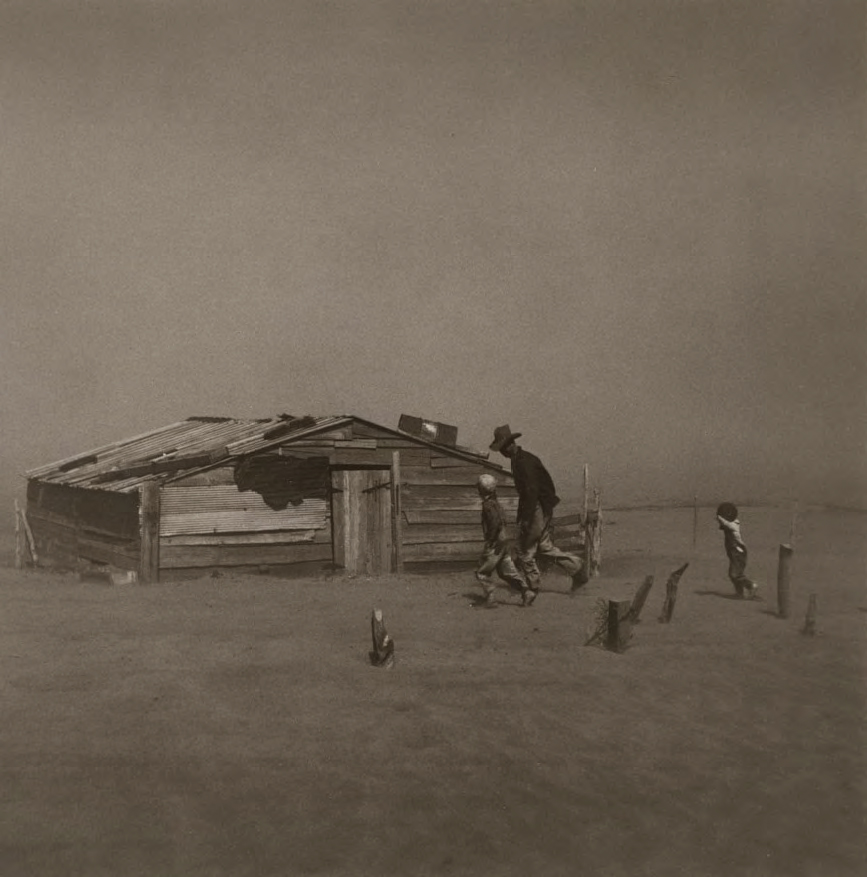
Exhibition: ‘George Bellows’ at the National Gallery of Art, Washington

Exhibition dates: 10th June – 8th October 2012


George Bellows (American, 1882-1925 'Stag at Sharkey's' 1909


George Bellows (American, 1882-1925)
Stag at Sharkey’s
1909
Oil on canvas
92 x 122.6cm (36 1/4 x 48 1/4 in.)
The Cleveland Museum of Art, Hinman B. Hurlbut Collection


What a joy it is to be able to post this work!

Bellows is one of my favourite artists. The energy and vigour of his work is outstanding, whether it be crashing waves on a rocky shore, the straining musculature of the male body in the boxing paintings and drawings or the more subtle renditions of colour and atmosphere in his portraits and cityscapes. There are hints of the darkness of Goya (especially in the painting The Barricade, 1918 / Francisco Goya, The Third of May 1808, 1814), the frontality of the portraits of Bronzino (with an added air of vulnerability) and, towards the end of his life, portends of what might have been had he lived – the simplification of line, form and colour in works such as Dempsey and Firpo (1924, below), reminiscent of, but distinct from, the work of his friend Edward Hopper.

Bellows use of colour, light and form is extra ordinary. His use of chiaroscuro is infused with colour and movement, the volume of his modelling of the subjects depicted transcending their impressionistic base. The “shading” of his work is as much psychological as physical: the looming darkness of the buildings in Pennsylvania Station Excavation (1909, below), the churning foam of the desolate sea shore or the pensive look of Emma in the Purple Dress (1919, below). His understanding of the construction of the picture plane is exemplary. Note the use of diagonals and horizontals used in the construction of most of his paintings and drawings, especially the upraised hands, extended feet in his boxing portraits.

One can only wonder what this incredible artist would have achieved had he lived into the 1960s like his friend Edward Hopper. For me he remains an absolute hero of mine. From the first time I ever saw his work (and I have only ever seen it in reproduction, imagine seeing it in the flesh!) I fell in love with his sensibility, his love of the world and the people in it. I cannot explain it more fundamentally than that. A love affair where his work touched my heart and that, really, is the greatest compliment that you can give an artist. That their art moves you.

Dr Marcus Bunyan


Many thankx to the National Gallery of Art, Washington for allowing me to publish the reproductions of the paintings in this posting. Please click on the photographs for a larger version of the image.


George Bellows (American, 1882-1925) 'Both Members of This Club' 1909


George Bellows (American, 1882-1925)
Both Members of This Club
1909
Oil on canvas
133 x 177.8cm (52 3/8 x 70 in.)
National Gallery of Art, Washington, Chester Dale Collection


George Bellows (American, 1882-1925) 'The White Hope' 1921


George Bellows (American, 1882-1925)
The White Hope
1921
Lithograph
37.4 x 47.6cm (14 3/4 x 18 3/4 in.)
National Gallery of Art, Washington, Andrew W. Mellon Fund


George Bellows (American, 1882-1925) 'Counted Out, No.1' 1921


George Bellows (American, 1882-1925)
Counted Out, No.1
1921
Lithograph
31.8 x 28.5cm (12 1/2 x 11 1/4 in.)
National Gallery of Art, Washington, Andrew W. Mellon Fund


George Bellows (American, 1882-1925) 'Dempsey through the Ropes' 1923


George Bellows (American, 1882-1925)
Dempsey through the Ropes
1923
Black crayon
54.61 x 49.85cm (21 1/2 x 19 5/8 in.)
Lent by The Metropolitan Museum of Art, Rogers Fund, 1925


George Bellows (American, 1882-1925) 'Dempsey and Firpo' 1924


George Bellows (American, 1882-1925)
Dempsey and Firpo
1924
Oil on canvas
129.5 x 160.7cm (51 x 63 1/4 in.)
Whitney Museum of American Art, New York, Purchase, with funds from Gertrude Vanderbilt Whitney
© Photograph by Sheldan C. Collins


When George Bellows died at the age of forty-two in 1925, he was hailed as one of the greatest artists America had yet produced. In 2012, the National Gallery of Art will present the first comprehensive exhibition of Bellows’ career in more than three decades. Including some 130 paintings, drawings, and lithographs, George Bellows will be on view in Washington from June 10 through October 8, 2012, then travel to The Metropolitan Museum of Art, New York, November 15, 2012, through February 18, 2013, and close at the Royal Academy of Arts, London, March 16 through June 9, 2013. The accompanying catalogue will document and define Bellows’ unique place in the history of American art and in the annals of modernism.

“George Bellows is arguably the most important figure in the generation of artists who negotiated the transition from the Victorian to the modern era in American culture,” said Earl A. Powell III, director, National Gallery of Art. “This exhibition will provide the most complete account of his achievements to date and will introduce Bellows to new generations.”

Works in the exhibition

Mentored by Robert Henri, leader of the Ashcan School in New York in the early part of the 20th century, George Bellows (1882-1925) painted the world around him. He was also an accomplished graphic artist whose illustrations and lithographs addressed a wide array of social, religious, and political subjects. The full range of his remarkable artistic achievement is presented thematically and chronologically throughout nine rooms in the West Building.

The exhibition begins with Bellows’ renowned paintings and drawings of tenement children and New York street scenes. These iconic images of the modern city were made during an extraordinary period of creativity for the artist that began shortly after he left his hometown of Columbus, Ohio, for New York in 1904. Encouraged by Henri, his teacher at the New York School of Art, Bellows sought out contemporary subjects that would challenge prevailing standards of taste, depicting the city’s impoverished immigrant population in River Rats (1906, private collection) and Forty-Two Kids (1907, Corcoran Gallery of Art).

In addition to street scenes, Bellows painted more formal studio portraits of New York’s working poor. These startling, frank subjects – such as Paddy Flannigan (1908, Erving and Joyce Wolf) – reflect the artist’s profound understanding of the realist tradition of portraiture practiced by such masters as Diego Velázquez, Frans Hals, Edouard Manet, and James McNeill Whistler.

Bellows’ early boxing paintings chronicle brutal fights; to circumvent a state ban on public boxing, they were organised by private clubs in New York at that time. In his three acclaimed boxing masterpieces – Club Night (1907, National Gallery of Art), Stag at Sharkey’s (1909, Cleveland Museum of Art), and Both Members of This Club (1909, National Gallery of Art) – Bellows’ energetic, slashing brushwork matched the intensity and action of the fighters. These works will be on view together for the first time since 1982.

The series of four paintings Bellows devoted to the Manhattan excavation site for the Pennsylvania Railroad Station – a massive construction project that entailed razing two city blocks – focuses mainly on the subterranean pit in which workmen toiled. Never before exhibited together, these works range from a scene of the early construction site covered in snow in Pennsylvania Station Excavation (1909, Brooklyn Museum) to a view of the monumental station designed by McKim, Mead, and White coming to life in Blue Morning (1909, National Gallery of Art).

Bellows was fascinated with the full spectrum of life of the working and leisure classes in New York. From dock workers to Easter fashions paraded in the park, he chronicled a variety of subjects and used an array of palettes and painting techniques, from the cool grays and thin strokes of Docks in Winter (1911, private collection) to the jewel-like, encrusted surfaces of Snow-Capped River (1911, Telfair Museum of Art). While Bellows portrayed the bustling downtown commercial district of Manhattan in his encyclopaedic overview New York (1911, National Gallery of Art), he more often depicted the edges of the city near the shorelines of the Hudson and East Rivers in works such as The Lone Tenement (1909, National Gallery of Art) and Blue Snow, The Battery (1910, Columbus Museum of Art).

The artist visited Monhegan Island off the coast of Maine for the first time in 1911 and returned to Maine every summer from 1913 to 1916. In 1913 alone he created more than 100 outdoor studies. His seascapes account for half his entire output as a painter, with the majority done after the 1913 Armory Show. Shore House (1911, private collection) and The Big Dory (1913, New Britain Museum of American Art) are among Bellows’ most important seascapes and pay homage to his great American predecessor, Winslow Homer (1836-1910).

In 1912 Bellows started working more consistently as an illustrator for popular periodicals such as Collier’s and Harper’s Weekly, and in 1913 for the socialist magazine The Masses. These illustration assignments led him to record new aspects of American life ranging from sporting events to religious revival meetings, as seen in The Football Game (1912, Hirshhorn Museum and Sculpture Garden) and Preaching (Billy Sunday) (1915, Boston Public Library). Along with Bellows’ more affordable and widely available lithographs (he installed a printing press in his studio in 1916), the published illustrations broadened the audience for his work.

Bellows supported the United States’ entry into World War I, resulting in an outpouring of paintings, lithographs, and drawings in 1918. For this extensive series, he relied on the published accounts of German atrocities in Belgium found in the 1915 Bryce Committee Report commissioned by the British government. The paintings evoke the tradition of grand public history paintings, as seen in Massacre at Dinant (1918, Greenville County Museum of Art), while the drawings and lithographs recall Francisco de Goya’s 18th-century print series The Disasters of War.

Bellows’ late works on paper survey modern American life, from the prisons of Georgia to the tennis courts of Newport, and highlight complex relationships between his various media. Taken from direct experience as well as fictional accounts, they range in tone from lightly satirical and humorous (Business-Men’s Bath, 1923, Boston Public Library) to profoundly disturbing and tragic (The Law Is Too Slow, 1922-1923, Boston Public Library).

In Emma at the Piano (1914, Chrysler Museum of Art), Bellows depicts his wife and lifelong artistic muse. His portraits of women constitute a larger body of work than his more famous boxing paintings. They cover all stages of life and include both the naive, youthful Madeline Davis (1914, Lowell and Sandra Mintz) and the more refined, matronly Mrs. T in Wine Silk (1919, Cedarhurst Center for the Arts).

The show will end with paintings in a variety of styles made in 1924, the year before the artist’s sudden death from appendicitis. Painted in Bellows’ studio in rural Woodstock, New York, these last works, including Dempsey and Firpo (1924, Whitney Museum of American Art), Mr. and Mrs. Philip Wase (1924, Smithsonian American Art Museum), and The White Horse (1922, Worcester Art Museum), will prompt visitors to contemplate the artist Bellows might have become had he lived into the 1960s, as did his friend and contemporary Edward Hopper (1882-1967).

Press release from the National Gallery of Art website


George Bellows (American, 1882-1925) 'River Rats' 1906


George Bellows (American, 1882-1925)
River Rats
1906
Oil on canvas


George Bellows (American, 1882-1925) 'Forty-two Kids' 1907


George Bellows (American, 1882-1925)
Forty-two Kids
1907
Oil on canvas
106.7 × 153cm (42 × 60 1/4 in.)
Corcoran Collection (Museum Purchase, William A. Clark Fund)
National Gallery of Arts, Washington
Open access


George Bellows (American, 1882-1925) 'Beach at Coney Island' 1908


George Bellows (American, 1882-1925)
Beach at Coney Island
1908
Oil on canvas
106.7 x 152.4cm (42 x 60 in.)
Private collection


George Bellows (American, 1882-1925) 'Blue Morning' 1909


George Bellows (American, 1882-1925)
Blue Morning
1909
Oil on canvas
86.3cm (33.9 in) x 111.7cm (43.9 in)
National Gallery of Art
Chester Dale Collection


George Bellows (American, 1882-1925) 'New York' 1911


George Bellows (American, 1882-1925)
New York
1911
Oil on canvas
106.7 x 152.4cm (42 x 60 in.)
National Gallery of Art
Collection of Mr. and Mrs. Paul Mellon


George Bellows (American, 1882-1925) 'The Big Dory' 1913


George Bellows (American, 1882-1925)
The Big Dory
1913
Oil on panel
18 in (45.7cm) x 22 in (55.8cm)
New Britain Museum of American Art
Harriet Russell Stanley Fund


George Bellows (American, 1882-1925) 'Riverfront, No. 1' 1914


George Bellows (American, 1882-1925)
Riverfront, No. 1
1914
Oil on canvas
115.3 x 160.3cm (45 3/8 x 63 1/8 in.)
Columbus Museum of Art, Museum Purchase, Howald Fund
Public domain


George Bellows (American, 1882-1925) 'Preaching (Billy Sunday)' c. 1915-1923


George Bellows (American, 1882-1925)
Preaching (Billy Sunday)
c. 1915-1923
Crayon, ink, and wash on paper
Boston Public Library
Public domain


“I like to paint Billy Sunday, not because I like him, but because I want to show the world what I do think of him. Do you know, I believe Billy Sunday is the worst thing that ever happened to America? He is Prussianism personified. His whole purpose is to force authority against beauty. He is against freedom, he wants a religious autocracy, he is such a reactionary that he makes me an anarchist.” – GB, in “Touchstone,” p. 270. The artist’s intent to satirise Billy Sunday was evident to almost everyone but the evangelist himself. An earlier depiction of Billy Sunday in action is seen in “The Sawdust Trail” (M. 48) done in 1916 (below). (Mason)

Text from the Digital Commonwealth website


George Bellows (American, 1882-1925) 'The Saw Dust Trail' 1916


George Bellows (American, 1882-1925)
The Saw Dust Trail
1916
Oil on canvas
Milwaukee Art Museum, Layton Art Collection


The catalog quotes Bellows: “I paint Billy Sunday… to show the world what I do think of him. Do you know, I think Billy Sunday is the worst thing that ever happened to America? He is death to imagination, to spirituality, to art.”


George Bellows (American, 1882-1925) 'Tennis at Newport' 1920


George Bellows (American, 1882-1925)
Tennis at Newport
1920
Oil on canvas
109.2 x 137.2cm (43 x 54 in.)
James W. and Frances G. McGlothlin


George Bellows (American, 1882-1925) 'Return of the Useless' 1918


George Bellows (American, 1882-1925)
Return of the Useless
1918
Oil on canvas
149.9 x 167.6cm (59 x 66 in.)
Courtesy Crystal Bridges Museum of American Art, Bentonville


George Bellows (American, 1882-1925) 'The Barricade' 1918


George Bellows (American, 1882-1925)
The Barricade
1918
oil on canvas
124.8 x 211.5cm (49 1/8 x 83 1/4 in.)
Birmingham Museum of Art, Museum purchase with funds provided by the Harold and Regina Simon Fund, the Friends of American Art, Margaret Gresham Livingston, and Crawford L. Taylor, Jr.


George Bellows

American, 1882-1925

Throughout his childhood in Columbus, Ohio, George Bellows divided much of his time between sports and art. While attending Ohio State University, he created illustrations for the school yearbook and played varsity baseball and basketball. After college Bellows rejected an offer for a professional athletic career with the Cincinnati Reds baseball team, instead pursuing a career as an artist.

In opposition to his father’s wishes, Bellows enrolled in the New York School of Art in 1904. There Bellows elected to study not with the popular and flamboyant William Merritt Chase, but rather with the unorthodox realist Robert Henri. Henri led a radical group of artists, including John Sloan and William Glackens, who exhibited under the name “The Eight.” Although Bellows was elected to the National Academy of Design, he rejected the superficial portrayal of everyday life promoted by the academies. Instead he and his colleagues emphasised the existing social conditions of the early twentieth century, especially in New York. Because their subjects were considered crude and at times even vulgar, critics dubbed them the Ashcan school. Bellows never became an official member of The Eight, but his choice of subjects – docks, street scenes, and prizefights – were typical of the group. Unlike the members of The Eight, Bellows’ enjoyed popular success during his lifetime, particularly with the boxing images that demonstrate his passionate interest in sports and a bold understanding of the human figure.


George Bellows (American, 1882-1925) 'Pennsylvania Station Excavation' 1909


George Bellows (American, 1882-1925)
Pennsylvania Station Excavation
1909
Oil on canvas
79.38 x 97.16cm (31 1/4 x 38 1/4 in.)
Brooklyn Museum, A. Augustus Healy Fund


George Bellows (American, 1882-1925) 'The Lone Tenement' 1909


George Bellows (American, 1882-1925)
The Lone Tenement
1909
Oil on canvas
123.2 x 153.4 x 12.7cm (48 1/2 x 60 3/8 x 5 in.)
National Gallery of Art, Washington, Chester Dale Collection


George Bellows (American, 1882-1925) 'Rain on the River' 1908


George Bellows (American, 1882-1925)
Rain on the River
1908
Oil on canvas
81.3 x 96.5cm (32 x 38 in.)
Museum of Art, Rhode Island School of Design, Providence, Jesse Metcalf Fund
© Photography by Erik Gould, courtesy of the Museum of Art, Rhode Island School of Design, Providence


George Bellows (American, 1882-1925) 'Blue Snow, The Battery' 1910


George Bellows (American, 1882-1925)
Blue Snow, The Battery
1910
Oil on canvas
86.4 x 111.8cm (34 x 44 in.)
Columbus Museum of Art, Museum Purchase, Howald Fund


George Bellows (American, 1882-1925) 'Shore House' 1911


George Bellows (American, 1882-1925)
Shore House
1911
Oil on canvas
101.6 x 106.7cm (40 x 42 in.)
Private collection


George Bellows (American, 1882-1925) 'Men of the Docks' 1912


George Bellows (American, 1882-1925)
Men of the Docks
1912
Oil on canvas
Randolph College, founded as Randolph-Macon Women’s College, 1891, Lynchburg


George Bellows (American, 1882-1925) 'Summer Surf' 1914


George Bellows (American, 1882-1925)
Summer Surf
1914
Oil on board
62.6 x 72.7 x 4.8cm (24 5/8 x 28 5/8 x 1 7/8 in.)
Delaware Art Museum, Wilmington


George Bellows (American, 1882-1925) 'Forth and Back' 1913


George Bellows (American, 1882-1925)
Forth and Back
1913
Oil on panel
38.1 x 49.5cm (15 x 19 1/2 in.)
Private collection


George Bellows (American, 1882-1925) 'Churn and Break' 1913


George Bellows (American, 1882-1925)
Churn and Break
1913
Oil on panel
45.7 x 55.9cm (18 x 22 in.)
Columbus Museum of Art, Gift of Mrs. Edward Powell


George Bellows (American, 1882-1925) 'An Island in the Sea' 1911


George Bellows (American, 1882-1925)
An Island in the Sea
1911
Oil on canvas
87 x 112.7cm (34 1/4 x 44 3/8 in.)
Columbus Museum of Art, Museum Purchase, Howald Fund


George Bellows (American, 1882-1925) 'Emma in the Purple Dress' 1919


George Bellows (American, 1882-1925)
Emma in the Purple Dress
1919
Oil on panel
128.27 x 107.95 x 8.89cm (50 1/2 x 42 1/2 x 3 1/2 in.)
Los Angeles County Museum of Art, Gift of Raymond J. and Margaret Horowitz
© Digital Image (C) 2009 Museum Associates / LACMA / Art Resource, NY


George Bellows (American, 1882-1925) 'Emma in the Black Print' 1919


George Bellows (American, 1882-1925)
Emma in the Black Print
1919
Oil on canvas
101.9 x 81.9cm (40 1/8 x 32 1/4 in.)
Museum of Fine Arts, Boston, Bequest of John T. Spaulding
© Photograph 2012 Museum of Fine Arts, Boston


George Bellows (American, 1882-1925) 'Mrs. T in Wine Silk' 1919


George Bellows (American, 1882-1925)
Mrs. T in Wine Silk
1919
Oil on canvas
121.9 x 96.5cm (48 x 38 in.)
Cedarhurst Center for the Arts, Mt. Vernon, Gift of John R. and Eleanor R. Mitchell, 1973


George Bellows (American, 1882-1925) 'Margarite' 1919


George Bellows (American, 1882-1925)
Margarite
1919
Oil on panel
81.28 x 66.04cm (32 x 26 in.)
Private collection


George Bellows (American, 1882-1925) 'Emma at the Piano' 1914


George Bellows (American, 1882-1925)
Emma at the Piano
1914
Oil on panel
73cm (28.7 in) x 94cm (37 in)
Chrysler Museum of Art Blue
Gift of Walter P. Chrysler, Jr.


George Bellows (American, 1882-1925) 'Paddy Flannigan' 1908


George Bellows (American, 1882-1925)
Paddy Flannigan
1908
Oil on canvas
76.8 x 63.5cm (30 1/4 x 25 in.)
Erving and Joyce Wolf


George Bellows (American, 1882-1925) 'Frankie, The Organ Boy' 1907


George Bellows (American, 1882-1925)
Frankie, The Organ Boy
1907
The Nelson-Atkins Museum of Art, Kansas City
Purchase, acquired through the bequest of Ben and Clara Shlyen


George Bellows (American, 1882-1925) 'Little Girl in White (Queenie Burnett)' 1907


George Bellows (American, 1882-1925)
Little Girl in White (Queenie Burnett)
1907
158 x 87cm (62 3/16 x 34 1/4 in.)
National Gallery of Arts, Washington
Collection of Mr. and Mrs. Paul Mellon
Open access


Advised by his friend and teacher Robert Henri to select subjects that reflected the realism of modern urban life, George Bellows portrayed the recreational activities of New York City’s lower-class children in such paintings as River Rats (1906, private collection), and Forty-two Kids (1907). In 1907 he painted two full-length portraits of individual children: Little Girl in White and Frankie the Organ Boy (both now at the Nelson-Atkins Museum of Art, Kansas City, MO). Unlike his late 19th-century predecessors, who popularised the street urchin genre by representing well-scrubbed, idealised children playing with pets or engaged in entrepreneurial activities, Bellows portrayed his subjects in a bluntly realistic manner. The subject of this painting, Queenie Burnett, was the artist’s laundry delivery girl. Her underprivileged background is evident in her gaunt face, exaggeratedly large eyes, unkempt hair, and ungainly figure.

This was Bellows’s first figural work to be exhibited around the country – it was included in 15 public exhibitions during his lifetime – and he was awarded the first Hallgarten Prize when the painting was shown at the National Academy of Design in 1913.

Text from the National Gallery of Art website


George Bellows (American, 1882-1925) 'Business-Men's Bath' 1923


George Bellows (American, 1882-1925)
Business-Men’s Bath
1923
Lithograph
16 1/2 × 11 3/4in. (41.9 × 29.8cm)
Boston Public Library


George Bellows (American, 1882-1925) 'The Law Is Too Slow' 1922-1923


George Bellows (American, 1882-1925)
The Law Is Too Slow
1922-1923
Boston Public Library
Print Department, Albert H. Wiggin Collection


Based upon a 1903 newspaper story, dateline Wilmington, Delaware, about a black man who burns at the stake while a mob of perpetrators stand and watch.


George Bellows (American, 1882-1925) 'The White Horse' 1922


George Bellows (American, 1882-1925)
The White Horse
1922
Oil on canvas
86.6cm (34.1 in) x 111.7cm (44 in)
Worcester Art Museum


George Bellows (American, 1882-1925) 'Mr. and Mrs. Phillip Wase' 1924


George Bellows (American, 1882-1925)
Mr. and Mrs. Phillip Wase
1924
Oil on canvas
Smithsonian American Art Museum
Gift of Paul Mellon


George Bellows spent summers in Woodstock, New York, where Mrs. Wase worked as a cleaning woman and her husband was a gardener. Bellows chose to show the couple stiffly posed and strangely detached from one another. Mrs. Wase’s face shows the worries of a lifetime, and Mr. Wase stares off into the distance, as if thinking of another time or place. Between them, a portrait, perhaps of Mrs. Wase as a bride, hangs on the wall. Their clothes match the shadowy gray of the parlour. Bellows painted suggestions of a brilliantly green summer day beyond the closed shutters, as if to emphasise the distance between youthful optimism and the resignation of old age. The artist experimented with new ways to paint portraits throughout his career, and from 1915 to 1920 he exhibited with the National Association of Portrait Painters, whose mission was to separate from ​”the tiresomely conventional and perfunctory portrait.” (Myers, “‘The Most Searching Place in the World’: Bellows and Portraiture,” in Quick et al., The Paintings of George Bellows1992)

Text from the Smithsonian American Art Museum website


National Gallery of Art
National Mall between 3rd and 7th Streets
Constitution Avenue NW, Washington

Opening hours:
Daily 10.00am – 5.00pm

National Gallery of Art website

LIKE ART BLART ON FACEBOOK

Back to top
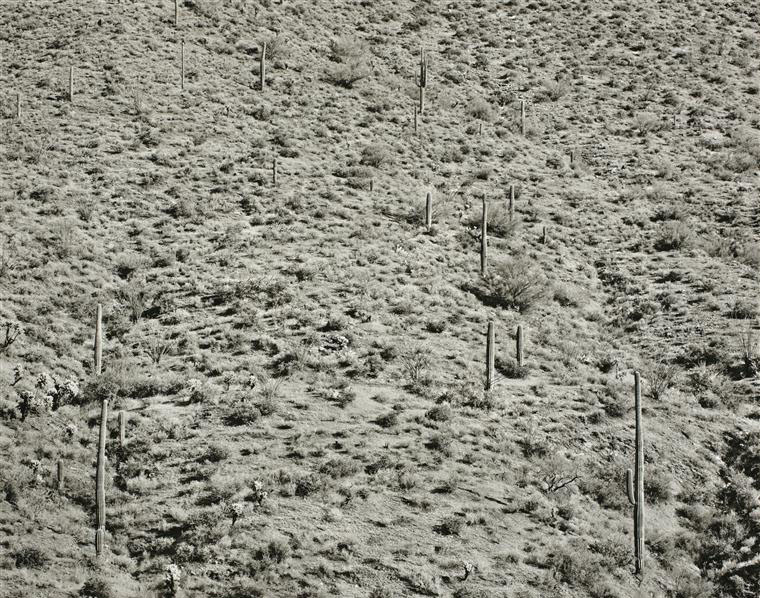
Exhibition: ‘Rineke Dijkstra: A Retrospective’ at the Solomon R. Guggenheim Museum, New York

Exhibition dates: 29th June – 3rd October 2012


Installation view of the 'Beach Portraits' (1992-2002) series from the exhibition 'Rineke Dijkstra: A Retrospective' at the Solomon R. Guggenheim Museum, New York


Installation view of the Beach Portraits (1992-2002) series from the exhibition Rineke Dijkstra: A Retrospective at the Solomon R. Guggenheim Museum, New York
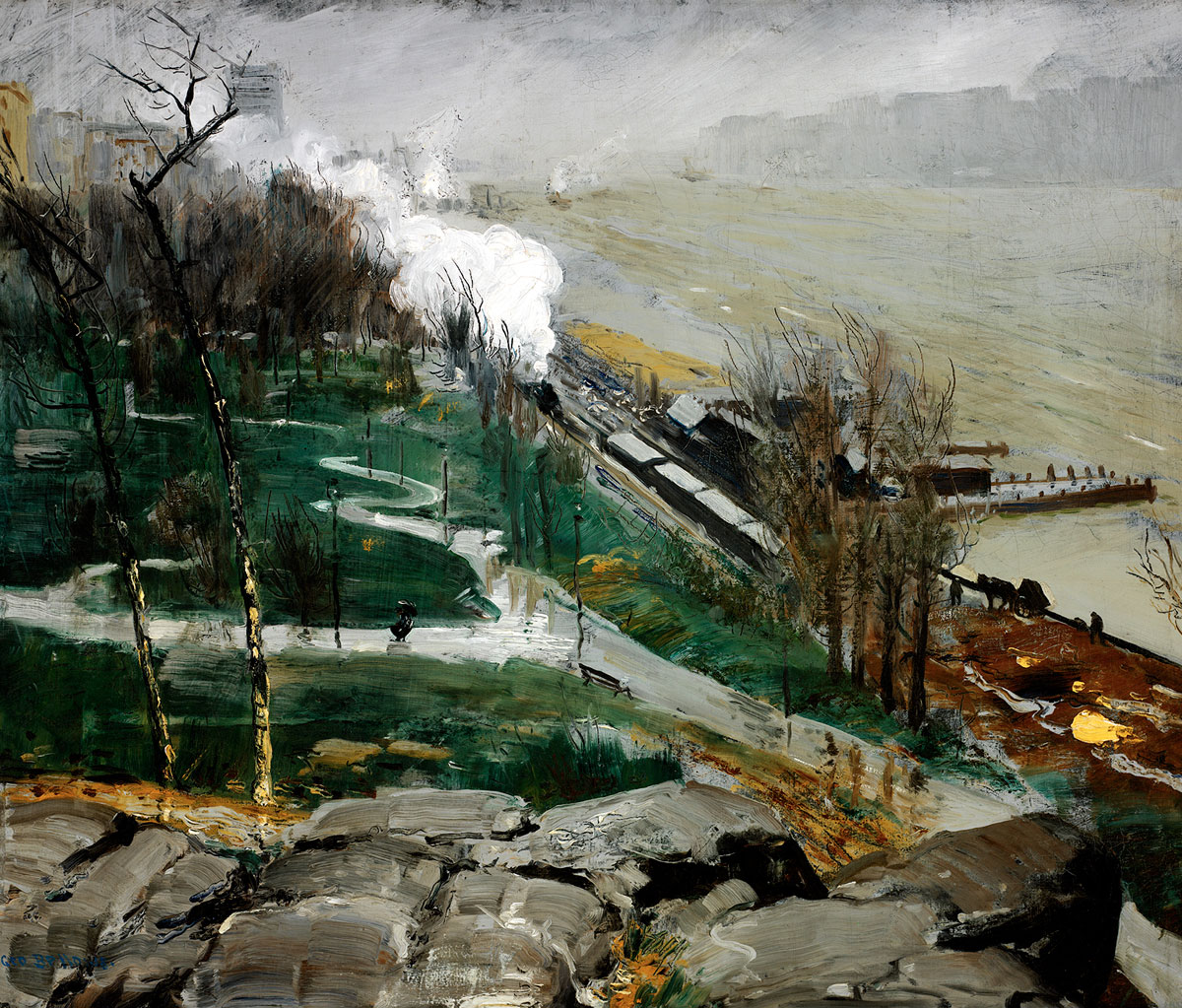
Photo: David Heald


“For outness is but the feeling of otherness (alterity) rendered intuitive, or alterity visually represented.”


Samuel Taylor Coleridge


In her most famous series, Beach Portraits (1992-2002), juveniles stare at the camera in a moment passif, caught by the camera between states – youth / adulthood, knowing / unknowing, Self / Other. Shot from a low perspective, lit by fill flash and with little contextual detail, the subjects exhibit – and I use the term advisedly – vulnerability, awkwardness (in the body and self), languidness of pose and bravuro self confidence that belies their beautiful alterity. These adolescents are not at one with themselves they are unsure of their place in the world. Dijkstra documents this uncertainty and enlarges it, blowing the photographs up to huge scale so that the viewer can examine every crevice of the persona in minute detail, their alterity visually represented.

Max Weintraub notes that Dijkstra has produced, “a set of carefully balanced compositions defined by the central, monumental presence of her youthful subjects. The classical simplicity of Dijkstra’s photographs focuses the viewer’s attention on the subtle particulars: the teens’ gawky, angular bodies, ill-fitting swimsuits and awkward postures… Her subjects hover somewhere between the receding past of their childhood and an unknown future. And while the identity of her subjects remain anonymous – each beach photograph is only identified by date and location – when viewed together a collective body emerges, one that stirs restlessly between the last physical and emotional trappings of youth and the social and psychological pressures of pending adulthood. The individuals depicted are so powerfully distinct that the effect of seeing these portraits en mass is symphonic, and the images begin to collectively hum with the sounds of the construction of self – its awkwardness, its uncertainty and above all, its heartbreakingly tender beauty.”

What a great piece of writing.

It is also interesting to observe that her own self portrait (Self Portrait, Marnixbad, Amsterdam, Netherlands, June 19, 19911991, below) is only printed at 35 x 28 cm whereas images from the Beach Portraits are printed at 117 x 94 cm. Surrounded by ceiling, floor and wall tiles Dijkstra is enclosed, minute within the frame. The photographer recedes into the background, even more vulnerable and less “visible” than her monumental models of innocence. Other series continue the artist’s investigation into themes of time and change to greater or lesser effect. The Olivier series is a very powerful body of work that documents the loss of youthful innocence and the military socialisation of a young mind, evidenced by the look in Olivier’s eyes and the change in his outward appearance. As the press release states, “the Olivier series (2000-2003) follows a young man from his enlistment with the French Foreign Legion through the years of his service, showing his both physical and psychological development into a soldier.”

“In contemporaneous works, including portraits of new mothers after giving birth, and photographs of bullfighters immediately after leaving the ring, Dijkstra sought subjects whose physical exhaustion diminished the likelihood of an artificed pose… Later, Dijkstra took portraits of new initiates to the Israeli army, photographing female soldiers in their uniforms after induction and then again in their civilian dress, as well as male soldiers directly after military exercises,” states the Guggenheim website.

Basically, this time line of change is a version of the old before and after shot, used throughout the history of photography – from the documentation of the changes in Dr Barnado’s children in the 1870s to the “scientific” use of photography to document the science of physical fitness and the commodification of the body in the ‘Before and After’ bodybuilding photographs from the 1930s, the 1950s and from the contemporary era.

To conclude, the strongest work is where the artist gives the photographs a greater depth of field and adds a narrative element by adding a background to the images. The work with contextless backgrounds is too derivative of say, Thomas Ruff, who I think does it better, more frontally, more confrontingly than Dijkstra does.

Dr Marcus Bunyan


Many thankx to the Solomon R. Guggenheim Museum for allowing me to publish the photographs in the posting. Please click on the photographs for a larger version of the image.


Rineke Dijkstra: A Retrospective

Jennifer Blessing, Senior Curator, Photography, introduces this mid-career survey of Dutch artist Rineke Dijkstra’s photographic and video work. Dijkstra’s choice of subjects, including adolescents at the edge of the sea, new mothers minutes after giving birth, Portuguese bullfighters exiting the ring, and the photographer herself during rehab after an accident, exhibits her strong interest in transitional states. Dijkstra speaks about her use of a large-format camera and practice of minimising contextual information in order to focus viewer attention on specific details that tell the subject’s story. Dijkstra’s explorations in video complement her photographic practice with the added ability to tell the story of the subject through the unfolding of a sequence of actions. For Blessing, Dijkstra’s photographs elicit a powerful empathic response from viewers.


Rineke Dijkstra (Dutch, b. 1959) 'Hilton Head Island, S.C., USA, June 24, 1992' 1992


Rineke Dijkstra (Dutch, b. 1959)
Hilton Head Island, S.C., USA, June 24, 1992
1992

Chromogenic print
117 cm x 94cm
Courtesy the artist and Marian Goodman Gallery, New York and Paris
© Rineke Dijkstra


Rineke Dijkstra (Dutch, b. 1959) 'Kolobrzeg, Poland, July 26, 1992'
 1992


Rineke Dijkstra (Dutch, b. 1959)
Kolobrzeg, Poland, July 26, 1992
1992
Chromogenic print
117 x 94cm
Courtesy the artist and Marian Goodman Gallery, New York and Paris
© Rineke Dijkstra


“For over two decades, following a serious bicycle accident that led to a hiatus in her early work as a magazine photographer, Dijkstra has focused her camera on the formative period of childhood into young adulthood. This concentration raises the question of what points in such a fluid process warrant memorialisation. In addition to those early portraits of bathers exposing their bodies in the liminal space between land and sea, developmental decisive moments for this artist include teens presenting themselves at the social scene of clubs; young women holding their newborns (sometimes just hours after giving birth); their bloody male counterparts, the young Portuguese forcados (the amateurs who first confront the bull with small picks before the entry of the professional bullfighter); and young men and women in and out of uniform around their periods of military service.”

Sally Stein. “Rineke Dijkstra: A Retrospective,” on the Aperture Archive website Winter 2012 [Online] Cited 21/08/2024


Rineke Dijkstra (Dutch, b. 1959) 'Coney Island, N.Y., USA, June 20, 1993'
 1993


Rineke Dijkstra (Dutch, b. 1959)
Coney Island, N.Y., USA, June 20, 1993

1993
Chromogenic print
117 x 94cm
Courtesy the artist and Marian Goodman Gallery, New York and Paris
© Rineke Dijkstra


Rineke Dijkstra (Dutch, b. 1959) 'Dubrovnik, Croatia, July 13, 1996' 1996


Rineke Dijkstra (Dutch, b. 1959)
Dubrovnik, Croatia, July 13, 1996
1996

Chromogenic print
117 x 94cm
Courtesy the artist and Marian Goodman Gallery, New York and Paris
© Rineke Dijkstra


From June 29 to October 3, 2012, the Guggenheim Museum will present Rineke Dijkstra: A Retrospective, an extensive mid-career survey and the first major exhibition of the artist’s work organised by a North American institution. It is the most comprehensive museum exhibition of the artist’s oeuvre to date. Dijkstra, born in Sittard, the Netherlands, in 1959, has developed an international reputation as one of the most highly regarded photographers of her generation. The exhibition will include representative examples from the most significant bodies of work she has created over the past twenty years.

Since the early 1990s, Rineke Dijkstra has produced a complex body of photographic and video work that offers a contemporary take on the genre of portraiture. Her large-scale colour photographs of young, typically adolescent subjects recall 17th-century Dutch painting in their scale and visual acuity. The minimal contextual details present in her photographs and videos encourage us to focus on the exchange between photographer and subject and the relationship between viewer and viewed.

Dijkstra works in series, creating groups of photographs and videos around a specific typology or theme. In 1992, she started making portraits of adolescents posed on beaches from Hilton Head, South Carolina, to Poland and Ukraine. Shot from a low perspective, the subjects of the Beach Portraits (1992-2002), poised on the brink of adulthood, take on a monumental presence. In contemporaneous works, including portraits of new mothers after giving birth and photographs of bullfighters immediately after leaving the ring, Dijkstra sought subjects whose physical exhaustion diminished the likelihood of an artificial pose.

Dijkstra has also photographed individuals repeatedly over the course of several months or years. Her ongoing Almerisa series began in 1994 with a single photograph of a young Bosnian girl at a Dutch refugee centre for asylum seekers and has grown as Dijkstra continued to photograph her regularly for more than a decade as she became a young woman with a child of her own. The outward signs of her transition into adulthood and her integration into mainstream Dutch culture reveal themselves incrementally over the course of many years. Similarly, the Olivier series (2000-2003) follows a young man from his enlistment with the French Foreign Legion through the years of his service, showing his both physical and psychological development into a soldier. Later, Dijkstra took portraits of new initiates to the Israeli army, photographing female soldiers in their uniforms after induction and then again in their civilian dress, as well as male soldiers directly after military exercises.

For several years beginning in 1998, Dijkstra photographed young people, often in groups, posed in the lush landscapes of public parks. In contrast to the neutral backgrounds against which many of her subjects are pictured, the richness of the park settings lends these works a greater depth of field and adds a narrative element.

More recently, Dijkstra has built upon her revelatory work in video from the mid-1990s. In The Buzz Club, Liverpool, UK/Mystery World, Zaandam, NL (1996-1997) and The Krazyhouse (Megan, Simon, Nicky, Philip, Dee), Liverpool, UK (2009), Dijkstra filmed teenage habituées of local clubs dancing to their favourite music. Presented as multi-channel video installations, these works showcase their subjects’ teen personas and methods of self-expression, revealed in how they style themselves and in the movements of their bodies. Two video works made in 2009 at Tate Liverpool expand the artist’s interest in the empathic exchange between photographer and subject to include the affective response to artworks. In I See a Woman Crying (Weeping Woman) (2009), a group of schoolchildren engage with art, discussing their perceptions of and reactions to a work by Pablo Picasso, while Ruth Drawing Picasso (2009) shows a girl pensively sketching a masterwork.

Press release from the Solomon R. Guggenheim Museum website


Rineke Dijkstra (Dutch, b. 1959) 'Self Portrait, Marnixbad, Amsterdam, Netherlands, June 19, 1991' 1991


Rineke Dijkstra (Dutch, b. 1959)
Self Portrait, Marnixbad, Amsterdam, Netherlands, June 19, 1991
1991

Chromogenic print
35 x 28cm
Courtesy the artist and Marian Goodman Gallery, New York and Paris
© Rineke Dijkstra


Rineke Dijkstra (Dutch, b. 1959) 'Long Island, New York, July 1, 1993' 1993


Rineke Dijkstra (Dutch, b. 1959)
Long Island, New York, July 1, 1993
1993
Chromogenic print
Courtesy the artist and Marian Goodman Gallery, New York and Paris
© Rineke Dijkstra


Installation view of the exhibition 'Rineke Dijkstra: A Retrospective' at the Solomon R. Guggenheim Museum, New York


Installation view of the exhibition Rineke Dijkstra: A Retrospective at the Solomon R. Guggenheim Museum, New York showing at second right, Vila Franca de Xira, Portugal, May 8, 1994 (1994, below)
Photo: David Heald


Rineke Dijkstra (Dutch, b. 1959) 'Vila Franca de Xira, Portugal, May 8, 1994'
 1994


Rineke Dijkstra (Dutch, b. 1959)
Vila Franca de Xira, Portugal, May 8, 1994
1994
Chromogenic print
90 x 72cm
Courtesy the artist and Marian Goodman Gallery, New York and Paris
© Rineke Dijkstra


Rineke Dijkstra (Dutch, b. 1959) 'The Buzz Club, Liverpool, England, March 3, 1995' 1995


Rineke Dijkstra (Dutch, b. 1959)
The Buzz Club, Liverpool, England, March 3, 1995
1995

Chromogenic print
110 x 88.5cm
Courtesy the artist and Marian Goodman Gallery, New York and Paris
© Rineke Dijkstra


Installation view of the exhibition 'Rineke Dijkstra: A Retrospective' at the Solomon R. Guggenheim Museum, New York


Installation view of the exhibition Rineke Dijkstra: A Retrospective at the Solomon R. Guggenheim Museum, New York
Photo: David Heald


Rineke Dijkstra (Dutch, b. 1959) 'Omri, Givatti Brigade, Golan Heights, Israel, March 29, 2000'
 2000


Rineke Dijkstra (Dutch, b. 1959)
Omri, Givatti Brigade, Golan Heights, Israel, March 29, 2000
2000
Chromogenic print, 140 x 112.5cm
Courtesy the artist and Marian Goodman Gallery, New York and Paris
© Rineke Dijkstra


Rineke Dijkstra (Dutch, b. 1959) 'Olivier, The French Foreign Legion, Camp Raffalli, Calvi, Corsica, June 18, 2001' 2001


Rineke Dijkstra (Dutch, b. 1959)
Olivier, The French Foreign Legion, Camp Raffalli, Calvi, Corsica, June 18, 2001
2001

Chromogenic print
90 x 72cm
Courtesy the artist and Marian Goodman Gallery, New York and Paris
© Rineke Dijkstra


Installation view of the series 'Olivier' (2000-2003) from the exhibition 'Rineke Dijkstra: A Retrospective' at the Solomon R. Guggenheim Museum, New York


Installation view of the Olivier (2000-2003) series from the exhibition Rineke Dijkstra: A Retrospective at the Solomon R. Guggenheim Museum, New York
Photo: David Heald


Rineke Dijkstra (Dutch, b. 1959) 'Vondelpark, Amsterdam, June 10, 2005' 2005


Rineke Dijkstra (Dutch, b. 1959)
Vondelpark, Amsterdam, June 10, 2005
2005
Chromogenic print
Courtesy the artist and Marian Goodman Gallery, New York and Paris
© Rineke Dijkstra


Rineke Dijkstra (Dutch, b. 1959) 'Amy, The Krazyhouse, Liverpool, England, December 22, 2008' 2008


Rineke Dijkstra (Dutch, b. 1959)
Amy, The Krazyhouse, Liverpool, England, December 22, 2008
2008

Archival inkjet print
96.5 x 75cm
Courtesy the artist and Marian Goodman Gallery, New York and Paris
© Rineke Dijkstra


Solomon R. Guggenheim Museum
1071 5th Avenue (at 89th Street)
New York

Opening hours:
Monday – Wednesday, Friday 10am – 5.45pm
Saturday 10am – 7.45pm
Thursday closed

Solomon R. Guggenheim Museum website

LIKE ART BLART ON FACEBOOK

Back to top