Review: ‘Brave New World: Australia 1930s’ at The Ian Potter Centre: NGV Australia, Melbourne

Exhibition dates: 14th July – 15th October, 2017


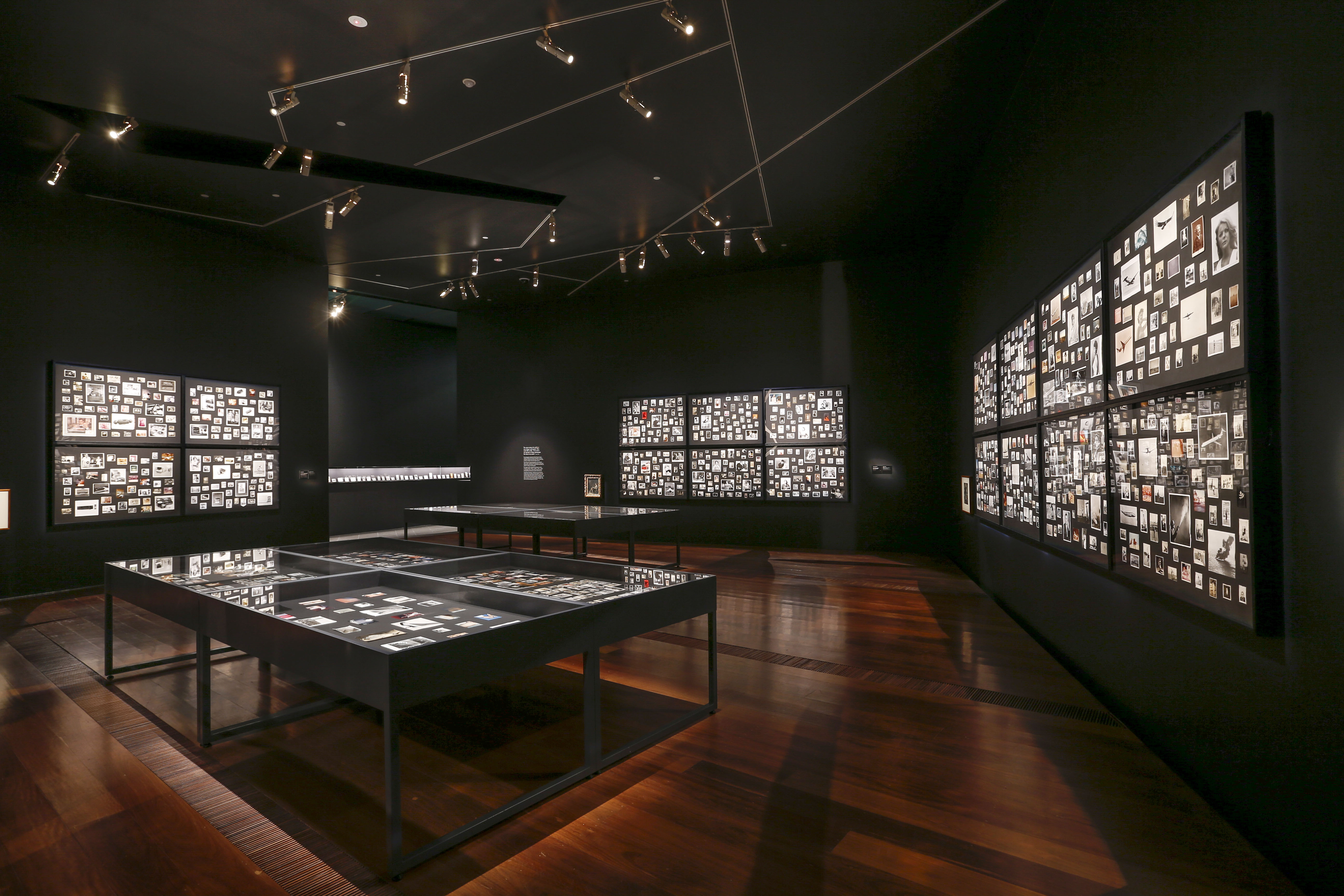
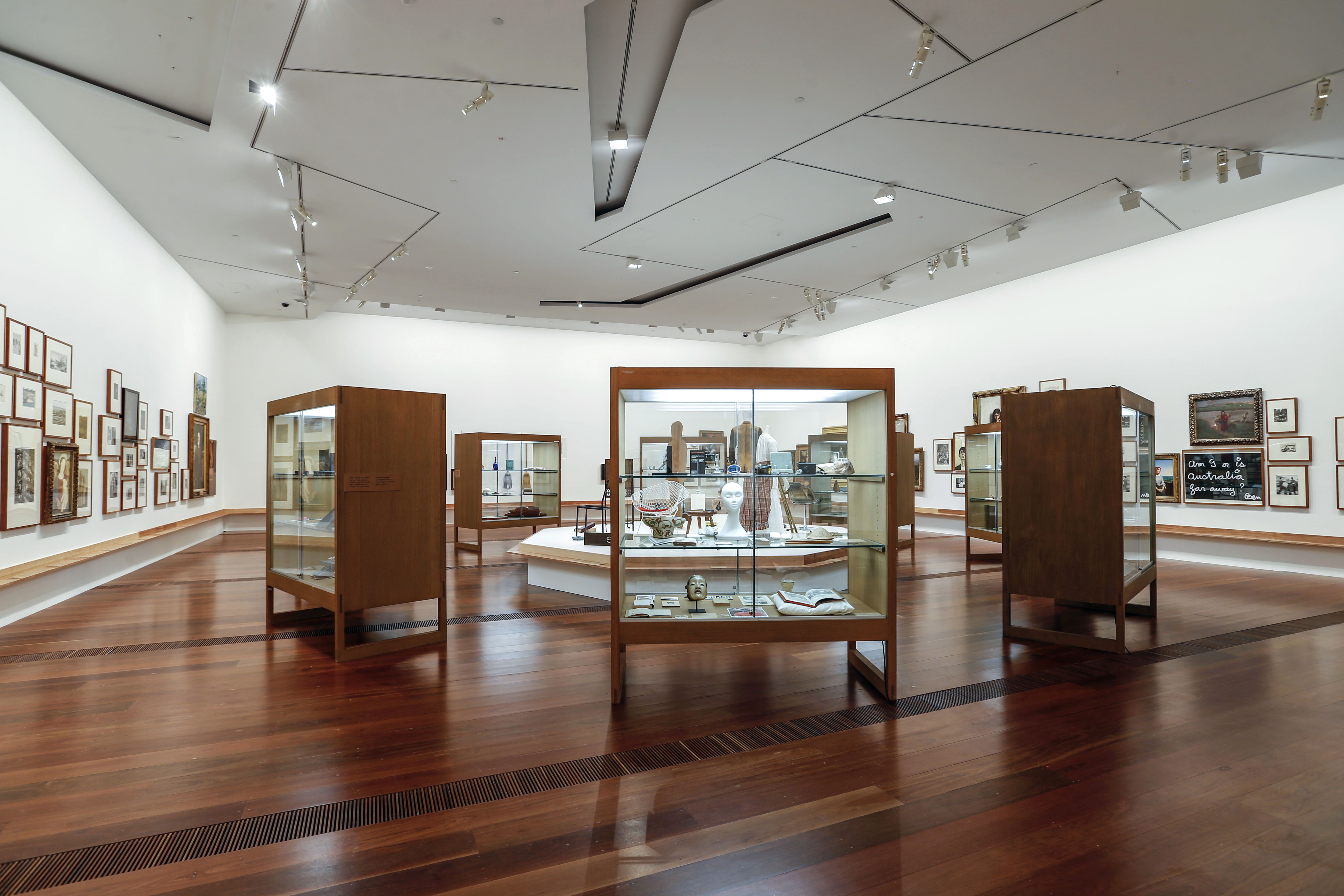
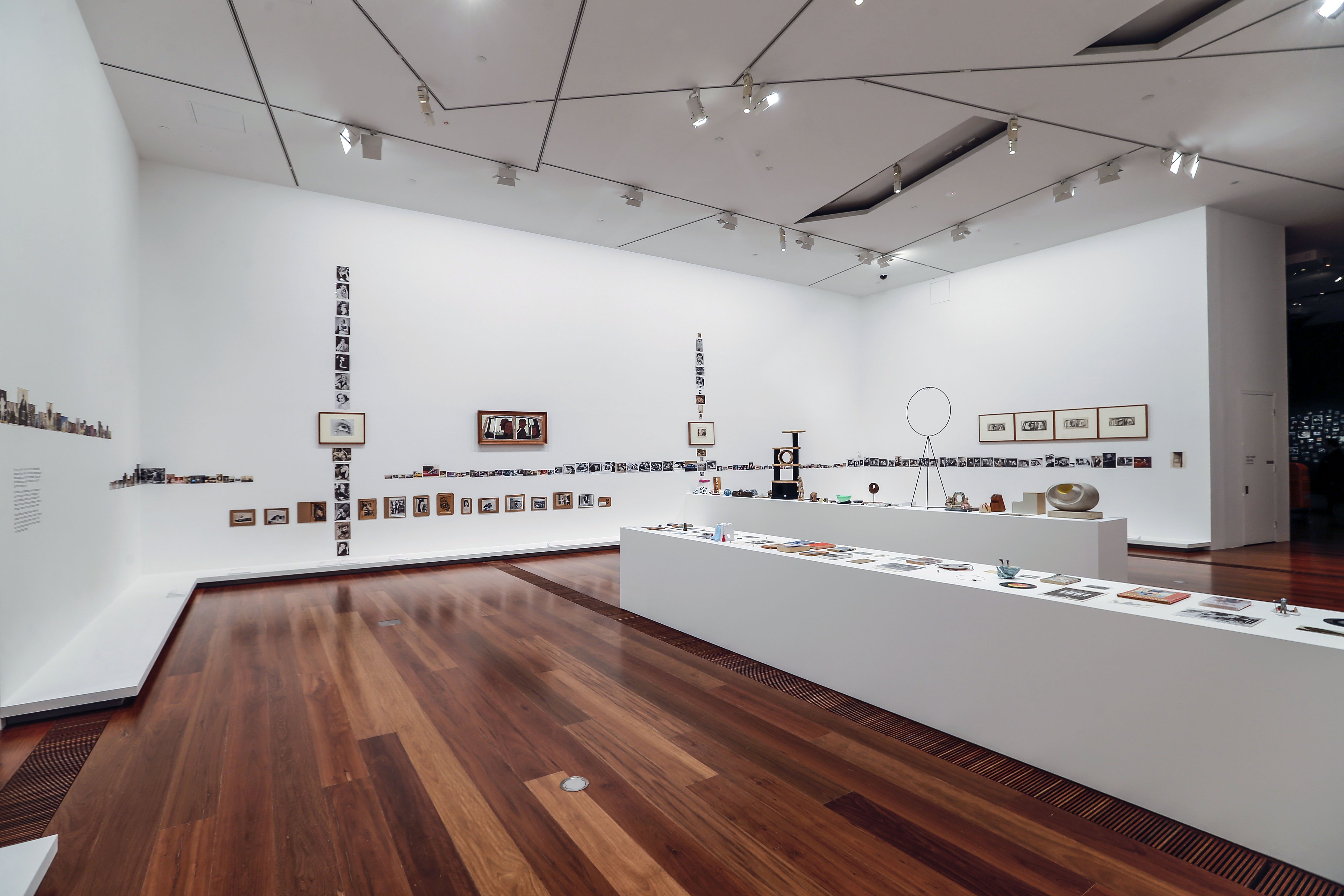
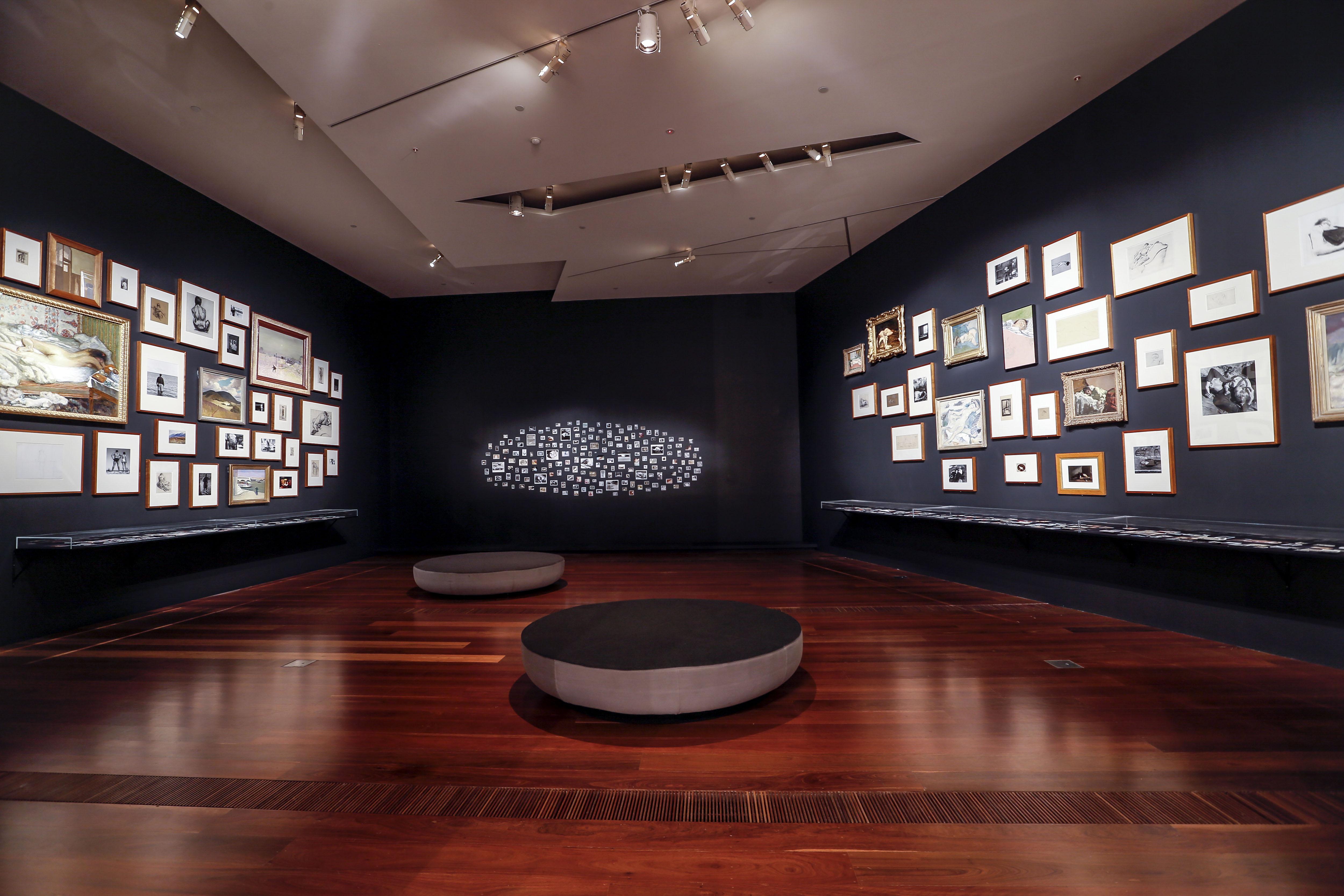
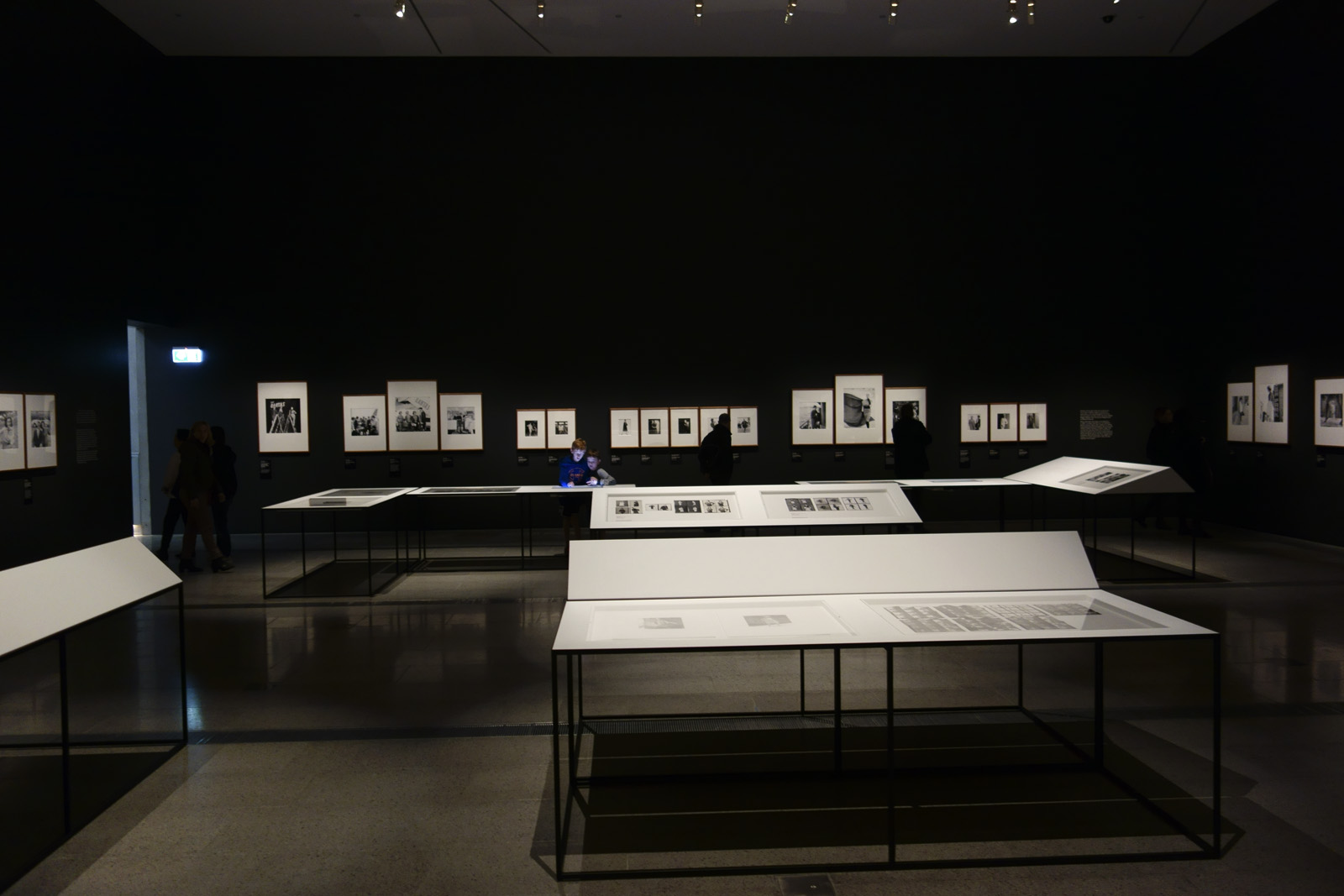
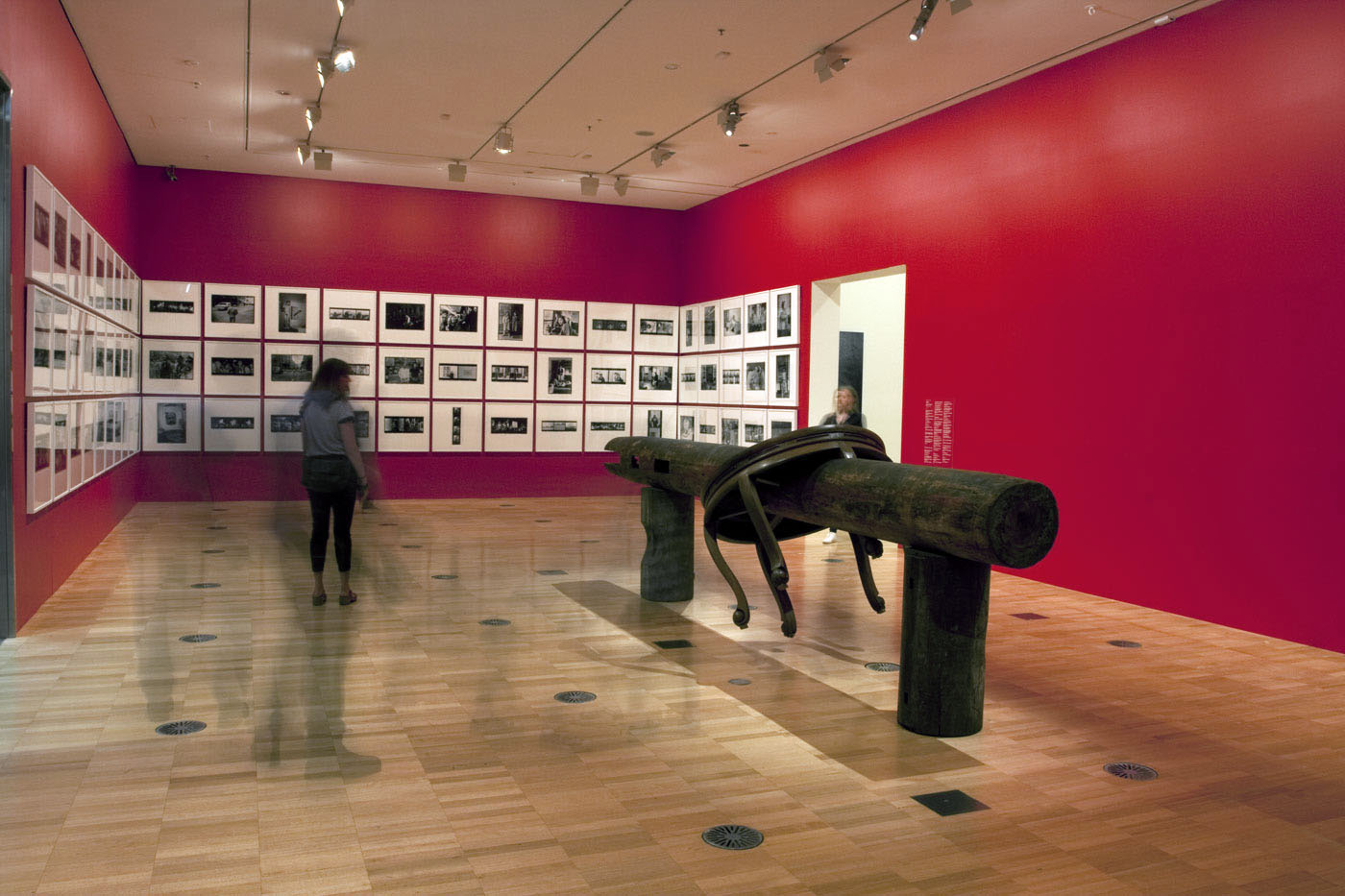
Installation view of 'Brave New World: Australia 1930s' at NGVA


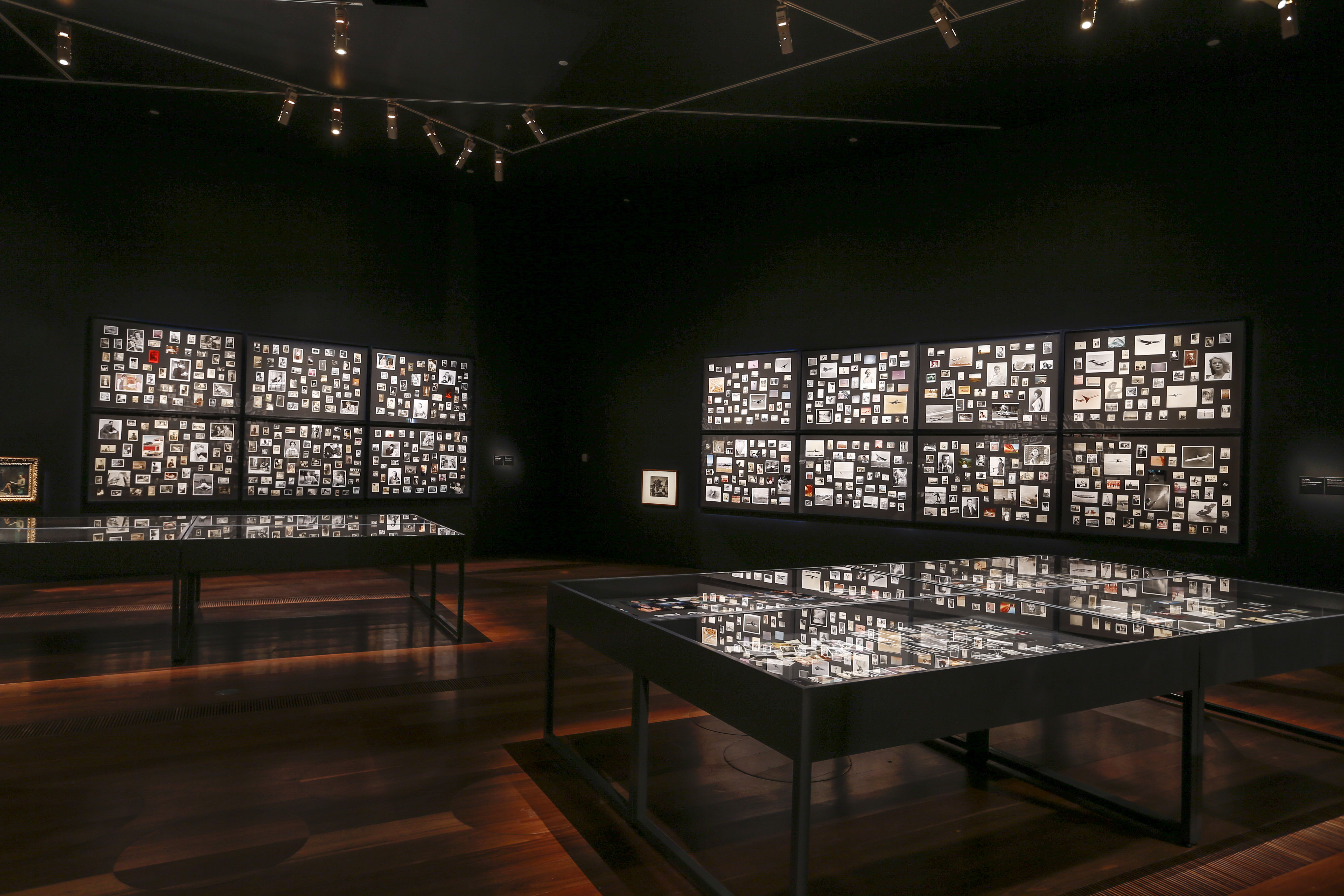
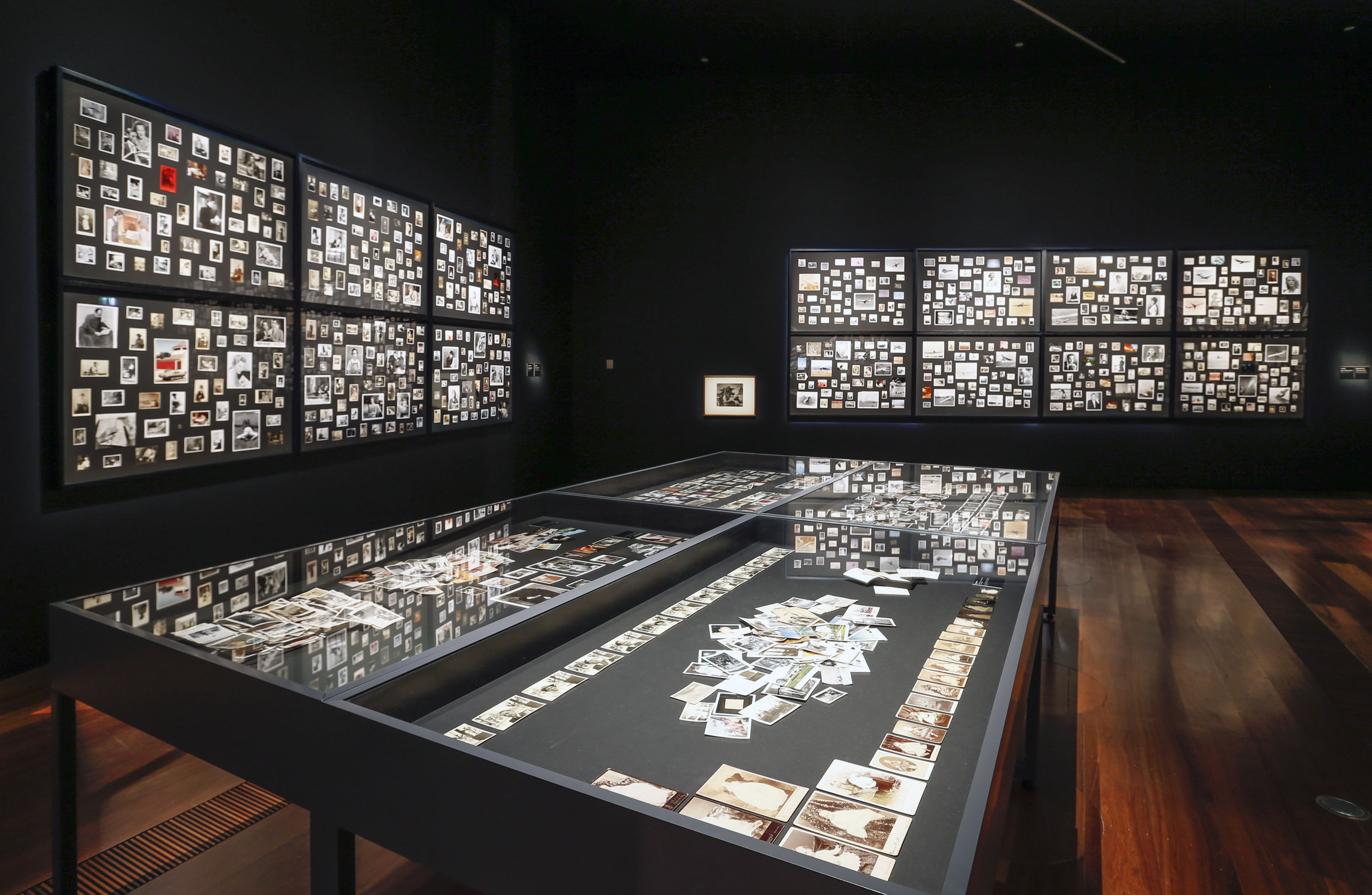
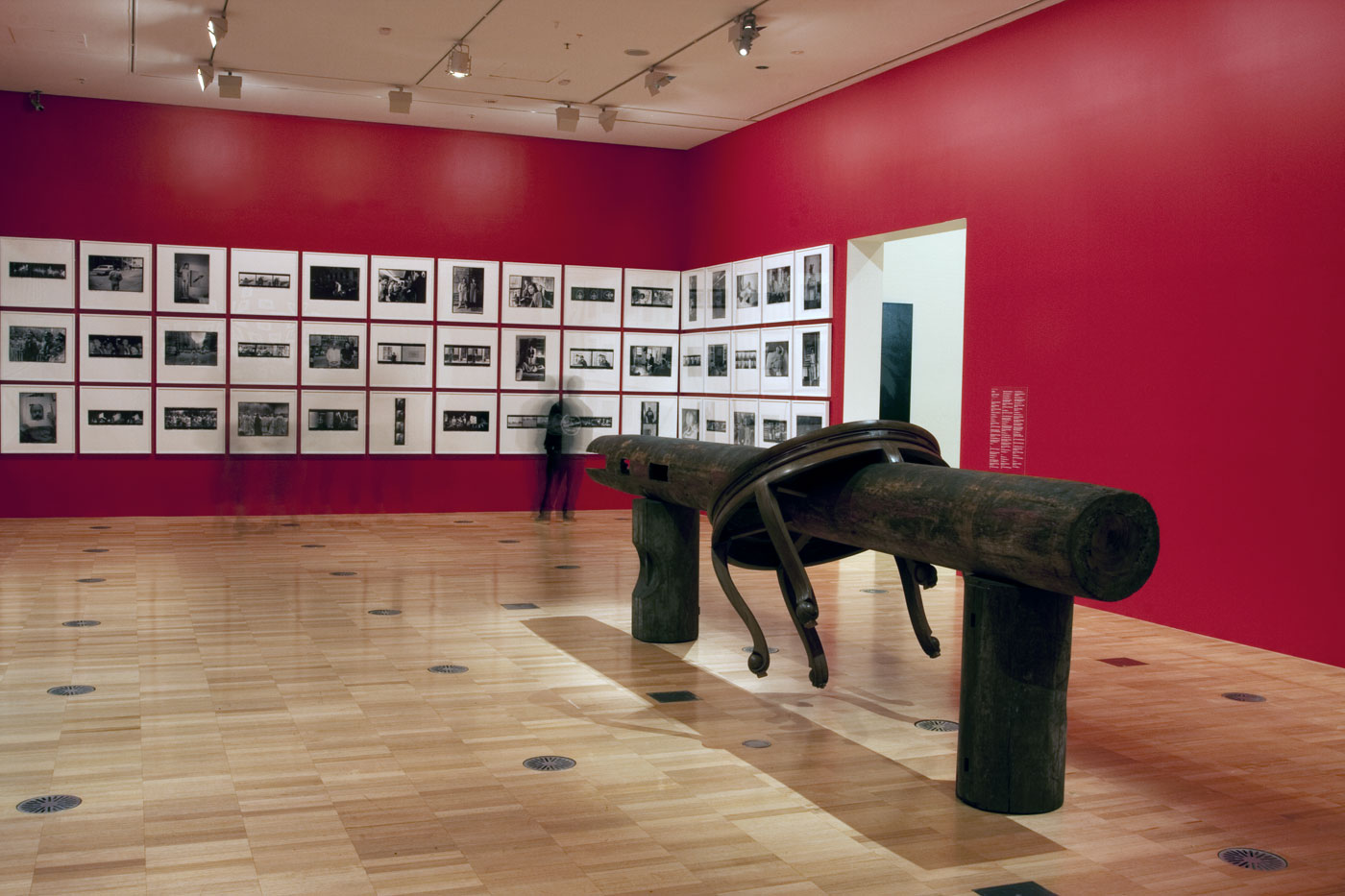
Installation view of the exhibition Brave New World: Australia 1930s at NGVA
Photo: Eugene Hyland


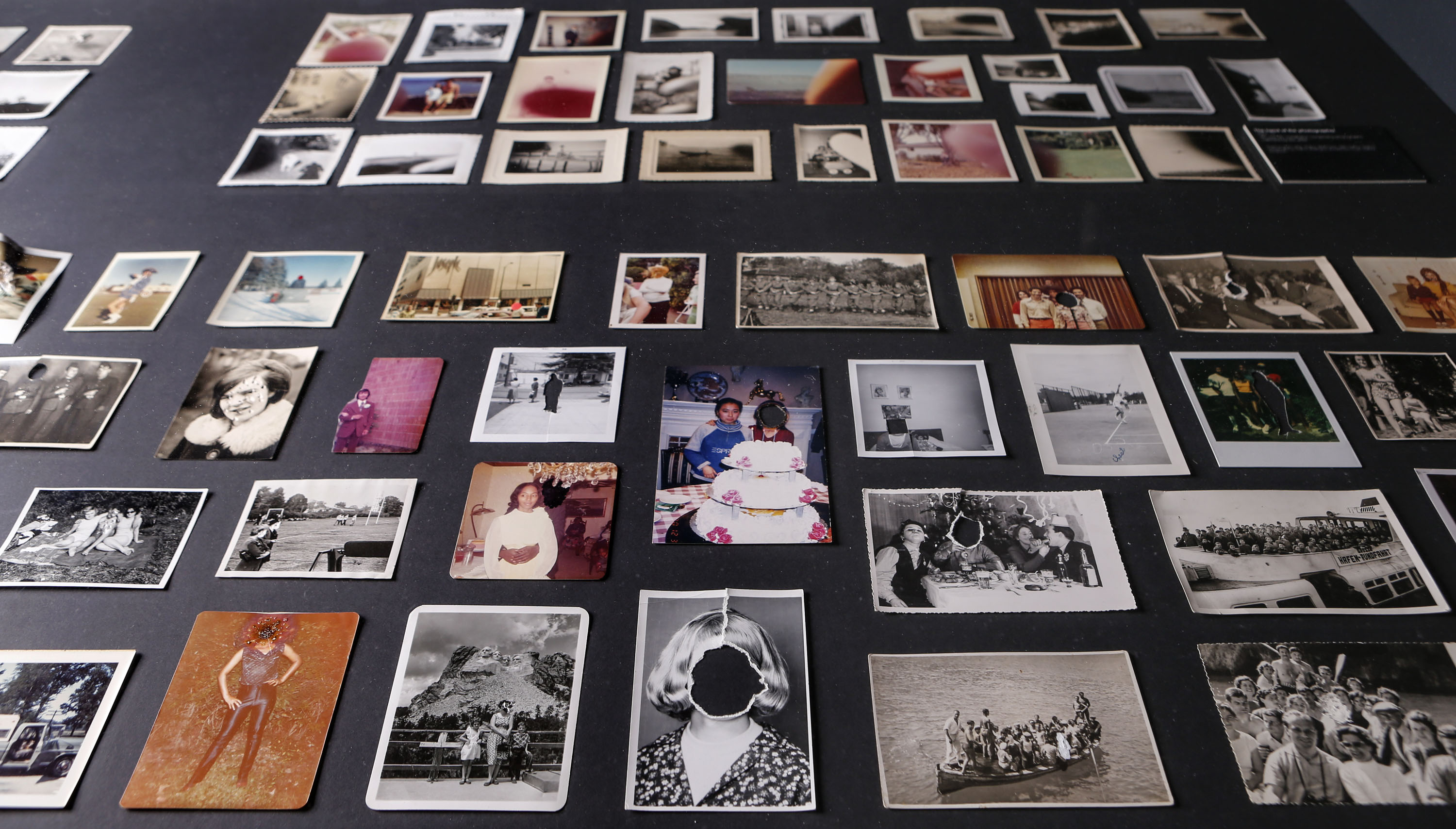
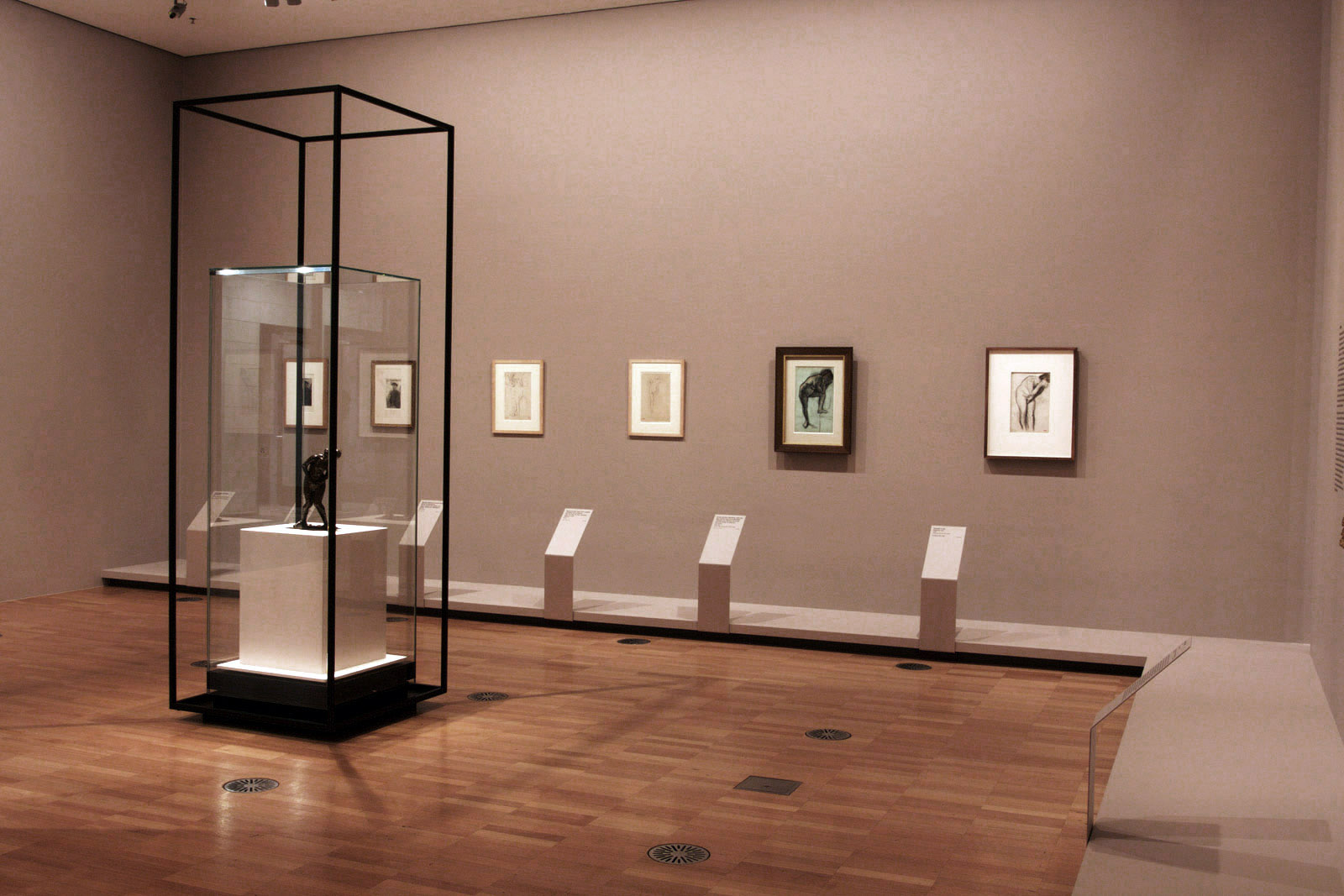
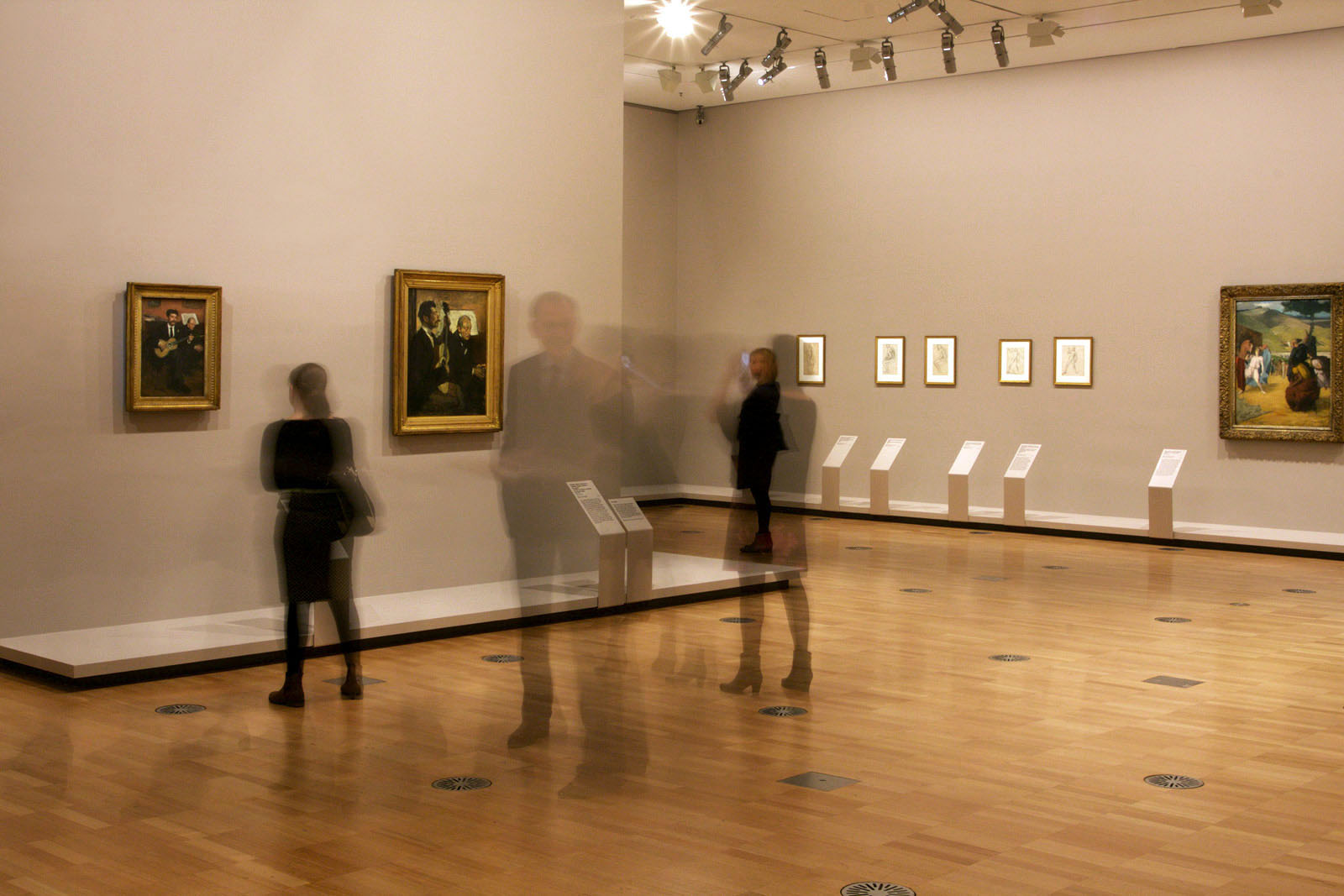
Brave New World: Australia 1930s at NGV Australia, Melbourne is a small but stylishly designed exhibition that presents well in the gallery spaces. The look and feel of the exhibition is superb, and it was a joy to see so many works in so many disparate medium brought together to represent a decade in the history of Australia: photography, sculpture, painting, drawing, ceramic art, magazine art, travel posters, Art Deco radios, film, couture, culture, Aboriginal art, and furniture making, to name but a few.

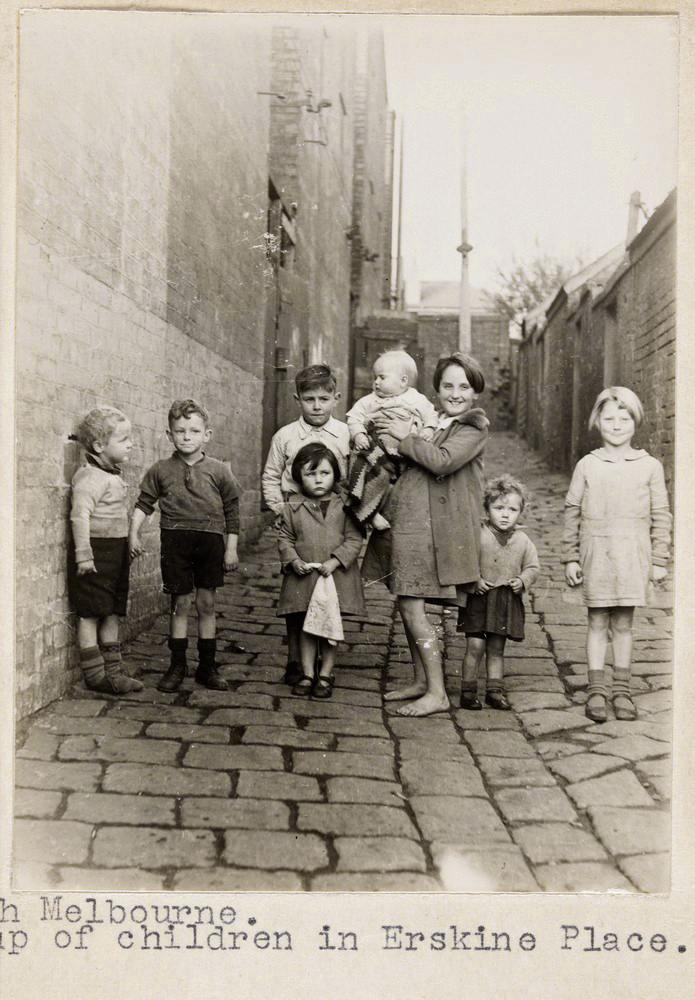
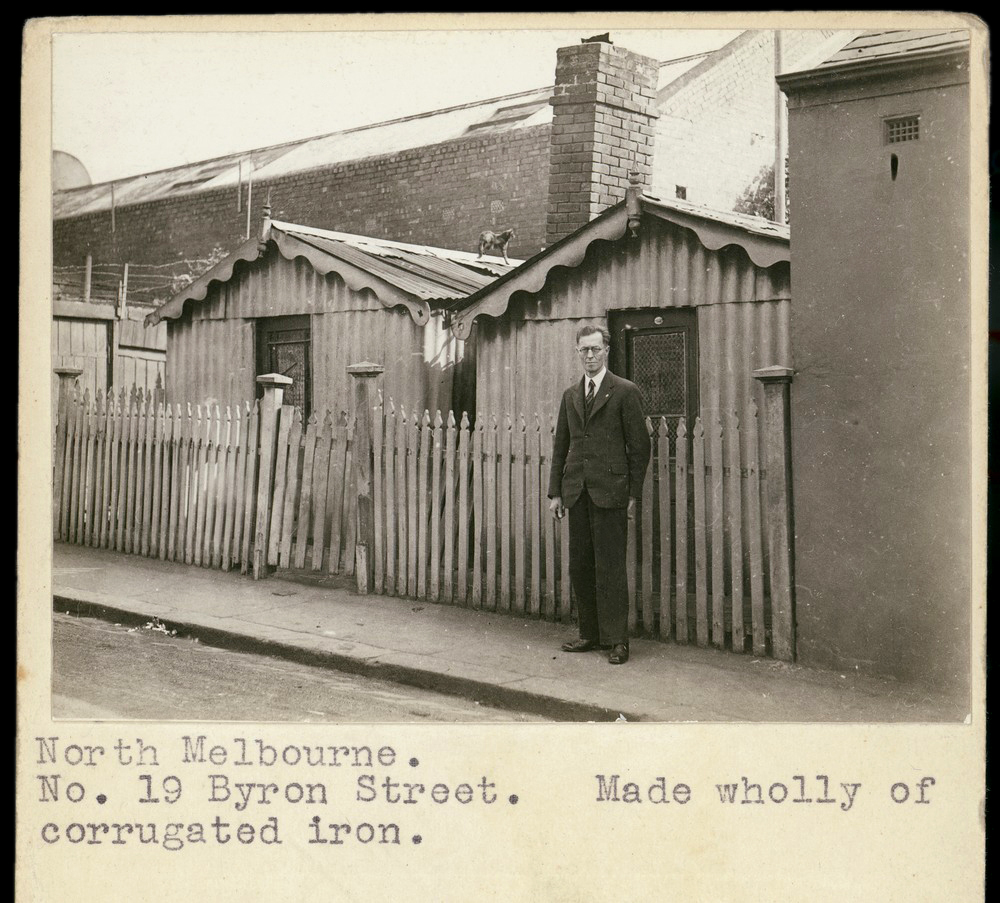
The strong exhibition addresses most of the concerns of the 1930s – The Great Depression, beach and body culture, style, fashion, identity, culture, prelude to WW2, dystopian and utopian cities etc., – but it all felt a little cramped and truncated. Such a challenging time period needed a more expansive investigation. What there is was excellent but one display case on slums or magazine art was not substantive enough. The same can be said for most of the exhibition.

There needed to a lot more about the impact of the Great Depression and people living in poverty, for you get the feeling from this exhibition that everyone was living the Modernist high-life, wearing fashionable frocks and smoking cigarettes sitting around beautifully designed furniture surrounded by geometric textiles. The reality is that this paradigm was the exception rather than the rule. Many people struggled to even feed themselves due to The Great Depression, and it was a time of extreme hardship for people in Australia. Life for many, many people in Australia during the 1930s was a life of disenfranchisement, assimilation, oppression, social struggle, poverty, hunger and a hand to mouth existence.

“After the crash unemployment in Australia more than doubled to twenty-one per cent in mid-1930, and reached its peak in mid-1932 when almost thirty-two per cent of Australians were out of work… The Great Depression’s impact on Australian society was devastating. Without work and a steady income many people lost their homes and were forced to live in makeshift dwellings with poor heating and sanitation.” (Text from “The Great Depression,” on the Australian Government website [Online] Cited 06/10/2017. No longer available online)

New artists and designers may have been emerging, new skyscrapers being built and the new ‘Modern Woman’ may have made her appearance but the changes only affected white, middle and upper social classes. Migrants, particularly those from Italy and southern Europe, were resented because they worked for less wages than others; and only brief mention is made of the White Australia policy in the exhibition but not by name (see text under Indigenous art and culture below). This section was more interested in how white artists appropriated Aboriginal design during this period for their own ends.

With this in mind, it is instructive to read sections of the illustrated handbook (see cover below, handbook not in the exhibition) produced by the National Museum of Victoria (in part, the forerunner of the NGV) to accompany a special exhibition of objects illustrating Australian Aboriginal Art in 1929:

“The subject of aboriginal Art – in this case the Art of the Australian Aboriginal – has to be approached with the utmost caution, for, though it comes directly within the domain of anthropology, it is in an indirect way a very important question in psychology and pedagogies. We possess some knowledge of our own mentality through the kind of offices of psychology; but though we have some – many in certain classes – material relics of our primitive and prehistoric ancestor, the only evidence of evolution of thought and the development of his powers of abstract conception must be derived from his art…

Still it appears possible that the study of primitive man, as represented by our Australian black, will throw some new light on the subject, and even if not more important than the old world pictographs themselves, his art work will enable the efforts of the Aurignacian and Magdalenian artists [cultures of the Upper Paleolithic in western Europe] to be better comprehended, and their import understood. But, for that study to achieve even a modicum of success, it is essential that the inquiring psychologist divest his mind of all civilized conceptions and mentality and assume those of the prehistoric man – or of the infant of the present day.”1


This is the attitude towards Aboriginal art that pervaded major art institutions right across Australia well into the 1950s. That the white has to “divest his mind of all civilised conceptions and mentality and assume those of the prehistoric man” – in other words, he has to become a savage – in order to understand Aboriginal art. It says a lot that the Trustees of the National Museum of Victoria then decided to reprint the illustrated handbook in 1952 without amendment, reprinting the publication originally used for the Exhibition in 1929. Nothing had changed in 22 years!

Other small things in the exhibition rankle. The preponderance of the work of photographer Max Dupain is so overwhelming that from this exhibition, it would seem that he was the only photographer of note working in Australia throughout the decade. While Dupain was the first Modernist photographer in Australia, and a superb artist, Modernist photography was very much on the outer during most of the 1930s… the main art form of photography being that of Pictorialism. None of this under appreciated style of photography makes an appearance in this exhibition because it does not fit the theme of “Brave New World”. This dismisses the work of such people as Cecil Bostock, Harold Cazneaux, Henri Mallard, John Eaton et al as not producing “brave”, or valuable, portraits of a country during this time frame. This is a perspective that needs to be corrected.

Highlights in this exhibition included an earthenware vase by Ethel Blundell; a painting by that most incredible of atmospheric painters, Clarice Beckett (how I long to own one of her paintings!); a wonderful portrait by the underrated Cybil Craig; two stunning Keast Burke photographs; two beautiful stained glass windows of a male and female lifesaver; the slum photographs of F. Oswald Barnett (more please!); and the graphic covers of mostly short-lived radical magazines.

These highlights are worth the price of admission alone. A must see before the exhibition closes.

Dr Marcus Bunyan


Footnotes

1/ A. S. Kenyon. “The Art of the Australian Aboriginal.” in Australian Aboriginal Art. Melbourne: Trustees of the National Museum of Victoria, (1929) reprinted 1952, p. 15.


Many thankx to the National Gallery of Victoria for allowing me to publish the photographs in the posting. Some installation photographs © Dr Marcus Bunyan. Please click on the photographs for a larger version of the image.


Australian Aboriginal Art 1952 (reprint of 1929 illustrated handbook)


National Museum of Victoria
Australian Aboriginal Art (cover)
1952 (reprint of 1929 illustrated handbook)
Brown, Prior, Anderson Pty. Ltd., Melbourne (publishers)
Trustees of the National Museum of Victoria
39 pages

See the whole pamphlet


The 1930s was a turbulent time in Australia’s history. During this decade major world events, including the Depression and the rise of totalitarian regimes in Europe, shaped our nation’s evolving sense of identity. In the arts, progressive ideas jostled with reactionary positions, and artists brought substantial creative efforts to bear in articulating the pressing concerns of the period. Brave New World: Australia 1930s encompasses the multitude of artistic styles, both advanced and conservative, which were practised during the 1930s. Included are commercial art, architecture, fashion, industrial design, film and dance to present a complete picture of this dynamic time.

The exhibition charts the themes of celebrating technological progress and its antithesis in the nostalgia for pastoralism; the emergence of the ‘New Woman’ and consumerism; nationalism and the body culture movement; the increasing interest in Indigenous art against a backdrop of the government policy of assimilation and mounting calls for Indigenous rights; the devastating effects of the Depression and the rise of radical politics; and the arrival of European refugees and the increasing anxiety at the impending threat of the Second World War. Brave New World: Australia 1930s presents a fresh perspective on the extraordinary 1930s, revealing some of the social and political concerns that were pertinent then and remain so today.

Text from the NGV website


Harold Cazneaux (New Zealand 1878 - Australia 1953, Australia from 1886) 'No title (Powerlines and chute)' c. 1935 from the exhibition 'Brave New World: Australia 1930s' at The Ian Potter Centre: NGV Australia, Melbourne, July - Oct, 2017


Harold Cazneaux (New Zealand 1878 – Australia 1953, Australia from 1886)
No title (Powerlines and chute)
c. 1935
Gelatin silver photograph
National Gallery of Victoria, Melbourne
Purchased through The Art Foundation of Victoria with the assistance of the H. J. Heinz II Charitable and Family Trust, Governor, 1993


In 1934 BHP (Broken Hill Proprietary Company Limited) commissioned leading pictorialist photographer Harold Cazneaux to record their mining and steel operations for a special publication to mark their fiftieth anniversary in 1935. Cazneaux’s dramatic industrial images blended a soft, atmospheric focus with a modernist sense of space, form and geometry. In 1935-36 Australia exported close to 300,000 tonnes of iron ore to Japan; however, after Japan’s invasion of China in 1937 fear of its expansionist aims in the Pacific increased and soon afterwards the federal government announced a ban on the export of all iron ore to Japan.


Fred Ward (designer) (Australia 1900-90) Sideboard, side table and tray table' c. 1932 from the exhibition 'Brave New World: Australia 1930s' at The Ian Potter Centre: NGV Australia, Melbourne, July - Oct, 2017


Fred Ward (designer) (Australian, 1900-1990)
E. M. Vary, Fitzroy, Melbourne (attributed to) (manufacturer) active 1920s-1940s

Sideboard
c. 1932
Mountain ash (Eucalyptus sp.), painted wood, painted plywood, steel
(a-e) 84.0 x 119.7 x 48.7cm (overall)
Proposed acquisition

Side table
c. 1932
Mountain ash (Eucalyptus sp.), jarrah (Eucalyptus marginata), steel
55.7 x 66.0 x 49.2cm
Proposed acquisition

Tray table
c. 1932
Mountain ash (Eucalyptus sp.), blackwood (Acacia melanoxylon), steel
(a-b) 52.0 x 60.9 x 42.5cm (overall)
Proposed acquisition


A new generation of artists and designers

While modern art was a source of debate and controversy throughout the 1930s, modernism in architecture, interior design, industrial design and advertising became highly fashionable. In Melbourne a small group of designers pioneered modern design in Australia. Furniture designer Fred Ward first designed and made furniture for his home in Eaglemont, where he had established a studio workshop. It was admired by friends and he was encouraged to produce furniture for sale. In 1932 Ward opened a shop in Collins Street, Melbourne. There he offered his furniture, as well as linens and Scandinavian glass. The fabrics for curtains and upholstery were printed by Australian designer Michael O’Connell with bold designs that shocked some but were favoured by a new generation looking to create modern interiors.

More than in most periods, in the 1930s art, design and architecture were closely integrated with the changing realities of contemporary life. It was a time when the last vestiges of the conservative art establishment were swept away by a new generation of artists and designers who were to drive Australian art in the second half of the twentieth century.


Installation view of 'Brave New World: Australia 1930s' at NGVA

Installation view of the exhibition 'Brave New World: Australia 1930s' at NGVA with Max Dupain's 'Illustration for Kelvinator' advertisement at left and Ethel Blundell's 'Vase' centre on sideboard


Installation views of the exhibition Brave New World: Australia 1930s at NGVA with Max Dupain’s Illustration for Kelvinator advertisement at left and Ethel Blundell’s Vase centre on sideboard
Photos: Courtesy NGV Photographic Services


Fred Ward was one of the first and most important designers of modern furniture in Australia. He began making furniture around 1930, and in 1932 opened a shop in Collins Street selling his furniture, as well as textiles by Michael O’Connell and other modern design pieces. In 1934 Ward went into partnership with Myer Emporium and established the Myer Design Unit, for which he designed a line of modular ‘unit’ furniture for commercial production. Ward’s simple, functional aesthetic and use of local timbers with a natural waxed finish was in contrast to the luxurious materials and decorative motifs of the contemporary Art Deco style.

The armchair, sideboard and occasional tables were designed by Fred Ward and purchased by Maie Casey in the early 1930s. The wife of R. G. Casey, federal treasurer in the Lyons Government, Maie was a prominent supporter of modern art and design. Moving to Canberra in 1932, she furnished her house at Duntroon in a modern style with furniture by Ward and textiles by Michael O’Connell. The design of Ward’s armchair closely resembles a 1920s armchair by German Bauhaus furniture designer Erich Dieckmann, who was known for his standardised wooden furniture based on geometric designs.


Michael O'Connell designer (England 1898-1976, Australia 1920-37) 'Textile' c. 1933 from the exhibition 'Brave New World: Australia 1930s' at The Ian Potter Centre: NGV Australia, Melbourne, July - Oct, 2017


Michael O’Connell designer (England 1898-1976, Australia 1920-1937)
Textile
c. 1933
Block printed linen
National Gallery of Victoria, Melbourne Purchased, 1988


Michael O’Connell pioneered modernist textiles in Melbourne and was an influential advocate of modern design. Working with his wife Ella from his studio in Beaumaris, O’Connell used woodblocks and linocuts to hand print onto raw linens and silks, which were used for fashion garments and home furnishing. O’Connell’s boldly patterned and highly stylised designs were considered startlingly modern. Some of his early fabrics featured ‘jazz age’ scenes of nightclubs and dancing, while later motifs were based on Australian flora and fauna, or derived from Oceanic and Aboriginal art.


Sam Atyeo. 'Album of designs: tables' c. 1933 - c. 1936


Sam Atyeo (Australian, 1910-1990)
Album of designs: tables
c. 1933 – c. 1936
Album: watercolour, brush and coloured inks, coloured pencils, 14 designs tipped into an album of 16 grey pages, card covers, tape and stapled binding
30.0 x 19.2 cm (page) 30.0 x 20.8 x 0.8cm (closed)
National Gallery of Victoria, Melbourne
Gift of the artist, 1988


Sam Atyeo was a leading figure in Melbourne’s emerging modernist circles in the early 1930s, the partner of artist Moya Dyring and lover of Sunday Reed. He had studied at the National Gallery School, where he was a brilliant and rebellious student. Around 1932 Atyeo became friendly with Cynthia Reed, who managed Fred Ward’s furniture shop and interior design consultancy on Collins Street. After she opened Cynthia Reed Modern Furnishings in Little Collins Street, Atyeo designed furniture for Reed, that was strongly influenced by Ward’s designs.
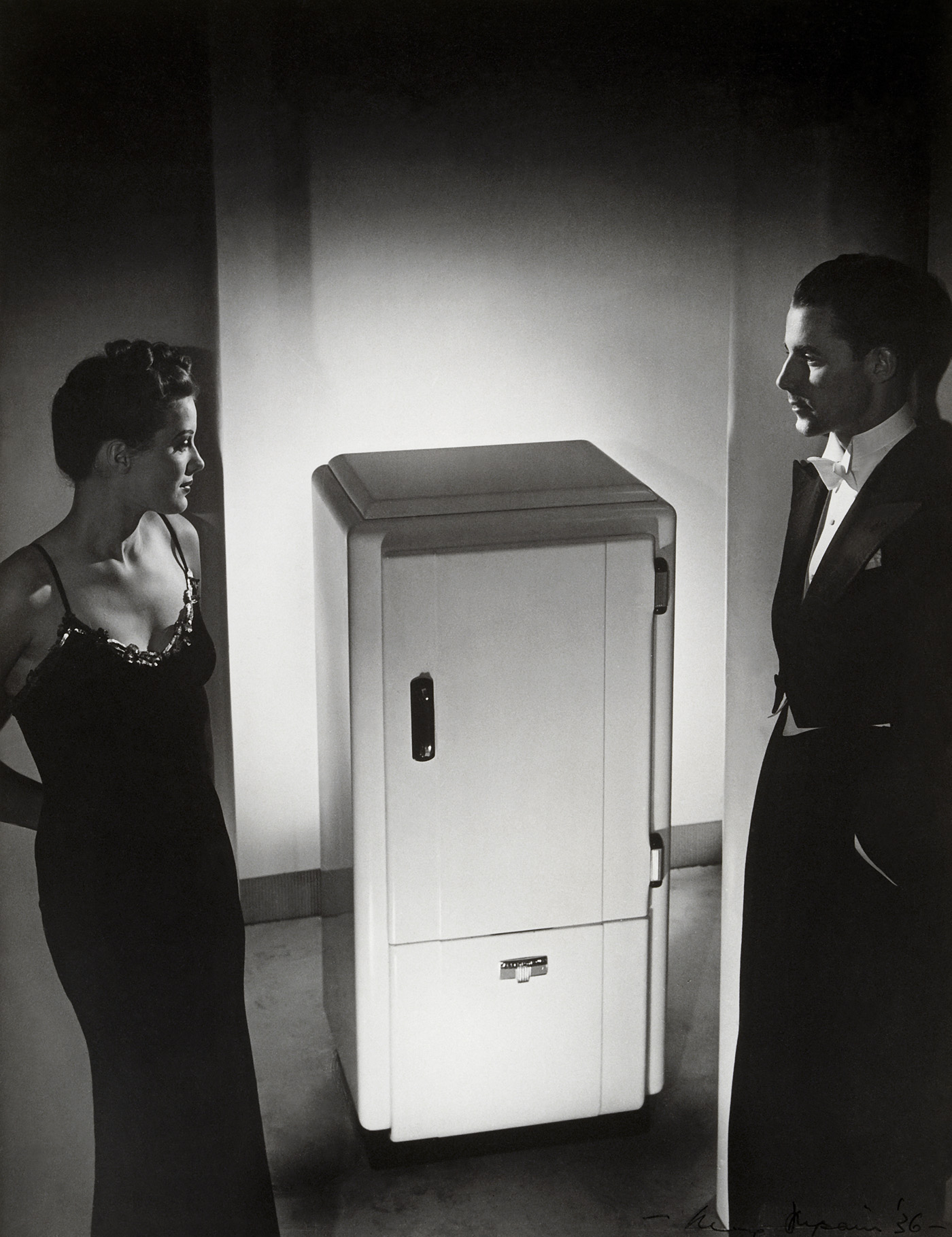
 

Max Dupain (Australia 1911-92) 'Illustration for Kelvinator advertisement' 1936


Max Dupain (Australia 1911-1992)
Illustration for Kelvinator advertisement
1936
Gelatin silver photograph
32.8 x 25.3cm
Art Gallery of New South Wales, Sydney
Purchased with funds provided by the Photography Collection Benefactors’ Program 2000


Ethel Blundell. 'Vase' 1936


Ethel Blundell (Australian, 1918-2010, worked in Switzerland 1946-2010)
Vase
1936
Earthenware
17.6 x 16.8cm diameter
National Gallery of Victoria, Melbourne
Presented through The Art Foundation of Victoria by Mrs Margaret Howie, Governor, 1999
© Ethel Blundell


Utopian cities

Modernity reflected what was new and progressive in Australian urban life. The image of the city became an allegory for this in art, and efficiency and speed became watchwords for modernity. Many artists celebrated the city and technological advancements in works utilising a modern style of hard-edged forms, flat colours and dynamic compositions. The engineering marvel of the Sydney Harbour Bridge, which opened in 1932, was an ongoing source of fascination for artists, as were images of building the city, industry and modern modes of transport.

The skyscraper was also a powerful symbol of modern prosperity, especially when the Great Depression cast doubt on the inevitability of progress; hence the advent of tall buildings in Australian cities was hailed with relief and optimism. In 1932, at the peak of the Depression, the tallest building in Melbourne was opened: the Manchester Unity Building at the corner of Swanston and Collins streets. With its ornamental tower and spire taking its overall height to 64 metres, the building was welcomed by The Age newspaper as ‘a new symbol of enterprise and confidence, undaunted by the “temporary eclipse” of the country’s economic fortune’.
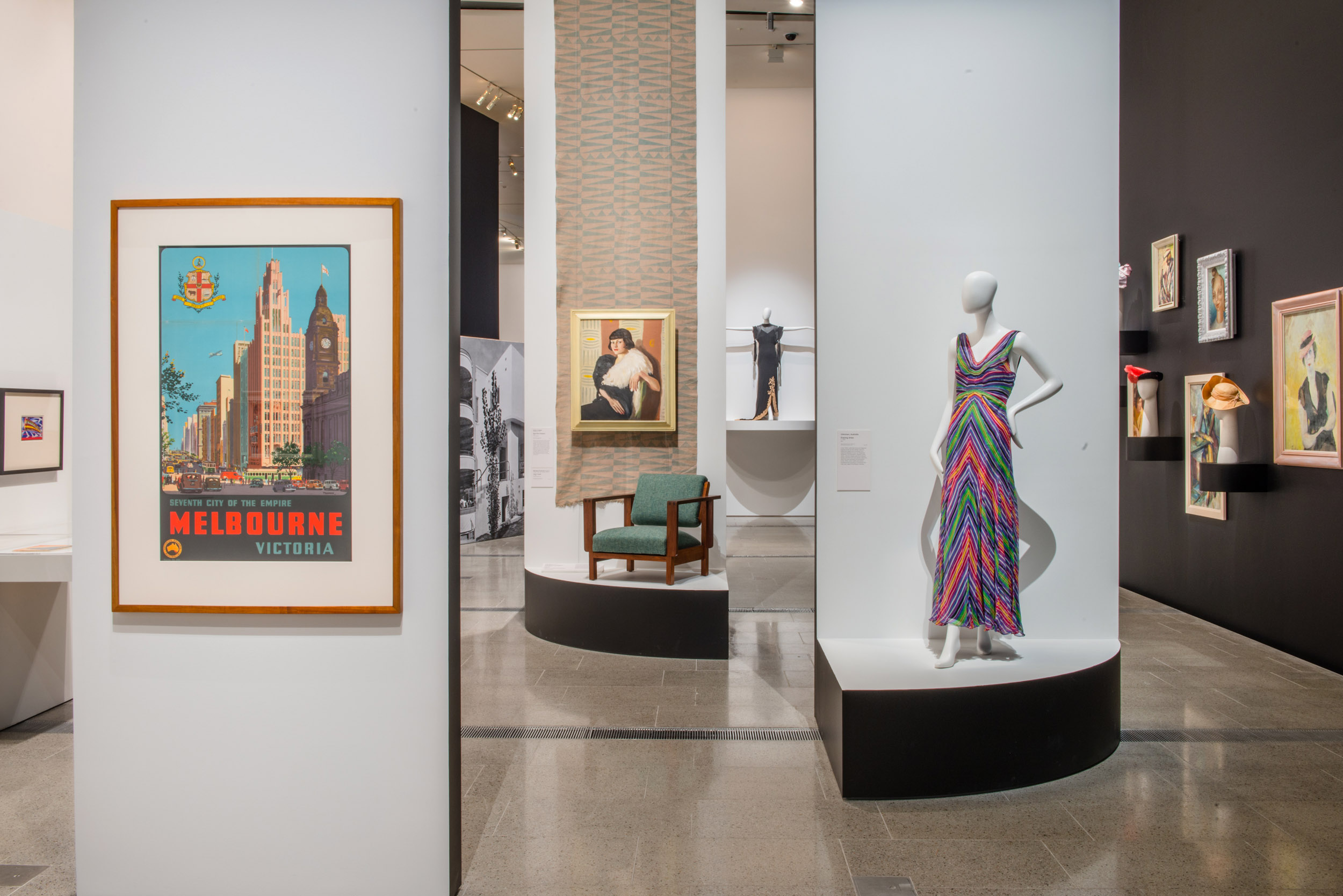
 

Installation view of the exhibition 'Brave New World: Australia 1930s' at NGVA with 'Seventh city of the Empire - Melbourne, Victoria' at left; and 'Evening dress' at right


Installation view of the exhibition Brave New World: Australia 1930s at NGVA with Seventh city of the Empire – Melbourne, Victoria at left; and Evening dress at right
Photo: Eugene Hyland


Percy Trompf (Australia 1902-64) 'Seventh city of the Empire - Melbourne, Victoria' 1930s


Percy Trompf (Australian, 1902-1964)
Seventh city of the Empire – Melbourne, Victoria
1930s
Colour lithograph printed by J. E. Hackett, Melbourne
State Library Victoria, Melbourne
Gift of Mr Grant Lee, 2007


Percy Trompf’s poster celebrates Melbourne’s first skyscraper, the iconic Manchester Unity Building on the corner of Swanston and Collins streets. Designed by architect Marcus Barlow in the Art Deco ‘Gothic’ style, it was built at high speed between 1930 and 1932, and provided much needed employment during the Depression. At twelve storeys high and topped with a decorative tower it was Melbourne’s tallest building and contained the city’s first escalators. A powerful symbol of the city’s modernity, it was often featured in images of Melbourne.


Unknown, Australia 'Evening dress' c. 1935


Unknown, Australia
Evening dress
c. 1935
Silk
144cm (centre back), 36cm (waist, flat)
National Gallery of Victoria, Melbourne
Gift of Miss Irene Mitchell, 1975


Ethel Spowers (Australia 1890-1947, England and France 1921-24) 'The works, Yallourn' 1933


Ethel Spowers (Australia 1890-1947, England and France 1921-1924)
The works, Yallourn
1933
Colour linocut, ed. 3/50
National Gallery of Victoria, Melbourne
The Joseph Brown Collection
Presented through the NGV Foundation by Dr Joseph Brown AO OBE, Honorary Life Benefactor, 2004


Ethel Spowers and Eveline Syme were leading figures in modern art in Melbourne. In the 1920s they studied with modernist Claude Flight at the Grosvenor School in London, where they learnt to make colour linocuts that followed Flight’s principles of rhythmic design combined with flat colour. In April 1933 Spowers and Syme visited the Yallourn Power Station in Gippsland, which had been opened in 1928 and was the largest supplier of electricity to the state.


Vida Lahey (Australia 1882-1968) 'Sultry noon (Central Station Brisbane)' 1931


Vida Lahey (Australian, 1882-1968)
Sultry noon (Central Station Brisbane)
1931
Oil on canvas on plywood
44.7 x 49.2cm
Queensland Art Gallery, Brisbane Purchased 1983
© QAGOMA


Clarice Beckett (Australia 1887-1935) 'Taxi rank' c. 1931


Clarice Beckett (Australian, 1887-1935)
Taxi rank
c. 1931
Oil on canvas on board
Kerry Stokes Collection, Perth


Installation view of Herbert Badham's 'George Street, Sydney' (1934) from the exhibition 'Brave New World: Australia 1930s' at NGVA


Installation view of Herbert Badham’s George Street, Sydney (1934) from the exhibition Brave New World: Australia 1930s at NGVA
Photo: Dr Marcus Bunyan


After serving in the Royal Australian Navy during the First World War, Herbert Badham studied at the Sydney Art School and began exhibiting in 1927. In his paintings he was a keen observer of everyday urban life: streets with shoppers, city workers on their lunch break and drinkers in the pub were painted in a contemporary, hard-edged realist style.
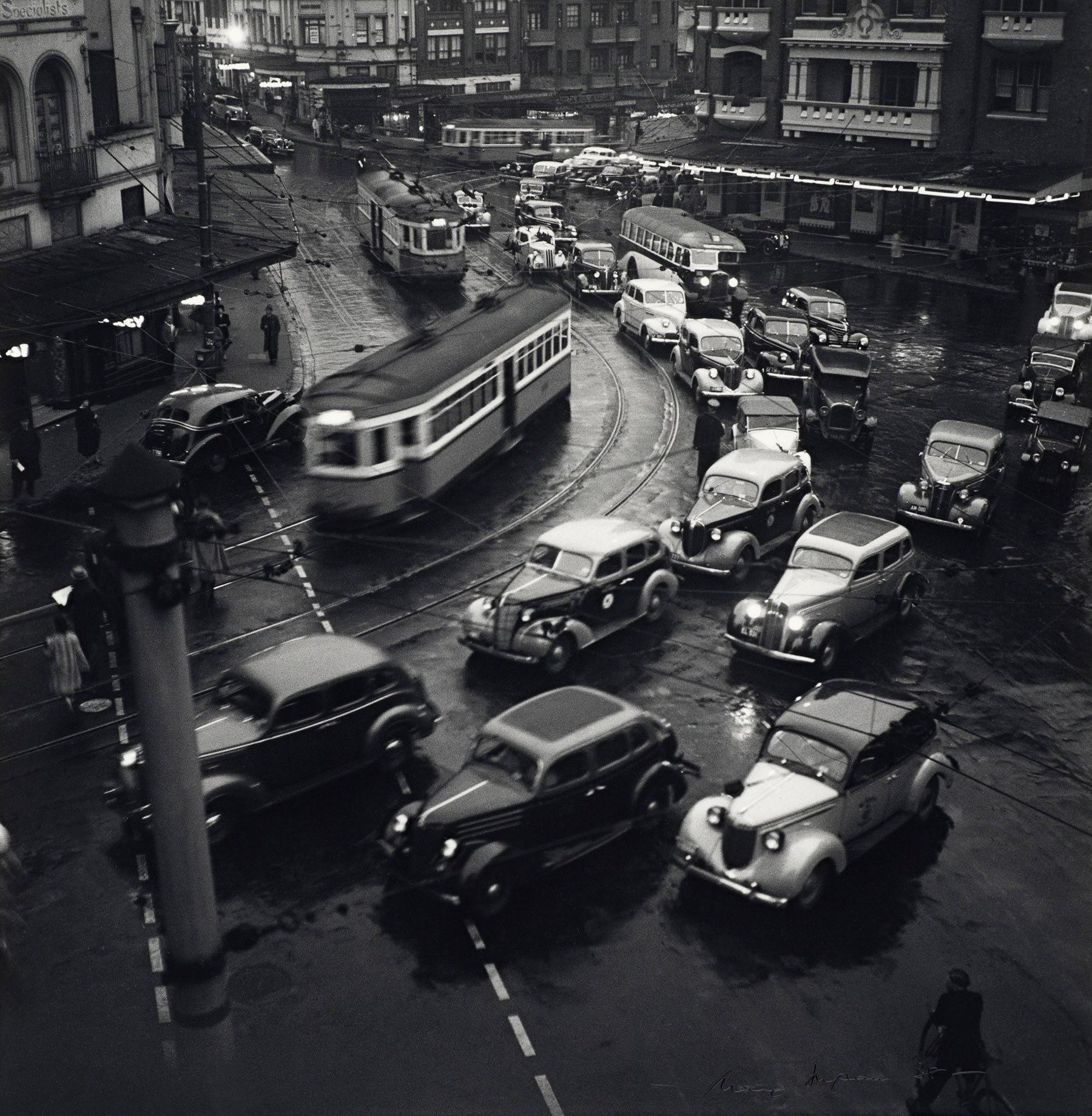
 

Max Dupain (Australia 1911-92) 'Rush hour in King's Cross' 1938, printed c. 1986


Max Dupain (Australian, 1911-1992)
Rush hour in King’s Cross
1938, printed c. 1986
Gelatin silver photograph
41.2 x 40.3cm
National Gallery of Victoria, Melbourne
Purchased through The Art Foundation of Victoria with the assistance of Mr A.C. Goode, Fellow, 1987


During the 1930s the city provided a rich source of imagery for artists working in modern styles, who celebrated the speed and efficiency of modern transport technology and expanding road and rail networks. Yet as car ownership increased during the 1930s, larger cities began to suffer congestion and the rush hour became part of urban life. Throughout the decade the pace and stress of modern life became a topic of public debate, with conservative commentators decrying this transformation of the Australian lifestyle.
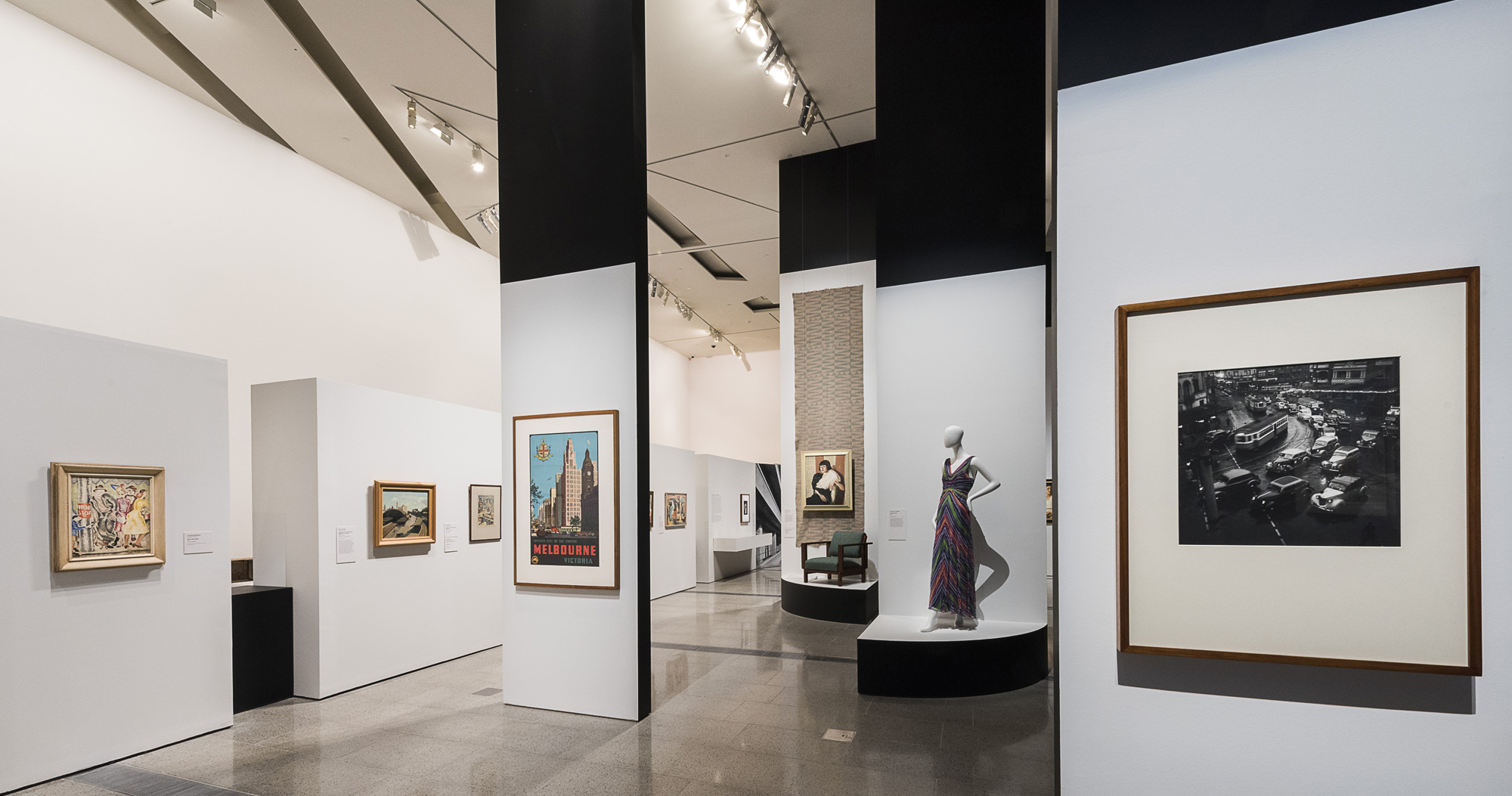
 

Installation view of the exhibition 'Brave New World: Australia 1930s' at NGVA with Max Dupain's Rush hour in King's Cross at right


Installation view of the exhibition Brave New World: Australia 1930s at NGVA with Max Dupain’s Rush hour in King’s Cross at right
Photo: Courtesy NGV Photographic Services


Installation view of the exhibition 'Brave New World: Australia 1930s' at NGVA with Grace Cossington Smith's 'The Bridge in-curve' at right


Installation view of the exhibition Brave New World: Australia 1930s at NGVA with Grace Cossington Smith’s The Bridge in-curve at right
Photo: Courtesy NGV Photographic Services


Grace Cossington Smith. 'The Bridge in-curve' 1930


Grace Cossington Smith (Australia 1892-1984, England and Germany 1912-14, England and Italy 1949-1951)
The Bridge in-curve
1930
Tempera on cardboard
83.6 x 111.8cm
National Gallery of Victoria, Melbourne
Presented by the National Gallery Society of Victoria, 1967
© Estate of Grace Cossington Smith


The slow rise of the Sydney Harbour Bridge above the city was recorded by numerous painters, printmakers and photographers, including Sydney modernist Grace Cossington Smith. Her iconic The Bridge-in-curve depicts the bridge just before its two arches were joined in August 1930, and conveys the sense of wonder, achievement and hope that was inspired by this engineering marvel. By painting the emerging, rather than the complete bridge, Cossington Smith also focuses our attention on the energy and ambition required to create it.
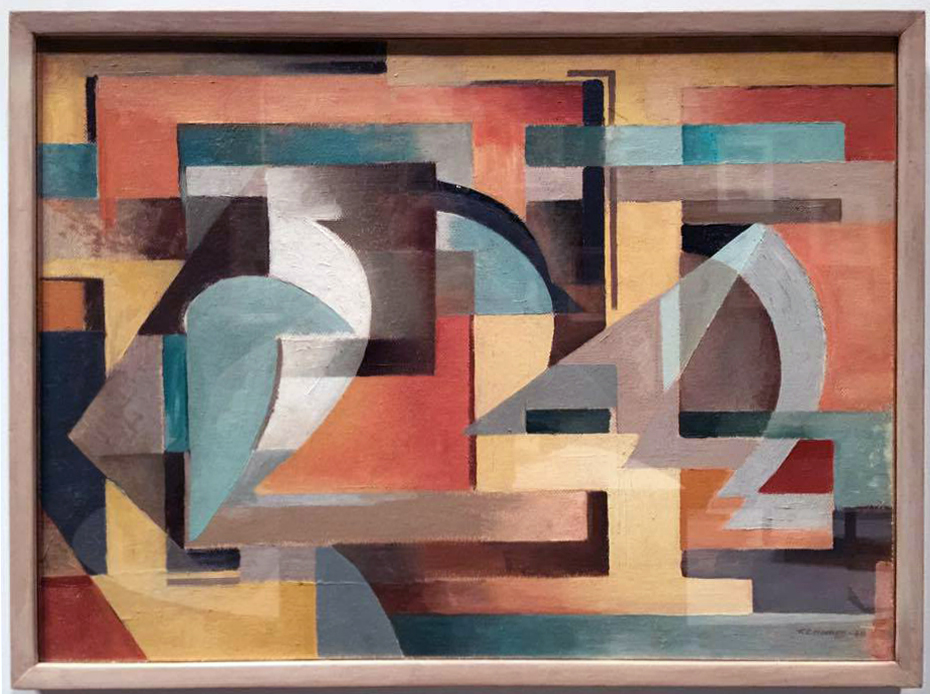
 

Frank Hinder (Australia 1906-92, United States 1927-34) 'Trains passing' 1940 (installation view)


Installation view of Frank Hinder’s Trains passing (1940) from the exhibition Brave New World: Australia 1930s at NGVA
Photo: Dr Marcus Bunyan


Frank Hinder (Australia 1906-92, United States 1927-34) 'Trains passing' 1940


Frank Hinder (Australian, 1906-1992, United States 1927-1934)
Trains passing
1940
Oil on composition board
National Gallery of Australia, Canberra
Purchased 1974


Frank Hinder was one of the first abstract artists in Australia. After living and studying in the United States, Hinder and his wife, the American sculptor Margel, returned to Sydney in 1934. There they became part of a small avant-garde group that included Grace Crowley, Rah Fizelle, Ralph Balson and the German sculptor and art historian Eleanore Lange, all of whom were interested in Cubist, Constructivist and Futurist art. Hinder later said that this work was inspired by seeing Lange, sitting next to him on a train, reflected in the windows of a passing train.


Frank Hinder (Australia 1906-92, United States 1927-34) 'Commuters' 1938


Frank Hinder (Australia 1906-1992, United States 1927-1934)
Commuters
1938
Tempera on paper on board
Private collection


Victorian Railways, Melbourne (publisher) Australia 1856-1976 'The Victorian Railways present The Spirit of Progress' 1937


Victorian Railways, Melbourne (publisher) (Australia, 1856-1976)
The Victorian Railways present The Spirit of Progress
1937
Booklet: colour photolithographs and letterpress,
12 pages, cardboard cover
printed by Queen City Printers, Melbourne
20.8 x 26.8cm (closed)
State Library Victoria, Melbourne


Launched in November 1937, The Spirit of Progress express passenger train was a source of immense pride to Victorians. Built in Newport, Victoria, the train featured many innovations, including all-steel carriages and full air-conditioning. Designed in the Art Deco, streamlined style by architectural firm Stephenson & Turner, the passenger carriages were fitted out to a level of comfort not previously seen in Australia, and included a full dining carriage. The train ran between Melbourne and the New South Wales state border at Albury, the longest non-stop train journey in Australia at that time, at an average speed of 84 kilometres per hour.
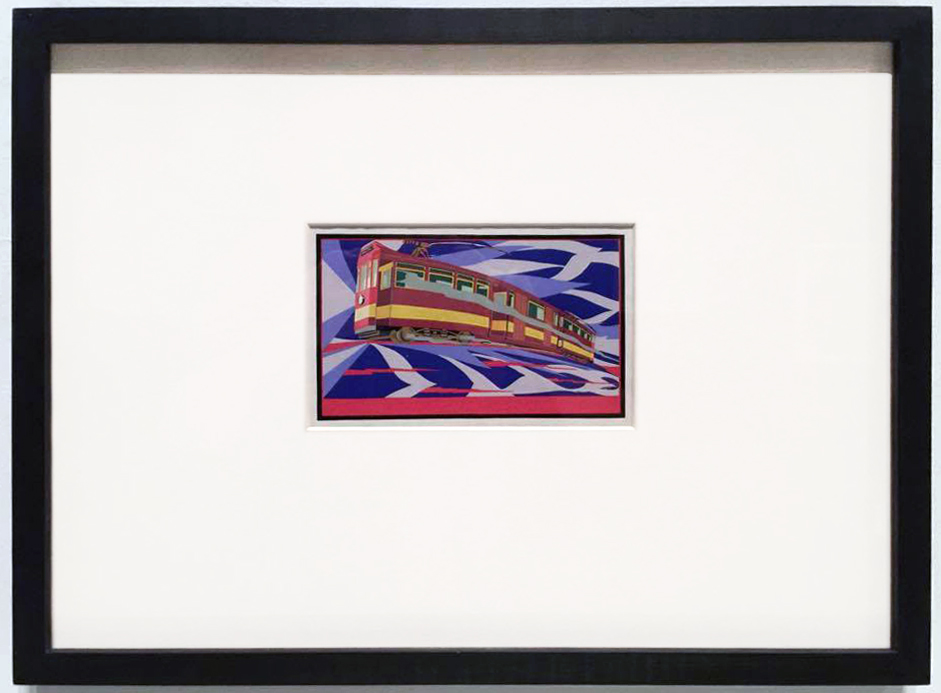
 

Installation view of Ivor Francis' 'Speed!' from the exhibition 'Brave New World: Australia 1930s' at NGVA


Installation view of Ivor Francis’ Speed! from the exhibition Brave New World: Australia 1930s at NGVA
Photo: Dr Marcus Bunyan
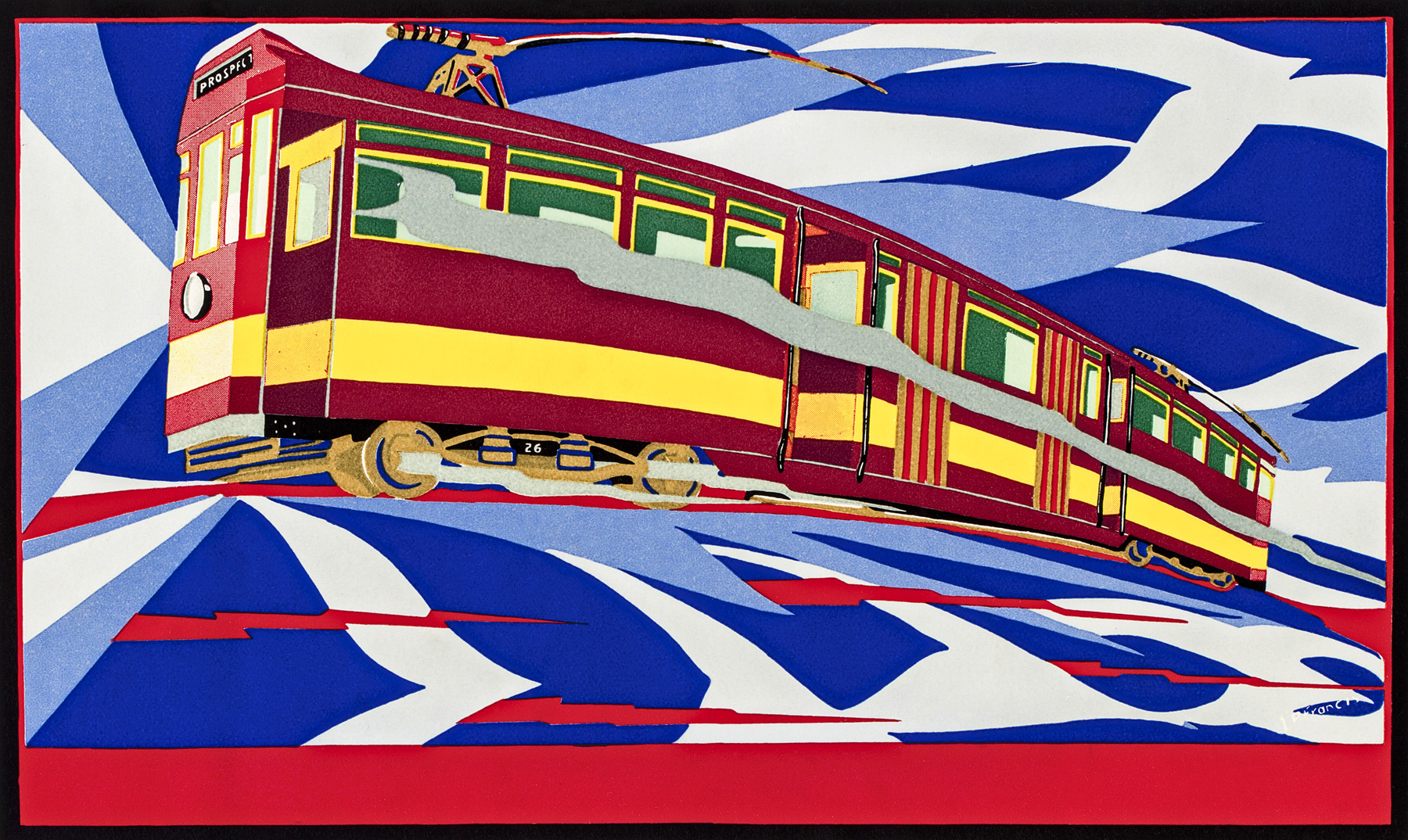
 

Ivor Francis (England 1906-Australia 1993, Australia from 1924) 'Speed!' 1931


Ivor Francis (England 1906 – Australia 1993, Australia from 1924)
Speed!
1931
Colour process block print
Art Gallery of South Australia
Adelaide South Australian Government Grant 1986


Randille, Melbourne (maker) active 1930s 'Night gown' c. 1938


Randille, Melbourne (maker) active 1930s
Night gown
c. 1938
Silk (a) 166cm (centre back) 38.9cm (waist, flat) (dress) (b) 121cm (centre back) 38cm (waist, flat) (slip)
National Gallery of Victoria, Melbourne
Presented by Mrs A. G. Pringle, 1982


Installation view of the exhibition 'Brave New World: Australia 1930s' at NGVA with Max Dupain's 'Rush hour in King's Cross' left and Frank Hinder's 'Jackhammer' third from right and Margel Hinder's 'Man with jackhammer' second right


Installation view of the exhibition Brave New World: Australia 1930s at NGVA with Max Dupain’s Rush hour in King’s Cross left and Frank Hinder’s Jackhammer third from right and Margel Hinder’s Man with jackhammer second right
Photo: Courtesy NGV Photographic Services


Margel Hinder (United States 1906-Australia 1995, Australia from 1934) 'Man with jackhammer' 1939


Margel Hinder (United States 1906 – Australia 1995, Australia from 1934)
Man with jackhammer
1939
Cedar
National Gallery of Victoria, Melbourne
Purchased through the NGV Foundation with the assistance of J. B. Were & Son, Governor, 2001


American-born Margel Hinder was one of Australia’s leading modernist sculptors. She had studied art in Boston, where she met and married Sydney artist Frank Hinder. In 1934 they moved to Australia and became an important part of Sydney’s small modern art scene. In Man with jackhammer Hinder has simplified and contained the figure within a square frame, the strong diagonal form of the jackhammer creating a sense of compressed energy and force. Man and machine have fused in this celebration of industry and progress.


Frank Hinder (Australia 1906-92, United States 1927-34) 'Jackhammer' 1936


Frank Hinder (Australia 1906-1992, United States 1927-1934)
Jackhammer
1936
Airbrush on black paper
52 x 38cm
Private collection, Sydney
© Enid Hawkins


Modern Woman

In the 1930s the new ‘Modern Woman’ made her appearance as a more serious and emancipated version of the giddy 1920s ‘flapper’. A woman who worked, she often lived alone in one of the new city apartment buildings, visited nightclubs and showed less interest in traditional marriage and child rearing. A lean body type became fashionable and was enhanced by the lengthened hemlines and defined waists introduced by French couturier Jean Patou in 1929. This slender silhouette was supported by form-fitting foundation garments by manufacturers such as Berlei.

The Modern Woman became one of the most potent images of contemporary life, being celebrated in women’s magazines such as the ultra-stylish Home and the Australian Women’s Weekly, launched in 1933. While such magazines were congratulating her and promoting new consumer goods to the Modern Woman, at the same time she was criticised by conservative commentators. In 1937 photographer Max Dupain wrote: ‘There must be a great shattering of modern values if woman is to continue to perpetuate the race… In her shred of a dress and little helmet of a hat, her cropped hair, and stark bearing, the modern woman is a sort of a soldier… It is not her fault it is her doom’.


Installation view of the exhibition 'Brave New World: Australia 1930s' at NGVA with Peter Purves Smith's 'Maisie' left, Cybil Craig's 'Peggy' second left and Peter Purves Smith's 'Lucile' at  top right


Installation view of the exhibition Brave New World: Australia 1930s at NGVA with Peter Purves Smith’s Maisie left, Cybil Craig’s Peggy second left and Peter Purves Smith’s Lucile at  top right
Photo: Eugene Hyland


Installation view of the exhibition 'Brave New World: Australia 1930s' at NGVA with Cybil Craig's 'Peggy' second left and Lina Bryans 'The babe is wise' at right


Installation view of the exhibition Brave New World: Australia 1930s at NGVA with Cybil Craig’s Peggy second left and Lina Bryans The babe is wise at right
Photo: Courtesy NGV Photographic Services


Peter Purves Smith (Australia 1912-1949, England 1935-1936, England and France 1938-1940) 'Maisie' 1938-1939


Peter Purves Smith (Australia 1912-1949, England 1935-1936, England and France 1938-1940)
Maisie
1938-1939
Gouache
National Portrait Gallery, Canberra
Bequest of Lady Maisie Drysdale 2001


In 1937 the striking, auburn-haired Maisie Newbold was a student at the George Bell School in Melbourne, where she met fellow student Peter Purves Smith and his best friend Russell Drysdale. Maisie and Purves Smith were married in 1946, only three years before latter’s premature death from tuberculosis. Purves Smith painted this portrait at the start of their relationship. It depicts Maisie as a stylish woman wearing the latest fashion, the angularity of her features contrasted by the soft fur of her collar and feathers of her hat. Many years later Maisie married Drysdale.


Installation view of Sybil Craig's work 'Peggy' c. 1932


Installation view of Sybil Craig’s work Peggy c. 1932
Photo: Dr Marcus Bunyan
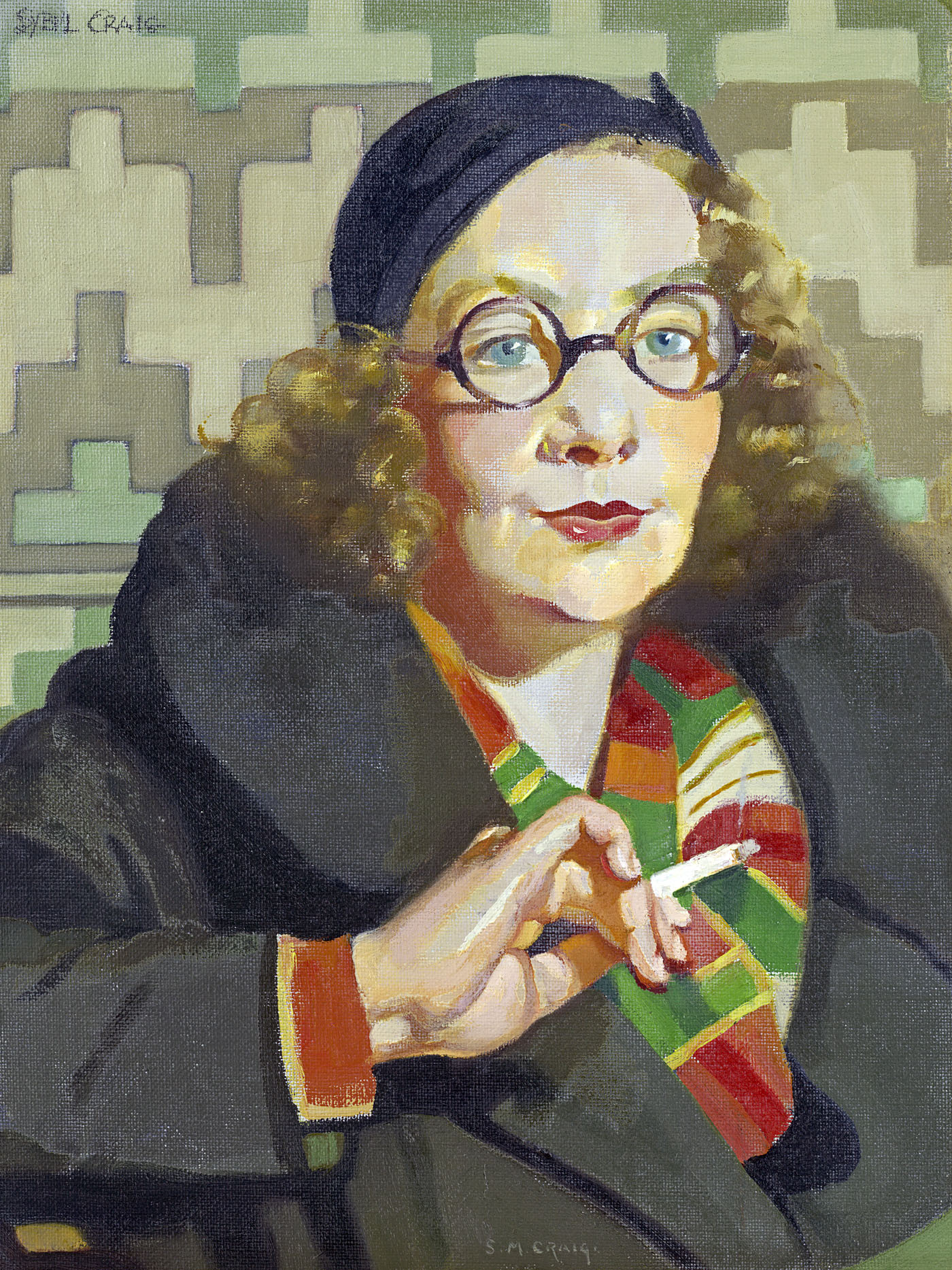
 

Sybil Craig (England 1901 - Australia 1909, Australia from 1902) 'Peggy' c. 1932


Sybil Craig (England 1901 – Australia 1909, Australia from 1902)
Peggy
c. 1932
Oil on canvas
40.4 x 30.4cm
National Gallery of Victoria, Melbourne Purchased, 1978
© The Estate of Sybil Craig


Lina Bryans (Germany (of Australian parents) 1909-Australia 2000, Australia from 1910) 'The babe is wise' 1940


Lina Bryans (Germany (of Australian parents) 1909 – Australia 2000, Australia from 1910)
The babe is wise
1940
Oil on cardboard
National Gallery of Victoria, Melbourne
Gift of Miss Jean Campbell, 1962


Lina Bryans’s portrait of author Jean Campbell is titled after Campbell’s 1939 novel The Babe is Wise, a contemporary story set in Melbourne and in which the main protagonists are European migrants. A well-known figure in Melbourne’s literary circles, Campbell was noted for her ‘quick and slightly audacious wit’. Bryans had begun painting in 1937 with the support of William Frater. In the late 1930s she lived at Darebin Bridge House, which became an informal artists’ colony and meeting place for writers associated with the journal Meanjin.


Peter Purves Smith (Australia 1912-1949, England 1935-1936, England and France 1938-1940) 'Lucile' 1937


Peter Purves Smith (Australian, 1912-1949, England 1935-1936, England and France 1938-1940)
Lucile
1937
Oil on board
Queensland Art Gallery, Brisbane
Purchased 2011 with funds raised through the Queensland Art Gallery Foundation Appeal


Nora Heysen (Australia 1911-2003, England and Italy 1934-37) 'Self-portrait' 1932


Nora Heysen (Australian, 1911-2003, England and Italy 1934-1937)
Self-portrait
1932
Oil on canvas
National Gallery of Australia, Canberra
Acquired with the assistance of the Masterpieces for the Nation Fund 2011


During the first decade of her life as a professional artist, Nora Heysen completed numerous self-portraits. In many of these she depicts herself in the act of drawing or painting, holding a palette and brush or with other accoutrements of the artist, and thereby asserting her professional identity. Yet these are also highly charged works in which Heysen scrutinises herself (and the viewer) with an unflinching and unsmiling gaze.


Installation view of the exhibition 'Brave New World: Australia 1930s' at NGVA with Arthur Challen's 'Miss Moira Madden' above chair


Installation view of the exhibition Brave New World: Australia 1930s at NGVA with Arthur Challen’s Miss Moira Madden above chair
Photo: Eugene Hyland
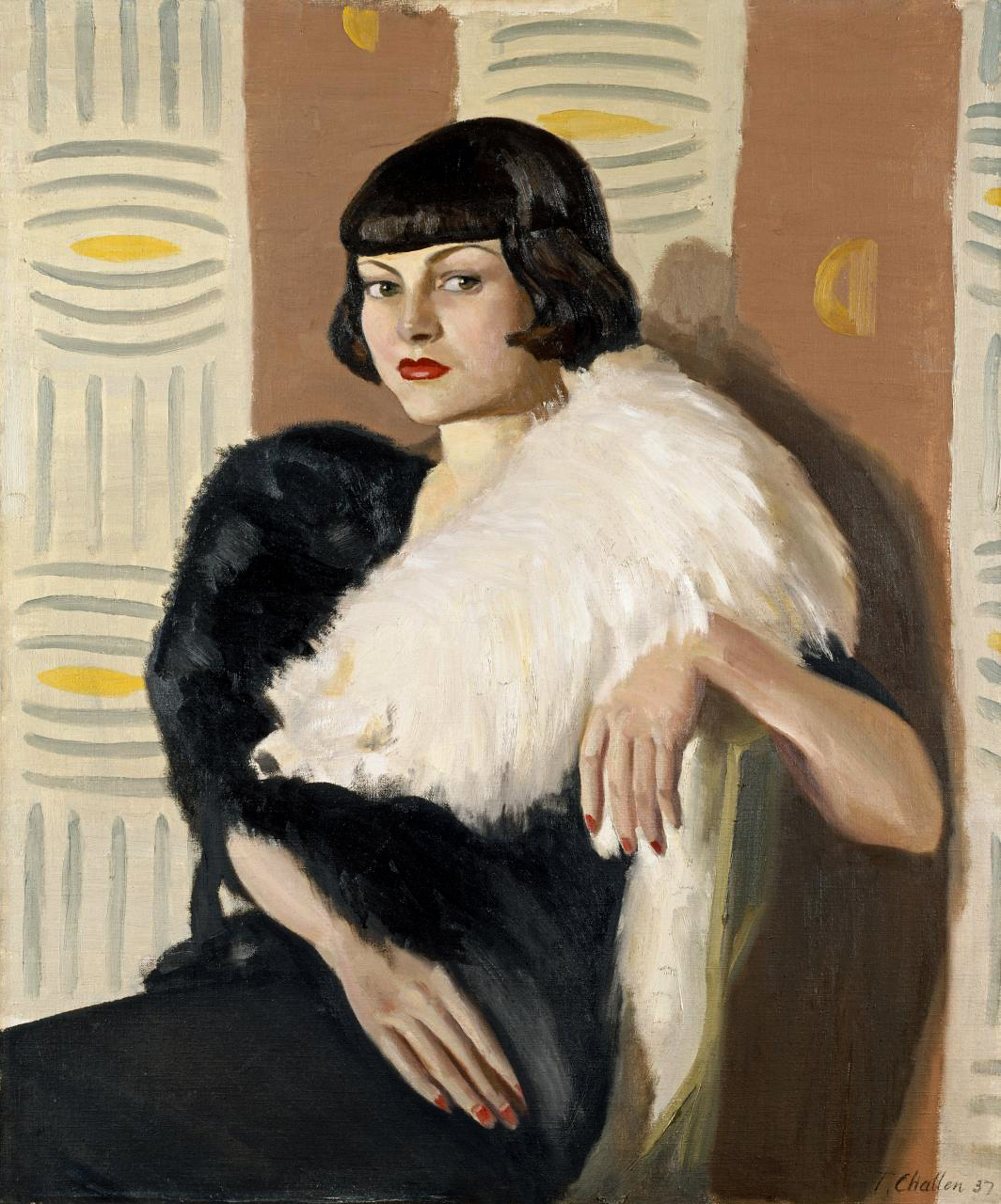
 

Arthur Challen 'Miss Moira Madden' 1937


Arthur Challen (Australian, 1911-1964)
Miss Moira Madden
1937
Oil on canvas
89.8 x 77.4cm (framed)
State Library of Victoria
Gift of Mrs S. M. Challen, 1966
© The Estate of Arthur Challen


Body culture

The terrible physical losses and psychological traumas of the First World War changed Australian society and prompted anxious concerns about the direction of the nation. For some this meant an inward-looking isolationism, a desire that Australian culture should develop independently and untouched by the ‘degenerate’ influences of Europe.

The search for rejuvenation frequently involved explorations of the capabilities and vulnerabilities of the human body. In the hands of artists, corporeal forms came to symbolise nationhood, most often expressed through references to the art of Classical Greece and mythological subjects. The evolution of a new Australian ‘type’ was also proposed in the 1930s – a white Australian drawn from British stock, but with an athletic and streamlined shape honed by time spent swimming and surfing on local beaches.

This art often has a distinctive quality to it, which in the light of history can sometimes make for disquieting viewing. With the terrible knowledge of how the Nazi Party in Germany subsequently used eugenics in its systematic slaughter of those with so-called ‘bad blood’, the Australian enthusiasm for ‘body culture’ can now seem problematic. Images of muscular nationalism soon lost their cache in Australia following the Second World War, tainted by undesirable fascistic overtones.
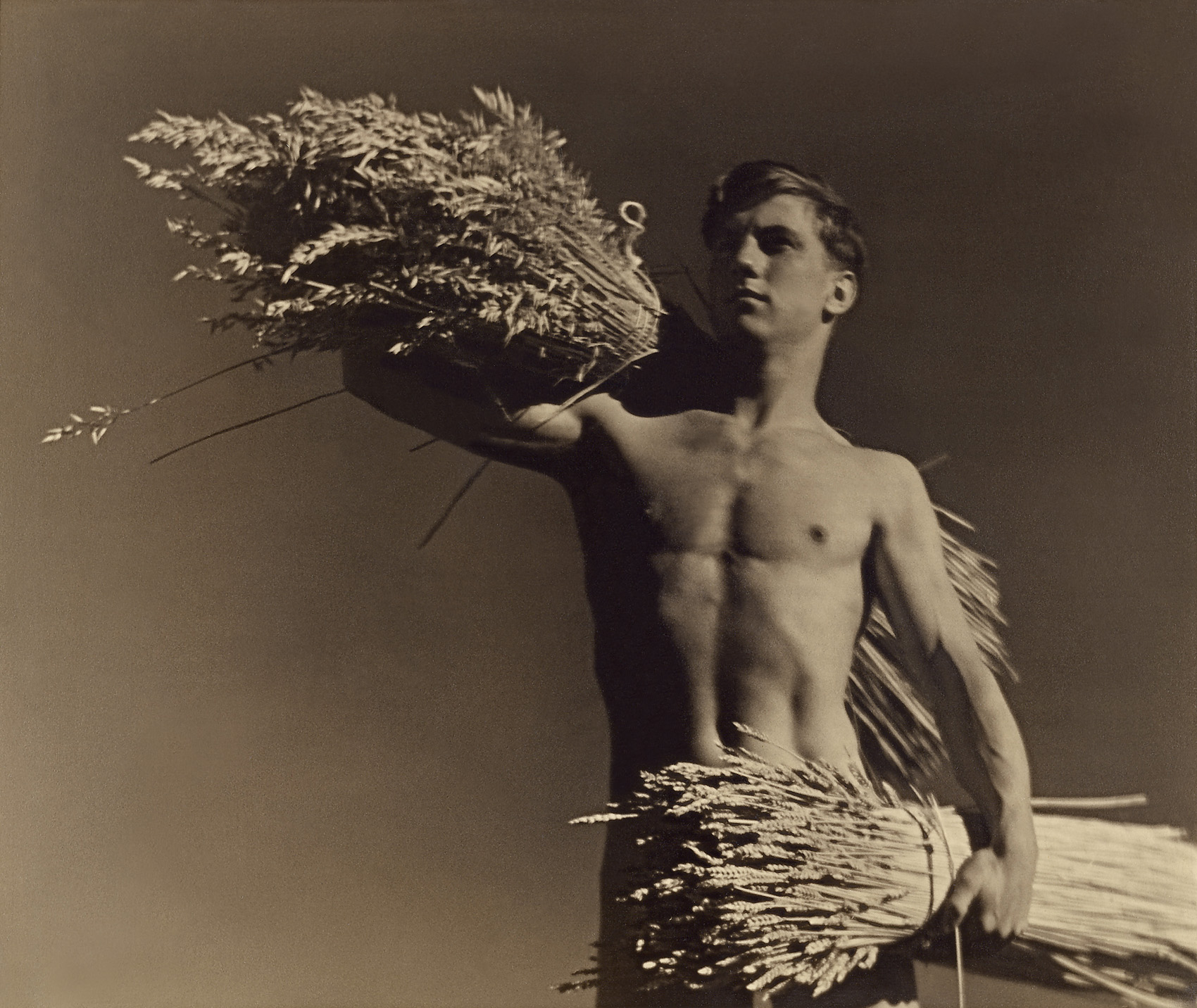
 

Keast Burke (New Zealand 1896 - Australia 1974, Australia from 1904) 'Harvest' c. 1940


Keast Burke (New Zealand 1896 – Australia 1974, Australia from 1904)
Harvest
c. 1940
Gelatin silver photograph (25.6 x 30.5cm)
National Gallery of Victoria, Melbourne
Gerstl Bequest, 2000
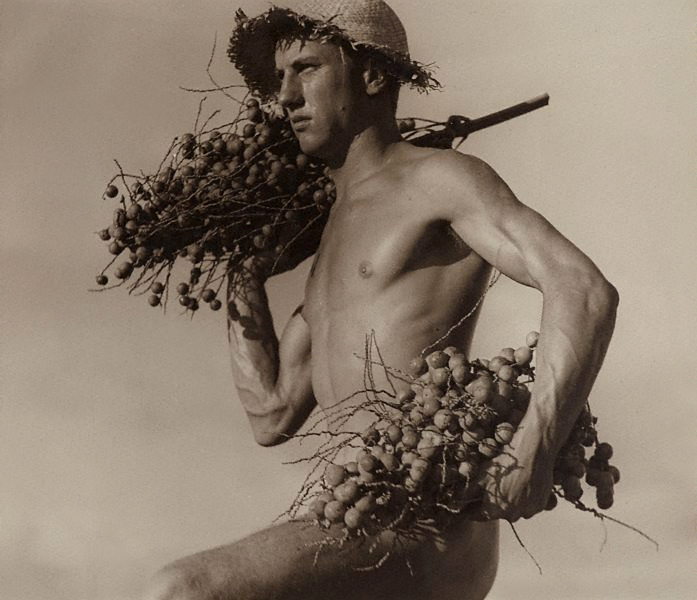
 

Keast Burke (New Zealand 1896 - Australia 1974, Australia from 1904) 'Husbandry 1' c. 1940


Keast Burke (New Zealand 1896 – Australia 1974, Australia from 1904)
Husbandry 1
c. 1940
Gelatin silver photograph
Art Gallery of New South Wales, Sydney
Gift of Iris Burke 1989


Max Dupain (Australia 1911-92) 'Discus thrower' 1937, printed (c. 1939)


Max Dupain (Australian, 1911-1992)
Discus thrower
1937, printed (c. 1939)
Gelatin silver photograph
38.5 x 37.5cm
National Gallery of Victoria, Melbourne
Purchased, 2003
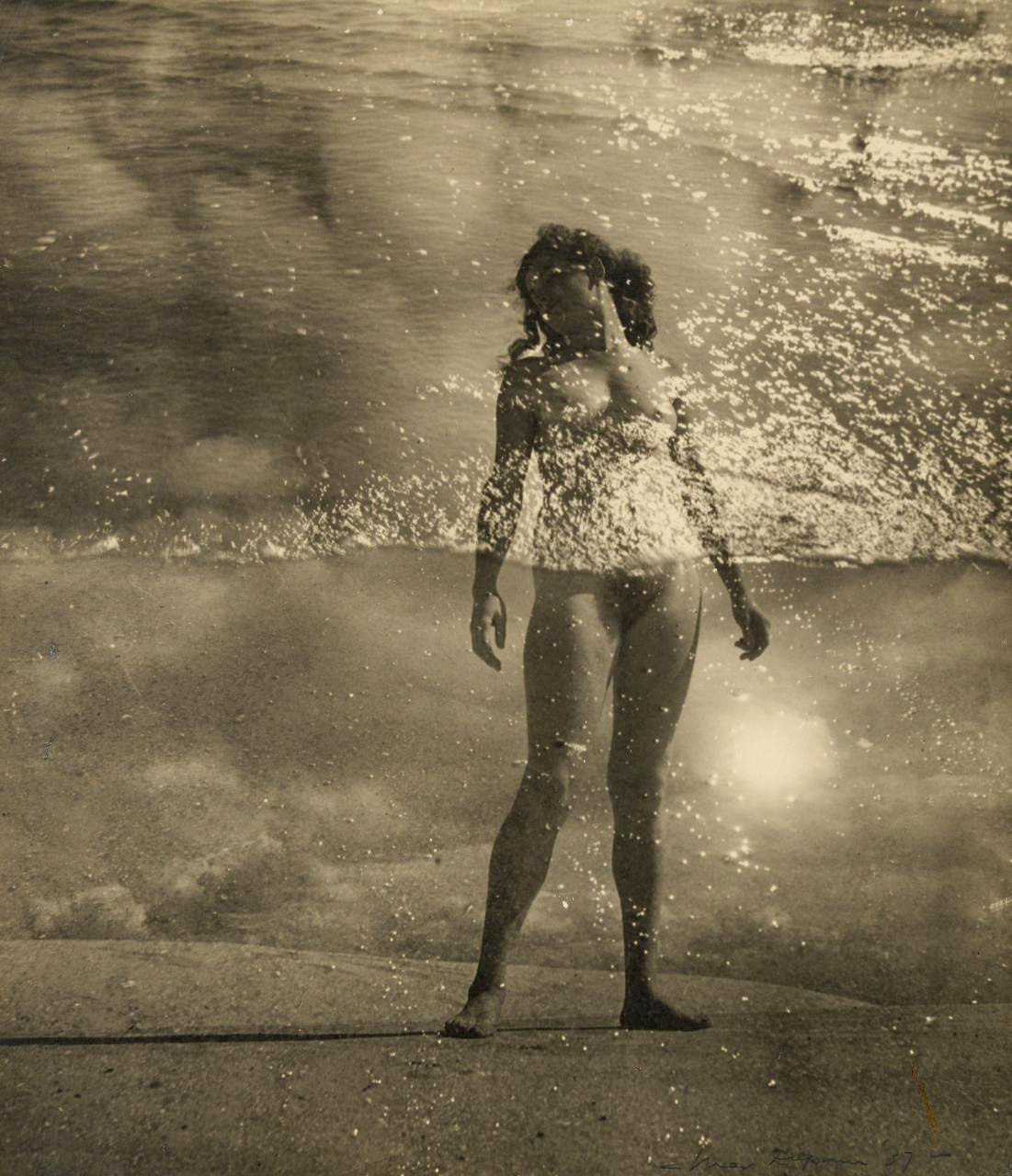
 

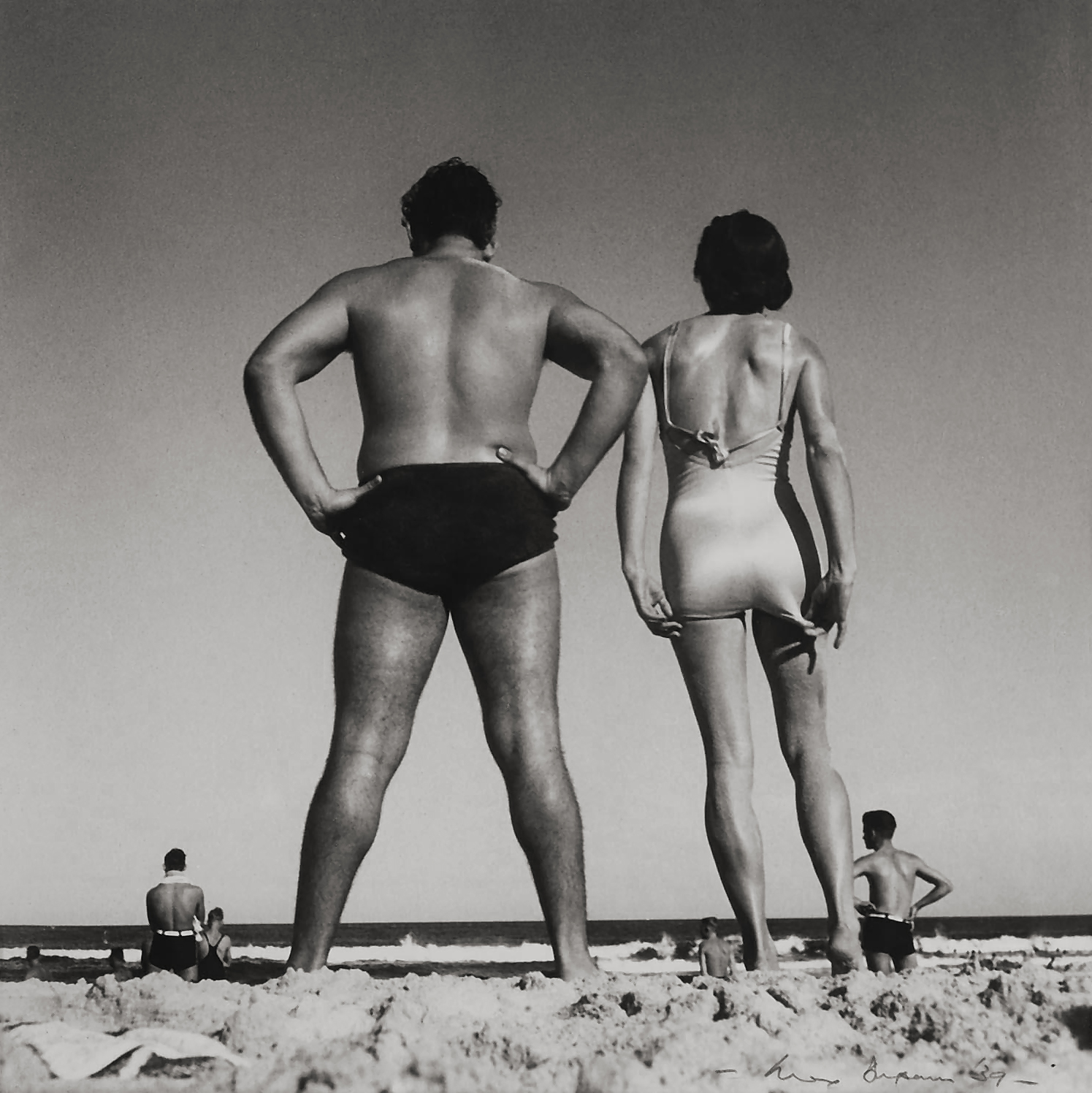
Max Dupain (Australia 1911-1992) 'Souvenir of Cronulla' 1937


Max Dupain (Australian, 1911-1992)
Souvenir of Cronulla
1937
Gelatin silver photograph
National Gallery of Victoria, Melbourne
Purchased through The Art Foundation of Victoria with the assistance of National Australia Bank Limited, Honorary Life Benefactor, 1992


In the 1930s Max Dupain responded to Henri Bergson’s book Creative Evolution (1907) in which he considered creativity and intuition as central to the renewed development of society, and the artist as prime possessor of these powers. Vitalism, as this philosophy was termed, was believed to be expressed through polarised sexual energies. In this work Dupain focuses on the sexually differentiated ‘energies’ of men and women, associating women with the forces of nature.
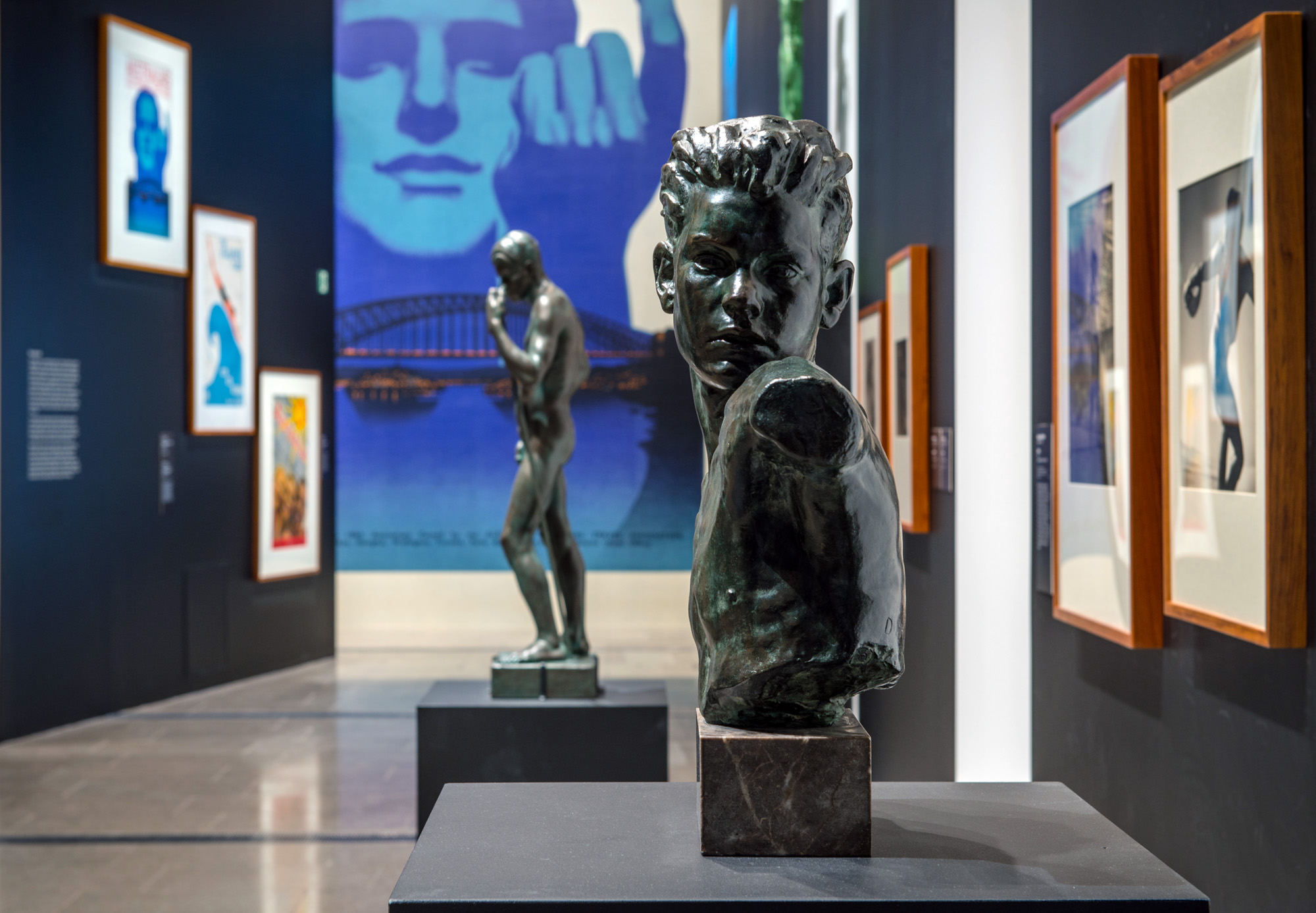
 

Installation view of the exhibition 'Brave New World: Australia 1930s' at NGVA with Daphne Mayo's 'A young Australian' in foreground


Installation view of the exhibition Brave New World: Australia 1930s at NGVA with Daphne Mayo’s A young Australian in foreground
Photo: Eugene Hyland
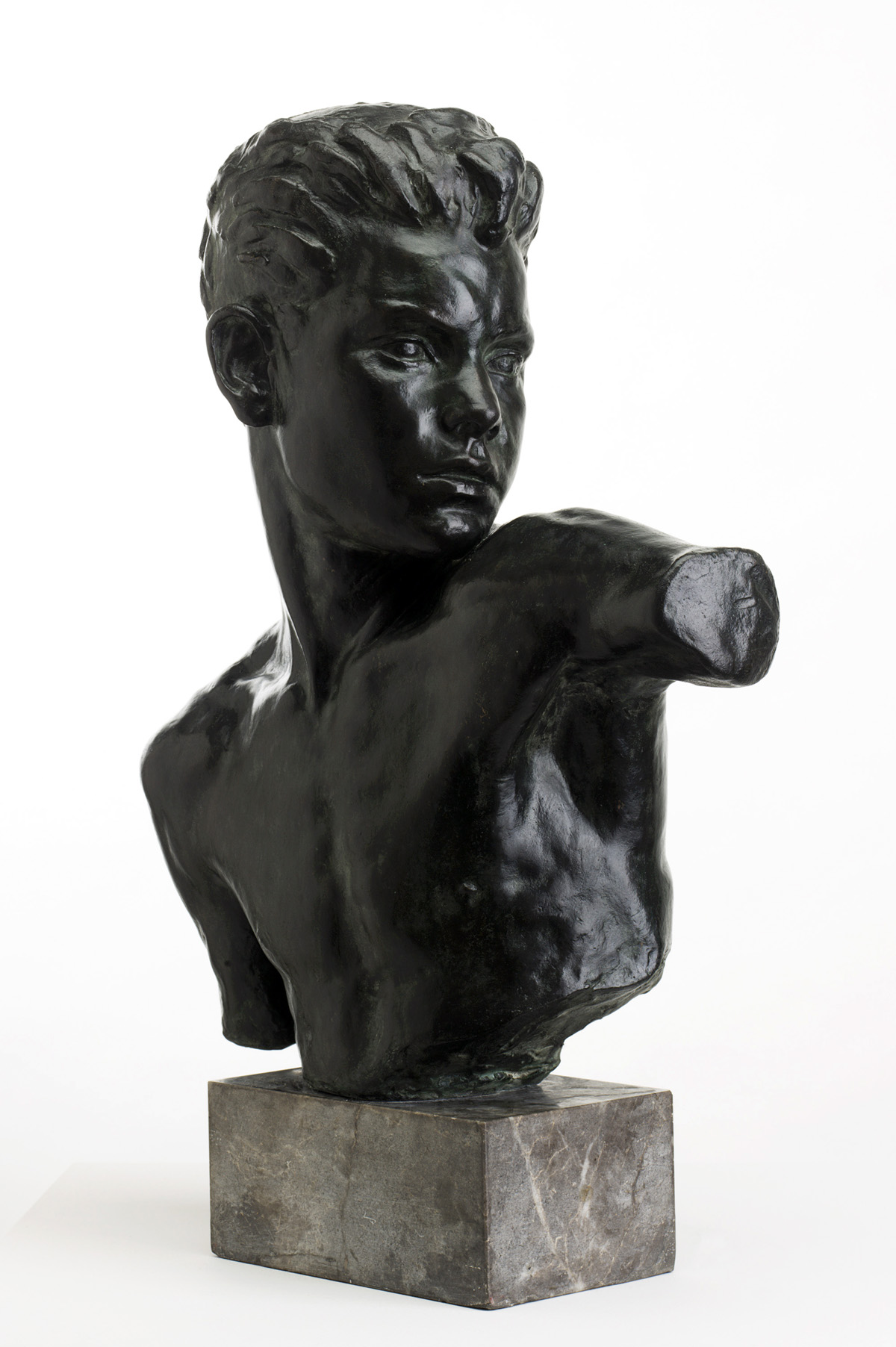
 

Daphne Mayo (Australia 1895-1982, England 1919-1923, France 1923-1925) 'A young Australian' 1930, cast 1931


Daphne Mayo (Australian, 1895-1982, England 1919-1923, France 1923-1925)
A young Australian
1930, cast 1931
Bronze, marble
(a-b) 51.0 x 35.2 x 18.1cm (overall)
Art Gallery of New South Wales, Sydney Purchased 1930
© 1982 by The Surf Life Saving Foundation and the Uniting Church in Australia Property Trust (Q.)


Installation view of the exhibition 'Brave New World: Australia 1930s' at NGVA with Dorothy Thornhill's 'Neo-classical nudes' and 'Resting Diana' at left; Tom Purvis' 'Australia's 150th Anniversary Celebrations' (wall print) at centre rear; and Jean Broome-Norton's 'Abundance' on plinth at right


Installation view of the exhibition Brave New World: Australia 1930s at NGVA with Dorothy Thornhill’s Neo-classical nudes and Resting Diana at left; Tom Purvis’ Australia’s 150th Anniversary Celebrations (wall print) at centre rear; and Jean Broome-Norton’s Abundance on plinth at right
Photo: Courtesy NGV Photographic Services


Tom Purvis (England 1888-1959) 'Australia's 150th Anniversary Celebrations' c. 1938


Tom Purvis (England, 1888-1959)
Australia’s 150th Anniversary Celebrations
c. 1938
Colour lithograph
Courtesy of Josef Lebovic Gallery, Sydney


Installation view of Dorothy Thornhill's 'Neo-classical nudes' from the exhibition 'Brave New World: Australia 1930s' at NGVA


Installation view of Dorothy Thornhill’s Neo-classical nudes from the exhibition Brave New World: Australia 1930s at NGVA
Photo: Dr Marcus Bunyan


Dorothy Thornhill (England 1910 - Australia 1987, New Zealand 1920-1929, Australia from 1929) 'Resting Diana' 1931


Dorothy Thornhill (England 1910 – Australia 1987, New Zealand 1920-1929, Australia from 1929)
Resting Diana
1931
Oil on canvas
National Gallery of Australia, Canberra
Purchased 1977


The invocation of the Classical body as a modern prototype was a powerful idea in the 1930s. The Graeco- Roman goddess Diana, the virgin patron goddess of the hunt, was popularly invoked as an ideal of female perfection, and represented with a slender and athletic physique. Dorothy Thornhill’s Diana is a remarkable visualisation of such a ‘modern Diana’, her angular body and defined musculature reflecting the masculinisation of female bodies at this time. She is a formidable presence, the quiver of arrows slung nonchalantly across her shoulders a trophy of her victory over the male gender.
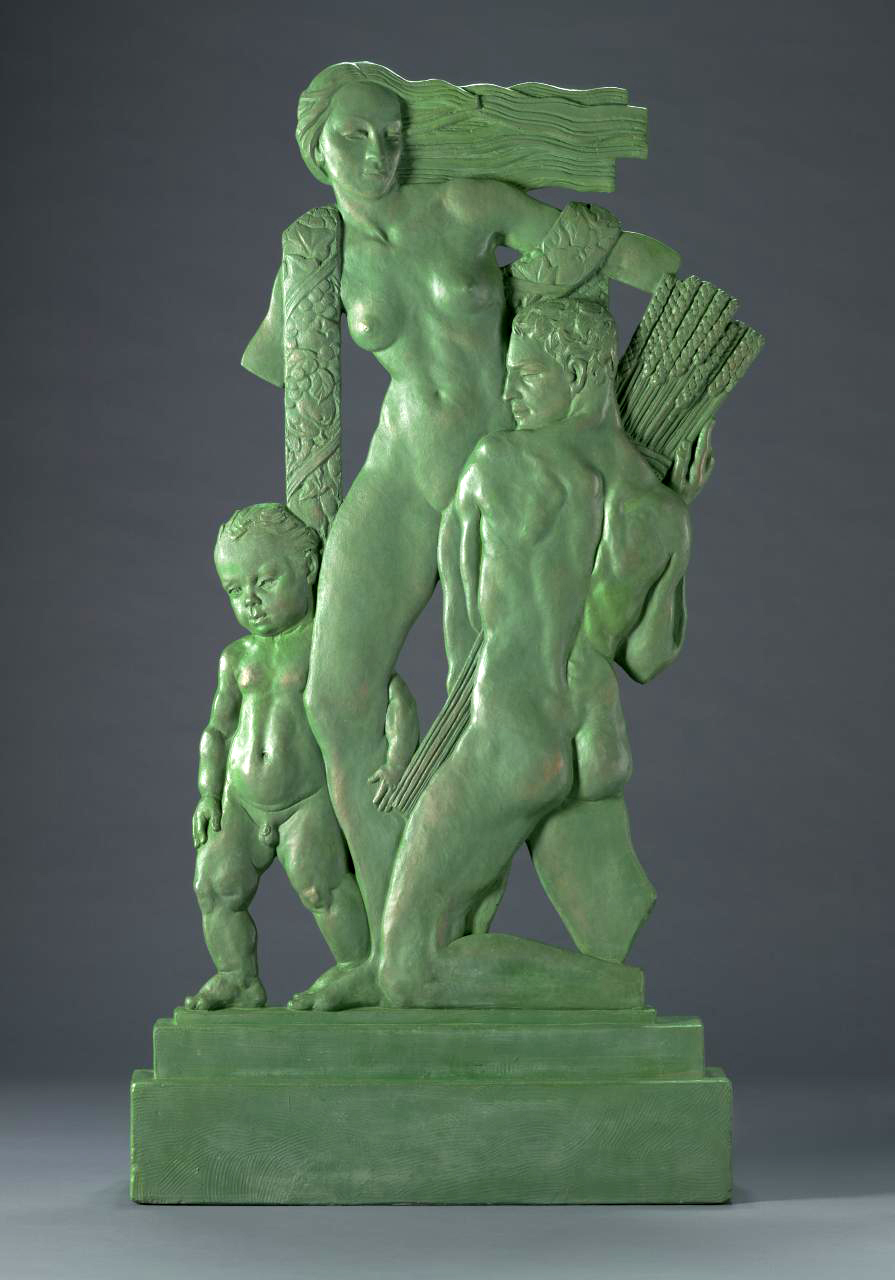
 

Jean Broome-Norton (Australia 1911-2002) 'Abundance' 1934


Jean Broome-Norton (Australian, 1911-2002)
Abundance
1934
Plaster, bronze patination
National Gallery of Victoria, Melbourne
Purchased through The Art Foundation of Victoria with the assistance of ICI Australia Limited, Fellow, 1994


“High-rise buildings, fast trains and engineering feats such as the Sydney Harbour Bridge jostled against the Great Depression, conservatism and a looming Second World War during the 1930s, one of the most turbulent decades in Australian history. The major exhibition at the NGV, Brave New World: Australia 1930s, will explore the way artists and designers engaged with these major issues providing a fresh look at a period characterised by both optimism and despair. The exhibition will present a broad-ranging collection of more than 200 works spanning photography, painting, printmaking, sculpture and decorative arts as well as design, architecture, fashion, graphics, film and dance.

Tony Ellwood, Director, NGV, commented, “Brave New World explores an important period of Australian art history during which Abstraction, Surrealism and Expressionism first emerged, and women artists arose as trailblazers of the modern art movement. It will offer an immersive look at the full spectrum of visual and creative culture of the period, from Max Dupain’s iconic depictions of the Australian body and beach culture to a vast display of nearly 40 Art Deco radios, which were an indispensable item for the Australian home during the 1930s.”

Presented thematically, Brave New World will show how artists and designers responded to major social and political concerns of the 1930s. The Great Depression, which saw Australia’s unemployment rate rise to 32% by 1932, is seen through the eyes of photographer F. Oswald Barnett in his powerful images of poverty-stricken inner Melbourne suburbs such as Fitzroy, Collingwood and Carlton, and in the works of Danila Vassilieff, Yosl Bergner, Arthur Boyd and Albert Tucker who were among the first artists to depict Australia’s working class and destitute.

In contrast, many other artists at the time chose to focus upon the vibrant city streets, cafes and buildings of contemporary Australian cities, such as renowned modernist Grace Cossington Smith with her energetic canvasses of flat colours and abstracted forms. Other artists featured in Brave New World including Hilda Rix Nicholas and Elioth Gruner concentrated on more traditional scenes of the Australian bush, which was seen as a place of respite from the frenetic pace of modern city life.

The exhibition will explore artists’ responses to the growing calls for Indigenous rights during the 1930s, which was accompanied by a rising interest in Aboriginal art and particularly the work of Albert Namatjira, the first Indigenous artist of renown in Australia; and the rise of the ‘modern woman’, a female who favoured urban living, freedom and equality over marriage and child rearing.

The 1930s also saw the idea of the ‘Australian body’, a tanned, muscular archetype shaped by sand and surf, come to the fore of the Australian identity. Artists who engaged with this idea, including Max Dupain, Charles Meere and Olive Cotton, will be presented in Brave New World. The exhibition will be accompanied by a fully-illustrated, 212-page hardback publication, featuring essays by leading writers on each of the exhibition themes. A series of public programs will also be offered including a major symposium, an Art Deco walking tour of Melbourne and a dance performance, recreating Demon machine (1924) by the Bodenweiser company that toured Australia in the late 1930s as well as an original solo by the choreographer, Carol Brown (NZ).

Press release from the NGV


Nanette Kuehn (Germany 1911-Australia 1980, Australia from 1937) 'Borislav Runanine and Tamara Grigorieva in Jeux D'Enfants, original Ballets Russes, Australian tour' 1939-1940


Nanette Kuehn (Germany 1911 – Australia 1980, Australia from 1937)
Borislav Runanine and Tamara Grigorieva in Jeux D’Enfants, original Ballets Russes, Australian tour
1939-1940
Gelatin silver photograph
Performing Arts Collection, Arts Centre, Melbourne
The Australian Ballet Collection. Gift of The Australian Ballet, 1998


The expressive body: dance in Australia

If modern art encapsulated the ideals and conflicting forces of the early twentieth century, then modern dance embodied its restless vitality and the quest for a different kind of subjectivity and expression. To many, modern dance is the pivotal art form for a mid twentieth century concerned with plasticity, the expressive body and tensions between the individual and its collective formation.

The decade of the 1930s is framed by the 1928-1929 tour of Anna Pavlova’s dance company and the three tours of the remnant Ballets Russes companies (1936-1937, 1938-1939,1939-1940) that excited many aspiring modernist artists. These tours sowed the seeds for subsequent ballet narratives in Australia, because the eruption of war in 1939 meant that Ballets Russes dancers, including Helene Kirsova and Edouard Borovansky, stayed in the country and established ballet companies. While trained in Russian dance technique, these artists were also influenced by the aesthetics of change in European art and dance that included new bodily techniques, dynamic movement patterns and modern technologies. It was the individual dancers of modern dance, however, including Louise Lightfoot and Sonia Revid, who produced the expressive intensity of a more autonomous art of movement.


Installation view of 'Brave New World: Australia 1930s' at NGVA

Installation views of the exhibition 'Brave New World: Australia 1930s' at NGVA featuring a wall print of 'Sonia Revid dancing on Brighton beach' c. 1935 by an unknown Australian photographer


Installation views of the exhibition Brave New World: Australia 1930s at NGVA featuring a wall print of Sonia Revid dancing on Brighton beach c. 1935 by an unknown Australian photographer
Photos: Courtesy NGV Photographic Services


Australia, Unknown photographer. 'Sonia Revid dancing on Brighton beach' c. 1935


Australia, Unknown photographer
Sonia Revid dancing on Brighton beach
c. 1935
Courtesy of State Library Victoria, Melbourne


Sonia Revid was one of the leading proponents of modern interpretative dance in Melbourne. Born in Latvia, she studied with the great dancer Mary Wigman in Germany before coming to Australia in 1932. Revid is credited with introducing the ‘German Dance’ to Australian audiences, and in the mid 1930s established the Sonia Revid School of Art and Body Culture in Collins Street. She composed her own dances, one of the best known being Bushfire drama (1940), based on the 1939 Victoria Bushfires.


Max Dupain (Australia 1911-1992) 'Ballet (Emmy Towsey and Evelyn Ippen, Bodenwieser Dancers performing Waterlilies)' 1937, printed (c. 1939)


Max Dupain (Australian, 1911-1992)
Ballet (Emmy Towsey and Evelyn Ippen, Bodenwieser Dancers performing Waterlilies)
1937, printed (c. 1939)
Gelatin silver photograph
44.5 x 33.5cm
National Gallery of Victoria, Melbourne
Purchased, 2003
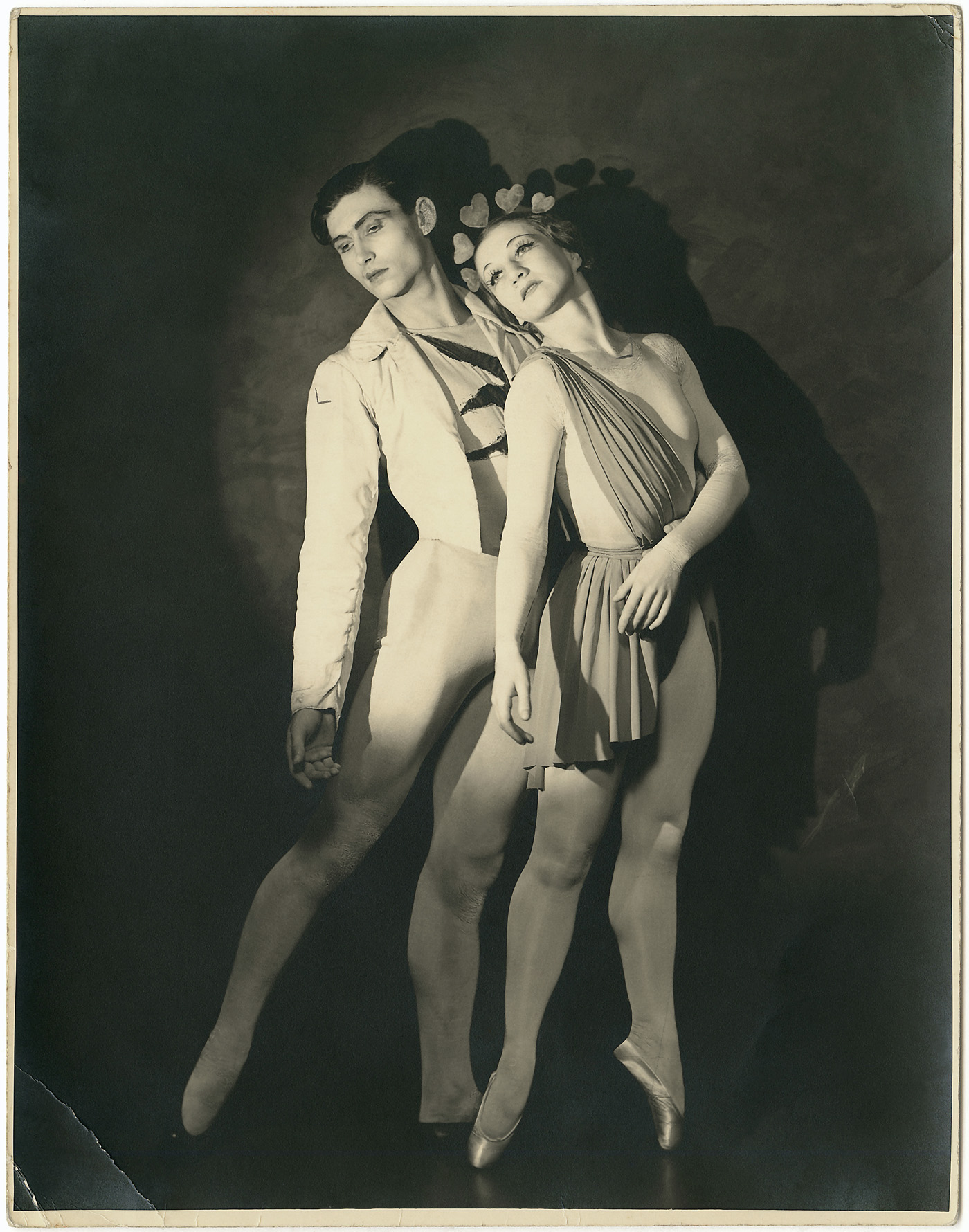
 

Jack Cato (Australia 1889-1971, England 1909-1914, South Africa 1914-1920) 'Helene Kirsova and Igor Youskevitch in Les Presages, Monte Carlo Russian Ballet' 1936-1937


Jack Cato (Australia 1889-1971, England 1909-1914, South Africa 1914-1920)
Helene Kirsova and Igor Youskevitch in Les Presages, Monte Carlo Russian Ballet
1936-1937
Gelatin silver photograph
24.8 x 19.4cm
Performing Arts Collection, Arts Centre, Melbourne
The Australian Ballet Collection
Gift of The Australian Ballet, 1998


Choreographed by Léonide Massine in 1933, Les Presages (Destiny) was a popular and avant-garde work during the Ballets Russes tours to Australia in 1936-1937. It was one of the first contemporary ballets to be choreographed to an existing musical score, Tchaikovsky’s Fifth Symphony. Portrayed in this picture are two principal dancers from the Monte Carlo Ballets Russes: Hélène Kirsova, who remained in Australia and formed her own ballet company in Sydney in the early 1940s, and Igor Youskevitch, who became a leading American ballet dancer, appearing here in the role of the Hero.


Evelyn Ippen (designer and maker active in Australia 1930s) 'Dress for Slavonic Dances' 1939


Evelyn Ippen designer and maker active in Australia 1930s
Dress for Slavonic Dances
1939
Cotton, silk (velvet) (appliqué), elastic, metal (zip) for a production of the Bodenwieser Ballet, choreographed by Gertrud Bodenwieser
Performing Arts Collection, Arts Centre, Melbourne
Bodenwieser Collection. Gift of Barbara Cuckson, 2000


The Slavonic Dances were choreographed by Gertrud Bodenwieser to represent what she described as the ‘vigour and passionate feelings of the Slavonic people’, and toured with her first company in Australia in 1939. Loosely using folk-dance motifs, this ensemble work would have been a stylish crowd-pleaser in contrast to more serious dances. The appliqué and colourful flower motifs on this dress are similar to designs by Natalia Goncharova for the Ballets Russes, although the simplified appeal of its ‘red bodice, long, swirling skirt, and gathered white sleeves’ were probably designed by one of the company dancers, Evelyn Ippen.


Max Dupain (Australia 1911-1992) 'Tamara Tchinarova in Presages' 1937


Max Dupain (Australian, 1911-1992)
Tamara Tchinarova in Presages
Published in Art in Australia, February 15, 1937
National Gallery of Victoria
Melbourne Shaw Research Library


Australia Tunes Into The World

These radios comprise a selection of Australian designed and manufactured tabletop models from the 1930s at a time when this new method of communication became an integral part of every home. They reflect the rapid spread of the streamlined style to Australia from the United States, England and Europe, where industrial designers applied machine-age styling to everyday household appliances. The use of new synthetic plastics (Bakelite) and mass production helped to make radios affordable for ordinary people, even in the depths of the Depression, and radio transmission brought the world into every Australian home. As cheap alternatives to the expensive wooden console in the lounge room, these small, portable radios allowed individual family members to listen to serials, quizzes and popular music in other rooms such as the kitchen, bedroom and verandah, as well as in the workplace.

Radios of the 1930s are now appreciated as quintessential examples of Art Deco styling, and one of the first expressions of art meeting industry. These colourful and elegant radio sets were one of the first pieces of modern styling in the Australian home. They were also a symbol of modern technology and a new future.


Installation view of Australian Art Deco radios from the exhibition 'Brave New World: Australia 1930s' at NGVA


Installation view of Australian Art Deco radios from the exhibition Brave New World: Australia 1930s at NGVA
Photo: Eugene Hyland


Airzone (1931) Ltd, Sydney (manufacturer) 'Mullard' 1938


Airzone (1931) Ltd, Sydney (manufacturer)
Mullard (white)
1938
Collection of Peter Sheridan and Jan Hatch

Airzone (1931) Ltd, Sydney (manufacturer)
Mullard (speckled green)
1938
Collection of Peter Sheridan and Jan Hatch

Airzone (1931) Ltd, Sydney (manufacturer)
Mullard (black)
1938
Collection of Peter Sheridan and Jan Hatch
Photo © Peter Sheridan


Amalgamated Wireless (Australasia) Ltd., Sydney (manufacturer) est. 1913 'AWA 'Egg crate' (various colours)' 1938


Amalgamated Wireless (Australasia) Ltd., Sydney (manufacturer) est. 1913
AWA ‘Egg crate’ (various colours)
1938
Bakelite
21.0 x 33.0 x 19.0cm (each)
Collection of Peter Sheridan and Jan Hatch
Photo © Peter Sheridan


Amalgamated Wireless (Australasia) Ltd., Sydney (manufacturer) est. 1913 'AWA Radiolette 'Empire State' and cigarette box (green)' 1934


Amalgamated Wireless (Australasia) Ltd., Sydney (manufacturer) est. 1913
AWA Radiolette ‘Empire State’ and cigarette box (green)
1934
Bakelite
(a) 28.0 x 27.0 x 15.0cm (radio) (b) 8.0 x 8.0 x 4.5cm (cigarette box)
Collection of Peter Sheridan and Jan Hatch
Photo © Peter Sheridan


Installation view of Australian Art Deco radios from the exhibition 'Brave New World: Australia 1930s' at NGVA

Installation view of Australian Art Deco radios from the exhibition 'Brave New World: Australia 1930s' at NGVA


Installation views of Australian Art Deco radios from the exhibition Brave New World: Australia 1930s at NGVA
Photos: Courtesy NGV Photographic Services


Sun and surf

The beach was a complex location in the Australian creative imagination. It was a democratic site in which the trappings of wealth and position were abandoned as people stripped down to their bathers. It was a place of hedonistic pleasures that offered sensuous engagement with sun and surf, and a primitive landscape where natural forces restored the bodies of those depleted by modern life. It was a playground for the tourist that was considered distinctively Australian. As war loomed again in the late 1930s, it was also a pseudo-militaristic zone in which the lifesaver was honed for ‘battle’ in the surf.

The lifesavers that helped protect the beach-going public were regularly praised as physical exemplars who could build the eugenic stock of the nation. As the Second World War approached, the connection of these trained lifesavers to military servicemen also became painfully apparent.

Male lifesavers were used by artists in promoting Australia to tourists: a poster commemorating the opening of the Sydney Harbour Bridge in 1932 positioned the lifesaver as the quintessential representative of Australian manhood. Douglas Annand and Arthur Whitmore’s virile lifesaver proudly gestures towards the new bridge, his muscles as strong and protective as the steel girders that span the harbour.


Max Dupain (Australia 1911-1992) 'On the beach. Man, woman, boy' 1938


Max Dupain (Australian, 1911-1992)
On the beach. Man, woman, boy
1938
Gelatin silver photograph
39.2 x 47.2cm
National Gallery of Australia, Canberra
Purchased 1982


Showing a naked family on the beach, Max Dupain’s work is a perfect illustration of social concerns of the times. As Australia moved closer to engagement in another world war, fears about the poor physical fitness of the population were debated, with a ‘national fitness’ campaign instituted by the government in 1938. Dupain’s father, George, was one of the country’s first physical educationalists, opening the Dupain Institute of Physical Education and Medical Gymnastics in 1900 and writing extensively on the subject of health and fitness. Max Dupain attended the gym and was well versed in contemporary concerns about fitness.


Installation view of 'Brave New World: Australia 1930s' at NGVA


Installation view of the exhibition Brave New World: Australia 1930s at NGVA
Photo: Eugene Hyland


Installation view of 'Male lifesaver, window' and 'Female lifesaver, window' (both c. 1935)


Installation view of Male lifesaver, window and Female lifesaver, window (both c. 1935) from the exhibition Brave New World: Australia 1930s at NGVA
Photo: Dr Marcus Bunyan
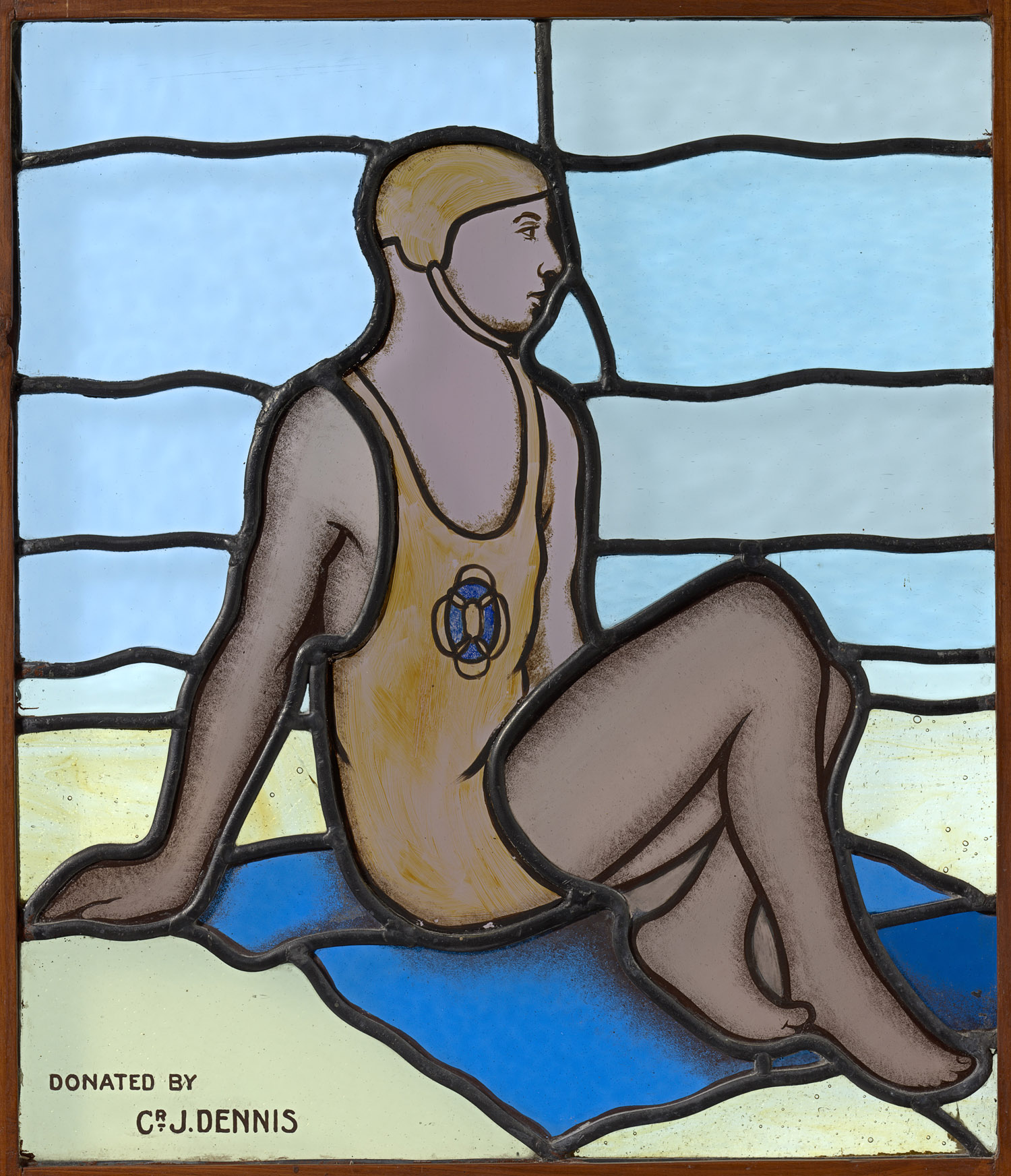
 

Unknown, Melbourne. 'Male lifesaver, window' c. 1935


Unknown, Melbourne
Male lifesaver, window
c. 1935
Stained glass, lead
47.5 x 40.8cm
Williamstown Swimming and Life Saving Club, Williamstown
Donated by C. J Dennis


‘On golden and milky sands, bodily excellence is displayed the year round, clearly defined by the sun in an atmosphere as viewless and benign as the air of Hellas as described by Euripides.’

J. S. Macdonald, 1931


Unknown, Melbourne. 'Female lifesaver, window' c. 1935


Unknown, Melbourne
Female lifesaver, window
c. 1935
Stained glass, lead
47.0 x 40.9cm
Williamstown Swimming and Life Saving Club, Williamstown
Donated by Councillor R. T. Bell


Although much was made of the ‘gods of the golden sand’, as one poet glowingly described lifesavers, lifesaving clubs were not entirely male in membership. Women lifesavers also made their mark, albeit in more limited numbers and with much less recognition. At the Williamstown Lifesaving Club in Melbourne a woman lifesaver was included in this fine and very rare stained glass window that, along with its counterpart featuring a male lifesaver, graced the newly established clubhouse around 1935.


Installation view of the exhibition 'Brave New World: Australia 1930s' at NGVA with the male and female lifesavers (centre); Max Dupain's 'The carnival at Bondi' (fourth from right); 'Sydney Bridge celebrations' (second right); and Douglas Annand and Max Dupain's 'Australia' (right)


Installation view of the exhibition Brave New World: Australia 1930s at NGVA with the male and female lifesavers (centre); Max Dupain’s The carnival at Bondi (fourth from right); Sydney Bridge celebrations (second right); and Douglas Annand and Max Dupain’s Australia (right)
Photo: Courtesy NGV Photographic Services
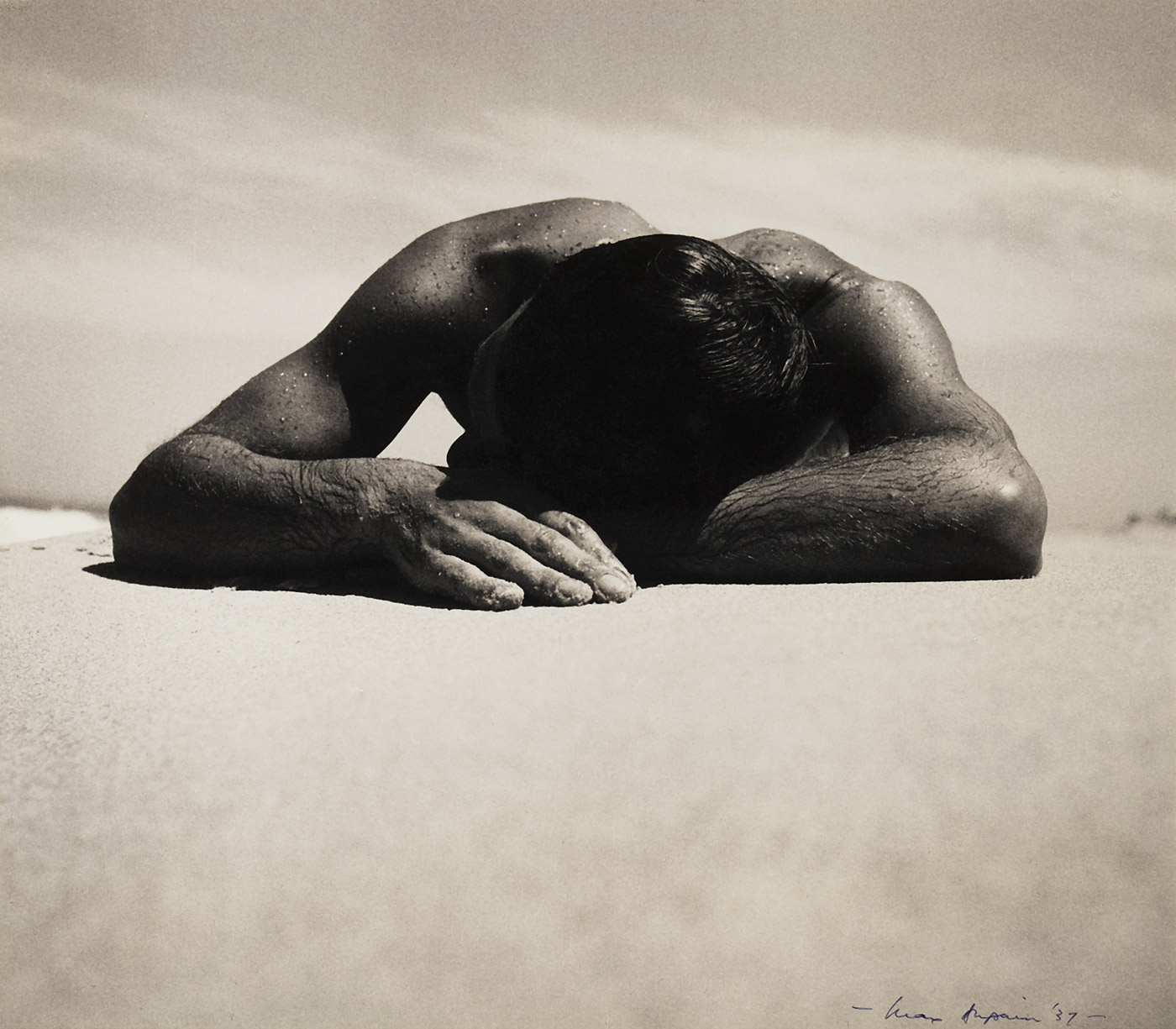
 

Max Dupain (Australian 1911-1992) 'Sunbaker' 1937


Max Dupain (Australian 1911-1992)
Sunbaker
(1938), dated 1937, printed c. 1975
Gelatin silver photograph
38.0 x 43.1cm
National Gallery of Victoria, Melbourne
Purchased with the assistance of the Visual Arts Board, 1976


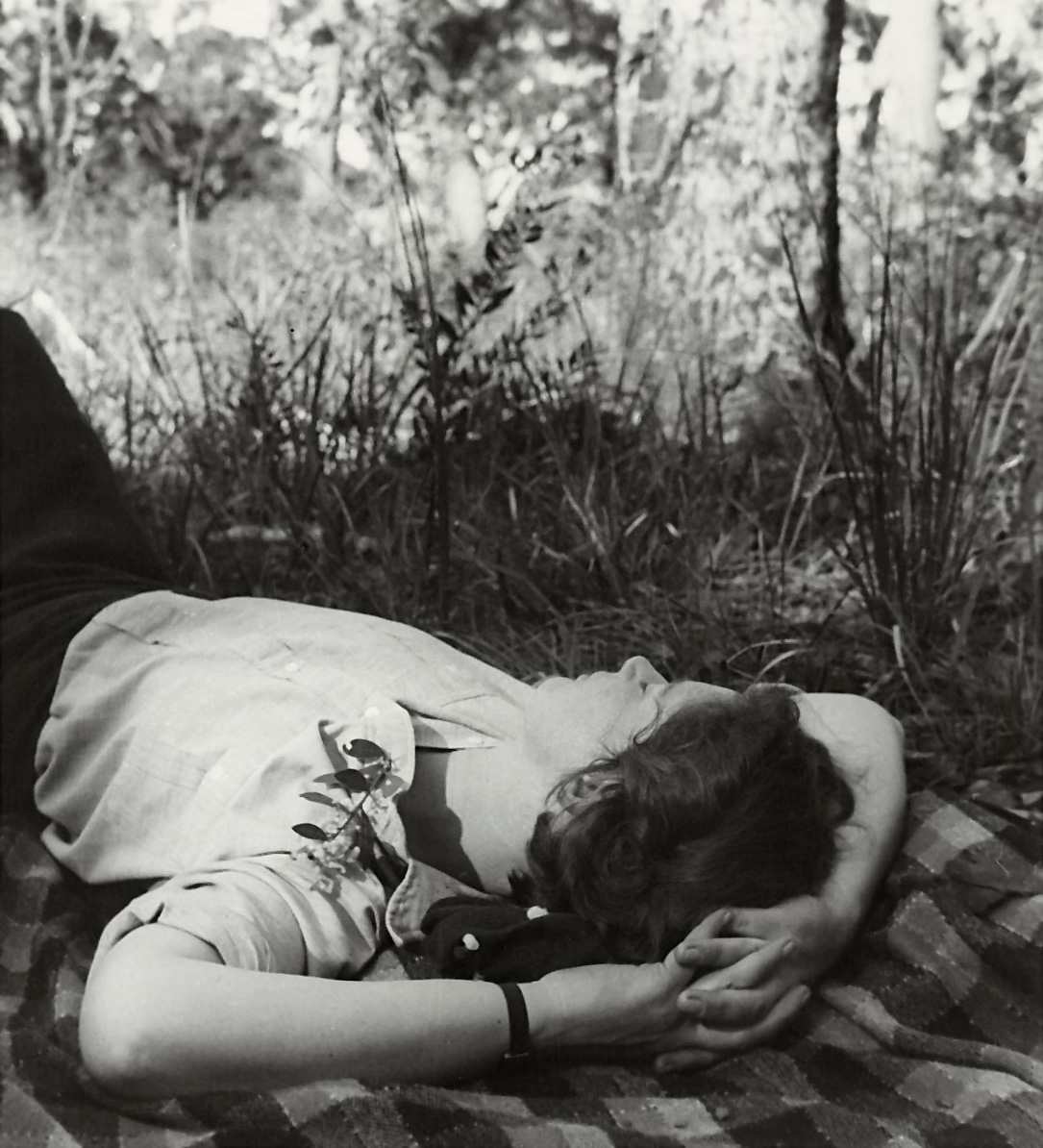
Taken on a camping trip near Culburra, on the Shoalhaven River in New South Wales, in January 1938, Max Dupain’s original version of the Sunbaker was a much darker image that existed at the time only in an album gifted to his friend Chris Van Dyke. Dupain lost the original negative and printed this variant version in 1975 for an exhibition. It is an image that is now considered an icon in Australian photography, and has come to represent key values of the interest in ‘body culture’, celebrating health and fitness in the context of the beach.


Max Dupain (Australian, 1911-1992) 'The carnival at Bondi' 1938


Max Dupain (Australian, 1911-1992)
The carnival at Bondi
1938
Gelatin silver photograph
National Gallery of Australia, Canberra
Purchased 1982


‘The lifesaving teams … are splendid examples of the physique, resourcefulness and vitality of our youth and manhood. They are typical of the outdoor life which Australians lead and they are living testimonies to the value of surfing and the vigour and stamina of our race.’

DAILY EXAMINER, July 1935


Max Dupain (Australian, 1911-1992) 'Manly' 1938, printed c. 1986


Max Dupain (Australian, 1911-1992)
Manly
1938, printed c. 1986
Gelatin silver photograph
National Gallery of Victoria, Melbourne
Purchased from funds donated by Hallmark Cards Australia Pty Ltd, 1987
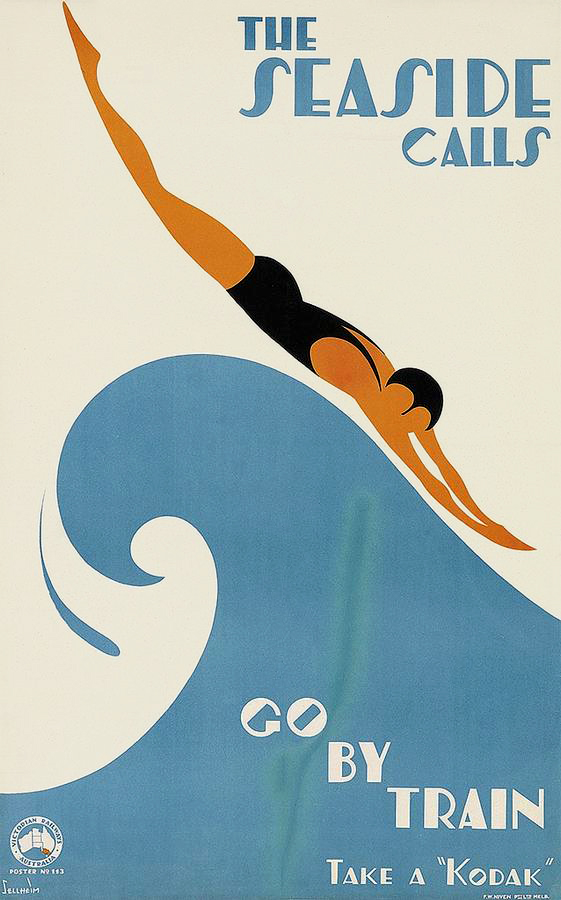
 

Gert Sellheim (Russia (of German parents) 1901-Australia 1970, Australia from 1926) 'The seaside calls - go by train - take a Kodak' 1930s


Gert Sellheim (Russia (of German parents) 1901 – Australia 1970, Australia from 1926)
The seaside calls – go by train – take a Kodak
1930s
Colour lithograph
Printed by F. W. Niven, Melbourne
State Library Victoria, Melbourne
Gift of Mr Grant Lee


Gert Sellheim was born to German parents in Estonia, at that time part of the Russian Empire. After studying architecture in Europe he travelled to Western Australia in 1926, before settling in Melbourne in 1931, where he began working as an industrial and commercial designer. Working for the Australian National Travel Association, Sellheim created a series of posters promoting beach holidays, which incorporated Art Deco motifs and typography. His most famous design is the flying kangaroo logo for Qantas, which he created in 1947.


Douglas Annand (Australian, 1903-1976) Arthur Whitmore (Australian, 1910-1965) 'Sydney Bridge celebrations' 1932


Douglas Annand (Australian, 1903-1976)
Arthur Whitmore (Australian, 1910-1965)
Sydney Bridge celebrations
1932
Colour lithograph
47.6 x 63.6cm (image and sheet)
Australian National Maritime Museum Purchased, 1991
© Courtesy of the artist’s estate


Douglas Annand (Australian, 1903-1976) Max Dupain (Australian, 1911-1992) 'Australia' c. 1937


Douglas Annand (Australian, 1903-1976)
Max Dupain (Australian, 1911-1992)
Australia
c. 1937
Colour and process lithograph
105.3 x 68.4cm (image and sheet)
Australian National Maritime Museum Purchased, 1991
© Courtesy of the artist’s estate


Douglas Annand (attributed to) (Australian, 1903-1976) 'Follow the sun - Australia's 150th Anniversary celebrations' 1938


Douglas Annand (attributed to) (Australian, 1903-1976)
Follow the sun – Australia’s 150th Anniversary celebrations
1938
Colour lithograph and photolithograph
Courtesy of Josef Lebovic Gallery, Sydney


The 1930s were the heyday of the travel poster. Posters were commissioned by railway and tourism groups or shipping companies and airlines to promote Australian holiday destinations, both at home and overseas. The Australian National Travel Association was formed in 1929 to promote Australia to overseas markets. As part of its strategy it commissioned posters from leading graphic artists, such as Percy Trompf, James Northfield and Douglas Annand. From the late 1920s Australia began to actively promote itself to the world by using the beach, sun and surf as motifs.


Installation view of the exhibition 'Brave New World: Australia 1930s' at NGVA with the work of John Rowell, Hilda Rix Nicholas, Gert Sellheim and Percy Trompf on the far wall, and Robert E. Coates 'Photographs of Australian Pavilion at New York World's Fair' (1939) on the projector screen at left

Installation view of the exhibition 'Brave New World: Australia 1930s' at NGVA with the work of John Rowell, Hilda Rix Nicholas, Gert Sellheim and Percy Trompf on the far wall, and Robert E. Coates 'Photographs of Australian Pavilion at New York World's Fair' (1939) on the projector screen at left


Installation views of the exhibition Brave New World: Australia 1930s at NGVA with the work of John Rowell, Hilda Rix Nicholas, Gert Sellheim and Percy Trompf on the far wall, and Robert E. Coates Photographs of Australian Pavilion at New York World’s Fair (1939) on the projector screen at left
Photos: Courtesy NGV Photographic Services


The Australian Pavilion at the New York World’s Fair projected an image of Australia as a young and healthy nation, a place of industry, sport and tourism. Designed by John Oldham of Sydney architectural firm Stephenson & Turner, the modern design of the building was complemented by Douglas Annand’s interior displays featuring the latest graphic design, and audio-visual and photomontage techniques. These photographs of the Australian Pavilion at the New York World’s Fair were taken by commercial photographer Robert E. Coates.


Installation view of Robert E. Coates' 'Photographs of Australian Pavilion at New York World's Fair' (1939)

Installation view of Robert E. Coates' 'Photographs of Australian Pavilion at New York World's Fair' (1939)

Installation view of Robert E. Coates' 'Photographs of Australian Pavilion at New York World's Fair' (1939)

Installation view of Robert E. Coates' 'Photographs of Australian Pavilion at New York World's Fair' (1939)

Installation view of Robert E. Coates' 'Photographs of Australian Pavilion at New York World's Fair' (1939)


Installation views of Robert E. Coates’ Photographs of Australian Pavilion at New York World’s Fair (1939) (digital images, looped)
Photos: Dr Marcus Bunyan


Pastoral landscapes

Along with the beach, another national myth evolved around the Australian bush. Although most Australians lived in cities, in the years following the First World War the nation became increasingly informed by a mythology centred on the bush and the landscape. For those who considered the modern city a profoundly depleting force, the bush was a touchstone of traditional ‘values’. It was nostalgically conceived of as an idyllic natural realm whose soil, literally and metaphorically, sustained its people. Both the classical Pastoral ideal of a land in which only sheep and cattle roam, and the Georgic tradition, which celebrated the achievements of agriculture, became dominant themes in landscape art.

Pastoral landscapes were admired above all as representing the antithesis of ‘decadent’ modern life. As art critic and gallery director J. S. Macdonald wrote, such art would ‘point the way in which life should be lived in Australia, with the maximum of flocks and the minimum of factories’. With their emphasis on farming and pastoral industries, such works affirmed white landownership, with Indigenous people largely absent.


John Rowell (Australian, 1894-1973) 'Blue hills' c. 1936


John Rowell (Australian, 1894-1973)
Blue hills
c. 1936
Oil on canvas
National Gallery of Victoria, Melbourne Felton Bequest, 1936


Gert Sellheim (Russia (of German parents) 1901-Australia 1970, Australia from 1926) 'Spring in the Grampians' 1930s


Gert Sellheim (Russia (of German parents) 1901 – Australia 1970, Australia from 1926)
Spring in the Grampians
1930s
Colour photolithograph
State Library Victoria, Melbourne
Purchased 2000


Hilda Rix Nicholas (Australian, 1884-1961, Europe 1911-1918) 'The fair musterer' c. 1935


Hilda Rix Nicholas (Australian, 1884-1961, Europe 1911-1918)
The fair musterer
c. 1935
Oil on canvas
Queensland Art Gallery, Brisbane
Purchased 1971


As a young artist Hilda Rix Nicholas had a successful career in France before returning to Australia after the First World War. In 1934, several years after the birth of her son, Rix Nicholas returned to painting and depicted her new life living on the family property Knockalong, on the Monaro Plains in New South Wales. Depicting the governess of her young son holding the reins of her horse, dog at her feet, and sheep in the distance, in The fair musterer Rix Nicholas claims for women an active role in the masculine world of pastoral Australia.
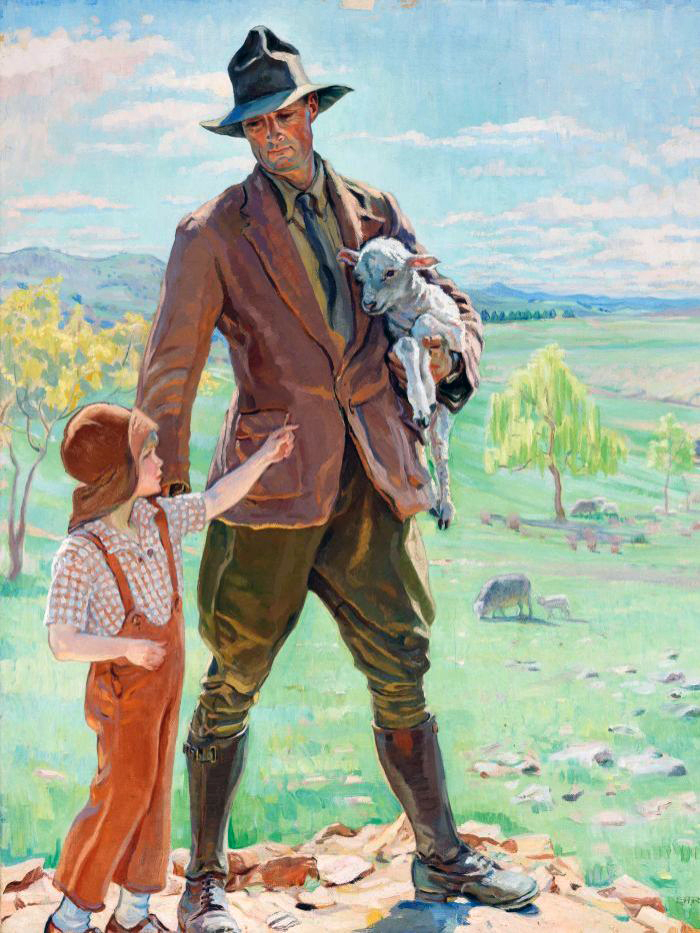
 

Hilda Rix Nicholas (Australian, 1884-1961, Europe 1911-1918) 'The shepherd of Knockalong' 1933


Hilda Rix Nicholas (Australian, 1884-1961, Europe 1911-1918)
The shepherd of Knockalong
1933
Oil on canvas
Collection of Peter Rix, Sydney
Courtesy of Deutscher & Hackett


Depicting the artist’s husband and young son, The shepherd of Knockalong is a reminder of the traditional importance of the wool industry to the nation’s economy. With his legs firmly connected to the ground and pictured as a large figure dominating the landscape setting, the farmer is the benign owner and ‘shepherd’ of the land spreading out behind him, the presence of his young son ensuring dynastic succession. At a time when Aboriginal people were confined to reservations and denied citizenship, Hilda Rix Nicholas’s painting can also be considered as an assertion of the British colonisers’ right to ownership of Australia.


Percy Trompf (Australian, 1902-1964) 'Western Australia' c. 1936


Percy Trompf (Australian, 1902-1964)
Western Australia
c. 1936
Colour lithograph
Courtesy of Josef Lebovic Gallery, Sydney


Indigenous art and culture

During the 1930s Aboriginal people were often pejoratively referred to as a ‘dying race’. The Australian Government continued to enforce a ‘divide and rule’ assimilationist policy. Determined by eugenics, this entailed removing Aboriginal people of mixed descent from their families and reserves, and absorbing them into the dominant society, with consequent loss of their own language and customary ritual practices. Increasingly during this period, Aboriginal people formed their own organisations and agitated for full citizenship rights.

This was also a decade that saw increasing awareness of, and interest in, Indigenous art. Albert Namatjira astonished Melbourne audiences at his first solo exhibition at the Athenaeum Gallery in 1938. Comprising forty-one watercolour paintings, all of his works sold within three days of the opening. The following year the Art Gallery of South Australia purchased one of Namatjira’s works. Indigenous art also inspired non-Indigenous artists, including Margaret Preston and Frances Derham who appropriated design elements in their works. The idea of ‘Aboriginalism’, in which settlers sought an Australian identity in the context of Britishness and the Empire, saw artists travelling to the outback to paint and sketch subjects they believed connected them to Indigenous history.


Frances Derham (Australian, 1894–1987, New Zealand and Ireland 1902-1908) Kangaroo and 'Aboriginal motifs' 1925-1940


Frances Derham (Australian, 1894-1987, New Zealand and Ireland 1902-1908)
Kangaroo and Aboriginal motifs
1925-1940
Linocut printed in brown ink on buff paper
4.6 x 7.3cm (image) 12.6 x 10.3cm (sheet)
National Gallery of Victoria, Melbourne
Gift of Mr Richard Hodgson Derham, 1988
© Estate of Frances Derham


Best known as a progressive educator and advocate of children’s art, Frances Derham was also an active member of the Arts and Crafts Society of Victoria, and with potter Allan Lowe shared Margaret Preston’s interest in the appropriation of Indigenous art. From the mid 1920s Derham began to incorporate Aboriginal motifs into her linocuts and in 1929, synchronous with the exhibition Australian Aboriginal Art at the Museum of Victoria, Derham presented a lecture to the Arts and Crafts Society, entitled ‘The Interest of Aboriginal Art to the Modern Designer’.


Frances Derham (Australian, 1894-1987, New Zealand and Ireland 1902-1908) 'Kangaroo (at the zoo)' c. 1931


Frances Derham (Australian, 1894-1987, New Zealand and Ireland 1902-1908)
Kangaroo (at the zoo)
c. 1931
Linocut printed in brown ink on Chinese paper
National Gallery of Victoria, Melbourne
Gift of Mr Richard Hodgson Derham, 1988


Frances Derham (Australian, 1894-1987, New Zealand and Ireland 1902-1908) 'The Aboriginal artist' 1931


Frances Derham (Australia 1894-1987, New Zealand and Ireland 1902-1908)
The Aboriginal artist
1931
Colour linocut on Japanese paper
National Gallery of Victoria, Melbourne
Gift of Mr Richard Hodgson Derham, 1988
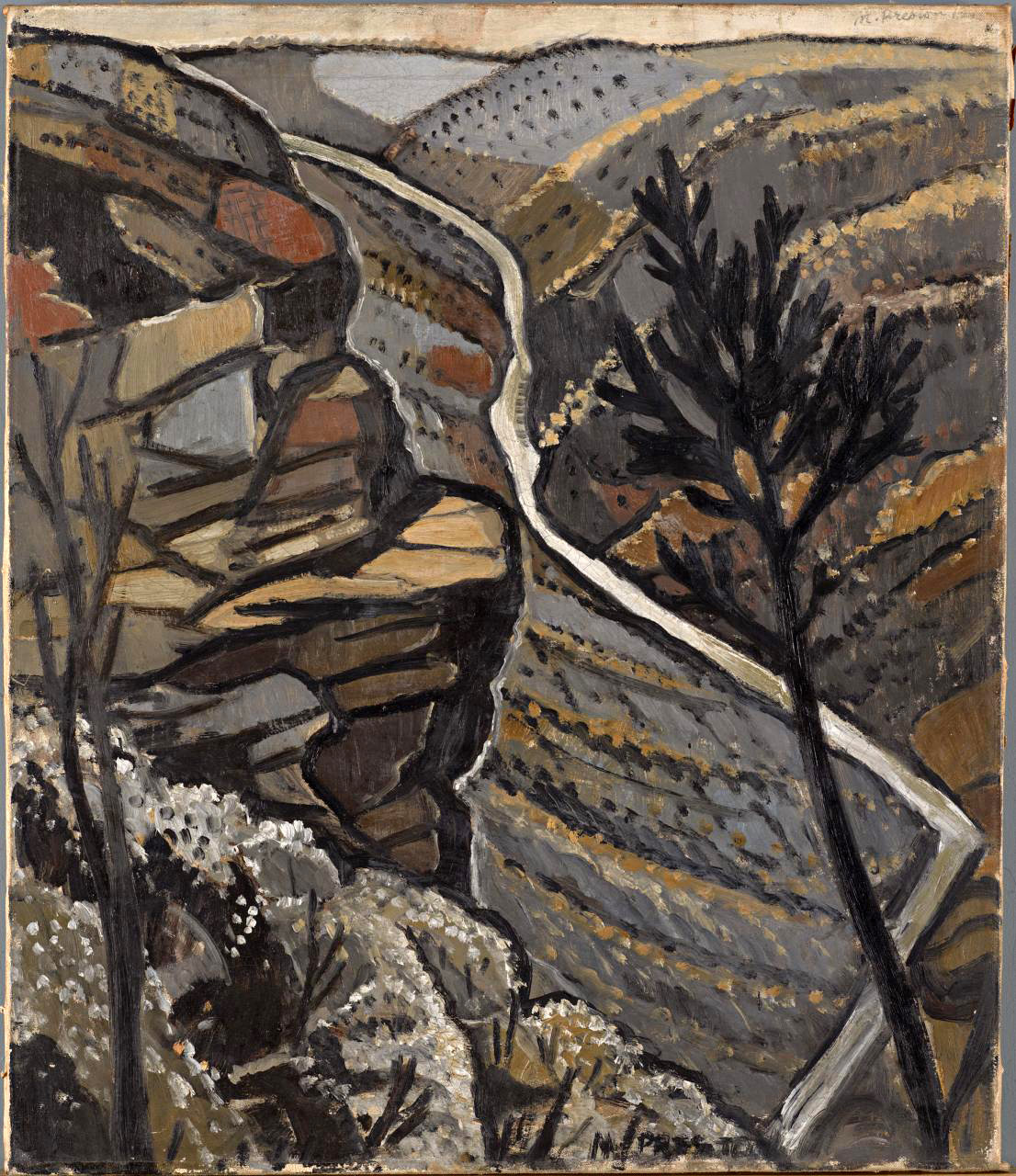
 

Margaret Preston (Australian, 1875-1963, Germany and France 1904-1907, France, England and Ireland 1912-1919) 'Shoalhaven Gorge, New South Wales' 1940-1941


Margaret Preston (Australia 1875-1963, Germany and France 1904-1907, France, England and Ireland 1912-1919)
Shoalhaven Gorge, New South Wales
1940-1941
Oil and gouache on canvas
53.7 x 45.8cm
National Gallery of Victoria, Melbourne
Purchased with funds donated from the Estate of Dr Donald Wright, 2008
© Margaret Preston/Licensed by VISCOPY, Australia


During the 1920s Margaret Preston considered Aboriginal art a source of good design in the decoration of household items. In the 1930s her study of Aboriginal culture intensified, as she developed a greater interest in its anthropological and cosmological elements. In 1940 Preston travelled to the Northern Territory to study Aboriginal art. On her return she developed a more explicit Aboriginal style in paintings featuring earthy tones, strong black outlines and patterns of dots and lines.


Unknown Walamangu active (1930s) 'Dhukurra dhaawu (Sacred clan story)' c. 1935


Unknown
Walamangu active (1930s)
Dhukurra dhaawu (Sacred clan story)
c. 1935
Earth pigments on Stringybark (Eucalyptus sp.), resin
128.3 x 63.9cm
The Donald Thomson Collection
Donated by Mrs Dorita Thomson to the University of Melbourne and on loan to Museums Victoria, Melbourne


During the late nineteenth and early twentieth centuries, segregation was the main government policy regarding Aboriginal people. It was re-enforced by the 1909 Aborigines Protection Act, which gave the Aborigines Protection Board the power to control where Aboriginal people lived in New South Wales. In 1937 the Commonwealth Government adopted a policy of assimilation, whereby Aboriginal people of mixed descent were henceforth to be assimilated into white society, while others were confined to reserves. In 1931 Arnhem Land was declared an Aboriginal Reserve by the government and non-Indigenous entry into the region was restricted.


Tjam Yilkari Katani Liyagalawumirr active 1930s 'Wagilag dhaawu (Wagilag Sisters story)' 1937


Tjam Yilkari Katani
Liyagalawumirr active 1930s
Wagilag dhaawu (Wagilag Sisters story) (installation view)
1937
Earth pigments on Stringybark (Eucalyptus sp.)
The Donald Thomson Collection Donated by Mrs Dorita Thomson to the University of Melbourne and on loan to Museums Victoria, Melbourne
Photo: Dr Marcus Bunyan


For Yolgnu people, painting on bark or objects is intimately connected with painting on the body, and the Yolgnu term barrawan means both ‘skin’ and ‘bark’. These paintings are transcriptions of the sacred designs that were painted onto men’s bodies and convey the power of the Yolgnu ancestors whose actions created their world. The Wagilag Sisters Dreaming story chronicles the creative acts of the sisters as they travelled across Arnhem Land. Such stories pass on important knowledge, cultural values and belief systems to later generations.


Arthur Murch (Australian, 1902-1989, Europe 1936-1940) 'Walila, Pintupi tribe' 1934


Arthur Murch (Australian, 1902-1989, Europe 1936-1940)
Walila, Pintupi tribe
1934
Pencil
National Gallery of Victoria, Melbourne
Purchased, 1934


In 1933, on the invitation of Professor H. Whitridge Davies, Sydney artist Arthur Murch accompanied a research team from Sydney University to Hermannsburg Lutheran Mission, south-west of Alice Springs. Murch remained there for six weeks painting the landscapes and making portraits of Indigenous people. These were exhibited in Sydney soon after his return.
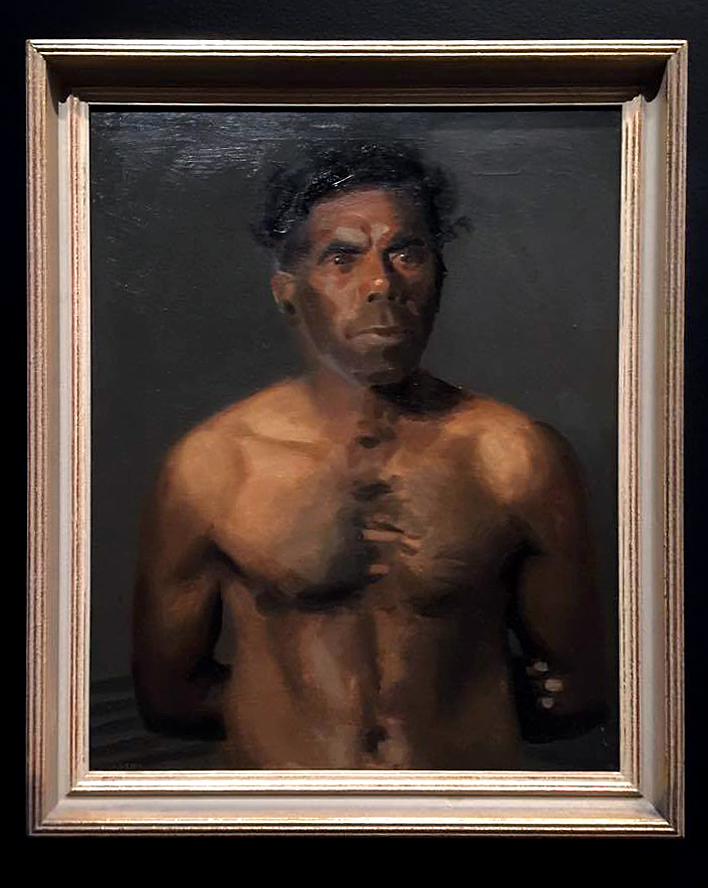
 

Percy Leason (Australia 1888-United States 1959, United States from 1938) 'Thomas Foster' (installation view) 1934


Percy Leason (Australia 1888 – United States 1959, United States from 1938)
Thomas Foster (installation view)
1934
Oil on canvas
State Library Victoria, Melbourne
Gift of Mrs Isabelle Leason, 1969
Photo: Dr Marcus Bunyan


Thomas Foster was born at Coranderrk Station in 1882, the son of Edward Foster and Betsy Benfield. Foster’s was one of the last portraits painted by Leason as part of the unfortunately titled exhibition The Last of the Victorian Aborigines. These portraits were debuted on 11 September at the Athenaeum Gallery in Collins Street, Melbourne, to great public acclaim. Foster, like most of Leason’s subjects, appears shirtless, his arms folded behind his back, pushing forward his chest and clearly showing his scarification marks.


Gert Sellheim (Russia (of German parents) 1901 - Australia 1970, Australia from 1926) 'Corroboree Australia' 1934


Gert Sellheim (Russia (of German parents) 1901 – Australia 1970, Australia from 1926)
Corroboree Australia
1934
Colour lithograph printed by F. W. Niven, Melbourne
State Library Victoria, Melbourne
Gift of the Australian National Travel Association, 1934


Dystopian cities

Australia was hit hard by the Great Depression. The worst year was 1932, when unemployment reached nearly thirty-two per cent, and by the following year almost a third of all unemployed men had been without work for three years. With wages cut and unemployment rising, many families were left struggling to survive and this poverty was most evident in run-down, inner-city areas. Two émigrés, Danila Vassilieff and Yosl Bergner, were the first Australian artists to turn their attention to the plight of the urban poor and the disposed. Their powerful, expressive style was influential upon young artists, including Arthur Boyd and Albert Tucker.

Economic hardship fostered bitterness and political unrest, and membership of radical groups on both the left and right increased. Boundaries between political agendas and art production became porous in this decade, and many artists believed, like Bergner, ‘that by painting we would change the world’. The complex enmeshment of the creative and political became a defining feature of the decade, and art in Australia became increasingly political, with the political realm involving itself with art.

By the end of the decade the worsening political situation overseas and a sense that another world war was inevitable contributed to a growing sense of unease. Many artists expressed this anxiety and foreboding in their works.
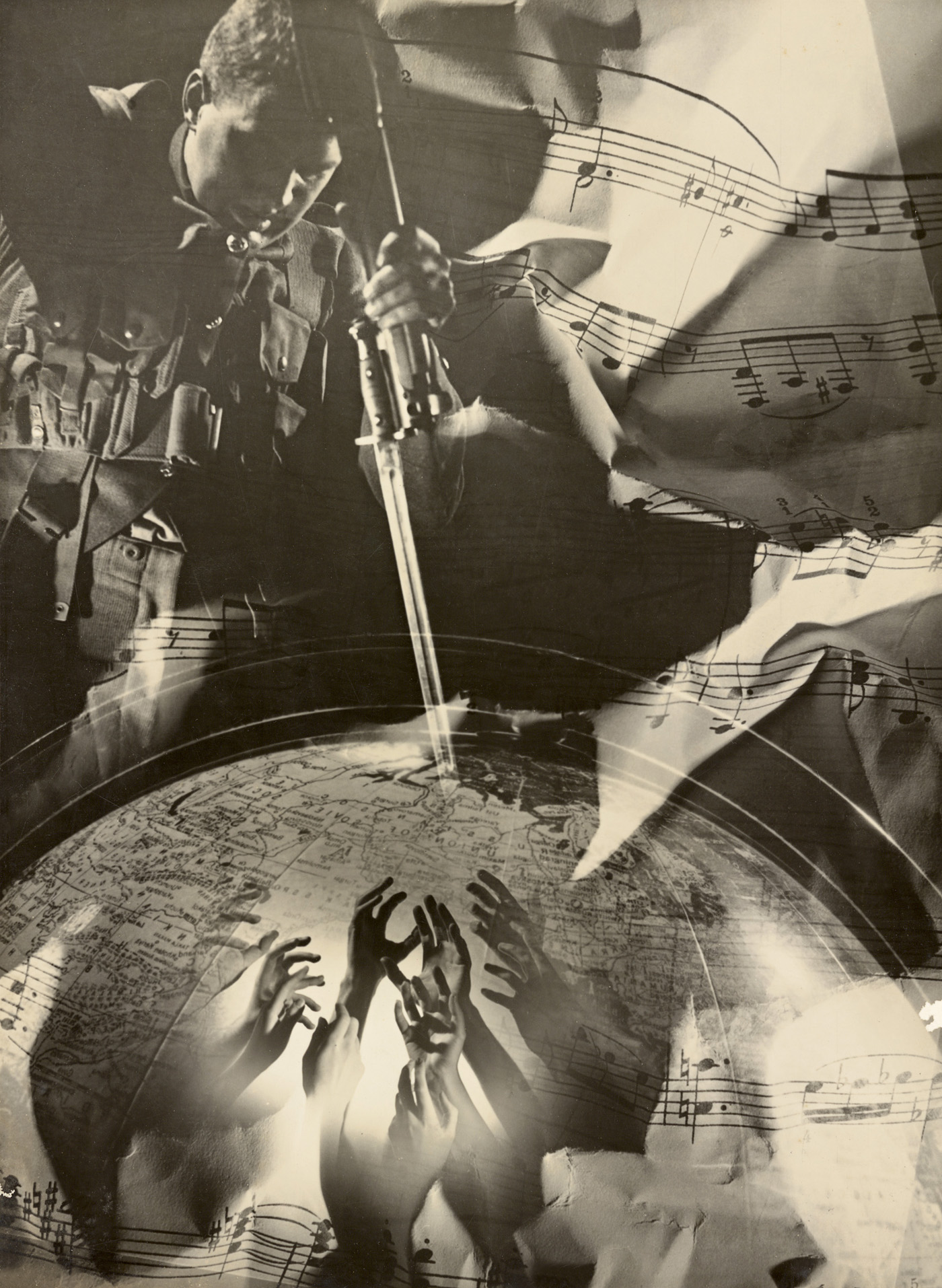
 

Laurence Le Guay (Australian, 1917-1990) 'No title (War montage with globe)' c. 1939


Laurence Le Guay (Australian, 1917-1990)
No title (War montage with globe)
c. 1939
Gelatin silver photograph
30.4 x 24.9cm
National Gallery of Victoria, Melbourne
Purchased through the NGV Foundation with the assistance of Mrs Mem Kirby, Fellow, 2001


Max Dupain (Australian, 1911-1992) 'Hot rhythm!' 1936


Max Dupain (Australian, 1911-1992)
Hot rhythm!
1936
Silver gelatin photograph
24.7 x 17.8cm
National Gallery of Victoria, Melbourne
William Kimpton Bequest, 2016


In this work, Max Dupain has the shadow of a slide trombone seemingly bisect the naked body of a woman in a photograph that, in the context of his known views, is less an erotic celebration of modern jazz culture and nightlife than a comment on the disruptive nature of modernity.


Max Dupain (Australian, 1911-1992) 'Doom of youth' 1937


Max Dupain (Australian, 1911-1992)
Doom of youth
1937
Gelatin silver photograph
National Gallery of Australia, Canberra
Purchased 1982


In Doom of youth – a title taken from Wyndham Lewis’s 1932 polemical book of the same name – Max Dupain creates an allegorical photograph in which a naked male body represents his vision of modern Australia. Using symbols that suggest disempowerment, Dupain implies that the flywheel of mechanisation has doomed youth (the representatives of a nation’s future) to a bleak fate.


Max Dupain (Australian, 1911-1992) 'Night with her train of stars and her gift of sleep' 1936-1937


Max Dupain (Australian, 1911-1992)
Night with her train of stars and her gift of sleep
1936-1937
Gelatin silver photograph
National Gallery of Victoria, Melbourne
William Kimpton Bequest, 2016


Referring to Edward Hughes’s 1912 Symbolist work of the same name, Max Dupain has replaced the painter’s dark-winged goddess of the night, who tries to calm the putti (or ‘stars’) that cling to her, with an updated modern version in which city lights replace starlight. The symbolism of the giant breast that towers over the electric lights of the urban landscape suggests an inversion of the natural for the man-made. The personification of night refers to the Greek goddess Nyx, a powerful force born of Chaos, and the mother of children including Sleep, Death and Pain. Given his often gloomy assessment of modernity, Dupain’s invocation of Nyx seems appropriate in the context.


Installation view of the exhibition 'Brave New World: Australia 1930s' at NGVA with Herbert Badham's 'Paint and morning tea' second left and Albert Tucker's 'Self-portrait' third from right

Installation view of the exhibition 'Brave New World: Australia 1930s' at NGVA with Herbert Badham's 'Paint and morning tea' second left and Albert Tucker's 'Self-portrait' third from right


Installation views of the exhibition Brave New World: Australia 1930s at NGVA with Herbert Badham’s Paint and morning tea second left and Albert Tucker’s Self-portrait third from right
Photos: Courtesy NGV Photographic Services
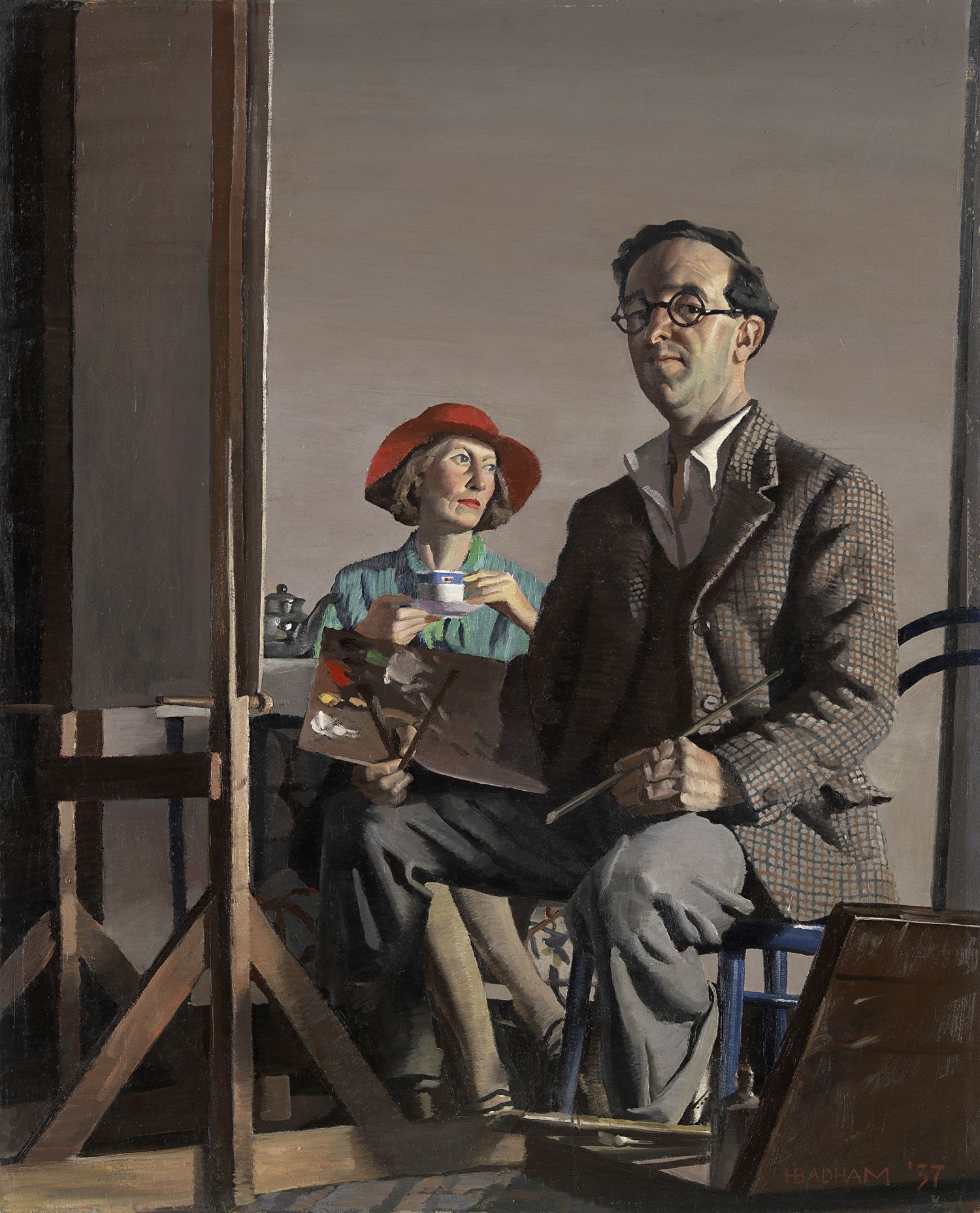
 

Herbert Badham (Australian, 1899-1961) 'Paint and morning tea' 1937


Herbert Badham (Australian, 1899-1961)
Paint and morning tea
1937
Oil on cardboard
75.6 x 71.5cm
National Gallery of Victoria, Melbourne Felton Bequest, 1937
© The Estate of Herbert Badham


Installation view of the exhibition 'Brave New World: Australia 1930s' at NGVA with Albert Tucker's 'Self-portrait' (1937) at left


Installation view of the exhibition Brave New World: Australia 1930s at NGVA with Albert Tucker’s Self-portrait (1937) at left
Photo: Eugene Hyland


Installation view of Albert Tucker's 'Self-portrait' from the exhibition 'Brave New World: Australia 1930s' at NGVA


Installation view of Albert Tucker’s Self-portrait (1937) from the exhibition Brave New World: Australia 1930s at NGVA
Photo: Dr Marcus Bunyan


In the late 1930s Albert Tucker’s contact with émigré artists Yosl Bergner and Danila Vassilieff was to provide important encouragement for him to pursue his artistic vocation and to make art that was responsive to the issues of his time. In 1938 Tucker was a founding member of the Contemporary Art Society, and he became one of the most articulate voices in the often bitter debates between modernists and conservatives. In the 1940s, together with his partner Joy Hester, Tucker was a key member of the group of artists and writers that formed around John and Sunday Reed at Heide.

From 1936 until the early 1940s Albert Tucker chronicled himself with numerous painted and drawn self-portraits. In these works we witness a harrowing disintegration of his physical self, which mirrored the artist’s overwrought emotional state. He recalled: ‘It was a period when the whole world, and all the people I knew, seemed to be seething with ideas and energies and experiences; and my own mind was a seething mess … The highly emotional, overwrought expressionist paintings suited my state at the time’.


Installation view of the exhibition 'Brave New World: Australia 1930s' at NGVA with work by Danila Vassilieff on the centre black wall including 'Street scene with graffiti' (left), 'Truth, Woolloomooloo' (second left) and 'Young girl (Shirley)' the large painting at right; and F. Oswald Barnett's photographs of Melbourne slums in the display cabinet


Installation view of the exhibition Brave New World: Australia 1930s at NGVA with work by Danila Vassilieff on the centre black wall including Street scene with graffiti (left), Truth, Woolloomooloo (second left) and Young girl (Shirley) the large painting at right; and F. Oswald Barnett’s photographs of Melbourne slums in the display cabinet
Photos: Courtesy NGV Photographic Services


Danila Vassilieff (Russia 1897-Australia 1958, Australia from 1923, Central and South America, Europe, England 1929-1934) 'Street scene with graffiti' 1938


Installation view of Danila Vassilieff ‘s Street scene with graffiti (1938) from the exhibition Brave New World: Australia 1930s at NGVA
Photo: Dr Marcus Bunyan
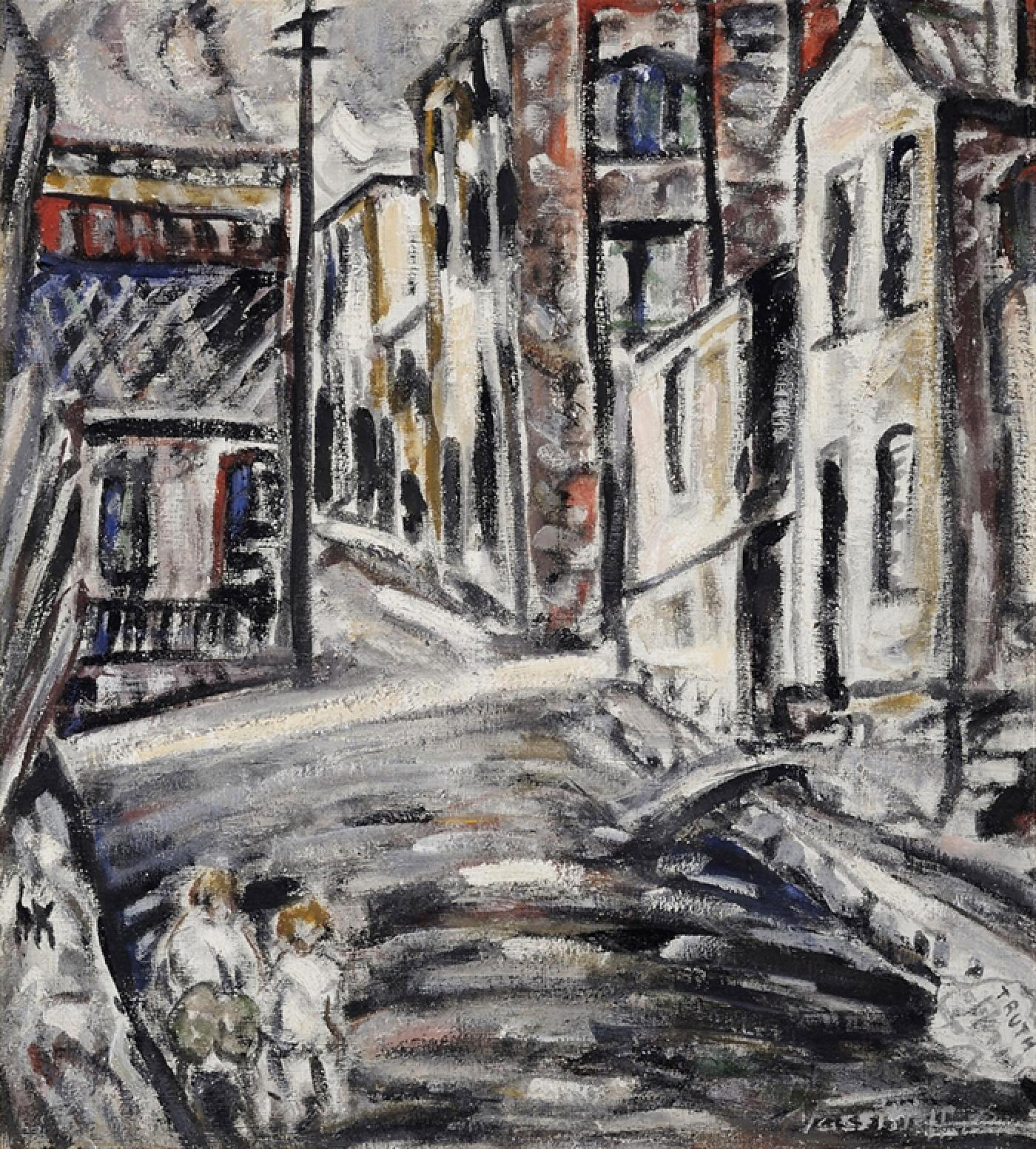
 

Danila Vassilieff (Russia 1897-Australia 1958, Australia from 1923, Central and South America, Europe, England 1929-1934) 'Truth, Woolloomooloo' 1936


Danila Vassilieff (Russia 1897 – Australia 1958, Australia from 1923, Central and South America, Europe, England 1929-1934)
Truth, Woolloomooloo
1936
Oil on canvas
Private collection


It is notable that the first artists to depict the poverty of inner-city slums were two recently arrived émigrés, Danila Vassilieff and Yosl Bergner. Russian-born Vassilieff, who had fought with the white Russian army, first arrived in Australia in 1923 before leaving again in 1929. On his return in 1935 he painted a series of dark streetscapes, depicting the inner suburban areas of Woolloomooloo and Surry Hills in Sydney. Moving to Melbourne, Vassilieff’s expressionist style influenced many young artists, including Lina Bryans, Albert Tucker, Arthur Boyd and Sidney Nolan.


Danila Vassilieff (Russia 1897-Australia 1958, Australia from 1923, Central and South America, Europe, England 1929-1934) 'Young girl (Shirley)' 1937


Danila Vassilieff (Russia 1897 – Australia 1958, Australia from 1923, Central and South America, Europe, England 1929-1934)
Young girl (Shirley)
1937
Oil on canvas on composition board
National Gallery of Victoria, Melbourne
National Gallery Society of Victoria Century Fund, 1984

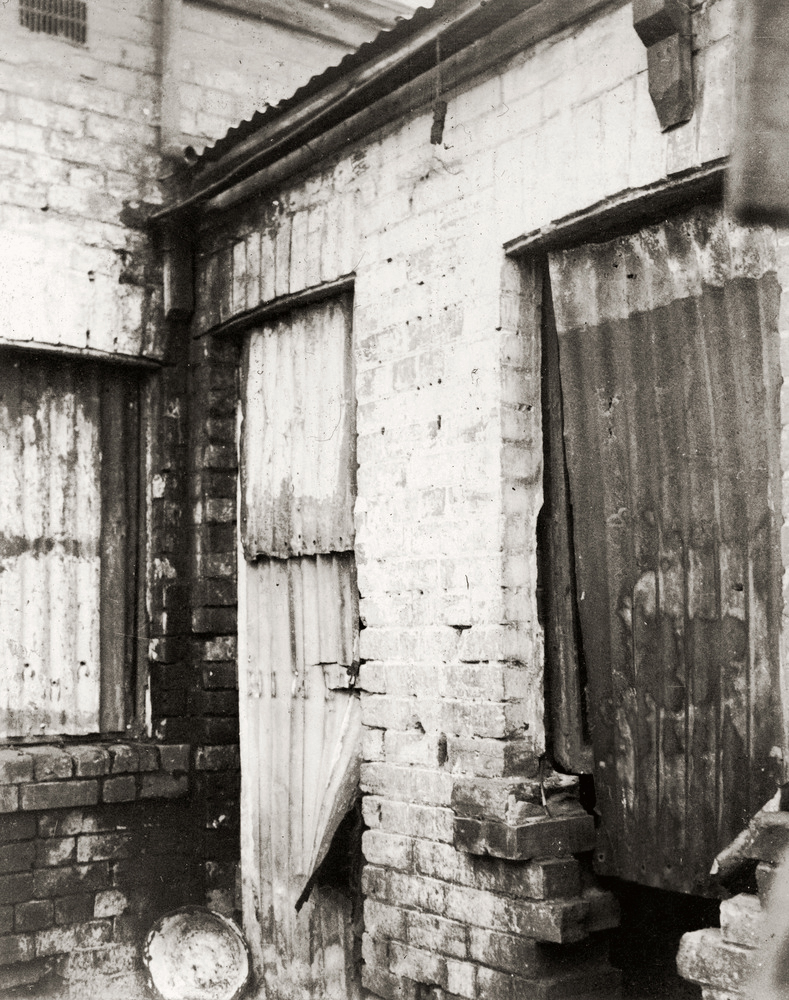
 

F. Oswald Barnett (Australian, 1883-1972) 'Fitzroy. View from the Brotherhood of St Lawrence'

F. Oswald Barnett (Australian, 1883-1972) 'Fitzroy. Rear view of house'

F. Oswald Barnett (Australian, 1883-1972) 'North Melbourne. Group of children in Erskine Place'

F. Oswald Barnett (Australian, 1883-1972) 'West Melbourne. A Dudley Mansion'

F. Oswald Barnett (Australian, 1883-1972) 'Carlton. Wash-house and bath-room 48 Palmerston Street'

F. Oswald Barnett (Australian, 1883-1972) 'North Melbourne. No. 19 Byron Street'

F. Oswald Barnett. 'West Melbourne rubbish tip'


F. Oswald Barnett (Australian, 1883-1972)

Fitzroy. View from the Brotherhood of St Lawrence
Fitzroy. Rear view of house
North Melbourne. Group of children in Erskine Place
West Melbourne. A Dudley Mansion
Carlton. Wash-house and bath-room, 48 Palmerston Street
North Melbourne. No. 19 Byron Street
West Melbourne rubbish tip

c. 1930 – c. 1935
Gelatin silver photograph and typewriting on card
State Library Victoria, Melbourne
F. Oswald Barnett Collection
Gift of Department of Human Services, Victoria 2001


One of the most visible and lasting effects of the Great Depression was the housing crisis in the poor working class areas of Melbourne and Sydney. Many of the nineteenth-century houses had fallen into disrepair, overcrowding was endemic and a great number of families lived in squalid and unhealthy conditions. Throughout the decade ‘slum’ abolition movements in Melbourne and Sydney ran public campaigns to place public housing on the political agenda, leading to the creation of the first state Housing Commissions.

In Melbourne, Methodist layman F. Oswald Barnett led a campaign calling for slum demolition and the rehousing of residents in government-financed housing. He took hundreds of photographs that were used in public lectures and to illustrate the 1937 report of the Housing Investigation and Slum Abolition Board. This led to the creation of the Housing Commission of Victoria in 1938, with its first major project being the Garden City estate at Fishermans Bend. In Sydney a similar campaign led to the Housing Improvement Act of 1936 and the construction of the first fifty-six home units at Erskineville. (NGV)

The photographs in the F. Oswald Barnett Collection were taken by Barnett and other unidentified photographers in the 1930s. Many of them were used to illustrate a government report on slum housing and/or made into lantern slides for lectures in a public campaign.  F. Oswald Barnett was born in Brunswick, Victoria. A committed Methodist and housing reformer, he led a crusade against Melbourne’s inner city slums. In 1936 he was appointed to the Slum Abolition Board and from 1938-1948 he was the vice-chair of the Housing Commission. In this position he attempted to shape compassionate public housing policy. He later protested vigorously against proposed high-rise housing (Monash Biographical Dictionary of 20th century Australia).

See my text, “Communities dismantled,” on the photographs of Frederick Oswald Barnett.


Scenes from Melbourne during the depression (extract)
c. 1935
Black and white film transferred to media player
1 min. 51 sec. silent (looped)
Courtesy of National Film and Sound Archive of Australia, Canberra
Video: Dr Marcus Bunyan


While there is an abundance of newspaper and documentary photographs which document the 1930s shanty towns, slums, relief and charity works, there is very little moving image recordings available. Instead, the moving image medium at the time was primarily focused on providing entertainment that would allow the audience temporary relief from the Depression. This rare footage depicts slum areas of inner Melbourne, and provides great insight into the horrible living conditions that many Australian families experienced.
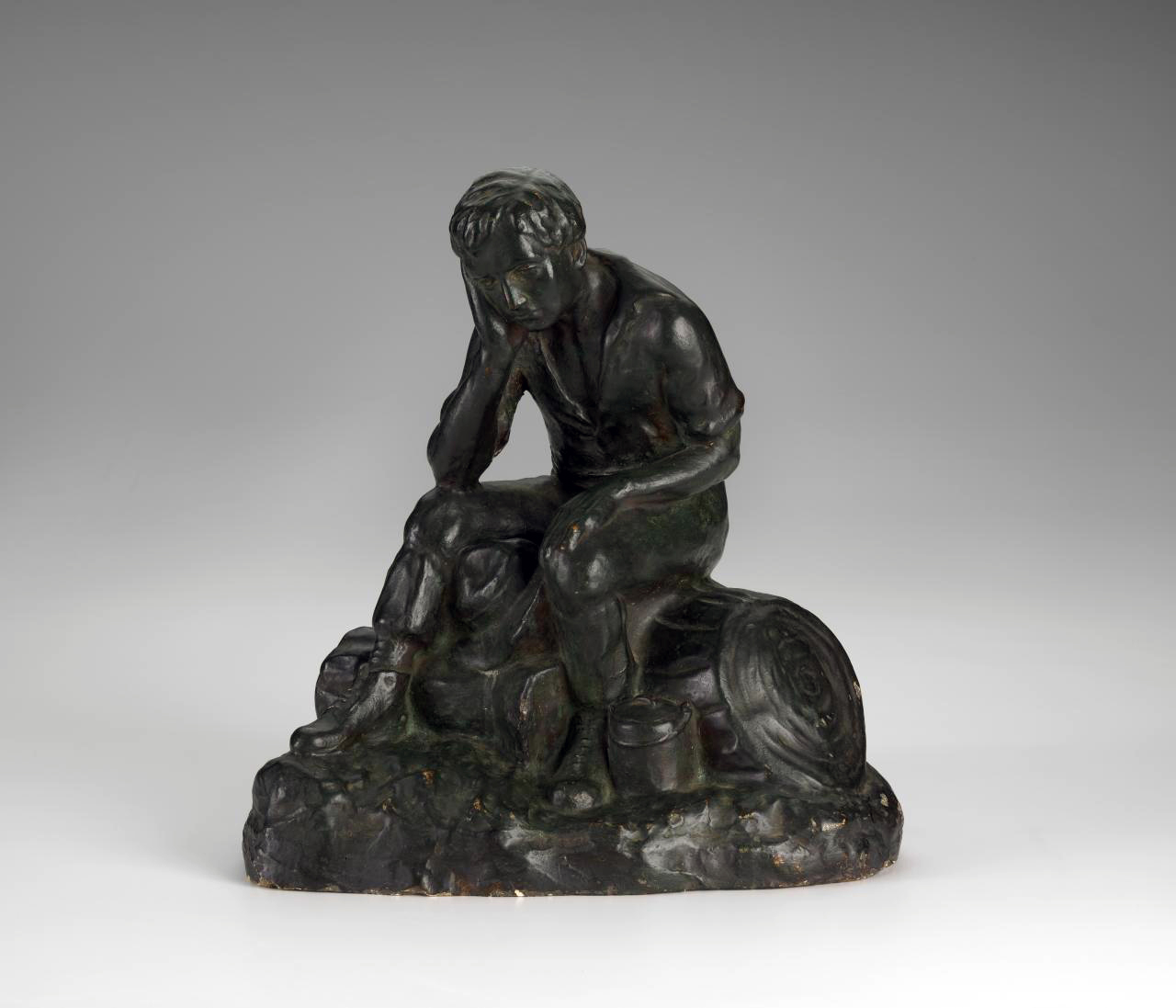
 

Ola Cohn (Australian, 1892-1964, England 1926-1930) 'The sundowner' 1932


Ola Cohn (Australian, 1892-1964, England 1926-1930)
The sundowner
1932
Painted plaster
National Gallery of Victoria, Melbourne
Gift of Jack and Zena Cohn, 2016


Ola Cohn studied sculpture with Henry Moore at the Royal College of Art in London in the 1920s. She returned to Melbourne in 1930, where the following year her solo exhibition established her as a leading proponent of modern sculpture. During the Depression the sight of ‘swagmen’ or ‘sundowners’ became commonplace as unemployed men travelled across the country in order to find work. In 1932 Cohn submitted this maquette of a sundowner to a competition for a full-scale sculpture to be erected in Fitzroy Gardens in Melbourne: unsurprisingly it was not chosen as the winning entry.


Installation view of the exhibition 'Brave New World: Australia 1930s' at NGVA with Bernard Smith's 'The advance of Lot and his Brethren' at centre and Albert Tucker's 'The futile city' at right


Installation view of the exhibition Brave New World: Australia 1930s at NGVA with Bernard Smith’s The advance of Lot and his Brethren at centre and Albert Tucker’s The futile city at right
Photo: Eugene Hyland


Installation view of Bernard Smith's 'The advance of Lot and his Brethren' from the exhibition 'Brave New World: Australia 1930s' at NGVA


Installation view of Bernard Smith’s The advance of Lot and his Brethren from the exhibition Brave New World: Australia 1930s at NGVA
Photo: Dr Marcus Bunyan


Bernard Smith (Australian, 1916-2011, England and Europe 1948-1951) 'The advance of Lot and his Brethren' 1940


Bernard Smith (Australian, 1916-2011, England and Europe 1948-1951)
The advance of Lot and his Brethren
1940
Oil on canvas
National Gallery of Australia, Canberra
Gift of the artist, 2008


In the early 1930s, artists depicted the city as a modern utopia, a place of triumphant progress and aspiration later in the decades, a new radical iconography of the city as a place of moral decay and corruption appeared. Painted at the start of the Second World War, Lot and his brethren expresses Bernard Smith’s despair at the conflagration that the world had been plunged into. Based on the biblical story of Lot, who fled from God’s destruction of Sodom, Smith depicts Karl Marx as the saviour who leads his people from the burning city.


Albert Tucker (Australian, 1914-1999, Europe and United States 1947-1960) 'The futile city' 1940


Albert Tucker (Australian, 1914-1999, Europe and United States 1947-1960)
The futile city
1940
Oil on cardboard
Heide Museum of Modern Art, Bulleen, Melbourne
Purchased from John and Sunday Reed, 1980


At the start of the Second World War Surrealism was an important influence upon Albert Tucker, as were the writings of T. S. Eliot. The futile city was inspired by Eliot’s epic poem The Waste Land (1922): ‘I came on T. S. Eliot, and instantly I recognised a twin soul because here was horror, outrage, despair, futility, and all the images that went with them. He confirmed my own feelings and also became a source … because of the images that would involuntarily form while I was reading the poetry’.


Installation view of the exhibition 'Brave New World: Australia 1930s' at NGVA with Yosl Bergner's 'Citizen' (c. 1940) at left


Installation view of the exhibition Brave New World: Australia 1930s at NGVA with Yosl Bergner’s Citizen (c. 1940) at left
Photo: Eugene Hyland


Installation view of Yosl Bergner's 'Citizen' from the exhibition 'Brave New World: Australia 1930s' at NGVA


Installation view of Yosl Bergner’s Citizen (c. 1940) from the exhibition Brave New World: Australia 1930s at NGVA
Photo: Dr Marcus Bunyan


Yosl Bergner was one of approximately 7000-8000 Jewish people, mainly from Germany, Austria and Czechoslovakia, who arrived in Australia between 1933 and 1939 fleeing Nazi persecution. This number included many artists, musicians, architects, writers and intellectuals who were to contribute greatly to Australia’s cultural life. However, government policy remained opposed to large-scale intake of Jewish refugees, and some were met with anti-Semitic sentiments upon their arrival.


Yvonne Atkinson (Australia 1918-99) 'The tram stop' 1937


Installation view of Yvonne Atkinson The tram stop (1937) from the exhibition Brave New World: Australia 1930s at NGVA
Photo: Dr Marcus Bunyan


Max Dupain (Australian, 1911-92) 'Brave New World' 1938


Max Dupain (Australian, 1911-1992)
Brave New World
1938
Gelatin silver photograph
29 x 20cm
National Gallery of Victoria, Melbourne
William Kimpton Bequest, 2017


In 1935 Max Dupain referred to Aldous Huxley’s book Brave New World (1932) in his photograph of a woman trapped by technology. Dupain was attracted to this biting satire on the ethical dilemmas of social engineering because it appeared to endorse his own fervently held ideas of how modernity was affecting the individual and national body. At the time his choice to directly reference this book was surprisingly provocative: Brave New World had been banned by the Australian customs department, with existing copies rounded up and burned. Dupain returned again to the theme in 1938, producing this variant version.
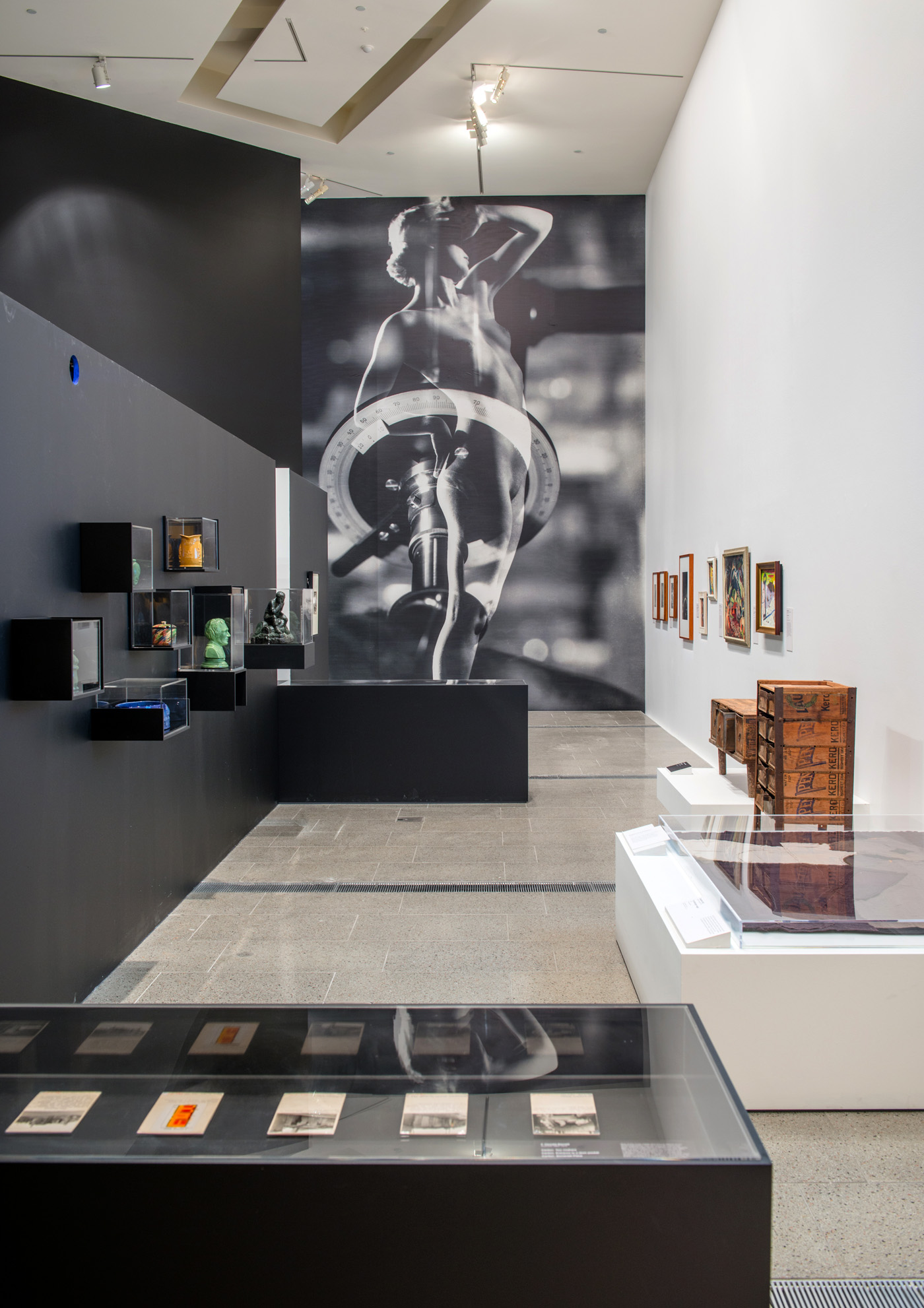
 

Installation view of the exhibition 'Brave New World: Australia 1930s' at NGVA with Max Dupain's 'Brave New World' (wall print) at centre rear with Sideboard and Chest of drawers at right


Installation view of the exhibition Brave New World: Australia 1930s at NGVA with Max Dupain’s Brave New World (wall print) at centre rear with Sideboard and Chest of drawers at right
Photo: Eugene Hyland


Installation view of Sideboard and Chest of drawers from the exhibition 'Brave New World: Australia 1930s' at NGVA


Installation view of Sideboard and Chest of drawers from the exhibition Brave New World: Australia 1930s at NGVA
Photo: Eugene Hyland

Unknown, Australia
Sideboard
1920s-1940s
Painted wood, wood, tin
National Gallery of Victoria, Melbourne
Purchased NGV Foundation, 2013

Unknown, Australia
Chest of drawers
1920s-1940s
Painted wood, wood, tin
National Gallery of Victoria, Melbourne
Purchased NGV Foundation, 2013


Unknown, Australia. 'Sideboard' 1920s-1940s


Unknown, Australia
Sideboard
1920s-1940s
Painted wood, wood, tin
National Gallery of Victoria, Melbourne
Purchased NGV Foundation, 2013


Unknown, Australia. 'Chest of drawers' 1920s-1940s


Unknown, Australia
Chest of drawers
1920s-1940s
Painted wood, wood, tin
National Gallery of Victoria, Melbourne
Purchased NGV Foundation, 2013


Working-class people were the most affected by the high levels of unemployment during the Depression. By 1932 more than 60,000 men, women and children were dependent on the susso, a state-based sustenance payment that enabled families to buy only the bare minimum of food. Many families unable to pay their rent were evicted from their homes. For those suffering economic hardship, ‘making do’ became a way of life, and furniture would be constructed from found items such as kerosene tins and packing crates.


J. M. Harcourt (writer) John Long (publisher) 'Upsurge' 1934


J. M. Harcourt (writer) (Australian, 1902-1971)
John Long (publisher)
Upsurge
1934
London, March 1934
State Library Victoria, Melbourne


Censorship of books was vigorously pursued by federal and state governments during the 1930s. Australia was one of only two countries in the world to ban Aldous Huxley’s Brave New World when it was first published in 1932. Australian author J. M. Harcourt’s novel Upsurge (1934) was the first book to be banned following a recommendation by the newly established Book Censorship Board in 1934. Portraying the lives of Western Australia’s working class during the Depression, it was described by one customs official as ‘thinly disguised propaganda on behalf of Communism and social revolution’.


Activism

During the 1930s a small number of artists became active in the militant working-class struggle through their involvement in social and cultural organisations affiliated with the Communist Party, such as the Friends of the Soviet Union, the Workers’ Art Club and the Workers’ Theatre Group, which were formed in Sydney, Melbourne and other metropolitan centres. A number of these artists were also involved with a variety of mostly short-lived radical magazines, helping with their production, as well as providing covers and illustrations. Linocuts were a preferred medium for these artists, as the materials were inexpensive and the images reproduced well.
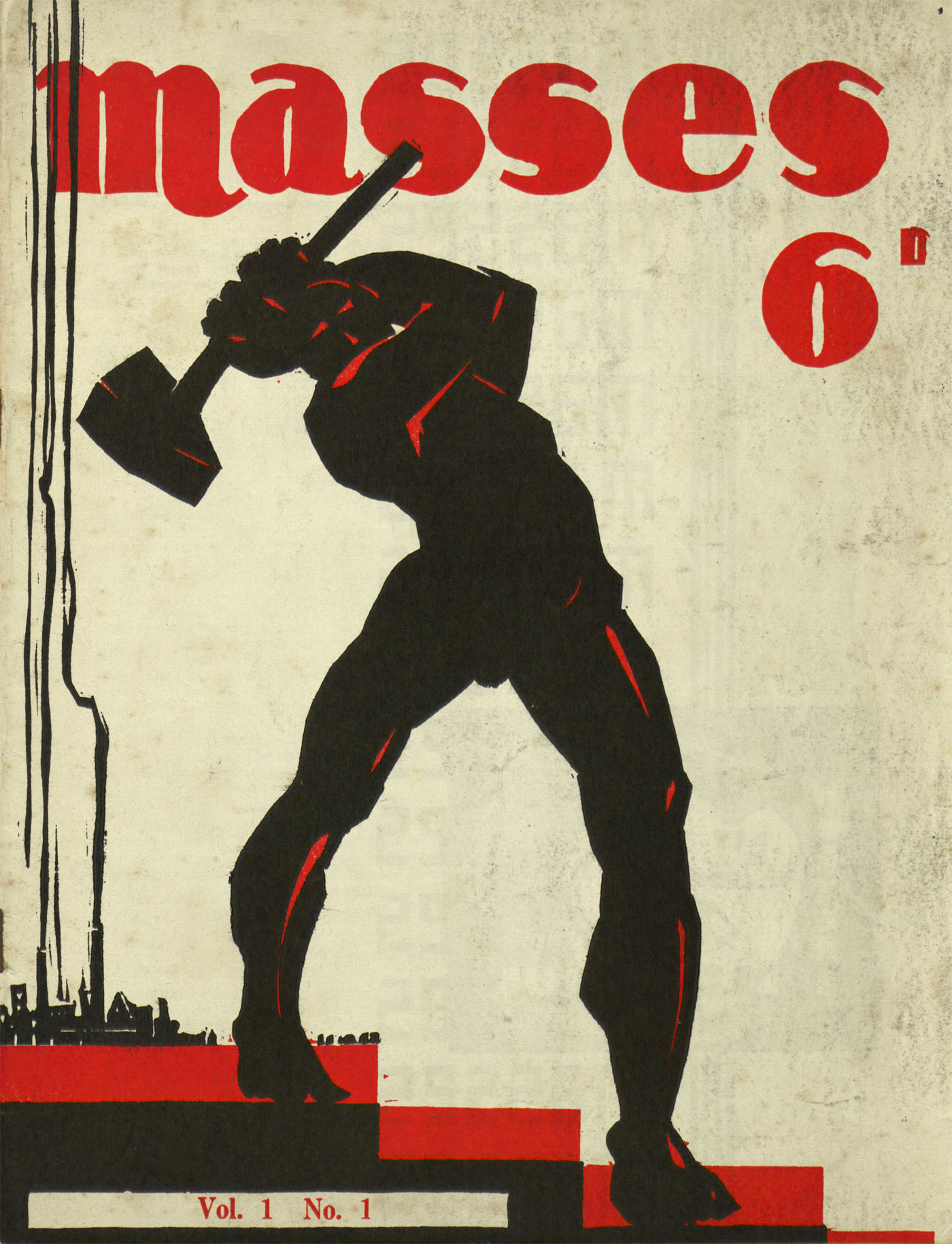
 

Jack Maughan illustrator (Australian, 1897-1980) 'Masses' 1932


Jack Maughan (illustrator) (Australia 1897-1980)
Masses
Cover illustration for Masses, vol. 1, no. 1, printed by Bright Printing Services, published by the Workers’ Art Club, Melbourne, November 1932
1932
Linocut printed in red and black ink
State Library Victoria, Melbourne


Installation view of Herbert McClintock's cover illustration for 'Strife', vol. 1, no. 1


Installation view of Herbert McClintock’s cover illustration for Strife, vol. 1, no. 1 (1930) from the exhibition Brave New World: Australia 1930s at NGVA
Photo: Dr Marcus Bunyan


Edited by eighteen-year-old communist Judah Waten, with Herbert McClintock as art editor, Strife declared itself ‘an organ of the new culture, destructive and constructive’. The first issue was due for release in October 1930; however, a blasphemous poem by Brian Fitzpatrick published in the magazine prompted a police raid on the Strife office and the editor’s hasty destruction of (most) copies of the issue.


Installation view of cover illustration for 'Proletariat', vol. 2, no. 1 (1933) by an unknown illustrator


Installation view of cover illustration for Proletariat, vol. 2, no. 1 (1933) by an unknown illustrator from the exhibition Brave New World: Australia 1930s at NGVA
Photo: Dr Marcus Bunyan


The Ian Potter Centre: NGV Australia
Federation Square
Corner of Russell and 
Flinders Streets, Melbourne

Opening hours:
Open daily 10am – 5pm
National Gallery of Victoria website

LIKE ART BLART ON FACEBOOK

Back to top

Review: ‘Patrick Pound: The Great Exhibition’ as part of the NGV Festival of Photography at NGV Australia, Melbourne Part 2

Exhibition dates: 31st March – 30th July, 2017

Photographs are in the chronological room order of the exhibition.


Entrance


Patrick Pound (New Zealander / Australian, b. 1962) 'Pairs (and the double)' 2016-2017 (detail) from the exhibition 'Patrick Pound: The Great Exhibition' as part of the NGV Festival of Photography at NGV Australia, Melbourne, March - July, 2017


Patrick Pound (New Zealand/Australian, b. 1962)
The entrants (detail)
2016-2017
Site specific installation comprising objects collected by the artist and works from the NGV Collection
Courtesy of the artist, Station, Melbourne, Stills Gallery, Sydney, Hamish McKay Gallery, Wellington and Melanie Roger Gallery, Auckland
© Patrick Pound


e e e e e e e e e e e e e e e e e e e e e e e e e e e e e e e e e e e e e e e e e e e e e e e e e e e e e e e e e e e e e e e e e e e e e e e e e e e e e e e e e e e e e e e e e e e e e e e e e e e e e e e e e e e e e e e e e e e e e e e e e e e e e e e e e e e e e e e e e e e e e e e e e e e e e e e e e e e e e e e e e e e e e e e e e e e e e e e e e e e e e e e e e e e e e e e e e e e e e e e e e e e e e e e e e e e e e e e e e e e e e e e e e e e e e e e e e e e e e e e e e e e e e e e e e e e e e e e e e e e e e e e e e e e e e e e e e e e e e e e e e e e e e e e e e e e e e e e e e e e e e e e e e e e e e e e e e e e e e e e e e e e e e e e e e e e e e e e e e e e e e e e e e e e e e e e e e e e e e e e e e e e e e e e e e e e e e e e e e e e e e e e e e e e e e e e e e e e e e e e e e e e e e e e e e e e e e e e e e e e e e e e e e e e e e e e e e e e e e e e e e e e e e e e e e e e e e e e e e e e e e e e e e e e e e e e e e e e e e e e e e e e e e e e e e e e e e e e e e e e e e e e e e e e e e e e e e e e e e e e e e e e e e e e e e e e e e e e e e e e e e e e e e e e e e e e e e e e e e e e e e e e e e e e e e e e e e e e e e e e e e e e e e e e e e e e e e e


E


This polymorphic album of an exhibition by Patrick Pound at NGV Australia, Melbourne is unfortunately stuck with a most ridiculous title.

The great “show and tell” consists of 6 large galleries which are crammed full of thousands of photographs from the artists collection and artefacts from the NGV collection which form a (according to the exhibition blurb) “diagrammatic network of intersections, and in that way shows one of the underlying ideas of the whole exhibition, which is to seek out patterns and similarities and connections across objects and works of art and ideas. In other words, one thing leads to another.”

Not necessarily.

Pound is interested in the writing of Georges Perec (a member of the Oulipo group of writers and mathematicians which formed in France in 1960) and his use of “restrictions in his writing as a way of encouraging new patterns and structures.” Perec wrote a whole novel in 1969, A Void, translated from the original French La Disparition (literally, “The Disappearance”) entirely without using the letter e (except for the author’s name). Oulipo writers sought to produce a document that undermines its own reliability. Through structures – or constraints – on composition, Oulipo writers sought to produce new and interesting works.

In a similar vein Pound restricts his collections of photographs to restrictive themes, such as people falling, sleepers, holes, readers, the air, lamps, listening to music, hands, shadows, interventions, backs, possibly dead people, holding cameras, self-portraits, doubles, entrants, etc. He seeks to gather his thoughts through these collections, and proposes that collecting found photographs “is like taking cuttings from the world.” A form of collage.

For me the grouping of all these “found” photographs together in display cases is a form of conceptual conceit: the collection of such varied instances of the shadow of the photographer appearing in every image, for example, means very little. Unlike the restrictions that Perec proposes which lead to interesting outcomes, Pound’s restrictions do not enrich the individual photographs by placing them all together, in fact the opposite. The totality is less than the sum of the parts. Reductio ad absurdum.

As individual photographs (as seen below in this posting), the images have presence, they have an aura which emanates from the moment, and context, in which the photograph was taken. Different in each instance. But in this exhibition we are overwhelmed by thousands of images and cannot give them due attention; the photographic “trace” becomes specious. The aura of the singular image is denuded; the aura of the collective does not exist. The collections become the collective photograph (of space) as reassurance: that the interrupting time freeze of individual photographs is not unique and occurs again and again and again. Pound’s collections are a form of photographic cancer… a kind of photographic plate-spinning, where the artist tries to keep all topics rotating in mid-air.

Pound’s existential typologies and classifications are a form of superficial play, using one photo to beget another. The addition of artefacts from the NGV collection only highlights the folly, in which two ceramic parrots paired with a photograph of two parrots is the indulgent nadir. The typologies and collections can, however, be seen as an ironic comment on the nature of our image saturated society, where millions of photographs are uploaded and viewed on the www every day. They can also be seen as a comment on the way people view photography in contemporary culture, where every selfie or picture of what I had for breakfast is posted online for consumption. While I admire Pound’s pugnaciousness and the obsessiveness needed to collect all of these images (being a collector myself) and, further, the tenacity required to catalogue and arrange them all – I really wonder about the clinamen, a term coined by Lucretius to describe the unpredictable swerve of atoms in his version of physics. It was adopted by the Oulipo set as – quoting Paul Klee – ‘the error in the system’. By gathering all of these photographs together in groups, the periphery becomes the centre … AND LOSES ITS UNPREDICTABILITY – the collective photographs loose their punctum, their unpredicatability. The photographs loose their individual transcendence of time. Perec’s missing eeeeeeeeeeeeeee’s at the beginning of this text thus exclude chaos, randomness, the capital E.

Other statements and ideas also grate. “The camera reduces the world to a list of things to photograph. When I click BUY on eBay – for me that’s the equivalent of taking a photograph. The mouse is my camera.” Well, no actually. The camera never reduces the world, it just is, it’s a machine. It is the person who takes the photograph, the human, that reduces the world to what they want to photograph. And when you click BUY on eBay it is not the equivalent of taking a photograph. You have used your money, your capitalism, your CAPITAL, to purchase your DESIRE. You are taking someone else’s vernacular, their moment of deciding what to photograph, to purchase their desire so that you can possess it yourself. You are coveting time and space. “Eventually every photograph is a photograph of a dead person.” Well, no actually, because not every photograph is of a person. “The camera is an idling hearse.” Yes, and so is your body, and the motor car, and walking across the road. The effect of these oblique statements is to further dumb down the public understanding of photography.

The work in the exhibition starts to come alive in Room 2 The Museum of There / Not there, where all of the things in the room are asked to stand in for an absence, where everything is a remnant or a trace. “Each thing here is a reminder of something else, it can be seen a surrogate or a partial representation.” The dissociative associations challenge the viewer to create their own connections and narratives from the objects placed before them. They mentally challenge the viewer to imagine. This challenge is further heightened in some of the best work in the exhibition, the series Portmanteau – definition: a large travelling bag; a word blending the sounds and combining the meanings of two others: podcast is a portmanteau, a made-up word coined from a combination of the words iPod and broadcast – in which visually disparate images (a cloud, a person blowing gum; a golf ball hovering over the cup, an eclipse) make unusual but sympathetic and intriguing connections across time and space. Photographs such as High wire act (2015) and The Fountainhead (2016, both below) are complex and creative examples of focused image making which reminded me of the Bauhaus collages of Josef Albers where Albers nowhere changes, “the rules of the game more profoundly than in his collages that feature a multitude of photographs. His collage of a bullfight in San Sebastian can be read as a short story or experimental film, where we as viewers recognise that we are being transported to a distant time and place, no less enchanting for its impossibility.” Randomness and synchronicity are back in the game.

Speaking of games, my favourite Pound objects in the exhibition were his Solander box series The game of things (2016, below). Their charm, wittiness, beauty, visual and mental acuity put paid to many other forced associations in the exhibition. He observes that, “Some things have little to do with each other until they come into contact.” But even when they do come into contact, they can still have very little to do with each other. Why The game of things series works so well is that Pound restricts himself (yes that Perec restriction that actually means something) in order / disorder to create something new and interesting, a document that undermines its own reliability (its a game!). The clinamen, the unpredictable swerve which, according to Lucretius occurs “at no fixed place or time” and which provides the “free will which living things throughout the world have” appears. Pound’s free will combines disparate elements in a pared down aesthetic, a playful game, where there is no need for thousands of photographs to focus his ideas.

While Pound’s description of multiplicities, repetitions and differences is engaging in a humorous and ironic way as “lines of escape from the generalities of society,” they create distance from laws and norms even while still re-enacting them. Much more interesting are Pound’s subversions of a singular reality through the overlapping of images – both mental and physical. While existing in a physical space, the “game of things” actually lives in my mind because humanness is the ultimate clinamen.

Dr Marcus Bunyan

Word count: 1,372


Many thankx to the National Gallery of Victoria for allowing me to publish the photographs in the posting. Please click on the photographs for a larger version of the image. See Part 1 of the posting.


A page from Georges Perec's book 'Species of Spaces (Espèces d'espaces) and Other Pieces' 1974


A page from Georges Perec’s book Species of Spaces (Espèces d’espaces) and Other Pieces 1974


Installation view of the exhibition 'Patrick Pound: The Great Exhibition' at NGV Australia, Federation Square with the work 'The photographer's shadow' (2000-2017) right


Entrance to the exhibition Patrick Pound: The Great Exhibition with the work The photographer’s shadow (2000-2017) right
Photo: Wayne Taylor


Installation view of the exhibition 'Patrick Pound: The Great Exhibition' at NGV Australia, Federation Square showing Patrick Pound's work 'The photographer's shadow' (2000-2017, detail)


Installation view of Patrick Pound’s work The photographer’s shadow (2000-2017, detail)
Photo: Wayne Taylor


Installation view of the exhibition 'Patrick Pound: The Great Exhibition' at NGV Australia, Federation Square showing Patrick Pound's work 'The photographer's shadow' (2000-2017, detail)


Installation view of Patrick Pound’s work The photographer’s shadow (2000-2017, detail)
Photo: Wayne Taylor


Patrick Pound (New Zealander/Australian, b. 1962)
The photographer’s shadow (detail)
2000-2017
Site specific installation comprising photographs collected by the artist
Video: © Dr Marcus Bunyan, National Gallery of Victoria and Patrick Pound


Patrick Pound (New Zealander/Australian, b. 1962) 'The photographer's shadow' 2000-2017 (detail) from the exhibition 'Patrick Pound: The Great Exhibition' as part of the NGV Festival of Photography at NGV Australia, Melbourne, March - July, 2017


Patrick Pound (New Zealander/Australian, b. 1962)
The photographer’s shadow (detail)
2000-2017
Collection of the artist
Courtesy of Station, Melbourne, Stills Gallery, Sydney, Hamish McKay Gallery, Wellington and Melanie Roger Gallery, Auckland
© Patrick Pound


Patrick Pound (New Zealander/Australian, b. 1962)
People holding cameras (detail)
2007-2017
Site specific installation comprising photographs collected by the artist
Video: © Dr Marcus Bunyan, National Gallery of Victoria and Patrick Pound


Room 1


Installation view of the exhibition 'Patrick Pound: The Great Exhibition' at NGV Australia, Federation Square. Presented as part of the NGV Festival of Photography

Installation view of the exhibition 'Patrick Pound: The Great Exhibition' at NGV Australia, Federation Square. Presented as part of the NGV Festival of Photography

Installation view of the exhibition 'Patrick Pound: The Great Exhibition' at NGV Australia, Federation Square. Presented as part of the NGV Festival of Photography

Installation view of the exhibition 'Patrick Pound: The Great Exhibition' at NGV Australia, Federation Square. Presented as part of the NGV Festival of Photography


Installation views of the exhibition Patrick Pound: The Great Exhibition at NGV Australia, Federation Square. Presented as part of the NGV Festival of Photography.
Photos: Wayne Taylor


Installation view of the exhibition 'Patrick Pound: The Great Exhibition' at NGV Australia, Federation Square showing Patrick Pound's work 'Damaged' 2008-2017 (detail)

Installation view of the exhibition 'Patrick Pound: The Great Exhibition' at NGV Australia, Federation Square showing Patrick Pound's work 'Damaged' 2008-2017 (detail)

Installation view of the exhibition 'Patrick Pound: The Great Exhibition' at NGV Australia, Federation Square showing Patrick Pound's work 'Damaged' 2008-2017 (detail)


Installation views of Patrick Pound’s work Damaged 2008-2017 (detail)
Photos: Wayne Taylor


Patrick Pound (New Zealander/Australian, b. 1962) 'Damaged' 2008-2017 (detail)

Patrick Pound (New Zealander/Australian, b. 1962) 'Damaged' 2008-2017 (detail)

Patrick Pound (New Zealander/Australian, b. 1962) 'Damaged' 2008-2017 (detail)

Patrick Pound (New Zealander/Australian, b. 1962) 'Damaged' 2008-2017 (detail)


Patrick Pound (New Zealander/Australian, b. 1962)
Damaged (details)
2008-2017
Collection of the artist
Courtesy of Station, Melbourne, Stills Gallery, Sydney, Hamish McKay Gallery, Wellington and Melanie Roger Gallery, Auckland
© Patrick Pound


Installation view of the exhibition 'Patrick Pound: The Great Exhibition' at NGV Australia, Federation Square showing Patrick Pound's work 'People holding cameras' 2007-2017 (detail)


Installation view of Patrick Pound’s work People holding cameras 2007-2017 (detail)
Photo: Wayne Taylor


Installation view of the exhibition 'Patrick Pound: The Great Exhibition' at NGV Australia, Federation Square showing Patrick Pound's work 'Listen to the music' 2016-2017 (detail)


Installation view of Patrick Pound’s work Listen to the music 2016-2017 (detail)
Photo: Wayne Taylor


Installation view of the exhibition 'Patrick Pound: The Great Exhibition' at NGV Australia, Federation Square showing Patrick Pound's work 'Self portraits' 2007-2017 (detail)


Installation view of Patrick Pound’s work Self portraits 2007-2017 (detail)
Photo: Wayne Taylor


Patrick Pound (New Zealander/Australian 1962- ) 'The hand of the photographer' (detail) 2007-2017

Patrick Pound (New Zealander/Australian 1962- ) 'The hand of the photographer' (detail) 2007-2017

Patrick Pound (New Zealander/Australian 1962- ) 'The hand of the photographer' 2007-2017  (detail)


Patrick Pound (New Zealander/Australian 1962- )
The hand of the photographer (details)
2007-2017
Collection of the artist
Courtesy of Station, Melbourne, Stills Gallery, Sydney, Hamish McKay Gallery, Wellington and Melanie Roger Gallery, Auckland
© Patrick Pound


Installation view of the exhibition 'Patrick Pound: The Great Exhibition' at NGV Australia, Federation Square showing 'The readers' 2016-2017 (installation view detail)

Installation view of the exhibition 'Patrick Pound: The Great Exhibition' at NGV Australia, Federation Square showing 'The readers' 2016-2017 (installation view detail)

Installation view of the exhibition 'Patrick Pound: The Great Exhibition' at NGV Australia, Federation Square showing 'The readers' 2016-2017 (installation view detail)

Installation view of the exhibition 'Patrick Pound: The Great Exhibition' at NGV Australia, Federation Square showing 'The readers' 2016-2017 (installation view detail)


Patrick Pound (New Zealander/Australian 1962- )
The readers (installation view details)
2016-2017
Site specific installation comprising photographs collected by the artist and works from the NGV Collection
Courtesy of the artist, Station, Melbourne, Stills Gallery, Sydney, Hamish McKay Gallery, Wellington and Melanie Roger Gallery, Auckland
© Patrick Pound
Photos: © Dr Marcus Bunyan, National Gallery of Victoria and Patrick Pound


Installation view of the exhibition 'Patrick Pound: The Great Exhibition' at NGV Australia, Federation Square showing 'Photography and air' 2016-2017 (installation view detail)

Installation view of the exhibition 'Patrick Pound: The Great Exhibition' at NGV Australia, Federation Square showing 'Photography and air' 2016-2017 (installation view detail)


Patrick Pound (New Zealander/Australian, b. 1962)
Photography and air (installation view details)
2016-2017
Site specific installation comprising photographs collected by the artist and works from the NGV Collection
Courtesy of the artist, Station, Melbourne, Stills Gallery, Sydney, Hamish McKay Gallery, Wellington and Melanie Roger Gallery, Auckland
© Patrick Pound
Photos: © Dr Marcus Bunyan, National Gallery of Victoria and Patrick Pound


Room 2


Installation view of the exhibition 'Patrick Pound: The Great Exhibition' at NGV Australia, Federation Square showing views of 'The Museum of there / Not there' 2016-2017 (detail)

Installation view of the exhibition 'Patrick Pound: The Great Exhibition' at NGV Australia, Federation Square showing views of 'The Museum of there / Not there' 2016-2017 (detail)

Installation view of the exhibition 'Patrick Pound: The Great Exhibition' at NGV Australia, Federation Square showing views of 'The Museum of there / Not there' 2016-2017 (detail)

Installation view of the exhibition 'Patrick Pound: The Great Exhibition' at NGV Australia, Federation Square showing a view of 'The Museum of there / Not there' 2016-2017 (detail) with John Brack's 'Self-portrait' (1955), David Potts 'Cat show, London' (1953), Eugène Atget's 'Eclipse' (1911, top right), Lee Friedlander's 'Mount Rushmore' (1969, middle right) and Erich Salomon's 'Banquet at the Quai d'Orsay, Paris, August 1931' (bottom right)


Installation views of The Museum of there / Not there 2016-2017 (detail) with (above) John Brack’s Self-portrait (1955), David Potts Cat show, London (1953), Eugène Atget’s Eclipse (1911, top right), Lee Friedlander’s Mount Rushmore (1969, middle right) and Erich Salomon’s Banquet at the Quai d’Orsay, Paris, August 1931 (bottom right).
Photos: Wayne Taylor


Erich Salomon (Germany 1886-1944) 'Banquet at the Quai d'Orsay, Paris, August 1931. 'A le voilà, le roi des indiscrets!'' 1931, printed 1970


Erich Salomon (German, 1886-1944)
Banquet at the Quai d’Orsay, Paris, August 1931. ‘A le voilà, le roi des indiscrets!’
1931, printed 1970
Gelatin silver photograph, ed. 3/100
Purchased, 1971


Here are some examples of how
The Museum of There / Not there works:

From Rodin’s marble head
without its helmet …
to a sculpture that’s lost its head
yet remains holding onto its hair …
and from a broken comb found in
an Egyptian tomb to a novelty wig …
it is full of missing parts,
surrogates and substitutions,
apparitions and disappearing acts.
Every representation is, after all,
something of a conjurer’s trick.
Patrick Pound


The Museum of There / Not there is a collection of my things, and the NGV’s things. All of the things in this room are asked to stand in for an absence. To make its presence shimmer.

From a ventriloquist’s dummy to a copy of Jean-Paul Sartre’s Being and Nothingness; from a photo of an empty shell to a nineteenth-century bustle; from an American toy border patrol car to a painting of an immigrant – everything in this room is a remnant or a trace. They speak of being there or not being all there.

Each thing here is a reminder of something else, it can be seen a surrogate or a partial representation. There are things that are unfinished or incomplete; there are ghosts and traces; things that are missing parts or that are simply missing. Meanings too might have changed, or become fluid, with the passing of time. In effect, this is a giant collage where things are asked to stand in for other things. They are material realisations of ephemeral and ethereal states.

There is also a soundtrack, featuring music ranging from Tom Petty’s “Refugee” to Aretha Franklin’s “I Wonder (Where You Are Tonight)”.

Patrick Pound


Installation view of Patrick Pound's 'The Museum of there / Not there' 2016-2017 (detail)

Installation view of Patrick Pound's 'The Museum of there / Not there' 2016-2017 (detail)

Installation view of Patrick Pound's 'The Museum of there / Not there' 2016-2017 (detail)

Installation view of Patrick Pound's 'The Museum of there / Not there' 2016-2017 (detail)


Patrick Pound (New Zealander/Australian, b. 1962)
The Museum of There / Not there (installation view details)
2016-2017
Site specific installation comprising objects collected by the artist, a selection of works by the artist, and works from the NGV Collection
Courtesy of the artist, Station, Melbourne, Stills Gallery, Sydney, Hamish McKay Gallery, Wellington and Melanie Roger Gallery, Auckland
© Patrick Pound
Photos: © Dr Marcus Bunyan, National Gallery of Victoria and Patrick Pound


Passageway


Patrick Pound (New Zealander/Australian, b. 1962) 'The game of things' 2016 (installation view detail)


Patrick Pound (New Zealander/Australian, b. 1962)
The game of things (installation view detail)
2016
Collection of the artist
Courtesy of Station, Melbourne, Stills Gallery, Sydney, Hamish McKay Gallery, Wellington and Melanie Roger Gallery, Auckland
© Patrick Pound
Photo: © Dr Marcus Bunyan, National Gallery of Victoria and Patrick Pound


“Photographs and things reflect on each other as if in a game or a puzzle.” ~ Patrick Pound


Patrick Pound (New Zealander/Australian, b. 1962) 'The game of things' 2016 (installation view detail)


Patrick Pound (New Zealander/Australian, b. 1962)
The game of things (installation view detail)
2016
Collection of the artist
Courtesy of Station, Melbourne, Stills Gallery, Sydney, Hamish McKay Gallery, Wellington and Melanie Roger Gallery, Auckland
© Patrick Pound
Photo: © Dr Marcus Bunyan, National Gallery of Victoria and Patrick Pound


Patrick Pound (New Zealander/Australian, b. 1962) 'The game of things' 2016 (installation view detail)


Patrick Pound (New Zealander/Australian, b. 1962)
The game of things (installation view detail)
2016
Collection of the artist
Courtesy of Station, Melbourne, Stills Gallery, Sydney, Hamish McKay Gallery, Wellington and Melanie Roger Gallery, Auckland
© Patrick Pound
Photo: © Dr Marcus Bunyan, National Gallery of Victoria and Patrick Pound


Patrick Pound (New Zealander/Australian, b. 1962) 'The game of things' 2016 (installation view detail)


Patrick Pound (New Zealander/Australian, b. 1962)
The game of things (installation view detail)
2016
Collection of the artist
Courtesy of Station, Melbourne, Stills Gallery, Sydney, Hamish McKay Gallery, Wellington and Melanie Roger Gallery, Auckland
© Patrick Pound
Photo: © Dr Marcus Bunyan, National Gallery of Victoria and Patrick Pound


Patrick Pound (New Zealander/Australian, b. 1962) 'The game of things' 2016 (installation view detail)


Patrick Pound (New Zealander/Australian, b. 1962)
The game of things (installation view detail)
2016
Collection of the artist
Courtesy of Station, Melbourne, Stills Gallery, Sydney, Hamish McKay Gallery, Wellington and Melanie Roger Gallery, Auckland
© Patrick Pound
Photo: © Dr Marcus Bunyan, National Gallery of Victoria and Patrick Pound


“To collect is to gather your thoughts through things.”

“When I began collecting photographs I was thinking of the way the camera reduces the world to a list of things to photograph. I thought that to photograph was to collect the world in the form of pictures… As writer Susan Sontag said, photography is not so much a representation of the world but a piece of it. Collecting found photos is like taking cuttings from the world. For me it is a form of collage.”

“I did suggest the call the show ‘Enough Already’ but they went with ‘The Great Exhibition’. Perhaps the best thing about that is that even people who really don’t like it will still have to call it ‘The Great Exhibition’.”

“The camera reduces the world to a list of things to photograph. When I click BUY on eBay – for me that’s the equivalent of taking a photograph. The mouse is my camera.”

“As Honoré de Balzac said, “A hobby, a mania, is pleasure transformed into the shape of an idea!””

“Some things have little to do with each other until  they come into contact.”

“To collect is to look for like-minded things. One thing inevitably leads to another. When you pair one thing with another, some things start to make sense – or not. In the end, every collection is, after all, a reflecting pool.”

“Every representation is, after all, something of a conjurer’s trick.”

“Art traditionally becalms her sitters.”

“Photography stops people in their tracks. Eventually every photograph is a photograph of a dead person. The camera is an idling hearse.”


Patrick Pound


Patrick Pound: The Great Exhibition is the first comprehensive exhibition of the New Zealand-born, Melbourne-based artist. An avid collector, Patrick Pound is equally interested in systems and the ordering of objects: an attempt, perhaps, to make things coherent. As Pound says, ‘to collect is to gather your thoughts through things’.

Through complex arrangements and installations of objects drawn from the artist’s expansive archives, Pound’s work playfully and poetically explores the art of collecting, and the ways in which things can hold and project ideas. For this exhibition Pound has created several vast new collections, which he describes as ‘museums of things’. Objects that are seemingly redundant or overlooked are meticulously collected by the artist and put back into ‘use’ in these museums. There are museums of falling, sleepers, and of holes.

The Museum of there / not there houses objects ranging from a souvenir spoon to a mask, a mourning locket to a painted ruin – one thing standing in for another. Within each museum a new logic or narrative is created for the viewer to unravel or identify. In several of Pound’s museums, works from the NGV Collection are grouped into their own categories or sit alongside his ‘things’, with the artist inviting us to rethink these works and consider what it means to collect.

Text from the NGV


Room 3


Patrick Pound (New Zealander/Australian 1962- ) 'Pairs (and the double)' 2016-2017 (detail)


Patrick Pound (New Zealander/Australian, b. 1962)
Pairs (and the double) (detail)
2016-2017
Collection of the artist
Courtesy of Station, Melbourne, Stills Gallery, Sydney, Hamish McKay Gallery, Wellington and Melanie Roger Gallery, Auckland
© Patrick Pound


“This room started with my collection of photos of reflections, and of photos of pairs of things; of twins and double exposures. I then began researching the NGV Collection and found an abundance of “pairs and doubles”, assembled within paintings, decorative arts objects, prints and photographs.

To collect is to look for like-minded things. One thing inevitably leads to another. When you pair one thing with another, some things start to make sense – or not. In the end, every collection is, after all, a reflecting pool.”

~ Patrick Pound


Patrick Pound (New Zealander/Australian 1962- ) 'Pairs (and the double)' 2016-2017 (detail)


Patrick Pound (New Zealander/Australian, b. 1962)
Pairs (and the double) (detail)
2016-2017
Collection of the artist
Courtesy of Station, Melbourne, Stills Gallery, Sydney, Hamish McKay Gallery, Wellington and Melanie Roger Gallery, Auckland
© Patrick Pound


Patrick Pound (New Zealander/Australian 1962- ) 'Pairs (and the double)' 2016-2017 (detail)


Patrick Pound (New Zealander/Australian, b. 1962)
Pairs (and the double) (detail)
2016-2017
Collection of the artist
Courtesy of Station, Melbourne, Stills Gallery, Sydney, Hamish McKay Gallery, Wellington and Melanie Roger Gallery, Auckland
© Patrick Pound


Installation view of the exhibition 'Patrick Pound: The Great Exhibition' at NGV Australia, Federation Square. Presented as part of the NGV Festival of Photography

Installation view of the exhibition 'Patrick Pound: The Great Exhibition' at NGV Australia, Federation Square. Presented as part of the NGV Festival of Photography


William De Morgan (designer, England 1839-1917) 'Startled tigers, dish' c. 1880


William De Morgan & Co., London (manufacturer, England 1872-1911)
William De Morgan (designer, England 1839-1917)
Startled tigers, dish
c. 1880
Earthenware
Felton Bequest, 1980


Installation view of the exhibition 'Patrick Pound: The Great Exhibition' at NGV Australia, Federation Square. Presented as part of the NGV Festival of Photography

Installation view of the exhibition 'Patrick Pound: The Great Exhibition' at NGV Australia, Federation Square showing at left, Man Ray's 'Solarised double portrait' 1930s; and at right, Guercino's 'Study for Esther before Ahasuerus' c. 1639


Man Ray (born United States 1890, lived in France 1921-1939, 1951-1976, died France 1976)
Solarised double portrait
1930s
Gelatin silver photograph
Purchased through The Art Foundation of Victoria with the assistance of Miss F. MacDonald Anderson and Mrs E. E. O. Lumsden, Founder Benefactors, 1983

Guercino (Italian, 1591-1666)
Study for Esther before Ahasuerus
c. 1639
Red chalk
Felton Bequest, 1923


Patrick Pound (New Zealander/Australian, b. 1962) 'Pairs (and the double)' 2016-2017 (installation view detail)


Patrick Pound (New Zealander/Australian, b. 1962)
Pairs (and the double) (installation view details)
2016-2017
Collection of the artist
Courtesy of Station, Melbourne, Stills Gallery, Sydney, Hamish McKay Gallery, Wellington and Melanie Roger Gallery, Auckland
© Patrick Pound
Photos: © Dr Marcus Bunyan, National Gallery of Victoria and Patrick Pound


Room 4


Installation view of the exhibition 'Patrick Pound: The Great Exhibition' at NGV Australia, Federation Square showing 'The collection of shelves' 1999-2017

Installation view of the exhibition 'Patrick Pound: The Great Exhibition' at NGV Australia, Federation Square showing 'The collection of shelves' 1999-2017


Patrick Pound (New Zealander/Australian, b. 1962)
The collection of shelves (installation view)
1999-2017
Circles 1999-2015
28 (screwed) 2004
Knife blocks 1999-2017
Things Change 2015
The Collector 2000-2017
Some French things 2014
Museum darts 1989-2017
Twenty six and one books 2010
Tangled 2012-2015
Blade magazine 2014
Criminal records 2012
Index cards 2012
Lost birds 1999-2014
Index photos 2013
The names 2007
Small arms 2000-2017
Soldiers 2009
Lockets 1989-2016
26 brown things 2002
Site specific installation comprising objects collected by the artist
Photos: Wayne Taylor


Installation view of the exhibition 'Patrick Pound: The Great Exhibition' at NGV Australia, Federation Square showing his 'Twenty six and one books' 2010 (detail)


Installation view of Patrick Pound’s work Twenty six and one books 2010 (detail)
Photo: Wayne Taylor


Patrick Pound (New Zealander/Australian, b. 1962) 'Twenty six and one books' 2010 (installation view detail)


Patrick Pound (New Zealander/Australian, b. 1962)
Twenty six and one books (installation view detail)
2010
Museum darts (detail)
1989-2017
From the work Twenty six and one books 2010
© Patrick Pound
Photo: © Dr Marcus Bunyan, National Gallery of Victoria and Patrick Pound


These shelves house a range of collections which Pound has been gathering over many years: they demonstrate how collections of things gradually evolved into works of art. These collections tend to be smaller than others seen throughout this exhibition, and each one operates according to a very specific constraint. Their organisational technique derives from Pound’s interest in the Oulipo group of writers and mathematicians which formed in France in 1960 and, specifically, in the writing of key member Georges Perec. Pound is fascinated by Perec’s use of restrictions in his writing as a way of encouraging new patterns and structures, and has translated some of those ideas into the formation of these collections.

In Pound’s work Twenty six and one books, 2010, each book has a number in the title, starting with Ground Zero, all the way through to Maxim Gorky’s story collection Twenty-Six and One. The entire 26 brown things, 2002, collection was found and purchased by the artist in one shop, on the same day, with everything being – you guessed it – brown.

Like some vast novel cycle, collections reflect the world. The use of such constraints when organising the collections allows for surprising and poetic responses. If we look closely enough, things are found to reflect, to hold and to project ideas.


Patrick Pound (New Zealander/Australian 1962- ) 'Tangled' 2012-2015 (installation view)

Patrick Pound (New Zealander/Australian 1962- ) 'Tangled' 2012-2015 (installation view detail)


Patrick Pound (New Zealander/Australian, b. 1962)
Tangled (installation view details)
2012-2015
Collection of the artist
Courtesy of Station, Melbourne, Stills Gallery, Sydney, Hamish McKay Gallery, Wellington and Melanie Roger Gallery, Auckland
© Patrick Pound


Installation view of the exhibition 'Patrick Pound: The Great Exhibition' at NGV Australia, Federation Square with the work 'Portmanteau' (2015-2017) at middle centre


Installation view of the exhibition Patrick Pound: The Great Exhibition at NGV Australia with the work Portmanteau (2015-2017) at middle centre. Presented as part of the NGV Festival of Photography.
Photo: Wayne Taylor


Patrick Pound (New Zealander/Australian 1962- ) 'Portmanteau' 2015-2017


Patrick Pound (New Zealander/Australian, b. 1962)
Portmanteau (detail)
2015-2017
Collection of the artist
Courtesy of Station, Melbourne, Stills Gallery, Sydney, Hamish McKay Gallery, Wellington and Melanie Roger Gallery, Auckland
© Patrick Pound


Patrick Pound (New Zealander/Australian, b. 1962) 'Portmanteau' 2015-2017 (installation view detail)


Patrick Pound (New Zealander/Australian, b. 1962)
Portmanteau (installation view detail)
2015-2017
Collection of the artist
Courtesy of Station, Melbourne, Stills Gallery, Sydney, Hamish McKay Gallery, Wellington and Melanie Roger Gallery, Auckland
© Patrick Pound
Photo: © Dr Marcus Bunyan, National Gallery of Victoria and Patrick Pound


Patrick Pound (New Zealander/Australian, b. 1962) 'Portmanteau' 2015-2017 (installation view detail)


Patrick Pound (New Zealander/Australian, b. 1962)
Portmanteau (installation view detail)
2015-2017
Collection of the artist
Courtesy of Station, Melbourne, Stills Gallery, Sydney, Hamish McKay Gallery, Wellington and Melanie Roger Gallery, Auckland
© Patrick Pound
Photo: © Dr Marcus Bunyan, National Gallery of Victoria and Patrick Pound


Patrick Pound (New Zealander/Australian, b. 1962) 'Portmanteau' 2015-2017 (installation view detail)


Patrick Pound (New Zealander/Australian, b. 1962)
Portmanteau (installation view detail)
2015-2017
Collection of the artist
Courtesy of Station, Melbourne, Stills Gallery, Sydney, Hamish McKay Gallery, Wellington and Melanie Roger Gallery, Auckland
© Patrick Pound
Photo: © Dr Marcus Bunyan, National Gallery of Victoria and Patrick Pound


Patrick Pound (New Zealander/Australian, b. 1962) 'Portmanteau' 2015-2017 (installation view detail)


Patrick Pound (New Zealander/Australian, b. 1962)
Portmanteau (installation view detail)
2015-2017
Collection of the artist
Courtesy of Station, Melbourne, Stills Gallery, Sydney, Hamish McKay Gallery, Wellington and Melanie Roger Gallery, Auckland
© Patrick Pound
Photo: © Dr Marcus Bunyan, National Gallery of Victoria and Patrick Pound


Patrick Pound (New Zealander/Australian, b. 1962) 'Portmanteau' 2015-2017 (installation view detail)


Patrick Pound (New Zealander/Australian, b. 1962)
Portmanteau (installation view detail)
2015-2017
Collection of the artist
Courtesy of Station, Melbourne, Stills Gallery, Sydney, Hamish McKay Gallery, Wellington and Melanie Roger Gallery, Auckland
© Patrick Pound
Photo: © Dr Marcus Bunyan, National Gallery of Victoria and Patrick Pound


Patrick Pound (New Zealander/Australian, b. 1962) 'High wire act' 2015 (installation view)


Patrick Pound (New Zealander/Australian, b. 1962)
High wire act (installation view)
2015
Collage of photographs
Courtesy of the artist, Station, Melbourne, Stills Gallery, Sydney, Hamish McKay Gallery, Wellington and Melanie Roger Gallery, Auckland
© Patrick Pound
Photo: © Dr Marcus Bunyan, National Gallery of Victoria and Patrick Pound


Patrick Pound (New Zealander/Australian, b. 1962) 'The Fountainhead' 2016 (installation view)


Patrick Pound (New Zealander/Australian, b. 1962)
The Fountainhead (installation view)
2016
Collage of photographs
Courtesy of the artist, Station, Melbourne, Stills Gallery, Sydney, Hamish McKay Gallery, Wellington and Melanie Roger Gallery, Auckland
© Patrick Pound
Photo: © Dr Marcus Bunyan, National Gallery of Victoria and Patrick Pound


Photographs, objects and curios sourced from the internet and op shops will be organised alongside artworks from the NGV Collection in a wondrous series of encyclopaedic displays for Patrick Pound’s major exhibition Patrick Pound: The Great Exhibition.

An avid collector, the New Zealand-born, Melbourne-based artist is fascinated by the categorisation and ordering of objects. Irreverently titled The Great Exhibition, with a knowing nod to the epic ambitions of the famous London exposition of 1851, in his largest ever presentation Pound will showcase more than 50 collections, which he describes as ‘museums of things’, featuring hundreds of items from the artist’s expansive archives.

Pound has also extensively researched the scope of the NGV Collection, identifying more than 300 works from across all of the NGV collecting departments to incorporate into his ‘museums of things’. The connections that Pound draws between objects will allow audiences to see the NGV’s diverse holdings in surprising new contexts.

Among the ‘museums’, viewers will encounter vast displays of found photographs which, at closer glance, reveal their common thread, such as The hand of the photographer, a display in which the eclipsing thumb of the photographer is ever-present, and Damaged, a huge display of photographs which have been defaced by their original owners; faces marred by cigarette burns, marker or ripped out of the photo entirely.

Other ‘museums’ incorporate seemingly disparate items, like The Museum of there / Not there, which explores the idea of absence and presence, illustrated by a curated selection of objects such as an obsolete Australian $2 banknote and a mourning locket alongside a milk jug produced to commemorate the forthcoming coronation of King Edward VIII, who abdicated before he was crowned.

Tony Ellwood, Director, NGV, commented, “Through complex arrangements of items drawn from the artist’s archives alongside works from the NGV Collection, Pound’s installations playfully explore the art of collecting, and the ways in which things can hold and project ideas. Within each museum a new logic or exciting narrative is created for the viewer to unravel or identify.”

Pound last exhibited at the NGV in the 2013 exhibition Melbourne Now with his popular “Gallery of Air”, a wunderkammer of diverse artworks and objects that held the idea of air, drawn from the NGV Collection and the artist’s archives.

Press release from the NGV


Room 5


Installation view of the exhibition 'Patrick Pound: The Great Exhibition' at NGV Australia, Federation Square. Presented as part of the NGV Festival of Photography

Installation view of the exhibition 'Patrick Pound: The Great Exhibition' at NGV Australia, Federation Square. Presented as part of the NGV Festival of Photography

Installation view of the exhibition 'Patrick Pound: The Great Exhibition' at NGV Australia, Federation Square. Presented as part of the NGV Festival of Photography

Installation view of the exhibition 'Patrick Pound: The Great Exhibition' at NGV Australia, Federation Square. Presented as part of the NGV Festival of Photography

Installation view of the exhibition 'Patrick Pound: The Great Exhibition' at NGV Australia, Federation Square. Presented as part of the NGV Festival of Photography

Installation view of the exhibition 'Patrick Pound: The Great Exhibition' at NGV Australia, Federation Square. Presented as part of the NGV Festival of Photography


Installation views of the exhibition Patrick Pound: The Great Exhibition at NGV Australia, Federation Square. Presented as part of the NGV Festival of Photography.
Photos: Wayne Taylor


This room contains several of Pound’s collections which intersect with each other in various ways, revealing what the artist describes as a ‘matrix of connections’. Occasionally the collections also connect to works of art in the NGV Collection, and vice versa. The room is a vast diagrammatic network of intersections, and in that way shows one of the underlying ideas of the whole exhibition, which is to seek out patterns and similarities and connections across objects and works of art and ideas. In other words, one thing leads to another.

This installation also reflects the way in which Pound searches on the internet, and the ways in which the internet leads us from one thing to another via algorithms. The room is a visual representation of what Pound describes as ‘thinking through things’.


Patrick Pound (New Zealander/Australian, b. 1962) 'In tears' 2016-2017 (installation view)


Patrick Pound (New Zealander/Australian, b. 1962)
In tears (installation view)
2016-2017
Site specific installation comprising photographs collected by the artist
Courtesy of the artist, Station, Melbourne, Stills Gallery, Sydney, Hamish McKay Gallery, Wellington and Melanie Roger Gallery, Auckland
© Patrick Pound


Man Ray (born United States 1890, lived in France 1921-1939, 1951-1976, died France 1976) 'Eye and tears' 1930s, printed 1972


Man Ray (born United States 1890, lived in France 1921-1939, 1951-1976, died France 1976)
Eye and tears
1930s, printed 1972
Gelatin silver photograph
Purchased, 1973


Patrick Pound (New Zealander/Australian 1962- ) 'With arms outstretched' 2016-2017 (installation view detail)


Patrick Pound (New Zealander/Australian 1962- )
With arms outstretched (installation view detail)
2016-2017
Site specific installation comprising photographs collected by the artist
Courtesy of the artist, Station, Melbourne, Stills Gallery, Sydney, Hamish McKay Gallery, Wellington and Melanie Roger Gallery, Auckland
© Patrick Pound
Photo: © Dr Marcus Bunyan, National Gallery of Victoria and Patrick Pound


Patrick Pound (New Zealander/Australian 1962- ) 'Drive by (en passant)' 2016-2017 (installation view detail)


Patrick Pound (New Zealander/Australian, b. 1962)
Drive by (en passant) (detail)
2016-2017
Collection of the artist
Courtesy of Station, Melbourne, Stills Gallery, Sydney, Hamish McKay Gallery, Wellington and Melanie Roger Gallery, Auckland
© Patrick Pound


Patrick Pound (New Zealander/Australian 1962- ) 'Drive by (en passant)' 2016-2017 (installation view detail)


Patrick Pound (New Zealander/Australian, b. 1962)
Drive by (en passant) (installation view detail)
2016-2017
Collection of the artist
Courtesy of Station, Melbourne, Stills Gallery, Sydney, Hamish McKay Gallery, Wellington and Melanie Roger Gallery, Auckland
© Patrick Pound
Photo: © Dr Marcus Bunyan, National Gallery of Victoria and Patrick Pound


Patrick Pound (New Zealander/Australian 1962- ) 'Drive by (en passant)' 2016-2017 (installation view detail)


Patrick Pound (New Zealander/Australian, b. 1962)
Drive by (en passant) (installation view detail)
2016-2017
Collection of the artist
Courtesy of Station, Melbourne, Stills Gallery, Sydney, Hamish McKay Gallery, Wellington and Melanie Roger Gallery, Auckland
© Patrick Pound
Photo: © Dr Marcus Bunyan, National Gallery of Victoria and Patrick Pound


Patrick Pound (New Zealander/Australian 1962- ) 'Drive by (en passant)' 2016-2017 (installation view detail)


Patrick Pound (New Zealander/Australian, b. 1962)
Drive by (en passant) (installation view detail)
2016-2017
Collection of the artist
Courtesy of Station, Melbourne, Stills Gallery, Sydney, Hamish McKay Gallery, Wellington and Melanie Roger Gallery, Auckland
© Patrick Pound
Photo: © Dr Marcus Bunyan, National Gallery of Victoria and Patrick Pound


The photographs collected by Patrick Pound include masses of family and vernacular snapshots, as well as newspaper archives and movie stills, which he describes as being ‘unhinged’ from their original sources. Pound does not create photographs in the traditional sense; rather, he spends hours searching for, sorting and buying prints on the internet. He describes this process as a form of ‘retaking’ the photograph.

The images are then organised according to an idea or theme or pattern, such as: ‘readers’, ‘the air’, ‘lamps’ or ‘listening to music’. Pound says he likes the idea of photographing something you cannot otherwise see. Unexpected connections, repetitions and coincidences emerge when the images are placed together in this way. Looking through these images reminds the viewer of the dramatic changes that have occurred in photography – not only in terms of the evolving technology of cameras and prints, but also in terms of what people photograph, why, and how these photographs are shared.

“When I began collecting photographs I was thinking of the way the camera reduces the world to a list of things to photograph. I thought that to photograph was to collect the world in the form of pictures. I love the way photography is so directly connected with the world. It has a remarkable familiarity. We all think we can understand it immediately. As writer Susan Sontag said, photography is not so much a representation of the world but a piece of it. Collecting found photos is like taking cuttings from the world. For me it is a form of collage.

Typically, the analogue photograph stopped life in its tracks. It couldn’t stop time, of course, but it could hold it up to a mirror. The vernacular snap reminds us that the camera is both a portal and a mirror. Photographers used to put photographs in albums and in boxes to be viewed and reviewed at will. Photographs were never made to be scanned and redistributed on eBay. Whether they are analogue or digital, printed photographs have an afterlife that no one saw coming. Photography used to be the medium of record. Now it is equally the medium of transmission.”

Wall text from the exhibition


Room 6


Installation view of the exhibition 'Patrick Pound: The Great Exhibition' at NGV Australia, Federation Square with at left, 'People from behind' 2016-2017; at centre, 'People who look dead but (probably) aren't' 2011-2014; and at right, 'The sleepers' 2007-2017


Installation view of the exhibition Patrick Pound: The Great Exhibition at NGV Australia with at left, People from behind 2016-2017; at centre, People who look dead but (probably) aren’t 2011-2014; and at right, The sleepers 2007-2017. Presented as part of the NGV Festival of Photography.
Photo: Wayne Taylor


The exhibition ends as it began, with figures whose backs are turned to us. Alongside are images of people who are asleep for the moment, and some forever; this gallery houses images of people who are all somehow removed from us. They are absorbed in their actions; they are unconscious, or not conscious, of us as they look away. There is a peculiar aspect of voyeurism that is afforded by the camera; the people in these photographs cannot see us looking at them. The camera also has a long association with the idea of stopping time – of freezing, or embalming, fleeting moments.

As Pound says, “Photography stops people in their tracks. Eventually every photograph is a photograph of a dead person. The camera is an idling hearse.”


Patrick Pound (New Zealander/Australian, b. 1962) 'People who look dead but (probably) aren't' 2011-2014


Patrick Pound (New Zealander/Australian, b. 1962)
People who look dead but (probably) aren’t
2011-2014
Gelatin silver photographs and type C photographs
Yvonne Pettengell Bequest, 2014
© Patrick Pound
Photo: Wayne Taylor


Patrick Pound (New Zealander/Australian, b. 1962) 'People who look dead but (probably) aren't' 2011-2014 (detail)


Installation view of Patrick Pound’s People who look dead but (probably) aren’t 2011-2014 (installation view detail)
Photo: Wayne Taylor


Patrick Pound (New Zealander/Australian, b. 1962) 'People who look dead but (probably) aren't' 2011-2014 (installation view detail)


Patrick Pound (New Zealander/Australian, b. 1962)
People who look dead but (probably) aren’t (installation view detail)
2011-2014
Gelatin silver photographs and type C photographs
Yvonne Pettengell Bequest, 2014
© Patrick Pound
Photo: © Dr Marcus Bunyan, National Gallery of Victoria and Patrick Pound


Installation view of the exhibition 'Patrick Pound: The Great Exhibition' at NGV Australia, Federation Square showing 'The sleepers' 2007-2017 (installation view)


Installation view of Patrick Pound’s The sleepers 2007-2017 (installation view)
Photo: Wayne Taylor


Patrick Pound (New Zealander/Australian, b. 1962) 'The sleepers' 2007-2017 (installation view detail)


Patrick Pound (New Zealander/Australian, b. 1962)
The sleepers (installation view detail)
2007-2017
Site specific installation comprising photographs collected by the artist
Courtesy of the artist, Station, Melbourne, Stills Gallery, Sydney, Hamish McKay Gallery, Wellington and Melanie Roger Gallery, Auckland
© Patrick Pound
Photo: © Dr Marcus Bunyan, National Gallery of Victoria and Patrick Pound


Installation view of the exhibition 'Patrick Pound: The Great Exhibition' at NGV Australia, Federation Square showing 'People from behind' 2016-2017


Installation view of Patrick Pound’s People from behind 2016-2017 (installation view)
Photo: Wayne Taylor


Patrick Pound (New Zealander/Australian, b. 1962) 'People from behind' 2016-2017 (installation view detail)

Patrick Pound (New Zealander/Australian, b. 1962) 'People from behind' 2016-2017 (installation view detail)


Patrick Pound (New Zealander/Australian, b. 1962)
People from behind (installation view details)
2016-2017
Site specific installation comprising works from the NGV Collection
Courtesy of the artist, Station, Melbourne, Stills Gallery, Sydney, Hamish McKay Gallery, Wellington and Melanie Roger Gallery, Auckland
© Patrick Pound
Photos: © Dr Marcus Bunyan, National Gallery of Victoria and Patrick Pound


Max Dupain (Australian, 1911-1992) 'Bondi' 1939, printed c. 1975


Max Dupain (Australian, 1911-1992)
Bondi
1939, printed c. 1975
Gelatin silver photograph
Purchased with the assistance of the Visual Arts Board, 1976


The Ian Potter Centre: NGV Australia
Federation Square
Corner of Russell and 
Flinders Streets, Melbourne

Opening hours:
Daily 10am – 5pm

National Gallery of Victoria website

LIKE ART BLART ON FACEBOOK

Back to top

Exhibition: ‘Patrick Pound: The Great Exhibition’ as part of the NGV Festival of Photography at NGV Australia, Melbourne Part 1

Exhibition dates: 31st March – 30th July, 2017

Individual art works from the NGV collection (in artist alphabetical order) appearing in Patrick Pound: The Great Exhibition at NGV Australia


” … from an air guitar to Being and nothingness … “


Antoine-Louis Barye (France, 1796-1875) 'Walking lion' c. 1840 from the exhibition 'Patrick Pound: The Great Exhibition' as part of the NGV Festival of Photography at NGV Australia, Melbourne, March - July, 2017


Antoine-Louis Barye (French, 1796-1875)
Walking lion
Lion qui marche
c. 1840, cast 1900
Bronze
National Gallery of Victoria
Felton Bequest, 1927


Part 1 of this bumper posting. See Part 2 of the posting with my review of the exhibition.

My hand is progressing slowly. A return to part-time work in the next couple of weeks, for which I will be grateful. It has been tough road dealing with this injury.

Dr Marcus Bunyan


Many thankx to the National Gallery of Victoria for allowing me to publish the photographs in the posting. Please click on the photographs for a larger version of the image.


Antoine-Louis Barye (French, 1796-1875) 'Walking tiger' c. 1841 from the exhibition 'Patrick Pound: The Great Exhibition' as part of the NGV Festival of Photography at NGV Australia, Melbourne, March - July, 2017


Antoine-Louis Barye (French, 1796-1875)
Walking tiger
Tigre qui marche
c. 1841, cast 1900
Bronze
National Gallery of Victoria
Felton Bequest, 1927


John Armstrong (English, 1893-1973) 'Invocation' 1938 from the exhibition 'Patrick Pound: The Great Exhibition' as part of the NGV Festival of Photography at NGV Australia, Melbourne, March - July, 2017


John Armstrong (English, 1893-1973)
Invocation
1938
Tempera on plywood
National Gallery of Victoria
Purchased with funds donated by Ian Hicks AM and Dorothy Hicks, 2006


Invocation is one of a series of paintings, which John Armstrong begun in the 1930’s as a direct statement against the rise of Fascism in Europe. John Armstrong observed Fascism in Italy at first hand and became an active left wing campaigner against the proliferation of nuclear weapons. He was commissioned as an official war artist, designing a cover for a leaflet in the 1945 election campaign and contributed occasional articles and poetry to left wing journals. In his painting Victory, he imagined the result of a nuclear holocaust, which attracted the attention at the Royal Academy Summer Exhibition in 1958.

Text from the Leicester Galleries website [Online] Cited 17/07/2017. No longer available online


Eugène Atget (French, 1857-1927) 'Eclipse' 1911, printed 1956- early 1970s


Eugène Atget (French, 1857-1927)
Eclipse
1911, printed 1956- early 1970s
Gelatin silver photograph
National Gallery of Victoria
Purchased, 1978


Surrogates and the Surreal

Atget’s photograph Pendant l’éclipse (During the eclipse) was featured on the cover of the seventh issue of the Parisian Surrealists’ publication La Révolution surréaliste, with the caption Les Dernières Conversions (The last converts), in June 1926. The picture was uncredited, as were the two additional photographs reproduced inside. Although Atget firmly resisted the association, his work – in particular his photographs of shop windows, mannequins, and the street fairs around Paris – had captured the attention of artists with decidedly avant-garde inclinations, such as Man Ray and Tristan Tzara. Man Ray lived on the same street as Atget, and the young American photographer Berenice Abbott (working as Man Ray’s studio assistant) learned of the French photographer and made his acquaintance in the mid-1920s – a relationship that ultimately brought the contents of Atget’s studio at the time of his death (in 1927) to The Museum of Modern Art almost forty years later.

Text from Art Blart posting Eugène Atget: “Documents pour artistes” at the Museum of Modern Art (MoMA), New York


Pierre Bonnard (France, 1867-1947) 'Siesta' 1900


Pierre Bonnard (France, 1867-1947)
Siesta
La Sieste
1900
Oil on canvas
National Gallery of Victoria
Felton Bequest, 1949


Eugène Boudin (French, 1824-1998) 'Low tide at Trouville' 1894


Eugène Boudin (French, 1824-1998)
Low tide at Trouville
Trouville, Mareé basse
1894
Oil on canvas
National Gallery of Victoria
Felton Bequest, 1939


John Brack (Australian, 1920-1999) 'Self-portrait' 1955


John Brack (Australian, 1920-1999)
Self-portrait
1955
Melbourne, Victoria
Oil on canvas
National Gallery of Victoria
Purchased with the assistance of the National Gallery Women’s Association, 2000


Striking in its candour, with its subject stripped of vanity and dressed in early-morning attire, Self portrait is a piercing study of a man engaged in the intimacy of shaving. Although images of women at their toilette have been frequently depicted by both male and female Australian artists, it is unusual for men to be shown or to show themselves in this context. Modest in scale, Brack’s image is conceived in a complex yet subtle colour scheme, applied with clarity and precision.

Geoffrey Smith. “John Brack’s Self Portrait,” on the National Gallery of Victoria website 4th June 2014 [Online] Cited 21/12/2021


Britains Ltd, London manufacturer (English, 1860-1997) 'Milk float and horse' c. 1950


Britains Ltd, London manufacturer (English, 1860-1997)
Milk float and horse
no. 45F from the Model home farm series 1921-1961
c. 1950
Painted lead alloy
National Gallery of Victoria
Presented by Miss Lucy Kerley and her nephew John Kerley, 1982


Jacques Callot (French, 1592-1635) 'The firing squad' 1633


Jacques Callot (French, 1592-1635)
The firing squad
L’Arquebusade
Plate 12 from Les Misères et les malheurs de la guerre
The miseries and misfortunes of war series
1633
Etching, 2nd of 3 states
National Gallery of Victoria
Purchased, 1950


Paul Caponigro (American, 1932-2024) 'Nahant, Massachusetts' 1965


Paul Caponigro (American, 1932-2024)
Nahant, Massachusetts
1965
Gelatin silver photograph
National Gallery of Victoria
Purchased with the assistance of the National Gallery Society of Victoria, 1977


Jean Charles Cazin (French, 1841-1901, lived in England 1871-1875) 'The rainbow' late 1880s


Jean Charles Cazin (French, 1841-1901, lived in England 1871-1875)
The rainbow
L’Arc-en-ciel
late 1880s
Oil on canvas
National Gallery of Victoria
Felton Bequest, 1913


Marshall Claxton (English, 1813-1881, lived in Australia 1850-1854) 'An emigrant's thoughts of home' 1859


Marshall Claxton (English, 1813-1881, lived in Australia 1850-1854)
An emigrant’s thoughts of home
1859
Oil on cardboard
National Gallery of Victoria
Presented by the National Gallery Women’s Association, 1974


Marshall Claxton’s painting An emigrant’s thoughts of home (1859) belongs to a clutch of works, both fine and popular, both pictorial and literary, that for an Australasian audience are perhaps the most resonant of the many products of Victorian culture. Emigration, a social and political phenomenon for mid-nineteenth-century Britain, and the essential lubricant of British imperialism, inspired a profusion of paintings, prints, novels, plays, poems, essays and letters that speak eloquently about the realities and myths of Victorian Britain and its role in the world, engaging concepts of the family, womanhood, the artist’s role and function and, indeed, the meaning of life.

Pamela Gerrish Nunn. “Look homeward Angel: Marshall Claxton’s emigrant,” on the National Gallery of Victoria website 18th June 2014 [Online] Cited 21/12/2021


Olive Cotton (Australian, 1911-2003) 'Teacup ballet' 1935, printed 1992


Olive Cotton (Australian, 1911-2003)
Teacup ballet
1935, printed 1992
Gelatin silver photograph
National Gallery of Victoria
Purchased from Admission Funds, 1992


Among Cotton’s most famous photographs, Teacup ballet has very humble origins. It was taken after hours in the Dupain studio and used a set of cheap cups and saucers Cotton had earlier bought from a Woolworths store for use around the studio. As she later recounted: ‘Their angular handles suggested to me the position of “arms akimbo” and that led to the idea of a dance pattern’. The picture uses a range of formal devices that became common to Cotton’s work, especially the strong backlighting used to create dramatic tonal contrasts and shadows. The picture achieved instant success, and was selected for exhibition in the London Salon of Photography for 1935.

Text © National Gallery of Australia, Canberra


Olive Cotton (Australian, 1911-2003) 'The sleeper' 1939, printed 1992


Olive Cotton (Australian, 1911-2003)
The sleeper
1939, printed 1992
Gelatin silver photograph, ed. 4/25
National Gallery of Victoria
Purchased from Admission Funds, 1992


The sleeper 1939, Olive Cotton’s graceful study of her friend Olga Sharp resting while on a bush picnic, made around the same time as Max Dupain’s Sunbaker, presents a different take upon the enjoyment of life in Australia. The woman is relaxed, nestled within the environment. The mood is one of secluded reverie.

Text © National Gallery of Australia, Canberra


Edward Curtis (American, 1868-1952) 'Kalóqutsuis - Qágyuhl' 1914, printed 1915


Edward Curtis (American, 1868-1952)
Kalóqutsuis – Qágyuhl
1914, printed 1915
Photogravure
National Gallery of Victoria
Gift of Ms Christine Godden, 1991


Not only was he one of the greatest ethnographic photographers of all time (as well as being an ethnographer recording more than 10,000 songs on a primitive wax cylinder, and writing down vocabularies and pronunciation guides for 75 languages) … he was also an aesthetic photographer. Looking at his photographs you can feel that he adhered to the principles of the nature and appreciation of beauty situated within the environment of the Native American cultures and peoples. He had a connection to the people and to the places he was photographing…

Curtis created a body of work unparrallleled in the annals of photography – an ethnographic study of an extant civilisation before it vanished (or so they thought at the time). Such a project stretched over thirty years, producing 45-50 thousand negatives “many of them on glass and some as large as fourteen by seventeen inches” of which 2,200 original photographs appeared in his magnum opus, The North American Indian…

While all great photographers have both technical skill and creative ability it is the dedication of this artist to his task over so many years that sets him apart. That dedication is critically coupled with his innate ability to capture the “spirit” of the Native American cultures and peoples, their humanity.

Dr Marcus Bunyan from a posting on the Palm Springs Art Museum exhibition Edward S. Curtis: One Hundred Masterworks 2016


Frances Derham (Australian, 1894-1987) 'Building the bridge' 1929


Frances Derham (Australian, 1894-1987)
Building the bridge
1929
Colour linocut on Japanese paper
National Gallery of Victoria
Gift of Mr Richard Hodgson Derham, 1988


Kerry Dundas (Australian, b. 1931, lived in Europe 1958-1967) 'A girl is carried away under arrest' 1961-1963


Kerry Dundas (Australian, b. 1931, lived in Europe 1958-1967)
A girl is carried away under arrest
From the Youth against the Bomb series
1961-1963
Gelatin silver photograph
National Gallery of Victoria
Purchased 1971


Max Dupain (Australian, 1911-1992) 'Bondi' 1939


Max Dupain (Australian, 1911-1992)
Bondi
1939
Gelatin silver photograph
30.3 × 29.5cm
National Gallery of Victoria
Purchased with the assistance of the Visual Arts Board, 1976


Walker Evans (American, 1903-1975) 'Hitchhikers, near Vicksburg, Mississippi' 1936, printed c. 1975


Walker Evans (American, 1903-1975)
Hitchhikers, near Vicksburg, Mississippi
1936, printed c. 1975
Gelatin silver photograph
National Gallery of Victoria
Purchased 1975


Walker Evans (American, 1903-1975) 'Auto dump, near Easton, Pennsylvania' 1935, printed c. 1975


Walker Evans (American, 1903-1975)
Auto dump, near Easton, Pennsylvania
1935, printed c. 1975
Gelatin silver photograph
National Gallery of Victoria
Purchased 1975


William Frater (born Scotland 1890, arrived Australia 1913, died 1974) 'The blue nude' c. 1934


William Frater (born Scotland 1890, arrived Australia 1913, died 1974)
The blue nude
c. 1934
Oil on canvas on cardboard
National Gallery of Victoria
Gift of Mrs Lina Bryans 1969


His contribution to art in Australia was, however, as a painter who introduced Post-Impressionist principles and challenged the notion that art was an imitation of nature.

Frater’s oeuvre developed between 1915 and 1920 towards a simplification of design, an interplay of massed lights and shadows, and sonorous low-keyed colour that reflected his interest in the classical seventeenth century painters in interaction with the analytical tonal theory of Max Meldrum. Notable examples of his predominantly figure and portrait paintings are ‘The artist’s wife reading’ (1915) and ‘Portrait of artist’s wife’ (1919). An experimental Colourist phase followed in the next decade. His first solo exhibition was held in May 1923 at the Athenaeum, Melbourne, and he exhibited with the Twenty Melbourne Painters from the late 1920s, and the Contemporary Group of Melbourne in the 1930s.

His approach in the 1930s was markedly indebted to Cézanne, especially in the portraits which predominated until his retirement… Frater gave aggressive leadership to the small group of modernists in the 1920s. His example, teaching, lecturing and crusty style of polemic did much to disrupt the academic style as the arbiter of pictorial values and to pioneer a change of taste in the community.

L. J. Course. “Frater, William (1890-1974),” on the Australian Dictionary of Biography website, published first in hardcopy 1981 [Online] Cited 23 December 2021


Emmanuel Frémiet (French, 1824-1910) 'Gorilla carrying off a woman' 1887


Emmanuel Frémiet (French, 1824-1910)
Gorilla carrying off a woman
Gorille enlevant une femme
1887
Bronze
National Gallery of Victoria
Gift of the artist 1907


Lee Friedlander (American, b. 1934) 'Hillcrest, New York' 1970, printed c. 1977


Lee Friedlander (American, b. 1934)
Hillcrest, New York
1970, printed c. 1977
Gelatin silver photograph
National Gallery of Victoria
Purchased 1977


Lee Friedlander (American, b. 1934) 'Mount Rushmore' 1969, printed c. 1977


Lee Friedlander (American, b. 1934)
Mount Rushmore
1969, printed c. 1977
Gelatin silver photograph
National Gallery of Victoria
Purchased 1977


The ‘tourist gaze’

As Grundberg notes, Friedlander’s terse depiction shows both the sight and the tourists themselves, being brought into existence through the effects of looking, reflecting, framing and imaging. These, he adds, are all linked to the general project of culturally appropriating the natural world. ‘Natural site has become acculturated sight’ (Grundberg 1990: 15).

As the image makes clear, the ‘sight’ or the ‘site’ is a ‘seeing’ without a subject, for it pre-exists the arrival and activity of any individual tourist-photographer, who, once located there, is framed as much as framing. The sight is not so much an object to be viewers an already structured condition of seeing, a situation which places the sightseer even as he or she freely choose to look or shoot.

The effects of photography’s presence in the tourist system merely completed a process under way before photography’s birth. As tourists, even at the moment of photographing, even if touring cameraless, we are not so much looking as looking at images, or looking for images. Tourism provides us less with experience than with events to be seen, Or rather, events to look at. The privileging of the visual grants us separation from our own experience… We look on or look in through the distancing arrangements of the camera or through eyes educated to see with the same ontological remoteness. The world of the tourist is ‘over there’, in the past-present, in the exotic-ordinary. It is framed off, the object of imaging or description, in some spectacular distance, or set back as performance (Greenwood in Smith 1989).

Peter Osborne. Traveling Light: Photography, Travel and Visual Culture. Manchester University Press, 2000, pp. 81-82.


Barbara Hepworth (English, 1903-1975) 'Eidos' 1947


Barbara Hepworth (English, 1903-1975)
Eidos
1947
Stone, synthetic polymer paint
National Gallery of Victoria
Purchased with the assistance of the Samuel E. Wills Bequest to commemorate the retirement of Dr E. Westbrook, Director of Arts for Victoria, 1981


Eidos a Greek term meaning “form” “essence”, “type” or “species”. The early Greek concept of form precedes attested philosophical usage and is represented by a number of words mainly having to do with vision, sight, and appearance. The words, εἶδος (eidos) and ἰδέα (idea) come from the Indo-European root *weid-, “see”. Eidos (though not idea) is already attested in texts of the Homeric era, the earliest Greek literature. This transliteration and the translation tradition of German and Latin lead to the expression “theory of Ideas.” The word is however not the English “idea,” which is a mental concept only.

The meaning of the term εἶδος (eidos), “visible form”, and related terms μορφή (morphē), “shape”, and φαινόμενα (phainomena), “appearances”, from φαίνω (phainō), “shine”, Indo-European *bhā-, remained stable over the centuries until the beginning of philosophy, when they became equivocal, acquiring additional specialised philosophic meanings.

“Theory of forms” on the Wikipedia website


Lewis Hine (American, 1874-1940) 'Sam Pine, 8 year old truant newsboy who lives at 717 West California Street' 1917


Lewis Hine (American, 1874-1940)
Sam Pine, 8 year old truant newsboy who lives at 717 West California Street
1917
Gelatin silver photograph
National Gallery of Victoria
Purchased 1980


David Hockney (born England 1937, worked in United States 1964-1968, 1975- ) 'Reclining figure' 1975


David Hockney (born England 1937, worked in United States 1964-1968, 1975- )
Reclining figure
1975
Etching and liftground etching, ed. 38/75
National Gallery of Victoria
Gift of Margaret Toll 2006


Edmond-François Aman-Jean (French, 1860-1936) 'Woman resting' c. 1904


Edmond-François Aman-Jean (French, 1860-1936)
Woman resting
La Femme couchée
c. 1904
Oil on canvas
National Gallery of Victoria
Felton Bequest 1905


Max Klinger (German, 1857-1920) 'Cast of artist's hands' 1920


Max Klinger (German, 1857-1920)
Cast of artist’s hands
1920
plaster
National Gallery of Victoria
Gift of Mrs Marcelle Osins, 1994


Fred Kruger (Australian born Germany, 1831-1888) 'Coast scene, Mordialloc Creek, near Cheltenham' c. 1871


Fred Kruger (Australian born Germany, 1831-1888)
Coast scene, Mordialloc Creek, near Cheltenham
c. 1871
Albumen silver photograph
National Gallery of Victoria
Gift of Mrs Beryl M. Curl, 1979


The best of the landscape photographs have nothing to do with Arcadian, pastoral life at all. For me, Kruger’s photographs only start to come alive when he is photographing gum trees against the sky. Anyone who has tried to photograph the Australian bush knows how difficult it is to evince a “feeling” for the bush and Kruger achieves this magnificently in a series of photographs of gum trees in semi-cleared land, such as Bush scene near Highton (c. 1879). These open ‘park-like’ landscapes are not sublime nor do they picture the spread of colonisation but isolate the gum trees against the sky. They rely on the thing itself to speak to the viewer, not a constructed posturing or placement of figures to achieve a sterile mise-en-scène.

Dr Marcus Bunyan from a posting on the NGV exhibition Fred Kruger: Intimate Landscapes 2012


Kusakabe Kimbei (Japanese, 1841-1934) 'No title (Couple with a cabinet photograph and ghost in background)' 1880s


Kusakabe Kimbei (Japanese, 1841-1934)
No title (Couple with a cabinet photograph and ghost in background)
1880s
Albumen silver photograph, colour dyes
National Gallery of Victoria
Purchased 2004


Kimbei Kusakabe arrived in Yokohama in 1856 and became Felice Beato’s pupil, hand-colouring his photographs until 1863. In 1881, he opened his own studio and promptly became one of the most prosperous and influential photographers of his generation, rivalling the Western artists that had until then dominated the market. With his coloured portraits, everyday scenes and landscapes, he is the purveyor of souvenir images for Westerners visiting Japan. Kimbei Kusakabe depicted men in serene social and economic contexts while women – his favourite subjects – were represented in romantic portraits as well as domestic and cultural scenes. The young mysterious and submissive geisha was particularly appealing to Western audiences and the Japanese photographer helped establish their visual identity as icons of feminine beauty and social etiquette. Kimbei Kusakabe’s rare images are a rich resource for the comprehension of a Japan that has now disappeared.

Text from The Red List website [Online] Cited 17/07/2017. No longer available online


Kusakabe Kimbei worked with Felice Beato and Baron Raimund von Stillfried as a photographic colourist and assistant before opening his own workshop in Yokohama in 1881, in the Benten-dōri quarter, and from 1889 operating in the Honmachi quarter. He also opened a branch in the Ginza quarter of Tokyo. Around 1885, he acquired the negatives of Felice Beato and of Stillfried, as well as those of Uchida Kuichi. Kusakabe also acquired some of Ueno Hikoma’s negatives of Nagasaki. He stopped working as a photographer in 1912-1913.

Text from the Wikipedia website


Dorothea Lange (American, 1895-1965) 'Towards Los Angeles, California' 1936, printed c. 1975


Dorothea Lange (American, 1895-1965)
Towards Los Angeles, California
1936, printed c. 1975
Gelatin silver photograph
National Gallery of Victoria
Purchased 1975


Dorothea Lange (American, 1895-1965) 'Ditched, stalled and stranded, San Joaquin Valley, California' 1935, printed c. 1975


Dorothea Lange (American, 1895-1965)
Ditched, stalled and stranded, San Joaquin Valley, California
1935, printed c. 1975
Gelatin silver photograph
National Gallery of Victoria
Purchased 1975


Russell Lee (American, 1903-1986) 'Interlude, after watching the Fourth of July Parade, Vale, Oregon' 1941, printed c. 1975


Russell Lee (American, 1903-1986)
Interlude, after watching the Fourth of July Parade, Vale, Oregon
1941, printed c. 1975
Gelatin silver photograph
National Gallery of Victoria
Purchased 1975


José López (born Cuba 1941, lived in United States c. 1961-1992, died United States 1992) Luis Medina (born Cuba 1942, lived in United States 1961-1985, died United States 1985) 'Boy asleep by the beach' 1976


José López (born Cuba 1941, lived in United States c. 1961-1992, died United States 1992)
Luis Medina (born Cuba 1942, lived in United States 1961-1985, died United States 1985)
Boy asleep by the beach
1976
Gelatin silver photograph
National Gallery of Victoria
Purchased 1978


Ruth Maddison (Australian, b. 1945) 'No title (Woman collecting a Christmas present from the car)' 1977-1978


Ruth Maddison (Australian, b. 1945)
No title (Woman collecting a Christmas present from the car)
from the Christmas Holidays with Bob’s Family, Mermaid Beach, Queensland series
1977-1978, printed 1979
Gelatin silver photograph, coloured pencils and fibre tipped pen, ed. 1/5
National Gallery of Victoria
Purchased 1980


This was a very hands on process, an observation confirmed by artist Ruth Maddison. “The process was like hand watering your garden, an intense exchange and engagement with the object. When I started I was completely untrained, but I loved the process. I just experimented in order to understand what medium does what on what paper surface. There was the beauty of its object and its physicality. I just loved the object.” Her series Christmas holiday with Bob’s family, Mermaid Beach, Queensland (1977-1978), photographed over Christmas Day and several days afterwards, evidences this magical transformation. Vernacular photographs of a typical Australia Christmas holiday become something else, transformed into beautiful, atypical representations of family, friendship, celebration and life.

Dr Marcus Bunyan commenting on the National Gallery of Australia exhibition Colour My World: Handcoloured Australia Photography 2015


Henri Matisse (France, 1869-1954) 'Reclining nude on a pink couch' 1919


Henri Matisse (France, 1869-1954)
Reclining nude on a pink couch
Nu couché sur canapé rose
1919
Oil on canvas
National Gallery of Victoria
Felton Bequest 1952


Amedeo Modigliani (born Italy 1884, lived in France 1906-1920, died France 1920) 'Nude resting' c. 1916-1919


Amedeo Modigliani (born Italy 1884, lived in France 1906-1920, died France 1920)
Nude resting
c. 1916-1919
Pencil on buff paper; laid down
National Gallery of Victoria
Felton Bequest 1948


László Moholy-Nagy (born Hungary 1895, lived in Germany 1920-1934, lived in United States 1935-1937, United States 1937-1946, died United States 1946) 'Helsinki' 1927, printed 1973


László Moholy-Nagy (born Hungary 1895, lived in Germany 1920-1934, lived in United States 1935-1937, United States 1937-1946, died United States 1946)
Helsinki
1927, printed 1973
Gelatin silver photograph
National Gallery of Victoria
Purchased 1975


David Moore (Australian, 1927-2003) 'Migrants arriving in Sydney' 1966


David Moore (Australian, 1927-2003)
Migrants arriving in Sydney
1966
Gelatin silver photograph
National Gallery of Victoria
Purchased 1991


In this evocative image Moore condenses the anticipation and apprehension of immigrants into a tight frame as they arrive in Australia to begin a new life. The generational mix suggests family reconnections or individual courage as each face displays a different emotion.

Moore’s first colour image Faces mirroring their expectations of life in the land down under, passengers crowd the rail of the liner Galileo Galilei in Sydney Harbour was published in National Geographic in 1967.1 In that photograph the figures are positioned less formally and look cheerful. But it is this second image, probably taken seconds later, which Moore printed in black-and-white, that has become symbolic of national identity as it represents a time when Australia’s rapidly developing industrialised economy addressed its labour shortage through immigration. The strength of the horizontal composition of cropped figures underpinned by the ship’s rail is dramatised by the central figure raising her hand – an ambiguous gesture either reaching for a future or reconnecting with family. The complexity of the subject and the narrative the image implies ensured its public success, which resulted in a deconstruction of the original title, ‘European migrants’, by the passengers, four of whom it later emerged were Sydneysiders returning from holiday, alongside two migrants from Egypt and Lebanon.2 Unintentionally Moore’s iconic image has become an ‘historical fiction’, yet the passengers continue to represent an evolving Australian identity in relation to immigration.

1/ Max Dupain and associates: Accessed 17/06/2006. No longer available online
2/ Thomas D & Sayers A 2000, From face to face: portraits by David Moore, Chapter & Verse, Sydney

© Art Gallery of New South Wales Photography Collection Handbook, 2007

From a posting on the exhibition The Photograph and Australia at the Art Gallery of New South Wales.


Henry Moore (English, 1898-1986) 'Reclining figure distorted - Sectional line' 1979


Henry Moore (English, 1898-1986)
Reclining figure distorted – Sectional line
1979
Chalk, charcoal, wax crayon, ballpoint pen and watercolour over pencil
National Gallery of Victoria
Gift of Ginny Green, Sandra Bardas OAM family, Vicki Vidor OAM and Bindy Koadlow in memory of their parents Loti Smorgon AO and Victor Smorgon AC through the Australian Government’s Cultural Gifts Program, 2014


William De Morgan (designer, England 1839-1917) 'Startled tigers, dish' c. 1880


William De Morgan & Co., London (manufacturer, England 1872-1911)
William De Morgan (designer, England 1839-1917)
Startled tigers, dish
c. 1880
Earthenware
National Gallery of Victoria
Felton Bequest 1980


Helen Ogilvie (Australian, 1902-1993) '(Four figures seated at a table listening to a phonograph through earpieces)' c. 1947


Helen Ogilvie (Australian, 1902-1993)
(Four figures seated at a table listening to a phonograph through earpieces)
Illustration to Flinders Lane: recollections of Alfred Felton by Russell Grimwade. Melbourne University Press, Carlton, 1947
c. 1947
Wood-engraving on Japanese paper, proof
National Gallery of Victoria


“What interested me I think were the English wood engravers. I would have seen them in reproductions in books … I think it appealed to me as an artistic expression because it was done so directly with the hand. I know that when a painter is painting the hand is connected with the brain. But with wood engraving it seemed to me it was almost more so. And I got very worked up about it, but I had no way of learning … I know how I got started. Eric Thake was the man who said to me, “I’ll show you how to use your tool.”‘

from Anne Ryan, ‘Australian etchings and engravings 1880s-1930s from the Gallery’s collection’, AGNSW, Sydney 2007


John Perceval (Australian, 1923-2000) 'Lover's walk in the corn, summer, England' 1964


John Perceval (Australian, 1923-2000)
Lover’s walk in the corn, summer, England
1964
Oil and toy mouse on canvas
National Gallery of Victoria
Presented through The Art Foundation of Victoria by Fingal Pastoral Property Limited, Fellow, 1997


Peter Peryer (New Zealand, 1941-2018) 'Seeing' 1989


Peter Peryer (New Zealand, 1941-2018)
Seeing
1989
Gelatin silver photograph
National Gallery of Victoria
Purchased 1996


G. B. Poletto (Italian, 1915-1988) 'No title (Ava Gardner in wardrobe still for On the beach: Street)' 1957


G. B. Poletto (Italian, 1915-1988)
No title (Ava Gardner in wardrobe still for On the beach: Street)
1957
Gelatin silver photograph
National Gallery of Victoria
Purchased 2003


David Potts (Australian, 1926-2012, lived in England 1950-1955) 'Cat show, London' 1953


David Potts (Australian, 1926-2012, lived in England 1950-1955)
Cat show, London
1953
Gelatin silver photograph
National Gallery of Victoria
Purchased through the KODAK (Australasia) Pty Ltd Fund 1975


August Sander (German, 1876-1964) 'Itinerant basket makers' 1929


August Sander (German, 1876-1964)
Itinerant basket makers
from the People of the Twentieth Century project
1929, printed 1973
Gelatin silver photograph
National Gallery of Victoria
Purchased 1974


Nomadism

In the literature on nomadism, there is considerable disagreement over the range of societies that should be designated as “nomadic,” but there is some consensus that at least three categories of mobile peoples should be recognised. The first category, to which many wish to restrict the term “nomadic,” is that of pastoral nomads… The second broad category of nomads is that of hunter-gatherers, whose mode of subsistence sets them apart from both pastoralists and sedentary farmers…

The third basic category is that of Gypsies, itinerant basket-makers, tinkers, weavers, mimes, magicians, musicians, horse dealers, nostrum traders, carnival people, circus performers, and so on. Characterised the variously as “service nomads,” “economic nomads,” “commercial nomads,” “craftsman nomads,” “non-food producing nomads,” “floating industrial populations,” “peripatetic tribes,” “peripatetic peoples” or plain “peripatetics,” these are spatially mobile peoples who primarily exploit resources in the social environment. They exploit what Berland and Salo call a distinct peripatetic niche: “the regular demand for specialised goods and/or services that more sedentary or pastoral communities cannot, or will not, support on a permanent basis.”

Ronald Bogue. Deleuze’s Way: Essays in Transverse Ethics and Aesthetics. London and New York: Routledge, 2007, pp. 114-115.


Ben Shahn (born Lithuania 1898, lived in United States c. 1925-1969, died United States 1969) 'A deputy with a gun on his hip during the September 1935 strike in Morgantown, West Virginia' 1935, printed c. 1975


Ben Shahn (born Lithuania 1898, lived in United States c. 1925-1969, died United States 1969)
A deputy with a gun on his hip during the September 1935 strike in Morgantown, West Virginia
1935, printed c. 1975
Gelatin silver photograph
National Gallery of Victoria
Purchased, 1975


Athol Shmith (Australian, 1914-1990) 'Misses Mary and Rae Plotkin, bridesmaids at the wedding of Mrs Edith Sheezel' 1940


Athol Shmith (Australian, 1914-1990)
Misses Mary and Rae Plotkin, bridesmaids at the wedding of Mrs Edith Sheezel
1940
Hand-coloured gelatin silver photograph
National Gallery of Victoria
Gift of Mary Lipshut through the Australian Government’s Cultural Gift’s Program, 2012


Baron Raimund von Stillfried (Austrian, 1839-1911, lived throughout Europe and Asia 1871-1910) 'No title (Tattooed bettōs, porters)' c. 1875, printed c. 1877-1880


Baron Raimund von Stillfried (Austrian, 1839-1911, lived throughout Europe and Asia 1871-1910)
No title (Tattooed bettōs, porters)
c. 1875, printed c. 1877-1880
Albumen silver photograph, colour dyes
National Gallery of Victoria
Purchased through the NGV Foundation with the assistance of The Herald & Weekly Times Limited, Fellow, 2001


“There are two employments which I have mentioned among those of domestic servants because they would be so classed by us, but which in Japan rank among the trades. The jinrikisha man and the groom belong, as a rule, to a certain class at the bottom of the social ladder, and no samurai would think of entering either of these occupations, except under stress of severest poverty. The bettōs, or grooms, are a hereditary class and a regular guild, and have a reputation, among both Japanese and foreigners, as a betting, gambling, cheating, good-for-nothing lot. An honest bettō is a rare phenomenon.”

Alice Mabel Bacon. Japanese Girls and Women. Boston and New York: Houghton Mifflin Company The Riverside Press, 1891, p. 319.


Hiroshi Sugimoto (born Japan 1948, lived in United States and Japan 1976- ) 'Winnetka Drive-In, Paramount' 1993


Hiroshi Sugimoto (born Japan 1948, lived in United States and Japan 1976- )
Winnetka Drive-In, Pb  aramount
1993
Gelatin silver photograph, ed. 8/25
National Gallery of Victoria
Bowness Family Fund for Contemporary Photography, 2009


Hiroshi Sugimoto’s famous series Theaters is represented in the exhibition by the work Winnetka Drive-In, Paramount (1993) where  Sugimoto “photographs auditoriums of American movie theaters, and drive-in movies, during showings. The exposure time used for the photograph corresponds with the projection time of the film. This allows him to save the duration of the entire film in a single shot. What remains visible of the film’s time-compressed, individual images is the bright screen of the movie theater, which illuminates the architecture of the space. That its content retreats into the background makes the actual film a piece of information, manifesting itself in the (movie theater) space. As a result, instead of a content-related event, film presents itself here as the relationship between time and spatial perception.”3

If we think of the camera lens as being fully open, like an eye without blinking, for the duration of the length of the film then the shutter of the lens has to be set on “B” for Bulb which allows for long exposure times under the direct control of the photographer. “The term bulb is a reference to old-style pneumatically actuated shutters; squeezing an air bulb would open the shutter and releasing the bulb would close it… It appears that when instantaneous shutters were introduced, they included a B setting so that the familiar bulb behaviour could be duplicated with a cable release.”4 In other words light waves, reflecting from the surface of objects, are controlled by the photographer over an indefinite period (not the short “snap” of the freeze frame / the decisive moment), accumulating light from thousands of years in the past through the lens of the camera onto the focal plane, coalescing into a single image, controlled and constructed by the photographer.

Dr Marcus Bunyan from a review of the NGV exhibition Light Works 2012

3/ Kellein, Thomas and Sugimoto, Hiroshi. Time Exposed. Thames & Hudson, First edition, 1995, p. 91, quoted in Heike Helfert. “Hiroshi Sugimoto “Theaters”,” on the Media Art Net website Nd [Online] Cited 08/09/2012.
4/ Anonymous. “Bulb (photography),” on the Wikipedia website Nd [Online] Cited 08/09/2012.


James Thomas (English, 1854-1921, lived in Italy 1889-1906) 'Thyrsis' 1914


James Thomas (English, 1854-1921, lived in Italy 1889-1906)
Thyrsis
1914
Bronze, patina
National Gallery of Victoria
Felton Bequest, 1915


Joseph Turner (active in Australia 1856-1880s) 'No title (Laying the foundation stone of the Geelong clock tower)' 1856


Joseph Turner (active in Australia 1856-1880s)
No title (Laying the foundation stone of the Geelong clock tower)
1856
Daguerreotype leather, wood, silk, gilt metal and glass (case)
National Gallery of Victoria
Purchased, 1974


Market Square was a town square located in the centre of Geelong, Victoria, Australia. Consisting of eight acres (2.9 hectares) of land, the area was reserved by Governor Sir George Gipps as a town square during the initial surveying of Geelong. The area later became a produce market, before being progressively built upon. Today the Market Square Shopping Centre occupies the site, having been opened in 1985 by the City of Geelong…

A clock tower was built in the centre of the square in 1856. It was the idea of the second mayor of Geelong James Austin, who offered to pay for a clock tower in Geelong to mark his term as mayor. The clock was featured in The Illustrated London News in March 1855. Components for the clock arrived in Geelong on November 13, 1855 from England, but the location for the clock had yet to be decided. Suggestions of high ground at top of Moorabool, Yarra or Gheringhap Streets were put forward at the time, the indecision lasting into early 1856. In July 1857 a decision was made, and the foundation stone was finally laid in the Market Square…

The clock tower remained until October 1923 when it was demolished to make way for the CML Building. There was a public outcry, and no one was willing to demolish it. However, it was deemed too impractical to move intact, and was brought down by steel cables attached to traction engine. The site of the clock tower is marked by a plaque in the Market Square Shopping Centre.

Text from the Wikipedia website


William Wegman (American, b. 1943) 'Horned hound' 1991


William Wegman (American, b. 1943)
Horned hound
1991
Polaroid photograph
National Gallery of Victoria
Purchased, 1992


The Ian Potter Centre: NGV Australia
Federation Square
Corner of Russell and 
Flinders Streets, Melbourne

Opening hours:
Daily 10am – 5pm

National Gallery of Victoria website

LIKE ART BLART ON FACEBOOK

Back to top

Exhibition: ‘David Hockney: Current’ at NGV International, Melbourne

Exhibition dates: 11th November, 2016 – 13th March, 2017


David Hockney (English, b. 1937) "Untitled" 2009 iPad Drawing from the exhibition 'David Hockney: Current' at NGV International, Melbourne, Nov 2016 - March 2017


David Hockney (English, b. 1937)
Untitled, 91
2009
iPhone drawing
Collection of the artist
© David Hockney


Drawing inside the line

What Hockney does not do in his recent work, is draw inside the line.* By this I mean he fails to invest each line with feeling and empathy. For Hockney, the line is only a means to an end, for his art is basically reductive: how little can I get away with to impart my message.

The Yosemite paintings riff off Ansel Adams photographs; the 82 portraits & 1 still life (2013-2016, below) are some of the most dire portraits I have seen in a long time; and the paintings within paintings (or videos with split screens), develop his earlier Polaroid photography work with multiple perspectives making up one image, to little benefit. He even self quotes in A bigger card players (2015, below) with a painting of his earlier photographic work in the background.

Recently there were 553 Likes on one posting on the NGV Facebook page – it’s marvellous, fabulous, love the colours, just brilliant – and not a critical word to be heard. You could call this a kind of popular hysteria. But there has been little professional buzz around the exhibition.

For the viewer there is the invitation to reimagine, to see the world in different ways. But am I convinced? Not at all. I’ve seen the exhibition twice and have been totally underwhelmed both times. It’s just a contemporary version of Etch A Sketch – iPad art for the noughties.

Further, there seems to be little feeling about the whole enterprise. It’s as though he couldn’t push the art out fast enough, just like taking selfies on an iPhone and uploading them to Instagram. And this interchange between computer and eye, where the paintings look like computer aided anythings – is just rubbish.

I’ll leave you with a long but important text by Max Raphael quoted in John Berger’s Landscapes (below). Here Raphael articulates the concept of pictorial space and denotes the importance of an intensity of figuration. For Raphael, originality of constitution is NOT the urge to be different from others (iPad paintings etc…), it is the grasping of the origin of things: the roots of both ourselves and things. While suggestive form is a form of shorthand for the artist to convey the contents and feelings within himself to the viewer as Raphael notes, the artist must act upon the whole man, i.e. he must make the viewer live in the work’s own mode of reality.

This is something that Hockney never gets inside and never achieves. In the end the work is just appearance and illusion or, as someone said to me recently, smoke and mirrors.

Dr Marcus Bunyan


Many thankx to the NGV for allowing me to publish the media images in this posting (first section of the posting).

All other images © David Hockney, Dr Marcus Bunyan and the National Gallery of Victoria. Not to be reproduced without permission.


David Hockney (English, b. 1937) "Untitled, 22 January 2011" iPad Drawing from the exhibition 'David Hockney: Current' at NGV International, Melbourne, Nov 2016 - March 2017


David Hockney (English, b. 1937)
Untitled, 655
2011
iPad drawing
Collection of the artist
© David Hockney


What are the methods of figuration?

1/ The structuring of space.
2/ The rendering of forms within that space effective.

The structuring of space has nothing to do with perspective: it’s tasks are to dislocate space so that it ceases to be static (the simplest example is that of the forward-coming relaxed leg in standing Greek figures) and to divide space into quanta so that we become conscious of its divisibility, and thus cease to be creatures of its continuity (for example, the receding planes parallel to the picture surface in late Cezannes). “To create pictorial space is to penetrate not only into the depths of the picture but also into the depths of our intellectual system of co-ordinates (which matches that of the world). Depth of space is depth of essence or else it is nothing but appearance and illusion.”

“The distinction between actual form and effective form is as follows: Actual form is descriptive; effective form is suggestive, i.e. through it the artist, instead of trying to convey the contents and feelings to the viewer by fully describing them, provides him only with as many clues as he needs to produce these contents and feelings within himself. To achieve this the artist must act not upon individual sense organs but upon the whole man, i.e. he must make the viewer live in the work’s own mode of reality.”

What does figuration, with this special material (see above), achieve?

“Intensity of figuration is not display of the artist’s strength; not vitality, which animates the outer world with the personal energies of the creative artist; not logical or emotional consistency, with which a limited problem is thought through or felt through to its ultimate consequences. What it does denote is the degree to which the very essence of art has been realised: the undoing of the world of things, the construction of the world of values, and hence the constitution of a new world. The originality of this constitution provides us with a general criterion by which we can measure intensity of figuration. Originality of constitution is not the urge to be different from others, to produce something entirely new; it is … the grasping of the origin: the roots of both ourselves and things.”

Max Raphael quoted in John Berger. “Revolutionary Undoing: On Max Raphael’s The Demands of Art,” John Berger. Landscapes. London and New York: Verso, 2016, pp. 50-51.


* “A line, an area of tone, is important not really because it records what you have seen, but because of what it will lead you on to see. Following up its logic in order to check its accuracy, you find confirmation or denial in the object itself or in your memory of it. Each confirmation or denial brings you closer to the object, until finally you are, as it were, inside it: the contours you have drawn no longer marking the edge of what you have seen, but the edge of what you have become.”

John Berger. “The Basis of All Painting and Sculpture is Drawing,” in John Berger. Landscapes. London and New York: Verso, 2016, p. 27.


David Hockney (English, b. 1937) "Self Portrait, 25 March 2012, No. 3" iPad Drawing © David Hockney


David Hockney (English, b. 1937)
Self Portrait, 25 March 2012, No. 3 (1236)
iPad drawing
Collection of the artist
© David Hockney


David Hockney (English, b. 1937) "Self Portrait, 20 March 2012" iPad Drawing


David Hockney (English, b. 1937)
Self-portrait, 20 March 2012 (1219)
iPad drawing
Collection of the artist
© David Hockney


David Hockney (English, b. 1937) "Self Portrait, 21 March 2012" iPad Drawing


David Hockney (English, b. 1937)
Self-portrait, 21 March 2012 (1223)
iPad drawing
Collection of the artist
© David Hockney


David Hockney (English, b. 1937) "Self Portrait, 25 March 2012, No. 2" iPad Drawing


David Hockney (English, b. 1937)
Self-portrait, 25 March 2012, No. 2 (1233)
iPad drawing
Collection of the artist
© David Hockney


David Hockney (English, b. 1937) 'Bigger trees near Warter or/ou Peinture sur le motif pour le nouvel age post-photographique' 2007


David Hockney (English, b. 1937)
Bigger trees near Warter or/ou Peinture sur le motif pour le nouvel age post-photographique
2007
Oil on 50 canvases
459 x 1225cm (overall)
Tate, London
Presented by the artist 2008 (T12887)
© David Hockney
Photo credit: Richard Schmidt


David Hockney (English, b. 1937) "Yosemite I, October 16th 2011"


David Hockney (English, b. 1937)
Yosemite I, October 16th 2011 (1059)
iPad drawing printed on four sheets of paper (39 x 35″ each) mounted on four sheets of Dibond
Edition of 12
77 3/4 x 69 3/4″ overall
Collection of the artist
© David Hockney
Photo credit: Richard Schmidt


David Hockney (English, b. 1937) "Yosemite I, October 16th 2011" "The Arrival of Spring in Woldgate, East Yorkshire in 2011 (twenty eleven) - 31 May, No. 1" iPad drawing


David Hockney (English, b. 1937)
The Arrival of Spring in Woldgate, East Yorkshire in 2011 (twenty eleven) – 31 May, No. 1
iPad drawing printed on six sheets of paper (46 1/2 x 35″ each), mounted on four sheets of Dibond
Edition of 10
290.8 x 218.4cm (overall)
© David Hockney
Photo credit: Richard Schmidt


David Hockney (English, b. 1937) "The Arrival of Spring in Woldgate, East Yorkshire in 2011 (twenty eleven) - 29 January" iPad drawing


David Hockney (English, b. 1937)
The Arrival of Spring in Woldgate, East Yorkshire in 2011 (twenty eleven) – 29 January
iPad drawing printed on four sheets of paper (46 1/2 x 35″ each), mounted on four sheets of Dibond
Edition of 10
290.8 x 218.4cm (overall)
© David Hockney
Photo credit: Richard Schmidt


David Hockney (English, b. 1937) "Barry Humphries, 26-28 March" 2015 Acrylic on canvas 48 x 36"


David Hockney (English, b. 1937)
Barry Humphries, 26-28 March
2015
Acrylic on canvas
48 x 36″
© David Hockney
Photo credit: Richard Schmidt


David Hockney (English, b. 1937) 'The group XI, 7-11 July 2014'


David Hockney (English, b. 1937)
The group XI, 7-11 July 2014
Acrylic on canvas
122 x 183cm
Collection of the artist
© David Hockney
Photo credit: Richard Schmidt


David Hockney (English, b. 1937) '4 blue stools' 2014


David Hockney (English, b. 1937)
4 blue stools
2014
Photographic drawing printed on paper, mounted on Dibond
edition 5 of 25
170.3 x 175.9cm (image)
Collection David Hockney Foundation
© David Hockney
Photo credit: Richard Schmidt


David Hockney (English, b. 1937) 'A bigger card players' 2015


David Hockney (English, b. 1937)
A bigger card players
2015
Photographic drawing printed on paper mounted on aluminium
edition 1 of 12
177.2 x 177.2cm
Collection David Hockney Foundation
© David Hockney
Photo credit: Richard Schmidt


David Hockney (English, b. 1937) 'The jugglers' 2012


David Hockney (English, b. 1937)
The jugglers
2012
18 digital videos synchronised and presented on 18 55-inch screens to comprise a single artwork
22 min
205.7 x 728.0cm (overall)
Collection of the artist
© David Hockney


The National Gallery of Victoria presents a major solo exhibition of one of the most influential artists of the past century, David Hockney: Current, open until 13 March 2017 at NGV International. The exhibition, curated by the NGV in collaboration with David Hockney and his studio, features more than 1200 works from the past decade of the artist’s career – some new and most never-before-seen in Australia – including paintings, digital drawings, photography and video works.

Exhibition highlights include hundreds of extraordinary and sometimes animated, iPad digital drawings of still life compositions, self-portraits and large-scale landscapes including scenes of Yosemite National Park. Another highlight is The four seasons, Woldgate Woods (Spring 2011, Summer 2010, Autumn 2010, Winter 2010), a breath-taking and immersive video work showcasing the changing landscape of Hockney’s native Yorkshire, each season comprised of nine high-definition screens. A dedicated 60-metre long gallery lined with more than 80 recently painted acrylic portrait paintings of the artist’s family, friends and notable subjects including artists John Baldessari and Barry Humphries is also a major highlight.

Arguably Britain’s greatest living contemporary artist, David Hockney, 79, today works prolifically as a painter, also experimenting and mastering new technologies, producing thousands of drawings and works created on iPhone, iPad and in video. The artist will create a number of new works for the exhibition including an immersive room installation, which will be exhibited for the first time at the NGV.

Tony Ellwood, Director, NGV said: ‘It is a privilege to collaborate with David Hockney, one of the world’s most celebrated and truly innovative artists, to develop this exhibition which features dynamic new works and highlights of his oeuvre from the past decade. His recent use of cutting-edge technology will provide an engaging experience for visitors and reveal the mastery and skill behind his ever-evolving practice.’

Minister for Creative Industries Martin Foley said: ‘Presenting the work of the illustrious artist David Hockney is yet another coup for the NGV and presents an unprecedented opportunity for Victorians and all visitors to the state to experience the work of one of the world’s greatest living artists. It will no doubt be another must-see event on Victoria’s cultural calendar this summer.’

Other highlights of the exhibition include Bigger Trees Near Warter, Hockney’s largest painting comprised of 50 oil on canvas panels, and the centrepiece of Hockney’s hugely popular exhibition A Bigger Picture at the Royal Academy, London and now owned by the Tate. Transforming the gallery, the three remaining walls of this space will display 1:1 digital versions of the same work and it will be the first time that this major work has been exhibited in Australia.

Hockney’s continued investigation into multi-point perspective will be represented by The Jugglers, an 18-screen, 22-minute video that depicts the artist in a room of jugglers, injecting Hockney’s signature playfulness into the exhibition. Again utilising technology to reveal a study in perspective, Hockney’s Seven Yorkshire Landscapes is a 12-minute multi-viewpoint video displayed on 18 tiled, 55-inch monitors which will monumentally showcase the extraordinary landscape.

Press release from the National Gallery of Victoria


David Hockney (English, b. 1937) 'iPad drawings' 2010-2016 (installation view)

David Hockney (English, b. 1937) 'iPad drawings' 2010-2016 (installation view)

David Hockney (English, b. 1937) 'iPad drawings' 2010-2016 (installation view)

David Hockney (English, b. 1937) 'iPad drawings' 2010-2016 (installation view)

David Hockney (English, b. 1937) 'iPad drawings' 2010-2016 (installation view)


David Hockney (English, b. 1937)
iPad drawings (installation views)
2010-2016
iPad drawings, animations
Collection of the artist
Photos: © David Hockney, Dr Marcus Bunyan and the National Gallery of Victoria


The largest change in Hockney’s drawing technique at this time came with the artist’s adoption of the iPad. The surface of the iPad is much larger than the iPhone’s and is more in keeping with the scale of a traditional sketchbook. Soon after adopting the new device Hockney began drawing with a stylus rather than his finger. This was a significant development because it allowed him to continue his approach to drawing, developed throughout his career, on the new device.


David Hockney (English, b. 1937). 'Bigger trees near Warter or/ou Peinture sur le motif pour le nouvel age post-photographique' 2007 (installation view)

David Hockney (English, b. 1937). 'Bigger trees near Warter or/ou Peinture sur le motif pour le nouvel age post-photographique' 2007 (installation view)

David Hockney (English, b. 1937). 'Bigger trees near Warter or/ou Peinture sur le motif pour le nouvel age post-photographique' 2007 (installation view)

David Hockney (English, b. 1937). 'Bigger trees near Warter or/ou Peinture sur le motif pour le nouvel age post-photographique' 2007 (installation view)

David Hockney (English, b. 1937). 'Bigger trees near Warter or/ou Peinture sur le motif pour le nouvel age post-photographique' 2007 (installation view)


David Hockney (English, b. 1937)
Bigger trees near Warter or/ou Peinture sur le motif pour le nouvel age post-photographique (installation views)
2007
Oil on 50 canvases
459 x 1225cm (overall)
Tate, London
Photos: © David Hockney, Dr Marcus Bunyan and the National Gallery of Victoria


The approach taken by Hockney in making this enormous work was technically innovative and complex. Working closely with his assistant Jean-Pierre Gonçalves de Lima (J-P), Hockney first painted each canvas on site, and at the end of every day’s work J-P digitally documented the progress made. Prints were then created from the digital images, making it possible to compare and contrast multiple canvases and check the progress of the overall picture at the location. In this presentation the painting is flanked by three versions printed from digital documentation of the canvases.


David Hockney (English, b. 1937) 'The Arrival of Spring in Woldgate, East Yorkshire in 2011 (twenty eleven) - 4 May' (installation view)

David Hockney (English, b. 1937) 'The Arrival of Spring in Woldgate, East Yorkshire in 2011 (twenty eleven) - 4 May' (installation view)


David Hockney (English, b. 1937)
The Arrival of Spring in Woldgate, East Yorkshire in 2011 (twenty eleven) – 4 May (installation views)
iPad drawing printed on six sheets of paper (46 1/2 x 35″ each), mounted on four sheets of Dibond
Photos: © David Hockney, Dr Marcus Bunyan and the National Gallery of Victoria


David Hockney (English, b. 1937) 'The Arrival of Spring in Woldgate, East Yorkshire in 2011 (twenty eleven)' (various) (installation view)

David Hockney (English, b. 1937) 'The Arrival of Spring in Woldgate, East Yorkshire in 2011 (twenty eleven)' (various) (installation view)

David Hockney (English, b. 1937) 'The Arrival of Spring in Woldgate, East Yorkshire in 2011 (twenty eleven)' (various) (installation view)

David Hockney (English, b. 1937) 'The Arrival of Spring in Woldgate, East Yorkshire in 2011 (twenty eleven)' (various) (installation view)


David Hockney (English, b. 1937)
The Arrival of Spring in Woldgate, East Yorkshire in 2011 (twenty eleven) (installation views)
iPad drawings and animations
Collection of the artist
Photos: © David Hockney, Dr Marcus Bunyan and the National Gallery of Victoria


The full suite of iPad drawings from the series The arrival of spring in Woldgate, East Yorkshire in 2011 (twenty eleven) are presented here on monitors as final works and as animations showing each stroke of their creation.


Exhibition highlights and themes

iPhone and iPad Drawings

Hockney has a large pocket inside every suit he owns – it used to contain a sketchbook, now it holds an iPad. A hallmark of Hockney’s career has been constant experimentation with new technologies. Since the 1970s, Hockney has made art using Polaroid photography, colour photocopying, the fax machine, computers, high-definition multi-screen video and, in recent years, iPhones and iPads. These drawings also give charming insight into Hockney’s domestic life in Yorkshire, depicting slippers, bedclothes, pots of teas and flowers.

Bigger Trees Near Warter

Hockney grew up in Yorkshire in the city of Bradford; however, he left the district around age twenty – first for London, then briefly for Paris, before moving to Los Angeles. In 2004, Hockney returned to Yorkshire and set up a residence in the countryside. There, Hockney took much inspiration from the intensity of the seasons in Yorkshire. After living in California with its strong even light and mild temperature, Yorkshire offered intensely changing seasons and constantly modulating light.

Bigger Trees Near Warter is David Hockney’s largest painting and comprises fifty smaller canvases that combine to make one giant work. The work transports the viewer to the Yorkshire countryside in wintertime and surrounds them in a thicket of deciduous trees, their bare winter branches in a tangle above the viewer’s head. Bigger Trees is arguably the largest work ever painted en plein air and was mapped using computers and digital photography.

The Arrival of Spring

Prior to 2004, David Hockney was not considered to be a landscape painter; however, a return to his childhood home of Yorkshire inspired a profound artistic response to the local countryside. Hockney’s close attention to the changing seasons and moods of Yorkshire is reminiscent of Monet at Giverny, Cézanne at Aix-en-Provence, Corot at the Forest of Fontainebleau and Constable at Suffolk.

The digital drawings in the series The arrival of spring in Woldgate are bursting with the energy of springtime: trees full of blossom, luxurious pastures, and colourful flowers returning to life after the hiatus of winter.

Yosemite

Hockney’s digital drawings of Yosemite National Park in California, an area famous for its ancient sequoia trees and immense granite cliffs, highlight the artist’s interest in pictorial space. If The Arrival of Spring images featured relatively crowded, cloistered landscapes, the Yosemite series explores expansive vistas of mountains and towering trees.

The digital canvas on an iPad or iPhone is endlessly expandable, allowing Hockney to zoom in to add infinitely more detail, and then zoom back out to view the whole, expansive composition.

82 Portraits & 1 Still Life

This monumental portrait series started with a portrait of Hockney’s studio manager, J-P Gonçalves de Lima. In 2013, Hockney and his studio team suffered a tragedy when 23-year-old studio assistant, Dominic Elliot, unexpectedly died. The loss of this young talented man, who had worked with Hockney for a number of years, plunged the close-knit studio community into a profound grief and Hockney ceased making work. Hockney’s art-making hiatus ended with the cathartic creation of the portrait of J-P, who Hockney observed with his head in his hands – a pose that encapsulated their shared grief.

The other portraits depict Hockney’s close friends and family, including Australia’s own Barry Humphries, architect Frank Gehry and artist John Baldessari. Sitters posed for Hockney for twenty hours across three days, a strenuous feat for both sitter and the artist. When a sitter was unable to attend one day, Hockney turned to his stocks of fruit and vegetables. The whole series consequently has the charming title 82 portraits & 1 still life.

Photographic Drawings

The world premiere, large-scale wallpaper work titled 4 blue stools is a digitally constructed image of David Hockney’s studio in the Hollywood Hills and features various friends and studio assistants. Referred to as a ‘photographic drawing’ by the artist, the work is a constructed image in which different photographs are digitally sutured together to create one reality. The people, the chairs, the paintings are photographed separately and from different angles and then joined together to create one single, disorientating composition that challenges the conventions of photography.

The Jugglers

This multi-screened video work depicts a room of jugglers who were filmed using eighteen synched video cameras, each set to a slightly different zoom. The overall resulting image is disjointed and prompts the viewer to look more carefully at the scene. The work challenges the notion of single point perspective by offering multiple perspectives that aim to replicate some of the complexity of a human being’s lived experience in time and space.

A Bigger Card Players

A Bigger Card Players is a single image that further highlights Hockney’s continued interest in perspective and space. On first look, this image appears as a relatively commonplace photograph of men playing cards; however, on closer inspection, Hockney’s playful disorientation of space and perspective becomes more apparent.

The four Seasons, Woodgate Woods

Presented on four large panels, each comprising nine high definition screens, The four seasons, Woldgate Woods (Spring 2011, Summer 2010, Autumn 2010, Winter 2010) is an immersive video work that surrounds the spectator in the changing seasons of the Yorkshire landscape. Each film was shot using nine cameras, shooting simultaneously. The cameras were attached to a rig that moved slowly through the landscape. Like The Jugglers, each camera was set to a slightly different zoom and captures a different perspective of the same landscape and offers the viewer a new way of seeing the world around them.

Text from the NGV media kit


David Hockney (English, b. 1937) '82 portraits & 1 still life' 2013-2016 (installation view)

David Hockney (English, b. 1937) '82 portraits & 1 still life' 2013-2016 (installation view)

David Hockney (English, b. 1937) '82 portraits & 1 still life' 2013-2016 (installation view)

David Hockney (English, b. 1937) '82 portraits & 1 still life' 2013-2016 (installation view)


David Hockney (English, b. 1937)
82 portraits & 1 still life (installation views)
2013-2016
Acrylic on canvas
Collection of the artist
Photos: © David Hockney, Dr Marcus Bunyan and the National Gallery of Victoria


82 portraits & 1 still life is a major series of acrylic on canvas paintings created between 2013 and 2016. Each of the works was painted by Hockney while standing, in direct visual relationship to his subject, over a three day period. The works are shown here chronologically, beginning with the portrait to the left of J-P. The paintings depict many people connected with Hockney’s daily life, and others he invited to sit for him. When viewed together, uninterrupted – as they are here for the first time – the works also capture Hockney’s unwavering artistic drive.


David Hockney (English, b. 1937) 'Augustus and Perry Barringer, 16th, 17th June 2014' (installation view)


David Hockney (English, b. 1937)
Augustus and Perry Barringer, 16th, 17th June 2014 (installation view)
Acrylic on canvas
Collection of the artist
Photo: © David Hockney, Dr Marcus Bunyan and the National Gallery of Victoria


David Hockney (English, b. 1937) '82 portraits & 1 still life' 2013-2016 (installation view)


David Hockney (English, b. 1937)
Frank Gehry, 24th, 25th February 2016 and Edith Devaney, 11th, 12th, 13th February 2016 (installation view)
2013-2016
Acrylic on canvas
Collection of the artist
Photo: © David Hockney, Dr Marcus Bunyan and the National Gallery of Victoria


Edith Devaney is a contemporary art curator at the Royal Academy of Arts, London, where she curated the recent Hockney exhibition 82 Portraits & 1 Still Life. She contributed the text ‘Where do I end and they begin?’ to the David Hockney: Current exhibition publication, in which she observes: ‘The process is a very physical one for Hockney and he exhibits great mobility, continually moving forwards and backwards to look at the canvas close up and then from a few feet back … Throughout this process the level of concentration and intensity is unabated; it is clear that any exhaustion is balanced by the sheer joy of creation’.


David Hockney (English, b. 1937) 'Julie Green, 11th, 12th, 13th January 2015' and 'Doris Velasco, 5th, 6th January 2015' 2013-2016 (installation view)


David Hockney (English, b. 1937)
Julie Green, 11th, 12th, 13th January 2015 and Doris Velasco, 5th, 6th January 2015 (installation view)
2013-2016
Acrylic on canvas
Collection of the artist
Photo: © David Hockney, Dr Marcus Bunyan and the National Gallery of Victoria


David Hockney (English, b. 1937) 'Yosemite I, October 5th 2011' (detail)


David Hockney (English, b. 1937)
Yosemite I, October 5th 2011 (detail)
iPad drawing printed on six sheets of paper mounted on six sheets of Dibond
Collection of the artist
Photo: © David Hockney, Dr Marcus Bunyan and the National Gallery of Victoria


David Hockney (English, b. 1937) 'Yosemite II, October 16th 2011' (detail)


David Hockney (English, b. 1937)
Yosemite II, October 16th 2011 (detail)
iPad drawing printed on six sheets of paper mounted on six sheets of Dibond
Collection of the artist
Photo: © David Hockney, Dr Marcus Bunyan and the National Gallery of Victoria


David Hockney (English, b. 1937) 'Yosemite III, October 5th 2011' (detail)


David Hockney (English, b. 1937)
Yosemite III, October 5th 2011 (detail)
iPad drawing printed on six sheets of paper mounted on six sheets of Dibond
Collection of the artist
Photo: © David Hockney, Dr Marcus Bunyan and the National Gallery of Victoria


David Hockney (English, b. 1937) 'Yosemite' series 2011 (installation view)

David Hockney (English 1937- ) 'Yosemite' series (installation view) 2011


David Hockney (English, b. 1937)
Yosemite series (installation views)
2011
iPad drawings
Collection of the artist
Photos: © David Hockney, Dr Marcus Bunyan and the National Gallery of Victoria


The body of work shown in this gallery depicts Yosemite National Park in California, United States, captured on location by Hockney on an iPad in same way he created the Arrival of Spring series. The change of light in these works is clearly different to that in the Arrival of Spring – more intense, harsher – and the scale of the landscapes more colossal than the winding roads of the Woldgate Woods works. The grand scale of these prints and the bank of monitors imparts some of the humbling experience of standing before the ancient sequoia trees and granite cliffs of Yosemite.


David Hockney (English, b. 1937) 'The chairs' and 'four blue stools' 2014 (installation view)


David Hockney (English, b. 1937)
The chairs (installation view)
2014
Photographic drawing printed on self-adhesive paper

4 blue stools (installation view)
2014
Photographic drawing printed on self-adhesive paper

Collection of the artist
Photo: © David Hockney, Dr Marcus Bunyan and the National Gallery of Victoria


David Hockney (English, b. 1937) '4 blue stools' 2014 (installation view)


David Hockney (English, b. 1937)
4 blue stools (installation view)
2014
Photographic drawing mounted on Dibond
edition of 25
Collection David Hockney Foundation
Photo: © David Hockney, Dr Marcus Bunyan and the National Gallery of Victoria


David Hockney (English, b. 1937) 'The group XI, 7-11 July 2014' (installation view)


David Hockney (English, b. 1937)
The group XI, 7-11 July 2014 (installation view)
Acrylic on canvas
122.0 x 183.0cm
Collection of the artist
Photo: © David Hockney, Dr Marcus Bunyan and the National Gallery of Victoria


David Hockney (English, b. 1937 ) 'The chairs' 2014 (installation view)


David Hockney (English, b. 1937)
The chairs (installation view)
2014
Photographic drawing mounted on Dibond
edition of 25
Collection David Hockney Foundation
Photo: © David Hockney, Dr Marcus Bunyan and the National Gallery of Victoria


David Hockney (English, b. 1937) 'The group VII, 20-27 May 2014' (installation view)


David Hockney (English, b. 1937)
The group VII, 20-27 May 2014 (installation view)
Acrylic on canvas
Collection of the artist
Photo: © David Hockney, Dr Marcus Bunyan and the National Gallery of Victoria


Extracts from David Hockney’s The jugglers (2012)


NGV International
180 St Kilda Road

Opening hours for exhibition
10am – 5pm daily

National Gallery of Victoria website

LIKE ART BLART ON FACEBOOK

Back to top

Exhibition: ‘Degas: A New Vision’ at the National Gallery of Victoria International, Melbourne Part 1

Exhibition dates: 24th June – 18th September, 2016

Curator: Dr Ted Gott, Senior Curator of International Art at the National Gallery of Victoria


Installation view of the exhibition 'Degas: A New Vision' at the National Gallery of Victoria International, Melbourne


Installation view of the exhibition Degas: A New Vision at the National Gallery of Victoria International, Melbourne with at right, Female nude
Photo: © Marcus Bunyan and the National Gallery of Victoria


A magnificent exhibition of the work of Edgar Degas at NGV International. So nice to see a blockbuster without papered walls or patterned floors, an exhibition that just allows the work to speak for itself.

See the review in part 2 of the posting.

“Il y a quelque chose plus terrible encore que le bourgeois – c’est l’homme qui nous singe [There’s something even more awful than the bourgeois – it’s the man who apes us]”

Edgar Degas as noted down by Oscar Wilde when he met him in 1883.

Dr Marcus Bunyan


Many thankx to the National Gallery of Victoria for allowing me to publish the artwork and photographs in the posting. All installation photographs © Marcus Bunyan and the National Gallery of Victoria. Please click on the photographs for a larger version of the image.


Edgar Degas (French, 1834-1917) 'Female nude' 1905 (installation view)


Edgar Degas (French, 1834-1917)
Female nude (installation view)
1905
Charcoal and brown pastel
Art Gallery of Ontario, Toronto
Gift of Mr Noah Torno, 2003
Photo: © Marcus Bunyan and the National Gallery of Victoria


Installation view of the exhibition 'Degas: A New Vision' at the National Gallery of Victoria International, Melbourne showing Degas' work 'Thérèse De Gas' (c. 1863, below)


Installation view of the exhibition Degas: A New Vision at the National Gallery of Victoria International, Melbourne showing Degas’ work Thérèse De Gas (c. 1863, below)
Photo: © Marcus Bunyan and the National Gallery of Victoria


Edgar Degas (French, 1834-1917) 'Thérèse De Gas' c. 1863 from the exhibition 'Degas: A New Vision' at the National Gallery of Victoria International, Melbourne, June - Sept, 2016


Edgar Degas (French, 1834-1917)
Thérèse De Gas
c. 1863
Oil on canvas
89.5 x 66.7cm
Musée d’Orsay, Paris (RF 2650)
Photo © RMN-Grand Palais (Musée d’Orsay)


At the start of the 1860s Degas’s family still acted as his primary models for portraiture. In early 1863 he painted this engagement portrait of his sister Thérèse. He shows her as a young woman all dressed up to go out; in fact, to go abroad. Timidly she show off her engagement ring before a view of Naples, her face serene, the sky blue with future happiness. She was to move to Naples after her marriage in Paris on 11 April 1863 to her first cousin Edmondo Morbilli, the son of Rose Morbilli, the sister of Degas’s father.

Wall text from the exhibition


Installation view of the exhibition 'Degas: A New Vision' at the National Gallery of Victoria International, Melbourne showing in the centre, 'Degas's father listening to Lorenzo Pagans playing the guitar' (after 1874)


Installation view of the exhibition Degas: A New Vision at the National Gallery of Victoria International, Melbourne showing in the centre, Degas’s father listening to Lorenzo Pagans playing the guitar (after 1874)
Photo: © Marcus Bunyan and the National Gallery of Victoria


Edgar Degas (French, 1834-1917) 'Degas's father listening to Lorenzo Pagans playing the guitar' after 1874 from the exhibition 'Degas: A New Vision' at the National Gallery of Victoria International, Melbourne, June - Sept, 2016


Edgar Degas (French, 1834-1917)
Degas’s father listening to Lorenzo Pagans playing the guitar
after 1874
Oil on canvas
81.6 x 65.1cm
Museum of Fine Arts, Boston
Bequest of John T. Spaulding
© 2016 Museum of Fine Arts, Boston


Edgar Degas (French, 1834-1917) 'Edgar Degas: Self-portrait (two of four states)' 1857 (installation view)


Edgar Degas (French, 1834-1917)
Edgar Degas: Self-portrait (two of four states) (installation view)
1857
Etching and drypoint
The Metropolitan Museum of Art, New York, H.O.
Havemeyer Collection, Bequest of Mrs. H.O. Havemeyer, 1929
© The Metropolitan Museum of Art
Photo: © Marcus Bunyan and the National Gallery of Victoria


Edgar Degas (French, 1834-1917) 'Edgar Degas: Self-portrait' (third of four states) 1857


Edgar Degas (French, 1834-1917) 'Edgar Degas: Self-portrait' (third of four states) 1857


Edgar Degas (French, 1834-1917)
Edgar Degas: Self-portrait (third of four states) (detail)
1857
Etching and drypoint
23.0 x 14.4cm (plate)
34.9 x 25.7cm (sheet)
The Metropolitan Museum of Art, New York, H.O.
Havemeyer Collection, Bequest of Mrs. H.O. Havemeyer, 1929
© The Metropolitan Museum of Art


While studying in Rome as a young man degas became increasingly interested in printmaking and also in the portraits of Rembrandt, which he first saw in publication by the French art writer Charles Blanc. The effects of light and shadow in Rembrandt’s portraits inspired Degas to undertake a series of self-portraits including this, his only self-portrait etching, which he produced in four separate states. He experimented with altering the appearance of these etchings through leaving varying amounts of ink on the plate before printing. Degas was very pleased with this exercise, and gave away examples of these trials to his friends.

Wall text from the exhibition


Installation view of the exhibition 'Degas: A New Vision' at the National Gallery of Victoria International, Melbourne showing at left, 'Thérèse De Gas' (c. 1855-1856)


Installation view of the exhibition Degas: A New Vision at the National Gallery of Victoria International, Melbourne showing at left, Thérèse De Gas (c. 1855-1856)
Photo: © Marcus Bunyan and the National Gallery of Victoria


Traces of Ingres’s influence on the young Degas are clearly visible here in the clean, firm contours delineating the face of his hen fifteen-year-old sister Thérèse De Gas. Offsetting the crisp edge drawn along her cheek is a subtle modelling of the chin and cheeks produced with smudged pencil, recalling the sfumato (soft or blurred) effects of Leonardo da Vinci.

Wall text from the exhibition


Edgar Degas (French, 1834-1917) 'Thérèse De Gas' c. 1855-1856


Edgar Degas (French, 1834-1917)
Thérèse De Gas
c. 1855-1856
Black crayon and graphite on brown paper
32.0 x 28.4cm (sheet)
Museum of Fine Arts, Boston
Julia Knight Fox Fund
© 2016 Museum of Fine Arts, Boston


Edgar Degas (French, 1834-1917) 'René De Gas' 1855 (installation view)


Edgar Degas (French, 1834-1917)
René De Gas (installation view)
1855
Smith College Museum of Art, Northampton, Massachusetts
Purchased 1935
Photo: © Marcus Bunyan and the National Gallery of Victoria


Degas’s family members were his principal models in the early years of his career. His first art lessons were undertaken with Louis Lamothe, a loyal follower of the Neoclassical master Jean-Auguste-Dominique Ingres. This portrait of his younger brother René, the family darling, betrays Degas’s resolve to follow in the footsteps of his mentor Ingres, whose work was exhibited at the Exposition Universelle in September 1854. Degas visited the elderly master of Neoclassical portraiture in 1855, the year the he undertook this portrait. Preparatory drawings show that degas radically simplified his composition, eliminating a complex interior setting in favour of a dramatic dark background reminiscent of the Mannerist Old Master, Angolo Bronzino.

Wall text from the exhibition


Installation view of the exhibition 'Degas: A New Vision' at the National Gallery of Victoria International, Melbourne

Installation view of the exhibition 'Degas: A New Vision' at the National Gallery of Victoria International, Melbourne showing at left, 'Mendiante romaine' [Roman beggar women] (1857)


Installation views of the exhibition Degas: A New Vision at the National Gallery of Victoria International, Melbourne showing at left in the bottom image, Mendiante romaine [Roman beggar women] (1857, below)
Photo: © Marcus Bunyan and the National Gallery of Victoria


Edgar Degas (French, 1834-1917) 'Mendiante romaine' [Roman beggar women] 1857 (installation view)


Edgar Degas (French, 1834-1917)
Mendiante romaine [Roman beggar women] (installation view)
1857
Oil on canvas
Birmingham Museum and Art Gallery
Purchased 1960
Lent by Birmingham Museums Trust on behalf of Birmingham City Council
Photo: © Marcus Bunyan and the National Gallery of Victoria


This work is both a portrait and a genre scene, but it leans towards the former in that there is little trace of narrative, local colour or exotic reference. Degas details the marks of old age, fatigue and poverty – wrinkled skin, gnarled hands, the motley garments of a pauper – along with the faded colours that he recorded in a contemporary notebook: ‘figure of an old woman / very tanned skin, white veil / cloak thrown over / shoulder faded brown / faded free dress / a little like the back wall / of my room / yellow apron’

Wall text from the exhibition


Installation view of the exhibition 'Degas: A New Vision' at the National Gallery of Victoria International, Melbourne with at centre, 'Family portrait also called The Bellelli family' 1867


Installation views of the exhibition Degas: A New Vision at the National Gallery of Victoria International, Melbourne with at centre, Family portrait also called The Bellelli family 1867
Photo: © Marcus Bunyan and the National Gallery of Victoria


Edgar Degas (French, 1834-1917) 'Family portrait also called The Bellelli family' 1867 (installation view)


Edgar Degas (French, 1834-1917)
Family portrait also called The Bellelli family (installation view)
1867
Oil on canvas
201 x 249.5cm
Musée d’Orsay, Paris (RF 2210)
© Musée d’Orsay, Dist. RMN-Grand Palais / Patrice Schmidt
Photo: © Marcus Bunyan and the National Gallery of Victoria


Edgar Degas (French, 1834-1917) 'Family portrait' also called 'The Bellelli family' 1867


Edgar Degas (French, 1834-1917)
Family portrait also called The Bellelli family
1867
Oil on canvas
201 x 249.5cm
Musée d’Orsay, Paris (RF 2210)
© Musée d’Orsay, Dist. RMN-Grand Palais / Patrice Schmidt


In 1858-1859, during an Italian sojourn, Degas stayed in Florence for nine months with his aunt Laure and her husband, Baron Gennaro Bellelli. There he embarked on the largest painting he would ever create – a monumental portrait of Laure, Gennaro and their daughters, Giovanna and Giulia. A study of marital discontent presented on the scale of a history painting, Family portrait, also called The Bellelli family, reflected Degas’ recent study of the dignified sitters in the Flemish master Anthony van Dyck’s early seventeenth-century portraits, which he had seen in Genoa. He worked on this painting continuously after his return to Paris, completing a final version of it for the Paris Salon of 1867. Alive to the unhappy marital dynamics between Laure and her husband, a political exile from Naples, Degas showed his morose relatives in their rented apartment, physically separated from one another by items of furniture and Giovanna (on the left) and Giulia. Although expecting her third child, Laure Bellelli (la Baronne) stands proud and aloof, in full mourning for her recently deceased father (Degas’ grandfather) Hilaire Degas, whose portrait hangs on the wall behind her. Meanwhile, her husband, conspicuously not in mourning, sits in comfort by the fire. Adults and children are compressed into a shallow plane, an airless, static vacuum. The uneasy ambience is accentuated by Giulia’s absent leg and the family dog, shown without its head, in the right foreground.

Wall text from the exhibition


Installation view of the exhibition 'Degas: A New Vision' at the National Gallery of Victoria International, Melbourne showing at left, 'Monsieur Reulle' (1861); and at right, 'Portrait de jeune femme' [Portrait of a young woman] (1867)


Installation views of the exhibition Degas: A New Vision at the National Gallery of Victoria International, Melbourne showing at left, Monsieur Reulle (1861); and at right, Portrait de jeune femme [Portrait of a young woman] (1867)
Photo: © Marcus Bunyan and the National Gallery of Victoria


In this portrait of Monsieur Ruelle, Degas shows his father’s former bank cashier as a man of seriousness and restrained sophistication, dressed in a dinner suit and black bow tie as if preparing to go the opera. In its combination of informality and masculine severity the portrait conforms to a convention among nineteenth-century Realist artists of portraying each other and their friends as modern men of leisure and the metropolis.

Wall text from the exhibition


Edgar Degas (French, 1834-1917) 'Étude pour Jeunes Spartiates s'exerçant à la lutte' [Study for The young Spartans exercising] c. 1860-1861 (installation view)


Edgar Degas (French, 1834-1917)
Étude pour Jeunes Spartiates s’exerçant à la lutte [Study for The young Spartans exercising] (installation view)
c. 1860-1861
Oil on paper on paper on cardboard
Harvard Art Museum/Fogg Museum, Cambridge, Massachusetts
Friends of the Fogg Museum
Photo: © Marcus Bunyan and the National Gallery of Victoria


On returning to Paris from Italy in 1860 Degas began work on scenes from the Bible and ancient history, including this preparatory oil sketch for a vignette from an ancient greek subject. In the foreground two groups of adolescents are seen confronting each other on the plains of Sparta, watched over by the white-haired law-giver Lycurgus and the teenagers’ mothers. The subject has conventionally been read as the exercises traditionally undertaken by Spartans in preparation for war, but it has also been suggested that it represents Spartan courtship rites. In the Life of Lycurgus it was noted that display of physical prowess by girls assisted young men in choosing strong mothers, who would produce strong children.

Wall text from the exhibition


Edgar Degas (French, 1834-1917) 'Petites filles spartiates provoquant des garçons' [Young Spartan girls challenging boys] c. 1860 (installation view)

Edgar Degas (French, 1834-1917) 'Petites filles spartiates provoquant des garçons' [Young Spartan girls challenging boys] c. 1860 (installation view)


Edgar Degas (French, 1834-1917)
Petites filles spartiates provoquant des garçons [Young Spartan girls challenging boys] (installation views)
c. 1860
Oil on canvas
The Art Institute of Chicago, Illinois
Photo: © Marcus Bunyan and the National Gallery of Victoria


Edgar Degas (French, 1834-1917) 'Edmondo and Thérèse Morbilli' c. 1865


Edgar Degas (French, 1834-1917)
Edmondo and Thérèse Morbilli
c. 1865
Oil on canvas
116.5 x 88.3cm
Museum of Fine Arts, Boston
Gift of Robert Treat Paine, 2nd
© 2016 Museum of Fine Arts, Boston


An exhibition of one of the world’s most beloved artists, Edgar Degas, opens to the public from tomorrow at NGV International showcasing significant works never-before-seen in Australia.

In its world premiere, Degas: A New Vision presents the largest display of Degas’ works to ever come to Australia, and forms the most comprehensive retrospective of the artist’s oeuvre in decades. Featuring more than 200 works, Degas: A New Vision reveals Degas’ talent in a new light; not only as a great master of painting, but also as a master of drawing, printmaking, sculpture and photography. The works travel to Melbourne from 65 lenders in more than 40 cities across the globe.

The Premier of Victoria, the Hon. Daniel Andrews MP, said, “Degas: A New Vision is a coup for the NGV and for Victoria. Local audiences will be the first in the world to experience this incredible exhibition – another example of how we are leading the way as the creative state. Part of the Melbourne Winter Masterpieces series, this exhibition continues the tradition of creating drawcard cultural events for locals and visitors and bringing must-see art to our city each year.”

Some of Degas’ most famous masterworks are presented including the bronze sculpture The little fourteen-year-old dancer, 1879-1881, and In a café (The Absinthe drinker), c. 1875-1876. World-renowned paintings, never-before-seen in Australia, are also exhibited such as the celebrated ballet paintings The rehearsal, c. 1874, and Finishing the arabesque, 1877, and Degas’ monumental portrait The Bellelli family, 1867.

Tony Ellwood, Director, NGV, said, “Presenting Edgar Degas’ magnificent oeuvre in a fresh and reinvigorated light showcases him as one of the defining artists of the nineteenth and twentieth centuries. Considered one of the world’s most celebrated and significant artists, his influence upon modern and contemporary art is undeniable. Degas: A New Vision provides audiences with a rare experience to truly be immersed in the creativity and originality of his art, giving visitors a deeper and richer understanding of his brilliance.”

Degas: A New Vision is presented thematically, grouping together the subjects which Degas continually returned to throughout his career, including not only his famous ballet scenes but also arresting portraits, the nude, horse-racing, the social world of Parisian nightlife, and women at work and leisure. The exhibition also explores the great technical, conceptual and expressive freedoms that Degas achieved in his later years, and reveals his experiments with a range of mediums including sculpture and photography. This approach emphasises Degas’ obsessive and highly creative working methods, and allows visitors to enjoy the development of Degas’ art from its beginnings.

Degas was fascinated by aspects of modern life – voraciously painting Paris’ dance halls and cabarets, cafés, racetracks, opera and ballet stages. He also studied the simple, everyday gestures of working women: milliners, dressmakers and laundresses. He was drawn to explore movement that was precise and disciplined, such as that of racehorses and ballet dancers, and absorbed a diverse range of influences from Japanese prints to Italian Mannerism.

The National Gallery of Victoria is pleased to be working with the world’s pre-eminent expert on Edgar Degas, Henri Loyrette, former Director of the Musée du Louvre (2001-2013) and Musée d’Orsay (1994-2001), who is principal curator of the exhibition. The National Gallery of Victoria and the Museum of Fine Arts, Houston, are both staging this major retrospective, which has been developed by both institutions in association with Art Exhibitions Australia. Degas: A New Vision travels to the Museum of Fine Arts, Houston, in October 2016.

Press release from the National Gallery of Victoria


Installation view of the exhibition 'Degas: A New Vision' at the National Gallery of Victoria International, Melbourne showing at centre left, 'Portrait of Mademoiselle Eugénie Fiocre in the ballet The Spring' (1867-1868) and, a centre right, 'Etude de nus: Mlle Fiocre dans le ballet La Source' [Nude study: Mademoiselle Fiocre in the ballet The Spring) (1867-1868)


Installation view of the exhibition Degas: A New Vision at the National Gallery of Victoria International, Melbourne showing at centre left, Portrait of Mademoiselle Eugénie Fiocre in the ballet The Spring (1867-1868) and, a centre right, Etude de nus: Mlle Fiocre dans le ballet La Source [Nude study: Mademoiselle Fiocre in the ballet The Spring) (1867-1868)
Photo: © Marcus Bunyan and the National Gallery of Victoria


Edgar Degas (French, 1834-1917) 'Portrait of Mademoiselle Eugénie Fiocre in the ballet The Spring' 1867-1868


Edgar Degas (French, 1834-1917)
Portrait of Mademoiselle Eugénie Fiocre in the ballet The Spring
1867-1868
Oil on canvas
130.8 x 145.1cm
Brooklyn Museum, New York
Gift of James H. Post, A. Augustus Healy, and John T. Underwood, 1921


Edgar Degas (French, 1834-1917) 'Etude de nus: Mlle Fiocre dans le ballet La Source' [Nude study: Mademoiselle Fiocre in the ballet 'The Spring'] 1867-1868 (installation view)


Edgar Degas (French, 1834-1917)
Etude de nus: Mlle Fiocre dans le ballet La Source [Nude study: Mademoiselle Fiocre in the ballet ‘The Spring’] 
(installation view)
1867-1868
Oil on canvas
Albright-Knox Art Gallery, Buffalo
Photo: © Marcus Bunyan and the National Gallery of Victoria


Installation view of the exhibition 'Degas: A New Vision' at the National Gallery of Victoria International, Melbourne showing at left, 'Portrait d'homme' [Portrait of a man] (c. 1866) and at right, 'Victoria Dubourg' (1868-1869)

Installation view of the exhibition 'Degas: A New Vision' at the National Gallery of Victoria International, Melbourne Installation view of the exhibition 'Degas: A New Vision' at the National Gallery of Victoria International, Melbourne showing at left, 'Portrait d'homme' [Portrait of a man] (c. 1866) and at right, 'Victoria Dubourg' (1868-1869)


Installation views of the exhibition Degas: A New Vision at the National Gallery of Victoria International, Melbourne showing at left, Portrait d’homme [Portrait of a man] (c. 1866); and at right, Victoria Dubourg (1868-1869)
Photo: © Marcus Bunyan and the National Gallery of Victoria


Among Degas’s circle of Realist painters were some outstanding practitioners of still life, a genre that enjoyed a resurgence of popularity following the revival of interest in the French eighteenth-century painter Jean-Baptiste Siméon Chardin. The identity of the man in this portrait is unknown, although he seems to be a still-life artist. He is depicted by Degas in his studio, informal seated with hands clasped, surrounded by the standard props of his trade: hunks of meat, white cloths, glassware and sketches of past still lives displayed on a wall as aides-mémoire – a masculine counterpart to the portrait of Victoria Dubourg that is also displayed here.

Wall text from the exhibition


Edgar Degas (French, 1834-1917) 'Victoria Dubourg' c. 1868-1869


Edgar Degas (French, 1834-1917)
Victoria Dubourg
c. 1868-1869
Oil on canvas
81.3 x 64.8cm
Toledo Museum of Art, Toledo, Ohio
Gift of Mr. and Mrs. William E. Levis


Edgar Degas (French, 1834-1917) 'Mme Jeantaud sur sa chaise longue, avec deux chiens' [Madame Jeantaud on her chaise longue, with two dogs] 1877 (installation view)


Edgar Degas (French, 1834-1917)
Mme Jeantaud sur sa chaise longue, avec deux chiens [Madame Jeantaud on her chaise longue, with two dogs] (installation view)
1877
Oil on canvas
Staatliche Kunsthalle Karlsruhe
Photo: © Marcus Bunyan and the National Gallery of Victoria


Berthe Marie Jeantaud was the wife of Charles Jeantaud, with whom Degas served in the artillery company under the command of Henri Rouart in 1870-1871, during the chaos of the Franco-Prussian War and Paris Commune. Following Berthe Marie’s marriage to Jeantaud in 1872, Degas produced this as well as a second portrait of her. Her cousin was Vicomte Ludovic Lepic, a landscape painter and etcher who taught degas methods of manipulating plate tones in his monotypes. In this remarkable candid and economical oil sketch, Degas depicts Madame Jeantaud at home with her two small dogs at 24 rue de Téhéran.

Wall text from the exhibition


Edgar Degas (French, 1834-1917) 'Mme Jeantaud sur sa chaise longue, avec deux chiens' [Madame Jeantaud on her chaise longue, with two dogs] 1877 (installation view detail)


Edgar Degas (French, 1834-1917)
Mme Jeantaud sur sa chaise longue, avec deux chiens [Madame Jeantaud on her chaise longue, with two dogs] (installation view detail)
1877
Oil on canvas
Staatliche Kunsthalle Karlsruhe
Photo: © Marcus Bunyan and the National Gallery of Victoria


Edgar Degas (French, 1834-1917) 'Henri Rouart and his daughter Hélène' 1871-1872 (installation view)


Edgar Degas (French, 1834-1917)
Henri Rouart and his daughter Hélène (installation view)
1871-1872
Oil on canvas
63.5 x 74.9cm
Courtesy of Acquavalla Galleries
© Courtesy of Acquavella Galleries
Photo: © Marcus Bunyan and the National Gallery of Victoria


Edgar Degas (French, 1834-1917) 'Henri Rouart and his daughter Hélène' 1871-1872


Edgar Degas (French, 1834-1917)
Henri Rouart and his daughter Hélène
1871-1872
Oil on canvas
63.5 x 74.9cm
Courtesy of Acquavalla Galleries
© Courtesy of Acquavella Galleries


So cordial were Degas’s relations with Henri Rouart and his brother Alexis, who was also an art collector, that he dined with Alexis on Tuesdays and Henri on Fridays. In 1906 Degas wrote to his sister Thérèse that the Rouarts were his only remaining family in France. This portrait of Henri with his daughter Hélène was the first of many portraits. Henri is seen here as a paterfamilias, head of his household (a role that Degas esteemed) and in front of one of his landscapes, which degas also admired enough to invite Henri to exhibit with the ‘impressionists’.

Wall text from the exhibition


Installation view of the exhibition 'Degas: A New Vision' at the National Gallery of Victoria International, Melbourne with at right, 'Dead fox in the undergrowth' (1864-1868)


Installation view of the exhibition Degas: A New Vision at the National Gallery of Victoria International, Melbourne with at right, Dead fox in the undergrowth (1864-1868)
Photo: © Marcus Bunyan and the National Gallery of Victoria


Edgar Degas (French, 1834-1917) 'Dead fox in the undergrowth' 1864-1868


Edgar Degas (French, 1834-1917)
Renard mort, sou-bois [Dead fox in the undergrowth]
1864-1868
Oil on canvas
35.0 x 58.0cm
Musée des Beaux-Arts, Rouen
Photo © RMN-Grand Palais


While his colleagues exhibition plein-air landscapes as ‘Impressionists’, degas adhered to his position as a ‘Realist’ during the 1860s and 70s, with at times awkward results. Dead fox in the undergrowth displays the powerful sense of physical presence that can be achieved by studying a dead fox in the studio under artificial light, and by using a brush to render the fox’s luscious pelt. Less convincing is the forest setting, which is invited and only roughly blocked out. Here Degas applied thin slashes of green and brown paint to suggest trees and forest floor, emulating, some have suggested, the Realist technique of Gustave Courbet.

Wall text from the exhibition


Installation view of the exhibition 'Degas: A New Vision' at the National Gallery of Victoria International, Melbourne

Installation view of the exhibition 'Degas: A New Vision' at the National Gallery of Victoria International, Melbourne

Installation view of the exhibition 'Degas: A New Vision' at the National Gallery of Victoria International, Melbourne showing at left, 'The little fourteen-year-old dancer' (1879-1881); and at centre, 'The song rehearsal' (c. 1872-1873)


Installation views of the exhibition Degas: A New Vision at the National Gallery of Victoria International, Melbourne showing at left in the bottom image, The little fourteen-year-old dancer (1879-1881); and at centre, The song rehearsal (c. 1872-1873)
Photos: © Marcus Bunyan and the National Gallery of Victoria


Edgar Degas (French, 1834-1917) 'The little fourteen-year-old dancer' 1879-1881, cast 1922-1937


Edgar Degas (French, 1834-1917)
The little fourteen-year-old dancer
1879-1881, cast 1922-1937
Bronze with cotton skirt and satin ribbon
99.0 x 35.2 x 24.5cm
Czestochowski/Pingeot 73 (cast unlettered)
Museu de Arte de São Paulo, Assis Chateaubriand
Donated by Alberto José Alves, Alberto Alves Filho and Alcino Ribeiro de Lima


At the 1881 ‘impressionist’ group exhibition Degas unveiled a large wax sculpture of an immature ballerina (of which this is a bronze version), which he provocatively clad in real clothing. Critics were scandalised, accusing him of having dredged ‘the lower depths of dance’, choosing his dancer from among the ‘most hatefully ugly’. Degas’ model, ballet student Marie Van Goethem, the daughter of a tailor and a laundress and part-time prostitute, was later to abandon her dance studies and disappear into Paris’ underworld.

Degas produced sculptures in his studio from the 1860s until the 1910s. He modelled them in wax, over steel wire and cork armatures. Never satisfied, he made, destroyed and remade them repeatedly, his primary subjects being thoroughbred racehorses, female dancers and women at their toilette. As Degas’ eyesight deteriorated in his later years, making three-dimensional figures fulfilled a physical and emotional need that transcended any desire to perfect a finished object; he allegedly said that sculpture was ‘a blind man’s trade’.

After Degas’ death in 1917, some 150 wax sculptures were found in his studio, some broken but many intact. His heirs subsequently authorised the casting in bronze, by the Adrien-A. Hébrard Foundry, Paris, and their Milanese master craftsman Albino Palazzolo, of seventy four of the most intact of Degas’ sculptures. While many of Degas’ original wax sculptures still survive, they are too fragile to travel. These bronzes allow wider audiences today to engage with some of the most beautiful sculptures of the nineteenth century.

Wall text from the exhibition


Edgar Degas (French, 1834-1917) 'The song rehearsal' c. 1872–1873


Edgar Degas (French, 1834-1917)
The song rehearsal
c. 1872-1873
Oil on canvas
81.0 x 64.9cm
House Collection, Dumbarton Oaks, Washington D.C.


Edgar Degas (French, 1834-1917) 'Cotton merchants in New Orleans' 1873 (installation view)


Edgar Degas (French, 1834-1917)
Marchands de coton à la Nouvelle-Orléans [Cotton merchants in New Orleans] (installation view)
1873
Oil on linen
Harvard Art Museum/Fogg Museum, Cambridge, Massachusetts
Gift of Herbert N. Strauss
Photo: © Marcus Bunyan and the National Gallery of Victoria


Edgar Degas (French, 1834-1917) 'Un bureau de coton à la Nouvelle-Orléans' [A cotton office in New Orleans] 1873 (installation view)


Edgar Degas (French, 1834-1917)
Un bureau de coton à la Nouvelle-Orléans [A cotton office in New Orleans] (installation view)
1873
Oil on linen
Museé des Beaux-Arts, Pau
Photo: © Marcus Bunyan and the National Gallery of Victoria


Edgar Degas (French, 1834-1917) 'Un bureau de coton à la Nouvelle-Orléans' [A cotton office in New Orleans] 1873 (installation view)


Edgar Degas (French, 1834-1917)
Un bureau de coton à la Nouvelle-Orléans [A cotton office in New Orleans] (installation view)
1873
Oil on linen
Museé des Beaux-Arts, Pau
Photo: © Marcus Bunyan and the National Gallery of Victoria


In October 1872 Degas travelled to New Orleans in the United States, where he stayed for five months with his late mother’s brother Michel Musson and the extended Musson family. The artist’s younger brothers René and Achille had already relocated there, and had opened a wine import business financed by the Parisian Degas family bank. During his stay in Louisiana, Degas painted A cotton office in New Orleans, 1873, which reflected his observations of the industry that was central to that city. This now celebrated painting, which became the first work by Degas to enter a public collection when acquired by Pau’s Musée des Beaux-Arts in 1878, depicts Michel Musson in the foreground sampling cotton fibre in the office of his cotton export business.

René and Achille De Gas appear as relaxed visitors – René reading a newspaper and Achille casually observing the other men at work – in this complex group portrait of fourteen men, which has echoes of the artist’s love of seventeenth-century Dutch guild portraits. A cotton office in New Orleans was the prototype for many of Degas’ works of the 1870s and 1880s: framing that cuts to the heart of the subject and slices through men and objects alike; a de-centred composition viewed from slightly overhead, with a steep, diagonal perspective; a depth of field that creates close-ups while miniaturising anything farther off; and contrasts provided by light sources and, more particularly, by the frequently reproduced backlighting effect.

Wall text from the exhibition


Edgar Degas (French, 1834-1917) 'Courtyard of a house (New Orleans, sketch) 1873 (installation view)


Edgar Degas (French, 1834-1917)
Cour d’une maison à la Nouvelle-Orléans [Courtyard of a house (New Orleans, sketch)] (installation view)
1873
Oil on canvas
Ordeupgaard, Copenhagen
Bequest of the Danish government, 1951
Photo: © Marcus Bunyan and the National Gallery of Victoria


The partially finished state of Courtyard of a house (New Orleans, sketch) reflects Degas’s experiences in the city, as he struggled to fulfil social obligations with his American relatives. The view here looking out from a shaded interior also indicates that Degas was already experiencing problems with his eyesight, which was affected by the harsh Louisiana sunlight.

Wall text from the exhibition


Edgar Degas (French, 1834-1917) 'The pedicure' 1873


Edgar Degas (French, 1834-1917)
The pedicure
1873
Oil and essence on paper on canvas
61.5 x 46.5cm
Musée d’Orsay, Paris (RF 1986)
Photo © RMN – Hervé Lewandowski


The young girl being attended to by a chiropodist in this painting is believed to be Joe Balfour, daughter of Degas’s widowed cousin Estelle Musson, whose husband had been killed in 1862 during the American Civil War. Degas here uses a technique he invented, peinture à l’essence (which entailed using oil pigments with most of the oil blotted away, thinned out with turpentine). Applied like watercolour, it dried with a soft matt finish that Degas preferred to the glossy sheen of traditional oil paintings.

Wall text from the exhibition


Installation view of the exhibition 'Degas: A New Vision' at the National Gallery of Victoria International, Melbourne showing 'Interior' (c. 1868-1869)

Edgar Degas (French, 1834-1917) 'Interior' c. 1868-1869 (installation view)


Installation views of the exhibition Degas: A New Vision at the National Gallery of Victoria International, Melbourne showing Interior (c. 1868-1869)
Photos: © Marcus Bunyan and the National Gallery of Victoria


Edgar Degas (French, 1834-1917) 'Interior' c. 1868-1869


Edgar Degas (French, 1834-1917)
Interior
c. 1868-1869
Oil on canvas
81.3 x 114.3cm
Philadelphia Museum of Art, Pennsylvania
The Henry P. McIlhenny Collection in memory of Frances P. McIlhenny, 1986
© Philadelphia Museum of Art


Degas ironically referred to this painting as ‘my genre picture’, by which he understated the gravitas of this domestic scene. This drama of seeming violation perpetrated on a young working-class woman b a man displaying the clothing and posture of a young bourgeois acquired in Degas’s hands the breadth and intensity of history painting. The muted colours and dim light accentuate the unspoken violence, anguish and simmering tension between the two people. The open box on the round table at the centre of the painting is a telling symbol of lost virginity. The rosy interior of the gaping jewel-case is brutally expired by the lamp standing next to it.

Wall text from the exhibition


NGV International
180 St Kilda Rd, Melbourne

Opening hours:
Open daily 10am – 5pm

National Gallery of Victoria website

LIKE ART BLART ON FACEBOOK

Back to top

Review: ‘Henry Talbot: 1960s Fashion Photographer’ at The Ian Potter Centre: NGV Australia, Melbourne

Exhibition dates: 7th May – 21st August, 2016

Curator: Susan van Wyk


Henry Talbot (Germany 1920 - Australia 1999, Australia from 1940) 'No title (Fashion illustration for Lisal of Melbourne)' 1971, printed 2016 (installation view)


Henry Talbot (Germany 1920 – Australia 1999, Australia from 1940)
No title (Fashion illustration for Lisal of Melbourne) (installation view)
1971, printed 2016
Inkjet print
Henry Talbot Fashion Photography Archive
Photo: © Marcus Bunyan and the National Gallery of Victoria


To be frank, this handsomely installed exhibition of the work of Australian fashion photographer Henry Talbot is a bit of a let down. The images look terribly dated, and while historically they have some significance in terms of the time and context from which they emerged – the movement towards en plein air photography, taking the model from the studio to the street – most of the photographs are not very good. The prints are either commercial vintage prints with all their faults (dust, scratches, poor printing, over exposure, lack of burning in etc.) evidencing a lack of care and attention to detail, or modern inkjet reproductions from original negatives and even then some of the printing is poor: for example, the hair of the model in Fashion illustration for Blunden Wool, models Joan Crellin and Bruce Anderson (1961, below) is completely blown out with no detail retained in the highlights. Some of the angles in his images (the positioning of the figure) are just off, the cropping of the negatives (the space above and below the figure) often does not work and framing of the prints is also less than exemplary. But we must remember Talbot was a commercial photographer from the 1960s and that’s just what these photographs are: commercial fashion photographs that fulfil a client brief.

Talbot was no experimenter. Too often his images are really basic, a basic visualisation, and he has a fixed idea for a shot and goes with that idea and variations of it, even when it is evident that the photograph is not working. Any photographer worth their salt would recognise such a situation and be flexible enough to change it up but with Talbot this does not happen. Positioning his model centrally, he usually uses low depth of field so that everything falls out of focus behind. In this sense he still seems to possess a studio mindset. While professing his love of free-moving fashion, his photographs seem stilted and conformist, even as they are taken out of doors. His proof sheets are evidence of a “team” oriented focus in order to fulfil a client brief, but in these very proof sheets we see uneven exposures and severe cropping into the frame to get the final image. And while he was more romantic than the hard edged Helmut Newton, his photographs only ever project a surface and rarely show any true emotion. Without doubt his best two photographs are Fashion illustration for Fibremakers, model Maggi Eckardt (1966, below) taken at the Altona Petrochemical Company. The photographs are a symphony of form, movement and light. They possess a “feeling” a lot of his other photographs simply cannot, and do not, contain.

There is no catalogue to the exhibition so this posting will have to serve historically to document the exhibition and Talbot’s work. Thus, there is an in depth interview included with Australian curator, artist and photography collector Joyce Evans who ran Church Street Photographic Centre in Melbourne from 1976 and who showed Talbot’s work in her gallery. It is all very well that I have an opinion on the work but what I write needs to be an informed opinion, and the interview with Joyce provides valuable background with regard to the people, the era and the context from which these photographs emerged. One thing noted in the conversation is that Talbot photographed strong, independent women like Janice Wakeley and Maggie Taberer… something that is not mentioned at all in the wall text and press release that accompanies the exhibition. I would have thought it vital that a curator would have linked the presence of these independent women in fashion photography to the work of art photographers such as Australian artist Carol Jerrems who published her seminal book A Book About Australian Women in 1975.

Another insight into the times is provided by a friend Ian Lobb who knew Talbot:

“People said he was good, and he charged enough, but he just thought he was having fun, fun with a certain quality. I don’t think he had any grand ideas about his talent, but he was quite prepared to sell a print or sell his time if someone wanted to pay. Henry knew the fun he was having wasn’t going to last beyond his life. And now, it is weird and very country town that his work should be regurgitated. His work looks poor because people are making him into something he wasn’t.

There is a seminal incident that can help with the context of the Henry Talbot, Athol Shmith and Helmut Newton generation. Athol Shmith was giving a print critique at Prahran, and someone had left a glass of fixer on the shelf of the room. Athol finished his critique and drank it. Rushed to hospital of course. But think of that from all its angles. The world in which these photographers worked and the stories from those times reveal a world that was flying by the seat of its pants – just.”

Talbot is a solid photographer, no more. While the exhibition gives some sense of depth to the quality of work that was coming out of Melbourne at that time, perhaps it would have been best to let sleeping dogs lie.

Dr Marcus Bunyan


Many thankx to the National Gallery of Victoria for allowing me to publish the photographs in the posting. Please click on the photographs for a larger version of the image. Some installation photographs as noted © Marcus Bunyan and the National Gallery of Victoria. All the rest as noted taken by Brooke Holm for the National Gallery of Victoria.


In conversation with Australian curator, artist and photography collector Joyce Evans about the Australian photographer Henry Talbot

17/07/2016

MB: Just before we started this conversation you said to me Joyce that Talbot was a gentle man. Can you explain what you meant by that please?

JE: I use the word gentle in comparison to his one-time partner Helmut Newton, who I found to be an aggressive man.

MB: So they were in partnership together before Newton left for Europe

JE: Yes

MB: So Talbot was intelligent, he knew his field and understood the history of the genre that he was working in, he could speak well, and was well liked both by clients, models and the society in which he worked.

JE: Well, he was not a superficial person. When he spoke he researched things properly, he had the depth of knowledge which came from a sort of European intellect. This intellect was broadly read, and he was also a person that listened.

MB: And he was also a good teacher as well…

JE: In his commercial work, Henry photographed his women (as far as I could see), with the idea of having a client, and he was displaying clothes on the women, which was part of the old tradition. In an environment where, if you wanted to make a living, that’s what you had to do. If he had been, however, in a place like New York – which was avant-garde as compared to Melbourne, which was not avant-garde – he may well have gone the same way as Helmut Newton. The very big difference, though, is in the personality of the two men.

Helmut Newton went out and he was an aggressive man. He had charm, but it was an aggressive charm, it wasn’t a gentle charm. He had intelligence and he knew how to handle his women so that he got aggression out of his women, that’s what he wanted.

MB: Whereas Talbot was doing it for a job?

JE: Talbot A was doing it for a job and B, he had a gentle nature. He was not an aggressive man and actually if you look at those photographs you can see that he liked the women that he photographed and he lived in an environment where fashion was still, fairly soft, in many ways. You can see in things like the swimwear industry and the sports industry there was quite a lot of Australian independence, but he, combined with Athol Shmith in Melbourne, took his models out into the street, they interacted with the environment, and he did not depend on the studio.

MB: When I look at his photographs they are quite modernist, they are quite clean, but his vision seems to me to be quite limited… in the sense that he uses a central female figure (sometimes two central figures), low depth of field, out of focus background. And then you look at the proof sheets and you can see that he is not an experimenter. From shot to shot there is a slight change in angle of a hand or the tilt of a head but he really doesn’t push the boundaries of what he is trying to say with the image. He has his set idea (for the shot, for the location) and then he does slight variants in the proof sheet towards that idea. Very rarely do you get a feeling, a sense of atmosphere in his images – of the outdoors in the sense of the outdoors enveloping the model. The models seem to be isolated within their environment…

JE: But who does what is asked of him, at that time? You can compare him to Avedon or Athol Shmith, but you cannot compare him to today. You cannot ask someone to work outside of his own time. You can ask him to lead in his own time and the leading that occurred at that time, by both Shmith and Talbot, was that they took models out into the city and the environment and away from the studio. This was something that Avedon did and these two photographers did also. The big argument is, did Talbot do it effectively? Who chose his proofs? Which ones got published?

MB: But also, a quite organised and restricted view of the world, even though he was pushing the boundaries by taking fashion photography outdoors, he still seems to be in a studio mindset when he was outside.

JE: What you did in those days, is that you would do the shoot, you would come in with your proof sheets, and the art director would go over it with the red crayon with the team – it tended often to be team work. So he’s working to a brief …. and you are the instrument of the team. The art director sets everything up and you do the shoot. Now, when you get a name like Talbot had, you could start to begin to influence what the art director was doing. Now, how much and when and at what time and what effect – I really don’t know.

MB: Did he photograph strong women? You mentioned Maggie Taberer and Janice Wakeley.

JE: Maggie Taberer and Janice Wakeley – both educated women, well read women – Talbot would have chosen his own models and they were two of his favourites. Or been offered models, depending on the control of the art director and what they desired.

MB: Today, all we can do is try and understand the history of these photographs, and the time and context from which they emerged. From today’s standpoint they look rather dated and stilted.

JE: You have to see them from a decade earlier, looking at fashion photography in Australia from the 1930s and 1940s to see what was happening. The 1930s fashion stuff was very very largely in the studio. Very little of it was en plein air.

MB: But that doesn’t negate his aesthetic choices to shoot with so low a depth of field that the context of the outdoors becomes more or less irrelevant. Yes, you have the images of the oil refinery behind with the movement of the women, in my opinion some of his best photographs, that are more romantic in feel… and these tend to work better than other more prosaic shots.

JE: He was more of a romantic than Newton was. Newton was very hard edged and he managed to get that extra particular something out of his women…

MB: Even in his Melbourne images?

JE: Well, we don’t know Newton’s Melbourne images, because he has denied them all.

MB: Yes exactly, that’s the thing.

JE: Thinking about Talbot, he was part of a movement. He wasn’t the leader of it or the only one, but he was part of the early evolution of the movement.

MB: Does that mean his photographs stand up to scrutiny today?

JE: I have this feeling that when you only look at the top of the cake, you don’t know what the cake is all about. I don’t know whether I would put him as the fairy on top of the cake or one of the really nice pieces of icing. I think that Athol Shmith is a stronger photographer.

MB: What about the Australian photographer Bruno Benini? I find him incredibly strong in terms of his style, his lighting.

JE: My understanding of Bruno is that he is a decade younger that Talbot…

MB: So 1950s?

JE: Yes I think so

MB: So he has a more classical influence…

JE: It’s not that, he’s like John Eaton is to Pictorialism, he’s a very good photographer – but he’s not a groundbreaker, he’s not of the beginning of Pictorialism. I think Benini is a very good fashion photographer and I think he is working on other people’s shoulders. I think Athol Shmith is stronger and if I had a choice about having to show one, but I like the fact that we have shown Talbot, because it gives some sense of depth to the quality of work that was coming out of Melbourne. Places like Sportscraft were exceptionally good at encouraging talent, both in design and in photography.

MB: All I can do is understand the history and the context and what was going on at the time and then, as I was thinking the other day, all I can write is what I see.

JE: Compare this… Athol Shmith had Bambi. Bambi was the most exquisite women you would ever find in your whole life. I remember her when I was a teenager, me and my girlfriend were both sitting in a room and she was there, both in our late teens / early 20s, and I remember saying to my friend that I feel as though I have ten feet – and I am so clumsy when I look at her. She is so beautiful. Now Janice Wakeley was also a stunning looking women as was Maggie Taberer. But the number one model with Athol was Bambi and then there were really other top people that he had. And he, I think, had a much broader base to work with – not only his models, but his clientele was broader. Talbot was predominantly clothing as compared to Shmith who did a whole stack of things other than fashion. His love of music, he did a lot of musicians, he did some amazing portraiture. Shmith did H.G. Wells etc…

MB: His breadth was greater than Talbot. My concern with Talbot is 1/ the dating of the images, and 2/ his aesthetic choices when taking those photographs which may be a team decision but, the fact that he didn’t experiment that much. When looking at his proof sheets there are only slight changes to the positioning of the model…

JE: He’s got an idea and he goes for it.

MB: And that just really shows a lack of flexibility in his vision.

JE: No, I don’t think so I just think that it shows that he knows what he wants and that’s it.

MB: I think that is where we differ.

JE: He is very professional. How many shots of a person do you make at a time?

MB: I work on a ratio of 10 to 1, so if you take 10 shots you will get one, possibly two excellent shots. Talbot must have been thinking I need one good shot and he kept shooting and shooting, even though some of his exposures are poor, even though he radically crops the full frame image to get the final shot. It shows he was not as confident as you think about getting the shot, because he is hedging his bets with his in camera framing, relying on cropping later.

JE: He knows he wants her getting this feeling, and he goes bang, bang, bang, head turned slightly, arm down slightly and that’s it… and he knew what he wanted at the beginning and then he just saw the variations to fine tune it. And that’s what every photographer tends to do.

MB: And that’s where I really think there is a problem with his photography. Most of his images don’t really work – and yet he never recognised that fact at the time, when he was taking or setting up the shot, that it was not working. Any good photographer worth his salt, worth his previsualisation of the shot, must know how to adapt and be flexible enough to change on the run. He didn’t recognise that they weren’t working and change the idea. That’s the problem I have with him. It shows a fixed mindset in terms of not being able to see through the viewfinder when a shot is not working.

JE: That’s another story…

MB: Let’s leave it there. Thank you Joyce so very much for your thoughts.


“Well man, this is 1966 and in this game you have to be open to, and live, contemporary influences to a certain degree. The younger generation is very strong in fashion – very much in command. They’re spending a great deal of money in the garment industry, so fashion is geared to the young. There is, of course, in this “with it” idea itself, certain conformity to non-conformity, to a non-conformity standard. But, as a photographer, you must accept this idea as far as you can and that probably reflects to some extent in your own behaviour and dress.”


Henry Talbot, 1966


“I always tried to show models in a free-moving fashion. I avoided stiff poses and I tried to keep up with what the great fashion photographers overseas were doing”


Henry Talbot


Installation view of the exhibition 'Henry Talbot: 1960s Fashion Photographer' at The Ian Potter Centre: NGV Australia, Melbourne

Installation view of the exhibition 'Henry Talbot: 1960s Fashion Photographer' at The Ian Potter Centre: NGV Australia, Melbourne

Installation view of the exhibition 'Henry Talbot: 1960s Fashion Photographer' at The Ian Potter Centre: NGV Australia, Melbourne

Installation view of the exhibition 'Henry Talbot: 1960s Fashion Photographer' at The Ian Potter Centre: NGV Australia, Melbourne

Installation view of the exhibition 'Henry Talbot: 1960s Fashion Photographer' at The Ian Potter Centre: NGV Australia, Melbourne

Installation view of the exhibition 'Henry Talbot: 1960s Fashion Photographer' at The Ian Potter Centre: NGV Australia, Melbourne


Installation views of the exhibition Henry Talbot: 1960s Fashion Photographer at The Ian Potter Centre: NGV Australia, Melbourne
Photos: © Marcus Bunyan and the National Gallery of Victoria


Henry Talbot (Germany 1920 - Australia 1999, Australia from 1940) 'Collection of proof sheets 1958-1972'

Henry Talbot (Germany 1920 - Australia 1999, Australia from 1940) 'Collection of proof sheets 1958-1972'

Henry Talbot (Germany 1920 - Australia 1999, Australia from 1940) 'Collection of proof sheets 1958-1972'

Henry Talbot (Germany 1920 - Australia 1999, Australia from 1940) 'Collection of proof sheets 1958-1972' (installation view)


Henry Talbot (Germany 1920 – Australia 1999, Australia from 1940)
Collection of proof sheets (installation view)
1958-1972
Gelatin silver photographs
Henry Talbot Fashion Photography Archive
Photos: © Marcus Bunyan and the National Gallery of Victoria


Henry Talbot (Germany 1920 - Australia 1999, Australia from 1940) 'No title (Fashion illustration for Blunden Wool, models Joan Crellin and Bruce Anderson)' 1961, printed 2016 (installation view)


Henry Talbot (Germany 1920 – Australia 1999, Australia from 1940)
No title (Fashion illustration for Blunden Wool, models Joan Crellin and Bruce Anderson) (installation view)
1961, printed 2016
Photographed on location at the National Gallery of Victoria
Inkjet print
Henry Talbot Fashion Photography Archive

Henry Talbot (Germany 1920 – Australia 1999, Australia from 1940)
No title (Fashion illustration for Blunden Wool, models Joan Crellin and Bruce Anderson) (installation view)
1961, printed 2016
Photographed on location at the National Gallery of Victoria
Inkjet print
Henry Talbot Fashion Photography Archive

Henry Talbot (Germany 1920 – Australia 1999, Australia from 1940)
No title (Fashion illustration for Blunden Wool, models Joan Crellin and Bruce Anderson) (installation view)
1961, printed 2016
Photographed on location at the National Gallery of Victoria
Inkjet print
Henry Talbot Fashion Photography Archive

Photo: © Marcus Bunyan and the National Gallery of Victoria


Henry Talbot (Germany 1920 - Australia 1999, Australia from 1940) 'No title (Fashion illustration for Watersun ski wear)' 1970, printed 2016 (installation view)


Henry Talbot (Germany 1920 – Australia 1999, Australia from 1940)
No title (Fashion illustration for Watersun ski wear) (installation view)
1970, printed 2016
Inkjet print
Henry Talbot Fashion Photography Archive

Henry Talbot (Germany 1920 – Australia 1999, Australia from 1940)
No title (Fashion illustration for Watersun ski wear) (installation view)
1970, printed 2016
Inkjet print
Henry Talbot Fashion Photography Archive

Henry Talbot (Germany 1920 – Australia 1999, Australia from 1940)
No title (Fashion illustration for Watersun ski wear) (installation view)
1970, printed 2016
Inkjet print
Henry Talbot Fashion Photography Archive

Photo: © Marcus Bunyan and the National Gallery of Victoria


Henry Talbot (Germany 1920 - Australia 1999, Australia from 1940) 'No title (Fashion illustration for the Australian Wool Board) (installation photo)' 1968, printed 2016 (installation view)


Henry Talbot (Germany 1920 – Australia 1999, Australia from 1940)
No title (Fashion illustration for the Australian Wool Board) (installation view)
1968, printed 2016
Inkjet print
Henry Talbot Fashion Photography Archive
Photo: © Marcus Bunyan and the National Gallery of Victoria


“There is little an Australian fashion photographer can do that has not been done overseas, and often better. But one thing they do not have is our Australian environment. I use it a great deal because the idea makes it possible to come up with something uniquely different.”

Henry Talbot 1966


“The striking and youthful fashion of 1960s Melbourne is the starring subject of more than eighty photographs by fashion photographer Henry Talbot, many of which have never been exhibited before. Showcasing the shifting face of fashion from a time that has captured popular imagination, many of the images have never been seen since their original publication 50 years ago and offer an insight into the styles and attitudes of the 1960s. The photographs on display have been carefully selected from an extraordinary archive of 35,000 negatives that Talbot gifted to the NGV in the 1980s.

“Henry Talbot’s photography captures the exuberance and changing times of a generation. His modern photographs depict an emerging youth culture and offer an insider’s look into a thriving cultural scene during the 1960s,” said Tony Ellwood, Director, NGV.

A European émigré artist from Germany, Talbot brought an invigorating internationalism to Australian photography and partnered with Helmut Newton. Their Flinders Lane studio was very successful enterprise and secured major clients including the Australian Wool Board and Sportscraft. It was during the 1960s that Talbot established his place as a dynamic force in Australian fashion photography and his work was regularly published in Australian Vogue.

The exhibition includes some of Talbot’s beautiful fashion spreads from 1960s Australian Vogue, providing a visual history that chronicles the magazine’s first decade in Australia. The photographs will be presented alongside a display of early edition Australian Vogue magazines, including those in which Talbot’s photographs originally appeared, offering an insight into the aspirational fashion and lifestyle choices of Australians living in this era. Talbot’s photography also highlights the public’s affinity with uniquely Australian brands, such as Qantas and Holden. Fast cars and air travel were aspirational luxury experiences in the 1960s and, as a result, airports, planes and brand new cars were the glamorous setting for many of Talbot’s photographs, demonstrating his astute understanding of current trends and consumer culture.

From an outback sheep station, to lamp-lit streets of Melbourne, Australian cityscapes and landscapes also provided the backdrop to some of Talbot’s most arresting photographs. Shot on location around Melbourne, these photographs showcase Talbot’s adventurous style and ability to transform 1960s Melbourne into scenes that looked like Paris, London, New York – a testament to his ‘international eye’. A photographer with an astute vision, Talbot also ingeniously transformed Altona Petrochemical Company into an intergalactic, futuristic setting that captured the public’s fascination with space travel during the ‘space race’ of the 1960s. This exciting suite of images demonstrates the ways in which space travel permeated popular culture, including space-age fashion trends.

The exhibition will open during the NGV’s landmark 200 Years of Australian Fashion exhibition and together, these two exhibitions will offer a comprehensive and fresh new look at Australian fashion in the 1960s.”

Press release from the National Gallery of Victoria


Henry Talbot (Australian born Germany, 1920-1999)

Henry Talbot was born in Germany in 1920. As a young man he studied graphic design and photography in Berlin and Birmingham. After leaving Germany in 1939, he arrived in Australia in 1940. Following a period of internment, Talbot then served in the Australian army. In the postwar years he left Australia, travelling to South America and Europe, before returning to Melbourne in 1950. At the time Melbourne was the most important centre of fashion in Australia because of the abundance of textile and garment manufacturing in Flinders Lane; boutiques in the Paris End of Collins Street, and major department stores around the city.

Talbot worked in some of the leading Melbourne photographic studios and quickly established a reputation as a major fashion photographer in Melbourne. In 1956 he was invited to go into partnership with Helmut Newton. Newton was already renowned for his innovate fashion images and this partnership offered Talbot recognition for his talent in this field. In 1973 Talbot closed his studio, and ten years later presented the NGV with what is now known as the Henry Talbot Fashion Photography Archive. Works in this exhibition at taken from this remarkable collection, comprising 35,000 black-and-white negatives, photographs and contact prints.

Wall text


Installation view of the National Gallery of Victoria’s 'Henry Talbot: 1960s Fashion Photographer' exhibition at NGV Australia at Federation Square with at left, 'No title (Fashion illustration, model Janice Wakely)' (1961) (installation view)


Installation view of the National Gallery of Victoria’s Henry Talbot: 1960s Fashion Photographer exhibition at NGV Australia at Federation Square with at left, No title (Fashion illustration, model Janice Wakely) (1961, below) (installation view)
Photo: Brooke Holm


Henry Talbot (Germany 1920 - Australia 1999, Australia from 1940) 'No title (Fashion illustration, model Janice Wakely)' 1961 from the exhibition 'Henry Talbot: 1960s Fashion Photographer' at The Ian Potter Centre: NGV Australia, Melbourne, May - August, 2016


Henry Talbot (Germany 1920 – Australia 1999, Australia from 1940)
No title (Fashion illustration, model Janice Wakely)
1961
Gelatin silver photograph
24.3 x 19.3cm
Henry Talbot Fashion Photography Archive
© Lynette Anne Talbot


Working with the right model was as important to the success of Talbot’s images as choosing the right location. Like most photographers he had his favourite models, and often worked with Janice Wakely, Maggie Tabberer, Helen Homewood, Maggi Eckardt and Margot McKendry.

Talbot’s philosophy was simple, as he explained it in 1995: “I’ve always held that if you can establish a definite emotional rapport with a model you’re halfway toward producing good photographs. My own favourite method  of fashion working is to explain roughly what I am after then leave the model more or less free to interpret the garment she’s to show. A good model will absorb and become part of what she is wearing almost completely. Whilst shooting away I may suggest minor changes, the model senses what I’m after, and then really good shots happen.”


Henry Talbot (Germany 1920 - Australia 1999, Australia from 1940) 'No title (Fashion illustration for Sportscraft on location Yarra River near Princes Bridge)' 1961 from the exhibition 'Henry Talbot: 1960s Fashion Photographer' at The Ian Potter Centre: NGV Australia, Melbourne, May - August, 2016


Henry Talbot (Germany 1920 – Australia 1999, Australia from 1940)
No title (Fashion illustration for Sportscraft on location Yarra River near Princes Bridge)
1961
Gelatin silver photograph
24.4 x 19.0cm
Henry Talbot Fashion Photography Archive
© Lynette Anne Talbot


Henry Talbot (Germany 1920 - Australia 1999, Australia from 1940) 'No title (Fashion illustration model wearing long feather dress)' 1961-1966


Henry Talbot (Germany 1920 – Australia 1999, Australia from 1940)
No title (Fashion illustration model wearing long feather dress)
1961-1966
Gelatin silver photograph
24.2 x 19.4cm
Henry Talbot Fashion Photography Archive
© Lynette Anne Talbot


Henry Talbot (Germany 1920 - Australia 1999, Australia from 1940) 'No title (Fashion illustration model wearing a three-quarter length coat)' 1961-1966


Henry Talbot (Germany 1920 – Australia 1999, Australia from 1940)
No title (Fashion illustration model wearing a three-quarter length coat)
1961-66
Gelatin silver photograph
25.0 x 19.1cm
Henry Talbot Fashion Photography Archive
© Lynette Anne Talbot


‘Forsaking city airs for cool country breezes, she previews the three day event at Oaklands Hunt Club which will finish the Melbourne Cup season, wearing a three-quarter oat of palest blue pearl lamb.’

Descriptive caption, 1966


Installation view of the National Gallery of Victoria’s 'Henry Talbot: 1960s Fashion Photographer' exhibition at NGV Australia at Federation Square showing 3 photographs: 'No title (Fashion illustration)' 1963 (installation view)


Installation view of the National Gallery of Victoria’s Henry Talbot: 1960s Fashion Photographer exhibition at NGV Australia at Federation Square

Henry Talbot (Germany 1920 – Australia 1999, Australia from 1940)
No title (Fashion illustration) (installation view)
1963, printed 2016
Inkjet print
40.7 x 40.6cm (image)
67.4 x 61.1cm (sheet)
Henry Talbot Fashion Photography Archive
© Lynette Anne Talbot

Henry Talbot (Germany 1920 – Australia 1999, Australia from 1940)
No title (Fashion illustration) (installation view)
1963, printed 2016
Inkjet print
40.7 x 40.6cm (image)
67.4 x 61.1cm (sheet)
Henry Talbot Fashion Photography Archive
© Lynette Anne Talbot

Henry Talbot (Germany 1920 – Australia 1999, Australia from 1940)
No title (Fashion illustration) (installation view)
1963, printed 2016
Inkjet print
50.9 x 50.8cm (image)
72.4 x 61.0cm (sheet)
Henry Talbot Fashion Photography Archive
© Lynette Anne Talbot

Photo: Brooke Holm


Henry Talbot (Germany 1920 - Australia 1999, Australia from 1940) 'No title (Fashion illustration)' 1963, printed 2016


Henry Talbot (Germany 1920 – Australia 1999, Australia from 1940)
No title (Fashion illustration)
1963, printed 2016
Inkjet print
40.7 x 40.6cm (image)
67.4 x 61.1cm (sheet)
Henry Talbot Fashion Photography Archive
© Lynette Anne Talbot


The locations used by Talbot were an important aspect of his image making; they played a significant role in the implicit narratives he constructed in his fashion photography. Talbot’s work, like most fashion photographs, presents an aspirational ideal. In his case a picture of the modern woman – at an opening night; arriving at the airport; on the streets of London; visiting an art gallery; or in a beatnik coffee bar – who looks effortlessly up to date and glamorous because she has bought the perfect garment.

Despite Talbot’s assertion that using Australian settings gave his work an edge, some of his most successful photographs artfully disguise the familiar streets of Melbourne. The streets of the city are transformed in Talbot’s photographs to look like Fifth Avenue, New York or Hyde Park in London.

Wall text


Henry Talbot (Germany 1920 - Australia 1999, Australia from 1940) 'No title (Fashion illustration)' 1963, printed 2016


Henry Talbot (Germany 1920 – Australia 1999, Australia from 1940)
No title (Fashion illustration)
1963, printed 2016
Inkjet print
50.8 x 50.3cm (image and sheet)
Henry Talbot Fashion Photography Archive
© Lynette Anne Talbot


Henry Talbot (Germany 1920 - Australia 1999, Australia from 1940) 'No title (Fashion illustration)' 1963, printed 2016


Henry Talbot (Germany 1920 – Australia 1999, Australia from 1940)
No title (Fashion illustration)
1963, printed 2016
Inkjet print
50.9 x 50.8cm (image)
72.4 x 61.0cm (sheet)
Henry Talbot Fashion Photography Archive
© Lynette Anne Talbot


The 1960s was a period of social turbulence, when youth-led movements changed the world. In Australia it was a time of prosperity: employment rates were high and, for many, the opportunities seemed boundless. The fashions of the day, including mini skirts and hipster pants, reflected the “youthquake” that was shaking up the status quo. Photography studios made the transition to the 1960s by creating images with a fresh, contemporary edge, and increasingly worked on location rather than in the studio.

Henry Talbot began to work in fashion photography in the 1950s, but it was in the 1960s that he established himself as a leading force in Melbourne’s fashion industry. He worked for designers and manufacturers, department stores and boutiques, as well as on the job for the Australian Wool Bureau, taking photographs that showed Australian fashion to the world.

Wall text


Henry Talbot (Germany 1920 - Australia 1999, Australia from 1940) 'No title (Fashion illustration for Classweave Fabric, models Uschi Huber, Ellen Neudal and Heather Ceembruger)' 1963, printed 2016


Henry Talbot (Germany 1920 – Australia 1999, Australia from 1940)
No title (Fashion illustration for Classweave Fabric, models Uschi Huber, Ellen Neudal and Heather Ceembruger)
1963, printed 2016
Inkjet print
50.9 x 50.8cm (image)
72.5 x 61.1cm (sheet)
Henry Talbot Fashion Photography Archive
© Lynette Anne Talbot


‘The magic carpet revisited: Classweave takes to the air. Classweave deny weaving the magic carpet, but [the] chic three disagree, find Classweave fabrics magic. Feel like flying,and choose Qantas.’

Advertising copy, Australian Vogue, 1963


Installation view of the National Gallery of Victoria’s 'Henry Talbot: 1960s Fashion Photographer' exhibition at NGV Australia at Federation Square


Installation view of the National Gallery of Victoria’s Henry Talbot: 1960s Fashion Photographer exhibition at NGV Australia at Federation Square
Photo: Brooke Holm


Henry Talbot (Germany 1920 - Australia 1999, Australia from 1940) 'No title (Fashion illustration for Pelaco shirts and Ford Falcon, models Margot McKendry and Murray Rose)' 1963, printed 2016


Henry Talbot (Germany 1920 – Australia 1999, Australia from 1940)
No title (Fashion illustration for Pelaco shirts and Ford Falcon, models Margot McKendry and Murray Rose)
1963, printed 2016
Inkjet print
41.0 x 40.6cm (image)
67.5 x 61.1cm (sheet)
Henry Talbot Fashion Photography Archive
© Lynette Anne Talbot


‘They’re going places, the Pelaco Pair – and riding the crest all the way. They live their life with a style and carefree assurance that many envy. They know and demand the best this modern world has to offer, a personal formula for success that shows in everything they do. You can see it in the clothes they wear (he doesn’t own a shirt that isn’t Pelaco; she collects Lady Pelaco, secretly feels they were created especially for her). You can see it in the cars they drive – always, a trim, taut, terrific Falcon.’

Advertising copy, Vogue Australia, April/May 1963


Murray Rose (Australian, 1939-2012)

Iain Murray Rose, AM (6 January 1939 – 15 April 2012) was an Australian swimmer, actor, sports commentator and marketing executive. He was a six-time Olympic medalist (four gold, one silver, one bronze), and at one time held the world records in the 400-metre, 800-metre, and 1500-metre freestyle (long course). He made his Olympic debut at the 1956 Summer Olympics as a 17-year-old and won three Olympic medals, all gold. Four years later, as a 21-year-old, he won three Olympic medals (one gold, one silver, one bronze) at the 1960 Summer Olympics.

At the age of 17, Rose participated in the 1956 Summer Olympics in Melbourne. He won the 400-metre and 1500-metre freestyle races and was a member of the winning team in the 4×200-metre freestyle relay. Winning three gold medals in his home country immediately made him a national hero. He was the youngest Olympian to be awarded three gold medals in one Olympic Games. Afterwards, Rose moved to the United States to accept an athletic scholarship at the University of Southern California where he received a Bachelor of Arts degree in Business/Communications.

He continued competing while at USC, and graduated in 1962. At the 1960 Summer Olympics in Rome, Italy, Rose again won an Olympic gold medal in the 400m freestyle, as well as a silver in the 1500m freestyle and a bronze in the 4 x 200m freestyle relay, bringing his haul to six Olympic medals. In addition to his Olympic medals, he won four gold medals at the 1962 Commonwealth Games in Perth, Australia. He eventually set 15 world records, including the world record in the 800-metre freestyle in 1962, which was not broken until Semyon Belits-Geiman set a new record in 1966. Rose continued to compete as a masters swimmer. During the 1960s, he also pursued an acting career, starring in two Hollywood films and making guest appearances on television shows.

In addition, Rose worked as an Australian sports commentator for the Nine Network, plus each of the major US networks, participating in seven consecutive Olympic Games.

Text from the Wikipedia website


Installation view of the National Gallery of Victoria’s 'Henry Talbot: 1960s Fashion Photographer' exhibition at NGV Australia at Federation Square

Installation view of the National Gallery of Victoria’s 'Henry Talbot: 1960s Fashion Photographer' exhibition at NGV Australia at Federation Square


Installation views of the National Gallery of Victoria’s Henry Talbot: 1960s Fashion Photographer exhibition at NGV Australia at Federation Square
Photos: Brooke Holm


Henry Talbot (Germany 1920 - Australia 1999, Australia from 1940) 'No title (Fashion illustration, model Maggie Tabberer)' (1960s), printed 2016


Henry Talbot (Germany 1920 – Australia 1999, Australia from 1940)
No title (Fashion illustration, model Maggie Tabberer)
(1960s), printed 2016
Inkjet print
61.2 x 47.4cm (image)
86.3 x 60.9cm (sheet)
Henry Talbot Fashion Photography Archive (119664)
© Lynette Anne Talbot


Maggie Tabberer (Australian, 1936-2024)

Maggie Tabberer AM (also known as Maggie T; born 11 December 1936 – died 6 December 2024) is a dual Gold Logie-winning Australian fashion, publishing and media / television personality. Maggie’s first modelling job was a one-off assignment at the age of 14, after a photographer spotted her at her sister’s wedding. She attended a modelling school in her early twenties, and at the age of 23 was discovered by photographer Helmut Newton, who mentored her and launched a highly successful modelling career. While living in Melbourne in 1960, she won ‘Model of the Year’, and moved to Sydney to take advantage of the modelling opportunities there, but she chose to end her modelling career at the age of 25 after she began to lose her slim figure.

Tabberer stayed well connected to the fashion industry, however. In 1967 she started a public relations company, Maggie Tabberer & Associates, which took on many fashion-related clients and assignments. In 1981, she launched a plus-size clothing label called Maggie T. A portrait of her by Australian artist Paul Newton was a finalist in the 1999 Archibald Prize.

Publishing work

Tabberer began working in publishing when she wrote a fashion column, “Maggie Says”, for Sydney’s Daily Mirror newspaper in 1963. She remained with the paper for sixteen years, until billionaire Kerry Packer asked her to become fashion editor of Australian Women’s Weekly magazine in 1981, and she soon became the public face of the magazine, frequently appearing on its cover and television advertising. Tabberer stayed with Women’s Weekly for fifteen years until 1996.

Television work

Tabberer began appearing on television in 1964, as the “beauty” on panel talk show Beauty and the Beast (the “beast” being the show’s host: Eric Baume until 1965, and then Stuart Wagstaff). Tabberer’s appearances on Beauty and the Beast made her a household name, and she began hosting her own daily chat show, Maggie, for which she won two consecutive Gold Logies, in 1970 and 1971. She was the first person to win back-to-back awards, although Graham Kennedy had already won three non-consecutive Gold Logies by 1970.

Since 2005, she has hosted her own television interview show, Maggie… At Home With on Australian pay TV channel Bio. (formerly The Biography Channel). On her show she “visits the homes of various Australian celebrities and elites to discuss their lives, careers, tragedies, and triumphs.”

Text from the Wikipedia website


Henry Talbot (Germany 1920 - Australia 1999, Australia from 1940) 'No title (Fashion illustration for Fibremakers, model Maggi Eckardt)' 1966, printed 2016


Henry Talbot (Germany 1920 – Australia 1999, Australia from 1940)
No title (Fashion illustration for Fibremakers, model Maggi Eckardt)
1966, printed 2016
Inkjet print
54.45 x 50.8cm (image)
72.5 x 61.0cm (sheet)
Henry Talbot Fashion Photography Archive
© Lynette Anne Talbot


Henry Talbot (Germany 1920 - Australia 1999, Australia from 1940) 'No title (Fashion illustration for Fibremakers, model Maggi Eckardt)' 1966, printed 2016


Henry Talbot (Germany 1920 – Australia 1999, Australia from 1940)
No title (Fashion illustration for Fibremakers, model Maggi Eckardt)
1966, printed 2016
Inkjet print
Henry Talbot Fashion Photography Archive
© Lynette Anne Talbot


“Fibres for fashions future. Its theme was fibres for the present and the future … pictures taken by Melbourne photographer Henry Talbot – a man who is as sophisticated as James Bond and always a jump ahead of ‘now’. The visiting ‘Venusians’ in Mr Talbot’s photographs (Maggi Eckardt and Jackie Holme) are gyrating at the Altona Petrochemical Company in Victoria.”

Australian Fashion News, March 1967


Henry Talbot (Germany 1920 - Australia 1999, Australia from 1940) 'No title (Fashion illustration for Fibremakers, model Maggi Eckardt)' 1966, printed 2016


Henry Talbot (Germany 1920 – Australia 1999, Australia from 1940)
No title (Fashion illustration for Fibremakers, model Maggi Eckardt) (installation view)
1966, printed 2016
Inkjet print
Henry Talbot Fashion Photography Archive
© Lynette Anne Talbot

Henry Talbot (Germany 1920 – Australia 1999, Australia from 1940)
No title (Fashion illustration for Fibremakers, model Maggi Eckardt) (installation view)
1966, printed 2016
Inkjet print
Henry Talbot Fashion Photography Archive
© Lynette Anne Talbot

Photo: Brooke Holm


Maggi had been brought up on Sydney’s northern beaches and went to a ladies’ college in Manly. She had the proud, sultry looks of a flamenco dancer. Her distinctive appearance limited her potential in Australian modelling but she was heaven-sent for elegant Parisian designers such as Balenciaga and Givenchy and was transformed through the worshipping lens of American photographer Richard Avedon into an international icon. After seven years overseas, Maggi returned to Sydney in 1972 to be embraced as a TV personality and high-profile fashion adviser to David Jones.

Text from Gerald Stone. “The six wives of Singo,” on The Sydney Morning Herald website July 27, 2002 [Online] Cited 09/10/2021


During the 1960s Maggi Eckhardt was one of the world’s most sought after models. Her modelling career began in 1958 when she was selected to model for celebrated British designer Norman Hartnell. He offered her a job in his London salon and she never looked back. The brunette beauty rapidly shot to international fame modelling top designer brands including Dior and Balenciaga. She posed for a string of famous photographers such as Richard Avedon and Helmut Newton and graced the covers of Australian and French Vogue.

Text from “Australia’s 25 top models named” on the News.com.au website [Online] Cited 17/08/2016. No longer available online


Henry Talbot (Germany 1920 - Australia 1999, Australia from 1940) 'No title (Fashion illustration for Sportscraft)' 1967, printed 2016 (installation view)


Henry Talbot (Germany 1920 – Australia 1999, Australia from 1940)
No title (Fashion illustration for Sportscraft) (installation view)
1967, printed 2016
Inkjet print
Henry Talbot Fashion Photography Archive
© Lynette Anne Talbot

Henry Talbot (Germany 1920 – Australia 1999, Australia from 1940)
No title (Fashion illustration for Sportscraft) (installation view)
1967, printed 2016
Inkjet print
Henry Talbot Fashion Photography Archive
© Lynette Anne Talbot

Henry Talbot (Germany 1920 – Australia 1999, Australia from 1940)
No title (Fashion illustration for Sportscraft) (installation view)
1967, printed 2016
Inkjet print
Henry Talbot Fashion Photography Archive
© Lynette Anne Talbot

Photo: Brooke Holm


Henry Talbot (Germany 1920 - Australia 1999, Australia from 1940) 'Swimwear model' 1968 (installation view)


Henry Talbot (Germany 1920 – Australia 1999, Australia from 1940)
Swimwear model (installation view)
1968
Gelatin silver photograph
Henry Talbot Fashion Photography Archive
© Lynette Anne Talbot

Henry Talbot (Germany 1920 – Australia 1999, Australia from 1940)
Swimwear model (installation view)
1968
Gelatin silver photograph
Henry Talbot Fashion Photography Archive
© Lynette Anne Talbot

Photo: Brooke Holm


Henry Talbot (Germany 1920 - Australia 1999, Australia from 1940) 'No title (Fashion illustration for Blunden Wool, models Joan Crellin and Bruce Anderson)' 1961, printed 2016 (installation view)


Henry Talbot (Germany 1920 – Australia 1999, Australia from 1940)
No title (Fashion illustration for Blunden Wool, models Joan Crellin and Bruce Anderson) (installation view)
1961, printed 2016
Photographed on location at the National Gallery of Victoria
Inkjet print
Henry Talbot Fashion Photography Archive

Henry Talbot (Germany 1920 – Australia 1999, Australia from 1940)
No title (Fashion illustration for Blunden Wool, models Joan Crellin and Bruce Anderson) (installation view)
1961, printed 2016
Photographed on location at the National Gallery of Victoria
Inkjet print
Henry Talbot Fashion Photography Archive

Henry Talbot (Germany 1920 – Australia 1999, Australia from 1940)
No title (Fashion illustration for Blunden Wool, models Joan Crellin and Bruce Anderson) (installation view)
1961, printed 2016
Photographed on location at the National Gallery of Victoria
Inkjet print
Henry Talbot Fashion Photography Archive

Photo: Brooke Holm


Henry Talbot (Germany 1920 - Australia 1999, Australia from 1940) 'No title (Fashion illustration, model wearing cotton capri pants and cropped sleeveless top on location in Papua New Guinea)' 1961-1966


Henry Talbot (Germany 1920 – Australia 1999, Australia from 1940)
No title (Fashion illustration, model wearing cotton capri pants and cropped sleeveless top on location in Papua New Guinea)
1961-1966
Gelatin silver photograph
Henry Talbot Fashion Photography Archive
© Lynette Anne Talbot


‘Discovering the hidden charms of New Guinea in the obvious attributes of Swiss cotton… she wears a cropped top and lean slack in sunny yellow, embroidered in diamond panels of white.’ Descriptive caption, 1966


Henry Talbot (Germany 1920 - Australia 1999, Australia from 1940) 'No title (Fashion illustration model wearing cropped pants and jacket, Papua New Guinea)' 1961-1966


Henry Talbot (Germany 1920 – Australia 1999, Australia from 1940)
No title (Fashion illustration model wearing cropped pants and jacket, Papua New Guinea)
1961-1966
Gelatin silver photograph
22.4 x 19.1cm
Henry Talbot Fashion Photography Archive
© Lynette Anne Talbot


Henry Talbot (Germany 1920 - Australia 1999, Australia from 1940) 'No title (Fashion illustration for Stella Ricks, model wearing coat and hat)' 1960s


Henry Talbot (Germany 1920 – Australia 1999, Australia from 1940)
No title (Fashion illustration for Stella Ricks, unknown model wearing coat and hat)
1960s
Gelatin silver photograph
Henry Talbot Fashion Photography Archive
© Lynette Anne Talbot


‘Town and country, sport and travel are words enough to place this American style coat in the all-purpose group, and its colour is the outstanding feature – honey bamboo saddle stitched with white. Loose and casual it has fly-away cuffs on sleeves, hip, and breast pockets, and a tailored revere collar. By Stella Ricks.’ Descriptive caption, 1960s


Henry Talbot (Germany 1920 - Australia 1999, Australia from 1940) 'No title (Fashion illustration model wearing plaid kilt style skirt, Spring Street, Melbourne)' 1956-1960


Henry Talbot (Germany 1920 – Australia 1999, Australia from 1940)
No title (Fashion illustration model wearing plaid kilt style skirt, Spring Street, Melbourne)
1956-1960
Gelatin silver photograph
24.4 X 21.0cm
Henry Talbot Fashion Photography Archive
© Lynette Anne Talbot


Henry Talbot (Germany 1920 - Australia 1999, Australia from 1940) 'No title (Fashion illustration model wearing hip length fur jacket, photographed at the National Gallery of Victoria)' 1960s


Henry Talbot (Germany 1920 – Australia 1999, Australia from 1940)
No title (Fashion illustration model wearing hip length fur jacket, photographed at the National Gallery of Victoria)
1960s
Gelatin silver photograph
24.3 x 19.1cm
Henry Talbot Fashion Photography Archive
© Lynette Anne Talbot


Henry Talbot (Germany 1920 - Australia 1999, Australia from 1940) 'No title (Fashion illustration, model Maggie Tabberer wearing ocelot coat)' 1961-1966


Henry Talbot (Germany 1920 – Australia 1999, Australia from 1940)
No title (Fashion illustration, model Maggie Tabberer wearing ocelot coat)
1961-66
Gelatin silver photograph
24.0 x 19.0cm
Henry Talbot Fashion Photography Archive
© Lynette Anne Talbot


Henry Talbot (Germany 1920 - Australia 1999, Australia from 1940) 'No title (Fashion illustration, model Janice Wakely standing in front of wool bale)' 1961-1966


Henry Talbot (Germany 1920 – Australia 1999, Australia from 1940)
No title (Fashion illustration, model Janice Wakely standing in front of wool bale)
1961-66
Gelatin silver photograph
24.5 x 18.8cm
Henry Talbot Fashion Photography Archive
© Lynette Anne Talbot


Henry Talbot (Germany 1920 - Australia 1999, Australia from 1940) 'No title (Fashion illustration for Sportscraft, Treasury Gardens, Melbourne)' 1960-1961


Henry Talbot (Germany 1920 – Australia 1999, Australia from 1940)
No title (Fashion illustration for Sportscraft, Treasury Gardens, Melbourne)
1960-61
Gelatin silver photograph
24.3 x19.1cm
Henry Talbot Fashion Photography Archive
© Lynette Anne Talbot


Henry Talbot (Germany 1920 - Australia 1999, Australia from 1940) 'No title (Fashion illustration, model Maggie Tabberer)' 1960


Henry Talbot (Germany 1920 – Australia 1999, Australia from 1940)
No title (Fashion illustration, model Maggie Tabberer)
1960
Gelatin silver photograph
24.4 x 19.1cm
Henry Talbot Fashion Photography Archive
© Lynette Anne Talbot


Henry Talbot (Germany 1920 - Australia 1999, Australia from 1940) 'No title (Fashion illustration for Sportscaft, model Janice Wakely)' 1956-1961


Henry Talbot (Germany 1920 – Australia 1999, Australia from 1940)
No title (Fashion illustration for Sportscaft, model Janice Wakely)
1956-61
Gelatin silver photograph
24.1 x 19.1cm
Henry Talbot Fashion Photography Archive
© Lynette Anne Talbot


Janice Wakely (Australian, 1935-2022)

Janice Wakely, fashion model and photographer, graduated from Sydney’s Mannequin Academy in 1952 and began her modelling career in Melbourne two years later. Dismissed as ‘too thin’ by various Australian agencies after working on a Department of Trade-sponsored fashion tour to New Zealand in 1956, she decamped for London. Within ten days, Wakely snared a shoot with Marie Claire in Paris and St Tropez; soon, she was dubbed ‘The Girl of the Moment’ with ‘The Look of 1958’.

The Australian Women’s Weekly reported that, in the competitive English market, her “fragile but tough and oh, so carefully casual” look had set her apart – for the time being – from “the thousands from Commonwealth countries who invade Britain each year to see something of the world before they settle down to marriage and the building of a home and family.”

Returning to Australia in 1958, Wakely commandeered the camera herself, proceeding to capture photographers such as Helmut Newton, Athol Shmith and Henry Talbot while they worked with models on location. During this time, Wakely maintained a strong presence in front of the camera. Photographed by Terence Donovan in London in 1960, in 1961 and 1962, she starred in the All-Australian Fashion Parades, was featured on the cover of The Women’s Weekly, was Model of the Year and wore the Gown of the Year.

Then, in 1963, she stepped down from the catwalk, establishing the Penthouse modelling agency and photographic studio in Flinders Lane, Melbourne with co-model Helen Homewood. After an overseas tour in 1965, Wakely returned to Melbourne and set up a studio with fashion photographer Bruno Benini, who, according to People magazine, had “given many other girls a helping hand up the ladder to success”.

Wakely commented in 1968 that “the Australian sense of fashion is appalling”.

Extract from “Treasure Trove: Janice Wakely, fashion icon,” on the ABC Canberra website 11 October, 2012 [Online] Cited 30/07/2016. No longer available online


The Ian Potter Centre: NGV Australia
Federation Square
Corner of Russell and 
Flinders Streets, Melbourne

Opening hours:
Open daily 10am – 5pm
National Gallery of Victoria website

LIKE ART BLART ON FACEBOOK

Back to top

Exhibition: ‘Masterpieces from the Hermitage: The Legacy of Catherine the Great’ at NGV International, Melbourne

Exhibition dates: 31th July 2015 – 8th November 2015

Melbourne Winter Masterpieces 2015


Hermitage Museum, the Winter Palace in Winter, St Petersburg Photo: Pavel Demidov


Hermitage Museum, the Winter Palace in Winter, St Petersburg 
Photo: Pavel Demidov


Some beauty to cheer me up from my sickbed.

These are the official press photographs for the exhibition Masterpieces from the Hermitage: The Legacy of Catherine the Great. To see my installation photographs of the exhibition go to this posting.

The paintings look as fresh today as when they were first painted, some of them in the early 1500s. To see the thumbs up gesture in Diego Velázquez’s Luncheon (c. 1617-1618, below) echoing down the centuries, is worth the price of admission alone. We cannot imagine what life would have been like back then… no medication, rampant disease and malnutrition, little law enforcement with danger lurking around each turn (see Matthew Beaumont. Night Walking: A Nocturnal History of London, Chaucer to Dickens. London and New York: Verso, 2015).

And yet these talented artists, supported by the elite, produced work which still touches us today.

Dr Marcus Bunyan


Many thankx to the National Gallery of Victoria for allowing me to publish the art works in the posting. Please click on the photographs for a larger version of the art works.


Chinese. 'Cup' early 17th century


Chinese
Cup
early 17th century
Silver, enamel
4 x 3 x 7cm
The State Hermitage Museum, St Petersburg (Inv. no. ЛС-133, ВВс-250)
Acquired before 1789


Chinese. 'Teapot with lid' 17th century


Chinese
Teapot with lid
17th century
Silver, enamel
18.0 x 5.5cm
The State Hermitage Museum, St Petersburg (Inv. no. ЛС-80 а, б, ВВс-219)
Acquired before 1789


Sevres Porcelain Factory Sèvres (manufacturer) France est. 1756 'Cameo Service' 1778-1779


Sèvres Porcelain Factory
Sèvres (manufacturer) France est. 1756
Cameo Service
1778-1779
Porcelain (soft-paste), gilt
The State Hermitage Museum, St Petersburg Commissioned by Catherine ll as a gift for Prince Grigory Potemkin in 1777; Potemkin’s Taurida Palace, St Petersburg from 1779; transferred to the Hofmarshal’s Office of the Winter Palace after his death; 1922 transferred to the State Hermitage Museum


Grand Duchess Maria Fyodorovna (Russian, 1795-1828) (engraver)
Russia (manufacturer) 'Catherine the Great as Minerva' cameo 1789


Grand Duchess Maria Fyodorovna (Russian, 1795-1828) (engraver)
Russia (manufacturer)
Catherine the Great as Minerva
1789
Cameo
Jasper, gold
6.5 x 4.7cm
The State Hermitage Museum, St Petersburg (Inv. no. К 1077)
Acquired 1789


James Tassie, London (England, 1735-1799) (workshop of) 'Head of Medusa' 1780s


James Tassie, London (England, 1735-1799) (workshop of)
Head of Medusa
1780s
Coloured glass, gilded paper
7.6 x 9.2cm
The State Hermitage Museum, St Petersburg (Inv. no. R-T, 3296 a)
Purchased from James Tassie 1783-88


Chinese. 'Toilet service' early 18th century


Chinese
Toilet service
early 18th century
Glass, mercury amalgam, paper, silver, filigree, parcel-gilt, wood, velvet, peacock and king-fisher feathers, mother-of-pearl, crystals
The State Hermitage Museum, St Petersburg (Inv. no. ЛС-472/ 1,2, ВВс-373)


Chinese. 'Table decoration in the form of a pair of birds' 1740s-50s


Chinese
Table decoration in the form of a pair of birds
1740s-50s
Silver, enamel, silver-gilt
26.0 x 26.0 x 15.0cm
The State Hermitage Museum, St Petersburg (Inv. no. ЛС-26, ВВс-189)


Chinese. 'Crab-shaped box on a leaf tray' 1740s-50s


Chinese
Crab-shaped box on a leaf tray
1740s-50s
Silver, enamel, silver-gilt
(a) 4.0 x 14.0 x 13.0cm (box)
(b) 3.0 x 22.0 x 17.0cm (stand)
The State Hermitage Museum, St Petersburg (Inv. no. ЛС-9 а,б, ВВс-186)


Marie-Anne Collot (French, 1748-1821) 'Voltaire' 1770s


Marie-Anne Collot (French, 1748-1821)
Voltaire
1770s
Marble
49 x 30 x 28cm
The State Hermitage Museum, St Petersburg (Inv. no. Н.ск. 3)
Acquired from the artist, 1778


Jean-Antoine Houdon (French, 1741-1828) 'Catherine II' 1773


Jean-Antoine Houdon (French, 1741-1828)
Catherine II
1773
Marble
90 x 50 x 32cm
The State Hermitage Museum, St Petersburg (Inv. no. Н.ск. 1676)
Transferred from the Stroganov Palace, Leningrad, 1928


Jean-Baptiste Greuze (French, 1725-1805) 'Head of an old man. Study for The paralytic' 1760s


Jean-Baptiste Greuze (French, 1725-1805)
Head of an old man. Study for The paralytic
1760s
Red and black chalk
49.3 x 40cm (sheet)
The State Hermitage Museum, St Petersburg (Inv. no. ОР-14727)
Acquired from the artist in 1769 for the Museum of the Academy of Arts. Transferred to the Hermitage in 1924


François Boucher (French, 1703-1770) 'Study of a female nude' 1740


François Boucher (French, 1703-1770)
Study of a female nude
1740
Red, black and white chalk on brown paper
26.2 x 34.6cm
The State Hermitage Museum, St Petersburg (Inv. no. ОР-382)
Acquired from the collection of Count Cobenzl, Brussels, 1768


Charles-Louis Clérisseau (French, 1721-1820) 'Design for the paintings in the cell of Father Lesueur in the Monastery of Santissima Trinità dei Monti in Rome' 1766-1768


Charles-Louis Clérisseau (French, 1721-1820)
Design for the paintings in the cell of Father Lesueur in the Monastery of Santissima Trinità dei Monti in Rome
1766-1768
Pen and black and brown ink, brown and grey wash
36.9 x 53cm (sheet)
The State Hermitage Museum, St Petersburg (Inv. no. ОР-2597)
Acquired from the artist by Catherine II on 5 May 1780, Provenance: before 1797


Carlo Galli-Bibiena (Austrian, 1728-87) 'Design for the interior decoration of a library' 1770s


Carlo Galli-Bibiena (Austrian, 1728-1787)
Design for the interior decoration of a library
1770s
Pen and ink, grey wash and watercolour over pencil
32 х 44cm (sheet)
The State Hermitage Museum, St Petersburg (Inv. no. ОР-231)
Acquired before 1797


Giacomo Quarenghi (Italian, 1744-1817) 'Façade of the Hermitage Theatre' 1780s


Giacomo Quarenghi (Italian, 1744-1817)
Façade of the Hermitage Theatre
1780s
Pen and ink, watercolour
33 х 47cm (sheet)
The State Hermitage Museum, St Petersburg (Inv. no. ОР-9626)
Acquired from Giulio Quarenghi in 1818


Konstantin Ukhtomsky (Russian, 1818-1881) 'The Raphael Loggia' 1860


Konstantin Ukhtomsky (Russian, 1818-1881)
The Raphael Loggia
1860
Watercolour
42 х 25cm
The State Hermitage Museum, St Petersburg (Inv. no. ОР-11741)
Acquired from the artist, 1860


Over 500 works from the personal collection of Catherine the Great will travel to Australia in July. Gathered over a 34-year period, the exhibition represents the foundation of the Hermitage’s collection and includes outstanding works from artists such as Rembrandt, Velasquez, Rubens and Titian. Exemplary works from Van Dyck, Snyders, Teniers and Hals will also travel, collectively offering some of the finest Dutch and Flemish art to come to Australia. The exhibition, presented by the Hermitage Museum, National Gallery of Victoria and Art Exhibitions Australia, is exclusive to Melbourne as part of the Melbourne Winter Masterpieces series.

The Premier of Victoria, the Hon. Daniel Andrews MP said: “Masterpieces from the Hermitage: The Legacy of Catherine the Great will showcase treasures from one of the largest, oldest and most visited museums in the world. Another major event for Melbourne, this exhibition will provide visitors with a once-in-a-lifetime opportunity to see first-hand the extraordinary personal collection of Catherine the Great, drawn from the Hermitage Museum, St Petersburg.”

NGV Director, Tony Ellwood said, “This exhibition celebrates the tenacity and vision of a true innovator in the arts. Catherine the Great’s inexhaustible passion for the arts, education and culture heralded a renaissance, leading to the formation of one of the world’s great museums, the Hermitage.”

“We are delighted that we have the good fortune of bringing one of the world’s most important collections to Australian audiences. The exhibition is a rare opportunity to be immersed in the world of Catherine the Great and her magnificent collection of art,” Tony Ellwood said.

Catherine the Great’s reign from 1762 to 1796 was known as the golden age and is remembered for her exceptional patronage of the arts, literature and education. Of German heritage, Catherine the Great was well connected in European art and literature circles. She saw herself as a reine-philosophe (Philosopher Queen), a new kind of ruler in the Age of Enlightenment. Guided by Europe’s leading intellectuals, such as the French philosophers Voltaire and Diderot, she sought to modernise Russia’s economy, industry and government, drawing inspiration both from classical antiquity and contemporary cultural and political developments in Western Europe.

A prolific acquirer of art of the period, Catherine the Great’s collection reflects the finest contemporary art of the 18th century as well as the world’s best old masters of the time, with great works by French, German, Chinese, British, Dutch and Flemish artists. Notable in this exhibition are entire groups of works acquired from renowned collections from France, Germany and England representing the best collections offered for sale at the time. The exhibition will feature four Rembrandts, including the notable Young woman with earrings, known as one of most intimate images Rembrandt ever created. The exhibition will also include 80 particularly fine drawings by artists including Poussin, Rubens, Clouet and Greuze.

Exquisite decorative arts will be brought to Australia for this exhibition, including 60 items from the Cameo Service of striking enamel-painted porcelain made by the Sèvres Porcelain Manufactory in Paris. Commissioned by Catherine the Great for her former lover and military commander, Prince Grigory Potemkin, the dinner service features carved and painted imitation cameos, miniature works of art, based on motifs from the French Royal collection.

Director of the Hermitage Museum, Mikhail Piotrovsky said, “These outstanding works from the personal collection of Catherine the Great represent the crown jewels of the Museum. It was through the collection of these works and Catherine the Great’s exceptional vision that the Hermitage was founded. Today it is one of the most visited museums in the world. We are very pleased to be able to share these precious works with Australian audiences at the 250-year anniversary of this important institution.”

Catherine the Great’s love of education, art and culture inspired a period of enlightenment and architectural renaissance that saw the construction of the Hermitage complex. This construction includes six historic buildings along the Palace Embankment as well as the spectacular Winter Palace, a former residence of Russian emperors. On view in the exhibition will be remarkable drawings by the Hermitage’s first architects Georg Velten and Giacomo Quarenghi, complemented by excellent painted views of the new Hermitage by Benjamin Patersen. These, along with Alexander Roslin’s majestic life-size portrait of Catherine, set the scene for a truly spectacular exhibition.

Visitors to the exhibition will be able to immerse themselves in Catherine the Great’s world evoking a sensory experience of a visit to the Hermitage Museum in St Petersburg. The exhibition design will have rich treatments of architectural details, interior furnishings, wallpapers and a colour palette directly inspired by the Hermitage’s gallery spaces. Enveloping multimedia elements will give visitors a sense of being inside the Hermitage, evoking the lush and opulent interiors.

The Hermitage Museum was founded in 1764 by Catherine the Great and has been open to the public since 1852. With 3 million items in its holdings, the Hermitage is often regarded as having the finest collection of paintings in the world today. In 2014, The Hermitage celebrated its 250-year anniversary and opened a new wing of the museum with 800 rooms dedicated to art from the 19th to 21st centuries. The exhibition is organised by The Hermitage Museum, St Petersburg in association with the National Gallery of Victoria and Art Exhibitions Australia.

Masterpieces from the Hermitage: The Legacy of Catherine the Great will be at NGV International from 31 July – 8 November 2015 and will be presented alongside the David Bowie is exhibition at the Australian Centre for the Moving Image as part of the 2015 Melbourne Winter Masterpieces series.

Press release from the National Gallery of Victoria


Jean-Baptiste Santerre (French, 1651-1717) 'Two actresses' 1699


Jean-Baptiste Santerre (French, 1651-1717)
Two actresses
1699
Oil on canvas
146 х 114cm
The State Hermitage Museum, St Petersburg (Inv. no. ГЭ-1284)
Acquired 1768


Anthony van Dyck (Flemish, 1599-1641) 'Portrait of Philadelphia and Elizabeth Wharton' 1640


Anthony van Dyck (Flemish, 1599-1641)
Portrait of Philadelphia and Elizabeth Wharton
1640
Oil on canvas
162 х 130cm
The State Hermitage Museum, St Petersburg (Inv. no. ГЭ-533)
Acquired from the collection of Sir Robert Walpole, Houghton Hall, 1779


Jean Louis Voille (French, 1744-1804) 'Portrait of Olga Zherebtsova' 1790s


Jean Louis Voille (French, 1744-1804)
Portrait of Olga Zherebtsova
1790s
Oil on canvas
73.5 х 58cm
The State Hermitage Museum, St Petersburg (Inv. no. ГЭ-5654)
Acquired from the collection of E. P. Oliv, Petrograd, 1923


Peter Paul Rubens and workshop (Flemish, 1577-1640) 'The Apostle Paul' c. 1615


Peter Paul Rubens and workshop (Flemish, 1577-1640)
The Apostle Paul
c. 1615
Oil on wood panel
105.6 х 74cm
The State Hermitage Museum, St Petersburg (Inv. no. ГЭ-489)
Acquired before 1774


Leonardo Da Vinci (school of) 'Female nude (Donna Nuda)' early 16th century


Leonardo Da Vinci (school of)
Female nude (Donna Nuda)
Early 16th century
Oil on canvas
86.5 х 66.5cm
The State Hermitage Museum, St Petersburg (Inv. no. ГЭ-110)
Acquired from the collection of Sir Robert Walpole, Houghton Hall, 1779


Rembrandt Harmensz. van Rijn (Dutch, 1606-69) 'Portrait of a scholar' 1631


Rembrandt Harmensz. van Rijn (Dutch, 1606-1669)
Portrait of a scholar
1631
Oil on canvas
104.5 х 92cm
The State Hermitage Museum, St Petersburg (Inv. no. ГЭ-744)
Acquired from the collection of Count Heinrich von Brühl, Dresden, 1769


Jean-Baptiste Perronneau (French, 1715–83) 'Portrait of a boy with a book' 1740s


Jean-Baptiste Perronneau (French, 1715-1783)
Portrait of a boy with a book
1740s
Oil on canvas
63.0 х 52cm
The State Hermitage Museum, St Petersburg (Inv. no. ГЭ-1270)
Acquired from the collection of A. G. Teplov, St Petersburg, 1781


Domenico Capriolo (Italian, c. 1494-1528) 'Portrait of a young man' 1512


Domenico Capriolo (Italian, c. 1494-1528)
Portrait of a young man
1512
Oil on canvas
117 х 85cm
The State Hermitage Museum, St Petersburg (Inv. no. ГЭ-21)
Acquired from the collection of Baron Louis-Antoine Crozat de Thiers, Paris, 1772


Alexander Roslin (Swedish, 1718-93) 'Portrait of Catherine II' 1776-1777


Alexander Roslin (Swedish, 1718-1793)
Portrait of Catherine II
1776-1777
Oil on canvas
271 х 189.5cm
The State Hermitage Museum, St Petersburg (Inv. no. ГЭ-1316)
Acquired from the artist, 1777


Titian (Italian, 1485-90 - 1576) 'Portrait of a young woman' c. 1536


Titian (Italian, 1485-1490 – 1576)
Portrait of a young woman
c. 1536
Oil on canvas
96 х 75cm
The State Hermitage Museum, St Petersburg (Inv. no. ГЭ-71)
Acquired from the collection of Baron Louis-Antoine Crozat de Thiers, Paris, 1772


Rembrandt Harmensz. van Rijn (Dutch, 1606-69) 'Young woman trying on earrings' 1657


Rembrandt Harmensz. van Rijn (Dutch, 1606-1669)
Young woman trying on earrings
1657
Oil on wood panel
39.5 х 32.5cm
The State Hermitage Museum, St Petersburg (Inv. no. ГЭ-784)
Acquired from the collection of the Comte de Baudouin, Paris, 1781


Francois Clouet (French, c. 1516-1572) 'Portrait of Charles IX' 1566


Francois Clouet (French, c. 1516-1572)
Portrait of Charles IX
1566
Black and red chalk
33.1 x 22.5cm (sheet)
The State Hermitage Museum, St Petersburg (Inv. no. OР-2893)
Acquired from the collection of Count Cobenzl, Brussels, 1768


David Teniers II (Flemish, 1610-1690) 'Kitchen' 1646


David Teniers II (Flemish, 1610-1690)
Kitchen
1646
Oil on canvas
171 х 237cm
The State Hermitage Museum, St Petersburg (Inv. no. ГЭ-586)
Acquired from the collection of Sir Robert Walpole, Houghton Hall, 1779


Cornelis de Vos (Dutch/Flemish, c. 1584-1651) 'Self-portrait of the artist with his wife Suzanne Cock and their children' c. 1634


Cornelis de Vos (Dutch/Flemish, c. 1584-1651)
Self-portrait of the artist with his wife Suzanne Cock and their children
c. 1634
Oil on canvas
185.5 х 221cm
The State Hermitage Museum, St Petersburg (Inv. no. ГЭ-623)
Donated by Prince G. A. Potemkin, 1780s


Anthony van Dyck (Flemish, 1599-1641) 'Family portrait' c. 1619


Anthony van Dyck (Flemish, 1599-1641)
Family portrait
c. 1619
Oil on canvas
113.5 х 93.5cm
The State Hermitage Museum, St Petersburg (Inv. no. ГЭ-534)
Acquired from a private collection, Brussels, 1774


Charles Vanloo (French, 1705-1765) 'Sultan's wife drinking coffee' 1750s


Charles Vanloo (French, 1705-1765)
Sultan’s wife drinking coffee
1750s
Oil on canvas
120 х 127cm
The State Hermitage Museum, St Petersburg (Inv. no. ГЭ-7489)
Acquired from the collection of Madame Marie-Thérèse Geoffrin, Paris, 1772


Peter Paul Rubens and workshop (Flemish, 1577-1640) 'The Adoration of the Magi' c. 1620


Peter Paul Rubens and workshop (Flemish, 1577-1640)
The Adoration of the Magi
c. 1620
Oil on canvas
235 х 277.5cm
The State Hermitage Museum, St Petersburg (Inv. № ГЭ-494)
Acquired from the collection of Dufresne, Amsterdam, 1770


Diego Velazquez (Spanish, 1599-1660) 'Luncheon' c. 1617-1618


Diego Velázquez (Spanish, 1599-1660)
Luncheon
c. 1617-1618
Oil on canvas
108.5 х 102cm
The State Hermitage Museum, St Petersburg (Inv. no. ГЭ-389)
Acquired 1763-1774


Melchior d'Hondecoeter (Dutch, 1636-1695) 'Birds in a park' 1686


Melchior d’Hondecoeter (Dutch, 1636-1695)
Birds in a park
1686
Oil on canvas
136 х 164cm
The State Hermitage Museum, St Petersburg (Inv. no. ГЭ-1042)
Acquired from the collection of Jacques Aved, Paris, 1766


Frans Snyders (Flemish 1579-1657) 'Concert of birds' 1630-1640


Frans Snyders (Flemish, 1579-1657)
Concert of birds
1630-1640
Oil on canvas
136.5 х 240cm
The State Hermitage Museum, St Petersburg (Inv. no. ГЭ-607)
Acquired from the collection of Sir Robert Walpole, Houghton Hall, 1779


NGV International
180 St Kilda Road

Opening hours for exhibition
10am – 5pm daily

National Gallery of Victoria website

LIKE ART BLART ON FACEBOOK

Back to top

Exhibition: ‘John Wolseley – Heartlands and Headwaters’ at The Ian Potter Centre: NGV Australia, Melbourne

Exhibition dates: 11th April – 16th August 2015


John Wolseley (Australian, b. 1938) 'Regeneration after fire – the seeders and the sprouters, Mallee' (detail) 2009-2011


John Wolseley (Australian, b. 1938)
Regeneration after fire – the seeders and the sprouters, Mallee (detail)
2009-2011
Watercolour, charcoal, pencil and pigment
152.2 x 256.7cm irreg.
Collection of Sir Roderick Carnegie AC and Family
© John Wolseley


I went for a long walk through recently burnt mallee scrub in the Big Desert Wilderness Park. Some of the mallee roots had vivid amber, scarlet and mauve new growth exploding from the surviving stumps. Nearby were scatterings of tiny, bright banksia seedlings that had germinated after the fire, causing seed pods to burst open and expel their seeds. Botanists call such trees ‘seeders’, while their companions, the mallee eucalypts, are known as ‘sprouters’. Sprouters have a large root, known as a lignotuber, which stores water and nutrients – this is part of a brilliant strategy for survival in arid landscapes.


This is a wondrous exhibition by John Wolseley at NGV Australia. The whole feeling of the exhibition, its scale and intimacy, the attention to detail and the sheer the beauty of the work is quite outstanding. I was fascinated with the text descriptions the artist gives with each piece of work, included here in the posting.

While Wolseley plays with time (deep time, shallow time and now time) and space here it is more than that, for deep time (or “the zone” in the alternative parlance of athletes) is also used in artistic activity to refer to the experience of being lost in the act of creation or the consumption of a work. To the viewer, so it would seem here for we become lost in the art of creation. There is a sense of timelessness, the experience of unusual freedom within time, an unawareness of time, within Wolseley’s work, yet still grounded in the past and present, flowing into the future of this planet. This sense of place, context, space and time(lessness) are lucidly resolved in the artist’s work.

As the Introduction to the exhibition states, Wolseley conceives the exhibition as gesamtkunstwerk, a total work of art, presenting new possibilities for understanding landscape in the twenty-first century. This generally works well in revealing the unique, dynamic processes of natural ecosystems when the work is on the wall. However, the floor of the gallery (natural timber boards) lessened the experience of the “total work of art” for me. If you are designing an exhibition that would seem to me to be immersive (to some extent) then the work needed more grounding than it contains here.

This is a minor observation in an otherwise superlative exhibition. The colours, the sensitivity of the painting, the flow of the images, water, music, prose… are a narrative almost like a fable if the issues were not so real. The heightened imagery and emotional effects of the work make us truly aware that now is the time for action. The future development of the new coal power stations must be stopped. Renewable energy is the energy of the future as much as it is light emanating from the past.

Dr Marcus Bunyan


Many thankx to the National Gallery of Victoria for allowing me to publish the art work in the posting. Please click on the photographs for a larger version of the image.


Artist Interview | John Wolseley 


Over the past four years, John Wolseley has travelled and painted throughout the Australian continent. He has journeyed from the swamps of the Tasmanian high country to the coastal flood plains of the tropical north, exploring the nature and action of water and how it has shaped the land.

Wolseley has worked on site beside strange and diverse wetlands – sphagnum bogs, ephemeral waterholes, bilabongs and mangrove swamps – and combined his own distinctive mark-making processes with more traditional watercolour techniques. He has ‘collaborated’ with plants, birds and insects and used a range of drawing systems that includes frottaging (rubbing against) burnt trees, burying papers in sand and swamps and nature printing from leaves, wood and rocks.

The artist’s layered and collaged papers have been assembled as an installation in the shape of a giant branching tree, surrounded by large-scale works which enclose the viewer in an immersive environment. Wolseley has rejected European landscape conventions that often reduce a complex, living system to a static and generalised representation. Instead, he endeavours to reveal the unique, dynamic processes of natural ecosystems. Conceived as gesamtkunstwerk (total work of art), Heartlands and headwaters presents new possibilities for understanding landscape in the twenty-first century.

Introduction text to the exhibition


John Wolseley (Australian, b. 1938) 'History of the Whipstick Forest with ephemeral swamps and gold bearing reefs' 2011


John Wolseley (Australian, b. 1938)
History of the Whipstick Forest with ephemeral swamps and gold bearing reefs (detail)
2011
Watercolour, charcoal and pencil on 2 sheets (a-b)
233.5 x 286.6cm (overall)
Collection of Sir Roderick Carnegie AC and Family
© John Wolseley


One summer’s day I walked from my studio into the forest and followed a dry creek to some swamps and pools bursting with life. This arid landscape, so torn up and churned over, was still miraculously reinventing itself. Such resilience!

In this drawing I bring together the histories of three kinds of time: the ‘deep time’ of geology, ‘shallow time’ since European arrival, and ‘now time’ in October 2011. The history of the hidden workings of the earth I stole from a geologist’s map. Resting on this ancient framework in the painting’s centre is the green swamp. Above this is another map, which tells the story of William Johnson, a visitor to this forest 160 years ago, whose discovery of gold was the birth of the Bendigo goldfields.

When I was working on this painting, this bush was burnt in line with the government’s draconian legislation to burn all public bushland in Victoria every ten years. This often gives no time for vegetation to mature and seed, and biodiversity in certain fire-sensitive ecologies is being ravaged. My reverence for nature’s resilience was moved to a sense of deep chagrin that yet again we are destroying the matrix which is our home.


John Wolseley (Australian, b. 1938) 'From Siberia to Roebuck Bay – the godwits reach the mangrove swamps, WA' 2012 (detail)


John Wolseley (Australian, b. 1938)
From Siberia to Roebuck Bay – the godwits reach the mangrove swamps, WA (detail)
2012
Watercolour over pencil, charcoal and coloured chalk
151.9 x 199cm irreg.
Collection of Sir Roderick Carnegie AC and Family
© John Wolseley


Each year in June the bar-tailed godwits fly 12,000 kilometres from their breeding grounds in Siberia to the north coast of Australia. I was standing by the sea on the north Kimberley coast when out of a clear sky the godwits arrived in vast, pulsing flocks that swooped down to rest on the mudflats. The land, with its mudflats and sandbanks, had been formed by the great king tides, dragged for eons by the cycles of the moon. And now I could see these great tides of godwit, pulled by another powerful force, flow down and merge with the waters.


John Wolseley (Australian, b. 1938) 'Natural history of swamps III, heron in swamp - Loy Yang Power Station' 2009-2010 (detail)


John Wolseley (Australian, b. 1938)
Natural history of swamps III, heron in swamp – Loy Yang Power Station (detail)
2009-2010
Watercolour, pencil, ink, black chalk, scratching out and leaf
114 x 176cm
Collection of Sir Roderick Carnegie AC and Family
© John Wolseley


I was looking at a dam in the grounds of the Loy Yang Power Station, when in flew a black-backed heron. It looked for fish in the water and then peered at a billboard declaring ‘Hazelwood Power Station – WETLAND DEVELOPMENT PROJECT’. I walked down to the vast open-cut coalmine, and looked for fish fossils and Cryptogamic flora among the seams of coal. Then I returned to the heron, which now seemed to be looking at the steam and CO2 belching out of the cooling towers – those clouds of CO2 that came from the coal which was once a carboniferous swamp.


For four years, artist John Wolseley has roamed the coastal floodplains of the Northern Territory through to the glacial lakes of Tasmania, exploring and recording in exquisite detail the diverse wetlands of Australia. The works he has created will be revealed at NGV Australia.

This series of eighteen evocative works on paper, many of them monumental in scale (up to 10 metres in size), detail the geographical features and unique plants and animals of these wetlands in works characterised by minutely-observed drawing and rich watercolour washes.

Many works combine collage and unusual markings made through burying works or hoisting large sheets of paper across the charred remains of burnt tree trunks and branches. Through this ‘collaboration’ with the natural environment, Wolseley subverts traditional approaches to the depiction of landscape and seeking to give the natural world a more active presence in the work of art.

‘Heartlands and Headwaters celebrates Australia’s unique and diverse natural environment,’ said Tony Ellwood, Director, NGV. ‘Wolseley’s work is not only of great beauty, but also demonstrates how depicting the landscape has become an important form of activism’.

The mangrove swamps of Roebuck Bay in Western Australia, the flood plains of the Gulf of Carpentaria in the Northern Territory, the Finke River in the Simpson Desert and the sphagnum swamps of Skullbone Plains in central Tasmania are just some of the sites detailed in these impressive works.

Commissioned by Sir Roderick Carnegie AC, these works celebrate the beauty of the Australian wilderness and encourage an understanding of the significance and environmental fragility of these remote and little-known sites.

About John Wolseley

Born in England in 1938, John Wolseley immigrated to Australia in 1976 and has gained recognition in the past four decades as one of Australia’s leading contemporary artists whose work engages passionately with the environment.

Over the years Wolseley has travelled extensively throughout the country, into the arid interior and remote wilderness areas in all states, camping out for extended periods and immersing himself in the landscape.

This approach is reflected in the distinctly non-traditional character of the landscape works Wolseley produces. Instead of presenting a single overarching view of a particular site they are composite images that combine precisely observed details of flora and fauna. Informed by readings in geology, biology, cartography and other disciplines, these provide multiple perspectives on the location’s topography, journal notations and observations of natural cycles or patterns of the area.

Press release from the NGV website


John Wolseley (Australian, b. 1938) 'Murray-Sunset refugia with 14 ventifacts' 2008-2010


John Wolseley (Australian, b. 1938)
Murray-Sunset refugia with 14 ventifacts
2008-2010
From The Great Tree of Drawings 1959-2015, installed 2015
Pencil, watercolour and charcoal on 15 sheets (a-o)
Dimensions variable (overall)
Collection of Sir Roderick Carnegie AC and Family
© John Wolseley


John Wolseley (Australian, b. 1938) 'Murray-Sunset refugia with 14 ventifacts' 2008-2010  (detail)

John Wolseley (Australian, b. 1938) 'Murray-Sunset refugia with 14 ventifacts' 2008-2010 (detail)


John Wolseley (Australian, b. 1938)
Murray-Sunset refugia with 14 ventifacts (details)
2008-2010
From The Great Tree of Drawings 1959-2015, installed 2015
Pencil, watercolour and charcoal on 15 sheets (a-o)
Dimensions variable (overall)
Collection of Sir Roderick Carnegie AC and Family
© John Wolseley


This work was made in the Murray-Sunset National Park, where I found an island of unburnt scrub remaining after a bushfire. This refugium, or sanctuary, provided shelter for plants and small creatures from which they could later gradually recolonise the surrounding sand dunes. The small, flying sheets are papers I released to blow on the desert winds for weeks and sometimes months. Each sheet records carbon traces made by the burnt fingers of trees and shrubs. Having been made soft from dews and showers, and dried and tossed by the desert winds, they have become fixed in a variety of sculptural forms.


John Wolseley (Australian, b. 1938) 'Natural history of a sphagnum bog, Lake Ina, Tasmania' 2013


John Wolseley (Australian, b. 1938)
Natural history of a sphagnum bog, Lake Ina, Tasmania
2013
Watercolour, pencil, pen and ink, and sphagnum on 8 sheets (a-h)
155.6 x 407.6cm (overall)
Collection of Sir Roderick Carnegie AC and Family
© John Wolseley


John Wolseley (Australian, b. 1938) 'Natural history of a sphagnum bog, Lake Ina, Tasmania' 2013 (detail)

John Wolseley (Australian, b. 1938) 'Natural history of a sphagnum bog, Lake Ina, Tasmania' 2013 (detail)

John Wolseley (Australian, b. 1938) 'Natural history of a sphagnum bog, Lake Ina, Tasmania' 2013 (detail)


John Wolseley (Australian, b. 1938)
Natural history of a sphagnum bog, Lake Ina, Tasmania (details)
2013
Watercolour, pencil, pen and ink, and sphagnum on 8 sheets (a-h)
155.6 x 407.6cm (overall)
Collection of Sir Roderick Carnegie AC and Family
© John Wolseley


As a creek moves down to the shores of Lake Ina in the central highlands of Tasmania, it swells out into an ancient sphagnum moss swamp. I leant over and peered into a gap between the mats of sphagnum, and a small fish emerged in the crystal water. This brief phantom – a Clarence galaxias – was only miraculously there because its ancestors had been isolated by a glacial moraine (ridge) upstream, which six million years later had saved it from the European trout, which had supplanted most of the other galaxias in the rest of Tasmania. And then, marvellously, it had been saved again by the Tasmanian Land Conservancy, which had purchased these plains to protect them from further loss and degradation.

As the grey shadows moved down the hill and melted into the lake, I soaked and painted the spongy sphagnum mats with tinctures of watercolour – viridian and crimson and Indian yellow – and laid them on several sheets of paper. I did the same with water milfoils, spike reed, tassel sedges and bladderwort, and weighted them down overnight with slabs of bark. Their images were imprinted on the paper, emerging slowly like a photograph being developed.


John Wolseley (Australian, b. 1938) 'From the edge of the great flood plains of Garrangari and Garrangalli, NT' 2012-2014


John Wolseley (Australian, b. 1938)
From the edge of the great flood plains of Garrangari and Garrangalli, NT
2012-2014
Pencil, charcoal, black and brown chalk, watercolour, coloured pencil, coloured pastel, frottage and collages of linocut, wood relief printed in black and brown ink, watercolour, charcoal and coloured pencil over pencil and pen and ink on Japanese and wove paper
155.5 x 961.7cm irreg.
Collection of Sir Roderick Carnegie AC and Family
© John Wolseley


In June 2011 I was standing on the edge of the monsoon rainforest bordering a vast flood plain in East Arnhem Land with Djambawa Marawili, the great Yolngu leader and artist. Djambawa recounted how in the dawn of creation ancestral figures had moved up from the coast, digging for edible roots as they went, creating springs of fresh water that still bubble out along the plains. He described how when the first sun came up these ancestor women turned into brolga cranes. As he sang the song several brolgas emerged from the mists and flew slowly towards the coast.

This was the originary moment of this painting. For the next three years, guided by the Dhudi-Djapu clan leader and artist Mulkun Wirrpanda, I collected and drew specimens of plants and trees of the flood plain, and their edible roots and tubers. In the painting I have drawn many of them, along with the various trees festooned with vines.

For me the great miracle of that morning rested in that moment of time – being there, seeing the living land and sensing the ‘deep time’ so intimately linked with the life and art of the people who have lived in it for so long.


John Wolseley (Australian, b. 1938) 'A Daly River creek, NT' 2012


John Wolseley (Australian, b. 1938)
A Daly River creek, NT
2012
Watercolour, pastel, pencil, charcoal, ink, yellow pencil and collage of woodcut and linocut on Japanese paper (a-c)
152 x 602cm (overall)
Collection of Sir Roderick Carnegie AC and Family
© John Wolseley


John Wolseley (Australian, b. 1938) 'A Daly River creek, NT' 2012 (detail)


John Wolseley (Australian, b. 1938)
A Daly River creek, NT (detail)
2012
Watercolour, pastel, pencil, charcoal, ink, yellow pencil and collage of woodcut and linocut on Japanese paper (a-c)
152 x 602cm (overall)
Collection of Sir Roderick Carnegie AC and Family
© John Wolseley


Here is a flowing tropical creek near Nauiyu, about two hours’ drive south of Darwin. It shows the fecund, flowing mass of life and aquatic plants and fish, and how they are all an integral part of one particular ecosystem. The plants were all drawn on the spot or collected and drawn later in Darwin. It was May 2012 and I went on several trips with the ethnobiologist Glenn Wightman, the Ngan’gi elder Patricia Marrfurra McTaggart AM and other artists from the arts centre at Nauiyu. They showed me the plants in their living habitat so that I could draw them in action, rather than as dried museum specimens – the Nymphaea waterlily, with its long, convulsive stems, several species of bladderwort, water chestnuts and duckweed.

In this tropical aquatic painting I have tried to show how landscape for me is made up of energy fields that I draw as passages of particular plant forms, in which the individual plants move or dance with different rhythms. My intention is to show how these rafts of different species weave in and out of one another, and across the surface of my painting, rather as a passage of a symphony changes key and mood.


John Wolseley (Australian, b. 1938) 'Cycles of fire and water - Lake Tyrrell, Victoria' 2011-2012


John Wolseley (Australian, b. 1938)
Cycles of fire and water – Lake Tyrrell, Victoria
2011-2012
Watercolour, charcoal, pencil, sponging and scratching out on 2 sheets (a-b)
154 x 610cm (overall)
Collection of Sir Roderick Carnegie AC and Family
© John Wolseley


John Wolseley (Australian, b. 1938) 'Cycles of fire and water – Lake Tyrrell, Victoria' 2011-212  (detail)


John Wolseley (Australian, b. 1938)
Cycles of fire and water – Lake Tyrrell, Victoria (detail)
2011-2012
Watercolour, charcoal, pencil, sponging and scratching out on 2 sheets (a-b)
154 x 610cm (overall)
Collection of Sir Roderick Carnegie AC and Family
© John Wolseley


I was sitting on a low sandbank and drawing the pools of water that lay on this ancient salt lake. A rust-coloured cloud erupted into the air and darkened the sky over the water. The wind grew stronger, as if emanating from the core of the fire, and it carried embers and burning branches like dismembered limbs. I felt a kind of disquiet, almost dread. I knew such fires had always been part of the natural cycles of the bush, but this was one of several I had experienced that season where it felt as if fire itself was behaving in a different, more erratic way; as if the subtle equilibrium of the climate was changing.

From out of the billowing clouds of smoke some spoonbills, ibis and cormorants emerged, and flew far out over the lake. Several of them alighted on a patch of sunlit water and remained there, as if illustrating some cycle of eternal return – from action to stillness, from noise to quiet. But as I watched, the great black cloud drifted over their resting place, moving them on as if they were being chased away from the world they had known.


John Wolseley (Australian, b. 1938) 'After fire - spiny-cheeked honeyeaters at Lake Monibeong' 2009-2011 (detail)


John Wolseley (Australian, b. 1938)
After fire – spiny-cheeked honeyeaters at Lake Monibeong (detail)
2009-2011
Watercolour, charcoal, pencil, gouache and brown chalk
151.7 x 128.9cm
Collection of Sir Roderick Carnegie AC and Family
© John Wolseley


Walking through the recently burnt Cobboboonee Forest in Victoria one morning, I reached a lake where fresh water rested in sand dunes bordering the sea. I stood beside a burnt banksia tree with powdery black, corrugated bark. It had been a stormy night, but now the sea and lake were calm. Several spiny-cheeked honeyeaters swooped down, perched in the tree and sung out jubilantly. It was as if they were filled with elation at all these elements coming to rest in equilibrium – the lake resting within the sand dune, the quietening of the wind and the passing of the fire.


The Ian Potter Centre: NGV Australia
Federation Square
Corner of Russell and 
Flinders Streets, Melbourne

Opening hours:
Open daily 10am – 5pm
National Gallery of Victoria website

LIKE ART BLART ON FACEBOOK

Back to top