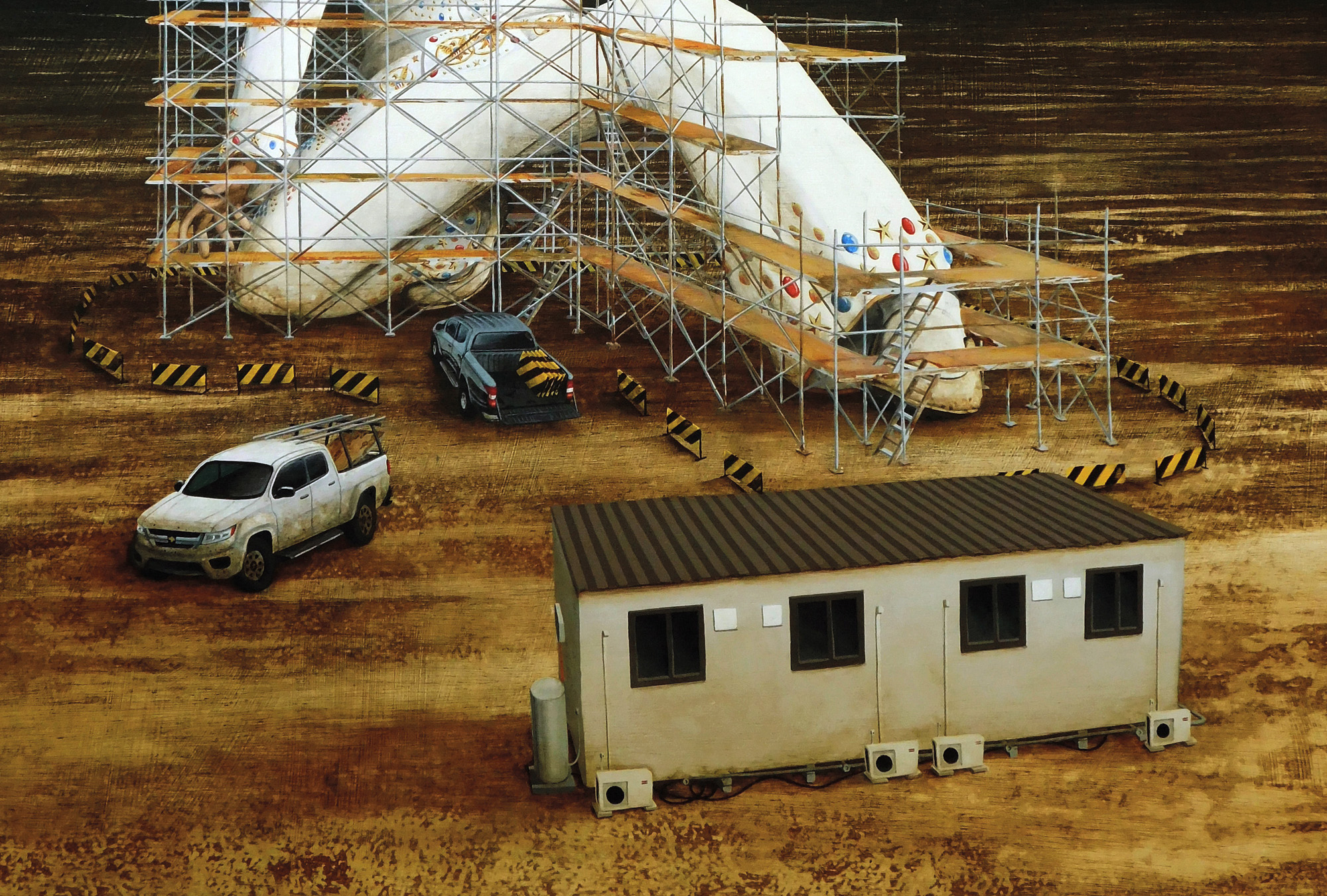
Photographs: ‘Australia’ Part 1

December 2018

Warning: Aboriginal and Torres Strait Islander readers should be aware that this posting contains images and names of people who may have since passed away.


Anonymous photographer. 'Parlour, Broken Hill, New South Wales' 1895


Anonymous photographer
Parlour, Broken Hill, New South Wales
1895
Gelatin silver print


A German Rönisch piano with a copy of “A Country Girl” above the keyboard (I can’t find any reference online to this song?). To the right, a two-panel screen with Christmas cards, one with the words “Hearty Greetings” and another with the date “1895”.


The last posting for 2018 features a selection of Australian black and white photographs that belong to a friend of mine, who has kindly allowed me to scan and publish them. The images have been digitally cleaned after scanning. The titles of the photographs are annotated on the back of the images.

The photographs are mainly of pastoral, colonial, outback, station, homestead and mining life, and picture the remoteness of these properties and towns c. 1910s-1950s. They also evidence the nature of white, colonial, patriarchal society much in evidence on pastoral stations during this time period. Hardly a women appears in these photographs, and Indigenous Australians usually only appear as stockmen or trackers.

Of most interest to me are the photographs of Poolamacca Station, c. 1910.

In the first photograph, Christmas Day, Poolamacca Station, north of Broken Hill, New South Wales (below) what is going on in the photograph remains a bit of a mystery. A man lies, apparently comatose, on a mattress outside, on the ground, in the strong midday sun (note the short length of the shadows). The man to the right reaches forward to clasp his hand, while other men around clasp each other’s hands to form a circle around the body. Some men look down at the body on the mattress, others stare straight at the camera, smoking cigars. A handsome man with a moustache, on bended knee and wearing a waistcoat, third from left, smiles broadly at the camera. A man at the back of the group rests his head against the stone of the building, eyes closed, as though he is drunk. The length of the exposure can be judged by the several blurred figures, particularly of the man standing and the head of the man at right rear.

Several scenarios are possible: is the man lying on the mattress really ill? Is it some kind of religious play being performed on Christmas Day? Are they all drunk and mucking about? And/or is it some kind of game, a charade? The circle of hands suggests to me it is a type of friendship game for the person lying on the mattress, a bond between them all, a supposition reinforced by the handsome man smiling at the camera. If the situation were serious, he would not be smiling. The second photograph, taken at the same time (before or afterwards?), features the men now accompanied by women, piled high on a cart pulled by four horses. At left behind the front horses can be seen what I believe is the same corrugated iron and building that appears at left in the first image. We can only guess the narrative in the first photograph because we do not have enough clues. Nevertheless, the photograph and its story remain a fascinating mystery.

The third and fourth photographs also tell an enigmatic story. Again, they have both been taken at the same time, as can be seen by the same riveted water tank behind each group in the photographs. The same fair-haired child also appears at right in the first photograph and sitting in his mother’s lap in the second photograph. From the length of his white apron, the white man in the photograph is possibly a cook or butcher at Poolamacca Station. The photographs also put lie to George Dutton’s claim that “in 1910 there was only two boys left” at Poolamacca Station (see extract from The Mutawintji research project report below).

What we have here is, possibly, an interracial marriage or partnership, a frontier marriage? whose Australian

“… boundary-crossing lovers are still omitted from the historical memory of the nation. Despite their long-term, cross-generational legacies, these unions virtually became a secret of state. …

These lovers generated families at the core of the cultural and historical interface that became the Australian nation. However, the young coloniser state did not like it.

From the coming of Federation until the 1960s, love affairs between Aboriginal people and others were severely restricted across all of northern Australia. Queensland moved rapidly to curb courtship and marriage between white Australian men and Aboriginal women. Western Australia and the Northern Territory followed. That didn’t mean that relationships stopped. Love often prevailed. …

Police and missionary enforcers placed white working class men living with Aboriginal women under sexual surveillance, forcing them to either apply for permits or be arrested. Many were fined or jailed. The Chief Protectors, who had the power to decide who could marry whom, regularly refused their written requests to marry.

Although largely untouched by the new laws, magistrates, pastoralists, police and missionaries also fell in love with Aboriginal women. It was not uncommon for cattle station owners and managers to practice a form of cross-frontier polygamy, sustaining relationships with both a white wife and an Aboriginal woman. …

Australian lovers who were willing to cross these punitive marriage bars showed an uncommon courage. Out of this “illicit love” came new generations who carry on the battles for their ancestors and their communities. Some are the very same people who are required today to justify their Aboriginality because of mixed descent. They have to keep explaining who they are and why they are speaking out.”1


What these rare photographs speak of is a love, an intimacy, and affection within a family unit. Just look at the gentleness as the man holds the child’s hands and the smile on the mother’s face. It is just a gorgeous photograph of love and happiness between white and black, of a smiling women with her children. Passed down through time, it is a privilege to be able to look, to understand, to feel the power of this relationship all of these years later.

Dr Marcus Bunyan


All of these photographs have been digitally cleaned. Many thankx to my friend Daniel for allowing me to publish the photographs in the posting. Please click on the photographs for a larger version of the image.


1/ Professor Ann McGrath. “Celebrating white men and their black lovers,” on The Sydney Morning Herald website [Online] Cited 30/12/2018


1910s Australia


Anonymous photographer. 'Christmas Day, Poolamacca Station, north of Broken Hill, New South Wales' c. 1910


Anonymous photographer
Christmas Day, Poolamacca Station, north of Broken Hill, New South Wales
c. 1910
Gelatin silver print


Anonymous photographer. 'Christmas Day, Poolamacca Station, north of Broken Hill, New South Wales' c. 1910 (detail)


Anonymous photographer
Christmas Day, Poolamacca Station, north of Broken Hill, New South Wales (detail)
c. 1910
Gelatin silver print


Anonymous photographer. 'Christmas guests, Poolamacca Station, north of Broken Hill, New South Wales' c. 1910


Anonymous photographer
Christmas guests, Poolamacca Station, north of Broken Hill, New South Wales
c. 1910
Gelatin silver print


Poolamacca Station

It is situated about 50 kilometres (31 mi) north of Broken Hill and 174 kilometres (108 mi) north east of Mannahill at the eastern end of the Barrier Range adjoining Sturts Meadows. The station currently occupies an area of 40,000 acres (16,187 ha). The abandoned township of Tarrawingee is situated within the boundaries of the station.

The property was established in the 1860s with the first owners of the run being Messrs Jones and Goode. In 1867 a shepherd staged a hoax with a white quartz gold find that lead to an aborted gold rush to the area. The first property in the area was Mount Gipps Station In 1865 with Corona, Mundi Mundi and Poolamacca being established shortly afterward. Sidney Kidman worked at Poolamacca during the 1870s as a boundary rider and stockman.

In 1877 the property was put up for auction by the trustees of the estate of Messrs E. M. Bagot and G. Bennett. At this stage the property was approximately 900 square miles (2,331 km2) in size along with a flock of 34,906 sheep. The property comprised ten separate runs including the 64,000 acre Bijerkerno run to the 25,000 acre Torrowangee run.

John Brougham acquired a half share in Poolamacca in 1889 and later secured the lease outright. Brougham remained at Poolamacca until 1915 when he moved to Adelaide. In 1892 approximately 50 Aboriginal people, were moved to Poolamacca station which under the regime of the late owner, Mr J. Brougham, constituted a sanctuary for the last remaining Aboriginal inhabitants of the Barrier Ranges and adjacent areas.

The lease was later split into two properties: Poolamacca and Wilangee in the 1920s. Moss Smith sold the property in 1927 to the Pastoral company of Adelaide following the death of his daughter whose body was found buried in a warren in Poolamacca late the year before after she had gone missing for four months.

In 2002 the property was acquired by the Indigenous Land Corporation with the title holders being the Wilyakali Aboriginal Corporation when the property occupied an area of 507 square kilometres (196 sq mi).

Text from the Wikipedia website
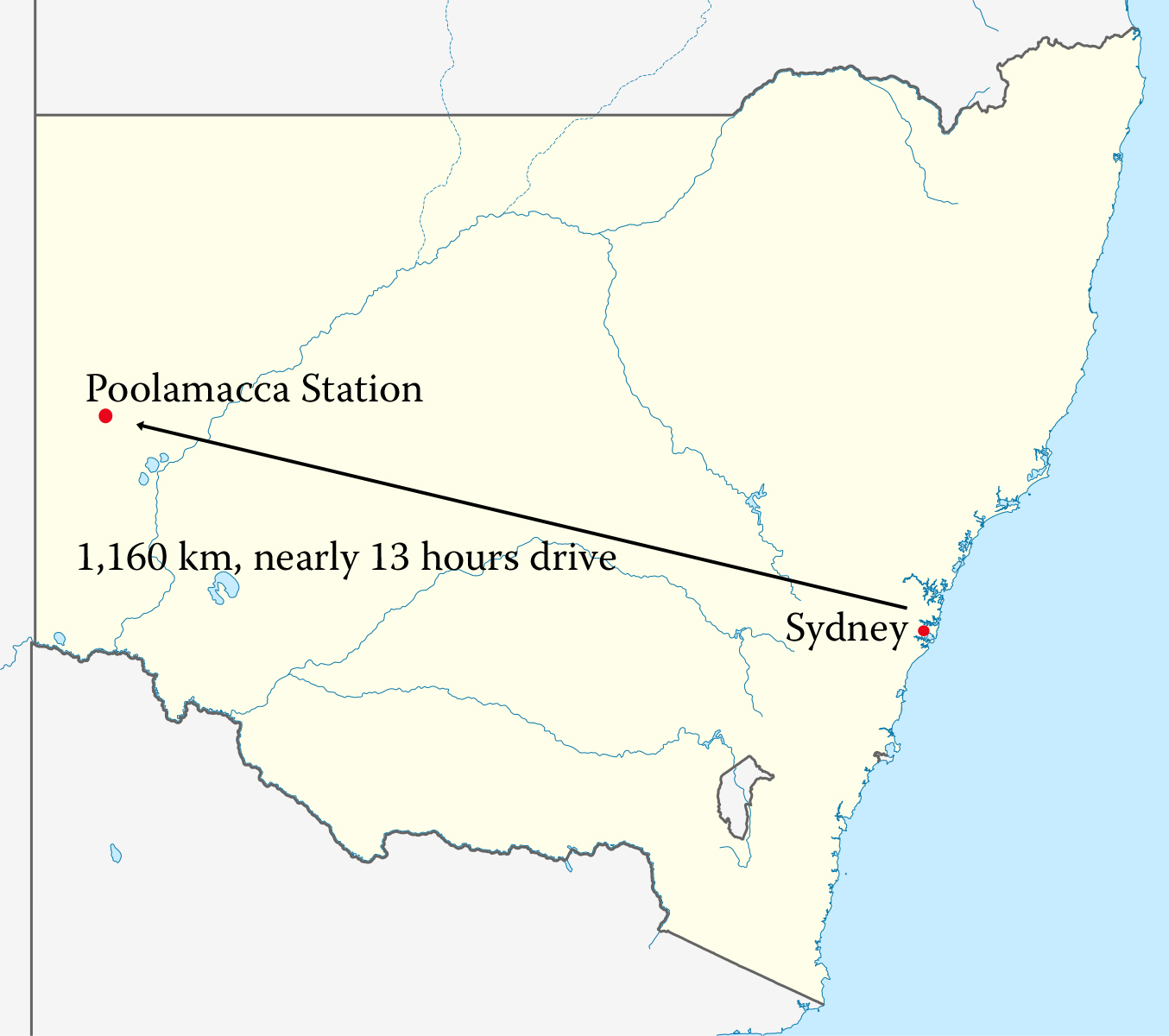
 

Sydney Poolamacca map


Sydney to Poolamacca map, New South Wales, Australia
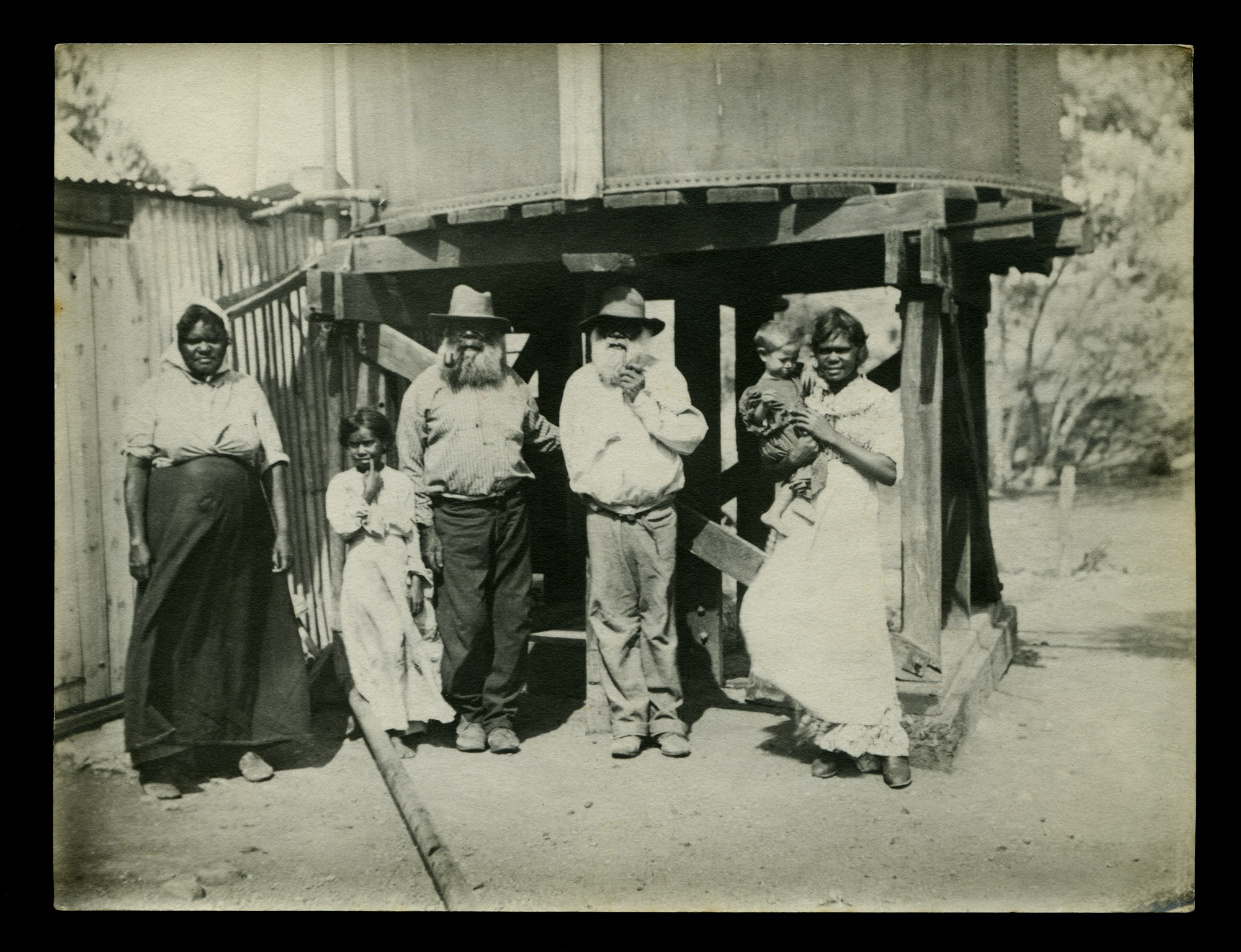
 

Anonymous photographer. Poolamacca Station, north of Broken Hill, New South Wales' c. 1910


Anonymous photographer
Poolamacca Station, north of Broken Hill, New South Wales
c. 1910
Gelatin silver print
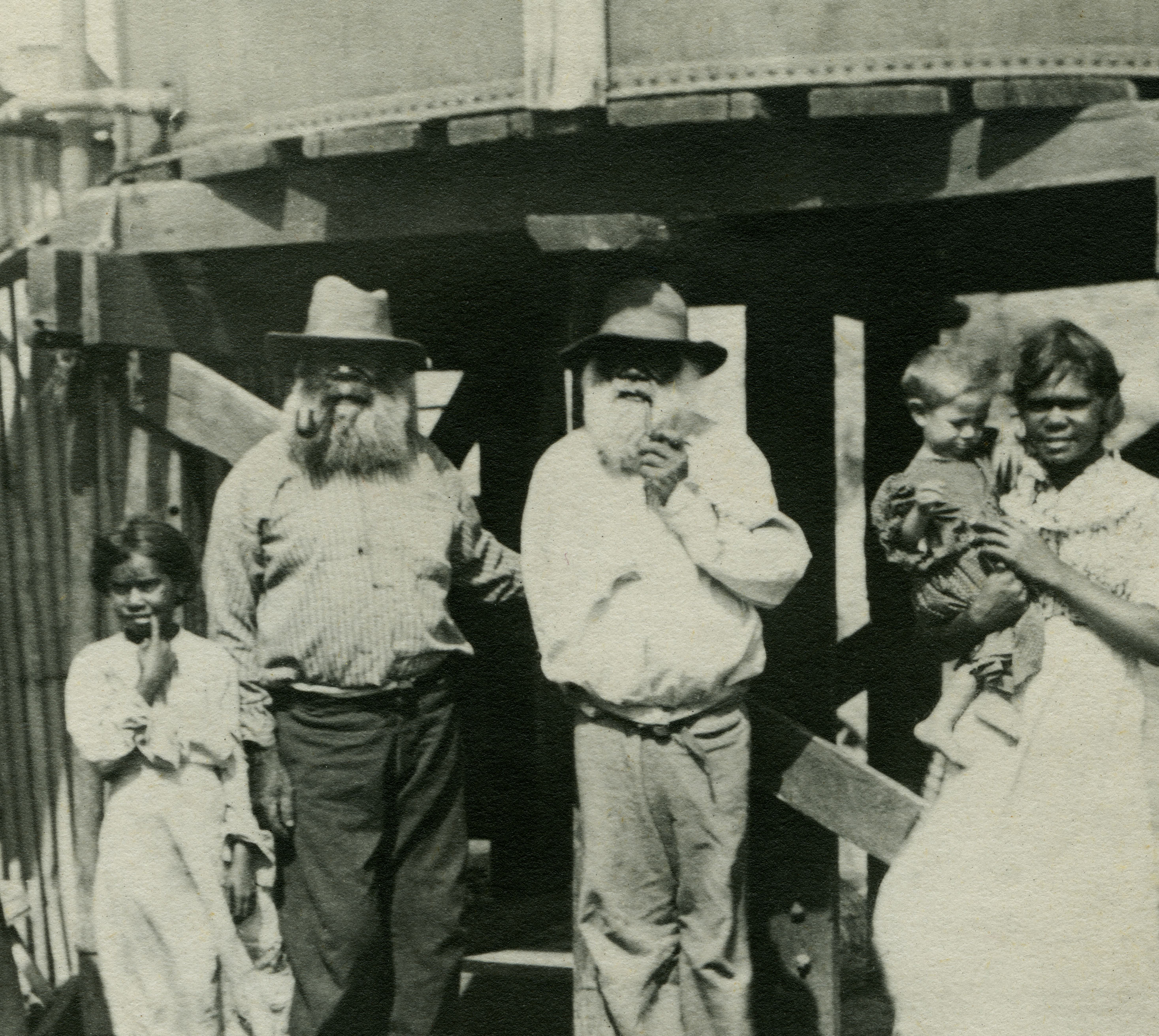
 

Anonymous photographer. Poolamacca Station, north of Broken Hill, New South Wales' c. 1910 (detail)


Anonymous photographer
Poolamacca Station, north of Broken Hill, New South Wales (detail)
c. 1910
Gelatin silver print


Anonymous photographer. Poolamacca Station, north of Broken Hill, New South Wales' c. 1910


Anonymous photographer
Poolamacca Station, north of Broken Hill, New South Wales
c. 1910
Gelatin silver print


Anonymous photographer. Poolamacca Station, north of Broken Hill, New South Wales' c. 1910 (detail)


Anonymous photographer
Poolamacca Station, north of Broken Hill, New South Wales (detail)
c. 1910
Gelatin silver print


Extracts from The Mutawintji research project

Keith Brougham, the son of John Brougham, the owner of Poolamacca (and brother of John Brougham Jnr of Gnalta station, now part of Mutawintji National Park), describes how the first pastoralists mapped out their original station boundaries by including the best waterholes:

“The wild aborigines were a help by following their tracks, as they knew of any existing water away from the river… One old aborigine who claims to be from one of the wild tribes told me the walkabout was a good sign to watch for – at that time a mob were having a hunt for a new hunting ground and had camped about midday. While they were stopped a pregnant woman had a baby there. Next day they were off again, mother and child and went straight to a waterhole, which the white people found by following their tracks” (Brougham, K.W.C. 1920, West of the Darling, MS, State Library of South Australia, p. 14)


… In 1862, the area north-west of Mt Murchison on the Darling River near present day Wilcannia was still frontier country. Mt Gipps station7, set up in 1865 (Kearns 1982), was the first station in the Broken Hill area. It included the country to the north of Broken Hill and the hill that was to become the Broken Hill mine and city. Mt Gipps was followed soon after by Poolamacca, Corona and Mundi Mundi.

No actual descriptions of the annexation of Mutawintji by pastoralists have been found so far, but as permanent waterholes are few to the north-west of the Darling River, descriptions of the annexure of other important water sources such as Yancannia in the mid 1860s suggest that there was likely to have been conflict. Yancannia station, to the north of Mutawintji, had been established by 1865 and contemporary accounts describe conflict with the local Aboriginal people. By 1872 the Aboriginal people of Yancannia gave the owners “very little trouble” and “a few of them [were] very useful” (Reid in Shaw, M.T. 1987, Yancannia Creek, Melbourne University Press, Melbourne, p. 104).

Dr Jeremy Beckett, Dr Luise Hercus, Dr Sarah Martin (edited by Claire Colyer). The Mutawintji research project report. MUTAWINTJI: Aboriginal Cultural Association with Mutawintji National Park. Published in 2008 by the Office of the Registrar, Aboriginal Land Rights Act 1983 (NSW), pp. 9-10.


It is clear from the Bonney records that people moved backwards and forwards between Yancannia, Momba, Tarella, Wonnaminta, Poolamacca and Gnalta/Mootwingee stations from the 1860s and through the 1880s. Bonney lists about 44 people as living at Momba and Tarella around 1881; some of the people from Momba have been traced and the descendents of some of the people Bonney described are Aboriginal owners of Mutawintji National Park. …

In 1892 about 50 Aboriginal people, including Outalpa George, were camped near Olary. At about this time they moved to Poolamacca station which “under the regime of the late owner, Mr J. Brougham, constituted a sanctuary for the last remaining Aboriginal inhabitants of the Barrier Ranges and adjacent areas” (Mawson, D. and Hossfeld, P.S. 1926, ‘Relics of Aboriginal Occupation in the Olary District’, Transactions of the Royal Society of South Australia, 50, pp. 17-25).

Keith Brougham, the son of John Brougham, writes about the 1890s:

“[in] 1892 [at] Poolamacca … we were amazed by the number of Aboriginals that were there… I had a boy mate staying with me and about two hundred blacks were camped in a sort of inlet in the hills of Silverton Hill, as it was called west of the homestead … The Aboriginals were practically in their wild state and did not speak our language” (Brougham MS n.d, p.1)

“… cotton dresses, high coloured and a great favourite of the [women] went as soon as they were landed, and olive oil for the [women’s] hair, always in demand” (Brougham MS n.d, p.2).

“[the Aboriginal people] were very handy in the woolshed at shearing time. The [women] did all the piece picking and men on the tables and picking up. The pickers were excellent at their job and all had a good eye, male and female” (Brougham MS n.d, p.3)

“… At Poolamacca my mother … employed a … girl who was neat and tidy, an extra good worker, and in 1896 she was really good” (Brougham MS n.d, p.12)

“… [at] Euriowie we had a lot of aboriginals working in the creeks surrounding this country picking up slugs of pure tin and bagging it” (Brougham MS n.d, p.23).


The APB [Aboriginal Protection Board] minutes recorded between 1890 and 1901 seldom mention the Mutawintji area. The only stations in the far north-west that received help from the APB were Poolamacca, occasionally Sturts Meadows, and the fringe camps at Milparinka, Tibooburra, Wanaaring and Wilcannia. The only station that consistently received rations throughout 1890-1901 was Poolamacca. Sturts Meadows (just to the west of Mutawintji) received rations in 1893, 1897 and 1898. Most stations either managed to fully employ the Aboriginal people living there or provided food and clothing of some sort without asking for compensation. …

During John Brougham’s time at Poolamacca during the 1890s and early 1900s, the station was something of a sanctuary for Aboriginal people but many had moved on by the time the Brougham family left. Some followed the Broughams to Gnalta station (now part of Mutawintji National Park) while others went to stations like Yancannia, where a large number of Aboriginal people lived and worked (Shaw, M.T. 1987, Yancannia Creek, Melbourne University Press, Melbourne). …

According to George Dutton, who was born on Yancannia station, there was a sizeable Aboriginal population at Poolamacca until about 1910, but almost none thereafter. George Dutton told Jeremy Beckett:

“At Poolamacca in 1901 there was a big mob of blackfellas, two hundred men without the women and kids. When I went back in 1910 there was only two boys left and graves all round” (Beckett, J. 1978, ‘George Dutton’s Country: Portrait of an Aboriginal Drover’, Aboriginal History, vol. 2 (1), pp. 19).


Dr Jeremy Beckett, Dr Luise Hercus, Dr Sarah Martin (edited by Claire Colyer). The Mutawintji research project report. MUTAWINTJI: Aboriginal Cultural Association with Mutawintji National Park. Published in 2008 by the Office of the Registrar, Aboriginal Land Rights Act 1983 (NSW), pp. 14-16.
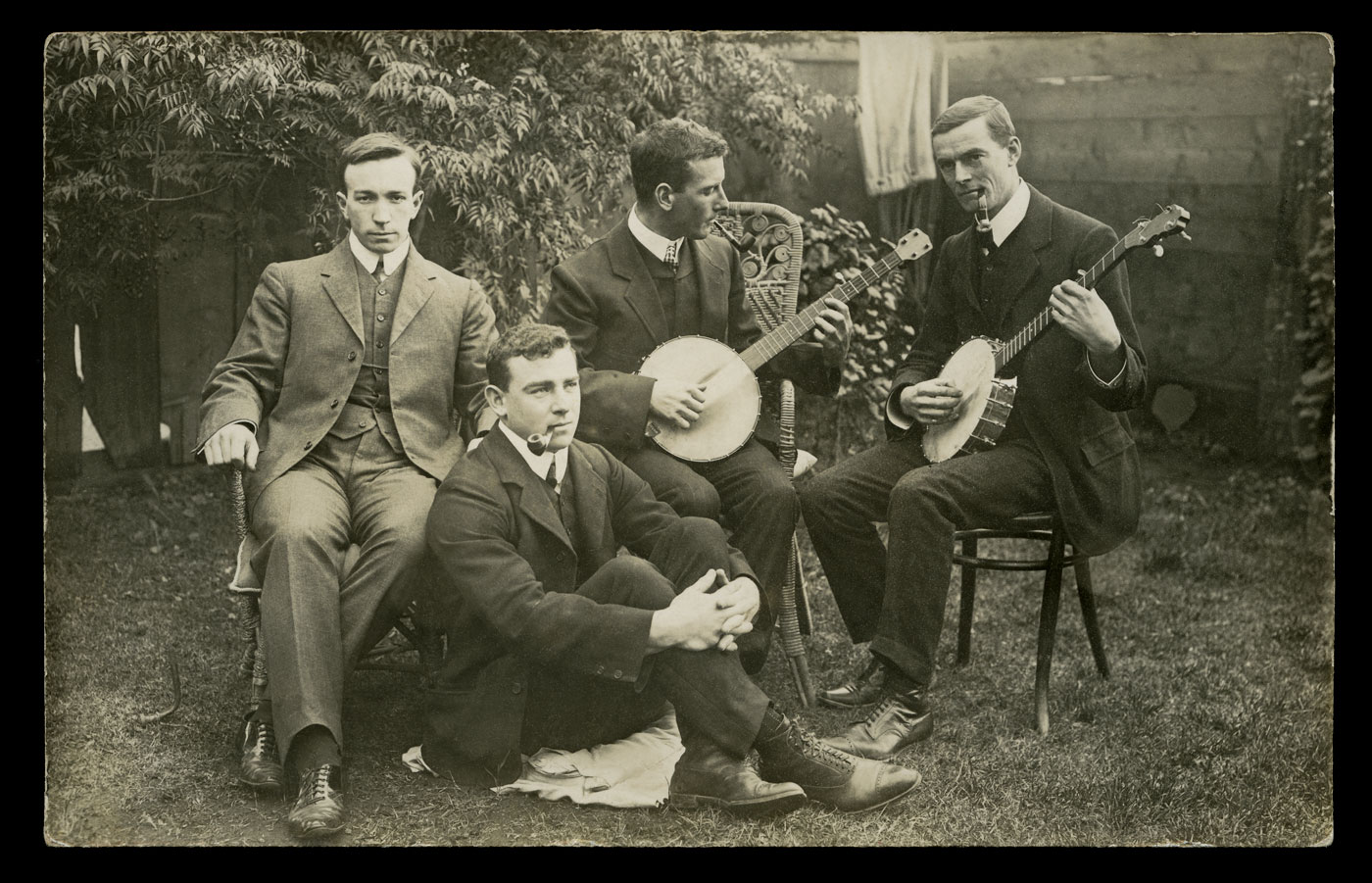
 

Anonymous photographer. 'Banjo playing in the garden, Broken Hill, far west of outback New South Wales' c. 1910-1920


Anonymous photographer
Banjo playing in the garden, Broken Hill, far west of outback New South Wales
c. 1910-1920
Gelatin silver print
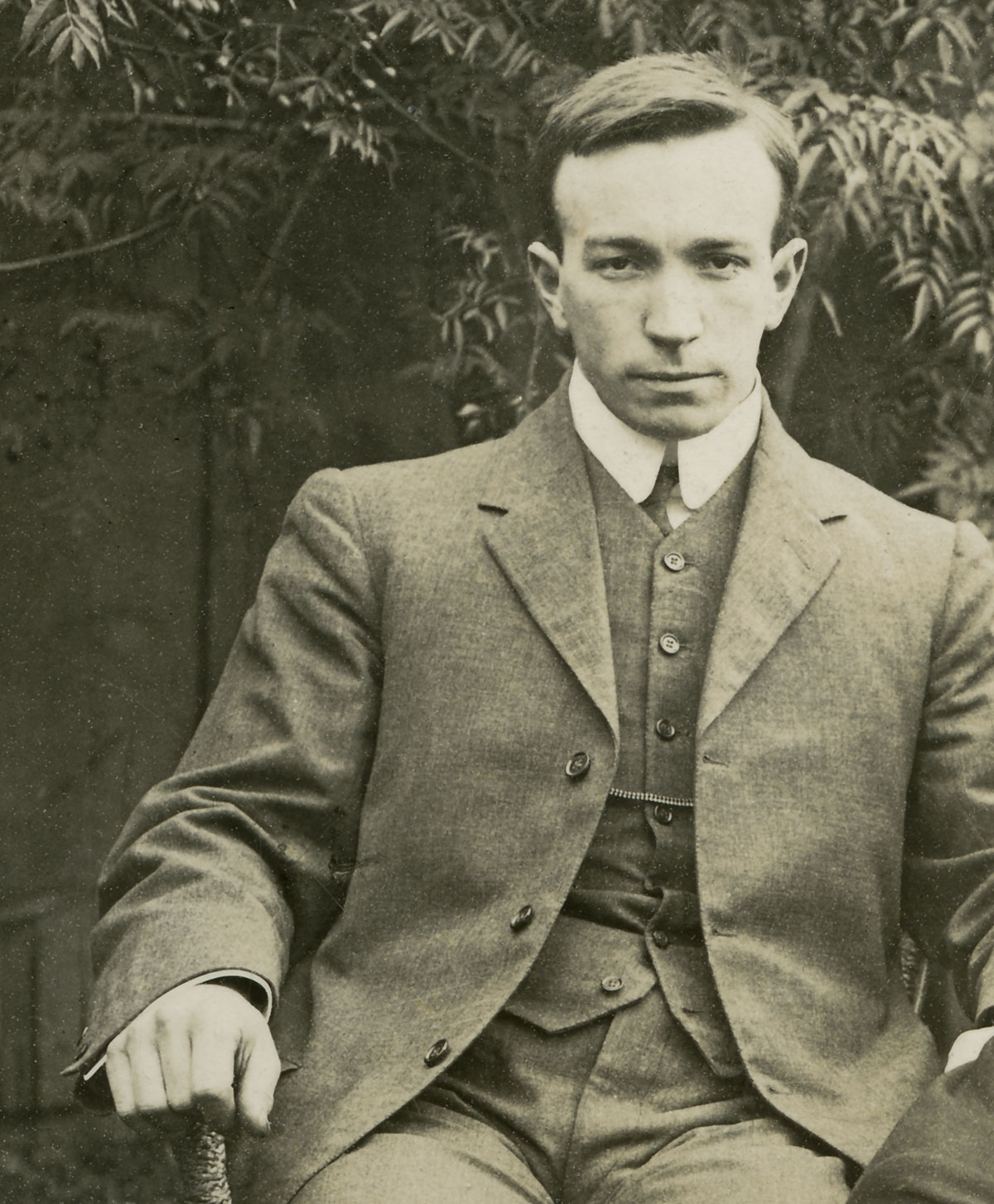
 

Anonymous photographer. 'Banjo playing in the garden, Broken Hill, far west of outback New South Wales' c. 1910-1920 (detail)


Anonymous photographer
Banjo playing in the garden, Broken Hill, far west of outback New South Wales (detail)
c. 1910-1920
Gelatin silver print


Anonymous photographer. 'Banjo playing in the garden, Broken Hill, far west of outback New South Wales' c. 1910-1920 (detail)


Anonymous photographer
Banjo playing in the garden, Broken Hill, far west of outback New South Wales (detail)
c. 1910-1920
Gelatin silver print
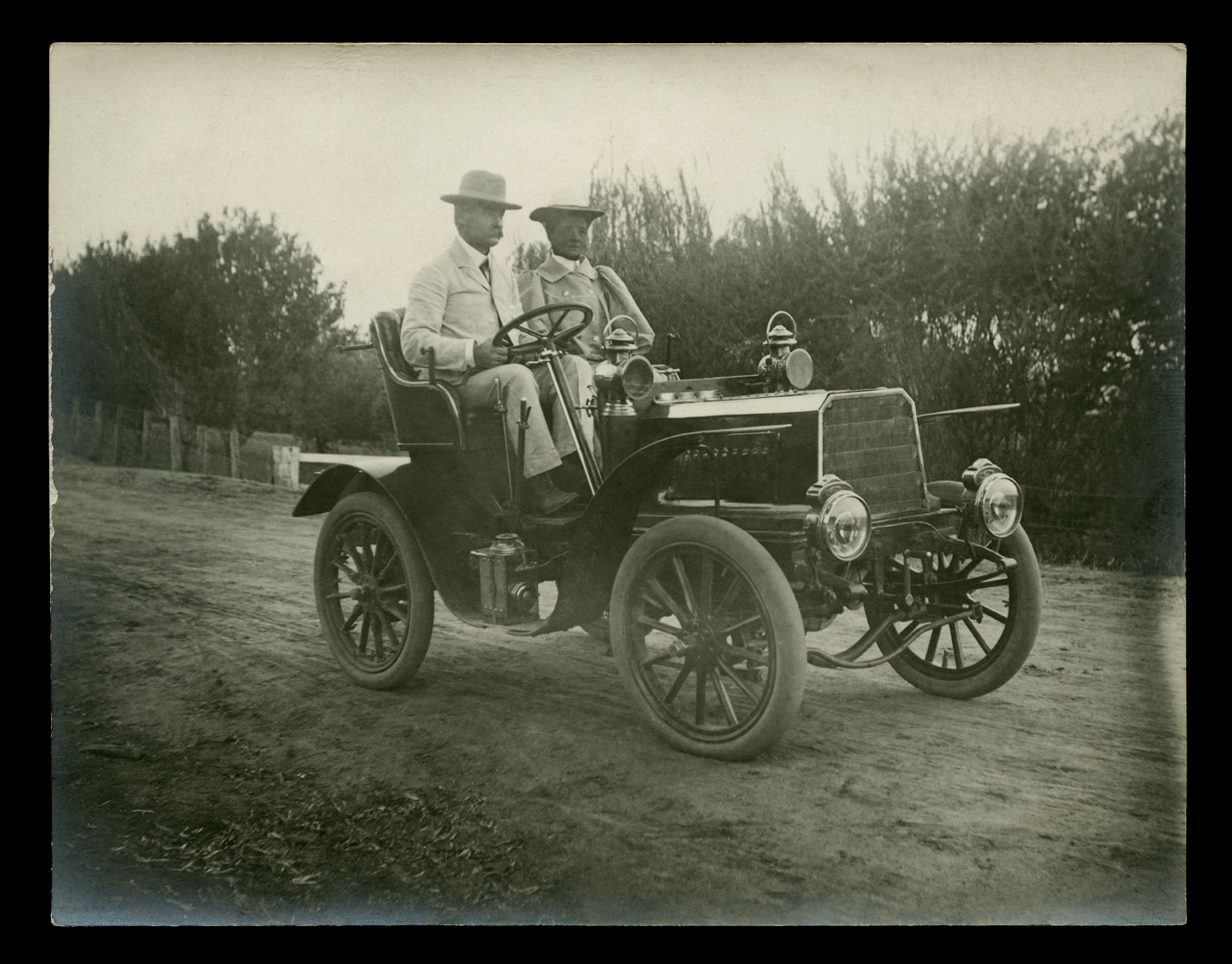
 

Anonymous photographer. 'Dr Tham?, Wagga Wagga, New South Wales' c. 1900-1910


Anonymous photographer
Dr Tham?, Wagga Wagga, New South Wales
c. 1900-1910
Gelatin silver print
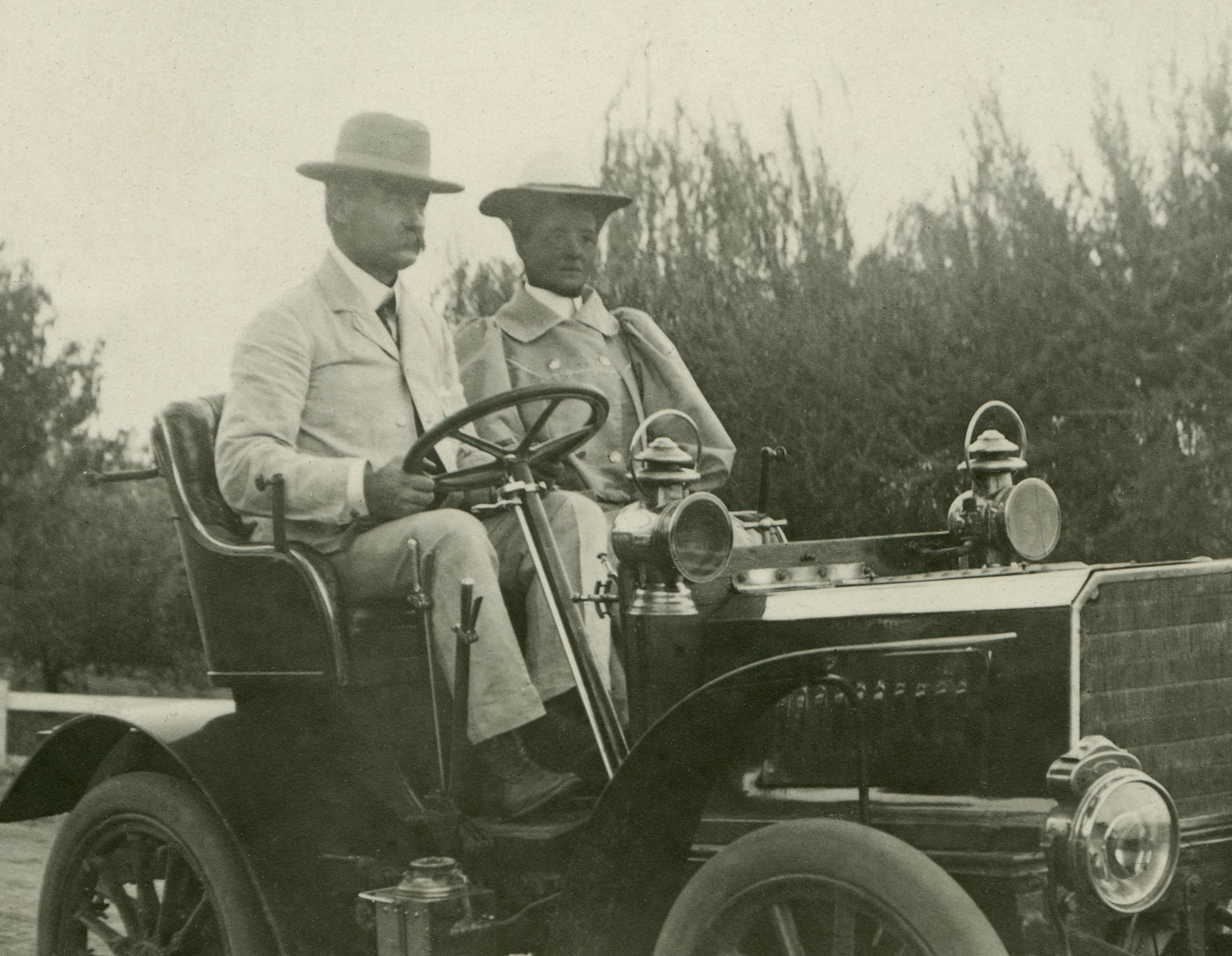
 

Anonymous photographer. 'Dr Tham?, Wagga Wagga, New South Wales' c. 1900-1910 (detail)


Anonymous photographer
Dr Tham?, Wagga Wagga, New South Wales (detail)
c. 1900-1910
Gelatin silver print
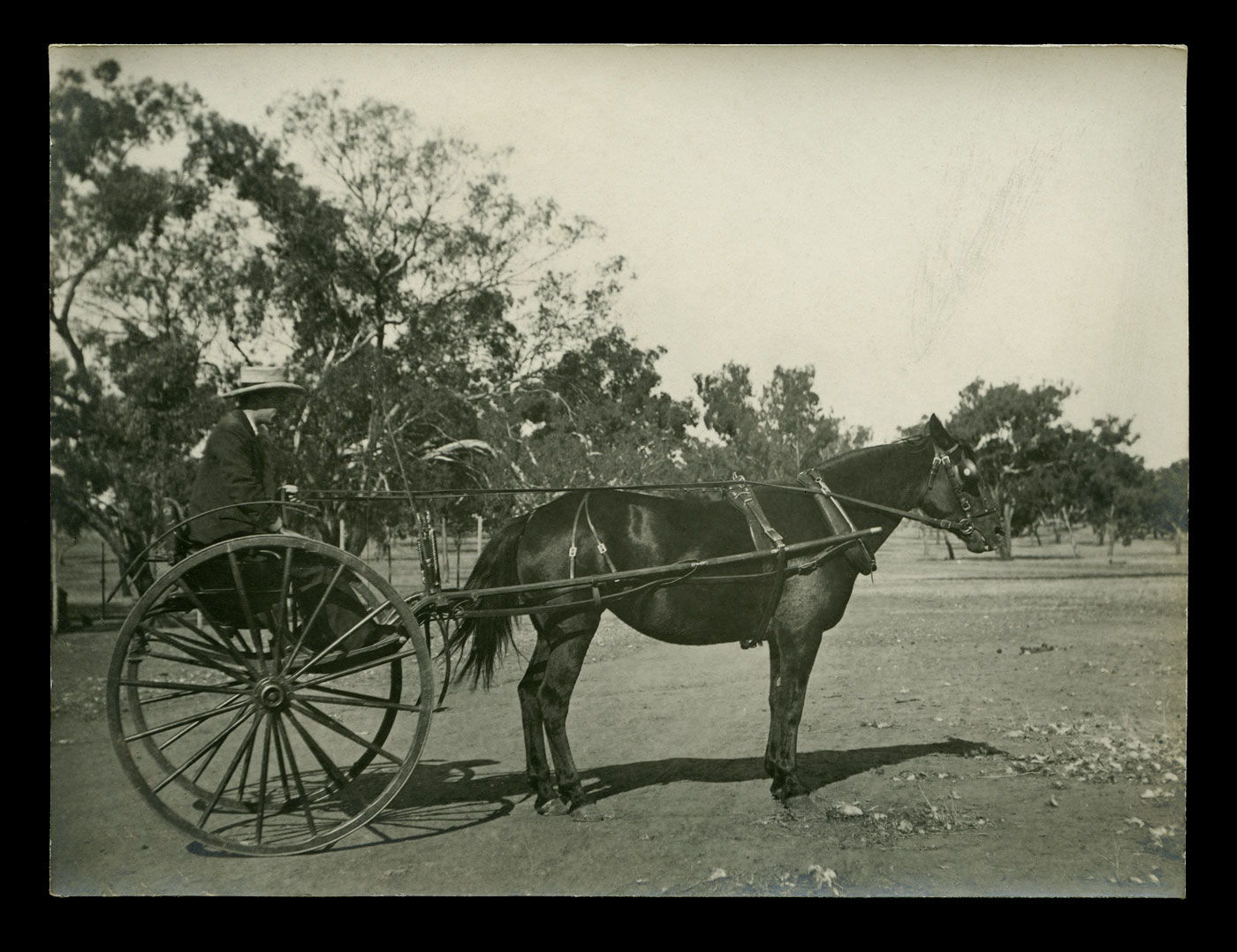


Anonymous photographer. 'Horse and trap, Wagga Wagga, New South Wales' c. 1910


Anonymous photographer
Horse and trap, Wagga Wagga, New South Wales
c. 1910
Gelatin silver print


Anonymous photographer. 'Largs Pier Hotel, North-western suburb of Adelaide, South Australia' c. 1910


Anonymous photographer
Largs Pier Hotel, North-western suburb of Adelaide, South Australia
c. 1910
Gelatin silver print


Largs Pier Hotel

Largs Pier Hotel is located on the corner of The Esplanade and Jetty Road in Largs Bay, South Australia.

The Largs Pier Hotel opened in 1882 on the same day as the Largs Bay Railway and Pier. Believed to be 23rd of December according to The Port Adelaide Historical Society. From 1882 till around 1892 the Largs Pier was the primary port of call for New Australians travelling from Europe. Many of these immigrants spent their first nights in Australia at the hotel.

Text from the Wikipedia website
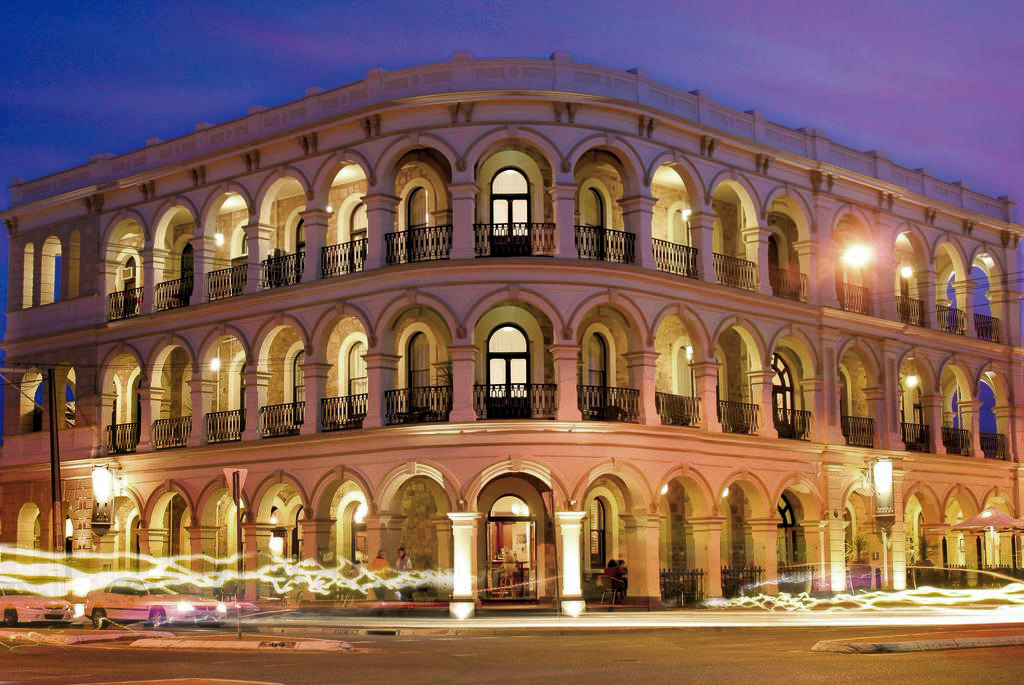
 

Largs Pier Hotel, South Australia


Largs Pier Hotel, South Australia today


1930s Australia
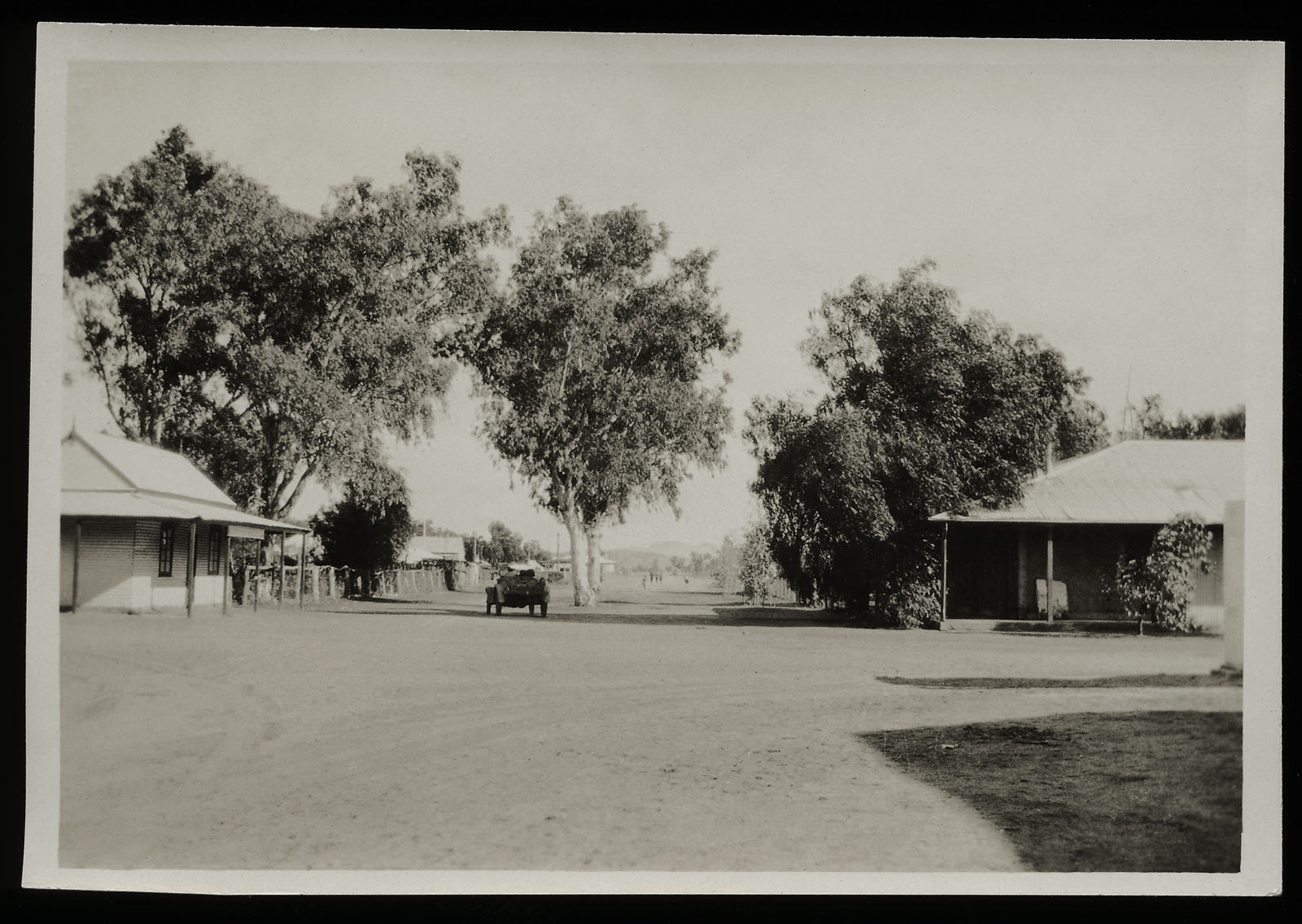
 

Anonymous photographer. 'Alice Springs' c. 1930


Anonymous photographer
Alice Springs
c. 1930
Gelatin silver print


Anonymous photographer. 'Alice Springs' c. 1930 (detail)


Anonymous photographer
Alice Springs (detail)
c. 1930
Gelatin silver print
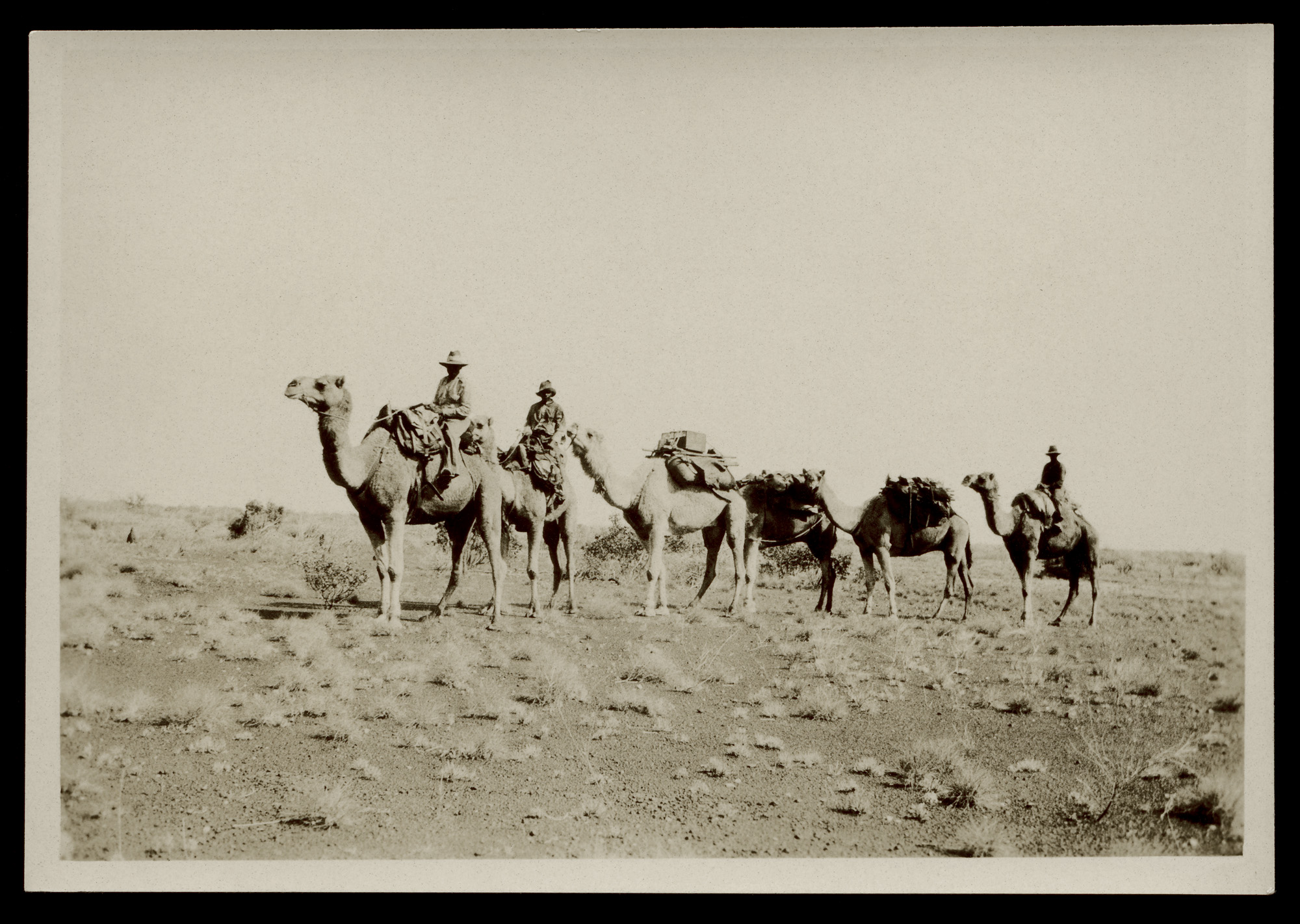
 

Anonymous photographer. 'Police camels' c. 1930


Anonymous photographer
Police camels
c. 1930
Gelatin silver print
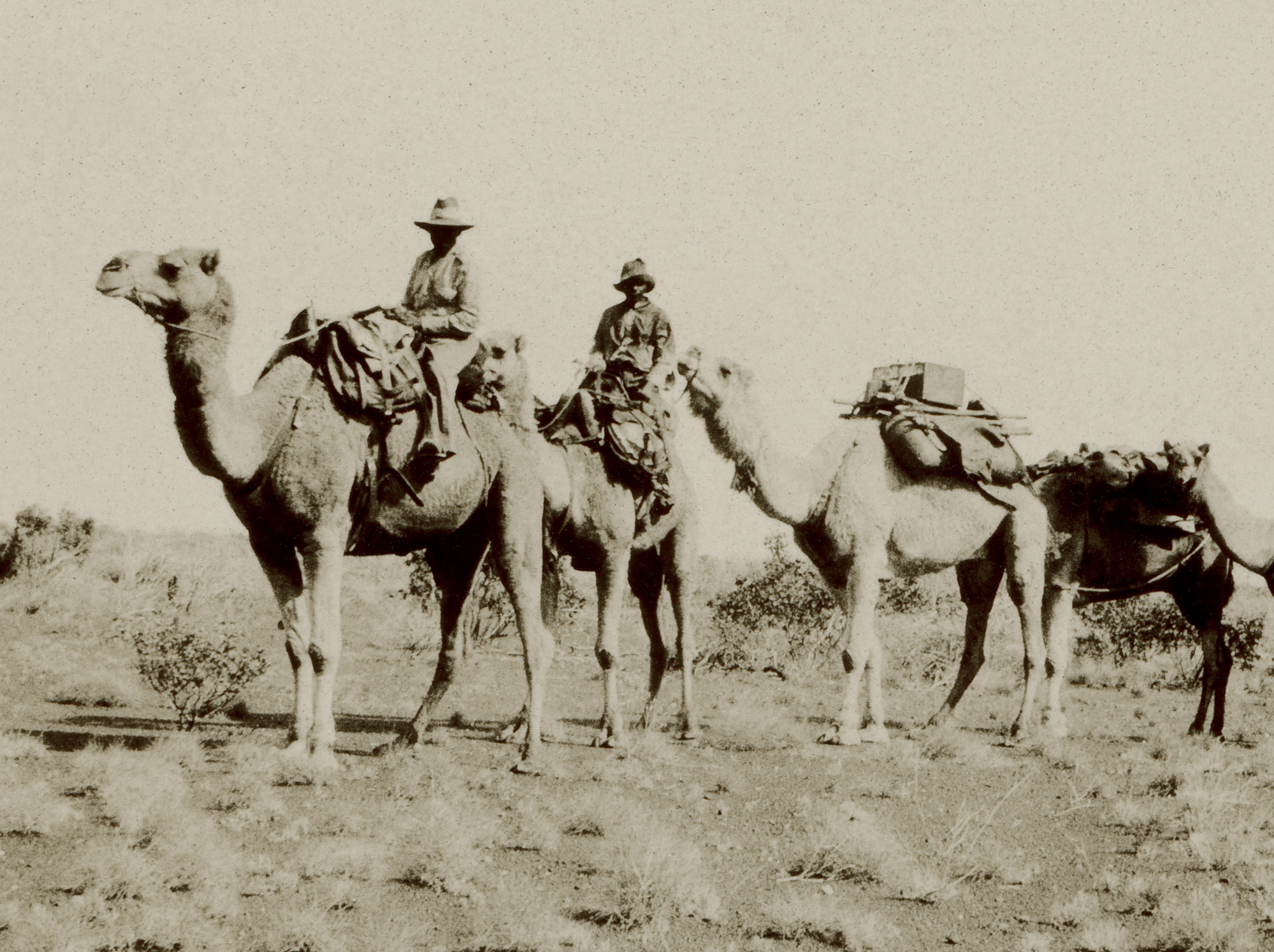
 

Anonymous photographer. 'Police camels' c. 1930 (detail)


Anonymous photographer
Police camels (detail)
c. 1930
Gelatin silver print


Note the Aboriginal police tracker second from left. This could be in the Northern Territory.
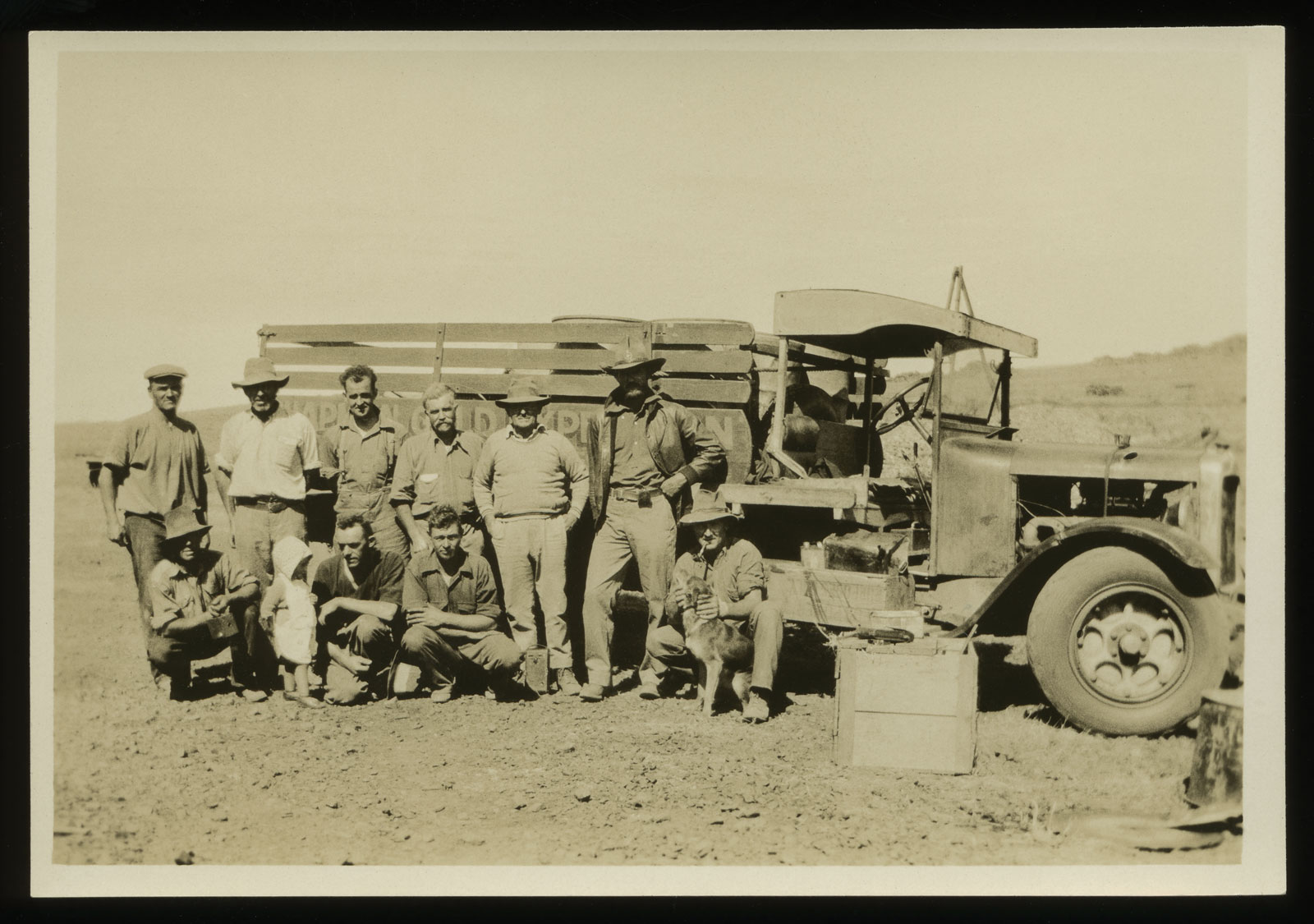
 

Anonymous photographer. 'At the Granites' c. 1930


Anonymous photographer
At the Granites
c. 1930
Gelatin silver print


This photograph is possibly from around the Granites gold mine in the Tanami Desert of the Northern Territory of Australia. You can make out the word “gold” on the truck behind the men.

Gold was discovered in the Tanami Desert by Alan Davidson. He arrived in the area in 1898 prospecting until 1901. He took the name Tanami for the region from local Aboriginal people who visited his camp. “On inquiry [he] learned that the native name of the rockholes (from [which the party obtained water] was Tanami, and that they “never died,” he said. Davidson showed the gold specimens to these Aboriginal people, who recognised it and described “mobs of similar stone to the east, together with a large creek containing plenty of water and fish. This they said was “two days’ sleep to the south of east”.

Text from the Wikipedia website
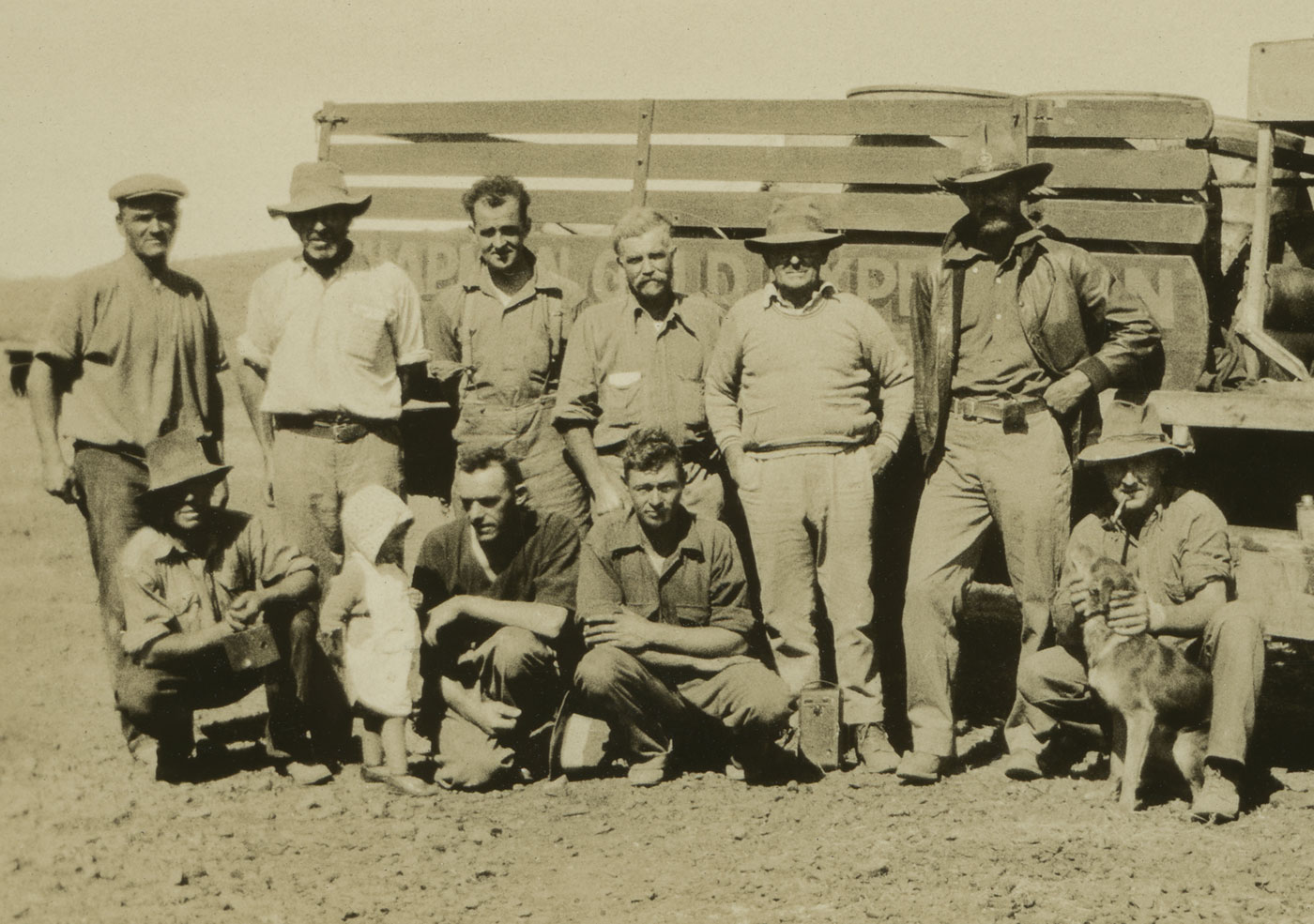
 

Anonymous photographer. 'At the Granites' c. 1930 (detail)


Anonymous photographer
At the Granites (detail)
c. 1930
Gelatin silver print


Note the man crouching at left holding a Kodak box camera, and the folding camera (most probably a Kodak as well) at the feet of the man third from right.


Anonymous photographer. 'At the Granites' c. 1930 (detail)


Anonymous photographer
At the Granites (detail)
c. 1930
Gelatin silver print


1950s Australia


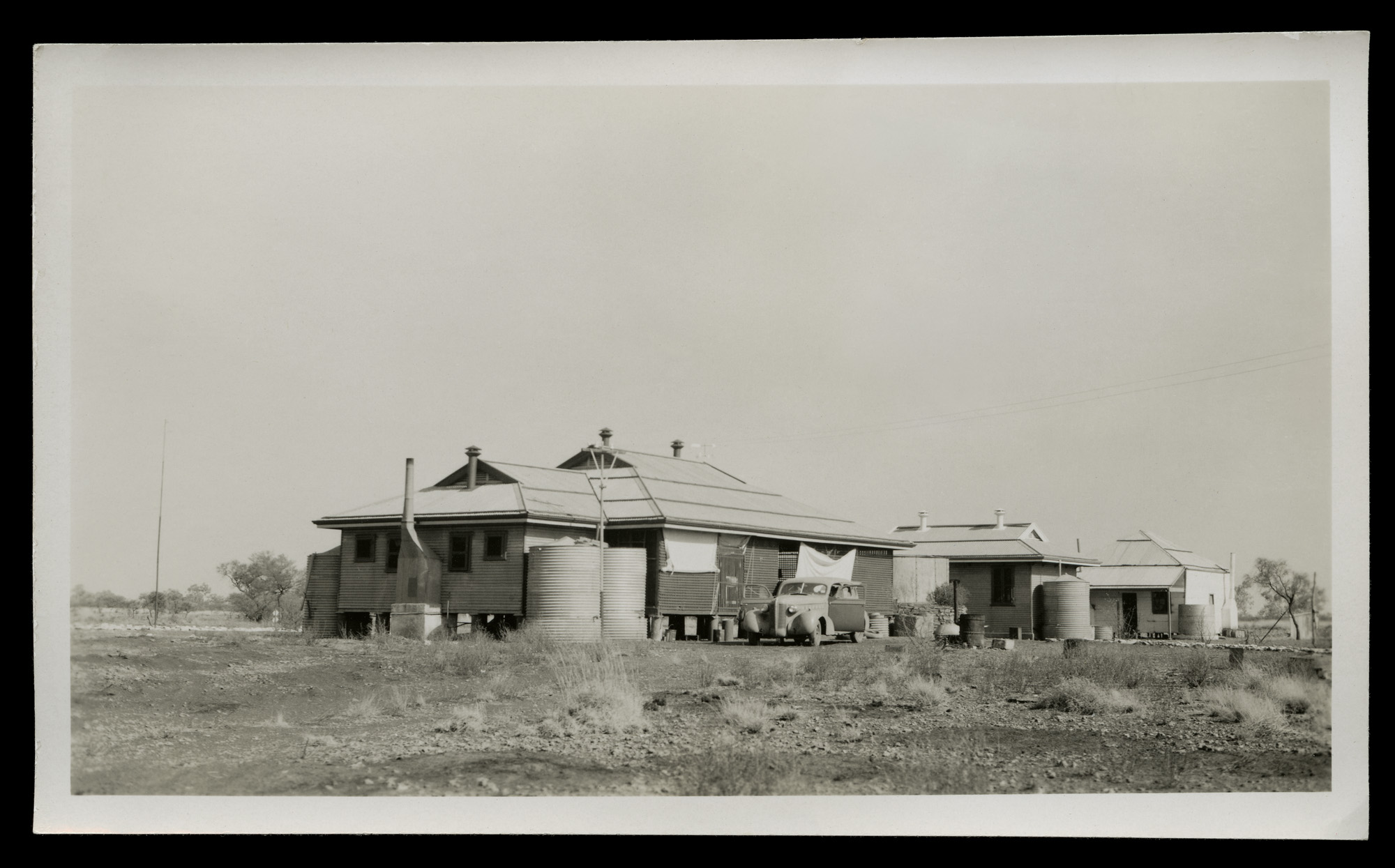
Anonymous photographer. 'Roy Hill Homestead, Pilbara region of Western Australia' c. 1950


Anonymous photographer
Roy Hill Homestead, Pilbara region of Western Australia
c. 1950
Gelatin silver print
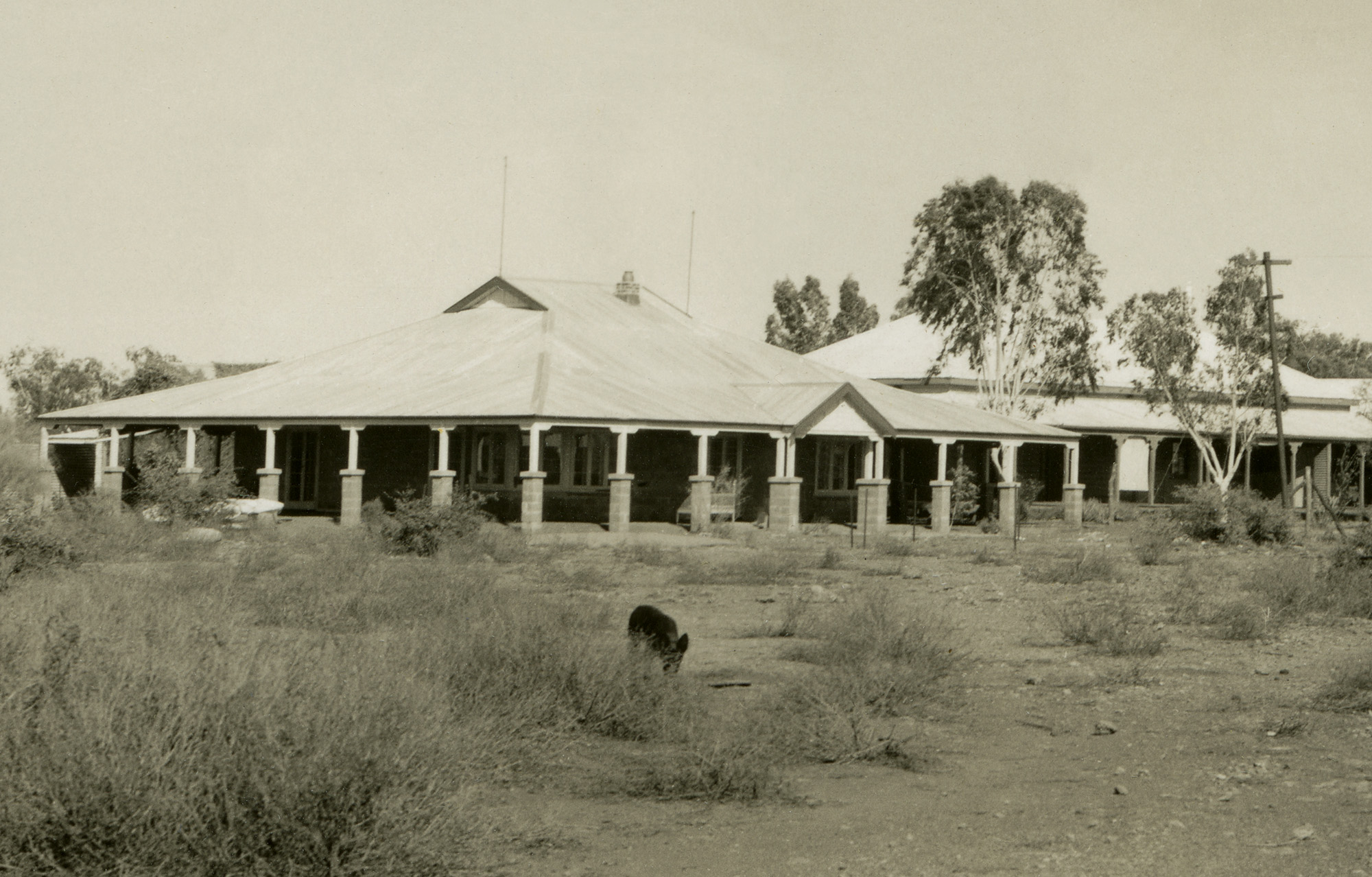
 

Anonymous photographer. 'Roy Hill Homestead, Pilbara region of Western Australia' c. 1950 (detail)


Anonymous photographer
Roy Hill Homestead, Pilbara region of Western Australia (detail)
c. 1950
Gelatin silver print


Roy Hill Homestead

Statement of significance

Roy Hill Station has strong heritage significance as it has aesthetic, historical, scientific, and social values. It represents more than a hundred years of life on a Pilbara station, and its buildings and structures, reflect an evolutionary pattern of development. Roy Hill Station was the home of Alexander Langdon (Alex) Spring who made an enormous contribution to local government in the region between 1940-1970. He was a Councillor for 31 years, and was the first President of the East Pilbara Shire in 1972. He was made a Freeman of the Shire of East Pilbara in 1973. becoming the 13th Freeman in Western Australia.

Roy Hill continues to have significance as a large pastoral station, representing some of the other stations which owners did not want included in the Shire of East Pilbara Heritage Inventory.

History

Nat Cooke, the owner of Mallina Station near Port Hedland, founded Roy Hill Station in 1886 after searching for new pastures when Mallina had suffered a number of years of drought. With gold on his mind Cooke was always looking for gold bearing ore in his search for new grazing land. He was successful in bringing gold rock specimens to the authorities in 1886 though he had to accept a share with two other prospectors in the reward for the first gold found in the district. Despite his gold mining efforts around Nullagine, Nat Cooke started a going concern on Roy Hill Station which is situated on the headwaters of the Fortescue River. The first official lease of 20.000 acres was granted to D McKay in January 1890.

H L Spring was one of a consortium who established Roy Hill Pastoral Company in 1919 with Jim Smith as Manager. Mount Fraser. an adjoining station, was incorporated in 1919. bringing the lease up to approx. one million acres. Initially the property was set up as a cattle station. By 1925 there were 11,500 head of cattle. In 1928 sheep were introduced and the sheep numbers built up to 46.000 by the mid 1960s. At the same time 5,000-7,000 cattle were maintained. Roy Hill Station was one of the first in Australia to transport large numbers of cattle by truck from about 1925.

As Roy Hill was centrally located in relation to the other stations, it became a natural meeting point for a range of activities, particularly the meetings of the Nullagine Road Board. Roy Hill still remained an isolated station which greatly benefited from the introduction of the Flying Doctor Service and the School of the Air. Oral history collected from past employees of Roy Hill Station highlights the contribution made by the Aboriginal stockman to the running of the station. About 20 Aboriginal stockmen were employed during the 1930s.

The Spring family was associated with Roy Hill Station for many decades. It was managed after 1938 by Alex Spring who later became the first Shire President of the East Pilbara Shire, formed in 1972. The large, once gracious homestead had wide verandahs shading the windows. Surrounding the homestead were vegetable gardens and large flower beds, along with alfalfa for the milking cows and working horses, irrigated by water pumped from the river.

Evidence of the importance of Roy Hill’s central position in the district is found in the old Post Office and General Store situated next to the homestead. The old iron building still shows signs of its years of service as some furniture and shelving remain in the Post Office and Store. The main road used to lead people right past the Roy Hill Store and Post Office, but has since been realigned. The Post Office played a vital role for the people of the isolated Nullagine district, maintaining its own postcode for a number of years. The Post Office and Store closed in 1971.

Physical description

Roy Hill Homestead is situated 1km off the main road halfway between Newman and Nullagine. Roy Hill Station consists of a large number of buildings which demonstrate the dynamic process of running a pastoral station over a period of more than a century. There are a number of corrugated iron sheds built at different times for mechanical work and storage of station equipment. Close by is the aircraft directional beacon available for the nearby airstrip if a plane was lost. The original airstrip was approx. 6 miles from the homestead. Part of the very old cattle stockyards still stand next to a disused cattle killing hoist, reflecting a time when pastoralists regularly butchered cattle for their home consumption. The yards were the main trucking yards and general handling yards.

The large main house is one of a number of buildings that have been erected on the station since the turn of the century. It has cement block walls with a corrugated iron roof. Surrounding the large and once gracious home is a wide verandah. The house originally consisted of three bedrooms, a living room, guest room, dining room and school room. Nearby the house is a cluster of older buildings including a ‘Nissan hut’ shaped kitchen and dining room for workers and the old Post Office. Office and General Store.

The Post Office, Office and General Store has corrugated iron walls and a gabled tin roof. Inside the Post Office are the pigeon holes and other associated post office fittings. The service hatch for the Post Office is still visible from the outside. The General Store (to the rear of the Post Office) still has its shelves in place and much of the old equipment that has been collected there over the years gives a feeling of stepping back into another time. In the immediate vicinity of the homestead property are other remnants from the past.

Concrete pads found amongst the grass are the remains of Aboriginal stockmens quarters and the many rainwater tanks are reminders of the need to collect and store all water needed for consumption. A light aircraft parked near the airstrip is an important vehicle for transport and for mustering.
Today the house stands unoccupied and the owner and any employees live in transportable homes near the old house.

Shire of East Pilbara. “Roy Hill Homestead and former Post Office,” on the the State Heritage Office, Government of Western Australia website Nd [Online] Cited 15/03/2022
 

Anonymous photographer. 'Mundiwindi Station, Pilbara region of Western Australia' c. 1950


Anonymous photographer
Mundiwindi Station, Pilbara region of Western Australia
c. 1950
Gelatin silver print


Mundiwindi

Mundiwindi just off the Jigalong Mission Road in Western Australia is a locality about 1000km north-northeast of Perth. Mundiwindi is at an altitude of about 575m above sea level. The nearest ocean is the Indian Ocean about 410km north-northwest of Mundiwindi. The nearest more populous place is the town of Newman which is 71km away with a population of around 3,500.

Mundiwindi is a ghost town in the Pilbara region of Western Australia. The town is around 1,150 kilometres (710 mi) north east of Perth and 124 kilometres (77 mi) south east of Newman, along the Jigalong Mission road. The town was established in 1914 as a telegraph station. The station was closed in 1977. The telegraph station was a link on the Australian Overland Telegraph Line linking the settled regions of Australia to the submarine cable at Broome. A weather station operated at the site between 1915 and 1981.

Text from the Wikipedia website


Anonymous photographer. 'Mundiwindi Station, Pilbara region of Western Australia' c. 1950 (detail)


Anonymous photographer
Mundiwindi Station, Pilbara region of Western Australia (detail)
c. 1950
Gelatin silver print


Anonymous photographer. 'Cardawan Station, central Western Australia' c. 1950


Anonymous photographer
Cardawan Station, central Western Australia
c. 1950
Gelatin silver print


Stockman (Australia)

In Australia a stockman (plural stockmen) is a person who looks after the livestock on a large property known as a station, which is owned by a grazier or a grazing company. A stockman may also be employed at an abattoir, feedlot, on a livestock export ship, or with a stock and station agency. …

History

The role of the mounted stockmen came into being early in the 19th century, when in 1813 the Blue Mountains separating the coastal plain of the Sydney region from the interior of the continent was crossed. The town of Bathurst was founded shortly after, and potential farmers moved westward, and settled on the land, many of them as squatters. The rolling country, ideal for sheep and the large, often unfenced, properties necessitated the role of the shepherd to tend the flocks.

Early stockmen were specially selected, highly regarded men owing to the high value and importance of early livestock. All stockmen need to be interested in animals, able to handle them with confidence and patience, able to make accurate observations about them and enjoy working outdoors.

Australian Aborigines were good stockmen who played a large part in the successful running of many stations. With their intimate bonds to their tribal places, and local knowledge they also took considerable pride in their work. After the gold rushes white labour was expensive and difficult to retain. Aboriginal women also worked with cattle on the northern stations after this practice developed in northern Queensland during the 1880s. A Native administration Act later stopped the employment of women in the cattle camps. Aborigines and their families received the regular provision of food and clothing to retain their labour, but were paid only a small wage.

Text from the Wikipedia website


For more information on the role and conditions of Aboriginal stockmen, please see the book Aborigines in the Northern Territory Cattle Industry by Dr Frank Stevens, Australian National University Press, 1974.


“Perhaps nowhere in Australia have working and living conditions for Aborigines been so bad as on Northern Territory cattle stations. Though the Aborigines’ skill in handling cattle is acknowledged by their white employers, rarely have they gained recognition in any material way. None were paid full wages, many were fortunate if they received any cash wages at all, almost all lived in appalling conditions, and many were subjected to physical violence.

These facts emerge clearly from Dr Stevens’s thorough research into the conditions obtaining on Territory pastoral properties in the 1960s. During surveys in 1965 followed up in 1967, Dr Stevens questioned employers and both black and white workers in the industry, eliciting some revealing replies. It was apparent that the Aboriginal workers were fully aware of their degraded position and the way in which they were exploited.

Where possible Dr Stevens visited the Aboriginal station ‘camps’, though he met with opposition from some station owners, reluctant to allow him free access. In almost all of them the living conditions were primitive, the best of accommodation being little more than a corrugated iron hut. Few camps had running water or cooking facilities.

In the growing awareness of the Aborigines’ plight in Australia, this book is an important testimony of the conditions in which many lived and worked, conditions that must no longer be allowed to exist.”

Book jacket
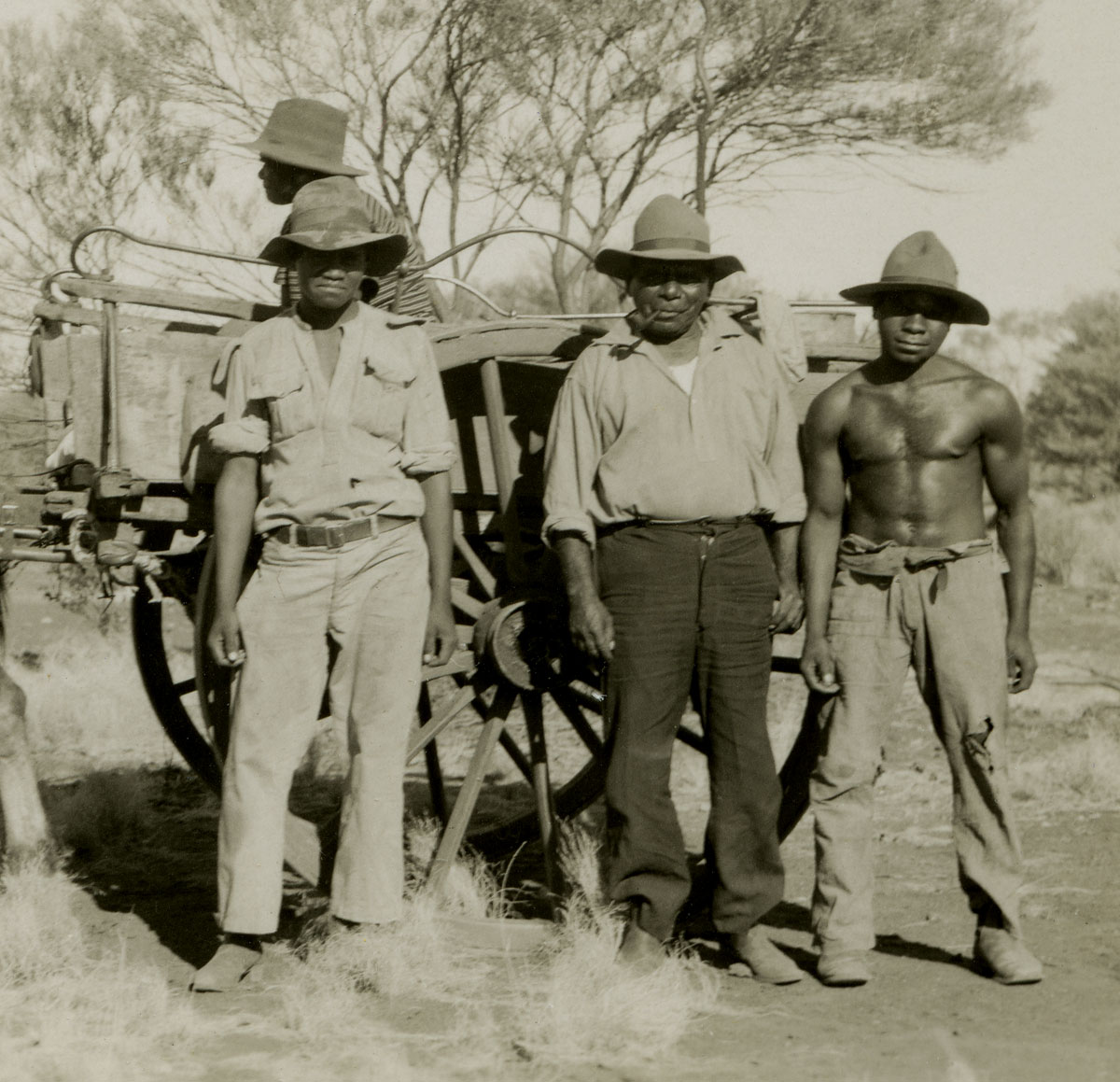
 

Anonymous photographer. 'Cardawan Station, central Western Australia' c. 1950 (detail)


Anonymous photographer
Cardawan Station, central Western Australia (detail)
c. 1950
Gelatin silver print


Anonymous photographer. 'Railway Hotel, Lake Austin township, Murchison region of Western Australia' c. 1950


Anonymous photographer
Railway Hotel, Lake Austin township, Murchison region of Western Australia
c. 1950
Gelatin silver print


Austin, Western Australia

Austin is an abandoned town in the Murchison region of Western Australia. The town is located south of Cue on an island in Lake Austin and for this reason was also known as Lake Austin and The Island Lake Austin.

The lake and the town are both named after surveyor Robert Austin, who was the first European to explore and chart the area. Austin initially named the lake the Great Inland Marsh but the name was later changed to Lake Austin. The townsite was gazetted in 1895. When Austin travelled through the area he described it as very indifferent but also added the geological features indicate rich goldfields.

Text from the Wikipedia website


Anonymous photographer. 'Railway Hotel, Lake Austin township, Murchison region of Western Australia' c. 1950 (detail)


Anonymous photographer
Railway Hotel, Lake Austin township, Murchison region of Western Australia (detail)
c. 1950
Gelatin silver print


LIKE ART BLART ON FACEBOOK

Back to top

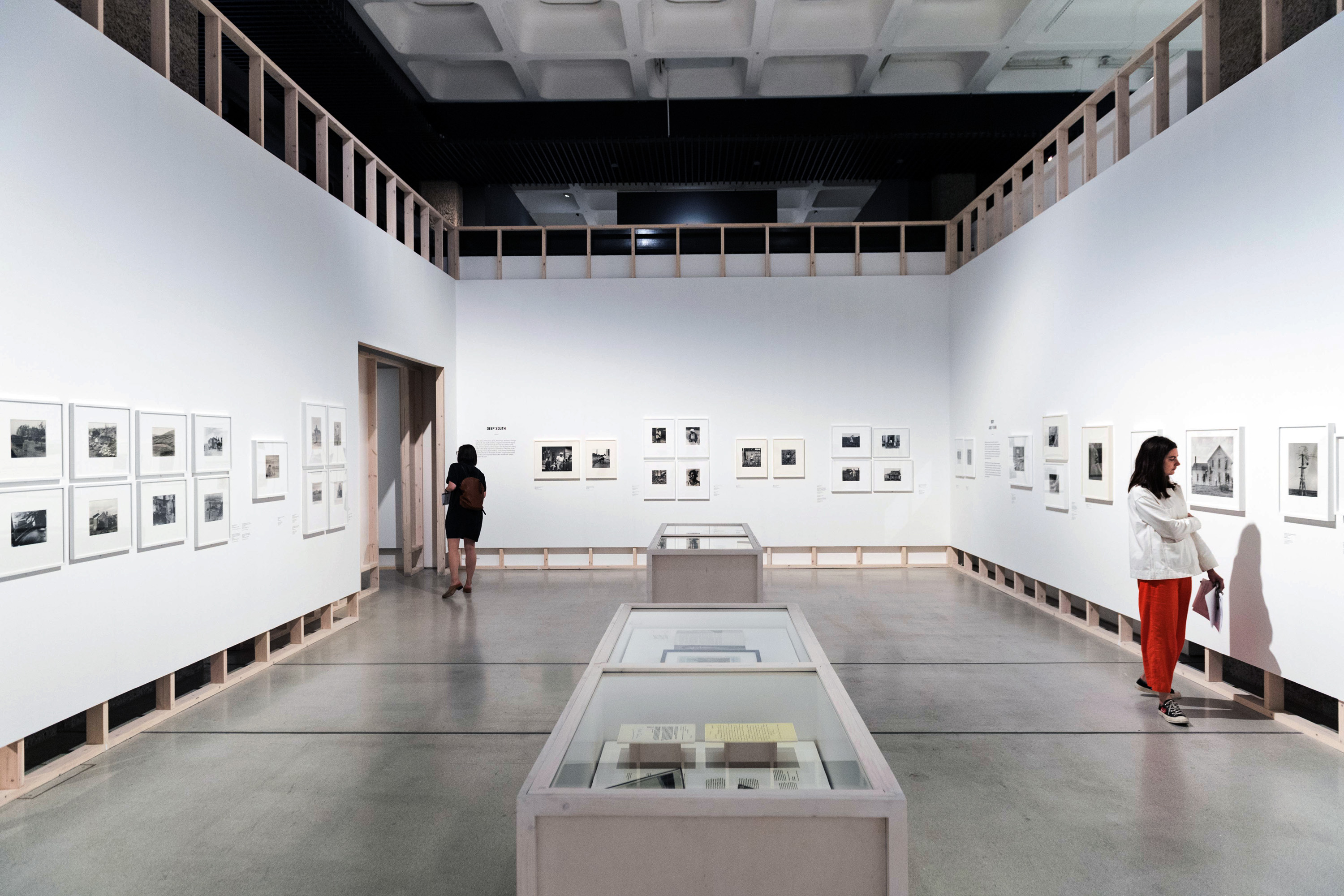
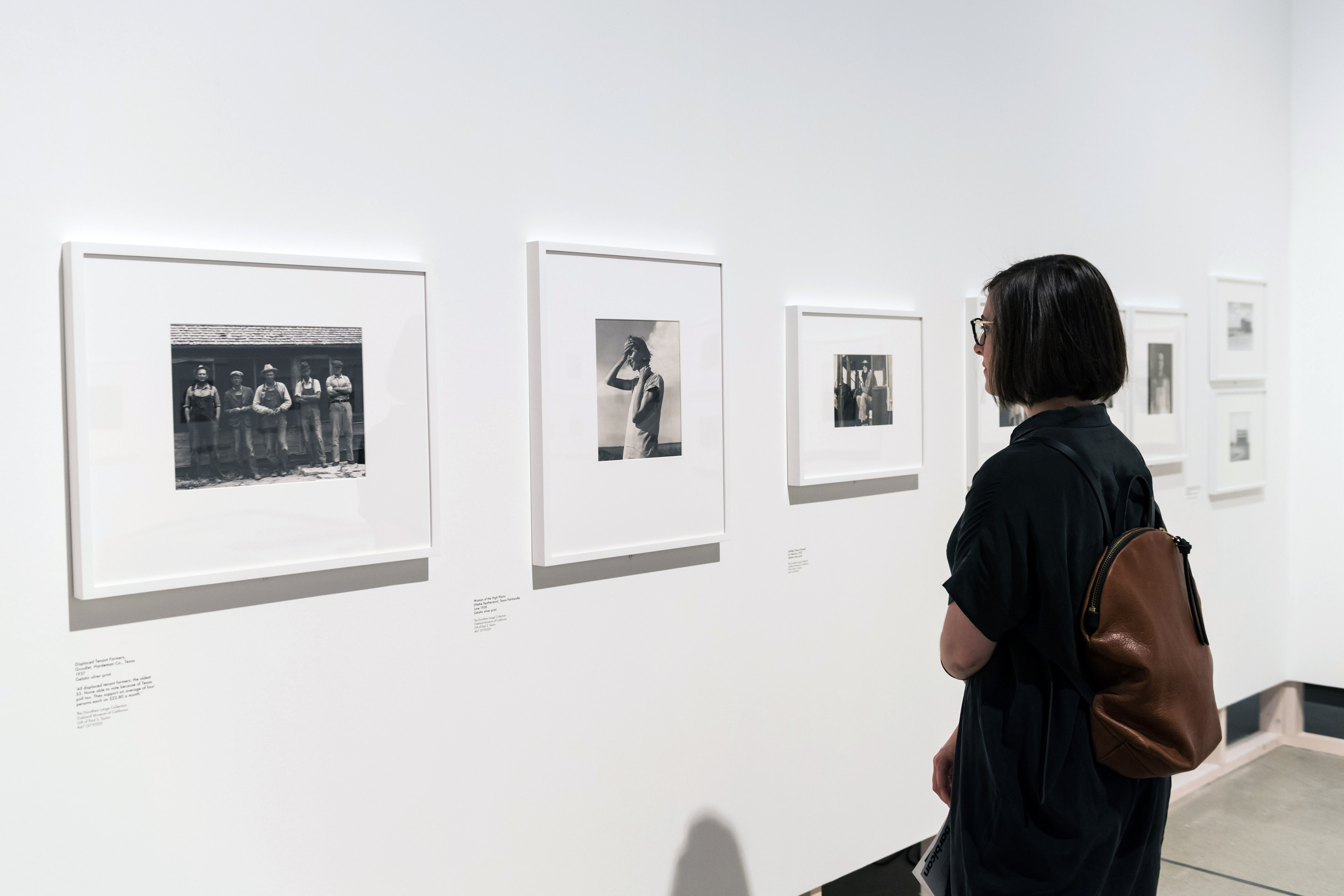
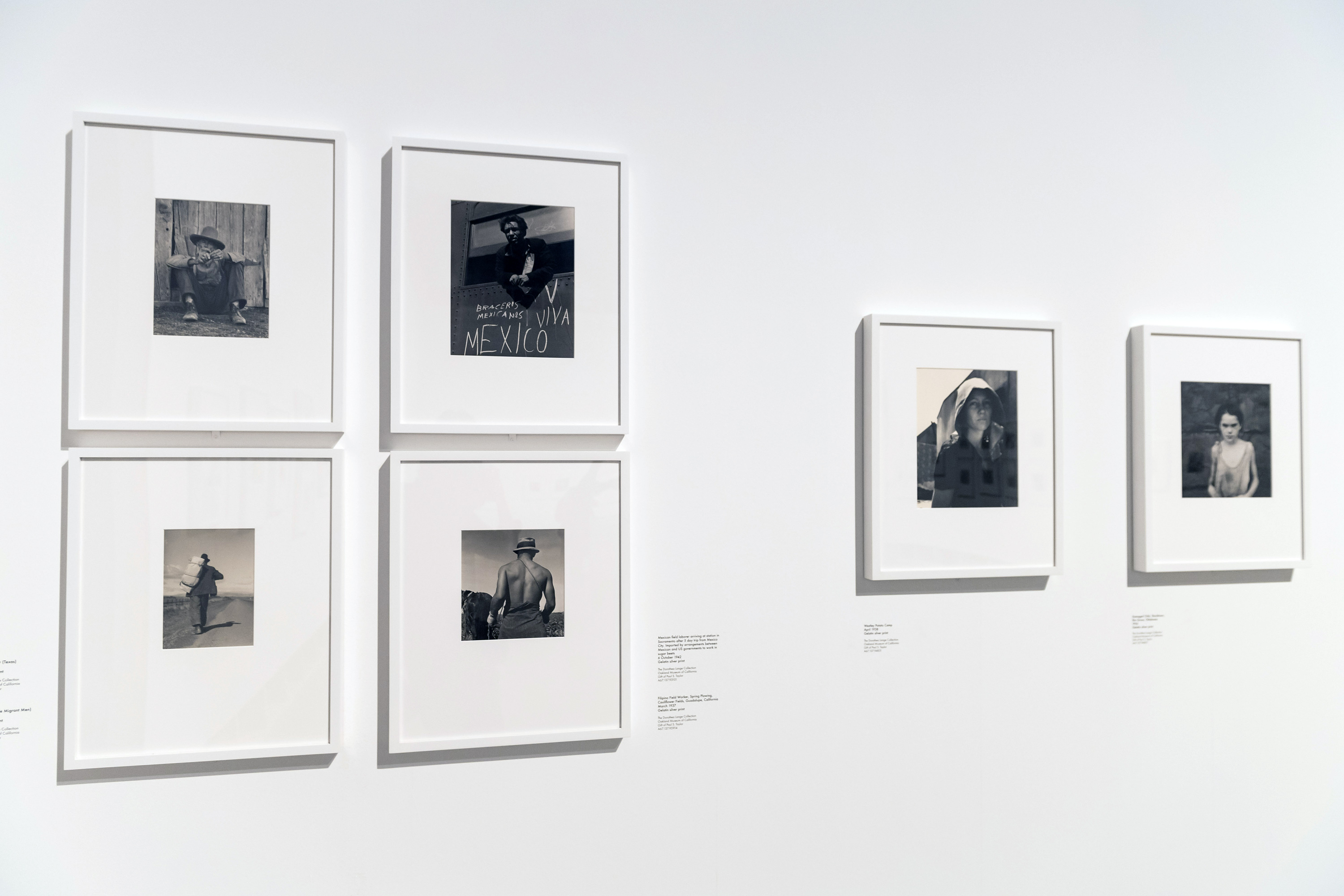
Exhibition: ‘Dorothea Lange: Politics of Seeing’ at Jeu de Paume, Concorde, Paris

Exhibition dates: 16th October, 2018 – 27th January, 2019

Curators: Drew Heath Johnson, Oakland Museum of California, Alona Pardo and Jilke Golbach, Barbican Art Gallery, Pia Viewing, Jeu de Paume.


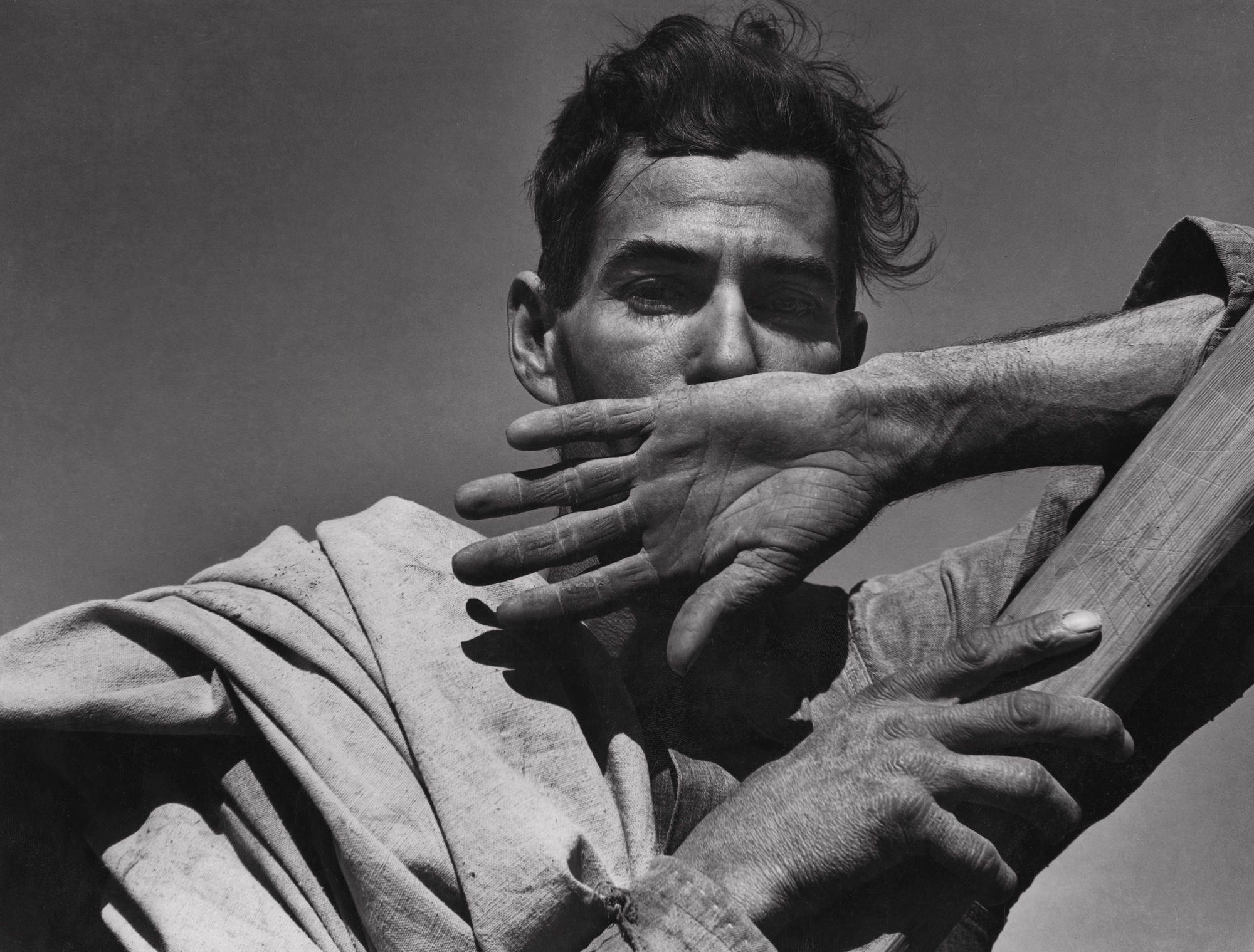
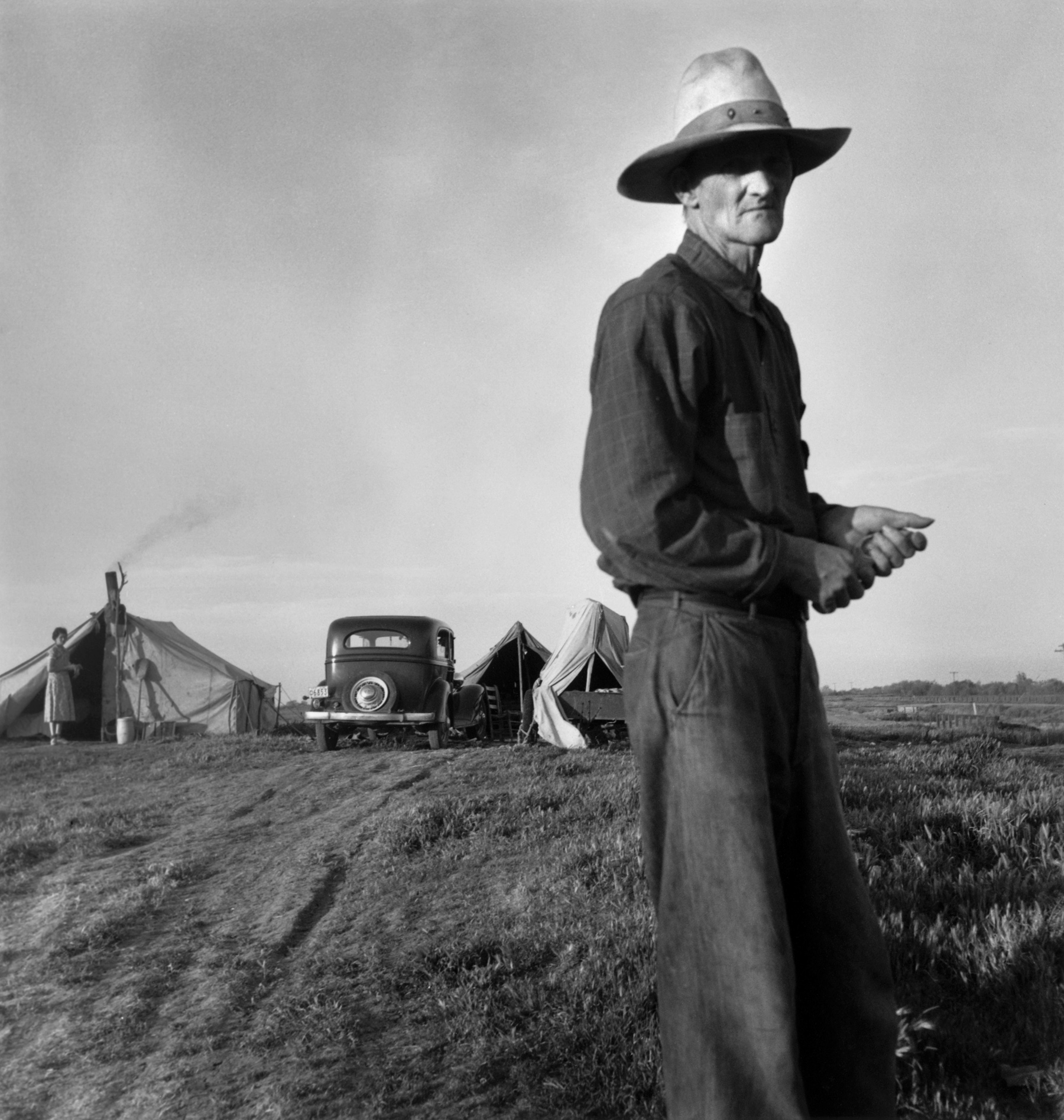
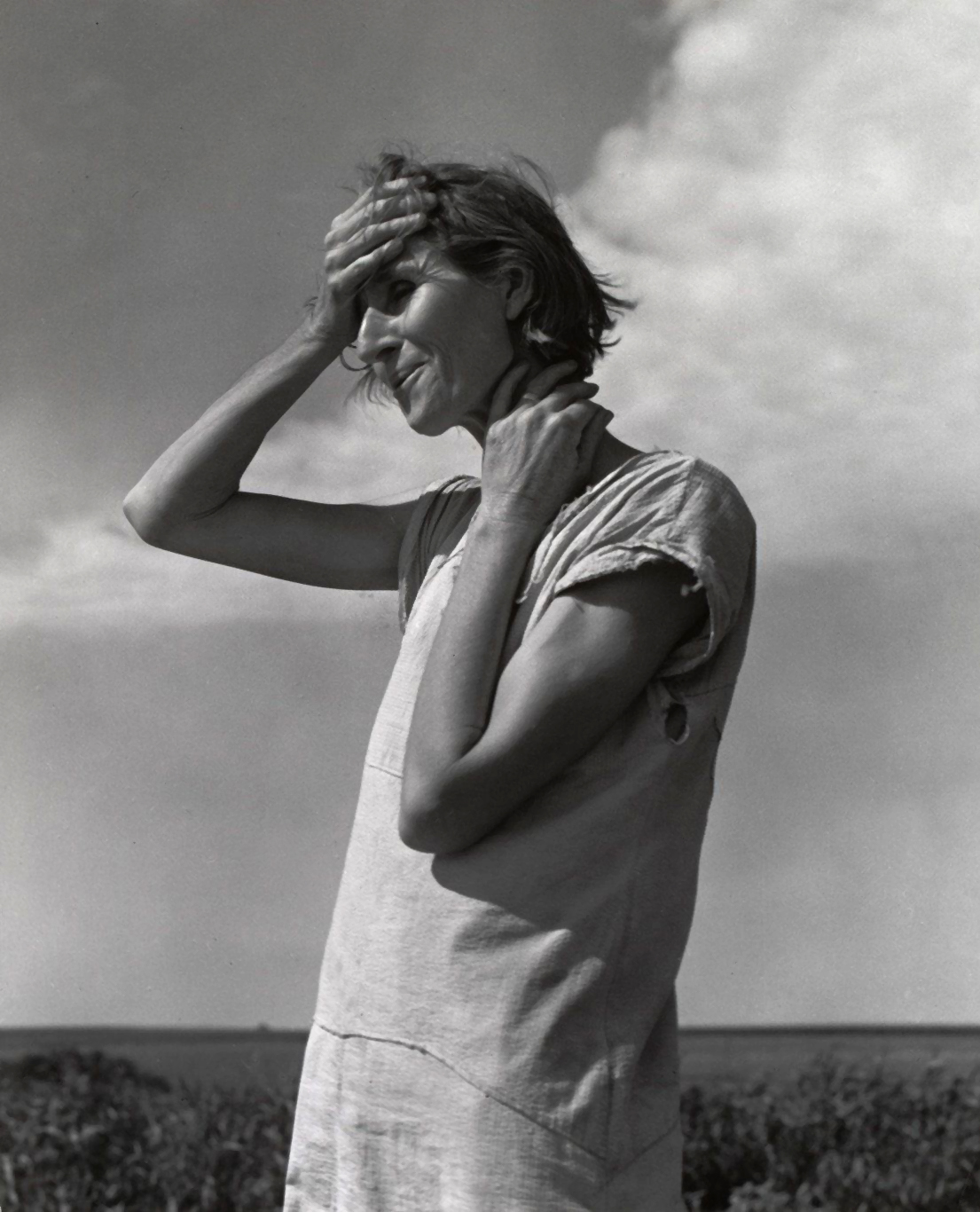
Dorothea Lange (American, 1895-1966) 'Migrant Mother, Nipomo, California' 1936 from the exhibition 'Dorothea Lange: Politics of Seeing' at Jeu de Paume, Concorde, Paris, Oct 2018 - Jan 2019


Dorothea Lange (American, 1895-1966)
Migrant Mother, Nipomo, California
1936
Gelatin silver print
© The Dorothea Lange Collection, the Oakland Museum of California, City of Oakland. Gift of Paul S. Taylor


A further posting on this exhibition, now showing at Jeu de Paume in Paris.

Eleven new media images, two videos, a selection of quotes from Dorothea Lange, and text from the exhibition curator Pia Viewing.

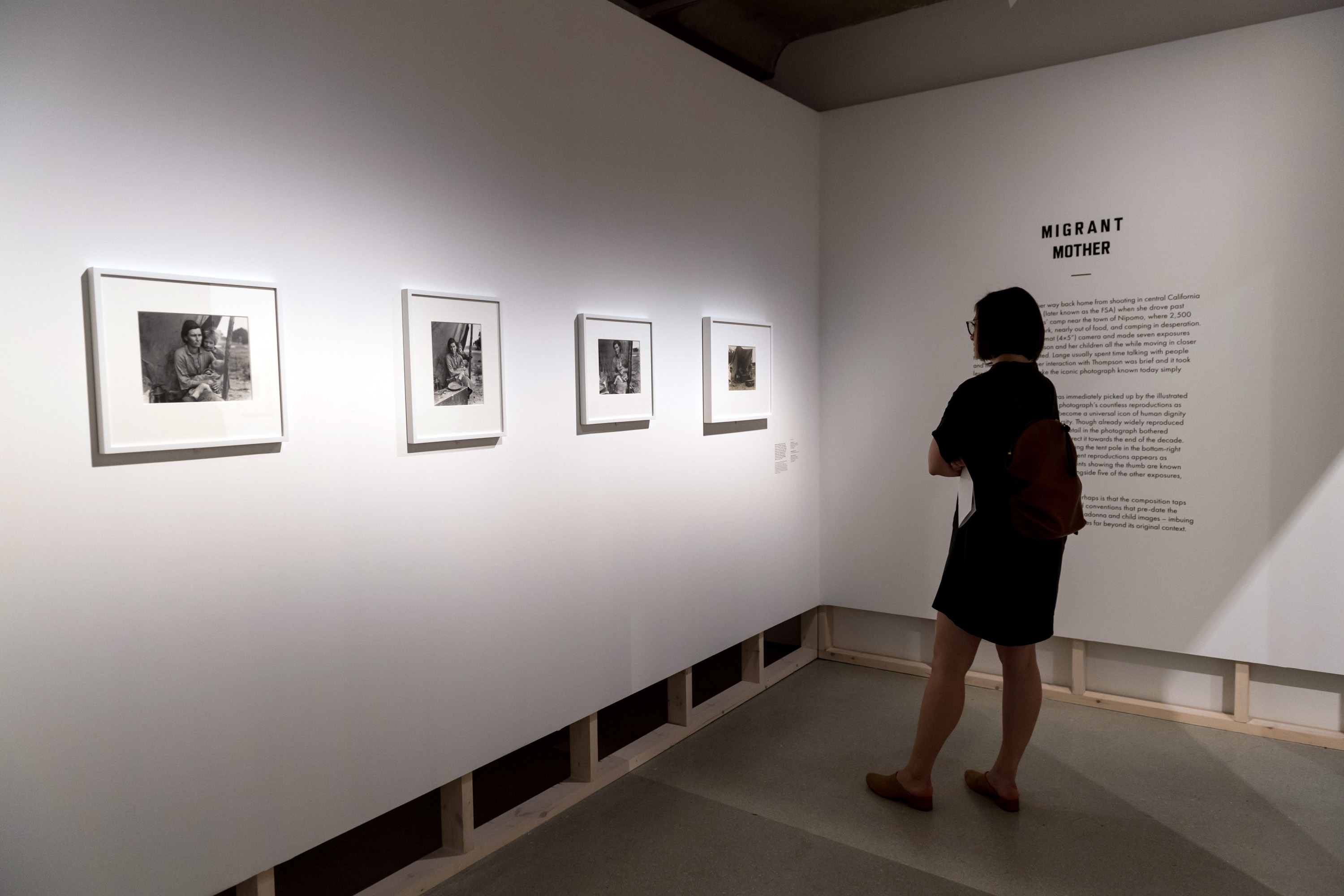
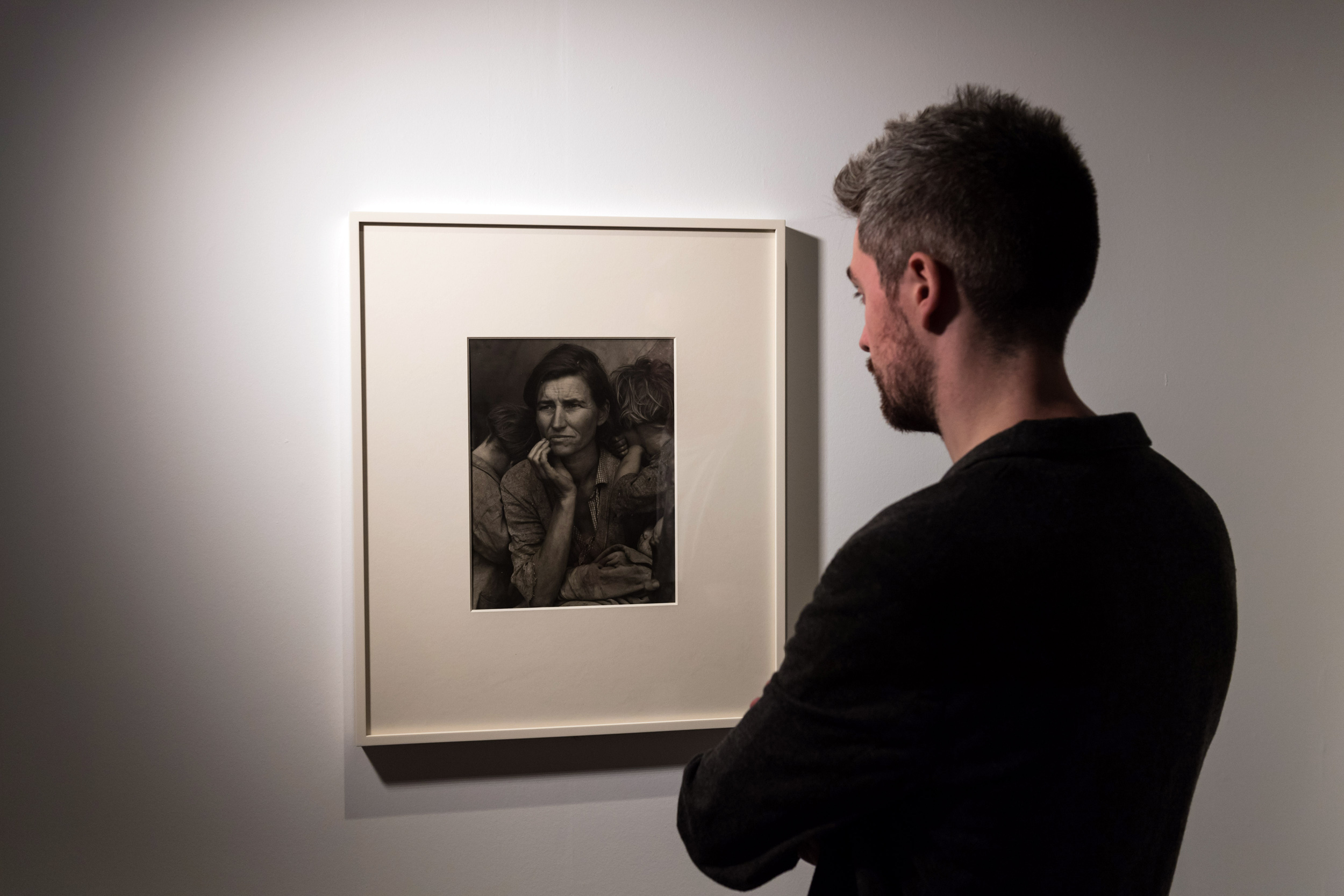
The most interesting of the images is the wide shot Migrant Mother, Nipomo, California (1936, above), part of a series of six that Lange took of Florence Owens Thompson and her children, the last image of which was to become the iconic image (see text below). The story of that image is fascinating and is told in detail in text from Wikipedia and other sources below.

It would seem that Lange was mistaken or made up the story to fill in the blanks; and that the image was at first a curse (ashamed that the world could see how poor they were) and now a source of pride, to the Thompson family. As the text pertinently notes, “The photograph’s fame caused distress for Thompson and her children and raised ethical concerns about turning individuals into symbols.”

Dr Marcus Bunyan


Many thankx to Jeu de Paume for allowing me to publish the photographs in the posting. Please click on the photographs for a larger version of the image.


Dorothea Lange (American, 1895-1966) 'Migrant Mother, Nipomo, California' 1936 from the exhibition 'Dorothea Lange: Politics of Seeing' at Jeu de Paume, Concorde, Paris, Oct 2018 - Jan 2019


Dorothea Lange (American, 1895-1966)
Migrant Mother, Nipomo, California [with thumb at bottom right removed]
1936
Gelatin silver print
© The Dorothea Lange Collection, the Oakland Museum of California, City of Oakland. Gift of Paul S. Taylor


Dorothea Lange (American, 1895-1966) 'Destitute pea pickers in California' 1936


Dorothea Lange (American, 1895-1966)
Destitute pea pickers in California. Mother of seven children. Age thirty-two. Nipomo, California [original title, thumb removed; digital file, post-conservation]
1936
Gelatin silver print
Library of Congress


Digital file was made from the original nitrate negative for “Migrant Mother” (LC-USF34-009058-C). The negative was retouched in the 1930s to erase the thumb holding a tent pole in lower right hand corner.

The file print made before the thumb was retouched can be seen at http://hdl.loc.gov/loc.pnp/ppmsca.12883

Title from caption card for negative. Title on print: “Destitute pea pickers in California. A 32 year old mother of seven children.”


Destitute pea pickers in California. Mother of seven children. Age thirty-two. Nipomo, California. In the 1930s, the FSA employed several photographers to document the effects of the Great Depression on Americans. Many of the photographs can also be seen as propaganda images to support the U.S. government’s policy distributing support to the worst affected, poorer areas of the country. Dorothea Lange’s image of a migrant pea picker, Florence Owens Thompson, and her family has become an icon of resilience in the face of adversity. Lange actually took six images that day, the last being the famous “Migrant Mother”. This is a montage of the other five pictures. Persons in picture (left to right) are: Viola (Pete) in rocker, age 14, standing inside tent; Ruby, age 5; Katherine, age 4, seated on box; Florence, age 32, and infant Norma, age 1 year, being held by Florence. Pete has moved inside the tent, and away from Lange, in hopes her photo can not be taken. Katherine stands next to her mother. Florence is talking to Ruby, who is hiding behind her mother, as Lange took the picture. Florence is nursing Norma. Katherine has moved back from her mother as Lange approached to take this shot. Ruby is still hiding behind her mother. Left to right are Florence, Ruby and baby Norma. Florence stopped nursing Norma and Ruby has come out from behind her. This photograph was the one used by the newspapers the following day to report the story of the migrants. Portrait shows Florence Owens Thompson with several of her children in a photograph known as “Migrant Mother”.

1/ Persons in picture (left to right) are: Viola (Pete) in rocker, age 14; standing inside tent, Ruby, age 5; Katherine, age 4; seated on box, Florence, age 32, and infant Norma, age 1 year, being held by Florence

2/ Viola has moved inside the tent. Katherine stands next to her mother. Florence is talking to Ruby, who is behind her mother

3/ Florence is nursing Norma. Katherine has moved back from her mother. Ruby is still behind her mother

4/ Left to right are Florence, Ruby and baby Norma

5/ Florence stopped nursing Norma. Ruby is still next to her mother. This photograph was the one used by the newspapers the following day to report the story of the starving migrants

Text from the Wikipedia website


Dorothea Lange (American, 1895-1966) 'Destitute pea pickers in California. Mother of seven children. Age thirty-two. Nipomo, California' 1936


“We do not know the order in which these photographs were taken, since they are 4″ x 5” individual negatives rather than 35mm film strips, which provide a record of the sequence of continuous exposures. However, Lange indicates in the above statement she moved closer as she continued to photograph. If that is true, then we have a good idea of the general order. We do know that one was selected, likely as a joint decision between Lange and representatives of the Resettlement Administration.

While “Migrant Mother” is well known, what is far less known is that Lange took six or seven pictures, five of which still exist. Lange posed Ms. Florence Thompson in different positions and used some of her seven children to create a series of compelling images. She asked Thompson to shift the position of the child in her arms to get the greatest emotional effect. Linda Gordon’s biography of Lange describes this as follows:

Lange asked the mother and children to move into several different positions. She began with a mid-distance shot. Then she backed up for one shot, then came closer for others. She moved aside a pile of dirty clothes (she would never embarrass her subjects). She then moved closer yet, focusing on three younger children and sidelining the teenage daughter out of the later pictures altogether… she offered the photographs to the press. The San Francisco News published two of them on March 10, 1936. In response, contributions of $200,000 poured in for the destitute farmworkers stuck in Nipomo. (Gordon, 2009, p. 237)

One was eventually selected to represent this scene to the nation.”

Anonymous. “The Great Depression, the Dust Bowl, and the New Deal,” on the Annenberg Learner website [Online] Cited 16/12/2018. No longer available online


Iconic photo

In March 1936, after picking beets in the Imperial Valley, Florence and her family were traveling on U.S. Highway 101 towards Watsonville “where they had hoped to find work in the lettuce fields of the Pajaro Valley.” On the road, the car’s timing chain snapped and they coasted to a stop just inside a pea-pickers‘ camp on Nipomo Mesa. They were shocked to find so many people camping there – as many as 2,500 to 3,500. A notice had been sent out for pickers, but the crops had been destroyed by freezing rain, leaving them without work or pay. Years later Florence told an interviewer that when she cooked food for her children that day little children appeared from the pea pickers’ camp asking, “Can I have a bite?”

While Jim Hill, her husband, and two of Florence’s sons went into town to get the car’s damaged radiator repaired, Florence and some of the children set up a temporary camp. As Florence waited, photographer Dorothea Lange, working for the Resettlement Administration, drove up and started taking photos of Florence and her family. She took six images in the course of ten minutes.

Lange’s field notes of the images read:

“Seven hungry children. Father is native Californian. Destitute in pea pickers’ camp … because of failure of the early pea crop. These people had just sold their tires to buy food.”

Lange later wrote of the encounter with Thompson:

“I did not ask her name or her history. She told me her age, that she was 32. She said that they had been living on frozen vegetables from the surrounding fields and birds that the children killed. She had just sold the tires from her car to buy food.”

Thompson claimed that Lange never asked her any questions and got many of the details incorrect. Troy Owens recounted:

“There’s no way we sold our tires, because we didn’t have any to sell. The only ones we had were on the Hudson and we drove off in them. I don’t believe Dorothea Lange was lying, I just think she had one story mixed up with another. Or she was borrowing to fill in what she didn’t have.”

In many ways, Migrant Mother is not typical of Lange’s careful method of interacting with her subject. Exhausted after a long road-trip, she did not talk much to the migrant woman, Florence Thompson, and didn’t record her information accurately. Although Thompson became a famous symbol of White motherhood, her heritage is Native American. The photograph’s fame caused distress for Thompson and her children and raised ethical concerns about turning individuals into symbols.

According to Thompson, Lange promised the photos would never be published, but Lange sent them to the San Francisco News as well as to the Resettlement Administration in Washington, D.C. The News ran the pictures almost immediately and reported that 2,500 to 3,500 migrant workers were starving in Nipomo, California. Within days, the pea-picker camp received 20,000 pounds (9,100 kg) of food from the federal government. Thompson and her family had moved on by the time the food arrived and were working near Watsonville, California.

While Thompson’s identity was not known for over 40 years after the photos were taken, the images became famous. The sixth image, especially, which later became known as Migrant Mother, “has achieved near mythical status, symbolising, if not defining, an entire era in United States history.” Roy Stryker called Migrant Mother the “ultimate” photo of the Depression Era: “[Lange] never surpassed it. To me, it was the picture … . The others were marvellous, but that was special … . She is immortal.” As a whole, the photographs taken for the Resettlement Administration “have been widely heralded as the epitome of documentary photography.” Edward Steichen described them as “the most remarkable human documents ever rendered in pictures.”

Thompson’s identity was discovered in the late 1970s. In 1978, acting on a tip, Modesto Bee reporter Emmett Corrigan located Thompson at her mobile home in Space 24 of the Modesto Mobile Village and recognised her from the 40-year-old photograph. A letter Thompson wrote was published in The Modesto Bee and the Associated Press distributed a story headlined “Woman Fighting Mad Over Famous Depression Photo.” Florence was quoted as saying “I wish she [Lange] hadn’t taken my picture. I can’t get a penny out of it. She didn’t ask my name. She said she wouldn’t sell the pictures. She said she’d send me a copy. She never did.”

Lange was funded by the federal government when she took the picture, so the image was in the public domain and Lange never directly received any royalties. However, the picture did help make Lange a celebrity and earned her “respect from her colleagues.”

In a 2008 interview with CNN, Thompson’s daughter Katherine McIntosh recalled how her mother was a “very strong lady”, and “the backbone of our family”. She said: “We never had a lot, but she always made sure we had something. She didn’t eat sometimes, but she made sure us children ate. That’s one thing she did do.”

Later life, death, and aftermath

Though Thompson’s 10 children bought her a house in Modesto, California, in the 1970s, Thompson found she preferred living in a mobile home and moved back into one.

Thompson was hospitalised and her family appealed for financial help in late August 1983. By September, the family had collected $35,000 in donations to pay for her medical care. Florence died of “stroke, cancer and heart problems” at Scotts Valley, California, on September 16, 1983. She was buried in Lakewood Memorial Park, in Hughson, California, and her gravestone reads: “FLORENCE LEONA THOMPSON Migrant Mother – A Legend of the Strength of American Motherhood.”

Daughter Katherine McIntosh told CNN that the photo’s fame had made the family feel both ashamed and determined never to be as poor again. Son Troy Owens said that more than 2,000 letters received along with donations for his mother’s medical fund led to a re-appraisal of the photo: “For Mama and us, the photo had always been a bit of [a] curse. After all those letters came in, I think it gave us a sense of pride.”

Text from the Wikipedia website


Dorothea Lange (American, 1895-1966) 'Cars on the Road' 1936


Dorothea Lange (American, 1895-1966)
Cars on the Road
1936
Gelatin silver print
Library of Congress
© The Dorothea Lange Collection, the Oakland Museum of California


Dorothea Lange (American, 1895-1966) 'Near Eutah, Alabama' 1936


Dorothea Lange (American, 1895-1966)
Near Eutah, Alabama
1936
Gelatin silver print
© The Dorothea Lange Collection, the Oakland Museum of California, City of Oakland. Gift of Paul S. Taylor


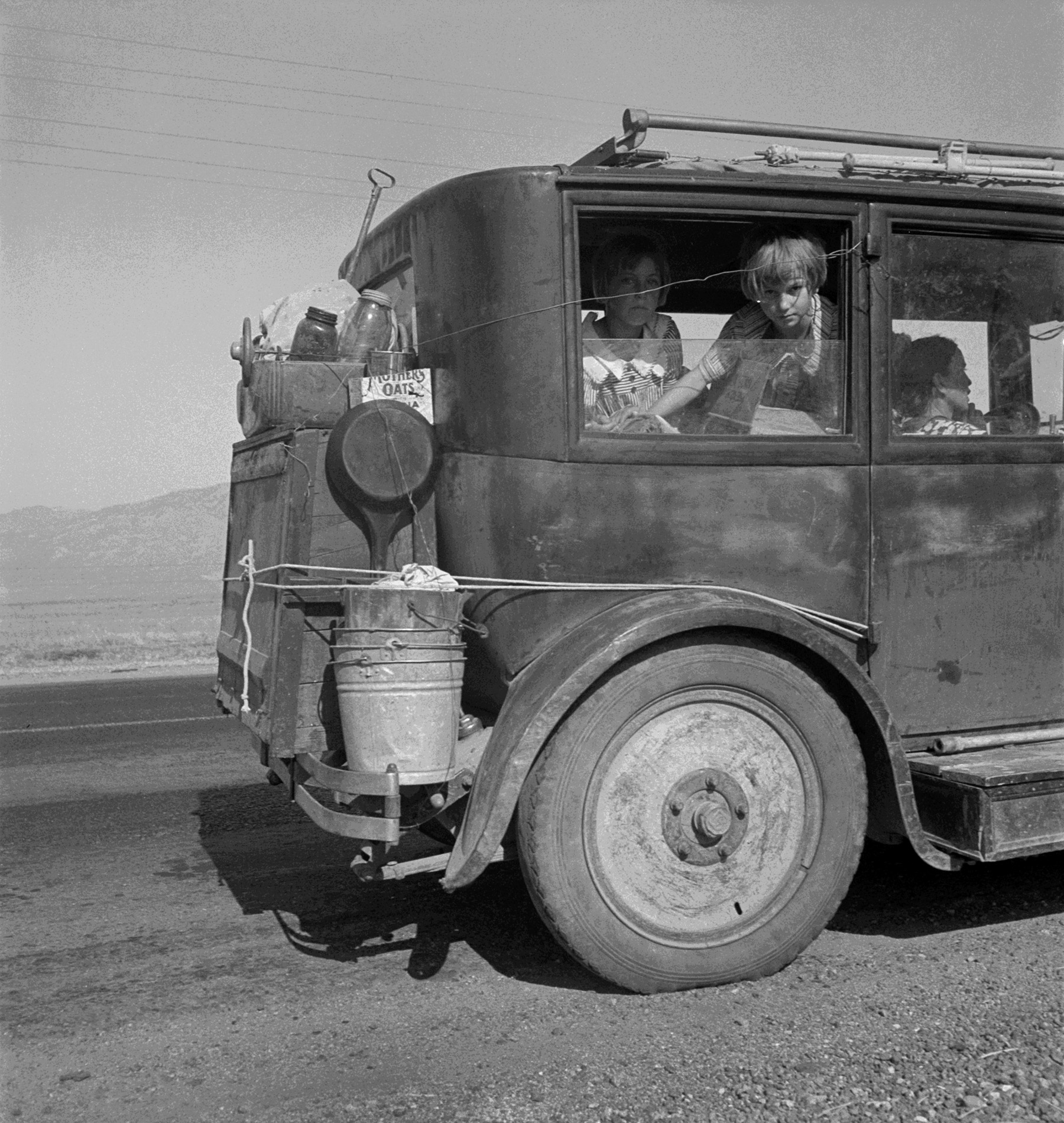
Dorothea Lange (American, 1895-1966) 'Ditched, stalled and stranded, San Joaquin Valley, California' 1935, printed c. 1975


Dorothea Lange (American, 1895-1966)
Ditched, Stalled, and Stranded, San Joaquin Valley, California
1936
Gelatin silver print
© The Dorothea Lange Collection, the Oakland Museum of California


Quotes from Dorothea Lange

“One should really use the camera as though tomorrow you’d be stricken blind. To live a visual life is an enormous undertaking, practically unattainable, but when the great photographs are produced, it will be down that road. I have only touched it, just touched it.”

“On the Bowery I knew how to step over drunken men … I knew how to keep an expression of face that would draw no attention, so no one would look at me. I have used that my whole life in photographing.”

Interview with Lange, in Dorothea Lange, Part II : The Closer For Me, film produced by KQED for National Educational Television (NET), USA, 1965


“I never steal a photograph. Never. All photographs are made in collaboration, as part of their thinking as well as mine.”

“Often it’s just sticking around and being there, remaining there, not swopping in and swopping out in a cloud of dust; sitting down on the ground with people, letting the children look at your camera with their dirty, grimy little hands, and putting their fingers on the lens, and you let them, because you know that if you will behave in a generous manner, you’re very apt to receive it.”

Anne Whiston, Spirn, Daring to Look, p. 23-24


“My own approach is based upon three considerations. First – hands off! Whatever I photograph I do not molest or tamper with or arrange. Second – a sense of place. Whatever I photograph, I try to picture as part of its surroundings, as having roots. Third – a sense of time. Whatever I photograph, I try to show as having its position in the past or in the present.”

Beaumont and Nancy Newhall, Masters Of Photography, New York Castle Books, 1958, p. 140


“The good photograph is not the object, the consequences of the photograph are the objects.”

“I believe that the camera is a powerful medium for communication and I believe that the camera is a valuable tool for social research which has not been developed to its capacity.”

Dorothea Lange, quoted in Karen Tsujimoto, Dorothea Lange : Archive of an Artist, Oakland, Oakland Museum, 1995, p. 23


“Everything is propaganda for what you believe in, actually, isn’t it? … I don’t see that it could be otherwise. The harder and the more deeply you believe in anything, the more in a sense you’re a propagandist. Conviction, propaganda, faith. I don’t know, I never have been able to come to the conclusion that that’s a bad word […] But at any rate, that’s what the Office of War Information work was.”

“There is a sharp difference, a gulf. The woman’s position is immeasurably more complicated. There are not very many first class woman producers, not many. That is, producers of outside things. They produce in other ways. Where they can do both, it’s a conflict. I would like to try. I would like to have one year. I’d like to take one year, almost ask it of myself, ‘Could I have one year?’ Just one, when I would not have to take into account anything but my own inner demands. Maybe everybody would like that … but I can’t.”

Suzanne Riess, “Dorothea Lange: The Making of a documentary Photographer,” October 1960-August 1961, p. 181; 219-220


Dorothea Lange (American, 1895-1966) 'Drought-abandoned house on the edge of the Great Plains near Hollis, Oklahoma' 1938


Dorothea Lange (American, 1895-1966)
Drought-abandoned house on the edge of the Great Plains near Hollis, Oklahoma
1938
Gelatin silver print
© The Dorothea Lange Collection, the Oakland Museum of California


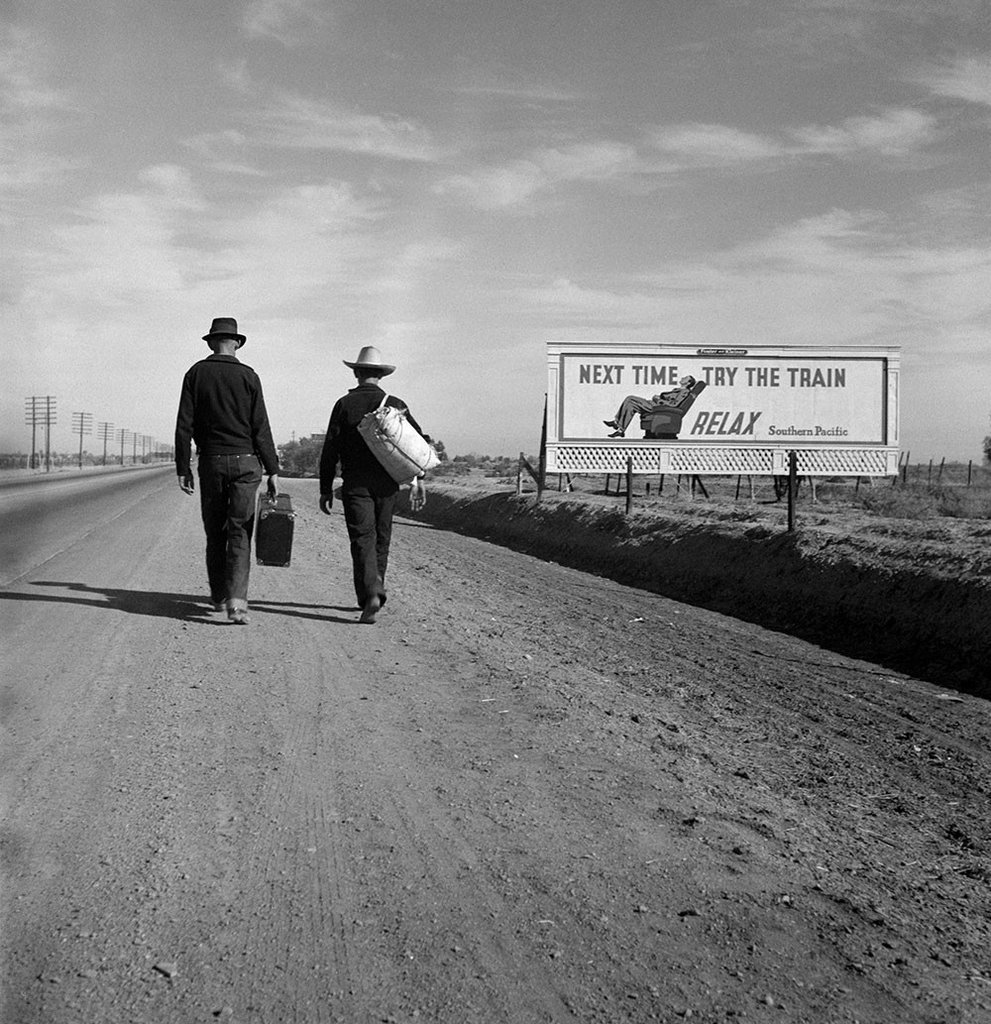
Dorothea Lange (American, 1895-1966) 'Towards Los Angeles, California' 1936, printed c. 1975


Dorothea Lange (American, 1895-1966)
Toward Los Angeles, California
1937
Gelatin silver print
© The Dorothea Lange Collection, the Oakland Museum of California


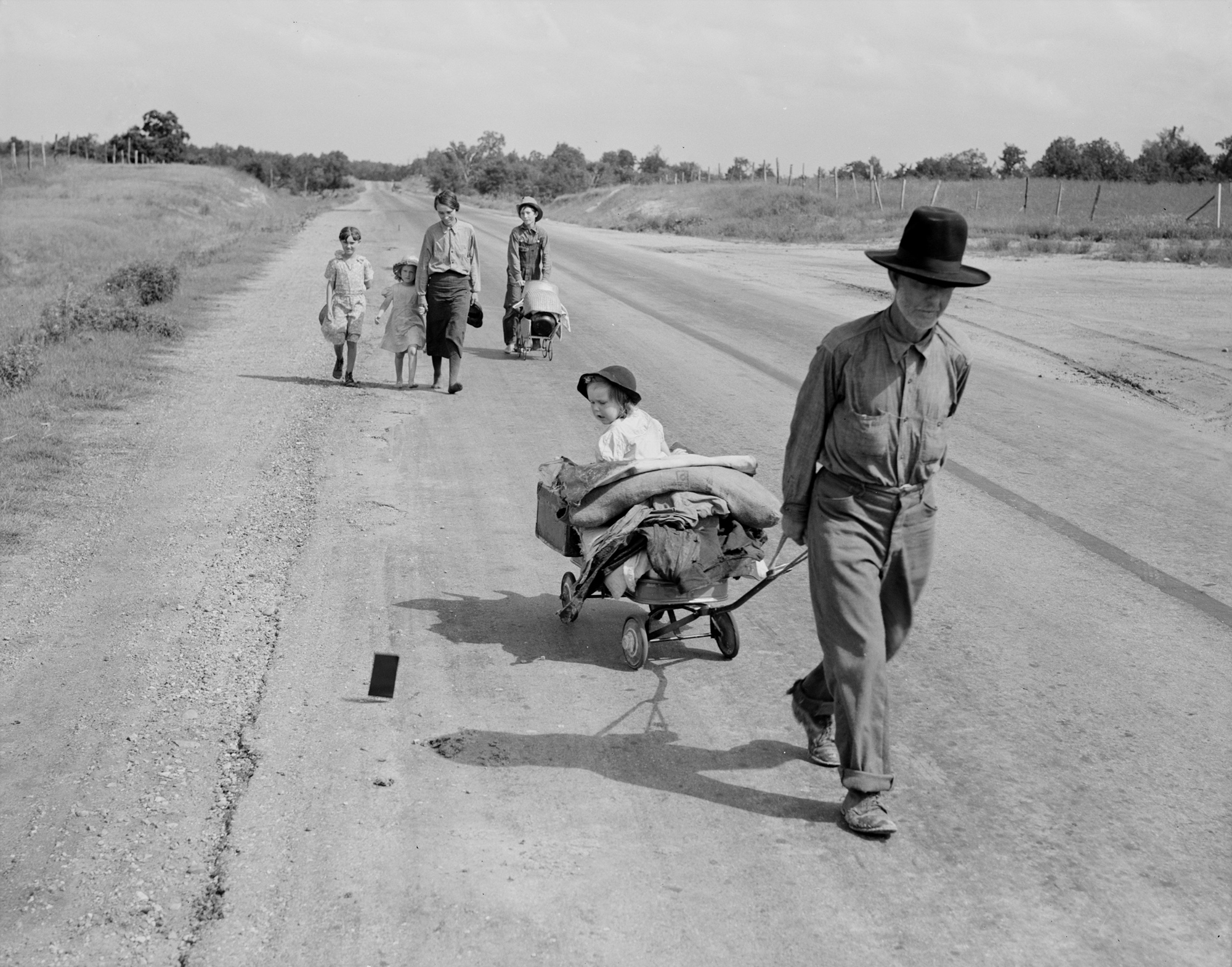
Dorothea Lange (American, 1895-1966) 'Family on the road, Oklahoma' 1938


Dorothea Lange (American, 1895-1966)
Family on the road, Oklahoma
1938
Gelatin silver print
© The Dorothea Lange Collection, the Oakland Museum of California


Dorothea Lange (American, 1895-1966) 'Ancienne esclave à la longue mémoire, Alabama' 'Former slave with a long memory, Alabama' 1938


Dorothea Lange (American, 1895-1966)
Ancienne esclave à la longue mémoire, Alabama
Former slave with a long memory, Alabama
1938
Gelatin silver print
© The Dorothea Lange Collection, the Oakland Museum of California


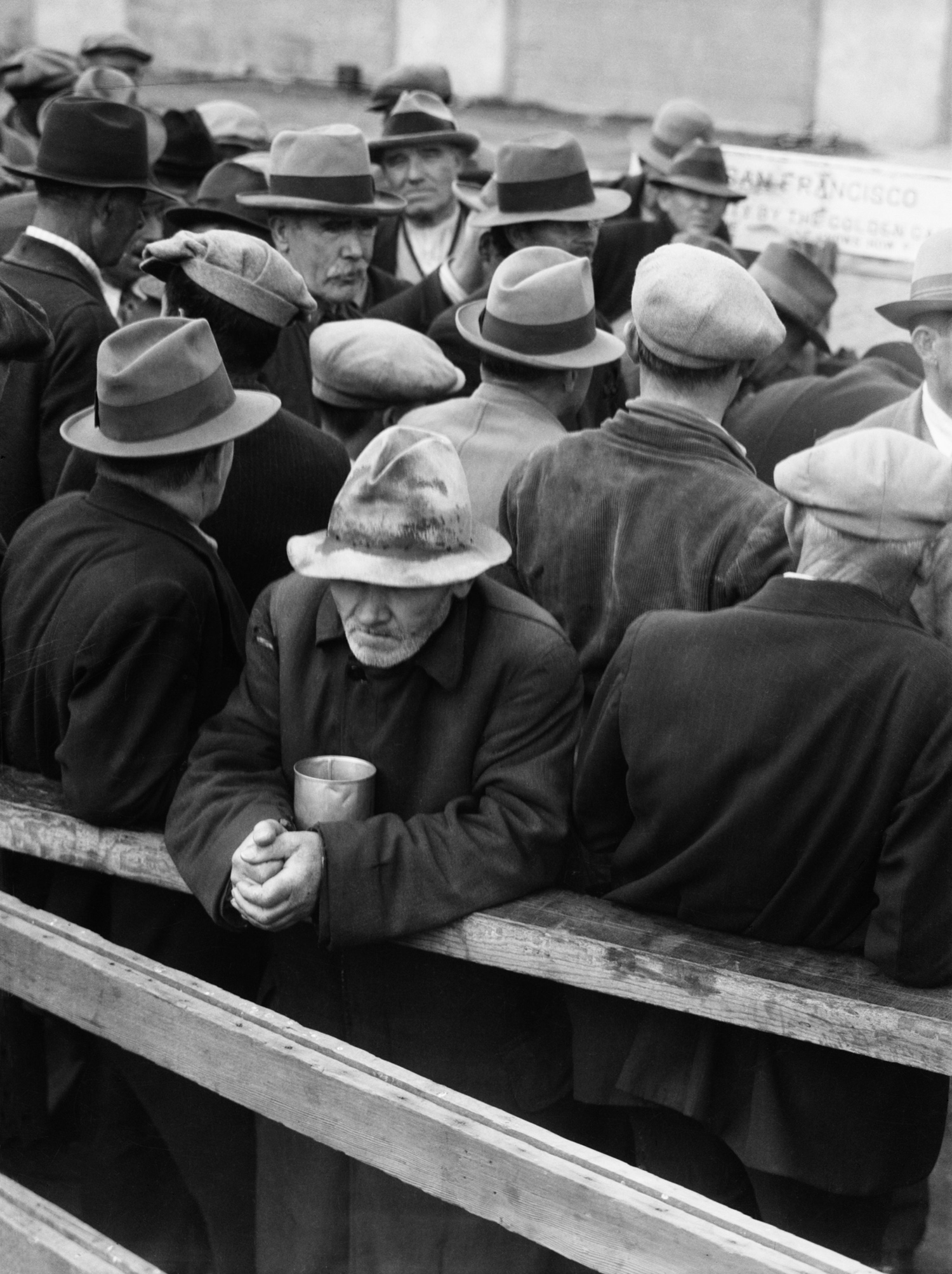
The Politics of Seeing features major works by the world famous American photographer Dorothea Lange (1895, Hoboken, New Jersey-1966, San Francisco, California), some of which have never before been exhibited in France. The exhibition focuses on the extraordinary emotional power of Dorothea Lange’s work and on the context of her documentary practice. It features five specific series: the Depression period (1933-1934), a selection of works from the Farm Security Administration (1935-1939), the Japanese American internment (1942), the Richmond shipyards (1942-1944) and a series on a Public defender (1955-1957). Over one hundred splendid vintage prints taken between 1933 and 1957 are enhanced by the presence of documents and screenings broadening the scope of an oeuvre often familiar to the public through images such as White Angel Breadline (1933) and Migrant Mother (1936), which are icons of photographic history. The majority of prints in this exhibition belong to the Oakland Museum of California, where Lange’s considerable archive, donated to the museum after her death by her husband Paul Shuster Taylor, is conserved.

Like John Steinbeck’s famous novel The Grapes of Wrath, Dorothea Lange’s oeuvre has helped shape our conception of the interwar years in America and contributed to our knowledge of this period. However, this exhibition also introduces other aspects of Dorothea Lange’s practice, which she herself considered archival. By placing the photographic work in the context of her anthropological approach, it enables viewers to appreciate how its power also lies in her capacity to interact with her subjects, evident in her captions to the images. She thereby considerably enriched the informative quality of the visual archive and produced a form of oral history for future generations.

In 1932, during the Great Depression that began in 1929, Lange observed the unemployed homeless people in the streets of San Francisco and decided to drop her studio portrait work because she felt that it was no longer adequate. During a two-year period that marked a turning point in her life, she took photographs of urban situations that portrayed the social impact of the recession. This new work became known in artistic circles and attracted the attention of Paul Schuster Taylor, professor of economics at the University of California, Berkeley. Taylor was a specialist in agricultural conflicts of the 1930s, and in particular Mexican migrant workers. He began using Lange’s photographs to illustrate his articles and in 1935 they started working together for the government agencies of the New Deal. Their collaboration lasted for over thirty years.

During the Second World War, Lange continued to practise photography and to document the major issues of the day, including the internment of Japanese-American families during the war; the economic and social development due to industries engaged in the war effort; and the criminal justice system through the work of a county public defence lawyer.

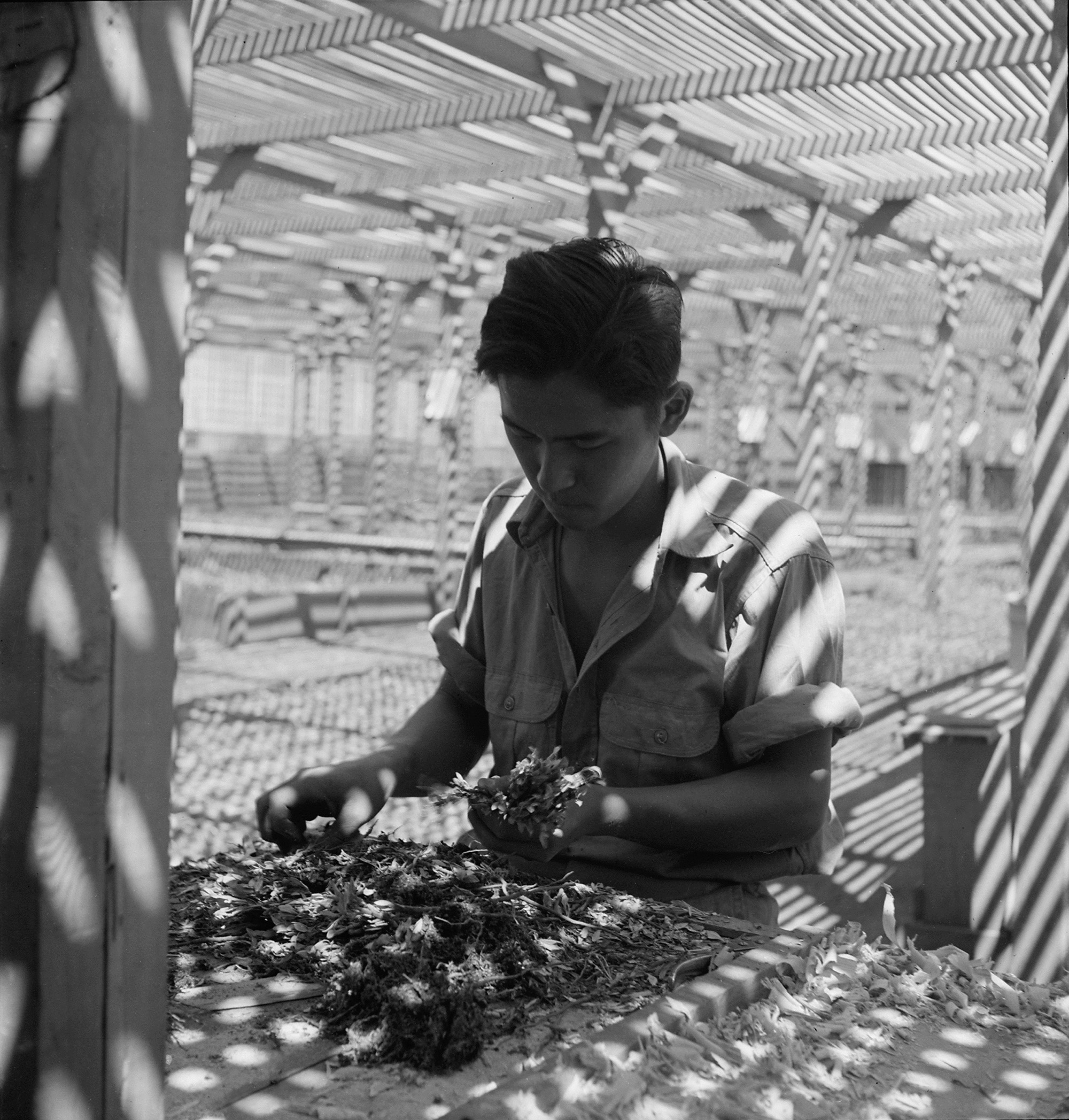
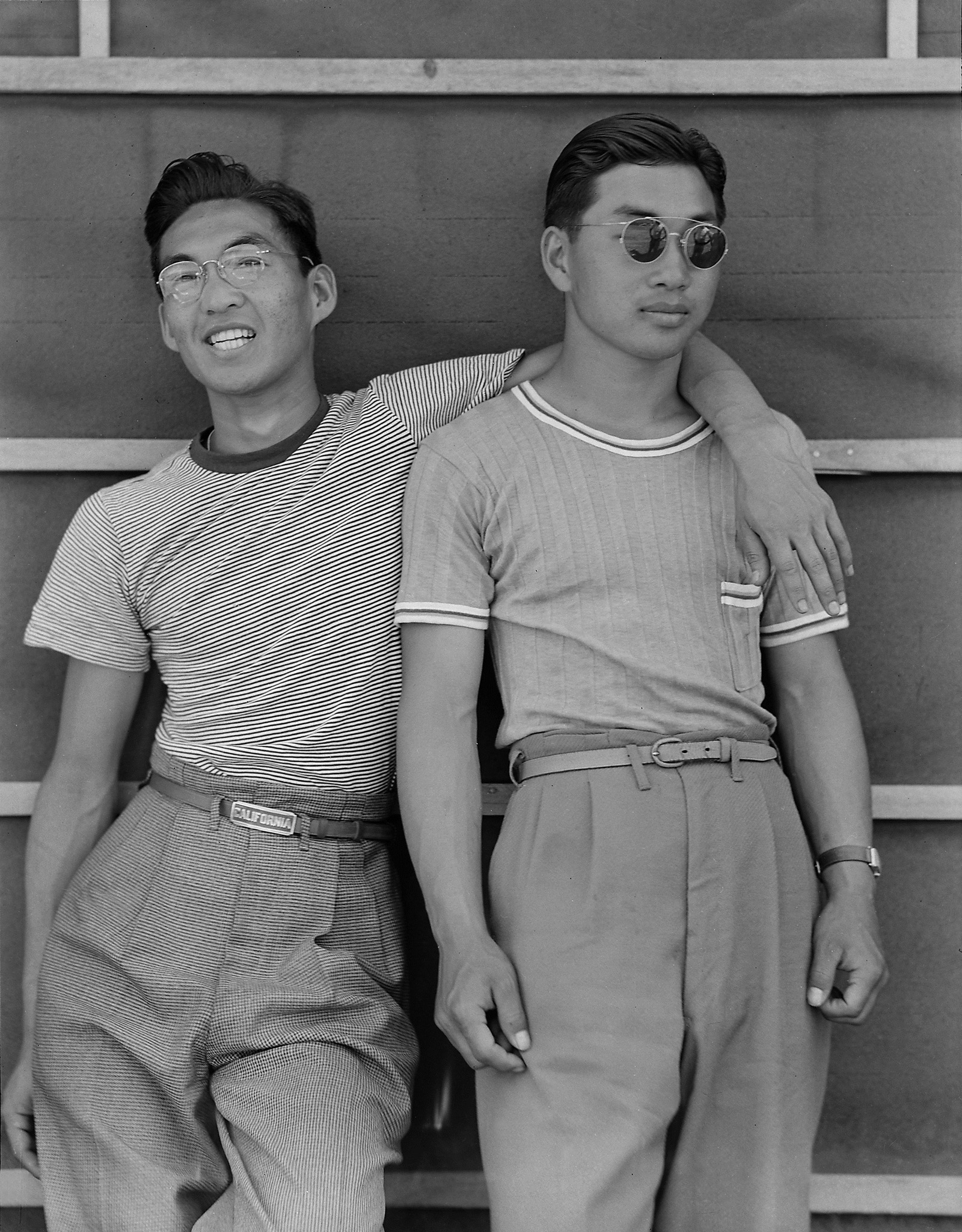
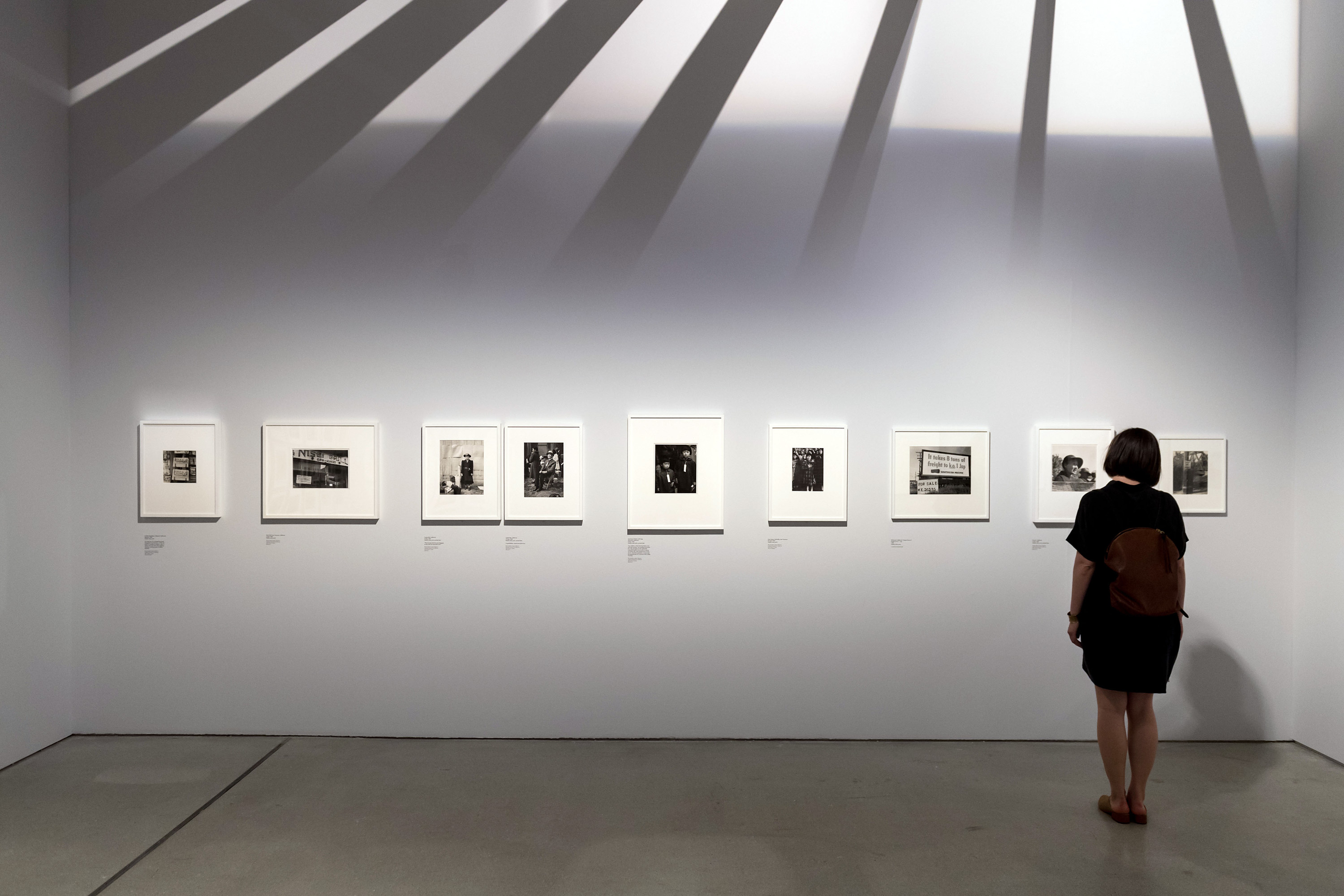
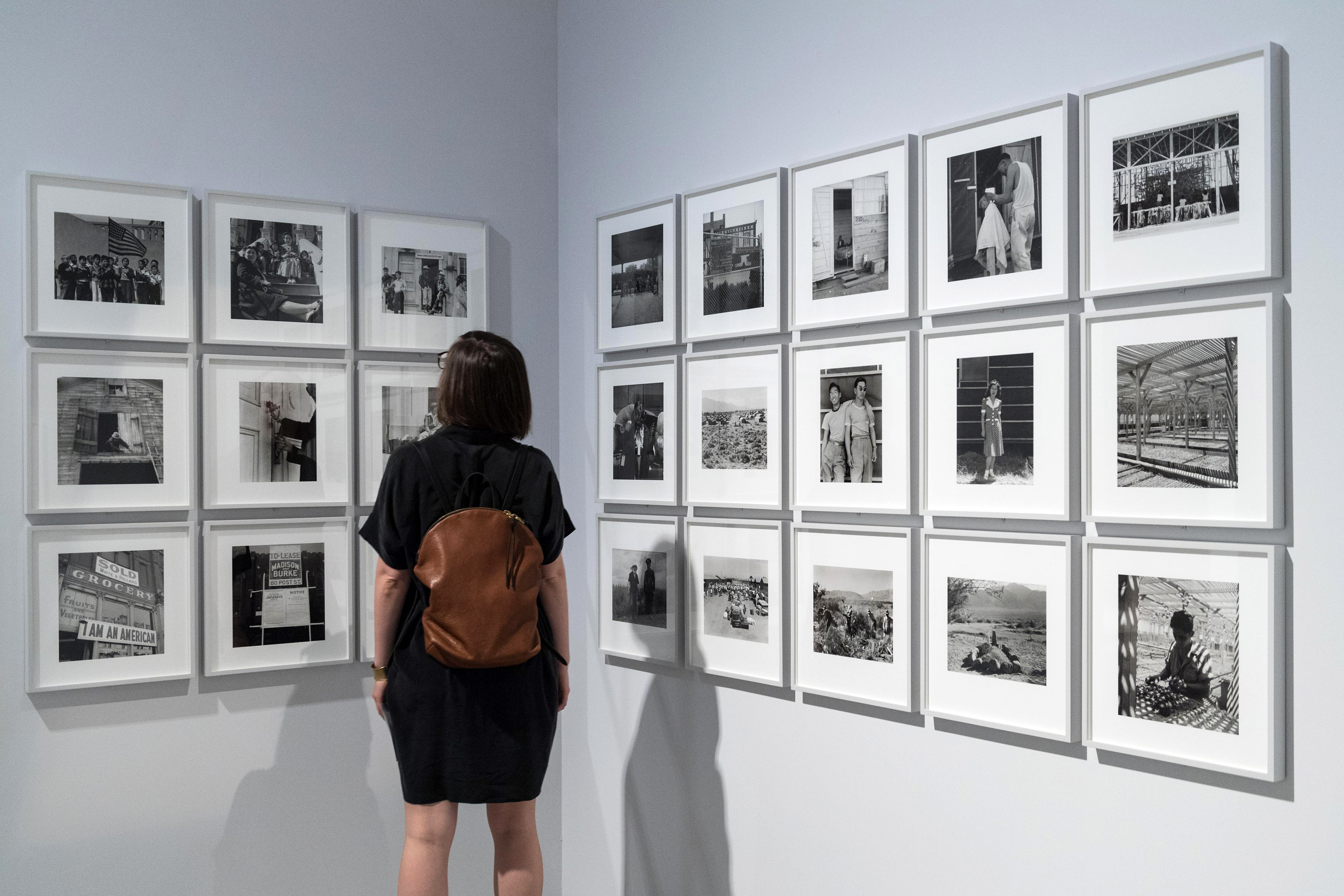
Dorothea Lange’s iconic images of the Great Depression are well known, but her photographs of Japanese-Americans interned during the Second World War were only published in 2006. Shown here for the first time in France, they illustrate perfectly how Dorothea Lange created intimate and poignant images throughout her career in order to denounce injustices and change public opinion. In addition to the prints, a selection of personal items, including contact sheets, field notes and publications allow the public to situate her work within the context of this troubled period.

The exhibition at the Jeu de Paume offers a new perspective on the work of this renowned American artist, whose legacy continues to be felt today. Highlighting the artistic qualities and the strength of the artist’s political convictions, this exhibition encourages the public to rediscover the importance of Dorothea Lange’s work as a landmark in the history of documentary photography.

Press release from Jeu de Paume


Dorothea Lange (American, 1895-1966) 'Unemployed lumber worker goes with his wife to the bean harvest. Note social security number tattooed on his arm, Oregon' 1939


Dorothea Lange (American, 1895-1966)
Unemployed lumber worker goes with his wife to the bean harvest. Note social security number tattooed on his arm, Oregon
1939
Gelatin silver print
© The Dorothea Lange Collection, the Oakland Museum of California


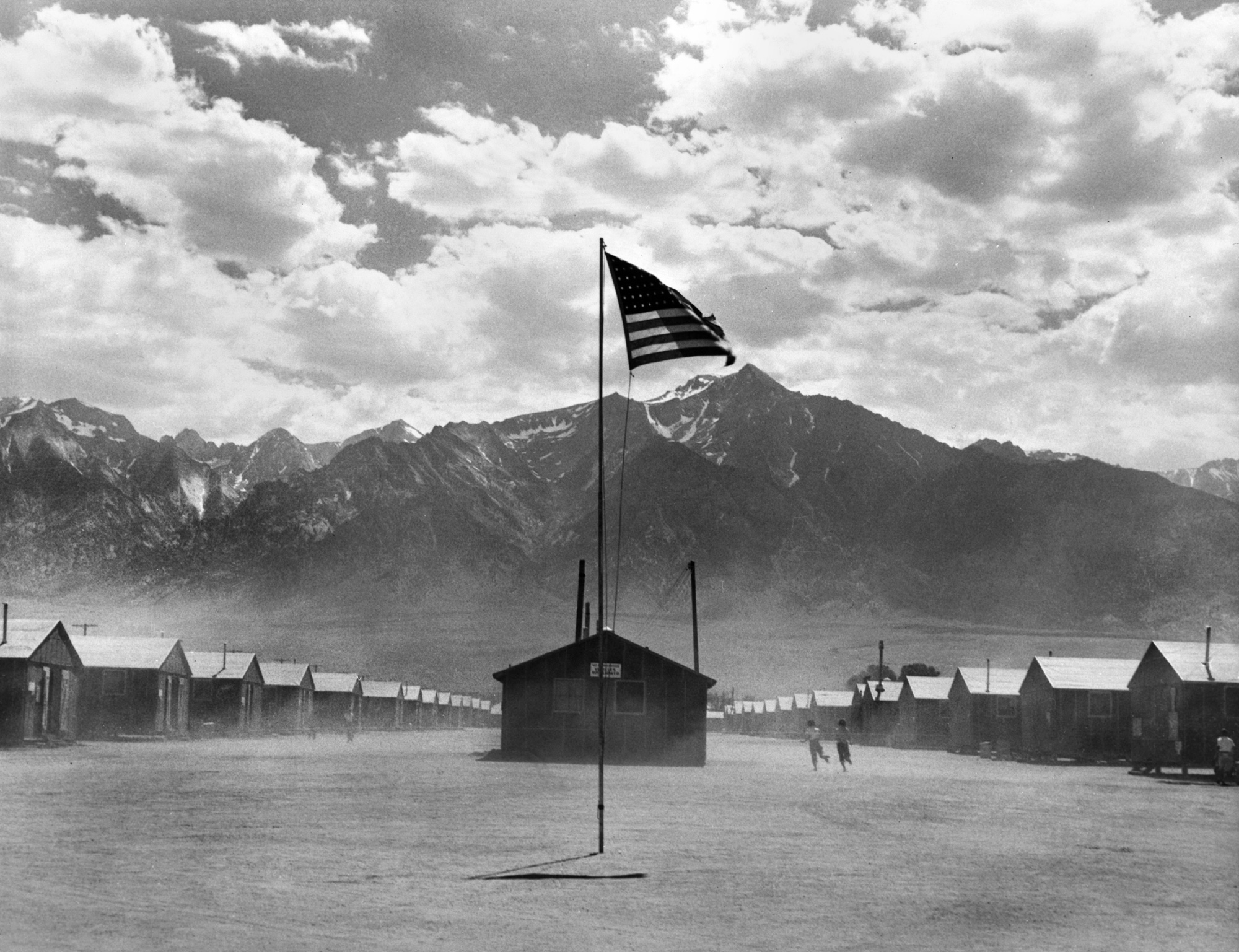
Dorothea Lange (American, 1895-1966) 'Manzanar Relocation Center' 1942


Dorothea Lange (American, 1895-1966)
Manzanar Relocation Center, Manzanar, California
1942
Gelatin silver print
© Collection of the Oakland Museum of California, gift of Paul S. Taylor


Dorothea Lange (American, 1895-1966) 'Japanese Children with Tags, Hayward, California, May 8 1942'


Dorothea Lange (American, 1895-1966)
Japanese Children with Tags, Hayward, California, May 8 1942
1942
Gelatin silver print
© The Dorothea Lange Collection, the Oakland Museum of California


Dorothea Lange (American, 1895-1966) 'Jour de lessive, quarante-huit heures avant l’évacuation des personnes d’ascendance japonaise de ce village agricole du comté de Santa Clara, San Lorenzo, Californie' 'Laundry day, forty-eight hours before the evacuation of people of Japanese descent from this farming village of Santa Clara County, San Lorenzo, California' 1942


Dorothea Lange (American, 1895-1966)
Jour de lessive, quarante-huit heures avant l’évacuation des personnes d’ascendance japonaise de ce village agricole du comté de Santa Clara, San Lorenzo, Californie
Laundry day, forty-eight hours before the evacuation of people of Japanese descent from this farming village of Santa Clara County, San Lorenzo, California
1942
Gelatin silver print
© The Dorothea Lange Collection, the Oakland Museum of California


Dorothea Lange (American, 1895-1966) 'Oakland, California, March 1942' 1942


Dorothea Lange (American, 1895-1966)
Oakland, California, March 1942
1942
Gelatin silver print
Library of Congress
© The Dorothea Lange Collection, the Oakland Museum of California


A large sign reading “I am an American” placed in the window of a store, at 401-403 Eight and Franklin streets, on December 8, the day after Pearl Harbor. The store was closed following orders to persons of Japanese descent to evacuate from certain West Coast areas. The owner, a University of California graduate, will be housed with hundreds of evacuees in War Relocation Authority centers for the duration of the war.


Dorothea Lange (American, 1895-1966) 'Shipyard Worker, Richmond California' c. 1943


Dorothea Lange (American, 1895-1966)
Shipyard Worker, Richmond California
c. 1943
Gelatin silver print
© The Dorothea Lange Collection, the Oakland Museum of California, City of Oakland. Gift of Paul S. Taylor


Dorothea Lange: Politics of Seeing

Dorothea Nutzhorn (1895-1965), who took up photography at the age of eighteen, was born in Hoboken, New Jersey. The daughter of second-generation German immigrants, she adopted her mother’s maiden name, Lange, when she opened a portrait studio in San Francisco in 1918. In 1932, during the Great Depression, Lange shifted her focus from studio portraits to scenes showing the impact of the recession and the social unrest in the streets of San Francisco. This two-year period marked a turning point in her life. Paul Schuster Taylor, professor of economics at the University of California, and a specialist in agricultural conflicts, who later became her second husband, began using her photographs to illustrate his articles in 1934. They worked together for over thirty years. Co-authors of the famous book An American Exodus (1939), they were active in circulating images about social conditions in rural states.

Lange created some of the iconic images of the Great Depression, but this exhibition presents other aspects of her practice, which she herself considered archival. By placing her photographic work in the context of her anthropological approach, it reveals how her images were also rooted in her ability to connect with her subjects, evident in her captions to the images. She thus considerably enriched the informative quality of the visual archive and produced a form of oral history for future generations. Her work for government institutions and the publication of her images in the illustrated press enabled her to denounce injustice and change public opinion.

Her efforts to connect with her subjects can be seen in the five specific series featured in this exhibition: the Depression period (1932-1934), a selection of works from the Farm Security Administration (1935-1941), the Richmond shipyards (1942-1944), the Japanese American internment (1942) and a series on a public defender (1955-1957). By introducing contextual information and important archive material, the Jeu de Paume’s exhibition Dorothea Lange: Politics of Seeing endeavours to situate her majestic works within the social documentary context specific to the 1930s and 1940s, highlighting the artistic qualities of her work and the strength of her political convictions.

1. “The people that my life touched”, 1932-1934

In 1929 America’s urban and rural populations were hard hit by the Great Depression. Leading up to the stock market crash there had been a boom in agricultural production. However, by the late 1920s production was exceeding consumption, causing a drop in prices that had severe consequences for farmers. The textile and coal industries suffered sharp declines in wages and employment. In the 1930s, the oil, transportation and construction sectors declined at an even faster rate than agriculture, causing urban unemployment to rise above that of the rural states. In March 1933, in the midst of this crisis, Franklin D. Roosevelt was elected president.

This context of considerable social unrest prompted a change in direction in Lange’s engagement with photography. From 1932 to 1934, she captured demonstrations and homeless people in the streets of San Francisco. Urban portraits like White Angel Breadline (1933) later became iconic images of the period. Her work from this period was recognised in artistic circles and Paul Shuster Taylor used one of her photographs of the May Day demonstrations to illustrate his article about the longest, largest maritime strike in the history of the USA, which was published in the progressive social welfare journal Survey Graphic in September 1934.

2. The documentary survey – the narration of migration, 1935-1941

In 1935, Lange accompanied Taylor on several field trips to study people migrating to rural California from the Midwest. Taylor used Lange’s images to illustrate the articles as well as his federal reports. Such was the impact of Lange’s powerful images that the authorities built the first migrant camps for agricultural workers as part of Roosevelt’s New Deal policy. The latter consisted of numerous programmes intended to combat the devastating effects of the Depression in all areas of life across the country. One such programme was the Farm Security Administration (FSA), which led to the creation of the largest American photographic archive ever, containing over 130,000 negatives documenting how the New Deal helped to relieve poverty in rural areas.

Lange, who worked in twenty-two different states, was given two contracts, one running from 1935 to 1937 and the other from 1938 to the closure of the programme in January 1941. Her photographs highlighted the plight of people who were caught up in the complex economic web of industrial farming, victims of the failure of the American dream. The images and the transcriptions of oral testimonies that Lange made were personal and intimate recollections of a history that became a cause of significant public concern in the late 1930s.

3. “A two-ocean war” – Kaiser Shipyards, Richmond, 1942-1944

During the early 1940s, Lange was interested in a new form of internal migration caused by the rapid expansion of industries, naval training programmes and military defence organisations in the Bay Area, California. Here part of the once scorned and rejected “Okie” population (migrant farm workers) moved to urban districts, where they proudly contributed to the war effort. In 1944, Lange was commissioned by Fortune magazine to photograph the Kaiser Shipyard in Richmond. This young corporation, established to help with the war effort, employed nearly 100,000 unskilled workers thanks to new techniques of manufacture and assembly. Lange captured the changing of shifts and the intensity of the shipyard’s activity, the diversity of the workforce, intimate details of their living conditions, and the isolation and loneliness of the newcomers, and in particular African Americans, who were excluded from the local community. She was also interested in the unions’ unsuccessful efforts to cope with this large, diverse workforce and in women’s new status in the industrial sector.

4. The internment of American citizens of Japanese descent, 1942

Lange’s various series reflect many aspects of America’s cultural geography. Her desire to portray the dignity of people enduring hardship and the complexity of their situations, coupled with the need to produce a historical document, enabled Lange to produce work of universal scope.

In March 1942, in the wake of the Japanese attack on the American naval base at Pearl Harbor, Hawaii, on 7 December 1941, the US government ordered the internment of over 110,000 Americans of Japanese descent from the Pacific Coast military zones, crowning a century of racism against Asian immigrants. Executive Order 9066 targeted three generations of Japanese Americans, who were “relocated” to ten remote and intemperate camps in California, Arizona, Utah, Idaho, Colorado, Arkansas and Wyoming.

Lange was commissioned by the War Relocation Authority to cover the procedure from March to July 1942. Her sensitivity to the identity of cultural minorities was already evident in her photographs for the FSA commission. A decade later she captured the evacuation and incarceration of Japanese Americans, which lasted for over 18 months. These images belonged to a “military record” and were only released for publication in 2006.

5. The public defender, 1955-1957

A system of public defence for persons in need of legal support in court cases began in California in 1914 and by the 1950s had been introduced in many states throughout the country. Lange supported the idea of justice for all and was given an assignment by Life magazine to cover the subject at the Alameda County Court house, Oakland, to be published in May 1956 to mark Law Day. Lange was given permission to photograph in prison cells, as well as in and around the law court, taking over 450 images. She worked in conjunction with Martin Pulich, an American lawyer of Yugoslav descent, who recognised in Lange’s approach a social and political stance that mirrored his own commitment as a public defender. In this photographic essay she was able to pinpoint issues concerning racial prejudice that were omnipresent in the Bay Area at the time. The assignment did not appear in Life, but it was published in many newspapers, even internationally, and was also used by the national Legal Aid Society of New York to develop public services in the legal system.

Pia Viewing
Curator of the exhibition


Paul Schuster Taylor (American, 1895-1984) 'Dorothea Lange in Texas on the Plains' c. 1935


Paul Schuster Taylor (American, 1895-1984)
Dorothea Lange on the Plains of Texas
c. 1935
Gelatin silver print
© The Dorothea Lange Collection, the Oakland Museum of California, City of Oakland. Gift of Paul S. Taylor


Jeu de Paume
1, Place de la Concorde
75008 Paris
métro Concorde
Phone: 01 47 03 12 50

Opening hours:
Tuesday: 11.00 – 21.00
Wednesday – Sunday: 11.00 – 19.00
Closed Monday

Jeu de Paume website

LIKE ART BLART ON FACEBOOK

Back to top

Photographs: Germaine Krull ‘MÉTAL’ 1928

December 2018


Germaine Krull (European, 1897-1985) (photographer) Cover design by M. Tchimoukow. 'MÉTAL' cover 1928


Germaine Krull (European, 1897-1985) (photographer)
Cover design by M. Tchimoukow (Louis Bonin) (French, 1906-1979)
MÉTAL cover
1928
Librairie des Arts décoratifs
A. Calavas, Editeur

Portfolio comprising a title page, a preface by Florent Fels and sixty four (64) loose photogravures, each mentioning the photographer’s name, titled ‘MÉTAL’, plate number and publisher’s name. Original dust jacket.

Folio: 30 x 23.5cm; 11 3/4 x 9 1/4 in.
Plate: 29.2 x 22.5cm; 11 1/2 x 8 3/4 in.
Image: 23.6 x 17.1cm; 9 1/4 x 6 1/2 in.


“Dans toute sa force” (In full force)

For my new body of work I have been researching the concept of The Oblique Function which was first developed in the 1960’s by Architecture Principe (Claude Parent and Paul Virilio). “The idea was to tilt the ground in order to revolutionise the old paradigm of the vertical wall. In fact, being inclined, the wall becomes experienceable and so are the cities imagined by the two French architects. The oblique is fundamentally interested in how a body physically experiences a space. The slope implies an effort to climb up and a speed to climb down; this way the body cannot abstract itself from the space and feel the degrees of inclination.”1

The key to the concept is: The oblique is fundamentally interested in how a body physically experiences a space.

Perhaps we can transfer this concept to the portfolio MÉTAL by Germaine Krull, one of the most important photobooks every produced … and ask how does Krull, her camera, and by extension the viewer, inhabit the spaces she creates.

In this portfolio Krull, through “extreme angles, producing dizzying compositions of overlapping and intersecting details”, one upside down image and two multiple exposures, “one showing two overlapped power generators and the other several layered bicycle parts printed at right angles to one another to create an effect of circular motion”2 – produces and directs (Krull was also an avant-garde filmmaker) the creation of a molecular structure – both grand and intimate, macro and micro at one and the same time. Probing further, we can link her filmic structure, this oblique mass of machines and images, to Eisenstein’s dynamic comprehension of a work of art, that is, “The logic of organic form vs. the logic of rational form [which] yields, in collision, the dialectic of the art-form.”3

This dialectic (the tension that exists between two conflicting or interacting forces, elements, or ideas; and, the process, in Hegelian and Marxist thought, in which two apparently opposed ideas, the thesis and antithesis, become combined in a unified whole, the synthesis) rests on Eisenstein’s definition of the organic form as “the passive principle of being”, defining its limit to be nature, and his definition of the rational form as “the active principle of production”, defining its limit to be industry, with art falling where nature and industry intersects.4 How these two forces interact “produces and determines Dynamism”, in which:

The spatial form of this dynamism is expression.
The phases of its tension: rhythm.5


These new concepts and viewpoints are the result of a constantly dynamic evolution from old perceptions to new perceptions which produce contradictions within the spectator’s mind. Eisenstein observes, “That which is not slightly distorted lacks sensible appeal; from which it follows that irregularity – that is to say, the unexpected, surprise and astonishment, are an essential part and characteristic of beauty.”6 “And Baudelaire wrote in his journal: That which is not slightly distorted lacks sensible appeal; from which it follows that irregularity-that is to say, the unexpected, surprise and astonishment, are an essential part and characteristic of beauty. Upon closer examination of the particular beauty of irregularity as employed in painting, whether by Grünewald or by Renoir, it will be seen that it is a disproportion in the relation of a detail in one dimension to another detail in a different dimension. The spatial development of the relative size of one detail in correspondence with another, and the consequent collision between the proportions designed by the artist for that purpose, result in a characterisation – a definition of the represented matter.”7

What could be more appropriate for Krull’s multi-layered, distorted, scaled, twisted representations of the new temples of industry than this definition of represented matter – a symbiosis between nature and industry, acknowledging, through emotion, beauty in the nature of industry, and landscapes of plenty in a people-less world?

An anonymous author on the Cinema Confessions blog comments, “Any art form ought to be understood as a communicative medium in which the thing being communicated is not an idea, but an emotion. Language communicates intellect, whereas art communicates sensation. The two are certainly compatible, as in poetry, but also just as certainly inimitably unique. And as communication requires the process of a message being sent and received, we must acknowledge that distinct communication is impossible without the process of time. Thus, as words in a sentence are given meaning through context of contiguous words in the same sentence, and sentences are given sub-textual meaning through context of other sentences within a conversation, given shots within a scene will conform to an over-tonal meaning intrinsically contextualised by other shots within the same scene, and in a broader sense, other scenes throughout the film.”

They continue: “In the essay The Filmic Fourth Dimension, Eisenstein compares film to music thusly, “There, along with the vibration of a basic dominant tone, comes a whole series of similar vibrations … Their impacts against each other … envelop the basic tone in a whole host of secondary vibrations … We find the same thing in optics, as well. All sorts of aberrations, distortions, and other defects, which can be remedied by systems of lenses, can also be taken into account compositionally, providing a whole series of definite compositional effects.” To simplify, he is describing the methods by which musicians and filmmakers are capable of manipulating audience emotion.”8

Thus, through Krull’s definitive compositional effects, her tonal montages capture more than just linear time, construct more than the spectator’s eye directed along the lines of some immobile object … for her holistic movement of the piece is perceived in a wider sense: where the “montage is based on the characteristic emotional sound of the piece – of its dominant. The general tone of the piece… I do not mean to say that the emotional sound of the piece is to be measured “impressionistically.” The piece’s characteristics in this respect can be measured with as much exactitude as in the most elementary case of “by the ruler” measurement in metrical montage. But the units of measurement differ. And the amounts to be measured are different.”9

This is the key to the effective nature of Krull’s portfolio, the power of the emotional sound of the piece: her understanding of the compositional effects of tonal montage as a piece of theatre measured in a different unit – through rhythm, through the interruption of sequences, through the distortion of spaces – to create a single unit of sensory and emotional experience. As Eisenstein notes, “In the Kabuki … a single monistic sensation of theatrical “provocation” takes place. The Japanese regards each theatrical element, not as an incommensurable unit among the various categories of affect (on the various sense-organs), but as a single unit of theatre. … Directing himself to the various organs of sensation, he builds his summation [of individual “pieces”] to a grand total provocation of the human brain, without taking any notice which of these several paths he is following.”10

Pace Krull. Her holistic compositions are intertextual and multi-faceted at a time when “straight” photography and even avant-garde photography could not string an adequate sentence together, let alone a multi-dimensional visual, sensual and emotional narrative. This is why Krull’s portfolio is so revolutionary for its time. And just to reinforce this shock of the new, of surprise and astonishment, Krull gets the writer Florent Fels – a traditionalist who by this time (1928) did not like contemporary art – to write a romantic eulogy of an introduction to the new gods of the sky, an introduction which gives the reader a sense of the soaring romanticism which is ascribed to these machinic megaliths. Citing Dostoyevsky, Rousseau and Cocteau, Fels’ florid fornications are, just like Krull’s stunning images, a joy for the senses:

“The trains break the horizon with a deafening roar. They leave the ground and glide there on the ether into the inevitable advance of progress, dragging the living with wonder towards the astral stations.

The strong and soft movement of the hammer softens the ingots like lead elephants. And see the Eiffel Tower, now a bell tower of acoustic waves, its improper monstrosity has provided for surprise and confusion. Now lovers are treated there, three hundred metres above the ground, to a rendezvous with the birds. And the poets, from the old Douanier Rousseau to Jean Cocteau, claim that on beautiful spring evenings fairies ride tobogan on its wing.

This giant was missing a heavenly glow: One has been given to it. The luminous progress of industry is evident in every majestic metre of its height.

Aeroplane, elevator and wheel, with which some humans soar up to the kingdom of the birds, are suddenly transformed into elements of our nature.”11

Dr Marcus Bunyan

Word count: 1,438


All of the photographs in this posting are published under “fair use” conditions for the purpose of educational research and academic comment. Please click on the photographs for a larger version of the image.


1/ “# Great Speculations /// The Oblique Functon by Claude Parent and Pau Virilio” on The Funambulist website [Online] Cited 09/12/2018. No longer available online
2/ Kim Sichel. “Contortions of Technique: Germaine Krull’s Experimental Photography,” on the MoMA website [Online] Cited 09/12/2018
3/ Sergei Eisenstein. Film Form: Essay in Film Theory. Edited and translated by Jay Leyda. New York and London: A Harvest / HBJ Book, 1949, p. 46
4/ Ibid.,
5/ Ibid., p. 47
6/ Charles Baudelaire, Intimate Journals (13 May 1 856), translated by Christopher Isherwood. New York, Random House, 1930, quoted in Sergei Eisenstein. Film Form: Essay in Film Theory. Edited and translated by Jay Leyda. New York and London: A Harvest/HBJ Book, 1949, p. 51
7/ Anonymous. “Film as Language: The Method and Form of Sergei Eisenstein,” on the Cinema Confessions blog 05/05/2011 [Online] Cited 09/12/2018. No longer available online
8/ Eisenstein op. cit., p. 51
9/ Ibid., p. 75
10/ Ibid., p. 64
11/ Extract of the Preface from Florent Fels to the first edition of MÉTAL. Librairie des Arts décoratifs, A. Calavas, Editeur, 68, Rue la Fayette, Paris, 1928


I did not have a special intention or design when I took the Iron photographs. I wanted to show what I see, exactly as the eye sees it. ‘MÉTAL’ is a collection of photographs from the time. ‘MÉTAL’ initiated a new visual era and open the way or a new concept of photography. ‘MÉTAL’ was the starting point which allowed photography to become an artisanal trade and which made an artist of the photographer, because it was part of this new movement, of this new era which touched all art.


Germaine Krull. Extract from the Preface to the 1976 edition of ‘MÉTAL’


Roland Barthes was skeptical of Krull’s experimental photographs. In his famous 1980 meditation on photography, ‘Camera Lucida’, he wrote: “There are moments when I detest Photographs: what have I to do with Atget’s old tree trunks, with Pierre Boucher’s nudes, with Germaine Krull’s double exposures (to cite only the old names).”3 Barthes discounts what he calls photographic “contortions of technique: superimpressions, anamorphoses, deliberate exploitation of certain defects (blurring, deceptive perspectives, trick framing),” and comments that “great photographers (Germaine Krull, Kertész, William Klein) have played on these surprises, without convincing me, if I understand their subversive bearing.”4 But while such photographs are sometimes subversive, to be sure, they are often celebratory in tone. Krull and her colleagues carried out their “contortions of technique” to produce metaphors for the swirling, confusing, exhilarating urban life in their post-World War I decade.


Roland Barthes. Camera Lucida, p. 33 quoted in Kim Sichel. “Contortions of Technique: Germaine Krull’s Experimental Photography,” on the MoMA website [Online] Cited 25/11/2018


Krull’s most renowned photographs are not street scenes but abstracted views of the Eiffel Tower, and three of these images, accompanied by a short text by Florent Fels and laid out in overlapping fashion, appeared in a ‘Vu’ article titled “Dans toute sa force” (In full force) published in May 1928, just before the tower’s fortieth birthday (fig. 8).19 According to Krull’s memoirs, Vogel told her, “Go and photograph the Eiffel Tower, Germaine. Photograph it as you really see it, and make sure that you don’t bring me a postcard view.”20 As Krull wrote, she did not see much in the “dead old form” until she began climbing the staircases and experiencing the tower from various vantage points. Some of the resultant images  – vertiginous views of the wrought iron structure  – appeared in the German magazine ‘UHU’ and Philippe Lamour’s journal ‘Grand’route’ as well as in ‘Vu’, and others (eleven in all) grace the pages of ‘Métal’.21


“Protest gegen ein unmögliches Bauwerk,” ‘UHU’ 4 (December 1927): 106-11; Eric Hurel, “La Confusion des arts,” ‘Grand’route’ 1, no. 3 (May 1930): pp. 71-74; and Krull, ‘Métal’, cover and pls. 2, 11, 19, 26, 28, 33, 37, 50, 54, 57. Footnote 21 in Kim Sichel. “Contortions of Technique: Germaine Krull’s Experimental Photography,” on the MoMA website [Online] Cited 25/11/2018


Germaine Krull (European, 1897-1985) Image from the portfolio 'MÉTAL' 1928


Germaine Krull (European, 1897-1985)
In the port of Amsterdam
1924
Image from the portfolio MÉTAL
1928
Collotype


Germaine Krull (European, 1897-1985) Image from the portfolio 'MÉTAL' 1928


Germaine Krull (European, 1897-1985)
Museum of Technology, Paris
1925
Image from the portfolio MÉTAL
1928
Collotype


Although a portfolio, rather than a book, MÉTAL is widely considered to be among the most important photographic publications of the 1920s. Not only was Krull able to create work that stood the test of time, but she managed it in a profession dominated by men. It is interesting that with MÉTAL, she embraces a clearly masculine theme.

Krull’s photographs, whether of bridges, cranes, or the Eiffel Tower, tend towards the unconventional. It seems as if her initial approach is quite conservative, but then she questions common rules of composition, avoiding the more obvious ways her subjects would have been photographed at the time. Krull consequently avoids implementing a strict visual language. Instead of striving for a “realistic” documentation of her subject in her photographs she chooses her angles instinctively, cropping the images tightly, or even reversing them. It is exactly this unexpected approach that makes MÉTAL stand out. …

The photographs were taken in Paris, Amsterdam, Rotterdam, Marseille and Saint-Malo.

Curiously the cover image of the portfolio (also plate 37) is actually presented upside down. This decision was presumably taken by M. Tchimoukow (real name Louis Bonin), the designer of the portfolio’s cover. There appear to have been at least two versions of the portfolio. One with a black spine and band, and one with a brown spine and band. The brown cloth version (shown below) seems to be the rarer of the two. The portfolio consists of 64 plates with images printed on one side, and two folded sheets unbound resulting in 8 pages which include a two and a half page text by Florent Fels in French and a short explanatory text by Germaine Krull.

Anonymous text. “MÉTAL,” on the achtung.photography website Nd [Online] Cited 07/12/2018


Germaine Krull (European, 1897-1985) Image from the portfolio 'MÉTAL' 1928


Germaine Krull (European, 1897-1985)
Antwerp
1924
Image from the portfolio MÉTAL
1928
Collotype


Preface from Florent Fels to the first edition of MÉTAL

The industrial activity of our times spreads a spectacle before our eyes, to which they have not yet become accustomed. Its newness captures and frightens us like that of a large natural phenomenon. In turn it expresses an attitude of mind, to which painters and poets are among those who devote themselves.

Europe’s cities appear to us as outdated and anachronistic. The provincial towns with their promenades, pleasant fountains and music pavilion suddenly become somewhat old fashioned, whilst the lyricism of our time succeeds in writing itself in concrete and steel cathedrals. Yet we are witness to the paradoxical fact, that the largest enterprises serve as forms of progress with exception of those who can contribute to an improvement in human dwellings. Except for a privileged few the accommodation of our contemporaries shows a similarity with that of our forebears at the time of Richelieu and Cromwell. The people of the cities succumb to the push of commercial practises. We demand houses with windows, which give a free view of the garden. Modern housing for modern people in which the sun and the fresh air find an unhindered inlet. Concrete and steel are their most important constituents: Ten years after the end of the war steel will at last serve a noble purpose, it will perhaps be rehabilitated.

Steel changes our landscape. Forests of masts replacing trees centuries old. Blast furnaces replacing hills.

From this new expression of the world some aspects have no been captured by beautiful photographs representative of a new romanticism.

Germaine Krull is the Marceline Desbores-Valmore of this lyricism and her photographs are sonnets of shining, piercing verse. Like an orchid is the driving force of Farcot and like frightening insects are the cogs.

Double exposure lends to the finest mechanisms a fantastic appearance and in considering a milling machine covered in muddy oil and detritus and from water dripping, one thinks of Dostoyevsky. In the halo that surrounds them the powerful, noiseless and quietly working dynamos seem to radiate luminous vibrations, and whose chimneys ring out whose fanfare tones to the heavens, these new godly concepts laid out before us. The bridges penetrate into the space. The trains break the horizon with a deafening roar. They leave the ground and glide there on the ether into the inevitable advance of progress, dragging the living with wonder towards the astral stations.

The strong and soft movement of the hammer softens the ingots like lead elephants. And see the Eiffel Tower, now a bell tower of acoustic waves, its improper monstrosity has provided for surprise and confusion. Now lovers are treated there, three hundred metres above the ground, to a rendezvous with the birds. And the poets, from the old Douanier Rousseau to Jean Cocteau, claim that on beautiful spring evenings fairies ride tobogan on its wing.

This giant was missing a heavenly glow: One has been given to it. The luminous progress of industry is evident in every majestic metre of its height.

Aeroplane, elevator and wheel, with which some humans soar up to the kingdom of the birds, are suddenly transformed into elements of our nature.

The Tower is and remains the highest symbol of the modern age. As he left New York and its vapour crowned palaces it was the Eiffel Tower, this beacon of the air, which Lindbergh envisaged, in order to reach Paris in the sentimental heart of the modern world.

Florent Fels.


The Eiffel Tower, the cranes and bridges of Amsterdam, Rotterdam, Marseille and Saint-Malo provided me with the material for a number of plates which form this album. I am indebted to others for the extreme kindness with which I was welcomed, by the Director of the Conservatoire des Arts-et-Métiers to his museum, by the Director of the CPDE at the Saint-Quen Power Station, and by M. André Citroën in his factories.

The cover of the book is a composition by M. Tchimoukow.

Germaine Krull
Cover design by M. Tchimoukow

Librairie des Arts décoratifs,
A. Calavas, Editeur, 68, Rue la Fayette, Paris, 1928
Portfolio

23.5 x 29.9cm (Portfolio)
22.5 x 29cm (Plates)

64 plates and 2 leaves


Marceline Desbores-Valmore

Marceline Desbordes-Valmore (20 June 1786 – 23 July 1859) was a French poet and novelist…

She published Élégies et Romances, her first poetic work, in 1819. Her melancholy, elegiacal poems are admired for their grace and profound emotion. In 1821 she published the narrative work Veillées des Antilles. It includes the novella Sarah, an important contribution to the genre of slave stories in France…

The publication of her innovative volume of elegies in 1819 marks her as one of the founders of French romantic poetry. Her poetry is also known for taking on dark and depressing themes, which reflects her troubled life. She is the only female writer included in the famous Les Poètes maudits anthology published by Paul Verlaine in 1884. A volume of her poetry was among the books in Friedrich Nietzsche’s library.

Text from Wikipedia website


Germaine Krull (European, 1897-1985) Image from the portfolio 'MÉTAL' 1928


Germaine Krull (European, 1897-1985)
Eiffel Tower
1927
Image from the portfolio MÉTAL
1928
Collotype


Germaine Krull (European, 1897-1985) Image from the portfolio 'MÉTAL' 1928


Germaine Krull (European, 1897-1985)
Railway lifting bridge, Rotterdam
1923-1924
Image from the portfolio MÉTAL
1928
Collotype


Germaine Krull (European, 1897-1985) Image from the portfolio 'MÉTAL' 1928


Germaine Krull (European, 1897-1985)
Factory in Rotterdam
1923
Image from the portfolio MÉTAL
1928
Collotype


Florent Fels

Ferdinand Florent Fels (1891-1977) was a French journalist, publisher and author prominent in discussing art in France. He often used the pseudonym Felsenberg. Fels launched the art magazine Action: Cahiers individualistes de philosophie et d’art in 1919. Here he expressed his individualist anarchist philosophy. (Text from Wikipedia)

Fels as an art critic before 1925

I now feel the need to make a step back on Fels. Born in 1891, he was recruited as a soldier-interpreter in the First World War thanks to his knowledge of English, and here became an anti-militaristic minded person. His experience at the front was quite parallel to that of Georg Grosz, the only German artist in his anthology, whose sad pages on the role of artists and critics during World War I corresponded largely to the thoughts of the French author. The experience of war convinced the young Fels of the need to overcome the traditional aesthetic models, linked to symbolism, but also of the emptiness of contemporary art, which had propagated or somehow supported the war effort. It is no coincidence that his friend de Vlaminck – in the Propos dedicated to him – used disdainful words on the role of Cubism in the years leading up to the war. According to Fels, the only art that, after the slaughter at the front, could still be trusted was the Dada movement, born in Zurich in 1916 and spread rapidly in Europe (it is also what can be read in the pages of Grosz, an artist about whom Fels published – in addition to the pages in the anthology – several other articles in the French world [14]).

Returning from the war front, in 1919, the twenty-eighty year old Fels launched with Robert Mortier (painter and poet) and Marcel Sauvage (poet) the journal Action. Cahiers individualistes de philosophie et d’art (Action. Individualist Notebooks on Philosophy and Art), which would have a short life (the last issue was 1922). The editors were young ex-soldiers who invested the money they had got from the state at the time they left the army, to launch the new journal. The founders of Action attempted to both awake and open the French culture. In the field of literature, Action hosted a series of poets, writers and literary critics such as Andre Malraux, Max Jacob, Jean Cocteau and Antonin Artaud; in the area of art, the journal liaised with all contemporary avant-garde movements (dada, fauves, cubists), discussed and exalted the production of the greatest artists (Claude Monet, Picasso, Matisse, Henri Rousseau Le Douanier) and gave great emphasis to African art. Looking at the journal’s issues, all available on the Internet [15], it is also easy to find that Action also housed reproductions of paintings and prints by many of the painters who later on were included in Propos d’Artistes: Derain, Kisling, Léger, Lhote, Pascin, Utrillo, Vlaminck. There were also art criticism articles of Duret and poems by Vlaminck.

Within Dadaism, Action preached a ‘subjectivist’, or individualist, version of vanguard aesthetics. It did not propagate revolutions, but proclaimed the need for the absolute freedom of the artists. Fels’ points of reference were in fact the individualistic anarchist movements inspired by Rousseau and Proudhon; in March 1920, he held a conference on “Les Classiques de l’Esprit nouveau” and published the text in the journal L’un [16]: he rejected the traditional Dadaist attitude of total destruction of the past and identified the new classics (Monet, Cézanne, Renoir, Van Gogh) that were due to be the basis of the new art. Fels took distance from the anti-social attitudes typical of Dadaism, and animated a controversy over the direction of new art movements: for him, everyone should make his personal revolution, without destroying any social foundations. At the root of Fels’s aesthetic theory there was “the enhancement of individual psychologies, the free but orderly expression of the heart, the sense of art, inspiration, and individuality”[17].

In 1922, Action‘s experience ended: money was over and the attempt to counter the revolutionary drift within Dadaism had failed. Starting with 1924, André Breton imposed surrealism, inspired by a much more corrosive aesthetic and social criticism. Fels condemned it.

Florent Fels between 1923 and 1925

Once the experience of Action was concluded in 1922, Fels joined in 1923 the editorial staff of Les Nouvelles Littéraires. There he dealt not only with contemporary art, but with reviews of exhibitions of all kinds (from Renaissance to Art of Polynesia). Often, his articles updated the public on the developments of decorative arts (in those years, he published his already mentioned essay on French tapestries and carpets).

I already mentioned that Fels stated in the postscript of the anthology: “I wanted to produce a document dated 1925″[18]. The idea was therefore to offer the reader almost an instant book. In fact, as we have already said, the book gave readers a real-time image of the art discussion in 1923-1924. 1925 was however a very important year for Fels. In addition to the anthology, he published a monograph on Claude Monet with Gallimard and became chief editor of the new art journal “L’Art Vivant“, founded by Jacques Guenne (1896-1945) and Maurice Martin du Gard (1896-1970), i.e. the two directors of “Les Nouvelles Littéraires“. The new publication was in fact presented as the artistic attachment (complément artistique) to the literary weekly. Art Vivant. It was published by the house Larousse since January 1925.

As previously mentioned, Fels’s aesthetic taste (think again that only a few years before he had been forced to finance his own publication with the liquidation of the time spent in war as a simple soldier) was becoming closer to those of the great French progressive publishing companies (Gallimard, Larousse). In other words, he was taking on more and more classic aesthetic orientations. The Art Vivant magazine (which will have long life: Fels was his chief editor until 1939, when the magazine closed its doors in the wake of the war) became therefore one of the favourite targets of the communist intellectual and surrealist leader Louis Aragon (1897-1982), who called Fels “Paysan de Paris“, the peasant of Paris. From Aragon’s perspective, the only veritable surrealist anthology of art literature with a Marxist orientation will be published twenty years later by Paul Éluard.

Extract from Review by Francesco Mazzaferro of Florent Fels, Propos d’Artistes (The Propositions of the Artists), 1925. Part One 22 May 2017 [Online] Cited 30/11/2018


Germaine Krull (European, 1897-1985) Image from the portfolio 'MÉTAL' 1928


Germaine Krull (European, 1897-1985)
Electricity France, Paris
1925
Image from the portfolio MÉTAL
1928
Negative collotype print


Detail of a centrifugal speed governor?


Germaine Krull (European, 1897-1985) Image from the portfolio 'MÉTAL' 1928


Germaine Krull (European, 1897-1985)
Technical Museum, Paris
1926
Image from the portfolio MÉTAL
1928
Collotype


Germaine Krull (1897-1985) Image from the portfolio 'MÉTAL' 1928


Germaine Krull (European, 1897-1985)
Motor industry Citreon, Paris
1926-1927
Image from the portfolio MÉTAL
1928
Collotype


Germaine Krull (European, 1897-1985) Image from the portfolio 'MÉTAL' 1928


Germaine Krull (European, 1897-1985)
Technical Museum, Paris
1926
Image from the portfolio MÉTAL
1928
Collotype


Her book MÉTAL contains only two multiple exposures, one showing two overlapped power generators and the other several layered bicycle parts printed at right angles to one another to create an effect of circular motion.


Germaine Krull (European, 1897-1985)

Germaine Luise Krull (20 November 1897 – 31 July 1985) was a photographer, political activist, and hotel owner. Her nationality has been categorised as German, French, and Dutch, but she spent years in Brazil, Republic of the Congo, Thailand, and India. Described as “an especially outspoken example” of a group of early 20th-century female photographers who “could lead lives free from convention”, she is best known for photographically-illustrated books such as her 1928 portfolio MÉTAL.

Krull was born in Posen-Wilda, a district of Posen (then in Germany; now Poznań, Poland), of an affluent German family. In her early years, the family moved around Europe frequently; she did not receive a formal education, but instead received homeschooling from her father, an accomplished engineer and a free thinker (whom some characterised as a “ne’er-do-well”). Her father let her dress as a boy when she was young, which may have contributed to her ideas about women’s roles later in her life.[6] In addition, her father’s views on social justice “seem to have predisposed her to involvement with radical politics.”

Between 1915 and 1917 or 1918 she attended the Lehr- und Versuchsanstalt für Photographie, a photography school in Munich, Germany, at which Frank Eugene’s teaching of pictorialism in 1907-1913 had been influential. She opened a studio in Munich in approximately 1918, took portraits of Kurt Eisner and others, and befriended prominent people such as Rainer Maria Rilke, Friedrich Pollock, and Max Horkheimer.

Krull was politically active between 1918 and 1921. In 1919 she switched from the Independent Socialist Party of Bavaria to the Communist Party of Germany, and was arrested and imprisoned for assisting a Bolshevik emissary’s attempted escape to Austria. She was expelled from Bavaria in 1920 for her Communist activities, and traveled to Russia with lover Samuel Levit. After Levit abandoned her in 1921, Krull was imprisoned as an “anti-Bolshevik” and expelled from Russia.

She lived in Berlin between 1922 and 1925 where she resumed her photographic career. She and Kurt Hübschmann (later to be known as Kurt Hutton) worked together in a Berlin studio between 1922 and 1924. Among other photographs Krull produced in Berlin were a series of nudes (recently disparaged by an unimpressed 21st-century critic as “almost like satires of lesbian pornography”).

Having met Dutch filmmaker and communist Joris Ivens in 1923, she moved to Amsterdam in 1925. After Krull returned to Paris in 1926, Ivens and Krull entered into a marriage of convenience between 1927 and 1943 so that Krull could hold a Dutch passport and could have a “veneer of married respectability without sacrificing her autonomy.”

In Paris between 1926 and 1928, Krull became friends with Sonia Delaunay, Robert Delaunay, Eli Lotar, André Malraux, Colette, Jean Cocteau, André Gide and others; her commercial work consisted of fashion photography, nudes, and portraits. During this period she published the portfolio MÉTAL (1928) which concerned “the essentially masculine subject of the industrial landscape.” Krull shot the portfolio’s 64 black-and-white photographs in Paris, Marseille, and Holland during approximately the same period as Ivens was creating his film De Brug (“The Bridge”) in Rotterdam, and the two artists may have influenced each other. The portfolio’s subjects range from bridges, buildings (e.g., the Eiffel Tower), and ships to bicycle wheels; it can be read as either a celebration of machines or a criticism of them. Many of the photographs were taken from dramatic angles, and overall the work has been compared to that of László Moholy-Nagy and Alexander Rodchenko. In 1999-2004 the portfolio was selected as one of the most important photobooks in history.

By 1928 Krull was considered one of the best photographers in Paris, along with André Kertész and Man Ray. Between 1928 and 1933, her photographic work consisted primarily of photojournalism, such as her photographs for Vu, a French magazine. Also in the early 1930s, she also made a pioneering study of employment black spots in Britain for Weekly Illustrated (most of her ground-breaking reportage work from this period remains immured in press archives and she has never received the credit which is her due for this work). Her book Études de Nu (“Studies of Nudes”) published in 1930 is still well-known today. Between 1930 and 1935 she contributed photographs for a number of travel and detective fiction books.

In 1935-1940, Krull lived in Monte Carlo where she had a photographic studio. Among her subjects during this period were buildings (such as casinos and palaces), automobiles, celebrities, and common people. She may have been a member of the Black Star photojournalism agency which had been founded in 1935, but “no trace of her work appears in the press with that label.”

In World War II, she became disenchanted with the Vichy France government, and sought to join the Free French Forces in Africa. Due to her Dutch passport and her need to obtain proper visas, her journey to Africa included over a year (1941-1942) in Brazil where she photographed the city of Ouro Preto. Between 1942 and 1944 she was in Brazzaville in French Equatorial Africa, after which she spent several months in Algiers and then returned to France.

After World War II, she traveled to Southeast Asia as a war correspondent, but by 1946 had become a co-owner of the Oriental Hotel in Bangkok, Thailand, a role that she undertook until 1966. She published three books with photographs during this period, and also collaborated with Malraux on a project concerning the sculpture and architecture of Southeast Asia.

After retiring from the hotel business in 1966, she briefly lived near Paris, then moved to Northern India and converted to the Sakya school of Tibetan Buddhism. Her final major photographic project was the publication of a 1968 book Tibetans in India that included a portrait of the Dalai Lama. After a stroke, she moved to a nursing home in Wetzlar, Germany, where she died in 1985.

Text from the Wikipedia website


Germaine Krull (European, 1897-1985) Image from the portfolio 'MÉTAL' 1928


Germaine Krull (European, 1897-1985)
Eiffel Tower, Paris
1927
Image from the portfolio MÉTAL
1928
Collotype


Germaine Krull (European, 1897-1985) Image from the portfolio 'MÉTAL' 1928


Germaine Krull (European, 1897-1985)
Railway lifting bridge, Rotterdam
1923-1924
Image from the portfolio MÉTAL
1928
Collotype


Germaine Krull (European, 1897-1985) Image from the portfolio 'MÉTAL' 1928


Germaine Krull (European, 1897-1985)
Eiffel Tower, Paris
1927
Image from the portfolio MÉTAL
1928
Collotype


Germaine Krull (European, 1897-1985) Image from the portfolio 'MÉTAL' 1928


Germaine Krull (European, 1897-1985)
Eiffel Tower, Paris
1927
Image from the portfolio MÉTAL
1928
Collotype


Curiously the cover image of the portfolio (also plate 37) is actually presented upside down. This decision was presumably taken by M. Tchimoukow (real name Louis Bonin), the designer of the portfolio’s cover.


Germaine Krull

Germaine Krull was a pioneer in the fields of avant-garde photomontage, the photographic book, and photojournalism, and she embraced both commercial and artistic loyalties. Born in Wilda-Poznań, East Prussia, in 1897, Krull lived an extraordinary life lasting nine decades on four continents – she was the prototype of the edgy, sexually liberated Neue Frau (New Woman), considered an icon of modernity and a close cousin of the French garçonne and the American flapper. She had a peripatetic childhood before her family settled in Munich in 1912. She studied photography from 1916 to 1918 at Bayerische Staatslehranstalt für Lichtbildwesen (Instructional and Research Institute for Photography), and in 1919 opened her own portrait studio. Her early engagement with left-wing political activism led to her expulsion from Munich. Then, on a visit to Russia in 1921, she was incarcerated for her counterrevolutionary support of the Free French cause against Hitler. In 1926, she settled in Paris, where she became friends with artists Sonia and Robert Delaunay and intellectuals André Malraux, Jean Cocteau, Colette, and André Gide, who were also subjects of her photographic portraits.

Krull’s artistic breakthrough began in 1928, when she was hired by the nascent VU magazine,the first major French illustrated weekly. Along with photographers André Kertész and Éli Lotar, she developed a new form of reportage rooted in a freedom of expression and closeness to her subjects that resulted in intimate close-ups, all facilitated by her small-format Icarette, a portable, folding bed camera. During this period, she published the portfolio, Metal (MÉTAL)(1928), a collection of 64 pictures of modernist iron giants, including cranes, railways, power generators, the Rotterdam transporter bridge, and the Eiffel Tower, shot in muscular close-ups and from vertiginous angles. Krull participated in the influential Film und Foto, or Fifo, exhibition (1929-1930), which was accompanied by two books, Franz Roh’s and Jan Tschichold’s Foto-Auge (Photo-Eye) and Werner Gräff’s Es kommt der neue Fotograf! (Here Comes the New Photographer!). Fifo marked the emergence of a new critical theory of photography that placed Krull at the forefront of Neues Sehen or Neue Optik (New Vision) photography, a new direction rooted in exploring fully the technical possibilities of the photographic medium through a profusion of unconventional lens-based and darkroom techniques. After the end of World War II, she traveled to Southeast Asia, and then moved to India, where, after a lifetime dedicated to recording some of the major upheavals of the twentieth century, she decided to live as a recluse among Tibetan monks.

Introduction by Roxana Marcoci, Senior Curator, Department of Photography, 2016 on the MoMA website [Online] Cited 25/11/2018


Métal and Filmic Montage

For Krull, metal was the most powerful metaphor for the modern world, and her book Métal includes many of the industrial forms she saw in Europe. It features both multiple exposures and straight images, and the entire volume is structured according to the principles of film montage. As noted earlier, Krull was a member of the Dutch avant-garde film collective Filmliga, which was cofounded by Joris Ivens, who in 1927 became her husband. Both of them published work in Arthur Lehning’s related avant-garde journal i10.

They saw screenings of Soviet avant-garde films by Vsevolod Pudovkin and Sergei Eisenstein, and Krull made a portrait of Eisenstein when he visited Paris in 1930. Eisenstein’s theories of montage were particularly important to the couple, and Krull’s Métal serves to demonstrate them. She actively adopted the Soviet filmmaker’s ideas of rupture and “visual counterpoint,” involving graphic, planar, volumetric, and spatial conflicts.26

The book is technically an album, with sixty-four numbered but unbound collotype reproductions that can ostensibly be rearranged at will. There are no captions and no identifying markers, and the images include both vertical and horizontal compositions. In a brief note beneath an introductory text by Florent Fels, Krull tells us that these photographs include a lifting bridge over the Meuse River in Rotterdam (also the subject of Ivens’s renowned avant-garde montage film, The Bridge [De Brug], from that same year); the cranes in the Amsterdam port; the Eiffel Tower; Marseille’s transporter bridge; and other industrial forms she found.27 But it would be difficult to decipher these subjects from the photographs themselves. Although there are eleven Eiffel Tower images in the book, for example, they are often so abstracted that the subject is unidentifiable, and none are on contiguous pages. …

Scholars have often read Métal as a purely formal experiment, but Krull used it as a commentary on contemporary life, producing the kind of montage that her friend Walter Benjamin championed, in which “the superimposed element disrupts the context in which it is inserted. … The discovery is accomplished by means of the interruption of sequences. Only interruption here has not the character of a stimulant but an energizing function.”29 The quality of interruption, according to Benjamin, differentiates truly revolutionary work from the mere aping of the modern world, an approach that he scornfully attributes to the work of Albert Renger-Patzsch.30 For Krull, interruption could occur in a multiple exposure, as in the aforementioned Métal image depicting overlapping views of bicycle parts. Or interruption can be found while turning a book’s pages, moving from a drive-belt detail to ominously large-scale cargo cranes, or from the Rotterdam Bridge over the Meuse to a detail of a centrifugal speed governor. Whether portraying a roller coaster, documenting the Eiffel Tower, or creating her book of industrial fragments, Krull engaged the decade’s cacophony and used provocative experimental techniques to capture its allure.

Kim Sichel. “Contortions of Technique: Germaine Krull’s Experimental Photography,” p. 7 on the MoMA website [Online] Cited 25/11/2018.

Kim Sichel. “Contortions of Technique: Germaine Krull’s Experimental Photography,” in Mitra Abbaspour, Lee Ann Daffner and Maria Morris Hambourg (eds). Object: Photo. Modern Photographs: The Thomas Walther Collection 1909-1949. An Online Project of The Museum of Modern Art. New York: The Museum of Modern Art, 2014.

27. Sergei Eisenstein, “A Dialectic Approach to Film Form” (1929), in Jay Leyda, ed., Film Form: Essays in Film Theory (New York: Harcourt, Brace, 1949), pp. 52-54
29. Walter Benjamin, “The Author as Producer” (1934), in Reflections: Essays, Aphorisms, Autobiographical Writings (New York: Schocken Books, 1986), pp. 234-235
30. Benjamin, “The Author as Producer,” p. 230


LIKE ART BLART ON FACEBOOK

Back to top

Exhibition: ‘Black Mist Burnt Country’ at the National Museum of Australia, Canberra

Exhibition dates: 24th August – 18th November, 2018

Curator: JD Mittmann

Aboriginal and Torres Strait Islander viewers are advised that the following post may contain images and voices of people who have died.


Rosemary Laing (Australian, 1959-2024) 'One Dozen Considerations - Emu Totem I' 2013 from the exhibition 'Black Mist Burnt Country' at the National Museum of Australia, Canberra, August - November, 2018


Rosemary Laing (Australian, 1959-2024)
One Dozen Considerations – Emu Totem I
2013
C type photograph
49 x 76cm
© Rosemary Laing


The empty yet altered landscape takes on different moods with Rosemary Laing’s, One Dozen Considerations Totem 1 – Emu (2013) monument marking the site of an weapon’s test with a British flag flying behind it. Both look like conqueror’s claims to territory, powerful images of the attempts to colonise Indigenous space, to write a colonial history through markers of significance, to write out the Indigenous voice but at the same time to appropriate Indigenous ideas and language.

Larissa Behrendt. “Black Mist Burnt Country,” on the Artlink website 12 October 2016 [Online] Cited 07/11/2018


Field of thunder ~ big devil spirit ~ colonial fireworks

a/atom

late 15th century: from Old French atome, via Latin from Greek atomos ‘indivisible’, based on a- ‘not’ + temnein ‘to cut’.

a/secret

something that is not properly understood; a mystery

a/secretion

from French sécrétion or Latin secretio(n- ) ‘separation’, from secret- ‘moved apart’, from the verb secernere

a/desecration

late 17th century: from de- (expressing reversal) + a shortened form of consecrate

a/segregation

the enforced separation of different racial groups in a country, community, or establishment


Lest we forget what was bequeathed the land, Traditional Owners and servicemen by the British and Australian governments. Death, disease, displacement from Country and radioactivity so they can never return. Literally sickening.

Shame, shame and more shame.

Dr Marcus Bunyan


Many thankx to the National Museum of Australia for allowing me to publish the art work in the posting. Please click on the photographs for a larger version of the image.


There was also a lot of tearing down of Aboriginal sites according to what I’ve heard and just sort of this blinkered vision, and I think it’s a horrible education to learn that’s the way Aboriginal in those areas were perceived… and then you look at the ramifications of the health of both the people and the land and how that has been totally compromised…

Whether it came to treatment of Aboriginal people or whether it came to treatment of the environment. Hopefully [the exhibition will] engender something that people will fight, fight for their rights and fight for their land.


Waanyi artist Judy Watson


Jessie Boylan (Australian, b. 1986) 'Yami Lester at Walatinna Station, South Australia' 2006 from the exhibition 'Black Mist Burnt Country' at the National Museum of Australia, Canberra, August - November, 2018


Jessie Boylan (Australian, b. 1986)
Yami Lester at Walatinna Station, South Australia
2006
Digital inkjet print
85 x 85cm
© Jessie Boylan


Yami Lester, Walatinna Station, South Australia, 2006 – In 1953, Yami, a Yankunytjatjara man, was ten years old, living at Wallatinna Station when Totem One went off, it was part of a series of atmospheric atomic bombs that the British and Australian governments were testing during the 50’s and 60’s at Emu Field and Maralinga in South Australia and the Monte Bello Islands off the West Australian coast. He was blinded not long after the fallout.

Jessie Boylan


Yami Lester (Boylan)
Yunkunytjatjara man Yami Lester talks about the mysterious poisonous ‘black mist’ that badly affected Aboriginal area after the Totem 1 atomic test in 1952


At Maralinga, the tests caused adverse effects on both the local people and military personnel, but in many cases it was difficult to determine the extent to which people had been affected. But for Yankunytjatjara Elder Tjamu Yami Lester it was devastating. He was blinded at 10 years old as a result of the ‘black mist’ that descended onto his country.

He died last year at the age of 75.

Much of his life was spent fighting for people affected by nuclear testing, subsequently becoming the public face of a tireless campaign. He led the push for the 1984 Royal Commission into British Nuclear Tests in Australia, which resulted in a clean-up of the testing ground and compensation for the Anangu people. While reparations can never repair the damage inflicted upon Yami Lester, his people and country, his remarkable legacy lives on.

Extract from Nakari Thorpe. “Art beneath the ‘black mist’ of Maralinga,” on the NITV website 27 September 2018 [Online] Cited 07/11/2018


Blak Douglas (Australian, b. 1970) 'Tjarutja Tragedy' 2016


Blak Douglas (Australian, b. 1970)
Tjarutja Tragedy
2016
Tragedy
Synthetic polymer on canvas
100 x 200cm
© Blak Douglas


The burnt, barren trees in Blak Douglas’s Tjarutja Tragedy are bent, leaning to one side with their branches split in two representing the letter Y.

“That’s because I’m asking why did this happened to us people?”

The Dunghutti artist’s work captures a land destroyed by atomic testing in Australia and speaks to the deep displacement of its Traditional Owners.

“I wanted to create a piece that really encapsulated the return of blackfellas to their country when your country has been blasted. It’s metaphoric for a lot of blackfellas… [And] effectively it’s a metaphor for the continent en masse, and how much of us can’t return to our tribal homelands including myself.”

“Whole peoples were dispossessed from their country and this was done complicity on behalf of the British government and the Australian people really had no say in it.” …

Blak Douglas says his own work was inspired by Mr Lester’s spirited crusade [see above].

“I remember seeing images of him and I googled Maralinga on YouTube a long time ago and I saw Uncle Yami as he was blinded as result of the atomic tests,” he said.

“I’ve dedicated this painting to that mob and I’m proud of that and I’m sure that Uncle Yami, or that mob there when I meet them in due time, will be embracing of it.”

He says Maralinga was one of the “worst atrocities any blackfella has suffered.”

“To blow bombs like that on country and to name them gammin white names or code names that’s just the epitome of colonial fireworks,” he says.

Extract from Nakari Thorpe. “Art beneath the ‘black mist’ of Maralinga,” on the NITV website 27 September 2018 [Online] Cited 07/11/2018


Blak Douglas
Sydney-based artist Blak Douglas talks about his painting ‘Tjarutja Tragedy’ which is part of the exhibition Black Mist Burnt Country


Paul Ogier (New Zealand, b. 1974) 'One Tree (former emu field atom test site)' 2010


Paul Ogier (New Zealand, b. 1974)
One Tree (former emu field atom test site)
2010
Carbon pigment on rag paper
94 x 117cm
© Paul Ogier


An award-winning national touring exhibition of artworks by over 30 Indigenous and non-Indigenous artists, commemorating the British atomic tests in Australia in the 1950s, opens today at the National Museum of Australia in Canberra.

Black Mist Burnt Country features artworks from the past seven decades, selected from public and private collections, including works by Sidney Nolan, Arthur Boyd, Pam Debenham, Toni Robertson, Rosemary Laing, Jonathan Kumintjarra Brown, Judy Watson, Hilda Moodoo and Yvonne Edwards.

Developed by the Burrinja Dandenong Ranges Cultural Centre, Black Mist Burnt Country revisits the history of the British atomic test program at Maralinga, Emu Field and Montebello Islands and examines the impact on people and land, as well as its on-going legacies.

It presents works across the mediums of painting, printmaking, sculpture, photography, new media and music, while exploring the varied perspectives and creative approaches of artists from post-Second World War modernists to contemporary artists.

A variety of interactive elements enable visitors to gain insights into the social, political and environmental dimensions, while placing the Australian atomic tests in the context of the nuclear arms race and its present-day realities.

Margo Neale, Head of the National Museum’s Indigenous Knowledge Centre and Advisor to the Director, said, ‘This potent exhibition by a cast of great artists broaches a number of thresholds in the telling of Australian history through art, and the role of museums in bringing these relatively little-known stories to life. These visual stories penetrate the heart while revealing little-known truths of human consequence about a tragic event in our shared history.’

Burrinja exhibition curator JD Mittmann said, ‘It is surprising how few people are aware that atomic bombs were exploded in Australia, and how little they know about the dislocation of Aboriginal people, the exposure of Australian servicemen and the contamination of the land. This exhibition offers some remarkable insights into a chapter of our history that has long-lasting consequences, while it poses some important questions in relation to contemporary nuclear issues’.

The project has been produced by Burrinja Dandenong Ranges Cultural Centre, Upwey, Victoria and has been on tour nationally since September 2016, when it marked the 60th anniversary of the first British test at Maralinga. The project has been assisted by the Australian Government’s Visions of Australia program and developed through the Exhibition Development Fund of National Exhibition Touring Support (NETS) Victoria. The project has also received financial assistance from the Gordon Darling Foundation.

Black Mist Burnt Country received the 2017 Museums Australia Victoria Archival Survival Award (Small Museums) and a Highly Commended at the Museums Australia National Conference (Touring and Temporary Exhibitions).

Press release from the National Museum of Australia


Karen Standke (German, b. 1973) 'Road to Maralinga II' 2007


Karen Standke (German, b. 1973)
Road to Maralinga II
2007
Oil on canvas
112 x 85cm
© Karen Standke


Kate Shaw (Australian, b. 1969) 'Charcoal, UK: Maralinga' 2012


Kate Shaw (Australian, b. 1969)
Charcoal, UK: Maralinga
2012
Acrylic and resin on board
120 x 240cm
© Kate Shaw


Adam Norton (English, b. 1964) 'Prohibited Area' 2010


Adam Norton (English, b. 1964)
Prohibited Area
2010
Acrylic paint on board, wooden poles and bolts
240 x 122x 7cm
© Adam Norton


Adam Norton
Sydney-based artist Adam Norton talks about his work Prohibited Area, which is part of a series of reproduced signs he encountered in “nuclear badlands”.


'Maralinga Prohibited Area sign on Emu/Nawa Road' 1974


Maralinga Prohibited Area sign on Emu/Nawa Road
1974
National Archives of Australia NAA: A6457, P042


British nuclear tests at Maralinga

Historical context

On 3 October 1952, the United Kingdom tested its first nuclear weapon, named “Hurricane”, at the Monte Bello Islands off the coast of Western Australia. A year later the first nuclear test on the Australian mainland was Totem 1 (9.1 kilotonnes of TNT (38 TJ)) at Emu Field in the Great Victoria Desert, South Australia, on 15 October 1953. Totem 2 (7.1 kilotonnes of TNT (30 TJ)) followed two weeks later on 27 October. The Supply Minister, Howard Beale, stated in 1955 that “England has the know how; we have the open spaces, much technical skill and a great willingness to help the Motherland. Between us we should help to build the defences of the free world, and make historic advances in harnessing the forces of nature.”

The British government formally requested a permanent test facility on 30 October 1953. Due to concerns about nuclear fallout from the previous tests at Emu Field and the site’s inadequate infrastructure and water supply, the recently surveyed Maralinga site was selected for this purpose. The new site was announced in May 1955. It was developed as a joint, co-funded facility between the British and Australian governments.

Prior to selection, the Maralinga site was inhabited by the Pitjantjatjara and Yankunytjatjara Aboriginal people, for whom it had a great spiritual significance. Many were relocated to a new settlement at Yalata, and attempts were made to curtail access to the Maralinga site. These were often unsuccessful. (My emphasis) …

A Department of Veterans’ Affairs study concluded that “Overall, the doses received by Australian participants were small. … Only 2% of participants received more than the current Australian annual dose limit for occupationally exposed persons (20 mSv).” However, such findings are contested. Australian servicemen were ordered to: repeatedly fly through the mushroom clouds from atomic explosions, without protection; and to march into ground zero immediately after bomb detonation. Airborne drifts of radioactive material resulted in “radioactive rain” being dropped on Brisbane and Queensland country areas. A 1999 study for the British Nuclear Test Veterans Association found that 30 per cent of involved veterans had died, mostly in their fifties, from cancers.

Successive Australian governments failed to compensate servicemen who contracted cancers following exposure to radiation at Maralinga. However, after a British decision in 1988 to compensate its own servicemen, the Australian Government negotiated compensation for several Australian servicemen suffering from two specific conditions, leukaemia (except lymphatic leukaemia) and the rare blood disorder multiple myeloma.

One author suggests that the resettlement and denial of aboriginal access to their homelands “contributed significantly to the social disintegration which characterises the community to this day. Petrol sniffing, juvenile crime, alcoholism and chronic friction between residents and the South Australian police have become facts of life.” In 1994, the Australian Government reached a compensation settlement with Maralinga Tjarutja, which resulted in the payment of $13.5 million in settlement of all claims in relation to the nuclear testing. (My emphasis)

Media coverage

According to Liz Tynan from James Cook University, the Maralinga tests were a striking example of what can happen when the popular media are unable to report on activities that the government may be trying to hide. Maralinga was an example of extreme secrecy, but by the late 1970s there was a marked change in how the Australian media covered the British nuclear tests. Some resourceful investigative journalists emerged, whistle-blowers such as Avon Hudson [see photograph below] spoke out and political scrutiny became more intense. The investigative journalist Brian Toohey ran a series of stories in the Australian Financial Review in October 1978, based in part on a leaked Cabinet submission.

In June 1993, New Scientist journalist Ian Anderson wrote an article entitled “Britain’s dirty deeds at Maralinga” and several related articles. They are a detailed analysis of the legacy of Vixen B and the Australian government’s prolonged negotiations with the United Kingdom on cleaning up Maralinga and sharing the cost of “safe-sealing” waste plutonium. Previously, much of this highly toxic nuclear waste had simply been lightly bulldozed into the soil rather than buried in deep, secure, purpose-built, concrete bunkers. In 1993, Anderson won two Michael Daley Awards for his Maralinga articles.

Maralinga: Australia’s Nuclear Waste Cover-up is a book by Alan Parkinson about the clean-up following the British nuclear tests at Maralinga, published in 2007. Parkinson, a nuclear engineer, explains that the clean-up of Maralinga in the late 1990s was compromised by cost-cutting and simply involved dumping hazardous radioactive debris in shallow holes in the ground. Parkinson states that “What was done at Maralinga was a cheap and nasty solution that wouldn’t be adopted on white-fellas land.”

Text from the Wikipedia website


Australian Atomic Confessions

Sacrificial Lambs on the High Alter of Science

Australian servicemen and nomadic Aboriginals reveal the devastating effects of atomic weapons testing carried out in Australia by the British during the 1950s. For the first time, members of the Royal Australian Army, Air Force and Navy describe former top secret aspects of those tests. With the use of rare archival film and photographs, as well as eye witness accounts, Australian Atomic Confessions chronicles the hidden history and exposes previously hidden Government cover-ups. The consequences of nuclear testing imposed on the Australian people and land are not just skeletons of the past. Sydney’s new nuclear reactor continues to pose a threat to the environment and civilians, and the problem of removing and disposing of the old nuclear reactor remains an unanswered question. Prominent Aboriginal Elders also warn that an imminent catastrophe may occur in Central Australia as a result of two uranium mines. Australian Atomic Confessions is a chilling expose of nuclear testing and its damaging legacy, one that continues to this day.


Jessie Boylan (Australian, b. 1986) 'Portrait of a whistleblower: Avon Hudson was a leading aircraftman for the RAAF during the nuclear tests in Maralinga' 2011-2015


Jessie Boylan (Australian, b. 1986)
Portrait of a whistleblower: Avon Hudson was a leading aircraftman for the RAAF during the nuclear tests in Maralinga
2011-2015
Image: Burrinja Cultural Centre


This series chronicles Avon Hudson’s life, from early years growing up in regional South Australia, to service in the Royal Australian Air Force as a Leading Aircraftman, through the experience of British atomic bomb tests, to his “whistle blower” act of revealing Maralinga’s deadly legacy.

What Avon knew, and was prepared to tell publically about Maralinga, contributed to the establishment of the Royal Commission into British Nuclear Tests in Australia (1984-1985). His motivation was to put a halt to government plans to return Maralinga to its traditional owners, pending a full clean-up of land still contaminated by radioactive debris.

The story of nuclear testing is unknown to most Australians. Between 1952 and 1963, after a decision made by Prime Minister Menzies alone, nine atomic bombs were exploded and hundreds of ‘minor’ experiments were conducted at the British-run testing ranges at Emu and Maralinga in South Australia. Three bombs were also exploded at Monte Bello Islands in Western Australia.

The impacts of these experiments continue to play out in the ill health and changed lives of both Aboriginal and non-Aboriginal communities, who were exposed to or involved in the tests, over multiple generations. The tests have also left a deep-future legacy of environmental contamination.

It is a portrait of someone with a photographic memory, capable of grasping and articulating every detail of the atomic age as he experienced it.

It depicts a committed citizen and serviceman, husband and father, always an advocate and an activist, who in civilian life became a Wakefield councillor for over 20 years. It shows a practical man – mechanic, wood-turner and furniture maker; and portrays a nature-enthusiast and an educator on environmental and social issues.

It is also a portrait of someone who has invariably lived by his convictions – as that’s what whistleblowers do. Since the 1970s, Avon has campaigned for recognition of nuclear veterans and civilian personnel. As his co-authored book “Beyond Belief” records, “His life has been deeply affected by a sense of injustice and by the callousness of successive Australian and British governments ignoring the plight of those caught up in ‘the grand game’.”

This series is a recognition and celebration of the significant role Avon has played South Australia’s unfolding atomic history. His life as an activist seems to belong to the present, as the future of nuclear science and technology is considered anew.

Text from the Jessie Boylan website (with permission)


Boylan is a photomedia artist who explores issues relating to human impacts on the land and communities in relation to environmental and social devastation – nuclear testing, mining and war. Through her work Boylan’s has expressed ideas of history and place in relation to contemporary Australian identity, community and activism. She recently completed her MFA on the topic of photography, the campsite and the anti-nuclear movement in Australia.

Jessie Boylan is a key member of the Atomic Photographers Guild, an international group who aim to render visible all aspects of the nuclear age. She won first place in Images of Justice at Adelaide University 2015 and has been a finalist for the Josephine Ulrick and Win Schubert Photography Award in 2007, 2009 & 2012, the Spirit of Youth Award in 2009, the Head On Alternative Portrait Awards, ACP, Sydney in 2009 & 2010.

Text from the Black Mist Burnt Country website


Craig McDonald (Australian) 'Maralinga Test Dummy' 2010


Craig McDonald (Australian)
Maralinga Test Dummy
2010
Bronze sculpture
Photograph: Julie Millowick/Craig McDonald


Hugh Ramage (New Zealand, b. 1958, emigrated to Sydney in 1978) 'Taranaki' 2014


Hugh Ramage (New Zealand, b. 1958, emigrated to Sydney in 1978)
Taranaki
2014
Oil on canvas
42 x 37cm
© Hugh Ramage


Taranaki test site-and cleanup-area


Taranaki test site-and cleanup-area
(image source: Google Earth)


Jonathan Kumintjarra Brown

Pitjantjatjara artist Jonathan Kumintjarra Brown talks about his country and the effects the atomic tests had on it.

Jonathan Brown was removed from his parents at Ooldea and grew up with foster parents in Melbourne and Sydney. At a later stage of his life he located his parents at Yalata and learnt about the atomic tests, the removal of his people from their traditional lands and the destruction of country. Jonathan first came to recognition as artist when he worked with Lin Onus for the 1990 exhibition Balance at the Queensland Art Gallery. His later paintings were heavily influenced by the experiences of the Pitjantjatjara / Anangu which became the focus of his work.

Text from the Black Mist Burnt Country website


Jonathan Kumintjarra Brown (Australian, 1960-1997) 'Maralinga before the Atomic Test' 1994


Jonathan Kumintjarra Brown (Australian, 1960-1997)
Maralinga before the Atomic Test
1994
Ochres, sand and kapok on linen
227 x 205cm
Yarra Ranges McLeod Gift Collection


Much of the exhibition centres on the story of artist Jonathan Kumintjara Brown who was removed from his family at Ooldea Mission, located on the transcontinental railway near Watson about 250 kilometres west of Ceduna.

Three of his works feature in the exhibition, and grainy textures bring his pieces to life. One in particular, Black Rain, powerfully illustrates the destruction of country through a black sky punctured by white thick stripes of rain and cloud.

“He did it with such a great sense of power and visual impact,” says Burrinja Executive Director Ross Farnell.

“He would depict the landscape and then basically throw a whole heap of ochre, sand and glue over the top of it and then just obliterate most of the painting and then go that’s Maralinga after the test, ‘that’s what happened to my country’,” Mr Farnell told NITV News.

Extract from Nakari Thorpe. “Art beneath the ‘black mist’ of Maralinga,” on the NITV website 27 September 2018 [Online] Cited 07/11/2018


Jonathan’s story

One of the central stories of Black Mist Burnt Country is the story of artist Jonathan Kumintjarra Brown. Jonathan was removed from his parents at Ooldea mission station at very early age and grew up with in a foster family in Melbourne and Sydney. At a later stage of his life he located his parents at Yalata and went back to be reunited with them.

The return to his people was traumatic. Neither could he speak Pitjantjatjara, nor did he know he had a brother. He learned about the removal of his people from their country and the destruction of country through atomic testing.

Fabian Peel, who worked as a nurse in the community at the time and is now director of Tullawon Health Clinic in Yalata, took Jonathan around the country. He remembers: “It was very painful. Jonathan cried all the way.”

Jonathan went on to make several paintings depicting the impacts of the nuclear testing program on Anangu and the land, some of which will be included in the exhibition.

Text from the Black Mist Burnt Country website


Jonathan Kumintjarra Brown (Australian, 1960-1997) 'Maralinga' 1992


Jonathan Kumintjarra Brown (Australian, 1960-1997)
Maralinga
1992
Acrylic, sand and lizard skeleton on linen
Ebes Collection
© the artist estate
Photograph: Jonathan Kumintjarra Brown


Jonathan Kumintjarra Brown (Australian, 1960-1997) 'Maralinga' 1992 'Maralinga' 1992 (detail)


Jonathan Kumintjarra Brown (Australian, 1960-1997)
Maralinga (detail)
1992
Acrylic, sand and lizard skeleton on linen
Ebes Collection
© the artist estate


Jonathan Kumintjarra Brown (Australian, 1960-1997) 'Maralinga Atomic Test Dust Storm and Old Sites Significance' 1996


Jonathan Kumintjarra Brown (Australian, 1960-1997)
Maralinga Atomic Test Dust Storm and Old Sites Significance
1996
Synthetic polymer paint, natural ochres and sand on canvas
122 x 92cm
© the artist estate


Jonathan Kumintjarra Brown (Australian, 1960-1997) 'Frogmen' 1996


Jonathan Kumintjarra Brown (Australian, 1960-1997)
Frogmen
1996
Synthetic polymer paint, natural ochre and sand on canvas
122 x 92cm
© the artist estate


Kate Downhill (English, b. 1955, emigrated to Australia 2009) 'Operation Hurricane' 2013


Kate Downhill (English, b. 1955, emigrated to Australia 2009)
Operation Hurricane
2013
Acrylic on dress fabric laid on canvas
101 x 76cm
© Kate Downhill


Kate studied graphic design at Newcastle-upon-Tyne College of Art and worked in London during the 1970s as an illustrator and layout artist in various publishing houses. In the 1980s she studied painting at Exeter College of Art, graduating with a BA in Fine Art and Literature and concentrated on her purely abstract paintings in the tradition of the St. Ives School of painters with whom she trained. In the mid 1990s her working style changed dramatically and abstraction became a background element in new works where a variety of figurative styles and painting techniques were used within the same image. Since then she has worked to combine both painterly and graphic imagery to narrative effect. A life-long interest in textiles, quilting and the language of stitching is also evident in her work.

Since emigrating to Australia Kate has been concentrating on a series of paintings whose theme is the fragmentary and personal nature of memory and the process of memorialisation, as with the paintings she presents in this exhibition. Here she is using the naive imagery of rural community quilting to bring together varied scraps of information and family anecdotes about the British Australian nuclear tests. Kate’s father was a seismologist for the Atomic Weapons Research Institute and he was closely involved in the development and testing of the H Bomb during the 1950s. Her work here is a deeply personal response to historical events.

Text from the Black Mist Burnt Country website


Kate Downhill
Kate Downhill talks about her father’s involvement in the British atomic test program as a seismologist and explains her painting’s reference to quilting.


Tjariya Stanley (Pitjantjatara/Australian, 1939-2020) 'Puyu - Black Mist' 2015


Tjariya Stanley (Pitjantjatara/Australian, 1939-2020)
Puyu – Black Mist
2015
Acrylic on canvas
© Margo Birnberg and the artist


Tjariya Stanley was a Pitjantjatara woman, born in Wingellina (Irrunytju) in 1939. Until recently, she went by her birth name Nungalka, but changed to Tjariya following a death in the community. She lived and worked in Ernabella and had two daughters, one of whom (Renata) is also a senior artist at Ernabella. Tjariya has been involved in the art centre for a long time and mastered several different media.

Initially she assisted in making floor rugs, painting moccasins and knitting jumpers, the first enterprise undertaken by the Ernabella craft room. In the 1970’s she learnt batik from Daisy Baker following her visit to Indonesia, and developed into one of Ernabella’s most accomplished batik artists. She also taught herself weaving with grass and raffia (tjanpi) and crocheting mukata (beanies) with the sheep wool that she still hand spun. Stanley also developed as a painter and ceramic designer, and used these mediums to tell tjukurpa (creation stories) of her country and family, or used designs of the landscape such as tjukula (rockholes) and flowers.

Tjariya was a stalwart of the community and the heart of the art centre. Her traditional knowledge was strong and deep and she was also a ngankari (traditional healer). She was an excellent story teller, and delighted in telling stories of when she was a young girl growing up in Ernabella mission. Her grandson Ngunytjima is also an accomplished potter. Tjariya’s works are in a number of public collections including the Queen Victoria Museum & Art Gallery of Tasmania, the National Museum of Australia, the National Museum of Scotland, the National Gallery of Australia and Artbank.

Anonymous text from the Every When Art website


Hilda Moodoo (Australian, b. 1952) and Jeffrey Quema (Pitjantjatjara/Australian, 1947-2009) 'Destruction II' 2002


Hilda Moodoo (Australian, b. 1952) and Jeffrey Quema (Pitjantjatjara/Australian, 1947-2009)
Destruction II
2002
Synthetic polymer paint on canvas
101 x 122cm
Santos Fund for Aboriginal Art 2002, Art Gallery of South Australia, Adelaide
Courtesy of the artists


Hilda Moodoo painting began at Oak Valley in December 2001 when Victorian Yorta Yorta artist Lance Atkinson spent two months in the community teaching the technical skills for painting on canvas. Hilda Moodoo and Kunmanara Queama’s collaborative paintings Destruction I and II were included in the resulting Desert Oaks exhibition at the Adelaide Festival Centre in March 2002 and are now in the collection of the Art Gallery of South Australia. The Desert Oaks project was a deliberate expression of identity and an opportunity to pass on knowledge through painting.

Text from the Black Mist Burnt Country website


Queama, a Pitjantjatjara man, was born at Ooldea, on the eastern edge of the Nullabor Plain. With the dispersal of residents after the closure of the United Aborigines Mission (UAM) at Ooldea in 1952, he was sent to the Lutheran mission school at Koonibba, near Ceduna. He worked for many years on land conservation and management boards, and lobbied tirelessly for the return of the Maralinga-Tjarutja lands to the traditional owners. In 1984 the lands were been returned, and he and his wife Hilda Moodoo among others founded Oak Valley community, 150 kilometres northwest of Maralinga.

Text from the Black Mist Burnt Country website


Arthur Boyd (Australian, 1920-1999) 'Jonah on the Shoalhaven Outside the City' 1976


Arthur Boyd (Australian, 1920-1999)
Jonah on the Shoalhaven Outside the City
1976
Oil on canvas
Bundanon Trust Collection
© Bundanon Trust


In Arthur Boyd’s Jonah on the Shoalhaven – Outside the City (1976), the iconic cloud sits on the horizon, almost like a puff of dust rising off the white sand. Boyd had been conscripted into the army and became a pacifist. For him, the threat of nuclear destruction sits in the backdrop, no less menacing than Nolan’s apocalyptic response two decades earlier.

Larissa Behrendt. “Black Mist Burnt Country,” on the Artlink website 12 October 2016 [Online] Cited 07/11/2018


Sidney Nolan (Australian, 1917-1992) 'Central Desert Atomic Test' 1952-1957


Sidney Nolan (Australian, 1917-1992)
Central Desert Atomic Test
1952-1957
Oil on canvas


Nolan’s landscape sits harsh and red under a blue sky and the mushroom cloud of the bomb. Nolan was living in London at the time but news of the tests started appearing in the media. The cloud and dust were added to one of Nolan’s desert paintings as an act of protest over the events taken place back in Australia and the addition turns a rugged landscape into an image that seethes with anger at the act of destruction. In Nolan’s landscape, the bomb looms large.

Larissa Behrendt. “Black Mist Burnt Country,” on the Artlink website 12 October 2016 [Online] Cited 07/11/2018


Toni Robertson (Australian, b. 1953) 'The Royal Nuclear Show - 6' 1981


Toni Robertson (Australian, b. 1953)
The Royal Nuclear Show – 6
1981
Screen print on paper (set of 6 screenprints)
Prints, screenprints, printed in colour inks, each from four hand-cut and three photo-stencils
Flinders University Art Museum Collection
Image courtesy of National Gallery of Australia, Canberra


Toni Robertson studied fine arts at the University of Sydney in the 1970s and was a founding member of the influential Earthworks Poster Collective (1971-1980) at the University’s Tin Sheds. Robertson’s work has appeared in many group exhibitions in the 1970s and 1980s, and along with Chips Mackinolty and others she is recognised as a leading figure in Australian political printmaking. Her work is held in many public collections, including the National Gallery of Australia, the Art Gallery of New South Wales, the National Gallery of Victoria, the Australian War Memorial, Artbank and the Museum of Contemporary Art, Sydney as well as tertiary, state library and union collections.

Text from the Black Mist Burnt Country website


Toni Robertson (Sydney, New South Wales, Australia, b. 1953) and Chips Mackinolty (Morwell, Victoria, Australia, b. 1954) 'Daddy, what did YOU do in the Nuclear War?' 1977


Toni Robertson and Chips Mackinolty
Toni Robertson
(Sydney, New South Wales, Australia, b. 1953)
Chips Mackinolty
(Morwell, Victoria, Australia, b. 1954)
Earthworks Poster Collective
(commenced 1971-1980 | poster design studio (organisation))
Tin Sheds Art Workshop
(commenced 1969 | print workshop (organisation))
Daddy, what did YOU do in the Nuclear War?
1977
Prints, posters, screenprint, printed in colour inks, from multiple stencils
Printed image: 73.4 h x 48.2 w cm
Sheet: 76.2 h x 50.7 w cm
National Gallery of Australia, Given in memory of Mitch Johnson 1988
© Toni Robertson


The political poster movement in Australia was at its height in the 1970s, supporting anti-war, anti-uranium, pro-land rights and pro-feminist causes. Members of the Earthworks Poster Collective, opposed to the egotism of individual artistic fame, worked from the Tin Sheds (University of Sydney Art Workshop). In Daddy what did you do in the nuclear war? Toni Robertson and Chips Mackinolty appropriated a British recruiting poster from the First World War, adapting the children’s bodies to reflect the genetic consequences of radiation.

Christine Dixon


Victorian-born artist Chips Mackinolty was involved in the campaigns against the war in Vietnam by producing protest posters. He was a key figure in the radical poster movement and was introduced to screen printing in Goulburn Street, Sydney. During the 1970s posters became an art form artists using the cheap posters as a political tool. The Earthworks Poster Collective, established in 1971, was the most active and well-known of these groups. Earthworks operated from the Sydney University Art Workshop, commonly known as the Tin Sheds, finally demolished in 2007. Mackinolty used sharp, flat colours and increasingly professional techniques to produce posters such as “For the man who said life wasn’t meant to be easy – make life impossible.” The poster is a multi-imaged send-up of former Australian Prime Minister Malcolm Fraser. It was posted up at night around Sydney, helping to politicise a generation. His work is held in major national and international institutions.

Text from the Black Mist Burnt Country website


Pam Debenham (Launceston, Tasmania, Australia, b. 1955) 'No nukes in the Pacific' 1984


Pam Debenham (Launceston, Tasmania, Australia, b. 1955)
Tin Sheds Posters (Sydney, New South Wales, Australia | commenced 1984 (organisation))
Tin Sheds Art Workshop (commenced 1969 | print workshop (organisation))
No nukes in the Pacific
1984
Prints, posters, screenprint, printed in colour inks, from multiple stencils
Printed image: 88.0 h x 62.0 w cm
Sheet: 91.0 h x 65.0 w cm
National Gallery of Australia, purchased 1990


Pam Debenham (Launceston, Tasmania, Australia, b. 1955) 'No Nukes No Tests' 1984


Pam Debenham (Launceston, Tasmania, Australia, b. 1955)
Tin Sheds Posters (Sydney, New South Wales, Australia | commenced 1984 (organisation))
Tin Sheds Art Workshop (commenced 1969 | print workshop (organisation))
No Nukes No Tests
1984
Screenprint on paper
© Pam Debenham
Image courtesy of the National Gallery of Australia, Canberra


Adam Norton (English, b. 1964) 'Prohibited Area' 2010


Adam Norton (English, b. 1964)
Prohibited Area
2010
Acrylic paint on board, wooden poles and bolts,
240 x 122x 7cm
© Adam Norton


National Museum of Australia
Lawson Crescent
Acton Peninsula, Canberra

Opening hours:
Daily 9am – 5pm

Black Mist Burnt Country website

National Museum of Australia website

LIKE ART BLACK ON FACEBOOK

Back to top

Exhibition: ‘L’envol’ (‘Flight’) at La maison rouge, Paris

Exhibition dates: 16th June – 28th October, 2018

Co-curators: Antoine de Galbert, Barbara Safarova, Aline Vidal and Bruno Decharme


Georges Méliès (French, 1861-1938) 'Le voyage dans la lune. Le clair de terre - (10e tableau)' 1902 from the exhibition 'L'envol' ('Flight') at La maison rouge, Paris, June - October, 2018


Georges Méliès (French, 1861-1938)
Le voyage dans la lune. Le clair de terre – (10e tableau)
A Trip to the Moon
1902
Courtesy Collection La Cinémathèque française


Another fantastic, esoteric exhibition that will resonant with a lot of human beings. The curators of L’envol (Flight) “have imagined an exhibition that examines mankind’s dream of flying – though without any reference to those who have actually made this dream come true.”

Man has long wanted to fly even though even though men are not birds. But we can, each in our own way, imagine what it is like to fly; we can dream about flying; we can meditate on flying; we can partake in shamanic rituals where our spirit becomes a bird (Carlos Castaneda); we can fly during orgasmic sex as we are taken out of our own body (la petite mort); we can loose ourselves ecstatically during a dance party when we commune with the cosmic beyond; or we can make films such as Alan Parker’s outstanding film Birdy where the protagonist “imagines himself flying like a bird around his room, throughout the house and outside in the neighbourhood.”

Many and varied are the ways human beings examine the melancholy and fantastical desire to fly.

In my own contemporary work, I investigate the moral and ethical reasons why a human being would want to fly the very latest piece of technology, a fighter plane, only to kill, bomb and maim. The reason to fly such war machines, to be as one with the latest technology, the speed, the thrill of flying – to fight for freedom, democracy, to bomb, to kill; and the moral and ethical choices that human beings make, to undertake one action over another.

Again, the melancholy and the fantastical, perhaps flight as a means of escape from the realities of the everyday, much as a child I often imagined being a bird and flying away, never to come back. So this exhibition has special resonance with me. What an incredible collection of ideas, feelings, dreams and fantastical creations these magnificent inventors have released into the universe, in order to defy a literal and promote a metaphysical gravity (love).

Dr Marcus Bunyan


Many thankx to La maison rouge for allowing me to publish the photographs in the posting. Please click on the photographs for a larger version of the image.


“Love is metaphysical gravity”


Buckminster Fuller


Henry Darger (American, 1892-1973) 'Young Rebonna Dorthereans Blengins - Catherine Isles, Female, One Whip-Lash-Tail' 1920-1930 from the exhibition 'L'envol' ('Flight') at La maison rouge, Paris, June - October, 2018


Henry Darger (American, 1892-1973)
Young Rebonna Dorthereans Blengins – Catherine Isles, Female, One Whip-Lash-Tail
1920-30
Pencil and watercolour on paper
© Kiyoko Lerner, Adagp, 2018
Courtesy Musée d’art moderne de la Ville de Paris


Henry Darger (American, 1892-1973) 'Human headed Blengins of Calverine Island Catherine Isles' 1920-1930


Henry Darger (American, 1892-1973)
Human headed Blengins of Calverine Island Catherine Isles
1920-30
Pencil and watercolour on paper


 Henry Joseph Darger (American, 1892-1973)

Henry Joseph Darger Jr. (c. April 12, 1892-April 13, 1973) was a reclusive American writer and artist who worked as a hospital custodian in Chicago, Illinois. He has become famous for his posthumously discovered 15,145-page, single-spaced fantasy manuscript called The Story of the Vivian Girls, in What Is Known as the Realms of the Unreal, of the Glandeco-Angelinian War Storm, Caused by the Child Slave Rebellion, along with several hundred drawings and watercolour paintings illustrating the story.

The visual subject matter of his work ranges from idyllic scenes in Edwardian interiors and tranquil flowered landscapes populated by children and fantastic creatures, to scenes of horrific terror and carnage depicting young children being tortured and massacred. Much of his artwork is mixed media with collage elements. Darger’s artwork has become one of the most celebrated examples of outsider art. …

In the Realms of the Unreal is a 15,145-page work bound in fifteen immense, densely typed volumes (with three of them consisting of several hundred illustrations, scroll-like watercolour paintings on paper derived from magazines and colouring books) created over six decades. Darger illustrated his stories using a technique of traced images cut from magazines and catalogues, arranged in large panoramic landscapes and painted in watercolours, some as large as 30 feet wide and painted on both sides. He wrote himself into the narrative as the children’s protector.

The largest part of the book, The Story of the Vivian Girls, in What is Known as the Realms of the Unreal, of the Glandeco-Angelinian War Storm Caused by the Child Slave Rebellion, follows the adventures of the daughters of Robert Vivian, seven princesses of the Christian nation of Abbieannia who assist a daring rebellion against the child slavery imposed by John Manley and the Glandelinians. Children take up arms in their own defense and are often slain in battle or viciously tortured by the Glandelinian overlords. The elaborate mythology includes the setting of a large planet, around which Earth orbits as a moon (where most people are Christian and mostly Catholic), and a species called the “Blengigomeneans” (or Blengins for short), gigantic winged beings with curved horns who occasionally take human or part-human form, even disguising themselves as children. They are usually benevolent, but some Blengins are extremely suspicious of all humans, due to Glandelinian atrocities.

Text from the Wikipedia website


Charles August Albert Dellschau (American, 1830-1923) 'Untitled' 1921


Charles August Albert Dellschau (American, 1830-1923)
Untitled
1921
Book
Courtesy Collection abcd / Bruno Decharme


Charles August Albert Dellschau (American born Prussia, 1830-1923)

Charles August Albert Dellschau (4 June 1830 Brandenburg, Prussia-20 April 1923 Houston, Texas) was one of America’s earliest known visionary artists, who created drawings, collages and watercolours of airplanes and airships and bound them in 12 known large scrapbooks that were discovered decades after his death. …

After his death, Dellschau’s home remained in the hands of his descendants. His notebooks of paintings and drawings, as well as his diaries were left virtually untouched for half a century until the late 1960s. Following a fire, the house was cleared and at least 12 of the notebooks were placed on the sidewalk to be discarded. Fred Washington, a local antiques and used furniture dealer, spotted the books, and for $100 bought them from the trash collector. The books sat undisturbed in Washington’s store under a pile of discarded carpet for over a year. In 1968, Mary Jane Victor, an art student at the University of St. Thomas in Houston stumbled upon the notebooks, and persuaded Washington to lend some of them to the university for a display on the story of flight. She also brought them to the attention of art patron and collector Dominique de Menil. Mrs. de Menil purchased four of the notebooks for $1,500. Of the remaining books, seven were purchased Peter (Pete) G. Navarro, a Houston commercial artist and UFO researcher. After studying them, Navarro sold four of the notebooks to the Witte Museum in San Antonio, and the San Antonio Museum of Art. One notebook ultimately ended in the private abcd (art brut connaissance & diffusion) collection in Paris belonging to Bruno Decharme, a French filmmaker and art collector. The rest of the notebooks ended up in private hands. Some were dismantled and single pages were sold. In 2016, a double sided page dated 1919, sold for $22,500 at Christie’s.

Dellschau’s earliest known work is a diary dated 1899, and the last is an 80-page book dated 1921-1922, giving his career as an artist a 21-year span. His work was in large part a record of the activities of the “Sonora Aero Club,” of which he was a purported member. Dellschau’s writings describe the club as a secret group of flight enthusiasts who met in Sonora, California in the mid-19th century. According to Dellschau, one of the club members discovered a formula for an anti-gravity fuel called “NB Gas.” The club mission was to design and build the first navigable aircraft using the NB Gas for lift and propulsion. Dellschau called these flying machines Aeros. Dellschau never claimed to be a pilot or a designer of any of the airships; he identifies himself only as a draftsman for the Sonora Aero Club. His collages incorporate newspaper clippings (called “press blooms”) of then-current news articles about aeronautical advances and disasters.

Despite exhaustive research, including searches of census records, voting rosters, and death records, nothing has been found to substantiate the existence of this group except for a few gravestones in the Columbia Cemetery where several of the surnames are found. It is speculated that, like the voluminous “Realms of the Unreal” notebooks by outsider artist Henry Darger (1882-1973), the Sonora Aero Club is a fiction by Dellschau.

Text from the Wikipedia website


L’envol is the final exhibition at La maison rouge, which will close its doors for the last time on October 28, 2018. Antoine de Galbert has invited Barbara Safarova, Aline Vidal and Bruno Decharme as co-curators. Together, these specialists in art brut and contemporary art have imagined an exhibition that examines mankind’s dream of flying – though without any reference to those who have actually made this dream come true. As always at La maison rouge, the curators have considered the subject matter independently of “categories” to bring together works of art brut, modern, contemporary, ethnographic and folk art. A walk through the various themes reveals a succession of some 200 works, including installations, films, documents, paintings, drawings and sculptures.

In the beginning there was Dedalus, that inspired inventor who dreamed of escaping into the skies, taking his son Icarus with him. Harnessed to wings made from feathers and wax, they rose into the heavens, intoxicated with their flight, borne aloft into the atmosphere. We all know what happened next. Icarus ventured too near the sun, his wings melted and he hurtled into the sea to die. From legend to reality, the sky has always been a dangerous playground for mankind. This is no small undertaking by the 130 artists in Lenvol, as they endeavour to challenge the laws of gravity, break free of Earth’s magnetic field, launch themselves into the unknown or experience the gaseous envelope of the atmosphere between two periods of turbulence. Some are hedonists, others are activists, intent on saving mankind as the world heads for destruction, whether by building flying shelters or constructing utopias. The sky offers ample territory for experiment, shared between the extravagant artists who are convinced of their ability to overcome gravity and the gods that live there, and the conceptualists designing utopias – more poet than scientist.

Defying gravity

The dream of flying may be as old as mankind – and the sky may have lost some of its mystery thanks to progress in aviation – but men are not birds, all the same. Clothing oneself in feathers is not enough. We are earthly creatures, and the body alone will always struggle to leave the ground. We can never achieve this freedom nor expand the scope of our action without the will to surpass ourselves.

Devoid of wings, dancers soar upwards, defying the laws of gravity with no fear of falling or exhaustion (Loie Fuller, Nijinsky, Cuningham, etc.) Rodchenko, a photographer for the Russian propaganda machine, uses daring, low-angle shots to make his athletes appear to take off in flight, idealising the body to further the needs of the revolution whose heroes were held aloft.

Lucien Pelen seeks anti-matter as he attempts to merge his body with the atmosphere. Arms outstretched, he launches himself into the air and, for a split second, achieves the ecstasy of flight before coming brutally back down to earth. Such is this fragile balance at the boundaries of possibility.

When Gustav Messmer attached springs to his shoes so he could bounce rather than walk, or fitted a bicycle with enormous bat-like wings, did he realise how precarious these inventions were? To hell with scepticism! Surely it takes some degree of madness to invent your own freedom?

Or engage in excesses like Rebecca Horn who, in search of new ways to experience the space around her, shrouds her ailing body in feather fans then seeks the limits of its extension, stretching these articulated wings as far as they will go before the mechanism gives way.

To infinity and beyond

The weight of the world gives artists cause to wander in the shadow of earthly paradises. Fréderic Pardo, a psychedelic star, uses tempera, an ancient technique, to produce spaced-out paintings while high on LSD. He floats alongside magic carpets (Urs Lüthi), ridden by souls from an Arabian Nights dream. We discover a limitless space filled with superheroes, Batman and witches straddling broomsticks; a world teeming with chimera and fairies.

The sky seethes with mystery. Shamans, accustomed to travelling between worlds, converse with spirits and collect information while improbable creatures, part angel, part human, bump and bowl along (Henry Darger’s Blengins side by side with Moebius’s Arzach, Friedrich Schröder-Sonnenstern’s hybrids and Kiki Smith’s bird-women).

Engineering the impossible

Tatlin’s sculpture, more fine art than flying machine, seeks to rediscover an age-old, mythical experience. Letatlin is a melding of art, technique and utopia; an attempt at a personal dream. The year is 1929 and the Great Depression has spared no-one. Heads are hot with the desire to escape, minds filled with fantasies of infinity. “We must learn to fly through the air just as we learned to swim in the water or ride a bicycle,” Tatlin declared.

Some forty years later, Belgian artist Panamarenko appears to have taken him at his word. Obsessed with the freedom of flight, he makes sophisticated yet poetic constructions, bristling with bellows and motors. However crazy or technically unfeasible they may be, the artist never tires of convincing us they will lift him off the ground.

These are beautiful machines, created by the engineers of the impossible and of no purpose whatsoever – except for the dreams they inspire. Snuggling into Fabio Mauri’s Luna inspires a feeling of weightlessness with the senses immersed in a light, fluffy environment. Stationed on the deck of his Spacecraft, inspired as much by the Mercury project as Henry David Thoreau’s cabin in the woods, Stéphane Thidet combines musical arrangements with conversations between astronauts in an electroacoustic performance.

They shut themselves away in their own worlds, all the better to escape to another place, experience the extraordinary and relive childhood fantasies, but with adult toys. Roman Signer, for example, plays with explosives and sets off conflagrations that are both fascinating and illusory. After all, what is the point of smashing everyday objects to smithereens? Of starting up a helicopter in an inflatable pool when it will probably destroy everything around? What is the point of risking danger, other than to try and become one with the inventor of the world and reproduce the forces of nature.

Indoor aviators

Some of these dream merchants are inspired by an intercelestial mission. They are the off-the-wall artists, incomprehensible to the rational world, imbued with a different logic and convinced that flight can be achieved with contraptions made from bits and bobs. Theirs is a world free from explosions or falls, bolstered by belief and the quest for the absolute. Hans-Jörg Georgi, for one, is driven by the need to save humanity from inevitable destruction. His studio is crammed with the aeroplanes he painstakingly builds, day after day, from cardboard boxes stuck together with glue.

Karl Hans Janke is another master of the art of spaceship building, having produced an astonishing 4,500 drawings describing hundreds of technical innovations. Charles Dellschau is further testament to this obsessive dream of flying. He was a member of the Sonora Aero Club, a secret group of mid-nineteenth-century flight enthusiasts whose self-appointed mission was to build the world’s first navigable aircraft.

These are crazy escapades, guided only by the imagination and ultimately less dangerous, and just as exhilarating, as those undertaken by reality’s utopians. Adolf Wölfli chose to rise above it all, deliriously determined to embrace Creation, Space and Eternity. His associations of opposite perspectives produce apparently real and contradictory visions that are dizzying to behold.

Aviation’s spectacular progress has in no way diminished the dreams of these magnificent inventors. Two irreconcilable worlds continue to share the skies. And why shouldn’t artists seek inspiration from other suns? Despite his fall, Icarus is a hero for all eternity.

Excerpt from the exhibition catalogue, introduction by Aline Vidal.


Fabio Mauri (Italian, 1926-2009)
Luna
1968
Installation


Anonymous photographer. 'Untitled' c. 1940


Anonymous photographer
Untitled
c. 1940
Black and white photograph
Courtesy Collection abcd / Bruno Decharme


Alexandre Rodchenko (Russian, 1891-1956) 'A leap' 1934


Alexandre Rodchenko (Russian, 1891-1956)
A leap
1934
Black and white photograph
Courtesy Collection Multimedia Art Museum, Moscow / Moscow House of Photography Museum


Photographs made from above or below or at odd angles are all around us today – in magazine and television ads, for example – but for Rodchenko and his contemporaries they were a fresh discovery. To Rodchenko they represented freedom and modernity because they invited people to see and think about familiar things in new ways.

Text from the MoMA website


Photography was important to Rodchenko in the 1920s in his attempt to find new media more appropriate to his goal of serving the revolution. He first viewed it as a source of preexisting imagery, using it in montages of pictures and text, but later he began to take pictures himself and evolved an aesthetic of unconventional angles, abruptly cropped compositions, and stark contrasts of light and shadow. His work in both photomontage and photography ultimately made an important contribution to European photography in the 1920s.

Text from The Art Story website


Eikoh Hosoe (Japan, b. 1933) 'Kamaitachi 17' 1965


Eikoh Hosoe (Japan, b. 1933)
Kamaitachi 17
1965
Black and white photograph
© Eikoh Hosoe. Courtesy galerie Jean-Kenta Gauthier, Paris


Eikoh Hosoe’s groundbreaking Kamaitachi was originally released in 1969 as a limited-edition photobook of 1,000 copies. A collaboration with Tatsumi Hijikata, the founder of ankoku butoh dance, it documents their visit to a farming village in northern Japan and an improvisational performance made with local villagers, inspired by the legend of kamaitachi, a weasel-like demon who haunts rice fields and slashes people with a sickle. Hosoe photographed Hijikata’s spontaneous interactions with the landscape and the people they encountered. A seductive combination of performance and photography, the two artists enact an personal and symbolic investigation of Japanese society during a time of massive upheaval.

Text from the Aperture website


Emery Blagdon (American, 1907-1986) 'Untitled' Nd


Emery Blagdon (American, 1907-1986)
Untitled
Nd
Courtesy Collection abcd / Bruno Decharme


From the late 1950s until his death in 1986, Emery Blagdon created a constantly changing installation of paintings and sculptures in a small building on his Nebraska farm. He believed in the power of “earth energies” and in his own ability to channel such forces in a space that, through constant adjusting and aesthetic power, could alleviate pain and illness.

Blagdon used found materials like hay baling wire, magnets, and remnant paints from farm sales, but he also sought out special ingredients like salts and other “earth elements” through a nearby pharmacy. He called the individual pieces his “pretties,” but collectively they comprised The Healing Machine. Blagdon worked on his Healing Machine for more than three decades, tending, tinkering with, and reorganising its components every day and, in his own words, “according to the phases of the moon.” He believed it was a functional machine in which energies were drawn upward from the building’s earthen floor into the space, where they could bounce around and remain dynamic.

Text from the Wikipedia website


Lucien Pelen (French, b. 1978) 'Chair n°2' (detail) 2005


Lucien Pelen (French, b. 1978)
Chair n°2 (detail)
2005
Black and white photograph
Lucien Pelen / Courtesy Galerie Aline Vidal


Jacques-Henri Lartigue (1894-1986) 'L'envol de Bichonnade' 1905


Jacques-Henri Lartigue (French, 1894-1986)
L’envol de Bichonnade (The flight of Bichonnade or Bichonnade leaping)
Paris 1905
Gelatin silver print


Yves Klein (French, 1928-1962) 'Leap into the Void' 1960


Yves Klein (French, 1928-1962)
Leap into the Void
1960
Black and white argentic print
© Succession Yves Klein c/o Adagp, Paris
© Photo Collaboration Harry Shunk and Janos Kender
© J. Paul Getty Trust. The Getty Research Institute, Los Angeles


As in his carefully choreographed paintings in which he used nude female models dipped in blue paint as paintbrushes, Klein’s photomontage paradoxically creates the impression of freedom and abandon through a highly contrived process. In October 1960, Klein hired the photographers Harry Shunk and Jean Kender to make a series of pictures re-creating a jump from a second-floor window that the artist claimed to have executed earlier in the year. This second leap was made from a rooftop in the Paris suburb of Fontenay-aux-Roses. On the street below, a group of the artist’s friends from held a tarpaulin to catch him as he fell. Two negatives – one showing Klein leaping, the other the surrounding scene (without the tarp) – were then printed together to create a seamless “documentary” photograph. To complete the illusion that he was capable of flight, Klein distributed a fake broadsheet at Parisian newsstands commemorating the event. It was in this mass-produced form that the artist’s seminal gesture was communicated to the public and also notably to the Vienna Actionists.

Text from The Metropolitan Museum of Art website


Philippe Thomassin. 'Flight Time 5h34'' 1989-1991


Philippe Thomassin
Flight Time 5h34′
1989-1991
Courtesy collection Antoine de Galbert
Photo: Célia Pernot
© Philippe Thomassin


Rebecca Horn (German, b. 1944) 'The little Mermaid' 1990


Rebecca Horn (German, b. 1944)
The little Mermaid
1990
Courtesy collection Antoine de Galbert
Photo: Célia Pernot
© Rebecca Horn


Rebecca Horn (born 24 March 1944, Michelstadt, Hesse) is a German visual artist, who is best known for her installation art, film directing, and her body modifications such as Einhorn (Unicorn), a body-suit with a very large horn projecting vertically from the headpiece. She directed the films Der Eintänzer (1978), La ferdinanda: Sonate für eine Medici-Villa (1982) and Buster’s Bedroom (1990). Horn presently lives and works in Paris and Berlin.


Panamarenko (Belgian, b. 1940) 'Japanese Flying Pak 3' 2001


Panamarenko (Belgian, 1940-2019)
Japanese Flying Pak 3
2001
Courtesy Galerie Jamar, Anvers
Photo: Wim Van Eesbeek
© Panamarenko


Panamarenko (pseudonym of Henri Van Herwegen, born in Antwerp, 5 February 1940) was a prominent assemblagist in Belgian sculpture. Famous for his work with aeroplanes as theme; none of which are able nor constructed to actually leave the ground.

Panamarenko studied at the academy of Antwerp. Before 1968, his art was inspired by pop-art, but early on he became interested in aeroplanes and human powered flight. This interest is also reflected in his name, which supposedly is an acronym for “Pan American Airlines and Company”.

Starting in 1970, he developed his first models of imaginary vehicles, aeroplanes, balloons or helicopters, in original and surprising appearances. Many of his sculptures are modern variants of the myth of Icarus. The question of whether his creations can actually fly is part of their mystery and appeal.

Text from the Wikipedia website


Ilya and Emilia Kabakov (American born Russia, b. 1933 and 1945) 'How Can One Change Oneself' 2010


Ilya and Emilia Kabakov (American born Russia, b. 1933 and 1945)
How Can One Change Oneself
2010
Installation
Courtesy of the artist et Galleria Continua, San Gimignano/Beijing/Les Moulins/ Habana
© Ilya et Emilia Kabakov


The Kabakovs are amongst the most celebrated artists of their generation, widely known for their large-scale installations and use of fictional personas. Critiquing the conventions of art history and drawing upon the visual culture of the former Soviet Union – from dreary communal apartments to propaganda art and its highly optimistic depictions of Soviet life – their work addresses universal ideas of utopia and fantasy; hope and fear. …

The Kabakovs are best known for their ‘total’ installations, a type of immersive artwork that they pioneered. A ‘total installation’ completely immerses the viewer in a dramatic environment. They transform the gallery spaces they are displayed in, creating a new reality for the viewer to enter and experience. They often explore dark themes like power and control, oppression and destruction. Over their career, the Kabakovs have created almost two hundred total installations.

“Ilya’s world and work are based and built on fantasy and on the history of art. I, on the other hand, very early in life, somehow learned to combine both reality and fantasy and to live in both. My fantasy world is always close to and coexists with reality. Our life is very much based on this combination: I am trying to make reality seem like the realisation of fantasy, or, maybe, a continuation of fantasy, where there is no place for real, everyday situations and problems. Our life consists of our work, dreams and discussions.”

Emilia Kabakov, 2017

Text from the Tate website


Moebius (Jean Henri Gaston Giraud) (French, 1938-2012) 'Arzach' 1977


Moebius (Jean Henri Gaston Giraud) (French, 1938-2012)
Arzach
1977
Heavy Metal Magazine, April 1977, Vol. I, No. 1


The first of Moebius’ Arzach comic series. Arzach made his debut in the first issue of Heavy Metal Magazine April – Vol. 1 No. 1. Arzach is seen flying atop his trusty pterodactyl in a strange world. Spotting a beautiful naked woman through a rounded window, Arzach is determined to win her heart, but what awaits him is utterly unexpected.


Jean Henri Gaston Giraud (French, 8 May 1938 – 10 March 2012) was a French artist, cartoonist, and writer who worked in the Franco-Belgian bandes dessinées (BD) tradition. Giraud garnered worldwide acclaim under the pseudonym Mœbius, as well as Gir outside the English-speaking world, used for the Blueberry series – his most successful creation in the non-English speaking parts of the world – and his Western-themed paintings. Esteemed by Federico Fellini, Stan Lee, and Hayao Miyazaki, among others, he has been described as the most influential bande dessinée artist after Hergé.

His most famous works include the series Blueberry, created with writer Jean-Michel Charlier, featuring one of the first antiheroes in Western comics. As Mœbius, he created a wide range of science-fiction and fantasy comics in a highly imaginative, surreal, almost abstract style. These works include Arzach and the Airtight Garage of Jerry Cornelius. He also collaborated with avant garde filmmaker Alejandro Jodorowsky for an unproduced adaptation of Dune and the comic book series The Incal.

Mœbius also contributed storyboards and concept designs to numerous science-fiction and fantasy films, such as Alien, Tron, The Fifth Element, and The Abyss. Blueberry was adapted for the screen in 2004 by French director Jan Kounen.

Text from the Wikipedia website


Sethembile Msezane (South Africa, b. 1991) 'Chapungu - The Day Rhodes Fell' 2015


Sethembile Msezane (South African, b. 1991)
Chapungu – The Day Rhodes Fell [University of Cape Town, South Africa]
2015
Coloured photograph
Courtesy private collection
© Sethembile Msezane


Sethembile Msezane was born in 1991 in KwaZulu Natal, South Africa. She lives and works in Cape Town, South Africa. Using interdisciplinary practice encompassing performance, photography, film, sculpture and drawing, Msezane creates commanding works heavy with spiritual and political symbolism. The artist explores issues around spirituality, commemoration and African knowledge systems. She processes her dreams as a medium through a lens of the plurality of existence across space and time, asking questions about the remembrance of ancestry. Part of her work has examined the processes of myth-making which are used to construct history, calling attention to the absence of the black female body in both the narratives and physical spaces of historical commemoration.

Text from the Tyburn Gallery website


“The Rhodes Must Fall protests had been going on for a month, kickstarted by an activist smearing his statue with excrement. During a lecture, students were asked whether they were for or against. Most said “for”, that it was a painful reminder of our colonial past, but one student – with a piece of paper that said “#procolonialism” on her chest – called protesters neanderthals, and said, “If you’re against the statue you’re against enlightenment and education, and you shouldn’t be at university.”

I knew it was only a matter of time before the statue fell, but at 11am on 9 April my supervisor said: “It’s coming down today.” I’d prepared my costume for the occasion and rushed to get ready. A friend helped me transport my plinth and wings. I arrived just before 2pm and was up on the plinth by quarter past. It was a little nerve-racking to be so high up because I was wearing high heels.

I looked at people’s phones and sunglasses, trying to see the reflection of the statue coming down. I saw the shadow move and thought, “This is the moment.” That’s when I lifted my wings.

I was up there for four hours. I would hold up my wings for about two minutes, take a 10-minute break and then put them up again. My legs hurt, but I didn’t realise how sore my arms were until I came down – they were shaking. My feet were blue, I was sunburnt; I had heat stroke and blurry vision from looking directly into the sun. I went home, had a shower and went straight to sleep. I felt like we were beginning to question this idealistic “rainbow nation”.”

I first saw the picture the next day on Facebook. When someone told me it was all over the global news, I was surprised.”

Sethembile Msezane. “Sethembile Msezane performs at the fall of the Cecil Rhodes statue, 9 April 2015,” on The Guardian website, Sat 16 May 2015


Agnès Geoffray (French, b. 1973) 'Suspendue' 2016


Agnès Geoffray (French, b. 1973)
Suspendue
2016
Black and white photograph
Courtesy of the artist
© Agnès Geoffray


Largely inspired by The Defaming Portrait and by the hung man’s figure, the series Les Suspendus uses assemblage and montage to rephrase a new reality, which combines two images in a series of several diptychs. Agnès Geoffray interrogates the fictional power of imagery through her own staging and through assembled images. She accomplishes this by presenting multiple associations to the idea of suspension as a frozen moment between falling and ascension, collapsing and rising. Geoffray creates a gap and confusion between preexisting images and her own, which makes the resulting image appear as if it is part of an archive. Geoffray multiplies the references, axes of meaning of the text and genres of her work through still life, archive and stage settings to create a space, which plays with the unlimited possibilities of interpretation. The images convey the relic of the gestures and the violence connected to them, like a memory or a future memory of disorders and disasters.


Urs Lüthi (Swiss, born 1947) 'Selfportrait (flying carpet)' 1976


Urs Lüthi (Swiss, b. 1947)
Selfportrait (flying carpet)
1976
Black and white photograph
Courtesy private collection
© Urs Lüthi, Pro Litteris


Urs Lüthi (born 1947, Kriens) is a Swiss conceptual artist who attended the School of Applied Arts in Zurich. Noted for using his body and alter ego as the subject of his artworks, he has worked in photography, sculpture, performance, silk-screen, video and painting.


Fabio Mauri (Italian, 1926-2009) 'Macchina per fissare acquerelli [Machine for fixing watercolours]' 2007


Fabio Mauri (Italian, 1926-2009)
Macchina per fissare acquerelli [Machine for fixing watercolours]
2007
Courtesy succession de Fabio Mauri et Hauser & Wirth, Zürich
© Fabio Mauri, Adagp, 2018
Photo: Sandro Mele


Several important themes can be found in Mauri’s work, all shaped into his works of art: the Screen, the Prototypes, the Projections, the Photography as Painting, the substantial Identity of Expressive Structures, the lasting relationship between Thought and World and between Thought as World. Mauri’s work, as complex as an history essay, becomes his autobiography, compact and uniform in its development and multifaceted in the attention to the contemporary world: an analysis where the fate of the individual and history co-exist.


François Burland (Swiss, b. 1958) 'Fusée Soviet Union' 2013


François Burland (Swiss, b. 1958)
Fusée Soviet Union
2013
Photo: Romain Mader et Nadja Kilchhofer
© François Borland, Atomik Magic Circus


La maison rouge
Fondation antoine de galbert
10 bd de la bastille – 75012
Paris France
Phone: +33 (0) 1 40 01 08 81

Opening hours:
Wednesday – Sunday 11am – 7pm
Late nights Thursday until 9pm

LIKE ART BLART ON FACEBOOK

Back to top

Exhibition: ‘African American Portraits: Photographs from the 1940s and 1950s’ at the Metropolitan Museum of Art, New York Part 2

Exhibition dates: 26th June – 8th October, 2018

Curator: Jeff L. Rosenheim, Joyce Frank Menschel Curator in Charge of the Department of Photographs at The Met


Unknown American photographer. 'Studio Portrait' 1940s-1950s from the exhibition 'African American Portraits: Photographs from the 1940s and 1950s' at the Metropolitan Museum of Art, New York, June - Oct, 2018


Unknown American photographer
Studio Portrait
1940s-1950s
Gelatin silver print
The Metropolitan Museum of Art, New York, Twentieth-Century Photography Fund, 2015, 2017
Image courtesy The Metropolitan Museum of Art


“To the eye and spirit, pictures are just what poetry and music are to the ear and heart.”

“With the clear perception of things as they are, must stand the faithful rendering of things as they seem. The dead fact is nothing without the living expression.”


Frederick Douglass. “Pictures and Progress”


“True art, when it happens to us, challenges the ‘I’ that we are.”


Jeanette Winterson. “Art Objects,” in Art Objects: Essays on Ecstasy and Effrontery, 1996


Without worry … here ‘I am’

Part 2 of this glorious posting: mainly 1940s, African American “studio” portrait photography. Lets see what we can garner about these “studio” spaces by looking at the photographs. View Part 1 of the posting.

Firstly, they are very small, usually with bare floorboards, carpet or linoleum on the floor. Some (such as the photography of the man holding his child) are literally just big enough to pose and light the subject. As can be seen in the photograph of the lady holding a large handbag, the painted backdrops can be changed in and out, in this instance the scrim placed in front of another painted background. Notice also the worn lino in this photograph, where so many people have walked in an posed in this studio, in this very spot. Historically, painted backdrops have been used since the earliest days of photography, appearing in ambrotypes and tintypes of American Civil War soldiers. It would not surprise me is some of the studios from that time were still going in the 1940s.

Secondly, we can observe the lighting and depth of field. The lighting seems to be either by one or two lights (probably not moved between clients) that sit on axis, meaning there is a horizontal line between the light, the camera and the subject – a nearly horizontal light source. The depth of field is low, the camera probably pre-focused on the table, chair or pedestal within the studio space. Because of the small studio space, the subject placed up tight against the painted backdrop, and the low depth of field… there is a consequent flattening of the subject within the image plane. The photographs are either full figure standing, sitting or cropped closer at the waist.

While the idyllic painted backdrops add context to these studio portraits, it is the pose of the sitters that is so mesmerising in the photographs. These people were living in anxious, dangerous times – the Second World War, the Cold War, and the ever present racism against African Americans were some of the issues that they had to deal with – and yet they pose quite confidently for the camera, seemingly with no hidden agenda or deception. They are choosing to pose for their own reasons. As Jeff Rosenheim, the Met’s photography curator observes, “In these pictures, we see them in reflection of where they are and what their conditions are.”

I think there are a few things happening at once here. These studios give the impression that they are really joyous places. Is it the staff, or the need to document an important occasion like the birth of a child, a marriage, a graduation, or sisters, or is it something more intangible? The studios seem a great place to be. There is this JOY that seems to radiate off of the sitters and then there is a pride that is not referencing being accepted in a white community, but has layers of self containment / their own self, their friends, and something else.  

“You live the life you’ve got.” So says a character from one of my favourite British TV series Vera. And that is what these photographs picture – the life they are living, the life they have got. In these photographs there is a direct vision, direct seeing… and looking, which is what makes them so powerful and effective. Unlike contemporary popular portraits, blasted over the airwaves on Instagram, Snapchat, Facebook, etc. there is a direct connection to the lives of these people. While they lived in anxious times, their representation by the camera is clear and focused. Today our anxiety is more prescient, more at the forefront of out consciousness, our identity formation, the way we interact with the world. Who is looking and who is watching, and what is our image. Selfies on sticks or images in front of mirrors step to the front.

When looking at these photographs I have to ask, is there something here that is gone? Something we can remember yet has been sneakily stolen from us?

In contemporary portrait photography what has been stolen from us is the sense of joy, happiness, and intimacy in our own self, and how devolved we have become from the essence of our own being. The “dead pan” looks on people’s faces, the anxiety to get the right shot, the hands in the air with mobile phones to capture anything that is seen as worthwhile (just because you can) has become ubiquitous the world over. We have gone through a recent period of devolution and may need to regain lost ground, for what makes these photographs special – magical in the truest sense sense of the word – is that they just are. No ego from subject or photographer, no prejudice encroaching from the outside world, these people and their photographic trace just capture the essence of their being. Without worry… here ‘I am’.

Dr Marcus Bunyan


Many thankx to the Metropolitan Museum of Art for allowing me to publish the photographs in the posting. Please click on the photographs for a larger version of the image.


This exhibition will present more than one hundred and fifty studio portraits of African Americans from the mid-twentieth century, part of an important recent acquisition by The Met. Produced by mostly unidentified makers, the photographs are a poignant, collective self portrait of the African American experience during the 1940s and 1950s – a time of war, middle-class growth, and seismic cultural change.


Charles "Teenie" Harris (American, 1908-1998) 'John Davis after being beaten by police officer Dan McTague, in his home at 1303 Wylie Avenue, Hill District, August 1951' 1951 from the exhibition 'African American Portraits: Photographs from the 1940s and 1950s' at the Metropolitan Museum of Art, New York, June - Oct, 2018


Charles “Teenie” Harris (American, 1908-1998)
John Davis after being beaten by police officer Dan McTague, in his home at 1303 Wylie Avenue, Hill District, August 1951
1951
Gelatin silver print


Charles "Teenie" Harris (American, 1908-1998) 'Mary Reid holding threatening notes with swastikas and American Nazi Party propaganda, in July 1964' 1964


Charles “Teenie” Harris (American, 1908-1998)
Mary Reid holding threatening notes with swastikas and American Nazi Party propaganda, in July 1964
1964
Gelatin silver print


Unknown American photographer. 'Studio Portrait' 1940s-1950s


Unknown American photographer
Studio Portrait
1940s-1950s
Gelatin silver print
The Metropolitan Museum of Art, New York, Twentieth-Century Photography Fund, 2015, 2017
Image courtesy The Metropolitan Museum of Art


Unknown American photographer. 'Studio Portrait' 1940s-1950s


Unknown American photographer
Studio Portrait
1940s-1950s
Gelatin silver print
The Metropolitan Museum of Art, New York, Twentieth-Century Photography Fund, 2015, 2017
Image courtesy The Metropolitan Museum of Art


Unknown American photographer. 'Studio Portrait' 1940s-1950s


Unknown American photographer
Studio Portrait
1940s-1950s
Gelatin silver print
The Metropolitan Museum of Art, New York, Twentieth-Century Photography Fund, 2015, 2017
Image courtesy The Metropolitan Museum of Art


Unknown American photographer. 'Studio Portrait' 1940s-1950s


Unknown American photographer
Studio Portrait
1940s-1950s
Gelatin silver print
The Metropolitan Museum of Art, New York, Twentieth-Century Photography Fund, 2015, 2017
Image courtesy The Metropolitan Museum of Art


Unknown American photographer. 'Studio Portrait' 1940s-1950s


Unknown American photographer
Studio Portrait
1940s-1950s
Gelatin silver print
The Metropolitan Museum of Art, New York, Twentieth-Century Photography Fund, 2015, 2017
Image courtesy The Metropolitan Museum of Art


Unknown American photographer. 'Studio Portrait' 1940s-1950s


Unknown American photographer
Studio Portrait
1940s-1950s
Gelatin silver print
The Metropolitan Museum of Art, New York, Twentieth-Century Photography Fund, 2015, 2017
Image courtesy The Metropolitan Museum of Art


Unknown American photographer. 'Studio Portrait' 1940s-1950s


Unknown American photographer
Studio Portrait
1940s-1950s
Gelatin silver print
The Metropolitan Museum of Art, New York, Twentieth-Century Photography Fund, 2015, 2017
Image courtesy The Metropolitan Museum of Art


Unknown American photographer. 'Studio Portrait' 1940s-1950s


Unknown American photographer
Studio Portrait
1940s-1950s
Gelatin silver print
The Metropolitan Museum of Art, New York, Twentieth-Century Photography Fund, 2015, 2017
Image courtesy The Metropolitan Museum of Art


Unknown American photographer. 'Studio Portrait' 1940s-1950s


Unknown American photographer
Studio Portrait
1940s-1950s
Gelatin silver print
The Metropolitan Museum of Art, New York, Twentieth-Century Photography Fund, 2015, 2017
Image courtesy The Metropolitan Museum of Art


Unknown American photographer. 'Studio Portrait' 1940s-1950s


Unknown American photographer
Studio Portrait
1940s-1950s
Gelatin silver print
The Metropolitan Museum of Art, New York, Twentieth-Century Photography Fund, 2015, 2017
Image courtesy The Metropolitan Museum of Art


Unknown American photographer. 'Studio Portrait' 1940s-1950s


Unknown American photographer
Studio Portrait
1940s-1950s
Gelatin silver print
The Metropolitan Museum of Art, New York, Twentieth-Century Photography Fund, 2015, 2017
Image courtesy The Metropolitan Museum of Art


African American Portraits: Photographs from the 1940s and 1950s, on view June 26 through October 8, 2018, will present more than 150 studio portraits from the mid-20th century. The exhibition offers a seldom seen view of the African American experience in the United States during World War II and the following decade – a time of war, middle-class growth, and seismic cultural change. Part of an important acquisition made by The Met in 2015 and 2017, these photographs build on and expand the Museum’s strong holdings in portraiture from the beginning of photography in the 1840s to the present. The exhibition is made possible by the Alfred Stieglitz Society.

The portraits on view generally feature sitters in a frontal pose against a painted backdrop – soldiers and sailors model their uniforms, graduates wear their caps and gowns, lovers embrace, and new parents cradle their infants. Both photographers and subjects remain mostly unidentified.

In the wartime economy, photographic studios became hubs of activity for local and regional communities. Some studios were small and transient, others more established and identifiable, such as the Daisy Studio in Memphis, Tennessee. Using waterproof direct positive paper rather than film, the studios were able to offer their clientele high quality, inexpensive portraits in a matter of minutes. The poignancy of these small photographs lies in the essential respect the camera offers its subjects, who sit for their portraits as an act of self-expression.

African American Portraits: Photographs from the 1940s and 1950s is organised by Jeff L. Rosenheim, Joyce Frank Menschel Curator in Charge of the Department of Photographs at The Met.

Press release from the Metropolitan Museum of Art


SAME STUDIO AND PERSON


Unknown American photographer. 'Studio Portrait' 1940s-1950s


Unknown American photographer
Studio Portrait
1940s-1950s
Gelatin silver print
The Metropolitan Museum of Art, New York, Twentieth-Century Photography Fund, 2015, 2017
Image courtesy The Metropolitan Museum of Art


Unknown American photographer. 'Studio Portrait' 1940s-1950s


Unknown American photographer
Studio Portrait
1940s-1950s
Gelatin silver print
The Metropolitan Museum of Art, New York, Twentieth-Century Photography Fund, 2015, 2017
Image courtesy The Metropolitan Museum of Art


SAME STUDIO, SAME AND DIFFERENT BACKDROPS

You can tell by the legs of the seat.


Unknown American photographer. 'Studio Portrait' 1940s-1950s


Unknown American photographer
Studio Portrait
1940s-1950s
Gelatin silver print
The Metropolitan Museum of Art, New York, Twentieth-Century Photography Fund, 2015, 2017
Image courtesy The Metropolitan Museum of Art


Unknown American photographer. 'Studio Portrait' 1940s-1950s


Unknown American photographer
Studio Portrait
1940s-1950s
Gelatin silver print
The Metropolitan Museum of Art, New York, Twentieth-Century Photography Fund, 2015, 2017
Image courtesy The Metropolitan Museum of Art


Unknown American photographer. 'Studio Portrait' 1940s-1950s


Unknown American photographer
Studio Portrait
1940s-1950s
Gelatin silver print
The Metropolitan Museum of Art, New York, Twentieth-Century Photography Fund, 2015, 2017
Image courtesy The Metropolitan Museum of Art


Unknown American photographer. 'Studio Portrait' 1940s-1950s


Unknown American photographer
Studio Portrait
1940s-1950s
Gelatin silver print
The Metropolitan Museum of Art, New York, Twentieth-Century Photography Fund, 2015, 2017
Image courtesy The Metropolitan Museum of Art


Unknown American photographer. 'Studio Portrait' 1940s-1950s


Unknown American photographer
Studio Portrait
1940s-1950s
Gelatin silver print
The Metropolitan Museum of Art, New York, Twentieth-Century Photography Fund, 2015, 2017
Image courtesy The Metropolitan Museum of Art


SAME STUDIO DIFFERENT BACKDROP

You can tell by the curtain at right, and the pedestal.


Unknown American photographer. 'Studio Portrait' 1940s-1950s


Unknown American photographer
Studio Portrait
1940s-1950s
Gelatin silver print
The Metropolitan Museum of Art, New York, Twentieth-Century Photography Fund, 2015, 2017
Image courtesy The Metropolitan Museum of Art


Unknown American photographer. 'Studio Portrait' 1940s-1950s


Unknown American photographer
Studio Portrait
1940s-1950s
Gelatin silver print with hand colouring
The Metropolitan Museum of Art, New York, Twentieth-Century Photography Fund, 2015, 2017
Image courtesy The Metropolitan Museum of Art


SAME STUDIO DIFFERENT BACKDROP

You can tell by the style of the painting, the positioning of the flowers, and the decoration on the carpet of the stairs.


Unknown American photographer. 'Studio Portrait' 1940s-1950s


Unknown American photographer
Studio Portrait
1940s-1950s
Gelatin silver print
The Metropolitan Museum of Art, New York, Twentieth-Century Photography Fund, 2015, 2017
Image courtesy The Metropolitan Museum of Art


Unknown American photographer. 'Studio Portrait' 1940s-1950s


Unknown American photographer
Studio Portrait
1940s-1950s
Gelatin silver print with hand colouring
The Metropolitan Museum of Art, New York, Twentieth-Century Photography Fund, 2015, 2017
Image courtesy The Metropolitan Museum of Art


DAISY STUDIO


Daisy Studio (American, active 1940s) 'Studio Portrait' 1940s-1950s from the exhibition 'African American Portraits: Photographs from the 1940s and 1950s' at the Metropolitan Museum of Art, New York, June - Oct, 2018


Daisy Studio (American, active 1940s)
Studio Portrait
1940s-1950s
Gelatin silver print
The Metropolitan Museum of Art, New York, Twentieth-Century Photography Fund, 2015, 2017
Image courtesy The Metropolitan Museum of Art


Daisy Studio (American, active 1940s) 'Studio Portrait' 1940s-1950s


Daisy Studio (American, active 1940s)
Studio Portrait
1940s-1950s
Gelatin silver print
The Metropolitan Museum of Art, New York, Twentieth-Century Photography Fund, 2015, 2017
Image courtesy The Metropolitan Museum of Art


Daisy Studio (American, active 1940s) 'Studio Portrait' 1940s-1950s


Daisy Studio (American, active 1940s)
Studio Portrait
1940s-1950s
Gelatin silver print
The Metropolitan Museum of Art, New York, Twentieth-Century Photography Fund, 2015, 2017
Image courtesy The Metropolitan Museum of Art


Daisy Studio (American, active 1940s) 'Studio Portrait' 1940s-1950s


Daisy Studio (American, active 1940s)
Studio Portrait
1940s-1950s
Gelatin silver print
The Metropolitan Museum of Art, New York, Twentieth-Century Photography Fund, 2015, 2017
Image courtesy The Metropolitan Museum of Art


The Metropolitan Museum of Art
1000 Fifth Avenue at 82nd Street
New York, New York 10028-0198
Phone: 212-535-7710

Opening hours:
Sunday – Tuesday and Thursday: 10am – 5pm
Friday and Saturday: 10am – 9pm
Closed Wednesday

The Metropolitan Museum of Art website

LIKE ART BLART ON FACEBOOK

Back to top

Photographs: ‘R. B. Talfor – Photographic Views of the Red River Raft’ 1873

September 2018


Robert B. Talfor. Nitroglycerine works at station between Raft Nos. 26 and 27. Plate B of the photographic album 'Photographic Views of Red River Raft' 1873


Robert B. Talfor (American born Britain)
Nitroglycerine works at station between Raft Nos. 26 and 27. Plate B of the photographic album Photographic Views of Red River Raft (detail)
1873
Hand-coloured albumen print, mounted recto only to pages with a stylised U.S. Corps of Engineers printed border
7 x 9 1/4 inches (17.8 x 23.5cm)


“In May Lieutenant Woodruff’s careful plans for using “tri-nitro-glycerine” to hasten the removal process, were put into operation and proved quite successful. It continued to be used on a half dozen of the rafts the last of May and through the month of June as the main channel of the river was widened.”

Hubert Humphreys. “Photographic Views of the Red River Raft, 1873,” p. 107


One of the great privileges of writing and researching for this website is the ability to pull disparate sources together from all over the world, so that the some of the most valuable information can be stored in one place – a kind of meta-posting, with informed comment, upon the context of place, time, identity and image. This is one such posting.

I had never known of these photographs before, nor of their photographer R.B. Talfor of whom I can find little information. I never knew the story of the Great Raft of the Red River, nor the heroism of Lieutenant Eugene A. Woodruff, in charge of the clearing operations, who sacrificed his life to look after others in the yellow fever epidemic in Shreveport in 1873. These stories deserve to be told, deserve a wider audience, for it is all we have left of this time and place.

The 113 photographic views, hand coloured albumen prints “are remarkable for both their historical narrative and aesthetic integrity.” They document not only the landscape but the lives of the crews working on the river. As Woodruff notes in his report of July 1, 1873, “With the view is a photographic map of the raft region, with location and axis of the camera for each view marked upon it and numbered to correspond with the number on the view. This album full of photographs, affording a complete and truthful panorama of the raft, will give a better idea of the nature of the work performed and of the character of the country than could be obtained form the most elaborate description.”

In other words, the photographs and accompanying map are a scientific and objective ordering of life and nature, “affording a complete and truthful panorama of the raft”, the nature of the work performed and the character of the country. Truth, panorama, nature, character. And yet, when you look at the whole series of photographs, they become something much more than just objective rendition.

Firstly, while Talfor maps out his “points of view” he resists, but for a few occasions, the 19th century axiom of placing a man in the landscape… to give the landscape scale by including a human figure. In their aesthetic integrity he lets the landscape speak for itself. But if you look at the sequencing of the plates in the album you observe that he alternates between photographs of open stretches of river taken in overcast / end of day light, and plates filled with a dark, mysterious, chthonic atmosphere, as though we the viewer are inhabiting a nightmarish underworld. Into this dark romanticism, this American Gothic, he throws great tree stumps being hauled out of the water, wind whipping through the trees (seen in the length of exposure of the images) and men with cable and plunger standing stock still in front of a tent full of NITROGLYCERIN! DANGER! KEEP AWAY!

Secondly, Talfor’s hand colouring of the photographs seems to add to this almost William Blake-esque, melancholy romanticism. While the light of the setting sun and its reflection over water add to the sublime nature of the scene, the clouds, in particular in plates such as XCVL and XXVI (note the tiny man among the logs), seem to roil in the sky, like mysterious wraiths of a shadowy atmosphere. It is as though Talfor was illustrating a poem of extreme complexity, not just an objective, social documentary enterprise of time and place, but a rendition of the light and darkness of nature as seen through the eyes of God. A transcendent liminality inhabits these images, one in which we cross the threshold into a transitional state between one world and the next, where the photographs proffer a ‘releasement toward things’ which, as Heidegger observes, grant us the possibility of dwelling in the world in a totally different way.

Dr Marcus Bunyan


These images are published under fair use on a non-commercial basis for educational and research purposes only. Please click on the photographs for a larger version of the image.


“We stand at once within the realm of that which hides itself from us, and hides itself just in approaching us. That which shows itself and at the same time withdraws is the essential trait of what we call the mystery… Releasement towards things and openness to the mystery belong together. They grant us the possibility of dwelling in the world in a totally different way…”


MartinHeidegger. ‘Discourse on Thinking’. New York: Harper & Row, 1966, pp. 55-56


Photographic Views of the Red River Raft

U.S. Army Corps of Engineers operation to remove obstacles from the Red River in Louisiana, 1873

113 hand coloured photographic views of the Red River made in April and May 1873, under the direction of C. W. Howell, U. S. Capt.; Corps of Engineers, and E. A. Woodruff, 1st Lieut. U. S. Corps of Engineers; to accompany the annual report on operations for the removal of the Raft; during the year ending June 30, 1873. The photographer was Robert B. Talfor. The portion of the Red River affected reached from Natchitoches Parish through north Caddo Parish, Louisiana. Hand-coloured albumen prints, the images measuring 7 x 9 1/4 inches (17.8 x 23.5cm), mounted recto only to pages with a stylised U.S. Corps of Engineers printed border, some with Talfor’s credit and plate number in the negative, and each with his credit again, the series title, and a plate number (I-CVII and A-F) on mount recto.

Only three extant copies are known to exist, with one in the Louisiana State University Libraries (which also, apparently, houses Talfor’s “photographic outfit” and correspondence associated with the Talfor family) and the other at the Library of Congress, Washington, D.C.

An extraordinary photographic record by the British-born Robert B. Talfor, who founded a photography studio in Greenport, New York in 1867. The pictures, which were shot in April and May 1873, are remarkable for both their historical narrative and aesthetic integrity. The photographs depict crews improving waterway navigation. But while these labourers were removing organic matter from the Red River to facilitate riverboat transport, the railroad industry was dominating the commercial landscape, dynamically shrinking geographic distances and improving transportation of goods.

Talfor’s career as a photographer apparently began during the Civil War, when he was a topographic engineer responsible for mapping battlefields. The transition to the Louisiana project is unclear but his prints capture the haunting beauty of the landscape and the pride of labourers.

Text from the Swann Auction Galleries website [Online] Cited 19 September 2018. No longer available online


Cover the photographic album 'Photographic Views of Red River Raft' 1873


Cover the photographic album Photographic Views of Red River Raft 1873


Robert B. Talfor. U.S. Steamer Aid at work, Raft No. 5, bow view. Plate A of the photographic album 'Photographic Views of Red River Raft' 1873


Robert B. Talfor
U.S. Steamer Aid at work, Raft No. 5, bow view. Plate A of the photographic album Photographic Views of Red River Raft
1873
Hand-coloured albumen print, mounted recto only to pages with a stylised U.S. Corps of Engineers printed border
7 x 9 1/4 inches (17.8 x 23.5cm)


Robert B. Talfor. The snagboat 'U.S. Aid'. Plate C of the photographic album 'Photographic Views of Red River Raft' 1873


Robert B. Talfor
The snagboat U.S. Aid. Plate C of the photographic album Photographic Views of Red River Raft
1873
Hand-coloured albumen print, mounted recto only to pages with a stylised U.S. Corps of Engineers printed border
7 x 9 1/4 inches (17.8 x 23.5cm)


Robert B. Talfor. Plate CI of the photographic album 'Photographic Views of Red River Raft' 1873


Robert B. Talfor
Plate CI of the photographic album Photographic Views of Red River Raft
1873
Hand-coloured albumen print, mounted recto only to pages with a stylised U.S. Corps of Engineers printed border
7 x 9 1/4 inches (17.8 x 23.5cm)


Robert B. Talfor. Plate CII of the photographic album 'Photographic Views of Red River Raft' 1873


Robert B. Talfor
Plate CII of the photographic album Photographic Views of Red River Raft
1873
Hand-coloured albumen print, mounted recto only to pages with a stylised U.S. Corps of Engineers printed border
7 x 9 1/4 inches (17.8 x 23.5cm)


Robert B. Talfor. Plate CVII of the photographic album 'Photographic Views of Red River Raft' 1873


Robert B. Talfor
Plate CVII of the photographic album Photographic Views of Red River Raft
1873
Hand-coloured albumen print, mounted recto only to pages with a stylised U.S. Corps of Engineers printed border
7 x 9 1/4 inches (17.8 x 23.5cm)


Robert B. Talfor. Plate CVII of the photographic album 'Photographic Views of Red River Raft' 1873 (detail)


Plate CVII: Steamer Bryerly entering Red River through Sale & Murphy’s Canal (detail)


On May 16, 1873, R.B. Talfor photographed the R.T. Bryarly as she passed trough the channel opened by Lt. Eugene Woodruff’s crew. The R.T. Bryarly, on that day, became the first steamboat to enter the upper reaches of the Red River unhindered by the Great Raft at any point. For the next several months, until April 1874, the Corps of Engineers continued to work to ensure that the Raft would not re-form. The passage up the river by the the R.T. Bryarly, however, signalled that the work begun by Captain Shreve in 1833 had been successfully completed. The R.T. Bryarly sank at Pecan Point on the Red River on September 19, 1876.

Text from the book Red River Steamboats by Eric J. Brock, Gary Joiner. Charleston, SC: Arcadia Publishing, 1999, p. 22 [Online] Cited 17/09/2018


Robert B. Talfor. Plate D of the photographic album 'Photographic Views of Red River Raft' 1873


Robert B. Talfor
Plate D of the photographic album Photographic Views of Red River Raft
1873
Hand-coloured albumen print, mounted recto only to pages with a stylised U.S. Corps of Engineers printed border
7 x 9 1/4 inches (17.8 x 23.5cm)


Robert B. Talfor. 'I.N. Kalbaugh' on the Red River. Plate E of the photographic album 'Photographic Views of Red River Raft' 1873


Robert B. Talfor
I.N. Kalbaugh on the Red River. Plate E of the photographic album Photographic Views of Red River Raft
1873
Hand-coloured albumen print, mounted recto only to pages with a stylised U.S. Corps of Engineers printed border
7 x 9 1/4 inches (17.8 x 23.5cm)


Robert B. Talfor. 'I.N. Kalhaugh' on the Red River. Plate E of the photographic album 'Photographic Views of Red River Raft' 1873 (detail)


Plate E: I.N. Kalbaugh on the Red River. Steamer Kalbaugh between Raft Nos. 47 and 48 (detail)


Robert B. Talfor. Plate LIV of the photographic album 'Photographic Views of Red River Raft' 1873


Robert B. Talfor
Plate LIV of the photographic album Photographic Views of Red River Raft
1873
Hand-coloured albumen print, mounted recto only to pages with a stylised U.S. Corps of Engineers printed border
7 x 9 1/4 inches (17.8 x 23.5cm)


Robert B. Talfor. Plate LXXXVII of the photographic album 'Photographic Views of Red River Raft' 1873


Robert B. Talfor
Plate LXXXVII of the photographic album Photographic Views of Red River Raft
1873
Hand-coloured albumen print, mounted recto only to pages with a stylised U.S. Corps of Engineers printed border
7 x 9 1/4 inches (17.8 x 23.5cm)


Driftwood log jams obstructing the river in Louisiana before their elimination with the aid of nitroglycerine.


Robert B. Talfor. Plate LXXXVIII of the photographic album 'Photographic Views of Red River Raft' 1873


Robert B. Talfor
Plate LXXXVIII of the photographic album Photographic Views of Red River Raft
1873
Hand-coloured albumen print, mounted recto only to pages with a stylised U.S. Corps of Engineers printed border
7 x 9 1/4 inches (17.8 x 23.5cm)


Robert B. Talfor. Foot of Raft No. 2. Plate VII of the photographic album 'Photographic Views of Red River Raft' 1873


Robert B. Talfor
Plate VII of the photographic album Photographic Views of Red River Raft
1873
Hand-coloured albumen print, mounted recto only to pages with a stylised U.S. Corps of Engineers printed border
7 x 9 1/4 inches (17.8 x 23.5cm)


Foot of Raft No. 2. One of the several shore work parties that were under the direction of the U.S. Corps of Army Engineers.


Robert B. Talfor. Plate XCVL of the photographic album 'Photographic Views of Red River Raft' 1873


Robert B. Talfor
Plate XCVL of the photographic album Photographic Views of Red River Raft
1873
Hand-coloured albumen print, mounted recto only to pages with a stylised U.S. Corps of Engineers printed border
7 x 9 1/4 inches (17.8 x 23.5cm)


Robert B. Talfor. Plate XLV of the photographic album 'Photographic Views of Red River Raft' 1873


Robert B. Talfor
Plate XLV of the photographic album Photographic Views of Red River Raft
1873
Hand-coloured albumen print, mounted recto only to pages with a stylised U.S. Corps of Engineers printed border
7 x 9 1/4 inches (17.8 x 23.5cm)


Robert B. Talfor. Plate XLV of the photographic album 'Photographic Views of Red River Raft' 1873 (detail)


Plate XLV of the photographic album Photographic Views of Red River Raft
1873 (detail)


Robert B. Talfor. 'U.S. Aid', clearing logjam in the Red River, Louisiana. Plate XV of the photographic album 'Photographic Views of Red River Raft' 1873


Robert B. Talfor
U.S. Aid, clearing logjam in the Red River, Louisiana. Plate XV of the photographic album Photographic Views of Red River Raft
1873
Hand-coloured albumen print, mounted recto only to pages with a stylised U.S. Corps of Engineers printed border
7 x 9 1/4 inches (17.8 x 23.5cm)


U.S. Steamer Aid at work. Raft No. 5, side view. Photograph showing the steam snag boat, US Aid, clearing logjam in the Red River, Louisiana


Robert B. Talfor. Plate XXIII of the photographic album 'Photographic Views of Red River Raft' 1873


Robert B. Talfor
Plate XXIII of the photographic album Photographic Views of Red River Raft
1873
Hand-coloured albumen print, mounted recto only to pages with a stylised U.S. Corps of Engineers printed border
7 x 9 1/4 inches (17.8 x 23.5cm)


Preparation for the work began in August, 1872. On November 25, “the small-pox infection being no longer feared,” the steamboat Aid, with two months provisions and two craneboats in tow, started up Red River. They had been outfitted and supplied in New Orleans. Shore parties had already been organized in Shreveport and work itself begun on December 1, a month before the arrival of the Aid. The details of this work, from the preparation in August to the opening of the upper river in May of the next year, are covered in the report dated July 1, 1873, from Lieutenant Woodruff to Captain Howell. The last page of this report included specific comments on the value of the previously discussed Photographic Views of Red River to Lieutenant Woodruff’s total report. The importance of these photographs in understand in the scope and nature of the raft removal is reflected in the following statement:

To accompany this I have prepared a series of photographic views showing every portion of the raft, parties at work, (etc). With the view is a photographic map of the raft region, with location and axis of the camera for each view marked upon it and numbered to correspond with the number on the view. This album full of photographs, affording a complete and truthful panorama of the raft, will give a better idea of the nature of the work performed and of the character of the country than could be obtained form the most elaborate description. [The map is in the Library of Congress]

Extract from Hubert Humphreys. “Photographic Views of the Red River Raft, 1873,” in Louisiana History: The Journal of the Louisiana Historical Association Vol. 12, No. 2 (Spring, 1971) pp. 101-108 (16 pages with photographs)


Robert B. Talfor. Steam saws on flat, foot Raft No. 23. Plate L of the photographic album 'Photographic Views of Red River Raft' 1873 (detail)


Robert B. Talfor
Steam saws on flat, foot Raft No. 23. Plate L of the photographic album Photographic Views of Red River Raft (detail)
1873
Hand-coloured albumen print, mounted recto only to pages with a stylised U.S. Corps of Engineers printed border
7 x 9 1/4 inches (17.8 x 23.5cm)


Robert B. Talfor. Plate VI of the photographic album 'Photographic Views of Red River Raft' 1873 (detail)


Robert B. Talfor
Plate VI of the photographic album Photographic Views of Red River Raft (detail)
1873
Hand-coloured albumen print, mounted recto only to pages with a stylised U.S. Corps of Engineers printed border
7 x 9 1/4 inches (17.8 x 23.5cm)


Robert B. Talfor. Raft No. 4 partially removed. Plate X of the photographic album 'Photographic Views of Red River Raft' 1873 (detail)


Robert B. Talfor
Raft No. 4 partially removed. Plate X of the photographic album Photographic Views of Red River Raft (detail)
1873
Hand-coloured albumen print, mounted recto only to pages with a stylised U.S. Corps of Engineers printed border
7 x 9 1/4 inches (17.8 x 23.5cm)


Raft No. 4 partially removed. Crane boat at work (removing dead tree)


Robert B. Talfor. Plate XVII of the photographic album 'Photographic Views of Red River Raft' 1873 (detail)


Robert B. Talfor
Plate XVII of the photographic album Photographic Views of Red River Raft (detail)
1873
Hand-coloured albumen print, mounted recto only to pages with a stylised U.S. Corps of Engineers printed border
7 x 9 1/4 inches (17.8 x 23.5cm)


Crane boat at work


Robert B. Talfor Plate XXV of the photographic album 'Photographic Views of Red River Raft' 1873 (detail)


Robert B. Talfor
Plate XXV of the photographic album Photographic Views of Red River Raft (detail)
1873
Hand-coloured albumen print, mounted recto only to pages with a stylised U.S. Corps of Engineers printed border
7 x 9 1/4 inches (17.8 x 23.5cm)


Robert B. Talfor Plate XXVI of the photographic album 'Photographic Views of Red River Raft' 1873 (detail)


Robert B. Talfor
Plate XXVI of the photographic album Photographic Views of Red River Raft (detail)
1873
Hand-coloured albumen print, mounted recto only to pages with a stylised U.S. Corps of Engineers printed border
7 x 9 1/4 inches (17.8 x 23.5cm)


Robert B. Talfor Plate XXII of the photographic album 'Photographic Views of Red River Raft' 1873 (detail)


Robert B. Talfor
Plate XXII of the photographic album Photographic Views of Red River Raft (detail)
1873
Hand-coloured albumen print, mounted recto only to pages with a stylised U.S. Corps of Engineers printed border
7 x 9 1/4 inches (17.8 x 23.5cm)


Robert B. Talfor Plate XXVIII of the photographic album 'Photographic Views of Red River Raft' 1873 (detail)


Robert B. Talfor
Plate XXVIII of the photographic album Photographic Views of Red River Raft (detail
1873
Hand-coloured albumen print, mounted recto only to pages with a stylised U.S. Corps of Engineers printed border
7 x 9 1/4 inches (17.8 x 23.5 cm)


Red River of the South


Red River map

Schell and Hogan (illustration) 'U.S. Snagboat 'Helliopolis'' Nd


Schell and Hogan (illustration)
U.S. Snagboat ‘Helliopolis’
Nd
Engraving


The Heliopolis raised a one hundred and sixty foot tree in 1829, according to Captain Richard Delafield of the Corps of Engineers. By 1830 Shreve’s Snag Boats, or “Uncle Sam’s Tooth Pullers” as they were called, had improved navigation to the point that only one flatboat was lost on a snag during that year. During the 1830s Shreve set about cutting back trees on the banks of the Mississippi and Ohio Rivers to prevent the recurrence of snags.


'Harpers Weekly' Cover snagboat 2 Nov 1889 "One of Uncle Sam's Tooth Pullers"


“One of Uncle Sam’s Tooth Pullers”

The snag boats operated by the U.S. Army Corps of Engineers were sometimes called “Uncle Sam’s Tooth Pullers,” referring to how the vessels extracted whole trees and logs that hindered navigation. U.S. Snag Boat No. 2 is shown pulling stumps from the river bottom.

From Harper’s Weekly, Nov. 2, 1889


Plan for Henry Shreve's snag boat. Patent No. 913, September 12, 1838


Plan for Henry Shreve’s snag boat. Patent No. 913, September 12, 1838


Shreveport, the Great Raft and Eugene Augustus Woodruff

Shreveport is located on the Red River in northwestern Louisiana, positioned on the first sustainable high ground in the river valley north of the old French settlement of Natchitoches. When the town as incorporated in 1839, it was, for a short period, the westernmost municipality in the United States. Four years prior to this, the settlement began as Shreve Town. Hugging a one-square-mile diamond-shaped bluff and plateau, Shreveport seemed an ideal place for a town. The northern edge of the plateau rested against Cross Bayou. The combined water frontage of the bayou and the Red River afforded the town ample room for commercial growth. However, a major obstacle stood in its way.

Captain Henry Miller Shreve, the man for whom Shreveport is named, received a contract from the U.S. Army to remove a gain logjam known as the “Great Raft.” Shrove was widely acclaimed as the most knowledgeable expert in raft removal… The upstream portion of the raft at times extended in Oklahoma. Since the Red River had many meandering curves, a straight-line mile might have as many as 3 river miles within it. At its largest, the raft closed over 400 miles of river. By the time Shreve examined it, in about 1830, the raft extended about 110 miles.

Shrove bought in large vessels that he modified for the job. Some of these ripped the jam apart with grappling hooks. Others rammed the raft to loosen individual trees. Some of the vessels were built by taking two steamboats and joining them side by side into a catamaran. The captain built a small sawmill on the common deck. The most famous of these hybrid snag boats, as they were called, were the Archimedes and the Heliopolis. His crews consisted of slave labor and Irish immigrants. The work was very difficult and extremely dangerous. …

Shreve’s efforts did not end the problem with the raft. Periodic work was needed to clear the river as the raft formed again. The Civil War interrupted this work, but by 1870, Congress had realised that the rived must be opened. Appropriations were again made, and the U.S. Army Corps of Engineers sent an engineering unit to deal with the issue. The team arrived in late 1871 under the command of First Lieutenant Eugene Augustus Woodruff. Woodruff, his brother, George, and their men set to work. They recorded their actions with maps and photographs. R.B. Talfor was the photographer assigned the duty of recording the work, and this may have been the first instance of an imbedded photographer assigned to a specific unit. Talfor and the Woodruff brothers took over one hundred images of the raft clearing. Today, their records remain the standard chronicle for a project of this type.

The unit’s primary snagboat was the U.S. Aid, a modern version of Henry Shreve’s Archimedes. This elegant stern-wheel vessel was the most advanced of its type in the late nineteenth century. Another technology used as a test bed for river clearing was the newly created explosive nitroglycerin. Because nitroglycerin was extremely dangerous to use and volatile to make, the nitroglycerin lab occasionally blew up – thankfully, with almost no casualties.

The Woodruffs found areas of clear water, appearing as a strong of lakes, and when the broke up the logs around them, the loosened trees and logs would sometimes form snags downstream. One of the unfortunate steamboats was the R.T. Bryarly, photographed by Talfor in 1873. Talker took his photograph from a recently cleared section of the rived. Piles of debris could clearly be seen on both banks as the steam picked its was up the river. The Bryarly plied the rived until September 19, 1876, when it hit a snag and was lost. The use of explosives and the improved snagboats finally conquered the river. …

… In mid-August 1873, an epidemic [of yellow fever] broke out it Shreveport. Everyone who could leave town did, and the population dwindled to about four thousand people before other towns sealed of the roads, railroads and streams to protect their residents. A quarter of the population who remained died within the first two weeks, and another 50 percent contracted yellow fever within the next six weeks. Most of the doctors and nurses died in the first month. …

In early September 1873, the army ordered its raft-clearing engineers out of the city, indicating that they should relocate farther south. Lieutenant Eugene Augustus Woodruff set his men, including his brother, George, to safety. He remained to help care for the residents of Shreveport. With most of the doctors dead or ill, Woodruff and six Roman Catholic priest ministered to the victims. By the end of September, all of these good men had died from yellow fever.

Gary D. Joiner and Ernie Roberson. Lost Shreveport: Vanishing Scenes from the Red River Valley. Charleston, SC: The History Press, 2010 [Online] Cited 17/10/2018


Unknown photographer. 'Lt. Eugene Woodruff' (age approx. 23) c. 1866


Unknown photographer
Lt. Eugene Woodruff (age approx. 23)
c. 1866
USMA Archives


Lt. Eugene A. Woodruff (1843-1873), Red River Hero, died age 31

“He died because too brave to abandon his post even in the face of a fearful pestilence and too humane to let his fellow beings perish without giving all the aid in his power to save them,” wrote Capt. Charles W. Howell, responsible for Corps of Engineers works in Louisiana, in 1873. “His name should be cherished, not only by his many personal friends,” he continued, “but by the Army, as one who lived purely, labored faithfully, and died in the path of duty.”

Captain Howell penned that tribute to his deputy, Lt. Eugene A. Woodruff, a young officer whom Howell sent from New Orleans to the Red River of Louisiana as supervisor of the project to clear the great log raft, a formidable obstruction to navigation. Henry M. Shreve first cleared the Red River raft in the 1830s, but the raft formed again during years of inadequate channel maintenance resulting from meager congressional appropriations and neglect during the Civil War.

Lieutenant Woodruff left his workboats and crew on the Red River in September 1873 to visit Shreveport and recruit a survey party. When he arrived, he found Shreveport in the grip of a yellow-fever epidemic. Fearing he might carry the disease to his workmen if he returned to camp, he elected to stay in Shreveport and tend to the sick. He volunteered his services to the Howard Association, a Louisiana disaster-relief charity, and traveled from house to house in his carriage, delivering food, medicine, and good cheer to the sick and dying. He contracted the disease himself and died in late September, “a martyr,” reported the Shreveport newspaper, “to the blessed cause of charity.”

“His conduct of the great work on which he was engaged at the time of his death,” said the New Orleans District Engineer, “will be a model for all similar undertakings and the completion of the work a monument to his memory.” Captain Howell assigned responsibility for finishing the job on the Red River to Assistant Engineer George Woodruff, brother of the lieutenant.

Woodruff’s selfless actions not only eased the suffering of Shreveport residents, but his decision to remain in the town no doubt lessened the threat to his crew. Spared from the disease, the engineers successfully broke through the raft, clearing the river for navigation on 27 November 1873. An Ohio River snagboat built the following year received the name E. A. Woodruff in recognition of the lieutenant’s sacrifice. The vessel served until 1925. More than a century later the people of Shreveport continue to honor the memory of Lieutenant Woodruff.

Anonymous text and image from “Lt. Eugene A. Woodruff, Red River Hero,” on the U.S. Army Corps of Engineers website 2000 revised July 2021 [Online] Cited 22/02/2022


Unknown photographer. 'Untitled [Members of a Cavalry unit at Fort Grant, A.T. in 1876 showing the variety of both clothing and headgear in use by the Army in the mid-1870s]' 1876


Unknown photographer
Untitled [Members of a Cavalry unit at Fort Grant, A.T. in 1876 showing the variety of both clothing and headgear in use by the Army in the mid-1870s]
1876


Yellow fever

Yellow fever is a viral disease that is transmitted by mosquitoes. Yellow fever can lead to serious illness and even death. It is called ‘yellow fever’ because in serious cases, the skin turns yellow in colour. This is known as ‘jaundice’. Symptoms of yellow fever may take 3 to 6 days to appear. Some infections can be mild but most lead to serious illness characterised by two stages. In the first stage fever, muscle pain, nausea, vomiting, headache and weakness occur. About 15 to 25 per cent of those with yellow fever progress to the second stage also known as the ‘toxic’ stage, of which half die within 10 to 14 days after onset of illness. Visible bleeding, jaundice, kidney and liver failure can occur during the second stage.

Although yellow fever is most prevalent in tropical-like climates, the northern United States were not exempted from the fever. The first outbreak in English-speaking North America occurred in New York City in 1668, and a serious one afflicted Philadelphia in 1793. English colonists in Philadelphia and the French in the Mississippi River Valley recorded major outbreaks in 1669, as well as those occurring later in the 18th and 19th centuries. The southern city of New Orleans was plagued with major epidemics during the 19th century, most notably in 1833 and 1853. Its residents called the disease “yellow jack”…

The yellow fever epidemic of 1793 in Philadelphia, which was then the capital of the United States, resulted in the deaths of several thousand people, more than 9% of the population. The national government fled the city, including President George Washington. Additional yellow fever epidemics struck Philadelphia, Baltimore, and New York City in the 18th and 19th centuries, and traveled along steamboat routes from New Orleans. They caused some 100,000-150,000 deaths in total.

In 1853, Cloutierville, Louisiana, had a late-summer outbreak of yellow fever that quickly killed 68 of the 91 inhabitants. A local doctor concluded that some unspecified infectious agent had arrived in a package from New Orleans. 650 residents of Savannah, Georgia died from yellow fever in 1854. In 1858, St. Matthew’s German Evangelical Lutheran Church in Charleston, South Carolina, suffered 308 yellow fever deaths, reducing the congregation by half. A ship carrying persons infected with the virus arrived in Hampton Roads in southeastern Virginia in June 1855. The disease spread quickly through the community, eventually killing over 3,000 people, mostly residents of Norfolk and Portsmouth. In 1873, Shreveport, Louisiana, lost almost a quarter of its population to yellow fever. In 1878, about 20,000 people died in a widespread epidemic in the Mississippi River Valley. That year, Memphis had an unusually large amount of rain, which led to an increase in the mosquito population. The result was a huge epidemic of yellow fever. The steamship John D. Porter took people fleeing Memphis northward in hopes of escaping the disease, but passengers were not allowed to disembark due to concerns of spreading yellow fever. The ship roamed the Mississippi River for the next two months before unloading her passengers. The last major U.S. outbreak was in 1905 in New Orleans.

Text from the Wikipedia website


Snag

In forest ecology, a snag refers to a standing, dead or dying tree, often missing a top or most of the smaller branches. In freshwater ecology it refers to trees, branches, and other pieces of naturally occurring wood found sunken in rivers and streams; it is also known as coarse woody debris. …

Maritime hazard

Also known as deadheads, partially submerged snags posed hazards to early riverboat navigation and commerce. If hit, snags punctured the wooden hulls used in the 19th century and early 20th century. Snags were, in fact, the most commonly encountered hazard, especially in the early years of steamboat travel. In the United States, the U.S. Army Corps of Engineers operated “snagboats” such as the W. T. Preston in the Puget Sound of Washington State and the Montgomery in the rivers of Alabama to pull out and clear snags. Starting in 1824, there were successful efforts to remove snags from the Mississippi and its tributaries. By 1835, a lieutenant reported to the Chief of Engineers that steamboat travel had become much safer, but by the mid-1840s the appropriations for snag removal dried up and snags re-accumulated until after the Civil War.

Text from the Wikipedia webiste


S.T. (Samuel Tobias) Blessing (American, b. 1830-1897) 'New Orleans Levee' c. 1866-1870


S.T. (Samuel Tobias) Blessing (American, b. 1830-1897)
New Orleans Levee
c. 1866-1870
From a stereographic view, on wet or dry plate glass negative


Samuel Tobias Blessing (1830-1897) was a successful daguerreotypist, ambrotypist, photographer, daguerrean, and photographic stock dealer. He was active in La Grange, Texas in 1856, and Galveston, Texas 1856 c.-1861, and in New Orleans 1861-1890s. From 1856, Blessing partnered with Samuel Anderson, operating bi-state studios and stock depots in Trenton Street, Galverston, and at 120 Canal Street, New Orleans, moving to 137 Canal Street in 1856. Their partnership was dissolved in 1863. After the Civil War, Blessing turned his attention to making stereographs, publishing New Orleans in Stereoscope in 1866. Other stereographic series included Views of New Orleans & Vicinity, and Public Buildings in New Orleans.

Text and image from the Steamboat Times website


Unknown photographer. 'New Orleans Levee' c. 1867-1868


Unknown photographer
New Orleans Levee
c. 1867-1868
Wet plate negative on glass, or Tintype positive


Four boats in this New Orleans scene have been positively identified. They are from right to left, B.L. HODGE (No.2), MONSOON, ST. NICHOLAS, and CUBA. The remaining boats, also right to left, are not confirmed but may be the BART ABLE, GEORGE D. PALMER, and the FLICKER.

The B.L. HODGE No.2 was built in 1867, and the MONSOON was lost to a snag on the Red River on Dec. 21, 1868, heavily loaded with cotton. Therefore the photograph was taken sometime during 1867-1868. The PALMER was lost after hitting the Quincy bridge on Oct. 2, 1868, which would further narrow the timeframe for this scene.

Text and image from the Steamboat Times website


LIKE ART BLART ON FACEBOOK

Back to top

Photographs: “Climbing into immortality” on the work of Lewis W. Hine (1874-1940)

September 2018


Lewis Hine (American, 1874-1940) 'Jewel and Harold Walker, 6 and 5 years old, pick 20 to 25 pounds of cotton a day' 1916


Lewis Hine (American, 1874-1940)
Jewel and Harold Walker, 6 and 5 years old, pick 20 to 25 pounds of cotton a day. Father said: “I promised em a little wagon if they’d pick steady, and now they have half a bagful in just a little while.”
Oct. 1916. Comanche County (Geronimo), Oklahoma
Gelatin silver print


Climbing into immortality

In this posting we have a small selection of digitally cleaned images from one of the most influential photographers of the 20th century, Lewis Hine.

Over roughly 30 years Hine, a trained sociologist, used his camera as an educational tool for social reform. He built an incredible body of work focusing mainly on photographs of the poor and underprivileged which captured the lives of immigrants, labourers and child workers in the early 1900’s. After an assignment photographing the building of the Empire State Building in 1930-1931 work dropped off.

“By the late 1930’s he was just about out of work. Roy Stryker, head of the Farm Security Administration, thought he was difficult and past his prime and would not hire him. Assignments were scarce. In Hine’s last couple of years he was so broke that he lost his house, stopped photographing and applied for welfare. He died as destitute as anyone who ever sat for his lens.”1


What a fate for one of the greatest photographers the world have ever known. To add insult to injury, “After his death, the Museum of Modern Art was offered his pictures but did not want them; George Eastman House in Rochester did.”1 More fool MoMa, for in Hine we have the quintessential social documentary modernist photographer, way ahead of his time, taking photographs of child labourers in the first decade of the 20th century. When you think that acknowledged pioneer of modernist photography, Alfred Stieglitz, was still taking Pictorialist photographs such as Excavating, New York (1911), The Ferry Boat (1910) and publishing The Terminal (1892) in Camera Work 36 in 1911… you begin to understand how revolutionary Hine’s stark, perfectly balanced, (sometimes flash) photographs really are, both in terms of their form and their function, that is, the advancement of social change.

In four words we might say: his work is faultless.

Hine’s work emerges out of the American romantic movement with its links to transcendentalism, literary realism and social reform, a movement which included the likes of essayist, lecturer, philosopher, and poet Ralph Waldo Emerson and poet and humanist Walt Whitman. “A core belief of transcendentalism is in the inherent goodness of people and nature, and the belief that society and its institutions have corrupted the purity of the individual, and they have faith that people are at their best when truly “self-reliant” and independent,”2 while “literary realism attempts to represent familiar things as they are. Realist authors chose to depict everyday and banal activities and experiences, instead of using a romanticised or similarly stylised presentation.”3

Hine pictures people and children just as they are, and believes in their innate goodness (as opposed to the hidden power of the body corporate, of industry and the machine). He incorporates both transcendentalism and realism in his works, in an attempt “to represent subject matter truthfully, without artificiality and avoiding artistic conventions…”3 Hine gets down to the subject level of his children. There is no looking down on these people, he gets down to their level, he photographs them as human beings at the level of their incarceration. Whether it be large groups of Breaker Boys or groups of four he photographs at their height, imbuing these portraits with pathos and poignancy. To look into Hine’s photographs is to see into the soul of these human beings, to feel their distress and hurt.

Covered in coal dust the boys rarely smile, and many die in industrial accidents or from Black lung. The image Breaker #9, Hughestown Borough Pa. Coal Co. One of these is James Leonard, another is Stanley Rasmus. Pittston, Pa. (below) subconsciously reminds me of that famous image by Henry Bowers of Scott and his party standing at the South Pole, the party knowing that Roald Amundsen had beaten them to the pole, and that now they had the long, arduous trip back to the Terra Nova pulling heavy sleds. There is a resignation on their faces of their lot, much as Hine’s children stare grimly into the camera knowing that after the photograph has been taken, it will be more of the same. Again and again…

But here in these photographs their spirit is also unbowed. It is almost as though Hine is picturing the relationship between the soul and the surrounding world. They live for eternity in these images which become, as Alexander Nemerov in “Soulmaker: The Times of Lewis Hine” on the Monovisions website (31 May 2016) observes, “A kind of capsule containing the full flow of all we will ever be, and have been. To most, that capsule is almost always invisible, but not to Lewis Hine.” He sees clearly the plight of his people and has left us with photographs which record that plight, photographs which are poignant and profound. They transcend the time in which they were taken and are as relevant today as when they were taken, for we are all still children.

When I think about what photographs represent the first decade of the 20th century, it is Hine’s photographs, amongst others, to which I turn. Personal, objective but sensitive and transcendent, they engage us on an emotional level, human being to human being. These are personal stories – “She had regrets about not getting the education she had desired. She only got as far as the sixth grade. At that point, she started working full time. But she wanted an education, and really valued it, and it was a priority for her that we got a good education – whatever it took to send us to college” – embedded amongst the vast corporations of industry and the might of the machine, the black maw of the industrial revolution. It has taken many years for Hine’s art to ascend to iconic status, a gradual climb into immortality that the destitute condition at the time of his death would have seemingly precluded.

I then think of what photographs represent the first decade of the 21st century and the main event is, of course, the photographs from 9/11. In a century, the personal stories have been subsumed by a universal, industrial ego – the numbers of the dead, the faceless numbers; the velocity of the planes and their thrusting trajectory; the monolithic, corporate, phallic towers with their hidden workers; the war of territory, consumption, oil, power and religion that consumes the world; and the instantaneous “nature” of the transmission of images around the world, where everybody is a photographer, everything is “shot” from as many angles as possible (hoping that one version is the truth? fake news…), where everything is a spectacle to be recorded. There is no slow burn of recognition of the power of individual images, no gradual climb into immortality of the work of artists such as Lewis Hine. You are either dead, or you’re not.

Dr Marcus Bunyan

Word count: 1,121


1/ Vicki Goldberg. “The New Season/Photography Critic’s Choice; A Career That Moved From Man to Machine,” on The New York Times website Sept 13, 1998 [Online] Cited 10/09/2018

2/ Anonymous. “Transcendentalism,” on the Wikipedia website [Online] Cited 10/09/2018

3/ Anonymous. “Literary realism,” on the Wikipedia website [Oline] Cited 10/09/2018


Please click on the photographs for a larger version of the image.


I Sit and Look Out

I SIT and look out upon all the sorrows of the world, and upon all oppression and shame;
I hear secret convulsive sobs from young men at anguish with themselves, remorseful after deeds done;
I see in low life the mother misused by her children, dying, neglected, gaunt, desperate;
I see the wife misused by her husband – I see the treacherous seducer of young women;
I mark the ranklings of jealousy and unrequited love attempted to be hid – I see these sights on the earth;
I see the workings of battle, pestilence, tyranny – I see martyrs and prisoners;
I observe a famine at sea – I observe the sailors casting lots who shall be kill’d to preserve the lives of the rest;
I observe the slights and degradations cast by arrogant persons upon laborers, the poor, and upon negroes, and the like;
All these – all the meanness and agony without end I sitting look out upon,
See, hear, and am silent.


Walt Whitman. “I Sit and Look Out,” from Leaves of Grass 1892


“What is so amazing about photographs like this one is the particular poignancy of the moment… Two people are encountering one another in this happenstance way, yet the moment is deeply meaningful in how he manages to imagine a subject’s soul. The moment becomes almost metaphysical. A kind of capsule containing the full flow of all we will ever be, and have been. To most, that capsule is almost always invisible, but not to Lewis Hine.”


Alexander Nemerov quoted in “Soulmaker: The Times of Lewis Hine” on the Monovisions website 31 May 2016 [Online] Cited 21/02/2022


In the 1930s Hine took on small freelance projects but worried his images had fallen out of fashion. His reputation for difficulty, too, scared off potential employers. One former boss praised his talent but noted he was a “true artist type” who “requires some ‘waiting upon’.” Hine applied multiple times for a Farm Security Administration project documenting the impact of the Great Depression, but the head of the project felt he was too uncompromising. When Hine died in 1940, he was destitute and his home was in foreclosure. The photographer who had made a career of capturing the devastation and majesty of American labor couldn’t find work.


Extract from Susie Allen. “Bodies of work: Lewis Hine, EX 1904, captured the changing face of American labor,” in The University of Chicago Magazine – Spring/17 [Online] Cited 21/02/2022


Lewis Hine (American, 1874-1940) 'Noon hour in the Ewen Breaker, Pennsylvania Coal Co.' Jan. 1911


Lewis Hine (American, 1874-1940)
Noon hour in the Ewen Breaker, Pennsylvania Coal Co., South Pittston, Pennsylvania
January 1911
Gelatin silver print
Library of Congress


Lewis Hine (American, 1874-1940) 'Pennsylvania coal breakers' 1911

Lewis Hine (American, 1874-1940) 'Pennsylvania coal breakers' 1911


Lewis Hine (American, 1874-1940)
View of the Ewen Breaker of the Pa. Coal Co. The dust was so dense at times as to obscure the view. This dust penetrated the utmost recesses of the boy’s lungs. A kind of slave-driver sometimes stands over the boys, prodding or kicking them into obedience. S. Pittston, Pa.
10 January 1911
Gelatin silver print
U.S. National Archives


Lewis Hine (American, 1874-1940) 'Group of Breaker Boys in #9 Breaker, Hughestown Borough, Pennsylvania Coal Co. Smallest boy is Angelo Ross' Jan. 1911


Lewis Hine (American, 1874-1940)
Group of Breaker Boys in #9 Breaker, Hughestown Borough, Pennsylvania Coal Co. Smallest boy is Angelo Ross, Pittston, Pennsylvania
January 1911
Gelatin silver print
Library of Congress


Lewis Hine (American, 1874-1940) 'Breaker boys working in Ewen Breaker. S. Pittston, Pa.' January 1911


Lewis Hine (American, 1874-1940)
Breaker boys working in Ewen Breaker. S. Pittston, Pa.
January 1911
Gelatin silver print
U.S. National Archives


Lewis Hine (American, 1874-1940) 'Breaker boys working in Ewen Breaker. S. Pittston, Pa.' January 1911


Lewis Hine (American, 1874-1940)
Breaker boys working in Ewen Breaker. S. Pittston, Pa.
January 1911
Gelatin silver print
U.S. National Archives


Lewis Hine (American, 1874-1940) 'Breaker #9, Hughestown Borough Pa. Coal Co. One of these is James Leonard, another is Stanley Rasmus. Pittston, Pa.' 16 January 1911


Lewis Hine (American, 1874-1940)
Breaker #9, Hughestown Borough Pa. Coal Co. One of these is James Leonard, another is Stanley Rasmus. Pittston, Pa.
16 January 1911
Gelatin silver print
U.S. National Archives


Lewis Hine (American, 1874-1940) 'Breaker boys. Smallest is Angelo Ross. Hughestown Borough Coal Co. Pittston, Pa.' 16 January 1911


Lewis Hine (American, 1874-1940)
Breaker boys. Smallest is Angelo Ross. Hughestown Borough Coal Co. Pittston, Pa.
16 January 1911
Gelatin silver print
U.S. National Archives


Lewis Hine (American, 1874-1940) 'Group of breaker boys. Smallest is Sam Belloma. Pittston, Pa.' 16 January 1911


Lewis Hine (American, 1874-1940)
Group of breaker boys. Smallest is Sam Belloma. Pittston, Pa.
16 January 1911
Gelatin silver print
U.S. National Archives


Lewis Hine (American, 1874-1940) 'Breaker boys of the Woodward Coal Mines, Kingston, Pa.' c. 1911


Lewis Hine (American, 1874-1940)
Breaker boys of the Woodward Coal Mines, Kingston, Pa.
c. 1911
Gelatin silver print


Breaker boy

breaker boy was a coal-mining worker in the United States and United Kingdom whose job was to separate impurities from coal by hand in a coal breaker. Although breaker boys were primarily children, elderly coal miners who could no longer work in the mines because of age, disease, or accident were also sometimes employed as breaker boys. The use of breaker boys began in the mid-1860s. Although public disapproval of the employment of children as breaker boys existed by the mid-1880s, the practice did not end until the 1920s. …

Use of breaker boys

Until about 1900, nearly all coal breaking facilities in the United States were labour-intensive. The removal of impurities was done by hand, usually by breaker boys between the ages of eight and 12 years old. The use of breaker boys began around 1866. For 10 hours a day, six days a week, breaker boys would sit on wooden seats, perched over the chutes and conveyor belts, picking slate and other impurities out of the coal. Breaker boys working on top of chutes or conveyor belts would stop the coal by pushing their boots into the stream of fuel flowing beneath them, briefly pick out the impurities, and then let the coal pass on to the next breaker boy for further processing. Others would divert coal into a horizontal chute at which they sat, then pick the coal clean before allowing the fuel to flow into “clean” coal bins.

The work performed by breaker boys was hazardous. Breaker boys were forced to work without gloves so that they could better handle the slick coal. The slate, however, was sharp, and breaker boys would often leave work with their fingers cut and bleeding. Breaker boys sometimes also had their fingers amputated by the rapidly moving conveyor belts. Others lost feet, hands, arms, and legs as they moved among the machinery and became caught under conveyor belts or in gears. Many were crushed to death, their bodies retrieved from the gears of the machinery by supervisors only at the end of the working day. Others were caught in the rush of coal, and crushed to death or smothered. Dry coal would kick up so much dust that breaker boys sometimes wore lamps on their heads to see, and asthma and black lung disease were common. Coal was often washed to remove impurities, which created sulfuric acid. The acid burned the hands of the breaker boys.

Public condemnation

Public condemnation of the use of breaker boys was so widespread that in 1885 Pennsylvania enacted a law forbidding the employment of anyone under the age of 12 from working in a coal breaker, but the law was poorly enforced; many employers forged proof-of-age documentation, and many families forged birth certificates or other documents so their children could support the family. Estimates of the number of breaker boys at work in the anthracite coal fields of Pennsylvania vary widely, and official statistics are generally considered by historians to undercount the numbers significantly. One estimate had 20,000 breaker boys working in the state in 1880, 18,000 working in 1900, 13,133 working in 1902, and 24,000 working in 1907. Technological innovations in the 1890s and 1900s (such as mechanical and water separators designed to remove impurities from coal) dramatically lowered the need for breaker boys, but adoption of the new technology was slow.

By the 1910s, the use of breaker boys was dropping because of improvements in technology, stricter child labor laws, and the enactment of compulsory education laws. The practice of employing children in coal breakers largely ended by 1920 because of the efforts of the National Child Labor Committee, sociologist and photographer Lewis Hine, and the National Consumers League, all of whom educated the public about the practice and succeeded in obtaining passage of national child labor laws.

Text from the Wikipedia website


Black lung (Coalworker’s pneumoconiosis)

Coal workers’ pneumoconiosis (CWP), also known as black lung disease or black lung, is caused by long-term exposure to coal dust. It is common in coal miners and others who work with coal. It is similar to both silicosis from inhaling silica dust and to the long-term effects of tobacco smoking. Inhaled coal dust progressively builds up in the lungs and cannot be removed by the body; this leads to inflammation, fibrosis, and in worse cases, necrosis.

Coal workers’ pneumoconiosis, severe state, develops after the initial, milder form of the disease known as anthracosis (anthrac – coal, carbon). This is often asymptomatic and is found to at least some extent in all urban dwellers due to air pollution. Prolonged exposure to large amounts of coal dust can result in more serious forms of the disease, simple coal workers’ pneumoconiosis and complicated coal workers’ pneumoconiosis (or progressive massive fibrosis, or PMF). More commonly, workers exposed to coal dust develop industrial bronchitis, clinically defined as chronic bronchitis (i.e. productive cough for 3 months per year for at least 2 years) associated with workplace dust exposure. The incidence of industrial bronchitis varies with age, job, exposure, and smoking. In nonsmokers (who are less prone to develop bronchitis than smokers), studies of coal miners have shown a 16% to 17% incidence of industrial bronchitis. …

History

Black lung is actually a set of conditions and until the 1950s its dangers were not well understood. The prevailing view was that silicosis was very serious but it was solely caused by silica and not coal dust. The miners’ union, the United Mine Workers of America, realised that rapid mechanisation meant drills that produced much more dust, but under John L. Lewis they decided not to raise the black lung issue because it might impede the mechanisation that was producing higher productivity and higher wages. Union priorities were to maintain the viability of the long-fought-for welfare and retirement fund, which would be sustained by higher outputs of coal. After the death of Lewis, the union dropped its opposition to calling black lung a disease and realised the financial advantages of a fund for its disabled members.

Epidemiology

In 2013 CWP resulted in 25,000 deaths down from 29,000 deaths in 1990. Between 1970-1974, prevalence of CWP among US coal miners who had worked over 25 years was 32%; the same group saw a prevalence of 9% in 2005-2006. In Australia, CWP was considered to be eliminated in the 1970s due to strict hazard control measures. However, there has been a resurgence of CWP in Australia, with the first new cases being detected in May 2015.

Text from the Wikipedia website


Lewis Hine (American, 1874-1940) 'Sadie Pfeifer' 1908


Lewis Hine (American, 1874-1940)
Sadie Pfeifer, 48 inches high, has worked half a year. One of the many small children at work in Lancaster Cotton Mills
November 1908. Lancaster, South Carolina
Gelatin silver print
Library of Congress


Lewis Hine (American, 1874-1940) 'Cora Lee Griffin, spinner in cotton mill, 12 years old, Whitnel, North Carolina' 1908


Lewis Hine (American, 1874-1940)
Cora Lee Griffin, spinner in cotton mill, 12 years old, Whitnel, North Carolina
1908
Gelatin silver print


“One of the spinners in Whitnel Cotton Mfg. Co. N.C. She was 51 inches high. Had been in mill 1 year. Some at night. Runs 4 sides, 48 cents a day. When asked how old, she hesitated, then said “I don’t remember.” Then confidentially, “I’m not old enough to work, but I do just the same.” Out of 50 employees, ten children about her size.” ~ Hine’s original caption

“She had regrets about not getting the education she had desired. She only got as far as the sixth grade. At that point, she started working full time. But she wanted an education, and really valued it, and it was a priority for her that we got a good education – whatever it took to send us to college.” ~ Daughter of Cora Lee Griffin


Lewis Hine (American, 1874-1940) 'Noon hour in East Side factory district' 1912


Lewis Hine (American, 1874-1940)
Noon hour in East Side factory district
1912
Gelatin silver print


Lewis Hine (American, 1874-1940) 'Newsies, New York' 1906


Lewis Hine (American, 1874-1940)
Newsies, New York
1906
Gelatin silver print


Lewis Hine (American, 1874-1940) 'Nashville' 1912


Lewis Hine (American, 1874-1940)
Nashville
1912
Gelatin silver print


Lewis Hine (American, 1874-1940) 'Tenement family, Chicago' 1910


Lewis Hine (American, 1874-1940)
Tenement family, Chicago
1910
Gelatin silver print
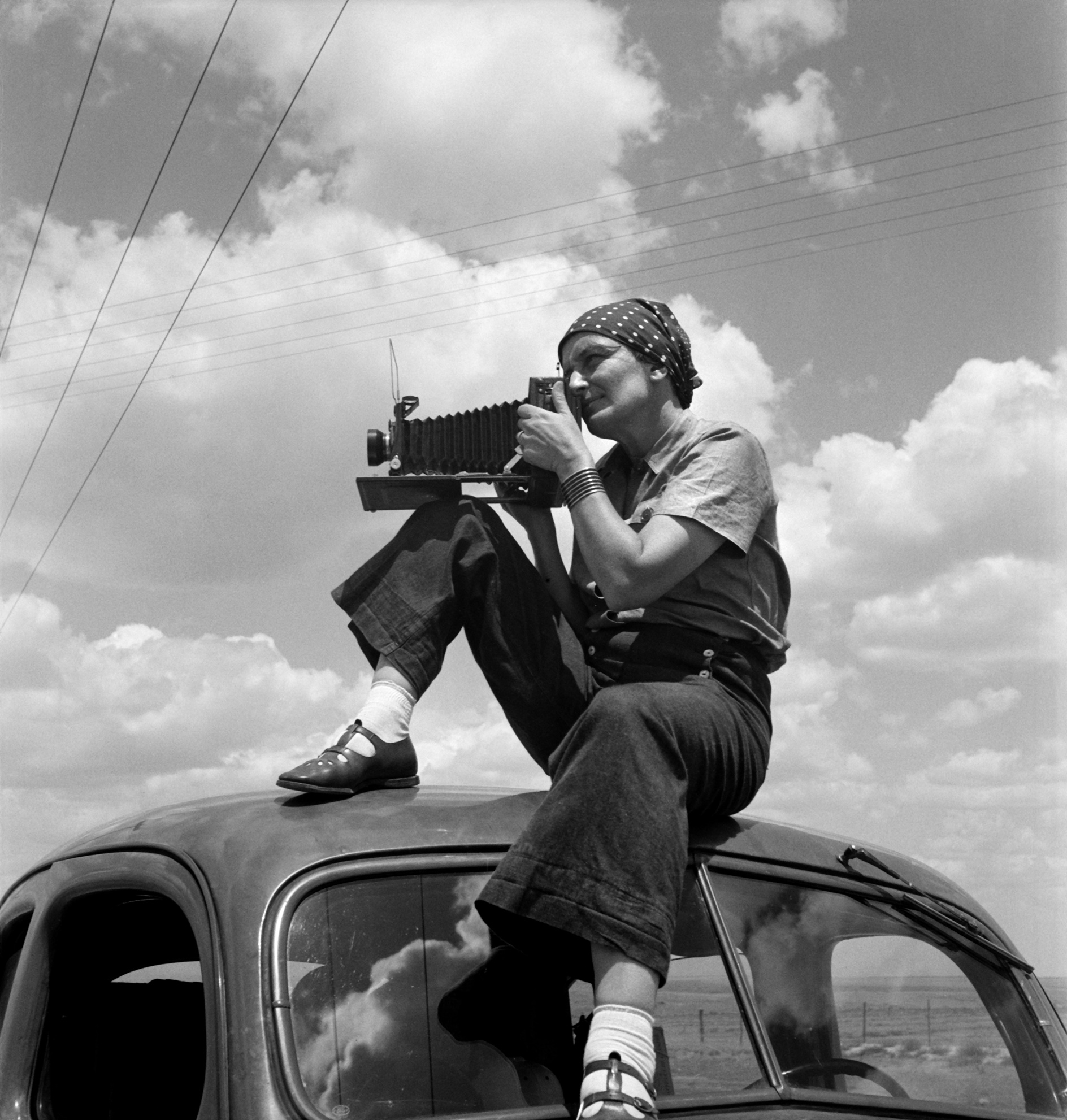
 

Lewis Hine (American, 1874-1940) 'Artificial flowers, New York City' 1912


Lewis Hine (American, 1874-1940)
Artificial flowers, New York City
1912
Gelatin silver print
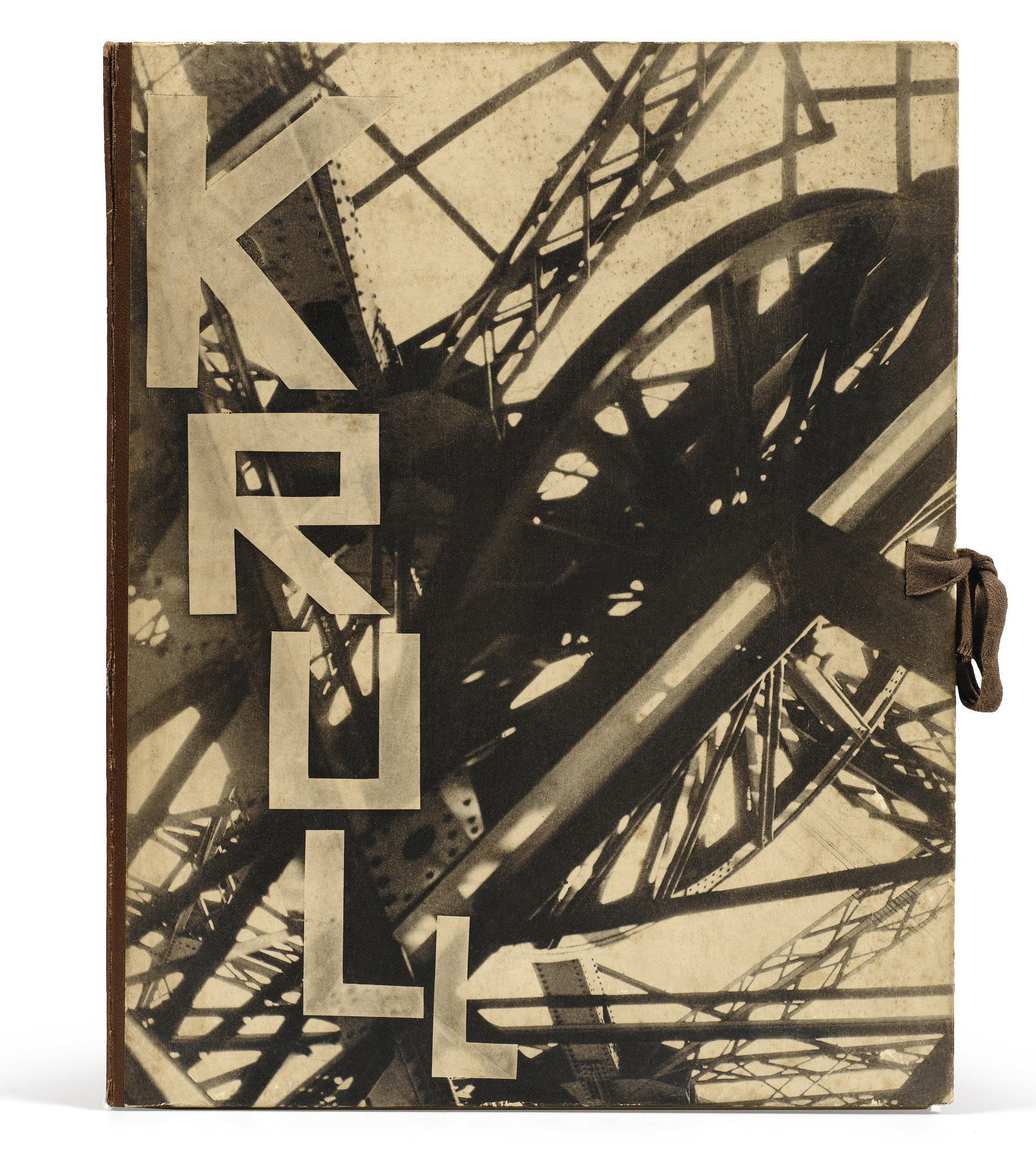
 

Lewis Hine (American, 1874-1940) 'Hot day on East Side, New York' c. 1908


Lewis Hine (American, 1874-1940)
Hot day on East Side, New York
c. 1908
Gelatin silver print
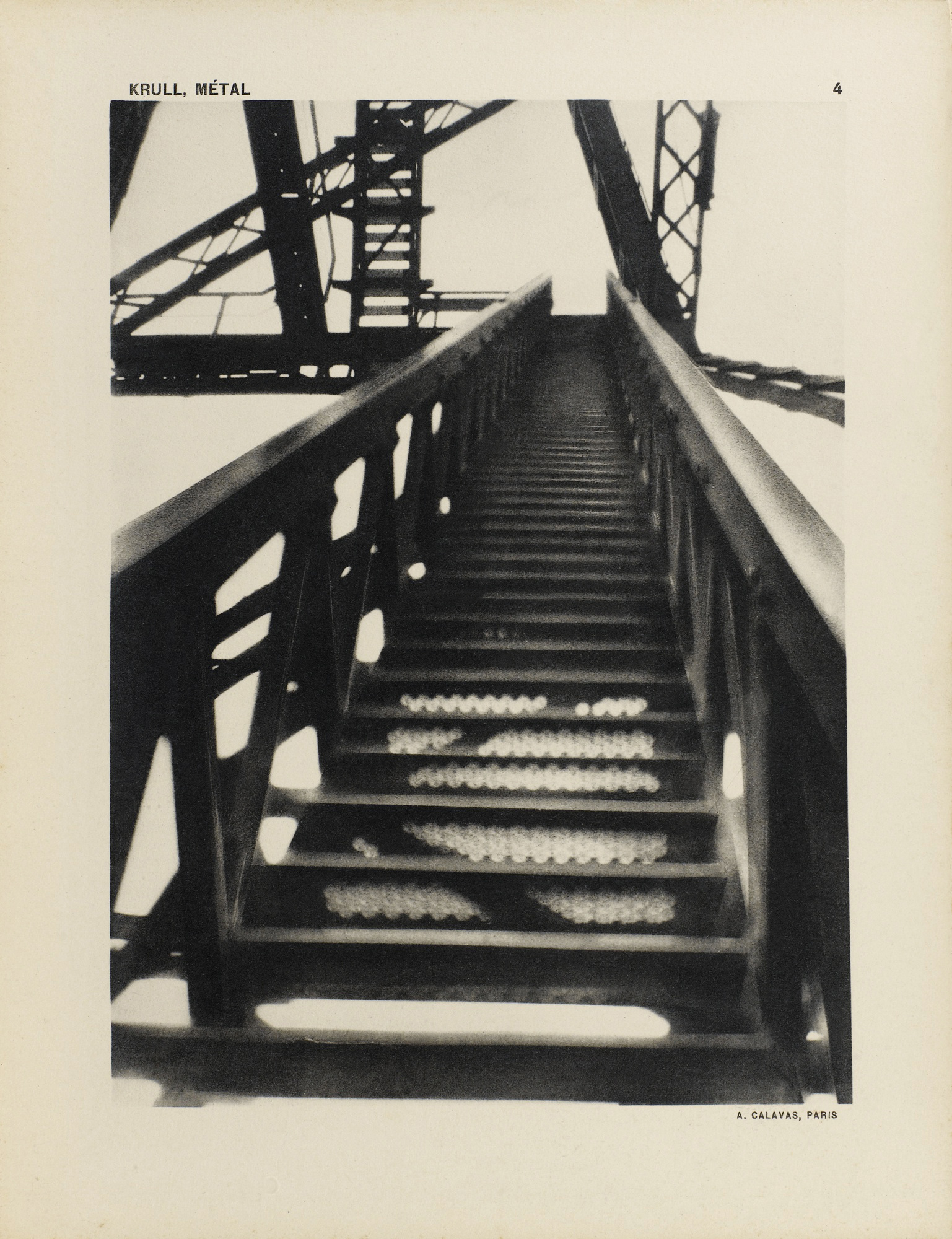
 

Lewis Hine (American, 1874-1940) 'Hull house beneficiary' 1910


Lewis Hine (American, 1874-1940)
Hull house beneficiary
1910
Gelatin silver print
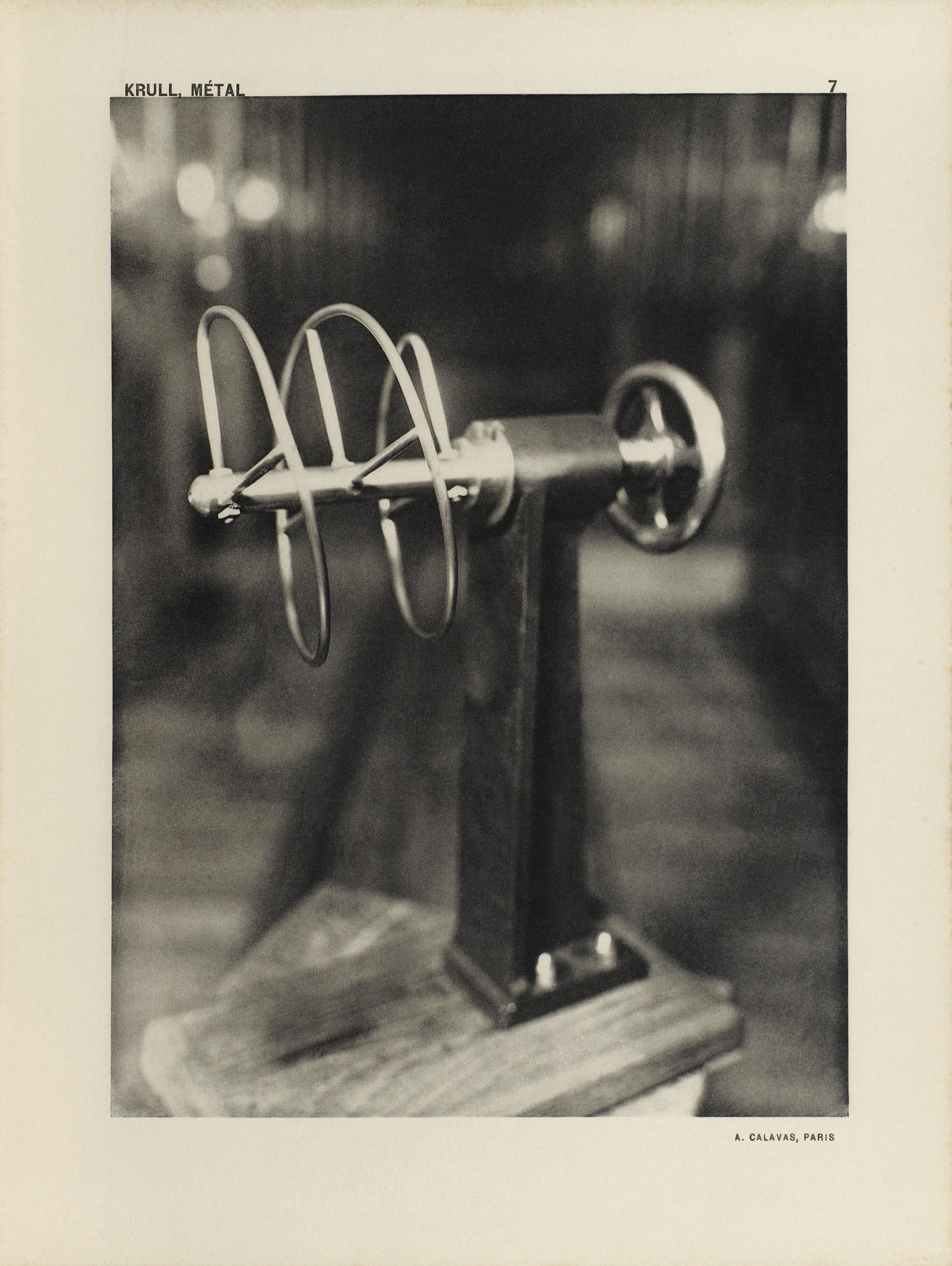
 

Hull House was a settlement house in the United States that was co-founded in 1889 by Jane Addams and Ellen Gates Starr. Located on the Near West Side of Chicago, Illinois, Hull House (named after the original house’s first owner Charles Jerald Hull) opened to recently arrived European immigrants. By 1911, Hull House had grown to 13 buildings. In 1912 the Hull House complex was completed with the addition of a summer camp, the Bowen Country Club. With its innovative social, educational, and artistic programs, Hull House became the standard bearer for the movement that had grown, by 1920, to almost 500 settlement houses nationally…

Most of the Hull House buildings were demolished for the construction of the University of Illinois-Circle Campus in the mid-1960s. The Hull mansion and several subsequent acquisitions were continuously renovated to accommodate the changing demands of the association. The original building and one additional building (which has been moved 200 yards (182.9 m)) survive today.

Text from the Wikipedia website


V.O. Hammon Publishing Co. (publisher) 'The Hull House, Chicago' Early 20th century


V.O. Hammon Publishing Co. (publisher)
The Hull House, Chicago
Early 20th century
Postcard


Lewis Hine (American, 1874-1940) 'Italian steel-worker' 1909


Lewis Hine (American, 1874-1940)
Italian steel-worker
1909
Gelatin silver print


Lewis Hine (American, 1874-1940) 'Printer Ethical Culture School' 1905


Lewis Hine (American, 1874-1940)
Printer Ethical Culture School
1905
Gelatin silver print


Ellis Island

Ellis Island, in Upper New York Bay, was the gateway for over 12 million immigrants to the U.S. as the United States’ busiest immigrant inspection station for over 60 years from 1892 until 1954. Ellis Island was opened January 1, 1892. The island was greatly expanded with land reclamation between 1892 and 1934. Before that, the much smaller original island was the site of Fort Gibson and later a naval magazine. The island was made part of the Statue of Liberty National Monument in 1965 and has hosted a museum of immigration since 1990.

Immigrant inspection station

In the 35 years before Ellis Island opened, more than eight million immigrants arriving in New York City had been processed by officials at Castle Garden Immigration Depot in Lower Manhattan, just across the bay. The federal government assumed control of immigration on April 18, 1890, and Congress appropriated $75,000 to construct America’s first federal immigration station on Ellis Island. Artesian wells were dug, and fill material was hauled in from incoming ships’ ballast and from construction of New York City’s subway tunnels, which doubled the size of Ellis Island to over six acres. While the building was under construction, the Barge Office nearby at the Battery was used for immigrant processing…

The present main structure was designed in French Renaissance Revival style and built of red brick with limestone trim. After it opened on December 17, 1900, the facilities proved barely able to handle the flood of immigrants that arrived in the years before World War I. In 1913, writer Louis Adamic came to America from Slovenia, then part of the Austro-Hungarian Empire, and described the night he and many other immigrants slept on bunk beds in a huge hall. Lacking a warm blanket, the young man “shivered, sleepless, all night, listening to snores” and dreams “in perhaps a dozen different languages”. The facility was so large that the dining room could seat 1,000 people. It is reported the island’s first immigrant to be processed through was a teenager named Annie Moore from County Cork in Ireland.

After its opening, Ellis Island was again expanded, and additional structures were built. By the time it closed on November 12, 1954, 12 million immigrants had been processed by the U.S. Bureau of Immigration. It is estimated that 10.5 million immigrants departed for points across the United States from the Central Railroad of New Jersey Terminal, just across a narrow strait. Others would have used one of the other terminals along the North River (Hudson River) at that time. At first, the majority of immigrants arriving through the station were Northern and Western Europeans (Germany, France, Switzerland, Belgium, The Netherlands, Great Britain, and the Scandinavian countries). Eventually, these groups of peoples slowed in the rates that they were coming in, and immigrants came in from Southern and Eastern Europe, including Jews. Many reasons these immigrants came to the United States included escaping political and economic oppression, as well as persecution, destitution, and violence. Other groups of peoples being processed through the station were Poles, Hungarians, Czechs, Serbs, Slovaks, Greeks, Syrians, Turks, and Armenians.

Primary inspection

Between 1905 and 1914, an average of one million immigrants per year arrived in the United States. Immigration officials reviewed about 5,000 immigrants per day during peak times at Ellis Island. Two-thirds of those individuals emigrated from eastern, southern and central Europe. The peak year for immigration at Ellis Island was 1907, with 1,004,756 immigrants processed. The all-time daily high occurred on April 17, 1907, when 11,747 immigrants arrived. After the Immigration Act of 1924 was passed, which greatly restricted immigration and allowed processing at overseas embassies, the only immigrants to pass through the station were those who had problems with their immigration paperwork, displaced persons, and war refugees. Today, over 100 million Americans – about one-third to 40% of the population of the United States – can trace their ancestry to immigrants who arrived in America at Ellis Island before dispersing to points all over the country.

Generally, those immigrants who were approved spent from two to five hours at Ellis Island. Arrivals were asked 29 questions including name, occupation, and the amount of money carried. It was important to the American government the new arrivals could support themselves and have money to get started. The average the government wanted the immigrants to have was between 18 and 25 dollars ($600 in 2015 adjusted for inflation). Those with visible health problems or diseases were sent home or held in the island’s hospital facilities for long periods of time. More than 3,000 would-be immigrants died on Ellis Island while being held in the hospital facilities. Some unskilled workers were rejected because they were considered “likely to become a public charge.” About 2% were denied admission to the U.S. and sent back to their countries of origin for reasons such as having a chronic contagious disease, criminal background, or insanity. Ellis Island was sometimes known as “The Island of Tears” or “Heartbreak Island” because of those 2% who were not admitted after the long transatlantic voyage. The Kissing Post is a wooden column outside the Registry Room, where new arrivals were greeted by their relatives and friends, typically with tears, hugs, and kisses.

Text from the Wikipedia website


Lewis Hine (American, 1874-1940) 'Italian family on the ferry boat' 1905


Lewis Hine (American, 1874-1940)
Italian family on the ferry boat
1905
Gelatin silver print
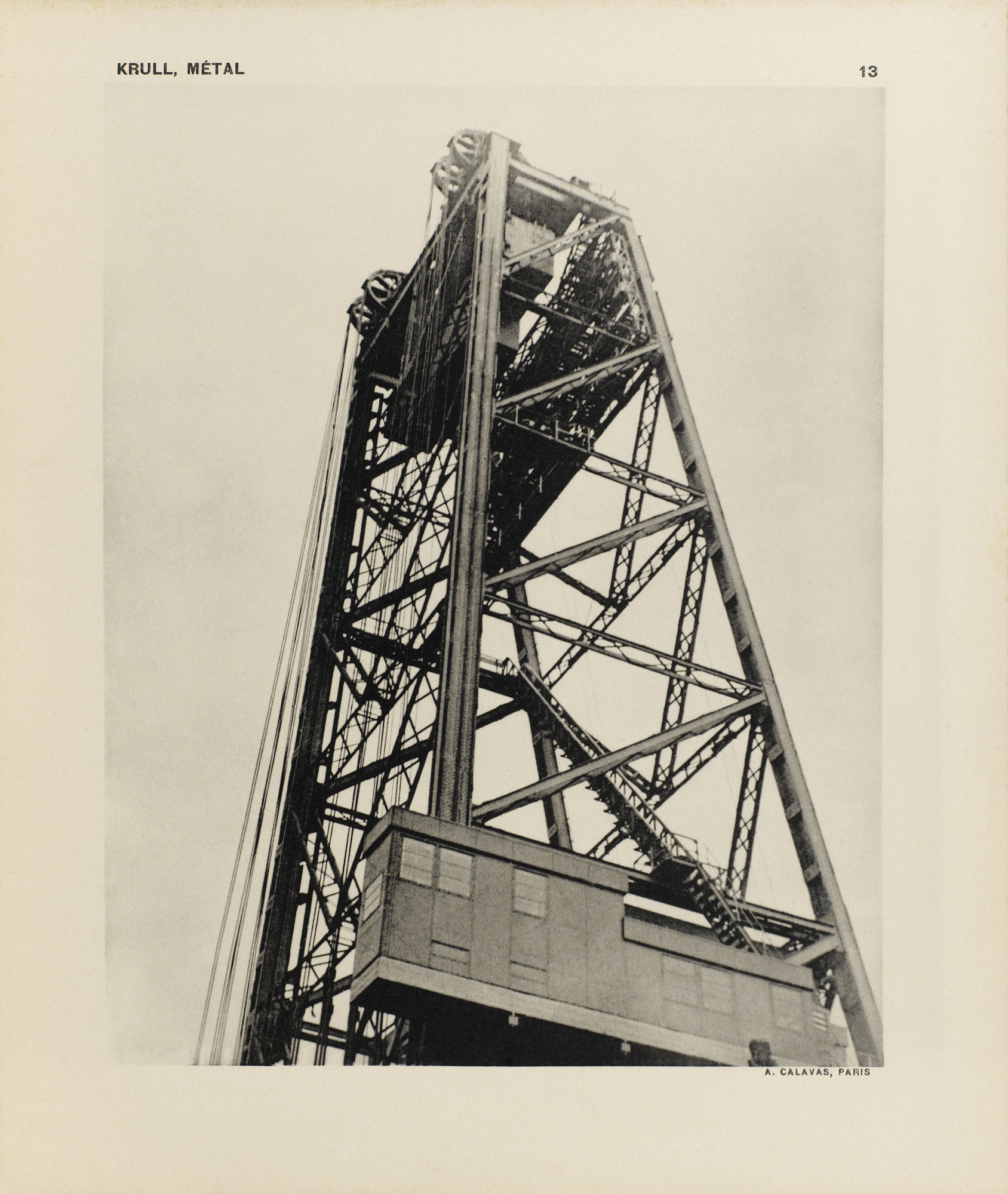
 

Lewis Hine (American, 1874-1940) 'Patriarch at Ellis Island' 1905


Lewis Hine (American, 1874-1940)
Patriarch at Ellis Island
1905
Gelatin silver print
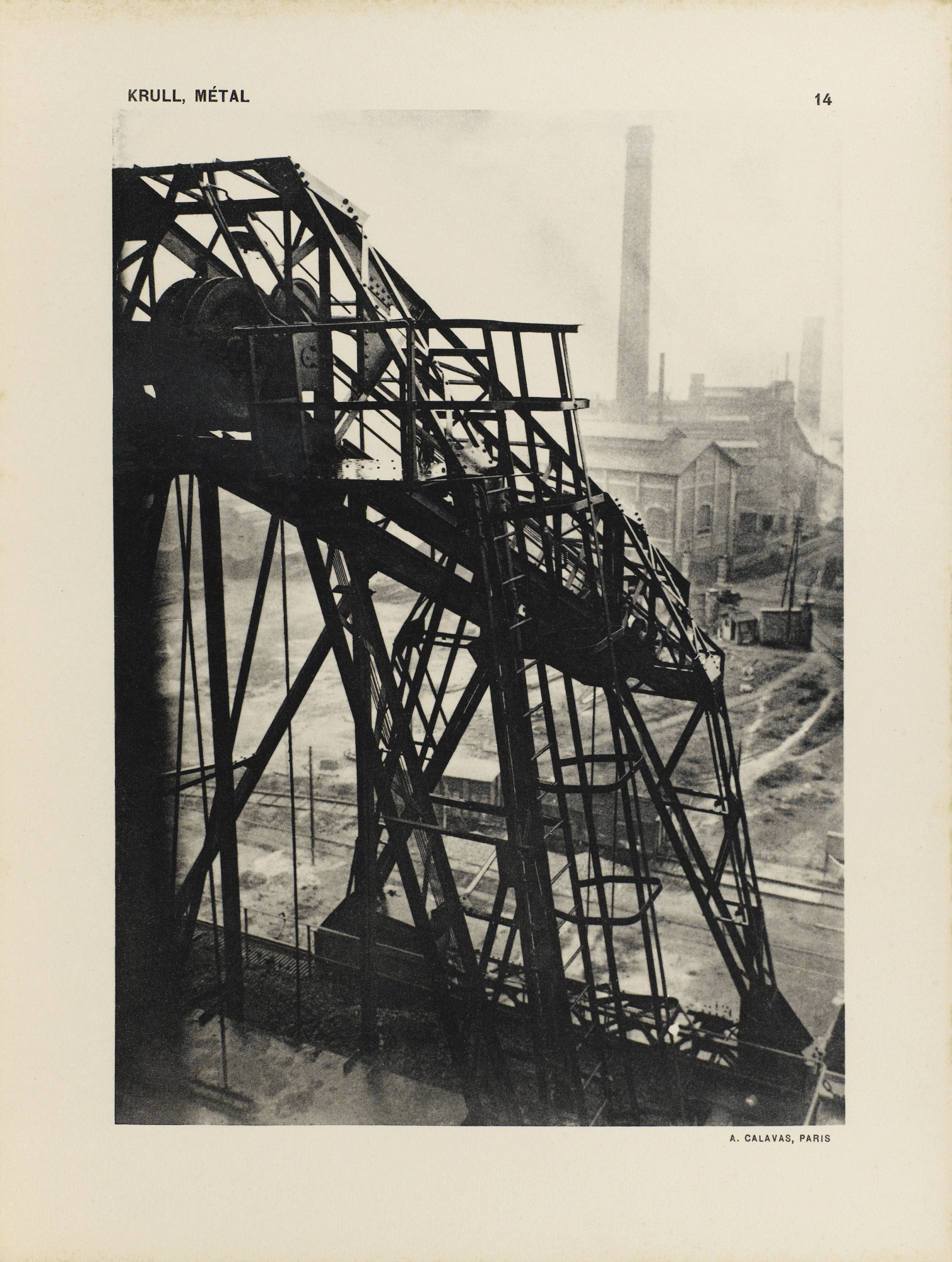
 

Lewis Hine (American, 1874-1940) 'Russian family at Ellis Island' 1905


Lewis Hine (American, 1874-1940)
Russian family at Ellis Island
1905
Gelatin silver print
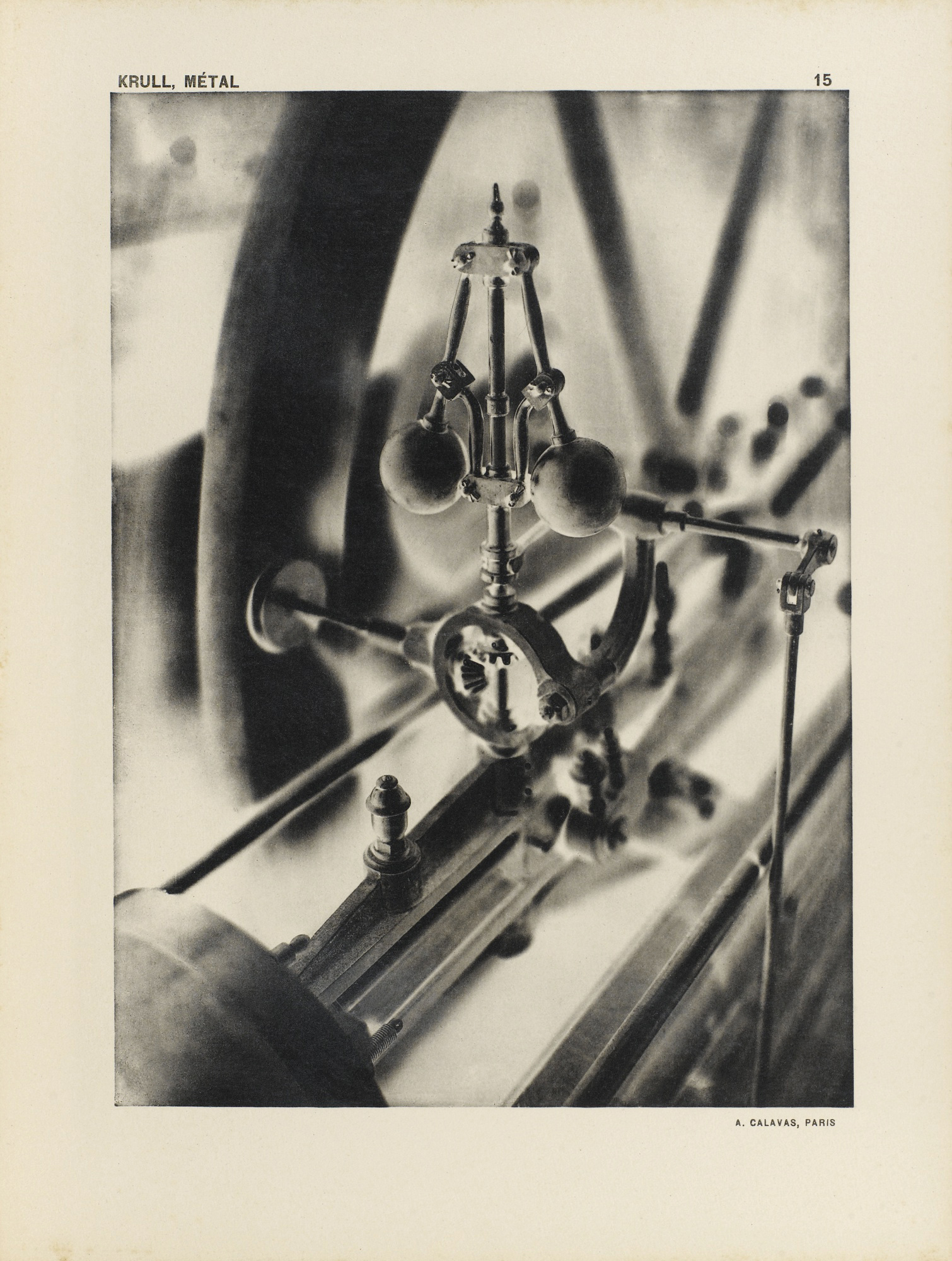
 

Lewis Hine (American, 1874-1940) 'Italian family in the baggage room' 1905


Lewis Hine (American, 1874-1940)
Italian family in the baggage room
1905
Gelatin silver print


Lewis Hine (American, 1874-1940) 'Italian family in the baggage room' 1905 'Slavic immigrant at Ellis Island' 1907


Lewis Hine (American, 1874-1940)
Slavic immigrant at Ellis Island
1907
Gelatin silver print
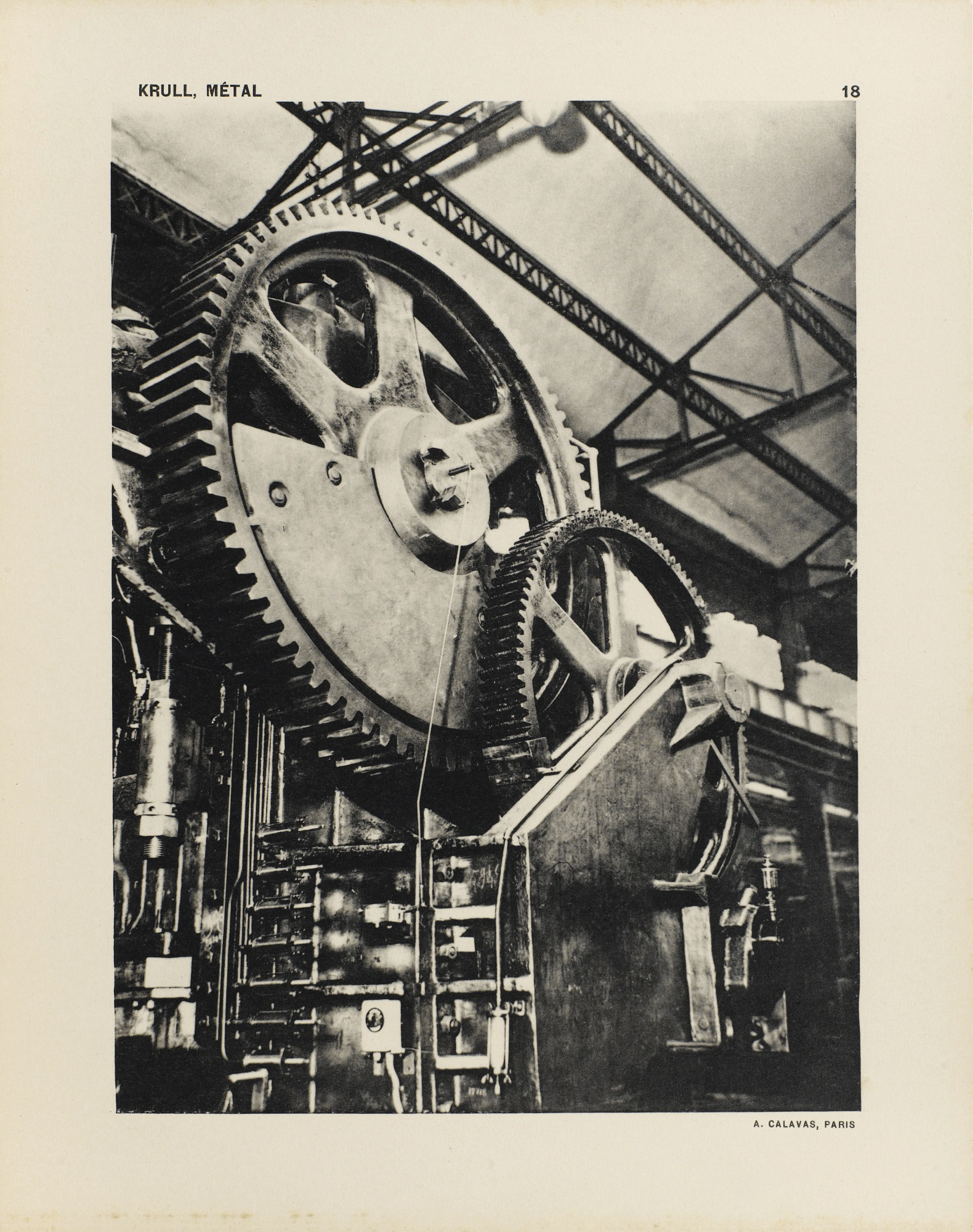
 

Lewis Hine (American, 1874-1940) 'Mother and child Ellis Island' c. 1907


Lewis Hine (American, 1874-1940)
Mother and child Ellis Island
c. 1907
Gelatin silver print


Lewis Hine (American, 1874-1940) 'Climbing into America' 1908


Lewis Hine (American, 1874-1940)
Climbing into America
1908
Gelatin silver print
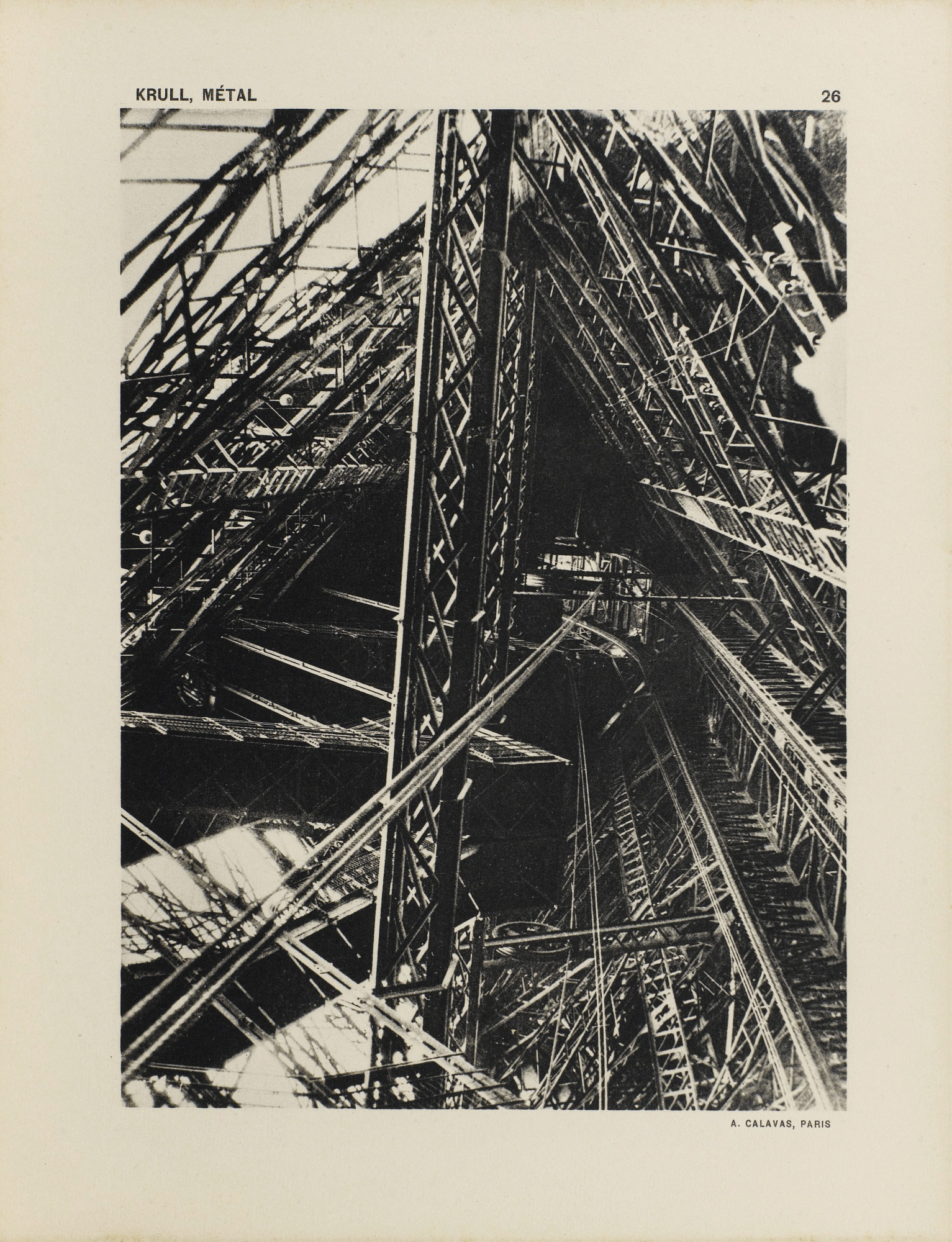
 

Lewis Hine (American, 1874-1940)

Documentary photography

In 1907, Hine became the staff photographer of the Russell Sage Foundation; he photographed life in the steel-making districts and people of Pittsburgh, Pennsylvania, for the influential sociological study called The Pittsburgh Survey.

In 1908 Hine became the photographer for the National Child Labor Committee (NCLC), leaving his teaching position. Over the next decade, Hine documented child labor, with focus on the use of child labor in the Carolina Piedmont, to aid the NCLC’s lobbying efforts to end the practice. In 1913, he documented child labourers among cotton mill workers with a series of Francis Galton’s composite portraits.

Hine’s work for the NCLC was often dangerous. As a photographer, he was frequently threatened with violence or even death by factory police and foremen. At the time, the immorality of child labor was meant to be hidden from the public. Photography was not only prohibited but also posed a serious threat to the industry. To gain entry to the mills, mines and factories, Hine was forced to assume many guises. At times he was a fire inspector, postcard vendor, bible salesman, or even an industrial photographer making a record of factory machinery.

During and after World War I, he photographed American Red Cross relief work in Europe. In the 1920s and early 1930s, Hine made a series of “work portraits,” which emphasised the human contribution to modern industry. In 1930, Hine was commissioned to document the construction of the Empire State Building. He photographed the workers in precarious positions while they secured the steel framework of the structure, taking many of the same risks that the workers endured. In order to obtain the best vantage points, Hine was swung out in a specially-designed basket 1,000 ft above Fifth Avenue.

During the Great Depression Hine again worked for the Red Cross, photographing drought relief in the American South, and for the Tennessee Valley Authority (TVA), documenting life in the mountains of eastern Tennessee. He also served as chief photographer for the Works Progress Administration’s National Research Project, which studied changes in industry and their effect on employment. Hine was also a faculty member of the Ethical Culture Fieldston School.

Later life

In 1936, Hine was selected as the photographer for the National Research Project of the Works Projects Administration, but his work there was not completed.

The last years of his life were filled with professional struggles by loss of government and corporate patronage. Few people were interested in his work, past or present, and Hine lost his house and applied for welfare. He died on November 3, 1940 at Dobbs Ferry Hospital in Dobbs Ferry, New York, after an operation. He was 66 years old.

Text from the Wikipedia website


Lewis W. Hine (American, 1874-1940) 'Worker on platform' 1930-1931


Lewis Hine (American, 1874-1940)
Worker on platform
1930-1931
Gelatin silver print
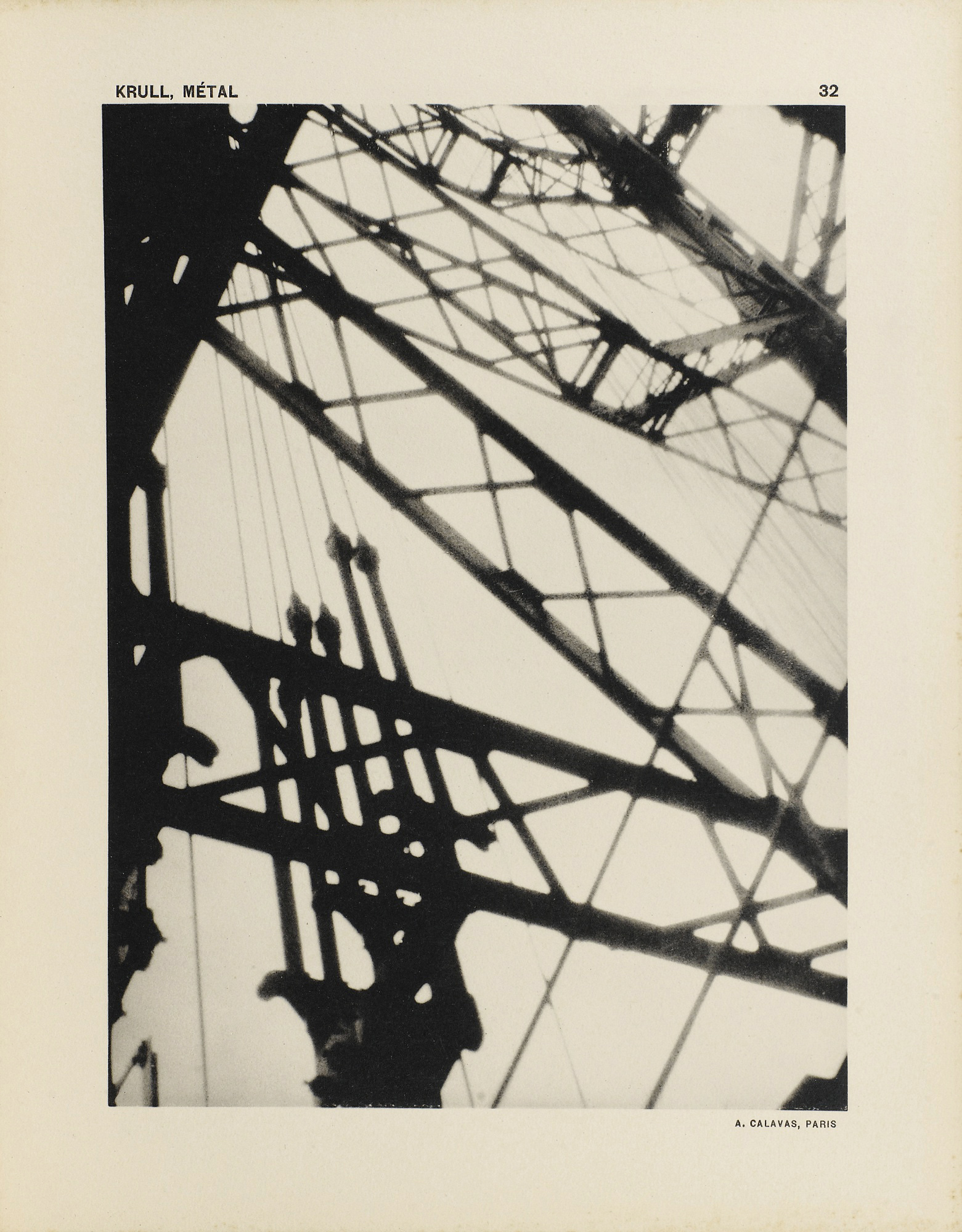
 

Lewis Hine (American, 1874-1940) 'Icarus, Empire State Building' 1930-1931


Lewis Hine (American, 1874-1940)
Icarus, Empire State Building
1930-1931
Gelatin silver print


Of the many photographs Hine took of the Empire State Building, this one became the popular favourite. Suspended in graceful sangfroid, the steelworker symbolises daring technical innovation of the sort Daedalus embodied in Greek legend. While Daedulus flew the middle course between sea and sky safely, his son Icarus flew too close to the sun and perished. The optimism of this image suggests that it was not Icarus’s folly but his youth and his ability to fly that prompted Hine’s title.

Text from The Met website


Lewis Hine (American, 1874-1940) 'Empire State Building' 1930-1931


Lewis Hine (American, 1874-1940)
Empire State Building
1930-1931
Gelatin silver print
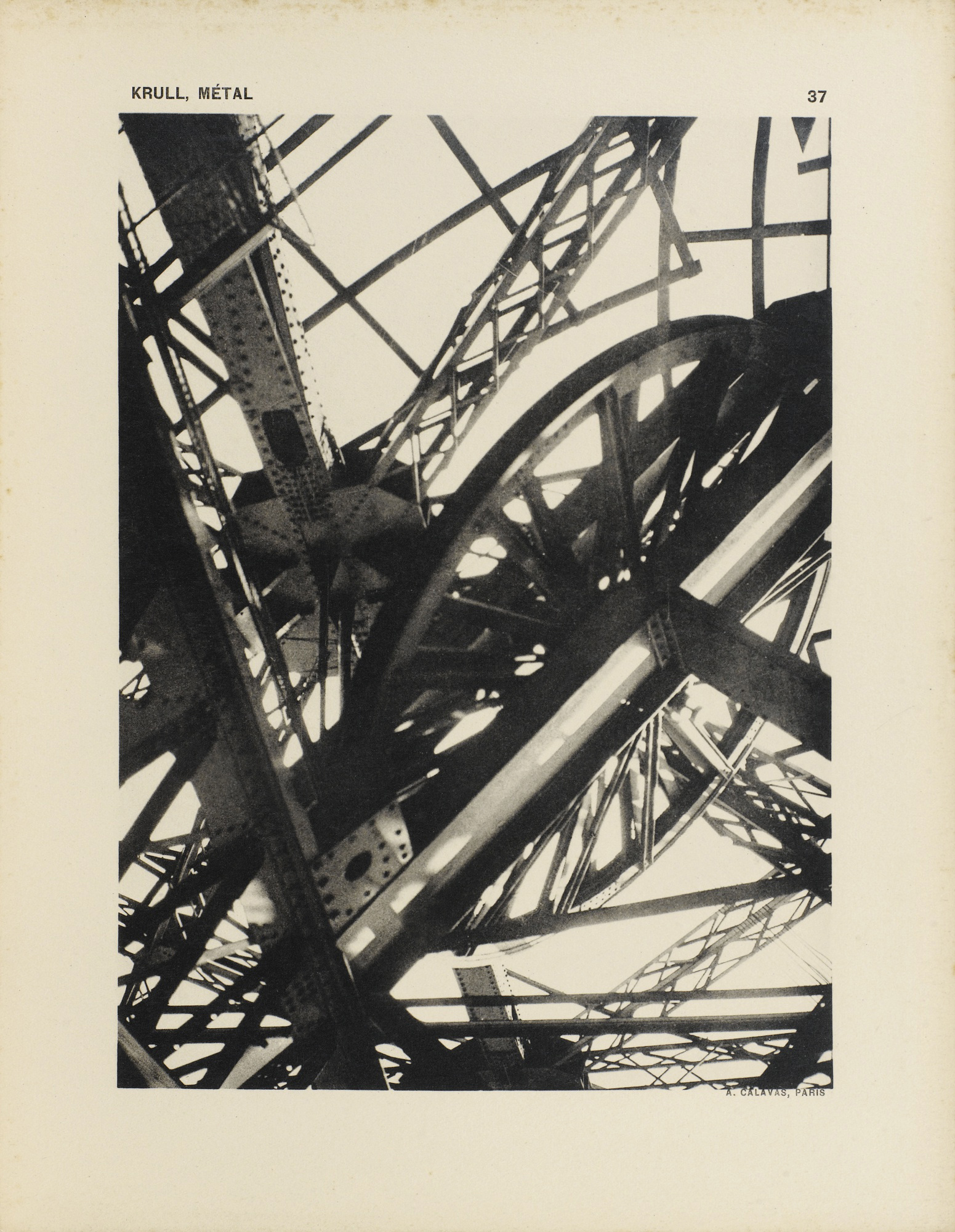
 

Lewis Hine (American, 1874-1940) 'Empire State Building' 1930-1931


Lewis Hine (American, 1874-1940)
Empire State Building
1930-1931
Gelatin silver print


Lewis Hine (American, 1874-1940) 'Empire State Building' 1930-1931


Lewis Hine (American, 1874-1940)
Girders and Workers, Empire State Building
1930-1931
Gelatin silver print


Same man second left as in the image below.


Lewis Hine (American, 1874-1940) 'Laborer on connector' 1930-1931


Lewis Hine (American, 1874-1940)
Laborer on connector
1930-1931
Gelatin silver print
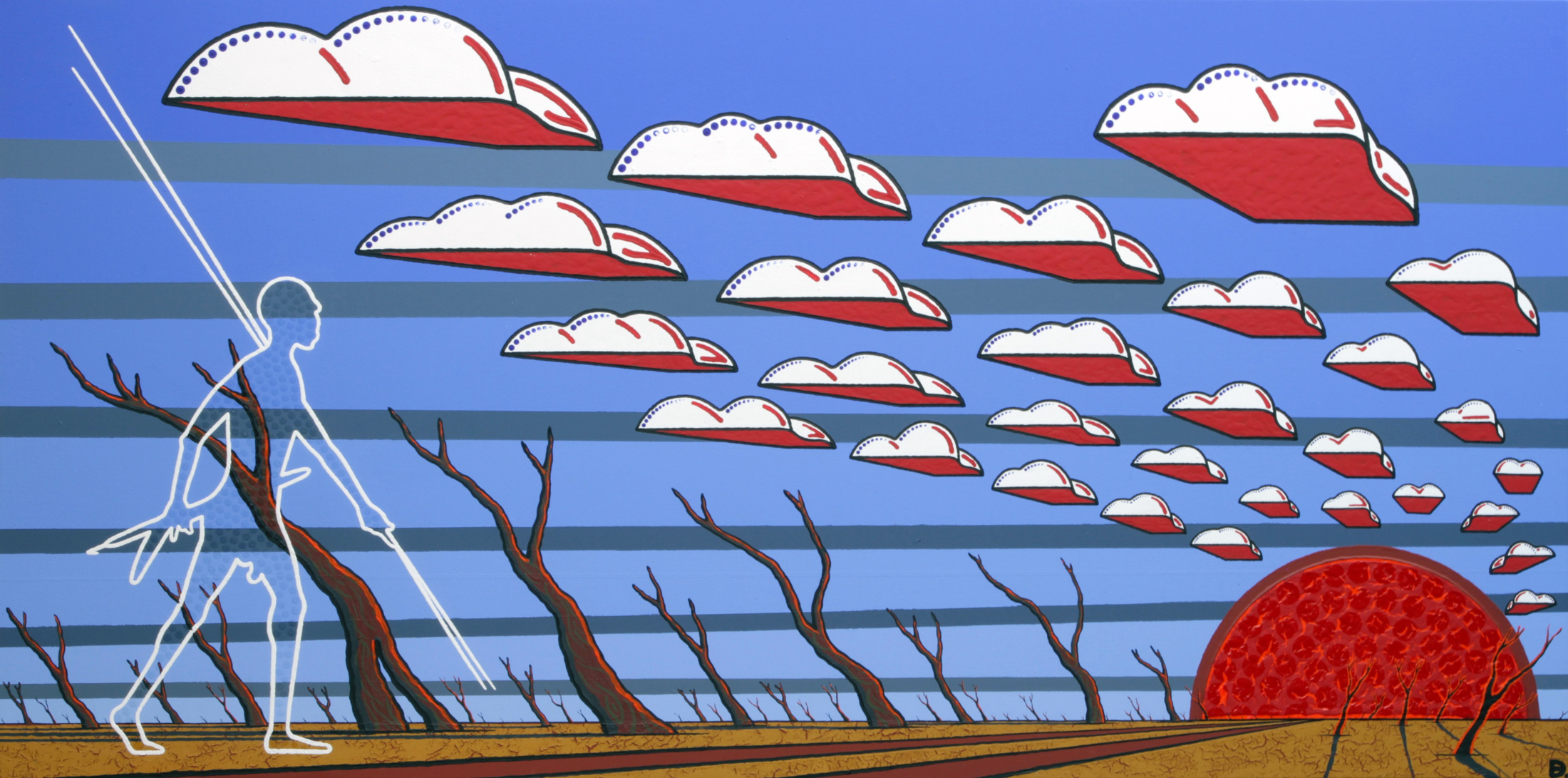
 

Lewis Hine (American, 1874-1940) 'Workers on girder' 1930-1931


Lewis Hine (American, 1874-1940)
Workers on girder
1930-1931
Gelatin silver print


Lewis Hine (American, 1874-1940) 'Derrick and workers on girder' 1930-1931


Lewis Hine (American, 1874-1940)
Derrick and workers on girder
1930-1931
Gelatin silver print


Lewis Hine (American, 1874-1940) 'Silhouetted crane hook' 1930-1931


Lewis Hine (American, 1874-1940)
Silhouetted crane hook
1930-1931
Gelatin silver print


Empire State Building

The Empire State Building is a 102-story Art Deco skyscraper in Midtown Manhattan, New York City. Designed by Shreve, Lamb & Harmon and completed in 1931, the building has a roof height of 1,250 feet (380 m) and stands a total of 1,454 feet (443.2 m) tall, including its antenna. Its name is derived from “Empire State”, the nickname of New York. As of 2017 the building is the 5th-tallest completed skyscraper in the United States and the 28th-tallest in the world. It is also the 6th-tallest freestanding structure in the Americas.

The site of the Empire State Building, located on the west side of Fifth Avenue between West 33rd and 34th Streets, was originally part of an early 18th century farm. In the late 1820s, it came into the possession of the prominent Astor family, with John Jacob Astor’s descendants building the Waldorf-Astoria Hotel on the site in the 1890s. By the 1920s, the family had sold the outdated hotel and the site indirectly ended up under the ownership of Empire State Inc., a business venture that included businessman John J. Raskob and former New York governor Al Smith. The original design of the Empire State Building was for a 50-story office building. However, after fifteen revisions, the final design was for a 86-story 1,250-foot building, with an airship mast on top. This ensured it would be the world’s tallest building, beating the Chrysler Building and 40 Wall Street, two other Manhattan skyscrapers under construction at the time that were also vying for that distinction. …

The project involved more than 3,500 workers at its peak, including 3,439 on a single day, August 14, 1930. Many of the workers were Irish and Italian immigrants, with a sizeable minority of Mohawk ironworkers from the Kahnawake reserve near Montreal. According to official accounts, five workers died during the construction, although the New York Daily News gave reports of 14 deaths and a headline in the socialist magazine The New Masses spread unfounded rumours of up to 42 deaths. The Empire State Building cost $40,948,900 to build, including demolition of the Waldorf-Astoria (equivalent to $533,628,800 in 2016). This was lower than the $60 million budgeted for construction.

Lewis Hine captured many photographs of the construction, documenting not only the work itself but also providing insight into the daily life of workers in that era. Hine’s images were used extensively by the media to publish daily press releases. According to the writer Jim Rasenberger, Hine “climbed out onto the steel with the ironworkers and dangled from a derrick cable hundreds of feet above the city to capture, as no one ever had before (or has since), the dizzy work of building skyscrapers”. In Rasenberger’s words, Hine turned what might have been an assignment of “corporate flak” into “exhilarating art”. These images were later organised into their own collection. Onlookers were enraptured by the sheer height at which the steelworkers operated. New York magazine wrote of the steelworkers: “Like little spiders they toiled, spinning a fabric of steel against the sky”.

Text from the Wikipedia website


Anonymous photographer. 'Untitled (Lewis Hine with camera)' c. 1900-1910s


Anonymous photographer
Untitled (Lewis Hine with camera)
c. 1900-1910s
Gelatin silver print


LILKE ART BLART ON FACEBOOK

Back to top

Exhibition: ‘Dorothea Lange: Politics of Seeing’ at the Barbican Art Gallery, London

Exhibition dates: 22nd June – 2nd September, 2018


Dorothea Lange (American, 1895-1965) 'Migratory Cotton Picker, Eloy, Arizona' 1940 from the exhibition 'Dorothea Lange: Politics of Seeing' at the Barbican Art Gallery, London, June - Sept, 2018


Dorothea Lange (American, 1895-1965)
Migratory Cotton Picker, Eloy, Arizona
1940
Silver gelatin print
© The Dorothea Lange Collection, the Oakland Museum of California


Damaged, desperate and displaced

I am writing this short text on a laptop in Thailand which keeps jumping lines and misspelling words. The experience is almost as disorienting as the photographs of Dorothea Lange, with their anguished angles and portraits of despair. Her humanist, modernist pictures capture the harsh era of The Great Depression and the 1930s in America, allowing a contemporary audience to imagine what it must have been like to walk along blistering roads with five children, not knowing where your next meal or drink of water is coming from.

Like Lewis Hine and Jacob Riis from an earlier era, Lange’s photographs are about the politics of seeing. They are about human beings in distress and how photography can raise awareness of social injustice and disenfranchisement in the name of cultural change.

Dr Marcus Bunyan

#dorothealange @barbicancentre


Many thankx to the Barbican Art Gallery for allowing me to publish the photographs in the posting. Please click on the photographs for a larger version of the image.


Dorothea Lange (American, 1895-1965) 'Migrant Mother, Nipomo, California' 1936 from the exhibition 'Dorothea Lange: Politics of Seeing' at the Barbican Art Gallery, London, June - Sept, 2018


Dorothea Lange (American, 1895-1965)
Migrant Mother, Nipomo, California
1936
Silver gelatin print
© The Dorothea Lange Collection, the Oakland Museum of California


Dorothea Lange took this photograph in 1936, while employed by the U.S. government’s Farm Security Administration (FSA) program, formed during the Great Depression to raise awareness of and provide aid to impoverished farmers. In Nipomo, California, Lange came across Florence Owens Thompson and her children in a camp filled with field workers whose livelihoods were devastated by the failure of the pea crops. Recalling her encounter with Thompson years later, she said, “I saw and approached the hungry and desperate mother, as if drawn by a magnet. I do not remember how I explained my presence or my camera to her, but I do remember she asked me no questions. I made five exposures, working closer and closer from the same direction.”1 One photograph from that shoot, now known as Migrant Mother, was widely circulated to magazines and newspapers and became a symbol of the plight of migrant farm workers during the Great Depression.

As Lange described Thompson’s situation, “She and her children had been living on frozen vegetables from the field and wild birds the children caught. The pea crop had frozen; there was no work. Yet they could not move on, for she had just sold the tires from the car to buy food.”2 However, Thompson later contested Lange’s account. When a reporter interviewed her in the 1970s, she insisted that she and Lange did not speak to each other, nor did she sell the tires of her car. Thompson said that Lange had either confused her for another farmer or embellished what she had understood of her situation in order to make a better story.

Anonymous text. “Migrant Mother, Nipomo, California,” on the MoMA Learning website Nd [Online] Cited 16/02/2022

1/ Dorothea Lange, “The Assignment I’ll Never Forget,” Popular Photography 46 (February, 1960). Reprinted in Photography, Essays and Images, ed. Beaumont Newhall (New York: The Museum of Modern Art), p. 262-265

2/ Dorothea Lange, paraphrased in Karin Becker Ohm, Dorothea Lange and the Documentary Tradition (Baton Rouge, LA: Louisiana State University Press, 1980), p. 79


Installation view of the exhibition ‘Dorothea Lange: Politics of Seeing’ at the Barbican Art Gallery, London

Installation view of the exhibition ‘Dorothea Lange: Politics of Seeing’ at the Barbican Art Gallery, London showing Dorothea Lange's photograph 'Migrant Mother, Nipomo, California' 1936


Installation views of the exhibition Dorothea Lange: Politics of Seeing at the Barbican Art Gallery, London showing Dorothea Lange’s photograph Migrant Mother, Nipomo, California 1936
Photos: Ian Gavan/Getty Images for Barbican Art Gallery


“I saw and approached the hungry and desperate mother, as if drawn by a magnet. I do not remember how I explained my presence or my camera to her, but I do remember she asked me no questions. I made five exposures, working closer and closer from the same direction. I did not ask her name or her history. She told me her age, that she was thirty-two. She said that they had been living on frozen vegetables from the surrounding fields, and birds that the children killed. She had just sold the tires from her car to buy food. There she sat in that lean- to tent with her children huddled around her, and seemed to know that my pictures might help her, and so she helped me. There was a sort of equality about it.” (From: Popular Photography, Feb. 1960).

The images were made using a Graflex camera. The original negatives are 4 x 5″ film. It is not possible to determine on the basis of the negative numbers (which were assigned later at the Resettlement Administration) the order in which the photographs were taken.

Hanna Soltys, Reference Librarian, Prints & Photographs Division. “Dorothea Lange’s “Migrant Mother” Photographs in the Farm Security Administration Collection” Photographs in the Farm Security Administration Collection,” on The Library of Congress website 1998 February 19, 2019 [Online] Cited 16/02/2022


Florence Owens Thompson: The Story of the “Migrant Mother” 2014

Thompson’s identity was discovered in the late 1970s; in 1978, acting on a tip, Modesto Bee reporter Emmett Corrigan located Thompson at her mobile home in Space 24 of the Modesto Mobile Village and recognised her from the 40-year-old photograph.[10] A letter Thompson wrote was published in The Modesto Bee and the Associated Press distributed a story headlined “Woman Fighting Mad Over Famous Depression Photo.” Florence was quoted as saying “I wish she [Lange] hadn’t taken my picture. I can’t get a penny out of it, she didn’t ask my name. She said she wouldn’t sell the pictures, she said she’d send me a copy. She never did.”

Lange was funded by the federal government when she took the picture, so the image was in the public domain and Lange never directly received any royalties. However, the picture did help make Lange a celebrity and earned her “respect from her colleagues.”

In a 2008 interview with CNN, Thompson’s daughter Katherine McIntosh recalled how her mother was a “very strong lady”, and “the backbone of our family”, she said: “We never had a lot, but she always made sure we had something. She didn’t eat sometimes, but she made sure us children ate. That’s one thing she did do.”

Anonymous text. “Florence Owens Thompson,” on the WikiVisually website Nd [Online] Cited 05/08/2018. No longer available online


Dorothea Lange (American, 1895-1965) 'White Angel Breadline, San Francisco' 1933


Dorothea Lange (American, 1895-1965)
White Angel Breadline, San Francisco
1933
Silver gelatin print
© The Dorothea Lange Collection, the Oakland Museum of California


“There are moments such as these when time stands still and all you do is hold your breath and hope it will wait for you. And you just hope you will have enough time to get it organised in a fraction of a second on that tiny piece of sensitive film. Sometimes you have an inner sense that you have encompassed the thing generally. You know then that you are not taking anything away from anyone: their privacy, their dignity, their wholeness.” ~ Dorothea Lange 1963

Davis K F 1995, The photographs of Dorothea Lange, Hallmark Cards Inc, Missouri p. 20.


White angel breadline, San Francisco is Lange’s first major image that encapsulates both her sense of compassion and ability to structure a photograph according to modernist principles. The diagonals of the fence posts and the massing of hats do not reduce this work to the purely formal – the figure in the front middle of the image acts as a lightening rod for our emotional engagement.

© Art Gallery of New South Wales Photography Collection Handbook, 2007


“I had made some photographs of the state [of] people, in an area of San Francisco which revealed how deep the depression was. It was at that time beginning to cut very deep. This is a long process. It doesn’t happen overnight. Life, for people, begins to crumble on the edges; they don’t realise it…”


Dorothea Lange, interview, 1964


There was a real “White Angel” behind the breadline that served the needy men photographed by Dorothea Lange. She was a widow named Lois Jordan. Mrs. Jordan, who gave herself the name White Angel, established a soup kitchen during the Great Depression to feed those who were unemployed and destitute. Relying solely on donations, she managed to supply meals to more than one million men over a three-year period.

Jordan’s soup kitchen occupied a junk-filled lot in San Francisco located on the Embarcadero near Filbert Street. This area was known as the White Angel Jungle. The Jungle was not far from Lange’s studio. As she began to change direction from portrait to documentary photography, Lange focused her lens on the poignant scenes just beyond her window. White Angel Breadline is the result of her first day’s work to document Depression-era San Francisco. Decades later, Lange recalled: “[White Angel Breadline] is my most famed photograph. I made that on the first day I ever went out in an area where people said, ‘Oh, don’t go there.’ It was the first day that I ever made a photograph on the street.”

Anonymous text. “Dorothea Lange + White Angel Breadline: Meet the master artist through one of her most important works,” on The Kennedy Centre website Nd [Online] Cited 16/02/2022


Dorothea Lange’s Documentary Photographs

Hear Dorothea Lange discuss her photographs and the difficulty of leading a visual life.

Dorothea Lange’s stirring images of migrant farmers and the unemployed have become universally recognised symbols of the Great Depression. Later photographs documenting the internment of Japanese Americans and her travels throughout the world extended her body of work. Watch the video to hear Lange discuss how she began her documentary projects for the Farm Security Administration, and learn how she felt about some of her assignments and subjects.


Dorothea Lange (American, 1895-1965) 'Drought Refugees' c. 1935


Dorothea Lange (American, 1895-1965)
Drought Refugees
c. 1935
Silver gelatin print
© The Dorothea Lange Collection, the Oakland Museum of California


Dorothea Lange (American, 1895-1965) 'Family walking on highway - five children. Started from Idabel, Oklahoma, bound for Krebs, Oklahoma' June 1938


Dorothea Lange (American, 1895-1965)
Family walking on highway – five children. Started from Idabel, Oklahoma, bound for Krebs, Oklahoma
June 1938
Silver gelatin print
Library of Congress


Dorothea Lange (American, 1895-1965) 'Cars on the Road' August 1936


Dorothea Lange (American, 1895-1965)
Cars on the Road
August 1936
Silver gelatin print
Library of Congress


Dorothea Lange (American, 1895-1965) 'Dust Bowl, Grain Elevator, Everett, Texas' June 1938


Dorothea Lange (American, 1895-1965)
Dust Bowl, Grain Elevator, Everett, Texas
June 1938
Silver gelatin print
Library of Congress


This summer, Barbican Art Gallery stages the first ever UK retrospective of one of the most influential female photographers of the 20th century, the American documentary photographer Dorothea Lange (1895-1965). A formidable woman of unparalleled vigour and resilience, the exhibition charts Lange’s outstanding photographic vision from her early studio portraits of San Francisco’s bourgeoisie to her celebrated Farm Security Administration work (1935-1939) that captured the devastating impact of the Great Depression on the American population. Rarely seen photographs of the internment of Japanese-Americans during the Second World War are also presented as well as the later collaborations with fellow photographers Ansel Adams and Pirkle Jones documenting the changing face of the social and physical landscape of 1950s America. Opening 22 June at Barbican Art Gallery, Dorothea Lange: Politics of Seeing is part of the Barbican’s 2018 season, The Art of Change, which explores how the arts respond to, reflect and potentially effect change in the social and political landscape.

Dorothea Lange: Politics of Seeing encompasses over 300 objects from vintage prints and original book publications to ephemera, field notes, letters, and documentary film. Largely chronological, the exhibition presents eight series in Lange’s oeuvre spanning from 1919 to 1957.

Jane Alison, Head of Visual Arts, Barbican, said: “This is an incredible opportunity for our visitors to see the first UK survey of the work of such a significant photographer. Dorothea Lange is undoubtedly one of the great photographers of the twentieth century and the issues raised through her work have powerful resonance with issues we’re facing in society today. Staged alongside contemporary photographer Vanessa Winship as part of The Art of Change, these two shows are unmissable.”

Opening the exhibition are Lange’s little known early portrait photographs taken during her time running a successful portrait studio in San Francisco between 1919 and 1935. Lange was at the heart of San Francisco’s creative community and her studio became a centre in which bohemian and artistic friends gathered after hours, including Edward Weston, Anne Brigman, Alma Lavenson, Imogen Cunningham, and Willard van Dyke. Works from this period include intimate portraits of wealthy West Coast families as well as of Lange’s inner circle, counting amongst others photographer Roi Partridge and painter Maynard Dixon, Lange’s first husband and father of her two sons.

The Great Depression in the early 1930s heralded a shift in her photographic language as she felt increasingly compelled to document the changes visible on the streets of San Francisco. Taking her camera out of the studio, she captured street demonstrations, unemployed workers, and breadline queues. These early explorations of her social documentary work are also on display.

The exhibition charts Lange’s work with the newly established historical division of the Farm Security Administration (FSA), the government agency tasked with the promotion of Roosevelt’s New Deal programme. Alongside Lange, the FSA employed a number of photographers, including Walker Evans, Ben Shahn and Arthur Rothstein, to document living conditions across America during the Great Depression: from urban poverty in San Francisco to tenant farmers driven off the land by dust storms and mechanisation in the states of Oklahoma, Arkansas and Texas; the plight of homeless families on the road in search of better livelihoods in the West; and the tragic conditions of migrant workers and camps across California. Lange used her camera as a political tool to critique themes of injustice, inequality, migration and displacement, and to effect government relief.

Highlights in this section are, among others, a series on sharecroppers in the Deep South that exposes relations of race and power, and the iconic Migrant Mother, a photograph which has become a symbol of the Great Depression, alongside images of vernacular architecture and landscapes, motifs often overlooked within Lange’s oeuvre. Vintage prints in the exhibition are complemented by the display of original publications from the 1930s to foreground the widespread use of Lange’s FSA photographs and her influence on authors including John Steinbeck, whose ground-breaking novel The Grapes of Wrath was informed by Lange’s photographs. Travelling for many months at a time and working in the field, she collaborated extensively with her second husband Paul Schuster Taylor, a prominent social economist and expert in farm labour with whom she published the seminal photo book An American Exodus: A Record of Human Erosion in 1939, also on display in the exhibition.

The exhibition continues with rarely seen photographs of the internment of more than 100,000 American citizens of Japanese descent that Lange produced on commission for the War Relocation Authority following the Japanese attack on the American naval base at Pearl Harbor in 1941. Lange’s critical perspective of this little discussed chapter in US history however meant that her photographs remained unpublished during the war and stored at the National Archives in Washington. It is the first time that this series will be shown comprehensively outside of the US and Canada.

Following her documentation of the Japanese American internment, Lange produced a photographic series of the wartime shipyards of Richmond, California with friend and fellow photographer Ansel Adams (1902-1984). Lange and Adams documented the war effort in the shipyards for Fortune magazine in 1944, recording the explosive increase in population numbers and the endlessly changing shifts of shipyard workers. Capturing the mass recruitment of workers, Lange turned her camera on both female and black workers, for the first time part of the workforce, and their defiance of sexist and racist attitudes.

The exhibition features several of Lange’s post-war series, when she photographed extensively in California. Her series Public Defender (1955-1957) explores the US legal defence system for the poor and disadvantaged through the work of a public defender at the Alameda County Courthouse in Oakland. Death of a Valley (1956-1957), made in collaboration with photographer Pirkle Jones, documents the disappearance of the small rural town of Monticello in California’s Berryessa Valley as a consequence of the damming of the Putah Creek. Capturing the destruction of a landscape and traditional way of life, the photographs testify to Lange’s environmentalist politics and have not been displayed or published since the 1960s.

The exhibition concludes with Lange’s series of Ireland (1954), the first made outside the US. Spending six weeks in County Clare in western Ireland, Lange captured the experience of life in and around the farming town of Ennis in stark and evocative photographs that symbolise Lange’s attraction to the traditional life of rural communities.

An activist, feminist and environmentalist, Lange used her camera as a political tool to critique themes of injustice, inequality, migration and displacement that bear great resonance with today’s world, a prime example of which is her most iconic image the Migrant Mother (1936). Working in urban and rural contexts across America and beyond, she focused her lens on human suffering and hardship to create compassionate and piercing portraits of people as well as place in the hope to forge social and political reform – from the plight of sharecroppers in the Deep South to Dust Bowl refugees trekking along the highways of California in search of better livelihoods.

Dorothea Lange: Politics of Seeing is organised by the Oakland Museum of California. The European presentation has been produced in collaboration with Barbican Art Gallery, London and Jeu de Paume, Paris.

Press release from the Barbican Art Gallery


Installation view of the exhibition ‘Dorothea Lange: Politics of Seeing’ at the Barbican Art Gallery, London

Installation view of the exhibition ‘Dorothea Lange: Politics of Seeing’ at the Barbican Art Gallery, London


Installation views of the exhibition Dorothea Lange: Politics of Seeing at the Barbican Art Gallery, London showing in the bottom image at left, Lange’s Displaced Tennant Farmers, Goodlet, Hardeman Co., Texas 1937. ‘All displaced tenant farmers, the oldest 33. None able to vote because of Texas poll tax. They support an average of four persons each on $22.80 a month’; and at second left, Woman of the High Plains, Texas Panhandle June 1938 (below)
Photos: Ian Gavan/Getty Images for Barbican Art Gallery


Dorothea Lange (American, 1895-1965) 'Woman of the High Plains, Texas Panhandle' June 1938


Dorothea Lange (American, 1895-1965)
Woman of the High Plains, Texas Panhandle
June 1938
Silver gelatin print
© The Dorothea Lange Collection, the Oakland Museum of California
Gift of Paul S. Taylor


Installation view of the exhibition ‘Dorothea Lange: Politics of Seeing’ at the Barbican Art Gallery, London


Installation view of the exhibition Dorothea Lange: Politics of Seeing at the Barbican Art Gallery, London showing at second left top, Lange’s Mexican field labourer at station in Sacramento after 5 day trip from Mexico City. Imported by arrangements between Mexican and US governments to work in sugar beets. 6 October 1942; at second left bottom, Filipino Field Worker, Spring Plowing, Cauliflower Fields, Guadalupe, California. March 1937 (below); and at right, Damaged Child, Shacktown, Elm Grove, Oklahoma. 1936 (below)
Photos: Ian Gavan/Getty Images for Barbican Art Gallery


Dorothea Lange (American, 1895-1965) 'Filipino Field Worker, Spring Plowing, Cauliflower Fields, Guadalupe, California' March 1937


Dorothea Lange (American, 1895-1965)
Filipino Field Worker, Spring Plowing, Cauliflower Fields, Guadalupe, California
March 1937
Silver gelatin print
© The Dorothea Lange Collection, the Oakland Museum of California
Gift of Paul S. Taylor


Dorothea Lange (American, 1895-1965) 'Damaged Child, Shacktown, Elm Grove, Oklahoma' 1936


Dorothea Lange (American, 1895-1965)
Damaged Child, Shacktown, Elm Grove, Oklahoma
1936
© The Dorothea Lange Collection, Oakland Museum of California, City of Oakland
Gift of Paul S. Taylor


Dorothea Lange (American, 1895-1965) 'San Francisco, California. Flag of allegiance pledge at Raphael Weill Public School, Geary and Buchanan Streets' 1942


Dorothea Lange (American, 1895-1965)
San Francisco, California. Flag of allegiance pledge at Raphael Weill Public School, Geary and Buchanan Streets. Children in families of Japanese ancestry were evacuated with their parents and will be housed for the duration in War Relocation Authority centers where facilities will be provided for them to continue their education
1942
Silver gelatin print
Courtesy National Archives, photo no. 210-G-C122


Dorothea Lange (American, 1895-1965) 'Centerville, California. This evacuee stands by her baggage as she waits for evacuation bus' 1942


Dorothea Lange (American, 1895-1965)
Centerville, California. This evacuee stands by her baggage as she waits for evacuation bus. Evacuees of Japanese ancestry will be housed in War Relocation Authority centers for the duration
1942
Silver gelatin print
Courtesy National Archives, photo no. 210-G-C241


Dorothea Lange (American, 1895-1965) 'Manzanar Relocation Center, Manzanar, California. An evacuee is shown in the lath house sorting seedlings for transplanting' 1942


Dorothea Lange (American, 1895-1965)
Manzanar Relocation Center, Manzanar, California. An evacuee is shown in the lath house sorting seedlings for transplanting. These plants are year-old seedlings from the Salinas Experiment Station
1942
Silver gelatin print
Courtesy National Archives, photo no. 210-GC737


Dorothea Lange (American, 1895-1965) 'Manzanar Relocation Center' 1942


Dorothea Lange (American, 1895-1965)
Manzanar Relocation Center, Manzanar, California
July 3, 1942
Silver gelatin print
© The Dorothea Lange Collection, the Oakland Museum of California


Paul S. Taylor (American, 1895-1984) 'Dorothea Lange in Texas on the Plains' c. 1935


Paul S. Taylor (American, 1895-1984)
Dorothea Lange in Texas on the Plains
c. 1935
Silver gelatin print
© The Dorothea Lange Collection, the Oakland Museum of California


Dorothea Lange (American, 1895-1965) 'Sacramento, California. College students of Japanese ancestry' 1942


Dorothea Lange (American, 1895-1965)
Sacramento, California. College students of Japanese ancestry who have been evacuated from Sacramento to the Assembly Center
1942
Silver gelatin print
Courtesy National Archives, photo no. 210-GC471


Installation view of the exhibition ‘Dorothea Lange: Politics of Seeing’ at the Barbican Art Gallery, London

Installation view of the exhibition ‘Dorothea Lange: Politics of Seeing’ at the Barbican Art Gallery, London


Installation views of the exhibition Dorothea Lange: Politics of Seeing at the Barbican Art Gallery, London showing in the bottom image, Lange’s photographs of Japanese Americans
Photos: Ian Gavan/Getty Images for Barbican Art Gallery


Installation view of the exhibition ‘Dorothea Lange: Politics of Seeing’ at the Barbican Art Gallery, London


Installation view of the exhibition Dorothea Lange: Politics of Seeing at the Barbican Art Gallery, London showing Lange’s ‘Shipyards of Richmond’ photographs
Photos: Ian Gavan/Getty Images for Barbican Art Gallery


Boom Town: Shipyards of Richmond

In December 1941 the United States entered the Second World War ushering in a period of economic prosperity triggered by an exponential growth in defence spending. Almost overnight, the city of Richmond, located to the north of Oakland, became one of California’s major shipbuilding hubs producing large merchant vessels used to supply Allied troops.

Lured by the promised of work, the population of the San Francisco Bay Area exploded as men and women flocked to the west in vast numbers, prompting the San Francisco Chronicle to claim that the region was in the grips of a ‘second gold rush’. This huge expansion of population and industry also brought new social pressures as housing and other services were extremely limited. For African American community arriving from the rural South however such shortages were further exacerbated by racial discrimination and segregation.

In collaboration with Ansel Adams (1902-1984), Lange secured a commission from Fortune magazine to document 24-hours in the lives of the shipyard workers. Capturing the ever changing shifts of the round-the-clock shipyard population, Lange focused once again on the substandard living conditions of workers and their families, who were often forced to live in cramped temporary shelters, as well as on the lack of social cohesion.

Drawn to images that transgressed accepted attitudes towards gender and race, Lange settled her lens on African American female welders and stylishly dressed women flaunting their newfound independence and spending power. Creating heroic images of women at work, Lange’s photographs contributed to the archetypal image of ‘Rosie the Riveter’.

Wall text from the exhibition


Installation view of the exhibition ‘Dorothea Lange: Politics of Seeing’ at the Barbican Art Gallery, London

Installation view of the exhibition ‘Dorothea Lange: Politics of Seeing’ at the Barbican Art Gallery, London


Installation views of the exhibition Dorothea Lange: Politics of Seeing at the Barbican Art Gallery, London showing in the bottom image, Lange’s ‘Ireland’ photographs
Photos: Ian Gavan/Getty Images for Barbican Art Gallery


“There is no sense of hurry, and there is no sense of want, or wanting, or urge to buy more and more, and of bombardment of new goods and advertising. Just the name of the family over the store … A contented and relaxed people live on this island.


Dorothea Lange


Ireland

Inspired by a book titled The Irish Countryman (1937) the the eminent anthropologist Conrad M. Arensberg, Lange persuaded the editors of LIFE to commission her and her son Daniel Dixon, a writer, to create an in-depth study of rural life in Ireland. The trip was her first overseas, and Lange spent six weeks in the autumn of 1954 photographing the experience of life around County Clare in western Ireland, a poor farming community whose younger inhabitants were flocking to the US in great numbers in the hope of realising the American Dream.

Lange was perhaps drawn to these tight-knit, rural communities because they symbolised a simpler, more self-sufficient way of life in contrast to the post-industrial thrust of the city that reflected her own Californian reality. Steeped in a romantic socialism, Lange’s evocative photographs depict County Clare’s inhabitants by and large as content and carefree in their rootedness to the land, oblivious to the seismic global changes taking place around them.

Travelling around the countryside from Tubber to Ennis, Lange captured country markets and fairs, pubs, local shops, and church-goers attending mass on the ‘island of the devout’, as LIFE later dubbed the country. The magazine published her story with 21 photographs in the 21 March 1955 issue, but largely omitted Dixon’s text.

Wall text from the exhibition


Barbican Art Gallery
Barbican Centre
Silk Street, London, EC2Y 8DS

Opening hours:
Sat – Wed 10am – 6pm (last entry 5pm)
Thu – Fri 10am – 8pm (last entry 7pm)
Bank Holidays 12 – 6pm (last entry 5pm)

Barbican Art Gallery website

LIKE ART BLART ON FACEBOOK

Back to top

Review: ‘Dale Cox: Inner Logic’ at Australian Galleries, Melbourne

Exhibition dates: 24th July – 12th August, 2018


Dale Cox (Australian, b. 1969) 'Usurper Ruminant' 2016 from the exhibition 'Dale Cox: Inner Logic' at Australian Galleries, Melbourne, July - August, 2018


Dale Cox (Australian, b. 1969)
Usurper Ruminant
2016
Acrylic on gold enamel on board
120cm x 90cm


Clarion call

The sky is blue, the sun is shining and yet, in this era of the Anthropocene, the Earth is in deep shit. Through the activities of a virus, a contagion that infests the planet… that is – the ego, the selfishness of the individual human and, collectively, of the human race – “we are perhaps amongst the first to contemplate not just our own finite existence, but the doomed fate of the Earth itself.”

My friend Dale Cox’s exhibition Inner Logic at Australian Galleries dissects this situation in a most intelligent and imaginative manner. Instead of didactic protest, Cox uses the language of Australian pastoral landscape, iconic edifice and stratigraphic cross section to make ironic comment on popular culture, history and religion. As you dissect the various influences and concepts within the work you chuckle to yourself at the artist’s inventiveness and humour.

Mixing the tight style and formal, classical beauty of Australian colonial painting (with reference in particular to the work of John Glover) with the uncanny sense of reality and precision found in the paintings of Jeffrey Smart, Cox twists his realities and points of view. Shopping trolleys have a strange perspective when filled with Australian colonial landscapes; aircraft stairs seem strangely twisted as they lead to a geological cross-section topped with verdant greenery (a journey through time); clouds in the burning landscape look like that of an atomic bomb; an Uluru-like profile of Elvis in the Australian bush is dotted with tents and encampments; and Australian ute’s of unlikely shape sit at the base of a constructed Elvis edifice, the most prominent thing to my mind in the painting being the four air conditioning units at the base of the construction cabin, sitting in an absolutely barren landscape. The perspicacity of Cox’s (re)marks is exemplary.

My favourite works in the exhibition are the Usurper paintings. Here Cox condenses the customs, traditions and rituals of the human race (colonisation, farming, habitation – power, possession, destruction and modification of the environment and its animals) onto the body of the (b)ovine family, the livestock “genetically modified over time through the artificial selection of desirable traits by humans, with a view to increasing the docility of the animals, their size and productivity, their quality as agricultural products, and other culturally desired features,”1 to serve humans who are substantially dependent on their livestock for sustenance and other purposes. These artificial bodies, these illegitimate usurpers, float on a sea of gold enamel and wood grain form.

Cox’s declamations, his inner logic if you like, document in the most inventive way the liturgy of errors of the human race. His work is a clarion call for humans to be better custodians (for that is what we are) of the Earth. Through his subversive paintings, the artist “challenges the myopic tendency for us humans to fixate on ourselves in a way that bodes poorly for our ability to see the bigger picture and act as stewards for the entire planet rather than as self serving, selfish species.” (Email to the author, 28 July 2018). His humors (basic substances which are in balance when a person, or in this case the Earth, is healthy) add to the raised voices against the naysayers of global warming, the backward looking fossil fuel industry, the power of nations and corporations, and the vested interests of the rich and powerful, mainly men. It’s time for the dreamers, the artists, and the spiritual to confront these dinosaurs of the past, so that they may shape the future. So that the human race can cast aside their shadow and learn to walk on the Earth without leaving tracks.

Dr Marcus Bunyan


Many thankx to Dale Cox for allowing me to publish the text and the photographs in the posting. Please click on the photographs for a larger version of the image.


Shaman

“There are two kinds of people in this world.

There are those who are dreamers and those who are being dreamed.

There comes a time in every mans life when he must encounter his past.

For those that are dreamed, who have no more than a passing acquaintance with power, this moment is usually played out on their death beds as they try to bargain with fate for a few more moments of life time.

But for the dreamer, the person of power, this moment takes place alone, before a fire, when he calls upon the spectres of his personal past to stand before him like witnesses before the court…

I am not speaking of remembering the past. Anyone can remember the past, and in remembering we frame it to serve and justify the present. Remembering is a conscious act and therefore subject to embellishment. Remembering is easy.

The person of power sits alone before the fire and confronts his past. He hears the testimony of these spectres and he dismisses them one by one. He acquits himself of his past. If you comprehend this, the man of power has no past. No history that can claim him. He has cast aside his shadow and learnt to walk in the snow without leaving tracks.”


Dr Alberto Villoldo


Dale Cox (Australian, b. 1969) 'Usurper Transplant' 2016 from the exhibition 'Dale Cox: Inner Logic' at Australian Galleries, Melbourne, July - August, 2018


Dale Cox (Australian, b. 1969)
Usurper Transplant
2016
Acrylic on gold enamel on board
120cm x 90cm


Dale Cox (Australian, b. 1969) 'Usurper Glover' 2016


Dale Cox (Australian, b. 1969)
Usurper Glover
2016
Acrylic on gold enamel on board
120cm x 90cm


John Glover (England 1767 - Australia 1849, Australia from 1831) 'The River Nile, Van Diemen's Land, from Mr Glover's farm' 1837


John Glover (England 1767 – Australia 1849, Australia from 1831)
The River Nile, Van Diemen’s Land, from Mr Glover’s farm
1837
Oil on canvas
76.4 x 114.6cm
National Gallery of Victoria, Melbourne
Felton Bequest, 1956


John Glover’s colonial landscapes can be divided into two groups: pastoral scenes of the land surrounding his own property, and pre-contact Aboriginal Arcadias. Although the Aboriginal figures are at times generic, they are shown as active participants in the landscape. Such scenes were, however, entirely imagined, as Glover encountered very few Tasmanian Aboriginal people while in the colony. Glover had not experienced the conflict or witnessed the violence between Tasmanian Aboriginal resistance fighters and white settlers during the 1820s. By the time of his arrival in 1831, the Tasmanian Aboriginal survivors had been forced to leave Country and relocate to Flinders Island.


Dale Cox (Australian, b. 1969) 'Tract 38 (Burning landscape)' 2012


Dale Cox (Australian, b. 1969)
Tract 38 (Burning landscape)
2012
Acrylic on canvas
102 x 152cm


Dale Cox (Australian, b. 1969) 'Tract 38 (Burning landscape)' 2012 (detail)


Dale Cox (Australian, b. 1969)
Tract 38 (Burning landscape) (detail)
2012
Acrylic on canvas
102 x 152cm


Dale Cox (Australian, b. 1969) 'Flight SQ2118 to Thailand' 2018


Dale Cox (Australian, b. 1969)
Flight SQ2118 to Thailand
2018
Acrylic on board
81 x 122cm


Dale Cox (Australian, b. 1969) 'Rewilding II' 2018


Dale Cox (Australian, b. 1969)
Rewilding II
2018
Acrylic on board
81 x 122cm


Dale Cox (Australian, b. 1969) 'Anticolonial' 2018


Dale Cox (Australian, b. 1969)
Anticolonial
2018
Acrylic on board
81 x 122cm


Inner Logic 2018

The motifs and elements in this exhibition are all related to our human predicament; to this era of the Anthropocene and our unique capacity amongst living things to contemplate our own mortality. While we have grappled with our impermanence for thousands of years, we are perhaps amongst the first to contemplate not just our own finite existence, but the doomed fate of the Earth itself. A kind of double death.

It’s a lot to take on board.

Perhaps, unsurprisingly, we are well practiced at diversion, denial and a kind of wishful thinking when it comes to our fate. Religion has served us rather well as a kind of ‘soft landing’ into the unknown; furnishing us cradle to grave with a reassuring framework towards a life after death.

It is an intoxicating idea that when we die we go elsewhere. Anything but death seems like a plan. Indeed, many opine that a belief in an afterlife is essential to the very fabric of humanity, that our lives would be meaningless if it simply ended. Perhaps there is an inner logic to this: Is there a point to a life that simply ends?

Our aversion to annihilation runs deep, and in light of some fairly compelling arguments that it is so, humanity is slow to accept the deal. And now that we are facing mounting evidence that we are hurtling towards an environmental collapse of our own making, it seems the all too human ability to simply avert our gaze is once again at play. Desperate times call for desperate measures in collective denial, and so it seems we enter the post-truth era.

There are myriad ways in which we pull off this practised art of self-delusion. Central to it is our unerring fascination with ourselves, our own species. ‘Anthropocentricity’ has served us for millennia as an essential tool of survival by strengthening our ties as family units, tribes, villages and, by extension, nations. The gods we created invariably took a patriarchal form, and we still cling to these heroic manifestations of our own image.

Even our innate altruism appears limited to all things ‘us’. We seem ill-equipped as stewards of the planet of being capable of seeing the bigger picture, of accommodating the survival of all species. All animals are necessarily hardwired to fixate on their own collective survival at the expense of other species, but it is humans alone who can progress that exclusivity to global obliteration.

I generalise, of course. Many manage to stare reality squarely in the face, and many more understand the importance of the broader environment. And it will get harder to remain wilfully ignorant, as the ecological collapse is well underway, overtaking even the gloomiest of predictive models. It is in plain sight and will only become harder to ignore.

The environmental problems we face appear too colossal for individuals to consider; it all seems too overwhelming, too daunting. These are not ‘human-sized’ problems after all. But if we can apply the same collective fervour and inventiveness we applied to bettering our human lot, if we can find a global will to turn our remarkable capacity for enterprise in science, technology and innovation to repairing the planet as a whole, we may have just cause for hope.

Dale Cox


Dale Cox (Australian, b. 1969) 'The Bungle Bungles' 2018


Dale Cox (Australian, b. 1969)
The Bungle Bungles
2018
Acrylic on board
122 x 244cm


Dale Cox (Australian, b. 1969) 'Always on my mind' 2018


Dale Cox (Australian, b. 1969)
Always on my mind
2018
Acrylic on board
101 x 244cm


Anthropocene definition

Relating to or denoting the current geological age, viewed as the period during which human activity has been the dominant influence on climate and the environment.

Evolutionary psychology definition

Evolutionary psychology is a theoretical approach to psychology that attempts to explain useful mental and psychological traits – such as memory, perception, or language – as adaptations, i.e., as the functional products of natural selection.

The purpose of this approach is to bring the functional way of thinking about biological mechanisms such as the immune system into the field of psychology, and to approach psychological mechanisms in a similar way.

In short, evolutionary psychology is focused on how evolution has shaped the mind and behaviour. Though applicable to any organism with a nervous system, most research in evolutionary psychology focuses on humans.

Text from the Science Daily website


Evolutionary psychologists argue that much of human behaviour is the output of psychological adaptations that evolved to solve recurrent problems in human ancestral environments…

Evolutionary psychologists hold that behaviours or traits that occur universally in all cultures are good candidates for evolutionary adaptations including the abilities to infer others’ emotions, discern kin from non-kin, identify and prefer healthier mates, and cooperate with others.

Text from the Wikipedia website


Tract definition

A short piece of writing, especially on a religious or political subject, that is intended to influence other people’s opinions; a large area of land; a major passage in the body, large bundle of nerve fibres, or other continuous elongated anatomical structure or region.

Usurper definition

A usurper is an illegitimate or controversial claimant to power, often but not always in a monarchy. In other words, a person who takes the power of a country, city, or established region for themselves without any formal or legal right to claim it as their own. Usurpers are both those who overtake a region by often unexpected physical force, as well as individuals or organisations who overtake a region through political influence and subterfuge – though the word “usurper” denotes a single person; either an individual who acted alone, or the leader of a group which supported their controversial claim.


Dale Cox (Australian, b. 1969) 'Untitled (Lunar lander of wood)' 2012


Dale Cox (Australian, b. 1969)
Untitled (Lunar lander of wood)
2012
Acrylic on board
51 x 77cm


Dale Cox (Australian, b. 1969) 'Cold War Reliquary' 2014

Dale Cox (Australian, b. 1969) 'Cold War Reliquary' 2014

Dale Cox (Australian, b. 1969) 'Cold War Reliquary' 2014

Dale Cox (Australian, b. 1969) 'Cold War Reliquary' 2014 (detail)


Dale Cox (Australian, b. 1969)
Cold War Reliquary
2014
Mixed media Wood acrylics gold enamel metal rock glass
Dimensions variable
Created for the Blake Prize


Cold War Reliquary 2015-2016

A reliquary (also referred to as a shrine or by the French term châsse) is a container for relics. These may be the purported physical remains of saints, such as bones, pieces of clothing, or some object associated with saints or other religious figures. (Wikipedia definition)

.
My sculpture is a vessel – a craft, a portal, a reliquary. Like many Religious objects its serves as a nexus, a transport between Earth and Heaven. The Apollo Lunar Module carried the first Human to the Moon landing on July 20 1969. I was 3 months old. Russia had landed an unmanned craft safely on the moon ten years earlier. The ‘Space Race’ was chiefly an assertion of Ideological superiority between Communism and Capitalism, and the most symbolic battlefield of the ‘Cold War’.

I have long thought of mans tentative forays into space as a kind of membrane piercing journey into the Spiritual – the body released of its Earthly mass and transcended into the Heavens. The reference to a Religious Relic and object of Art – a reliquary for the precious moon rock it houses within the glass dome, elevates a Mechanical Machine to the status of a Religious Relic and is intended to supplant and parody the Christian Canon that asserts our ascension to Heaven (or Hell) upon death.

The essential role of Science as the facilitator of Space Exploration is significant, and as such the Spacecraft itself is venerated here as a Religious object.

The use of Quasi Religious painted panels directly references early Christian Art, whilst most of the Latin Inscriptions are direct translations of NASA Radio Transcripts between (Earth) Base Command and the Astronauts during the critical stages of the Moon landing, and the first historic moments upon landing. Buzz Aldrins remark as he first set foot on the moon was “Beautiful, beautiful. Magnificent desolation.” In Latin Magnificus in desertum.

Dale Cox


Cold War Reliquary

The Cold War Reliquary is a vessel – a spacecraft, and a Holy Relic. Like many Religious objects, it serves as a nexus, a transport between Earth and Heaven.
I have long thought of man’s forays into space as a kind of membrane piercing journey into the Spiritual – the body released of its Earthly mass and transcended into the Heavens. This reliquary for the precious moon rock it houses within a glass dome, elevates a Mechanical Machine to the status of a Religious Relic and playfully parodies the Space Race as the era in which Science finally transcended Religion.

Inner Logic continues Dale Cox’s insightful and evocative explorations into environmental, spiritual and anthropological themes; investigating the impact of humankind on this planet and our collective search for meaning.

“The motifs and elements within the current exhibition of my paintings all are in some way or another related to our human predicament and this era of the anthropocene and our unique capacity amongst living things to contemplate our own mortality,” says Cox, “We humans have been grappling with our own mortality for thousands of years. Are we today, however amongst the first generations to contemplate not just our own finite existence, but also the doomed fate of the Earth itself? A kind of double death…”

Inner Logic presents a dynamic series of recent paintings in Dale Cox’s highly distinctive visual language, in which elements from the natural world and icons from popular, religious, industrial and historical culture are assembled in precarious, yet harmonious balance upon a backdrop of the vast unknown. Meticulously executed in acrylic paint, these works are visually intricate and conceptually dense, yet the clarity and significance of their message resonates with immediacy and power.

Dale Cox is equally proficient in sculpture as he is in painting and works across a wide range of media. This exhibition presents the artist’s compelling Cold War Reliquary (Finalist in the 64th Blake Prize); a magnificent recreation of the Lunar Lander spacecraft realised as a gilded religious receptacle, “My sculpture is a vessel – a spacecraft, a portal, a reliquary. Like many religious objects its serves as a nexus, a transport between Earth and Heaven. I have long thought of man’s forays into space as a kind of membrane piercing journey into the spiritual – the body released of its Earthly mass and transcended into the Heavens. This reliquary for the precious moon rock it houses within a glass dome, elevates a Mechanical Machine to the status of a Religious Relic and playfully parodies and challenges the Christian Church.” Dale Cox, 2018

Press release from Australian Galleries


Dale Cox (Australian, b. 1969) 'Art Mart' 2018


Dale Cox (Australian, b. 1969)
Art Mart
2018
Acrylic on board
120 x 89cm


Dale Cox (Australian, b. 1969) 'Albert' 2018


Dale Cox (Australian, b. 1969)
Albert
2018
Acrylic on board
160 x 122cm


Dale Cox (Australian, b. 1969) 'The wonder of you' 2018


Dale Cox (Australian, b. 1969)
The wonder of you
2018
Acrylic on board
120 x 90cm


Dale Cox (Australian, b. 1969) 'The wonder of you' 2018 (detail)


Dale Cox (Australian, b. 1969)
The wonder of you (detail)
2018
Acrylic on board
120 x 90cm


Australian Galleries
35 Derby Street,
Collingwood 3066
Phone: +61 3 9417 4303

Opening hours:
Open 7 days 10am – 6pm

Australian Galleries website

LIKE ART BLART ON FACEBOOK

Back to top