It’s strange how some artists become famous while others wane in relative obscurity. For 50 years after his death, J. S. Bach’s reputation as a composer declined, his work regarded as old-fashioned compared to the new style of the day. Just look at him now.
Wynn Bullock, contemporary of Edward Weston, Minor White, Harry Callahan, Aaron Siskind, Imogen Cunningham, Frederick Sommer and Ansel Adams, is not yet as well known as any of them. He should be. As the press release states, “Despite early acclaim, the true breadth and depth of Bullock’s career has remained largely in the shadows.” This first retrospective of his work in 40 years will hopefully start to change that perception. In my estimation he is up there in the pantheon of photographic stars. There are photographers… and there are master photographers. Bullock is one of the latter, in my top ten classical black and white analogue photographers of all time.
Bullock began pursuing “straight” photography after meeting Edward Weston in 1948. Work from the early 1950s has an essential, humanist flavour as can be seen in photographs such as Child in Forest (1951) and Let There Be Light(1951), both images appearing in Edward Steichen’s seminal exhibition The Family of Man at the Museum of Modern Art in 1955, printed at large scale. By the mid-50s Bullock was really hitting his straps and the work starts to become less didactic and more open to multiple interpretations and possibilities.
As Bullock says, the mysteries lie all around us waiting only to be perceived. But it’s more than that… it’s more than “what if”. Bullock claims the existence of these things while at the same time acknowledging that they are not generally accessible within the Western canon. That he expresses their existence is his gift to the world.
Take, for example, that most complex of images, Point Lobos Tide Pool (1957). Once seen, never forgotten. I remember seeing this image in my first year studying photography at university and it being seared into my brain. How could you get such an image! It encompasses every feeling and emotion about our place in the cosmos that I could ever think of. And then you hear the story (one that I recently confirmed with his daughter Barbara), which I recount here and which appeared in the book Darkroom edited by Eleanor Lewis, published in 1976 by Lustrum Press, and dedicated to Bullock’s memory.
Bullock was only able to make ONE exposure.
“The first photograph I want to discuss is the POINT LOBOS TIDE POOL. This is a contact print from an 8 x 10 negative. The picture was taken at sunset and the light was dim. The sun was striking only the edges of the rocks in the upper-left-hand corner. The tide pool itself was especially dull, and the light was disappearing so fast I had to make a quick exposure. The negative is very soft because in my hurry to capture the picture, I forgot to underexpose the film so that I could expand the contrast by overdeveloping. The tide pool, a critical part of the image, is especially soft.
“For the final print, I used Brovira No. 5 paper, Amidol developer, and developed it for three minutes to keep the dull parts from going flat. As soon as you use high contrast papers, everything gets more critical. A second or two variation in exposure in high contrast areas can mean the difference between seeing what I want to see, and not seeing anything but black or white paper.
“I could think of the negative-making process as one in which I would make a technically perfect negative. But the technically perfect negative doesn’t always give me what I want… By not always reaching for the easily printed negative, I get luminosity I wouldn’t otherwise have.
In the tide pool print, it’s always been a touchy problem to get the brilliance in the pool itself, where the negative is soft. Unless carefully controlled, that part goes muddy. The rest of the photograph is secondary, but requires some burning and dodging to get tonal balance.
“These are problems I’ve been living with. In doing so, I’ve developed printing skills. It’s a way of life with me. In printing, I don’t want to distort the reality of the image, but I don’t want to distort the reality of my feelings for it either. The two go hand in hand. I have no qualms about altering the image by burning and dodging. I’m not a purist in that way. I am a purist in that I don’t want the manipulation to show. As soon as it does, the magic is destroyed.”
As his daughter Barbara notes, “Point Lobos Tide Pool, 1957 is another serendipitous image that took place on the [Point Lobos State] Reserve. The day this photograph was made, Dad was hauling his heavy field camera along the South Shore Trail when he happened upon a tide pool with a galaxy in its midst. He set up his equipment as quickly as he could and made his first exposure. Normally, he liked to bracket his exposures, but before he could make a second one, a gust of wind swept across the pool and the complex pattern of microscopic organisms vanished.
It is as if the universe stood still for the length of time that it took Bullock to expose his plate, as though the universe was giving him permission for his previsualisation … … … before it moved on, in a gust of wind. But that is not the end of it, no! Because of the thin negative Bullock had to print on grade 5 paper, the most contrasty paper that you can get. And because the area of the tide pool was especially thin, the exposure time is absolutely critical for this print, to get the luminosity in the pool that the artist required. In the whole scheme of things there is a tiny window of opportunity with the exposure of this negative to get a glorious print. This is far from a straight print, and what makes the story even more remarkable is that Bullock had to delve into his scientific knowledge, had to experiment with his feelings (his exposure time), with the magic of the analogue print, to make this apparition appear!
The whole story is quite thrilling really. As my mentor observes, “Point Lobos is several km of coast if you measured into every bay – but there aren’t that many spots where you can photograph the actual tide zone – probably 7 or 8 inlets – some smaller than a basketball court. The spot that Minor White talks about as Weston cove is about basketball court size from memory. You can walk around above it a few metres in the air and see it all. Only someone with a specific aim would scramble down to be amongst what could already be clearly seen. There are just as many spots where you can’t get down like Weston’s sparkle on the sea shot. Weston cove feels amazing; full of ghosts. Bullock would have been very familiar with what would be likely to come around again and what would not.”
Close your eyes and just imagine dragging an 8 x 10 camera down there and finding that image.
Readers, you know that I am a passionate person, that I am passionate about photography. As I relatively young man what these great artists seemed to me to be doing were noble artistic things; I still feel that. You cannot talk about photography like other mediums that define themselves – not in a modernist sense of materials – Rothko can only be talked about by referring to Rothko, Beethoven, Mozart, etc… Much as Bullock says that light “permits the same freedom of expression as paint for the painter, words for the writer, numbers for the mathematician, or sound for the composer,” photography is of a different order. You are comparing a system of making using the hand with a system using a photo-mechanical eye. Making great images is of necessity much more difficult within this process (as can be see in the millions of meaningless images that flood the world today).
I believe that inherent to any photograph is the ability to transcend the medium – whether that is in vernacular photography (by chance) or through astute observation and meditation (MW and WB). Whether the person then recognises these images as such is another matter, but it only happens on limited occasions. But when you get something, the magic just works. In his Point Lobos Tide Pool (1957), Navigation without Numbers (1957), Under Monterey Wharf (1969) and Erosion (1959), Bullock is like a mystical time traveller – of both the body and the landscape. You only have to look at the timbre of the prints and the layering of tones.
These images can’t be judged on any terms other than the terms the image itself lays down. They are beyond serious: and it shows how difficult photography really is – and how rare the good photograph is – that most photographers don’t really have a count that gets into double figures for a decade’s work. It doesn’t add up to much of a crop for a lifetimes work but does Bullock care… hell no!
As he says, “You really have to give of yourself to make good pictures… The fact that good pictures are rare, however, has never slowed me down. Just going out and looking at things and using a camera is therapeutic. I deeply love the whole process.”
A deep love of the whole process, a deep love of being and becoming.
The ability of the photographer is that they can massage the medium – through imagination, surrealism, reality, space / time etc… that ENACTS a difference that painters, musicians can only dream of – through a manipulation of reality, through a form of hyper-reality. In Bullock’s case it is the recognition of the mysteries that lie all around us in which the images take on a symbiotic relationship with an observation of the human mind THROUGH photography.
Openly talking in a clear language from a lifetime of meditation.
A clear language where words don’t quite equal the meanings normally attached to them.
From another dimension.
“In streams of light I clearly saw The dust you seldom see, Out of which the Nameless makes A Name for one like me.
I’ll try to say a little more: Love went on and on Until it reached an open door – Then Love Itself Love Itself was gone.
All busy in the sunlight The flecks did float and dance, And I was tumbled up with them In formless circumstance.
I’ll try to say a little more: Love went on and on Until it reached an open door – Then Love Itself Love Itself was gone.”
(from “Love Itself” lyrics by Leonard Cohen)
Dr Marcus Bunyan
Many thankx to the High Museum of Art for allowing me to publish the photographs and text in the posting. Please click on the photographs for a larger version of the image.
“Mysteries lie all around us, even in the most familiar of things, waiting only to be perceived.”
“Light to me is perhaps the most profound truth in the universe… [It] permits the same freedom of expression as paint for the painter, words for the writer, numbers for the mathematician, or sound for the composer.”
“You really have to give of yourself to make good pictures. Well, that giving takes a lot out of you, and you simply can’t operate at that intense level all the time. Neither can you predetermine what happens outside you.
The fact that good pictures are rare, however, has never slowed me down. Just going out and looking at things and using a camera is therapeutic. I deeply love the whole process.”
Point Lobos Tide Pool appears simultaneously to resemble both a galaxy and a bacterial growth across a petri dish, when in fact it is neither so large nor so small a subject, but rather a pool arrayed with microorganisms along the Carmel coast, transformed into a picture of astounding beauty.
Bullock found this scene along a California roadway and was drawn to the insight it provides into what goes on in spaces that normally lie beyond our perception. The eroded embankment reveals the slow evolution of the world across centuries, with organic and inorganic elements coexisting together at different stages of growth and decay. Stripped of its skin and flayed by the corrosive power of water, the hill in Bullock’s picture reveals a powerfully foreign world as real and as beautiful as anything on the surface of the earth. Bullock’s efforts were decidedly pointed toward making the ordinary profound and in revealing a complexity beyond the surface of things.
In this picture, a brightly lit window occupies the bulk of Bullock’s composition, hovering over a woman who appears to be asleep; light shines in through the glass with a blinding intensity that obscures a clear view of the exterior while alluding to the existence of a world of indefinite proportions beyond.
“The most beautiful thing we can experience is the mysterious. It is the source of all true art and science.
He to whom this emotion is a stranger, who can no longer pause to wonder and stand rapt in awe, is as good as dead: his eyes are closed.”
Albert Einstein, quoted by Wynn Bullock
In June 2014, the High Museum of Art will become the first major museum in nearly 40 years to mount a retrospective of work by Wynn Bullock (1902-1975) with the exhibition Wynn Bullock: Revelations, organised by the High in collaboration with the Center for Creative Photography.
One of the most significant photographers of the mid-20th century, Bullock worked in the American modernist tradition alongside Edward Weston, Harry Callahan and Ansel Adams. More than 100 black-and-white and colour works by Bullock will come together for the exhibition, which will coincide with a major gift to the High from the Bullock Estate of a large collection of vintage photographs, making the Museum one of the most significant repositories of Bullock’s work in the U.S.
The High is home to the most robust photography program in the American Southeast with particularly distinct holdings in the classic modernist tradition. Wynn Bullock: Revelations offers an unprecedentedly holistic look at Bullock’s innovative career, beginning with his early light abstractions and moving through his landscapes, figure studies, colour work, negative images and late abstractions. The exhibition will be on view June 14, 2014 through Jan. 18, 2015.
A close friend of influential West Coast artists Ansel Adams and Edward Weston, and a contemporary of Minor White, Harry Callahan, Aaron Siskind, Imogen Cunningham and Frederick Sommer, Bullock created a body of work marked by a distinct interest in experimentation, abstraction and philosophical exploration. His images Let There Be Light and Child in Forest (both of which will be included in the High’s exhibition) became icons in the history of photography following their prominent inclusion in Edward Steichen’s landmark 1955 exhibition at the Museum of Modern Art, The Family of Man.
Bullock’s photography received early recognition in 1941, when the Los Angeles County Museum of Art staged his first solo exhibition. His mature work appeared in one-man shows at the Bibliotèque Nationale, Paris; the Royal Photographic Society, London; the Metropolitan Museum of Art, New York; and the Art Institute of Chicago; among other prestigious venues. His archive was a foundational collection for the Center for Creative Photography in Tucson, Ariz., which is recognised as one of the most important photographic resources in the world.
Despite early acclaim, the true breadth and depth of Bullock’s career has remained largely in the shadows. Wynn Bullock: Revelations offers the most comprehensive assessment of the photographer’s extraordinary career in nearly 40 years. This retrospective traces Bullock’s evolution from his early experimental work of the 1940s, through the mysterious black-and-white imagery of the 1950s and colour light abstractions of the 1960s, to his late metaphysical photographs of the 1970s.
“Bullock’s arresting work was integral to codifying what we now think of as quintessential mid-century style, which in turn paved the way for every stage of photography that has followed,” said Brett Abbott, curator of photography and head of collections at the High. “Presenting this exhibition and acquiring this generous body of work from Bullock’s estate will allow us to play a role in bringing him back into the popular consciousness. Our photography department has expanded greatly over the last few years, in terms of the work we own and the exhibitions we mount, giving us the ability to position this pivotal body of work as part of the nearly two-century-long story of the development of photography.”
Wynn Bullock: Revelations will be accompanied by a fully illustrated catalogue to be produced by the High in collaboration with the University of Texas Press. The book presents 110 images, including some from the Bullock Estate that have never been published before. An essay by Abbott explores the nuances of Bullock’s approach to photography and its fascinating relationship to the history of science and philosophy. The volume also includes an illustrated chronology, bibliography, selected collections, exhibitions history, plate list and notes.
About Wynn Bullock
Wynn Bullock was born on April 18, 1902, in Chicago, Ill. After graduating from high school, Bullock worked as a professional singer in New York City and across Europe. In 1938 he moved to Los Angeles to pursue a law degree but soon dropped out of school to become a photography student at Art Center School, where he became deeply involved in exploring alternative processes such as solarisation and bas relief and began building a career in commercial photography. Bullock went on to serve in the military and then to build a successful private photography business, where he developed a way to control the line effect of solarisation, a discovery for which he was awarded patents. Bullock began pursuing “straight” photography after meeting Edward Weston in 1948. Throughout the 1950s he explored the natural world from his own unique perspective in photography and came into the public spotlight through exhibitions at the Museum of Modern Art in New York City and the Corcoran Gallery in Washington, D.C. In the 1960s he created an innovative body of abstract colour images. He later returned to experimental black and white, on which he continued to focus until his death in 1975. Bullock’s work is part of the collections of more than 90 major institutions throughout the world.
Wynn Bullock: Revelations installation at the High Museum of Art, Atlanta Entrance mural with glimpses of Galleries 1 and 3 (top), Galleries 1, 2 and 3 (bottom)
“Love Itself”
The light came through the window, Straight from the sun above, And so inside my little room There plunged the rays of Love.
In streams of light I clearly saw The dust you seldom see, Out of which the Nameless makes A Name for one like me.
I’ll try to say a little more: Love went on and on Until it reached an open door – Then Love Itself Love Itself was gone.
All busy in the sunlight The flecks did float and dance, And I was tumbled up with them In formless circumstance.
I’ll try to say a little more: Love went on and on Until it reached an open door – Then Love Itself Love Itself was gone.
Then I came back from where I’d been. My room, it looked the same – But there was nothing left between The Nameless and the Name.
All busy in the sunlight The flecks did float and dance, And I was tumbled up with them In formless circumstance.
I’ll try to say a little more: Love went on and on Until it reached an open door – Then Love itself, Love Itself was gone. Love Itself was gone.
To create this image, Bullock reversed the positive and negative values of his rendering of a tree trunk, and then turned the composition upside down. In so doing, he disrupts a habitual reading of the natural world, creates an experience of disorientation, and allows the forms pictured to engage the eye in freshly invigorating ways.
Love this period in photographic history and this type of work, love them all. Dora Maar your a star!
Dr Marcus Bunyan
Many thankx to the Cleveland Museum of Art for allowing me to publish the photographs in the posting. Please click on the photographs for a larger version of the image.
“Often wild and recalcitrant, the images presented in Forbidden Games have been somewhat bridled by the curators who present them in broadly structured theme-based spaces. These categories include Advertising and the Picture Magazine, Collage, City, Natural World, Body, Mannequin, Night Life, and Abstraction. The curatorial rubrics guide the visitor through the exhibition and ease the appreciation of “the eye in its wild state” (l’oeil à l’état sauvage), the museum’s declared leitmotif for the show. Three additional spaces highlight the work of individual artists Marcel Lefranq (1916-1974), Georges Hugnet (1906-1974), and Dora Maar (1907-1997) …
It is not difficult to engage in a personal way with a number of photographs in this exhibition. In sharp contrast to the monumental scale of many late twentieth-century and millennial museum photographs, which often seem designed to engulf and visually overwhelm the viewer, these comparatively ‘small scale’ works radiate a quiet integrity often lacking in the former. The photographs on view are powerful, yet neither dominate the room nor repel the viewer. Instead, and refreshingly so, they are the whispered testimonial of artists who practiced unhurried looking and seeing. These images must be approached without haste; only then, do they yield their subtle beauty and secrets.”
Julie Nero, from her excellent review “Forbidden Games: Surrealist and Modern Photography” on the ArtHopper website [Online] Cited 02/01/2015. No longer available online
Man Ray (French born America, 1890-1976) Emak Bakia 1926
Photo of collector, David Raymond Photo credit: Elena Dorfman
The Cleveland Museum of Art presents Forbidden Games: Surrealist and Modernist Photography, a fascinatingly varied group of over 160 surrealist and modernist photographs from the 1920s through the 1940s. The exhibition and accompanying catalogue of the extraordinary vintage prints, acquired by the museum in 2007-2008 from the renowned collection of filmmaker David Raymond, represent the collection’s first appearance in print or at a museum. The exhibition will also include six short films and two books. Forbidden Games will be on view at the Cleveland Museum of Art from October 19, 2014, through January 11, 2015.
Through 167 photographs and illustrated books, the Raymond collection tells two stories: one of a radical moment in early twentieth-century art and the other of an impassioned collector whose adventurous spirit and vision harmonised perfectly with his subject. Beginning in the 1990s, art collector and filmmaker David Raymond judiciously sought out vintage prints from the 1920s through the 1940s that reflect “the eye in its wild state” (l’oeil a l’état sauvage), remaining true to the spirit of André Breton, a founder of surrealism. Raymond’s holdings of surrealist and modernist photography were distinguished by their quality, breadth, and rarity of subject matter. In 2007, the Cleveland Museum of Art made a major, transformative acquisition by procuring that collection, one of the most important holdings of twentieth-century surrealist photography that remained in private hands.
Vertiginous camera angles, odd croppings, and exaggerated tones and perspectives are hallmarks of the two principal photographic movements of the period, surrealism and modernism. As with surrealist efforts in other media, artists making photographs also aimed to explore the irrational and the chance encounter – magic and the mundane – filtered through the unconscious defined by Sigmund Freud. Eventually, photography became a preeminent tool of surrealist visual culture.
Artists from fourteen countries, representing diverse artistic pathways and divergent attitudes toward photography, come together in this collection. Many of the photographs reflect Parisian circles, with masterful works by Man Ray, Brassaï, Maurice Tabard, and Roger Parry. Soviet Russia is represented by Alexander Rodchenko and El Lissitzky; Germany by László Moholy-Nagy and Erwin Blumenfeld, among others. In addition to these notable artists, the collection features many photographers whose work is not as well known in the United States, including Horacio Coppola of Argentina, Emiel van Moerkerken of Holland, and Marcel-G. Lefrancq of Belgium. A highlight of the collection is a grouping of 23 works by Dora Maar, a female photographer with a strong voice in surrealist Paris.
“We are proud to celebrate this important acquisition with the first in-depth examination of a segment of our increasingly important collection of photography,” said Dr. William M. Griswold, museum director. “David Raymond is a judicious and passionate collector who assembled his collection with astute judgment and connoisseurship, seeking out works that reflect l’oeil à l’état sauvage – the eye in its wild state, a tenet of surrealism supplied by André Breton, founder of the first surrealist group in Paris.”
“The Cleveland Museum of Art made a major, transformative acquisition by procuring the David Raymond collection, one of the most important holdings of twentieth-century surrealist photography that remained in private hands,” said Barbara Tannenbaum, the museum’s curator of photography. “Forbidden Games offers the public its first chance to view Raymond’s collection and through it, to vicariously experience an exhilarating, sometimes harrowing period of revolutionary social and cultural change.”
Forbidden Games is accompanied by a 240-page catalogue by Tom Hinson, curator emeritus, who tells the story of how the collection came to the museum and discusses the philosophy and the psychology behind Raymond’s collecting style; photo historian Ian Walker of the University of South Wales, who sets the photographs into historical and historiographic contexts; and independent curator Lisa Kurzner, who delves into topics of special interest ranging from examinations of techniques such as photograms and photo collage to explications of the symbolism of the mannequin and biographical studies of Maar and Hugnet. The catalogue, distributed by Yale University Press (Hard cover / $39.95, soft cover / $29.95.)
This exhibition is supported by a grant from the Robert Mapplethorpe Foundation and was developed in part through the generosity of Mark Schwartz and Bettina Katz. The Cleveland Museum of Art is generously funded by Cuyahoga County residents through Cuyahoga Arts and Culture. The Ohio Arts Council helped fund this exhibition with state tax dollars to encourage economic growth, educational excellence, and cultural enrichment for all Ohioans.
Photographed by Raoul Ubac, André Masson’s Mannequin (1938) was one of sixteen artist-decorated dress-shop dummies on view at the 1938 Paris Exposition Internationale du Surréalisme. Probably the most well-known mannequin of the infamous installation, the head of Masson’s dummy is framed in a wicker bird-cage. Nearby, in the same area devoted to the “Mannequin,” a theme addressed ubiquitously in countless surrealist works, Hans Bellmer’s dismembered Poupée (1936, below) is on view. While both works symbolically objectify and victimise the female ‘body,’ Bellmer’s disturbing Poupée, unlike Masson’s somewhat playful Mannequin, darkly insinuates sexual torture and murder.
Erwin Blumenfeld (American, 1897-1969) Boxers over New York 1920 Photomontage
A 1920 photo-collage of boxers fighting over New York, an aerial shot of the city overlaid with silver print cut-outs of Jack Johnson and Jim Jeffries, the Great White Hope, duking it out like gods in the sky. It was made by Erwin Blumenfeld, who signed the work Blumenfeldada. (Many of these artists cut and pasted their names as readily as they cut and pasted images.)
Edward Quigley (American, 1898-1977) Photogram (Number 9) 1931 Gelatin silver print, photogram 20.7 x 16.6cm The Cleveland Museum of Art, John L. Severance Fund
Thurman Rotan (American, 1903-1991) New York Montage 1928 Gelatin silver print, montage 11.5 x 8.2cm The Cleveland Museum of Art, John L. Severance Fund
In Double Portrait with Hat (1936-1937), Dora Maar radically altered and reconfigured photographic materials to generate an image. In her quietly gripping self-portrait, Maar cut and scraped directly into two negatives to create a heavy and forbidding halo above a torn and divided self. Works such as these… explore the formal definition and limits of photographic ‘content’ and anticipate the experiments of non-narrative filmmakers Stan Brakhage and Jonas Mekas of the 1960s and 1970s.
Text by Julie Nero
Dora Maar (French, 1907-1997) Mendiant aveugle (Blind Beggar) 1934 Vintage gelatin silver print 30 x 23.9cm
The Second Spanish Republic fascinated many of the photographers active in the international context during the first half of the 20th century, such as Henri Cartier-Bresson, Man Ray and Dora Maar. The latter travelled to Barcelona in the summer of 1933; there, imbued with the spirit of the flâneur (Baudelaire’s stroller looking for chance encounters), she wandered through the city taking photographs of anonymous characters. In Mendiant aveugle (Blind Beggar), Dora Maar felt drawn to blindness, a motif that had been recurrent in photography from its very beginnings, because of the paradox of capturing the image of someone who cannot see. Dora Maar plays a game that is both conceptual and aesthetic, by combining elements that seek symbolic efficacy, in harmony with the interests of Surrealism: the subject’s open eyes, which preserve the gesture of seeing but not the sense of sight, the mysterious wrapped object the beggar is holding in his lap (probably a stringed instrument) and the lowered metallic blinds that serve as a backdrop to the character’s drama. This image is evidence of the affinity that Dora Maar felt with the surrealist group; in the opinion of its early theorists, André Breton and Paul Éluard, artists should “train one’s eyes by closing them” in order to shape their gaze and direct it towards the alternative reality associated with the unconscious mind.
Text by Almudena Cruz Yábar
Dora Maar (French, 1907-1997) Jeux interdits (Forbidden Games) 1935 Photomontage
This is the most successful, long running group portrait series in the history of photography. I have always liked the images because of their stunning clarity, delicate tonality and wonderful arrangement of the figures. Much as they shield their privacy, as a viewer I feel like I have grown up with these women, the sisters I never had. Some images are more successful than others, but as a body of work that focuses on the “face” we present to the world, they are without peer.
Just imagine being these women (and being the photographer), taking on this project and not knowing where it would lead, still not knowing where it will lead. There is a fascinating period in the photographs between 1986 and 1990, as we see the flush of youth waning, transitioning towards the beginning of middle age. As they grow older and closer I feel that I know their characters. I look for that inflection and nuance of presentation that make them more than just faces, more than just photographic representation. The lines on their faces are the handwriting of their travails and I love them all for that.
In each photograph they are as beautiful as the next, not in a Western sense, but in the sense of archetypal beauty, the Platonic form of all beauty – the beauty of women separated from the individuality of the object and considered by itself. In each of these images you can contemplate that form through the faces of these women – they are transcendent and pure. It is as if they live beyond space and time, that the photographs capture this sense of the sublime. Usually the sublime is regarded as beyond time… but not here.
A simply magnificent series.
Dr Marcus Bunyan
PS. Let’s hope that there are more images from the series that we can eventually see and that there are some platinum prints being produced. The images deserve such a printing.
Many thankx to MoMA for allowing me to publish the photographs in the posting. Please click on the photographs for a larger version of the image.
“Throughout this series, we watch these women age, undergoing life’s most humbling experience. While many of us can, when pressed, name things we are grateful to Time for bestowing upon us, the lines bracketing our mouths and the loosening of our skin are not among them. So while a part of the spirit sinks at the slow appearance of these women’s jowls, another part is lifted: They are not undone by it. We detect more sorrow, perhaps, in the eyes, more weight in the once-fresh brows. But the more we study the images, the more we see that ageing does not define these women. Even as the images tell us, in no uncertain terms, that this is what it looks like to grow old, this is the irrefutable truth, we also learn: This is what endurance looks like. …
These subjects are not after attention, a rare quality in this age when everyone is not only a photographer but often his own favourite subject. In this, Nixon has pulled off a paradox: The creation of photographs in which privacy is also the subject. The sisters’ privacy has remained of utmost concern to the artist, and it shows in the work. Year after year, up to the last stunning shot with its triumphant shadowy mood, their faces and stances say, Yes, we will give you our image, but nothing else.”
Susan Minot. “Forty Portraits in Forty Years: Photographs by Nicholas Nixon,” on the ‘New York Times’ website, October 2014 [Online] Cited 01/01/2015. No longer available online. Used under fair use conditions for the purposes of education and research
In August 1974, Nicholas Nixon made a photograph of his wife, Bebe, and her three sisters. He wasn’t pleased with the result and discarded the negative. In July 1975 he made one that seemed promising enough to keep. At the time, the Brown sisters were 15 (Mimi), 21 (Laurie), 23 (Heather), and 25 (Bebe). The following June, Laurie Brown graduated from college, and Nick made another picture of the four sisters. It was after this second successful picture that the group agreed to gather annually for a portrait, and settled on the series’ two constants: the sisters would always appear in the same order – from left to right, Heather, Mimi, Bebe, and Laurie – and they would jointly agree on a single image to represent a given year. Also significant, and unchanging, is the fact that each portrait is made with an 8 x 10″ view camera on a tripod and is captured on a black-and-white film negative.
The Museum has exhibited and collected the Brown Sisters from the beginning; since 2006, acquiring the series both as lusciously tactile contact prints and as striking 20 x 24″ enlargements (a new scale for Nixon). This installation – featuring all 40 images – marks the first time the Museum has displayed these larger prints.
In his first published statement about photography, written the year he made the first of the Brown Sisters portraits, Nixon remarked, “The world is infinitely more interesting than any of my opinions about it.” If he was modest about his opinions, though, his photographs clearly show how the camera can capture that infinitely interesting world. And to the attentive viewer, these silent records, with their countless shades of visual and emotional grey, can promote a new appreciation of an intangible part of it: the world of time and age, of commitment and love.
Many thankx to the Cantor Arts Center for allowing me to publish the photographs in the posting. Please click on the photographs for a larger version of the image.
“This desire of Frank’s to hold the shape of his feelings in what he made is an ambition found in all Romantic art, one that his style brilliantly encompasses and describes. There is a wonderful illusion of speed trapped in his photographs, a sense of rapidity usually created not by the movement of Frank’s subjects, but by the gesture that he made as he framed his pictures. To photographers who have followed Frank, this autographic gesture incorporates a mystery, one that is distorted, and certainly not explained, by saying that he “shot on the run” or “from the hip.” For the beauty of this gesture is that, caught by such speed, his subjects remain clear, fully recognised, as if the photographer had only glanced at what he wanted to show, but was able to seize it at the moment it unhesitantly revealed itself.”
Tod Papageorge. “Walker Evans And Robert Frank: An Essay On Influence.”
Robert Frank (American born Switzerland, 1924-2019) Detroit
1955
Gelatin silver print
Cantor Arts Center Collection, Gift of Bowen H. McCoy
Robert Frank (American born Switzerland, 1924-2019) Miami
1955
Gelatin silver print
Cantor Arts Center Collection, Gift of Raymond B. Gary
Robert Frank (American born Switzerland, 1924-2019) New York City
1950-1951
Gelatin silver print
Cantor Arts Center Collection, Gift of Raymond B. Gary
Robert Frank (American born Switzerland, 1924-2019) Hollywood
1958
Gelatin silver print
Cantor Arts Center Collection, Gift of Bowen H. McCoy
“Frank’s photos highlight everything from prosperity to poverty, multitudes to desolation, new life to finality of death, and happiness to sorrow which all occur during our lifetimes making his photos easy for the viewers to understand and relate…
Furthermore, Frank was able to emphasise some of the issues of his era, especially segregation, patriotism, and generational gaps. For example, the New Orleans photo on the cover shows a trolley car obviously segregated with white riders in the front and black riders in the back. However, Frank also shows blacks and whites working side by side in an assembly line photo taken in Detroit as well as a black nurse holding a white baby in Charleston, South Carolina with undertones of hope for equality further highlighted by the photo taken in Detroit bar of Presidents Lincoln and Washington bookending an American flag…
American patriotism seems to be a universal theme throughout Frank’s photos as well. Many of the photos in the book contain an American flag which shows the high level of patriotism felt by Americans in the era after defeating Germany and Japan in the Second World War and at the beginning of the Cold War with the rising Soviet Union as a communist superpower. Flags are hung on an apartment building during a parade in Hoboken, on the wall in a Navy Recruiting Station in Butte, Montana, hanging outdoors during a Fourth of July celebration in Jay, New York, on the wall in the Detroit bar, hanging from the building in a political rally in Chicago, and there are star lights in the background of a club car headed to Washington DC.
The most important theme within Frank’s photos is that of “Americans.” Frank photographed people from different cultures, including blacks, Hispanics, Jews, and whites; celebrating different religious and civil ceremonies from funerals to weddings. He included biker groups, prostitutes, celebrities, high-class socialites, rural farmlands, cowboys, soldiers, teenagers, politicians, families, senior citizens, children, gamblers, and travellers among others within the photos. This variety of people from different backgrounds living and socialising in different settings is truly American in that it is a blend of all different types of people living together as one nation.”
Cindy Coffey. “The Americans: An Analysis of the Photography of Robert Frank,” on the History thru Hollywood blog Saturday, May 11, 2013 [Online] No longer available online. Used under fair use conditions for the purposes of education and research
Bill Brandt (British, 1904-1983) Parlourmaid at the Window, Kensington 1935 (printed later) Silver gelatin print
“The first critics of The Americans condemned its content; recent critics have attacked it by attempting to describe Frank’s photographic style. Possibly reacting to the variations in cropping that appear in the later editions of the book, or, more probably, looking for the “snapshot aesthetic” under any available stone, they have assumed this style to be haphazard and contemptuously casual. One writer, for example, has said that Frank “produced pictures that look as if a kid had taken them while eating a Popsicle and then had them developed and printed at the corner drugstore.”
The things in Frank’s pictures which have bothered these critics – occasional blur, obvious grain, the use of available light, the cutting off of objects by the frame – are all, however, characteristic of picture journalism, and, arguably, of the entire history of hand-camera photography: Erich Salomon’s work, for example, done for the most part in the twenties, could be discussed in similar terms. The form of Frank’s work, then, is not radical in the true sense of the word: it does not strike to the root of the tradition it serves. The stylistic exaggerations which occur in his pictures serve only to retain that sense of resident wildness we recognise in great lyric poetry – they are present to call attention not to themselves, but to the emotional world of Frank’s subjects, and to his response to those subjects. When, in the statement he wrote shortly before The Americans was published, Frank said: “It is important to see what is invisible to others. Perhaps the look of hope or the look of sadness. Also it is always the instantaneous reaction to oneself that produces a photograph,” he was expressing his belief that both his perceptions (it is significant that he does not mention an intervening camera in these sentences) and the photographs which result from them are essentially unmediated and true.
This desire of Frank’s to hold the shape of his feelings in what he made is an ambition found in all Romantic art, one that his style brilliantly encompasses and describes. There is a wonderful illusion of speed trapped in his photographs, a sense of rapidity usually created not by the movement of Frank’s subjects, but by the gesture that he made as he framed his pictures. To photographers who have followed Frank, this autographic gesture incorporates a mystery, one that is distorted, and certainly not explained, by saying that he “shot on the run” or “from the hip.” For the beauty of this gesture is that, caught by such speed, his subjects remain clear, fully recognised, as if the photographer had only glanced at what he wanted to show, but was able to seize it at the moment it unhesitantly revealed itself.
Despite the grace of this notational style (or perhaps because of it), Frank seems to have felt that movement within the frames of his photographs would only disturb their sense, and, with a few exceptions, ignored the use of dramatic gesture and motion in The Americans (a fact which again suggests his feeling about Cartier-Bresson’s work). In two of his pictures of convention delegates, and in one of a woman in a gambling casino, he shows emphatic hand gestures. In another photograph, he looks down onto a man striding forward under a neon arrow, and, in yet another, describes two girls skipping away from his camera. Otherwise, his subjects move, if at all, toward, and, in a single memorable case, by him – studies in physiognomy, rather than disclosures of a gathering beauty.
The characteristic gestures in his pictures are the slight, telling motions of the head and upper body: a glance, a stare, a hand brought to the face, an arched neck, pursed lips. They suggest that Frank, like Evans, believed significance in a photograph might be consonant with the repose of the things it described. His pictures, of course, are not acts of contemplation – they virtually catalogue the guises of anxiety – but they are stilled, and their meanings found not in broad rhythms of gesture and form, but in the constellations traced by the figures or objects they show, and the short, charged distances between them.
One of the unacknowledged achievements of The Americans is the series of group portraits – odd assemblages of heads, usually seen in profile, that gather in quick, serried cadences and push at the cutting edges of their frames. In the soft muted light that illuminates them, these heads are drawn with the sculptural brevity of those found on worn coins. But, even in this diminishment, as they cluster and fill the shallow space of Frank’s pictures, they assume the unfurling, cursive shapes of great Romantic art.
As this book shows, these photographs beautifully elaborate Evans’ hand-camera pictures, pictures which are not as judgmental as Frank’s, but also not as formally complex and moving. Although Frank’s most literal recastings of American Photographs occur when he is remembering Evans’ view camera pictures – for example, a gas station, a parked car, a statue – these extravagant translations of the older photographer’s bluntest work eloquently reveal one aspect of Frank’s extraordinary gifts as a photographer.”
Tod Papageorge. “Walker Evans And Robert Frank: An Essay On Influence.”
Robert Frank (American born Switzerland, 1924-2019) En route from New York to Washington, Club Car 1954 Gelatin silver print Cantor Arts Center Collection, Gift of Raymond B. Gary
Robert Frank (1924-2019) is one of the most important photographic artists of the twentieth century. He was born in Switzerland but he emigrated to American in 1947. He soon gained a job as a fashion photographer for Harper’s Bazaar. He honed his craft as a photographer in England where he took formal, classical images of British life during a trip to Europe and South America in 1947.
He became friends with Edward Steichen and Walker Evans, and it was Evans who supported him in his Guggenheim Fellowship application in 1955 which enabled him “to travel across the United States and photograph all strata of its society. Cities he visited included Detroit and Dearborn, Michigan; Savannah, Georgia; Miami Beach and St. Petersburg, Florida; New Orleans, Louisiana; Houston, Texas; Los Angeles, California; Reno, Nevada; Salt Lake City, Utah; Butte, Montana; and Chicago, Illinois.He took his family along with him for part of his series of road trips over the next two years, during which time he took 28,000 shots. 83 of these were selected by him for publication in The Americans.“1
In The Americans, Frank documents, “the tensions between the optimism of the 1950s and the realities of class and racial differences. The irony that Frank found in the gloss of American culture and wealth over this tension gave his photographs a clear contrast to those of most contemporary American photojournalists, as did his use of unusual focus, low lighting and cropping that deviated from accepted photographic techniques.2
Originally published as Les Américains in 1958 by Robert Delpire in Paris, and finally in 1959 in the United States by Grove Press, reaction in America was initially hostile. The American critics did not like Frank’s shoot from the hip style of photography, nor the mirror that was being held up to their society, especially by a Jewish foreigner. Over time The Americans came to be seen as a seminal work of American photography and social history. Like many artists, Frank only took photographs for a relatively short period of time, before moving on to become a filmmaker.
One cannot forget the era in which Frank took these photographs – that of McCarthyism and “the Second Red Scare, lasting roughly from 1950 to 1956 and characterised by heightened political repression against communists, as well as a campaign spreading fear of their influence on American institutions and of espionage by Soviet agents.”3 Americans were suspicious of foreigners, especially ones with cameras, and this was still the era of racial segregation pre the civil rights movement of the 1960s.
With regard to the structure of the photographs, their origin is based in classicism. This was Frank’s training. It was his skill as an artist, his intuitive and prescient vision of America – how he saw America like no one else before him had – that enabled him to ramp up the intensity, shoot from weird angles, low lighting, cropping, depth of field, unusual focus – and focus on the iconography of America as never seen before: jukeboxes, American flags, cars, highways, death, racial segregation – that was so revolutionary. But he could not have done that without his formal training. You only have to look at the comparison between the photographs of Robert Frank and Walker Evans. Formal and elegant in Evans Church Organ and Pews (1936) and Downtown street, New Orleans (December 1935) with lines vertical and clean… and then Frank, with hardly a straight line or neat angle to be seen. But the one does inform the other, otherwise Frank’s photographs would just become snapshots, vernacular photographs with very little meaning. Which they are not.
This is one of the most powerful, lyrical, humanist photo essays of a country that has ever been taken. Critic Sean O’Hagan, writing in The Guardian in 2014, said The Americans “changed the nature of photography, what it could say and how it could say it. […] it remains perhaps the most influential photography book of the 20th century.”4 As an artist, Frank became the great connector for he is the critical link in the chain that stretches from Lewis Hine through Walker Evans… and on to Lee Friedlander, Garry Winogrand and Joel Meyerowitz.
As an artist you marvel at his intuition and inspiration, to look at the world as no one else had done before, to push the boundaries of medium and message. To photograph people, alone and in groups; politics; religion; race; automobiles and the road; and the media and thrust them into the white, bright, happy world of 1950s consumerist America saying: this is what this country is really like, this is my “impression” of you in all your fleeting madness, “America as an often bleak and lonely place.” You only have to look at the “eye” in U.S. 91, leaving Blackfoot, Idaho (1956, below) or look at the photograph of the grave by the side of the road to know that you are in Blue Velvet territory (David Lynch, director 1986, the title is taken from The Clovers’ 1955 song of the same name).
I am not sure yet how one world pierces the other but believe me they surely do.
Many thankx to the Cantor Arts Center for allowing me to publish the photographs in the posting. Please click on the photographs for a larger version of the image.
“It was the vision that emanated from the book that lead not only me, but my whole generation of photographers out into the American landscape, in a sense, the lunatic sublime of America.”
Joel Meyerowitz
“Like a boxer trains for a fight, a photographer by walking the streets, and watching and taking pictures, and coming home and going out the next day, the same thing again, taking pictures. It doesn’t matter how many he takes, or if he takes any at all, it gets you prepared to know what you should take pictures of, or what is the right thing to do and when.”
Robert Frank
Walker Evans (American, 1903-1975) Main St., Ossining, New York 1932 Gelatin silver print
Robert Frank (American born Switzerland, 1924-2019) Detroit 1955 Gelatin silver print Cantor Arts Center Collection, Gift of Raymond B. Gary
In 1955 and 1956, Swiss-born photographer Robert Frank (b. 1924) traveled throughout the United States on a Guggenheim Fellowship, photographing ordinary people in their everyday lives. His book The Americans – 83 photographs, mostly from those travels, published in 1959 – repudiated the bland good cheer of the magazines with an image of the country that was starkly at odds with the official optimism of postwar prosperity. The book became a landmark of photographic history; but Frank soon turned to filmmaking, and the rest of his early photographic career was largely forgotten. An important group of unknown or unfamiliar photographs in the Cantor Arts Center’s collection provides the core of the exhibition Robert Frank in America, which sheds new light on the making of The Americans and presents, for the first time, Frank’s American photographs from the 1950s as a coherent body of work.
“We are delighted that the Cantor’s collection has provided the basis for a fresh look at one of the great achievements of 20-century photography,” said Connie Wolf, John and Jill Freidenrich Director of the Cantor Arts Center. “We are also deeply grateful to Robert Frank, who has generously contributed to the project.”
The exhibition Robert Frank in America, on view September 10, 2014 through January 5, 2015, features 130 photographs drawn primarily from the Cantor’s collection as well as from other public and private collections and from Frank himself. Peter Galassi, former chief curator of photography at the Museum of Modern Art, New York, is the exhibition’s guest curator and author of the accompanying publication.
The Exhibition’s Development from the Cantor’s Collection
In the summer of 2012, Wolf invited Galassi to offer his thoughts on one of the museum’s hidden treasures: more than 150 photographs by Robert Frank given to the Cantor in the mid-1980s by Stanford alumnus Bowen H. McCoy and his colleague Raymond B. Gary. This remarkable collection spans the full range of Frank’s photographic career before he turned to filmmaking in the early 1960s. It is especially rich in Frank’s American work of the 1950s, including scores of photographs that are unknown or unfamiliar even to scholars. Wolf and Galassi saw an opportunity to share this work with Stanford students, faculty, scholars at large and the general public.
Research began at the National Gallery of Art, Washington, where more than two decades ago the artist established the archive of his photographic career prior to 1970. Studying more than 1,000 contact sheets enabled Galassi to determine the locations and dates of dozens of previously unidentified photographs in the Cantor collection. He then selected works for the exhibition so as to identify Frank’s major themes and artistic strategies. The compelling sequence of The Americans poetically weaves diverse images into a seamless whole, but Robert Frank in America groups related pictures to explore the pictorial strategies that Frank developed as he worked, and also to highlight important subjects – people, alone and in groups; politics; religion; race; automobiles and the road; and the media.
Frank repeatedly photographed isolated figures so that they seemed trapped by pictorial forces, for example. This powerful metaphor for Frank’s vision of lonely individuals imprisoned by social circumstances is announced in the first picture, The Americans, where the flag obliterates a spectator’s face (Parade – Hoboken, New Jersey, 1955). In Robert Frank in America, that photograph is juxtaposed with another that uses the identical pictorial scheme but a different subject; the interior of a bar (New York City, 1955).
“Although The Americans is famous – partly because it is famous – Robert Frank’s American work of the 1950s has never been considered as a whole,” said Galassi. “The full range of the work shows just how Frank turned the vocabulary of magazine photojournalism on its head and used it to speak in a personal, poetic voice.”
Inviting Galassi to organise the exhibition was part of the museum’s renewed commitment to collecting, studying and presenting photography, Wolf says. The Cantor has been adding to its already strong holdings, presenting innovative exhibitions of work by distinguished artists and providing a valuable opportunity for Stanford students and faculty to work directly with photographs. Leland Stanford’s commission more than a century ago for Eadweard Muybridge’s pioneering work on animal locomotion serves as a foundation for the museum’s extensive collection today.
Exhibition catalogue
The major catalogue accompanying this exhibition is published by the Cantor Arts Center in association with international publisher Steidl, with whom Frank has worked closely on most of his books. All 130 photographs in the exhibition are reproduced as full-page tritone plates. Galassi’s extensive essay traces the evolution of Frank’s work from his arrival in the United States in 1947 until he abandoned his first photographic career in the early 1960s. The text provides a thorough outline of the photographic context in which Frank at first sought success as a magazine photojournalist as well as a detailed analysis of the methods and strategies that lie behind The Americans. The essay features 24 illustrations, including an unprecedented map of Frank’s 1955-56 Guggenheim travels, which locates the sites of nearly all of the photographs in The Americans and in Robert Frank in America. The 200-page book, with a foreword by Connie Wolf, is designed by Katy Homans, New York.
Robert Frank
Robert Frank was born in 1924 in Zürich, Switzerland. The conclusion of World War II ended his vulnerability (his father was a German-born Jew) and enabled him to escape what he regarded as a narrow, antiquated culture. Soon after reaching New York in March 1947, he was hired by Harper’s Bazaar, but his distaste for photographing fashion led him to quit after six months. Over the next five or six years, in Europe and the United States, Frank aimed to establish himself as a freelance photojournalist, with limited success. A Guggenheim Fellowship, awarded in March 1955 and renewed a year later, freed him to pursue his work independently, and he soon began to travel in hopes of making a book. Les Américains was published by Robert Delpire in Paris in 1958 and, as The Americans, by Grove Press in New York in 1959. The latter included an introduction by Jack Kerouac, author of On the Road.
Film and video have formed a central aspect of Frank’s work since 1959, when he collaborated with Allen Ginsberg, Jack Kerouac and Alfred Leslie on Pull My Daisy. In 1972, however, he resumed making photographs, often using Polaroid positive-negative materials and incorporating text and multiple images. That same year he published the first of several editions of The Lines of My Hand, a book that surveyed his career in all mediums and initiated reconsiderations of his early photographic career. The first full-scale retrospective of his photographs was organised at the Museum of Fine Arts, Houston, in 1986. In 1990, a major gift by Frank established the Robert Frank Collection at the National Gallery of Art, Washington, which has since presented two major exhibitions, each accompanied by an important book: Robert Frank: Moving Out(1994) and Looking In: Robert Frank’s “The Americans”(2009).
Press release from the Cantor Arts Center
Robert Frank (American born Switzerland, 1924-2019) Beaufort, South Carolina 1955 Gelatin silver print Cantor Arts Center Collection, Gift of Raymond B. Gary
Guggenheim proposal summary
“To photograph freely throughout the United States, using the miniature camera exclusively. The making of a broad, voluminous picture record of things American, past and present. This project is essentially the visual study of a civilization and will include caption notes; but it is only partly documentary in nature: one of its aims is more artistic than the word documentary implies.”
The full statement
“I am applying for a Fellowship with a very simple intention: I wish to continue, develop and widen the kind of work I already do, and have been doing for some ten years, and apply it to the American nation in general. I am submitting work that will be seen to be documentation - most broadly speaking. Work of this kind is, I believe, to be found carrying its own visual impact without much work explanation. The project I have in mind is one that will shape itself as it proceeds, and is essentially elastic. The material is there: the practice will be in the photographer’s hand, the vision in his mind. One says this with some embarrassment but one cannot do less than claim vision if one is to ask for consideration.
“The photographing of America” is a large order - read at all literally, the phrase would be an absurdity. What I have in mind, then, is observation and record of what one naturalized American finds to see in the United States that signifies the kind of civilization born here and spreading elsewhere. Incidentally, it is fair to assume that when an observant American travels abroad his eye will see freshly; and that the reverse may be true when a European eye looks at the United States. I speak of the things that are there, anywhere and everywhere - easily found, not easily selected and interpreted. A small catalog comes to the mind’s eye: a town at night, a parking lot, a supermarket, a highway, the man who owns three cars and the man who owns none, the farmer and his children, a new house and a warped clapboard house, the dictation of taste, the dream of grandeur, advertising, neon lights, the faces of the leaders and the faces of the followers, gas tanks and post offices and backyards.
The uses of my project would be sociological, historical and aesthetic. My total production will be voluminous, as is usually the case when the photographer works with miniature film. I intend to classify and annotate my work on the spot, as I proceed. Ultimately the file I shall make should be deposited in a collection such as the one in the Library of Congress. A more immediate use I have in mind is both book and magazine publication.”
Robert Frank (American born Switzerland, 1924-2019) Florida 1958 Gelatin silver print Cantor Arts Center Collection, Gift of Raymond B. Gary
“I am grateful to the Guggenheim Foundation for their confidence and the provisions they made for me to work freely in my medium over a protracted period. When I applied for the Guggenheim Fellowship, I wrote: “To produce an authentic contemporary document, the visual impact should be such as will nullify explanation.”
With these photographs, I have attempted to show a cross-section of the American population. My effort was to express it simply and without confusion. The view is personal and, therefore, various facets of American life and society have been ignored. The photographs were taken during 1955 and 1956; for the most part in large cities such as Detroit, Chicago, Los Angeles, New York and in many other places during my Journey across the country. My book, containing these photographs, will be published in Paris by Robert Delpire, 1958.
I have been frequently accused of deliberately twisting subject matter to my point of view. Above all, I know that life for a photographer cannot be a matter of indifference. Opinion often consists of a kind of criticism. But criticism can come out of love. It is important to see what is invisible to others – perhaps the look of hope or the look of sadness. Also, it is always the instantaneous reaction to oneself that produces a photograph.
My photographs are not planned or composed in advance and I do not anticipate that the on-looker will share my viewpoint. However, I feel that if my photograph leaves an image on his mind – something has been accomplished.
It is a different state of affairs for me to be working on assignment for a magazine. It suggests to me the feeling of a hack writer or a commercial illustrator. Since I sense that my ideas, my mind and my eye are not creating the picture but that the editors’ minds and eyes will finally determine which of my pictures will be reproduced to suit the magazines’ purposes.
I have a genuine distrust and “mefiance” toward all group activities. Mass production of uninspired photojournalism and photography without thought becomes anonymous merchandise. The air becomes infected with the “smell” of photography. If the photographer wants to be an artist, his thoughts cannot be developed overnight at the corner drugstore.
I am not a pessimist, but looking at a contemporary picture magazine makes it difficult for me to speak about the advancement of photography, since photography today is accepted without question, and is also presumed to be understood by all – even children. I feel that only the integrity of the individual photographer can raise its level.
The work of two contemporary photographers, Bill Brandt of England and the American, Walker Evans, have influenced me. When I first looked at Walker Evans’ photographs, I thought of something Malraux wrote: “To transform destiny into awareness.” One is embarrassed to want so much for oneself. But, how else are you going to justify your failure and your effort?”
Robert Frank, U.S. Camera Annual, 1958, p. 115
Robert Frank (American born Switzerland, 1924-2019) Lusk, Wyoming 1956 Gelatin silver print Cantor Arts Center Collection, Gift of Raymond B. Gary
Robert Frank (American born Switzerland, 1924-2019) Main Street – Savannah, Georgia 1955 Gelatin silver print Cantor Arts Center Collection, Gift of Raymond B. Gary
Walker Evans (American, 1903-1975) Downtown street, New Orleans December 1935 Gelatin silver print
Robert Frank (American born Switzerland, 1924-2019) New York City 1949 Gelatin silver print Lent by Peter Steil
Robert Frank (American born Switzerland, 1924-2019) New York City early 1950s Gelatin silver print Cantor Arts Center Collection, Gift of Bowen H. McCoy
Cantor Arts Center at Stanford University 328 Lomita Drive at Museum Way Stanford, CA 94305-5060 Phone: 650-723-4177
Steichen, Penn, Avedon, Newman – and then there is Horst, master of them all. Style, elegance, lighting, framing, colour but above all panache – the guts and talent to push it just that little bit further.
Dr Marcus Bunyan
Many thankx to the Victoria & Albert Museum for allowing me to publish the photographs in the posting. Please click on the photographs for a larger version of the image.
“Fashion is an expression of the times. Elegance is something else again.”
This autumn, the V&A will present the definitive retrospective exhibition of the work of master photographer Horst P. Horst (1906-1999) – one of the leading photographers of the 20th century. In his illustrious 60-year career, German-born Horst worked predominantly in Paris and New York and creatively traversed the worlds of photography, art, fashion, design, theatre and high society.
Horst: Photographer of Style will display 250 photographs, alongside haute couture garments, magazines, film footage and ephemera. The exhibition explores Horst’s collaborations and friendships with leading couturiers such as Coco Chanel and Elsa Schiaparelli in Paris; stars including Marlene Dietrich and Noël Coward; and artists and designers such as Salvador Dalí and Jean-Michel Frank. Highlights of the exhibition include photographs recently donated to the V&A by Gert Elfering, art collector and owner of the Horst Estate, previously unpublished vintage prints, and more than 90 Vogue covers by Horst.
The exhibition will also reveal lesser-known aspects of Horst’s work: nude studies, travel photographs from the Middle East and patterns created from natural forms. The creative process behind some of his most famous photographs, such as the Mainbocher Corset, will be revealed through the inclusion of original contact sheets, sketches and cameras. The many sources that influenced Horst – from ancient Classical art to Bauhaus ideals of modern design and Surrealism in 1930s Paris – will be explored.
Martin Roth, Director of the V&A said: “Horst was one of the greatest photographers of fashion and society and produced some of the most famous and evocative images of the 20th century. This exhibition will shine a light on all aspects of his long and distinguished career. Horst’s legacy and influence, which has been seen in work by artists, designers and performers including Herb Ritts, Robert Mapplethorpe, Bruce Weber and Madonna, continues today.”
Horst’s career straddled the opulence of pre-war Parisian haute couture and the rise of ready-to-wear in post-war New York and his style developed from lavish studio set-ups to a more austere approach in the latter half of the 20th century. The exhibition will begin in the 1930s with Horst’s move to Paris and his early experiments in the Vogue studio. Among his first models and muses were Lisa Fonssagrives, Helen Bennett and Lyla Zelensky. Vintage black and white photographs from the archive of Paris Vogue will be displayed alongside garments in shades of black, white, silver and gold by Parisian couturiers such as Chanel, Lanvin, Molyneux and Vionnet.
The exhibition will then focus on Horst’s Surreal-inspired studies and collaborations with Salvador Dalí and Elsa Schiaparelli. Fashion photographs will be shown with trompe l’oeil portraits and haunting still life. Horst excelled at portraiture and in the 1930s he captured some of Hollywood’s brightest stars: Rita Hayworth, Bette Davis, Vivien Leigh, Noël Coward, Ginger Rogers, Marlene Dietrich and Joan Crawford, to name a few.
Horst travelled widely throughout the 1940s and 1950s to Israel, Iran, Syria, Italy and Morocco. An escape from the world of fashion and city environs, his little-known travel photographs reveal a fascination for ancient cultures, landscapes and architecture. On display will be works taken in Iran such as the Persepolis Bull, Horst’s powerful image of a vast sculpture head amidst the ruins of a once magnificent palace, and images documenting the annual migration of the nomadic Qashqai clan.
Detailed studies of natural forms such as flowers, minerals, shells and butterfly wings from the project Patterns From Nature, will be shown alongside a series of kaleidoscopic collages made by arranging photographs in simple repeat; his intention was that these dynamic patterns could be used as designs for textiles, wallpaper, carpets, plastics and glass.
Horst was admired for his dramatic lighting and became one of the first photographers to perfect the new colour techniques of the 1930s. A short film of him at work in the Vogue studios during the 1940s will be shown with an introduction to his peers including Lee Miller, Cecil Beaton and Irving Penn. The advent of colour enabled a fresh approach and Horst went on to create more than 90 Vogue covers and countless pages in vivid colour. A selection of 25 large colour photographs, newly printed from the original transparencies from the Condé Nast Archive, will demonstrate Horst’s exceptional skill as a colourist. These prints feature Horst’s favourite models from the 1940s and 50s, such as Carmen Dell’Orefice, Muriel Maxwell and Dorian Leigh, and will be shown together with preparatory sketches, which have never previously been exhibited.
In the early 1950s, Horst created a series of male nudes for an exhibition in Paris for which the models were carefully posed and dramatically lit to accentuate their musculature. The series evokes the classical sculpture that Horst so admired throughout his career. During the 1960s and 1970s, Horst photographed some of the world’s most beautiful and luxurious homes for House and Garden and Vogue under the editorship of his friend Diana Vreeland. A three-sided projection and interactive screens will present these colourful studies. Among the most memorable are the Art Deco apartment of Karl Lagerfeld, the three lavish dwellings of Yves Saint Laurent and the Roman palazzo of artist Cy Twombly.
In the latter years of Horst’s life, his early aesthetic experienced a renaissance. The period also witnessed a flurry of new books, exhibitions, and television documentaries celebrating his work. Horst produced new, lavish prints in platinum-palladium for museums and the collector’s market, selecting emblematic works from every decade of his career, which will be showcased as the finale to the exhibition.
A fore-runner of the timeless look of Chanel, here in brown and white check rayon with collar, cuffs and lapels in white piquè that matches the buttoned top.
Model (unidentified) and Dorian Leigh (r) in bathing suit and sleeveless shirt cover-up by Carolyn Schnurer 1951 Vogue
Haute Couture
When Horst joined Vogue in 1931, Paris was still the world’s undisputed centre of high fashion. Photography had begun to eclipse graphic illustration in fashion magazines and the publisher Condé Montrose Nast devoted large sums to improving the quality of image reproduction. He insisted that Vogue photographers work with a large format camera, which produced richly detailed negatives measuring ten by eight inches.
The creation of a Horst photograph was a collaborative process, involving the talents of the photographer and model, the art director, fashion editor, studio assistants and set technicians. The modelling profession was still in its infancy in the 1930s and many of those who posed under the hot studio lights were stylish friends of the magazine’s staff, often actresses or aristocrats.
By the mid 1930s, Horst had superseded his mentor George Hoyningen-Huene as Paris Vogue‘s primary photographer. His images frequently appeared in the French, British and American editions of the magazine. Many of the photographs on display in the exhibition are vintage prints from the company’s archive.
This film reveals the process of creating new colour prints for the exhibition Horst: Photographer of Style. Horst was quick to master new colour processes, introduced in the late 1930s, and he created hundreds of vibrant fashion photographs for Vogue.
The V&A team worked closely with specialists at the Condé Nast Archive and expert printer Ken Allen to select and print from Horst’s early transparencies, which date from the 1930s to the 1950s. The film includes insights into Horst’s dynamic approach from model Carmen Dell’Orefice and Vogue‘s International Editor at Large, Hamish Bowles.
Fashion in Colour
The 1930s ushered in huge technical advancements in colour photography. Horst adapted quickly to a new visual vocabulary, creating some of Vogue‘s most dazzling colour images. In 1935 he photographed the Russian Princess Nadejda Sherbatow in a red velveteen jacket for the first of his many Vogue cover pictures.
The occupation of Paris transformed the world of fashion. The majority of French ateliers closed and many couturiers and buyers left the country. Remaining businesses struggled with extreme shortages of cloth and other supplies. The scarcity of French fashions in America, however, enabled American designers to come into their own.
Horst’s colour photographs are rarely exhibited because few vintage prints exist. Colour capture took place on a transparency which could be reproduced on the magazine page without the need to create a photographic print. The size of the new prints displayed in this room of the exhibition echoes the large scale of a group of Horst images printed in 1938 at the Condé Nast press.
At 17, in Beverly Hills wearing a tabletop dress by Howard Greer. Tabletop dresses looked good from the waist up when stars were photographed sitting in restaurants and nightclub.
Stage and Screen
Horst’s portraits spanned a wide cross-section of subjects, from artists and writers to presidents and royalty. In the 1930s, he became aware of a new focus for his work. As he later noted in his book Salute to the Thirties (1971), glamorous Hollywood movie stars were imperceptibly assuming the place left vacant by Europe’s vanishing royal families. With the approach of the Second World War, the escapism offered by theatre and cinema gained in popularity. Horst began to photograph these new, classless celebrities, both in costume and as themselves.
The first well-known star Horst photographed was the English performer Gertrude Lawrence, then appearing in Ronald Jeans’ play Can the Leopard…? at the Theatre Royal, Haymarket. Horst’s first portrait of a Hollywood actress, Bette Davis, appeared in Vogue‘s sister magazine Vanity Fair in 1932.
The 1980s witnessed a flurry of new books, exhibitions and television documentaries about Horst. He produced new prints for museums and the collector’s market, selecting emblematic works from every decade of his career to be reprinted in platinum-palladium, sometimes with new titles. This was a complex and expensive technique, employing metals more expensive than gold. Failing eyesight finally forced him to stop working in 1992.
Horst’s platinum-palladium prints are treasured for their nuanced tones, surface quality and permanence. His style had experienced a renaissance in 1978 when Francine Crescent, French Vogue‘s editor in chief, had invited him to photograph the Paris collections. Horst’s work for her echoed his atmospheric, spot-lit studies of the 1930s. His use of the platinum process for creating new and reproducing early works ensured his mastery of light, mood and composition would be enjoyed by a new audience.
In the early 1950s Horst produced a set of distinctive photographs unlike much of his previous output. These male figure studies were exhibited for the first time in Paris in 1953 and reprinted using the platinum-palladium process in the 1980s. The studies exemplify Horst’s sense of form. All emphasis is on the idealised human body, expressive light and shadow. Monumental and anonymous nudes resemble classical sculptures. As Mehemed Agha (1929-78), art director of American Vogue, commented:
“Horst takes the inert clay of human flesh and models it into the decorative shapes of his own devising. Every gesture of his models is planned, every line controlled and coordinated to the whole of the picture. Some gestures look natural and careless, because carefully rehearsed; the others, like Voltaire’s god, were invented by the artist because they did not exist.”
The Surrealist art movement explored unique ways of interpreting the world, turning to dreams and the unconscious for inspiration. During the 1930s Surrealism escaped its radical avant-garde roots and transformed design, fashion, advertising, theatre and film. Horst’s photographs of this period feature mysterious, whimsical and surreal elements combined with his classical aesthetic. He created trompe l’oeil still life, photographed the surreal-infused dress designs of his friend Elsa Schiaparelli and collaborated with the artist Salvador Dalí. He shared with the Surrealists a fascination with the representation of the female body, often fragmenting and eroticising the human form in his images.
His most celebrated photograph of the era is Mainbocher Corset (1939). Decades after the photograph was made, Main Bocher himself expressed his admiration for Horst’s virtuosity, writing,
“Your photographs are sheer genius and delight my soul … each one is perfect by itself.”
Horst’s second book, Patterns from Nature (1946), and the photographs from which it originated, are a surprising diversion from the high glamour of his fashion and celebrity photographs. These close-up, black and white images of plants, shells and minerals were taken in New York’s Botanical Gardens, in the forests of New England, in Mexico, and along the Atlantic and Pacific coasts.
This personal project was partly inspired by photographs of plants by Karl Blossfeldt (1865-1932). Horst was struck by “their revelation of the similarity of vegetable forms to art forms like wrought iron and Gothic architecture.” Horst’s interest was also linked to the technical purity of ‘photographic seeing’, a philosophy associated with the New Objectivity movement of the 1920s and ’30s. Practitioners took natural forms out of their contexts and examined them with such close attention that they became unfamiliar and revelatory.
In the summer of 1949, Horst journeyed to the Middle East with his partner Valentine Lawford, then political counsellor at the British Embassy in Tehran. They travelled by road from Beirut to Persepolis, where Horst was able to photograph parts of the ancient Persian city that had only recently been uncovered. Afterwards, Horst visited the newly established State of Israel on a photographic assignment for Vogue.
The trip left a strong impression on Horst and he returned in the spring of 1950. He spent a week with Lawford at the relatively remote south-eastern shore of the Caspian Sea, before documenting the annual migration of the Qashqa’i clan. Horst and Lawford were invited by Malik Mansur Khan Qashqa’i to spend ten days with his tribe as they travelled by camel and horse, in search of vegetation for their flocks.
In 1947 Horst acquired five acres of land in Oyster Bay Cove, Long Island, part of the estate once owned by the designer Louis Comfort Tiffany. On the land he described as ‘everything I had ever dreamed of’, Horst built a unique house and landscaped garden. British diplomat Valentine Lawford visited for the first time in 1947, with Noël Coward, Christopher Isherwood, and Greta Garbo. It was the beginning of a relationship with Horst that would last until Lawford’s death in 1991.
They welcomed many friends and visitors to Long Island, including the dynamic editor Diana Vreeland. She left Harper’s Bazaar for Vogue in 1962 and soon put the couple to work on Vogue‘s ‘Fashions in Living’ pages. The homes and tastes of everyone from Jackie Onassis to the Duke and Duchess of Windsor, Andy Warhol and Karl Lagerfeld featured in their articles. Horst’s creative chemistry with Vreeland brought him a new lease of life.
During the 1940s Horst worked primarily in the Condé Nast studio on the 19th floor of the Graybar Building, an Art Deco skyscraper on Manhattan’s Lexington Avenue. The busy studio was well equipped with a variety of lights and props and Horst worked closely with talented art director Alexander Liberman. Like Horst, he had found refuge in the artistic circles of Paris and New York, and enjoyed a long career with Condé Nast.
By 1946 dressing the American woman had become one of the country’s largest industries, grossing over six billion dollars a year. The staff of Vogue expanded accordingly. In 1951 Horst found a studio of his own, the former penthouse apartment of artist Pavel Tchelitchew, with high ceilings and a spectacular view over the river. Horst developed a new approach to photography in response to the abundance of daylight and for a time his famous atmospheric shadows disappeared.
Victoria and Albert Museum Cromwell Road, London SW7 2RL
Opening hours: The V&A is open daily from 10.00 to 17.45 and until 22.00 on Fridays
Curator: Andrea Nelson, Assistant Curator, Department of Photographs, National Gallery of Art
Alfred Stieglitz (American, 1864-1946) The Last Joke – Bellagio 1887 Platinum print Sheet (trimmed to image): 11.7 x 14.7cm (4 5/8 x 5 13/16 in.) National Gallery of Art, Washington, Alfred Stieglitz Collection
I am too sick at the moment to really say anything constructive about platinum prints except one word: wow.
You only have to look at the tonality and the sensuality of the prints to understand their appeal.
Driftwood, Maine, 1928 by Paul Strand is my favourite in this posting.
Dr Marcus Bunyan
Many thankx to the National Gallery of Art for allowing me to publish the photographs in the posting. Please click on the photographs for a larger version of the image.
Laura Gilpin (American, 1891-1979) Ghost Rock, Colorado Springs 1919 Platinum print 24.2 x 19.1cm (9 1/2 x 7 1/2 in.) National Gallery of Art, Washington, The Marvin Breckinridge Patterson Fund
Renowned for her landscape photographs of the American Southwest, Gilpin was mentored by Gertrude Käsebier and trained at the Clarence H. White School of Photography in New York. This luminous photograph exemplifies Gilpin’s skill in producing expressive works with a wide spectrum of tonal values.
Frederick H. Evans (British, 1853-1943) York Minster, North Transept: “In Sure and Certain Hope” 1902 Platinum print 27.46 x 19.69cm (10 13/16 x 7 3/4 in.) National Gallery of Art, Washington, Carolyn Brody Fund and Pepita Milmore Memorial
Evans was known as the master of the unmanipulated platinum print. For him, a perfect photograph was one that “gives its beholder the same order of joy that the original would.” In this work, light, more than architecture, is his subject. As light fills the space of York Minster Cathedral it dissolves the weight of the massive stone, creating a reverential, timeless mood. Evans also took great care in the presentation of his photographs, often embellishing his mounts with hand-ruled borders and watercolour washes.
Text from the National Gallery of Art website
Evans was described by Alfred Stieglitz as ‘the greatest exponent of architectural photography’. Evans aimed to create a mood with his photography; he recommended that the amateur ‘try for a record of emotion rather than a piece of topography’. He would spend weeks in a cathedral before exposing any film, exploring different camera angles for effects of light and means of emotional expression. He always tried to keep the camera as far as possible from the subject and to fill the frame with the image completely, and he used a small aperture and very long exposure for maximum definition. Equally important to the effect of his photographs were his printing methods; he rejected the fashion for painterly effects achieved by smudging, blowing or brushing over the surface of the gum paper print. His doctrine of pure photography, ‘plain prints from plain negatives’, prohibited retouching.
Text from the MoMA website
Karl Struss (American, 1886-1981) Columbia University, Night 1910 Gum dichromate over platinum print processed with mercury 24 x 19.4cm (9 7/16 x 7 5/8 in.) National Gallery of Art, Washington, Horace W. Goldsmith Foundation through Robert and Joyce Menschel
Alfred Stieglitz (American, 1864-1946) From the Back-Window – 291 1915 Platinum print 24.1 x 19.1cm (9 1/2 x 7 1/2 in.) National Gallery of Art, Washington, Alfred Stieglitz Collection
Influenced by Peter Henry Emerson’s understanding of photography as an independent art form, Stieglitz became the driving force behind the development of art photography at the turn of the century. He founded the Photo-Secession group in 1902 with the aim to “advance photography as applied to pictorial expression.” This view of the buildings in New York behind Stieglitz’s famed Little Galleries of the Photo-Secession at 291 Fifth Avenue is an exceptional example of a platinum print with rich, neutral grey and black tones. The diffuse glow of the lights is enhanced by Stieglitz’s choice of a smooth printing paper with a subtle surface sheen. (NGA)
Around 1915, Stieglitz began photographing the view out of the window of his gallery, a practice he continued through two relocations of his business. In this photograph made from the window of Stieglitz’s first gallery (known as “291” for its address on Fifth Avenue), the legacy of Pictorialism hovers in the rich, evocative atmosphere he coaxes from the nighttime scene, even as the play of angular forms declares the modernist impulse for the exposure. (Text from Metropolitan Museum of Art)
Paul Strand (American, 1890-1976) Driftwood, Maine 1928 Platinum print 24.3 x 19.2cm (9 9/16 x 7 9/16 in.) National Gallery of Art, Washington, Southwestern Bell Corporation Paul Strand Collection
Strand was a committed advocate of the platinum process and made platinum photographs well into the 1920s and early 1930s. Driftwood, Maine is printed on Japine paper, a photographic paper with a chemically altered surface, which resembles parchment. First introduced by William Willis’ Platinotype Company in 1906, Japine platinum paper provided deep blacks and a lustrous surface sheen that Strand found ideal for his modernist abstractions.
Rare platinum photographs that played a pivotal role in establishing photography as a fine art will be presented at the National Gallery of Art. On view in the West Building from October 5, 2014 through January 4, 2015, A Subtle Beauty: Platinum Photographs from the Collection will include two dozen works from the Gallery’s renowned collection of photographs. Presented in conjunction with a symposium organised by the National Gallery of Art and sponsored by the Foundation of the American Institute for Conservation of Historic and Artistic Works, this exhibition features compelling prints by Alfred Stieglitz (1864-1946), Edward Steichen (1879-1973), Gertrude Käsebier (1852-1934), and other prominent Pictorialist photographers.
“Photographers in the late 19th and early 20th centuries were captivated by the lush appearance and rich atmospheric effects they were able to create through the platinum print process,” said Earl A. Powell III, director, National Gallery of Art. “With their extraordinary tonal range – capable of capturing the deepest blacks, warmest sepias, and creamiest of whites – platinum prints quickly became the preferred process of the era.”
Exhibition highlights
Featuring 24 outstanding photographs from the 1880s to the 1920s, this exhibition reveals the artistic qualities and subtle nuances of the platinum process. Major artists such as Peter Henry Emerson (1856-1936), Frederick H. Evans (1853-1943), Alvin Langdon Coburn (1882-1966), and Clarence H. White (1871-1925), revered platinum prints for their permanence, delicate image quality, and surface textures that could range from a velvety matte to a lustrous sheen.
Focused on the aesthetic and technical aspects of platinum photographs, highlights include Stieglitz’s From the Back-Window – 291 (1915), an exceptional print with neutral grey and black tones capturing the diffuse glow of lights in the buildings behind the artist’s galleries at 291 Fifth Avenue; Evans’ superb York Minster, North Transept: “In Sure and Certain Hope” (1902), an affective work whose subject is light more than architecture; and Steichen’s evocative Rodin (1907), combining platinum with gum dichromate to create a painterly, multilayered portrait.
Press release from the National Gallery of Art website
Clarence H. White (American, 1871-1925) Mrs. White – In the Studio 1907 Palladium print, printed later 24.4 x 19.3cm (9 5/8 x 7 5/8 in.) National Gallery of Art, Washington, Horace W. Goldsmith Foundation through Robert and Joyce Menschel and R. K. Mellon Family Foundation
Alvin Langdon Coburn (American, 1882-1966) Clarence H. White c. 1905 Platinum print 24.2 x 19.4cm (9 1/2 x 7 5/8 in.) National Gallery of Art, Washington, Patrons’ Permanent Fund
Coburn presents fellow photographer Clarence H. White holding a tube of platinum paper in much the same manner as a painter would hold a palette. Because the paper support contributed greatly to the overall appearance of the platinum print, photographers experimented with a range of handmade and mass-produced papers that varied in texture and colour.
Clarence H. White (American, 1871-1925) George Borup 1909 Platinum print 25 x 20cm (9 13/16 x 7 7/8 in.) National Gallery of Art, Washington, Patrons’ Permanent Fund
A self-taught photographer from Ohio, White became an important leader of the Pictorialist movement. A member of the Photo-Secession, he exhibited widely and later founded the Clarence H. White School of Photography in New York in 1914, a school that helped define and establish Pictorialist ideals. White took this portrait of geologist and explorer George Borup the year he returned from an expedition to the North Pole.
Frederick H. Evans (British, 1853-1943) Aubrey Beardsley 1894 Platinum print 13 x 90.2cm (5 1/8 x 35 1/2 in.) National Gallery of Art, Washington, Paul Mellon Fund
A major figure in British Pictorialism and a driving force of its influential society The Linked Ring, Frederick Evans is best known for his moving interpretations of medieval cathedrals rendered with unmatched subtlety in platinum prints. Until 1898, Evans owned a bookshop in London where, according to George Bernard Shaw, he was the ideal bookseller, chatting his customers into buying what he thought was right for them. In 1889, Evans befriended the seventeen-year-old Aubrey Beardsley, a clerk in an insurance company who, too poor to make purchases, browsed in the bookshop during lunch hours. Eventually, Evans recommended Beardsley to the publisher John M. Dent as the illustrator for a new edition of Thomas Malory’s “Le Morte d’Arthur.” It was to be Beardsley’s first commission and the beginning of his meteoric rise to fame.
Evans probably made this portrait of Beardsley (1872-1898) in 1894, at the time the young artist was achieving notoriety for his scandalous illustrations of Oscar Wilde’s “Salomé” and “The Yellow Book,” two publications that captured the irreverent, decadent mood of the European fin de siècle. A lanky, stooped youth who suffered from tuberculosis and would die of the disease at the age of twenty-five, Beardsley, conscious of his awkward physique, cultivated the image of the dandy. Evans is reported to have spent hours studying Beardsley, wondering how best to approach his subject, when the artist, growing tired, finally relaxed into more natural poses. In the platinum print, Evans captured the inward-looking artist lost in the contemplation of his imaginary world, his beaked profile cupped in the long fingers of his sensitive hands.
Text from the Metropolitan Museum of Art
Gertrude Käsebier (American, 1852-1934) Alfred Stieglitz 1902 Platinum print 30.5 x 21.2cm (12 x 8 3/8 in.) National Gallery of Art, Washington, R. K. Mellon Family Foundation, Diana and Mallory Walker Fund, and Horace W. Goldsmith Foundation through Robert and Joyce Menschel
Featured in the 1903 inaugural issue of Alfred Stieglitz’s seminal journal Camera Work, Gertrude Käsebier was hailed by him as “the leading portrait photographer in the country.” To manipulate the tones of this print, Käsebier masked sections of the negative and then used a brush to selectively apply the developing solution to the printing paper. The final result resembles a beautifully hand-worked watercolour.
Heinrich Kühn (American, 1866-1944) Walther Kühn 1911 Gum dichromate over platinum print 29.7 x 23.7cm (11 11/16 x 9 5/16 in.) National Gallery of Art, Washington, Horace W. Goldsmith Foundation through Robert and Joyce Menschel
A photographer, writer, and scientist, Heinrich Kühn was a central figure in the international development of Pictorialist photography. Known for his intimate portraits, scenes of rural life, and still-life photographs, he was actively involved in groups – both in Great Britain and Austria – that espoused an alternative to a purely technical view of photography.
Edward Steichen (American, 1879-1973) Rodin 1907 Gum dichromate over platinum print 37.94 x 26.67cm (14 15/16 x 10 1/2 in.) National Gallery of Art, Washington, Pepita Milmore Memorial Fund
Steichen positioned Auguste Rodin in a contemplative pose reminiscent of the sculptor’s most recognised work, The Thinker. By adding gum dichromate (a mixture of light-sensitive salts, pigment and a gum arabic binder) over a platinum print, Steichen enhanced the soft-focus appearance and tonality of his portrait.
Steichen was an important link between European and American artistic circles during the first decade of the twentieth century. A member of the Photo-Secession, Steichen encouraged the group’s founder, Alfred Stieglitz, to open a gallery in New York to promote the club’s work. The Little Galleries of the Photo-Secession (later known as “291” from its address at 291 Fifth Avenue) opened in 1905. Soon, the gallery’s scope extended beyond photography to include other currents in modern art, such as the exhibition of Rodin’s watercolours and drawings that Steichen organised in 1908.
Alfred Stieglitz (American, 1864-1946) Hodge Kirnon 1917 Satista print Alfred Stieglitz Collection
One of the least well known and most beautiful of Stieglitz’s portraits, this photograph depicts Hodge Kirnon, a man Stieglitz saw in passing every day. When preparing to close his historic gallery “291” in 1917 as a result of World War I, Stieglitz assessed his work and life and saw that Kirnon – who operated the elevator that transported the gallery’s visitors, its critics, and its provocative modern art – had been a true fellow passenger on the momentous trip.
Satista prints refer to a print that is a composed of a mixture of silver and platinum. This is a very old process, invented by William Willis published in Sensitive Photographic Paper and Process of Making. The process was intended to be more economical then platinum printing, but being able to produce results that looked like pure platinum prints and being as permanent.
Edith R. Wilson (American, 1864-1924) Portrait of a Family 1922 Palladium print R.K. Mellon Family Foundation
With the onset of World War I, platinum metal was needed for military purposes, raising its price and severely limiting its use in commercial applications. This led to the advancement of new photographic products that relied on the more readily available and less expensive precious metals of silver and palladium. Wilson made this portrait on palladium paper during a summer course offered by the Clarence H. White School of Photography. Intended to replicate the look of platinum prints, palladium papers came in various surface textures and tonal values; however, they were never fully embraced by photographers, who questioned both their quality and permanence.
Harry C. Rubincam (American, 1871-1940) The Circus 1905 Platinum print The Sarah and William L Walton Fund
After years of working for insurance and wholesale grocery companies in New York City, Rubincam moved to Denver, Colorado, where he learned photography from a retired professional. His participation in several exhibitions brought his work to the attention of Alfred Stieglitz, who invited Rubincam in 1903 to be a member of the Photo-Secession, an elite group of photographers whose aim was to advance photography as a fine art. This photograph of a circus performance is unusual among art photographs from this time for its spontaneity.
National Gallery of Art National Mall between 3rd and 7th Streets Constitution Avenue NW, Washington
Exhibition dates: 27th May, 2014 – 5th January, 2015
Curator: Horacio Fernández
Artists: Francesc Català-Roca, Colita (Isabel Steva Hernández), Joan Colom, Salvador Costa, Ramón Masats, Xavier Miserachs, Francisco Ontañón, José Ortiz Echagüe Puertas, Leopoldo Pomés, Alfonso Sánchez Portela
Installation photograph of the exhibition photobooks. Spain 1905-1977 at the Museo Nacional Centro de Art Renia Sofia
This is one of those eclectic exhibitions that this archive likes to promote. What a fascinating subject, something that I knew nothing about.
The posting is especially for my colleague Professor Martinez Alfredo-Exposito, Head of the School of Languages and Linguistics at the University of Melbourne.
Dr Marcus Bunyan
Many thankx to the Museo Nacional Centro de Art Renia Sofia for allowing me to publish the photographs in the posting. Please click on the photographs for a larger version of the image.
Installation photographs of the exhibition photobooks. Spain 1905-1977 at the Museo Nacional Centro de Art Renia Sofia
Álvaro Bartolomé (poems) and Joaquín del Palacio (Spanish, 1905-1989) (photographer) Momentos 1944 Madrid: edición del autor
Joaquín del Palacio (Kindel) was a Spanish photographer who was born in Madrid in 1905 and died in Madrid in 1989. He changed his name to Kindel to adapt to the foreign names that were starting to work in Spain and so look modern too: KIN came from Joaquín and DEL was for the beginning of his last name.
He did most of his work between 1940 and 1970. He started in 1939, taking pictures of devastated regions of Spain after the Spanish Civil War had finished. Those pictures were social and dramatic scenes according to that period of time.
Later, he began to travel around Spain working for the “Dirección General de Turismo” (General Tourism Office). He took pictures of people and landscapes of Spain in the 1950s. This was a kinder image of the reality.
He was a master of photography that was able to capture the correct natural light for each image.
Enrique Palazuelo Sans Titre. Nuevas escenas matritenses c. 1957 / posthumous print, 2013 Copia de exposición
Francesc Català-Roca (Valls, Tarragona, Spain, 1922 – Barcelona, Spain, 1998) Llegada a Barcelona (Arriving at Barcelona) 1950 (circa) / posthumous print, 2003 Selenium-toned gelatin silver print on paper 34.8 x 47.5cm
Francesc Català Roca (Spain, 1922-1998)
Son of Pere Català i Pic, a pioneer of avant-garde photography in Catalonia, Francesc Català Roca is considered the master of Catalan documentary photography. Learning his trade within the family, he opened his own studio in 1947 and began making street photography for editorial assignments. Thereafter, he worked continuously producing photographs for publications such as Destino, Gaceta Ilustrada and La Vanguardia. This was to be accompanied by studio work, illustrating artists’ books in collaboration with renowned architects, sculptors and painters such as Josep M. Sert, Eduardo Chillida and Joan Miró, books about the history of Catalan art and documentary photography on the real Spain. As a neo-realist photographer, Català Roca’s took risks, looking for unusual and unconventional viewpoints, playing with the plastic strength of shadows and contrasts, and always focusing on the human element. His technical skill was matched by a great ability to relate to the people he portrayed. His photography acts as a witness to a time when the country had one foot in the hardest era of the Franco regime and the other in what is known as the period of ‘developmentalism’. Following his first solo exhibition in 1953 at Sala Caralt, Barcelona, Català Roca exhibited extensively in parallel with his activity as a book illustrator, publishing numerous titles. Retrospective exhibitions of his work include those held at the Fundació Joan Miró (2000), La Pedrera, Barcelona (2012) and the Círculo de Bellas Artes, Madrid (2013).
Anonymous. “Francesc Català Roca,” on the MACBA Museu d’Art Contemporani de Barcelona website Nd [Online] Cited 23/12/2014. Used under fair use conditions for the purposes of education and research
Francesc Català-Roca (Valls, Tarragona, Spain, 1922 – Barcelona, Spain, 1998) La Vía Layetana entre las calles Junqueras y Condal (The Vía Layetana between Junqueras and Condal streets) 1950 / posthumous print, 2003 Selenium-toned gelatin silver print on paper 36.9 x 45.3cm
Francesc Català-Roca (Valls, Tarragona, Spain, 1922 – Barcelona, Spain, 1998) La Vía Layetana, Barcelona (The Via Layetana, Barcelona) 1950 (circa) / posthumous print, 2003 Selenium-toned gelatin silver print on paper
Francesc Català-Roca (Valls, Tarragona, Spain, 1922 – Barcelona, Spain, 1998) Monumento a Colón (Columbus Monument) 1949 / posthumous print, 2003 Selenium-toned gelatin silver print on paper With frame: 114 x 88cm
Francesc Català-Roca (Valls, Tarragona, Spain, 1922 – Barcelona, Spain, 1998) Calle Muntaner (Muntaner Street) 1950 (circa) / Posthumous print, 2003 Selenium-toned gelatin silver print on paper 47.5 x 32.8cm
Francesc Català-Roca (Valls, Tarragona, Spain, 1922 – Barcelona, Spain, 1998) Las Ramblas con lluvia (The Ramblas in the Rain) 1950 (circa) / posthumous print, 2003 Selenium-toned gelatin silver print on paper 47.7 x 37.5cm
Francesc Català-Roca (Valls, Tarragona, Spain, 1922 – Barcelona, Spain, 1998) Vestíbulo de la tienda, Barcelona (Shop Vestibule, Barcelona) 1950 (circa) / posthumous print, 2003
Francesc Català-Roca (Valls, Tarragona, Spain, 1922 – Barcelona, Spain, 1998) El hombre del saco (The Bogeyman) 1950 (circa) / posthumous print, 2003 Selenium-toned gelatin silver print on paper 47.8 x 35.7cm
The exhibition photobooks. Spain 1905-1977 presents a journey through the history of the photobook in Spain, setting off at the beginning of the 20th century and ending in the mid seventies, via a selection from the Museo Reina Sofía Collection, contextualised and accompanied by an assortment of complementary material.
For a long time the aesthetic consideration of photography has been limited to individual images that are able to work in a similar way to paintings or etchings, a blueprint developed by historians and museum curators alike to assemble a canon of ‘masterpieces’ for studios or exhibitions. Yet this model is not the only one, and many photographers cannot synthesise their work in a single image, devising it instead in a series. Both models give rise to two coherent histories of photography: one comprised of photos to hang on walls, with a limited number of copies and on sale at art galleries; the other in book form, possibly with a reissue, available in bookstores. By and large, photographers prefer the last option: “pictures on walls and photos in books” (Cartier-Bresson).
A photobook is a publication made up of photographs ordered as a set of images, with plots and complex meanings, and the medium used by some of the most pre-eminent photographers to produce their greatest work; a tried-and-tested model to present, communicate and read photos. Photobooks are becoming more widely recognised as the best medium for presenting series of photographs.
As far as Spain is concerned, the history of photo books is determined by the avatars of its own national history, for instance the Civil War and the transition to democracy, the focus of some of the finest work produced. In addition to propaganda, changes to the image and social role of peasants and, above all, women, are also prominent issues that are explored. The relationship between literature and photography is another characteristic of Spanish photobooks, which also include works in closer proximity to the international history of the format, such as publications on urban matters.
The study of photobooks is leading to a reinterpretation of the history of photography in diverse countries, as well as in Spain. Along with well-known photographers (the likes of José Ortiz Echagüe, Alfonso, Francesc Català-Roca, Ramón Masats, Xavier Miserachs, Francisco Ontañón and Colita), the exhibition features a considerable number of practically unknown frontline artists who in their day actually published first-rate photography collections, as is the case with photographers like Antonio Cánovas, the collective work of Misiones Pedagógicas (Teaching Missions), José Compte, Enrique Palazuelo, Luis Acosta Moro and Salvador Costa.
Curated by Horacio Fernández, the exhibition photobooks. Spain 1905-1977 is in collaboration with Acción Cultural Española (AC/E) to present part of the line of investigation and acquisition carried out by the Museo Reina Sofía concerning photobooks. The exhibition, which coincides with the PHE2014 festival, is concluded with the publication of a catalogue raisonné, jointly published by the Museo Reina Sofía, AC/E and RM.
Text from the Museo Reina Sofía website
Enrique Palazuelo (photographs) and Camilo José Cela (text) Nuevas escenas matritenses Madrid, Alfaguara 1965-1966
Colita (Spanish, 1940-2023) (photographs) and Maria Aurèlia Capmany (Spanish, 1918-1991) (text) Antifémina (Antifemale) Madrid, Editorial Nacional 1977
Maria Aurelia Capmany i Farnés (3 August 1918, in Barcelona – 2 October 1991) was a Catalan novelist, playwright and essayist. She was also a prominent feminist cultural and anti-Franco activist.
Isabel Steva i Hernández (24 August 1940 – 31 December 2023), whose pseudonym was Colita, was a Spanish photographer. She trained with Xavier Miserachs i Ribalta, and began her professional career in 1961 as a laboratory technician and stylist for Miserachs.
Initially, she demonstrated great interest in dance photography – almost always flamenco music – and later she also specialised in portraits and journalistic photography. She had numerous exhibitions with photographs of Catalan artists and singers from the Nova Cançó era to the present. She published many books. …
Colita’s work in the press was published in magazines such as Siglo XX, Destino, Fotogramas, Interviú, Boccaccio, Primera Plana and Mundo Diario.
Throughout her career, Colita put on more than forty exhibitions and published some fifty books of photographs. Stylistically, she was closer to the ideas of the Barcelona School, although she was considered an all-purpose photographer. Her work is part of the collections of the Museu Nacional d’Art de Catalunya.
Colita (Isabel Steva Hernández) (Spanish, 1940-2023) Novios gitanos. Barcelona (Gypsy Couple. Barcelona) 1962 / later print, 2011 Gold-toned chlorobromide print on paper 17.9 x 18cm
Joan Colom (Spanish, 1921-2017) Raval 1958 (circa) / vintage print Gelatin silver print on paper 23.5 x 11cm
Joan Colom published his series on Barcelona’s Chinatown in the magazine AFAL (1962) with an autobiography: “Age: 40. Profession: Accountant. Hobbies: Apart from photography, obviously, none.” Of his method, Colom said: “I have decided to only work with subjects that I have predetermined.” Oriol Maspons adds the technical details: “Everything was taken using a Leica M2, shot from the hip without framing or focusing. A real photographer’s work. More than a year on the same subject.” The series had been exhibited with some success (and controversy) at the Sala Aixelá in Barcelona the previous year, under the title El carrer (The Street). In 1964 it was finally published by Lumen in one of the finest photo-books in their Palabra e Imagen collection, “Izas, rabizas y colipoterras”, designed by Oscar Tusquets and Cristian Cirici. Camilo José Cela contributed a text based around Colom’s (surreptitious but captionless) photos that was full of broad, cruel humour, pitilessly mocking the women, photographed by Colom and judged by Cela. Somewhat ahead of her time, one of the women actually sued the photographer, the only result of which was the photo-book’s withdrawal from bookshops, and Colom’s retirement from photography for years. From the 1980s onwards public obscurity became public recognition, which has continued to grow.
Horacio Fernández
Joan Colóm (Spain, 1921-2017)
Joan Colóm was born in Barcelona in 1921. Following his military service, he became accountant in a firm where he stayed until his retirement in 1986. At the age of 36 he developed a passion for photography, joined the Photographic Association of Catalonia where he learnt very fast the technical skills that helped him in his atypical career: “I discovered the Barrio Chino in 1958, I understood that it was my world. I was fascinated by its diversity and its social richness… I literally got sucked in by the human quality of these characters…”
Every week end, for more than two years, Joan Colóm explored the “Raval”* neighbourhood, the “bas-fonds” of Barcelona; by photographing without aiming the camera, he was concerned about staying discreet and breaking with the aesthetised tradition of his elders. He was very aware of what he was doing “images that touch me,” he was an impassioned witness of a social theatre. It is whilst printing that he exactly framed the image, with a constant search for truth.
Today, the “imaginaire” of urban life of the Barrio Chino is rooted in Colóm’s images… His work was praised early on by personalities such as Ramon Massats and Josep Maria Casademont who wrote in 1961: “with Joan Colóm, we are entering a new phase of our history of photography.” In these images the modernist avant garde of the fifties is interwined with the “dark” and pessimist tradition of Spain during the Franco era.
In 1964 part of his work on the Barrio Chino – the prostitutes – was published in a book that is now legendary “Izas, rabizas y colipoterras” published by Lumen in Barcelona with a text by Camilo José Cela, who received the Nobel prize for literature in 1989. The book was a great success but also the subject of a scandal: in this repressive era dominated by Franco’s regime, it was obvious that this zone of unrestrained freedom was not appreciated. In addition one of the women photographed wanted to sue Colóm, this event disgusted him and led him to give up the pursuit of his project: “these women had all my respect and there was nothing exotic about them, they were part of whole, that tried to present a neighbourhood with authenticity.”
His work has been compared to Walker Evans’s New York Subway project: the strait crude vision, the rejection of the Pictorialist aesthetic. This work for sure is close to a search for pure realist photography, comparable to Brassai in its content.
Joan Colóm returned to photography when he retired in 1986: every day he roamed the streets in pursuit of his motto: “Yo hago la calle”– “Je fais le trottoir”– a play on words that Henri Cartier-Bresson liked to use often also. Some memorable images by HCB of the Barrio Chino in the 30’s are present in everyone’s memory. Joan Colóm didn’t know these photographs when he began his project, different but animated with this same desire to show life as it is.
*The “Raval” is the real name for this district of Barcelona which is known today as the “Barrio Chino”.
Anonymous. “Joan Colóm: Les Gens du Raval,” on the Fondation Henri-Cartier Bresson website April 2006 [Online] Cited 01/06/2024. Used under fair use conditions for the purposes of education and research
Joan Colom (Spanish, 1921-2017) No Title 1958 / vintage print From the series El carrer (The Street) Gelatin silver print on paper 27 x 21cm
Joan Colom (Spanish, 1921-2017) No Title 1958 / vintage print From the series El carrer (The Street) Gelatin silver print on paper 23.2 x 16.2cm
Joan Colom (Barcelona, Spain, 1921) No Title 1958 / vintage print From the series El carrer (The Street) Gelatin silver print on paper 23.2 x 16.2cm
photobooks. Spain 1905-1977 is a history of Spanish photography through a selection of its best photobooks, many of them little known. The exhibition, organised by the Museo Nacional Centro de Arte Reina Sofía and Acción Cultural Española (AC/E), is the result of a line of acquisitions and research undertaken by the Museum’s Department of Collections with the collaboration of Horacio Fernández, curator of the exhibition.
This exhibition offers a new perspective on Spanish photography during its most important period through the work of photographers like Luis Acosta Moro, Alfonso, Jalón Ángel, Antonio Cánovas, Robert Capa, Francesc Català-Roca, Colita, Joan Colom, José Compte, Salvador Costa, Ramón Masats, Xavier Miserachs, Misiones Pedagógicas, Fernando Nuño, Francisco Ontañón, José Ortiz Echagüe, Joaquín del Palacio, Enrique Palazuelo and Leopoldo Pomés.
photobooks. Spain 1905-1977 shows works published in Spain between 1905 and 1977 – in different styles, in limited or mass editions, printed using refined techniques or on inexpensive paper, for all audiences or for minorities. They are about people, things, behaviours, and ideas. Photobooks were few and far between at the start of the twentieth century, increased in number during the war, and reached their height of development in the sixties. They subsequently grew scarce, only to make a triumphal comeback in the new century, represented in the Museum’s Library in the show Books that are Photos, Photos that are Books. Together they make up a specialised collection that is unique in its kind and embodies the Museo Reina Sofia’s commitment to all aspects of photographic images.
The works on display, most of which are little known, provide a fresh insight into Spanish photography. photobooks probes the broad and suggestive relationships between photography, publishing, design and literature, popular art and culture, history and politics, and public and private life. In the pages of these works is a plural history of the profound transformation of Spanish society. Thanks to the collective work of photographers, publishers, designers and writers, the themes presented in photobooks include the image of woman, seen from perspectives as different as the submission to patriarchal culture in the works of Cánovas and Compte and the militant feminism of Colita. Another major topic is the representation of the Spanish Civil War from both sides, with books like Madrid, which deals with the victims of the bombings during the siege of the capital, contrasting with Jalón Ángel’s portraits of soldiers on the side of the uprising. The war is followed by the sadness and harshness of the dictatorship, shown in photobooks by Joaquín del Palacio and Alfonso.
The relationship between photography and literature emerges throughout the exhibition, starting with the book by Cánovas mentioned above. From the period of the Civil War, special attention is merited by the photobooks of Antonio Machado, Miguel Hernández and Arturo Barea. In the sixties, the Lumen publishing house brought out the Palabra e Imagen (Word and Image) collection, designed by Oscar Tusquets, with extraordinary contributions by writers like Aldecoa, Cela, Delibes, Vargas Llosa and Caballero Bonald, and photographers like Masats, Maspons, Miserachs and Colita. One outstanding work in this section is Nuevas escenas matritenses (New Scenes of Madrid), with photos by Enrique Palazuelo.
Urban culture is also present in the photobooks of Alfonso, Català-Roca, Miserachs and Ontañón. Mention should be made too of the books on the end of the dictatorship by Nuño and the Diorama and Foto FAD teams, which show the gradual disappearance of the old identifying features of Spanish society under the influence of tourism and the global economy.
Apart from displaying some photographs autonomously, the show also features systems that allow visitors to view the plural content of each work exhibited, since it is in the work as a whole, as a coherent sequence of images, that the true entity of the photobook resides.
The first Spanish photobooks
“What a history painter would have painted I photographed,” wrote Antonio Cánovas of ¡Quién supiera escribir!… (If Only I Knew How to Write!…), his adaptation of a poem by Ramón de Campoamor about women’s dependence in a patriarchal world. Using actors and sets, Cánovas recreated a group of tableaux vivants or living pictures subtitled like films, which were as novel as photobooks in 1905. The photographic poem came out in two editions: one in postcards, which was a great commercial success; and a limited edition printed using the technique of the finest twentieth-century photobooks, photogravure.
José Ortiz Echagüe’s photobook Spanische Köpfe, later published as España, tipos y trajes (Spain: Types and Costumes), is the first instalment of an extensive photographic project to document folk culture by seeking out tradition. His aim was to preserve ways of life that were dying out; to show situations from the past: “In wandering through the little villages, I talk to the people, select models one by one, start the difficult task of dressing them in the typical garb.” The result was photographs that were chiefly aesthetic, close to the paintings of Sorolla or Zuloaga, but also political, as they visualised concepts (people, race, collective identity…) used by different ideologies.
With the Misiones Pedagógicas (Educational Missions), the Second Republic set out to bring urban life closer to the rural world through culture. The ‘missionaries’ were university students who took the theatre, music, art, and the cinema to villages. Some of them, such as José Val del Omar and Guillermo Fernández, photographed the audiences, capturing shots that are devoid of local character. Instead of seeking references to the past, they hint at a better future represented by the people’s curious gazes: the photographs chosen for the photobook Patronato de Misiones Pedagógicas (Educational Missions Trust) are intended to disseminate democratic values and confidence in progress.
Both sides of the Spanish Civil War
The Spanish Civil War was photogenic. Dozens of photographers engaged in documenting it. Media all over the world published images of the war, which were used by the both sides to convey their own virtues and the atrocities committed by their opponents.
The collective photobook Madrid is a visual account of the consequences of a siege: destruction, homeless people, the exodus of refugees. The effects of the bombings on the civilian population are captured in montages and photographs by Luis Lladó, Robert Capa, Hans Namuth, Chim, and Margaret Michaelis, among others. The faces of the child victims should be stressed – some appalling forensic photographs that were widely used in Republican propaganda and have been mentioned by Arturo Barea, Virginia Woolf, and Susan Sontag, among other writers.
A type of cultural propaganda characteristic of the Republican side was the publication of books combining words and pictures. Several came out during the war, among them Madrid baluarte de nuestra guerra de independencia (Madrid Bulwark of Our War of Independence), with texts by Antonio Machado; Miguel Hernández’s book of poems Viento del pueblo (Winds of the People); and Arturo Barea’s collection of stories titled Valor y miedo (Courage and Fear). All three feature photographs whose authorship is not credited, though we now know that they were taken by photographers such as Walter Reuter or designers such as Mauricio Amster.
The cult of personality was a salient feature of the Nationalist side’s propaganda. In 1939 the rebel military were presented as serious and efficient technicians in Jalón Ángel’s Forjadores de imperio (Empire Builders), a triumphal parade by no means epically portrayed and much less generous with the defeated. This collection of portraits of the men who had won a war was published in a luxury version designed to hang in public offices and in a popular version in postcard form for mass distribution.
The conservative values of the new fascist regime were conveyed in photographs. In Mujeres de la Falange (Women of the Falange, a collection of photographs by José Compte published in luxury magazines and as humble postcards) woman as mother, subordinate to man and an outsider to society and employment, was a compulsory role model, the only exception being that dictated by war itself, which required her to perform “heavy work with feminine grace for when the men return…”
The postwar years
The hardship of the postwar years is conveyed in a few photobooks that managed to slip past the censors. Literature with photos continued to be published in books such as Momentos (Moments), whose poems would be less sad without the ruins, deserted villages, and bare trees found in the photographs of Joaquín del Palacio (Kindel). Rincones del Viejo Madrid (Corners of Old Madrid), a collection of night shots by Alfonso, is an expressionist photobook printed in the opaque tones of the finest photogravure work. Alfonso portrays the capital as yet another victim – a frozen and sinister backdrop as dead as its missing inhabitants.
The book of poems titled Les fenêtres (The Windows) features many closed windows that also resemble abstract paintings in Leopoldo Pomés’s photos, which bring to mind a confined, stifling place. But in spite of everything, life carries on, as shown by the photos in Barcelona, the city of Francesc Català-Roca, who believed that “what words describe photography places on view”: images found in the street, as alive as the people in the photos, in a pleasant urban photobook.
The 60’s: the golden decade of Spanish photography
Palabra e Imagen (Word and Image) was the creation of publisher Esther Tusquets and designer Oscar Tusquets. It was advertised by the Lumen publishing house as “a collection that is different from everything that has been done so far.” Its books “are not art books, they are not photography books, they are not literary works,” but “a new concept.” They all have a theme “and the writers, the photographer and those who plan and produce the book work on it as a team.” The aim was to present “an idea” using different means: “not just words but also the photography, the composition, the type of lettering, and the colour of the paper can be used to express it.”
Palabra e Imagen was Spain’s main contribution to the history of photobooks. For fifteen years it was a laboratory for experimenting with different ways of publishing a collective work produced by writers, designers, photographers, and editors that attached equal importance to visual and textual readings – word and image.
The photographs are by Jaime Buesa, F. Català-Roca, Colita, Joan Colom, Julio Cortázar, Dick Frisell, Antonio Gálvez, Paolo Gasparini, Sergio Larrain, César Malet, Ramón Masats, Oriol Maspons, Xavier Miserachs, Francisco Ontañón, and Julio Ubiña. Prominent among the graphic designers, in addition to the collection’s creator Oscar Tusquets, are Mariona Aguirre, José Bonet, Lluís Clotet, Toni Miserachs, and Enric Satué. Finally, the authors of the texts include writers such as Rafael Alberti, Ignacio Aldecoa, Carlos Barral, Juan Benet, José María Caballero Bonald, Alejo Carpentier, Cavafis, Camilo José Cela, Julio Cortázar, Miguel Delibes, Federico García Lorca, Alfonso Grosso, Ana María Matute, Pablo Neruda, Octavio Paz, Julián Ríos, and Mario Vargas Llosa.
Important photo-essays were published in the sixties, such as Los Sanfermines (The San Fermín Festivities) by Ramón Masats and Barcelona blanc i negre (Barcelona Black and White) by Xavier Miserachs, both of them masters of documentary photography. The first book was hailed as “the most personal photographic work that has been produced in Spain.” It is a “story told in pictures” that shows the expressive possibilities of the photobook and to what extent “a still photograph is not sufficient for a photographer who pursues a narration.” The second is a stroll through the streets of Barcelona in search of its inhabitants, and is more interested in life than in history. It is a “book to look at” that attempts a difficult combination of the subjective humanist photography of the previous decade and the new international urban photography based on the model established by William Klein, a “highly original way of hinting at cities” without succumbing to commonplaces or picturesqueness.
Also by Miserachs is Costa Brava Show, a photobook based on the mass phenomenon of tourism and featuring black-and-white photos on subjects such as young people enjoying themselves, sexual liberation, and the consequences of economic progress: chaotic town planning, corruption, and loss of authenticity. An equally critical intention underlies the photobook Vivir en Madrid (Living in Madrid), which is documentary in content and experimental in form – both the text and the pictures. Francisco Ontañón’s distant, stark photographs are kind to the common folk and critical of the privileged classes, but always humorous.
Nuevas escenas matritenses (New Scenes of Madrid) is a collection of 63 urban tales written by Camilo José Cela based on street photographs by Enrique Palazuelo that show an “incredible Madrid, where time stood still, oblivious and forgotten.” Published in several formats (from low to high culture: popular weekly and literary review; in normal and bibliophile editions), it tells stories invented from documentary photographs – a literary procedure that has been dubbed the ‘Celian picture-story.’ The photos make possible “hearing with new ears, seeing with different eyes what we believed to have been seen and heard forever.”
Luis Acosta Moro believed that the book of the future would be “a poem of short words and great pictures” of the kind embodied by his photobook Cabeza de muñeca (Doll’s Head), a symbolic work that alludes, among other themes, to the Civil War and the image of women. The publisher regarded it as a new type of book, a “film-novel-artistic essay.” The main subject is the model featured in all the pictures, sometimes dancing (or wrestling) with the photobook’s absolute author, who was responsible for everything: photographs, design, and text.
The 70’s: the last auteur photobooks
Los últimos días de Franco (The Last Days of Franco) is a photobook that is unique in both form and content: the funeral rites of the dictator. Live history is fleeting and the propaganda chiefs needed an official history capable of preserving “the living warmth of memories.” To achieve this, Fernando Nuño photographed videos. The result was a photobook consisting of television images that were second-hand but equally or more documentary than the original reports. “As they have been reproduced from video, [the photos] have the quality of a living document,” explains the book, a visual account that is completed with a second volume titled Los primeros días del Rey (The First Days of the King).
The second half of the seventies witnessed the transition to democracy, a highly politicised period in Spain. Two photobooks, Pintadas del referendum (Graffiti on the Referendum) and Pintades Pintadas (Graffiti), compile the propaganda of the day, in this case in the form of street graffiti – a subject also dealt with in French and Portuguese publications. The aim is to preserve the graffiti “as a necessary testament to and document of the vicissitudes of a people in pursuit of their future.” The authors are two short-lived groups of photographers, Equipo Diorama of Madrid and the Barcelona based Foto Fad.
The photobook Punk is pioneering in its portrayal of an international popular culture phenomenon. In Salvador Costa’s photographs taken from “close up and above the subject,” the scene is less important than the audience featured in the shots of ultramodern people, clothing, and rituals captured by the photographer, who was lucky enough to find a publisher capable of discovering more than just another short-lived fad in his photos.
Photographer Colita and writer Maria Aurèlia Capmany, collaborators on the Vindicación feminista magazine, are the authors of Antifémina (Antifemale), a photobook that set out to portray a type of woman “no one wants to look at” but who “is genuine and real, who is not twenty years old, who is not pretty.” To achieve this, Colita selected photos from her archives on themes such as old age, marriage, work, religion, prostitution, the body, marginalisation, advertising, fashion, and the practice of making flirtatious remarks at women. Antifémina is a visual and political essay, a manifesto in favour of women but against ‘femininity,’ which is always “related to the passive role of women.”
Catalogue
A catalogue on this exhibition has been published by the Museo Reina Sofía, Acción Cultural Española (AC/E) and RM. This books includes a text written by the curator and Javier Ortiz-Echagüe, photographies of all the artworks shown and complete and individual information about each photobook by different specialized authors (Horacio Fernández, Javier Ortiz-Echagüe, Concha Calvo, Rocío Robles, Mafalda Rodríguez, Angélica Soleiman and Laura Terré).
Press release from the Museo Nacional Centro de Art Renia Sofia website
José Ortiz Echagüe Puertas (Guadalajara, Spain, 1886 – Madrid, Spain, 1980) Sermón en la aldea (Village Sermon) 1903 Carbondir on laid paper 40.5 x 38.7cm
One of José Ortiz Echagüe’s objectives is to achieve “the strange feeling of travelling to a different time.” He comes very close in one of his earliest photographs, Sermón en la aldea (Village Sermon), taken at the parish church of Viguera, a village in La Rioja, using a Photosphere 9 x 12 camera. With artistic photographs, what really matters is the quality of the copies, which in this case are numerous and have varying dates. Ortiz Echagüe made them himself in a laboratory using a personal variant on the technique known as direct carbon, developed under the name of “Carbondir”: a fine pigment print method which is complicated, slow and absolutely artisanal, that results in velvety blacks and clouds of pointillist faded half-colours. The specifics of the carbon direct method mean that Ortiz Echagüe’s prints approach the quality of chalcography, one of the aspirations of less imaginative artistic photography. However, these prints get further from photography the closer they get to engravings. As early as 1923 a review was criticising the disappearance of “what there originally may have been of photography” in his prints, and the artist’s excesses as he “scraped, eliminated, rubbed, smudged, lightened and darkened it.”
Horacio Fernández
José Ortiz-Echagüe (Spain, 1886-1980)
José Ortiz-Echagüe (2 August 1886 in Guadalajara – 7 September 1980 in Madrid) was a Spanish entrepreneur, industrial and military engineer, pilot and photographer…
Photographic work
Ortiz-Echagüe believed strongly on the one hand that Spain must modernise itself in accordance with the spirit of the times – inter alia by founding industrial companies – but on the other hand was well aware that a broad modernisation could lead to disappearance of traditional clothing, a change in the villages and even a transformation of the landscape. He wanted at least to capture with his camera and hold this cultural heritage, before the change occurred.
Aesthetics
In the field of artistic photography, he is perhaps the most popular photographer in Spain and one of the most well known abroad. In 1935 the magazine ‘American Photography’ named him one of the top three photographers in the world, while some critics have also considered him to be one of the best Spanish photographers to date. This recognition becomes even more meritorious when it is considered that photography was a hobby to which he only devoted his spare time, especially during weekends and his various trips.
From an artistic point of view one might consider him as a representative of the generation of ’98 in photography, but he is also often included within the photographic movement of Pictorialism, being in fact the best known representative of the Spanish photographic Pictorialism, even though this late definition was never liked by Ortiz-Echagüe. His photographic work focuses on portraying the most defining characteristics of a people, their customs and their traditional costumes as well as locations. He managed to project through his pictures a personal expression which is closer to painting, often using effects during photo processing. Echagüe remained faithful throughout his life to the aesthetics and techniques of Pictorialism, including using gum bichromate and coal.
Working technique
Since 1898 when he got his first camera, he took thousands of photographs entirely in black-and-white. He exposed his negatives using a special technique similar to the carbon printing one (‘carbón fresson’) which was the mainstream practice during his youth. Soon its use would become outdated, however he followed that technique throughout his art, giving a special hue and a greater contrast result to his positives, which now makes his work easily recognisable.
Both paper-making as well as the procedure of obtaining photographs required a lot of patience, an extraordinary ability and a perfect management of that particular technique. Therefore, over the years and as photographic processes would become more simplified and automated, the few photographers still using this technique would tend to abandon it.
The sheet had a thin layer of gelatin onto which was added a black pigment and it was sensitised to light. The photographer obtained his copies under a process based on the principle that in the parts of the image receiving less light the gelatin would remain soft whereas in the parts of the image receiving more light the gelatin would become hardened. The treatment of the copy – bathing in water and sawdust – dissolved the unhardened gelatin together with the pigment onto it revealing a white zone underneath, while the hardened gelatin resisted the bathing process, trapping the pigment inside and subsequently producing black areas. In this way the image on paper was exposed. But furthermore this printed image with the paper still wet, could be retouched using brushes and cotton swabs or scrapers, giving a lot of freedom for creativity.
The ability to intervene in the outcome of a photograph, the greater richness of tones given from the pigment and its stability were the main reasons that Jose Ortiz-Echagüe used this technique. Nevertheless, this archaic method is not considered to be the strongest component in his images. Without an intriguing subject, a good composition, well directed lights on models and the correct layout of the scene, the procedure of coal placed directly to Fresson paper would give a vulgar result.
José Ortiz Echagüe Puertas (Guadalajara, Spain, 1886 – Madrid, Spain, 1980) Puertas Lagarteranas (Women of Lagartera) 1920-1923 (circa) Carbondir on laid paper 49.8 x 33.1cm
In 1929 José Ortiz Echagüe’s first photo-book came out in Berlin, Spanische Köpfe (Spanish Heads), published in Madrid in 1930 as Tipos y Trajes de España (Characters and Costumes of Spain), a title which, by 1971, would reach twelve editions. The photos needed to be set up, as the author wrote in 1925: “As I walk around the little villages, I talk to the people, I choose the models and then, one by one, I start the job of dressing them in traditional costumes. Having overcome the models’ objections to dressing up in their ancestors’ clothes, I get them together in a setting that I have chosen beforehand, which might be a typical square, the little church or a nearby hillside, from which one can see the village with its majestic castle which is included to create a wonderful backdrop. The sun has just come out, or is about to go down: its rays light the characters perfectly.” Ortiz Echagüe’s references are paintings by Ignacio Zuloaga and Joaquín Sorolla, particularly the Visión de España (Vision of Spain) series from New York’s Hispanic Society of America. Sorolla’s aim was to observe “without symbolisms or literature, the psychology of every region.” Ortiz Echagüe, on the other hand, is content to “perpetuate in graphic documents unalterable by time’s passage, all that Spanish attire has been and continues to be.” Lagartera, a village in the province of Toledo famous for its crafts, was one of his favourite places for photography, particularly with its unusual festival clothing, which the philosopher José Ortega y Gasset does not believe to be native. In the prologue to Tipos y trajes, he writes: “Lagartera attire is common to almost all Europe: with slight differences, it can be found across the whole of the central and Northern part of the continent.”
Horacio Fernández
José Ortiz Echagüe Puertas (Guadalajara, Spain, 1886 – Madrid, Spain, 1980) Lagarteranas en misa (Women of Lagartera at Mass) 1920-1923 (circa) Carbondir on laid paper 46.9 x 33.4cm
Xavier Miserachs (Barcelona, Spain, 1937 – Badalona, Barcelona, Spain, 1998) No Title 1964 (circa) / vintage print From the seriesCosta Brava Show Gelatin silver print on paper 21.4 x 30.3cm
Costa Brava Show (1966) is a photo-book by the photographer Xavier Miserachs, also the author of Barcelona. Blanc i negre (1964), another urban photo-book that travels paths opened up by William Klein. Miserachs claims that in Costa Brava Show “the incorporation of Pop Art elements is obvious, because this is an aesthetic movement that absolutely fascinated me.” And it is true that the subject matter really could not be more perfect for Pop Art: firstly, there is what Manuel Vázquez Montalbán describes as “the paradise of leisure”, secondly “the party (that) is the most baroque display of that leisure time” and finally a “peculiar eroticism”, noted by Josep Pla, who wrote introduction and claims that the photographs are “the best ever taken of what is known as the Costa Brava.” Basically, this is mass tourism as experienced and presented by Miserachs with excellent humour in 155 colour and black and white photographs, covering all the clichés and presaging the globalisation awaiting us all.
Horacio Fernández
Xavier Miserachs (Barcelona, Spain, 1937 – Badalona, Barcelona, Spain, 1998) No Title 1965 (circa) / vintage print From the seriesCosta Brava Show Gelatin silver print on paper
Xavier Miserachs i Ribalta (Spain, 1937-1998)
Xavier Miserachs i Ribalta (July 12, 1937 – August 14, 1998) was a Spanish photographer. He studied medicine at the University of Barcelona, but left school to be a photographer. He exhibited his work in Barcelona from 1956. His work is reminiscent of neorealism and is representative of the years of Spanish economic recovery, 1950-1960. His photographs show him as a creator of a new image of the city and its people.
Miserachs was born in Barcelona on July 12, 1937, in the middle of the Spanish Civil War. He was the son of a hematologist and a librarian, Manuel Miserachs and Montserrat Ribalta. He discovered photography at the Technical Institute of Santa Eulàlia, in Barcelona, where he met Ramon Fabregat and his brother Antonio. He studied four courses of a career in medicine, but left shortly before the end to embark on a career as a professional photographer.
In 1952, he became a member of the Photographic Association of Catalonia (Agrupació Fotogràfica de Catalunya), where he became friends with Oriol Maspons. He first exhibited at the headquarters of the Photographic Association of Catalonia in 1957, along with Ricard Terré and Ramon Masats. In 1959 they presented work together again in the Sala Aixelà of Barcelona. He began his professional career in 1959, when Xavier Busquets commissioned him to guide Picasso in his drawings of the facade of the College of Architects of Catalonia.
In 1961, after returning from military service, Miserachs wanted independence, and set up his first studio in Casa David at Carrer Tuset in Barcelona. He began photographing on request and for book authors with his work appearing in books such as Barcelona Blanc i Negre (with 400 photographs recounting the war in Barcelona) and Costa Brava Show.
During the 1960s he also served as a news reporter for Spanish magazines. In 1968 he signed an exclusive contract with the Revista Triunfo. He also published several articles in La Vanguardia, Gaceta Ilustrada, Interviú, Bazaar and Magazin. He was thus able to witness such historic events as May 68, Swinging London and Prague Spring. Miserachs engaged mainly in editorial photography but also did work doing reports.
In January 1967 he co-founded the Escola Eina, where he was one of the first professors of photography. He occasionally frequented Boccaccio’s, then the meeting place par excellence of the gauche divine [a movement of left-wing intellectuals, professionals and artists that emerged in Barcelona during the sixties and early seventies]. In 1997 he published his memoir, contact sheets, which won a Gaziel prize.
Xavier Miserachs (Barcelona, Spain, 1937 – Badalona, Barcelona, Spain, 1998) No Title 1964 (circa) / vintage print From the seriesCosta Brava Show Gelatin silver print on paper 17.9 x 21.4cm
Francisco Ontañón (Barcelona, Spain, 1930 – Madrid, Spain, 2008) La actual M-30 (Madrid) (The M-30 Ring Road Today [Madrid]) 1963 (May) / posthumous print, 2013 From the series Vivir en Madrid (Living in Madrid) Selenium-toned chlorobromide print on fibre-based paper 24.7 x 37.1cm
“It has been several years since I discovered photography; Today it is a physiological necessity for me. It was what I intended; It took me a lot to prove to myself that it was an open path, with an indefinite horizon; and without these conditions I would surely have abandoned […] with my work I have discovered everything that I imagined existed in the world; and little by little I have been penetrating into life and its things […] I think I am a little in the middle of it all as a simple spectator; As a photographer I am in a privileged place. […] In addition to all this, I am also one of those who think, with modesty, that I am contributing something to life and history. Having reached this conclusion, it should be added that it is also necessary to say something; that this testimony alone as such is not enough […] photography is also a utilitarian art.”
~ Francisco Ontañón, translated from the Spanish by Google Translate
Francisco Ontañón (Barcelona, Spain, 1930 – Madrid, Spain, 2008) Sans Titre (Madrid) (No Title [Madrid]) 1963 (May) / posthumous print, 2013 Selenium-toned chlorobromide print on fibre-based paper 25.6 x 38.4cm
Francisco Ontañón (Barcelona, Spain, 1930 – Madrid, Spain, 2008) Sans Titre (Madrid) (No Title [Madrid]) 1964-65 / posthumous print, 2013 From the series Vivir en Madrid (Living in Madrid) Selenium-toned chlorobromide print on fibre-based paper 25.4 x 38.2cm
Francisco Ontañón (Barcelona, Spain, 1930 – Madrid, Spain, 2008) Sans Titre (Madrid) (No Title [Madrid]) 1964-65 / posthumous print, 2013 From the series Vivir en Madrid (Living in Madrid) Selenium-toned chlorobromide print on fibre-based paper 25.7 x 38.4cm
Francisco Ontañón (Barcelona, Spain, 1930 – Madrid, Spain, 2008) Sans Titre (Madrid) (No Title [Madrid]) 1964 / posthumous print, 2013 From the series Vivir en Madrid (Living in Madrid) Selenium-toned chlorobromide print on fibre-based paper 25.6 x 38.5cm
Francisco Ontañón (Barcelona, Spain, 1930 – Madrid, Spain, 2008) 600 en Casa de Campo con familia (Madrid) (Outing to Casa de Campo in the 600, with Family [Madrid]) 1964-65 / posthumous print, 2013 From the series Vivir en Madrid (Living in Madrid) Selenium-toned chlorobromide print on fibre-based paper 25.5 x 37.7cm
Francisco Ontañón (Barcelona, Spain, 1930 – Madrid, Spain, 2008) Parque Sindical (Madrid) (Parque Sindical Sports Area [Madrid]) 1964 / posthumous print, 2013 From the series Vivir en Madrid (Living in Madrid) Selenium-toned chlorobromide print on fibre-based paper 25.5 x 38.1cm
Francisco Ontañón (Barcelona, Spain, 1930 – Madrid, Spain, 2008) Entierro (Madrid) (Burial [Madrid]) 1967 / posthumous print, 2013 From the series Vivir en Madrid (Living in Madrid) Selenium-toned chlorobromide print on fibre-based paper 25.5 x 38.1cm
VV.AA. Madrid Barcelona, Industries Graphiques Seix i Barral 1937
“Ramón Masats’ work dovetails with the end of the autarchy of the Franco regime and new policy of openness, which the photographer captured with a dynamic, unflinching language.”
“Masats, a man of few words, phlegmatic and stubborn in his convictions, coherent in his eye-heart connection, created a photographic legacy that is essential to understanding the development of graphic reporting in Spain.”
~ Chema Conesa
Mario Vargas Llosa (Peruvian, b. 1936) (text),Xavier Miserachs (Spanish, 1937-1988) (photographs) Los cachorros 1967 Barcelona: Lumen, colección Palabra e Imagen
Xavier Miserachs (Spain, 1937-1998)
Xavier Miserachs (Barcelona, 1937-1998) was one of Catalonia’s leading photographers. His career began when he joined the Agrupació Fotogràfica de Catalunya as a teenager in 1952. It was there that he met Oriol Maspons and began what would become a lifelong friendship. In 1954, aged seventeen, he won the 1st Luis Navarro Trophy at the 2nd National Salon of Modern Photography organised by the Agrupació Fotogràfica de Catalunya. That same year, he began studying medicine, although he dropped out in the last year of his studies in order to concentrate fully on photography. The first of the two now-classic exhibitions with photographs by Xavier Miserachs, Ricard Terré and Ramón Masats was held in 1957 at the Agrupació Fotogràfica de Catalunya in Barcelona, at AFAL in Almeria, and at the Real Sociedad Fotográfica in Madrid. Two years later, in 1959, the second Terré-Miserachs-Masats show was held at Sala Aixelà in Barcelona.
From then on, Miserachs became one of the driving forces behind the renewal of documentary photography in Catalonia, which picked up the thread of a tradition that had been cut short by the Spanish Civil War. Miserachs published books that have, for decades, shaped the imaginary of Barcelona and the Costa Brava. Barcelona. Blanc i negre (Avmà, 1964), Costa Brava Show (Kairós, 1966) and Los cachorros (Lumen, 1967) are two key works from the photographic avant-garde of the time. Miserachs was strongly influenced by the work of the photographer William Klein and his books on cities, particularly the first one dealing with New York, which was published in 1955. The 1955 exhibition The Family of Man also left a deep impression on Miserachs and his contemporaries, and helped to shape the neutralist poetics that showed the working classes moving towards the new urban environment. From the late sixties onwards, Miserachs expanded his professional activities to include advertising, photojournalism and editorial photography. In 1966, be began travelling around the world as correspondent for La Actualidad Española, Gaceta Ilustrada, La Vanguardia, Interviú and Triunfo. In 1969 he co-founded Eina art school and became its first photography teacher, and in 1970 he began his occasional experiments with film: he was producer and director of photography for two underground films directed by Enrique Vila-Matas and Emma Cohen, and directed and produced the short film Amén, historieta muda. In the final years of his life, Miserachs became interested in writing as a way of leaving a written record of his way of conceiving photography, and he wrote books such as Fulls de contactes. Memòries (Edicions 62, 1998) and Criterio fotográfico (Omega, 1998). His photographs are part of some of the most important collections of the photography of the period, including Fotocolectania and MACBA.
Anonymous. “Xavier Miserachs,” on the MACBA Museu d’Art Contemporani de Barcelona website Nd [Online] Cited 23/12/2014. Used under fair use conditions for the purposes of education and research
Salvador Costa (Spanish, 1948-2008) and Jordi Valls (Spanish) Sans Titre 1977 From the series Punk
Salvador Costa (Spain, 1948-2008)
Salvador Costa (Barcelona, 1948-2008), photographer and author of one of the seminal photo-books on the international punk phenomenon. In the spring of 1977, called by his cousin Jordi Valls, he was a direct witness to its emergence in London, attending in the span of just a few days numerous concerts held in the British capital in venues such as the Roxy, where he documented with his camera not only the performances of Cherry Vanilla, The Cortinas, Generation X, The Jam, Johnny Mopped, The Lurkers, Models, The Polices, XTC, and The Strangles, but also the audience who became the undisputed protagonists of his shots, including Johnny Rotten of the Sex Pistols as well just hanging out.
Back from his London foray, Costa presented the work to Juan José Fernández, who published it that same year under his label Producciones Editoriales label with the title Punk (below), the eighth publication of his Especial Star Books collection, in which there are only two dedicated to photography (the other, Disparos, bears witness to the hippie movement of the sixties).
Anonymous. “Salvador Costa,” on the Archivo Lafuente website Nd [Online] Cited 23/12/2014. Used under fair use conditions for the purposes of education and research
Salvador Costa (Spanish, 1948-2008) and Jordi Valls (Spanish) Punk Barcelona: Producciones Editoriales, colección Especial Star Book 1977
Museo Nacional Centro de Art Renia Sofia Calle Santa Isabel, 52 28012 Madrid
Artists: Andrew Blythe, Kellie Greaves, Julian Martin, Jack Napthine, Lisa Reid, Martin Thompson and Terry Williams
Curator: Joanna Bosse
Martin Thompson (New Zealand, b. 1956) Untitled 2014 Ink on paper 52.5 x 105cm Courtesy the artist and Brett McDowell Gallery, Dunedin
This is a gorgeous exhibition at The Ian Potter Museum of Art. Walking through the show you can’t help but have a smile on your face, because the work is so inventive, so fresh, with no pretension to be anything other than, well, art.
There are big preconceptions about ‘Outsider art’, originally art that was made by institutionalised mentally ill people, but now more generally understood as art that is made by anyone outside the mainstream of art production – “artworks made by folk artists and those who are self-taught, disabled, or on the edges of society” who are disenfranchised in some way or other, either by their own choice or through circumstance or context.
Outsider art promotes contemporary art while still ‘tagging’ the artists as “Outsider” – just as you ‘tag’ a blog posting so that a search engine can find a specific item if it is searched for online. It is a classification I have never liked (in fact I abhor it!) for it defines what you are without ever understanding who you are and who you can become – as an artist and as a human being. One of the good things about this exhibition is that it challenges the presumptions of this label (unfortunately, while still using it).
As Joanna Bosse notes in her catalogue essay, “Most attempts to define the category of Outsider art include caveats about the elasticity of borders and the impact of evolving societal and cultural attitudes… The oppositional dialectic of inside/outside is increasingly acknowledged as redundant and, in a world marked by cultural pluralism, many question the validity of the category.”1 Bosse goes on to suggest that, with its origins in the term art brut (the raw and unmediated nature of art made by the mentally ill), Outsider art reinforces the link between creativity, marginality and mental illness, proffering “the notion of a pure form of creativity that expresses an artist’s psychological state [which] is a prevailing view that traverses the divergent range of creative practice that falls under the label.”2
The ambiguities of art are always threatened by a label, never more so than in the case of “Outsider art”. For example, how many readers who visited the Melbourne Now exhibition at NGV International and saw the magnificent ceramic cameras by Alan Constable would know that the artist is intellectually disabled, deaf and nearly blind. Alan holds photographs of cameras three inches away from his eyes and scans the images, then constructs his cameras by feel with his hands, fires them and glazes them. The casual viewer would know nothing of this backstory and just accepts the work on merit. Good art is good art no matter where it comes from. It is only when you enquire about the history of the artist – whether mainstream or outsider – that their condition of becoming (an artist) might affect how you contextualise a work or body of work.
Bosse makes comment about the rationale for the exhibition: “The decision to focus on artists’ engagement with the exterior, everyday world was to counter one of the common assumptions about artists in this category – that they are disconnected from society and that their work is solely expressionistic, in that it relates almost exclusively to the self and the expression of the artist’s emotional inner life.”3 Bosse agrees with the position that to simply eliminate the designation would be a different kind of marginalisation – “one where the unique world view and specific challenges the individual faces would become lost in a misguided attempt at egalitarianism.”4
As chair of a panel session at the international conference Contemporary Outsider Art: The Global Context, 23-26th October at The University of Melbourne, curator Lynne Cooke also sees the classification “Outsider” as valuable, for “Outsider art is the condition that contemporary art wants to be” – that is imaginative, free, intuitive, visceral and living on the edge. She sees contemporary art as having run up the white flag leaving Outsider art – however you define that (not the white, middle class male establishment, and belonging to the right galleries) – to be the vanguard, the new avant-garde.5 The exhibition catalogue concludes with her observation that, while current curatorial strategies breakdown the distinctions between ‘inside’ and ‘outside’ – making significant headway concerning stigmatisation – these might have the effect of loosing what she describes as the “‘unique and crucial agency’ that this art has to challenge the ‘monocultural frame’.”6 These artists positions as ‘circuit breakers’, holding counter culture positions, may be threatened as their work is made ready for market, especially if they have little knowledge of it themselves.
And there’s the rub, right there. On the one hand Outsider art wants to be taken seriously, the people promoting it (seldom the artists) want it to be shown in mainstream galleries like the National Gallery of Victoria, and so it should be. Good art is good art not matter what. But they also want to have their cake and eat it too; they want to stand both inside and outside the frame of reference.7 In other words, they promote Outsider art within a mainstream context while still claiming “marginal” status, leveraging funding, philanthropy, international conferences and standing in the community as evidence of their good work. And they do it very successfully. Where would we be without fantastic organisations such as Arts Project Australia and Arts Access Victoria to help people with a disability make art? Can you imagine the Melbourne Art Fair without one of the best stands of the entire proceedings, the Arts Project Australia stand? While I support them 100% I am playing devil’s advocate here, for I believe it’s time that the label “Outsider art” was permanently retired. Surely, if we live in a postmodern, post-human society where there is no centre and no periphery, then ‘other’ can occupy both the centre and the margins at one and the same time WITHOUT BEING NAMED AS SUCH!
[Of course, naming “Outsider art” is also a way of controlling it, to have agency and power over it – the power to delineate, classify and ring fence such art, power to promote such artists as the organisations own and bring that work to market.]
Getting rid of the term Outsider art is not a misguided attempt at egalitarianism as Joanna Bosse proposes, for there will always be a narrative to the work, a narrative to the artist. The viewer just has to read and enquire to find out. Personally, what I find most inspiring when looking at this art is that you are made aware of your interaction with the artist. The work is so immediate and fresh and you can feel the flowering of creativity within these souls jumping off the page.
For any artist, for any work, what we must do is talk about the specific in relation to each individual artist, in relation to the world, in relation to reality and resist the temptation to apply any label, resist the fetishisation of the object (and artist) through that label, absolutely. This is the way forward for any art. May the nomenclature “outsider” and its discrimination be gone forever.
Dr Marcus Bunyan
Footnotes
1/ Bosse, Joanna. Everyday imagining: new perspectives on Outsider art. Catalogue essay. The Ian Potter Museum of Modern Art.
2/ Ibid.,
3/ Ibid.,
4/ Ibid.,
5/ Cooke, Lynne. Senior Curator, Special Projects in Modern Art, National Gallery of Art, Washington, DC. My notes from the panel session “Outsider Art in the Centre: Museums and Contemporary Art,” at Contemporary Outsider Art: The Global Context, 23-26th October at The University of Melbourne.
6/ Cooke, Lynne. “Orthodoxies undermined,” in Great and mighty things: Outsider art from the Jill and Sheldon Bonovitz collection. Philadelphia Museum of Art, 2013, p. 213 quote in Bosse, Joanna, op. cit.,
7/ An example of this can be seen in the launch of the new magazine artsider – “Arts Access Victoria in Partnership with Writers Victoria invites you to the Launch of artsider, a magazine devoted to outsider art and writing.” What a clumsy title that seeks to have a foot in both camps. Email received from Arts Access Victoria 19/11/2014.
Many thankx to The Ian Potter Museum of Art for allowing me to publish the photographs in the posting. Please click on the photographs for a larger version of the image.
Andrew Blythe (New Zealand, b. 1962) Untitled 2012 Synthetic polymer paint on paper 88 x 116cm Courtesy the artist and Tim Melville Gallery, Auckland
Terry Williams (Australian, b. 1952) Stereo 2011 Vinyl fabric, cotton, stuffing and fibre-tipped pen 21 x 43 x 14cm Private collection, Melbourne. Courtesy the artist and Arts Project Australia, Melbourne
Terry Williams (Australian, b. 1952) Telephone 2011 Fabric, cotton, stuffing and fibre-tipped pen 18 x 13 x 20cm Private collection, Melbourne. Courtesy the artist and Arts Project Australia, Melbourne
An exhibition of Australian and New Zealand ‘Outsider’ artists which challenges a key existing interpretation of the genre will be presented at the Potter Museum of Art at The University of Melbourne, from 1 October 2014 to 15 January 2015. Everyday imagining: new perspectives on Outsider art, features the work of artists Andrew Blythe, Kellie Greaves, Julian Martin, Jack Napthine, Lisa Reid, Martin Thompson and Terry Williams.
The term ‘Outsider art’ was coined by British art historian Roger Cardinal in 1972 expanding on the 1940s French concept of art brut – predominantly artworks made by the institutionalised mentally ill – to include artworks made by folk artists and those who are self-taught, disabled, or on the edges of society. The work of Outsider artists is often interpreted as expressing a unique inner vision unsullied by social or cultural influences. Everyday imagining: new perspectives on Outsider art counters this view by presenting contemporary Outsider artists whose works reveal their proactive engagement with the everyday world through artworks that focus on day-to-day experiences.
Curator Joanna Bosse says the exhibition questions a key interpretive bias of Outsider art that is a legacy of its origins in art brut.
“The association with an interior psychological reality that is unsullied by social or cultural influences remains deeply embedded within the interpretations of Outsider art today, and can lead audiences to misinterpret the agency and intention of the artist. Everyday imagining: new perspectives on Outsider art questions this key interpretive bias, and presents the work of Australian and New Zealander outsider artists that demonstrate a clear and proactive engagement with the world. The work of artists Andrew Blythe, Kellie Greaves, Julian Martin, Jack Napthine, Lisa Reid, Martin Thompson and Terry Williams reveals their blatant interest in the here and now,” Ms Bosse said.
Terry Williams’ soft fabric sculptures of everyday items such as fridges, cameras and clocks convey his keen observation of the world and urgent impulse to replicate what is meaningful through familiarity or fascination. Kellie Greaves’ paintings are based on book cover illustrations with the addition of her own compositional elements and complementary tonal colour combinations. The traditional discipline of life-drawing provides Lisa Reid with a structure to pursue her interest in recording the human figure. Her pen and ink drawings are carefully observed yet intuitive renderings.
Jack Napthine produces drawn recollections of his past and present daily life in the form of visual diaries. Light fittings from remembered environments feature prominently as do doors with multiple and varied locks. Napthine’s work has a bold economy of means; he uses thick texta pen to depict simplified designs accompanied by text detail that often records the names of friends and family.
The work of Martin Thompson and Andrew Blythe also displays a similarly indexical approach. Both artists produce detailed repetitive patterns that are borne out of a desire for order and control. Thompson uses large-scale grid paper to create meticulous and intricate geometric designs whereas Blythe uses select motifs – the word ‘no’ and the symbol ‘x’ – to fill the pictorial plane with dense yet orderly markings that result in graphic and rhythmic patterns.
“In the last decade in particular there has been much debate about the term ‘outsider art’: who does it define? What are the prerequisite conditions for its production? What is it outside of, and who decides? This exhibition doesn’t seek to resolve these ambiguities or establish boundaries, but looks beyond definitions to challenge a key assumption underlying contemporary interpretations of outsider art,” Ms Bosse said.
Everyday imagining: new perspectives on Outsider art is held in conjunction with the international conference Contemporary Outsider art: the global context, presented Art Projects Australia and The University of Melbourne and held 23-26 October at The University of Melbourne. The conference proposes an inter-disciplinary exploration of the field, drawing on the experience and knowledge of Australian and international artists, collectors, curators and scholars.
Press release from The Ian Potter Museum of Art
Julian Martin (Australian, b. 1969) Untitled 2011 Pastel on paper 38 x 28cm Courtesy the artist and Arts Project Australia, Melbourne
Kelly Greaves My little Japan 2010 Synthetic polymer paint on paper 59.4 x 42cm Courtesy the artist and Art Unlimited, Geelong
Jack Napthine (Australian, b. 1975) Untitled 2013 Fibre-tipped pen on paper 59.4 x 42cm Courtesy the artist and Art Unlimited, Geelong
Jack Napthine (Australian, b. 1975) Untitled 2013 Fibre-tipped pen on paper 42 x 59.4cm Courtesy the artist and Art Unlimited, Geelong
Lisa Reid (Australian, b. 1975) Queen of hearts 2010 Pencil on paper 35 x 25cm Courtesy the artist and Arts Project Australia, Melbourne
The Ian Potter Museum of Art The University of Melbourne, Corner Swanston Street and Masson Road Parkville, Victoria 3010
Exhibition dates: 17th October – 7th December, 2014
Artists: Micky Allan, Pat Brassington, Virginia Coventry, Sandy Edwards, Anne Ferran, Sue Ford, Christine Godden, Helen Grace, Janina Green, Fiona Hall, Ponch Hawkes, Carol Jerrems, Merryle Johnson, Ruth Maddison, Julie Rrap, Robyn Stacey.
Curator: Shaune Lakin
Christine Godden (Australian, b. 1947) Joanie pregnant 1972 From the series Family Gelatin silver print 15.3 x 22.6cm Courtesy of the artist
With the National Gallery of Victoria’s photography exhibition program sliding into oblivion – the apparent demise of its only dedicated photography exhibition space on the 3rd floor of NGV International; the lack of exhibitions showcasing ANY Australian artists from any era; and the exhibition of perfunctory overseas exhibitions of mediocre quality (such as the high gloss, centimetre deep Alex Prager exhibition on show at the moment at NGV International) – it is encouraging that Monash Gallery of Art consistently puts on some of the best photography exhibitions in this city. This cracker of an exhibition, the last show curated by Shaune Lakin before his move to the National Gallery of Australia (and his passionate curatorial concept), is no exception. It is one of the best photography exhibitions I have seen all year in Melbourne.
Most of the welcome, usual suspects are here… but seeing them all together is a feast for the eyes and the intellect. While most are social documentary based photographers what I like about this exhibition is that there is little pretension here. The artists use photography as both a means and an end, to tell their story – of mothers, of workers, of dancers, of lovers – and to depict a revolution in social consciousness. What we must remember is the period in which this early work appeared. In the 1970s in Australia there were no formal photography programs at university and photography programs in techs and colleges were only just beginning: Photography Studies College (1973) in South Melbourne, Prahran College of Advanced Education (Paul Cox, John Cato, 1974) and Preston Tech (c. 1973, later Phillip Institute) were all set up in the early 1970s. The National Gallery of Victoria photography department was only set up in 1969 (the third ever in the world) with Jenny Boddington, Assistant Curator of Photography, was appointed in 1972 (later to become the first full time photography curator). There were three commercial photography galleries showing Australian and international work in Melbourne: Brummels (Rennie Ellis), Church Street Photographic Centre (Joyce Evans) and The Photographers Gallery (Paul Cox, John Williams, William Heimerman and Ian Lobb). While some of the artists attended these schools and others were self taught, few had their own darkroom. It was not uncommon for people to develop their negatives and print in bathrooms, toilets, backyard sheds and alike – and the advise was to switch on the shower before printing to clear the dust out of the air, advise in workshops that people did no bat an eyelid at.
What these women did, as Julie Millowick (another photographer who should have been in this exhibition, along with Elizabeth Gertsakis and Ingeborg Tyssen for example) observes of the teaching of John Cato, was “bring to the work knowledge that extended far beyond picking up a camera or going into a darkroom. He [Cato] believed that you must bring to every image you create a wide depth of insight across social, cultural and historical concerns. John was passionate in his belief that an understanding of humanity and society was crucial to our growth as individuals, and ultimately our success as photographers.”1 And so it is with these artists. Never has there been a time in Australian photography when so much social change has been documented by so few for such great advantage. In all its earthiness and connection, the work of these artists is ground breaking. It speaks from the heart for the abused, for the disenfranchised and downtrodden. The work is not only for women by women, as Ponch Hawkes states, but also points the way towards a more enlightened society by opening the eyes of the viewer to multiple points of view, multiple perspectives.
There are few “iconic” images among the exhibition and, as Robert Nelson notes in his review in The Age, little pretension to greatness. One of the surprising elements of the exhibition is how the four photographs by Carol Jerrems (including the famous Vale Street, 1975), seem to loose a lot of their power in this company. They are out muscled in terms of their presence by some of the more essential and earthy series – such as Women at work by Helen Grace and Our mums and us by Ponch Hawkes – and out done in terms of their sensuality by the work of Christine Godden. These were my two favourite bodies of work: Our mums and us and Christine Godden’s sequence of 44 images and the series Family.
Hawkes’ objective series of mother/daughter relationships are deceptively simple in their formal structure (mother and daughter positioned in family homes usually looking directly at the camera), until you start to analyse them. Their unpretentious nature is made up of the interaction that Hawkes elicits from the pairing and the objet trouvé that are worn (the cowgirl boots in Ponch and Ida, 1976) or surround them (the carpet, the table, the plant and the painting in Mimi and Dany, 1976). This relationship adds to the power of the assemblage, juxtaposition of energy and form being a guiding principle in the construction of the image. While the environment might be ‘natural’ it is very much constructed, both physically and psychologically, by the artist.
The work of Christine Godden was a revelation to me. These small, intense images have a powerful magnetism and I kept returning to look at them again and again. There is sensitivity to subject matter, but more importantly a sensuality in the print that is quite overwhelming. Couple this with the feeling of light, space, form and texture and these sometimes fragmentary photographs are a knockout. Just look at the sensitivity of the hands in Untitled,c. 1976. To see that, to capture it, to reveal it to the world – I was almost in tears looking at this photograph. The humanity of that gesture is something that I will treasure.
The only criticism of the exhibition is the lack of a book that addresses one of the most challenging times in Australian photographic history. This important work deserves a fully researched, scholarly publication that includes ALL the players in the story, not just those represented here. It’s about time. As a good friend of mine recently said, “Circles must expand as history moves away from a generation and cohort and, hopefully, the future will ask its own questions” … and I would add, without putting the blinkers on and creating more ideology.
Dr Marcus Bunyan
Footnotes
1/ Julie Millowick and Christopher Atkins. “Dr John Cato – Educator,” in Paul Cox and Bryan Gracey (eds.,). John Cato Retrospective. Melbourne: Wilkinson Publishing, 2013.
“As feminism took off among intellectuals of both sexes, art history would sometimes be interrogated to account for the reasons why there were relatively few great female artists.
While art historians would create reasonable apologies and impute the deficit to centuries of disadvantage to women, it was left to women artists to construct a view of art that redefined the stakes.
They sought a vision that didn’t see art as line-honours in transcendent inventions but a conversation that furthered the sympathy and consciousness of the community”
Robert Nelson The Age Wednesday November 5, 2014
Pat Brassington (Australian, b. 1942) Untitled 1984 (1) From the series 1 + 1 = 3 Gelatin silver print 18 x 28cm Monash Gallery of Art, City of Monash Collection Courtesy of the artist, ARC ONE Gallery (Melbourne), Stills Gallery (Sydney) and Bett Gallery (Hobart)
Pat Brassington‘s photographs have often made use of the artist’s home and family life as subject matter. The photographs included in this exhibition were taken during the early 1980s and, with their tight cropping and diagonal obliques, suggest that family life is an anxious and ambivalent place. Erotically charged body parts – whether partner’s or offspring – are left to hang, like fetish objects drifting through a dream. Brassington is consciously mining the clichés of psychoanalysis, with her focus on shoes, panties and an ominous father figure, but she reworks this symbolism with a comical lightness that is closer to a teen horror film than the analyst’s couch.
Helen Grace Women at work, Newcastle 1976 From the series Series 1 Gelatin silver prints 17.5 x 11.6cm (each) Courtesy of the artist
Helen Grace Women at work, Newcastle 1976 From the series Series 2 Gelatin silver prints 11.6 x 17.5cm (each) Courtesy of the artist
Helen Grace Women at work, Newcastle (detail) 1976 From the series Series 2 Gelatin silver prints 11.6 x 17.5cm (each) Courtesy of the artist
Helen Grace was a member of the Sydney-based feminist collective Blatant Image (which also included Sandy Edwards), which formed around the Tin Sheds at Sydney University. The collective was interested in examining and reconfiguring the representation of women in popular culture, and also in developing alternative venues for socially conscious art and film. The photographs displayed here point to the two interconnected preoccupations of Grace’s work at this time: the social and cultural construction of motherhood and femininity (and the way that each of these categories are produced by and through consumerism and popular culture), and the documentation of women’s labour. An active member of Sydney’s labour movement, Grace photographed women working in a range of workplaces (including factories and hospitals) for both the historical record and as promotional aids for activist organisations.
Grace’s Women seem to adapt to repetitive-type tasks was widely shown in Sydney and Melbourne, including the exhibition The lovely motherhood show (1981). This work of seven panoramas depicting a string of nappies on a washing line at once points towards the inexorable tediousness of motherhood, and at the same time attempts to demystify the romantic myths of motherhood found in contemporary advertising and popular culture. Grace’s photographs were also widely used in posters produced by trade union and women’s groups. During the 1970s and 1980s screen printing was a cheap and effective way to incorporate photographic imagery into posters. Community groups also embraced screen printing because its aesthetic stood in opposition to commercial advertising, and the process lent itself to a do-it-yourself work ethic.
Merryle Johnson (Australian, b. 1949) Outside the big top 1979-1980 From the series Circus Hand coloured gelatin silver prints Monash Gallery of Art, City of Monash Collection Donated by Merryle Johnson, 2014
Merryle Johnson‘s photographic feminism sits alongside her contemporaries Micky Allan and Ruth Maddison. In the first instance, it is expressed in the autobiographical nature of her images, which often refer to her family history. And like Allan and Maddison, Johnson also used hand-colouring to reinvigorate documentary photography and to bring a decidedly female perspective to the medium. Johnson’s contribution to feminist photography in Australia is also reflected in her use of photographic sequences – multiple images printed on the same sheet. In these works, the single, perfectly realised photographic image of Modernist photography was replaced with a series of images that draw attention to the fragmentary, contingent and inconclusive nature of photography. The serialisation of photographs also engages a more embodied, spatialised and assertive experience than single pictures alone.
Christine Godden (Australian, b. 1947) Joanie and baby Jade, Larkspur 1973 From the series Family Gelatin silver print 8.4 x 13.8cm Courtesy of the artist
Christine Godden (Australian, b. 1947) Untitled c. 1976 Gelatin silver print 15.3 x 22.8cm Courtesy of the artist
Christine Godden (Australian, b. 1947) Untitled c. 1976 Gelatin silver print 15.2 x 22.7cm Courtesy of the artist
Christine Godden (Australian, b. 1947) Untitled c. 1976 Gelatin silver print 15.2 x 22.8cm Courtesy of the artist
Christine Godden‘s Untitled c. 1976 is part of a sequence of 44 images that represented fragments and textures that combine tenderness and formal rigour in a way that evokes a sense of poetry. The series Family c. 1973 details the domestic environment and experience of young families in the American West.
As well as presenting subjects that engaged a ‘feminine’ subject, Godden’s photographs critically interrogate many of the claims for a distinctly ‘feminine sensibility’ being made by and for women artists at this time. The ‘Untitled’ prints on display here were originally exhibited in 1976 at George Paton Gallery, Melbourne and the Australian Centre for Photography in Sydney. These pictures were originally shown as part of a tightly organised sequence of 44 photographs intended to show ‘how women see [and] how women think’. The tightly cropped glimpses of bodies and textures combine tenderness and formal rigour in a way that evokes a sense of visual poetry.
Christine Godden’s Family series comprises a large number of images detailing the domestic environment and experience of young families living in the American west. Godden was at this time a student at the San Francisco Art Institute and was very active in feminist networks, including the Advocates for Women organisation, for whom she photographed events and actions. Godden’s Family series documents her experience of the counter-cultural families of America’s west coast, who provided and celebrated a new model of family life and women’s work.
Installation view of Photography Meets Feminism at the Monash Gallery of Art with, at right, Anne Ferran’sScenes on the death of nature, scene I and II (1980-1986) Photo: Marcus Bunyan
Anne Ferran (Australian, b. 1949) Scenes on the death of nature, scene I 1980-1986 Gelatin silver print 122 x 162cm Monash Gallery of Art, City of Monash Collection Courtesy the artist and Sutton Gallery (Melbourne)
Anne Ferran‘s series Scenes on the death of nature presents five tableau-like scenes showing the artist’s daughter and her friends in classical dress. When they were first exhibited, commentators noted the enigmatic quality of the images, and how they resisted clear meaning, narrative and any attribute of personal style. To many, they represented a significant shift away from documentary photography. This might well be the ‘death’ to which the titles refer. For the critic Adrian Martin, the pictures appeared to evoke myth, while also being ambivalent about a photograph’s capacity to point to or allude to anything outside of itself; in this way, they can be seen to exemplify a certain post-modern approach to photography.
All the same, it is possible to see these important pictures as signposts for another kind of death. The photographs allude to some of the ways that the subject of girl/woman has been produced through visual culture, whether the monumental friezes of classical or Victorian architecture, or Pre-Raphaelite tableaux. In this way, they evoke the idea of ‘femininity’ as a source of meaning. Rather than rejoicing in, resisting or critiquing ‘femininity’ as earlier feminist photographers might have done, Ferran’s pictures remain steadfastly, even ‘passively’ ambivalent. As the artist wrote at the time, the works reveal ‘very little of a personal vision or private sensibility’.
Wall text
Installation view of four Carol Jerrems photographs with Vale Street (1975) at left and Lynn (1976) at right in the exhibition Photography Meets Feminism at the Monash Gallery of Art Photo: Marcus Bunyan
Carol Jerrems was one of a number of Australian women whose work during the 1970s challenged the dominant ideas of what a photographer was and how they worked. She adopted a collaborative approach to making photographs, which often featured friends and associates, and sought a photographic practice that would bring about social change. For Jerrems, as for many of her contemporaries, the photograph was an agent of social change, a means of both bringing people together and creating active and engaged social relationships. As she stated:
“I really like people … I try to reveal something about people, because they are so separate, so isolated; maybe it’s a way of bringing people together … I care about [people], I’d like to help them if I could, through my photographs…”
The iconic Vale Street shows Jerrems’s friend Catriona Brown standing in front of Mark Lean and Jon Bourke, teenage boys from Heidelberg Technical School where Jerrems was teaching at the time. The photograph was taken at a house in Vale Street, St Kilda. Although it is unclear if Jerrems conceived of this image as a feminist gesture, the subject’s assertive, bare-chested pose and Venus symbol led to this photograph being interpreted as a statement of feminist power.
Installation views of Photography Meets Feminism at the Monash Gallery of Art Photos: Marcus Bunyan
Installation view of Ponch Hawkes series Our mums and us at the exhibition Photography Meets Feminism. Her photographs were made by women, of women, for women Photo: Marcus Bunyan
Ponch Hawkes (Australian, b. 1946) Ponch and Ida 1976 From the series Our mums and us Gelatin silver print 17.7 x 12.7cm Monash Gallery of Art, City of Monash Collection Donated through the Australian Government’s Cultural Gifts Program by Ian Bracegirdle 2012 Courtesy of the artist
Ponch Hawkes (Australian, b. 1946) Lorna and Mary 1976 From the series Our mums and us Gelatin silver print 17.7 x 12.7cm Monash Gallery of Art, City of Monash Collection Donated through the Australian Government’s Cultural Gifts Program by Ian Bracegirdle 2012 Courtesy of the artist
Ponch Hawkes (Australian, b. 1946) Mimi and Dany 1976 From the series Our mums and us Gelatin silver print 17.7 x 12.7cm Monash Gallery of Art, City of Monash Collection Donated through the Australian Government’s Cultural Gifts Program by Ian Bracegirdle 2012 Courtesy of the artist
Ponch Hawkes‘s best-known series Our mums and us documents a selection of the photographer’s contemporaries standing with their mothers. The photographs were taken at each subject’s family home and record generational shifts in personal style and domestic decor. Originally shown at Brummels Gallery of Photography in 1976, which was Hawkes’s first solo exhibition, Our mums and us has become one of the most celebrated examples of feminist photography in Australia.
The use of pronouns in the title suggests the series was made by women, of women and for women; it is a defiant and celebratory feminist gesture, which foregrounds women as at once independent and connected to each other. Reflecting on the series, Hawkes explains that ‘feminism helped me to understand that my mother was actually a woman too, and not just a mother, and Our mums and us came out of that realisation.’
Ephemera and books from Ponch Hawkes personal collection, including the cover of the seminal book A Book About Australian Women by Carol Jerrems and Virginia Fraser (Melbourne, 1974) Photos: Marcus Bunyan
Ruth Maddison (Australian, b. 1945) Vehicle Builders Union Ball, Collingwood Town Hall, Melbourne 1979 From the series Let’s dance Gelatin silver print 27.0 x 18.0cm Collection of the artist Courtesy of the artist
Ruth Maddison (Australian, b. 1945) Women’s dance, St Kilda Town Hall, Melbourne 1985 Gelatin silver print 36.5 x 24.5cm Courtesy of the artist
Ruth Maddison photographed the social spaces that had been important to activist communities but which were in the process of passing away. These were mainly commissioned projects for labour and social movements, otherwise these histories would have been lost.
Dancing and entertainment were features of Ruth Maddison’s work throughout the 1980s. These photographs reflected Maddison’s own social life, which often revolved around Melbourne’s pubs and nightclubs. But there was also a classical documentary function to her photographs of trade union dances and the annual women’s dance at St Kilda Town Hall. These pictures reflected social spaces that had been important to activist communities, but which by the mid-1980s were in the process of passing away; as women’s groups began to fragment, and as the membership of labour organisations changed. The photographs shown here of the Vehicle Builders’ Union Ball at Collingwood Town Hall were part of a commission. Like many photographers in this exhibition (including Helen Grace, Sandy Edwards and Ponch Hawkes), political affiliation and professional practice often came together in commissioned projects for labour and social movements.
Virginia Coventry (Australian, b. 1942) Miss World televised 1974 Gelatin silver print 15.5 x 13.5cm (each) Courtesy of the artist
Miss World televised is typical of Virginia Coventry‘s photographic work from this period, which tended to revolve around tightly organised sequences of pictures of the same subject (swimming pools in a Queensland town; the spaces between houses) or an event (a car moving through a carwash; a receding flood).
At the time, Coventry shared a house with Micky Allan. One night, while watching Allan’s black-and-white television, she saw footage of the 1974 Miss World pageant on the news. Immediately taken by the way the poor reception distorted the bodies of the contestants, Coventry began to photograph the footage. Once she developed the film, she realised the visual ‘disruption’ caused by the incongruity of the telecast process and the camera’s shutter speed obscured the figures and the beauty of the contestants, without necessarily deriding or critiquing the women themselves. As Coventry has written of the pictures: “I remember discussions with other women at the time about the way that the distortions offered a protection to the integrity of the actual person in the photo-images. Because of the radical slippage between reportage and reception, the individual is no longer the subject. The title operates to focus attention on Miss World telecast as a quite abstract construction – as do the black-and-white, grainy, prints.”
PHOTOGRAPHY MEETS FEMINISM: Australian women photographers 1970s-80s looks at the vital relationship of photography and feminism in Australia during the 1970s and ’80s.
Given the vitality of both feminist politics and art photography during the 1970s, it is not surprising that they entered into a lively exchange that extended into the 1980s. On the one hand, feminists used the highly informative and accessible medium of photography to raise awareness of critical social issues.
On the other hand, photographic artists embraced feminist themes as a way of making their practice less esoteric and more engaged with contemporary life. This productive intersection of feminism and photography fostered a range of technical innovations and critical frameworks that made a significant contribution to the direction of visual culture in Australia.
PHOTOGRAPHY MEETS FEMINISM: Australian women photographers 1970s-80s will feature vintage prints of important photographs, many of which have not been seen for decades.
MGA Interim Director, Stephen Zagala states, “We are proud to present this exhibition, which provides an as-yet untold account of Australian photography and draws heavily on MGA’s nationally significant collection of Australian photography.”
Press release from the Monash Gallery of Art
This exhibition explores the encounter between photography and feminist politics during the 1970s and into the 1980s.
Both photography and feminism thrived during this period. Feminist politics of the 1970s expanded on its earlier fight for equal rights by illuminating discrimination against women in various contexts. This included addressing domestic violence, inequality in the workplace, sexism in the media, and the economics of parenting. Alongside this expanded critique of patriarchy, feminist politics also celebrated ‘sisterhood’ by drawing attention to the undervalued achievements of women and by taking pride in distinctly female perspectives on the world.
Photographic practice also expanded its parameters during the 1970s. Together with other art forms such as painting and sculpture, photography became more experimental and irreverent. Most photographic artists rejected the tradition of highbrow fine art photography and invested the medium with personal sentiment and everyday content. The camera also became a useful tool for a generation of artists more interested in social engagement than aesthetic finesse.
Given the vitality of both feminist politics and art photography during the 1970s, it is not surprising that they entered into a lively exchange that extended into the 1980s. On the one hand, feminists used the highly informative and accessible medium of photography to raise awareness of critical social issues. On the other hand, photographic artists embraced feminist themes as a way of making their practice less esoteric and more engaged with contemporary life. This productive intersection of feminism and photography fostered a range of technical innovations and critical frameworks that made a significant contribution to the direction of visual culture in Australia.
Text from the Monash Gallery of Art website
Sue Ford (Australian, 1943-2009) Untitled 1969-1971 From the series The Tide Recedes Selenium toned gelatin silver print
Sue Ford (Australian, 1943-2009) Untitled 1969-1971 From the series The Tide Recedes Selenium toned gelatin silver print
Sue Ford‘s series The Tide Recedes 1969-1971 was made for her first solo exhibition at the Hawthorn City Art Gallery in 1971. People were becoming more removed from nature but Ford felt that woman share a particular biological and cultural affinity with nature. The contrasty black and white photographs of bodies melding with rocks in montage prints that are as rough as guts work magnificently.
These prints were made as preparation for Sue Ford’s ambitious series The tide recedes, shown as part of Ford’s first solo exhibition at the Hawthorn City Art Gallery in 1971. Throughout this body of work, images of naked women and of men and women embracing merge with a marine landscape. The series expresses Ford’s concern that people were becoming too removed from nature, and allude to the idea that women share a particular biological and cultural affinity with nature. It also draws on a technique that was central to feminist photographic practice – montage, where two disparate fragments are brought together to produce new and often unexpected meanings. While this reflects Ford’s work as a film maker, where montage is often used in storytelling, this strategy also embeds her pictures in the field of activist art. With montage, it is the viewer who ultimately makes sense of a work, as they find and see connections between disparate fragments.
While the prints presented in the 1971 exhibition were ambitious in scale and resolution, Ford preferred prints that were – in her terms – ‘rough as guts’. Prints such as those shown here represented an explicit rejection of the maleness of both the camera as a technological instrument and the arcane knowledge of the darkroom.
Robyn Stacey (Australian, b. 1952) Queensland out west 1982 Hand-coloured gelatin silver prints 9.2 x 15.2cm (each) Courtesy of the artist and Stills Gallery (Sydney)
Robyn Stacey (Australian, b. 1952) Queensland out west (details) 1982 Hand-coloured gelatin silver prints 9.2 x 15.2cm (each) Courtesy of the artist and Stills Gallery (Sydney)
Robyn Stacey (Australian, b. 1952) Untitled (Geoff in Bondi) 1981 From the series Modified myths 1938-1988 Hand-coloured gelatin silver print 39.0 x 38.3cm Courtesy of the artist and Stills Gallery (Sydney)
Robyn Stacey (Australian, b. 1952) Untitled (Picnic) 1981 From the series Modified myths 1938-1988 Hand-coloured gelatin silver print 39.0 x 38.3cm Courtesy of the artist and Stills Gallery (Sydney)
Robyn Stacey established a reputation for her hand- coloured prints in the late 1970s and early ’80s. Introduced to the process by Micky Allan, Stacey’s early hand-coloured prints examined the life and culture of Australia, especially her native Queensland. Stacey hand-coloured her photographs so as to invest them with personal attributes: “At the time I was interested in hand colouring [because it was] a technique associated with women’s work and craft. This approach seemed a good way to visually re-enforce the personal and intimate quality of the prints.”
Among Stacey’s most important contributions to the feminist tradition of hand colouring photographs are her pictures of Queensland architecture, taken during a road trip to western Queensland made with her mother. These images refer to an heroic subject in Australian culture – the stoicism of the outback and the people who populate it. But Stacey revises these myths, by presenting the images as intimate and personal.
Robyn Stacey (Australian, b. 1952) Ice 1989 From the series Redline 7000 Silver dye bleach print 104.0 x 175.3cm Monash Gallery of Art, City of Monash Collection Donated through the Australian Government’s Cultural Gifts Program 2012 Courtesy of the artist and Stills Gallery (Sydney)
Robyn Stacey (Australian, b. 1952) Jet 1989 From the series Redline 7000 Silver dye bleach print 164 x 103cm Monash Gallery of Art, City of Monash Collection Donated through the Australian Government’s Cultural Gifts Program 2012 Courtesy of the artist and Stills Gallery (Sydney)
In the late 80s, Stacey began to hand colour her transparencies rather than the print, thereby incorporating an aspect of reproducibility to the images. In this way the work shifted from the unique print, with its references to nostalgia and the careful rendering of places and times, to something resembling the glossy images found in 1980s’ mass media, especially Hollywood cinema.
Julie Rrap (Australian, b. 1950) Persona and shadow: Madonna 1984 Silver dye bleach print 203.0 x 126.5cm Monash Gallery of Art, City of Monash Collection acquired 1997 Courtesy of the artist and Arc One Gallery (Melbourne) and Roslyn Oxley9 Gallery (Sydney)
This photograph is from the series of nine works titled Persona and shadow. Julie Rrap produced this series after visiting a major survey of contemporary art in Berlin (Zeitgeist, 1982) which only included one woman among the 45 artists participating in the exhibition. Rrap responded to this curatorial sexism with a series of self-portraits in which she mimics stereotypical images of women painted by the Norwegian artist Edvard Munch (1863-1944). Each pose refers to a female stereotype employed by Munch: the innocent girl, the mother, the whore, the Madonna, the sister, and so on.
Appropriating the work of other artists is one of the strategies that characterises the work of so-called ‘postmodern’ artists active during the 1980s. The practice of borrowing, quoting and mimicking famous artworks was employed as a way of questioning notions of authenticity. Feminist artists tended to use appropriation to specifically question the authenticity of male representations of females. In more straightforward terms, Rrap reclaims Munch’s clichéd images of women and makes them her own. Rrap ultimately becomes an imposter, stealing her way into these masterpieces of art history, but the remarkable thing about these works is the way that the artist foregrounds the process of reappropriation itself. The procedure of restaging, collage, overpainting, and rephotographing becomes part of the final image, testifying to a do-it-herself politic.
Micky Allan’s two series Babies and Old age were shown in Melbourne and Sydney around 1976-1977; their reception revealed much about the anxieties that informed photographic criticism and practice at the time, with critics dismissing the works as ‘slight’ and ‘feminine photographs par excellence’. Across a series of exhibitions between 1976 and 1980, Allan challenged many of the established conventions of fine art photography, in both technique and subject. Allan overpainted the black-and-white print with watercolour, gouache and pencil to the extent of both acknowledging the under recognised history of women’s photographic work – historically, women were employed by studios to hand-paint or tone photographic prints – and transgressing the smooth surface of photographic prints that was prized by traditional art photographers.
For Allan, overpainting rejected the technical sameness of modern photography and introduced an emotional warmth. Allan’s hand-colouring also interrupted the myth of photographic transparency – the notion of the photograph as a ‘disinterested’ window onto the world. Overpainted, the photograph became subjective, contingent and fallible. The lightness of many of Allan’s interventions enhances this sense of fallibility.
Wall text
With a body of work ranging across painting, photography and performance, investigations of subjectivity have been central to Micky Allan’s practice. Allan has consistently drawn on feminist strategies which emphasise the personal and autobiographical. In the early 1970s she became involved with the experimental performance and collective activities based at The Pram Factory in Melbourne, working there as both a set designer and a photographer, documenting early feminist work. Of this time Allan has said that she saw “photography as a form of social encounter … that in comparison with painting it [was] much more integrated to what was going on.”1
Allan has acknowledged social documentary as the basis of her photographic work. For a short period she recorded political figures and the surrounding social changes in which she was both a participant and an observer. Old age, the second of three series whose focus is lifecycles (the other two being Babies 1976 and The prime of life 1979-1980), comprises 40 hand-coloured individual portraits. Allan introduced the technique of hand-colouring in her work in 1976, a technique taken up by many women photographers at that time to counter the then dominant modes of masculine production. While there is stylistic variation across the series, each portrait, close-up in viewpoint, is meticulously rendered in pastel colours. The images do not capture a simple moment but rather work together to poignantly symbolise a rich regard for age. Of this Allan has said: “Altogether they are an attempt to familiarise and personalise “age”, in a society which tends to ignore or stereotype the old.”2
1/ ‘On paper – survey 12’, National Gallery of Victoria, Melbourne, 21 Jun ‘ 20 Jul 1980, as quoted in 1987, Micky Allan: perspective 1975-1987, Monash University Gallery, Clayton p. 4
2/ Ibid p. 19
Micky Allan (b. Australia 1944) studied Fine Art at the University of Melbourne, and painting at the National Gallery School in the 1960s. Allan began taking photographs in 1974 after joining the loosely formed feminist collective at Melbourne’s experimental arts and theatre space the Pram Factory. During this time Allan was part of a vibrant community of feminist artists that included Virginia Coventry, who taught her how to take and print photographs. Allan returned to painting as her primary medium in the early 1980s.
Pat Brassington (b. Australia 1942) is a Hobart-based artist who studied printmaking and photography at the Tasmanian School of Art, graduating with a Master of Fine Arts in 1985. Brassington draws on a personal archive of visual material to compose her images. This archive includes both photographic and non-photographic material, which has either been found or produced by Brassington. Her work takes inspiration from surrealist photography, with its recurring interest in fetish objects and uncanny domestic scenes. Brassington typically employs digital collage to manufacture disjointed compositions, and she exhibits her work in elliptical series that suggest dream-like narratives.
Virginia Coventry (b. Australia 1942) studied painting at the Royal Melbourne Institute of Technology during the early 1960s, before undertaking postgraduate studies at the Slade School of Fine Art, University College, London. While painting and drawing have been constant features of Coventry’s practice, she started taking photographs during the mid-1960s and developed a significant reputation for her photo-based work during the 1970s. Her photographic work typically engages with socio-political issues and often incorporates textual elements that give it a discursive form.
Sandy Edwards (b. New Zealand 1948 arr. Australia 1961) has been an important figure in Australian photography as both a maker and advocate since the 1970s. Edwards’s practice has paid particular attention to women and their relationship with the media of photography and film. Most of her work is documentary in nature but her photographic prints are often presented in sequences that elaborate conceptual points. Edwards has also been a prolific curator of exhibitions promoting the work of contemporary photographers, especially in Sydney.
Anne Ferran (b. Australia 1949) is a Sydney-based photographer and academic. She studied humanities and teaching before training in photography at Sydney College of the Arts. She began exhibiting her work in the mid-1980s and has become one of Australia’s most critically acclaimed photographers. Ferran’s practice is largely concerned with using photography to reclaim forgotten pasts, with a specific interest in the histories of women and children in colonial Australia. In pursuing this interest, Ferran often develops her projects through archival research and fieldwork.
Sue Ford (Australia 1943-2009) studied photography at RMIT and was the first Australian photographer to be given a solo exhibition at the National Gallery of Victoria in 1974. Over the course of her artistic career Ford worked with still photography and moving images, beginning with traditional analogue film and then embracing the possibilities offered by photomedia and digital technologies. In this respect, Ford is a key figure in the history of avant-garde photographic experimentation. Ford’s artworks are also remarkable for their critical engagement with contemporary social issues, while also expressing deeply personal perspectives on the world.
Christine Godden (b. Australia 1947) has played a significant role in Australian photography as a maker, curator and advocate. After studying in Melbourne, Godden completed a Bachelor of Fine Arts at the San Francisco Art Institute in 1975 and a Master of Fine Arts at the Visual Studies Workshop in Rochester, New York in 1980. On her return to Australia, she became director of the Australian Centre for Photography, Sydney, and was consequently a prominent spokesperson for Australian photography during the 1980s. Her own photography is couched in a highly personal and poetic form of documentary practice.
Helen Grace (b. Australia 1949) is a self-taught artist who began making work as an active member of feminist and labour organisations in Sydney during the mid-1970s. Often straight-forwardly documentary in style, Grace’s approach to photography is closely aligned with political consciousness raising. Her work for the labour and women’s movements was widely circulated around the time of its production, both in the pages of publications and in posters produced by trade unions and women’s groups. Grace’s writing on photography and film, history and politics have also made a significant contribution to the critical discussion that surrounds feminist practice in Australia.
Janina Green (b. Germany 1944 arr. Australia 1949) studied Fine Arts at Melbourne University and Victoria College before training as a printmaker at RMIT. In the 1980s she taught herself photography and subsequently specialised in this medium. Green held her first solo exhibition of photography in 1986 and has exhibited regularly since then, participating in over 30 group exhibitions and producing over 20 solo shows. Green’s photographs are distinguished by their sophisticated and often sensuous surfaces, which testify to her early training in printmaking. In her role as a teacher in the photography department at the Victorian College of the Arts, Green has also played a significant role as a mentor for younger photographers.
Fiona Hall (b. Australia 1953) initially trained as a painter, and has ultimately become a celebrated sculptor, but photography was her primary medium in the late 1970s and early 1980s. Hall developed an interest in photography at art school and worked as an assistant to the well-known landscape photographer Fay Godwin while she lived in London between 1977-78. Hall subsequently studied photography at the Visual Studies Workshop in New York during 1982. Hall’s photographic practice demonstrates a fascination with decoration and style, which is informed by a critical interest in the premise of a ‘feminine’ sensibility.
Ponch Hawkes (b. Australia 1946) took up photography in 1972 while working as a journalist for the counter-cultural magazines Digger and Rolling Stone. Her early photography was informed by her role as a commentator on alternative social issues, and she has often used her images to engage with contemporary critical debates. During the 1970s Hawkes was part of a loosely formed feminist collective based at Melbourne’s experimental arts and theatre space the Pram Factory. Since that time she has continued to work closely with community groups around Australia and remains a key figure in contemporary photographic practice.
Carol Jerrems (Australia 1949-80) was born in Melbourne and studied photography at Prahran Technical College under Paul Cox and Athol Shmith between 1967 and 1970. Although she practised as an artist for only a decade, Jerrems has acquired a celebrated place in the annals of Australian photography. Her reputation is based on her compassionate, formally striking pictures, her intimate connection with the people involved in social movements of the day, and her role in the promotion of ‘art photography’ in this country.
Merryle Johnson (b. Australia 1949) graduated from Bendigo College of Advanced Education in 1969 with a major in painting. She took up photography in 1970 and it subsequently became central to her professional life, both as an arts educator and an exhibiting artist. Johnson’s approach to photography is informed by her broader training as an artist. This is particularly evident in her use of hand-colouring and sequencing. While the subject matter of her images is largely drawn from everyday life, she employs artistic devices to bring a sense of drama and fantasy to documentary photography.
Ruth Maddison (b. Australia 1945) is a self-taught photographer and artist. Maddison began working as a professional photographer in 1976, and she has been regularly exhibiting her work since 1979. Photography has been her primary medium, but in later years her artistic practice has expanded to include moving-image, textiles and sculpture. An interest in personal biography and the celebration of everyday existence informs her artistic practice. She is most well-known for her hand-coloured photographs of domestic life. In 1996 Maddison relocated from Melbourne to Eden, on the south coast of NSW.
Julie Rrap (b. Australia 1950) studied humanities at the University of Queensland (1969-71) before establishing her career as an exhibiting artist in Sydney during the 1980s. Rrap’s involvement with performance art and avant-garde politics during the 1970s laid the foundations for her later work in photography, painting, sculpture and video, which is largely concerned with the representation and experience of women’s bodies. The photographic objectification of female bodies is a persistent theme in Rrap’s work, but her highly expressive self-portraits invest the medium with a subjective intensity that affronts the clinical quality of voyeurism.
Robyn Stacey (b. Australia 1952) is a Sydney-based photographer who has been exhibiting since the mid-1980s. During the 1980s Stacey produced staged or ‘directorial’ photographs that drew on the visual language of cinema and television. Through the 1990s Stacey engaged in further training and study, and experimented extensively with new media including digital photography and lenticular prints. In 2000 Stacey began working with natural history collections in Australia and overseas, using photography to bring the contents of these archives to life. Throughout her career, Stacey has been interested in photography as an expressive medium that can be used to reiterate, remix and reanimate visual information.
Monash Gallery of Art 860 Ferntree Gully Road, Wheelers Hill Victoria 3150 Australia Phone: + 61 3 8544 0500


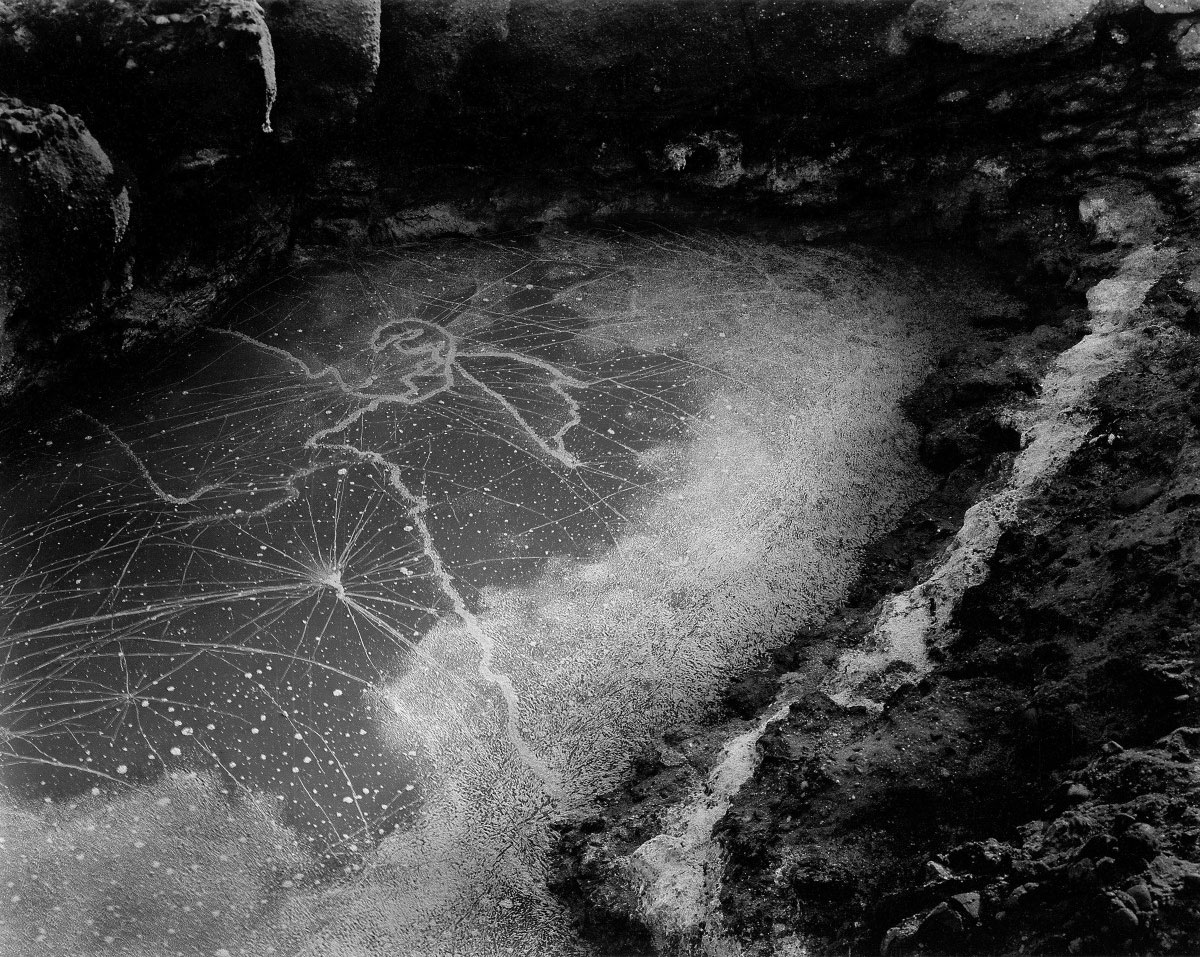
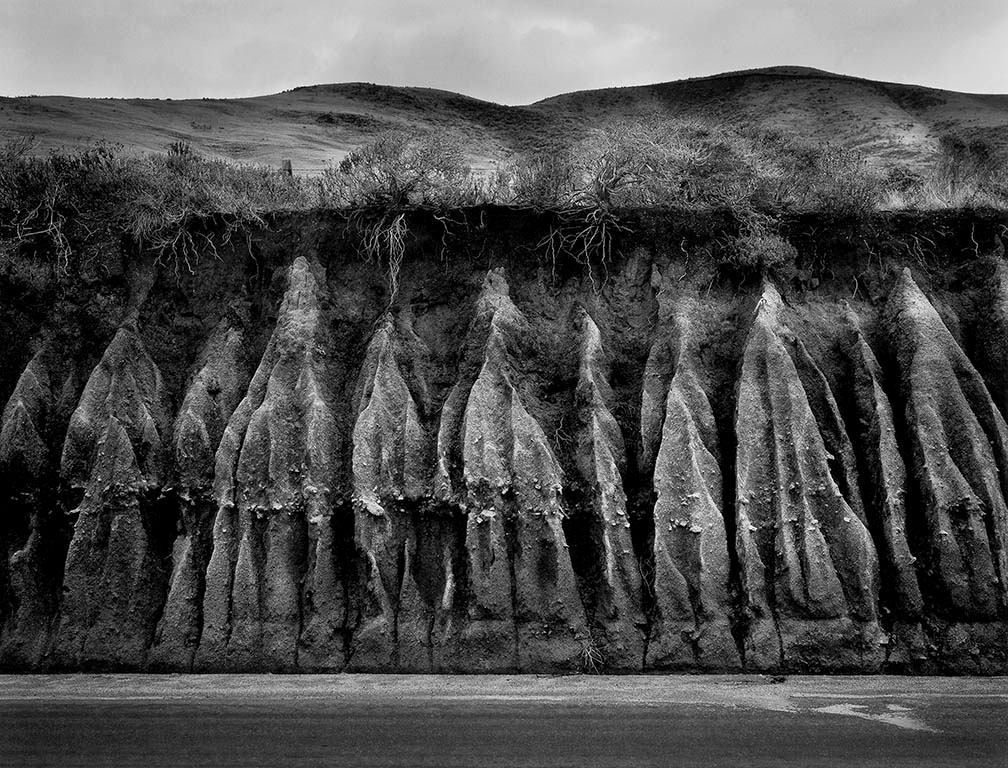
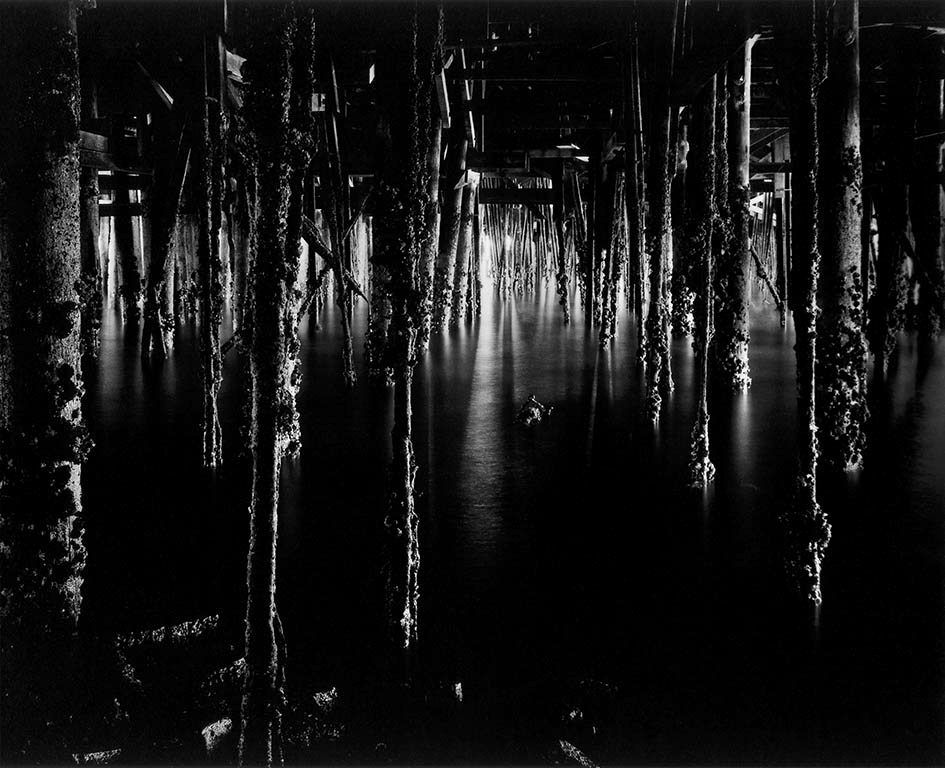
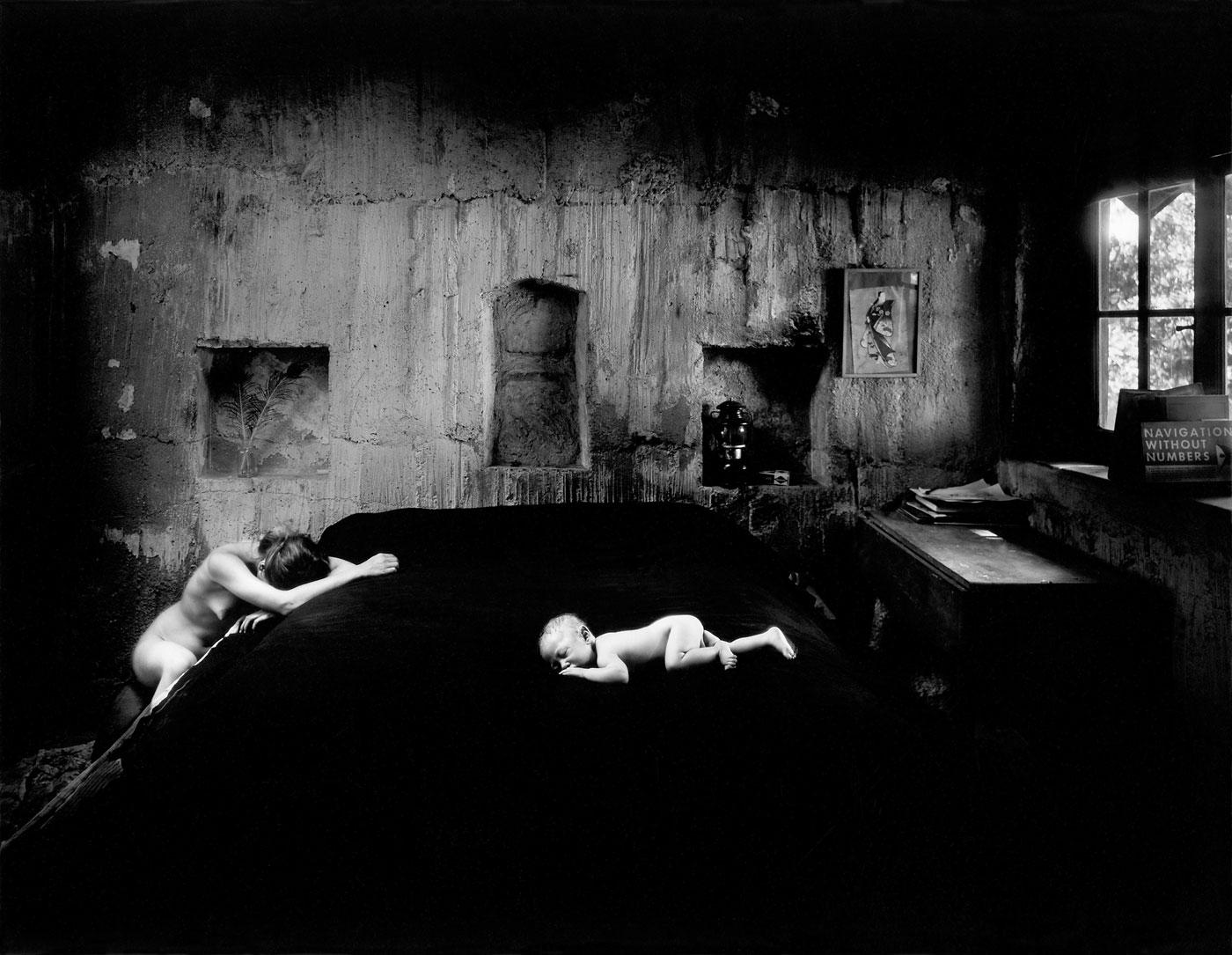

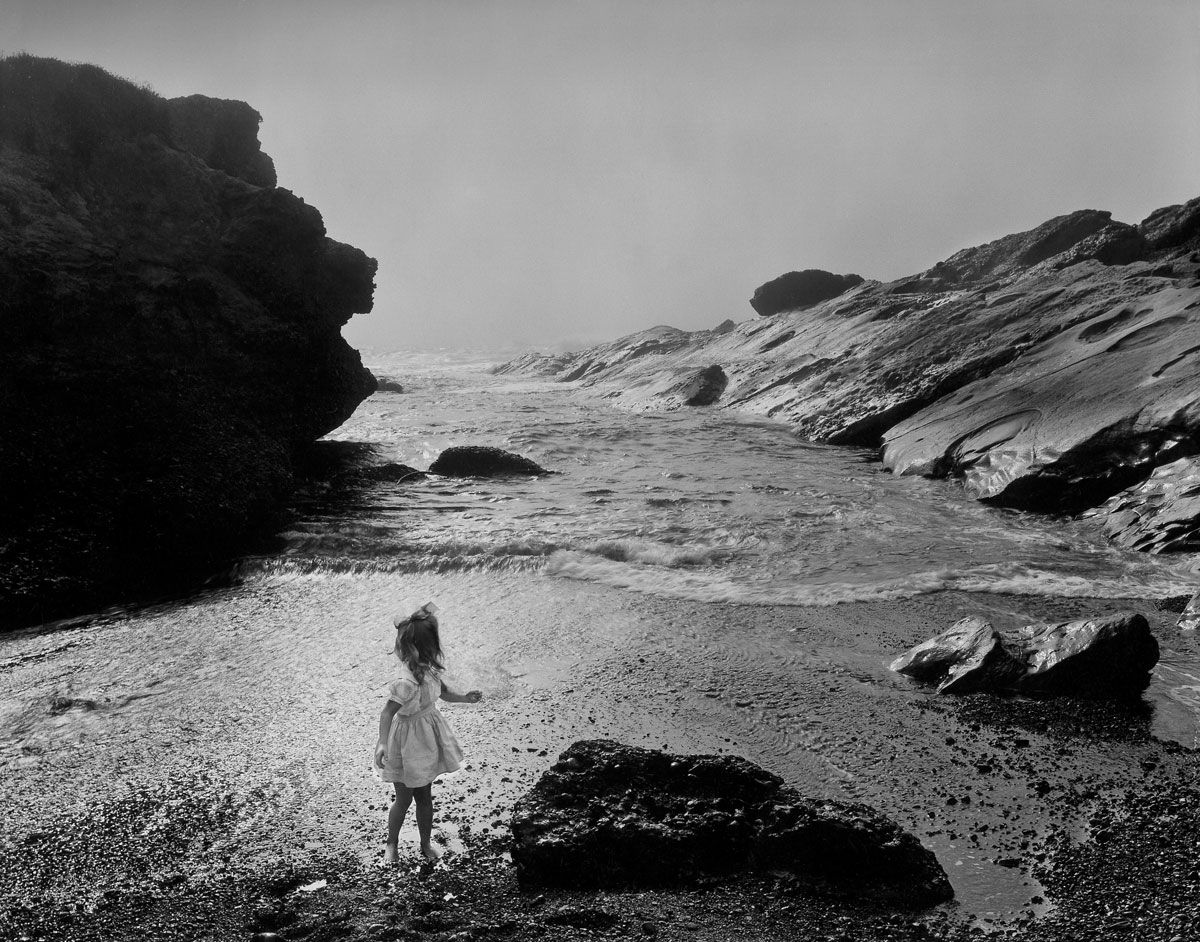
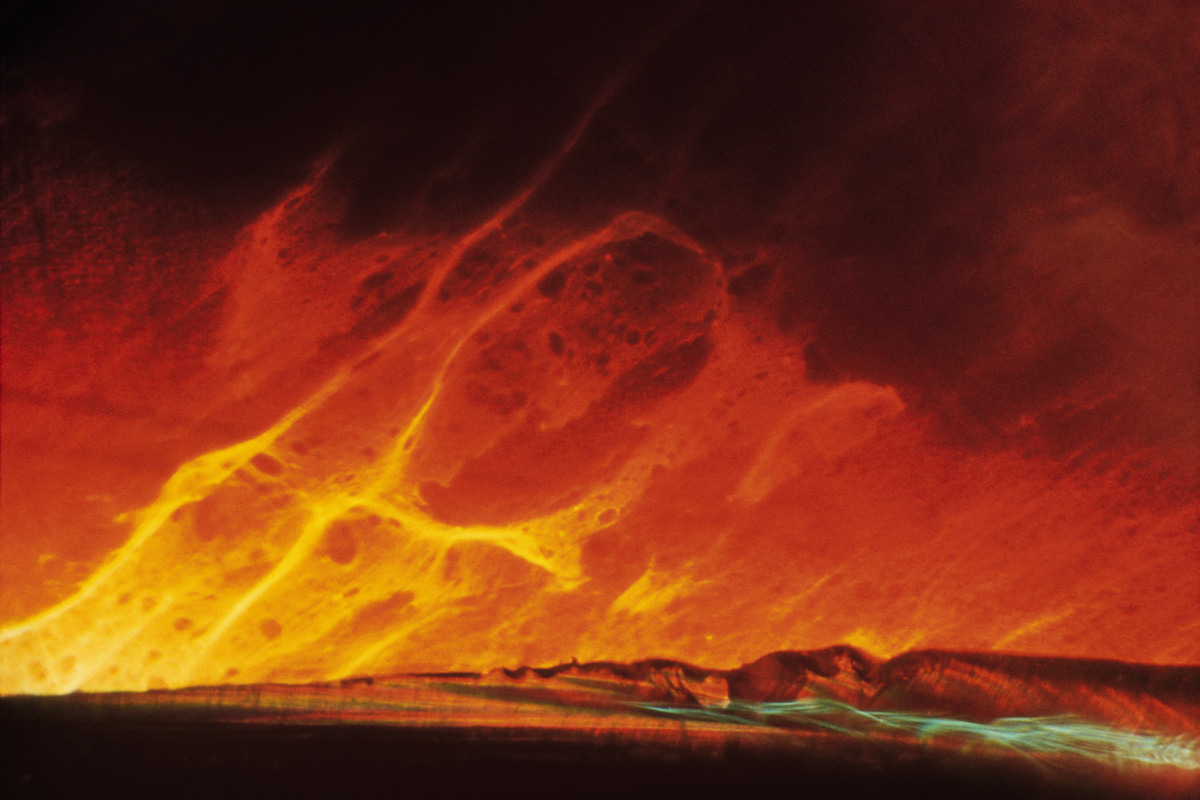
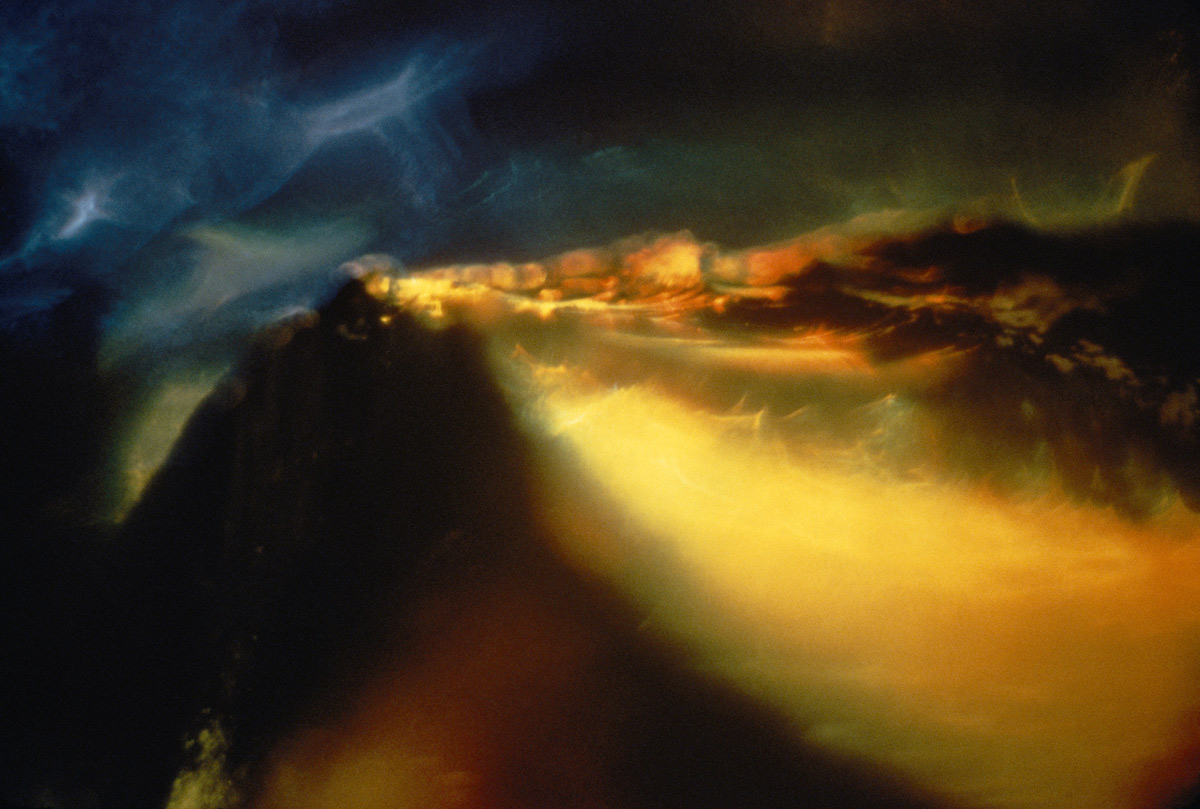
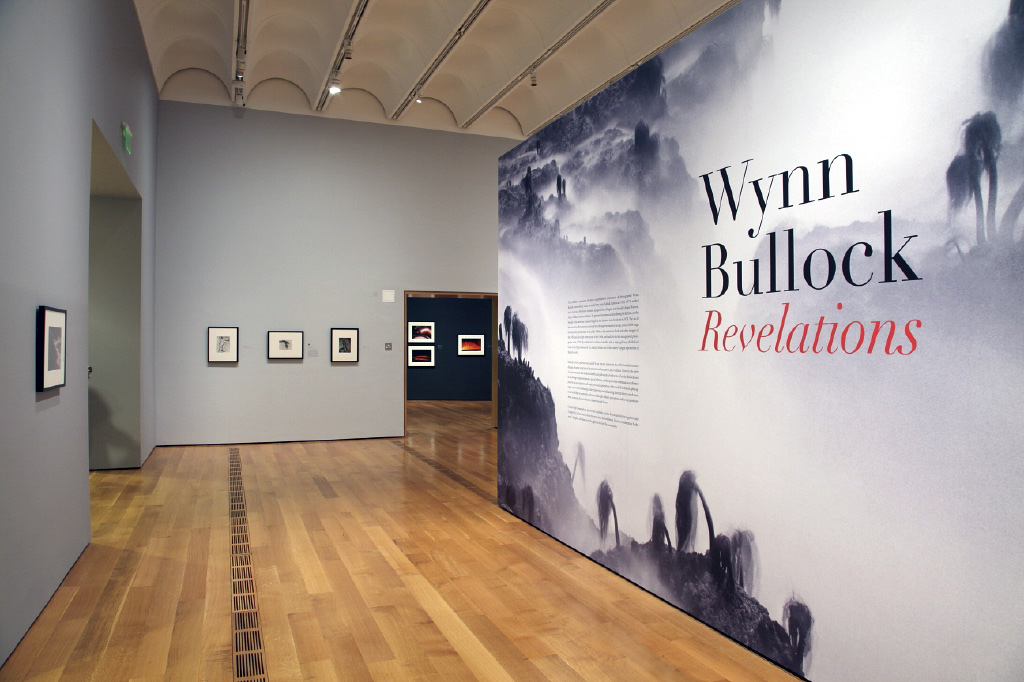


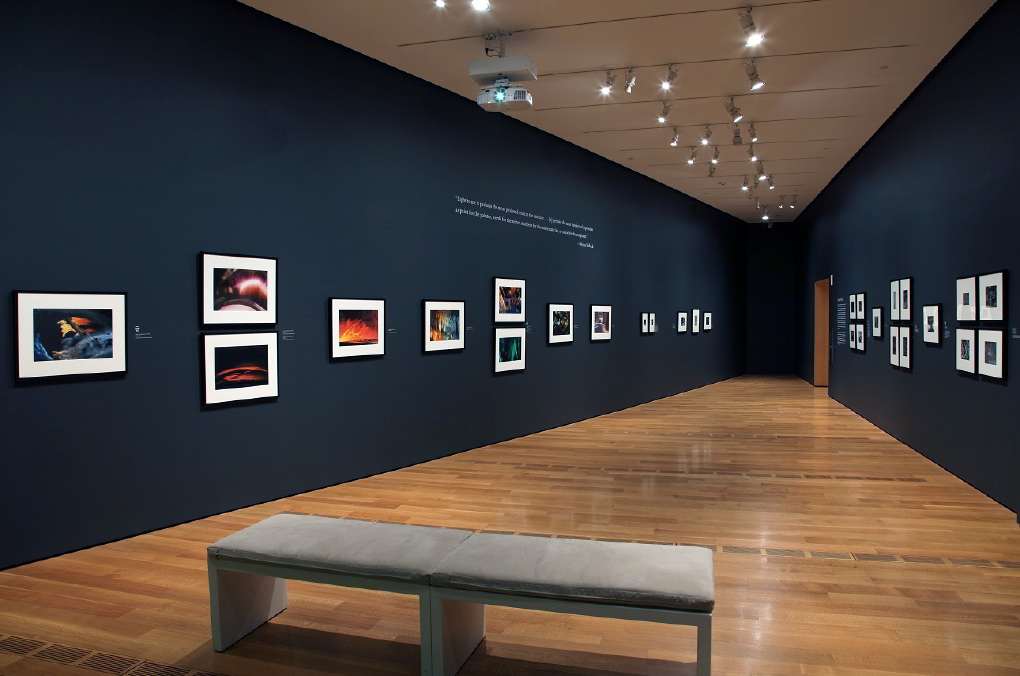

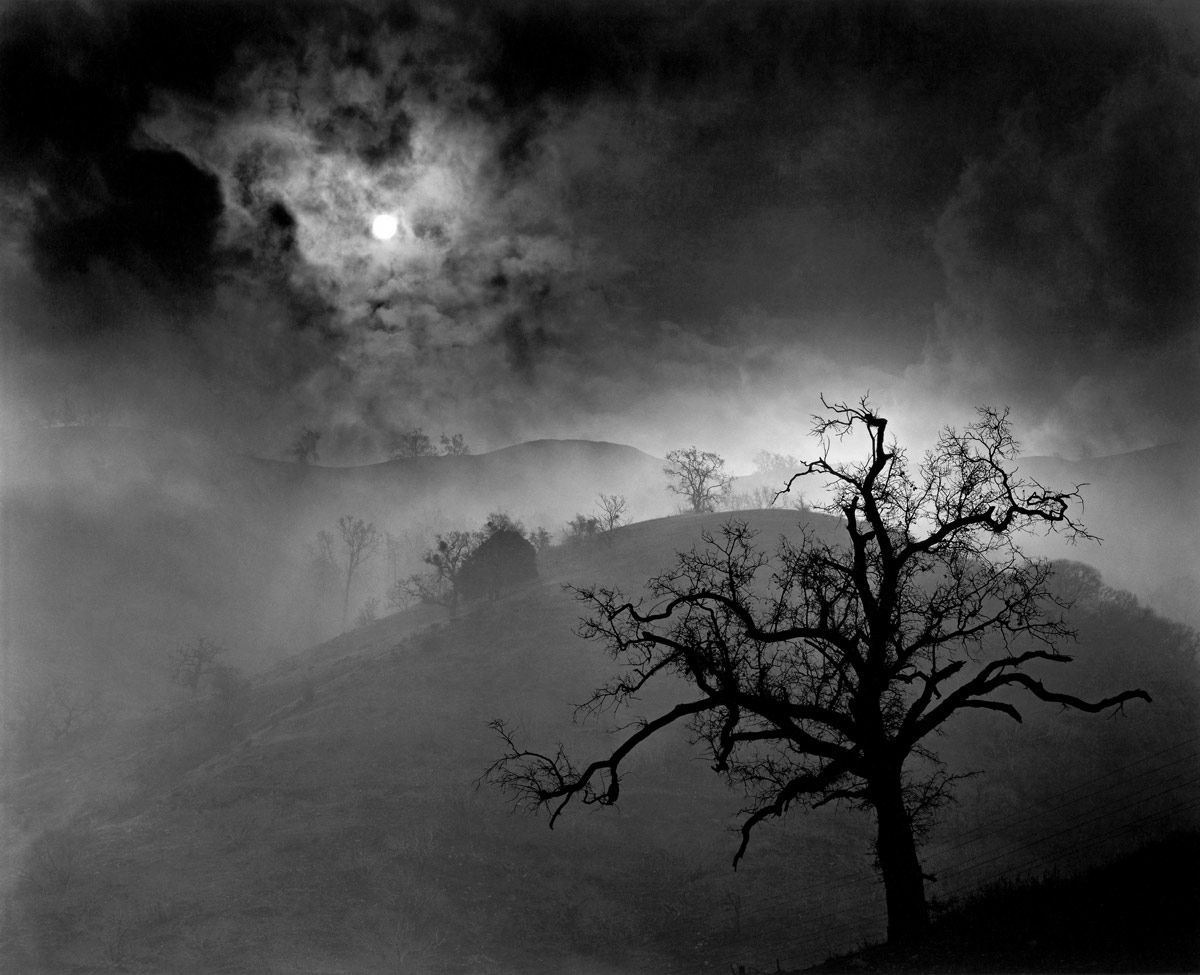


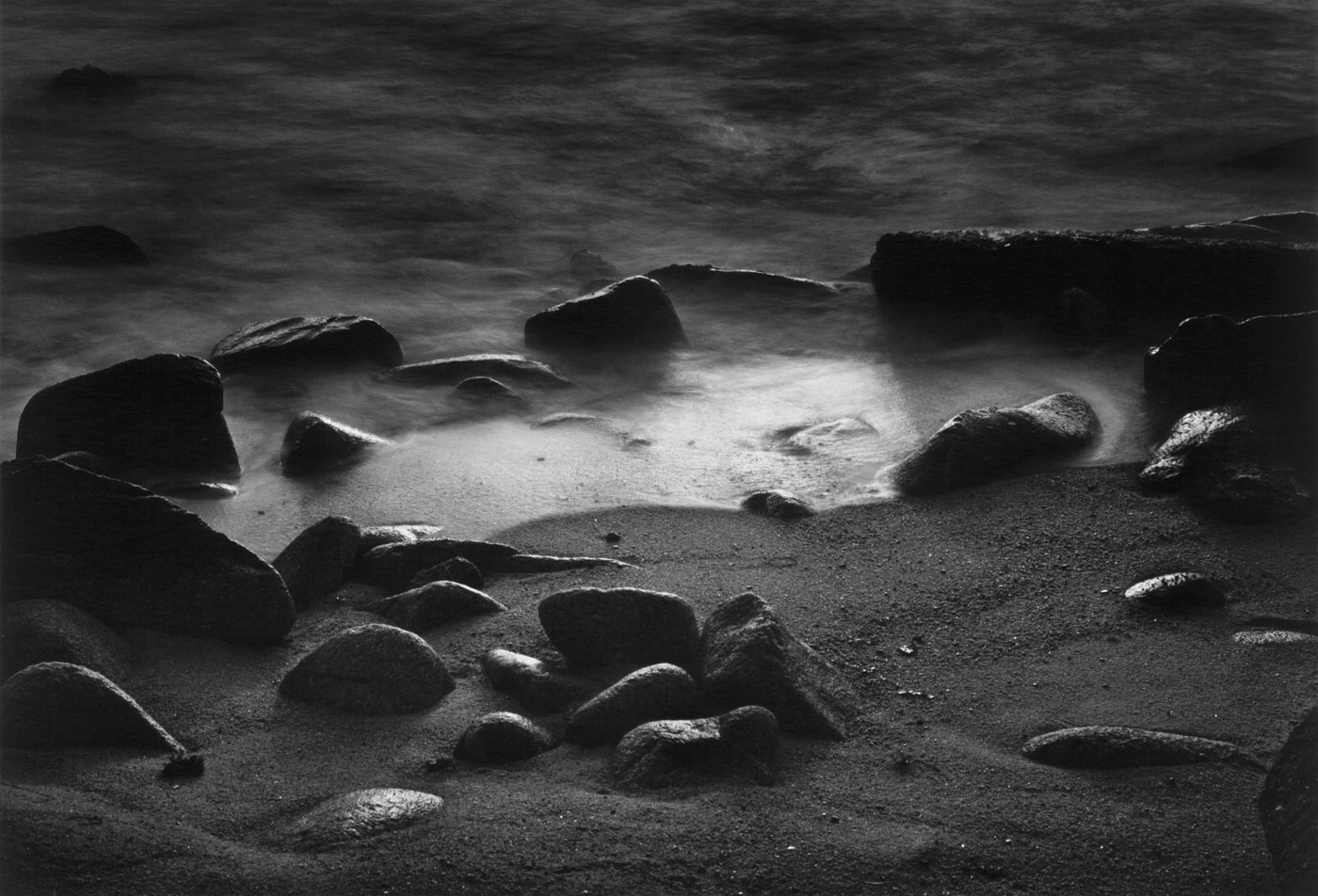
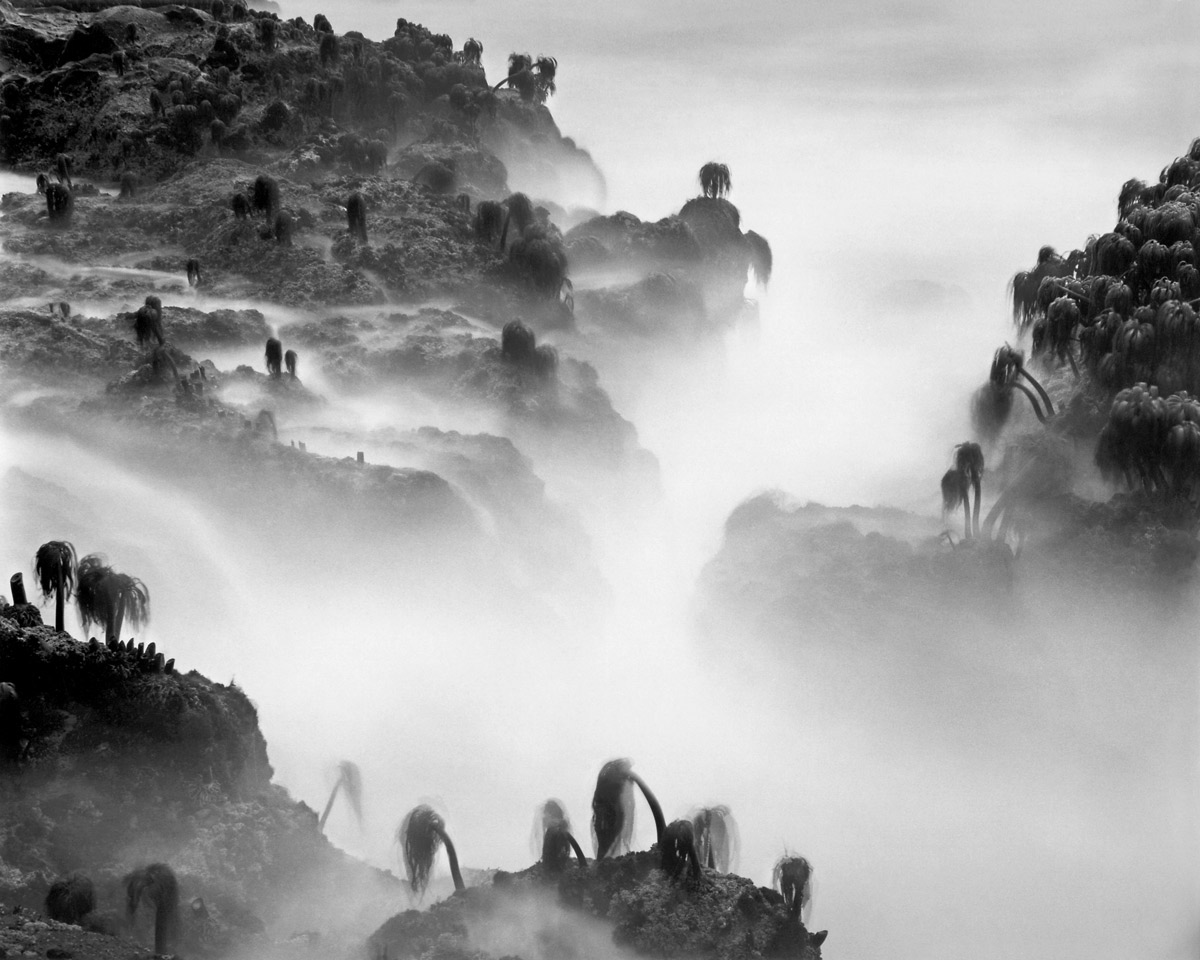
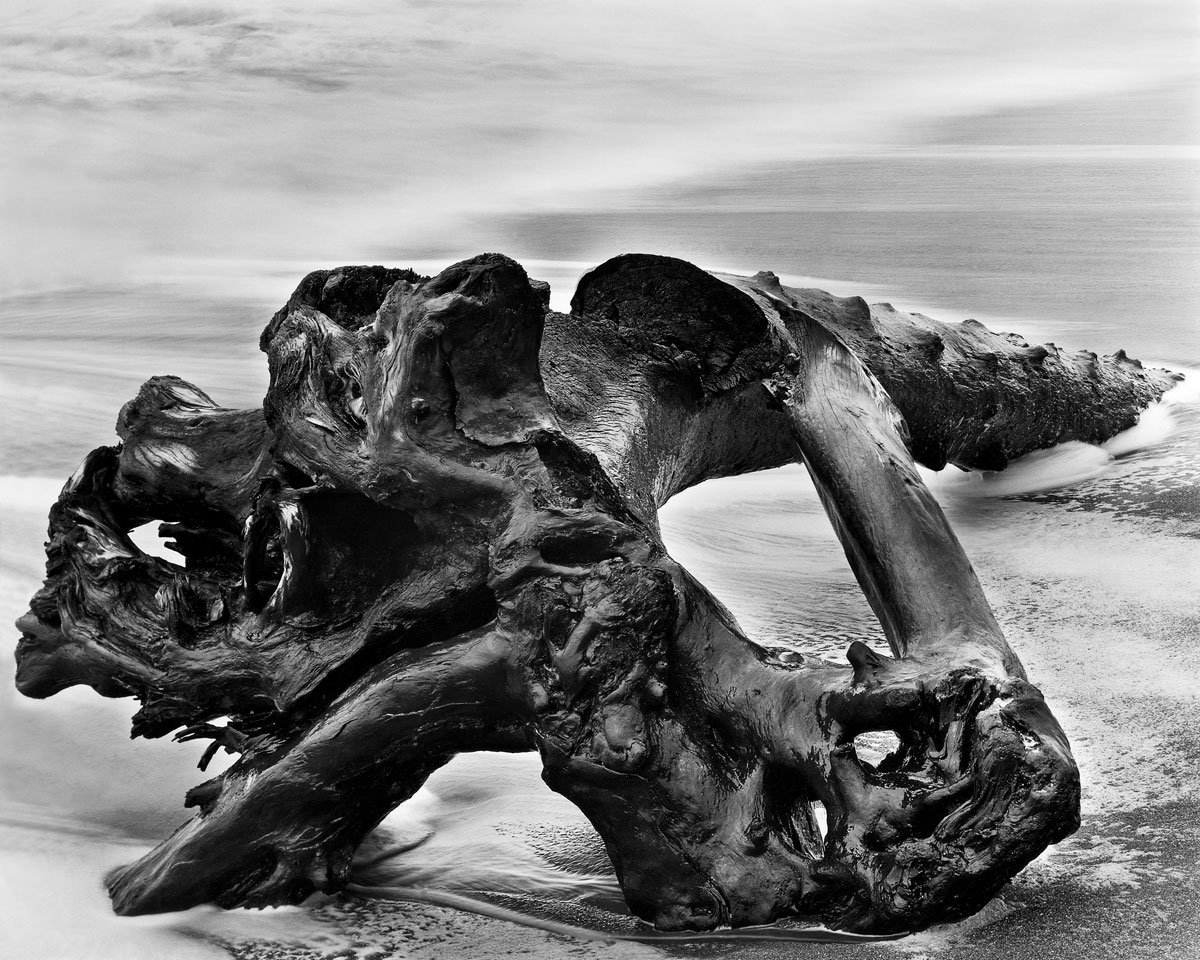
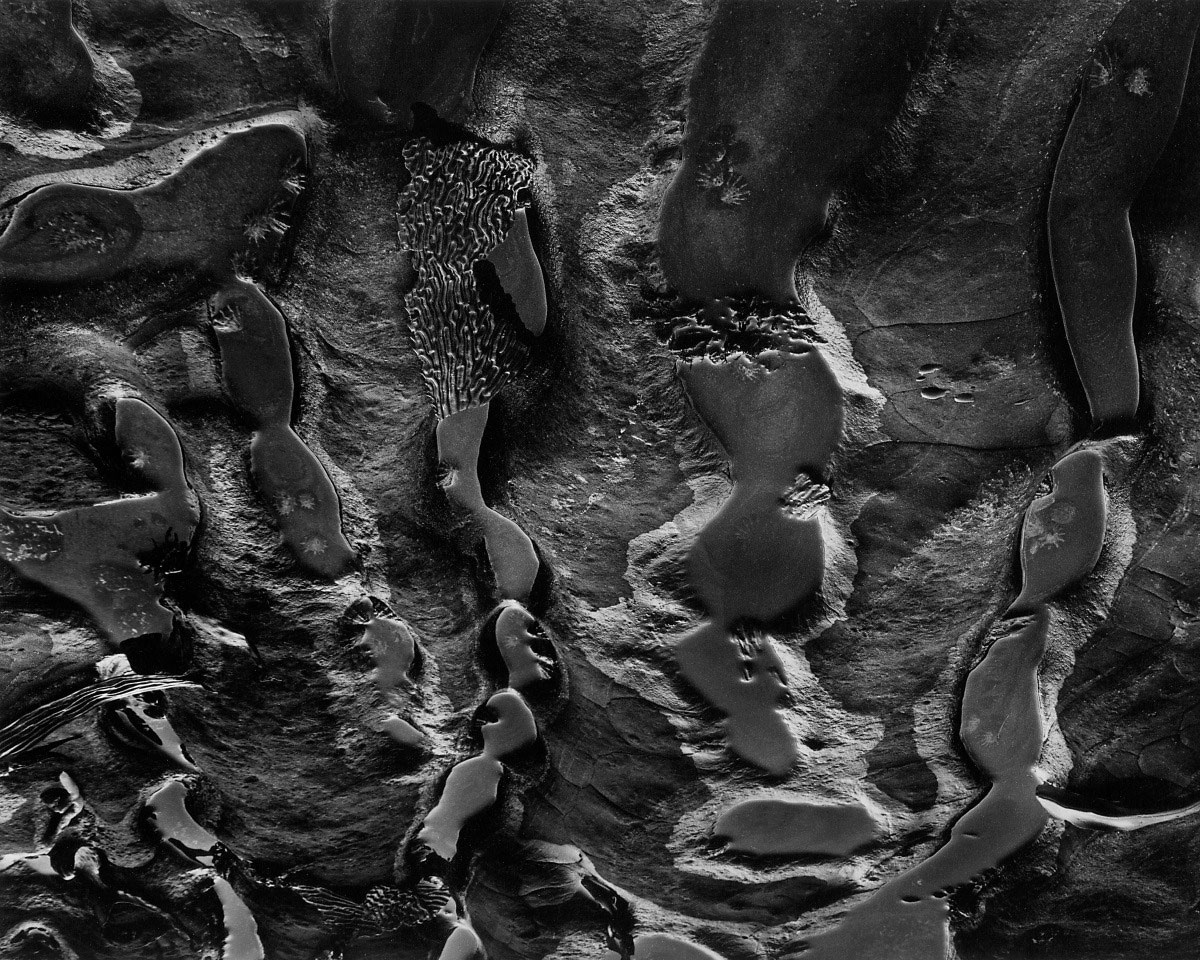

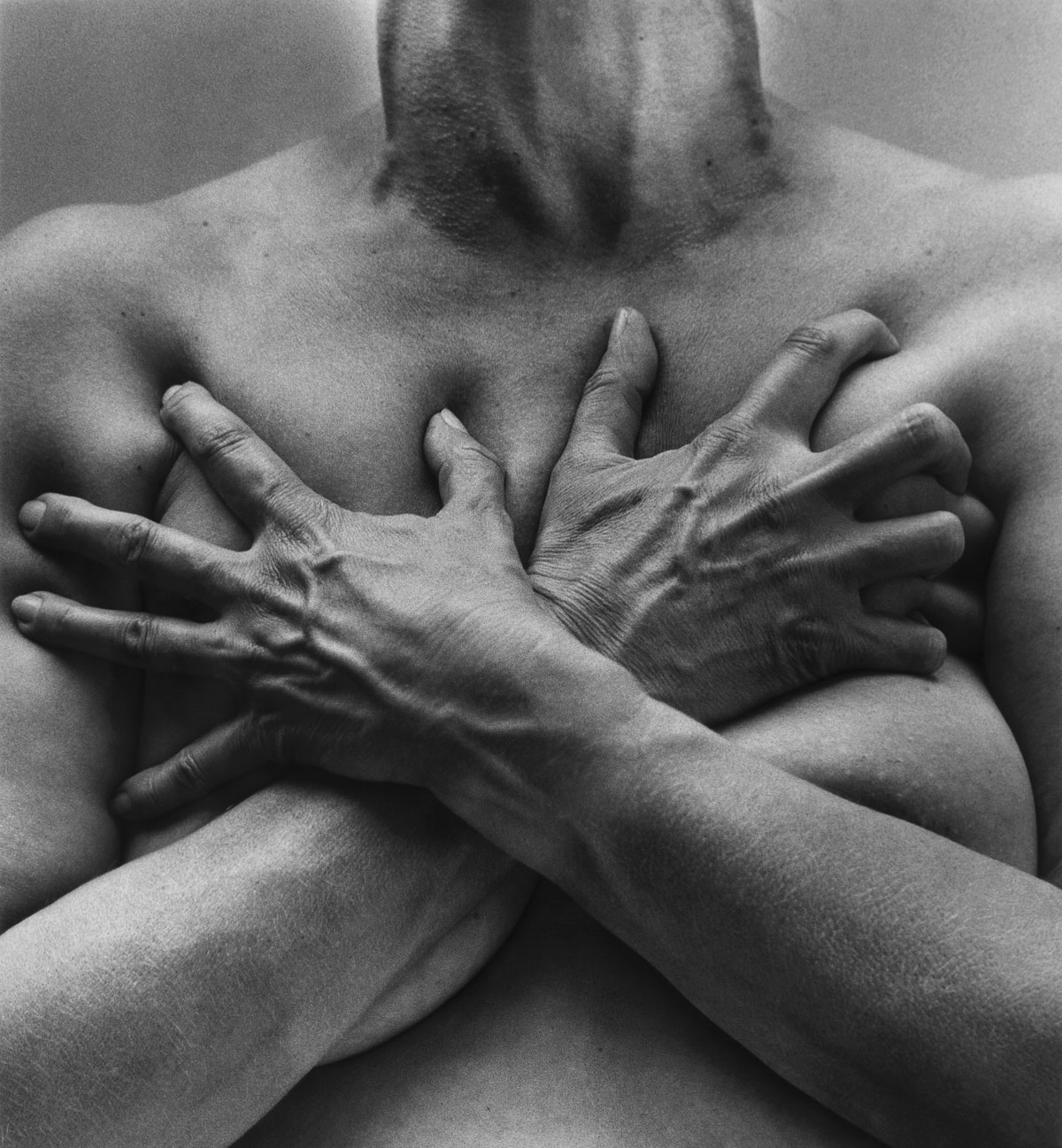
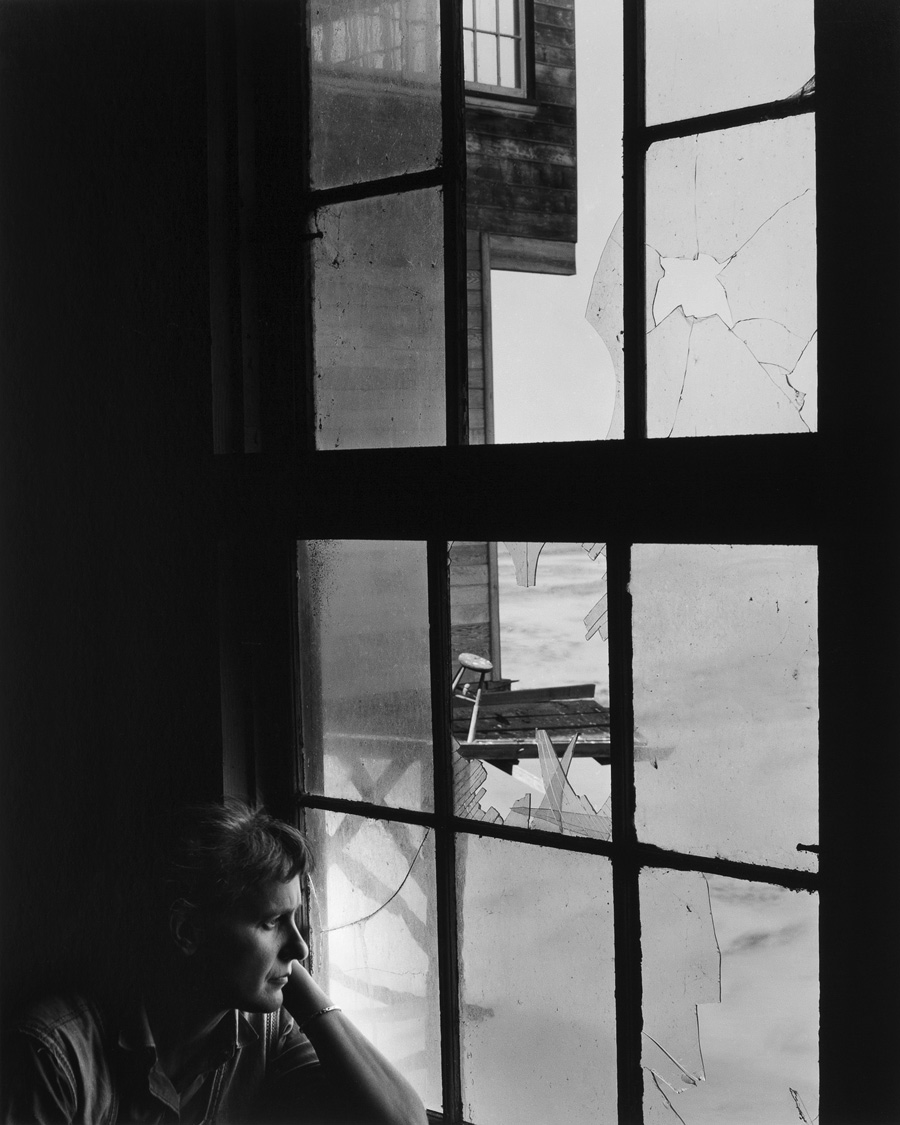
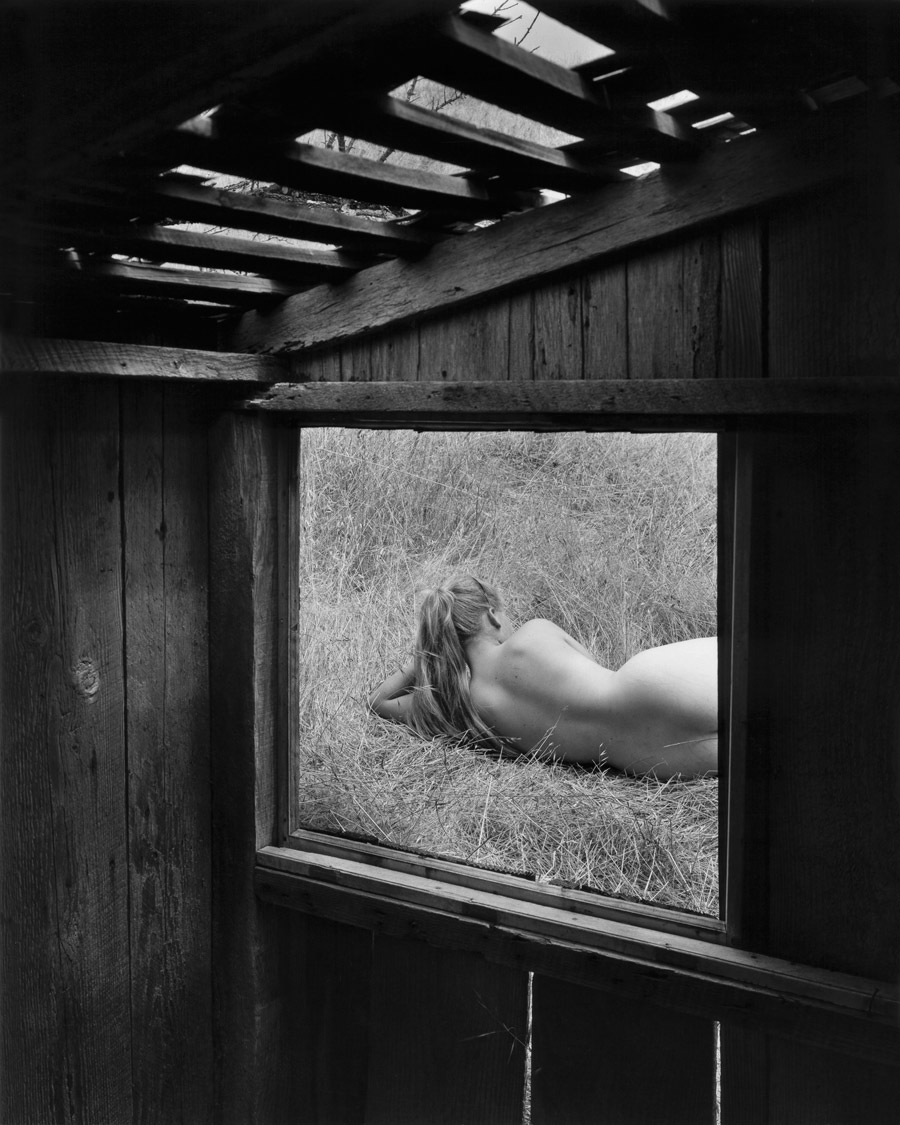


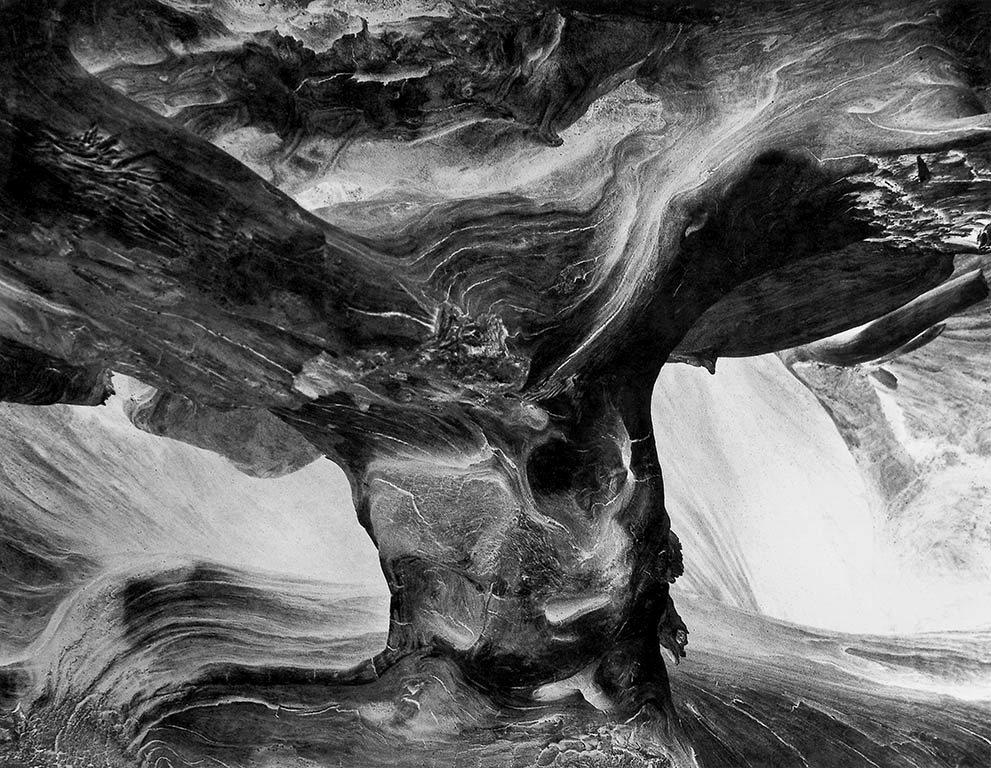
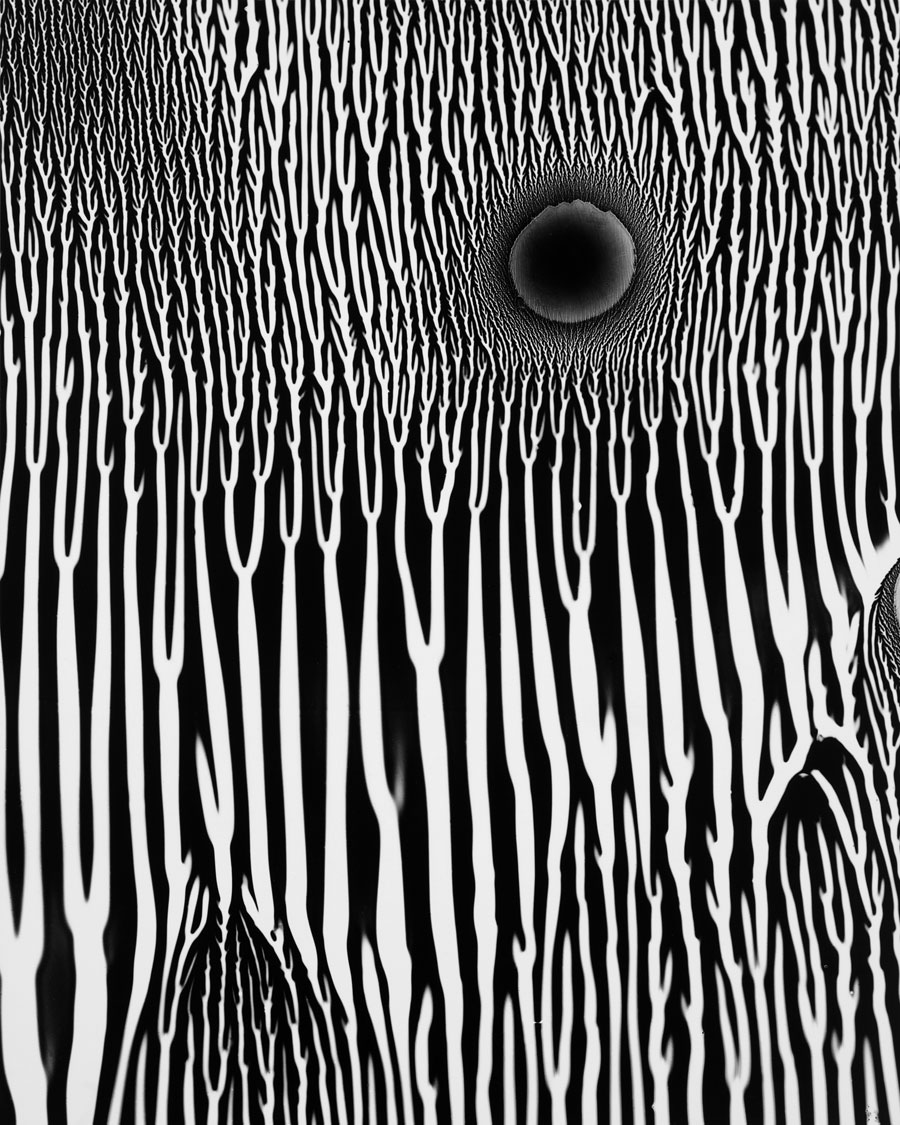
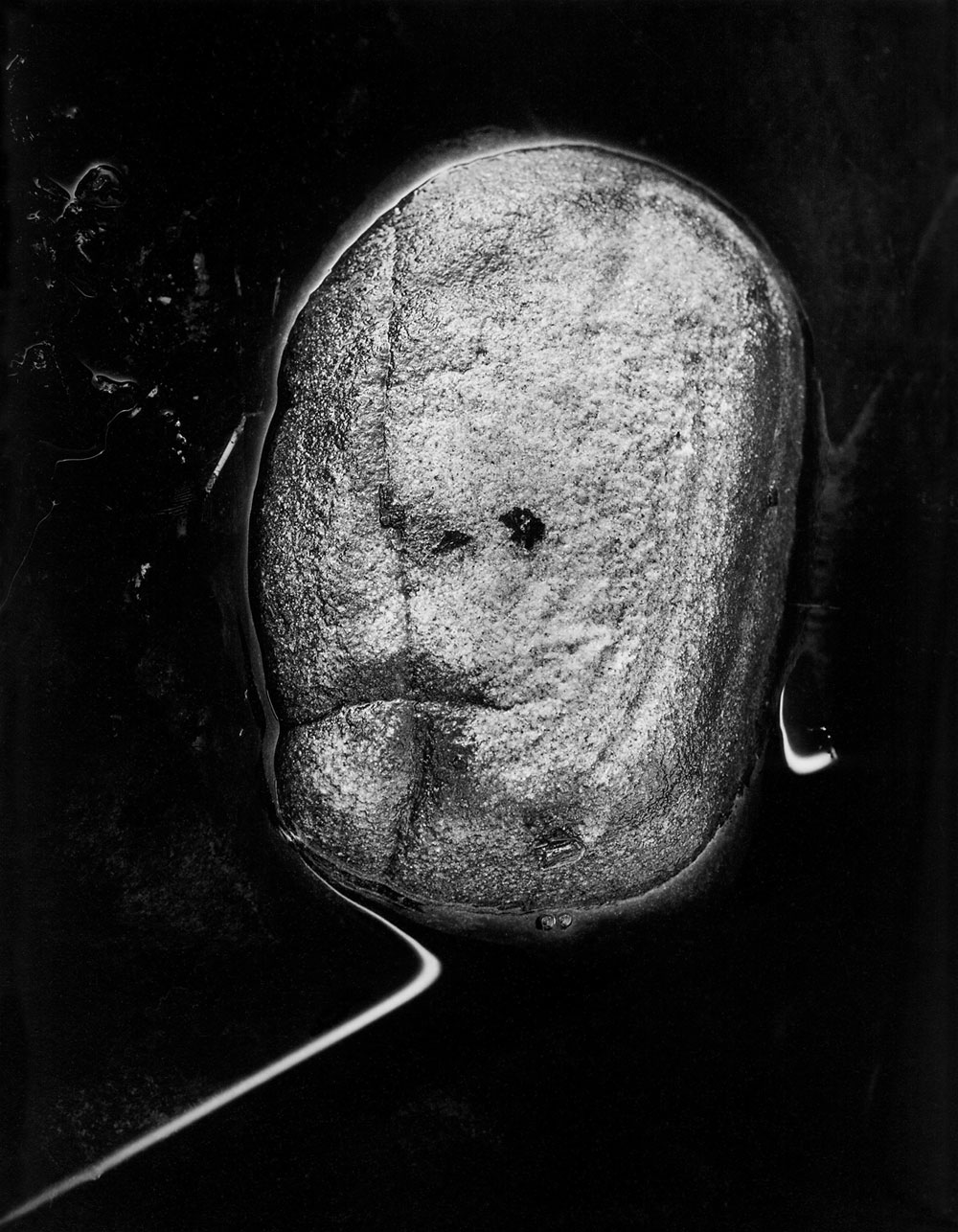
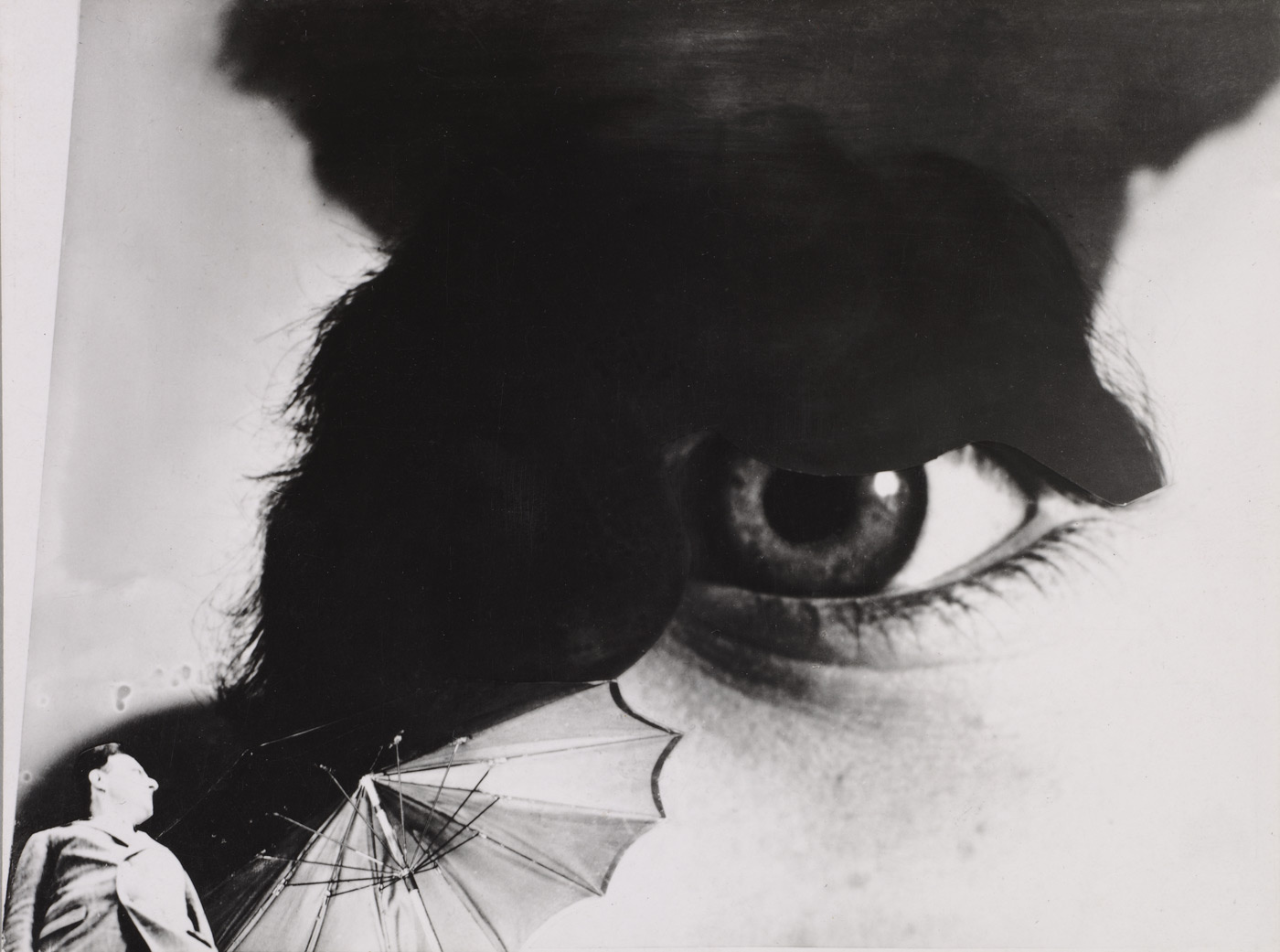
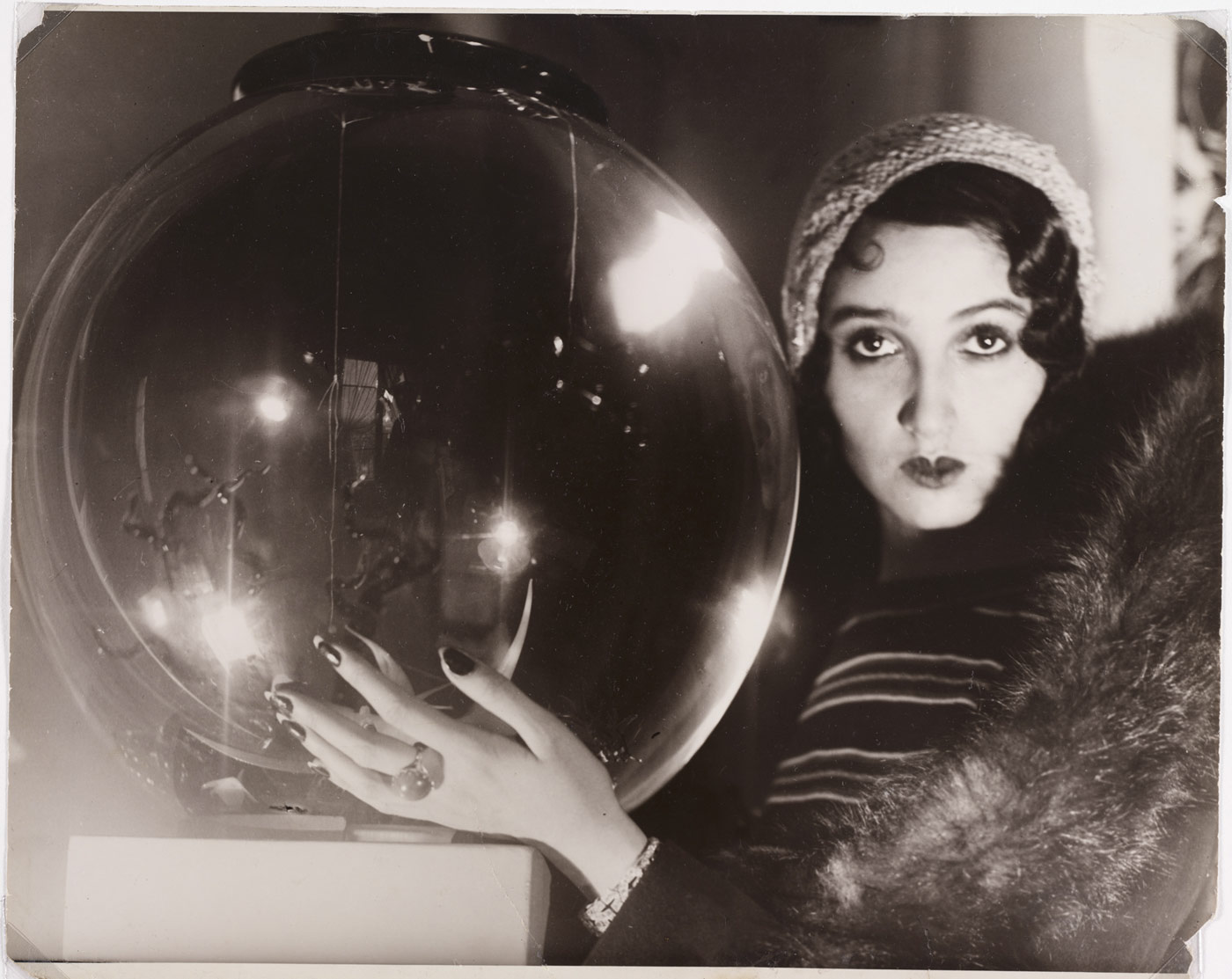

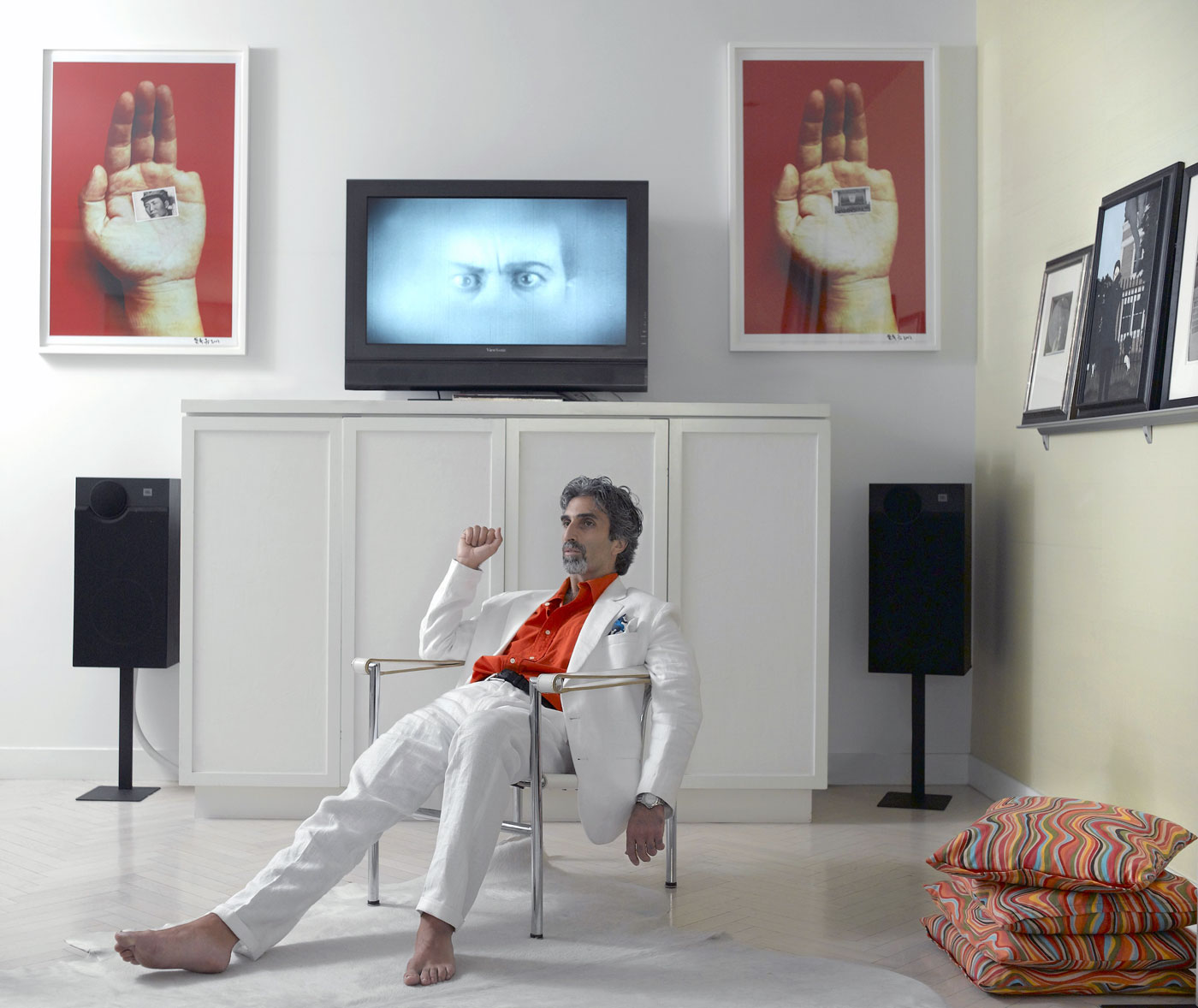
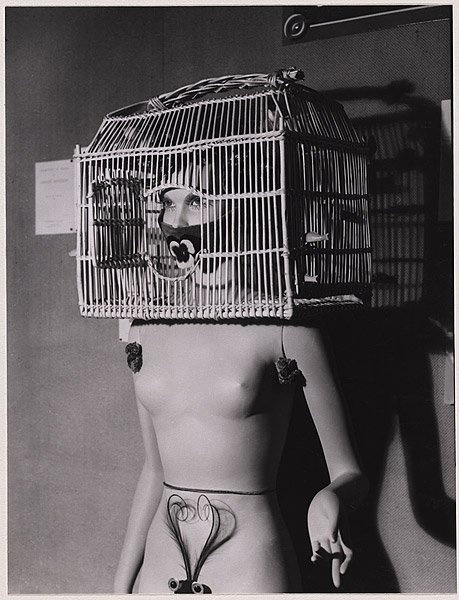
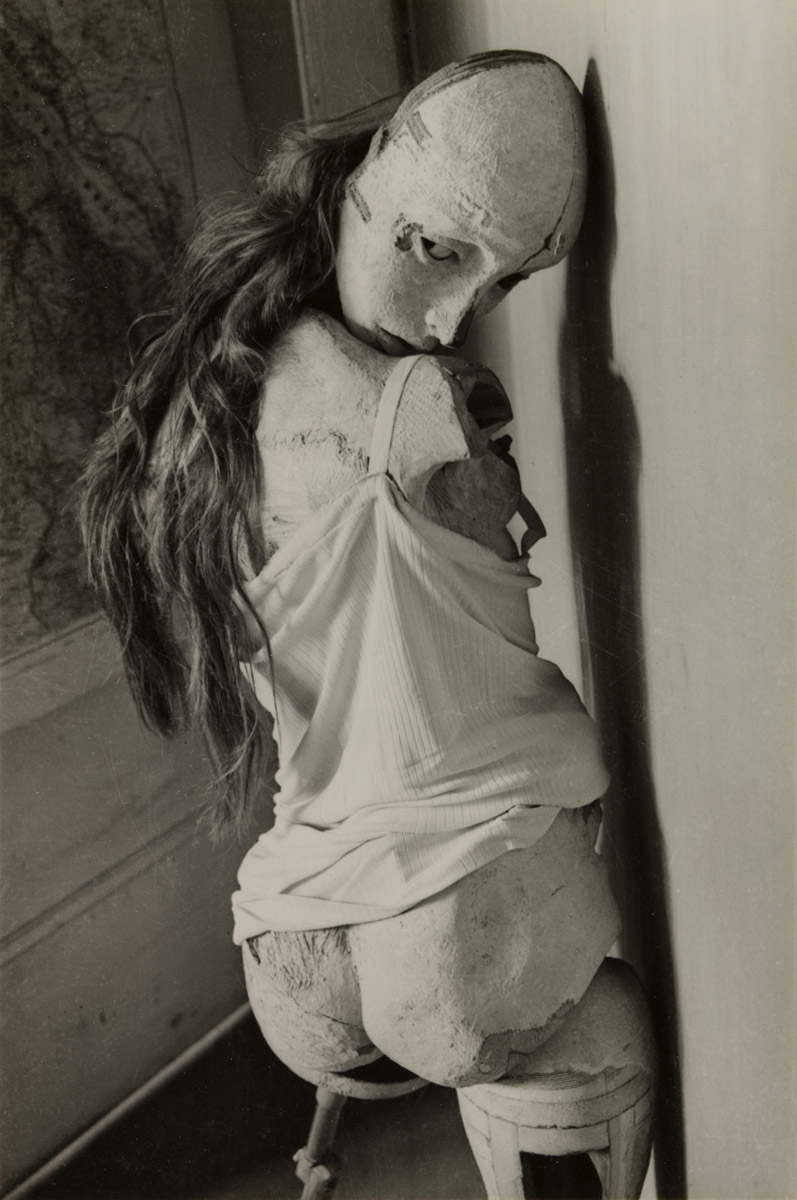
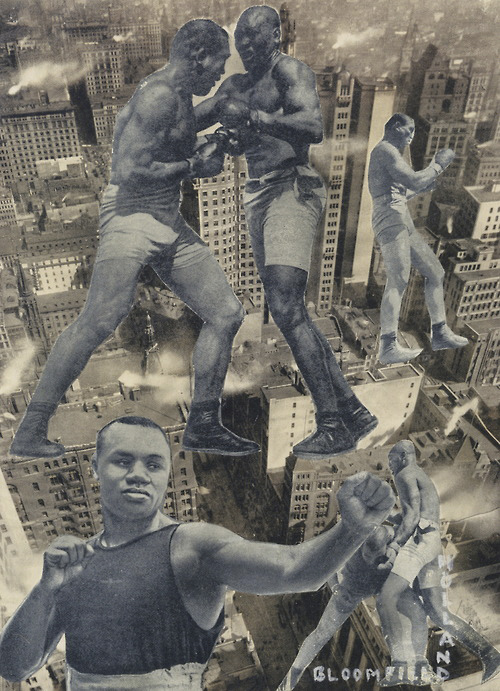
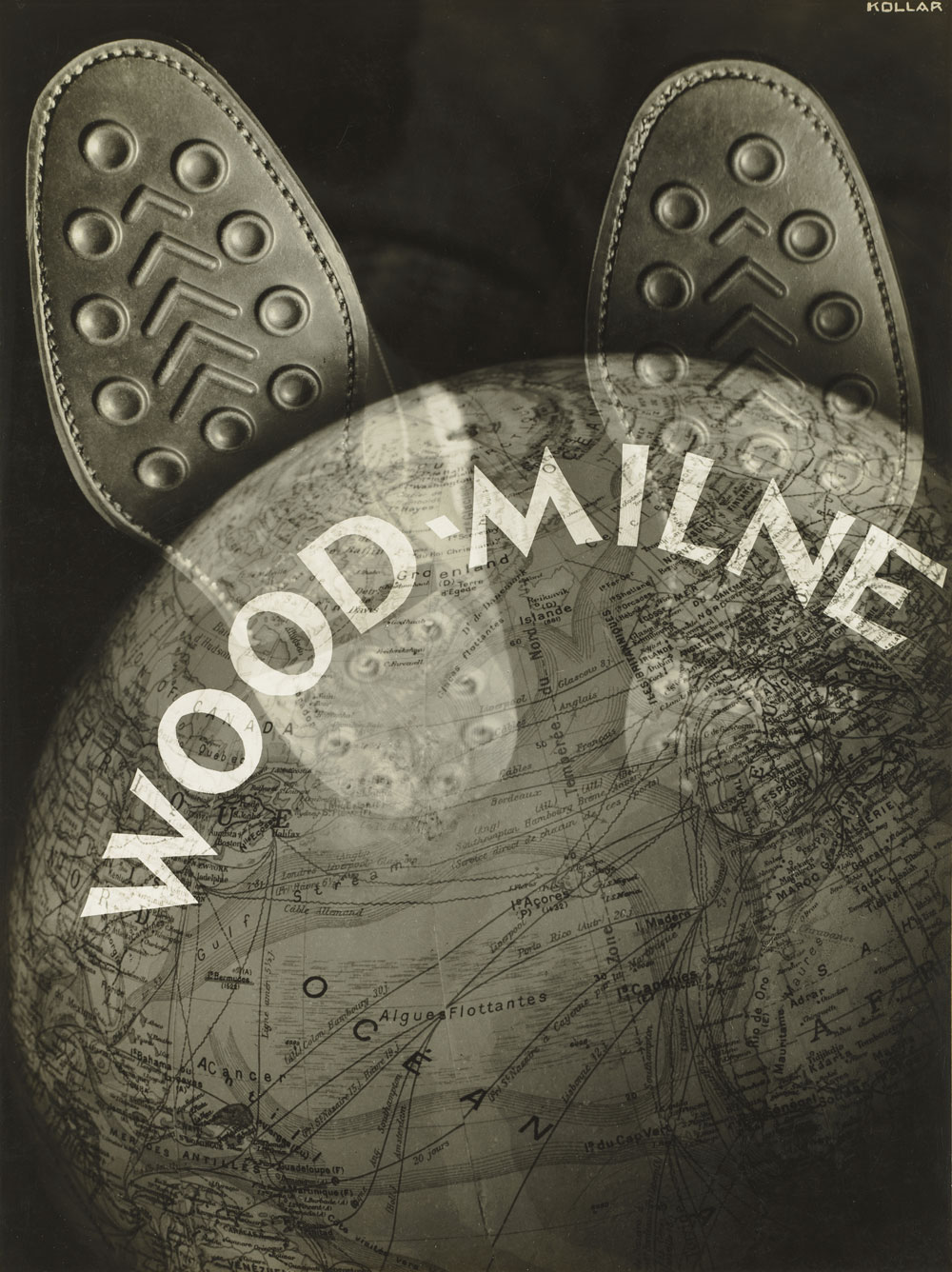
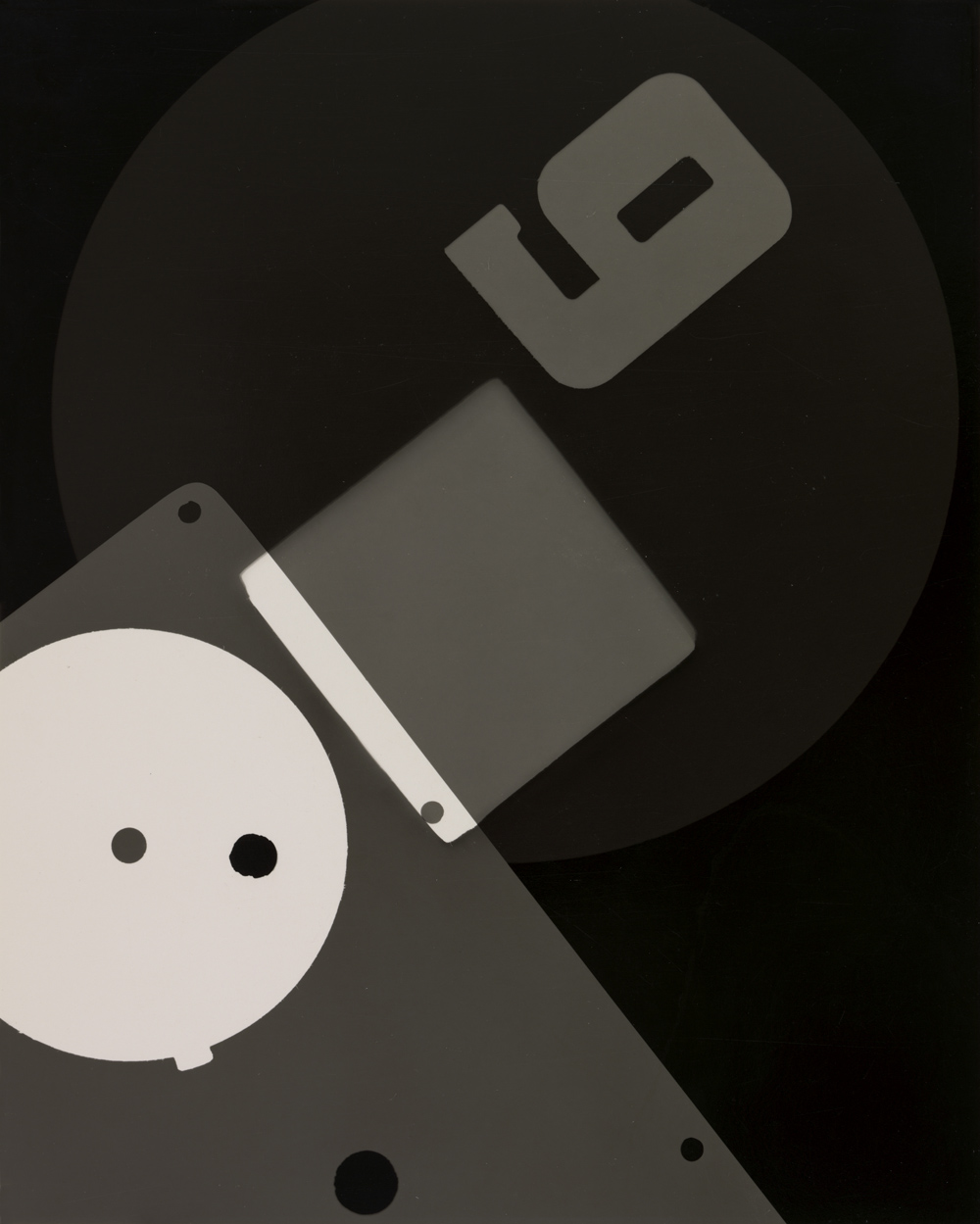
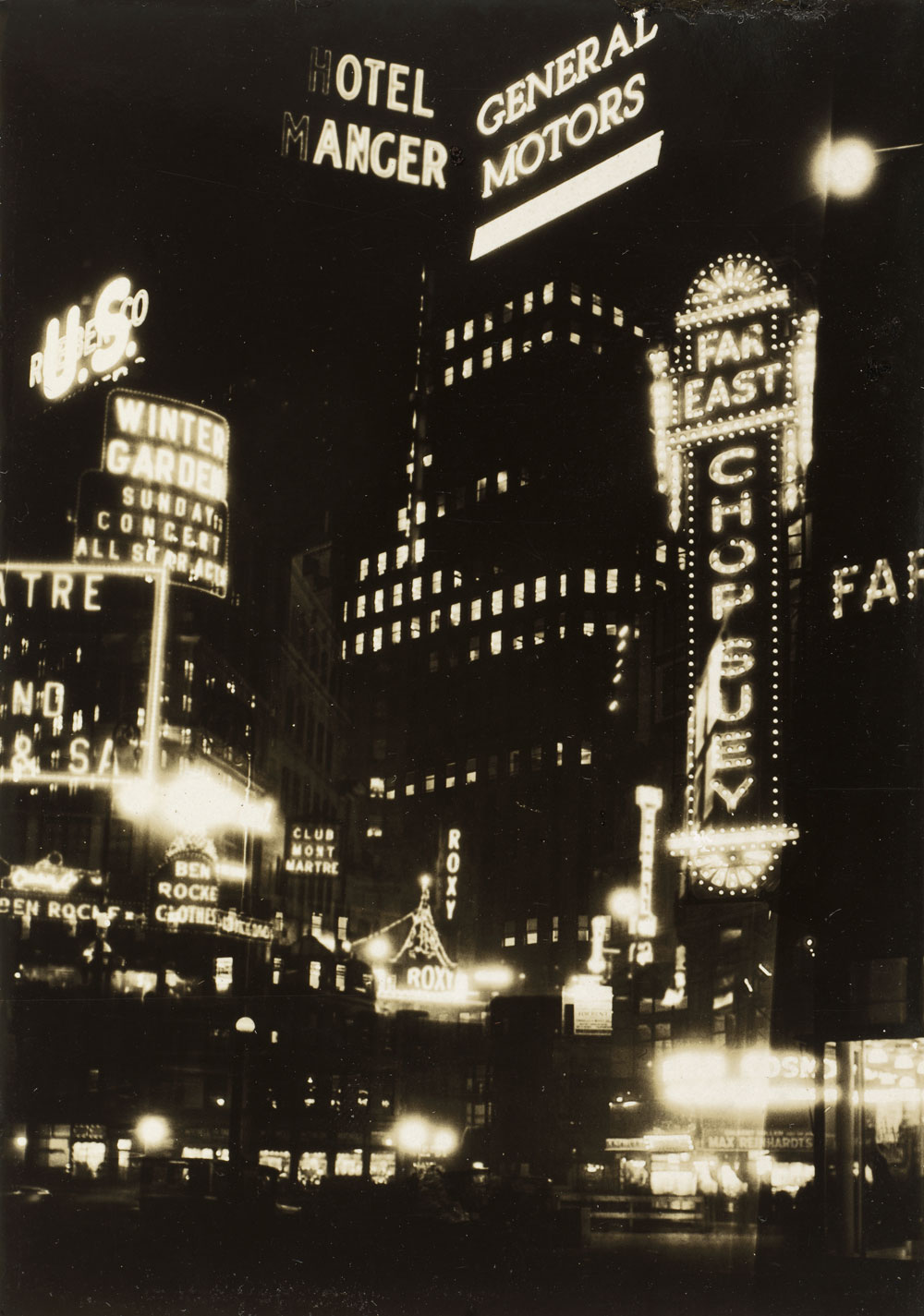
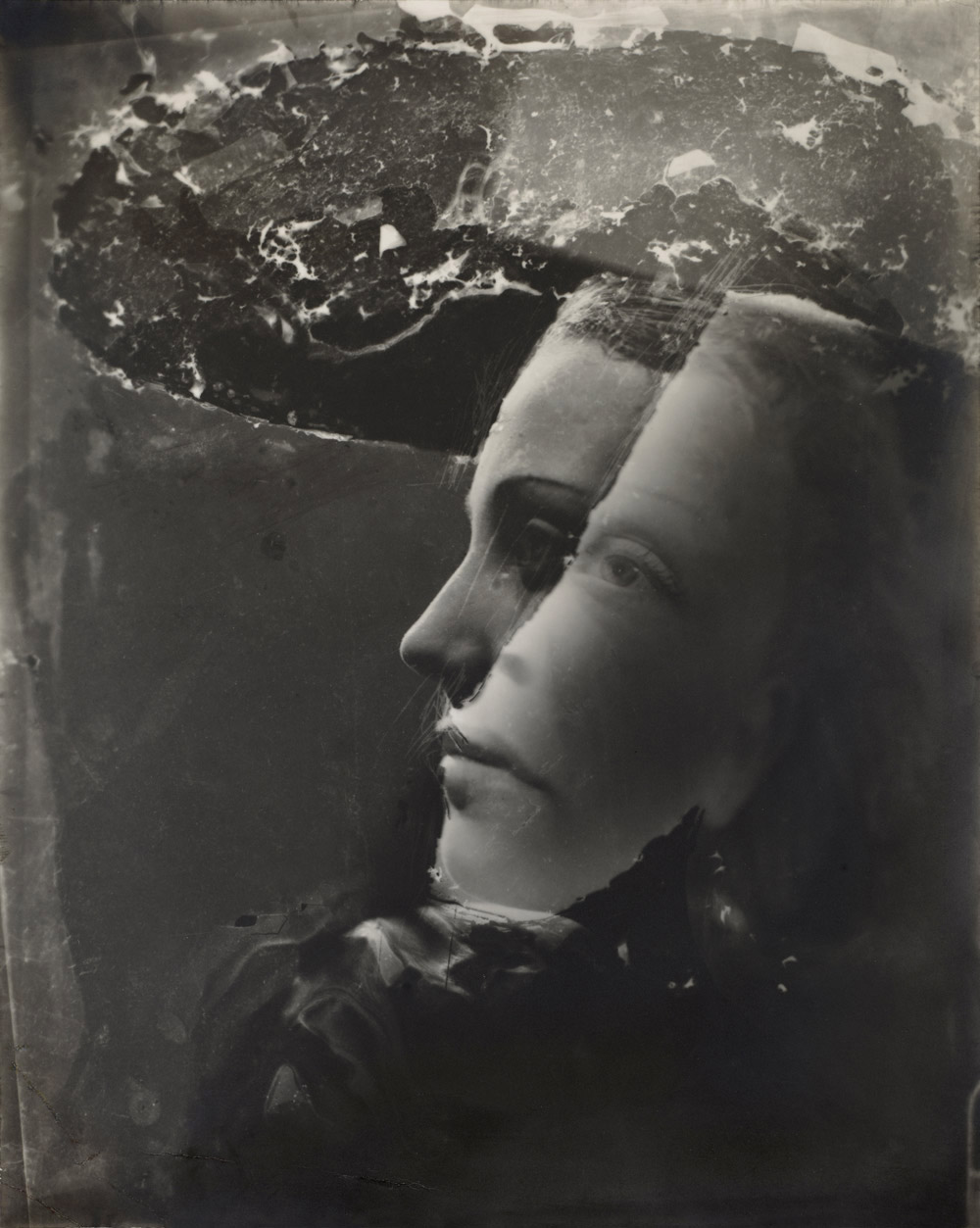
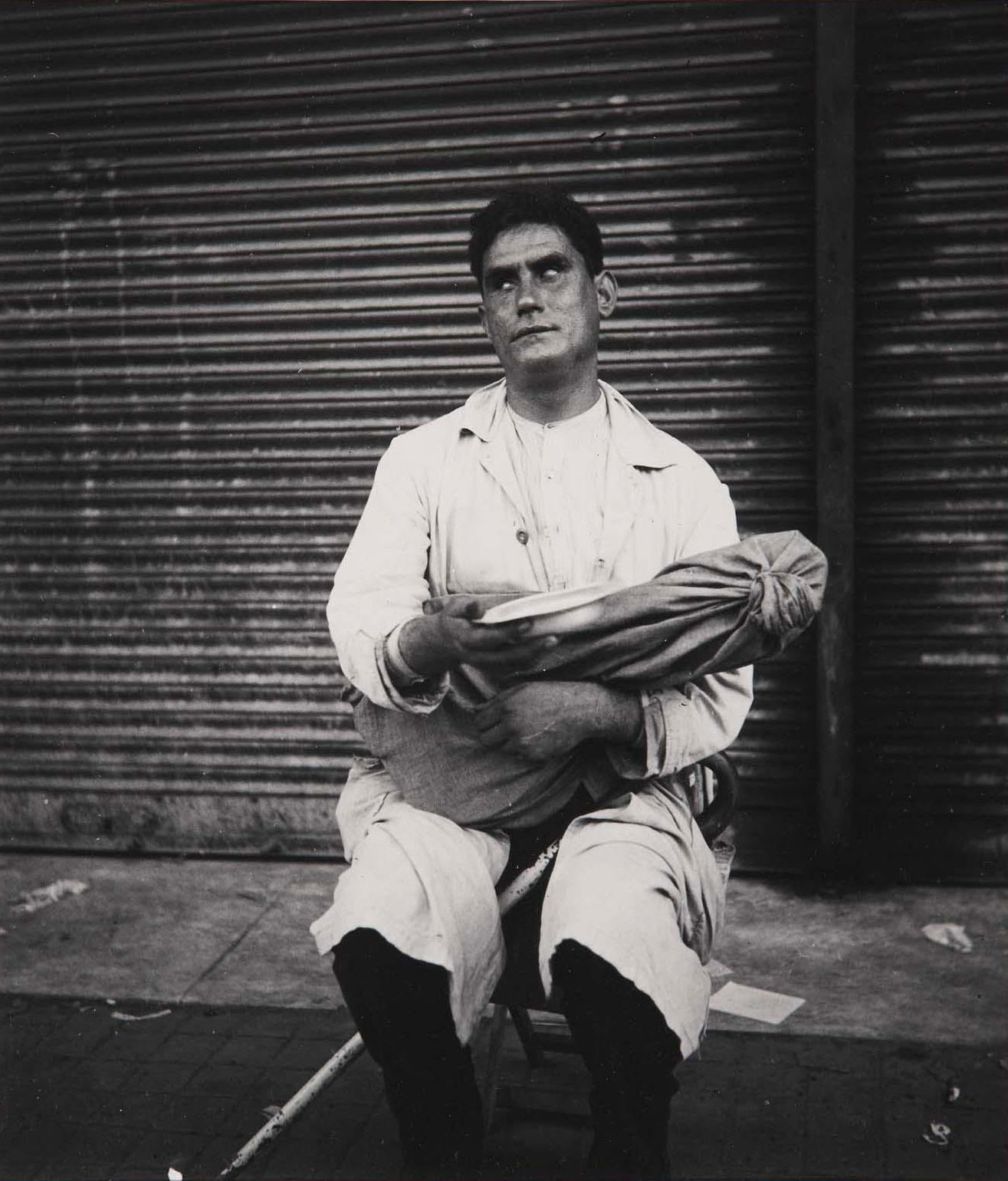
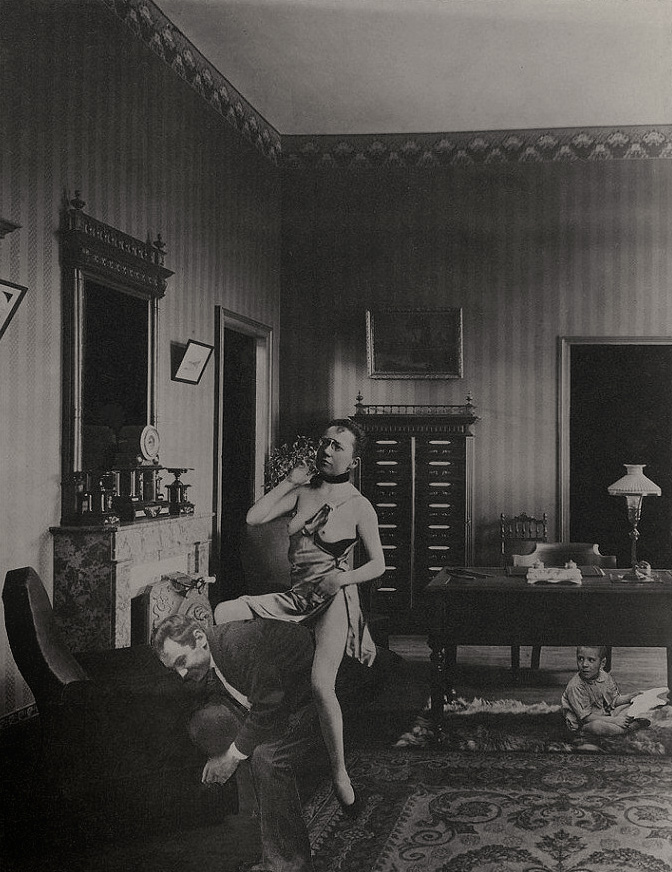
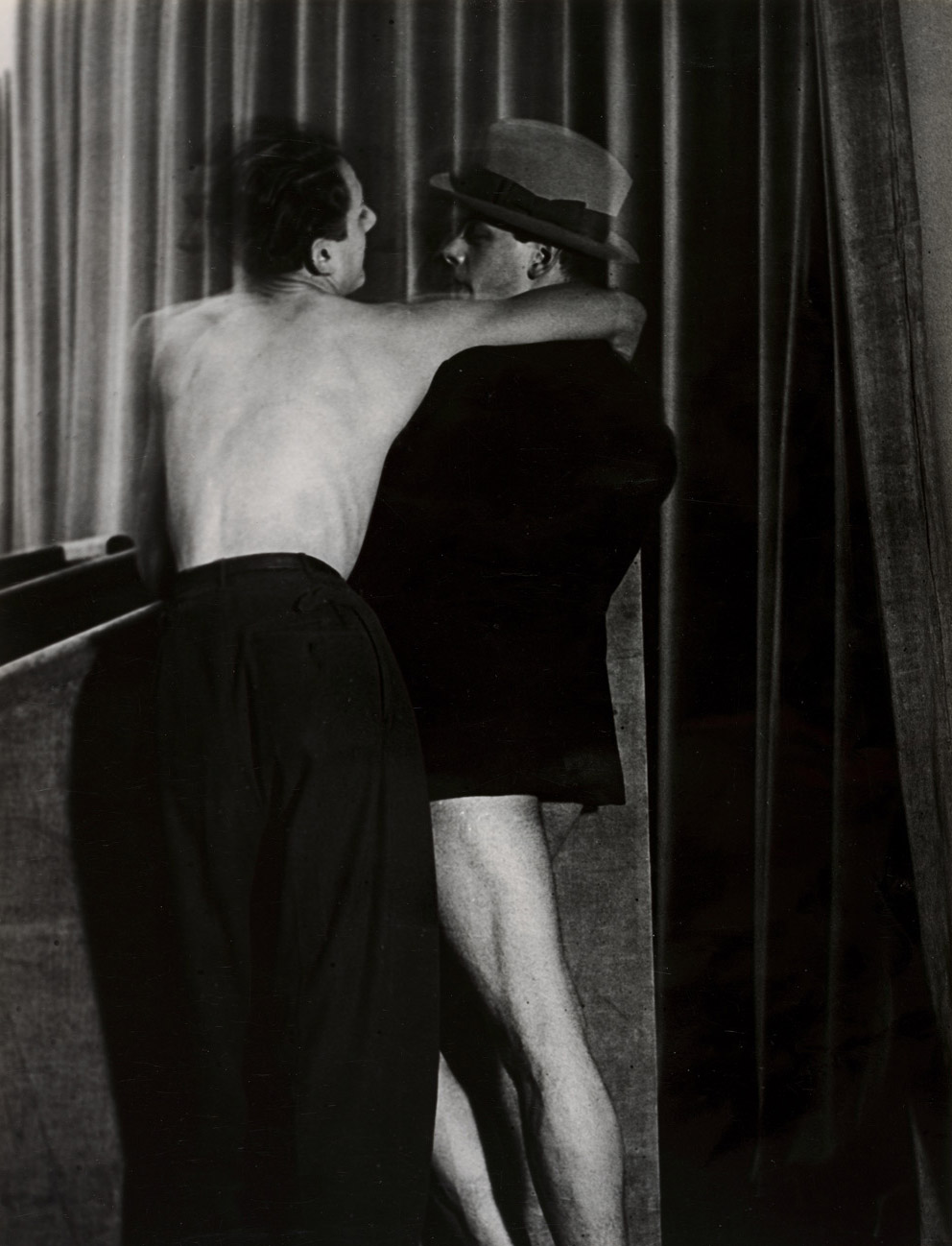
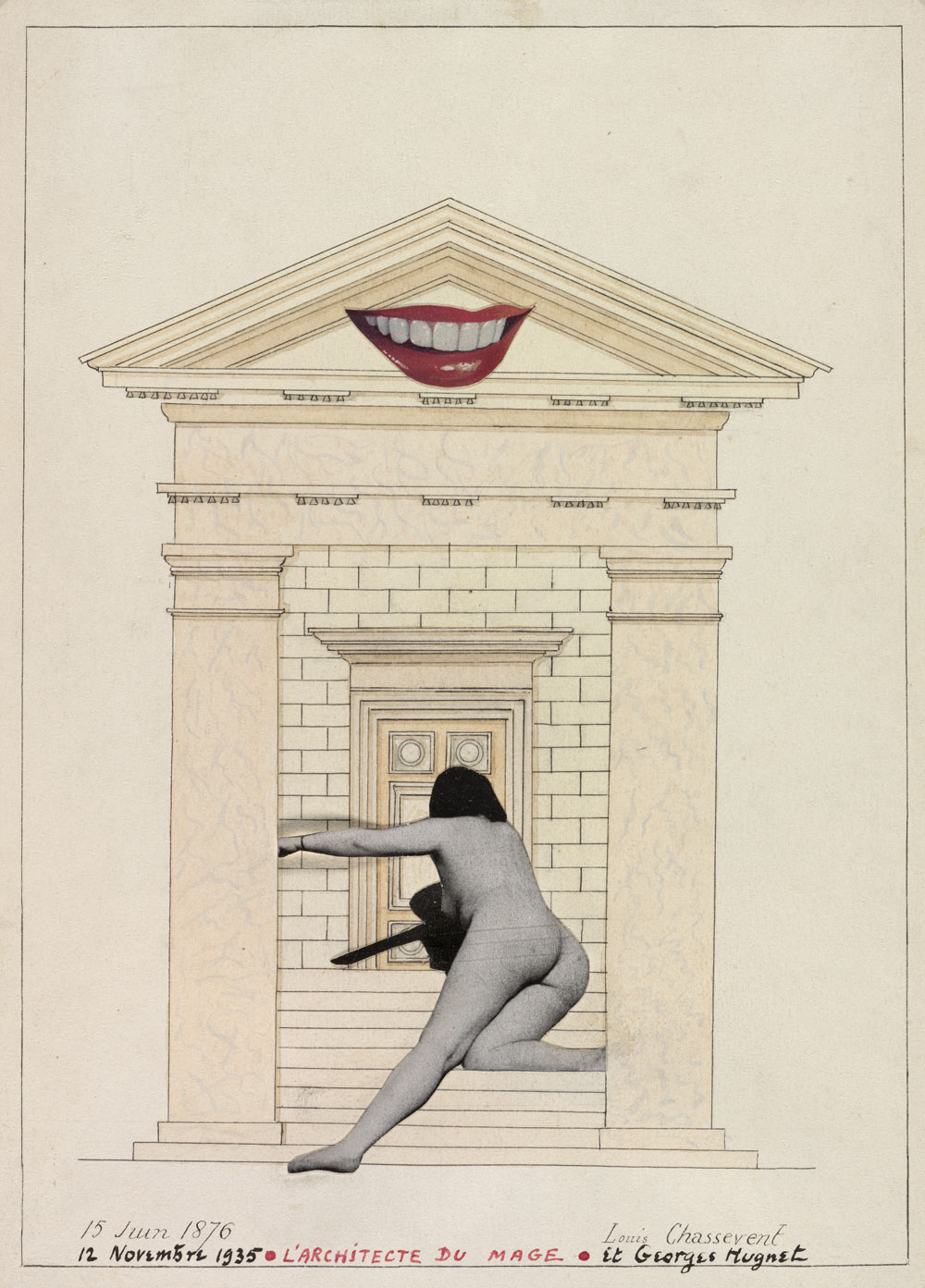
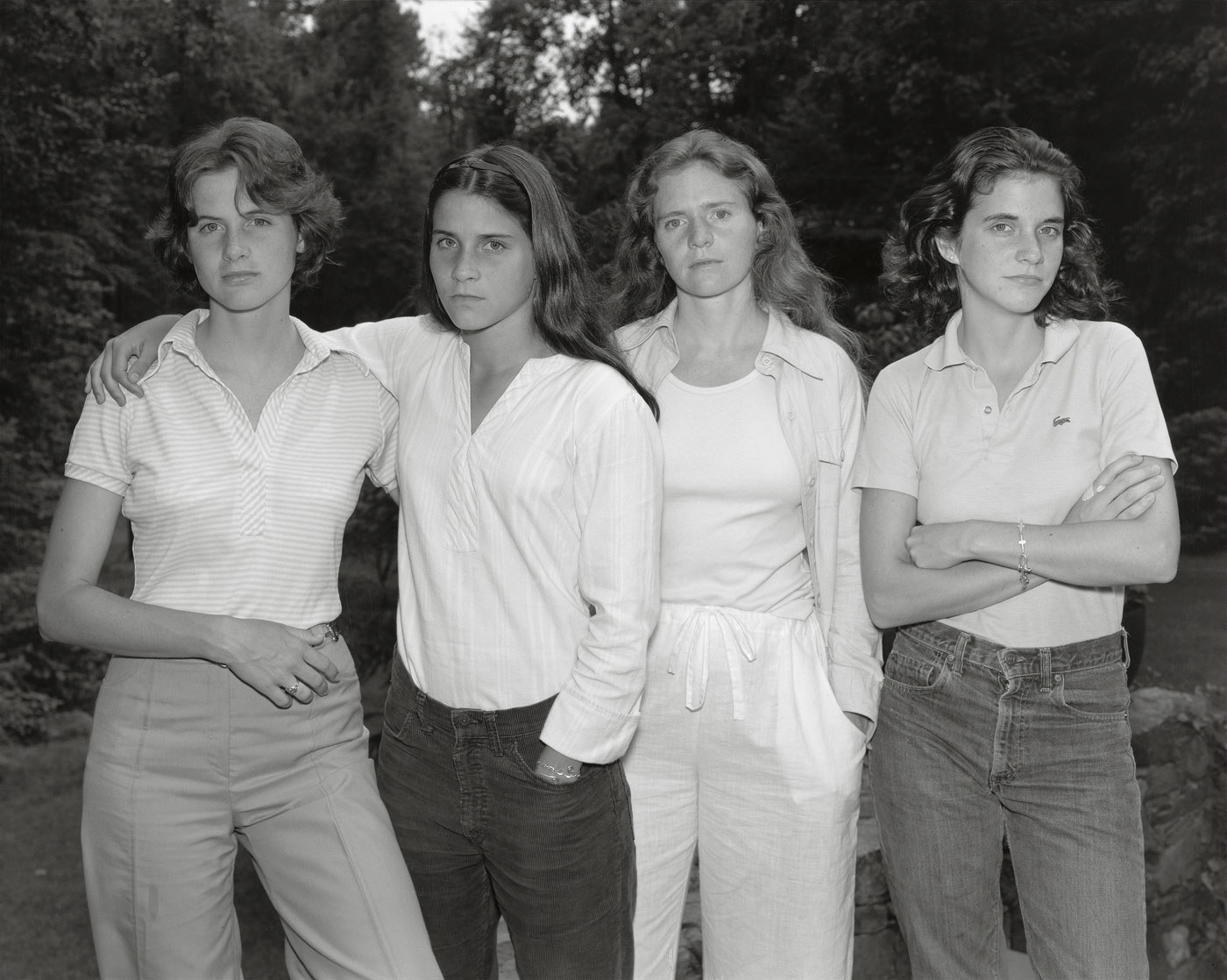


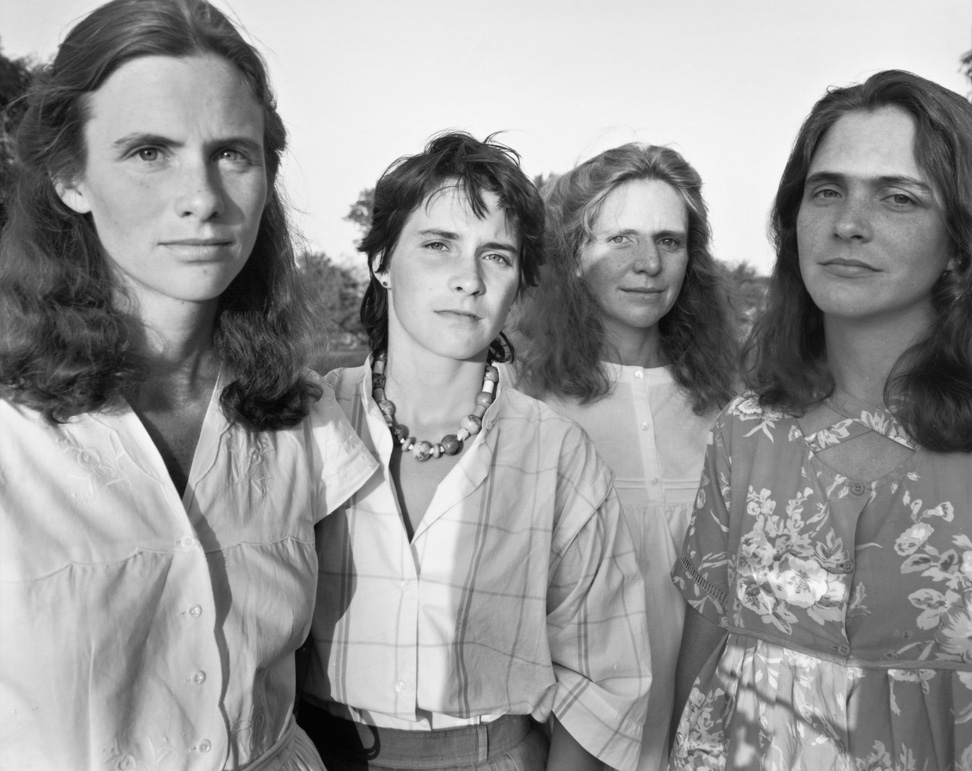

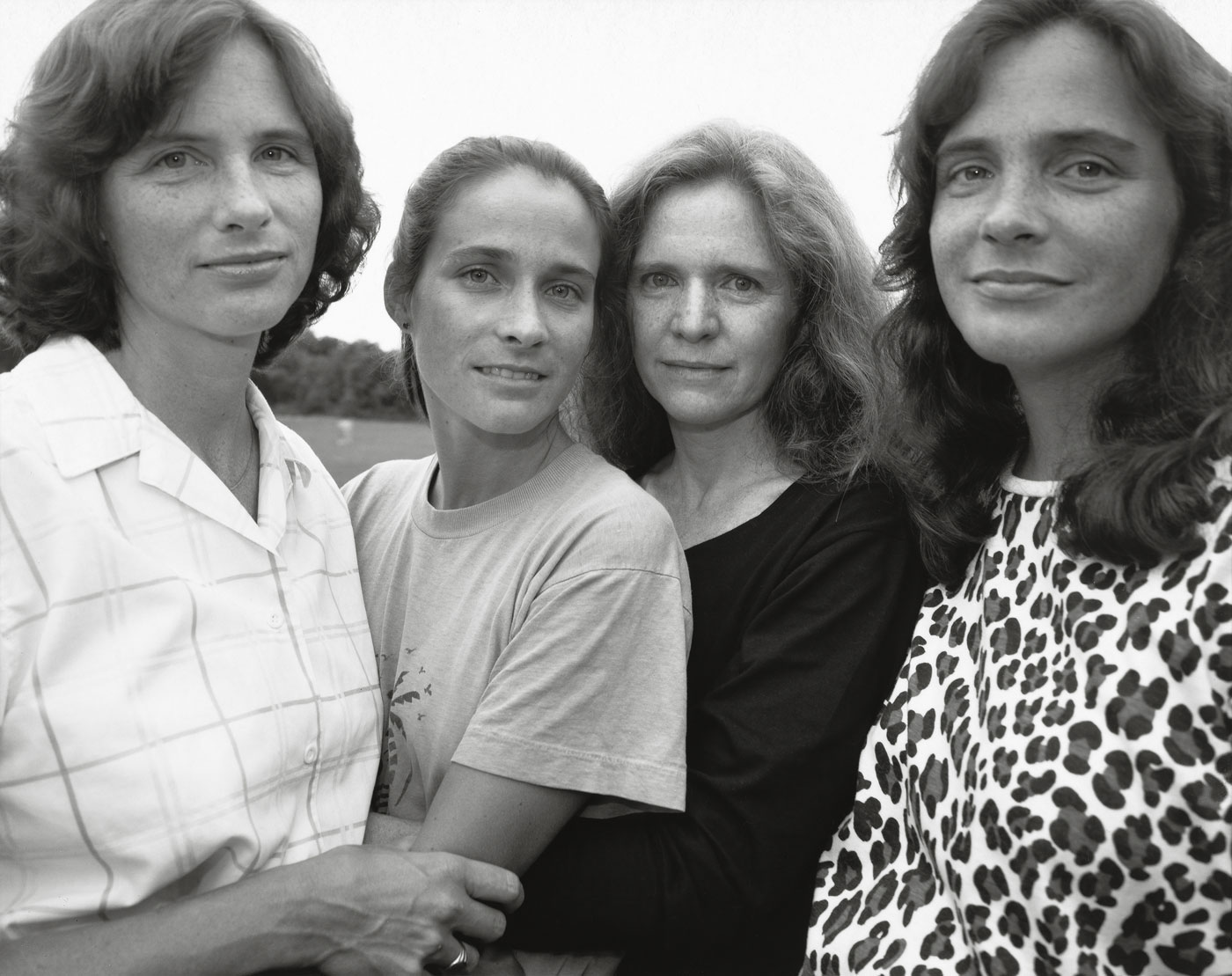
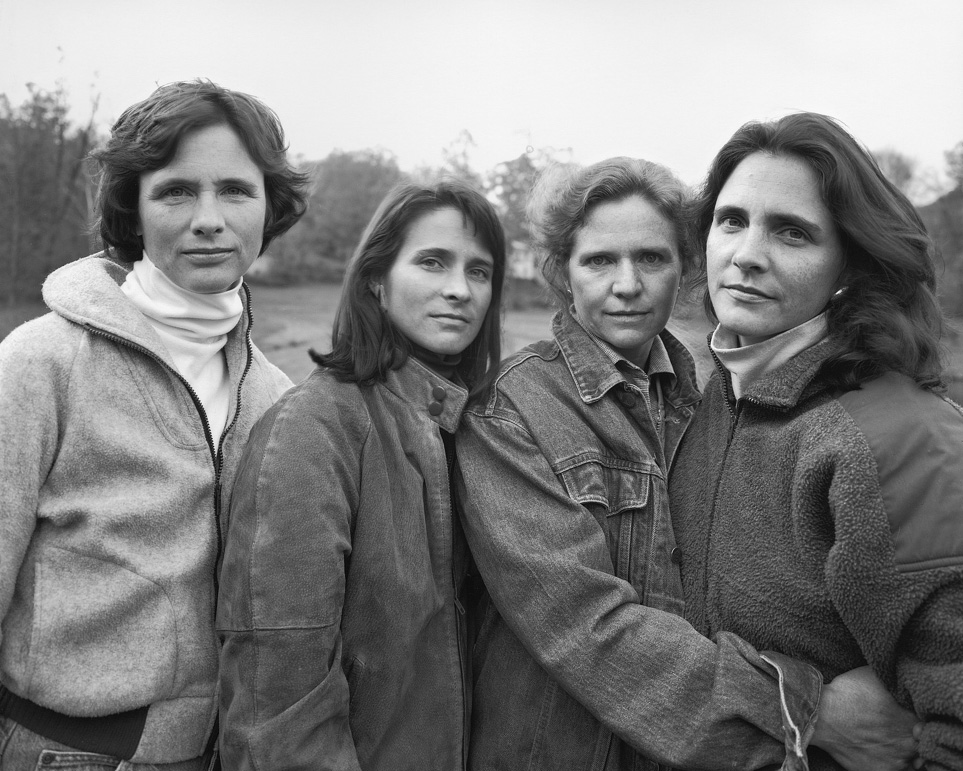


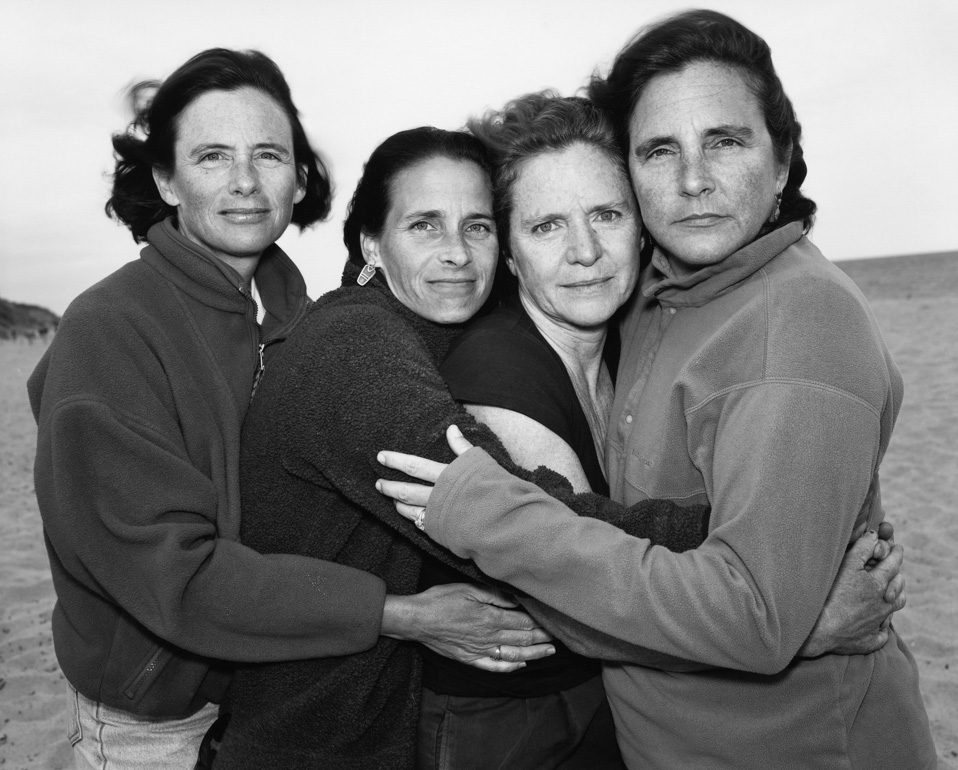


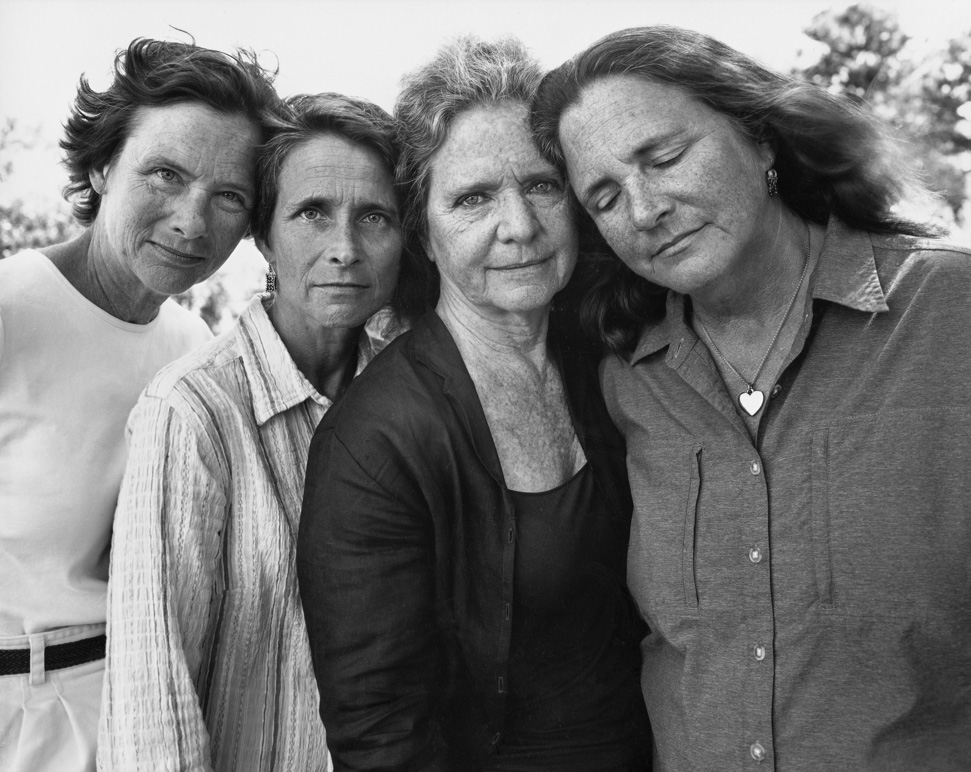
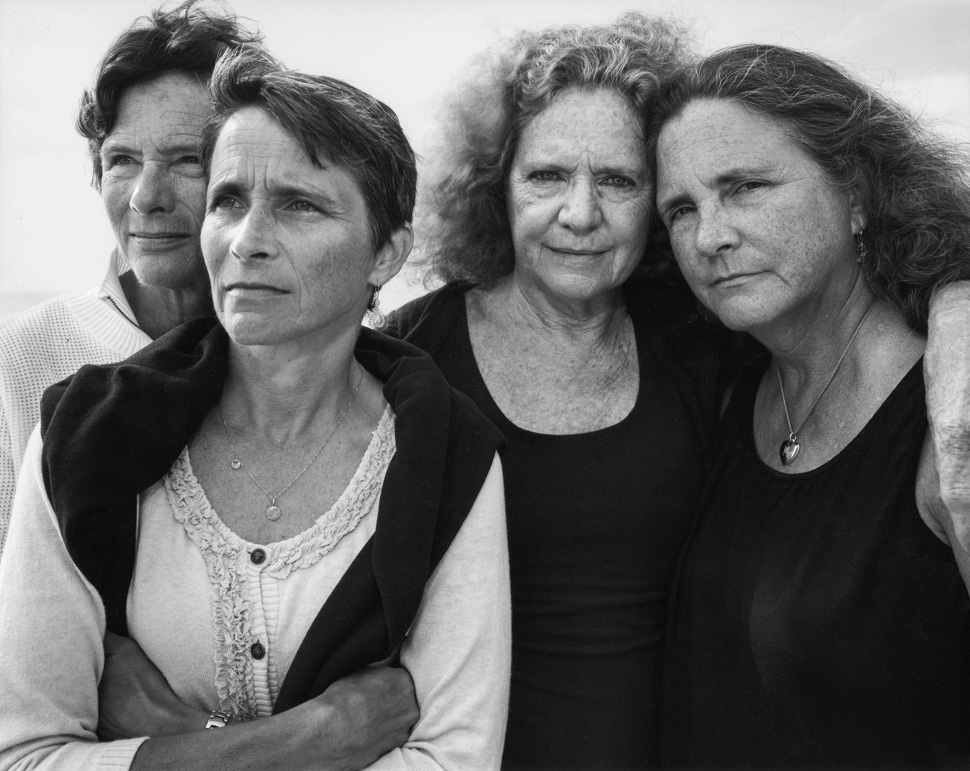


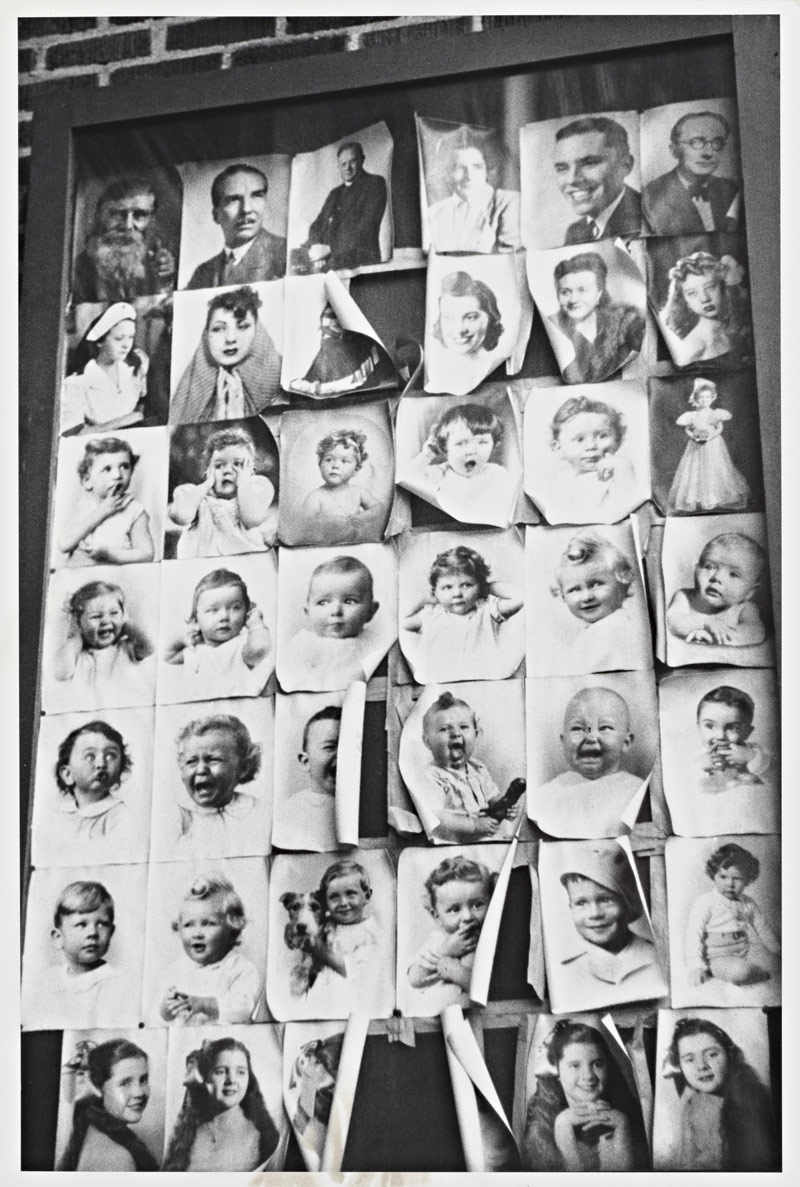

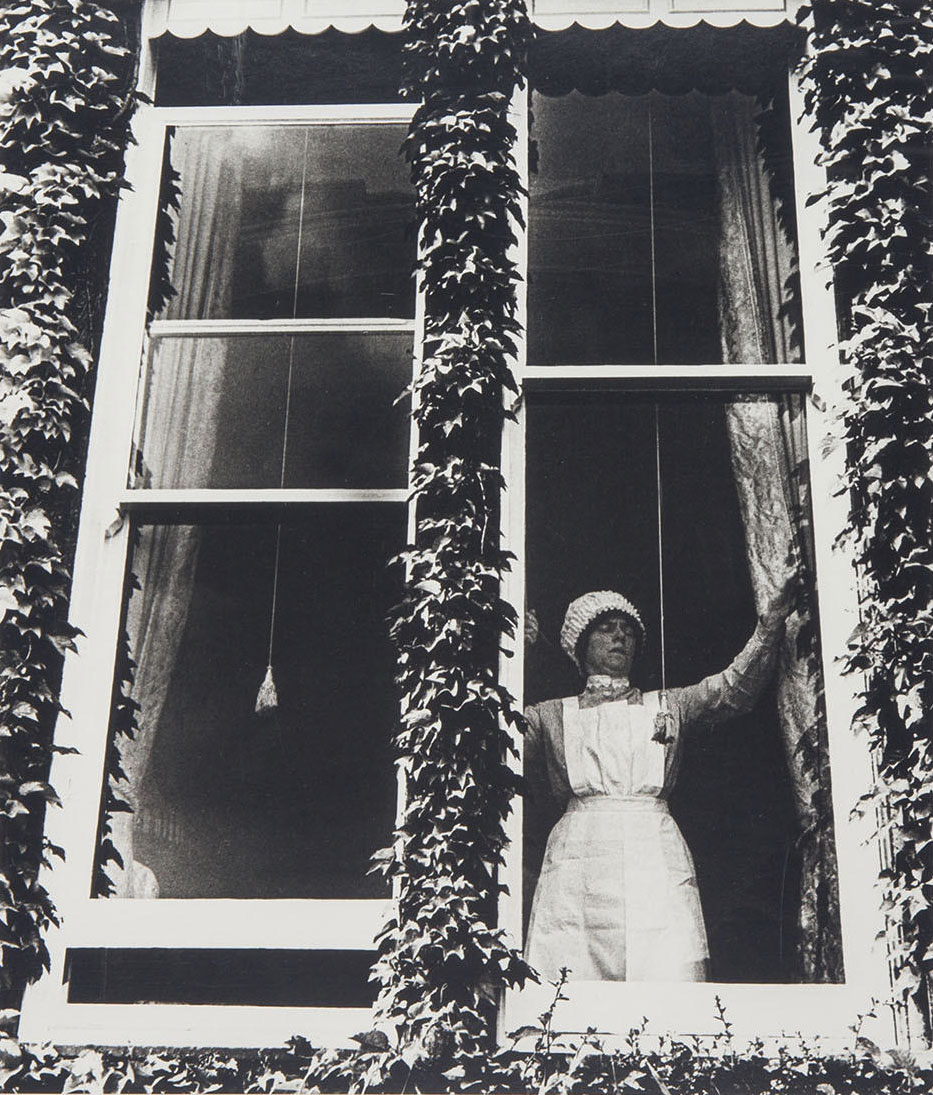

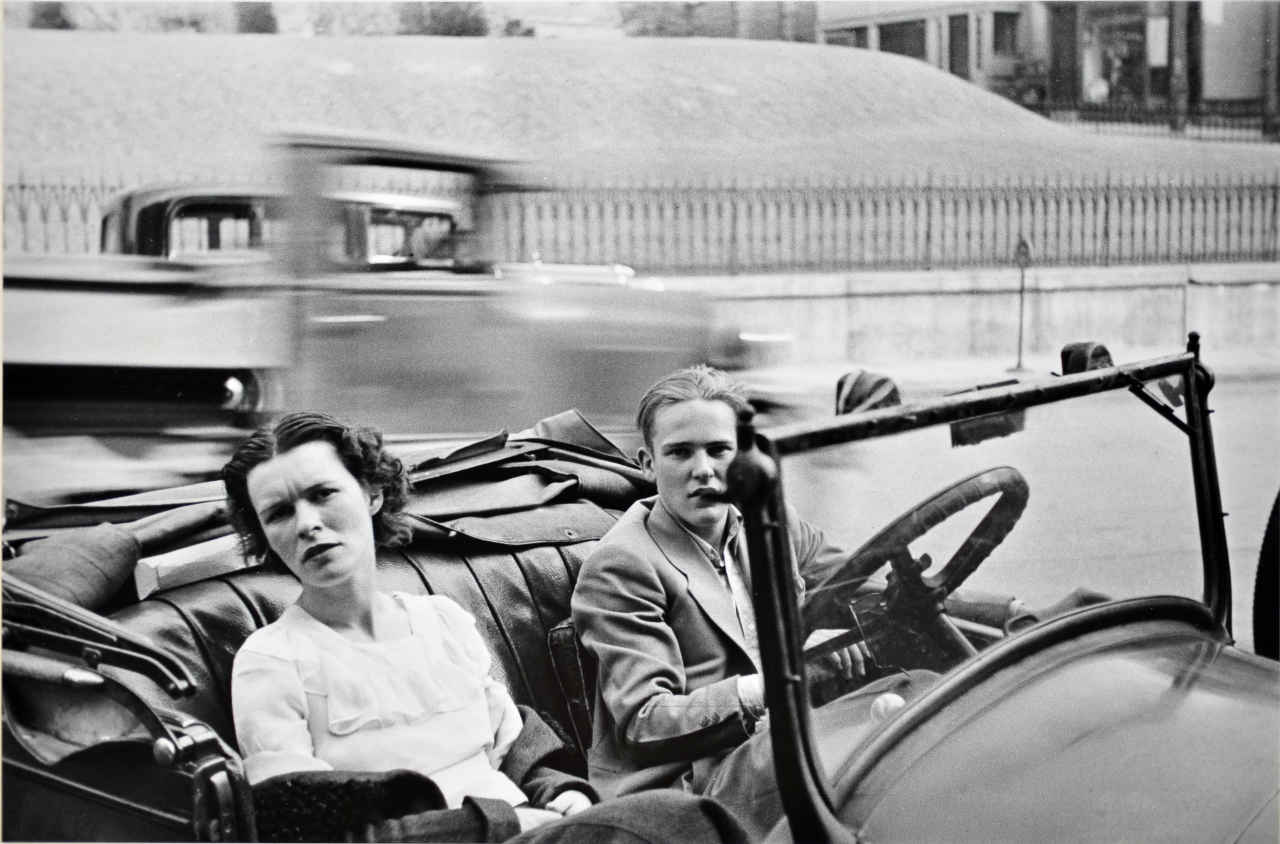


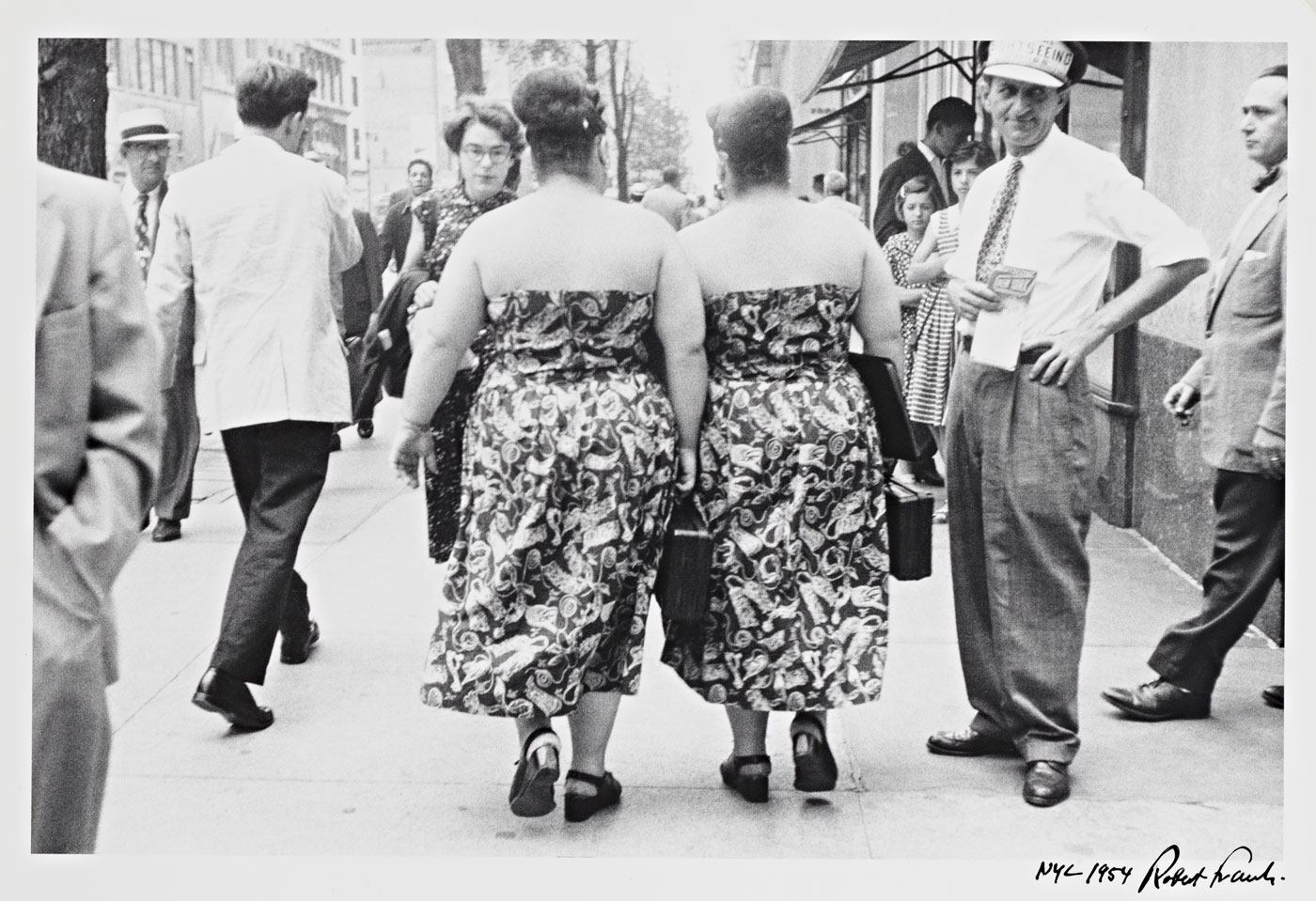


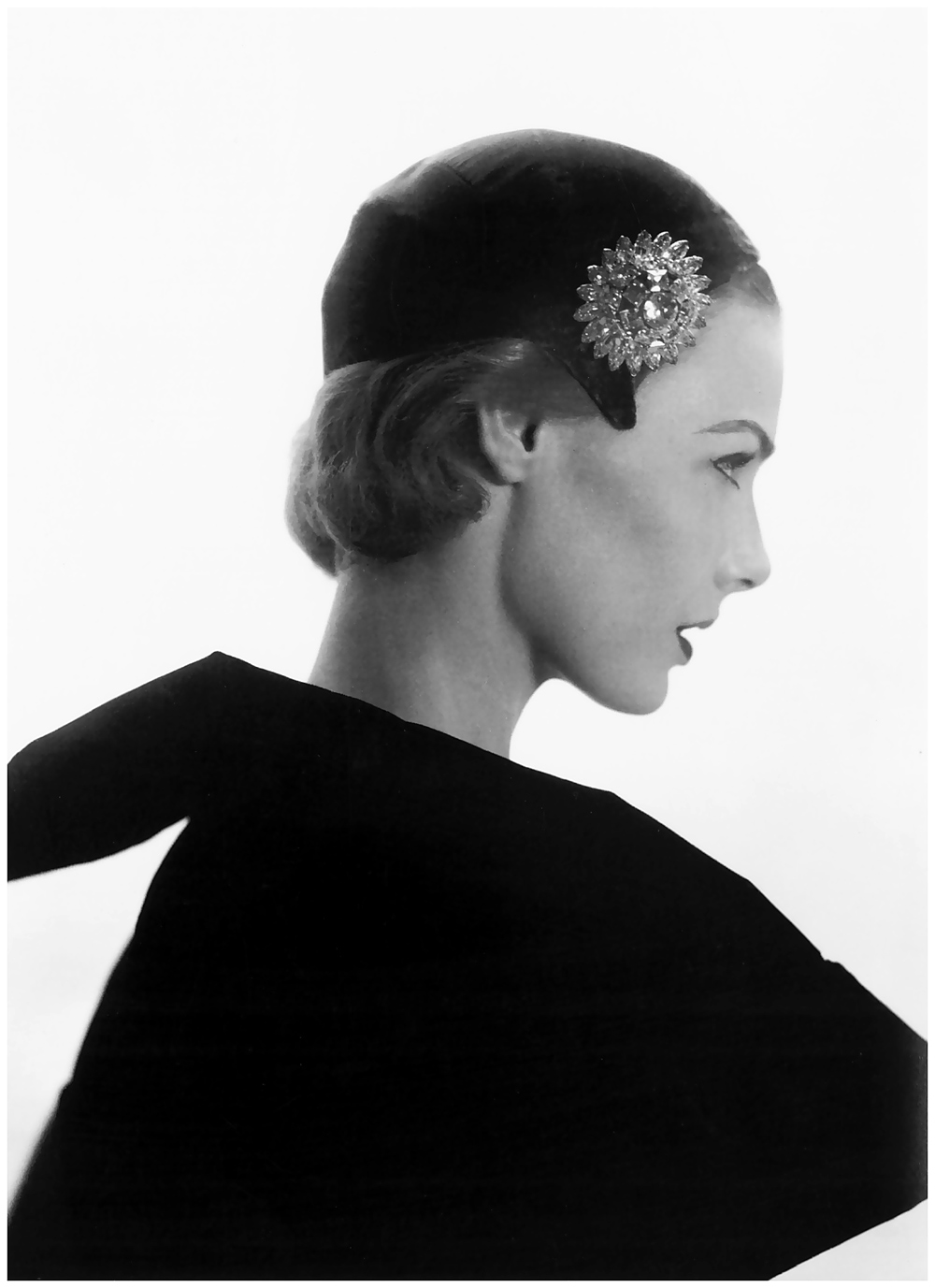
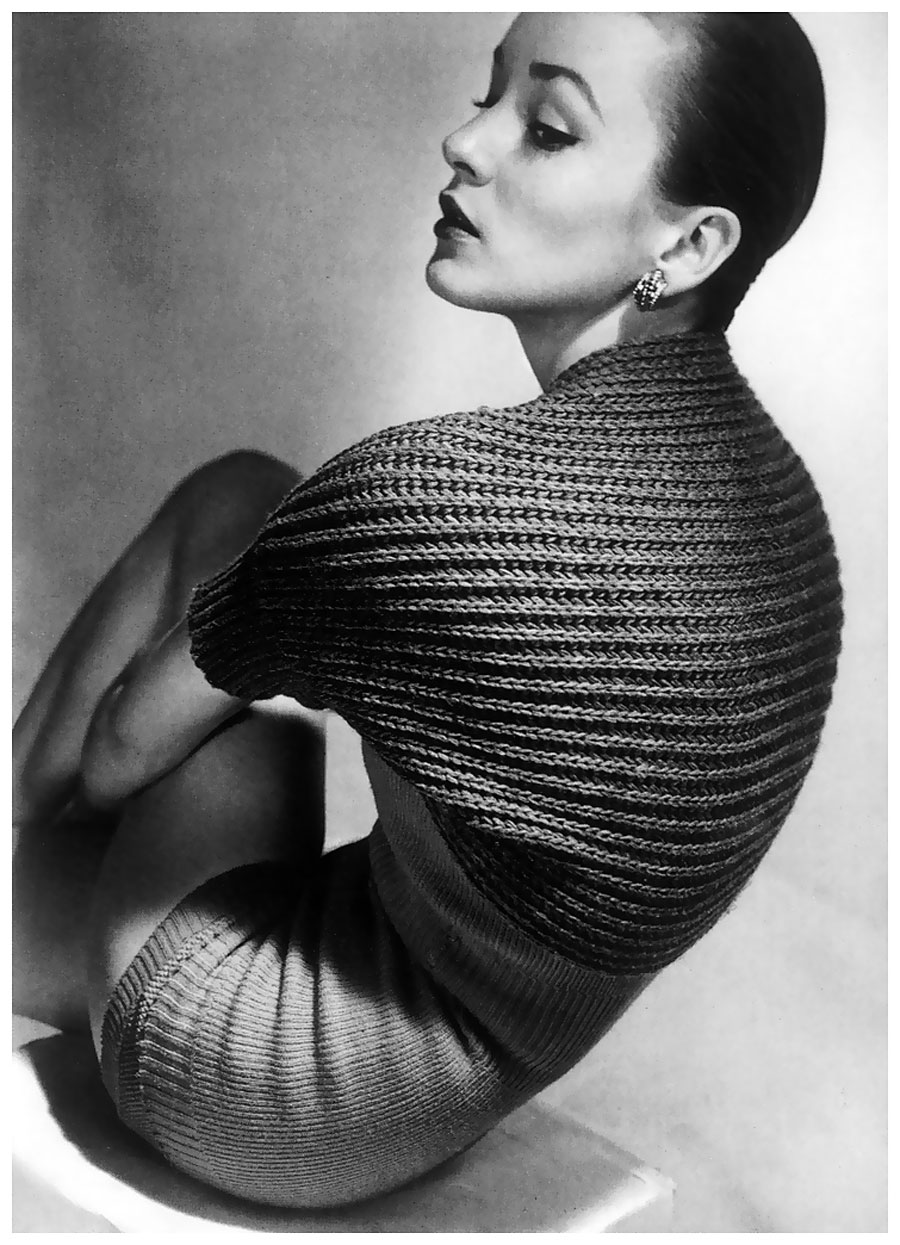

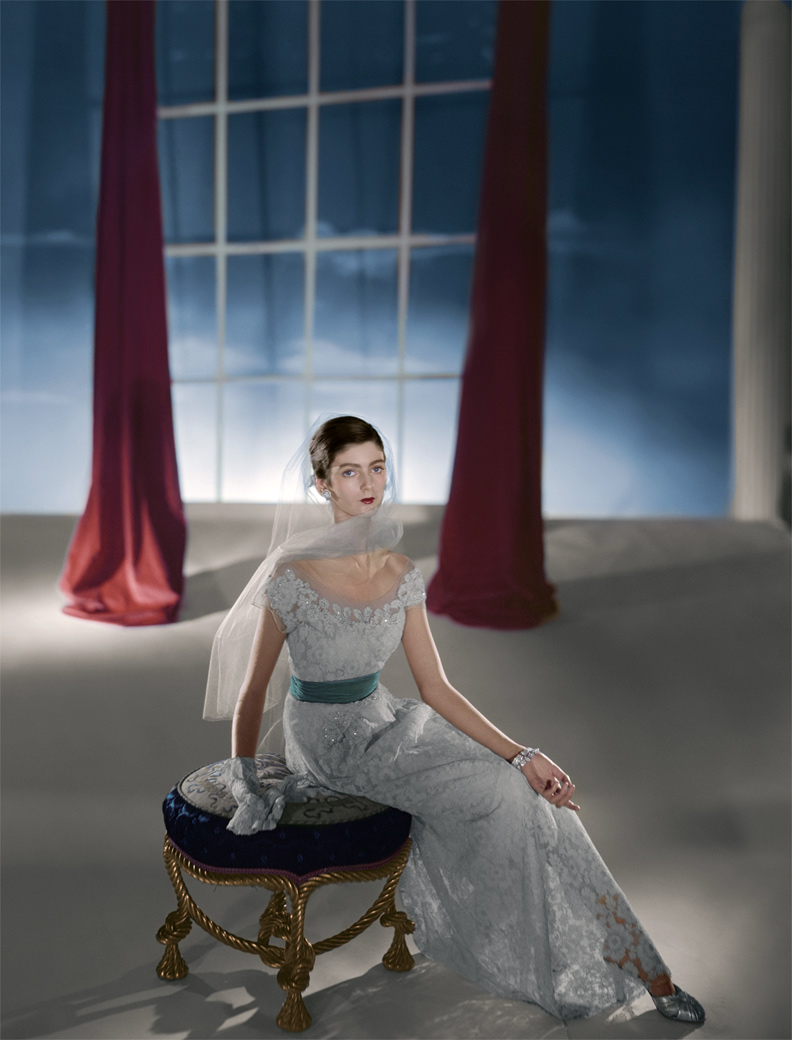


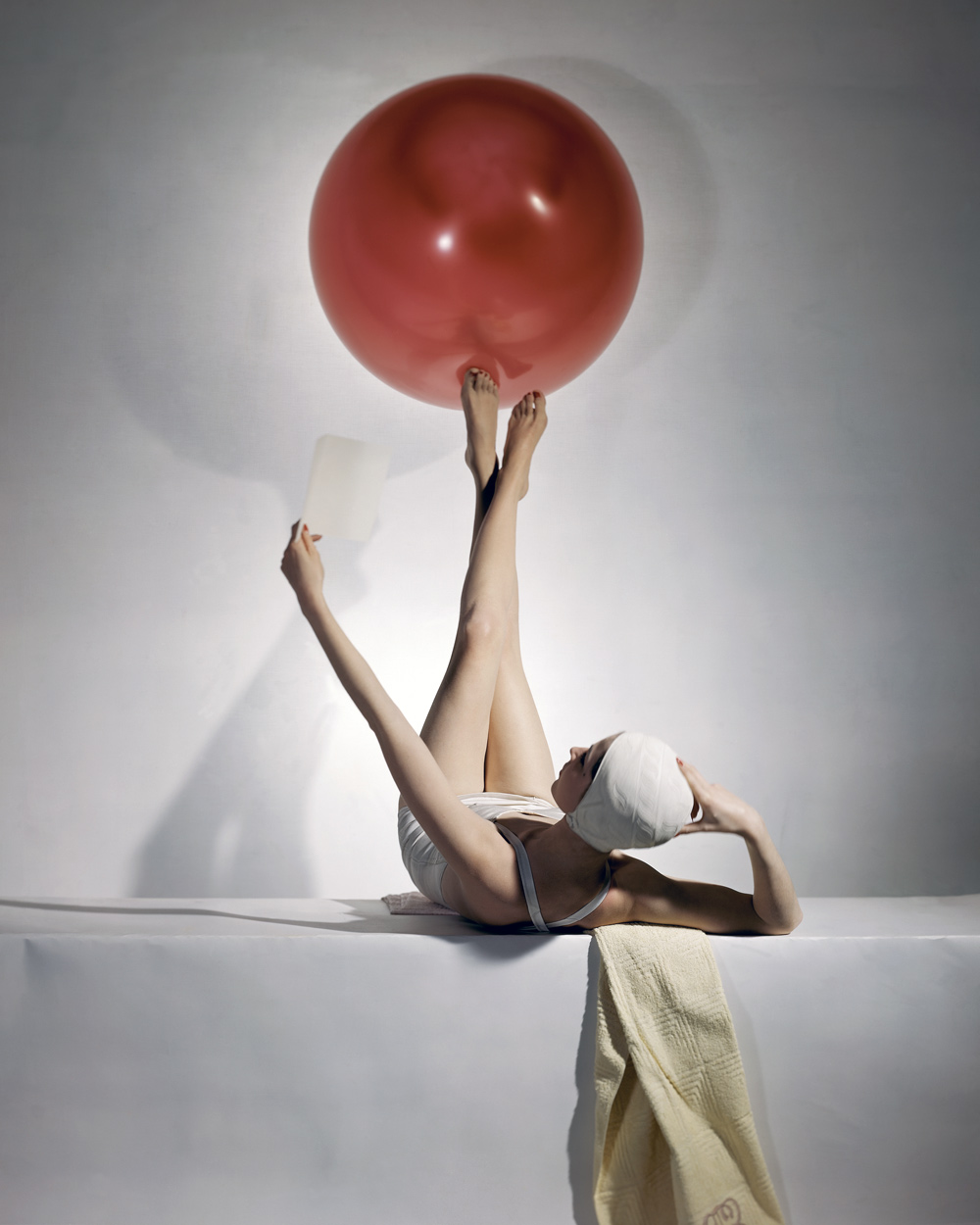
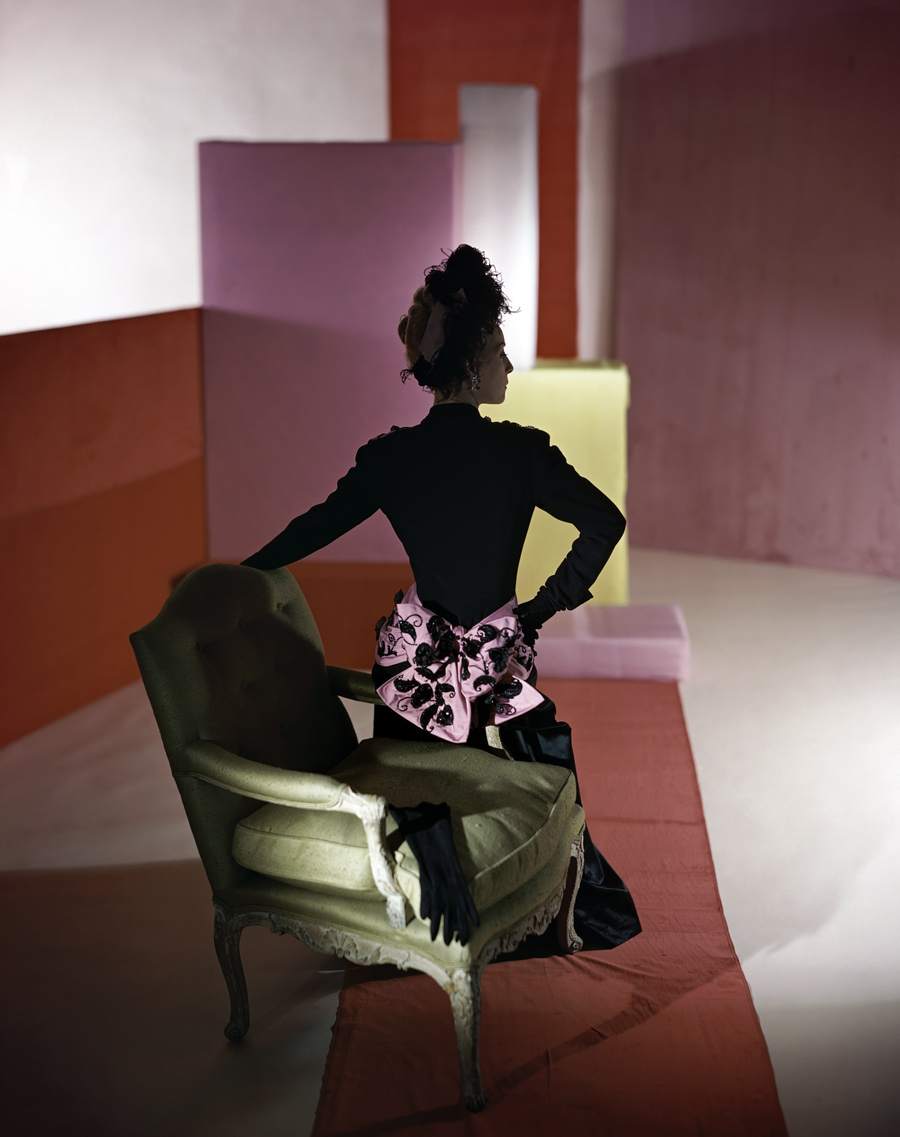


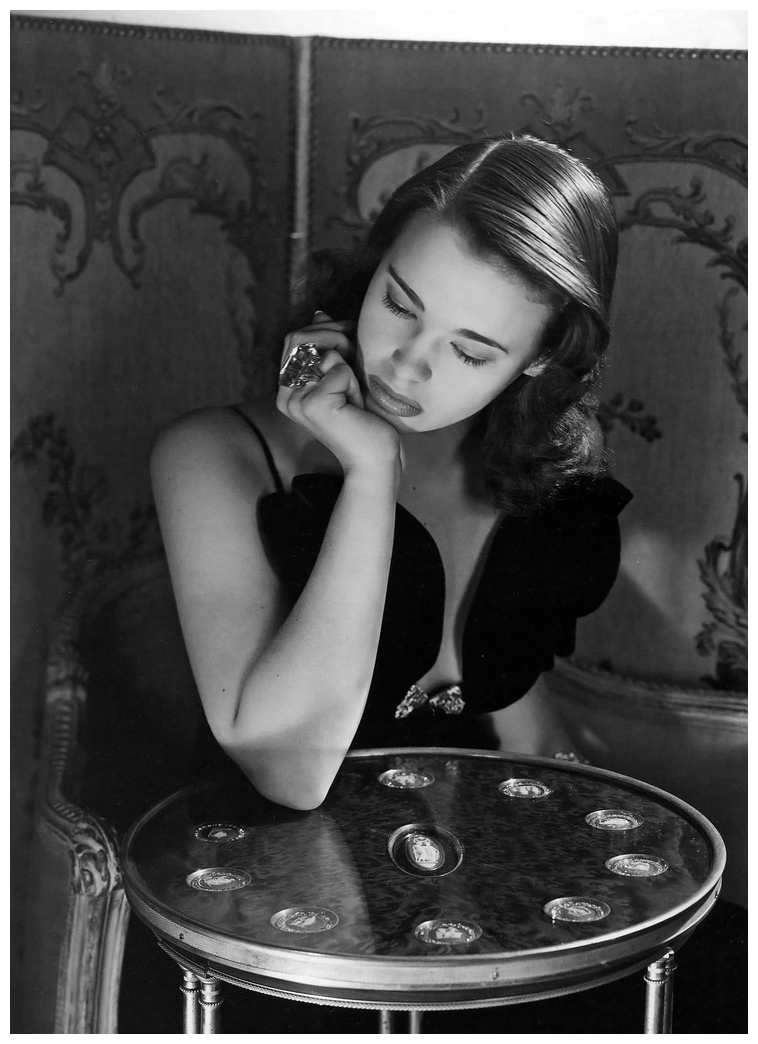


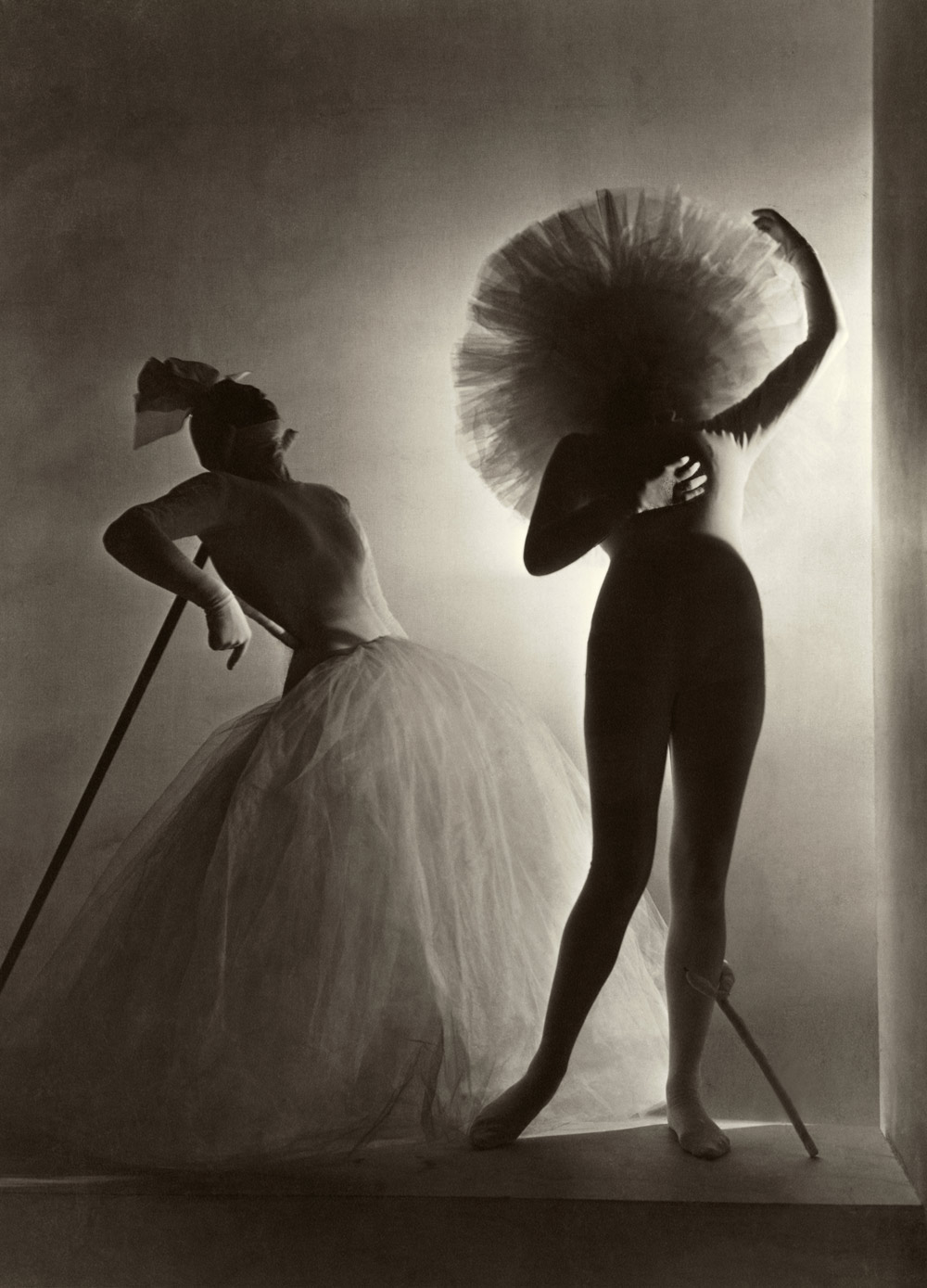


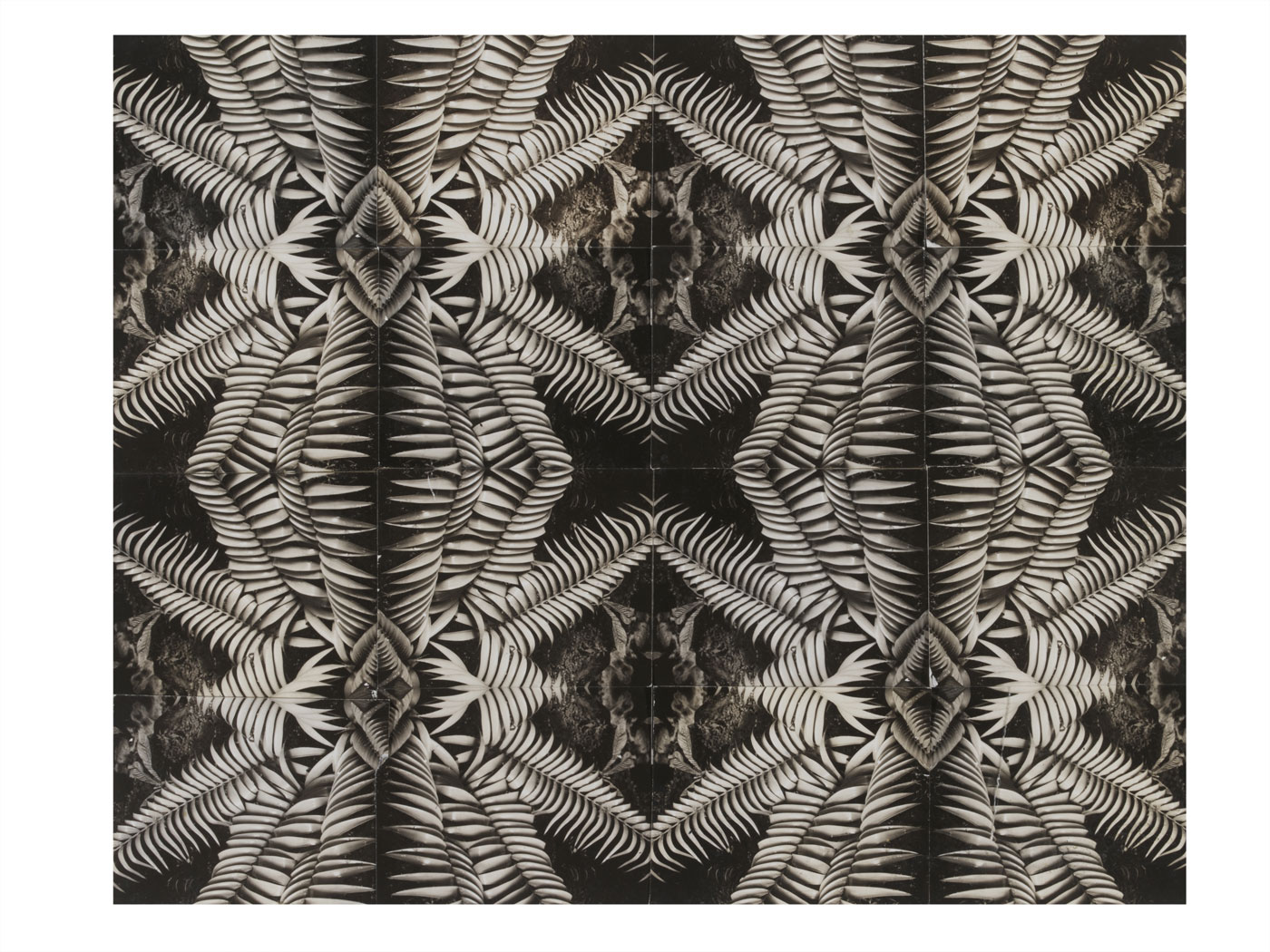


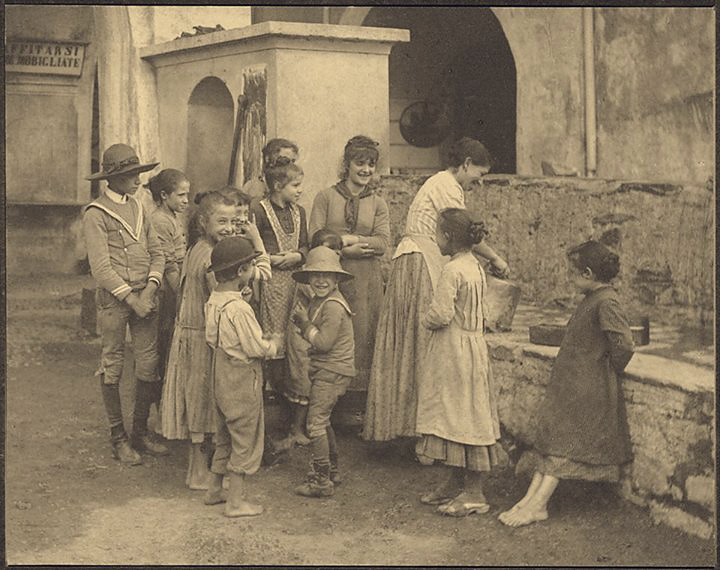


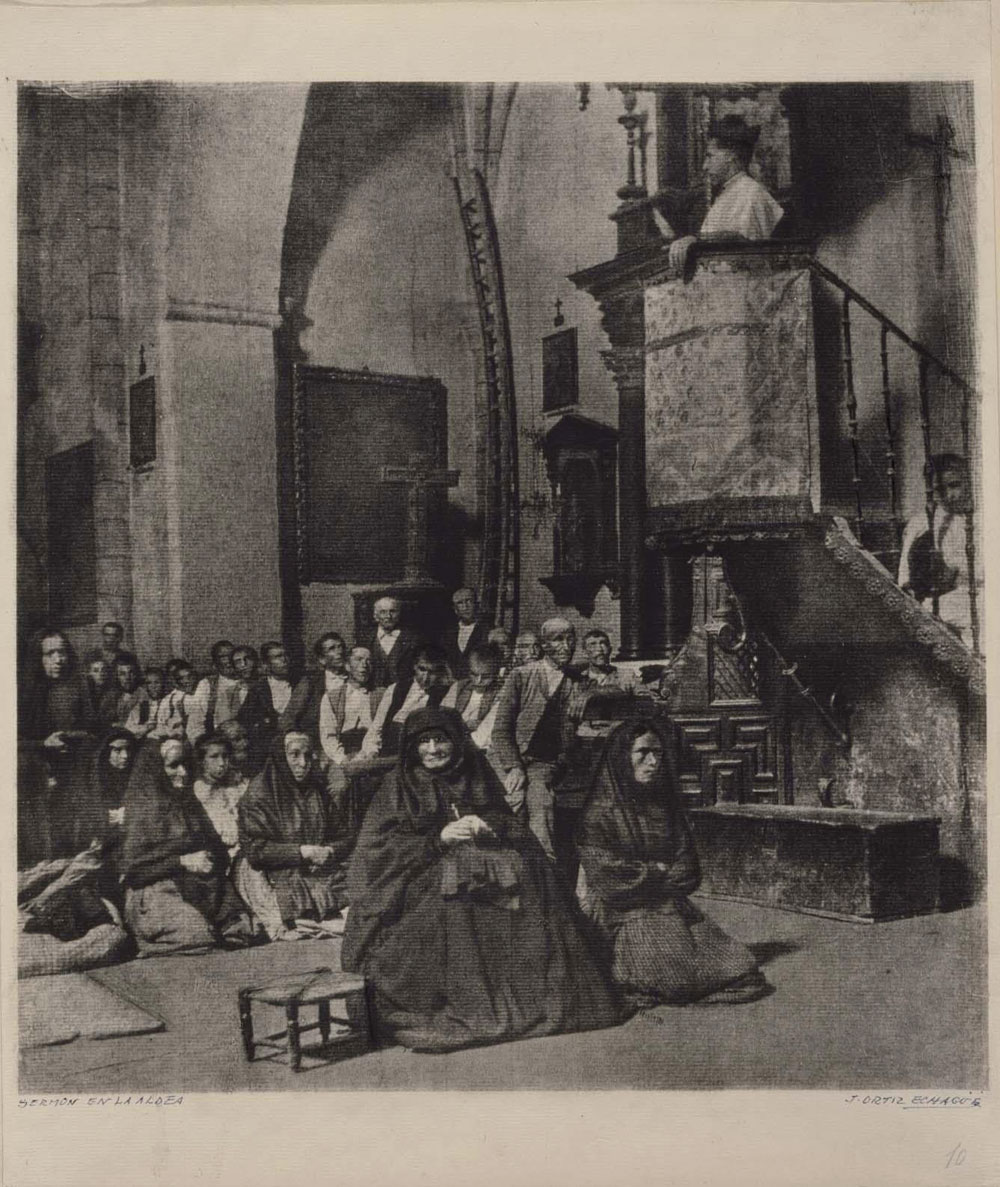


![Francisco Ontañón (Barcelona, Spain, 1930 - Madrid, Spain, 2008) 'La actual M-30 (Madrid)' (The M-30 Ring Road Today [Madrid]) 1963 (May) / posthumous print, 2013](https://artblart.com/wp-content/uploads/2014/12/francisco-ontac3b1c3b3n-la-actual-m-30-madrid-web.jpg "Francisco Ontañón (Barcelona, Spain, 1930 - Madrid, Spain, 2008) 'La actual M-30 (Madrid)' (The M-30 Ring Road Today [Madrid]) 1963 (May) / posthumous print, 2013")
![Francisco Ontañón (Barcelona, Spain, 1930 - Madrid, Spain, 2008) 'Sans Titre (Madrid)' (No Title [Madrid]) 1963 (May) / posthumous print, 2013](https://artblart.com/wp-content/uploads/2014/12/francisco-ontac3b1c3b3n-s_t-madrid-web.jpg "Francisco Ontañón (Barcelona, Spain, 1930 - Madrid, Spain, 2008) 'Sans Titre (Madrid)' (No Title [Madrid]) 1963 (May) / posthumous print, 2013")
![Francisco Ontañón (Barcelona, Spain, 1930 - Madrid, Spain, 2008) 'Sans Titre (Madrid)' (No Title [Madrid]) 1964-65 / posthumous print, 2013](https://artblart.com/wp-content/uploads/2014/12/francisco-ontac3b1c3b3n-s_t-madrid-b-web.jpg "Francisco Ontañón (Barcelona, Spain, 1930 - Madrid, Spain, 2008) 'Sans Titre (Madrid)' (No Title [Madrid]) 1964-65 / posthumous print, 2013")
![Francisco Ontañón (Barcelona, Spain, 1930 - Madrid, Spain, 2008) 'Sans Titre (Madrid)' (No Title [Madrid]) 1964-65 / posthumous print, 2013](https://artblart.com/wp-content/uploads/2014/12/francisco-ontac3b1c3b3n-s_t-madrid-c-web.jpg "Francisco Ontañón (Barcelona, Spain, 1930 - Madrid, Spain, 2008) 'Sans Titre (Madrid)' (No Title [Madrid]) 1964-65 / posthumous print, 2013")
![Francisco Ontañón (Barcelona, Spain, 1930 - Madrid, Spain, 2008) 'Sans Titre (Madrid)' (No Title [Madrid]) 1964 / posthumous print, 2013](https://artblart.com/wp-content/uploads/2014/12/francisco-ontac3b1c3b3n-s_t-madrid-d-web.jpg "Francisco Ontañón (Barcelona, Spain, 1930 - Madrid, Spain, 2008) 'Sans Titre (Madrid)' (No Title [Madrid]) 1964 / posthumous print, 2013")
![Francisco Ontañón (Barcelona, Spain, 1930 - Madrid, Spain, 2008) '600 en Casa de Campo con familia (Madrid)' (Outing to Casa de Campo in the 600, with Family [Madrid]) 1963 (May) / posthumous print, 2013](https://artblart.com/wp-content/uploads/2014/12/francisco-ontac3b1c3b3n-600-en-casa-de-campo-web.jpg "Francisco Ontañón (Barcelona, Spain, 1930 - Madrid, Spain, 2008) '600 en Casa de Campo con familia (Madrid)' (Outing to Casa de Campo in the 600, with Family [Madrid]) 1963 (May) / posthumous print, 2013")
![Francisco Ontañón (Barcelona, Spain, 1930 - Madrid, Spain, 2008) 'Parque Sindical (Madrid)' (Parque Sindical Sports Area [Madrid]) 1964 / posthumous print, 2013](https://artblart.com/wp-content/uploads/2014/12/francisco-ontac3b1c3b3n-parque-sindical-madrid-web.jpg "Francisco Ontañón (Barcelona, Spain, 1930 - Madrid, Spain, 2008) 'Parque Sindical (Madrid)' (Parque Sindical Sports Area [Madrid]) 1964 / posthumous print, 2013")
![Francisco Ontañón (Barcelona, Spain, 1930 - Madrid, Spain, 2008) 'Entierro (Madrid)' (Burial [Madrid]) 1967 / posthumous print, 2013](https://artblart.com/wp-content/uploads/2014/12/francisco-ontac3b1c3b3n-entierro-madrid-web.jpg "Francisco Ontañón (Barcelona, Spain, 1930 - Madrid, Spain, 2008) 'Entierro (Madrid)' (Burial [Madrid]) 1967 / posthumous print, 2013")
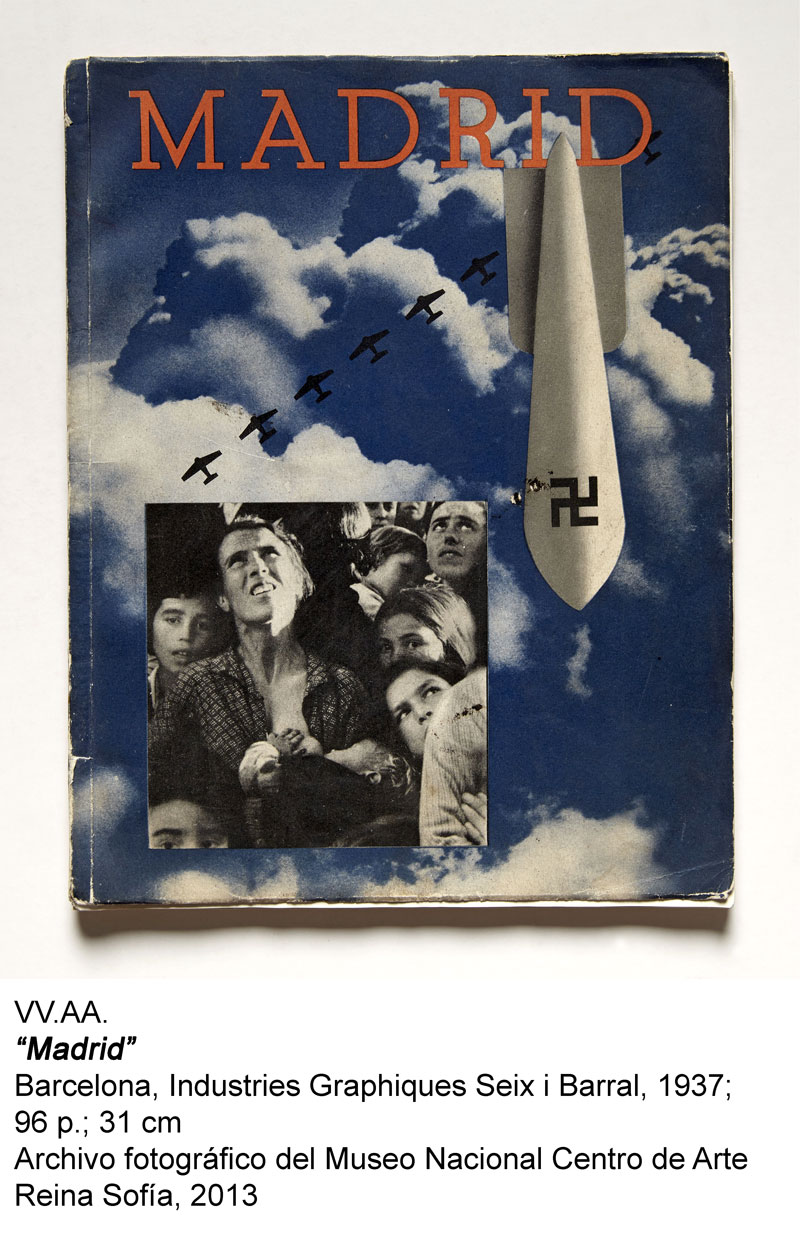








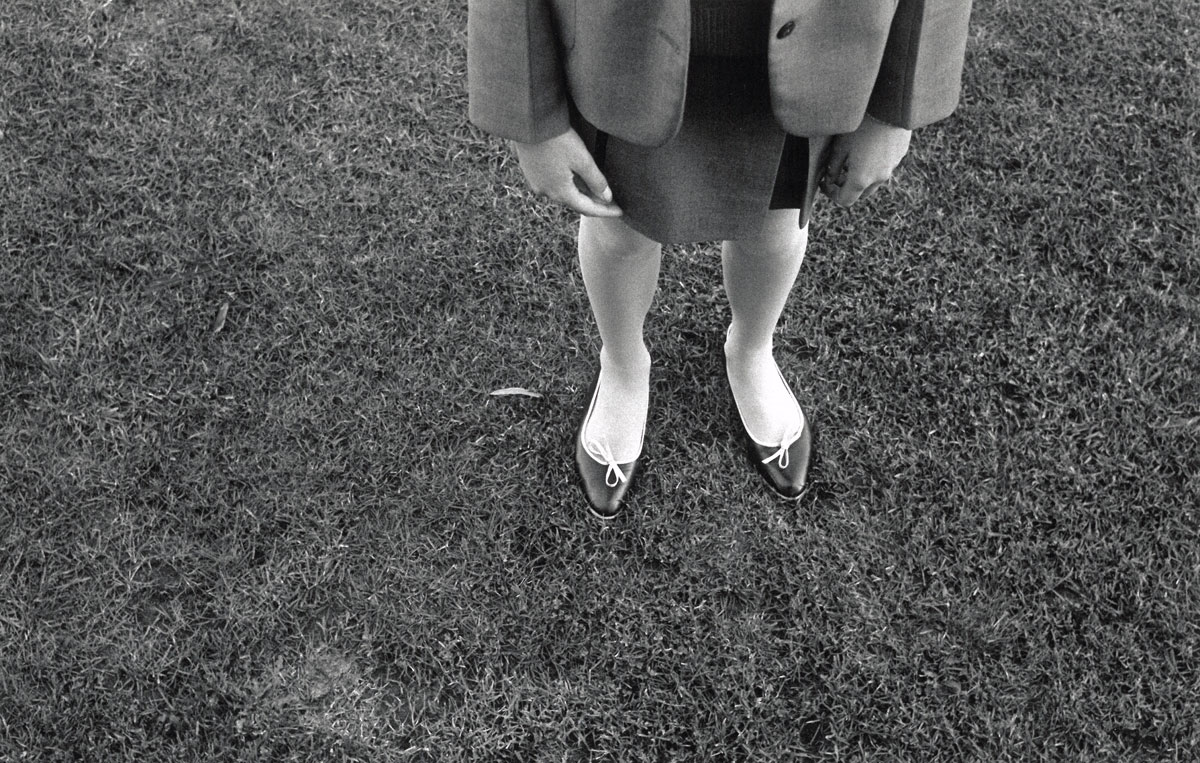


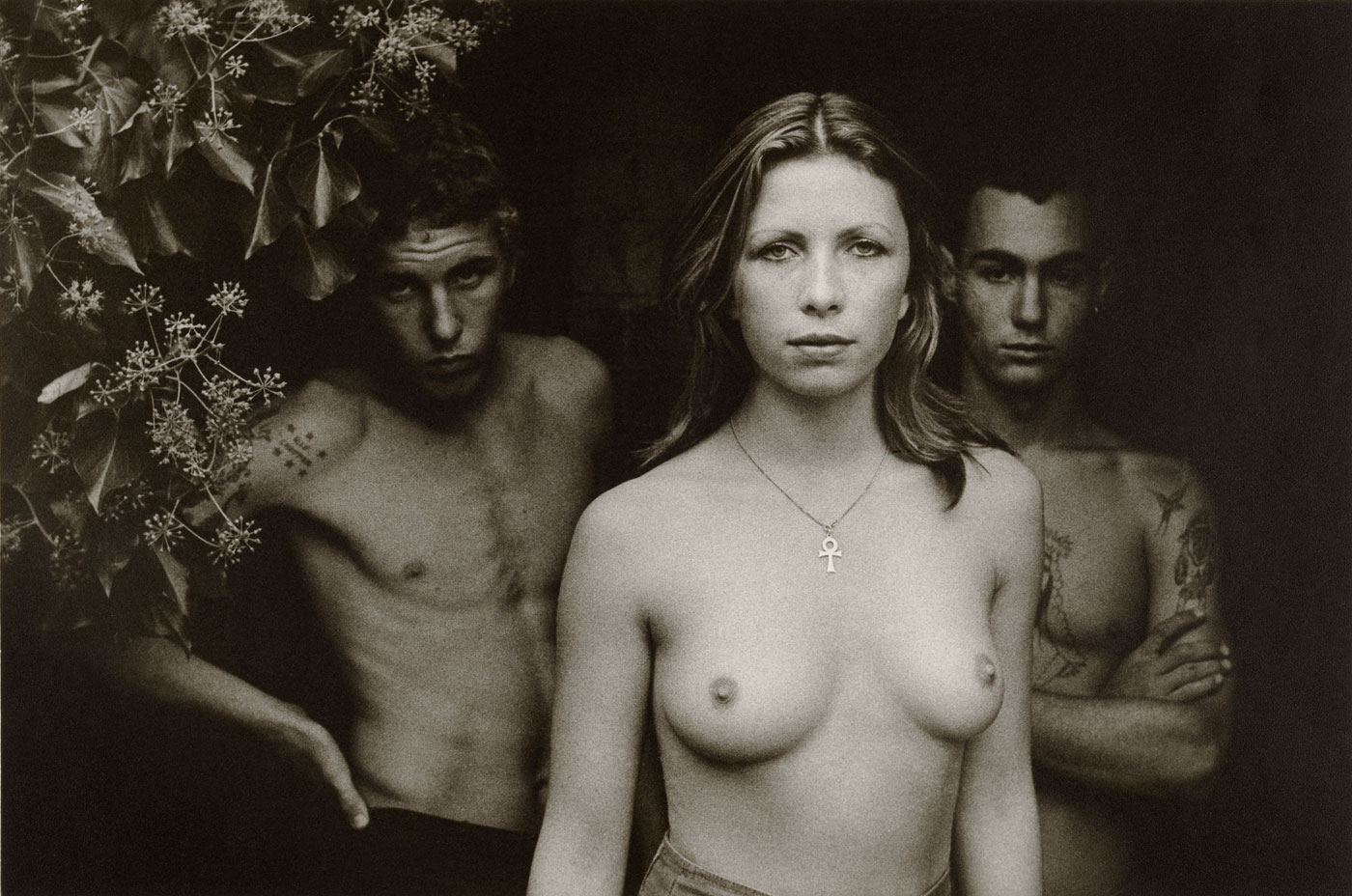


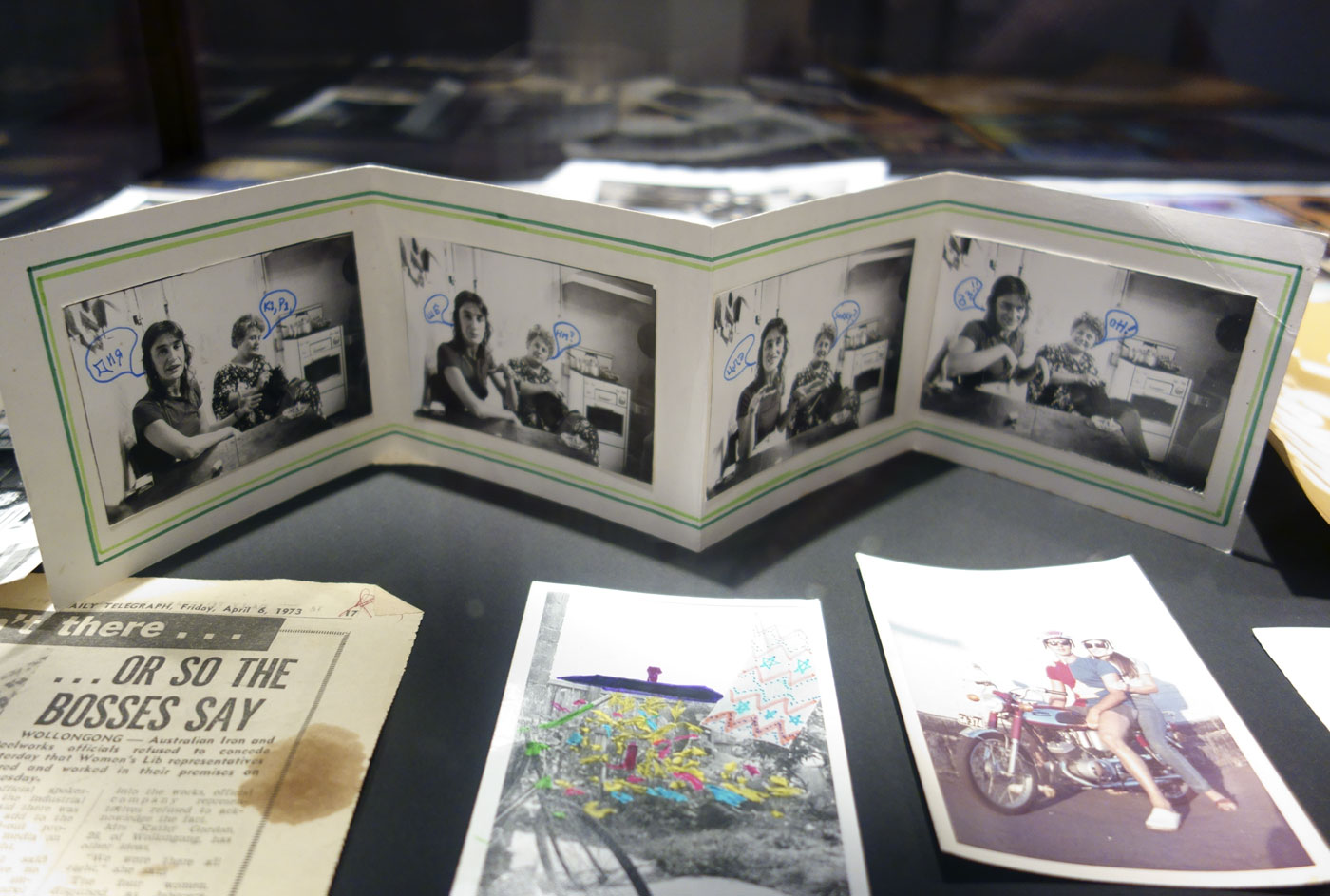




 Art Blart _ art and cultural memory archive
You must be logged in to post a comment.