Catalogue essay: ‘Being (t)here: Gay liberation photography in Australia 1971-73’ from the exhibition ‘Out of the closets, onto the streets’

Exhibition dates: Tuesday 22nd July – Saturday 26th July, 2014

Artists represented: Philip Potter, John Storey, John Englart, Barbara Creed, Ponch Hawkes, Rennie Ellis

Curators: Dr Marcus Bunyan and Nicholas Henderson


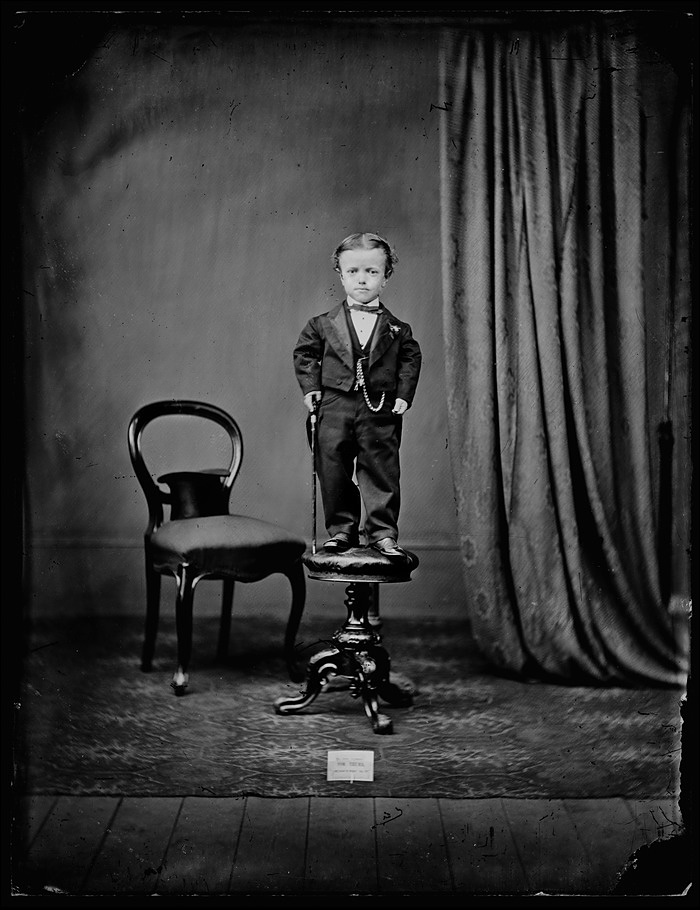
Photographer unknown. 'The original eight hour day banner' 1856


Figure 1
Photographer unknown
The original eight hour day banner
1856


This is my catalogue essay that accompanies the exhibition Out of the closets, into the streets: gay liberation photography 1971-73 at Edmund Pearce Gallery, Melbourne. It’s a bit of a read (3,000 words) but stick with it. I hope you like the insights into the background of the images and the people in the exhibition.

Dr Marcus Bunyan


Many thankx to all the artists for allowing me to publish the photographs in the posting. Please click on the photographs for a larger version of the image. Download the Being (t)here catalogue essay (2.2Mb pdf)


Being (t)here: Gay liberation photography in Australia 1971-73


“For the colour and the soundtrack to be part of the politics, even a central part of the politics… meant something new by way of embodiment. Much of the political action was about being there, about putting one’s body on the line. A demonstration, sit-in or blockade is centrally about occupying space. A nonviolent movement tried to occupy space with bodies, not bullets.

It was a key feature of the new left that this embodied politics couldn’t stop in the streets: that is, the public arena as conventionally understood. ‘Being there’ politically also applied to households, classrooms, sexual relations, workplaces and the natural environment.”1


I came out as a gay man in 1975, six years after Stonewall and only a few short years after the photographs in this exhibition were taken. The first open acknowledgement of my nascent sexuality was to walk into a newsagent in Notting Hill Gate, London, head down, red as a beetroot and pick up a copy of Gay Times. I literally flung the money at the person behind the counter and ran out. I was so embarrassed. I was seventeen.

From the gay rag I found the name of the local convenor of the Campaign for Homosexual Equality (CHE) and went to meet him at his home. John was the very first openly gay man that I had ever met. We became lifelong friends. He used to hold coffee evenings a couple of times a week in his flat so that the local gay men had somewhere safe and secure to meet – to chat and laugh, to talk about love and life. Once a month there was a pub that we all went to in the country for a bit of a dance night, but that was it unless you went up to London to a nightclub.

None of us were very active politically, although we kept an eye on the papers and we all understood the discrimination and persecution we faced. But by the very act of being openly gay, as most of us were, we were making a political statement. I was openly gay at college in London and stopped “passing” as something I was not (a straight man) by coming out to my family and friends. I placed my being – there, there and there, in different contexts, so that my family, friends and the community could not ignore my sexuality. I never lived in fear but there was a great deal of self-loathing going on behind the scenes. In those days you were always thought of as “abnormal” and defective if you were a poofter. And there was the guilt of that association. As James Nichols observes, “To be gay or lesbian meant belonging to a genealogy of suffering, to have a dramatic, if not a tragic, destiny. Despite the many battles and certain victories that ensued, the homosexual remained a victim in the collective consciousness; a hidden man.”2  William Leonard continues the theme: “If concealment is a psychic wounding that divides each gay man against himself, it is also a collective division that precludes the forms of public association and political affiliation on which gay liberation depends. As gay men confront their own internalised feelings of self-recrimination, if not disgust, they begin to rattle the closet door and seek out, in public, others of their own kind.”3 And rattle the closet door I did. I flaunted my hi-vis identity for all to see. If the liberation movement meant putting your body on the line – not so much by consciously protesting on the streets but by being visible in whatever setting as a gay man – then I certainly did that.

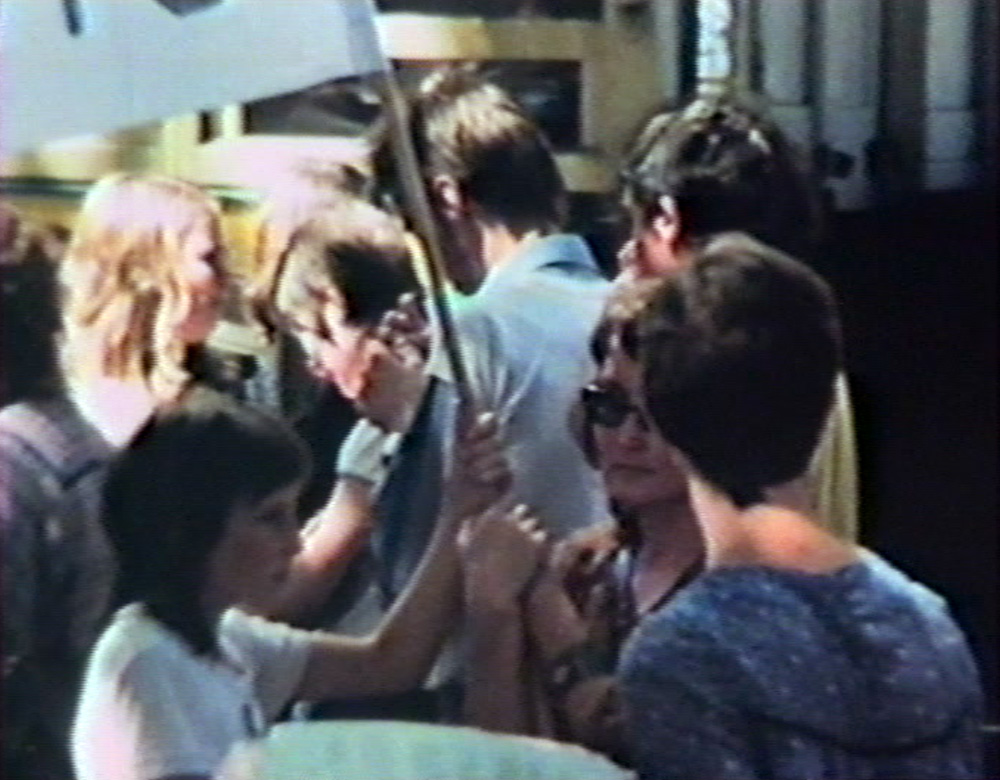
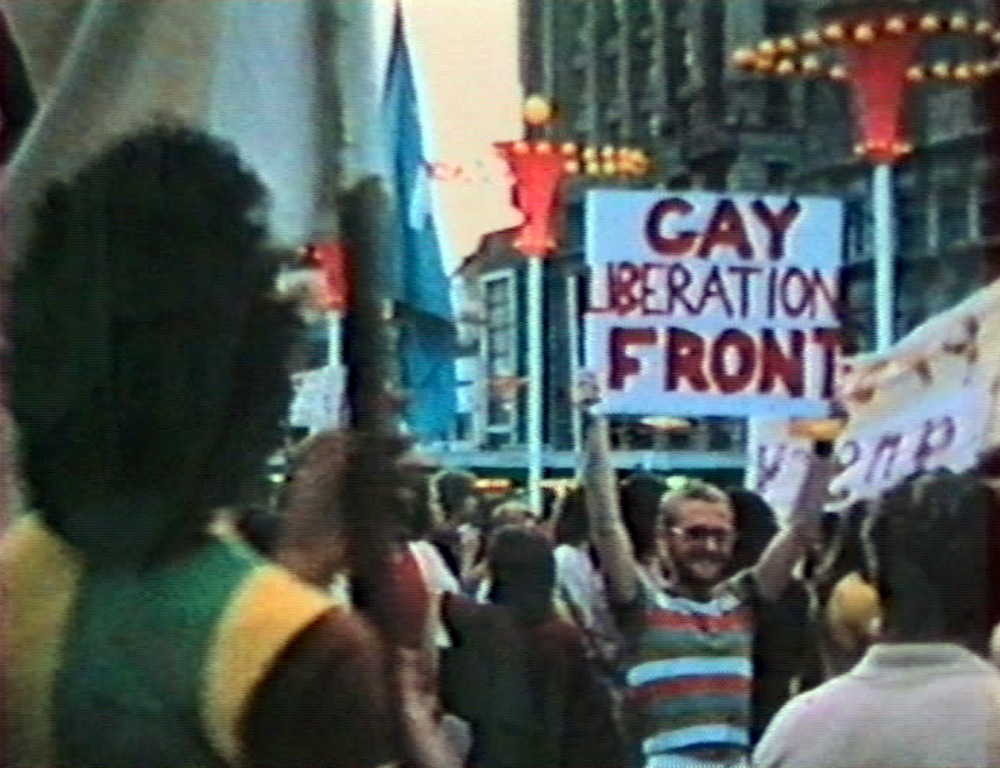
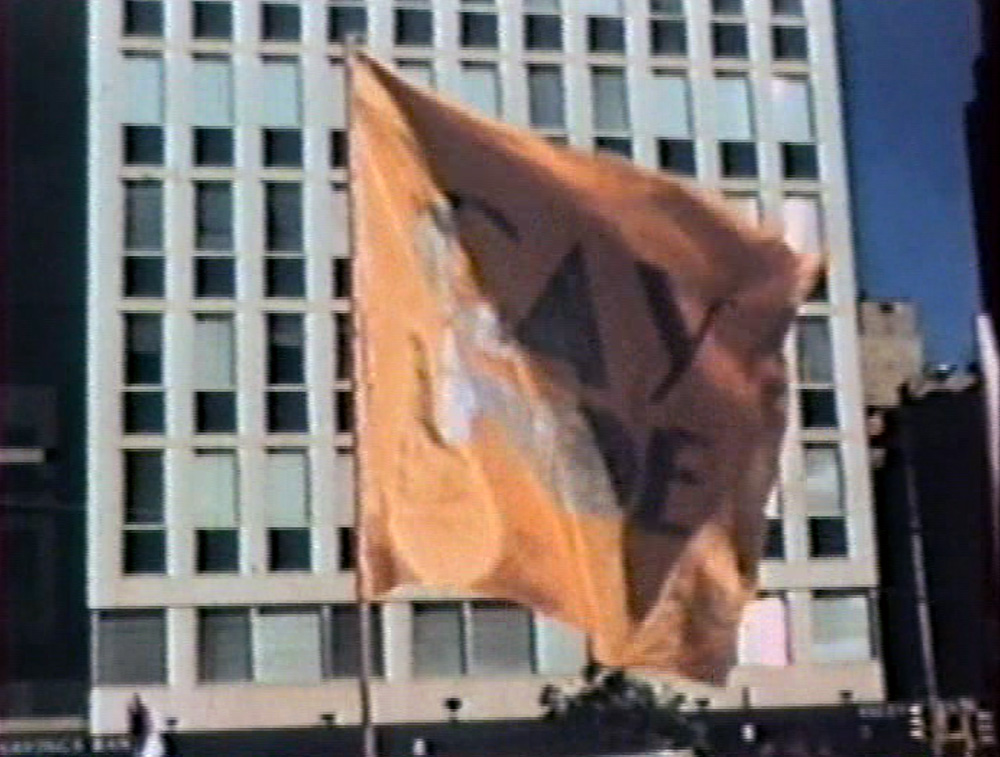
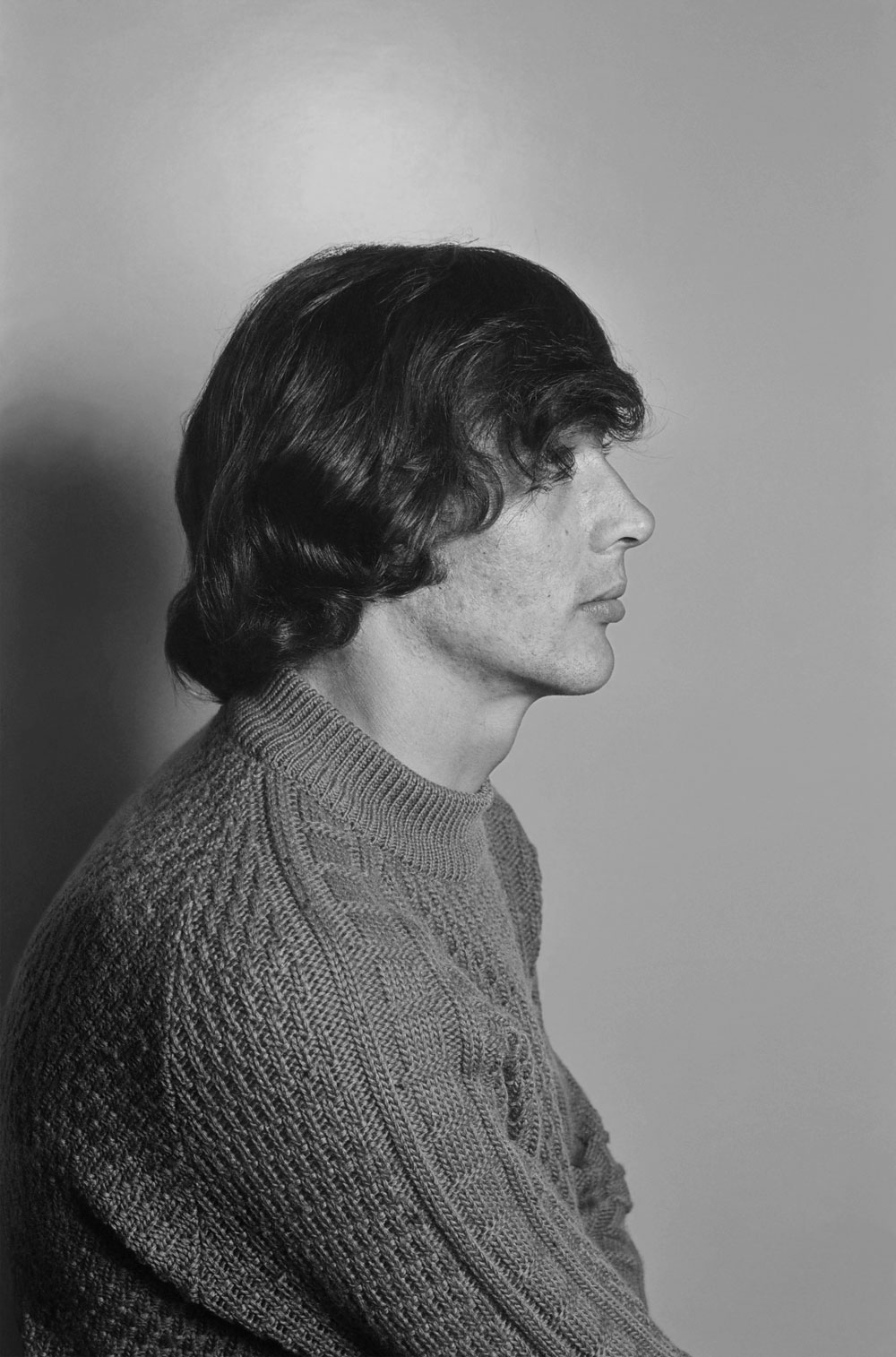
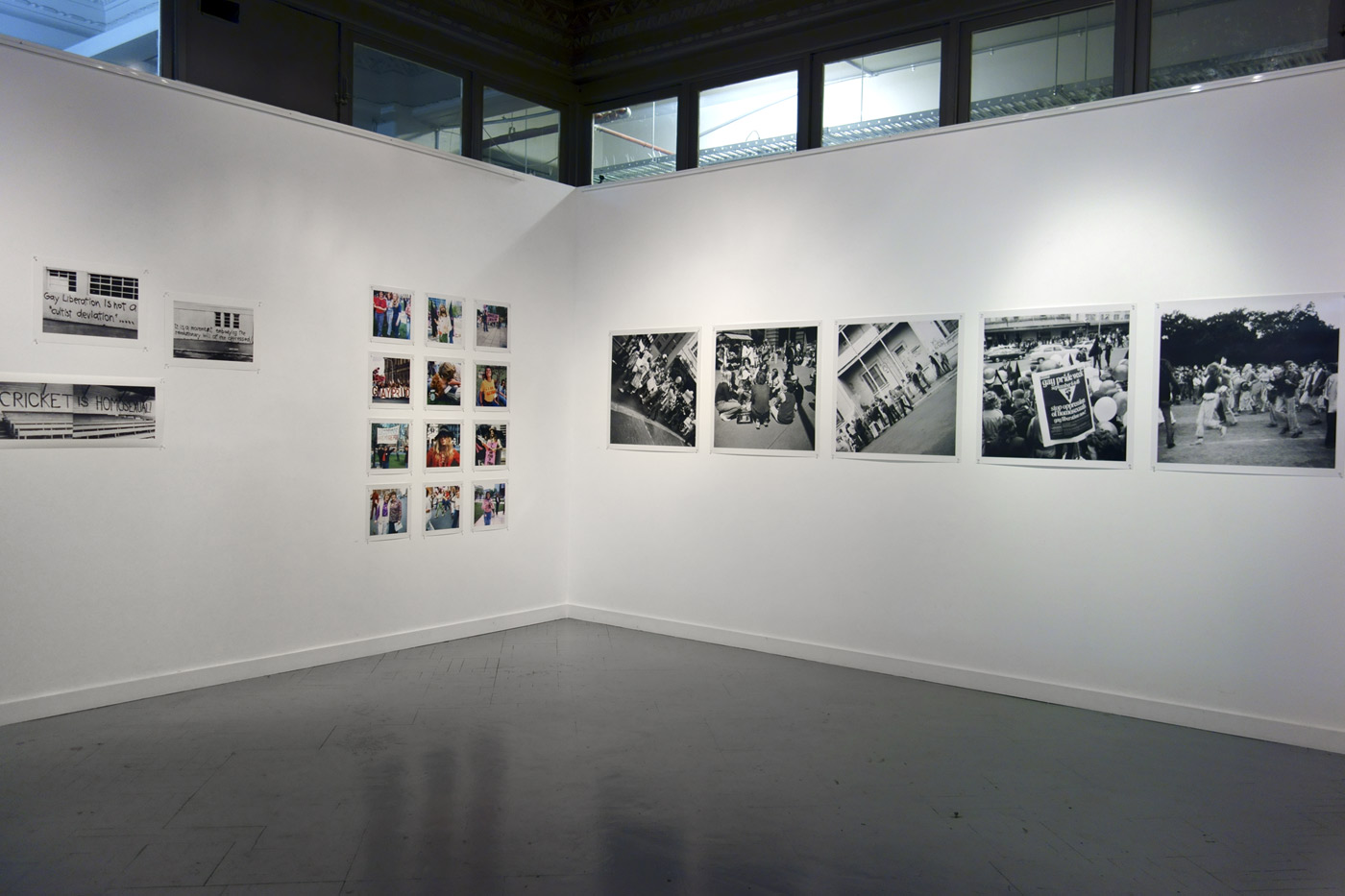
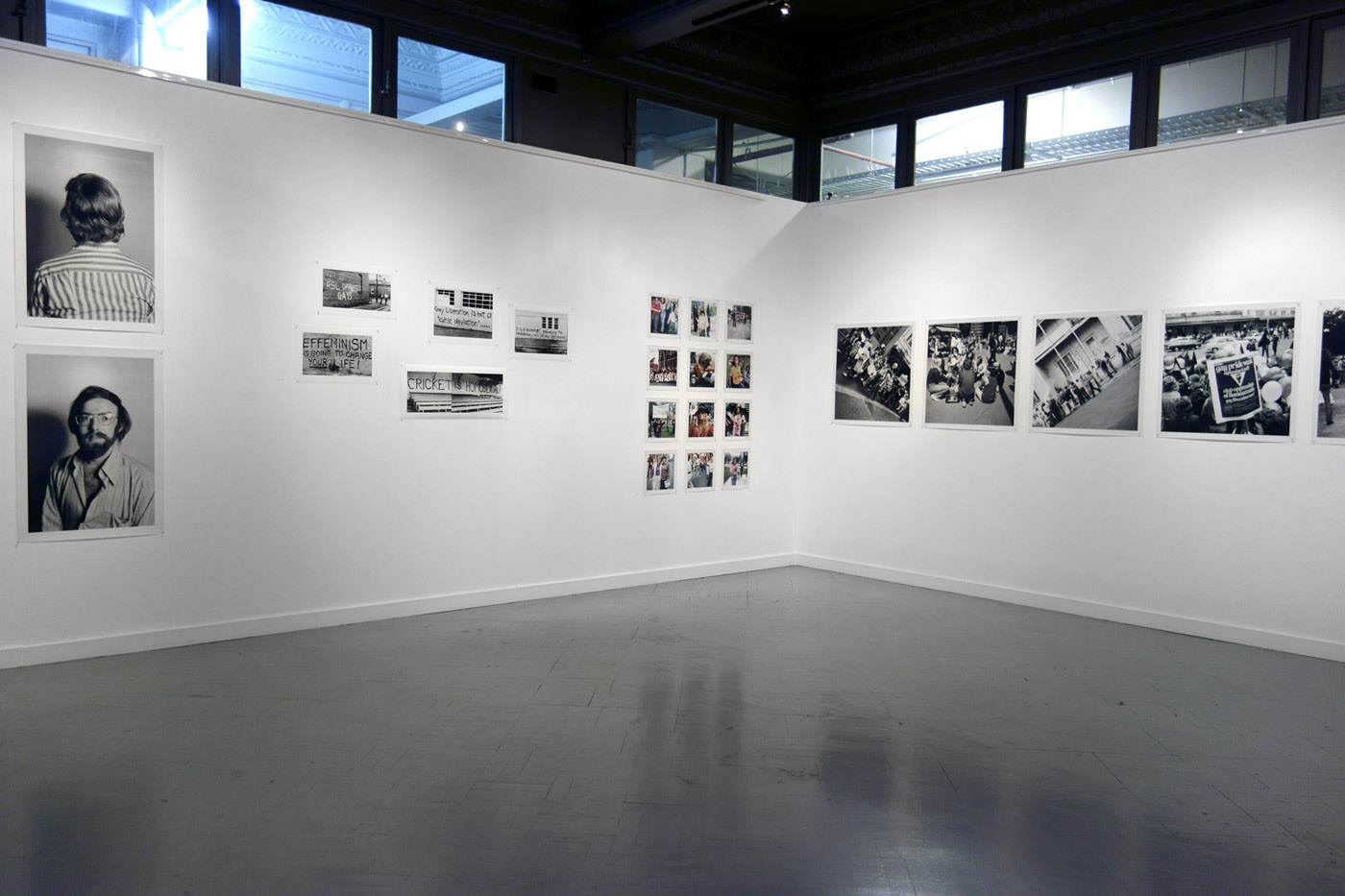
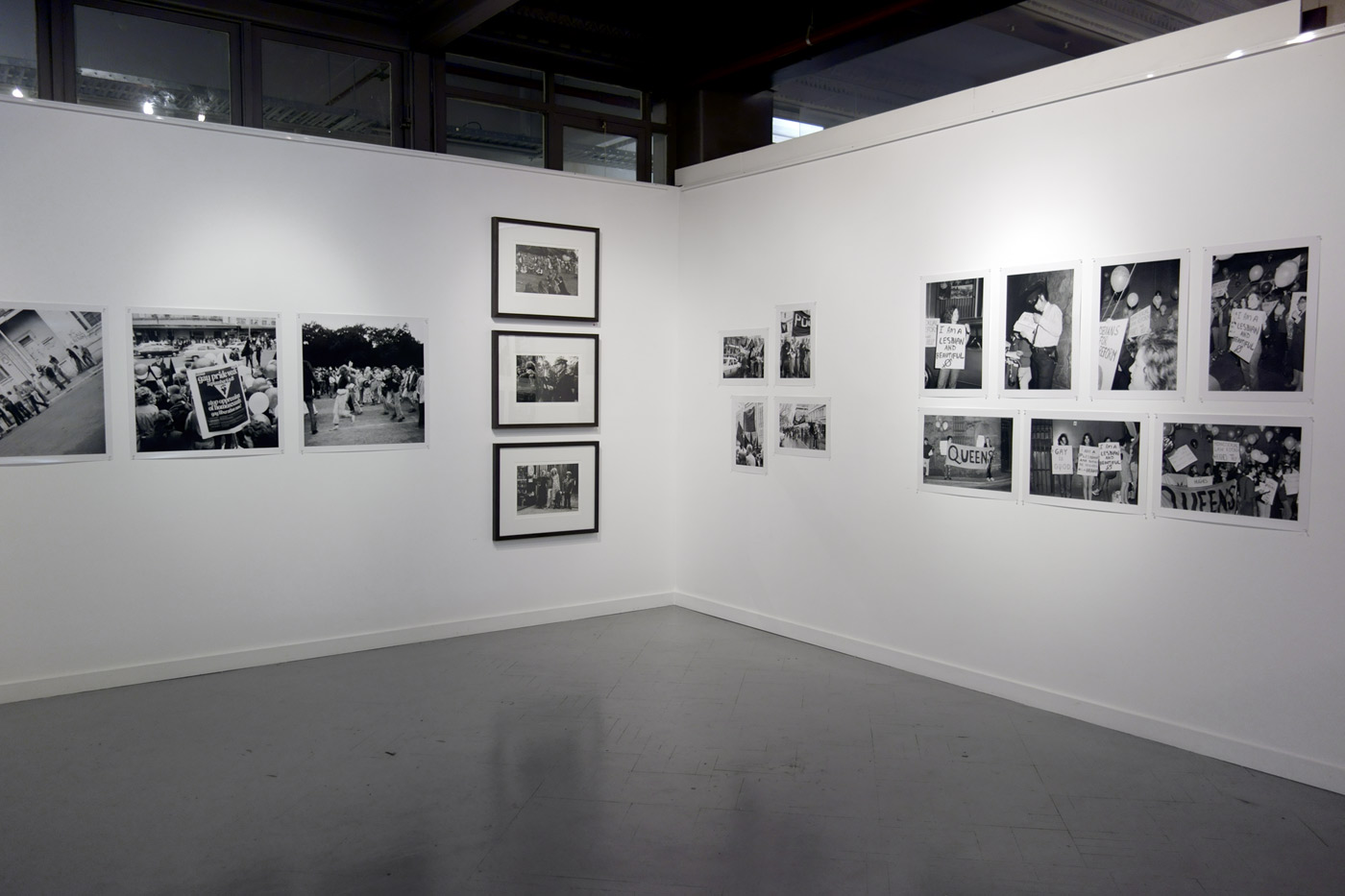
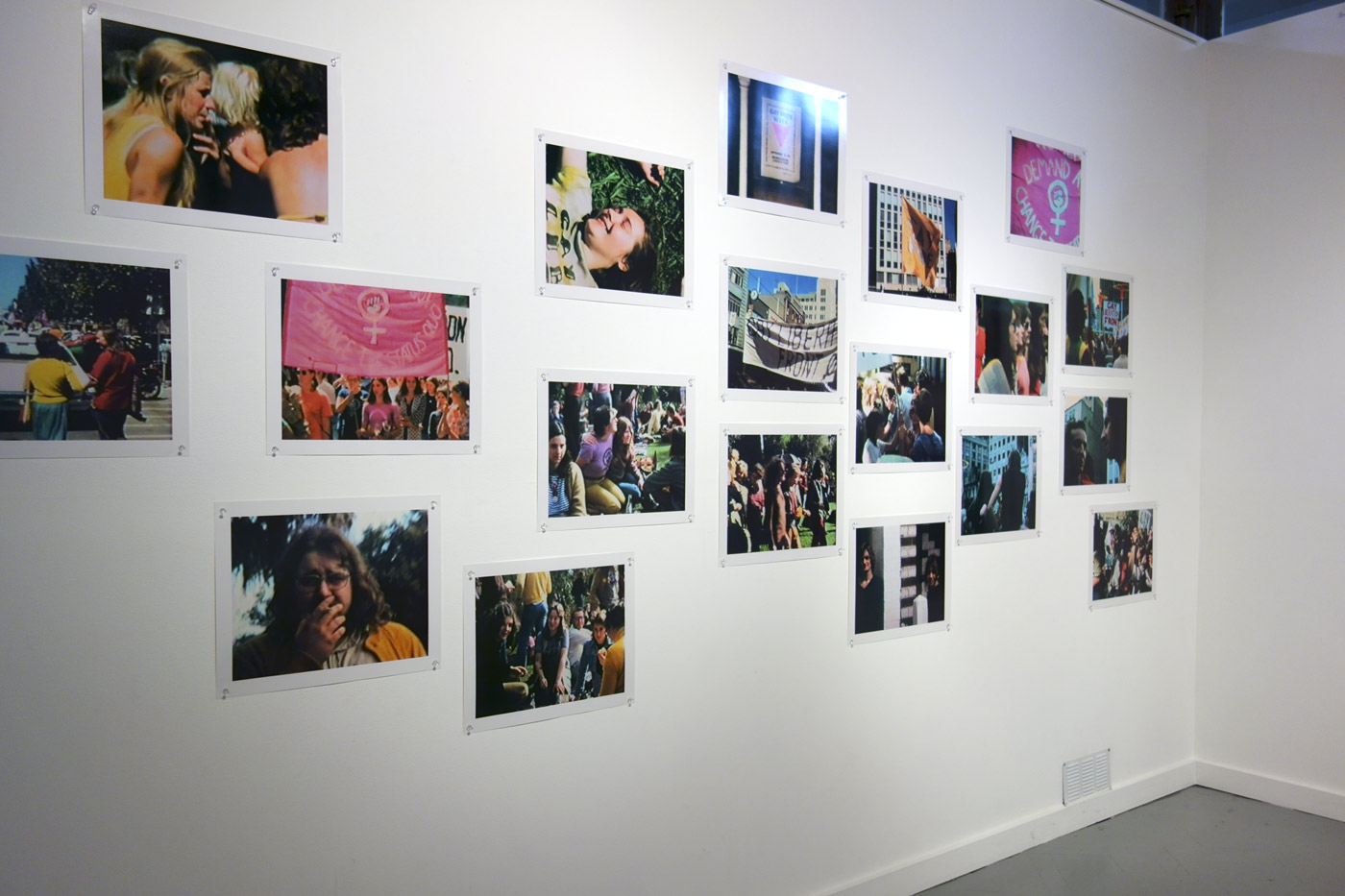
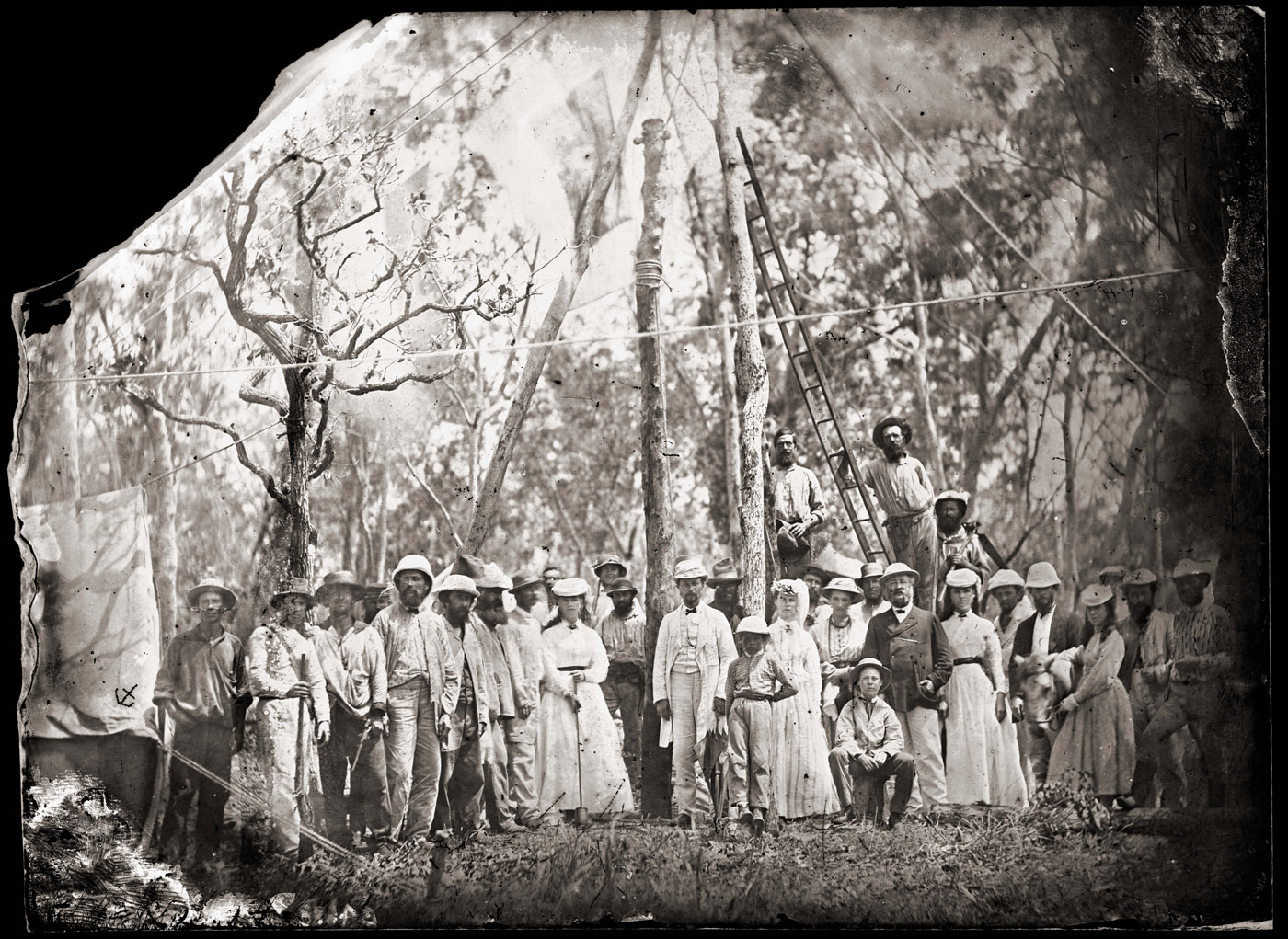
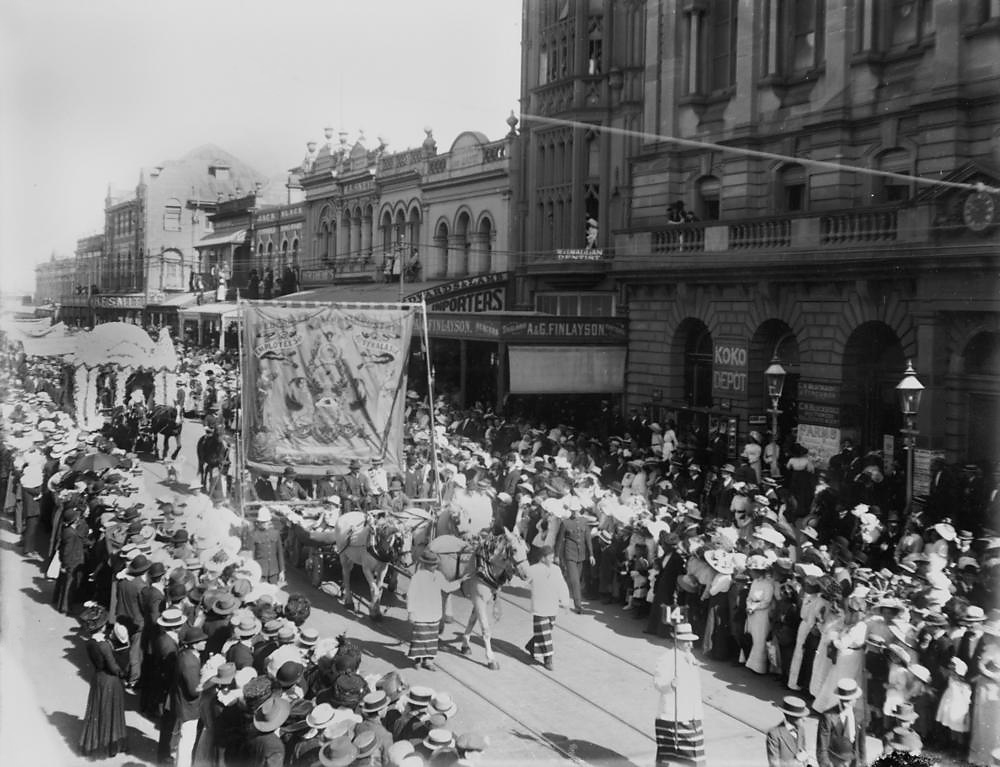
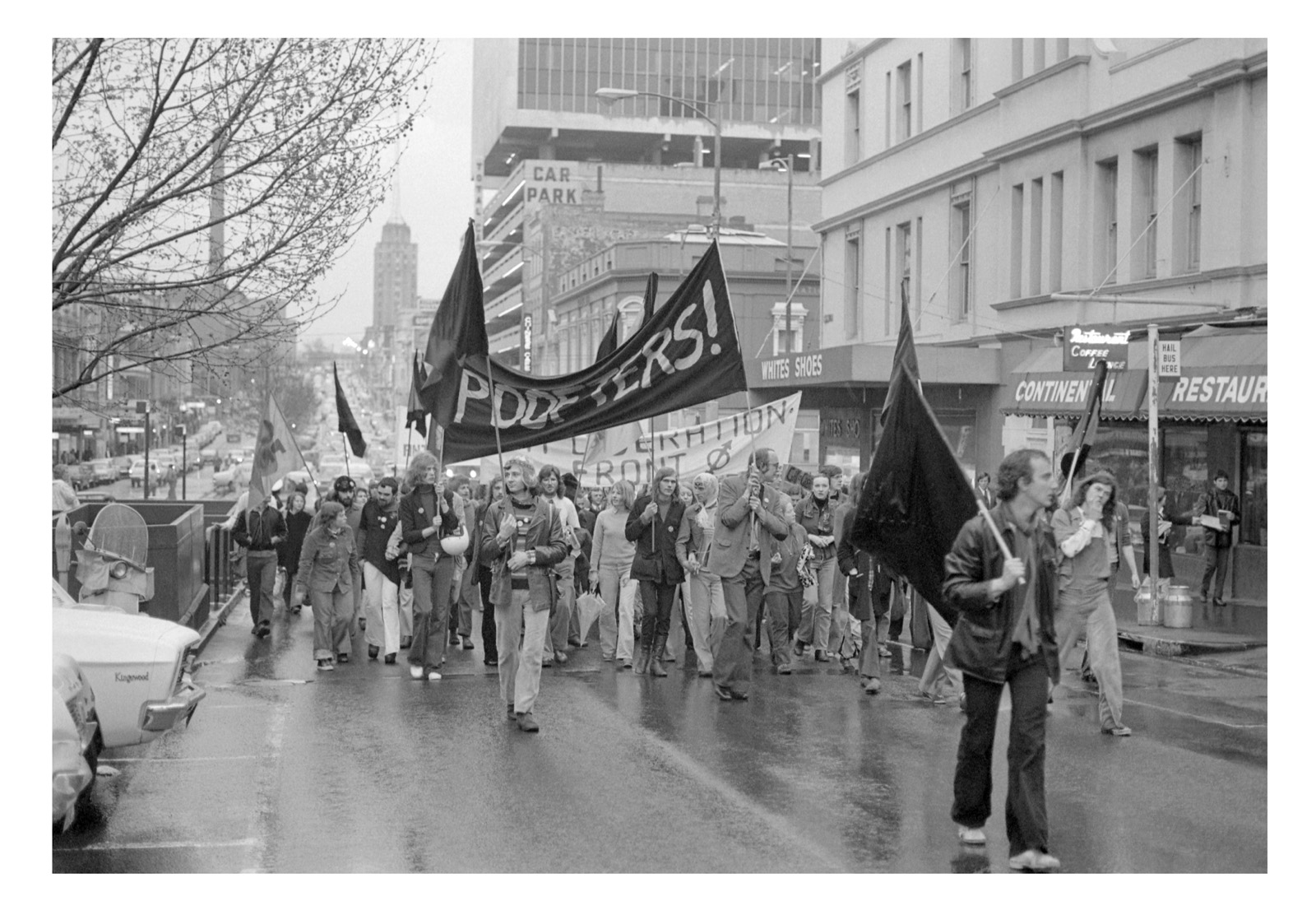
Photography documented this Gay Liberation thing, the emergence in public and private of gay people. It not only documented this visibility but also represented it in very aesthetic and artistic ways that up until now have not really been recognised as such. This is where the photographs in this exhibition make their presence known. As gay people found their voice in the early 1970s artists, often at the very beginning of their careers, were there to capture meetings in lounge rooms, consciousness raising groups and street protests. The photographer as artist was not just a witness to these events but actively participated in these actions, which they envisioned in a subjective way. Unlike earlier images of protest marches where there is an observational distance between the photographer / event which allowed for the depiction of environment and numbers (for example in the 8 hour day marches, see figures 1-4) – from the mid-1960s onwards there is a seismic shift in how photographs represent social change and observed history. Now the photographer marches with the inmates and becomes an intimate participant in the proceedings (see figures 5-6).

In this revolutionary era, the artist evidences an empathy with the events being photographed, an up close and personal point of view. Whatever meeting or protest they were there to record was important to them, be it anti-Vietnam war, anti-Apartheid, pro abortion, nuclear disarmament, Gay Liberation, Women’s Liberation, Aboriginal rights, anti-fascist marches and student protests from around the world. And it didn’t matter whether the photographers were gay, straight or whatever. People appropriated public and private space as a form of collective activism, using social movement cultures to re-make the world. The ways of imagining life and transformation, of imaging life and transformation were enabled by the photographer actively participating in these events. The photographer’s “second sight” did not consist in “seeing” but in being there.

As Professor Barbara Creed states of her interest in artistically documenting these actions, “I was very keen on the slogan – ‘The personal is political’. I was in favour of political action of all kinds – direct action, demonstrations, marches, meetings, consciousness raising groups, media publicity, television appearances, coming out at work, talks to schools etc. I was also very interested in the possibility of using artistic practices (film, photography, poetry, fiction, art) to build solidarity among gay people and to help change public opinion.”4

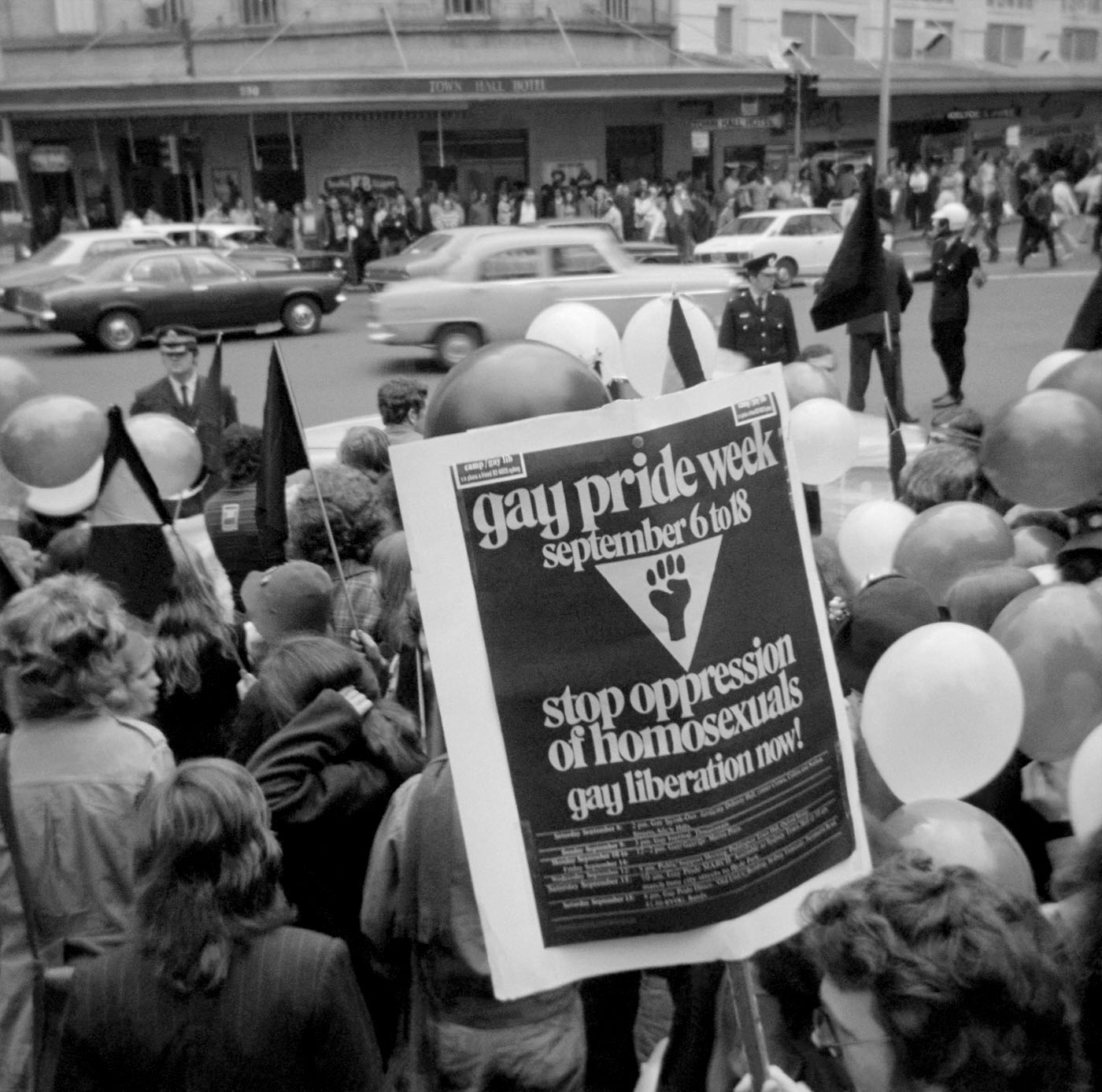
While “the early demonstrations illustrated in this exhibition did often include sympathetic “straights” – a term that seems to have disappeared from the language – for whom gay liberation was part of a wider set of cultural issues,”5 for gay men pictured in the photographs these meetings and marches could be seen as a form of “coming out”, or a place to find solidarity, friendship or sex.6 Gay Pride Week in 1973, for example, was seen as a chance to target, “all the institutions of our oppression: the police courts, job discrimination, the bigoted churchmen and politicians, the media, the psychiatrists, the aversion therapists, the military, the schools, the universities, the work-places … It will also seek to change the mind of the prejudiced, the fearful, the conditioned, the sexually repressed, all those who in oppressing us, oppress themselves.”7 It was also intended to say to gay and straight alike, “gay is good, gay is proud, gay is aggressively fighting for liberation. It will say to gays: come out and stand up. Only you can win your own liberation. Come out of the ghettos, the bars and beats, from your closets in suburbia and in your own minds and join the struggle for your own liberation.”8

For photographers it was a chance to picture a changing world. As Sydney photographer Roger Scott has observed, “I knew I could make a point with my camera. It was exciting. The old conservative world was ending and a new Australia was beginning.”9 With the birth of a new Australia came the end of the White Australia policy when the Whitlam Government passed laws to ensure that race would be totally disregarded as a component for immigration to Australia in 1973; with it came the presence of gay people on the streets shouting ‘come out, come out, wherever you are’ – but certainly not in the newspapers or on television for there was, essentially, the suppression of any reference to, or reportage of ‘homosexuals’ in the mainstream press in Australia.10 If they were pictured, gay people still usually turned away from the camera or had their faces blacked out for fear of discrimination and abuse. As artist John Storey notes, “Conservatism flooded the media, government and all the rest. Homophobia was everywhere but was not a term used in public.”11

As for what prompted artists to document organisations and events, Professor Creed remarks, “I loved to film life around me. I had access to good equipment. I thought it was important to have a visual record of the emergence of Gay Liberation. I believed that films and photos would help to create a sense of community for everyone involved in Gay Liberation. Many members of Gay Lib had been ‘closeted’ all of their lives and so it was a new experience for them to join what is best described as an alternative family. In those days, the Gay Lib group was relatively small – perhaps 30-40 members, so we all knew each other. We held regular meetings, joined CR groups, took part in demonstrations, went away for weekend group events, held dances etc. I also wanted to capture the way we looked, couples together, friends, what we wore, our fashions and styles. Some of the guys had a fantastic sense of style – much more than many of the women who were in revolt against ‘feminine’ fashion. I hoped my films and photos would give support to the gay community and to our emerging sense of forming a new identity.”12

By their very embodiment, the art and politics of these photographs awakens what Roland Barthes calls the “intractable reality” of the image 13 – that prick of consciousness (the punctum), that madness that documents activism and freedom from persecution as both aesthetic and ethical, performative and political. Here, the idea of “being there” – being fully present, in mind and body; being there at the marches; being in the images; being in front of the image looking at it; coupled with the physical presence of the photograph, manifests itself most strongly. Even today, the photographs shock the viewer with their intractable reality. You can just feel the passion of these people, the police presence, the fear, and the authenticity of the photographers’ voice – raw, in your face, people really standing up to be counted.

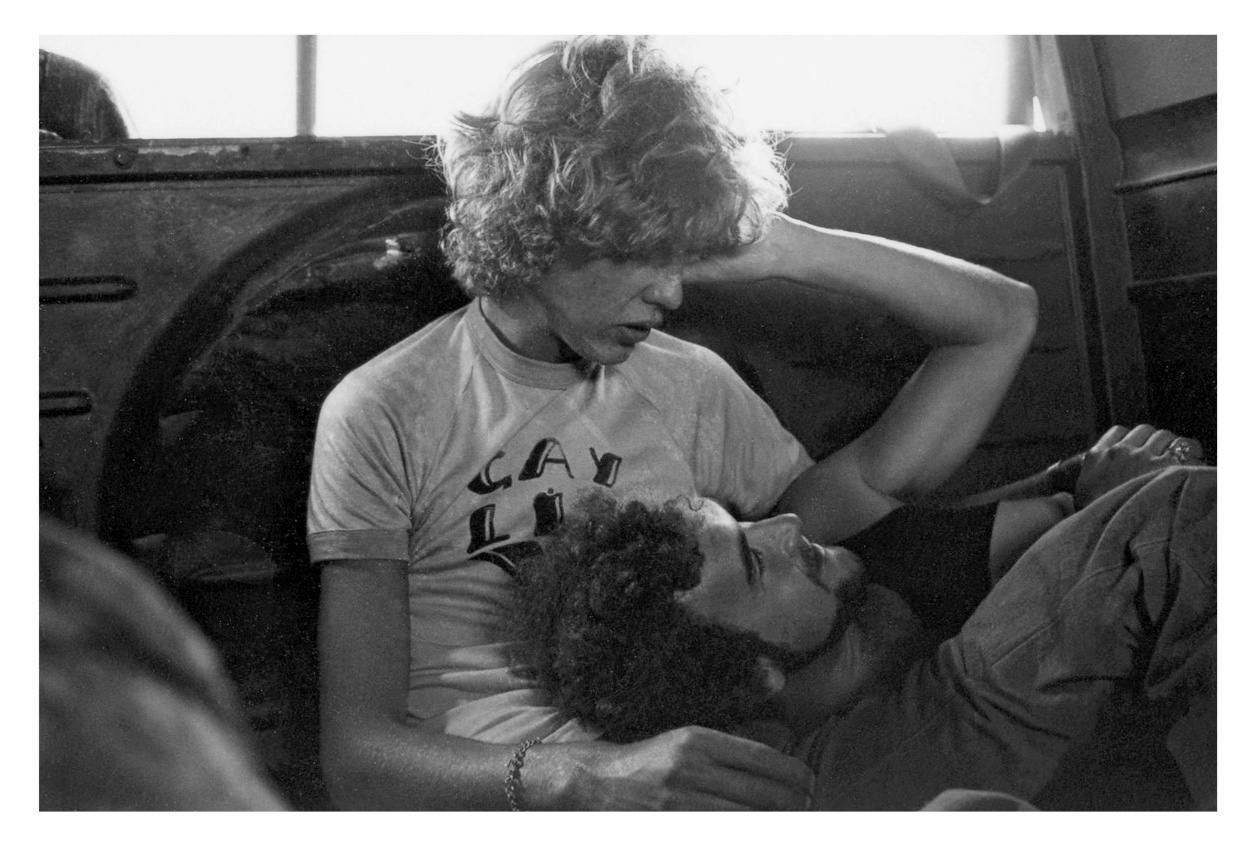
There is also another side to these photographs – the documentation of the more private moments (meetings, consciousness raising groups, friends in the car etc) and the portrayal of gays one on one, close up and personal with the camera in mugshots used in a grid for the cover of CAMP Ink magazine in 1972. Only today can we truly appreciate the intimacy and beauty of these photographs: the photographs of two young gay men in the back of a VW Kombi van that exists only as a 35mm contact print, now scanned and rescued from oblivion; or the presence of gays posing for the camera against a neutral backdrop, every pore of their skin able to be seen (a precursor to the large colour portraits of Thomas Ruff). As Professor Creed states of her desire to capture these intimate moments, “In the 70s film, media and television rarely if ever depicted us at all – let alone our public or private lives. I have always been drawn to the aesthetic power of film and photography to represent the inner world and inner lives of people. The visual image is a great leveller – it reveals the commonality of living things, the need for affection, companionship, community. Contrary to popular myths of the time, gays and lesbians also have a need for intimacy, as does everyone else. When I made my documentary, Homosexuality A Film For Discussion, I included a segment of intimate moments between couples before the commencement of the documentary street interviews, to link the two (private and public together) and to show that many of the negative comments from the general public about loneliness did not match the actual lives of gay people.”14

So where did the photographs that were taken by these artists end up? Often they were collectively passed from hand to hand and used in newsletters, pamphlets and magazines such as CAMP Ink. As Jill Matthews, who compiled the album of Adelaide photographs observes, “The groups and events were very collective enterprises. In those days anyone who had a camera took photos. If people took photos of you, you asked for copies or they gave you prints. There were many prints made and various people had copies. At the time the use of the photos was personal and collective. The newsletters were collective enterprises with everyone chipping in, using whatever was to hand. There was no editor, although some efforts were made to achieve a sense of continuity. Making the newsletters were always fun group events, with a lot of different things you could do, they were basically parties really.”15

Eventually the photographs settled in personal archives and were largely forgotten or were donated to institutions such as the Australian Lesbian and Gay Archives (now the Australian Queer Archives). And then they all but disappeared from view.

A second (but different) “coming out”

With this exhibition these eclectic photographs re-emerge in a kind of second “coming out.” Having been put away for so many years they appear in the clear light of day, in the clear light of new thinking about their artistic merit and how they act as memory aids to feelings and relationships, events and politics.

While analogue photographic images carry Roland Barthes imprint ‘this has been’ – in other words, a photograph is a depiction of something that has already happened, that is already dead – images do not have fixed or settled meanings. As Scott McQuire insightfully observes, meaning in images “is always transactive: it is the result of complex and dynamic processes of interpretation, contestation and translation. Evidence and testimony is always to be actively produced in the complex present… the photograph’s combination of unprecedented visual detail, which seems to anchor the image in a particular time and place, [is] coupled to the endless capacity for images to travel into new times and places.”16 He goes on to say that photographic history is littered with images that have their meaning altered by entry into a new setting. The images in this exhibition are a case in point for I am examining them as artworks as much as they can be seen as documentary evidence of things that have been.

We should not be afraid of this new interpretation for, as McQuire notes, “Too often when we talk about ‘context’ in relation to a photograph, it is as if there is a finite set of connections that might be fully reproduced, if only we had the time or resources. In other words, the polysemy of the image is given a cursory and limited acknowledgement, in the hope that it can be thereby tamed. Rather than this partial, rather defensive acknowledgement of the fragility of meaning, I am arguing that we need to begin with acceptance of the irreducible openness of technological images. This quality is integrally related to the capacity of any image to circulate and appear in new situations.”17 In other words there is no definitive context for any image and we should not be afraid to approach new interpretations of the work or the coexistence of many possible meanings within that work. This process can be seen as analogous in a contextual sense to the construction of what the French philosopher Henri Bergson (1859-1941) called the ‘composite’ in the physical sense, which he defined as, “construction / model where things different in kind are reconciled through our experience over time. Differences are reconciled not unified. The composite embraces ideas of complexity and multiplicity, allowing different conventions, materials and contents to coexist in an artwork. It therefore permits complexities and relationships of readings to coexist. The viewer becomes aware of new and shifting layers of content revealed over the time of viewing, and of our role in constructing, interpreting and experiencing content(s). This is not just theoretical, it is the way we experience and negotiate the world everyday, as complexity in the continuum of time and space.”18 The viewer thus creates a composite view of these images in the here and now.

The images importance, then, lies in the interplay between the historical and the contemporary, between self-representation and imposed representation, and the relationship between subject and photographer. Their residence in the Australian Lesbian and Gay Archives (ALGA) archive (now the Australian Queer Archives (AQuA), which undoubtedly preserves them, marks this institutional passage, this transition of marginalised histories from private to public, “which does not always mean from the secret to the non-secret.” Under the privileged topology of ALGA they are classified and ordered and made available for study and research, but we must also acknowledge that archives give shape to and regulate cultural memory. They influence our perception of the past and present. As Jacques Derrida writes in Archive Fever: “”There is no political power without control of the archive, if not of memory.” He indicates that the stakes are high over the memorialisation and excavation of sites and people’s histories.”19 This does not mean that ALGA does not promote an active engagement with the works it holds in safe keeping, far from it. They encourage the use of the archive by artists and the recontextualisation and renarrativisation of the images in this exhibition, from documentary objects to visual art works and back again, could not have occurred without their forthright help. But as Mathias Danbolt notes in his excellent article Not Not Now: Archival Engagements in Queer Feminist Art, archives will always be sites of contestation: “The conversations on archives in queer and feminist contexts tend to center on ways to break with the strictures and structures of archival logics, in order to give room for alternative forms of historical (and herstorical) transmissions. But even though archival logics tend to be a continual object of critique in feminist and queer work, the desire for archives is still present… If the process of archivisation is fundamentally about conferring historical status upon material, how to avoid that the status as archival disconnect the queer feminist “past” from the “present” – the “then” from the “now”?”20 Danbolt goes on to suggest that this process is a balancing act, “between the desire for having a history, and the anxiety for being historicised, in the sense of being cut off – metaphorically, practically, systemically – from the present.”21

For me, then, this exhibition is as much about freeing these images from the guardianship of the archive, if ever so briefly, to let them live again in the real world, to let them speak for themselves, as those first gay protesters did all those years ago. To free them of the shackles of being seen as “historical” documentary photographs, the official history of gay liberation in Australia and for them to be seen works of art in their own right. It is about the representation of queer identity through the evidence of photography – from that place, in that time, now breathing in a different era, these people fighting for their liberty. It is about these images and the people in them being (t)here.

In contemporary society, where we are flooded with a maelstrom of images, I believe it is important to contemplate these images for more than just a few seconds in order to understand their history and importance not just for the past, but also for the present and the future. Today, we compose our stories and our histories out of fragments and alterations of spaces. We gather together our sources (in archives, for example) and try and make sense of the past in the present for the future. This process of understanding is about an acknowledgement of the past in the present for the future. Again I say, it is about being (t)here.

In an era of ubiquitous media images, the photographs in this exhibition deserve our attention and contemplation for they are survivors – images that perceptively visualise the initial stages of Gay Liberation in Australia, images that are still alive in the present. Their contemporary re-emergence may lead the community to finally have some iconographic images of the early stages of gay resistance and visibility – intimate representations of protests, meetings and events that ultimately changed the lives of many GLBTI people. They may also have some damn good art upon which to feast their eyes.


Dr Marcus Bunyan
July 2014

Word count: 3,423


Endnotes

1/ Connell, Raewyn. “Ours is in colour: the new left of the 1960s,” in Carolyn D’Cruz and Mark Pendleton (eds.,). After Homosexual: The Legacies of Gay Liberation. Perth: UWA Publishing, 2013, p. 43.

2/ Nichols, James. “Sébastien Lifshitz Releasing ‘The Invisibles: Vintage Portraits of Love and Pride’,” on The Huffington Post website 05/01/2014 [Online] cited 02/05/2014.

3/ Leonard, William. “Altman on Halperin: politics versus aesthetics in the constitution of the male homosexual,” in Carolyn D’Cruz and Mark Pendleton (eds.,). After Homosexual: The Legacies of Gay Liberation. Perth: UWA Publishing, 2013, p. 197.

4/ Email text in response to the question ‘What were your politics during your involvement with Gay Liberation/events (Gay Pride Week etc)’ to co-curator Nicholas Henderson 01/06/2014.

5/ Altman, Dennis. “Out of the closets, into the streets.” Catalogue essay. Melbourne, 2014, p. 2.

6/ Ibid.,

7/ Anon. “Gay Pride Week,” in Melbourne Gay Liberation Newsletter, 1973 quoted in Ritale, Jo and Willett, Graham. “Rennie Ellis at Gay Pride Week, September 1973,” in The La Trobe Journal No. 87, May 2011, pp. 87-88 [Online] Cited 11/07/2014.

8/ Ibid., p. 88.

9/ Scott, Roger quoted in Scott, Roger; McFarlane, Robert and Hock, Peter. Roger Scott: from the street. Neutral Bay, N.S.W.: Chapter & Verse, 2001, p. 13.

10/ Email text from co-curator Nicholas Henderson 12/03/2014.

11/ Email text from John Storey to co-curator Nicholas Henderson 17/05/2014.

12/ Email text in response to the question ‘What prompted you to document the organisations/events?’ to co-curator Nicholas Henderson 01/06/2014.

13/ Barthes, Roland. Camera lucida: Reflections on photography. Hill and Wang, 1st American edition, 1981.

14/ Email text in response to the question ‘One of the aspects of your photographs that I am quite intrigued by is the documentation of the more private moments (meetings, consciousness raising groups, friends in the car etc), what brought you to photograph these subjects?’ to co-curator Nicholas Henderson 01/06/2014.

15/ Jill Matthews notes from telephone conversation to Nicholas Henderson, Tuesday 22 April 2014.

16/ McQuire, Scott. “Photography’s afterlife: Documentary images and the operational archive,” in Journal of Material Culture 18(3) 2013, p. 227.

17/ Ibid.,

18/ Thomas, David. “Composite Realities Amid Time and Space: Recent Art and Photograph,” on the Centre for Contemporary Photography website [Online] Cited 12/07/2014. No longer available online

19/ Derrida, Jacques. Archive Fever. Chicago: University of Chicago Press, 1996, 4, note 1 quoted in Eckersall, Peter. “The Site is a Stage/The Stage is a Site,” on the Archaeology and Narration blog, Saturday, April 9, 2011 [Online] Cited 05/07/2014.

20/ Danbolt, Mathias. “Not Not Now: Archival Engagements in Queer Feminist Art,” in Imhoff, Aliocha and Quiros, Kantuta (eds.,). Make an effort to remember. Or, failing that, invent. Bétonsalon No. 14, 2013, p. 4. ISSN: 2114-155X.

21/ Ibid., p. 5.


John F. Shale (Australian, 1855-1924) 'Mounted police assembled in the square during the General Strike, Brisbane' 1912


Figure 2
John F. Shale (Australian, 1855-1924)
Mounted police assembled in the square during the General Strike, Brisbane
1912


Photographer unknown. 'Eight Hour Day parade in Brisbane' 1912


Figure 3
Photographer unknown
Eight Hour Day parade in Brisbane
1912


Photographer unknown. 'Women evening students' float on Park Street in the 1940s' Photo, Mitchell Library, State Library of NSW


Figure 4
Photographer unknown
Women evening students’ float on Park Street in the 1940s
Photo, Mitchell Library, State Library of NSW


Ponch Hawkes (Australian, b. 1946) 'Poofters!' 1973, printed 2014


Figure 5
Ponch Hawkes (Australian, b. 1946)
Poofters!
1973, printed 2014
Digital C type print on Kodak Endura Matte
© Ponch Hawkes


John Englart (Australian, b. 1955) 'Gay Pride Week poster, Gay Pride march outside the Town Hall Hotel, Sydney Town Hall' Sydney, 1973


Figure 6
John Englart
(Australian, b. 1955)
Gay Pride Week poster, Gay Pride march outside the Town Hall Hotel, Sydney Town Hall
Sydney, 1973
Digital C type print on Kodak Endura Matte
© John Englart


LIKE ART BLART ON FACEBOOK

Back to top

Exhibition: ‘Emmet Gowin’ at the Fondation Henri Cartier-Bresson, Paris

Exhibition dates: 14th May – 27th July 2014


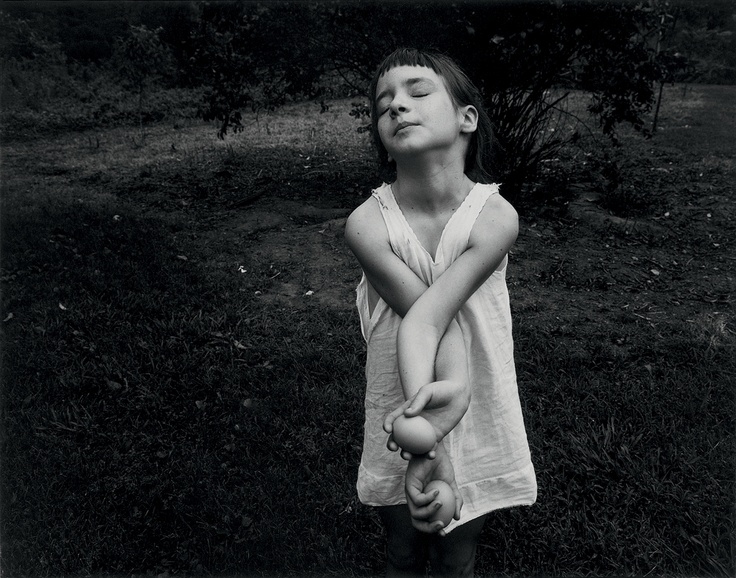
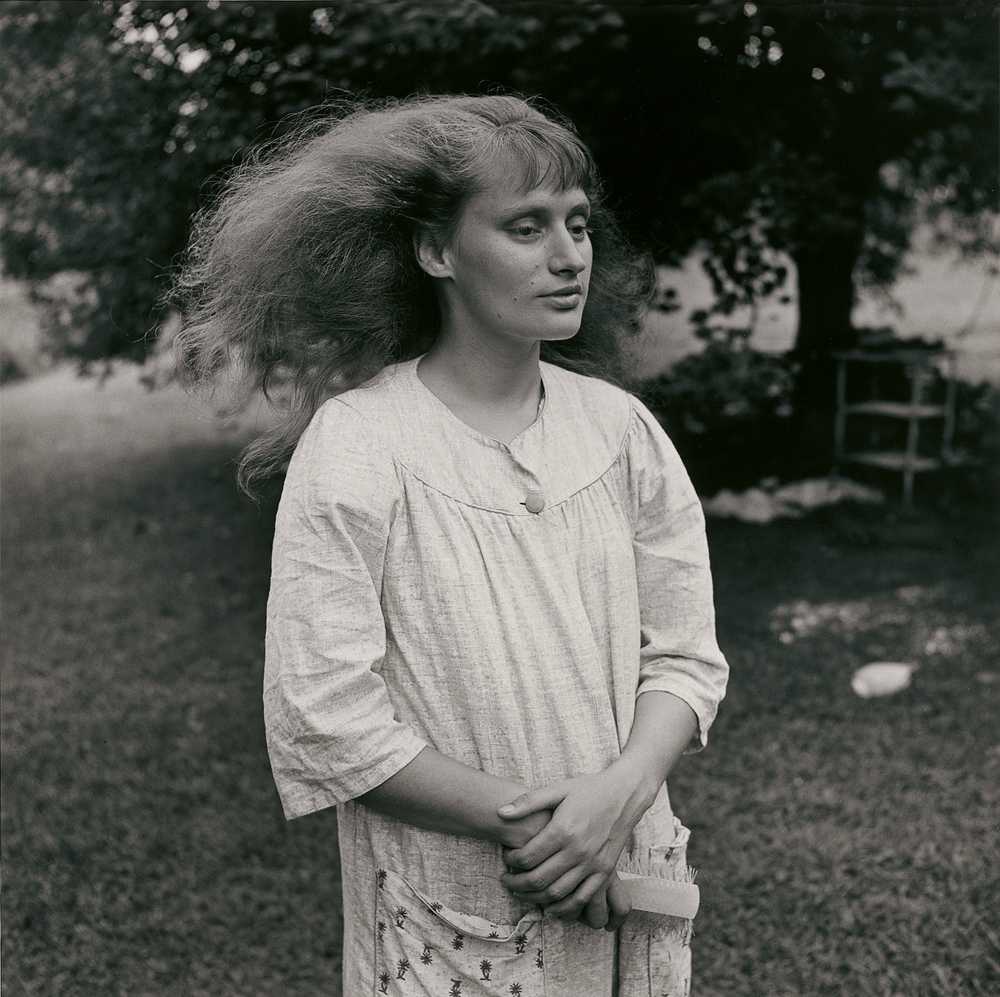
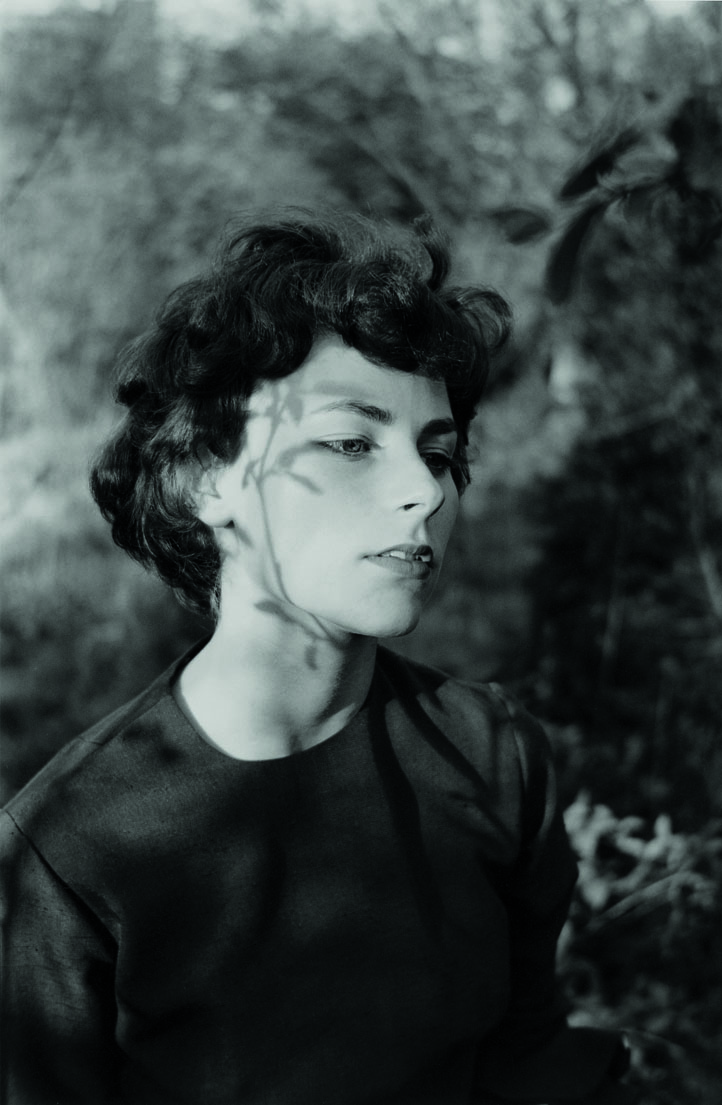
Emmet Gowin (American, b. 1941) 'Nancy, Danville (Virginia)' 1969


Emmet Gowin (American, b. 1941)
Nancy, Danville (Virginia)
1969
Gelatin silver print
© Emmet Gowin, cortesy Pace/MacGill Gallery, New York


Emmet Gowin is a superlative photographic artist. His images possess a unique sensuality that no other artist, save Frederick Sommer, dare approach.

His own family was an early significant subject matter, one to which only he had ready access. “I was wondering about in the world looking for an interesting place to be, when I realised that where I was was already interesting.”1 I feel that the photographs of his family are his strongest work for they image an intimate story, and Gowin is nothing if not a magnificent storyteller. Look at the beauty of images such as Nancy, Danville (Virginia) (1969, above) or Ruth, Danville (Virginia) (1968, below) and understand what awareness it takes – first to visualise, then capture on the negative, then print these almost mystical moments of time.

As Gowin observed in his senior thesis, which was predicated upon the necessary co-ingredients of art and spirituality, “Art is the presence of something mysterious that transports you to a place where life takes on a clearness that it ordinarily lacks, a transparency, a vividness, a completeness.”2 He complemented this understanding of art and spirituality with an interest in science. He was in harmony with the physicists and the scientists, finding them to be the most poetic people of the age.3 Inspired by Sommer, Gowin perfected his printing technique through a respect for the medium, respect for the materials and conviction as to what the materials were capable of doing.4

“Sommer freely shared with Gowin his knowledge of photographic equipment, materials, chemicals and printing techniques and Gowin often repeats Sommer’s admonition to him: “Don’t let anyone talk you out of physical splendour.” Over the years Gowin developed methods of printing born from patient experimentation and a love of craft. His background in painting and drawing taught him that there are many solution to making a finished work of art… which he often builds to achieve the most satisfying integration of elements: “The mystery of a beautiful photograph really is revealed when nothing is obscured. We recognise that nothing has been withheld from us, so that we must complete its meaning. We are returned, it seems directly, to the sense and smell of its origin… A complete print is simply a fixed set of relationships, which accommodates its parts as well as our feelings. Clusters of stars in the sky are formed by us into constellations. Perhaps I feel that this constellation has enough stars, and doesn’t need any more. This grouping is complete. It feels right. Feeling, alone, tells us when a print is complete.””5

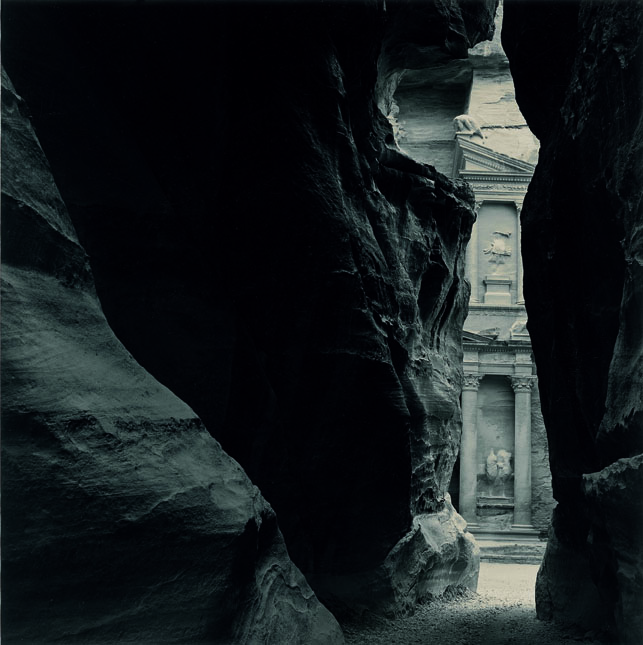
His later more universal work, such as the landscapes and aerial photographs, are no less emphatic than the earlier personal work but they are a second string to the main bow. The initial impetus of this work can be seen in the book Emmet Gowin Photographs as a development from still life photographs such as Geography Pages, 1974 (p. 62). This second theme took Gowin longer to develop but his photographs are no less powerful for it. His photographs of Petra possess the most amazing serenity of any taken at this famous site; his photographs of Mount St Helens after the volcanic eruption and the aerial photographs of nuclear sites and aeration ponds are among the strongest aerial photographs that I have ever seen. Gowin’s experimentation with the development of the negative, using different times and developers; his experimentation with the development of the print, sometimes using multiple developers and monotones or strong / subtle split toning (as can be seen in the photographs below) is outstanding. His poetic ability rouses the senses and is munificent but for me these photographs do not possess the “personality” or significance of his earlier family photographs. But only just, and we are talking fractions here!

“These photographs of the tracings of human beings reveal mankind not as a nurturer but as a blind and godlike power. Even his latest aerial agricultural landscapes made on route to nuclear sites have a magnificent indifference to human scale. For Gowin, confrontation of man’s part in the creation of ecological problems would seem to require the most transcendental point of view, and as his subjects have become more difficult and frightening, he has created his lushest and most seductive prints.”6

Gowin is an artist centred in a space of sensibility. An understanding of the interrelationships between people and the earth is evidenced through aware and clearly seen images. Gowin digs down into the essence of the earth in order to understand our habituation of it. How we fail to change the course we are on even as we recognise what it is that we are doing to the world. When the stimulus is constantly repeated there is a reduction of psychological or behavioural response and this is what Gowin pokes a big stick at. As he observes,

“We are products of nature. We are nature’s consciousness and awareness, the custodians of this planet… We begin as the intimate person that clings to our mother’s breast, and our conception of the world is that interrelationship. Out safety depends on that mother. And now I’m beginning to see that there’s a mother larger than the human mother and it’s the earth; if we don’t take care of that we will have lost everything.”7

I was luck enough to meet Emmet Gowin when he visited Australia in 1995. He had an exhibition in the small gallery in Building 2 in Bowens Lane at RMIT University, presented a public lecture and held a workshop with about 20 students. I remember I was bowled over by his intensity and star power and I admit, I asked a stupid question. The impetuousness of youth with stars in their eyes certainly got the better of me. Now when I look at the work again I am still in awe of the works sincerity, spirituality, sensuality and respect for subject matter. No matter what he is photographing.

Dr Marcus Bunyan


1/ Gowin, Emmet quoted in Chahroudi, Martha. “Introduction,” in Emmet Gowin Photographs. Philadelphia Museum of Art, 1990, p. 10.
2/ Ibid., p. 9.
3/ Ibid., p. 11.
4/ Ibid., p. 11.
5/ Gowin quoted in Kelly, Jain (ed.,). Darkroom 2. New York, 1978, p. 43 quoted in Chahroudi, Martha. “Introduction,” in Emmet Gowin Photographs. Philadelphia Museum of Art, 1990, p. 11.
6/ Chahroudi, Op. cit., p. 15.
7/ Ibid., p. 15.

Only two of the images are from the Fondation Henri Cartier-Bresson – the rest I sourced from the internet. Please click on the photographs for a larger version of the image.


“For me, pictures provide a means of holding, intensely, a moment of communication between one human and another.”

“There is a profound silence that whines in the ear, a breathless quiet, as if the light or something unheard was breathing. I hold my breath to make certain it’s not me. It must be the earth itself breathing.


Emmet Gowin


Emmet Gowin (American, b. 1941) 'Edith and Ruth, Danville (Virginia)' 1966


Emmet Gowin (American, b. 1941)
Edith and Ruth, Danville (Virginia)
1966
Gelatin silver print
© Emmet Gowin, cortesy Pace/MacGill Gallery, New York


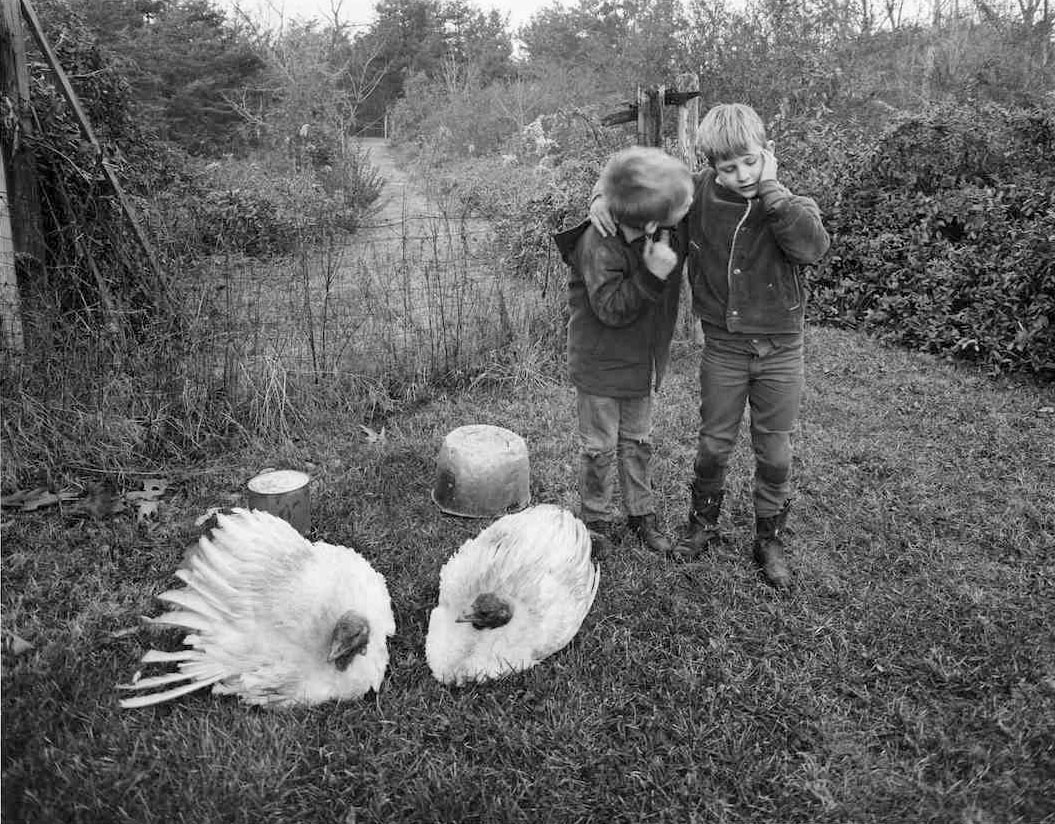
Emmet Gowin (American, b. 1941) 'Barry, Dwayne and Turkeys, Danville, Virginia' 1970


Emmet Gowin (American, b. 1941)
Barry, Dwayne and Turkeys, Danville, Virginia 
1970
Gelatin silver print
© Emmet Gowin, cortesy Pace/MacGill Gallery, New York


Emmet Gowin, the catalog accompanying a retrospective now touring in Spain, is a great introduction to the artist’s works and a great keepsake for a fan. The writings by Keith Davis, Carlos Gollonet and Gowin himself identify the photographer’s humanist and spiritual roots and detail his journey from 1960’s-era people pictures focused on his wife, Edith and family in Danville, VA, to aerial photographs of ravaged landscapes, like the nuclear test grounds in Nevada, and his most recent project  archiving tropical, nocturnal-moths.

While his disparate bodies of work may look like geologic shifts in subject matter, Gowin talks in the book about the spiritual quest he’s on, and his realisation that humankind inhabits the land, and that the land is a vital part of who we are. To my eye, what holds all the works together is Gowin’s never-ceasing focus on non-conventional beauty. His way of photographing both people and the wasted landscapes plays up the dark sublime. These are not traditional pretty pictures, but they are exquisitely beautiful. All Gowin photos smoulder with emotion and feel like they were snapped with a breath held, bated with desire.

Roberta Fallon. “Emmett Gowin – From family of man to mariposas nocturnas at Swarthmore’s List Gallery,” on The Artblog website, March 22, 2012 [Online] Cited 05/07/2014


Emmet Gowin (American, b. 1941) 'Edith, Noël, Danville (Virginia)' 1971


Emmet Gowin (American, b. 1941)
Edith, Noël, Danville (Virginia)
1971
Gelatin silver print
© Emmet Gowin, Courtesy Pace/MacGill Gallery, New York


Emmet Gowin (American, b. 1941) 'Edith, Danville (Virginia)' 1971


Emmet Gowin (American, b. 1941)
Edith, Danville (Virginia)
1971
Gelatin silver print
7 3/4 x 9 7/8″ (19.7 x 25.1cm)
Gift of Judith Joy Ross
© Emmet Gowin, Courtesy Pace/MacGill Gallery, New York


Emmet Gowin (American, b. 1941) 'Edith, Danville (Virginia)' 1970


Emmet Gowin (American, b. 1941)
Edith, Danville (Virginia)
1970
Gelatin silver print
© Emmet Gowin, Courtesy Pace/MacGill Gallery, New York


Emmet Gowin (American, b. 1941) 'Edith, Newtown (Pennsylvania)' 1974


Emmet Gowin (American, b. 1941)
Edith, Newtown (Pennsylvania)
1974
Gelatin silver print
© Emmet Gowin, cortesy Pace/MacGill Gallery, New York


Emmet Gowin (American, b. 1941) 'Ruth, Danville (Virginia)' 1968


Emmet Gowin (American, b. 1941)
Ruth, Danville (Virginia)
1968
Gelatin silver print
© Emmet Gowin, cortesy Pace/MacGill Gallery, New York


Emmet Gowin (American, b. 1941) 'Edith, Chincoteague Island (Virginia)' 1967


Emmet Gowin (American, b. 1941)
Edith, Chincoteague Island (Virginia)
1967
Gelatin silver print
© Emmet Gowin, Courtesy Pace/MacGill Gallery, New York


From May 14th to July 27th 2014, Fondation Henri Cartier-Bresson will hold an exhibition of the American photographer Emmet Gowin. This important retrospective is showing 130 prints of one of the most original and influential photographer of these last forty years. This exhibition shows on two floors his entire career: his most famous series from the end of the sixties, the moths’ flights and the aerial photographs. The exhibition organised by Fundación MAPFRE in collaboration with Fondation HCB is accompanied by a catalogue published by Xavier Barral edition.

Born in Danville (Virginia) in 1941, Emmet Gowin grows up in Chincoteague Island, in a religious family. His father, a Methodist minister gives him a righteous discipline and a strict education, while his mother, musician, was a gentle, nurturing presence. During his spare time, Emmet encounters the surrounding landscape and begins drawing.

He completes his high school education and enrols in a local business school in 1951 and works at the same time at the design department of Sears, the multinational department store chain. In 1961, Gowin enters in the Commercial Art Department at Richmond Professional Institute, where he studies drawing, painting, graphic design, and history of Art. After a few months, he realises that photography is the best mean of expression and gives him the possibility to seize the Fate and the Unexpected.

Gowin’s early photographic influences came in the form of books and catalogues such as Images à la Sauvette by Henri Cartier-Bresson, History of Photography by Beaumont Newhall or Walker Evans’s American Photographs. Emmet Gowin acquires his first Leica 35mm in 1962 and after two years spent observing the Masters of photography, he finally feels ready to affirm his own photographic style. In 1963, he goes for the first time in New York and meets Robert Franck who encouraged him.

The first Gowin’s portfolios realised in 1965, is technically simple in approach. While the subjects vary considerably, all are drawn from everyday life: kids playing outdoors, Edith’s family, adults in the streets or squares, cars and early pictures of Edith. They get married in 1964. Edith Morris and Emmet Gowin are born in the same city but they grew up in totally different families. Edith’s one, was more exuberant and emotionally close than Emmet’s. As we can discover in the first floor of the exhibition, Edith and her family are the heart of the photograph’s creative universe. As mentioned by Carlos Gollonet, curator of the exhibition, Gowin’s work, seen cumulatively, is a portrait of the artist.

In 1965, they move to Providence, and Emmet begins his studies with Harry Callahan at Rhode Island School of Design. He begins to consistently use a 4 x 5 inch view camera from this time on. This bigger negative produced prints with beautiful transparent details and correspondingly finer and smoother tonal scale.

Just before his first son’s birth, Elijah, in 1967, Emmet and Edith moved to Ohio, where he begins teaching at the Dayton Art Institute. This marks the start of a teaching career that spans more than four decades. He concentrates his work on Edith and let us going through his private life and proposes a very personal artistic vision of this work: I do not feel that I can make picture impersonally, but that I am affected by and involved with the situations which lead to, or beyond, the making of the pictures. In these years, he met Ralph Eugene Meatyard and Frederik Sommer, who would become his close friend and mentor.

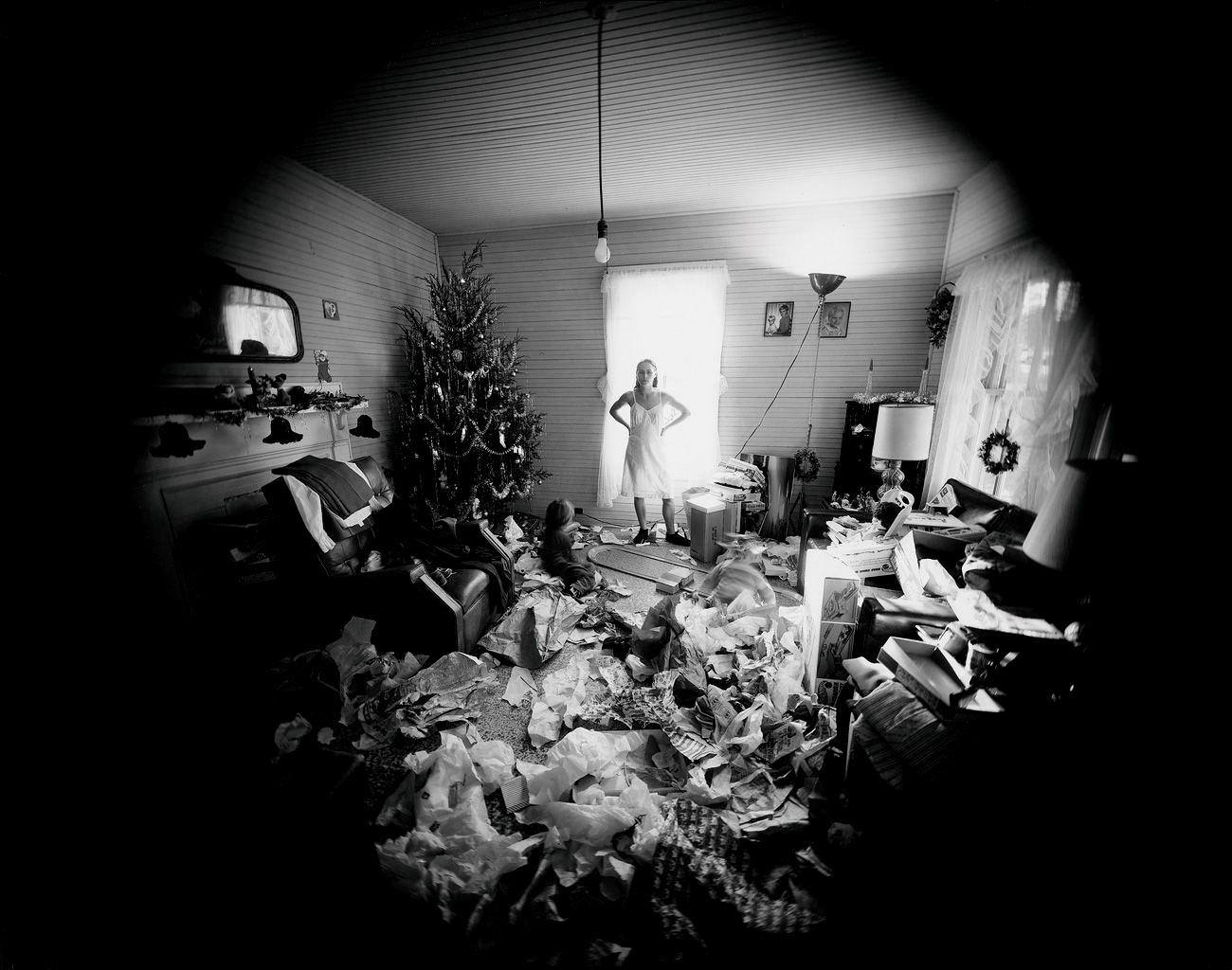
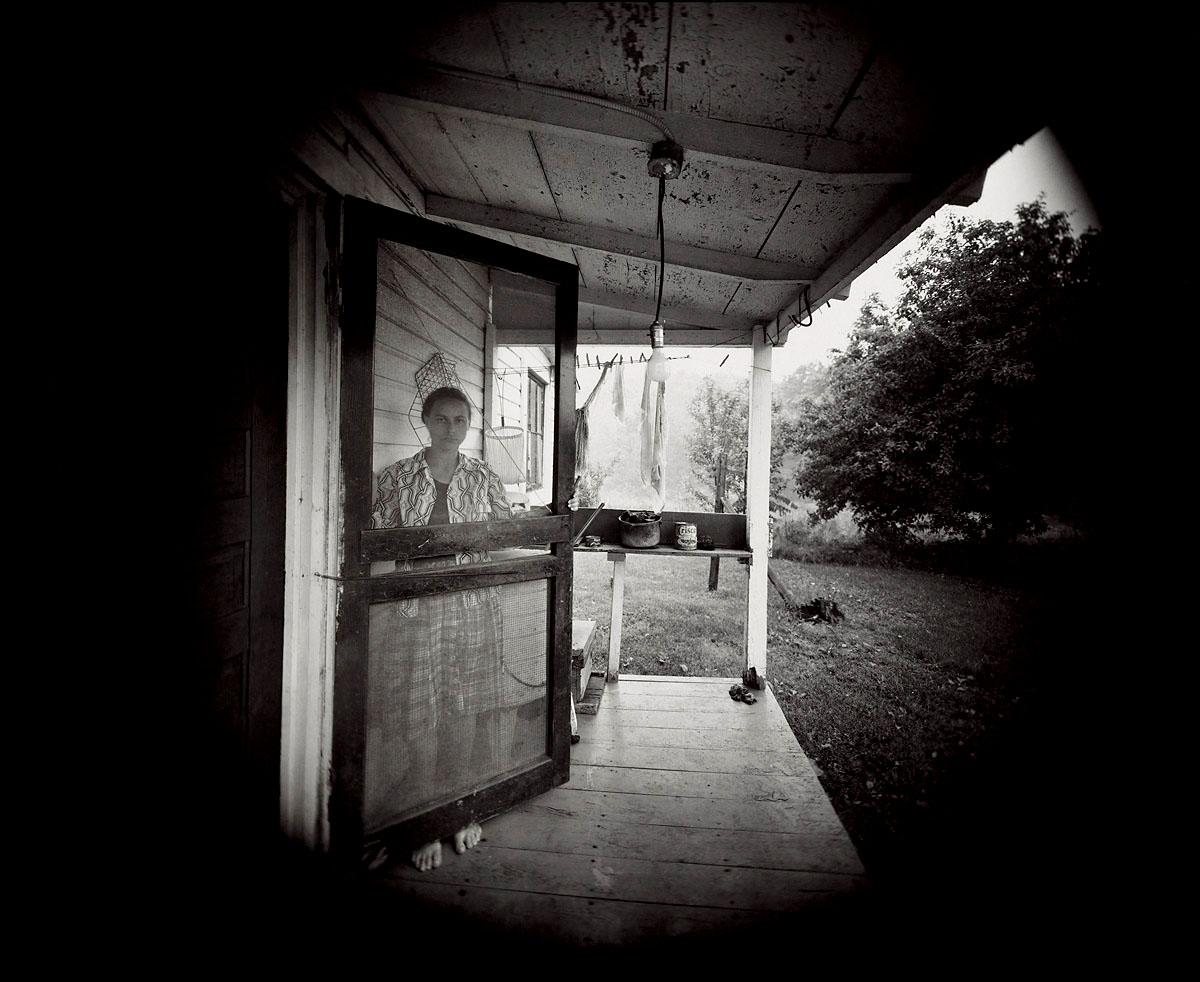
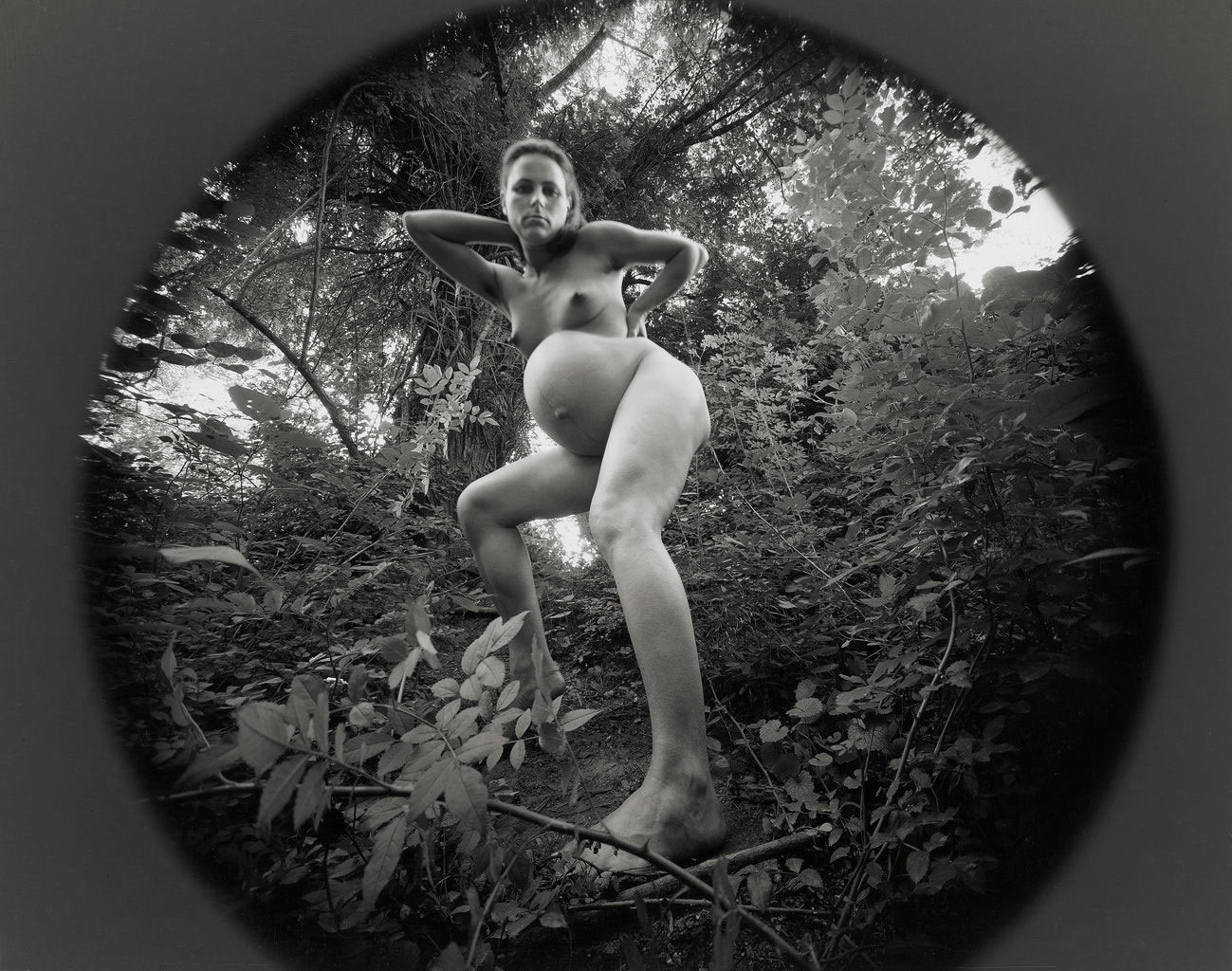
At the end of the 1960’s, Gowin begins making circular images of Edith, her family, and their own household, both indoors and out. The Gowin’s second son, Isaac, born in 1974, was the subject – both before and after birth – of many of these circular 8×10 inch photographs, which give the impression of looking through a keyhole. At the beginning of the 1970’s, the exhibitions at the Light Gallery and MoMA mark a significant step toward his American success. In 1973, he’s appointed Lecturer at Princeton University. He is later appointed Full Professor, a position he will hold until his retirement in 2009. He inspired a new generation of photographers such as Fazal Sheikh, David Maisel or Andrew Moore.

From 1973, Gowin goes back to sources, nature and landscape and introduces the idea of Working Landscapes in which the contributions of many generations, overtime, shape the use and care of the land. He travels in Europe, Ireland and Italy, where he discovered the ancient Etruscan city of Matera. His first monograph, Emmet Gowin: photographs, is published in 1976. In 1982, the Queen Noor of Jordan, one of Gowin’s students at Princeton, invites him to photograph the archeological site of Petra. Some of these photos are exhibited on the second floor of the foundation. Later, he continues making views of nature and traveled overseas, reverting to a traditional rectangular format. His interest in gardens and the historical balance between nature and human culture stimulates a dedication to a larger landscape, recorded first from the ground and then from the air. He photographs the incredible destruction of the Mount St. Helens volcano, Washington, and spent years recording the inhabited – and often scarred – face of the American West. Gowin is not an environmental activist. Nonetheless, once he comes to know and experience these landscapes his acute moral and intellectual sense is also conveyed in his images. He wants to show the conflict that exists in our relationship with nature. “It is not a call for an action … It’s a call for reflection, meditation and consideration to be on a more intimate basis with the world.”

Over the past few years, Gowin has constantly photographed nocturnal moths. His scientific interest has led him to catalog thousands of species working alongside with biologists in tropical jungles. By chance, he traveled with a cutout silhouette of Edith in his wallet or luggage and produced a series of photographs in which Edith is once again the principal subject, in this case through her silhouette. They recall the instrument known as the physionotrace, a forerunner of the earliest photographs which was used to male silhouette reproducing the images of loved ones. Those images, printed on handmade paper with the silver image gold toned confirm that Emmet Gowin is one of the finest photographers of any period.

Press release from the Fondation Henri Cartier-Bresson website


Emmet Gowin (American, b. 1941) 'Old Handford City Site and the Columbia River, Handford Nuclear Reservation, near Richland (Washington)' 1986


Emmet Gowin (American, b. 1941)
Old Handford City Site and the Columbia River, Handford Nuclear Reservation, near Richland (Washington)
1986
Gelatin silver print
© Emmet Gowin, Courtesy Pace/MacGill Gallery, New York


The aerial photos, taken while flying over bomb test sites and waste water catchment basins and other scenes of industrial/military destruction are almost abstract to the eye. They are also very beautiful. Getting nose to nose with these works and reading the title card, however, allows the slowly-dawning realisation that you are looking at a full blown horror. This suite of works dates from 1980 when Gowin took to the air to view the aftermath of the Mt. St. Helens volcanic eruption in Washington state and was taken with the way things not visible from “human” space below revealed themselves from above. In 1986 he started exploring man-made industrial inroads into the land from the air, flying over Hanford Reservation, for one, where nuclear reactors and chemical separation plants made scars on the land like nothing nature had done. These are truly devastating pictures, and what makes them more so is the thought that this is the tip of the iceberg and that many other sites on earth bear the scars of man-made intrusion.

Roberta Fallon. “Emmett Gowin – From family of man to mariposas nocturnas at Swarthmore’s List Gallery,” on The Artblog website, March 22, 2012 [Online] Cited 05/07/2014


Emmet Gowin (American, b. 1941) 'Aeration Pond, Toxic Water Treatment Facility, Pine Bluff, AK (Arkansas)' 1989


Emmet Gowin (American, b. 1941)
Aeration Pond, Toxic Water Treatment Facility, Pine Bluff, AK (Arkansas)
1989
Toned gelatin silver print
© Emmet Gowin, Courtesy Pace/MacGill Gallery, New York


Emmet Gowin (American, b. 1941) 'Golf Course under Construction (Arizona)' 1993


Emmet Gowin (American, b. 1941)
Golf Course under Construction (Arizona)
1993
Gelatin silver print
© Emmet Gowin, Courtesy Pace/MacGill Gallery, New York


Emmet Gowin (American, b. 1941) 'Aerial view: Mt. St. Helens rim, crater and lava dome' 1982


Emmet Gowin (American, b. 1941)
Aerial view: Mt. St. Helens rim, crater and lava dome
1982
Gelatin silver print
© Emmet Gowin, Courtesy Pace/MacGill Gallery, New York


Every Time less than the pulsation of the artery

Is equal in its period & value to Six Thousand Years.


For in this Period the Poet’s Work is Done, and all the Great

Events of Time start forth & are conceiv’d in such a Period

Within an Moment, a Pulsation of the Artery. …


For every Space larger than a red Globule of Man’s blood,

Is visionary, and is created by the Hammer of Los:

And every Space smaller than a red Globule of Man’s blood opens

Into Eternity of which this vegetable Earth is but a shadow…


William Blake. From “Milton”


Emmet Gowin (American, b. 1941) 'The Khazneh from the Sîq, Petra (Jordan)' 1985


Emmet Gowin (American, b. 1941)
The Khazneh from the Sîq, Petra (Jordan)
1985
Gelatin silver print
© Emmet Gowin, Courtesy Pace/MacGill Gallery, New York


Emmet Gowin (American, b. 1941) 'Edith, Newtown (Pennsylvania)' 1994


Emmet Gowin (American, b. 1941)
Edith, Newtown (Pennsylvania)
1994
Gelatin silver print
© Emmet Gowin, Courtesy Pace/MacGill Gallery, New York


Emmet Gowin (American, b. 1941) 'Edith, Danville (Virginia)' 1963


Emmet Gowin (American, b. 1941)
Edith, Danville (Virginia)
1963
Gelatin silver print
© Emmet Gowin, Courtesy Pace/MacGill Gallery, New York


Emmet Gowin (American, b. 1941) 'Edith and Moth Flight' 2002


Emmet Gowin (American, b. 1941)
Edith and Moth Flight
2002
Digital ink jet print
19 x 19cm (7 1/2 x 7 1/2 in.)
National Gallery of Art, Washington, Charina Endowment Fund
© Emmet and Edith Gowin, Courtesy Pace/MacGill Gallery, New York


Fondation Henri Cartier-Bresson
79 rue des Archives
75003 Paris

Opening hours:
Tuesday – Sunday 11am – 7pm
Closed on Mondays

Fondation Henri Cartier-Bresson website

LIKE ART BLART ON FACEBOOK

Back to top

Exhibition: ‘Posing Beauty in African American Culture’ at the Virginia Museum of Fine Arts, Richmond, Virginia

Exhibition dates: 26th April – 27th July 2014


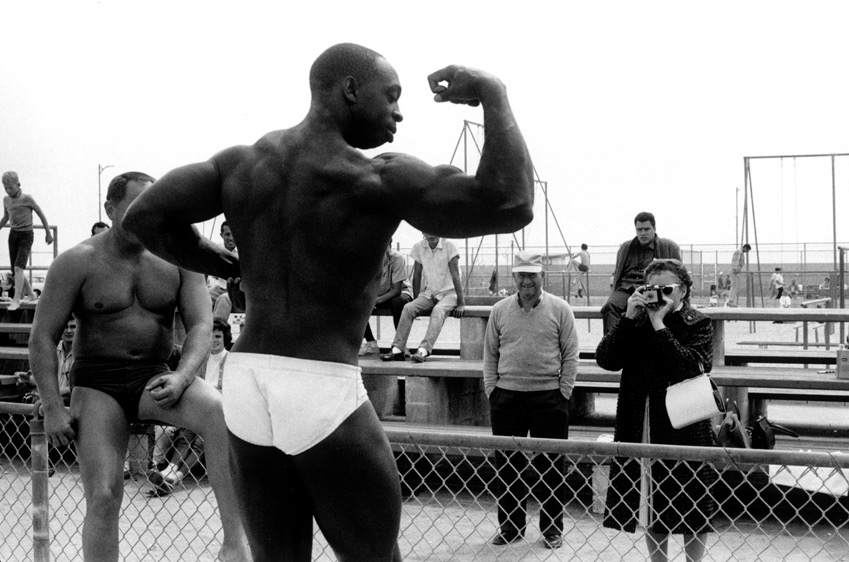
Bruce Davidson (American, b. 1933) 'Body Builder on Venice Beach, California' 1964


Bruce Davidson (American, b. 1933)
Body Builder on Venice Beach, California
1964
Gelatin silver print
8 1/4 x 12 1/4 in.
Courtesy of Howard Greenberg Gallery, New York


An exhibition that questions the ways in which our contemporary understanding of beauty has been constructed and framed through the body and invites a deeper reading of beauty, its impact on mass culture and individuals and how the display of beauty affects the ways in which we see and interpret the world and ourselves. According to author and historian Barbara Summers: “Beauty is power. And the struggle to have the entire range of Black beauty recognised and respected is a serious one.”

If beauty is only skin deep, and colour deep, why the need to differentiate? Surely it doesn’t matter what colour your skin, beauty just is. You know it when you see it, regardless of colour. Not everything is about power; not everything is a site of contestation… to me, recognising true beauty is an acknowledgement of the light that shines from within, not something that is imposed from without. When you see true beauty, you know it instinctively. Intuitively. Enough of this posing – are you image or essence?

Dr Marcus Bunyan


Many thankx to the Virginia Museum of Fine Arts for allowing me to publish the photographs in the posting. Please click on the photographs for a larger version of the image.


“That there are so few images of African-American women circulating in popular culture or in fine art is disturbing; the pathology behind it is dangerous … We got a sistah in the White House, and yet mediated culture excludes us, denies us, erases us. But in the face of refusal, I insist on making work that includes us as part of the greater whole,” said Carrie Mae Weems in a 2009 interview conducted by Dawoud Bey for ‘BOMB Magazine’.


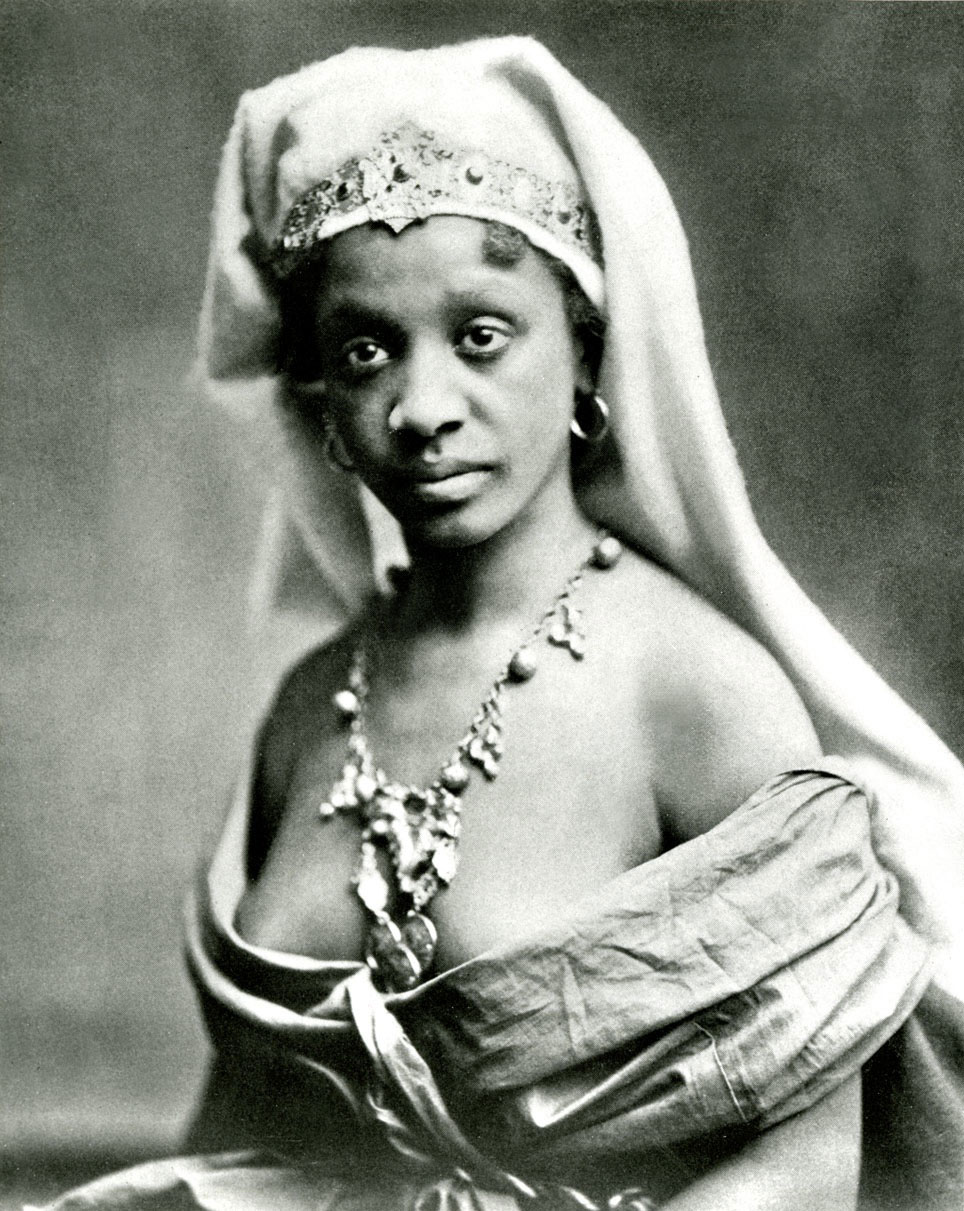
Edward Curtis (American, 1868-1952) 'A Desert Queen' 1898 (printed 2009)


Edward Curtis (American, 1868-1952)
A Desert Queen
1898 (printed 2009)
Modern digital print
20 x 16 inches
Special Collections, University of Washington Libraries


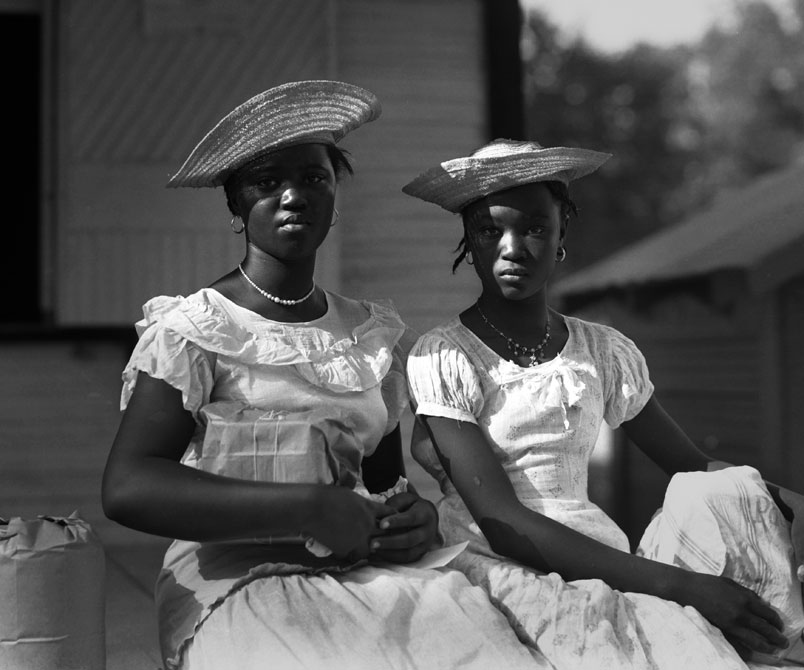
Theodore Fonville Winans (American, 1911-1992) 'Dixie Belles, Central Louisiana' 1938


Theodore Fonville Winans (American, 1911-1992)
Dixie Belles, Central Louisiana
1938
Courtesy of the Ogden Museum of Southern Art and Bob Winans


Charles "Teenie" Harris (American, 1908-1998) 'Mary Louise Harris on Mulford Street, Homewood, Pittsburgh, Pennsylvania' c. 1930-1939


Charles “Teenie” Harris (American, 1908-1998)
Mary Louise Harris on Mulford Street, Homewood, Pittsburgh, Pennsylvania
c. 1930-1939
Gelatin silver print
20 x 16cm
© 2004 Carnegie Museum of Art, Charles “Teenie” Harris Archive


Dave Heath (American, 1931-2016) 'Washington Square, New York City' 1960


Dave Heath (American, 1931-2016)
Washington Square, New York City
1960
Silver gelatin print


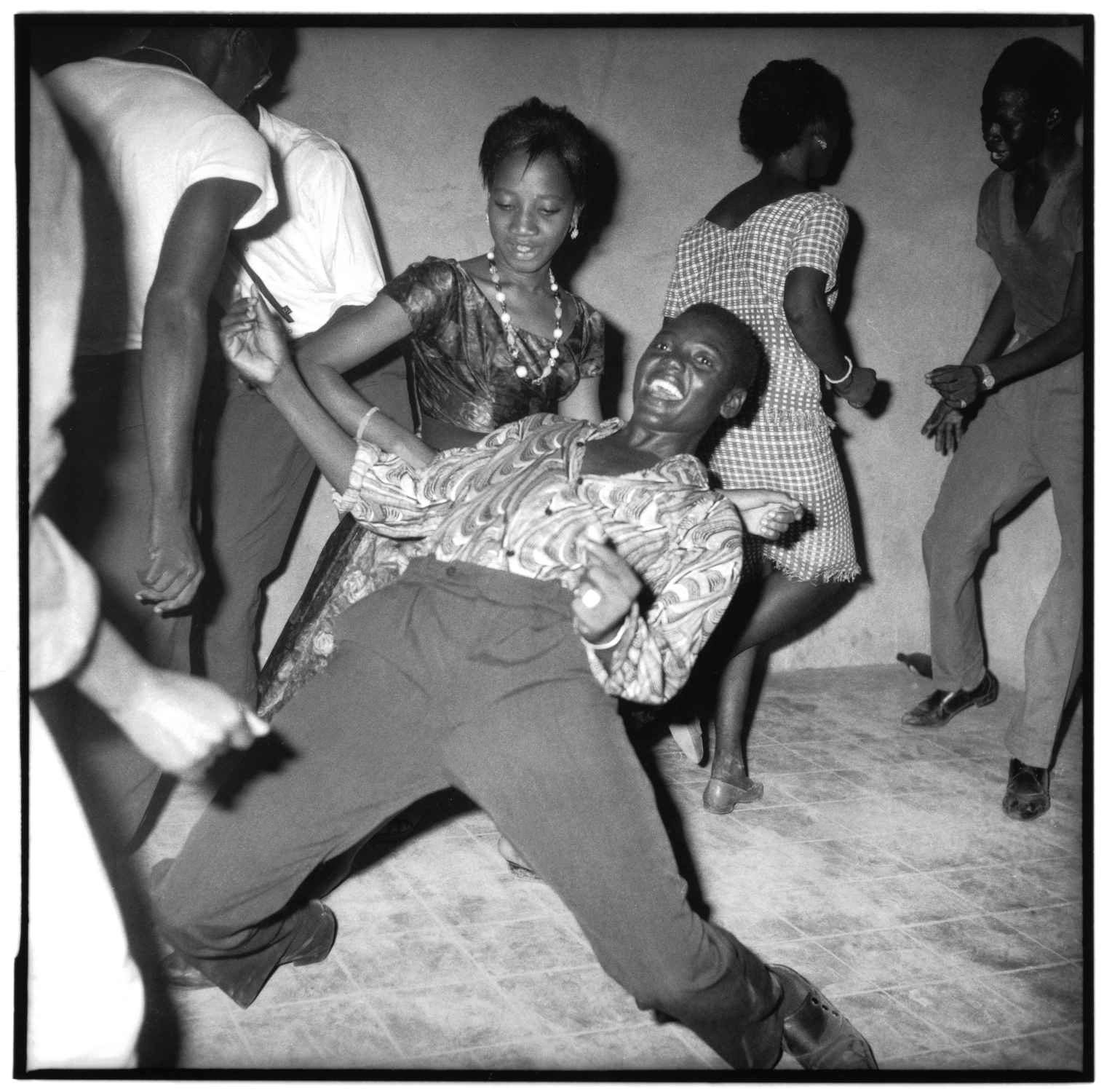
Malick Sidibé (Malian, 1935-2016) 'Regardez-moi!' 1962


Malick Sidibé (Malian, 1935-2016)
Regardez-moi!
1962
Gelatin silver print
50 x 60cm – 19.5 x 23.5 inches
© Malick Sidibé


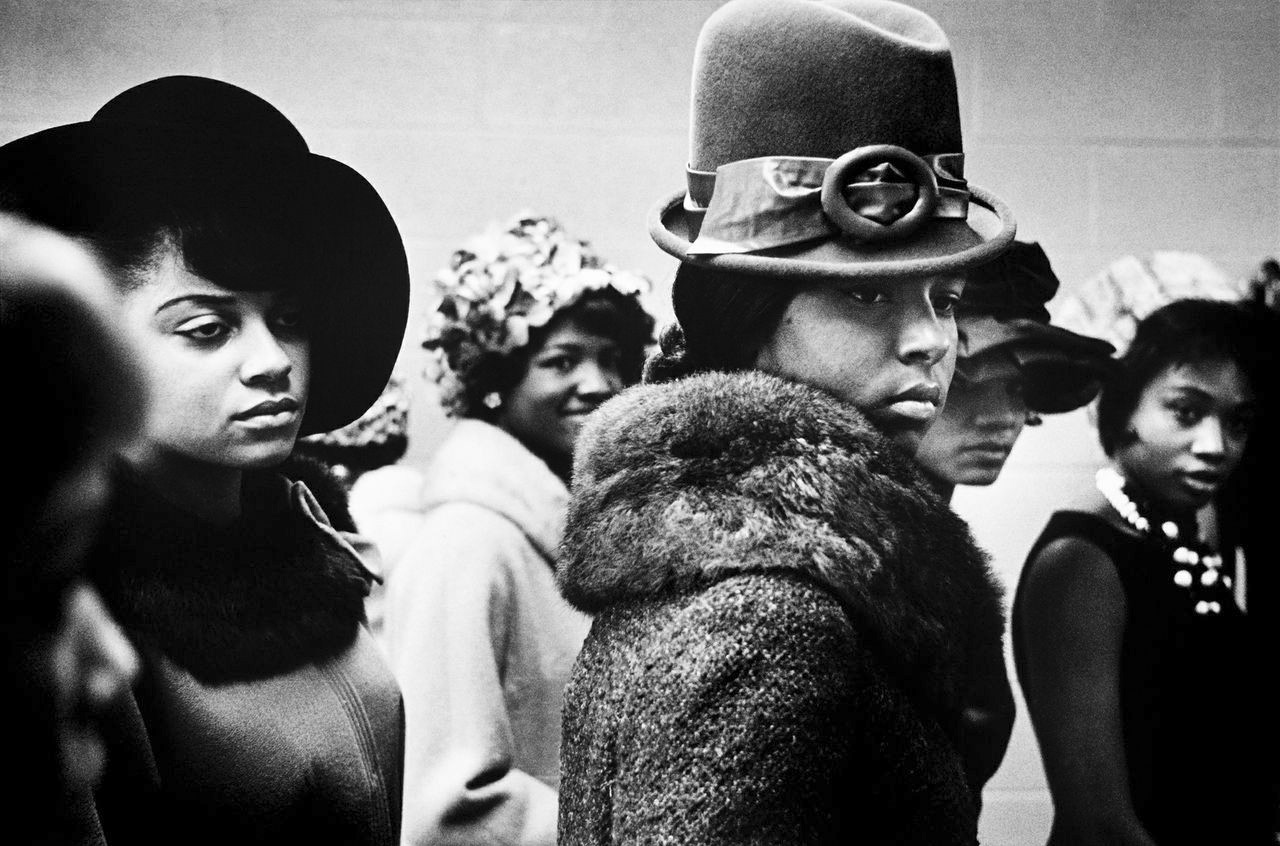
Leonard Freed (American, 1929-2006) 'Harlem Fashion Show, Harlem' 1963


Leonard Freed (American, 1929-2006)
Harlem Fashion Show, Harlem
1963
Gelatin silver print
17 x 21 1/4 inches
Magnum Photos


Anthony Barboza (African-American, b. 1944) 'Pat Evans' c. 1970s


Anthony Barboza (African-American, b. 1944)
Pat Evans
c. 1970s
Digital print
24 1/2 x 24 inches
Courtesy of the photographer


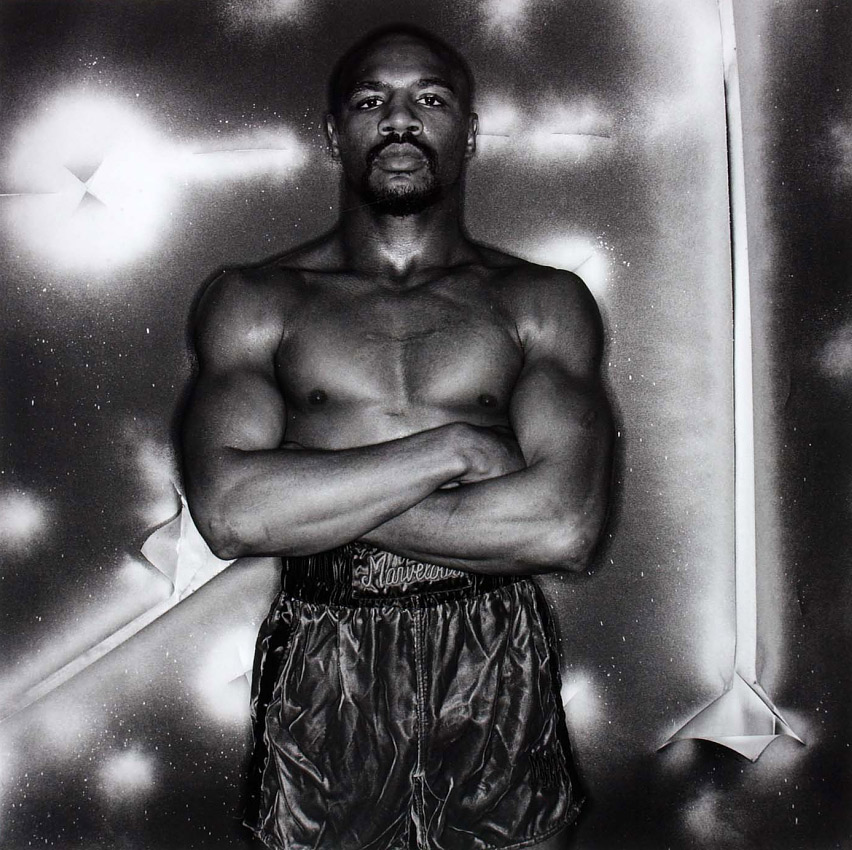
Anthony Barboza (African-American, b. 1944) ''Marvelous' Marvin Hagler, boxer' 1981


Anthony Barboza (African-American, b. 1944)
‘Marvelous’ Marvin Hagler, boxer
1981
Gelatin silver print


Exploring contemporary understandings of beauty, Posing Beauty in African American Culture frames the notion of aesthetics, race, class, and gender within art, popular culture, and political contexts. The exhibition – and its companion, Identity Shifts – will be on view April 26 – July 27, 2014.

Posing Beauty in African American Culture examines the contested ways in which African and African American beauty has been represented in historical and contemporary contexts through a diverse range of media including photography, film, video, fashion, advertising, and other forms of popular culture such as music and the Internet. The exhibition explores contemporary understandings of beauty by framing the notion of aesthetics, race, class, and gender within art, popular culture, and political contexts. The exhibition is organised by the Department of Photography & Imaging at New York University, Tisch School of the Arts, traveled by Curatorial Assistance Traveling Exhibitions, and curated by Dr. Deborah Willis. The touring exhibition is made possible in part by the JP Morgan Chase Foundation. Additional support has been provided by grants from the Tisch School of the Arts Office of the Dean’s Faculty Development Fund, Visual Arts Initiative Award from the NYU Coordinating Council for Visual Arts, and NYU’s Advanced Media Studio. Drawn from public and private collections, Posing Beauty features approximately 85 works by artists such as Carrie Mae Weems, Charles “Teenie” Harris, Eve Arnold, Gary Winogrand, Sheila Pree Bright, Leonard Freed, Renee Cox, Anthony Barboza, Bruce Davidson, Mickalene Thomas, and Jeanne Moutoussamy-Ashe.

Posing Beauty is divided into three thematic sections. The first theme, Constructing a Pose, considers the interplay between the historical and the contemporary, between self-representation and imposed representation, and the relationship between subject and photographer. The second theme, Body and Image, questions the ways in which our contemporary understanding of beauty has been constructed and framed through the body. The last section, Modeling Beauty and Beauty Contests, invites a deeper reading of beauty, its impact on mass culture and individuals and how the display of beauty affects the ways in which we see and interpret the world and ourselves.

According to author and historian Barbara Summers: “Beauty is power. And the struggle to have the entire range of Black beauty recognised and respected is a serious one.”

Press release from the Virginia Museum of Fine Arts website


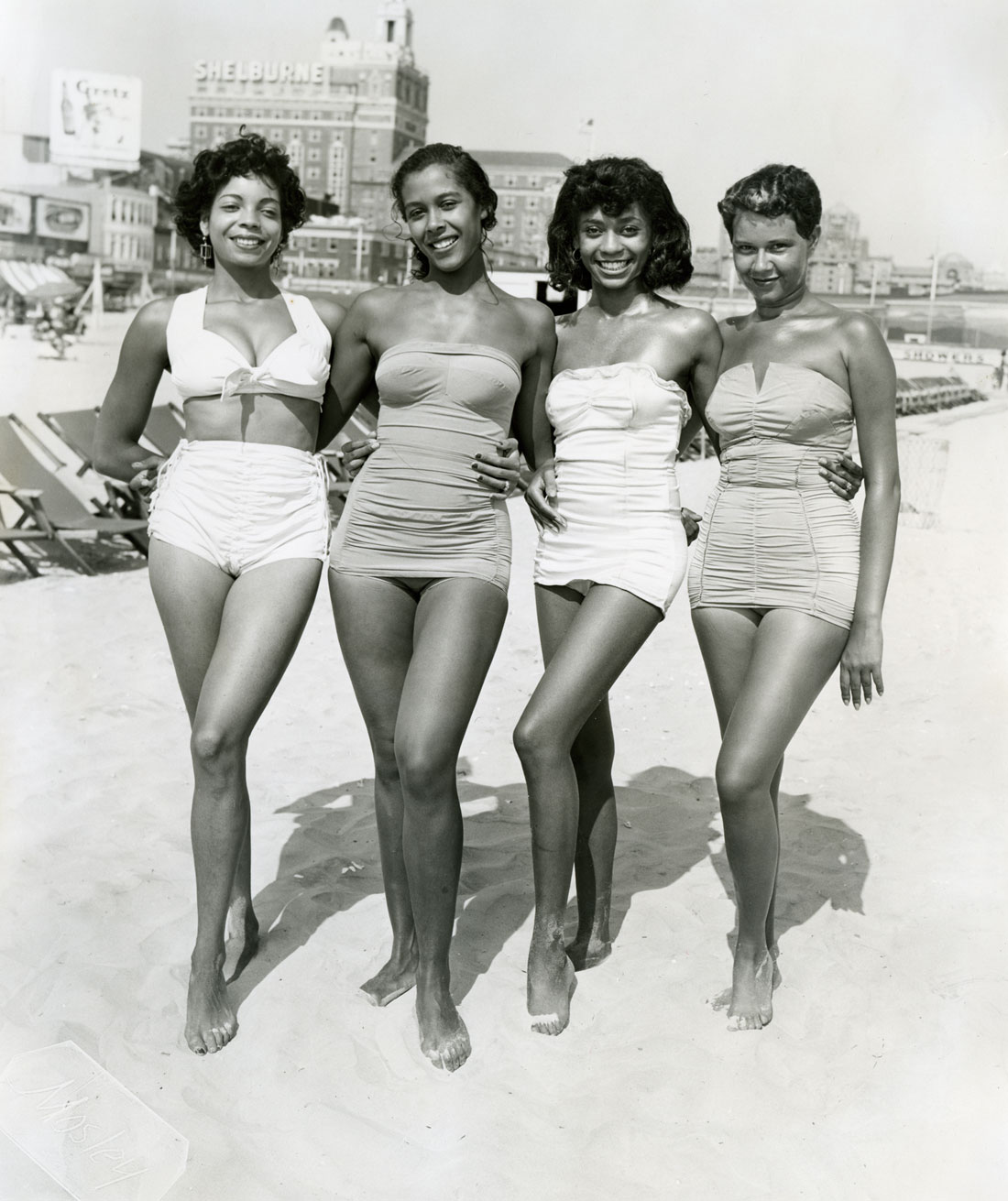
John W. Mosley (American, 1907-1969) 'Atlantic City, Four Women' c. 1960s


John W. Mosley (American, 1907-1969)
Atlantic City, Four Women
c. 1960s
Gelatin silver print
20 x 16 inches
Charles L. Blockson Afro-American Collection, Temple University


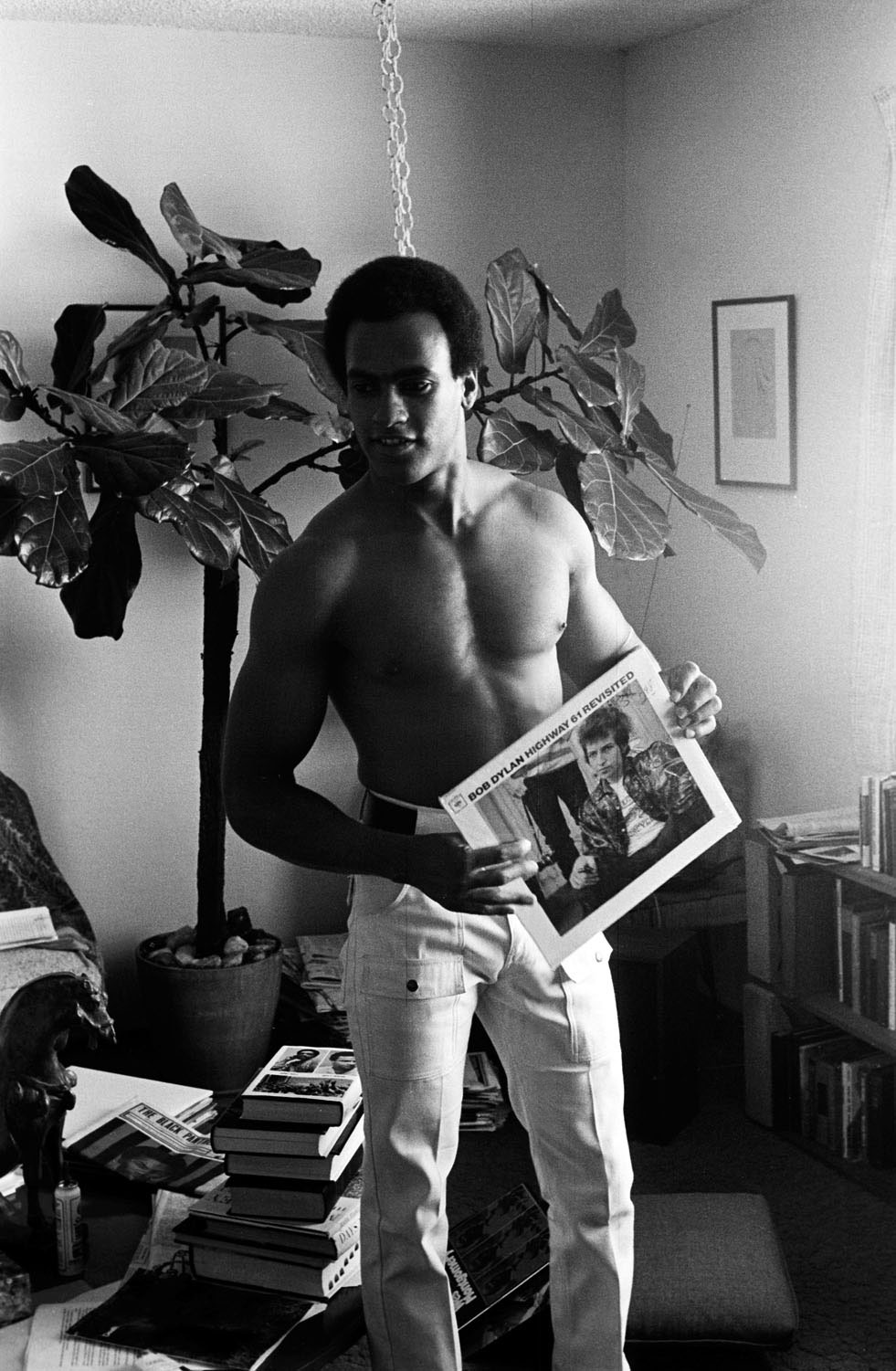
Stephen Shames (American, b. 1947) 'Huey P Newton holds a Bob Dylan album at home after he was released from jail' c. 1967


Stephen Shames (American, b. 1947)
Huey P Newton holds a Bob Dylan album at home after he was released from jail
c. 1967
Photograph
© Stephen Shames


Huey Percy Newton (February 17, 1942 – August 22, 1989) was an African-American political and urban activist who, along with Bobby Seale, co-founded the Black Panther Party in 1966. Newton had a long series of confrontations with law enforcement, including several convictions, while he participated in political activism. He continued to pursue an education, eventually earning a Ph.D. in Social Science. Newton spent time in prison for manslaughter and was involved in a shooting that killed a police officer, for which he was later acquitted. In 1989 he was shot and killed in Oakland, California by Tyrone “Double R” Robinson, a member of the Black Guerrilla Family.

Text from Wikipedia website


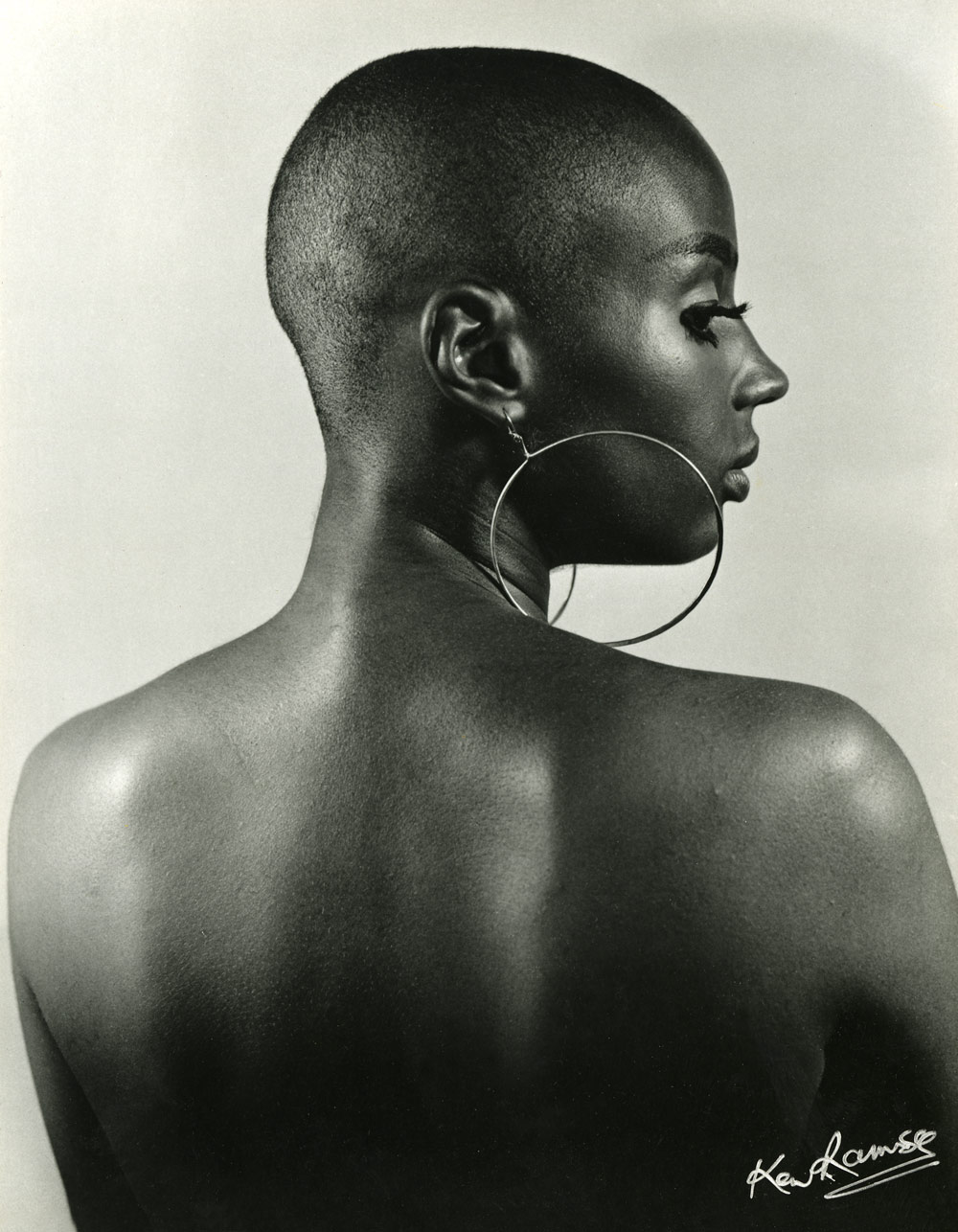
Ken Ramsay (Jamaican, 1935-2008) 'Susan Taylor, as Model' c. 1970s


Ken Ramsay (Jamaican, 1935-2008)
Susan Taylor, as Model
c. 1970s
Gelatin silver print
26.5 x 20 inches
Courtesy of the photographer


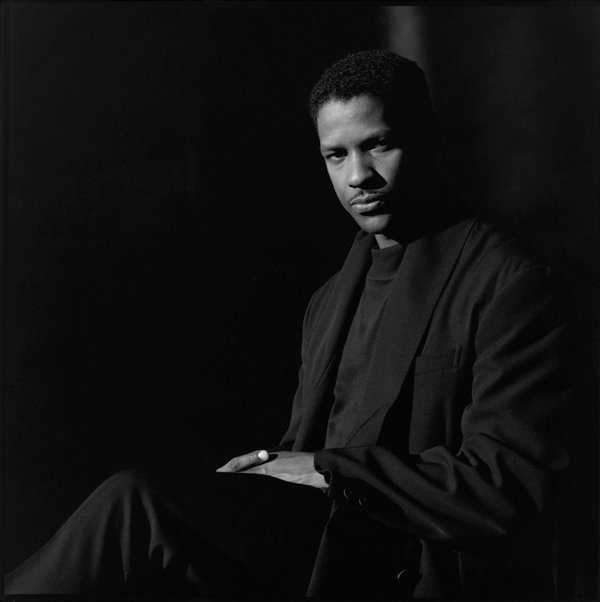
Jeffrey Henson Scales (American, b. 1954) 'Denzel Washington, Los Angeles' 1990s


Jeffrey Henson Scales (American, b. 1954)
Denzel Washington, Los Angeles
1990s


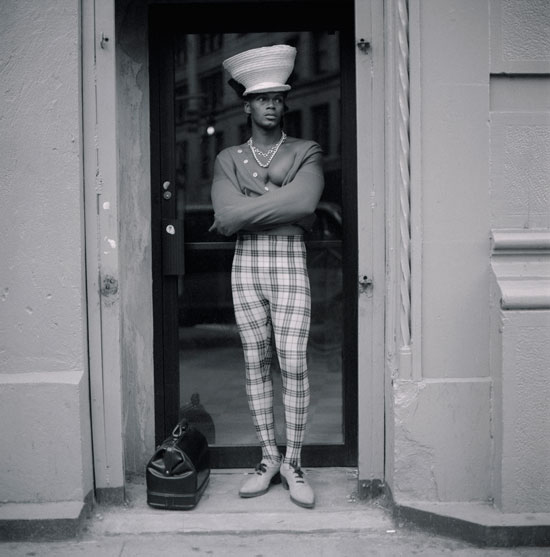
Jeffrey Henson Scales (American, b. 1954) 'Young Man in Plaid, New York City' 1992


Jeffrey Henson Scales (American, b. 1954)
Young Man in Plaid, New York City
1992
Digital print
44.5 x 44 inches
Courtesy of the photographer


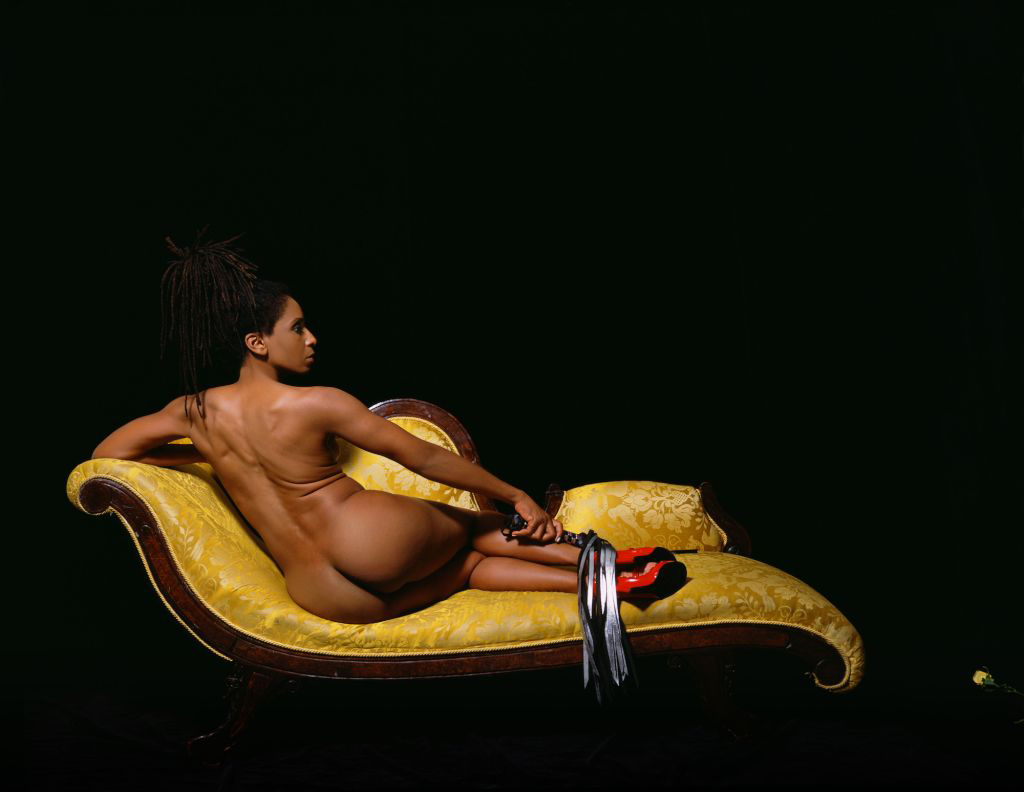
Renee Cox (American, b. 1960) 'Baby Back', from the series 'American Family' 2001


Renee Cox (American, b. 1960)
Baby Back,
from the series American Family
2001
Archival digital print
30 x 40 in.
Courtesy of the artist


Lauren Kelley (American, b. 1975) 'Pickin'' 2007


Lauren Kelley (American, b. 1975)
Pickin’
2007
Colour-coupler print
23 x 23 1/8 inches
Courtesy of the photographer


Virginia Museum of Fine Arts
200 N. Boulevard
Richmond, Virginia USA

Opening hours:
Saturday – Tuesday: 10am – 5pm
Wednesday – Friday: 10am – 9pm

Virginia Museum of Fine Arts website

LIKE ART BLART ON FACEBOOK

Back to top

Exhibition: ‘Out of the closets, into the streets: gay liberation photography 1971-73’ at Edmund Pearce Gallery, Melbourne

Exhibition dates: Tuesday 22nd July – Saturday 26th July, 2014

Opening: Tuesday 22nd July 6-8pm

Nite Art: Wednesday 23rd July until 11pm
Artists represented: Philip Potter, John Storey, John Englart, Barbara Creed, Ponch Hawkes, Rennie Ellis
Curators: Dr Marcus Bunyan and Nicholas Henderson
Catalogue essay by Professor Dennis Altman (below)


Barbara Creed (Australian, b. 1943) 'Julian Desaily and Peter McEwan in the back of a VW Combi van, Melbourne' Melbourne, c. 1971-1973


Barbara Creed (Australian, b. 1943)
Julian Desaily and Peter McEwan in the back of a VW Combi van, Melbourne
Melbourne, c. 1971-1973
Digital C type print on Kodak Endura Matte
© Barbara Creed


Five days, that’s all you’ve got! Just five days to see this fabulous exhibition. COME ALONG TO THE OPENING (Tuesday 22nd July 6-8pm) or NITE ART, the following night!

The exhibition Out of the closets, into the streets: gay liberation photography 1971-73 pictures the very beginning of the gay liberation movement in Australia through the work of Philip Potter, John Storey, John Englart, Barbara Creed, Ponch Hawkes and Rennie Ellis. The exhibition examines for the first time images from the period as works of art as much as social documents. The title of the exhibition is a slogan from the period.

As gay people found their voice in the early 1970s artists, often at the very beginning of their careers, were there to capture meetings in lounge rooms, consciousness raising groups and street protests. The liberation movement meant ‘being there’, putting your body on the line. “It was a key feature of the new left that this embodied politics couldn’t stop in the streets: that is, the public arena as conventionally understood. ‘Being there’ politically also applied to households, classrooms, sexual relations, workplaces and the natural environment.”1

Curated by Dr Marcus Bunyan and Nicholas Henderson and with a catalogue essay by Professor Dennis Altman (see below), the show is a stimulating experience for those who want to be inspired by the history and art of the early gay liberation movement in Australia.

The exhibition coincides with AIDS 2014: 20th International AIDS Conference (20-25 July 2014) and Nite Art which occurs on the Wednesday night (23rd July 2014). The exhibition will travel to Sydney to coincide with the 14th Australia’s Homosexual Histories Conference in November at a venue yet to be confirmed.

Dr Marcus Bunyan


1/ Connell, Raewyn. “Ours is in colour: the new left of the 1960s,” in Carolyn D’Cruz and Mark Pendleton (eds.,). After Homosexual: The Legacies of Gay Liberation. Perth: UWA Publishing, 2013, p. 43.


Many thankx to all the artists for allowing me to publish the photographs in the posting. Please click on the photographs for a larger version of the image.


Ponch Hawkes (Australian, b. 1946) 'Gay Liberation march, Russell Street, Melbourne' Melbourne, 1973


Ponch Hawkes (Australian, b. 1946)
Gay Liberation march, Russell Street, Melbourne
Melbourne, 1973
Digital C type print on Kodak Endura Matte
© Ponch Hawkes


John Englart (Australian, b. 1955) 'Gay Pride Week poster, outside the Town Hall Hotel, Sydney Town Hall' Sydney, 1973


John Englart (Australian, b. 1955)
Gay Pride Week poster, outside the Town Hall Hotel, Sydney Town Hall
Sydney, 1973
Digital C type print on Kodak Endura Matte
© John Englart


Out of the closets, onto the streets

Professor Dennis Altman


This exhibition chronicles a very specific time in several Australian cities, the period when lesbians and gay men first started demonstrating publicly in a demand to be accorded the basic rights of recognition and citizenship. Forty years ago to be homosexual was almost invariably to lead a double life; the great achievement of gay liberation was that a generation – although only a tiny proportion of us were ever Gay Liberationists – discovered that was no longer necessary.

The Archives have collected an extraordinary range of materials illustrating the richness of earlier lesbian and gay life in Australia, but this does not deny the reality that most people regarded homosexuality as an illness, a perversion, or a sin, and one for which people should be either punished or cured. It is revealing to read the first avowedly gay Australian novel, Neville Jackson’s No End to the Way [published in 1965 – in Britain – and under a pseudonym] to be reminded of how much has changed in the past half century.

Gay Liberation had both local and imported roots; the Stonewall riots in New York City, which sparked off a new phase of radical gay politics – when ‘gay’ was a term understood to embrace women, men and possibly transgender – took place in June 1969. They were barely noticed at the time in Australia, where a few people in the civil liberties world, most of them not homosexual, had started discussing the need to repeal anti-sodomy laws.

Small law reform and lesbian groups had already existed, but the real foundation of an Australian gay movement came in September 1970 when Christabel Pol and John Ware announced publicly the formation of CAMP, an acronym that stood for the Campaign Against Moral Persecution but also picked up on the most used Australian term for ‘homosexual’. Within two years there were both CAMP branches in most Australian capital cities, as well as small gay liberation groups that organised most of the demonstrations illustrated in this exhibition.

The differences between gay liberation and CAMP were in practice small, but those of us in Gay Liberation prided ourselves on our radical critique, and our commitment to radical social change. CAMP, with its rather daggy social events and its stress on law reform – at a time in history when homosexual conduct between men was illegal across the country – seemed to us too bourgeois, though ironically it was CAMP which organised the first open gay political protest in Australia [immediately identified by the balloons in the Exhibition photos].

It is now a cliché to say “the sixties” came to Australia in the early 1970s, but a number of forces came together in the few years between the federal election of 1969, when Gough Whitlam positioned the Labor Party as a serious contender for power, and 1972, the “It’s Time” election, when the ALP took office for the first time in 23 years. We cannot understand how a gay movement developed in Australia without understanding the larger social and cultural changes of the time, which saw fundamental shifts in the nature of Australian society and politics.

The decision of the Menzies government in 1965 to commit Australian troops to the long, and ultimately futile war in Vietnam, led to the emergence of a large anti-war movement, capable of mobilising several hundred thousand people to demonstrate by the end of the decade. Already under the last few years of Liberal government the traditional White Australia Policy was beginning to crumble, as it became increasingly indefensible, and awareness of the brutal realities of dispossession and discrimination against indigenous Australians was developing. Perhaps most significant for a movement based on sexuality, the second wave feminist movement, already active in the United States and Britain, began challenging the deeply entrenched sexist structures of society.

To quote myself, this at least reduces charges of plagiarism: “Anyone over fifty in Australia has lived through extraordinary changes in how we imagine the basic rules of sex and gender. We remember the first time we saw women bank tellers, heard a woman’s voice announce that she was our pilot for a flight, watched the first woman read the news on television. Women are now a majority of the paid workforce; in 1966 they made up twenty-nine per cent. When I was growing up in Hobart it was vaguely shocking to hear of an unmarried heterosexual couple living together and women in hats and gloves rode in the back of the trams (now long since disappeared). As I look back, it seems to me that some of the unmarried female teachers at my school were almost certainly lesbians, although even they would have been shocked had the word been uttered.”

In Australia Germaine Greer’s book The Female Eunuch became a major best seller, and Germaine appeared [together with Liz Fell, Gillian Leahy and myself] at the initial Gay Liberation forum at Sydney University in early 1972; looking back it is ironic that a woman who has been somewhat ambivalent in her attitudes to homosexuality was part of the public establishment of the gay movement.

But the early demonstrations illustrated in this exhibition did often include sympathetic “straights” – a term that seems to have disappeared from the language – for whom gay liberation was part of a wider set of cultural issues. It is essential to recognise that while political demonstrations may seem to assert certain claims they play widely different roles for those who participate. For some of us a public protest is a form of “coming out”; indeed many people had never been public about their sexuality before they attended their first demonstration. For others a demonstration is primarily a place to find solidarity, friendship, and, if lucky, sex.

For the gay movement more than any other just to declare oneself as gay was to take an enormous step, a step that some found remarkably easy while others had to wait until late in life to discover that actually almost everyone knew anyway. I remember the now dead Sydney playwright, Nick Enright, who was one of the first people to be open about his homosexuality, and was so without any sense of difficulty; at the same time there are still people who go to great lengths to hide their sexuality even while acknowledging they would face little risk of discrimination were they not to do so

Maybe there is a parallel for people who now declare their lost Aboriginal heritage, unsure how they will be regarded but aware that this is crucial to their sense of self. Every generation has its own version of coming out stories, this exhibition hones in on that time in our national history when everything seemed in flux, and gay liberation seemed a small part of creating a brave new world in which old hierarchies and restraints would disappear.

Looking back at the photos creates a certain nostalgia – we all look so young, so sure that we were changing the world, though in reality most of us were putting on a brave front. The oddest thing is that in some ways we did change the world. Forty years ago we looked at the police as threatening, symbolised in the photograph from Melbourne Gay Pride 1973 where the policeman is clearly telling people to move on. Today openly lesbian and gay cops march with us in the streets, and the very idea that homosexuality could be criminalised, as it still is in many parts of the world, has largely disappeared from historical memory. Indeed to many people attending this exhibition that may be the first time they confront the reality that being gay in Australia in the early 1970s was to live in a world of silence, evasion and fear.

Professor Dennis Altman
July 2014

© Dennis Altman
Reproduced with permission


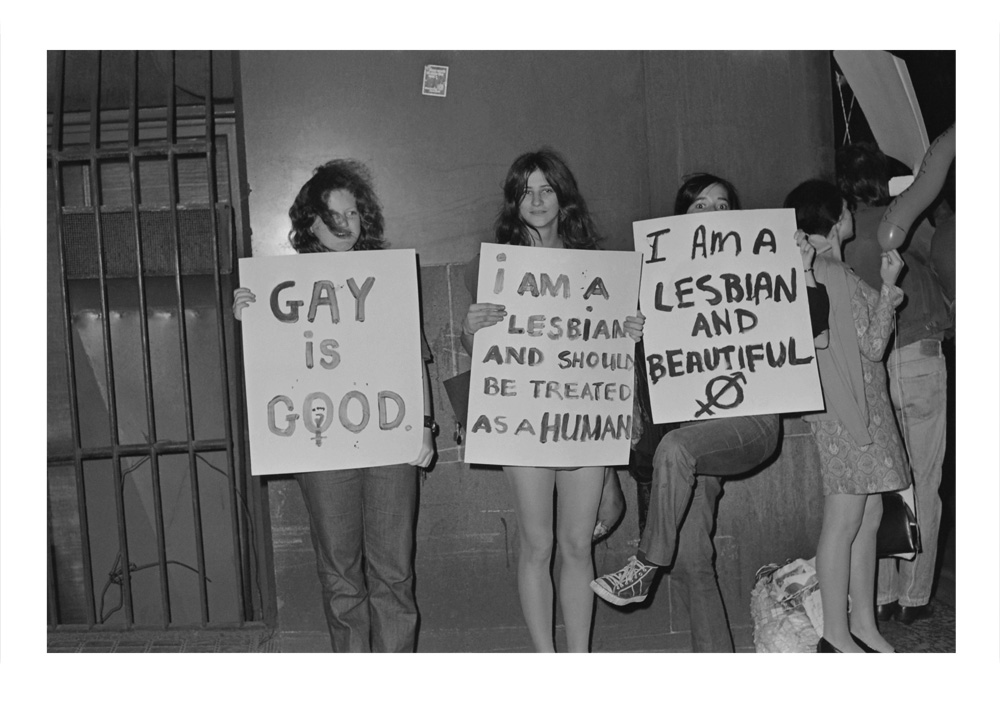
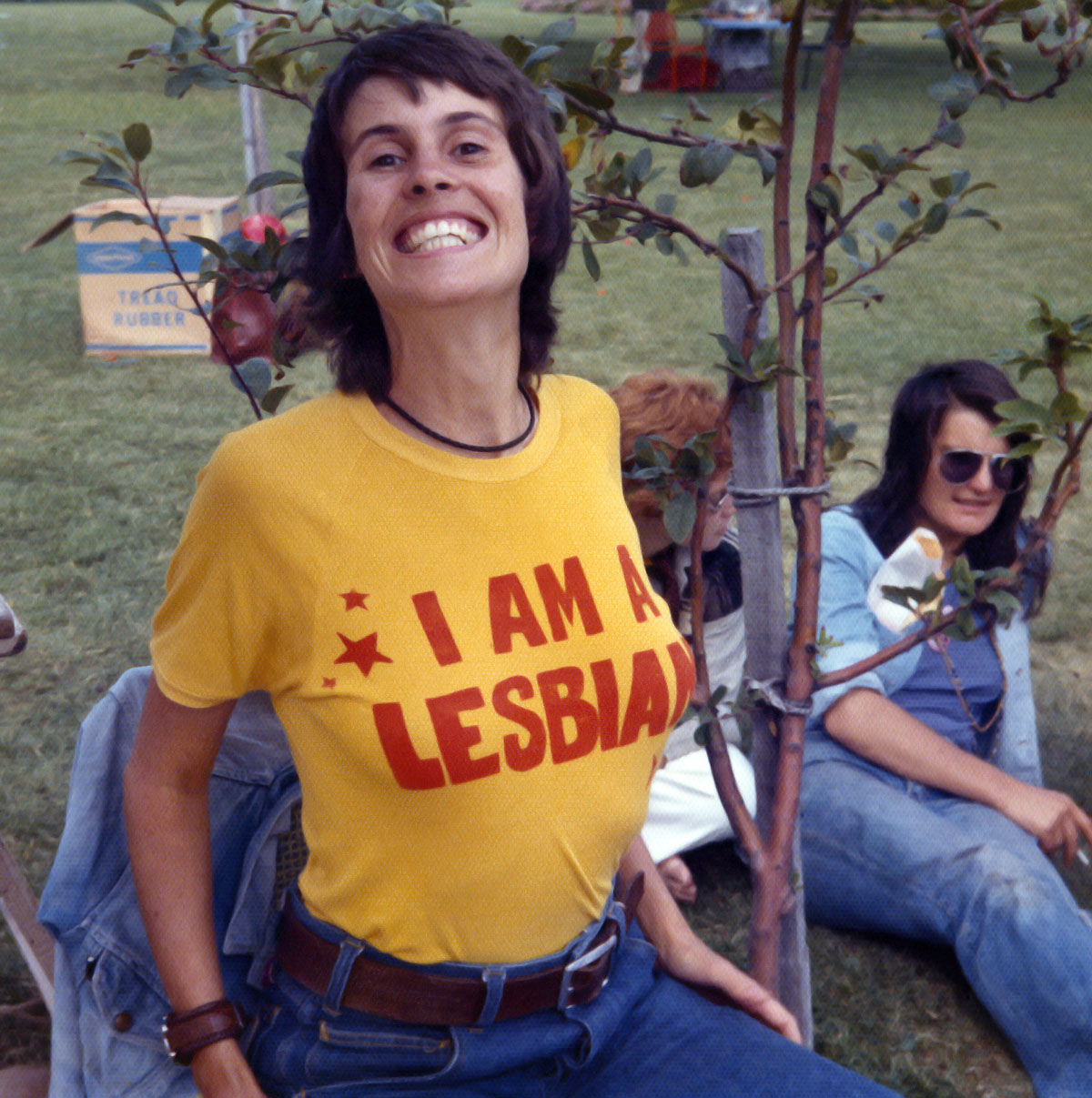
Anonymous photographer. 'I am a Lesbian, Gay Pride Week' Adelaide, 1973


Anonymous photographer
I am a Lesbian, Gay Pride Week
Adelaide, 1973
Digital C type print on Kodak Endura Matte
© Australian Lesbian and Gay Archives


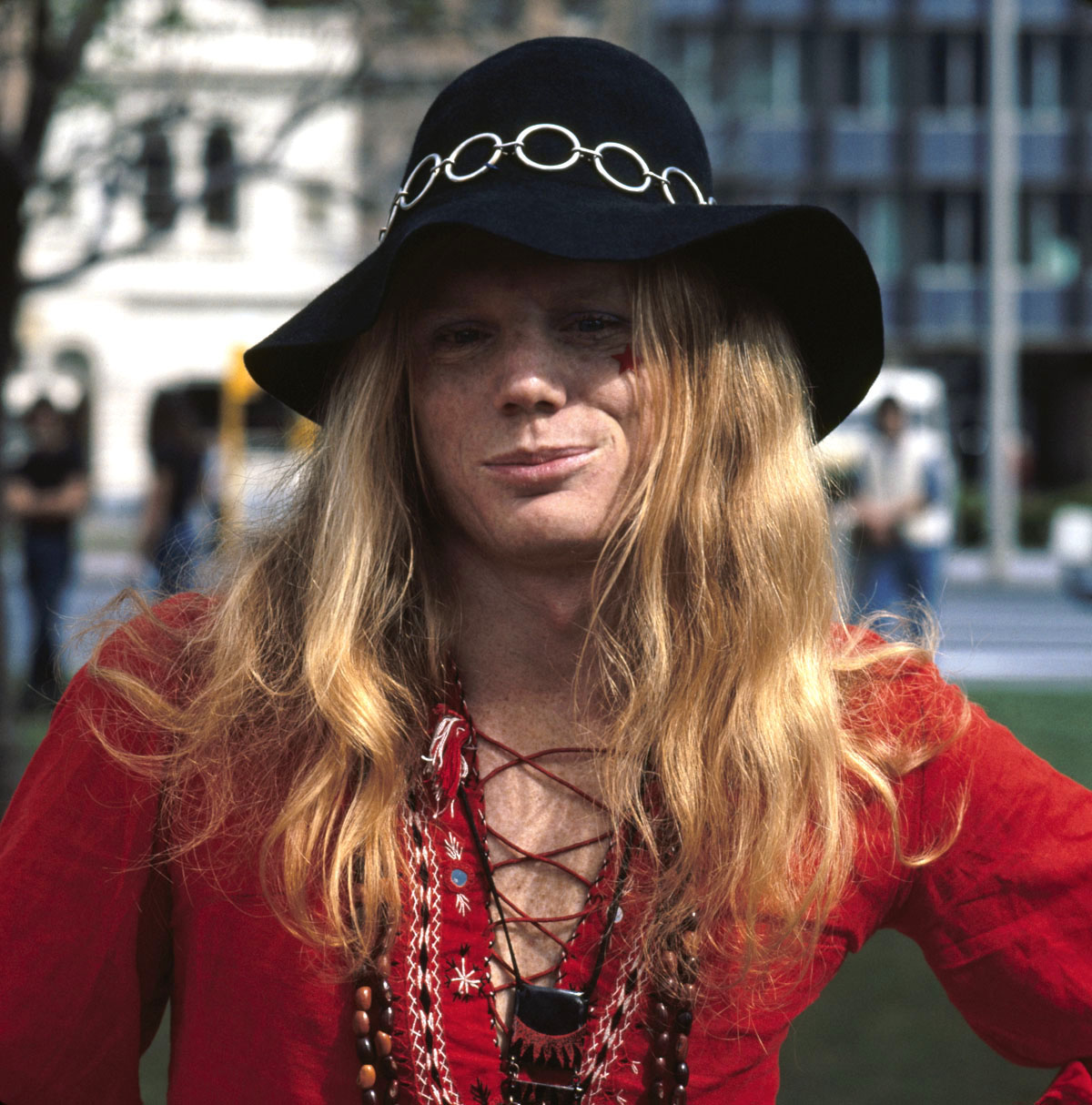
Anonymous photographer. 'Man in black hat and red shirt, Gay Pride Week' Adelaide, 1973


Anonymous photographer
Man in black hat and red shirt, Gay Pride Week
Adelaide, 1973
Digital C type print on Kodak Endura Matte
© Australian Lesbian and Gay Archives


Sponsored by

CPL Digital logo

For photographic services in Australia, Art Blart highly recommends CPL Digital (03) 8376 8376 cpldigital.com.au

Art Blart logo

Dr Marcus Bunyan and the best photography archive sponsor this event artblart.com

Australian Queer Archives

The Archives actively collects and preserves lesbian and gay material from across Australia queerarchives.org.au/

Supported by

Rennie Ellis logo

Rennie Ellis is an award winning photographer and writer (03) 9525 3862 www.rennieellis.com.au


AIDS 2014: 20th International AIDS Conference
20 July – 25 July 2014
Melbourne, Australia

Edmund Pearce Gallery

This gallery has now closed.

LIKE ART BLART ON FACEBOOK

Back to top

Exhibition: ‘In the Looking Glass: Recent Daguerreotype Acquistions’ at the Nelson-Atkins Museum of Art, Kansas City

Exhibition dates: 25th January – 20th July 2014


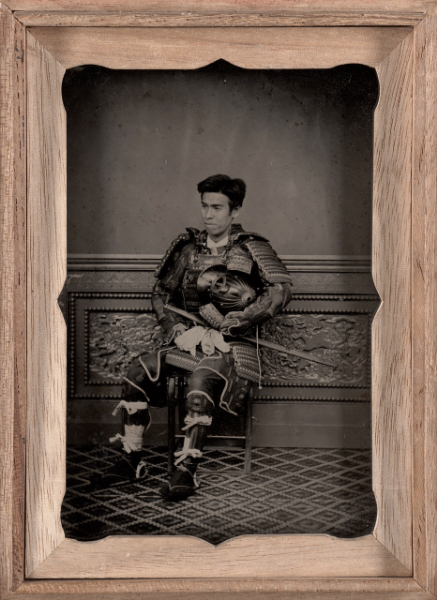
Attributed to: Tsukamoto, Japanese. 'Portrait of a man in samurai armor' mid 1870s


Attributed to:
Tsukamoto (Japanese)
Portrait of a man in samurai armour
mid 1870s
Ambrotype
5 x 3 1/2 inches
Gift of the Hall Family Foundation
© Nelson Gallery Foundation


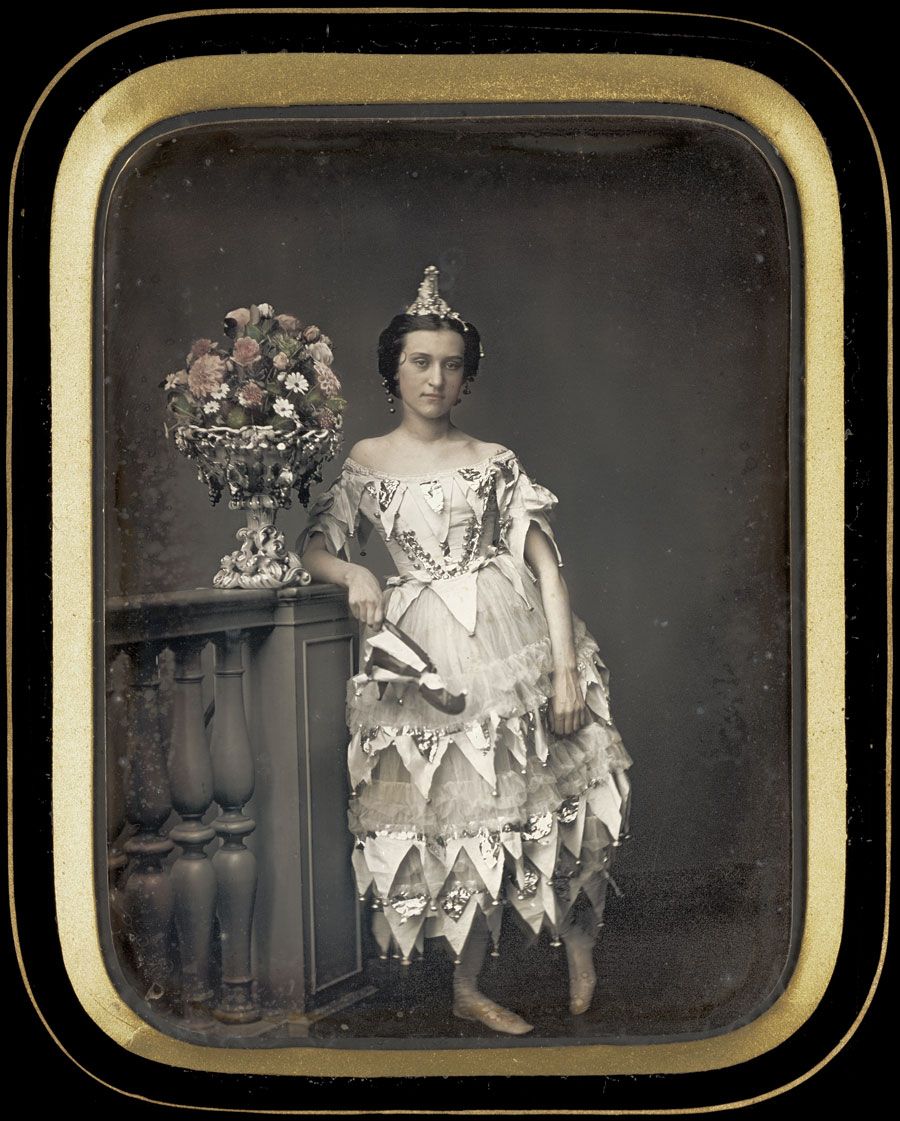
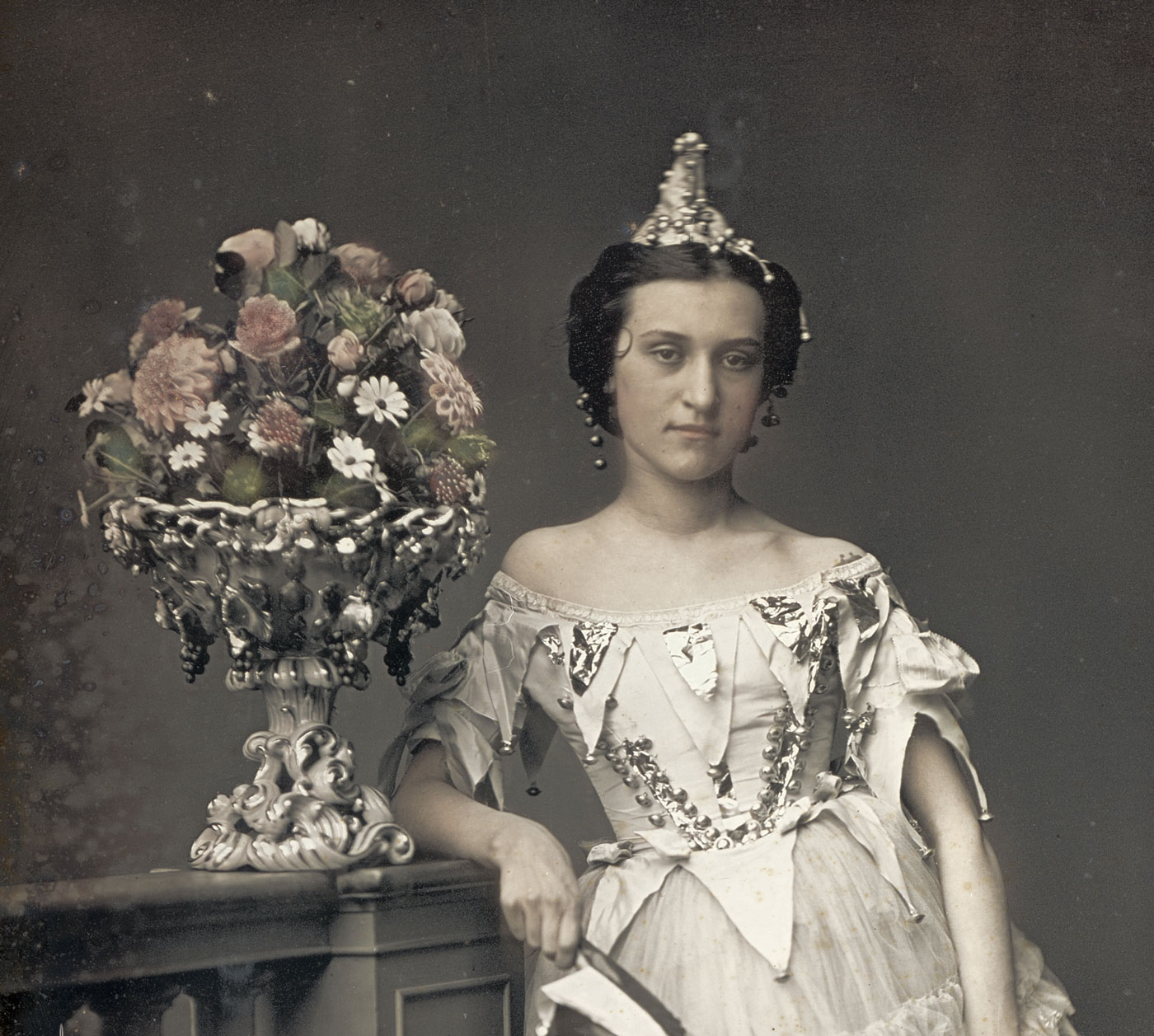
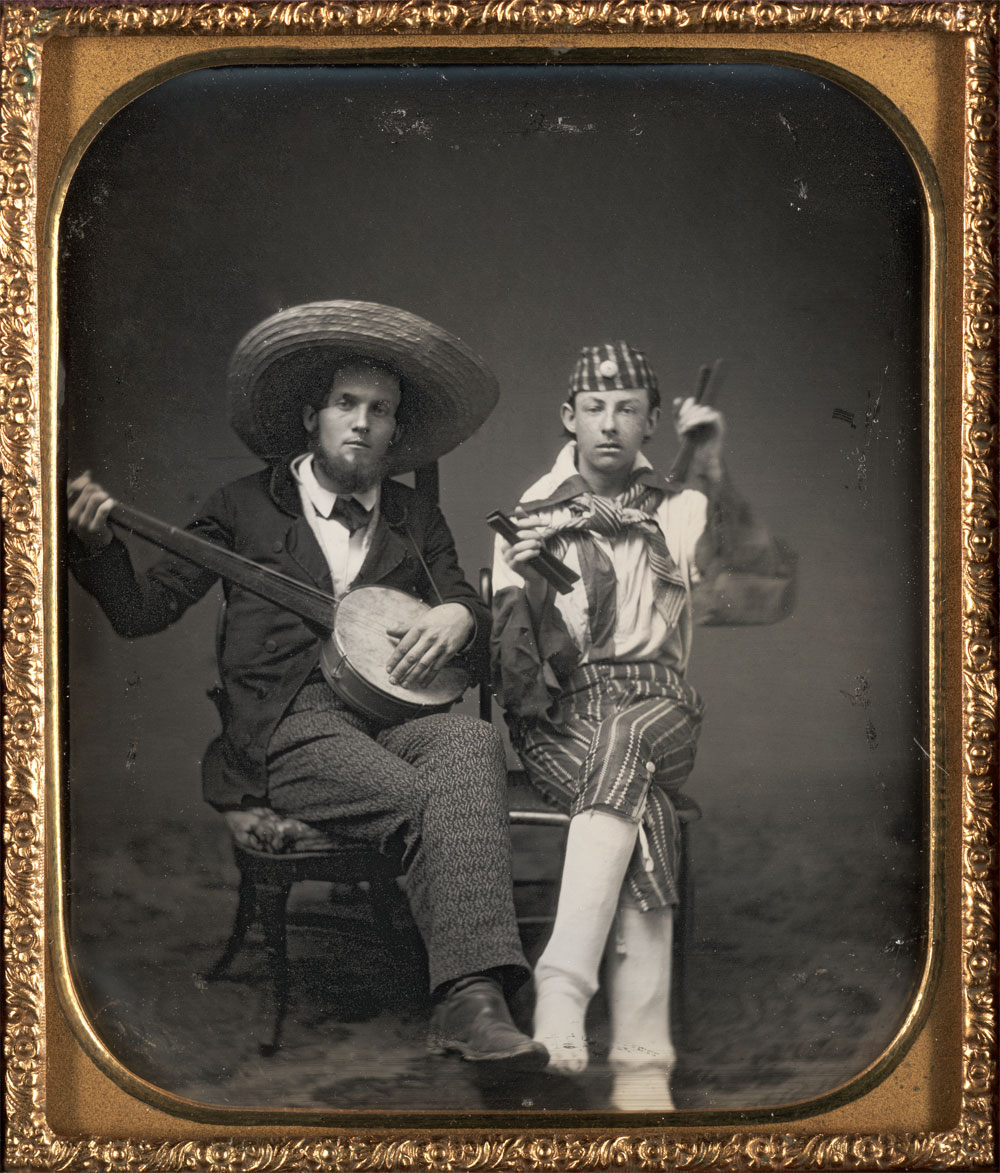
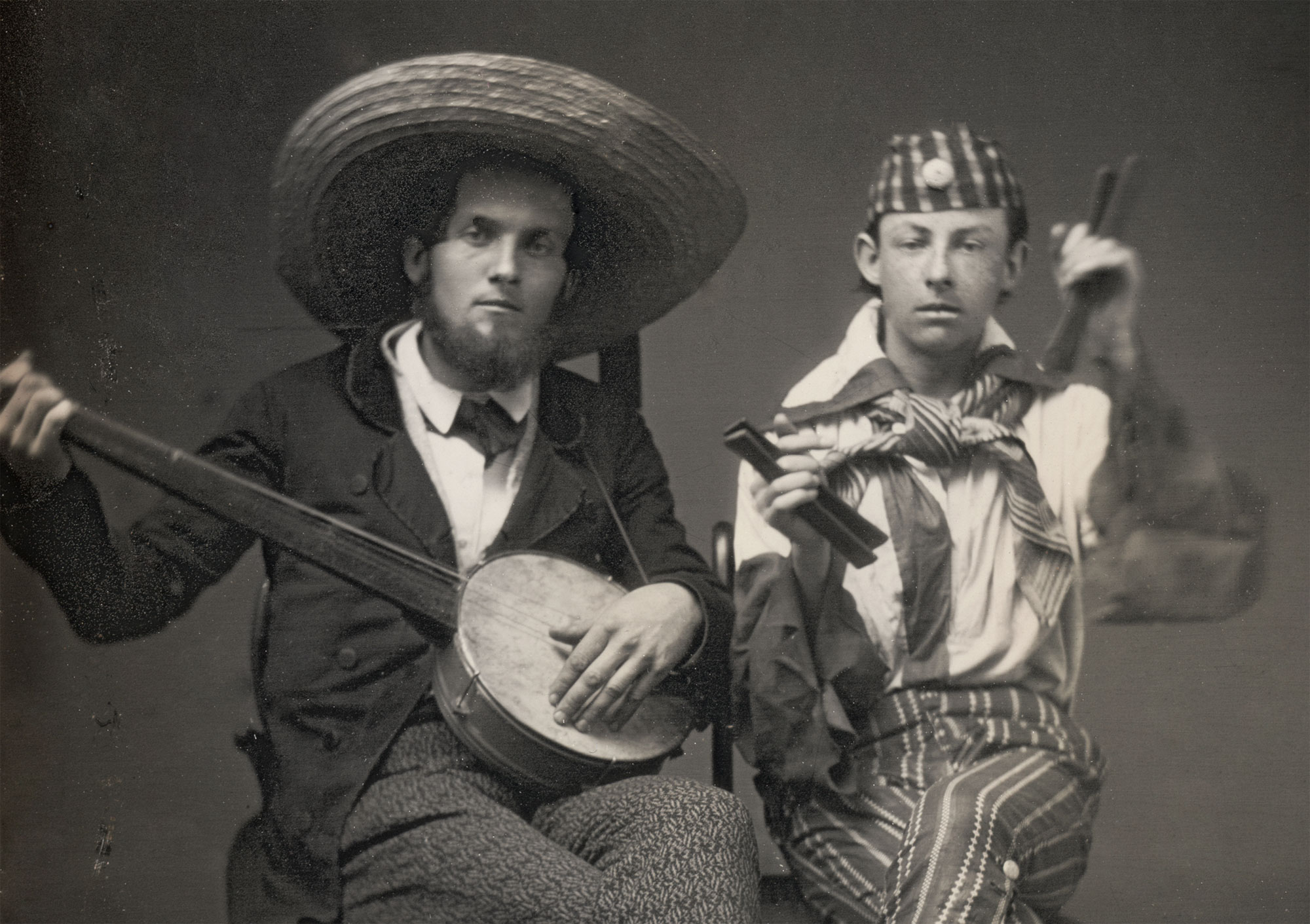
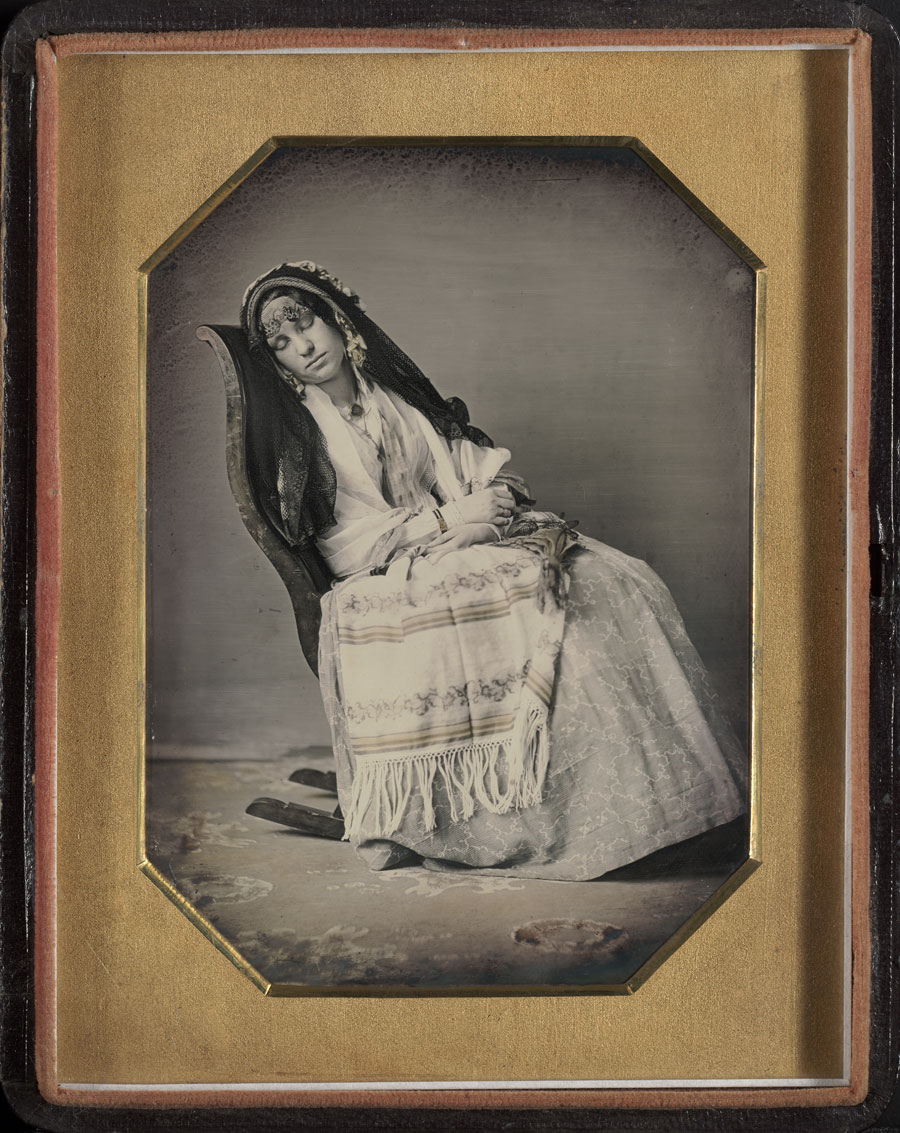
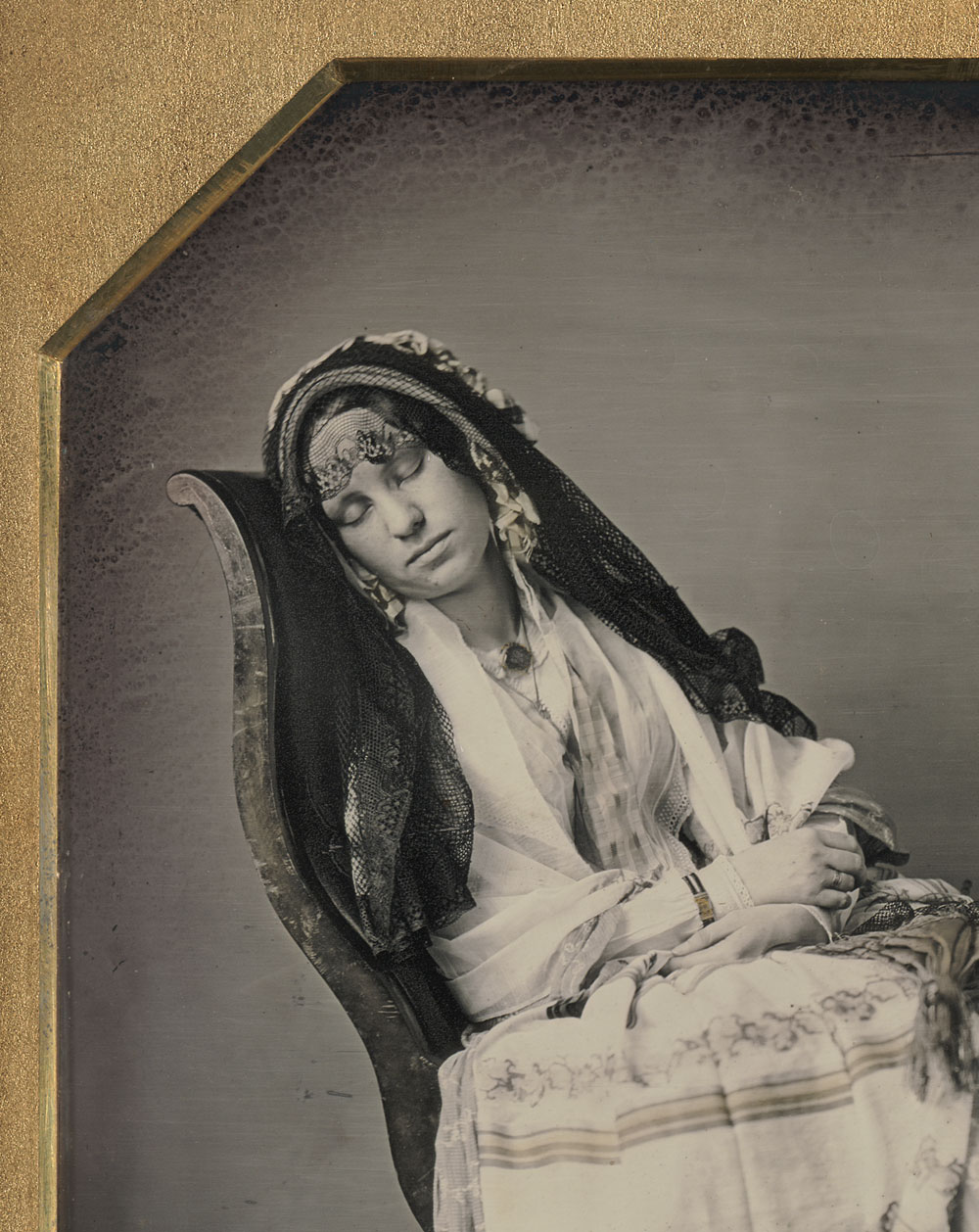
OMG some of these images are SO beautiful and others SO bizarre. Please enlarge the detailed shots of Lady in Costume (c. 1850, below) and Traveling Minstrels – banjo and bones (c. 1850, below) – my two favourites – so you can see the costumes and the people. The clothes of the bones player are incredible… I wonder what they did with their lives, where they went and how they lived. How old do you think they are? And what is that on the front of his hat, a watch?

Dr Marcus Bunyan


Many thankx to The Nelson-Atkins Museum of Art for allowing me to publish the photographs in the posting. Please click on the photographs for a larger version of the image.


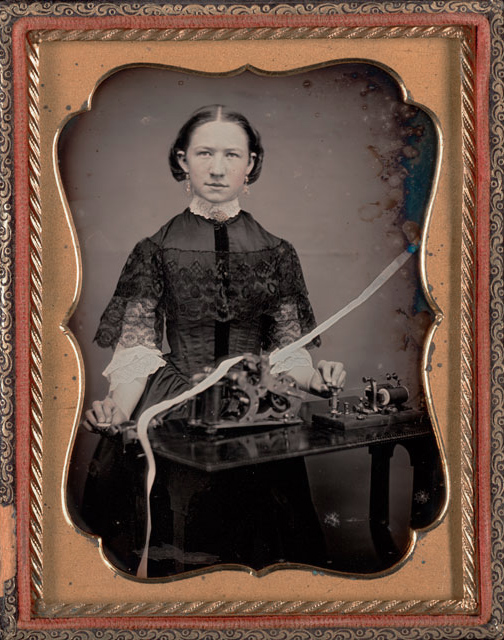
Unknown maker (American) 'Woman telegrapher' c. 1850


Unknown maker (American)
Woman telegrapher
c. 1850
Daguerreotype, quarter plate
image size: 4 1/4 x 3 1/4 inches
Gift of the Hall Family Foundation
© Nelson Gallery Foundation


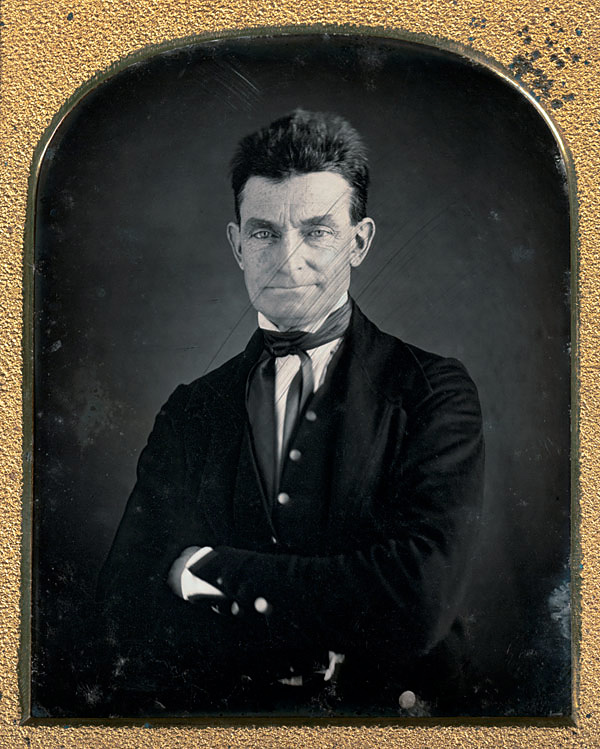
Augustus Washington (American, 1820-1875) 'John Brown' c. 1846-1847


Augustus Washington (American, 1820-1875)
John Brown
c. 1846-1847
Quarter plate daguerreotype
4 x 3 3/16 inches
Gift of the Hall Family Foundation
© Nelson Gallery Foundation


John Brown (May 9, 1800 – December 2, 1859) was a white American abolitionist who believed armed insurrection was the only way to overthrow the institution of slavery in the United States. During the 1856 conflict in Kansas, Brown commanded forces at the Battle of Black Jack and the Battle of Osawatomie. Brown’s followers also killed five slavery supporters at Pottawatomie. In 1859, Brown led an unsuccessful raid on the federal armoury at Harpers Ferry that ended with his capture. Brown’s trial resulted in his conviction and a sentence of death by hanging.

Brown’s attempt in 1859 to start a liberation movement among enslaved African Americans in Harpers Ferry, Virginia, electrified the nation. He was tried for treason against the Commonwealth of Virginia, the murder of five men and inciting a slave insurrection. He was found guilty on all counts and was hanged. Southerners alleged that his rebellion was the tip of the abolitionist iceberg and represented the wishes of the Republican Party to end slavery. Historians agree that the Harpers Ferry raid in 1859 escalated tensions that, a year later, led to secession and the American Civil War.

Text from Wikipedia website


(Pierre) Victor Plumier (French, active 1840s-1850s) 'Lady in Costume' c. 1850


(Pierre) Victor Plumier (French, active 1840s-1850s)
Lady in Costume
c. 1850
Daguerreotype, half-plate
Plate: 5 1/2 x 4 1/2 inches (13.97 x 11.43cm)
Mount (open): 8 1/8 x 6 5/8 inches (20.64 x 16.83cm)
Gift of the Hall Family Foundation
© Nelson Gallery Foundation


(Pierre) Victor Plumier, French, active 1840s-1850s 'Lady in Costume' c. 1850 (detail)


(Pierre) Victor Plumier, French, active 1840s-1850s
Lady in Costume (detail)
c. 1850
Daguerreotype, half-plate
Plate: 5 1/2 x 4 1/2 inches (13.97 x 11.43cm)
Mount (open): 8 1/8 x 6 5/8 inches (20.64 x 16.83cm)
Gift of the Hall Family Foundation
© Nelson Gallery Foundation


Unknown photographer. 'Traveling Minstrels – banjo and bones' c. 1850


Unknown photographer
Traveling Minstrels – banjo and bones
c. 1850
Daguerreotype, sixth plate
Plate: 3 1/4 x 2 3/4 inches (8.26 x 6.99cm)
Case: 3 3/4 x 3 3/8 x 5/8 inches (9.53 x 8.59 x 1.6cm)
Gift of the Hall Family Foundation
© Nelson Gallery Foundation


The bones are a musical instrument (more specifically, a folk instrument) which, at the simplest, consists of a pair of animal bones, or pieces of wood or a similar material. Sections of large rib bones and lower leg bones are the most commonly used true bones, although wooden sticks shaped like the earlier true bones are now more often used…

They have contributed to many music genres, including 19th century minstrel shows, traditional Irish music, the blues, bluegrass, zydeco, French-Canadian music, and music from Cape Breton in Nova Scotia…

They are typically about 5″ to 7″ in length, but can be much longer, and they are often curved, roughly resembling miniature barrel staves. Bones can also be flat, for example by the cutting of a yardstick. They are played by holding them between one’s fingers, convex surfaces facing one another, and moving one’s wrist in such a way that they knock against each other…

While North American players are typically two-handed, the Irish tradition finds the vast majority of bones players using only one hand, a distinction in method that has a strong impact on musical articulation. The comparison of the function of banjo rolls with that of bones within an ensemble suggests that stereotypically a subdivided accompaniment pattern is played on the bones.

Text from Wikipedia website


Unknown photographer. 'Traveling Minstrels – banjo and bones' c. 1850 (detail)


Unknown photographer
Traveling Minstrels – banjo and bones (detail)
c. 1850
Daguerreotype, sixth plate
Plate: 3 1/4 x 2 3/4 inches (8.26 x 6.99cm)
Case: 3 3/4 x 3 3/8 x 5/8 inches (9.53 x 8.59 x 1.6cm)
Gift of the Hall Family Foundation
© Nelson Gallery Foundation


David C. Collins (American, 1825-1909) 
Thomas P. Collins (American, 1823-1873) 'Portrait of Frances Amelia Collins Mitchell' c. 1850


David C. Collins (American, 1825-1909)

Thomas P. Collins (American, 1823-1873)
Portrait of Frances Amelia Collins Mitchell
c. 1850
Daguerreotype, half plate
Plate: 5 1/2 x 4 1/2 inches (13.97 x 11.43cm)
Case: 6 x 4 7/8 x 3/4 inches (15.24 x 12.37 x 1.91cm)
Gift of the Hall Family Foundation
© Nelson Gallery Foundation


David C. Collins (American, 1825-1909) 
Thomas P. Collins (American, 1823-1873) 'Portrait of Frances Amelia Collins Mitchell' c. 1850 (detail)


David C. Collins (American, 1825-1909)

Thomas P. Collins (American, 1823-1873)
Portrait of Frances Amelia Collins Mitchell (detail)
c. 1850
Daguerreotype, half plate
Plate: 5 1/2 x 4 1/2 inches (13.97 x 11.43cm)
Case: 6 x 4 7/8 x 3/4 inches (15.24 x 12.37 x 1.91cm)
Gift of the Hall Family Foundation
© Nelson Gallery Foundation


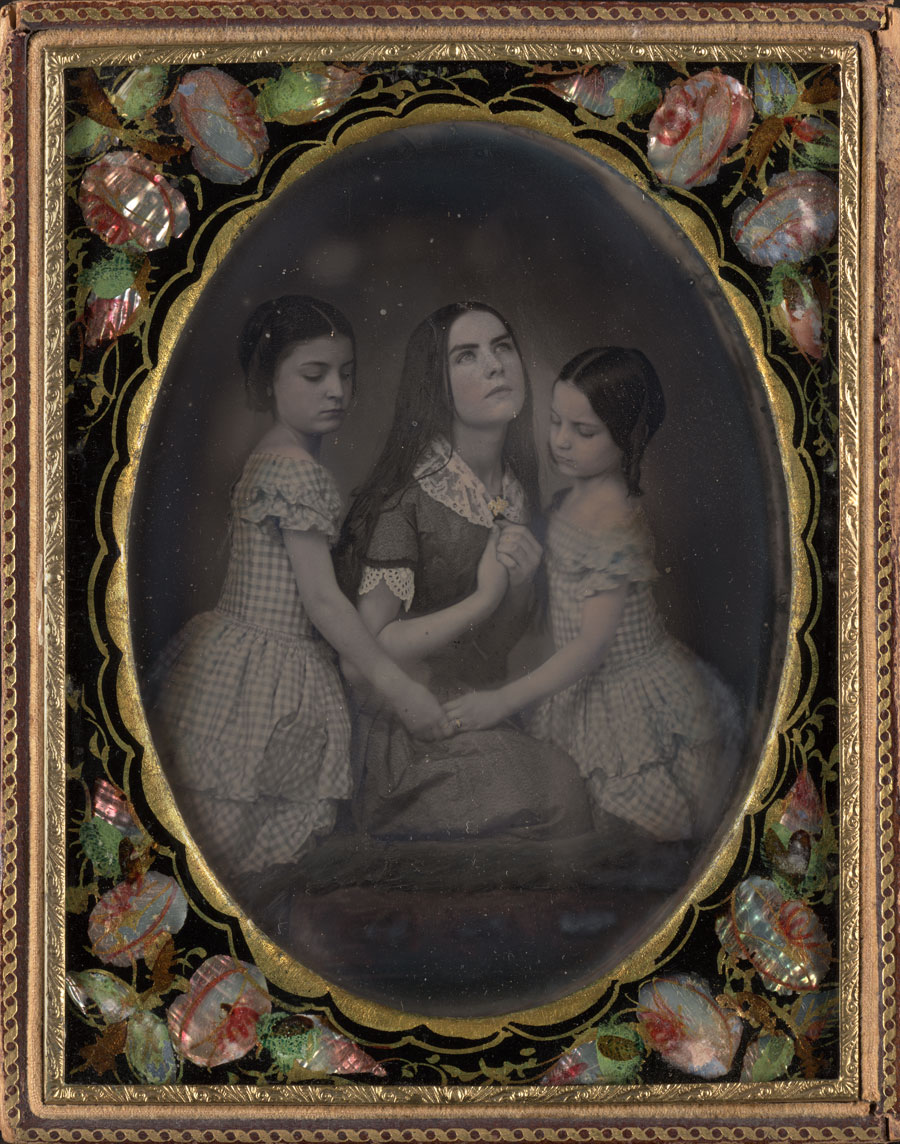
Unknown photographer. 'Portrait of Three Girls' c. 1850s


Unknown photographer
Portrait of Three Girls
c. 1850s
Daguerreotype, half plate
Plate: 5 1/2 x 4 1/2 inches (13.97 x 11.43cm)
Gift of the Hall Family Foundation
© Nelson Gallery Foundation


An exhibition featuring more than 50 daguerreotypes acquired by The Nelson-Atkins Museum of Art since 2007 opened on Jan. 24. In the Looking Glass: Recent Daguerreotype Acquisitions is a fascinating look at an early photographic process that was introduced in 1839. “In the 19th century, daguerreotypes seemed to be magical bits of reality,” says Jane Aspinwall, associate curator of Photography. “Now, more than a century later, they still hold that kind of wonder and appeal.”

A precursor of printed photography, the daguerreotype image is formed on a highly polished silver surface that is exposed to iodine fumes. The fumes produce a light sensitive coating. The plate is then covered with a protective dark slide and placed into a camera. An image is projected through the lens and onto the plate; the image is then developed using heated mercury. The distinguishing visual characteristics of a daguerreotype are that the image is on a bright, mirror-like surface of metallic silver and it appears either positive or negative depending on the lighting conditions and whether a light or dark background is being reflected in the metal.

Important additions to the Nelson-Atkins American collection include portraits by major makers, including possibly the earliest of only six known daguerreotypes of noted abolitionist John Brown. In the French holding, lively portraits, cityscapes, and archaeological images are highlighted. A 170-year-old daguerreotype from Egypt transports viewers to the shimmering banks of the Nile River, a place few would have been able to travel to at the time. British pieces are distinguished by elaborate hand-colouring.

Small, intimate American daguerreotypes, most housed in jewel-like velvet or silk-lined cases, were made to be held close and scrutinised. Because they are reflective, the Nelson-Atkins designed more than two dozen cases with special lighting features to provide optimal viewing conditions, bringing each detailed image to life. A daguerreotype of a young girl clutching a shawl around her bare shoulders seems to float; another sharply detailed, rare Gold Rush image [second image, below] depicts a small group of men standing in front of their grocery store located in a California frontier town.

“It’s an amazing experience to view these precious, one-of-a-kind daguerreotypes,” said Aspinwall. “Once you see one, you never forget it. It takes you back in time to share a mid-19­th century moment with the sitter.”

The Nelson-Atkins is recognised as having one of the top five American daguerreotype collections in the U.S. and loaned more than 80 to the Taft Museum in Cincinnati for the 2013 exhibition Photographic Wonders. Daguerreotypes are an internationally significant cornerstone of the museum’s photography holdings.”

Press release from the  Nelson-Atkins Museum of Art website


Unknown photographer. 'St. Anthony Falls' c. 1852


Unknown photographer
St. Anthony Falls
c. 1852
Daguerreotype, half plate
Plate: 5 1/2 x 4 1/2 inches (13.97 x 11.43cm)
Case: 6 x 4 3/4 x 1/2 inches (15.24 x 12.07 x 1.27cm)
Gift of the Hall Family Foundation
© Nelson Gallery Foundation


Unknown maker, American. 'Bond & Mollyneaux Groceries and Provisions' c. 1850


Unknown maker, American
Bond & Mollyneaux Groceries and Provisions
c. 1850
Daguerreotype, whole plate
Image size: 8 1/2 x 6 1/2 inches
© Nelson Gallery Foundation


Unknown photographer. 'Three carpenters in their workshop' c. 1848-1850


Unknown photographer
Three carpenters in their workshop
c. 1848-1850
Daguerreotype, quarter plate
Plate: 4 1/4 x 3 1/4 inches (10.8 x 8.26cm)
Case (open): 4 3/4 x 7 1/2 inches (12.07 x 19.05cm)
Gift of the Hall Family Foundation
© Nelson Gallery Foundation


David C. Collins (American, 1825-1909) Thomas P. Collins (American, 1823-1873) 'Portrait of Annie M. Collins' c. 1847


David C. Collins (American, 1825-1909)
Thomas P. Collins (American, 1823-1873)
Portrait of Annie M. Collins
c. 1847
Daguerreotype, quarter plate
Plate: 4 1/4 x 3 1/4 inches (10.8 x 8.26cm)
Case: 4 5/8 x 3 3/4 inches (11.76 x 9.53cm)
Gift of the Hall Family Foundation
© Nelson Gallery Foundation


Unknown photographer. 'Genushe (animal post-mortem)' c. 1845-1846


Unknown photographer
Genushe (animal post-mortem)
c. 1845-1846
Daguerreotype, sixth plate
Plate: 3 1/4 x 2 3/4 inches (8.26 x 6.99cm)
Case: 3 3/4 x 3 1/4 x 1/4 inches (9.53 x 8.26 x 0.64cm)
Gift of the Hall Family Foundation
© Nelson Gallery Foundation


Unknown photographer. 'Untitled (eagle facing left)' c. 1850


Unknown photographer
Untitled (eagle facing left)
c. 1850
Daguerreotype, sixth plate
Case: 3 3/4 x 3 3/4 x 3/4 inches (9.53 x 9.53 x 1.91cm)
Gift of the Hall Family Foundation
© Nelson Gallery Foundation


The Nelson-Atkins Museum of Art
4525 Oak Street
Kansas City, MO 64111

Opening hours:
Thursday – Monday 10am – 5pm
Closed Tuesdays and Wednesdays

The Nelson-Atkins Museum of Art website

LIKE ART BLART ON FACEBOOK

Back to top

Exhibition: ‘Fútbol: The Beautiful Game’ at the Los Angeles County Museum of Art (LACMA)

Exhibition dates: 2nd February – 20th July 2014


Dario Escobar (Guatemalan, b. 1971) 'Obverse & Reverse XIV' 2013 (installation view)


Dario Escobar (Guatemalan, b. 1971)
Obverse & Reverse XIV (installation view)
2013
Latex, leather, string and steel
11 1/2 × 6 9/16 × 6 9/16 ft. (349.89 × 199.94 × 199.94cm)
Dario Escobar
Courtesy of the artist and Josée Bienvenu Gallery, New York


In honour of the World Cup final and a wonderful tournament, here is a glorious posting to celebrate The Beautiful Game!

PS. So much of this work is conceptual graphic design, doesn’t anybody make art anymore?

Marcus


Many thankx to the Los Angeles County Museum of Art (LACMA) for allowing me to publish the photographs in the posting. Please click on the photographs for a larger version of the image.


On the eve of the World Cup – which, like the Olympics, takes place every four years – this exhibition celebrates football, the world’s game, and its richness as a field for metaphorical inquiry. Just as the World Cup brings together athletes and fans from around the globe, Fútbol: The Beautiful Game explores some of the ties that bind us as humans. Focusing on a simple game allows for a direct conversation about the communication and (more often) miscommunication that characterise our collective life, while celebrating one thing that most of the planet holds its breath for: the quadrennial event held to crown a nation as world champion of football. The sport has often been cited as a metaphor for nations, for cultures, and even for life, as is suggested by a statement attributed to the writer Albert Camus: “After many years in which the world has afforded me many experiences, what I know most surely about morality and obligations, I owe to football.” Camus believed that the simple rules governing the game often had more to teach us about life than did politicians and philosophers.

Fútbol: The Beautiful Game presents the work of more than 30 artists who address the game through its imagery, signs, symbols, and sounds while also touching on larger issues well apart from the field of play. These themes include masculinity and the construction of heroes; ritual and worship; marketing and power; and current political, social, and cultural phenomena.


This slideshow requires JavaScript.


Nelson Leirner (Brazil, 1932-2020) 'Maracana' 2003 (installation view)

In the background: Andreas Gursky (German, b. 1955) 'Maracana' 2003 and Andreas Gursky 'Amsterdam, EM Arena I' 2000. In the foreground: Nelson Leirner (Brazil, 1932-2020) 'Maracana' 2003 (installation view)


In the background: Andreas Gursky (German, b. 1955)
Amsterdam, EM Arena I (installation view)
2000
Chromogenic print
108 1/4 × 80 11/16 × 2 7/16 in. (275 × 205 × 6.2cm)
Gagosian Gallery
Andreas Gursky, Courtesy Gagosian Gallery


Nelson Leirner (Brazil, 1932-2020) 'Maracana' 2003 (installation view detail)

Nelson Leirner (Brazil, 1932-2020) 'Maracana' 2003 (installation view detail)


Nelson Leirner (Brazil, 1932-2020)
Maracana (installation view details)
2003
Plaster, plastic, ceramic, wood
120 x 130 3/4 x 9.5 in.
Brooklyn Museum


Installation view of the exhibition 'Fútbol: The Beautiful Game' at the Los Angeles County Museum of Art (LACMA)

Installation view of the exhibition 'Fútbol: The Beautiful Game' at the Los Angeles County Museum of Art (LACMA)

Satch Hoyt (Anglo-Afro-Jamaican, b. 1957) 'Kick That' 2006 (in case) and George Afedzi Hughes (Ghanaian-born American, b. 1962) 'Parallel' 2009-2011


In case: Satch Hoyt (Anglo-Afro-Jamaican, b. 1957)
Kick That
2006
Mixed media with sound
Satch Hoyt
Courtesy of the artist

In the background: George Afedzi Hughes (Ghanaian-born American, b. 1962)
Parallel
2009-2011
Acrylic, oil, enamel on canvas
72 x 120 in. (182.88 x 304.8cm)
Skoto Gallery
Collection of the artist, Courtesy Skoto Gallery


Stephen Dean (French-American, b. 1968) 'Volta' 2002-2003 (installation view)


Stephen Dean (French-American, b. 1968)
Volta (installation view)
2002-2003
Single-channel color DVD installation (9′) with audio and fabric enclosure
Collection of Ruth and William True


Right on floor: Mary Ellen Carroll (American, b. 1961) 'FREE THROW' 1984 (installation view)


Right on floor: Mary Ellen Carroll (American, b. 1961)
FREE THROW (installation view)
1984
Mannequin bottom and basketball with rubberised paint
4 x 3 x 1 ft. (121.91 x 91.44 x 30.48cm)
Mary Ellen Carroll
Courtesy of the artist, 3rd Streaming-NYC, Galerie Hubert Winter-Vienna, Austria


Installation view of the exhibition 'Fútbol: The Beautiful Game' at the Los Angeles County Museum of Art (LACMA)

At centre: Wendy White (American, b. 1971) 'Clavado' 2013 (installation view)


Centre: Wendy White (American, b. 1971)
Clavado (installation view)
2013
Acrylic on canvas, wood, enamel
74 1/2 × 74 1/2 in. (189.23 × 189.23cm)
Andrew Rafacz Gallery
Courtesy of the artist and Andrew Rafacz


Kehinde Wiley (American, b. 1977) 'Samuel Eto'o' 2010 (installation view)


Kehinde Wiley (American, b. 1977)
Samuel Eto’o (installation view)
2010
Oil on Canvas
76 x 60 in.
Roberts & Tilton Gallery
© Kehinde Wiley
Image courtesy of the artist, and Roberts & Tilton, Culver City


Installation view of the exhibition 'Fútbol: The Beautiful Game' at the Los Angeles County Museum of Art (LACMA)

At right: Nery Gabriel Lemus (American, b. 1977) 'Thank You for the Game' 2013 (installation view)


Right: Nery Gabriel Lemus (American, b. 1977)
Thank You for the Game (installation view)
2013
Serigraph
36 x 50 in. (91.44 x 127cm)
Self Help Graphics & Art, Professional Printmaking Program, 2013. On loan from the Self Help
Graphics & Art Collection
© Nery Gabriel Lemus


At right: Dewey Tafoya (American) 'Olmeca 1370 BCE' 2013 (installation view)


Right: Dewey Tafoya (American)
Olmeca 1370 BCE (installation view)
2013
Serigraph
36 × 50 in. (91.44 × 127cm)
Self-Help Graphics
Self Help Graphics & Art, Professional Printmaking Program, 2013. On loan from the Self Help
Graphics & Art Collection


Installation view of the exhibition 'Fútbol: The Beautiful Game' at The Los Angeles County Museum of Art (LACMA)


Installation view of the exhibition Fútbol: The Beautiful Game at The Los Angeles County Museum of Art (LACMA)


The Los Angeles County Museum of Art (LACMA) presents Fútbol: The Beautiful Game, an exhibition examining the sport of fútbol, or soccer, as it is known in the United States. Featuring approximately 50 works by nearly 30 artists on the subject of fútbol – often referred to as “the beautiful game” – the exhibition looks at issues of nationalism, identity, globalism, and mass spectacle as well as the shared human experience between spectators from a multitude of cultures. In anticipation of the 2014 World Cup that takes place in Brazil this summer, LACMA’s exhibition considers the sport through video, photography, painting, sculpture, and large-scale installation.

“A globally beloved sport celebrated in the context of a museum: what a great opportunity to explore the international scope of soccer through the lens of art,” said Michael Govan, CEO and Wallis Annenberg Director of LACMA. “Fútbol should excite all, especially as it coincides with the World Cup in Brazil in summer 2014.”

“When people watch a game, they feel inspired by the spirit of the team, the fans, and the sense of community,” remarked Franklin Sirmans, Terri and Michael Smooke Curator and department head of contemporary art at LACMA, “We, the fans, create the spirit of the team via our rituals. Witnessing a game is one of the few occasions during which a collective sense of enthusiasm is still possible. This exhibition explores that energy.”

Exhibition overview

Two room-sized video installations anchor Fútbol: The Beautiful Game. The first, Zidane: A 21st Century Portrait by the artists Philippe Parreno and Douglas Gordon, provides an intimate portrait of Zinedine Zidane – one of the greatest soccer players in the history of the sport – during the course of a single match. Meanwhile, Stephen Dean’s Volta, set to samba music, directs its gaze at stadium crowds and draws attention to both the pandemonium and organised ritual of mass audiences.

Other works by artists including Robin Rhode, Kehinde Wiley, Petra Cortright, Andy Warhol, Mark Bradford, Mary Ellen Carroll, Hassan Hajjaj, and Andreas Gursky, among others, provide a sense of the possibilities of the sport as a universal conversation piece. With artists hailing from as far afield as Morocco, Germany, Mexico, and South Africa – in addition to several Los Angeles–based artists – the geographic range represented in Fútbol: The Beautiful Game reflects the global reach of the sport.

Gustavo Artigas’s The Rules of the Game examines the ways in which communities that play different sports (basketball, soccer, and football) perceive one another, while Miguel Calderón’s video Mexico vs. Brasil dramatically unfolds during an unlikely victory for Mexico. Chris Beas harkens back to classical modes of presentation in his paintings: his athletic figures are depicted in a celebratory, almost mythic light. Meanwhile, the athletes featured in Generic Art Solutions’ works are almost caricatures caught in moments of extreme dramatisation.

In collaboration with LACMA, a new edition of prints has been commissioned by Self Help Graphics under the direction of executive director, Evonne Gallardo. The new prints by Carolyn Castano, Nery Gabriel Lemus, Ana Serrano, Dewey Tafoya, Ami Motevelli and Mario Ybarra, Jr. address varied aspects of the game – from a commemoration for the Colombian soccer player Andres Escobar who was shot and killed shortly after the 1994 World Cup, seemingly for his mistaken own goal, to references to the Olmec culture of the first major civilisation in Mexico.

As a nod to the imminent World Cup, the exhibition’s design alludes to the Brazilian flag with graphic symbolism as it evokes the environs of the sport – sun, sky, and grass – through a vibrant yellow, blue, and green.

Press release from the LACMA website


Lyle Ashton Harris (American, b. 1965) 'Verona #2' 2001-2004


Lyle Ashton Harris (American, b. 1965)
Verona #2
2001-2004
Silver gelatin print
16 x 20 in.
The Robert E. Holmes Collection
© Lyle Ashton Harris


George Afedzi Hughes (Ghanaian-born American, b. 1962) 'Parallel' 2009-2011


George Afedzi Hughes (Ghanaian-born American, b. 1962)
Parallel
2009-2011
Acrylic, oil, enamel on canvas
72 x 120 in. (182.88 x 304.8cm)
Skoto Gallery
Collection of the artist, Courtesy Skoto Gallery


Stephen Dean (French-American, b. 1968) 'VOLTA' 2002-2003 (still)


Stephen Dean (French-American, b. 1968)
VOLTA (still)
2002-2003
Single-channel color DVD installation (9′) with audio and fabric enclosure
Collection of William and Ruth True, Seattle
Courtesy of the artist and Baldwin Gallery, Aspen
© Stephen Dean


Miguel Calderón (Mexican, b. 1971) 'Mexico vs Brasil' 2004 (video still)


Miguel Calderón (Mexican, b. 1971)
Mexico vs Brasil (video still)
2004
Video transferred to DVD
Duration: 1 hrs. 30 minutes
Courtesy of the artist and kurimanzutto, Mexico City
© Miguel Calderón


Antoni Muntadas (Spanish, b. 1942) 'Celebracions' 2009


Antoni Muntadas (Spanish, b. 1942)
Celebracions
2009
DVD
Blake Byrne
Collection of Blake Byrne, Los Angeles


Chris Beas (American) 'Sir Bobby' 2007


Chris Beas (American)
Sir Bobby
2007
Acrylic on Canvas
24 x 25 3/8 in.
Courtesy of the artist and Martha Otero Gallery
© Chris Beas


Ana Serrano (American, b. 1983) 'Narco Soccer' 2013


Ana Serrano (American, b. 1983)
Narco Soccer
2013
Serigraph
50 × 36 in. (127 × 91.44cm)
Self-Help Graphics
Self Help Graphics & Art, Professional Printmaking Program, 2013. On loan from the Self Help
Graphics & Art Collection


Generic Art Solutions. 'Pieta' 2008


Generic Art Solutions
Pieta
2008
Photograph
36 x 36 in.
Courtesy of Jonathan Ferrara Gallery, New Orleans
© Generic Art Solutions


Andy Warhol (American, 1928-1987) 'Pele' 1978


Andy Warhol (American, 1928-1987)
Pele
1978
Silkscreen
40 x 40 in.
University of Maryland Art Gallery, College Park, MD
© Andy Warhol Foundation/Artists Rights Society (ARS), New York


Kehinde Wiley (American, b. 1977) 'Samuel Eto'o' 2010


Kehinde Wiley (American, b. 1977)
Samuel Eto’o
2010
Oil on Canvas
76 x 60 in.
Roberts & Tilton Gallery
© Kehinde Wiley
Image courtesy of the artist, and Roberts & Tilton, Culver City


Nery Gabriel Lemus (American, b. 1977) 'Thank You for the Game' 2013


Nery Gabriel Lemus (American, b. 1977)
Thank You for the Game
2013
Serigraph
36 x 50 in. (91.44 x 127cm)
Self Help Graphics & Art, Professional Printmaking Program, 2013. On loan from the Self Help
Graphics & Art Collection
© Nery Gabriel Lemus


Philippe Parreno (French, b. 1964) and Douglas Gordon (Scottish, b. 1966) 'Zidane: A 21st Century Portrait' 2006


Philippe Parreno (French, b. 1964) and Douglas Gordon (Scottish, b. 1966)
Zidane: A 21st Century Portrait
2006
© Philippe Parreno and Douglas Gordon


Philippe Parreno (French, b. 1964) and Douglas Gordon (Scottish, b. 1966) 'Zidane: A 21st Century Portrait' 2006


Philippe Parreno (French, b. 1964) and Douglas Gordon (Scottish, b. 1966)
Zidane: A 21st Century Portrait
2006
© Philippe Parreno and Douglas Gordon


Philippe Parreno (French, b. 1964) and Douglas Gordon (Scottish, b. 1966) 'Zidane: A 21st Century Portrait' 2006


Philippe Parreno (French, b. 1964) and Douglas Gordon (Scottish, b. 1966)
Zidane: A 21st Century Portrait
2006
© Philippe Parreno and Douglas Gordon


Los Angeles County Museum of Art (LACMA)
5905 Wilshire Boulevard (at Fairfax Avenue)
Los Angeles, CA, 90036
Phone: 323 857 6000

Opening Hours:
Monday, Tuesday, Thursday: 11am – 6pm
Friday: 11am – 8pm
Saturday, Sunday: 10am – 7pm
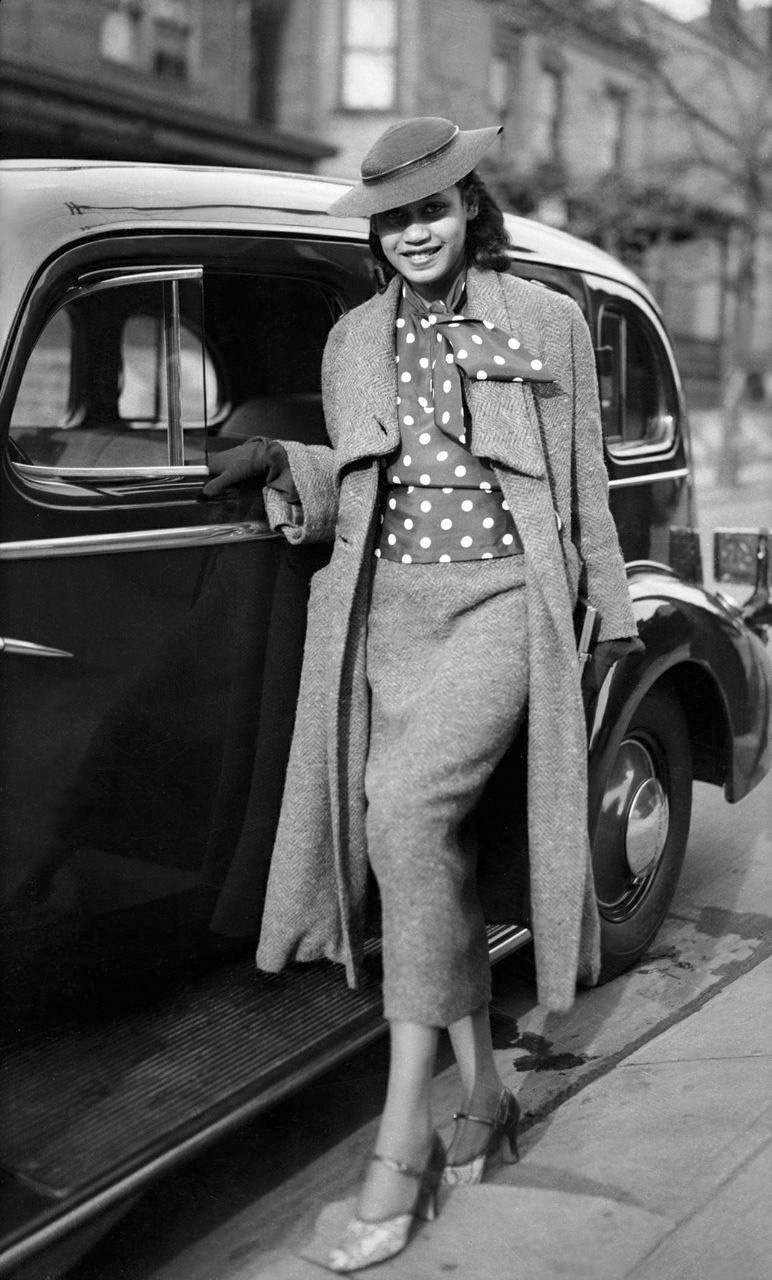
Closed Wednesday

LACMA website

LIKE ART BLART ON FACEBOOK

Back to top

Exhibition: ‘Ana Mendieta: Traces’ at the Museum der Moderne Salzburg
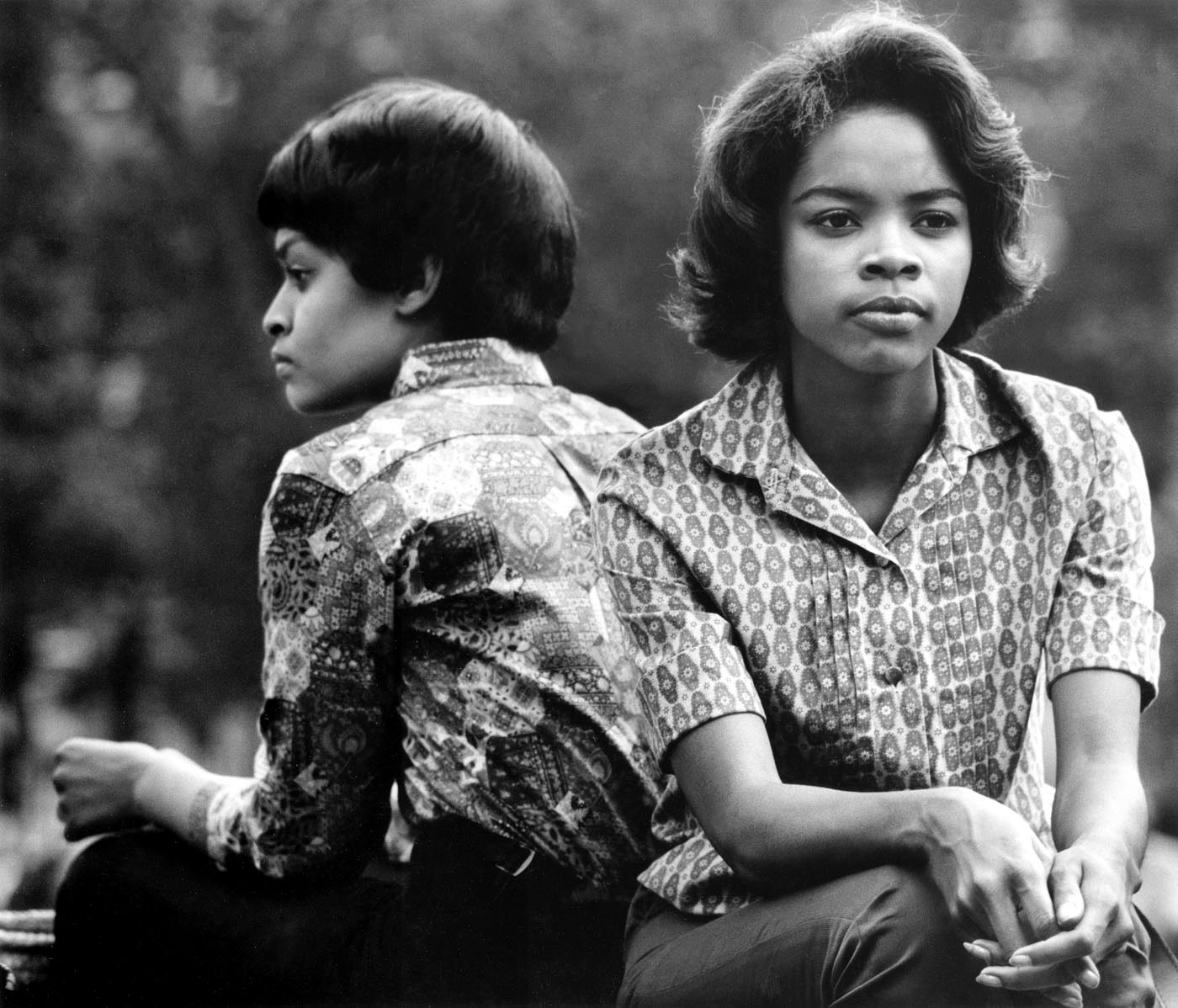
Exhibition dates: 29th March – 6th July 2014

PLEASE NOTE: THIS POSTING CONTAINS PHOTOGRAPHS WHICH MAY BE DISTRESSING TO SOME PEOPLE


Ana Mendieta (Cuban-American, 1948-1985) 'Untitled (Facial Hair Transplant)' 1972


Ana Mendieta (Cuban-American, 1948-1985)
Untitled (Facial Hair Transplant)
1972
Suite of seven colour photographs, estate prints 1997
© The Estate of Ana Mendieta Collection, L.L.C.
Courtesy Galerie Lelong, New York and Paris and Alison Jacques Gallery, London


If I had half of this artists courage, I might not even have a quarter of her talent.

Marcus


Many thankx to the Museum der Moderne Salzburg for allowing me to publish the photographs and text in the posting. Please click on the photographs for a larger version of the image.

View the catalogue essays Ana Mendieta: Traces by Stephanie Rosenthal and Embers by Adrian Heathfield (2.66Mb pdf)


“Art is a material act of culture, but its greatest value is its spiritual role, and that influences society, because it’s the greatest contribution to the intellectual and moral development of humanity that can be made”

“My art is grounded on the belief in one universal energy which runs through everything; from insect to man, from man to spectre, from spectre to plant, from plant to galaxy.”

“To me, the work has existed on different levels. It existed on the level of being in nature and eventually being eroded away. But obviously when it’s shown to someone as a photograph, that’s what it is.”


Ana Mendieta


The few women working with the body at that time were in instant affinity with each other… The struggle for all of us was to keep the sensuousness of the body and to de-eroticize it in terms of cultural expectations. It was gratifying and exciting to discover her work. Those of us who had already been situating the body as central to our visual aesthetic could also anticipate the resistance that would be around her.

I see her death as part of some larger denial of the feminine. Like a huge metaphor saying, we don’t want this depth of feminine eroticism, nature, absorption, integration to happen. It’s too organic. It’s too sacral. In a way, her death also has a symbolic trajectory. More than Ana dies, when she dies.”


Carolee Schneeman quoted in Camhi, Leslie. “ART; Her Body, Herself,” on the New York Times website published June 20, 2004 [Online] Cited 20/06/2014


“You do feel the sadness that she’s not with us and you wonder where she would have gone with her work.”


Raquelin
 Mendieta


Ana Mendieta (Cuban-American, 1948-1985) 'Untitled (Facial Cosmetic Variations)' 1972 (detail)


Ana Mendieta (Cuban-American, 1948-1985)
Untitled (Facial Cosmetic Variations)
(detail)
1972
Suite of eight colour photographs (estate prints, 1997)
Each 50.8 x 406cm
The Estate of Ana Mendieta Collection; courtesy Galerie Lelong, New York and Paris


Ana Mendieta (Cuban-American, 1948-1985) 'Rape' 1973


Ana Mendieta (Cuban-American, 1948-1985)
Rape
1973
Colour photograph (lifetime print)
20.4 x 25.4cm
The Estate of Ana Mendieta Collection; courtesy Galerie Lelong, New York and Paris


Ana Mendieta (Cuban-American, 1948-1985) 'Rape Scene' 1973


Ana Mendieta (Cuban-American, 1948-1985)
Rape Scene
1973
Colour photograph (lifetime print)
39.8 x 31 x 3.2cm (framed)
Tate: Presented by the American Patrons of Tate, courtesy of the Latin American Acquisitions Committee 2010


Rape Scene (1973) was part of series of works devised in response to the rape and murder of a fellow student on the Iowa University campus, where Mendieta completed her BA, MA (painting) and an MFA (inter-media). She invited friends and fellow students to her apartment. The viewer entered through a slightly ajar door into a dark apartment into a room where the artist appeared under a single source of light revealing Mendieta stripped from the waist down. The artist stood slouched and bound over a table, nude from the waist down with her body smeared in blood. Around her was an assemblage of broken plates and blood on the floor. Her direct identification with a specific victim meant that she could not be seen as an anonymous object in a theatrical tableau.


Ana Mendieta (Cuban-American, 1948-1985) 'Untitled (Self-Portrait with Blood)' 1973 (detail)


Ana Mendieta (Cuban-American, 1948-1985)
Untitled (Self-Portrait with Blood)
(detail)
1973
Suite of six colour photographs (estate prints 1997)
Each 50.8 x 40.6cm
Private collection, London; Courtesy Alison Jacques Gallery, London


Ana Mendieta (Cuban-American, 1948-1985) 'Untitled (Body Tracks)' 1974


Ana Mendieta (Cuban-American, 1948-1985)
Untitled (Body Tracks)
1974
Colour photograph, lifetime print
Collection of Igor DaCosta
© The Estate of Ana Mendieta Collection, L.L.C.
Courtesy Galerie Lelong, New York and Paris and Alison Jacques Gallery, London


Ana Mendieta (Cuban-American, 1948-1985) 'Untitled (Glass on Body Imprints)' 1972


Ana Mendieta (Cuban-American, 1948-1985)
Untitled (Glass on Body Imprints)
1972
Suite of six colour photographs, estate prints
© The Estate of Ana Mendieta Collection, L.L.C.
Courtesy Galerie Lelong, New York and Paris and Alison Jacques Gallery, London


Ana Mendieta (Cuban-American, 1948-1985) 'Untitled' 1973


Ana Mendieta (Cuban-American, 1948-1985)
Untitled
1973
Lifetime colour photograph
Collection Walker Art Center, Minneapolis, T. B. Walker Acquisition Fund, 2011
© The Estate of Ana Mendieta Collection, L.L.C.
Courtesy Galerie Lelong, New York and Paris and Alison Jacques Gallery, London


Ana Mendieta (Cuban-American, 1948-1985) 'Blood and Feathers #2' 1974


Ana Mendieta (Cuban-American, 1948-1985)
Blood and Feathers #2
1974
Colour photograph, lifetime print
Collection Raquelín Mendieta Family Trust
© The Estate of Ana Mendieta Collection, L.L.C.
Courtesy Galerie Lelong, New York and Paris and Alison Jacques Gallery, London


Ana Mendieta (Cuban-American, 1948-1985) 'Imagen de Yagul' 1973


Ana Mendieta (Cuban-American, 1948-1985)
Imagen de Yagul
1973
Lifetime colour photograph
Glenstone
© The Estate of Ana Mendieta Collection, L.L.C.
Courtesy Galerie Lelong, New York and Paris and Alison Jacques Gallery, London


Ana Mendieta: Traces is the first comprehensive survey of this influential artist’s work to be presented in Great Britain or the German-speaking world. It persuasively demonstrates that her art, while very much rooted in the concerns of her day, maintains a powerful connection to our present moment. Born in Cuba in 1948, Mendieta was forced to immigrate to the United States as a child due to her father’s political situation, and much of her work is obliquely haunted by the exile’s sense of displacement, while also reflecting her position as a double minority in North America’s largely white, male art world of the 1970s and 1980s. From the beginning, motifs of transience, absence, violence, belonging, and an identity in flux animated her multidisciplinary art, which ranged nomadically across practices associated with body art, land art, performance, sculpture, photography and film. At its core lay her recurring use of her own body – its physical and photographic traces – and her interest in marginal outdoor sites and elemental materials.

Spanning her brief, yet remarkably productive, career, this exhibition explores the many distinct facets of her practice. It captures her powerfully visceral evocation of ritual and sacrifice, as well as cycles of life and decay, while also highlighting her pioneering role as a conceptual border-crosser. Including photographs, drawings, sculptures, Super-8 films and a substantial selection of photographic slides, most of which have not been exhibited until now, Ana Mendieta: Traces reveals an artist whose underlying concerns led her to bravely re-work and re-combine genres, to draw on different cultures, both archaic and contemporary, while challenging the limits of the art discourse of her time. Her work continues to profoundly challenge, disturb, influence and inspire.

The Museum der Moderne Salzburg will open an extensive retrospective of the work of Ana Mendieta, one of our era’s most important and influential artists. Mendieta was born to a politically active family in Havana, Cuba in 1948. In the wake of the Cuban revolution, when she was only twelve years old, her parents sent her together with her sister to the United States. In 1985, at just thirty-six years old, she died under tragic circumstance in New York. During her short yet prolific career, she developed a unique visual language that is mesmerising in its intimacy, and equally challenging. Her pioneering work has been acknowledged by large retrospectives in the United States and Europe, and is represented in the collections of major museums.

According to Sabine Breitwieser, director at the Museum der Moderne Salzburg, who has arranged the exhibition, “a comprehensive exhibition in the German-speaking area, especially in Austria, and the German monograph on Ana Mendieta are long overdue. The artist’s distinctive work, in which she stages her body within the landscape, seems to be ideally exhibited at this site, where nature and the theatrical take on such a major role. Due to the fragility of the work, this could possibly be one of the last extensive Mendieta exhibitions.”

Among the central themes in Mendieta’s artistic work are exile and cultural displacement. In her search for identity and finding her place in the world, she attempted to create a dialogue between the landscape and the female body. Her work reveals numerous points of contingency with the emerging art movements of the 1960s and 1970s – Conceptual art, land art, and performance art. Nonetheless, it refuses any kind of categorisation and instead addresses missing links or gaps between different media and art forms. “Through my art I want to express the immediacy of life and the eternity of nature,” wrote Mendieta in 1981. Using her own body and elementary materials, such as blood, fire, earth, and water, she created transitory pieces that combine rituals with metaphors for life, death, rebirth, and spiritual transformation. Her disembodied “earth body” sculptures were private, meditative ceremonies in nature documented in the form of slides and films. From them, Mendieta developed the so-called Siluetas (silhouettes), which form the core of her work. In the 1980s, Mendieta’s body disappeared from her artworks and she started to generate indoor works for galleries. Her engagement with nature continued in her sculptures and drawings, which she created as lasting works.

The exhibition presents roughly 150 works, which are organised throughout twelve spaces; two of these spaces are reconstructions of the original exhibitions by the artist. The works shown are in a multitude of media ranging from photography, film, and sculpture through to drawing. A further section will present the artist’s archive. Slides and photographs, notebooks and postcards offer insight into Mendieta’s working methods. The concern of Stephanie Rosenthal, chief curator of the Hayward Gallery London, is “to show Ana Mendieta’s outstanding work in all of its facets, and to place her artistic process at the center.”

While the artistic media that Mendieta utilises in her works could not be any more diverse, the pictures that she produces are characterised by an unmistakable, overwhelming and mystical poetry. This exhibition makes clear that almost thirty years after the artist’s premature death, her work has lost none of its singularity and uniqueness.

Text from the Museum der Moderne Salzburg website


Ana Mendieta (Cuban-American, 1948-1985) 'Untitled (Silueta Series)' 1978


Ana Mendieta (Cuban-American, 1948-1985)
Untitled (Silueta Series)
1978
Gelatin silver print
20.3 x 25.4cm
Solomon R. Guggenheim Museum


Ana Mendieta (Cuban-American, 1948-1985) 'Alma, Silueta en Fuego' (Soul, Silhouette on Fire) 1975 (still)


Ana Mendieta (Cuban-American, 1948-1985)
Alma, Silueta en Fuego (
Soul, Silhouette on Fire) (still)
1975
Super-8 colour, silent film transferred to DVD
3:07 minutes
The Estate of Ana Mendieta Collection; Courtesy Galerie Lelong, New York and Paris, and Alison Jacques Gallery, London


Ana Mendieta (Cuban-American, 1948-1985) 'Anima, Silueta de Cohetes (Firework Piece)' 1976 (still)


Ana Mendieta (Cuban-American, 1948-1985)
Anima, Silueta de Cohetes (Firework Piece)
(still)
1976
(Soul, Silhouette of Fireworks)
Super-8 colour, silent film transferred to DVD
2:22 minutes
The Estate of Ana Mendieta Collection; courtesy Galerie Lelong, New York and Paris


Ana Mendieta (Cuban-American, 1948-1985) 'Untitled (Cuilapán Niche)' 1973


Ana Mendieta (Cuban-American, 1948-1985)
Untitled (Cuilapán Niche)
1973
Black and white photograph (lifetime print)
25.4 x 20.4cm
Private collection, London; Courtesy Gallery Lelong, New York and Paris, and Alison Jacques Gallery London


Ana Mendieta died at just 36 years old, but the imprint of her life digs deeper than most. Mendieta’s work occupies the indeterminate space between land, body and performance art, refusing to be confined to any one genre while working to expand the horizons of them all. With the immediacy of a fresh wound and the weightlessness of a half-remembered song, Mendieta’s artwork remains as haunting and relevant today as ever.

Her haunting imagery explores the relationship between earth and spirit while tackling the eternally plaguing questions of love, death and rebirth. Like an ancient cave drawing, Mendieta’s art gets as close as possible to her subject matter allowing no excess, using primal and visceral means to navigate her themes. Decades after her death, the Museum der Moderne Salzburg will show a retrospective of the late feminist artist’s work, simply titled “Ana Mendieta: Traces.”

Mendieta, who was born in Havana, Cuba in 1948, moved to the U.S. at 12 years old to escape Castro’s regime. There she hopped between refugee camps and foster homes, planting inside her an obsession with ideas of loss, belonging and the impermanence of place. As an artist in the 1970s, Mendieta embarked upon her iconic series “Silhouettes,” in which she merged body and earthly material, making nature both canvas and medium. In her initial “Silhouette,” Mendieta lay shrouded in an ancient Zapotec grave, letting natural forms eat up her diminutive form.

Her “earth-body” sculptures, as they came to be known, feature blood, feathers, flowers and dirt smothered and stuck on Mendieta’s flesh in various combinations. In “Imagen de Yagul,” speckled feverishly in tiny white flowers, she appears as ethereal and disembodied as Ophelia, while in “Untitled Blood and Feathers” Mendieta looks simultaneously the helpless victim and the guilty culprit. “She always had a direction – that feeling that everything is connected,” Ana’s sister Raquelin said of her work.

An uncertain mythology runs throughout Mendieta’s oeuvre, a feeling at once primal, pagan and feminine. Admirers have cited the Afro-Cuban religion of Santeria as an influence, as well as the ancient rituals of Mexico, where Mendieta made much of her work. Yet many of Mendieta’s pieces removed themselves from the spiritual realm to address present day events, for example “Rape Scene,” a 1973 performance based off the rape and murder of a close friend. For the piece Mendieta remained tied to a table for two hours, motionless, her naked body smeared with cow’s blood. In another work, Mendieta smushes her face and body against glass panes, like a child eager to peek into an off-limits locale, or a bug that’s crashed into a windshield. Against the glass, her scrambled facial features almost resemble a Cubist artwork.

Mendieta died tragically young in 1985, falling from her New York City apartment window onto a delicatessen below. She was living with her husband of eight months, minimalist sculptor Carl Andre at the time. Andre was convicted of murder following the horrific incident and later acquitted. Though the art world remains captivated by the mysterious nature of Mendieta’s passing, her sister emphasised the importance of removing Ana’s work from her life story. “I don’t want it to get in the way of the work,” she said. “Her death has really nothing to do with her work. Her work was about life and power and energy and not about death.”

Fellow feminist performance artist Carolee Schneeman disagrees, however, telling The New York Times in 2004: “I see her death as part of some larger denial of the feminine. Like a huge metaphor saying, we don’t want this depth of feminine eroticism, nature, absorption, integration to happen. It’s too organic. It’s too sacral. In a way, her death also has a symbolic trajectory.”

Since many of Mendieta’s artworks were bodily performances, the ephemera that remain are but traces of her original endeavours. For an artist whose career was built on imprints, ghosts and impressions, this seems aptly fitting. Visceral yet distant, bodily yet spiritual, Mendieta’s images speak a language very distant from the insular artistic themes that so often populate gallery and museum walls. Mendieta’s works present the female body turned out, at once vulnerable and all-powerful, frail and supernatural. As her retrospective makes obvious, her artistic traces are still oozing lifeblood.

Priscilla Frank. “The Haunting Traces Of Ana Mendieta Go On View (NSFW),” on the Huffington Post website February 4, 2014 [Online] Cited 30/06/2014


Ana Mendieta (Cuban-American, 1948-1985) 'Untitled' 1976 "Silueta Series, Mexico"


Ana Mendieta (Cuban-American, 1948-1985)
Untitled
1976
“Silueta Series, Mexico”
Colour photograph (lifetime print)
39.8 x 31 x 3.2cm (framed)
Tate: Presented by the American Patrons of Tate, courtesy of the Latin American Acquisitions Committee 2010


Mendieta formed a silueta on the beach at La Ventosa, Mexico, filling it with red tempera that was ultimately washed away by the ocean waves. The artist documented the obliteration of the figure by the tide in a sequence of 35 mm slides.


Ana Mendieta (Cuban-American, 1948-1985) 'Tree of Life' 1976


Ana Mendieta (Cuban-American, 1948-1985)
Tree of Life
1976
Colour photograph, lifetime print
Collection Raquelín Mendieta Family Trust
© The Estate of Ana Mendieta Collection, L.L.C.
Courtesy Galerie Lelong, New York and Paris and Alison Jacques Gallery, London


Ana Mendieta (Cuban-American, 1948-1985) 'Untitled' 1978 "Silueta Series, Iowa"


Ana Mendieta (Cuban-American, 1948-1985)
Untitled
1978
“Silueta Series, Iowa”
Colour photograph (lifetime print)
25.4 x 20.3cm
The Estate of Ana Mendieta Collection; courtesy Galerie Lelong, New York and Paris


Ana Mendieta (Cuban-American, 1948-1985) 'Itiba Cahubaba (Esculturas Rupestres)' [Old Mother Blood (Rupestrian Sculptures)] 1982


Ana Mendieta (Cuban-American, 1948-1985)
Itiba Cahubaba (Esculturas Rupestres) [Old Mother Blood (Rupestrian Sculptures)]
1982
Black and white photograph, box mounted, exhibition copy
Collection Ignacio C. Mendieta
© The Estate of Ana Mendieta Collection, L.L.C.
Courtesy Galerie Lelong, New York and Paris and Alison Jacques Gallery, London


Ana Mendieta (Cuban-American, 1948-1985) 'Untitled' 1982


Ana Mendieta (Cuban-American, 1948-1985)
Untitled
1982
Graphite on leaf of a copey tree (Clusia major)
E. Righi Collection
© The Estate of Ana Mendieta Collection, L.L.C.
Courtesy Galerie Lelong, New York and Paris and Alison Jacques Gallery, London


Ana Mendieta with 'Untitled' wood sculpture, 1984-1985


Ana Mendieta with Untitled wood sculpture, 1984-1985
© The Estate of Ana Mendieta Collection, L.L.C.
Courtesy Galerie Lelong, New York and Paris and Alison Jacques Gallery, London


Ana Mendieta (Cuban-American, 1948-1985) 'El Laberinto de Venus' (Labyrinth of Venus) 1985


Ana Mendieta (Cuban-American, 1948-1985)
El Laberinto de Venus (Labyrinth of Venus)
1985
Acrylic on paper
Collection Raquelín Mendieta Family Trust
© The Estate of Ana Mendieta Collection, L.L.C.
Courtesy Galerie Lelong, New York and Paris and Alison Jacques Gallery, London


Museum der Moderne Salzburg
Mönchsberg 32
5020 Salzburg
Phone: +43 662 842220

Opening hours:
Tuesday – Sunday: 10.00am – 6.00pm
Wednesday: 10.00am – 8.00pm
Monday: closed

Museum der Moderne website

LIKE ART BLART ON FACEBOOK

Back to top

Review: ‘Concrete’ at the Monash University Museum of Art (MUMA), Melbourne

Exhibition dates: 3rd May – 5th July 2014

Curator: Geraldine Kirrihi Barlow

Artists: Laurence Aberhart (NZ), Jananne al-Ani (IRQ/UK), Kader Attia (DEU/DZA), Saskia Doherty (AUS), Fabien Giraud & Raphaël Siboni (FRA), Igor Grubić (CRO), Carlos Irijalba (ESP), Nicholas Mangan (AUS), Rä di Martino (ITY), Ricky Maynard (AUS), Callum Morton (AUS), Tom Nicholson (AUS), Jamie North (AUS), Justin Trendall (AUS) and James Tylor (AUS)


Igor Grubic (Croatia, b. 1969) 'Monument' 2014


Igor Grubic (Croatia, b. 1969)
Monument
2014
Video still
Courtesy of the artist


While not as strong as previous exhibitions such as NETWORKS (cells & silos) (2011) and Reinventing the Wheel: the Readymade Century (2013), this exhilarating show at the Monash University Museum of Art (MUMA) confirms that this is the premier public gallery in Melbourne staging intellectually stimulating group exhibitions on specific ideas, concepts and themes.

There are some really interesting works here and I easily spent an hour and a half on each visit pondering, looking, thinking and inquiring. Some of the work is a little overexposed, such as Tom Nicholson’s Comparative monument (Palestine) (2012) – seen in Melbourne Now; Nicholas Mangan’s Some kinds of duration (2011), Ricky Maynard’s photographs and even more Callum Morton after his appearance in the Reinventing the Wheel exhibition. It’s about time some other local artists were given a go.

Justin Trendall’s white Lego buildings are stunning; Laurence Aberhart’s war memorials are printed too dark and seemed to be neither a record nor a feeling (they looked so much better in the recently published book); James Tylor’s photographs are adaptive as they seek to place traditional Indigenous dwellings back into the landscape but the base photographs from which he is working are not up to much; Rä di Martino’s Star Wars ruins are just too cute; and Carlos Irijalba’s drilling/tides are fascinating, but only if you know the context from which the work emanates. Video art was the highlight of the exhibition, and I don’t get to make that statement too often. Igor Grubic’s film Monument (2014, below) was mesmerising, as was Jananne al-Ani’s Shadow sites II (2011, below) – two of the best pieces of video art I have seen in a long time.

Monument features a series of meditative ‘portraits’ of the massive concrete memorials called ‘Spomenik’ built by the former Yugoslav communist state. Grubic abstracts these huge, cathedral-like memorials to various battles (usually of the Second World War) and events,  instead focusing on textures, environments and seasons. He photographs the monuments in mist and accompanies the images with ambient soundscapes that are haunting and evocative. The film holds the viewer in the palm of its hand and you are unable to look away, as the artist’s camera scours the surface of concrete and steel, intercut with branches and leaves, angles and vistas, pulling back and pushing forward. Usually video art doesn’t hold my attention for all but a few minutes but this film you can’t take your eyes from. The screen flickers and crackles, fades to orange and back again – its almost like a failure of transmission, as though the signal is not strong enough to support these interstitial spaces.

In Jananne al-Ani’s immersive film Shadow sites II, the viewer sits in a darkened room and the screen is full width of the space. Here, we are constantly moving forward and the camera never pulls back from the image. The film offers a sequence of aerial views in sepia tones; second by second our perspective nears the ground – but we never arrive. Accompanied by a David Sylvian style ambient soundtrack, the images are absolutely beautiful and intriguing as they morph one to another. Are you looking at the earth, the ground or a closeup of the surface of concrete, such as the patterns in Man Ray’s Dust Breeding (1920), which documents Duchamp’s The Large Glass after it had collected a year’s worth of dust while he was in New York? You are never quite sure…

The other thing to note with this exhibition is that, like many contemporary exhibitions, there are no wall notes or even a hand-out at the beginning that would enable the casual visitor to gain insight into the nature and meaning of the works. If I had not read the press release and done my own research I would have had no idea about the origins of some of the concepts for the work. This really is not good enough for the casual visitor to the gallery, any gallery. Are visitors expected to spend hours before they arrive, researching what the work is about so that they might actually understand what is going on? I took a friend to the gallery and luckily I was on hand to explain to her the ‘how’ and ‘why’ of the works concepts and origins. For example, if you read the wall label for Monuments you would have no idea that these were in Yugoslavia and that they had mostly been built to honour the dead from World War II; similarly, if you read the wall label to Carlos Irijalba’s High Tides (drilling) (2012) you would gain only the vaguest idea that the soil drilling sample was taken from under the tarmac of a former weapons factory in the Urdaibai or Guernica Estuary, Basque Country. Guernica – that place of horror bombed in the Spanish Civil War and most notably memorialised in the painting by Picasso of the same name. We, the viewer, need to know these things… not as an addendum after hours of reading, or on getting home and reading the catalogue essay – but while we are at the gallery!

While artists hint at the meaning of a work, leaving interpretation open ended and up to the viewer’s imagination and what life history they bring to the work, it may be useful and indeed I think desirable to provide the viewer with some tangible clues. Not much, just a paragraph that they can take with them to help with interpretation. It’s not much to ask, is it?

Dr Marcus Bunyan


Many thankx to MUMA for allowing me to publish the photographs in the posting. Please click on the photographs for a larger version of the image.


“Concrete is an interesting metaphor in the sense that it’s an aggregate that’s then bonded together. In some ways, that might represent this positive idea of pluralism, or it could be this completely hideous idea of homogeneity. Many of the works deal with samples of time and cycles violence and trauma and how we go about representing that history.”


Geraldine Kirrihi Barlow


Igor Grubic (Croatia, b. 1969) 'Monument' 2014


Igor Grubic (Croatia, b. 1969)
Monument
2014
Video still
Courtesy of the artist


Igor Grubic (Croatia, b. 1969) 'Monument (work in progress)' installation view, Monash University Museum of Art, 2014


Igor Grubic (Croatia, b. 1969)
Monument (work in progress) installation view, Monash University Museum of Art, 2014
2014
Video projection, colour, sound
53 minutes
Photo: Christian Capurro


Born in Zagreb, Croatia, 1969. Lives and works in Zagreb

In the film Monument Zagreb-based artist Igor Grubic offers a series of meditative ‘portraits’ of the massive concrete memorials built by the former Yugoslav state. With the rise of neo-fascism these mysterious sentinel forms, originally intended to honour World War II victims of fascism, are increasingly subject to neglect, even attack.

Emphasising the unexpected fragility of these monumental structures, Grubic sets human attempts to fix meaning, memory and the experience of loss against a backdrop of seasonal change. In a landscape which has witnessed so many cycles of trauma and upheaval, this work mirrors the rise and fall of many monuments built to preserve the memory of events which might otherwise be forgotten. Can such forms ever communicate a stable message through time?

“The work is void of explanation or commentary, instead concentrating on the surfaces of the monuments, their surrounding environments and the shifting seasons. We are left with little but their looming presence. “When we were filming, I was trying to read them without ideological background or context, but at the same time I couldn’t help but feel the fact that lots of people died and suffered at these sites – I could feel a real sense of spirituality. I began seeing them as new cathedrals in a way.””

Text from the Sydney Morning Herald website


Jananne al-Ani (Iraq, b. 1966) 'Shadow sites II' 2011


Jananne al-Ani (Iraq, b. 1966)
Shadow sites II
2011
Video still
Courtesy of the artist


Born in Kirkuk, Iraq, 1966. Lives and works in London

Jananne al-Ani’s film Shadow sites II offers a sequence of aerial views in sepia tones; second by second our perspective nears the ground. Our appreciation of the formal beauty of these images co-exists with our unease as we try to determine what it is we are looking at. Are these archaeological sites, or housing compounds damaged by missile or drone strikes? Iraqi-born al-Ani notes as inspiration the ‘strange beauty’ of Edward Steichen’s 1918 photographs of the Western Front taken whilst he was a member of the US Aerial Expeditionary Force.

“UK-based Iraqi artist Jananne al-Ani’s striking video work saw her film archaeological sites in the Middle East from high up in a fixed-wing airplane, the shadows of the early morning and late evening revealing former buildings, structures and sites of significance in extraordinary resolution. While al-Ani’s work evokes the nightmarish recent histories of drone strikes and bombing campaigns, it also digs deep into the past.”

Text from the Sydney Morning Herald website


Extracts from Jananne al-Ani’s film Shadow sites II 2011


James Tylor (Australia, b. 1986) '(Deleted scenes) From an untouched landscape #3' 2013


James Tylor (Australia, b. 1986)
(Deleted scenes) From an untouched landscape #3
2013
Inkjet print on Hahemuhle paper with hole removed to a black velvet void, ed. 4/5
Photo: Christian Capurro


James Tylor (Australia, b. 1986) '(Deleted scenes) From an untouched landscape #1' 2013


James Tylor (Australia, b. 1986)
(Deleted scenes) From an untouched landscape #1
2013
Inkjet print on Hahemuhle paper with hole removed to a black velvet void, ed. 4/5
Photo: Christian Capurro


James Tylor (Australia, b. 1986) 'Un-resettling (stone footing for dome hut)' 2013


James Tylor (Australia, b. 1986)
Un-resettling (stone footing for dome hut)
2013
Hand coloured archival inkjet prints
Courtesy of the artist


Born in Mildura, Victoria. Lives and works in Adelaide, South Australia

Australian cities and communities feature a wide array of memorials, however the long history of Indigenous Australia is almost entirely absent from such solid forms of public acknowledgement. In Un-resettling James Tylor presents the beginnings of a formal typology of Indigenous dwellings, a number of which relate to his own personal heritage. Tylor states, “Un-resettling seeks to place traditional Indigenous dwellings back into the landscape as a public reminder that they once appeared throughout the area.” Tylor’s photographs remind us of the invisible histories of this land, for instance the fertile volcanic plains west of Melbourne with remnants of stone dwellings and larger ceremonial sites of which there is little public knowledge.


Kader Attia (French Algerian, b. 1970) 'Rochers carrés' 2008


Kader Attia (French Algerian, b. 1970)
Rochers carrés [Square rocks]
2008
Courtesy of the artist and Galerie Nagel Draxler, Berlin and Cologne


'Concrete' installation view, Monash University Museum of Art, 2014


Concrete installation view, Monash University Museum of Art, 2014
Justin Trendall (at right), Tom Nicholson (on floor, see below), James Tylor (back wall middle, see above), Kader Attia (back wall left, see above)
Photo: Christian Capurro


'Concrete' installation view, Monash University Museum of Art, 2014


Concrete installation view, Monash University Museum of Art, 2014
Justin Trendall (back left), Tom Nicholson (on floor, see below), Rä di Martino (back wall right, see below)
Photo: Marcus Bunyan


Rä di Martino (Italian, b. 1975) 'No More Stars (Abandoned Movie Set, Star Wars)' 2010 (detail)


Rä di Martino (Italian, b. 1975)
No More Stars (Abandoned Movie Set, Star Wars) 33°50’34 N 7°46’44 E Chot El-Gharsa, Tunisia 01 September 2010 (detail)
2010
Series of 9 photographs, unique edition, lambda prints, wooden frame
30cm x 30cm each


No More Stars (Abandoned Movie Set, Star Wars) 33°50’34 N 7°46’44 E Chot El-Gharsa, Tunisia 01 September 2010 is a series of photographs taken in the abandoned movie sets of the film saga Star Wars, filmed through the years in different locations in the south of Tunisia. Unexpectedly those sets have been left on the locations so after years have now mostly become ruins, almost as some sort strange archeological sites. The particular hot and dry climate has helped maintain intact many parts of the sets, or buried under the sand just sections of it. (Artist statement)


In September 2010, New York-based visual artist and filmmaker Rä di Martino set out on a quest to photograph and document old abandoned film sets in the North African deserts of Tunisia. The project had started when she discovered that it was common practice to abandon these sets without tearing them down, leaving them fully intact and crumbling over time, like archeological ruins. Martino spent that month traveling around Chott el Djerid in Tunisia, finding and photographing three Star Wars sets in all for her photo series No More Stars and Every World’s a Stage.

“I think is very interesting the amazing poetic potential of those ruins, being ruins of something that was the future in our imagination,” Martino explained in an email to The Huffington Post. “It’s bewildering to see the biological decay of those cheap materials, which once built perfect images of our past and future.”


Tom Nicholson (Australian, b. 1973) 'Comparative monument (Palestine)' 2012


Tom Nicholson. 'Comparative monument (Palestine)' 2012


Tom Nicholson (Australian, b. 1973)
Comparative monument (Palestine)
2012
9 stacks of 1000 two-sided off-set printed posters
50 x 50cm each


Proposition for a monument, articulated as 9 stacks of 1000 two-sided off-set printed posters, each 50x50cm, for visitors to take away, and also pasted up around Ramallah.

Comparative monument (Palestine) is a proposition for a future monument, which takes the form of nine stacks of posters, from which the audience is free to take a poster. The project began with a search for war monuments bearing the name ‘Palestine’ erected in and around Melbourne in the early 1920s to commemorate the presence of Australian troops in Palestine during WW1. This project rethinks possibilities for the monument and suggests new forms of connection between different parts of the world and their histories.

Throughout Australia, war monuments bear the name “Palestine” to commemorate the presence of Australian troops in Palestine during World War I and, in particular, Australian involvement in the 1917 British capture of Beersheba (in turn a critical city in the events of 1948 and the Nakba). These monuments also reflect the realities of the 1920s (when they were erected) and the era of the British Mandate, when the name Palestine implicitly invoked the shared position of Australia and Palestine within British imperialism. Comparative monument (Palestine) begins with a complete photographic record of these monuments bearing the name “Palestine” in and around Melbourne. Figuring this material into a Palestinian context – both a kind of “homecoming” and exile for these Australian monumental forms – becomes a way to reanimate these linkages between Australia and Palestine. In these forms dedicated to 1917, Nicholson implicates the events and repercussions of 1948 with their echoes of Australian Aboriginal experiences of dispossession and colonial violence. Comparative monument (Palestine) is an attempt to rethink the possibilities of the monument in the face of these histories of dispossession and the acts of imagination and solidarity these histories demand.


Nicholas Mangan (Australian, b. 1979) 'Some kinds of duration' 2011 (detail)


Nicholas Mangan (Australian, b. 1979)
Some kinds of duration (detail)
2011
Installation view, Monash University Museum of Art, 2014
Photo: Marcus Bunyan


Nicholas Mangan (Australian, b. 1979) 'Some kinds of duration' 2011


Nicholas Mangan (Australian, b. 1979)
Some kinds of duration
2011
Installation view, Monash University Museum of Art, 2014
Photo: Christian Capurro


MUMA’s second exhibition for 2014, Concrete brings together the work of twelve artists, both Australian and international. The exhibition explores the concrete, or the solid and its counter: change, the flow of time. As we prepare to mark the centenary of the First World War, the exhibition considers the impact of time upon built and monumental form, reading between materiality and emotion, form and memory.

Monuments reflect a desire for commemoration, truth, honour and justice. Equally, they may function to consolidate political power and national identity. Works in the exhibition locate the monumental in relation to longer cycles of construction, displacement and erasure; archaeology, geology and palaeontology; the shifting politics of memory and ways to describe a history of place.

“Concrete explores the human desire to mark our presence as a complex drive for memory – as well as the need for a blank or negative, a placeholder for the unknowable, the unsayable, the missing.”

Exhibition curator, Geraldine Kirrihi Barlow:

“Concrete introduces a number of artists to Australian audiences for the very first time. Continuing MUMA’s highly regarded series of thematic and discursive exhibitions, and presenting a broad range of significant projects, Concrete considers the function of monuments and ruins from poetic, material and political perspectives.”

Director, Charlotte Day

Text from the MUMA press release


Carlos Irijalba (Spanish, b. 1979) 'High Tides (drilling)' 2012 (installation view)


Carlos Irijalba (Spanish, b. 1979)
High Tides (drilling) (installation view)
2012
Installation view
Courtesy of the artist


Carlos Irijalba (Spanish, b. 1979) 'High Tides (drilling)' 2012 (installation view detail)


Carlos Irijalba (Spanish, b. 1979)
High Tides (drilling) (installation view detail)
2012
Photo: Marcus Bunyan


Born in Pamplona, Spain, 1979. Lives and works in Amsterdam, Netherlands

High Tides (drilling) by Carlos Irijalba presents a 17 metre drilling core from the site of a former weapons factory in the Urdaibai or Guernica Estuary, Basque Country. Beneath an asphalt ‘cap’, layers of soil, clay, limestone and the sedimentary rock Marga are evident. The bombing of Guernica is remembered for its devastating impact upon the civilian population and was the subject of an iconic painting by Pablo Picasso. Irijalba offers a window into the history of this place, as well as longer geological measures of time and materiality.

Tides I, II and III 2012 is a series of three photographs of converging layers of asphalt from which the sample has been taken. Together, these images detail a common surface so ubiquitous we cannot value it as rare or particular. And yet these images record a very specific piece of ‘ground’ or earth, just as they also suggest a vast aerial view, perhaps the meeting of two oceans.


'Concrete' installation view, Monash University Museum of Art, 2014


Concrete installation view, Monash University Museum of Art, 2014
Laurence Aberhart (left), Jamie North (doorway), Carlos Irijalba (right)
Photo: Christian Capurro


Laurence Aberhart (New Zealand, b. 1949) 'Auroa Taranaki' 1991


Laurence Aberhart (New Zealand, b. 1949)
Auroa Taranaki
1991
Silver gelatin photograph


Laurence Aberhart (New Zealand, b. 1949) 'Matakana, North Auckland' 1994


Laurence Aberhart (New Zealand, b. 1949)
Matakana, North Auckland
1994
Silver gelatin photograph


Born in New Zealand, 1949. Lives and works in Russell, Northland, New Zealand

Photographer Laurence Aberhart is drawn to the edge of dominant historical narratives, creating archives of built and monumental forms particular to certain places and periods of time. He returns to these chosen subjects repeatedly. His photographs of the ANZAC memorials of Australia and New Zealand have been taken over the past thirty years. Familiar across both countries, the memorials were built after the First World War to commemorate those who served with the Australia and New Zealand Army Corps. Very few families were able to visit the graves of those who died, and so these monuments served the bereaved as well as larger national concerns. As we approach the centenary of the war, these memorials are the focus of greater attention, yet what they mean is difficult to lock down. In these images the single figure on each column is a fixed point against landscapes in states of constant change.


Saskia Doherty. 'Footfalls' 2013-2014


Saskia Doherty
Footfalls
2013-14
Cast concrete and printed paper
Installation view, Monash University Museum of Art, 2014
Photo: Christian Capurro


Saskia Doherty poetically references the Samuel Beckett play Footfalls, expanding on an image of famed American palaeontologist Dr Barnum Brown discovering a dinosaur footprint with texts and concrete sculptural gestures, describing the footprint as “a vastly preserved index of a life”.


Jamie North (Australian, b. 1971) 'Tropic cascade #1 and #2' 2014


Jamie North (Australian, b. 1971)
Tropic cascade #1 and #2
2014
Cement, blast furnace slag, coal ash, galvanised steel, Australian native plants
Installation view, Monash University Museum of Art, 2014
Photo: Christian Capurro


Jamie North (Australian, b. 1971) 'Tropic cascade #2' 2014 (installation view detail)


Jamie North (Australian, b. 1971)
Tropic cascade #2 (installation view detail)
2014
Cement, blast furnace slag, coal ash, galvanised steel, Australian native plants
Installation view, Monash University Museum of Art, 2014
Photo: Marcus Bunyan


Monash University Museum of Art (MUMA)
Ground Floor, Building F.
Monash University Caulfield campus
900 Dandenong Road
Caulfield East, VIC 3145
Phone: 61 3 9905 4217

Opening hours:
Tuesday – Friday 10am – 5pm
Saturday 12 – 5pm

Monash University Museum of Art (MUMA) website

LIKE ART BLART ON FACEBOOK

Back to top

Exhibition: ‘Public Intimacy: Art and Other Ordinary Acts in South Africa’ at the Yerba Buena Center for the Arts, San Francisco

Exhibition dates: 21st February – 29th June 2014

Exhibition artists

Public Intimacy presents

~ Photography by Ian Berry, Ernest Cole, David Goldblatt, Terry Kurgan, Sabelo Mlangeni, Santu Mofokeng, Billy Monk, Zanele Muholi, Lindeka Qampi, Jo Ractliffe, and Mikhael Subotzky and Patrick Waterhouse
~ Video works by William Kentridge, Donna Kukama, Anthea Moys, and Berni Searle
~ Painting and sculpture by Nicholas Hlobo and Penny Siopis
~ Puppetry by Handspring Puppet Company
~ Publications, prints, graphic works, and public interventions by Chimurenga, ijusi (Garth Walker), Anton Kannemeyer, and Cameron Platter
~ Performances by Athi-Patra Ruga, Kemang Wa Lehulere, and Sello Pesa and Vaughn Sadie with Ntsoana Contemporary Dance Theatre


Santu Mofokeng (South Africa, 1956-2020) 'Opening Song, Hand Clapping and Bells' 1986


Santu Mofokeng (South Africa, 1956-2020)
Opening Song, Hand Clapping and Bells
1986
From the series Train Church
Pigment print
9 13/16 x 13 3/4 in. (25 x 35cm)
© Santu Mofokeng


Continuing my fascination with South African art and photography, here is another exhilarating collection of work from an exhibition jointly arranged between SFMOMA and the Yerba Buena Center for the Arts, San Francisco. This art has so much joy, life, movement and “colour”. I particularly like The Future White Women of Azania series by Athi-Patra Ruga, who presented his work at the 55th Venice Biennale in the African pavilion. Thank god not another rehashed colonial image, even though he is working with the tropes of myth and the history of Africa as a contemporary response to the post-apartheid era.

Dr Marcus Bunyan


Many thankx to SFMOMA and Yerba Buena Center for the Arts for allowing me to publish the installation photographs in the posting. Most of the other photographs were gathered from the internet. Please click on the photographs for a larger version of the image.


“Disrupting expected images of South Africa, the 25 contemporary artists and collectives featured in Public Intimacy eloquently explore the poetics and politics of the everyday. This collaboration with Yerba Buena Center for the Arts presents pictures from SFMOMA’s collection of South African photography alongside works in a broad range of media, including video, painting, sculpture, performance, and publications – most made in the last five years, and many on view for the first time on the West Coast. Coinciding with the 20th anniversary of democracy in South Africa, Public Intimacy reveals the nuances of human interaction in a country still undergoing significant change, vividly showing public life there in a more complex light.”

Text from the SFMOMA website


Santu Mofokeng (South Africa, 1956-2020) 'Leading in Song, Johannesburg – Soweto Line' 1986


Santu Mofokeng (South Africa, 1956-2020)
Leading in Song, Johannesburg – Soweto Line
1986
From the series Train Church
Pigment print
9 13/16 x 13 3/4 in. (25 x 35cm)
© Santu Mofokeng


Santu Mofokeng (South Africa, 1956-2020) 'Hands in Worship, Johannesburg – Soweto Line' 1986


Santu Mofokeng (South Africa, 1956-2020)
Hands in Worship, Johannesburg – Soweto Line
1986
From the series Train Church
Pigment print
9 13/16 x 13 3/4 in. (25 x 35cm)
© Santu Mofokeng


These images, by the South African photographer Santu Mofokeng, ostensibly depict scenes of segregated transport during apartheid. Yet in their composition they evoke something more: the rhythms and textures of everyday life. Taken from within and among a crowd of commuters, the pictures seem to sway with the velocity of the train carriage. Shards of light blur the edges of figures, interplaying with shifting shadows as passengers move in unison. Titled “Train Church,” Mofokeng’s series was made during a few weeks in 1986, and in South Africa it became veritably synonymous with his name. Mofokeng, who died in January, at the age of sixty-three, was a photographer whose body of work – both images and text – waded through themes of history and land, memory and spirituality, and helped shape the course of South African photography.

Oluremi C. Onabanjo. “How Santu Mofokeng Shaped South African Photography,” on The New Yorker website February 24, 2020 [Online] Cited 10/04/2021.


Santu Mofokeng (South Africa, 1956-2020) 'Supplication, Johannesburg – Soweto Line' 1986


Santu Mofokeng (South Africa, 1956-2020)
Supplication, Johannesburg – Soweto Line
1986
From the series Train Church
Pigment print
9 13/16 x 13 3/4 in. (25 x 35cm)
© Santu Mofokeng


Ian Berry (British, b. 1934) 'Guests at a 'moffie'drag party' Cape Town, South Africa, 1960


Ian Berry (British, b. 1934)
Guests at a ‘moffie’drag party
Cape Town, South Africa, 1960
Silver gelatin photograph


Ian Berry was born in Lancashire, England. He made his reputation in South Africa, where he worked for the Daily Mail and later for Drum magazine. He was the only photographer to document the massacre at Sharpeville in 1960, and his photographs were used in the trial to prove the victims’ innocence.

He moved to South Africa in 1952, where he soon taught himself photography. He worked under the tutelage of Roger Madden, a South African photographer who had been an assistant to Ansel Adams. After some time as an amateur photographer, Berry began photographing communities and weddings. During this period he met Jürgen Schadeberg, also a European immigrant and photographer. Schadeberg was offered a position with the new African Sunday newspaper eGoli but declined, suggesting Berry apply for the position instead. After working there only 10 months, the newspaper closed, and Berry began working for the Benoni City Times, but he soon became more interested in freelance work.

Berry returned to Great Britain and traveled for some time but returned to South Africa in the early 1960s and worked for the Daily Mail. Later Tom Hopkinson, previously editor of the British Picture Post, hired Berry to work for Drum magazine. He was in Sharpeville on 21 March 1960, when a peaceful protest turned violent, leading to the deaths of 69 people and the wounding of 178 others by police. There were no other photographs documenting the events, and Berry’s were entered into evidence in the court proceedings proving that the victims had done nothing wrong. Berry was invited by Henri Cartier-Bresson to join Magnum Photos in 1962 when he was based in Paris; five years later he became a full member. In 1964 he moved to London and began working for Observer Magazine. He has since traveled the globe, documenting social and political strife in China, Republic of Congo, Czechoslovakia, Ethiopia, Israel, Ireland, Vietnam, and the former Soviet Union. He has contributed to publications including Esquire, Fortune, Geo, Life, National Geographic, Paris-Match, and Stern.

Text from the Wikipedia website


Billy Monk (South African, 1937-1982) 'The Catacombs, 30 September 1967' 1967, printed 2011


Billy Monk (South African, 1937-1982)
The Catacombs, 30 September 1967
1967, printed 2011
Gelatin silver print
10 1/16 x 14 15/16 in. (25.56 x 37.94 cm)
Collection SFMOMA, Accessions Committee Fund purchase
© Estate of Billy Monk


Billy Monk (South African, 1937-1982) 'The Catacombs, 5 February 1968' 1968, printed 2011


Billy Monk (South African, 1937-1982)
The Catacombs, 5 February 1968
1968, printed 2011
Gelatin silver print
11 x 16 in. (27.94 x 40.64cm)
Courtesy of Stevenson, Cape Town and Johannesburg
© Estate of Billy Monk


William John Monk (died 31 July 1982) was a South African, known for his photographs of a Cape Town nightclub between 1967 and 1969, during apartheid. In 2012 a posthumous book was published, Billy Monk: Nightclub Photographs. …

When Monk’s work as a bouncer did not work out he took up photography. Still working in The Catacombs, he began to make his living taking pictures of the diverse clientele in a seedy bar. He used a Pentax camera, with a 35 mm focal-length lens, a small flash and Ilford FP4 film. Monk stopped taking pictures in 1969. His photographs show a variety of the underbelly of Cape Town life at the time – ranging from old men with young wives and gay couples, to midgets and mixed race relationships, he shows a side of life under apartheid that is rarely seen elsewhere.

Discovery of his work

Monk’s work was discovered in 1979 by Jac de Villiers, when he moved into Monk’s old studio. Not only were they already well constructed by the photographer, they were also impeccably annotated with dates and names, which made curation a simple and enjoyable process. The first exhibition of Monk’s work took place at the Market Gallery in Johannesburg in 1982 – and although Monk could not attend the event it was subject to much critical acclaim.

Apartheid

Monk was working during apartheid in South Africa – a time when the colour of your skin was indicative of where you could live, work, who you could marry, and where you could drink. The underground lifestyle of The Catacombs allowed for dissent. Monk chose to take pictures originally as a way of making money, by selling them to his clients.

His photographs reveal a variety of clientele. Some are sloppy, some are neat and put together. Many of the women are heavily made up with short dresses, and almost all the photographs are highly sexually charged. The photographs reveal much of what was not allowed under apartheid rule – specifically a variety of same sex and mixed race couples.

Text from the Wikipedia website


Zanele Muholi (South Africa, b. 1972) 'Nomonde Mbusi, Berea, Johannesburg' 2007


Zanele Muholi (South Africa, b. 1972)
Nomonde Mbusi, Berea, Johannesburg
2007
From the Faces and Phases series
Gelatin silver print
23 13/16 in. x 34 1/16 in. (60.5 cm x 86.5cm)
Courtesy of the artist and Stevenson, Cape Town and Johannesburg
© Zanele Muholi


Zanele Muholi, born 1972

Muholi’s work addresses the reality of what it is to be LGBT (lesbian, gay, bisexual, transgender) in South Africa. She identifies herself as a visual activist, dealing with issues of violation, violence and prejudice that she and her community face, despite South Africa’s progressive constitution.

In Faces and Phases, she sets out to give visibility to black lesbians and to celebrate the distinctiveness of individuals through the traditional genre of portraiture. The portraits are taken outdoors with a hand-held camera to retain spontaneity and often shown in a grid to highlight difference and diversity. In the series Beulahs, she shows young gay men, wearing Zulu beads and other accessories usually worn by women, who invert normative gender codes in both costume and pose. At the same time her photographs evoke tourist postcards and recycled stereotypes of Africans and recall traditional anthropological and ethnographic iconography.

Faces and Phases, is a group of black and white portraits that I have been working on from 2006 until now – it has become a lifetime project. The project is about me, the community that I’m part of. I was born in the township: I grew up in that space. Most of us grew up in a household where heterosexuality was the norm. When you grow up, you think that the only thing that you have to become as a maturing girl or woman is to be with a man; you have to have children, and also you need to have lobola or “bride price” paid for you. For young men, the expectation for them is to be with women and have wives and procreate: that’s the kind of space which most of us come from. We are seen as something else by society – we are seen as deviants. We’re not going to be here forever, and I wanted to make sure that we leave a history that is tangible to people who come after us.”

Zanele Muholi, interviewed by Tamar Garb, South Africa, 2010.
Text from the V&A website


David Goldblatt (South Africa, 1930-2018) 'Woman smoking, Fordsburg, Johannesburg' 1975


David Goldblatt (South Africa, 1930-2018)
Woman smoking, Fordsburg, Johannesburg
1975
Pigment inkjet print
23 5/8 in. x 29 1/2 in. (60 cm x 75cm)
Collection SFMOMA, Accessions Committee Fund purchase
© David Goldblatt


David Goldblatt HonFRPS (29 November 1930 – 25 June 2018) was a South African photographer noted for his portrayal of South Africa during the period of apartheid. After apartheid had ended he concentrated more on the country’s landscapes. What differentiates Goldblatt’s body of work from those of other anti-apartheid artists is that he photographed issues that went beyond the violent events of apartheid and reflected the conditions that led up to them. His forms of protest have a subtlety that traditional documentary photographs may lack: “[M]y dispassion was an attitude in which I tried to avoid easy judgments. … This resulted in a photography that appeared to be disengaged and apolitical, but which was in fact the opposite.”


Jointly organised by the San Francisco Museum of Modern Art (SFMOMA) and Yerba Buena Center for the Arts (YBCA), Public Intimacy: Art and Other Ordinary Acts in South Africa brings together 25 artists and collectives who disrupt expected images of a country known through its apartheid history. The exhibition features an arc of artists who look to the intimate encounters of daily life to express the poetics and politics of the “ordinary act,” with work primarily from the last five years as well as photographic works that figure as historical precedents. On view at YBCA February 21 through June 29, 2014, Public Intimacy presents more than 200 works in a wide range of mediums, many of them making U.S. or West Coast debuts.

The exhibition joins SFMOMA’s important and growing collection of South African photography with YBCA’s multidisciplinary purview and continued exploration of the Global South. Significant documentary photography is paired with new photographs and work in other mediums, including video, painting, sculpture, performance, and publications, to reveal the multifaceted nuances of everyday life in a country still undergoing significant change. Coinciding with the 20th anniversary of democracy in South Africa, Public Intimacy looks at the way artists imagine present and future possibilities in South Africa. A new orientation emerges through close-up views of street interactions, portraiture, fashion and costume, unfamiliar public actions, and human imprints on the landscape.

The exhibition’s three curators – Betti-Sue Hertz, director of visual arts at YBCA; Frank Smigiel, associate curator of public programs at SFMOMA; and Dominic Willsdon, Leanne and George Roberts Curator of Education and Public Programs at SFMOMA – developed the show after visits to South Africa, where they met with artists, curators, and critics. The exhibition – and a companion publication to be published in fall 2014 – grew out of this research.

“Although South Africa’s political history remains vital to these artists and is important for understanding their work, Public Intimacy offers a more subtle view of the country through personal moments,” said Hertz. “It goes against expectations in order to reveal the smaller gestures and illuminate how social context has affected artists and how they work.”

“The familiar image of contemporary South Africa as a place of turmoil is, of course, not the whole story,” added Willsdon. “The art in this exhibition restages how those violent incidents fit in the broader realm of human interactions – a way of showing public life there in a more complex light.”

“Another central aspect of the exhibition is live performance,” said Smigiel. “Three major live works will unfold both in and outside the gallery context, offering a way to situate and reframe San Francisco through the lens of what artists are producing in South Africa.”

Public Intimacy is part of SFMOMA’s collaborative museum exhibitions and extensive off-site programming taking place while its building is temporarily closed for expansion construction through early 2016. As neighbours across Third Street in San Francisco, YBCA and SFMOMA have partnered in the past on various performance and exhibition projects, but Public Intimacy represents the deepest collaboration of shared interests to date between the two institutions. It also brings together SFMOMA’s approach to curating live art and YBCA’s multidisciplinary interest in exhibitions, social practice, and performances.

Exhibition highlights

While the exhibition explores new approaches to daily life in post-apartheid South Africa, it also makes visible the continued commitment of artists to activism and contemporary politics. Beginning with photographs from the late 1950s and after, the exhibition includes vital moments in the country’s documentary photography – from Ian Berry’s inside look at an underground drag ball to Billy Monk’s raucous nightclub photos – each capturing a moment of celebration within different social strata of South African society. Ernest Cole’s photographs of miners’ hostels and bars and Santu Mofokeng’s stirring photographs of mobile churches on commuter trains reveal everyday moments both tender and harsh.

David Goldblatt’s photographs depict the human landscape in apartheid and after, providing the genesis of the idea of “public intimacy.” Over decades of photographs in urban, suburban, and rural locations, Goldblatt has chronicled the changing nature of interpersonal engagement in South Africa. At the same time, they provide a historical backdrop and visual precedent for other artists in the exhibition, including Zanele Muholi and Sabelo Mlangeni.

Muholi has won several awards for her powerful photographic portraits as well as her activism on behalf of black lesbians in South Africa. Although best known for her photographs – in particular her Faces and Phases series – Muholi continuously experiments with an expanded practice including documentary film, beadwork, text, and her social-action organisation Inkanyiso, which gives visibility to conditions facing lesbians of colour in her country. “Sexual politics has been looked at less than racial politics in South Africa, but in many ways, the two have always been intertwined,” said Willsdon.

Mikhael Subotzky and Patrick Waterhouse bring another perspective to the upheavals of life in the city of Johannesburg with works from their Ponte City (2008-10) series, comprised of photographs, video, and a publication offering various views of this centrally located and iconic 54-story building. The works illustrate the struggles facing many native and immigrant South Africans in the years following the dissolution of apartheid, including stalled economic growth and social opportunities.

In contrast to the daily realities pictured in photographic works in the exhibition, Athi-Patra Ruga’s ongoing performance series The Future White Women of Azania (2010-present) features fantastical characters – usually played by the artist – whose upper bodies sprout colourful balloons while their lower bodies pose or process in stockings and high heels. Ruga’s Azania is a changing utopia, and Smigiel notes the shift: “The balloons are filled with liquid, and as the figure moves through the streets, they start popping, so the character dissolves and reveals a performer, and the liquid spills out and into a rather sloppy line drawing.” A new iteration of the series, The Elder of Azania, will premiere in the YBCA Forum during the exhibition’s opening weekend.

Chimurenga, an editorial collective working at the intersection of pan-African culture, art, and politics produces publications, events, and installations. Founded in 2002 by Ntone Edjabe, the collective has created the Chimurenga Library, an online archiving project that profiles independent pan-African paper periodicals from around the world. Expanding upon this concept, their presence in Public Intimacy will have two elements: a text and media resource space in YBCA’s galleries and an intervention at the San Francisco Public Library main branch that will explore the history of pan-African culture in the Bay Area, scheduled to open in late May.

Providing one of the most personally vulnerable moments in the exhibition, Penny Siopis’s series of 90 small paintings on enamel, Shame (2002), provokes a visceral reaction. With red paint reminiscent of blood and bruises, Siopis mixes colour and text in an attempt to convey emotion rather than narrative. While she is interested in the guilt and embarrassment most frequently associated with shame, she also looks at the possibility for empathy that emerges from traumatic experiences.

In all of these works, explains Hertz, “We are looking at how art and activism align, but we’re also interested in how politics is embedded in less obviously political practices, such as Sabelo Mlangeni’s photographs of mining workers’ hostels, Penny Siopis’s powerful painting series about human vulnerability, or Nicholas Hlobo’s large-scale, organically shaped sculptures made primarily of rubber.

Text from the SFMOMA website


Installation view of the exhibition 'Public Intimacy: Art and Other Ordinary Acts in South Africa' at the Yerba Buena Center for the Arts, San Francisco

Installation view of the exhibition 'Public Intimacy: Art and Other Ordinary Acts in South Africa' at the Yerba Buena Center for the Arts, San Francisco

Installation view of the exhibition 'Public Intimacy: Art and Other Ordinary Acts in South Africa' at the Yerba Buena Center for the Arts, San Francisco

Installation view of the exhibition 'Public Intimacy: Art and Other Ordinary Acts in South Africa' at the Yerba Buena Center for the Arts, San Francisco

Installation view of the exhibition 'Public Intimacy: Art and Other Ordinary Acts in South Africa' at the Yerba Buena Center for the Arts, San Francisco

Installation view of the exhibition 'Public Intimacy: Art and Other Ordinary Acts in South Africa' at the Yerba Buena Center for the Arts, San Francisco


Installation views of the exhibition Public Intimacy: Art and Other Ordinary Acts in South Africa at the Yerba Buena Center for the Arts, San Francisco with, in the last photo, Nicholas Hlobo, Umphanda ongazaliyo (installation view), 2008; rubber, ribbon, zips, steel, wood, plaster; ICA Boston; © Nicholas Hlobo; photo: John Kennar.


Sabelo Mlangeni (South Africa, b. 1980) 'Couple Bheki and Sipho' 2009


Sabelo Mlangeni (South Africa, b. 1980)
Couple Bheki and Sipho
2009
From the series Country Girls
Gelatin silver print
40 x 30cm
Courtesy the artist and Stevenson, Cape Town and Johannesburg
© Sabelo Mlangeni


Figures & Fictions: Sabelo Mlangeni from Victoria and Albert Museum on Vimeo.


Anton Kannemeyer (South Africa, b. 1967) 'D is for dancing ministers' 2006


Anton Kannemeyer (South Africa, b. 1967)
D is for dancing ministers
2006
From the series Alphabet of Democracy
Lithograph on Chine Collé
22 1/16 x 24 in. (56 x 61cm)
Courtesy the artist and Stevenson, Cape Town and Johannesburg
© Anton Kannemeyer


Anton Kannemeyer (born 1967) is a South African comics artist, who sometimes goes by the pseudonym Joe Dog.

Anton Kannemeyer was born in Cape Town. He studied graphic design and illustration at the University of Stellenbosch, and did a Master of Arts degree in illustration after graduating. Together with Conrad Botes, he co-founded the magazine Bitterkomix in 1992 and has become revered for its subversive stance and dark humour. He has been criticised for making use of “offensive, racist imagery”. Kannemeyer himself said that he gets “lots of hate mail from white Afrikaners”.

His works challenge the rigid image of Afrikaners promoted under Apartheid, and depict Afrikaners having nasty sex and mangling their Afrikaans. “X is for Xenophobia”, part of his “Alphabet of Democracy”, depicts Ernesto Nhamwavane, a Mozambican immigrant who was burnt alive in Johannesburg in 2008. Some of Kannemeyer’s works deal with the issues of race relations and colonialism, by appropriating the style of Hergé’s comics, namely from Tintin in the Congo. In “Pappa in Afrika”, Tintin becomes a white African, depicted either as a white liberal or as a racist white imperialist in Africa. In this stereotyped satire, the whites are superior, literate and civilised, and the blacks are savage and dumb. In “Peekaboo”, a large acrylic work, the white African is jumping up in alarm as a black man figure pokes his head out of the jungle shouting an innocuous ‘peekaboo!’ A cartoon called “The Liberals” has been interpreted as an attack on white fear, bigotry and political correctness: a group of anonymous black people (who look like golliwogs) are about to rape a white lady, who calls her attackers “historically disadvantaged men”.

Text from the Wikipedia website


Terry Kurgan (South Africa, b. 1958) 'Hotel Yeoville' 2012


Terry Kurgan (South Africa, b. 1958)
Hotel Yeoville
2012
Digital print on bamboo hahnemulle paper
Courtesy the artist
© Terry Kurgan


Penny Siopis (South Africa, b. 1953) 'Untitled' from the series 'Shame' 2002


Penny Siopis (South Africa, b. 1953)
Untitled from the series Shame
2002
Paint on enamel
© Penny Siopis


Siopis established herself as one of the most talented and challenging artists in South Africa and beyond, by working across painting, installation and film, bringing together diverse references and materials in ways that disturb disciplinary boundaries and binaries.

Concepts of time run through all her work often manifesting in the actual physical changes of her materials; in her early cake paintings oil paint is made to be unnaturally affected by gravity, age and decay; in her films using archival footage time is marked as much by the effects of age on the celluloid as by the historical period caught in the sweep of the camera; in her accumulations of found objects in her installations, ideas of the heirloom come to the fore with her ongoing conceptual work Will (1997- ) – in which she bequeaths objects to beneficiaries – being the ultimate time piece only becoming complete on her death; her glue and ink paintings index flux as they record the material transformation that happens when viscous glue matter reacts with pigment, gravity, the artist’s bodily gestures, and the drying effects of the air.

Siopis sees her art practice as ‘open form’, operating as an intimate model in which the physical changes of her materials can be extrapolated into a larger ethics of personal and political transformation. According to Achille Mbembe this quality marks her interest in process as a perpetual state of becoming and entails “the crafting of an unstable relation between form and formlessness, in the understanding that the process of becoming proceeds in ways that are almost always unpredictable and at times accidental.”

Shame paintings

Siopis began the Shame paintings in 2002 and they became a key feature of her exhibition Three Essays on Shame (2005), an intervention in the museum of Sigmund Freud, once his house, in London. It was part of a project that marked the centenary of Freud’s groundbreaking publication Three Essays on the Theory of Sexuality. Responding to Freud, Siopis’ installation consisted of three parts located in Freud’s study (with the famous couch), dining room and bedroom and titled Voice, Gesture and Memory. The small paintings shown in a grid in this room were presented as a frieze in the Memory section of the original exhibition. The artist invokes this exhibition here through the arrangement of some of the objects from the installation on a table reminiscent of that in Freud’s dining room, where she had placed Baubo, one of Freud’s objects from his collection of antiquities. Baubo is a small terracotta figurine who gestures to her genitalia in a provocative way, an act some have interpreted as a show of shame that speaks of both vulnerability and empowerment.

In the installation Siopis also evoked a complex dialogue between Freud’s ideas and her personal experiences by inserting references (voice recordings and objects) to the traumatic proceedings of the South African Truth and Reconciliation Commission and colonial and apartheid history. Once again she was interested in binding the traces of human vulnerability and the dramatic effects of sweeping historical narratives.

In this body of work Siopis manipulates thick and gooey lacquer gel paint, used in home-craft to create stained glass and coloured mirror effects on surfaces. For her it is a physical process that moulds anxiety into form. It translates the result of childhood trauma that we know as shame onto a painted surface. Through the reflective qualities of the medium Siopis blends the bodily sensation with the experience of being looked at, both of which define shame. The use of language in the form of ready-made rubber stamped clichés that clash with the raw power of this familiar emotion further underscores the ‘unspeakable’ character of the experience.

Text from the Wikipedia website


Athi-Patra Ruga (South Africa, b. 1984) 'The Future White Women of Azania' 2012


Athi-Patra Ruga (South Africa, b. 1984)
The Future White Women of Azania
2012
Performed as part of Performa Obscura in collaboration with Mikhael Subotzky
Commissioned for the exhibition Making Way, Grahamstown, South Africa
Photo: Ruth Simbao, courtesy Athi-Patra Ruga and WHATIFTHEWORLD/GALLERY


Athi-Patra Ruga (South Africa, b. 1984) 'The Future White Women of Azania' 2012


Athi-Patra Ruga (South Africa, b. 1984)
The Future White Women of Azania
2012
Performed as part of Performa Obscura in collaboration with Mikhael Subotzky
Commissioned for the exhibition Making Way, Grahamstown, South Africa
Photo: Ruth Simbao, courtesy Athi-Patra Ruga and WHATIFTHEWORLD/GALLERY


Athi-Patra Ruga (born in 1984) is a South African artist who uses performance, photography, video, textiles, and printmaking to explore notions of utopia and dystopia, material and memory. His work explores the body in relation to sensuality, culture, and ideology, often creating cultural hybrids. Themes such as sexuality, HIV/AIDS, African culture, and the place of queerness within post-apartheid South Africa also permeate his work. …

Future White Women of Azania (FWWoA, 2010-2016)

FWWoA consists of several works, including performance, tapestry, sculpture, video, and photography creating a saga. FWWoA is an allegory of post apartheid nationalism, where Ruga then becomes the “elder” or historian. Creating this constellationary history, drawing references from pre Xhosa history and post apartheid South Africa, tells the history of the non-dynastic line of queens who rule the lands of Azania. Ruga’s works are attentive to the demands for justice for his ancestors and the need for radical transformation in the future, to shatter the ideologies of “rainbowism”. By using Azania as the framework for a critical history of South Africa, FWWoA reveals the silencing of black voices that extends back to the first moments of colonial contact, while also addressing the impossible and unrealized ideologies of forgiveness, reconciliation and redemption practiced in a post apartheid South African.

Azania’s allegorical capacity derives from its status as a symbol of a liberated South Africa during the anti-apartheid struggle. However, the term has a specific history that complicates such dreams. The place name ‘Azania’ first appears in The Periplus of the Erythraean Sea (40 AD) to refer to the lands of southern and eastern Africa. By designating the lands of Africa as ‘Azania’, Ruga understands the label as one example in a long history of constructing Africa as uninhabited until European colonial contact.

Ruga’s tapestries in the FWWoA saga chronicles allegorical depictions of queens, maps, and other iconography of Azania. The struggles of the non-dynastic line of queens depicting signifiers of an Azanian national identity: national seal, crest, flower, maps, while also including Ruga’s long standing interest in popular culture. Taking inspirations from Gustave Eiffel’s ‘Statue of Liberty’ or Eugene Delacroix’s ‘Liberty Leading the People’, Ruga brings about the idea of objectifying the woman’s body as the conflict, but in his own work creates them as powerful but passive. In his work ‘The Lands of Azania’, Ruga reworks the map of Eastern Africa. Insetting a national animal, the saber-tooth zebra, the Azanian flag, and giving several countries new names. Throughout the geography of Azania he further explores the overlaps of exile and diaspora in the African and Jewish communities.

A narrative with five characters, a national flower, crest and animal including the rainbow coloured balloon characters. One of Ahti-Patra’s goals was to make a myth accessible even for children. A cute figure that has the capacity to be festive, create fanfare yet become disquieting when it violently pops and bleeds.

Text from the Wikipedia website


Athi-Patra Ruga (South Africa, b. 1984) 'The Night of the Long Knives I' 2013


Athi-Patra Ruga (South Africa, b. 1984)
The Night of the Long Knives I
2013


Archival inkjet Print on Photorag Baryta
202 x 157cm


The Future White Woman of Azania is an ongoing series of performances first conceived in 2010 and evolving to engage new definitions of nationhood in relation to the autonomous body. In the enactment of the site-specific work commissioned for the 55th Venice Biennale, the performance takes the form of an absurdist funerary procession. The participants are the ABODADE – the sisterhood order of Azania and the central protagonist – The Future White Woman.

“Azania, as a geographic location, is first described in 1stCentury Greek records of navigation and trade, The Peryplus of the Erythrean Sea and is thought to refer to a portion of the East and Southern African coast. The word Azania itself is thought to have been derived from an Arabic word referring to the ‘dark-skinned inhabitants of Africa.’

Azania is then eulogised in the black consciousness movement as a pre-colonial utopian black homeland – this Promised Land, referenced in struggle songs, political sermons and African Nationalist speeches. In Cold War pop culture, Marvel Comics used Azania as a fictional backdrop to a Liberation story that bares a close resemblance to the situation that was Apartheid in Old South Africa… so it is at once a mythical and faintly factual place/state that this performance unfolds… Who are the Azanians for what it’s worth? It is in this liminal state that the performance unfolds…”

Seeking to radically reimage the potential of Azania and its inhabitants, the performance questions the mythical place that we mourn for and asks who its future inhabitants may be. Using the “Nation-Finding language of pomp and procession,” Ruga proposes a bold and iconoclastic break with the past Utopian promise of the elders and instead presents us with a new potential and hybridity.

Text from the Athi-Patra Ruga blog March 17, 2015 [Online] Cited 08/04/2021.


Athi-Patra Ruga (South Africa, b. 1984) 'Uzuko' 2013


Athi-Patra Ruga (South Africa, b. 1984)
Uzuko
2013
Wool, thread and artificial flowers on tapestry canvas
200 x 180 cm


Athi-Patra Ruga is one of a handful of artists, working in South Africa today, who has adopted the tropes of myth as a contemporary response to the post-apartheid era. Ruga has always worked with creating alternative identities that sublimate marginalised experience into something strangely identifiable.

In The Future White Women of Azania he is turning his attention to an idea intimately linked to the apartheid era’s fiction of Azania – a Southern African decolonialised arcadia. It is a myth that perhaps seems almost less attainable now than when the Pan Africanist Congress (PAC) appropriated the name in 1965 as the signifier of an ideal future South Africa – then at least was a time to dream more optimistically largely because the idea seemed so infinitely remote.

But Ruga, in his imaginings of Azania, has stuck closer to the original myth, situating it in Eastern Africa as the Roman, Pliny the Elder, did in the first written record of the name. Here Ruga in his map The Lands of Azania (2014-2094) has created lands suggestive of sin, of decadence and current politics. Countries named Palestine, Sodom, Kuntistan, Zwartheid and Nunubia are lands that reference pre-colonial, colonial and biblical regions with all their negative and politically disquieting associations. However, in what seems like something of a response to the ‘politically’ embroidered maps of the Italian artist Alighiero e Boetti, Ruga infers that the politicisation of words are in a sense prior to the constructed ideology of the nation state.

What is more Azania is a region of tropical chromatic colours, which is populated with characters whose identities are in a state of transformation. At the centre of the panoply of these figures stands The Future White Woman whose racial metamorphosis, amongst a cocoon of multi-coloured balloons, suggests something disturbing, something that questions the processes of a problematic cultural assimilation. And it is here that the veracity of the myth of a future arcadia is being disputed if not entirely rejected.

To be sure, unlike Barthes’ suggestion in his essay ‘Myth Today’, Ruga is not creating myth in an act that depoliticises, simplifying form in order to perpetuate the idea of an erroneous future ‘good society’. Instead, placing himself in amongst the characters in a lavish self portrait Ruga imagines himself into the space of the clown or jester (much like the Rococo painter Watteau did in his painting ‘Giles’), into the space of interpreter as well as a cultural product of the forces outside of his own control.

Ruga’s Azania is a world of confusing transformations whose references are Rococo and its more modern derivative Pop. But whatever future this myth is foreshadowing, with its wealth, its tropical backdrop, its complicated and confusing identities, it is not a place of peaceful harmony – or at least not one that is easily recognisable. As Ruga adumbrated at a recent studio visit, his generation’s artistic approach of creating myths or alternative realities is in some ways an attempt to situate the traumas of the last 200 years in a place of detachment. That is to say at a farsighted distance where their wounds can be contemplated outside of the usual personalised grief and subjective defensiveness.

Statement from WHATIFTHEWORLD.com on the Empty Kingdom website [Online] Cited 20/06/2014. No longer available online


Mikhael Subotzky and Patrick Waterhouse. 'Ponte City from Yeoville Ridge' 2008


Mikhael Subotzky and Patrick Waterhouse
Ponte City from Yeoville Ridge
2008
Lightjet chromogenic print
Courtesy the artists and Goodman Gallery
© Mikhael Subotzky and Patrick Waterhouse


Mikhael Subotzky and Patrick Waterhouse. 'Ponte City, Johannesburg' 2008


Mikhael Subotzky and Patrick Waterhouse
Ponte City, Johannesburg
2008
Lightjet chromogenic print
Courtesy the artists and Goodman Gallery
© Mikhael Subotzky and Patrick Waterhouse


Mikhael Subotzky and Patrick Waterhouse. 'Ponte City, Johannesburg' 2008


Mikhael Subotzky and Patrick Waterhouse
Ponte City, Johannesburg
2008
Lightjet chromogenic print
Courtesy the artists and Goodman Gallery
© Mikhael Subotzky and Patrick Waterhouse


Mikhael Subotzky and Patrick Waterhouse. 'Cleaning the Core, Ponte City, Johannesburg' 2008


Mikhael Subotzky and Patrick Waterhouse
Cleaning the Core, Ponte City, Johannesburg
2008
Lightjet chromogenic print
49 7/16 x 59 1/16 in. (125.5 x 150cm)
Courtesy the artists and Goodman Gallery
© Mikhael Subotzky and Patrick Waterhouse


Mikhael Subotzky and Patrick Waterhouse. 'Untitled I, Ponte City, Johannesburg' 2008


Mikhael Subotzky and Patrick Waterhouse
Untitled I, Ponte City, Johannesburg
2008
Lightjet chromogenic print
Courtesy the artists and Goodman Gallery
© Mikhael Subotzky and Patrick Waterhouse


Originally intended as a nuclear point in the upwardly mobile social cartography of Johannesburg’s Hillbrow, the 173 meter-high cylindrical apartment building Ponte City became an urban legend, and an essential part of visual renderings of the city. It was the conflicted spectacle of Ponte City that drew South African photographer, Mikhael Subotzky and Patrick Waterhouse, a British artist, to look more closely in rather than at the tower.


Mikhael Subotzky and Patrick Waterhouse. 'Lift Portrait 2, Ponte City, Johannesburg (0328)' 2008


Mikhael Subotzky and Patrick Waterhouse
Lift Portrait 2, Ponte City, Johannesburg (0328)
2008
C-print mounted on Dibond
124 cm x 151.5cm


Yerba Buena Center for the Arts
701 Mission Street
San Francisco, CA 94103

Opening hours:
Sunday and Wednesday noon – 6.00pm
Thursday – Saturday noon – 8.00pm
Free First Tuesday of the month noon – 8.00pm

SFMOMA website

LIKE ART BLART ON FACEBOOK

Back to top

Exhibition and videos: ‘Richard Mosse: The Enclave’ – winner of Deutsche Börse Photography Prize 2014 at The Photographers’ Gallery, London

Exhibition dates: 11th April – 22nd June 2014


Richard Mosse (Ireland, b. 1980) 'Man-size, North Kivu, eastern Congo' 2012


Richard Mosse (Ireland, b. 1980)
Man-size, North Kivu, eastern Congo
2012
Digital C print
72 x 90 inches


Men are bastards. War is bastardry.

Bastardry: the unpleasant behaviour of a bastard (objectionable person).


“Beauty is effective, the sharpest tool in the box. If you can seduce the viewer and you can make them feel aesthetic pleasure regarding a landscape in which human rights violations happen all the time, then you can put them into a very problematic place for themselves – they feel ethically compromised and they feel angry with themselves and the photographer for making them feel that. That moment of self awareness is a very powerful thing.”


Richard Mosse


Richard Mosse, winner of the Deutsche Börse Photography Prize 2014 for his exhibition The Enclave at the Venice Biennale Irish Pavillion.


Mosse documents a haunting landscape touched by appalling human tragedy in eastern Democratic Republic of Congo (DRC), where 5.4 million people have died of war related causes since 1998. Shot on discontinued military surveillance film, the resulting imagery registers an invisible spectrum of infrared light, and renders the jungle warzone in disorienting psychedelic hues. At the project’s heart are the points of failure of documentary photography, and its inability to adequately communicate this complex and horrific cycle of violence, “through six monumental double-sided screens ‘forcing’ the viewer to interact from an array of different viewpoints.”


Biennale Arte 2013 – Ireland 


This desperate situation echoes the barbarity of the Belgian occupation of the Congo that provided the backdrop for Joseph Conrad’s Heart of Darkness (1899) … Mosse had Conrad’s allusiveness in mind when he chose to employ a type of infrared film called Aerochrome, developed during the Cold War by Kodak in consultation with the United States government…

Mosse renders the viewer’s point-of-view identical with that of the camera, immersing us in these scenes, while Frost’s score leaves a buzzing, ringing sound in our ears. Occasionally we stumble across a body lying on the ground in a village, or by the side of a road like a dead animal. It would be gruesome, perhaps unbearable, if it weren’t for the views of the tropical landscape and the ubiquitous pink that gives the action such an unearthly touch.

Even as we feel the looming violence of this place the pink backdrop transforms each segment into a stage set, in a deliberate refusal of the ‘realism’ claimed by conventional photojournalism. Instead of the black-and-white certainties of a world in which good and evil are easily identified, we are plunged into a bright pink nightmare, our every move fraught with danger.

Mosse is seeking to engage the senses, not simply the intellect, but that flood of pink sends mixed messages. It’s an ingratiating colour – a colour that tries too hard, lapsing into camp and kitsch. Such impressions are difficult to reconcile with the subject matter of this installation but Mosse makes no attempt to ease our disorientation. The work is his response to a bewildering, intractable conflict that doesn’t recognise anybody’s rules.”

Extract from John McDonald. Richard Mosse & William Kentridge,” on the John McDonald website May 10, 2014 [Online] Cited 29/10/2022


Jonh Kelly meet Richard Mosse, an artist whose beautiful, provocative film installations and photographs are challenging the accepted norms of war photography.


Richard Mosse (Ireland, b. 1980) 'Safe From Harm, North Kivu, Eastern Congo' 2012


Richard Mosse (Ireland, b. 1980)
Safe From Harm, North Kivu, Eastern Congo
2012
Digital C print
48 x 60 inches


The uniqueness of the military film stock is its register of an invisible spectrum of infrared light, turning green landscape into an array of glaring colours… The result is that Mosse’s landscapes appear cancerous, we notice that life is extinct, that something deadly has swept through an otherwise idyllic world…

The Congolese National Army, rebel militia, and warring tribes fight over ownership of the land, their violence extending to rape of women, murdering civilian populations, all in the interests of staking a claim to the land. A struggle that is never actually seen in Mosse’s photographs is nevertheless made undeniable by the aesthetic struggle of unnatural colours in what might otherwise be an untouched world. These hills are blanketed in violence and corruption…

Mosse’s images visually penetrate and make manifest the insidious spread of disease, war and violence, all of which is begun by greed.”

Frances Guerin. “Richard Moss, The Enclave,” on the Fx Reflects blog Wednesday, June 18, 2014 [Online] Cited 05/04/2021.


Richard Mosse (Ireland, b. 1980) 'Platon, North Kivu, Eastern Congo' 2012


Richard Mosse (Ireland, b. 1980)
Platon, North Kivu, Eastern Congo
2012
Digital C print


Richard Mosse (Ireland, b. 1980) 'Men of Good Fortune, North Kivu, Eastern Congo' 2011


Richard Mosse (Ireland, b. 1980)
Men of Good Fortune, North Kivu, Eastern Congo
2011
Digital C print


Richard Mosse (Ireland, b. 1980) 'Nowhere To Run, South Kivu, Eastern Congo' 2010


Richard Mosse (Ireland, b. 1980)
Nowhere To Run, South Kivu, Eastern Congo
2010
Digital C print


The photograph I was initially drawn to in the exhibition, Men of Good Fortune (2011), is a picturesque composition of gentle grassy slopes, pastoral figures and trees that might have been artfully placed by a Capability Brown. These hills were originally inhabited by Congolese tribes who grew crops and hunted for bush meat, until they were driven out by pastoralists who cut down the forest for grazing. Richard Mosse’s camera renders this landscape’s history of intimidation and human rights abuses in shocking pink, like superficially healthy teeth subjected to a plaque disclosing tablet. Nowhere to Run (2010) shows another vista of unearthly pink hills, which seem to have undergone the kind of transformation J. G. Ballard described in The Crystal World. This rose quartz-coloured terrain is, according to the caption, ‘rich in rare earth minerals like gold, cassiterite and coltan, which are extracted by artisanal miners who must pay taxes to the rebels.’

Of course one question these photographs raise is whether the aesthetic pleasure they provide is a distraction from what is really happening in The Enclave.

Andrew Ray. “The Enclave” on the Some Landscapes blog Tuesday June 17, 2014 [Online] Cited 05/04/2021.


Richard Mosse (Ireland, b. 1980) 'Ruby Tuesday, North Kivu, Eastern Congo' 2011


Richard Mosse (Ireland, b. 1980)
Ruby Tuesday, North Kivu, Eastern Congo
2011
Digital C print


Richard Mosse (Ireland, b. 1980) 'Of Lillies and Remains' 2012


Richard Mosse (Ireland, b. 1980)
Of Lillies and Remains
2012
Digital C print


Richard Mosse (Ireland, b. 1980) 'Suspicious Minds' 2012


Richard Mosse (Ireland, b. 1980)
Suspicious Minds
2012
Digital C print


Richard Mosse (Ireland, b. 1980) 'A Dream That Can Last' 2012


Richard Mosse (Ireland, b. 1980)
A Dream That Can Last
2012
Digital C print


Richard Mosse (Ireland, b. 1980) 'We Hate It When Our Friends Become Successful, North Kivu, Eastern Congo' 2010


Richard Mosse (Ireland, b. 1980)
We Hate It When Our Friends Become Successful, North Kivu, Eastern Congo
2010
Digital C print


Richard Mosse (Ireland, b. 1980) 'Even Better Than The Real Thing, North Kivu, Eastern Congo' 2011


Richard Mosse (Ireland, b. 1980)
Even Better Than The Real Thing, North Kivu, Eastern Congo
2011
Digital C print


Richard Mosse (Ireland, b. 1980) 'Only Love Can Break Your Heart' 2012


Richard Mosse (Ireland, b. 1980)
Only Love Can Break Your Heart
2012
Digital C print


Richard Mosse (Ireland, b. 1980) 'Madonna and Child, North Kivu, Eastern Congo' 2012


Richard Mosse (Ireland, b. 1980)
Madonna and Child, North Kivu, Eastern Congo
2012
Digital C print
35 x 28 inches


The Photographers’ Gallery
16-18 Ramillies Street
London
W1F 7LW

Opening hours:
Mon – Wed: 10.00 – 18.00
Thursday – Friday: 10.00 – 20.00
Saturday: 10.00 – 18.00
Sunday: 11.00 – 18.00

The Photographers’ Gallery website

LIKE ART BLART ON FACEBOOK

Back to top