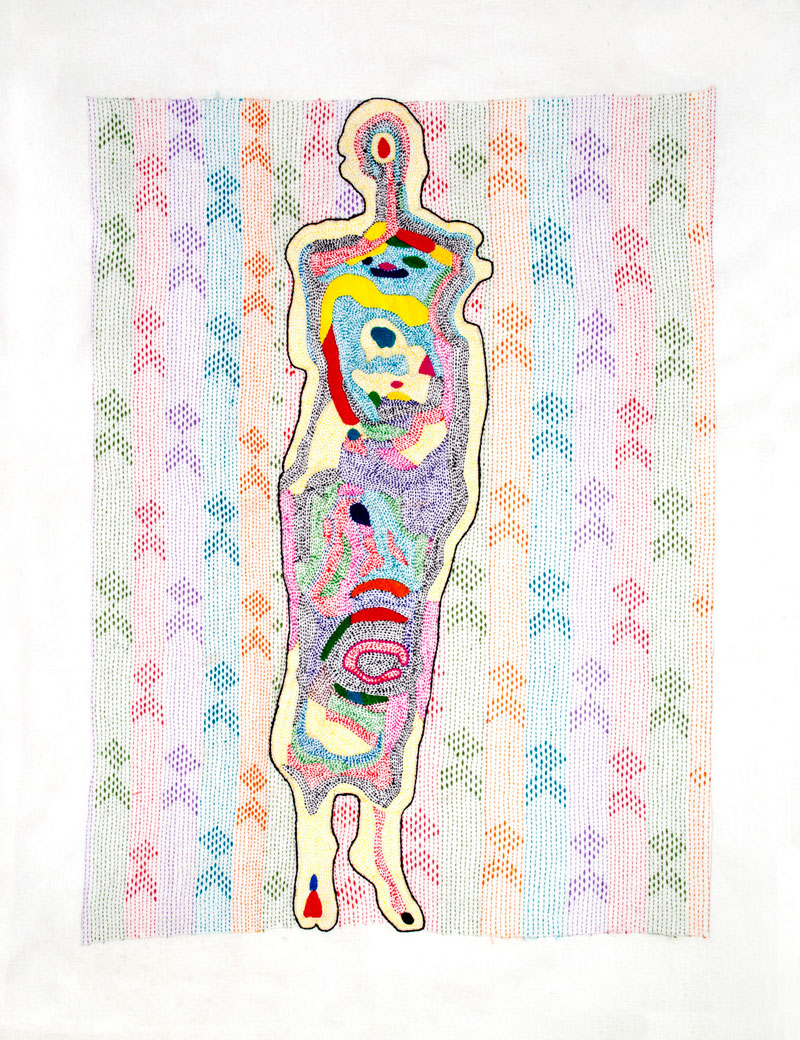
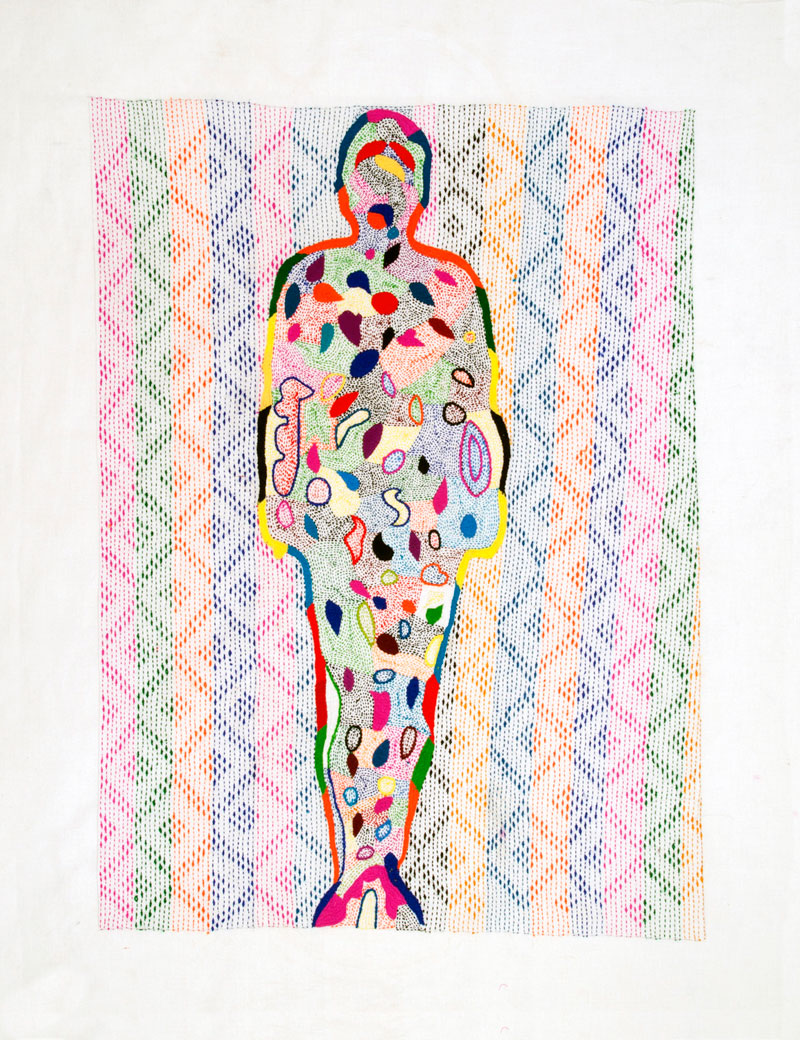
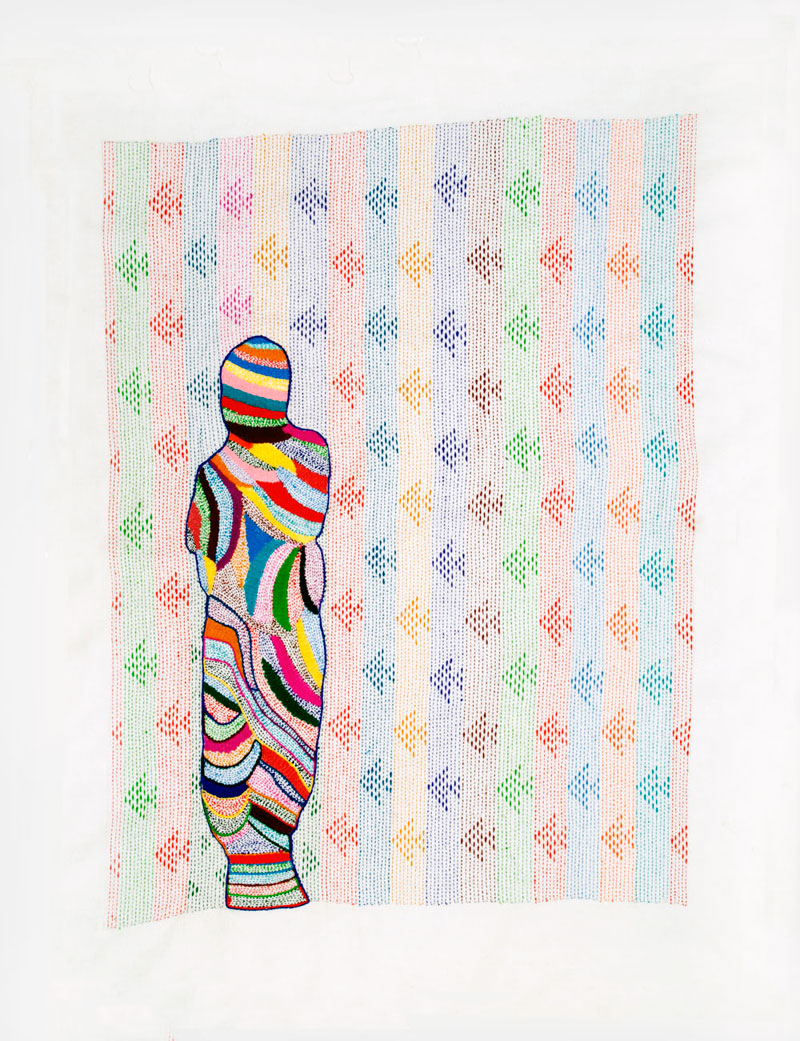
Exhibition: ‘Andy Warhol: Polaroids / MATRIX 240’ at Berkeley Art Museum and Pacific Film Archive, University of California

Exhibition dates: 27th January – 20th May, 2012

Curators: curatorial intern Fabian Leyva-Barragan and assistant curator Stephanie Cannizzo.

PLEASE NOTE: This posting contains nude photographs. If you do not like please do not look!
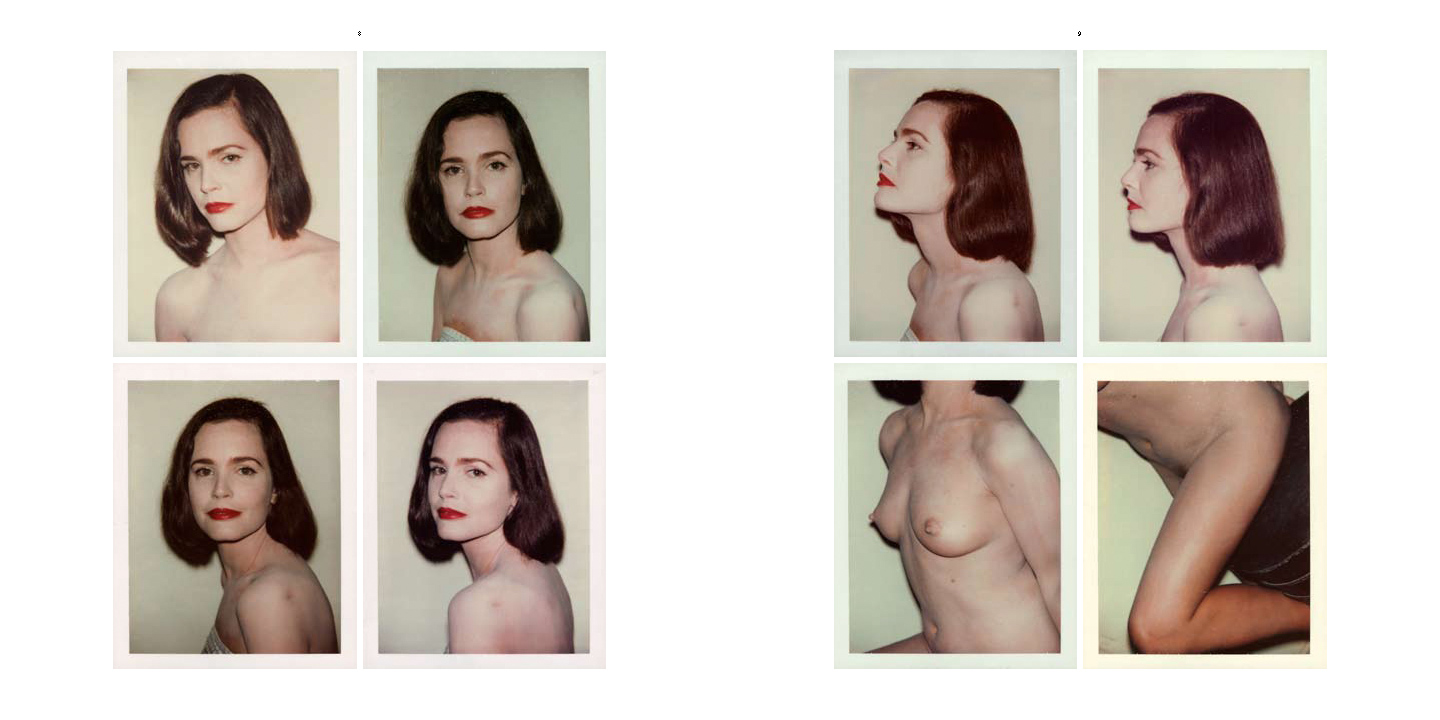
 

Andy Warhol (American, 1928-1987) 'Untitled' Pages 8 and 9 of The Andy Warhol Photographic Legacy Program, Vol. III from the exhibition 'Andy Warhol: Polaroids / MATRIX 240' at Berkeley Art Museum and Pacific Film Archive, University of California, January - May, 2012


Andy Warhol (American, 1928-1987)
Untitled
Pages 8 and 9 of The Andy Warhol Photographic Legacy Program, Vol. III of The Andy Warhol Foundation for the Visual Arts Twenty-Year Report, 1987-2007


ONE PERSON has found one of the images below offensive; so just for them please note that his posting has a PENIS and A-RRRRRR-SE rating. For all others, enjoy another spectacular Andy posting!

Dr Marcus Bunyan


Many thankx to BAM/PFA for allowing me to publish the photographs in the posting. Please click on the photographs for a larger version of the image (especially the two images directly below). View the complete The Andy Warhol Photographic Legacy Program Vol. III as a pdf (3.7Mb pdf)


“I’ve never met a person I couldn’t call a beauty.”


Andy Warhol
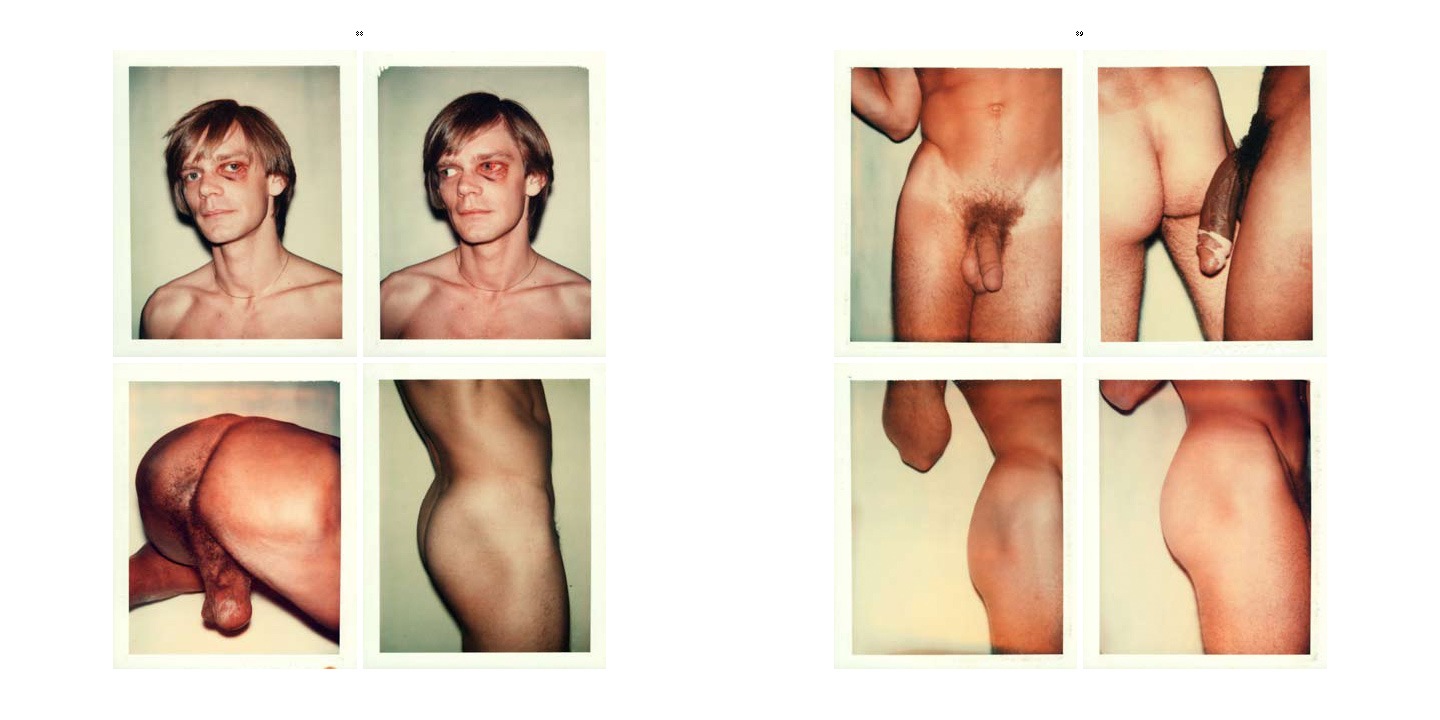


Andy Warhol (American, 1928-1987) 'Untitled' Pages 38 and 39 of The Andy Warhol Photographic Legacy Program, Vol. III from the exhibition 'Andy Warhol: Polaroids / MATRIX 240' at Berkeley Art Museum and Pacific Film Archive, University of California, January - May, 2012


Andy Warhol (American, 1928-1987)
Untitled
Pages 38 and 39 of The Andy Warhol Photographic Legacy Program, Vol. III of The Andy Warhol Foundation for the Visual Arts Twenty-Year Report, 1987–2007


The University of California, Berkeley Art Museum and Pacific Film Archive presents Andy Warhol: Polaroids / MATRIX 240. The exhibition features a selection of Warhol’s Polaroid portraits drawn from an extraordinary gift of The Andy Warhol Foundation for the Visual Arts to the museum. From 1970 to 1987, Warhol, armed with his Polaroid Big Shot camera, captured a wide range of individuals – the royalty, rock stars, executives, artists, patrons of the arts, and athletes who epitomised seventies and eighties high society, but also as many unknown subjects. From January 27 through May 20, 2012, BAM/PFA will feature a group of approximately forty of these photographs, including portraits of Caroline, Princess of Monaco; Diane von Furstenberg; and O.J. Simpson.

Famous for his contributions to Pop Art, Warhol used photography as a central part of his art-making process. Before turning to fine art, Warhol worked in advertising and commercial art, experiences that informed his approach to portraiture. In 1962, he debuted his first silkscreen paintings of celebrities, serialising pictures he pulled from magazines and press photos. In addition to using found images, Warhol eventually incorporated his own photography into his practice. In 1969 he launched inter/View magazine, which featured his photos of celebrities. By the 1970s and 1980s, portrait commissions were a major source of his income, and many of his Polaroids would serve as the basis for these works.

While each of the images in Andy Warhol: Polaroids is unique, the consistency of composition, poses, and plain white backdrop equalises the superstars and lesser-known subjects. To Warhol, they were all beautiful people. But even within this uniform staging, we see the artist finding numerous ways to create memorable, varied, and iconic compositions. Though these photos may be small in size, together the Warhol Polaroids provide a glimpse into the artistic process of one of the twentieth century’s most important artists.

From 1970 to 1987 Andy Warhol took scores of Polaroid and black-and-white photographs, the vast majority of which were never seen by the public. These images often served as the basis for his commissioned portraits, silk-screen paintings, drawings, and prints. In 2007, to commemorate its twentieth anniversary, the Andy Warhol Foundation for the Visual Arts launched the Andy Warhol Photographic Legacy Program. Designed to give a broad public greater access to Warhol’s photographs, the program donated over 28,500 of Warhol’s original Polaroids and gelatin silver prints to more than 180 college and university museums and galleries across the country. Each institution received a curated selection of over one hundred Polaroids and fifty black-and-white prints.

The number of images he took at each session varied as greatly as the figures he photographed. Repetition, a recurring motif in Warhol’s paintings, plays both a conceptual and practical role in his photography. By making several Polaroids, he had more material from which to work. By shooting at length, more about the sitter was exposed. Seen all together, the Polaroids destabilise the iconic status that a Warhol image assumes when displayed singly. On its own, a Polaroid image is fully identified with the artwork that ultimately grew out of it; the face depicted becomes a kind of signifier for larger cultural concepts of beauty, power, and worth.

Text adapted from “Andy Warhol’s Photographic Legacy,” in The Andy Warhol Photographic Legacy Program, Vol. III of The Andy Warhol Foundation for the Visual Arts Twenty-Year Report, 1987-2007 (New York: The Andy Warhol Foundation for the Visual Arts, Inc, 2007), 4-5.

View the complete Vol. III as a pdf (3.7Mb pdf)

Text and press release from the BAM/PFA website


Andy Warhol (American, 1928-1987) 'Billy Squier' 1982


Andy Warhol (American, 1928-1987)
Billy Squier
1982
Polacolor 2
4 1/4 x 3 3/8 in
Gift of the The Andy Warhol Center for the Visual Arts
© The Andy Warhol Center for the Visual Arts


Andy Warhol (American, 1928-1987) 'Daryl Lillie' 11/1978


Andy Warhol (American, 1928-1987)
Daryl Lillie
11/1978
Polacolor 2
4 14 x 3 3/8 in
© The Andy Warhol Center for the Visual Arts
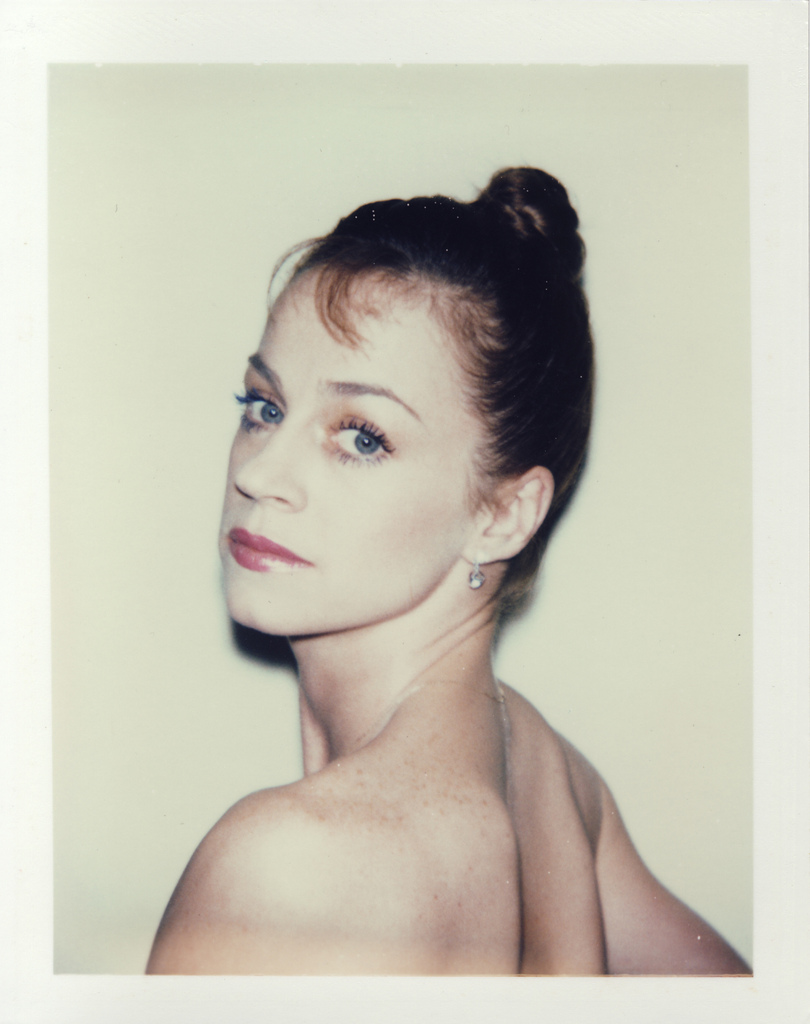
 

Andy Warhol (American, 1928-1987) 'Heather Watts' after June 1986


Andy Warhol (American, 1928-1987)
Heather Watts
After June 1986
Polacolor ER
4 1/4 x 3 3/8 in
© The Andy Warhol Center for the Visual Arts


From 1970 to 1987 Andy Warhol took thousands of Polaroid pictures, the vast majority of which were never seen by the public. These images often served as the basis for his commissioned portraits, silkscreen paintings, drawings, and prints. Warhol captured a wide range of individuals with his Polaroid Big Shot camera. The royalty, rock stars, industrialists, artists, patrons of the arts, and athletes who epitomised 1970s and 1980s high society, as well as unknown sitters, are represented with a sense of dignity and verve. Warhol was interested in a new definition of “Society” that emerged in this period. In the introduction to the 1979 publication Andy Warhol’s Exposures, the artist wrote:

“Now it doesn’t matter if you came over on the Mayflower, so long as you can get into Studio 54. Anyone rich, powerful, beautiful, or famous can get into Society. If you’re a few of those things you can really get to the top.”1

Warhol’s images not only documented, but participated in, the creation of this new social world, satisfying both the need of his subjects to be seen and the desire of the viewer to gain access to this milieu through the act of looking. Warhol worked in advertising and commercial art before turning to fine art, experiences that informed his approach to portraiture. In 1962, he debuted his first silk-screen paintings of celebrities, serialising pictures appropriated from magazines or press photos of the time. In addition to employing found images, Warhol eventually incorporated photography into his practice and, in 1969, started a magazine (originally called inter/VIEW) that often featured his own photographs of celebrities. By the 1970s and 1980s, portrait commissions became a main source of his income.

Warhol’s Polaroids are strikingly intimate, an effect achieved in part by his personal relationship with the sitters and in part by formal aspects of the images. The artist often provided a luncheon in advance of the photo session, establishing a bond with his subject and a tone for the shoot. In the resulting Polaroids, the sitter is in direct eye contact with Warhol and the camera. The strong sense of immediacy created by the sitter’s open gaze is enhanced by the tight compositions in which the subject, pressed up close to the picture plane, is isolated from any context. A feeling of vulnerability appears in some of the portraits (as suggested by the bared shoulders of Unidentified woman (blond with bangs), for example), indicating a willingness to be exposed as well as the seductive nature of the artist and the photo shoot itself. The closeness forged between photographer and sitter and captured by the camera offers an illusion of sharing these private moments and of entering into Warhol’s circle of beautiful people and their glamorous lives.

While each image is unique, the consistency of composition, poses, and plain white backdrop equalises the celebrities and the unknown subjects of Warhol’s Polaroids. After all, to Warhol, they were all beautiful people. Polaroids of individuals who are not immediately recognisable pique our curiosity. Who is the enigmatic Frau Buch? Like many of Warhol’s subjects, she is photographed with a prop. The small dog that she hugs may not identify her, but it suggests a dimension of her personality. In other Polaroids, Warhol used props as identifying elements like the attributes in Renaissance portraiture – major-league baseball pitcher Tom Seaver is shown with his mitt and NFL legend O.J. Simpson clutches a football. The teddy bear in the arms of the subject of Unidentified girl (blue t-shirt with teddy bear) represents an aspect childhood that everyone can relate to, although the girl is actually a scion of the new high society: Jade, the daughter of Mick and Bianca Jagger.

Warhol’s Polaroids were designed to be source material for his canvases. He would direct the sitter in a series of poses, which gave the artist ample material from which to create the subsequent silkscreen portraits. Subjects such as fashion designer Diane Von Furstenberg and patron of the arts Daryl Lillie are photographed wearing thick white makeup, black eyeliner, and bright red lipstick that evoke the stage or a high-fashion photo shoot; however, the makeup also served to flatten the images for a smooth effect in the screen-print transfer. The Polaroid Big Shot’s strong flash overexposes many images and increases the contrast, an effect Warhol deployed in the subsequent silkscreens; the flash also seems to catch each sitter – celebrities and unknowns alike – in the sudden glare of a paparazzo’s camera.

Warhol’s Polaroids borrow from paparazzi and high-fashion photography and at the same time elevate an inexpensive, everyday medium to the realm of high art. Warhol embossed his name in capital letters in the lower right-hand border of most of the Polaroids, marking them as a painter would sign a canvas. For Warhol, coming from the world of advertising, this was also a kind of branding. He wrote of Jade Jagger: “She never calls me Andy always Andywarhol, as if it were one word – or a brand name, which I wish it were.”2 Warhol’s portraits confuse the boundaries of advertising and art, high and low, celebrity portraiture and the depiction of everyday people, and even photography and painting. His subjects are perpetually illuminated by the afterimage of a flashbulb, their faces immortalised by Warhol’s style

Fabian Leyva-Barragan, Curatorial Intern
Stephanie Cannizzo, Assistant Curator


1/ Warhol, Andy and Colacello, Bob. Andy Warhol’s Exposures (New York: Andy Warhol Books / Grosset & Dunlop, Inc., 1979), p. 19
2/ Ibid., pp. 28-29
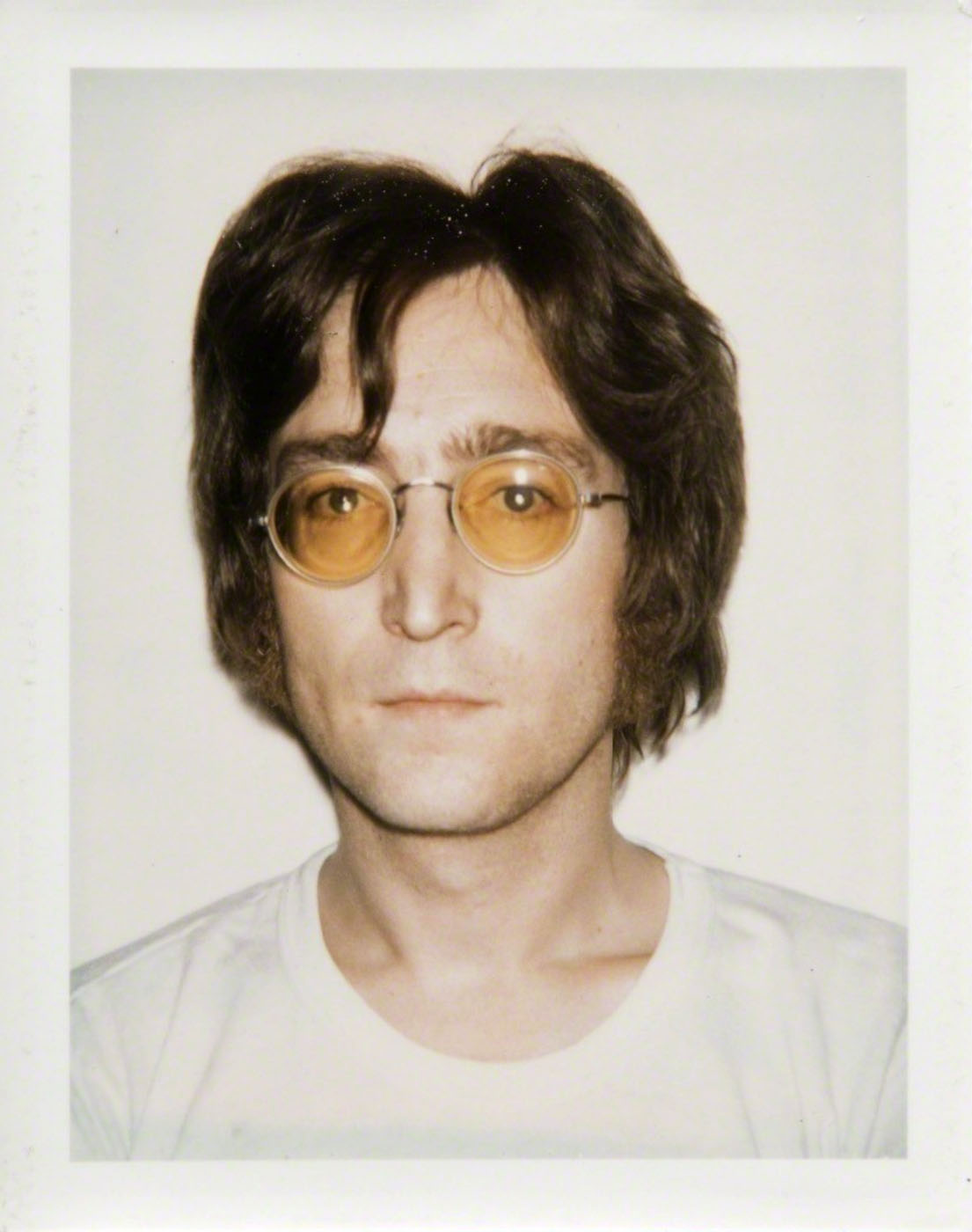
 

Andy Warhol (American, 1928-1987) 'John Lennon' 1971


Andy Warhol (American, 1928-1987)
John Lennon
1971
Polacolor ER
4 1/4 x 3 3/8 in
Gift of the The Andy Warhol Center for the Visual Arts
© The Andy Warhol Center for the Visual Arts
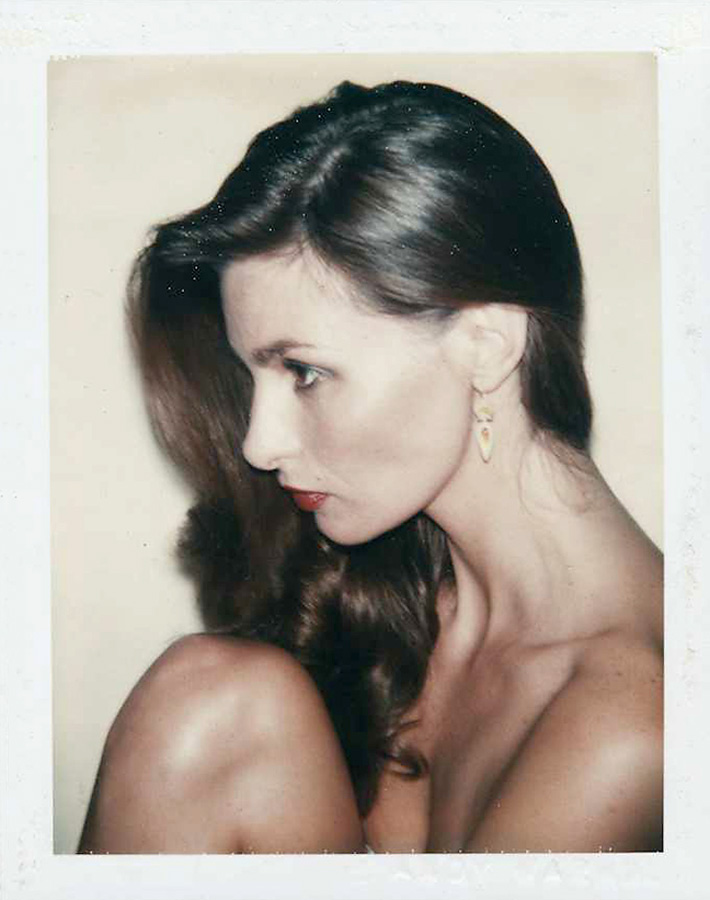
 

Andy Warhol (American, 1928-1987) 'Apollonia Von Ravenstein' c. 1979


Andy Warhol (American, 1928-1987)
Apollonia Von Ravenstein
c. 1979
Polacolor ER
4 1/4 x 3 3/8 in
Gift of the The Andy Warhol Center for the Visual Arts
© The Andy Warhol Center for the Visual Arts
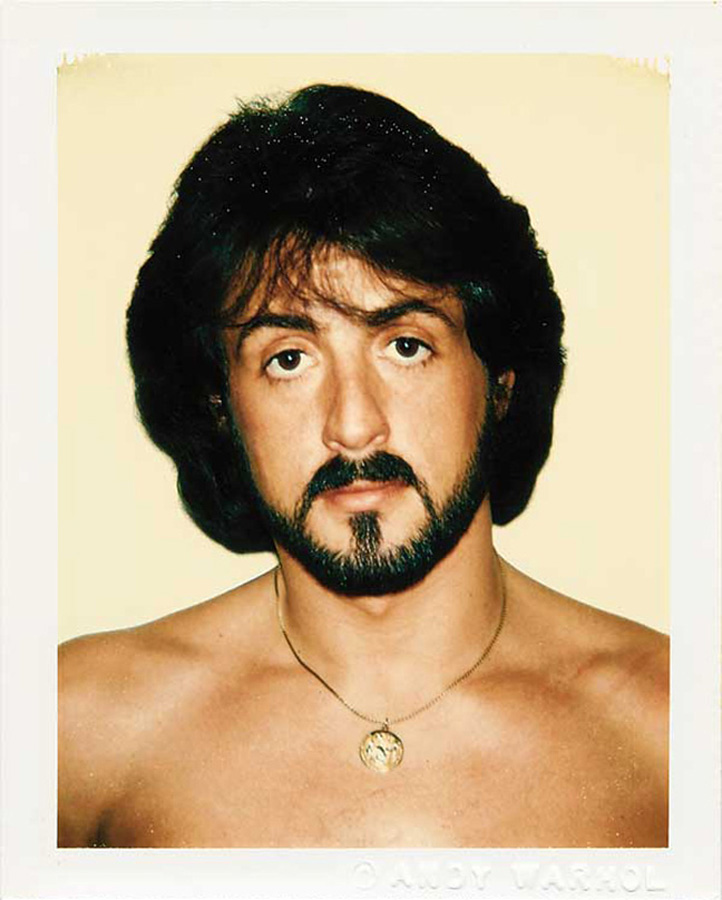
 

Andy Warhol (American, 1928-1987) 'Sylvester Stallone' 2/1980


Andy Warhol (American, 1928-1987)
Sylvester Stallone
2/1980
Polacolor ER
4 1/4 x 3 3/8 in
Gift of the The Andy Warhol Center for the Visual Arts
© The Andy Warhol Center for the Visual Arts
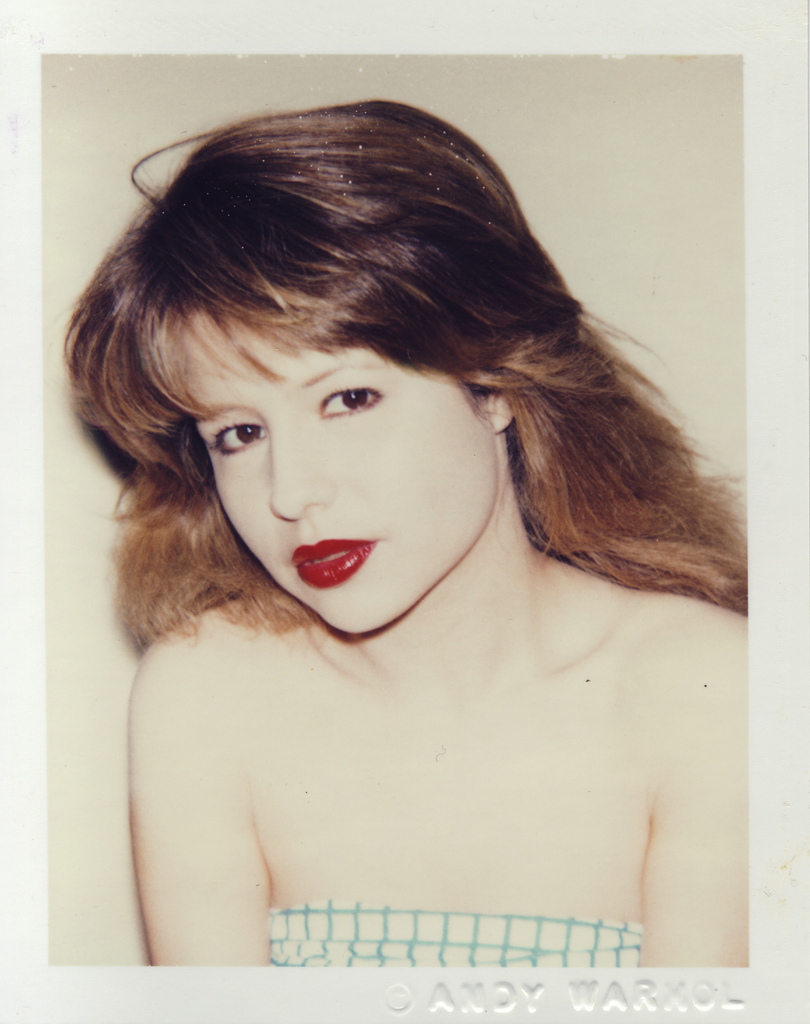
 

Andy Warhol (American, 1928-1987) 'Pia Zadora' 1983


Andy Warhol (American, 1928-1987)
Pia Zadora
1983
Polacolor ER
4 1/4 x 3 3/8 in
Gift of the The Andy Warhol Center for the Visual Arts
© The Andy Warhol Center for the Visual Arts
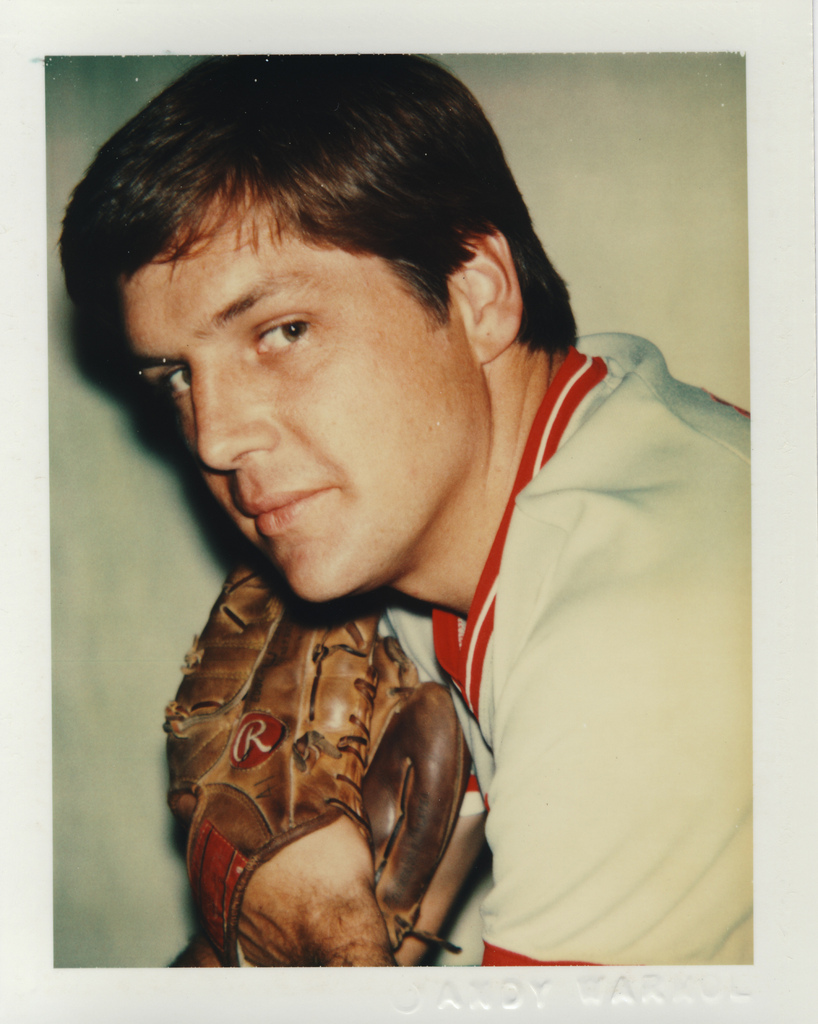
 

Andy Warhol (American, 1928-1987) 'Tom Seaver' 1977


Andy Warhol (American, 1928-1987)
Tom Seaver
1977
Polacolor Type 108
4 14 x 3 3/8 in
Gift of the The Andy Warhol Center for the Visual Arts
© The Andy Warhol Center for the Visual Arts
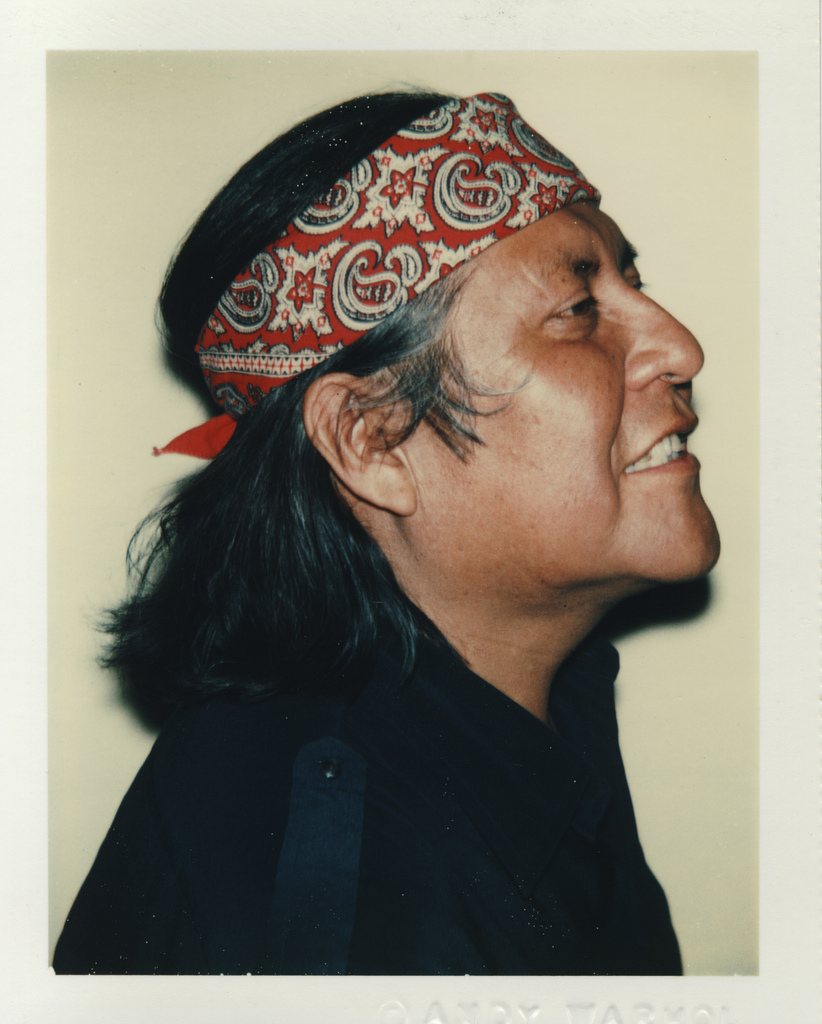
 

Andy Warhol (American, 1928-1987) 'R.C. Gorman' 1979


Andy Warhol (American, 1928-1987)
R.C. Gorman
1979
Polacolor Type 108
4 1/4 x 3 3/8 in
© The Andy Warhol Center for the Visual Arts


Berkeley Art Museum and Pacific Film Archive

BAMPFA is located at 2155 Center Street
between Oxford Street and Shattuck Avenue, in downtown Berkeley
Phone: (510) 642-0808

Opening hours:
Wednesday – Sunday, 11am – 7pm
Closed Mondays and Tuesdays

Berkeley Art Museum and Pacific Film Archive website

LIKE ART BLART ON FACEBOOK

Back to top

Exhibition: ‘Songs of the Future: Canadian Industrial Photographs, 1858 – Today’ at the Art Gallery of Ontario, Canada

Exhibition dates: 20th August, 2011 – 29th April, 2012

Curator: Sophie Hackett, assistant curator of photography at the Art Gallery of Ontario


Isabelle Hayeur (Canadian, b. 1969) 'Jade' 2004 from the exhibition 'Songs of the Future: Canadian Industrial Photographs, 1858 – Today' at the Art Gallery of Ontario, Canada, August 2011 - April 2012


Isabelle Hayeur (Canadian, b. 1969)
Jade
2004
From the series Model Homes, 2004-2007
Chromogenic print
107 x 160cm
Gift of Paul Bain, 2008
Image courtesy the Art Gallery of Ontario / AGO Image Resources
© 2011 Art Gallery of Ontario


Another eclectic photography exhibition. I do love them for their interesting subject matter. Much as Australian photography may seem slightly obscure to the rest of the world so Canadian photography is little known in Australia. One of the important briefs of this archive is to promote all photography in its many forms, including Canadian and Australian, to the four corners of the globe.

Dr Marcus Bunyan


Many thankx to the Art Gallery of Ontario for allowing me to publish the photographs in the posting. Please click on the photographs for a larger version of the image.


“Oh the song of the future has been sung / All the battles have been won
On the mountain tops we stand / All the world at our command
We have opened up her soil / With our teardrops and our toil”


Gordon Lightfoot, “Canadian Railroad Trilogy”


E. Haanel Cassidy (Canadian, 1903-1980) 'Man on Tower' 1940 from the exhibition 'Songs of the Future: Canadian Industrial Photographs, 1858 – Today' at the Art Gallery of Ontario, Canada, August 2011 - April 2012


E. Haanel Cassidy (Canadian, 1903-1980)
Man on Tower
1940
From the series Canadian Industry – Grain Elevator
Gelatin silver print
23.7 x 35.3cm
Gift of Sylvia Platt, 2002
Image courtesy the Art Gallery of Ontario / AGO Image Resources
© 2011 Art Gallery of Ontario


George Hunter (Canadian, 1921-2013) 'Dofasco and Stelco steel mills, Hamilton, Ontario' 1954


George Hunter (Canadian, 1921-2013)
Dofasco and Stelco steel mills, Hamilton, Ontario
1954
Dye transfer print
31.2 x 42.1cm
Gift of George Hunter, R.C.A, 2010
Image courtesy the Art Gallery of Ontario / AGO Image Resources
© 2011 Art Gallery of Ontario


The practice of photography in Canada closely parallels the development of its industries. As railroad tracks were laid and bridges were built to allow access to remote forests and mineral-rich territories, photographers followed, as they did when mining and lumber interests developed. These industrial activities have undeniably shaped the Canadian landscape – for better and for worse. And photographs of these activities – whether made on commission by those eager to document their contribution to national progress, or for the photographer’s own interest – continue to feed our imaginations, shape our opinions and make us aware of what is at stake.

Songs of Future: Canadian Industrial Photographs, 1858 to Today includes more than 100 photographs – by such figures as William Notman, Alexander Henderson, Richard Maynard, J.C.M. Hayward, John Vanderpant, E. Haanel Cassidy, George Hunter, Bill Vazan, Ralph Greenhill, Geoffrey James, Edward Burtynsky, Peter MacCallum, Steven Evans, Jesse Boles, and Isabelle Hayeur – most drawn from the AGO’s permanent collection, and many of which have never been shown. Featuring sites from the west coast to the Maritimes, the exhibition showcases this other landscape tradition in Canadian art and the Canadian photographers who have described, evoked, celebrated, and cast a critical eye on our industrial landscapes for more than 150 years.

Depicting railway and bridge building, quarries and mines, and the lumber, pulp and paper, and concrete industries in Canada, Songs of the Future traces the shifting perspectives on industry and the Canadian landscape from the Industrial Revolution to today. The exhibition highlights the ways in which the photographers’ perspectives on industry have shifted along with those of society at large, as celebratory images of human domination over nature give way to more critical views of industrial impact.

The exhibition is curated by Sophie Hackett, the AGO’s assistant curator of photography, who integrates works from various periods into thematic concentrations, including images featuring: the construction of the Victoria Bridge over the St. Lawrence River in the late 1850s; the building of the Anglo-Newfoundland Development Company, a pulp-and-paper mill located in Grand Falls, Newfoundland, in 1912; and the development of the railroad in Canada.

“The exhibition explores the history of Canadian photography through the topic of industrial imagery,” says Hackett. “Featuring sites from the Maritimes to the west coast, and rooted in the fundamentally Canadian genre of landscape, the photographs bear witness to the various aesthetic techniques and styles emphasised by Canadian photographers over the past 150 years.”

Press release from the AGO website


Alexander Henderson (British-Canadian, 1831-1913) 'Miramichi Bridges: Southwest Branch, View of Pier G, completed September 15, 1873'


Alexander Henderson (British-Canadian, 1831-1913)
Miramichi Bridges: Southwest Branch, View of Pier G, completed September 15, 1873
1873
Albumen print
25.3 x 30.5cm
Gift of Mr. and Mrs. Carl Berger, 2008
Image courtesy the Art Gallery of Ontario / AGO Image Resources
© 2011 Art Gallery of Ontario


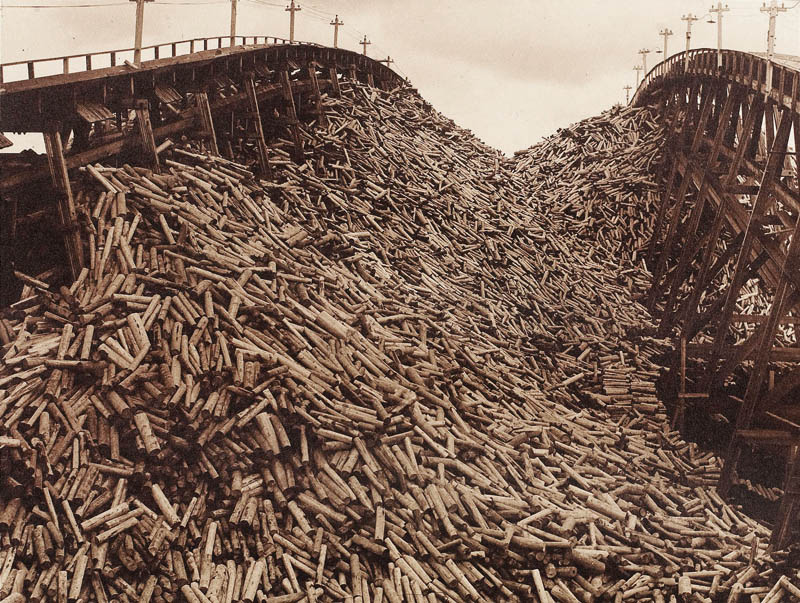
J.C.M. Hayward (Canadian) 'Wood Pile' 1912


J.C.M. Hayward (Canadian)
Wood Pile
1912
Gelatin silver print
From the album Operations of the Anglo-Newfoundland Development Company
Album: 48 gelatin silver prints on brown pages with dark brown leather cover
47 x 34.5 x 3cm
Art Gallery of Ontario
Anonymous Gift, 2008
Image courtesy the Art Gallery of Ontario / AGO Image Resources
© 2011 Art Gallery of Ontario


Edward Burtynsky (Canadian, b. 1955) 'C.N. Track, Thompson River #002, British Columbia' 1985


Edward Burtynsky (Canadian, b. 1955)
C.N. Track, Thompson River #002, British Columbia
1985
From the series Railcuts
Chromogenic print
121.9 x 147.3cm
Gift of Harry and Ann Malcolmson, 2008
Image courtesy the Art Gallery of Ontario / AGO Image Resources
© 2011 Art Gallery of Ontario


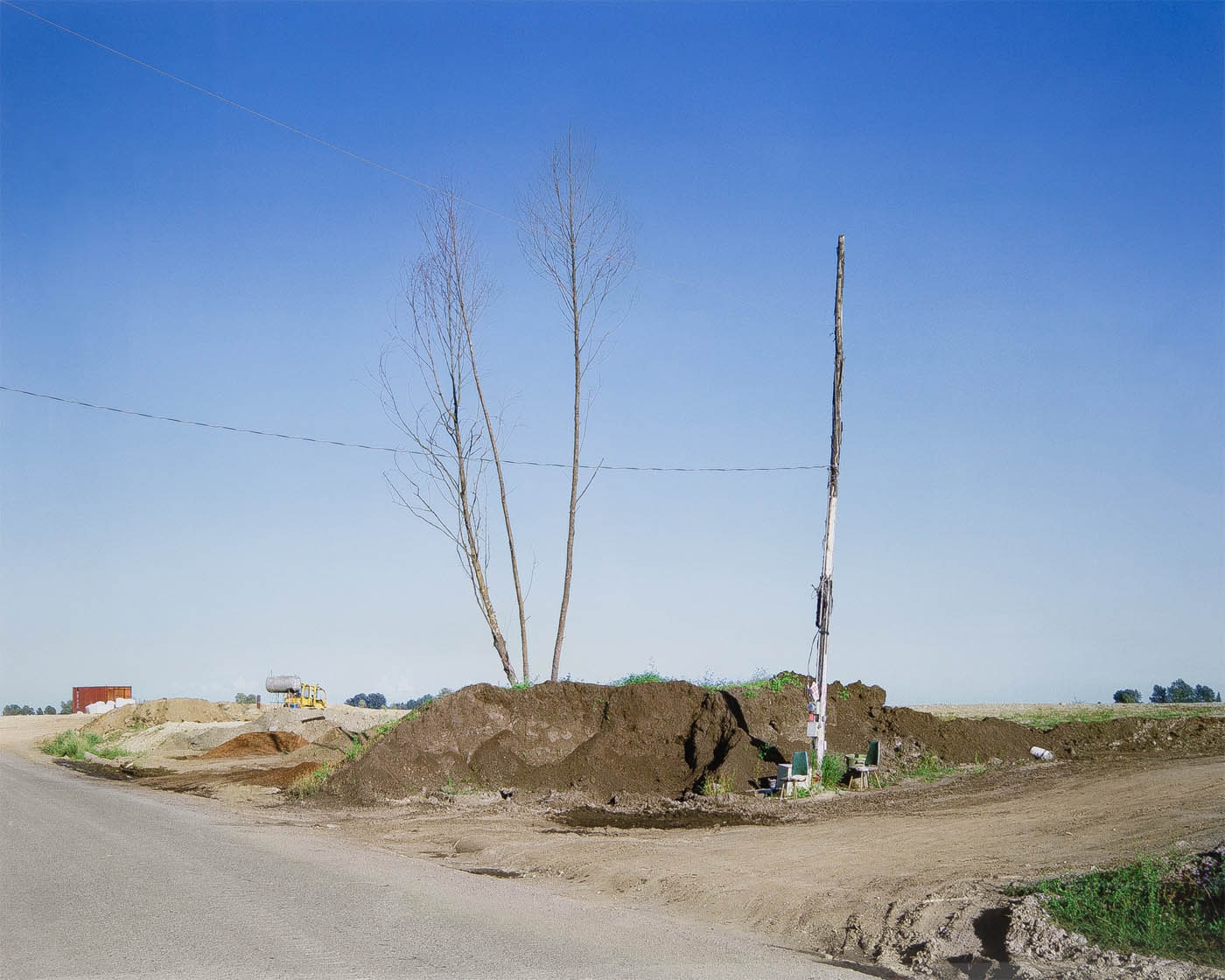
Roy Arden (Canadian, b. 1957) 'Landfill, Richmond, BC' 1991


Roy Arden (Canadian, b. 1957)
Landfill, Richmond, BC
1991
Chromogenic print
Image courtesy the Art Gallery of Ontario / AGO Image Resources
© 2011 Art Gallery of Ontario


Peter MacCallum (Canadian, b. 1947) 'Finishing Mill Department, St. Marys Cement, Bowmanville, Ontario' 1999


Peter MacCallum (Canadian, b. 1947)
Finishing Mill Department, St. Marys Cement, Bowmanville, Ontario
1999
From the series Concrete Industries, 1998-2004
Gelatin silver print
50.8 x 40.6cm
Purchase, funds donated by James Lahey and Pym Buitenhuis, 2008
Image courtesy the Art Gallery of Ontario / AGO Image Resources
© 2011 Art Gallery of Ontario


Ralph Greenhill (Canadian) 'Prince of Wales Bridge, Ottawa, Ontario' 1977


Ralph Greenhill (Canadian)
Prince of Wales Bridge, Ottawa, Ontario
1977
Gelatin silver print
22.6 x 17.4cm
Gift of Av Isaacs, 2008
Image courtesy the Art Gallery of Ontario / AGO Image Resources
© 2011 Art Gallery of Ontario


John Vanderpant (Dutch-Canadian, 1884-1939) 'No.2, Towers in White', around 1934


John Vanderpant (Dutch-Canadian, 1884-1939)
No.2, Towers in White
c. 1934
Gelatin silver print
34.4 x 27cm
Purchase, donated funds in memory of Eric Steiner, 2002
Image courtesy the Art Gallery of Ontario / AGO Image Resources
© 2011 Art Gallery of Ontario


Art Gallery of Ontario
Musée des beaux-arts de l’Ontario

317 Dundas Street West
Toronto Ontario Canada M5T 1G4

Opening hours:
Tuesday – Sunday 10.30am – 5.00pm
Closed Mondays
Art Gallery of Ontario website

LIKE ART BLART ON FACEBOOK

Back to top

Exhibition: ‘Polixeni Papapetrou: The Dreamkeepers’ at Stills Gallery, Sydney

“These neophytes on the path of life, both old/wise, young/hidden pass through (into?) our dreams.” Dr Marcus Bunyan

Exhibition dates: 28th March – 5th May, 2012

Curator: the artist


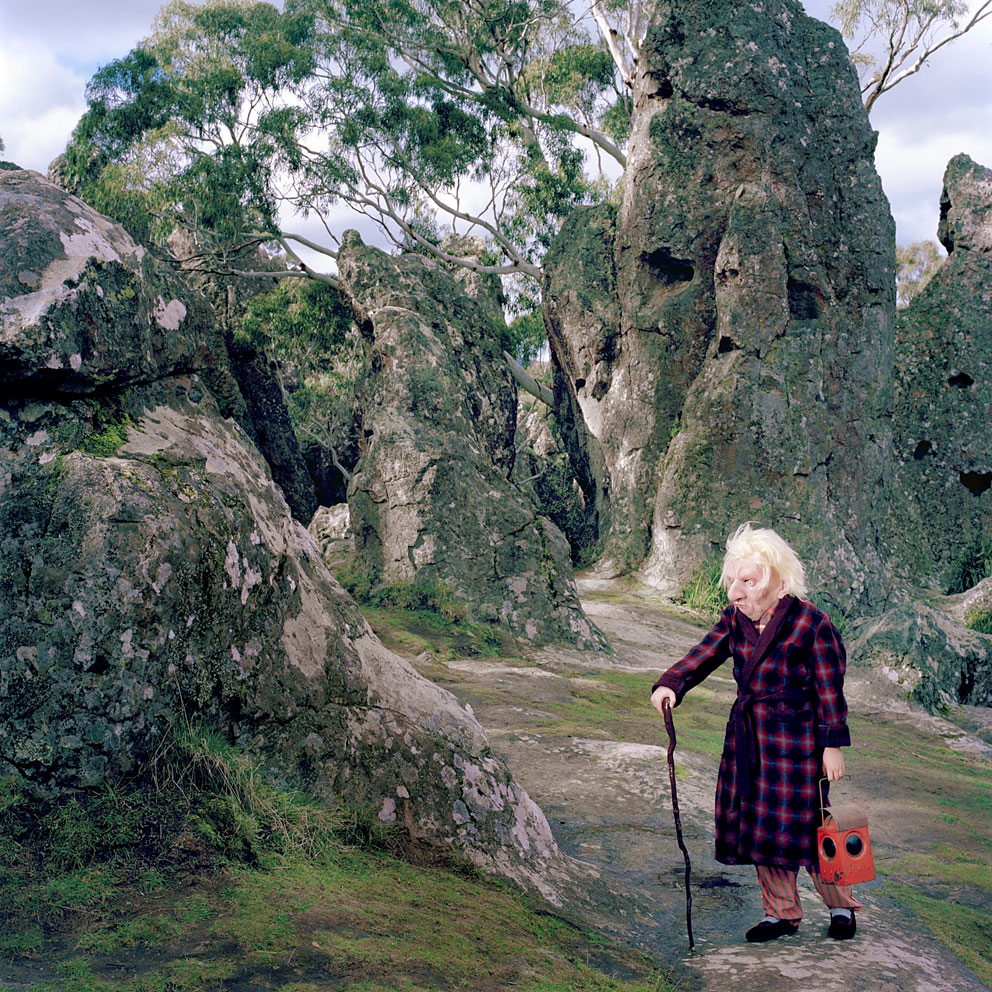
Polixeni Papapetrou (Australian, 1960-2018) 'The Wanderer No. 3' 2012 from the exhibition 'Polixeni Papapetrou: The Dreamkeepers' at Stills Gallery, Sydney, March - May, 2012


Polixeni Papapetrou (Australian, 1960-2018)
The Wanderer No. 3
2012
From The Dreamkeepers
Pigment print
105 x 105cm


I absolutely love these. The colours, the spaces, the ambiguous vistas, the fantastical archetypes, the fables. What springs to mind, with the use of masks to disguise youth positioned within the decorous landscape, is the notion of “passing”. Passing on (as in dying), passing through (as in travelling), in passing (as in an aside) and just “passing” (passing yourself off as someone or something else) to hide your true character or feelings. Gay men did this in the 1950s and 60s all the better to fit into society, for if it was found that you were homosexual you could loose your job, your apartment and even your life. Of course, there is also the passing of time, the longing for misspent youth in these masked ephebes and adolescent women. Age shall not weary them…

Wandering, dreaming, remembering, keeping, collecting, counting. These neophytes on the path of life, both old/wise, young/hidden pass through (into?) our dreams. Papapetrou creates visions that elude the senses, visions that slip between dreaming and waking, between conscious and subconscious realms. As John Berger and Jean Mohr have observed,

“Cameras are boxes for transporting appearances. Are the appearances which a camera transports a construction, a man-made cultural artefact, or are they, like a footprint in the sand, a trace naturally left by something that has passed? The photographer choses the events he photographs. This choice can be thought of as a cultural construction. The space for this construction is, as it were, cleared by his rejection of what he did not choose to photograph.”1

As an artist Papapetrou has the intelligence to leave this nature/nurture question open in her photographs. Her skill as an artist is in choosing the right things to photograph. This enables her creatures to pass through liminal spaces, the space of our consciousness. Through this process a trace will always be left with us, for this is a strong body of work, well realised, in passing.

Dr Marcus Bunyan


1/ Berger, John and Mohr, Jean. Another Way of Telling. New York: Pantheon Books, 1982, pp. 92-93.


Many thankx to Stills Gallery for allowing me to publish the photographs in the posting. Please click on the photographs for a larger version of the image.


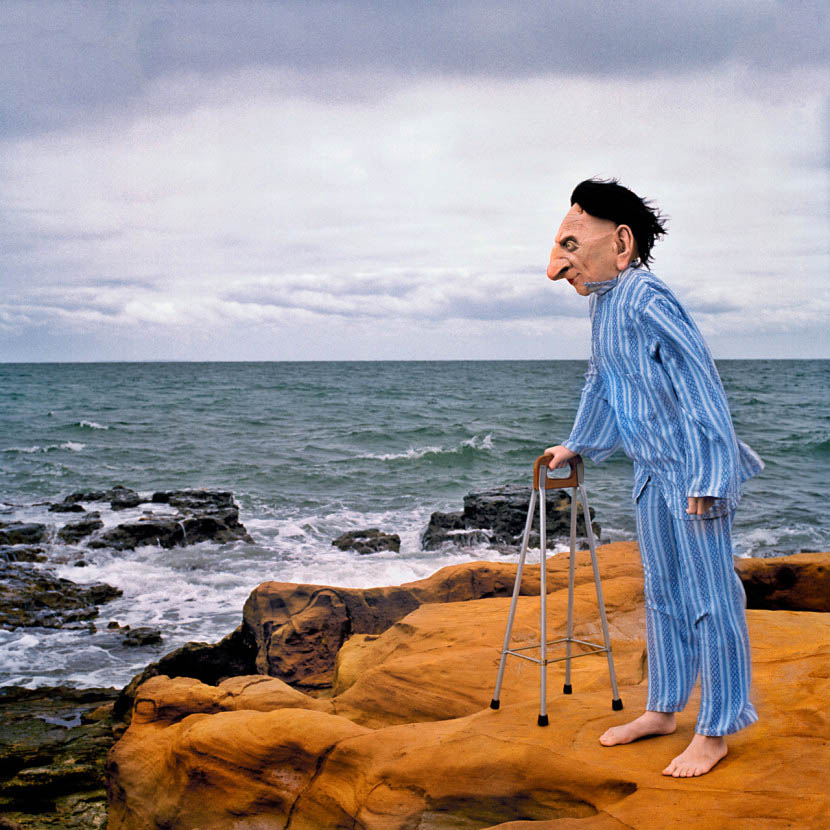
Polixeni Papapetrou (Australian, 1960-2018) 'The Wave Counter' 2011 from the exhibition 'Polixeni Papapetrou: The Dreamkeepers' at Stills Gallery, Sydney, March - May, 2012


Polixeni Papapetrou (Australian, 1960-2018)
The Wave Counter
2011
From The Dreamkeepers
Pigment print
105 x 105cm


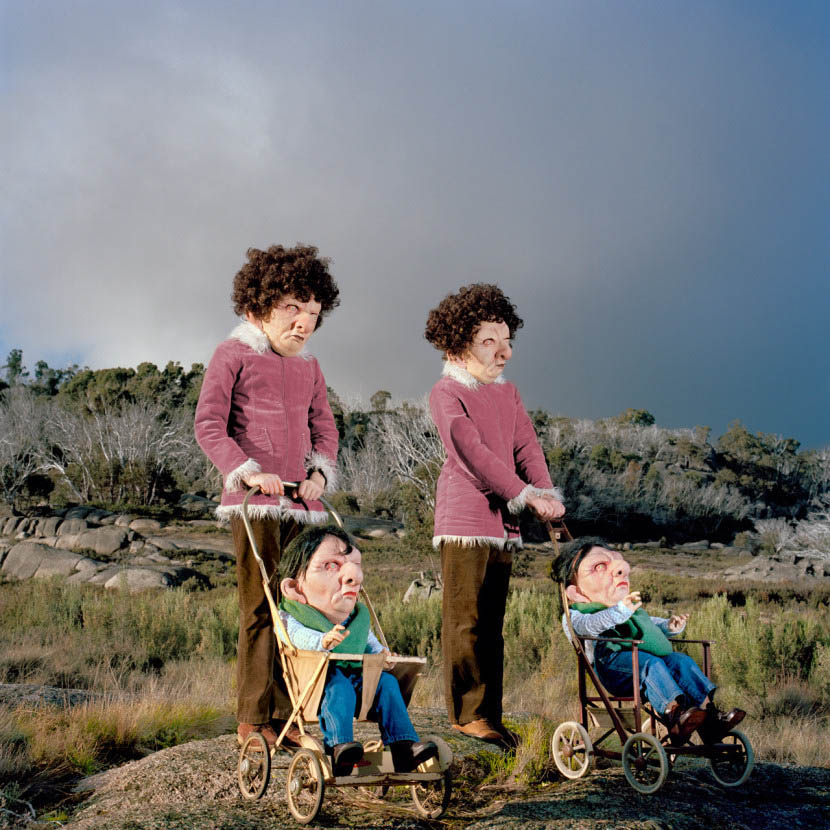
Polixeni Papapetrou (Australian, 1960-2018) 'The Mystical Mothers' 2011


Polixeni Papapetrou (Australian, 1960-2018)
The Mystical Mothers
2011
From The Dreamkeepers
Pigment print
105 x 105cm


Polixeni Papapetrou (Australian, 1960-2018) 'The Lantern Keeper' 2012


Polixeni Papapetrou (Australian, 1960-2018)
The Lantern Keeper
2012
From The Dreamkeepers
Pigment print
105 x 105cm


“These transitional places in one’s life are often the most creative, and as we grapple for answers and clarity what is often realized is ambiguity and confusion that reigns supreme. Like fairy stories, Papapetrou uses absurdity to make symbolic sense of world she struggles to understand.”


Susan Bright. Between Worlds catalogue 2009


In Polixeni Papapetrou’s work there is identification with the world of children that is rare and remarkable. She sees children themselves as ‘between worlds’, between infancy and adulthood. Yet she does more than identify, creating fantastical worlds that only adults can truly understand and relate to.

A man in blue striped pyjamas stands on a rock by the sea, leaning into the wind. His body seems young yet he supports himself with a walking frame. His face is old, oversized, a little grotesque. He is The Wavecounter. Like the other characters in Polixeni Papapetrou’s series The Dreamkeepers, he is lithe in body yet gnarly of physiognomy, both young and old. Gazing out in contemplation these dream keepers look with anticipation to the future, or is it with nostalgia to the past? The timeless backdrops of shoreline or hilltop reflect this ambiguity, echoing through landscape the collapsing of thresholds and blurring of boundaries.

Papapetrou’s art practice has involved collaboration with her children and their friends for over 10 years. As they have grown and transformed so too have the roles they perform and spaces they inhabit. It is the awkward evolution of adolescence that informs the in-between space of The Dreamkeepers. To parallel the cripplingly self-conscious yet powerfully self-realising period of our lives, Papapetrou engages part reality, part fantasy from which a space of unreality emerges, the space of archetype. Here the anonymity afforded by masks separates her adolescent actors from who they really are, and allows them to stand in for us all. In this way, Papapetrou asks us to consider how masks, whether symbolic or literal, not only conceal identity, but also expand and transform it.

The aged masks do so in The Dreamkeepers by confounding adolescence, as the characters exude a quiet lack of self-consciousness, despite their disturbing appearance. They arouse a gentle pathos, reminding us of our own shapeshifting, of time playing out on our bodies and minds. The abstract meeting of these two ages may indicate the latent wisdom and self-acceptance that only realises with maturity, or the cyclical nature of our life spans that inevitably brings us back to the vulnerability of youth. In either case the work is a powerful testament to the surrendering of childhood.

Also on exhibition is a small selection of works from Papapetrou’s current work in progress. Using ghillie suits, she transforms her actors into animate objects – rocks with life and seaweed with attitude.

Press release from the Stills Gallery website


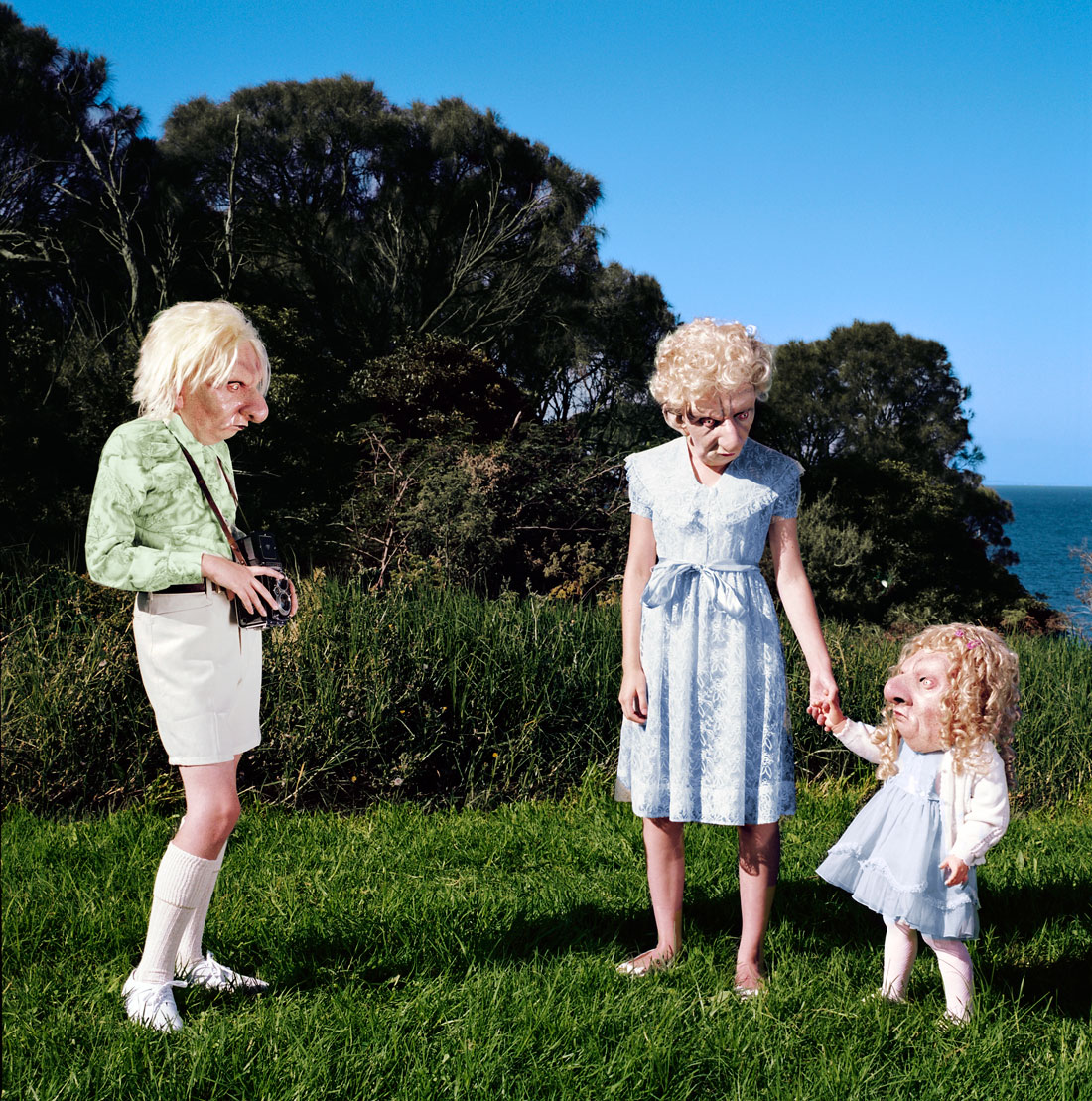
Polixeni Papapetrou (Australian, 1960-2018) 'The Holiday Makers' 2011


Polixeni Papapetrou (Australian, 1960-2018)
The Holiday Makers
2011
From The Dreamkeepers
Pigment print
105 x 105cm


Polixeni Papapetrou (Australian, 1960-2018) 'The Mender' 2011


Polixeni Papapetrou (Australian, 1960-2018)
The Mender
2011
From The Dreamkeepers
Pigment print
105 x 105cm


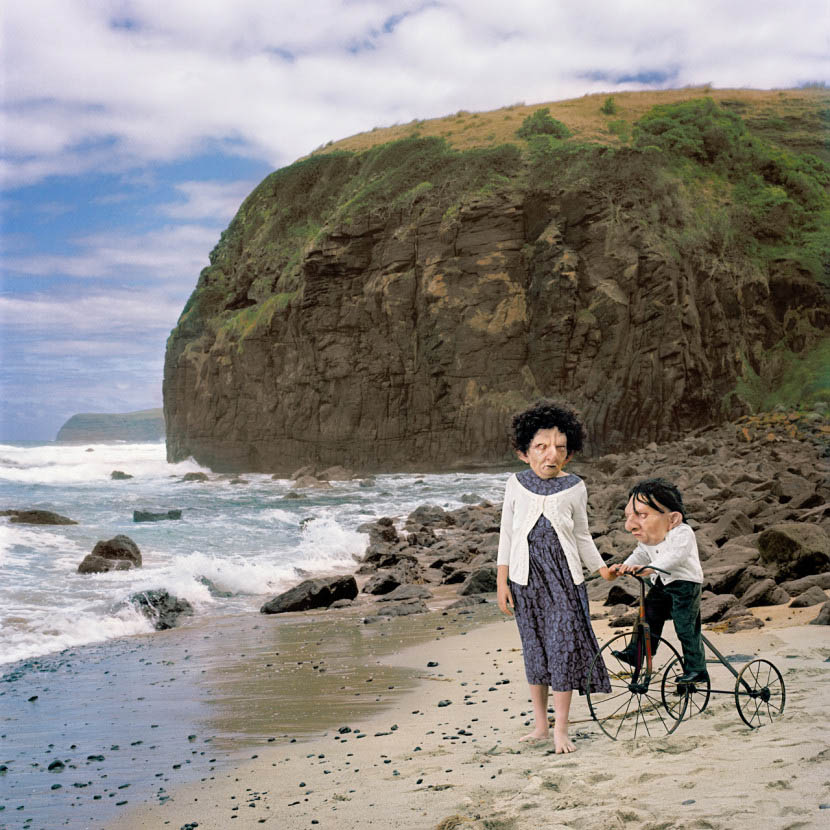
Polixeni Papapetrou (Australian, 1960-2018) 'The Joy Pedlars' 2011


Polixeni Papapetrou (Australian, 1960-2018)
The Joy Pedlars
2011
From The Dreamkeepers
Pigment print
105 x 105cm


Polixeni Papapetrou (Australian, 1960-2018) 'The Shell Collectors' 2012


Polixeni Papapetrou (Australian, 1960-2018)
The Shell Collectors
2012
From The Dreamkeepers
Pigment print
105 x 105cm


Polixeni Papapetrou (Australian, 1960-2018) 'The Lighthouse Keepers' 2011


Polixeni Papapetrou (Australian, 1960-2018)
The Lighthouse Keepers
2011
From The Dreamkeepers
Pigment print
105 x 105cm


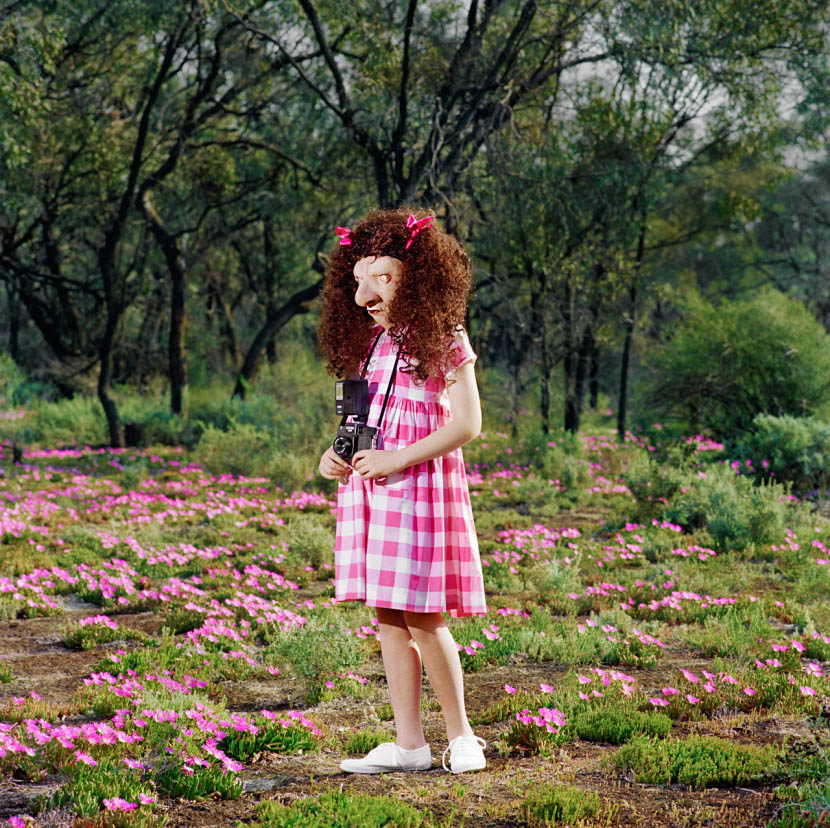
Polixeni Papapetrou (Australian, 1960-2018) 'The Photographer' 2011


Polixeni Papapetrou (Australian, 1960-2018)
The Photographer
2011
From The Dreamkeepers
Pigment print
105 x 105cm


Stills Gallery

This gallery has now closed.

Stills Gallery website

LIKE ART BLART ON FACEBOOK

Back to top

Exhibition: ‘Cy Twombly: Photographs 1951-2010’ at the Centre for Fine Arts, Brussels

Exhibition dates: 1st February – 29th April, 2012

Curators: Cy Twombly, who selected the photographic works, alongside Hubertus von Amelunxen, who served as the curator for the non-photographic section (paintings, drawings, and sculptures)


Cy Twombly (American, 1928-2011) 'Foundry, Rome' 2000 from the exhibition 'Cy Twombly: Photographs 1951-2010' at the Centre for Fine Arts, Brussels, February - May, 2012


Cy Twombly (American, 1928-2011)
Foundry, Rome
2000
Dryprint on cardboard
43.1 x 27.9cm
© Schirmer/Mosel Verlag – Nicola Del Roscio Foundation


“In a certain sense, Twombly operates like the Pictorialists: his photographs look almost like paintings in which light is captured in brushstrokes.”

Text from the press release


Many thankx to the Centre for Fine Arts, Brussels for allowing me to publish the photographs in the posting. Please click on the photographs for a larger version of the image.


Cy Twombly (American, 1928-2011) 'Untitled (Rome)' 1966 from the exhibition 'Cy Twombly: Photographs 1951-2010' at the Centre for Fine Arts, Brussels, February - May, 2012


Cy Twombly (American, 1928-2011)
Untitled (Rome)
1966
Oil, wall paint, grease crayon on canvas
190 x 200cm
Sammlung Lambrecht-Schadeberg / Rubenspreisträger der Stadt Siegen im Museum für Gegenwartskunst


Cy Twombly (American, 1928-2011) 'Yard Sale, Lexington' 2008


Cy Twombly (American, 1928-2011)
Yard Sale, Lexington
2008
Dryprint on cardboard
43.1 x 27.9cm
© Schirmer/Mosel Verlag – Nicola Del Roscio Foundation


Cy Twombly (American, 1928-2011) 'Untitled, Lexington' 2008


Cy Twombly (American, 1928-2011)
Untitled, Lexington
2008
Dryprint on cardboard
43.1 x 27.9cm
© Schirmer/Mosel Verlag – Fondazione Nicola del Roscio


Cy Twombly (American, 1928-2011) 'The Artist's Shoes, Lexington' 2005


Cy Twombly (American, 1928-2011)
The Artist’s Shoes, Lexington
2005
Dryprint on cardboard
43.1 x 27.9cm
© Schirmer/Mosel Verlag – Nicola Del Roscio


As a tribute to the recently deceased artist, the Centre for Fine Arts is turning the spotlight on a less familiar aspect of his oeuvre. The exhibition includes more than 100 dryprint Polaroid photographs (selected by Twombly himself), along with a selection of other works by Twombly and a film portrait by Tacita Dean.

Cy Twombly (who was born in Lexington in 1928 and died in Rome in 2011) was one of the most important US artists of his generation. He made his name with large-scale abstract paintings whose free form and spontaneous dynamism recall calligraphy and graffiti. In his work Twombly often referred to the myths of Classical Greek and Roman Antiquity, to literature and to art history.

The exhibition focuses on a less familiar aspect of Twombly’s oeuvre: his photographic work. The photographs are an addition to the artist’s creative world and throw new light on it. At the request of the publishers Schirmer / Mosel, Twombly selected more than 100 never previously published Polaroid photographs for a catalogue that was published just before his death on 5 July 2011. This selection is the subject of a travelling exhibition that has already been seen in Germany at the Museum Brandhorst (in Munich) and the Museum für Gegenwartskunst (in Siegen). At the Centre for Fine Arts the exhibition is being expanded, in collaboration with Dr. Hubertus von Amelunxen, who wrote an essay for the Twombly catalogue and who has made a selection for BOZAR of drawings and paintings by Twombly that reveal in greater depth the interplay of lines and light in his work. In addition, the exhibition is complemented by the screening of Tacita Dean’s intimate film portrait “Edwin Parker” (which takes its name from Twombly’s official given names).

Twombly and photography

Twombly took up photography back in his student days in the 1950s and continued to take photographs throughout his career. It was only in the 1990s, however, that he went public with his photographic work in gallery exhibitions and publications.
All the photographs in the exhibition were taken with a Polaroid camera, enlarged, printed using a special kind of dryprint, and reproduced in limited editions. This procedure, developed by Twombly himself, gives the photographs a hazy glow and a coarse grain. Twombly further reinforced this impression of blurring by playing with light and shade, by overexposure and sophisticated colour saturation, and by employing extreme close-ups. The lack of definition gives his photographs a certain indefinable quality and a poetic dimension. Our attention is no longer drawn to the subject, but to the texture of the picture. In a certain sense, Twombly operates like the Pictorialists: his photographs look almost like paintings in which light is captured in brushstrokes.

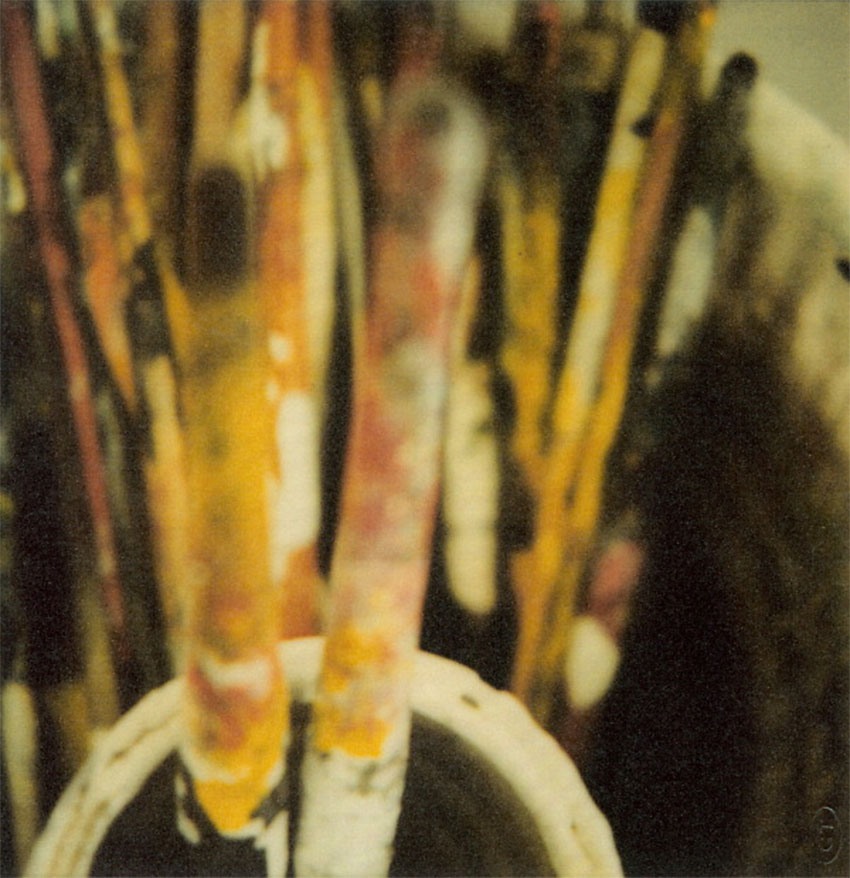
The subjects of his Polaroid photographs are extremely diverse. There are traditional still lifes with tulips, lemon leaves, and angel trumpets, alongside photographs of temples and atmospheric landscapes. Twombly surprises the viewer with intimate images of everyday objects such as his slippers, a detail from a painting, his brushes, a snapshot of his studio, etc.

The photographs are fascinating because they throw new light on Twombly’s creative spirit and visual language. These intangible, fragile images are permeated by the same themes that inspired the artist’s paintings, drawings, sculptures, and graphic art. The atmospheric colours and diffuse motifs of his photographs are an unexpected addition to his creative universe. Twombly’s oeuvre, moreover, is all about light – and is photography not the medium of light par excellence?

Tacita Dean

In the course of the exhibition circuit visitors can see an intimate film portrait of Twombly, Edwin Parker by the British artist Tacita Dean. The film takes its title from Twombly’s official given names (“Cy” is a traditional nickname in his family). The publicity-shy Twombly had become a mythical figure in the world of contemporary art. Dean’s film offers a rare insight into the artist’s life. The camera follows Twombly as he looks at his pictures in his studio, reads letters, looks through the louvres at the traffic in the city of his birth, or sits around a table with old friends and orders a meal. Tacita Dean is a British contemporary artist, known above all for her films. Her latest work to date is FILM, a 35 mm film continuously projected on a 13-metre-high monolith, which can be seen in the Turbine Hall at Tate Modern until 11 March 2012.

Press release from the Centre for Fine Arts website


Cy Twombly (American, 1928-2011) 'Brushes, Lexington' 2005


Cy Twombly (American, 1928-2011)
Brushes, Lexington
2005
Dryprint on cardboard
43.1 x 27.9cm
© Schirmer/Mosel Verlag – Nicola Del Roscio Foundation


Cy Twombly (American, 1928-2011) 'Tulips, Rome' 1985


Cy Twombly (American, 1928-2011)
Tulips, Rome
1985
Dryprint on cardboard
43.1 x 27.9cm
© Schirmer/Mosel Verlag – Nicola Del Roscio Foundation


Cy Twombly (American, 1928-2011) 'Cabbages, Gaeta' 1998


Cy Twombly (American, 1928-2011)
Cabbages, Gaeta
1998
Dryprint on cardboard
43.1 x 27.9cm
© Schirmer/Mosel Verlag – Nicola Del Roscio Foundation


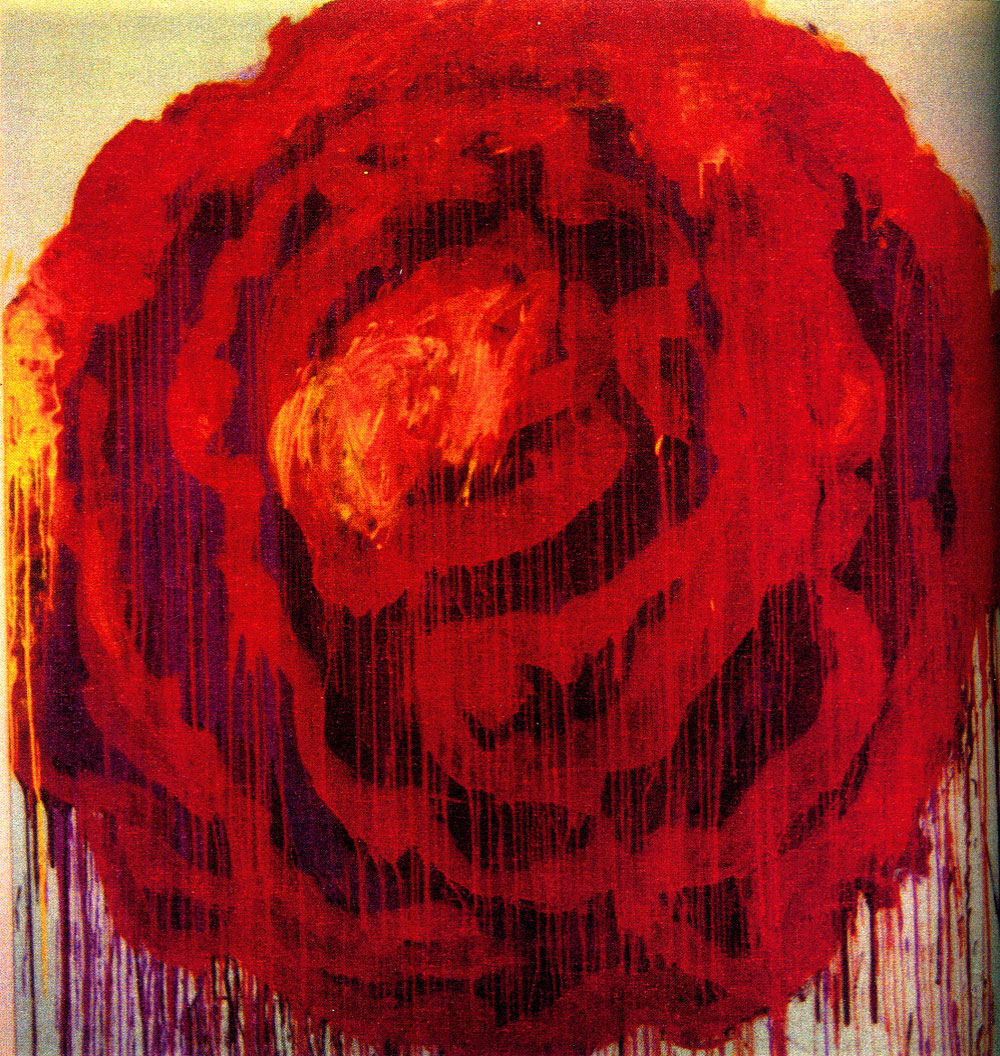
Cy Twombly (American, 1928-2011) 'Painting detail of Roses, Gaeta' 2009


Cy Twombly (American, 1928-2011)
Painting detail of Roses, Gaeta
2009
Dryprint on cardboard
43.1 x 27.9cm
© Schirmer/Mosel Verlag – Fondazione Nicola del Roscio


Cy Twombly (American, 1928-2011) 'Sunset, Gaeta' 2009


Cy Twombly (American, 1928-2011)
Sunset, Gaeta
2009
Dryprint on cardboard
43.1 x 27.9cm
© Schirmer/Mosel Verlag – Nicola Del Roscio Foundation


Cy Twombly (American, 1928-2011) 'Painting Detail and "By the Ionian Sea" Sculpture, Bassano in Teverina' 1992


Cy Twombly (American, 1928-2011)
Painting Detail and “By the Ionian Sea” Sculpture, Bassano in Teverina
1992
Dryprint on cardboard
43.1 x 27.9cm
© Schirmer/Mosel Verlag – Nicola Del Roscio Foundation


Cy Twombly (American, 1928-2011) 'Interior, Rome' 1980


Cy Twombly (American, 1928-2011)
Interior, Rome
1980
Dryprint on cardboard
43.1 x 27.9cm
© Schirmer/Mosel Verlag – Fondazione Nicola del Roscio


Centre for Fine Arts
Rue Ravenstein 23
1000 Bruxelles
Info and Tickets 02 507 82 00

Opening hours:
Tuesday – Sunday 10am – 6pm
Closed Mondays

BOZAR website

LIKE ART BLART ON FACEBOOK

Back to top

Exhibition: ‘Unexpected Pleasures: The Art and Design of Contemporary Jewellery’ at the National Gallery of Victoria, Melbourne

Exhibition dates: 20th April – 26th August, 2012

Curator: Dr. Susan Cohn for the Design Museum, London


Installation photograph of the exhibition 'Unexpected Pleasures' at the National Gallery of Victoria


Installation photograph of the exhibition Unexpected Pleasures at the National Gallery of Victoria
Photo: Dr Marcus Bunyan


An elegant, refined exhibition of contemporary jewellery at the National Gallery of Victoria’s newly redeveloped Contemporary Exhibitions space. The most striking and beautiful pieces are the neck ornaments. I am a very much over some of the relatively unstructured jewellery made out of found objects. It really has been done to death.

Trying to take photographs of jewellery in cases with reflections and extraneous light is very difficult but I hope my photographs below give you an idea of the design, installation and some specific pieces in the exhibition.

Dr Marcus Bunyan


Many thankx to the NGV for inviting me to the media preview and for allowing me to take photographs of the exhibition. Please click on the photographs for a larger version of the image. All photographs not otherwise labelled © Marcus Bunyan and the National Gallery of Victoria.


Installation photograph of the exhibition 'Unexpected Pleasures' at the National Gallery of Victoria


Installation photograph of the exhibition Unexpected Pleasures at the National Gallery of Victoria
Photo: Dr Marcus Bunyan


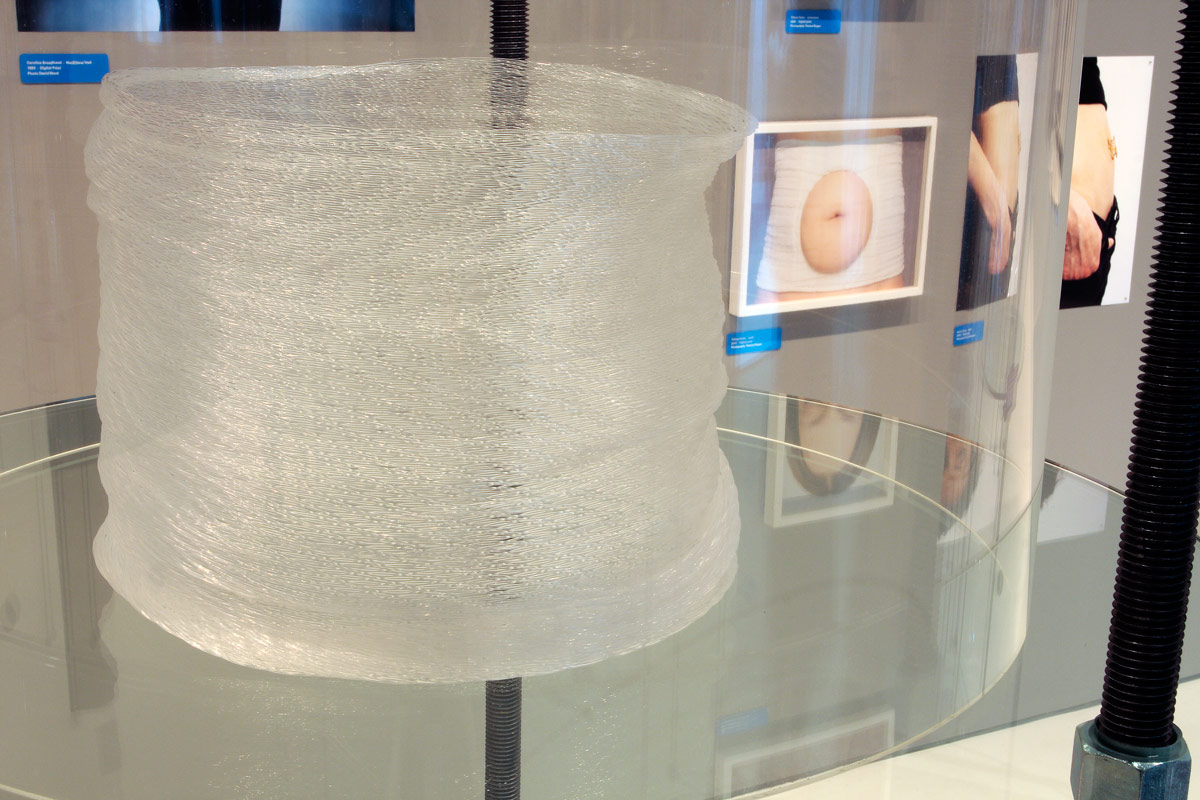
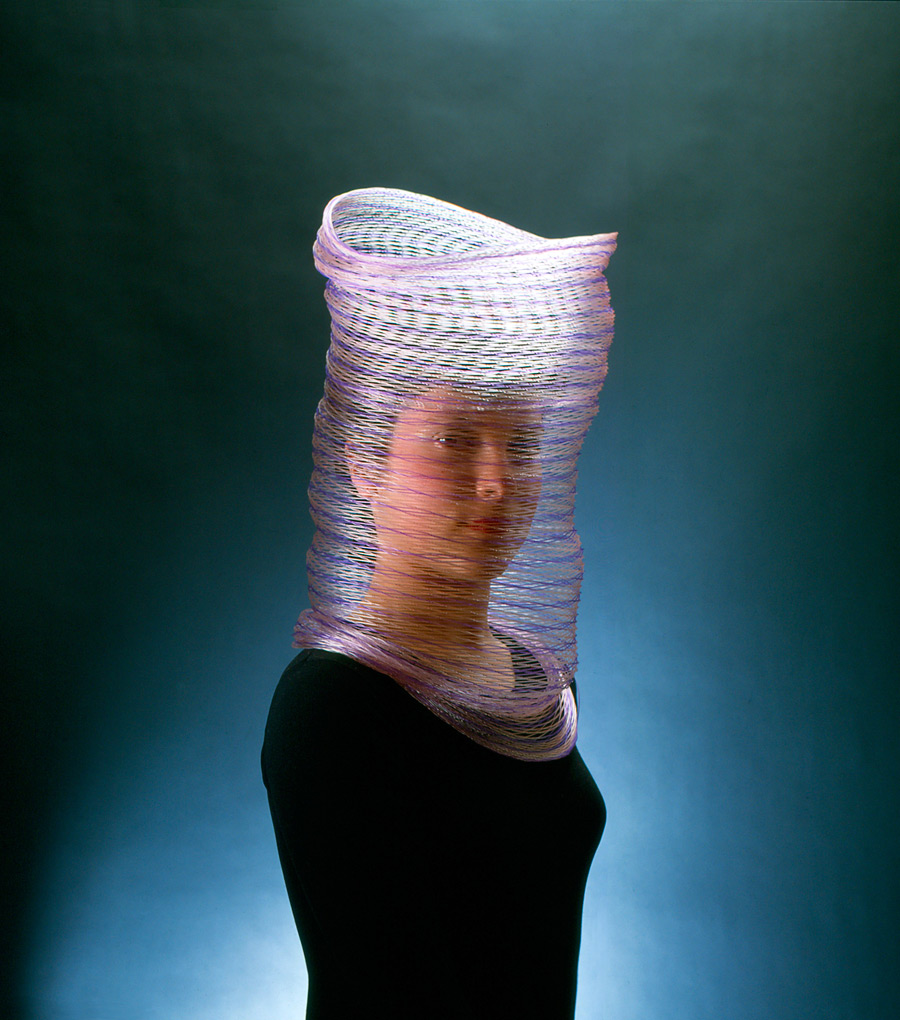
Caroline Broadhead (British, b. 1950) 'Necklace/Veil' 1983 (installation view)


Caroline Broadhead (British, b. 1950)
Necklace/Veil (installation view)
1983
Nylon
Photo: Dr Marcus Bunyan


Caroline Broadhead (British, b. 1950) 'Veil, necklace' 1983 from the exhibition 'Unexpected Pleasures: The Art and Design of Contemporary Jewellery' at the National Gallery of Victoria, Melbourne, April - August, 2012


Caroline Broadhead (British, b. 1950)
Veil, necklace
1983
Nylon
60 x 30 x 30cm
Collection of the artist
© Caroline Broadhead
Photo: David Ward


Susanne Klemm (Swiss, b. 1965) 'Frozen' 2007 (installation view)


Susanne Klemm (Swiss, b. 1965)
Frozen (installation view)
2007
Polyolefin
Courtesy of Anna Schwartz Gallery
Photo: Dr Marcus Bunyan


Lisa Walker (New Zealand, b. 1967) 'Necklace' 2009 (installation view)


Lisa Walker (New Zealand, b. 1967)
Necklace (installation view)
2009
Plastic, thread
Photo: Dr Marcus Bunyan


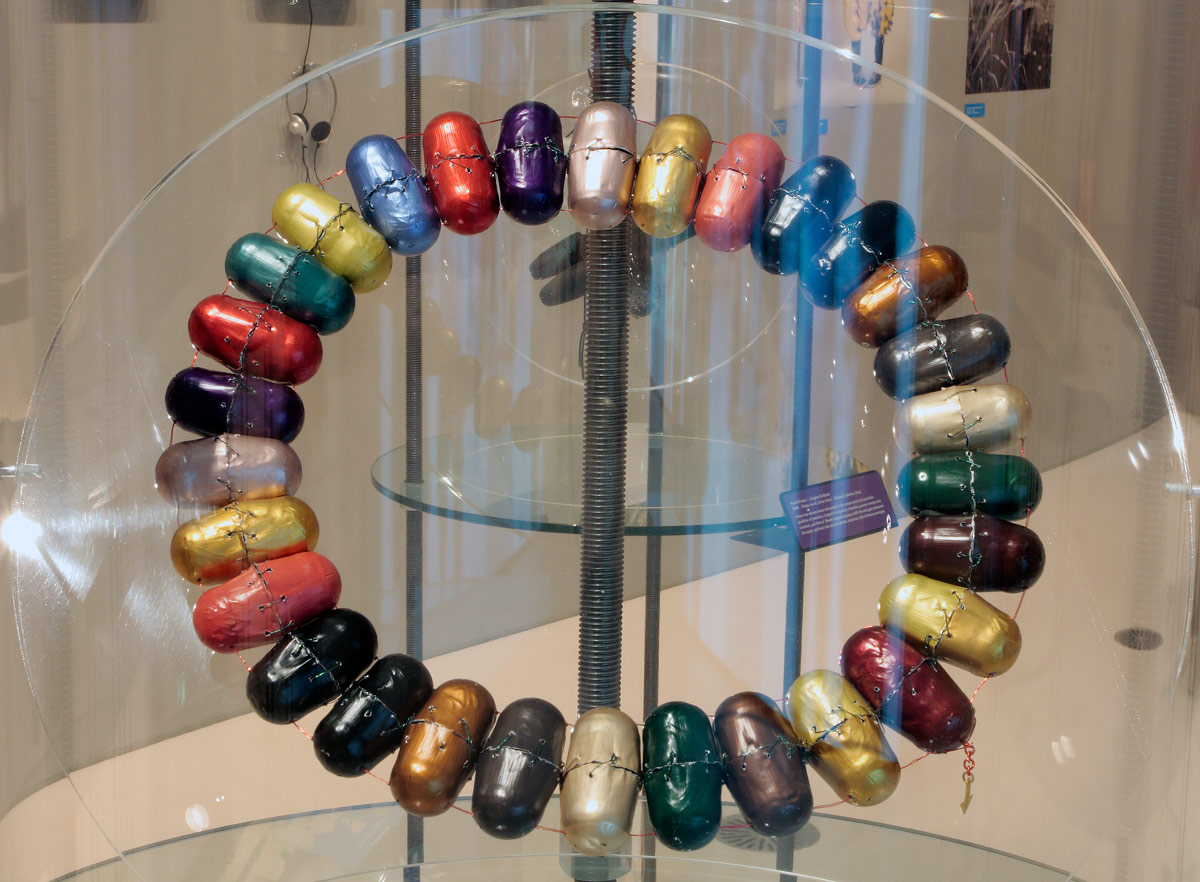
Beverley Price. 'Nespresso Collier' 2012 (installation view)


Beverley Price
Nespresso Collier (installation view)
2012
Anodised aluminium, plastic coated wire, fine gold
Photo: Dr Marcus Bunyan


Gijs Bakker (Dutch, b. 1942) 'Shoulder piece' 1967 (installation view)


Gijs Bakker (Dutch, b. 1942)
Shoulder piece (installation view)
1967
Anodised aluminium
Photo: Dr Marcus Bunyan


Unexpected Pleasures: The Art and Design of Contemporary Jewellery displays over 200 works by important Australian and international contemporary jewellers who have pushed conceptual and material boundaries within their practices. This Design Museum, London exhibition is curated by Guest Curator and Melbourne jeweller Susan Cohn, and is complemented by a selection of NGV Collection works and private loans.

Unexpected Pleasures looks at what we mean by jewellery from a number of different perspectives. Taking as its starting point the radical experiments of the Contemporary Jewellery Movement that challenged a conventional understanding of the language of personal adornment, and looking instead at the essential meanings of jewellery, the exhibition brings together important work from around the world, and looks at it from the point of view of the wearer as well as the maker. Contemporary Jewellery in this sense is at the intersection of art and design.

Dr Gerard Vaughan, Director, NGV said: “This is a remarkable and exciting exhibition, brilliantly installed in the Gallery’s newly redeveloped Contemporary Exhibitions space at NGV International.”

The exhibition explores the essential meanings of jewellery, bypassing traditional perceptions and instead tracing the radical experiments of contemporary jewellers who have challenged the conventions of jewellery design. The exhibition is curated through a number of themes: Worn Out – celebrating the experience of wearing jewellery; Linking Links – looking at the ways in which ‘meaning’ and narratives are invested and expressed through sub-themes such as Social Expressions and Creative Systems, and; A Fine Line – offering insight into the origins of contemporary jewellery today, highlighting key instigators of the Contemporary Jewellery Movement that started in the late 1970s.

Each theme within the exhibition provides an outline of current thinking and offers a unique view on how people use and interact with objects, through which design and production processes come to light. Photography in this context becomes a vital instrument for expressing the ‘wearability’ and the performative aspects of jewellery, and a selection of photographic works are also included in the exhibition.

New techniques and experimentation continue to question the relevance of preciousness, highlighting the shifting values from material worth to the personal associations that jewellery holds. The exhibition celebrates jewellery from the point of view of both the maker and the wearer. It considers the pleasures of wearing jewellery and the many meanings associated with jewellery which are at times unpredictable and, in turn, unexpected.

Press release from the NGV website


Otto Künzli (German, b. 1948) 'Wallpaper brooches' 1982 (installation view)


Otto Künzli (German, b. 1948)
Wallpaper brooches (installation view)
1982
Wallpaper, synthetic polymer core, steel
Photo: Dr Marcus Bunyan


Kiko Gianocca (Swiss, b. 1974) 'Who am I? rings' 2008-2011


Kiko Gianocca (Swiss, b. 1974)
Who am I? rings
2008-2011
Gold, silver, polyurethane
Various sizes
Collection of the artist
© Esther Knobel
Photo: Jeremy Dillon


Paul Derrez (Dutch, b. 1950) 'Pleated Collar' 1982


Paul Derrez (Dutch, b. 1950)
Pleated Collar (installation view)
1982
Plastic, steel
Collection of Paul Derrez
Photo: Dr Marcus Bunyan


Doug Bucci (American) 'Trans-Hematopoietic neckpiece' 2010 from the exhibition 'Unexpected Pleasures: The Art and Design of Contemporary Jewellery' at the National Gallery of Victoria, Melbourne, April - August, 2012


Doug Bucci (American)
Trans-Hematopoietic neckpiece
2010
3-D printed acrylic resin as one interlinked piece
45.7 x 45.7 x 5.1cm
Collection of the artist
© Doug Bucci
Photo: Rebecca Annand


David Bielander (Swiss, b. 1968) 'Scampi' 2007


David Bielander (Swiss, b. 1968)
Scampi
2007
Silver (copper anodised), elastic
10.0cm (diam)
Collection of the artist
© David Bielander
Photo: Simon Bielander


Blanche Tilden (Australian, b. 1968) 'Speed, neckpiece' 2000


Blanche Tilden (Australian, b. 1968)
Speed, neckpiece
2000
Borosilicate glass, titanium, anodised aluminium
1.2 x 24cm
Collection of the artist
© Blanche Tilden
Photo: Marcus Scholz


Karl Fritsch (New Zealand born Germany, 1963) 'Screw ring' 2010


Karl Fritsch (New Zealand born Germany, 1963)
Screw ring
2010
Silver, nails, screws
6 x 4 x 4cm
Collection of the artist
© Karl Fritsch
Photo: Karl Fritsch


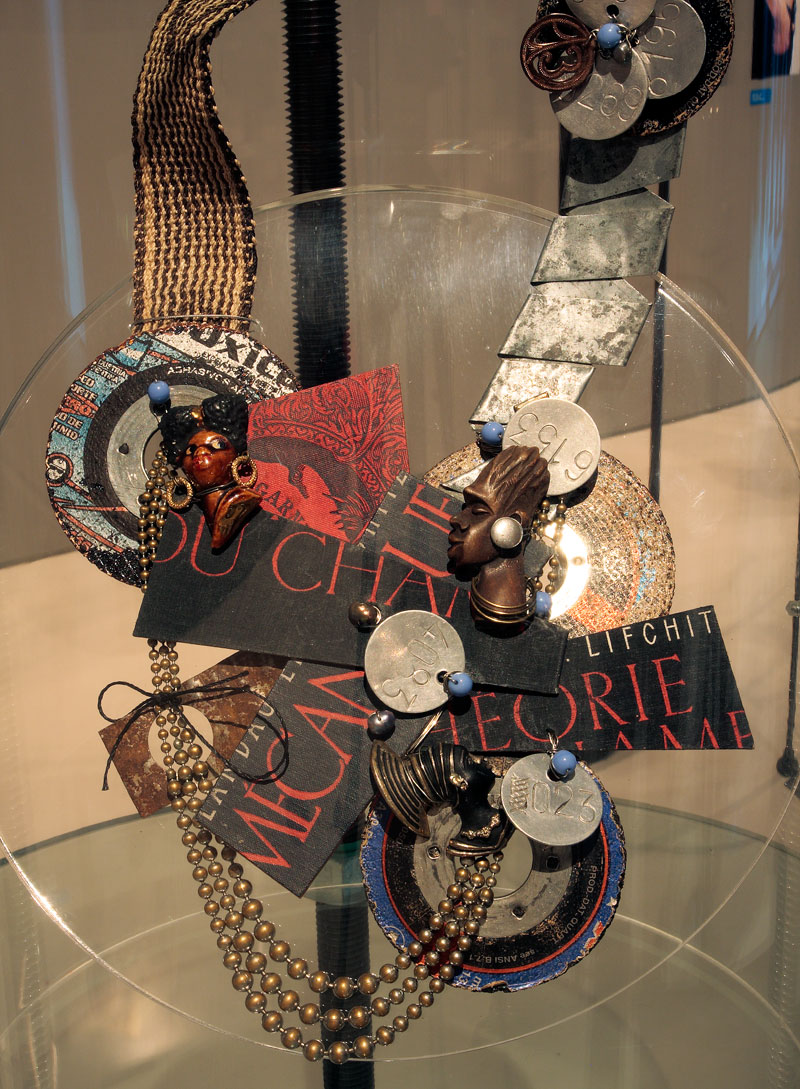
Tota Reciclados. 'Theorie du champ mechanique' 2010


Tota Reciclados
Theorie du champ mechanique (installation view)
2010
Found objects, book cover, mixed media
Photo: Dr Marcus Bunyan


NGV International
180 St Kilda Road

Opening hours
Daily 10am – 5pm

National Gallery of Victoria website

LIKE ART BLART ON FACEBOOK

Back to top

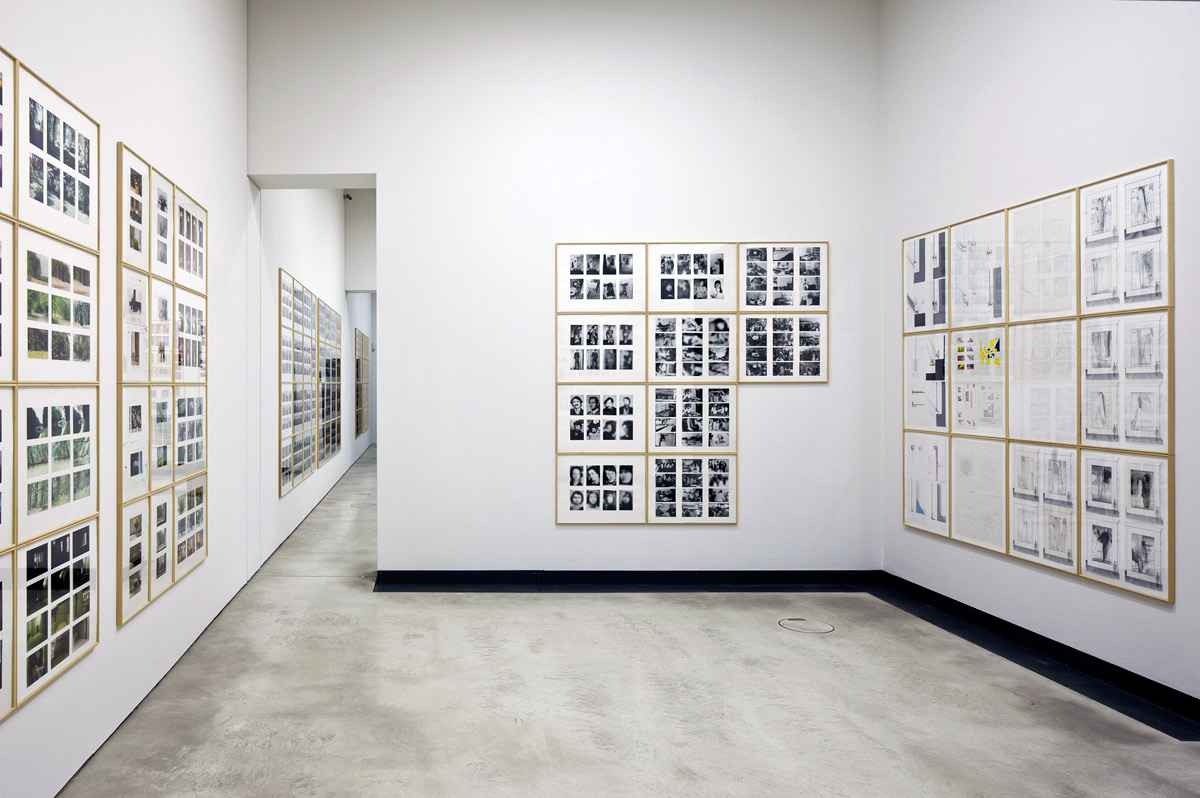
Exhibition: ‘Gerhard Richter. Atlas’ at the Staatliche Kunstsammlungen Dresden

Exhibition dates: 4th February – 22nd April, 2012

Curator: organised by the Gerhard Richter Archive under the direction of Dr. Dietmar Elger


Installation photograph of 'Gerhard Richter. Atlas' at Kunsthalle im Lipsiusbau, Staatliche Kunstsammlungen Dresden 2012


Installation photograph of Gerhard Richter. Atlas
Kunsthalle im Lipsiusbau
Photograph: David Brandt, 2012
© Gerhard Richter Archive, Staatliche Kunstsammlungen Dresden


Meaning arises out of context – or the lack of it. Unlike the grids of the Bechers which promote multiple ways of seeing and construct narrative tension these images do not increase the photographic narrative. They are like the parrots, finches or scarab beetles in a display case at a natural history museum – part of a taxonomic classification system, where one out of a thousand is the most impressive beetle, the bird with the brightest plumage, where the composition is the most surprising. Multiples as collected here are fascinating but emerge from a slightly obsessive mind (which any collectors mind is!)

This photomontage of impressions, ground and movement blurs the history and memory embedded in each photograph. The assemblage of all these visions ranges far and wide but ultimately collapses time and space into one huge universal snapshot. As in advertising imagery the individual documentary-style images mean relatively little – it is the overall impression that impinges on the consciousness. If you watch MTV and stop to analyse the individual images in a pop video you soon acknowledge their vacuousness. The context of the singular image is lost. In this display the grid controls the photographs position relative to each other and the viewer – a compositional design matrix that has a symbolic function. The grid both decontextualises and recontextualises the floating signifier.

Richter obviously uses them as an aide-memoire. Some remind me of the folded photographs found in Francis Bacon’s studio; others Bacon’s portraits of blurred bodies; yet more, ethnographic mappings of Indigenous bodies or criminals cut out of newspapers. Others remind me of surrealist experiments and the overpainted colour photographs of the artist.

They may be the source material of a great artist but in this regimented form of prosaic knowledge they become like bugs caught in amber.

Dr Marcus Bunyan


Many thankx to the Staatliche Kunstsammlungen Dresden for allowing me to publish the photographs in the posting. Please click on the photographs for a larger version of the image.


“I see countless landscapes, photograph barely one in 100,000, and paint barely 1 in 100 of those that I photograph,”


Gerhard Richter, 1986


“If the grids of art are about arrangement, synchronic vision, connections and knowledge, a standing back to grasp a pattern, then the grids of life are just as much about chance, disconnections among the connections, and the inability of the elements within the grid to perceive, and know, the larger patterns of which they are a part, so that it is only a ‘higher’ consciousness standing outside the grid that will be able to see it all (with or without understanding it). How you know and form a grid depends on whether you are inside or outside it. You can ‘form’ a grid both actively and passively, wittingly and unwittingly – either by simply being part of a grid or by actually assembling one… The grid becomes a potentially totalizing system with which reality (the real of experience as well as the real of the mind), another totalizing system, must endlessly play its games of elusiveness and containment, chaos and order, freedom and necessity.”


Aveek Sen. “The Grid and More,” in ‘What We Talk About When We Talk About Photography,’ on the Fotomuseum Winterthur website, 7th April 2012


Gerhard Richter. Atlas

The film for the special exhibition!

The ATLAS occupies an outstanding position in Gerhard Richter’s entire work. It is both the basis of his painterly oeuvre and an independent work. As a so-called work in progress, the artist, who was born on February 9, 1932 in Dresden, has repeatedly revised and supplemented the ATLAS for more than four decades.

The ATLAS was on display in a special exhibition at the Gerhard Richter Archive of the Dresden State Art Collections.


Installation photograph of 'Gerhard Richter. Atlas' at Kunsthalle im Lipsiusbau, Staatliche Kunstsammlungen Dresden 2012


Installation photograph of Gerhard Richter. Atlas
Kunsthalle im Lipsiusbau
Photograph: David Brandt, 2012
© Gerhard Richter Archive, Staatliche Kunstsammlungen Dresden


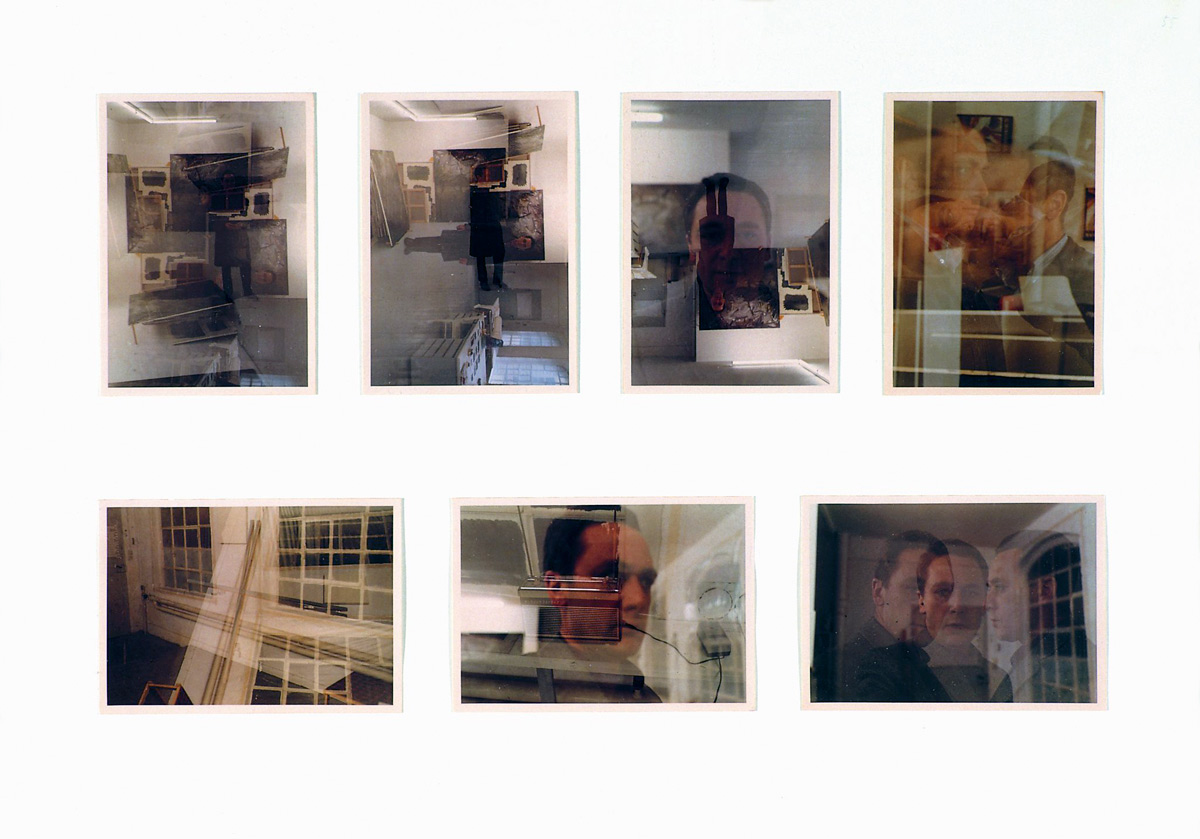
Gerhard Richter (German, b. 1932) 'Atlas. Plate 68. Photo experiment' 1969 from the exhibition 'Gerhard Richter. Atlas' at the Staatliche Kunstsammlungen Dresden, February - April, 2012


Gerhard Richter (German, b. 1932)
Atlas. Plate 68. Photo experiment
1969
© Gerhard Richter 2011


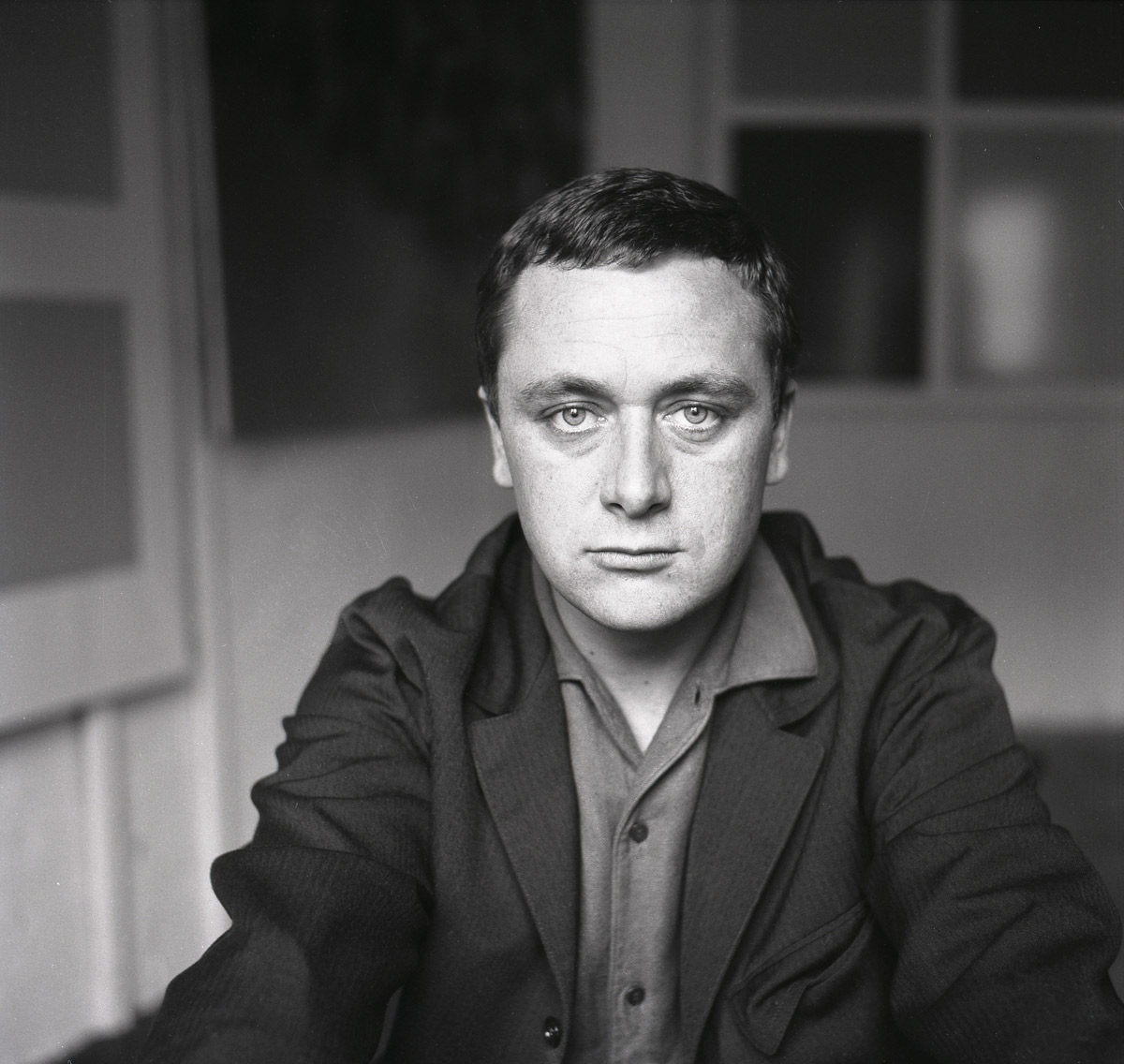
Portrait of Gerhard Richter 1966


Unknown photographer
Portrait of Gerhard Richter
1966
© Gerhard Richter, Köln 2012


In celebration of Gerhard Richter’s 80th birthday, the Gerhard Richter Archive of the Staatliche Kunstsammlungen Dresden presents the ATLAS of the artist in the Kunsthalle im Lipsiusbau. The ATLAS takes a prominent role in the oeuvre of Gerhard Richter. It is the basis of many of his paintings just as it is an artwork in its own right. The ATLAS consists of approximately 800 framed panels with more than 15,000 photographs, newspaper clippings, sketches and designs, which Richter had accumulated for work in his studio from the early 1960s onwards. In 1972, he ordered and arranged the collection on boards and presented it under the title ATLAS for the first time. Ever since then, he has continuously added new material. The conceptual character of the ATLAS offers unique insights into the mindset of the artist, into the development of some ideas for works as well as into the creational process of several of his paintings.

Gerhard Richter’s ATLAS merits a special place within his oeuvre as a whole. It not only forms the basis of his entire work as a painter but is also an autonomous artwork in its own right. Born in Dresden on 9th February 1932, Richter has been constantly revising and augmenting this “work in progress” for more than four decades.

ATLAS may be seen as an accompaniment, commentary and extension of the entire oeuvre of Gerhard Richter, for it also develops its own perspectives and poses its own questions. ATLAS is Richter’s reflection not only on his own work but also on the everyday world of images that he himself has documented photographically in their thousands. “I see countless landscapes, photograph barely one in 100,000, and paint barely 1 in 100 of those that I photograph,” Richter wrote in 1986. This photographed, yet and seemingly inexhaustible flood of images has afforded Richter a concentrated, ready accessibility of motifs for his future works. Indeed, for some of his paintings, he has been able to draw upon old motifs in his ATLAS, some of them dating back more than a decade.

The accompanying artist’s book “ATLAS” is not just intended as a means of documenting the exhibition. Gerhard Richter sees it as an alternative presentation to the exhibited panels, one that permits an additional, different, non-linear approach to the material. By 1964, Richter had collected a vast amount of pictorial source material for his painting, first keeping it in drawers and portfolios. Five years later he began to sift through this material with a critical eye, grouping the individual photographs, reproductions and sketches into different themes and pasting them onto separate panels. Richter then soon recognised the intrinsic artistic quality of these collections of source material and, in 1972, framed the panels and exhibited them at the Museum Hedendaagse Kunst in Utrecht under the title ATLAS. Meanwhile this repository of source material has grown from its original 343 panels to its present 783, with more than 8,000 individual motifs.

Press release from the Staatliche Kunstsammlungen Dresden website


Gerhard Richter (German, b. 1932) 'Atlas. Tafel 5. Album Photos' 1962-1968 from the exhibition 'Gerhard Richter. Atlas' at the Staatliche Kunstsammlungen Dresden, February - April, 2012


Gerhard Richter (German, b. 1932)
Atlas. Plate 9. Photographs of papers and books etc
1962-1968
© Gerhard Richter 2011


Gerhard Richter (German, b. 1932) 'Atlas. Plate 5. Album Photos' 1962-1968


Gerhard Richter (German, b. 1932)
Atlas. Plate 5. Album Photos
1962-1968
© Gerhard Richter 2011


Gerhard Richter (German, b. 1932) 'Atlas. Plate 58. Double exposure' Nd


Gerhard Richter (German, b. 1932)
Atlas. Plate 58. Double exposure
Nd
© Gerhard Richter 2011


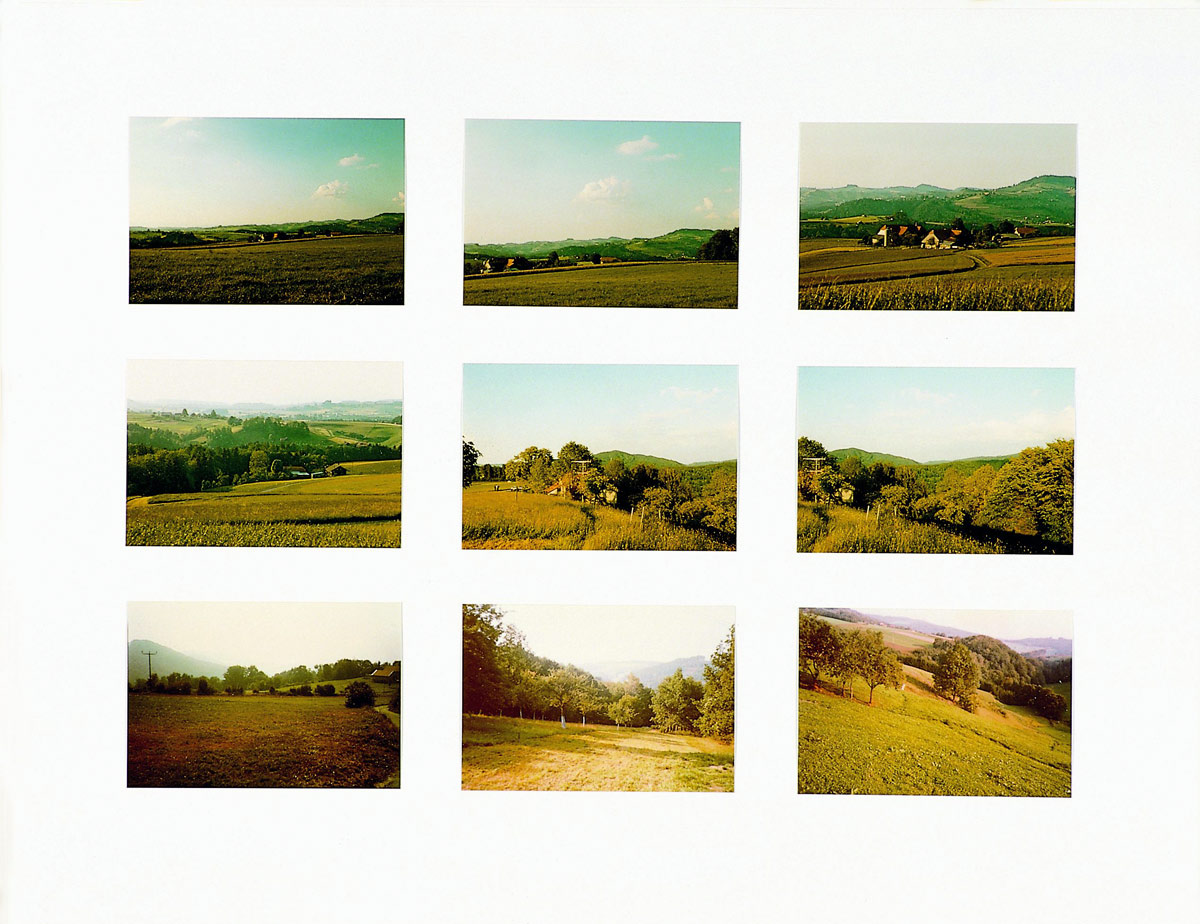
Gerhard Richter (German, b. 1932) 'Atlas. Plate 422. Baysricher forest' 1982


Gerhard Richter (German, b. 1932)
Atlas. Plate 422. Baysricher forest
1982
© Gerhard Richter 2011


Gerhard Richter (German, b. 1932) 'Atlas. Plate 13. Photographs of papers and books etc' 1964-67


Gerhard Richter (German, b. 1932)
Atlas. Plate 13. Photographs of papers and books etc
1964-1967
© Gerhard Richter 2011


Gerhard Richter (German, b. 1932) 'Atlas. Plate 651. Reichstag' 1998


Gerhard Richter (German, b. 1932)
Atlas. Plate 651. Reichstag
1998
© Gerhard Richter 2011


Gerhard Richter (German, b. 1932) 'Atlas. Plate 31 for 48 Portraits' 1971


Gerhard Richter (German, b. 1932)
Atlas. Plate 31 for 48 Portraits
1971
© Gerhard Richter 2011


Staatliche Kunstsammlungen Dresden
Residenzschloss Taschenberg 2
01067 Dresden Germany

Kunsthalle im Lipsiusbau opening hours:
Daily 10am – 6pm
Closed Mondays

Staatliche Kunstsammlungen Dresden website

LIKE ART BLART ON FACEBOOK

Back to top

Exhibition: ‘Ladies and Gentlemen: The Camera as a Mirror’ at the Moderna Museet, Malmö, Sweden

Exhibition dates: 18th February – 22nd April, 2012

Curator: Magnus af Petersens


Many thankx to the Moderna Museet for allowing me to publish the photographs in the posting. Please click on the photographs for a larger version of the image.


Cindy Sherman (American, b. 1954) 'Untitled Film Still #56' 1980 from the exhibition 'Ladies and Gentlemen: The Camera as a Mirror' at the Moderna Museet, Malmö, Sweden, February - April, 2012


Cindy Sherman (American, b. 1954)
Untitled Film Still #56
1980
© Cindy Sherman. Courtesy of the Artist and Metro Pictures


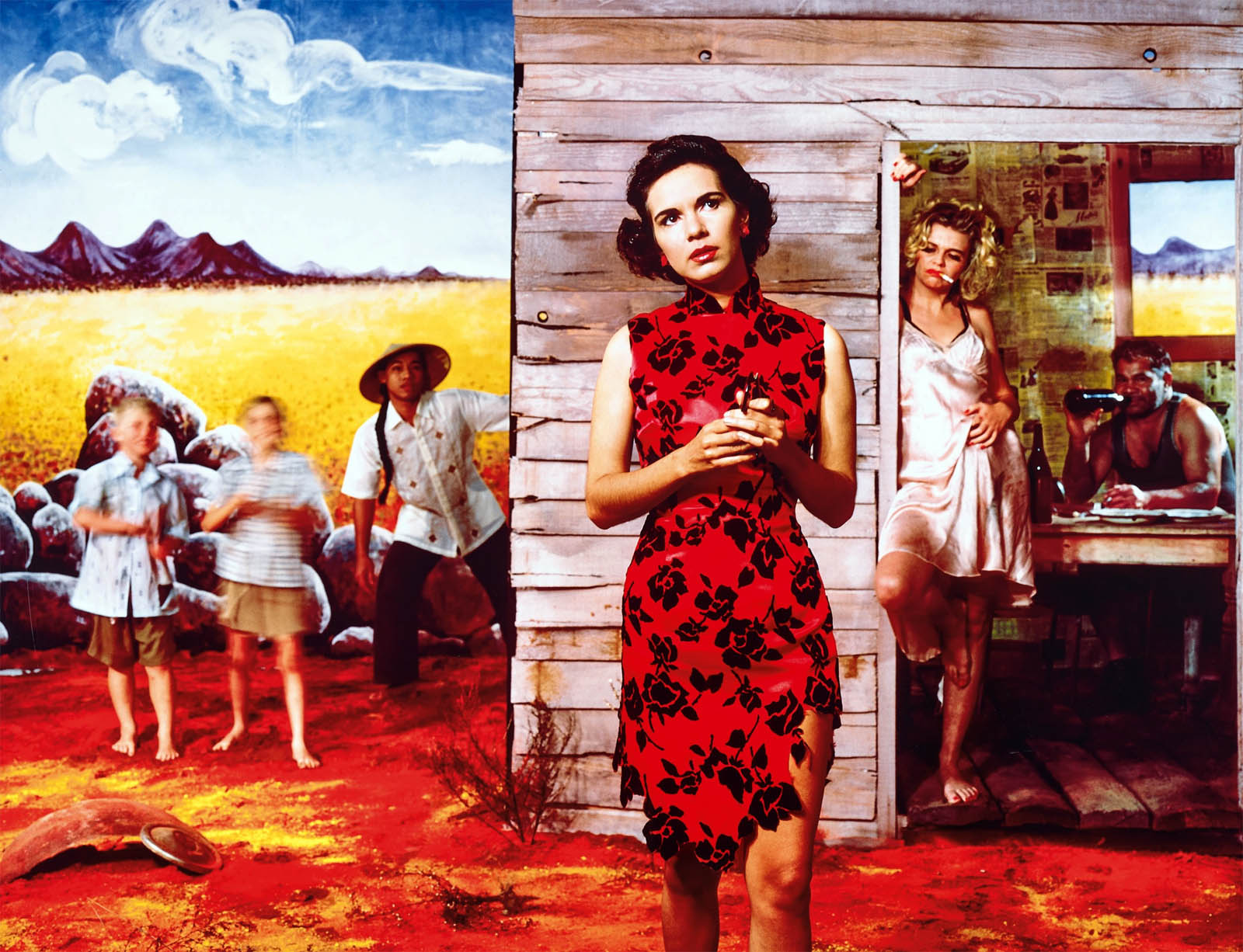
Tracey Moffatt (Australian, b. 1960) 'Something More #1' 1997 from the exhibition 'Ladies and Gentlemen: The Camera as a Mirror' at the Moderna Museet, Malmö, Sweden, February - April, 2012


Tracey Moffatt (Australian, b. 1960)
Something More #1
1997
Cibachrome print
© Tracey Moffatt/BUS 2012


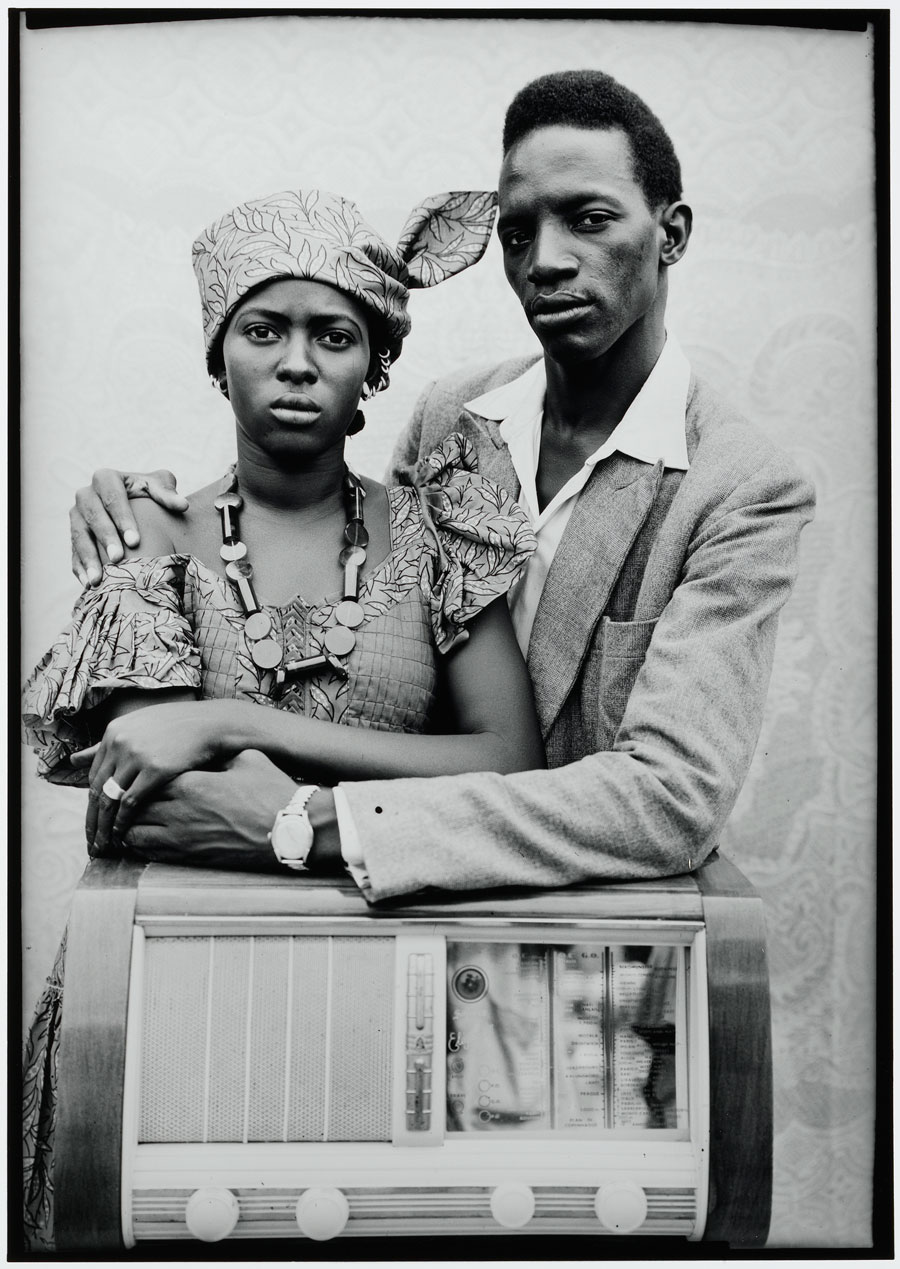
Samuel Fosso (Cameroon, b. 1962) 'Sans titre. De la série Années 70' 1970-1980


Samuel Fosso (Cameroon, b. 1962)
Sans titre. De la série Années 70
1970-1980
Gelatin silver print
© Samuel Fosso, Courtesy JM Patras/Paris


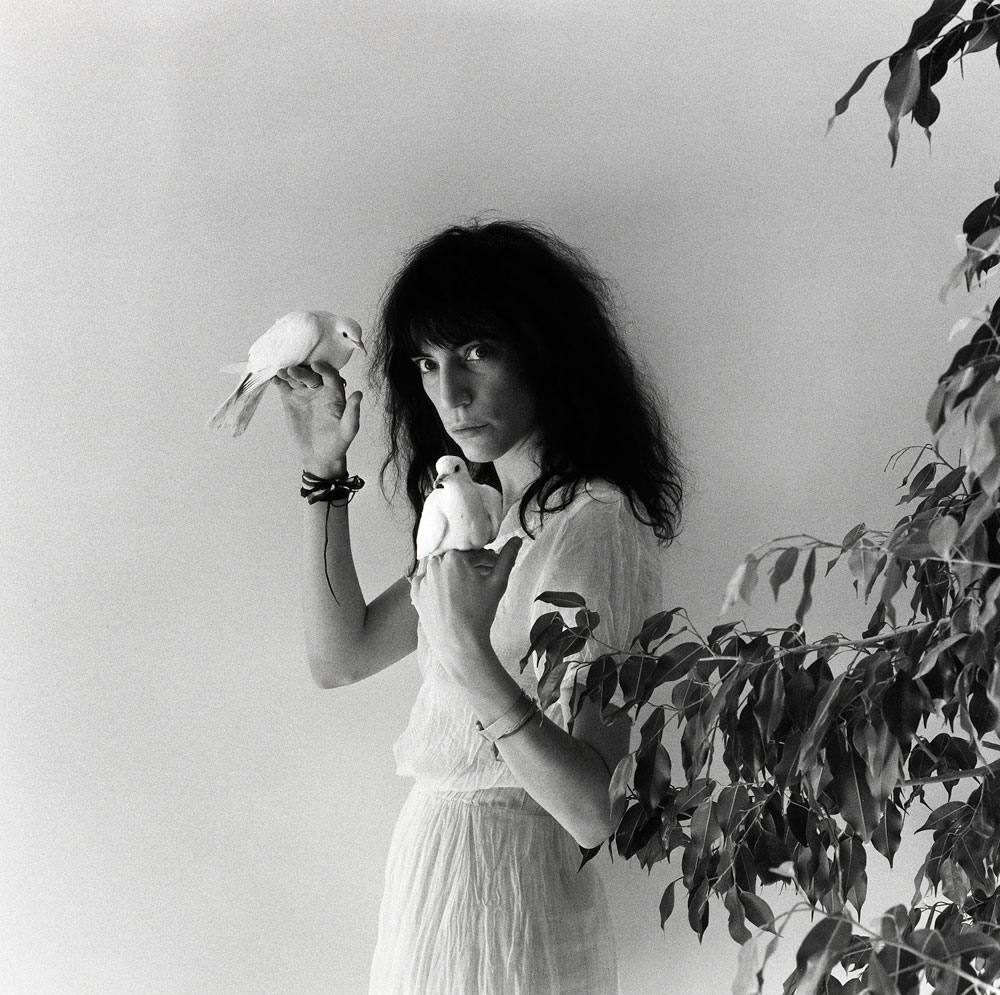
Robert Mapplethorpe (American, 1946-1989) 'Patti Smith' 1979


Robert Mapplethorpe (American, 1946-1989)
Patti Smith
1979
Gelatin silver print
© Robert Mapplethorpe Foundation


Robert Mapplethorpe (American, 1946-1989) 'Self Portrait' 1980


Robert Mapplethorpe (American, 1946-1989)
Self Portrait
1980
Gelatin silver print
© Robert Mapplethorpe Foundation


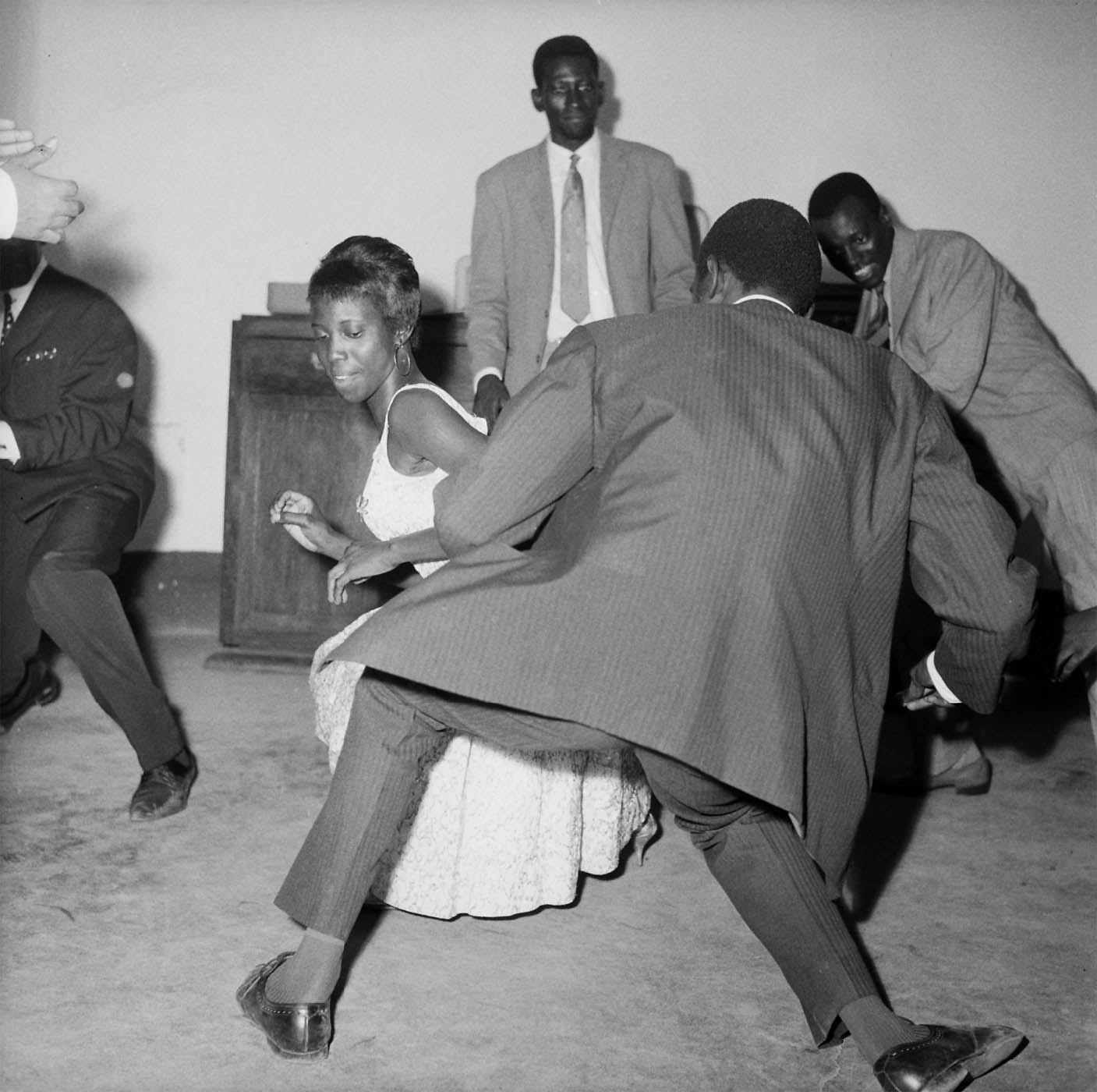
Malick Sidibé (Malian, 1936-2016) 'Danser le Twist' (Dance the Twist) 1965 


Malick Sidibé (Malian, 1936-2016)
Danser le Twist (Dance the Twist)
1965
Gelatin silver print


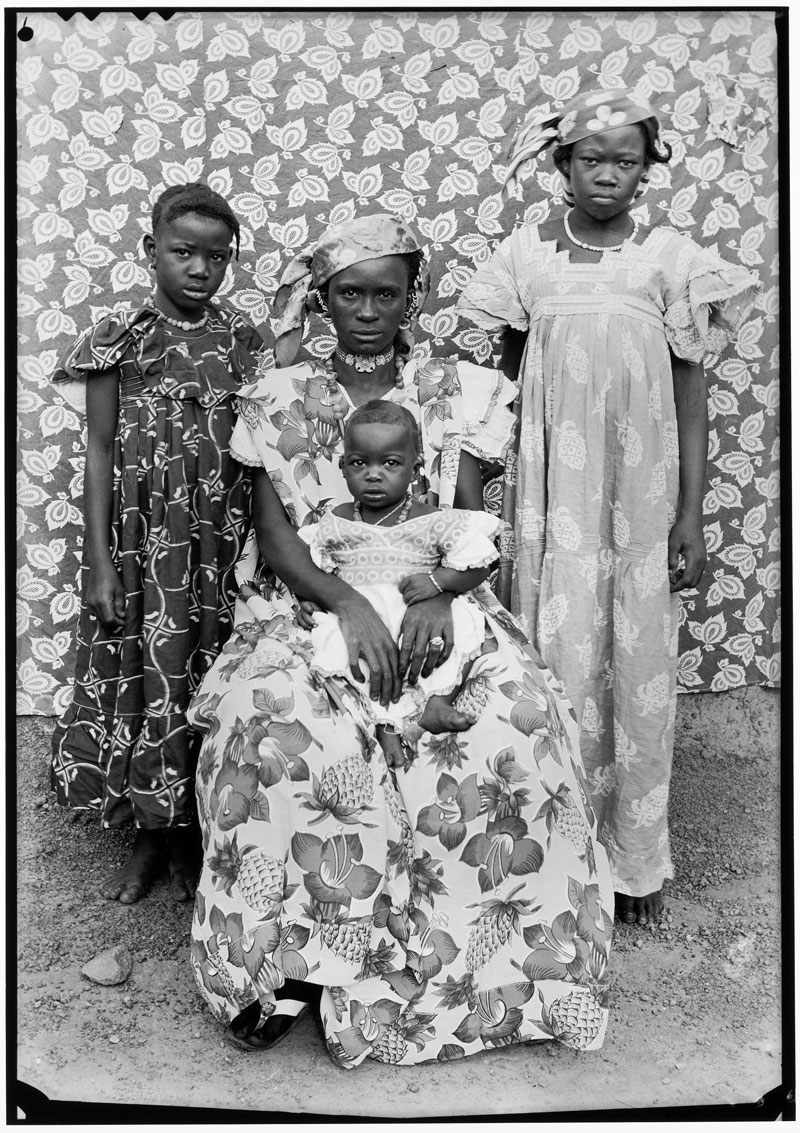
Seydou Keïta (Mali, 1921-2001) 'Untitled #419' 1950-1952


Seydou Keïta (Mali, 1921-2001)
Untitled #419
1950-1952
Gelatin silver print
© Seydou Keïta / SKPEAC


Seydou Keïta (Mali, 1921-2001) 'Untitled #420' 1950-1952


Seydou Keïta (Mali, 1921-2001)
Untitled #420
1950-1952
© Seydou Keïta / SKPEAC


This spring we will be showing more than forty photographs from the period 1950-90 taken by leading artists such as Andy Warhol, Cindy Sherman, Robert Mapplethorpe, Samuel Fosso, Tracey Moffatt, and Elina Brotherus. The exhibition focuses on the art of portrait photography and how the artist in his or her studio creates images that depict people not just as they actually are, but also as they would like to appear.

Moderna Museet’s collection of photography is among the foremost in Europe, it includes some of the most prominent figures in the history of photography. Andy Warhol, Cindy Sherman, and Robert Mapplethorpe are all big names in photography, artists whose work often revolves around concepts of identity, sexuality, and performativity. The photography studio is a place for masquerades and manipulations, a stage where various identities and roles can be tested. It therefore problematises the idea that a portrait is meant to convey some truth about the subject’s inner life. How do we distinguish a staged scene from reality? Is it even possible to make such a distinction? How free are we to form our own identity? If it’s a matter of choosing a role, what roles are available to us?

Andy Warhol’s Polaroid pictures, whose title, Ladies and Gentlemen, has also provided the name for the exhibition, are examples of his interest in – or rather his obsession with – celebrities. From industrial magnates to movie stars, from rock musicians to the “superstar” friends who hung out around the Factory, his fabled studio. In the world of pop art and popular culture, surface is everything. Robert Mapplethorpe’s photographs are instead classically composed – stylised and aesthetically formed. In the controlled environment and lighting of the photo studio, he strives not for realism but for beauty. Here role-play becomes a part of the picture’s constructed character.

In Cindy Sherman’s suite of images called Untitled Film Stills (1977-1980), she plays with film clichés. The scenes and characters in her photographs seem familiar, but in fact it’s always Sherman herself we see in the leading role. Using the camera as a mirror, she takes on and explores various roles. It’s a game of trying on identities that is familiar to teenagers in particular the world over, a game we play in an attempt to find ourselves, or rather to construct an individual identity. One of the many ways in which Sherman’s pictures have been interpreted is as a feminist critique of the limited number of roles available to women.

This exhibition also presents several works by Seydou Keïta, Malick Sidibé, and Samuel Fosso, studio photographers who work primarily with portrait photography. Keïta’s studio was next-door to a movie theater in Bamako, the capitol city of Mali. Sidibé takes pictures not just in his studio but also at weddings and other parties. His photographs from Bamako in the 1960s reflect the great hope that came with liberation from French colonial power. Fosso opened his studio in Bangui, in the Central African Republic, when he was still a teenager. He is best known for a series of self-portraits in which he dons a variety of outfits to assume different roles.

Press release from the Moderna Museet website


Elina Brotherus (Finnish, b. 1972) 'Honeymoon' 1997 (detail)


Elina Brotherus (Finnish, b. 1972)
Honeymoon (detail)
1997
© Elina Brotherus


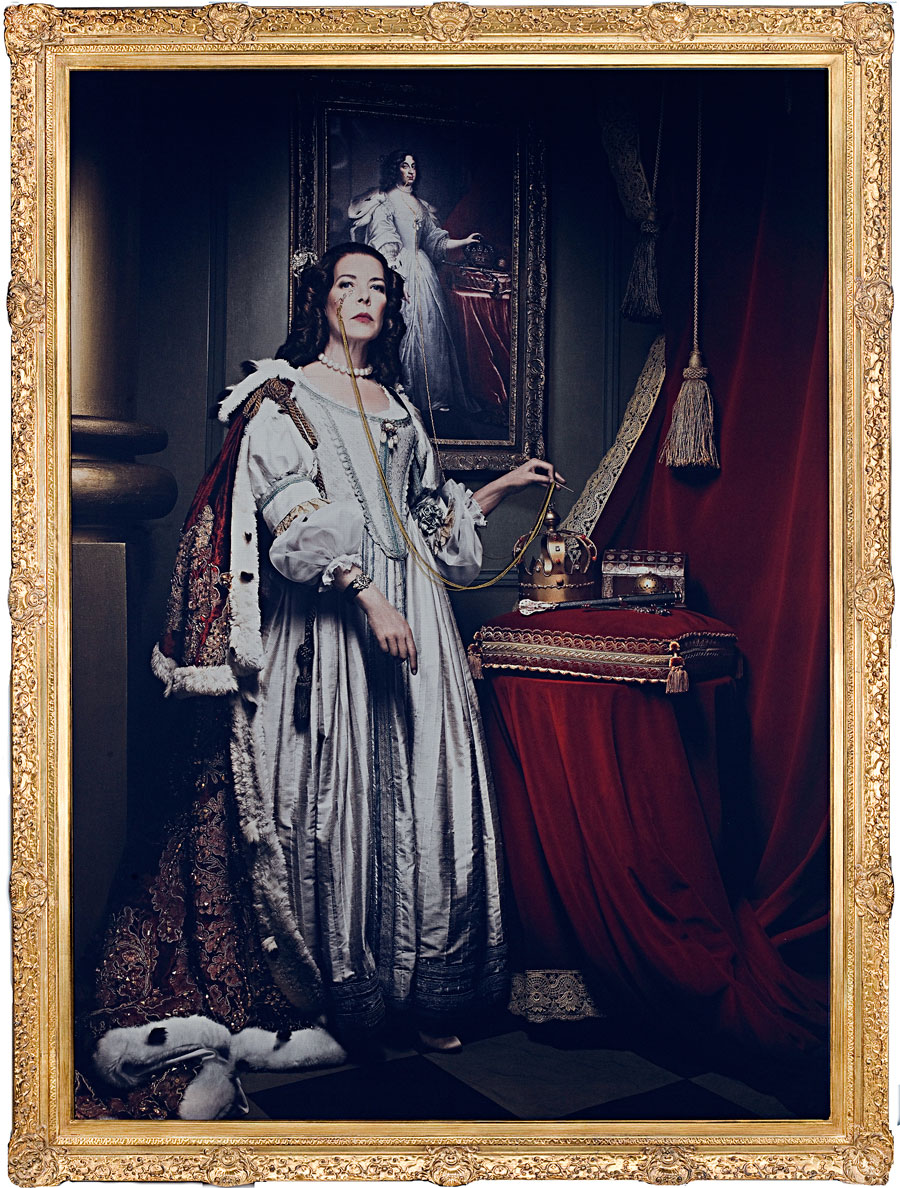
Francesco Vezzoli (Italian, b. 1971) 'Portrait of H.R.H The Princess of Hanover (Before & After Salvador Dalí)' 2009


Francesco Vezzoli (Italian, b. 1971)
Portrait of H.R.H The Princess of Hanover (Before & After Salvador Dalí)
2009
© Francesco Vezzoli/BUS 2012


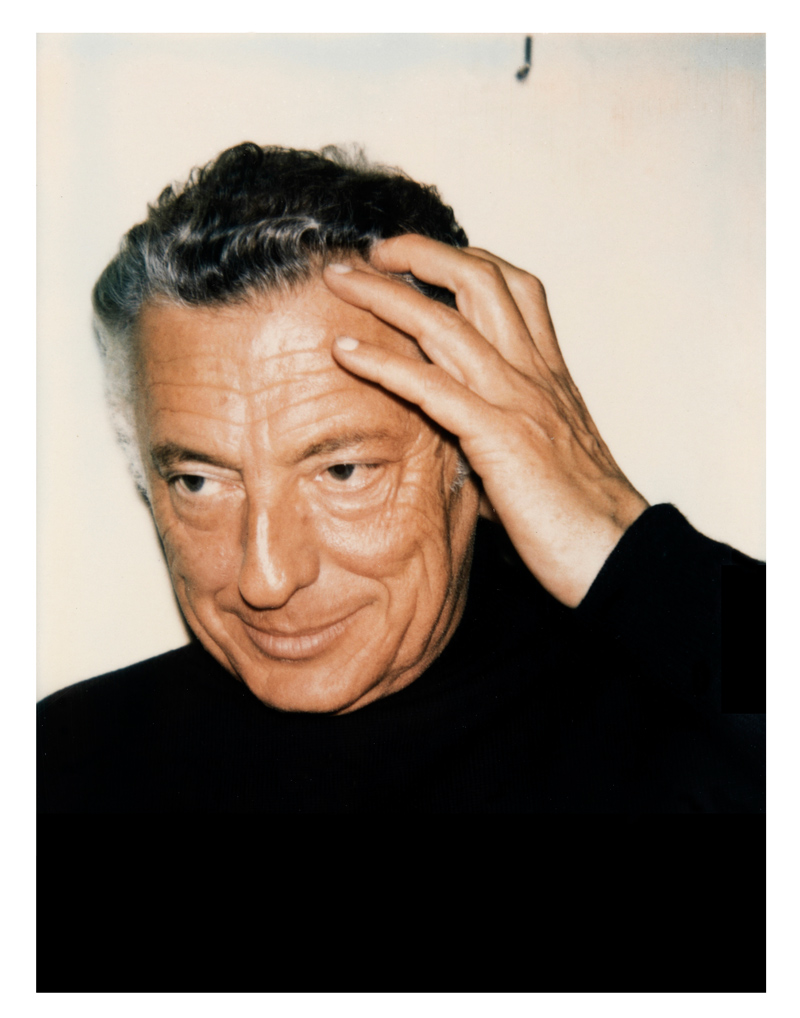
Andy Warhol (American, 1928-1987) 'Gianni Agnelli' 1972


Andy Warhol (American, 1928-1987)
Gianni Agnelli
1972
© Andy Warhol/BUS 2012


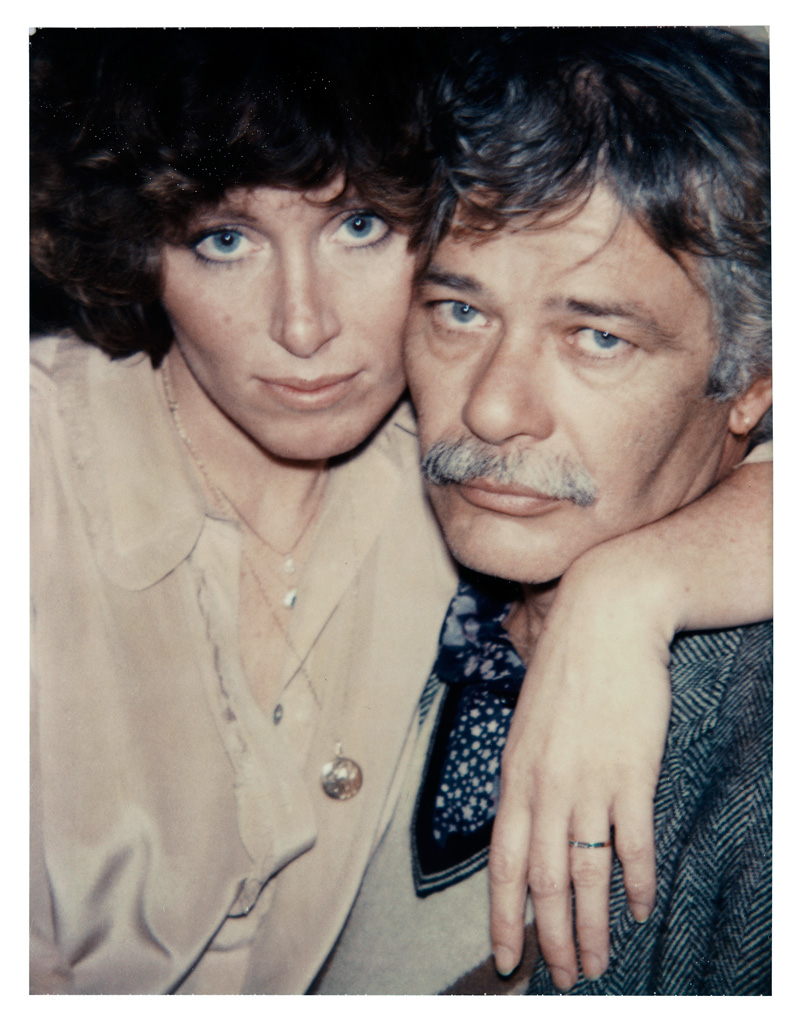
Andy Warhol (American, 1928-1987) 'John Chamberlain and Lorraine' 1978


Andy Warhol (American, 1928-1987)
John Chamberlain and Lorraine
1978
© Andy Warhol/BUS2012


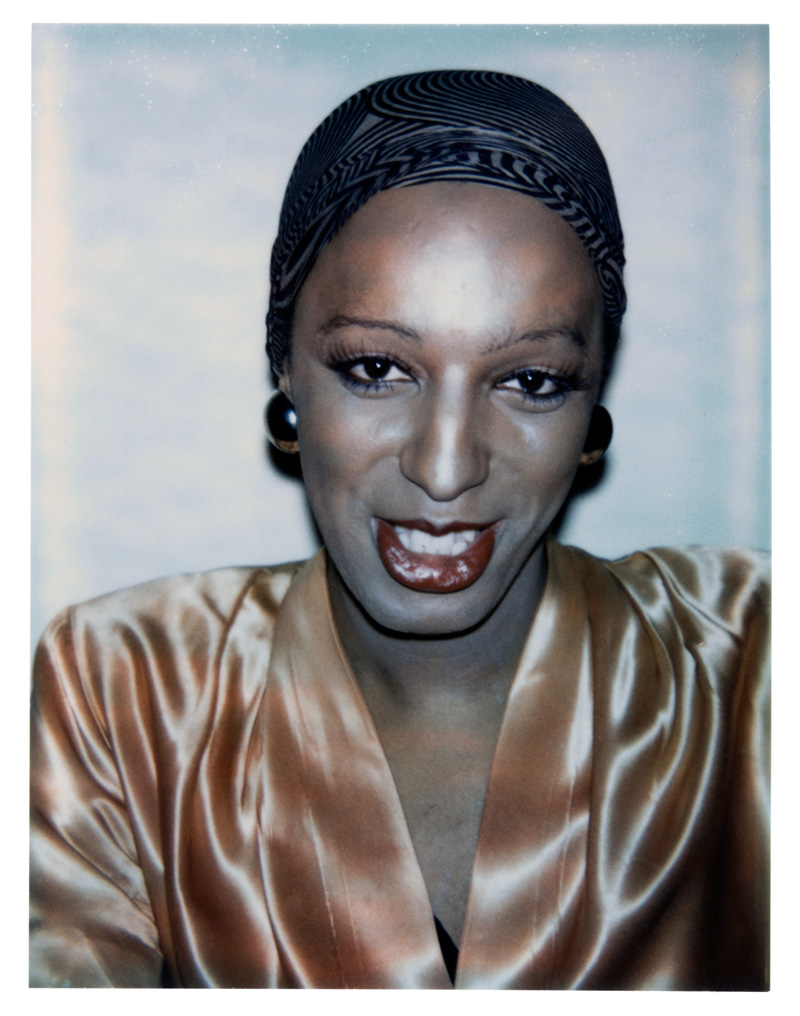
Andy Warhol (American, 1928-1987) 'Ladies and Gentlemen (Wilhelmina Ross)' 1974


Andy Warhol (American, 1928-1987)
Ladies and Gentlemen (Wilhelmina Ross)
1974
© Andy Warhol/BUS 2012


Cindy Sherman. 'Untitled' 2008


Cindy Sherman (American, b. 1954)
Untitled
2008
© Cindy Sherman. Courtesy the Artist and Metro Pictures


Moderna Museet Malmö
Gasverksgatan 22 in Malmö

Moderna Museet Malmö is located in the city centre of Malmö. Ten minutes walk from the Central station, five minutes walk from Gustav Adolfs torg and Stortorget.

Opening hours:
Tuesday – Sunday 11 – 17
Mondays closed

Moderna Museet Malmö website

LIKE ART BLART ON FACEBOOK

Back to top

Exhibition: ‘Saul Leiter Retrospective’ at The House of Photography at Deichtorhallen Hamburg

Exhibition dates: 3rd February – 15th April, 2012

Curators: Ingo Taubhorn and Brigitte Woischnik


Saul Leiter (American, 1923-2013) 'Joanna' c. 1947 from the exhibition 'Saul Leiter Retrospective' at The House of Photography at Deichtorhallen Hamburg, February - April, 2012


Saul Leiter (American, 1923-2013)
Joanna
c. 1947
© Saul Leiter
Courtesy: Saul Leiter, Howard Greenberg Gallery, New York


“I always assumed that I would simply be forgotten and disappear from view.”


Saul Leiter


The second of two postings on the colour photography of Saul Leiter. The first posting was for the exhibition Saul Leiter: New York Reflections at the Jewish Historical Museum, Amsterdam, October 2011 – March 2012. This exhibition is the first major retrospective of his work. At last this artist seems to be getting the recognition he deserves!

The prosaic nature of the titles of the photographs belies their complexity. They remind me of the refractions of Lee Friedlander, the colour fields of Mark Rothko, the emotional intensity of Abstract Expressionism and the impression of spontaneous, subconscious creation that is Surrealism.

His photographs are the glorious spirit of the city writ large – unique, atmospheric and with great psychological use of colour and space.

I can’t think of any other colour photographer of the era (or for that matter, any era) that occludes the picture plane as much as Leiter does, and to such psychological affect, as in the last two photographs in this posting. The viewer becomes like a Peeping Tom, a voyeur of the world.

Leiter deserves to be one of the modern masters of colour photography. I am so glad that he hasn’t disappeared from view. The world would be a poorer place without his visualisation.

Dr Marcus Bunyan


Many thankx to The House of Photography at Deichtorhallen for allowing me to publish the photographs in the posting. Please click on the photographs for a larger version of the image.


Saul Leiter (American, 1923-2013) 'Untitled (Self-portrait)' 1950s


Saul Leiter (American, 1923-2013)
Untitled (Self-portrait)
1950s
© Saul Leiter
Courtesy: Howard Greenberg Gallery, New York


Saul Leiter (American, 1923-2013) 'Phone Call' c. 1957 from the exhibition 'Saul Leiter Retrospective' at The House of Photography at Deichtorhallen Hamburg, February - April, 2012


Saul Leiter (American, 1923-2013)
Phone Call
c. 1957
© Saul Leiter
Courtesy: Saul Leiter, Howard Greenberg Gallery, New York


Saul Leiter (American, 1923-2013) 'Taxi' 1957


Saul Leiter (American, 1923-2013)
Taxi
1957
© Saul Leiter
Courtesy: Saul Leiter, Howard Greenberg Gallery, New York


Saul Leiter (American, 1923-2013) 'Postmen' 1952


Saul Leiter (American, 1923-2013)
Postmen
1952
© Saul Leiter
Courtesy: Saul Leiter, Howard Greenberg Gallery, New York


Saul Leiter (American, 1923-2013) 'Walking' 1956


Saul Leiter (American, 1923-2013)
Walking
1956
© Saul Leiter
Courtesy: Saul Leiter, Howard Greenberg Gallery, New York


Saul Leiter (American, 1923-2013) 'Shopping' c. 1953


Saul Leiter (American, 1923-2013)
Shopping
c. 1953
© Saul Leiter
Courtesy: Saul Leiter, Howard Greenberg Gallery, New York


“Leiter is a rare artist, one whose vision is so encompassing, so refined, so in touch with a certain lyrical undertone, that his best photographs occasionally seem literally to transcend the medium.”


Jane Livingston


House of Photography at Deichtorhallen will from February 3 to April 15, 2012 be highlighting the oeuvre of 88-year-old photographer and painter Saul Leiter in the world’s first major retrospective. The exhibition covers more than 400 works and brings together in marvellous combination his early black-and-white and colour photographs, fashion images, painted-over nude photographs, paintings and his sketchbooks, which have never gone on public view before. Then final chapter in the exhibition is dedicated to Saul Leiter’s most recent photographic works, which he continues to take on the streets in his neighbourhood in New York’s East Village.

 Saul Leiter was born in 1923 in Pittsburgh and it was not until a few years ago that his work received due recognition for its pioneering role in the emergence of colour photography. As early as 1946, and thus well before the representatives of New Color Photography in the 1970s (such as William Eggleston and Stephen Shore) he was one of the first to use colour photography, despite it being despised by artists of the day, for his free artistic shots.

“The older photo-aesthetic views on the hegemony of black-and-white and the dating in photo history of the artistic use of color photography to the early 1970s need to be critically revisited. With Saul Leiter’s oeuvre, the history of photography essentially has to be rewritten,” comments curator Ingo Taubhorn. 

Saul Leiter has always seen himself as both painter and photograph. In his painting and in his photographs he tends clearly to abstraction and a surface feel. Often there are large, deep black surfaces caused by shadows that take up as much as three quarters of the photographs. These are images that do not present passers-by as individuals, but as blurred colour impulses, behind panes of glass or wedges between house walls and traffic signs. He espouses a fluid transition between the abstract and the figurative in his paintings and photographs. Saul Leiter’s street photography, and in this genre his work is quite without precedent, is actually painting that has become photography, as Rolf Nobel writes in the book accompanying the exhibition.

On Saul Leiter

Saul Leiter discovered his passion for art at an early date and started painting as a teenager at the end of the 1940s. His family did not support him in his artistic endeavours as his father, a renowned Talmudic rabbi and scholar, always hoped his son Saul would one day follow him in the family tradition and become a rabbi. Leiter was self-taught, but by no means uneducated. He read and learned a lot about art, such that his knowledge and understanding constantly grew. In this way, he could be certain that his own thought and artistic efforts were duly related to the historical context, as Carrie Springer, curator at the Whitney Museum in New York, points out in the catalog.

 In 1946, shortly after he had moved to New York, Leiter got to know Richard Poussette-Dart, who introduced him to photography, a medium that Leiter found very much to his liking and which he quickly made his own. Leiter soon resolved to make use of photography not only as a means of making art but as a way of earning a living. He started taking fashion photographs and thanks to his good eye, his playful sense of humour, and his pronounced sense of elegance, swiftly emerged as an extraordinary fashion photographer.
 In the 1950s, LIFE magazine brought out the first photo-spreads of Saul Leiter’s first black-and-white images. For example, he took part in the exhibition on Always the young strangers (1953) curated by Edward Steichen at the Museum of Modern Art. From 1958 to 1967, Leiter worked for Harper’s Bazaar. All in all he was to spend some 20 years photographing for both the classic magazines and more recent ones, such as Esquire and Harper’s: Show, Elle, British Vogue, Queen and Nova.

Saul Leiter was born in 1923 in Pittsburgh and has lived since 1946 in New York. For over 40 years, until her death in 2002 New York artist Soames Bantry was his partner. During the preparations for the Hamburg exhibition, Saul Leiter once remarked that he wished that Soames Bantry has received the same attention from the art world as he is now receiving. This spawned the idea of an homage to Soames Bantry, an exhibition in the exhibition at House of Photography that Saul Leiter has himself curated – with over 20 paintings: For Soames with Love Saul. 

In his photographs, the genres of street life, portraiture, still lifes, fashion and architectural photography meld. He comes across his themes, such as shop windows, passers-by, cars, signs and (a recurrent motif) umbrellas, in the direct vicinity of his apartment in New York, where he has now lived for almost 60 years. The lack of clear detail, the blurring of movement and the reduction in depth of field, the compensation for or deliberate avoidance of the necessary light as well as the alienation caused by photographing through windows and by reflections all blend to create a language of colour fuelled by a semi-real, semi-abstract urban space. These are the works of an as good as undiscovered modern master of colour photography of the 1940s and 1950s. The Hamburg exhibition and the major monograph by Kehrer Verlag seek to prevent this happening.

Press release from The House of Photography website


Saul Leiter (American, 1923-2013) 'Red Umbrella' c. 1958


Saul Leiter (American, 1923-2013)
Red Umbrella
c. 1958
© Saul Leiter
Courtesy: Howard Greenberg Gallery, New York


Saul Leiter (American, 1923-2013) 'Snow' 1960


Saul Leiter (American, 1923-2013)
Snow
1960
© Saul Leiter
Courtesy: Saul Leiter, Howard Greenberg Gallery, New York


Saul Leiter (American, 1923-2013) 'Man with Straw Hat' c. 1955


Saul Leiter (American, 1923-2013)
Man with Straw Hat
c. 1955
© Saul Leiter
Courtesy: Howard Greenberg Gallery, New York


Saul Leiter (American, 1923-2013) 'Pizza, Patterson' 1952


Saul Leiter (American, 1923-2013)
Pizza, Patterson
1952
© Saul Leiter
Courtesy: Howard Greenberg Gallery, New York


Saul Leiter (American, 1923-2013) 'Canopy' c. 1957


Saul Leiter (American, 1923-2013)
Canopy
c. 1957
© Saul Leiter
Courtesy: Saul Leiter, Howard Greenberg Gallery, New York


Saul Leiter (American, 1923-2013) 'Through Boards' c. 1957


Saul Leiter (American, 1923-2013)
Through Boards
c. 1957
© Saul Leiter
Courtesy: Saul Leiter, Howard Greenberg Gallery, New York


Deichtorhallen Hamburg
Deichtorstrasse 1-2
20095
Hamburg
Phone: +49 (0)40 32103-0

Opening hours:
Tuesday – Sunday 11am – 6pm
Closed Mondays

Deichtorhallen Hamburg website

LIKE ART BLART ON FACEBOOK

Back to top

Review: ‘Tourist #5: Disappearing Project 1-41’ by Nicola Loder at Helen Gory Galerie, Prahran, Melbourne

Exhibition dates: 14th March – 7th April, 2012

Curator: the artist


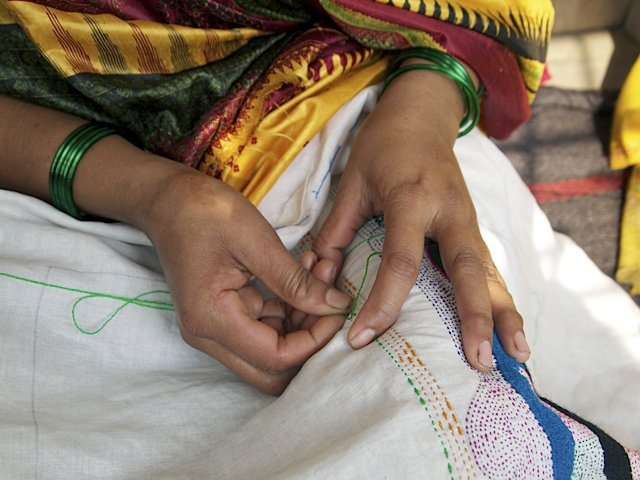
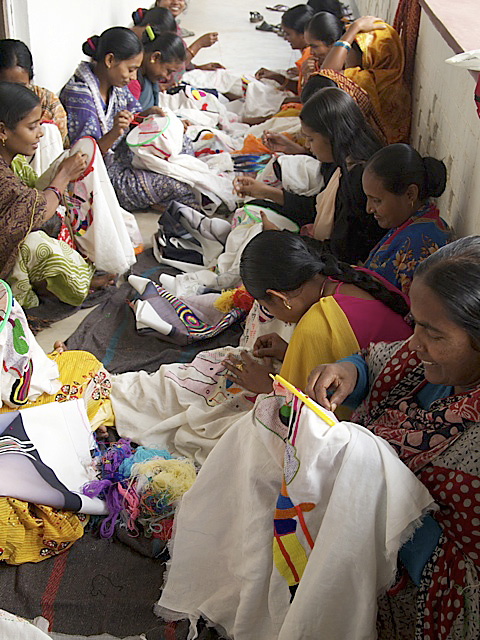
West Bengali woman embroidering the 'Disappearances'


West Bengali woman embroidering the Disappearances


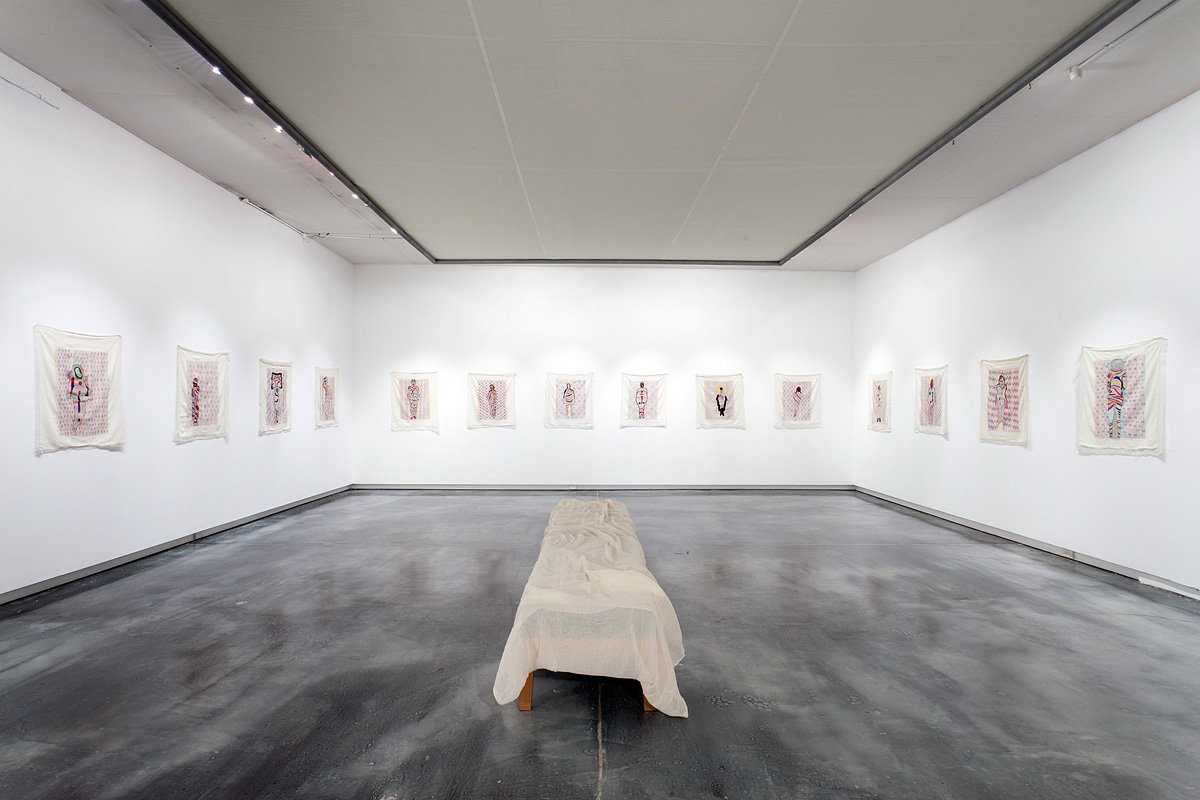
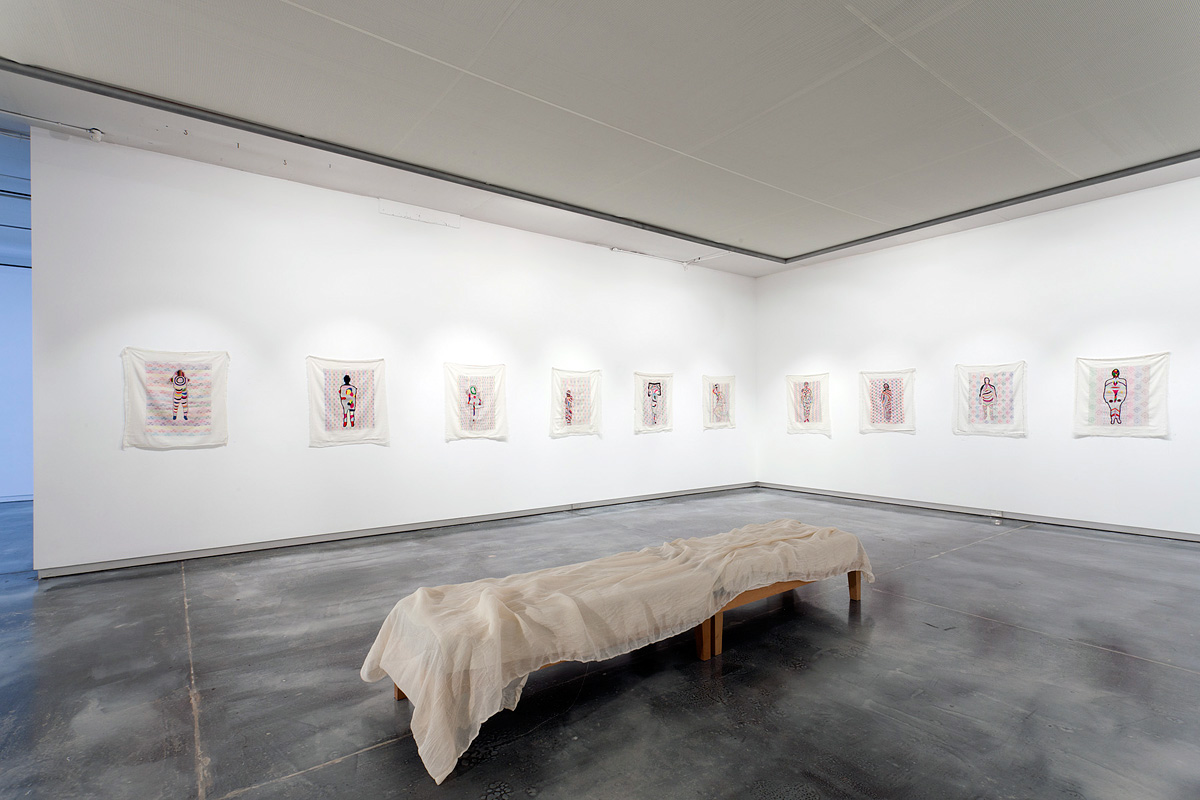
I have always loved the work of Nicola Loder ever since I saw her solo exhibition Child 1-175: A Nostalgia for the Present at Stop 22 Gallery in St Kilda in 1996. This exhibition is no exception. Loder is the consummate professional, her work is as imaginative and intriguing as ever and there has been a consistent thematic development of ideas within her work over a long period of time. These ideas relate to the nature of seeing and being seen, the mapping of identity and the process of its (dis)appearance.

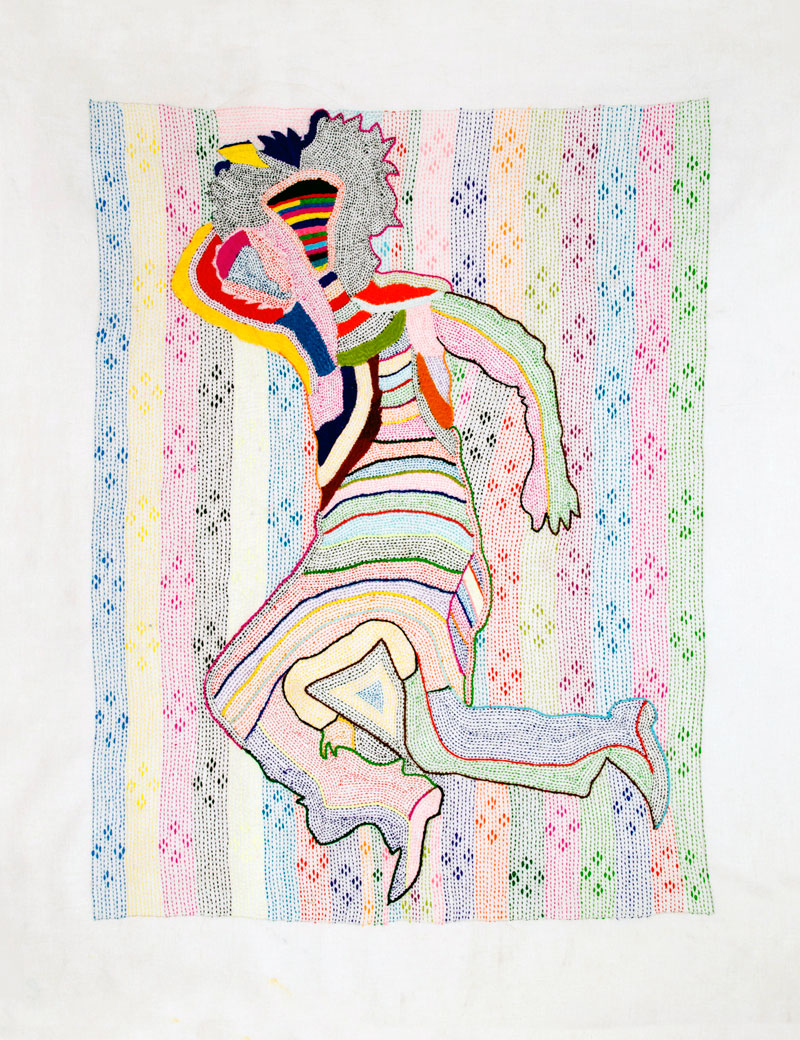
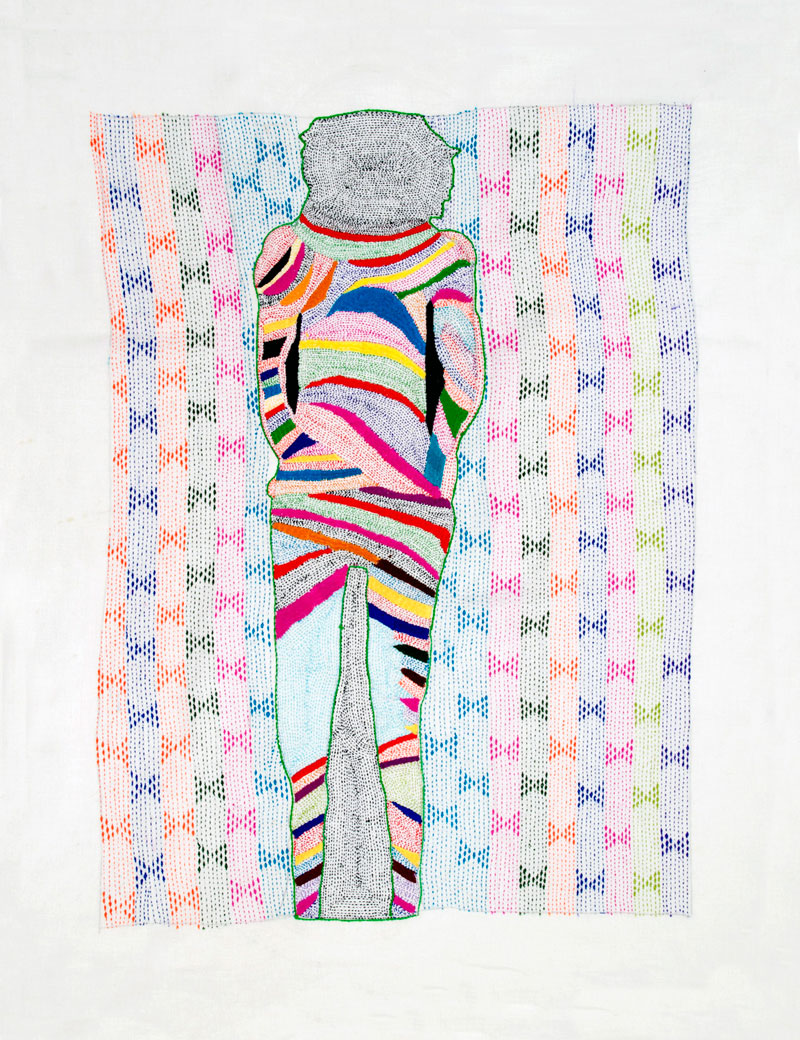
This latest iteration of her ongoing series Tourist (described in detail, below, in the erudite essay by Stuart Koop) again involves de/reconstructions of identity through slippages, elisions, deletions, disappearances and transformations. In Tourist #5: Disappearing Project 1-41 the shroud-like effigies that result from Loder’s project, a reference reinforced by the muslin cloth lying over the bench in the gallery space (see the installation photographs below), are a repeated re-presentation of a lost or missing identity: the disappearance of the person in their own minds; photography’s “capture” of the original person; Loder’s deletion of this identity (I was there) to be substituted by Photoshop’s geometric algorithms; the West Bengali women’s reinterpretation of this disappearance; and the reappearance of a new energy in the colourful, embroidered reinterpretations. I have very much a feeling of a spiritual energy in this last embodiment – think of the link between death and the spirit (as in the Shroud of Turin).

The images have multiple narratives and are already textualised but Loder disrupts this marking, the continual reiteration of norms by weaving a lack of fixity into her objects. In her reconceptualisations of space and matter Loder redefines the significations of the body in the fold of inscription, through a process of materialisation. But this materialisation, like the image seared into the fabric of the Shroud of Turin, still somehow eludes us. This is what makes this work so tantalising…

This interweaving of texts culminates in the body inscribed on another plane existing in, as Loder herself describes it, a “de-constructed non-space somewhere between image, imagination, identity, language and being,” which, as Stuart Koop observes, “is… not a removal or deletion but a reconfiguration beyond verisimilitude, beyond our appearance to others and ourselves.” This is the navigation through a virtual space that Sherry Turkle posits in the quotation below, where the self is decentred and identity is fluid and multiple.

Loder’s exquisitely sensuous description of disappearance allows us to see the phenomenal word afresh. I look forward with a sense of anticipation to the next voyage of discovery the artist will take me on.

Dr Marcus Bunyan


Many thankx to Nicola Loder, Stuart Koop and Helen Gorie Galerie for allowing me to publish the text and photographs in the posting. Please click on the photographs for a larger version of the image.


Fredric Jameson wrote that in the postmodern world, the subject is not alienated but fragmented. He explained that the notion of alienation presumes a centralized, unitary self who could become lost to himself or herself. But if, as a postmodernist sees it, the self is decentred and multiple, the concept of alienation breaks down. All that is left is an anxiety of identity… In simulation, identity can be fluid and multiple, a signifier no longer points to a thing that is signified, and understanding is less likely to proceed through analysis than by navigation through virtual space.


Sherry Turkle. Life on The Screen: Identity in the Age of the Internet. New York: Simon and Schuster, 1995, p. 49.


'Tourist #5: Disappearing Project 1-41' by Nicola Loder, installation photograph at Helen Gorie Galerie

'Tourist #5: Disappearing Project 1-41' by Nicola Loder, installation photograph at Helen Gorie Galerie


Tourist #5: Disappearing Project 1-41 by Nicola Loder, installation photograph at Helen Gorie Galerie
Photos: Marcus Bunyan


Photographer Nicola Loder explores the way in which people see.

The purpose of photography is largely to make things visible. Inspired in part by her experiences teaching blind children photography, Loder reverses photography’s function using it instead to capture objects and experiences that aren’t visible. She embraces Photoshop but counters its typical role of improving clarity and focus, rather using it to collapse images into layers of pattern and colour.

Tourist #5: disappearing project 1-40 is a multi-faceted project that teases out notions of seeing and being seen and the role of creator as truth teller. Loder sent out a flyer inviting people who had disappeared to send her a full-length image of themselves with a written description of what happened when they disappeared. The stories and images she received range from out of body near death experiences to the mundane act of sleeping, each shedding light on what people identify as disappearing. Loder then manipulated the submitted images into highly colourful digital patterns, resonant of her earlier photographic work. She took the reworked images to India where they were embroidered onto muslin by local women in West Bengal. The result is beautiful hand-embroidered works that reflect the women’s personal interpretations of the images and incorporate their rich history, cultural patterns and iconography.

“The obliterated, atomised, reconfigured portraits ‘rematerialise’ as tapestries executed by women from a small rural village, at the margins of Indian society, who – but for NGOs dedicated to overcome disadvantage, in this case Street Survivors empowering rural women through skills development – are largely invisible to their communities, to politicians, as well as their castes.

Of course, Loder has paid these women, a means of recognising and honouring their work, a means of bringing them into view, at the margins of economy, welfare and community. Indeed, she has taken their portraits and documented them at work, and it’s a startling contrast. Our middle-class stories, anxieties and interests ending up in the careful hands of these women in colourful saris, sitting and working together, our (largely) passing concerns darned into the muslin cloth in their laps, our own saturated photographic hues indistinguishable from the bright chaos of folded cloth and pleated skirts, with their nimble fingers tracing our desires and cares in bright lurid threads.” (Stuart Koops, 2012)

For Loder India is a central tenet of the project given its multiple associations with disappearing, from the focus on meditation to the burning of bodies at the Ghats in Varanasi, the final act of disappearing. On a personal level Loder lived in Calcutta as a child and views her experience of leaving India as another act of disappearing: both her Indian Ayah (Moti) and India physically disappeared from her life. Involving the women from her Ayah’s village is Loder’s reflection on and tribute to those experiences of disappearing.

Press release from Helen Gorie Galerie website


Nicola Loder (Australian, b. 1964) 'Tourist #5: Disappearing Project 1-41 (no 11)' 2012 from the exhibition 'Tourist #5: Disappearing Project 1-41' by Nicola Loder at Helen Gory Galerie, Prahran, Melbourne, March - April, 2012


Nicola Loder (Australian, b. 1964)
Tourist #5: Disappearing Project 1-41 (no 11)
2012
Polyester thread, muslin
86 x 69cm


Nicola Loder (Australian, b. 1964) 'Tourist #5: Disappearing Project 1-41 (no 16)' 2012 from the exhibition 'Tourist #5: Disappearing Project 1-41' by Nicola Loder at Helen Gory Galerie, Prahran, Melbourne, March - April, 2012


Nicola Loder (Australian, b. 1964)
Tourist #5: Disappearing Project 1-41 (no 16)
2012
Polyester thread, muslin
86 x 69cm


Catalogue Essay by Stuart Koops

Nicola Loder has facilitated childrens’ photography projects before, on several occasions working with marginalised groups, including kids from low socio-economic and non-English speaking schools and kids from the Royal Victorian Institute for the Blind. Indeed she chose these groups with purpose, to consider the role of photography in highlighting certain communities most often occluded on the basis of an incapacity – making the invisible visible, making those who cannot see visible to us, giving those without the means of expression a language we can understand – in many ways, reversing the polarity of familiar concepts, disrupting our conventional understanding.

In teaching blind kids especially, Nicola told me she felt like she was disappearing. Not surprising, I guess, when you try to describe the camera, the lens, optics, focus, framing, composition. When your identity or your role as a photographer dissipates along with the explanatory power of these foundation terms and concepts. And practical demonstrations must at first seem frustratingly pointless.

That profound experience seems to have led Loder to use photography in reverse, as the means to decompose images; to utilise Photo­shop’s algorithms, not to augment or highlight certain attributes in her portraits she ultimately took of these kids, but return images to an undifferentiated field of static, the digital correlate to the original photochemical chaos, the entropy of raw silver halides, which the ‘irrefutable sun’ miraculously sorts into resemblance. In short, to unphotograph the kids somehow, commensurate with their disability and her own disappearance in the workshops.

But it’s not just Loder who has had the experience of disappearing. It’s a profound sensation shared by many and for different reasons, and Loder has collected different accounts of the experience which illustrate the further registers in which one may ‘disappear’; from spiritual attainment in transcending physical reality to out of body transcendental near-death experiences, from relief at escaping a difficult situation, to feelings of terror as a child abandoned, or worse, abducted, from the social isolation and alienation of teenagers and adults, to a freedom or liberation from social constraint and physical containment, wanting to leave behind an unhappy circumstance or just wanting to be magically, wonderfully invisible.

Practically speaking, there’s considerable interest in – and information on – how to disappear, especially in America. In 2008 artist Seth Price published How to Disappear from America, excerpted text from found sectarian tracts, paranoid rants and helpful DIY tips to assist anyone wishing to get off the grid without a trace (burn your credit cards, dump your car, hide your tracks, grow your own, etc) including great suggestions about where to go (motorcycle hangouts, punk rocks groups, new age dance studios, soup kitchens, churches, and homeless shelters).

But Loder’s more interested in the personal, individual experience of disappearing. She asked for photo-portraits to accompany people’s descriptions of disappearing, from which she has seemingly excised each subject, using Photoshop as she did before with the blind kids, leaving a whorl of digital effect in the vacant space within their outline, set in high relief against a lounge-room, or a yard, or other family members. Yet on closer inspection this is perhaps a matter of transformation, since ‘disappearing’ may be very different from ‘deletion’.

In Photoshop we are each just so much chroma, luma and shape. A touch of the magic wand and we are separated from the rest of our lives, ‘lassooed’, a godly power to designate liberated from special-effects cinema by the Knoll brothers in 1988 and given to every geek with a Mac II. Since when it’s just too easy to be deleted; two clicks and we’re in the trash.

But in Loder’s work our data is recast, colour intensified, details blurred, outlines softened, curves modified, screens overlaid and so it seems Photoshop’s myriad algorithms – set against their intended technical imperative to optimise appearances – might provide a metaphor for our disappearing, which is indeed not a removal or deletion but a reconfiguration beyond verisimilitude, beyond our appearance to others and ourselves. And while we might lose visual coherence as an image, we are inscribed upon another plane altogether, one at odds with photographic realism, and which Loder describes as a “de-constructed non-space somewhere between image, imagination, identity, language and being.” Like the shimmering dissipation of Kirk on the teleporter’s deck in Star Trek, these subjects are transported to another realm, different orders of reality merging into a new volatile blend. Perhaps it’s a higher plane too where all souls mingle and coalesce as either zeros or ones, a digital afterlife in which everything is equivalent and a new digital equanimity prevails.

Stuart Koops 2012


Nicola Loder (Australian, b. 1964) 'Tourist #5: Disappearing Project 1-41 (no 8)' 2012 Polyester thread, muslin 86 x 69cm


Nicola Loder (Australian, b. 1964)
Tourist #5: Disappearing Project 1-41 (no 8)
2012
Polyester thread, muslin
86 x 69cm


Nicola Loder (Australian, b. 1964) 'Tourist #5: Disappearing Project 1-41 (no 17)' 2012 Polyester thread, muslin 86 x 69cm


Nicola Loder (Australian, b. 1964)
Tourist #5: Disappearing Project 1-41 (no 17)
2012
Polyester thread, muslin
86 x 69cm


Nicola Loder (Australian, b. 1964) 'Tourist #5: Disappearing Project 1-41 (no 18)' 2012 Polyester thread, muslin 86 x 69cm


Nicola Loder (Australian, b. 1964)
Tourist #5: Disappearing Project 1-41 (no 18)
2012
Polyester thread, muslin
86 x 69cm


West Bengali women embroidering the 'Disappearances'


West Bengali women embroidering the Disappearances


Helen Gory Galerie

This gallery is now closed.

Nicola Loder website

LIKE ART BLART ON FACEBOOK

Back to top

Exhibition: ‘Hijacked III: Contemporary Photography from Australia and the UK’ at Perth Institute of Contemporary Art (PICA)

Exhibition dates: 18th February – 8th April, 2012

Co-curators: Louise Clements, Mark McPherson, and Leigh Robb


Hijacked III Interview with writer Anthony Luvera


The photographs in this posting highlight the conceptual diversity in contemporary art practice and emphasise the talent of the practitioners working today.

Just an observation: how serious are the portraits – it’s as if no’body’ is allowed to laugh or smile anymore.

Perhaps this is a reflection of the times in which we live, full of malaise, anxiety and little wonder. Fear of being replaced, fear of discrimination, fear of growing up, fear of dying. Or dressed up in a women’s dress and pink hat, having the “courage” or ignorance (the opposite of fear?) to look like a stunned mullet with a blank expression on the face (deadpan photography that I really can’t stand). Or, perhaps, simple effacement: defiance as body becomes mannequin, body hidden behind a mask or completely cloaked from view.

These grand photographs have the intensity, perhaps not a lightness of being.

Dr Marcus Bunyan


Many thankx to PICA for allowing me to publish the photographs in the posting. Please click on the photographs for a larger version of the image.


Trish Morrissey (Irish, b. 1967) 'Hayley Coles, June 17th, 2006' 2006 from the exhibition 'Hijacked III: Contemporary Photography from Australia and the UK' at Perth Institute of Contemporary Art (PICA), February - April, 2012


Trish Morrissey (Irish, b. 1967)
Hayley Coles, June 17th, 2006
2006
Courtesy of the artist and Elaine Levy Project, commissioned by Impressions Gallery

Review of Trish Morrissey on Art Blart


Front deals with the notion of borders, boundaries and the edge; using the family group and the beach setting as metaphors. For this work, the artist travelled to beaches in the UK and around Melbourne. There, she approached families and groups of friends who had made temporary encampments, or marked out territories and asked if she could be part of their family temporarily. Morrissey took over the role or position of a woman within that group – usually the mother figure. The artist asked to take the place of the mother figure, and to borrow her clothes. The mother figure then took over the artist’s role and photographed her family using a 4 x 5 camera (which Morrissey had already carefully set up) under the artist’s instruction. While Morrissey, a stranger on the beach, nestled in with the mother figure’s loved ones.

These highly performative photographs are shaped by chance encounters with strangers, and by what happens when physical and psychological boundaries are crossed. Ideas around the mythological creature the ‘shape shifter’ and the cuckoo are evoked. Each piece within the series is titled by the name of the woman who the artist replaced within the group.

Text from the PICA website


Bindi Cole (Australian, b. 1975) 'Ajay' 2009 from the exhibition 'Hijacked III: Contemporary Photography from Australia and the UK' at Perth Institute of Contemporary Art (PICA), February - April, 2012


Bindi Cole (Australian, b. 1975)
Ajay
2009
From the series Sistagirls
Courtesy of Nellie Castan Gallery

Review of Sistagirls on Art Blart


The term ‘Sistagirl’ is used to describe a transgender person in Tiwi Island culture. Traditionally, the term was ‘Yimpininni’. The very existence of the word provides some indication of the inclusive attitudes historically extended towards Aboriginal sexual minorities. Colonisation not only wiped out many Indigenous people, it also had an impact on Aboriginal culture and understanding of sexual and gender expression.

As many traditions were lost, this term became a thing of the past. Yimpininni were once held in high regard as the nurturers within the family unit and tribe much like the Faafafine from Samoa. As the usage of the term vanished, tribes’ attitudes toward queer Indigenous people began to resemble that of the western world and the religious right. Even today many Sistagirls are excluded from their own tribes and suffer at the hands of others.

Text from the PICA website


Maciej Dakowicz (Polish, b. 1976) 'Pink Hat, 23:42. Cardiff' 2006


Maciej Dakowicz (Polish, b. 1976)
Pink Hat, 23:42. Cardiff
2006
Courtesy of the artist and Third Floor Gallery


St Mary Street is one of the main streets in central Cardiff, the capital city of Wales; a city as any other in the UK. Unassuming during the day, on weekend nights it becomes the main scene of the city night life, fuelled by alcohol and emotions. Some of Cardiff’s most popular clubs and pubs are located there or in its vicinity. The very popular Chippy Lane, with its numerous chip and kebab shops, is just a stone’s throw away. Sooner or later most party-goers end up in that area, whether looking for another drink, some food or in search of another dance floor.

Everything takes place in this public arena – from drinking, fighting, kissing to crying and sleeping. Supermen chat up Playboy Bunnies, somebody lies on the pavement taking a nap, the hungry ones finish their portions of chips and the policemen stop another argument before it turns into a fight. Nobody seems to worry about tomorrow, what matters is here and now, punctuated by another week at work, until the next weekend rolls around again.

Text from the PICA website


Laura Pannack (British, b. 1985) 'Shay' 2010


Laura Pannack (British, b. 1985)
Shay
2010
Courtesy of the artist
Represented by Lisa Pritchard Agency


What’s so special about this picture are the details. The tattoo – not just what it says but the way it mimics the Nike Swoosh on her shirt – and the cigarette, that although it is not in focus, one imagines has a large line of ash on it, as if time has stopped. This is echoed in the expression on her face, deep intensity and focused on something ahead although the car is obviously stationary. From a distance one could be mistaken that this is an American photograph from the 70s but on closer inspection – the piercing, the Nike Swoosh, the car door handles – one realises that this is contemporary and British. And yet of course that stare is timeless.

Harry Hardie on the Foto8 website [Online] Cited 22/03/2012. No longer available online. Used under fair use conditions for the purposes of education and research


Adam Broomberg and Oliver Chanarin. 'Culture3/Sheet72/Frame3' 2011


Adam Broomberg and Oliver Chanarin
Culture3/Sheet72/Frame3
2011
Courtesy of the artists & Paradise Row, London


HIJACKED III interview with PICA curator Leigh Robb


Artists are notorious for their ability to hijack; meaning to stop and hold up, to seize control by use of force in order to divert or appropriate, a deliberate attempt to action a change of direction.

Hijacked III: Contemporary Photography from Australia the UK draws on the success and unique energy of Hijacked I (Australia and USA) and Hijacked II (Australia and Germany), to once again bring together two geographically distant but historically connected communities through a range of diverse photographic practices.

This exhibition will be simultaneously presented across two sites: PICA in Perth, Western Australia and QUAD Gallery in Derby, United Kingdom, and has been timed to coincide with the launch of the luscious, full colour and 420 page Hijacked III compendium, published by Big City Press. Utilising portraiture, digital collage, archival images, documentary snap shots, internet grabs and refined photographic tableaux, the 24 artists and over 120 works in this exhibition explore themes as diverse as curious weekend leisure pursuits, gender politics and displaced Indigenous culture.

Artists: Tony Albert, Warwick Baker, Broomberg & Chanarin, Natasha Caruana, Bindi Cole, Maciej Dakowicz, Christopher Day, Melinda Gibson, Toni Greaves, Petrina Hicks, Alin Huma, Seba Kurtis, David Manley, Tracey Moffatt, Trish Morrissey, Laura Pannack, Sarah Pickering, Zhao Renhui, Simon Roberts, Helen Sear, Justin Spiers, Luke Stephenson, Christian Thompson, Tereza Zelenkova, Michael Ziebarth.

Press release from PICA website


Sarah Pickering (British, b. 1972) 'Land mine' 2005


Sarah Pickering (British, b. 1972)
Land mine
2005
Courtesy of the artist and Meessen De Clercq, Brussels


The Explosion pictures document the literal theatre of war – the detailed level of artifice used to prepare men and women for combat on the front lines. They also reveal the minutiae of packaging war as entertainment. The beauty of the pictures lies in their perverse seductiveness, and this attraction underscores the distance most of us have from real combat.

Pickering’s Explosion images, by distilling an aspect of the war that is a fiction, question the reliability of seemingly objective historical accounts, such as news reports and photographs that influence how war is communicated and remembered. By extension they question how we come to know what we know about it. We learn about war from a variety of sources, from history books, first-hand accounts, news media, and movies, all of which can get confused and merged in our minds as memory.

The dual purpose of the explosives – training and re-enacting – forms a fitting parallel to how we cope with trauma, a process of both anticipation and reconciliation.”

Sarah Pickering website


Simon Roberts (British, b. 1974) 'We English No. 56' 2007


Simon Roberts (British, b. 1974)
We English No. 56
2007

More Simon Roberts We English on Art Blart


Simon Roberts travelled across England in a motorhome between 2007 and 2008 for this portfolio of large-format tableaux photographs of the English at leisure. We English builds on his first major body of work, Motherland (2005), with the same themes of identity, memory and belonging resonating throughout. Photographing ordinary people engaged in diverse pastimes, Roberts aims to show a populace with a profound attachment to its local environment and homeland. He explores the notion that nationhood – that what it means to be English – is to be found on the surface of contemporary life, encapsulated by banal pastimes and everyday leisure activities. The resulting images are an intentionally lyrical rendering of a pastoral England, where Roberts finds beauty in the mundane and in the exploration of the relationship between people and place, and of our connections to the landscapes around us.

Text from the Simon Roberts website


Tony Albert (Australian, b. 1981) 'No Place' 2009


Tony Albert (Australian, b. 1981)
No Place
2009
Courtesy of the artist


Tony Albert is a Girramay rainforest man from the Cardwell area… The No Place series references The Wizard of Oz ‘there’s no place like home’. For No Place Tony returns to his tropical paradise home with a group of Lucho Libre wrestling masks from Mexico. His family adorn these masks and again become warriors protecting their paradise. These seemingly playful masks share much with Aboriginal and particularly rainforest culture. Body and shield designs from this area represent animal gods or spirit beings. The use of these masks brings a prescient new layer of armour for a new generation of warrior.

The colour scheme of solid blocks of red, black and yellow also speak to traditional rainforest aesthetics. There are strong elements of the sublime and the fantastical within these works. Viewing Aboriginal people in iconic north Queensland locations masked in Mexican wrestling paraphernalia carries more than a hint of the surreal and absurd.

Anon. “Tony Albert and No Place,” on the Big Art website, 2010 [Online] Cited 22/03/2012 no longer available online. Used under fair use conditions for the purposes of education and research


Christian Thompson (Australian / Bidjara, b. 1978) 'Untitled #7 from the King Billy Series' 2010


Christian Thompson (Australian / Bidjara, b. 1978)
Untitled #7 from the King Billy series
2010
Courtesy of the artist and Gallery Gabrielle Pizzi


King Billy, is an ode to his great great grandfather, King Billy of Bonnie Doon Lorne. The initial inspiration was a photograph of King Billy, standing alone wearing his ‘name plate’. Despite its colonial overtones, for Thompson, this image of the senior tribesman exudes wisdom and kindness and reminds him of his father. In much of Thompson’s work his processes are intuitive, he delves into a rich dream world and draws out fabulous images. He manifests his own mythological world. In this series his figures are clad in fabrics patterned with Indigenous motifs, mainly cheap hoodies in lurid colours; a modern / ancient skin for a magic youth culture. He has made a triptych, three views of a pink hooded figure spewing cascading pearl stands from the face; opulent, decadent, excessive and sensual.

Another image shows a crowned figure swathed in fabrics bearing the markings of various clans, perhaps indicating the domain of this regal form. In the hands a (poisoned?) chalice – the sawn off plastic bottle a warning about petrol sniffing? His self-portrait as psychedelic godhead/Carnaby Street dandy / flower child is spectacular and arresting. He is wearing a tailored suit, patterned with more Indigenous motifs and he cradles a bouquet. His skin is green and his eyes are purple flowers. What can this otherworldly creature tell us?

Thompson seems to emphasise a theme of disparity in this work; the ‘hoodie’ with the cascading pearls, the crown with the plastic bottle, the opulence with the desperate. These works are both beautiful and confronting.

Text from the PICA website


HIJACKED III interview with Christian Thompson


Petrina Hicks (Australian, b. 1972) 'Emily the Strange' 2011


Petrina Hicks (Australian, b. 1972)
Emily the Strange
2011
Courtesy of the artist and Stills Gallery


Petrina Hicks’ Beautiful Creatures appeals to our senses. Immediately alluring, the large-scale, hyper-real photographs, are all rendered so clearly and with such control they are reminiscent of advertisements. But with a series of little ruptures, within images and between them, Hicks disrupts our usually beguiled response to such artistry. For her, photography’s capability to both create and corrupt the process of seduction and consumption is of endless interest.

Hicks loads her images with history and associations but denies us a clear message. Along with the ambiguity, there is a visceral quality in these new works; her depiction of flesh, hair and veins stops the viewer short of being lulled into consumption. Hicks engages a playful yet confronting approach to confound our expectations. A cat, naked without fur, in the image Sphynx, contrasts a beautiful blonde with a face full of it in Comfort. In Emily the Strange the hairless creature reappears with a young girl whose piercing green eyes, skin-pink dress, and latent defiance, make her eerily akin to her pet. Alluded to, in the title of the exhibition, this duality is present in much of the work. Her subjects are not simply beautiful or simply creatures.

Text from the PICA website


HIJACKED III interview with photographer Petrina Hicks


Tereza Zelenkova (Czech, b. 1985) 'Cadaver' 2011


Tereza Zelenkova (Czech, b. 1985)
Cadaver
2011
Courtesy of the artist


Luke Stephenson (British, b. 1983) 'Diamond Sparrow #1' 2009


Luke Stephenson (British, b. 1983)
Diamond Sparrow #1
2009
Courtesy of the artist


Stephenson finds birds and the world surrounding them wonderfully fascinating. The birds he has photographed all belong to avid bird breeders who on the whole have been keeping birds their whole lives. It’s a hobby people generally don’t come into contact with, unless you are active within it. The artist does not keep birds but finds them beautiful in all their variations and colours, so has set out capture these birds in a way that would show them at their best.

There are many criteria to breeding a prize-winning bird, from shape and form to its pattern, and this is something Stephenson has tried to convey whilst also attempting to show some of their personalities. He set out to photograph every breed of bird within the ‘hobby’ of keeping birds but soon realised there were thousands of variations, so decided to keep this as an ongoing project; realising instalments every couple of years which people can collect and, hopefully one day, the dictionary will be complete.

Luke Stephenson website


Perth Institute of Contemporary Art (PICA)
Perth Cultural Centre
James Street Northbridge
Phone: + 61 (0) 8 9228 6300

Opening hours:
Tuesday – Sunday 10am – 5pm
Closed Mondays

PICA website

LIKE ART BLART ON FACEBOOK

Back to top