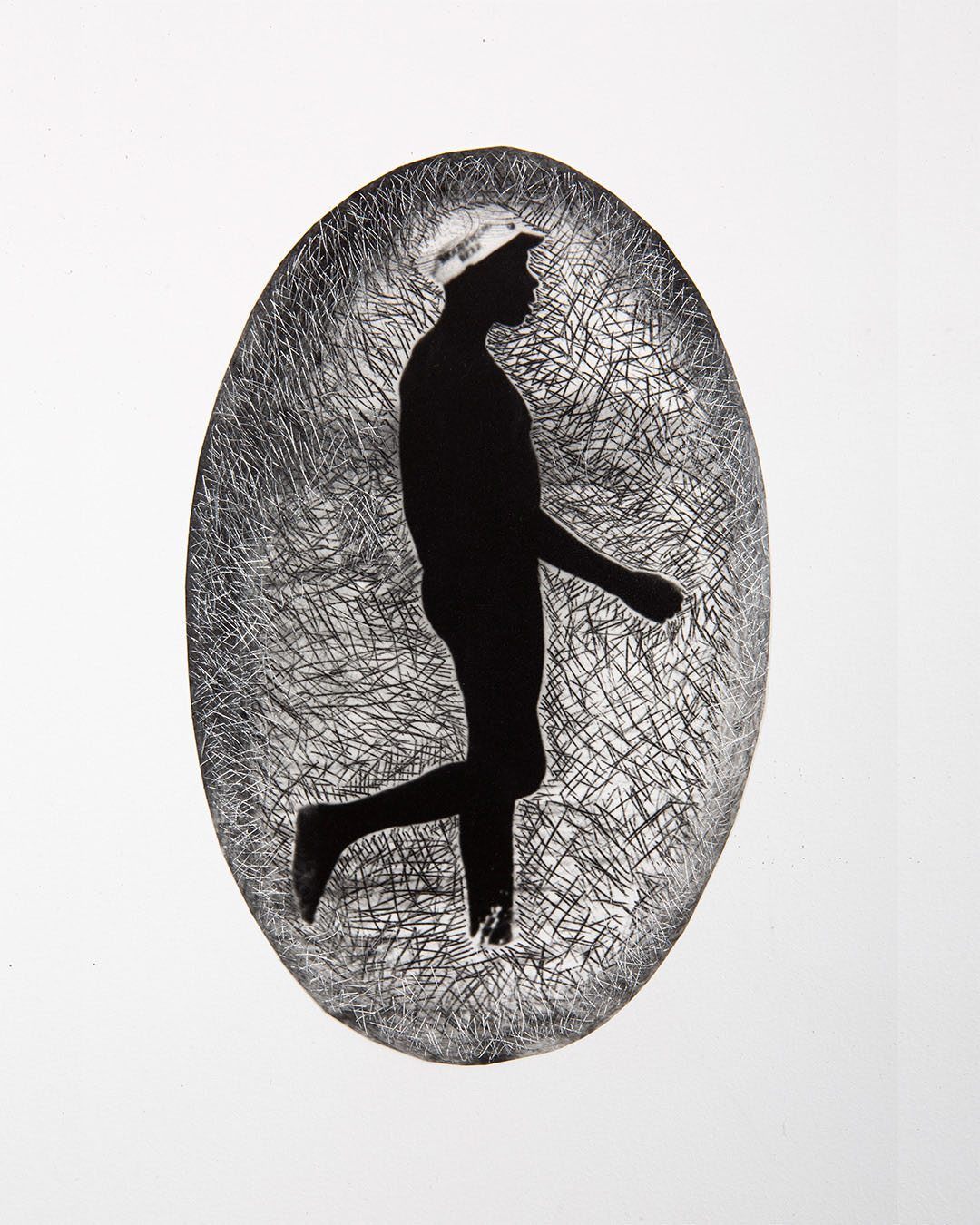
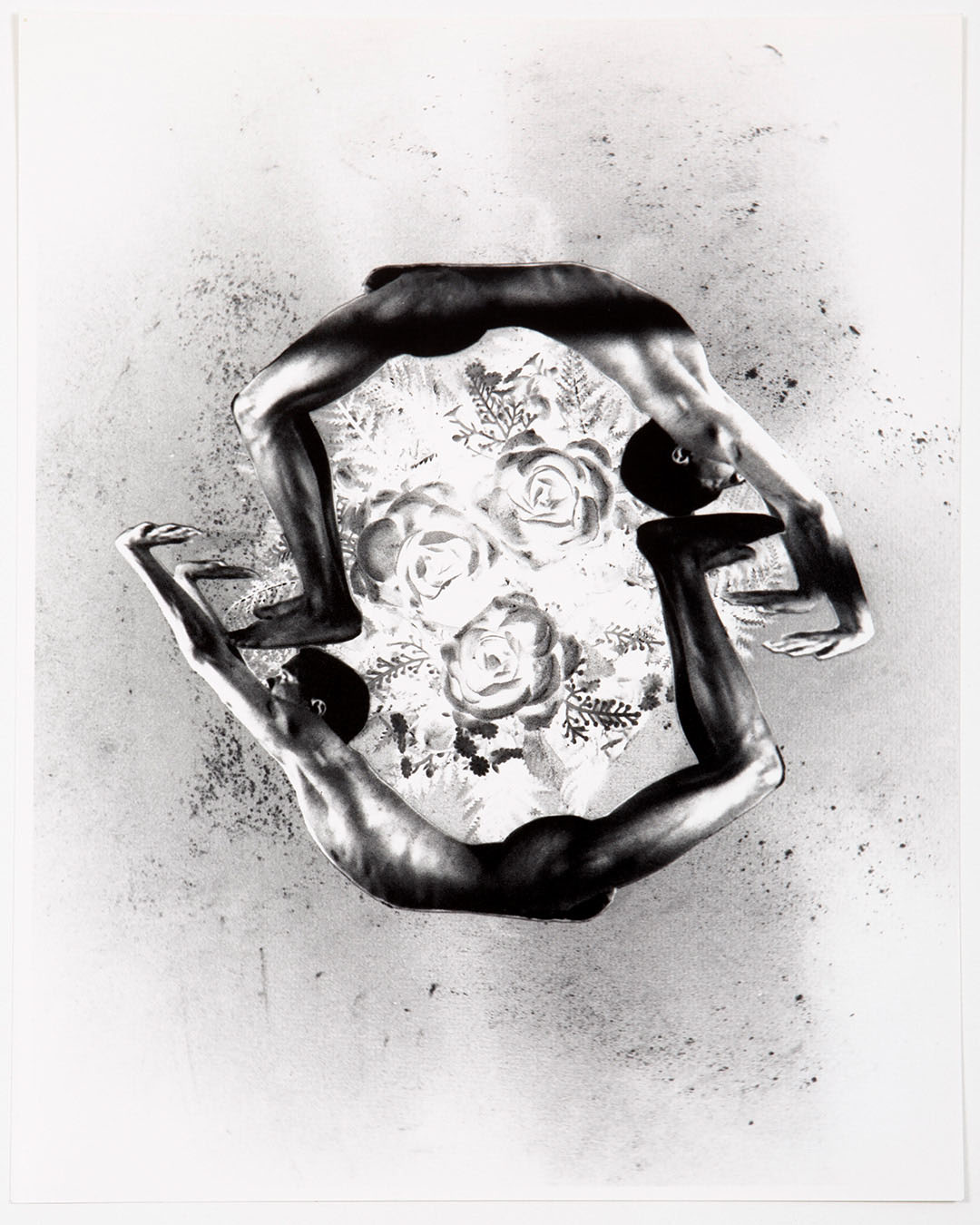
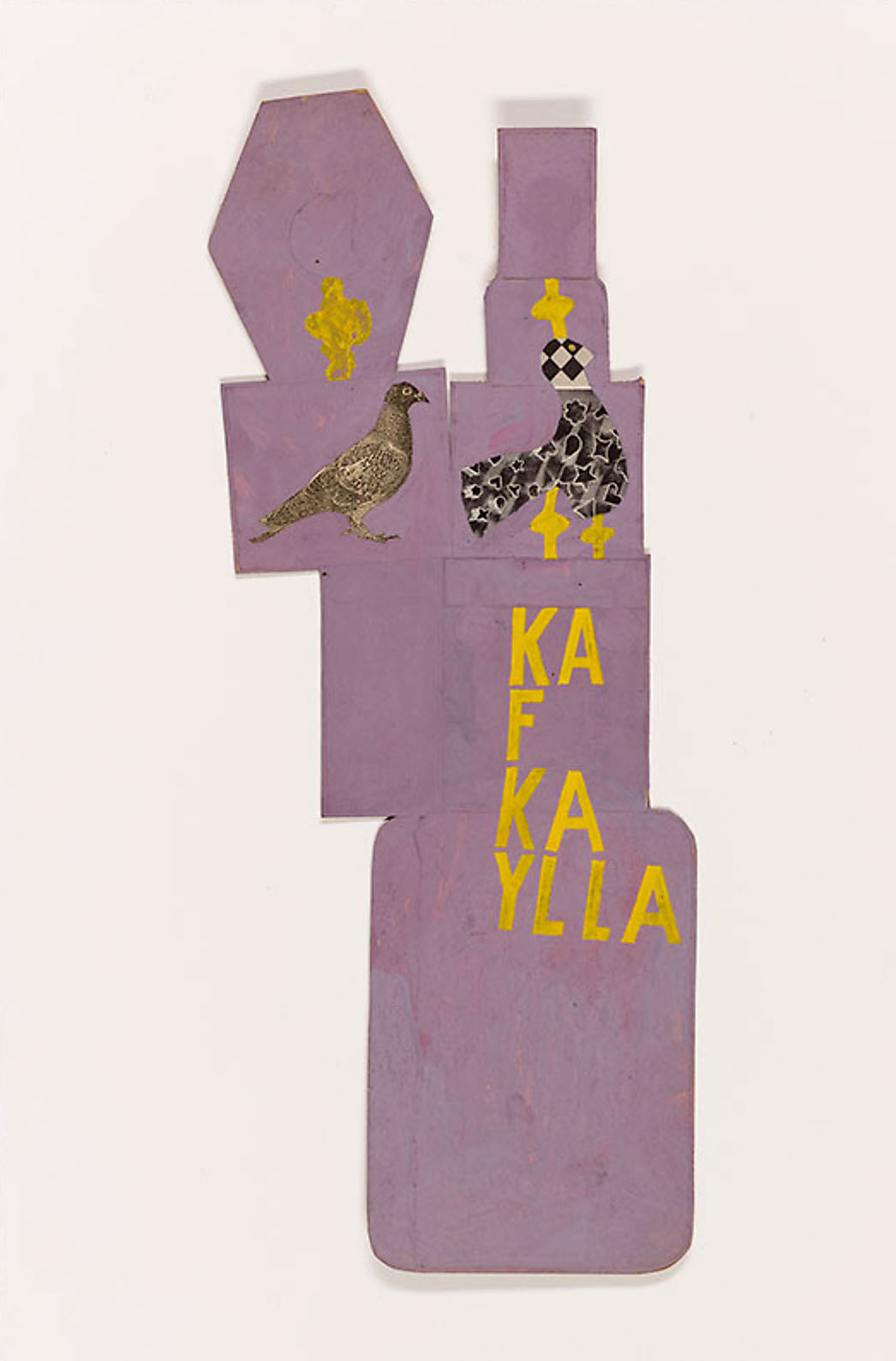
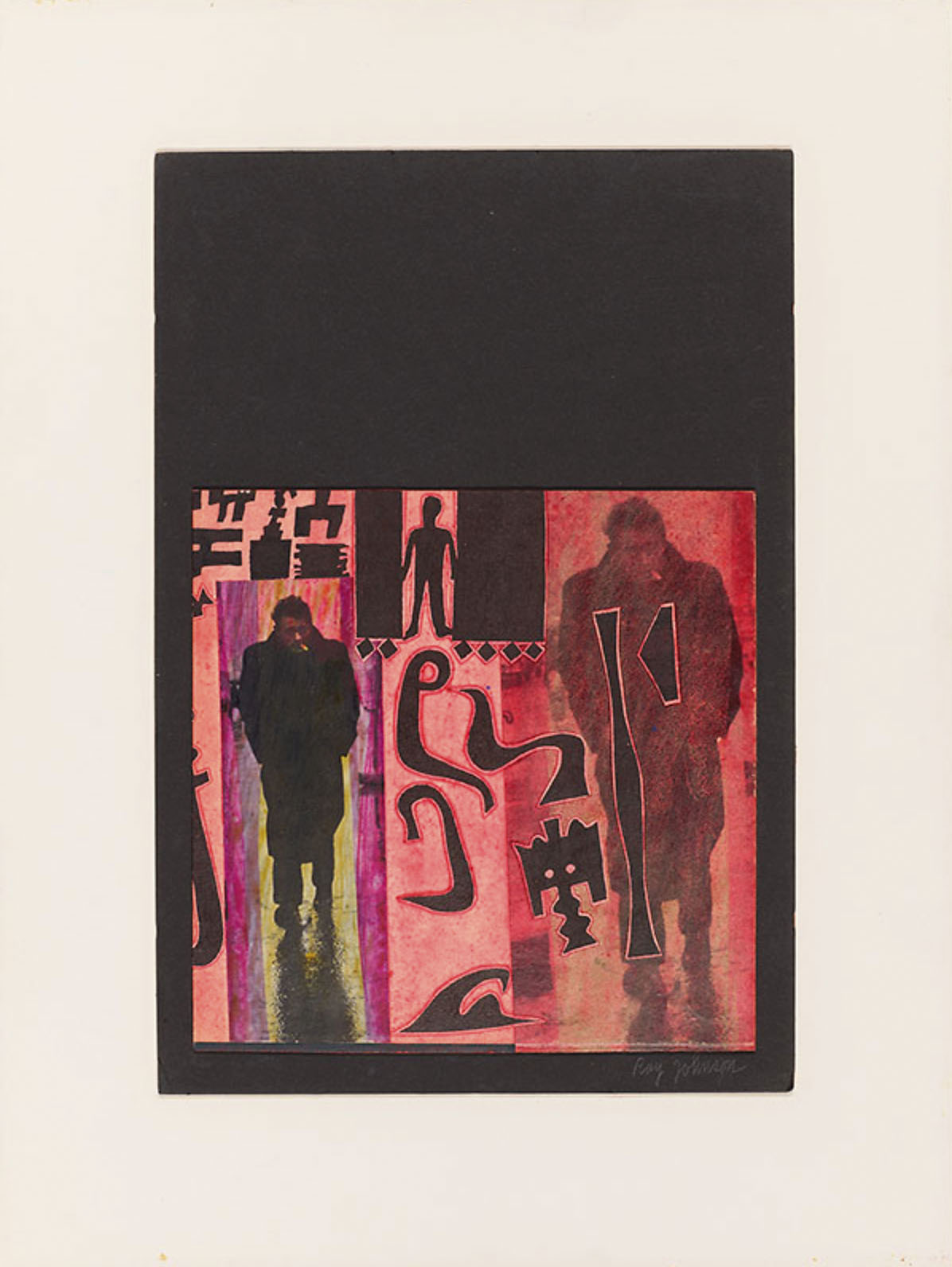
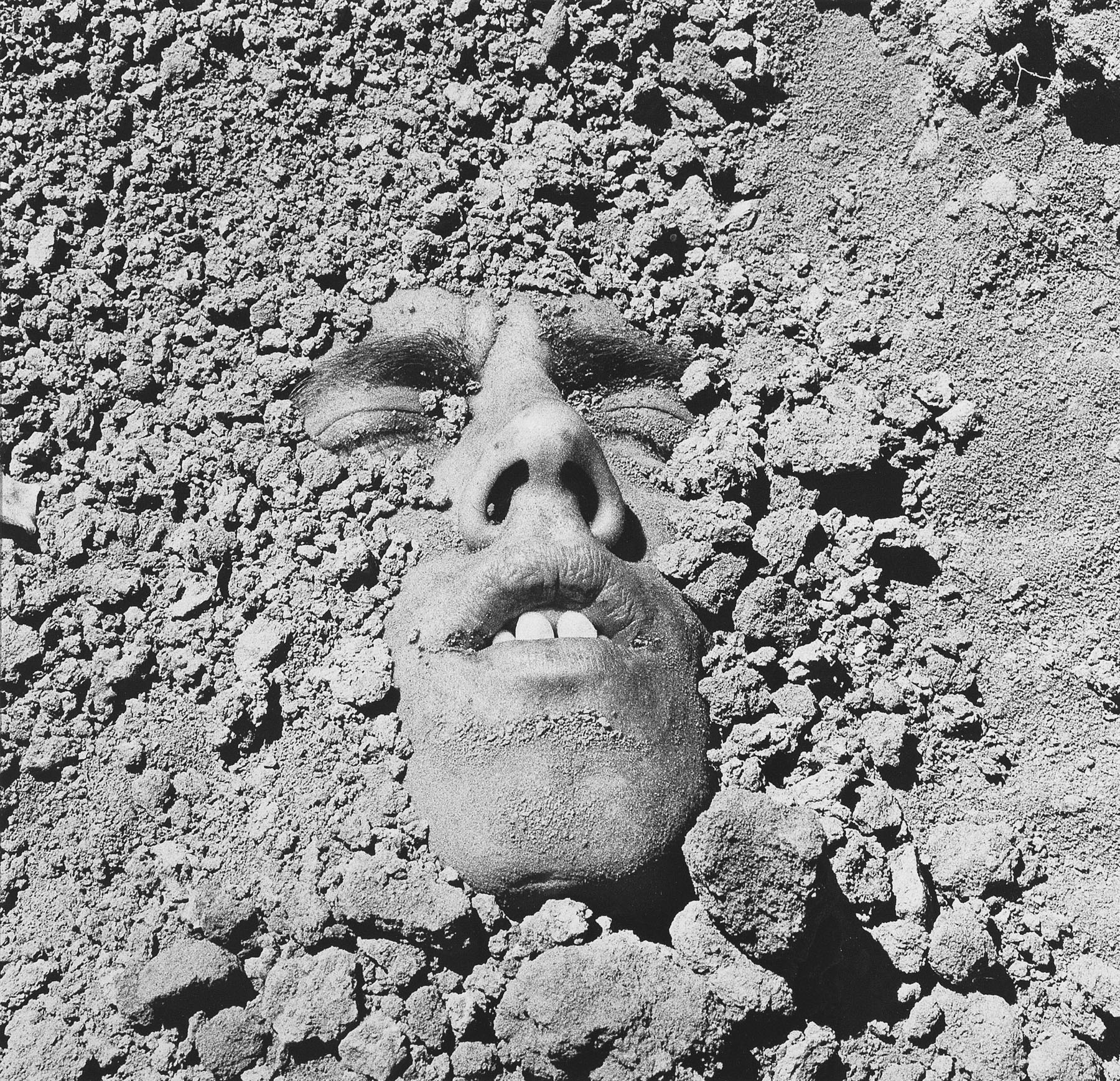
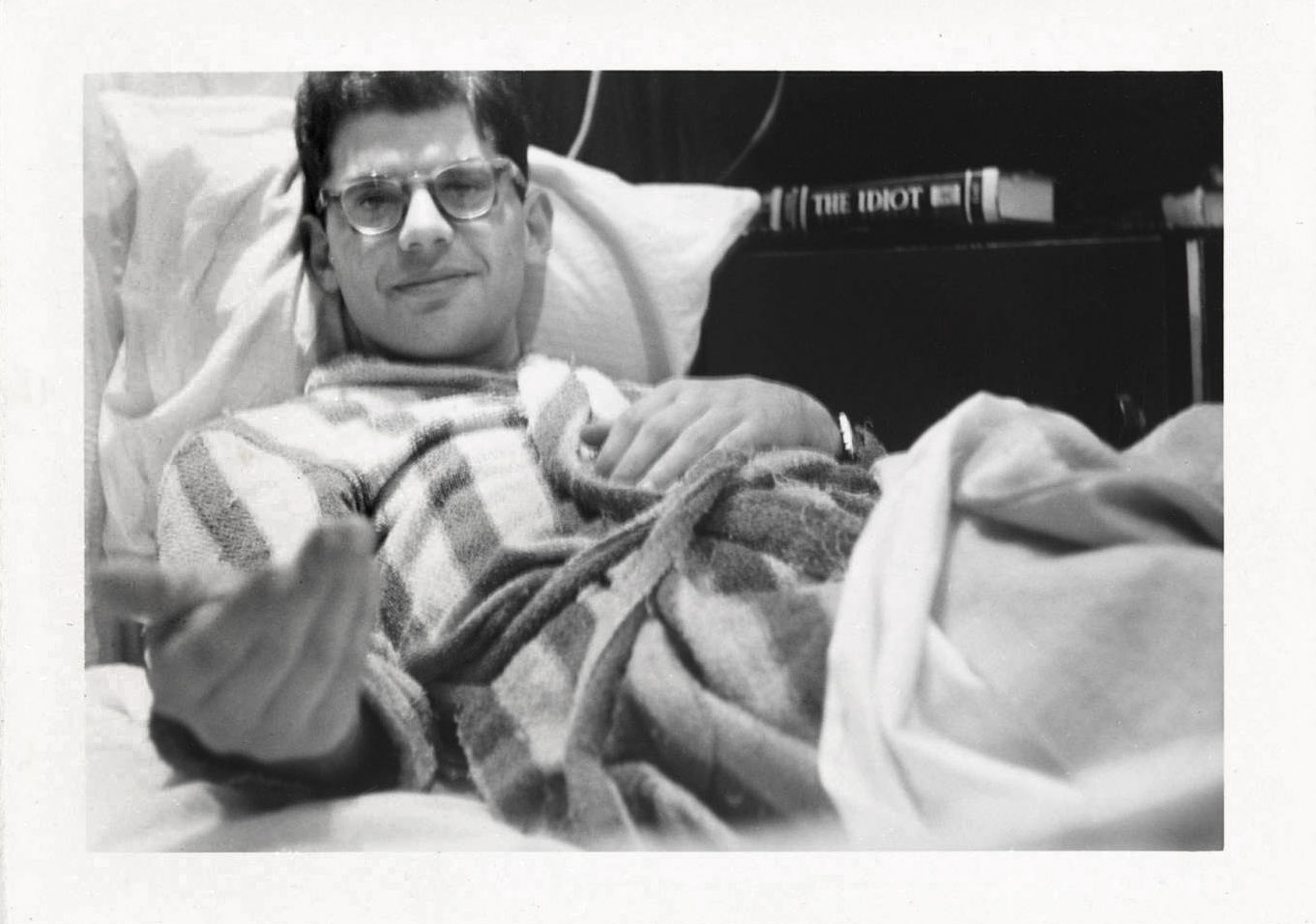
Exhibition: ‘Jimmy DeSana: Submission’ at the Brooklyn Museum, New York

Exhibition dates: 11th November , 2022 – 16th April, 2023

Curator: Drew Sawyer, Phillip Leonian and Edith Rosenbaum Leonian Curator of Photography, Brooklyn Museum
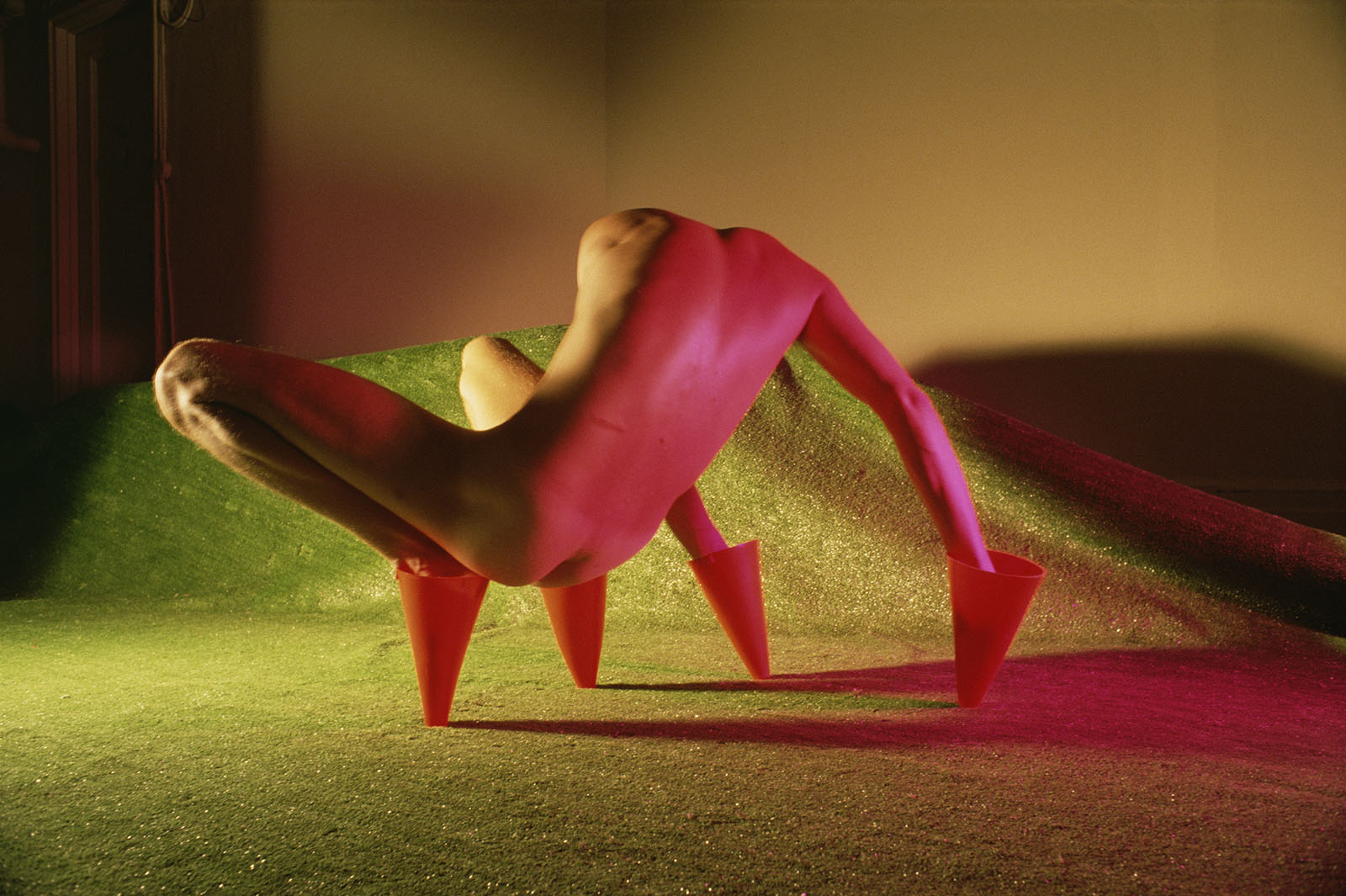
 

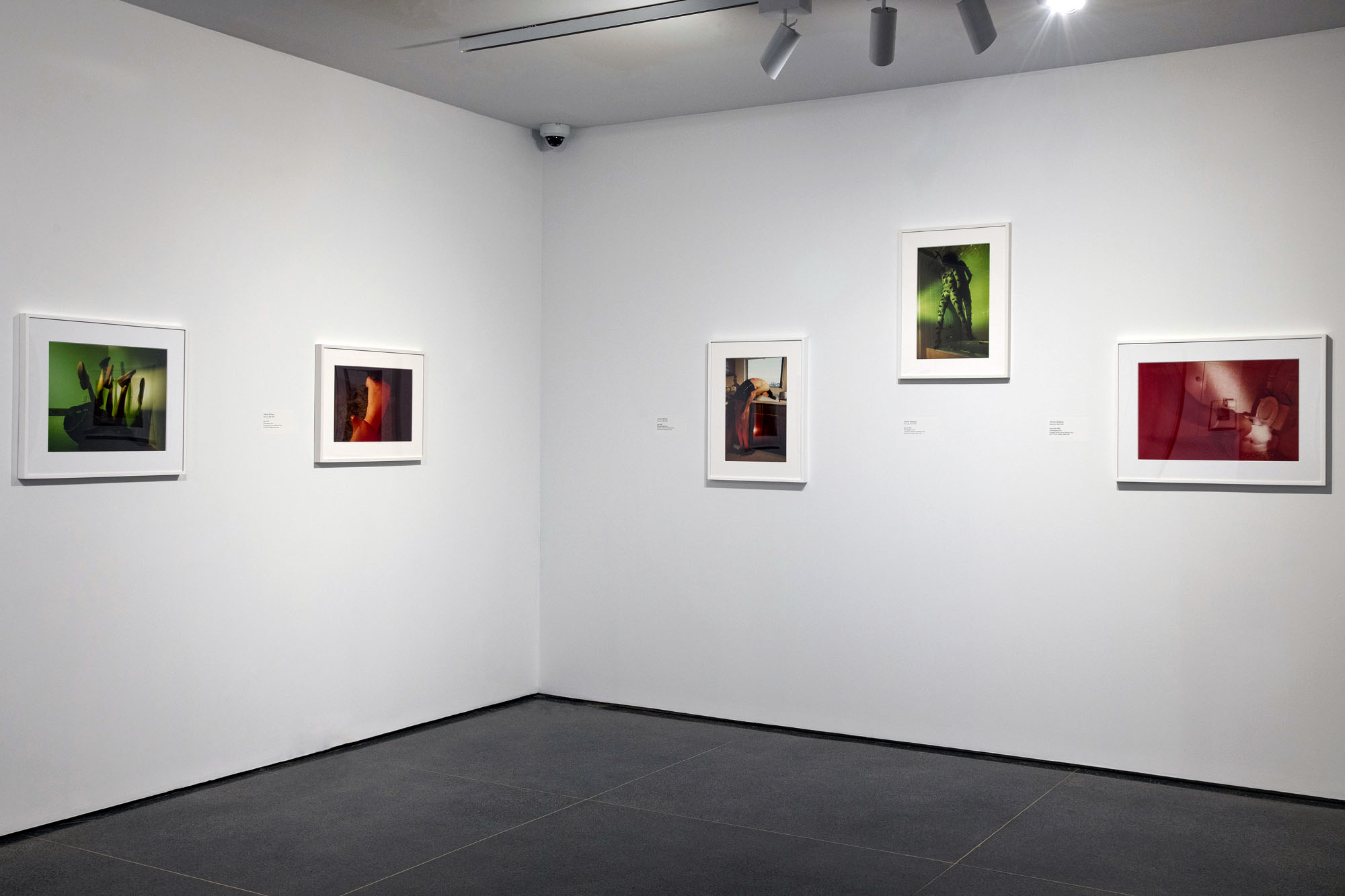
Jimmy DeSana (American, 1949-1990) 'Marker Cones' 1982


Jimmy DeSana (American, 1949-1990)
Marker Cones
1982
Chromogenic print
14 1/4 × 18 1/2 in. (36.2 × 47cm)
Courtesy of the Jimmy DeSana Trust and P·P·O·W Gallery, New York
© Estate of Jimmy DeSana
Photo: Courtesy of the Jimmy DeSana Trust and P·P·O·W Gallery, New York)


As DeSana developed his Suburban series in the early 1980s, gender and sexuality became increasingly ambiguous in his images. Here, photographed from behind, the body is a headless, unidentifiable creature composed of shapes. The marker cones evoke a similar indeterminacy: they are socially gendered “feminine” as makeshift stilettos and “masculine” as signifiers of roadside construction or sports, perhaps pointing to DeSana’s own experiences or ideas about the disciplining of bodies. A glittering field of bright-green artificial grass adds to this surreal composition, evoking the Astroturf surface of a football field.

Exhibition label


FORGET ME NOT

I have to be honest and say that before I started constructing this posting I had never heard of the artist Jimmy DeSana. You can’t know everything.

But now, having spent many hours reading about his life and his art, now I am at least a little more informed… and stand in awe and wonder at what this artist achieved before he died. It has been a real privilege and honour to imbibe at the fountain of DeSana.

I am still processing the work and what I have learnt about it but it would seem to me that what DeSana left behind is a body of work that is challenging, vital, full of ideas, paradoxes and questions about the human condition. Not who are we, but who can we be if we follow the path of our imagination and our soul.

Written by many other commentators, I have distilled their thoughts about his life, work, subject matter and the concepts he investigated into a few words:

1/ To play and dream
2/ punk rebel, the queer visionary, the wry interpreter of consumerism and media cultures, and the sometime transgressor of “good taste” in photography
3/ masquerades =
4/ the body as object
5/ peeled back the veneer of suburban life
6/ discrepancy between the public and private lives of post-war Americans
7/ queer and radical
8/ surrealistic, S/M-tinged, staged photos
9/ absurdist and unsettling
10/ vagaries of the human heart and the human psyche
11/ his central subject was always himself, and especially his sexual and emotional identity
12/ address the basic enigmas of identity
13/ Punk Provocateur
14/ Fierce
15/ Downtown /East Village scene
16/ post-punk New York
17/ fetishistic work about human bodies, very poetic
18/ mail art
19/ negative prints, double exposures and luridly coloured lighting
20/ psychological portraits, sexually charged tableaux and still lifes
21/ the body as a playground, gender as an ongoing invention, and domestic interiors as surreal constructions
22/ potential to push boundaries
23/ autoerotic asphyxiation
24/ visceral, more lo-fi, and more voyeuristic
25/ Transgressive Vision of Life and Desire
26/ Surrealism, Fluxus, punk and pure Pop
27 queer visibility
28/ strangeness
29/ suburban life
30/ Stonewall
31/ Gay Liberation
32/ interconnectedness of art and life
33/ Pictures Generation
34/ sexual, political, degenerated, ungendered
35/ sexual and emotional identity
36/ AIDS, sexuality and death


But these words tell what the work is about, they don’t tell you how the art makes you feel!

The art makes me feel dis/embodied and at the same time emboldened and strong. It makes me feel queer (in its original sense, when it was primarily used to mean strange, odd, peculiar or eccentric). Personally, it opens up a new vision for exploring my ordered place in the world, pushing boundaries of who I am and who I could be. Never settling for something that you don’t want to be. I love the “queerness” of the art (in the recent use of the word, used to describe a broad spectrum of non-normative sexual or gender identities and politics). I love its panache and bravado, its sensitivity and camp, it raunchiness and colour. The colour of life. Being different.

Sadly, we lost so many people, so many artists during the first wave of the HIV/AIDS epidemic, supremely talented artists such as Peter Hujar, David Wojnarowicz, Stephen Varble, Robert Mapplethorpe and Jimmy DeSana. I would like to have met Jimmy, to have talked to him about his passion, his love, his vision of the world that surrounded him. From a distance in time and space he seems to have a certain magic energy within him.

In the vitality of the work lies his im/mortality. And it is because of this energy that we will never lose the remembrance of Jimmy DeSana. Forget him not.

Dr Marcus Bunyan


Many thankx to the Brooklyn Museum for allowing me to publish the photographs in the posting. Please click on the photographs for a larger version of the image.


“My dear, it’s all so Christian and medieval and gloomy. Precisely. Jimmy DeSana, your intrepid photographer, has witnessed and preserved for posterity the unspeakable rights of these benighted natives, rites as clearly derived from Christianity as a black mass”


William Burroughs, 1979


“DeSana’s camera was as dear to him as his sexual life; the two were mutually constitutive, and his engagement with the BDSM subculture provided boundless inspiration to him, both as an artist and as a gay man.”

“As a gay man, a photographer, an artist of the AIDS era, a lover, a son, and a friend, DeSana is as beautifully complex as his work. After he died of AIDS in 1990, DeSana left his estate to his best friend and muse, the artist Laurie Simmons. Simmons told me, “I gave myself twenty years to sort out a lifetime’s worth of breathtaking material. I also felt certain that the work would look as fresh twenty years later as it did at the time of its making.” The resurgence of DeSana’s revolutionary career could not come at a more opportune moment; his oeuvre is exemplary of new outlets for reconstituting the Pictures Generation with queer modes of vision and critique.”


William J. Simmons. “Surreal Sexuality,” in Aperture Issue 218, “Queer” on the Aperture website January 18, 2017 [Online] Cited 20/03/2023
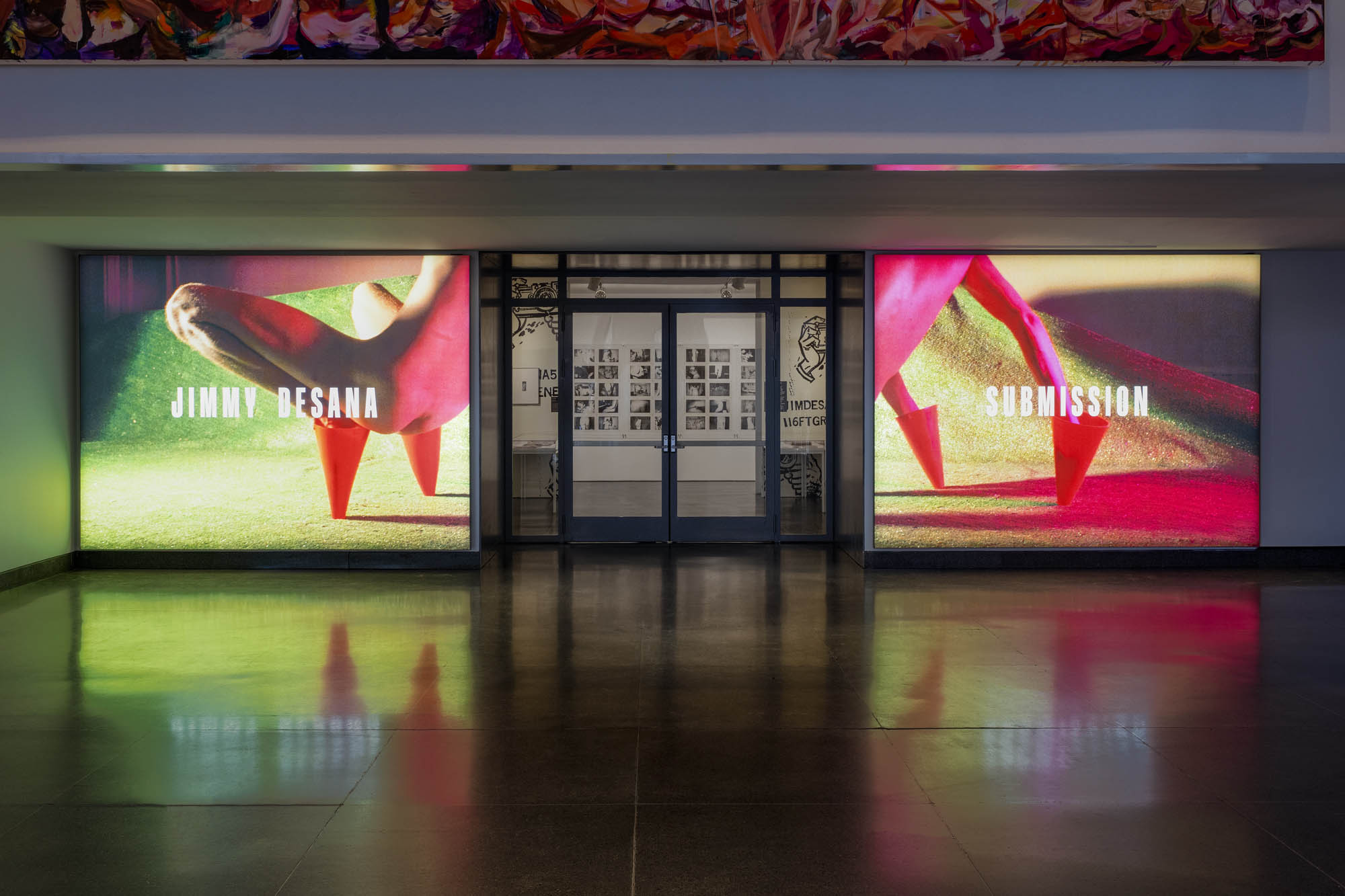
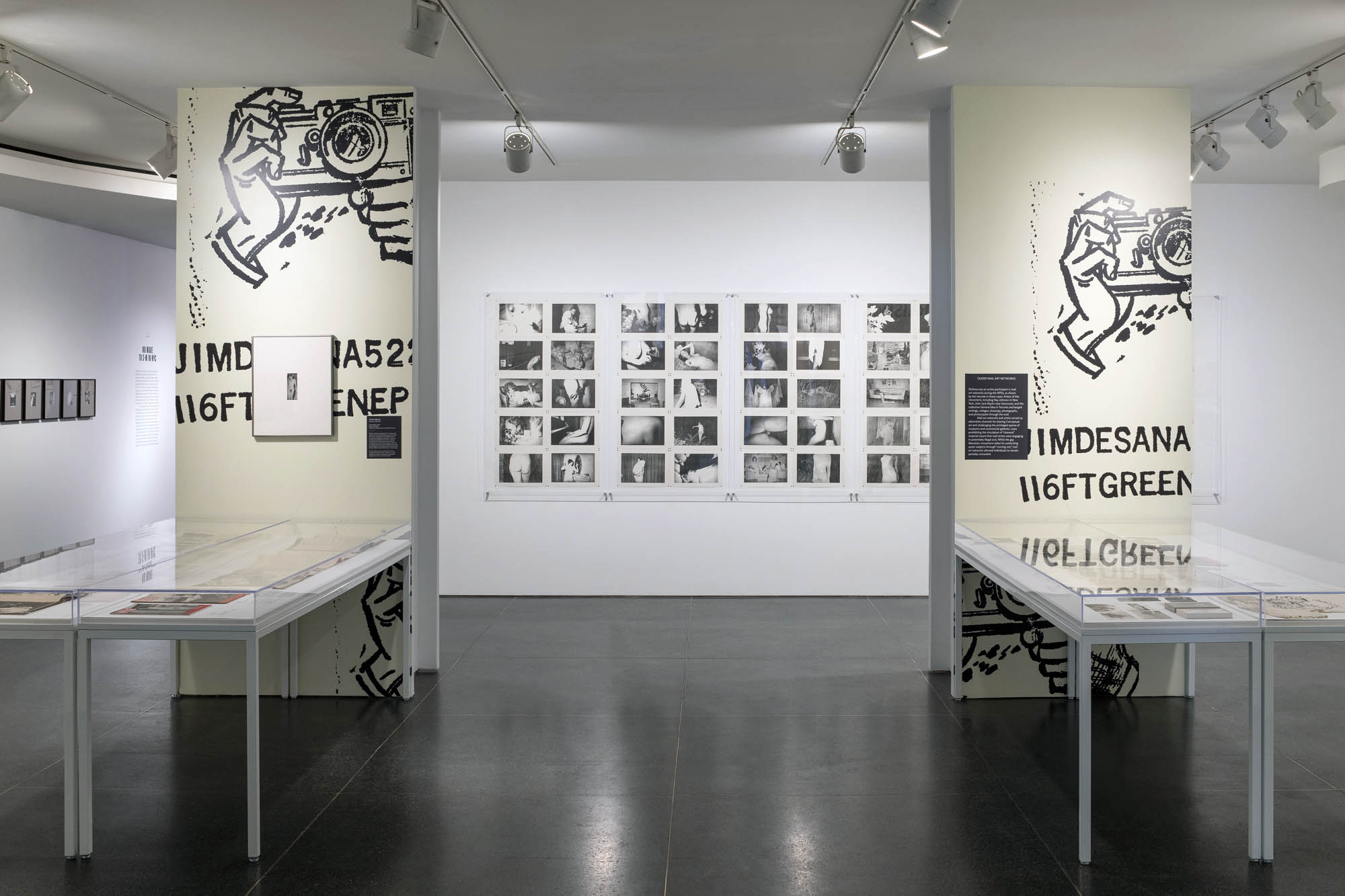


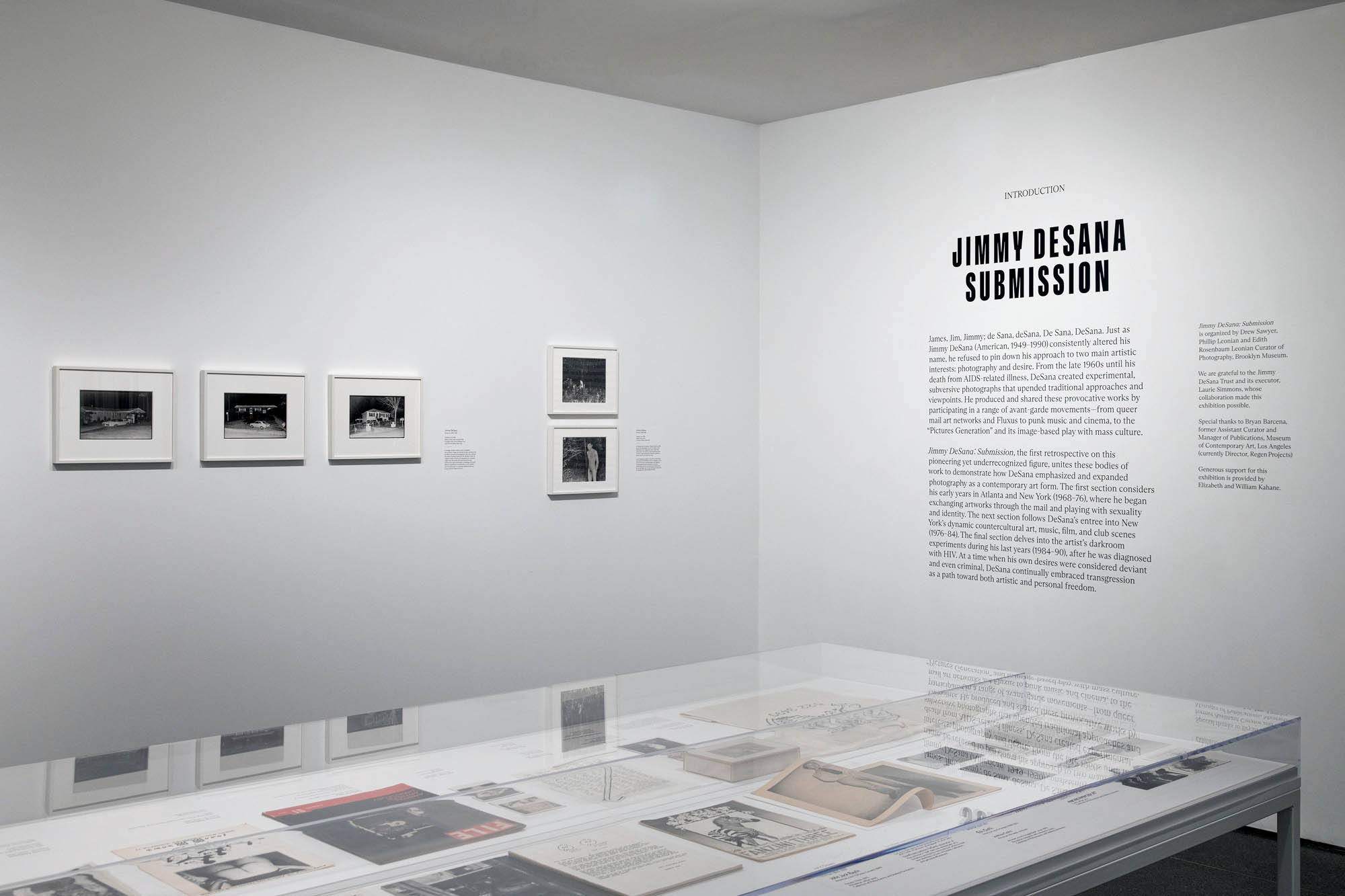
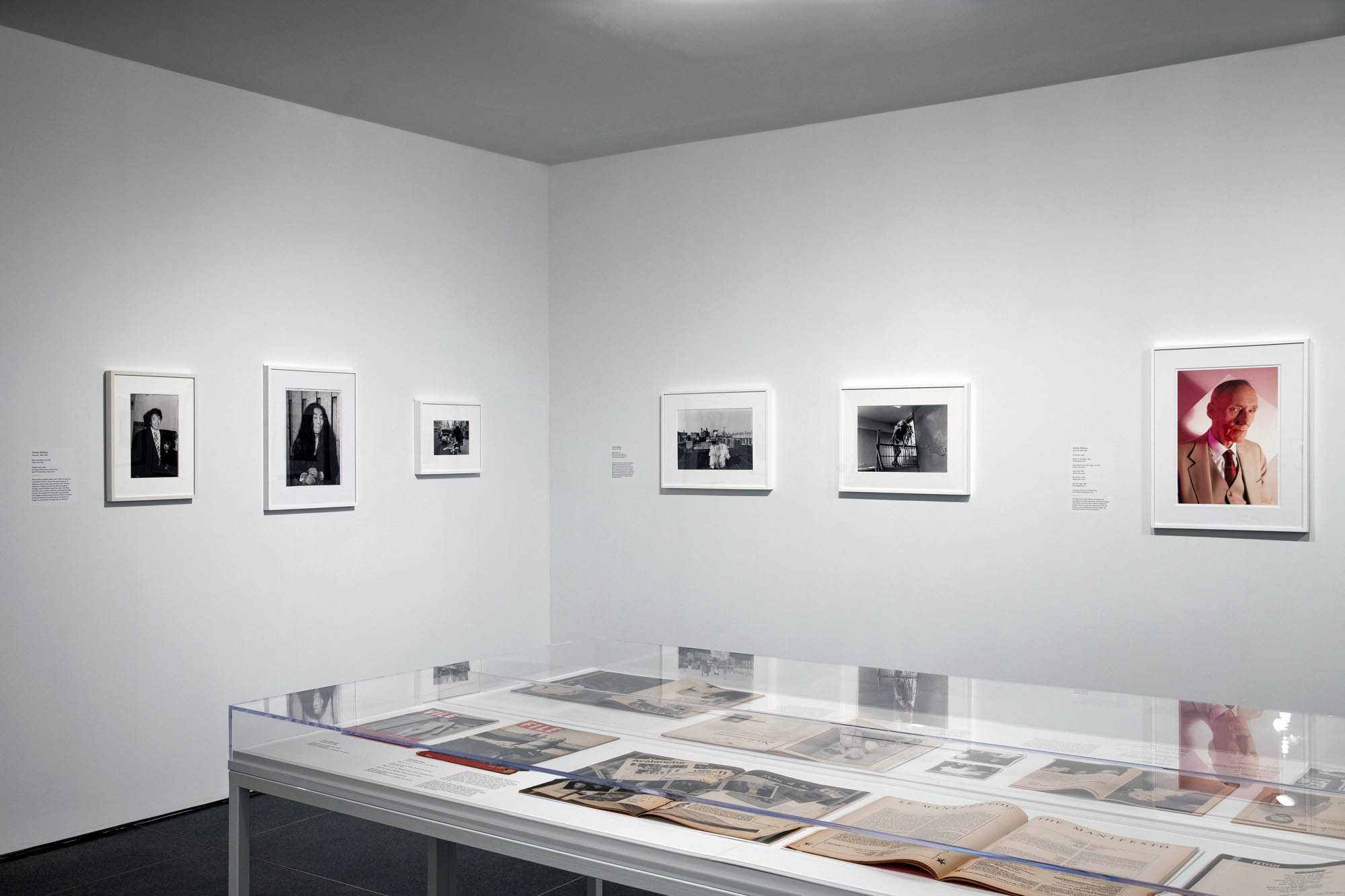
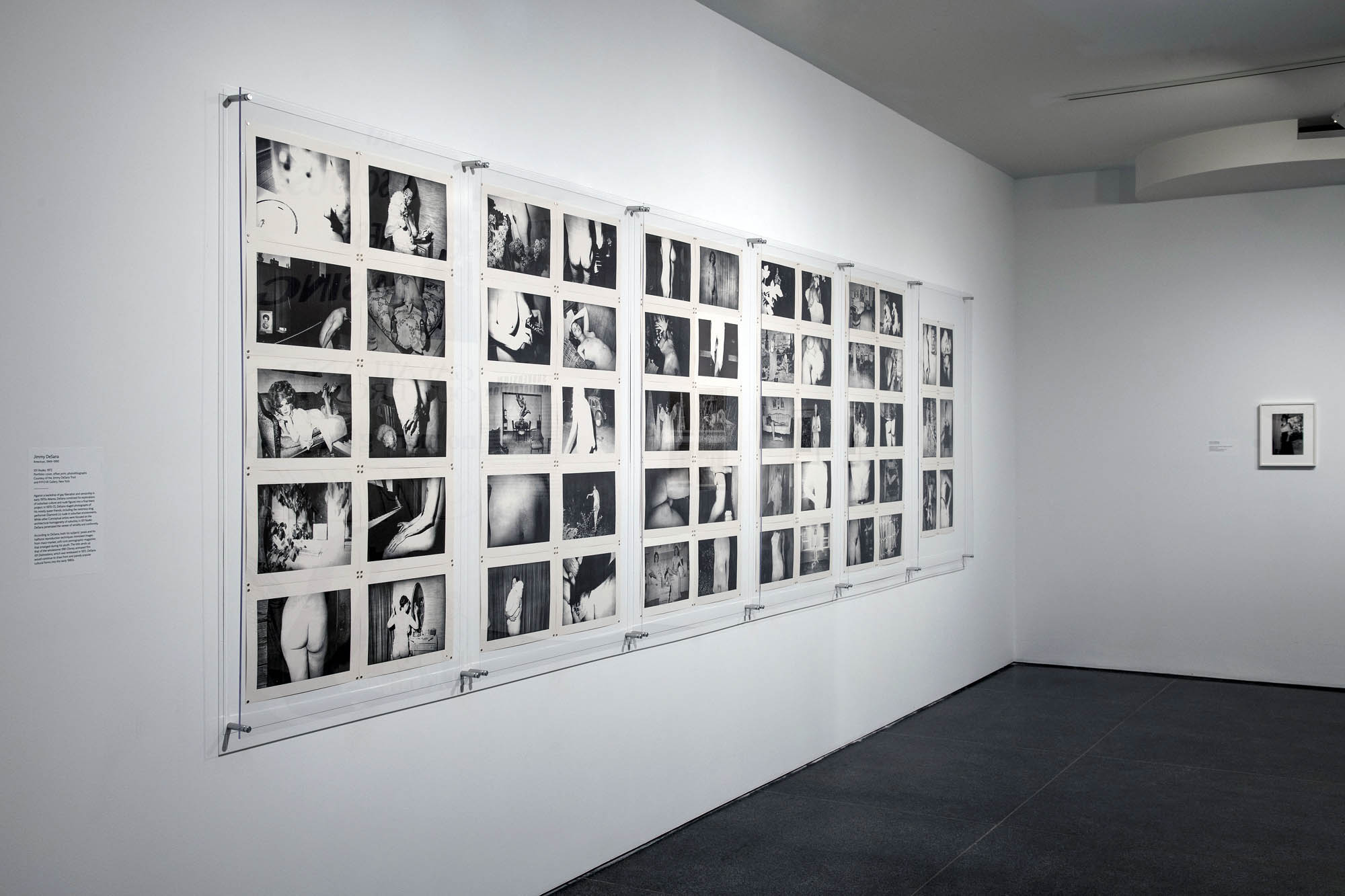
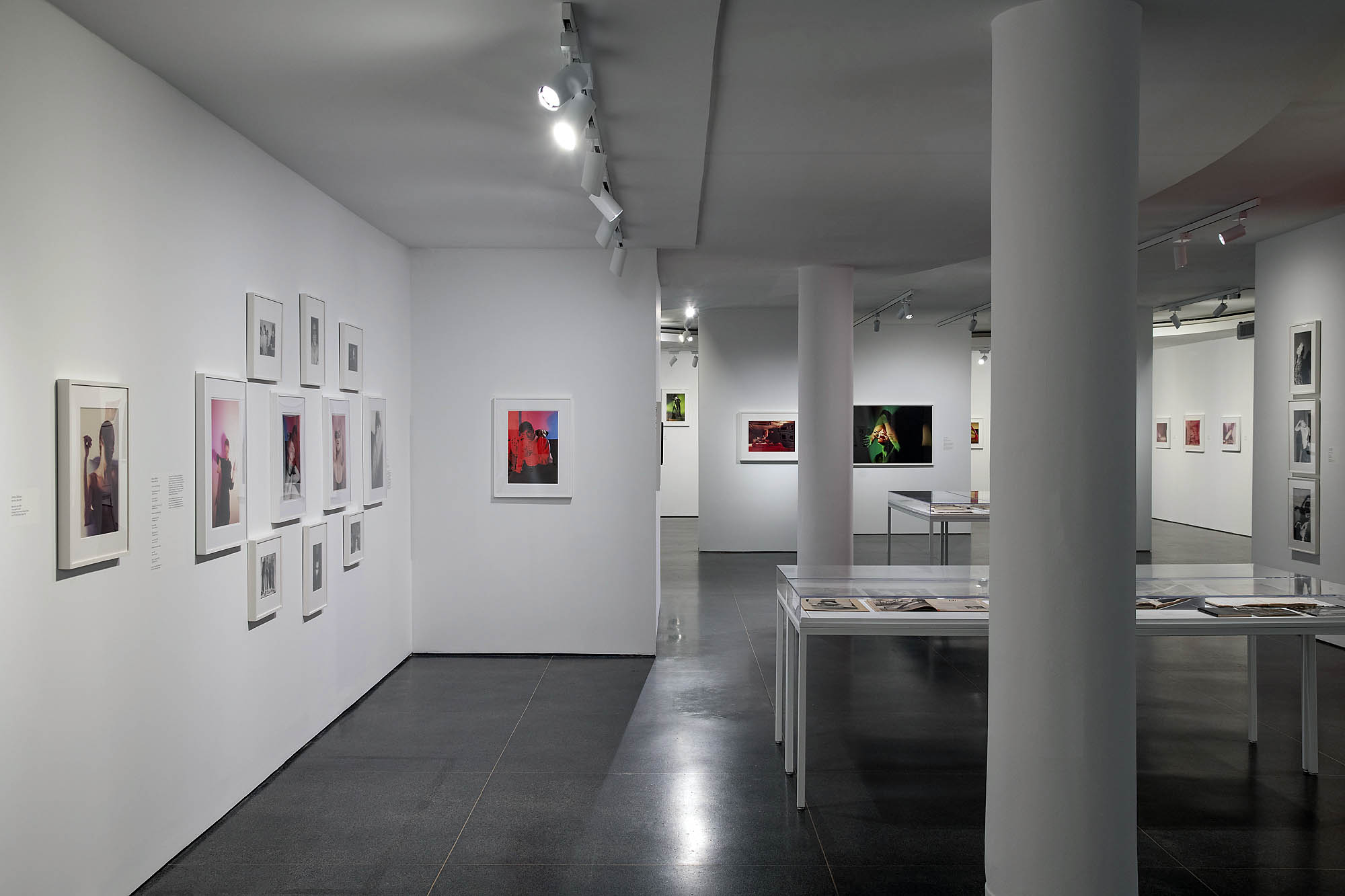
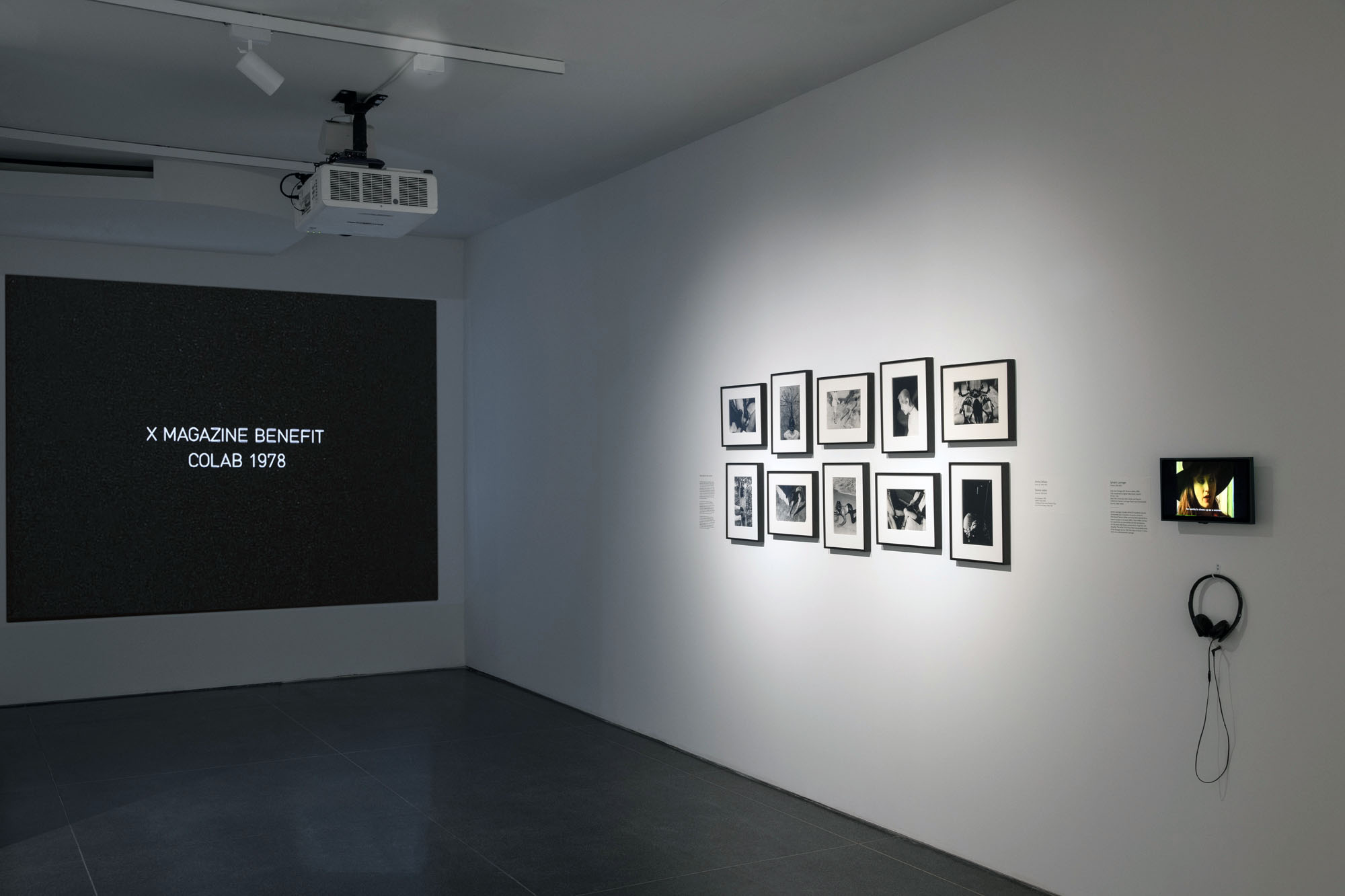
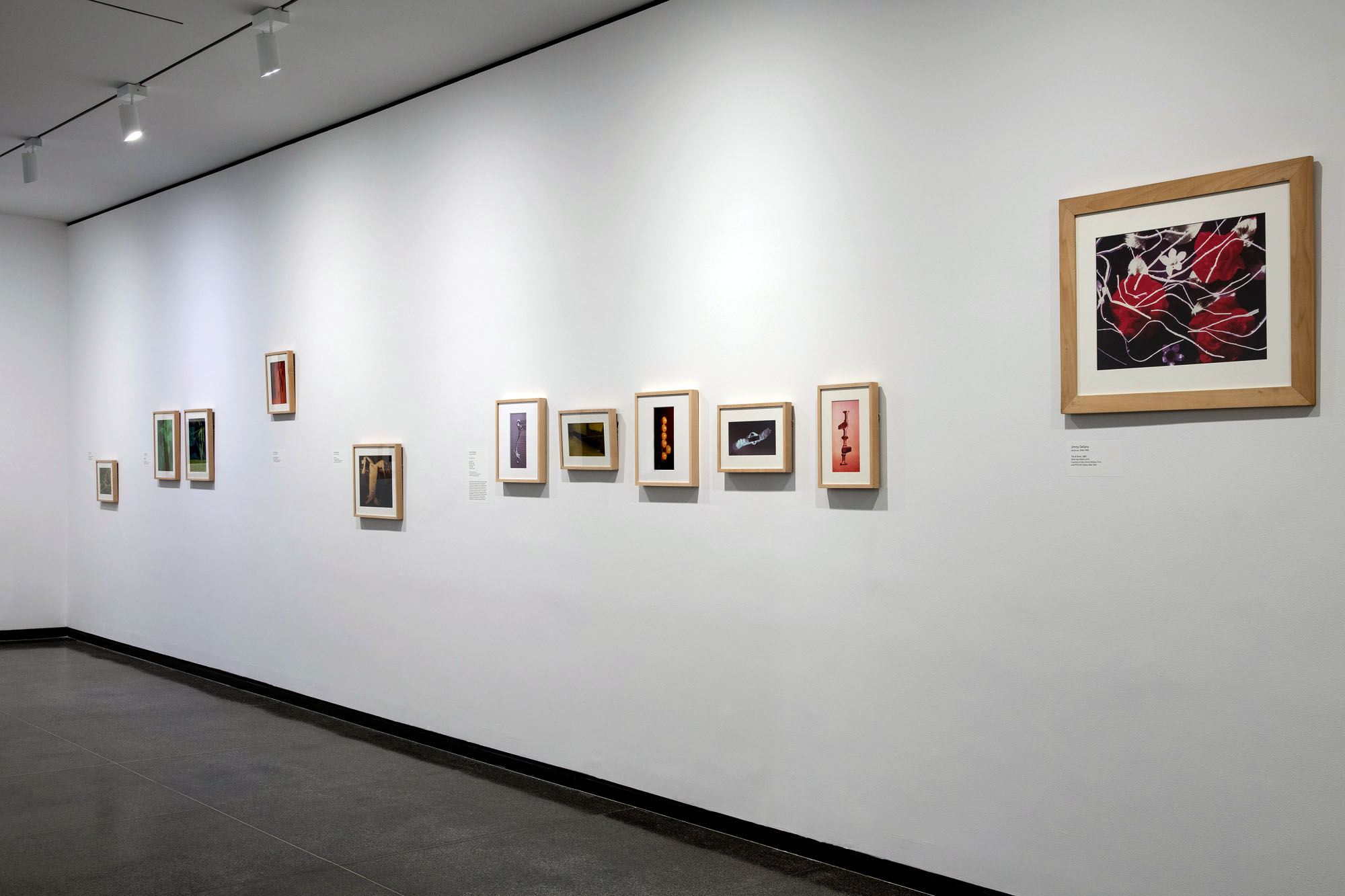
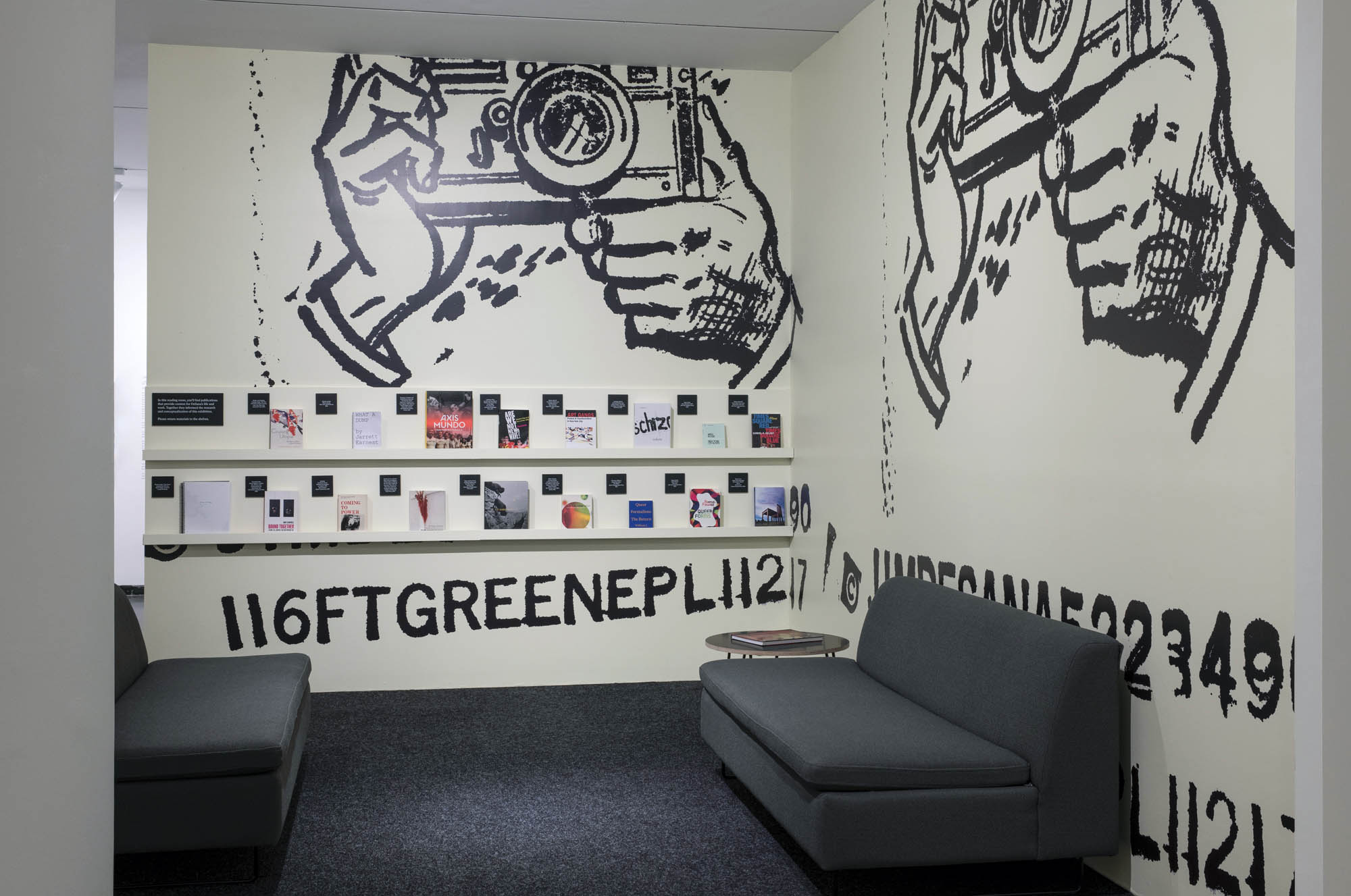
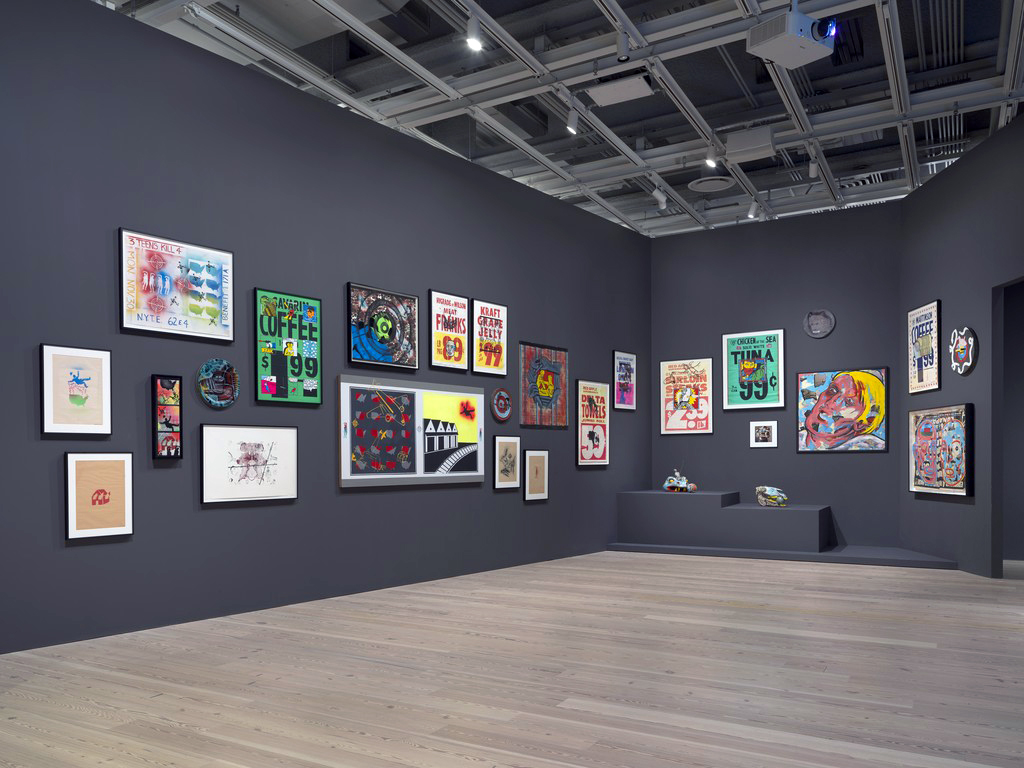
Installation view of the exhibition 'Jimmy DeSana: Submission' at the Brooklyn Museum, New York

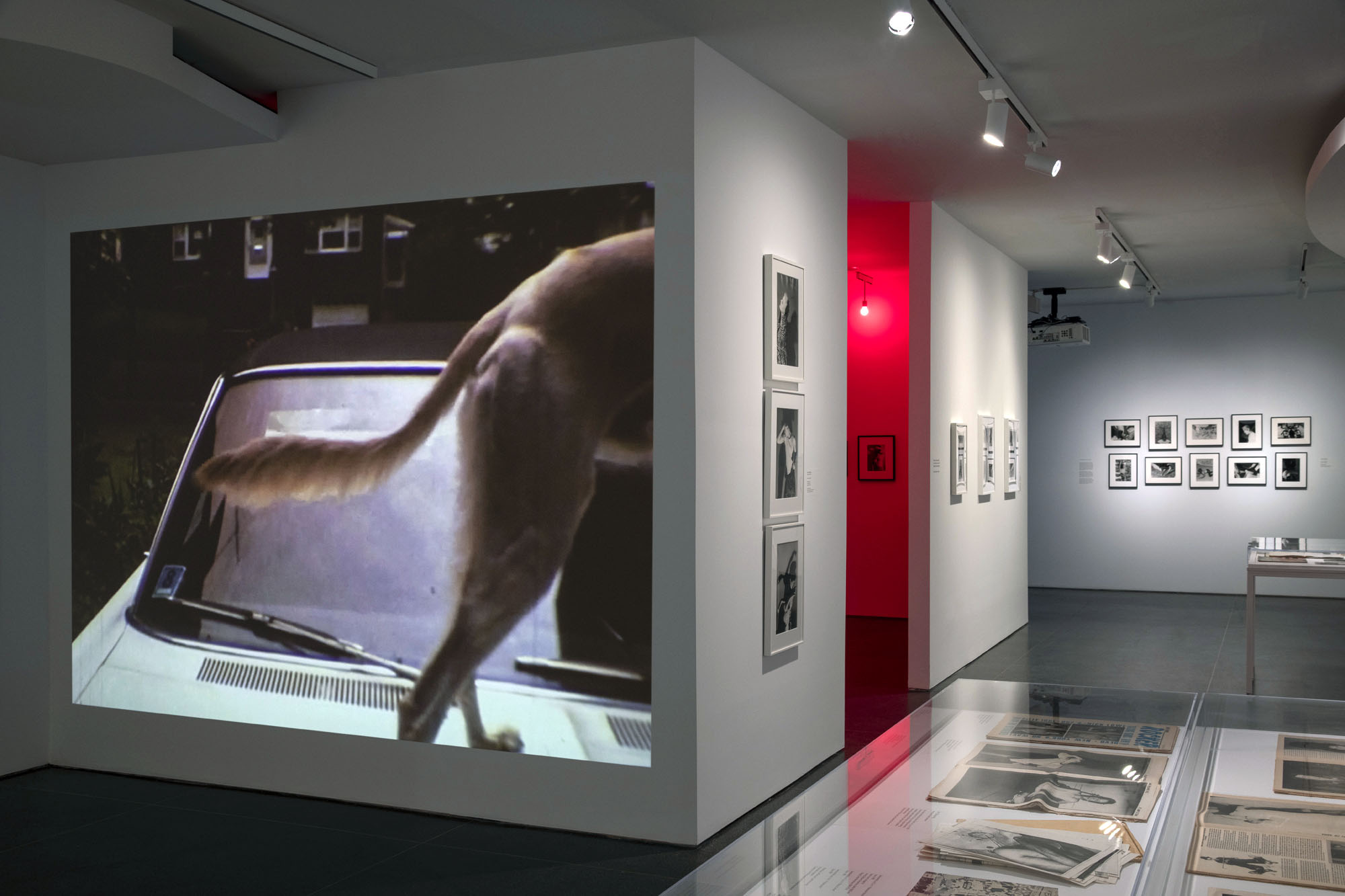
Installation view of the exhibition 'Jimmy DeSana: Submission' at the Brooklyn Museum, New York

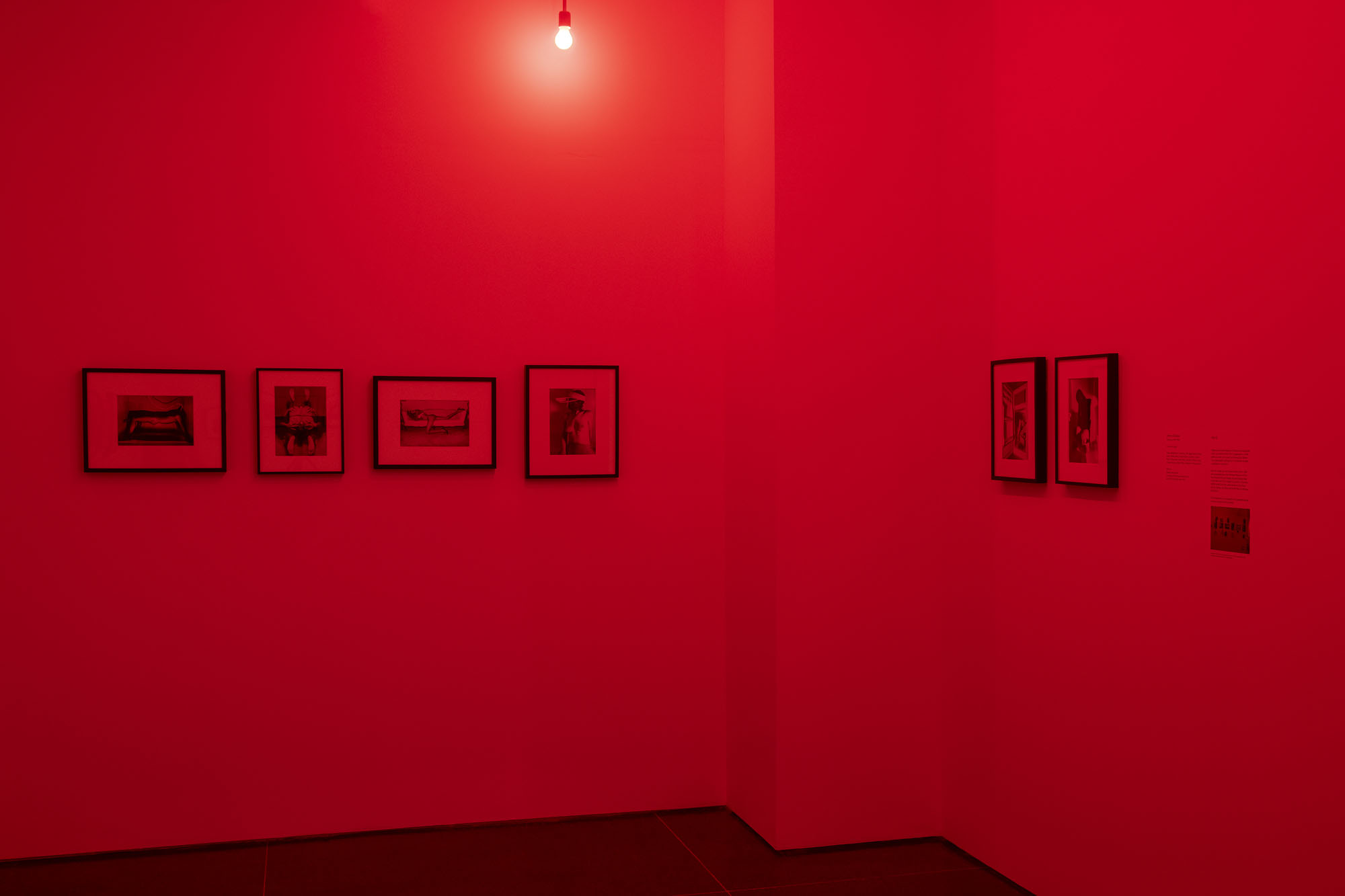
Installation view of the exhibition 'Jimmy DeSana: Submission' at the Brooklyn Museum, New York

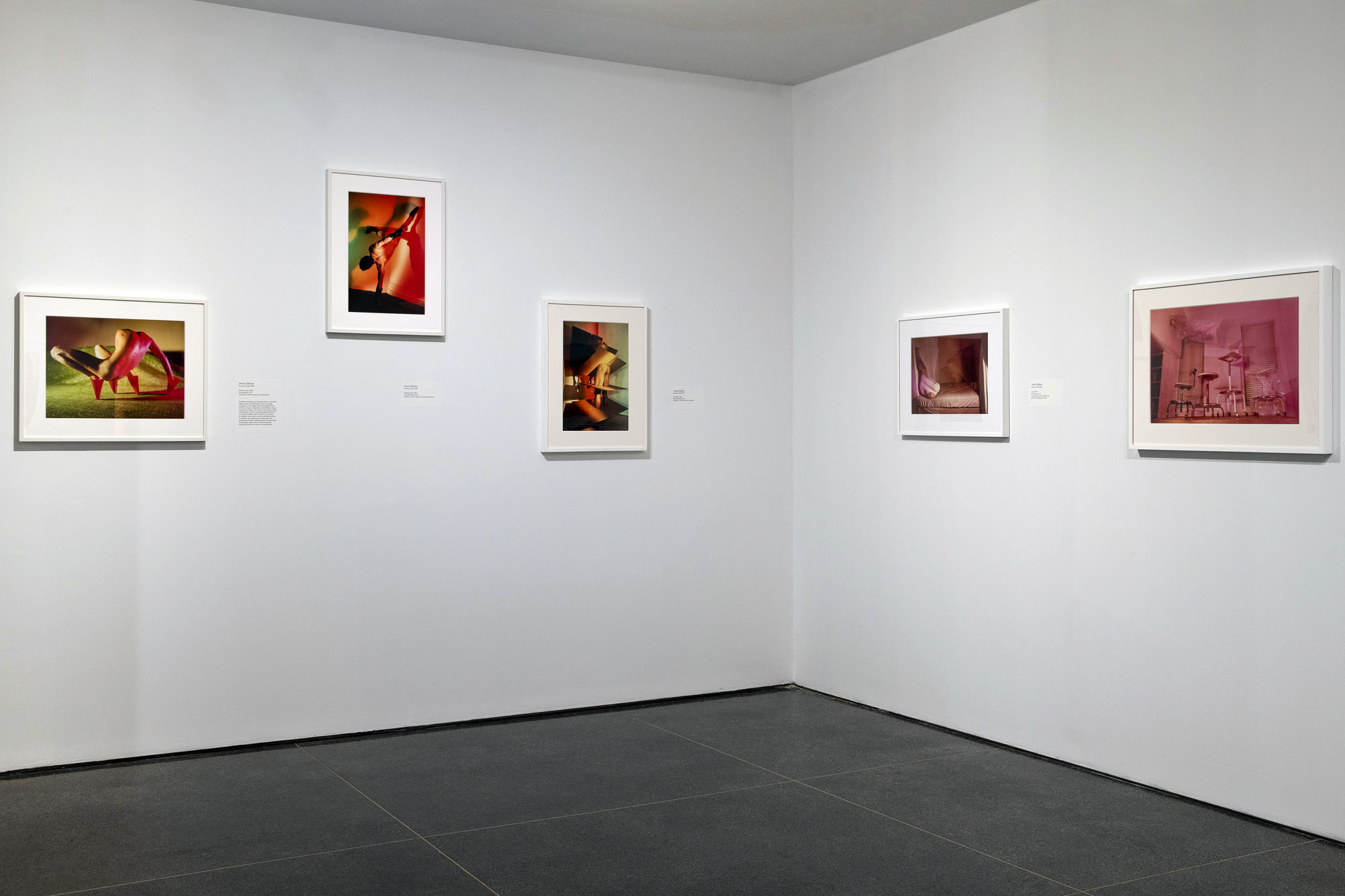
Installation view of the exhibition 'Jimmy DeSana: Submission' at the Brooklyn Museum, New York

Installation view of the exhibition 'Jimmy DeSana: Submission' at the Brooklyn Museum, New York

Installation view of the exhibition 'Jimmy DeSana: Submission' at the Brooklyn Museum, New York

Installation view of the exhibition 'Jimmy DeSana: Submission' at the Brooklyn Museum, New York

Installation view of the exhibition 'Jimmy DeSana: Submission' at the Brooklyn Museum, New York

Installation view of the exhibition 'Jimmy DeSana: Submission' at the Brooklyn Museum, New York

Installation view of the exhibition 'Jimmy DeSana: Submission' at the Brooklyn Museum, New York

Installation view of the exhibition 'Jimmy DeSana: Submission' at the Brooklyn Museum, New York

Installation view of the exhibition 'Jimmy DeSana: Submission' at the Brooklyn Museum, New York

Installation view of the exhibition 'Jimmy DeSana: Submission' at the Brooklyn Museum, New York


Installation views of the exhibition Jimmy DeSana: Submission at the Brooklyn Museum, New York


The first comprehensive exhibition and book on the surreal, queer and humorous photographic art of Jimmy DeSana, a central figure in New York’s art and music scenes of the 1970s and ’80s

This is the first overview of the work of Jimmy DeSana, a pioneering yet under recognised figure in New York’s downtown art, music and film scenes during the 1970s and 1980s. The book situates DeSana’s work and life within the countercultural and queer contexts in the American South as well as New York, through his involvement in mail art, punk and No Wave music and film, and artist collectives and publications.

DeSana’s first major project was 101 Nudes, made in Atlanta during the city’s gay liberation movement. After moving to New York in 1973, DeSana became immersed in queer networks, collaborating with General Idea and Ray Johnson on zines and mail art, and documenting the genderqueer street performances of Stephen Varble.

By the mid-1970s, DeSana was a fixture in New York’s No Wave music and film scenes, serving as portraitist for much of the period’s central figures and producing album covers for Talking Heads, James Chance and others. His book Submission, made with William S. Burroughs, humorously staged scenes out of a S&M manual that explored the body as object and the performance of desire. DeSana was also an early adopter of colour photography, creating his best-known series, Suburban, in the late 1970s and early 1980s. This body of work explores relationships between gender, sexuality and consumer capitalism in often humorous, surreal ways. After DeSana became sick as a result of contracting HIV, he turned to abstraction, using experimental photographic techniques to continue to push against photographic norms.

Text from the Amazon website Nd [Online] Cited 15/03/2023


Introduction

James, Jim, Jimmy; de Sana, deSana, De Sana, DeSana. Just as Jimmy DeSana (American, 1949-1990) consistently altered his name, he refused to pin down his approach to two main artistic interests: photography and desire. From the 1960s until his death from AIDS-related illness, DeSana created experimental, subversive photographs that upended traditional approaches and viewpoints. He produced and shared these provocative works by participating in a range of avant-garde movements – from queer mail art networks to Fluxus [a loose international group of rebellious artists, poets, and musicians with a shared impulse to integrate art and life] to punk music and cinema, to the “Pictures Generation” and its image-based play with mass culture.

Jimmy DeSana: Submission, the first retrospective on this pioneering yet under recognised figure, unites these bodies of work to demonstrate how DeSana emphasised and expanded photography as a contemporary form. The first section considers his early years in Atlanta and New York (1968-1976), where he began exchanging artworks through the mail and playing with sexuality and identity. The next section follows DeSana’s entree into New York’s dynamic countercultural art, music, film, and club scenes (1976-1984). The final section delves into the artist’s darkroom experiments during his last years (1984-1990), after he was diagnosed with HIV. At a time when his own desires were considered deviant and even criminal, DeSana continually embraced transgression as a path toward both artistic and personal freedom.
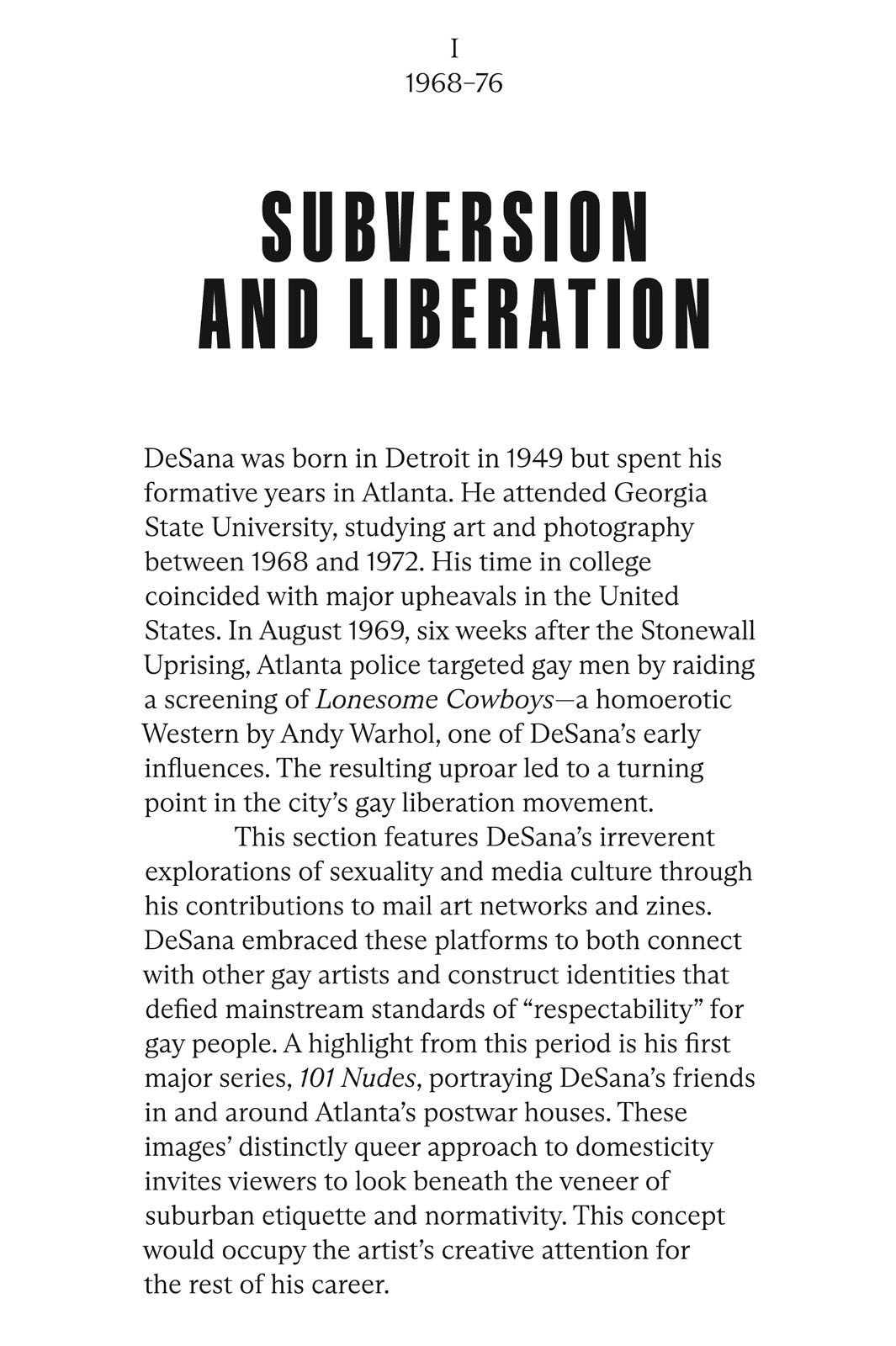
 

Jimmy DeSana Subversion and Liberation wall text


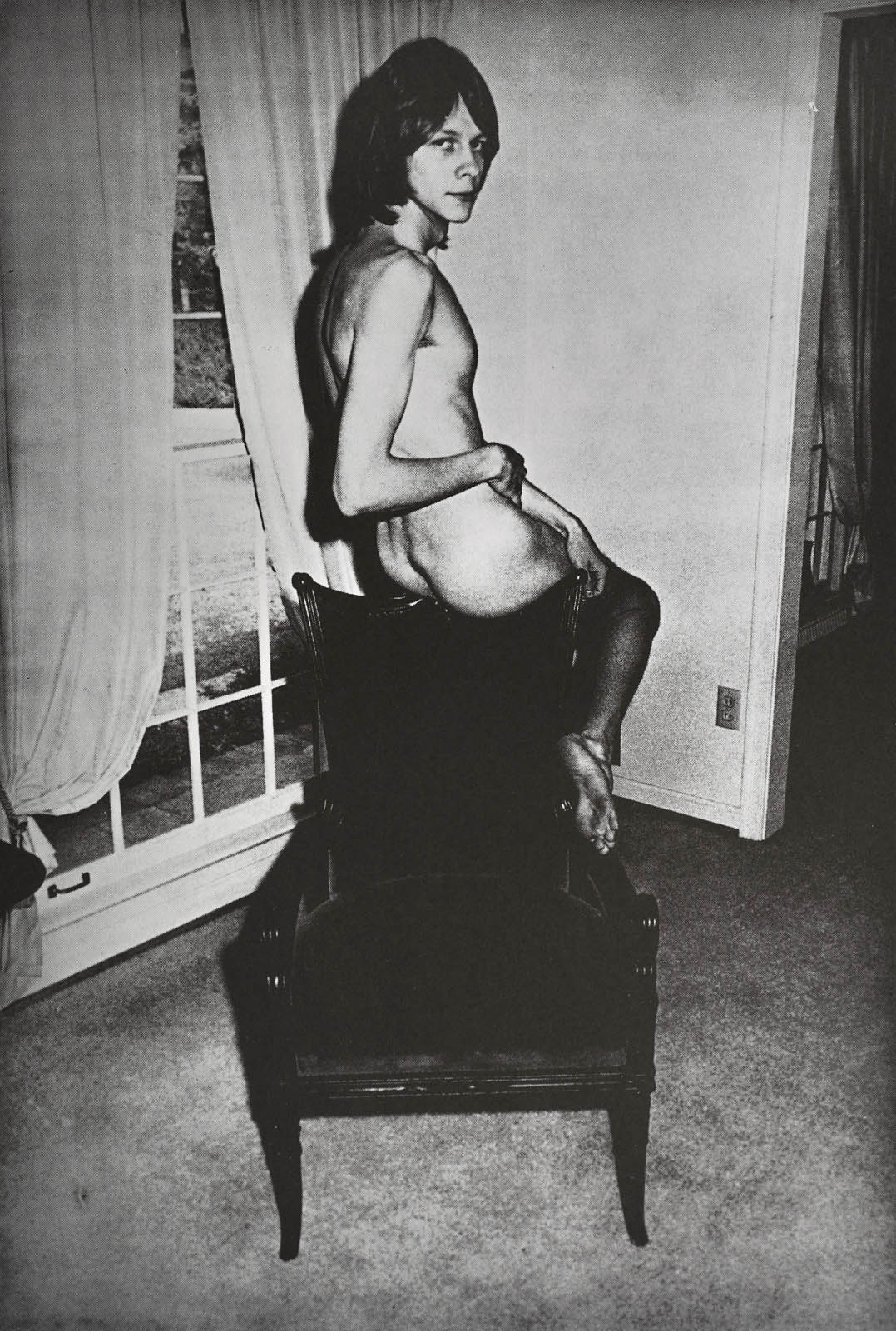
Jimmy DeSana (American, 1949-1990) 'Untitled' 1972


Jimmy DeSana (American, 1949-1990)
Untitled
1972
From the series 101 Nudes
Offset print
12 3/4 × 8 1/2 in. (32.4 × 21.6cm)
Courtesy of the Jimmy DeSana Trust and P·P·O·W Gallery, New York
© Estate of Jimmy DeSana
Photo: Allen Phillips


DeSana was born in Detroit in 1949 to middle-class suburbanites, who raised him and his brother in Atlanta. His mother was a strict Methodist; his father abandoned the family as DeSana entered adulthood. While studying art at Georgia State University, DeSana began making precocious, conceptual photography of suburban houses, generally banal, and of his friends, often naked. But his final thesis, 101 Nudes (1972), is a landmark. Likely taken with a Leica IIIf and lit by a flash, as Sawyer notes in his catalog essay, the portraits form a kind of fanzine of queer friends. DeSana shows off their muscles like he’s making Physique Pictorial, or crouches and crops their bodies like a funnier Man Ray. A drag queen looks right into the camera, bold; a man shoves his face into a pillow, ass beckoning. Bodies are unstable, and DeSana captures how funny, and how frightening, that can be, and how those two emotions comprise desire. Sawyer hangs these prints on the wall like Teen Beat posters in a teenage bedroom. It’s hard not to be a fan. …

Jesse Dorris. “Jimmy DeSana’s Transgressive Vision of Life and Desire,” on the Aperture website December 14, 2022 [Online] Cited 02/04/2023
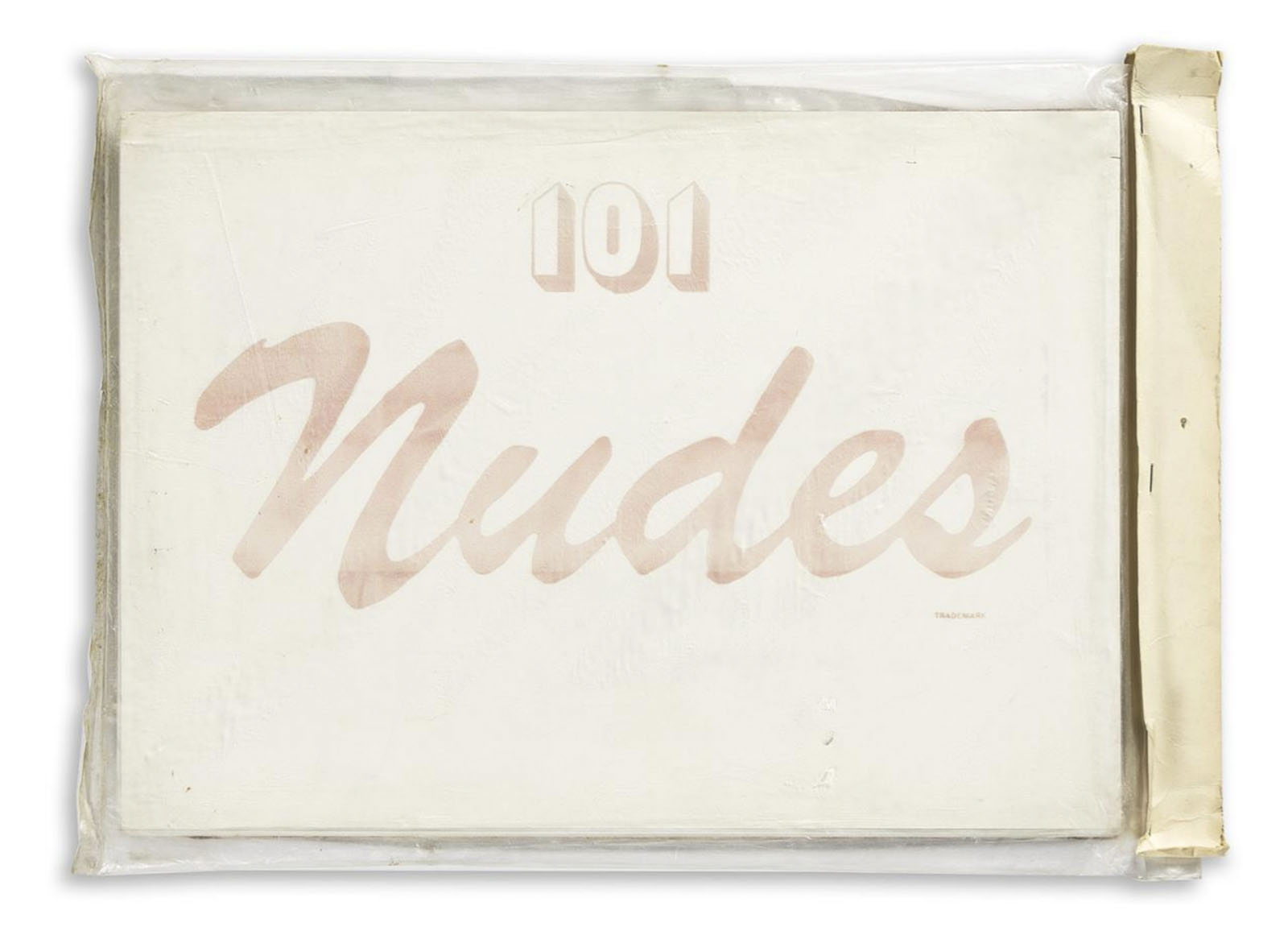
 

Jimmy DeSana (American, 1949-1990) Cover from the series '101 Nudes' 1972


Jimmy DeSana (American, 1949-1990)
Cover from the series 101 Nudes
1972
Offset prints in custom portfolio box, fifty-six parts
Each: 11 × 14 inches (27.9 × 35.6cm)
Courtesy of the Jimmy DeSana Trust and P·P·O·W Gallery, New York
© Estate of Jimmy DeSana


Photographer Jimmy De Sana was part of the countercultural “punk” community of artists and musicians living in New York’s East Village in the 1970s and ’80s. Among his best-known works are portraits of important figures from that scene, including Debbie Harry and Billy Idol, though these constitute only a small part of his practice. With work that is personal, surrealistic, and often shocking in its treatment of sexuality, De Sana helped raise the standing of photography in the art world and increased critical respect for the medium.

101 Nudes comprises 56 halftone black-and-white photographs of nude and partially nude figures posing inside or just outside homes. The artist was 20 years old and attending college in Atlanta when he first printed the series in 1972. The figures, which include De Sana’s friends as well as himself, are photographed from a variety of viewpoints. Although the series shows the influence of “grainy” pornography from the 1950s, the postures of the figures do not seem to suggest or invite sexual engagement; the artist noted that they are “without eroticism.” Sometimes the photographs feature only a fragment of the body, such as the pelvic area or buttocks. De Sana’s engagement with the history of surrealism has been noted, and these partial views in particular recall the surrealist photography of artists such as Man Ray, who in the 1920s photographed the body parts of friends and lovers in ways that removed them from their context and made them into almost abstract images.

Anonymous. “101 Nudes,” on the ICA website Nd [Online] Cited 20/03/2023


When De Sana (1950-1990) shot and self-published the 56 halftone images that would make up the “101 Nudes” series, he was just 20 years old and still a college student in Atlanta. Using his friends as models, he constructed each photograph as an insight into the possibilities of form, capturing with his flash-camera something both artful and sincere. His subjects (nearly all of them naked) were “without eroticism” as De Sana has said, the series as much about isolation as it is sexuality. The careful, strange postures of his figures, collapsed across a couch or balanced on a dining-room table, often had a touch of the surreal. His later work, in particular the S&M series that came to comprise his 1980 book “Submission” (also on display), explored sexuality and digression front-on in the spirit of William Burroughs, whose writing was a significant influence on the artist from a young age. De Sana created these images – which pre-dated Mapplethorpe’s fetish work – with an even stronger sense for composition, all the while seeking the boundaries of comfort through the bizarrely positioned, leather-bound figures.

Anonymous. “Jimmy De Sana, “101 Nudes and Other Works”,” on the NY Art Beat website 2011 [Online] Cited 20/03/2023. No longer available online


One year later, on June 28, 1969, police raided the Stonewall Inn, the gay bar in New York’s Greenwich Village, sparking an uprising that would launch the modern gay liberation movement. This spark of rebellion and hope made its way to Atlanta’s Ansley Mall Mini Cinema, where Andy Warhol’s homoerotic underground film, “Lonesome Cowboys,” was showing. Fifteen minutes into the film’s only screening, police officers raided the cinema and confiscated the reels. Many of the audience members were harassed, photographed and arrested.

DeSana may or may not have been in the audience that night, but he was certainly aware that his classmates and professors experienced censorship from school officials and the city. In the catalog accompanying the Brooklyn exhibition, curator Sawyer writes that in 1972, DeSana’s teacher, photographer John McWilliams, organized Atlanta’s annual arts festival where he displayed nudes made by his students and invited the highly regarded photographer Frederick Sommer to judge the exhibition.

“Sommer awarded prizes to several of the students, but within days there were letters and reviews in Atlanta’s daily papers complaining of the exhibition’s pornography,” writes Sawyer.

Against this backdrop of censorship and taboos, DeSana turned his perceptions of suburbia into his final thesis project, “101 Nudes,” spoofing the title of Walt Disney’s “101 Dalmations.”

The 56 humorous black-and-white images in “101 Nudes” are all fairly innocent scenes carefully posed in middle-class American homes. It’s kink for beginners: a nude perches on the edge of an overstuffed sofa; another plunges face-first into cushions; a goofy-looking naked boy stands on one leg on a dining room table. There are even close-up shots of buttocks, breasts and genitals, yet, as DeSana himself noted, they are “without eroticism,” adding, “that is the way the suburbs are, in a sense.”

As Jean Cocteau said of a Jean Genet poem, “His obscenity is never obscene.”

Jessica Robinson. “The Prurient Punk Surrealism of Photographer Jimmy DeSana,” on the Brooklyn website December 12, 2022 [Online] Cited 15/03/2023
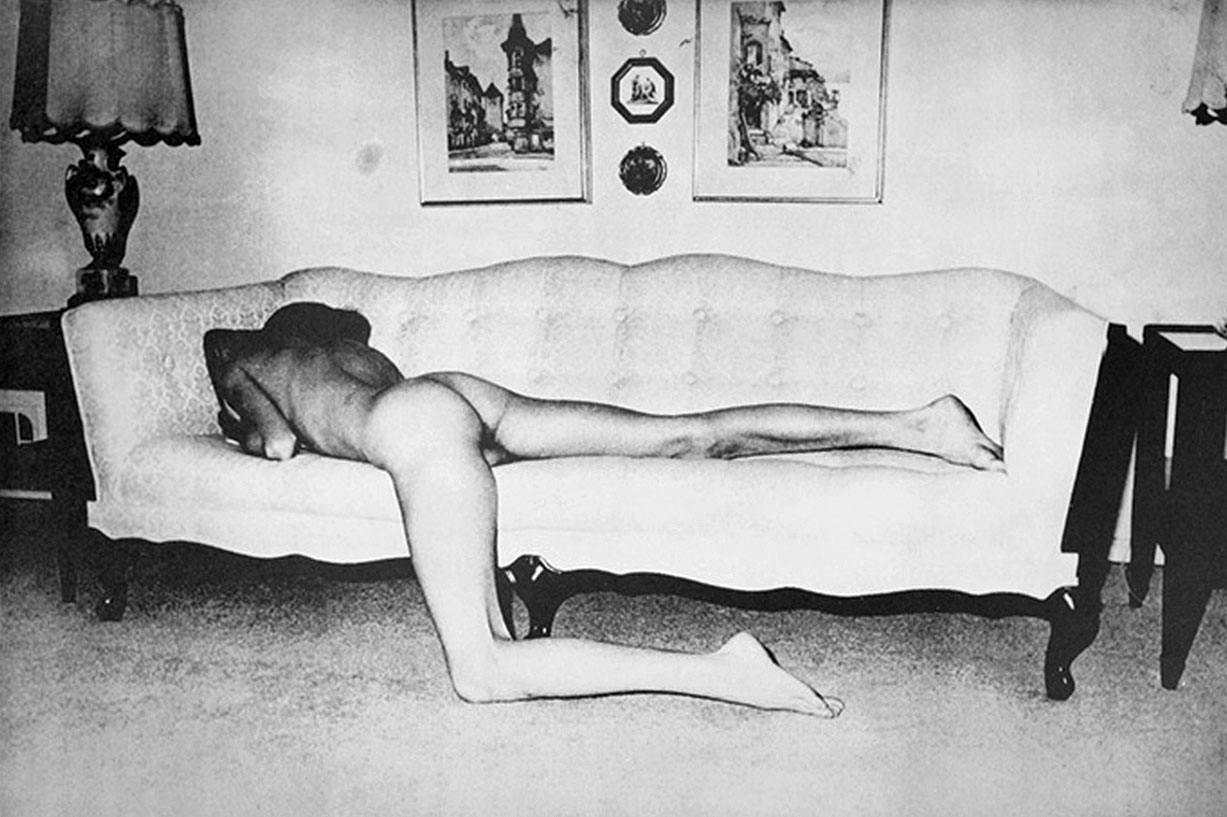
 

Jimmy DeSana (American, 1949-1990) 'Untitled' 1972 From the series '101 Nudes'


Jimmy DeSana (American, 1949-1990)
Untitled
1972
From the series 101 Nudes
Offset prints in custom portfolio box, fifty-six parts
Each: 11 × 14 inches (27.9 × 35.6cm)
Courtesy of the Jimmy DeSana Trust and P·P·O·W Gallery, New York
© Estate of Jimmy DeSana
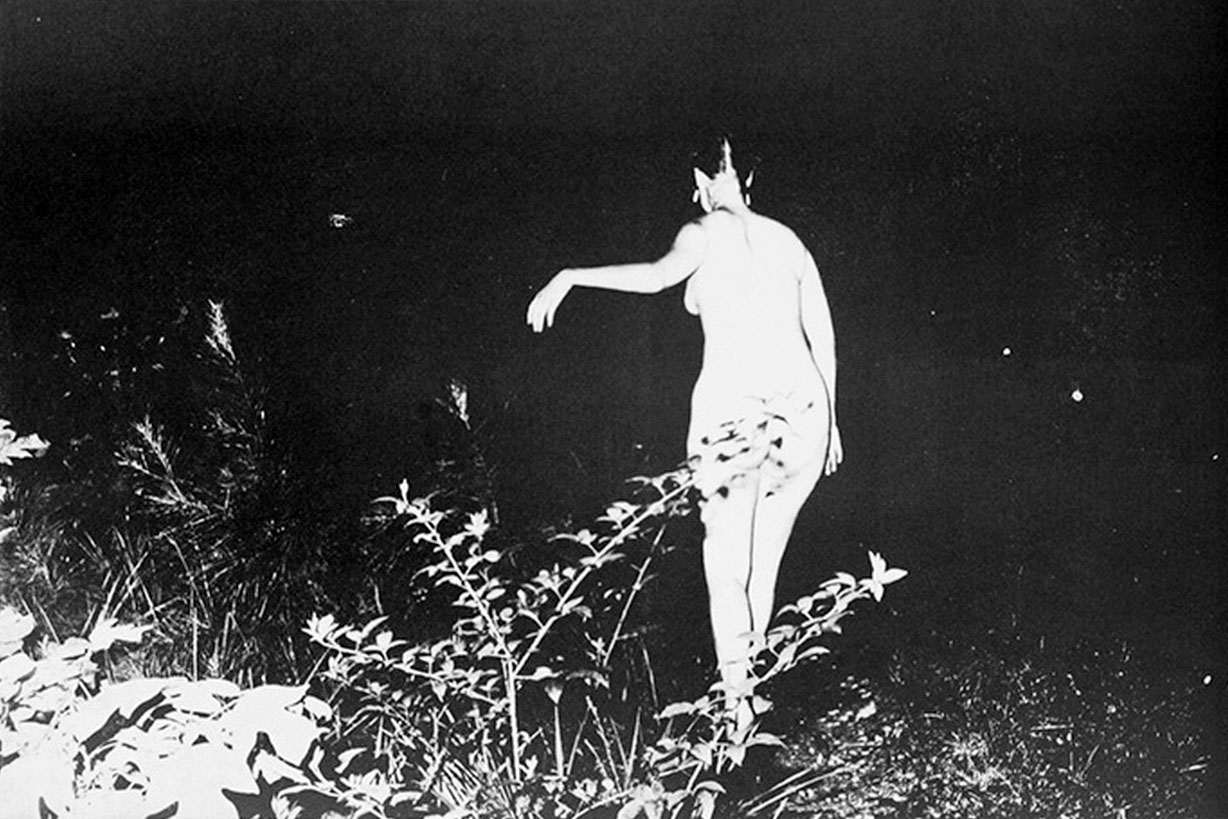
 

Jimmy DeSana (American, 1949-1990) 'Untitled' 1972 From the series '101 Nudes'


Jimmy DeSana (American, 1949-1990)
Untitled
1972
From the series 101 Nudes
Offset prints in custom portfolio box, fifty-six parts
Each: 11 × 14 inches (27.9 × 35.6cm)
Courtesy of the Jimmy DeSana Trust and P·P·O·W Gallery, New York
© Estate of Jimmy DeSana


Against a backdrop of gay liberation and censorship in early 1970s Atlanta, DeSana combined his explorations of suburban culture and nude figures into a final thesis project. In 1970-1972, DeSana staged photographs of his mostly queer friends, including the notorious drag performer Diamond Lil, nude in suburban environments. While other Conceptual artists were focused on the architectural homogeneity of suburbia, in 101 Nudes DeSana penetrated the veneer of seriality and conformity.

According to DeSana, both his subjects’ poses and his halftone reproduction techniques mimicked images from mass-market, soft-core pornographic magazines that emerged during his youth. The title sends up that of the wholesome 1961 Disney animated film 101 Dalmatians, which was rereleased in 1972. DeSana would continue to draw from and parody popular cultural forms into the early 1980s.

Exhibition label
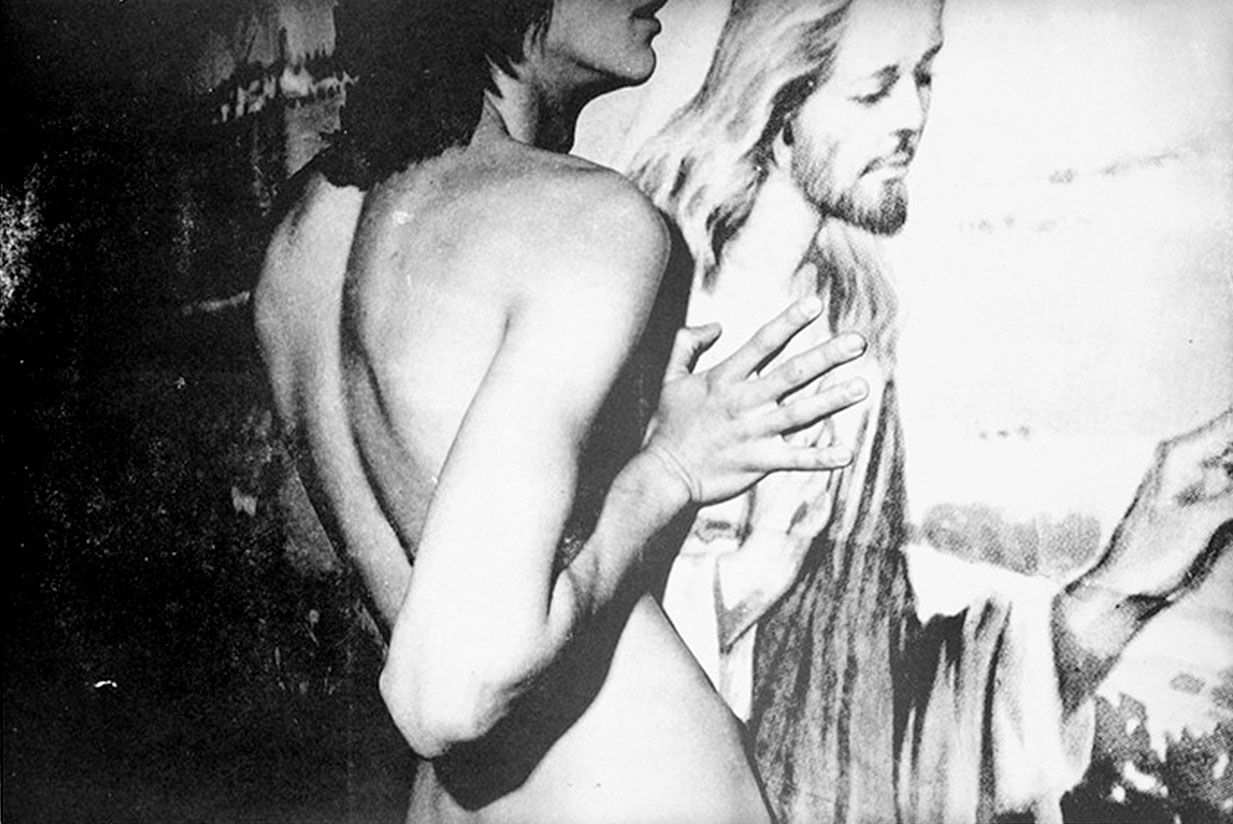
 

Jimmy DeSana (American, 1949-1990) 'Untitled' 1972 From the series '101 Nudes'


Jimmy DeSana (American, 1949-1990)
Untitled
1972
From the series 101 Nudes
Offset prints in custom portfolio box, fifty-six parts
Each: 11 × 14 inches (27.9 × 35.6cm)
Courtesy of the Jimmy DeSana Trust and P·P·O·W Gallery, New York
© Estate of Jimmy DeSana
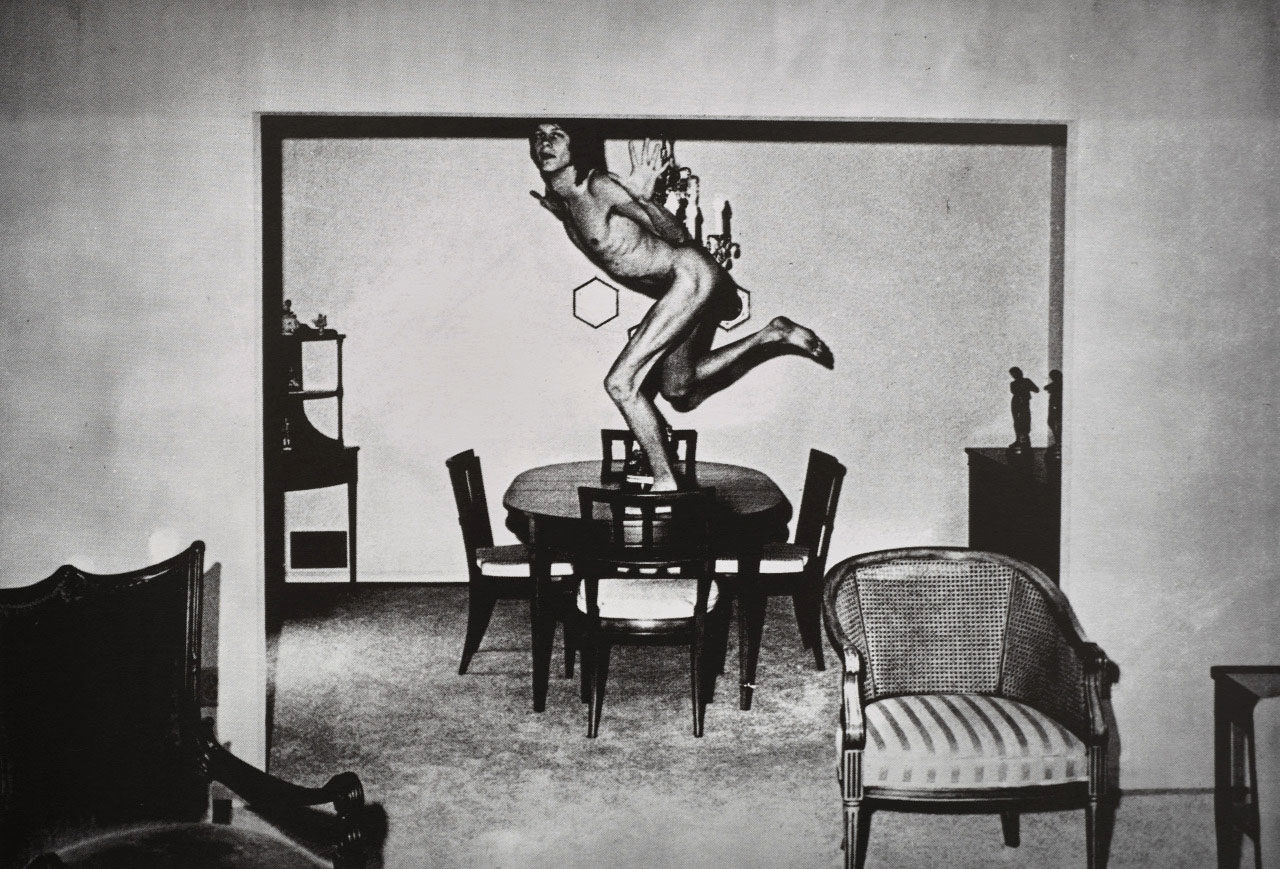
 

Jimmy DeSana (American, 1949-1990) 'Untitled' 1972 From the series '101 Nudes'


Jimmy DeSana (American, 1949-1990)
Untitled
1972
From the series 101 Nudes
Offset print
12 3/4 × 8 1/2 in. (32.4 × 21.6 cm)
Courtesy of the Jimmy DeSana Trust and P·P·O·W Gallery, New York
© Estate of Jimmy DeSana
Photo: Allen Phillips


Against a backdrop of policing, censorship, and gay liberation in early 1970s Atlanta, DeSana staged photographs of his mostly queer friends, including the notorious drag performer Diamond Lil, nude in suburban environments. While other Conceptual artists using photography like Dan Graham were focused on the architectural homogeneity of suburbia, in “101 Nudes,” a portfolio of 56 photolithographic prints, DeSana penetrated the veneer of seriality and conformity.

Both his subjects’ poses and his halftone reproduction techniques mimicked images from mass-market, soft-core pornographic magazines that emerged during the artist’s youth. The title sends up that of the wholesome 1961 Disney animated film 101 Dalmatians, which was rereleased in 1972.

DeSana eventually sent copies of the portfolio through the mail, which served as an alternative channel for sharing Conceptual art and challenging the privileged spaces of museums and commercial galleries during these years. He embraced “correspondence art” in part to connect with other gay artists and construct identities that defied mainstream standards of “respectability” for gay people.

Text from the Brooklyn Museum Tumblr website
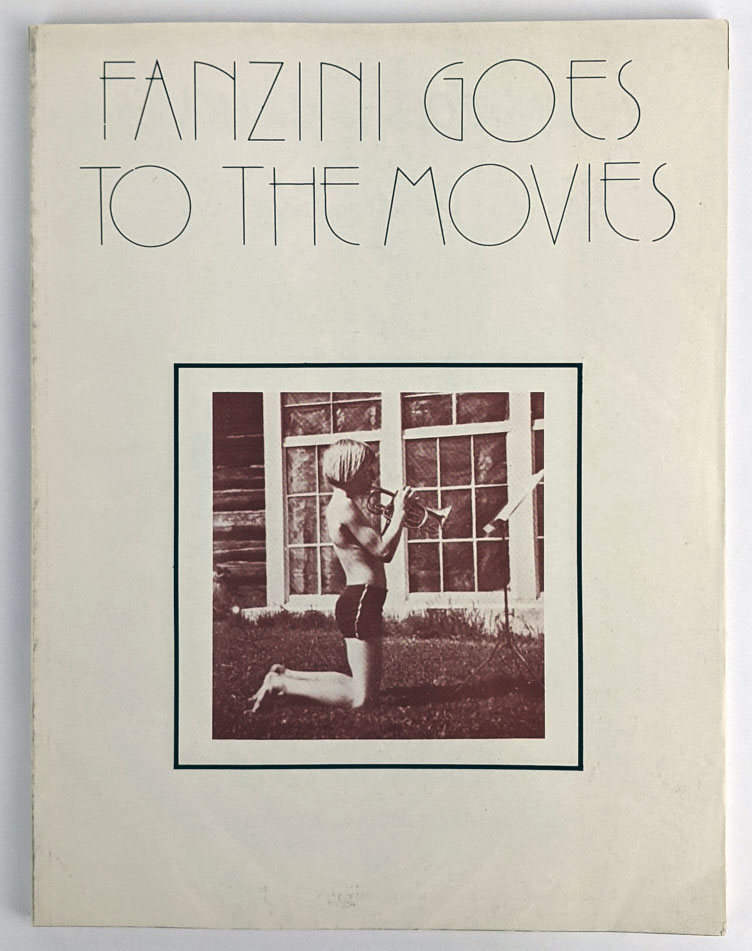
 

John Jack Baylin 'Fanzini Goes to the Movies' 1974


John Jack Baylin
Fanzini Goes to the Movies
1974
Periodical; offset print
11 × 8 1/2 in. (27.9 × 21.6cm)
Courtesy of Philip Aarons and Shelley Fox Aarons
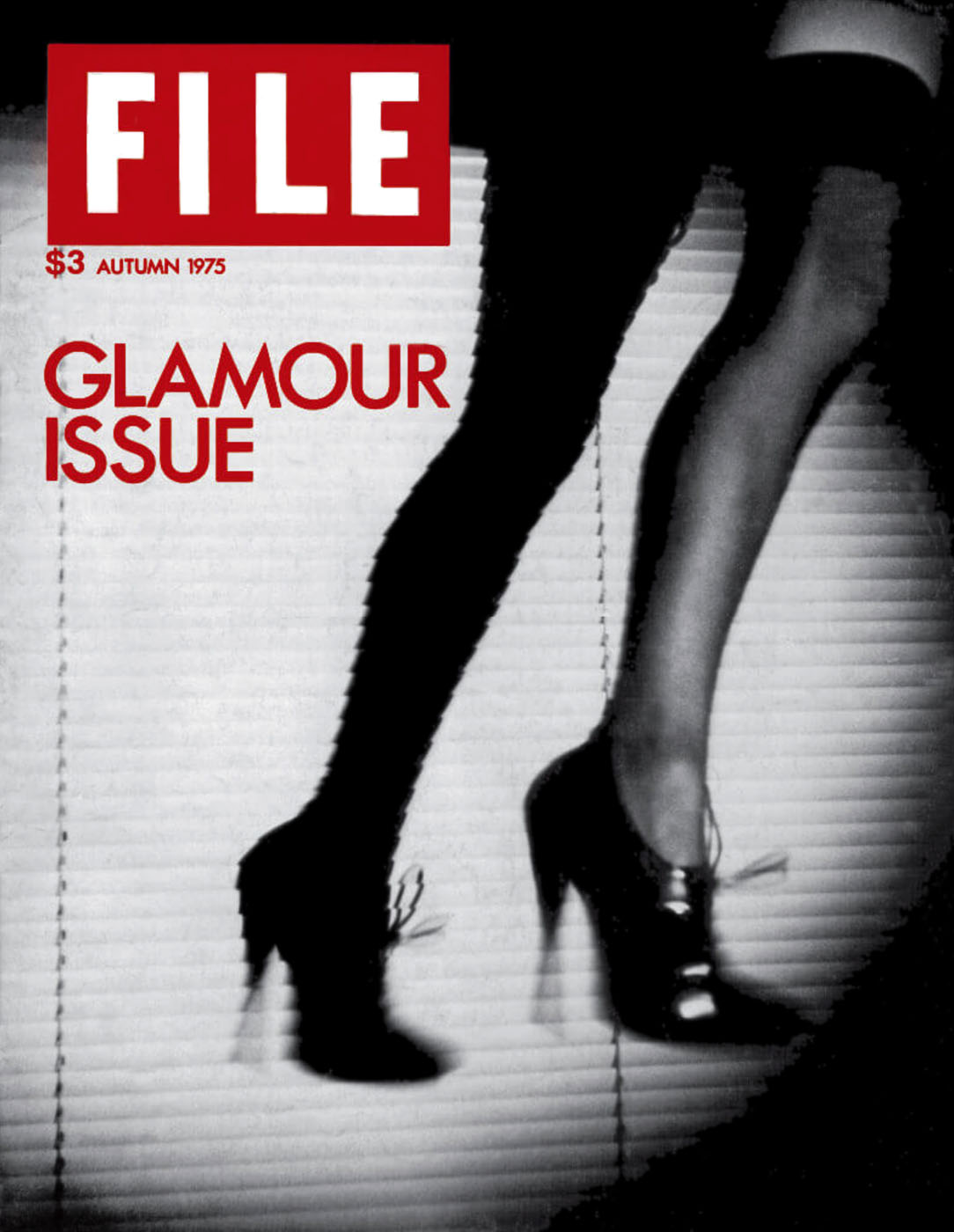
 

General Idea, Canadian, 1969-1994. 'File, vol. 3, no. 1, "Glamour" issue' Autumn 1975


Publisher: General Idea, Canadian, 1969-1994
File, vol. 3, no. 1, “Glamour” issue
Autumn 1975
Periodical; off-set print, staple bound, illustrated wrappers
14 × 10 11/16 in. (35.6 × 27.1cm)
Collection of Philip Aarons and Shelley Fox Aarons
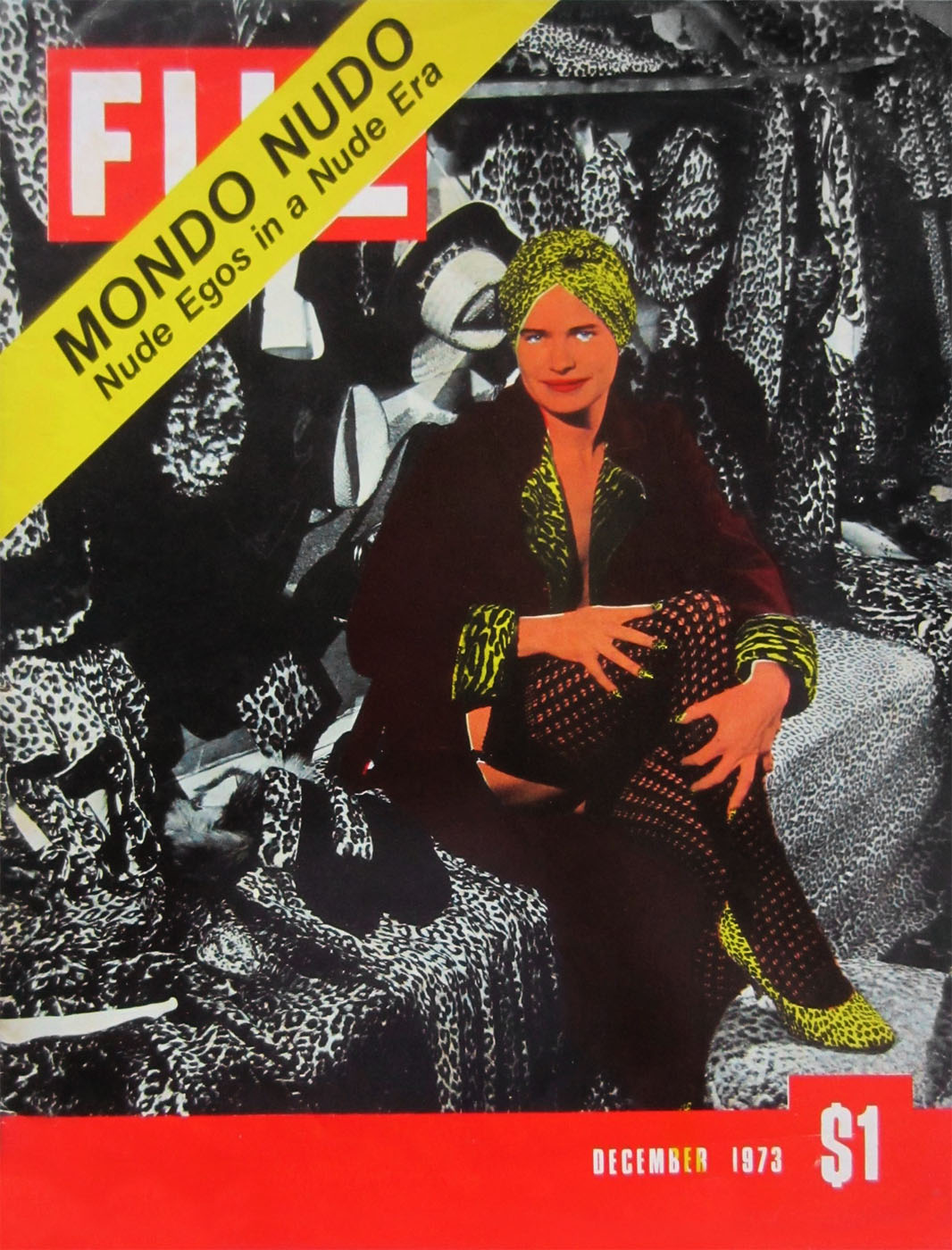
 

General Idea, Canadian, 1969-1994. 'File, vol. 2, no. 4, "Mondo Nudo" issue' December 1973


Publisher: General Idea, Canadian, 1969-1994
File, vol. 2, no. 4, “Mondo Nudo” issue
December 1973
Periodical; offset print, staple bound, illustrated wrappers
14 × 10 3/4 in. (35.6 × 27.3cm)
Collection of Philip Aarons and Shelley Fox Aarons
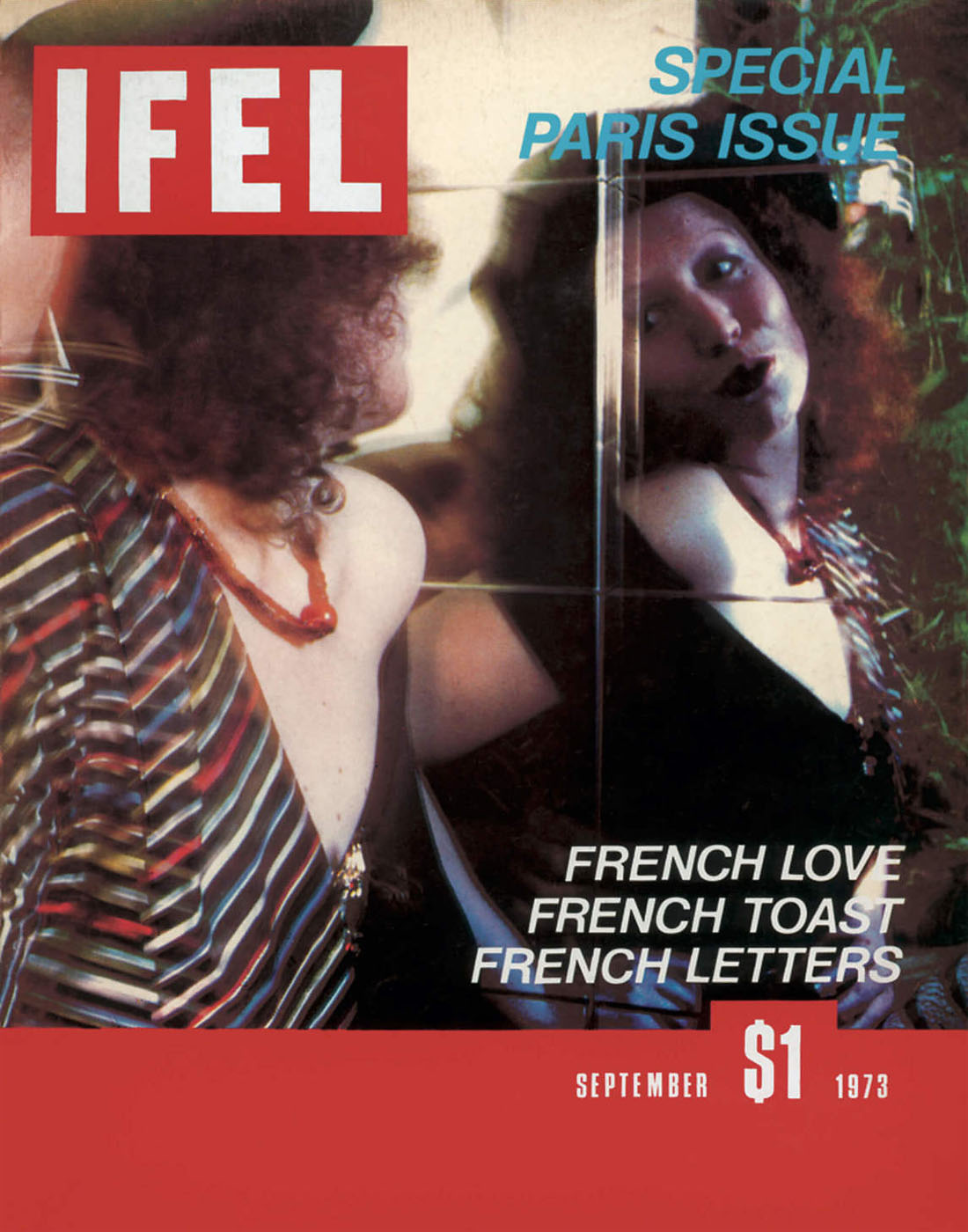
 

General Idea, Canadian, 1969-1994 'File, vol. 2, no. 3, "Paris" issue' September 1973


Publisher: General Idea, Canadian, 1969-1994
File, vol. 2, no. 3, “Paris” issue
September 1973
Periodical; offset print, staple bound, illustrated wrappers
14 × 11 in. (35.6 × 27.9cm)
Collection of Philip Aarons and Shelley Fox Aarons
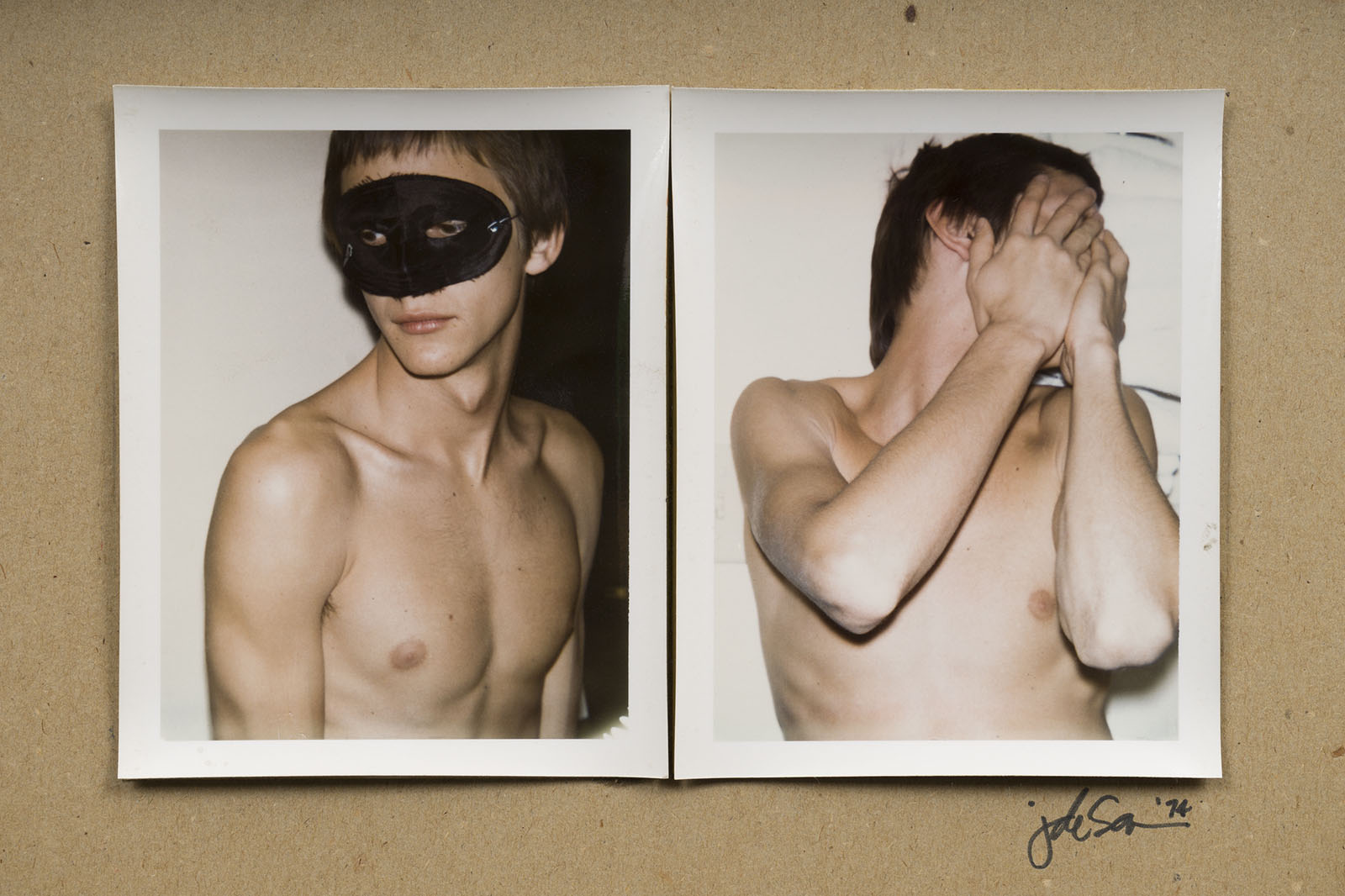
 

Jimmy DeSana (American, 1949-1990) 'Untitled' 1974


Jimmy DeSana (American, 1949-1990)
Untitled
1974
Dye diffusion transfer prints
Each 4 1/4 × 3 3/8 in. (10.8 × 8.6cm)
Collection of Philip Aarons and Shelley Fox Aarons
© Estate of Jimmy DeSana
Photo: David Vu
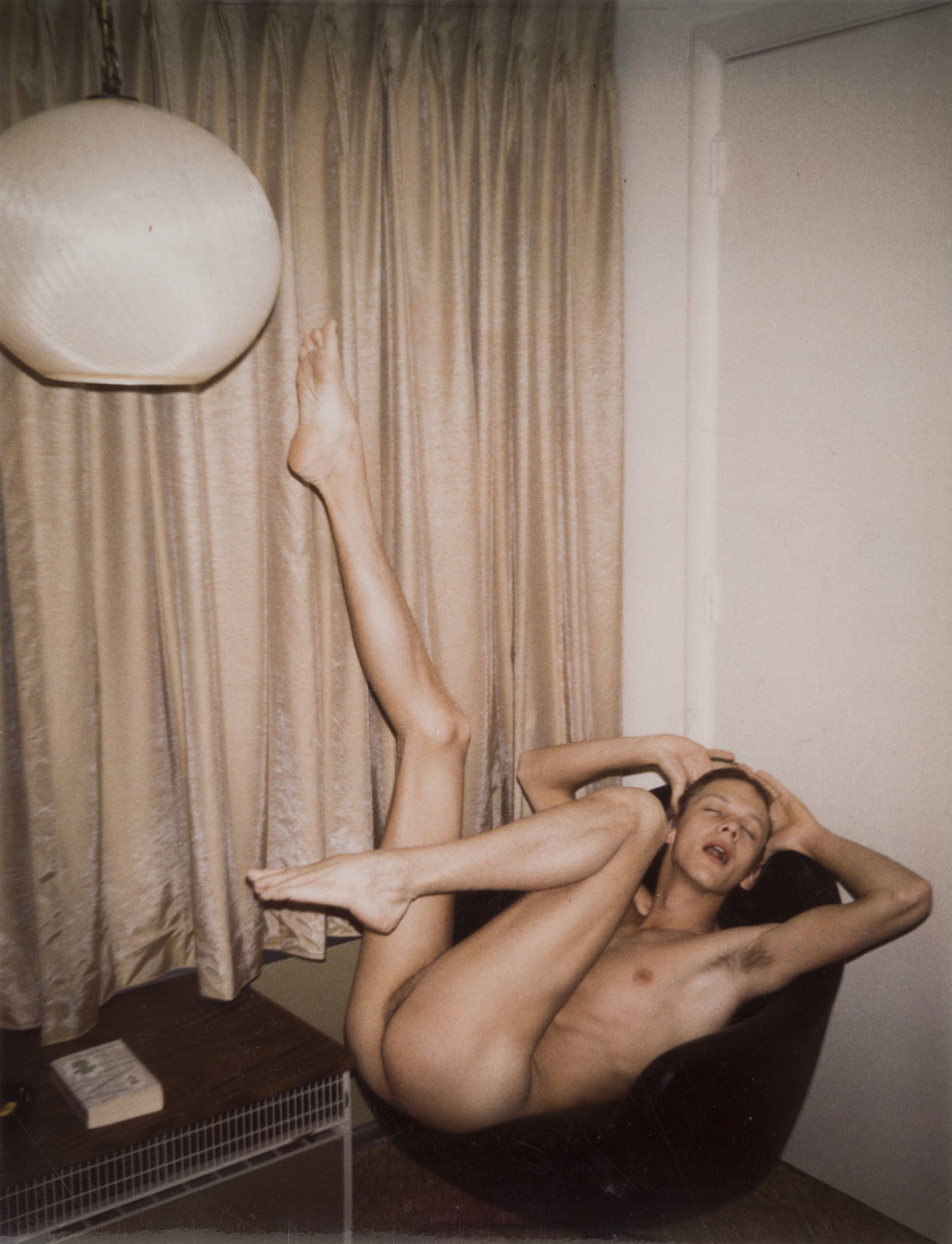
 

Jimmy DeSana (American, 1949-1990) 'Untitled' 1974


Jimmy DeSana (American, 1949-1990)
Untitled
1974
Dye diffusion transfer print
4 1/4 × 3 3/8 in. (10.8 × 8.6cm)
Collection of Philip Aarons and Shelley Fox Aarons
© Estate of Jimmy DeSana
Photo: David Vu


Fluxus and Dada Daddies
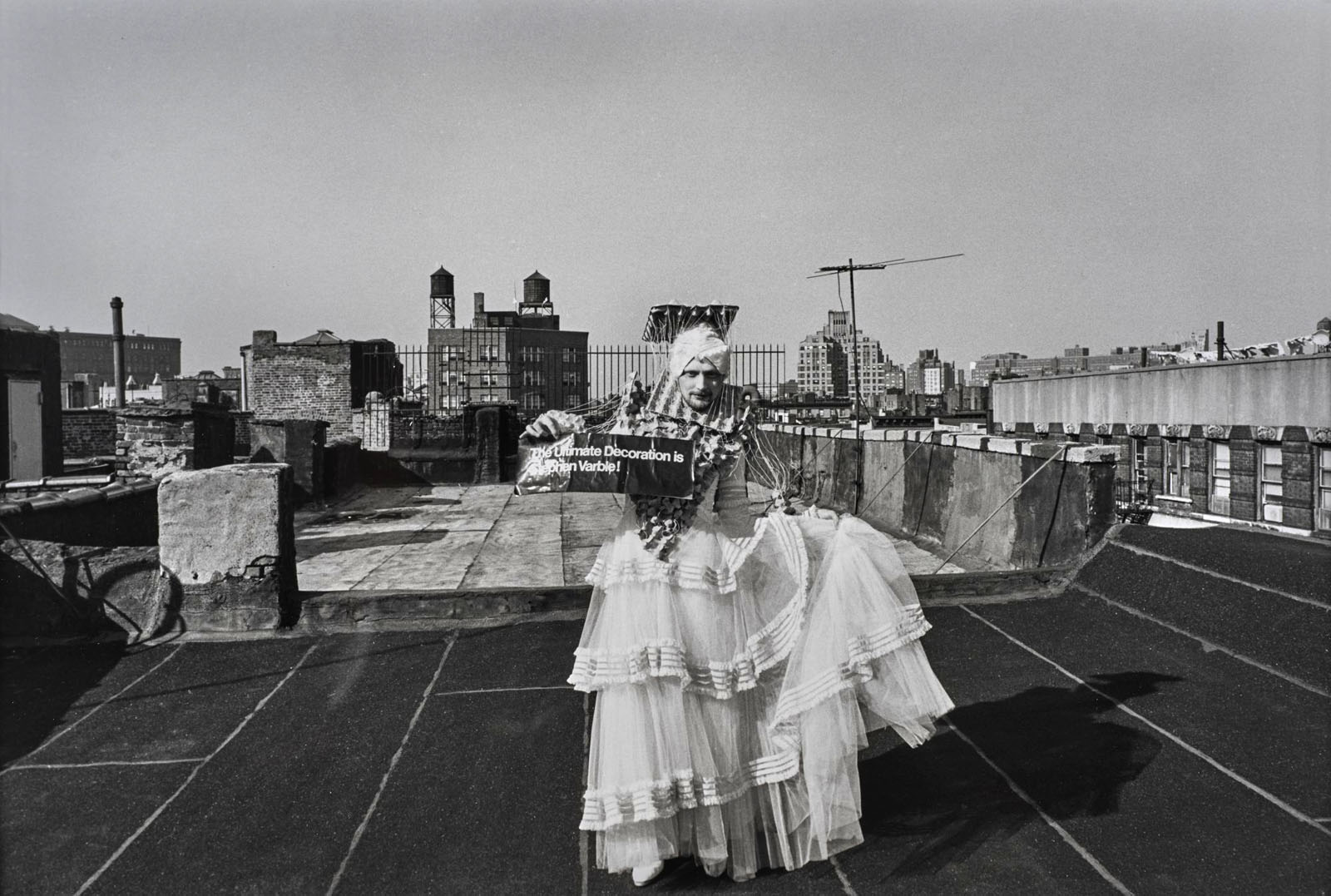
 

Jimmy DeSana (American, 1949-1990) 'Stephen Varble' 1975


Jimmy DeSana (American, 1949-1990)
Stephen Varble
1975
Gelatin silver print
11 1/4 × 16 1/2 in. (28.6 × 41.9cm)
Courtesy of the Jimmy DeSana Trust and P·P·O·W Gallery, New York
© Estate of Jimmy DeSana
Photo: Allen Phillips


During the golden age of downtown performance art in the 1970s, Jimmy DeSana documented the work of numerous artists, sometimes for income.

In 1975, he photographed public interventions by Stephen Varble, an artist who performed his “Gutter Art” in the streets of Soho and Midtown, while wearing his signature gender-bending ensembles. As the critic Gregory Battcock put it, Varble came to be “considered by some the embarrassment of SoHo, and by others the only touch of real genius south of Houston Street.” DeSana’s photographs of Varble appeared in publications during this time, including General Idea’s FILE Megazine.

DeSana’s photographs are invaluable records of an ephemeral practice, which has only recently been given its proper due thanks in part to the work of art historian David Getsy.

Text from the Brooklyn Museum Tumblr website
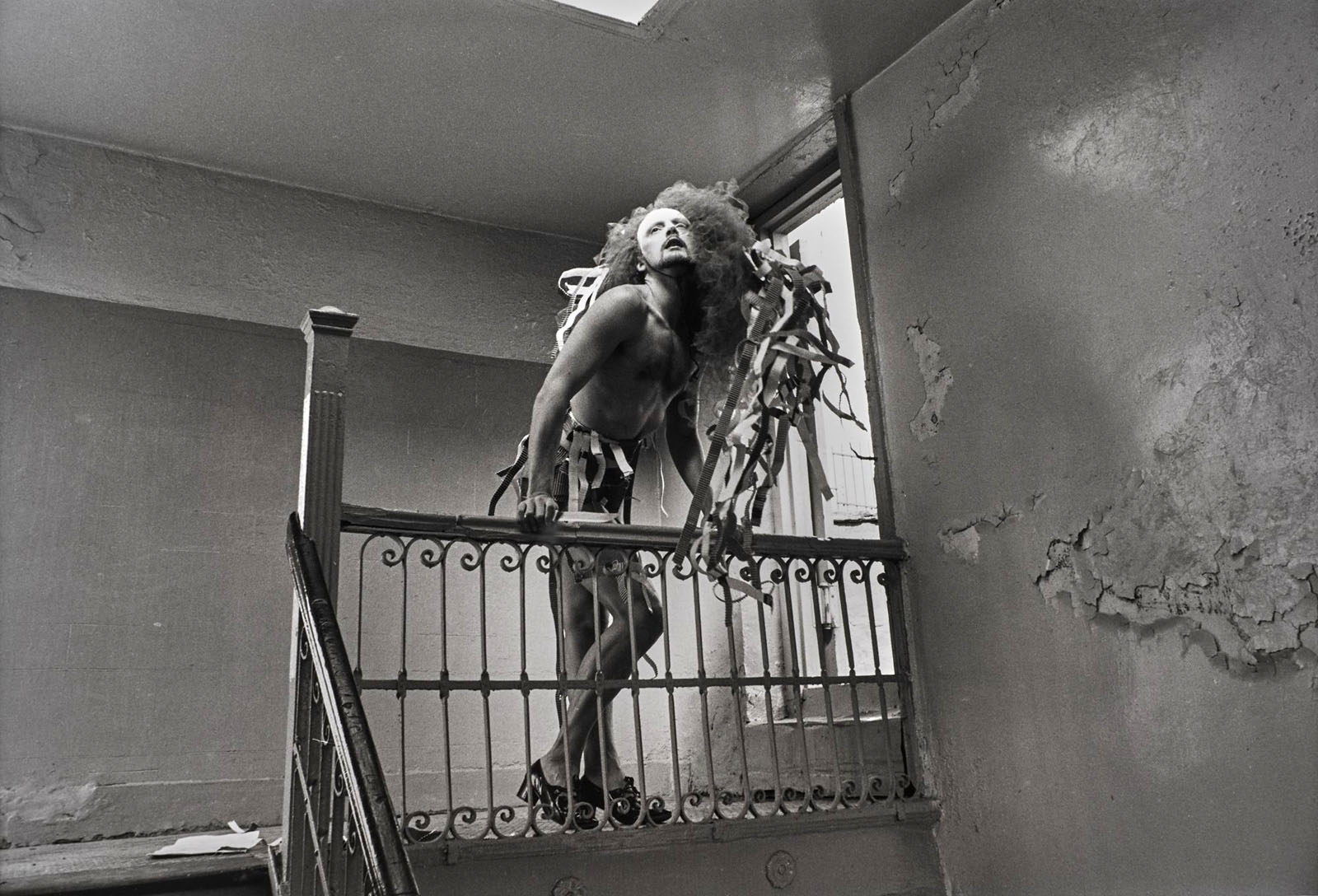
 

Jimmy DeSana (American, 1949-1990) 'Stephen Varble' 1975


Jimmy DeSana (American, 1949-1990)
Stephen Varble
1975
Gelatin silver print, printed later
18 1/4 × 23 3/4 in. (46.4 × 60.3cm)
Courtesy of the Jimmy DeSana Trust and P·P·O·W Gallery, New York
© Estate of Jimmy DeSana
Photo: Allen Phillips


Throughout the 1970s, Jimmy DeSana created campy portraits of his extended circle of friends and collaborators in New York, which included musicians, filmmakers, writers, artists, critics, and curators.

Performance artist and fixture of New York City’s downtown scene Stephen Varble, shown here, was one of DeSana’s repeat subjects. DeSana captured many of the performances staged by Varble whose guerilla practices served as commentary on gender identity, class, and capitalism. These performance-based and ephemeral events would continue to inform DeSana’s work in photography throughout the 1970s and 1980s.
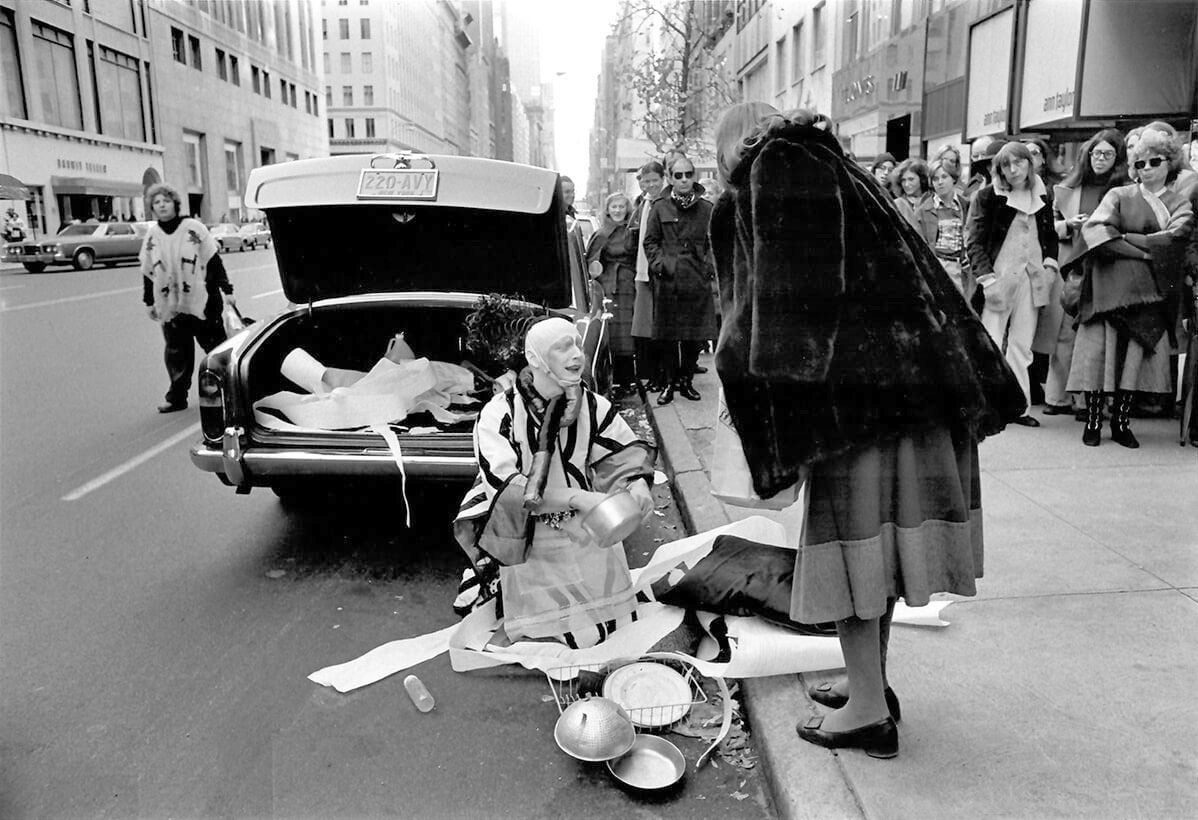
 

Jimmy DeSana (American, 1949-1990) 'Stephen Varble' 1975


Jimmy DeSana (American, 1949-1990)
Stephen Varble
1975
Gelatin silver print
8 × 10 in. (20.3 × 25.4cm)
Courtesy of the Jimmy DeSana Trust and P·P·O·W, New York
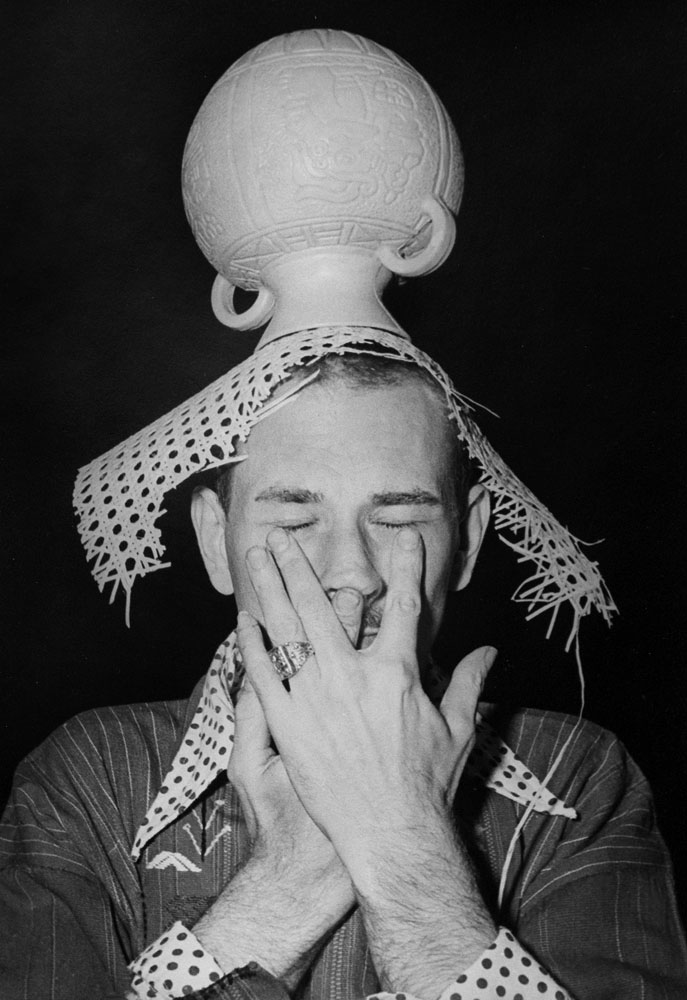
 

Jimmy DeSana (American, 1949-1990) 'Jack Smith' c. 1976


Jimmy DeSana (American, 1949-1990)
Jack Smith
c. 1976
Gelatin silver print
7 × 6 in. (17.8 × 15.2 cm)
Courtesy of the Jimmy DeSana Trust and P·P·O·W, New York
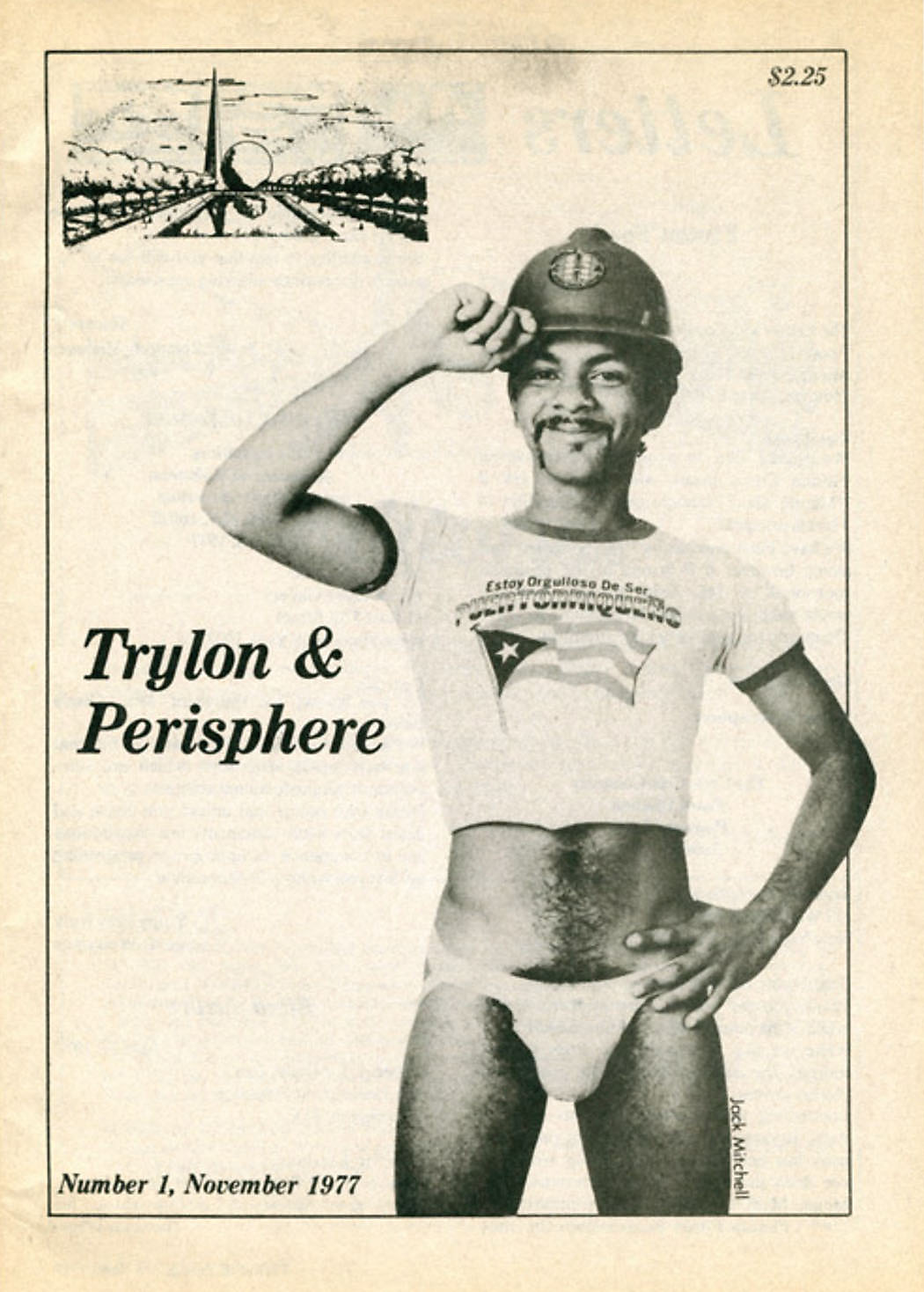
 

Gregory Battcock. 'Trylon and Perisphere, No. 1' December 1977


Gregory Battcock
Trylon and Perisphere, No. 1
December 1977
Periodical, offset print, saddle stitched, illustrated wrappers
10 × 7 in. (25.4 × 17.8cm)
Courtesy of Philip Aarons and Shelley Fox Aarons
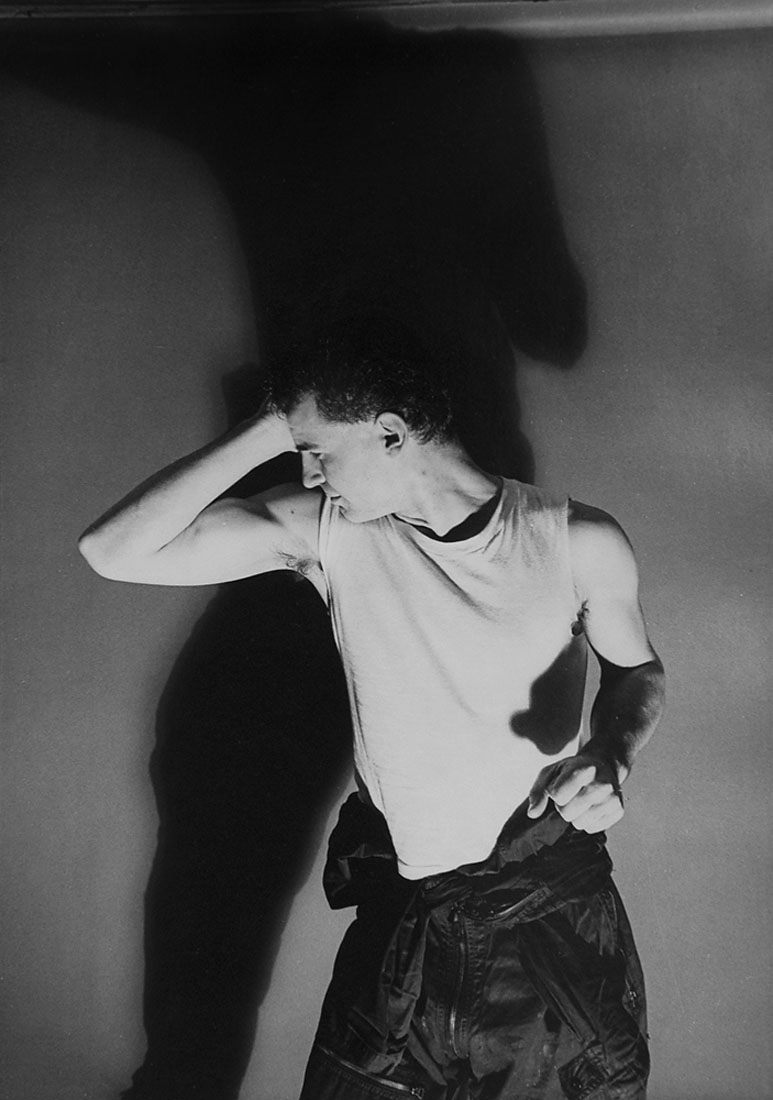
 

Jimmy DeSana (American, 1949-1990) 'Eric Mitchell' 1977


Jimmy DeSana (American, 1949-1990)
Eric Mitchell
1977
Gelatin silver print
15 3/4 × 11 1/2 in. (40 × 29.2cm)
Courtesy of the Jimmy DeSana Trust and P·P·O·W, New York
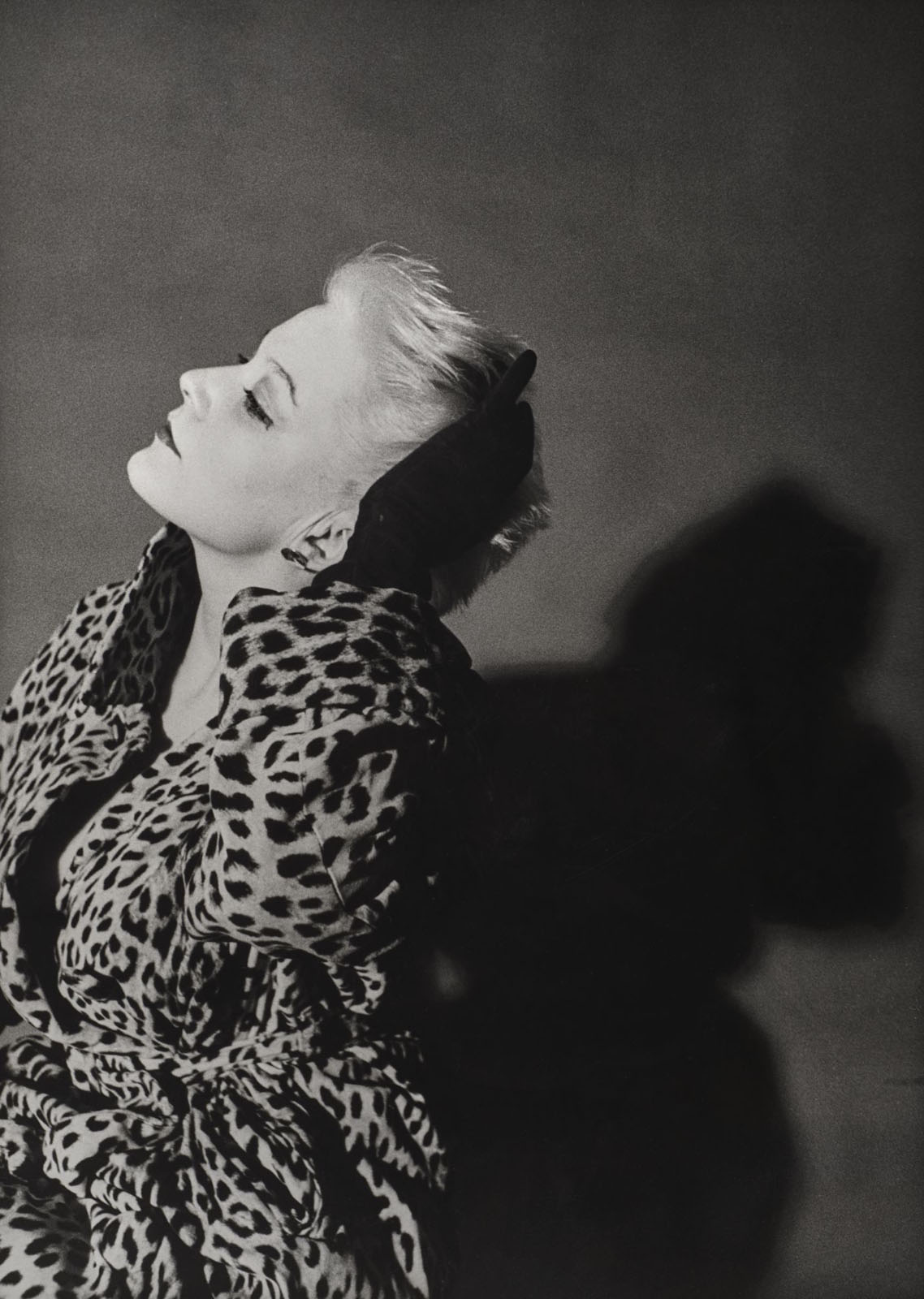
 

Jimmy DeSana (American, 1949-1990) 'Patti Astor' 1977


Jimmy DeSana (American, 1949-1990)
Patti Astor
1977
Gelatin silver print
15 7/8 × 11 1/2 in. (40.3 × 29.2cm)
Courtesy of the Jimmy DeSana Trust and P·P·O·W Gallery, New York
© Estate of Jimmy DeSana. (Photo: Allen Phillips)
 

Jimmy DeSana Submission wall text


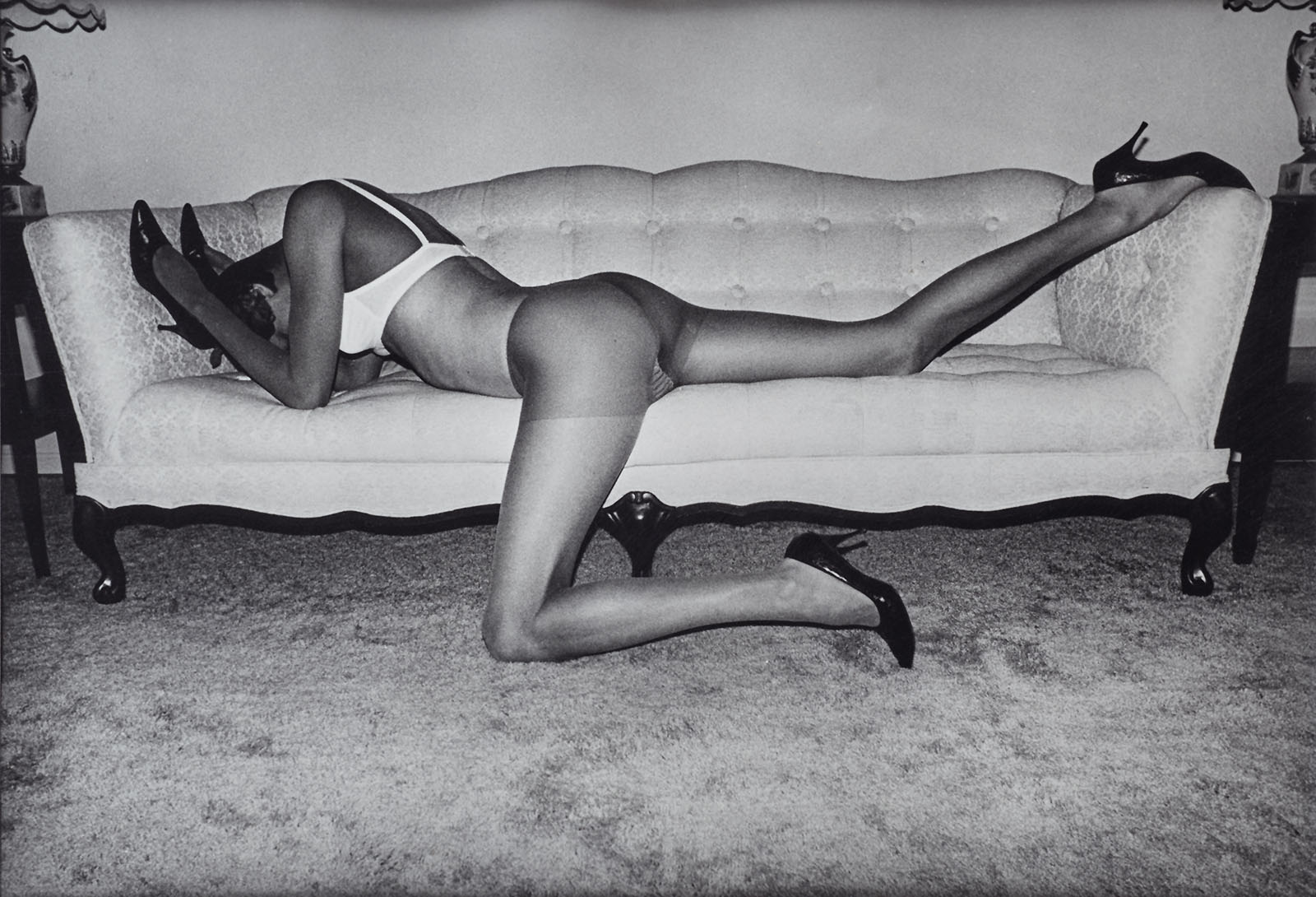
Jimmy DeSana (American, 1949-1990) 'Sofa' 1977-1978


Jimmy DeSana (American, 1949-1990)
Sofa
1977-1978
Gelatin silver print
6 1/2 × 9 1/2 in. (16.5 × 24.1cm)
Courtesy of the Jimmy DeSana Trust and P·P·O·W Gallery, New York
© Estate of Jimmy DeSana
Photo: Allen Phillips


Throughout the 1970s, Jimmy DeSana created theatrical, often comic photographs related to his sexual S-M experiences.

Like other artists in his circle, such as Laurie Simmons and AA Bronson, he parodied advertising and fashion photography, as well as the disciplinary nature of heteronormativity and consumerism in the United States. He eventually published some of these photographs in his first book, Submission (1980), which included an introduction by the punk icon William Burroughs.

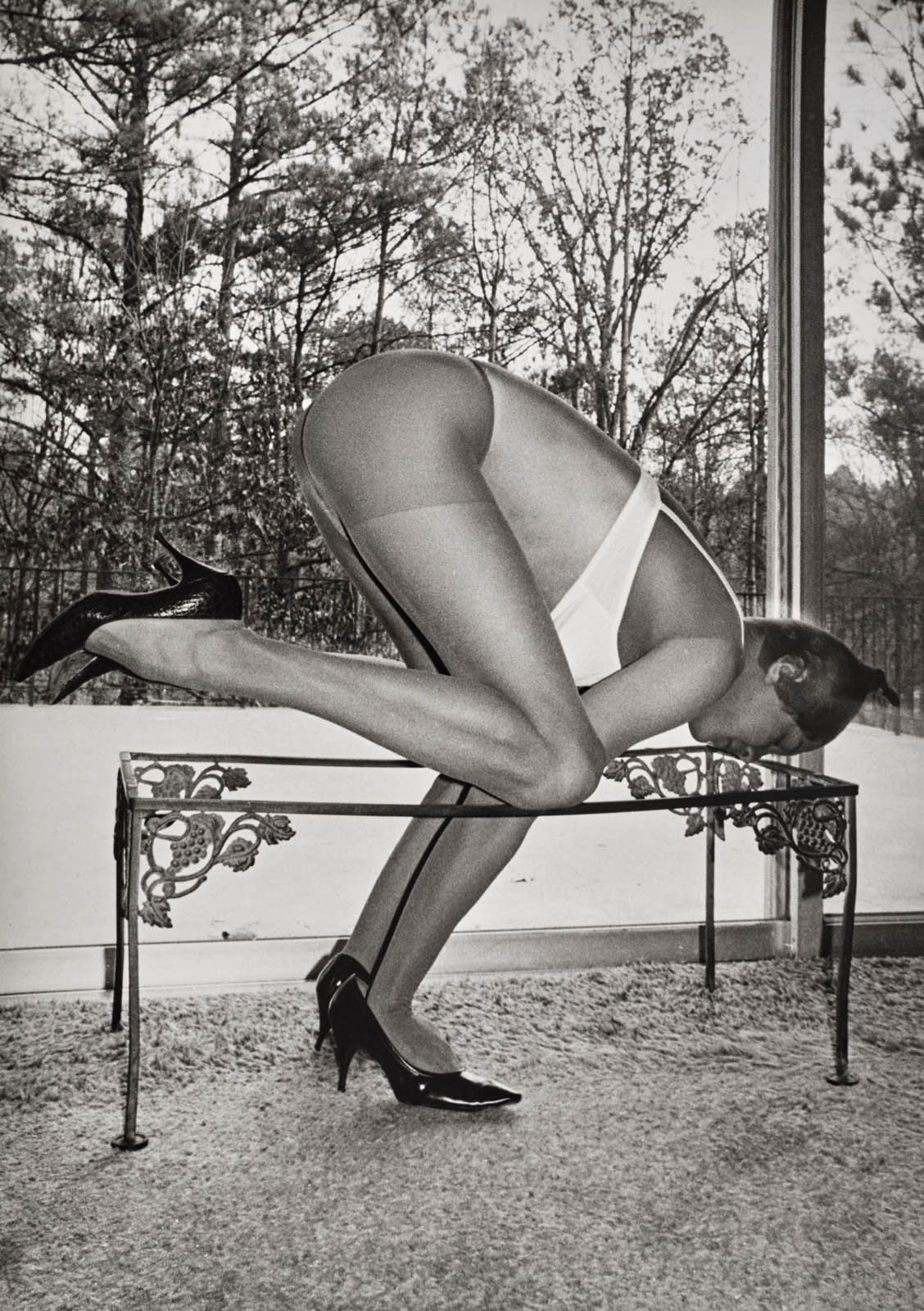
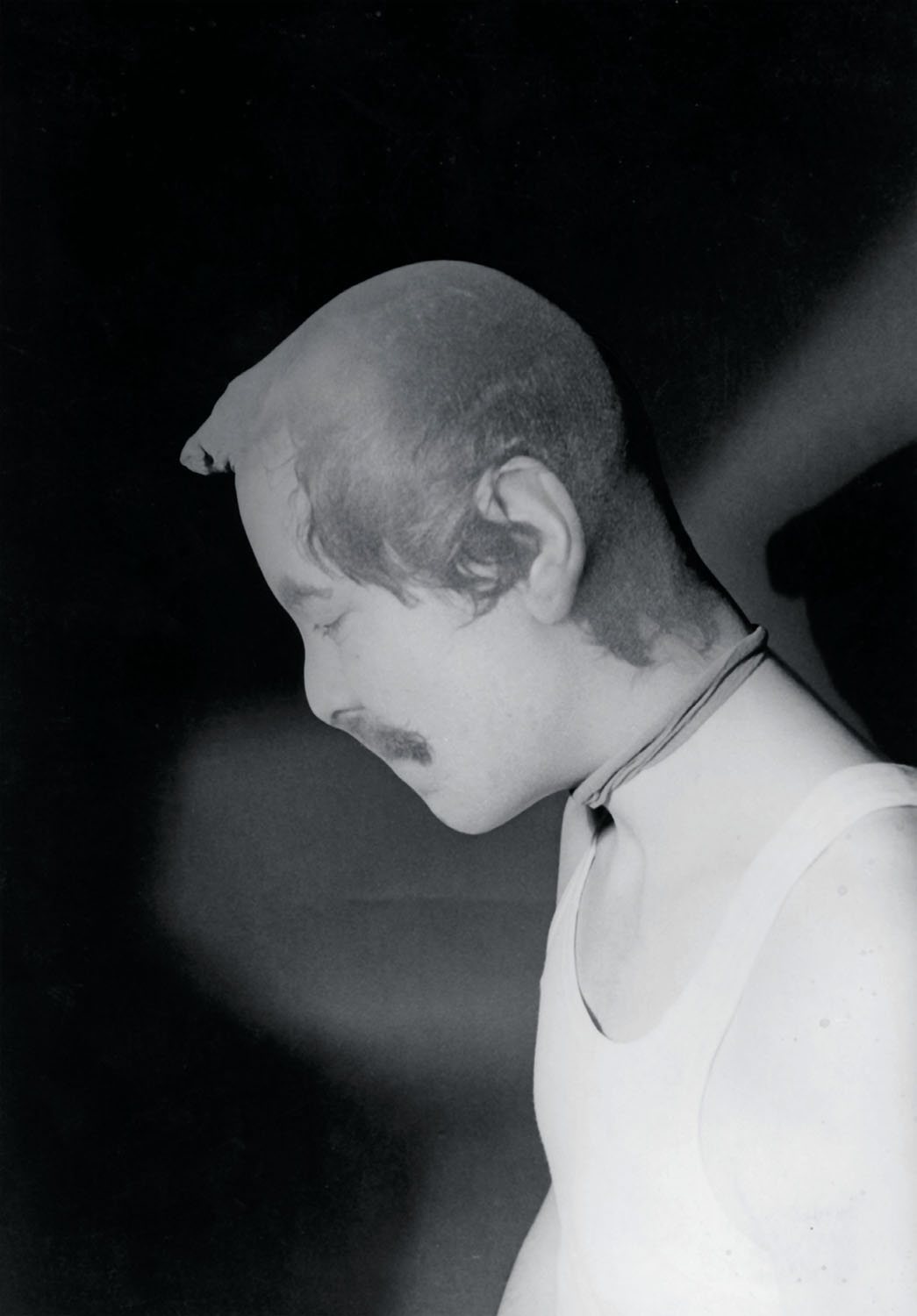
The photographs in this series typically feature nude, masked individuals eccentrically interacting with domestic interiors and objects. DeSana staged most images in his studio or the homes of friends and family. He used his signature lighting to create a heightened sense of drama and horror, calling attention to the images’ artifice. DeSana later observed: “I was trying to push sexuality to the limit. As long as I could come up with an idea that related to bizarre sexuality and still make an interesting statement about a product, the photo was successful for me.”

Text from the Brooklyn Museum Tumblr website
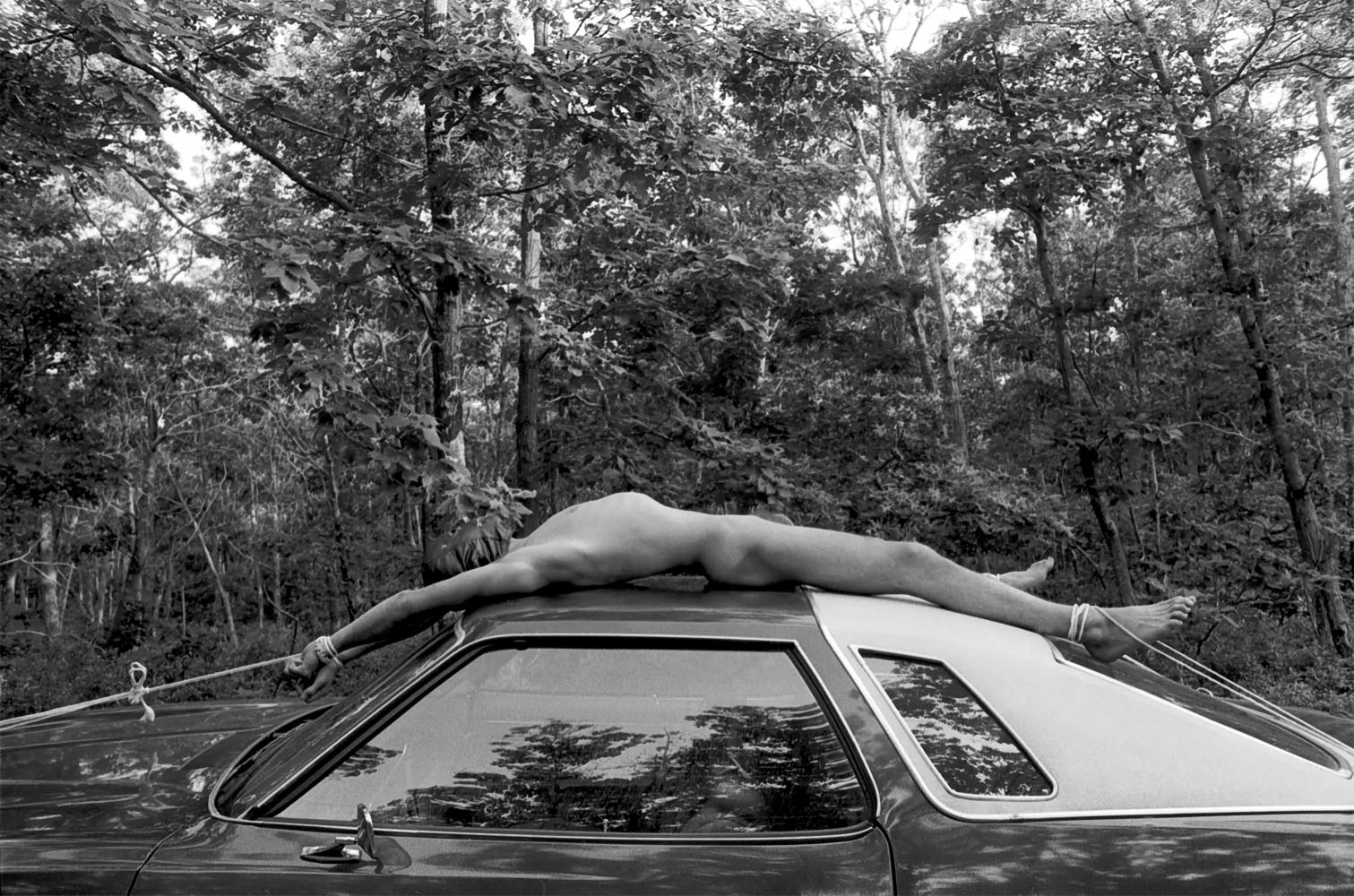
 

Jimmy DeSana (American, 1949-1990) 'Auto' 1978


Jimmy DeSana (American, 1949-1990)
Auto
1978
Gelatin silver print
6 3/4 × 9 9/16 in. (17.1 × 24.3cm)
Courtesy of the Jimmy DeSana Trust and P·P·O·W, New York
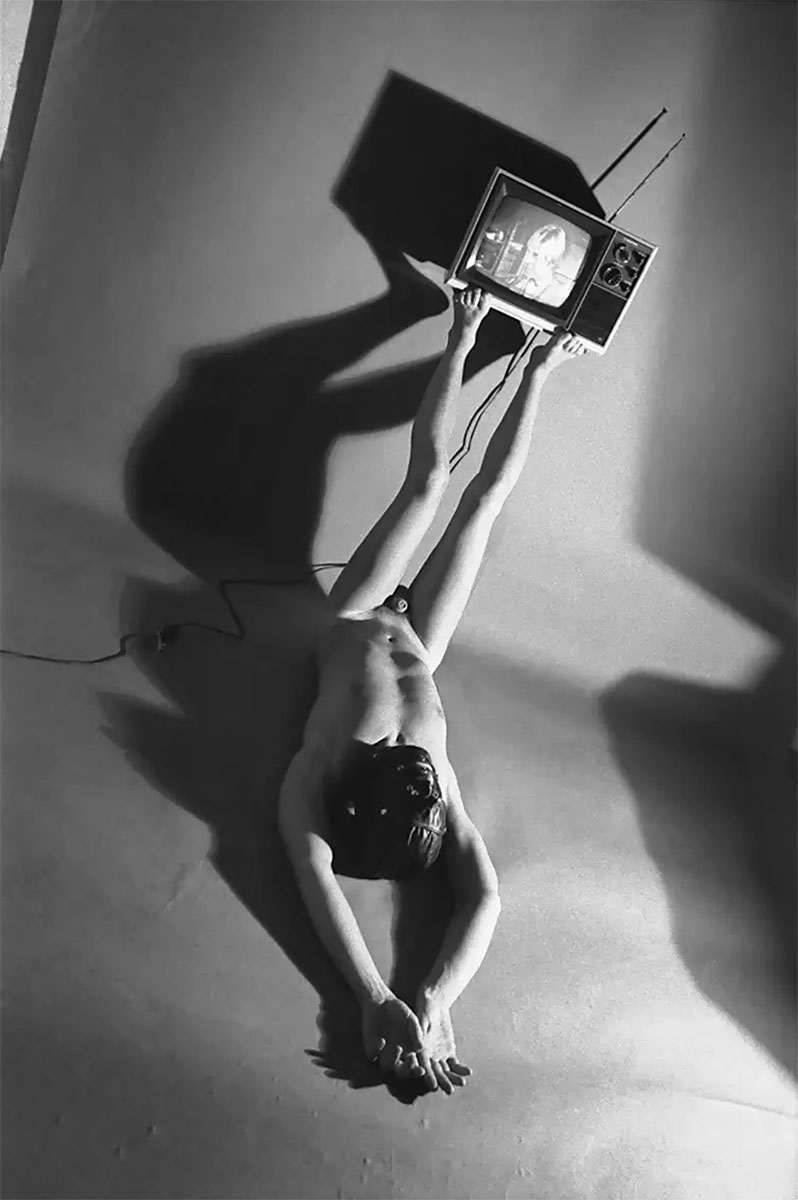
 

Jimmy DeSana (American, 1949-1990) 'Television' 1977-1978


Jimmy DeSana (American, 1949-1990)
Television
1977-1978
Gelatin silver print
12 1/4 × 8 1/4 in. (31.1 × 21cm)
Courtesy of the Jimmy DeSana Trust and P·P·O·W, New York
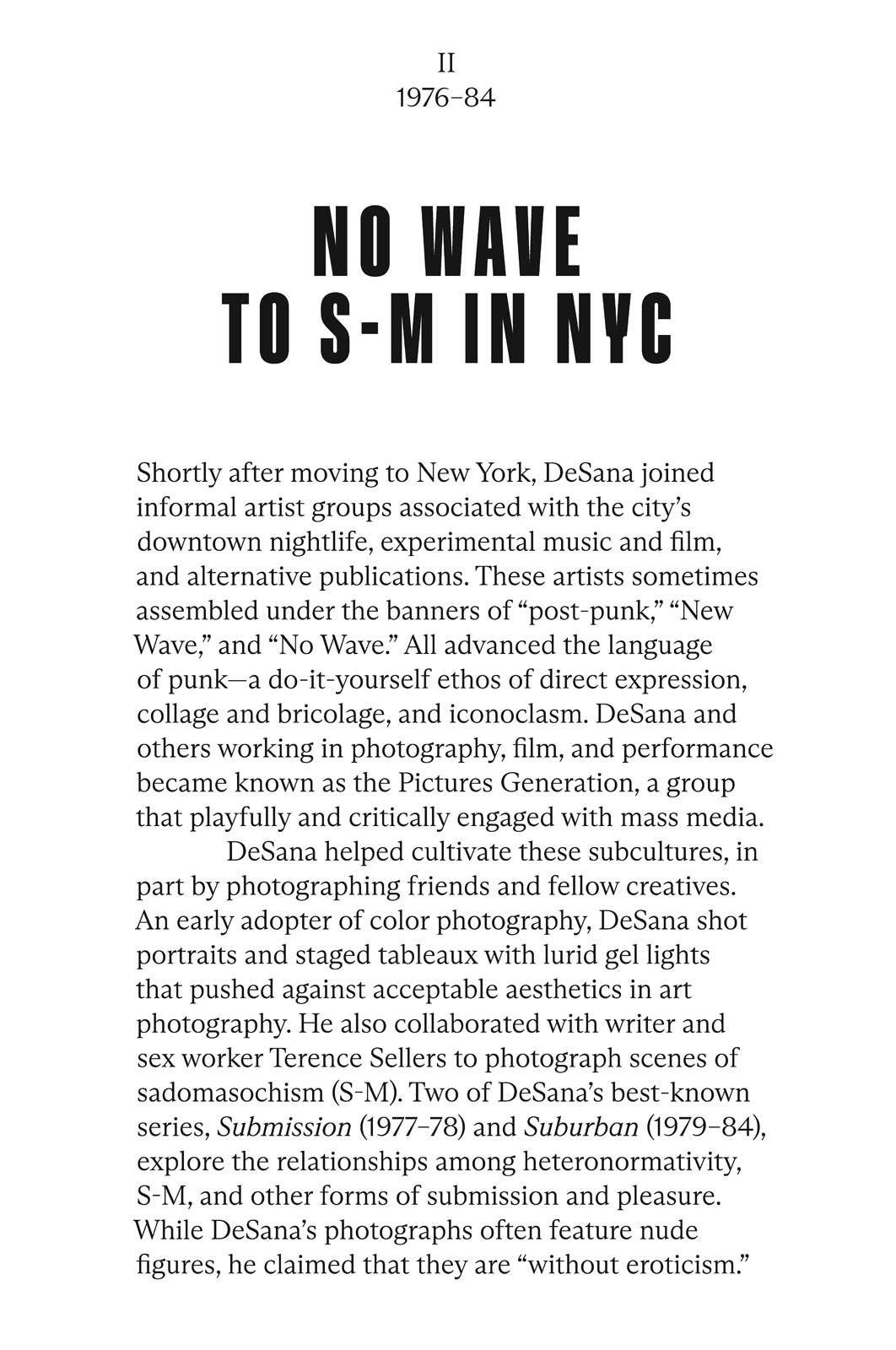
 

Jimmy DeSana No Wave to S-M in NYC wall text


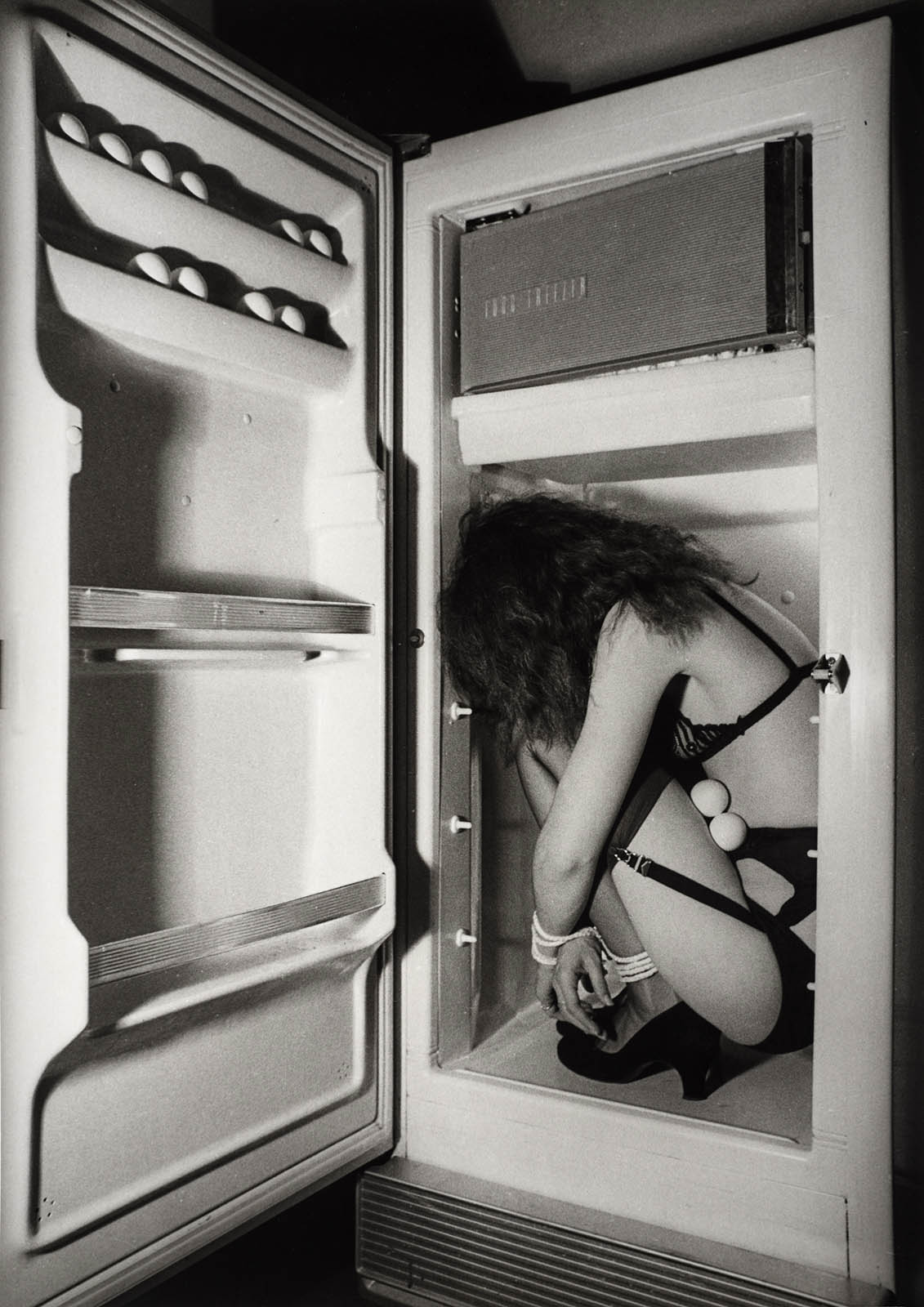
Jimmy DeSana (American, 1949-1990) 'Refrigerator' 1978


Jimmy DeSana (American, 1949-1990)
Refrigerator
1978
Gelatin silver print
9 1/2 × 6 3/4 in. (24.1 × 17.1cm)
Courtesy of the Jimmy DeSana Trust and P·P·O·W Gallery, New York
© Estate of Jimmy DeSana
Photo: Allen Phillips
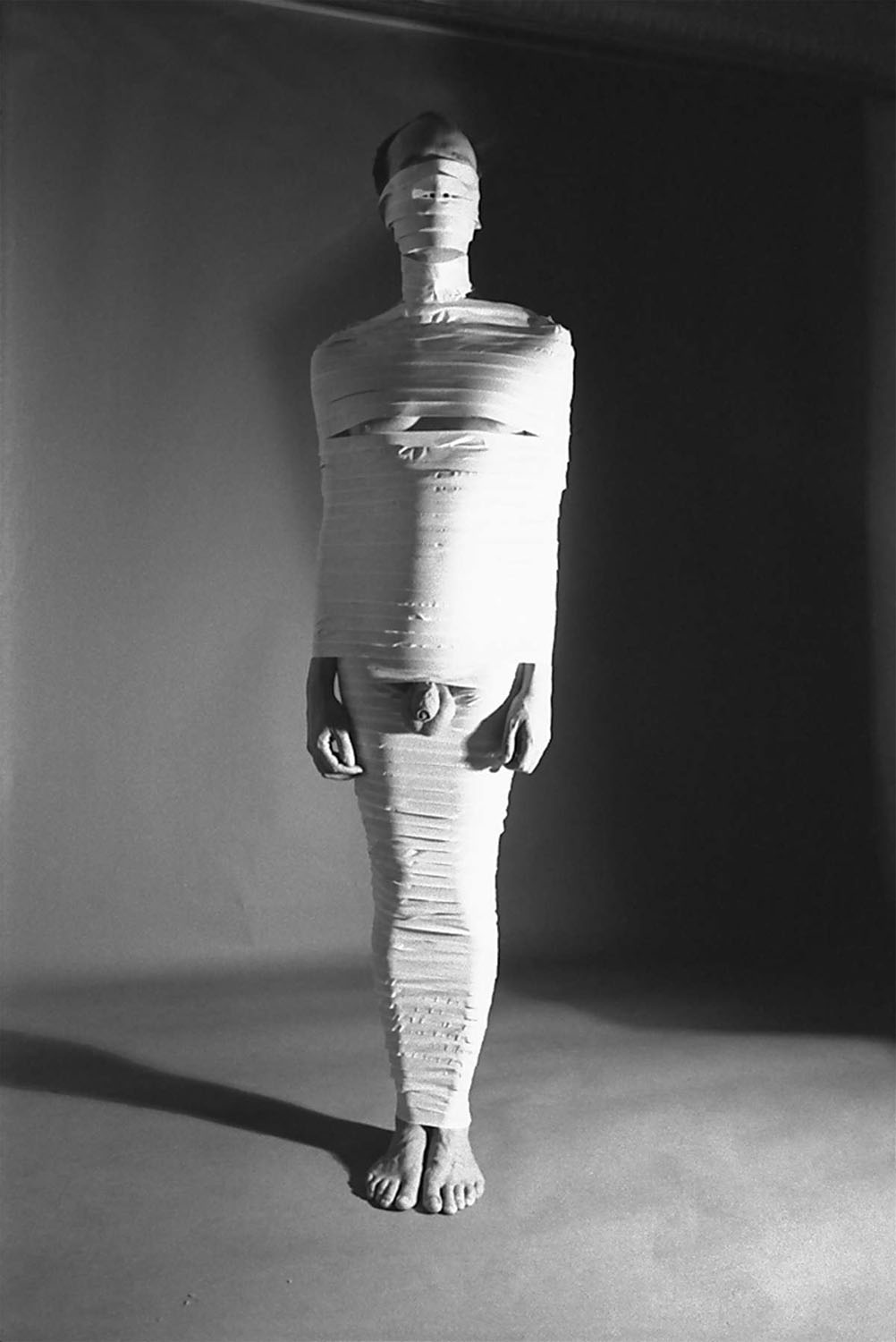
 

Jimmy DeSana (American, 1949-1990) 'Masking Tape' 1977-1978


Jimmy DeSana (American, 1949-1990)
Masking Tape
1977-1978
Gelatin silver print
9 1/2 × 6 1/2 in. (24.1 × 16.5cm)
Courtesy of the Jimmy DeSana Trust and P·P·O·W, New York
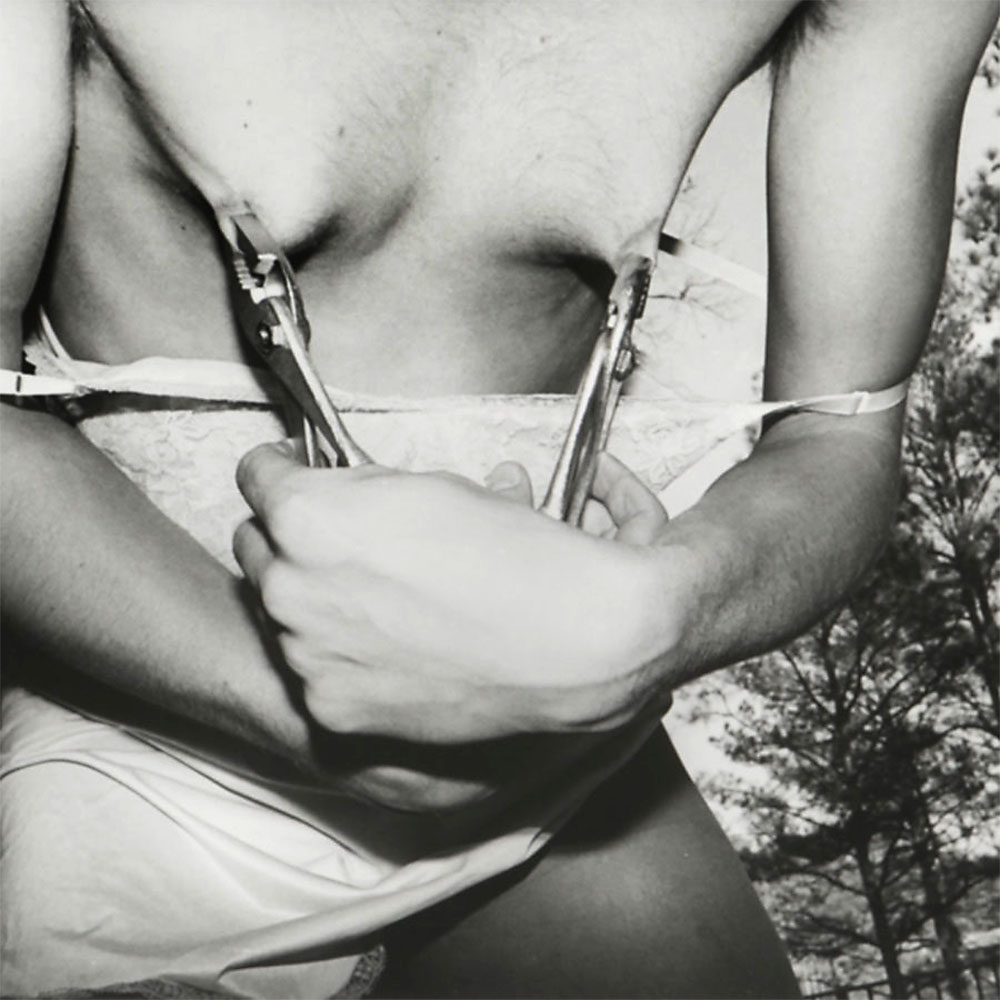
 

Jimmy DeSana (American, 1949-1990) 'Pliers' 1977-1978


Jimmy DeSana (American, 1949-1990)
Pliers
1977-1978
Gelatin silver print
6 3/4 × 9 1/4 in. (17.1 × 23.5cm)
Courtesy of the Jimmy DeSana Trust and P·P·O·W, New York
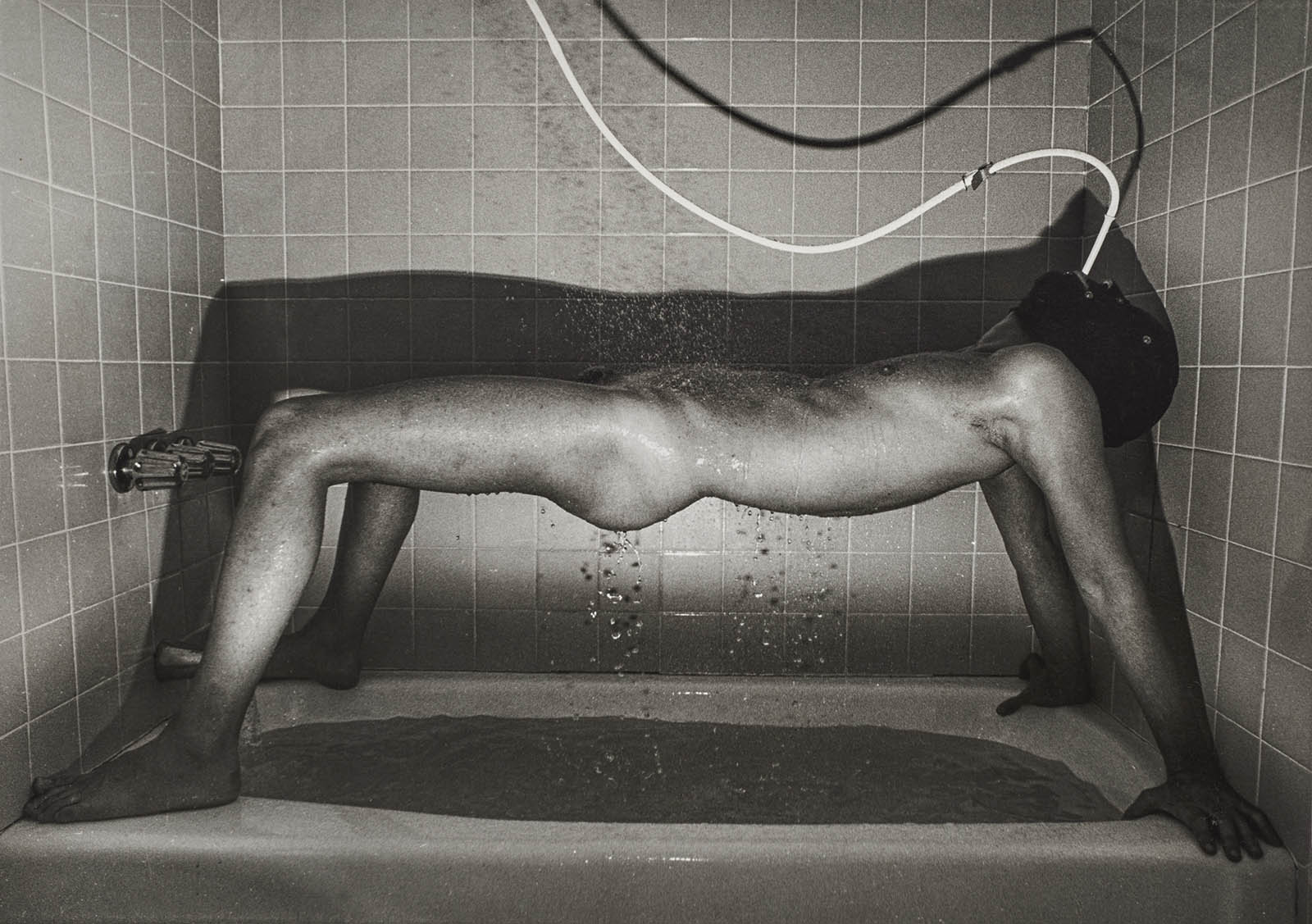
 

Jimmy DeSana (American, 1949-1990) 'Enema' 1977-1978


Jimmy DeSana (American, 1949-1990)
Enema
1977-1978
Gelatin silver print
Courtesy of the Jimmy DeSana Trust and P·P·O·W Gallery, New York
© Estate of Jimmy DeSana


Sadomasochism, Then and Now

DeSana’s photographs and Terence Sellers’s writings engage with a variety of often erotic practices known then as S-M (sadomasochism) and more commonly now as BDSM (bondage, dominance, and submission / sadomasochism). The term “sadomasochism” is derived from the names of two European authors: the Marquis de Sade (1740-1814), who wrote about his exploits and fantasies of deriving pleasure from inflicting pain, and Leopold von Sacher-Masoch (1836-1895), who wrote of the erotic enjoyment he experienced while being dominated and punished.

In the 1970s, DeSana and Sellers were among a growing group of practitioners, writers, artists, and activists attempting to redefine “acceptable” behaviour and desires, as well as sexual and gender identities. In exploring S-M through an aesthetic lens, Sellers and DeSana also joined a long lineage of artists and thinkers who had engaged with these practices to encourage debate on freedom of expression and power.

It was not until 2010 that the American Psychiatric Association announced it would no longer diagnose consenting adults practicing BDSM as mentally ill, which had perpetuated stigmatisation that could lead to legal and social repercussions. More recently, studies have suggested that BDSM can provide therapeutic tools to investigate control and release, and to reclaim one’s sexuality after traumatic experiences.

Exhibition label
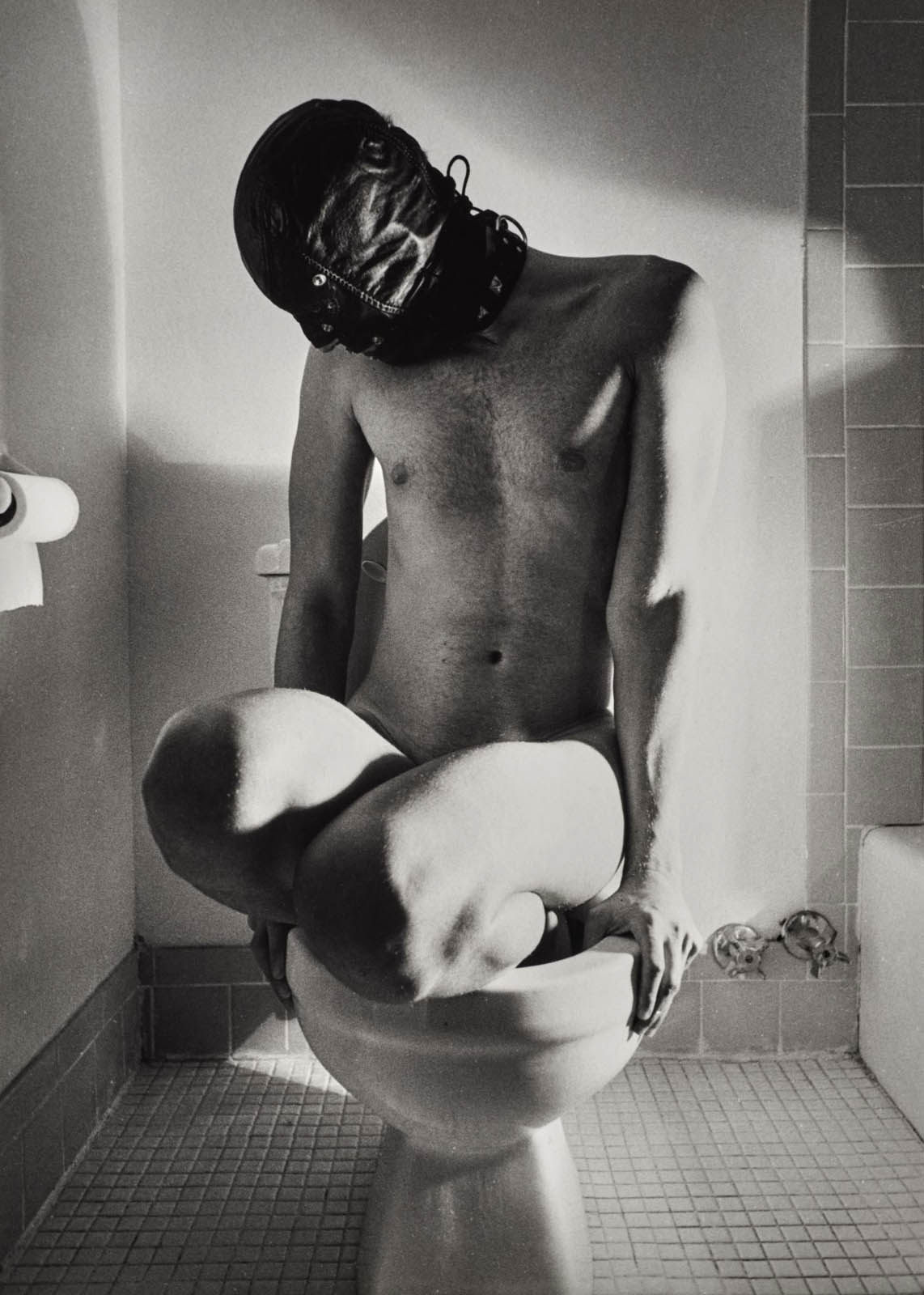
 

Jimmy DeSana (American, 1949-1990) 'Toilet' 1977-1978


Jimmy DeSana (American, 1949-1990)
Toilet
1977-1978
Gelatin silver print
9 9/16 × 6 3/4 in. (24.3 × 17.1cm)
Courtesy of the Jimmy DeSana Trust and P·P·O·W Gallery, New York
© Estate of Jimmy DeSana
Photo: Allen Phillips


“The very word ‘submission’ contains the paradox of wanting and not wanting,” William S. Burroughs wrote in the introduction of Jimmy DeSana’s 1980 book Submission.

For the photogragraphic series featured in the publication, made between 1977 and 1978, DeSana built on 101 Nudes (1972) and his work for File Megazine by creating theatrical and often comic photographs that push the limits of respectability and explore domestic confinement, consumer affluence, and social conformity. He was also mocking the recent trend of S-M scenarios in fashion photography and advertisements.

He titled many of the images after the objects depicted in them – Toilet, Coffee Table, Television, Shoes, Shower – rather than sex acts or the names of the individuals shown, who are always anonymous and often wearing masks. This strategy not only protected the identity of his models, many of whom were friends, but also contrasted with his better-known portrait work during this period, which he did to make money. Many of the photographs comically equate practices of everyday life and consumerism (washing dishes, taking a shower, driving a car) with forms of bondage and discipline.

In exploring S-M through an aesthetic and performative lens, DeSana joined a long history of twentieth-century avant-gardes that engaged with these practices in order to compel debate on freedom of expression and power.

Text from the Brooklyn Museum Tumblr website
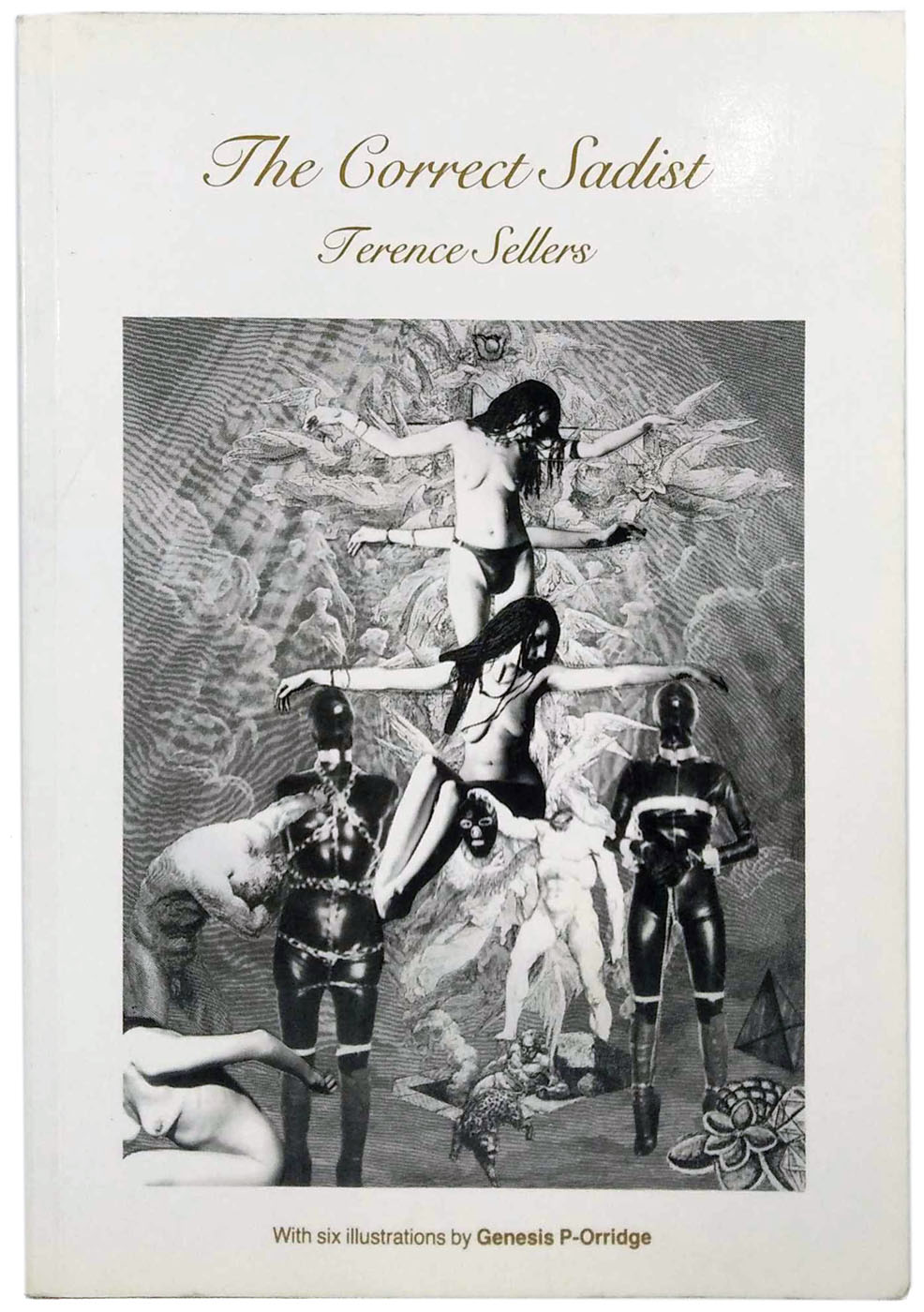
 

Terence Sellers (American, 1952-2016) 'The Correct Sadist: The Memoirs of Angel Stern' 1983


Terence Sellers (American, 1952-2016)
The Correct Sadist: The Memoirs of Angel Stern
1983
Book
8 1/2 × 5 9/16 in. (21.6 × 14.1 cm)
Private collection
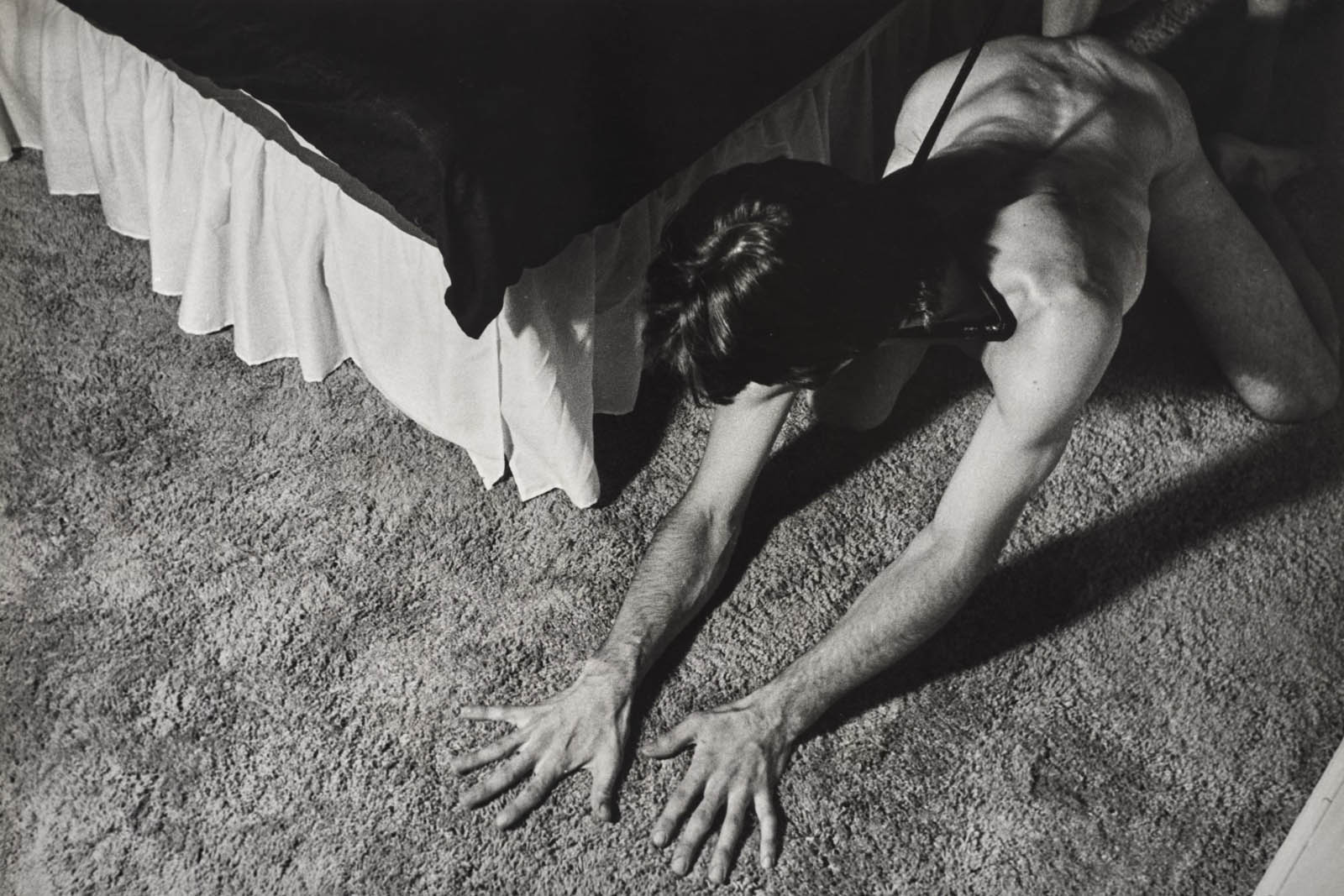
 

Jimmy DeSana (American, 1949-1990) 'Untitled' 1978


Jimmy DeSana (American, 1949-1990)
Untitled
1978
From the series The Dungeon
Gelatin silver print
6 1/2 × 9 5/8 in. (16.5 × 24.4cm)
Courtesy of the Jimmy DeSana Trust and P·P·O·W Gallery, New York
© Estate of Jimmy DeSana
Photo: Allen Phillips
 

Jimmy DeSana The Dungeon 1978 wall text


Jimmy DeSana (American, 1949-1990) 'Coffee Table' 1977-1978


Jimmy DeSana (American, 1949-1990)
Coffee Table
1977-1978
Gelatin silver print
9 1/2 × 6 1/2 in. (24.1 × 16.5cm)
Courtesy of the Jimmy DeSana Trust and P·P·O·W Gallery, New York
© Estate of Jimmy DeSana
Photo: Allen Phillips
 

Jimmy DeSana (American, 1949-1990) 'Untitled' 1978 From the 'Dungeon' series


Jimmy DeSana (American, 1949-1990)
Untitled
1978
From the Dungeon series
Gelatin silver print
9 1/2 × 6 5/8 in. (24.1 × 16.8cm)
Courtesy of the Jimmy DeSana Trust and P·P·O·W, New York
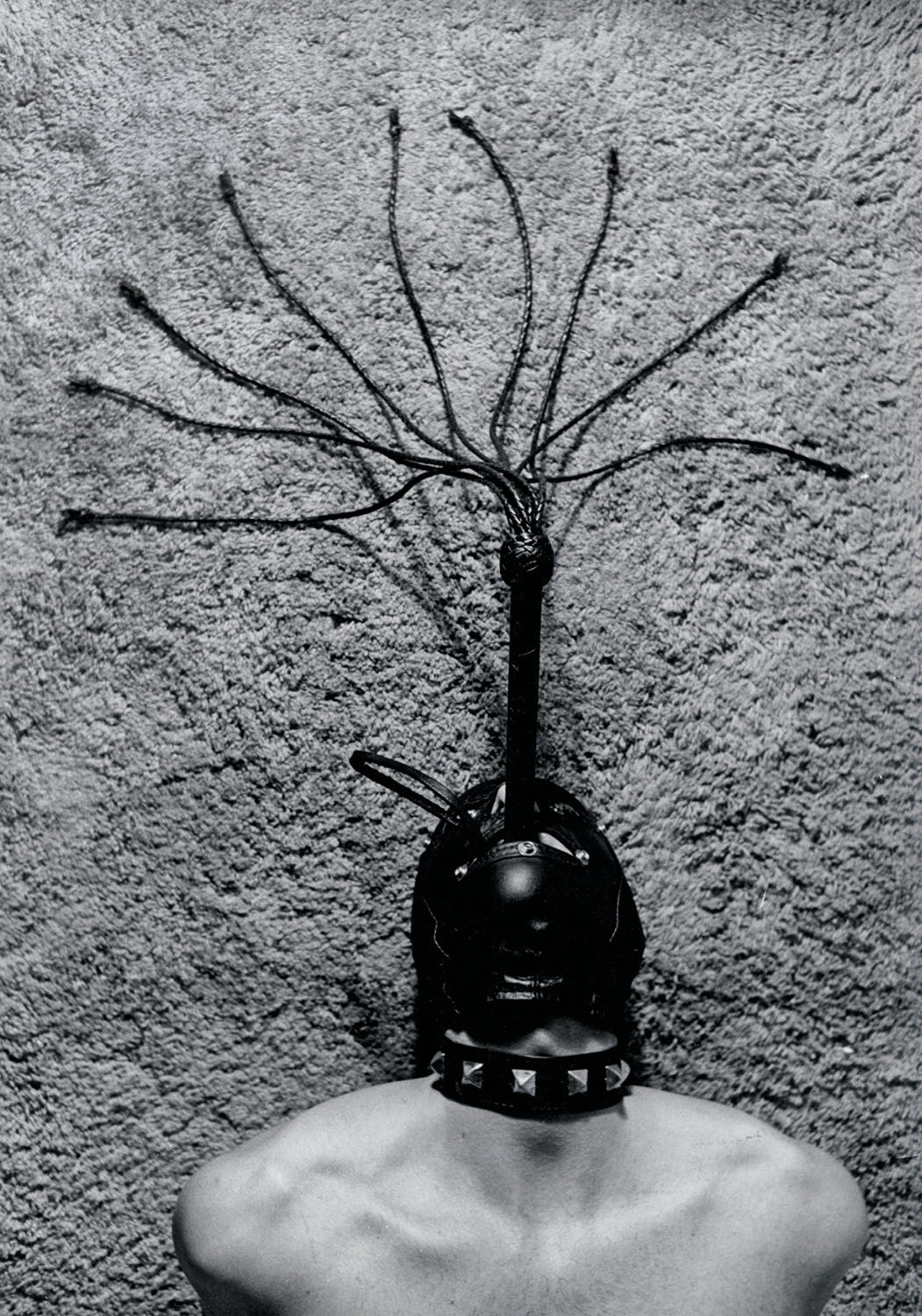
 

Jimmy DeSana (American, 1949-1990) 'Untitled' 1978 From the 'Dungeon' series


Jimmy DeSana (American, 1949-1990)
Untitled
1978
From the Dungeon series
Gelatin silver print
9 1/2 × 6 5/8 in. (24.1 × 16.8cm)
Courtesy of the Jimmy DeSana Trust and P·P·O·W, New York
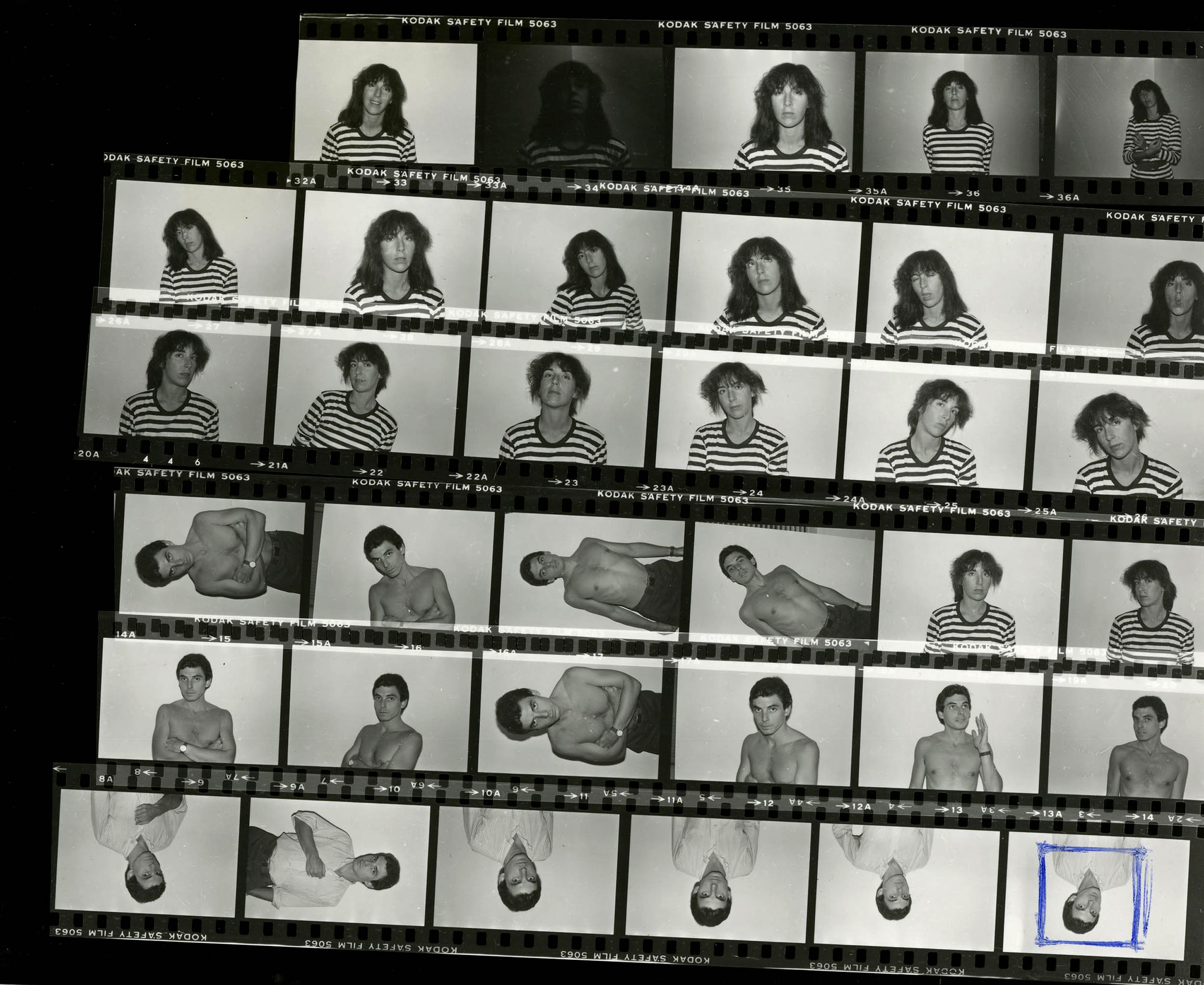
 

Jimmy DeSana (American, 1949-1990) 'Contact Sheet of Portraits of Jimmy DeSana and Laurie Simmons' c. 1978


Jimmy DeSana (American, 1949-1990)
Contact Sheet of Portraits of Jimmy DeSana and Laurie Simmons
c. 1978
New York University, Fales Library, Jimmy DeSana Papers, MSS.202, Box 66
Photo: Courtesy of Fales Library at NYU


In 1973, shortly after moving to New York, Jimmy DeSana met fellow artist Laurie Simmons while riding the A train to Far Rockaway.

The two soon shared a SoHo loft with twin photographic darkrooms. Simmons has often acknowledged that DeSana, who received a BFA in photography, taught her most of what she knows about the medium, acting as a friend, mentor, and interlocutor until his death in 1990. Simmons also became a model and muse for DeSana’s work.

Now the executor of the Jimmy DeSana Trust for several decades, Simmons writes, “I am immensely grateful for every moment Jimmy and I spent together, for every freezing second I floated naked in a pool or held an awkward pose for way too long, for this was my graduate program in photography – this is really where I learned to make a picture… standing within Jimmy’s quiet but determined force field, emulating his laser-like focus and his ultimate belief that making art was a space to play and dream.”

Text from the Brooklyn Museum Tumblr website
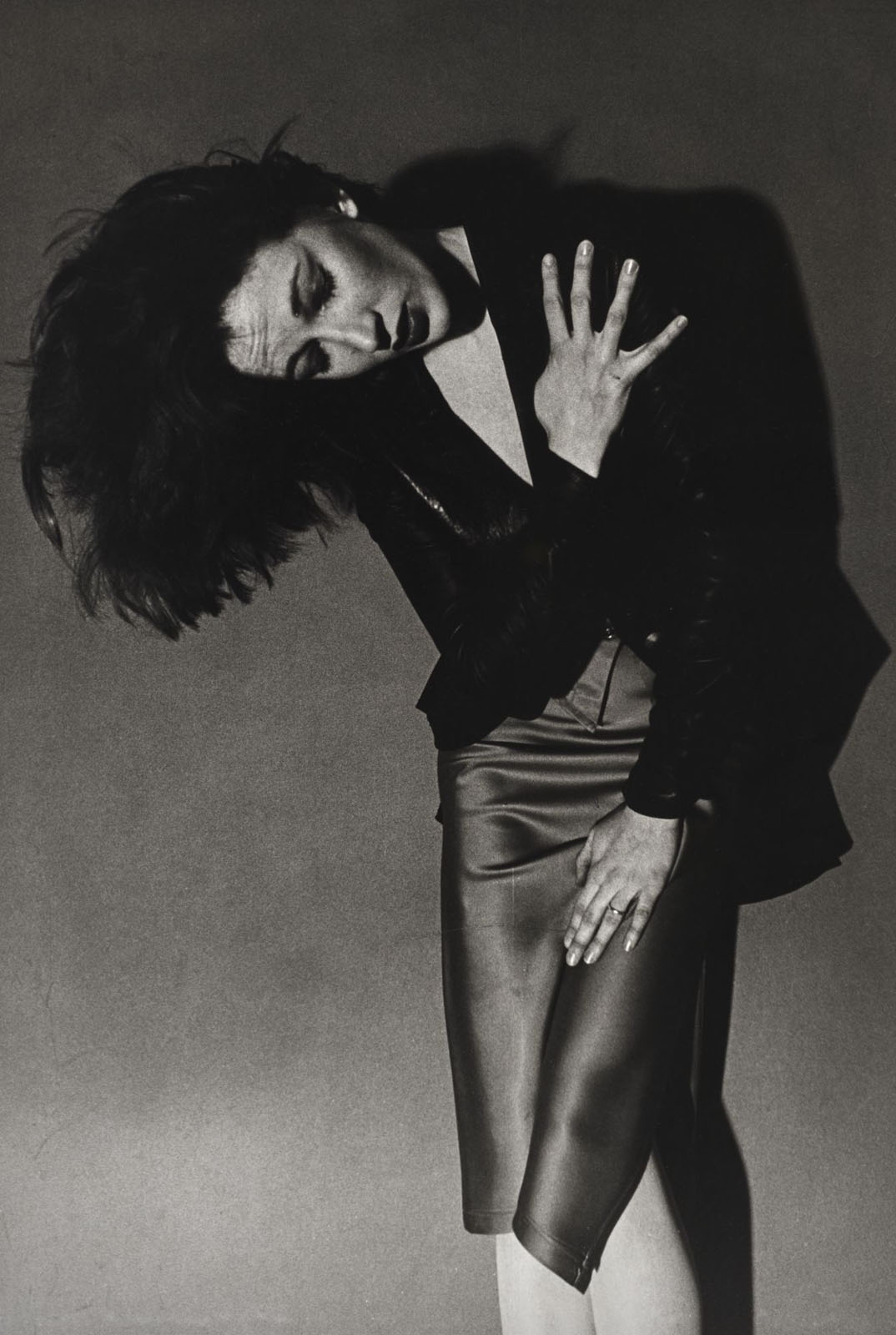
 

Jimmy DeSana (American, 1949-1990) 'Terence Sellers' 1978


Jimmy DeSana (American, 1949-1990)
Terence Sellers
1978
Gelatin silver print
9 5/8 × 6 1/2 in. (24.4 × 16.5cm)
Courtesy of the Jimmy DeSana Trust and P·P·O·W Gallery, New York
© Estate of Jimmy DeSana. (Photo: Allen Phillips)
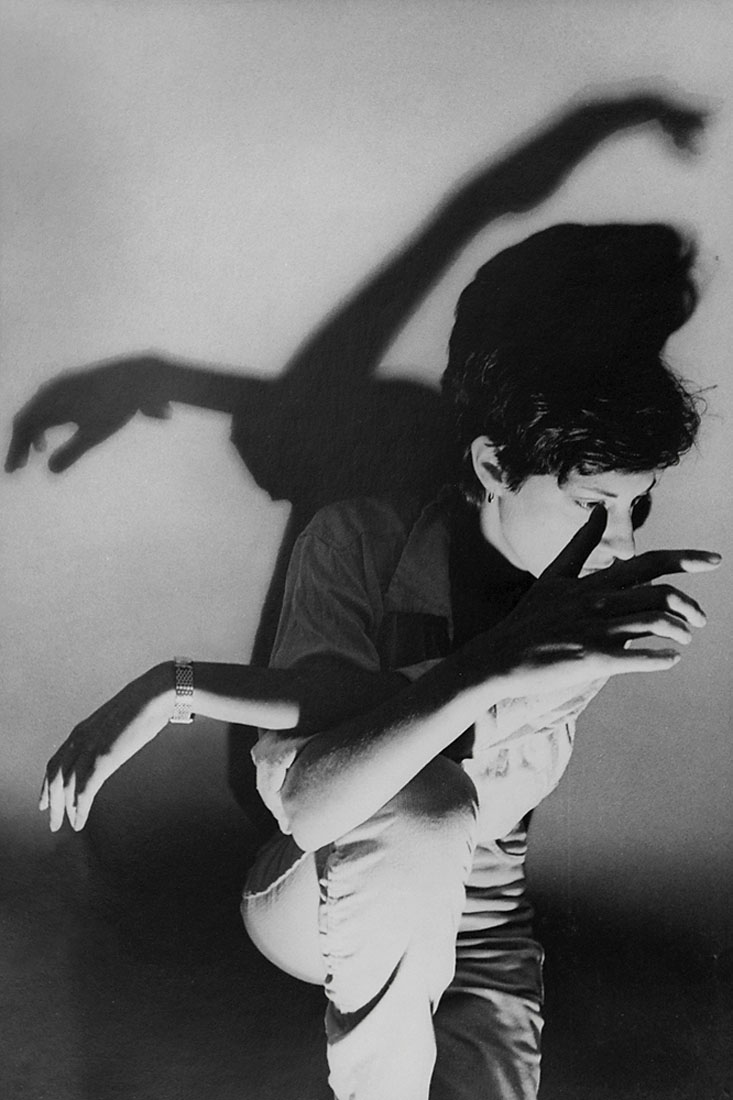
 

Jimmy DeSana (American, 1949-1990) 'Betsy Sussler' 1978


Jimmy DeSana (American, 1949-1990)
Betsy Sussler
1978
Gelatin silver print
15 7/8 × 11 in. (40.3 × 27.9cm)
Courtesy of the Jimmy DeSana Trust and P·P·O·W, New York
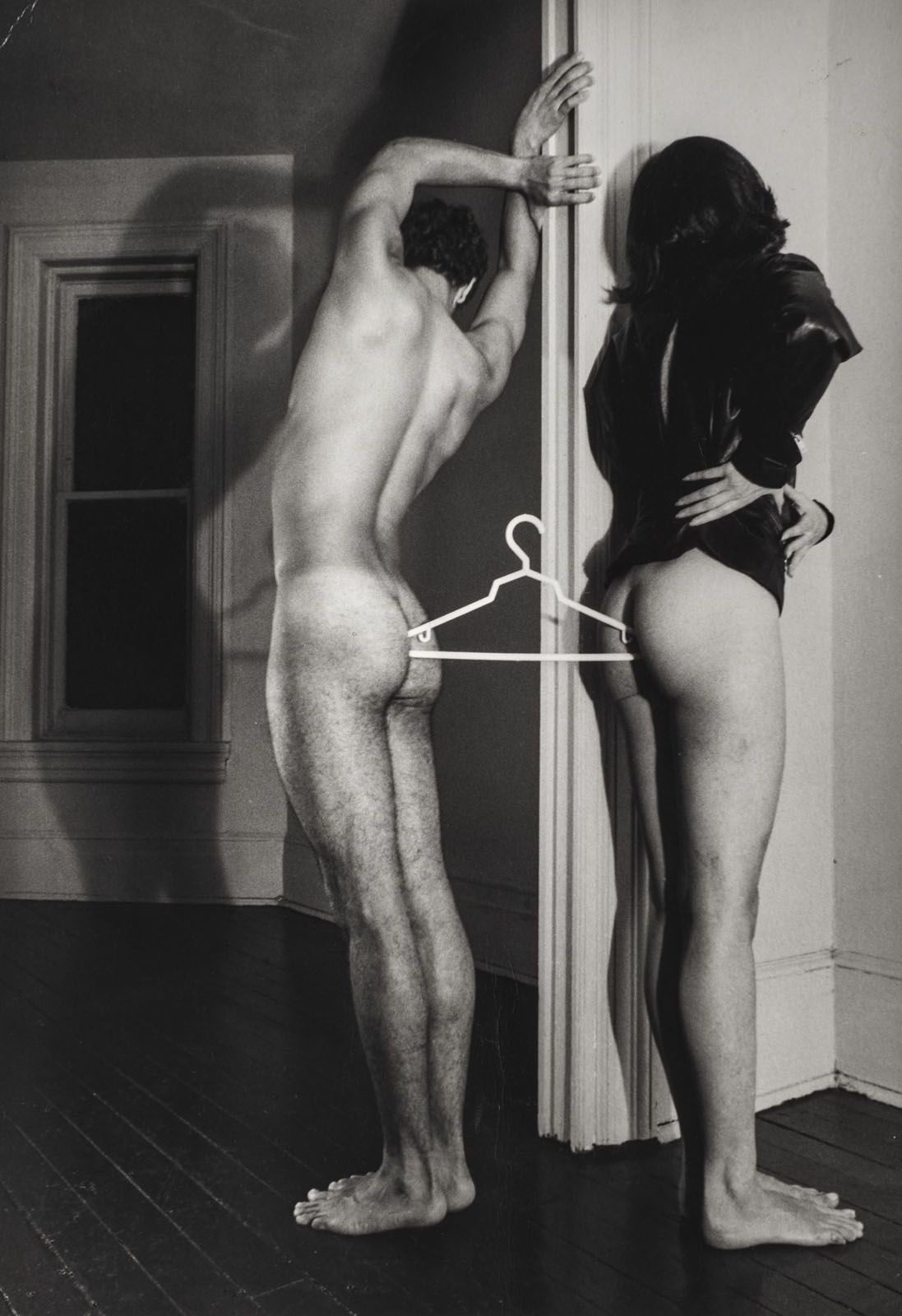
 

Jimmy DeSana (American, 1949-1990) 'Coat Hanger' 1979


Jimmy DeSana (American, 1949-1990)
Coat Hanger
1979
Gelatin silver print
9 9/16 × 6 5/8 in. (24.3 × 16.8cm)
Courtesy of the Jimmy DeSana Trust and P·P·O·W Gallery, New York
© Estate of Jimmy DeSana
Photo: Allen Phillips


The Brooklyn Museum Presents Jimmy DeSana: Submission, the First Museum Survey of Work by the Pioneering Queer, Punk Photographer. The exhibition features more than two hundred works, which trace a career that bridged mail art networks, New York’s 1970s punk and No Wave subcultures, the illuminating image-play of the “Pictures Generation,” and the various artistic and affective responses to the beginning of the HIV/AIDS epidemic.

Jimmy DeSana: Submission is the first museum survey of work by a major yet overlooked figure in the histories of photography, LGBTQ artists, and New York City. Among his many significant contributions, Jimmy DeSana (American, 1949-1990) reintroduced the body and sexuality into the conceptual photographic practices of the late 1960s and early 1970s, helping to elevate the medium within the contemporary art world. The exhibition traces the artist’s brief but prolific career through more than two hundred works on display (some for the first time), created during a time of profound cultural and political transformation in the United States. From his early days photographing suburban landscapes in Atlanta, Georgia, to his time as a key figure in the New York art and music scenes of the 1970s and 1980s, DeSana conveyed the radical spirit of his era and a pointed, ironic critique of the American Dream and its images. Jimmy DeSana: Submission opens November 11, 2022, and is organised by Drew Sawyer, Phillip Leonian and Edith Rosenbaum Leonian Curator of Photography, Brooklyn Museum.

“This retrospective, the first since DeSana’s death from AIDS-related complications in 1990, will enable so many to view for the first time the full breadth of his iconoclastic artistic output, positioning his more well-known series within his interdisciplinary and collaborative practice in mail art, zines, performance, and film,” says Sawyer. “DeSana drew upon punk, Camp, sadomasochism, dreamworlds, performance art, experimental film, club culture, and the legacy of twentieth-century avant-gardes in ways that make his work unique among his peers. Jimmy DeSana: Submission brings together these multiple themes to show why his work is so relevant to artistic practices today.”

Along with his friends and peers, Jimmy DeSana sought to forge arts communities outside of traditional institutions (and the concurrent gentrification that displaced artists from Lower Manhattan). Instead, he chose to display his work via collectives, artist-run spaces, and the informal groupings of the underground nightclub scene, as well as the more democratised dissemination systems of mail art networks. Submission prominently features examples of DeSana’s contributions to early queer zines throughout the 1970s – from General Idea’s File magazine to John Jack Baylin and John Dowd’s Fanzini to Gregory Battcock’s Trylon & Perisphere – as well as his first major series, 101 Nudes (1972), which was circulated through mail art networks. DeSana published this portfolio of photolithographic prints, portraying his friends posing nude in the bland interiors of Atlanta’s postwar houses, at the height of the Gay Liberation Movement and the city’s reactive censorship. These formative images employ a distinctly queer approach to domesticity and invite viewers to look beneath the veneer of suburban propriety, a concept that would capture the artist’s creative attention for the rest of his career.

The exhibition also contains selections from Submission (1980), DeSana’s book of BDSM-related photographs that play with liberation and conformity, and ideological power alongside the myths of postwar capitalism. This section also includes related photographs from a collaboration with writer and sex worker Terence Sellers (American, 1952-2016) that were intended for her first book, The Correct Sadist (1983). Most of these photographs have not been previously displayed or published.

Continuing the survey is DeSana’s series Suburban (1979-1984), perhaps the artist’s best-known photographs and his first in colour. Building off of 101 Nudes, DeSana used a cast of friends and collaborators to explore the queerness of postwar suburban culture by placing nude bodies, often abstracted and contorted, in suburban backyards, wood-panelled living rooms, and tiled bathrooms. Using vivid gel-lighting to produce its characteristic heavily saturated, candy-coloured prints, Suburban mimics the seductive, materialist aesthetics of fashion photography and the set design of television advertisements – strategies that were similarly deployed by his friends and peers during this period, including model and artist Laurie Simmons. The images are often skewed and shot from oblique angles, further destabilising the viewer’s perception of the subjects.

Accompanying the dreamlike colour photographs of the Suburban series are some of DeSana’s subsequent, more abstract efforts from the late 1980s. Made after 1984, when DeSana underwent spleen removal surgery after contracting HIV, the works superimpose warped colour images of everyday objects with collage elements, text, and fragments of figures in motion. DeSana turned away from directly representing the body during this period – in the early years of the ongoing HIV / AIDS epidemic, when gay artists in particular were expected to make work about the epidemic in reaction to government inaction and neglect or misinformation by dominant media.

DeSana was seemingly omnipresent in New York’s punk and No Wave scenes during the late 1970s and 1980s, joining other artists who engaged in symbolic forms of resistance through visual art, literature, music, and film. DeSana photographed a number of prominent figures in those subcultures; the survey will be the first to feature his portraits of art and music luminaries such as Kathy Acker, Laurie Anderson, Kenneth Anger, Patti Astor, David Byrne, John Giorno, Debbie Harry, and Richard Hell. Additionally, the exhibition will highlight DeSana’s photographic contributions to collectives like Collaborative Projects (including their groundbreaking exhibitions and publication, X Motion Picture Magazine), periodicals such as the New York Rocker and Semiotext(e), and No Wave Cinema, in which he was involved as both an actor and a director.

The exhibition will be accompanied by the first scholarly publication on DeSana’s work, featuring essays by Sawyer and artist Laurie Simmons as well as more than two hundred images, co-published with DelMonico Books. Jimmy DeSana: Submission is organised by Drew Sawyer, Phillip Leonian and Edith Rosenbaum Leonian Curator of Photography, Brooklyn Museum.

Press release from the Brooklyn Museum
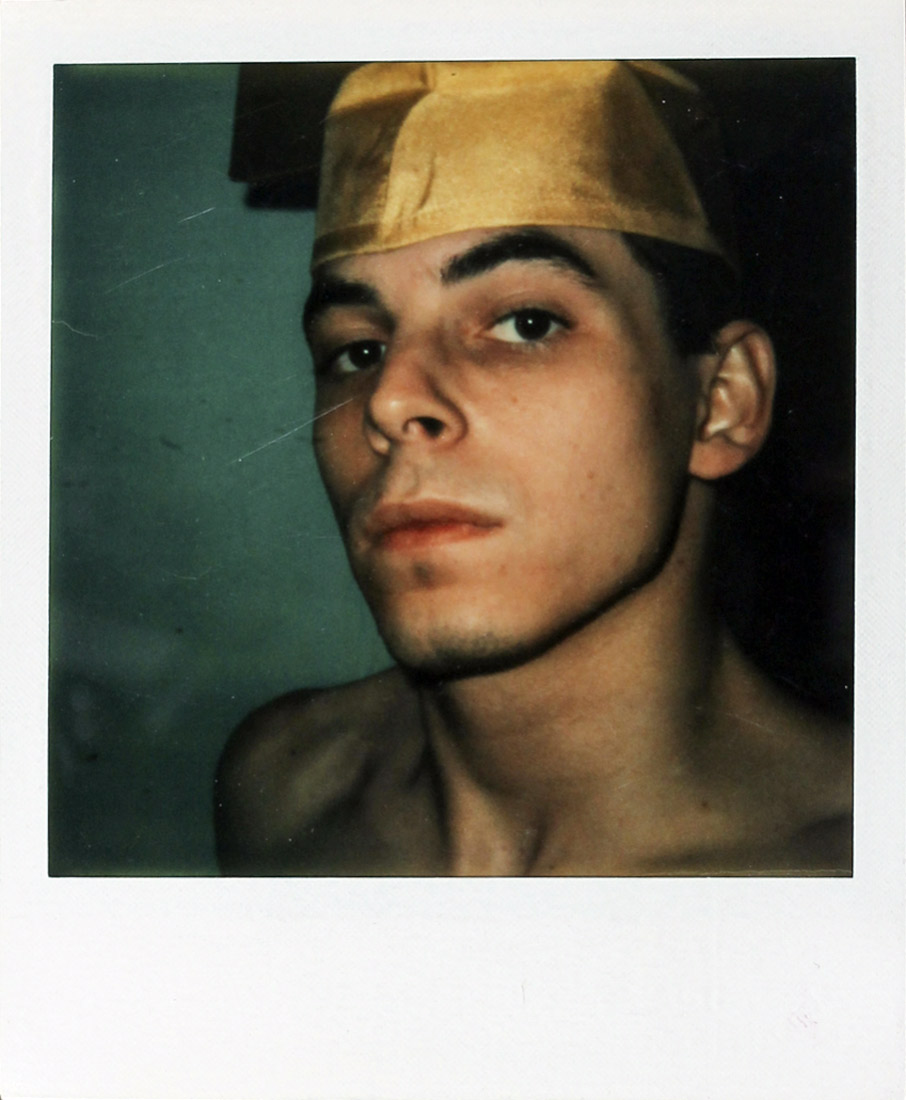
 

Jimmy DeSana (American, 1949-1990) 'Untitled (Self-Portrait w/ Graduation Cap)' 1978


Jimmy DeSana (American, 1949-1990)
Untitled (Self-Portrait w/ Graduation Cap)
1978
Polaroid
Cornell University, Division of Rare and Manuscript Collections, Diego Cortez No Wave Collection, 1972-1981, Collection Number: 8120, Box 1, Folder 17
Photo: Courtesy of Cornell University


James, Jim, Jimmy; de Sana, deSana, De Sana, DeSana. Just as Jimmy DeSana rarely stuck with one version of his name, he refused to limit two of his main artistic engagements – photography and the theme of desire – to fixed identities.⁠

Born in Detroit on November 12, 1949, James Arthur DeSana Jr. developed an early involvement in photography when he received a Kodak camera for Christmas at age seven. After graduating with a BFA in photography from Georgia State University in 1972, DeSana moved to New York, where he became involved in correspondence art, collectives and alternative publications, post-punk music, underground film, and queer nightlife. ⁠

During this time, DeSana amassed a large collection of hats, like the graduation cap he’s wearing in this Polaroid self-portrait. This fervid interest in hats coincided with DeSana’s use of masquerade and invented personae in his mail artworks; he would go on to make use of the hats in his self-portraits throughout the 1970s and 1980s, continuing his subversion of identity.

Text from the Brooklyn Museum Tumblr website
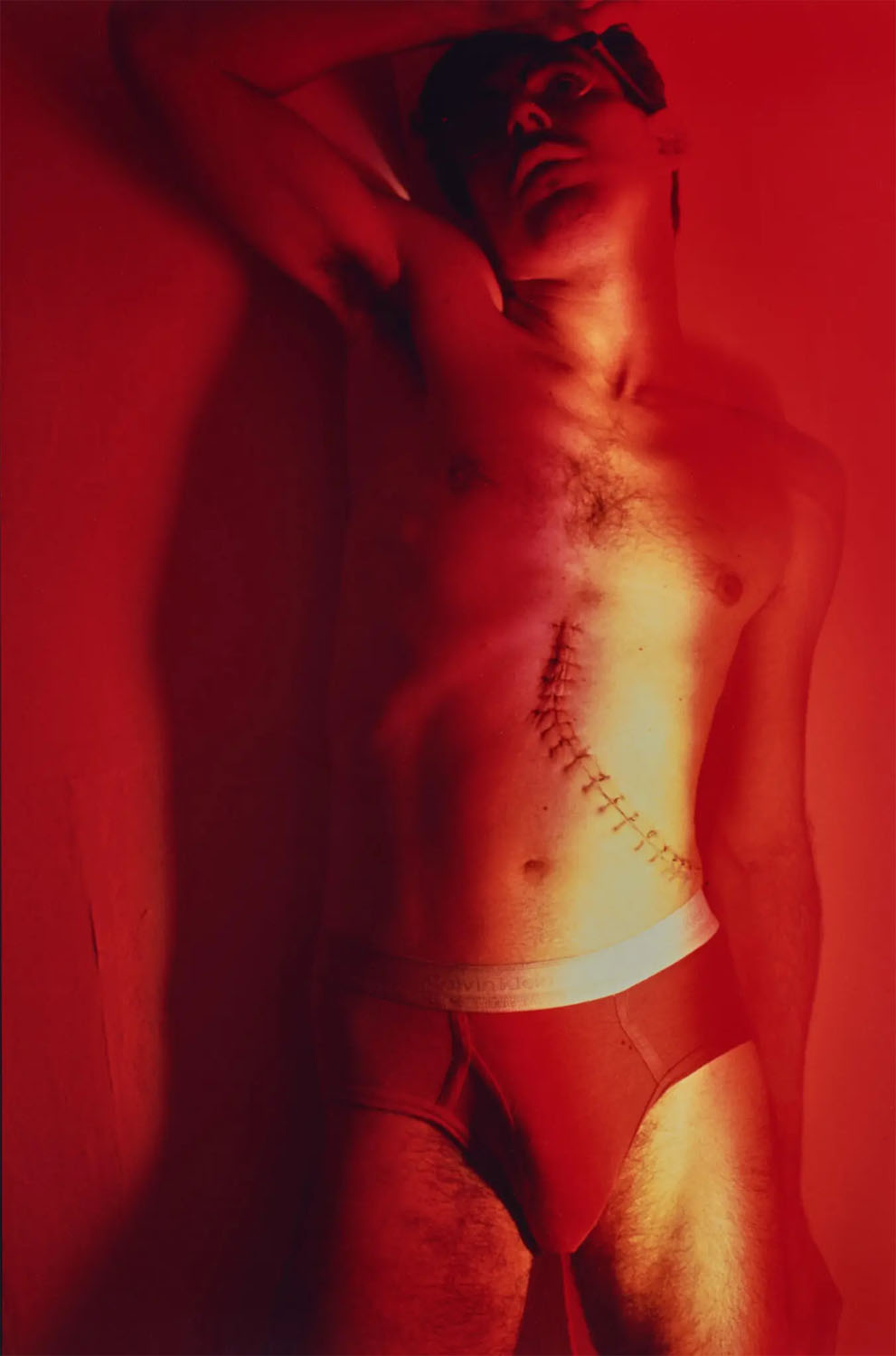
 

Jimmy DeSana (American, 1949-1990) 'Stitches' 1984


Jimmy DeSana (American, 1949-1990)
Stitches
1984
Silver dye bleach print
18 3/4 × 12 5/8 in. (47.6 × 32.1cm)
Courtesy of the Jimmy DeSana Trust and P·P·O·W, New York


He was extending the legacy of the Surrealist photographers of the period between the World Wars. Man Ray in particular presented his subjects with a disorienting spin: He inverted the head of a female smoker whose cigarette looks like a chimney, cast dark shadows to make the naked torso of a woman with upheld arms resemble the head of a bull, and shot his lover, the photographer Lee Miller, from an extreme lower angle so that her neck and chin take on a phallic form. He mixed genders, even species, with gleeful abandon. DeSana joined in the game.

But a 1984 DeSana self-portrait pointed to the painful direction his life was about to take. He photographed himself in red Calvin Klein briefs illuminated in a red glow, one hand on his forehead, his eyes upturned and his expression concerned. A bright beam of white light is directed toward two dozen surgical stitches running from his sternum down his left side. His spleen had just been removed, an early warning of H.I.V. infection. The diagnosis of AIDS came a year later.

Arthur Lubow. “Jimmy DeSana, Downtown Pioneer and Provocateur, Goes Mainstream,” on the New York Times website Nov. 8, 2022 [Online] Cited 02/04/2023
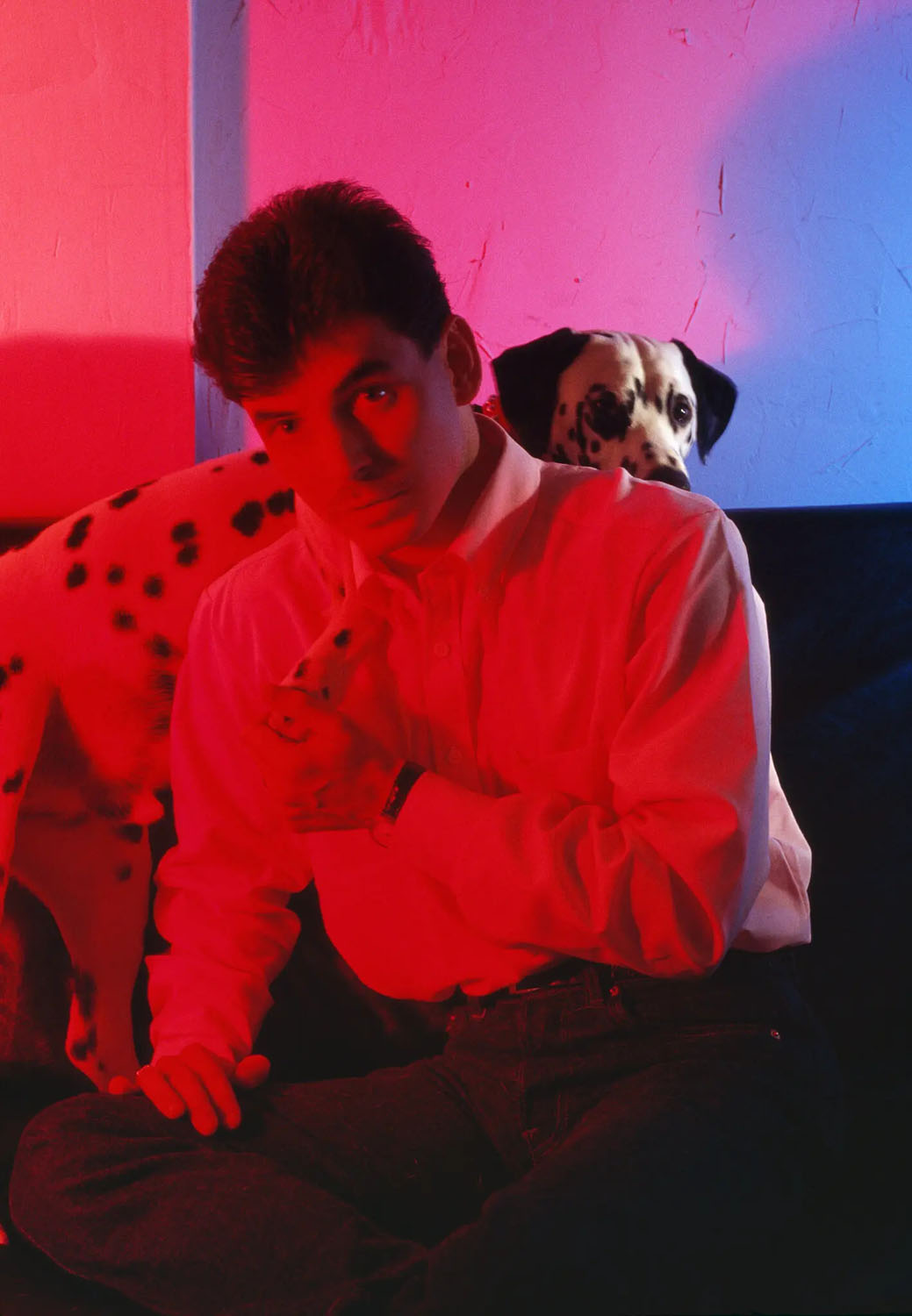
 

Jimmy DeSana (American, 1949-1990) 'Portrait with Dog' Undated


Jimmy DeSana (American, 1949-1990)
Portrait with Dog
Undated
Chromogenic print
20 × 14 in. (50.8 × 35.6cm)
Courtesy of the Jimmy DeSana Trust and P·P·O·W, New York
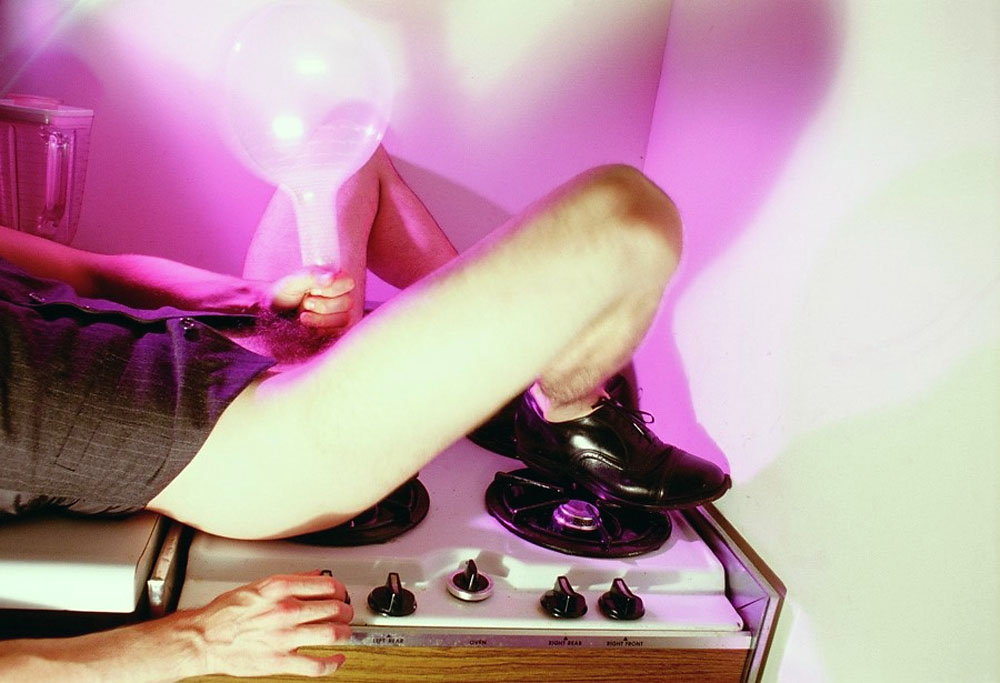
 

Jimmy DeSana 'Suburban' 1979-1984


Jimmy DeSana (American, 1949-1990) 'Condom' 1979


Jimmy DeSana (American, 1949-1990)
Condom
1979
Cibachrome print
12 1/4 × 18 3/4 in. (31.1 × 47.6cm)
Courtesy of the Jimmy DeSana Trust and P·P·O·W, New York
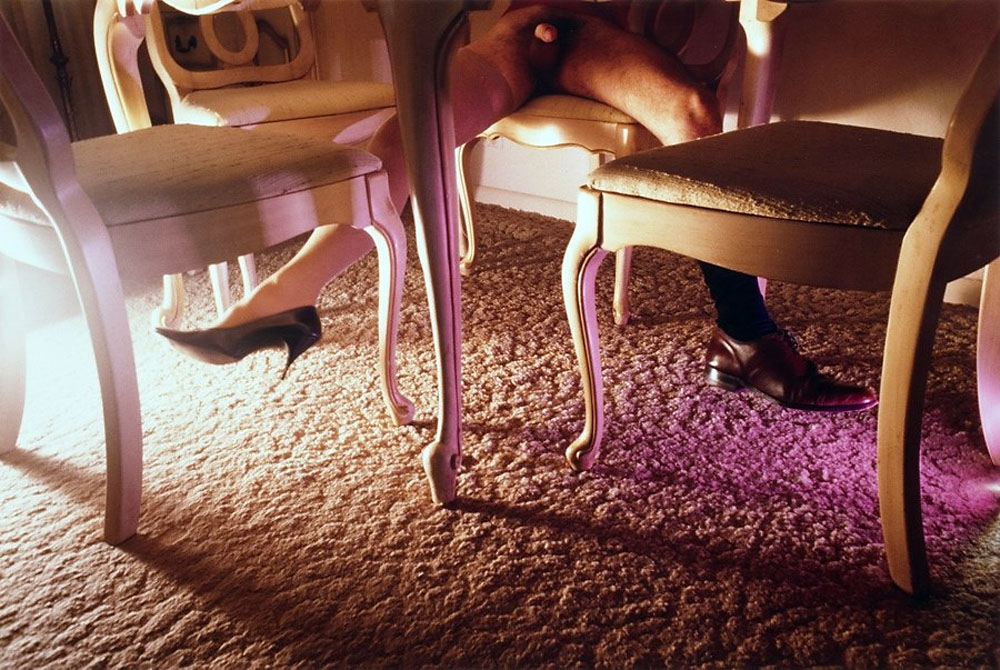
 

Jimmy DeSana (American, 1949-1990) 'Shoes' 1979


Jimmy DeSana (American, 1949-1990)
Shoes
1979
Chromogenic print
15 1/4 × 23 1/2 in. (38.7 × 59.7cm)
Courtesy of the Jimmy DeSana Trust and P·P·O·W, New York
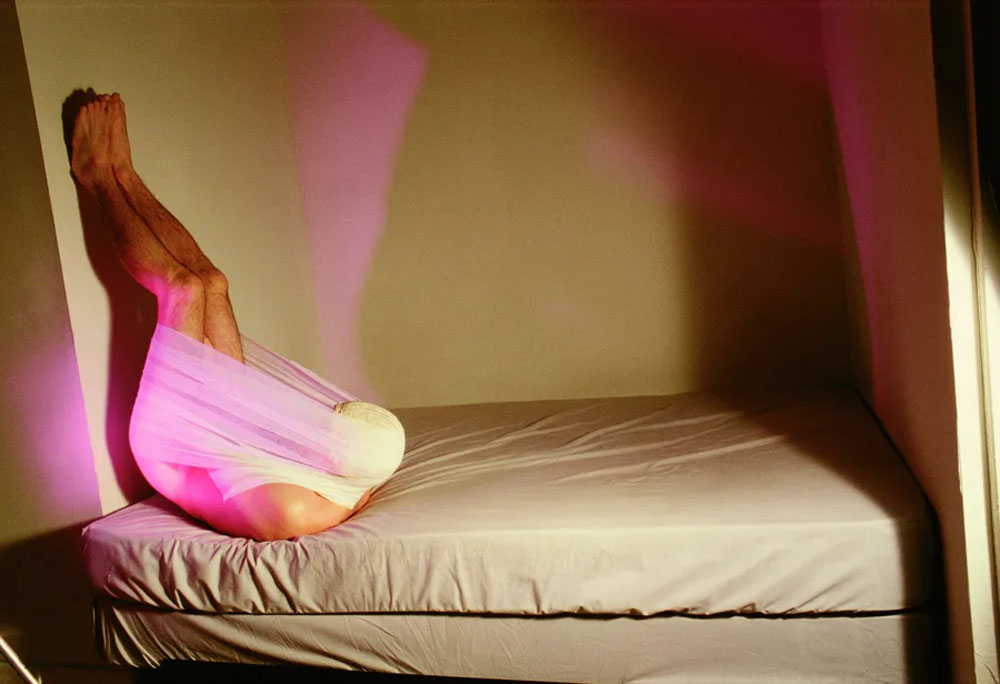
 

Jimmy DeSana (American, 1949-1990) 'Gauze' 1979


Jimmy DeSana (American, 1949-1990)
Gauze
1979
Chromogenic print
12 3/4 × 19 in. (32.4 × 48.3cm)
Courtesy of the Jimmy DeSana Trust and P·P·O·W, New York
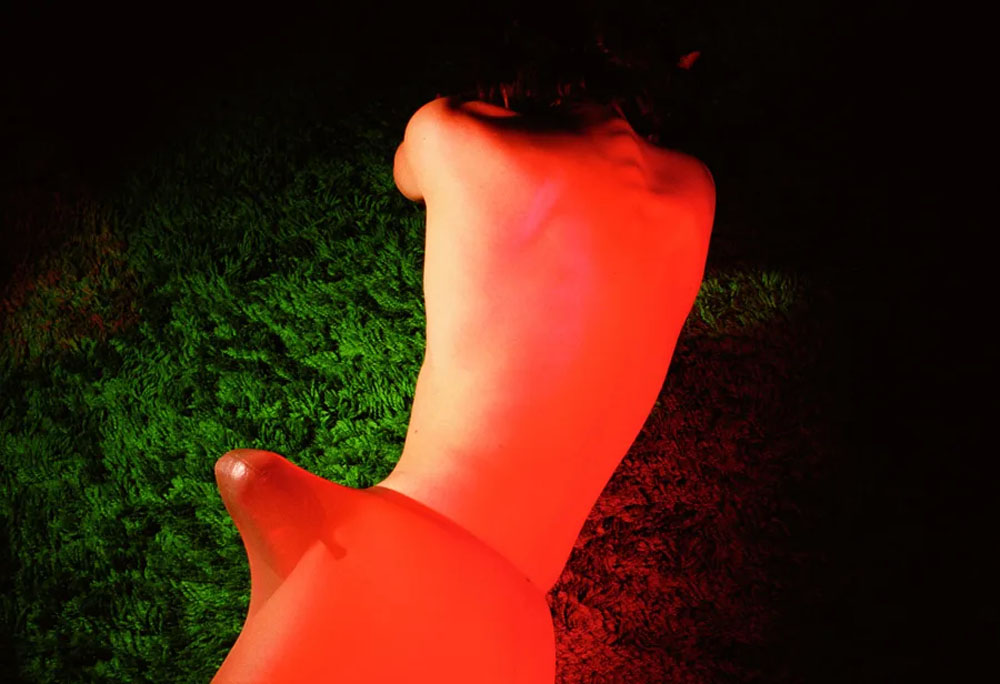
 

Jimmy DeSana (American, 1949-1990) 'Shoe' 1979


Jimmy DeSana (American, 1949-1990)
Shoe
1979
Chromogenic print
13 × 19 in. (33 × 48.3cm)
Courtesy of Jimmy DeSana Trust and PPOW
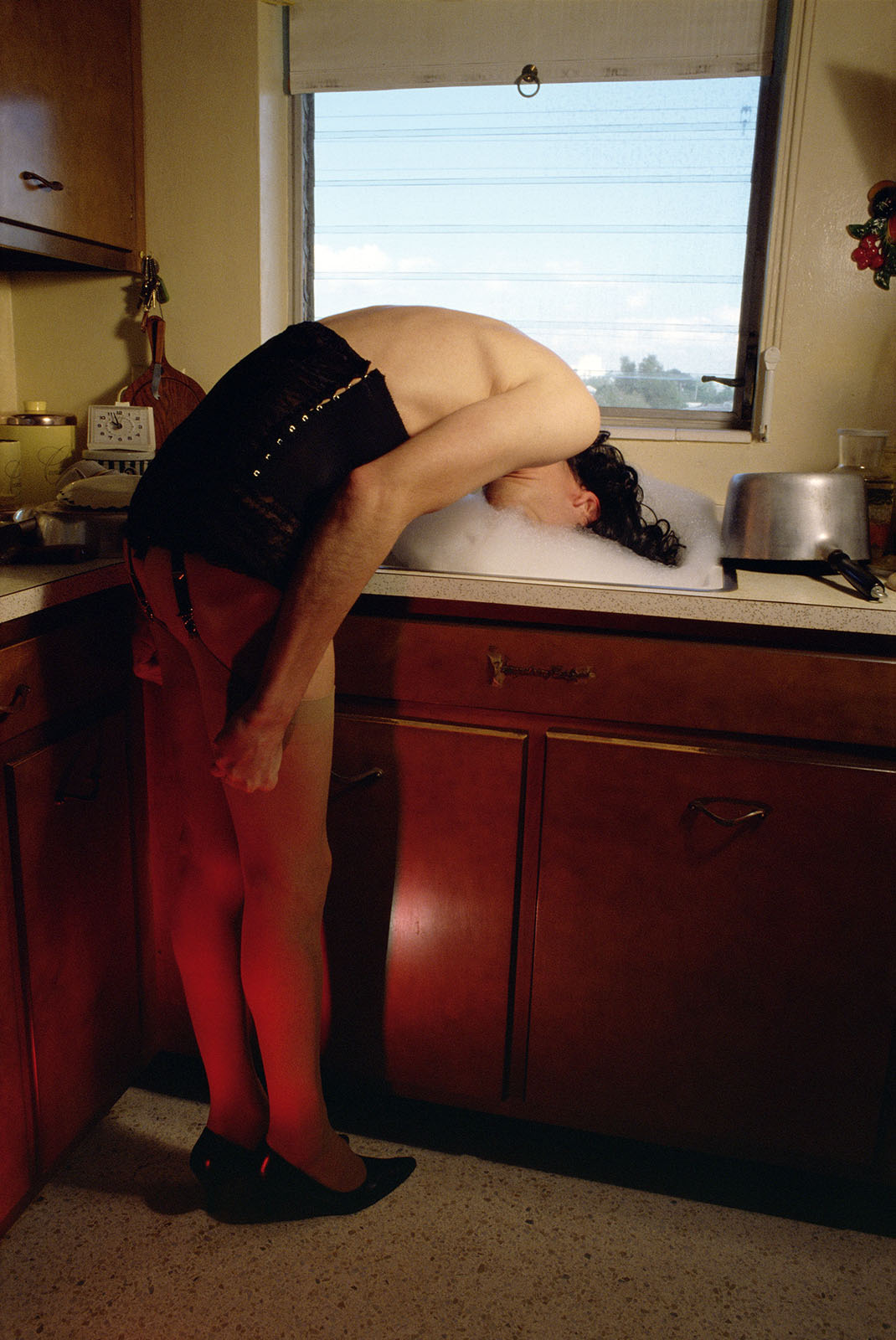
 

Jimmy DeSana (American, 1949-1990) 'Sink' 1979


Jimmy DeSana (American, 1949-1990)
Sink
1979
Silver dye bleach print
19 × 12 5/8 in. (48.3 × 32.1cm)
Courtesy of the Jimmy DeSana Trust and P·P·O·W Gallery, New York
© Estate of Jimmy DeSana
Photo: Courtesy of the Jimmy DeSana Trust and P·P·O·W Gallery, New York


Many of the photographs in Jimmy DeSana’s “Suburban” series explore themes of domestic confinement and social conformity through consumer goods and rituals.

In “Sink” (1979), shown here, an anonymous figure wearing a corset and heels leans over, head dunked in a kitchen sink filled with soap suds. DeSana allows contradictions – between agency and conformity, critique and complicity, punishment and pleasure – to remain open-ended in his work, enabling them to identify and “disidentify” with dominant culture.

Text from the Brooklyn Museum Tumblr website
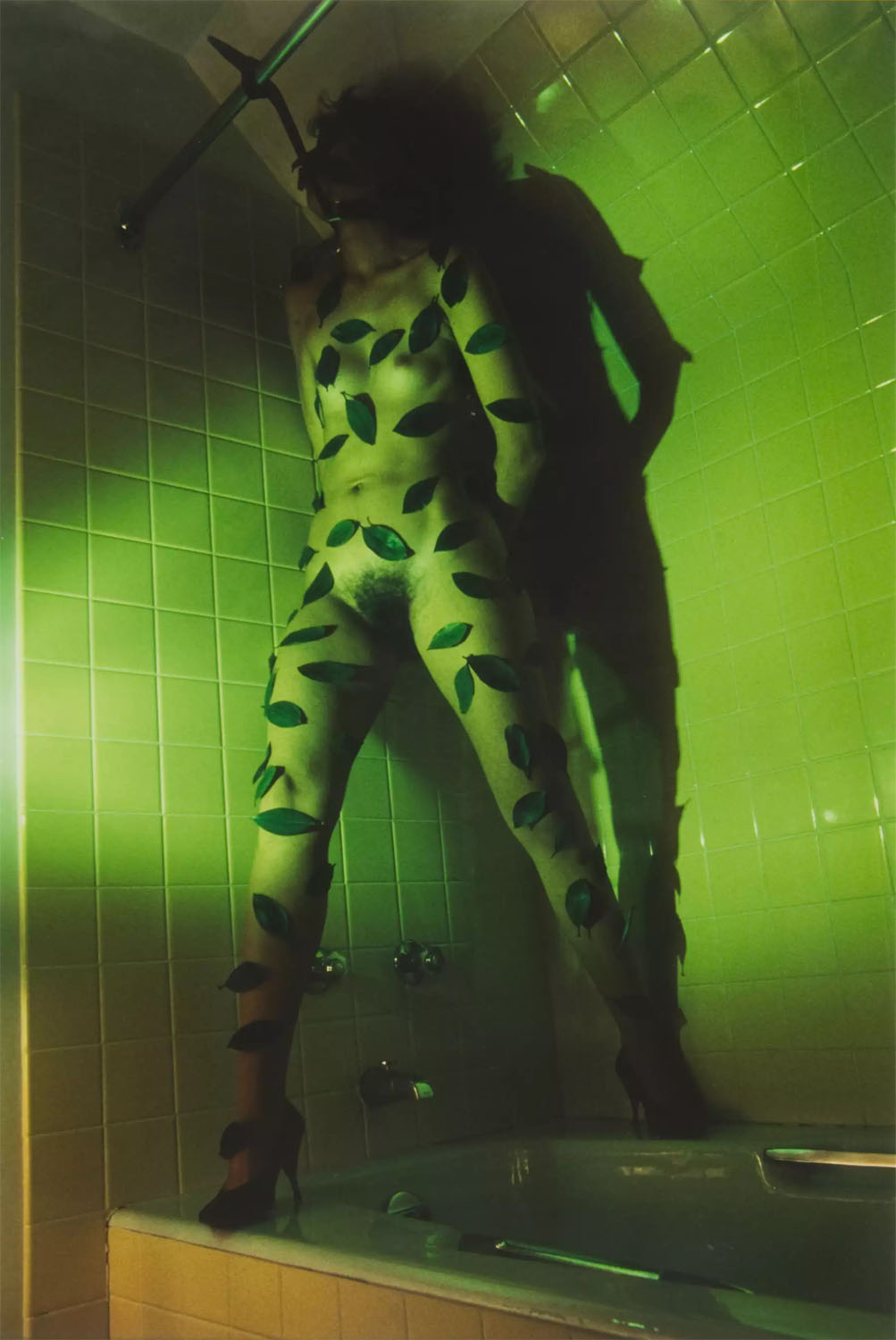
 

Jimmy DeSana (American, 1949-1990) 'Leaves' 1979


Jimmy DeSana (American, 1949-1990)
Leaves
1979
Chromogenic print
18 3/4 × 12 1/2 in. (47.6 × 31.8cm)
Courtesy of the Jimmy DeSana Trust and P·P·O·W, New York
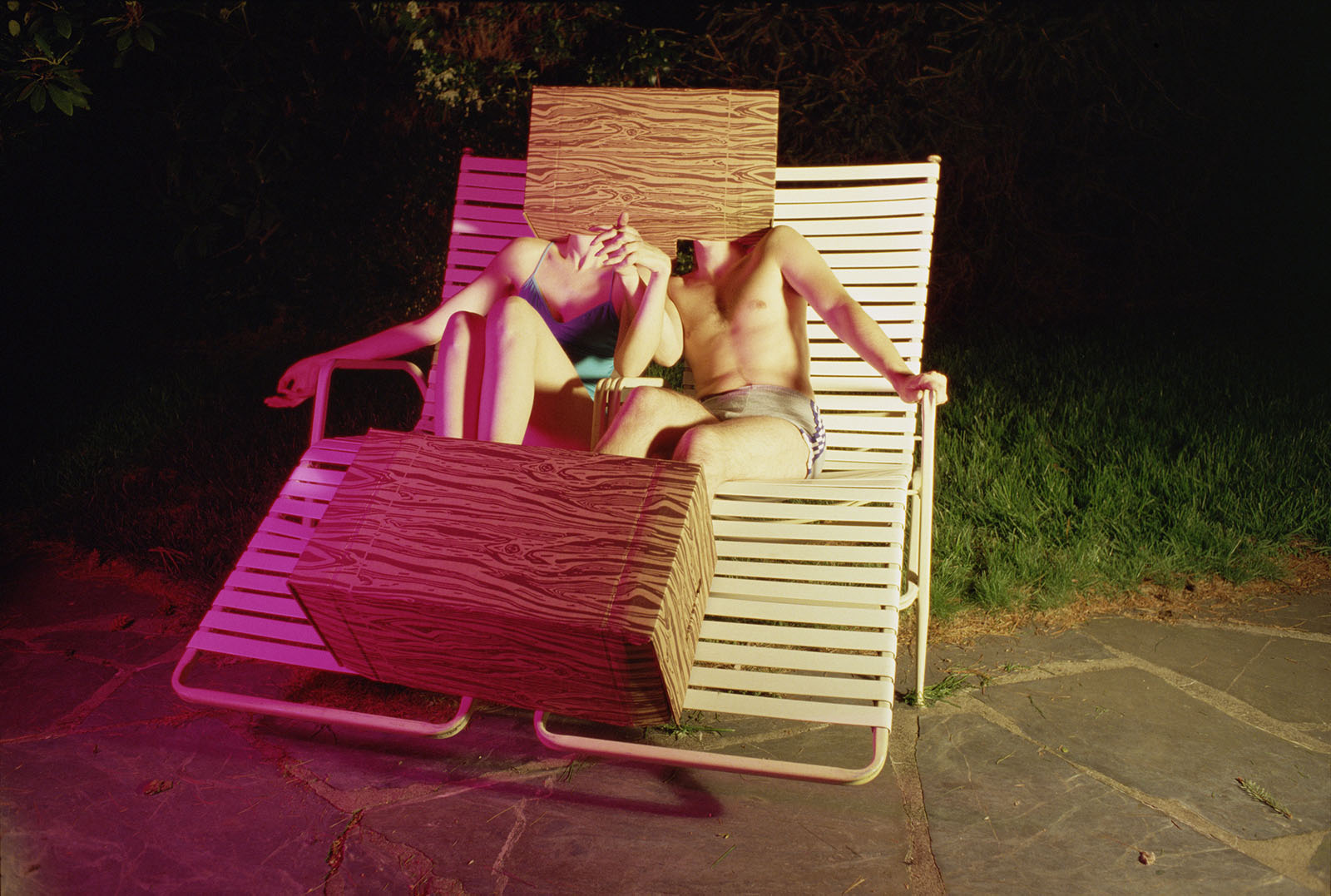
 

Jimmy DeSana (American, 1949-1990) 'Storage Boxes' 1980


Jimmy DeSana (American, 1949-1990)
Storage Boxes
1980
Inkjet print, printed 2022
15 1/2 × 23 1/2 in. (39.4 × 59.7cm)
Courtesy of the Jimmy DeSana Trust and P·P·O·W Gallery, New York
© Estate of Jimmy DeSana
Photo: Courtesy of the Jimmy DeSana Trust and P·P·O·W Gallery, New York


In the late 1970s, the status of colour photography was still disputed within the spaces of museums and art galleries, in part because of its associations with commercial and vernacular uses of the medium, such as fashion photography, advertisements, and home snapshots.

Perhaps even more than the content of his photographs, Jimmy DeSana’s use of gels and tungsten lights to create garish pinks, greens, reds, and oranges flew in the face of accepted taste and allowed him to utilise the medium in decidedly unconventional ways.

In “Storage Boxes” (1980), shown here, a pair of figures sit poolside in lounge chairs, holding hands but with their heads and feet encased in boxes. While many of the figures in his work from this time appear to be confined or dominated by objects, their performances look not like a limitation so much as a relational space that generates a capacity for self-knowledge and pleasure.

Exhibition label
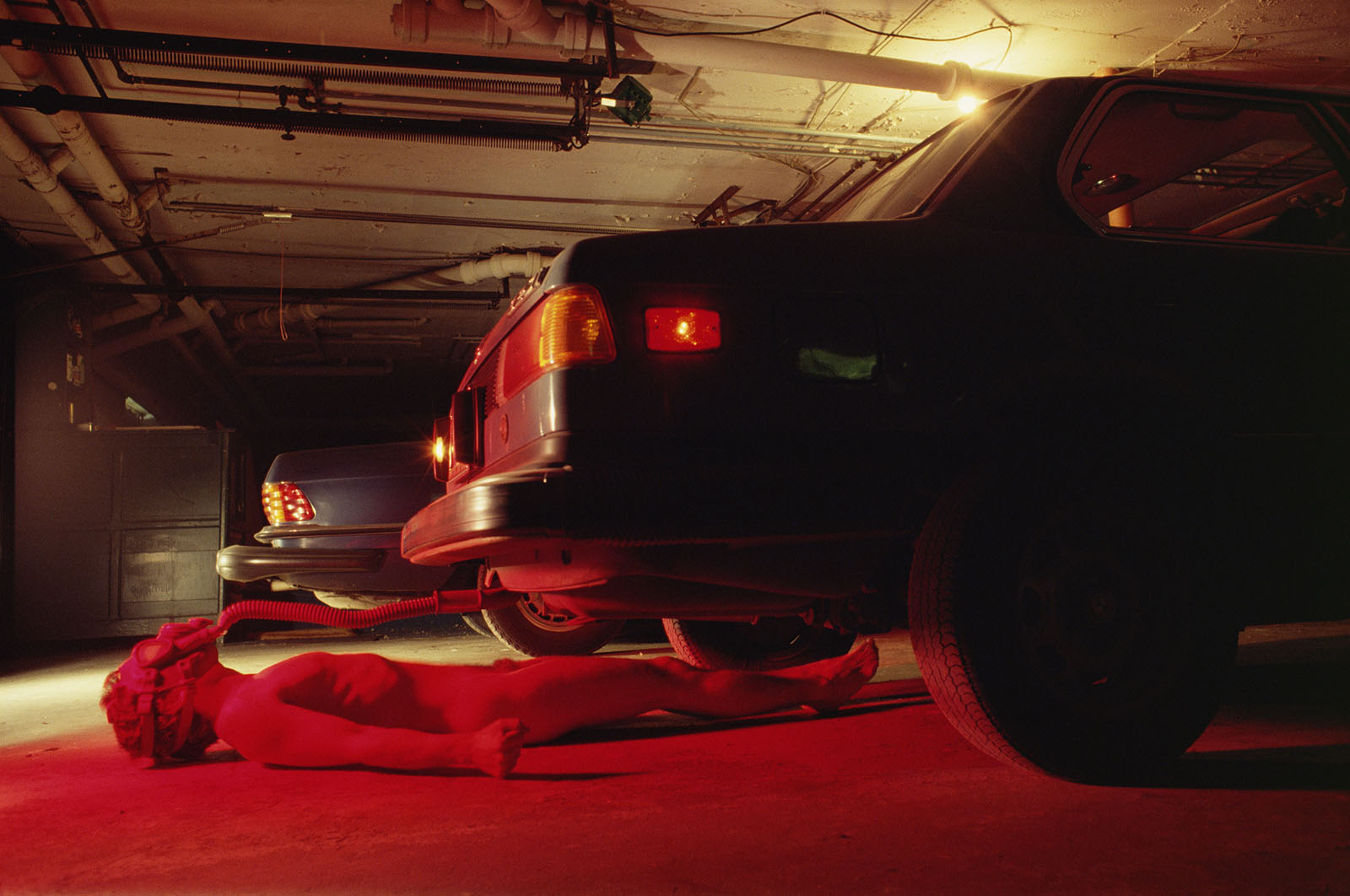
 

Jimmy DeSana (American, 1949-1990) 'Auto' 1980


Jimmy DeSana (American, 1949-1990)
Auto
1980
Chromogenic print
15 5/16 × 22 7/8 in. (38.9 × 58.1cm)
Courtesy of the Jimmy DeSana Trust and P·P·O·W Gallery, New York
© Estate of Jimmy DeSana
Photo: Courtesy of the Jimmy DeSana Trust and P·P·O·W Gallery, New York


DeSana’s photographs frequently feature visual puns. Here, a nude person, perhaps DeSana himself, lies beneath a car with a breathing tube connecting his gas mask to the exhaust pipe. The image appears to be a visual play on “autoerotic asphyxiation,” or the intentional restriction of oxygen to the brain for the purposes of sexual arousal. The image could also be interpreted as a metaphor for America’s subservience to car culture and the harm that automobiles cause us, the red glow adding an ominous tone.

Exhibition label
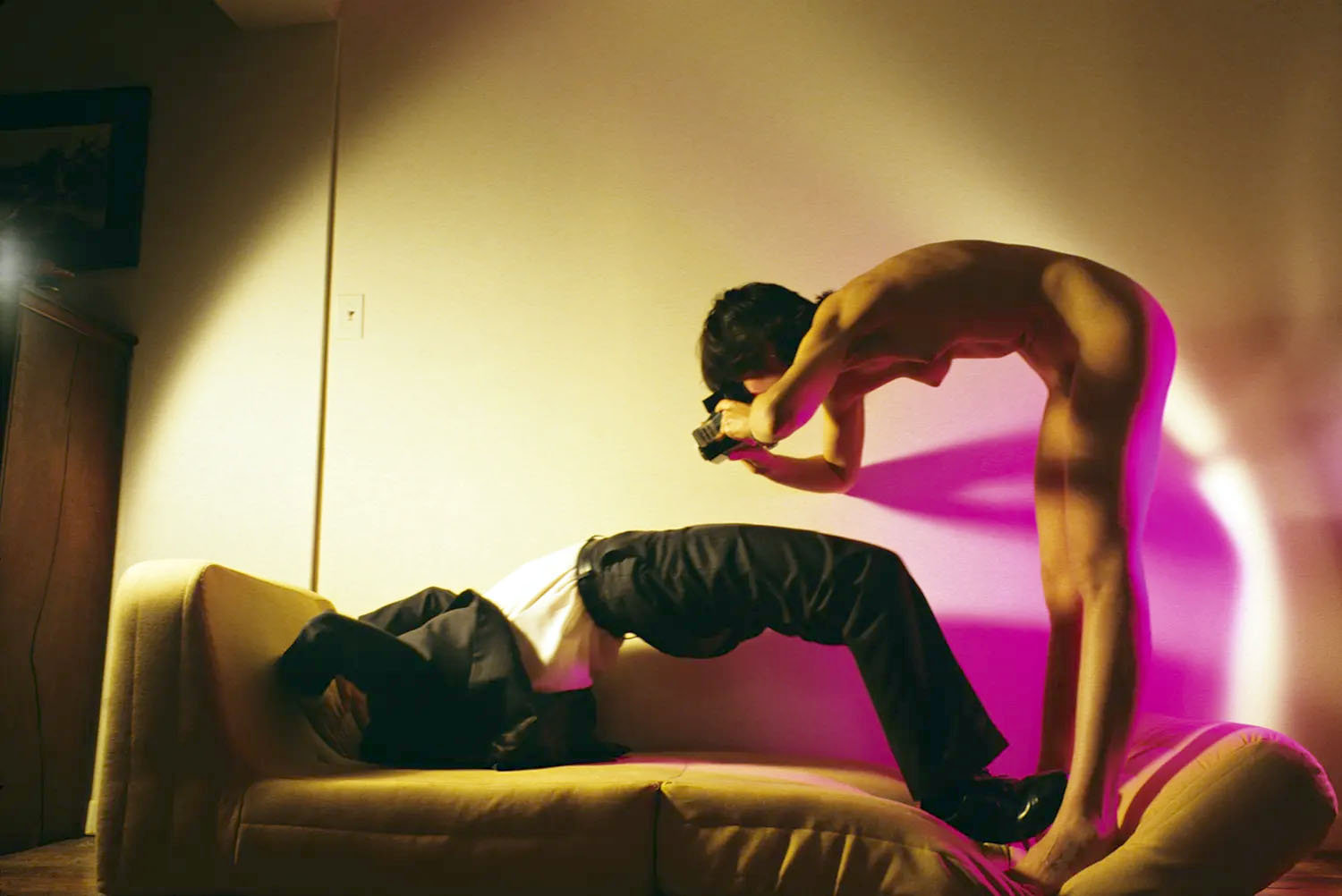
 

Jimmy DeSana (American, 1949-1990) 'Instant Camera' 1980


Jimmy DeSana (American, 1949-1990)
Instant Camera
1980
Chromogenic print
15 1/8 × 23 in. (38.4 × 58.4 cm)
Courtesy of the Jimmy DeSana Trust and P·P·O·W, New York
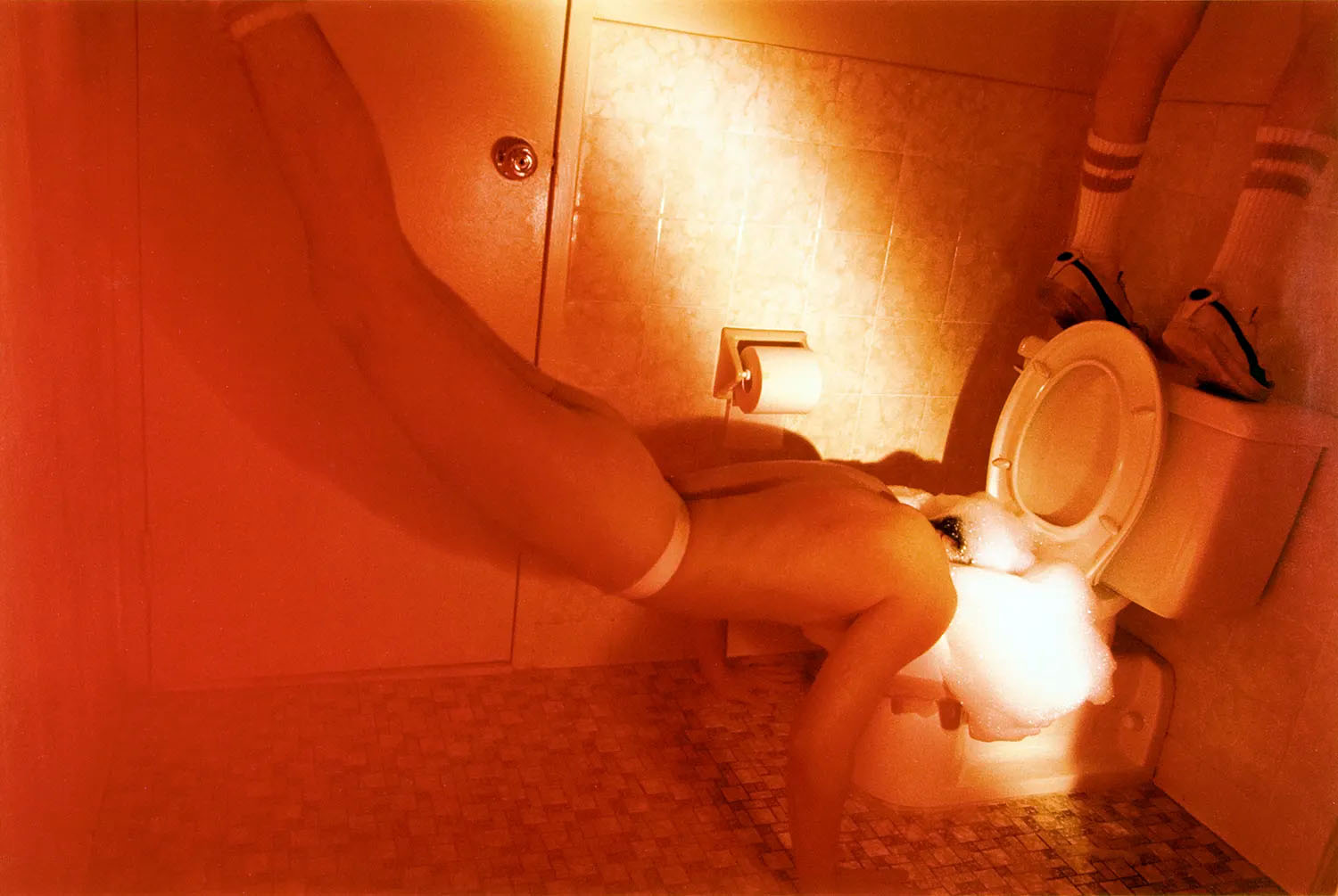
 

Jimmy DeSana (American, 1949-1990) 'Soap Suds' 1980


Jimmy DeSana (American, 1949-1990)
Soap Suds
1980
Chromogenic print
15 1/8 × 22 3/4 in. (38.4 × 57.8cm)
Courtesy of the Jimmy DeSana Trust and P·P·O·W, New York
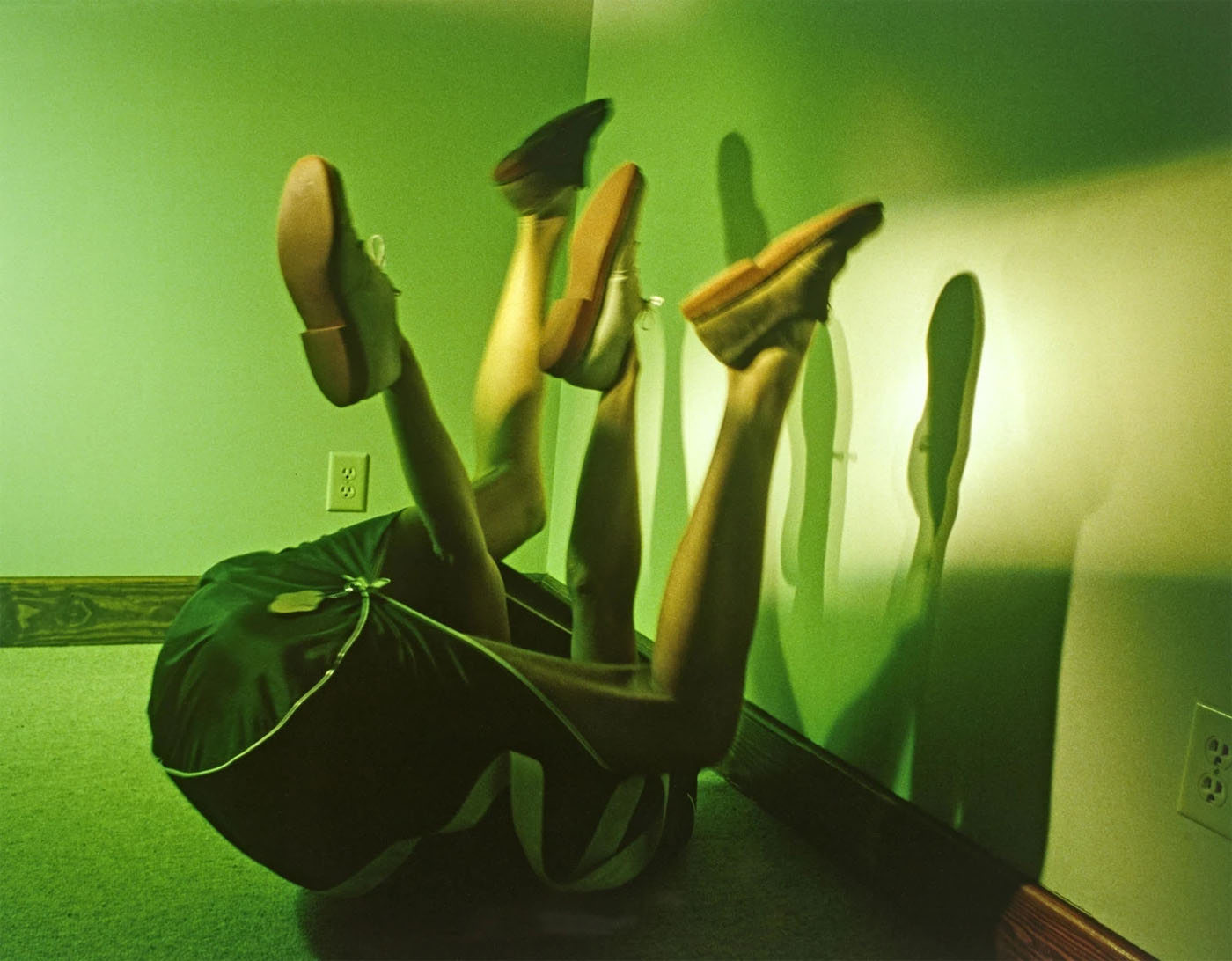
 

Jimmy DeSana (American, 1949-1990) 'Four Legs with Shoes' 1980


Jimmy DeSana (American, 1949-1990)
Four Legs with Shoes
1980
Chromogenic print
14 3/4 × 18 7/8 in. (37.5 × 47.9cm)
Courtesy of the Jimmy DeSana Trust and P·P·O·W, New York
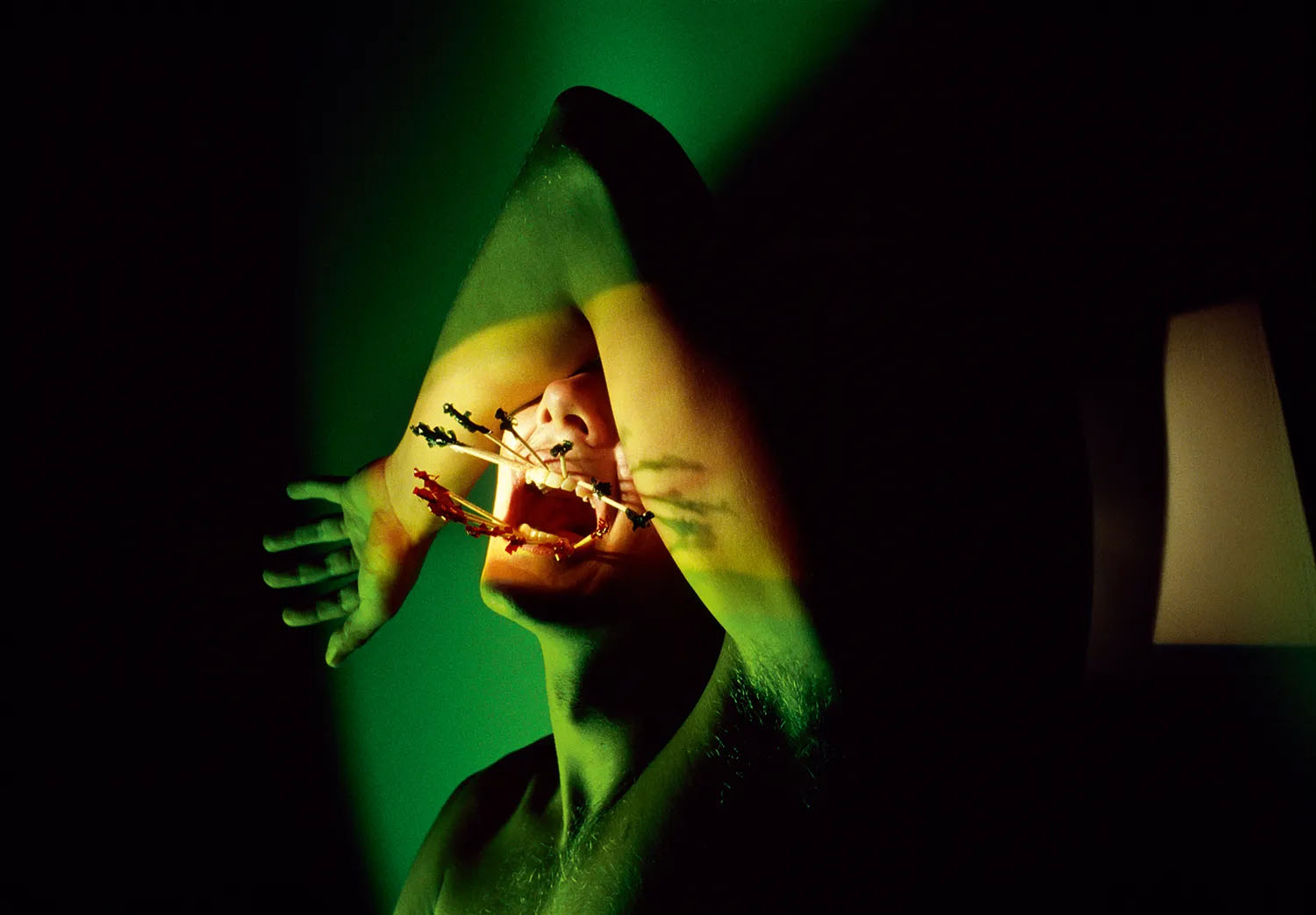
 

Jimmy DeSana (American, 1949-1990) 'Party Picks' 1981


Jimmy DeSana (American, 1949-1990)
Party Picks
1981
Inkjet print, printed 2013
32 3/4 × 49 1/2 in. (83.2 × 125.7cm)
Courtesy of the Jimmy DeSana Trust and P·P·O·W, New York
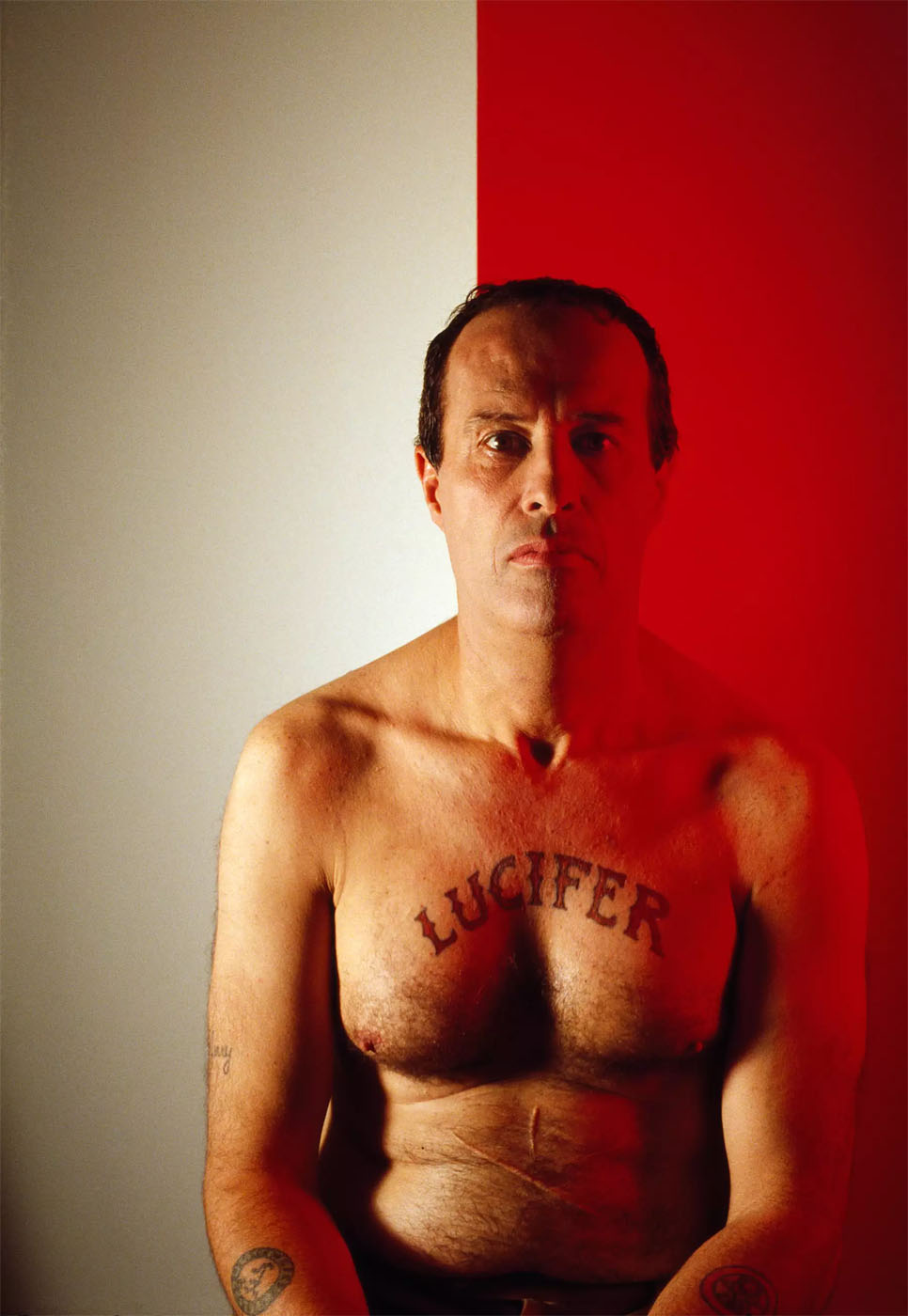
 

Jimmy DeSana (American, 1949-1990) 'Kenneth Anger' 1980


Jimmy DeSana (American, 1949-1990)
Kenneth Anger
1980
Chromogenic print
20 × 13 1/2 in. (50.8 × 34.3 cm)
Courtesy of the Jimmy DeSana Trust and P·P·O·W, New York
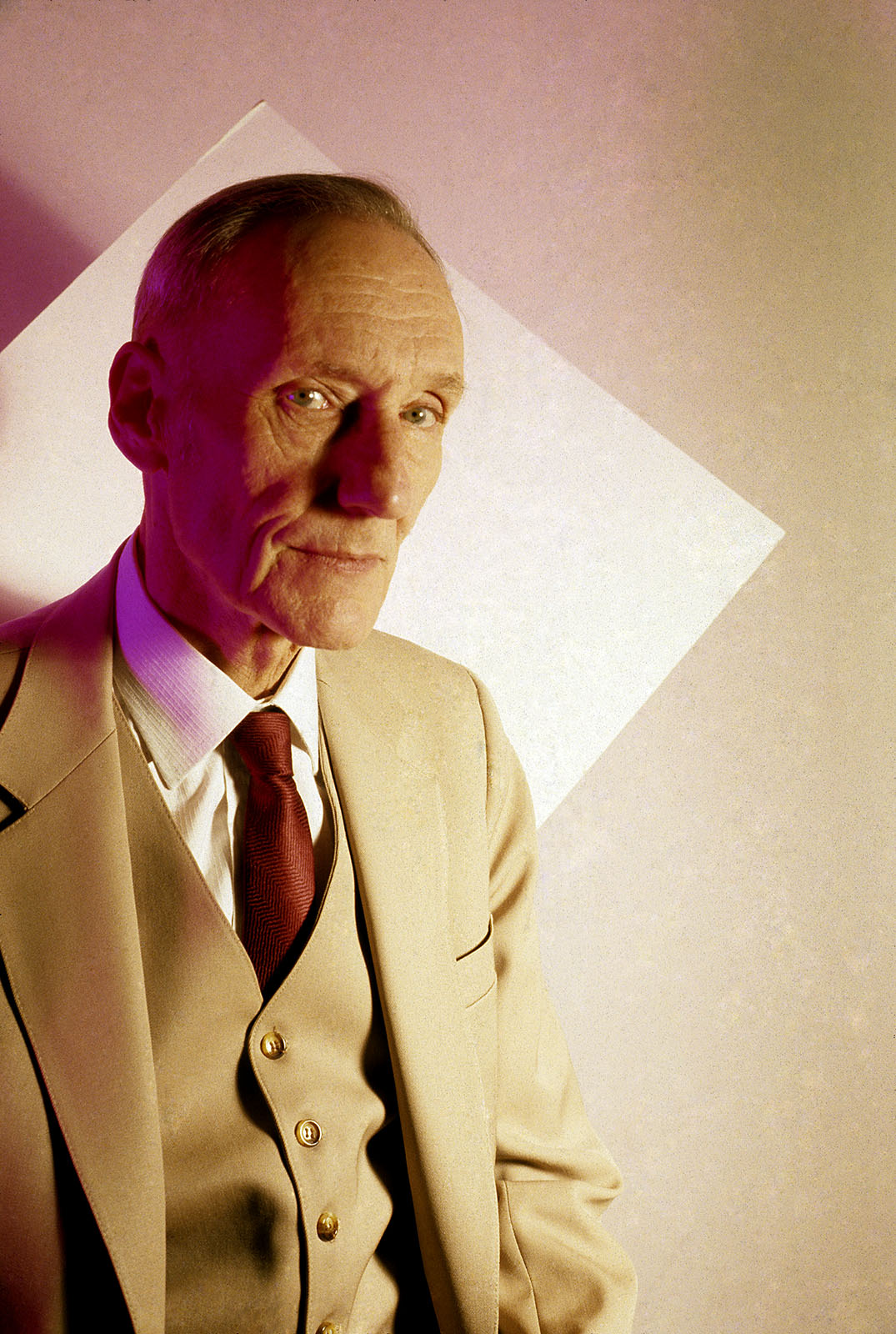
 

Jimmy DeSana (American, 1949-1990) 'William S. Burroughs' 1981


Jimmy DeSana (American, 1949-1990)
William S. Burroughs
1981
Chromogenic print
20 × 13 1/2 in. (50.8 × 34.3cm)
Courtesy of the Jimmy DeSana Trust and P·P·O·W Gallery, New York
© Estate of Jimmy DeSana
Photo: Courtesy of the Jimmy DeSana Trust and P·P·O·W Gallery, New York


Throughout his career, DeSana befriended and photographed an older generation of pioneering queer male artists and writers who similarly transgressed societal norms through their work and life. Also like DeSana, many subverted pop culture imagery and operated outside of official institutions.

Exhibition label
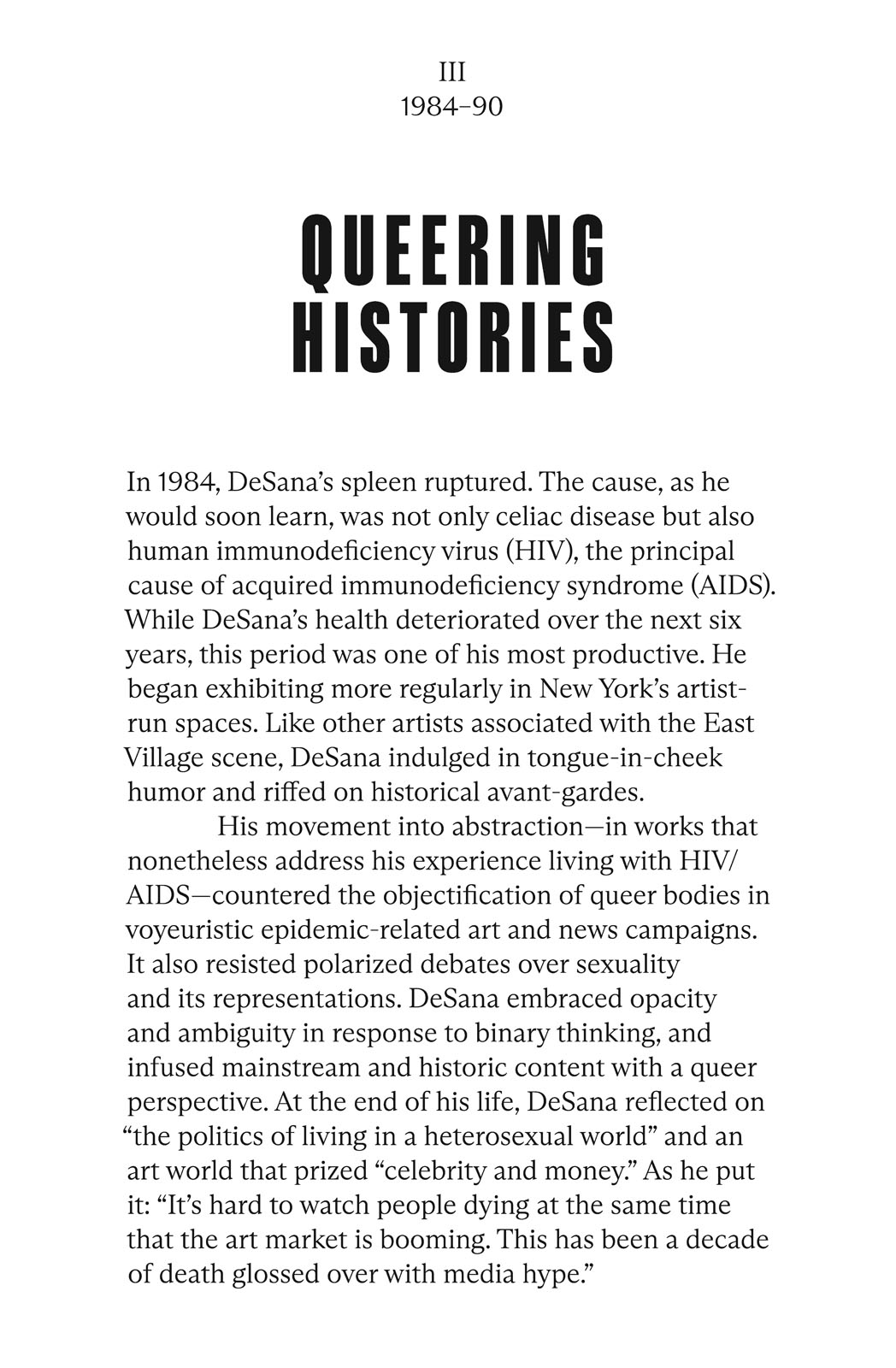
 

Jimmy DeSana Queering Histories 1984-1990


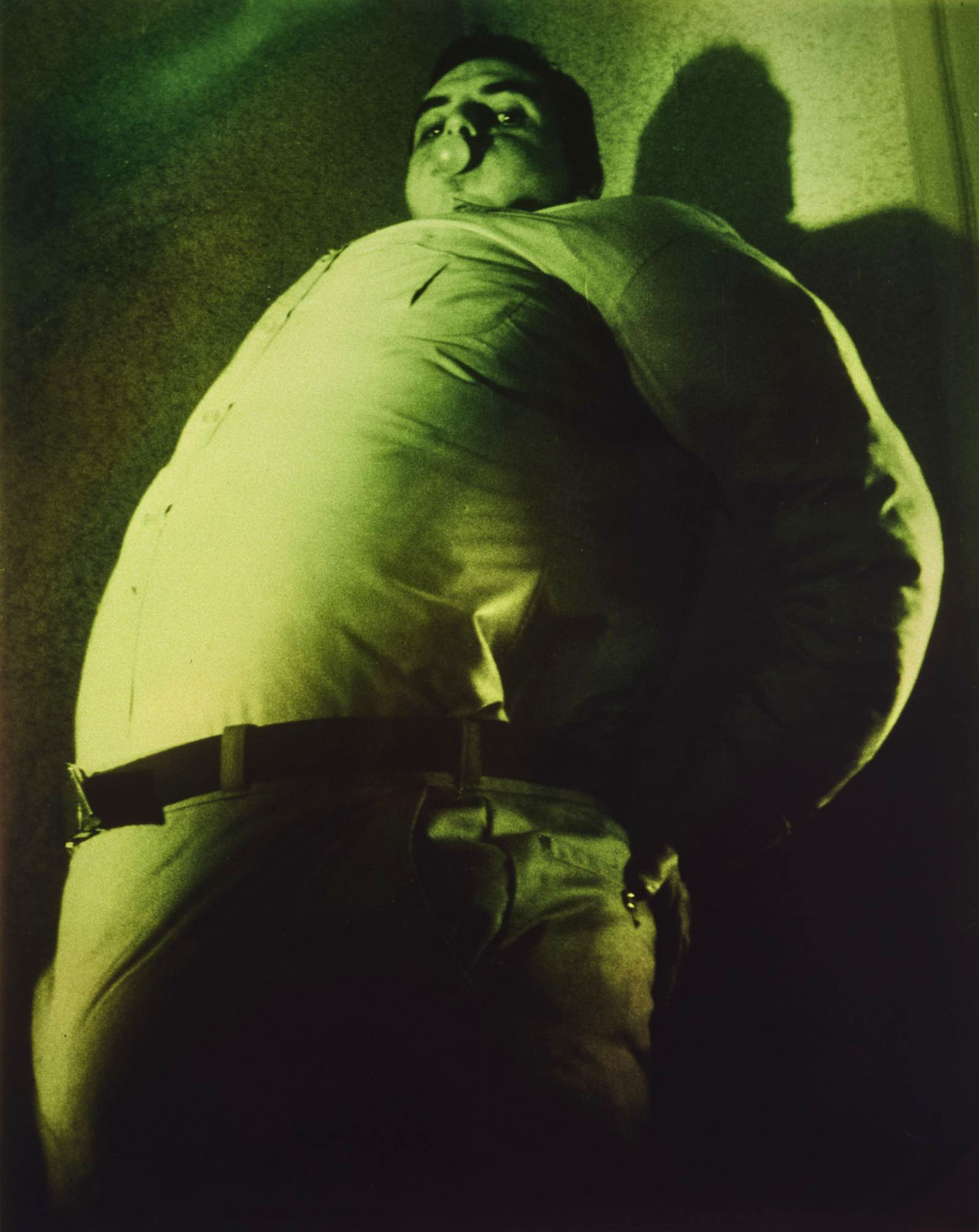
Jimmy DeSana (American, 1949-1990) 'Bubblegum (Self-Portrait)' 1984


Jimmy DeSana (American, 1949-1990)
Bubblegum (Self-Portrait)
1984
Silver dye bleach print
19 5/8 × 15 1/2 in. (49.8 × 39.4cm)
Courtesy of the Jimmy DeSana Trust and P·P·O·W Gallery, New York
© Estate of Jimmy DeSana
Photo: Allen Phillips


In a group of photographs from 1984 and 1985, DeSana explored America’s obsession with fat and dieting, tying it in with his own interest in consumption and forms of discipline and pleasure. Bubblegum, for example, is a self-portrait with his cheeks puffed out, blowing a bubble, his oversize shirt and pants bursting at the seams from stuffing and his back slightly arched to emphasise his protruding belly. He printed this image in numerous colours, including bright pink and acid green.

Exhibition label
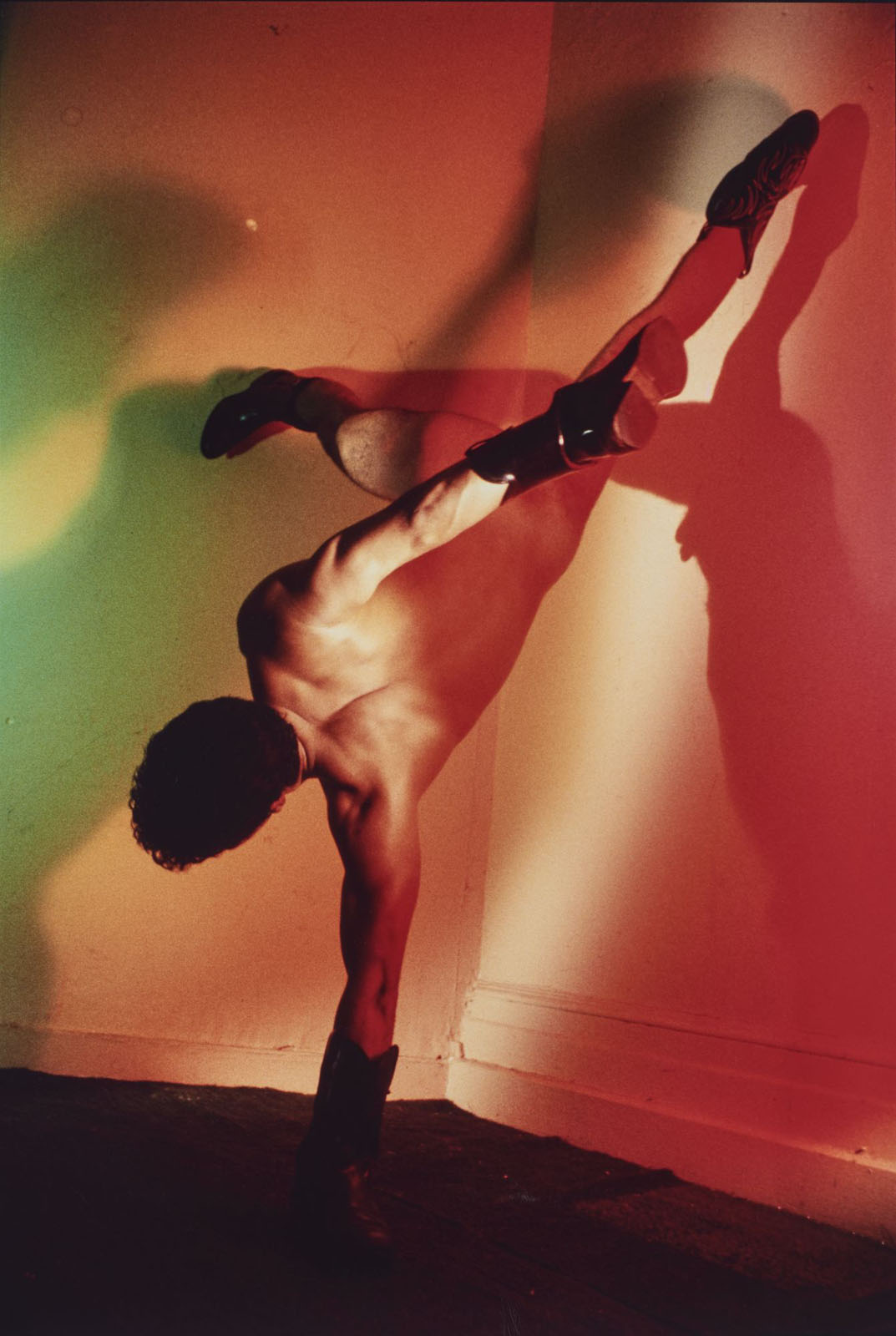
 

Jimmy DeSana (American, 1949-1990) 'Cowboy Boots' 1984


Jimmy DeSana (American, 1949-1990)
Cowboy Boots
1984
Silver dye bleach print
20 × 16 in. (50.8 × 40.6cm)
Courtesy of the Jimmy DeSana Trust and P·P·O·W Gallery, New York
© Estate of Jimmy DeSana
Photo: Courtesy of the Jimmy DeSana Trust and P·P·O·W Gallery, New York


With a wink to the commonalities of darkrooms and backrooms, Sawyer built a red-light district for DeSana’s extensive investigations of BDSM, in which piss is expelled and enjoyed, and gimp-masked figures kneel in toilets or near dog bowls. In Party Picks (1981 above), toothpicks stuck into gums between teeth make a crown of thorns around a gasping mouth, or maybe make that mouth St. Sebastian’s wound. Cardboard (1985 below) offers a room with a single, lurid red band of light and corrugated cardboard that slices a bending body. In such a place, you might think of Samuel Steward’s card catalog of his conquests, or if Flavin’s work is really about its shadows, or what to do with that butt. DeSana’s frisky, familiar portraits reject the po-faced posing of Mapplethorpe and the social-climbing sadism of Helmut Newton. He gets that such proclivities are mind games played with bodies and bets you might want to play them too.

Jesse Dorris. “Jimmy DeSana’s Transgressive Vision of Life and Desire,” on the Aperture website December 14, 2022 [Online] Cited 02/04/2023
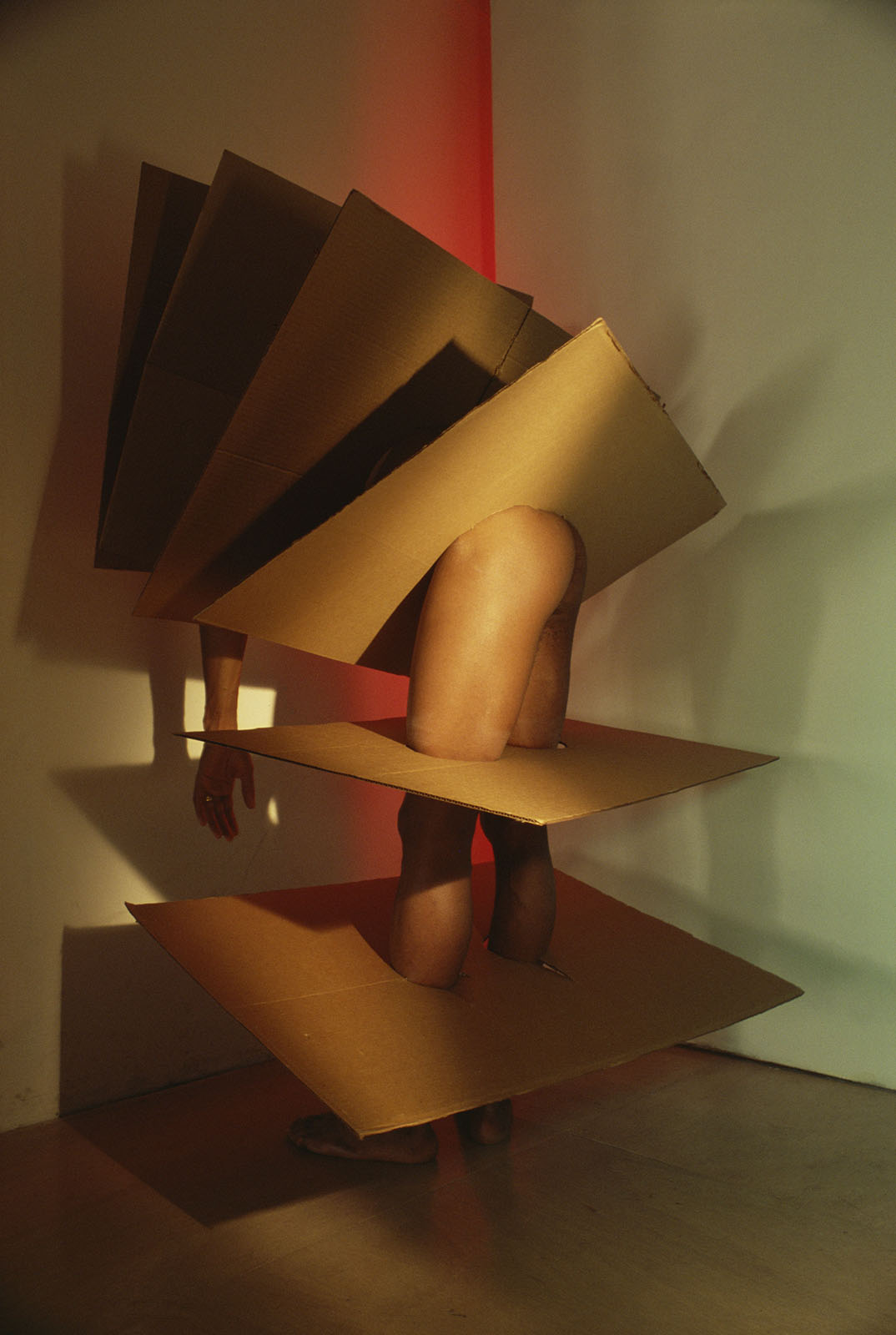
 

Jimmy DeSana (American, 1949-1990) 'Cardboard' 1985


Jimmy DeSana (American, 1949-1990)
Cardboard
1985
Silver dye bleach print
19 × 12 3/4 in. (48.3 × 32.4cm)
Courtesy of the Jimmy DeSana Trust and P·P·O·W Gallery, New York
© Estate of Jimmy DeSana
Photo: Courtesy of the Jimmy DeSana Trust and P·P·O·W Gallery, New York


In his series of photographs titled Suburban, Jimmy DeSana continued to photograph anonymous nude figures while making a more explicit connection between S-M and everyday life.

Many of the photographs comically equate attachments to the objects and ideals of postwar suburban life in the U.S. (washing dishes, taking a shower, driving a car) with forms of bondage and discipline. In Cardboard, from 1985 (shown here), a nude figure is intersected by sheets of cardboard.

Lit with tungsten lights and candy-coloured gels, his collaborators often turned their backs to the camera or buried their heads in purses, sinks, toilets, etc. rather than wearing leather masks. This not only protected the identity of his nude models, many of whom were friends, but also contrasted with his better-known portrait work during this period. Perhaps most important, these images continued his subversion of subjectivity. While all the photographs in the Suburban series feature nude figures, DeSana did not intend for the work to be erotic.

Text from the Brooklyn Museum Tumblr website
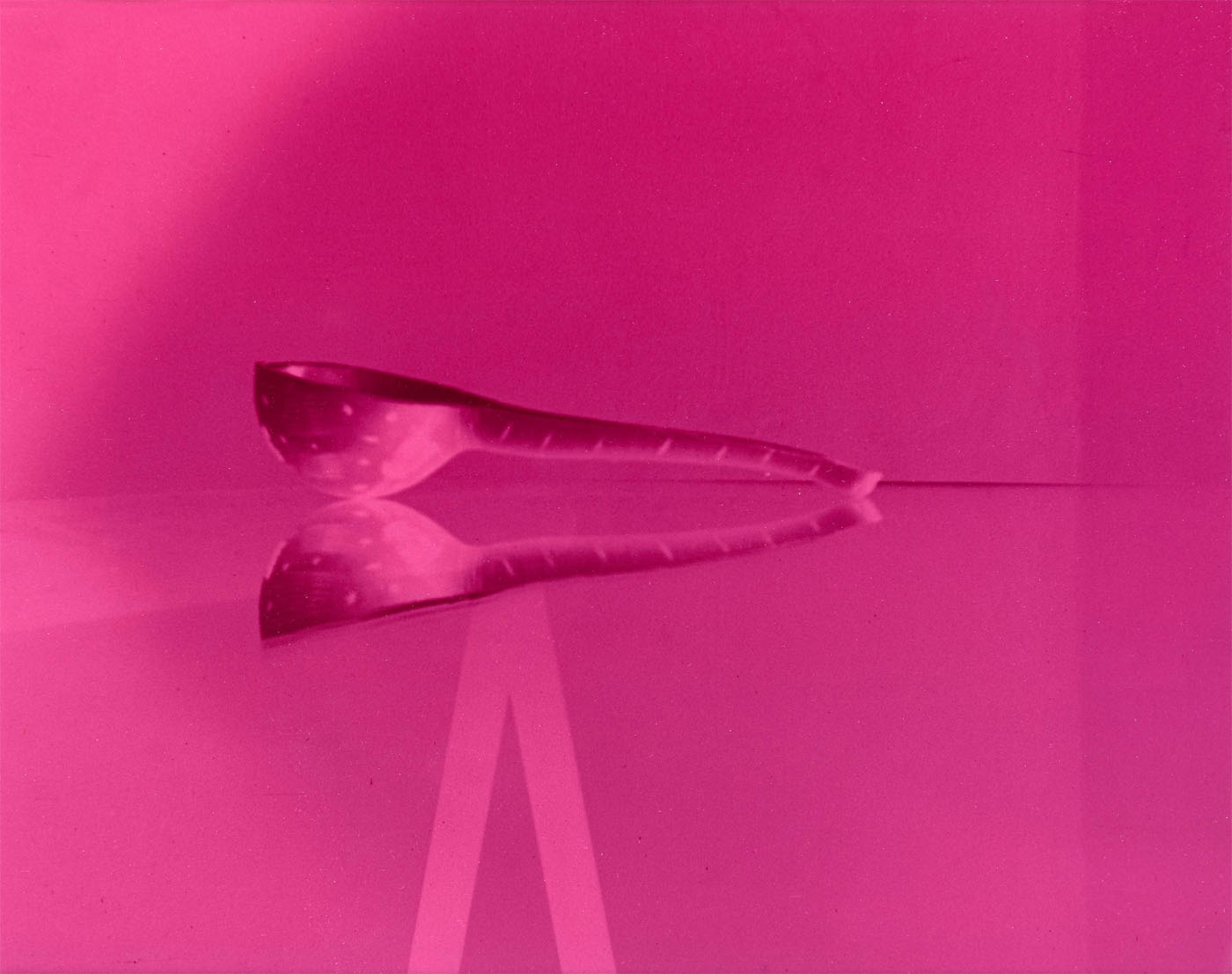
 

Jimmy DeSana (American, 1949-1990) 'Spoon' 1985


Jimmy DeSana (American, 1949-1990)
Spoon
1985
Silver dye bleach print
7 1/2 × 9 1/2 in. (19.1 × 24.1 cm)
Courtesy of the Jimmy DeSana Trust and P·P·O·W, New York
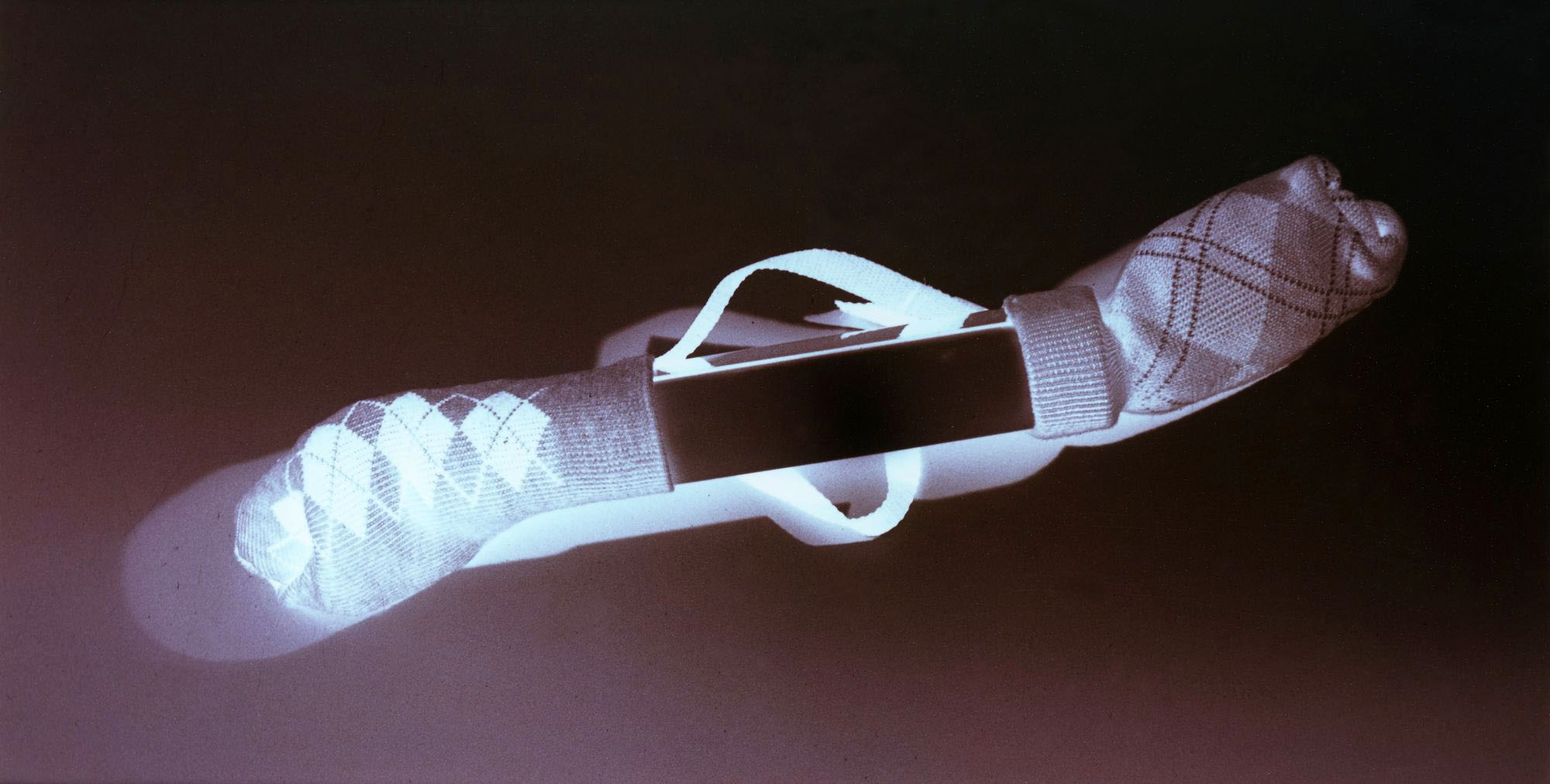
 

Jimmy DeSana (American, 1949-1990) 'Socks' 1986


Jimmy DeSana (American, 1949-1990)
Socks
1986
Silver dye bleach print
4 3/4 × 9 1/2 in. (12.1 × 24.1cm)
Courtesy of the Jimmy DeSana Trust and P·P·O·W, New York
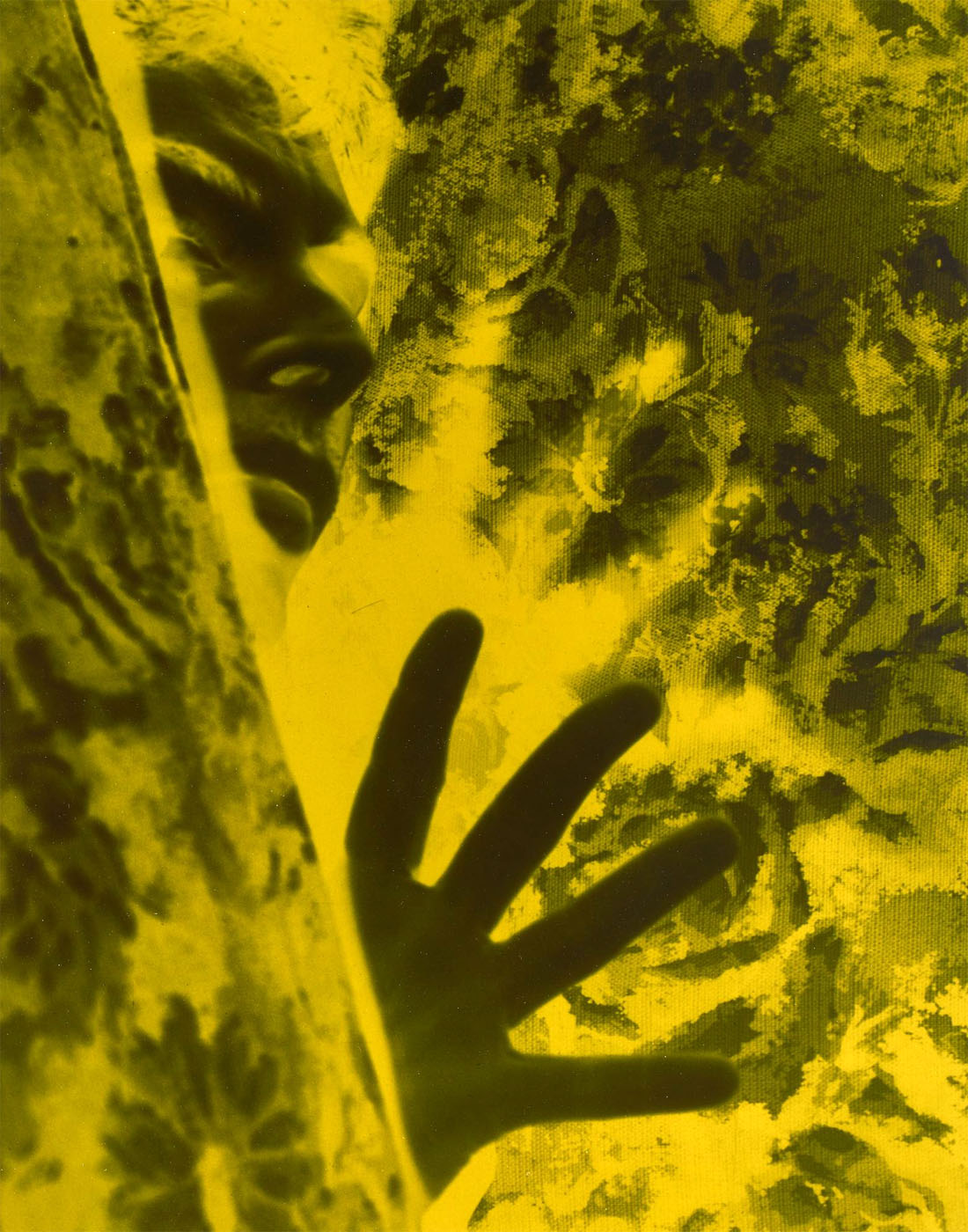
 

Jimmy DeSana (American, 1949-1990) 'Untitled (Self Portrait Sleeping)' 1985


Jimmy DeSana (American, 1949-1990)
Untitled (Self Portrait Sleeping)
1985
Silver dye bleach print
9 1/2 × 7 1/2 in. (24.1 × 19.1cm)
Courtesy of the Jimmy DeSana Trust and P·P·O·W, New York
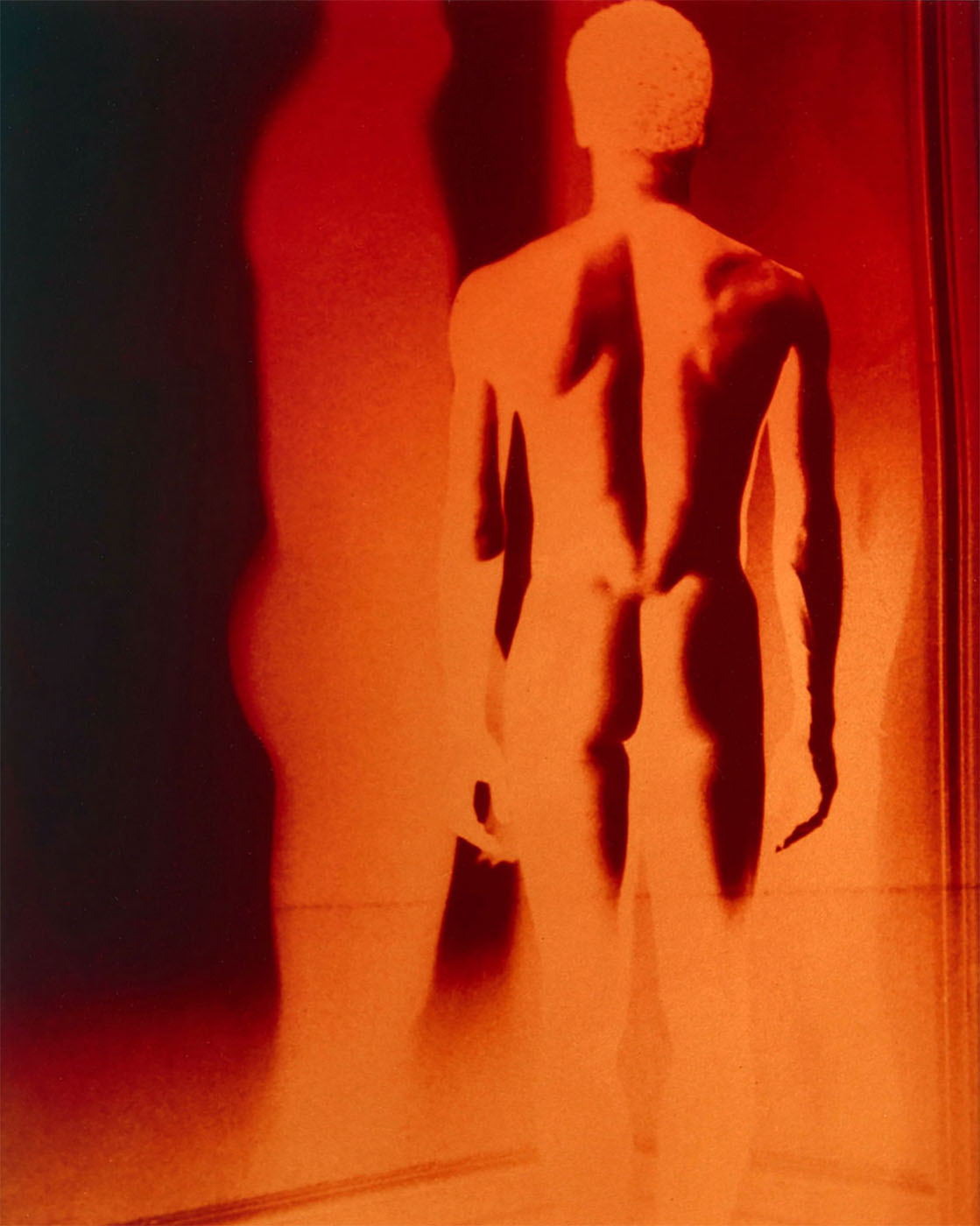
 

Jimmy DeSana (American, 1949-1990) 'Untitled (Male Nude)' 1985


Jimmy DeSana (American, 1949-1990)
Untitled (Male Nude)
1985
Silver dye bleach print
9 1/2 × 7 1/2 in. (24.1 × 19.1cm)
Courtesy of the Jimmy DeSana Trust and P·P·O·W, New York
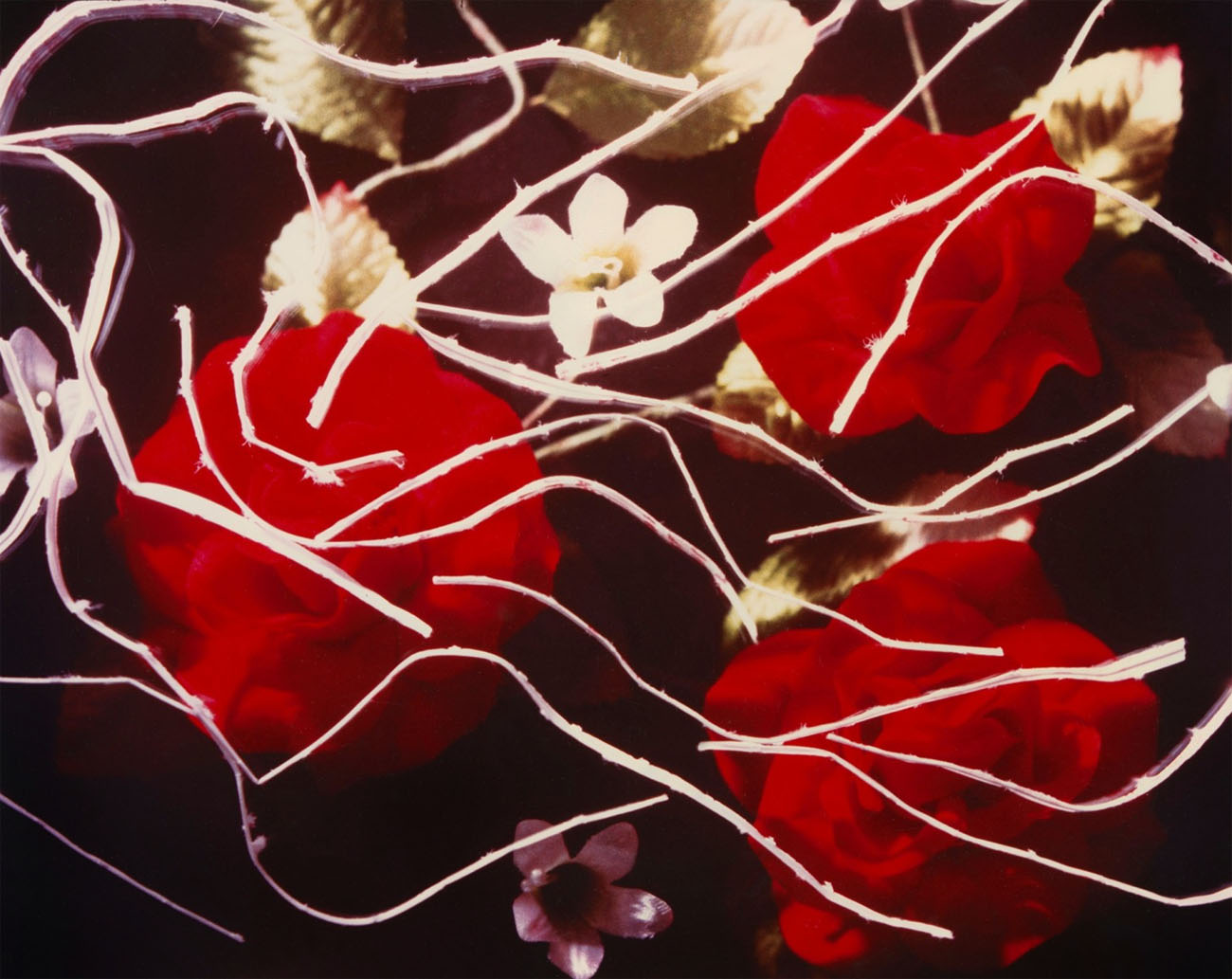
 

Jimmy DeSana (American, 1949-1990) 'Ties & Roses' 1986


Jimmy DeSana (American, 1949-1990)
Ties & Roses
1986
Silver dye bleach print
14 3/4 × 19 1/4 in. (37.5 × 48.9cm)
Courtesy of the Jimmy DeSana Trust and P·P·O·W, New York
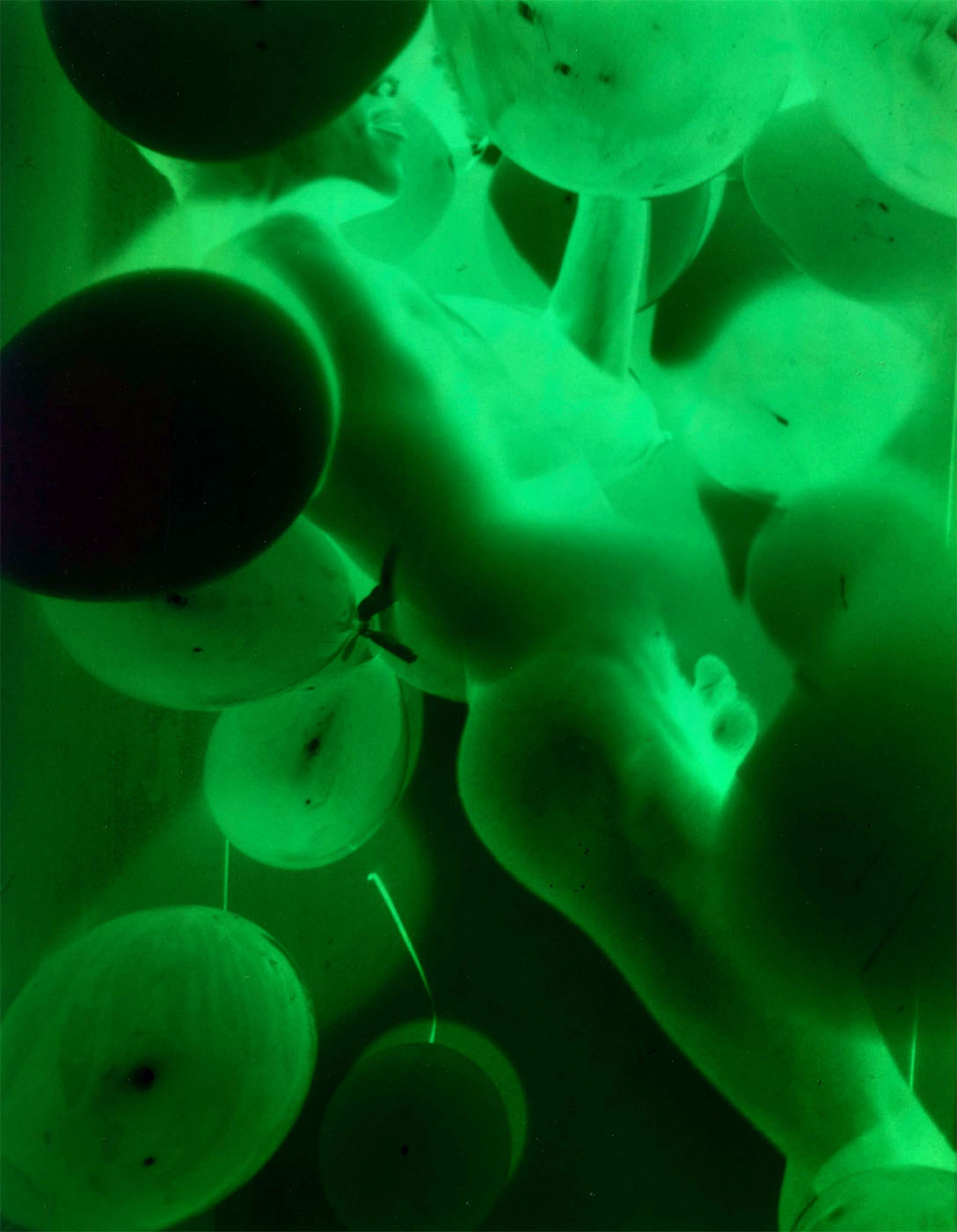
 

Jimmy DeSana (American, 1949-1990) 'Balloons' 1985


Jimmy DeSana (American, 1949-1990)
Balloons
1985
Silver dye bleach print
13 1/4 × 10 1/4 in. (33.7 × 26 cm)
Courtesy of the Jimmy DeSana Trust and P·P·O·W, New York
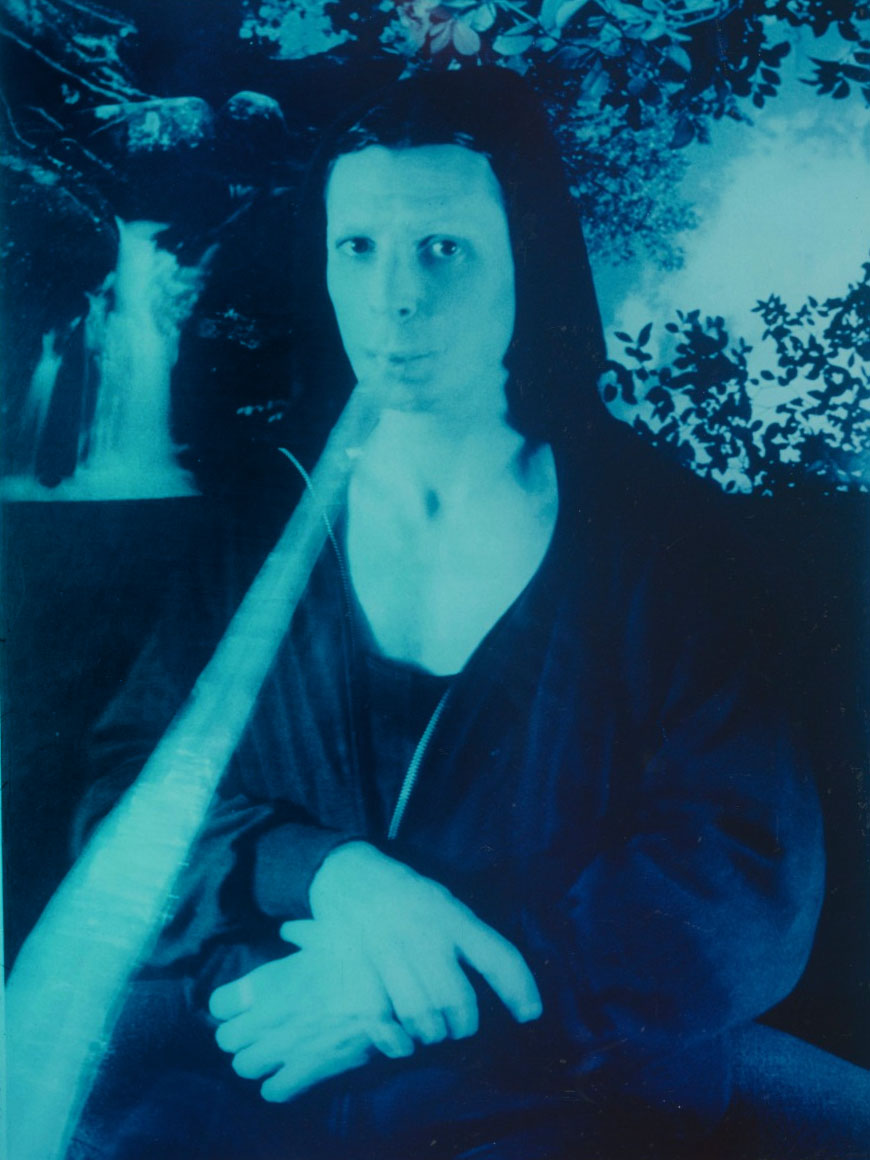
 

Jimmy DeSana (American, 1949-1990) 'Cellophane Tape' 1985


Jimmy DeSana (American, 1949-1990)
Cellophane Tape
1985
Silver dye bleach print
13 15/16 × 10 1/2 in. (35.4 × 26.7cm)
Courtesy of the Jimmy DeSana Trust and P·P·O·W, New York
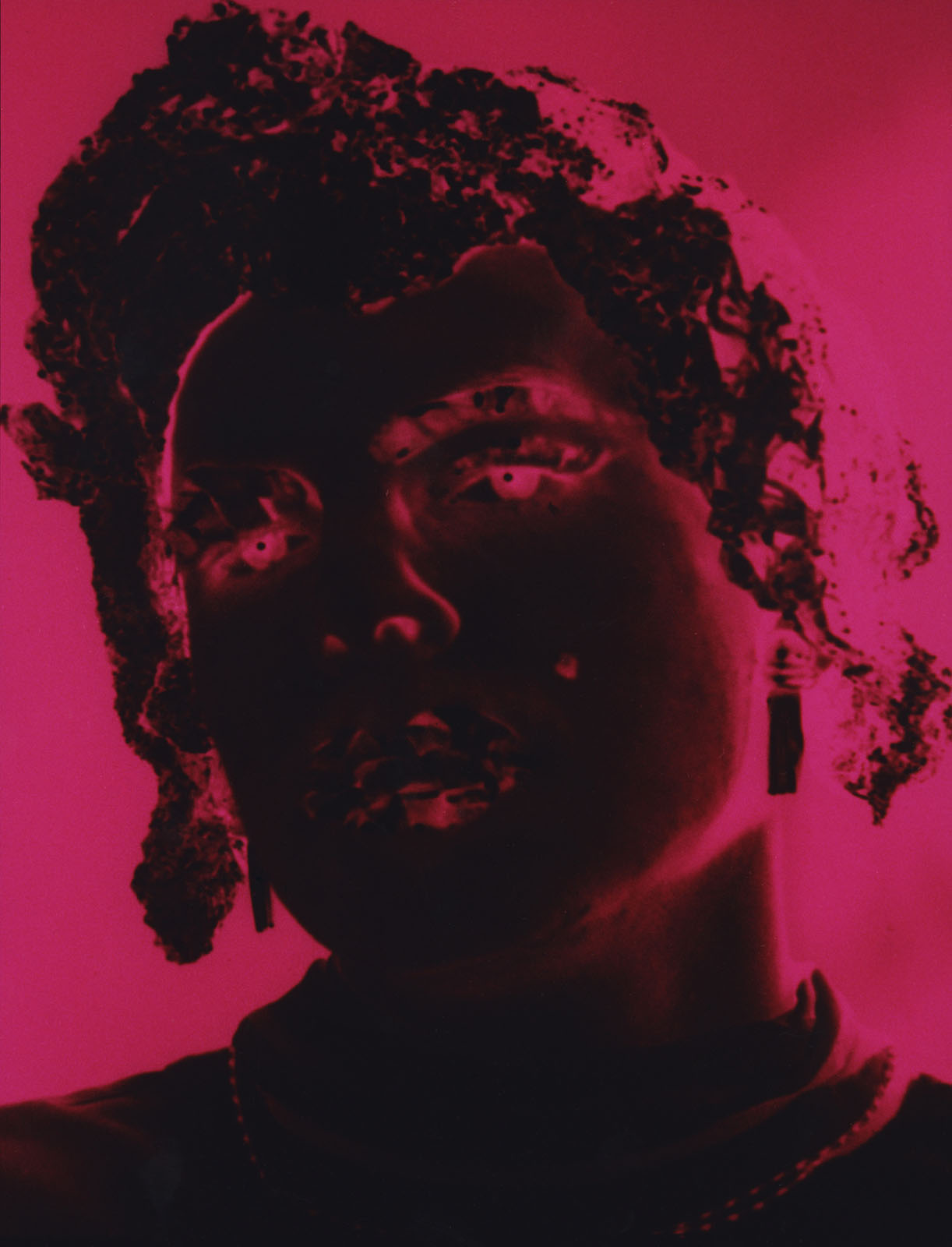
 

Jimmy DeSana (American, 1949-1990) 'Aluminum Foil #4 (Self-Portrait)' 1985


Jimmy DeSana (American, 1949-1990)
Aluminum Foil #4 (Self-Portrait)
1985
Silver dye bleach print
10 × 8 in. (25.4 × 20.3cm)
Courtesy of the Jimmy DeSana Trust and P·P·O·W Gallery, New York
© Estate of Jimmy DeSana
Photo: Courtesy of the Jimmy DeSana Trust and P·P·O·W Gallery, New York


In a series of “auto-portraits” from around 1985, DeSana assumed the guise of figures in famous portraits, such as Andy Warhol’s Marilyn Monroe and Leonardo da Vinci’s Mona Lisa. This body of work developed from DeSana’s previous experiments with role-playing, performance, and concealment.

Building on his engagement with colour photography, DeSana transformed these black-and-white negatives by enlarging them with dyed gels and colour dials. After exposing the colour photographic paper, he took the prints to a lab to finish the developing process.

Exhibition label
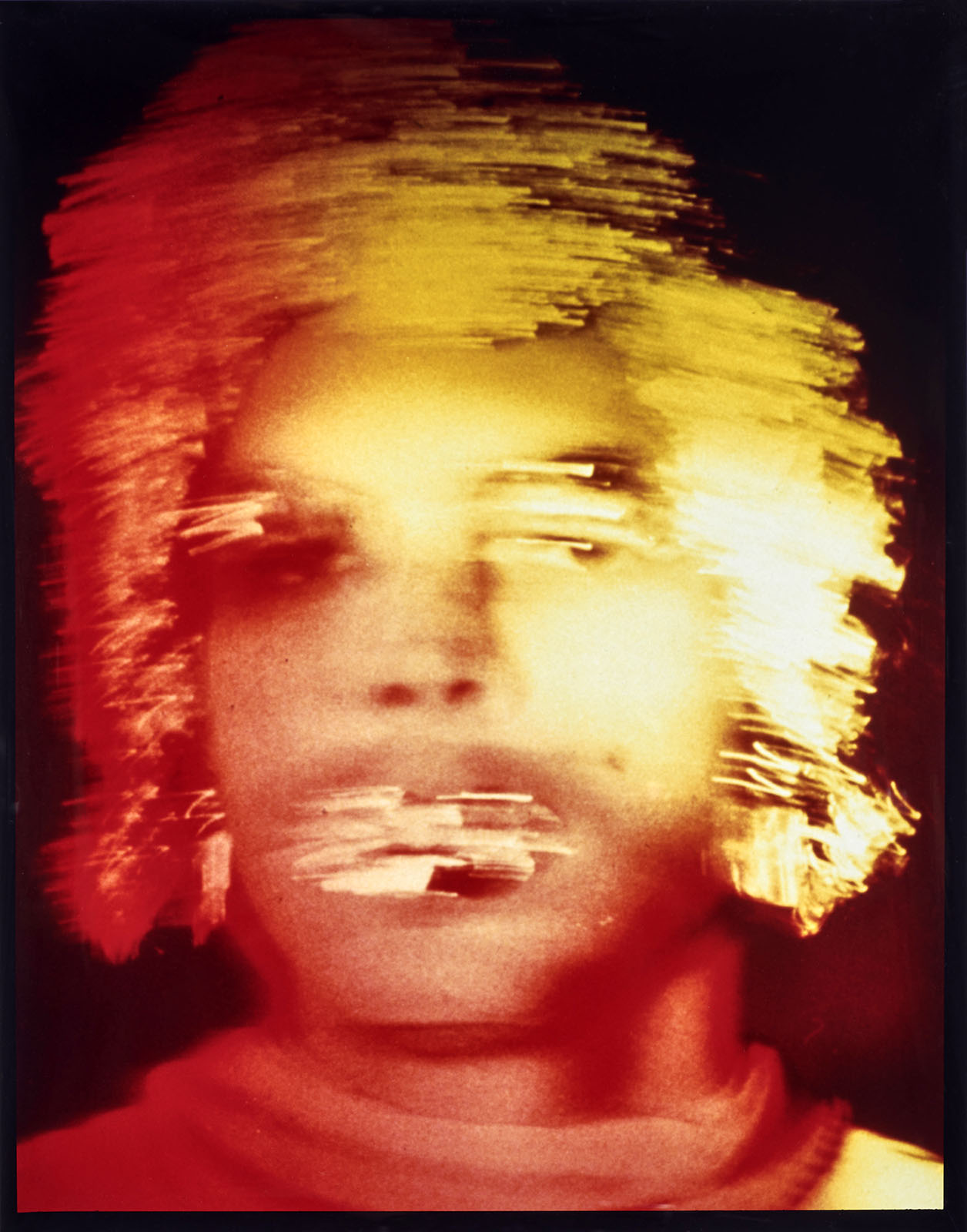
 

Jimmy DeSana (American, 1949-1990) 'Aluminum Foil #1 (Self-Portrait)' 1985


Jimmy DeSana (American, 1949-1990)
Aluminum Foil #1 (Self-Portrait)
1985
Silver dye bleach print
13 1/2 × 10 1/2 in. (34.3 × 26.7cm)
Courtesy of the Jimmy DeSana Trust and P·P·O·W Gallery, New York
© Estate of Jimmy DeSana
Photo: Allen Phillips


The vivid colour profiles of the Suburban series are riotous, yet the scenes are often subdued, serious, even melancholic. These acid-toned prints are more sinister, more surreal, and less eager to please than the images we often associate with the Pictures Generation. It’s easier to draw a line between DeSana and the surrealist photography of Man Ray and Hans Bellmer than to Cindy Sherman’s plucky film tests or the crisp portraits by Robert Mapplethorpe or Peter Hujar. Further distancing his work from that of his contemporaries, DeSana almost never reveals the identity of his sitters. Faces are almost invariably obscured by a prop: a stocking, a helmet, soap suds, or even the camera itself. The viewers’ innate desire to know the subject is stymied by the unrecognisability of these exploded, contorted anonymous bodies. By making chairs, coat hangers, helmets, and even an iguana an extension of the body, the photographs propose a flattening of the hierarchy between prop and actor, blurring the distinction between stage and sitter, foreground and background, organic and artificial. In much the same way that subjugation and compliance are fundamental to BDSM culture, here the camera becomes dominant, imploring the body to perform for the photographer. DeSana uses these bodies are props, stripping them of agency and compelling them serve the needs of the composition.

DeSana made a career of piercing through the realm of the banal and conventional with the queer and radical. His works suggest that the home itself and the objects within it are in themselves a prop to conceal an arena of libidinal play. For DeSana, the camera acts as catalyst and instigator, a tool used to coerce a performance, a device that invites us to subjugate our egos in the service of latent desires.

Bryan Barcena. “Suburban/Submission,” Focus Essay from FOAM exhibition 09.01.2019 on the Salon 94 website [Online] Cited 20/03/2023
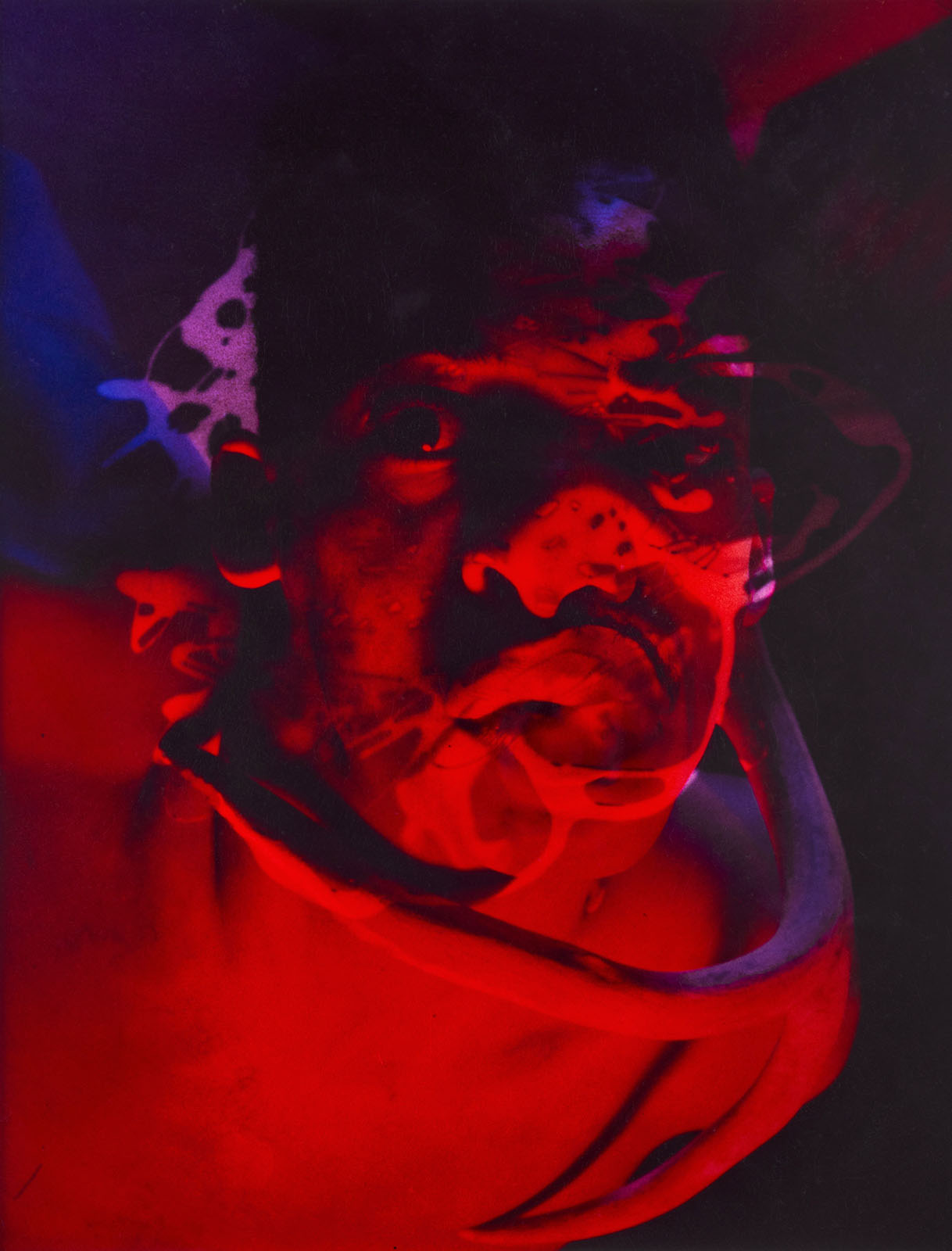
 

Jimmy DeSana (American, 1949-1990) 'Untitled (Man with Antler)' 1985


Jimmy DeSana (American, 1949-1990)
Untitled (Man with Antler)
1985
Silver dye bleach print
13 1/4 × 10 1/4 in. (33.7 × 26cm)
Courtesy of the Jimmy DeSana Trust and P·P·O·W Gallery, New York
© Estate of Jimmy DeSana
Photo: Allen Phillips


In a 1986 interview with Diego Cortez, Jimmy DeSana remarked on the mutability and transgressive potential of photography: “A photograph is how much you want to lie, how far you want to stretch the truth about the object. And, as photography is always based on real objects, it lends itself, by means of technique or manipulation, to explorations of what may appear to be an absence of reality, balancing on an ambiguous line between concrete and abstract space, between reality and illusion, in a way that no other medium is able to do.”

In a series of “portraits” from the mid 1980s, DeSana played with this tension by obscuring and transforming faces through collage and darkroom techniques. His movement into abstraction – in works that nonetheless address his experience living with HIV / AIDS – was in part a reaction to dilemmas over representations of sexuality and queer bodies during the first decade of the AIDS epidemic, from media bias to conservative censorship to activist demands. Critics recognised DeSana’s masquerades and darkroom experiments in colour as tributes to Surrealist photography of the 1920s and 1930s, which still had the power to confound expectations around photography and realism.

Text from the Brooklyn Museum Tumblr website


Skilled in the art of negation, DeSana staged intimate scenes that tease out the erotic – in Pants, 1984, a model arches his muscular, shirtless back under bold lighting – yet the artist routinely undermined and lampooned this sexual content: The model’s extremely large pants are filled with stuffing, comically emphasizing his ass and thighs. In this sense, DeSana’s work seems to parody Robert Mapplethorpe’s deadpan oeuvre. In 1979, DeSana published Submission, a photobook poking fun at notions of the body as a sexualized, gendered object. As the title implies, a power dichotomy is at play in the series – the camera assumes the dominant role, forcing the models into the passive ‘sub’ position. The photos … are black-and-white, giving them a self-serious quality, yet, as in his other work, DeSana punctured that effect with dark comedy. In Masking Tape, 1978, a latex bodysuit is traded for the household adhesive, with which a male model has been mummified head to toe – scrotum, penis, nipples, and nostrils excluded. Despite occasional comic absurdity, the photographs still retain a beguiling frisson. DeSana also ably mocked the supposed dangers of sexual alterity by allowing it a certain humanity – a melancholy picture of a hog-tied woman in black lingerie and high heels crouched in a refrigerator (empty save for a dozen eggs) exudes pathos and surprising sophistication. In Television, 1978, real danger in the form of electrocution threatens the supine and masked nude performer (DeSana himself) balancing a TV on his feet. Through this action, DeSana drew out the allure of mass media but underscored its potential for propagating constricting ideologies.

The introduction of beautifully jarring, chromatic lighting to DeSana’s post-Submission scenarios amplifies their urgency and defines his work’s signature aesthetic: slick and otherworldly yet proudly homemade. Thrown against domestic spaces and active bodies, strawberry reds and lysergic greens reverberate wildly. One such multi-hued image, Cowboy Boots, 1984, depicts a nude man in the midst of a one-armed handstand, his four splayed limbs straddling a corner of an apartment, feet and hands covered in tooled-leather cowboy boots. This hybridized body à la Hans Bellmer, not quite an object but a morphing being, defies the behavioural dicta of society. Representing a poignant act of shape-shifting, Bubblegum (Self-Portrait), 1985, an image printed with light-pink dye and made five years before the artist’s AIDS-related death, shows DeSana with his cheeks puffed up while blowing a bubble, his oversize shirt and pants bursting at the seams from stuffing. Such a transformation wryly suggests our physical mutability and the unknown extent to which our bodies and selves might evolve – grossly enlarge, wither away.

Beau Rutland. “Jimmy DeSana,” on the Art Forum website 2013 [Online] 20/03/2023
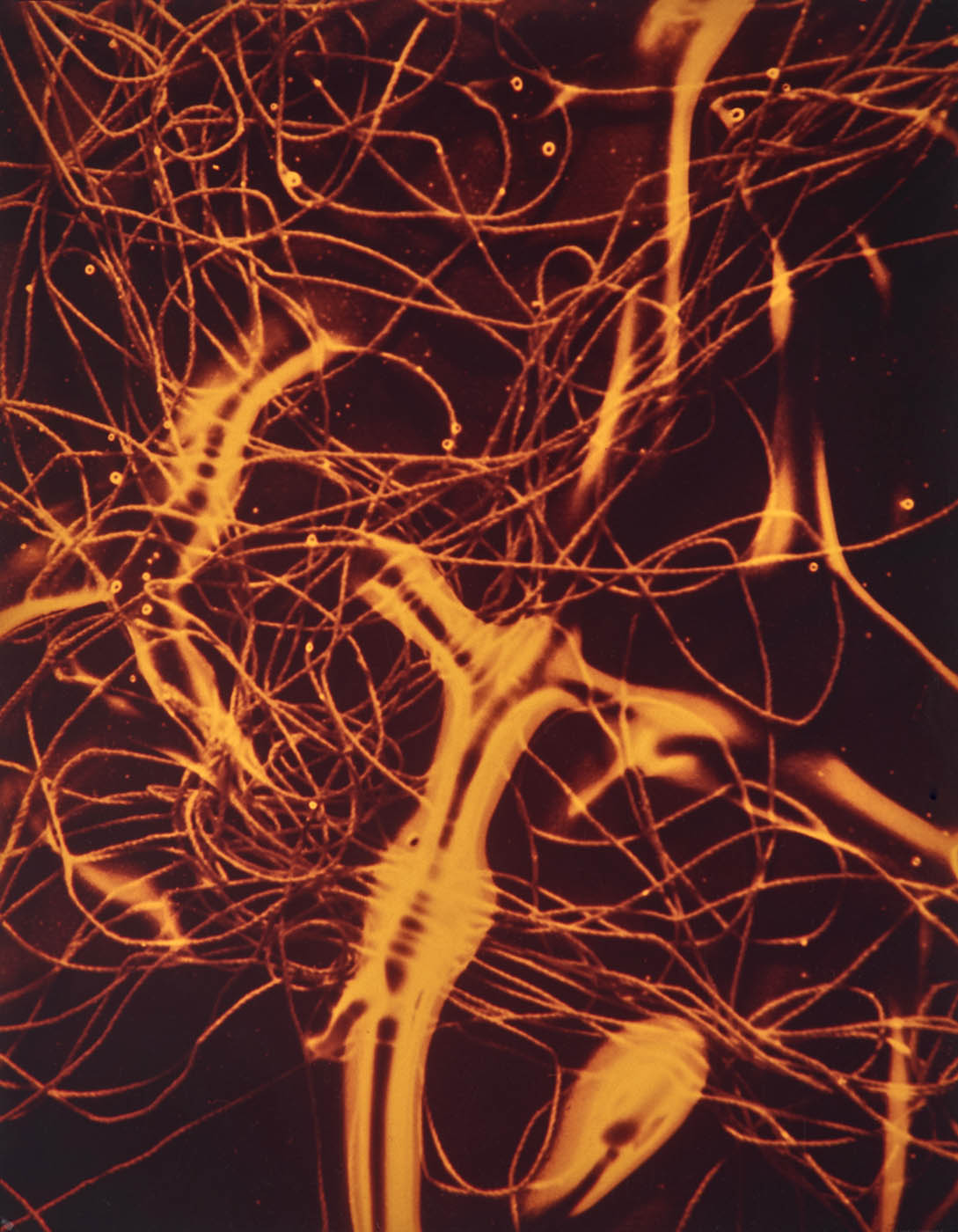
 

Jimmy DeSana (American, 1949-1990) 'String VII' 1987


Jimmy DeSana (American, 1949-1990)
String VII
1987
Silver dye bleach print
19 × 15 in. (48.3 × 38.1cm)
Courtesy of the Jimmy DeSana Trust and P·P·O·W Gallery, New York
© Estate of Jimmy DeSana
Photo: Allen Phillips
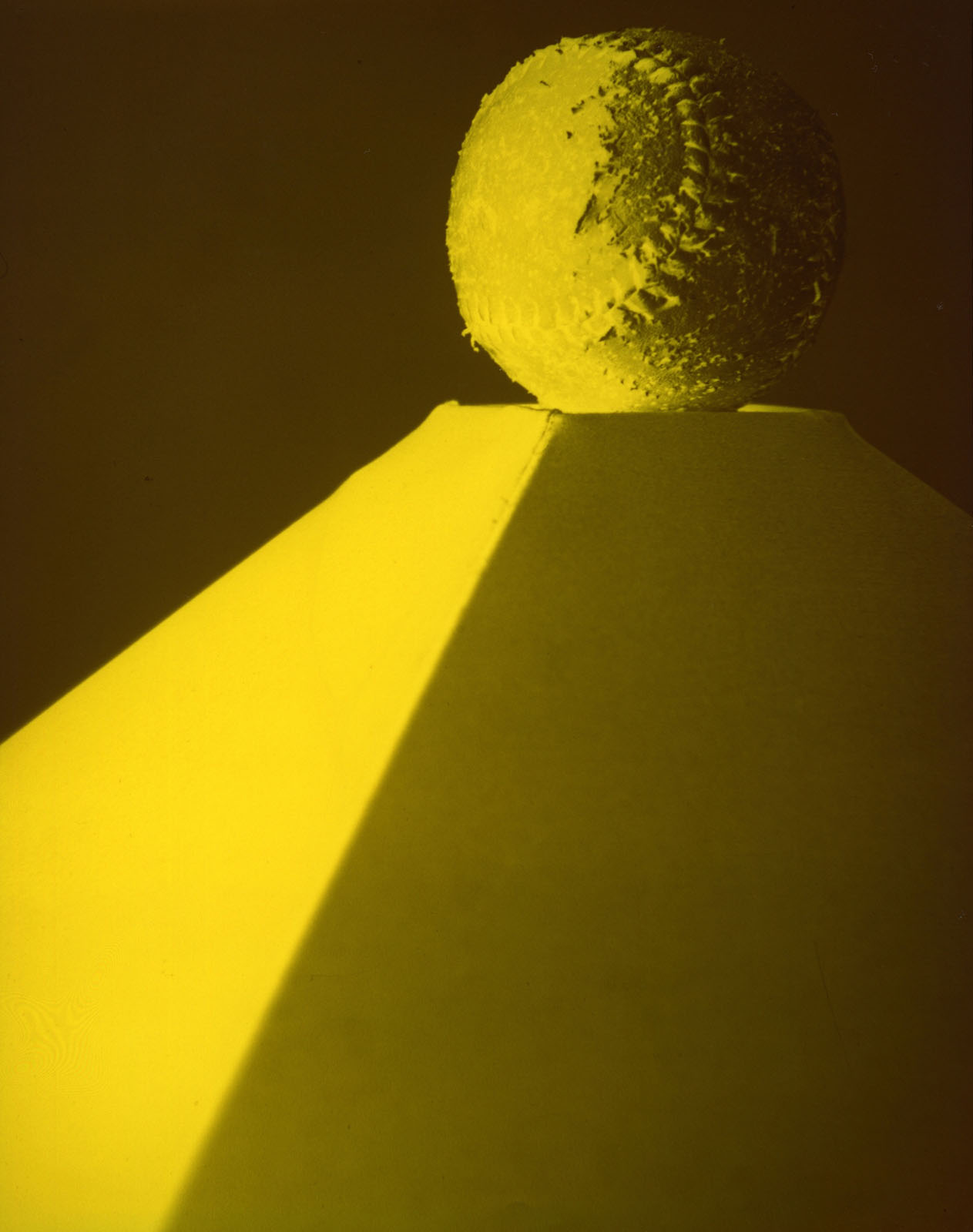
 

Jimmy DeSana (American, 1949-1990) 'Soft Ball' 1985


Jimmy DeSana (American, 1949-1990)
Soft Ball
1985
Silver dye bleach print
9 1/2 × 7 1/2 in. (24.1 × 19.1cm)
Courtesy of the Jimmy DeSana Trust and P·P·O·W Gallery, New York
© Estate of Jimmy DeSana
Photo: Courtesy of the Jimmy DeSana Trust and P·P·O·W Gallery, New York


After his diagnosis with HIV in 1985, DeSana began making a series of still lifes, tackling a genre that for centuries has expressed both the abundance and transitoriness of life and earthly goods.

Like so much of DeSana’s work, this photograph transforms a prosaic object – a softball, with its associations of sports and American culture – into something strange through juxtaposition, scale, and colourisation. The image recalls DeSana’s 1984 self-portrait in which the long, curved scar on his torso evokes a baseball’s stitching.

Exhibition label
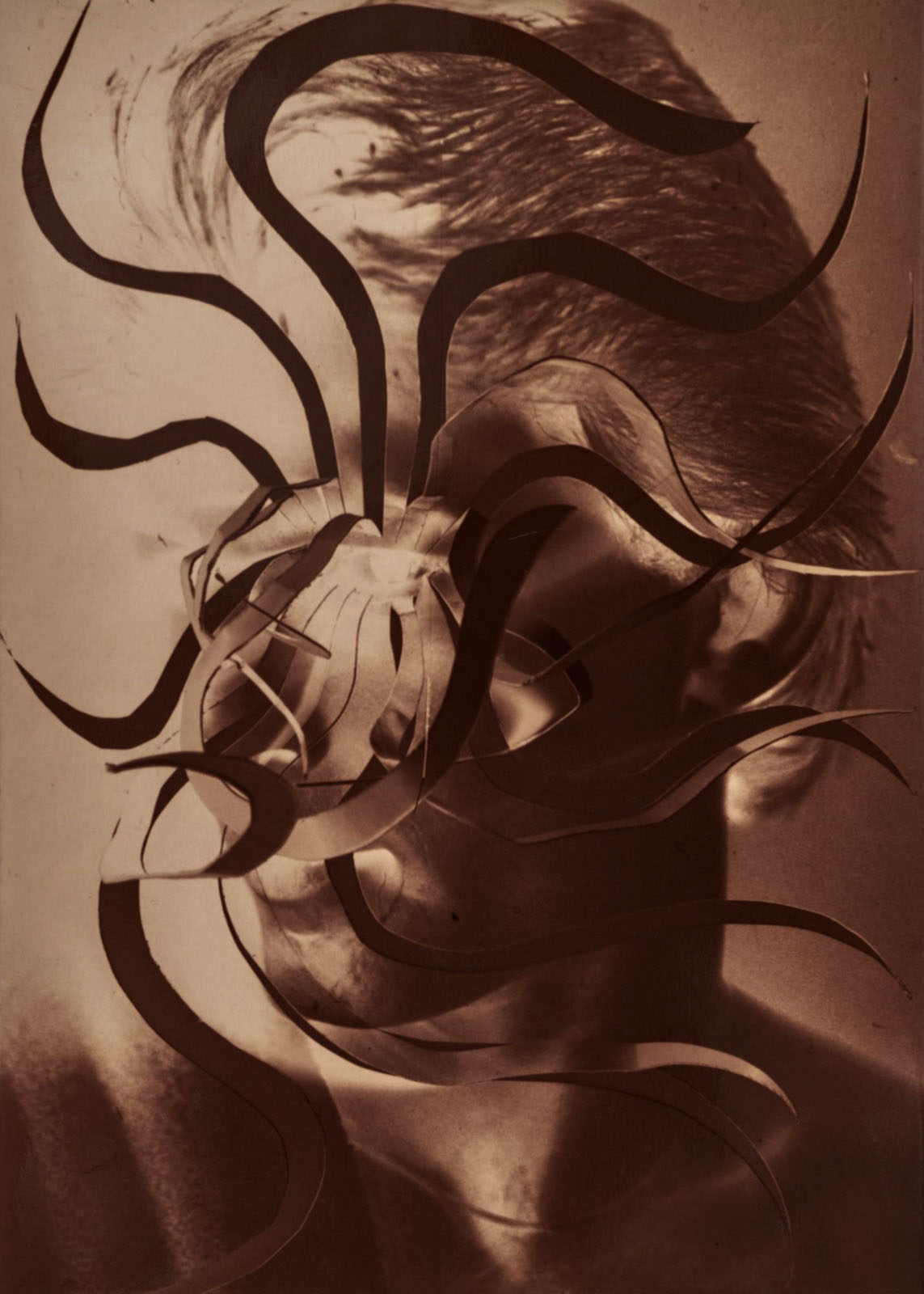
 

Jimmy DeSana (American, 1949-1990) 'Eyelashes' 1986


Jimmy DeSana (American, 1949-1990)
Eyelashes
1986
Silver dye bleach print
9 1/2 × 7 1/2 in. (24.1 × 19.1cm)
Courtesy of the Jimmy DeSana Trust and P·P·O·W Gallery, New York
© Estate of Jimmy DeSana
Photo: Allen Phillips


“‘Abstract photography’ not only turns its back on [the] incessant desire to know and see everything – it seeks to undermine and invert those very intentions,” Jerry Saltz wrote for the catalog that accompanied Jimmy DeSana’s first major curatorial effort at the Emerson in 1989.

The show, which included the work of 26 artists (including: Vikky Alexander, Ellen Brooks, Charlesworth, Morrisroe, Sherman, and Simmons), spoke to how artists were attempting in this era to move beyond the instrumentalisation of representation during a period of intense political divisiveness, and to expand what photography could be as art.

Text from the Brooklyn Museum Tumblr website


That uncanny language was shared with Laurie Simmons, known for her staged domestic scenes using dolls and miniature objects that, like the works of DeSana, surrealized suburbia. The two shared a studio until DeSana’s death from AIDS-related illness in 1990. Simmons watched her friend transform after his diagnosis, a change that manifested as both physical degeneration and artistic metamorphosis. “We didn’t want to be painters. We didn’t want to be sculptors,” Simmons recalls. “We wanted that sense of distance and remove. We wanted a tool that we could work with, but that didn’t have anything to do with craft.” Illness forced DeSana to put his camera down and collage. Struggling to make sense of the purpose of the body, and especially the sexualized body, amid a vicious disease that mostly took queer, sexually active bodies like his own, DeSana made sense of his world through chopping and repasting it. The distance and remove that he and Simmons craved, that the camera gave him, was impossible as the reality of death loomed so near. …

The thing that drew us to using a camera was [that] we didn’t want to use our hands. We didn’t want to be painters. We didn’t want to be sculptors. We wanted that sense of distance and remove. We wanted a tool that we could work with, but that didn’t have anything to do with craft. Collage took him to a very intimate, hands-on way of working that’s so much more personal. Yet by rephotographing the collages, he could keep that sense of distance and still see himself as a conceptual artist, which I think was part of how he needed to see himself.

“Collage took him to a very intimate, hands-on way of working that’s so much more personal. Yet by rephotographing the collages, he could keep that sense of distance and still see himself as a conceptual artist, which I think was part of how he needed to see himself.”

Laurie Simmons quoted in Megan Hullander. “Jimmy DeSana, an iconoclast even within the ’70s avant-garde, is finally entering mainstream consciousness,” on the Document Journal website July 11, 2022 [Online] Cited 20/03/2023
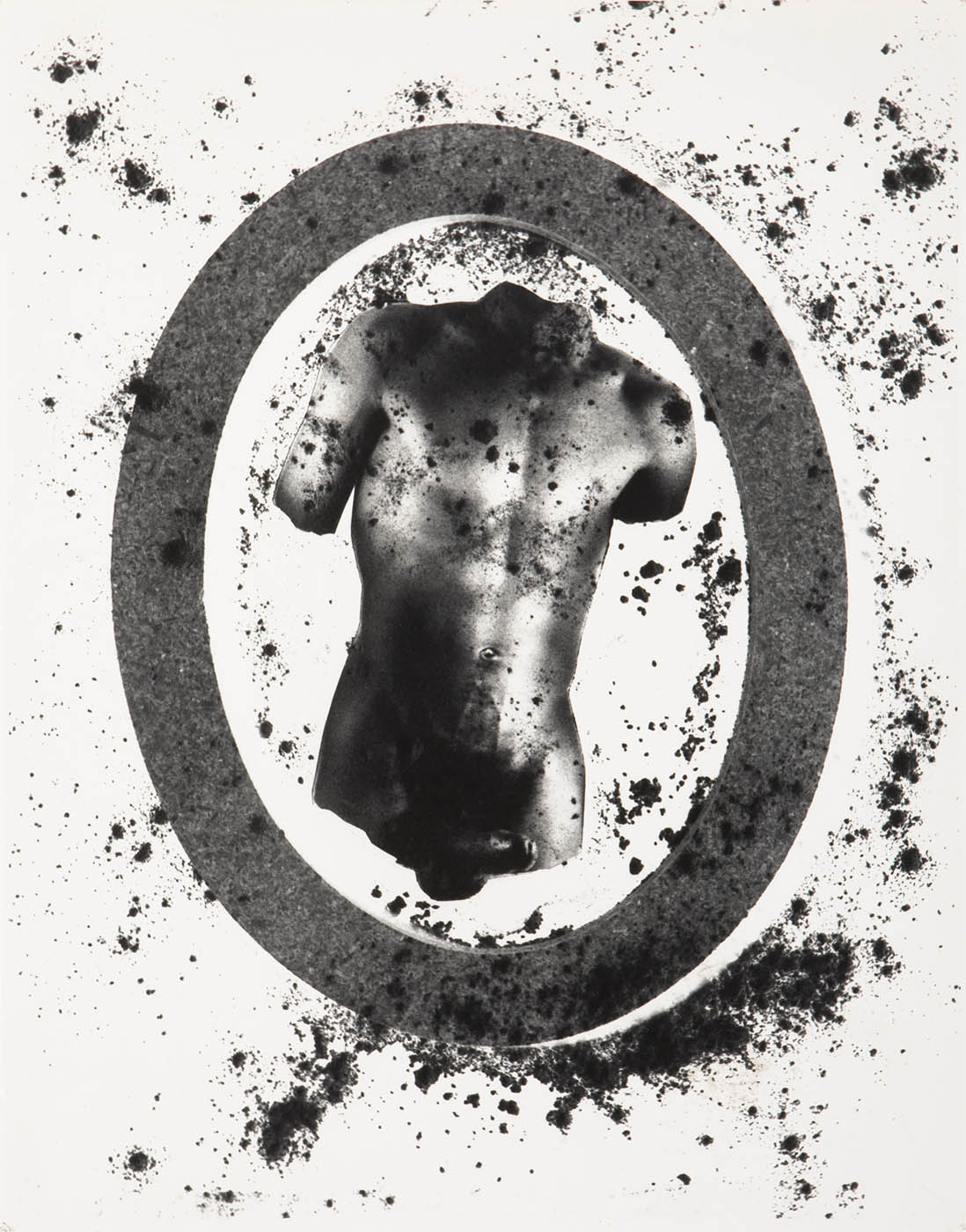
 

Jimmy DeSana (American, 1949-1990) 'Salvation' 1987-1988


Jimmy DeSana (American, 1949-1990)
Salvation
1987-1988
Maquette for book
Courtesy of the Jimmy DeSana Trust and P·P·O·W Gallery, New York
© Estate of Jimmy DeSana
Photo: David Vu


“If I could do a show that confused people so much, that was so ambiguous that they didn’t know what to think, but they felt sort of sickened by it and also entertained,” Jimmy DeSana told Laurie Simmons shortly before he passed away from AIDS-related illness in 1990, “then for me that would capture the moment that we’re going through right now.”

For his last major artistic project, DeSana collected his contradictory feelings and images in a book to be titled Salvation. Although he would not complete the volume before his death, he created this maquette. It comprises photomontages of flowers and fragments of male bodies, many recycled from older photographs of DeSana and his partner Darell Bagley. The photographs are black-and-white, but DeSana intended them to be printed with lurid colour through the Cibachrome process.

Ambiguity and opacity became increasingly important to DeSana, especially in reaction to the media’s and other artists’ objectification of queer people living with HIV / AIDS. He also pushed against the expectation that gay artists should somehow counter government inaction and misinformation around the epidemic.

Text from the Brooklyn Museum Tumblr website
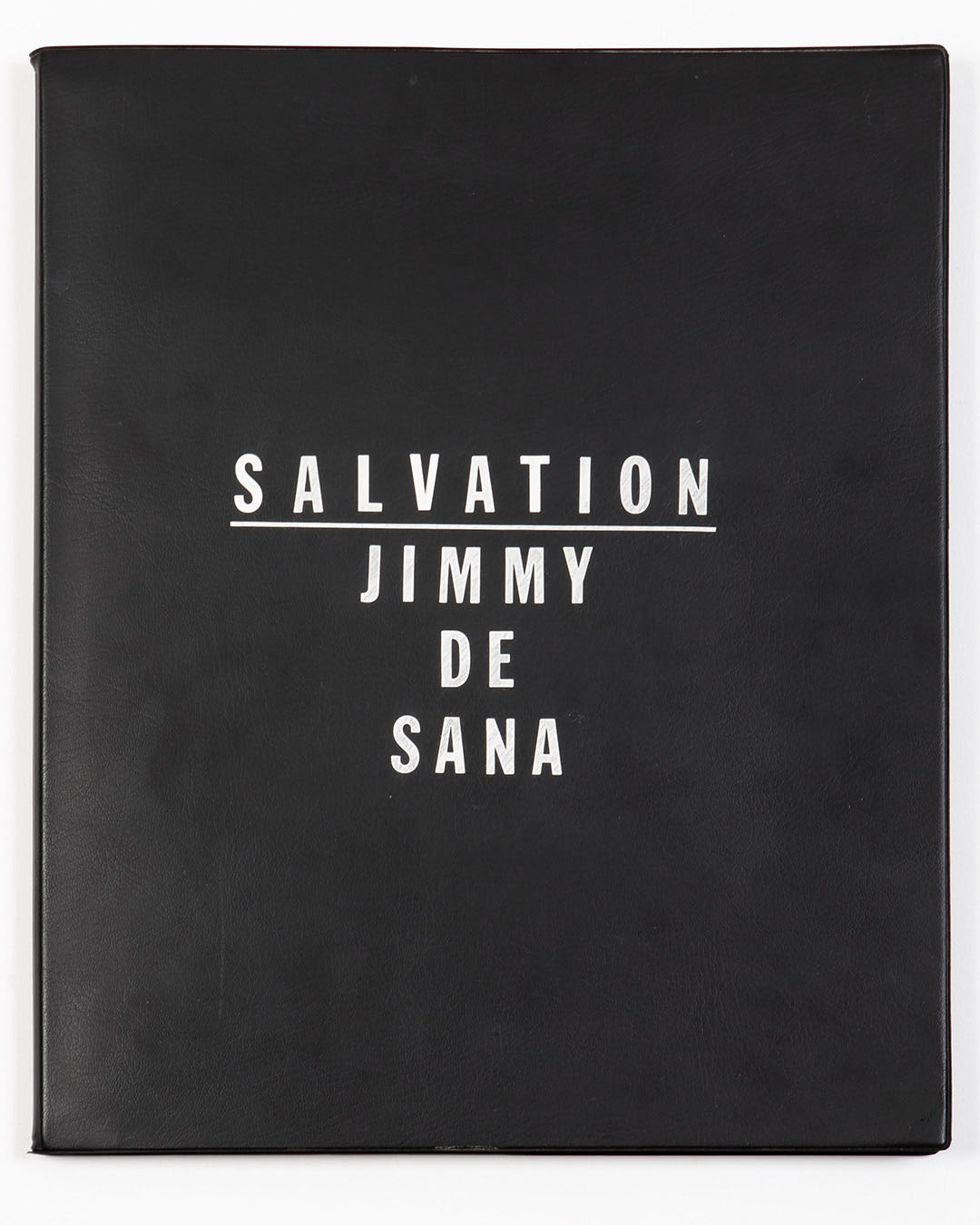
 

Jimmy DeSana (American, 1949-1990) 'Salvation (maquette)' 1987-1988

Jimmy DeSana (American, 1949-1990) 'Salvation (maquette)' 1987-1988

Jimmy DeSana (American, 1949-1990) 'Salvation (maquette)' 1987-1988


Jimmy DeSana (American, 1949-1990)
Salvation (maquette)
1987-1988
Courtesy of the Jimmy DeSana Trust and P·P·O·W Gallery, New York
© Estate of Jimmy DeSana


JC: There’s something unrefined about DeSana’s work compared to Mapplethorpe who was more stylistically precise. They must have been aware of each other; their work would feature together in issues of BOMB magazine and such. Of course, back then Mapplethorpe was a lot more famous and upwardly mobile, whereas DeSana seemed more invested in the punk scene. Overall, I appreciate DeSana’s spirit more than his images, many of which strike me as conceptually same-samey. The pictures are cheeky at times though not particularly humorous, so I was as perplexed as you when overhearing someone loudly chuckling at a photograph. To me, there’s too much death-drive going on in the work to laugh. Maybe it’s also because after witnessing Mugler’s flamboyance, finesse, and whimsy, a show like DeSana’s feels like a grim comedown by contrast. I don’t quite know what to make of the “acrobatic” works – contorted nude figures in backbends and pseudo-tantric / yogic poses that sometimes appear as levitation or a magic trick–and then the constant recourse to the stiletto motif – they’re somehow cooler in theory than in practice? The marker cone body as landscape is one of a kind, nobody else thought of that, but beyond this, I feel that had DeSana survived beyond those years of experimentation, he might have been making his best work by now. Of course, that’s total speculation and not entirely fair…

EC: I meant to mention that visitor laughing before, after which we both turned to each other in confusion. She was guffawing at Pink Furniture, which, if I remember correctly, had a blow-up doll hanging in the corner of the room. I do tend to always chuckle at Dog in the Submission series only because it looks like that furious wee puppy is going to bite the shit out of an erection. With his angry little growling face turned towards the camera, it is the perfect shot. Grrr… But I snicker at it more than a full-throated laugh. Full-throated laughing at DeSana feels like you should be put on some sort of watch list.

I agree with what you’re saying about DeSana’s work being still experimental and somewhat unresolved. A lot of work from that Downtown / East Village scene, though I have a special place in my heart for it in all of its flaws, doesn’t quite translate or age well and so much of that is because many of these artists all died so young. That being said, I like DeSana’s work much more than Mapplethorpe’s. Even Mapplethorpe’s self-portrait with a whip in his ass feels so precisely posed. In contrast, DeSana’s work just looks like it smells like ball sweat and assholes (this is a compliment). At least DeSana’s subcultural society pics of figures like Debbie Harry, The Talking Heads, Laurie Anderson, and William S. Burroughs lighten the mood, as do some of the vitrines of zines that don’t include hanging!

Jessica Caroline and Emily Colucci. “To Be Gorgeous: A Conversation on Thierry Mugler and Jimmy DeSana at the Brooklyn Museum,” on the Filthy Dreams website February 11, 2023 [Online] Cited 01/04/2023
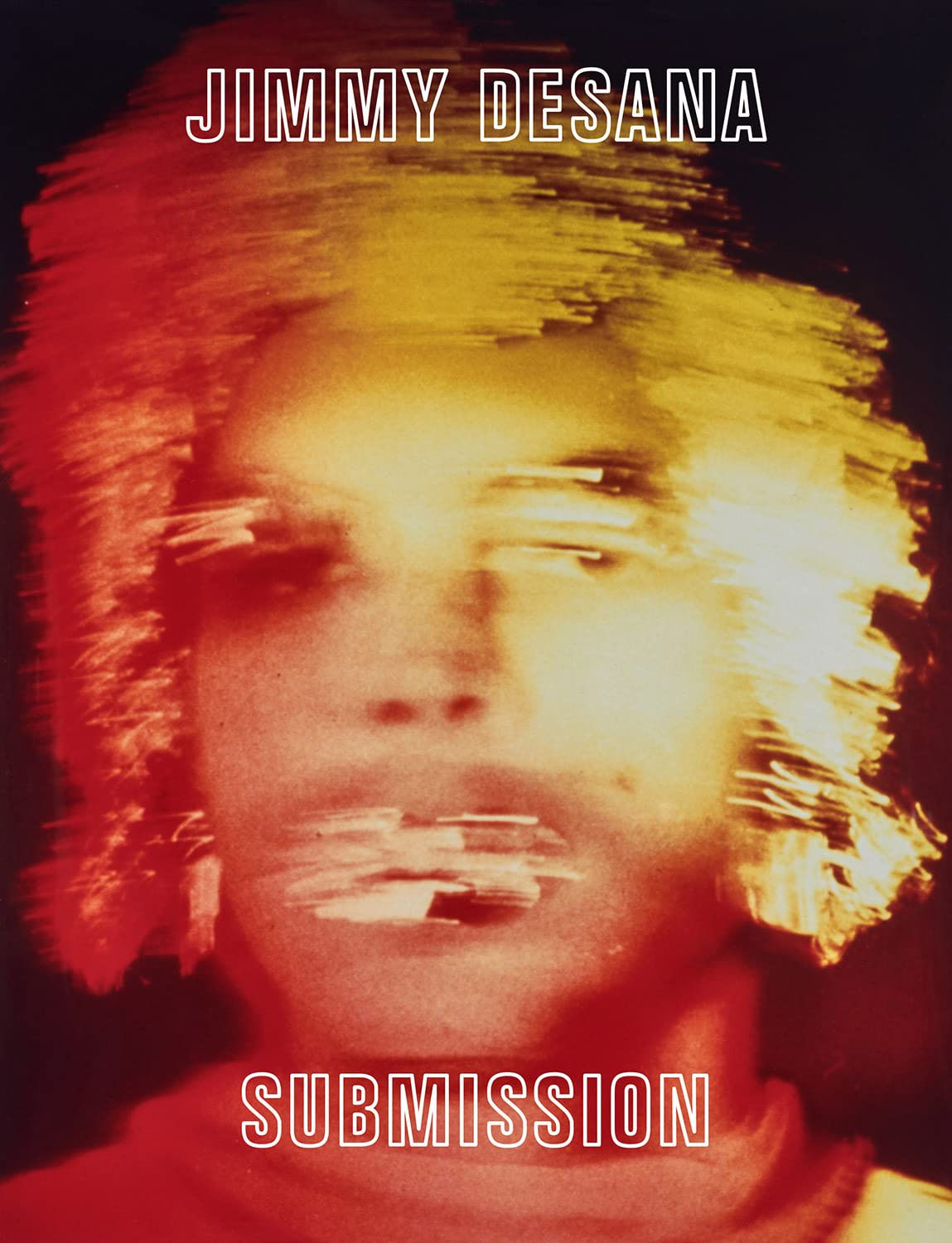
 

Jimmy DeSana Submission book cover


Jimmy DeSana Submission book cover


Book

This book is the first monograph to present the work of Jimmy DeSana, a pioneering yet under recognised figure in New York’s downtown art, music, and film scenes during the 1970s and ’80s. The book situates DeSana’s work and life within the countercultural and queer contexts in the American South as well as New York, through his involvement in mail art, punk, and No Wave music and film, and artist collectives and publications. Featuring an original text by Drew Sawyer, Phillip Leonian and Edith Rosenbaum Leonian Curator of Photography at the Brooklyn Museum, it includes his major series that helped create a No Wave aesthetic as well as his portraits of art and music luminaries of the time.

Jimmy DeSana: Submission is the first monograph of this pioneering queer punk photographer whose brief but prolific career helped elevate the medium of photography within the contemporary art world. This publication traces his brief yet prolific career through nearly two hundred works and over twenty years that bridged mail-art networks, New York’s 1970s and ’80s subcultures, the illuminating image-play of the “Pictures Generation,” and various responses to HIV / AIDS.

The book showcases DeSana’s extensive involvement in zines, artist collectives, performance art, experimental film, and club culture. Included are his most famous series – 101 Nudes (1972), his first major work made during Atlanta’s gay liberation movement; Submission (1977-1979), created with the writer William Burroughs; and Suburban (1979-1984), which showcases his work as an early adopter of colour photography. During the late 1970s and early ’80s, DeSana was heavily involved in New York’s punk and No Wave scenes. Included in this book are his portraits of such art and music luminaries as Kathy Acker, Laurie Anderson, Kenneth Anger, Patti Astor, David Byrne, John Giorno, Debbie Harry, and Richard Hell. Accompanying these works are DeSana’s more abstract efforts from the late 1980s, after he was diagnosed with AIDS, that show an artist who resisted dominant narratives about the body and sexuality in the early years of the ongoing HIV / AIDS epidemic.

Text from the Brooklyn Museum website
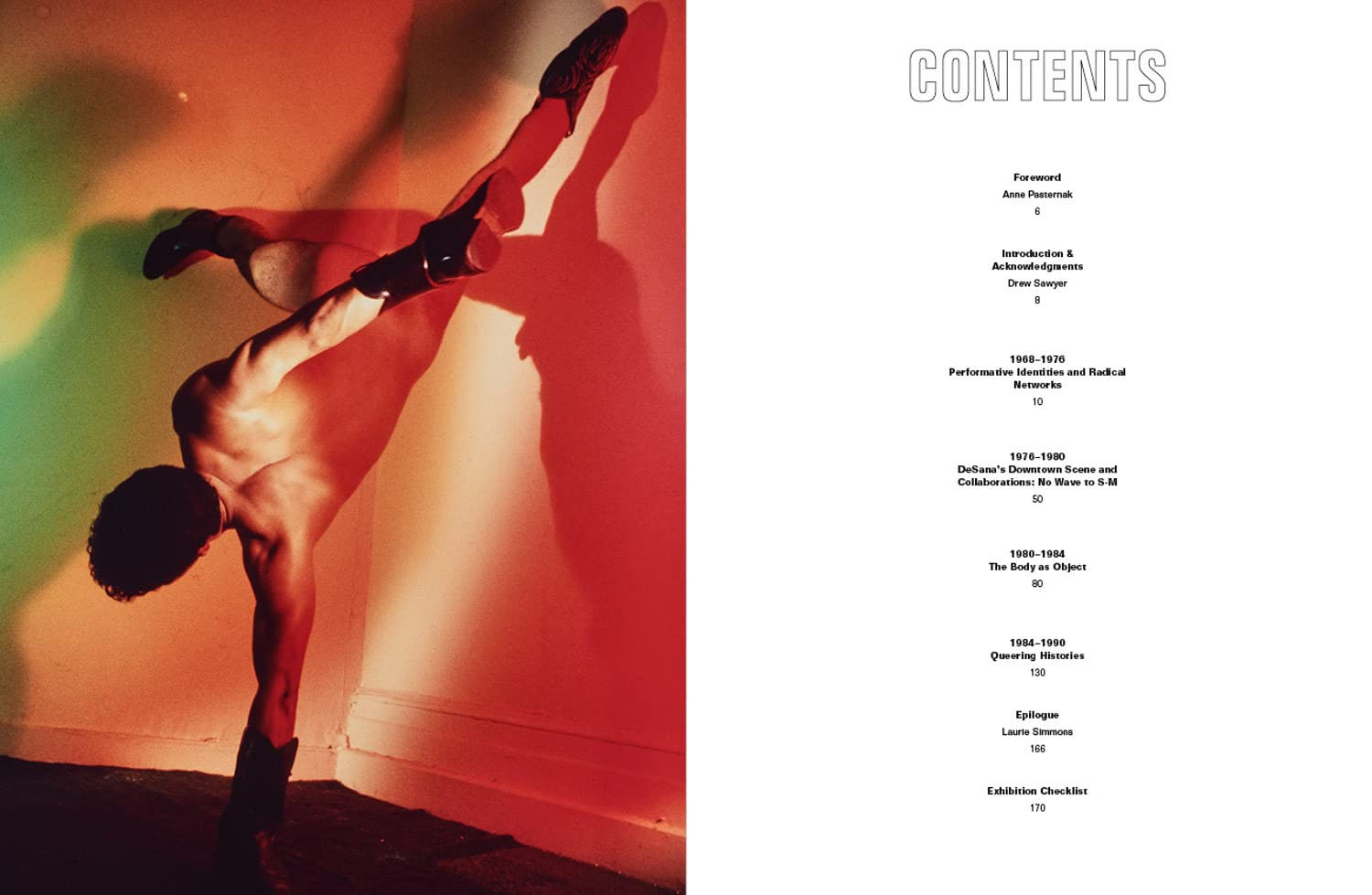
 

Jimmy DeSana Submission content page
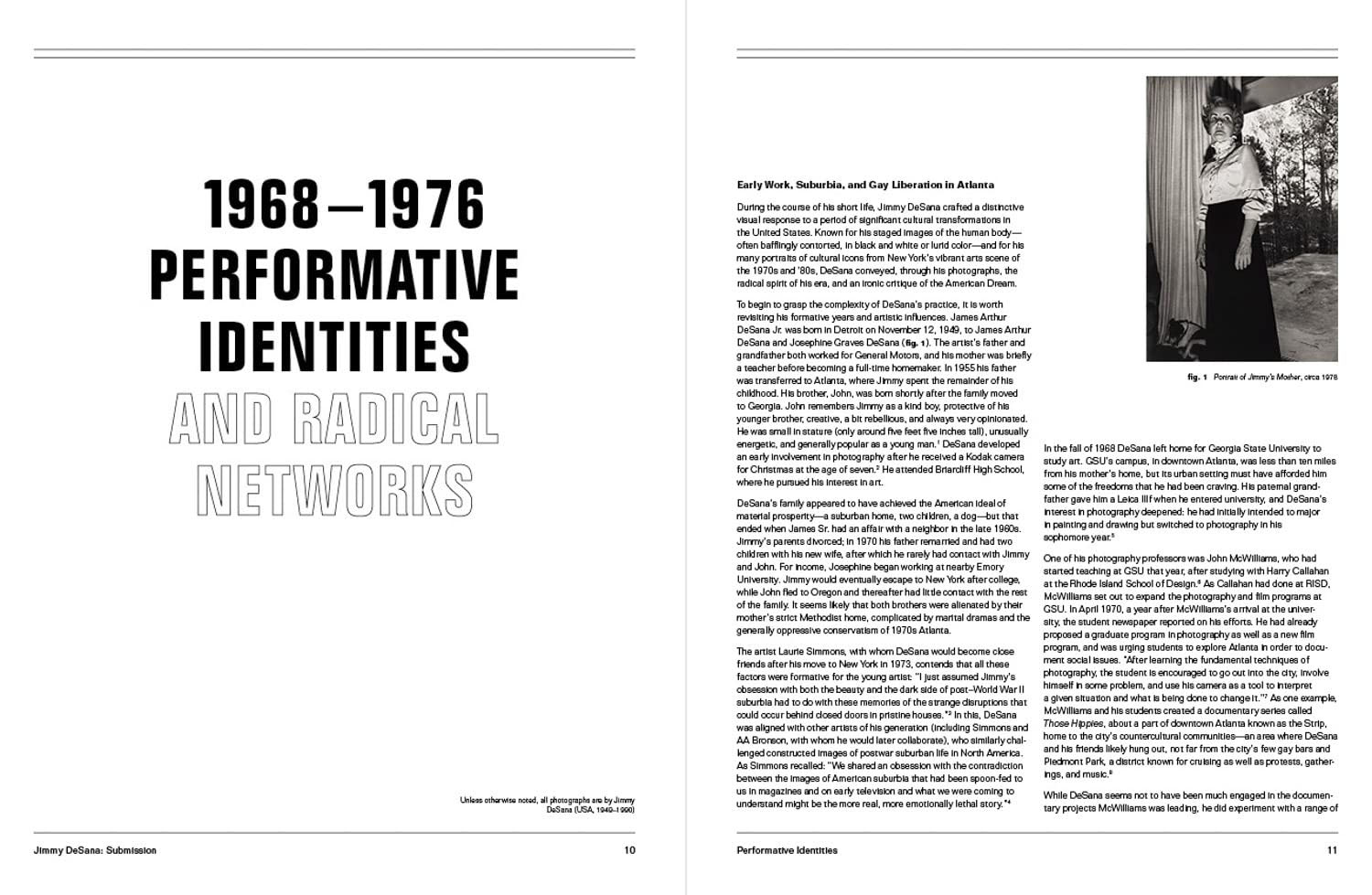
 

Jimmy DeSana Submission content page


Jimmy DeSana Submission performative identities 1968-1976


Jimmy DeSana Submission Performative Identities and Radical Networks pp. 10-11
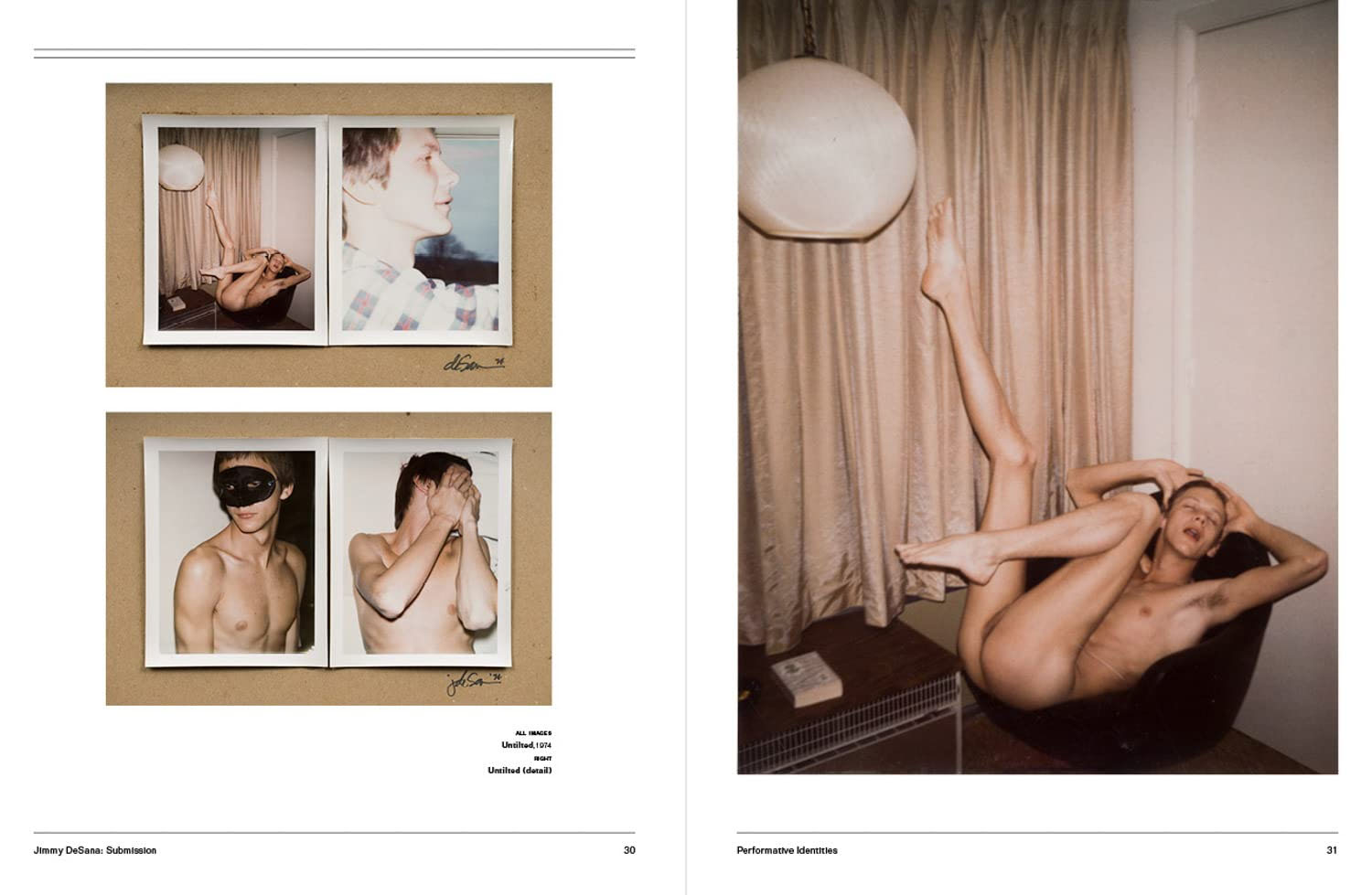
 

Jimmy DeSana Submission pp. 30-31
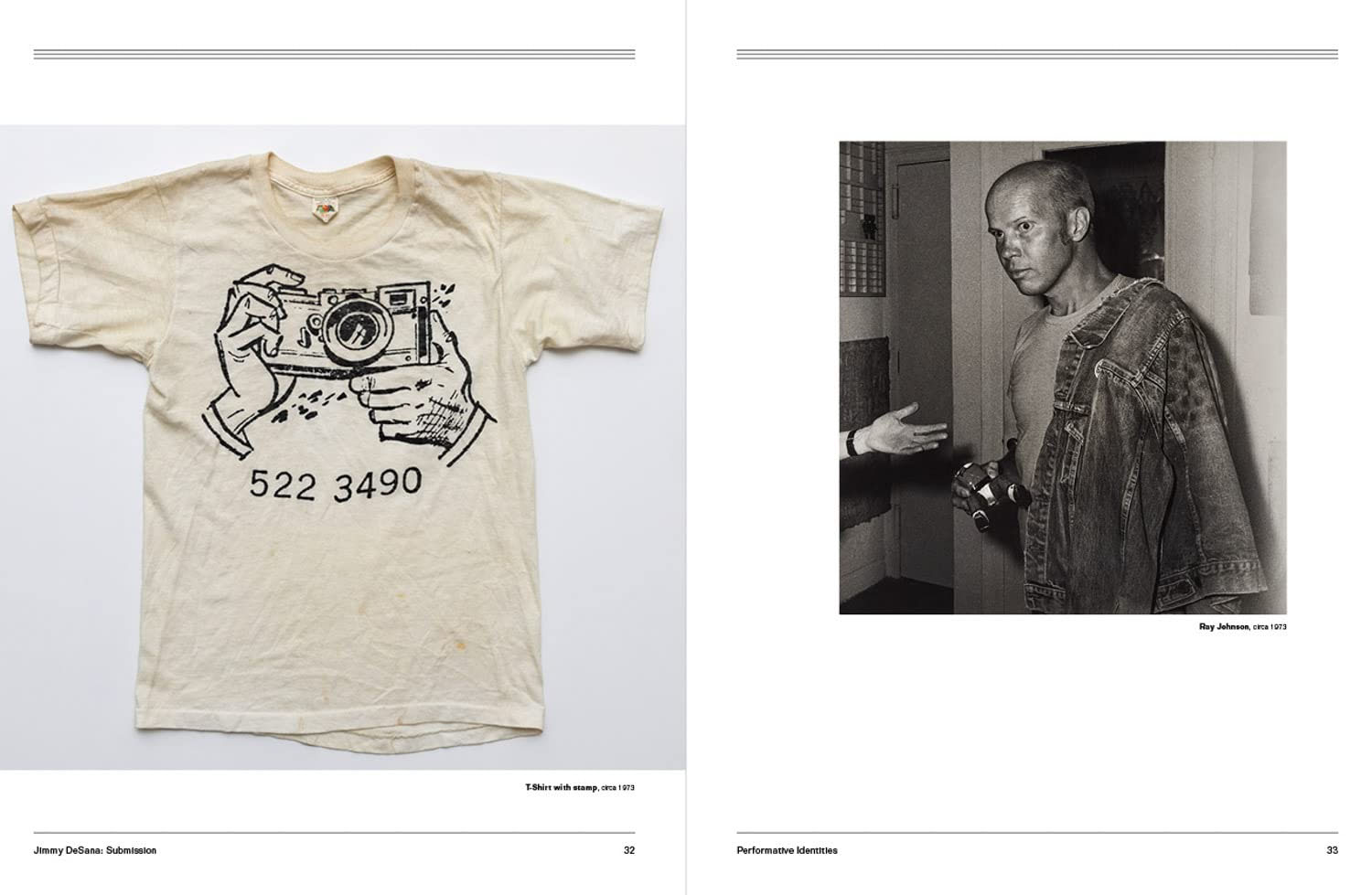
 

Jimmy DeSana Submission pp. 30-31


Jimmy DeSana Submission pp. 32-33
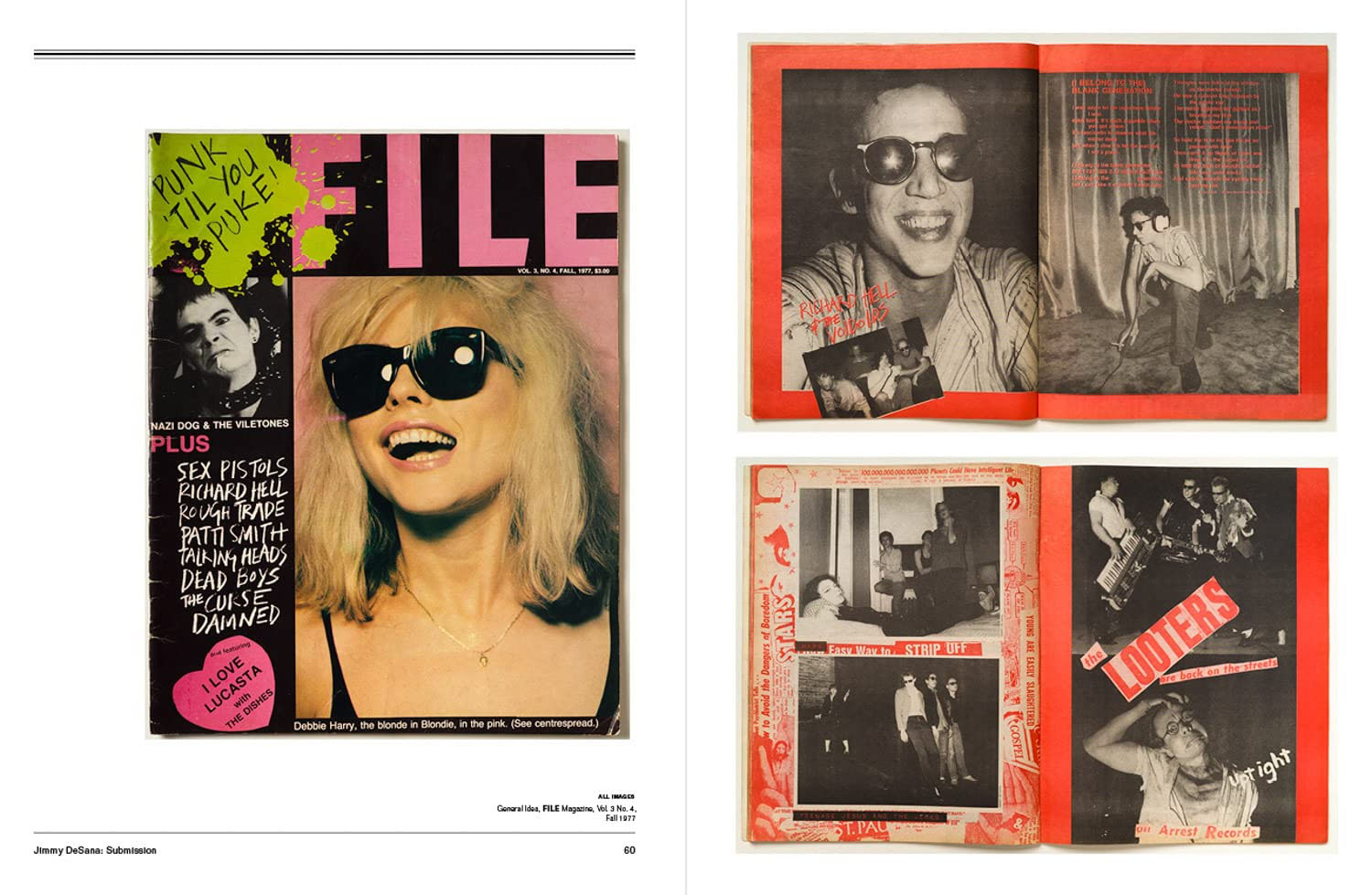
 

Jimmy DeSana Submission pp. 32-33


Jimmy DeSana Submission pp. 60-61
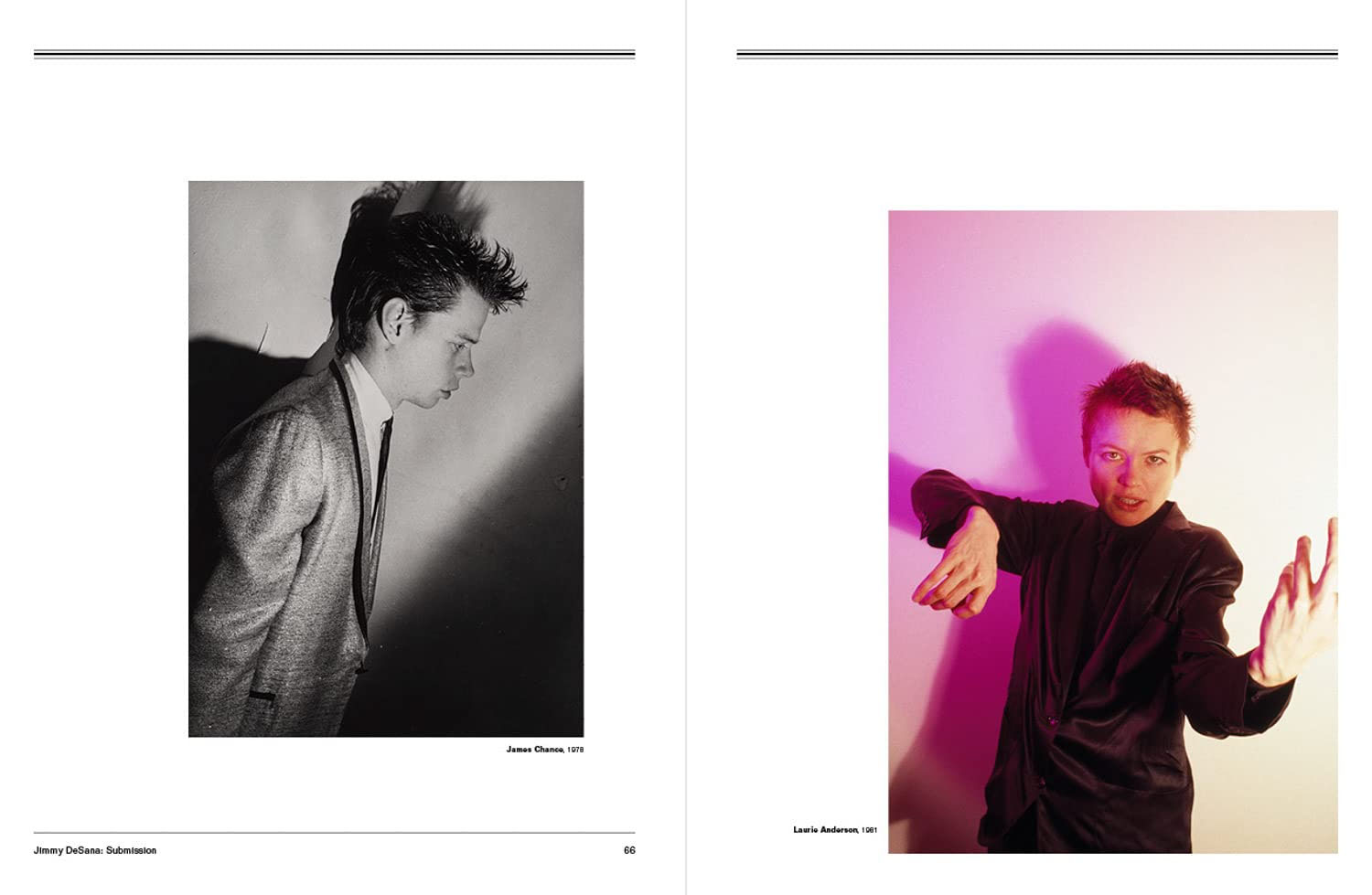
 

Jimmy DeSana Submission pp. 60-61


Jimmy DeSana Submission pp. 66-67
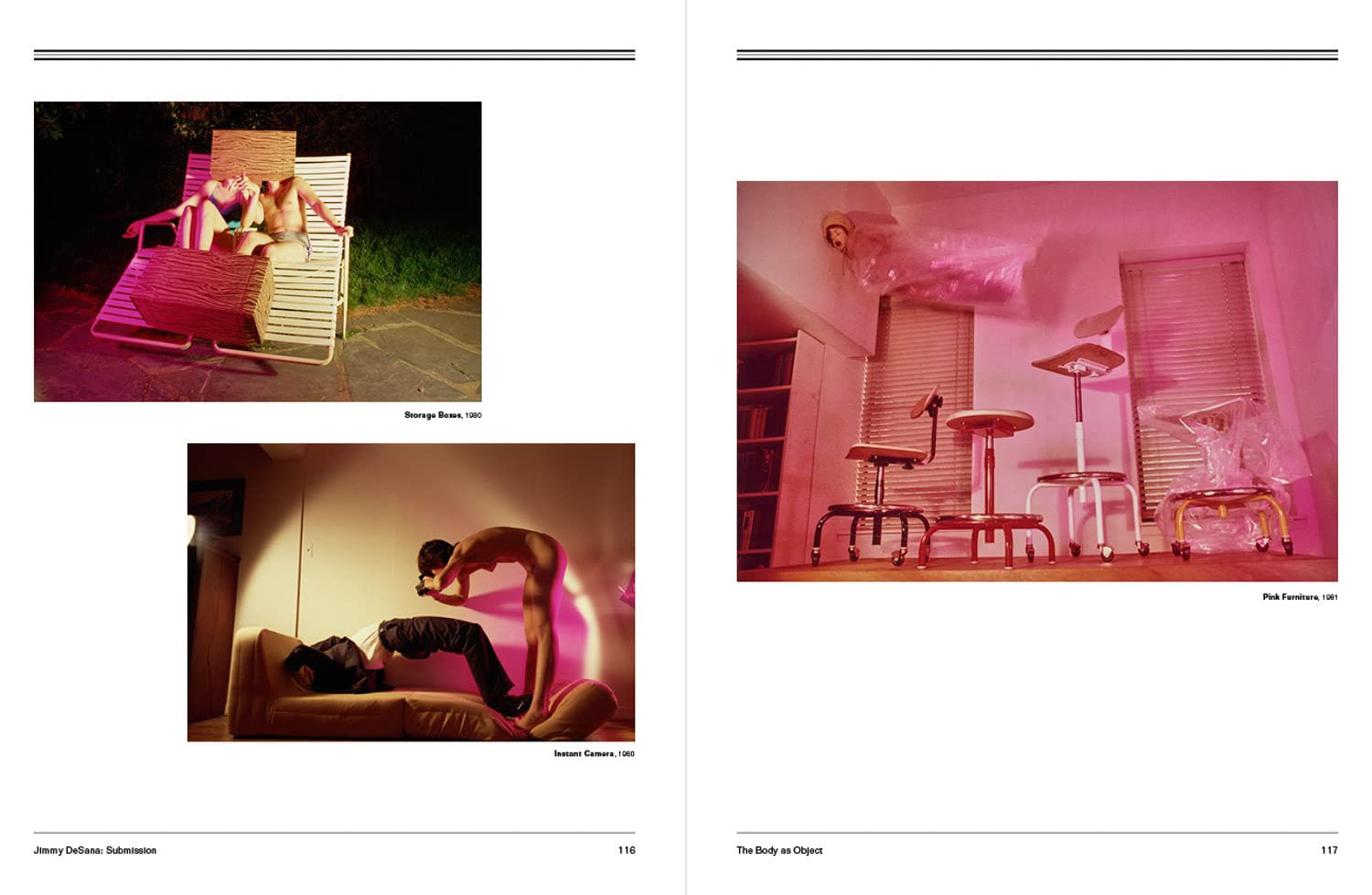
 

Jimmy DeSana Submission pp. 66-67


Jimmy DeSana Submission pp. 116-117
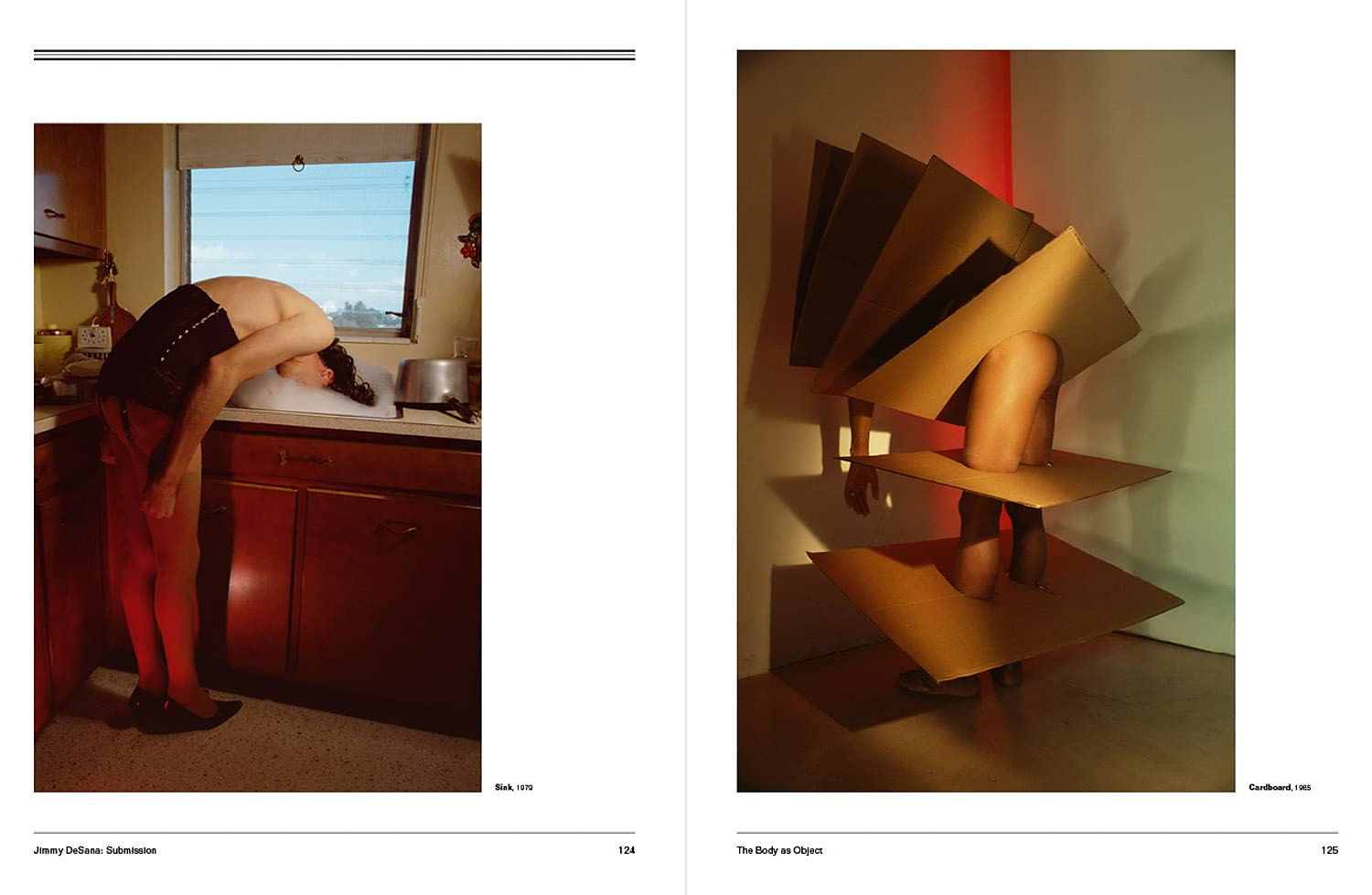
 

Jimmy DeSana Submission pp. 116-117


Jimmy DeSana Submission pp. 124-125
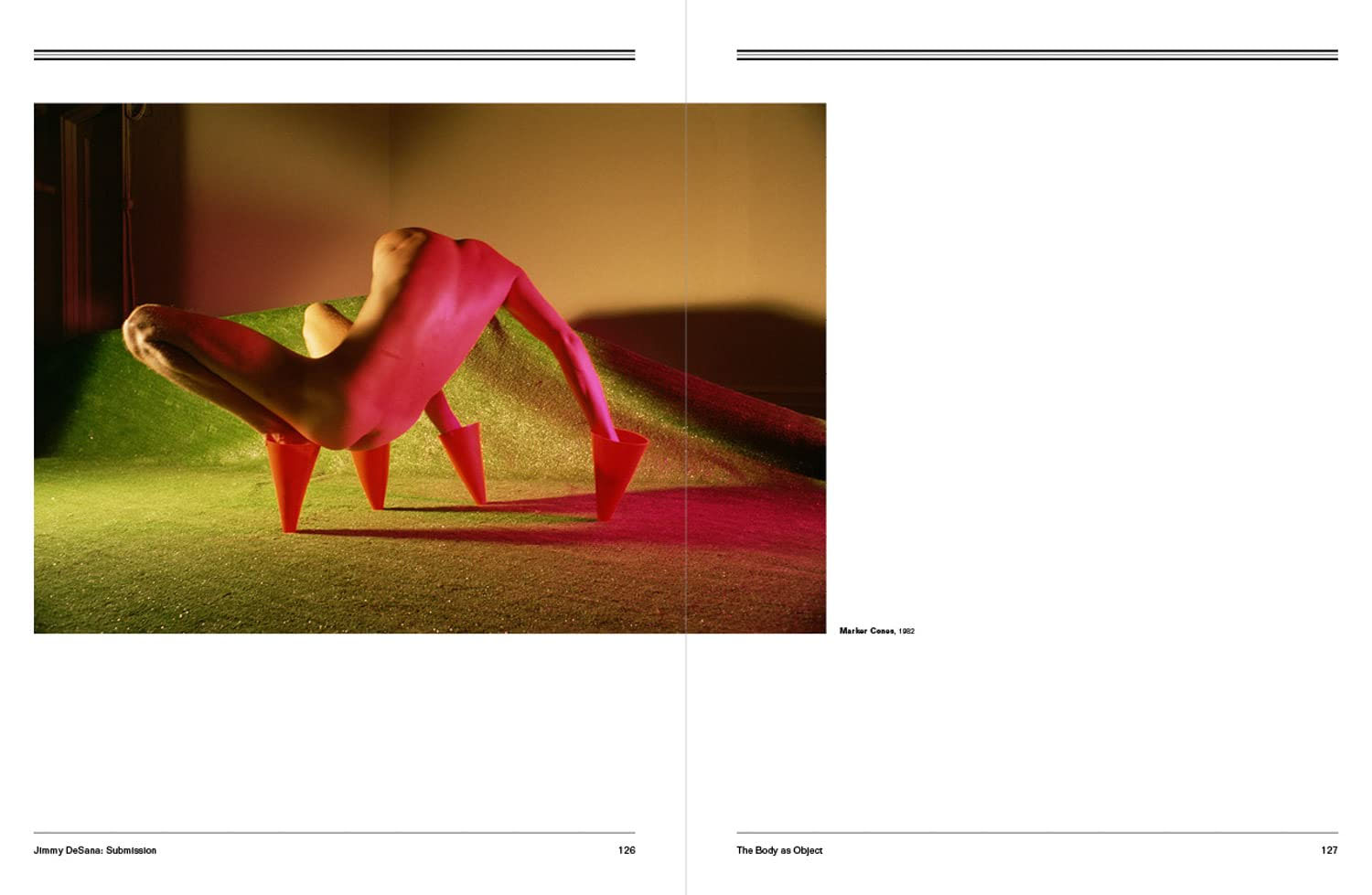
 

Jimmy DeSana Submission pp. 124-125


Jimmy DeSana Submission pp. 126-127


Jimmy DeSana Submission pp. 126-127


Brooklyn Museum
200 Eastern Parkway
Brooklyn, NY 11238-6052
Phone: (718) 638-5000

Opening hours:
Wednesday – Sunday 11am – 6pm
Closed Mondays and Tuesdays
Closed Thanksgiving, Christmas, and New Year’s Day

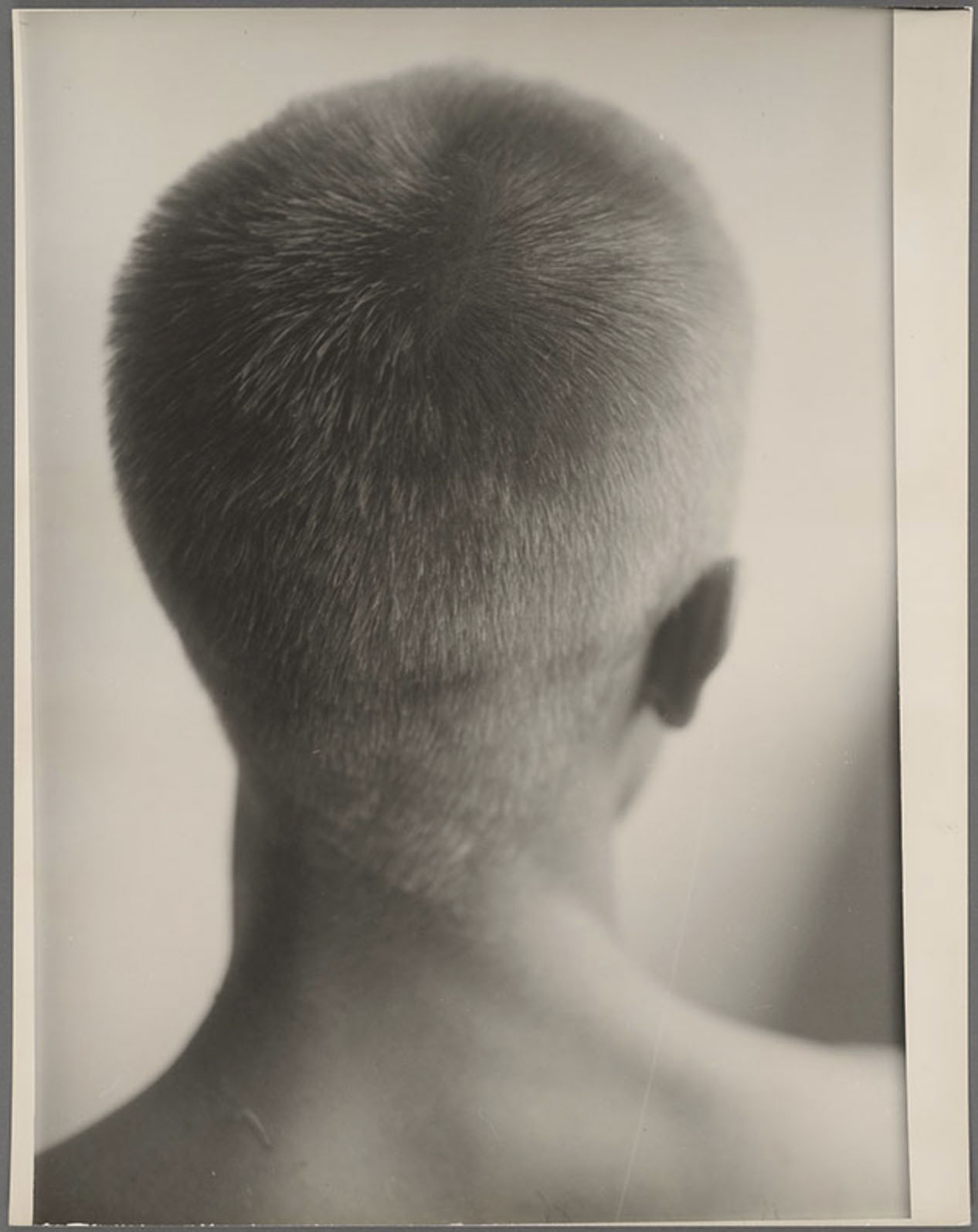
Brooklyn Museum website

LIKE ART BLART ON FACEBOOK

Back to top

Exhibition: ‘PLEASE SEND TO REAL LIFE: Ray Johnson Photographs’ at the Morgan Library & Museum, New York
Exhibition dates: 17th June – 2nd October, 2022


Ray Johnson (American, 1927-1995) 'Untitled (Eight photo booth self-portraits)' Nd from the exhibition 'PLEASE SEND TO REAL LIFE: Ray Johnson Photographs' at the Morgan Library & Museum, New York, June - Oct, 2022


Ray Johnson (American, 1927-1995)
Untitled (Eight photo booth self-portraits)
Nd
Gelatin silver prints on whiteboard
Sheet: 8 × 9 1/2 in. (20.32 × 24.13 cm)
Courtesy of the Ray Johnson Estate


Ray Johnson was an American artist “known primarily as a collagist and correspondence artist, he was a seminal figure in the history of Neo-Dada and early Pop art…” He absorbed from his teachers Josef Albers, Alvin Lustig, and Robert Motherwell and “entered into Zen kinship with two teachers, John Cage and Merce Cunningham, and into romantic partnership with another, the sculptor Richard Lippold.” And then he burnt all the early paintings in his possession and took the path less trodden. He developed his own artistic language “through the creation of slight, irregular-shaped, frame-resistant (but mailable) collages he called “moticos”.” (The name was an anagram of the word “osmotic”)

After moving from New York to Locust Valley, Long Island in 1968, Johnson continued to make art but only had two more solo exhibitions, the last one in 1991. “Johnson was forever constructing miniature sets for his own delirious theatre of the absurd: puzzles within puzzles. The sensibility is not unlike Joseph Cornell’s [whose work was a major influence], minus the romance and period nostalgia. Johnson worked in another sort of outsider vernacular – at once banal, vulgar, campy, and deeply sophisticated.”1 The curator Joel Smith refers to “the low-key but constant thrum of odd motivation” behind all of the artist’s work.

Towards the end of his life Johnson took up photography and became a master of the throwaway camera, using the machine to create intimate, staged actions “which served the artist as a form of citation: as a way to “reference,” rather than “represent,” his subjects. The hands-off nature of the medium gave Johnson a way to bring topics up yet keep his viewer (his recipient, his reader) focused on something he cared about more: the messaging process itself.”

Each person, each artist has a different reason to communicate. But what are they communicating? In Johnson’s case I think he was expressing his inner alternate reality, a different point of view of the world communicated through a new and fantastical visual language. Inhabited by bunnies and pop stars, Johnson’s work was a collage of the unclassifiable, bizarre, wired, wonderful, pop, performance, licked, action, nothings, dreams, concept, sexual, stamped, eccentric and enigmatic moticos… osmotic and fluidly subversive observational images, staged interventions, obsessive, witty and weird constructions. As Loring Knoblauch observes, “these pictures find new pathways of physical intervention, creating staged installations that combine Johnson’s restless collage combinations and the quirks of photographic vision into something cleverly unexpected.”2

Revelling in his insider-outsider status, Johnson was a naive draftsman / Navy draftsman (he loved a good play on words). There is a “distinctive wit – and the evident delight of discovery – that runs through these photographs.” But it is a dark witticism, as dark one of my favourite movies, Donnie Darko (full of bunnies). His is art as performance… of nothings, of everything, moving everything, setting everything in motion. We follow his in/actions whether it be documenting a flopped stranger wearing a bunny cutout, six Movie Stars in the back of a car, or his prescient undated Eight photo booth self-portraits (above) in which he acts out and obscures different personas.

In his last performance this creative man of nothing (real life) “was seen jumping from a bridge in Sag Harbor… [and] appeared to be doing a backstroke toward the open Atlantic.” He could not swim. As he said of one of his early performances, it (he) “went off into the void in some marvellous fashion…”

Dr Marcus Bunyan


1/ Vince Aletti. “A Trove of Snapshots from a Sly Master of Collage,” on The New Yorker website July 22, 2022 [Online] Cited 26/09/2022

2/ Loring Knoblauch. “PLEASE SEND TO REAL LIFE: Ray Johnson Photographs @Morgan Library,” on the Collector Daily website September 7, 2022 [Online] Cited 26/09/2022


Many thankx to the Morgan Library & Museum for allowing me to publish the photographs in the posting. Please click on the photographs for a larger version of the image.


Johnson, however, was a prankster. Like the bunny head he adopted as his trademark – a cartoonish line drawing that appeared in much of his work, often bearing the name of a key figure in 20th-century art – he hopped lightly, merrily across this playing field. Revelling in puns and irreverence (an untitled 1973 collage known as “Jackson Pollock Fillets” includes cut-out recipes for Pollock Fillets Amandine and Barbecued Pollock Burgers), conducting his life as a nonstop performance, he revived the Dada tradition embodied by his hero Marcel Duchamp. In contrast to the grandiosity of Minimal art, land art, Pop Art and other macho midcentury movements, he offered something much humbler: collages or drawings of portable size and wry wit. … Johnson created some of the earliest works of Pop Art and was an early influence on conceptual art. …

The contents of Johnson’s pictures fall into several categories. At times, he chopped up the photos and used them to form a collage. Usually, though, and more interestingly, he found or created a collage-like pattern within the photographic frame. He made corrugated cardboard pieces that he called movie stars, and carried them to places where he could photograph them. Sometimes they incorporated images of celebrities: Marilyn Monroe, Jack Kerouac, Johns. Often they were renditions of his signature creation, a bunny with long, erect ears and a pendulous nose that, like a “Kilroy was here” graffiti drawing from World War II, feels both childlike and sexualized. He would inscribe a bunny with a name, thereby transforming it into a standardized personal portrait. And then he would drive his movie stars to a picturesque setting and shoot them with his camera.


Arthur Lubow. “An Elusive Artist’s Trove of Never-Before-Seen Images,” on The New York Times website March 23, 2021 [Online] Cited 26/09/2022


As a body of work, these photographs by Johnson absolutely feel unfinished, in an open-ended and unwieldy way, as though he was grasping for new ways to communicate. Seen together, there is both dogged teach-yourself inventiveness and a hint of loneliness on display, with a nostalgia for stars of the past and his own younger face percolating through his iterative reworkings. At their best, these pictures find new pathways of physical intervention, creating staged installations that combine Johnson’s restless collage combinations and the quirks of photographic vision into something cleverly unexpected. At the end of his life, Johnson was actually becoming an interesting photographer, and these unearthed leavings provide tantalizing glimpses of what might have been.


Loring Knoblauch. “PLEASE SEND TO REAL LIFE: Ray Johnson Photographs @Morgan Library,” on the Collector Daily website September 7, 2022 [Online] Cited 26/09/2022


Overview

Dubbed “New York’s most famous unknown artist” by the New York Times, Ray Johnson (1927-1995) was a widely connected downtown figure, Pop art innovator, and pioneer of collage and mail art. After moving from Manhattan to suburban Long Island in 1968, Johnson selectively distanced himself from the mainstream art world, holding only two exhibitions after 1978. Yet even after his last show, in 1991, he remained a prolific and unpredictable artist.

Johnson used photographs in his work for decades, but it was only with his purchase of a single-use, point-and-shoot camera in January 1992 that he embarked on his own “career as a photographer.” By the end of December 1994 he had used 137 disposable cameras. His most frequent subjects were what he called his Movie Stars: meter-high collages on cardboard, often featuring the bunny head that served as his artistic signature. They became ensemble players in the curious tableaux he staged in everyday locales near his Locust Valley home.

At his death by suicide in January 1995, Johnson left a vast archive of art in boxes stacked throughout his house, including over five thousand colour photographs, still in the envelopes from the developer’s shop. This body of work, virtually unseen until now, comprised his final major art project, the last act in a romance with photography that had begun some forty years earlier.


PLEASE SEND TO REAL LIFE: Ray Johnson Photographs

A widely connected pioneer of Pop and mail art, Ray Johnson (1927-1995) was described as “New York’s most famous unknown artist.” Best known for his multimedia collages, he stopped exhibiting in 1991, but his output did not diminish. In 1992-1994, he used 137 disposable cameras to create a large body of work that is coming to light only now. Staging his collages in settings near his home in Locust Valley, Long Island – parking lots, sidewalks, beaches, cemeteries – he made photographs that pull the world of everyday “real life” into his art. In his “new career as a photographer,” Johnson began making collages in a new, larger format that made them more effective players in his camera tableaux. The vast archive he left behind at his death included over three thousand of the late photographs. Now, his final project makes its debut alongside earlier photo-based collages and works of mail art: fruits of a romance with the camera that spans the four decades of the artist’s career.


Hazel Larsen Archer (American, 1921-2001) 'Ray Johnson at Black Mountain College' 1948 from the exhibition 'PLEASE SEND TO REAL LIFE: Ray Johnson Photographs' at the Morgan Library & Museum, New York, June - Oct, 2022


Hazel Larsen Archer (American, 1921-2001)
Ray Johnson at Black Mountain College
1948
Gelatin silver print
13 3/4 × 9 7/8 inches
The Morgan Library & Museum
Purchased as the gift of David Dechman and Michel Mercure
© Estate of Hazel Larsen Archer


As a student at North Carolina’s Black Mountain College from 1945 to 1948, Johnson thrived under the rigorous tutelage of his foundation-course teacher Josef Albers (1888-1976). Johnson also modelled for Archer, a fellow student who would go on to teach photography at the school. This portrait – lush, faceless, and sexually ambiguous – foreshadows the complexity of Johnson’s use of photography throughout his career. Though attracted by the camera’s peerless ability to bestow glamour, he often tried to undercut its role as a transparent conveyor of facts.


Ray Johnson (American, 1927-1995) 'RJ silhouette and wood, Stehli Beach' Autumn 1992 from the exhibition 'PLEASE SEND TO REAL LIFE: Ray Johnson Photographs' at the Morgan Library & Museum, New York, June - Oct, 2022


Ray Johnson (American, 1927-1995)
RJ silhouette and wood, Stehli Beach
Autumn 1992
Commercially processed chromogenic print
4 × 6 inches
The Morgan Library & Museum
Gift of the Ray Johnson Estate, courtesy of Frances Beatty
© Ray Johnson / Artists Rights Society (ARS), New York


As an artist, Johnson was a master hunter-recycler, constantly revisiting and reinterpreting images from his past. On a visit to the beach at nearby Oyster Bay in 1992, he brought along a camera and a cardboard cutout of his head. Propping the board against a piece of driftwood log, he created a visual pun: the log’s central rings evoke the swirl of hair that Hazel Archer had once photographed on his (now long-bald) head.


Ray Johnson (American, 1927-1995) 'Untitled (Moticos with KAFKAYLLA)' c. 1953-1954


Ray Johnson (American, 1927-1995)
Untitled (Moticos with KAFKAYLLA)
c. 1953-1954
Collage on illustration board
13 × 5 in. (33.02 × 12.7cm)
The Ray Johnson Estate
© Ray Johnson / Artists Rights Society (ARS), New York


Johnson applied one all-purpose noun, “moticos” (both singular and plural), to his short writings, his collages, and the glyph-like shapes he drew. He and his friend Norman Solomon coined the term by reshuffling the word “osmotic,” chosen out of the dictionary. On this moticos made from a flattened box, Johnson paired a photograph of a pigeon with its strange twin: a sort of photo-bird, composed of cookie cutters and a checkerboard. Johnson proposes a second unlikely duo by combining the names of the author Franz Kafka (1883-1924) and the photographer Ylla (Camilla Koffler, 1911-1955), known for her images of animals.


Moticos

In the autumn of 1955, artist Ray Johnson walked through the streets of New York City with a slip of paper, asking strangers if they could define the word he’d written on it: “motico.” People gamely racked their brains: “‘Gee, I wish to hell I knew,’ said one. A nun asked, ‘Isn’t it a kind of colour?'” Johnson recalled these encounters in a story that ran that year in the very first issue of The Village Voice, when he was 27 years old and living in Manhattan, and working primarily in painting and collage.

The word was one Johnson had invented. An anagram of osmotic (a word allegedly chosen at random from a book), “moticos” could refer to several different things. Johnson called the small collage panels he made “moticos” but he also used the word to refer to textual representations too. Johnson would paint and transform the cardboard pieces that came with his laundry into parts of his collages, transforming them into silhouettes and then glyphs, new moticos.

Rebecca Bengal. “Photo Dump: Digging into the 5,000 Photographs Ray Johnson Left Behind,” on the Elephant Art website 20 Jul 2022 [Online] Cited 25/09/2022


Ray Johnson (American, 1927-1995) 'Untitled (James Dean in the Rain)' c. 1953-1959


Ray Johnson (American, 1927-1995)
Untitled (James Dean in the Rain)
c. 1953-1959
Collage on illustration board
15 1/2 × 11 3/4 in. (39.37 × 29.85cm)
The Ray Johnson Estate
© Ray Johnson / Artists Rights Society (ARS), New York


From the early 1950s, Johnson embraced photocollage as a way to inject Hollywood glamour into the cloistered world of avant-garde art. He was appropriating mass-media imagery years before Andy Warhol began populating monumental canvases with celebrity portraits. Here Johnson worked directly upon Dennis Stock’s iconic Life magazine photograph of James Dean walking alone through Times Square, which was published a few months before Dean died in a 1955 car crash. Whether Johnson made this work before or after Dean’s death is unknown. In the 1990s, he would again incorporate the actor’s silhouette in collages and photographs.


Elisabeth Novick. 'Untitled (Moticos on floor)' c. 1955


Elisabeth Novick
Untitled (Moticos on floor)
c. 1955
Gelatin silver print
8 3/4 × 13 1/4 inches
The Morgan Library & Museum
Gift of the Ray Johnson Estate, courtesy of Frances Beatty
Elisabeth Loewenstein / ArenaPAL
© Elisabeth Loewenstein


For a short feature in the first issue of the Village Voice (26 October 1955), a reporter walked with Johnson as he approached strangers in Grand Central Terminal and asked them whether they knew what a “moticos” was. As seen here, Johnson also literally took moticos to the streets, staging crowds of them for the camera in disused spaces in downtown Manhattan. Few early moticos have survived intact: over the next several decades, in a practice he called Chop art, Johnson continually disassembled his work and used the fragments to create new pieces.


Elisabeth Novick. 'Untitled (Ray Johnson and Suzi Gablik)' 1955

Ray Johnson (American, 1927-1995) '1955 moticos photographs from ladder' January 1992


Elisabeth Novick
Untitled (Ray Johnson and Suzi Gablik)
1955
Gelatin silver print
11 × 14 inches
The Morgan Library & Museum
Gift of the Ray Johnson Estate, courtesy of Frances Beatty
Elisabeth Loewenstein / ArenaPAL
© Elisabeth Loewenstein

Ray Johnson (American, 1927-1995)
1955 moticos photographs from ladder
January 1992
Commercially processed chromogenic print
4 × 6 inches
The Morgan Library & Museum
Gift of the Ray Johnson Estate, courtesy of Frances Beatty
© Ray Johnson / Artists Rights Society (ARS), New York


In 1955 Johnson asked his friend Elisabeth Loewenstein (later Novick) to bring a camera along on a walk with their mutual friend Suzi Gablik (1934-2022). Novick’s photographs record the impromptu performance that ensued, in which Johnson draped moticos on Gablik’s face and body. A fellow Black Mountain College alum, Gablik would become an influential critic; in her 1969 book on Pop art, she described improvised actions such as this one as the first “informal happenings” – ephemeral events conceived as works of art – in the postwar era.

Johnson preserved the photographs Novick made that day. Nearly forty years later, in one of his earliest experiments with a “throwaway camera,” he laid out the prints in a grid on his driveway and photographed them from atop a ladder.


Ray Johnson (American, 1927-1995) 'Correspondence to Frances X. Profumo' Undated


Ray Johnson (American, 1927-1995)
Correspondence to Frances X. Profumo
Undated
Typewritten text on paper, newspaper clippings
The Ray Johnson Estate
© Ray Johnson / Artists Rights Society (ARS), New York


In the mid-1950s, Johnson simultaneously shifted from oil painting to small-scale collage and from gallery exhibitions to the mail as a way of putting his art before an individual viewer. An envelope from Johnson often contained enigmatic clippings from books and magazines, including photographic illustrations drawn from the same stockpile that fuelled his collages. These are items Johnson sent in the 1950s to Frances X. Profumo, whom he befriended when he was a student and she an employee at Black Mountain College. The many visual and textual Xs invoke both Profumo’s distinctive middle initial and the convention of signing a fond letter “with kisses” (XXX).


Ray Johnson (American, 1927-1995) 'Untitled (Nothing with Brancusi)' Undated

Ray Johnson (American, 1927-1995) 'Untitled (Mapplethorpe with moticos)' Undated

Ray Johnson (American, 1927-1995) 'Untitled (book page with umbrella as splint)' Undated


Ray Johnson (American, 1927-1995)
Untitled (Nothing with Brancusi)
Undated
Ink on book page
9 1/2 × 7 1/2 in. (24.13 × 19.05cm)
The Ray Johnson Estate
© Ray Johnson / Artists Rights Society (ARS), New York

Ray Johnson (American, 1927-1995)
Untitled (Mapplethorpe with moticos)
Undated
Ink on magazine page
Image: 7 × 7 in. (17.78 × 17.78cm)
The Ray Johnson Estate
The Morgan Library & Museum. Gift of the Ray Johnson Estate, courtesy of Frances Beatty.

Ray Johnson (American, 1927-1995)
Untitled (book page with umbrella as splint)
Undated
Ink on paper
Image: 9 1/2 × 7 in. (24.13 × 17.78cm)
The Ray Johnson Estate
© Ray Johnson / Artists Rights Society (ARS), New York


Over the years, Johnson inducted hundreds or thousands of recipients into what he called the New York Correspondence School by mailing them oblique yet personalised messages. These altered book and magazine pages were among the unmailed works found in his house after his death.


Ray Johnson (American, 1927-1995) 'Offset printing plate (Ara Ignatius portrait)' c. 1964

Ray Johnson (American, 1927-1995) 'Untitled (Ara Ignatius portrait with a photograph of lips)' Undated

Ray Johnson (American, 1927-1995) 'Untitled (Ara Ignatius portrait with bunnyheads)' Undated


Ray Johnson (American, 1927-1995)
Offset printing plate (Ara Ignatius portrait)
c. 1964
Metal
Image: 15 1/2 × 10 in. (39.37 × 25.4cm)
The Ray Johnson Estate
© Ray Johnson / Artists Rights Society (ARS), New York

Ray Johnson (American, 1927-1995)
Untitled (Ara Ignatius portrait with a photograph of lips)
Undated
Cut paper on paper
Image: 11 × 8 1/2 in. (27.94 × 21.59cm)
The Ray Johnson Estate
© Ray Johnson / Artists Rights Society (ARS), New York

Ray Johnson (American, 1927-1995)
Untitled (Ara Ignatius portrait with bunnyheads)
Undated
Ink on paper
Image: 11 × 8 1/2 in. (27.94 × 21.59cm)
The Ray Johnson Estate
© Ray Johnson / Artists Rights Society (ARS), New York


Johnson favoured likenesses that masked as much about him as they revealed. He repeatedly used a headshot that his friend Ara Ignatius made around 1963. It is an unnerving image, lacking the conceit of intimacy that characterises most formal portraits; instead it “stands for” Johnson, in the artless manner of a government-issued ID.

Many pieces of mail art that look like photocopies are in fact products of offset printing – a means of transferring photographs and other images to the page from reusable metal plates. The medium allowed Johnson to return to an image repeatedly, imposing variations that reflected his ever-changing purposes.


Ray Johnson (American, 1927-1995) 'Untitled ("I shot an arrow into the air..." with Shirley Temple and Vikki Dougan)' c. 1970-1972


Ray Johnson (American, 1927-1995)
Untitled (“I shot an arrow into the air…” with Shirley Temple and Vikki Dougan)
c. 1970-1972
Ink, wash, collage, vintage photograph on illustration board
18 × 15 in. (45.72 × 38.1cm)
The Ray Johnson Estate
© Ray Johnson / Artists Rights Society (ARS), New York


In this photocollage, two movie actors meet: Vikki Dougan (b. 1929), who became a sex symbol in the 1950s by publicly appearing in backless dresses, and the quintessentially innocent child star Shirley Temple (1928-2014). Temple’s rendering as a blacked-out, moticos-like figure may allude to her adult married name, Shirley Temple Black. Across the bottom of the image, a line from Henry Wadsworth Longfellow’s 1845 poem “The Arrow and the Song” is altered to refer to Johnson’s forerunner in collage and assemblage art, Joseph Cornell (1903-1972), who lived in Flushing, Queens.


Ray Johnson (American, 1927-1995) 'David Hockney's Mother's Potato Masher' 1972-80-88-94


Ray Johnson (American, 1927-1995)
David Hockney’s Mother’s Potato Masher
1972-80-88-94
Collage on cardboard panel
20 3/8 × 15 1/4 in. (51.75 × 38.74cm)
The Morgan Library & Museum
Gift of Frances Beatty, Alexander Adler, and the Ray Johnson Estate
© Ray Johnson / Artists Rights Society (ARS), New York


The title of each collage in the Potato Masher series begins with a notable artist’s or celebrity’s name. The titles then take an abrupt turn away from stardom by alluding first to the famed figure’s mother, and then to her potato masher. Here, Johnson included his own likeness in the form of a headshot, made around 1963 by the photographer Ara Ignatius. His face is covered by black moticos and cut-up fragments of his earlier artworks. Johnson created his collages over a span of weeks, months, or even years, dating each element in pencil as it joined the composition.


The Morgan Library & Museum presents PLEASE SEND TO REAL LIFE: Ray Johnson Photographs, opening June 17 and running through October 2, 2022. This exhibition explores the previously unknown camera work of the widely connected downtown New York figure, Pop art innovator, and pioneer of collage and mail art. At his death on 13 January 1995, Ray Johnson (1927-1995) left behind a vast archive of art in his house, including over five thousand colour photographs made in his last three years. Small prints, neatly stored in their envelopes from the developer’s shop, the photographs remained virtually unexamined for three decades. Now they can be seen as the last act in a romance with photography that had begun in Johnson’s art some forty years earlier. After retracing the story of Johnson’s use of photography throughout his career, PLEASE SEND TO REAL LIFE offers an in-depth look at the late work the artist called “my career in photography.”

After moving from Manhattan to suburban Long Island in 1968, Johnson selectively distanced himself from the mainstream art world, holding only two exhibitions after 1978. Yet even after his last show, in 1991, he remained a prolific and unpredictable artist. With his purchase of a single-use, point-and-shoot camera in January 1992, he embarked on an entirely fresh creative enterprise. By the end of December 1994, he had used 137 disposable cameras. His most frequent subjects were what he referred to as his Movie Stars: meter-high collages on cardboard, often featuring the bunny head that served as his artistic signature. They became ensemble players in the curious tableaux he staged in everyday locales near his Locust Valley home.

As an artist, Johnson was a master hunter-recycler, constantly revisiting and reinterpreting images from his past. He appears to have first used a disposable camera for a practical purpose: documenting his enormous backlog of unused collage fragments. He performed that work in his driveway and on the back steps of his house, but soon he was carrying a pocket-size camera on daily outings to nearby beaches, parks, and cemeteries. Johnson’s photographs exhibit a collagist’s instinct for insertion, layering, and surprise: most of them are centred on objects that he placed between himself and a scene as he found it. In his photographs as in his pun-filled writing and his densely worked collages, Johnson used juxtaposition to suggest that everything finds correspondence in something else. The point-and-shoot habit gave him a way to create an image almost as quickly as he could think of it. As curator Joel Smith writes in the book that accompanies the exhibition, “Nowhere in Johnson’s art does he look more intensely engaged by the present tense, more thrilled to be immersed in real life, than in the inventions of his throwaway camera.”

PLEASE SEND TO REAL LIFE offers a rare chance to examine photographs taken by Ray Johnson, an artist known primarily for his brilliant work in collage,” said Colin B. Bailey, Director of the Morgan Library & Museum. “The images, most of which have gone unexplored until now, are truly innovative and ahead of their time. The exhibition also celebrates a significant gift of Johnson’s work, generously made by Ray Johnson estate, courtesy of Frances Beatty.”

“These photographs show that in his last years, Ray Johnson remained irrepressibly, explosively creative,” said Smith, the Richard L. Menschel Curator of Photography at the Morgan. “It’s his last great body of work, and its very casualness is prophetic: ten years later, smart phones and social media turned daily life into a constant exchange of personal photographs and commentary. Johnson was still making collages right up to the end – but now he made them in a camera, and the ‘real life’ all around him was his medium.”

PLEASE SEND TO REAL LIFE: Ray Johnson Photographs is accompanied by a book with the same title published by Mack Books, which includes an essay by the exhibition’s curator, Joel Smith.

Press release from the Morgan Library & Museum


Ray Johnson (American, 1927-1995) 'Untitled (Photo Booth Collage)' 1972


Ray Johnson (American, 1927-1995)
Untitled (Photo Booth Collage)
1972
Collage on illustration board
12 7/8 × 19 in. (32.7 × 48.26cm)
The Morgan Library & Museum
Gift of Frances Beatty, Alexander Adler, and the Ray Johnson Estate
© Ray Johnson / Artists Rights Society (ARS), New York


Here, Johnson (visible at top left) employs a booth as an affordable studio for documenting works from his Potato Masher series. Sitting in the photo booth, he simply held up one collage after another for the automatic camera. The resulting sequence of vertical photo strips combines the qualities of a crude performance document and an art gallery’s inventory sheet. David Hockney’s Mother’s Potato Masher appears, not yet finished, fourth from the left in the bottom row.


Ray Johnson (American, 1927-1995) 'Untitled (Tab Hunter William Burroughs)' c. 1976-1981

Ray Johnson (American, 1927-1995) 'William S. Burroughs silhouette and kingfisher' Winter 1992


Ray Johnson (American, 1927-1995)
William S. Burroughs silhouette and kingfisher
Winter 1992
Commercially processed chromogenic print
4 × 6 in.
The Morgan Library & Museum
Gifts of the Ray Johnson Estate, courtesy of Frances Beatty
© Ray Johnson / Artists Rights Society (ARS), New York

Ray Johnson (American, 1927-1995)
Untitled (Tab Hunter William Burroughs)
c. 1976-1981
Collage on cardboard panel
12 × 12 1/2 in. (30.48 × 31.75cm)
The Morgan Library & Museum
Gift of Frances Beatty, Allen Adler, Alexander Adler, and the Ray Johnson Estate
© Ray Johnson / Artists Rights Society (ARS), New York


In 1976 Johnson began asking friends, art-world figures, and celebrities to sit and have their silhouettes traced onto paper. He thus built a library of nearly three hundred profile templates he could use and reuse. As a portrait form, the silhouette reduces its subject to a graphic shape, identifiable but resistant to psychological interpretation. In this example, Johnson overlapped the profiles of 1950s movie heartthrob Tab Hunter (1931-2018) and avant-garde writer William S. Burroughs (1914-1997).

In the 1990s Johnson photographed one of his stock props, a stuffed kingfisher, in combination with Burroughs’s silhouette. The beak of the bird extends the author’s prominent nose: a bill replacing the bill of a Bill.


Even when Johnson avoided direct self-portraiture, his quirky fixations were always evident. (In an essay for the exhibition catalogue, the curator Joel Smith refers to “the low-key but constant thrum of odd motivation” behind all of the artist’s work.) In one of the collages on display, William Burroughs’s profile nearly eclipses that of the nineteen-fifties movie star turned gay icon Tab Hunter, and both are all but obscured by a swarm of pebble-like fragments and bits of collage. Johnson was forever constructing miniature sets for his own delirious theatre of the absurd: puzzles within puzzles. The sensibility is not unlike Joseph Cornell’s, minus the romance and period nostalgia. Johnson worked in another sort of outsider vernacular – at once banal, vulgar, campy, and deeply sophisticated. Like John Baldessari, he favored artless lettering and crisp graphic design. The cardboard slats, especially, might be mistaken for portable Baldessaris.

Vince Aletti. “A Trove of Snapshots from a Sly Master of Collage,” on The New Yorker website July 22, 2022 [Online] Cited 26/09/2022


Ray Johnson (American, 1927-1995) 'Untitled (Elvis with Bunny Ears)' 1987


Ray Johnson (American, 1927-1995)
Untitled (Elvis with Bunny Ears)
1987
Collage with acrylic and ink on canvasboard
16 × 8 in. (40.64 × 20.32cm)
The Morgan Library & Museum
Gift of the Ray Johnson Estate, courtesy of Frances Beatty.
© Ray Johnson / Artists Rights Society (ARS), New York


Beginning in the 1950s, Johnson made artistic use of photographs of the twentieth-century cultural icon Elvis Presley (1935-1977). Johnson’s most emblematic motif, a stylised bunny face, first appeared beside the artist’s name in 1964. Bunny ears would serve both as a kind of trademark and as a way of turning anyone – Elvis, in this case – into a Ray Johnson character. The enlarged halftone dots that compose Elvis’s image confirm its status as a mass-market photographic reproduction.


Ray Johnson (American, 1927-1995) 'Rubble and photo credit' Summer 1992

Ray Johnson (American, 1927-1995) 'Andy Warhol life dates on flowers' July 1992

Ray Johnson (American, 1927-1995) 'Shadow and manhole' Spring 1992


Ray Johnson (American, 1927-1995)
Rubble and photo credit
Summer 1992
Commercially processed chromogenic print
4 × 6 in.
The Morgan Library & Museum
Gift of the Ray Johnson Estate, courtesy of Frances Beatty
© Ray Johnson / Artists Rights Society (ARS), New York

Ray Johnson (American, 1927-1995)
Andy Warhol life dates on flowers
July 1992
Commercially processed chromogenic print
4 × 6 in.
The Morgan Library & Museum
Gift of the Ray Johnson Estate, courtesy of Frances Beatty
© Ray Johnson / Artists Rights Society (ARS), New York

Ray Johnson (American, 1927-1995)
Shadow and manhole
Spring 1992
Commercially processed chromogenic print
4 × 6 in.
The Morgan Library & Museum
Gift of the Ray Johnson Estate, courtesy of Frances Beatty
© Ray Johnson / Artists Rights Society (ARS), New York


Johnson appears to have first used a disposable camera for a practical purpose: documenting his backlog of unused collage fragments. But in January 1992, he told curator Clive Phillpot, “I’m pursuing my career as a photographer,” and in March he added, “I’m having fun with my throw-away camera.” Always faithful to the rapidity of his own thinking, Johnson found in the “throwaway” Fuji Quicksnap a way to give graphic form to ideas as they occurred to him.


Ray Johnson (American, 1927-1995) 'Path of headshots and back steps' Spring 1992

Ray Johnson (American, 1927-1995) 'Joseph Cornell silhouette and payphone' Spring 1992

Ray Johnson (American, 1927-1995) 'Bills, Stehli Beach' Summer 1992


Ray Johnson (American, 1927-1995)
Path of headshots and back steps
Spring 1992
Commercially processed chromogenic print
4 × 6 in.
The Morgan Library & Museum
Gift of the Ray Johnson Estate, courtesy of Frances Beatty
© Ray Johnson / Artists Rights Society (ARS), New York

Ray Johnson (American, 1927-1995)
Joseph Cornell silhouette and payphone
Spring 1992
Commercially processed chromogenic print
4 × 6 in.
The Morgan Library & Museum
Gift of the Ray Johnson Estate, courtesy of Frances Beatty
© Ray Johnson / Artists Rights Society (ARS), New York

Ray Johnson (American, 1927-1995)
Bills, Stehli Beach
Summer 1992
Commercially processed chromogenic print
4 × 6
The Morgan Library & Museum. Gift of the Ray Johnson Estate, courtesy of Frances Beatty; 2022.2:11
© Ray Johnson / Artists Rights Society (ARS), New York


Johnson’s first photography studios were the driveway and back steps of his house, but soon he was carrying a pocket-size camera on his daily outings to nearby beaches, parks, and cemeteries. In spring 1992, he threaded a cutout silhouette of Joseph Cornell over the cord of a payphone, then photographed it with one hand while holding the receiver with the other – acting as operator of a hotline to the collage-art pioneer.


Ray Johnson (American, 1927-1995) 'One-legged figure beside back steps' Spring 1992


Ray Johnson (American, 1927-1995)
One-legged figure beside back steps
Spring 1992
Commercially processed chromogenic print
4 × 6 in.
The Morgan Library & Museum
Gift of the Ray Johnson Estate, courtesy of Frances Beatty
© Ray Johnson / Artists Rights Society (ARS), New York


Ray Johnson (American, 1927-1995) 'Mondrian's grave and playing card, Mount Lebanon Cemetery, Queens' spring 1992

Ray Johnson (American, 1927-1995) 'Billboard' Summer 1992


Ray Johnson (American, 1927-1995)
Mondrian’s grave and playing card, Mount Lebanon Cemetery, Queens
spring 1992
Commercially processed chromogenic print
4 × 6 in.
The Morgan Library & Museum
Gift of the Ray Johnson Estate, courtesy of Frances Beatty
© Ray Johnson / Artists Rights Society (ARS), New York

Ray Johnson (American, 1927-1995)
Billboard
Summer 1992
Commercially processed chromogenic print
4 × 6 in.
The Morgan Library & Museum
Gift of the Ray Johnson Estate, courtesy of Frances Beatty
© Ray Johnson / Artists Rights Society (ARS), New York


Even in his photography, Johnson exhibits a collagist’s instinct for insertion and layering. Most of his photographs are centred on objects that he placed between himself and a scene as he found it. On occasion, though, he used the camera in a conventional way, simply collecting views of sights that drew his interest, such as a billboard advertising nothing or the word HELP on the underside of a boat. Photographs such as these are the field notes of a minutely attentive observer.


PLEASE SEND TO REAL LIFE

Joel Smith

In January 1992, a few weeks after his last lifetime exhibition closed at Moore College in Philadelphia, the artist Ray Johnson began photographing in and around his house in Locust Valley, Long Island, using what he called “my throwaway camera”: a single-use point-and-shoot, preloaded with daylight color film. Thirty-five months and 137 throwaways later, he photographed views through the storefront window of an even-more-final exhibition called Ray Johnson: Nothing. It was up during the Christmas week lull of 1994 in a gallery on the main street of Sea Cliff, a few minutes’ drive from Johnson’s house, and around the corner from that of his friend and frequent mail-art partner, Sheila Sporer. Then, one Friday a couple of weeks into 1995, a man was seen jumping from a bridge in Sag Harbor, an hour and a half’s drive east. Witnesses reported that Johnson – the body, when recovered, proved to be his – appeared to be doing a backstroke toward the open Atlantic. (He could not swim.) Johnson’s presumed suicide is often described as the final work of a career in which art and life had long been inseparable.

In his last three years Johnson made and mailed art incessantly, went out for a drive most days, and ran through about one camera a week. When he finished a twenty-four-frame roll, he would drop off the camera – he used a couple of Kodaks at first and then, consistently, Fujicolor Quicksnaps – at Living Color, a shop in Glen Cove, for developing and printing. After turning sixty-five in October 1992, he often took advantage of a senior discount and ordered duplicate prints. For some forty years his art practice had consisted mainly of collage, relief assemblages, and correspondence art. Though photographs had figured in all three channels of work, they were not photographs made by Johnson himself, but portraits of him by others, or images he cut out of books or magazines. Now, in what he called his new “career as a photographer,” Johnson incorporated a few of his own photographs in modest little collages. He also mailed his photographs to correspondents, usually in the form of photocopies. But in the season after his death, among the dozens of boxes of art and effects Johnson left packed up in every room of his house, over five thousand of the color photos were found, still filed with their negatives and receipts in Living Color envelopes. To say the photographs were found needs qualifying: their existence was recorded, but years would pass before photography registered as a central creative pursuit of his final years.

It is not surprising that this work evaded scrutiny. Physically, these are plain, consumer-grade four-by-six-inch color snapshots, indistinguishable from those anyone would take home from the processor’s – whereas Johnson’s art more often took the form of distinctly, peculiarly altered public imagery. After the rise and canonization of Pop art in the 1960s, his work of a few years earlier, notably his addition of dripping red tears to a fan-magazine photo of Elvis Presley (1956-1957), looked prescient. Johnson, like Andy Warhol and Roy Lichtenstein, took mass-market imagery for his muse – but, instead of enlarging it to grandiose scale, his instinct was to bestow the status of an artistic “original” upon ordinary, available-to-everyone printed matter itself. His collages, in that sense, define an antipode to Pop painting’s monumentalised appropriations. His prototype, you could say, was the sardonic teenager he had been not long before, scribbling mustaches onto Marilyns in magazines.

Spend time with the color photographs, and Johnson’s playful, punky persona becomes evident – not in anything he did to the pictures, but in their contents. The straight-men in these images are the streets, beachfronts, and parking lots of bucolic, smalltown northern Long Island: Locust Valley, Sea Cliff, Roslyn, Lattingtown, Glen Cove, Bayville. The scribbled mustaches are the dramatis personae Johnson introduces to those spaces. Within a few months of starting his photo-work, he began making, and photographing, collages on what were, for him, large (thirty-two-by-eight-inch) pieces of corrugated cardboard (62). (The cardboard often bears Fuji brand info; it, too, comes from the camera shop, or out of its dumpster.) In a letter to art critic David Bourdon in summer 1993, Johnson introduces ninety-three of these collages by name (Bobby Short, Greta Garbo …) and calls them his Movie Stars (or Move Stars). Indeed, despite their rectilinear format, they read as figures: paper-doll play-actors for his photo-tableaux. They have faces – most frequently Johnson’s signature pop-eyed, schlong-nosed bunny, inscribed with a name or phrase. (Many of those are rendered in mirror letters, correctly sequenced but laterally FLOPPED, as if in a misbegotten effort to address a reader on the other side of a steamy window.) As he did with his collages generally, Johnson would glue new elements onto these figures over time, dating each newly added bit in pencil. As the weeks of photo-shoots roll by, you can watch as a figure that starts as mostly naked cardboard fills up with information. I picture Johnson exiting his little grey house (he described its color as “grey with an e,” but named it The Pink House) with a freshly worked batch of Movie Stars under his arm, loading them into the back of his Volkswagen Golf, and taking them out on a drive, camera in pocket.

About a decade after these photographs were made, smart phones came into use, and everyone began having a camera on their person all the time. In 1992, making a photograph still required deciding and preparing to do so, and not simply asking oneself (or not even asking), “Why don’t I?” Buying the camera, noting how close to frame zero it was getting, dropping it off, returning to pick up the prints: making these pictures called for effort, on a par with the effort of crafting the Movie Stars. The whole enterprise reflects the low-key but constant thrum of odd motivation that drives all of Johnson’s work. The art he made was irreducibly personal, if gnomic, and he went to lengths to maintain control over how his collages, punning defacements, paradoxes, and near-nothings would make their way into the world. Johnson’s New York Correspondence School – the vast network he invented for circulating mail art – existed mainly in his head, but this, from his angle, made it no less real than the art world.

In the art-historical fairy tale of postwar New York City, young Ray Johnson must have looked, for a few years, like an avant-garde heir apparent. Born in 1927, the only child of loving working-class parents, he grew up in Detroit and, from 1945 to 1948, attended North Carolina’s Black Mountain College, crucible of every far-seeing artistic impulse of that moment. He was shy and hard-working and he devoured all he could from instructors who included Josef Albers, Alvin Lustig, and Robert Motherwell. He left BMC having entered into Zen kinship with two teachers, John Cage and Merce Cunningham, and into romantic partnership with another, the sculptor Richard Lippold. The four of them took up residence in a building in the deep reaches of downtown Manhattan. Johnson earned money working in Ad Reinhardt’s studio and at the Orientalia bookstore. He showed his Albers-sized, minutely rendered geometric paintings as a member of the American Abstract Artists group. In short, he seemed destined for middling highbrow success.

Instead, he became Ray Johnson. Between 1954 and 1956, he ditched his qualifications by burning all the early paintings still in his possession and redirecting his creative effort onto the slight, irregular-shaped, frame-resistant (but mailable) collages he called “moticos.” His move to print-media-based figural collage came at an historical moment far too late to boast a Dada-Surrealist pedigree and too early to get swept neatly up into Pop. The concerted wrongness of this switch makes it, in retrospect, quietly brilliant, and it points to the singularity that doomed Johnson’s crown-prince prospects. (Two of his successors and friends at BMC, Jasper Johns and Robert Rauschenberg, picked up those prospects and put them to good use.)

Johnson hung onto a number of photographs that documented his fateful conversion. At age sixty-four he arranged twenty of them in a grid on the drive behind his house, then scaled a ladder to re-photograph them (26). In most of these old photographs, moticos in profusion can be seen arrayed in two real-world sites, a pallet on a sidewalk and a large industrial interior. In others – which were made in the street by a friend of Ray’s, the future fashion photographer Elisabeth Novick (then Loewenstein) – you can see Johnson draping moticos all over another friend (and fellow BMC alum), Suzi Gablik. These are, in effect, performance records; Gablik even came to describe Johnson’s moticos-stagings as perhaps the first Happenings in art—a notion that arguably proceeds from their having been photographed. Interviewed in 2015, Novick emphasized how casually this came about. Not long before, she had been given her first camera, and one day, Ray simply asked her to bring it along on a walk. “Suzi just sat there,” Novick said, “and he just threw the things on top of her.” She explains: “He was a very lighthearted sort of whimsical person. […] He wasn’t intense. It was the opposite of intense. If I could look up the opposite word of intense, I would say that was him.”

The “opposite-of-intense” mode of hardly-work Johnson was auditioning that day led him to an art based on play, exchange, and movement; on remaining light-footed enough to follow any association that came to mind, be it ever so slight, silly, or hermetic. Perhaps for just that reason, Johnson’s art found its ideal helpmate in the camera, with its knack for lending graphic form to the ephemeral. In any event, the 1955 documents turn up repeatedly in his color photographs of forty years later (44, 102).

Even more prevalent in these images is the infinitely malleable bunny head (64) that Johnson described as “a sort of self-portrait.” Its partner, equally ever-present, is a headshot of Johnson made by Ara Ignatius around 1963. (Johnson kept on hand an offset plate of this image, from which he could order new printings by the hundreds whenever he needed them.) In one early-1992 photograph, nineteen headshots are laid down in a path leading to Johnson’s backdoor stairs, where he would be staging many more photographs (20). In the summer of 1993, four headshots stare in through the windshield of his car, like a posse of avid fans (126). The headshot rides shotgun with Elvis (108) and, reduced to a pair of eyes, lends consciousness to a mob of moticos on camelback (98).

Johnson’s longtime collector, advocate, and chief interpreter, William Wilson, observed that photographs served the artist as a form of citation: as a way to “reference,” rather than “represent,” his subjects. The hands-off nature of the medium gave Johnson a way to bring topics up yet keep his viewer (his recipient, his reader) focused on something he cared about more: the messaging process itself. Using another photography adjacent tool, the silhouette, Johnson could convert the people he knew into references-to-themselves. Starting in 1976, he used pencil and paper to trace the profile shadows of some 284 sitters. He filed these in two big template binders, ready for use in the studio. Most of his profile subjects were writers, artists, and actors, whose shared characteristic is their publicly traded names.

Some of the silhouettes appear in the colour photographs, as do various celebrity portraits – but many more people show up as bunny faces inscribed with their names. Johnson wrote to Bourdon that seventy-two of his Movie Stars were going to appear in a “RAY JOHNSON OUTDOOR MOVIE SHOW” (see 110, 122, and 124 for variant stagings) that would stand “45 feet in length if ever actually placed next to each other and the wind didn’t blow them down.” In the meantime, he posed individual Movie Stars in the company of obliging strangers (54) or leaned them against the occasional dog (222).

The photographs include some one-offs, such as the shadow cast by Johnson’s mailbox (2) and a tar seam in a parking lot (176). Many of the subjects, though, are ones he revisited dozens of times, such as local beaches, cemeteries, and storefronts, a bathtub he found in a field (106, 107), and himself as a shadow, encountering a manhole cover (4).

Most of the photographs work in a collage-like way: they record Johnson’s alteration of a real-world setting through the addition of some flat thing he has made or chosen, such as one of his grimly cartoony black-on-white graphic characters, hiding amid spiky succulents (18), or an ace of clubs, leaning against Piet Mondrian’s grave marker (42).

At other times he works like a conventional photographer, observing but not intervening, as when he captures the horizon across Long Island Sound (230), a faceless billboard (41), the snapped arrow of a rooftop weathervane (16), or a palm frond splayed on beach sand (92).

Still other images define a mode between these two options, as Johnson finds some noteworthy thing to photograph (dragon’s teeth icicles [6], a mortuary angel [8]), then props up beside it a sign that emblazons the view like a maker’s logo or a graffitist’s tag: “PHOTO BY RAY JOHNSON”; “RAY JOHNSON THE PARIS CORRESPONDENCE SCHOOL.”

Here are a few of the subjects that kept Johnson and his 137 cameras coming back most often:

Inside. When Johnson photographed inside his house, the daylight-exposure film in his pre-loaded cameras restricted his work area to patches of direct sunlight. In late afternoon, the window in his front door cast a scalloped picture frame, or spotlight, around whatever he photographed on the floor (132, 168). The window’s shape in turn became a player, alone or in tandem with its mirror image (45).

Telephones. Johnson was as tireless a phone-caller as he was a mailer. Once, while at home, he held the phone for a bunny labeled EAR MUFS, posing between a 1955 photo and a clutch of moticos glyphs (28). Out driving around, he staged momentary installations in payphone boxes (65, 232). He unhooked one phone’s receiver and threaded over its cord a cardboard cutout silhouette of the artist Joseph Cornell, whom he used to visit in Flushing, Queens (12). The cutout void of Cornell’s head frames the telephone’s number-pad, turning Johnson into the operator of a Cornell-box hotline: camera in one hand, receiver in the other, plugged into the head of the master collagist.

Doubles. In Johnson’s universe, doubleness – correspondence – is the norm. No surprise, then, that he should photograph twins, replicas (48, 50), and those spellbinding autocopies, twin-initialed celebrities (Marilyn Monroe, Mickey Mouse [160]). He gives dualism a distinctly photographic turn by pairing things with their reflections or shadows. When photographed, these light-borne modes of doubling assume a concrete presence: they make reality look Johnsonian. A reflection echoes its original, but the two are non-identical. The reflection – being laterally flopped, like Johnson’s mirror letters – is the original’s opposite (52, 172). As for the shadow, it is a flat, graphic version of its original (70), an incorporeal counterpart to reality (136).

Recycling. A collagist traffics in the reincarnation of materials and images. The beginnings of Johnson’s photographs look like an effort to document his vast inventory of “chop art” – his term for the densely-reworked chunks of assemblage he had been building up and cutting apart again for decades (30-33). He abandoned this cataloguing, but his photographs remain as full of junk (130, 131) as his house (228); “WHAT A DUMP.” His movie-reel memory encompassed everything from Bette Davis films to a porn video made famous in the confirmation hearings of Supreme Court nominee Clarence Thomas [150]). He created a deadpan cardboard memorial to his old associate, arch-recycler Andy Warhol, and laid it atop a raked pile of cemetery flowers (142), and, two years later, atop a scattering of donated clothes (144).

Bills. Scavenged out of those clothing drops, most likely, were the many baseball cap visors Johnson photographed. He held them up before the camera, always in C formation, with deep spaces behind them: the sky, or receding railway tracks (34, 78). He arrayed them on Stehli Beach like a school of migrating horseshoe crabs (94). He cut the bill’s crescent-moon shape out of his headshot (33). If they stand for a name, “Bill,” perhaps he is William Wilson. Or the writer William S. Burroughs, who sat for his silhouette in 1976. Johnson laid a cutout of Burroughs down on cardboard, then extended Bill’s prominent nose with the bill of a kingfisher (96).

Photographers. The photographs feature many images drawn from photography’s historical canon, making Johnson-collaborators of, among others, Walker Evans (via Sherrie Levine) (136), Dennis Stock (158), and Félix González-Torres (186). Some Movie Star bunnies are given the names of photographers, including Horst, Duane Michals (154, 170), and Lord Snowdon (snowed-in / snowed-N [236]). The crane in Bill Brandt’s famous photograph of Kew Gardens provides the top half of an awkward composite figure (159, 174). Johnson perched Michals’s book of portraits on the front bumper of his car, making a third headlight of its cyclopean eye (138). He turned Richard Avedon’s An Autobiography face-down to reveal its author photo and dressed the portraitist in a hat (163) that channels Marianne Moore, who is portrayed in that book wearing her signature tricorn (a moticos-like garment that fascinated Johnson). Late one dusk, Johnson photographed the legs of his shadow spanning a copy of Lee Friedlander’s book Like a One-Eyed Cat, laid down open to its frontispiece, one of Friedlander’s many self-portraits in shadow (80).

Please Send. Between July and December 1994, over twenty wrapped packages appear in Johnson’s photographs. They are addressed to or from his mail-art correspondents, most frequently his local friend Sheila Sporer (158, 242). (The ones Sheila opened – those not marked “DO NOT OPEN” – turned out to be stuffed with plain craft paper.) Often the packages are pictured in the midst of what look like obscure rituals. One stands in Johnson’s driveway, tethered to a helium bunny balloon, ready to begin its physically impossible ascent (206). Others he positioned inside the gallery show-window of his late December 1994 un-show, Ray Johnson: Nothing, and then photographed them from out on the sidewalk (169). (He never ventured inside.) A few days later, he posed two packages, tourist-like, at the end of a pier at sunset (214); distressingly, one of them is next seen drifting in the water below (216).

In late December 1994, Johnson photographed himself in a shop window mirror, holding up a bunny inscribed PLEASE SEND TO REAL LIFE (246). (On the collage, this bunny bears the date December 21; below it, on December 30, Johnson added ONLY YOU [244].) REAL LIFE refers, at one level, to the New York-based art magazine REALLIFE (1979-1994): since late November, Johnson had been urging Sporer to pitch its editor, Thomas Lawson, an article about their three years of collaborative correspondence art.

But the message can mean something else, too – something like: “Here, Life, take this thing I’ve made; I’m going to the other place.” For decades death had been a resolute presence in Johnson’s work, taking such forms as Nothing, pitch-black humor, and a fixation on life dates. Is death palpably present in the photographs of his last three years? It would be silly to deny that it is. And yet it would be trivial to hunt through this large, complex, often comical, always personal body of work for nothing more than a rebus suicide note. Ray Johnson never made himself that easily readable. And nowhere in his art does he look more intensely engaged by the present tense, more thrilled to be immersed in Real Life, than in the inventions of his throwaway camera.

Joel Smith. “PLEASE SEND TO REAL LIFE,” in PLEASE SEND TO REAL LIFE: Ray Johnson Photographs. Mack Books, 2022, pp. 188-195


Ray Johnson (American, 1927-1995) 'Outdoor Movie Show on RJ's car' February 1993

Ray Johnson (American, 1927-1995) 'Outdoor Movie Show in RJ's backyard' 1 June 1993


Ray Johnson (American, 1927-1995)
Outdoor Movie Show on RJ’s car
February 1993
Commercially processed chromogenic print
4 × 6 in.
The Morgan Library & Museum
Gift of the Ray Johnson Estate, courtesy of Frances Beatty
© Ray Johnson / Artists Rights Society (ARS), New York

Ray Johnson (American, 1927-1995)
Outdoor Movie Show in RJ’s backyard
1 June 1993
Commercially processed chromogenic print
4 × 6 in.
The Morgan Library & Museum
Gift of the Ray Johnson Estate, courtesy of Frances Beatty
© Ray Johnson / Artists Rights Society (ARS), New York


The photographs Johnson made between January 1992 and December 1994 feature several dozen collages in a large, vertical format he had never used before. He referred to these works as Movie Stars (or Move Stars), writing that “if the wind didn’t knock them down,” he planned to cast them in a “Ray Johnson Outdoor Movie Show,” lined up like dancers in a musical revue. In the end, still photography was the nearest he came to filmmaking.


In the same way that Johnson burned his early paintings, renouncing the most reliable route to a successful art career in mid-20th-century New York, he exited the fray of Manhattan. In 1968 he moved to Locust Valley, Long Island, and after 1978 he had only two solo exhibitions – the last one in 1991. He continued to make art, though, and looked to artists like Joseph Cornell, famous for his box assemblages, who lived on Utopia Parkway in Queens. Many of Johnson’s works take Cornell’s idea of the display box filled with quirky objects and expands it to tableaus staged for the camera, using the suburban environment, the woods or the seashore as found theatrical sets. …

Johnson’s presence in many of the photos could be called self-portraiture – but the photos also feel very much like ancestors to the ubiquitous cellphone selfie. The photo “RJ with Please Send to Real Life and camera in mirror” (1994) is an obvious selfie precursor. It includes a number of conceptual twists, however: Johnson appears in a mirror, holding a disposable camera and one of his cardboard signs with an alter-ego bunny and the words “Please Send to Real Life” partially printed in reverse – a reminder of how the camera doesn’t merely document reality, but shapes and potentially distorts it. (This photo might also be a reference to his mail-art practice or the New York art magazine Real Life, published from 1979 to 1994.) …

What is art? What is real? Does the image document reality or create it? “Please Send to Real Life” raises some of these questions and shows how Johnson predicted the growing fuzziness between the realms of photography and IRL (in real life) – from snapshots to social media – suggesting that the relationship between them is porous but also ripe for creative intervention.

Anonymous. “Ray Johnson’s Camera Was Disposable. The Photos Are Unforgettable,” on The New York Times website 24th August 2022 [Online] Cited 28/08/2022


Ray Johnson (American, 1927-1995) 'Untitled (JOSEF ALBERS with cat)' 1993


Ray Johnson (American, 1927-1995) 'Untitled (six blue Rays in Rolls)' Undated


Ray Johnson (American, 1927-1995)
Untitled (yellow DUANE MICHALS bunny)
1993
Collage on corrugated cardboard
13 3/4 × 4 1/2 in. (34.93 × 11.43cm)
The Morgan Library & Museum
Gift of the Ray Johnson Estate, courtesy of Frances Beatty
© Ray Johnson / Artists Rights Society (ARS), New York

Ray Johnson (American, 1927-1995)
Untitled (JOSEF ALBERS with cat)
1993
Collage on corrugated cardboard
17 3/8 × 7 1/2 in. (44.13 × 19.05cm)
© Ray Johnson / Artists Rights Society (ARS), New York

Ray Johnson (American, 1927-1995)
Untitled (six blue Rays in Rolls)
Undated
Collage on corrugated cardboard
21 × 8 1/2 in. (53.34 × 21.59cm)
© Ray Johnson / Artists Rights Society (ARS), New York


Movie Stars

Overhead are some of the several dozen collages that appear in photographs Johnson made between January 1992 and December 1994. He referred to these large, vertical pieces as Movie Stars (or Move Stars), writing that “if the wind didn’t knock them down,” he planned to cast them in a “Ray Johnson Outdoor Movie Show,” lined up like dancers in a musical revue. In the end, still photography was the nearest he came to filmmaking. Were the Movie Stars made to be photographed? Or are the photographs mere documents of the Movie Stars? Perhaps the two bodies of work are best understood as complementary parts of a continuous creative cycle. Many of the Movie Stars are made on cardboard that bears photographic product information, suggesting that it was scavenged from the dumpster of the shop where Johnson bought his cameras and turned them in for developing.


Ray Johnson (American, 1927-1995) 'Cage and Satie with Orpheus and Eurydice, Planting Fields Arboretum' February 1993

Ray Johnson (American, 1927-1995) 'Jasper John' February 1993

Ray Johnson (American, 1927-1995) 'WIGART grave and Movie Star of RJ between David Bs' April 1993


Ray Johnson (American, 1927-1995)
Cage and Satie with Orpheus and Eurydice, Planting Fields Arboretum
February 1993
Commercially processed chromogenic print
4 × 6 in.
The Morgan Library & Museum
Gift of the Ray Johnson Estate, courtesy of Frances Beatty
© Ray Johnson / Artists Rights Society (ARS), New York

Ray Johnson (American, 1927-1995)
Jasper John
February 1993
Commercially processed chromogenic print
4 × 6 in.
The Morgan Library & Museum
Gift of the Ray Johnson Estate, courtesy of Frances Beatty
© Ray Johnson / Artists Rights Society (ARS), New York

Ray Johnson (American, 1927-1995)
WIGART grave and Movie Star of RJ between David Bs
April 1993
Commercially processed chromogenic print
4 × 6 in.
The Morgan Library & Museum
Gift of the Ray Johnson Estate, courtesy of Frances Beatty
© Ray Johnson / Artists Rights Society (ARS), New York


The Movie Stars feature a roll call of celebrity faces and names that is, in composite, unique to Johnson’s imagination. By photographing the collages, Johnson animated his personal pantheon in the familiar settings of his daily life. Composers Erik Satie and John Cage rest in the arms of a statue of Orpheus, the prophetic music-maker of Greek myth. Artist Jasper Johns punningly marks the door of an outhouse-like wooden structure. Johnson himself rides shotgun in his Volkswagen Golf while Elvis takes the wheel. And art critic David Bourdon and rock star David Bowie (embodiments, in different ways, of Pop’s legacy) join Johnson at the grave of “Wig art.” Once Johnson even photographed the Movie Stars in their staging area at home, ready to be loaded into the car and taken out for a day’s work.


Ray Johnson (American, 1927-1995) 'Headshot and Elvises in RJ's car' February 1993

Ray Johnson (American, 1927-1995) 'Outdoor Movie Show on dumpster' 18 May 1993

Ray Johnson (American, 1927-1995) 'Four Movie Stars, Locust Valley Cemetery' 31 March 1993


Ray Johnson (American, 1927-1995)
Headshot and Elvises in RJ’s car
February 1993
Commercially processed chromogenic print
4 × 6 in.
The Morgan Library & Museum
Gift of the Ray Johnson Estate, courtesy of Frances Beatty
© Ray Johnson / Artists Rights Society (ARS), New York

Ray Johnson (American, 1927-1995)
Outdoor Movie Show on dumpster
18 May 1993
Commercially processed chromogenic print
4 × 6 in.
The Morgan Library & Museum
Gift of the Ray Johnson Estate, courtesy of Frances Beatty
© Ray Johnson / Artists Rights Society (ARS), New York

Ray Johnson (American, 1927-1995)
Four Movie Stars, Locust Valley Cemetery
31 March 1993
Commercially processed chromogenic print
4 × 6 in.
The Morgan Library & Museum
Gift of the Ray Johnson Estate, courtesy of Frances Beatty
© Ray Johnson / Artists Rights Society (ARS), New York


Ray Johnson (American, 1927-1995) 'Silhouette version of RJ portrait by Joan Harrison, Lattingtown Beach' Autumn 1992


Ray Johnson (American, 1927-1995)
Silhouette version of RJ portrait by Joan Harrison, Lattingtown Beach
Autumn 1992
Commercially processed chromogenic print
4 × 6 in.
The Morgan Library & Museum
Gift of the Ray Johnson Estate, courtesy of Frances Beatty
© Ray Johnson / Artists Rights Society (ARS), New York


To create this picture-within-a-picture, Johnson returned to the site of a much-reproduced portrait of him that photographer Joan Harrison made in the early 1980s. In the spot where he once sat, knees raised and arms outstretched, Johnson leaned a card that features a black silhouette of his symmetrical pose. As so often occurs in his photographs, Johnson here strikes an unsettling balance between absence and presence, erasure and memorialisation.


Ray Johnson (American, 1927-1995) 'Untitled (Bill and Railroad Tracks)' Spring 1992)

Ray Johnson (American, 1927-1995) 'Bill and Long Island Sound' Winter 1992


Ray Johnson (American, 1927-1995)
Untitled (Bill and Railroad Tracks)
Spring 1992)
Commercially processed chromogenic print
4 × 6 in.
The Morgan Library & Museum
Gift of the Ray Johnson Estate, courtesy of Frances Beatty
© Ray Johnson / Artists Rights Society (ARS), New York

Ray Johnson (American, 1927-1995)
Bill and Long Island Sound
Winter 1992
Commercially processed chromogenic print
4 × 6 in.
The Morgan Library & Museum
Gift of the Ray Johnson Estate, courtesy of Frances Beatty
© Ray Johnson / Artists Rights Society (ARS), New York


Johnson held up the sky-blue bill of a baseball cap over a railroad crossing and photographed it. When he holds it over the ocean in another image, it resembles a crescent moon. With his “throwaway” camera he photographed arrangements of photographs and photobooks by Walker Evans, Lord Snowden, Richard Avedon, Bill Brandt, and Lee Friedlander. Friedlander-like, Johnson photographed his own shadow, interacting with the places of his solitary visits.

He photographed his own works in infinite arrangements and continuous correspondence: two bunnyheads sitting up conversationally in tall chairs. He photographed his headshot, affixed to the passenger seat of a car, next to a double photo of Elvis, in the driver’s seat. He photographed a blank billboard in a field; he photographed a pier; he photographed the ocean. He photographed a picture of himself in his shadow cast across a mailbox, a bunny head peeking out. The unearthed photographs become the last note sent.

Rrebecca Bengal. “Photo Dump: Digging into the 5,000 Photographs Ray Johnson Left Behind,” on the Elephant Art website 20 Jul 2022 [Online] Cited 25/09/2022


Ray Johnson (American, 1927-1995) 'RJ reflected in ice truck and split Duane Michals Movie Star' 11 May 1993

Ray Johnson (American, 1927-1995) 'Back steps and moticos' Spring 1992


Ray Johnson (American, 1927-1995)
RJ reflected in ice truck and split Duane Michals Movie Star
11 May 1993
Commercially processed chromogenic print
4 × 6 in.
The Morgan Library & Museum
Gift of the Ray Johnson Estate, courtesy of Frances Beatty
© Ray Johnson / Artists Rights Society (ARS), New York

Ray Johnson (American, 1927-1995)
Back steps and moticos
Spring 1992
Commercially processed chromogenic print
4 × 6 in.
The Morgan Library & Museum
Gift of the Ray Johnson Estate, courtesy of Frances Beatty
© Ray Johnson / Artists Rights Society (ARS), New York


Twins

In his writing and visual art, Johnson used juxtapositions and puns to suggest that nothing stands alone: everything finds correspondence in something else. Photography’s optical literalness gave him new ways to explore reality’s doubleness. Twins – and photocopied photographs – are nearly alike yet insistently distinct. Mirrors give back a faithful, yet laterally reversed, image of nature. The shadow of a thing echoes its original, but (like a moticos) it is flat and empty of internal detail.


Ray Johnson (American, 1927-1995) 'Bunny drawn on Felix Gonzalez-Torres's "Untitled"' 2 January 1994

Ray Johnson (American, 1927-1995) 'Long Dong Silver, Lattingtown Beach' 16 November 1993

Ray Johnson (American, 1927-1995) 'Six Movie Stars in RJ's car' April 1993


Ray Johnson (American, 1927-1995)
Bunny drawn on Felix Gonzalez-Torres’s “Untitled”
2 January 1994
Commercially processed chromogenic print
4 × 6 in.
The Morgan Library & Museum
Gift of the Ray Johnson Estate, courtesy of Frances Beatty
© Ray Johnson / Artists Rights Society (ARS), New York

Ray Johnson (American, 1927-1995)
Long Dong Silver, Lattingtown Beach
16 November 1993
Commercially processed chromogenic print
4 × 6 in.
The Morgan Library & Museum
Gift of the Ray Johnson Estate, courtesy of Frances Beatty
© Ray Johnson / Artists Rights Society (ARS), New York

Ray Johnson (American, 1927-1995)
Six Movie Stars in RJ’s car
April 1993
Commercially processed chromogenic print
4 × 6 in.
The Morgan Library & Museum
Gift of the Ray Johnson Estate, courtesy of Frances Beatty
© Ray Johnson / Artists Rights Society (ARS), New York


Bunnies

A round-eyed, long-nosed bunny head functioned as Johnson’s signature and, as he said, “a kind of self-portrait.” Despite the bunny’s blank expression, context can render it comical, hapless, sinister, or obscene. Johnson altered Felix Gonzalez-Torres’s photograph of a rumpled empty bed – an iconic image of gay mourning during the AIDS crisis – by resting a lone bunny’s head on one of the two pillows. Johnson cut a face-sized hole out of one bunny, then photographed the view outside his front window through the gap. He gave the same bunny to passersby to wear and, once, laid it suggestively atop his toilet bowl. When a large old tree next door was being chainsawed apart, Johnson found in its branching form a gaunt, eyeless bunny’s face.


Ray Johnson (American, 1927-1995) 'Harpo Marx bunny, headshot, and payphone' February 1994

Ray Johnson (American, 1927-1995) 'Bunny tree in backyard' 17 April 1993

Ray Johnson (American, 1927-1995) 'Untitled (red bunny NOTHING)' 1993

Ray Johnson (American, 1927-1995) 'Untitled (Ad Rein Hardt Bunny)' 1993

Ray Johnson (American, 1927-1995) 'Flopped stranger wearing cutout bunny' Spring 1992


Ray Johnson (American, 1927-1995)
Harpo Marx bunny, headshot, and payphone
February 1994
Commercially processed chromogenic print
The Morgan Library & Museum
Gift of the Ray Johnson Estate, courtesy of Frances Beatty
© Ray Johnson / Artists Rights Society (ARS), New York

Ray Johnson (American, 1927-1995)
Bunny tree in backyard
17 April 1993
Commercially processed chromogenic print
The Morgan Library & Museum
Gift of the Ray Johnson Estate, courtesy of Frances Beatty
© Ray Johnson / Artists Rights Society (ARS), New York

Ray Johnson (American, 1927-1995)
Untitled (red bunny NOTHING)
1993
Collage on corrugated cardboard
12 1/2 × 7 1/2 in. (31.75 × 19.05cm)
The Morgan Library & Museum
Gift of the Ray Johnson Estate, courtesy of Frances Beatty
© Ray Johnson / Artists Rights Society (ARS), New York

Ray Johnson (American, 1927-1995)
Untitled (Ad Rein Hardt Bunny)
1993
Collage on corrugated cardboard
12 1/2 × 7 5/8 in. (31.75 × 19.37cm)
The Morgan Library & Museum
Gift of the Ray Johnson Estate, courtesy of Frances Beatty
© Ray Johnson / Artists Rights Society (ARS), New York

Ray Johnson (American, 1927-1995)
Flopped stranger wearing cutout bunny
Spring 1992
The Morgan Library & Museum
Gift of the Ray Johnson Estate, courtesy of Frances Beatty
© Ray Johnson / Artists Rights Society (ARS), New York


What did Johnson intend to do with the thousands of photographs he made between 1992 and 1994? There are few solid indications. He mailed some to correspondents, either in the form of original prints or as photocopies. He also incorporated a handful of his photographs into collages that differ markedly in scale and sensibility from the larger, contemporaneous Movie Stars. In one collage, a photograph of five Movie Stars – arranged like sequential ads beside a road – is punningly combined with a bunny head bearing the name of abstract painter Ad Reinhardt (1913-1967), a friend and employer of Johnson’s in his early New York years.


Ray Johnson (American, 1927-1995) 'Shadow of RJ's mailbox' March 1994

Ray Johnson (American, 1927-1995) 'RJ with PLEASE SEND TO REAL LIFE and camera in mirror' 23 December 1994


Ray Johnson (American, 1927-1995)
Shadow of RJ’s mailbox
March 1994
Commercially processed chromogenic print
The Morgan Library & Museum
Gift of the Ray Johnson Estate, courtesy of Frances Beatty
© Ray Johnson / Artists Rights Society (ARS), New York

Ray Johnson (American, 1927-1995)
RJ with PLEASE SEND TO REAL LIFE and camera in mirror
23 December 1994
Commercially processed chromogenic print
4 × 6 in.
The Morgan Library & Museum
Gift of the Ray Johnson Estate, courtesy of Frances Beatty
© Ray Johnson / Artists Rights Society (ARS), New York


This self-portrait appears on a roll of film Johnson turned in for developing about three weeks before his suicide by drowning on 13 January 1995. The flopped lettering on the Movie Star in his hand undergoes a further reversal in the mirror. On a literal level, the words “REAL LIFE” refer to the New York-based art magazine REALLIFE (1979-1994), which Johnson hoped would soon publish an article about his years-long collaboration with a friend, Sheila Sporer. But the message unmistakably announces, too, that the artist was soon to venture beyond the reach of “real life.”


The Morgan Library & Museum
225 Madison Avenue at 36th Street, New York, NY
Phone: (212) 685-0008

Opening hours:
Tuesday – Thursday, Saturday – Sunday: 10.30am – 5pm
Friday: 10.30am – 7pm
Closed Mondays

The Morgan Library & Museum website

LIKE ART BLART ON FACEBOOK

Back to top

Exhibition: ‘Peter Hujar: Speed of Life’ at Jeu de Paume, Paris

Exhibition dates: 15th October, 2019 – 19th January, 2020

Curators: Joel Smith and Quentin Bajac


Installation view of the exhibition 'Peter Hujar: Speed of Life' at Jeu de Paume, Paris


Installation view of the exhibition Peter Hujar: Speed of Life at Jeu de Paume, Paris


“I photograph those who push themselves to any extreme, and people who cling to the freedom to be themselves.”


Peter Hujar


Free your mind

A huge posting to finish what has been a bumper year on Art Blart: two book chapters published, a photographic research trip to Europe in which I saw some incredible exhibitions and took over 7000 photographs for my art work, lots of postings and writing and, sadly, the loss of two friends – my mother in Australia, the bohemian photographer and poet Joyce Evans and vision impaired photographer Andrew Follows.

I couldn’t think of a better posting to finish the year than with a photographer who put it all on the line: Peter Hujar. Not for him the world of Apollonian perfection, wishing for fortune and fame, relying on some big time backer to promote him. Hujar stuck to his craft, carving images, performances if you like, from dystopian contexts and Dionysian revellers. “Hujar was the instigator of the performances captured in his portraits, as much as a director as a photographer.”

Paraphrasing Mark Durant, we might say that Hujar was a poet of the urban nocturne, a photographer of subjective desire known for his gritty, erotic, sentimental yet (im)personal images. Philip Gefter observes that, “A hallmark of Hujar’s portraiture is the invisibility of technique – a kind of visual innocence – as if the camera were not present and the subject had been happened upon.” Richard Woodward says that Hujar, “observed his companions in this outlaw life with what might be called warm objectivity.” Photographer Duane Michals says that, “Hujar was a pioneer, years ahead of Mapplethorpe in his sexual candor, as well as an artist whose photographs are less swank and less affected.”

Ah! what a time it was to be an artist and to be gay in New York, with the likes of Hujar, Warhol, Mapplethorpe, Wojnarowicz, Haring, Arthur Tress, and Duane Michals, to name but a few. A time of sexual liberation, followed by a period of disease and death. Hujar pictures this “scene” – the flowering of gay life and then the AIDS crisis of the 1980s. He pictures the constellations as they swirl around him. He allows the viewer to enter his world without judgement, just showing it how it was – a world of avant-garde dance, music, art, and drag performance; “glowing skyscrapers, assorted rubble, discarded rugs, boys in drag, and girls passed out in his doorway.” This is it he is saying, this is how I live, this is who surrounds me, suck it up and breathe it in. He allows the viewer to enter his world of ideas and possible metaphors. No judgement is offered nor accepted.

As my appreciation of his photographs grows, I reflect on the skill that it takes to make these photographs look effortless. Hujar, “a student of Lisette Model, admirer of August Sander, and friend of Diane Arbus, made his photographs distinctly his own: a perfect and unmistakable mirror of his own body and milieu.” A mirror of strength and determination / of friendship / of love – his pictures gather, together, a feeling for – the freedom of people, and places, to be themselves. Do places have feelings? yes they do! (I remember visiting the Coliseum in Rome and having to leave after 20 minutes the energy of the place was so bad; and then visiting the Loretta Sanctuary in Prague and feeling, such calm and peace in that place, that I have rarely felt before).

Hujar’s photographs are memorable. Nan Goldin and Vince Aletti said that his work, “like that of so few photographers, can’t be forgotten and becomes even deeper and more compelling over time.” His work is so compelling it’s like you can’t take tear your eyes away from the photographs. They demand repeat viewing. They seem possessed of an awareness of their own making. That is Hujar’s music, his signature.

Like any great artist, his images reveal themselves over time, expounding his love of life and his intimate and free engagement with the world. Hujar was, is, and always will be… a watcher, a dreamer, a cosmic spirit.

Dr Marcus Bunyan


Many thankx to Jeu de Paume for allowing me to publish the photographs in the posting. Many thankx to David for the iPhone installation images. Please click on the photographs for a larger version of the image.


Peter Hujar (American, 1934-1987) 'Public Garden, Taormina, Sicily' 1959 from the exhibition 'Peter Hujar: Speed of Life' at Jeu de Paume, Paris, October 2019 - January 2020


Peter Hujar (American, 1934-1987)
Public Garden, Taormina, Sicily
1959
Gelatin silver print
The Morgan Library & Museum, achat en 2013 grâce au Charina Endowment Fund
© Peter Hujar Archive, LLC, courtesy Pace/MacGill Gallery, New York and Fraenkel Gallery, San Francisco


Peter Hujar (American, 1934-1987) 'Sheep, Pennsylvania' 1969 from the exhibition 'Peter Hujar: Speed of Life' at Jeu de Paume, Paris, October 2019 - January 2020


Peter Hujar (American, 1934-1987)
Sheep, Pennsylvania
1969
Gelatin silver print
The Morgan Library & Museum, achat en 2013 grâce au Charina Endowment Fund
© Peter Hujar Archive, LLC, courtesy Pace/MacGill Gallery, New York and Fraenkel Gallery, San Francisco


The life and art of Peter Hujar (1934-1987) were rooted in downtown New York. Private by nature, combative in manner, well-read, and widely connected, Hujar inhabited a world of avant-garde dance, music, art, and drag performance. His mature career paralleled the public unfolding of gay life between the Stonewall uprising in 1969 and the AIDS crisis of the 1980s.

In his loft studio in the East Village, Hujar focused on those who followed their creative instincts and shunned mainstream success. He made, in his words, “uncomplicated, direct photographs of complicated and difficult subjects,” immortalising moments, individuals, and subcultures passing at the speed of life.

What was Hujar’s truth, his photographic truth? Hujar understood and utilized photography’s tension between document and theatricality. In the act of photographing there is a performance, not only on the part of the subject, but for the photographer as well. For Hujar, to photograph was a balancing act between fierce observation and manifesting his devotion. As Jennifer Quick observes in her essay for the catalogue, This Will Have Been: Art, Love & Politics in the 1980s, “While Arbus and Mapplethorpe are known for their detached postures, Hujar’s silent, tacit presence pervades his work. Like Avedon, Hujar was the instigator of the performances captured in his portraits, as much as a director as a photographer.” That Hujar is considered in the same company of Avedon, Arbus, and Mapplethorpe, reminds us that the retrospective Speed of Life is long overdue.

Hujar’s restlessness led him to wander beyond the confines of the studio. Like Brassai, Hujar was a poet of the urban nocturne, prowling the streets with his camera as the day unraveled. Brassai’s Paris is gritty, erotic, sentimental, yet impersonal. Hujar’s photographs of New York’s streets at night embrace emptiness and furtive gestures, glowing skyscrapers, assorted rubble, discarded rugs, boys in drag, and girls passed out in his doorway. His nighttime images of the Hudson river are disquieting, suggesting powerful currents not fully understood by the dappled surfaces. The thrill and danger of an anonymous sexual encounter is manifested in the 1981 image, Man Leaning Against Tree. It is the moment for Hujar to surveille and assess, when the object of desire is seen but has not yet turned his head to return the gaze. There is a little bit of softness in the image, due, perhaps, to the dim light or the camera moving while the shutter remained open. This image is as much a document of Hujar’s habits of looking as it is about the man leaning against the tree. Despite claims of photography’s objectivity or passive observation, the photographer, consciously or not, visually manifests subjective desire, and Hujar was masterful in this regard. …

While all photographs are tethered to mortality, there is something exemplary in Hujar’s cool acceptance of our temporality. He was fully engaged with his moment yet unsentimental in his attachment. Whether he was photographing a lover or an abandoned dog as elegant as it is scruffy, we can sense that Hujar’s interest was intellectual and physical in equal measure. He may not have been comfortable with the world as it was, but he embraced and even loved what was in front of his camera. “My work comes out of my life, the people I photograph are not freaks or curiosities to me,” he said. “I like people who dare.”

Mark Alice Durant. “Peter Hujar’s Photographic Truth,” on the Saint Lucy website [Online] Cited 01/11/2019


Peter Hujar (American, 1934-1987) 'Gay Liberation Front Poster Image' 1970


Peter Hujar (American, 1934-1987)
Gay Liberation Front Poster Image
1970
Gelatin silver print
The Morgan Library & Museum, achat en 2013 grâce au Charina Endowment Fund
© Peter Hujar Archive, LLC, courtesy Pace/MacGill Gallery, New York and Fraenkel Gallery, San Francisco


Gay Liberation Front poster image

Hujar put his art to political use in 1969. In late June, a police raid inspired fierce resistance from the patrons of the Stonewall Inn, in the West Village. Hujar’s boyfriend at the time, Jim Fouratt, arrived on the scene to organise for the Gay Liberation Front (GLF), the first political group to cite homosexuality in its name. Hujar agreed to make a photograph for a GLF poster. Early one Sunday morning that fall, members of the group assembled and ran back and forth past the photographer on Nineteenth Street, west of Broadway. The poster, bearing the slogan COME OUT!!, appeared in late spring 1970 in advance of the gay liberation march that marked the first anniversary of Stonewall.


Installation view of the exhibition 'Peter Hujar: Speed of Life' at Jeu de Paume, Paris showing 'Gay Liberation Front Poster Image' 1970 (installation view)


Peter Hujar (American, 1934-1987)
Gay Liberation Front Poster Image (installation view)
1970
Gelatin silver print
The Morgan Library & Museum, achat en 2013 grâce au Charina Endowment Fund
© Peter Hujar Archive, LLC, courtesy Pace/MacGill Gallery, New York and Fraenkel Gallery, San Francisco


Peter Hujar (American, 1934-1987) 'Candy Darling on her Deathbed' 1973


Peter Hujar (American, 1934-1987)
Candy Darling on her Deathbed
1973
Gelatin silver print
The Morgan Library & Museum, achat en 2013 grâce au Charina Endowment Fund
© Peter Hujar Archive, LLC, courtesy Pace/MacGill Gallery, New York and Fraenkel Gallery, San Francisco


Candy Darling

In September 1973, transgender Warhol Superstar Candy Darling (born James Lawrence Slattery) was hospitalised for lymphoma. She asked Hujar to make a portrait of her “as a farewell to my fans.” Out of several dozen exposures, Hujar chose to print this languorous pose. As rendered in the print, Candy’s banal, fluorescent-lit hospital room looks as elegant as the studio props in a Hollywood starlet’s portrait. Hujar later wrote that his style cues came from Candy, who was “playing every death scene from every movie.” The image, first seen in print in the New York Post after Candy’s death six months later, became the most widely reproduced of Hujar’s works during his lifetime.


Installation view of the exhibition 'Peter Hujar: Speed of Life' at Jeu de Paume, Paris showing 'Candy Darling on her Deathbed' 1973  (installation view)


Peter Hujar (American, 1934-1987)
Candy Darling on her Deathbed (installation view)
1973
Gelatin silver print
The Morgan Library & Museum, achat en 2013 grâce au Charina Endowment Fund
© Peter Hujar Archive, LLC, courtesy Pace/MacGill Gallery, New York and Fraenkel Gallery, San Francisco


Peter Hujar (American, 1934-1987) 'Fran Lebowitz at Home in Morristown, New Jersey' 1974


Peter Hujar (American, 1934-1987)
Fran Lebowitz at Home in Morristown, New Jersey
1974
Gelatin silver print
The Morgan Library & Museum, achat en 2013 grâce au Charina Endowment Fund
© Peter Hujar Archive, LLC, courtesy Pace/MacGill Gallery, New York and Fraenkel Gallery, San Francisco


Peter Hujar (American, 1934-1987) 'Self-Portrait Jumping (1)' 1974


Peter Hujar (American, 1934-1987)
Self-Portrait Jumping (1)
1974
Gelatin silver print
The Morgan Library & Museum, achat en 2013 grâce au Charina Endowment Fund
© Peter Hujar Archive, LLC, courtesy Pace/MacGill Gallery, New York and Fraenkel Gallery, San Francisco


Installation view of the exhibition 'Peter Hujar: Speed of Life' at Jeu de Paume, Paris showing 'Self-Portrait Jumping (1)' 1974 (installation view)


Peter Hujar (American, 1934-1987)
Self-Portrait Jumping (1) (installation view)
1974
Gelatin silver print
The Morgan Library & Museum, achat en 2013 grâce au Charina Endowment Fund
© Peter Hujar Archive, LLC, courtesy Pace/MacGill Gallery, New York and Fraenkel Gallery, San Francisco


Peter Hujar (American, 1934-1987) 'Susan Sontag' 1975


Peter Hujar (American, 1934-1987)
Susan Sontag
1975
Gelatin silver print
The Morgan Library & Museum, achat en 2013 grâce au Charina Endowment Fund
© Peter Hujar Archive, LLC, courtesy Pace/MacGill Gallery, New York and Fraenkel Gallery, San Francisco


Installation view of the exhibition 'Peter Hujar: Speed of Life' at Jeu de Paume, Paris


Peter Hujar (American, 1934-1987)
Susan Sontag (installation view)
1975
Gelatin silver print
The Morgan Library & Museum, achat en 2013 grâce au Charina Endowment Fund
© Peter Hujar Archive, LLC, courtesy Pace/MacGill Gallery, New York and Fraenkel Gallery, San Francisco


Peter Hujar (American, 1934-1987) 'Christopher Street Pier (2)' 1976  (installation view)


Peter Hujar (American, 1934-1987)
Christopher Street Pier (2) (installation view)
1976
Gelatin silver print
The Morgan Library & Museum, achat en 2013 grâce au Charina Endowment Fund
© Peter Hujar Archive, LLC, courtesy Pace/MacGill Gallery, New York and Fraenkel Gallery, San Francisco


Peter Hujar (American, 1934-1987) 'Christopher Street Pier (2)' 1976


Peter Hujar (American, 1934-1987)
Christopher Street Pier (2)
1976
Gelatin silver print
The Morgan Library & Museum, achat en 2013 grâce au Charina Endowment Fund
© Peter Hujar Archive, LLC, courtesy Pace/MacGill Gallery, New York and Fraenkel Gallery, San Francisco


Jeu de Paume presents a selection of 150 photographs of this singular artist from October 15th, 2019 to January 19th, 2020. The exhibition follows Hujar’s work from the beginnings mid 1950 until the 1980s, shaping a portrait of the underground New York City.

The life and art of Peter Hujar (1934-1987) were rooted in downtown New York. Private by nature, combative in manner, well-read, and widely connected, Hujar inhabited a world of avant-garde dance, music, art, and drag performance. His mature career paralleled the public unfolding of gay life between the Stonewall uprising* in 1969 and the AIDS crisis of the 1980s.

After graduating from high school in 1953, Hujar worked as an assistant to commercial photographers until 1968. Five years of contributing features to mass-market magazines convinced him that a fashion career “wasn’t right for me” and in 1973 he opted for an autonomous, near-penniless life as an artist. In his loft studio above a theater in the East Village, Hujar focused on those who obeyed their creative instincts and shunned mainstream success.

At age forty-two, he published his only monograph, Portraits in Life and Death, and opened his first solo gallery show. The searching intimacy he achieved as a portraitist carried over into unsentimental photographs of animals and plants, landscapes, buildings, and the unique features of nude bodies.

Hujar’s brief affair in 1981 with the young artist David Wojnarowicz evolved into a mentoring bond that changed both their lives. On their excursions to blighted areas around New York, Hujar crafted the portrait of a city in free fall, complementing Wojnarowicz’s dark vision of Reagan-era America.

Peter Hujar died of AIDS-related pneumonia in November 1987.

Press release from Jeu de Paume


Early years

In 1953, Peter Hujar finished high school in Manhattan, where he had studied photography. He then worked for some fifteen years as an assistant to commercial photographers. Punctuating those years were two long periods in Italy, buoyed by scholarships – a first one that was obtained by a boyfriend (1958-1959) and then his own (1962-1963). From 1968 to 1972, he tried to make it as a freelancer in the mass-market world of fashion, music, and advertising photography. The hustle “wasn’t right for me,” and he turned his back on the commercial mainstream. From this time on he lived on almost nothing, squeaking by on small jobs, taking paying jobs only when necessary and focusing on the subjects he found compelling. In 1973, he moved to the crumbling East Village, into a loft that would become the setting for his mature studio work, most notably the vast majority of his portraits.

Portraits

Portraiture was central to Hujar’s practice. The subjects of his art, Hujar wrote, were “those who push themselves to any extreme” and those who “cling to the freedom to be themselves.” “In a sense, I am still a fashion photographer. These people are chic but in a dark kind of way. Most of them are unknown or maybe known to just a few, but they have all been creative adventurers and possess a certain spirit.”

Most of his portraits were posed, but Hujar often expected his models to perform in front of the camera, which made many of the shoots truly collaborative ventures. Disguises and props were often incorporated, and his subjects were sometimes veiled, simultaneously revealing and masking themselves.

The reclining portrait is a photographic genre Hujar made his own. The pose features extensively in his 1976 monograph Portraits in Life and Death, and he continued to rely on it as a means of capturing something unique in his sitter: to face a camera lens from a reclining position is an unfamiliar and provoking experience.

New York

“The happiest times with Peter, when he wasn’t photographing, were walking around Manhattan, looking at the crowns of buildings, and the fantasies about ‘living there,'” remembers Gary Schneider, one of his close friends.

Born in New Jersey, Hujar spent all his life in New York, and more specifically in Manhattan, whose buildings, streets, and piers he started photographing more extensively in the second half of the 1970s. Divided between Downtown’s derelict areas and Midtown’s skyscrapers, Hujar’s New York is often a nocturnal city: a place of abandoned structures, night-time cruising, and early-dawn vistas. A few journeys outside New York, during the summer months, to the beaches of Fire Island in the Hamptons, and, in the early 1980s, to the countryside around Germantown, forty miles north of New York, along the Hudson River, offer other glimpses of Peter Hujar’s personal geography, testifying to the variety of subjects that he found worth photographing.

Bodies

Portraiture of bodies was another focal point of Hujar’s last decade of work. In 1978, some of his works were included in The Male Nude: A photographic Survey at the Marcuse Pfeifer Gallery in New York.

Bodies, he suggested, could be read as freely as faces for character, emotion, or life story.

He photographed bodies in the extremes of youth and old age, bodies displaying unique features, and bodies in transient states, notably pregnancy and arousal.

Whether photographing faces or bodies, Hujar was attentive to the characteristics conferred by time and experience, such as Manny Vasquez’s spinal tap scar and the imprint left by socks on Randy Gilberti’s ankles. “I want people to feel the picture and smell it,” he said of his nudes, which he contrasted to the idealised bodies in Robert Mapplethorpe’s work.

Gracie Mansion Gallery, 1986

When exhibiting his work, Hujar employed two distinct methods. He displayed prints either in isolation (notably in his loft, where just one photograph at a time was on view) or in large groupings, two images high, as on this wall. For the last exhibition during his lifetime, in January 1986 in New York, Hujar covered the walls of the Gracie Mansion Gallery with a frieze of seventy photographs in no apparent order. He fine-tuned the layout for days until no one type of image (portrait, nude, animal, still life, landscape, cityscape) appeared twice consecutively. Each of his subjects thus preserved its own identity and singularity rather than serving as a variation on an imposed theme.

The arrangement highlighted his inventive range, created echoes among seemingly unrelated images, and drew attention to preoccupations that had recurred throughout his career. The display in this room centres on images taken in the 1980s and is freely inspired by that 1986 exhibition.

Andy Warhol

In 1964 Peter Hujar was a regular visitor to The Factory, Andy Warhol’s studio at 231 East 47th Street in New York. He posed four times for Screen Tests, brief portraits filmed by Warhol and screened in slow motion. Together with his friend Paul Thek, Hujar was chosen as one of the “Thirteen Most Beautiful Boys”, whose film portraits were regularly shown at the Factory and at parties and events elsewhere. Among the other personalities figuring in the Screen Tests in 1964-1965 were the actor-directors Dennis Hopper and Jack Smith, together with writer-critic Susan Sontag and poet John Ashbery – both of whom would later pose for Hujar.


Peter Hujar (American, 1934-1987) 'From Rockefeller Center: The Equitable Building' 1976


Peter Hujar (American, 1934-1987)
From Rockefeller Center: The Equitable Building
1976
Gelatin silver print
The Morgan Library & Museum, achat en 2013 grâce au Charina Endowment Fund
© Peter Hujar Archive, LLC, courtesy Pace/MacGill Gallery, New York and Fraenkel Gallery, San Francisco


Peter Hujar (American, 1934-1987) 'Reclining Nude on Couch' 1978


Peter Hujar (American, 1934-1987)
Reclining Nude on Couch
1978
Gelatin silver print
The Morgan Library & Museum, achat en 2013 grâce au Charina Endowment Fund
© Peter Hujar Archive, LLC, courtesy Pace/MacGill Gallery, New York and Fraenkel Gallery, San Francisco


Peter Hujar (American, 1934-1987) 'Boy on Raft' 1978


Peter Hujar (American, 1934-1987)
Boy on Raft
1978
Gelatin silver print
The Morgan Library & Museum, achat en 2013 grâce au Charina Endowment Fund
© Peter Hujar Archive, LLC, courtesy Pace/MacGill Gallery, New York and Fraenkel Gallery, San Francisco


Peter Hujar (American, 1934-1987) 'Surf (2)' Nd


Peter Hujar (American, 1934-1987)
Surf (2)
Nd
Gelatin silver print
The Morgan Library & Museum, achat en 2013 grâce au Charina Endowment Fund
© Peter Hujar Archive, LLC, courtesy Pace/MacGill Gallery, New York and Fraenkel Gallery, San Francisco


Peter Hujar (American, 1934-1987) 'Boys in Car, Halloween' 1978


Peter Hujar (American, 1934-1987)
Boys in Car, Halloween
1978
Gelatin silver print
The Morgan Library & Museum, achat en 2013 grâce au Charina Endowment Fund
© Peter Hujar Archive, LLC, courtesy Pace/MacGill Gallery, New York and Fraenkel Gallery, San Francisco


Peter Hujar (American, 1934-1987) 'Dana Reitz's Legs, Walking' 1979


Peter Hujar (American, 1934-1987)
Dana Reitz’s Legs, Walking
1979
Gelatin silver print
The Morgan Library & Museum, achat en 2013 grâce au Charina Endowment Fund
© Peter Hujar Archive, LLC, courtesy Pace/MacGill Gallery, New York and Fraenkel Gallery, San Francisco


Peter Hujar (American, 1934-1987) 'Dana Reitz's Legs, Walking' 1979 (installation view)


Peter Hujar (American, 1934-1987)
Dana Reitz’s Legs, Walking (installation view)
1979
Gelatin silver print
The Morgan Library & Museum, achat en 2013 grâce au Charina Endowment Fund
© Peter Hujar Archive, LLC, courtesy Pace/MacGill Gallery, New York and Fraenkel Gallery, San Francisco


Peter Hujar (American, 1934-1987) 'Gary in Contortion (2)' 1979


Peter Hujar (American, 1934-1987)
Gary in Contortion (2)
1979
Gelatin silver print
The Morgan Library & Museum, achat en 2013 grâce au Charina Endowment Fund
© Peter Hujar Archive, LLC, courtesy Pace/MacGill Gallery, New York and Fraenkel Gallery, San Francisco


Peter Hujar (American, 1934-1987) 'David Wojnarowicz Reclining (2)' 1981


Peter Hujar (American, 1934-1987)
David Wojnarowicz Reclining (2)
1981
Gelatin silver print
The Morgan Library & Museum, achat en 2013 grâce au Charina Endowment Fund
© Peter Hujar Archive, LLC, courtesy Pace/MacGill Gallery, New York and Fraenkel Gallery, San Francisco


Peter Hujar (American, 1934-1987) 'David Wojnarowicz Reclining (2)' 1981 (installation view)


Peter Hujar (American, 1934-1987)
David Wojnarowicz Reclining (2) (installation view)
1981
Gelatin silver print
The Morgan Library & Museum, achat en 2013 grâce au Charina Endowment Fund
© Peter Hujar Archive, LLC, courtesy Pace/MacGill Gallery, New York and Fraenkel Gallery, San Francisco


A hallmark of Hujar’s portraiture is the invisibility of technique – a kind of visual innocence – as if the camera were not present and the subject had been happened upon, discovered there, as Ludlam appears to be, in medias res.

Philip Gefter. “Peter Hujar’s Downtown,” on the NYR Daily website [Online] Cited 01/11/2019


Peter Hujar (American, 1934-1987) 'David Wojnarowicz' 1981


Peter Hujar (American, 1934-1987)
David Wojnarowicz
1981
Gelatin silver print
The Morgan Library & Museum, achat en 2013 grâce au Charina Endowment Fund
© Peter Hujar Archive, LLC, courtesy Pace/MacGill Gallery, New York and Fraenkel Gallery, San Francisco


Peter Hujar (American, 1934-1987) 'David Wojnarowicz' 1981 (installation view)


Peter Hujar (American, 1934-1987)
David Wojnarowicz (installation view)
1981
Gelatin silver print
The Morgan Library & Museum, achat en 2013 grâce au Charina Endowment Fund
© Peter Hujar Archive, LLC, courtesy Pace/MacGill Gallery, New York and Fraenkel Gallery, San Francisco


“Hermetic appeal and an identification with psychic damage came together in Hujar’s last important relationship, with the meteoric younger artist David Wojnarowicz, who was a ravaged hustler when they met at a bar in late 1980 and who died from AIDS in 1992. They were lovers briefly, then buddies and soul mates. Wojnarowicz said that Hujar “was like the parent I never had, like the brother I never had.” In return, he inspired fresh energies in Hujar’s life and late work. In a breathtakingly intimate portrait of Wojnarowicz with a cigarette and tired eyes, from 1981, the young man’s gaze meets that of the camera, with slightly wary – but willing and plainly reciprocated – devotion: love, in a way. Their story could make for a good novel or movie – as it well may, in sketched outline in your mind, while you navigate this aesthetically fierce, historically informative, strangely tender show.”

Peter Schjeldahl. “The Bohemian Rhapsody of Peer Hujar: Photographs at the crossroads of high art and low life,” on The New Yorker website January 29, 2018 [Online] Cited 01/11/2019


Peter Hujar (American, 1934-1987) 'Ethyl Eichelberger as Minnie the Maid' 1981


Peter Hujar (American, 1934-1987)
Ethyl Eichelberger as Minnie the Maid
1981
Gelatin silver print
The Morgan Library & Museum, achat en 2013 grâce au Charina Endowment Fund
© Peter Hujar Archive, LLC, courtesy Pace/MacGill Gallery, New York and Fraenkel Gallery, San Francisco


Peter Hujar (American, 1934-1987) 'Greer Lankton' 1983


Peter Hujar (American, 1934-1987)
Greer Lankton
1983
Gelatin silver print
The Morgan Library & Museum, achat en 2013 grâce au Charina Endowment Fund
© Peter Hujar Archive, LLC, courtesy Pace/MacGill Gallery, New York and Fraenkel Gallery, San Francisco


Hujar observed his companions in this outlaw life with what might be called warm objectivity. Whatever the portrait subject – doll maker and transgender pioneer Greer Lankton, model Bruce St. Croix sitting naked on a chair and handling his huge erection, Warhol superstar Candy Darling on her death bed, or a pair of cows in a muddy field – he photographed them directly with his 2 1/4, often at close range, without props or gauzy lighting.

Richard B. Woodward. “Peter Hujar: Speed of Life @Morgan Library,” on the Collector Daily website February 21, 2018 [Online] Cited 01/11/2019


Peter Hujar (American, 1934-1987) 'Gary Indiana Veiled' 1981


Peter Hujar (American, 1934-1987)
Gary Indiana Veiled
1981
Gelatin silver print
The Morgan Library & Museum, achat en 2013 grâce au Charina Endowment Fund
© Peter Hujar Archive, LLC, courtesy Pace/MacGill Gallery, New York and Fraenkel Gallery, San Francisco


Some iPhone installation photographs and others


Peter Hujar (American, 1934-1987) 'Woman and Girl in Window Italy' c. 1963 (installation view)


Peter Hujar (American, 1934-1987)
Woman and Girl in Window Italy
c. 1963
Gelatin silver print
The Morgan Library & Museum, achat en 2013 grâce au Charina Endowment Fund
© Peter Hujar Archive, LLC, courtesy Pace/MacGill Gallery, New York and Fraenkel Gallery, San Francisco


Peter Hujar (American, 1934-1987) 'Woman and Girl in Window Italy' c. 1963 


Peter Hujar (American, 1934-1987)
Woman and Girl in Window Italy
c. 1963
Gelatin silver print
The Morgan Library & Museum, achat en 2013 grâce au Charina Endowment Fund
© Peter Hujar Archive, LLC, courtesy Pace/MacGill Gallery, New York and Fraenkel Gallery, San Francisco


Peter Hujar (American, 1934-1987) 'Young Man and Boy, Italy' 1958 (installation view)


Peter Hujar (American, 1934-1987)
Young Man and Boy, Italy (installation view)
1958
Gelatin silver print
The Morgan Library & Museum, achat en 2013 grâce au Charina Endowment Fund
© Peter Hujar Archive, LLC, courtesy Pace/MacGill Gallery, New York and Fraenkel Gallery, San Francisco


He began as a street photographer, on the prowl for unrehearsed gestures, as can be seen in a 1958 picture in Italy of a well-dressed young man touching his thick coif of dark hair and standing next to a pudgy boy in a cap who has his hands in his pockets.

Richard B. Woodward. “Peter Hujar: Speed of Life @Morgan Library,” on the Collector Daily website February 21, 2018 [Online] Cited 01/11/2019


Peter Hujar (American, 1934-1987) 'Young Man and Boy, Italy' 1958


Peter Hujar (American, 1934-1987)
Young Man and Boy, Italy
1958
Gelatin silver print
The Morgan Library & Museum, achat en 2013 grâce au Charina Endowment Fund
© Peter Hujar Archive, LLC, courtesy Pace/MacGill Gallery, New York and Fraenkel Gallery, San Francisco


Installation view of the exhibition 'Peter Hujar: Speed of Life' at Jeu de Paume, Paris


Peter Hujar (American, 1934-1987) 'Palermo Catacombs #11, Rows of Bodies' 1963 (installation view)

Peter Hujar. 'Palermo Catacombs (11)' 1963


Peter Hujar (American, 1934-1987)
Palermo Catacombs #11, Rows of Bodies
1963
Gelatin silver print
The Morgan Library & Museum, achat en 2013 grâce au Charina Endowment Fund
© Peter Hujar Archive, LLC, courtesy Pace/MacGill Gallery, New York and Fraenkel Gallery, San Francisco


Peter Hujar (American, 1934-1987) 'Man in Costume on Toilet, Backstage at Palm Casino Review' 1974 (installation view)


Peter Hujar (American, 1934-1987)
Man in Costume on Toilet, Backstage at Palm Casino Review (installation view)
1974
Gelatin silver print
The Morgan Library & Museum, achat en 2013 grâce au Charina Endowment Fund
© Peter Hujar Archive, LLC, courtesy Pace/MacGill Gallery, New York and Fraenkel Gallery, San Francisco


Installation view of the exhibition 'Peter Hujar: Speed of Life' at Jeu de Paume, Paris


Peter Hujar (American, 1934-1987) 'Nude Self-Portrait, Running / Nude Self-Portrait Series (Avedon Master Class)' 1966 (installation view)


Peter Hujar (American, 1934-1987)
Nude Self-Portrait, Running / Nude Self-Portrait Series (Avedon Master Class) (installation view)
1966
Gelatin silver print
The Morgan Library & Museum, achat en 2013 grâce au Charina Endowment Fund
© Peter Hujar Archive, LLC, courtesy Pace/MacGill Gallery, New York and Fraenkel Gallery, San Francisco


Peter Hujar (American, 1934-1987) 'Group Picture' 1966 (installation view)


Peter Hujar (American, 1934-1987)
Group Picture (installation view)
1966
Gelatin silver print
The Morgan Library & Museum, achat en 2013 grâce au Charina Endowment Fund
© Peter Hujar Archive, LLC, courtesy Pace/MacGill Gallery, New York and Fraenkel Gallery, San Francisco


Peter Hujar (American, 1934-1987) Stephen Varble, Soho, Franklin Street (III)' 1976 (installation view)


Peter Hujar (American, 1934-1987)
Stephen Varble, Soho, Franklin Street (III) (installation view)
1976
Gelatin silver print
The Morgan Library & Museum, achat en 2013 grâce au Charina Endowment Fund
© Peter Hujar Archive, LLC, courtesy Pace/MacGill Gallery, New York and Fraenkel Gallery, San Francisco


Peter Hujar (American, 1934-1987) 'Stephen Varble, Soho, Franklin Street (III)' 1976


Peter Hujar (American, 1934-1987)
Stephen Varble, Soho, Franklin Street (III)
1976
Gelatin silver print
The Morgan Library & Museum, achat en 2013 grâce au Charina Endowment Fund
© Peter Hujar Archive, LLC, courtesy Pace/MacGill Gallery, New York and Fraenkel Gallery, San Francisco


Peter Hujar (American, 1934-1987) 'Beauregard Under Plastic (1)' 1966 (installation view)


Peter Hujar (American, 1934-1987)
Beauregard Under Plastic (1) (installation view)
1966
Gelatin silver print
The Morgan Library & Museum, achat en 2013 grâce au Charina Endowment Fund
© Peter Hujar Archive, LLC, courtesy Pace/MacGill Gallery, New York and Fraenkel Gallery, San Francisco


Peter Hujar (American, 1934-1987) 'Beauregard Under Plastic (1)' 1966


Peter Hujar (American, 1934-1987)
Beauregard Under Plastic (1)
1966
Gelatin silver print
The Morgan Library & Museum, achat en 2013 grâce au Charina Endowment Fund
© Peter Hujar Archive, LLC, courtesy Pace/MacGill Gallery, New York and Fraenkel Gallery, San Francisco


Peter Hujar (American, 1934-1987) 'Bill Elliott' 1974 (installation view)


Peter Hujar (American, 1934-1987)
Bill Elliott (installation view)
1974
Gelatin silver print
The Morgan Library & Museum, achat en 2013 grâce au Charina Endowment Fund
© Peter Hujar Archive, LLC, courtesy Pace/MacGill Gallery, New York and Fraenkel Gallery, San Francisco


Peter Hujar (American, 1934-1987) 'Bill Elliott' 1974


Peter Hujar (American, 1934-1987)
Bill Elliott
1974
Gelatin silver print
The Morgan Library & Museum, achat en 2013 grâce au Charina Endowment Fund
© Peter Hujar Archive, LLC, courtesy Pace/MacGill Gallery, New York and Fraenkel Gallery, San Francisco


Peter Hujar (American, 1934-1987) 'Dean Savard Reclining' 1984 (installation view)


Peter Hujar (American, 1934-1987)
Dean Savard Reclining (installation view)
1984
Gelatin silver print
The Morgan Library & Museum, achat en 2013 grâce au Charina Endowment Fund
© Peter Hujar Archive, LLC, courtesy Pace/MacGill Gallery, New York and Fraenkel Gallery, San Francisco


Peter Hujar (American, 1934-1987) 'Dean Savard Reclining' 1984


Peter Hujar (American, 1934-1987)
Dean Savard Reclining
1984
Gelatin silver print
The Morgan Library & Museum, achat en 2013 grâce au Charina Endowment Fund
© Peter Hujar Archive, LLC, courtesy Pace/MacGill Gallery, New York and Fraenkel Gallery, San Francisco


Peter Hujar (American, 1934-1987) 'Chloe Finch' 1981 (installation view)


Peter Hujar (American, 1934-1987)
Chloe Finch (installation view)
1981
Gelatin silver print
The Morgan Library & Museum, achat en 2013 grâce au Charina Endowment Fund
© Peter Hujar Archive, LLC, courtesy Pace/MacGill Gallery, New York and Fraenkel Gallery, San Francisco


Peter Hujar. 'Chloe Finch' 1981


Peter Hujar (American, 1934-1987)
Chloe Finch
1981
Gelatin silver print
The Morgan Library & Museum, achat en 2013 grâce au Charina Endowment Fund
© Peter Hujar Archive, LLC, courtesy Pace/MacGill Gallery, New York and Fraenkel Gallery, San Francisco


Peter Hujar (American, 1934-1987) 'Skippy on a Chair' 1985 (installation view)


Peter Hujar (American, 1934-1987)
Skippy on a Chair (installation view)
1985
Gelatin silver print
The Morgan Library & Museum, achat en 2013 grâce au Charina Endowment Fund
© Peter Hujar Archive, LLC, courtesy Pace/MacGill Gallery, New York and Fraenkel Gallery, San Francisco


Peter Hujar (American, 1934-1987) 'Jackie Curtis and Lance Loud' 1975 (installation view)


Peter Hujar (American, 1934-1987)
Jackie Curtis and Lance Loud (installation view)
1975
Gelatin silver print
The Morgan Library & Museum, achat en 2013 grâce au Charina Endowment Fund
© Peter Hujar Archive, LLC, courtesy Pace/MacGill Gallery, New York and Fraenkel Gallery, San Francisco


Peter Hujar (American, 1934-1987) 'Zachy and Gamal Sherif (Twins)' 1985 (installation view)


Peter Hujar (American, 1934-1987)
Zachy and Gamal Sherif (Twins) (installation view)
1985
Gelatin silver print
The Morgan Library & Museum, achat en 2013 grâce au Charina Endowment Fund
© Peter Hujar Archive, LLC, courtesy Pace/MacGill Gallery, New York and Fraenkel Gallery, San Francisco


Peter Hujar (American, 1934-1987) 'Zachy and Gamal Sherif (Twins)' 1985


Peter Hujar (American, 1934-1987)
Zachy and Gamal Sherif (Twins)
1985
Gelatin silver print
The Morgan Library & Museum, achat en 2013 grâce au Charina Endowment Fund
© Peter Hujar Archive, LLC, courtesy Pace/MacGill Gallery, New York and Fraenkel Gallery, San Francisco


Peter Hujar (American, 1934-1987) 'Ethyl Eichelberger, Dressed as a Man' 1983 (installation view)


Peter Hujar (American, 1934-1987)
Ethyl Eichelberger, Dressed as a Man (installation view)
1983
Gelatin silver print
The Morgan Library & Museum, achat en 2013 grâce au Charina Endowment Fund
© Peter Hujar Archive, LLC, courtesy Pace/MacGill Gallery, New York and Fraenkel Gallery, San Francisco


Peter Hujar (American, 1934-1987) 'Girl in My Hallway' 1976 (installation view)


Peter Hujar (American, 1934-1987)
Girl in My Hallway (installation view)
1976
Gelatin silver print
The Morgan Library & Museum, achat en 2013 grâce au Charina Endowment Fund
© Peter Hujar Archive, LLC, courtesy Pace/MacGill Gallery, New York and Fraenkel Gallery, San Francisco


Peter Hujar (American, 1934-1987) 'Girl in My Hallway' 1976


Peter Hujar (American, 1934-1987)
Girl in My Hallway
1976
Gelatin silver print
The Morgan Library & Museum, achat en 2013 grâce au Charina Endowment Fund
© Peter Hujar Archive, LLC, courtesy Pace/MacGill Gallery, New York and Fraenkel Gallery, San Francisco


Hujar’s indelible portraits of famous avant-garde artists and drag queens, and his curiously gothic landscapes and animal pictures, are so fastidiously exquisite, so fussily exact, so representative of a period past (“Speed of Life” is a very odd title) that they immediately summon the ratty hauteur, the necessary obsessions, and the cold-eyed dignity that helped most gay men survive, and not survive, in the early gay lib and AIDS years. …

… His portraits often combine the freakish curiosity of Arbus and the monumental candidness of his mentor Richard Avedon into something resembling momento mori portraits suitable for displaying atop a casket. They are unmistakably contemporary but they feel historic, as if burned to silver plates. (Not for nothing did Hujar make his own display prints.) That doesn’t mean there’s no life in those portraits; far from it, these are the essences of his subjects so well-distilled that there’s really no need to go on. We see nostalgia washing over the present.

Mark B. “Peter Hujar’s brilliant, too brilliant icons,” on the 48hills website October 22, 2018 [Online] Cited 01/11/2019


Peter Hujar (American, 1934-1987) 'St. Patrick's, Easter Sunday' 1976 (installation view)


Peter Hujar (American, 1934-1987)
St. Patrick’s, Easter Sunday (installation view)
1976
Gelatin silver print
The Morgan Library & Museum, achat en 2013 grâce au Charina Endowment Fund
© Peter Hujar Archive, LLC, courtesy Pace/MacGill Gallery, New York and Fraenkel Gallery, San Francisco


Peter Hujar. 'St. Patrick's, Easter Sunday' 1976


Peter Hujar (American, 1934-1987)
St. Patrick’s, Easter Sunday
1976
Gelatin silver print
The Morgan Library & Museum, achat en 2013 grâce au Charina Endowment Fund
© Peter Hujar Archive, LLC, courtesy Pace/MacGill Gallery, New York and Fraenkel Gallery, San Francisco


Installation view of the exhibition 'Peter Hujar: Speed of Life' at Jeu de Paume, Paris

Peter Hujar (American, 1934-1987) 'Boy on a Park Bench' 1981 (installation view)


Peter Hujar (American, 1934-1987)
Boy on a Park Bench (installation view)
1981
Gelatin silver print
The Morgan Library & Museum, achat en 2013 grâce au Charina Endowment Fund
© Peter Hujar Archive, LLC, courtesy Pace/MacGill Gallery, New York and Fraenkel Gallery, San Francisco


Peter Hujar (American, 1934-1987) 'Boy on a Park Bench' 1981


Peter Hujar (American, 1934-1987)
Boy on a Park Bench
1981
Gelatin silver print
The Morgan Library & Museum, achat en 2013 grâce au Charina Endowment Fund
© Peter Hujar Archive, LLC, courtesy Pace/MacGill Gallery, New York and Fraenkel Gallery, San Francisco


Peter Hujar (American, 1934-1987) 'Mural at Piers' 1983 (installation view)


Peter Hujar (American, 1934-1987)
Mural at Piers (installation view)
1983
Gelatin silver print
The Morgan Library & Museum, achat en 2013 grâce au Charina Endowment Fund
© Peter Hujar Archive, LLC, courtesy Pace/MacGill Gallery, New York and Fraenkel Gallery, San Francisco


Peter Hujar. 'Mural at Piers' 1983


Peter Hujar (American, 1934-1987)
Mural at Piers
1983
Gelatin silver print
The Morgan Library & Museum, achat en 2013 grâce au Charina Endowment Fund
© Peter Hujar Archive, LLC, courtesy Pace/MacGill Gallery, New York and Fraenkel Gallery, San Francisco


Peter Hujar (American, 1934-1987) 'Self Portrait' 1975 (installation view)


Peter Hujar (American, 1934-1987)
Self Portrait (installation view)
1975
Gelatin silver print
The Morgan Library & Museum, achat en 2013 grâce au Charina Endowment Fund
© Peter Hujar Archive, LLC, courtesy Pace/MacGill Gallery, New York and Fraenkel Gallery, San Francisco


Peter Hujar (American, 1934-1987) 'Self Portrait in White Tank Top' 1975


Peter Hujar (American, 1934-1987)
Self Portrait in White Tank Top
1975
Gelatin silver print
The Morgan Library & Museum, achat en 2013 grâce au Charina Endowment Fund
© Peter Hujar Archive, LLC, courtesy Pace/MacGill Gallery, New York and Fraenkel Gallery, San Francisco


Peter Hujar (American, 1934-1987) 'Gary in Contortion (1)' 1979 (installation view)


Peter Hujar (American, 1934-1987)
Gary in Contortion (1) (installation view)
1979
Gelatin silver print
The Morgan Library & Museum, achat en 2013 grâce au Charina Endowment Fund
© Peter Hujar Archive, LLC, courtesy Pace/MacGill Gallery, New York and Fraenkel Gallery, San Francisco


Peter Hujar. 'Gary in Contortion (1)' 1979


Peter Hujar (American, 1934-1987)
Gary in Contortion (1)
1979
Gelatin silver print
The Morgan Library & Museum, achat en 2013 grâce au Charina Endowment Fund
© Peter Hujar Archive, LLC, courtesy Pace/MacGill Gallery, New York and Fraenkel Gallery, San Francisco


Peter Hujar (American, 1934-1987) 'Daniel Schook Sucking Toe (Close-up)' 1981 (installation view)


Peter Hujar (American, 1934-1987)
Daniel Schook Sucking Toe (Close-up) (installation view)
1981
Gelatin silver print
The Morgan Library & Museum, achat en 2013 grâce au Charina Endowment Fund
© Peter Hujar Archive, LLC, courtesy Pace/MacGill Gallery, New York and Fraenkel Gallery, San Francisco


Peter Hujar (American, 1934-1987) 'Daniel Schook Sucking Toe (Close-up)' 1981


Peter Hujar (American, 1934-1987)
Daniel Schook Sucking Toe (Close-up)
1981
Gelatin silver print
The Morgan Library & Museum, achat en 2013 grâce au Charina Endowment Fund
© Peter Hujar Archive, LLC, courtesy Pace/MacGill Gallery, New York and Fraenkel Gallery, San Francisco


Peter Hujar (American, 1934-1987) 'Pascal Imbert Scarred Abdomen' 1985 (installation view)


Peter Hujar (American, 1934-1987)
Pascal Imbert Scarred Abdomen (installation view)
1985
Gelatin silver print
The Morgan Library & Museum, achat en 2013 grâce au Charina Endowment Fund
© Peter Hujar Archive, LLC, courtesy Pace/MacGill Gallery, New York and Fraenkel Gallery, San Francisco


Peter Hujar. 'Pascal Imbert Scarred Abdomen' 1980


Peter Hujar (American, 1934-1987)
Pascal Imbert Scarred Abdomen
1985
Gelatin silver print
The Morgan Library & Museum, achat en 2013 grâce au Charina Endowment Fund
© Peter Hujar Archive, LLC, courtesy Pace/MacGill Gallery, New York and Fraenkel Gallery, San Francisco


Peter Hujar (American, 1934-1987) 'Manny Vasquez (Back with Bullet Wound)' 1979 (installation view)


Peter Hujar (American, 1934-1987)
Manny Vasquez (Back with Bullet Wound) (installation view)
1979
Gelatin silver print
The Morgan Library & Museum, achat en 2013 grâce au Charina Endowment Fund
© Peter Hujar Archive, LLC, courtesy Pace/MacGill Gallery, New York and Fraenkel Gallery, San Francisco


Peter Hujar (American, 1934-1987) 'Robert Levithan on Bed' 1977 (installation view)


Peter Hujar (American, 1934-1987)
Robert Levithan on Bed (installation view)
1977
Gelatin silver print
The Morgan Library & Museum, achat en 2013 grâce au Charina Endowment Fund
© Peter Hujar Archive, LLC, courtesy Pace/MacGill Gallery, New York and Fraenkel Gallery, San Francisco


Peter Hujar (American, 1934-1987) 'Robert Levithan on Bed' 1977


Peter Hujar (American, 1934-1987)
Robert Levithan on Bed
1977
Gelatin silver print
The Morgan Library & Museum, achat en 2013 grâce au Charina Endowment Fund
© Peter Hujar Archive, LLC, courtesy Pace/MacGill Gallery, New York and Fraenkel Gallery, San Francisco


Peter Hujar (American, 1934-1987) 'Randy Gilberti, High Heels, Halloween' 1980 (installation view)


Peter Hujar (American, 1934-1987)
Randy Gilberti, High Heels, Halloween (installation view)
1980
Gelatin silver print
The Morgan Library & Museum, achat en 2013 grâce au Charina Endowment Fund
© Peter Hujar Archive, LLC, courtesy Pace/MacGill Gallery, New York and Fraenkel Gallery, San Francisco


Peter Hujar (American, 1934-1987) 'Randy Gilberti, High Heels, Halloween' 1980


Peter Hujar (American, 1934-1987)
Randy Gilberti, High Heels, Halloween
1980
Gelatin silver print
The Morgan Library & Museum, achat en 2013 grâce au Charina Endowment Fund
© Peter Hujar Archive, LLC, courtesy Pace/MacGill Gallery, New York and Fraenkel Gallery, San Francisco


Installation view of the exhibition 'Peter Hujar: Speed of Life' at Jeu de Paume, Paris


Peter Hujar (American, 1934-1987) 'Nina Christgau (2)' 1985 (installation view)


Peter Hujar (American, 1934-1987)
Nina Christgau (2) (installation view)
1985
Gelatin silver print
The Morgan Library & Museum, achat en 2013 grâce au Charina Endowment Fund
© Peter Hujar Archive, LLC, courtesy Pace/MacGill Gallery, New York and Fraenkel Gallery, San Francisco


Peter Hujar (American, 1934-1987) 'Nina Christgau (2)' 1985


Peter Hujar (American, 1934-1987)
Nina Christgau (2)
1985
Gelatin silver print
The Morgan Library & Museum, achat en 2013 grâce au Charina Endowment Fund
© Peter Hujar Archive, LLC, courtesy Pace/MacGill Gallery, New York and Fraenkel Gallery, San Francisco


Installation view of the exhibition 'Peter Hujar: Speed of Life' at Jeu de Paume, Paris


Peter Hujar (American, 1934-1987) 'Paul Hudson (Leg)' 1979 (installation view)


Peter Hujar (American, 1934-1987)
Paul Hudson (Leg) (installation view)
1979
Gelatin silver print
The Morgan Library & Museum, achat en 2013 grâce au Charina Endowment Fund
© Peter Hujar Archive, LLC, courtesy Pace/MacGill Gallery, New York and Fraenkel Gallery, San Francisco


Peter Hujar. 'Paul Hudson (Leg)' 1979


Peter Hujar (American, 1934-1987)
Paul Hudson (Leg)
1979
Gelatin silver print
The Morgan Library & Museum, achat en 2013 grâce au Charina Endowment Fund
© Peter Hujar Archive, LLC, courtesy Pace/MacGill Gallery, New York and Fraenkel Gallery, San Francisco


Peter Hujar (American, 1934-1987) 'Isaac Hayes' 1971 (installation view)


Peter Hujar (American, 1934-1987)
Isaac Hayes (installation view)
1971
Gelatin silver print
The Morgan Library & Museum, achat en 2013 grâce au Charina Endowment Fund
© Peter Hujar Archive, LLC, courtesy Pace/MacGill Gallery, New York and Fraenkel Gallery, San Francisco


Peter Hujar (American, 1934-1987) 'Isaac Hayes' 1971


Peter Hujar (American, 1934-1987)
Isaac Hayes
1971
Gelatin silver print
The Morgan Library & Museum, achat en 2013 grâce au Charina Endowment Fund
© Peter Hujar Archive, LLC, courtesy Pace/MacGill Gallery, New York and Fraenkel Gallery, San Francisco


Peter Hujar (American, 1934-1987) 'William S. Burroughs (1)' 1975 (installation view)


Peter Hujar (American, 1934-1987)
William S. Burroughs (1) (installation view)
1975
Gelatin silver print
The Morgan Library & Museum, achat en 2013 grâce au Charina Endowment Fund
© Peter Hujar Archive, LLC, courtesy Pace/MacGill Gallery, New York and Fraenkel Gallery, San Francisco


Peter Hujar (American, 1934-1987) 'William S. Burroughs (1)' 1975


Peter Hujar (American, 1934-1987)
William S. Burroughs (1)
1975
Gelatin silver print
The Morgan Library & Museum, achat en 2013 grâce au Charina Endowment Fund
© Peter Hujar Archive, LLC, courtesy Pace/MacGill Gallery, New York and Fraenkel Gallery, San Francisco


Peter Hujar (American, 1934-1987) 'David Warrilow (1)' 1985 (installation view)


Peter Hujar (American, 1934-1987)
David Warrilow (1) (installation view)
1985
Gelatin silver print
The Morgan Library & Museum, achat en 2013 grâce au Charina Endowment Fund
© Peter Hujar Archive, LLC, courtesy Pace/MacGill Gallery, New York and Fraenkel Gallery, San Francisco


Peter Hujar. 'David Warrilow (1)' 1985


Peter Hujar (American, 1934-1987)
David Warrilow (1)
1985
Gelatin silver print
The Morgan Library & Museum, achat en 2013 grâce au Charina Endowment Fund
© Peter Hujar Archive, LLC, courtesy Pace/MacGill Gallery, New York and Fraenkel Gallery, San Francisco


Peter Hujar (American, 1934-1987) 'Jerome Robbins at Bridgehampton (3)' 1977 (installation view)


Peter Hujar (American, 1934-1987)
Jerome Robbins at Bridgehampton (3) (installation view)
1977
Gelatin silver print
The Morgan Library & Museum, achat en 2013 grâce au Charina Endowment Fund
© Peter Hujar Archive, LLC, courtesy Pace/MacGill Gallery, New York and Fraenkel Gallery, San Francisco


Peter Hujar (American, 1934-1987) 'Jerome Robbins at Bridgehampton (3)' 1977


Peter Hujar (American, 1934-1987)
Jerome Robbins at Bridgehampton (3)
1977
Gelatin silver print
The Morgan Library & Museum, achat en 2013 grâce au Charina Endowment Fund
© Peter Hujar Archive, LLC, courtesy Pace/MacGill Gallery, New York and Fraenkel Gallery, San Francisco


Peter Hujar (American, 1934-1987) 'Hudson River' 1975 (installation view)


Peter Hujar (American, 1934-1987)
Hudson River (installation view)
1975
Gelatin silver print
The Morgan Library & Museum, achat en 2013 grâce au Charina Endowment Fund
© Peter Hujar Archive, LLC, courtesy Pace/MacGill Gallery, New York and Fraenkel Gallery, San Francisco


Peter Hujar. 'Hudson River' 1975


Peter Hujar (American, 1934-1987)
Hudson River
1975
Gelatin silver print
The Morgan Library & Museum, achat en 2013 grâce au Charina Endowment Fund
© Peter Hujar Archive, LLC, courtesy Pace/MacGill Gallery, New York and Fraenkel Gallery, San Francisco


Peter Hujar (American, 1934-1987) 'Paul Hudson' 1979 (installation view)


Peter Hujar (American, 1934-1987)
Paul Hudson (installation view)
1979
Gelatin silver print
The Morgan Library & Museum, achat en 2013 grâce au Charina Endowment Fund
© Peter Hujar Archive, LLC, courtesy Pace/MacGill Gallery, New York and Fraenkel Gallery, San Francisco


Peter Hujar (American, 1934-1987) 'Paul Hudson' 1979


Peter Hujar (American, 1934-1987)
Paul Hudson
1979
Gelatin silver print
The Morgan Library & Museum, achat en 2013 grâce au Charina Endowment Fund
© Peter Hujar Archive, LLC, courtesy Pace/MacGill Gallery, New York and Fraenkel Gallery, San Francisco


Peter Hujar (American, 1934-1987) 'Rockefeller Center (2)' 1976 (installation view)


Peter Hujar (American, 1934-1987)
Rockefeller Center (2) (installation view)
1976
Gelatin silver print
The Morgan Library & Museum, achat en 2013 grâce au Charina Endowment Fund
© Peter Hujar Archive, LLC, courtesy Pace/MacGill Gallery, New York and Fraenkel Gallery, San Francisco


Peter Hujar (American, 1934-1987) 'Rockefeller Center (2)' 1976


Peter Hujar (American, 1934-1987)
Rockefeller Center (2)
1976
Gelatin silver print
The Morgan Library & Museum, achat en 2013 grâce au Charina Endowment Fund
© Peter Hujar Archive, LLC, courtesy Pace/MacGill Gallery, New York and Fraenkel Gallery, San Francisco


Peter Hujar (American, 1934-1987) 'Cat atop a cash register in a liquor store' 1957 (installation view)


Peter Hujar (American, 1934-1987)
Cat atop a cash register in a liquor store (installation view)
1957
Gelatin silver print
The Morgan Library & Museum, achat en 2013 grâce au Charina Endowment Fund
© Peter Hujar Archive, LLC, courtesy Pace/MacGill Gallery, New York and Fraenkel Gallery, San Francisco


Peter Hujar (American, 1934-1987) 'Louise Nevelson (2)' 1969 (installation view)


Peter Hujar (American, 1934-1987)
Louise Nevelson (2) (installation view)
1969
Gelatin silver print
The Morgan Library & Museum, achat en 2013 grâce au Charina Endowment Fund
© Peter Hujar Archive, LLC, courtesy Pace/MacGill Gallery, New York and Fraenkel Gallery, San Francisco


Peter Hujar (American, 1934-1987) 'Louise Nevelson (2)' 1969


Peter Hujar (American, 1934-1987)
Louise Nevelson (2)
1969
Gelatin silver print
The Morgan Library & Museum, achat en 2013 grâce au Charina Endowment Fund
© Peter Hujar Archive, LLC, courtesy Pace/MacGill Gallery, New York and Fraenkel Gallery, San Francisco


Peter Hujar (American, 1934-1987) 'Bill Rafford and Vince Aletti in Dresses Fire Island' 1971 (installation view)


Peter Hujar (American, 1934-1987)
Bill Rafford and Vince Aletti in Dresses Fire Island (installation view)
1971
Gelatin silver print
The Morgan Library & Museum, achat en 2013 grâce au Charina Endowment Fund
© Peter Hujar Archive, LLC, courtesy Pace/MacGill Gallery, New York and Fraenkel Gallery, San Francisco


Peter Hujar (American, 1934-1987) 'Bill Rafford and Vince Aletti in Dresses Fire Island' 1971


Peter Hujar (American, 1934-1987)
Bill Rafford and Vince Aletti in Dresses Fire Island
1971
Gelatin silver print
The Morgan Library & Museum, achat en 2013 grâce au Charina Endowment Fund
© Peter Hujar Archive, LLC, courtesy Pace/MacGill Gallery, New York and Fraenkel Gallery, San Francisco


Peter Hujar (American, 1934-1987) 'Robyn Brentano (1)' 1975 (installation view)


Peter Hujar (American, 1934-1987)
Robyn Brentano (1) (installation view)
1975
Gelatin silver print
The Morgan Library & Museum, achat en 2013 grâce au Charina Endowment Fund
© Peter Hujar Archive, LLC, courtesy Pace/MacGill Gallery, New York and Fraenkel Gallery, San Francisco


Peter Hujar. 'Robyn Brentano (1)' 1975


Peter Hujar (American, 1934-1987)
Robyn Brentano (1)
1975
Gelatin silver print
The Morgan Library & Museum, achat en 2013 grâce au Charina Endowment Fund
© Peter Hujar Archive, LLC, courtesy Pace/MacGill Gallery, New York and Fraenkel Gallery, San Francisco


Peter Hujar (American, 1934-1987) 'Dog in the Street, Provincetown' 1976 (installation view)


Peter Hujar (American, 1934-1987)
Dog in the Street, Provincetown (installation view)
1976
Gelatin silver print
The Morgan Library & Museum, achat en 2013 grâce au Charina Endowment Fund
© Peter Hujar Archive, LLC, courtesy Pace/MacGill Gallery, New York and Fraenkel Gallery, San Francisco


Peter Hujar (American, 1934-1987) 'Dog in the Street, Provincetown' 1976


Peter Hujar (American, 1934-1987)
Dog in the Street, Provincetown
1976
Gelatin silver print
The Morgan Library & Museum, achat en 2013 grâce au Charina Endowment Fund
© Peter Hujar Archive, LLC, courtesy Pace/MacGill Gallery, New York and Fraenkel Gallery, San Francisco


Peter Hujar (American, 1934-1987) 'Greer Lankton's Legs' 1983 (installation view)


Peter Hujar (American, 1934-1987)
Greer Lankton’s Legs (installation view)
1983
Gelatin silver print
The Morgan Library & Museum, achat en 2013 grâce au Charina Endowment Fund
© Peter Hujar Archive, LLC, courtesy Pace/MacGill Gallery, New York and Fraenkel Gallery, San Francisco


Peter Hujar (American, 1934-1987) 'Greer Lankton's Legs' 1983


Peter Hujar (American, 1934-1987)
Greer Lankton’s Legs
1983
Gelatin silver print
The Morgan Library & Museum, achat en 2013 grâce au Charina Endowment Fund
© Peter Hujar Archive, LLC, courtesy Pace/MacGill Gallery, New York and Fraenkel Gallery, San Francisco


Peter Hujar (American, 1934-1987) 'Paul Thek' 1973 (installation view)


Peter Hujar (American, 1934-1987)
Paul Thek (installation view)
1973
Gelatin silver print
The Morgan Library & Museum, achat en 2013 grâce au Charina Endowment Fund
© Peter Hujar Archive, LLC, courtesy Pace/MacGill Gallery, New York and Fraenkel Gallery, San Francisco


Peter Hujar (American, 1934-1987) 'Paul Thek' 1973


Peter Hujar (American, 1934-1987)
Paul Thek
1973
Gelatin silver print
The Morgan Library & Museum, achat en 2013 grâce au Charina Endowment Fund
© Peter Hujar Archive, LLC, courtesy Pace/MacGill Gallery, New York and Fraenkel Gallery, San Francisco


Peter Hujar (American, 1934-1987) 'Christopher Street Pier #4' 1976 (installation view)


Peter Hujar (American, 1934-1987)
Christopher Street Pier #4 (installation view)
1976
Gelatin silver print
The Morgan Library & Museum, achat en 2013 grâce au Charina Endowment Fund
© Peter Hujar Archive, LLC, courtesy Pace/MacGill Gallery, New York and Fraenkel Gallery, San Francisco


Peter Hujar (American, 1934-1987) 'Bruce de Ste. Croix' 1976 (installation view)


Peter Hujar (American, 1934-1987)
Bruce de Ste. Croix (installation view)
1976
Gelatin silver print
The Morgan Library & Museum, achat en 2013 grâce au Charina Endowment Fund
© Peter Hujar Archive, LLC, courtesy Pace/MacGill Gallery, New York and Fraenkel Gallery, San Francisco


Peter Hujar (American, 1934-1987) 'Bruce de Ste. Croix' 1976


Peter Hujar (American, 1934-1987)
Bruce de Ste. Croix
1976
Gelatin silver print
The Morgan Library & Museum, achat en 2013 grâce au Charina Endowment Fund
© Peter Hujar Archive, LLC, courtesy Pace/MacGill Gallery, New York and Fraenkel Gallery, San Francisco


Jeu de Paume
1, Place de la Concorde
75008 Paris
métro Concorde
Phone: 01 47 03 12 50

Opening hours:
Tuesday: 11.00 – 21.00
Wednesday – Sunday: 11.00 – 19.00
Closed Monday

Jeu de Paume website

LIKE ART BLART ON FACEBOOK

Back to top

Exhibition: ‘Black Light: Secret traditions in art since the 1950s’ at Centre de Cultura Contemporania de Barcelona

La llum negra. Tradicions secretes en l’art des dels anys cinquanta

Exhibition dates: 16th May – 21st October, 2018

Curator: Enrique Juncosa

Artists: Carlos Amorales / Kenneth Anger / Antony Balch / Jordan Belson / Wallace Berman / Forrest Bess / Joseph Beuys / William S. Burroughs / Marjorie Cameron / Francesco Clemente / Bruce Conner / Aleister Crowley / René Daumal / Gino de Dominicis / Louise Despont / Nicolás Echevarría / Robert Frank / João Maria Gusmão + Pedro Paiva / Brion Gysin / Jonathan Hammer / Frieda Harris / Derek Jarman / Jess / Alejandro Jodorowsky / Joan Jonas / Carl Gustav Jung / Matías Krahn / Wolfgang Laib / LeonKa / Goshka Macuga / Agnes Martin / Chris Martin / Henri Michaux / Grant Morrison / Tania Mouraud / Barnett Newman / Joan Ponç / Genesis P-Orridge / Sun Ra / Harry Smith / Rudolf Steiner / Philip Taaffe / Antoni Tàpies / Fred Tomaselli / Suzanne Treister / Vaccaro – Brookner / Ulla von Brandenburg / Terry Winters / Zush


Leon Ka – La llum negra – Mural

The mural at the entrance of the exhibition Black Light created by the artist Leon Ka, represents some of the symbols of ocultism, magic, and the mysticism of spirituality.


I love these eclectic exhibitions on unusual topics. Having studied a little Georges Gurdjieff, Carl Jung, Robert Johnson, Joseph Campbell and Carlos Castaneda to name just a few, I immersed myself in their spiritual, psychedelic and counterculture world. I had scarification done on my arm in 1992 which was one of the most spiritual rights of passage I have ever experienced in my life (see photograph below).

To be different, to explore that difference in art, is to violate the taboo of control – of adherence to the norm – that emotion which controls how we think, feel, act and create. As Georges Bataille observes,

“”The taboo is there in order to be violated.” This proposition is not the wager it looks like at first but an accurate statement of an inevitable connection between conflicting emotions. When a negative emotion has the upper hand we must obey the taboo. When a positive emotion is in the ascendant we violate it. Such a violation will not deny or suppress the contrary emotion, but justify it and arouse it.”1


An “understanding of the text (writing, art, music, etc.) as ‘social space’,” say Barthes, “activates a broad intertextuality and a productive plurality of meanings and signifying/interpretive gestures that escape the reduction of knowledge to fixed, monological re-presentations, or presences.” What he is saying here is that there is no singular unity… for unity is variable and relative. Further, according to Kurt Thumlert (citing Lentricchia, 1998), “a transgressive textuality can also become a mode of agential resistance capable of fragmenting and releasing the subject, and thereby producing a zone of invisibility where knowledge/power is no longer able ‘find its target’.”2

In other words, transgression of the taboo allows the artist (in this case) to release himself from the logic of control and where power cannot get its hooks into him. In order to do this during the production of art, the artist must understand that representations are presentations which entail,

“the use of the codes and conventions of the available cultural forms of presentation. Such forms restrict and shape what can be said by and/or about any aspect of reality in a given place in a given society at a given time, but if that seems like a limitation on saying, it is also what makes saying possible at all. Cultural forms set the wider terms of limitation and possibility for the (re)presentation of particularities and we have to understand how the latter are caught in the former in order to understand why such-and-such gets (re)presented in the way it does. Without understanding the way images function in terms of, say, narrative, genre or spectacle, we don’t really understand why they turn out the way they do.”3


The exhibition Black Light investigates how artists subvert these codes and conventions of representation and violate their taboo through emotions (whether positive or negative) present in the creative process. This transgressive spirit allows far seeing artists to become the seers of their day, playing with the dis/order of time, space and cultural (re)presentation. As a form of alchemy, all art partakes of this investigation into the past, present and future of life, our discontinuous existence as creatures who live and die, and the world that surrounds us, both physically and spiritually.

Dr Marcus Bunyan


1/ Bataille, Georges. Death and Sensuality: A Study of Eroticism and the Taboo. New York: Walker and Company, 1962, pp. 64-65.

2/ Thumlert, Kurt. Intervisuality, Visual Culture, and Education. [Online] Cited 10/08/2006 No longer available.

3/ Dyer, Richard. The Matter of Images: Essays on Representations. London: Routledge, 1993, pp. 2-3.


Many thankx to the Centre de Cultura Contemporania de Barcelona for allowing me to publish the photographs in the posting. Please click on the photographs for a larger version of the image.


Marcus Bunyan (Australian, b. 1958) 'Marcus (after scarification)' 1992


Marcus Bunyan (Australian, b. 1958)
Marcus (after scarification)
1992
Gelatin silver print
© Marcus Bunyan


Black Light. Discover the occult side of contemporary art

The occult, spirituality, psychedelia and esotericism come to the CCCB with the exhibition Black Light. An unusual look at the art of the past 50 years that has been strongly influenced by secret traditions.


Joan Jonas (American, b. 1936)
Reanimation (extract)


Henri Michaux (French born Belgium, 1899-1984)

Henri Michaux (French born Belgium, 1899-1984) was a highly idiosyncratic Belgian-born poet, writer, and painter who wrote in French. He later took French citizenship. Michaux is best known for his esoteric books written in a highly accessible style. His body of work includes poetry, travelogues, and art criticism. Michaux travelled widely, tried his hand at several careers, and experimented with psychedelic drugs, especially LSD and mescaline, which resulted in two of his most intriguing works, Miserable Miracle and The Major Ordeals of the Mind and the Countless Minor Ones.


Kenneth Anger (American, 1927-1996)
Lucifer Rising (Original track by Acqua Lazúli)
1972-80


For more information about this film please see the Lucifer Rising Wikipedia entry

Kenneth Anger (American, 1927-1996)

Kenneth Anger (born Kenneth Wilbur Anglemyer; February 3, 1927) is an American underground experimental filmmaker, actor and author. Working exclusively in short films, he has produced almost forty works since 1937, nine of which have been grouped together as the “Magick Lantern Cycle”. His films variously merge surrealism with homoeroticism and the occult, and have been described as containing “elements of erotica, documentary, psychodrama, and spectacle”. Anger himself has been described as “one of America’s first openly gay filmmakers, and certainly the first whose work addressed homosexuality in an undisguised, self-implicating manner”, and his “role in rendering gay culture visible within American cinema, commercial or otherwise, is impossible to overestimate”, with several being released prior to the legalisation of homosexuality in the United States. He has also focused upon occult themes in many of his films, being fascinated by the English gnostic mage and poet Aleister Crowley, and is an adherent of Thelema, the religion Crowley founded.

Text from the Wikipedia website


Barnett Newman (American, 1905-1970) 'Untitled' 1946 from the exhibition 'Black Light: Secret traditions in art since the 1950s' at Centre de Cultura Contemporania de Barcelona, May - Oct, 2018


Barnett Newman (American, 1905-1970)
Untitled
1946
Oil on canvas
76.5 x 61.1cm
© IVAM, Institut Valencià d’Art Modern, Generalitat Valenciana


Antoni Tàpies (Spanish, 1923-2012) 'Book covers' 1987 from the exhibition 'Black Light: Secret traditions in art since the 1950s' at Centre de Cultura Contemporania de Barcelona, May - Oct, 2018


Antoni Tàpies (Spanish, 1923-2012)
Book covers
1987
Paintings on old book covers
60 x 78.5 cm
Private collection, Barcelona
© Heirs of Antoni Tàpies / Vegap, Madrid


Leon Ka (Spanish, b. 1980) 'Creatio: Lux, Crux' 2015 from the exhibition 'Black Light: Secret traditions in art since the 1950s' at Centre de Cultura Contemporania de Barcelona, May - Oct, 2018


Leon Ka (Spanish, b. 1980)
Creatio: Lux, Crux
2015
Door of the cultural association Magia Roja, Barcelona


Black light is about the influence that various secret traditions have had on contemporary art from the nineteen-fifties to the present day. It presents some 350 works by such artists as Antoni Tàpies, Agnes Martin, Henri Michaux, Joseph Beuys, Ulla von Brandenburg, William S. Burroughs, Joan Jonas, Jordan Belson, Goshka Macuga, Kenneth Anger, Rudolf Steiner, Alejandro Jodorowsky, Francesco Clemente and Zush.

Black light brings together, in more or less chronological order, paintings, drawings, audiovisuals, sculptures, photographs, installations, books, music, engravings and documents by artists largely from North America, where secret traditions have historically enjoyed greater acceptance. There are works by creators who are considered fundamental to the history of art, such as Antoni Tàpies, Barnett Newman and Agnes Martin, alongside less-known figures of the counterculture of the sixties and seventies. The show also presents young artists to reflect the renewed interest in these traditions.

The work of all of them goes to show the relevance and continuity of these habitually overlooked trends, in many cases regarding art as a possible means to a higher cognitive level, as an instrument of connection with a more profound reality, or as a form of knowledge in itself. These ideas are contrary, for example, to a purely formalistic understanding of abstraction. Specifically, the exhibition also explores the influence of esoteric ideas on areas of popular culture, such as comics, jazz, cinema and alternative rock.


Henri Michaux (French born Belgium, 1899-1984) 'Untitled' 1983


Henri Michaux (French born Belgium, 1899-1984)
Untitled
1983
Oil on linen paper
24 x 33cm
© Courtesy Galerie Lelong & Co. Photography: Fabrice Gibert


Marjorie Cameron (American, 1922-1995) 'West Angel' Nd


Marjorie Cameron (American, 1922-1995)
West Angel
Nd
Graphite, ink and gold paint on paper
60.3 x 93.3cm
© Courtesy Nicole Klagsbrun and Cameron Parsons Foundation


Marjorie Cameron Parsons Kimmel (American, 1922-1995), who professionally used the mononym Cameron, was an American artist, poet, actress, and occultist. A follower of Thelema, the new religious movement established by the English occultist Aleister Crowley, she was married to rocket pioneer and fellow Thelemite Jack Parsons.

Read her entry on the Wikipedia website


Aleister Crowley (English, 1875-1947) 'Snow-Peak beyond Foothills, Libra I8 September-October' 1934


Aleister Crowley (English, 1875-1947)
Snow-Peak beyond Foothills, Libra I8 September-October
1934
Pen and wash on paper
45 x 50cm
© Ordo Templi Orientis


Unknown photographer. 'Aleister Crowley as Magus, Liber ABA' 1912


Unknown photographer
Aleister Crowley as Magus, Liber ABA
1912
Originally published in The Equinox volume 1, issue 10 (1913)


Wolfgang Laib (Germany, b. 1950) 'Passageway' 2013


Wolfgang Laib (Germany, b. 1950)
Passageway
2013
Brass ships, rice, wood and steel
6 3/4 x 99 x 12 inches
© Wolfgang Laib


Wolfgang Laib (Germany, b. 1950)

Wolfgang Laib (born 25 March 1950 in Metzingen) is a German artist, predominantly known as a sculptor. He lives and works in a small village in southern Germany, maintaining studios in New York and South India.

His work has been exhibited worldwide in many of the most important galleries and museums. He represented Germany in the 1982 Venice Biennale and was included with his works in the Documenta 7 in 1982 and then in the Documenta 8 in 1987. In 2015 he received the Praemium Imperiale for sculpture in Tokyo, Japan.

He became worldknown for his “Milkstones”, a pure geometry of white marble made complete with milk, as well as his vibrant installations of pollen. In 2013 The Museum of Modern Art in New York City presented his largest pollen piece – 7 m x 8 m – in the central atrium of the museum.

Text from the Wikipedia website


Brion Gysin (British, 1916-1986) 'Dreamachine' 1960-1976


Brion Gysin (British, 1916-1986)
Dreamachine
1960-1976
Cylinder. Painted and cut hard paper, Altuglas, electric bulb and motor
120.5 cm x 29.5cm
© Galerie de France. Paris, Centre Pompidou – Musée national d’art moderne – Centre de création industrielle


Brion Gysin (British, 1916-1986)

Brion Gysin (19 January 1916-13 July 1986) was a painter, writer, sound poet, and performance artist born in Taplow, Buckinghamshire.

He is best known for his discovery of the cut-up technique, used by his friend, the novelist William S. Burroughs. With the engineer Ian Sommerville he invented the Dreamachine, a flicker device designed as an art object to be viewed with the eyes closed. It was in painting and drawing, however, that Gysin devoted his greatest efforts, creating calligraphic works inspired by the cursive Japanese “grass” script and Arabic script. Burroughs later stated that “Brion Gysin was the only man I ever respected.” …

The Dreamachine (or Dream Machine) is a stroboscopic flicker device that produces visual stimuli. Artist Brion Gysin and William S. Burroughs’ “systems adviser” Ian Sommerville created the Dreamachine after reading William Grey Walter’ book, The Living Brain.

In its original form, a Dreamachine is made from a cylinder with slits cut in the sides. The cylinder is placed on a record turntable and rotated at 78 or 45 revolutions per minute. A light bulb is suspended in the centre of the cylinder and the rotation speed allows the light to come out from the holes at a constant frequency of between 8 and 13 pulses per second. This frequency range corresponds to alpha waves, electrical oscillations normally present in the human brain while relaxing. In 1996, the Los Angeles Times deemed the Dreamachine “the most interesting object” in Burroughs’ major visual retrospective Ports of Entry at LACMA. The Dreamachine is the subject of the National Film Board of Canada 2008 feature documentary film FLicKeR by Nik Sheehan.

A Dreamachine is “viewed” with the eyes closed: the pulsating light stimulates the optic nerve and thus alters the brain’s electrical oscillations. Users experience increasingly bright, complex patterns of colour behind their closed eyelids (a similar effect may be experienced when travelling as a passenger in a car or bus; close your eyes as the vehicle passes through flickering shadows cast by roadside trees, or under a close-set line of streetlights or tunnel striplights). The patterns become shapes and symbols, swirling around, until the user feels surrounded by colours. It is claimed that by using a Dreamachine one may enter a hypnagogic state. This experience may sometimes be quite intense, but to escape from it, one needs only to open one’s eyes. The Dreamachine may be dangerous for persons with photosensitive epilepsy or other nervous disorders. It is thought that one out of 10,000 adults will experience a seizure while viewing the device; about twice as many children will have a similar ill effect.

Text from the Wikipedia website


An approach without prejudice to art and esoteric beliefs

Esoteric traditions can be traced back to the very origins of civilisation, having served at different times to structure philosophical, linguistic, scientific or spiritual ideas. Despite their importance for the development of twentieth-century art, they tend to be ignored or disparaged these days due to the dominance of rationalistic thinking and the difficulty of talking about these subjects in clear, direct language.

In recent years, however, many artists have taken a renewed interest in subjects such as alchemy, secret societies, theosophy and anthroposophy, the esoteric strands in major religions, oriental philosophies, magic, psychedelia and drug-use, universal symbols and myths, the Fourth Way formulated by the Armenian mystic Georges Gurdjieff, etc., generating an interest in these fields that had not existed since the counterculture of the sixties and seventies.

According to the writer Enrique Juncosa, curator of this exhibition, this interest “may be due to the fact that we are, once again, living in a restless and unsatisfied world, worried about new colonial wars, fundamentalist terrorism, serious ecological crisis and nationalist populism, just as in the sixties and seventies people feared an imminent and devastating nuclear catastrophe. Furthermore, much of today’s mainstream art is actually rather boring due to its complete lack of mystery and negation of any kind of poetisation or interpretation of our experience of it.”

For the essayist Gary Lachman, author of the text “Occultism in Art. A Brief Introduction for the Uninitiated” in the exhibition catalogue, “in recent years, the art world seems to have become aware of the importance of occultism […]. Admitting the influence of Hermeticism on the Renaissance, or of theosophy on early abstract art, to mention just two examples, helps to re-situate occult forces as an undeniable part of human experience and rescue them from the marginal position to which they had been exiled for a few centuries.”


Terry Winters (American, b. 1949) 'Bubble Diagram' 2005


Terry Winters (American, b. 1949)
Bubble Diagram
2005
Oil on linen
215.9 x 279.4cm
© Mattew Marks Gallery


Terry Winters (born 1949, Brooklyn, NY) is an American painter, draughtsman, and printmaker whose nuanced approach to the process of painting has addressed evolving concepts of spatiality and expanded the concerns of abstract art. His attention to the process of painting and investigations into systems and spatial fields explores both non-narrative abstraction and the physicality of modernism. In Winters’ work, abstract processes give way to forms with real word agency that recall mathematical concepts and cybernetics, as well as natural and scientific worlds.


Fred Tomaselli (American, b. 1956) 'Untitled [Datura Leaves]' 1999


Fred Tomaselli (American, b. 1956)
Untitled (Datura Leaves)
1999
Leaves, pills, acrylic and resin on wood panel
182.88 x 137.16cm
© Collection Glenn and Amanda Fuhrman NY, Courtesy the FLAG Art Foundation


Fred Tomaselli (American, b. 1956)

Fred Tomaselli (born in Santa Monica, California, in 1956) is an American artist. He is best known for his highly detailed paintings on wood panels, combining an array of unorthodox materials suspended in a thick layer of clear, epoxy resin.

Tomaselli’s paintings include medicinal herbs, prescription pills and hallucinogenic plants alongside images cut from books and magazines: flowers, birds, butterflies, arms, legs and noses, which are combined into dazzling patterns that spread over the surface of the painting like a beautiful virus or growth. He uses an explosion of colour and combines it with a basis in art history. His style usually involves collage, painting, and/or glazing. He seals the collages in resin after gluing them down and going over them with different varnishes.

“I want people to get lost in the work. I want to seduce people into it and I want people to escape inside the world of the work. In that way the work is pre-Modernist. I throw all of my obsessions and loves into the work, and I try not to be too embarrassed about any of it. I love nature, I love gardening, I love watching birds, and all of that gets into the work. I just try to be true to who I am and make the work I want to see. I don’t have a radical agenda.”


Tomaselli sees his paintings and their compendium of data as windows into a surreal, hallucinatory universe. “It is my ultimate aim”, he says, “to seduce and transport the viewer in to space of these pictures while simultaneously revealing the mechanics of that seduction.” Tomaselli has also incorporated allegorical figures into his work – in Untitled (Expulsion) (2000), for example, he borrows the Adam and Eve figures from Masaccio’s Expulsion from the Garden of Eden (1426-27), and in Field Guides (2003) he creates his own version of the grim reaper. His figures are described anatomically so that their organs and veins are exposed in the manner of a scientific drawing. He writes that his “inquiry into utopia/dystopia – framed by artifice but motivated by the desire for the real – has turned out to be the primary subject of my work”.

Text from the Wikipedia website


Philip Taaffe (American, b. 1955) 'Rose Triangle' 2008


Philip Taaffe (American, b. 1955)
Rose Triangle
2008
Mixed media on canvas
178 x 178cm
© Collection Raymond Foye, New York


About the exhibition

In the fifties, US filmmakers Harry Smith and Jordan Belson made animated films that were precursors of the psychedelia and counterculture of the following two decades. Also at this time, painters associated with abstract expressionism in the US (such as Barnett Newman, Ad Reinhardt and Agnes Martin) and European Informalists, such as the Catalans associated with Dau al Set (including Antoni Tàpies and Joan Ponç), became interested in the writings of Swiss psychologist Carl Gustav Jung, oriental philosophies, the great myths and primitive shamanic rites. The cult US filmmaker Kenneth Anger made films that are still considered radical, influenced by the ideas of the well-known English occultist Aleister Crowley, who was also influential in the world of rock. And Forrest Bess, a self-taught, isolated artist, an unusual figure in the American art of the last century, painted symbolic, visionary images of the universal collective subconscious.

In the sixties and seventies, the emergence of counterculture and the hippy movement was accompanied by an upsurge in interest in esoteric matters and alternative spirituality. US writer William S. Burroughs and French artist and writer Brion Gysin, both interested in occultism and mysticism, developed the cut-up method to write texts using collage, actions which, like the origin of art itself, they considered magic. The American musician Sun Ra, one of the jazz world’s most idiosyncratic figures (he claims he was born on Saturn), set up the secret society Thmei Research in Chicago, and was interested in the writings of Armenian philosopher and master mystic Georges Gurdjieff, and the Ukrainian Madame Blavatsky, creator of the esoteric current known as theosophy. Sun Ra’s compositions, with a big band that performed in strange colourful clothing, were highly radical, embracing improvisation and chaos. In Europe, the German artist Joseph Beuys was inspired by the writings and activities of Austrian philosopher Rudolf Steiner, the founder of anthroposophy, as a model to explain his ideas. Beuys called for a return to spirituality and defended art as a vehicle for healing and social change. The French artist Tania Mouraud, interested in introspection and philosophy, with a strong analytical vein, creates installations that are spaces for meditation, and the Catalan artist Zush, in Ibiza, discovers psychedelia and draws fantastic beings connected by vibrant energies.

The eighties and nineties saw the consolidation of a large number of artists who saw artistic practice as something that can facilitate a higher cognitive level. Several American abstract painters, like Terry Winters, Philip Taaffe and Fred Tomaselli, became interested in spiritual themes. Winters, for example, who took scientific images as his inspiration, based a large series of paintings on knot theory, a mathematical concept that might be seen as an emblem of the hermetic. Taaffe, meanwhile, used ornamental forms from different cultures, combining them in complex configurations of an ecstatic nature, and Tomaselli produced compositions using all kinds of drugs in a reference to psychedelia. In Europe, the German sculptor Wolfgang Laib, interested in Zen Buddhism and Taoism, creates sculptures and installations with symbolic images, like stairs and boats, suggesting ascension, travel and inner transformation, while the Italian Gino de Dominicis, who claimed to believe in extra-terrestrials and was obsessed by Sumerian culture and mythology, creates invisible sculptures. The paintings by Italian Francesco Clemente, a representative of the Transavanguardia movement, feature images of an apparently hermetic nature, creating a singular narrative of spiritual symbolism. The Chilean-French artist Alejandro Jodorowsky explores esoteric ideas in his extraordinary films of great visual imagination and also creates highly celebrated comics. In the nineties, several alternative rock bands such as Psychic TV (led by the English musician, poet and artist Genesis P-Orridge) were also interested in occultism and magic.

The origin of the title “Black Light”

The title “Black light” refers to a concept of Sufism, the esoteric branch of Islam that teaches a path of connection with divinity leading via inner vision and mystic experience. Sufism, which regards reality as light in differing degrees of intensity, speaks of a whole system of inner visions of colours that mark the spiritual progress of initiates until they become “men and women of light”. The intention is to achieve a state of supra-consciousness that is announced symbolically by this black light.

Press release from the Centre de Cultura Contemporania de Barcelona website


Chris Martin (American, b. 1954) 'If You Don't See It Ask For It' 2016


Chris Martin (American, b. 1954)
If You Don’t See It Ask For It
2016
Acrylic and glitter on canvas
195.6 x 152.4 x 4.4cm
© Courtesy of David Kordansky Gallery, Los Angeles, CA Photography: Brian Forrest


Genesis P-Orridge (British, 1950-2020) 'Burns Forever Thee Light' 1986


Genesis P-Orridge (British, 1950-2020)
Burns Forever Thee Light
1986
Hair, Indian corn, wax, saliva, semen, blood, acrylic paint, flourescent tape, pages from Man Myth & Magic, Polaroids, c-prints, paint pen
20 x 25 inches
© Courtesy of the artist and INVISIBLE-EXPORTS


Genesis P-Orridge (British, 1950-2020)

Genesis Breyer P-Orridge (born Neil Andrew Megson; 22 February 1950) was an English singer-songwriter, musician, poet, performance artist, and occultist. After rising to notability as the founder of the COUM Transmissions artistic collective and then fronting the industrial band Throbbing Gristle, P-Orridge was a founding member of Thee Temple ov Psychick Youth occult group, and fronted the experimental band Psychic TV. P-Orridge identifies as third gender.

Born in Manchester, P-Orridge developed an early interest in art, occultism, and the avant-garde while at Solihull School. After dropping out of studies at the University of Hull, he moved into a counter-cultural commune in London and adopted Genesis P-Orridge as a nom-de-guerre. On returning to Hull, P-Orridge founded COUM Transmissions with Cosey Fanni Tutti, and in 1973 he relocated to London. COUM’s confrontational performance work, dealing with such subjects as sex work, pornography, serial killers, and occultism, represented a concerted attempt to challenge societal norms and attracted the attention of the national press. COUM’s 1976 Prostitution show at London’s Institute of Contemporary Arts was particularly vilified by tabloids, gaining them the moniker of the “wreckers of civilization.” P-Orridge’s band, Throbbing Gristle, grew out of COUM, and were active from 1975 to 1981 as pioneers in the industrial music genre. In 1981, P-Orridge co-founded Psychic TV, an experimental band that from 1988 onward came under the increasing influence of acid house.

In 1981, P-Orridge co-founded Thee Temple ov Psychick Youth, an informal occult order influenced by chaos magic and experimental music. P-Orridge was often seen as the group’s leader, but rejected that position, and left the group in 1991. Amid the Satanic ritual abuse hysteria, a 1992 Channel 4 documentary accused P-Orridge of sexually abusing children, resulting in a police investigation. P-Orridge was subsequently cleared and Channel 4 retracted their allegation. P-Orridge left the United Kingdom as a result of the incident and settled in New York City. There, P-Orridge married Jacqueline Mary Breyer, later known as Lady Jaye, in 1995, and together they embarked on the Pandrogeny Project, an attempt to unite as a “pandrogyne”, or single entity, through the use of surgical body modification to physically resemble one another. P-Orridge continued with this project of body modification after Lady Jaye’s 2007 death. Although involved in reunions of both Throbbing Gristle and Psychic TV in the 2000s, P-Orridge retired from music to focus on other artistic mediums in 2009. P-Orridge is credited on over 200 releases.

A controversial figure with an anti-establishment stance, P-Orridge has been heavily criticised by the British press and politicians. P-Orridge has been cited as an icon within the avant-garde art scene, accrued a cult following, and been given the moniker of the “Godperson of Industrial Music”.

Text from the Wikipedia website


Harry Smith (American, 1923-1991) 'Untitled, October 19, 1951' 1951


Harry Smith (American, 1923-1991)
Untitled, October 19, 1951
1951
Ink, watercolour, and tempera on paper
86.36 x 69.85cm
Collection Raymond Foye, New York


Agnes Martin (American born Canada, 1912-2004) 'Untitled, No. 7' 1997


Agnes Martin (American born Canada, 1912-2004)
Untitled, No. 7
1997
Acrylic and graphite on canvas
152.4 x 152.4cm
Collection “la Caixa”. Art Contemporani
© Vegap


Agnes Martin (American born Canada, 1912-2004)

Agnes Bernice Martin (March 22, 1912 – December 16, 2004), born in Canada, was an American abstract painter. Her work has been defined as an “essay in discretion on inward-ness and silence”. Although she is often considered or referred to as a minimalist, Martin considered herself an abstract expressionist. She was awarded a National Medal of Arts from the National Endowment for the Arts in 1998. …

Martin praised Mark Rothko for having “reached zero so that nothing could stand in the way of truth”. Following his example Martin also pared down to the most reductive elements to encourage a perception of perfection and to emphasise transcendent reality. Her signature style was defined by an emphasis upon line, grids, and fields of extremely subtle colour. Particularly in her breakthrough years of the early 1960s, she created 6 × 6 foot square canvases that were covered in dense, minute and softly delineated graphite grids. In the 1966 exhibition Systemic Painting at the Solomon R. Guggenheim Museum, Martin’s grids were therefore celebrated as examples of Minimalist art and were hung among works by artists including Sol LeWitt, Robert Ryman, and Donald Judd. While minimalist in form, however, these paintings were quite different in spirit from those of her other minimalist counterparts, retaining small flaws and unmistakable traces of the artist’s hand; she shied away from intellectualism, favouring the personal and spiritual. Her paintings, statements, and influential writings often reflected an interest in Eastern philosophy, especially Taoist. Because of her work’s added spiritual dimension, which became more and more dominant after 1967, she preferred to be classified as an abstract expressionist.

Martin worked only in black, white, and brown before moving to New Mexico. The last painting before she abandoned her career, and left New York in 1967, Trumpet, marked a departure in that the single rectangle evolved into an overall grid of rectangles. In this painting the rectangles were drawn in pencil over uneven washes of gray translucent paint. In 1973, she returned to art making, and produced a portfolio of 30 serigraphs, On a Clear Day. During her time in Taos, she introduced light pastel washes to her grids, colours that shimmered in the changing light. Later, Martin reduced the scale of her signature 72 × 72 square paintings to 60 × 60 inches and shifted her work to use bands of ethereal colour. Another departure was a modification, if not a refinement, of the grid structure, which Martin has used since the late 1950s. In Untitled No. 4 (1994), for example, one viewed the gentle striations of pencil line and primary colour washes of diluted acrylic paint blended with gesso. The lines, which encompassed this painting, were not measured by a ruler, but rather intuitively marked by the artist. In the 1990s, symmetry would often give way to varying widths of horizontal bands.

Text from the Wikipedia website


Matías Krahn Uribe (Chile, b. 1972) 'Panamor' 2016


Matías Krahn Uribe (Chile, b. 1972)
Panamor
2016
Canvas and cotton
225 x 225cm
© Matías Krahn Uribe


Matías Krahn (b. Santiago de Chile, 1972) Catalan painter born in Chile who lives and works in Barcelona.

His colourful works are a reflection of the world that surrounds him, of a concrete circumstance and environment, but also of the most intimate and subjective. Interested in the balance between the exterior and the interior, it orders the space and the figures it contains. His work, influenced by surrealism, is the mirror of the psyche and the unconscious that expresses itself in infinite forms and tonalities.


Francesco Clemente (Italian, b. 1952) 'Tarot cards: the High Priestess' 2009-2011


Francesco Clemente (Italian, b. 1952)
Tarot cards: the High Priestess
2009-2011
Water colour, gouache, ink, colour pencil
48.2 x 25.4cm
© Courtesy of the artist


Francesco Clemente (born 23 March 1952) is an Italian contemporary artist. He has lived at various times in Italy, in India, and in New York City. Some of his work is influenced by the traditional art and culture of India. He has worked in various artistic media including drawing, fresco, graphics, mosaic, oils and sculpture. He was among the principal figures in the Italian Transavanguardia movement of the 1980s, which was characterised by a rejection of Formalism and conceptual art and a return to figurative art and Symbolism.


Black Light – Secret traditions in art since the 1950s: occultism, magic, esotericism and mysticism

This exhibition analyses the influence that different secret traditions have had on art since the 1950s and today. These are traditions that can be traced back to the very origins of civilisation and that have served at various times to structure philosophical, linguistic, scientific and spiritual ideas.

Despite the importance that these ideas had for the development of 20th century art – being fundamental in the work of key figures of modernity such as Piet Mondrian, Vasili Kandinski, Arnold Schönberg, William Butler Yeats and Fernando Pessoa – it is a tradition that has often been ignored in our time because of the dominant influence of rationalist orthodox thoughts, which are often ignored in our times.

Today, however, many contemporary artists re-explore these themes and are interested in issues as diverse as alchemy, secret societies, theosophy and anthroposophy; the esoteric currents of the great religions; oriental philosophies and magic; psychedelia and the ingestion of drugs; universal symbols and myths; the so-called fourth way of the Armenian mystic Georges Gurdjieff, etc., and, in so doing, generate a renewed interest in these issues that did not exist since the years of counterculture in the 1970s. Authors such as Mircea Eliade, historian of religions and novelist; Carl Gustav Jung, psychologist; Henry Corbin, specialist in Sufism, the esoteric current of Islam; Gershom Scholem, specialist in Kabbalah, the esoteric current of Judaism; and Rudolf Steiner, the founding philosopher of anthroposophy, have now found numerous new readers.

The exhibition will present, more or less chronologically, paintings, drawings, films, sculptures, photographs, installations, books, music and documents by artists as varied as Harry Smith, Jordan Belson, Barnett Newman, Agnes Martin, Ad Reinhardt, Antoni Tàpies, Joan Ponç, Henri Michaux, René Daumal, Forrest Bess, Kenneth Anger, Alejandro Jodor. The work of all of them demonstrates the relevance and continuity of these usually ignored traditions, and in many cases understands art as a possible way to reach a higher cognitive level or as a form of knowledge in itself.

The exhibition will be accompanied by a catalogue with texts by specialists such as Cristina Ricupero, Gary Lachman, Erik Davies and Enrique Juncosa. The proposal will also investigate and reveal occult traditions and their current context in the cultural production of our country.

Text from the Centre de Cultura Contemporania de Barcelona website


Irrationality from rationality

Vincenç Villatoro, director of the CCCB, has justified the presence of this exhibition in a centre that defends rational culture, alluding to the fact that much of the artistic production can not be understood without its connection to non-rationalistic traditions: mystical, esoteric, hermetic … and points out that although in the second half of the twentieth century the hegemonic thought was the scientist, there was a sensitive part of society that came to other traditions, especially to give meaning to its life. Villatoro warns the visitor that the exhibition La llum negra is not an encyclopedia on hidden traditions, but neither is it intended to be a defence, nor a refutation. But the exhibition points out that for many creators, art is a way to access a deeper reality, which is difficult to access in other ways. Thus, secret tradition and art are complemented.

Gustau Nerín


Forrest Bess (American, 1911-1977) 'Homage to Ryder' 1951


Forrest Bess (American, 1911-1977)
Homage to Ryder
1951
Oil on canvas
20.8 × 30.5cm
© Collection Museum of Contemporary Art Chicago Gift of Mary and Earle Ludgin Collection


Forrest Bess (American, 1911-1977)

Forrest Bess (October 5, 1911-November 10, 1977) was an American painter and eccentric visionary. He was discovered and promoted by the art dealer Betty Parsons. Throughout his career, Bess admired the work of Albert Pinkham Ryder and Arthur Dove, but the best of his paintings stand alone as truly original works of art. …

He worked as a commercial fisherman, but painted in his spare time. He experienced visions or dreams, which he set down in his paintings. It was during this time he began to exhibit his works, earning one-person shows at museums in San Antonio and Houston. During his most creative period, 1949 through 1967, Betty Parsons arranged six solo exhibitions at her New York City gallery.

Bess was never comfortable for very long around other people, although he hosted frequent visitors to his home and studio at Chinquapin: artists, reporters, and some patrons made the trip to the spit of land on which Bess’s shack stood. He did forge lasting relationships with a few friends and neighbours, and maintained years-long friendships and correspondence with Meyer Schapiro and with Betty Parsons. But ultimately Bess preferred solitude, and his prolific activities as an artist, highlighted by limited notoriety and success, alternated with longs spells of loneliness, depression, and an ever-increasing obsession with his own anatomical manifesto.

In the 1950s, he also began a lifelong correspondence with art professor and author Meyer Schapiro and sexologist John Money. In these and other letters (which were donated to the Smithsonian Archives of American Art), Bess makes it clear that his paintings were only part of a grander theory, based on alchemy, the philosophy of Carl Jung, and the rituals of Australian aborigines, which proposed that becoming a hermaphrodite was the key to immortality. He was never able to win any converts to his theories or validation from the many doctors and psychologists with whom he corresponded. In his own home town of Bay City, he was considered something of a small-town eccentric.

Text from the Wikipedia website


Rudolf Steiner (Austrian, 1861-1925) 'Untitled (Blackboard drawing from a lecture held by Rudolf Steiner on 20. 03. 1920)'


Rudolf Steiner (Austrian, 1861-1925)
Untitled (Blackboard drawing from a lecture held by Rudolf Steiner on 20. 03. 1920)
1920
Chalk on paper
87 x 124cm
Rudolf Steiner Archiv, Dornach


Rudolf Steiner (Austrian, 1861-1925)

Rudolf Joseph Lorenz Steiner (27 (or 25) February 1861-30 March 1925) was an Austrian philosopher, social reformer, architect and esotericist. Steiner gained initial recognition at the end of the nineteenth century as a literary critic and published philosophical works including The Philosophy of Freedom. At the beginning of the twentieth century he founded an esoteric spiritual movement, anthroposophy, with roots in German idealist philosophy and theosophy; other influences include Goethean science and Rosicrucianism.

In the first, more philosophically oriented phase of this movement, Steiner attempted to find a synthesis between science and spirituality. His philosophical work of these years, which he termed “spiritual science”, sought to apply the clarity of thinking characteristic of Western philosophy to spiritual questions, differentiating this approach from what he considered to be vaguer approaches to mysticism. In a second phase, beginning around 1907, he began working collaboratively in a variety of artistic media, including drama, the movement arts (developing a new artistic form, eurythmy) and architecture, culminating in the building of the Goetheanum, a cultural centre to house all the arts. In the third phase of his work, beginning after World War I, Steiner worked to establish various practical endeavours, including Waldorf education, biodynamic agriculture, and anthroposophical medicine.

Steiner advocated a form of ethical individualism, to which he later brought a more explicitly spiritual approach. He based his epistemology on Johann Wolfgang Goethe’s world view, in which “Thinking… is no more and no less an organ of perception than the eye or ear. Just as the eye perceives colours and the ear sounds, so thinking perceives ideas.” A consistent thread that runs from his earliest philosophical phase through his later spiritual orientation is the goal of demonstrating that there are no essential limits to human knowledge.

Text from the Wikipedia website


The blackboard drawings are the instructions of a new design language that the artist wants to develop. Steiner believes in the development of a supersensible consciousness, a big change for the future of humanity. He gives many lectures in which he details his research on the concept of transmission and its influence on the social. Whether true or not, artists such as Piet Mondrian, Wassily Kandinsky and others are interested in the complex graphics of Steiner and his research. Mondrian will even write: “Art is a way of development of mankind.”

Anonymous text from the Culture Box website translated from French [Online] Cited 17/10/2018. No longer available online


Adaptive image from the exhibition 'Black Light: Secret traditions in art since the 1950s' at the Centre de Cultura Contemporania de Barcelona

Adaptive image from the exhibition 'Black Light: Secret traditions in art since the 1950s' at the Centre de Cultura Contemporania de Barcelona


Adaptive images from the exhibition Black Light: Secret traditions in art since the 1950s at the Centre de Cultura Contemporania de Barcelona


Centre de Cultura Contemporania de Barcelona
Montalegre, 5 – 08001 Barcelona
Phone: 93 306 41 00

Opening hours:
Tuesday to Sunday 11.00 – 20.00

Centre de Cultura Contemporania de Barcelona website

LIKE ART BLART ON FACEBOOK

Back to top

Exhibition: ‘Beat Memories: The Photographs of Allen Ginsberg’ at the National Gallery of Art, Washington, D.C.

Exhibition dates: 2nd May – 6th September 2010


Many thankx to Anabeth Guthrie and the National Gallery of Art, Washington for allowing me to publish the photographs in the posting. Please click on the photographs for a larger version of the image.


Allen Ginsberg (American, 1926-1997) 'Jack Kerouac the last time he visited my apartment 704 East 5th Street, N.Y.C.… Fall 1964' 1964  from the exhibition 'Beat Memories: The Photographs of Allen Ginsberg' at the National Gallery of Art, Washington, D.C., May - Sept, 2010


Allen Ginsberg (American, 1926-1997)
Jack Kerouac the last time he visited my apartment 704 East 5th Street, N.Y.C…. Fall 1964
1964
Gelatin silver print
Image: 29.5 x 20.8cm (11 5/8 x 8 3/16 in)
Sheet: 35.5 x 27.5cm (14 x 10 13/16 in)
National Gallery of Art, Gift of Gary S. Davis
© 2010 The Allen Ginsberg LLC. All rights reserved


Allen Ginsberg (American, 1926-1997) 'Francesco Clemente looking over hand-script album with new poem I’d written out for his Blake-inspired watercolor illuminations…Manhattan, October 1984' 1984 from the exhibition 'Beat Memories: The Photographs of Allen Ginsberg' at the National Gallery of Art, Washington, D.C., May - Sept, 2010


Allen Ginsberg (American, 1926-1997)
Francesco Clemente looking over hand-script album with new poem I’d written out for his Blake-inspired watercolor illuminations… Manhattan, October 1984…
1984
Gelatin silver print
Image: 40.4 x 27cm (15 7/8 x 10 5/8 in)
Sheet: 50.5 x 40.5cm (19 7/8 x 15 15/16 in)
National Gallery of Art, Gift of Gary S. Davis
© 2010 The Allen Ginsberg LLC. All rights reserved


Allen Ginsberg (American, 1926-1997) 'Jack Kerouac, railroad brakeman's rule-book in pocket…206 East 7th Street near Tompkins Park, Manhattan, probably September 1953' 1953 from the exhibition 'Beat Memories: The Photographs of Allen Ginsberg' at the National Gallery of Art, Washington, D.C., May - Sept, 2010


Allen Ginsberg (American, 1926-1997)
Jack Kerouac, railroad brakeman’s rule-book in pocket… 206 East 7th Street near Tompkins Park, Manhattan, probably September 1953
1953
Gelatin silver print; printed 1984-1997
Image: 34.8 x 23.5cm (13 11/16 x 9 1/4 in)
Sheet: 51.7 x 40.5cm (20 3/8 x 15 15/16 in)
National Gallery of Art, Gift of Gary S. Davis
© 2010 The Allen Ginsberg LLC. All rights reserved


Some of the most compelling photographs taken by renowned 20th-century American poet Allen Ginsberg (1926-1997) of himself and his fellow Beat poets and writers – including William S. Burroughs, Neal Cassady, Gregory Corso, and Jack Kerouac – are the subject of the first scholarly exhibition and catalogue of these works. Beat Memories: The Photographs of Allen Ginsberg explores all facets of his photographs through 79 black-and-white portraits, on view at the National Gallery of Art, Washington, from May 2 through September 6, 2010.

The works are selected largely from a recent gift to the Gallery by Gary S. Davis as well as from private lenders. Davis acquired a master set of Ginsberg’s photographs from the poet’s estate, including one print of every photograph in Ginsberg’s possession at the time of his death. If more than one print existed, Ginsberg’s estate selected the one with the most compelling inscription. In 2008 and 2009 Davis donated more than 75 of these photographs to the National Gallery.

“We owe an enormous debt of gratitude to Gary Davis for his dedication to Ginsberg’s work and for his donations to the National Gallery,” said Earl A. Powell III, director, National Gallery of Art. “Joining other large and important holdings of photographs by such 20th-century artists as Harry Callahan, Walker Evans, Robert Frank, Lee Friedlander, André Kertész, Irving Penn, Alfred Stieglitz, and Paul Strand, this Ginsberg collection will allow future generations to study the evolution of the visual art of this important poet in all its rich complexity and to assess his contributions to 20th-century American photography.”

The same ideas that informed Ginsberg’s poetry – an intense observation of the world, a deep appreciation for the beauty of the vernacular, a faith in intuitive expression – also permeate his photographs.

When Ginsberg first began to take photographs in the 1950s, he – like countless other amateurs – had his film developed and printed at a local drugstore. The exhibition begins with a small selection of these “drugstore” prints.

The exhibition showcases examples of his now celebrated portraits of Beat writers such as Burroughs, Kerouac, and Ginsberg himself, starting just before they achieved fame with their publication, respectively, of Naked Lunch (1959), On the Road (1957), and Howl (1956), and continuing through the 1960s. In the photograph Bob Donlon (Rob Donnelly, Kerouac’s ‘Desolation Angels’), Neal Cassady, myself in black corduroy jacket… (1956), Ginsberg captures the tender, playful quality of his close-knit group of friends.

Photographs such as The first shopping cart street prophet I’d directly noticed… (1953) and Ginsberg’s apartment at 1010 Montgomery Street, San Francisco (1953), reveal his self-taught talents and careful attention to the world around him.

The second section of the exhibition presents Ginsberg’s later photographs, taken from the early 1980s until his death. These images were immediately embraced by the art world in the 1980s, and works such as Publisher-hero Barney Rosset whose Grove Press legal battles liberated U.S. literature & film… (1991) and Lita Hornick in her dining room… (1995) were exhibited in galleries and museums around the world. Prestigious institutions acquired Ginsberg’s photographs for their permanent collections, and two books were published on his photographic accomplishments. Ginsberg was not simply a happy bystander, witnessing these events from afar; he was one of the most active promoters of his photography. With their handwritten captions by Ginsberg himself, often reflecting on the passage of time, his photographs are both records and recollections of an era.

Allen Ginsberg (1926-1997)

Allen Ginsberg began to take photographs in 1953 when he purchased a small, secondhand Kodak camera. From then until the early 1960s, he photographed himself and his friends in New York and San Francisco, or on his travels around the world. At the same time, he was formulating his poetic voice. Ginsberg first commanded public attention in 1955 when he read his provocative and now famous poem Howl to a wildly cheering audience at the Six Gallery in San Francisco. It was published the following year by City Lights Books with an introduction by William Carlos Williams.

Together with On the Road (1957), written by Kerouac, Howl was immediately hailed as a captivating, if challenging expression of both a new voice and a new vision for American literature. Celebrating personal freedom, sexual openness, and spontaneity, Ginsberg and Kerouac came to be seen as the embodiment of a younger generation – the Beats – who were unconcerned with middle-class American values and aspirations and decried its materialism and conformity. Ginsberg abandoned photography in 1963.

In 1983, with this rich, full life largely behind him, Ginsberg became increasingly interested in ensuring and perpetuating his legacy. Inspired by the discovery of his old negatives and encouraged by photographers Berenice Abbott and Robert Frank, he reprinted much of his early photographs and made new portraits of longtime friends and other acquaintances, such as the painter Francesco Clemente and musician Bob Dylan. With his poetic voice refined, Ginsberg, also added extensive inscriptions beneath each image, describing both his relationship with the subject and his memories of their times together.

Unlike many other members of the Beat Generation whose careers were cut short, Ginsberg wrote and published deeply moving and influential poetry for the rest of his life, including Kaddish (1961), his soulful lament for his mother, and The Fall of America: Poems of These States, 1965-1971 (1972), which was awarded a National Book Award in 1974. Using his fame to advance social causes, he also continued to capture public attention as an outspoken opponent to the Vietnam War and American militarism and as a champion of free speech, gay rights, and oppressed people around the world. In the midst of this popular acclaim, Ginsberg’s photographs have not received much critical attention, especially in the years since his death in 1997.

Although Ginsberg’s photographs form one of the most revealing records of the Beat and counterculture generation from the 1950s to the 1990s, tracing their journey from youthful characters to ageing, often spent figures, his pictures are far more than historical documents. Drawing on the most common form of photography – the snapshot – he created spontaneous, uninhibited pictures of ordinary events to celebrate and preserve what he called “the sacredness of the moment.

Press release from the National Gallery of Art website [Online] Cited 01/09/2010 no longer available online


Allen Ginsberg (American, 1926-1997) 'William Burroughs, 11 pm late March 1985, being driven home to 222 Bowery…' 1985


Allen Ginsberg (American, 1926-1997)
William Burroughs, 11 pm late March 1985, being driven home to 222 Bowery…
1985
Gelatin silver print
Image: 19.7 x 18.9cm (7 3/4 x 7 7/16 in)
Sheet: 25.4 x 20.3cm (10 x 8 in)
National Gallery of Art, Gift of Gary S. Davis
© 2010 The Allen Ginsberg LLC. All rights reserved


Allen Ginsberg (American, 1926-1997) 'Myself seen by William Burroughs…our apartment roof Lower East Side between Avenues B & C…Fall 1953' 1953; printed 1984-1997


Allen Ginsberg (American, 1926-1997)
Myself seen by William Burroughs… our apartment roof Lower East Side between Avenues B & C… Fall 1953
1953; printed 1984-1997
Gelatin silver print
Image: 28.58 x 43.82cm (11 1/4 x 17 1/4 in)
Sheet: 40.5 x 50.5cm (15 15/16 x 19 7/8 in)
National Gallery of Art, Gift of Gary S. Davis
© 2010 The Allen Ginsberg LLC. All rights reserved


Allen Ginsberg (American, 1926-1997) '“Now Jack as I warned you"… William Burroughs… lecturing…Jack Kerouac…Manhattan, 206 East 7th St. Apt. 16, Fall 1953' 1953; printed 1984-1997


Allen Ginsberg (American, 1926-1997)
Now Jack as I warned you” … William Burroughs… lecturing… Jack Kerouac… Manhattan, 206 East 7th St. Apt. 16, Fall 1953
1953; printed 1984-1997
Gelatin silver print
Image: 28.3 x 44.2cm (11 1/8 x 17 3/8 in)
Sheet: 40.4 x 50.2cm (15 7/8 x 19 3/4 in)
National Gallery of Art, Gift of Gary S. Davis
© 2010 The Allen Ginsberg LLC. All rights reserved


Allen Ginsberg (American, 1926-1997) 'William S. Burroughs looking serious, sad lover's eyes, afternoon light in window…New York, Fall 1953' 1953; printed 1984-1997


Allen Ginsberg (American, 1926-1997)
William S. Burroughs looking serious, sad lover’s eyes, afternoon light in window… New York, Fall 1953
1953; printed 1984-1997
Gelatin silver print
Image: 19.2 x 29cm (7 9/16 x 11 7/16 in)
Sheet: 27.9 x 35.2cm (11 x 13 7/8 in)
National Gallery of Art, Gift of Gary S. Davis
© 2010 The Allen Ginsberg LLC. All rights reserved


Allen Ginsberg (American, 1926-1997) 'Neal Cassady and his love of that year the star-crossed Natalie Jackson…San Francisco, maybe March 1955' 1955; printed 1984-1997


Allen Ginsberg (American, 1926-1997)
Neal Cassady and his love of that year the star-crossed Natalie Jackson… San Francisco, maybe March 1955
1955; printed 1984-1997
Gelatin silver print
Image: 24.9 x 38cm (9 13/16 x 14 15/16 in)
Sheet: 40.5 x 50.5cm (15 15/16 x 19 7/8 in)
National Gallery of Art, Gift of Gary S. Davis
© 2010 The Allen Ginsberg LLC. All rights reserved


Allen Ginsberg (American, 1926-1997) 'William Burroughs' 1953


Allen Ginsberg (American, 1926-1997)
William Burroughs
1953
gelatin silver print
Image: 10.2 x 15.2cm (4 x 6 in)
Sheet: 11.3 x 16.1cm (4 7/16 x 6 5/16 in)
Howard Greenberg Gallery, New York
© 2010 The Allen Ginsberg LLC. All rights reserved


Allen Ginsberg (American, 1926-1997) 'Jack Kerouac wandering along East 7th street…' 1953


Allen Ginsberg (American, 1926-1997)
Jack Kerouac wandering along East 7th street…
1953
Gelatin silver print, printed 1984-1997
Image: 11 1/2 x 17 3/4 in.
National Gallery of Art
Gift of Gary S. Davis
© 2010 The Allen Ginsberg LLC. All rights reserved


Allen Ginsberg (American, 1926-1997) 'Allen Ginsberg' 1955


Allen Ginsberg (American, 1926-1997)
Allen Ginsberg
1955
Gelatin silver print
Image: 2 11/16 x 3 15/16 in.
Howard Greenberg Gallery, New York
© 2010 The Allen Ginsberg LLC. All rights reserved


Allen Ginsberg (American, 1926-1997) 'Peter Orlovsky at James Joyce’s grave' 1980; printed 1984-1997


Allen Ginsberg (American, 1926-1997)
Peter Orlovsky at James Joyce’s grave
1980; printed 1984-1997
gelatin silver print
Image: 19 x 28.5cm (7 1/2 x 11 1/4 in)
Sheet: 27.8 x 35.5cm (10 15/16 x 14 in)
Collection of Gary S. Davis
© 2010 The Allen Ginsberg LLC. All rights reserved


Allen Ginsberg (American, 1926-1997) 'William Burroughs at rest in the side-yard of his house... Lawrence, Kansas May 28, 1991…' 1991


Allen Ginsberg (American, 1926-1997)
William Burroughs at rest in the side-yard of his house… Lawrence, Kansas May 28, 1991…
1991
gelatin silver print
Image: 22.23 x 33.02cm (8 3/4 x 13 in)
Sheet: 27.9 x 35.4cm (11 x 13 15/16 in)
National Gallery of Art, Gift of Gary S. Davis
© 2010 The Allen Ginsberg LLC. All rights reserved


National Gallery of Art, Washington DC
The National Gallery of Art, located on the National Mall between 3rd and 7th Streets at Constitution Avenue NW

Opening hours:
Daily 10.00am – 5.00pm

National Gallery of Art website

LIKE ART BLART ON FACEBOOK

Back to top