Exhibition: ‘Horst: Photographer of Style’ at the Victoria & Albert Museum, London

Exhibition dates: 6th September 2014 – 4th January 2015

Curator: Susanna Brown, Curator of Photographs at the V&A


Installation image of 'Horst - Photographer of Style' at the V&A


Installation image of Horst – Photographer of Style at the V&A
© Victoria and Albert Museum, London


Steichen, Penn, Avedon, Newman – and then there is Horst, master of them all. Style, elegance, lighting, framing, colour but above all panache – the guts and talent to push it just that little bit further.

Marcus


Many thankx to the Victoria & Albert Museum for allowing me to publish the photographs in the posting. Please click on the photographs for a larger version of the image.


“Fashion is an expression of the times. Elegance is something else again.”


Horst, 1984


Installation image of 'Horst - Photographer of Style' at the V&A

Installation image of 'Horst - Photographer of Style' at the V&A

Installation image of 'Horst - Photographer of Style' at the V&A

Installation image of 'Horst - Photographer of Style' at the V&A

Installation image of 'Horst - Photographer of Style' at the V&A


Installation images of Horst – Photographer of Style at the V&A
© Victoria and Albert Museum, London


This autumn, the V&A will present the definitive retrospective exhibition of the work of master photographer Horst P. Horst (1906-1999) – one of the leading photographers of the 20th century. In his illustrious 60-year career, German-born Horst worked predominantly in Paris and New York and creatively traversed the worlds of photography, art, fashion, design, theatre and high society.

Horst: Photographer of Style will display 250 photographs, alongside haute couture garments, magazines, film footage and ephemera. The exhibition explores Horst’s collaborations and friendships with leading couturiers such as Coco Chanel and Elsa Schiaparelli in Paris; stars including Marlene Dietrich and Noël Coward; and artists and designers such as Salvador Dalí and Jean-Michel Frank. Highlights of the exhibition include photographs recently donated to the V&A by Gert Elfering, art collector and owner of the Horst Estate, previously unpublished vintage prints, and more than 90 Vogue covers by Horst.

The exhibition will also reveal lesser-known aspects of Horst’s work: nude studies, travel photographs from the Middle East and patterns created from natural forms. The creative process behind some of his most famous photographs, such as the Mainbocher Corset, will be revealed through the inclusion of original contact sheets, sketches and cameras. The many sources that influenced Horst – from ancient Classical art to Bauhaus ideals of modern design and Surrealism in 1930s Paris – will be explored.

Martin Roth, Director of the V&A said: “Horst was one of the greatest photographers of fashion and society and produced some of the most famous and evocative images of the 20th century. This exhibition will shine a light on all aspects of his long and distinguished career. Horst’s legacy and influence, which has been seen in work by artists, designers and performers including Herb Ritts, Robert Mapplethorpe, Bruce Weber and Madonna, continues today.”

Horst’s career straddled the opulence of pre-war Parisian haute couture and the rise of ready-to-wear in post-war New York and his style developed from lavish studio set-ups to a more austere approach in the latter half of the 20th century. The exhibition will begin in the 1930s with Horst’s move to Paris and his early experiments in the Vogue studio. Among his first models and muses were Lisa Fonssagrives, Helen Bennett and Lyla Zelensky. Vintage black and white photographs from the archive of Paris Vogue will be displayed alongside garments in shades of black, white, silver and gold by Parisian couturiers such as Chanel, Lanvin, Molyneux and Vionnet.

The exhibition will then focus on Horst’s Surreal-inspired studies and collaborations with Salvador Dalí and Elsa Schiaparelli. Fashion photographs will be shown with trompe l’oeil portraits and haunting still life. Horst excelled at portraiture and in the 1930s he captured some of Hollywood’s brightest stars: Rita Hayworth, Bette Davis, Vivien Leigh, Noël Coward, Ginger Rogers, Marlene Dietrich and Joan Crawford, to name a few.

Horst travelled widely throughout the 1940s and 1950s to Israel, Iran, Syria, Italy and Morocco. An escape from the world of fashion and city environs, his little-known travel photographs reveal a fascination for ancient cultures, landscapes and architecture. On display will be works taken in Iran such as the Persepolis Bull, Horst’s powerful image of a vast sculpture head amidst the ruins of a once magnificent palace, and images documenting the annual migration of the nomadic Qashqai clan.

Detailed studies of natural forms such as flowers, minerals, shells and butterfly wings from the project Patterns From Nature, will be shown alongside a series of kaleidoscopic collages made by arranging photographs in simple repeat; his intention was that these dynamic patterns could be used as designs for textiles, wallpaper, carpets, plastics and glass.

Horst was admired for his dramatic lighting and became one of the first photographers to perfect the new colour techniques of the 1930s. A short film of him at work in the Vogue studios during the 1940s will be shown with an introduction to his peers including Lee Miller, Cecil Beaton and Irving Penn. The advent of colour enabled a fresh approach and Horst went on to create more than 90 Vogue covers and countless pages in vivid colour. A selection of 25 large colour photographs, newly printed from the original transparencies from the Condé Nast Archive, will demonstrate Horst’s exceptional skill as a colourist. These prints feature Horst’s favourite models from the 1940s and 50s, such as Carmen Dell’Orefice, Muriel Maxwell and Dorian Leigh, and will be shown together with preparatory sketches, which have never previously been exhibited.

In the early 1950s, Horst created a series of male nudes for an exhibition in Paris for which the models were carefully posed and dramatically lit to accentuate their musculature. The series evokes the classical sculpture that Horst so admired throughout his career. During the 1960s and 1970s, Horst photographed some of the world’s most beautiful and luxurious homes for House and Garden and Vogue under the editorship of his friend Diana Vreeland. A three-sided projection and interactive screens will present these colourful studies. Among the most memorable are the Art Deco apartment of Karl Lagerfeld, the three lavish dwellings of Yves Saint Laurent and the Roman palazzo of artist Cy Twombly.

In the latter years of Horst’s life, his early aesthetic experienced a renaissance. The period also witnessed a flurry of new books, exhibitions, and television documentaries celebrating his work. Horst produced new, lavish prints in platinum-palladium for museums and the collector’s market, selecting emblematic works from every decade of his career, which will be showcased as the finale to the exhibition.

Press release from the V&A


Horst P. Horst (German-American, 1906-1999) 'Chanel, Vogue France' 1935


Horst P. Horst (German-American, 1906-1999)
Chanel, Vogue France
1935
© Condé Nast/Horst Estate


A fore-runner of the timeless look of Chanel, here in brown and white check rayon with collar, cuffs and lapels in white piquè that matches the buttoned top.


Horst P. Horst (German-American, 1906-1999) 'Hat and coat-dress by Bergdorf Goodman, modelled by Estrella Boissevain' 1938


Horst P. Horst (German-American, 1906-1999)
Hat and coat-dress by Bergdorf Goodman, modelled by Estrella Boissevain
1938
© Conde Nast / Horst Estate


Horst P. Horst (German-American, 1906-1999) 'Corset by Detolle for Mainbocher' 1939


Horst P. Horst (German-American, 1906-1999)
Corset by Detolle for Mainbocher
1939
© Conde Nast / Horst Estate


Horst P. Horst (German-American, 1906-1999) 'Lisa with Turban, New York' 1940


Horst P. Horst (German-American, 1906-1999)
Lisa with Turban, New York
1940
© Conde Nast / Horst Estate


Horst P. Horst (German-American, 1906-1999) 'Gertrude Stein at Balmain Fashion Show' 1946


Horst P. Horst (German-American, 1906-1999)
Gertrude Stein at Balmain Fashion Show
1946
© Conde Nast / Horst Estate


Horst P. Horst (German-American, 1906-1999) 'Birthday Gloves, New York' 1947


Horst P. Horst (German-American, 1906-1999)
Birthday Gloves, New York
1947
© Condé Nast/Horst Estate


Horst P. Horst (German-American, 1906-1999) 'Lillian Marcuson in Dior's belted two-piece suit in black rustic wool, called 'Milieu du Siècle'' 1949


Horst P. Horst (German-American, 1906-1999)
Lillian Marcuson in Dior’s belted two-piece suit in black rustic wool, called ‘Milieu du Siècle’
1949
© Condé Nast/Horst Estate


Horst P. Horst (German-American, 1906-1999) 'Nina de Voe' 1951


Horst P. Horst (German-American, 1906-1999)
Nina de Voe
1951
© Condé Nast/Horst Estate
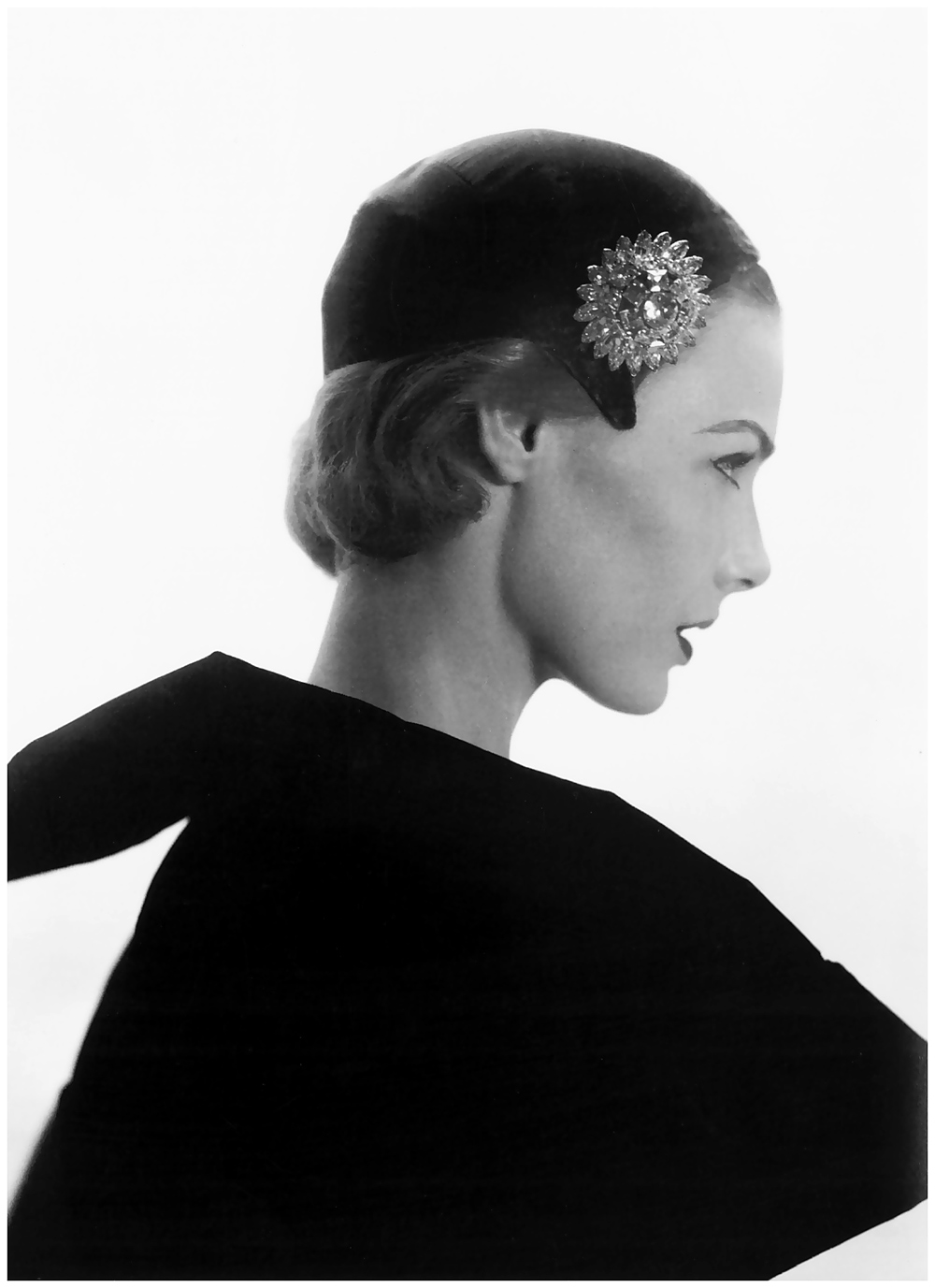
 

Horst P. Horst (German-American, 1906-1999) 'Lillian Marcuson, New York' 1950


Horst P. Horst (German-American, 1906-1999)
Lillian Marcuson, New York
1950
© Condé Nast/Horst Estate
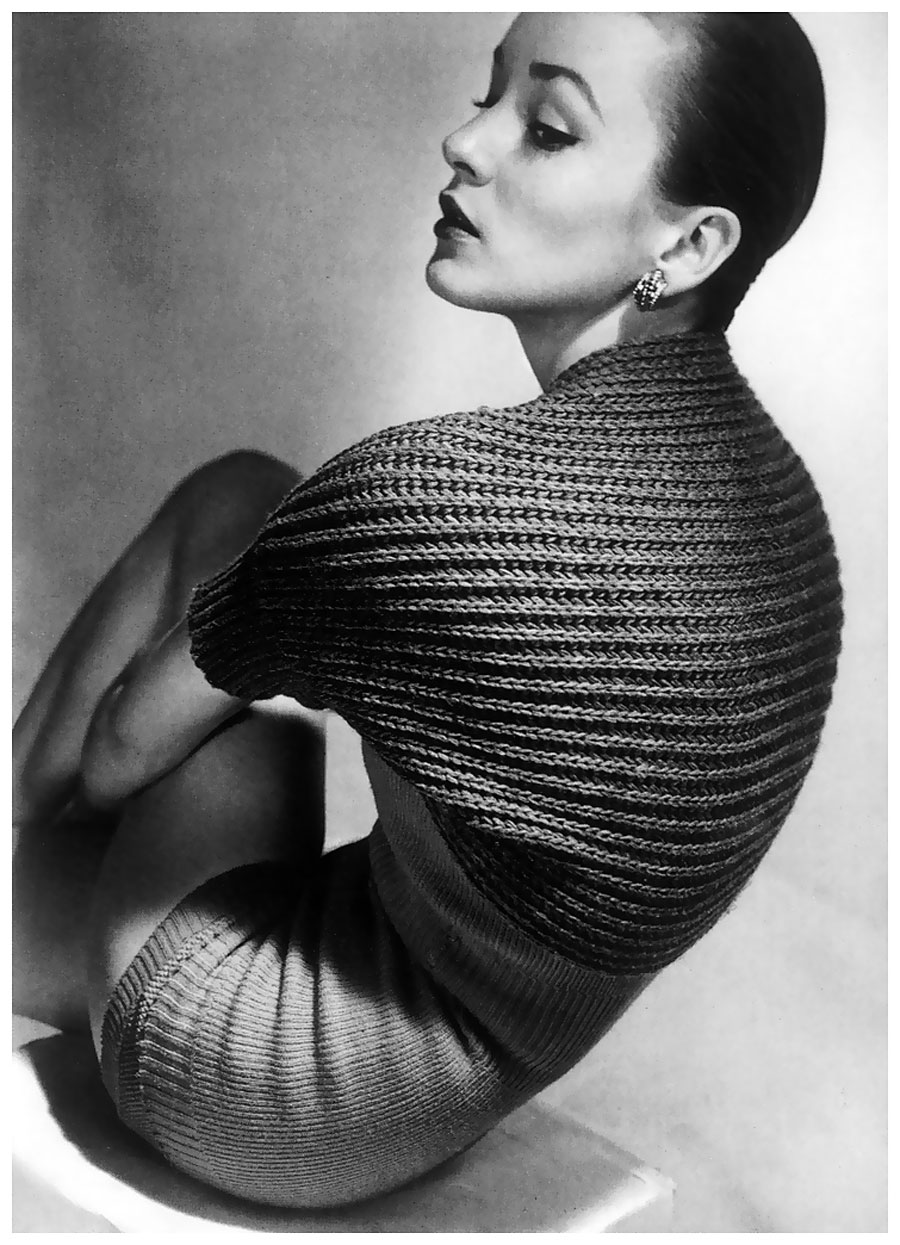
 

Horst P. Horst (German-American, 1906-1999) 'Outfit by Tina Leser' Vogue, April 1950


Horst P. Horst (German-American, 1906-1999)
Outfit by Tina Leser
Vogue, April 1950
© Condé Nast/Horst Estate


Horst P. Horst (German-American, 1906-1999) 'Bombay Bathing Fashion' 1950


Horst P. Horst (German-American, 1906-1999)
Bombay Bathing Fashion
1950
© Condé Nast/Horst Estate


Model (unidentified) and Dorian Leigh (r) in bathing suit and sleeveless shirt cover-up by Carolyn Schnurer 1951 Vogue


Haute Couture

When Horst joined Vogue in 1931, Paris was still the world’s undisputed centre of high fashion. Photography had begun to eclipse graphic illustration in fashion magazines and the publisher Condé Montrose Nast devoted large sums to improving the quality of image reproduction. He insisted that Vogue photographers work with a large format camera, which produced richly detailed negatives measuring ten by eight inches.

The creation of a Horst photograph was a collaborative process, involving the talents of the photographer and model, the art director, fashion editor, studio assistants and set technicians. The modelling profession was still in its infancy in the 1930s and many of those who posed under the hot studio lights were stylish friends of the magazine’s staff, often actresses or aristocrats.

By the mid 1930s, Horst had superseded his mentor George Hoyningen-Huene as Paris Vogue‘s primary photographer. His images frequently appeared in the French, British and American editions of the magazine. Many of the photographs on display in the exhibition are vintage prints from the company’s archive.
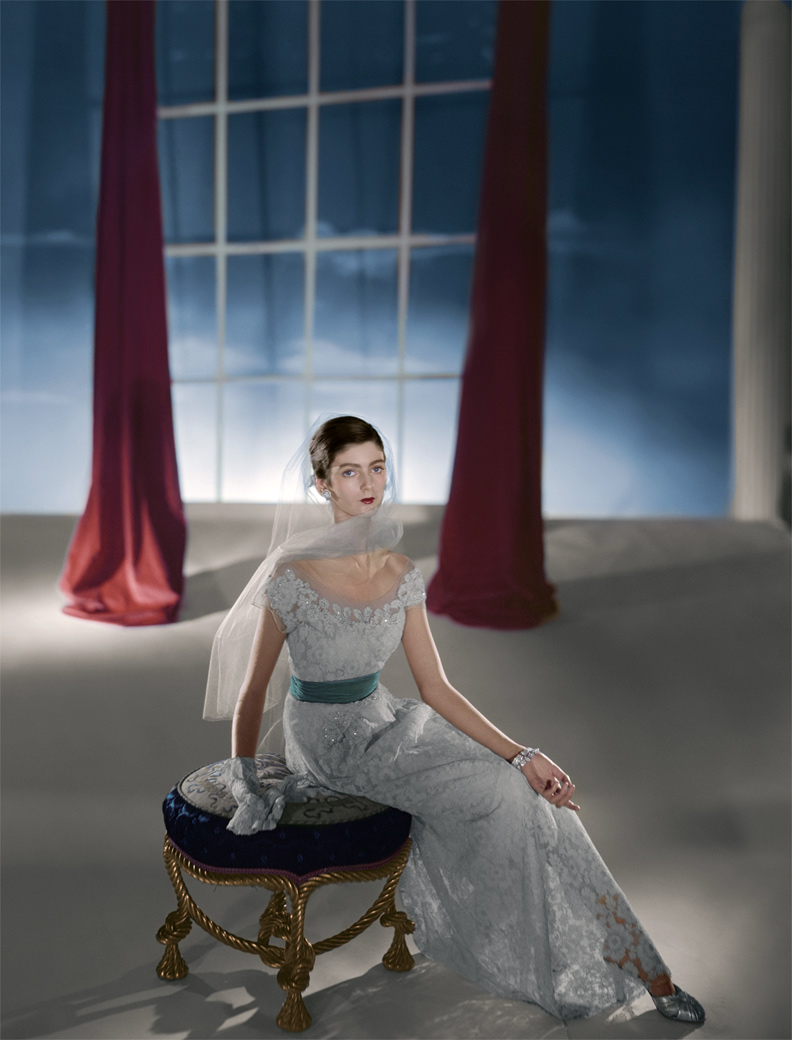
 

Horst P. Horst (German-American, 1906-1999) 'Dress by Hattie Carnegie' 1939


Horst P. Horst (German-American, 1906-1999)
Dress by Hattie Carnegie
1939
© Conde Nast / Horst Estate


Horst P. Horst (German-American, 1906-1999) 'Dress by Hattie Carnegie' 1939


Horst P. Horst (German-American, 1906-1999)
Dress by Hattie Carnegie
1939
© Conde Nast / Horst Estate


Horst P. Horst (German-American, 1906-1999) 'Muriel Maxwell, American Vogue' 1939


Horst P. Horst (German-American, 1906-1999)
Muriel Maxwell, American Vogue
1939
© Conde Nast / Horst Estate
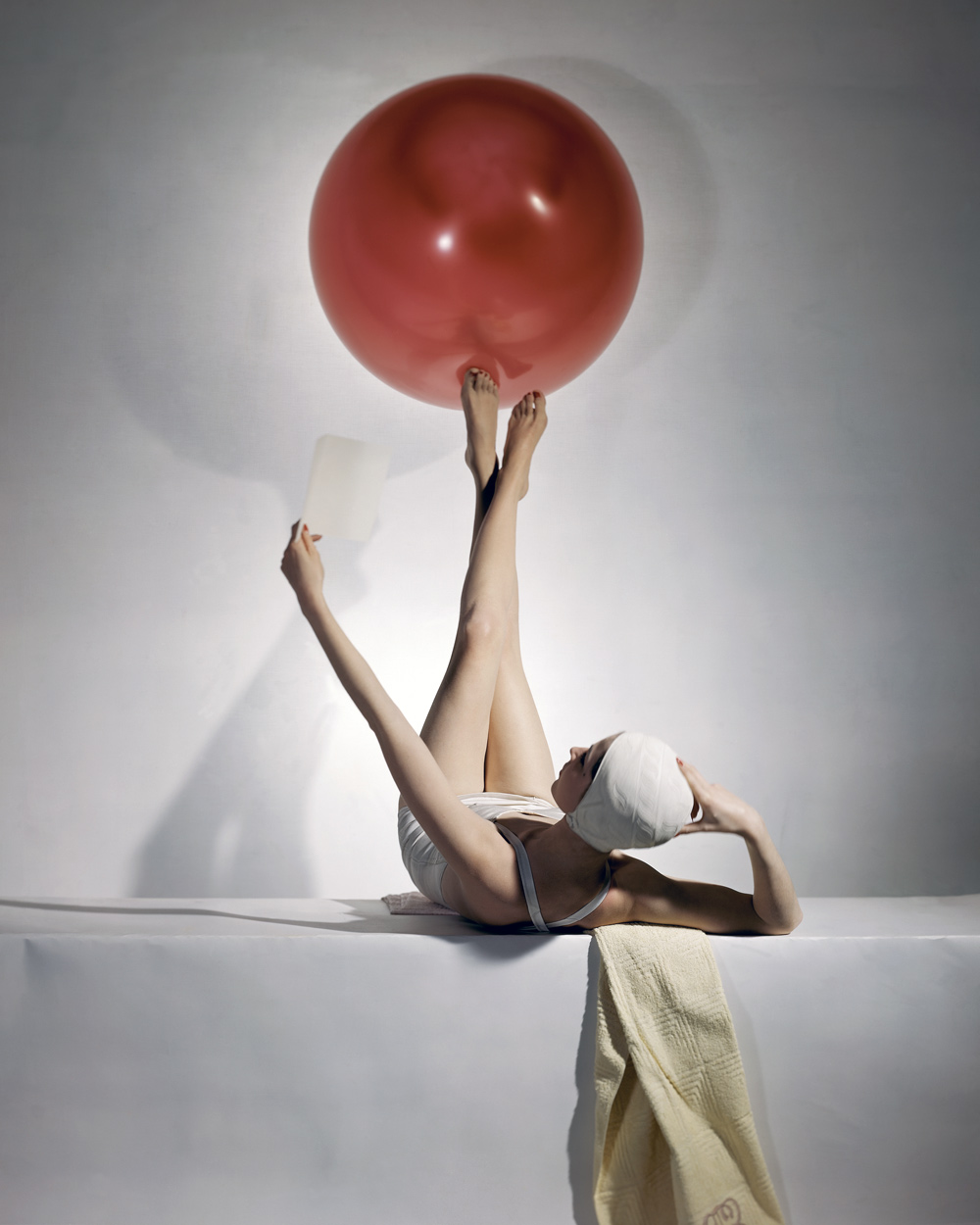
 

Horst P. Horst (German-American, 1906-1999) 'Summer Fashions, American Vogue cover' 1941


Horst P. Horst (German-American, 1906-1999)
Summer Fashions, American Vogue cover
1941
© Conde Nast / Horst Estate
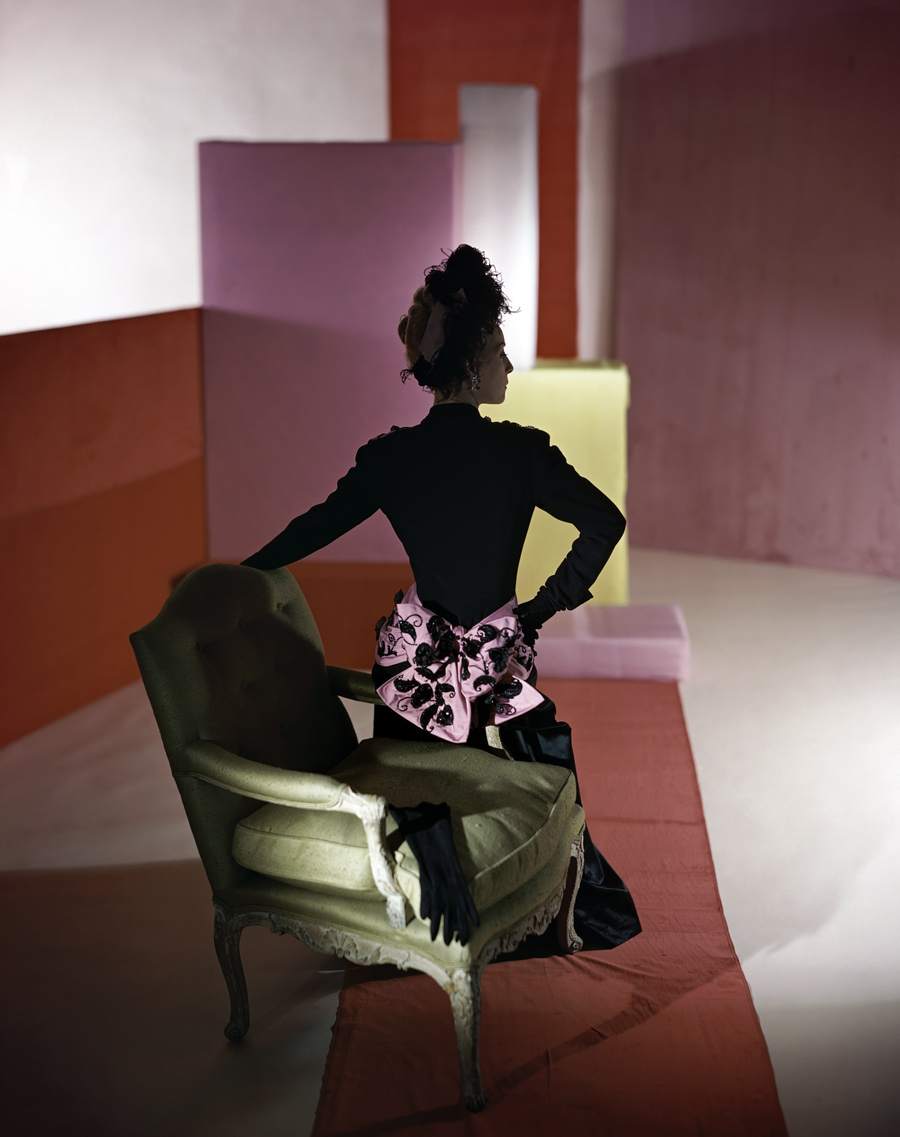
 

Horst P. Horst (German-American, 1906-1999) 'Dinner suit and headdress by Schiaparelli' 1947


Horst P. Horst (German-American, 1906-1999)
Dinner suit and headdress by Schiaparelli
1947
© Conde Nast / Horst Estate


Horst P. Horst (German-American, 1906-1999) 'Dinner suit and headdress by Schiaparelli' 1947 'Millicent Rogers in a Charles James gown and a gold necklace of her own design' Vogue, February 1, 1949


Horst P. Horst (German-American, 1906-1999)
Millicent Rogers in a Charles James gown and a gold necklace of her own design
Vogue,
February 1, 1949
© Conde Nast / Horst Estate


Horst in Colour from Victoria and Albert Museum


This film reveals the process of creating new colour prints for the exhibition Horst: Photographer of Style. Horst was quick to master new colour processes, introduced in the late 1930s, and he created hundreds of vibrant fashion photographs for Vogue.

The V&A team worked closely with specialists at the Condé Nast Archive and expert printer Ken Allen to select and print from Horst’s early transparencies, which date from the 1930s to the 1950s. The film includes insights into Horst’s dynamic approach from model Carmen Dell’Orefice and Vogue‘s International Editor at Large, Hamish Bowles.​


Fashion in Colour

The 1930s ushered in huge technical advancements in colour photography. Horst adapted quickly to a new visual vocabulary, creating some of Vogue‘s most dazzling colour images. In 1935 he photographed the Russian Princess Nadejda Sherbatow in a red velveteen jacket for the first of his many Vogue cover pictures.

The occupation of Paris transformed the world of fashion. The majority of French ateliers closed and many couturiers and buyers left the country. Remaining businesses struggled with extreme shortages of cloth and other supplies. The scarcity of French fashions in America, however, enabled American designers to come into their own.

Horst’s colour photographs are rarely exhibited because few vintage prints exist. Colour capture took place on a transparency which could be reproduced on the magazine page without the need to create a photographic print. The size of the new prints displayed in this room of the exhibition echoes the large scale of a group of Horst images printed in 1938 at the Condé Nast press.


Horst P. Horst (German-American, 1906-1999) 'Marlene Dietrich, New York' 1942


Horst P. Horst (German-American, 1906-1999)
Marlene Dietrich, New York
1942
© Conde Nast / Horst Estate
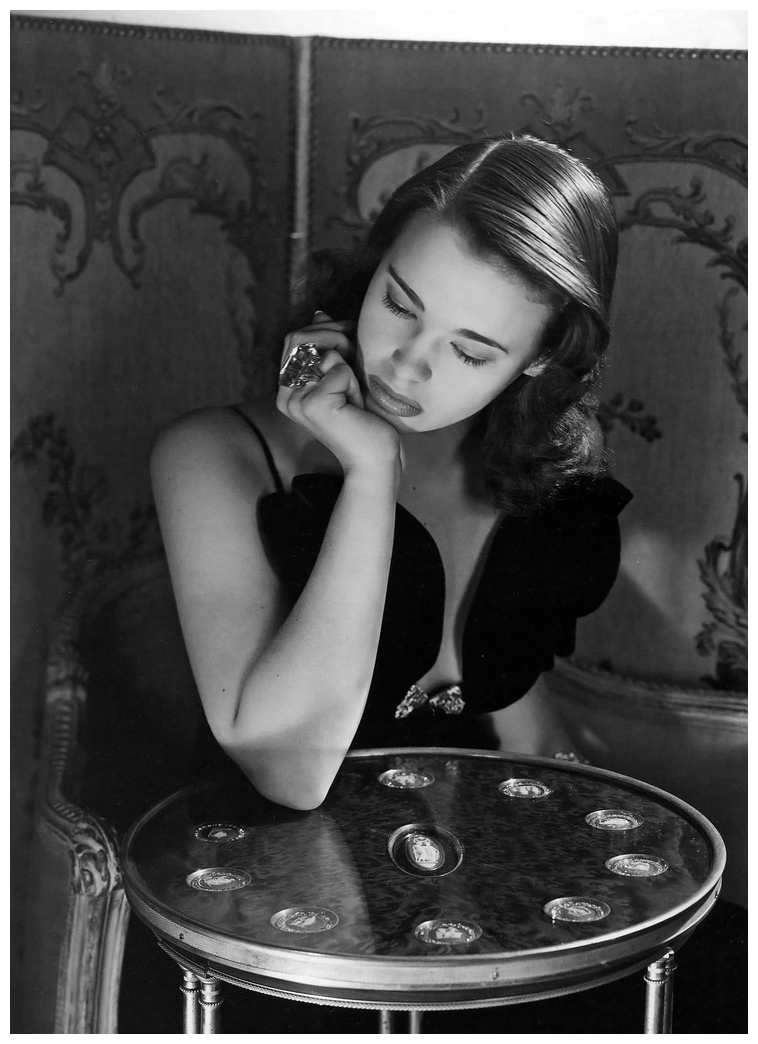
 

Horst P. Horst (German-American, 1906-1999) 'Gloria Vanderbilt age 17 wearing a dress by Howard Greer, New York' 1941


Horst P. Horst (German-American, 1906-1999)
Gloria Vanderbilt age 17 wearing a dress by Howard Greer, New York
1941
© Conde Nast / Horst Estate


At 17, in Beverly Hills wearing a tabletop dress by Howard Greer. Tabletop dresses looked good from the waist up when stars were photographed sitting in restaurants and nightclub


Stage and Screen

Horst’s portraits spanned a wide cross-section of subjects, from artists and writers to presidents and royalty. In the 1930s, he became aware of a new focus for his work. As he later noted in his book Salute to the Thirties (1971), glamorous Hollywood movie stars were imperceptibly assuming the place left vacant by Europe’s vanishing royal families. With the approach of the Second World War, the escapism offered by theatre and cinema gained in popularity. Horst began to photograph these new, classless celebrities, both in costume and as themselves.

The first well-known star Horst photographed was the English performer Gertrude Lawrence, then appearing in Ronald Jeans’ play Can the Leopard…? at the Theatre Royal, Haymarket. Horst’s first portrait of a Hollywood actress, Bette Davis, appeared in Vogue‘s sister magazine Vanity Fair in 1932.


Horst P. Horst (German-American, 1906-1999) 'Round the Clock, New York' 1987


Horst P. Horst (German-American, 1906-1999)
Round the Clock, New York
1987
© Conde Nast / Horst Estate


Platinum

The 1980s witnessed a flurry of new books, exhibitions and television documentaries about Horst. He produced new prints for museums and the collector’s market, selecting emblematic works from every decade of his career to be reprinted in platinum-palladium, sometimes with new titles. This was a complex and expensive technique, employing metals more expensive than gold. Failing eyesight finally forced him to stop working in 1992.

Horst’s platinum-palladium prints are treasured for their nuanced tones, surface quality and permanence. His style had experienced a renaissance in 1978 when Francine Crescent, French Vogue‘s editor in chief, had invited him to photograph the Paris collections. Horst’s work for her echoed his atmospheric, spot-lit studies of the 1930s. His use of the platinum process for creating new and reproducing early works ensured his mastery of light, mood and composition would be enjoyed by a new audience.


Horst P. Horst (German-American, 1906-1999) 'Male Nude #3' 1952, printed 1980s


Horst P. Horst (German-American, 1906-1999)
Male Nude #3
1952, printed 1980s
© Conde Nast / Horst Estate


Horst P. Horst (German-American, 1906-1999) 'Still Life' Nd


Horst P. Horst (German-American, 1906-1999)
Still Life
Nd
© Conde Nast / Horst Estate


Horst P. Horst (German-American, 1906-1999) 'Male Nude' 1952


Horst P. Horst (German-American, 1906-1999)
Male Nude
1952
© Conde Nast / Horst Estate


Male Nudes

In the early 1950s Horst produced a set of distinctive photographs unlike much of his previous output. These male figure studies were exhibited for the first time in Paris in 1953 and reprinted using the platinum-palladium process in the 1980s. The studies exemplify Horst’s sense of form. All emphasis is on the idealised human body, expressive light and shadow. Monumental and anonymous nudes resemble classical sculptures. As Mehemed Agha (1929-78), art director of American Vogue, commented:

“Horst takes the inert clay of human flesh and models it into the decorative shapes of his own devising. Every gesture of his models is planned, every line controlled and coordinated to the whole of the picture. Some gestures look natural and careless, because carefully rehearsed; the others, like Voltaire’s god, were invented by the artist because they did not exist.”
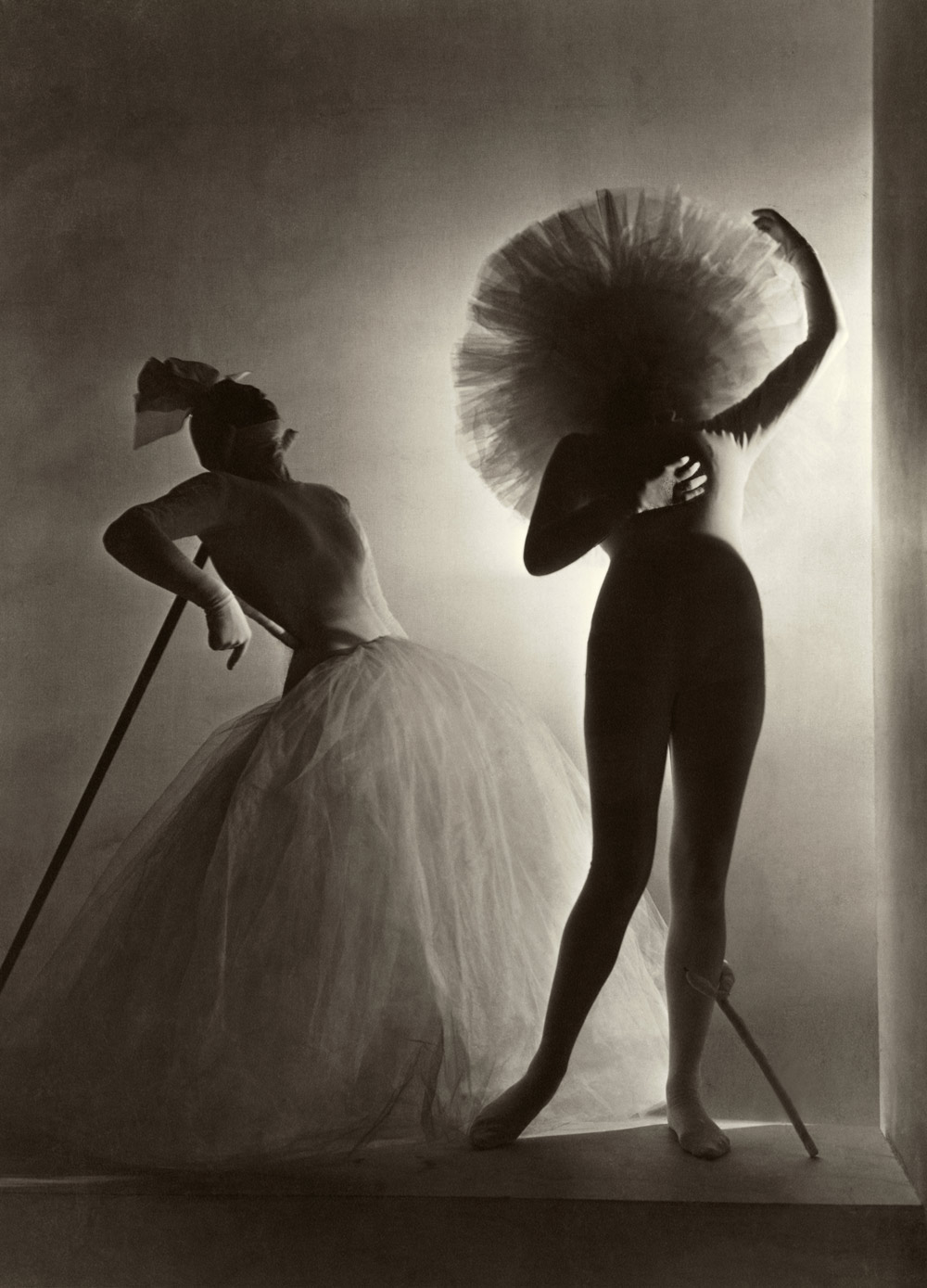
 

Horst P. Horst (German-American, 1906-1999) 'Salvador Dali's costumes for Leonid Massine's ballet 'Bacchanale'' 1939


Horst P. Horst (German-American, 1906-1999)
Salvador Dali’s costumes for Leonid Massine’s ballet Bacchanale
1939
© Conde Nast / Horst Estate


Horst P. Horst (German-American, 1906-1999) 'Lisa Fonssagrives hands, New York' 1941


Horst P. Horst (German-American, 1906-1999)
Lisa Fonssagrives hands, New York
1941
© Conde Nast / Horst Estate


Horst P. Horst (German-American, 1906-1999) 'Odalisque I' 1943


Horst P. Horst (German-American, 1906-1999)
Odalisque I
1943
© Conde Nast / Horst Estate


Horst P. Horst (German-American, 1906-1999) 'Bunny Hartley' Vogue, 1938


Horst P. Horst (German-American, 1906-1999)
Bunny Hartley
Vogue,
1938
© Conde Nast / Horst Estate


Horst P. Horst (German-American, 1906-1999) 'Lisa Fonssagrives "I Love You"' 1937


Horst P. Horst (German-American, 1906-1999)
Lisa Fonssagrives “I Love You”
1937
© Conde Nast / Horst Estate


Surrealism

The Surrealist art movement explored unique ways of interpreting the world, turning to dreams and the unconscious for inspiration. During the 1930s Surrealism escaped its radical avant-garde roots and transformed design, fashion, advertising, theatre and film. Horst’s photographs of this period feature mysterious, whimsical and surreal elements combined with his classical aesthetic. He created trompe l’oeil still life, photographed the surreal-infused dress designs of his friend Elsa Schiaparelli and collaborated with the artist Salvador Dalí. He shared with the Surrealists a fascination with the representation of the female body, often fragmenting and eroticising the human form in his images.

His most celebrated photograph of the era is Mainbocher Corset (1939). Decades after the photograph was made, Main Bocher himself expressed his admiration for Horst’s virtuosity, writing,

“Your photographs are sheer genius and delight my soul … each one is perfect by itself.”
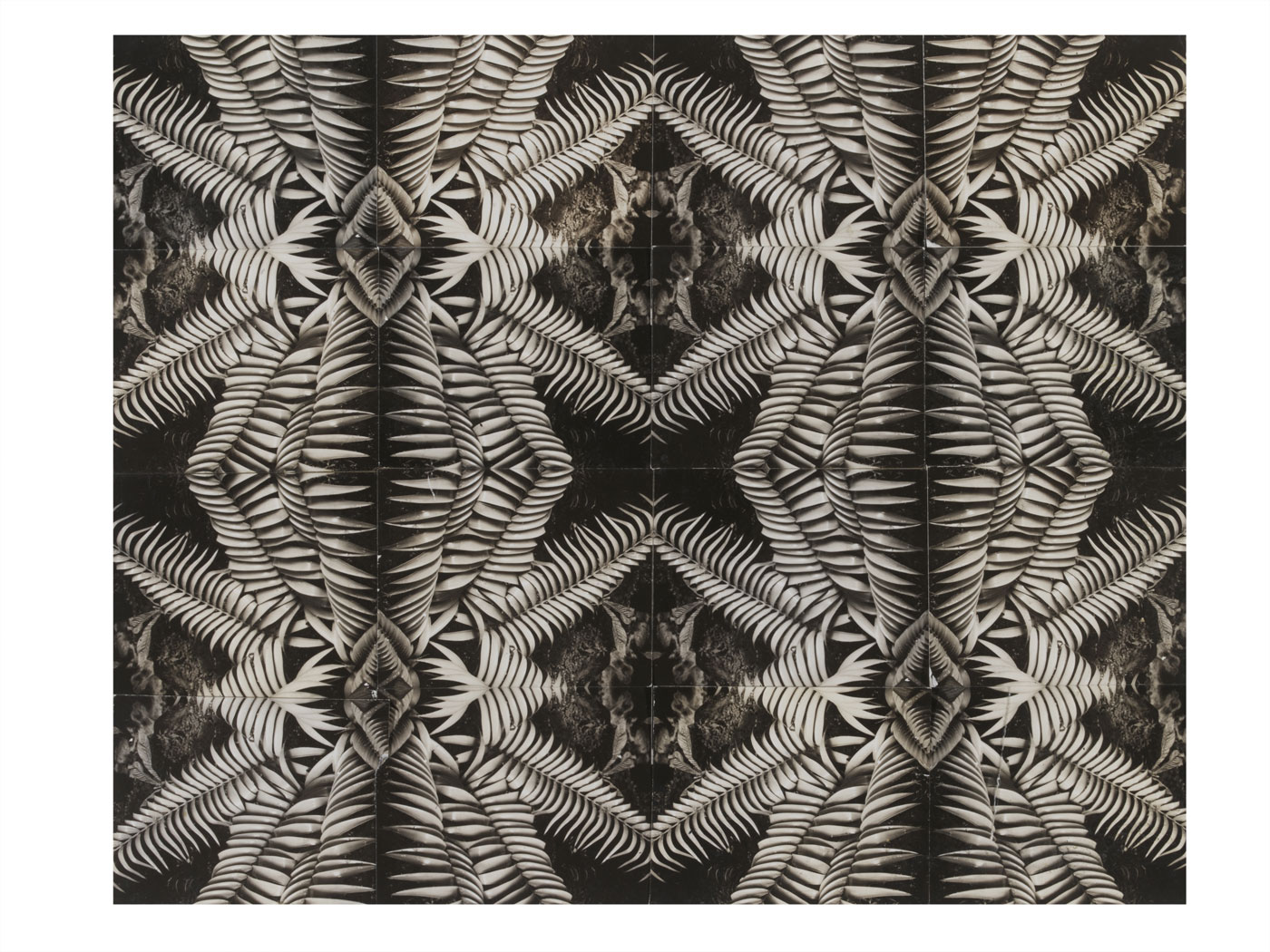
 

Horst P. Horst (German-American, 1906-1999) 'Patterns from Nature Photographic Collage' 1945


Horst P. Horst (German-American, 1906-1999)
Patterns from Nature Photographic Collage
1945
© Conde Nast / Horst Estate


Patterns from Nature

Horst’s second book, Patterns from Nature (1946), and the photographs from which it originated, are a surprising diversion from the high glamour of his fashion and celebrity photographs. These close-up, black and white images of plants, shells and minerals were taken in New York’s Botanical Gardens, in the forests of New England, in Mexico, and along the Atlantic and Pacific coasts.

This personal project was partly inspired by photographs of plants by Karl Blossfeldt (1865-1932). Horst was struck by “their revelation of the similarity of vegetable forms to art forms like wrought iron and Gothic architecture.” Horst’s interest was also linked to the technical purity of ‘photographic seeing’, a philosophy associated with the New Objectivity movement of the 1920s and ’30s. Practitioners took natural forms out of their contexts and examined them with such close attention that they became unfamiliar and revelatory.


Horst P. Horst (German-American, 1906-1999) 'View of ruins at the palace of Persepolis, Persia' 1949


Horst P. Horst (German-American, 1906-1999)
View of ruins at the palace of Persepolis, Persia
1949
© Conde Nast / Horst Estate


Travel

In the summer of 1949, Horst journeyed to the Middle East with his partner Valentine Lawford, then political counsellor at the British Embassy in Tehran. They travelled by road from Beirut to Persepolis, where Horst was able to photograph parts of the ancient Persian city that had only recently been uncovered. Afterwards, Horst visited the newly established State of Israel on a photographic assignment for Vogue.

The trip left a strong impression on Horst and he returned in the spring of 1950. He spent a week with Lawford at the relatively remote south-eastern shore of the Caspian Sea, before documenting the annual migration of the Qashqa’i clan. Horst and Lawford were invited by Malik Mansur Khan Qashqa’i to spend ten days with his tribe as they travelled by camel and horse, in search of vegetation for their flocks.


Horst P. Horst (German-American, 1906-1999) 'Yves Saint Laurent poses in the apartment's grand salon for a November 1971 'Vogue' photo spread' 1971


Horst P. Horst (German-American, 1906-1999)
Yves Saint Laurent poses in the apartment’s grand salon for a November 1971 ‘Vogue’ photo spread
1971
© Conde Nast / Horst Estate


Living in Style

In 1947 Horst acquired five acres of land in Oyster Bay Cove, Long Island, part of the estate once owned by the designer Louis Comfort Tiffany. On the land he described as ‘everything I had ever dreamed of’, Horst built a unique house and landscaped garden. British diplomat Valentine Lawford visited for the first time in 1947, with Noël Coward, Christopher Isherwood, and Greta Garbo. It was the beginning of a relationship with Horst that would last until Lawford’s death in 1991.

They welcomed many friends and visitors to Long Island, including the dynamic editor Diana Vreeland. She left Harper’s Bazaar for Vogue in 1962 and soon put the couple to work on Vogue‘s ‘Fashions in Living’ pages. The homes and tastes of everyone from Jackie Onassis to the Duke and Duchess of Windsor, Andy Warhol and Karl Lagerfeld featured in their articles. Horst’s creative chemistry with Vreeland brought him a new lease of life.


Roy Stevens (American, b. 1916) 'Horst directing fashion shoot with Lisa Fonssagrives' 15 May 1941


Roy Stevens (American, b. 1916)
Horst directing fashion shoot with Lisa Fonssagrives
15 May 1941
© Time & Life Pictures / Getty Images


In the Studio

During the 1940s Horst worked primarily in the Condé Nast studio on the 19th floor of the Graybar Building, an Art Deco skyscraper on Manhattan’s Lexington Avenue. The busy studio was well equipped with a variety of lights and props and Horst worked closely with talented art director Alexander Liberman. Like Horst, he had found refuge in the artistic circles of Paris and New York, and enjoyed a long career with Condé Nast.

By 1946 dressing the American woman had become one of the country’s largest industries, grossing over six billion dollars a year. The staff of Vogue expanded accordingly. In 1951 Horst found a studio of his own, the former penthouse apartment of artist Pavel Tchelitchew, with high ceilings and a spectacular view over the river. Horst developed a new approach to photography in response to the abundance of daylight and for a time his famous atmospheric shadows disappeared.


Victoria and Albert Museum
Cromwell Road, London SW7 2RL

Opening hours:
The V&A is open daily from 10.00 to 17.45 and until 22.00 on Fridays

Victoria and Albert Museum website

Horst: Photographer of Style web page

LIKE ART BLART ON FACEBOOK

Back to top

Exhibition: ‘RealSurreal. Masterpieces of Avant-Garde Photography Das Neue Sehen 1920-1950. Siegert Collection’ at the Kunstmuseum Wolfsburg

Exhibition dates: 15th November 2014 – 6th April 2015

The artists: Eugène Atget – Herbert Bayer – Hans Bellmer – Aenne Biermann – Brassaï – František Drtikol – Jaromír Funke – Florence Henri – André Kertész – Germaine Krull – Herbert List – Man Ray – László Moholy-Nagy – Albert Renger-Patzsch – August Sander – Josef Sudek – Maurice Tabard – Raoul Ubac – Umbo – Wols – and others


Albert Renger-Patzsch (German, 1897-1966) 'Self-Portrait' 1926/1927
 

Albert Renger-Patzsch (German, 1897-1966)
Self-Portrait
1926/1927
Gelatin silver paper
16.9 x 22.8cm
Photo: Christian P. Schmider, Munich
© Albert Renger-Patzsch Archiv / Ann and Jürgen Wilde / VG Bild-Kunst, Bonn 2014


Thought photography

Here are some names to conjure with (above). And what an appropriate word “conjure” is to illuminate these images:

: to charge or entreat earnestly or solemnly

: to summon by or as if by invocation or incantation

: to affect or effect by or as if by magic

: to practice magical arts

: to use a conjurer’s tricks

: to make you think of (something)

: to create or imagine (something)


For what is photography, if not magic?

These images are conjured from both the imagination of the artist… and reality itself. One cannot live, be magical, without the other. “Beneath the surface of visible things the irrational, the magical, and the contradictory could be discovered and explored.”

Still waters run deep.

Dr Marcus Bunyan


Many thankx to the Kunstmuseum Wolfsburg for allowing me to publish the photographs in the posting. Please click on the photographs for a larger version of the image.


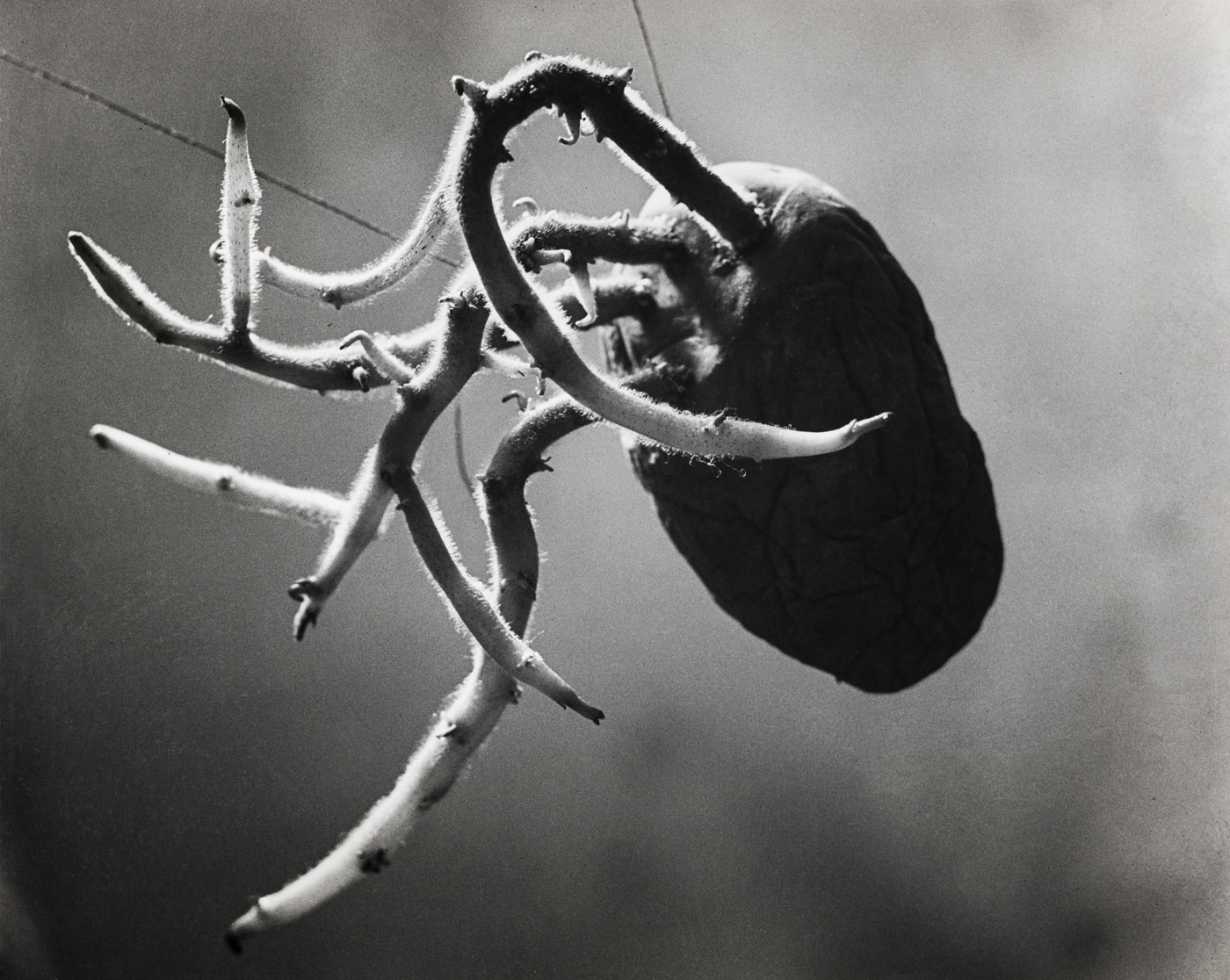
Brassaï (Hungarian-French, 1899-1984) 'Occasional Magic (Sprouting Potato)' 1931


Brassaï (Hungarian-French, 1899-1984)
Occasional Magic (Sprouting Potato)
1931
Gelatin silver paper
28.8 x 23cm
Photo: Christian P. Schmider, Munich
© ESTATE BRASSAÏ – RMN


František Drtikol (Czech, 1883-1961) 'Circular Segment (Arc)' 1928


František Drtikol (Czech, 1883-1961)
Circular Segment (Arc)
1928
Carbon print
21.3 x 28.7cm
Photo: Christian P. Schmieder, Munich
© František Drtikol – heirs, 2014


Hans Bellmer (German, 1902-1975) 'The Doll' 1935


Hans Bellmer (German, 1902-1975)
The Doll
1935
Gelatin silver paper
17.4 x 17.9cm
Photo: Christian P. Schmieder, Munich
© VG Bild-Kunst, Bonn 2014


Grete Stern (German-Argentine, 1904-1999) 'The Eternal Eye' c. 1950


Grete Stern (German-Argentine, 1904-1999)
The Eternal Eye
c. 1950
Photomontage on gelatin silver paper
39.5 x 39.5cm
Photo: Christian P. Schmieder, Munich
© Estate of Grete Stern courtesy Galería Jorge Mara – La Ruche, Buenos Aires, 2014


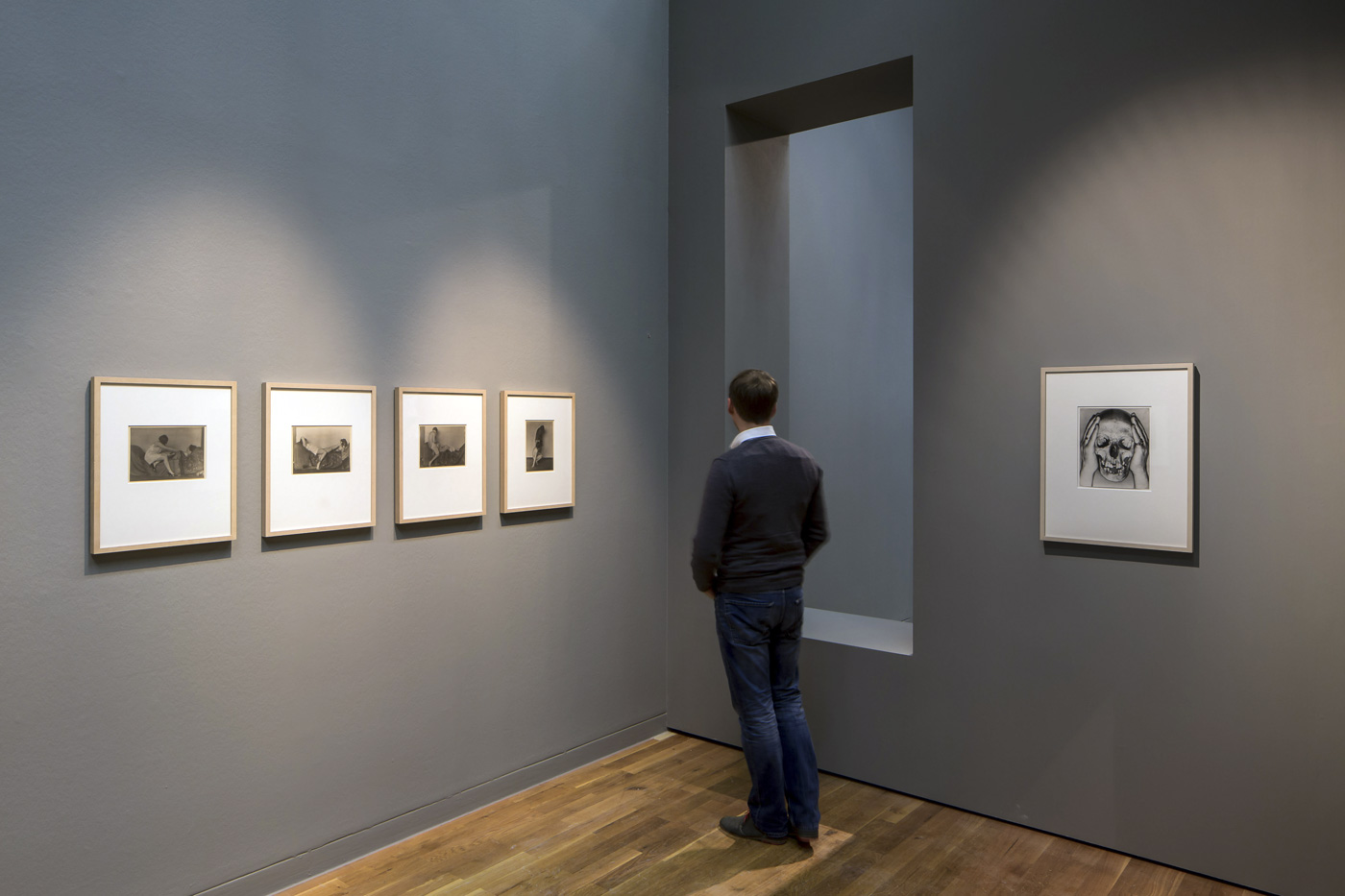
Installation view of the exhibition 'RealSurreal' at the Kunstmuseum Wolfsburg

Installation view of the exhibition 'RealSurreal' at the Kunstmuseum Wolfsburg

Installation view of the exhibition 'RealSurreal' at the Kunstmuseum Wolfsburg

Installation view of the exhibition 'RealSurreal' at the Kunstmuseum Wolfsburg


Installation views of the exhibition RealSurreal at the Kunstmuseum Wolfsburg showing at bottom right in the bottom image, Erwin Blumenfeld’s Skull 1932/1933


Is a photograph a true-to-life reproduction of reality, or is it merely a staged image? This year – the 175th anniversary of the invention of photography – the Kunstmuseum Wolfsburg responds to this question with a comprehensive survey of avant-garde photography between 1920 and 1950. The exhibition RealSurreal presents around 200 masterpieces from the eminent Siegert Collection in Munich. This collection, which has never been shown in its entirety, contains photographs from the Neues Sehen (New Vision) movement, covering everything from New Objectivity to Surrealism in Germany, France, and Czechoslovakia.

Das Neue Sehen (New Vision)

Notions about photography’s visual veracity are as old as the art itself. As early as the nineteenth century there were arguments as to whether or not photography – with its mechanical ability to record ‘reality’ – was better suited to portray life more comprehensively and truthfully than other visual arts of the period. An inevitable reaction to what were considered photography’s shortcomings was Pictorialism, which approached photography according to the conventions of painting, in an attempt to lend it more artistic credibility. But around 1920 a new generation of international photographers began reconsidering the specific characteristics of photography as tools for developing it into a more modern method of appropriating reality. Rapid progress in technologising modern society affected the adoption of and attitudes toward photography: convenient cameras that used rolls of film came onto the market in greater numbers, making it easy for even the greenest of amateurs to take photographs. Photographs were increasingly used as illustrations in mass media, and in advertising, leading to a rising demand for accomplished images and professional image makers. These developments also changed the public’s visual habits, so that the New Vision arose as an expression of the perception of this new media-fabricated reality. Positions ranged from the precise recordings of what was seen in portrait and industrial photography, via the use of new framings and perspectives at the Bauhaus, all the way to the photomontage and technical experiments such as the photogram and solarisation, as well as Surrealism’s staged images.

The Mechanical Eye

Photographers of the Neue Sachlichkeit (New Objectivity) movement wanted to show the world as it was. For Albert Renger-Patzsch, photography was the “most dependable tool” for objectively reproducing the visible things of this world, especially the results of modern technology, and in this respect, it was superior to the subjective perception of the human eye. László Moholy-Nagy went a step further, with his famous verdict that “the illiterate of the future will be the person ignorant of the use of the camera as well as the pen.” To the camera he attributed the crucial function of technically expanding human perception. Whilst adequately depicting machines, mass society, and modern metropolitan life: “the photographic apparatus can perfect or supplement our Photographs were increasingly used as illustrations in mass media.” Unusual aspects and viewpoints led to striking images. From a bird’s-eye perspective, buildings and streets became compositions made up of lines and planes, while a low-angle shot could create an unforeseen dynamic and greatly enlarging an object resulted in magical dissociations.

The Real and the Surreal

Ultimately, the Surrealists identified in the “realistic” recording tool of photography yet another artistic means of “écriture automatique,” which André Breton also described as “thought photography.” Beneath the surface of visible things the irrational, the magical, and the contradictory could be discovered and explored. Documentary photographers such as Eugène Atget and Karl Blossfeldt became inspirational figures in this movement. Their work was printed in the Surrealist magazines, because a plant, staged and isolated in a photograph, could trigger all kinds of magical associations beyond its botanical context. Meanwhile manipulated and staged photographs benefitted from the truthfulness of “this is the way it was,” since they could only reinforce their mysterious statements. One of Surrealism’s most important artistic means – the combinatory creation (including, of course, the photomontage) – was particularly effective because heterogeneous visual elements were joined to form new, surprising contexts of meaning. Like Brassaï’s photographs of a nocturnal Paris, Karel Teige’s collages have a surreal quality which can also be found in a different form in Man Ray’s dreamlike photograms. Both staged photography and – with many experiments with photographic techniques, such as multiple exposures, negative printing, and solarisation – strove to achieve the melding of dream and reality, a goal postulated by Breton in his first Surrealist manifesto. In New Vision photography this could generally result in images that could “go either way,” depending on the viewpoint of the real/surreal photographer and observer; they could be seen as sober, objective reproductions of the visible world, or as imaginary, subjective reflections of reality.

The exhibition RealSurreal leads the visitor through Neues Sehen in Germany, Surrealism in Paris, and the avant-garde in Prague, alongside themes such as portraits, nudes, objects, architecture, and experimental. Opening with a prologue of exemplary nineteenth-century photographs which are compared and contrasted with Neues Sehen, one can literally experience the Neues Sehen in the Kunstmuseum Wolfsburg via rare original prints by notable photographers, while rediscovering the broad spectrum and complexity of photographs from real to surreal. Besides approximately 200 photographs, the exhibition contains historical photography books and magazines, as well as rare artists’ books and examples of avant-garde cover design, making it possible to experience this new view of the world.

RealSurreal also features several famous clips from key films by Luis Buñuel, László Moholy-Nagy, Hans Richter, and others, shown continuously in a 45-minute loop, which highlight the fruitful interplay between avant-garde photography and the-then contemporary cinema. Important photographs and photo installations by Nobuyoshi Araki, Gilbert & George, Paul Graham, Andreas Gursky, Cindy Sherman, Jeff Wall, and James Welling, from the Kunstmuseum Wolfsburg’s collection, will also demonstrate that the artistic questions posed by Neues Sehen are still relevant today.

Press release from the Kunstmuseum Wolfsburg website


Erwin Blumenfeld (American born Germany, 1897-1969) 'Skull' 1932/33


Erwin Blumenfeld (American born Germany, 1897-1969)
Skull
1932/1933
Solarisation on gelatin silver paper
29.6 x 24cm
Photo: Christian P. Schmieder, Munich
© The Estate of Erwin Blumenfeld


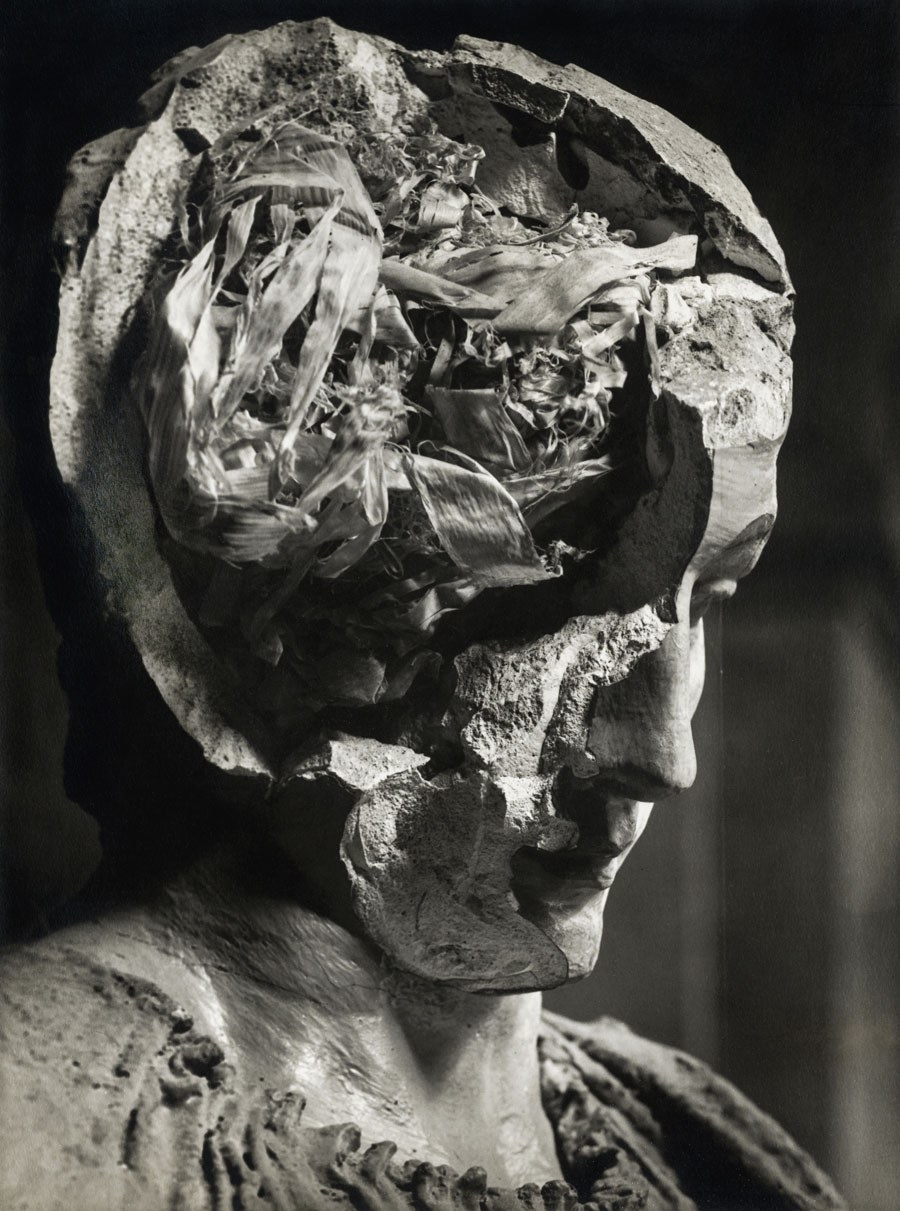
Josef Sudek (Czech. 1896-1976) 'Plaster Head' c. 1947


Josef Sudek (Czech. 1896-1976)
Plaster Head
c. 1947
Gelatin silver paper
23.5 x 17.5cm
Photo: Christian P. Schmieder, Munich
© Estate of Josef Sudek


Herbert Bayer (Austrian, 1900-1985) 'Lonely Metropolitan' 1932/1969


Herbert Bayer (Austrian, 1900-1985)
Lonely Metropolitan
1932/1969
Photomontage on gelatin silver paper
35.3 x 28cm
Photo: Christian P. Schmieder, Munich
© VG Bild-Kunst, Bonn 2014


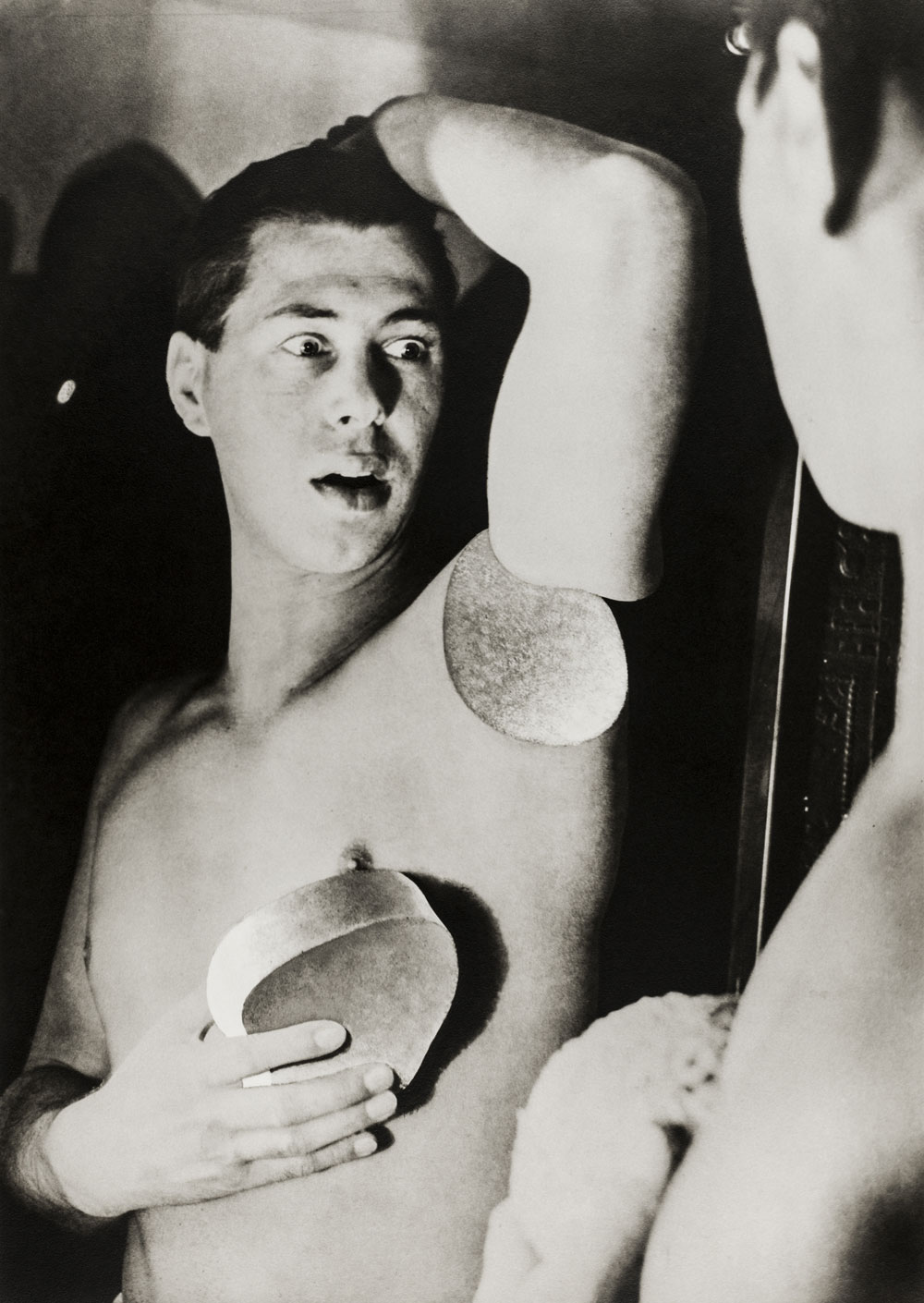
Herbert Bayer (Austrian, 1900-1985) 'Self-Portrait' 1932


Herbert Bayer (Austrian, 1900-1985)
Self-Portrait
1932
Photomontage on gelatin silver paper
35.3 x 27.9cm
Photo: Christian P. Schmieder, Munich
© VG Bild-Kunst, Bonn, 2014


Man Ray (American, 1890-1976) 'Electricity' 1931


Man Ray (American, 1890-1976)
Electricity
1931
Photogravure
26 x 20.6cm
Photo: Christian P. Schmieder, Munich
© Man Ray Trust, Paris/ VG Bild-Kunst, Bonn 2014


Man Ray (American, 1890-1976) 'Rayography (spiral)' 1923


Man Ray (American, 1890-1976)
Rayography (spiral)
1923
Photogram on gelatin silver paper
26.6. x 21.4cm
Photo: Christian P. Schmieder, München
© Man Ray Trust, Paris/ VG Bild-Kunst, Bonn 2014


Florence Henri (European born America, 1893-1982) 'Portrait Composition (Erica Brausen)' 1931


Florence Henri (European born America, 1893-1982)
Portrait Composition (Erica Brausen)
1931
Gelatin silver paper
39.9 x 29cm
Photo: Christian P. Schmieder, Munich
© Galleria Martini & Ronchetti, Genova, Italy


Atelier Manassé. 'My Little Bird' c. 1928


Atelier Manassé
My Little Bird
c. 1928
Gelatin silver paper
21 x 16cm
Photo: Christian P. Schmieder, Munich
© IMAGNO/Austrian Archives


Genia Rubin (Russian, 1906-2001) 'Lisa Fonssagives. Gown: Alix (Madame Grès)' 1937


Genia Rubin (Russian, 1906-2001)
Lisa Fonssagives. Gown: Alix (Madame Grès)
1937
Gelatin silver paper
30.3 x 21.5cm
Photo: Christian P. Schmieder / Siegert Collection, Munich
© Sheherazade Ter-Abramoff, Paris


Kunstmuseum Wolfsburg
Abteilung Kommunikation
Hollerplatz 1 38440
Wolfsburg
Phone: +49 (0)5361 2669 69

Opening hours:
Tuesday – Sunday 11am – 6pm
Monday closed

Kunstmuseum Wolfsburg website

LIKE ART BLART ON FACEBOOK

Back to top

Exhibition: ‘Kati Horna’ at Jeu de Paume, Paris

Exhibition dates: 3rd June – 21st September 2014


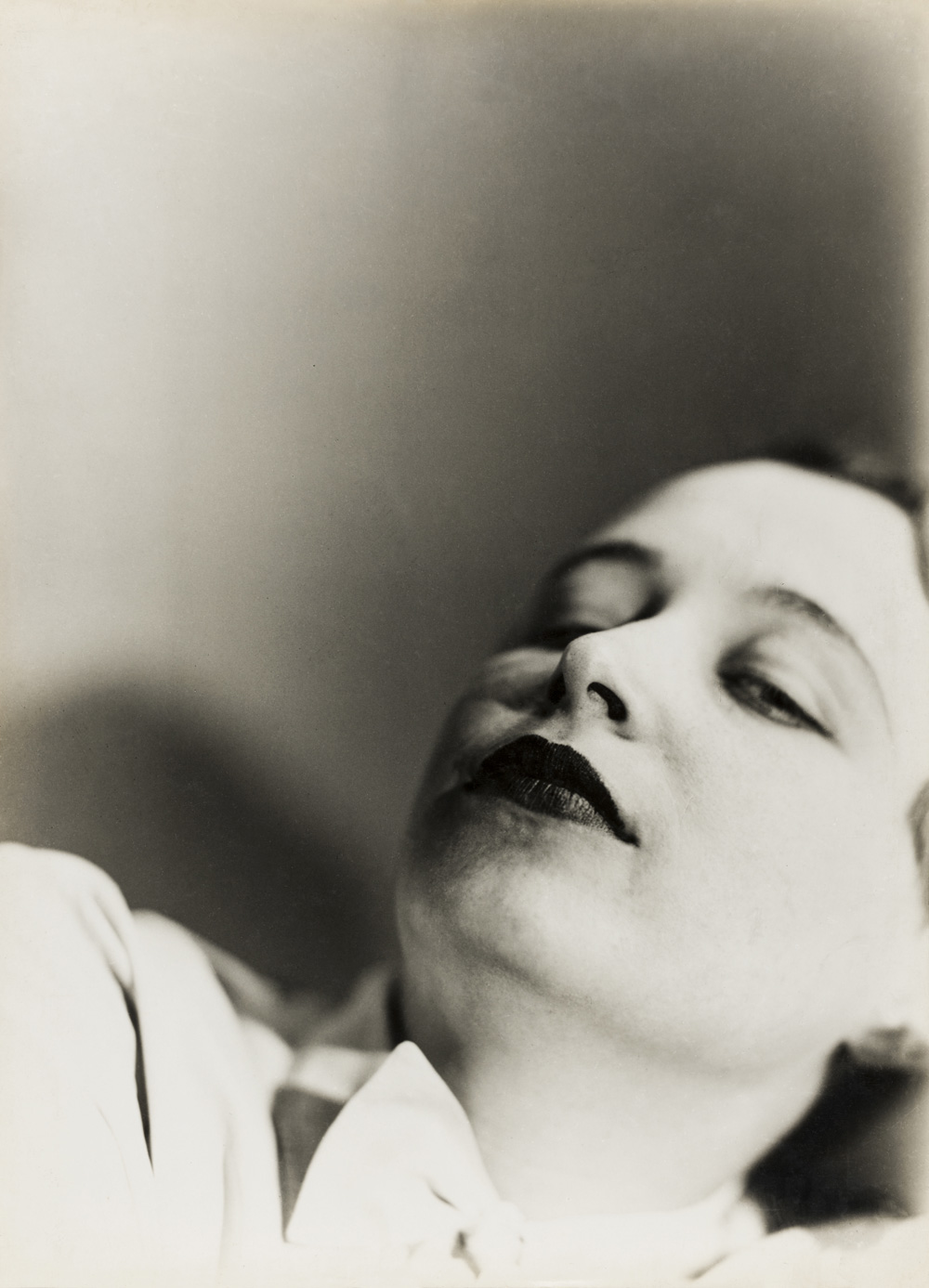
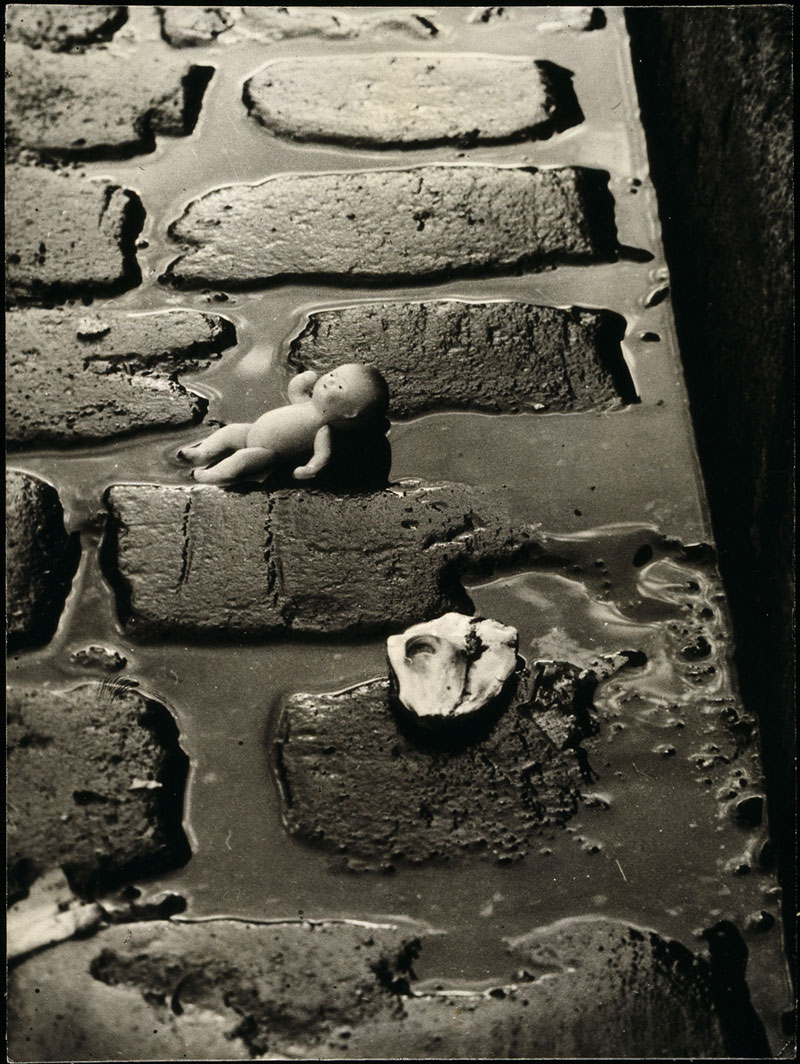
Kati Horna (Mexican born Hungary, 1912-2000) 'Untitled' Paris, 1939


Kati Horna (Mexican born Hungary, 1912-2000)
Untitled
Paris, 1939
From the Muñecas del miedo series [Dolls of Fear],
Gelatin silver print
15.3 x 22.8cm
Archivo Privado de Fotografía y Gráfica Kati y José Horna
© 2005 Ana María Norah Horna y Fernández


I really love the work of artists such as Kati Horna and Florence Henri “with the production of collages and photomontages inspired by the avant-garde movements of the 1930s (the Bauhaus, Surrealism, German Neue Sachlichkeit, Russian Constructivism).”

Horna’s photographs have more of a political edge than that of Florence Henri, with her unique photographic reportage of the Spanish Civil War between 1937-39 and her Hitler series both having a strong social critique. Here is another politically aware artist who stood up for the cause, who recorded the “everyday life for the civilian population through a vision that was in empathy with the environment and the people.” Again, here is another who was lucky to survive the maelstrom of the Second World War, who would have certainly ended up dead if she and her Andalusian artist husband José Horna had not fled Paris in 1939 for their adopted country Mexico.

Dr Marcus Bunyan

PS I spent hours cleaning up the press images, there were in a really poor state, but the work was so worthwhile… they really sing now!


Many thankx to the Jeu de Paume for allowing me to publish the photographs in the posting. Please click on the photographs for a larger version of the image.


This summer, the Jeu de Paume, which is celebrating 10 years devoted to the image, will be inviting the public to discover Kati Horna (1912-2000), an avant-garde, humanist photographer, who was born in Hungary and exiled in Mexico, where she documented the local art scene.


Robert Capa (Hungarian-American, 1913-1954) (attributed to) 'Kati Horna in the Studio of József Pécsi' Budapest, 1933


Robert Capa (Hungarian-American, 1913-1954) (attributed to)
Kati Horna in the Studio of József Pécsi
Budapest, 1933
Gelatin silver print
10.5 x 7.5cm
Archivo Privado de Fotografía y Gráfica Kati y José Horna
© 2005 Ana María Norah Horna y Fernández


In collaboration with the Museo Amparo in Puebla (Mexico), the Jeu de Paume is presenting the first retrospective of the work of photographer Kati Horna (Szilasbalhási, Hungary, 1912-Mexico, 2000), showing more than six decades of work in Hungary, France, Spain and Mexico. Kati Horna, a photographer whose adopted homeland was Mexico, was one of a generation of Hungarian photographers (including André Kertész, Robert Capa, Eva Besnyö, László Moholy-Nagy, Nicolás Muller, Brassaï, Rogi André, Ergy Landau and Martin Munkácsi) forced to flee their country due to the conflicts and social upheaval of the 1930s.

Cosmopolitan and avant-garde, Kati Horna was known above all for her images of the Spanish Civil War, produced at the request of the Spanish Republican government between 1937 and 1939. Her work is characterised by both its adherence to the principles of Surrealist photography and her very personal approach to photographic reportage.

This major retrospective helps to bring international recognition to this versatile, socially committed, humanist photographer, highlighting her unusual artistic creativity and her contribution to photojournalism. It offers a comprehensive overview of the work of this artist, who started out as a photographer in Hungary at the age of 21, in the context of the European avant-garde movements of the 1930s: Russian Constructivism, the Bauhaus school, Surrealism and German Neue Sachlichkeit. Her vast output, produced both in Europe and Mexico, her adopted country, is reflected in a selection of over 150 works – most of them vintage prints, the vast majority of them unpublished or little known.

In Mexico, Kati Horna formed a new family with the émigré artists Remedios Varo, Benjamin Péret, Emerico ‘Chiki’ Weisz, Edward James and, later on, Leonora Carrington. In parallel with her reportages, she took different series of photographs of visual stories, extraordinary creations featuring masks and dolls, motifs that began to appear in her work in the 1930s.

Kati Horna also became the great portraitist of the Mexican literary and artistic avant-garde; her visionary photographs captured the leading artists in Mexico during the 1960s, such as Alfonso Reyes, Germán Cueto, Remedios Varo, Pedro Friedeberg, Alejandro Jodorowsky, Mathias Goeritz and Leonora Carrington.

The exhibition is divided into five periods: her beginnings in Budapest, Berlin and Paris between 1933 and 1937; Spain and the Civil War from 1937 to 1939; Paris again in 1939; then Mexico. The exhibition also presents a number of documents, in particular the periodicals that she contributed to during her travels between Hungary, France, Spain and Mexico. The works come from the Archivo Privado de Fotografía y Gráfica Kati y José Horna, the Centro Documental de la Memoria Histórica de España, Salamanca, the Museo Amparo, Puebla, as well as private collections.

Press release from the Jeu de Paume website


Kati Horna (Mexican born Hungary, 1912-2000) 'Invierno en el patio' [Winter in the Courtyard] Paris, 1939


Kati Horna (Mexican born Hungary, 1912-2000)
Invierno en el patio [Winter in the Courtyard]
Paris, 1939
Gelatin silver print
18.8 x 18.3cm
Archivo Privado de Fotografía y Gráfica Kati y José Horna
© 2005 Ana María Norah Horna y Fernández


Beginnings: Budapest, Berlin And Paris


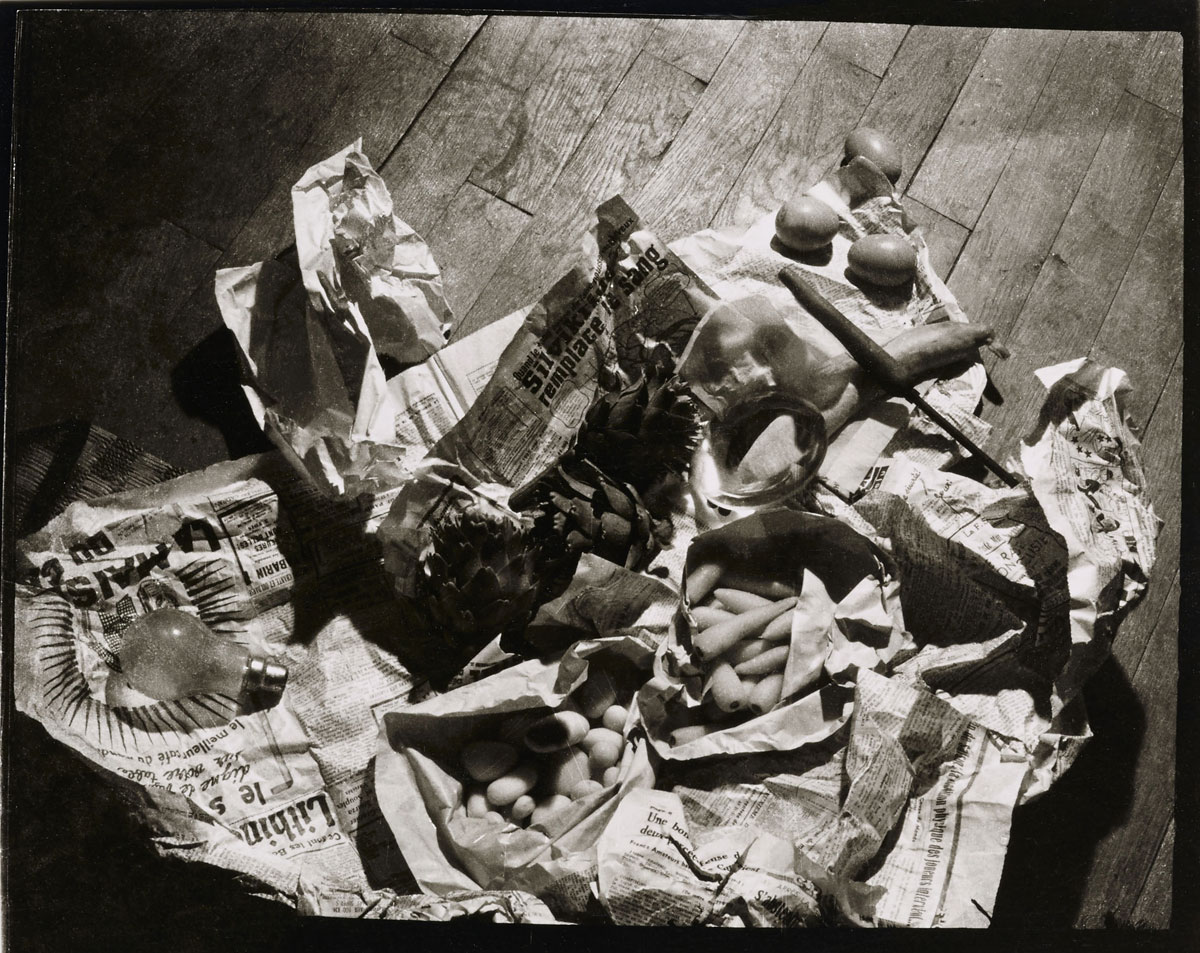
Afterwards I returned to Paris, and do you know why I didn’t die of hunger in Paris? Before I left, everyone mocked me, “there’s the photographer”, I was the photographer of eggs. I had this idea of being the first one to do things, not with figurines, but little stories with eggs, and it was that wonderful draughtsman who subsequently committed suicide who did the faces for me… The first was the romantic story of a carrot and a potato. The carrot declared its love to the potato. He always did the faces and I staged the scenes. I took the photos with my big camera with 4 x 5 negatives.


Kati Horna


Born in Hungary to a family of bankers of Jewish origin during a period of political and social instability, Kati Horna would always be deeply marked by the violence, injustice and danger around her. This situation helped to forge her ideological commitment, her perpetual search for freedom, her particular way of denouncing injustice, as well as her compassionate and human vision, like that of Lee Miller and her pictures of the Second World War. As was the case for her great childhood friend Robert Capa, to whom she would remain close throughout her life, photography became a fundamental means of expression.

At the age of 19 she left Budapest to live in Germany for a year, where she joined the Bertolt Brecht collective. She frequented photographer friends and compatriots Robert Capa and ‘Chiki’ Weisz, as well as other major figures in Hungarian photography, such as László Moholy-Nagy – who at the time was a teacher at the Bauhaus school – and Simon Guttman, founder of the Dephot agency (Deutscher Photodienst). On her return from Budapest, she enrolled in the studio of József Pécsi – the famous Hungarian photographer (1889-1956) – before leaving her birth country again, in 1933, to settle in Paris.

It was during this period of apprenticeship that her own aesthetic took shape, which marked her entire career, with the production of collages and photomontages inspired by the avant-garde movements of the 1930s (the Bauhaus, Surrealism, German Neue Sachlichkeit, Russian Constructivism). Paris was a cosmopolitan capital and Surrealism was at its height at the time. This movement heavily influenced Kati Horna’s style, both through its themes and its techniques, be it the narrative collage, superimposition or photomontage. Her photography was closely linked to the arts of the image, used as an illustrative technique and as a support for a poetics of the object. Her taste for stories and staged images are clearly evident. From 1933 she worked for the Lutetia-Press agency, for whom she did her first photo stories: Mercado de pulgas [Flea Market] (1933), which would not be published until 1986 in the Mexican periodical Foto Zoom, and Cafés de París (1934).


Kati Horna (Mexican born Hungary, 1912-2000) 'Robert Capa in the Studio of József Pécsi' Budapest, 1933


Kati Horna (Mexican born Hungary, 1912-2000)
Robert Capa in the Studio of József Pécsi
Budapest, 1933
Gelatin silver print
25.3 x 20.1cm
Archivo Privado de Fotografía y Gráfica Kati y José Horna
© 2005 Ana María Norah Horna y Fernández


Kati Horna (Mexican born Hungary, 1912-2000) 'Untitled' Paris, 1937


Kati Horna (Mexican born Hungary, 1912-2000)
Untitled
Paris, 1937
From the Hitlerei series [Hitler series]
in collaboration with Wolfgang Burger
Gelatin silver print
16.8 x 12cm
Archivo Privado de Fotografía y Gráfica Kati y José Horna
© 2005 Ana María Norah Horna y Fernández


Spain And The Civil War


Photography, with its various possibilities, enables one to show, liberate and develop one’s own sensibility which can be expressed in graphic images.

And at the moment of pressing the shutter you had to keep the image, let your emotion, discovery and visual surprise flow, the moment had to be kept in your head. That’s what I call developing one’s visual memory.


Kati Horna


Between 1937 and 1939, Kati Horna covered the Spanish Civil War with great sensitivity. The Spanish Republican government asked her to produce images on the Civil War. Thus, between 1937 and 1939 she photographed the places where the major events of the war took place, in the Aragon province, in the country’s cities (Valencia, Madrid, Barcelona and Lerida), as well as a number of strategic villages in Republican Spain.

A collection of more than 270 negatives has survived from this period, today conserved in the Centro Documental de la Memoria Histórica de España, Salamanca. They bear witness to the reality of the conflict at the front as well as, and above all, everyday life for the civilian population through a vision that was in empathy with the environment and the people. Committed to the anarchist cause, she became the editor of the periodical Umbral, where she would meet her future husband, the Andalusian anarchist José Horna – and worked on the cultural periodical of the National Confederation of Labour, Libre-Studio. She also collaborated on the periodicals Tierra y Libertad, Tiempos Nuevos and Mujeres Libres, publications that are being exhibited for the first time. At the time, her work was distinguished by its photomontages, which have both a symbolic and metaphorical character.


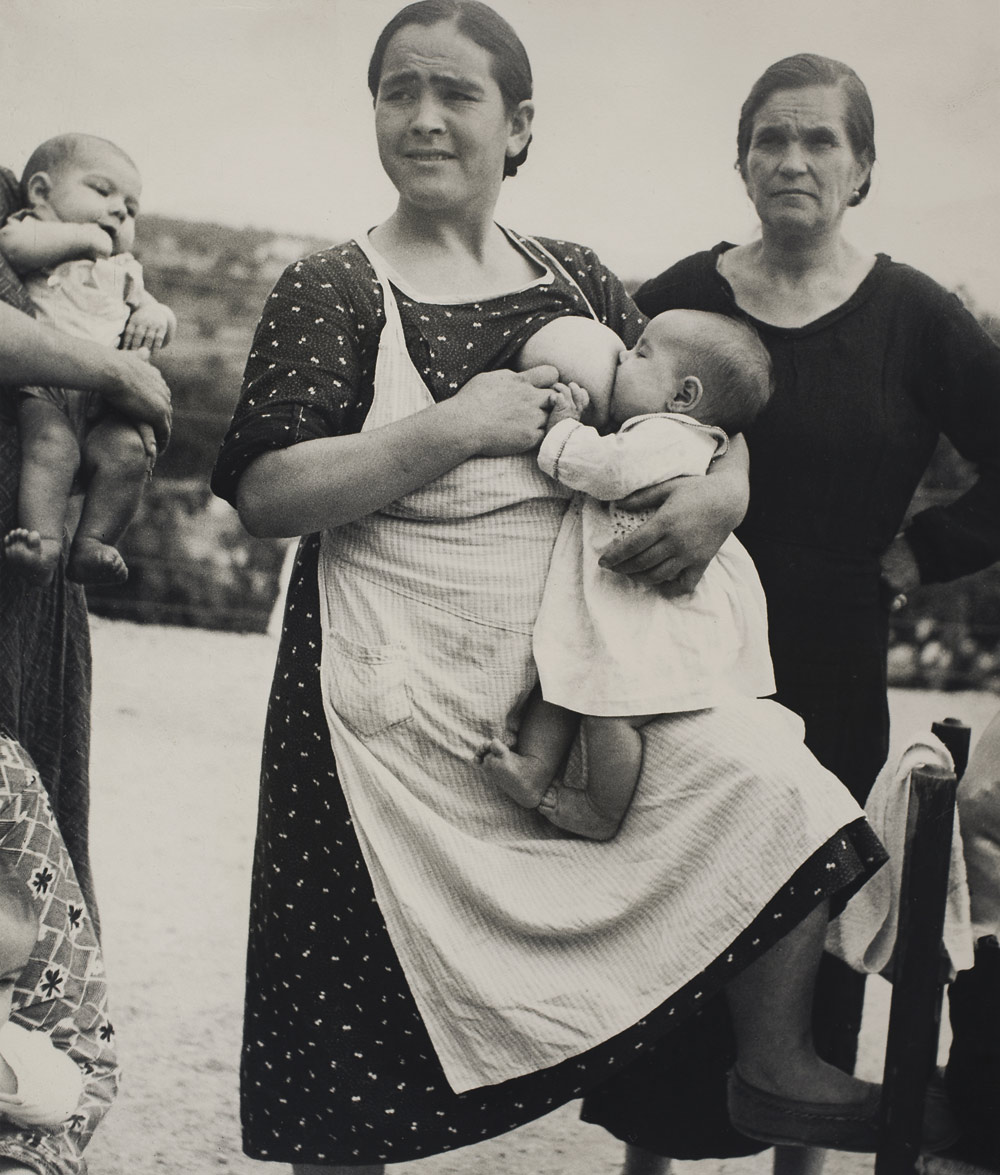
Kati Horna (Mexican born Hungary, 1912-2000) 'Untitled, Vélez Rubio, Almeria province, Andalusia, Spanish Civil War' 1937


Kati Horna (Mexican born Hungary, 1912-2000)
Untitled, Vélez Rubio, Almeria province, Andalusia, Spanish Civil War
1937
Gelatin silver print
25.5 x 20.5cm
Archivo Privado de Fotografía y Gráfica Kati y José Horna
© 2005 Ana María Norah Horna y Fernández


Kati Horna (Mexican born Hungary, 1912-2000) 'Subida a la catedral [Ascending to the Cathedral], Spanish Civil War' Barcelona 1938


Kati Horna (Mexican born Hungary, 1912-2000)
Subida a la catedral [Ascending to the Cathedral], Spanish Civil War
Barcelona, 1938
Gelatin silver print (photomontage)
22.2 x 16.6cm
Archivo Privado de Fotografía y Gráfica Kati y José Horna
© 2005 Ana María Norah Horna y Fernández


Kati Horna (Mexican born Hungary, 1912-2000) 'Los Paraguas, mitin de la CNT' [Umbrellas, Meeting of the CNT], Spanish Civil War Barcelona, 1937


Kati Horna (Mexican born Hungary, 1912-2000)
Los Paraguas, mitin de la CNT [Umbrellas, Meeting of the CNT], Spanish Civil War
Barcelona, 1937
Gelatin silver print
24.2 x 19.2cm
Archivo Privado de Fotografía y Gráfica Kati y José Horna
© 2005 Ana María Norah Horna y Fernández


Mexico


I am in an existential crisis. Today everyone is running, today everyone is driving. My pictures? They were the product of a creative love, linked to my experiences and the way they were taken. I was never in a hurry.

S.nob was a joy… I don’t know why I enjoyed myself so much, but the facility that Salvador [Elizondo] and the team, and Juan [García Ponce] gave me, a great creativity came out of me.


Kati Horna


Kati Horna returned to Paris in 1939. Her husband, the Andalusian artist José Horna, enlisted in the Ebra division that covered the retreat of the Spanish civilians to France. In October, as soon as he reached Prats-de-Mollo, in the French Pyrenees, he was incarcerated in a camp for Spanish refugees. Kati Horna succeeded in getting him freed. They left for Paris where they were again harassed, obliging them to flee France for Mexico. Mexico would become her final homeland.

During her everyday life she came into contact with some of the extraordinary figures of Surrealism (Leonora Carrington, Remedios Varo, Benjamin Péret and Edward James) and the Panic movement (Alejandro Jodorowsky), as well as avant-garde Mexican artists, writers and architects (Mathias Goeritz, Germán Cueto, Pedro Friedeberg, Salvador Elizondo, Alfonso Reyes and Ricardo Legorreta).

Kati Horna established herself as a chronicler of the period, leaving for posterity a unique corpus. In Mexico, she worked as a reporter for periodicals such as Todo (1939), Nosotros (1944-1946), Mujeres (1958-1968), Mexico this Month (1958-1965), S.nob (1962) and Diseño (1968-1970). During the last 20 years of her life, she also taught photography at the Universidad Iberoamericana and the San Carlos Academy (Univesidad Nacional Autónoma de México), where she trained an entire generation of contemporary photographers.

Horna’s quotes come from the catalogue, co-published by the Jeu de Paume and the Museo Amparo


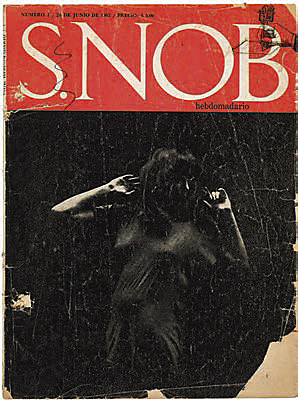
Cover of the magazine S.nob No. 2 (27 June 1962)


Cover of the magazine S.nob No. 2 (27 June 1962)
© 2005 Ana María Norah Horna y Fernández


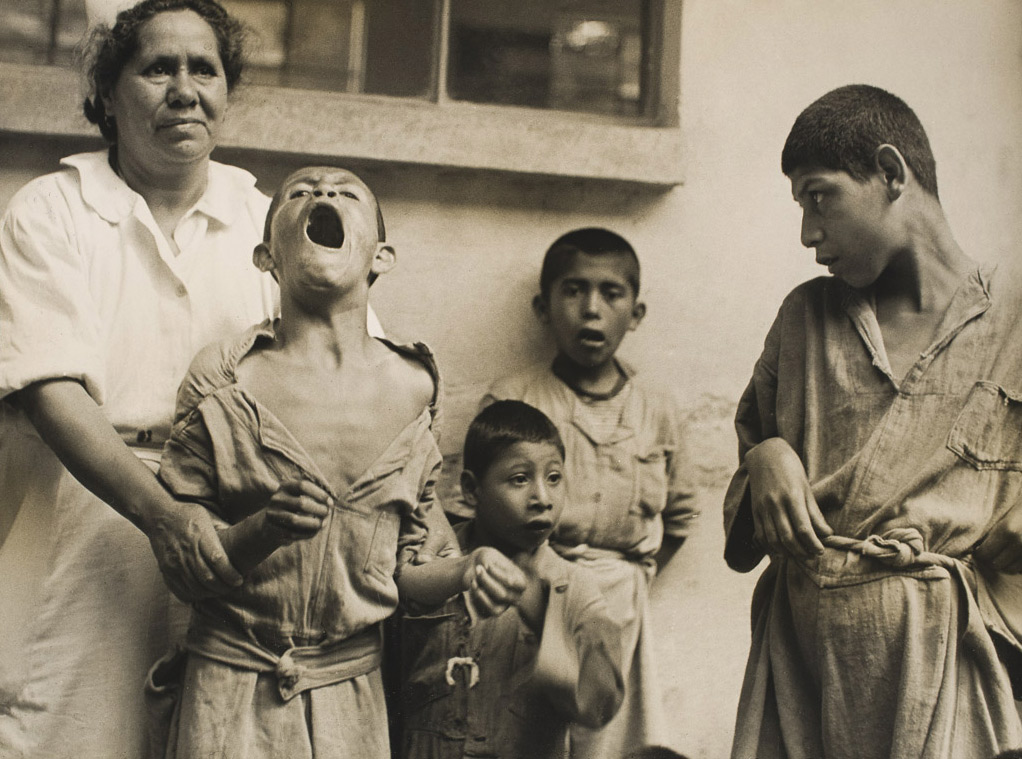
Kati Horna (Mexican born Hungary, 1912-2000) 'Untitled, La Castañeda psychiatric hospital, Mixcoac' Mexico, 1944


Kati Horna (Mexican born Hungary, 1912-2000)
Untitled, La Castañeda psychiatric hospital, Mixcoac
Mexico, 1944
Archivo Privado de Fotografía y Gráfica Kati y José Horna
© 2005 Ana María Norah Horna y Fernández


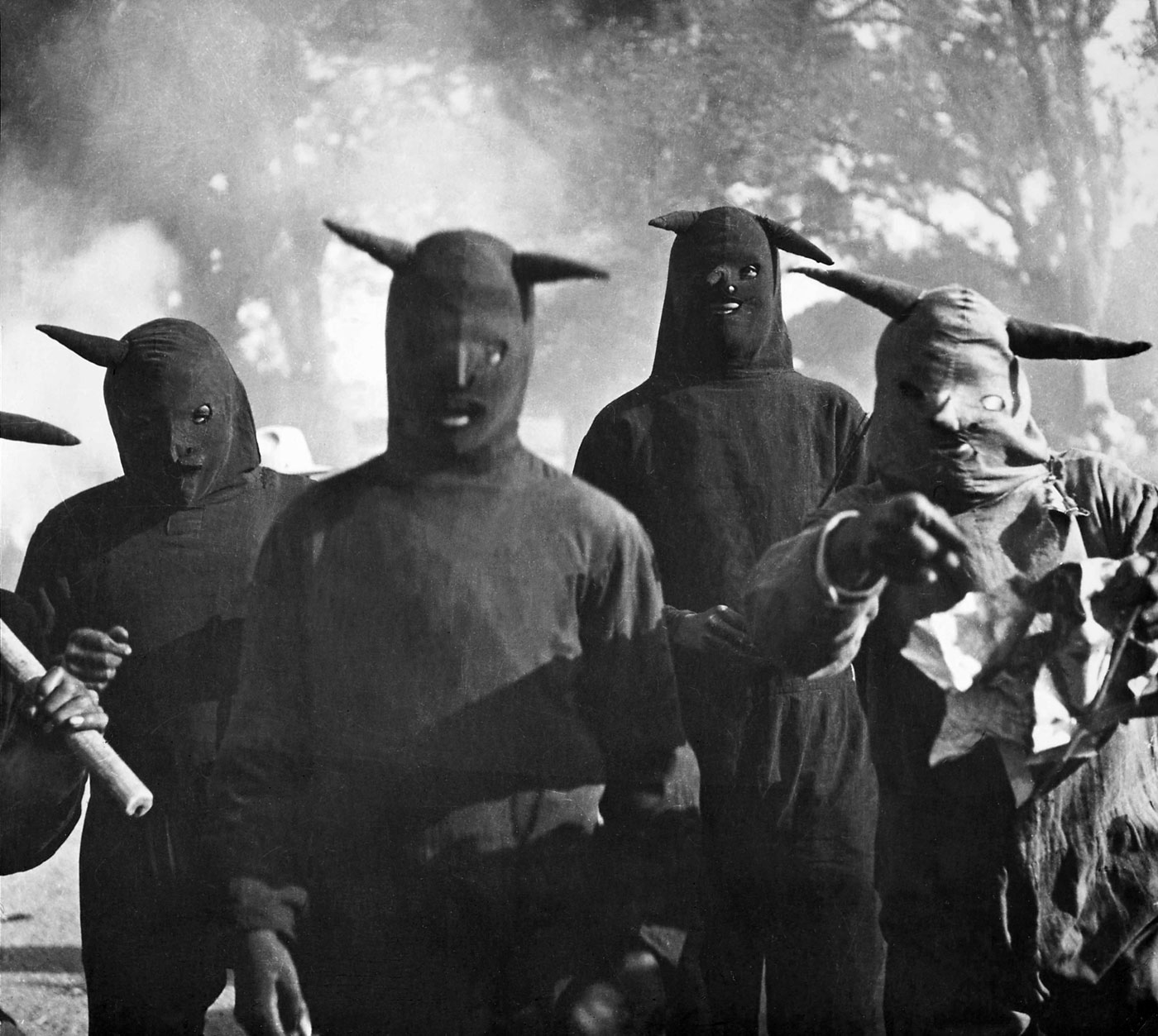
Kati Horna (Mexican born Hungary, 1912-2000) 'Untitled, Carnaval de Huejotzingo, Puebla' 1941


Kati Horna (Mexican born Hungary, 1912-2000)
Untitled, Carnaval de Huejotzingo, Puebla
1941
Gelatin silver print
19.5 x 21.5cm
Archivo Privado de Fotografía y Gráfica Kati y José Horna
© 2005 Ana María Norah Horna y Fernández


Kati Horna (Mexican born Hungary, 1912-2000) 'Untitled, Oda a la necrofília series [Ode to Necrophilia]' Mexico 1962


Kati Horna (Mexican born Hungary, 1912-2000)
Untitled
Mexico, 1962
From the Oda a la necrofília series [Ode to Necrophilia]
Gelatin silver print
25.4 x 20.8cm
Museo Amparo Collection
© 2005 Ana María Norah Horna y Fernández


Kati Horna (Mexican born Hungary, 1912-2000) 'El botellón' [The Bottle] Mexico, 1962


Kati Horna (Mexican born Hungary, 1912-2000)
El botellón [The Bottle]
Mexico, 1962
From the Paraísos artificiales series [Artificial Paradises]
Gelatin silver print
24.4 x 18.9cm
Collection Museo Amparo
© 2005 Ana María Norah Horna y Fernández


Kati Horna (Mexican born Hungary, 1912-2000) 'Remedios Varo' Mexico, 1957


Kati Horna (Mexican born Hungary, 1912-2000)
Remedios Varo
Mexico, 1957
Gelatin silver print
25.3 x 20.3cm
Private collection
© 2005 Ana María Norah Horna y Fernández


Kati Horna (Mexican born Hungary, 1912-2000) 'Antonio Souza y su esposa Piti Saldivar' [Antonio Souza and his Wife Piti Saldivar] Mexico, 1959


Kati Horna (Mexican born Hungary, 1912-2000)
Antonio Souza y su esposa Piti Saldivar [Antonio Souza and his Wife Piti Saldivar]
Mexico, 1959
Gelatin silver print
25 x 20.3cm
Archivo Privado de Fotografía y Gráfica Kati y José Horna
© 2005 Ana María Norah Horna y Fernández


Kati Horna (Mexican born Hungary, 1912-2000) 'José Horna elaborando la maqueta de la casa de Edward James' [José Horna Working on the Maquette for Edward James's House] Mexico, 1960


Kati Horna (Mexican born Hungary, 1912-2000)
José Horna elaborando la maqueta de la casa de Edward James [José Horna Working on the Maquette for Edward James’s House]
Mexico, 1960
Gelatin silver print
25.3 x 20.3cm
Archivo Privado de Fotografía y Gráfica Kati y José Horna
© 2005 Ana María Norah Horna y Fernández


Kati Horna (Mexican born Hungary, 1912-2000) 'Mujer y máscara' [Woman with Mask] Mexico, 1963


Kati Horna (Mexican born Hungary, 1912-2000)
Mujer y máscara [Woman with Mask]
Mexico, 1963
Gelatin silver print
25 x 19.7 cm
Archivo Privado de Fotografía y Gráfica Kati y José Horna
© 2005 Ana María Norah Horna y Fernández


Jeu de Paume
1, Place de la Concorde
75008 Paris
métro Concorde
Phone: 01 47 03 12 50

Opening hours:
Tuesday – Sunday: 11.00am – 7.00pm
Closed Monday

Jeu de Paume website

LIKE ART BLART ON FACEBOOK

Back to top

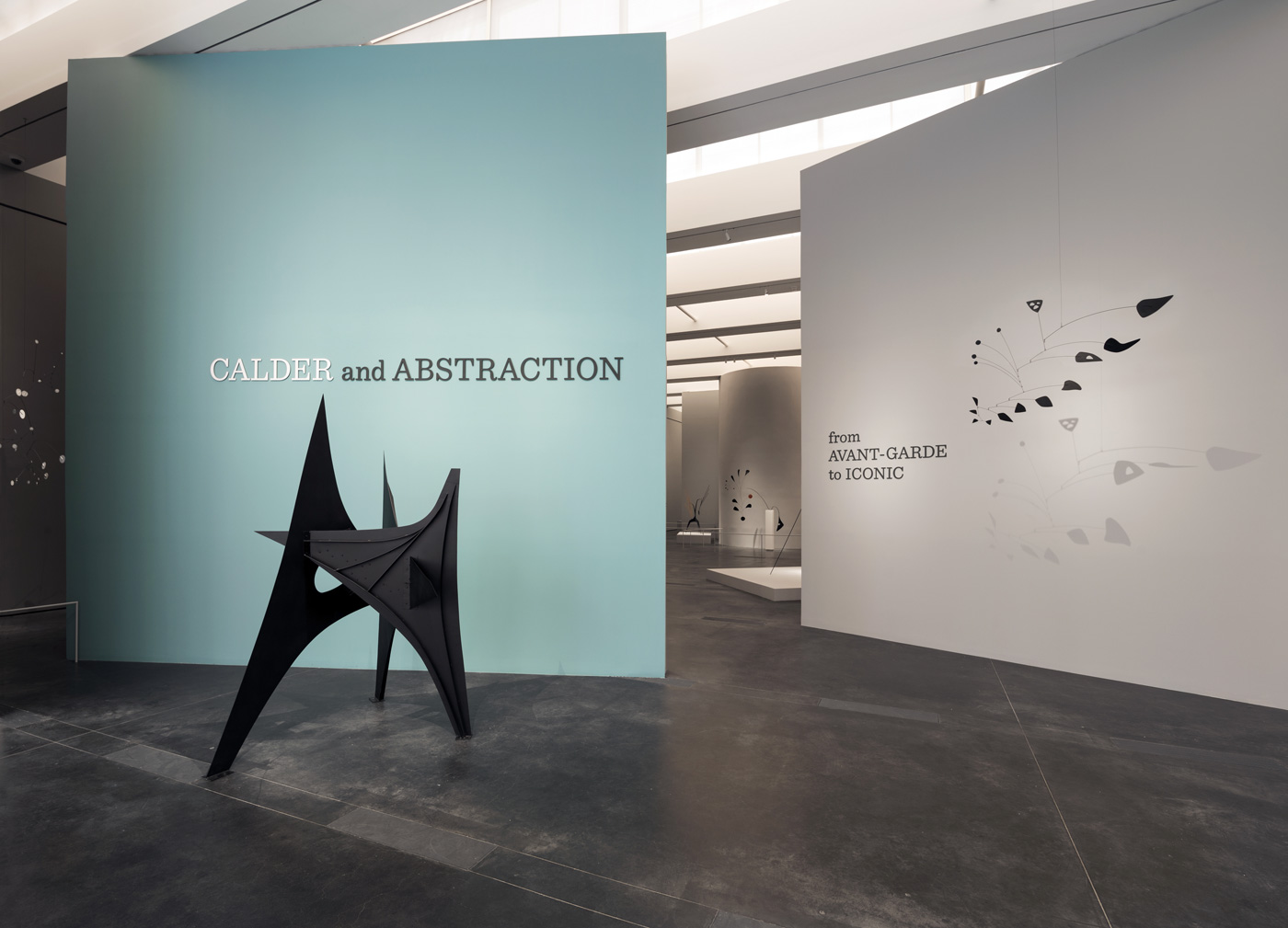
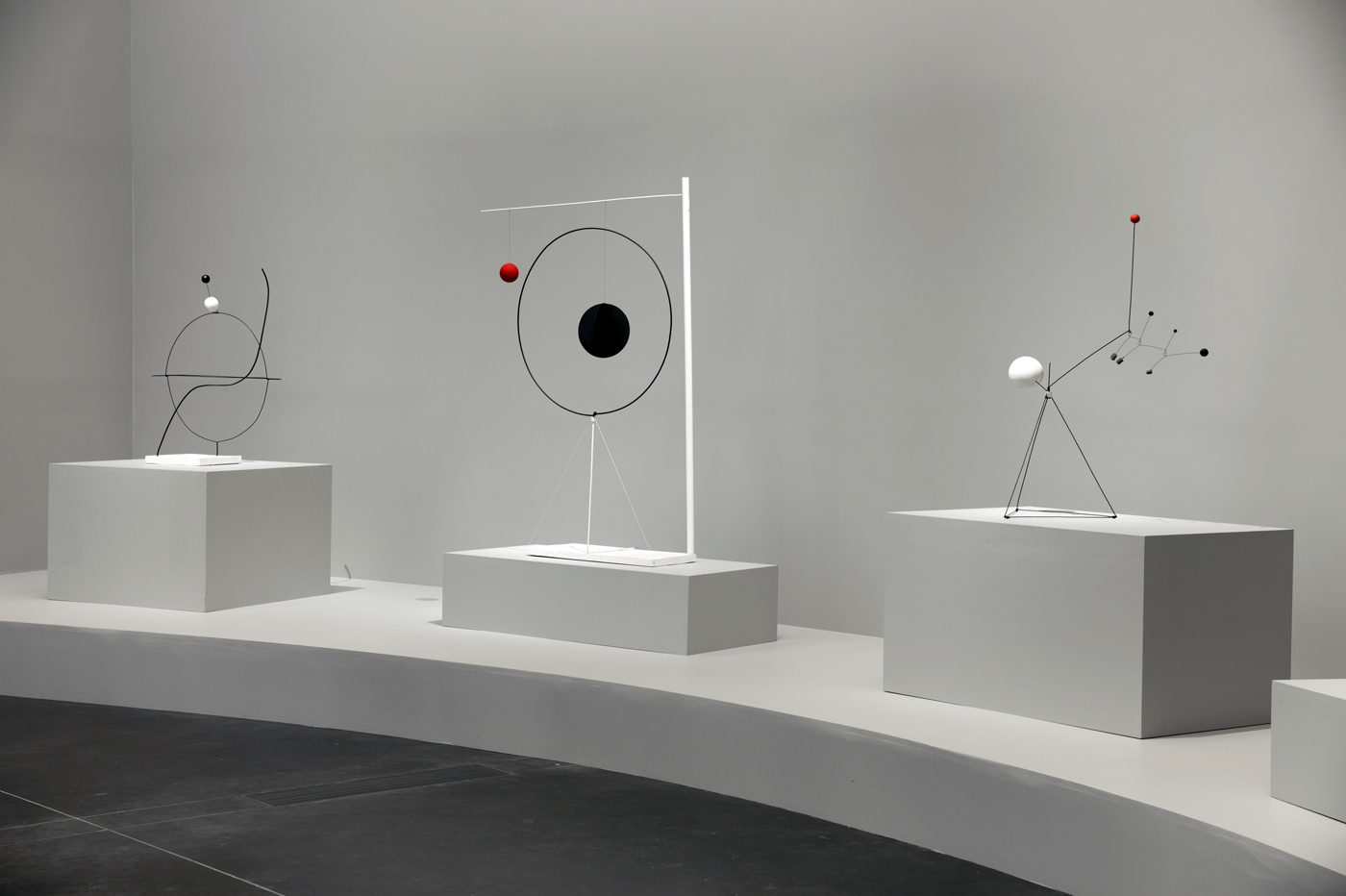
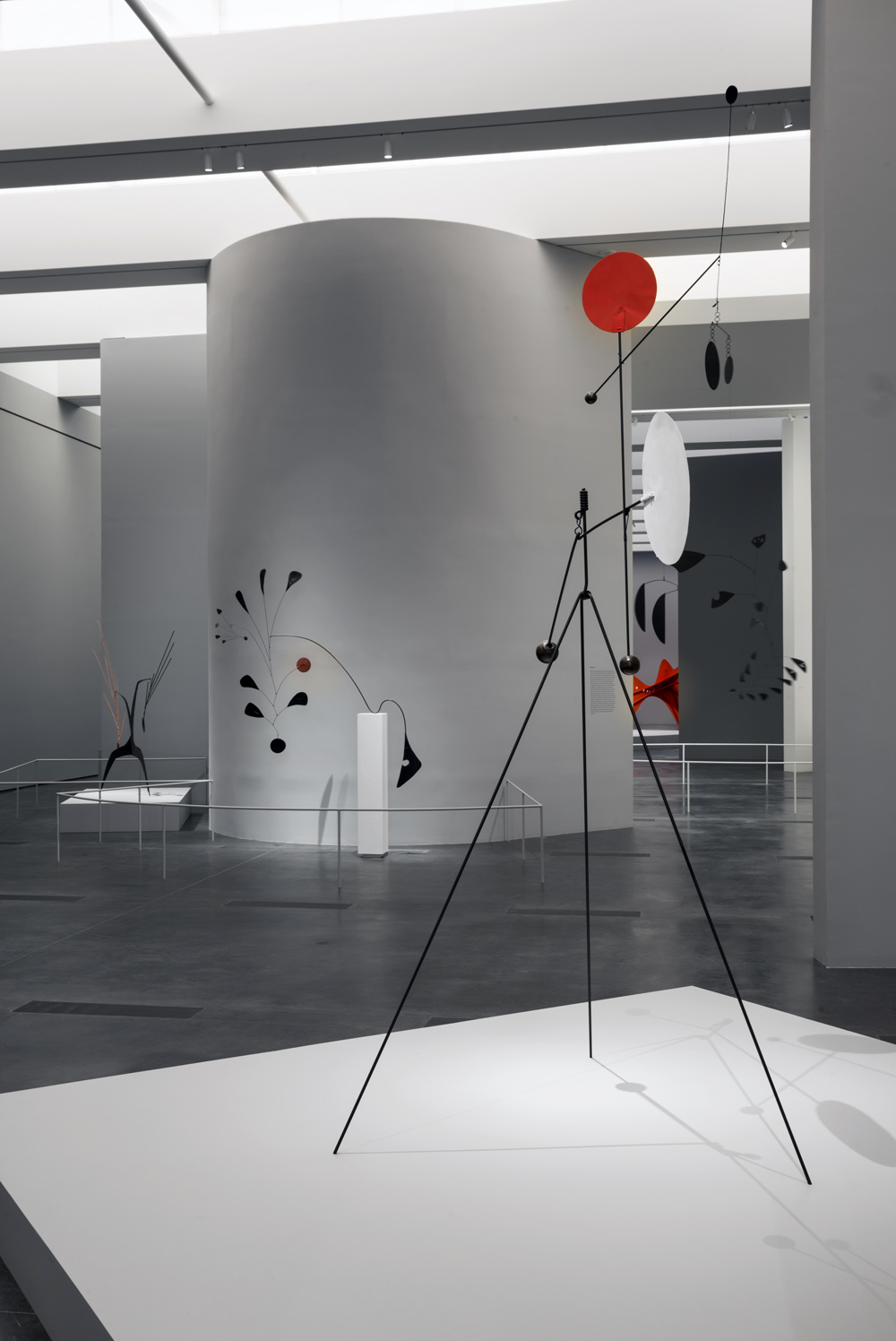
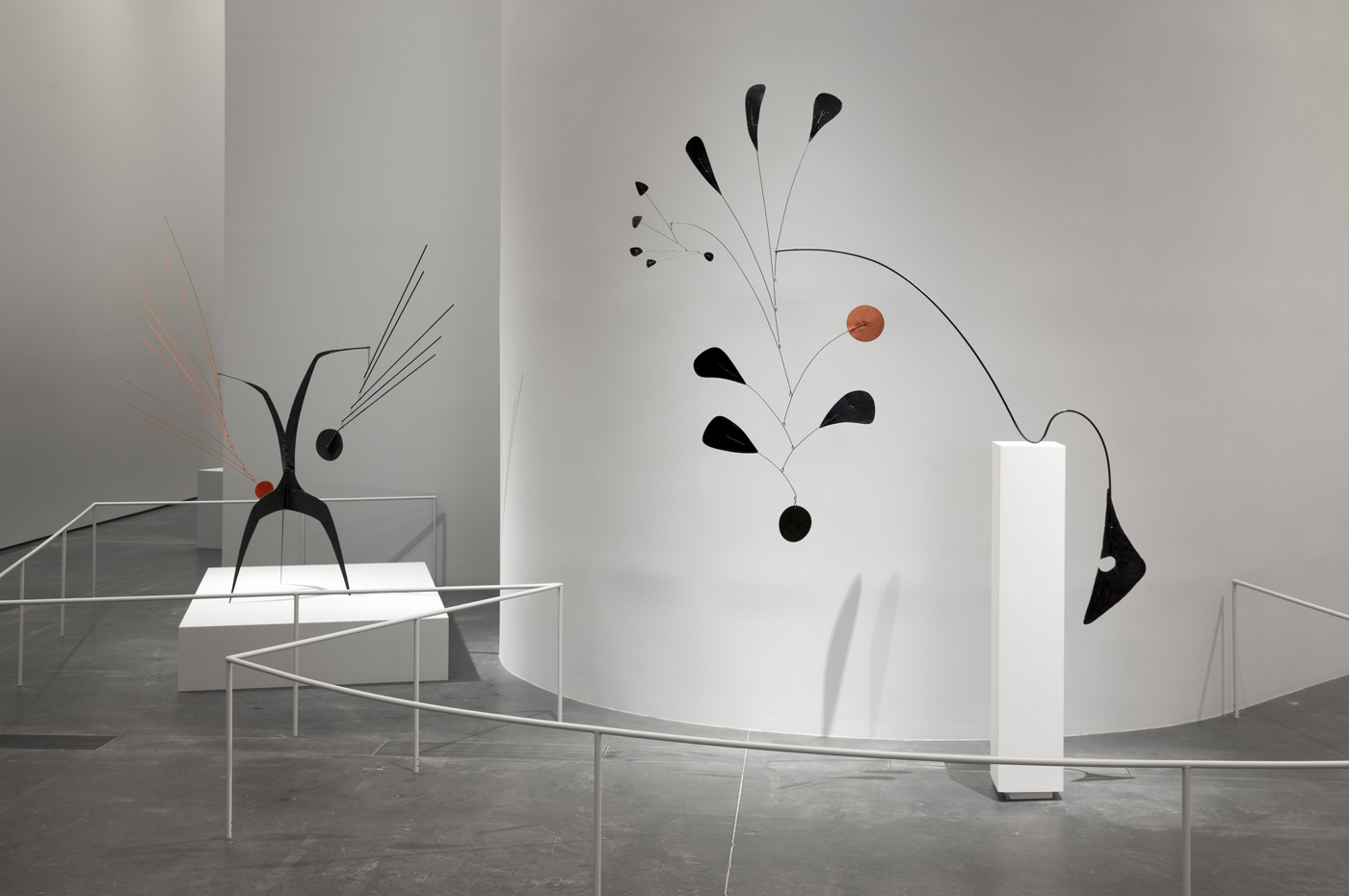
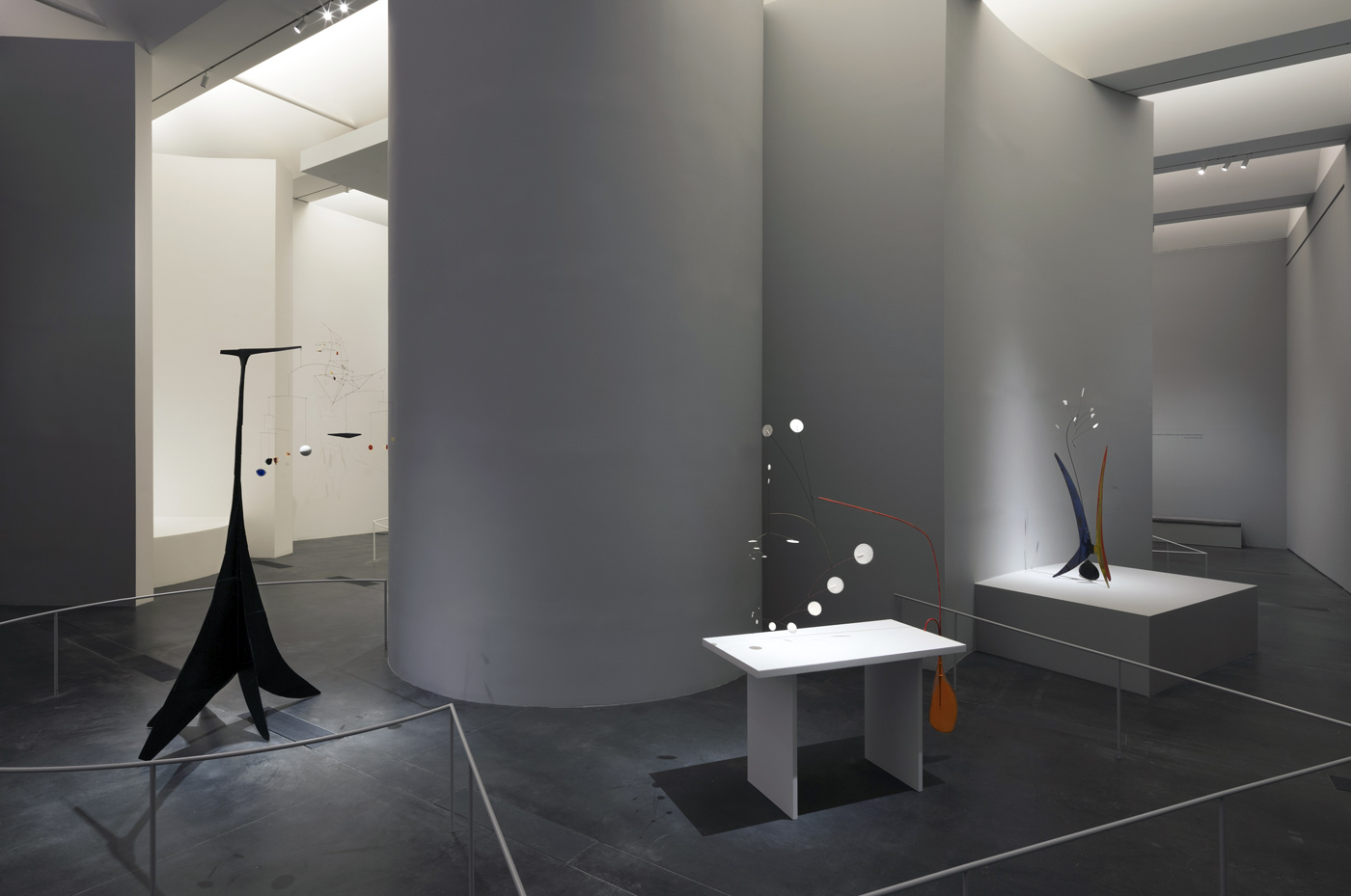
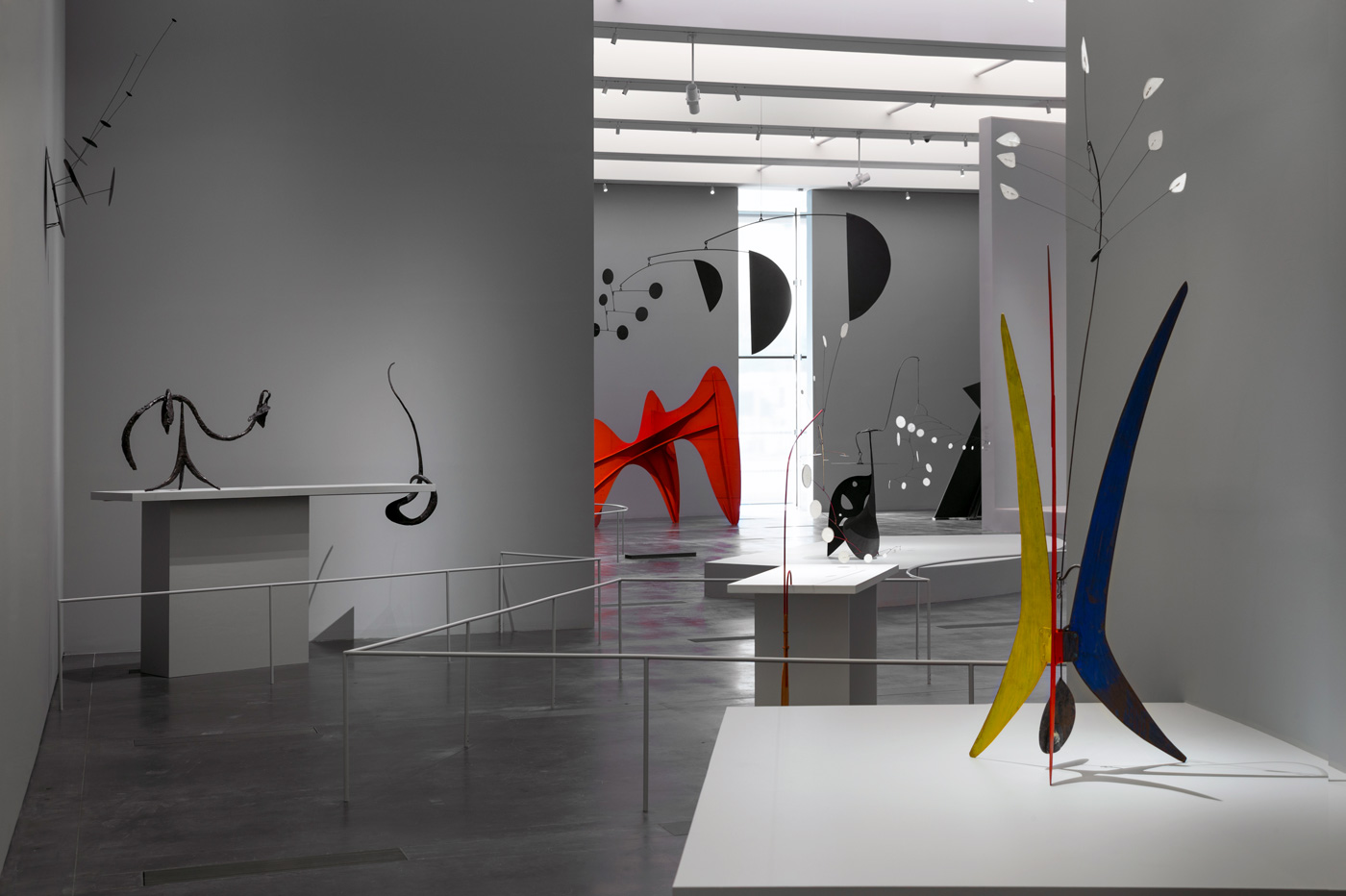
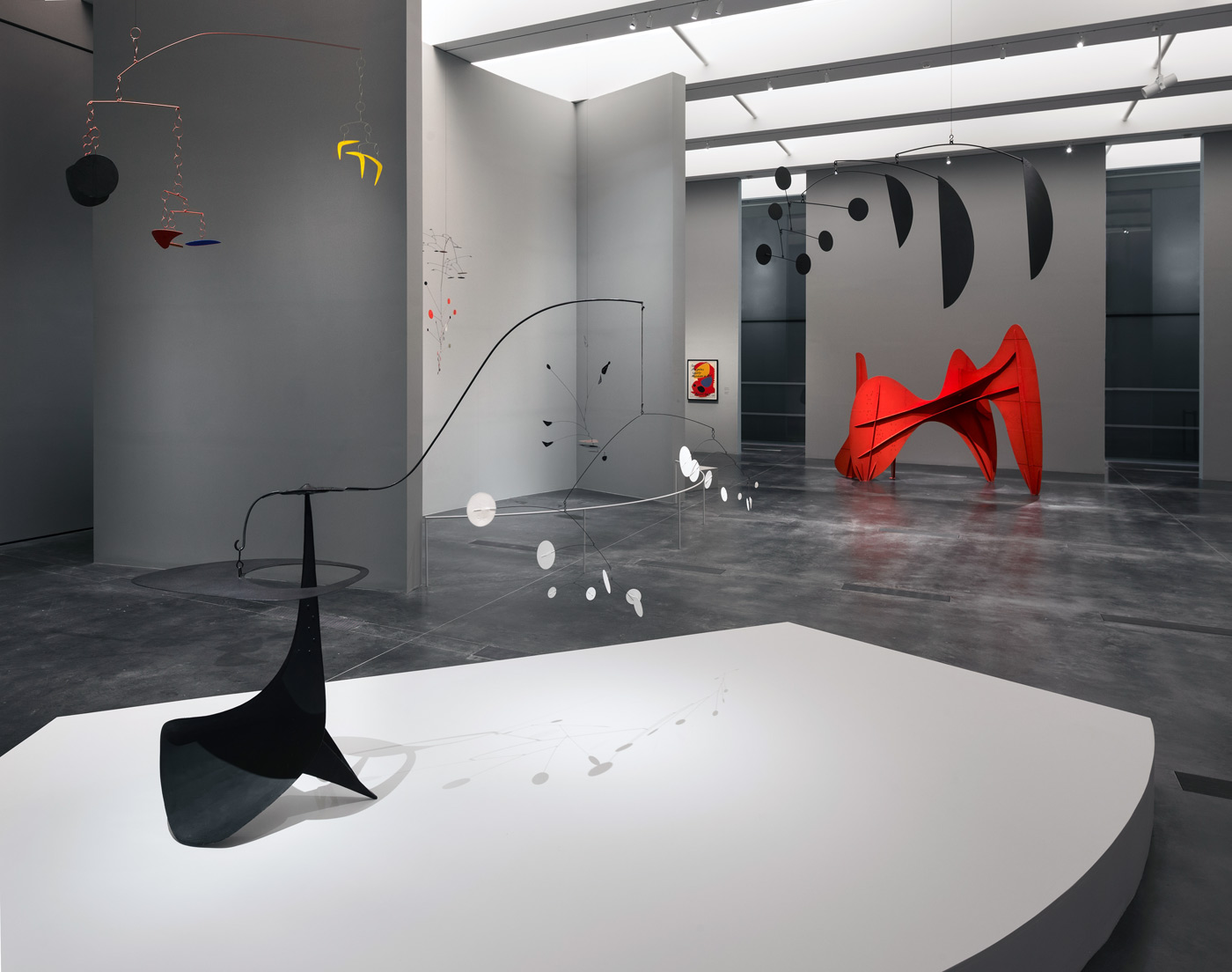
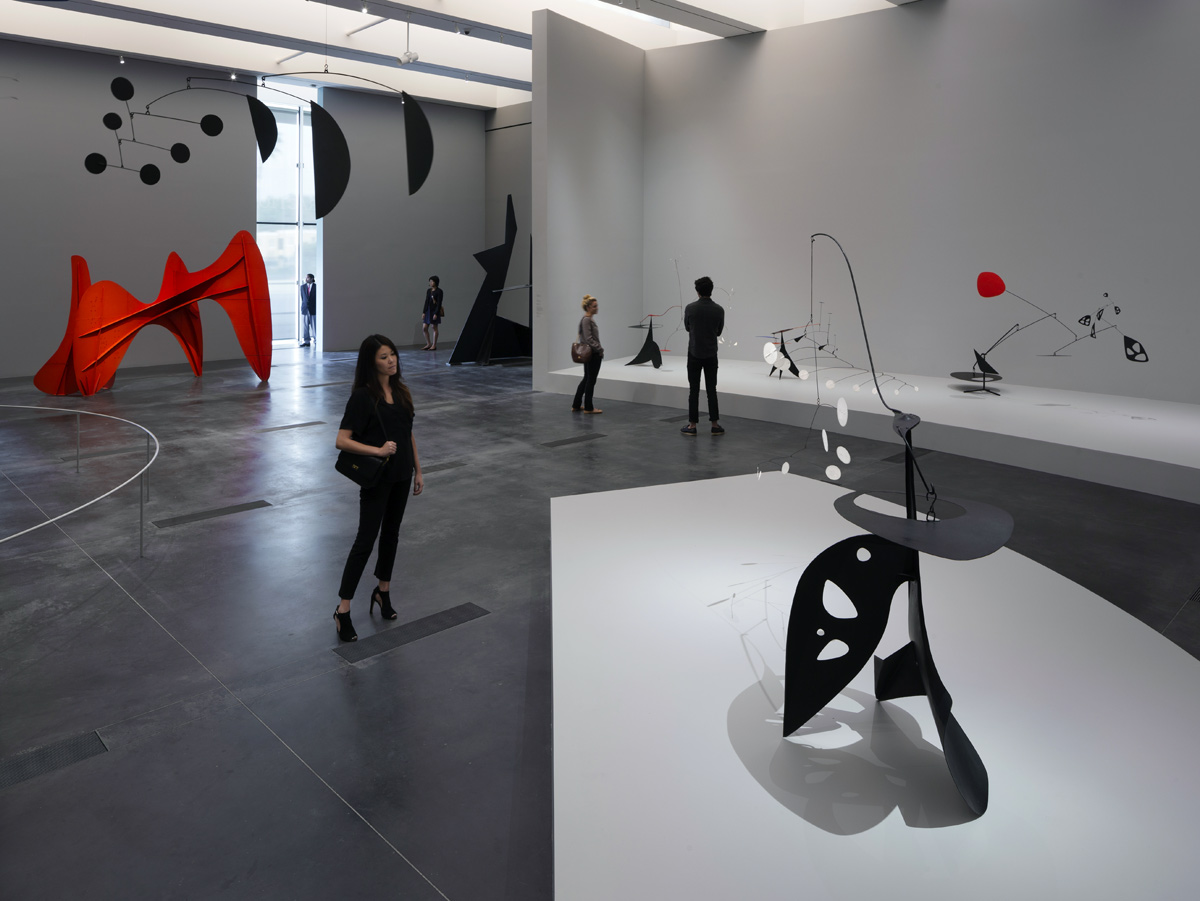
Exhibition: ‘Calder and Abstraction: From Avant-Garde to Iconic’ at the Los Angeles County Museum of Art (LACMA), Los Angeles

Exhibition dates: 24th November 2013 – 27th July 2014


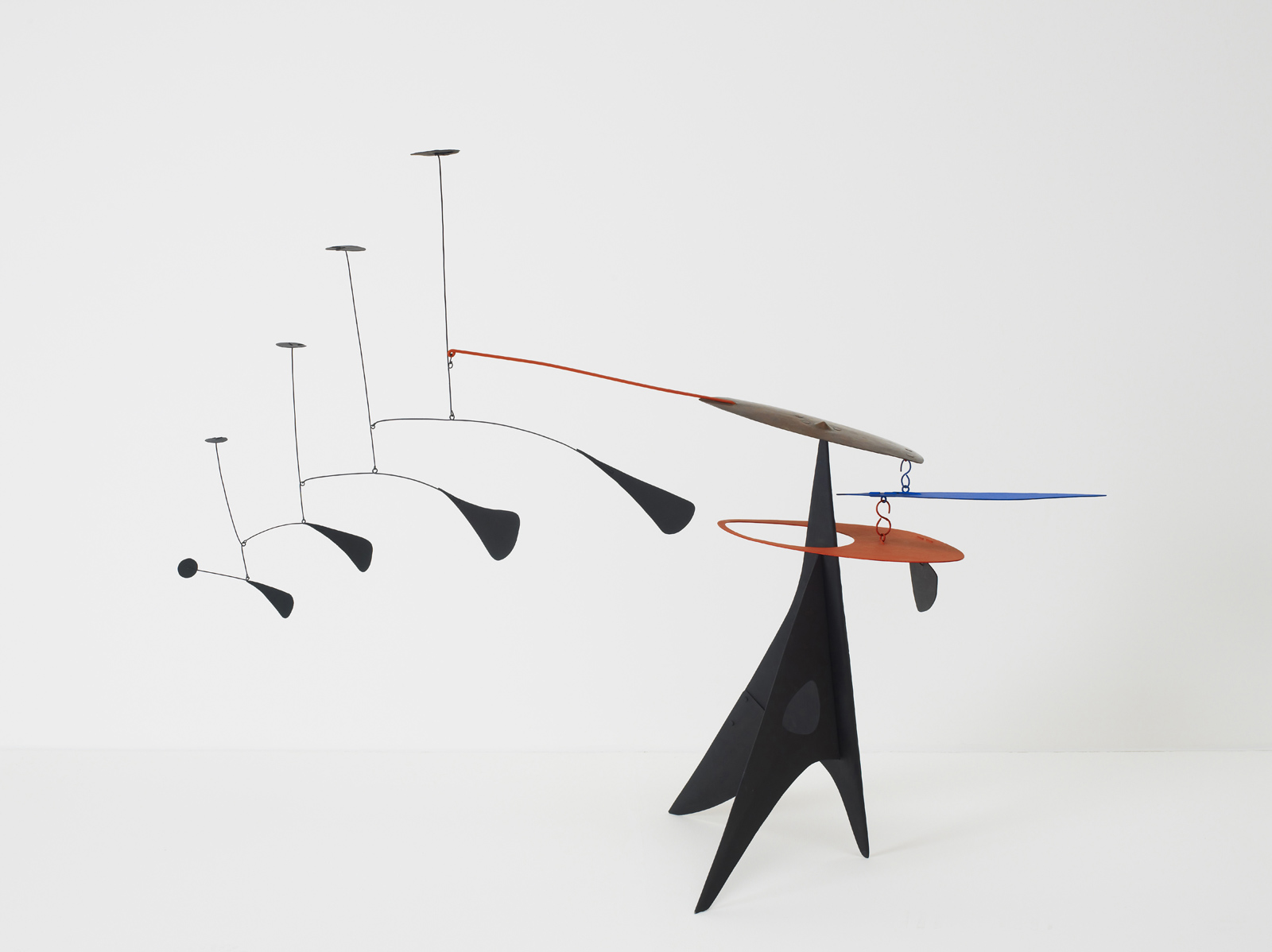
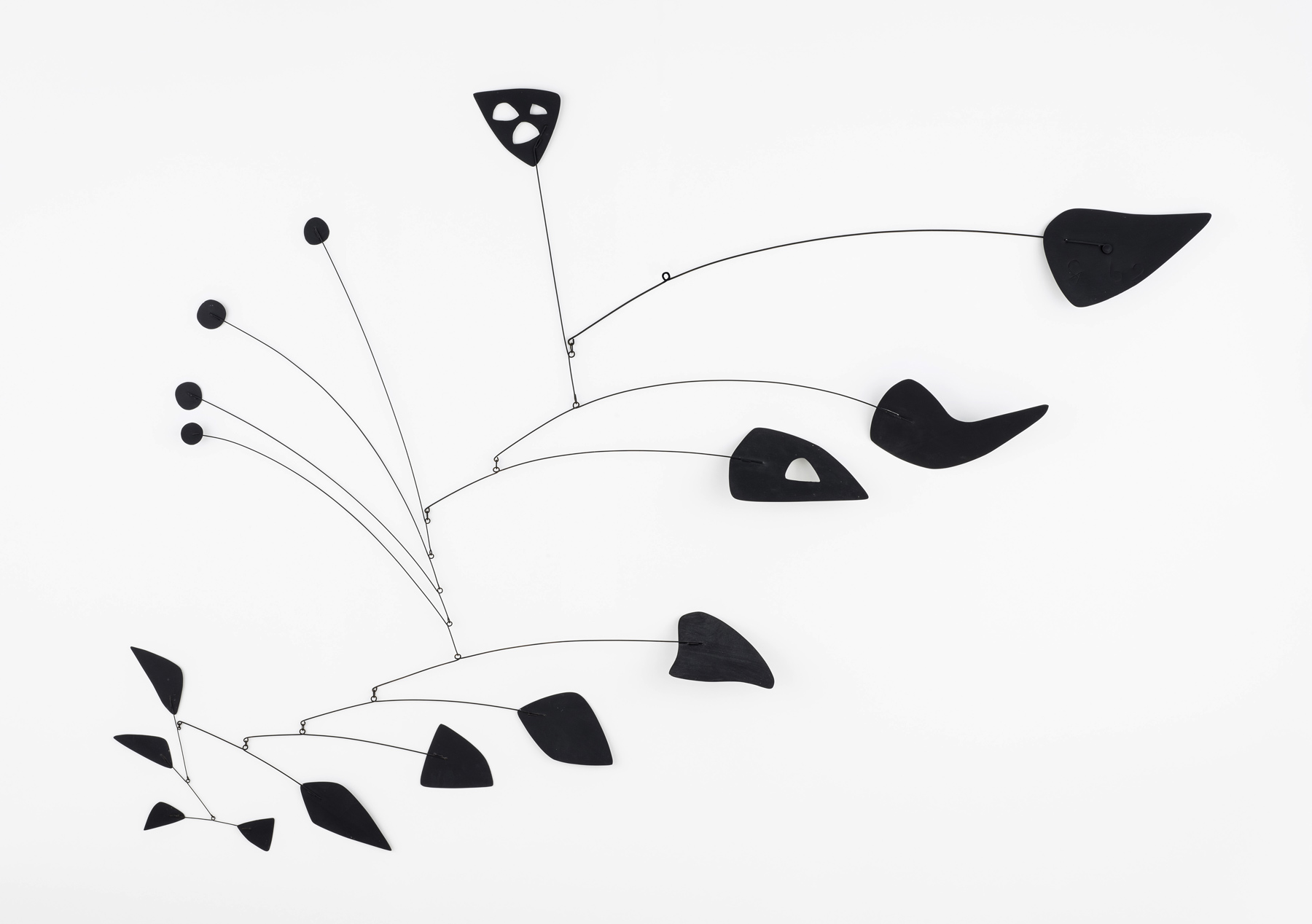
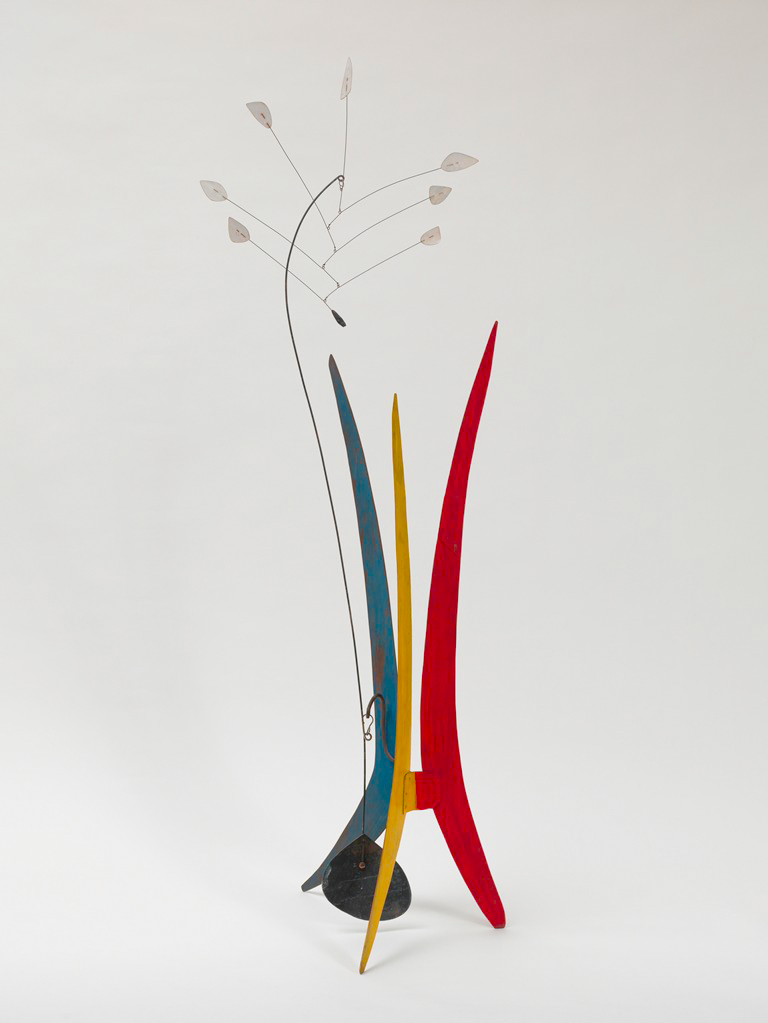
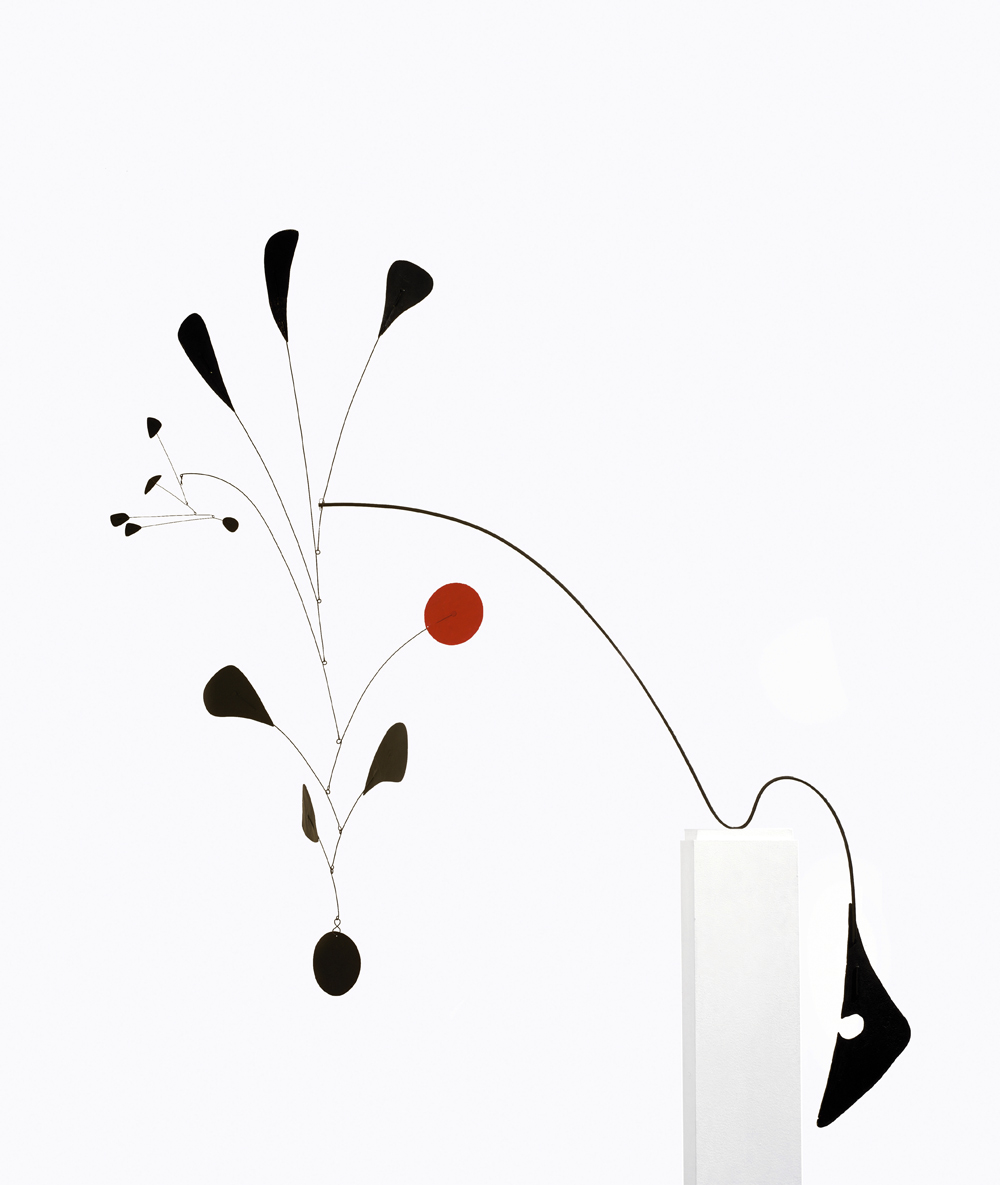
Alexander Calder (American, 1898-1976) 'Blue Feather' c. 1948


Alexander Calder (American, 1898-1976)
Blue Feather
c. 1948
Sheet metal, wire and paint
42 x 55 x 18 inches
Calder Foundation, New York
© Calder Foundation, New York/Artists Rights Society (ARS)
Photo: Calder Foundation, New York/Art Resource NY


Any of them – or just one of them. I don’t care!

Just to have one in your home would be like wishing upon a star… to contemplate, to observe, to understand these inherently tactile sculptures. What a joy.

Marcus


Many thankx to the Los Angeles County Museum of Art (LACMA) for allowing me to publish the art work in the posting. Please click on the photographs for a larger version of the image. Download Calder and Abstraction: From Avant-Garde to Iconic Didactics (30kb pdf)


This slideshow requires JavaScript.


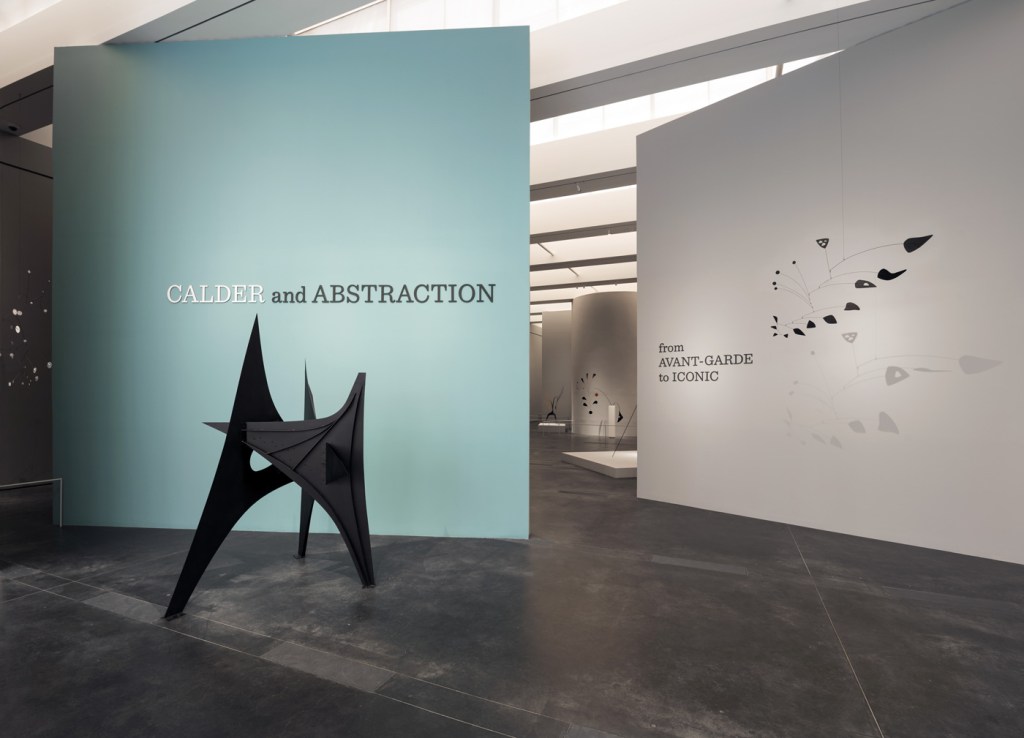
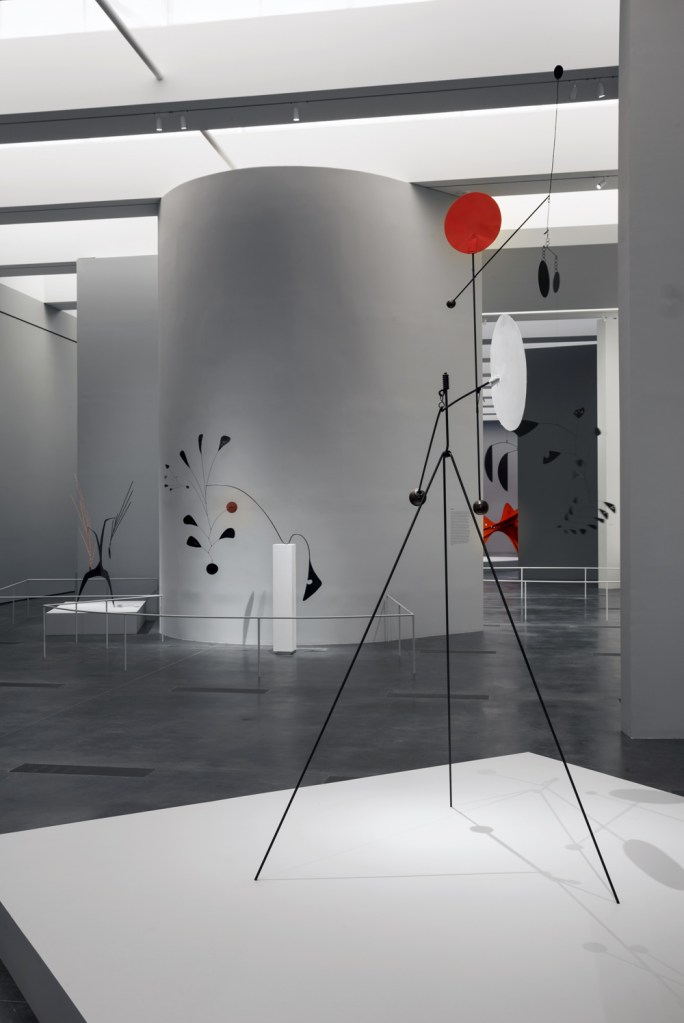
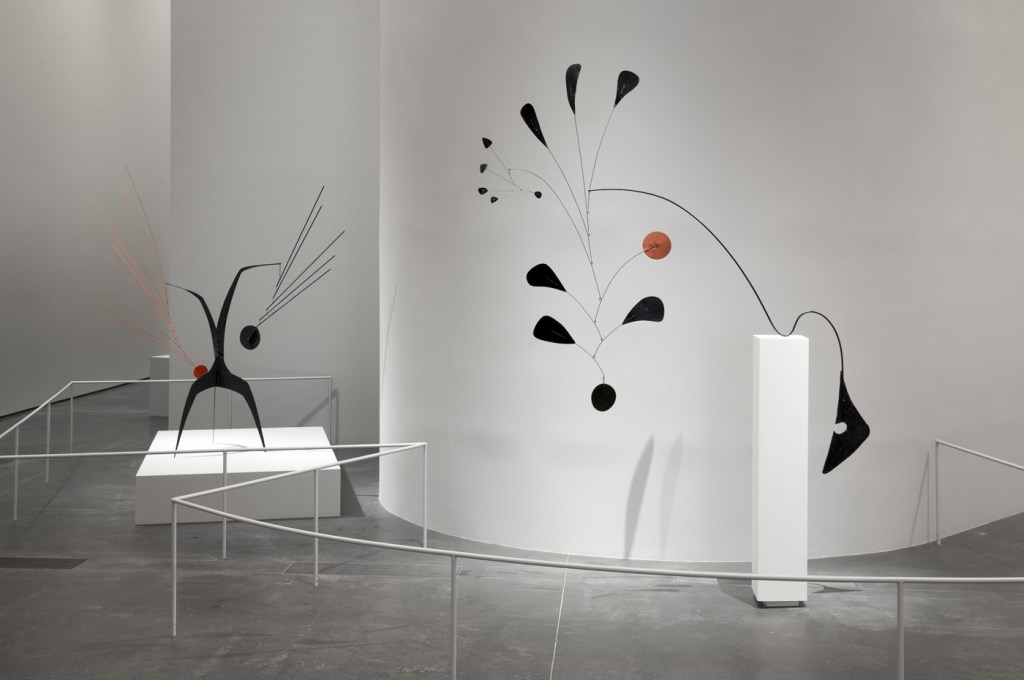
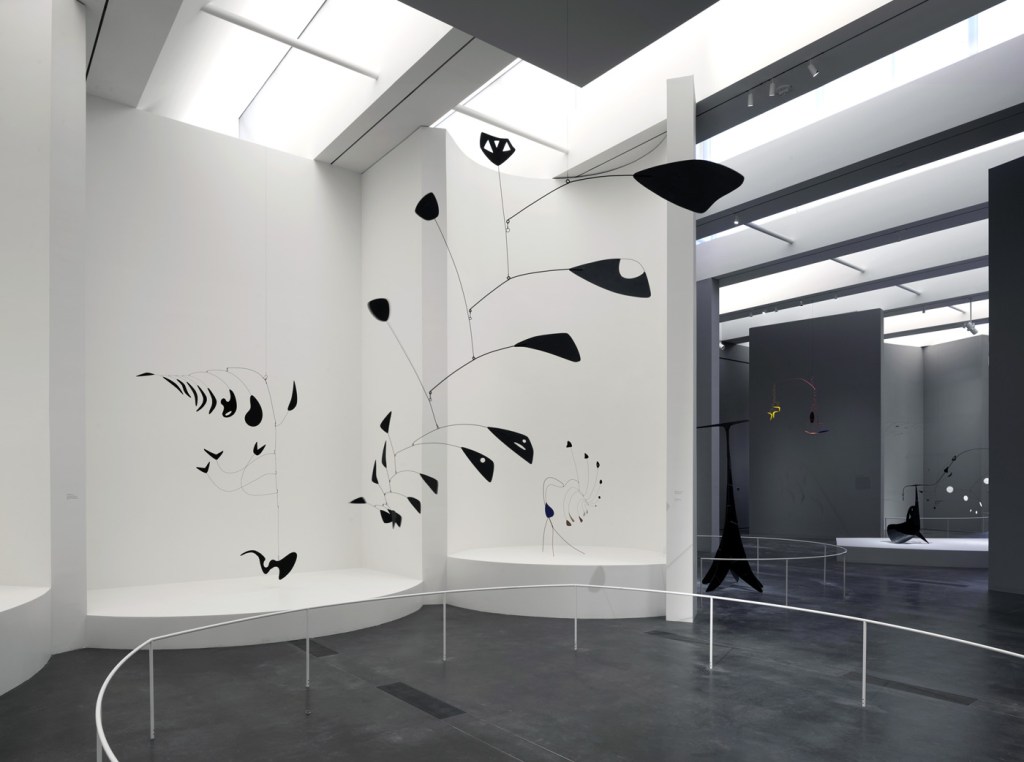
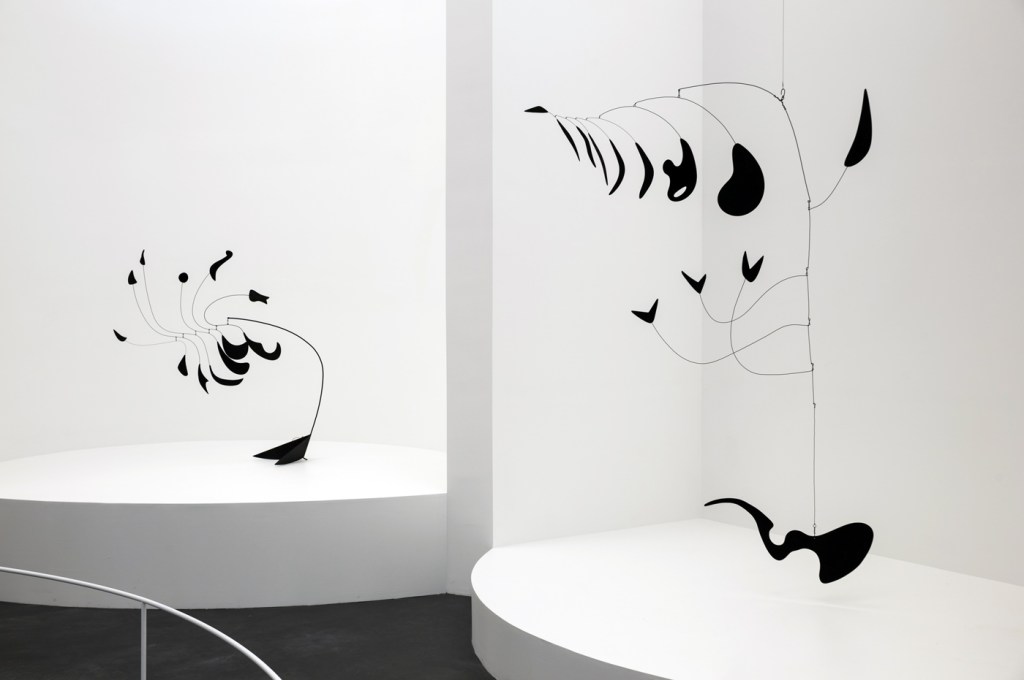
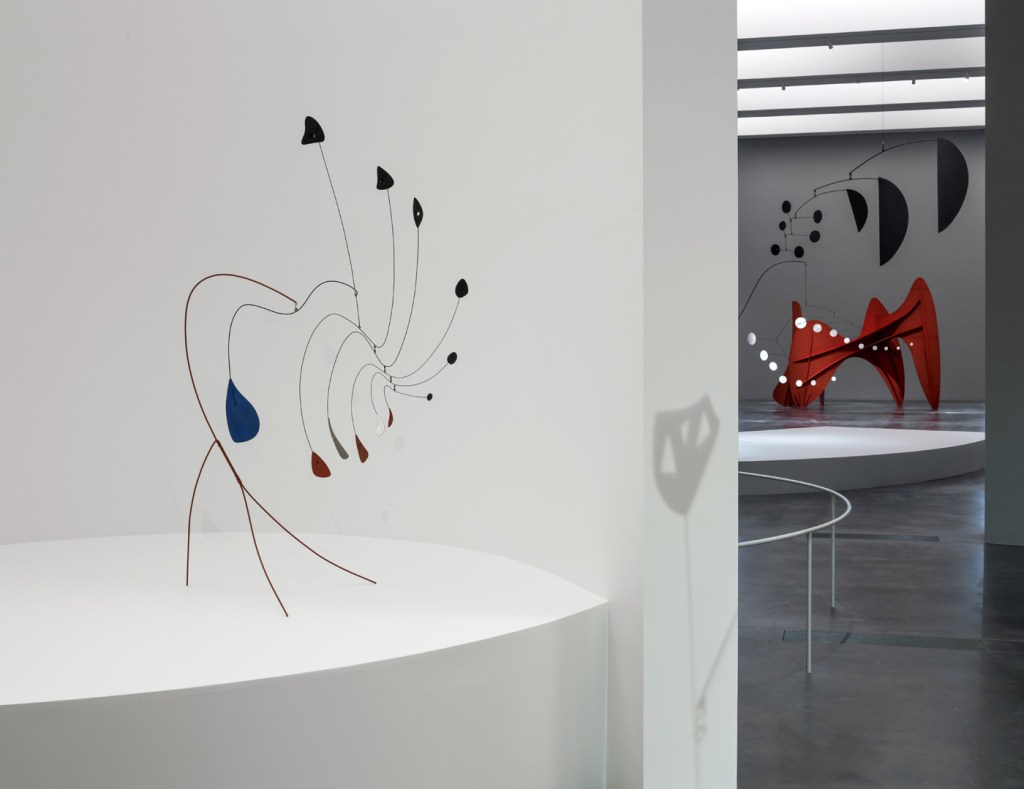
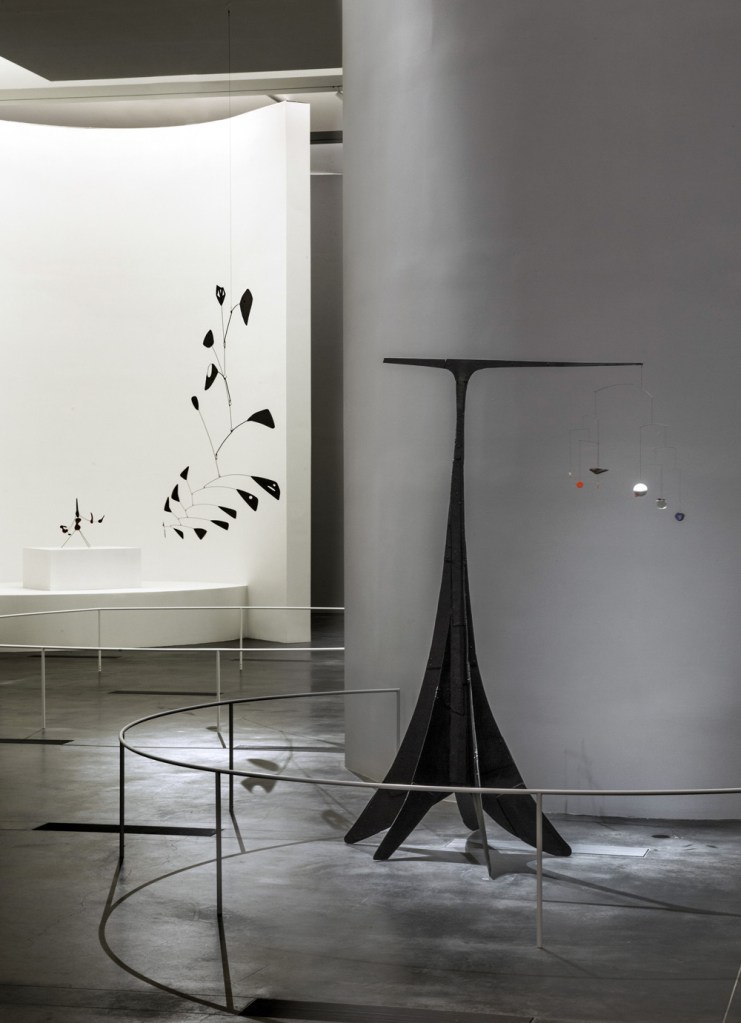
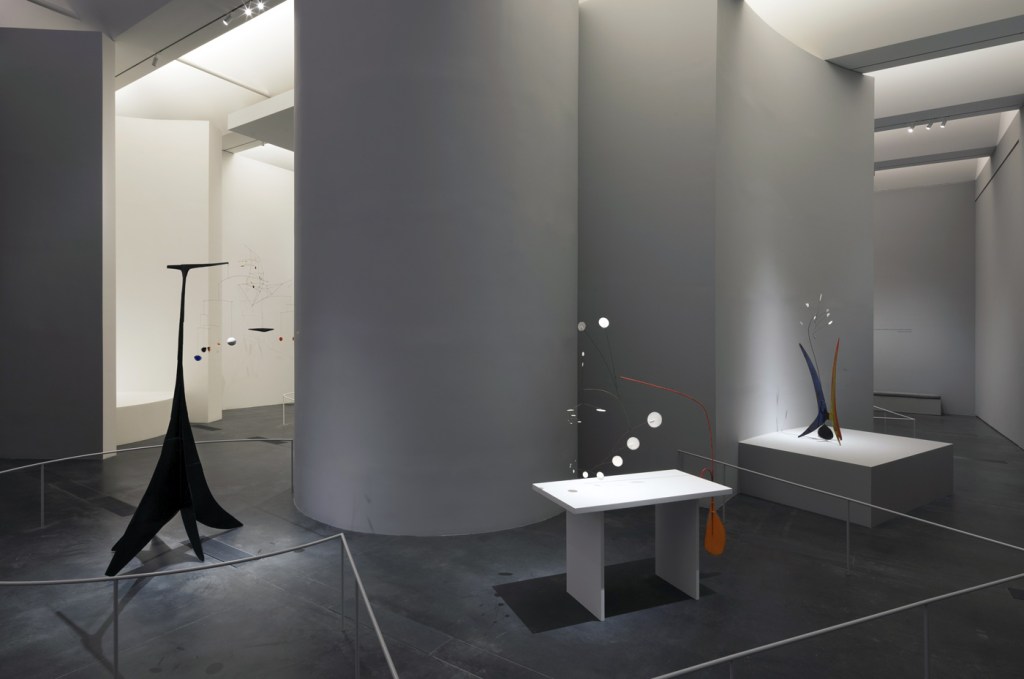
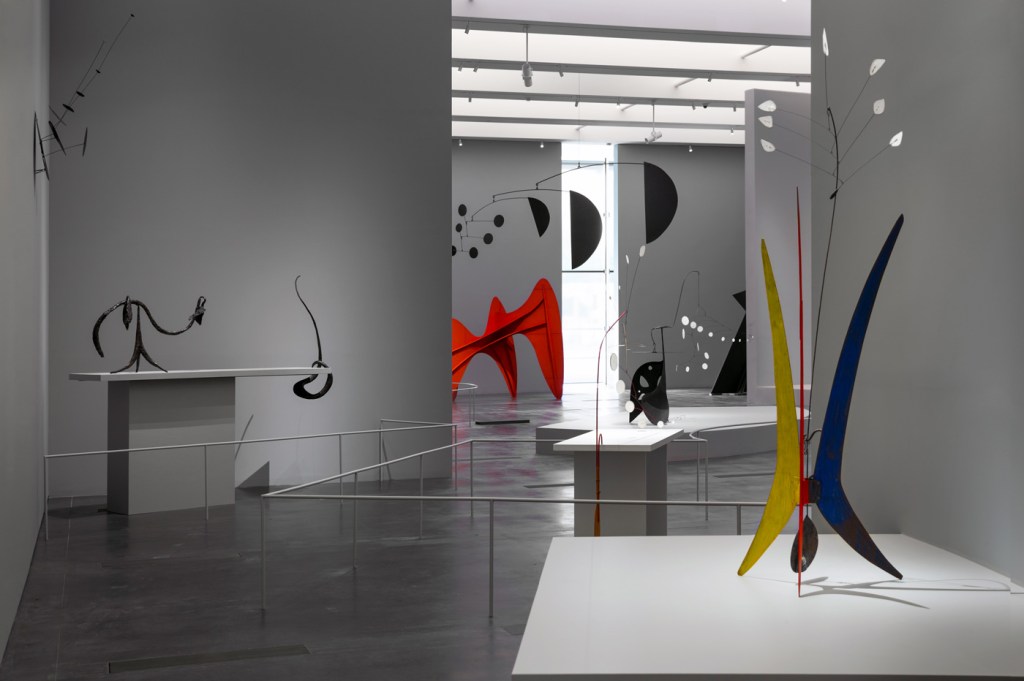
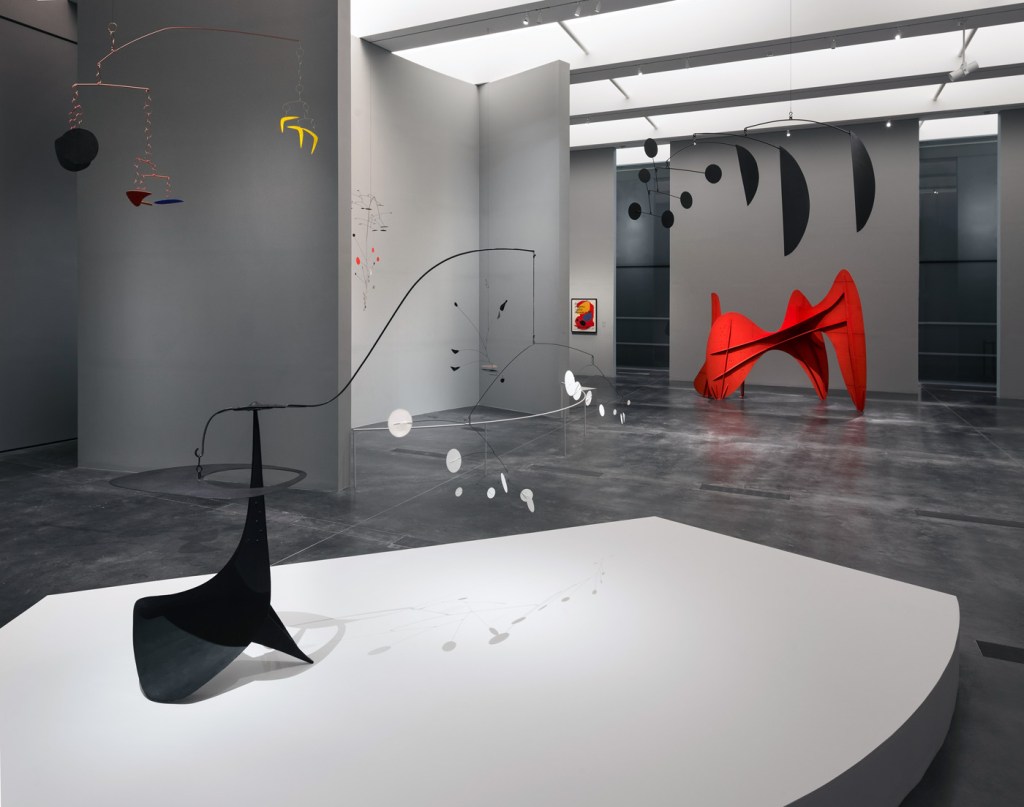
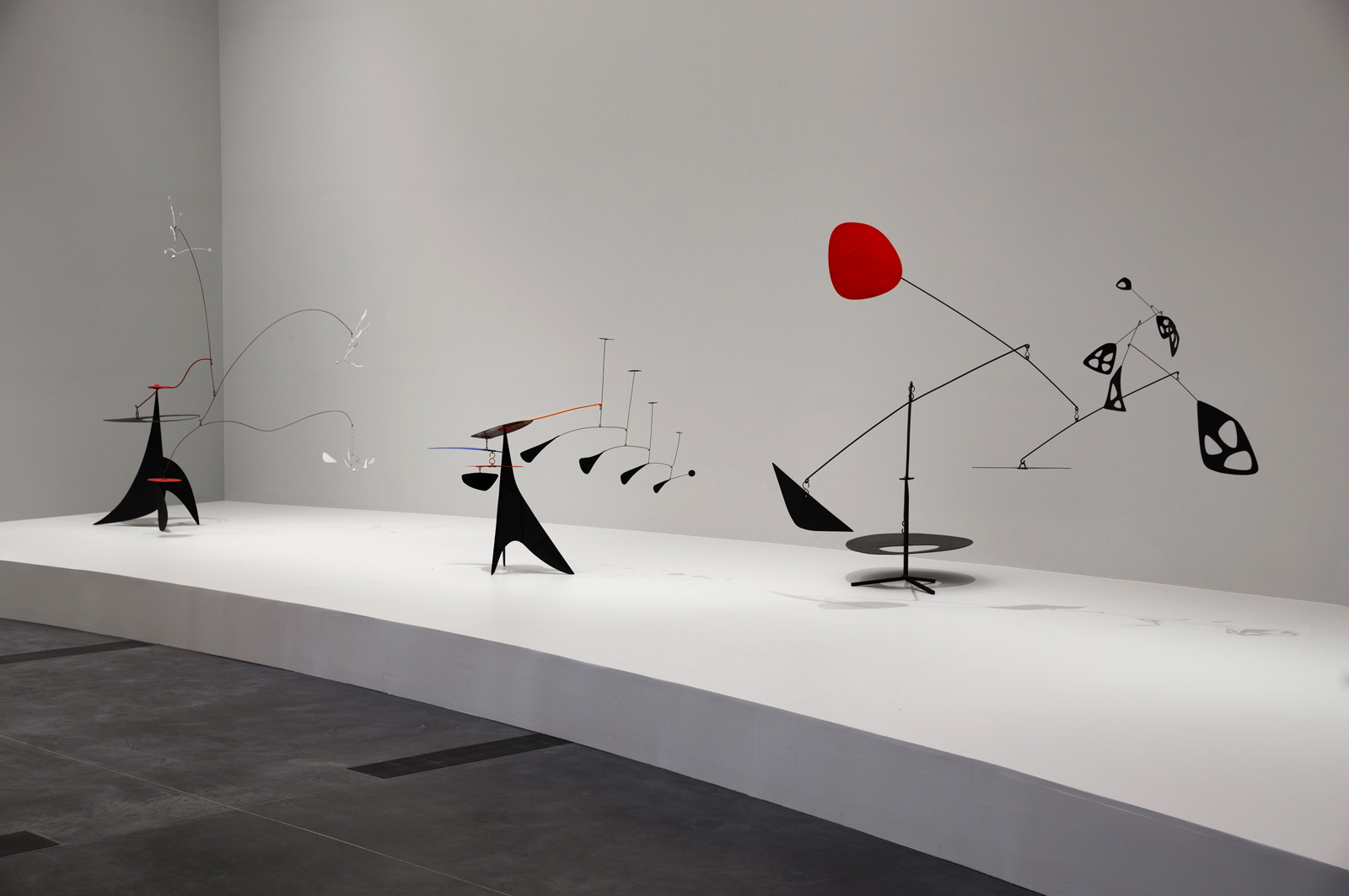
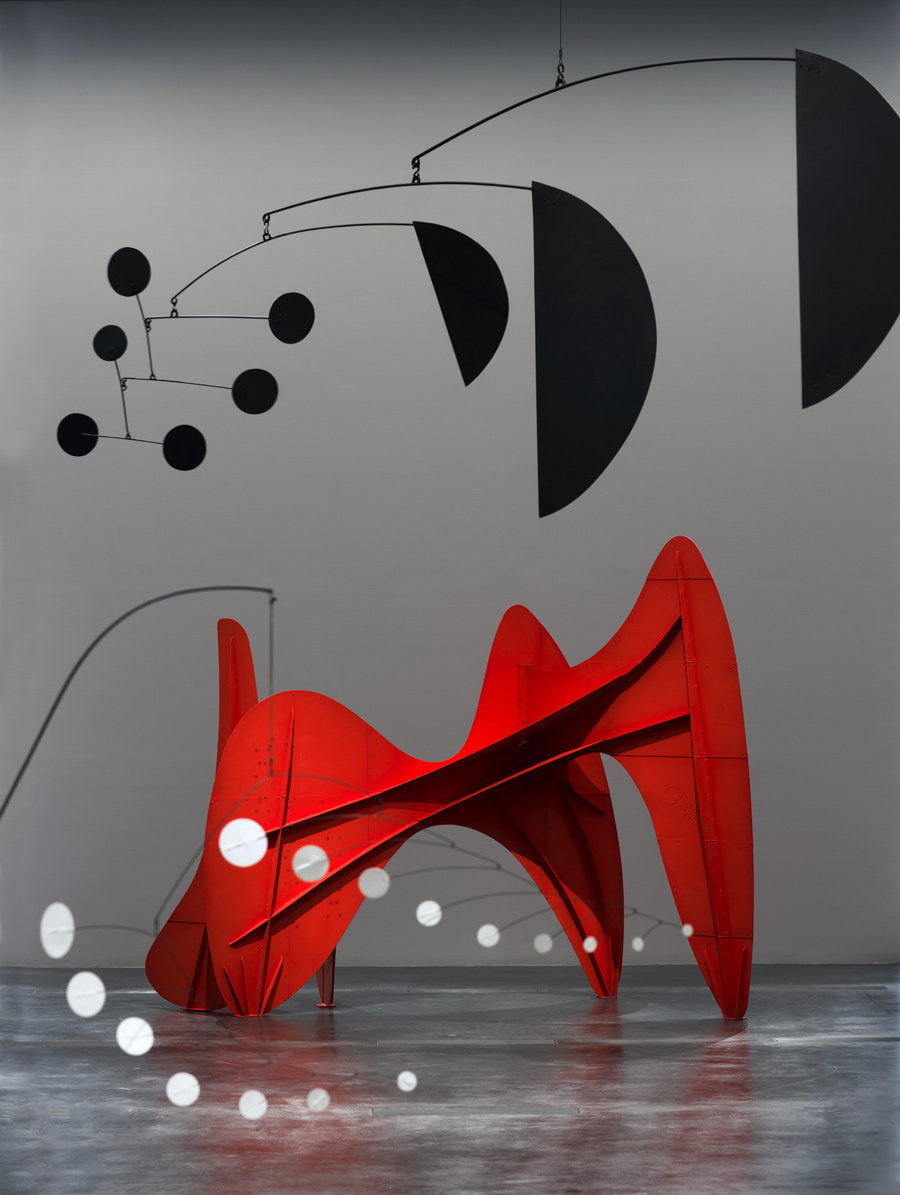
Installation view of 'Calder and Abstraction: From Avant-Garde to Iconic' at the Los Angeles County Museum of Art (LACMA)

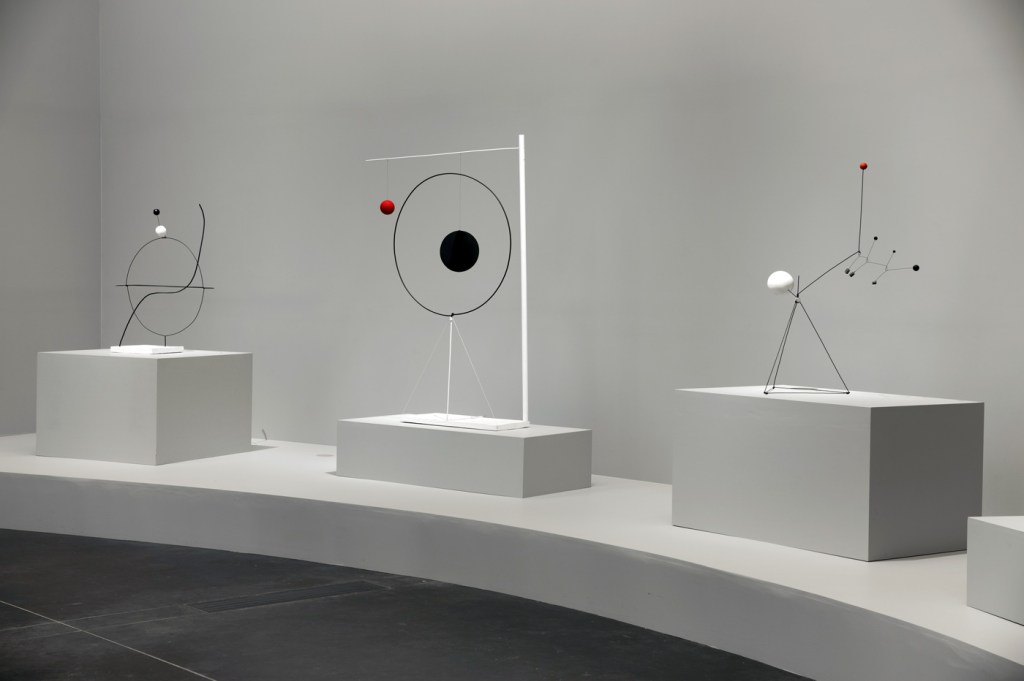
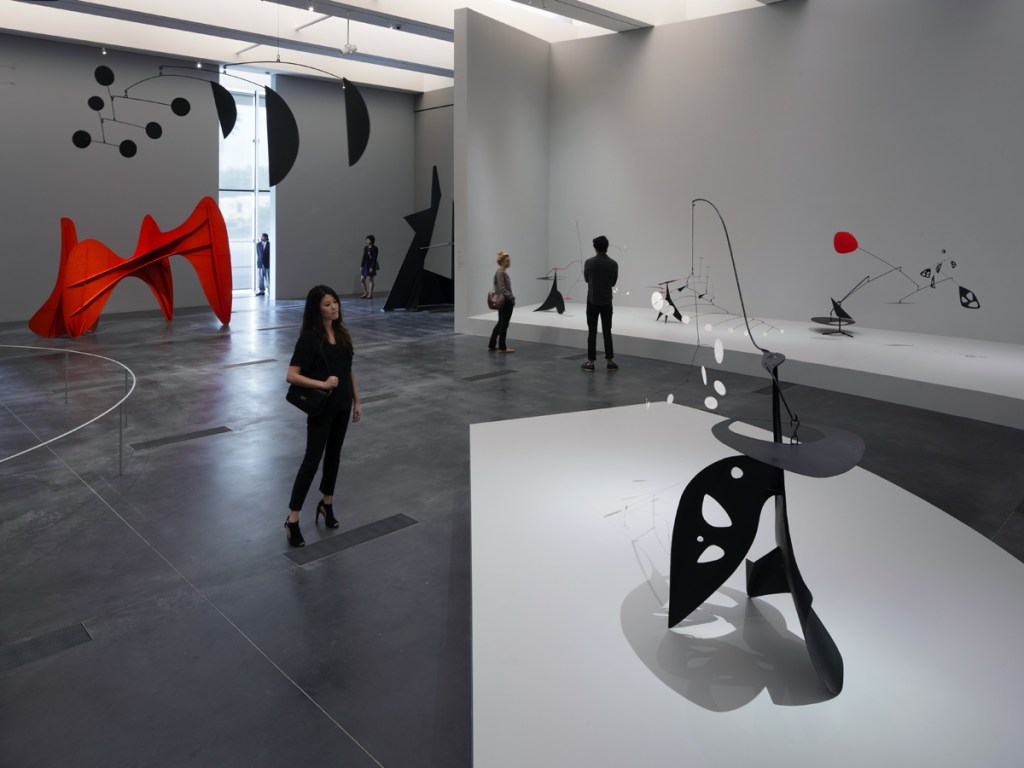
Installation view of 'Calder and Abstraction: From Avant-Garde to Iconic' at the Los Angeles County Museum of Art (LACMA)

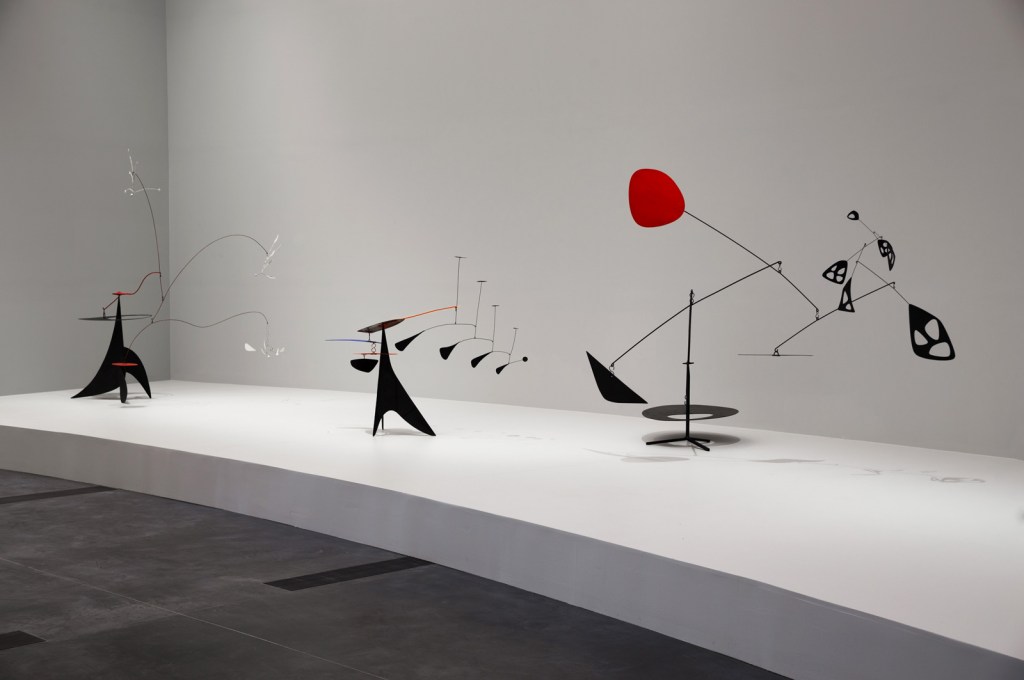
Installation view of 'Calder and Abstraction: From Avant-Garde to Iconic' at the Los Angeles County Museum of Art (LACMA)

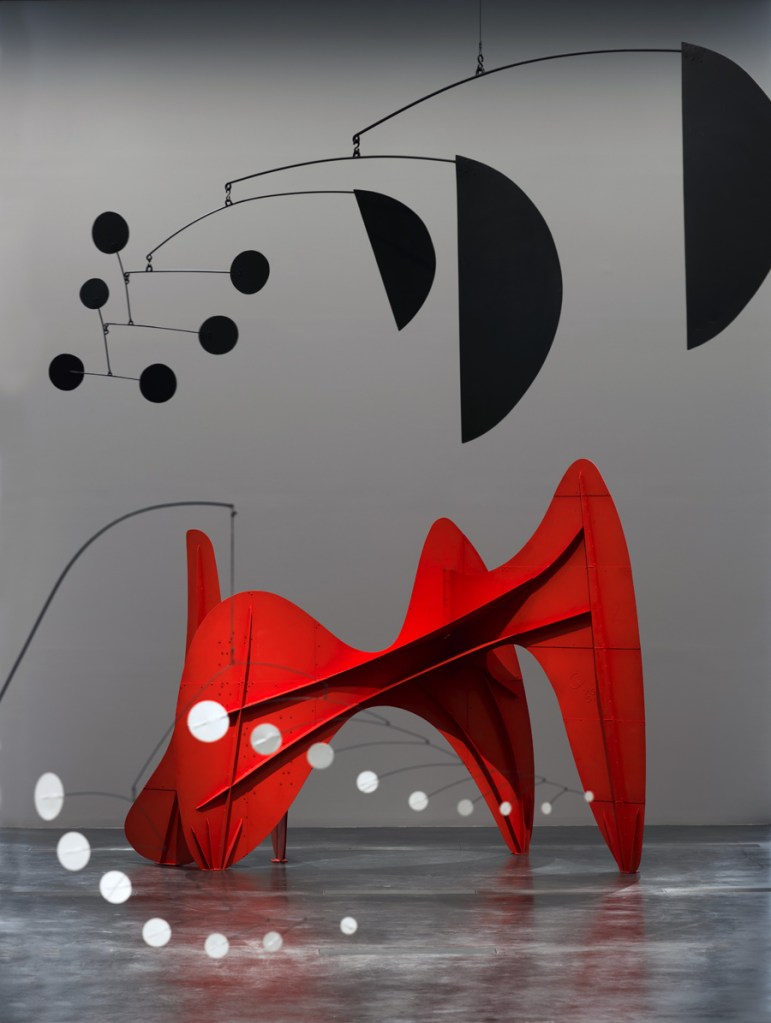
Installation view of 'Calder and Abstraction: From Avant-Garde to Iconic' at the Los Angeles County Museum of Art (LACMA)

Installation view of 'Calder and Abstraction: From Avant-Garde to Iconic' at the Los Angeles County Museum of Art (LACMA)

Installation view of 'Calder and Abstraction: From Avant-Garde to Iconic' at the Los Angeles County Museum of Art (LACMA)

Installation view of 'Calder and Abstraction: From Avant-Garde to Iconic' at the Los Angeles County Museum of Art (LACMA)

Installation view of 'Calder and Abstraction: From Avant-Garde to Iconic' at the Los Angeles County Museum of Art (LACMA)

Installation view of 'Calder and Abstraction: From Avant-Garde to Iconic' at the Los Angeles County Museum of Art (LACMA)

Installation view of 'Calder and Abstraction: From Avant-Garde to Iconic' at the Los Angeles County Museum of Art (LACMA)

Installation view of 'Calder and Abstraction: From Avant-Garde to Iconic' at the Los Angeles County Museum of Art (LACMA)

Installation view of 'Calder and Abstraction: From Avant-Garde to Iconic' at the Los Angeles County Museum of Art (LACMA)

Installation view of 'Calder and Abstraction: From Avant-Garde to Iconic' at the Los Angeles County Museum of Art (LACMA)

Installation view of 'Calder and Abstraction: From Avant-Garde to Iconic' at the Los Angeles County Museum of Art (LACMA)


Installation views of Calder and Abstraction: From Avant-Garde to Iconic at the Los Angeles County Museum of Art (LACMA)
© Calder Foundation, New York/Artists Rights Society (ARS)
Photos: Fredrik Nilsen


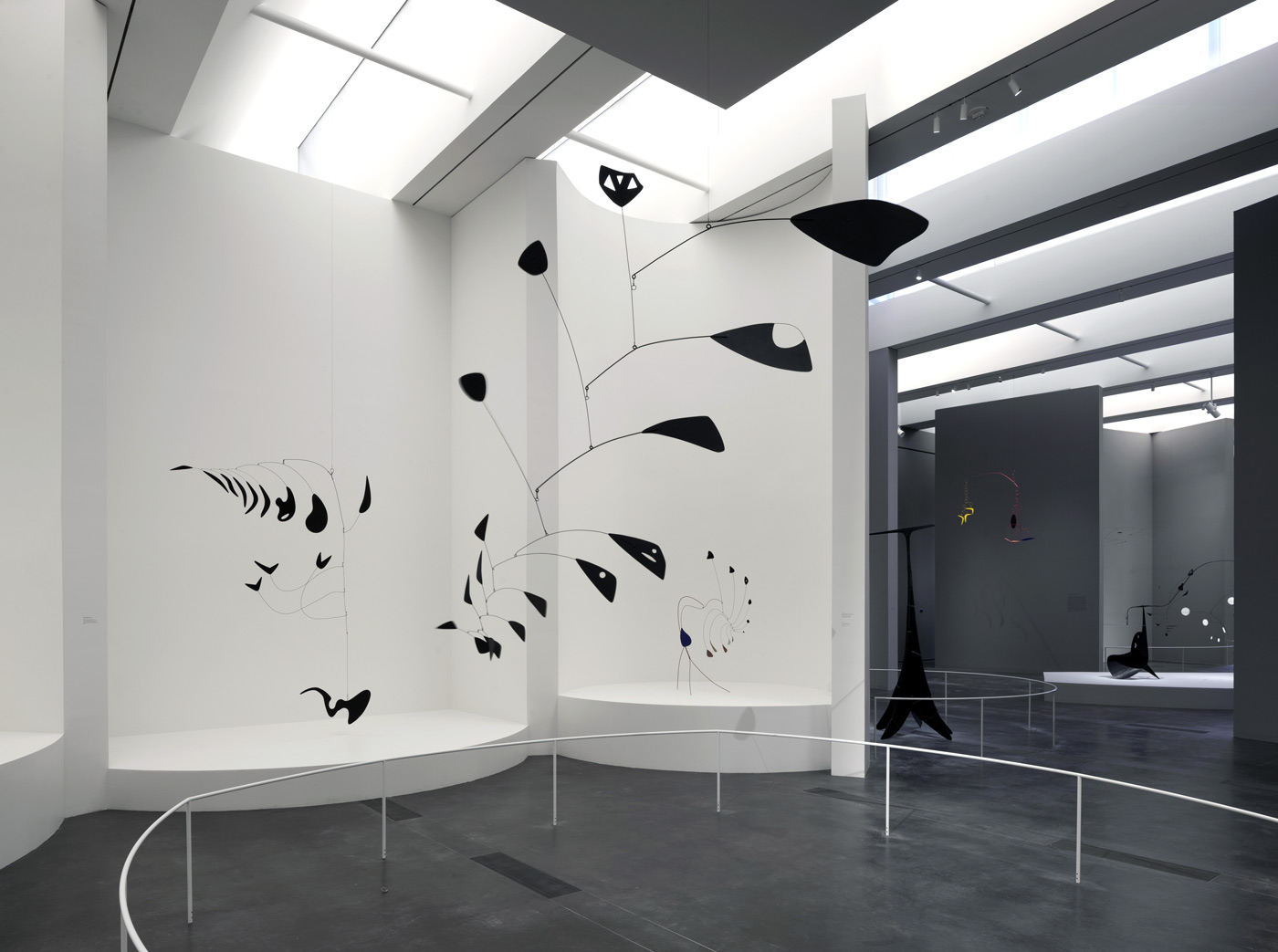
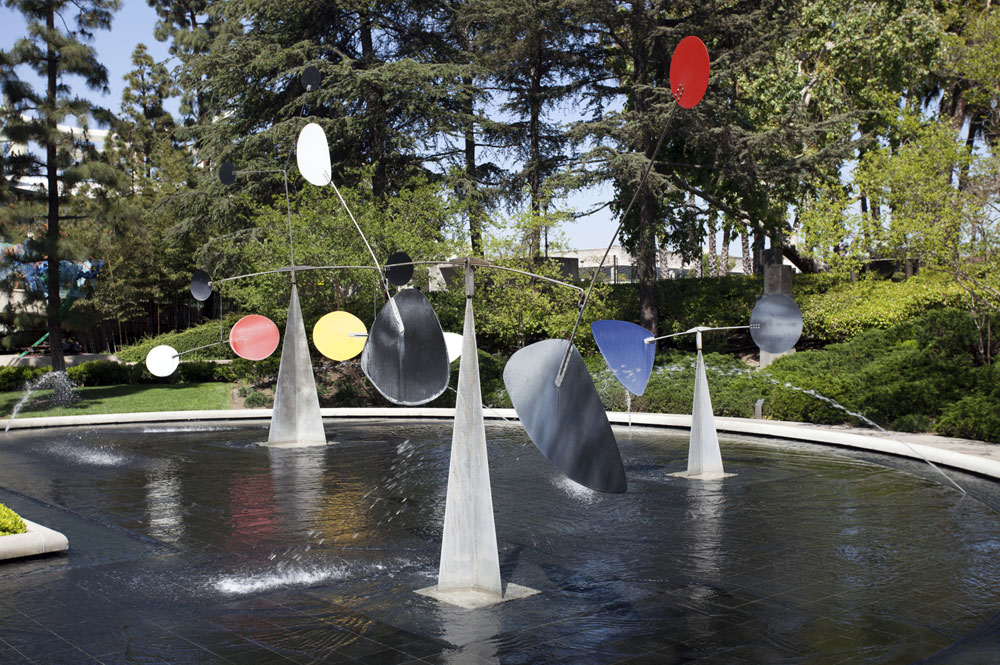
The Los Angeles County Museum of Art (LACMA) presents Calder and Abstraction: From Avant-Garde to Iconic, the first monographic presentation of Alexander Calder’s work in a Los Angeles museum. Taking as its compass the large-scale sculpture Three Quintains (Hello Girls), a site-specific fountain commissioned by LACMA’s Art Museum Council in 1964 for the opening of LACMA’s Hancock Park campus, Calder and Abstraction brings together a range of nearly fifty abstract sculptures, including mobiles, stabiles, and maquettes for larger outdoor works, that span more than four decades of the artist’s career. The exhibition at LACMA is organised by LACMA’s senior curator of modern art Stephanie Barron and designed by Gehry Partners, LLP.

Barron remarks, “Calder is recognised as one of the greatest pioneers of modernist sculpture, but his contribution to the development of abstract modern sculpture – steeped in beauty and humour – has long been underestimated by critics. Calder was considered a full-fledged member of the European avant-garde, becoming friendly with André Breton, Marcel Duchamp, Joan Miró, and Piet Mondrian, and exhibited alongside Jean Arp, Wassily Kandinsky, Fernand Léger, and many of the Surrealists. His radical inventions move easily between seeming opposites: the avant-garde and the iconic, the geometric and the organic, art and science – an anarchic upending of the sculptural paradigm.”

Calder and Abstraction offers a window into the remarkably original thinking of this distinguished artist and elucidates his revolutionary and pivotal contribution to the development of modern sculpture,” says Michael Govan, CEO and Wallis Annenberg Director of LACMA. “Three Quintains (Hello Girls) at LACMA has for decades been seen as an emblem of the museum. Following in the footsteps of its legacy, our campus continues to be enhanced by large-scale, public art – most recently with the inclusion of Chris Burden’s Urban Light (2008) and Michael Heizer’s Levitated Mass (2012).”

Exhibition overview

Calder and Abstraction traces the evolution of abstraction in the artist’s sculptural practice. The exhibition, arranged in loose chronological order, presents highlights of Calder’s oeuvre from his earliest abstract works to the crescendo of his career in the late 1940s to his later public sculptural commissions. While he is considered one of the most popular artists of his time, his work also shares sensibilities with less immediately accessible artists, including the Surrealists and the champions of pure abstraction that made up the Abstraction-Création group, such as Robert Delaunay, Theo van Doesburg, and Kurt Schwitters, among others.

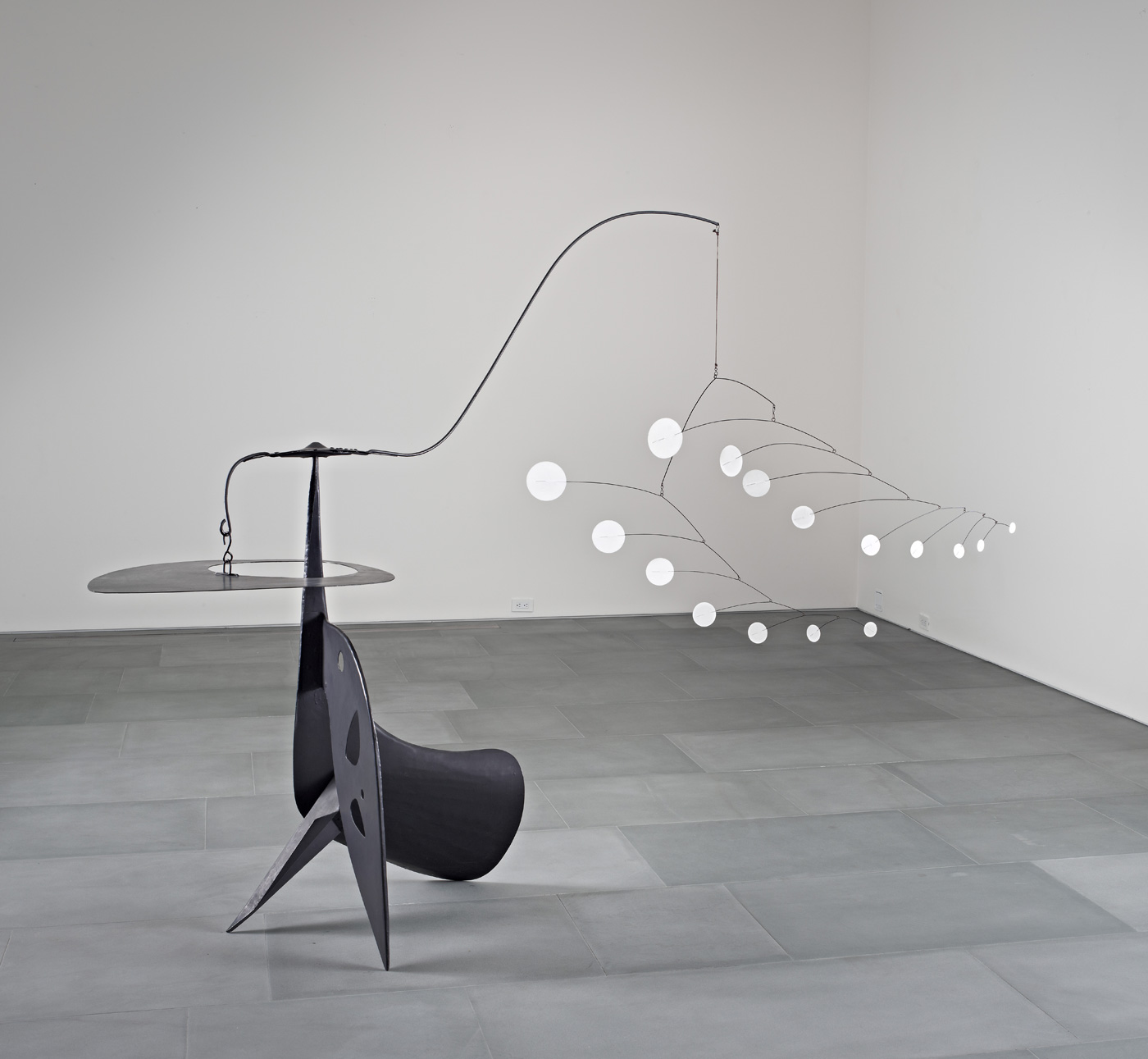
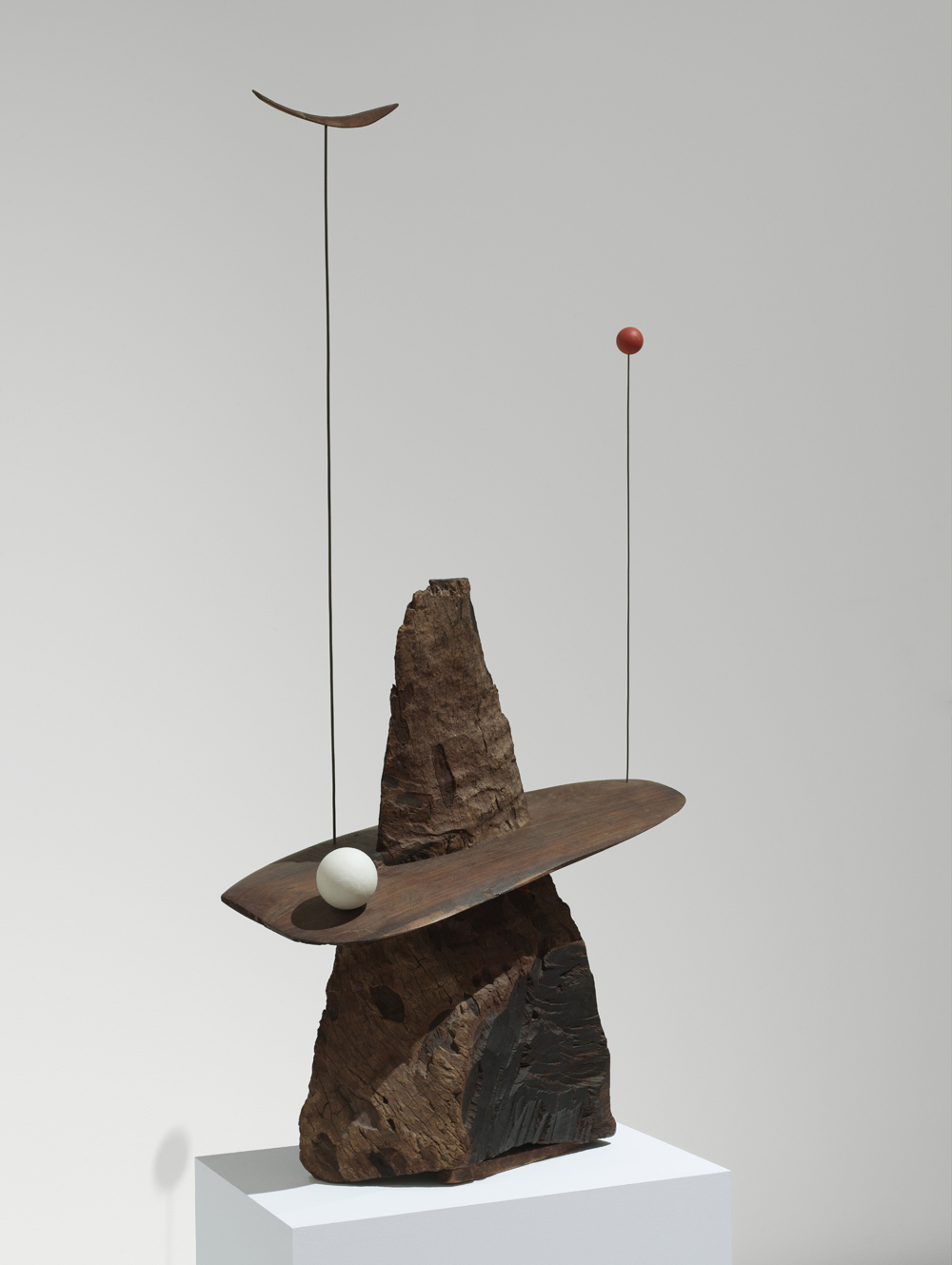
From 1926 to 1933, Pennsylvania-born Calder lived primarily in Paris and was a prevalent figure of the European avant-garde along with peers Marcel Duchamp, Joan Miró, Piet Mondrian, Jean Hélion, Wassily Kandinsky, Fernand Léger, Alberto Giacometti, fellow American Man Ray, and many of the Surrealists. At the time, Paris was the epicentre of creative production, and Surrealism was the most significant artistic movement in France. A number of his works from the 1930s referenced astronomy, a preoccupation shared by a number of avant-garde artists. In Gibraltar two off-kilter rods thrust upward from a plane encircling a wood base, suggesting a personal solar system. Calder was fascinated with representing the natural world and the cosmos as potent and brimming with energy: “When I have used spheres and discs … they should represent more than what they just are. … [T]he earth is a sphere but also has some miles of gas about it, volcanoes upon it, and the moon making circles around it. … A ball of wood or a disc of metal is rather a dull object without this sense of something emanating from it.”

A crucial encounter for Calder occurred in 1930 upon visiting artist Piet Mondrian’s studio. Calder credited Mondrian with opening his eyes to the term “abstract,” providing the catalyst to a new phase in his practice. Calder later described this visit as pivotal in his move towards abstraction: “The visit gave me a shock. … Though I had heard the word ‘modern’ before, I did not consciously know or feel the term ‘abstract.’ So now, at thirty-two, I wanted to paint and work in the abstract.”

Calder appropriated Surrealism’s affinity to curvilinear, biomorphic forms into his sculptures, and when he met Miró in 1928, the two men discovered a mutual admiration for each other’s work and developed a close friendship. As Calder stated, “Well, the archaeologists will tell you there’s a little bit of Miró in Calder and a little bit of Calder in Miró.”

The decade after he met Miró and Mondrian proved to be the most radical of Calder’s career. He embraced the Surrealist notion of integrating chance into his works in addition to the Constructivist idea that painting and sculpture should be freed from their standard constraints, such as gravity and traditional sculptural mass. He consequently developed his two signature typologies: the mobile, a term coined by Marcel Duchamp after a visit to Calder’s home and studio in 1931; and the stabile, named by Jean Arp in 1932.

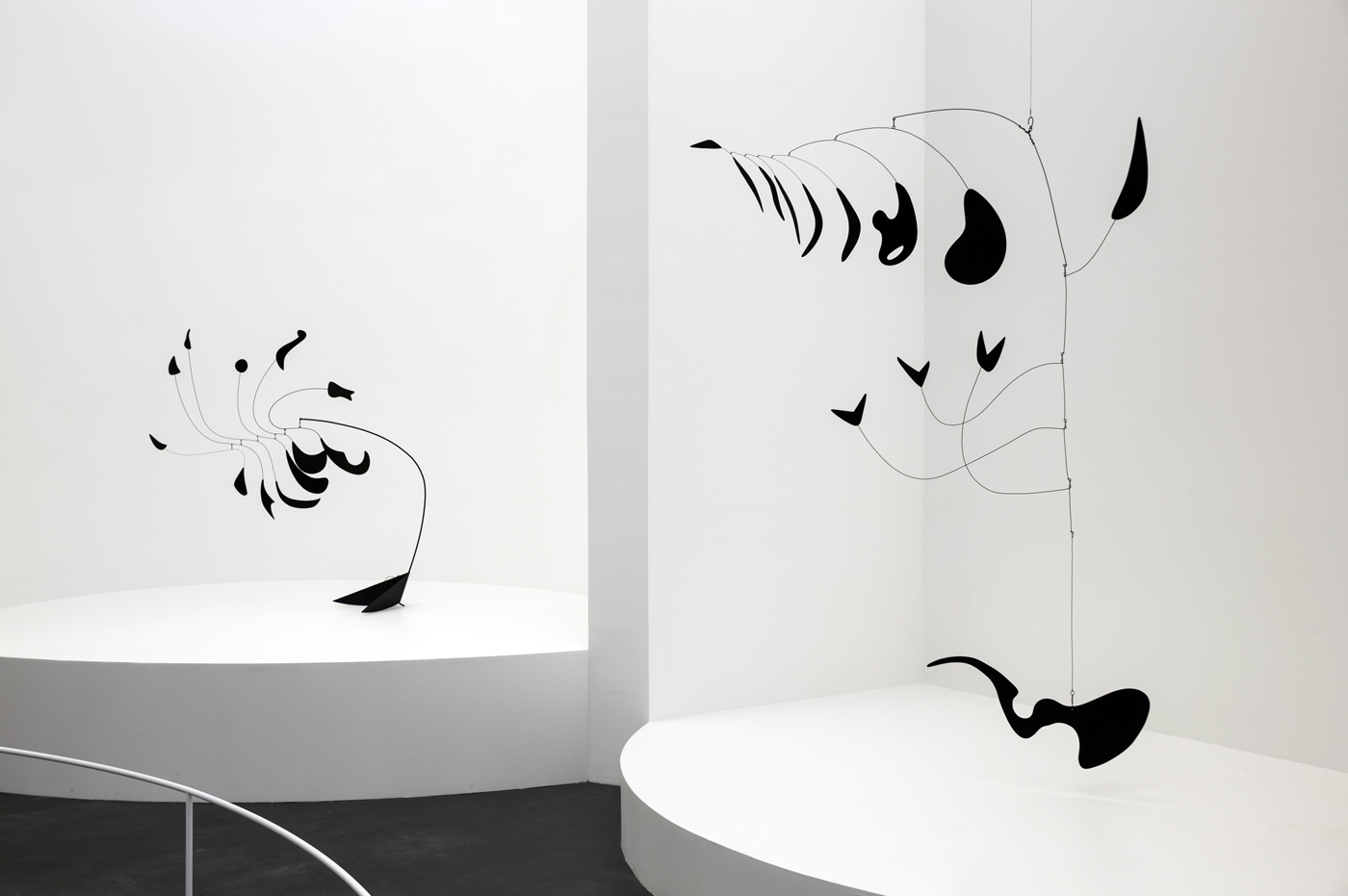
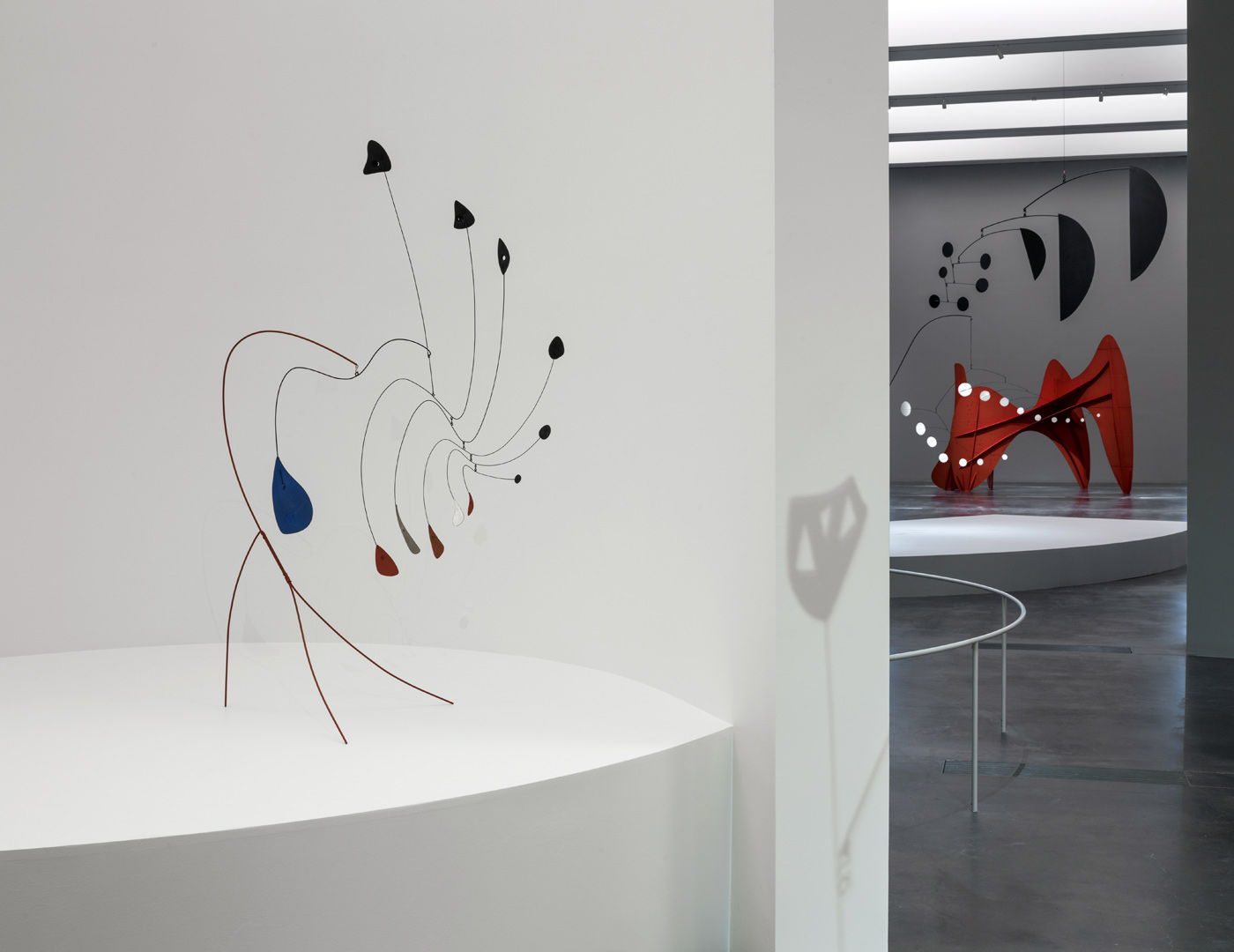
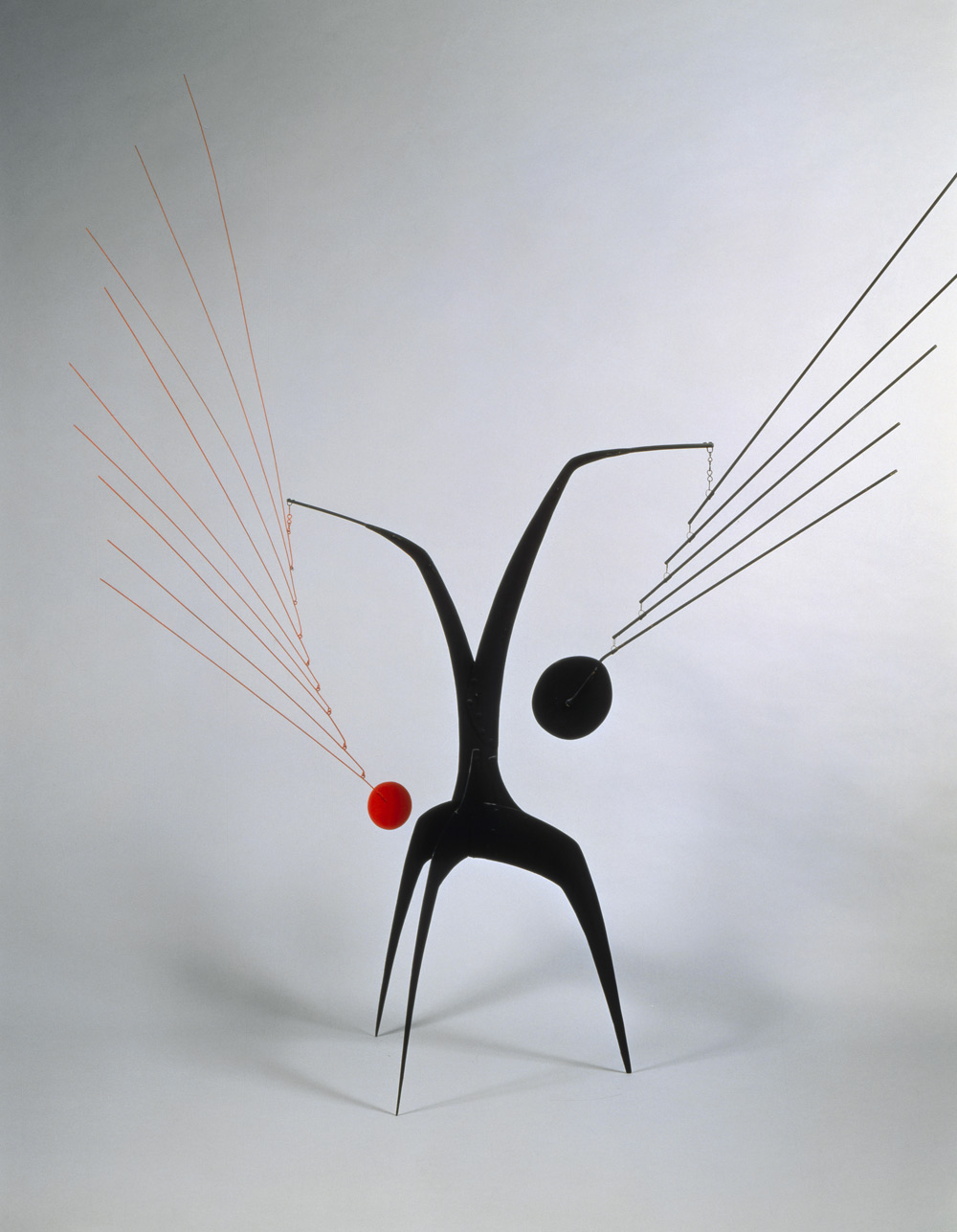
Calder’s mobiles are hanging, kinetic sculptures made of discrete movable parts stirred by air currents, creating sinuous and delicate drawings in space. Either suspended or freestanding, these often large constructions consist of flat pieces of painted metal connected by wire veins and stems. Eucalyptus (1940), one of Calder’s first mature mobiles, was created during World War II. The piece can be seen as a composition of violent, tortured biomorphic shapes that suggest gaping mouths, body parts, sexual organs, and sinister weapons.

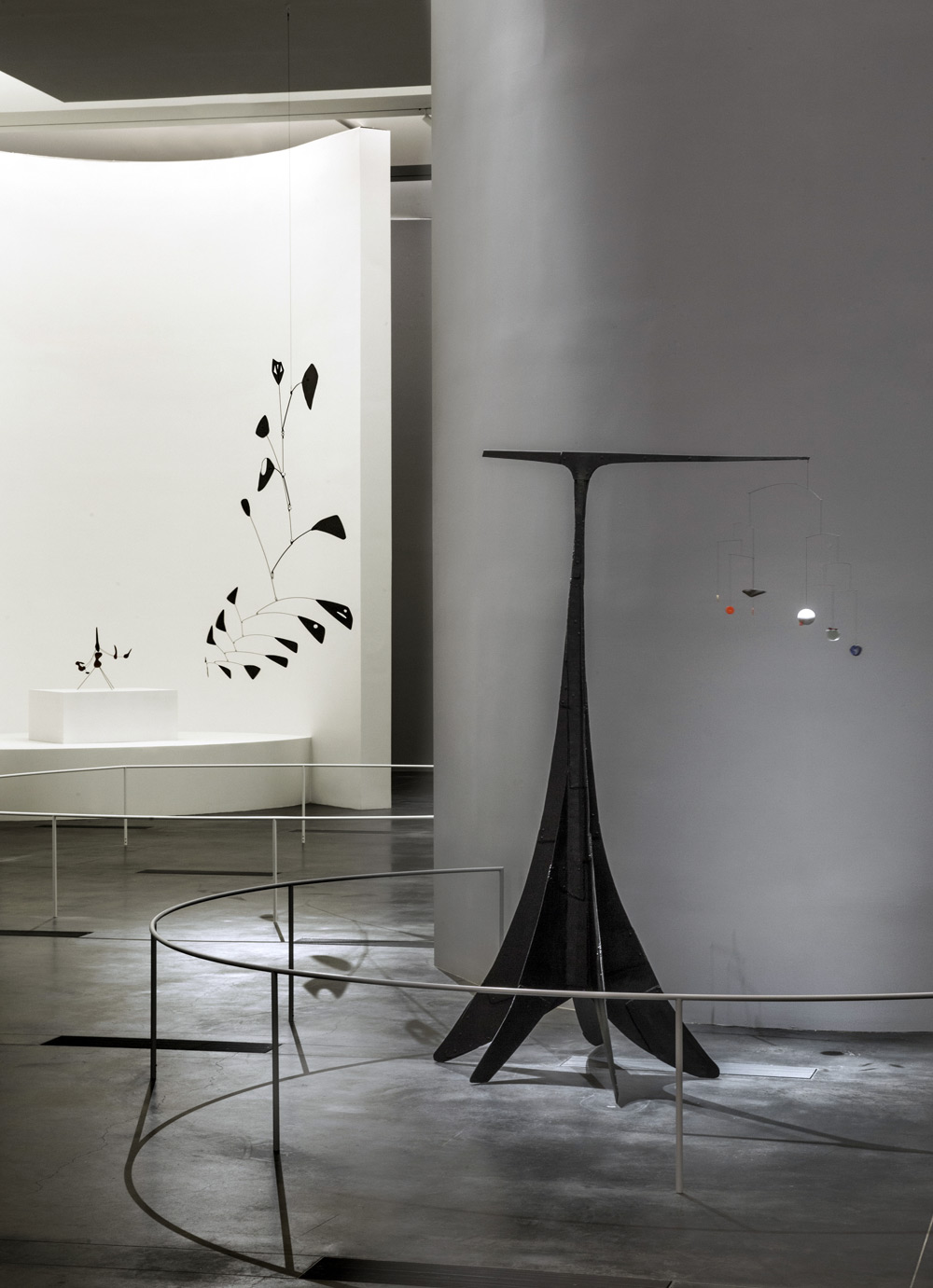
Stabiles, which were developed alongside Calder’s mobiles but came to full maturity later in his career, are stationary abstract sculptures, often with mobiles attached to them (standing mobiles). In several of Calder’s works from the 1940s – the most prolific decade of his sculptural production – he effectively blended the mobile and stabile forms, as seen in Laocoön (1947), in which the stabile supports graceful, arcing branches that cut a broad swath as they rotate at an irregular rhythm.

In the mid-1950s, Calder began working with quarter-inch steel (thicker than the aluminium he had used during the 1940s), which enabled him to construct larger, more durable, and more ambitious sculptures and posed him as an ideal collaborator with architects to create works for public spaces. With commissions from the city of Spoleto, Italy (1962), Montreal’s Expo (1967) and Grand Rapids, Michigan (1969) – represented in the exhibition by La Grande vitesse (intermediate maquette) – Calder began a virtually non-stop output of public sculpture until his death in 1976.

Calder’s public sculpture evolved at a time when communities were becoming increasingly proud of public sculpture, although his resolutely bold abstract forms, though hard to imagine now, were initially met with some controversy. Today encountering Calder’s iconic sculpture in the centre of a city, in front of a courthouse, in the midst of the Senate Office Building, or in front of a museum is a hallmark of postwar public sculpture that he helped to invent.

Exhibition design and installation

Calder was constantly in conversation and collaborated with other artists and architects in his lifetime, but a major architect has not designed a Calder show since the 1980s. Frank O. Gehry’s design for LACMA’s exhibition allows for quiet areas of contemplation, unexpected juxtapositions of related works, and opportunities for both intimate and panoramic views of the works. Gehry’s gently curved walls frame the sculptures and recall the harmony between art and architecture, emphasising the organic nature of Calder’s works. Gehry’s own method of developing architectural forms is inherently tactile, sharing some of the same hands-on techniques of a sculptor.

With the assistance of technology and effective planning, Calder and Abstraction at LACMA features a selection of sculptures that are animated throughout the course of the day.

Press release from the LACMA website


Alexander Calder (American, 1898-1976) 'Three Quintains (Hello Girls)' 1964


Alexander Calder (American, 1898-1976)
Three Quintains (Hello Girls)
1964
Sheet metal and paint with motor
275 x 288 inches
Los Angeles County Museum of Art
© Calder Foundation, New York/Artists Rights Society (ARS)
Photo: Museum Associates/LACMA


Alexander Calder (American, 1898-1976) 'Little Face' 1962


Alexander Calder (American, 1898-1976)
Little Face
1962
Sheet metal, wire and paint
42 x 56 inches
Los Angeles County Museum of Art
© Calder Foundation, New York/Artists Rights Society (ARS)
Photo: Museum Associates/LACMA


Alexander Calder (American, 1898-1976) 'Laocoön' 1947


Alexander Calder (American, 1898-1976)
Laocoön
1947
Sheet metal, wire, rod, string and paint
80 x 120 x 28 inches
The Eli and Edythe L. Broad Collection
© Calder Foundation, New York/Artists Rights Society (ARS)
Photo: Douglas M. Parker Studio, Los Angeles


Alexander Calder (American, 1898-1976) 'Yucca' 1941


Alexander Calder (American, 1898-1976)
Yucca
1941
Sheet metal, wire and paint
73 x 23 x 20 inches
Solomon R. Guggenheim Museum, New York, Hilla Rebey Collection, 1971
© Calder Foundation, New York/Artists Rights Society (ARS)
Photo: Solomon R. Guggenheim Foundation, New York, by Kristopher McKay


Alexander Calder (American, 1898-1976) 'Un effet du japonais' 1941


Alexander Calder (American, 1898-1976)
Un effet du japonais
1941
Sheet metal, rod, wire and paint
80 x 80 x 48 inches
Calder Foundation, New York
© Calder Foundation, New York/Artists Rights Society (ARS)
Photo: Calder Foundation, New York/Art Resource NY


Alexander Calder (American, 1898-1976) 'Gibraltar' 1936


Alexander Calder (American, 1898-1976)
Gibraltar
1936
Lignum vitae, walnut, steel rods, and painted wood
52 x 24 x 11 inches
The Museum of Modern Art, New York. Gift of the artist.
© Calder Foundation, New York/Artists Rights Society (ARS)
Digital image: © 2013 The Museum of Modern Art/Licences by SCALA/Art Resource, NY


Alexander Calder (American, 1898-1976) 'Constellation Mobile' 1943


Alexander Calder (American, 1898-1976)
Constellation Mobile
1943
Wood, wire, string and paint
53 x 48 x 35 inches
Calder Foundation, New York
© Calder Foundation, New York/Artists Rights Society (ARS)
Photo: Calder Foundation, New York/Art Resource NY


Alexander Calder (American, 1898-1976) 'Bougainvillier' 1947


Alexander Calder (American, 1898-1976)
Bougainvillier
1947
Sheet metal, wire, lead and paint
78 x 86 inches
Collection of John and Mary Shirley
© Calder Foundation, New York/Artists Rights Society (ARS)
Photo: Calder Foundation, New York/Art Resource NY


Alexander Calder (American, 1898-1976) 'Le Demoiselle' 1939


Alexander Calder (American, 1898-1976)
Le Demoiselle
1939
Sheet metal, wire and paint
58 x 21 x 29 inches
Glenstone
© Calder Foundation, New York/Artists Rights Society (ARS)


Alexander Calder (American, 1898-1976) 'Red Disc' 1947


Alexander Calder (American, 1898-1976)
Red Disc
1947
Sheet metal, wire and paint
81 x 78 inches
Frances A. Bass
© Calder Foundation, New York/Artists Rights Society (ARS)


Alexander Calder (American, 1898-1976) 'Untitled' 1947


Alexander Calder (American, 1898-1976)
Untitled
1947
Sheet metal, wire and paint
66 x 53 inches
Private collection
© Calder Foundation, New York/Artists Rights Society (ARS)
Photo: Calder Foundation, New York/Art Resource NY


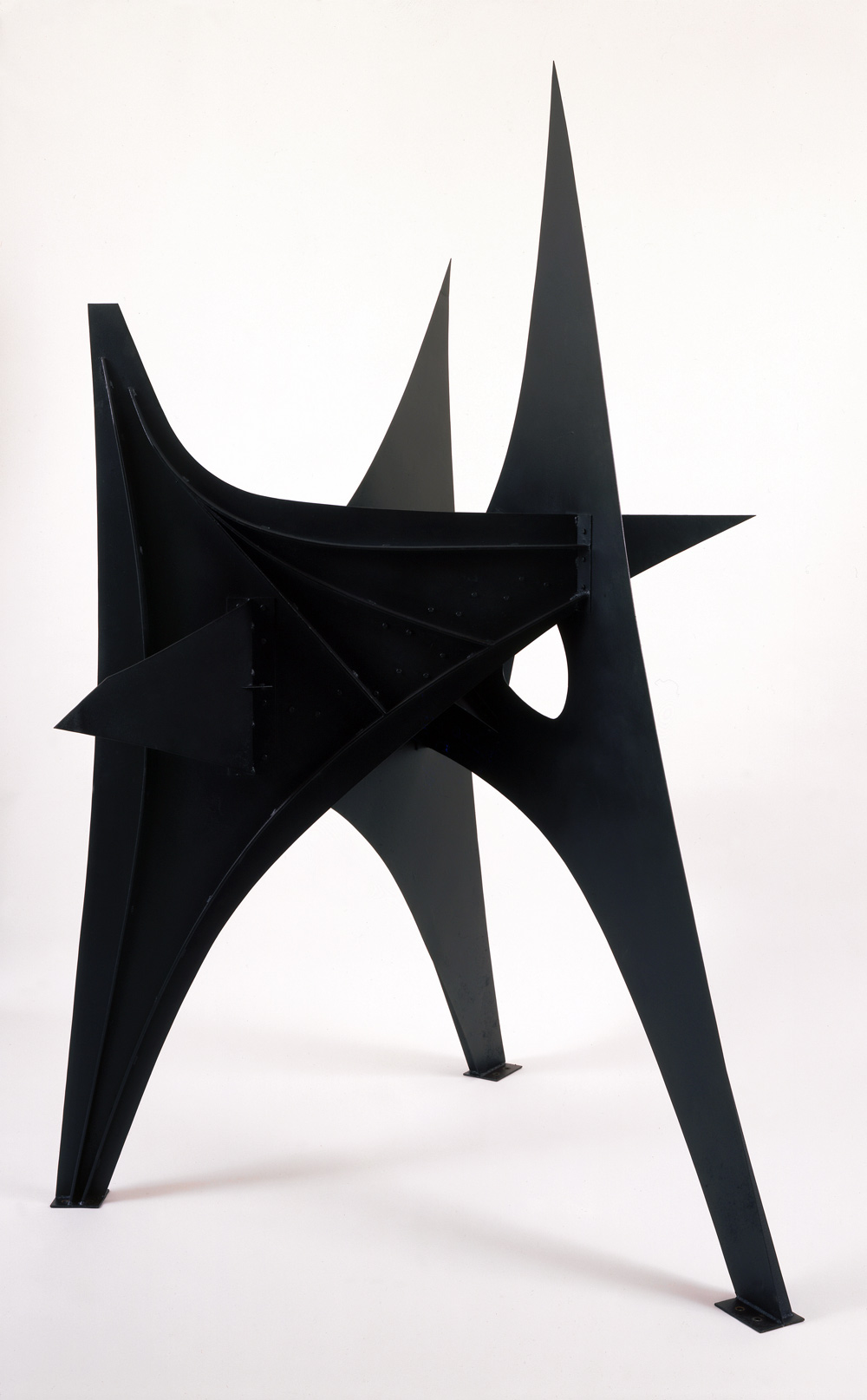
Alexander Calder (American, 1898-1976) 'Trois Pics (intermediate maquette)' 1967


Alexander Calder (American, 1898-1976)
Trois Pics (intermediate maquette)
1967
Sheet metal, bolts, and paint
96 x 63 x 70 inches
Calder Foundation, New York
© Calder Foundation, New York/Artists Rights Society (ARS)
Photo: Calder Foundation, New York/Art Resource NY


Los Angeles County Museum of Art (LACMA)
5905 Wilshire Boulevard (at Fairfax Avenue)
Los Angeles, CA, 90036
Phone: 323 857 6000

Opening hours:
Monday, Tuesday, Thursday: 11am – 6pm
Friday: 11am – 8pm
Saturday, Sunday: 10am – 7pm
Closed Wednesday

LACMA website

LIKE ART BLART ON FACEBOOK

Back to top

Exhibition: ‘Wols Photographer. The Guarded Look’ at Martin-Gropius-Bau, Berlin

Exhibition dates: 15th March – 22nd June 2014


Wols (German, 1913-1951) 'Untitled [Still life - dining table]' 1937


Wols (German, 1913-1951)
Untitled [Still life – dining table]
1937
© VG Bild-Kunst, Bonn 2014


Some familiar images that were also seen in the posting Wols’ Photography: Images Regained are complimented by 5 new ones. The two portraits of the artist Max Ernst are eerie (is that a suitable word for a portrait that is strong and unsettling?) and perceptive, Wols responsive to the status of his sitter as a pioneer of the Dada movement and Surrealism.

Dr Marcus Bunyan


Many thankx to the Martin-Gropius-Bau for allowing me to publish the photographs in the posting. Please click on the photographs for a larger version of the image.


Wols (German, 1913-1951) 'Nicole Bouban' Autumn 1932 - October 1933 / January 1935 to 1937


Wols (German, 1913-1951)
Nicole Bouban
Autumn 1932 – October 1933 / January 1935 to 1937
© Kunst, Bonn 2014


Art Informel

The term Art Informel was originated by the French critic Michel Tapié and popularized in his 1952 book Un Art autre (Another art). A Parisian counterpart of Abstract Expressionism, Art Informel emphasised intuition and spontaneity over the Cubist tradition that had dominated School of Paris painting. The resulting abstractions took a variety of forms. For instance, Pierre Soulages’s black-on-black paintings composed of slashing strokes of velvety paint suggest the nocturnal mood of Europe immediately after the war.


Wols (German, 1913-1951) 'Untitled [Pavilion de l'Elegance - Creating a home with Alix (Germaine Krebs)]' 1937


Wols (German, 1913-1951)
Untitled [Pavilion de l’Elegance – Creating a home with Alix (Germaine Krebs)]
1937
© VG Bild-Kunst, Bonn 2014


Germaine Émilie Krebs

Germaine Émilie Krebs (1903-1993), known as Alix Barton and later as “Madame Grès”, relaunched her design house under the name Grès in Paris in 1942. Prior to this, she worked as “Alix” or “Alix Grès” during the 1930s. Formally trained as a sculptress, she produced haute couture designs for an array of fashionable women, including the Duchess of Windsor, Marlene Dietrich, Greta Garbo, Jacqueline Kennedy, and Dolores del Río. Her signature was cut-outs on gowns that made exposed skin part of the design, yet still had a classical, sophisticated feel. She was renowned for being the last of the haute couture houses to establish a ready-to-wear line, which she called a “prostitution”.

The name Grès was a partial anagram of her husband’s first name and alias. He was Serge Czerefkov, a Russian painter, who left her soon after the house’s creation. Grès enjoyed years of critical successes but, after Grès herself sold the business in the 1980s to Yagi Tsucho, a Japanese company, it faltered. In 2012, the last Grès store in Paris was closed.

Text from Wikipedia website


Wols (German, 1913-1951) 'Untitled [Swiss Pavilion - Wire Figure]' 1937


Wols (German, 1913-1951)
Untitled [Swiss Pavilion – Wire Figure]
1937
© VG Bild-Kunst, Bonn 2014


Wolfgang Schulze, known as Wols, was born in Berlin in 1913. As a painter and graphic artist he is considered to have been an important trailblazer of Art Informel. For the first time the Martin-Gropius-Bau in Berlin is presenting the largely unknown photographic oeuvre of Wols. These works foreshadow his development in the direction of non-representational art.

Wols grew up in Dresden, where he had an early encounter with photography as a profession through his attendance at a course in the studio of the Dresden photographer Genja Jonas. In 1932, after a brief sojourn in the milieu of the Berlin Bauhaus – then in the process of breaking up – the young Wols set off for Paris to realise his artistic ambitions.

Soon he was involved with the local Surrealists and made the acquaintance of other personalities in the theatrical, literary and art scenes. In this period Wols was mainly active as a photographer. In 1937 his works were exhibited for the first time in the prestigious Parisian Galérie de la Pléiade, which established his reputation as a photographer. It was at this time that he adopted the pseudonym Wols. One of his commissions was to document the Pavillon de l’Elégance at the 1937 World Exhibition in Paris.

At the same time he produced striking multiple black-and-white portraits of personalities such as Max Ernst, Nicole Boubant or Roger Blin. Over the years Wols’ imagery became increasingly radical. The representational motifs gradually acquired a more abstract dimension and forced the viewer to see the objects represented in a new light. In particular, an extraordinary set of photograms confirms his interest in replacing representational motifs with non-representational ones. Transferred to painting, this trend would later make him a pioneer of Art Informel.

Immediately after the outbreak of the Second World War Wols spent over a year in various internment camps in the south of France. In this period he turned more to watercolours, most of which were lost while he was fleeing from the Nazis.

Living in straitened circumstances Wols fought a losing battle with alcoholism and poor health. In 1951, as a result of his weakened physical condition, he died of food poisoning in Paris at the early age of 38. After his death, Wols’ work was displayed at the first three documenta exhibitions in Kassel (1955, 1959, 1964) and, in 1958, at the Venice Biennale. On 27 May 2014 he would have been 101.

The show covers all of his photographic work, including multiple portraits of famous artists, actors and writers, photographs of the “Pavillon de l’Élégance”, numerous still lifes, and many hitherto unknown motifs. The exhibition has been curated by the Kupferstich-Kabinett, Staatliche Kunstsammlungen Dresden, where this unique collection will be kept and systematically catalogued.

Press release from Martin-Gropius-Bau website


Wols (German, 1913-1951) 'Max Ernst' Fall 1932 - October / January 1935 to 1936


Wols (German, 1913-1951)
Max Ernst
Fall 1932 – October / January 1935 to 1936
© VG Bild-Kunst, Bonn 2014


Wols (German, 1913-1951) 'Max Ernst' Fall 1932 - October / January 1935 to 1936


Wols (German, 1913-1951)
Max Ernst
Fall 1932 – October / January 1935 to 1936
© VG Bild-Kunst, Bonn 2014


Wols permanently settled in Paris in 1933, producing his first paintings but also working as a photographer. His photographic work of this period showed the clear influence of Surrealism. In 1936, he received official permission to live in Paris with the help of Fernand Léger; as an army deserter, Schulze had to report to the Paris police on a monthly basis. In 1937, the year in which he adopted his pseudonym WOLS, his photographs began to appear in fashion magazines such as Harper’s BazaarVogueFemina as well as Revue de l’art. Many of these photographs anticipate the displays at the Exposition Internationale du Surréalisme held in Paris in the following year, in which much use was made of mannequins.

At the outbreak of World War II Wols, as a German citizen, was interned for 14 months in the notorious Les Milles camp – together with some 3500 other artists and intellectuals. He was not released until late 1940. After his release Wols moved for two years to Cassis, near Marseille, where he struggled to earn a living. The occupation of Southern France by the Germans in 1942 forced him to flee to Dieulefit, near Montélimar, where he met the writer Henri-Pierre Roché, one of his earliest collectors. He spent most of the war trying to emigrate to the United States, an unsuccessful and costly enterprise that may have driven him to alcoholism.

After the war Wols returned to Paris where he met Jean-Paul Sartre, Tristan Tzara and Jean Paulhan. He started to paint in oils in 1946 at the suggestion of the dealer René Drouin, who showed 40 of his paintings at his gallery in 1947. The same year Wols began to work on a number of illustrations for books by Paulhan, Sartre, Franz Kafka and Antonin Artaud. He fell ill but lacked the money to go to hospital, and throughout 1948 he worked largely in bed on these illustrations. In 1949 he took part in the exhibition Huit oeuvres nouvelles at the Galerie Drouin, along with Jean Dubuffet, Roberto Matta, Henri Michaux and other artists with whom he had a stylistic affinity.

Undergoing treatment for alcoholism, he moved to the country at Champigny-sur-Marne in June 1951. His early death later that year from food poisoning helped foster the legendary reputation that grew up around him soon afterwards. His paintings helped pioneer Art informel and Tachism, which dominated European art during and after the 1950s as a European counterpart to American Abstract Expressionism. Influenced by the writings of the philosopher Lao Tzu throughout his life, Wols also wrote poems and aphorisms that expressed his aesthetic and philosophical ideas.”

Text from the Weimar blog 2010


Wols (German, 1913-1951) 'Untitled [Paris - Flea Market]' Autumn 1932 - October 1933 / January 1935 to 1936


Wols (German, 1913-1951)
Untitled [Paris – Flea Market]
Autumn 1932 – October 1933 / January 1935 to 1936
© VG Bild-Kunst, Bonn 2014


Wols (German, 1913-1951) 'Untitled [Paris - Palisade]' Fall 1932 - October 1933 / January 1935 - August 1939


Wols (German, 1913-1951)
Untitled [Paris – Palisade]
Fall 1932 – October 1933 / January 1935 – August 1939
© VG Bild-Kunst, Bonn 2014


Wols (German, 1913-1951) 'Untitled [Paris - Eiffel Tower]' 1937


Wols (German, 1913-1951)
Untitled [Paris – Eiffel Tower]
1937
© VG Bild-Kunst, Bonn 2014


Wols (German, 1913-1951) 'Untitled [Still Life - Grapefruit]' 1938 - August 1939


Wols (German, 1913-1951)
Untitled [Still Life – Grapefruit]
1938 – August 1939
© VG Bild-Kunst, Bonn 2014


Wols (German, 1913-1951) 'Self Portrait with Hat' 1937-1938


Wols (German, 1913-1951)
Self Portrait with Hat
1937-1938
© VG Bild-Kunst, Bonn 2014


Martin-Gropius-Bau Berlin
Niederkirchnerstraße 7
Corner Stresemannstr. 110
10963 Berlin
Phone: +49 (0)30 254 86-0

Opening hours:
Wednesday to Monday 10 – 20 hrs
Tuesday closed

Martin-Gropius-Bau website

LIKE ART BLART ON FACEBOOK

Back to top

Exhibition: ‘Wols: Cosmos and Street’ at the Museo Nacional Centro de Arte Reina Sofía, Madrid

Exhibition dates: 14th February – 26th May 2014


Wols (German, 1913-1951) 'Untitled' 1932-1941


Wols (German, 1913-1951)
Untitled
1932-1941
Silver gelatin print
14.9 x 18.2cm
Kunsthaus Zurich


How lucky we are!

Two consecutive postings on the German artist Wols (a pseudonym for Alfred Otto Wolfgang Schulze May 27, 1913, Berlin – September 1, 1951, Paris), who is today considered a pioneer of Lyrical Abstraction – a type of abstract painting related to Abstract Expressionism undertaken in the post-war years by mainly French artists. He is also considered to be one of the most influential artists of the Art Informel and Tachisme movements. Both movements were opposed not only to Cubist and Surrealist movements that preceded it, but also to geometric abstraction (or “cold abstraction”).

Lyrical abstraction represented an opening to personal expression: Wols was not only a painter and photographer but he also wrote poems and aphorisms and studied the philosophy of Lao Tzu. This fascinating exhibition connects Wols’s photography, drawing and painting, and argues that his art forms (in)formed each other. The number of artists that have successfully worked in both mediums is limited, but as Wols shows they are not, and never have been, mutually exclusive.

The great sadness is that Wols was another talented artist who died young, at the age of just 38 – collateral damage of the conflagration that was the Second World War. He was an army deserter when he moved to Paris and was interned for 14 months at the start of the war, only to be released to live near Marseilles in 1940. The occupation of Southern France by the Germans in 1942 forced him to flee and he spent most of the rest of the war trying unsuccessfully to escape to America. During this time his alcoholism developed, an addiction that caused poor health and which, along with food poisoning, was ultimately to cost him his life.

His photographs have a chthonic darkness. They inhabit a tenebrous reality, a shadowy underworld. Just look at Untitled (Cobblestone) (1932-1942, below) and observe how the dampness of the water seems to have the viscosity of congealed blood. During his internment he produced, as the press release states, “some of the strangest, most intricate and beautiful drawings of modern times.” They possess a certain, undefinable magic, filled as they are with amorphous animals and plants, filled with amour, a secret love. And finally his paintings – shattering, disturbing, bloody, hairy, earthbound and cerebral, homologous to wiring looms of the mind and/or the molecular structure of atoms – circling and popping and fizzing and scrapping their way into existence… creating an expanded conception of space and time that is both micro (cellular) and macro (celestial).

Wols has to be one of the most interesting artists of the 20th century and, elementally, one of its greatest. Such a pity that he died so young.

Dr Marcus Bunyan


Many thankx to the Museo Nacional Centro de Arte Reina Sofía for allowing me to publish the photographs and art work in the posting. Please click on the photographs for a larger version of the image


Wols (German, 1913-1951) 'Untitled' Nd / 1976


Wols (German, 1913-1951)
Untitled
Nd / 1976
Silver gelatin print
18.7 x 24cm
Institute for Foreign Cultural Relations, Stuttgart


Wols (German, 1913-1951) 'Pepona doll on the cobbles' 1938-1939


Wols (German, 1913-1951)
Pepona doll on the cobbles
1938-1939
Silver gelatin print
23 x 17cm
Acquisition 2004
Centre Pompidou, Paris
National Museum of Modern Art/Centre for Industrial Creation


Wols (German, 1913-1951) 'Untitled (Cobblestone)' 1932-1942 / 1976


Wols (German, 1913-1951)
Untitled (Cobblestone)
1932-1942 / 1976
Gelatin silver print
18.7 x 24 cm
Institute for Foreign Cultural Relations, Stuttgart
© VEGAP, Madrid, 2014


Wols is one of the most intriguing figures in 20th-century art. Born Otto Wolfgang Schulze into an upper middle class family in Berlin, he broke with Germany as the Nazis were coming to power, changed his name to Wols, and lived the rest of his life in France. During the 1930s he was best known as a photographer. The outbreak of the Second World War changed everything. As the citizen of a hostile country, Wols was continuously displaced from one French domicile, prison or internment camp to another. In these precarious conditions he started to draw in earnest, often by candlelight, lying on his bunk. In the harshness of the camps he developed the alcohol-dependency which contributed to his early death in 1951. At the same time he produced some of the strangest, most intricate and beautiful drawings of modern times.

Wols: Cosmos and Street does not attempt a survey of Wols’s work, nor a retrospective with a chronological structure. A significant aspect of Wols’s practice was that he did not title or date his works. Titles, somewhat over-poetic, were added later by his wife Gréty, and by friends such as the writer Henri-Pierre Roché. Instead, the exhibition presents his work in terms of two distinct kinds of ‘graphism’: one of the light (photography) and one of the line (drawing). It is true that in chronological terms photography came earlier in Wols’s life and was adopted partly for contingent reasons of making a living. He was intermittently a professional photographer but remained always a ‘poetic’ photographer with a inimitable eye.

In the exhibition title, “Street” stands for the everyday, earthbound, nitty-gritty human world revealed in Wols’s photographs. “Cosmos” stands for Wols’s exquisite drawings creating a vision of universal energy expressed in fluid constructs of biological and organic forms. The public is invited to come very close to Wols’s pictures, to peer into them and savour the details of their forms, the refined articulation of even the minutest mark.

During and after the Second World War Wols’s graphic work became increasingly abstract. Its difference from the crystalline and geometric end of the spectrum of abstraction, which is often identified with cosmological speculation, and informed much of kinetic art, could hardly be more marked. Wols’s creations are earthbound, biological, hairy and visceral, but they are no less a model of the universe. Tendencies in art which may have been mutually hostile at the time of their inception can now be seen to be two streams which converging in the desire to find a visual language which could encompass the hugely expanded conception of space and time that has come with the discoveries of modern science.

In its immediate context Wols’s work represents the turning of the Parisian surrealism of the 1930s towards the existentialism of the postwar years, towards l’art brut, l’art informel, and to artists like Fautrier, Dubuffet, Giacometti, and eventually Tinguely and Takis. A new conception of space is struggling to be born among those artists, which was in some ways foreseen in Wols’s works of the 1940s, where a gradual transformation takes place of a terrestrial into a cosmic space.

In 1945 the Parisian art dealer, René Drouin, proposed to Wols that he experiment with painting in oils on canvas. Drouin provided the necessary materials, encouraging Wols to work on a larger scale than he could achieve with watercolour on paper. Wols was philosophically and constitutionally against Drouin’s idea. Paintings in oil on canvas, he would say, “involve too much ambition and gymnastics. I am opposed to both.” Nevertheless, he began to produce oil paintings in 1947. It is as if Wols made paintings by attacking painting itself, an intensely individual position that artist Georges Mathieu at the time described as “shattering, disturbing and bloody.”

It is impossible to ignore the impression of ferocity that Wols’s oil paintings produce at their most audacious. Yet it was not through a simplistic ‘attack’ that Wols achieved this intensity since in these oil paintings passages of uncouth daubing alternate with passages of great delicacy.

Taking into account the contingencies that have helped shape it at distinct moments, and its abiding concerns and sensibilities, Wols’s work can be seen as a continuous play between abstraction and figuration. One of its special features is that it encompasses both photography and painting. In one sense, and allowing for the different technical procedures, the degree of abstraction in the ‘figurative’ photographs just about equals the degree of figuration in the ‘abstract’ drawings, watercolours and etchings. They take part in one another while remaining distinct. A fluid area is created, an area of transition conceived as something vast and tiny at the same time. It is in the creation of this uncertain, ‘unnamable’ but energised space that the insight and wit of Wols’s work really lies.

Press release from the Museo Nacional Centro de Arte Reina Sofía website


Installation view of the exhibition 'Wols: Cosmos and Street' at the Museo Nacional Centro de Arte Reina Sofía, Madrid 2014

Installation views of the exhibition 'Wols: Cosmos and Street' at the Museo Nacional Centro de Arte Reina Sofía, Madrid 2014

Installation views of the exhibition 'Wols: Cosmos and Street' at the Museo Nacional Centro de Arte Reina Sofía, Madrid 2014

Installation views of the exhibition 'Wols: Cosmos and Street' at the Museo Nacional Centro de Arte Reina Sofía, Madrid 2014


Installation views of the exhibition Wols: Cosmos and Street at the Museo Nacional Centro de Arte Reina Sofía, Madrid 2014


Wols (German, 1913-1951) 'Untitled (Green Composition)' c. 1942


Wols (German, 1913-1951)
Untitled (Green Composition)

c. 1942
Pen and ink, watercolor, white zinc and scraping on paper
23.3 x 27cm
Karin and Uwe Hollweg Stiftung, Bremen


Wols was the pseudonym of Alfred Otto Wolfgang Schulze (27 May 1913, Berlin – 1 September 1951, Paris), a German painter and photographer predominantly active in France. Though broadly unrecognised in his lifetime, he is considered a pioneer of lyrical abstraction, one of the most influential artists of the Tachisme movement. He is the author of a book on art theory entitled Aphorismes de Wols.

Tachisme (alternative spelling: Tachism, derived from the French word tache, stain) is a French style of abstract painting popular in the 1940s and 1950s. The term is said to have been first used with regards to the movement in 1951. It is often considered to be the European equivalent to abstract expressionism, although there are stylistic differences (American abstract expressionism tended to be more “aggressively raw” than tachisme). It was part of a larger postwar movement known as Art Informel (or Informel), which abandoned geometric abstraction in favour of a more intuitive form of expression, similar to action painting. Another name for Tachism is Abstraction lyrique (related to American Lyrical Abstraction). COBRA is also related to Tachisme, as is Japan’s Gutai group.

Texts from the Wikipedia website


Wols (German, 1913-1951 'Composition' 1941-1942


Wols (German, 1913-1951)
Composition
1941-1942
Pen, coloured ink on paper
20 x 12.8cm
The Menil Collection, Houston


Wols (German, 1913-1951) 'Slice of liver-cello' c. 1944


Wols (German, 1913-1951)
Slice of liver-cello
c. 1944
Pen and ink, watercolour and zinc white
18.3 x 13.2cm
Private collection


Wols (German, 1913-1951) 'Untitle'; also known as 'It's All Over The City' 1946-1947


Wols (German, 1913-1951)
Untitled; also known as It’s All Over The City
1946-47
Oil on canvas
81 x 81cm
The Menil Collection, Houston


Wols (German, 1913-1951) 'The bird' 1949


Wols (German, 1913-1951)
The bird
1949
Oil on canvas
92.1 x 65.1cm
The Menil Collection, Houston


Wols (German, 1913-1951) 'Untitled' 1946-1947


Wols (German, 1913-1951)
Untitled
1946-1947
Oil on canvas


Museo Nacional Centro de Arte Reina Sofía
Sabatini Building
Santa Isabel, 52
Nouvel Building
Ronda de Atocha (with plaza del Emperador Carlos V)
28012 Madrid
Phone: (34) 91 774 10 00

Opening hours:
Monday 10.00am – 9.00pm
Tuesday Closed
Wednesday – Saturday 10.00am – 9.00pm
Sunday 10.00am – 14.30 am

Museo Nacional Centro de Arte Reina Sofía website

LIKE ART BLART ON FACEBOOK

Back to top

Exhibition: ‘From the Village to Vogue: The Modernist Jewelry of Art Smith’ at the Cincinnati Art Museum

Exhibition dates: 22nd February – 18th May 2014


Art Smith (American, 1917-1982) '"Modern Cuff" Bracelet' designed c. 1948


Art Smith (American, 1917-1982)
“Modern Cuff” Bracelet
designed c. 1948
Silver
1 5/8 x 2 1/2 x 4 in. (4.1 x 6.4 x 10.2cm)
Brooklyn Museum, Gift of Charles L. Russell


Very much of their time, these beautiful, understated pieces of anamorphic jewellery are exquisitely designed objets d’art.

Marcus


Many thankx to the Cincinnati Art Museum for allowing me to publish the art work in the posting. Please click on the photographs for a larger version of the art.


Art Smith (American, 1917-1982) '"Lava" Bracelet' designed c. 1946


Art Smith (American, 1917-1982)
“Lava” Bracelet
designed c. 1946
Silver
2 1/2 x 2 5/8 x 5 3/4 in. (6.4 x 6.7 x 14.6cm)
Brooklyn Museum, Gift of Charles L. Russell


Art Smith (American, 1917-1982) 'Autumn Leaves Brooch' 1974


Art Smith (American, 1917-1982)
Autumn Leaves Brooch
1974
Gold, jade
1/2 x 3 x 1 3/4 in. (1.3 x 7.6 x 4.4cm)
Brooklyn Museum, Gift of Charles L. Russell


Art Smith (American, 1917-1982) 'Untitled' 1948-1979


Art Smith (American, 1917-1982)
Untitled
1948-1979
Wood, paint, copper
Brooklyn Museum, Gift of Charles L. Russell


It will be a feast for the eyes of those who appreciate jewellery this Spring in the Queen City. The spirit of craft and its revival will shine through in large scale, highly sculpted pieces of jewellery created by Art Smith and his contemporaries in From the Village to Vogue: The Modernist Jewelry of Art Smith, February 22, 2014 through May 18, 2014.

This exhibition features twenty-four pieces of silver and gold jewellery created by African American artist Art Smith, as well as more than forty pieces by his contemporaries, including Sam Kramer, Margaret De Patta, and Harry Bertoia. Three pieces of jewellery by Alexander Calder, who influenced many of these artists/jewellers, will also be featured in this exhibition. This exhibition was organised by the Brooklyn Museum of Art and the Cincinnati Art Museum is the first to host this exhibition. It will then continue to the Dallas Museum of Art and the High Museum of Art in Atlanta, Georgia.

Inspired by surrealism, biomorphism and primitivism, Art Smith (1917-1982) was one of the leading modernist jewellers of the mid-twentieth century. Early in his career, Smith met Talley Beatty, a young black dancer and choreographer, who introduced him to the world of dance, in particular the salon of Frank and Dorcas Neal. It was there that he met several prominent black artists, including writer James Baldwin, musician and composer Billy Strayhorn, singers Lena Horne and Harry Belafonte, actor Brock Peters, and painter Charles Sebree. Smith began to create pieces for dance companies, who in turn, encouraged him to design on a grander scale. This experience is evident in the scale of his mature work.

In 1946, Smith opened his own studio in Greenwich Village and started selling his jewellery. He soon caught the attention of buyers in Boston, San Francisco, and Chicago. In the early 1950s, Smith received pictorial coverage in both Harper’s Bazaar and Vogue and was mentioned in The New Yorker shoppers guide, On the Avenue”. Smith soon established business relationships with Bloomingdales, Milton Heffling in Manhattan, James Boutique in Houston, L’Unique in Minneapolis and Black Tulip in Dallas. While his earlier work was executed primarily in copper and brass, because it was less expensive, growing recognition increased sales and special commissions for custom designs. This allowed him to begin producing more work in silver. He received a prestigious commission from the Peekskill, New York chapter of the NAACP, for example, to design a brooch for Eleanor Roosevelt. He was even commissioned to design a pair of cufflinks for Duke Ellington, whose music he often listened to while working.

Included in the exhibition are major works by Smith including his famous Patina Necklace (c. 1959). Worked in silver, it is an example both of the large scale of his jewellery and of his use of asymmetry. Alexander Calder’s influence is also clear in this piece. From the curved structure that wraps the neck, two pierced ellipses dangle over the breastbone, giving the necklace a kinetic energy that enlivens the piece. With a sculptor’s sensitivity, Smith emphasised negative space in his designs and viewed the human body as an armature for his creations. He considered his jewellery incomplete until it rested on the human structure.

According to Cincinnati Art Museum interim Chief Curator Cynthia Amnéus, “Working in the heart of Greenwich Village, Smith was influenced by jazz musicians like Charlie Parker, visual artists like Robert Motherwell, and the poetry readings of Beat Generation writers like Alan Ginsberg. Smith’s work, like that of his contemporaries, appealed to an artistic and intellectual clientele. These artisans were not concerned with making pretty jewellery. They created works of art that were meant to be worn on the body.”

Press release from the Cincinnati Art Museum website


Art Smith (American, 1917-1982) 'Linked Oval Necklace' designed by 1974


Art Smith (American, 1917-1982)
Linked Oval Necklace
designed by 1974
Silver, amethyst quartz
11 x 10 1/2 x 1/2 in. (27.9 x 26.7 x 1.3cm)
Brooklyn Museum, Gift of Charles L. Russell


Art Smith (American, 1917-1982) 'Triangle Necklace' c. 1969


Art Smith (American, 1917-1982)
Triangle Necklace
c. 1969
Silver, turquoise, lapis lazuli, rhodochrosite
16 1/8 x 5 1/8 x 1/2 in. (41.0 x 13.0 x 1.3cm)
Brooklyn Museum, Gift of Charles L. Russell


Art Smith (American, 1917-1982) 'Ellington Necklace' c. 1962


Art Smith (American, 1917-1982)
Ellington Necklace
c. 1962
Silver, turquoise, amethyst, prase, rhodonite
16 7/8 x 9 7/8 x 3/4 in. (42.9 x 25.1 x 1.9cm)
Brooklyn Museum, Gift of Charles L. Russell


Art Smith (American, 1917-1982) 'New Orleans Necklace' c. 1962


Art Smith (American, 1917-1982)
New Orleans Necklace
c. 1962
Silver, three semiprecious stones: Labradorite (?)
8 5/8 x 5 7/8 x 3/4 in. (21.9 x 14.9 x 1.9cm)
Brooklyn Museum, Gift of Charles L. Russell


Art Smith (American, 1917-1982) '"Bauble" Necklace' c. 1953


Art Smith (American, 1917-1982)
“Bauble” Necklace
c. 1953
Silver, colourless quartz
9 1/8 x 4 7/8 x 1/2 in. (23.2 x 12.4 x 1.3cm)
Brooklyn Museum, Gift of Charles L. Russell


Peter Basch (American, 1921-2004) 'Model Wearing Art Smith's "Modern Cuff" Bracelet' c. 1948


Peter Basch (American, 1921-2004)
Model Wearing Art Smith’s “Modern Cuff” Bracelet
c. 1948
Black-and-white photograph
13 3/4 x 103/4 in. (34.9 x 27.3cm)
Courtesy of Brooklyn Museum


Cincinnati Art Museum

953 Eden Park Drive
Cincinnati, OH 45202
Phone: 513-639-2872

Opening hours:
Tuesday through Sunday, 11am – 5pm
The Art Museum is closed on Mondays

Cincinnati Art Museum
 website

LIKE ART BLART ON FACEBOOK

Back to top

Exhibition: ‘Flesh and Metal: Body and Machine in Early 20th­-Century Art’ at the Cantor Arts Center at Stanford University

Exhibition dates: 13th November 2013 – 16th March 2014

Featured artists include Margaret Bourke-White, Constantin Brancusi, Giorgio de Chirico, Salvador Dalí, Marcel Duchamp, Germaine Krull, Fernand Léger, Wyndham Lewis, László Moholy-Nagy, Piet Mondrian, Man Ray, Alexander Rodchenko, and Charles Sheeler, among others.


Many thankx to the San Francisco Museum of Modern Art (SFMOMA) and the Cantor Arts Center at Stanford University for allowing me to publish the art work in the posting. Please click on the art work for a larger version of the image.


Man Ray (American, 1890-1976) 'Untitled (Rayograph)' 1922


Man Ray (American, 1890-1976)
Untitled (Rayograph)
1922
Gelatin silver print
11 15/16 x 9 3/8 in. (30.32 x 23.81cm)
Collection SFMOMA, purchase
© Man Ray Trust / Artists Rights Society (ARS), New York / ADAGP, Paris


“I am young, I am twenty years old; yet I know nothing of life but despair, death, fear, and fatuous superficiality cast over an abyss of sorrow. I see how peoples are set against one another, and in silence, unknowingly, foolishly, obediently, innocently slay one another. I see that the keenest brains of the world invent weapons and words to make it yet more refined and enduring. And all men of my age, here and over there, throughout the whole world see these things; all my generation is experiencing these things with me. What would our fathers do if we suddenly stood up and came before them and proffered our account? What do they expect of us if a time ever comes when the war is over? Through the years our business has been killing; – it was our first calling in life. Our knowledge of life is limited to death. What will happen afterwards? And what shall come out of us?”

Erich Maria Remarque. All Quiet on the Western Front, 1929


Germaine Krull (European, 1897-1985) 'Portrait of Joris Ivens, Amsterdam' c. 1928


Germaine Krull (European, 1897-1985)
Portrait of Joris Ivens, Amsterdam
c. 1928
Gelatin silver print
7 3/8 x 6 1/4 in. (18.77 x 15.88cm)
Collection SFMOMA, gift of Simon Lowinsky
© Germaine Krull Estate


Germaine Krull (29 November 1897 – 31 July 1985), was a photographer, political activist, and hotel owner. Her nationality has been categorised as German, Polish, French, and Dutch, but she spent years in Brazil, Republic of the Congo, Thailand, and India. Described as “an especially outspoken example” of a group of early 20th-century female photographers who “could lead lives free from convention”, she is best known for photographically-illustrated books such as her 1928 portfolio Métal...

Having met Dutch filmmaker and communist Joris Ivens in 1923, she moved to Amsterdam in 1925. After Krull returned to Paris in 1926, Ivens and Krull entered into a marriage of convenience between 1927 and 1943 so that Krull could hold a Dutch passport and could have a “veneer of married respectability without sacrificing her autonomy.”

In Paris between 1926 and 1928, Krull became friends with Sonia Delaunay, Robert DelaunayEli LotarAndré MalrauxColetteJean CocteauAndré Gide and others; her commercial work consisted of fashion photography, nudes, and portraits. During this period she published the portfolio Métal (1928) which concerned “the essentially masculine subject of the industrial landscape.” Krull shot the portfolio’s 64 black-and-white photographs in Paris, Marseille, and Holland during approximately the same period as Ivens was creating his film De Brug (“The Bridge”) in Rotterdam, and the two artists may have influenced each other. The portfolio’s subjects range from bridges, buildings and ships to bicycle wheels; it can be read as either a celebration of machines or a criticism of them. Many of the photographs were taken from dramatic angles, and overall the work has been compared to that of László Moholy-Nagy and Alexander Rodchenko. In 1999-2004 the portfolio was selected as one of the most important photobooks in history.

By 1928 Krull was considered one of the best photographers in Paris, along with André Kertész and Man Ray. Between 1928 and 1933, her photographic work consisted primarily of photojournalism, such as her photographs for Vu, a French magazine. Also in the early 1930s, she also made a pioneering study of employment black spots in Britain for Weekly Illustrated (most of her ground-breaking reportage work from this period remains immured in press archives and she has never received the credit which is her due for this work). Her book Études de Nu (“Studies of Nudes”) published in 1930 is still well-known today.

Text from the Wikipedia website


El Lissitzky (Russian, 1890-1941) 'Untitled' c. 1923


El Lissitzky (Russian, 1890-1941)
Untitled
c. 1923
Gelatin silver print
9 1/2 x 7 1/4 in. (24.13 x 18.42cm)
Collection SFMOMA, gift of anonymous donors
© Estate of El Lissitzky / Artists Rights Society (ARS), New York / VG Bild-Kunst, Bonn


Lazar Markovich Lissitzky (November 23, 1890 – December 30, 1941), better known as El Lissitzky, was a Russian artist, designer, photographer, typographer, polemicist and architect. He was an important figure of the Russian avant garde, helping develop suprematism with his mentor, Kazimir Malevich, and designing numerous exhibition displays and propaganda works for the Soviet Union. His work greatly influenced the Bauhaus and constructivist movements, and he experimented with production techniques and stylistic devices that would go on to dominate 20th-century graphic design.

Lissitzky’s entire career was laced with the belief that the artist could be an agent for change, later summarised with his edict, “das zielbewußte Schaffen” (goal-oriented creation). Lissitzky, of Jewish origin, began his career illustrating Yiddish children’s books in an effort to promote Jewish culture in Russia, a country that was undergoing massive change at the time and that had just repealed its antisemitic laws. When only 15 he started teaching; a duty he would stay with for most of his life. Over the years, he taught in a variety of positions, schools, and artistic media, spreading and exchanging ideas. He took this ethic with him when he worked with Malevich in heading the suprematist art groupUNOVIS, when he developed a variant suprematist series of his own, Proun, and further still in 1921, when he took up a job as the Russian cultural ambassador to Weimar Germany, working with and influencing important figures of the Bauhaus and De Stijl movements during his stay. In his remaining years he brought significant innovation and change to typography, exhibition design, photomontage, and book design, producing critically respected works and winning international acclaim for his exhibition design. This continued until his deathbed, where in 1941 he produced one of his last works – a Soviet propaganda poster rallying the people to construct more tanks for the fight against Nazi Germany. In 2014, the heirs of the artist, in collaboration with Van abbemuseum and the leading worldwide scholars, the Lissitzky foundation was established, to preserve the artist’s legacy and prepare a catalogue raisonné of the artists oeuvre.

Text from the Wikipedia website


Alexander Rodchenko (Russian, 1891-1956) 'Pozharnaia lestnitsa' from the series 'Dom na Miasnitskoi' (Fire Escape, from the series House Building on Miasnitskaia Street) 1925


Alexander Rodchenko (Russian, 1891-1956)
Pozharnaia lestnitsa from the series Dom na Miasnitskoi (Fire Escape, from the series House Building on Miasnitskaia Street)
1925
Gelatin silver print
9 x 6 in. (22.86 x 15.24cm)
Collection SFMOMA, Accessions Committee Fund: gift of Frances and John Bowes, Evelyn Haas, Mimi and Peter Haas, Pam and Dick Kramlich, and Judy and John Webb
© Estate of Alexander Rodchenko / RAO, Moscow / VAGA, New York


Raoul Ubac (French, 1910-1985) 'Penthésilée' 1937


Raoul Ubac (French, 1910-1985)
Penthésilée
1937
Gelatin silver print
15 1/2 x 11 1/4 in. (39.37 x 28.58cm)
Collection SFMOMA, gift of Robert Miller
© Artists Rights Society (ARS), New York / ADAGP, Paris


Raoul Ubac (31 August 1910, Cologne – 24 March 1985, Dieudonne, Oise) was a French painter, sculptor, photographer and engraver. Ubac’s mother’s family ran a tannery and his father was a magistrate. In his early years he traveled through some parts of Europe on foot. He originally intended to become a waterways and forestry inspector. His interest in art was aroused when he made his first visit to Paris in 1928 and met several artists, including Otto Freundlich.

After returning to Malmédy he read the Manifeste du Surréalisme (1924) by André Breton. He met that document’s author André Breton and other leading Surrealists in 1930, and dedicated himself to capturing the movement’s dream aesthetic in photography after settling in Paris, attending the first showing of Luis Buñuel’s film L’Age d’or (1931). He attended the Faculté des Lettres of the Sorbonne briefly but soon left to frequent the studios of Montparnasse. About 1933-34 he attended the Ecole des Arts Appliqués for more than a year, studying mainly drawing and photography. In the course of a visit to Austria and the Dalmatian coast in 1933, he visited the island of Hvar where he made some assemblages of stones, which he drew and photographed, for example Dalmatian Stone (1933). Disillusioned with Surrealism, Ubac abandoned photography after the Second World War in favour of painting and sculpture, and died in France in 1985.

Text from various sources


Co-organised by the San Francisco Museum of Modern Art (SFMOMA) and the Cantor Arts Center at Stanford University, Flesh and Metal: Body and Machine in Early 20th­-Century Art presents more than 70 artworks that explore a central dynamic of art making in Europe and the Americas between the 1910s and the early 1950s. On view from November 13, 2013 to March 16, 2014 at the Cantor Arts Center, the exhibition includes a rich group of paintings, sculptures, photographs, drawings, prints, and illustrated books from the collection of SFMOMA. Taken together, the works offer a fresh view of how artists negotiated the terrain between the mechanical and the bodily – two oppositional yet inextricably bound forces – to produce a wide range of imagery responding to the complexity of modern experience.

The exhibition is part of the collaborative museum shows and extensive off-site programming presented by SFMOMA while its building is temporarily closed for expansion construction. From the summer of 2013 to early 2016, SFMOMA is on the go, presenting a dynamic slate of jointly organised and traveling exhibitions, public art displays and site-specific installations, and newly created education programs throughout the Bay Area.

“We are thrilled to pair SFMOMA’s world-class collection with Stanford’s renowned academic resources,” said Connie Wolf, the John and Jill Freidenrich Director of the Cantor Arts Center. “Cantor curators and the distinguished chair of the Department of Art and Art History guided seminars specifically for this exhibition, with students examining art of the period, investigating themes, studying design and display issues, and developing writing skills. The students gained immeasurably by this amazing experience and added new research and fresh perspectives to the artwork and to the exhibition. We are proud of the results and delighted to present a unique and invaluable partnership that will enrich the Stanford community, our museum members, and our visitors.”

SFMOMA’s Curator of Photography Corey Keller concurred: “The opportunity to work with our colleagues at Stanford has been a remarkable experience both in the galleries and in the classroom. We couldn’t be prouder of the exhibition’s unique perspective on a particularly rich area of SFMOMA’s collection that resulted from our collaboration.”

Exhibition overview

The exhibition is organised into four thematic sections dealing with the human figure, the imagination, the urban landscape, and the object, which together reveal a range of artists’ responses to the conditions of modernity. At the beginning of the 20th century, many hailed the machine as a symbol of progress. “Speed” and “efficiency” entered the vocabularies of art movements such as Futurism (in Italy), Purism (in France), Vorticism (in England), and Constructivism (in Russia), all of which adapted the subject matter and formal characteristics of the machine. Factories and labourers were presented positively as emblems of modernity, and mechanisation became synonymous with mobility and the possibility of social improvement. Countering this utopian position were proponents of the Dada and Surrealist movements (based largely in Germany and France), who found mechanical production problematic. For many of these artists who had lived through the chaos and destruction of World War I, the machine was perceived as a threat not only to the body, but to the uniquely human qualities of the mind as well. These artists embraced chance, accident, dream, and desire as new paths to freedom and creativity, in contrast to their counterparts who maintained their faith in an industrially enhanced future.

Though art from the first half of the 20th century is often viewed as representing an opposition between the rational, impersonal world of the machine and the uncontrollable, often troubling realm of the human psyche, the work in this exhibition suggests a more nuanced tension. In fact, artists regularly perceived these polarities in tandem. The codes of the bodily and the industrial coalesce in Fernand Léger’s machine aesthetic, on view in his 1927 painting Two Women on a Blue Backgound and an untitled collage from 1925. For his “rayographs,” Man Ray made use of mass-produced objects, but deployed them in a lyrical and imaginative manner – placing them on photosensitised paper and exposing it to light. Constantin Brancusi’s The Blond Negress (1927) and Jacques Lipchitz’s Draped Woman (1919) update the tradition of the cast bronze figure by introducing impersonal geometries. And even the seemingly formulaic surfaces of Piet Mondrian’s abstract paintings eventually reveal the artist’s sensitive hand.”

Press release from SFMOMA and the Cantor Arts Center


Hans Bellmer (German, 1902-1975) 'La mitrailleuse en état de grâce' (The Machine Gun[neress] in a State of Grace) 1937


Hans Bellmer (German, 1902-1975)
La mitrailleuse en état de grâce (The Machine Gun[neress] in a State of Grace)
1937
Gelatin silver print with oil and watercolour
26 x 26 in. (66.04 x 66.04cm)
Collection SFMOMA, gift of Foto Forum
© Artists Rights Society (ARS), New York / ADAGP, Paris


Hans Bellmer (13 March 1902 – 23 February 1975) was a German artist, best known for the life sized pubescent female dolls he produced in the mid-1930s. Historians of art and photography also consider him a Surrealist photographer.

Bellmer was born in the city of Kattowitz, then part of the German Empire (now Katowice, Poland). Up until 1926, he’d been working as a draftsman for his own advertising company. He initiated his doll project to oppose the fascism of the Nazi Party by declaring that he would make no work that would support the new German state. Represented by mutated forms and unconventional poses, his dolls were directed specifically at the cult of the perfect body then prominent in Germany. Bellmer was influenced in his choice of art form by reading the published letters of Oskar Kokoschka (Der Fetisch, 1925).

Bellmer’s doll project is also said to have been catalysed by a series of events in his personal life. Hans Bellmer takes credit for provoking a physical crisis in his father and brings his own artistic creativity into association with childhood insubordination and resentment toward a severe and humourless paternal authority. Perhaps this is one reason for the nearly universal, unquestioning acceptance in the literature of Bellmer’s promotion of his art as a struggle against his father, the police, and ultimately, fascism and the state. Events of his personal life also including meeting a beautiful teenage cousin in 1932 (and perhaps other unattainable beauties), attending a performance of Jacques Offenbach’s Tales of Hoffmann (in which a man falls tragically in love with an automaton), and receiving a box of his old toys. After these events, he began to actually construct his first dolls. In his works, Bellmer explicitly sexualised the doll as a young girl. The dolls incorporated the principle of “ball joint”, which was inspired by a pair of sixteenth-century articulated wooden dolls in the Kaiser Friedrich Museum.

Bellmer produced the first doll in Berlin in 1933. Long since lost, the assemblage can nevertheless be correctly described thanks to approximately two dozen photographs Bellmer took at the time of its construction. Standing about fifty-six inches tall, the doll consisted of a modelled torso made of flax fibre, glue, and plaster; a mask-like head of the same material with glass eyes and a long, unkempt wig; and a pair of legs made from broomsticks or dowel rods. One of these legs terminated in a wooden, club-like foot; the other was encased in a more naturalistic plaster shell, jointed at the knee and ankle. As the project progressed, Bellmer made a second set of hollow plaster legs, with wooden ball joints for the doll’s hips and knees. There were no arms to the first sculpture, but Bellmer did fashion or find a single wooden hand, which appears among the assortment of doll parts the artist documented in an untitled photograph of 1934, as well as in several photographs of later work.

Bellmer’s 1934 anonymous book, The Doll (Die Puppe), produced and published privately in Germany, contains 10 black-and-white photographs of Bellmer’s first doll arranged in a series of “tableaux vivants” (living pictures). The book was not credited to him, as he worked in isolation, and his photographs remained almost unknown in Germany. Yet Bellmer’s work was eventually declared “degenerate” by the Nazi Party, and he was forced to flee Germany to France in 1938. Bellmer’s work was welcomed in the Parisian art culture of the time, especially the Surrealists around André Breton, because of the references to female beauty and the sexualization of the youthful form. His photographs were published in the Surrealist journal Minotaure, 5 December 1934 under the title “Poupée, variations sur le montage d’une mineure articulée” (The Doll, Variations on the Assemblage of an Articulated Minor).

He aided the French Resistance during the war by making fake passports. He was imprisoned in the Camp des Milles prison at Aix-en-Provence, a brickworks camp for German nationals, from September 1939 until the end of the Phoney War in May 1940. After the war, Bellmer lived the rest of his life in Paris. Bellmer gave up doll-making and spent the following decades creating erotic drawings, etchings, sexually explicit photographs, paintings, and prints of pubescent girls… Of his own work, Bellmer said, “What is at stake here is a totally new unity of form, meaning and feeling: language-images that cannot simply be thought up or written up … They constitute new, multifaceted objects, resembling polyplanes made of mirrors … As if the illogical was relaxation, as if laughter was permitted while thinking, as if error was a way and chance, a proof of eternity.

Text from the Wikipedia website


Salvador Dalí (Spanish, 1904-1989) 'Objet Surréaliste à fonctionnement symbolique - le soulier de Gala' (Surrealist object that functions symbolically - Gala's Shoe) 1932/1975


Salvador Dalí (Spanish, 1904-1989)
Objet Surréaliste à fonctionnement symbolique – le soulier de Gala (Surrealist object that functions symbolically – Gala’s Shoe)
1932/1975
Shoe, marble, photographs, clay, and mixed media
48 x 28 x 14 in. (121.92 x 71.12 x 35.56 cm)
Collection SFMOMA, purchase, by exchange, through a gift of Norah and Norman Stone
© Salvador Dalí, Gala-Salvador Dalí Foundation / Artists Rights Society (ARS), New York


Marcel Jean (French, 1900-1993) 'Le Spectre du Gardenia' (The Specter of the Gardenia) 1936/1972


Marcel Jean (French, 1900-1993)
Le Spectre du Gardenia (The Specter of the Gardenia)
1936/1972
Wool powder over plaster, zippers, celluloid film, and suede over wood
13 1/2 x 7 x 9 in. (34.29 x 17.78 x 22.86 cm)
Collection SFMOMA
Purchase through a gift of Dr. and Mrs. Allan Roos
© Artists Rights Society (ARS), New York / ADAGP, Paris


With zippers for eyes and a filmstrip collar around its neck, this figure composes an anxious portrait, but its tactile surface of black cloth, faded red velvet, and zippers is charged with the eroticism of imagined touch. Jean originally called this work Secret of the Gardenia after an old movie reel he discovered, along with the velvet stand, at a Paris flea market. As the artist later recalled, Surrealism’s leader André Breton “always pressed his friends to center their interest on Surrealist objects,” and “he made a certain number himself.” Chance discoveries like the movie reel and velvet stand that inspired this work provided a trove of uncanny items for Surrealists to include, combine, and transform in their works.

Text from the MoMA website [Online] Cited 01/03/2014


Max Ernst (German, 1891-1976) 'La famille nombreuse' (The Numerous Family) 1926


Max Ernst (German, 1891-1976)
La famille nombreuse (The Numerous Family)
1926
Oil on canvas
32 1/8 x 25 5/8 in. (81.61 x 65.1cm)
Collection SFMOMA, gift of Peggy Guggenheim
© Artists Rights Society (ARS), New York / ADAGP, Paris


Giorgio de Chirico (Italian, 1888-1978) 'Les contrariétés du penseur' (The Vexations of the Thinker) 1915


Giorgio de Chirico (Italian, 1888-1978)
Les contrariétés du penseur (The Vexations of the Thinker)
1915
Oil on canvas
18 1/4 x 15 in. (46.36 x 38.1cm)
Collection SFMOMA, Templeton Crocker Fund purchase
© 2013 Artists Rights Society (ARS), New York / SIAE, Rome


Fernand Léger (French, 1881-1955) 'Deux femmes sur fond bleu' (Two Women on a Blue Background) 1927


Fernand Léger (French, 1881-1955)
Deux femmes sur fond bleu (Two Women on a Blue Background)
1927
Oil on canvas
36 1/2 x 23 5/8 in. (92.71 x 59.94cm)
Collection SFMOMA, fractional gift of Helen and Charles Schwab
© Artists Rights Society (ARS), New York / ADAGP, Paris


Constantin Brancusi (Romanian, 1876-1957) 'La Négresse blonde' (The Blond Negress) 1926


Constantin Brancusi (Romanian, 1876-1957)
La Négresse blonde (The Blond Negress)
1926
Bronze with marble and limestone base
70 3/4 x 10 3/4 x 10 3/4 in. (179.71 x 27.31 x 27.31 cm)
Collection SFMOMA, gift of Agnes E. Meyer and Elise S. Haas
© Artists Rights Society (ARS), New York / ADAGP, Paris


Cantor Arts Center at Stanford University
328 Lomita Drive at Museum Way
Stanford, CA 94305-5060
Phone: 650-723-4177

Opening hours:
Wednesday – Sunday 11am – 5pm
Closed Monday and Tuesday

Cantor Arts Center at Stanford University website

LIKE ART BLART ON FACEBOOK

Back to top

Exhibition: ‘Guy Bourdin’ at the House of Photography at Deichtorhallen Hamburg

Exhibition dates: 1st November 2013 – 26th January 2014

PLEASE NOTE: THIS POSTING CONTAINS ART WORK OF FEMALE NUDITY – IF YOU DO NOT LIKE PLEASE DO NOT LOOK, FAIR WARNING HAS BEEN GIVEN


Many thankx to House of Photography at Deichtorhallen Hamburg for allowing me to publish the photographs in the posting. Please click on the photographs for a larger version of the image.


Guy Bourdin (French, 1928-1991) 'Untitled' (Child) 1950


Guy Bourdin (French, 1928-1991)
Untitled (Child)
1950
Gelatin silver print
© The Estate of Guy Bourdin, 2013


Guy Bourdin (French, 1928-1991) 'Untitled' (Child with doll and pram) 1954


Guy Bourdin (French, 1928-1991)
Untitled (Child with doll and pram)
1954
Gelatin silver print
© The Estate of Guy Bourdin, 2013


Guy Bourdin (French, 1928-1991) 'Untitled' (Child lying on stones) 1953-1957


Guy Bourdin (French, 1928-1991)
Untitled (Child lying on stones)
1953-1957
Gelatin silver print
© The Estate of Guy Bourdin, 2013


Guy Bourdin (French, 1928-1991) 'La Baigneuse' c. 1950-1953


Guy Bourdin (French, 1928-1991)
La Baigneuse (The Bather)
c. 1950-1953
Gelatin silver print
© The Estate of Guy Bourdin, 2013


Guy Bourdin (French, 1928-1991) 'Vogue Paris - January 1966' 1966


Guy Bourdin (French, 1928-1991)
Vogue Paris – January 1966
1966
Gelatin silver print
© The Estate of Guy Bourdin, 2013


Guy Bourdin (French, 1928-1991) 'Untitled' Nd


Guy Bourdin (French, 1928-1991)
Untitled
Nd
© Estate of Guy Bourdin


House of Photography at Deichtorhallen Hamburg announces an exhibition of the legendary photographer Guy Bourdin (1928-1991), on view from November 1, 2013 – January 26, 2014. This most comprehensive exhibition to date is both an overview of the essential components of Guy Bourdin’s oeuvre and an introduction to unveiling works from his personal archives which have never been seen before. This is the first time that both his works as a painter and his notes on films are being shown at an exhibition. B&W shots dating from the 1950s are also included, showing portraits of artists and views of the city of Paris as well as Polaroids, sketches and texts. The exhibition examines Guy Bourdin’s oeuvre, but moreover, it provides insight into the complex working processes of the photographer’s mind and aims to establish his status as a visionaire image maker.

Guy Bourdin’s career spanned more than forty years during which time he worked for the world’s leading fashion houses and magazines. With the eye of a painter, Guy Bourdin created images that contained fascinating stories, compositions, both in B&W and in colours. He was among the 1st to create images with narratives, telling stories and shows that the image is more important than the product which is displayed. Using fashion photography as his medium, he sent out his message, one that was difficult to decode, exploring the realms between the absurd and the sublime. Famed for his suggestive narratives and surreal aesthetics, he radically broke conventions of commercial photography with a relentless perfectionism and sharp humour.

During the 1950s, Guy Bourdin launched his career with fashion assignments for Vogue Paris working in B&W. It’s nearly unknown, that half of the oeuvre of Guy Bourdin is black-and-white and as amazingly powerful as his colour works. He developed colour photography to its maximum effect, creating dramatic accents with intense colour saturation and textures in his compositions. Guy Bourdin used the format of the double spread magazine page in the most inventive way. He tailored his compositions to the constraints of the printed page both conceptually and graphically, and the mirror motif so central in his work finds its formal counterpart in the doubleness of the magazine spread. Layout and design become powerful metaphors for the photographic medium, engaging the eye and with it, the mind. While on the one hand employing formal elements of composition, Guy Bourdin, on the other hand, sought to transcend the reality of the photographic medium with surreal twists to the apparent subject of his images and his unconventional manipulation of the picture plane. Given total creative freedom and with uncompromising artistic ethic, Guy Bourdin captured the imagination of a whole generation at the late 1970s, recognised as the highest note in his career.

Guy Bourdin was an image maker, a perfectionist. He knew how to grab the attention of the viewer and left nothing to chance. He created impeccable sets, or when not shooting in his studio rue des Ecouffes in le Marais, in undistinguished bedrooms, on the beach, in nature, or in urban landscapes. The unusual dramas that unfold in these seemingly everyday scenes and ordinary encounters pique our subconscious and invite our imagination. Moreover, he developed a technic using hyper real colours, meticulous compositions of cropped elements such as low skies with high grounds and the interplay of light and shadows as well as the unique make-up of the models.

“Guy Bourdin irreverently swept away all the standards of beauty, conventional morals and product portrayals in one fell swoop. Around the female body he constructed visual disruptions, the outrageous, the hair-raising, the indiscreet, the ugly, the doomed, the fragmentary and the absent, torsos and death – all the tension and the entire gamut of what lies beyond the aesthetic and the moral,” explains the exhibition’s curator Ingo Taubhorn. Bourdin investigates in minute detail the variables of fashion photography, from brash posing to subtle performances and from complex settings to novel and disturbing notions of images.

Guy Bourdin’s imagery not only changed the course of fashion photography but influenced a host of contemporary artists, photographers and filmmakers. It is without question, that Guy Bourdin’s work for Vogue and his highly acclaimed print advertising for Charles Jourdan in the 1970s are now being seen in the appropriate context of contemporary art.

Press release from House of Photography at Deichtorhallen Hamburg


Guy Bourdin (French, 1928-1991) 'Self portrait' c. 1950


Guy Bourdin (French, 1928-1991)
Self portrait
c. 1950
© The Estate of Guy Bourdin, 2013


Guy Bourdin (French, 1928-1991) 'Untitled' 1960


Guy Bourdin (French, 1928-1991)
Untitled
1960
© Estate of Guy Bourdin


Guy Bourdin (French, 1928-1991) 'Untitled' Nd


Guy Bourdin (French, 1928-1991)
Untitled
Nd
© Estate of Guy Bourdin


Guy Bourdin (French, 1928-1991) 'Charles Jourdan - Spring 1979' 1979


Guy Bourdin (French, 1928-1991)
Charles Jourdan – Spring 1979
1979
© Estate of Guy Bourdin


Guy Bourdin (French, 1928-1991) 'Pentax Calendar' 1981


Guy Bourdin (French, 1928-1991)
Pentax Calendar
1981
Asahi Optical Company Limited. Tokyo, Japan
© Estate of Guy Bourdin


Guy Bourdin (French, 1928-1991) 'Vogue Paris – May 1970' 1970


Guy Bourdin (French, 1928-1991)
Vogue Paris – May 1970
1970
© Estate of Guy Bourdin


Guy Bourdin (French, 1928-1991) 'Charles Jourdan – Spring 1978' 1978


Guy Bourdin (French, 1928-1991)
Charles Jourdan – Spring 1978
1978
© Estate of Guy Bourdin


Guy Bourdin (French, 1928-1991) 'Vogue Paris – December 1969' 1969


Guy Bourdin (French, 1928-1991)
Vogue Paris – December 1969
1969
Jewellery: Van Cleef & Arpels
Make-up: Serge Lutens
© Estate of Guy Bourdin, 2013


Deichtorhallen Hamburg
Deichtorstrasse 1-2
20095
Hamburg
Phone: +49 (0)40 32103-0

Opening hours:
Tuesday – Sunday 11am – 6pm
Closed Mondays

Deichtorhallen Hamburg website

LIKE ART BLART ON FACEBOOK

Back to top

Vale Saul Leiter: the world will be less colour-full, less abstract, less sensual without him

November 2013


Saul Leiter (American, 1923-2013) 'Foot on El' 1954


Saul Leiter (American, 1923-2013)
Foot on El
1954


“Seeing is a neglected enterprise,” Mr. Leiter often said.

“I am not immersed in self-admiration,” he said. “When I am listening to Vivaldi or Japanese music or making spaghetti at 3 in the morning and realise that I don’t have the proper sauce for it, fame is of no use.”

“He broke all the rules when it came to composing a photograph,” said Mr. Leiter’s assistant, Margit Erb, who confirmed his death, at his home. “He put things into the abstract, he paid attention to colour, he threw foregrounds out of focus, which made the photographs feel very voyeuristic. He applied a painterly mentality that the photography world had not seen.”

His art was enough.

Dr Marcus Bunyan


Saul Leiter (American, 1923-2013) 'Taxi' 1956


Saul Leiter (American, 1923-2013)
Taxi
1956


“”In order to build a career and to be successful, one has to be determined,” Mr. Leiter said in an interview for a monograph published in Germany in 2008. “One has to be ambitious. I much prefer to drink coffee, listen to music and to paint when I feel like it.” …

Unplanned and unstaged, Mr. Leiter’s photographs are slices fleetingly glimpsed by a walker in the city. People are often in soft focus, shown only in part or absent altogether, though their presence is keenly implied. Sensitive to the city’s found geometry, he shot by design around the edges of things: vistas are often seen through rain, snow or misted windows.

“A window covered with raindrops interests me more than a photograph of a famous person,” Mr. Leiter says in [the film] “In No Great Hurry.””

Read the obituary of this wonderful artist at “Saul Leiter, Photographer Who Captured New York’s Palette, Dies at 89” on the New York Times website, November 27, 2013

More images

Exhibition: ‘Saul Leiter’ at Kunst Haus Wien, Vienna, January – May 2013
Exhibition: ‘Saul Leiter Retrospective’ at The House of Photography at Deichtorhallen Hamburg, February – April 2012
Exhibition: ‘Saul Leiter: New York Reflections’ at the Jewish Historical Museum, Amsterdam, October 2011 – March 2012


LIKE ART BLART ON FACEBOOK

Back to top