Exhibition: ‘The Camera Exposed’ at the Victoria and Albert Museum, London

Exhibition dates: 23rd July, 2016 – 5th March, 2017
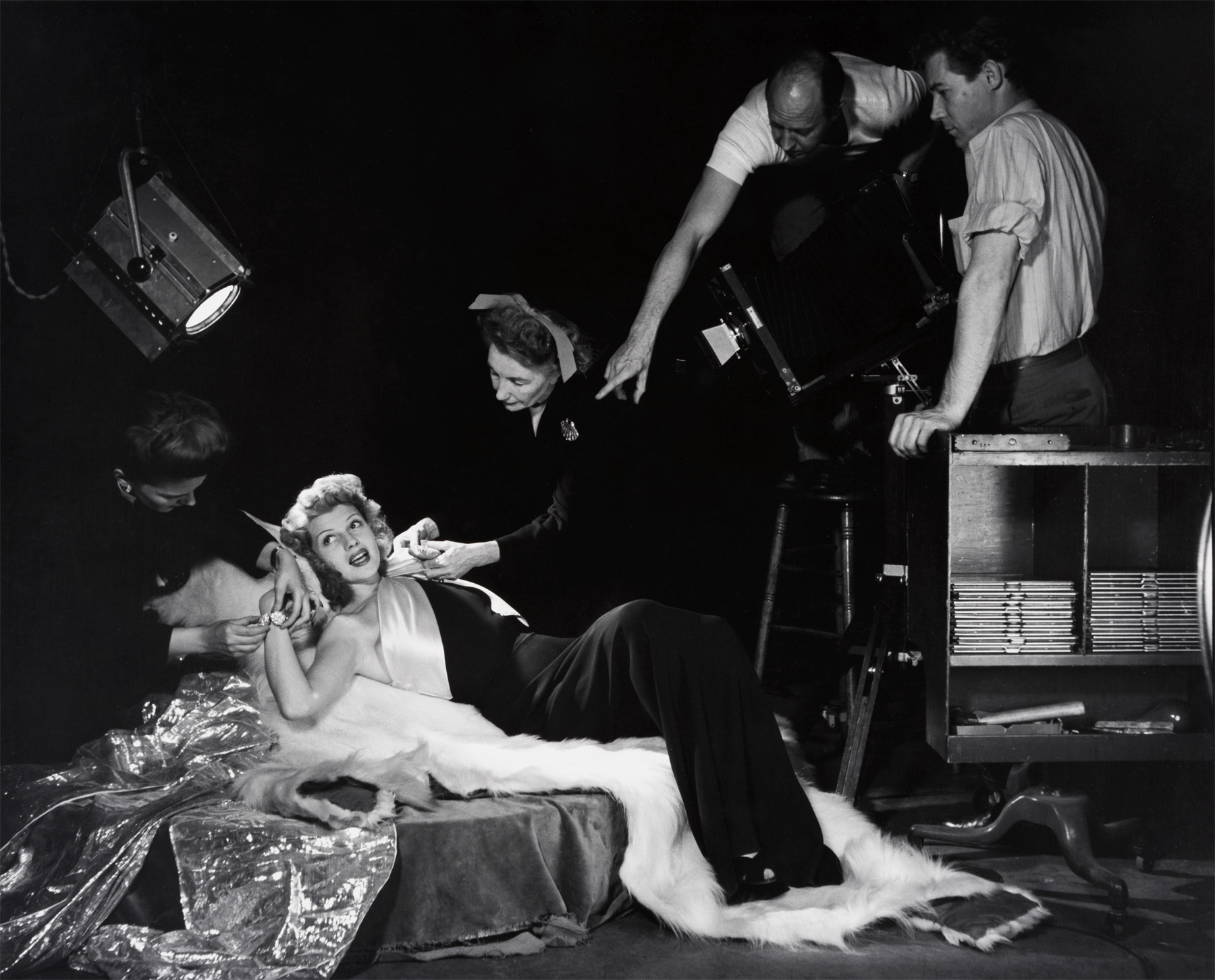


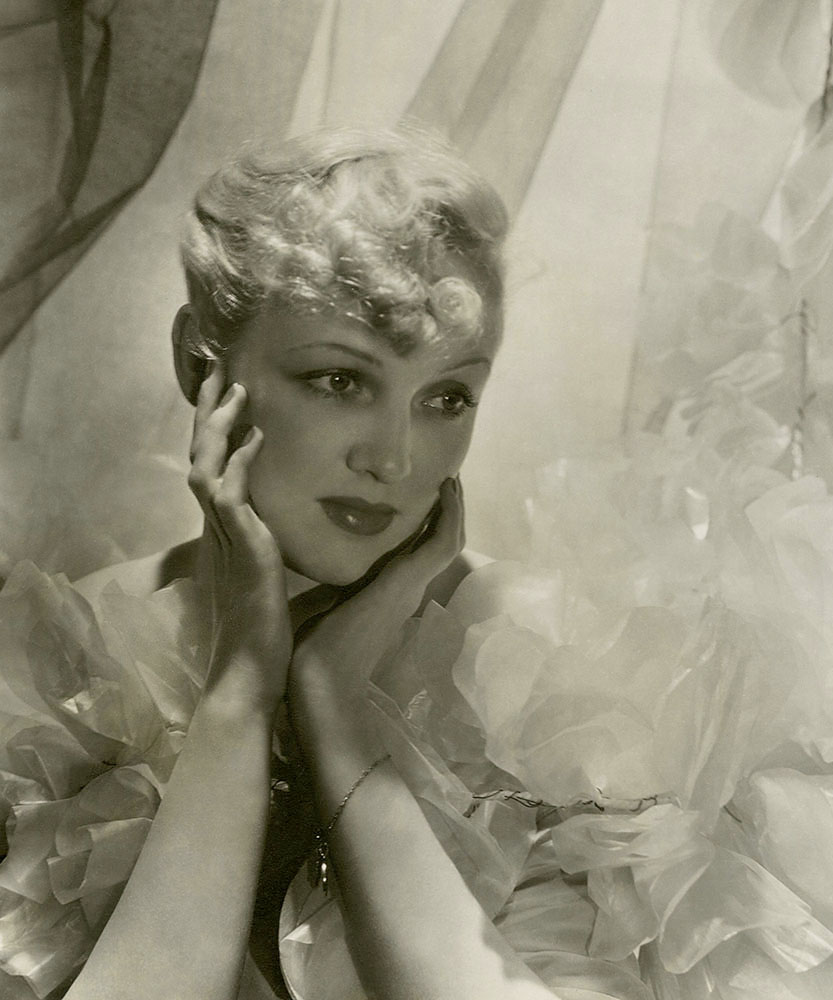
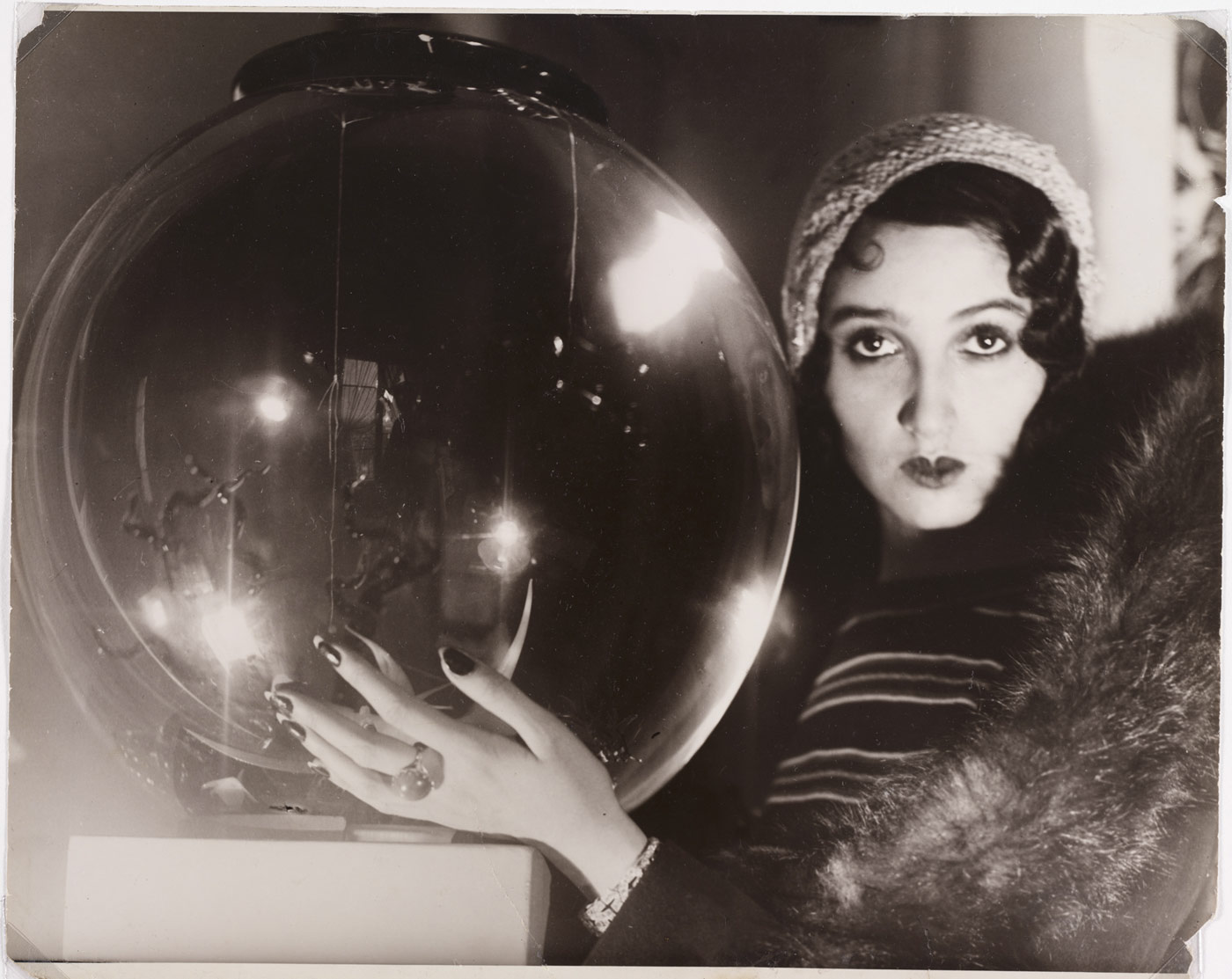
Philippe Halsman (American, 1906-1979) '"Rita Hayworth," Harper's Bazaar Studio' 1943 from the exhibition 'The Camera Exposed' at the Victoria and Albert Museum, London, July 2016 - March 2017


Philippe Halsman (American, 1906-1979)
“Rita Hayworth,” Harper’s Bazaar Studio
1943
© Philippe Halsman Archive


There’s not much to say about this exhibition from afar, except to observe it seems pretty standard fare, with no outstanding revelations or insights into the conditions of the camera’s “becoming” in photographic images or an exploration of the limits of the lens’ seeing. As the Centre for Contemporary Photography notes in their current exhibition, An elegy to apertures, “The camera receives and frames the world through the lens. This aperture is a threshold that demarcates the distinction between the scene and its photographic echo. It is both an entrance and a point of departure.”

So what happens to this threshold when we fuse the photographer’s eye with the “oculus artificialis” of the camera? When we examine the way apertures, shadows and ghosts haunt photographic images long after the shutter has closed? If, as the text for this exhibition states, “Voyeurism is a recurring motif in photography, as the practice often involves observing and recording others,” what does this voyeurism say about the recording of the self as subject and the camera together – the self actualised, self-reflexive selfie?

An insightful text on the Based on truth (and lies) website (December 17, 2011) observes of a 1925 self-portrait by photographer Germaine Krull (1897-1985) (below):

“In 1925, Germaine Krull photographed herself in a mirror with a hand-held camera which half-covered her face. The camera is focused on the foreground of the image, such that the lens and the two hands holding the camera are sharp, while the face behind the camera is blurred. This self-portrait has given rise to many a feminist or professionally critical interpretation, ranging from the female domestication “of the masculinity of technical apparatus” through to the analogy of the camera with a weapon used by the photographer to “reduce the person opposite her […] to an impotent object”. However, if we attempt to interpret the photograph not so much in a figurative sense as in a concrete, phenomenal sense, we arrive at a completely opposite conclusion. By selecting the depth of field in such a way that only the camera and the hands are sharp, Germaine Krull has isolated her act of photographing from her subjectivity and individuality as the photographer. It is the technical apparatus, the camera, which is the focal point of the image and behind which the photographer’s face is blurred beyond recognition. We may assume that this physiognomical retreat behind the camera is less a typical feminine gesture of shyness and reticence than the characteristically ideological approach of a modernist photographer. There is one critical point in Krull’s portrait of herself as a photographer which gives us good reason to make this assumption, namely the fusion of the photographer’s eye with the “oculus artificialis” of the camera. The notion that the camera lens could not only replace the human eye as a means of capturing the world visually but also improve upon its ability to penetrate reality to its invisible depths was paradigmatic of the new, basically positivist photographic aesthetic of the 1920s. It is an aesthetic defined by the Bauhaus theorist László Moholy-Nagy in his manifesto “Painting Photography Film” in 1925 and visualised by countless collages, posters and book covers of the 1920s and 1930s depicting the camera lens as a substitute for the human eye. Germaine Krull’s self-portrait wholly identifies with this new photographic aesthetic, too. Indeed, her influential work “Métal”, a photographic eulogy of modern technology published in 1928, is its embodiment.”1


The highlight for me is that always transcendent image by Judy Dater, Imogen and Twinka at Yosemite (1974, below). I would hope in the exhibition there would be images by Diane Arbus, Edward Weston, Vivian Maier, Man Ray, Rodchenko and others. But you never know.

Dr Marcus Bunyan

1/ sgtr. “Germaine Krull, Selbstporträt mit Ikarette, 1925,” on the Based on truth (and lies) website December 17, 2011 [Online] Cited 01/03/2023


Many thankx to the V&A for allowing me to publish the photographs in the posting. Please click on the photographs for a larger version of the image.
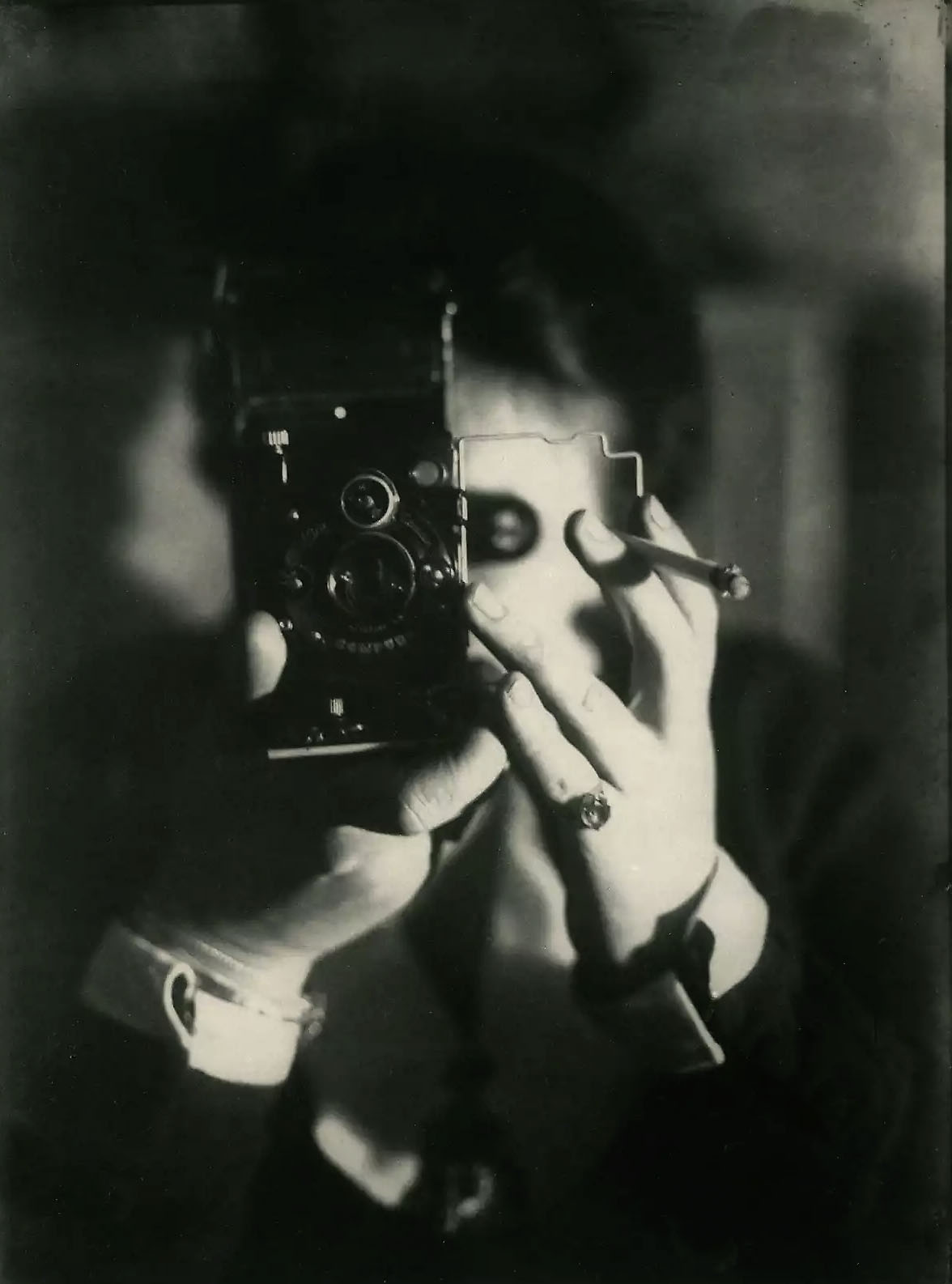


Germaine Krull (German, 1897-1985) 'Self-portrait' 1925


Germaine Krull (German, 1897-1985)
Self-portrait
1925
Gelatin silver print

This photograph is not in the exhibition. It is used under “fair use” conditions for the purposes of education and research.


In the age of the mobile phone, the camera as a stand-alone device is disappearing from sight. Yet generations of photographers have captured the tools of their trade, sometimes inadvertently as reflections or shadows, and sometimes as objects in their own right.

Throughout the history of photography the camera has often made an appearance in its own image, from the glint of Eugène Atget’s camera in a Parisian shop window from the 1900s, to the camera that serves as an eye in Calum Colvin’s 1980s photograph of a painted assemblage of objects.

Many images of cameras exploit the instrument’s anthropomorphic qualities. Held up to the face, as in Richard Sadler’s portrait of Weegee, it becomes a mask, the lens a mechanical eye. It conceals the photographer’s features yet reinforces his or her identity. Set on a tripod, it can take on human form, appearing like a body supported by legs, and can stand in for the photographer.

Photographs that include cameras often draw attention to the inherent voyeurism of the medium by turning the instrument towards the viewer. Such images confront the viewer’s gaze, returning it with the cool, mechanical look of the lens. The viewer cannot help but be aware not only of seeing, but of being seen.

Anonymous text. “The camera as star,” on the V&A website Nd [Online] Cited 24/11/2021


Lady Clementina Hawarden (Viscountess, British 1822-1865) 'Clementina Maude, 5 Princes Gardens; Photographic Study' c. 1862-1863 from the exhibition 'The Camera Exposed' at the Victoria and Albert Museum, London, July 2016 - March 2017


Lady Clementina Hawarden (Viscountess, British 1822-1865)
Clementina Maude, 5 Princes Gardens; Photographic Study
c. 1862-1863
Albumen print; Sepia photograph mounted on green card
21.6 x 23.2cm
© Victoria and Albert Museum, London


Lady Clementina Hawarden, a noted amateur photographer of the 1860s, frequently photographed her children. Here, her second-eldest daughter Clementina Maude poses next to a mirror, in  which a bulky camera is reflected. The camera  seems to stand in for the photographer, making  this a mother-daughter portrait of sorts.

This photograph gives a good idea of Lady Hawarden’s studio and the way she used it. It was situated on the second floor of her house at 5 Princes Gardens in the South Kensington area of London. Here her daughter Clementina poses beside a mirror. A movable screen has been placed behind it, across the opening into the next room. A side table at the left balances a desk at the right. The figure of the young girl is partially balanced and echoed by the camera reflected in the mirror and the embroidery resting on the table beside it.

Hawarden appears to have worked with seven different cameras. The one seen in the mirror is the largest. Possibly there is a slight suggestion of a hand in the act of removing and/or replacing the lens cap to begin and end the exposure.

Anonymous. “Clementina Maude, 5 Princes Gardens,” on the V&A website Nd [Online] Cited 01/03/2023


Lady Clementina Hawarden (Viscountess, British 1822-1865) 'Clementina Maude, 5 Princes Gardens; Photographic Study' c. 1862-1863 (detail)


Lady Clementina Hawarden (Viscountess, British 1822-1865)
Clementina Maude, 5 Princes Gardens; Photographic Study (detail)
c. 1862-1863
© Victoria and Albert Museum, London


Laelia Goehr (British born Russia, 1908-2002) 'Bill Brandt with his Kodak Wide-Angle Camera' 1945


Laelia Goehr (British born Russia, 1908-2002)
Bill Brandt with his Kodak Wide-Angle Camera
1945
© Alexander Goehr


Laelia Goehr (1908-2002), learned photography from Bill Brandt, who poses for this portrait with his newly-acquired Wide-Angle Kodak. This model was originally used by police to photograph crime scenes – the lens provides 110 degrees angle of view, equating approximately to a 14/15mm lens on a 35mm camera. Brandt experimented with it to produce his series Perspectives on Nudes, the same year as this portrait was taken. Brandt’s camera, which was made of mahogany and brass with removable bellows, was sold by Christie’s in 1997 for £3450.

Anonymous. “The camera as star: produced as part of The Camera Exposed, on the V&A website Nd [Online] Cited 01/03/2023
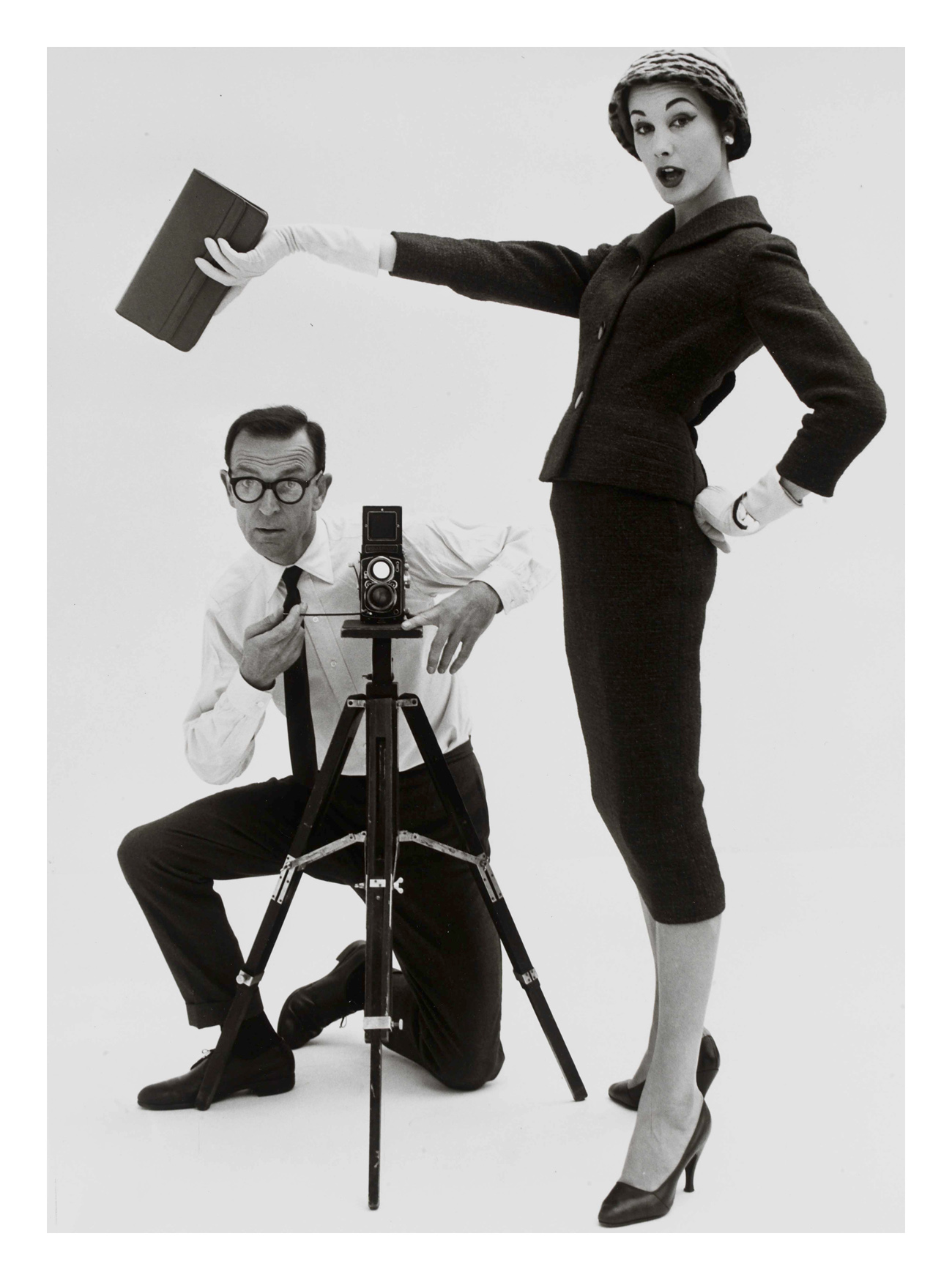
 

John French (English, 1907-1966) 'John French and Daphne Abrams in a tailored suit' 1957


John French (English, 1907-1966)
John French and Daphne Abrams in a tailored suit
1957, printed October 2009; print made by Jerry Jack
Gelatin silver print
27.8 x 38cm
Published in the TV Times, 1957
© Victoria and Albert Museum, London


French often left the actual release of the shutter to his assistants. On this occasion however, he inserted himself into the picture, kneeling behind a tripod-mounted Rolleiflex with the shutter release cable in his hand. His crouched, slightly rumpled presence gives a sense of behind-the scenes studio work and contrasts playfully with the polished elegance of the model beside him.
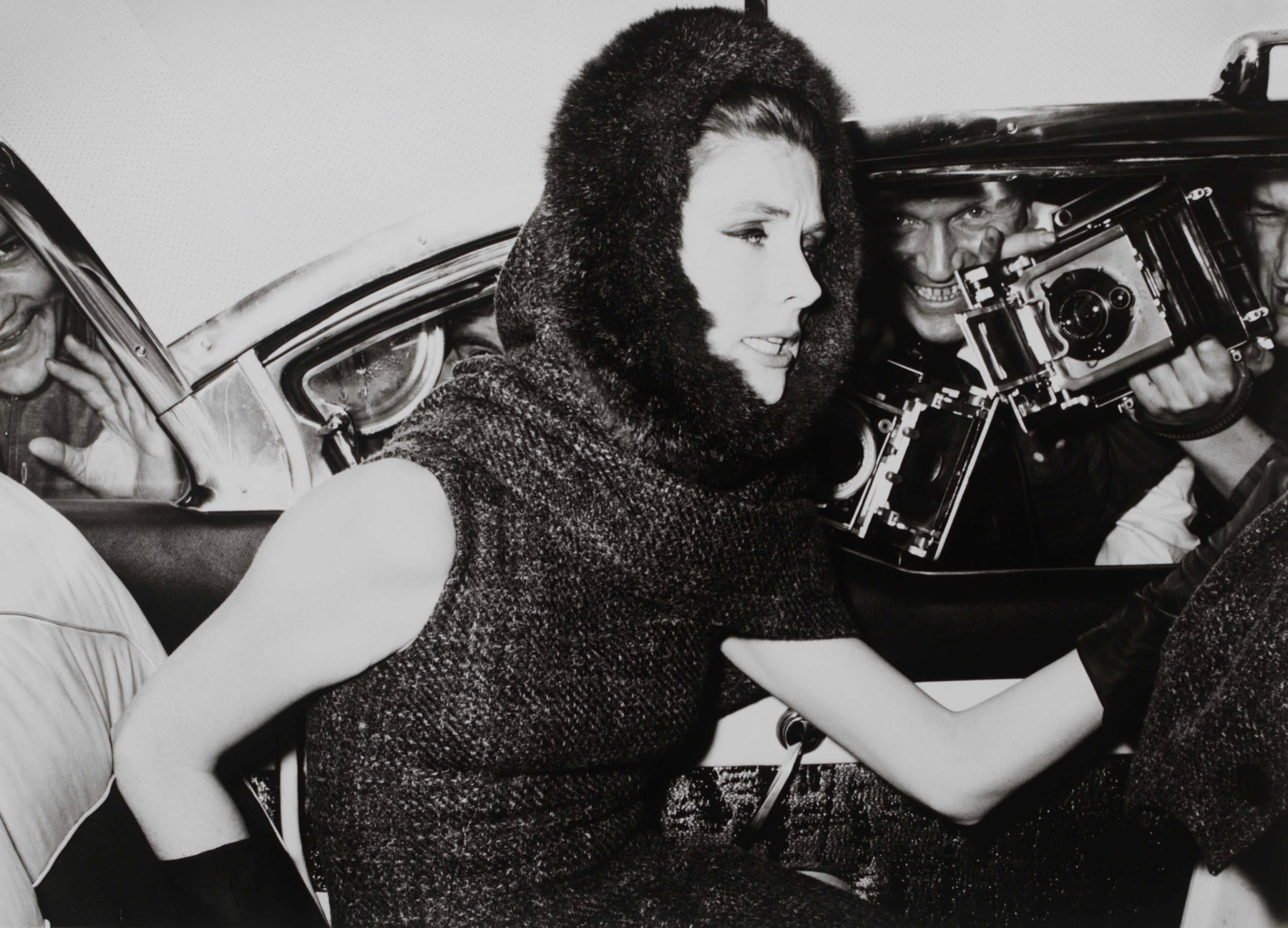
 

Richard Avedon (American, 1923-2004) 'Suzy Parker, dress by Nina Ricci, Champs-Elysée, Paris' 1962


Richard Avedon (American, 1923-2004)
Suzy Parker, dress by Nina Ricci, Champs-Elysée, Paris
1962
© Richard Avedon Foundation


Richard Sadler (British, 1927-2020) "Weegee the Famous" 1963


Richard Sadler (British, 1927-2020)
“Weegee the Famous”
1963
© Richard Sadler FRPS


Coventry-based portrait photographer Richard Sadler (b. 1927) photographed the self-proclaimed ‘Weegee the Famous’ in 1963. Weegee was a New York press photographer who gained his nickname – a phonetic spelling of Ouija, the fortune-telling board game – for his reputation for arriving at crime scenes before the police. His fame was international by the time this portrait was taken. Weegee’s visit to Coventry coincided with ‘Russian Camera Week’ at the city’s Owen Owen department store. The camera Weegee holds up to his eye here is the Zenit 3M, a newly-introduced Russian model made by the Krasnogorsk Mechanic Factory between 1962 and 1970.

A few years later Weegee made a comparable self-portrait in which the camera (this time a recent Nikon model) obscures his right eye.

Anonymous. “The camera as star: produced as part of The Camera Exposed, on the V&A website Nd [Online] Cited 01/03/2023


Photographer unknown. 'Camera on black cloth' Date unknown


Photographer unknown
Camera on black cloth
Date unknown
© Victoria and Albert Museum, London


The camera pictured here is a Super Ikonta C 521/2 camera, produced by the German company Zeiss Ikon from about 1936 to 1960. It has been carefully lit and arranged on a velvet cloth as if it were a still-life subject, by an unknown photographer.

Anonymous. “The camera as star: produced as part of The Camera Exposed, on the V&A website Nd [Online] Cited 01/03/2023


Tim Walker (British, b. 1970) 'Lily Cole with Giant Camera' 2004


Tim Walker (British, b. 1970)
Lily Cole with Giant Camera
2004
© Tim Walker


British fashion photographer Tim Walker (born 1970) has collaborated with the art director and set designer Simon Costin for over a decade, and Costin’s oversized props feature in many of Walker’s sparkling, magical scenes. Costin based the giant camera on Walker’s 35mm Pentax K1000. Walker found inspiration for this shoot in a 1924 fashion illustration by Vogue artist Benito. Benito depicted girls reading a magazine from which the models appear to be coming alive.

Anonymous. “The camera as star: produced as part of The Camera Exposed, on the V&A website Nd [Online] Cited 01/03/2023


Every photograph in this display features at least one camera. From formal portraits to casual snapshots, still-lifes to collages, they appear as reflections or shadows, and sometimes as objects in their own right. This summer the V&A displays of over 120 photographs that explore the camera as subject. People are taking more photographs today than ever before, but as they increasingly rely on smartphones, the traditional device is disappearing from sight.

The Camera Exposed showcases works by over 57 known artists as well as many unidentified amateur photographers. From formal portraits to casual snapshots, and from still-lifes to cityscapes, each work features at least one camera. Portraits of photographers such as Bill Brandt, Paul Strand and Weegee, posed with their cameras, are on display alongside self-portraits by Eve Arnold, Lee Friedlander and André Kertész, in which the camera appears as a reflection or a shadow. Other works depict cameras without their operators. In the earliest photograph included in the display, from 1853, Charles Thurston Thompson captures himself and his camera reflected in a Venetian mirror. The most recent works are a pair of 2014 photomontages by Simon Moretti, created by placing fragments of images on a scanner.

The display showcases several new acquisitions, including a recent gift of nine 20th-century photographs. Amongst these are a Christmas card by portrait photographer Philippe Halsman, an image of photojournalist W. Eugene Smith testing cameras and a self-portrait in the mirror by the French photojournalist Pierre Jahan. On display also is a recently donated collection of 50 20th-century snapshots of people holding cameras or in the act of taking photographs. These anonymous photographs attest to the broad social appeal of the camera.

Many of the photographs in the display highlight the anthropomorphic qualities of the camera. Held up to the face like a mask, as in Richard Sadler’s Weegee the Famous, the lens becomes an artificial eye. In Lady Hawarden’s portrait of her daughter, a mirror reflection of the camera on a tripod takes on a human form, a body supported by legs.

Cameras in photographs can also emphasise the inherent voyeurism of the medium. Judy Dater explores this theme in her well-known image of the fully clothed photographer Imogen Cunningham posed as if about to snap nude model Twinka Thiebaud. In other photographs on display, the camera confronts the viewer with its mechanical gaze, drawing attention to the experience not only of seeing, but of being seen.

Press release from the V&A


Charles Thurston Thompson (British, 1816-1868) 'Thompson Venetian mirror circa 1700' 1853


Charles Thurston Thompson (British, 1816-1868)
Venetian mirror circa 1700
1853
Albumen print from wet collodion-on-glass negative
22.8 x 16.3cm
© Victoria and Albert Museum, London


As early as 1853, Charles Thurston Thompson (1816-1868), the first official photographer to the South Kensington Museum (as the V&A was then called), recorded his reflection, along with that of his camera, in the glass of an ornate Venetian mirror. Loan objects such as the mirror were photographed so that photographic copies could be sold to designers, craftsmen and students, and also filed in the Museum’s library for study. By recording not only the frame’s intricate carvings but also his reflection and that of his box form camera and tripod, Thompson showed the very process by which he made the image. It gives us a vivid glimpse of a photographer at work outdoors in the early days of the Museum and the profession of Museum Photography.

Anonymous. “The camera as star: produced as part of The Camera Exposed, on the V&A website Nd [Online] Cited 01/03/2023


Eugène Atget (French, 1857-1927) 'Shopfront, Quai Bourbon, Paris, France' c. 1900


Eugène Atget (French, 1857-1927)
Shopfront, Quai Bourbon, Paris, France
c. 1900
Albumen print from gelatin dry plate negative
21 x 17.5cm
© Victoria and Albert Museum, London


The reflection of Eugène Atget’s (1857-1927) camera is an appealing detail in this photographic record of Parisian architecture from the turn of the century. Atget’s photographs had a primarily documentary role – this image was purchased by the V&A in 1903 as an illustration of Parisian ironwork. Yet it carries a strangeness which has fascinated 20th-century photographers. His photographs acquired artistic status in the mid-1920s when they were ‘discovered’ by artists associated with Surrealism.

Anonymous. “The camera as star: produced as part of The Camera Exposed, on the V&A website Nd [Online] Cited 01/03/2023


This photograph is an albumen print, contact printed by Atget from a 24 x 18 glass negative. The dark shapes of two clips which held the negative in place on the right edge of the image are visible. This image was one of many photographs bought by the V&A directly from Atget, in this case, in 1903. This photograph would have been bought as simply an illustration of ironwork in Paris.

The albumen process was almost never used by the early 1900s, so the image can be dated to the 19th century. The use of this developing process also supports the non-art status intended for the photograph. There is, however, an ambiguity in the reading of this image and most strongly in the reflection in the door of the street and Atget with his camera. This is one of a number of Atget images where it is possible to see why his photographs have fascinated 20th-century photographers; it carries, whether intended or not, a strangeness which invests the image with potential meaning beyond its primarily documentary role.

Anonymous. “Shopfront, Quai Bourbon, Paris, France,” on the V&A website Nd [Online] Cited 01/03/2023


Pierre Jahan (French, 1909-2003) 'Autoportrait à Velo ('Self-portrait on bike') ' 1935


Pierre Jahan (French, 1909-2003)
Autoportrait à Velo (‘Self-portrait on bike’)
June 1944
Gelatin silver print
© Victoria and Albert Museum, London


Here, Jahan seems to have paused while cycling through the streets of Paris to snap himself in a mirror. His dangling cigarette and precarious perch on the bicycle suggest spontaneity, but the design of his camera demanded a deliberate approach. A Reflex-Korelle, manufactured in Dresden, it usually required the operator to hold it at waist level and look down into the viewfinder.


Pierre Jahan (French, 1909-2003)

Pierre Jahan (9 September 1909 – 21 February 2003) was a French photographer who often worked in a Surrealist style.

Born in Amboise and introduced to photography by his family at a very early age, Jahan received his first professional commission when he moved to Paris in 1933, through a meeting with ad-man Raymond Gid. In 1936 he joined the Rectangle group of photographers. This group, founded by Emmanuel Sougez, among others, encouraged him in his career as a photographer.

During the Occupation, he worked for the magazine Images de France, making portraits of celebrity figures such as Colette, and he produced large series of pictures such as “La mort et les statues,” published in 1946 with a text by Jean Cocteau. They also co-published a book in which Cocteau’s poem “Plain Chant” is illustrated by photographed nudes (1947).

A passionate experimenter with a strong interest in Surrealism, Jahan produced many collages and photomontages, which he used freely for the many advertising commissions that came his way after the end of World War II.

A committed activist for photographers’ rights, he helped to found the French federation of art photographers (FAPC), of which he became vice-chairman. In 1949 he joined the professional photographers’ association Le Groupe des XV alongside Robert Doisneau, Willy Ronis, and others, to lobby for the conservation of France’s photographic heritage. He took part in their exhibitions and in those held by the Salon National de la Photographie.

Text from the Wikipedia website


Unknown photographer. 'Vernacular photograph' c. 1940s


Unknown photographer
Vernacular photograph
c. 1940s
Gelatin silver print
71mm x 98mm
© Victoria and Albert Museum, London


Vernacular portrait photograph of a woman in front of a fence, using a camera held at chest height. Photographer unknown, c. 1940s. Gelatin silver print, from the collection of Peter Cohen, given as part of a group of 50 photographs featuring cameras.


Elsbeth Juda (British born Germany, 1911-2014) 'Mediterranean Fortnight' 1953


Elsbeth Juda (British born Germany, 1911-2014)
Mediterranean Fortnight
1953
© Siobhan Davies


Elsbeth Juda (British born Germany, 1911-2014)

Elsbeth Juda (1911-2014) was a British fashion photographer who worked for more than 20 years as photographer and editor on The Ambassador magazine. This image was shot at an archaeological site in Cyprus for a story on British fashion abroad. The model appears to pose for a local tintype photographer with a homemade looking camera. Tintype, also called ferrotype, was an early photographic process which produced an underexposed negative using a thin metal plate. Tintype photography was around 100 years old when Juda took this shot.

Anonymous. “The camera as star: produced as part of The Camera Exposed, on the V&A website Nd [Online] Cited 01/03/2023


Elsbeth Ruth Juda (née Goldstein) and known professionally as Jay (2 May 1911 – 5 July 2014), was a British photographer most notable for her pioneering fashion photographs and work as associate editor and photographer for The Ambassador magazine between 1940 and 1965.

The Ambassador

Hans and Elsbeth Juda originally opened a London satellite office for the Dutch trade magazine International Textiles. After 1940, however, when Amsterdam came under control of the Germany army, the magazine proved too difficult to continue. In March 1946 the Judas changed the name of the publication to The Ambassador and changed its focus to British industry, trade and exports. The magazine was influential from its inception and encouraged by the British Government, who helped by ensuring a continual supply of paper during the war. Indeed, The Ambassador, The British Export Magazine became the voice of British manufacturing for export when the nation’s trade was struggling to emerge after 1945. It was published monthly in four languages (English, German, French and Portuguese), had subscribers in over ninety countries, and a circulation of 23,000 copies.

Juda’s husband, Hans, coined the official motto “Export or Die” for The Ambassador. Later, as the magazine became an essential marketing and press journal for a Britain desperate to reestablish itself as a global exporter in the post-war era, the phrase would become a mantra for the national manufacturing industry. Throughout their work during the 1940s, 1950s and 1960s, Juda and her husband became two of the United Kingdom’s greatest champions for export, constantly promoting every facet of British manufacturing, culture and the arts and, in the process, coming into close contact with a host of distinguished artists, writers, designers and photographers. The critic Robert Melville described Ambassador as “the most daring and enterprising trade journal ever conceived… no other magazine… has so consistently and brilliantly demonstrated the relevance of works of art to the problems of industrial design.”

Juda’s shoots for The Ambassador combined elements of fashion, modernism and trade. Her series of photos of the famed British model Barbara Goalen modelling Scottish textiles among the heavy machinery of working textile factory are especially representative of her unique visual aesthetics. Together they built a considerable art collection from the many artists that they came in contact with at The Ambassador. It is a much wider circle of friends, however, which would allow Jay to capture every facet of a reemerging post-war Britain through the lens of her camera. The magazine was bought by Thomson Publications in 1961 and continued to be published until 1972.

Text from the Wikipedia website


Armet Francis (British born Jamaica, b. 1945) 'Self-portrait in Mirror' 1964


Armet Francis (British born Jamaica, b. 1945)
Self-portrait in Mirror
1964
© Armet Francis


Armet Francis was born in Jamaica in 1945 and moved to London at the age of ten. His photographic career began in his mid-teens when he worked as an assistant for a West End photographic studio. His early photographs show him experimenting with the camera as a technical device and a tool for self-representation. The camera in this self-portrait is a Yashica-Mat LM twin lens reflex, an all-mechanical model introduced in 1958, with an inbuilt light meter. It records his identity as a professional photographer, while the surrounding scene offers an intimate glimpse into his personal life.

Anonymous. “The camera as star: produced as part of The Camera Exposed, on the V&A website Nd [Online] Cited 01/03/2023


Armet Francis is a Jamaican-born photographer and publisher who has lived in London since the 1950s. He has been documenting and chronicling the lives of people of the African diaspora for more than 40 years and his assignments have included work for The Times Magazine, The Sunday Times Supplement, BBC and Channel 4.

He has exhibited worldwide and his work is in collections including those of the Victoria & Albert Museum and the Museum of London. One of his best known photographs is 1964’s “Self Portrait in Mirror”.

Read a fuller biography on the Wikipedia website


Judy Dater (American, b. 1941) 'Imogen and Twinka at Yosemite' 1974


Judy Dater (American, b. 1941)
Imogen and Twinka at Yosemite
1974
© Judy Dater


Cameras in photographs can also emphasise the inherent voyeurism of the medium. Judy Dater explores this theme in her well-known image of the fully clothed photographer Imogen Cunningham posed as if about to snap nude model Twinka Thiebaud.

Dater met Imogen Cunningham, a prominent American photographer, in 1964. Cunningham acted as a mentor to Dater, and the two became close friends. This image is from Dater’s larger series addressing the theme of voyeurism, in particular the idea of someone clothed watching someone nude. Voyeurism is a recurring motif in photography, as the practice often involves observing and recording others.


Judy Dater (American, b. 1941)

Judith Rose Dater (née Lichtenfeld; June 21, 1941) is an American photographer and feminist. She is perhaps best known for her 1974 photograph, Imogen and Twinka at Yosemite, featuring an elderly Imogen Cunningham, one of America’s first woman photographers, encountering a nymph in the woods of Yosemite. The nymph is the model Twinka Thiebaud. The photo was published in Life magazine in its 1976 issue about the first 200 years of American women. Her photographs, such as her Self-Portraiture sequence, were also exhibited in the Getty Museum. …

Photography

Judy Dater uses photography as an instrument for challenging traditional conceptions of the female body. Her early work paralleled the emergence of the feminist movement and her work became strongly associated with it. At a time when female frontal nudity was considered risqué Dater pushed the boundaries by taking pictures of the naked female body. However, she did so in a way which did not objectify her subject which was in many cases, herself. Dater began taking photographs in the 1960s and she is still taking photographs today. Mark Johnstone, an Idaho resident whom Dater photographed in the early 80’s remarked that “During this time, she never got swayed by or indulged in trends, but moved with her own vision. She’s one of the few successful women in the art world, especially photography, who never depended on ongoing academic support to fuel and expand her artistic exploration.”

While her subject and message remained relatively constant throughout her career, Dater experimented with a variety of compositions as her career developed. Her photographs, and in particular, her portraits (which she specialises in) are taken in both black and white, and in colour. She has taken portraits in the Southwestern desert and also posed as female stereotypes in a more obvious display of activism. Her 1982 portrait “Ms. Clingfree” demonstrated the latter as Dater posed with an assortment of cleaning supplies.

She was influenced by the vital cultural intersection of photography and feminism, and the second wave of feminism which started in the 1960s and lasted up till the 1980s. In the 1980s, much has changed and the country as a whole became more conservative in areas of political life. The gains of the women’s movement began to slow, and many feminists became discouraged with the continuation of sexist attitudes and behaviour. Through her powerful photography and personal sense of style, Dater was able to surpass these conservative values and was able to effectively convey her views to her audience.

One of her famous photograph sequences taken in the 1980s, known as the Self-Portraiture sequence, exploited themes such as identity, feminism, and the human connection with nature. She effectively conveyed these themes and delivered, through her photography, the stories of women’s lives, relationships, and personal emotions. For example, in her photograph titled, My Hands, Death Valley, Dater presents the theme of feminism through the placement of the artist’s hands on the car’s glass window; her hands are crinkled, which is a sign of ageing. The theme of personal identity is explored in connection with the theme of feminism. The background is of the hazy Death Valley, the grounds are dry, her hands are weathered, and she’s trying to force open a car window. The theme of human’s connection with nature is exploited by taking the photograph in a natural landscape setting, and putting herself out there.

Read a fuller biography on the Wikipedia website


Victoria and Albert Museum
Cromwell Road
London
SW7 2RL
Phone: +44 (0)20 7942 2000

Opening hours:
Daily 10 – 17.45
Friday 10 – 22
V&A website

LIKE ART BLART ON FACEBOOK

Back to top

Exhibition: ‘The Intimate World of Josef Sudek’ at Jeu de Paume, Paris

Exhibition dates: 7th June – 25th September, 2016


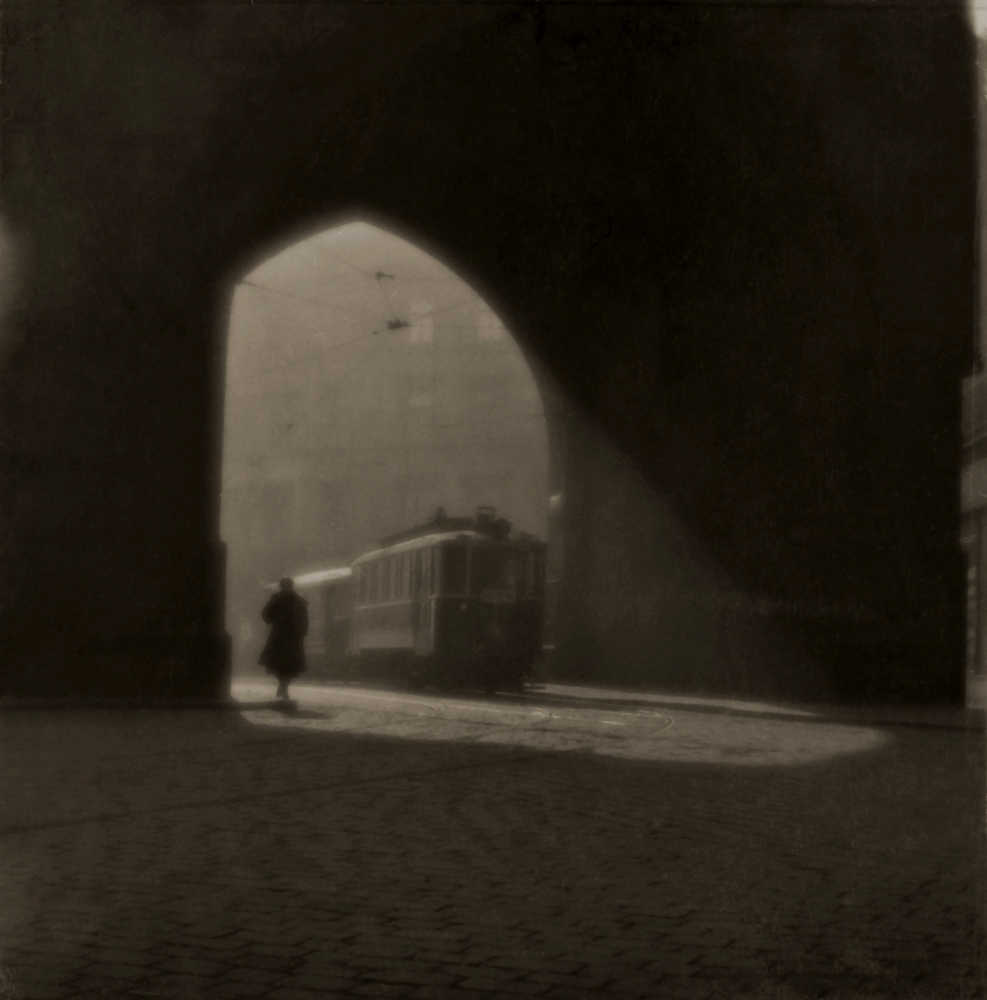
Josef Sudek (Czech, 1896-1976) 'St. Vitus cathedral, Prague, Czech Republic' c. 1926 from the exhibition 'The Intimate World of Josef Sudek' at Jeu de Paume, Paris, June - Sept, 2016
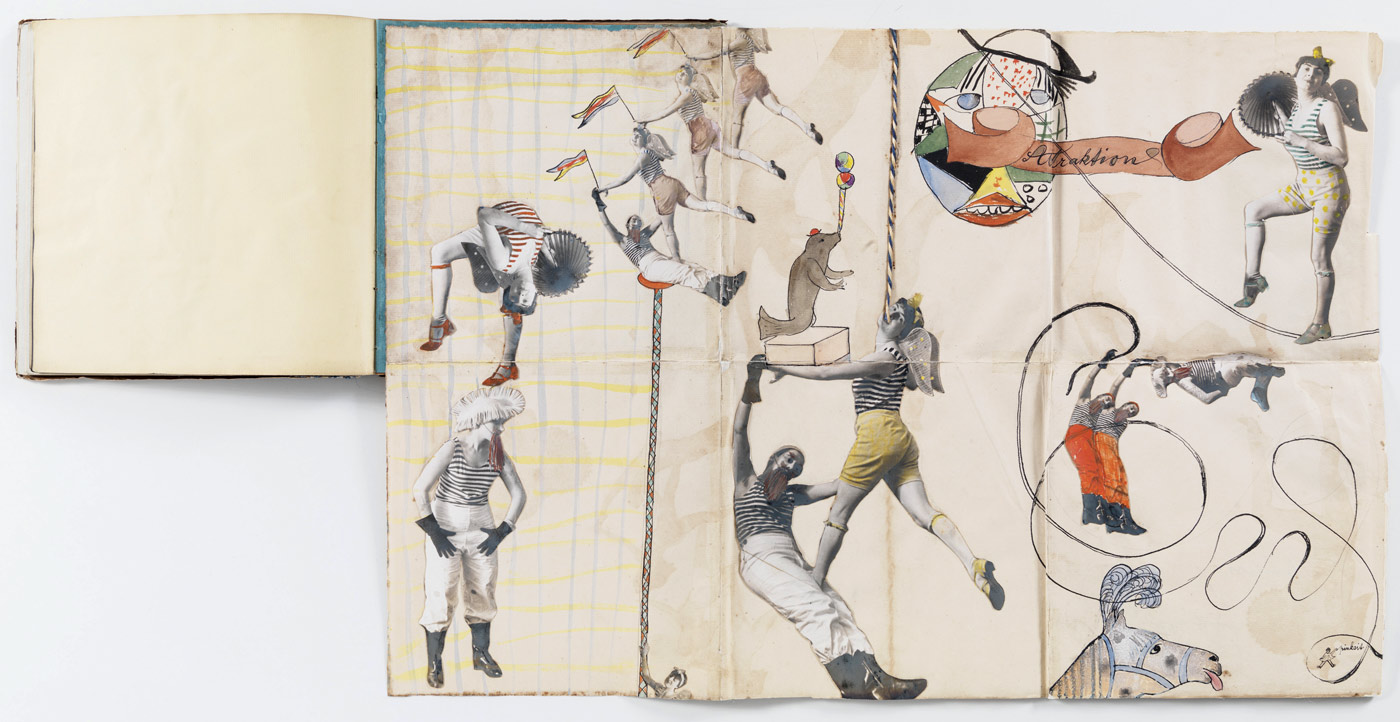
 

Josef Sudek (Czech, 1896-1976)
St. Vitus cathedral, Prague, Czech Republic
c. 1926
Silver gelatin print


A poetry of the everyday

Josef Sudek, a one-armed man lugging around a large format camera, is one of my top ten photographers of all time.

His photographs, sometimes surreal, always sensitive, have a profound sensibility that affect the soul. Melancholy and mysterious by turns, they investigate the inner life of objects which stand as metaphors for the inner life of the artist. A form of healing after his horrific injuries and the loss of his arm during the First World War, the photographs purportedly look outwards upon the world but are actually interior meditations on life, death and the nature of being. Light emerges from the darkness; understanding from tribulation; and Sudek, in Jungian terms, integrates his ego into his soul through the process of (photographic) individuation – whereby the personal and collective unconscious (his hurt and damage) are brought into consciousness (eg. by means of dreams, active imagination, or free association) to be assimilated into the whole personality. It is a completely natural process necessary for the integration of the psyche and, in Sudek’s life, was integral to his healing from the vicissitudes of war.

Using Pictorialism as the starting point for his exploration of the world, Sudek never abandons the creation of “atmosphere” in his photographs, even as the images become modernist, surrealist and offer a new way of seeing the world. Having myself photographed extensively at night, and from the interior of my flat, I can understand Sudek’s fascination with both locations: the quiet of night, the stillness, the clarity of vision and thought; the interior as exterior, the projection of interior thoughts onto an external surface reflected back into the camera lens. “Nature, architecture, streets and objects are magnified by his sensitivity and mastery of the effects of light, contrasting with the impenetrable cloak of darkness.” Except the cloak of darkness is not impenetrable, as light cannot exist without darkness.

Pace, his photographs are breath / taking. They are exhalations of the spirit.

Sudek’s ability to transcend the literal, his ability to transform the objectal quality of photography ranks him as one of the top photographers of all time. He synthesises  a poetry of objects, a poetry of the everyday, and projects the folds of his mind onto the visual field (through “tears” of condensation on the window, through labyrinths of paper and glass, such as in Labyrinth on my table, 1967, below). As a form of self-actualisation – the desire to become everything that one is capable of becoming – Sudek’s photographs interrogate that chthonic darkness that lurks in the heart of everyone of us, our dark night of the soul.

In that process of discovery (who am I, what kind of human being am I, how can I heal myself), he finds redemption.

Dr Marcus Bunyan


Many thankx to Jeu de Paume for allowing me to publish the photographs in the posting. Please click on the photographs for a larger version of the image.


“I like to tell stories about the life of inanimate objects, to relate something mysterious: the seventh side of a dice. Everything around us, dead or alive, in the eyes of a crazy photographer mysteriously takes on many variations, so that a seemingly dead object comes to life through light or by its surroundings.”


Josef Sudek


Josef Sudek at Jeu de Paume

“The Intimate World of Josef Sudek”, exhibition at Jeu de Paume Paris, from 07 June 2016 until 25 September 2016

Entitled “The Intimate World of Josef Sudek”, this exhibition is the first of this scale to revisit the life and work of Josef Sudek (Kolin, 1896 – Prague, 1976) within its socio-geographical and historical context: Prague during the first half of the twentieth century, at a time when the Czech capital was a veritable hub of artistic activity.

The exhibition features a selection of 130 works spanning the totality of Sudek’s career, from 1920 to 1976, and allows the public to examine the extent to which his photography was a reflection of his personal relationship to the surrounding world. On display are works that are the result of Sudek’s photographic experiments carried out within the privacy of his own studio, images of the garden seen from his window, and photographs of adventures further afield. The artist enjoyed meandering through the streets of Prague and its surrounding suburbs, and made frequent excursions to the nearby countryside.

Sudek’s enduring fascination with light, and its absence, is at the root of some of the most haunting photographs of the twentieth century. Nature, architecture, streets and objects are magnified by his sensitivity and mastery of the effects of light, contrasting with the impenetrable cloak of darkness.

Text from the Jeu de Paume Vimeo website


On display are works that are the result of Sudek’s photographic experiments carried out within the privacy of his own studio, images of the garden seen from his window, and photographs of adventures further afield. The artist enjoyed meandering through the streets of Prague and its surrounding suburbs, and made frequent excursions to the nearby countryside. Sudek’s enduring fascination with light, and its absence, is at the root of some of the most haunting photographs of the twentieth century. Nature, architecture, streets and objects are magnified by his sensitivity and mastery of the effects of light, contrasting with the impenetrable cloak of darkness.

As a photographer, Sudek was particularly concerned with the quality of the photographic print, an essential component in terms of the expressive potential of an image. His mastery of the pigment printing process enabled him to produce highly atmospheric and evocative images, thereby reaping all of the reflective and descriptive power of the gelatin silver print. The exhibition presents work from Sudek’s early career, but also features photographs from a pivotal period of experimentation and innovation, beginning in the 1940s. Focusing on the technical and formal aspects of the medium of photography, Sudek created pigment prints, halftone prints, puridlos (photographs between two windows) and veteše (photographs inserted into old frames), techniques which allowed him to transform the objectal quality of photography.

The loss of his right arm during the First World War and the difficulties he now encountered in transporting his view camera did not dampen his passion for photography. Sudek’s studio window became an object of abiding fascination – rather like the surface of a canvas – reflecting moments of exquisite tenderness and hope when a flowering branch brushed against its pane, or of poignant melancholy when he observed the world beyond his window transformed by the playful infinity of mist. His room with a view allowed him to capture, on film, his love of Prague. His photographs demonstrate both a precision and a depth of feeling, fitting odes to the rich history and architectural complexity of the Czech capital.

Like many artists of his generation marked by their experience of war, Sudek expresses a particularly acute awareness of the dark and tormented aspects of human existence – feelings that would inspire some of his most melancholy and most moving pictures. A photograph taken at night, through the glass pane of his window, shows a city plunged into darkness during the Occupation of the Second World War, and communicates a sentiment of unspeakable despair – a dramatic illustration of Sudek’s technical ability to transcend the literal.

The first part of the exhibition features images that herald the photographer’s later work, showing his early landscapes, portraits of fellow patients at Invalidovna, the Prague hospice for war invalids like Sudek, his hesitant foray into modernism, and his interior shots of St. Vitus Cathedral. Through images that recount the narrative of his life, the viewer gains access to Sudek’s inner world, and an insight into his immediate environment, the views and objects he loved, his studio and garden. His endless walks in Prague found expression in the views of the city and its surroundings, as well as in photographs of its more sordid “suburbs”, a subject explored by other Prague artists. The eastern and northern areas of Bohemia, the Beskid Mountains and the Mionší forest were other destinations close to the photographer’s heart. The exhibition “The Intimate World of Josef Sudek” provides a fascinating panorama of the work of this unique artist.

Text from the Jeu de Paume website


Beginnings

Sudek’s first photographic prints – small and largely assembled in albums – were mainly views of the countryside taken along the Elbe River when he travelled from Prague to Kolín to visit his mother between 1916 and 1922.

Using processes such as gelatin silver and bromoil he showed a talent for printing his pictures in a style that favoured soft edges and broad swathes of tone. Here Sudek was not so much studying the effects of light as he was observing the conventions of Pictorialism, a photography movement that straddled the last decade of the nineteenth century and the first decades of the twentieth century, and was based on a strong Romantic ethos. Pictorialist photographers enhanced atmospheric effects with such processes as carbon and gum bichromate. Sudek began using the carbon process regularly and in a personally expressive manner in the late 1940s.

His Invalidovna and St. Vitus Cathedral series in Prague, begun in the first half of the 1920s, show him exploring interior spaces where light emphasises both the profane and the sacred. The play of bands of sunlight and darkness is a central feature of the composition and, indeed, of the life of the photograph.


Josef Sudek (Czech, 1896-1976) 'Dimanche après-midi à l'île Kolín' [Sunday afternoon at Kolín island] c. 1922–1926


Josef Sudek (Czech, 1896-1976)
Dimanche après-midi à l’île Kolín [Sunday afternoon at Kolín island]
c. 1922-1926
Gelatin silver print
28.4 × 28.7cm
Musée des beaux-arts du Canada, Ottawa. Achat, 2000
© Succession de Josef Sudek


“… [Sudek] referred to photography as meteorology to describe the significance of the atmosphere, and how a photographer must predict the right conditions for photographing and enlarging prints. His work became sharper with richer tones, and his compositions became more illusive. The foregrounds and backgrounds of his photographs, particularly in his “Window” series began to oscillate. These achievements were perhaps made more attainable by his focus on inanimate objects over which he had more control than living things. Most of his cityscapes became deserted, as he directed his camera at statues or replaced what would have been a living subject with such emulative sculptures.

In effect, Sudek’s substitution of the inanimate for the animate brought the objects he photographed to life in his mind. He called the enormous decaying trees in the woods of Bohemia “sleeping giants” and would take portraits of masks and statuary heads, transforming them into frozen, worn grotesqueries. His personification of objects is even more vivid in his studio photography, particularly after 1939, the oncoming of World War II and the Nazi occupation of Prague. As the city was oppressed by German troops, the artist retreated into his studio and insulated himself sentimentally with still lifes. To an interviewer, he explained, “I love the life of objects. When the children go to bed, the objects come to life. I like to tell stories about the life of inanimate objects.” He devoted endless hours to arranging and photographing the everyday – apples, eggs, bread, and shells – and special objects given to him by friends, such as feathers, spectacles, and watches, which he called “remembrances” of that person. A photograph from his series “Remembrances of Architect Rothmayer, Mr. Magician,” for example, portrays objects respectfully placed in a row on a desk, as if artifacts from an archeological site, from which the history of a life or character of a man could be divined.

“Everything around us, dead or alive, in the eyes of a crazy photographer mysteriously takes on many variations,” Sudek said, “so that a seemingly dead object comes to life through light or by its surroundings.” This statement is perhaps telling of Sudek’s relationship to death and life, as a result of the loss of his arm and the manner in which he suffered the loss. In the 1963 film, “Zit Svuj Zivot” (Living Your Life), a documentary portrait of Sudek by Evald Strom, we see a sensitive man describing his efforts to photograph the reality of the objects around him, not as if he were bringing the objects to life, but as if it was his purpose to represent the lives of objects as they truly are. Of the image of a vase of wildflowers, he says “This is a photograph of wildflowers, my attempt to photograph wildflowers,” and of an old lamp, “This is a celebrated lamp; it holds a lot of memories.””

Ashley Booth Klein, “Josef Sudek and The Life of Objects,” in Obelisk Vol. 2 Issue 1, Winter 2015 [Online] Cited 18/09/2016. No longer available online


Josef Sudek (Czech, 1896-1976) 'Rue de Prague' 1924


Josef Sudek (Czech, 1896-1976)
Rue de Prague
1924
Gelatin silver print
8.3 × 8.2cm
Musée des beaux-arts du Canada, Ottawa. Don anonyme, 2010
© Succession de Josef Sudek


Josef Sudek (Czech, 1896-1976) 'Portrait de mon ami Funke' [Portrait of my friend Funke] 1924


Josef Sudek (Czech, 1896-1976)
Portrait de mon ami Funke [Portrait of my friend Funke]
1924
Gelatin silver print
28.5 × 22.6cm
Musée des beaux-arts du Canada, Ottawa. Achat, 1985
© Succession de Josef Sudek


“Josef Sudek: The World at My Window” is the first exhibition in France since 1988 to cover Sudek’s entire career and spotlight the different phases of his work. Coming in the wake of several exhibitions at the Jeu de Paume devoted to Eastern European photographers of the early twentieth century, among them André Kertész and Francois Kollar, this one comprises some 130 vintage prints by the Czech artist. Bringing to bear a vision at once subjective and timeless, Sudek captures the ongoing changes in Prague’s natural world and landscapes.

His early profession as a bookbinder came to an abrupt halt when he was conscripted into the Austro-Hungarian army in Bohemia and sent to the Italian front. After the First World War he came back to Prague wounded; the loss of his right arm meant abandoning bookbinding, and he turned to photography. After revisiting the battlefield in Italy once more he returned, in despair, to Prague: “I found the place,” he recounted, “but my arm wasn’t there. Since then I’ve never gone anywhere. I didn’t find what I was looking for.”

A study grant enabled him to train at the state-run school of graphic arts in Prague, where he mixed with practitioners of Pictorialism, a photographic movement aiming at achieving colour and texture effects similar to those of painting. He started concentrating on architectural details, always waiting until the light was absolutely perfect. Little by little he gave up the Pictorialist ambiences of his views of St Vitus’s cathedral, opting for a pure, straightforward approach which the American photographer Alfred Stieglitz summed up as “maximum detail for maximum simplification”.

During the Second World War Sudek began photographing the window giving onto his garden, the result being the celebrated Window of My Studio series. He then shifted his focus to the accumulated jumble of objects in the studio, producing a further series titled Labyrinths. Light was an inexhaustible theme in his work, orchestrating the seasons, making the invisible visible and transporting us into another world. As if to escape the leaden context of the War and then of Communism, Sudek took refuge in music, especially that of his compatriot Leoš Janáček. A true music lover, he gradually built up a substantial collection of recordings which he played to his friends during improvised concerts in his studio.

The second half of his career saw Sudek abandon photography’s traditional subjects as he explored the outskirts of Prague with his black view camera on his shoulder. Known as “the poet of Prague”, he became an emblematic figure in the Czech capital. Discreet and solitary, he gradually withdrew from the city’s art scene, leaving his studio only to prowl the streets at night with his imagination as his guide.

Sudek’s photographs rarely include people; his focus was more on empty urban and rural spaces. Fascinated by the streets of Prague, the city’s deserted parks and public gardens, and the wooded Bohemian landscapes his mastery of light rendered sublime, he preferred the un-enlarged contact print as a means of preserving all the detail and authenticity of the places he roamed through.  His work moved towards experiments with light. In photographs shot through with simplicity and sensitivity, Sudek foregrounds a kind of poetry of the everyday, using the interplay of light and shade to achieve a kind of fluctuation between interior and exterior.

Text from Jeu de Paume


Josef Sudek (Czech, 1896-1976) 'La Fenêtre de mon atelier' [The window of my studio] c. 1940-1948


Josef Sudek (Czech, 1896-1976)
La Fenêtre de mon atelier [The window of my studio]
c. 1940-1948
Gelatin silver print
17 × 11.2cm
Musée des beaux-arts du Canada, Ottawa. Don anonyme, 2010
© Succession de Josef Sudek


Josef Sudek (Czech, 1896-1976) 'La Fenêtre de mon atelier' [The window of my studio] c. 1940–1954


Josef Sudek (Czech, 1896-1976)
La Fenêtre de mon atelier [The window of my studio]
c. 1940-1954
Gelatin silver print
22.9 × 16.8cm
Musée des beaux-arts du Canada, Ottawa. Don anonyme, 2010
© Succession de Josef Sudek


Josef Sudek (Czech, 1896-1976) 'La Fenêtre de mon atelier' [The window of my studio] c. 1940-1950


Josef Sudek (Czech, 1896-1976)
La Fenêtre de mon atelier [The window of my studio]
c. 1940-1950
Gelatin silver print
28.1 × 22.9cm
Musée des beaux-arts du Canada, Ottawa. Don anonyme, 2010
© Succession de Josef Sudek


The world from my window

Sudek was not content with making single, unrelated images. He generally worked in projects or series, creating extended visual explorations of the phenomena and scenes he viewed – often from the closed window of his studio, which separated his private studio-home from the exterior world. In the series From My Window it was the endlessly varying states of transformation of droplets of water that he watched streaming down his windowpane. His images invite us to contemplate, with great fascination, the physical cycles of water and the phenomenon of rivulets coursing down a surface – like human tears. Reminding us even of [Paul] Verlaine’s “There is weeping in my heart like the rain upon the city…” Sometimes the melancholy mood of these images is leavened by a rose in a vase on the windowsill or tendrils of leaves announcing the arrival of spring.


There is weeping in my heart
like the rain falling on the town.
What is this languor
that pervades my heart?

Oh the patter of the rain
on the ground and the roofs!
For a heart growing weary
oh the song of the rain!

There is weeping without cause
in this disheartened heart.
What! No betrayal?
There’s no reason for this grief.

Truly the worst pain
is not knowing why,
without love or hatred,
my heart feels so much pain.

Paul Verlaine. “Il pleure dans mon coeur”


Josef Sudek (Czech, 1896-1976) 'Quatre saisons: l'été' [Four seasons: summer] c. 1940-1954


Josef Sudek (Czech, 1896-1976)
Quatre saisons: l’été [Four seasons: summer]
c. 1940-1954
From the series “La Fenêtre de mon atelier” [The window of my studio]
Gelatin silver print
22.6 × 17.1cm
Musée des beaux-arts du Canada, Ottawa. Don anonyme, 2010
© Succession de Josef Sudek


Josef Sudek (Czech, 1896-1976) 'La Dernière Rose' [The Last Rose] 1956


Josef Sudek (Czech, 1896-1976)
La Dernière Rose [The Last Rose]
1956
Gelatin silver print
28.2 x 23.2cm
Musée des beaux-arts du Canada, Ottawa. Don anonyme, 2010
© Succession Josef Sudek


Night walks

Sudek’s preoccupation with darkness dates to the Nazi Occupation of Prague from March 1939 until the end of the war. Experiencing his city plunged into nights of enforced darkness Sudek explored the absence of light in his pictures. We know that this was more than a technical exercise, for he wrote “Memories” and “Restless Night” on the verso of one nocturnal photograph dated 1943.

The curfews imposed on citizens at the time made it unlikely that Sudek ventured out into the city after dark during wartime. Neither agile nor inconspicuous with his large-format camera slung over his increasingly hunched back, Sudek would have risked his life had he done so. The small courtyard of his studio on Ujezd street was hidden from the road, however, and one or two lights in neighbouring apartments served as beacons. Well after sundown he would photograph the syncopated play of blurs of light against the wall of impenetrable blackness.

The spirit of place

Sudek visited and photographed places that held either personal or spiritual significance for him: the landscape along the Elbe River, Invalidovna, St. Vitus Cathedral, his studio, Prague’s complex streets and open squares, the majestic Prague Castle, the city’s surrounds, and Frenštát pod Radhoštĕm where he spent summers with friends. Hukvaldy, home of Leoš Janaček, the composer whose music he loved, was a particularly favoured haunt. This was true also of the ancient Mionší Forest where he navigated his way through dense brush and forests by way of shortcuts that he created and playfully named. The Beskid Mountains also served as spiritual retreat. Although he was an urbanite in many respects, Sudek’s love of nature and sense of despair for its desecration is strongly expressed in Sad Landscapes, his series of images made in the Most region where industrialisation ravaged the countryside in the 1950s.

The life of objects

Sudek collected everything. Today he would be known as a hoarder. But his obsession served him well, for out of the chaos of his small studio and living spaces he carefully selected a variety of these objects to photograph. From delicate feathers to crumpled paper and tinfoil, multi-faceted drinking glasses, flowers, fruit, seashells, envelopes, flasks, frames, prisms, candelabras, string and shoe moulds, the subjects ranged from the mundane to the exotic. Once chosen, the set-up was lovingly composed – often in subtly changed configurations with other objects – and carefully lit before being memorialised in either pigment or gelatin silver prints.


Josef Sudek (Czech, 1896-1976) 'Le Jardin Royal' [The Royal Garden] c. 1940-1946


Josef Sudek (Czech, 1896-1976)
Le Jardin Royal [The Royal Garden]
c. 1940-1946
Procédé pigmentaire au papier charbon [Carbon pigment on paper]
16.1 × 11.7cm
Musée des beaux-arts du Canada, Ottawa. Don anonyme, 2010
© Succession de Josef Sudek


Josef Sudek (Czech, 1896-1976) 'Prague pendant la nuit' [Prague at night] 1950


Josef Sudek (Czech, 1896-1976)
Prague pendant la nuit [Prague at night]
1950
Gelatin silver print
22.8 × 29cm
Musée des beaux-arts du Canada, Ottawa. Don anonyme, 2010
© Succession de Josef Sudek


Josef Sudek (Czech, 1896-1976) 'Prague pendant la nuit' [Prague at night] c. 1950-1959


Josef Sudek (Czech, 1896-1976)
Prague pendant la nuit [Prague at night]
c. 1950-1959
Gelatin silver print
12 × 16.7cm
Musée des beaux-arts du Canada, Ottawa. Don anonyme, 2010
© Succession de Josef Sudek


Josef Sudek (Czech, 1896-1976) 'Prague pendant la nuit' [Prague at night] c. 1950-1959


Josef Sudek (Czech, 1896-1976)
Prague pendant la nuit [Prague at night]
c. 1950-1959
Gelatin silver print
12.2 × 17.3cm
Musée des beaux-arts du Canada, Ottawa. Don anonyme, 2010
© Succession de Josef Sudek


Josef Sudek (Czech, 1896-1976) 'Le Jardin de Rothmayer' [The Rothmayer Garden] 1954-1959


Josef Sudek (Czech, 1896-1976)
Le Jardin de Rothmayer [The Rothmayer Garden]
1954-1959
Gelatin silver print
16.9 × 22.9cm
Musée des beaux-arts du Canada, Ottawa. Don anonyme, 2010
© Succession de Josef Sudek


Entitled “The Intimate World of Josef Sudek”, this exhibition is the first of this scale to revisit the life and work of Josef Sudek (Kolín, 1896 – Prague, 1976) within its socio-geographical and historical context: Prague during the first half of the twentieth century, at a time when the Czech capital was a veritable hub of artistic activity. The exhibition features a selection of 130 works spanning the totality of Sudek’s career, from 1920 to 1976, and allows the public to examine the extent to which his photography was a reflection of his personal relationship to the surrounding world. On display are works that are the result of Sudek’s photographic experiments carried out within the privacy of his own studio, images of the garden seen from his window, and photographs of adventures further afield. The artist enjoyed meandering through the streets of Prague and its surrounding suburbs, and made frequent excursions to the nearby countryside. Sudek’s enduring fascination with light, and its absence, is at the root of some of the most haunting photographs of the twentieth century. Nature, architecture, streets and objects are magnified by his sensitivity and mastery of the effects of light, contrasting with the impenetrable cloak of darkness.

As a photographer, Sudek was particularly concerned with the quality of the photographic print, an essential component in terms of the expressive potential of an image. His mastery of the pigment printing process enabled him to produce highly atmospheric and evocative images, thereby reaping all of the reflective and descriptive power of the gelatin silver print.

The exhibition presents work from Sudek’s early career, but also features photographs from a pivotal period of experimentation and innovation, beginning in the 1940s. Focusing on the technical and formal aspects of the medium of photography, Sudek created pigment prints, halftone prints, puridlos (photographs between two windows) and veteše (photographs inserted into old frames), techniques which allowed him to transform the objectal quality of photography. The loss of his right arm during the First World War and the difficulties he now encountered in transporting his view camera did not dampen his passion for photography.

Sudek’s studio window became an object of abiding fascination – rather like the surface of a canvas – reflecting moments of exquisite tenderness and hope when a flowering branch brushed against its pane, or of poignant melancholy when he observed the world beyond his window transformed by the playful infinity of mist. His room with a view allowed him to capture, on film, his love of Prague. His photographs demonstrate both a precision and a depth of feeling, fitting odes to the rich history and architectural complexity of the Czech capital.

Like many artists of his generation marked by their experience of war, Sudek expresses a particularly acute awareness of the dark and tormented aspects of human existence – feelings that would inspire some of his most melancholy and most moving pictures. A photograph taken at night, through the glass pane of his window, shows a city plunged into darkness during the Occupation of the Second World War, and communicates a sentiment of unspeakable despair – a dramatic illustration of Sudek’s technical ability to transcend the literal.

Through images that recount the narrative of his life, the viewer gains access to Sudek’s inner world, and an insight into his immediate environment, the views and objects he loved, his studio and garden. His endless walks in Prague found expression in the views of the city and its surroundings, as well as in photographs of its more sordid “suburbs”, a subject explored by other Prague artists. The eastern and northern areas of Bohemia, the Beskid Mountains and the Mionší forest were other destinations close to the photographer’s heart.

Text from Jeu de Paume


New ways of seeing

Although more influenced by prevailing photographic conventions in the beginning, Sudek came to show an openness to experimenting with new ways of composing and printing his images. In the late 1920s, Sudek photographed objects designed by modernist Ladislav Sutnar, thus creating angled views of furniture with reflective surfaces and ceramics of pure form.

Sudek’s most successful foray into modernism is his experimentation with grotesque (surreal) subjects such as mannequins, decaying sculptures and the accoutrements of the architect Otto Rothmayer’s garden. There is little doubt that in the fragmented figurative sculptures Sudek was recalling some of the human devastation that he witnessed on the battlefields of the First World War.


Josef Sudek (Czech, 1896-1976) 'Statue' c. 1948-1964


Josef Sudek (Czech, 1896-1976)
Statue
c. 1948-1964
Gelatin silver print
9 × 14cm
Musée des beaux-arts du Canada, Ottawa. Don anonyme, 2010
© Succession de Josef Sudek


Josef Sudek (Czech, 1896-1976) 'Dans le jardin' [In the garden] 1954-1959


Josef Sudek (Czech, 1896-1976)
Dans le jardin [In the garden]
1954-1959
Gelatin silver print
17 × 23.3cm
Musée des beaux-arts du Canada, Ottawa. Don anonyme, 2010
© Succession de Josef Sudek


Josef Sudek (Czech, 1896-1976) 'Labyrinthe sur ma table' [Labyrinth on my table] 1967


Josef Sudek (Czech, 1896-1976)
Labyrinthe sur ma table [Labyrinth on my table]
1967
Gelatin silver print
39 × 22.9cm
Musée des beaux-arts du Canada, Ottawa. Don anonyme, 2010
© Succession de Josef Sudek


Josef Sudek (Czech, 1896-1976) 'Labyrinthe de verre' [Glass Maze] around 1968-1972


Josef Sudek (Czech, 1896-1976)
Labyrinthe de verre [Glass Maze]
around 1968-1972
Gelatin silver print
39 × 22.9cm
Musée des beaux-arts du Canada, Ottawa. Don anonyme, 2010
© Succession de Josef Sudek


Josef Sudek (Czech, 1896-1976) 'Sans titre (Nature morte sur le rebord de la fenêtre)' [Untitled (Still life on the windowsill)] 1951


Josef Sudek (Czech, 1896-1976)
Sans titre (Nature morte sur le rebord de la fenêtre) [Untitled (Still life on the windowsill)]
1951
Montage par le photographe c. 1960.
Two silver gelatin prints, glass plate, lead
48.2 × 39.2cm
Musée des arts décoratifs, Prague.
© Succession de Josef Sudek


Jeu de Paume
1, Place de la Concorde
75008 Paris
métro Concorde
Phone: 01 47 03 12 50

Opening hours:
Tuesday: 11.00 – 21.00
Wednesday – Sunday: 11.00 – 19.00
Closed Monday

Jeu de Paume website

LIKE ART BLART ON FACEBOOK

Back to top

Exhibition: ‘Surreal Encounters: Collecting the Marvellous: Works from the Collections of Roland Penrose, Edward James, Gabrielle Keiller and Ulla and Heiner Pietzsch’ at the Scottish National Gallery of Modern Art, Edinburgh

Exhibition dates: 4th June – 11th September, 2016

Curator: Keith Hartley


Marcus Bunyan (Australian, b. 1958) 'Self-portrait with gryphon and Joan Miro (Head of a Catalan Peasant) tattoo' 1998


Marcus Bunyan (Australian, b. 1958)
Self-portrait with gryphon and Joan Miró (Head of a Catalan Peasant) tattoo, both by Alex Binnie, London
1998


I have the five elements in tattoos. In the Head of a Catalan Peasant by Joan Miró featured in the posting, the red hat – in the form of a triangle – signifies ‘fire’ in Western occult mythology.


“Surrealism is not a movement. It is a latent state of mind perceivable through the powers of dream and nightmare.”

~ Salvador Dalí

 
“As beautiful as the chance encounter of a sewing machine and an umbrella on an operating table.”

~ Comte de Lautréamont

 
“A constant human error: to believe in an end to one’s fantasies. Our daydreams are the measure of our unreachable truth. The secret of all things lies in the emptiness of the formula that guard them.”

~ Floriano Martins


Many thankx to the Scottish National Gallery of Modern Art for allowing me to publish the art work in the posting. Please click on the photographs for a larger version of the image.


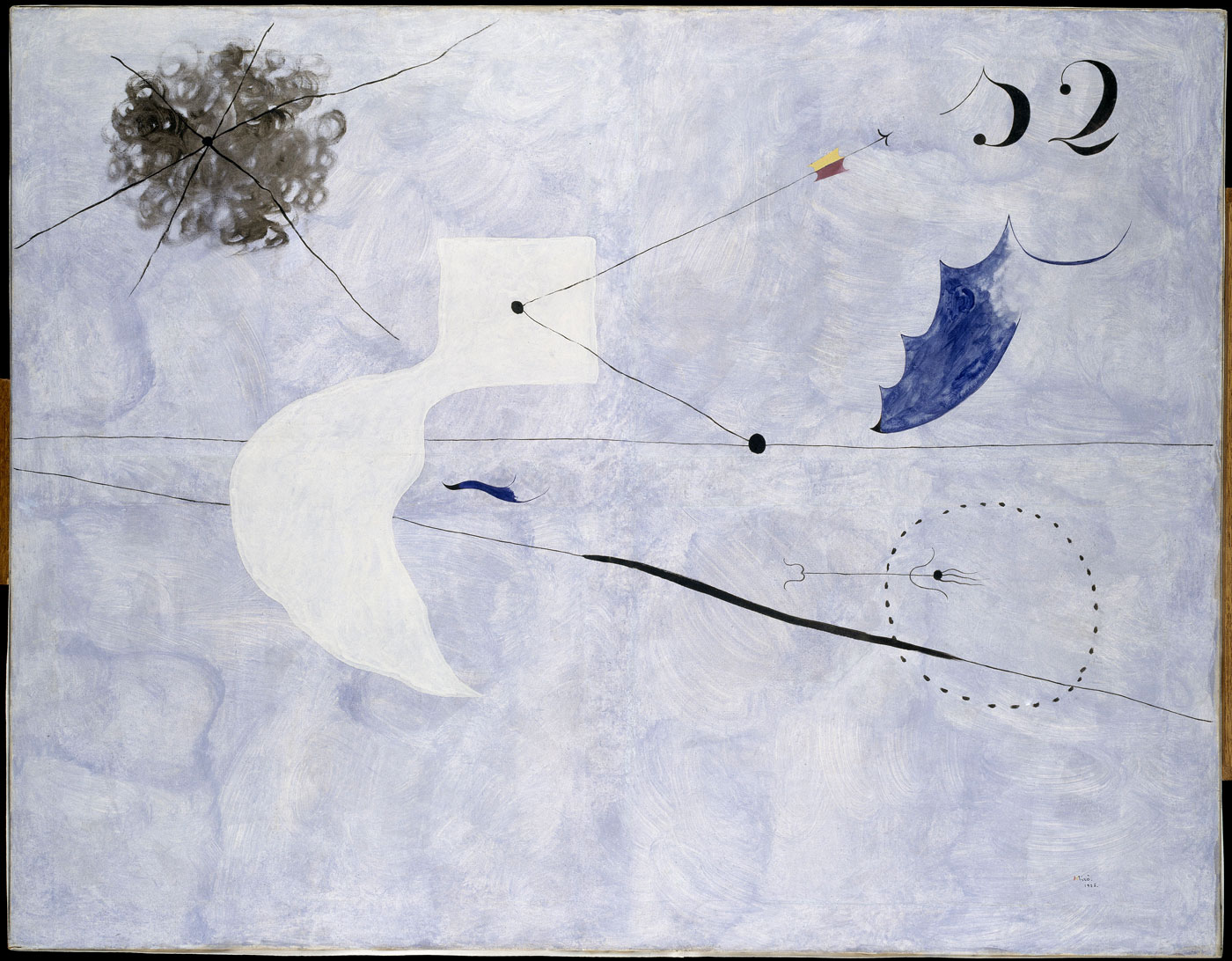
Joan Miró (Spanish, 1893-1983) 'Tête de Paysan Catalan' [Head of a Catalan Peasant] 1925 from the exhibition 'Surreal Encounters: Collecting the Marvellous: Works from the Collections of Roland Penrose, Edward James, Gabrielle Keiller and Ulla and Heiner Pietzsch' at the Scottish National Gallery of Modern Art, Edinburgh, June-  Sept, 2016


Joan Miró (Spanish, 1893-1983)
Tête de Paysan Catalan [Head of a Catalan Peasant]
1925
Oil on canvas
92.4 x 73cm
Collection: Scottish National Gallery of Modern Art
Purchased jointly with Tate, with the assistance of the Art Fund 1999


Francis Picabia (French, 1879-1953) 'Fille née sans mère' [Girl Born without a Mother] c. 1916-1917 from the Collections of Roland Penrose, Edward James, Gabrielle Keiller and Ulla and Heiner Pietzsch' at the Scottish National Gallery of Modern Art, Edinburgh, June-  Sept, 2016


Francis Picabia (French, 1879-1953)
Fille née sans mère [Girl Born without a Mother]
c. 1916-1917
Gouache and metallic paint on printed paper
50 x 65cm
Collection: Scottish National Gallery of Modern Art, purchased 1990


René Magritte (Belgian, 1898-1967) 'Au seuil de la liberté' (On the Threshold of Liberty) 1930


René Magritte (Belgian, 1898-1967)
Au seuil de la liberté (On the Threshold of Liberty)
1930
Oil on canvas
114 x 146cm
Collection: Museum Boijmans Van Beuningen, Rotterdam (Formerly collection of E. James), purchased 1966


André Masson (French, 1896-1987) 'Massacre' 1931


André Masson (French, 1896-1987)
Massacre
1931
Oil on canvas
Collection: Hamburger Kunsthalle, Hamburg/ Pietzsche Collection


Max Ernst (German, 1891-1976) 'La Joie de vivre' [The Joy of Life] 1936


Max Ernst (German, 1891-1976)
La Joie de vivre [The Joy of Life]
1936
Oil on canvas
73.5 x 92.5cm
Collection: National Galleries of Scotland
Purchased with the assistance of the Heritage Lottery Fund and the Art Fund 1995


Max Ernst (German, 1891-1976) 'The Fireside Angel' (The Triumph of Surrealism) 1937


Max Ernst (German, 1891-1976)
The Fireside Angel (The Triumph of Surrealism)
L’ange du foyer (Le triomphe du surréalisme)
1937
Oil on canvas
114 cm x 146cm


Dorothea Tanning (American, 1910-2012) 'Eine Kleine Nachtmusik' [A Little Night Music] 1943


Dorothea Tanning (American, 1910-2012)
Eine Kleine Nachtmusik [A Little Night Music]
1943
Oil on canvas
40.7 x 61cm
Collection: Tate (formerly collection of R. Penrose)
Purchased with assistance from the Art Fund and the American Fund for the Tate Gallery 1997


Apart from three weeks she spent at the Chicago Academy of Fine Art in 1930, Tanning was a self-taught artist. The surreal imagery of her paintings from the 1940s and her close friendships with artists and writers of the Surrealist Movement have led many to regard Tanning as a Surrealist painter, yet she developed her own individual style over the course of an artistic career that spanned six decades.

Tanning’s early works – paintings such as Birthday and Eine kleine Nachtmusik (1943, Tate Modern, London) – were precise figurative renderings of dream-like situations. Like other Surrealist painters, she was meticulous in her attention to details and in building up surfaces with carefully muted brushstrokes. Through the late 1940s, she continued to paint depictions of unreal scenes, some of which combined erotic subjects with enigmatic symbols and desolate space. During this period she formed enduring friendships with, among others, Marcel Duchamp, Joseph Cornell, and John Cage; designed sets and costumes for several of George Balanchine’s ballets, including The Night Shadow (1945) at the Metropolitan Opera House; and appeared in two of Hans Richter’s avant-garde films.

Over the next decade, Tanning’s painting evolved, becoming less explicit and more suggestive. Now working in Paris and Huismes, France, she began to move away from Surrealism and develop her own style. During the mid-1950s, her work radically changed and her images became increasingly fragmented and prismatic, exemplified in works such as Insomnias (1957, Moderna Museet, Stockholm). As she explains, “Around 1955 my canvases literally splintered… I broke the mirror, you might say.”

Text from the Wikipedia website


Marcel Duchamp (French, 1887-1968) 'La Boîte-en-valise (Box in a Suitcase) 1935-1941


Marcel Duchamp (French, 1887-1968)
La Boîte-en-valise (Box in a Suitcase)
1935-1941
Sculpture, leather-covered case containing miniature replicas and photographs of Duchamp’s works
10 x 38 x 40.5cm
Collection: Scottish National Gallery of Modern Art, presented anonymously 1989


Paul Delvaux (Belgian, 1897-1994) 'L'Appel de la Nuit (The Call of the Night)' 1938


Paul Delvaux (Belgian, 1897-1994)
L’Appel de la Nuit (The Call of the Night)
1938
Oil on canvas
110 x 145cm
Collection: Scottish National Gallery of Modern Art
Purchased with the support of the Heritage Lottery Fund and the Art Fund 1995


Delvaux’s paintings of the late 1920s and early 1930s, which feature nudes in landscapes, are strongly influenced by such Flemish Expressionists as Constant Permeke and Gustave De Smet. A change of style around 1933 reflects the influence of the metaphysical art of Giorgio de Chirico, which he had first encountered in 1926 or 1927. In the early 1930s Delvaux found further inspiration in visits to the Brussels Fair, where the Spitzner Museum, a museum of medical curiosities, maintained a booth in which skeletons and a mechanical Venus figure were displayed in a window with red velvet curtains. This spectacle captivated Delvaux, supplying him with motifs that would appear throughout his subsequent work. In the mid-1930s he also began to adopt some of the motifs of his fellow Belgian René Magritte, as well as that painter’s deadpan style in rendering the most unexpected juxtapositions of otherwise ordinary objects.

Delvaux acknowledged his influences, saying of de Chirico, “with him I realised what was possible, the climate that had to be developed, the climate of silent streets with shadows of people who can’t be seen, I’ve never asked myself if it’s surrealist or not.” Although Delvaux associated for a period with the Belgian surrealist group, he did not consider himself “a Surrealist in the scholastic sense of the word.” As Marc Rombaut has written of the artist: “Delvaux … always maintained an intimate and privileged relationship to his childhood, which is the underlying motivation for his work and always manages to surface there. This ‘childhood,’ existing within him, led him to the poetic dimension in art.”

The paintings Delvaux became famous for usually feature numbers of nude women who stare as if hypnotised, gesturing mysteriously, sometimes reclining incongruously in a train station or wandering through classical buildings. Sometimes they are accompanied by skeletons, men in bowler hats, or puzzled scientists drawn from the stories of Jules Verne. Delvaux would repeat variations on these themes for the rest of his long life…

Text from the Wikipedia website


Photograph album: International Surrealist Exhibition, London 1936, made 1936-1939 Images taken by Chancery. Images titled by Roland Penrose

Photograph album: International Surrealist Exhibition, London 1936, made 1936-1939 Images taken by Chancery. Images titled by Roland Penrose


Photograph album: International Surrealist Exhibition, London 1936
Made 1936-1939
Images taken by Chancery. Images titled by Roland Penrose
32.00 x 26.00cm
Collection: Scottish National Gallery of Modern Art
Photo: Antonio Reeve


Salvador Dalí (Spanish, 1904-1989) 'Mae West Lips Sofa' 1937-1938


Salvador Dalí (Spanish, 1904-1989)
Mae West Lips Sofa
1937-1938
Wood, wool
92 x 215 x 66cm
Museum Boijmans Van Beuningen, Rotterdam © Fundacion Gala – Salvador Dalí, Beeldrecht Amsterdam 2007.
© Salvador Dali, Fundació Gala-Salvador Dalí, DACS, 2015


Salvador Dalí (Spanish, 1904-1989) 'Couple aux têtes pleines de nuages' [Couple with their Heads Full of Clouds] 1936


Salvador Dalí (Spanish, 1904-1989)
Couple aux têtes pleines de nuages [Couple with their Heads Full of Clouds]
1936
Oil on canvas
Left figure: 82.5 x 62.5cm; right figure: 92.5 x 69.5cm
Collection: Museum Boijmans Van Beuningen, Rotterdam (Formerly collection of E. James)
Purchased with the support of The Rembrandt Association (Vereniging Rembrandt) 1979
© Salvador Dali, Fundació Gala-Salvador Dalí, DACS, 2015


Salvador Dalí (Spanish, 1904-1989) 'Impressions d'Afrique' (Impressions of Africa) 1938


Salvador Dalí (Spanish, 1904-1989)
Impressions d’Afrique (Impressions of Africa)
1938
Oil on canvas
91.5 x 117.5cm
Collection: Museum Boijmans Van Beuningen, Rotterdam (Formerly collection of E. James)
Purchased with the support of The Rembrandt Association (Vereniging Rembrandt), Prins Bernhard Fonds, Erasmusstichting, Stichting Bevordering van Volkskracht Rotterdam and Stichting Museum Boijmans Van Beuningen 1979
© Salvador Dali, Fundació Gala-Salvador Dalí, DACS, 2015


Leonora Carrington (Mexican born Britain, 1917-2011) 'The House Opposite' 1945


Leonora Carrington (Mexican born Britain, 1917-2011)
The House Opposite
1945
Tempera on board
33 x 82cm
West Dean College, part of the Edward James Foundation


“I painted for myself… I never believed anyone would exhibit or buy my work.”

Leonora Carrington was not interested in the writings of Sigmund Freud, as were other Surrealists in the movement. She instead focused on magical realism and alchemy and used autobiographical detail and symbolism as the subjects of her paintings. Carrington was interested in presenting female sexuality as she experienced it, rather than as that of male surrealists’ characterisation of female sexuality. Carrington’s work of the 1940s is focused on the underlying theme of women’s role in the creative process.

Text from the Wikipedia website


Masterpieces from four of the finest collections of Dada and Surrealist art ever assembled will be brought together in this summer’s major exhibition at the Scottish National Gallery of Modern Art (SNGMA). Surreal Encounters: Collecting the Marvellous will explore the passions and obsessions that led to the creation of four very different collections, which are bound together by a web of fascinating links and connections, and united by the extraordinary quality of the works they comprise.

Surrealism was one of the most radical movements of the twentieth century, which challenged conventions through the exploration of the subconscious mind, the world of dreams and the laws of chance. Emerging from the chaotic creativity of Dada (itself a powerful rejection of traditional values triggered by the horrors of the First World War) its influence on our wider culture remains potent almost a century after it first appeared in Paris in the 1920s. World-famous works by Salvador Dalí, Joan Miró, René Magritte, Leonora Carrington, Giorgio de Chirico, André Breton, Man Ray, Pablo Picasso, Max Ernst, Dorothea Tanning, Yves Tanguy, Leonor Fini, Marcel Duchamp and Paul Delvaux will be among the 400 paintings, sculptures, prints, drawings, artist books and archival materials, to feature in Surreal Encounters. The exhibition has been jointly organised by the SNGMA, the Museum Boijmans Van Beuningen, Rotterdam and the Hamburger Kunsthalle, where it will be shown following its only UK showing in Edinburgh.

Dalí’s The Great Paranoiac (1936), Lobster Telephone (1938) and Impressions of Africa (1938); de Chirico’s Two Sisters (1915); Ernst’s Pietà or Revolution by Night (1923) and Dark Forest and Bird (1927), and Magritte’s The Magician’s Accomplice (1926) and Not to be Reproduced (1937) will be among the highlights of this exceptional overview of Surrealist art. The exhibition will also tell the personal stories of the fascinating individuals who pursued these works with such dedication and discernment.

The first of these – the poet, publisher and patron of the arts, Edward James (1907-84) and the artist, biographer and exhibition organiser, Roland Penrose (1900-84) – acquired the majority of the works in their collections while the Surrealist movement was at its height in the interwar years, their choices informed by close associations and friendships with many of the artists. James was an important supporter of Salvador Dalí and René Magritte in particular, while Penrose was first introduced to Surrealism through a friendship with Max Ernst. The stories behind James’s commissioning of works such as Dalí’s famous Mae West Lips Sofa (1938) and Magritte’s The Red Model III (1937) and the role of Penrose in the production of Ernst’s seminal collage novel Une Semaine de Bonté (1934) will demonstrate how significant these relationships were for both the artists and the collectors. Other celebrated works on show that formed part of these two profoundly important collections include Tanning’s Eine Kleine Nachtmusik (1943); Magritte’s On the Threshold of Liberty (1937); Miró’s Head of a Catalan Peasant (1925); and The House Opposite (c. 1945) by Leonora Carrington

While the Penrose and James collections are now largely dispersed, the extraordinary collection of Dada and Surrealist art put together by Gabrielle Keiller (1908-95), was bequeathed in its entirety to the SNGMA on her death in 1995, the largest benefaction in the institution’s history. Keiller devoted herself to this area following a visit to the Venice home of the celebrated American art lover Peggy Guggenheim in 1960, which proved to be a pivotal moment in her life. She went on to acquire outstanding works such as Marcel Duchamp’s La Boîte-en-Valise (1935-41), Alberto Giacometti’s Disagreeable Object, to be Thrown Away (1931) and Girl Born without a Mother (c. 1916-17) by Francis Picabia. Recognizing the fundamental significance of Surrealism’s literary aspect, Keiller also worked assiduously to create a magnificent library and archive, full of rare books, periodicals, manifestos and manuscripts, which makes the SNGMA one of the world’s foremost centres for the study of the movement.

The exhibition will be brought up to date by the inclusion of works from the collection of Ulla and Heiner Pietzsch, who have spent more than 40 years in their quest to build up an historically balanced collection of Surrealism, which they have recently presented to the city of Berlin, where they still live. The collection features many outstanding paintings by Francis Picabia, Pablo Picasso, André Masson, Leonor Fini, Ernst, Tanguy, Magritte and Miró; sculptures by Hans Arp and Hans Bellmer; and works by André Breton, the leader of the Surrealists. Highlights include Masson’s Massacre (1931), Ernst’s Head of ‘The Fireside Angel’ (c. 1937), Picasso’s Arabesques Woman (1931) and Arp’s sculpture Assis (Seated) (1937).

The exhibition’s curator in Edinburgh, Keith Hartley, who is Deputy Director of the SNGMA, has said, “Surrealist art has captured the public imagination like perhaps no other movement of modern art. The very word ‘surreal’ has become a by-word to describe anything that is wonderfully strange, akin to what André Breton, the chief theorist of Surrealism, called ‘the marvellous’. This exhibition offers an exceptional opportunity to enjoy art that is full of ‘the marvellous’. It brings together many important works which have rarely been seen in public, by a wide range of Surrealist artists, and creates some very exciting new juxtapositions.”

Press release from SNGMA


Pablo Picasso (Spanish, 1881-1973) 'Tête' [Head] 1913


Pablo Picasso (Spanish, 1881-1973)
Tête [Head]
1913
Drawing, papiers collés with black chalk on card
43.5 x 33cm
Collection: Scottish National Gallery of Modern Art
Purchased with assistance from the Heritage Lottery Fund and the Art Fund 1995
Photo: Antonia Reeve
© DACS / Estate of Pablo Picasso


Max Ernst (German, 1891-1976) 'Pieta or Revolution by Night' 1923


Max Ernst (German, 1891-1976)
Pieta or Revolution by Night
1923
Oil on canvas


René Magritte (Belgian, 1898-1967) 'The Magician's Accomplice' 1926


René Magritte (Belgian, 1898-1967)
The Magician’s Accomplice
1926
Oil on canvas


René Magritte (Belgian, 1898-1967) 'L’Esprit comique (The Comic Spirit)' 1928


René Magritte (Belgian, 1898-1967)
L’Esprit comique (The Comic Spirit)
1928
Oil on canvas
75 x 60cm
Collection: Hamburger Kunsthalle, Hamburg/ Pietzsche Collection


Pablo Picasso (Spanish, 1881-1973) 'Femme aux arabesques (Arabesque Woman)' 1931


Pablo Picasso (Spanish, 1881-1973)
Femme aux arabesques (Arabesque Woman)
1931
Oil on canvas, 100 x 81cm
Hamburger Kunsthalle, Hamburg/ Pietzsche Collection


Max Ernst (German, 1891-1976) 'Jeune homme intrigué par le vol d’une mouche non-euclidienne' [Young Man Intrigued by the Flight of a Non-Euclidean Fly] 1942–1947


Max Ernst (German, 1891-1976)
Jeune homme intrigué par le vol d’une mouche non-euclidienne [Young Man Intrigued by the Flight of a Non-Euclidean Fly]
1942-1947
Oil and paint on canvas
82 x 66cm
Collection: Hamburger Kunsthalle, Hamburg/ Pietzsche Collection


Max Ernst (German, 1891-1976) 'Une semaine de bonté' [A Week of Kindness] 1934

Max Ernst (German, 1891-1976) 'Une semaine de bonté' [A Week of Kindness] 1934


Max Ernst (German, 1891-1976)
Une semaine de bonté [A Week of Kindness]
1934
Collage graphic novel


Une semaine de bonté [A Week of Kindness] is a graphic novel and artist’s book by Max Ernst, first published in 1934. It comprises 182 images created by cutting up and re-organising illustrations from Victorian encyclopaedias and novels.

The 184 collages of Une semaine de bonté [A Week of Kindness] were created during the summer of 1933 while Max Ernst was staying at Vigoleno, in northern Italy. The artist took his inspiration from wood engravings, published in popular illustrated novels, natural science journals or 19th century sales catalogues. With infinite care, he cut out the images that interested him and assembled them with such precision as to bring his collage technique to a level of incomparable perfection. Without seeing the original illustrations, it is difficult to work out where Max Ernst intervened. In the end, each collage forms a series of interlinked images to produce extraordinary creatures which evolve in fascinating scenarios and create visionary worlds defying comprehension and any sense of reality.

After La Femme 100 têtes [The Woman with one Hundred Heads] (1929) and Rêve d’une petite fille qui voulut entrer au Carmel [A Little Girl dreams of taking the Veil] (1930), Une semaine de bonté was Max Ernst’s third collage-novel. Ernst had originally intended to publish it in seven volumes associating each book with a day of the week. Moreover, the title referred to the seven days in Genesis. Yet it was also an allusion to the mutual aid association ‘La semaine de la bonté’ [The Week of Kindness], founded in 1927 to promote social welfare. Paris was flooded with posters from the organisation seeking support from everyone. Like the elements making up the collages, the title was also “borrowed” by Max Ernst.

The first four publication deliveries did not, however, achieve the success that had been anticipated. The three remaining ‘days’ were therefore put together into a fifth and final book. The books came out between April and December 1934, each having been bound in a different colour: purple, green, red, blue and yellow. In the final version, two works were taken out. The edition therefore consists of only 182 collages.

Anonymous text from the Musée D’Orsay website [Online] Cited 07/09/2016. No longer available online


Yves Tanguy (French, 1900-1955) 'Sans titre, ou Composition surréaliste' (Untitled, or Surrealist Composition) 1927


Yves Tanguy (French, 1900-1955)
Sans titre, ou Composition surréaliste (Untitled, or Surrealist Composition)
1927
Oil on canvas
54.5 x 38cm
Hamburger Kunsthalle, Hamburg/ Pietzsche Collection


Tanguy’s paintings have a unique, immediately recognisable style of nonrepresentational surrealism. They show vast, abstract landscapes, mostly in a tightly limited palette of colours, only occasionally showing flashes of contrasting colour accents. Typically, these alien landscapes are populated with various abstract shapes, sometimes angular and sharp as shards of glass, sometimes with an intriguingly organic look to them, like giant amoebae suddenly turned to stone.

Text from the Wikipedia website


Dorothea Tanning (American, 1910-2012) 'Voltage' 1942


Dorothea Tanning (American, 1910-2012)
Voltage
1942
Oil on canvas
29 x 30.9cm
Collection: Hamburger Kunsthalle, Hamburg/ Pietzsche Collection


Alberto Giacometti (Italian, 1901-1966) 'Objet désagréable, à jeter' [Disagreeable Object, to be Thrown away] 1931


Alberto Giacometti (Italian, 1901-1966)
Objet désagréable, à jeter [Disagreeable Object, to be Thrown away]
1931
Wood
19.6 x 31 x 29 cm
Collection: Scottish National Gallery of Modern Art, purchased 1990
© Bridgeman Art Library


Jean (Hans) Arp (French-German, 1886-1996) 'Assis' (Seated) 1937


Jean (Hans) Arp (French-German, 1886-1996)
Assis (Seated)
1937
Limestone
29.5 x 44.5 x 16cm
Collection: Hamburger Kunsthalle, Hamburg/ Pietzsche Collection


Joan Miró (Spanish, 1893-1983) 'Peinture' (Painting) 1925


Joan Miró (Spanish, 1893-1983)
Peinture (Painting)
1925
Oil on canvas
130 x 97cm
Hamburger Kunsthalle, Hamburg/ Pietzsche Collection


Joan Miró (Spanish, 1893-1983) 'Peinture' 1927


Joan Miró (Spanish, 1893-1983)
Peinture [Painting]
1927
Oil on canvas
33 x 24.1 cm
Collection: National Galleries of Scotland
Bequeathed by Gabrielle Keiller 1995


René Magritte (Belgian, 1898-1967) 'Le Modèle rouge III' (The Red Model III) 1937


René Magritte (Belgian, 1898-1967)
Le Modèle rouge III (The Red Model III)
1937
Oil on canvas
206 x 158 x 5cm
Collection: Museum Boijmans Van Beuningen, Rotterdam (Formerly collection of E. James)
Purchased with the support of The Rembrandt Association (Vereniging Rembrandt), Prins Bernhard Fonds, Erasmusstichting, Stichting Bevordering van Volkskracht Rotterdam Museum Boymans-van Beuningen Foundation 1979


René Magritte (Belgian, 1898-1967) 'La reproduction interdite' (Not to be Reproduced) 1937


René Magritte (Belgian, 1898-1967)
La reproduction interdite (Not to be Reproduced)
1937
Museum Boijmans Van Beuningen, Rotterdam
© Beeldrecht Amsterdam 2007
Photographer: Studio Tromp, Rotterdam
© ADAGP, Paris and DACS, London 2015


Scottish National Gallery of Modern Art
75 Belford Road
Edinburgh EH4 3DR
Phone: 0131 624 6200

Opening hours:
Daily 10am – 6pm

Scottish National Gallery of Modern Art website

LIKE ART BLART ON FACEBOOK

Back to top

Exhibition: ‘Cosa Mentale: Art and Telepathy in the 20th century’ at the Centre Pompidou-Metz, Paris

Exhibition dates: 28th October, 2015 – 28th March, 2016

Curator: Pascal Rousseau, Professor of Contemporary History of Art at the University of Paris I Panthéon Sorbonne


Louis Darget (French, 1847-1923) 'Fluidic Thought-Image Photography' 1896 from the exhibition 'Cosa Mentale: Art and Telepathy in the 20th century' at the Centre Pompidou-Metz, Paris, Oct 2015 - March 2016


Louis Darget (French, 1847-1923)
Fluidic Thought-Image Photography
1896

(L) Inscribed: “Photo… of thought. Head obtained by Mr. Henning, having a plate wrapped in black paper on his forehead while he played the piano. Opposite him on the piano was a portrait of Beethoven. Could this be that [same] portrait reflected by the brain onto the plate through the black paper. Comt. Darget”

(R) “Photograph of a Dream: The Eagle.” 25 June, 1896.
Inscribed: “Obtained by placing a photographic plate above the forehead of Mme Darget while she was asleep.”


Telepathic art in the 20th century. What a fascinating subject for a spiritual, phantasmagoric exhibition which explores artists’ fascination with the direct transmission of thought and emotion. A lot of phenomena – for example telepathy, X-rays, psychoanalysis – were named or discovered in the last half of the nineteenth century or are concepts and things that began to gain popularity in the collective consciousness at that time, such as the unconscious mind, the anima and animus, the study of signs, photographs of thought, photographs of hysteria (Charcot) and notes and photographs on unexplained paranormal experiences.

“The exhibition enables the spectator to understand how, throughout the 20th century, attempts to give material and visible form to thought processes coincide with the experiments of avant-garde artists. This fantasy of a direct projection of thought not only had a decisive impact on the birth of abstraction but also influenced surrealism and its obsession with the collective sharing of creation and, in the post war period, it gave rise to numerous visual and sound installations inspired by the revolution in information technology, leading to the declaration of “the dematerialisation of art” in conceptual practices.”

Love the work of Émile Cohl and Len Lye, both a revelation to me.

Dr Marcus Bunyan


Many thankx to the Centre Pompidou-Metz for allowing me to publish the photographs in the posting. Please click on the photographs for a larger version of the image.


Edvard Munch (Norwegian, 1863-1944) 'Madonna' 1895 from the exhibition 'Cosa Mentale: Art and Telepathy in the 20th century' at the Centre Pompidou-Metz, Paris, Oct 2015 - March 2016


Edvard Munch (Norwegian, 1863-1944)
Madonna
1895
Paris, Centre Pompidou, Musée national d’Art moderne
© Centre Pompidou, MNAM-CCI, Dist. RMN-Grand Palais / Georges Meguerditchian


Odilon Redon (French, 1840-1916) 'Portrait de Paul Gauguin' 1903-1906


Odilon Redon (French, 1840-1916)
Portrait of Paul Gauguin
1903-1906
Paris, Musée d’Orsay
© RMN-Grand Palais (musée d’Orsay) / Hervé Lewandowski


Émile Cohl (French, 1857-1938)
Le retapeur de cervelles (The creators brain)
1910


Auguste Rodin (French, 1840-1917) 'Le Penseur [The Thinker]' 1903


Auguste Rodin (French, 1840-1917)
Le Penseur [The Thinker]
1903
Plâtre patiné / patinated plaster
72 x 37 x 57.50cm
© Photographe: Christian Baraja
© Musée Rodin, Paris


When conceived in 1880 in its original size (approx. 70cm) as the crowning element of The Gates of Hell, seated on the tympanum, The Thinker was entitled The Poet. He represented Dante, author of the Divine Comedy which had inspired The Gates, leaning forward to observe the circles of Hell, while meditating on his work. The Thinker was therefore initially both a being with a tortured body, almost a damned soul, and a free-thinking man, determined to transcend his suffering through poetry. The pose of this figure owes much to Carpeaux’s Ugolino (1861) and to the seated portrait of Lorenzo de Medici carved by Michelangelo (1526-31).

While remaining in place on the monumental Gates of Hell, The Thinker was exhibited individually in 1888 and thus became an independent work. Enlarged in 1904, its colossal version proved even more popular: this image of a man lost in thought, but whose powerful body suggests a great capacity for action, has became one of the most celebrated sculptures ever known. Numerous casts exist worldwide, including the one now in the gardens of the Musée Rodin, a gift to the City of Paris installed outside the Panthéon in 1906, and another in the gardens of Rodin’s house in Meudon, on the tomb of the sculptor and his wife.

Text from the Rodin Museum website [Online] Cited 22/03/2016. No longer available online


Stephen Haweis (British, 1878-1969) and Henry Coles 'Le Penseur' c. 1903-1904


Stephen Haweis (British, 1878-1969) and Henry Coles
Le Penseur
c. 1903-1904
Epreuve au charbon / Charcoal
23 x 16.60cm
© Musée Rodin, Paris


Cosa Mentale is a unique exhibition that offers a re-reading of the history or art from 1990 to modern day by exploring artists’ fascination with the direct transmission of thought and emotion. It invites the spectator to re-live one of the unexpected adventures of modernity: telepathic art in the 20th century. This exhibition traces a chronological path from symbolism to conceptual art with a collection of some one hundred works by major artists, ranging from Edvard Munch to Vassily Kandinsky, and from Joan Miró to Sigmar Polke. These artists provide innovative ways of communicating with spectators that take us beyond conventional linguistic codes.

The exhibition enables the spectator to understand how, throughout the 20th century, attempts to give material and visible form to thought processes coincide with the experiments of avant-garde artists. This fantasy of a direct projection of thought not only had a decisive impact on the birth of abstraction but also influenced surrealism and its obsession with the collective sharing of creation and, in the post war period, it gave rise to numerous visual and sound installations inspired by the revolution in information technology, leading to the declaration of “the dematerialisation of art” in conceptual practices.

The exhibition begins with the invention of the term “telepathy” in 1882, at a time when the study of psychology interacted with rapid developments in telecommunications. Endeavours ranged from the creation of “photographs of thought” in 1895 to the first “encephalograms” in 1924 (the year when the Surrealist Manifesto was published) and it was the actual activity of the brain which was to be shown in all its transparency, which encouraged artists to reject the conventions of representation by suppressing all restrictions of translation. Telepathy was far from remaining an obscure paranormal fantasy and consistently intrigued and enthralled artists throughout the 20th century. Always present in the world of science fiction, it resurfaced in psychedelic and conceptual art in the period from 1960 to 1970 before reappearing today in contemporary practices enraptured by technologies of “shared knowledge” and the rapid development of neuroscience.

Curator

Pascal Rousseau, professor of contemporary history of art at the University of Paris I Panthéon Sorbonne. Pascal Rousseau has also curated Robert Delaunay exhibitions: From impressionism to abstraction, 1906-1914, at the Centre Pompidou (1999) and To the origins of abstraction (1800-1914) at the Musée d’Orsay (2003).

Press release from the Centre Pompidou-Metz


Joan Miró (Spanish, 1893-1983) 'La Sieste' July-September 1925


Joan Miró (Spanish, 1893-1983)
La Sieste
July – September 1925
© Successió Miró/ ADAGP, Paris, 2015


Vassily Kandinsky (Russian, 1866-1944) 'Bild mit rotem Fleck [Tableau à la tache rouge / Image with red spot]' 25 February 1914


Vassily Kandinsky (Russian, 1866-1944)
Bild mit rotem Fleck [Tableau à la tache rouge / Image with red spot]
25 February 1914
Paris, Centre Pompidou – Musée national d’art moderne
© Centre Pompidou, MNAM-CCI, Dist. RMN-Grand Palais / Adam Rzepka


Frantisek Kupka (Czech, 1871-1957) 'Facture robuste' 1920


Frantisek Kupka (Czech, 1871-1957)
Facture robuste
1920
Strasbourg, Musée d’Art moderne et contemporain
© ADAGP, Paris, 2015
© Centre Pompidou, MNAM-CCI, Dist. RMN-Grand Palais / Jacques Faujour


Len Lye (New Zealand/America, 1901-1980)
Tusalava
1929
Film
10 min. 5 sec.


As a student, Lye became convinced that motion could be part of the language of art, leading him to early (and now lost) experiments with kinetic sculpture, as well as a desire to make film. Lye was also one of the first Pākehā artists to appreciate the art of Māori, Australian Aboriginal, Pacific Island and African cultures, and this had great influence on his work. In the early 1920s Lye travelled widely in the South Pacific. He spent extended periods in Australia and Samoa, where he was expelled by the New Zealand colonial administration for living within an indigenous community.

Working his way as a coal trimmer aboard a steam ship, Lye moved to London in 1926. There he joined the Seven and Five Society, exhibited in the 1936 International Surrealist Exhibition and began to make experimental films. Following his first animated film Tusalava, Lye began to make films in association with the British General Post Office, for the GPO Film Unit. He reinvented the technique of drawing directly on film, producing his animation for the 1935 film A Colour Box, an advertisement for “cheaper parcel post”, without using a camera for anything except the title cards at the beginning of the film. It was the first direct film screened to a general audience. It was made by painting vibrant abstract patterns on the film itself, synchronising them to a popular dance tune by Don Baretto and His Cuban Orchestra. A panel of animation experts convened in 2005 by the Annecy film festival put this film among the top ten most significant works in the history of animation (his later film Free Radicals was also in the top 50).

Text from the Wikipedia website


Rudolf Steiner (Austrian, 1861-1925) 'Untitled (drawing on blackboard at a conference of 14 May 1924)' Dornach, 14 May 1924


Rudolf Steiner (Austrian, 1861-1925)
Untitled (drawing on blackboard at a conference of 14 May 1924)
Dornach, 14 May 1924
Chalk on black paper
Rudolf Steiner Archive, Dornach
© Rudolf Steiner Archiv, Dornach
© ADAGP, Paris, 2015


A room of the exhibition features ten blackboards by Rudolf Steiner. They are the instructions of a new design language that the artist wants to develop. Steiner believes in the development of a supersensible consciousness, a big change for the future of humanity. He gives many lectures in which he details his research on the concept of transmission and its influence on the social. Whether true or not, artists such as Piet Mondrian, Wassily Kandinsky and others are interested in the complex graphics of Steiner and his research. Mondrian will even write: “Art is a way of development of mankind.”

Text from the Culture Box website translated from the French


Victor Brauner (Romanian, 1903-1966) 'Signe' 1942-1945


Victor Brauner (Romanian, 1903-1966)
Signe
1942-45
© ADAGP, Paris, 2015


Exhibition layout

Introduction

The exhibition starts with a version of the famous figure of Rodin’s Thinker, set off against a sequence of seven photographs from the start of the century, in which the Pictorialist dimension seems to attempt to show lighting emissions produced by the cerebral concentration of the subject. This collection is presented opposite TV Rodin, a video installation created by the artist Nam June Paik who, in the 1970s, reinterpreted electromagnetic animation of closed-circuit thought, when interest in cybernetics was at its peak.

Auras

The direct visualisation of thought and emotional states and the impact of this on the beginnings of abstraction at the start of the 20th century.

The first room focuses on the passion during the century for “photography of thought.” As a direct response to the discovery of radiography by Röntgen, in 1895, numerous amateur researchers attempted to produce images of the brain on photosensitive plates. Since it was possible to see through opaque bodies, why not try to see through the skull, which was now transparent? A curiosity cabinet presents the photographic experiments of Hippolyte Baraduc and Louis Darget with “psychic ones” or “images of thought.” This selection of photographs interacts with two film animation extracts by Émile Cohl, showing, with some humour, the direct projection of thought onto the big screen with the arrival of the cinema.

In the second room, a collection of engravings from the theosophical works of Annie Besant and Charles Leadbeater, presented by the American artist Christian Sampson, reveals the close relationship between the representation of emotional states (thought-patterns) and early abstract painting. They inspired many pioneers of abstract painters, including Kupka and Kandinsky. A group of auras and halos is shown, associated with a colour code for different effects, captured by Kandinsky in order to paint authentic abstract (auto) portraits. In the same vein, paintings by Wilhelm Morgner, Janus de Winter and Jacob Bendien present “psychic portraits” which illustrate a psychological range of emotions by means of chromatic signs.

The third room presents a sequence of ten “blackboards” by Rudolph Steiner, the founder of anthroposophy (the “science of the mind” that was a major influence on some of the members of the avant-garde abstract movement), showing how he developed his theories of the “mental body” and “psychic force”. Next to this is a collection of watercolours by the Swedish painter Hilma af Klint, a pioneer of abstract art. Around this area a multimedia installation by the artist Tony Oursler has been specially created for this exhibition reinterpreting the historical imagination of these “mental projections”.

Magnetic fields

The spread of telepathy in the inter-war period and its influence on surrealism.

In 1924, André Breton published the Surrealist Manifesto (1924) just when the neurologist Hans Berger invented the first electroencephalogram as a result of experimental research into telepathy: this being a less than accidental coincidence, relating to automated transcriptions of the mind. The “exquisite corpses” or “communicated drawings” of the surrealists are linked to experiments that took place at that time into the telepathic transfer of images.

The first room presents a sequence of photographs of the surrealist group in poses in which heads and bodies communicate with each other to produce a collective work under the mysterious influence of “magnetic fields.” Tusalava (1929), a film by the Australian artist Len Lye, illustrates the cinematographic solution found to make mental activity visible, in the form of abstract ideograms taken from aboriginal language.

The second room shows a collection of photographs from the 1920s, some of which are presented by the artist Frédéric Vaesen, relating to the materialisation of psychic entities, the famous “ectoplasms” which give a more tangible reality to imponderable thought. Next to this is a series of works by Joan Miró, in which the painter depicts coloured auras, including a mental map of emotional states, a “photograph of his dreams”.

Mind expander

With the reconstruction of the post war period, divided between the cybernetic model and psychedelic liberation, telepathy remained more than ever a creative horizon for artists in search of perception extended to the electromagnetic manifestations of consciousness.

The New Age spirit of the 1960s witnessed the curious revival of “photographs of thought” (Ted Serios and Salas Portugal), which influenced experimental cinema and psychedelic video (Jordan Belson), a well as some photographic practices (Anna and Bernhard Blume, Dieter Appelt, Suzanne Hiller, John Baldessari and Sigmar Polke).

Under the influence of psychotropic drugs or immersed in highly intense audiovisual devices, electric thought in motion is captured with a penetrating eye. Experimental and radical architectural patterns embody “expanded consciousness”, as is seen in the Mind Expander project (1967) by the Austrian group Haus Rucker Co, which invites the spectator to venture into “superception.” Music has its role here, with the rise in “biomusic” at the end of the 1960s, led by Alvin Lucier, Pierre Henry and David Rosenboom, who produced authentic “brain symphonies,” by means of the sound transcription of the activity of electric waves emitted by the brain, directly captured by electrodes.

Telepathy

The establishment of telepathic art in the 1970s influenced by conceptual practices.

On the margins of pop art, avant-garde artists in the 1970s produced a critique of both form and the art market, by means of strategies that emphasised language and sociological discourse. This also involved a major project in the dematerialisation of art works in which telepathy could be an ideal model for a new non-standard form of communication.

The American artist Robert Morris produced his own Autoportrait in the form of an encephalogram (EEG Portrait) at the same time as his compatriot Robert Barry, a central figure in conceptual art, produced Telepathic Pieces (1969) and Vito Acconci explored extra sensory perception through the form of video (Remote Control, 1971). Against this backdrop, we see considerable new interest in a utopia of shared creation (Robert Filliou and Marina Abramovic) in the era of global communication and the “noosphere” prophetically declared by Teilhard de Chardin and Marshall McLuhan.

The exhibition ends with a vast installation by the artist Fabrice Hyber, a major figure of contemporary art in France, with experimental telepathic booths, paintings, drawings and “prototypes of operating objects” (POF). Hyber invites the spectator to participate, alone or in groups, in an experience which has several surprises, reminding us how, today, under the influence of information networks, neuroscience and the globalised internet, telepathy (ultra democratic and utopian yet also obscure) is more topical than ever and can be explored by artists with the same spirit of derision or anticipation.

Press release from the Centre Pompidou-Metz


Haus-Rucker-Co (Viennese, founded 1967) Laurids, Zamp and Pinter with 'Environment Transformern (Flyhead, Viewatomizer and Drizzler)' 1968, from the 'Mind Expander project'


Haus-Rucker-Co (Viennese, founded 1967)
Laurids, Zamp and Pinter with Environment Transformern (Flyhead, Viewatomizer and Drizzler)
1968
From the Mind Expander project
Photo: Gert Winkler


Taking their cue from the Situationist’s ideas of play as a means of engaging citizens, Haus-Rucker-Co created performances where viewers became participants and could influence their own environments, becoming more than just passive onlookers. These installations were usually made from pneumatic structures such as Oase No. 7 (1972), which was created for Documenta 5 in Kassel, Germany. An inflatable structure emerged from the façade of an existing building creating a space for relaxation and play, of which contemporary echoes can be found in the ‘urban reserves’ of Santiago Cirugeda. The different versions of the Mind Expander series (1967-1969), consisted of various helmets that could alter the perceptions of those wearing them, for example the ‘Fly Head’ disoriented the sight and hearing of the wearer to create an entirely new apprehension of reality; it also produced one of their most memorable images.

Haus-Rucker-Co’s installations served as a critique of the confined spaces of bourgeois life creating temporary, disposable architecture, whilst their prosthetic devices were designed to enhance sensory experience and highlight the taken-for-granted nature of our senses, seen also in the contemporaneous work of the Brazilian artist Lygia Clark. Contemporary versions of such work can be found in the pneumatic structures favoured by Raumlabor and Exyzt.

Anonymous text from the Spatial Agency website [Online] Cited 22/03/2016.


Installation view of Haus-Rucker-Co, 'Mindexpander 1' 1967 in the exhibition 'Cosa mentale' at the Centre Pompidou-Metz


Installation view of Haus-Rucker-Co, Mindexpander 1 1967 in the exhibition Cosa mentale at the Centre Pompidou-Metz.
Photo Pompidou Centre. MNAM CCI-distrib. RMN / G. Meguerditchian.


In 1968, the Austrian collective Haus-Rucker-Co designed the Mind Expander as an immersive capsule propelling the audience into a new mode of perception of reality: the “Superception”. This, then, is a synthesis of avant-garde utopias, throughout the twentieth century, influenced by the imagination that gave rise to the development of telecommunications, seeking to develop a way of live transmission of emotion. Its aim was to invent a new, immediate, relationship between the artist and the viewer.


Haus-Rucker-Co. 'Mind Expander' 1967


Haus-Rucker-Co (Viennese, founded 1967)
Mind Expander
1967 Vienna
Epreuve gélatino-argentique
Photo: Michael Plitz. Haus-Rucker-Co.


David Rosenboom (American, b. 1947) 'Portable Gold and Philosophers' Stones in Paris 1' 1975


David Rosenboom (American, b. 1947)
Portable Gold and Philosophers’ Stones in Paris 1
1975
© David Rosenboom 1975
All rights reserved


Pianist-composer J.B. Floyd, a long-time collaborator with David Rosenboom is seen with electrodes attached to his head while performing a solo version of Rosenboom’s brainwave music composition Portable Gold and Philosophers’ Stones at Centre Culturel Americain in Paris on 7 January 1975. The equipment shown includes a brainwave monitoring device and an ARP 2600 Synthesizer. The performance occurred simultaneously with a lecture given by David Rosenboom in a presentation titled Biofeedback and the Arts. Artist Jacqueline Humbert, who also participated in the performance, is seated off to the right of the picture frame.


Nam June Paik (American, 1932-2006) 'TV Rodin' 1976-1978 (detail)


Nam June Paik (American, 1932-2006)
TV Rodin (detail)
1976-1978
Plaster, video camera, tripod, monitor, pedestal
132 x 110 x 115 cm


Long considered the most important video artist since the advent of the form in the late 1960s, Nam June Paik’s TV Rodin is one of several related works that involve sculpture – in this case, a cast of Auguste Rodin’s Thinker, studying itself in a small video monitor via closed circuit television. As museum visitors walk around the work and look over the sculpture’s shoulder, their image also appears on the screen. Paik’s influential vision of television as a global cultural force found intelligent and witty form in his videotapes, video sculptures, and intercontinental satellite performances.

Text from the Carnegie Museum of Art website [Online] Cited 22/03/2016.


Nam June Paik (American, 1932-2006) 'TV Rodin' 1976-1978


Nam June Paik (American, 1932-2006)
TV Rodin
1976-1978
Plaster, video camera, tripod, monitor, pedestal
132 x 110 x 115cm
Photo: Primae / Claude Germain. The Estate of Nam June Paik


Marina Abramovic (Serbian, b. 1946) and Ulay (Frank Uwe Laysiepen) (German, 1943-2020) 'That Self – Point of Contact' 1980


Marina Abramovic (Serbian, b. 1946) and Ulay (Frank Uwe Laysiepen) (German, 1943-2020)
That Self – Point of Contact
1980
Performance au De Appel Art Centre, Amsterdam
© Adagp, Paris 2015
Courtesy Marina Abramovic Archives


Sigmar Polke (German, 1941-2010) 'Untitled (Blue)' 1992


Sigmar Polke (German, 1941-2010)
Untitled (Blue)
1992
Set of 10 Cibachromes trials
61 x 51cm
The estate of Sigmar Polke / ADAGP, Paris, 2015


Fabrice Hyber (French, b. 1961) 'screen+télépathy' 2013


Fabrice Hyber (French, b. 1961)
screen+télépathy
2013
Watercolour, charcoal on paper
76 x 57cm
Collection of the artist
© Photographie Marc Domage


Susan Hiller (American, 1940-2019) 'Homage to Marcel Duchamp: Aura (Blue Boy)' 2011


Susan Hiller (American, 1940-2019)
Homage to Marcel Duchamp: Aura (Blue Boy)
2011
© Susan Hiller


Centre Pompidou-Metz
1, parvis des Droits-de-l’Homme
CS 90490
F-57020 Metz Cedex 1
Phone: +33 (0)3 87 15 39 39

Opening hours:
Monday 10am – 6pm
Tuesday closed
Wednesday 10am – 6pm
Thursday 10am – 6pm
Friday 10am – 7pm
Saturday 10am – 7pm
Sunday 10am – 7pm

Centre Pompidou-Metz website

LIKE ART BLART ON FACEBOOK

Back to top

Exhibition: ‘Karl Blossfeldt. From Nature’s Studio’ at Pinakothek der Moderne, Munich

Exhibition dates: 24th July – 25th October, 2015

Curator: Simone Förster


Karl Blossfeldt (German, 1865-1932) 'Four Herbariums with groomed Thistels and Delphinium' undated from the exhibition 'Karl Blossfeldt. From Nature's Studio' at Pinakothek der Moderne, Munich, July - October, 2015


Karl Blossfeldt (German, 1865-1932)
Four Herbariums with groomed Thistels and Delphinium
Undated
Stiftung Ann und Jürgen Wilde, Pinakothek der Moderne, Munich


Karl Blossfeldt’s photographs have been associated with Modernism (Bauhaus), Surrealism and New Objectivity / New Vision.

“Blossfeldt’s factual yet finely detailed imagery was praised by Walter Benjamin, who declared that Karl Blossfeldt ‘has played his part in that great examination of the inventory of perception, which will have an unforeseeable effect on our conception of the world’. He compared him to Maholy-Nagy and the pioneers of New Objectivity, and ranked his achievements alongside the great photographers August Sander and Eugene Atget. The Surrealists also championed him, and George Bataille included his images in the periodical Documents in 1929.” (Wikipedia)

Hailed as a master for discovering a hitherto ‘unknown universe’ and for his exemplary technical feats as a photographer Blossfeldt’s work is, nevertheless, decidedly subjective as author Hanako Murata notes in her excellent essay on the artist Material Forms in Nature: The Photographs of Karl Blossfeldt (2014). “Not only did he carefully select, arrange, and in some cases physically modify his specimens, but his meticulous attention to detail and image refinement continued throughout each step of production, beginning with his negatives.” Blossfeldt uses the logic of the plant and the logic of his mind to achieve his final vision. A/symmetry as art form.

It was Blossfeldt’s conception of the world that created this inventory of perception. He was the human being who recognised these structures, who used the photographs as teaching aids, who saw them as art and a way of restoring the link between man and nature. His vision and his alone. Nothing was left to chance, everything was controlled. You only have to look at his Self portrait, Rome (1895, below) to see that here is a determined man. His body points one way in suit with braces and stiff, high collared shirt, hand clenched at waist while his head snaps towards us with the most incredible stare, almost piercing the viewer with its ferocity. You can still feel that stare after all these decades.

Ranking his photographs alongside that of Sander and Atget is a big call. Personally, too big a call. If I had to put my finger on it, what they lack for me is any form of context in relationship to an externalised nature. They rely on the form of the plant and not its relationship to the world in which it lives. To discover those forms in science and then transfer them to the field of art is a truly inspiring vision that only Blossfeldt had. He manipulated reality to achieve his beautiful, formal re/presentations. But do they take me to the places that Sander and Atget’s photographs do. No. Here is the thing itself, and not what else it can stand for. Despite their call to Surrealism, their attention to detail leaves the images little room for rumination. Perhaps he took each step of that image refinement too far. Sometimes you need a little chaos in your world order, for the world of pattern cannot exist without randomness and mutation.

Dr Marcus Bunyan


Many thankx to Pinakothek der Moderne for allowing me to publish the photographs in the posting. Please click on the photographs for a larger version of the image.

Download Hanako Murata’s essay Material Forms in Nature: The Photographs of Karl Blossfeldt (2.3Mb pdf)


“If I give someone a horsetail he will have no difficulty making a photographic enlargement of it – anyone can do that. But to observe it, to notice and discover its forms, is something that only a few are capable of.”

“My botanical documents should contribute to restoring the link with nature. They should reawaken a sense of nature, point to its teeming richness of form, and prompt the viewer to observe for himself the surrounding plant world.”

“The plant never lapses into mere arid functionalism; it fashions and shapes according to logic and suitability, and with its primeval force compels everything to attain the highest artistic form.”


Karl Blossfeldt


“The striking uniformity of Blossfeldt’s photographs suggests an excellent mastery of studio technique, and indeed, for all the prints’ subsequent associations with New Objectivity, Blossfeldt’s work was decidedly subjective, insofar as he was not shy about modifying his subjects or his images to achieve his final vision. Not only did he carefully select, arrange, and in some cases physically modify his specimens, but his meticulous attention to detail and image refinement continued throughout each step of production, beginning with his negatives.”


Hanako Murata Material Forms in Nature: The Photographs of Karl Blossfeldt 2014, p.2


Karl Blossfeldt (German, 1865-1932) 'Self portrait, Rome' 1895 from the exhibition 'Karl Blossfeldt. From Nature's Studio' at Pinakothek der Moderne, Munich, July - October, 2015


Karl Blossfeldt (German, 1865-1932)
Self portrait, Rome
1895
Stiftung Ann und Jürgen Wilde, Pinakothek der Moderne, München


Karl Blossfeldt (German, 1865-1932) 'Self portrait, Rome' 1895 (detail)


Karl Blossfeldt (German, 1865-1932)
Self portrait, Rome (detail)
1895
Stiftung Ann und Jürgen Wilde, Pinakothek der Moderne, München


Karl Blossfeldt (German, 1865-1932) 'Nature study (chestnut)' 1890s


Karl Blossfeldt (German, 1865-1932)
Nature study (chestnut)
1890s
Stiftung Ann und Jürgen Wilde, Pinakothek der Moderne, München


Karl Blossfeldt (German, 1865-1932) 'Papaver orientale. Oriental Poppy' before 1928


Karl Blossfeldt (German, 1865-1932)
Papaver orientale. Oriental Poppy
Before 1928
Stiftung Ann und Jürgen Wilde, Pinakothek der Moderne, München


The photographs of plants by the university professor and amateur photographer Karl Blossfeldt (1865-1932) are among the milestones in the history of 20th-century photography. To mark the 150th anniversary of Blossfeldt’s birth, the Ann and Jürgen Wilde Foundation at the Pinakothek der Moderne, Munich is staging a comprehensive exhibition on his life and work.

Focal points of the exhibition are Blossfeldt’s early training as a modeller, his work together with the reformer Moritz Meurer, the photographer’s own handcrafted designs and his teaching at the Königliche Kunstgewerbeschule in Berlin. The preliminary works he made for his seminal publication Urformen der Kunst (Art Forms in Nature) of 1928 and the reception it received at that time, for example at the Bauhaus in Dessau in 1929, form an additional aspect.

The exhibition comprises some 120 photographs, including numerous large-format, historical exhibition prints. Collages of his work, drawings in the artist’s own hand, drafts, archival material and documents render the concept behind Blossfeldt’s teaching and work visible.

The Ann and Jürgen Wilde Foundation manages the Karl Blossfeldt Archive with its unique holdings of original photographs, negatives and documents by Karl Blossfeldt. Together with a large volume of photographs in the Bayerische Staatsgemäldesammlungen, an exceptionally high-quality presentation of Karl Blossfeldt’s photographic work can now be staged and its development shown by means of historical documents and archival material that have hardly ever been seen by the general public.

Text from the Pinakothek der Moderne website


Karl Blossfeldt (German, 1865-1932) 'Adiantum pedatum. Maidenhair Fern' before 1926


Karl Blossfeldt (German, 1865-1932)
Adiantum pedatum. Maidenhair Fern
Before 1926
Stiftung Ann und Jürgen Wilde, Pinakothek der Moderne, München


Karl Blossfeldt (German, 1865-1932) 'Eryngium bourgatii. Bourgatis Eryngo' before 1928


Karl Blossfeldt (German, 1865-1932)
Eryngium bourgatii. Bourgatis Eryngo
Before 1928
Stiftung Ann und Jürgen Wilde, Pinakothek der Moderne, München


Karl Blossfeldt (German, 1865-1932) Heracleum sphondylium. Hogweed' 1898-1932


Karl Blossfeldt (German, 1865-1932)
Heracleum sphondylium. Hogweed
1898-1932
Stiftung Ann und Jürgen Wilde, Pinakothek der Moderne, München


Karl Blossfeldt (German, 1865-1932)

Karl Blossfeldt (June 13, 1865 – December 9, 1932) was a German photographer, sculptor, teacher, and artist who worked in Berlin, Germany. He is best known for his close-up photographs of plants and living things, published in 1929 as, Urformen der Kunst. He was inspired, as was his father, by nature and the way in which plants grow. He believed that ‘the plant must be valued as a totally artistic and architectural structure.’ Among his students at the Berlin Arts and Crafts School was Heinz Warneke. From 1924, he was professor at the Vereinigte Staatsschulen für freie und angewandete Kunst (United State School for Fine and Applied Art) in Berlin.

Blossfeldt made many of his photographs with a home-made camera that could magnify the subject up to thirty times its size, revealing details within a plant’s natural structure. Appointed for a teaching post at the Institute of Royal Arts Museum in 1898 (where he remained until 1930), he established an archive for his photographs. Blossfeldt never received formal training in photography. Blossfeldt developed a series of home-made cameras that allowed him to photograph plant surfaces in unprecedented magnified detail. This reflected his enduring interest in the repetitive patterns found in nature’s textures and forms.

In Berlin from the late nineteenth century until his death, Blossfeldt’s works were primarily used as teaching tools and were brought to public attention in 1928 by his first publication Urformen der Kunst (Art Forms in Nature). Published in 1928 when Blossfeldt was 63 and a professor of applied art at the Berliner Kunsthochschule (Berlin Academy of Art), Urformen der Kunst quickly became an international bestseller and in turn, made Blossfeldt famous almost overnight. His contemporaries were impressed by the abstract shapes and structures in nature that he revealed. Swiftly regarded as a seminal book on photography, Blossfeldt’s factual yet finely detailed imagery was praised by Walter Benjamin, who declared that Karl Blossfeldt ‘has played his part in that great examination of the inventory of perception, which will have an unforeseeable effect on our conception of the world’. He compared him to Maholy-Nagy and the pioneers of New Objectivity, and ranked his achievements alongside the great photographers August Sander and Eugene Atget. The Surrealists also championed him, and George Bataille included his images in the periodical Documents in 1929.

In 2001 Urformen der Kunst was included in “The Book of 101 Books” as one of the seminal photographic books of the twentieth century.

Text from the Wikipedia website


Karl Blossfeldt (German, 1865-1932) 'Blumenbachia hieronymi. Blumenbachia' 1898-1932


Karl Blossfeldt (German, 1865-1932)
Blumenbachia hieronymi. Blumenbachia
1898-1932
Stiftung Ann und Jürgen Wilde, Pinakothek der Moderne, München


Karl Blossfeldt (German, 1865-1932) 'Dipsacus laciniatus. Cutleaf Teasel' before 1927


Karl Blossfeldt (German, 1865-1932)
Dipsacus laciniatus. Cutleaf Teasel
Before 1927
Stiftung Ann und Jürgen Wilde, Pinakothek der Moderne, München


Karl Blossfeldt (German, 1865-1932) 'Equisetum hyemale. Winter Horsetail' before 1929


Karl Blossfeldt (German, 1865-1932)
Equisetum hyemale. Winter Horsetail
Before 1929
Stiftung Ann und Jürgen Wilde, Pinakothek der Moderne, München


Pinakothek der Moderne
Barer Strasse 40
Munich

Opening hours:
Daily except Monday 10am – 6pm
Thursday 10am – 8pm

Pinakothek der Moderne website

LIKE ART BLART ON FACEBOOK

Back to top

Exhibition: ‘From Bauhaus to Buenos Aires: Grete Stern and Horacio Coppola’ at the Museum of Modern Art (MoMA), New York

Exhibition dates: 17th May – 4th October, 2015

Curators: Roxana Marcoci, Senior Curator, and Sarah Meister, Curator with Drew Sawyer, Beaumont and Nancy Newhall Curatorial Fellow, Department of Photography at MoMA


Horacio Coppola (Argentine, 1906–2012) 'Calle California. Vuelta de Rocha. La Boca' 1931 from the exhibition 'From Bauhaus to Buenos Aires: Grete Stern and Horacio Coppola' at the Museum of Modern Art (MoMA), New York, May - Oct, 2015


Horacio Coppola (Argentine, 1906-2012)
Calle California. Vuelta de Rocha. La Boca
1931
Gelatin silver print, printed 1996
7 5/8 × 11 5/16″ (19.4 × 28.7cm)
IVAM, Institut Valencià d’Art Modern


The work of Greta Stern is the better known of these two artists (Ringl + Pit studio and the surreal, psychoanalytic 1950s work), but I find it is the underrated photographs of Horacio Coppola that are the gems in this posting.

It is a bit rough that Richard B. Woodward, commenting on the exhibition on the Collector Daily website (below), observes that with no production after 1938 it “raises suspicions that he was not an artist who sustained himself at a top level.” I beg to differ. Many illuminati have short, explosive and powerful careers before giving the game away, or changing to a different medium or form.

He also observes that, “Coppola failed to channel the nocturnal otherworldliness of the city found in Brassäi and Brandt, only a few of these photos have the haunted quality they achieved,” after the curators of the exhibition, in the catalogue, compare Coppola’s work to those two esteemed individuals. He cites a “sneaky street picture” from 1936 as evidence and instance of an image where Coppola captured a magical moment. I think both curators and critic are missing the point. Coppola is certainly NOT like Brassäi and Brandt in that his photographs at night are not ROMANTIC photographs of the nocturnal fabric of the city. Coppola’s images do NOT possess the kind of magic that Woodward is looking for (that of Brassai’s Paris at Night for example), that he believes should be there, simply because they are of a different order. But that does not make them any less valuable in terms of their insight and energy.

Coppola’s images, steeped in his training at the Bauhaus, are objective, modernist magic. By that I mean they possess a most uncanny use of form, of space and light. Day or night, he places his camera so carefully, in such a controlled and ego-less way, that the precision of his renditions is exquisite. For example, look at Calle Florida (1936, below). What seems an ordinary street, a photograph that anyone could have taken. But no! look again. That perfect rendition of shadow, darkness, movement and the spaces between the figures, The eye is led down the street to the vanishing point and then is released with all that pent up energy in to the V of the sky. Magnificent.

I wish I had more of his photographs to show you, especially his night shots. Coppola wasn’t a Walker Evans or a Paul Strand, certainly not a Kertész, Brassäi or Brandt because he simply was himself, with his own unique signature. He should NEVER be put down for that. I hope this wonderful artist starts to get the recognition he deserves.

Dr Marcus Bunyan


Many thankx to the Museum of Modern Art for allowing me to publish the photographs in the posting. Please click on the photographs for a larger version of the image.


Horacio Coppola (Argentine, 1906–2012) 'Buenos Aires' 1931 from the exhibition 'From Bauhaus to Buenos Aires: Grete Stern and Horacio Coppola' at the Museum of Modern Art (MoMA), New York, May - Oct, 2015


Horacio Coppola (Argentine, 1906-2012)
Buenos Aires
1931
Gelatin silver print
3 1/8 x 4 9/16″ (8 x 11.6cm)
The Museum of Modern Art, New York. Vital Projects Fund, Robert B. Menschel


“The catalog contends that Grete Stern and Horacio Coppola created a stunning body of work, but the show argues, in many ways, for two discrete bodies of work. What might have been accomplished instead of trying to insert two lesser known figures into the canon is to highlight what’s really interesting about their lives and careers: that they – and particularly Stern – were migratory and interdisciplinary, harbingers of the kinds of artistic practice we see today in which commerce, parenthood and politics can no longer be elided, and so they become part of the work. The museum could have showcased their work along with that of their friends and compatriots, from Bauhaus to Buenos Aires, from the literary world to the poets, writers, activists and psychoanalysts with whom they interacted and not just as mute players in this narrative. Now that would have been an extraordinary show.”


Martha Schwendener. “‘From Bauhaus to Buenos Aires: Grete Stern and Horacio Coppola,’ a Bicontinental Couple” on the NY Times website, May 28 2015


“Coppola (1906-2012), on the other hand, has no paper trail of distinction. Outside of his native Argentina, where he was an early convert to Modernism in the late 1920s and later an evangelist for the style, his name draws a blank in most art circles. Parr and Badger cite his Buenos Aires, published in 1937, in volume 2 of their photobook history. But not until 2011 were Coppola’s photographs exhibited in New York, and then only in an imported group show titled Light of Modernity in Buenos Aires (1929-1954) at the Nailya Alexander Gallery. Since then, nothing until now…

The wall of photographs in the next room, done after 1935 when he returned to Argentina – and the basis of the book Buenos Aires – are meant to present Coppola at the height of his powers. Meister puts these views of the Argentine capital – teeming with urban crowds on the streets or at racetracks, shopping at department stores, walking through illuminated streets at night – on a par with Brassäi’s of Paris and Brandt’s of London.

This is a stretch. Perhaps because the prints are hung salon-style, many of them too low for their details to be read, or, more likely, because Coppola failed to channel the nocturnal otherworldliness of the city found in Brassäi and Brandt, only a few these photos have the haunted quality they achieved. If I knew Buenos Aires and had an interior map of these places in my head, I might change my mind. But a sneaky street picture from 1936 of three passersby looking into the front windows of a bridal shop, which are filled with staged, idealised portraits of marriage bliss, is one of the few instances where Coppola captured a magical moment. The absence of anything he did after 1938 raises suspicions that he was not an artist who sustained himself at a top level.”


Richard B. Woodward. “From Bauhaus to Buenos Aires: Grete Stern and Horacio Coppola @MoMA” on the Collector Daily website June 17, 2015 [Online] Cited 01/10/2015. No longer available online


Horacio Coppola (Argentine, 1906–2012) 'Rivadivia between Salguero and Medrano' 1931


Horacio Coppola (Argentine, 1906-2012)
Rivadivia between Salguero and Medrano
1931
Gelatin silver print, printed 1996
7 5/8 × 11 5/16″ (19.4 × 28.7cm)
IVAM, Institut Valencià d’Art Modern


Horacio Coppola (Argentine, 1906–2012) 'Still Life with Egg and Twine' 1932


Horacio Coppola (Argentine, 1906-2012)
Still Life with Egg and Twine
1932
Gelatin silver print
8 1/8 x 10 1/8″ (20.7 x 25.7cm)
The Museum of Modern Art, New York. Thomas Walther Collection. Acquired through the generosity of Peter Norton


Horacio Coppola (Argentine, 1906–2012) 'London' 1934


Horacio Coppola (Argentine, 1906-2012)
London
1934
Gelatin silver print
6 x 7 5/8″ (15.2 x 19.3cm)
The Museum of Modern Art, New York. Latin American and Caribbean Fund


Horacio Coppola (Argentine, 1906–2012) 'London' 1934


Horacio Coppola (Argentine, 1906-2012)
London
1934
Gelatin silver print
5 11/16 x 7 3/8″ (14.5 x 18.7cm)
The Museum of Modern Art, New York. Committee on Photography Fund


Horacio Coppola (Argentine, 1906–2012) 'Avenida Diaz Velez al 4800' 1936


Horacio Coppola (Argentine, 1906-2012)
Avenida Diaz Velez al 4800
1936
Gelatin silver print, printed 1952
16 3/4 x 23 1/2″ (42.5 x 59.7cm)
The Museum of Modern Art, New York. Agnes Rindge Claflin Fund


Horacio Coppola (Argentine, 1906–2012) 'Avenida Diaz Velez al 4800' 1936 (detail)


Horacio Coppola (Argentine, 1906-2012)
Avenida Diaz Velez al 4800 (detail)
1936
Gelatin silver print, printed 1952
16 3/4 x 23 1/2″ (42.5 x 59.7cm)
The Museum of Modern Art, New York. Agnes Rindge Claflin Fund


Horacio Coppola (Argentine, 1906–2012) 'Balneario Municipal' 1936


Horacio Coppola (Argentine, 1906-2012)
Balneario Municipal
1936
Gelatin silver print
8 1/4 x 10 7/16″ (21 x 26.5cm)
Estate of Horacio Coppola; courtesy Galería Jorge Mara – La Ruche, Buenos Aires


Horacio Coppola (Argentine, 1906–2012) 'Balneario Municipal' 1936 (detail)


Horacio Coppola (Argentine, 1906-2012)
Balneario Municipal (detail)
1936
Gelatin silver print
8 1/4 x 10 7/16″ (21 x 26.5cm)
Estate of Horacio Coppola; courtesy Galería Jorge Mara – La Ruche, Buenos Aires


Horacio Coppola (Argentine, 1906–2012) 'Calle Florida' 1936


Horacio Coppola (Argentine, 1906-2012)
Calle Florida
1936
Gelatin silver print
5 11/16 × 7 5/16″ (14.5 × 18.5cm)
Collection Léticia and Stanislas Poniatowski


Horacio Coppola (Argentine, 1906–2012) 'Calle Florida' 1936 (detail)


Horacio Coppola (Argentine, 1906-2012)
Calle Florida (detail)
1936
Gelatin silver print
5 11/16 × 7 5/16″ (14.5 × 18.5cm)
Collection Léticia and Stanislas Poniatowski


Horacio Coppola (Argentine, 1906-2012) 'Directorio and J.M. Moreno' 1936


Horacio Coppola (Argentine, 1906-2012)
Directorio and J.M. Moreno
1936
Gelatin silver print
6 5/8 × 7 13/16″ (16.8 × 19.8cm)
Museo Nacional Centro de Arte Reina Sofía, Madrid


Horacio Coppola (Argentine, 1906-2012) 'Plaza San Martín from Kavanagh' 1936


Horacio Coppola (Argentine, 1906-2012)
Plaza San Martín from Kavanagh
1936
Gelatin silver print
7 5/16 x 10 1/2″ (18.5 x 26.7cm)
Private Collection


From Bauhaus to Buenos Aires: Grete Stern and Horacio Coppola is the first major exhibition of the German-born Grete Stern and the Argentinean Horacio Coppola, two leading figures of avant-garde photography who established themselves on both sides of the Atlantic. In Berlin in 1927, Stern began taking private classes with Walter Peterhans, who was soon to become head of photography at the Bauhaus. A year later, in Peterhans’s studio, she met Ellen (Rosenberg) Auerbach, with whom she opened a pioneering studio specialising in portraiture and advertising. Named after their childhood nicknames, the studio ringl + pit embraced both commercial and avant-garde loyalties, creating proto-feminist works.

In Buenos Aires during the same period, Coppola initiated his photographic experimentations, exploring his surroundings and contributing to the discourse on modernist practices across media in local cultural magazines. In 1929 he founded the Buenos Aires Film Club to introduce the most advanced foreign films to Argentine audiences. His early works show a burgeoning interest in new modes of photographic expression that led him to the Bauhaus in 1932, where he met Stern and they began their joint history.

Following the close of the Bauhaus and the rising threat of the Nazi powers in 1933, Stern and Coppola fled Germany. Stern arrived first in London, where her friends included activists affiliated with leftist circles and where she made her now iconic portraits of German exiles. After traveling through Europe, camera in hand, Coppola joined Stern in London, where he pursued a modernist idiom in his photographs of the fabric of the city, tinged alternately with social concern and surrealist strangeness.

In the summer of 1935, Stern and Coppola embarked for Buenos Aires where they mounted an exhibition in the offices of the avant-garde magazine Sur, announcing the arrival of modern photography in Argentina. The unique character of Buenos Aires was captured in Coppola’s photographic encounters from the city’s centre to its outskirts and in Stern’s numerous portraits of the city’s intelligentsia. The exhibition ends in the early 1950s, with Stern’s forward-thinking Sueños (Dreams), a series of photomontages she contributed to the popular women’s magazine Idilio, portraying women’s dreams with urgency and surreal wit.

The exhibition is accompanied by a major publication edited by Roxana Marcoci and Sarah Meister with a selection of original texts by Stern and Coppola translated into English by Rachel Kaplan. The catalogue will consist of three essays on the artists written by the exhibition curators and scholar Jodi Roberts.

Text from the MoMA website


Ringl + Pit (German) 'Ringlpitis' 1931


Ringl + Pit (German)
Ringlpitis
1931
Artist book with collage
7 7/8 x 7 7/8″ (20 x 20cm)
Estate of Horacio Coppola, Buenos Aires


Ringl + Pit (German) 'Ringlpitis' 1931 (detail)


Ringl + Pit (German)
Ringlpitis (detail)
1931
Artist book with collage
7 7/8 x 7 7/8″ (20 x 20cm)
Estate of Horacio Coppola, Buenos Aires


Ringl + Pit (German) 'Columbus' Egg' 1930


Ringl + Pit (German)
Columbus’ Egg
1930
Gelatin silver print
9 1/4 x 7 7/8″ (23.5 x 20cm)
Collection Helen Kornblum


Ringl + Pit (German) 'Hat and Gloves' 1930


Ringl + Pit (German)
Hat and Gloves
1930
Gelatin silver print
Image: 14 7/8 x 9 3/4″ (37.8 x 24.8cm)
Sheet: 15 11/16 x 10 1/2″ (39.8 x 26.7cm)
The J. Paul Getty Museum, Los Angeles


Ringl + Pit (German) Ellen Auerbach Grete Stern. 'Soapsuds' 1930


Ringl + Pit (German)
Ellen Auerbach 
Grete Stern
Soapsuds
1930
Gelatin silver print
7 x 6 1/4″ (17.8 x 15.9cm)
The Museum of Modern Art, New York. Acquired through the generosity of Roxann Taylor


Ringl + Pit (German) 'Komol' 1931


Ringl + Pit (German)
Komol
1931
Gelatin silver print
14 1/8 x 9 5/8″ (35.9 x 24.4cm)
The Metropolitan Museum of Art. Gift of Ford Motor Company and John C. Waddell


Grete Stern (Argentine born Germany, 1904-1999) 'Self-Portrait' 1943


Grete Stern (Argentine born Germany, 1904-1999)
Self-Portrait
1943
Gelatin silver print, printed 1958
11 x 8 11/16″ (28 x 22cm)
Estate of Horacio Coppola, Buenos Aires


The Museum of Modern Art has organised the first major exhibition to examine the individual accomplishments and parallel developments of two of the foremost practitioners of avant-garde photography, film, advertising, and graphic design in the first half of the 20th century: Grete Stern (German, 1904-1999) and Horacio Coppola (Argentine, 1906-2012). From Bauhaus to Buenos Aires: Grete Stern and Horacio Coppola will be on view May 17 through October 4, 2015, and features more than 300 works gathered from museums and private collection across Europe and the Americas – many of which have never before been exhibited in the United States. These include more than 250 vintage photographs and photomontages, 40 works of original typographic design and award-winning advertising materials, 26 photobooks and periodicals, and four experimental 16mm films. From Bauhaus to Buenos Aires is organised by Roxana Marcoci, Senior Curator, and Sarah Meister, Curator; with Drew Sawyer, Beaumont and Nancy Newhall Curatorial Fellow, Department of Photography.

Stern and Coppola were united in their exploration of a modernist idiom, yet despite their relationship as husband and wife (from 1935 to 1943) they pursued this goal along remarkably original paths. Having started their artistic careers within the European avant-garde of the late 1920s and early 1930s, Stern and Coppola produced their major body of works in Argentina, where they thrived amid a vibrant milieu of Argentine and émigré artists and intellectuals. As harbingers of New Vision photography in a country caught up in the throes of forging its own modern identity, their distinctly experimental styles led to their recognition as founders of modern Latin American photography.

The earliest works in the exhibition date from the late 1920s to the early 1930s, when both artists began their initial forays into photography and graphic design. After beginning her studies in Berlin with Walter Peterhans, who became head of photography at the Bauhaus, in 1928 Stern met Ellen (Rosenberg) Auerbach and together they opened the pioneering studio ringl + pit, specialising in portraiture and advertising. Named after their childhood nicknames (Stern was ringl; Auerbach was pit), the studio embraced both commercial and avant-garde loyalties, creating proto-feminist works. The exhibition presents a large number of photographs, graphic design materials, and advertisements by the duo that explored alternative models of the feminine. Defying the conventional style of German advertising photography in this period, ringl + pit emerged as a dissident voice that stirred the interest of critics, artists, and consumers.

Coppola’s first photographs, made in Buenos Aires in the late 1920s, reveal an optical curiosity completely out of sync with prevailing trends in Argentina. Instead of using the camera to accurately render the details of the visible world, Coppola instead explored its potential to complicate traditional understandings of pictorial space. Like Man Ray and László Moholy-Nagy, he was interested in the effects of light, prisms, and glass for their visual and metaphoric potential, and he photographed his native city from unexpected perspectives akin to Germaine Krull’s images of Paris from the same decade. These early works show the burgeoning interest in new modes of photographic expression that led him to the Bauhaus in 1932, where he met Stern.

Following the close of the Bauhaus and the rising threat of the Nazi powers in 1933, Stern and Coppola fled Germany. Stern arrived first in London, where her friends included activists affiliated with leftist circles, and the exhibition presents her now iconic portraits of German exiles, including those of playwright Bertolt Brecht, actress Helene Weigel, Marxist philosopher Karl Korsch, and psychoanalyst Paula Heimann. After traveling and photographing throughout Europe, Coppola joined Stern in London, where his modernist photographs depicting the fabric of the city alternate between social concern and surrealist strangeness.

The exhibition’s third gallery includes films that Coppola produced in Berlin, Paris, and London during these years. The first of these films, Der Traum (The Dream), bears the strongest relationship to Surrealist filmmaking, while his next two films, Un Muelle del Sena (A Quai on the Seine) (1934) and A Sunday on Hampstead Heath (1935), are increasingly ambitious, using the film camera alternately as a still camera and for its unique capacity to pan across a scene and to capture action in urban environments.

In 1935, Stern and Coppola married and embarked for Buenos Aires, where they mounted an exhibition in the offices of the avant-garde magazine Sur, announcing the arrival of modern photography in Argentina. Following the exhibition’s successful critical reception, their home became a hub for artists and intellectuals, both those native to Argentina and the exiles continuously arriving from a war-torn Europe. The fourth gallery in From Bauhaus to Buenos Aires presents Coppola’s photographic encounters from the city’s centre to its outskirts and Stern’s numerous portraits of the city’s intelligentsia.

In 1936, Coppola received a career-defining commission to photograph Buenos Aires for a major publication celebrating the 400th anniversary of the city’s founding. Coppola used the opportunity to construct his own modern vision of the city, one that would incorporate the celebration of the local and his appreciation of the city’s structure inspired by the architect Le Corbusier. Concurrently, Coppola made his final film, The Birth of the Obelisk – an ode to Buenos Aires and its newly constructed monument. The film combines dynamic shots of the city with sequences of carefully constructed stills, demonstrating in six-and-a half minutes a vibrant, confident mix of influences, from Moholy-Nagy and Krull to the Concrete art movement in Argentina to films by Walter Ruttmann, Charles Sheeler, and Paul Strand.

Throughout the 1940s, Stern took incisive portraits of artists and writers, many of whom were aligned with the international antifascist cause and the emergence of an emancipatory feminist consciousness. These included playwright Amparo Alvajar; socialist realist painters Antonio Berni, Gertrudis Chale, and Lino Eneas Spilimbergo; poet Mony Hermelo; and graphic designer Clément Moreau. Among Stern’s numerous other subjects were poet-politician Pablo Neruda, abstract painter Manuel Ángeles Ortiz, and writer Jorge Luis Borges.

The exhibition concludes in the mid-1950s, at the end of Juan Domingo Perón’s era, with a large presentation of Stern’s Sueños (Dreams), a series of forward-thinking photomontages that she contributed on a weekly basis to the women’s magazine Idilio (Idyll) from 1948 to 1951. In Dream No. 1: Electrical Appliances for the Home, an elegantly dressed woman is converted into a table lamp that waits to be turned on by a male hand, using electricity as a sexual pun to expose feminine objectification. In Dream No. 24: Surprise, a female protagonist hides her face in shock as she confronts a larger-than-life baby doll advancing toward her. Debunking fantasies about women’s lives, Stern plumbed the depths of her own experience as a mother and artist to negotiate the terms between blissful domesticity and entrapment, privacy and exposure, cultural sexism and intellectual rebellion.

Press release from the MoMA website


Horacio Coppola (Argentine, 1906-2012) 'Untitled (Staircase at Calle Corrientes)' 1928


Horacio Coppola (Argentine, 1906-2012)
Untitled (Staircase at Calle Corrientes)
1928
Gelatin silver print
13 3/4 x 11 3/4″ (34.9 x 29.9cm)
Collection Alexis Fabry, Paris


Horacio Coppola (Argentine, 1906-2012) '"¡Esto es Buenos Aires!" (Jorge Luis Borges) "This is Buenos Aires!" (Jorge Luis Borges)' 1931


Horacio Coppola (Argentine, 1906-2012)
“¡Esto es Buenos Aires!” (Jorge Luis Borges)
“This is Buenos Aires!” (Jorge Luis Borges)
1931
Gelatin silver print
8 11/16 x 5 7/8″ (22 x 15cm)
Estate of Horacio Coppola, Buenos Aires


Horacio Coppola (Argentine, 1906-2012) 'Avenida Corrientes towards the West' 1936


Horacio Coppola (Argentine, 1906-2012)
Avenida Corrientes towards the West
1936
Gelatin silver print
8 1/16 x 5 5/16″ (20.5 x 13.5cm)
Estate of Horacio Coppola; courtesy Galería Jorge Mara – La Ruche, Buenos Aires


Horacio Coppola (Argentine, 1906-2012) 'Buenos Aires' 1936


Horacio Coppola (Argentine, 1906-2012)
Buenos Aires
1936
Gelatin silver print
8 3/16 x 5 15/16″ (20.8 x 15.1cm)
The Museum of Modern Art, New York. Latin American and Caribbean Fund


Horacio Coppola (Argentine, 1906-2012) 'Calle Corrientes at the Corner of Reconquista' 1936


Horacio Coppola (Argentine, 1906-2012)
Calle Corrientes at the Corner of Reconquista
1936
Gelatin silver print
11 × 7 11/16″ (28 × 19.5cm)
IVAM, Institut Valencià d’Art Modern


Horacio Coppola (Argentine, 1906-2012) 'Calle Florida at 8 pm' 1936


Horacio Coppola (Argentine, 1906-2012)
Calle Florida at 8 pm
1936
Gelatin silver print
14 3/4 x 11 7/16″ (37.5 x 29cm)
Eric Franck Fine Art, London


Grete Stern (Argentine born Germany, 1904-1999) 'Brecht' 1934


Grete Stern (Argentine born Germany, 1904-1999)
Brecht
1934
Gelatin silver print
10 1/4 x 6 11/16″ (26 x 17cm)
Private Collection, Boston


Grete Stern (Argentine born Germany, 1904-1999) 'Gyula Kosice' 1945


Grete Stern (Argentine born Germany, 1904-1999)
Gyula Kosice
1945
Gelatin silver print
11 7/16 x 9 1/8″ (29.1 x 23.2cm)
Museum Folkwang, Essen, Germany


Gyula Kosice, born Fernando Fallik (April 26, 1924) in Košice (Slovakia) is a naturalised Argentine sculptor, plastic artist, theoretician and poet, one of the most important figures in kinetic and luminal art and luminance vanguard. He used his natal city name as artist name. He was one of the precursors of abstract and non-figurative art in Latin America.


Grete Stern (Argentine born Germany, 1904-1999) 'Jorge Luis Borges' 1951


Grete Stern (Argentine born Germany, 1904-1999)
Jorge Luis Borges
1951
Gelatin silver print
10 13/16 x 8 1/4″ (27.5 x 21cm)
Estate of Horacio Coppola, Buenos Aires


Grete Stern (Argentine born Germany, 1904-1999) 'Sueño No. 7: Who Will She Be?' 1949


Grete Stern (Argentine born Germany, 1904-1999)
Sueño No. 7: Who Will She Be?
1949
Gelatin silver print
15 1/2 × 19 1/16″ (39.4 × 48.4cm)
Museo Nacional Centro de Arte Reina Sofía, Madrid


Grete Stern (Argentine born Germany, 1904-1999) 'Sueño No. 43: Untitled' 1949


Grete Stern (Argentine born Germany, 1904-1999)
Sueño No. 43: Untitled
1949
Gelatin silver print
17 7/16 × 14 5/16″ (44.3 × 36.3cm)
Collection Léticia and Stanislas Poniatowski


Grete Stern (Argentine born Germany, 1904-1999) 'Sueño No. 1: Electrical Appliances for the Home' 1949


Grete Stern (Argentine born Germany, 1904-1999)
Sueño No. 1: Electrical Appliances for the Home
1949
Gelatin silver print
10 1/2 x 9″ (26.6 x 22.9cm)
The Museum of Modern Art, New York. Latin American and Caribbean Fund through gift of Marie-Josée and Henry R. Kravis in honor of Adriana Cisneros de Griffin


Grete Stern (Argentine born Germany, 1904-1999) 'Sueño No. 28: Love without Illusion' 1951


Grete Stern (Argentine born Germany, 1904-1999)
Sueño No. 28: Love without Illusion
1951
Gelatin silver print
19 11/16 × 15 3/4″ (50 × 40cm)
IVAM, Institut Valencià d’ Art Modern


Grete Stern (Argentine born Germany, 1904-1999) 'Sueño No. 27: Doesn't Fade with Water' 1951


Grete Stern (Argentine born Germany, 1904-1999)
Sueño No. 27: Doesn’t Fade with Water
1951
Gelatin silver print, printed 1990s
11 7/16 x 9 1/16″ (29 x 23cm)
Collection Eduardo F. Costantini, Buenos Aires


Grete Stern (Argentine born Germany, 1904-1999) 'Sueño No. 31: Made in England' 1950


Grete Stern (Argentine born Germany, 1904-1999)
Sueño No. 31: Made in England
1950
Gelatin silver print
19 11/16 × 13 3/16″ (50 × 33.5cm)
IVAM, Institut Valencià d’ Art Modern


Grete Stern (Argentine born Germany, 1904-1999) 'D.L.H.' 1925


Grete Stern (Argentine born Germany, 1904-1999)
D.L.H.
1925
Photocollage
8 7/16 x 6 5/16″ (21.5 x 16cm)
Museum Folkwang, Essen, Germany


Grete Stern (Argentine born Germany, 1904-1999) 'Photomontage for Madí, Ramos Mejía, Argentina' 1946-1947


Grete Stern (Argentine born Germany, 1904-1999)
Photomontage for Madí, Ramos Mejía, Argentina
1946-1947
Gelatin silver print
23 9/16 x 19 7/16″ (59.8 x 49.4cm)
The Museum of Modern Art, New York. Latin American and Caribbean Fund and partial gift of Mauro Herlitzka


“She also photographed members of Madí (from the first two letters of the words “materialismo dialéctico”), who were committed to abstraction as an antidote to the propaganda disseminated by Juan Perón. One of Ms. Stern’s best-known works, on view here, is the “Photomontage for Madí, Ramos Mejia, Argentina” (1946-1947), which she made for the second issue of their journal. For the images, she used the “M” from a neon sign advertising Movado watches and superimposed “Madí” over the obelisk designed by Alberto Prebisch to celebrate the 400th anniversary of Buenos Aires. The obelisk symbolized, for her milieu, abstract geometry.”

Martha Schwendener. “‘From Bauhaus to Buenos Aires: Grete Stern and Horacio Coppola,’ a Bicontinental Couple” on the NY Times website, May 28 2015


The Museum of Modern Art
11 West 53 Street
New York, NY 10019
Phone: (212) 708-9400

Opening hours:
10.30am – 5.30pm
Open seven days a week

MoMA website

LIKE ART BLART ON FACEBOOK

Back to top

Selection of images part 2

April 2015


Edward Weston (American, 1886-1958) 'Shipyard detail, Wilmington' 1935


Edward Weston (American, 1886-1958)
Shipyard detail, Wilmington
1935
Silver gelatin print


Another selection of interesting images.

My favourites: the weight of Weston’s Shipyard detail, Wilmington (1935, above); and the romanticism (Jean-François Millet-esque), sublime beauty of Boubat’s Lella, Bretagne, France (1947, below).

Dr Marcus Bunyan

Please click on the photographs for a larger version of the image.


Cecil Stoughton (American, 1920-2008) 'Pres. John F. Kennedy's Lincoln Continental' 1963


Cecil Stoughton (American, 1920-2008)
Pres. John F. Kennedy’s Lincoln Continental
1963
Silver gelatin print


Cecil Stoughton (American, 1920-2008) 'Pres. John F. Kennedy's Lincoln Continental' 1963


Cecil Stoughton (American, 1920-2008)
Pres. John F. Kennedy’s Lincoln Continental
1963
Silver gelatin print


Cecil Stoughton (American, 1920-2008) 'Pres. John F. Kennedy's Lincoln Continental' 1963


Cecil Stoughton (American, 1920-2008)
Pres. John F. Kennedy’s Lincoln Continental
1963
Silver gelatin print


Cecil Stoughton (American, 1920-2008)

Cecil William Stoughton (January 18, 1920 – November 3, 2008) was an American photographer. Born in Oskaloosa, Iowa, Stoughton is best known for being President John F. Kennedy’s photographer during his White House years.

Stoughton took the only photograph ever published showing John F. Kennedy, Bobby Kennedy and Marilyn Monroe together. Stoughton was present at the motorcade at which Kennedy was assassinated, and was subsequently the only photographer on board Air Force One when Lyndon B. Johnson was sworn in as the next President. Stoughton’s famous photograph of this event depicts Johnson raising his hand in oath as he stood between his wife Lady Bird Johnson and a still blood-spattered Jacqueline Kennedy.

Text from the Wikipedia website


Max Yavno (American, 1911-1985) 'Garage Doors, San Francisco' 1947


Max Yavno (American, 1911-1985)
Garage Doors, San Francisco
1947
Silver gelatin print


Max Yavno (American, 1911-1985)

Max Yavno (1911-1985) was a photographer who specialised in street scenes, especially in Los Angeles and San Francisco, California.

He did photography for the Works Progress Administration from 1936 to 1942. He was president of the Photo League in 1938 and 1939. Yavno was in the U.S. Army Air Corps from 1942 to 1945, after which he moved to San Francisco and began specialising in urban-landscape photography. Photographer Edward Steichen selected twenty of Yavno’s prints for the permanent collection at New York’s Museum of Modern Art in 1950, and the next year Yavno won a Guggenheim fellowship.

History professor Constance B. Schulz said of him:

For financial reasons he worked as a commercial advertising photographer for the next twenty years (1954-75), creating finely crafted still lifes that appeared in Vogue and Harper’s Bazaar. He returned to artistic landscape photography in the 1970s, when his introspective approach found a more appreciative audience.

Text from the Wikipedia website


Paul Strand (American, 1890-1976) 'Bombed Area, Gaeta, Italy' 1952


Paul Strand (American, 1890-1976)
Bombed Area, Gaeta, Italy
1952
Silver gelatin print


Ralph Steiner (American, 1899-1986) 'American Rural Baroque' 1929


Ralph Steiner (American, 1899-1986)
American Rural Baroque
1929
Silver gelatin print


Ralph Steiner (American, 1899-1986)

Ralph Steiner (February 8, 1899 – July 13, 1986) was an American photographer, pioneer documentarian and a key figure among avant-garde filmmakers in the 1930s.

Born in Cleveland, Steiner studied chemistry at Dartmouth, but in 1921 entered the Clarence H. White School of Modern Photography. White helped Steiner in finding a job at the Manhattan Photogravure Company, and Steiner worked on making photogravure plates of scenes from Robert Flaherty’s Nanook of the North. Not long after, Steiner’s work as a freelance photographer in New York began, working mostly in advertising and for publications like Ladies’ Home Journal. Through the encouragement of fellow photographer Paul Strand, Steiner joined the left-of-centre Film and Photo League around 1927. He was also to influence the photography of Walker Evans, giving him guidance, technical assistance, and one of his view cameras.

In 1929, Steiner made his first film, H2O, a poetic evocation of water that captured the abstract patterns generated by waves. Although it was not the only film of its kind at the time – Joris Ivens made Regen (Rain) that same year, and Henwar Rodekiewicz worked on his similar film Portrait of a Young Man (1931) through this whole period – it made a significant impression in its day and since has become recognised as a classic: H2O was added to theNational Film Registry in December 2005. Among Steiner’s other early films, Surf and Seaweed (1931) expands on the concept of H2O as Steiner turns his camera to the shoreline; Mechanical Principles (1933) was an abstraction based on gears and machinery.

Text from the Wikipedia website


Wilson A. Bentley (American, 1865-1931) 'Snowflake' c. 1920


Wilson A. Bentley (American, 1865-1931)
Snowflake
c. 1920
Gold-chloride toned microphotographs from glass plate negatives


Andre de Dienes (Hungarian, 1913-1985) 'Erotic Nude' 1950s


Andre de Dienes (Hungarian, 1913-1985)
Erotic Nude
1950s
Silver gelatin print


Andre de Dienes (Hungarian, 1913-1985)

Andre de Dienes (born Andor György Ikafalvi-Dienes) (December 18, 1913 – April 11, 1985) was a Hungarian-American photographer, noted for his work with Marilyn Monroe and his nude photography.

Dienes was born in Transylvania, Austria-Hungary, on December 18, 1913, and left home at 15 after the suicide of his mother. Dienes travelled across Europe mostly on foot, until his arrival in Tunisia. In Tunisia he purchased his first camera, a 35mm Retina. Returning to Europe he arrived in Paris in 1933 to study art, and bought a Rolleiflex shortly after.

Dienes began work as a professional photographer for the Communist newspaper L’Humanité, and was employed by the Associated Press until 1936, when the Parisian couturier Captain Molyneux noted his work and urged him to become a fashion photographer. In 1938 the editor of Esquire, Arnold Gingrich offered him work in New York City, and helped fund Dienes’ passage to the United States. Once in the United States Dienes worked for Vogue and Life magazines as well as Esquire.

When not working as a fashion photographer Dienes travelled the USA photographing Native American culture, including the Apache, Hopi, and Navajo reservations and their inhabitants. Dissatisfied with his life as a fashion photographer in New York, Dienes moved to California in 1944, where he began to specialise in nudes and landscapes.

Text from the Wikipedia website


George A. Tice (American, 1938-2025) 'Porch, Monhegan Island, Maine' 1971


George A. Tice (American, 1938-2025)
Porch, Monhegan Island, Maine
1971
Selenium-toned silver print


George A. Tice (American, 1938-2025)

George Tice (b. 1938) is an American photographer best known for his large-format black-and-white photographs of New Jersey, New York, and the Amish. Tice was born in Newark, New Jersey, and self-trained as a photographer. His work is included in major museum collections around the world and he has published many books of photographs, including Fields of Peace: A Pennsylvania German Album (1970), Paterson, New Jersey (1972), Seacoast Maine: People and Places (1973), Urban Landscapes: A New Jersey Portrait (1975), “Lincoln” (1984), Hometowns: An American Pilgrimage (1988), Urban Landscapes (2002), Paterson II (2006), Urban Romantic (1982), and George Tice: Selected Photographs 1953-1999 (2001).

Text from the Wikipedia website


Auguste Salzmann (French, 1824-1872) 'Jerusalem, Sainte Sepulchre, Colonne du Parvis' 1854


Auguste Salzmann (French, 1824-1872)
Jerusalem, Sainte Sepulchre, Colonne du Parvis
1854
Blanquart-Evrard salted paper print from a paper negative


Weegee (Arthur Fellig) (American, 1899-1968) 'Billie Dauscha and Mabel Sidney, Bowery Entertainers' December 4, 1944


Weegee (Arthur Fellig) (American, 1899-1968)
Billie Dauscha and Mabel Sidney, Bowery Entertainers
December 4, 1944
Silver gelatin print


Winston O. Link (American, 1914-2001) 'Luray Crossing, Luray, Virginia' 1956


Winston O. Link (American, 1914-2001)
Luray Crossing, Luray, Virginia
1956
Silver gelatin print


Paul J. Woolf (American, 1899-1985) 'Looking down on Grand Central Station' 1935


Paul J. Woolf (American, 1899-1985)
Looking down on Grand Central Station
1935
Silver gelatin print


Paul J. Woolf began his photographic career in London, taking pictures as a child. He attended the University of California, Berkeley and the Clarence White School of Photography. By 1942 he was established as a professional photographer who specialised in design and night-time photography. Woolf also maintained a practice as a clinical social worker while continuing his work as a photographer.


Henri Cartier-Bresson (French, 1908-2004) 'Alicante' 1933


Henri Cartier-Bresson (French, 1908-2004)
Alicante
1933
Silver gelatin print


Joel-Peter Witkin (American, b. 1939) 'Leda' 1986


Joel-Peter Witkin (American, b. 1939)
Leda
1986
Silver gelatin print


Roman Vishniac (Russian-American, 1897-1990) 'Father taking his son to the first day of cheder' 1937-1938


Roman Vishniac (Russian-American, 1897-1990)
Father taking his son to the first day of cheder
1937-1938
Silver gelatin print


Julia Margaret Cameron (British, 1815-1879) 'James Rogers' 1867


Julia Margaret Cameron (British, 1815-1879)
James Rogers
1867
Albumen print


Julia Margaret Cameron (British, 1815-1879) 'The Dream' 1869


Julia Margaret Cameron (British, 1815-1879)
The Dream
1869
Albumen print


Lewis W. Hine (American, 1874-1940) 'An Albanian Woman from Italy at Ellis Island' 1905


Lewis W. Hine (American, 1874-1940)
An Albanian Woman from Italy at Ellis Island
1905
Silver gelatin print


Lewis W. Hine (American, 1874-1940) 'Italian laborer, Ellis Island' 1905-1912


Lewis W. Hine (American, 1874-1940)
Italian laborer, Ellis Island
1905-1912
Silver gelatin print


Laure Albin-Guillot (French, 1879-1962) 'Opale' c. 1930


Laure Albin-Guillot (French, 1879-1962)
Opale
c. 1930
Silver gelatin print


Cecil Beaton (British, 1904-1980) 'Virginia Cherrill' 1930s


Cecil Beaton (British, 1904-1980)
Virginia Cherrill
1930s
Silver gelatin print


Édouard Boubat (French, 1923-1999) 'Lella, Bretagne, France' 1947


Édouard Boubat (French, 1923-1999)
Lella, Bretagne, France
1947
Silver gelatin print


Édouard Boubat (French, 1923-1999)

Édouard Boubat (1923-1999) was a French photojournalist and art photographer.

Boubat was born in Montmartre, Paris. He studied typography and graphic arts at the École Estienne and worked for a printing company before becoming a photographer. In 1943 he was subjected to service du travail obligatoire, forced labour of French people in Nazi Germany, and witnessed the horrors of World War II. He took his first photograph after the war in 1946 and was awarded the Kodak Prize the following year. He travelled the world for the French magazine Réalités and later worked as a freelance photographer. French poet Jacques Prévert called him a “peace correspondent” as he was apolitical and photographed uplifting subjects.

Text from the Wikipedia website


LIKE ART BLART ON FACEBOOK

Back to top

Exhibition: ‘Modern Photographs from the Thomas Walther Collection, 1909-1949’ at the Museum of Modern Art (MoMA), New York

Exhibition dates: 13th December, 2014 – 19th April, 2015

Exhibition coincides with the culmination of the Thomas Walther Collection Project, a four-year research collaboration between MoMA’s curatorial and conservation staff

Co-curators: Quentin Bajac, Chief Curator of Photography, MoMA, and Sarah Hermanson Meister, Curator in the Department of Photography, MoMA


Unknown photographer. 'British 'Chute Jumpers' 1937 from the exhibition Exhibition: 'Modern Photographs from the Thomas Walther Collection, 1909-1949' at the Museum of Modern Art (MoMA), New York, December 2014 - April 2015


Unknown photographer
British ‘Chute Jumpers
1937
Gelatin silver print
5 15/16 x 6 15/16″ (15.1 x 17.6cm)
The Museum of Modern Art, New York
Thomas Walther Collection. Gift of Thomas Walther


OMG, OMG, OMG if we had tele-transportation to travel around the world, I would be at this exhibition in an instant. Please MoMA, fly me to New York so that I can do a proper review of the exhibition!

Not only are there photographs from well known artists that I have never seen before – for example, the brooding mass of Boat, San Francisco (1925) by Edward Weston with the name of the boat… wait for it… ‘DAYLIGHT’ – there are also outstanding photographs from artists that I have never heard of before.

There is so much to like in this monster posting, from the glorious choreography of British ‘Chute Jumpers (1937) to the muscular symmetry and abstraction of Rodchenko’s Dive (1934); from the absolutely stunning light and movement of Riefenstahl’s Nocturnal Start of Decathlon 1,500m Race (August 1936) to the ecstatic, ghost-like swimming in mud apparitions of Kate Steinitz’s Backstroke (1930) – an artist who I knew nothing about (Kate Steinitz was a German-American artist and art historian affiliated with the European Bauhaus and Dadaist movements in the early 20th century. She is best known for her collaborative work with the artist Kurt Schwitters, and, in later life, her scholarship on Leonardo da Vinci). Another artist to flee Germany in the mid-1930s to evade the persecution of the Nazis.

In fact, when I looked through the checklist for this exhibition I observed the country of origin of the artist, and the date of their death. There are a lot of artists from Germany and France. Either they lived through the maelstrom of the Second World War and survived, escaped to America or England, or died during the war and their archive was lost (such as the artist Robert Petschow (German, 1888-1945). For some artists surviving the war was not enough either… trapped behind the Iron Curtain after repatriation, artists such as Edmund Kesting went unacknowledged in their lifetime. What a tough time it must have been. To have created this wonderful avant-garde art and then to have seen it dashed against the rocks of violence, prejudice and bigotry – firstly degenerate, then non-conforming to Communist ideals.

Out of the six sections of the exhibition (The Modern World, Purisms, Reinventing Photography, The Artist’s Life, Between Surrealism and Magic Realism, and Dynamics of the City) it would seem that the section ‘Reinventing Photography’ is the weakest – going from the checklist – with a lack of really memorable images for this section, hence only illustrated in this posting by one image. But this is a minor quibble. When you have images such as Anne W. Brigman’s A Study in Radiation (1924) or Edmund Kesting’s magnificent Glance to the Sun (Blick zur Sonne) (1928) who cares!

I just want to see them all and soak up their atmosphere.

Dr Marcus Bunyan

PS. There is an excellent website titled Object: Photo to accompany the exhibition. It contains sections that map and compare photographs, connect and map artists’ lives along with many more images from the collection, conservation analysis and essays about the works. Well worth a look.


Many thankx to the MoMA for allowing me to publish the photographs and text in the posting. Please click on the photographs for a larger version of the image. All images © The Museum of Modern Art

Note: Images below correspond to their sections in the exhibition.


Gustav Klutsis (Latvian, 1895-1938) 'Postcard for the All Union Spartakiada Sporting Event' 1928 from the exhibition Exhibition: 'Modern Photographs from the Thomas Walther Collection, 1909-1949' at the Museum of Modern Art (MoMA), New York, December 2014 - April 2015


Gustav Klutsis (Latvian, 1895-1938)
Postcard for the All Union Spartakiada Sporting Event
1928
Offset lithograph
5 3/4 x 4 1/8″ (14.1 x 10.5cm)
The Museum of Modern Art, New York


Gustav Klutsis (Latvian, 1895-1938) 'Postcard for the All Union Spartakiada Sporting Event' 1928


Gustav Klutsis (Latvian, 1895-1938)
Postcard for the All Union Spartakiada Sporting Event
1928
Offset lithograph
5 3/4 x 4 1/8″ (14.1 x 10.5cm)
The Museum of Modern Art, New York


Gustav Klutsis (Latvian, 1895-1938) 'Postcard for the All Union Spartakiada Sporting Event' 1928


Gustav Klutsis (Latvian, 1895-1938)
Postcard for the All Union Spartakiada Sporting Event
1928
Offset lithograph
5 3/4 x 4 1/8″ (14.1 x 10.5cm)
The Museum of Modern Art, New York


Gustav Klutsis (Latvian, 1895-1938)

Latvian painter, sculptor, graphic artist, designer and teacher, active in Russia. He was an important exponent of Russian Constructivism. He studied in Riga and Petrograd (now St Petersburg), but in the 1917 October Revolution joined the Latvian Rifle Regiment to defend the Bolshevik government; his sketches of Lenin and his fellow soldiers show Cubist influence. In 1918 he designed posters and decorations for the May Day celebrations and he entered the Free Art Studios (Svomas) in Moscow, where he studied with Malevich and Antoine Pevsner. Dynamic City (1919; Athens, George Costakis priv. col., see Rudenstine, no. 339) illustrates his adoption of the Suprematist style. In 1920 Klucis exhibited with Pevsner and Naum Gabo on Tver’skoy Boulevard in Moscow; in the same year Klucis joined the Communist Party. In 1920-21 he started experimenting with materials, making constructions from wood and paper that combined the geometry of Suprematism with a more Constructivist concern with actual volumes in space. In 1922 Klucis applied these experiments to utilitarian ends when he designed a series of agitprop stands based on various combinations of loudspeakers, speakers’ platforms, display units, film projectors and screens. He taught a course on colour in the Woodwork and Metalwork Faculty of the Vkhutemas (Higher Artistic and Technical Workshops) from 1924 to 1930, and in 1925 helped to organise the Soviet section at the Exposition Internationale des Arts Décoratifs et Industriels Modernes in Paris. During the 1920s he became increasingly interested in photomontage, using it in such agitprop posters as ‘We will repay the coal debt to the country’ (1928; e.g. New York, MoMA). During the 1930s he worked on graphic and typographical design for periodicals and official publications. He was arrested and died during the purges in World War II.

From Grove Art Online
© 2009 Oxford University Press


Gustav Klutsis (Latvian, 1895-1938) 'Postcard for the All Union Spartakiada Sporting Event' 1928


Gustav Klutsis (Latvian, 1895-1938)
Postcard for the All Union Spartakiada Sporting Event
1928
Offset lithograph
5 3/4 x 4 1/8″ (14.1 x 10.5cm)
The Museum of Modern Art, New York


Modern Photographs from the Thomas Walther Collection, 1909-1949, on view from December 13, 2014, to April 19, 2015, explores photography between the First and Second World Wars, when creative possibilities were never richer or more varied, and when photographers approached figuration, abstraction, and architecture with unmatched imaginative fervour. This vital moment is dramatically captured in the photographs that constitute the Thomas Walther Collection, a remarkable group of works presented together for the first time through nearly 300 photographs. Made on the street and in the studio, intended for avant-garde exhibitions or the printed page, these objects provide unique insight into the radical intentions of their creators. Iconic works by such towering figures as Berenice Abbott, Karl Blossfeldt, Alvin Langdon Coburn, El Lissitzky, Lucia Moholy, László Moholy-Nagy, Aleksandr Rodchenko, and Paul Strand are featured alongside lesser-known treasures by more than 100 other practitioners. The exhibition is organised by Quentin Bajac, the Joel and Anne Ehrenkranz Chief Curator of Photography, and Sarah Hermanson Meister, Curator, Department of Photography, MoMA.

The exhibition coincides with Object: Photo. Modern Photographs: The Thomas Walther Collection 1909-1949, the result of a four-year collaborative project between the Museum’s departments of Photography and Conservation, with the participation of over two dozen leading international photography scholars and conservators, making it the most extensive effort to integrate conservation, curatorial, and scholarly research efforts on photography to date. That project is composed of multiple parts including a website that features a suite of digital-visualisation research tools that allow visitors to explore the collection, a hard-bound paper catalogue of the entire Thomas Walther collection, and an interdisciplinary symposium focusing on ways in which the digital age is changing our engagement with historic photographs.

Modern Photographs from the Thomas Walther Collection, 1909-1949, is organised thematically into six sections, suggesting networks between artists, regions, and objects, and highlighting the figures whose work Walther collected in depth, including André Kertész, Germaine Krull, Franz Roh, Willi Ruge, Maurice Tabard, Umbo, and Edward Weston. Enriched by key works in other mediums from MoMA’s collection, this exhibition presents the exhilarating story of a landmark chapter in photography’s history.”

Press release from the MoMA website


The Collection

In the 1920s and ’30s photography underwent a period of exploration, experimentation, technical innovation, and graphic discovery so dramatic that it generated repeated claims that the true age of discovery was not when photography was invented but when it came of age, in this era, as a dynamic, infinitely flexible, and easily transmissible medium. The Thomas Walther Collection concentrates on that second moment of growth. The Walther Collection’s 341 photographs by almost 150 artists, most of them European, together convey a period of collective innovation that is now celebrated as one of the major episodes of modern art.

The Project

Our research is based on the premise that photographs of this period were not born as disembodied images; they are physical things – discrete objects made by certain individuals at particular moments using specific techniques and materials. Shaped by its origin and creation, the photographic print harbours clues to its maker and making, to the causes it may have served, and to the treatment it has received, and these bits of information, gathered through close examination of the print, offer fresh perspectives on the history of the era. “Object: Photo” – the title of this study – reflects this approach.

In 2010, the Andrew W. Mellon Foundation gave the Museum a grant to encourage deep scholarly study of the Walther Collection and to support publication of the results. Led by the Museum’s Departments of Photography and Conservation, the project elicited productive collaborations among scholars, curators, conservators, and scientists, who investigated all of the factors involved in the making, appearance, condition, and history of each of the 341 photographs in the collection. The broadening of narrow specialisations and the cross-fertilisation between fields heightened appreciation of the singularity of each object and of its position within the history of its moment. Creating new standards for the consideration of photographs as original objects and of photography as an art form of unusually rich historical dimensions, the project affords both experts and those less familiar with its history new avenues for the appreciation of the medium. The results of the project are presented in multiple parts: on the website, in a hard-bound paper catalogue of the entire Thomas Walther Collection (also titled Object: Photo), and through an interdisciplinary symposium focusing on the ways in which the digital age is changing our engagement with historic photographs.

Historical Context

The Walther Collection is particularly suited to such a study because its photographs are so various in technique, geography, genre, and materials as to make it a mine of diverse data. The revolutions in technology that made the photography of this period so flexible and responsive to the impulse of the operator threw open the field to all comers. The introduction of the handheld Leica
 in 1925 (a small camera using strips of 35mm motion-picture film), of enlargers to make positive prints from the Leica’s little negatives, and of easy-to-use photographic papers – each of these was respectively a watershed event. Immediately sensing the potential of these tools, artists began to explore the medium; without any specialised training, painters such as László Moholy-Nagy and Aleksandr Rodchenko could become photographers and teachers almost overnight. Excitedly and with an open sense of possibility, they freely experimented in the darkroom and in the studio, producing negative prints, collages and photomontages, photograms, solarisations, and combinations of these. Legions of serious amateurs also began to photograph, and manufacturers produced more types of cameras with different dimensions and capacities: besides the Leica, there was the Ermanox, which could function in low light, motion-picture cameras that could follow and stop action, and many varieties of medium- and larger-format cameras that could be adapted for easy transport. The industry responded to the expanding range of users and equipment with a bonanza of photographic papers in an assortment of textures, colours, and sizes. Multiple purposes also generated many kinds of prints: best for reproduction in books or newspapers were slick, ferrotyped glossies, unmounted and small enough to mail, while photographs for exhibition were generally larger and mounted to stiff boards. Made by practitioners ranging from amateurs to professional portraitists, journalists, illustrators, designers, critics, and artists of all stripes, the pictures in the Walther Collection are a true representation of the kaleidoscopic multiplicity of photography in this period of diversification.

Text from the MoMA website


Willi Ruge (German, 1882-1961) 'Photo of Myself at the Moment of My Jump' (Selbstfoto im Moment des Abspringens) 1931


Willi Ruge (German, 1882-1961)
Photo of Myself at the Moment of My Jump (Selbstfoto im Moment des Abspringens)
1931
Gelatin silver print
5 9/16 × 8 1/16″ (14.2 × 20.4cm)
The Museum of Modern Art, New York
Thomas Walther Collection. Gift of Thomas Walther


Willi Ruge (German, 1882-1961) 'With My Head Hanging Down before the Parachute Opened...' (Mit dem Kopf nach unten hängend, bei ungeöffnetem Fallschirm...) 1931


Willi Ruge (German, 1882-1961)
With My Head Hanging Down before the Parachute Opened . . .
(Mit dem Kopf nach unten hängend, bei ungeöffnetem Fallschirm . . .)
1931
Gelatin silver print
5 1/2 × 8″ (14 × 20.3cm)
The Museum of Modern Art, New York
Thomas Walther Collection. Gift of Thomas Walther


Willi Ruge (German, 1882-1961) 'Seconds before Landing' (Sekunden vor der Landung) 1931


Willi Ruge (German, 1882-1961)
Seconds before Landing (Sekunden vor der Landung)
From the series I Photograph Myself during a Parachute Jump (Ich fotografiere mich beim Absturz mit dem Fallschirm)
1931
Gelatin silver print
8 1/16 × 5 9/16″ (20.4 × 14.1cm) (irreg.)
The Museum of Modern Art, New York
Thomas Walther Collection. Gift of Thomas Walther


Willi Ruge (German, 1882-1961) 'Seconds before Landing' (Sekunden vor der Landung) 1931 (detail)


Willi Ruge (German, 1882-1961)
Seconds before Landing (Sekunden vor der Landung) (detail)
From the series I Photograph Myself during a Parachute Jump (Ich fotografiere mich beim Absturz mit dem Fallschirm)
1931
Gelatin silver print
8 1/16 × 5 9/16″ (20.4 × 14.1cm) (irreg.)
The Museum of Modern Art, New York
Thomas Walther Collection. Gift of Thomas Walther


Robert Petschow (German, 1888-1945) 'Lines of Modern Industry: Cooling Tower' (Linien der modernen Industrie: Kühlturmanlage) 1920-1929


Robert Petschow (German, 1888-1945)
Lines of Modern Industry: Cooling Tower (Linien der modernen Industrie: Kühlturmanlage)
1920-29
Gelatin silver print
3 3/8 × 4 1/2″ (8.5 × 11.5cm)
The Museum of Modern Art, New York
Thomas Walther Collection. Gift of Albert Renger-Patzsch, by exchange


Robert Petschow (German, 1888-1945) 'The Course of the Mulde with Sand Deposits in the Curves' (Der Lauf der Mulde mit Versandungen in den Windungen) 1920-1933


Robert Petschow (German, 1888-1945)
The Course of the Mulde with Sand Deposits in the Curves (Der Lauf der Mulde mit Versandungen in den Windungen)
1920-33
Gelatin silver print
3 3/8 × 4 1/2″ (8.5 × 11.5cm)
The Museum of Modern Art, New York
Thomas Walther Collection. Gift of Albert Renger-Patzsch, by exchange


Robert Petschow (German, 1888-1945)

Robert Petschow was studying in Danzig as a free balloon pilot in the West Prussian air force. During the First World War Petschow was a balloon observer with the rank of lieutenant in Poland, France and Belgium. Maybe it was the work of a balloon observer which led him to photography, in which he was worked freelance from 1920. His images appeared in the prestigious photographic yearbook The German photograph in which he was presented with photographers such as Karl Blossfeldt, Albert Renger-Patzsch Chargesheimer and Erich Salomon. The book Land of the Germans, which was published in 1931 by Robert Diesel and includes many photographs of Petschow went on to be published in four editions. In 1931 he journeyed with the airship LZ 127, the “Graf Zeppelin” to Egypt. He participated as an unofficial member of the crew to document the trip photographically. In 1936, at the age of 48 years, Petschow joined the rank of captain in the Air Force and ended his work as a senior editor at the daily newspaper The West, a position he held from 1930. For the following years, there is no information to Petschow.

Robert Petschow died at the age of 57 years on 17 October 1945 in Haldensleben after he had to leave his apartment in Berlin-Steglitz due to the war. He left there a picture archive with about 30,000 aerial photographs, which fell victim of the war. His contemporaries describe Petschow as a humorous person and a great raconteur.

Translated from the German Wikipedia website by Google Translate


Aleksandr Rodchenko (Russian, 1891-1956) 'Dive' (Pryzhok v vodu) 1934


Aleksandr Rodchenko (Russian, 1891-1956)
Dive (Pryzhok v vodu)
1934
Gelatin silver print
11 11/16 x 9 3/8″ (29.7 x 23.8cm)
The Museum of Modern Art, New York
Thomas Walther Collection. Gift of Shirley C. Burden, by exchange


Aleksandr Rodchenko (Russian, 1891-1956) 'Dive' (Pryzhok v vodu) 1934


Aleksandr Rodchenko (Russian, 1891-1956)
Dive (Pryzhok v vodu)
1934
Gelatin silver print
11 3/4 × 9 5/16″ (29.9 × 23.6cm)
The Museum of Modern Art, New York
Thomas Walther Collection. Gift of Shirley C. Burden, by exchange


Leni Riefenstahl (German, 1902-2003) 'Nocturnal Start of Decathlon 1,500m Race' (Nächtlicher Start zum 1500-m-Lauf des Zehnkampfes) August 1936


Leni Riefenstahl (German, 1902-2003)
Nocturnal Start of Decathlon 1,500m Race
(Nächtlicher Start zum 1500-m-Lauf des Zehnkampfes)

August 1936
Gelatin silver print 9 5/16 x 11 3/4″ (23.7 x 29.8cm)
The Museum of Modern Art, New York
Thomas Walther Collection. Abbott-Levy Collection funds, by exchange


Leni Riefenstahl (German, 1902-2003) 'Untitled' 1936


Leni Riefenstahl (German, 1902-2003)
Untitled
1936
Gelatin silver print
9 3/16 x 11 5/8″ (23.4 x 29.5cm)
The Museum of Modern Art, New York
Thomas Walther Collection. Abbott-Levy Collection funds, by exchange


Kate Steinitz (American born Germany, 1889-1975) 'Backstroke' (Rückenschwimmerinnen) 1930


Kate Steinitz (American born Germany, 1889-1975)
Backstroke (Rückenschwimmerinnen)
1930
Gelatin silver print
10 1/2 × 13 7/16″ (26.6 × 34.1cm)
The Museum of Modern Art, New York
Thomas Walther Collection. Gift of Thomas Walther


The Modern World

Even before the introduction of the handheld Leica camera in 1925, photographers were avidly exploring fresh perspectives, shaped by the unique experience of capturing the world through a lens and ideally suited to express the tenor of modern life in the wake of World War I. Looking up and down, these photographers found unfamiliar points of view that suggested a new, dynamic visual language freed from convention. Improvements in the light sensitivity of photographic films and papers meant that photographers could capture motion as never before. At the same time, technological advances in printing resulted in an explosion of opportunities for photographers to present their work to ever-widening audiences. From inexpensive weekly magazines to extravagantly produced journals, periodicals exploited the potential of photographs and imaginative layouts, not text, to tell stories. Among the photographers on view in this section are Martin Munkácsi (American, born Hungary, 1896-1963), Leni Riefenstahl (German, 1902-2003), Aleksandr Rodchenko (Russian, 1891-1956), and Willi Ruge (German, 1882-1961).


Anne W. Brigman (American born Hawaii, 1869-1950) 'A Study in Radiation' 1924


Anne W. Brigman (American born Hawaii, 1869-1950)
A Study in Radiation
1924
Gelatin silver print
7 11/16 × 9 3/4″ (19.6 × 24.8cm)
The Museum of Modern Art, New York
Thomas Walther Collection. Gift of Mrs. B. S. Sexton and Mina Turner, by exchange


Bernard Shea Horne (American, 1867-1933) 'Untitled' 1916-1917


Bernard Shea Horne (American, 1867-1933)
Untitled
1916-17
Platinum print
8 1/16 × 6 1/8″ (20.5 × 15.5cm)
The Museum of Modern Art, New York
Thomas Walther Collection. Gift of Thomas Walther


Bernard Shea Horne (American, 1867-1933) 'Design' 1916-1917


Bernard Shea Horne (American, 1867-1933)
Design
1916-1917
Platinum print
7 15/16 x 6 1/8″ (20.2 x 15.5cm)
The Museum of Modern Art, New York
Thomas Walther Collection. Gift of Thomas Walther


Bernard Shea Horne (American, 1867-1933)

Bernard Shea Horne was the son of Joseph Horne, who built a legendary department store in Pittsburgh. The younger Horne retired from the family business when he was in his thirties and moved to northern Virginia to pursue his interests in golf and photography. In 1916 he enrolled at the Clarence H. White School of Photography, in New York, and became friends with one of its teachers, the avant-garde painter Max Weber. Horne produced numerous Weber-inspired design exercises, which he compiled into albums of twenty Platinum prints each. The four prints in the Thomas Walther Collection belonged to an album that he gave to Weber.

In 1917 Horne was elected president of the White School’s alumni association, a post he retained until 1925. In 1918 instructor Paul L. Anderson left the school, and Horne took his place as teacher of the technique class, a job he held until 1926. That a middle-aged man of independent means commuted to the school several days a week from Princeton, New Jersey, where he then lived with his two sons, suggests Horne’s devotion to White and his Pictorialist aims. During these years, Horne played a major role in the White School’s activities. In 1920 he was given a one-person show in the exhibition room of the school’s new building, a show that the alumni bulletin described as “interesting and varied in subject and technique, rich in bromoils, strong in design.” Supportive of the practical applications of artistic photography, in 1920 White joined his school to other institutions, including the American Institute of Graphic Arts and the Art Directors Club, to form The Art Center in New York. In 1926 Horne was given a one-person show at The Art Center, which marked the end of his active association with the school.

Abbaspour, Mitra, Lee Ann Daffner, and Maria Morris Hambourg


Jarislav Rössler (Czech, 1902-1990) 'Untitled' 1924


Jarislav Rössler (Czech, 1902-1990)
Untitled
1924
Pigment print
9 1/16 × 9 1/16″ (23 × 23 cm)
The Museum of Modern Art, New York
Thomas Walther Collection. Horace W. Goldsmith Fund through Robert B. Menschel


Jarislav Rössler (Czech, 1902-1990)

Jaroslav Rössler (1902-1990) was one of the Czech avant-garde photographers of the first half of the twentieth century whose work has only recently become known outside Eastern Europe. Czech photography in the twenties and thirties produced radical modernist works that incorporated principles of abstract art and constructivism; Jaroslav Rossler was one of the most important and distinctive artists of the period. He became known for his fusing of different styles, bringing together elements of Symbolism, Pictorialism, Expressionism, Cubism, Futurism, Constructivism, New Objectivity, and abstract art. His photographs often reduced images to elementary lines and shapes that seemed to form a new reality; he would photograph simple objects against a stark background of black and white, or use long exposures to picture hazy cones and spheres of light. From 1927 to 1935 he lived and worked in Paris, producing work influenced by constructivism and new objectivity. He used the photographic techniques and compositional approaches of the avant-garde, including photograms, large details, diagonal composition, photomontage, and double exposures, and experimented with colour advertising photographs and still lifes produced with the carbro print process. After his return to Prague, he was relatively inactive until the late 1950s, when he reconnected with Czech artistic and photographic trends of that period, including informalism. This book documents each stage of Rossler’s career with a generous selection of duotone images, some of which have never been published before. The photographs are accompanied by texts by Vladimir Birgus, Jan Mlcoch, Robert Silverio, Karel Srp, and Matthew Witkovsky.

Text from the Amazon website


Manuel Álvarez Bravo (Mexican, 1902-2002) 'A Fish Called Sierra' (Un pez que llaman sierra) 1944


Manuel Álvarez Bravo (Mexican, 1902-2002)
A Fish Called Sierra (Un pez que llaman sierra)
1944
Gelatin silver print
9 1/2 x 7 1/4″ (24.1 x 18.4cm)
The Museum of Modern Art, New York
Thomas Walther Collection
Edward Steichen Estate and gift of Mrs. Flora S. Straus, by exchange


Manuel Alvarez Bravo (Mexican, 1902-2002) 'Somewhat Gay and Graceful' (Un poco alegre y graciosa) 1942


Manuel Alvarez Bravo (Mexican, 1902-2002)
Somewhat Gay and Graceful (Un poco alegre y graciosa)
1942
Gelatin silver print
6 5/8 × 9 1/2″ (16.9 × 24.2cm)
The Museum of Modern Art, New York
Thomas Walther Collection. Grace M. Mayer Fund


Manuel Alvarez Bravo (Mexican, 1902-2002) 'Day of Glory' (Día de gloria) 1940s


Manuel Alvarez Bravo (Mexican, 1902-2002)
Day of Glory (Día de gloria)
1940s
Gelatin silver print
6 3/4 × 9 1/2″ (17.2 × 24.2cm)
The Museum of Modern Art, New York
Thomas Walther Collection. Grace M. Mayer Fund


Edward Weston (American, 1886-1958) 'Steel: Armco, Middletown, Ohio' October 1922


Edward Weston (American, 1886-1958)
Steel: Armco, Middletown, Ohio
October 1922
Palladium print
9 1/16 × 6 7/8″ (23 × 17.4cm)
The Museum of Modern Art, New York
Thomas Walther Collection. Gift of Thomas Walther


In Edward Weston’s journals, which he began on his trip to Ohio and New York in fall 1922, the artist wrote of the exhilaration he felt while photographing the “great plant and giant stacks of the American Rolling Mill Company” in Middletown, Ohio. He then went to see the great photographer and tastemaker Alfred Stieglitz. Were he still publishing the magazine Camera Work, Stieglitz told him, he would have reproduced some of Weston’s recent images in it, including, in particular, one of his smokestacks. The photograph’s clarity and the photographer’s frank awe at the beauty of the brute industrial subject seemed clear signs of advanced modernist tendencies.

In moving away from the soft focus and geometric stylisation of his recent images, such as Attic of 1921 (MoMA 1902.2001), Weston was discovering a more straightforward approach, one of considered confrontation with the facts of the larger world much like that of his close friend Johan Hagemeyer, who was photographing such modern subjects as smokestacks, telephone wires, and advertisements. Shortly before his trip east, Weston had met R. M. Schindler, the Austrian architect, and had been excited by his unapologetically spare, modern house and its implications for art and design. Weston was also reading avant-garde European art magazines full of images and essays extolling machines and construction. Stimulated by these currents, Weston saw that by the time he got to Ohio he was “ripe to change, was changing, yes changed.”

The visit to Armco was the critical pivot, the hinge between Weston’s Pictorialist past and his modernist future. It marked a clear leave-taking from his bohemian circle in Los Angeles and the first step toward the cosmopolitan connections he made in New York and in Mexico City, where he moved a few months later to live with the Italian actress and artist Tina Modotti. The Armco photographs went with him and became talismans of the sea change, emblematic works that decorated his studio in Mexico, along with a Japanese print and a print by Picasso. When he sent a representation of his best work to the Film und Foto exhibition in Stuttgart in 1929, one of the smokestacks was included.

In the midst of such transformation, Weston maintained tried-and-true darkroom procedures. He had used an enlarger in earlier years but had abandoned the technique because he felt that too much information was lost in the projection. Instead he increasingly favoured contact printing. To make the smokestack print, Weston enlarged his 3 ¼ by 4 ¼ inch (8.3 by 10.8 centimetre) original negative onto an 8 by 10 inch (20.3 by 25.4 centimetre) interpositive transparency, which he contact printed to a second sheet of film in the usual way, creating the final 8 by 10 inch negative. Weston was frugal; he was known to economise by purchasing platinum and palladium paper by the roll from Willis and Clements in England and trimming it to size. He exposed a sheet of palladium paper to the sun through the negative and, after processing the print, finished it by applying aqueous retouching media to any flaws. The fragile balance of the photograph’s chemistry, however, is evinced in a bubble-shaped area of cooler tonality hovering over the central stacks. The print was in Modotti’s possession at the time of her death in Mexico City, in 1942.

Lee Ann Daffner, Maria Morris Hambourg


Edward Weston (American, 1886-1958) 'Boat, San Francisco' 1925


Edward Weston (American, 1886-1958)
Boat, San Francisco
1925
Gelatin silver print
9 5/16 x 7 9/16″ (23.7 x 19.2cm)
The Museum of Modern Art, New York
Thomas Walther Collection. Grace M. Mayer Fund


Edward Weston (American, 1886-1958) 'Tina' January 30, 1924


Edward Weston (American, 1886-1958)
Tina
January 30, 1924
Gelatin silver print
9 1/16 x 6 7/8″ (23 x 17.5cm)
The Museum of Modern Art, New York
Thomas Walther Collection. Grace M. Mayer Fund and The Fellows of Photography Fund, by exchange


Karl Blossfeldt (German, 1865-1932) 'Acanthus mollis' (Acanthus mollis [Akanthus, Bärenklau. Deckblätter, die Blüten sind entfernt, in 4facher Vergrößerung]) 1898-1928


Karl Blossfeldt (German, 1865-1932)
Acanthus mollis (Acanthus mollis [Akanthus, Bärenklau. Deckblätter, die Blüten sind entfernt, in 4facher Vergrößerung])
1898-1928
Gelatin silver print
11 3/4 × 9 3/8″ (29.8 × 23.8cm)
The Museum of Modern Art, New York
Thomas Walther Collection. Gift of Thomas Walther


Purisms

The question of whether photography ought to be considered a fine art was hotly contested from its invention in 1839 into the 20th century. Beginning in the 1890s, in an attempt to distinguish their efforts from hoards of Kodak-wielding amateurs and masses of professionals, “artistic” photographers referred to themselves as Pictorialists. They embraced soft focus and painstakingly wrought prints so as to emulate contemporary prints and drawings, and chose subjects that underscored the ethereal effects of their methods. Before long, however, most avant-garde photographers had come to celebrate precise and distinctly photographic qualities as virtues. On both sides of the Atlantic, photographers were making this transition from Pictorialism to modernism, while occasionally blurring the distinction. Exhibition prints could be made with precious platinum or palladium, or matte surfaces that mimicked those materials. Perhaps nowhere is this variety more clearly evidenced than in the work of Edward Weston, whose suite of prints in this section suggests the range of appearances achievable with unadulterated contact prints from his large-format negatives. Other photographers on view include Karl Blossfeldt (German, 1865-1932), Manuel Álvarez Bravo (Mexican, 1902-2002), Jaromír Funke (Czech, 1896-1945), Bernard Shea Horne (American, 1867-1933), and Alfred Stieglitz (American, 1864-1946).


Alvin Langdon Coburn (American, 1882-1966) 'Vortograph' 1916-1917


Alvin Langdon Coburn (American, 1882-1966)
Vortograph
1916-17
Gelatin silver print
11 1/8 x 8 3/8″ (28.2 x 21.2cm)
The Museum of Modern Art, New York
Thomas Walther Collection. Grace M. Mayer Fund


Vortograph

The intricate patterns of light and line in this photograph, and the cascading tiers of crystalline shapes, were generated through the use of a kaleidoscopic contraption invented by the American / British photographer Alvin Langdon Coburn, a member of London’s Vorticist group. To refute the idea that photography, in its helplessly accurate capture of scenes in the real world, was antithetical to abstraction, Coburn devised for his camera lens an attachment made up of three mirrors, clamped together in a triangle, through which he photographed a variety of surfaces to produce the results in these images. The poet and Vorticist Ezra Pound coined the term “vortographs” to describe Coburn’s experiments. Although Pound went on to criticise these images as lesser expressions than Vorticist paintings, Coburn’s work would remain influential.

Reinventing Photography – Here Comes New Photographer 

In 1925, László Moholy-Nagy articulated an idea that became central to the New Vision movement: although photography had been invented 100 years earlier, it was only now being discovered by the avant-garde circles for all its aesthetic possibilities. As products of technological culture, with short histories and no connection to the old fine-art disciplines – which many contemporary artists considered discredited – photography and cinema were seen as truly modern instruments that offered the greatest potential for transforming visual habits. From the photogram to solarisation, from negative prints to double exposures, the New Vision photographers explored the medium in countless ways, rediscovering known techniques and inventing new ones. Echoing the cinematic experiments of the same period, this emerging photographic vocabulary was rapidly adopted by the advertising industry, which appreciated the visual efficiency of its bold simplicity. Florence Henri (Swiss, born America, 1893-1982), Edward Quigley (American, 1898-1977), Franz Roh (German, 1890-1965), Franciszka Themerson and Stefan Themerson (British, born Poland, 1907-1988 and 1910-1988), and František Vobecký (Czech, 1902-1991) are among the numerous photographers represented here.


André Kertész (American born Hungary, 1894-1985) 'Magda, Mme Beöthy, M. Beöthy, and Unknown Guest, Paris' 1926-1929


André Kertész (American born Hungary, 1894-1985)
Magda, Mme Beöthy, M. Beöthy, and Unknown Guest, Paris
1926-1929
Gelatin silver print
3 1/8 × 3 7/8″ (7.9 × 9.8cm)
The Museum of Modern Art, New York
Thomas Walther Collection. Gift of Thomas Walther


André Kertész (American born Hungary, 1894-1985) 'Mondrian's Glasses and Pipe' 1926


André Kertész (American born Hungary, 1894-1985)
Mondrian’s Glasses and Pipe
1926
Gelatin silver print
3 1/8 × 3 11/16″ (7.9 × 9.3cm)
The Museum of Modern Art, New York
Thomas Walther Collection. Grace M. Mayer Fund


Unknown Photographer. 'White Party, Dessau' (Weißes Fest, Dessau) March 20, 1926


Unknown Photographer
White Party, Dessau (Weißes Fest, Dessau)
March 20, 1926
Gelatin silver print
3 x 1 15/16″ (7.6 x 5cm)
The Museum of Modern Art, New York
Thomas Walther Collection. Acquired through the generosity of Howard Stein


Iwao Yamawaki (Japanese, 1898-1987) 'Lunch (12-2 p.m.)' (Mittagessen [12-2 Uhr]) 1931


Iwao Yamawaki (Japanese, 1898-1987)
Lunch (12-2 p.m.) (Mittagessen [12-2 Uhr])
1931
Gelatin silver print
6 7/16 × 4 5/8″ (16.3 × 11.7cm)
The Museum of Modern Art, New York
Thomas Walther Collection. Abbott-Levy Collection funds, by exchange


Gertrud Arndt (German, 1903-2000) 'At the Masters' Houses' (An den Meisterhäusern) 1929-1930


Gertrud Arndt (German, 1903-2000)
At the Masters’ Houses (An den Meisterhäusern)
1929-1930
Gelatin silver print
8 7/8 x 6 1/4″ (22.6 x 15.8cm)
The Museum of Modern Art, New York
Thomas Walther Collection. Gift of Thomas Walther


Gertrud Arndt (German, 1903-2000)

Gertrud Arndt (née Hantschk; 20 September 1903 – 10 July 2000) was a photographer associated with the Bauhaus movement. She is remembered for her pioneering series of self-portraits from around 1930.

Arndt’s photography, forgotten until the 1980s, has been compared to that of her contemporaries Marta Astfalck-Vietz and Claude Cahun. Over the five years when she took an active interest in photography, she captured herself and her friends in various styles, costumes and settings in the series known as Masked Portraits. Writing for Berlin Art Link, Angela Connor describes the images as “ranging from severe to absurd to playful.” Today Arndt is considered to be a pioneer of female self-portraiture, long predating Cindy Sherman and Sophie Calle.

Text from the Wikipedia website


Iwao Yamawaki (Japanese, 1898-1987) 'Untitled' 1931


Iwao Yamawaki (Japanese, 1898-1987)
Untitled
1931
Gelatin silver print
8 11/16 x 6 1/2″ (22 x 16.5cm)
The Museum of Modern Art, New York
Thomas Walther Collection. Abbott-Levy Collection funds, by exchange


Hajo Rose (German, 1910-1989) 'Untitled (Self-Portrait)' 1931


Hajo Rose (German, 1910-1989)
Untitled (Self-Portrait)
1931
Gelatin silver print
9 7/16 × 7 1/16″ (23.9 × 17.9cm)
The Museum of Modern Art, New York
Thomas Walther Collection. Gift of Thomas Walther


Hajo Rose (German, 1910-1989)

‘Finally – a house made of steel and glass!’ This was the enthusiastic reaction of Hajo Rose (1910-1989) to the Bauhaus building in Dessau when he began his studies there in 1930. Rose promoted the methods of the Bauhaus throughout his lifetime: as a lecturer at universities in Amsterdam, Dresden and Leipzig, and also as an artist and photographer.

Hajo Rose experimented with a wide variety of materials and techniques. The photomontage of his self-portrait combined with the Dessau Bauhaus building (c. 1930), the surrealism of his photograph Seemannsbraut (Sailor’s Bride, 1934), and the textile print designs that he created with a typewriter (1932) are examples of the extraordinary creativity of this artist. He also contributed to an advertising campaign for the Jena Glass Company: the first heat-resistant household glassware stood for modern product design and is still regarded as a kitchen classic today.

Shortly before the Bauhaus was closed, Hajo Rose was one of the last students to receive his diploma. Subsequent periods in various cities shaped his biography, which is a special example of the migratory experience shared by many Bauhaus members after 1933. After one year as an assistant in the Berlin office of László Moholy-Nagy, Hajo Rose immigrated to The Netherlands together with Paul Guermonprez, a Bauhaus colleague, in 1934. He worked there as a commercial artist and taught at the Nieuwe Kunstschool in Amsterdam. At the 1937 World Exposition in Paris, he won an award for his poster ‘Amsterdam’. After the Second World War, Rose worked as a graphic designer, photographer and teacher in Dresden and Leipzig. He continued to advocate Bauhaus ideas in the GDR, even though the Bauhaus was regarded in East Germany as bourgeois and formalistic well into the 1960s. Rose resigned from the Socialist Unity Party (SED) – in spite of the loss of his teaching position as a consequence. From that time, he worked as one of the few freelance graphic designers in the GDR. Hajo Rose died at the age of 79 – shortly before the fall of the Berlin Wall.


Edward Steichen (American born Luxembourg, 1879-1973) 'Gertrude Lawrence' 1928


Edward Steichen (American born Luxembourg, 1879-1973)
Gertrude Lawrence
1928
Gelatin silver print
9 7/16 × 7 9/16″ (24 × 19.2cm)
The Museum of Modern Art, New York
Thomas Walther Collection. Edward Steichen Estate and gift of Mrs. Flora S. Straus, by exchange


The Artist’s Life

Photography is particularly well suited to capturing the distinctive nuances of the human face, and photographers delighted in and pushed the boundaries of portraiture throughout the 20th century. The Thomas Walther Collection features a great number of portraits of artists and self-portraits as varied as the individuals portrayed. Additionally, the collection conveys a free-spirited sense of community and daily life, highlighted here with photographs made by André Kertész and by students and faculty at the Bauhaus. When the Hungarian-born Kertész moved to Paris in 1925, he couldn’t afford to purchase photographic paper, so he would print on less expensive postcard stock. These prints, whose small scale requires that the viewer engage with them intimately, function as miniature windows into the lives of Kertész’s bohemian circle of friends. The group of photographs made at the Bauhaus in the mid-1920s, before the medium was formally integrated into the school’s curriculum, similarly expresses friendships and everyday life captured and printed in an informal manner. Portraits by Claude Cahun (French, 1894-1954), Lotte Jacobi (American, born Germany, 1896-1990), Lucia Moholy (British, born Czechoslovakia, 1894-1989), Man Ray (American, 1890-1976), August Sander (German, 1876-1964) and Edward Steichen (American, born Luxembourg, 1879-1973) are among the highlights of this gallery.


Aenne Biermann (German, 1898-1933) 'Summer Swimming' (Sommerbad) 1925-1930


Aenne Biermann (German, 1898-1933)
Summer Swimming (Sommerbad)
1925-1930
Gelatin silver print
7 x 7 7/8″ (17.8 x 20cm)
The Museum of Modern Art, New York
Thomas Walther Collection. Bequest of Ilse Bing, by exchange


Aenne Biermann (German, 1898-1933)

Aenne Biermann (March 8, 1898 – January 14, 1933), born Anna Sibilla Sternfeld, was a German photographer of Ashkenazi origin. She was one of the major proponents of New Objectivity, a significant art movement that developed in Germany in the 1920s.

Biermann was a self-taught photographer. Her first subjects were her two children, Helga and Gershon. The majority of Biermann’s photographs were shot between 1925 and 1933. Gradually she became one of the major proponents of New Objectivity, an important art movement in the Weimar Republic. Her work became internationally known in the late 1920s, when it was part of every major exhibition of German photography.

Major exhibitions of her work include the Munich Kunstkabinett, the Deutscher Werkbund and the exhibition of Folkwang Museum in 1929. Other important exhibitions include the exhibition entitled Das Lichtbild held in Munich in 1930 and the 1931 exhibition at the Palace of Fine Arts (French: Palais des Beaux Arts) in Brussels. Since 1992 the Museum of Gera has held an annual contest for the Aenne Biermann Prize for Contemporary German Photography, which is one of the most important events of its kind in Germany.

Text from the Wikipedia website


Helmar Lerski (Swiss born Germany, 1871-1956) 'Metamorphosis 601' (Metamorphose 601) 1936


Helmar Lerski (Swiss born Germany, 1871-1956)
Metamorphosis 601 (Metamorphose 601)
1936
Gelatin silver print
11 7/16 × 9 1/16″ (29 × 23cm)
The Museum of Modern Art, New York
Thomas Walther Collection. The Family of Man Fund


Helmar Lerski (Swiss, born Germany 1871-1956)

There can hardly be another name in the international history of photography whose work has been so frequently misunderstood and so controversially evaluated as that of Helmar Lerski (1871-1956). “In every human being there is everything; the question is only what the light falls on”. Guided by this conviction, Lerski took portraits that did not primarily strive for likeness but which left scope for the viewer’s imagination, thus laying himself open to the criticism of betraying the veracity of the photographic image.

… Lerski’s pictures were only partly in line with the maxims of the New Photography, and they questioned the validity of pure objectivity. The distinguishing characteristics of his portraits included a theatrical-expressionistic, sometimes dramatic use of lighting inspired by the silent film. Although his close-up photographs captured the essential features of a face – eyes, nose and mouth –, his primary concern was not individual appearance or superficial likeness but the deeper inner potential: he emphasised the changeability, the different faces of an individual. Lerski, who sympathised with the political left wing, thereby infiltrated the photography of types that was practised  (and not infrequently misused for racist purposes) by many of Lerski’s contemporaries.

… Helmar Lerski’s attitude was at its most radical in his work entitled Metamorphosis. This was completed within a few months at the beginning of 1936 in Palestine, to where Lerski and his second wife Anneliese had immigrated in 1932. In Verwandlungen durch Licht (this is the second title for this work), Lerski carried his theatrical talent to extremes. With the help of up to 16 mirrors and filters, he directed the natural light of the sun in constant new variations and refractions onto his model, the Bernese-born, at the time out-of-work structural draughtsman and light athlete Leo Uschatz. Thus he achieved, in a series of over 140 close-ups “hundreds of different faces, including that of a hero, a prophet, a peasant, a dying soldier, an old woman and a monk from one single original face” (Siegfried Kracauer). According to Lerski, these pictures were intended to provide proof “that the lens does not have to be objective, that the photographer can, with the help of light, work freely, characterise freely, according to his inner face.” Contrary to the conventional idea of the portrait as an expression of human identity, Lerski used the human face as a projection surface for the figures of his imagination. We are only just becoming aware of the modernity of this provocative series of photographs.

Peter Pfrunder
Fotostiftung Schweiz


Max Burchartz (German, 1887-1961) 'Lotte (Eye)' (Lotte [Auge]) 1928


Max Burchartz (German, 1887-1961)
Lotte (Eye) (Lotte [Auge])
1928
Gelatin silver print
11 7/8 x 15 3/4″ (30.2 x 40cm)
The Museum of Modern Art, New York
Thomas Walther Collection. Acquired through the generosity of Peter Norton


Stanisław Ignacy Witkiewicz (Polish, 1885-1939) 'Anna Oderfeld, Zakopane' 1911-1912


Stanisław Ignacy Witkiewicz (Polish, 1885-1939)
Anna Oderfeld, Zakopane
1911-1912
Gelatin silver print 6 11/16 × 4 3/4″ (17 × 12.1cm)
The Museum of Modern Art, New York
Thomas Walther Collection. Gift of Mrs. Willard Helburn, by exchange


Edmund Kesting (German, 1892-1970) 'Glance to the Sun' (Blick zur Sonne) 1928


Edmund Kesting (German, 1892-1970)
Glance to the Sun (Blick zur Sonne)
1928
Gelatin silver print
13 1/16 x 14 1/2″ (33.2 x 36.8cm)
The Museum of Modern Art, New York
Thomas Walther Collection. Gift of Thomas Walther


Edmund Kesting (German, 1892-1970)

Edmund Kesting (27 July 1892, Dresden – 21 October 1970, Birkenwerder) was a German photographer, painter and art professor. He studied until 1916 at the Dresden Academy of Fine Arts before participating as a soldier in the First World War, upon returning his painting teachers were Richard Müller and Otto Gussmann and in 1919 he began to teach as a professor at the private school Der Weg. In 1923 he had his first exposition in the gallery Der Sturm in which he showed photograms. When Der Weg opened a new academy in Berlin in 1927, he moved to the capital.

He formed relations with other vanguardists in Berlin and practiced various experimental techniques such as solarisation, multiple images and photograms, for which reason twelve of his works were considered degenerate art by the Nazi regime and were prohibited. Among the artists with whom he interacted are Kurt Schwitters, László Moholy-Nagy, El Lissitzky and Alexander Archipenko. At the end of World War II he formed part of a Dresden artistic group known as Künstlergruppe der ruf – befreite Kunst (Call to an art in freedom) along with Karl von Appen, Helmut Schmidt-Kirstein and Christoph Hans, among others. In this city he made an experimental report named Dresdner Totentanz (Dance of death in Dresden) as a condemnation of the bombing of the city. In 1946 he was named a member of the Academy of Art in the city.

He participated in the controversy between socialist realism and formalism that took place in the German Democratic Republic, therefore his work was not realist and could not be shown in the country between 1949 and 1959. In 1955 he began to experiment with chemical painting, making photographs without the use of a camera and only with the use of chemical products such as the developer and the fixer and photographic paper, for which he made exposures to light using masks and templates. Between 1956 and 1967 he was a professor at the Academy of Cinema and Television of Potsdam.

His artistic work was not recognised by the authorities of the German Democratic Republic until 1980, ten years after his death.

Text from the Wikipedia website


Maurice Tabard (French, 1897-1984) 'Am I Beautiful?' (Suis-je belle?) 1929


Maurice Tabard (French, 1897-1984)
Am I Beautiful? (Suis-je belle?)
1929
Gelatin silver print
9 5/16 × 6 15/16″ (23.6 × 17.7cm)
The Museum of Modern Art, New York
Thomas Walther Collection. Gift of Shirley C. Burden, by exchange


Between Surrealism and Magic Realism

In the mid-1920s, European artistic movements ranging from Surrealism to New Objectivity moved away from a realist approach by highlighting the strange in the familiar or trying to reconcile dreams and reality. Echoes of these concerns, centred on the human figure, can be found in this gallery. Some photographers used anti-naturalistic methods – capturing hyperreal, close-up details; playing with scale; and rendering the body as landscape – to challenge the viewer’s perception. Others, in line with Sigmund Freud’s definition of “the uncanny” as an effect that results from the blurring of distinctions between the real and the fantastic, offered visual plays on life and the lifeless, the animate and the inanimate, confronting the human body with surrogates in the form of dolls, mannequins, and masks. Photographers influenced by Surrealism, such as Maurice Tabard, subjected the human figure to distortions and transformations by experimenting with photographic techniques either while capturing the image or while developing it in the darkroom. Additional photographers on view include Aenne Biermann (German, 1898-1933), Jacques-André Boiffard (French, 1902-1961), Max Burchartz (German, 1887-1961), Helmar Lerski (Swiss, 1871-1956), and Stanisław Ignacy Witkiewicz (Polish, 1885-1939)


Berenice Abbott (American, 1898-1991) 'Daily News Building, 220 East 42nd Street, Manhattan' November 21, 1935


Berenice Abbott (American, 1898-1991)
Daily News Building, 220 East 42nd Street, Manhattan
November 21, 1935
Gelatin silver print
9 5/8 × 7 1/2″ (24.4 × 19.1cm)
The Museum of Modern Art, New York
Thomas Walther Collection. Abbott-Levy Collection funds, by exchange


Marjorie Content (American, 1895-1984) 'Steamship Pipes, Paris' Winter 1931


Marjorie Content (American, 1895-1984)
Steamship Pipes, Paris
Winter 1931
Gelatin silver print
3 13/16 × 2 11/16″ (9.7 × 6.8cm)
The Museum of Modern Art, New York
Thomas Walther Collection. Gift of Andreas Feininger, by exchange


Marjorie Content (American, 1895-1984)

Marjorie Content (1895-1984) was an American photographer active in modernist social and artistic circles. Her photographs were rarely published and never exhibited in her lifetime, but have become of interest to collectors and art historians. Her work has been collected by the Metropolitan Museum of Art and the Chrysler Museum of Art; it has been the subject of several solo exhibitions. (Wikipedia)

Marjorie Content (1895-1984) was a modest and unpretentious photographer who kept her work largely to herself, never published or exhibited. Overshadowed by such close friends as Georgia O’Keefe and Alfred Stieglitz, she was more comfortable as a muse and source of encouragement for others, including her fourth husband, poet Jean Toomer. This text presents her beautiful, varied photographs and provides a glimpse into her life. Her pictures portray a variety of images including: New York’s frenetic cityscape distilled to essential patterns and rhythms; the Southwestern light and heat along with the strength and dignity of the Taos pueblo culture; and cigarettes and other everyday items arranged in jewel-like compositions. The discovery of the quality and extent of her work is proof that an artist’s determination can surmount a lack of recognition in her lifetime.

Text from the Amazon website


Walker Evans (American, 1903-1975) 'Votive Candles, New York City' 1929-1930


Walker Evans (American, 1903-1975)
Votive Candles, New York City
1929-1930
Gelatin silver print
8 1/2 x 6 15/16″ (21.6 x 17.7cm)
The Museum of Modern Art, New York
Thomas Walther Collection. Gift of Willard Van Dyke and Mr. and Mrs. Alfred H. Barr, Jr., by exchange


Georgii Zimin (Russian, 1900-1985) 'Untitled' 1926


Georgii Zimin (Russian, 1900-1985)
Untitled
1926
Gelatin silver print
3 11/16 x 3 1/4″ (9.4 x 8.3cm)
The Museum of Modern Art, New York
Thomas Walther Collection. Gift of Thomas Walther


Georgii Zimin (Russian, 1900-1985)

Georgii Zimin was born in Moscow in 1900, where he lived and worked for his entire life. Before the Russian Revolution he enrolled as a student at the Artistic-Industrial Stroganov Institute, known after 1918 as SVOMAS (Free state art studios). Zimin continued his studies at VKhUTEMAS (Higher state artistic and technical studios), which replaced SVOMAS in 1920. It was during his time at the school that he published the portfolio Skrjabin in Lukins Tanz (Scriabin in Lukin’s dance), in an edition of one hundred. This set of Cubo-Futurist lithographs from 1922 features costumed dancers in erotic poses, complementing a ballet choreographed by Lev Lukin. This work garnered Zimin acknowledgment by the Academy of Arts and Sciences and marked his affiliation with the Russian Art of Movement group. Throughout the 1920s he showed regularly at Art of Movement exhibitions at GAKhN (State academy for artistic sciences), in Moscow. Zimin also experimented with photography in the late 1920s and early 1930s, producing photograms akin to those made by László Moholy-Nagy and others at the time. Later in life, he served as Art Director of Exhibitions at the Department of Trade and held a post at the All-Union Agricultural Exhibition.

~ Ksenia Nouril


Umbo (Otto Umbehr) (German, 1902-1980) 'Mystery of the Street' (Mysterium der Strasse) 1928


Umbo (Otto Umbehr) (German, 1902-1980)
Mystery of the Street (Mysterium der Strasse)
1928
Gelatin silver print
11 7/16 x 9 1/4″ (29 x 23.5cm)
The Museum of Modern Art, New York
Thomas Walther Collection. Gift of Shirley C. Burden, by exchange


Umbo (Otto Umbehr) (German, 1902-1980)

Trained at the Bauhaus under Johannes Itten, a master of expressivity, Berlin-based photographer Umbo (born Otto Umbehr) believed that intuition was the source of creativity. To this belief, he added Constructivist structural strategies absorbed from Theo Van Doesburg, El Lissitzky, and others in Berlin in the early twenties. Their influence is evident in this picture’s diagonal, abstract construction and its spatial disorientation. It is also classic Umbo, encapsulating his intuitive vision of the world as a resource of poetic, often funny, ironic, or dark bulletins from the social unconscious.

After he left the Bauhaus, Umbo worked as assistant to Walther Ruttmann on his film Berlin, Symphony of a Great City 1926. In 1928, photographing from his window either very early or very late in the day and either waiting for his “actors” to achieve a balanced composition or, perhaps, positioning them as a movie director would, Umbo exposed three negatives. He had an old 5 by 7 inch (12.7 by 17.8 centimetre) stand camera and a 9 by 12 centimetre (3 9/16 by 4 3/4 inch) Deckrullo Contessa-Nettle camera, but which he used for these overhead views is not known, as he lost all his prints and most negatives in the 1943 bombing of Berlin. The resulting images present a world in which the shadows take the active role. Umbo made the insubstantial rule the corporeal and the dark dominate the light through a simple but inspired inversion: he mounted the pictures upside down (note the signature in ink in the lower right) .

In 1928-29, Umbo was a founding photographer at Dephot (Deutscher Photodienst), a seminal photography agency in Berlin dedicated to creating socially relevant and visually fascinating photoessays, an idea originated by Erich Solomon. Simon Guttmann, who directed the business, hired creative nonconformists, foremost among them the bohemian Umbo, who slept in the darkroom; Umbo in turn drew the brothers Lore Feininger and Lyonel Feininger to the agency, which soon also boasted Robert Capa and Felix H. Man. Dephot hired Dott, the best printer in Berlin, and it was he who made the large exhibition prints, such as this one, ordered by New York gallerist Julien Levy when he visited the agency in 1931. Umbo showed thirty-nine works, perhaps also printed by Dott, in the 1929 exhibition Film und Foto, and he put Guttmann in touch with the Berlin organizer of the show; accordingly, Dephot was the source for some images in the accompanying book, Es kommt der neue Fotograf! (Here comes the new photographer!). Levy introduced Umbo’s photographs to New York in Surréalisme (January 1932) and showcased them again at the Julien Levy Gallery, together with images by Herbert Bayer, Jacques-André Boiffard, Roger Parry, and Maurice Tabard, in his 1932 exhibition Modern European Photography.

Maria Morris Hambourg, Hanako Murata


Umbo (Otto Umbehr) (German, 1902-1980) 'Six at the Beach' (Sechs am Strand) 1930


Umbo (Otto Umbehr) (German, 1902-1980)
Six at the Beach (Sechs am Strand)
1930
Gelatin silver print
9 3/8 × 7 1/8″ (23.8 × 18.1cm)
The Museum of Modern Art, New York
Thomas Walther Collection. Gift of Shirley C. Burden, by exchange


Alvin Langdon Coburn (American, 1882-1966) 'The Octopus' 1909


Alvin Langdon Coburn (American, 1882-1966)
The Octopus
1909
Gelatin silver print
22 1/8 × 16 3/4″ (56.2 × 42.6cm)
The Museum of Modern Art, New York
Thomas Walther Collection. Gift of Thomas Walther


Dynamics of the City – Symphony of a Great City 

In his 1928 manifesto “The Paths of Contemporary Photography,” Aleksandr Rodchenko advocated for a new photographic vocabulary that would be more in step with the pace of modern urban life and the changes in perception it implied. Rodchenko was not alone in this quest: most of the avant-garde photographers of the 1920s and 1930s were city dwellers, striving to translate the novel and shocking experience of everyday life into photographic images. Equipped with newly invented handheld cameras, they used unusual vantage points and took photos as they moved, struggling to re-create the constant flux of images that confronted the pedestrian. Reflections in windows and vitrines, blurry images of quick motions, double exposures, and fragmentary views portray the visual cacophony of the metropolis. The work of Berenice Abbott (American, 1898- 1991), Alvin Langdon Coburn (American, 1882-1966), Germanie Krull (Dutch, born Germany, 1897-1985), Alexander Hackenschmied (Czech, 1907-2004), Umbo (German, 1902-1980), and Imre Kinszki (Hungarian, 1901-1945) is featured in this final gallery.


The Museum of Modern Art
11 West 53 Street
New York, NY 10019
Phone: (212) 708-9400

Opening hours:
10.30 am – 5.30 pm
Open seven days a week

MoMA website

LIKE ART BLART ON FACEBOOK

Back to top

Exhibition: ‘Shatter Rupture Break’ at the Art Institute of Chicago

Exhibition dates: 15th February – 3rd May, 2015

Co-curators: Elizabeth Siegel, Associate Curator of Photography, and Sarah Kelly Oehler, Gilda and Henry Buchbinder Associate Curator of American Art at the Art institute of Chicago


Ivan Albright (American, 1897-1983) 'Medical Sketchbook' 1918 from the exhibition 'Shatter Rupture Break' at the Art Institute of Chicago, February - May, 2025


Ivan Albright (American, 1897-1983)
Medical Sketchbook
1918
The Art Institute of Chicago
Gift of Philip V. Festoso
© The Art Institute of Chicago


Again, I am drawn to these impressive avant-garde works of art. I’d have any of them residing in my flat, thank you very much. The Dalí, Delaunay and Léger in painting and drawing for me, and in photography, the muscular Ilse Bing, the divine Umbo and the mesmeric, disturbing can’t take your eyes off it, Witkiewicz self-portrait.

Dr Marcus Bunyan


Many thankx to the Art Institute of Chicago for allowing me to publish the art works in the posting. Please click on the photographs for a larger version of the image.


“Everything had broken down in any case, and new things had to be made out of the fragments.”


Kurt Schwitters, 1930


Salvador Dalí (Spanish, 1904-1989) 'City of Drawers' 1936 from the exhibition 'Shatter Rupture Break' at the Art Institute of Chicago, February - May, 2025


Salvador Dalí (Spanish, 1904-1989)
City of Drawers
1936
The Art Institute of Chicago
Gift of Frank B. Hubachek
© Salvador Dalí, Fundació Gala-Salvador Dalí / Artists Rights Society (ARS), New York, 2014


Ilse Bing (German, 1899-1998) 'Eiffel Tower, Paris, 1931' 1931


Ilse Bing (German, 1899-1998)
Eiffel Tower, Paris, 1931
1931
Julien Levy Collection, Gift of Jean and Julien Levy
© Estate of Ilse Bing


Luis Buñuel (Spanish, 1900-1983) and Salvador Dalí (Spanish, 1904-1989)
Un Chien Andalou
1929

Director – Luis Buñuel
Writers – Salvador Dali, Luis Buñuel
Cast – Simone Mareuil, Pierre Batcheff


Un Chien Andalou (An Andalusian Dog) is a 1929 Franco-Spanish silent surrealist short film by Spanish director Luis Buñuel and artist Salvador Dalí. Buñuel’s first film, it was initially released in a limited capacity at Studio des Ursulines in Paris, but became popular and ran for eight months.

Un Chien Andalou has no plot in the conventional sense of the word. With disjointed chronology, jumping from the initial “once upon a time” to “eight years later” without events or characters changing, it uses dream logic in narrative flow that can be described in terms of the then-popular Freudian free association, presenting a series of tenuously related scenes.


Fernand Léger (French, 1881-1955) and Dudley Murphy (American, 1897-1968)
Ballet Mécanique
1924


Ballet Mécanique (1923-1924) is a Dadaist post-Cubist art film conceived, written, and co-directed by the artist Fernand Léger in collaboration with the filmmaker Dudley Murphy (with cinematographic input from Man Ray). It has a musical score by the American composer George Antheil. However, the film premiered in silent version on 24 September 1924 at the Internationale Ausstellung neuer Theatertechnik (International Exposition for New Theater Technique) in Vienna presented by Frederick Kiesler. It is considered one of the masterpieces of early experimental filmmaking.


Ballet mécanique (1924) | MoMA

Ballet mécanique, conceived by painter Fernand Léger and photographed by filmmaker Dudley Murphy (possibly with some involvement from Man Ray), is a rhythmic interplay between human and object. Affected by his experience of fighting in World War I, and in particular by the mustard gas attack that left him hospitalised for a year, Léger became fascinated with mechanical technology, which would feature heavily in his post-1917 art. Ballet mécanique, his only film, is an example of this juxtaposition of man and machine: gears and pendulums vs. eyes and mouths, pistons pumping vs. a woman’s endless climb up the stairs, clocks vs. legs. A kaleidoscopic combination of faces and kitchen utensils, Ballet mécanique was completely unlike contemporary commercial movies, and would pave the way for other revolutionary films like Metropolis and Limite.

If you were to see Ballet mécanique installed in one of our galleries or projected in one of our theaters, it would look a little different than it does here – the frameline would be stabilised and the edges of the picture would either be cropped or camouflaged with masking around the screen. However, we are presenting this version the way a scholar visiting the Film Study Center would see it on a flatbed viewing machine, with a slight bounce to the image and the sprocket holes visible, and without live musical accompaniment. (The score, composed by George Antheil and usually performed as a separate concert piece, was finished several years after Ballet mécanique premiered and is significantly longer than the film.)

MoMA text from the YouTube website


Claude Cahun (French, 1894-1954) 'Object' 1936


Claude Cahun (French, 1894-1954)
Object
1936
The Art Institute of Chciago
Through prior gift of Mrs. Gilbert W. Chapman


A century ago, society and life were changing as rapidly and radically as they are in today’s digital age. Quicker communication, faster production, and wider circulation of people, goods, and ideas – in addition to the outbreak of World War I – produced a profoundly new understanding of the world, and artists in the early years of the 20th century responded to these issues with both exhilaration and anxiety. Freeing themselves from the restraints of tradition, modern artists developed groundbreaking pictorial strategies that reflect this new shift in perception.

Shatter Rupture Break, the first exhibition in The Modern Series, explores the manifold ways that ideas of fragmentation and rupture, which permeated both the United States and Europe, became central conceptual and visual themes in art of the modern age. Responding to the new forms and pace of the metropolis, artists such as Robert Delaunay and Gino Severini disrupted traditional conventions of depth and illusionism, presenting vision as something fractured. Kurt Schwitters and George Grosz explored collage, using trash and bits and pieces of printed material in compositions to reflect social and political upheaval and produce something whole out of fragments. In the wake of new theories of the mind as well as the literal tearing apart of bodies in war, artists such as Hans Bellmer, Salvador Dalí, and Stanisław Witkiewicz produced photographs and objects revealing the fractured self or erotic dismemberment. The theme of fragmentation was ubiquitous as inspiration for both the formal and conceptual revolutions in art making in the modern age.

Shatter Rupture Break unites diverse objects from across the entire holdings of the Art Institute – paintings, sculpture, works on paper, photographs, decorative arts and designed objects, textiles, books, and films – to present a rich cacophony that exemplifies the radical and generative ruptures of modern art.

The Modern Series

A quintessentially modern city, Chicago has been known as a place for modern art for over a century, and the Art Institute of Chicago has been central to this history. The Modern Series exhibitions are designed to bring together the museum’s acclaimed holdings of modern art across all media, display them in fresh and innovative ways within new intellectual contexts, and demonstrate the continued vitality and relevance of modern art for today.

Text from the Art Institute of Chicago website


Robert Delaunay (French, 1885-1941) 'Champs de Mars: The Red Tower' 1911/1923


Robert Delaunay (French, 1885-1941)
Champs de Mars: The Red Tower
1911/1923
The Art Institute of Chicago
Joseph Winterbotham Collection


Fernand Léger (French, 1881-1955) 'Composition in Blue' 1921-1927


Fernand Léger (French, 1881-1955)
Composition in Blue
1921-1927
The Art Institute of Chicago
Charles H. and Mary F. S. Worcester Collection
© 2014 Artists Rights Society (ARS), New York / ADAGP, Paris


Stuart Davis (American, 1892-1964) 'Ready-to-Wear' 1955


Stuart Davis (American, 1892-1964)
Ready-to-Wear
1955
The Art Institute of Chicago
Restricted gift of Mr. and Mrs. Sigmund W. Kunstadter; Goodman Endowment


Designed by Ruben Haley, Made by Consolidated Lamp and Glass Company. "Ruba Rombic" Vase, 1928/1932


Designed by Ruben Haley
Made by Consolidated Lamp and Glass Company
“Ruba Rombic” Vase
1928/1932
Art Institute of Chicago
Raymond W. Garbe Fund in honor of Carl A. Erikson; Shirley and Anthony Sallas Fund


Kurt Schwitters (German, 1887-1948) 'Mz 13 Call' 1919


Kurt Schwitters (German, 1887-1948)
Mz 13 Call
1919
The Art Institute of Chicago
Gift of Mr. and Mrs. Maurice E. Culberg
© 2014 Artists Rights Society (ARS), New York / VG Bild-Kunst, Bonn


Diego Rivera (Mexican, 1886-1957) 'Portrait of Marevna' c. 1915


Diego Rivera (Mexican, 1886-1957)
Portrait of Marevna
c. 1915
The Art Institute of Chicago
Alfred Stieglitz Collection, gift of Georgia O’Keeffe
© 2014 Banco de México Diego Rivera Frida Kahlo Museums Trust, Mexico, D.F. / Artists Rights Society (ARS), New York


The Art Institute of Chicago is introducing an innovative new series of exhibitions that presents works from the museum’s acclaimed collection of modern art in reimagined ways that demonstrate the continued vitality and significance these works have today.

The Modern Series debuts with Shatter Rupture Break, opening Sunday, February 15, in Galleries 182 and 184 of the museum’s Modern Wing. The exhibition unites such diverse objects as paintings, sculpture, works on paper, photographs, decorative arts and designed objects, textiles, books, and films.

“We wanted to explore how the idea of rupture permeated modern life in Europe and the Americas,” said Elizabeth Siegel, Associate Curator of Photography, who, with Sarah Kelly Oehler, the Gilda and Henry Buchbinder Associate Curator of American Art, took the lead in organising the first exhibition. “It served as an inspiration for revolutionary formal and conceptual developments in art making that remain relevant today.”

A century ago, society was changing as rapidly and radically as it is in today’s digital age. Quicker communication, faster production, and wider circulation of people, goods, and ideas – in addition to the outbreak of World War I – produced a profoundly new understanding of the world, and artists responded with both anxiety and exhilaration. Freeing themselves from the restraints of tradition, modern artists developed groundbreaking pictorial strategies that reflected this new shift in perception.

Responding to the new forms and pace of cities, artists such as Robert Delaunay (French, 1885-1941) and Gino Severini (Italian, 1883-1966) disrupted traditional conventions of depth and illusionism, presenting vision as something fractured. Delaunay’s Champs de Mars: The Red Tower fragments the iconic form of the Eiffel Tower, exemplifying how modern life – particularly in an accelerated urban environment – encouraged new and often fractured ways of seeing. Picturesque vistas no longer adequately conveyed the fast pace of the modern metropolis.

The human body as well could no longer be seen as intact and whole. A devastating and mechanised world war had returned men from the front with unimaginable wounds, and the fragmented body became emblematic of a new way of understanding a fractured world. Surrealists such as Hans Bellmer (German, 1902-1975), Claude Cahun (French, 1894-1954) and Salvador Dalí (Spanish, 1904-1989) fetishised body parts in images, separating out eyes, hands, and legs in suggestive renderings. A more literal representation of the shattered body comes from Chicago’s own Ivan Albright, who was a medical draftsman in World War I. In his rarely shown Medical Sketchbook, he created fascinatingly gruesome watercolours that documented injured soldiers and the x-rays of their wounds.

Just as with the body, the mind in the modern era also came to be seen as fragmented. Stanislaw Witkiewicz (Polish, 1885-1939) produced a series of self-portraits as an act of psychological exploration. His work culminated in one stunning photograph made by shattering a glass negative, which he then reassembled and printed, thus conveying an evocative sense of a shattered psyche. The artistic expression of dreams and mental imagery perhaps reached a pinnacle not in a painting or a sculpture, but in a film. Luis Buñuel and Salvador Dalí’s film Un chien andalou (An Andalusian Dog) mystified viewers with its dreamlike narrative, dissolves from human to animal forms, dismembered body parts, and shockingly violent acts in an attempt to translate the unconscious mind onto a celluloid strip.

Kurt Schwitters (German, 1887-1948) and George Grosz (German, 1893-1959) explored collage, which took on new importance for avant-garde artists thanks to the aesthetic appeal and widespread availability of mass-produced media. Schwitters used the ephemera of German society to create what he called Merz, an invented term signifying an artistic practice that included collage, assemblage, painting, poems, and performance. The Art Institute owns a significant group of these collages by Schwitters, and six will appear in the exhibition. The use of thrown-away, ripped up, and scissored-out pieces of paper, divorced from their original meaning and reassembled with nails and glue into new objects, was an act that exposed the social and political disruptions of a German society that seemed broken and on the edge of collapse in the aftermath of World War I.

Shatter Rupture Break is unusual in that it unites objects from across the entire museum – from seven curatorial departments as well as the library. This multiplicity is significant because modern artists did not confine themselves to one medium, but explored different visual effects across a variety of media. As well, the show prominently features the voices of artists, writers, scientists, and other intellectuals of the period. The goal is to create a dynamic space that evokes the electrifying, disruptive, and cacophonous nature of modern art at the time.

“We hope to excite interest in the modern period as a crucial precursor to the changes of our own time, to show how what might seem old now was shockingly fresh then,” said Oehler.

Considered one of the finest and most comprehensive in the world, the Art Institute’s collection of modern art includes nearly 1,000 works by artists from Europe and the Americas. The museum was an early champion of modern artists, from its presentation of the Armory Show in 1913 to its early history of acquiring major masterpieces. This show highlights some recent acquisitions of modern art, but also includes some long-held works that have formed the core of the modern collection for decades. Shatter Rupture Break celebrates this history by bringing together works that visitors may know well, but have never seen in this context or with this diverse array of objects.”

Press release from the Art Institute of Chicago


Hans Bellmer (German born Poland, 1902-1975) 'The Doll (La Poupée)' 1935


Hans Bellmer (German born Poland, 1902-1975)
The Doll (La Poupée)
1935
Gelatin silver print overpainted with white gouache
65.6 x 64cm
Anonymous restricted gift; Special Photography Acquisition Fund; through prior gifts of Boardroom, Inc., David C. and Sarajean Ruttenberg, Sherry and Alan Koppel, the Sandor Family Collection, Robert Wayne, Simon Levin, Michael and Allison Delman, Charles Levin, and Peter and Suzann Matthews; restricted gift of Lynn Hauser and Neil Ross
© 2015 Artists Rights Society (ARS), New York / ADAGP, Paris


Umbo (Otto Umber) (German, 1902-1980) 'Untitled' 1928


Umbo (Otto Umber) (German, 1902-1980)
Untitled
1928
Julien Levy Collection, Gift of Jean and Julien Levy
© 2014 Phyllis Umbehr/Galerie Kicken Berlin/ Artists Rights Society (ARS), New York


Stanisław Ignacy Witkiewicz (Polish, 1885-1939) 'Self-Portrait, Zakopane [Broken Glass]' 1910


Stanisław Ignacy Witkiewicz (Polish, 1885-1939)
Self-Portrait, Zakopane [Broken Glass]
1910
Promised Gift of a Private Collection


The Art Institute of Chicago
111 South Michigan Avenue
Chicago, Illinois 60603-6404
Phone: (312) 443-3600

Opening hours:
Thursday – Monday 11am – 5pm
Closed Tuesday and Wednesday
The museum is closed Thanksgiving, Christmas, and New Year’s days.

The Art Institute of Chicago website

LIKE ART BLART ON FACEBOOK

Back to top

Exhibition: ‘Forbidden Games: Surrealist and Modernist Photography’ at the Cleveland Museum of Art

Exhibition dates: 19th October, 2014 – 11th January, 2015

Curator: Barbara Tannenbaum, Curator of Photography at the Cleveland Museum of Art


Anton Stankowski (German, 1906-1998) 'Photo Eye' (Foto-Auge) 1927, printed 1938-1940 from the exhibition 'Forbidden Games: Surrealist and Modernist Photography' at the Cleveland Museum of Art, October 2014 - January 2015


Anton Stankowski (German, 1906-1998)
Photo Eye (Foto-Auge)
1927, printed 1938-1940
Gelatin silver print, montage, from negatives with handwork
10.9 x 14.5cm
The Cleveland Museum of Art, John L. Severance Fund
© Stankowski-Stiftung


Love this period in photographic history and this type of work, love them all. Dora Maar your a star!

Dr Marcus Bunyan


Many thankx to the Cleveland Museum of Art for allowing me to publish the photographs in the posting. Please click on the photographs for a larger version of the image.


“Often wild and recalcitrant, the images presented in Forbidden Games have been somewhat bridled by the curators who present them in broadly structured theme-based spaces. These categories include Advertising and the Picture Magazine, Collage, City, Natural World, Body, Mannequin, Night Life, and Abstraction. The curatorial rubrics guide the visitor through the exhibition and ease the appreciation of “the eye in its wild state” (l’oeil à l’état sauvage), the museum’s declared leitmotif for the show. Three additional spaces highlight the work of individual artists Marcel Lefranq (1916-1974), Georges Hugnet (1906-1974), and Dora Maar (1907-1997) …

It is not difficult to engage in a personal way with a number of photographs in this exhibition. In sharp contrast to the monumental scale of many late twentieth-century and millennial museum photographs, which often seem designed to engulf and visually overwhelm the viewer, these comparatively ‘small scale’ works radiate a quiet integrity often lacking in the former. The photographs on view are powerful, yet neither dominate the room nor repel the viewer. Instead, and refreshingly so, they are the whispered testimonial of artists who practiced unhurried looking and seeing. These images must be approached without haste; only then, do they yield their subtle beauty and secrets.”


Julie Nero, from her excellent review “Forbidden Games: Surrealist and Modern Photography” on the ArtHopper website [Online] Cited 02/01/2015. No longer available online


Jacques-Henri Lartigue (French, 1894-1986) 'The Crystal Ball' (La Boule de Verre) 1931 from the exhibition 'Forbidden Games: Surrealist and Modernist Photography' at the Cleveland Museum of Art, October 2014 - January 2015


Jacques-Henri Lartigue (French, 1894-1986)
The Crystal Ball (La Boule de Verre)
1931
Gelatin silver print, toned
23.7 x 29.9cm
The Cleveland Museum of Art, John L. Severance Fund
© Ministère de la Culture – France / AAJHL


Raoul Ubac (Belgian, 1910-1985) 'The Battle of the Penthesilea' (Le Combat des Penthésiliées) 1937


Raoul Ubac (Belgian, 1910-1985)
The Battle of the Penthesilea (Le Combat des Penthésiliées)
1937
Gelatin silver print
16.9 x 22.8cm
The Cleveland Museum of Art, John L. Severance Fund
© 2013 Artists Rights Society (ARS), New York / ADAGP, Paris


Man Ray (French born America, 1890-1976)
Emak Bakia
1926


Photo of collector, David Raymond


Photo of collector, David Raymond
Photo credit: Elena Dorfman


The Cleveland Museum of Art presents Forbidden Games: Surrealist and Modernist Photography, a fascinatingly varied group of over 160 surrealist and modernist photographs from the 1920s through the 1940s. The exhibition and accompanying catalogue of the extraordinary vintage prints, acquired by the museum in 2007-2008 from the renowned collection of filmmaker David Raymond, represent the collection’s first appearance in print or at a museum. The exhibition will also include six short films and two books. Forbidden Games will be on view at the Cleveland Museum of Art from October 19, 2014, through January 11, 2015.

Through 167 photographs and illustrated books, the Raymond collection tells two stories: one of a radical moment in early twentieth-century art and the other of an impassioned collector whose adventurous spirit and vision harmonised perfectly with his subject. Beginning in the 1990s, art collector and filmmaker David Raymond judiciously sought out vintage prints from the 1920s through the 1940s that reflect “the eye in its wild state” (l’oeil a l’état sauvage), remaining true to the spirit of André Breton, a founder of surrealism. Raymond’s holdings of surrealist and modernist photography were distinguished by their quality, breadth, and rarity of subject matter. In 2007, the Cleveland Museum of Art made a major, transformative acquisition by procuring that collection, one of the most important holdings of twentieth-century surrealist photography that remained in private hands.

Vertiginous camera angles, odd croppings, and exaggerated tones and perspectives are hallmarks of the two principal photographic movements of the period, surrealism and modernism. As with surrealist efforts in other media, artists making photographs also aimed to explore the irrational and the chance encounter – magic and the mundane – filtered through the unconscious defined by Sigmund Freud. Eventually, photography became a preeminent tool of surrealist visual culture.

Artists from fourteen countries, representing diverse artistic pathways and divergent attitudes toward photography, come together in this collection. Many of the photographs reflect Parisian circles, with masterful works by Man Ray, Brassaï, Maurice Tabard, and Roger Parry. Soviet Russia is represented by Alexander Rodchenko and El Lissitzky; Germany by László Moholy-Nagy and Erwin Blumenfeld, among others. In addition to these notable artists, the collection features many photographers whose work is not as well known in the United States, including Horacio Coppola of Argentina, Emiel van Moerkerken of Holland, and Marcel-G. Lefrancq of Belgium. A highlight of the collection is a grouping of 23 works by Dora Maar, a female photographer with a strong voice in surrealist Paris.

“We are proud to celebrate this important acquisition with the first in-depth examination of a segment of our increasingly important collection of photography,” said Dr. William M. Griswold, museum director. “David Raymond is a judicious and passionate collector who assembled his collection with astute judgment and connoisseurship, seeking out works that reflect l’oeil à l’état sauvage – the eye in its wild state, a tenet of surrealism supplied by André Breton, founder of the first surrealist group in Paris.”

“The Cleveland Museum of Art made a major, transformative acquisition by procuring the David Raymond collection, one of the most important holdings of twentieth-century surrealist photography that remained in private hands,” said Barbara Tannenbaum, the museum’s curator of photography. “Forbidden Games offers the public its first chance to view Raymond’s collection and through it, to vicariously experience an exhilarating, sometimes harrowing period of revolutionary social and cultural change.”

Forbidden Games is accompanied by a 240-page catalogue by Tom Hinson, curator emeritus, who tells the story of how the collection came to the museum and discusses the philosophy and the psychology behind Raymond’s collecting style; photo historian Ian Walker of the University of South Wales, who sets the photographs into historical and historiographic contexts; and independent curator Lisa Kurzner, who delves into topics of special interest ranging from examinations of techniques such as photograms and photo collage to explications of the symbolism of the mannequin and biographical studies of Maar and Hugnet. The catalogue, distributed by Yale University Press (Hard cover / $39.95, soft cover / $29.95.)

This exhibition is supported by a grant from the Robert Mapplethorpe Foundation and was developed in part through the generosity of Mark Schwartz and Bettina Katz. The Cleveland Museum of Art is generously funded by Cuyahoga County residents through Cuyahoga Arts and Culture. The Ohio Arts Council helped fund this exhibition with state tax dollars to encourage economic growth, educational excellence, and cultural enrichment for all Ohioans.

Text from the Cleveland Museum of Art website


Raoul Ubac (French, 1910-1985) 'Mannequin d'Andre Masson' 1938


Raoul Ubac (French, 1910-1985)
Mannequin d’Andre Masson
1938


Photographed by Raoul Ubac, André Masson’s Mannequin (1938) was one of sixteen artist-decorated dress-shop dummies on view at the 1938 Paris Exposition Internationale du Surréalisme. Probably the most well-known mannequin of the infamous installation, the head of Masson’s dummy is framed in a wicker bird-cage. Nearby, in the same area devoted to the “Mannequin,” a theme addressed ubiquitously in countless surrealist works, Hans Bellmer’s dismembered Poupée (1936, below) is on view. While both works symbolically objectify and victimise the female ‘body,’ Bellmer’s disturbing Poupée, unlike Masson’s somewhat playful Mannequin, darkly insinuates sexual torture and murder.

Text by Julie Nero


Hans Bellmer (German, 1902-1975) 'The Doll' (La Poupée) 1936


Hans Bellmer (German, 1902-1975)
The Doll (La Poupée)
1936
Gelatin silver print
11.7 x 7.8 cm
The Cleveland Museum of Art,  John L. Severance Fund
© 2013 Artists Rights Society (ARS), New York / ADAGP, Paris


Erwin Blumenfeld (American, 1897-1969) 'Boxers over New York' 1920


Erwin Blumenfeld (American, 1897-1969)
Boxers over New York
1920
Photomontage


A 1920 photo-collage of boxers fighting over New York, an aerial shot of the city overlaid with silver print cut-outs of Jack Johnson and Jim Jeffries, the Great White Hope, duking it out like gods in the sky. It was made by Erwin Blumenfeld, who signed the work Blumenfeldada. (Many of these artists cut and pasted their names as readily as they cut and pasted images.)

Text by Sarah Boxer (NY Times)


François Kollar (Slovak, 1904-1979) 'Wood-Milne' 1930


François Kollar (Slovak, 1904-1979)
Wood-Milne
1930
Gelatin silver print, montage
37.5 x 28.1cm
The Cleveland Museum of Art, John L. Severance Fund
© Ministère de la Culture / Médiathèque du Patrimoine, Dist. RMN


Edward Quigley (American, 1898-1977) 'Photogram (Number 9)' 1931


Edward Quigley (American, 1898-1977)
Photogram (Number 9)
1931
Gelatin silver print, photogram
20.7 x 16.6cm
The Cleveland Museum of Art, John L. Severance Fund


Thurman Rotan (American, 1903-1991) 'New York Montage' 1928


Thurman Rotan (American, 1903-1991)
New York Montage
1928
Gelatin silver print, montage
11.5 x 8.2cm
The Cleveland Museum of Art, John L. Severance Fund


Dora Maar (French, 1907-1997) 'Double Portrait with Hat' c. 1936-1937


Dora Maar (French, 1907-1997)
Double Portrait with Hat
c. 1936-1937
Gelatin silver print, montage, from negatives with handwork
29.7 x 23.8cm
The Cleveland Museum of Art, Gift of David Raymond
© 2013 Artists Rights Society (ARS), New York/ADAGP


In Double Portrait with Hat (1936-1937), Dora Maar radically altered and reconfigured photographic materials to generate an image. In her quietly gripping self-portrait, Maar cut and scraped directly into two negatives to create a heavy and forbidding halo above a torn and divided self. Works such as these… explore the formal definition and limits of photographic ‘content’ and anticipate the experiments of non-narrative filmmakers Stan Brakhage and Jonas Mekas of the 1960s and 1970s.

Text by Julie Nero


Dora Maar (French, 1907-1997) 'Mendiant aveugle' (Blind Beggar) 1934


Dora Maar (French, 1907-1997)
Mendiant aveugle (Blind Beggar)
1934
Vintage gelatin silver print
30 x 23.9cm


The Second Spanish Republic fascinated many of the photographers active in the international context during the first half of the 20th century, such as Henri Cartier-Bresson, Man Ray and Dora Maar. The latter travelled to Barcelona in the summer of 1933; there, imbued with the spirit of the flâneur (Baudelaire’s stroller looking for chance encounters), she wandered through the city taking photographs of anonymous characters. In Mendiant aveugle (Blind Beggar), Dora Maar felt drawn to blindness, a motif that had been recurrent in photography from its very beginnings, because of the paradox of capturing the image of someone who cannot see. Dora Maar plays a game that is both conceptual and aesthetic, by combining elements that seek symbolic efficacy, in harmony with the interests of Surrealism: the subject’s open eyes, which preserve the gesture of seeing but not the sense of sight, the mysterious wrapped object the beggar is holding in his lap (probably a stringed instrument) and the lowered metallic blinds that serve as a backdrop to the character’s drama. This image is evidence of the affinity that Dora Maar felt with the surrealist group; in the opinion of its early theorists, André Breton and Paul Éluard, artists should “train one’s eyes by closing them” in order to shape their gaze and direct it towards the alternative reality associated with the unconscious mind.

Text by Almudena Cruz Yábar


Dora Maar (French, 1907-1997) 'Jeux interdits' (Forbidden Games) 1935


Dora Maar (French, 1907-1997)
Jeux interdits (Forbidden Games)
1935
Photomontage


Brassaï (French, 1899-1984) 'Young Couple Wearing a Two-in-One Suit at the Bal de la Montagne Sainte-Geneviève' 1931


Brassaï (French, 1899-1984)
Young Couple Wearing a Two-in-One Suit at the Bal de la Montagne Sainte-Geneviève
1931
Gelatin silver print, ferrotyped
29.8 x 22cm
The Cleveland Museum of Art, John L. Severance Fund
© The Brassaï Estate – RMN


Georges Hugnet (French, 1906-1974) 'The Architect of Magus' 1935


Georges Hugnet (French, 1906-1974)
The Architect of Magus
1935
Collage; photomechanical reproductions on drawing (graphite, watercolour, black pen, and ink)
31.3 x 22.7cm
The Cleveland Museum of Art, John L. Severance Fund
© 2013 Artists Rights Society (ARS), New York / ADAGP, Paris


Cleveland Museum of Art
11150 East Boulevard
Cleveland, Ohio 44106

Opening hours:
Tuesdays, Thursdays, Saturdays, Sundays 10.00am – 5.00pm
Wednesdays, Fridays 10.00am – 9.00pm
Closed Mondays

Cleveland Museum of Art website

LIKE ART BLART ON FACEBOOK

Back to top