Review: ‘Stephen Dupont / The White Sheet Series No. 1’ at Edmund Pearce Gallery, Melbourne

Exhibition dates: 2nd April – 3rd May 2014


Stephen Dupont (Australian, b. 1967) 'Untitled #16' 2010


Stephen Dupont (Australian, b. 1967)
Untitled #16
2010
Silver gelatin print and ink
20 x 16″ (51 x 40.5cm) / edition of 5 + 2 AP’s


This is a wonderful exhibition by Stephen Dupont at Edmund Pearce Gallery. Using a 4″ x 5″ Polaroid type 55 and striping away the emulsion, Dupont is left with a fine grain large format black and white negative (which he can use in an enlarger) with the “Polaroid frame look”, which he incorporates into the silver gelatin prints.1

Most of the photographs are glorious, notably the ones where Dupont pulls back from his subject to reveal the context of the sitter (much like taking the mat of a Daguerreotype to reveal more of the studio hidden underneath). I particularly like where you can see two hands poking over the top of the white sheet hiding the person behind (see Untitled #08 2010, below). The spontaneity and improvisation of this act is very appealing. As Dupont observes this allows him “to reveal the audience gathering and the environment around the sheet. This is meant to give the viewer a real sense of place and time, and a window onto the streets of Haridwar.” This technique gives the images real presence, they fairly “sing” to me from the gallery wall. And then! to surround the silver with hand printed Indian textile stamps in red ink… these images are really something.

Dupont’s incisiveness at the coal face of the pictorial plane is also exemplary. Notice the construction of Untitled #14 (2010, below), and observe the arms of the protagonists. An arm is raised aloft mirroring the arm of the swami in the photograph behind and also the supporting pole of the tent at top right. His other arm points to the earth but this is crossed by the arm of an out of focus man at left, which forms a strong diagonal intervention into the image as he reaches out. The money and mobile phone, at bottom left, add to the incongruity of the scene.

I am less enamoured with Dupont’s riff on Richard Avedon’s contextless background portraits. They don’t really possess the power or presence of the photographs mentioned above or of Avedon’s portraits from the series In The American West. I would have also liked to have seen the field journal (the small images at the bottom of the posting) in the exhibition. It would have been fascinating to read the text and view the other textile stamp designs. Finally, a couple of prints at a much larger size would have been good to see, to break the regularity of the series.

Having said that, you really have to see these images in the flesh for they look so much better than when reproduced online. The red is luminous and it is a joy to see good silver gelatin prints instead of so-so digital failures (Polly Borland I hope your ears are burning). This exhibition is a perfect example of what Bill Henson was talking about in his recently curated exhibition Wildcards: Bill Henson shuffles the deck at Monash Gallery of Art (MGA) where he states that his interest “is in the photograph as an object, in the physical presence of the print or whatever kind of technology is being used to make it…”2 where the images appeal not just to the eye but to the whole body, “because photographs are first and foremost objects, their size, shape grouping and texture are as important as the images they’re recording.”3

These photographs have, as Henson notes of some photographs, “the ability to suggest some other thing and that’s what draws you in.”4 You stand in front of the best of these images and contemplate them with a sense of wonder, for they suggest to the viewer – through the hand and eye of the artist in the analogue process, through the hand of the artist when applying the wood block printing which was made with much spontaneity and feeling – other worlds of which we know very little brought close to our imagination. Through their inherent textures and tonalities, their physical presence, there is a sense of the people who populate that place, but more than that, there is a sense of our own fragility and mortality.

A feeling of anOther existence for our life if we had been born into such worlds.
And that is what makes these images so compelling.

Dr Marcus Bunyan


Footnotes

1/ According to Wikipedia, “Type 55 negatives are the famous source of the “Polaroid frame look” … the Polaroid reagent / gel is squeezed between the negative and positive. Some of the reagent is trapped underneath the onion-skin-like frame that crops the print into a perfect 4 x 5 image. This reagent however creates an impression of that frame on the negative, which is not protected. The result is a perfect negative, but with imperfect frame-like image surrounded 3 of the four sides, while the 4th side shows the impression of the connective mesh that controls aspects of the Polaroid packet’s sleeve functionality.”

2/ Interview with Bill Henson by Toby Fehily posted 01 Feb 2014 on the Art Guide Australia website [Online] Cited 18/02/2014. No longer available online

3/ Fiona Gruber. “Review of Wildcards, Bill Henson Shuffles the Deck” on the Guardian website, Wednesday 12 February 2014 [Online] Cited 16/03/2014

4/ Fehily op. cit.,


Many thankx to Edmund Pearce Gallery for allowing me to publish the photographs in the posting. Please click on the photographs for a larger version of the image.


Stephen Dupont (Australian, b. 1967) 'Untitled #08' 2010


Stephen Dupont (Australian, b. 1967)
Untitled #08
2010
Silver gelatin print and ink
20 x 16″ (51 x 40.5cm) / edition of 5 + 2 AP’s


Stephen Dupont (Australian, b. 1967) 'Untitled #14' 2010


Stephen Dupont (Australian, b. 1967)
Untitled #14
2010
Silver gelatin print and ink
20 x 16″ (51 x 40.5cm) / edition of 5 + 2 AP’s


Stephen Dupont (Australian, b. 1967) 'Untitled #04' 2010


Stephen Dupont (Australian, b. 1967)
Untitled #04
2010
Silver gelatin print and ink
20 x 16″ (51 x 40.5cm) / edition of 5 + 2 AP’s


Edmund Pearce is excited to present a solo exhibition by legendary Australian photographer Stephen Dupont, entitled The White Sheet Series Number 1. This new series was shot during India’s most important Hindu Festival, Kumbh Mela, and features portraits of pilgrims and visitors combined with hand printed Indian textile stamps.

Stephen Dupont has produced a remarkable body of visual work throughout his career; hauntingly beautiful photographs of fragile cultures and marginalised peoples. He captures the human dignity of his subjects with great intimacy and his images have received international acclaim for their artistic integrity and valuable insight into the people, culture and communities that have existed for hundreds of years, yet are fast disappearing from our world.

Mark Feeney of the Boston Globe states, “Inevitably, Dupont is an outsider; yet he’s an engaged outsider, full of calm, clear-eyed curiosity. There’s not just a sense of place in his work but also something that matters even more: a sense of the people who populate that place.”

Stephen’s work has earned him a number of photography’s most prestigious prizes, including a Robert Capa Gold Medal citation from the Overseas Press Club of America. His work has featured in influential publications such as The New Yorker, Aperture and The New York Times Magazine; and he has had major exhibitions in London, Paris, New York, Sydney, Canberra, Tokyo, and Shanghai. His photographic artist books and portfolios are held in numerous private collections and by prestigious institutions such as the National Gallery of Australia, the National Library of Australia, the British Library and the Library of Congress in Washington DC to name but a few.

Press release from the Edmund Pearce Gallery website


Stephen Dupont (Australian, b. 1967) 'Untitled #07' 2010


Stephen Dupont (Australian, b. 1967)
Untitled #07
2010
Silver gelatin print and ink
20 x 16″ (51 x 40.5cm) / edition of 5 + 2 AP’s
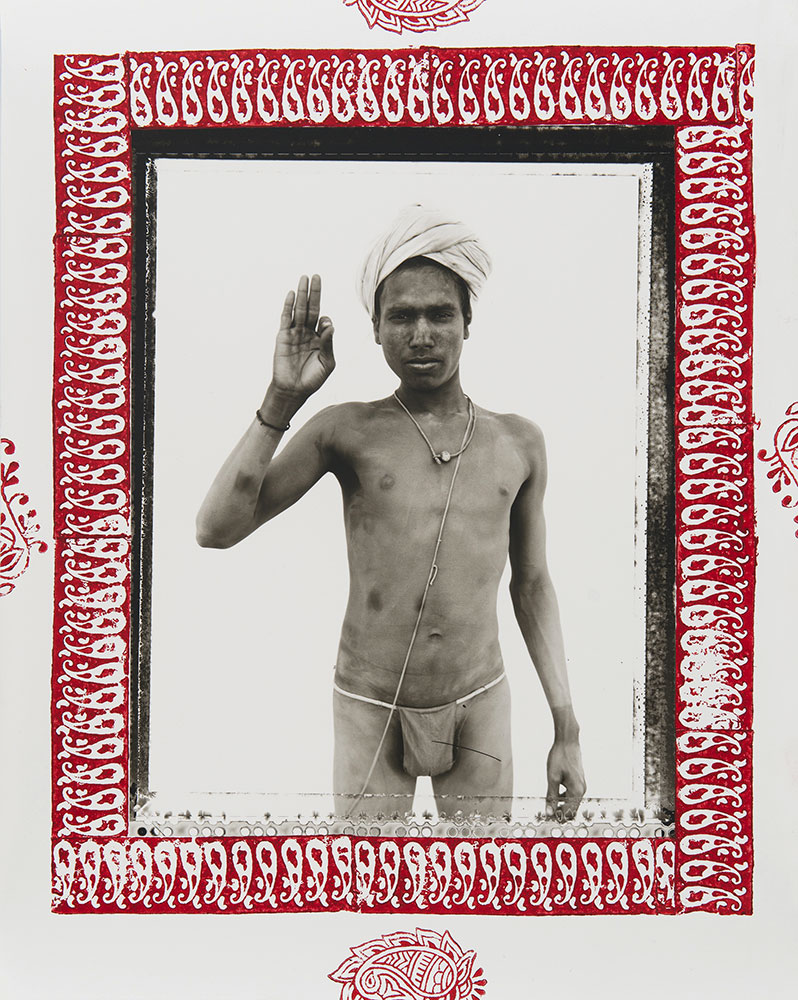
 

Stephen Dupont (Australian, b. 1967) 'Untitled #13' 2010


Stephen Dupont (Australian, b. 1967)
Untitled #13
2010
Silver gelatin print and ink
20 x 16″ (51 x 40.5cm) / edition of 5 + 2 AP’s


Stephen Dupont (Australian, b. 1967) 'Untitled #12' 2010


Stephen Dupont (Australian, b. 1967)
Untitled #12
2010
Silver gelatin print and ink
20 x 16″ (51 x 40.5cm) / edition of 5 + 2 AP’s


Stephen Dupont (Australian, b. 1967) 'Untitled #18' 2010


Stephen Dupont (Australian, b. 1967)
Untitled #18
2010
Silver gelatin print and ink
20 x 16” (51 x 40.5cm) / edition of 5 + 2 AP’s


Richard Avedon at work


Richard Avedon at work


Richard Avedon (American, 1923-2004) 'Bill Curry, drifter, Interstate 40, Yukon, Oklahoma, 6/16/80' 1980


Richard Avedon (American, 1923-2004)
Bill Curry, drifter, Interstate 40, Yukon, Oklahoma, 6/16/80
1980
from In the American West, 1979-1984


Stephen Dupont artist book


This body of work is a selection of portraits I made in 2010 at India’s most important Hindu festival called the Kumbh Mela. In one of four locations every four years Hindu pilgrims and visitors descend into the holy waters of the Ganges River to purify the soul in a spiritual ritual considered the largest peaceful gathering in the world. The photographs were taken in Haridwar of pilgrims and sadhus I chose randomly during that festival.

Inspired by an earlier series I made of anonymous portraits of Afghans in Kabul titled Axe Me Biggie, or Mr Take My Picture, but instead of an existing Afghan outdoor studio backdrop I chose the white sheet this time for its purity and simplicity. My subjects were asked to simply stand and pose before my camera. I use a white bed sheet to create an outdoor studio that not only captures my subject but also allows me to reveal the audience gathering and the environment around the sheet. This is meant to give the viewer a real sense of place and time, and a window onto the streets of Haridwar. Had I used the backdrop in a conventional way, to solely isolate a person, you’d have the impression that they were taken anywhere – New York, Sydney, or in a studio. This process is a creative choice and allows me with some control over my sitter but brings with it the spontaneity and surprise of what may take place around the zone I am working in: the gaze of someone holding the sheet that has no idea they are in the frame, or a hand holding the sheet or something else that crops up in front or behind. In the end my portraits are environmental or even landscapes.

Over many years of travel throughout India I have been collecting textile stamps and I decided to use them on my photographs. The research and experiments started in my field journal and then to the final hand printed images in this show. I wanted to create a relationship with Indian design and cloth, the Polaroid borders and the people in my pictures. Much like my photographic practice here the wood block printing was made with much spontaneity and feeling. The photographs have been handcrafted by Chris Reid at Blanco Negro using warmtone paper and processed in a specialised developer for unique tonality.

Stephen Dupont
Sydney, February 28, 2014


Edmund Pearce Gallery

This gallery has now closed.

LIKE ART BLART ON FACEBOOK

Back to top

Exhibition: ‘The Naked Man’ at Ludwig Museum of Contemporary Art, Budapest

Exhibition dates: 23rd March – 30th June 2013

PLEASE NOTE: THIS POSTING CONTAINS ART PHOTOGRAPHS OF MALE NUDITY – IF YOU DO NOT LIKE PLEASE DO NOT LOOK, FAIR WARNING HAS BEEN GIVEN


Many thankx to the Ludwig Museum for allowing me to publish the photographs in the posting. Please click on the photographs for a larger version of the image.


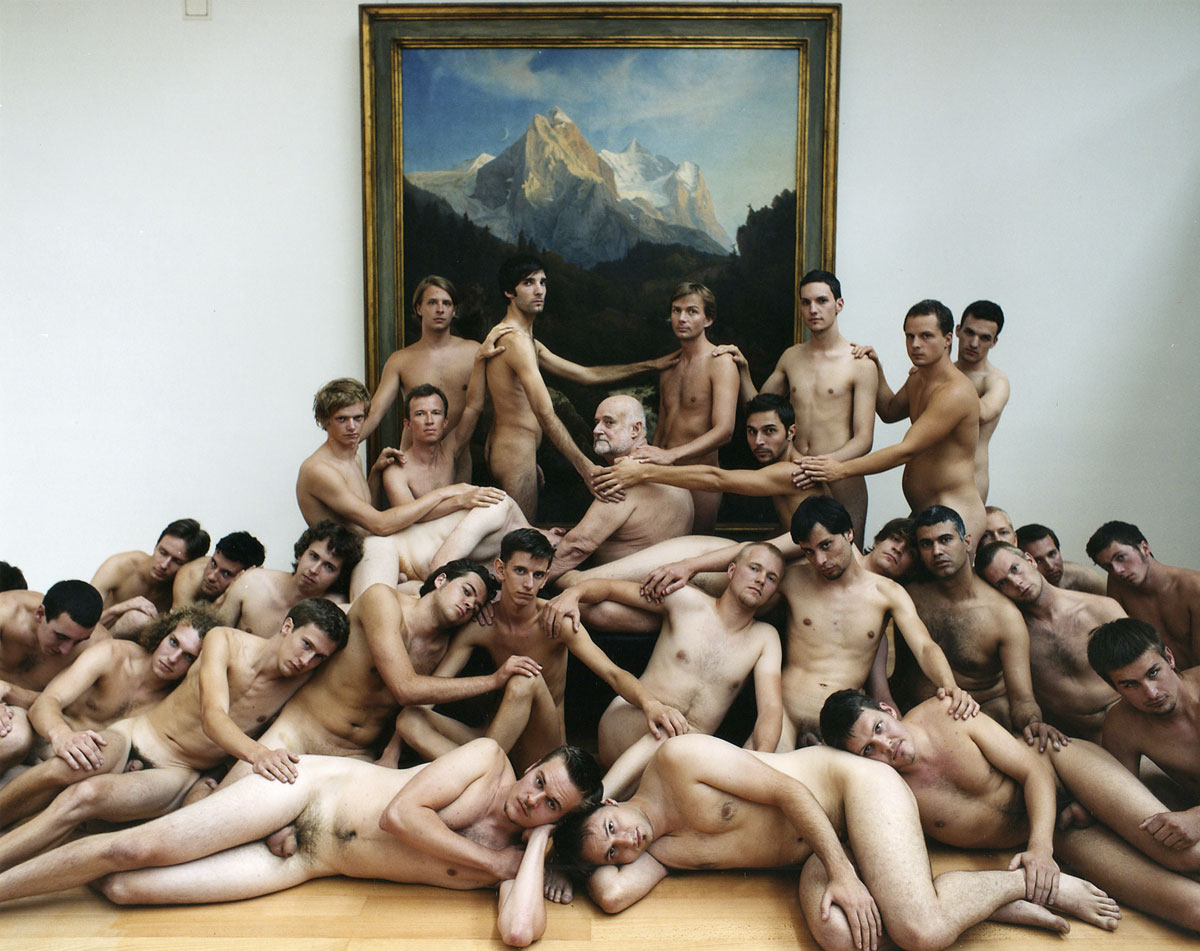
Tibor Gyenis (Hungarian, b. 1970) 'Hommage á Ana Mendieta' 1999


Tibor Gyenis (Hungarian, b. 1970)
Hommage á Ana Mendieta
1999
From the series Hommage á Ana Mendieta
Courtesy of the Artist


Spencer Tunick (American, b. 1967) 'Düsseldorf 5 (Museum Kunst Palast)' 2006


Spencer Tunick (American, b. 1967)
Düsseldorf 5 (Museum Kunst Palast)
2006
Courtesy Stephane Janssen


Károly Halász (Hungarian, 1946-2016) 'Body-builder in Renaissance manner' 2000

Károly Halász (Hungarian, 1946-2016) 'Body-builder in Renaissance manner' 2000

Károly Halász (Hungarian, 1946-2016) 'Body-builder in Renaissance manner' 2000

Károly Halász (Hungarian, 1946-2016) 'Body-builder in Renaissance manner' 2000


Károly Halász (Hungarian, 1946-2016)
Body-builder in Renaissance manner
2000
Courtesy of the Artist


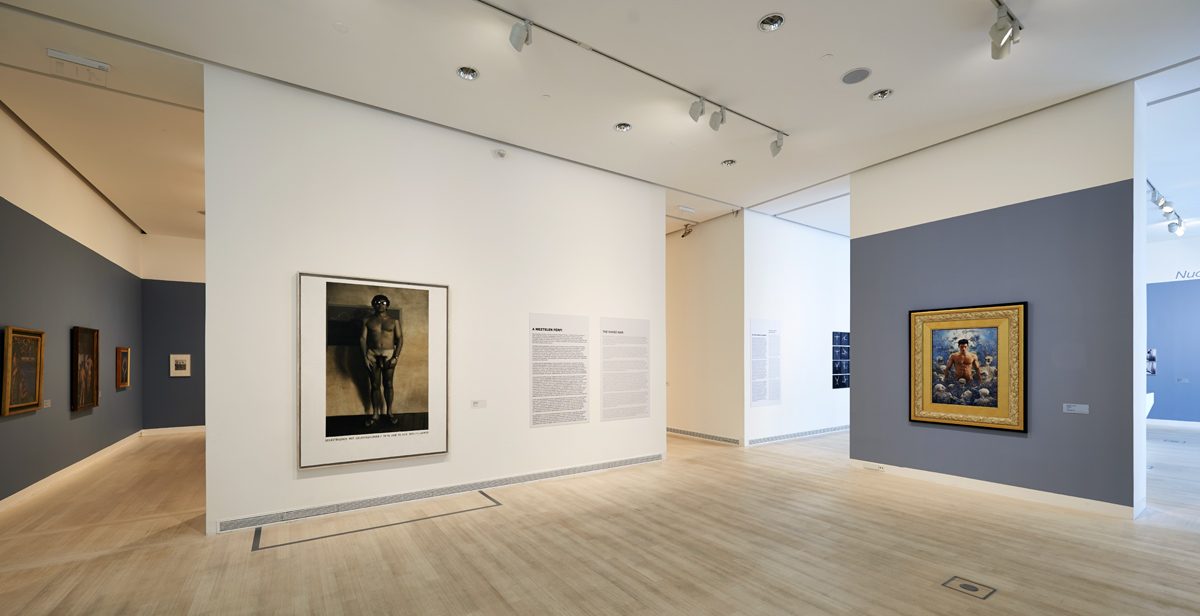
'The Naked Man', exhibition views, Ludwig Museum of Contemporary Art, Budapest, 2013

'The Naked Man', exhibition views, Ludwig Museum of Contemporary Art, Budapest, 2013

'The Naked Man', exhibition views, Ludwig Museum of Contemporary Art, Budapest, 2013

'The Naked Man', exhibition views, Ludwig Museum of Contemporary Art, Budapest, 2013


The Naked Man, exhibition views, Ludwig Museum of Contemporary Art, Budapest, 2013
© Photos: György Darabos


While the naked female body or nude is an accepted theme in art, the unclothed male body has appeared over the centuries, ever since classical antiquity, solely through depictions of the hero or martyr. Today however, the naked male body, provocatively revealed in contemporary art, is far from a heroic figure. The exhibition The Naked Man examines the ways in which the appearance of the naked male body has changed and been transformed over the last century. The changes in the male image from the end of the nineteenth century till today are traced through eight thematic areas.

The chronological starting point of the exhibition is the turn of the 19th and 20th centuries, when not even the traditional values of masculinity were spared by the crisis of identity, as manifested in the work of such artists of fin de siècle Vienna such as Egon Schiele and Oskar Kokoschka. For modern artists, the stripped down, naked male body was a bearer of revelation, self-knowledge and renewal. From this starting point, the exhibition follows the naked man through 20th and 21st century history, presenting challenges to the hegemonic model of male identity through the work of close to 100 artists, from questioning traditional male role models to the search for alternatives, from facing up to weakness and fragility to exploring the desiring gaze, body worship and the erotic pose.

In the depiction of the undressed male body there are also clues as to the changing social role of men, the formation of male identity, which is inseparable from both changes occurring in society and the workings of power. Power defines the gaze, which for centuries has been in the possession of men, while women have been merely the objects of the gaze. This division of roles between men and women in society was held to mirror the eternal or ‘natural’ order. The exhibition reassigns the roles, since the object of the gaze is no longer women, but men. How far this signifies the loss, sacrifice or transfer of possession of the gaze can be considered in depth with the help of thematically organised artworks.

The stripped down male body is defined by particular points of crisis. In that sense, the very spirit of the life reform movement that appeared at the turn of the century was one in which the naked male body was seen as a harmonious part of nature and a symbol of the desire to renew society. The naked man appears completely differently in relation to homosexuality. The homoerotic gaze eroticised the male body and examined it as an object of desire. The influence of feminism can be felt in artistic approaches that involve putting on make-up, the hiding of the sexual organ, as well as its ‘relocation’ or symbolic loss, all ways in which male artists have called attention to the arbitrariness of the designation of gender boundaries. Indefinable sexual identity, which is adaptive to the role of the opposite sex, is a revolutionary affront to the conventional expectations of traditional notions of masculinity and femininity. Heroic, hard masculinity, the healthy, body radiating physical strength, is a particularly important symbol for dictatorships. The disciplined body that conforms to the rules symbolises dominance over bodies. It is opposite to the anti-hero, the defenceless, vulnerable male body, that of the man who deliberately suffers pain in the desire to get back his lost power.

The man who belongs to a sexual or racial minority, along with the chubby or ageing male, is forced out of public space and confined to the private sphere, cut off from the connection of the male body to power. The body symbolises power, which can only truly be possessed if its nakedness is not completely revealed, if the sexual organ remains hidden. One of the last taboos of the cultural sphere of Christianity is the sight of the male sexual organ. After all this, what remains an interesting question is whether the female gaze can be an instrument of power. In addition, how do we view the nude studies that were once an indispensable part of academic artistic training, along with earlier and more recent attempts at depicting naked male models? How do we see the relation between artist and model in the self-portrait, in which the artist uses his own naked body as a terrain for the merciless exploration of the self?

The new masculinity does not view cultural roles as naturally given, but rather revolts against them, smashing taboos and unveiling fetishes. In the region of Central and Eastern Europe the body of the naked man is enriched with further layers of significance. In the art of former socialist countries, the naked male body was seen as an expression of enslavement to the patriarchal system, while gender roles are also worthy of examination in this context. After the collapse of the system, the changed geopolitical order, old and new desires and power relations were inscribed onto the body, shaping the new masculinity.

Press release from the Ludwig Museum website


Herbert List (German, 1903-1975) 'Young Arab with foxtail lilies, Hammamet, Tunisia' 1935


Herbert List (German, 1903-1975)
Young Arab with foxtail lilies, Hammamet, Tunisia
1935
Münchner Stadtmuseum


Jimmy Caruso (Canadian, 1926-2021) 'Arnold Schwarzenegger' 1978


Jimmy Caruso (Canadian, 1926-2021)
Arnold Schwarzenegger
1978
Münchner Stadtmuseum


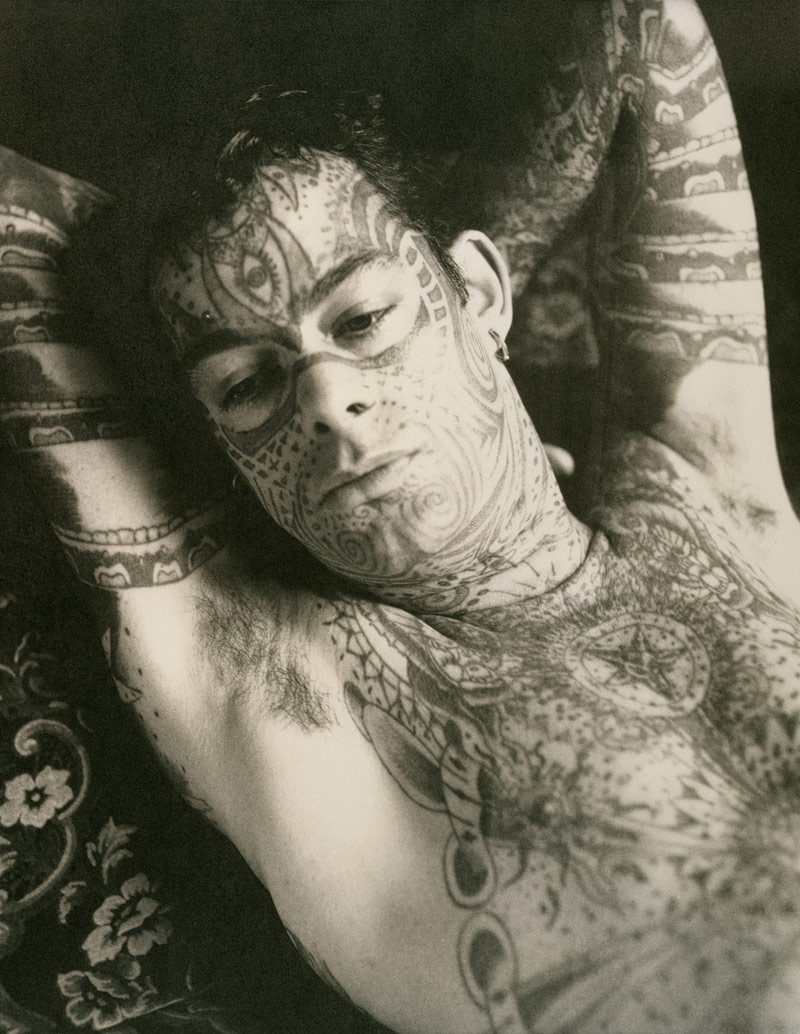
McDermott & McGough. 'Tattoo Man in Repose' 1891/1991


McDermott & McGough
Tattoo Man in Repose
1891/1991
© McDermott & McGough
Courtesy Galerie Jerome de Noirmont


Rudolf Koppitz (Austrian, 1884-1936) 'In the lap of Nature' Self portrait c. 1923


Rudolf Koppitz (Austrian, 1884-1936)
In the lap of Nature
Self portrait
c. 1923
Münchener Stadtmuseum / Sammlung Fotografie


Richard Avedon (American, 1923-2004) 'Rudolf Nureyev' 1961


Richard Avedon (American, 1923-2004)
Rudolf Nureyev
1961
© The Richard Avedon Foundation
Courtesy Stephane Janssen


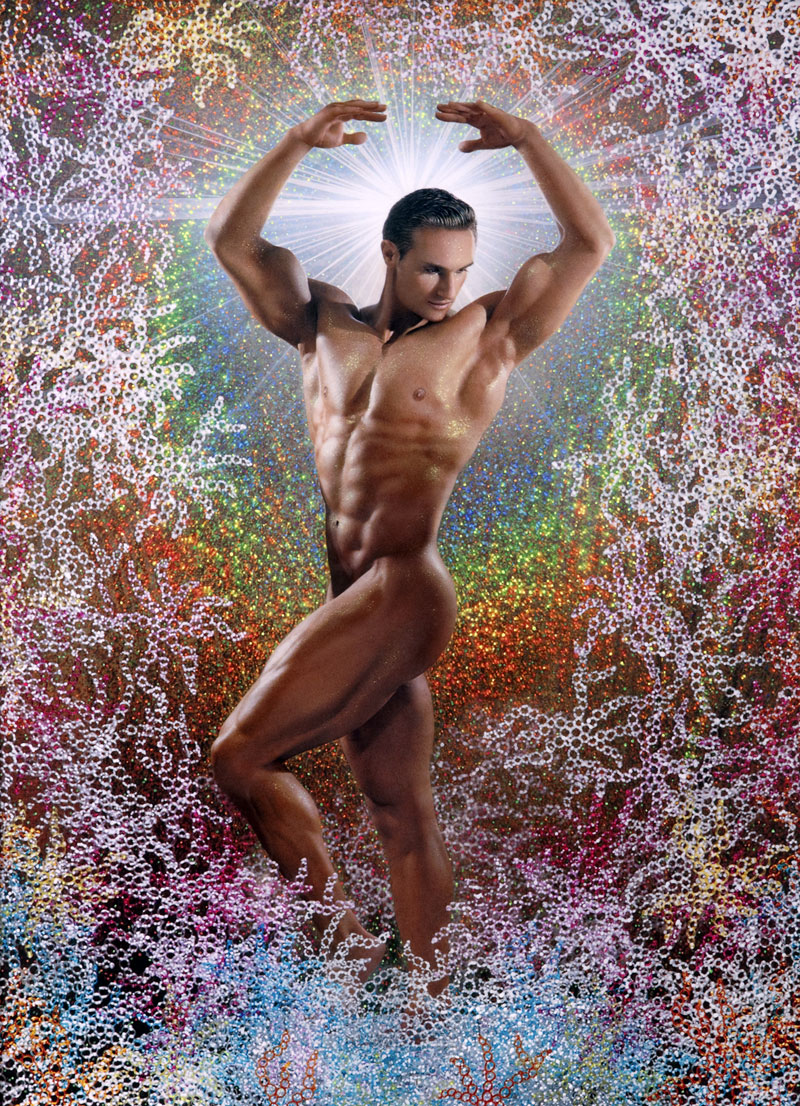
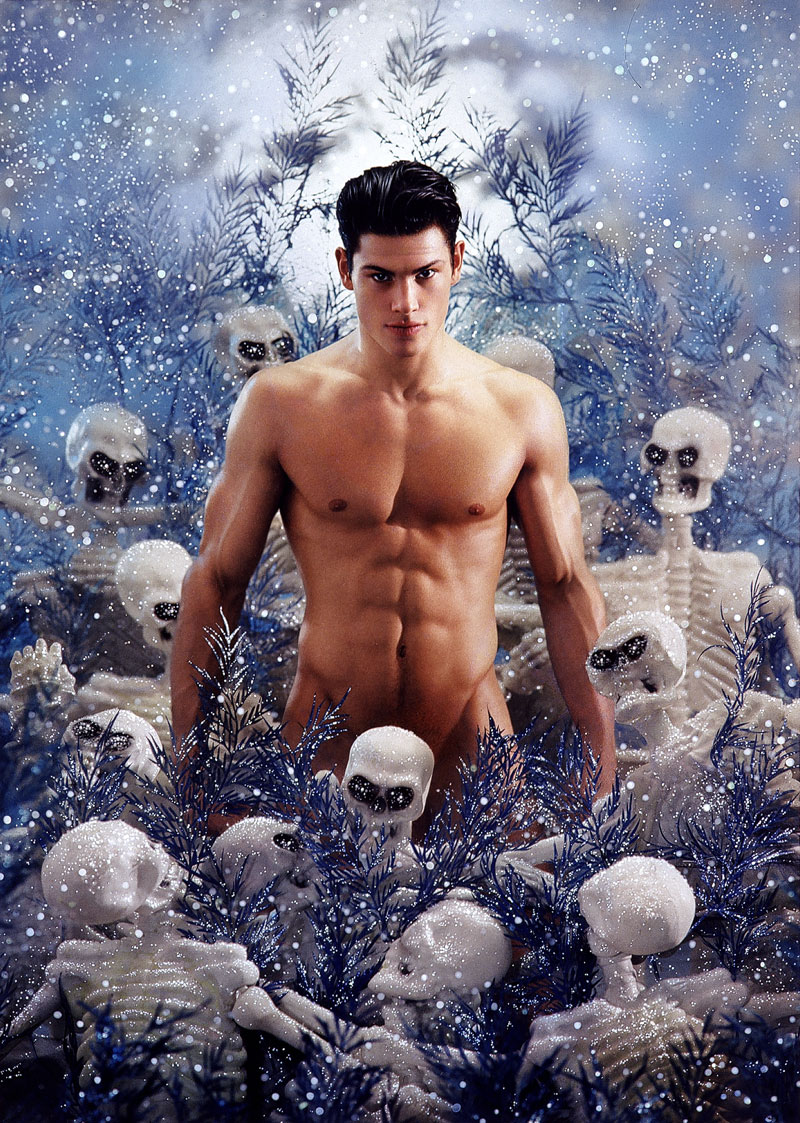
Pierre et Gilles. 'Apolló' 2005


Pierre et Gilles
Apolló
2005
Model: Jean-Christophe Blin
© Pierre et Gilles
Courtesy Galerie Jerome de Noirmont


Pierre et Gilles. 'The Death of Adonis' 1999


Pierre et Gilles
The Death of Adonis
1999
Private collection, Paris


David LaChapelle (American, b. 1963) 'Celebrity Gleam' 2002


David LaChapelle (American, b. 1963)
Celebrity Gleam
2002
Courtesy of Galerie Thomas, Munich


Ludwig Museum of Contemporary Art
1095 Budapest Komor Marcell Street 1
Hungary 06 1 555-3444

Opening hours:
Tuesday – Sunday: 10.00 – 18.00
Closed on Mondays

Ludwig Museum of Contemporary Art website

LIKE ART BLART ON FACEBOOK

Back to top

Exhibition: ‘WAR/PHOTOGRAPHY: Images of Armed Conflict and Its Aftermath’ at the Museum of Fine Arts, Houston – Posting Part 4

Exhibition dates: 11th November 2012 – 3rd February 2013


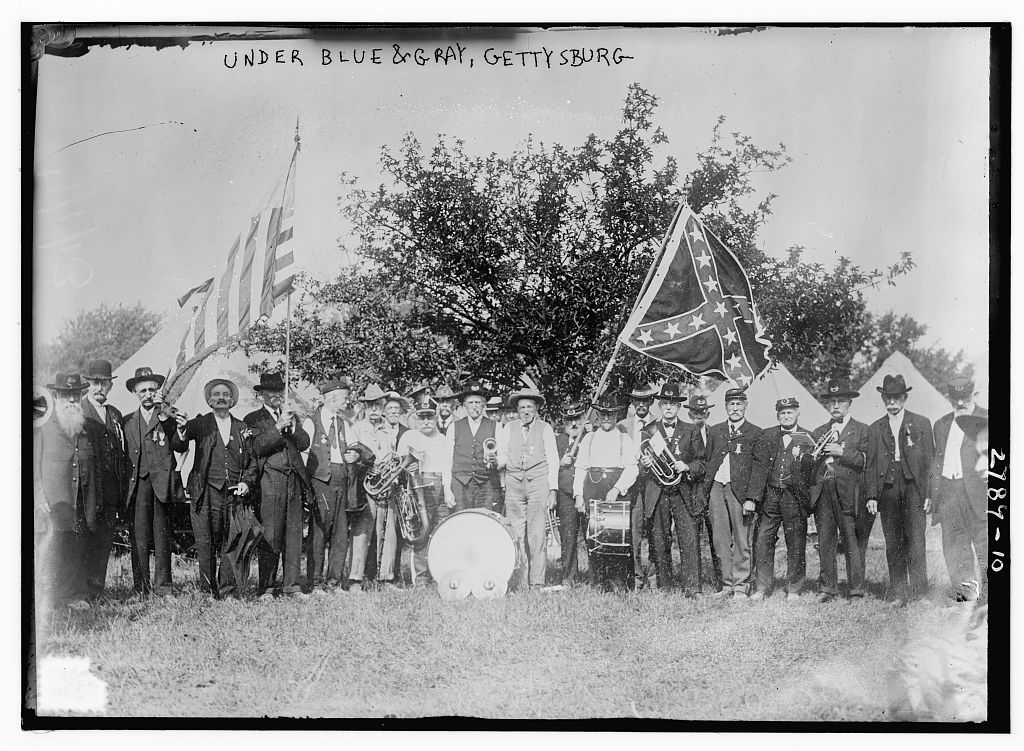
Anonymous photographer. 'Under blue & gray – Gettysburg' July 1913


Anonymous photographer
Under blue & gray – Gettysburg
July 1913
Photo shows the Gettysburg Reunion (the Great Reunion) of July 1913, which commemorated the 50th anniversary of the Battle of Gettysburg
Library of Congress Prints and Photographs Division Washington, D.C.


Part 4 of the biggest posting on one exhibition that I have ever undertaken on Art Blart!

As befits the gravity of the subject matter this posting is so humongous that I have had to split it into 4 separate postings. This is how to research and stage a contemporary photography exhibition that fully explores its theme. The curators reviewed more than one million photographs in 17 countries, locating pictures in archives, military libraries, museums, private collections, historical societies and news agencies; in the personal files of photographers and service personnel; and at two annual photojournalism festivals producing an exhibition that features 26 sections (an inspired and thoughtful selection) that includes nearly 500 objects that illuminate all aspects of WAR / PHOTOGRAPHY.

I have spent hours researching and finding photographs on the Internet to support the posting. It has been a great learning experience and my admiration for photographers of all types has increased. I have discovered the photographs and stories of new image makers that I did not know and some enlightenment along the way. I despise war, I detest the state and the military that propagate it and I surely hate the power, the money and the ethics of big business that support such a disciplinarian structure for their own ends. I hope you meditate on the images in this monster posting, an exhibition on a subject matter that should be consigned to the history books of human evolution.

**Please be aware that there are graphic photographs in all of these postings.** Part 1Part 2Part 3

Dr Marcus Bunyan


Many thankx to the Museum of Fine Arts, Houston for allowing me to publish some of the photographs in the posting. Please click on the photographs for a larger version of the image.


Memorials

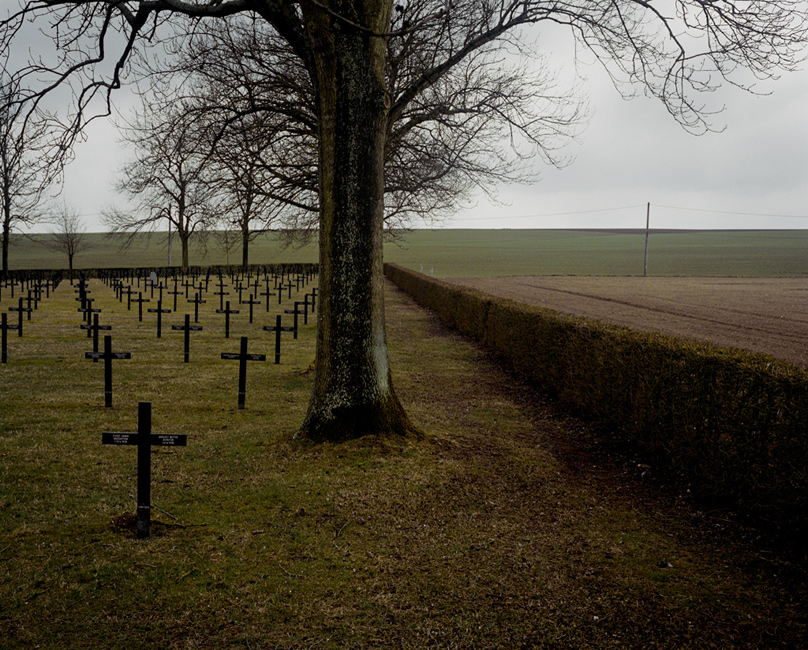
25. Photographs in the “Memorials” section range from the tomb of an unknown World War I soldier in England, by Horace Nicholls; and a landscape of black German crosses throughout a World War II burial site, by Bertrand Carrière; to an anonymous photograph of a reunion scene in Gettysburg of the opposing sides in the Civil War; and Joel Sternfeld’s picture of a woman and her daughter at the Vietnam Veterans Memorial in Washington, DC, in 1986. (8 images)


Horace Nicholls (English, 1867-1941) 'The Unknown Warrior at Westminster Abbey, London, November 1920' 1920


Horace Nicholls (English, 1867-1941)
The Unknown Warrior at Westminster Abbey, London, November 1920
1920
Silver gelatin print
© IWM (Q 31514)


In order to commemorate the many soldiers with no known grave, it was decided to bury an ‘Unknown Warrior’ with all due ceremony in Westminster Abbey on Armistice Day in 1920. The photograph shows the coffin resting on a cloth in the nave of Westminster Abbey before the ceremony at the Cenotaph and its final burial.


Bertrand Carrière (Canadian, b. 1957) 'Untitled' 2005-2009


Bertrand Carrière (Canadian, b. 1957)
Untitled
2005-2009
From the series Lieux Mêmes [Same Places]


Joel Sternfeld (American, b. 1944) 'Vietnam Veterans Memorial, Washington, D.C.,' May 1986


Joel Sternfeld (American, b. 1944)
Vietnam Veterans Memorial, Washington, D.C.,
May 1986
Chromogenic print, ed. #1/25 (printed October 1986)
The Museum of Fine Arts, Houston, the Target Collection of American Photography, gift of the artist
© 1986 Joel Sternfeld


Remembrance

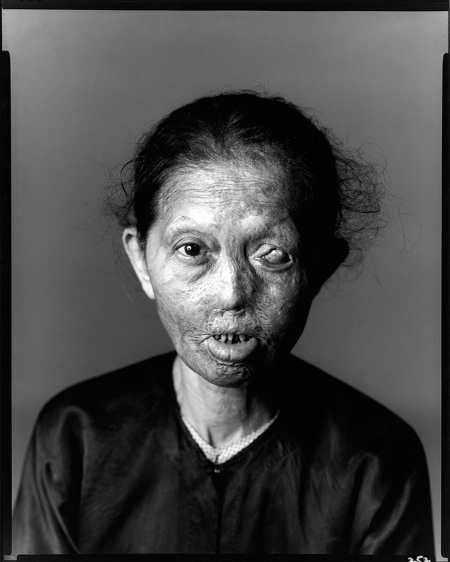
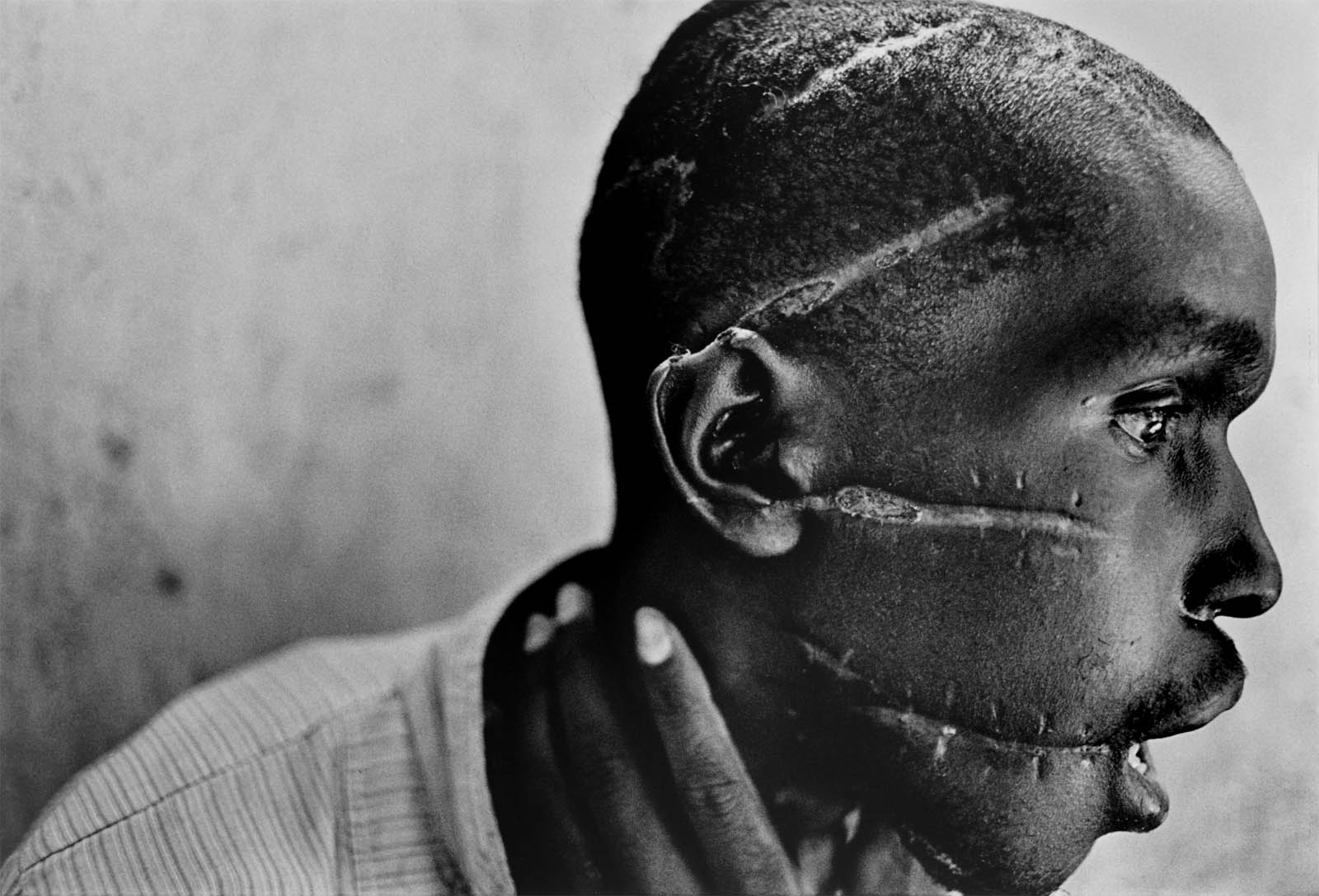
26. The last gallery in the exhibition is “Remembrance.” Most of these images were taken by artists seeking to come to terms with a conflict after fighting had ceased. Included are Richard Avedon’s picture of a Vietnamese napalm victim; a survivor of a machete attack in a Rwandan death camp, by James Nachtwey; a 1986 portrait of a hero who rescued Jews during the Holocaust, by Houston native Gay Block; and Suzanne Opton’s 2004 portrait of a soldier who survived the Iraq War and returned to the United States to work as a police officer, only to be murdered on duty by a fellow veteran. The final wall features photographs by Simon Norfolk of sunrises at the five D-Day beaches in 2004. The only reference to war is the title of the series: The Normandy Beaches: We Are Making a New World(33 images)


Richard Avedon (American, 1923-2004) 'Napalm Victim #1, Saigon, South Vietnam, April 29, 1971' 1971


Richard Avedon (American, 1923-2004)
Napalm Victim #1, Saigon, South Vietnam, April 29, 1971
1971
Silver gelatin print
© Richard Avedon


Gay Block (American, b.1942) 'Zofia Baniecka, Poland' 1986


Gay Block (American, b. 1942)
Zofia Baniecka, Poland
1986
From the series Rescuers: Portraits of Moral Courage in the Holocaust, a record of non-Jewish citizens from European countries who risked their lives helping to hide Jews from the Nazis
Chromogenic print, printed 1994
Courtesy of Museum of Fine Arts, Houston, gift of Clinton T. Wilour in honour of Eve France


Zofia Baniecka (born 1917 in Warsaw – 1993) was a Polish member of the Resistance during World War II. In addition to relaying guns and other materials to resistance fighters, Baniecka and her mother rescued over 50 Jews in their home between 1941 and 1944.


James Nachtwey (American, b. 1948) 'A Hutu man who did not support the genocide had been imprisoned in the concentration camp, was starved and attacked with machetes. He managed to survive after he was freed and was placed in the care of the Red Cross, Rwanda, 1994' 1994


James Nachtwey (American, b. 1948)
A Hutu man who did not support the genocide had been imprisoned in the concentration camp, was starved and attacked with machetes. He managed to survive after he was freed and was placed in the care of the Red Cross, Rwanda, 1994
1994
Silver gelatin print
© James Nachtwey / TIME

World Press Photo of the Year, prize singles


A Hutu man at a Red Cross hospital in Nyanza, Rwanda. His face was mutilated by the Hutu ‘Interahamwe’ militia, who suspected him of sympathising with the Tutsi rebels.

Liberated from a nearby Hutu camp, where mainly Tutsis were incarcerated, starved, beaten, and killed, this man did not support the genocide and was thus subjected to the same treatment. Starved and attacked with machetes, he had managed to survive, though he was unable to speak and could barely walk or swallow when this photo was made.

Jibran Abbasi. “Mutilated By The Hutu ‘Interahamwe’ by James Nachtwey,” on the Business Recorder website April 5, 2017 [Online] Cited 27/07/2024


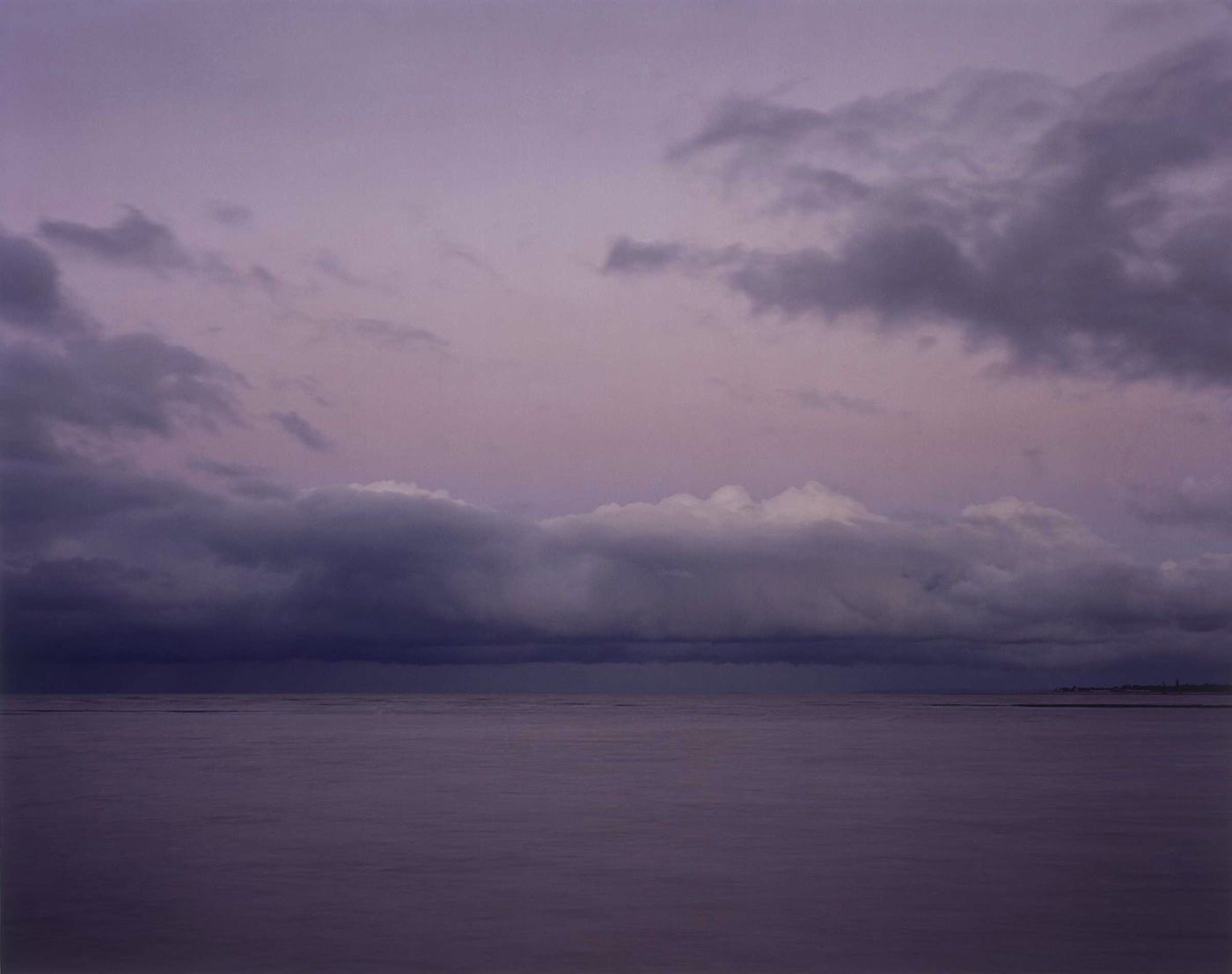
Simon Norfolk (British, b. Nigeria, 1963) 'Sword Beach' 2004


Simon Norfolk (British born Nigeria, b. 1963)
Sword Beach
2004
From the series The Normandy Beaches: We Are Making a New World
Chromogenic print, ed. #1/10 (printed 2006)
The Museum of Fine Arts, Houston
Gift of Bari and David Fishel, Brooke and Dan Feather and Hayley Herzstein in honor of Max Herzstein and a partial gift of the artist and Gallery Luisotti, Santa Monica
© Simon Norfolk / Gallery Luisotti


WAR/PHOTOGRAPHY Extended Info


Other photographs from the exhibition


Alexander Gardner (1821-1882) 'Scouts and Guides to the Army of the Potomac, Berlin, MD, October, 1862' October 1862 (detail)


Alexander Gardner (American, 1821-1882)
Scouts and Guides to the Army of the Potomac, Berlin, MD, October, 1862
October 1862
Albumen silver print
Photograph by Alexander Gardner, from “Incidents of the War. Guide to the Army of the Potomac,” from Gardner’s Photographic Sketch Book of the War, Washington
Records of the War Department General and Special Staffs, Record Group 165, National Archives Still Picture Branch, College Park, Maryland


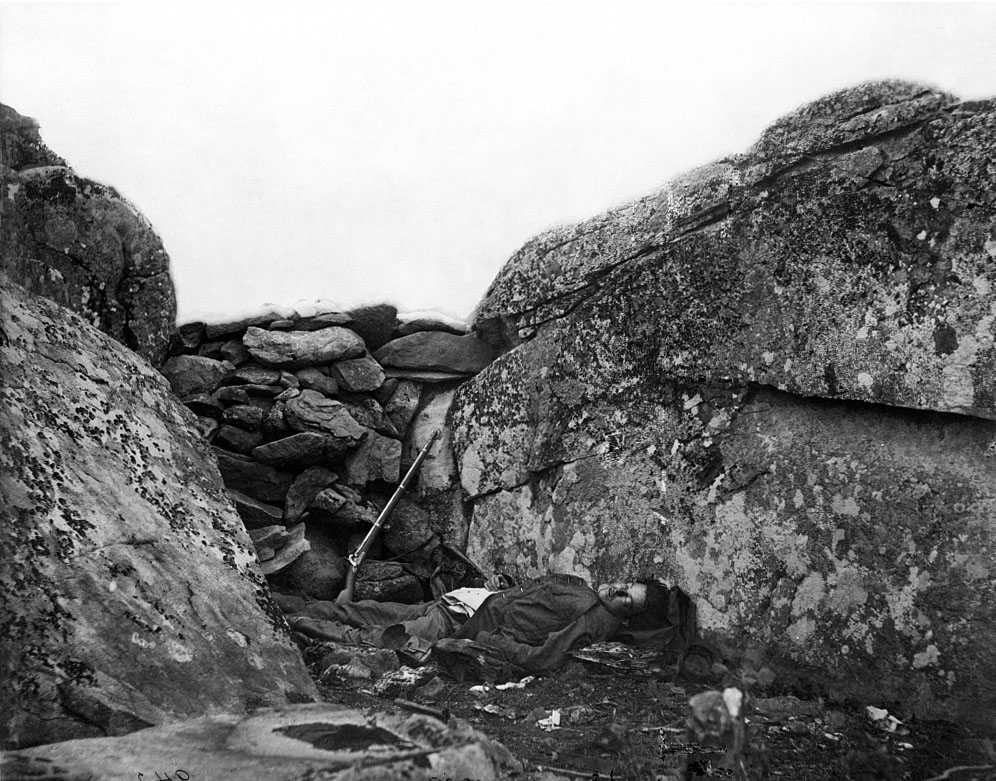
Alexander Gardner (American, 1821-1882) ‘The Home of a Rebel Sharpshooter, Gettysburg, Pennsylvania’. Albumen paper print


Alexander Gardner (American, 1821-1882)
The Home of a Rebel Sharpshooter / Dead Confederate soldier in the devil’s den, Gettysburg, Pennsylvania
July 1863
Albumen paper print copied from glass, wet collodion negative
Library of Congress, Prints and Photographs Division


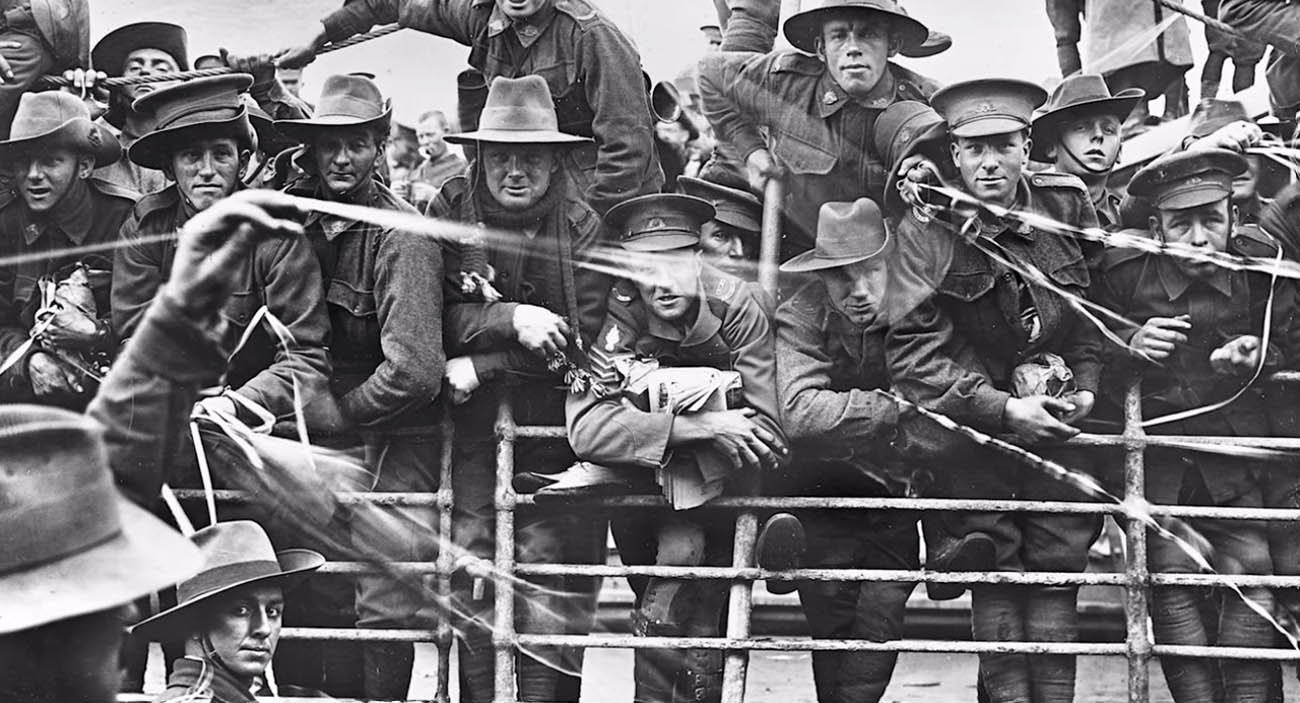
Josiah Barnes (Australian, 1858-1921) 'Embarkation of HMAT Ajana, Melbourne, July 8, 1916' 1916


Josiah Barnes (Australian, 1858-1921)
Embarkation of HMAT Ajana, Melbourne, July 8, 1916
1916
Gelatin silver print from original glass half-plate negative (printed 2012)
On loan from the Australian War Memorial


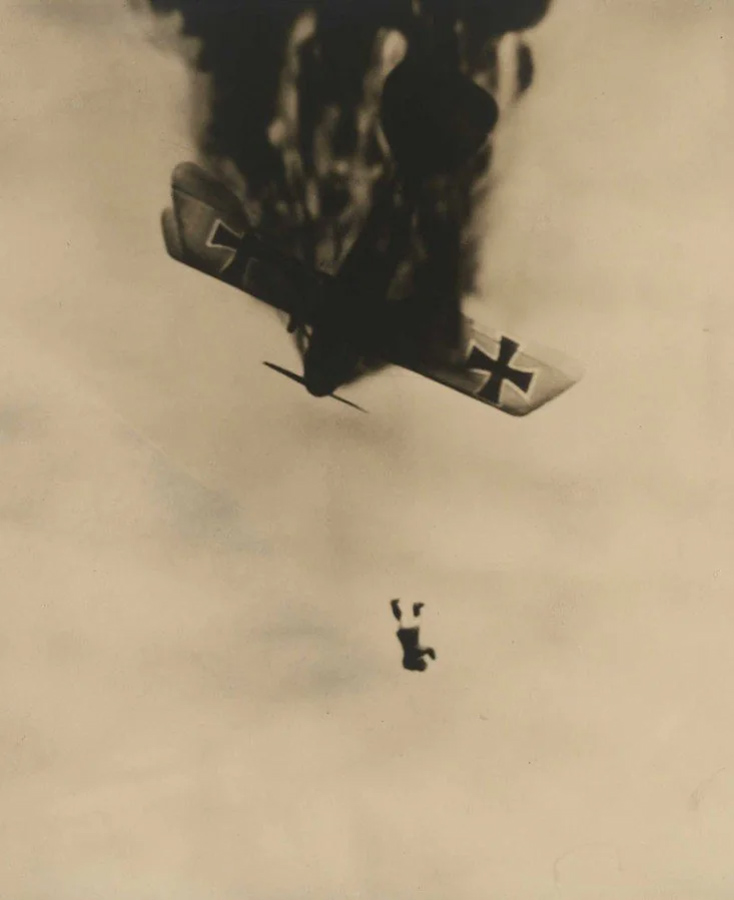
Wesley D. Archer (American, d. 1952) 'Just as he left the burning plane' 1933


Wesley D. Archer (American, d. 1952)
Just as he left the burning plane
1933
From the publication Death in the Air: The War Diary and Photographs of a Flying Corps Pilot


The typewritten script of a First World War pilot’s diary with a large number of photographs was submitted to the publishers William Heinemann and published by them in 1933. Heinemann stated on the book’s jacket that the diary contained no names, dates, or anything that could reveal the identity of the writer or the squadron in which he served. The publishers understood that the diarist was killed in action in 1918 and that it was in deference to the wishes of those who were close to him that his diary should be published.

So remarkable were the photographs that their veracity was immediately questioned, but no proof of their authenticity or otherwise could be ascertained. It was not until 1983 that a collection of documents, photographs and artifacts was presented to the Smithsonian’s National Air and Space Museum. Some of the photographs were recognized as being those of the mystery diarist and the truth was soon revealed.

The author was Wesley Archer, an American with Canadian parents who served with the RFC in the First World War, and the photographs and diary had been faked.

Text from the Google Books website

For more information on the faked photographs see the article “How dramatic images of WWI dogfights in the skies of Europe were FAKED by a conman who was just looking to make some money”.


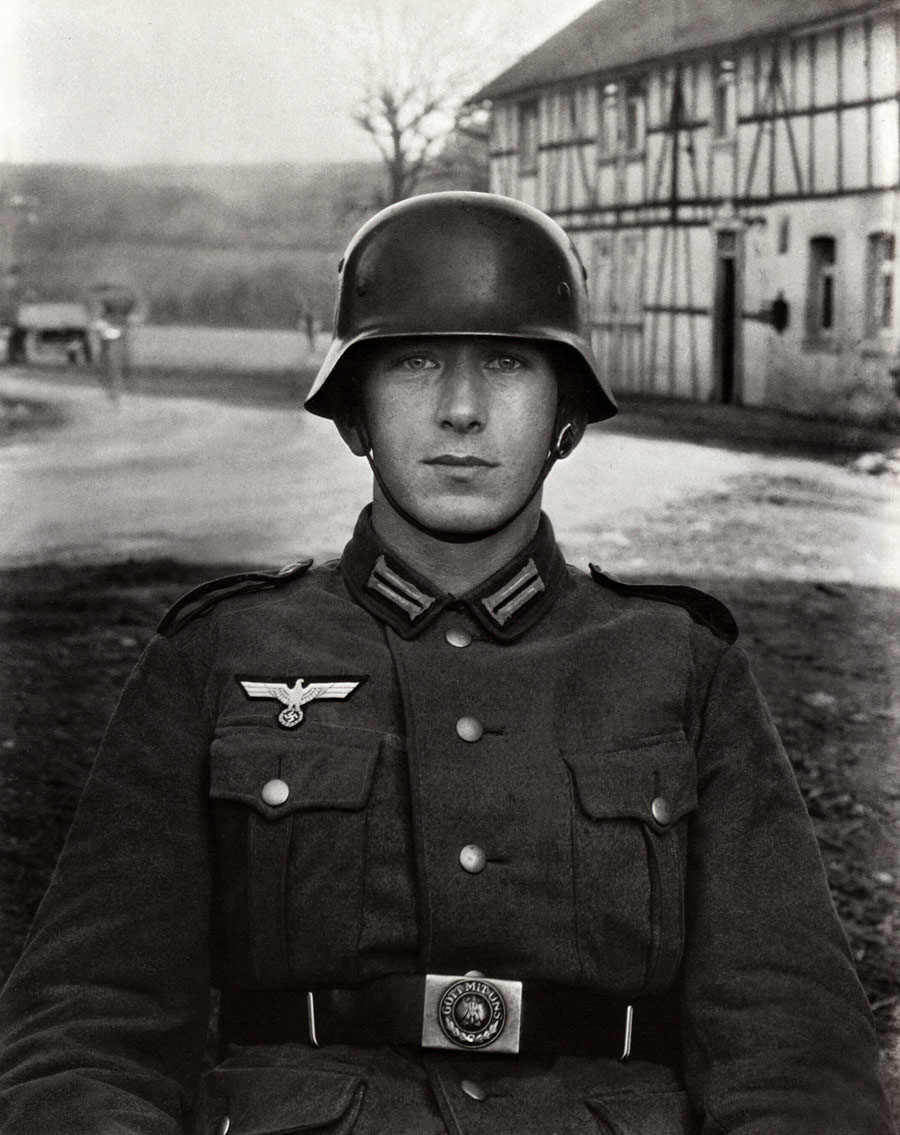
August Sander (German, 1876-1964) 'Soldier' c. 1940


August Sander (German, 1876-1964)
Soldier
c. 1940
Gelatin silver print, printed by Gunther Sander, 1960s
The Museum of Fine Arts, Houston
Gift of John S. and Nancy Nolan Parsley in honour of the 65th birthday of Anne Wilkes Tucker
© Die Photographische Sammlung/SK StiftungKultur – August Sander Archiv, Cologne; DACS, London 2012


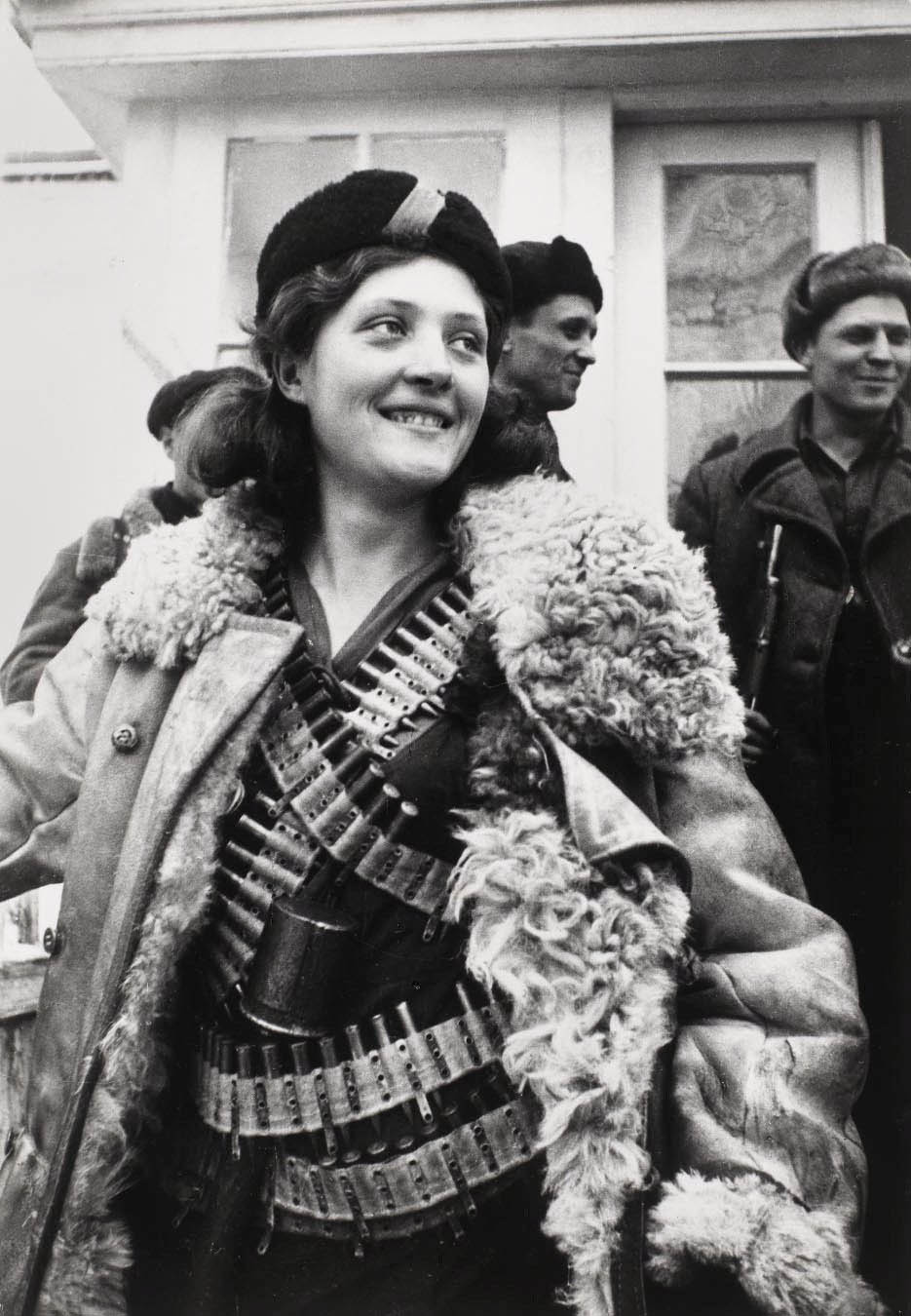
Arkady Shaikhet (Soviet, 1898-1959) 'Partisan Girl' 1942


Arkady Shaikhet (Soviet, 1898-1959)
Partisan Girl
1942
Gelatin silver print
Gift of Marion Mundy
© Arkady Shaikhet Estate, Moscow


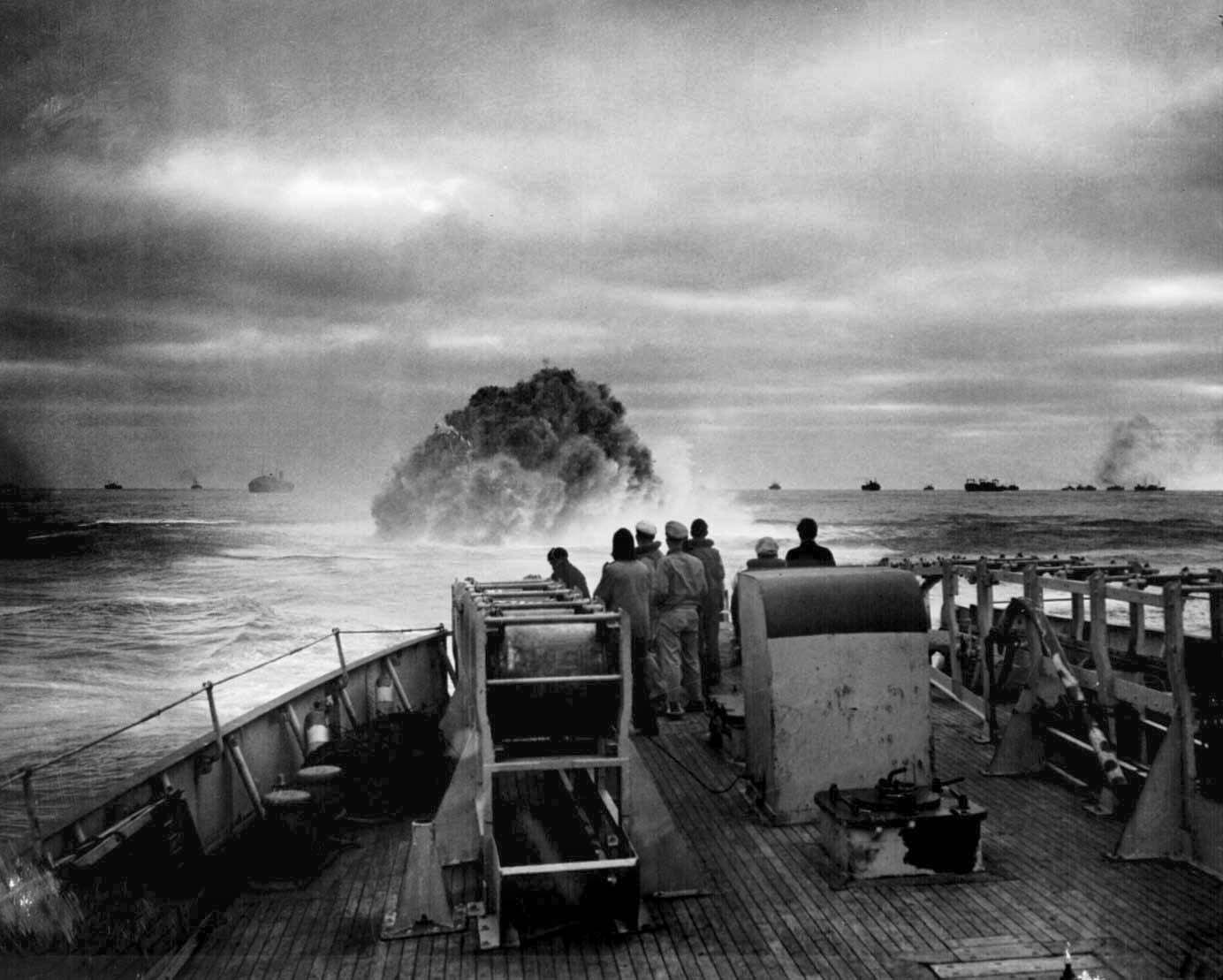
Anonymous photographer / U.S. Department of Defense. 'US Coast Guard crew of cutter Spencer watched as a depth charge exploded near U-175, North Atlantic, 500nm WSW of Ireland, 17 Apr 1943'


Anonymous photographer
U.S. Department of Defense
US Coast Guard crew of cutter Spencer watched as a depth charge exploded near U-175, North Atlantic, 500nm WSW of Ireland, 17 Apr 1943
17 April 1943
Public domain


W. Eugene Smith (American, 1918-1978) 'Wounded, dying infant found by American soldier in Saipan Mountains' June 1944


W. Eugene Smith (American, 1918-1978)
Wounded, dying infant found by American soldier in Saipan Mountains
June 1944
Gelatin silver print
© W. Eugene Smith


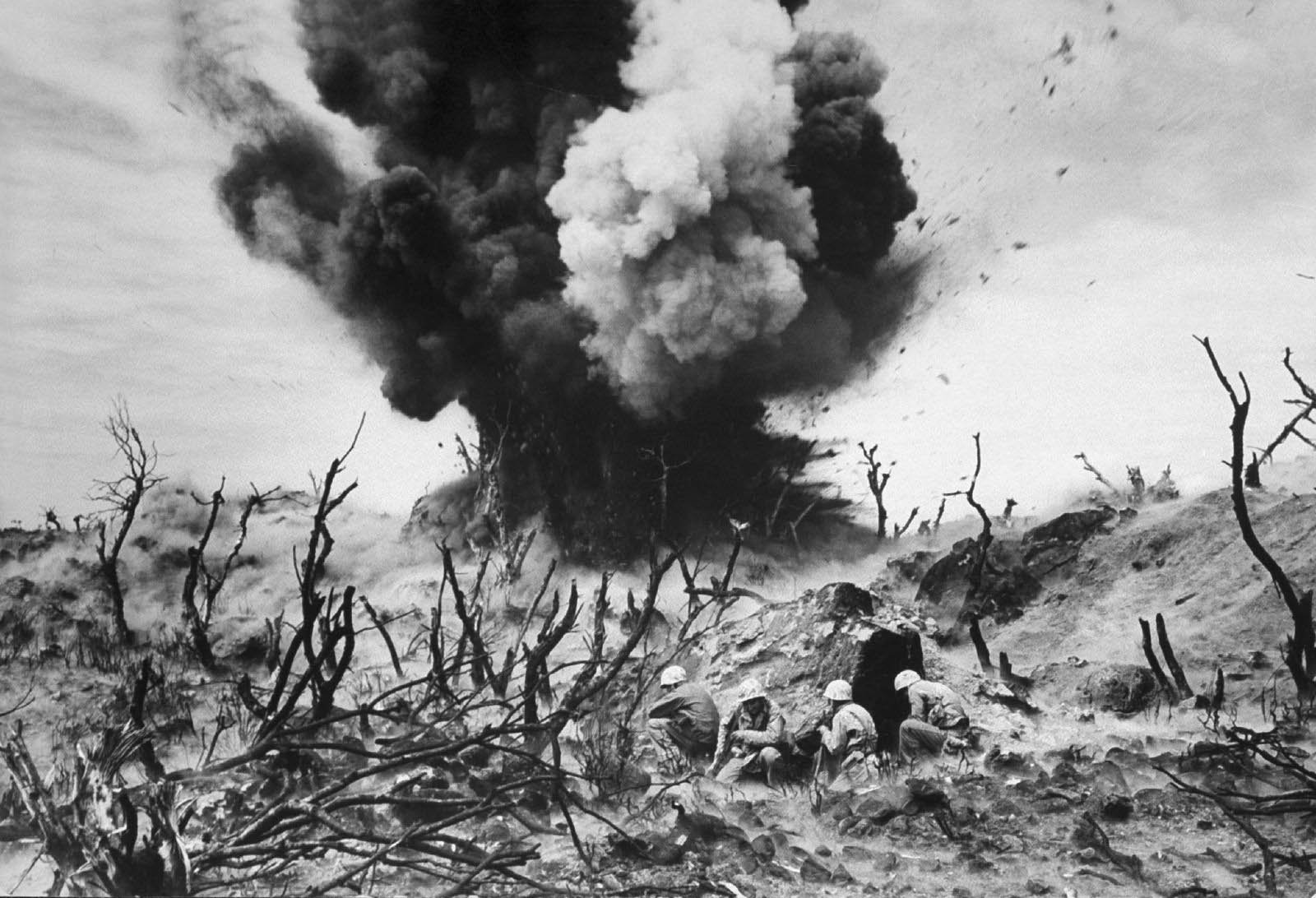
W. Eugene Smith (American, 1918-1978) 'World War II. The Pacific Campaign. The Battle of Iwo Jima (Japanese island). US Marine demolition team blasting out a cave on Hill 382. Iwo Jima. February, 1945' 1945


W. Eugene Smith (American, 1918-1978)
World War II. The Pacific Campaign. The Battle of Iwo Jima (Japanese island). US Marine demolition team blasting out a cave on Hill 382. Iwo Jima. February, 1945
1945
Gelatin silver print
© W. Eugene Smith


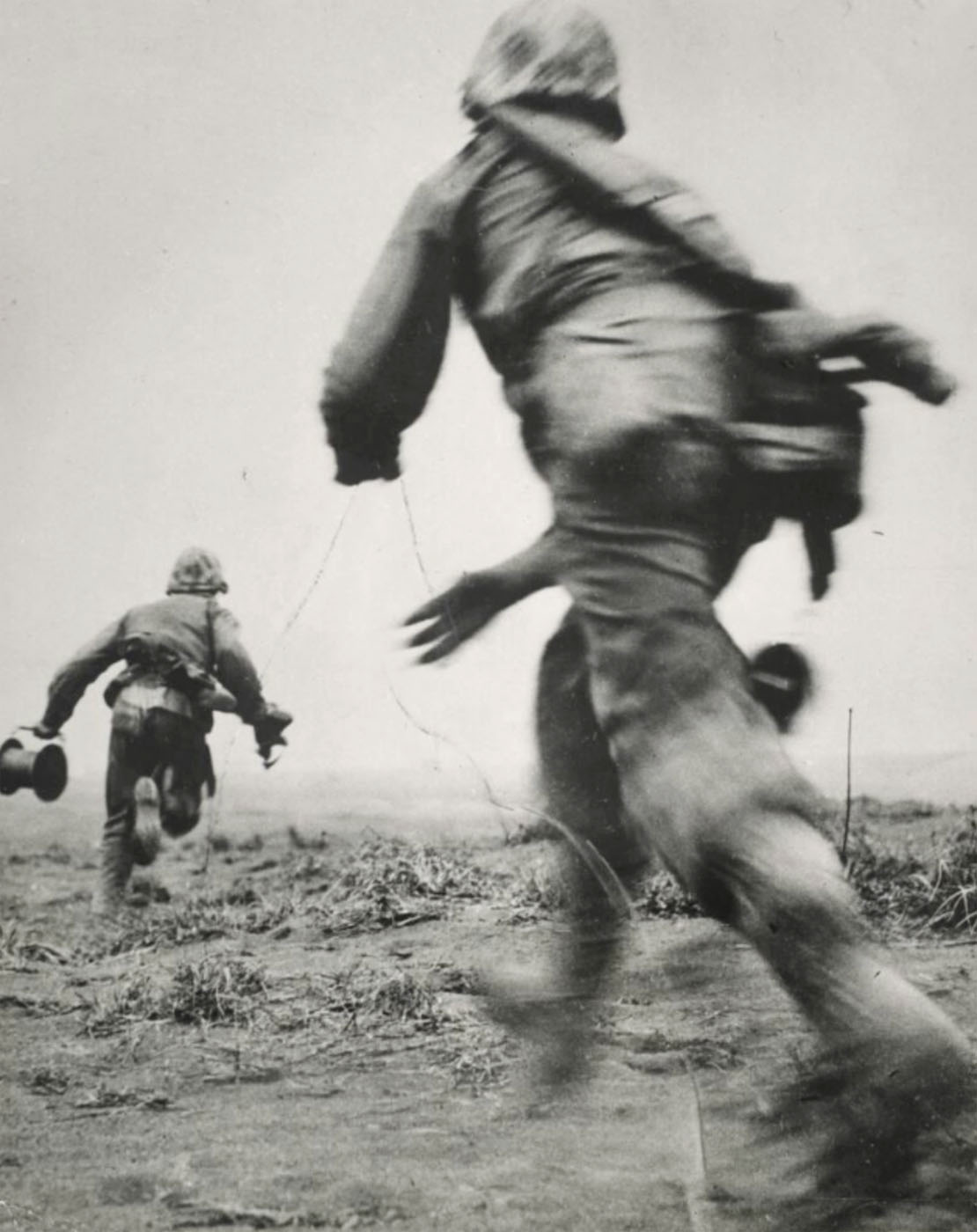
Joseph Schwartz (American, 1913–2013) 'Hold the Phone - Two Marine wiremen on Iwo Jima race across an open field, under heavy enemy fire to establish field telephone contact with the front lines' February 19, 1945, printed early 1950s


Joseph Schwartz (American, 1913–2013)
Hold the Phone – Two Marine wiremen on Iwo Jima race across an open field, under heavy enemy fire to establish field telephone contact with the front lines
February 19, 1945, printed early 1950s
Gelatin silver print mounted on board
18 13/16 × 14 15/16 in. (47.8 × 37.9cm)
The Museum of Fine Arts, Houston
Museum purchase funded by Knox Nunnally at “One Great Night in November, 2009,” in honor of Houston trial lawyer Joe Reynolds, a U.S. Marine who fought on Iwo Jima


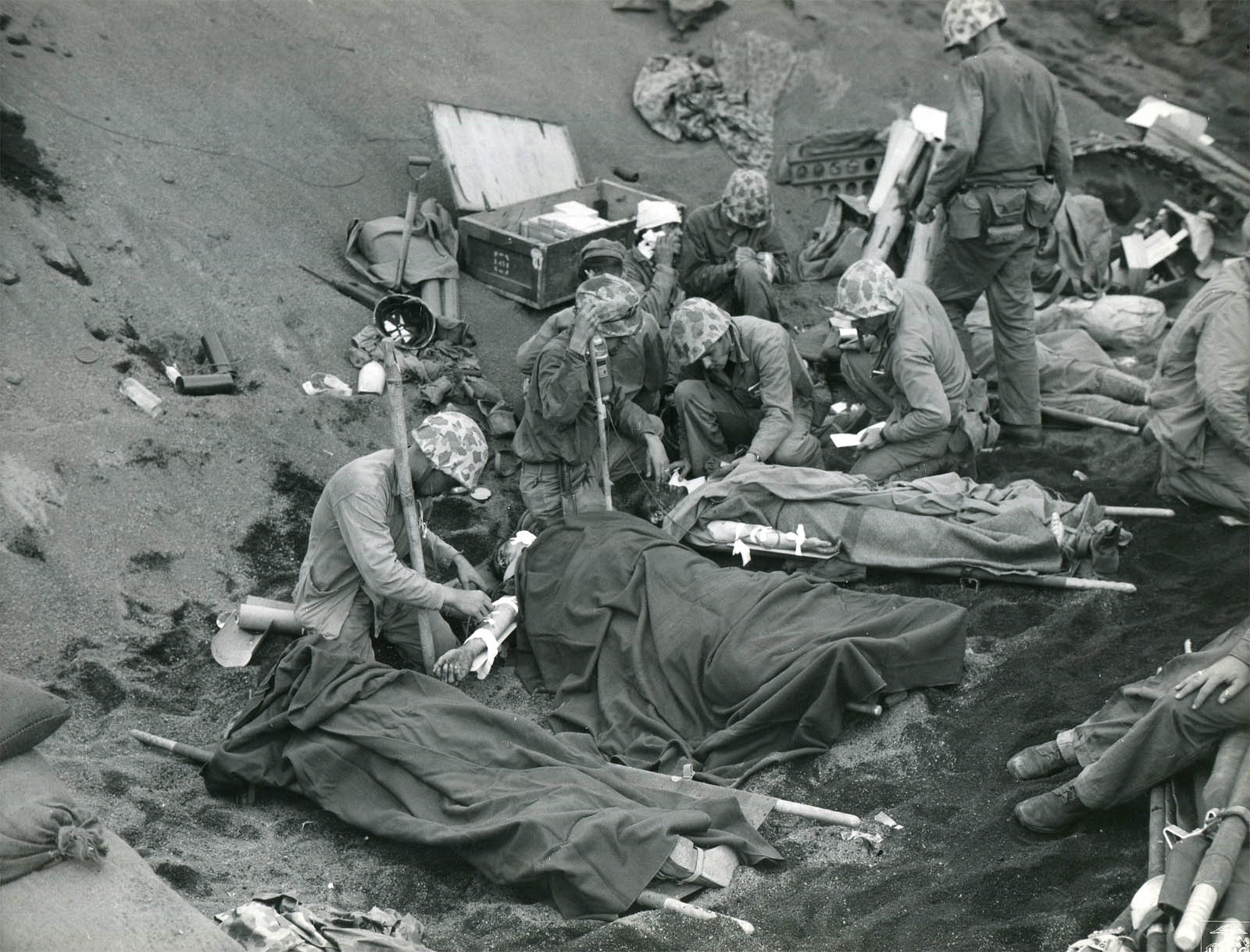
Anonymous photographer. U.S. Department of Defense / USMC Official Photograph 'PLASMA WARD – Navy doctors and corpsmen administer to wounded Marines at an aid station established in a gully on Iwo Jima. The high casualty rate in this operation required the use of gallons of plasma and whole blood sent by air from the West Coast' 1945


Anonymous photographer
U.S. Department of Defense / USMC Official Photograph
PLASMA WARD – Navy doctors and corpsmen administer to wounded Marines at an aid station established in a gully on Iwo Jima. The high casualty rate in this operation required the use of gallons of plasma and whole blood sent by air from the West Coast
1945
Gelatin silver print
Creative Commons Attribution 2.0 Generic


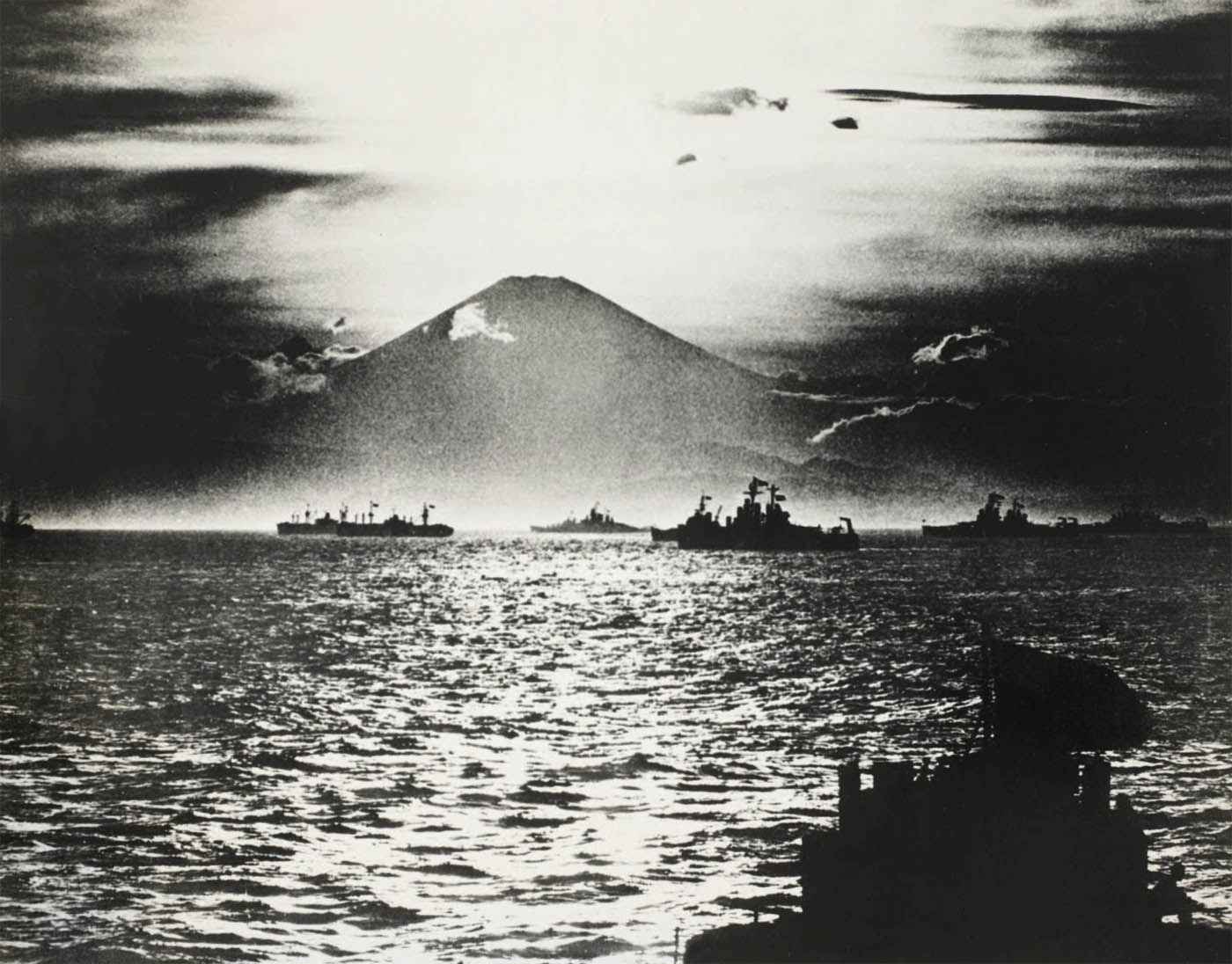
U.S. Navy Photographic Team. 'U.S. and British Warships Anchored in Sagami Wan, Outside of Tokyo Bay, Japan, on the Day the Allied Ships Entered Japanese Waters' 27th August 1945


U.S. Navy Photographic Team
U.S. and British Warships Anchored in Sagami Wan, Outside of Tokyo Bay, Japan, on the Day the Allied Ships Entered Japanese Waters
27th August 1945
Gelatin silver print
The Museum of Fine Arts, Houston, museum purchase funded by Laura and Tony Visage in honor and memory of William A. Visage and his fellow soldiers in Battery “E” of the 2nd Battalion, 131st Field Artillery, U.S. Army Air Corps


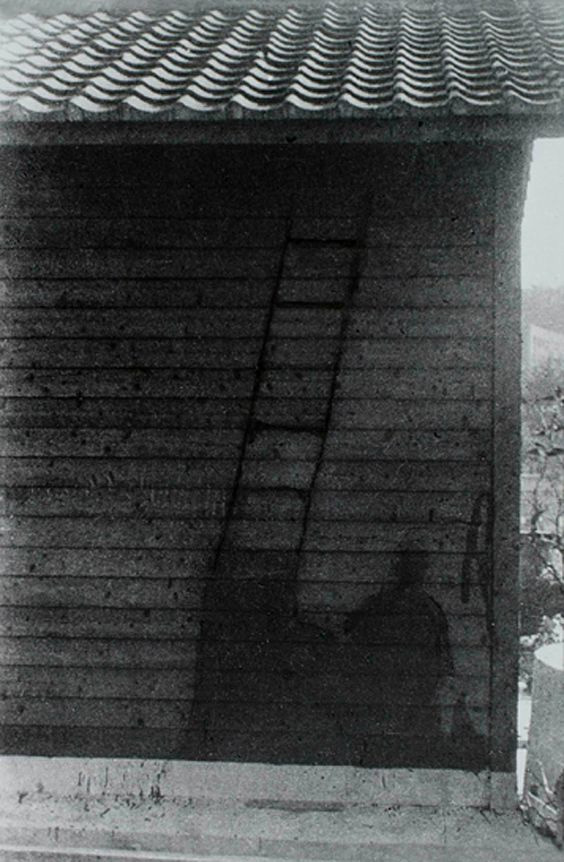
Matsumoto Eiichi (Japanese, 1915-2004) 'Shadow of a soldier remaining on the wooden wall of the Nagasaki military headquarters (Minami-Yamate machi, 4.5km from Ground Zero)' 1945


Matsumoto Eiichi (Japanese, 1915-2004)
Shadow of a soldier remaining on the wooden wall of the Nagasaki military headquarters (Minami-Yamate machi, 4.5km from Ground Zero)
1945
Gelatin silver print
Collection of the Tokyo Metropolitan Museum of Photography
© Matsumoto Eiichi


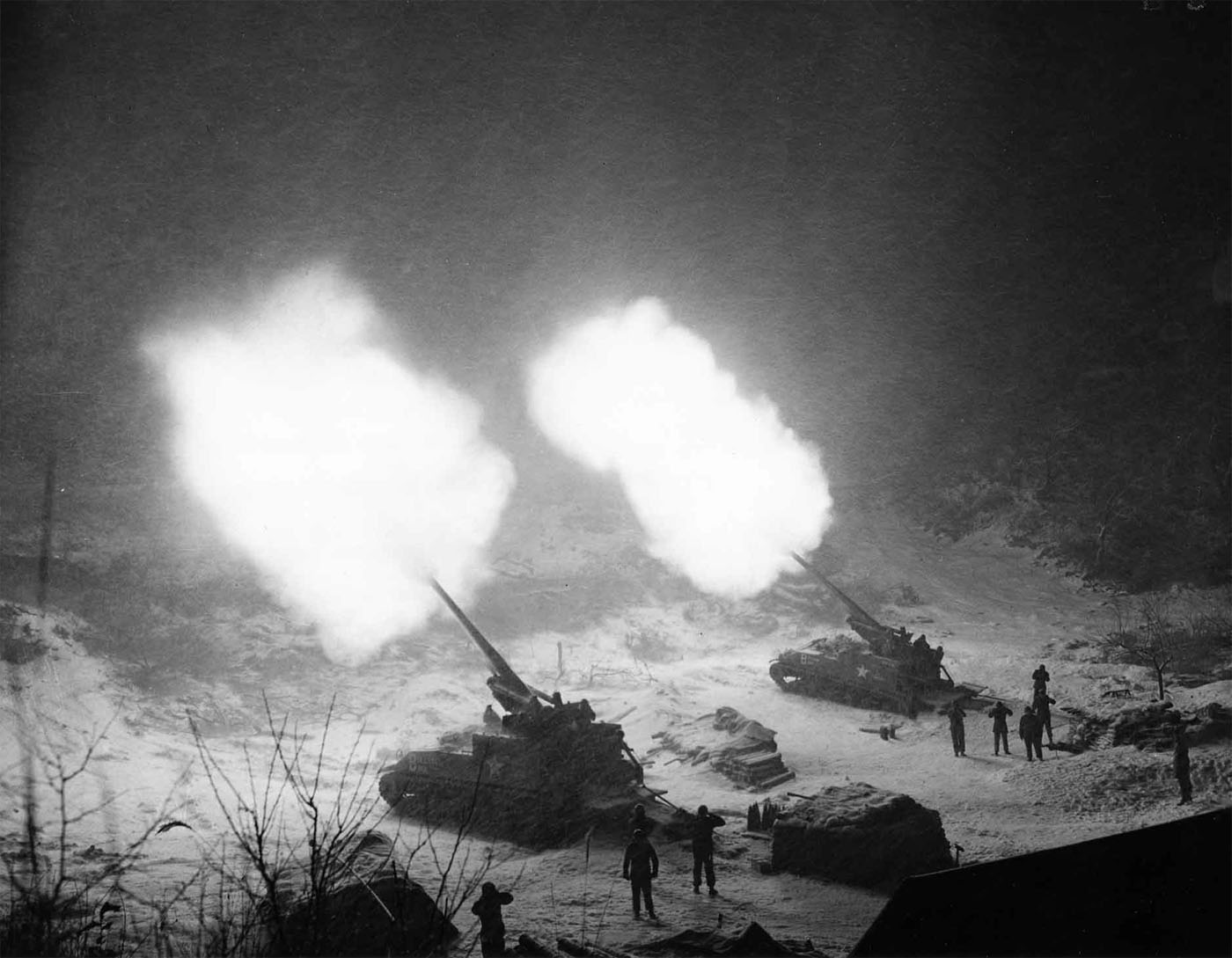
Unknown photographer. 'A pair of M-40 155mm Gun Motor Carriages of Battery B, 937th Field Artillery Battalion, providing fire support to U.S. Army 25th Infantry Division, Munema, Korea' 26 November 1951


Unknown photographer
A pair of M-40 155mm Gun Motor Carriages of Battery B, 937th Field Artillery Battalion, providing fire support to U.S. Army 25th Infantry Division, Munema, Korea
26 November 1951
Gelatin silver print
U.S. Department of Defense


Cathy LeRoy (French, 1944-2006) 'Corpsman In Anguish' 1967


Cathy LeRoy (French, 1944-2006)
Corpsman In Anguish
1967
Gelatin silver print


Her pictures from Vietnam were stunning. Her photos from Battle of Hill 881 evoked “ghosts of Iwo Jima and Pork Chop Hill,” Time magazine wrote in May 1967. Her photos of corpsman Vernon Wike during the battle was a triptych of an all-too-familiar scene: in the first, Wike has two hands on his friend’s chest, trying to staunch the wound; in the second, he tries to find a heartbeat; in the third frame, “Corpsman In Anguish”, he realised the man is dead.

LeRoy herself came very close to death two weeks later. Her Nikon barely stopped a piece of mortar shrapnel that ripped open her chest. She said that she thought the last words she would ever hear were, “I think she’s dead, sarge.” During the Tet offensive in 1968, LeRoy was briefly captured by the North Vietnamese during the battle for Hue. LeRoy’s photos of her captivity later made the cover of Life, ‘A Remarkable Day in Hue: the Enemy Lets Me Take His Picture’. She was the first person to take photos of North Vietnamese Army Regulars behind their lines.

Anonymous. “Corpsman In Anguish | Cathy LeRoy,” on the Iconic Photos website January 13, 2014 [Online] Cited 27/07/2024


A licensed parachutist, Leroy jumped with the U.S. 173rd Airborne Brigade into combat during Operation Junction City in February of 1967. It was in this action, the battle for Hill 881, that Leroy photographed U.S. Navy Corpsman Vernon Wike as he rushed to the aid of a fallen comrade. “Corpsman in anguish” is the third frame of a series that Leroy shot, capturing the unimaginable grief of war. Later, in an interview for the documentary “The Hill Fights”, Wike recounted the moment that Leroy photographed.

“I know there was chaos going on around me, but there was no sound,” she says. “… I knew he didn’t have a chance, but I still got p—–d off when he died.” Leroy describes the aftermath as the corpsman “lost in this nightmare landscape” grabbed the fallen marine’s M16 and charged a Viet bunker alone in a hail of obscenities. The fallen marine was a man called “Rock”, a New Yorker from Puerto Rico. Earlier that day he had told Wike that he only had 60 days left “in country” – his deployment in Vietnam.

Anonymous. “Giving War a Face: Catherine Leroy,” on the Dismal Nitch website September 04, 2020 [Online] Cited 27/07/2024


Arkady Shaikhet (Soviet, 1898-1959) 'Partisan Girl' 1942


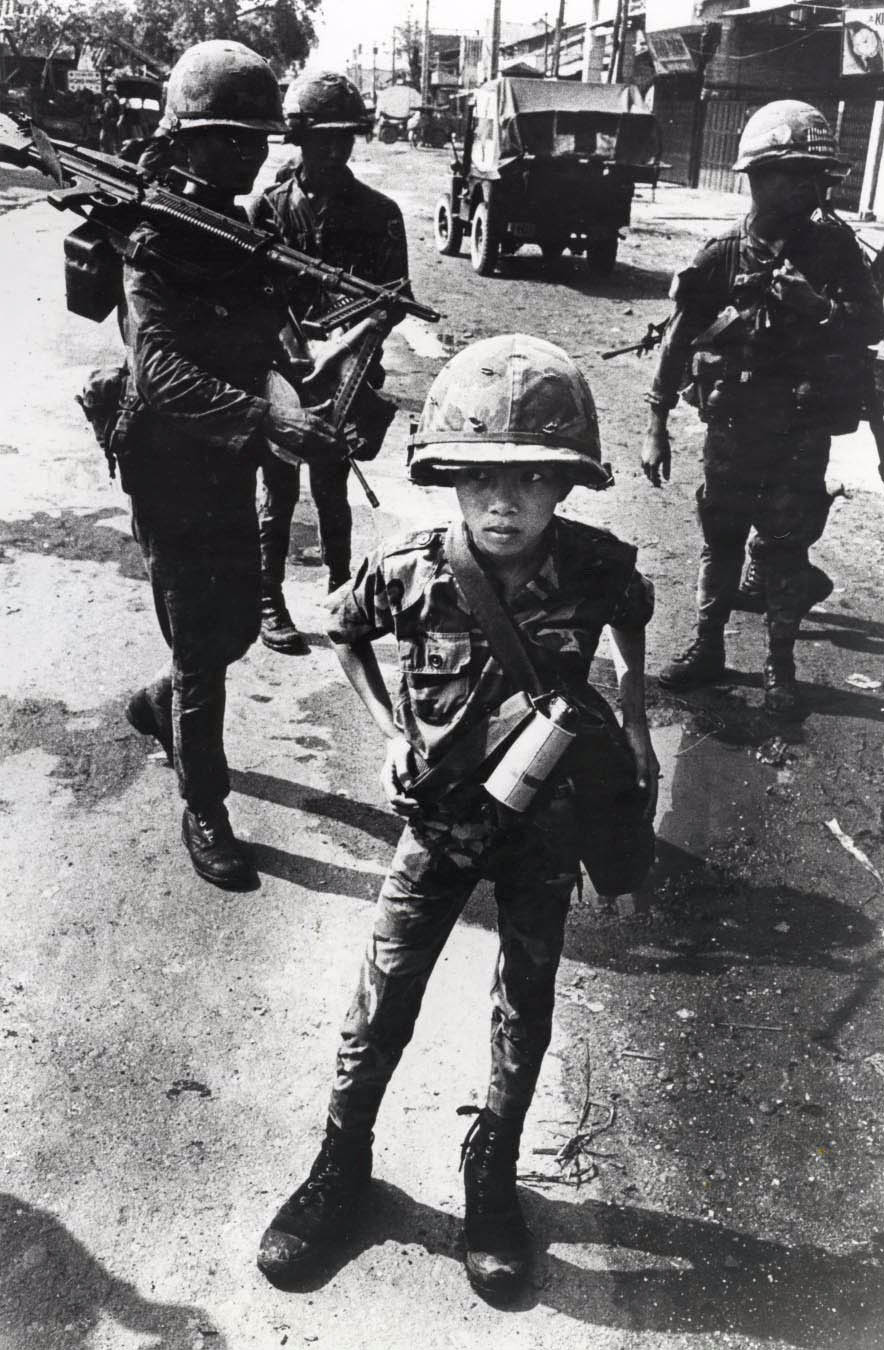
Philip Jones Griffiths (Welsh, 1936-2008)
​Called “Little Tiger” for killing two “Viet Cong women cadre” – his mother and teacher, it was rumored, Vietnam​
1968
Gelatin silver print
The Philip Jones Griffiths Foundation, courtesy of Howard Greenberg Gallery
© Philip Jones Griffiths / Magnum Photos


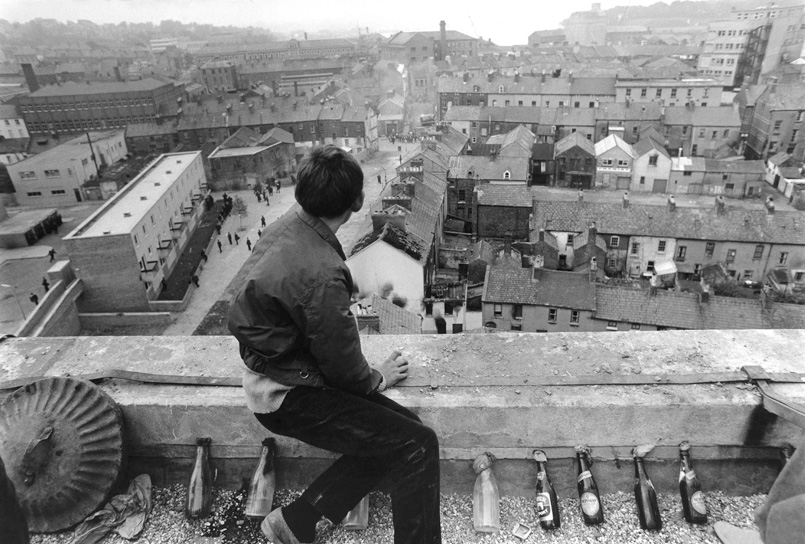
Gilles Caron (French, 1939-1970) 'Young Catholic demonstrator on Londonderry Wall, Northern Ireland' 1969


Gilles Caron (French, 1939-1970)
Young Catholic demonstrator on Londonderry Wall, Northern Ireland
1969
Gelatin silver print
Courtesy of Foundation Gilles Caron and Contact Press Images
© Gilles Caron


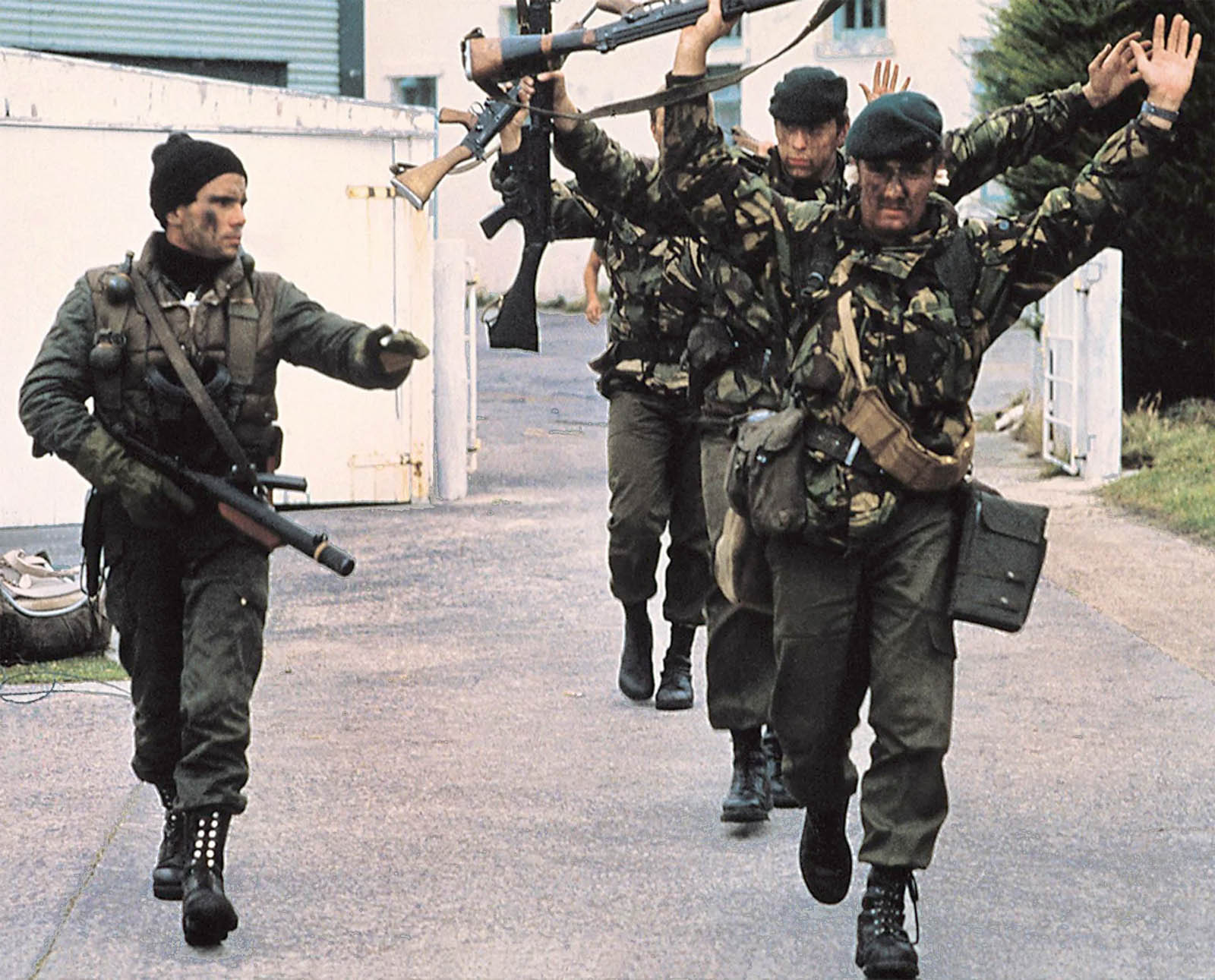
Rafael Wollmann (Argentinian, b. 1958) 'British Marines surrender to Argentinean troops in Malvinas/Falklands' April 2, 1982, printed 2012


Rafael Wollmann (Argentinian, b. 1958)
British Marines surrender to Argentinean troops in Malvinas/Falklands
April 2, 1982, printed 2012
Inkjet print
15 7/8 × 20 in. (40.4 × 50.8cm)
The Museum of Fine Arts, Houston
Gift of Rafael Wollmann


David Leeson (American, b. 1957) 'Death of a Soldier, Iraq' March 24, 2003


David Leeson (American, b. 1957)
Death of a Soldier, Iraq
March 24, 2003
Inkjet print, printed 2012
Courtesy of the artist


Ziv Koren (Israeli, b. 1970) 'A sniper’s-eye view of Rafah, in the Southern Gaza strip, during an Israeli military sweep' 2006


Ziv Koren (Israeli, b. 1970)
A sniper’s-eye view of Rafah, in the Southern Gaza strip, during an Israeli military sweep
2006
Inkjet print, printed 2012
© Ziv Koren/Polaris Images


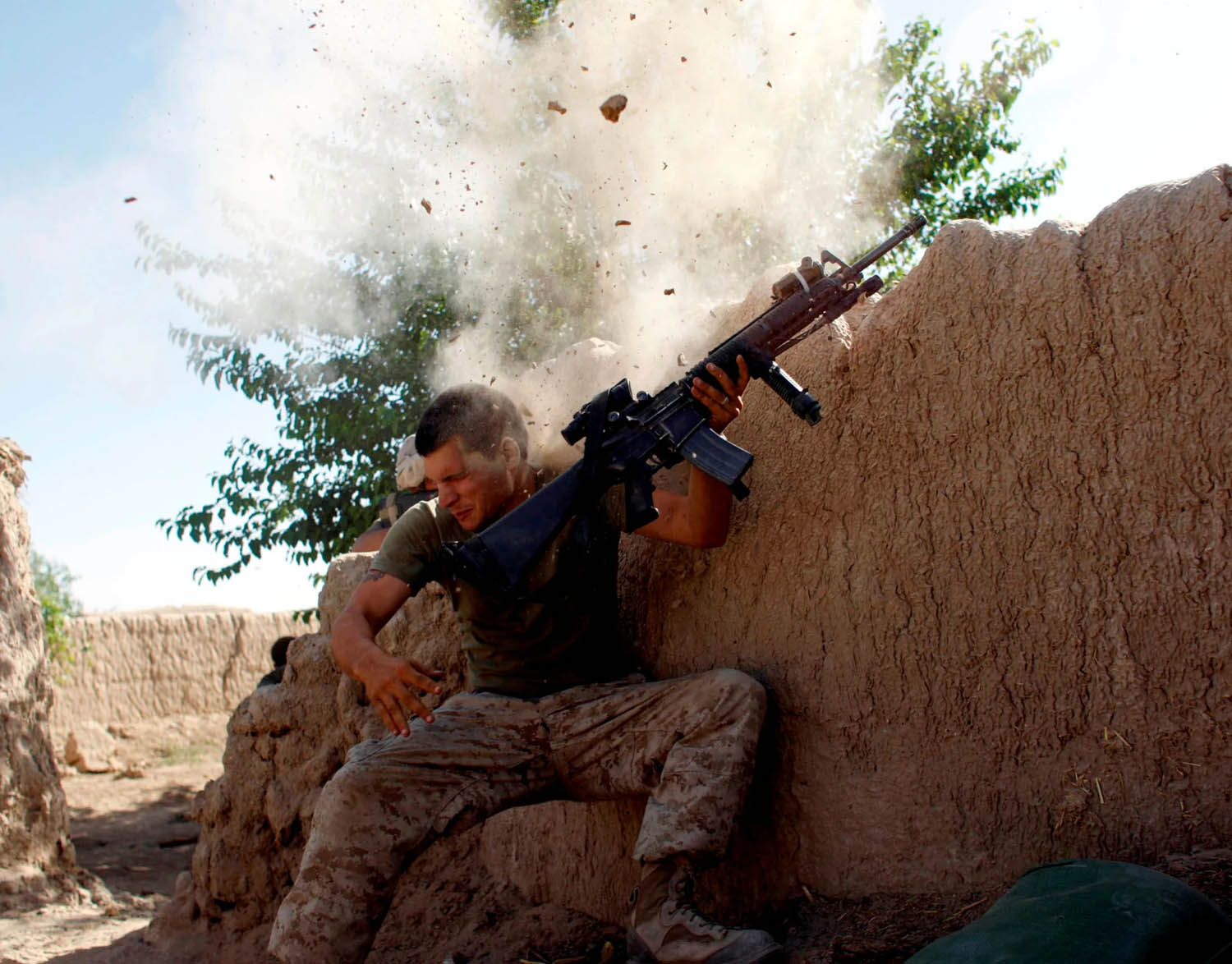
Goran Tomasevic (Serbian, b. 1959) /Reuters. 'SHOOTING. Sgt. William Olas Bee, a US Marine from the 24th Marine Expeditionary Unit, has a close call after Taliban fighters opened fire near Garmser in Helmand Province of Afghanistan May 18, 2008. The Marine was not injured.' 2008


Goran Tomasevic (Serbian, b. 1959) /Reuters
SHOOTING. Sgt. William Olas Bee, a US Marine from the 24th Marine Expeditionary Unit, has a close call after Taliban fighters opened fire near Garmser in Helmand Province of Afghanistan May 18, 2008. The Marine was not injured.
2008


Tomašević began photographing the war that followed the breakup of Yugoslavia from 1991 for daily newspaper Politika. In 1996 he joined the world’s largest news agency, Reuters, covering the simmering political tensions in Kosovo and the anti-Milošević demonstrations in his hometown of Belgrade since mid-1990s. During three-month NATO bombing of Yugoslavia in 1999, Tomašević was the only photographer working for foreign press to spend the duration of the conflict in Kosovo.

Tomašević moved to Jerusalem in 2002, covering the second Palestinian intifada. During the U.S. led invasions of Iraq in 2003, his picture of a U.S. Marine watching the toppling of a Saddam Hussein statue became one of the most memorable images of the war. He often returned to Iraq as sectarian violence escalated and regularly photographed America’s other war in Afghanistan. His sequence of photographs of U.S. Marine Sergeant Bee narrowly escaping Taliban bullets became an iconic image in U.S. war history.

Tomašević moved to Cairo in 2006 and was at the heart of Reuters’ coverage of the Arab Springs. In Libya, his image of a fireball that spewed up after an air strike on pro-Gaddafi fighters became an iconic image of the Libyan war, gracing the front pages of more than 100 newspapers around the globe. He stayed in Cairo until 2012. His raw pictures of rebel fighters battling pro-Assad forces among the ruins of Aleppo and Damascus during the Syrian Civil War have won international acclaim, as did his coverage of the bloody siege on a Nairobi shopping mall in Kenya. Tomašević worked for Reuters until 2022.

Text from the Wikipedia website


Museum of Fine Arts, Houston
1001 Bissonnet Street
Houston, TX 77005

Opening hours:
Wednesday 11am – 5pm
Thursday 11am – 9pm
Friday 11am – 6pm
Saturday 11am – 6pm
Sunday 12.30pm – 6pm
Closed Monday and Tuesday, except Monday holidays
Closed Thanksgiving Day and Christmas Day

Museum of Fine Arts, Boston website

LIKE ART BLART ON FACEBOOK

Back to top

Exhibition: ‘Faking It: Manipulated Photography Before Photoshop’ at The Metropolitan Museum of Art, New York

Exhibition dates at the MMA: 11th October 2012 – 27th January 2013


Unidentified American artist. 'Two-Headed Man' c. 1855


Unidentified American artist
Two-Headed Man
c. 1855
Daguerreotype
The Nelson-Atkins Museum of Art, Kansas City, Missouri, Gift of Hallmark Cards, Inc.


What a fascinating subject. Having completed multiple exposure work under the black and white enlarger I can attest to how difficult it was to get a print correctly exposed. I was using multiple negatives, moving the piece of photographic paper and printing in grids. Trying to get the alignment right was quite a task but the outcomes were very satisfying. Of course today these skills have mainly been lost to be replaced by other technological skills within the blancmange that is Photoshop. Somehow it’s not the same. My admiration for an artist like Jerry Uelsmann will always remain undimmed for the undiluted joy, beauty and skill of their analogue imagery.
I will post different photographs in this exhibition from the National Gallery of Art hang when I receive them!

See the second posting on this exhibition.

Dr Marcus Bunyan


Many thankx to the The Metropolitan Museum of Art, New York for allowing me to publish the photographs in the posting. Please click on the photographs for a larger version of the image.


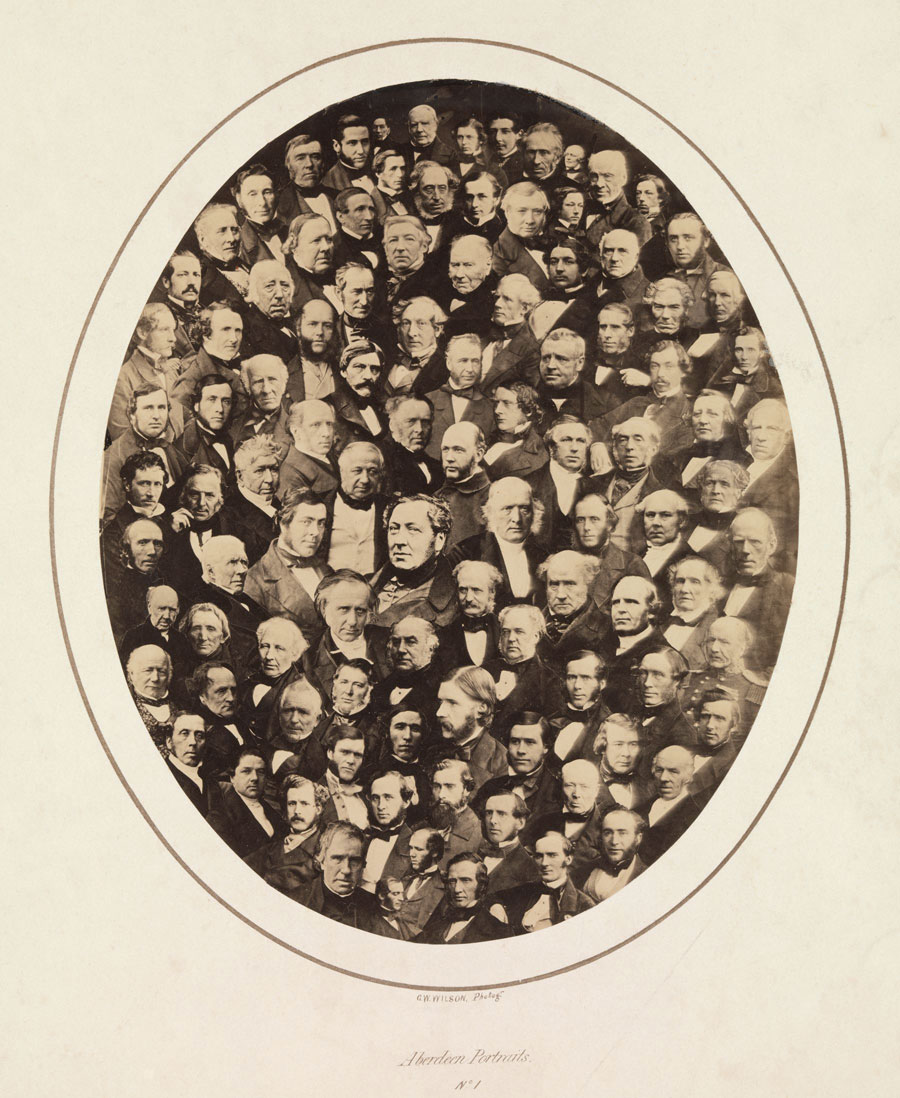
George Washington Wilson (Scottish, 1823-1893) 'Aberdeen Portraits No. 1' 1857


George Washington Wilson (Scottish, 1823-1893)
Aberdeen Portraits No. 1
1857
Albumen silver print from glass negative
The Metropolitan Museum of Art, The Horace W. Goldsmith Foundation Fund, through Joyce and Robert Menschel, 2011


Henry Peach Robinson (English, 1830-1901) 'Fading Away' 1858


Henry Peach Robinson (English, 1830-1901)
Fading Away
1858
Albumen silver print from glass negatives
The Royal Photographic Society Collection at the National Media Museum, Bradford, United Kingdom


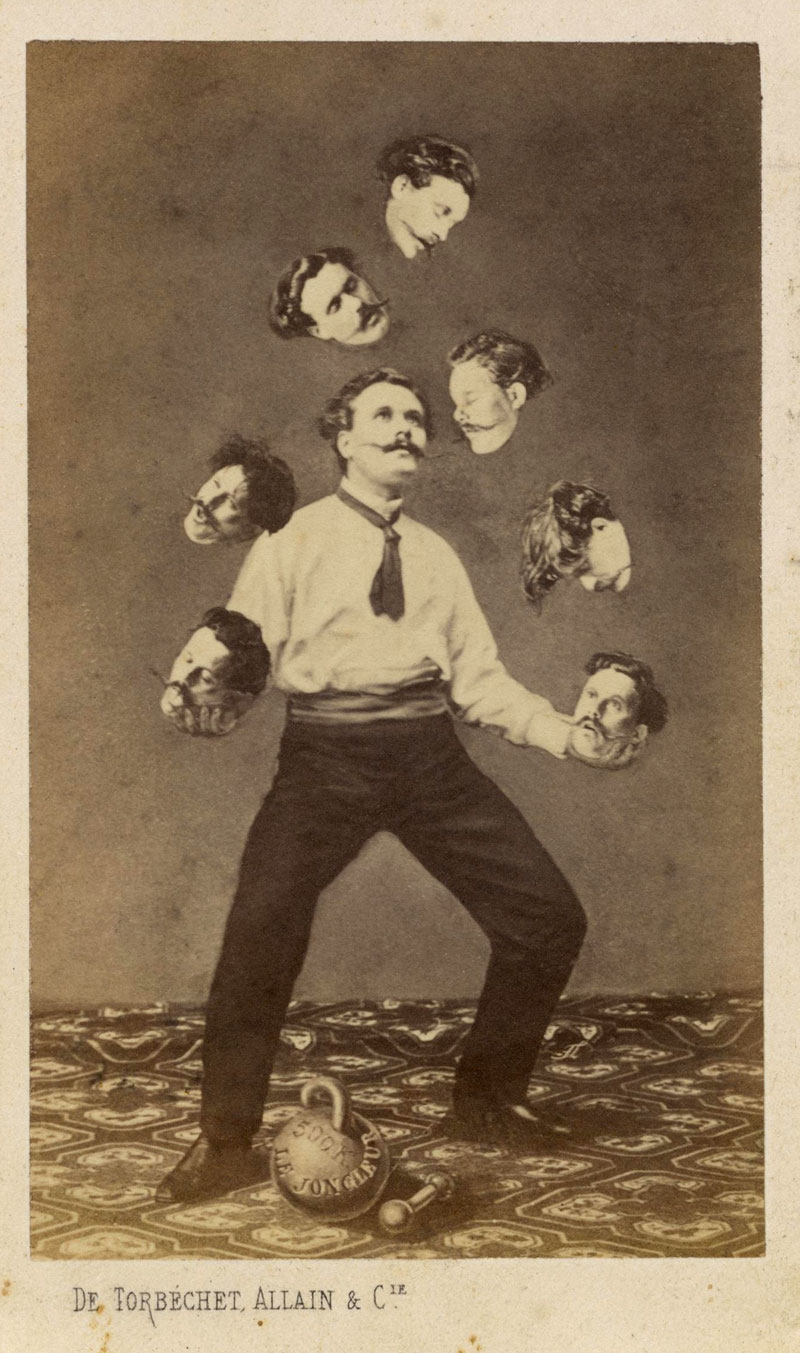
Unidentified artist / De Torbechet, Allain & Cie (publisher) 'Man Juggling His Own Head' c. 1880


Unidentified artist
De Torbechet, Allain & Cie
(publisher)
Man Juggling His Own Head
c. 1880
Albumen silver print from glass negative
Collection of Christophe Goeury


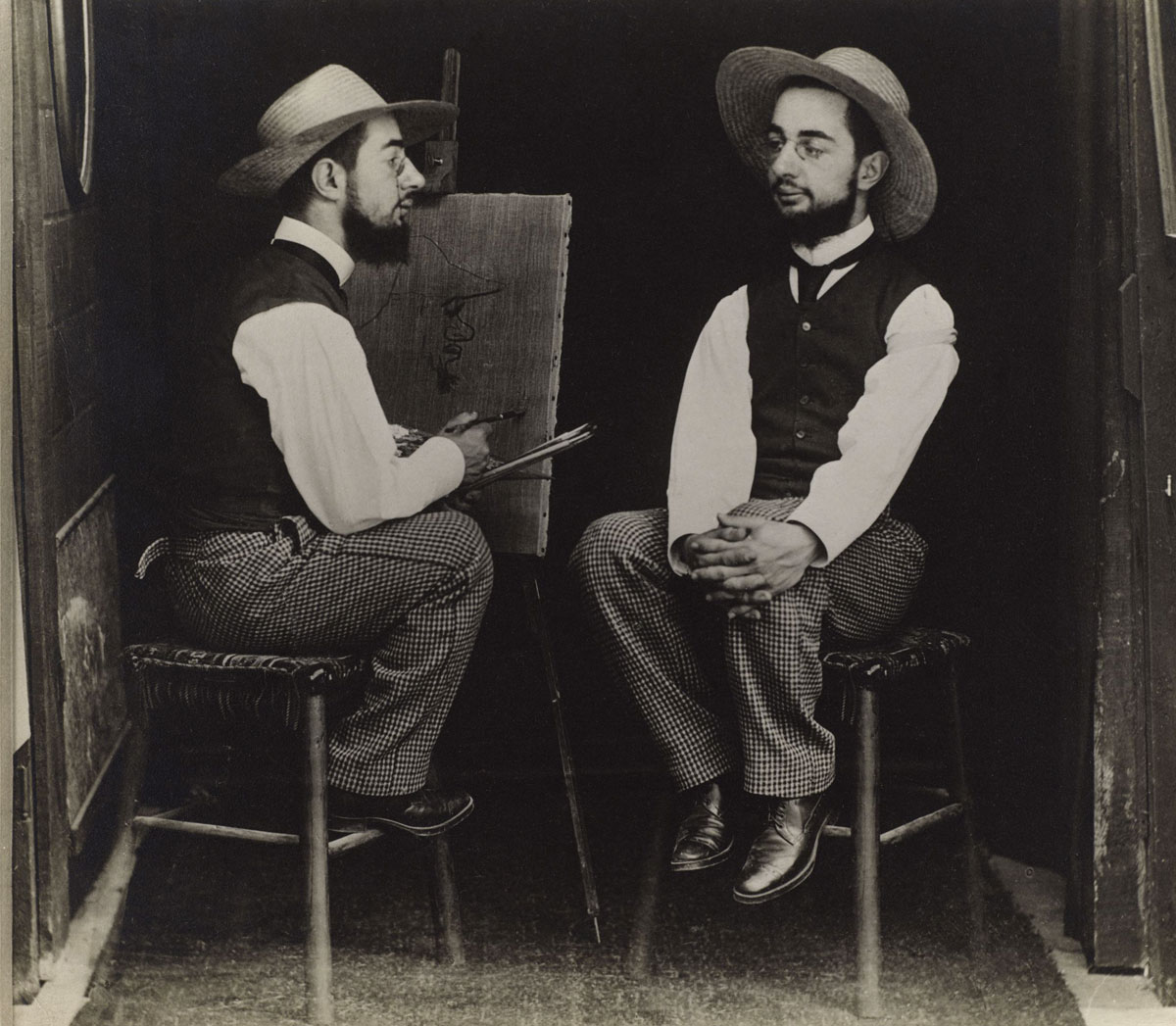
Maurice Guibert (French, 1856-1913) 'Henri de Toulouse-Lautrec as Artist and Model' c. 1900


Maurice Guibert (French, 1856-1913)
Henri de Toulouse-Lautrec as Artist and Model
c. 1900
Gelatin silver print
Philadelphia Museum of Art


F. Holland Day (American, 1864-1933) 'The Vision (Orpheus Scene)' 1907


F. Holland Day (American, 1864-1933)
The Vision (Orpheus Scene)
1907
Platinum print
The Royal Photographic Society Collection at the National Media Museum, Bradford, United Kingdom


Unidentified American artist. 'Man on Rooftop with Eleven Men in Formation on His Shoulders' c. 1930


Unidentified American artist
Man on Rooftop with Eleven Men in Formation on His Shoulders
c. 1930
Gelatin silver print
Collection of George Eastman House, International Museum of Photography and Film, Rochester


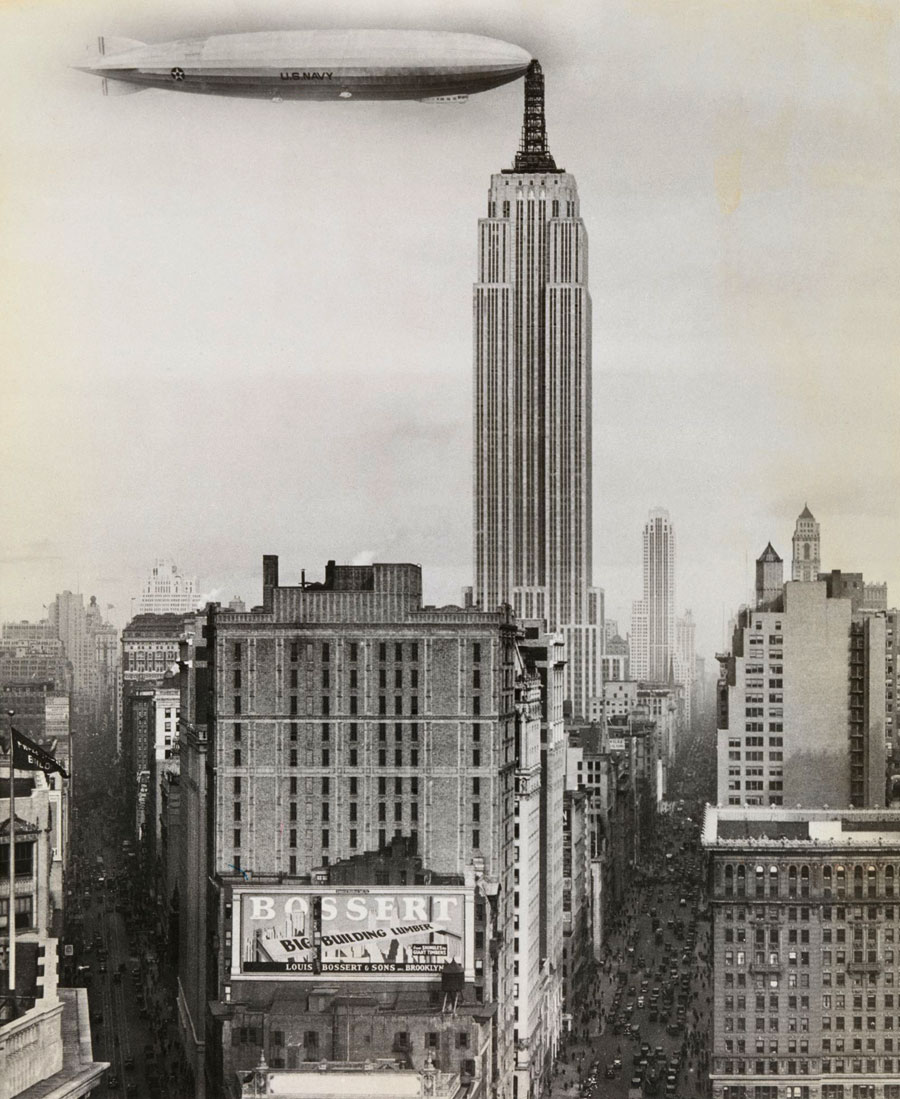
Unidentified American artist. 'Dirigible Docked on Empire State Building, New York' 1930


Unidentified American artist
Dirigible Docked on Empire State Building, New York
1930
Gelatin silver print
The Metropolitan Museum of Art, Twentieth-Century Photography Fund, 2011


While digital photography and image-editing software have brought about an increased awareness of the degree to which camera images can be manipulated, the practice of doctoring photographs has existed since the medium was invented. Faking It: Manipulated Photography Before Photoshop at The Metropolitan Museum of Art is the first major exhibition devoted to the history of manipulated photography before the digital age. Featuring some 200 visually captivating photographs created between the 1840s and 1990s in the service of art, politics, news, entertainment, and commerce, the exhibition offers a provocative new perspective on the history of photography as it traces the medium’s complex and changing relationship to visual truth. 
The exhibition is made possible by Adobe Systems Incorporated. 
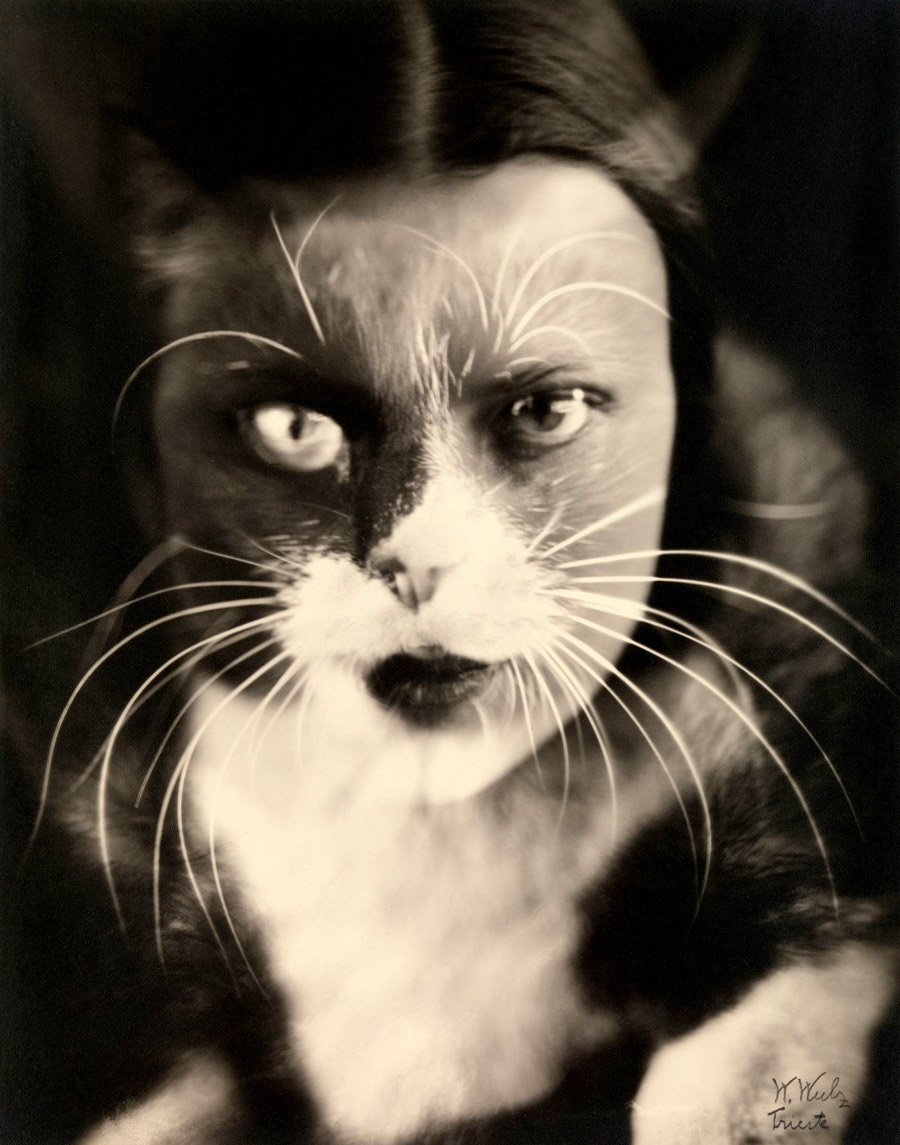
The photographs in the exhibition were altered using a variety of techniques, including multiple exposure (taking two or more pictures on a single negative), combination printing (producing a single print from elements of two or more 
negatives), photomontage, overpainting, and retouching on the negative or print. 
In every case, the meaning and content of the camera image was significantly transformed in the process of manipulation.

Faking It is divided into seven sections, each focusing on a different set of motivations for manipulating the camera image. “Picture Perfect” explores 19th-century photographers’ efforts to compensate for the new medium’s technical limitations – specifically, its inability to depict the world the way it looks to the naked eye. To augment photography’s monochrome palette, pigments were applied to portraits to make them more vivid and lifelike. Landscape photographers faced a different obstacle: the uneven sensitivity of early emulsions often resulted in blotchy, overexposed skies. To overcome this, many photographers, such as Gustave Le Gray and Carleton E. Watkins, created spectacular landscapes by printing two negatives on a single sheet of paper – one exposed for the land, the other for the sky. This section also explores the challenges involved in the creation of large group portraits, which were often cobbled together from dozens of photographs of individuals. 

For early art photographers, the ultimate creativity lay not in the act of taking a photograph but in the subsequent transformation of the camera image into a hand-crafted picture.

“Artifice in the Name of Art” begins in the 1850s with elaborate combination prints of narrative and allegorical subjects by Oscar Gustave Rejlander and Henry Peach Robinson. It continues with the revival of Pictorialism at the dawn of the twentieth century in the work of artist-photographers such as Edward Steichen, Anne W. Brigman, and F. Holland Day. 

“Politics and Persuasion” presents photographs that were manipulated for explicitly political or ideological ends. It begins with Ernest Eugene Appert’s faked photographs of the 1871 Paris Commune massacres, and continues with images used to foster patriotism, advance racial ideologies, and support or protest totalitarian regimes. Sequences of photographs published in Stalin-era Soviet Russia from which purged Party officials were erased demonstrate the chilling ease with which the historical record could be falsified. Also featured are composite portraits of criminals by Francis Galton and original paste-ups of John Heartfield’s anti-Nazi photomontages of the 1930s.

“Novelties and Amusements” brings together a broad variety of amateur and commercial photographs intended to astonish, amuse, and entertain. Here, we find popular images of figures holding their own severed heads or appearing doubled or tripled. Also included in this light-hearted section are ghostly images by the spirit photographer William Mumler, “tall-tale” postcards produced in Midwestern farming communities in the 1910s, trick photographs by amateurs, and Weegee’s experimental distortions of the 1940s. 

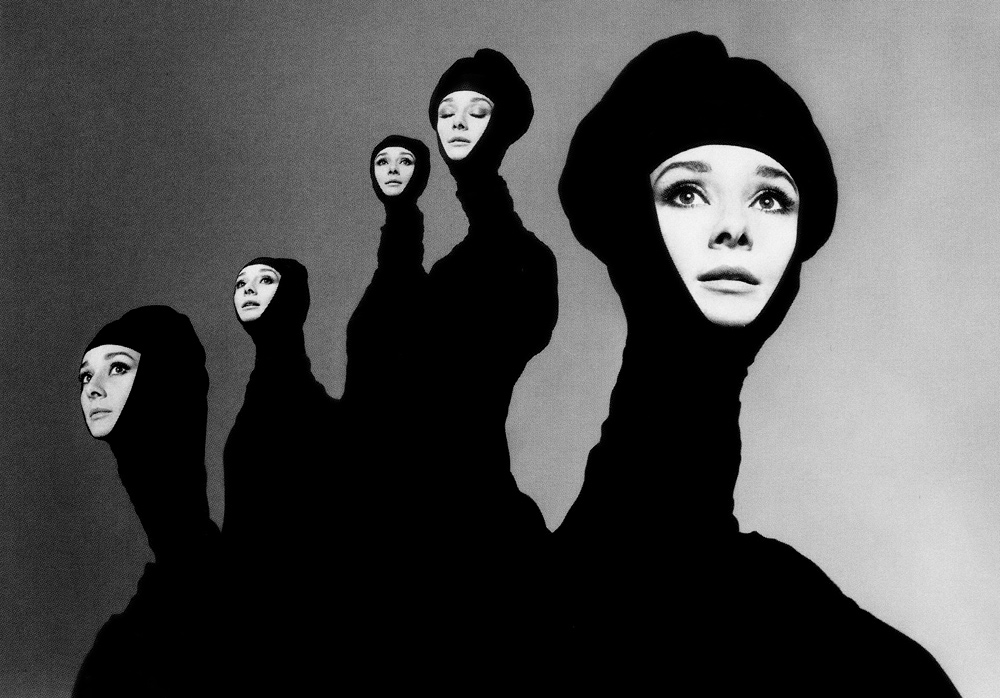
”Pictures in Print” reveals the ways in which newspapers, magazines, and advertisers have altered, improved, and sometimes fabricated images in their entirety to depict events that never occurred – such as the docking of a zeppelin on the tip of the Empire State Building. Highlights include Erwin Blumenfeld’s famous “Doe Eye” Vogue cover from 1950 and Richard Avedon’s multiple portrait of Audrey Hepburn from 1967.

“Mind’s Eye” features works from the 1920s through 1940s by such artists as Herbert Bayer, Maurice Tabard, Dora Maar, Clarence John Laughlin, and Grete Stern, who have used photography to evoke subjective states of mind, conjuring dreamlike scenarios and surreal imaginary worlds. 

The final section, “Protoshop,” presents photographs from the second half of the 20th century by Yves Klein, John Baldessari, Duane Michals, Jerry Uelsmann, and other artists who have adapted earlier techniques of image manipulation – such as spirit photography or news photo retouching – to create works that self-consciously and often humorously question photography’s presumed objectivity.

Press release from The Metropolitan Museum of Art website


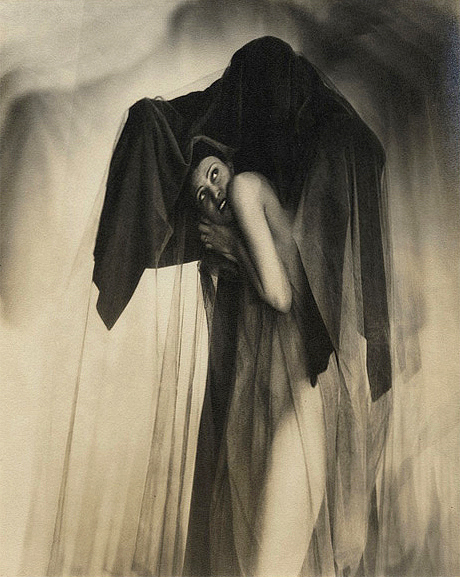
William Mortensen (American, 1897-1965) 'Obsession' c. 1930


William Mortensen  (American, 1897-1965)
Obsession
c. 1930
Gelatin silver print
18.4 x 14.5cm
The Elisha Whittelsey Collection, The Elisha Whittelsey Fund, 1975


Maurice Tabard (French, 1897-1984) 'Room with Eye' 1930


Maurice Tabard (French, 1897-1984)
Room with Eye
1930
Gelatin silver print
The Metropolitan Museum of Art, The Elisha Whittelsey Collection, The Elisha Whittelsey Fund, 1962


Wanda Wulz (Italian, 1903-1984) 'Io + gatto (Cat + I)' 1932


Wanda Wulz (Italian, 1903-1984)
Io + gatto (Cat + I)
1932
Gelatin silver print
The Metropolitan Museum of Art, Ford Motor Company Collection, Gift of Ford Motor Company and John C. Waddell, 1987
Alinari / Art Resource © Wanda Wulz


John Paul Pennebaker (American, 1903-1953) 'Sealed Power Piston Rings' 1933


John Paul Pennebaker (American, 1903-1953)
Sealed Power Piston Rings
1933
Gelatin silver print
1934 Art and Industry Exhibition Photograph Collection, Baker Library Historical Collections, Harvard Business School, Boston, Mass.
© John Paul Pennebaker


George Platt Lynes (American, 1907-1955) 'The Sleepwalker' 1935


George Platt Lynes (American, 1907-1955)
The Sleepwalker
1935
Gelatin silver print with applied media
The Metropolitan Museum of Art, Ford Motor Company Collection, Gift of Ford Motor Company and John C. Waddell, 1987
© The Estate of George Platt Lynes


Barbara Morgan (American, 1900-1992) 'Hearst over the People' 1939


Barbara Morgan (American, 1900-1992)
Hearst over the People
1939
Collage of gelatin silver prints with applied media
The Nelson-Atkins Museum of Art, Kansas City, Missouri, Gift of Hallmark Cards, Inc.


Grete Stern (Argentinian born Germany, 1904-1999) 'Dream No. 1: Electrical Appliances for the Home' 1948


Grete Stern (Argentinian born Germany, 1904-1999)
Dream No. 1: Electrical Appliances for the Home
1948
Gelatin silver print
The Metropolitan Museum of Art, Twentieth-Century Photography Fund, 2012
Courtesy of Galería Jorge Mara – La Ruche, Buenos Aires


Erwin Blumenfeld (American born Germany, 1897-1969) '"Doe Eye" Vogue cover' 1950


Erwin Blumenfeld (American born Germany, 1897-1969)
“Doe Eye” Vogue cover
1950


Yves Klein (French, 1928-1962) Photographed by Harry Shunk (German, 1924-2006) and János (Jean) Kender (Hungarian, 1937-2009) 'Leap into the Void' 1960


Yves Klein (French, 1928-1962)
Photographed by Harry Shunk (German, 1924-2006) and János (Jean) Kender (Hungarian, 1937-2009)
Leap into the Void
1960
Gelatin silver print
Purchase, The Horace W. Goldsmith Foundation Gift, through Joyce and Robert Menschel, 1992
© Yves Klein / Artists Rights Society (ARS), New York / ADAGP, Paris
Photograph Shunk-Kender © Roy Lichtenstein Foundation


Weegee (Arthur Fellig) (American, 1899-1968) 'Judy Garland' 1960


Weegee (Arthur Fellig) (American, 1899-1968)
Judy Garland
1960
Silver gelatin photograph
Copyright Weegee/International Center of Photography/Getty Images


Weegee (Arthur Fellig) (American, 1899-1968) 'American, 1899-1968 Draft Johnson for President' c. 1968


Weegee (Arthur Fellig) (American, 1899-1968)
Draft Johnson for President
c. 1968
Gelatin silver print
International Center of Photography, Bequest of Wilma Wilcox, 1993
Copyright Weegee/International Center of Photography/Getty Images.


Richard Avedon (American 1923-2004) 'Audrey Hepburn, New York, January 1967' 1967


Richard Avedon (American, 1923-2004)
Audrey Hepburn, New York, January 1967
1967
Collage of gelatin silver prints, with applied media, mylar overlay with applied media


Jerry N. Uelsmann (American, 1934-2022) 'Untitled' 1969


Jerry N. Uelsmann (American, 1934-2022)
Untitled
1969
Gelatin silver print
The Metropolitan Museum of Art, Twentieth-Century Photography Fund, 2011
© Jerry N. Uelsmann


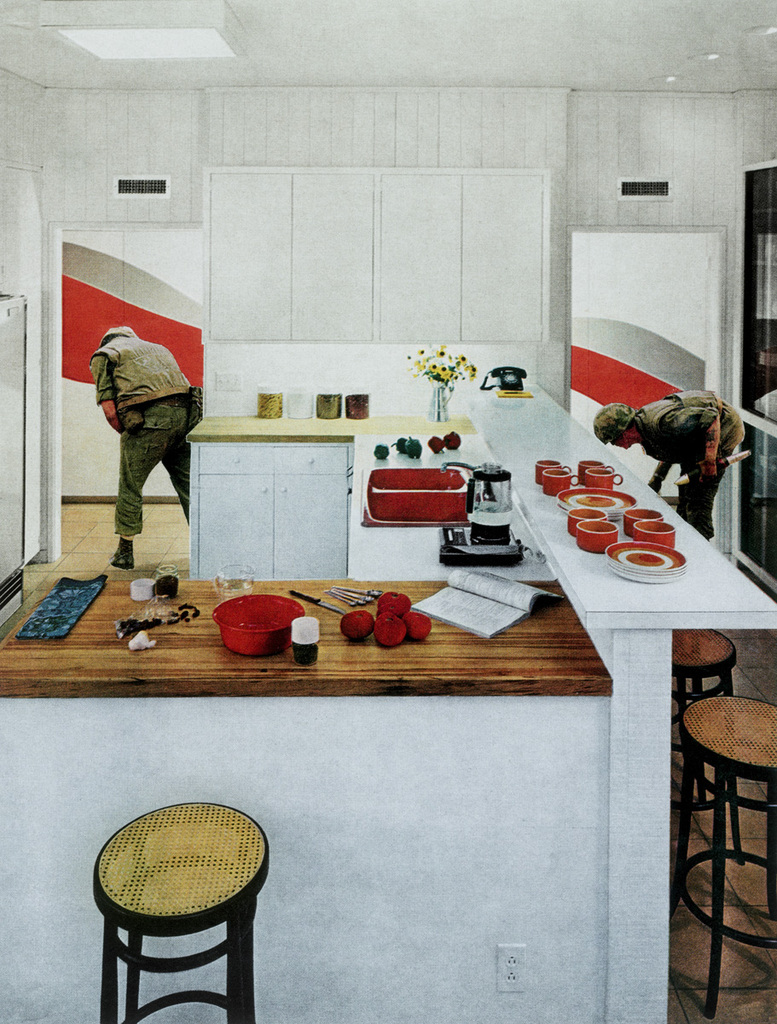
Martha Rosler (American, b. 1943) 'Red Stripe Kitchen', from the series "House Beautiful: Bringing the War Home" 1967-72


Martha Rosler (American, b. 1943)
Red Stripe Kitchen
1967-1972, printed early 1990s
From the series “House Beautiful: Bringing the War Home”
Chromogenic print
The Metropolitan Museum of Art, Purchase, Anonymous Gift, 2002
© Martha Rosler


The Metropolitan Museum of Art
1000 Fifth Avenue at 82nd Street
New York, New York 10028-0198
Phone: 212-535-7710

Opening hours:
Sunday – Tuesday 10am – 5pm
Closed Wednesdays

The Metropolitan Museum of Art website

National Gallery of Art
National Mall between 3rd and 7th Streets
Constitution Avenue NW, Washington

Opening hours:
Daily 10.00am – 5.00pm

National Gallery of Art website

LIKE ART BLART ON FACEBOOK

Back to top

Exhibition: ‘Into the Sunset: Photography’s Image of the American West’ at The Museum of Modern Art (MoMA), New York

Exhibition dates: 29th March – 8th June, 2009

Curator: Eva Respini, Associate Curator, Department of Photography, The Museum of Modern Art


Carelton Watkins (American, 1829-1916) 'View from the Sentinel Dome, Yosemite' 1865-1866 from the exhibition 'Into the Sunset: Photography's Image of the American West' at The Museum of Modern Art (MoMA), New York, March - June, 2009

Carelton Watkins (American, 1829-1916) 'View from the Sentinel Dome, Yosemite' 1865-1866

Carelton Watkins (American, 1829-1916) 'View from the Sentinel Dome, Yosemite' 1865-1866


Carelton Watkins (American, 1829-1916)
Views from the Sentinel Dome, Yosemite
1865-1866
Albumen silver prints from glass negatives
Museum of Modern Art, New York


The Museum of Modern Art presents Into the Sunset: Photography’s Image of the American West, a survey of 138 photographic works dating from 1850 to 2008 that chart the West’s complex, rich, and often compelling mythology via photography. The exploration of a large part of the American West in the mid-nineteenth century by European Americans coincided with the advent of photography, and photography and the West came of age together. The region’s seemingly infinite bounty and endless potential symbolised America as a whole, and photography, with its ability to construct persuasive and seductive images, was the perfect medium with which to forge a national identity. This relationship has resulted in a complex association that shapes the perception of the West’s social and physical landscape to this day. With political, cultural, and social attitudes constantly shifting in the region over the last 150 years, Into the Sunset further examines the way photographers have responded to these changes. The exhibition is organised by Eva Respini, Associate Curator, Department of Photography, The Museum of Modern Art, and is on view in the Special Exhibitions Gallery on the third floor from March 29 to June 8, 2009.

Organised thematically rather than chronologically, Into the Sunset brings together the work of over 70 photographers, including Robert Adams, John Baldessari, Dorothea Lange, Timothy O’Sullivan, Cindy Sherman, Joel Sternfeld, Carleton E. Watkins, and Edward Weston, among others. The exhibition draws extensively from MoMA’s collection, along with private and public collections in the United States, and features new acquisitions from Adam Bartos, Katy Grannan, and Dennis Hopper, with each work also on view for the first time at the Museum.

Ms. Respini states: “Ranging from grand depictions of paradise to industrial development, from pictures taken on the road to prosaic suburban scenes, the photographs included in Into the Sunset do not all picture the West from the same point of view, or even perhaps, picture the same West. Rather, each is one part in a continually shifting and evolving composite image of a region that has itself been growing and changing since the opening of the frontier.”

Into the Sunset begins with the birth of photography and the American West. In the mid-nineteenth century, the region’s seemingly infinite bounty and endless potential symbolised America as a whole, and Carleton E. Watkins (American, 1829-1916) captured the grand depictions of an American paradise in his photographs of Yosemite Valley in California. Arguably the world’s first renowned landscape photographer, Watkins made his first photographs there in 1861 – large sized prints made with an 18-by-22-inch mammoth plate camera, well suited to the grandeur of the land. Included are the three contiguous photographs that make up his extraordinarily detailed View from the Sentinel Dome (1865-1866).

The exhibition balances the early work of landscape photographers with the twentieth century focus on the failure of the West’s promised bounty. In Joel Sternfeld’s (American, b. 1944) After a Flash Flood, Rancho Mirage, California (1979), the photographer documents the impact of a natural disaster, specifically a landslide, shot with neutral tones softly camouflaging the extent of flash flood on this suburban neighbourhood. And in Karin Apollonia Müller’s (German, b. 1963) Civitas (1997), the photographer shows a very different view of California than that of Watkins, with Müller revealing a contemporary Los Angeles as a littered wasteland of freeways and anonymous glass towers.

As highways and interstate travel became more prevalent, the automobile and the open road became synonymous with the region, with Edward Weston (American, 1886-1958) as the first great photographer of these open roads. Included is Weston’s iconic Hot Coffee, Mojave Desert (1937), a humorous black-and-white photograph of a road sign revealing a greater thematic shift to the highway and its signage as an inescapable element in picturing the West in the twentieth century.

Once the West became more populated, photographers began to showcase humans’ effects on the land, including images of industrial development. In the 1950s William Garnett (American, 1916-2006) was hired by a real estate company to record the efficiency of mass-produced housing. For this series, Lakewood, California (1950), Garnett took photographs of the neighbourhood from an airplane, resulting in images that are completely devoid of people and focus on the progress of mass-produced construction. However, the series subsequently came to represent all that was wrong with such development and the massive sprawl of the West in the eyes of its critics.

Photographs of the people of the West represent a diversity of archetypes: gold miners and loggers, Native Americans, cowboys, suburbanites, city dwellers, starlets, dreamers, and drifters. Into the Sunset explores these archetypes, and their mutability into the twenty-first century. Included is Half Indian / Half Mexican (1991), from the photographer James Luna (Native American, Pooyukitchum / Luiseno, b. 1950), an artist of Native American ancestry. This tongue-in-cheek self-portrait captures in profile both an identity photograph and a mug shot, and works as a counterpoint to the tokenised portrayals of Native Americans from the past 150 years.

A similar reevaluation of past archetypes occurs in Richard Prince’s (American, b. 1949) Cowboy series from 1980, with one work from the series included in the exhibition. For that series Prince famously photographed Marlboro advertisements, cutting out the text, cropping the images, and enlarging them, highlighting the artifice of the virile image of the cowboy and its potency as a deeply ingrained figure in American mythology.

The suburbs and their inhabitants have been a rich subject for photographers of the West, and included are Larry Sultan’s (American, b. 1946) Film Stills from the Sultan Family Home Movies (1943-1972), in which Sultan chose individual frames from his family’s home movies and enlarged them. Although the images feature the activities that epitomise suburban life, a sense of unease lurks beneath the surface of these images; cropped and grainy, they resemble surveillance or evidence photographs.

Into the Sunset concludes with the theme of the failed promise of Western migration. Dorothea Lange’s well-known 1936 photograph Migrant Mother, Nipomo, California, photographed when Lange was employed by the Farm Security Administration, is included and documents the conditions of the West in rural areas during the Great Depression. Her photographs had a humanist purpose and resulted in putting a face on the hardships of that era.

This tradition of capturing the downtrodden of the West continues into this century with Katy Grannan (American, b. 1969), a photographer who recently completed a series of new pioneers, individuals struggling to define themselves in the West of today. In Nicole, Crissy Field Parking Lot (I) (2006), a woman, “Nicole,” poses seductively on a gravel parking lot, with her makeup-streaked face and harsh light alluding to her perilous existence on the fringe of society.”

Text from the MoMA website [Online] Cited 12/04/2009. No longer available online


Many thankx to MoMA for allowing me to publish the photographs in the posting. Please click on the photographs for a larger version of the image.


Installation view of the exhibition 'Into the Sunset: Photography's Image of the American West' at The Museum of Modern Art (MoMA), New York showing Ed Ruscha's 'Every Building on the Sunset Strip' 1966


Installation view of the exhibition Into the Sunset: Photography’s Image of the American West at The Museum of Modern Art (MoMA), New York showing Ed Ruscha’s Every Building on the Sunset Strip 1966


Joel Sternfeld (American, b. 1944) 'After a Flash Flood, Rancho Mirage, California' 1979 from the exhibition 'Into the Sunset: Photography's Image of the American West' at The Museum of Modern Art (MoMA), New York, March - June, 2009


Joel Sternfeld (American, b. 1944)
After a Flash Flood, Rancho Mirage, California
1979
Chromogenic colour print, printed 1987
15 15/16 x 20″ (40.5 x 50.8cm)
Museum of Modern Art, New York
Gift of Beth Goldberg Nash and Joshua Nash


During the 1970s, Joel Sternfeld’s work reflected a trend towards a newly dispassionate, less idealised approach to nature and culture. His photographs have a seductive beauty, even though they often focus on those places where the natural and man-made worlds come together in uncomfortable ways. Working with a large-format camera and luminous colour to create images that are frequently ironic or even humorous, his compositions appear simple but in fact are surprisingly complex and often unsettling. In this photograph of a suburban California neighbourhood in the aftermath of a flash flood, the lovely monochrome tones trick us into not immediately seeing the car that has toppled into the gaping sinkhole or realising that the buildings above could be on the verge of falling, too.

Text from the Museum of Fine Arts Boston website


Apollonia Müller (German, b. 1963) 'Civitas' 1997


Apollonia Müller (German, b. 1963)
Civitas
1997
From Angels in Fall
Chromogenic colour print
19 3/4 x 24 1/2″ (50.1 x 62.2cm)
Gift of Howard Stein
Museum of Modern Art, New York
© 2018 Karin Apollonia Müller


William A. Garnett (American, 1916-2006) 'Foundations and Slabs, Lakewood, California' 1950


William A. Garnett (American, 1916-2006)
Foundations and Slabs, Lakewood, California
1950
Gelatin silver print
18.9 × 23.8cm (7 7/16 × 9 3/8 in.)
© J. Paul Getty Museum


William A. Garnett (American, 1916-2006) 'Grading, Lakewood, California' 1950


William A. Garnett (American, 1916-2006)
Grading, Lakewood, California
1950
Gelatin silver print
18.9 × 24cm (7 7/16 × 9 7/16 in.)
© J. Paul Getty Museum


William A. Garnett (American, 1916-2006) 'Trenching, Lakewood, California' 1950


William A. Garnett (American, 1916-2006)
Trenching, Lakewood, California
1950
Gelatin silver print
7 5/16 x 9 7/16 in.
© J. Paul Getty Museum


“I was hired commercially to illustrate the growth of that housing project. I didn’t approve of what they were doing. Seventeen thousand houses with five floor plans, and they all looked alike, and there was not a tree in sight when they got through.”

“I was discharged and heard you could hitchhike on the transport taking GIs home. The airplane was full, but the captain let me sit in the navigator’s seat so I had a command view. I was amazed at the variety and beauty of these United States. I had never seen anything like that – in a book, in school, or since then. So I changed my career.”


William A. Garnett


Lakewood, located on the outskirts of Los Angeles, was the location for the second major postwar housing development built in the United States. Some 17,500 tract houses were constructed assembly-line style on 3,500 acres of cleared farmland. Mass production made the houses affordable, so a greater number of people could take part in the American dream of home ownership. The developers hired William Garnett to document different phases of the subdivision’s construction from his Cessna airplane. He often photographed his subjects early in the day, so the angled light would emphasise their otherwise flat-looking forms. The photographs serve a utilitarian purpose but also demonstrate Garnett’s impeccable sense of design. In Trenching Lakewood, California, stacked lumber appears for the foundations, utility poles are installed, and the main roads are carved out. …

William Garnett took his first cross-country flight after serving as a United States Army Signal Corps cameraman during World War II. What he saw below inspired him to learn how to pilot a plane so he could photograph the American landscape. Garnett’s aerial photographs resemble abstract expressionist paintings or views through a microscope. As landscapes, they do not have the conventional grounding of a horizon line. All reveal astonishing patterns that are not seen from the ground. Garnett honed his elegant design sensibility well before earning a pilot’s license. Before the war, he attended Art Center College of Design in Los Angeles. Later, he headed the Pasadena Police Department’s photography lab. In the 1940s and 1950s, he began to rack up flying hours around Los Angeles, speaking out about the area’s increasing air pollution. He illustrated Nathaniel Owings’s American Aesthetic, a book about land-use practices. During ten thousand hours of flying, Garnett simultaneously piloted a plane while photographing out the window – traveling above every state and many parts of the world. His light 1956 Cessna plane allowed him to fly to just the right location to capture subjects with precision. At first, he experimented with a variety of camera formats and films but found that two 35mm cameras (one loaded with black-and-white film, the other with colour film) best suited his needs. Garnett’s work defies the stereotype of aerial photography as purely scientific and devoid of artistry. He became the first aerial photographer to earn a prestigious Guggenheim fellowship.

Anonymous. “Historical Witness, Social Messaging,” from the J. Paul Getty Museum Education Department [Online] Cited 13/01/2019


William A. Garnett (American, 1916-2006) 'Framing, Lakewood, California' 1950


William A. Garnett (American, 1916-2006)
Framing, Lakewood, California
1950
Gelatin silver print
18.4 × 24.1cm (7 1/4 × 9 1/2 in.)
© J. Paul Getty Museum


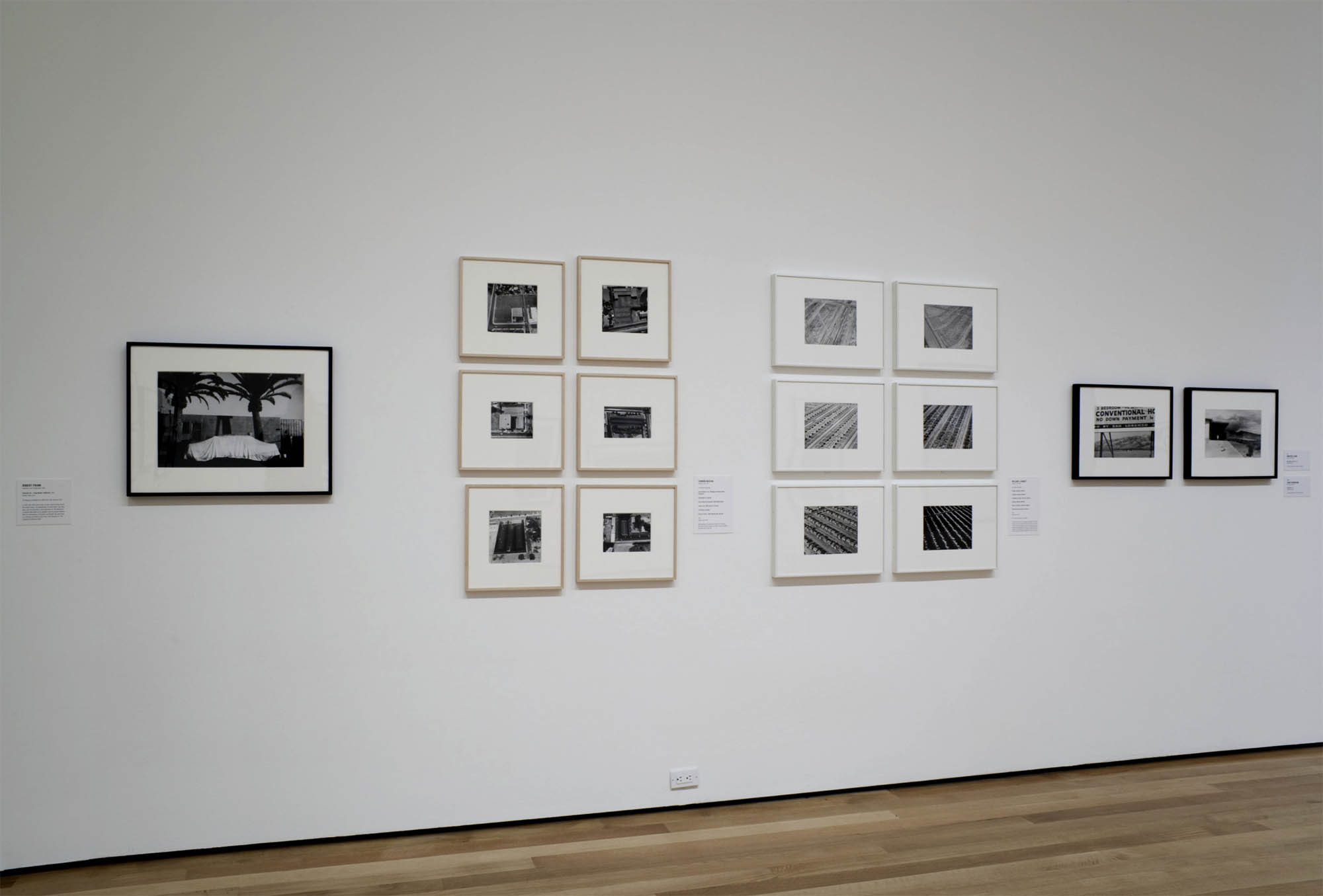
Installation view of the exhibition 'Into the Sunset: Photography's Image of the American West' at The Museum of Modern Art (MoMA), New York showing at left, Robert Frank's 'Covered Car - Long Beach, California' (1956); and at centre right, photographs by William A. Garnett


Installation view of the exhibition Into the Sunset: Photography’s Image of the American West at The Museum of Modern Art (MoMA), New York showing at left, Robert Frank’s Covered Car – Long Beach, California (1956, below); and at centre right, photographs by William A. Garnett (above)


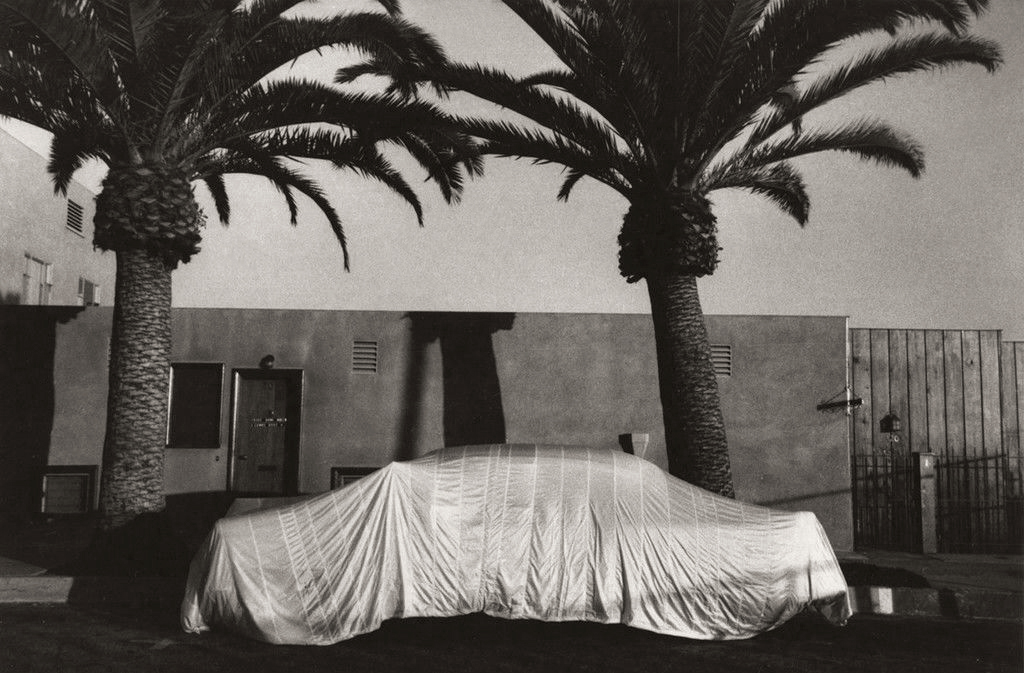
Robert Frank (American, 1924-2019) 'Covered Car - Long Beach, California' 1956


Robert Frank (American, 1924-2019)
Covered Car – Long Beach, California
1956
From The Americans (1955-1956)
Gelatin silver print
Museum of Modern Art, New York


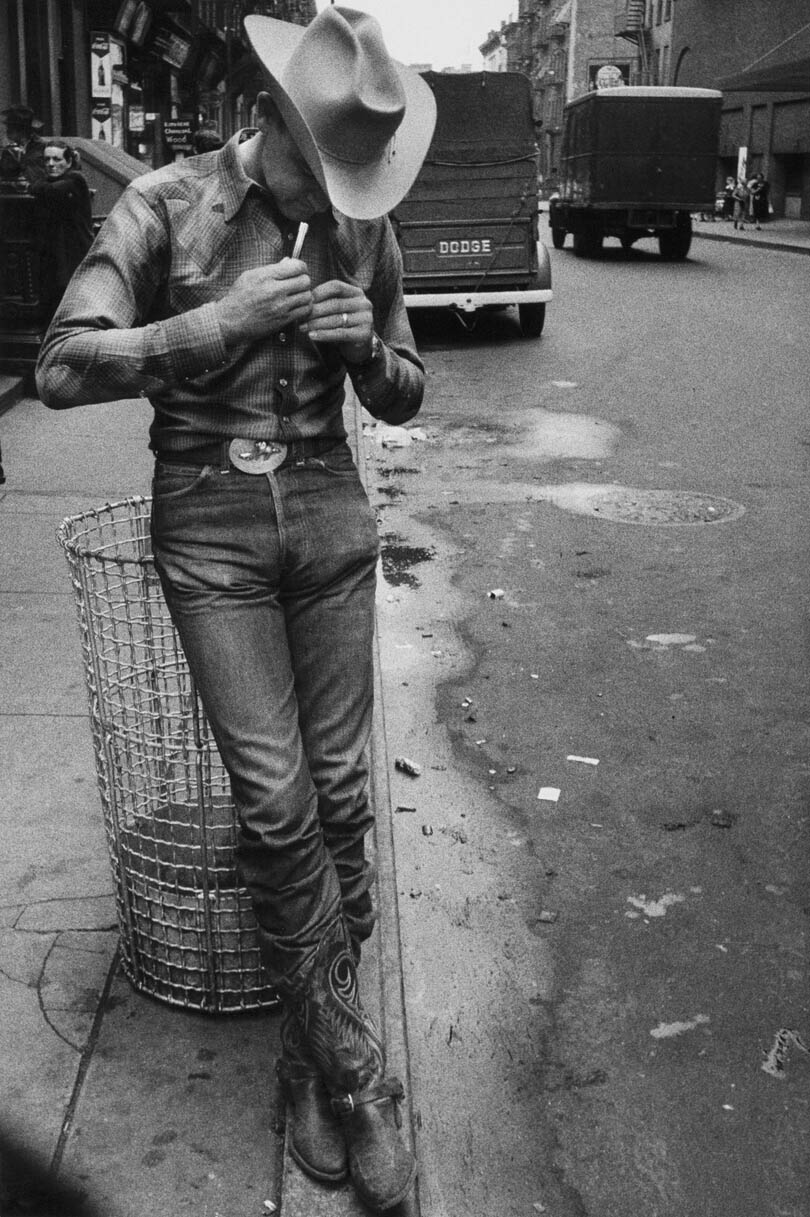
Robert Frank (American, 1924-2019) 'Rodeo - New York City' 1954


Robert Frank (American, 1924-2019)
Rodeo – New York City
1954
From The Americans (1955-1956)
Gelatin silver print
Museum of Modern Art, New York


Dorothea Lange (American, 1895-1965) 'Migrant Mother, Nipomo, California' 1936


Dorothea Lange (American, 1895-1965)
Migrant Mother, Nipomo, California
1936
Gelatin silver print
11 1/8 x 8 9/16″ (28.3 x 21.8cm)
Museum of Modern Art, New York


Dorothea Lange took this photograph on assignment for the U.S. government’s Farm Security Administration (FSA) program, formed during the Great Depression to provide aid to impoverished farmers. FSA photographers documented the conditions that Americans faced throughout the course of the Great Depression, a period of economic crisis. Lange’s photograph suggests the impact of these harsh conditions on a 32-year-old mother of seven. She took a number of pictures of the mother with her children and chose this image as the most effective. Her keen sense of composition and attentiveness to the power of historical images of the Madonna and Child have helped this photograph transcend its original documentary function and become an iconic work of art.

Text from the MoMA website


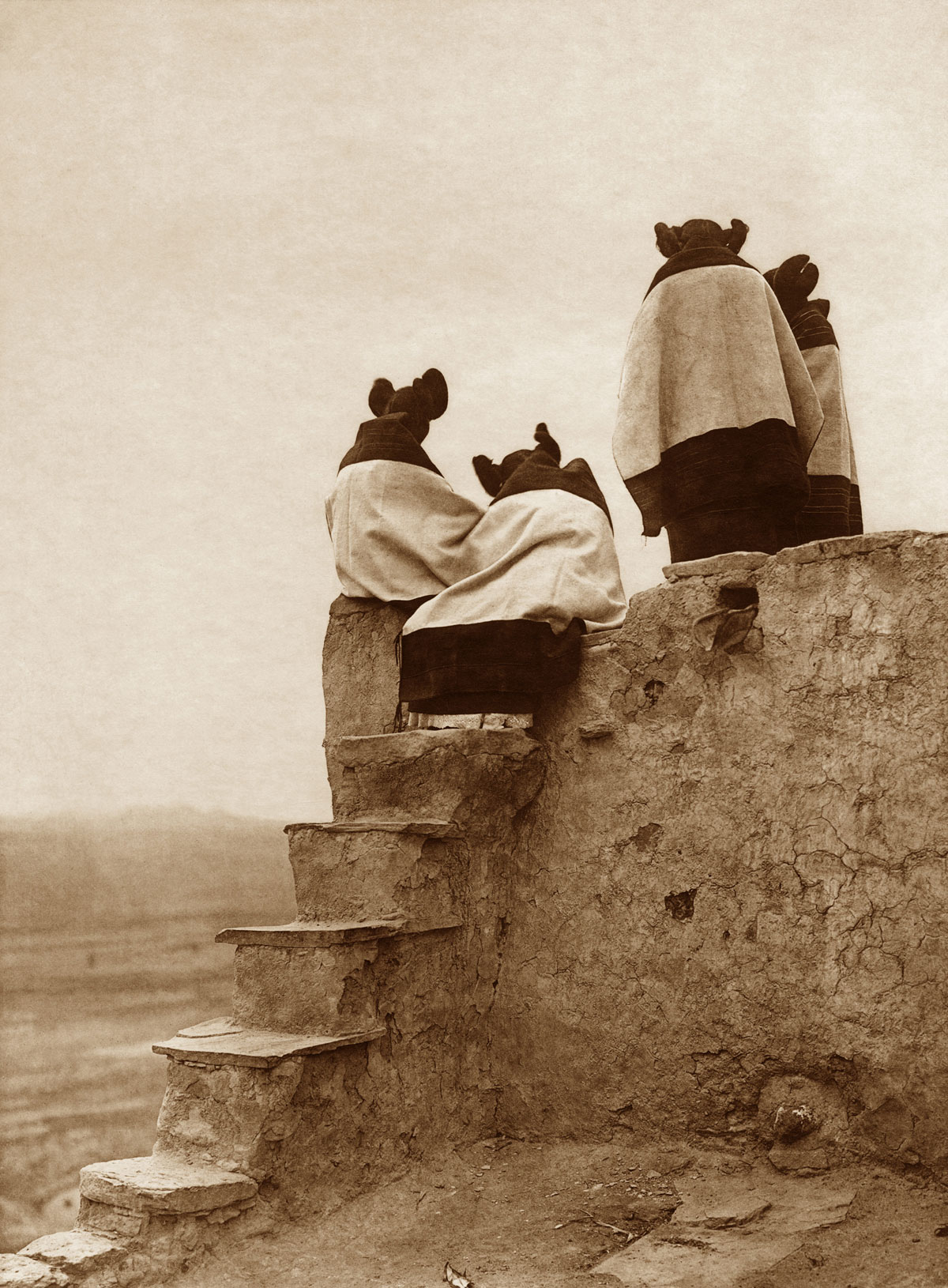
Edward S. Curtis (1868 - 1952) 'Watching the Dancers' 1906


Edward S. Curtis (American, 1868-1952)
Watching the Dancers
1906
Photogravure
Museum of Modern Art, New York


James Luna (American, 1950-2018) 'Half Indian/Half Mexican' 1991


James Luna (American, 1950-2018)
Half Indian/Half Mexican (installation view)
1991
Gelatin silver print


James Luna (February 9, 1950 – March 4, 2018) was a Payómkawichum, Ipi, and Mexican-American performance artist, photographer and multimedia installation artist. His work is best known for challenging the ways in which conventional museum exhibitions depict Native Americans. With recurring themes of multiculturalism, alcoholism, and colonialism, his work was often comedic and theatrical in nature. In 2017 he was awarded a Guggenheim Fellowship.


Richard Prince (American, b. 1949) 'Untitled (Cowboy)' 1989


Richard Prince (American, b. 1949)
Untitled (Cowboy)
1989
Chromogenic print
127 x 177.8cm (50 x 70in.)
The Metropolitan Museum of Art
Purchase, The Horace W. Goldsmith Foundation Gift, through Joyce and Robert Menschel, and Jennifer and Joseph Duke Gift, 2000
© Richard Prince


In the mid-1970s Prince was an aspiring painter who earned a living by clipping articles from magazines for staff writers at Time-Life Inc. What remained at the end of the day were the advertisements, featuring gleaming luxury goods and impossibly perfect models; both fascinated and repulsed by these ubiquitous images, the artist began rephotographing them, using a repertoire of strategies (such as blurring, cropping, and enlarging) to intensify their original artifice. In so doing, Prince undermined the seeming naturalness and inevitability of the images, revealing them as hallucinatory fictions of society’s desires.

“Untitled (Cowboy)” is a high point of the artist’s ongoing deconstruction of an American archetype as old as the first trailblazers and as timely as then-outgoing president Ronald Reagan. Prince’s picture is a copy (the photograph) of a copy (the advertisement) of a myth (the cowboy). Perpetually disappearing into the sunset, this lone ranger is also a convincing stand-in for the artist himself, endlessly chasing the meaning behind surfaces. Created in the fade-out of a decade devoted to materialism and illusion, “Untitled (Cowboy)” is, in the largest sense, a meditation on an entire culture’s continuing attraction to spectacle over lived experience.

Text from the Metropolitan Museum of Art website


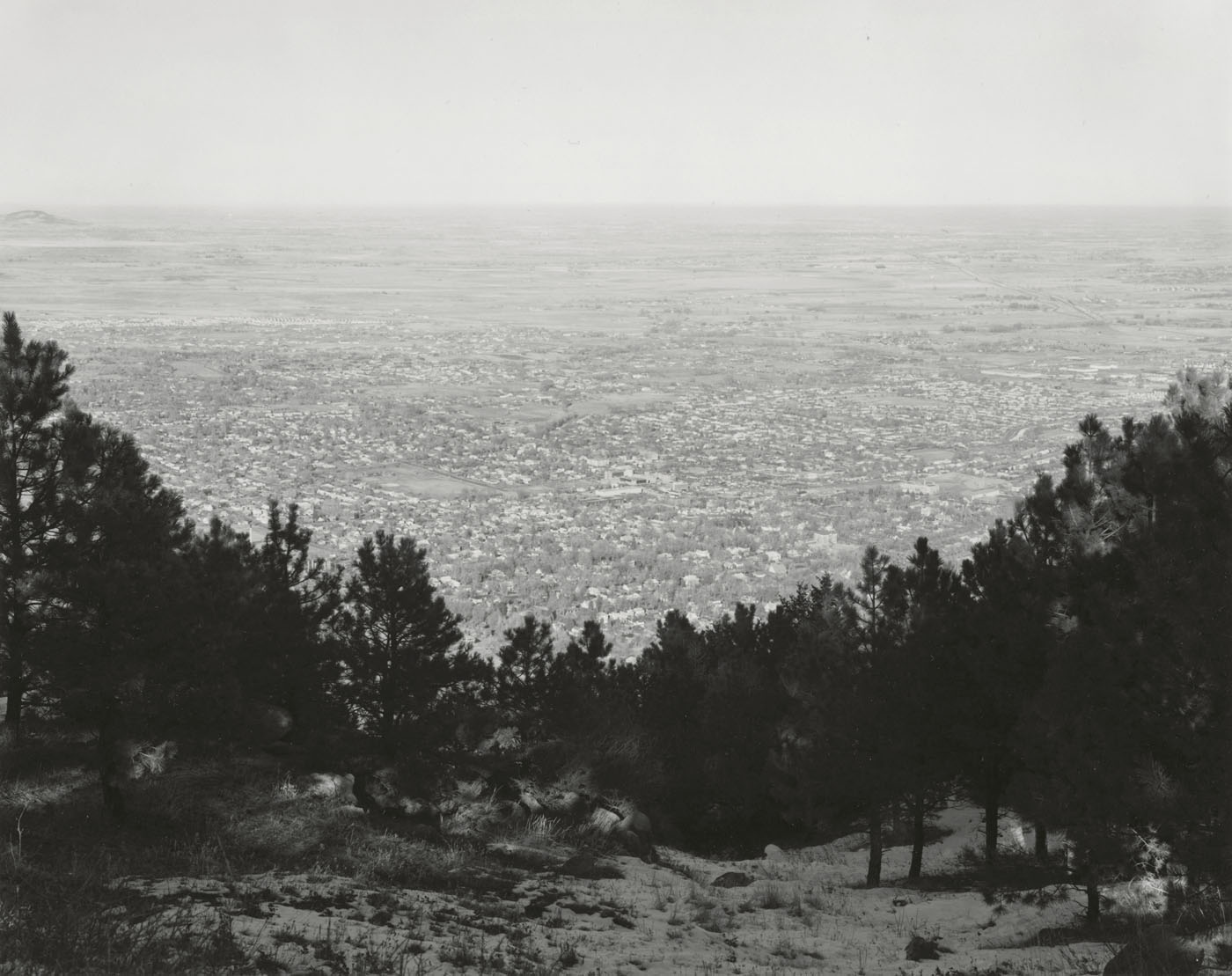
Robert Adams (American, b. 1937) 'East from Flagstaff Mountain, Boulder County, Colorado' 1975


Robert Adams (American, b. 1937)
East from Flagstaff Mountain, Boulder County, Colorado
1975
Gelatin silver print
Museum of Modern Art, New York


Robert Adams (American, b. 1937) 'Colorado Springs' 1968


Robert Adams (American, b. 1937)
Colorado Springs
1968
Gelatin silver print
Museum of Modern Art, New York


Robert Adams (American, b. 1937)
'Burning oil sludge, north of Denver, Colorado' 1973-1974


Robert Adams (American, b. 1937)
Burning oil sludge, north of Denver, Colorado
1973-1974
Gelatin silver print
Museum of Modern Art, New York


Stephen Shore (American, b. 1947) 'Beverly Boulevard and La Brea Avenue, Los Angeles, California, June 21, 1975' From the series 'Uncommon Places', 1973-1986


Stephen Shore (American, b. 1947)
Beverly Boulevard and La Brea Avenue, Los Angeles, California, June 21, 1975
1975
From the series Uncommon Places, 1973-1986
Museum of Modern Art, New York


Katy Grannan (American, b. 1969) 'Nicole, Crissy Field Parking Lot (I)' 2006


Katy Grannan (American, b. 1969)
Nicole, Crissy Field Parking Lot (I)
2006
Pigmented inkjet print
40 x 50″ (101.6 x 127cm)
Cornelius N. Bliss Memorial Fund
Museum of Modern Art, New York
© Katy Grannan


Cindy Sherman (American, b. 1954) 'Untitled Film Still #43' 1979


Cindy Sherman (American, b. 1954)
Untitled Film Still #43
1979
Gelatin silver print
7 9/16 x 9 7/16″ (19.2 x 24cm)
Acquired through the generosity of Sid R. Bass
Museum of Modern Art, New York


Cindy Sherman’s Untitled Film Stills is a suite of seventy black-and-white photographs in which the artist posed in the guises of various generic female film characters, among them, ingénue, working girl, vamp, and lonely housewife. Staged to resemble scenes from 1950s and ’60s Hollywood, film noir, B movies, and European art-house films, the printed images mimic in format, scale, and quality the often-staged “stills” used to promote films. By photographing herself in such roles, Sherman inserts herself into a dialogue about stereotypical portrayals of women. Whether she was the one to release the camera’s shutter or not, she is considered the author of the photographs. However, the works in Untitled Film Stills are not considered self-portraits.

Text from the MoMA website


Bill Owens (American, b. 1938) 'We're really happy. Our kids are healthy, we eat good food, and we have a really nice home' 1972


Bill Owens (American, b. 1938)
We’re really happy. Our kids are healthy, we eat good food, and we have a really nice home
1972
Gelatin silver print
8 1/16 x 9 15/16″ (20.4 x 25.3cm)
Gift of the photographer
Museum of Modern Art, New York
© Bill Owens


Richard Avedon (American, 1923-2004) 'Carl Hoefert, unemployed blackjack dealer, Reno, Nevada', from the series 'In the American West' August 30, 1983


Richard Avedon (American, 1923-2004)
Carl Hoefert, unemployed blackjack dealer, Reno, Nevada
August 30, 1983
From the series In the American West
Gelatin silver print
Museum of Modern Art, New York


The Museum of Modern Art
11 West 53 Street
New York, NY 10019
Phone: (212) 708-9400

Opening hours:
Sun – Fri 10.30am – 5.30pm
Sat 10.30am – 7.00pm

Monday mornings from 10.30am to 1.00pm are reserved exclusively for members and their guests.

MoMA website

LIKE ART BLART ON FACEBOOK

Back to top