Exhibition dates: 7th November – 23rd December, 2015
Wayne Gudmundson (American, b. 1949) Saizy, France #13 2014 Gelatin silver print 16 x 20 inches
There is a Cartier Bresson of a group of roadside trees that makes a heart. There is the photography of Wim Wenders in “Kings of the Road.” There is Robert Adams and a 19th century European sensibility (eg. Gustave Le Gray) all rolled into one.
The more expansive vistas such as #4 and #14 don’t really work for me, but the darker, more chthonic narratives such as #6-9 are excellent. They need some more “tiny work” – but they are very good.
The prints are 16 x 20 inch gelatin silver prints from a 4 x 5 view camera negative.
Dr Marcus Bunyan
Many thankx to Joseph Bellows Gallery for allowing me to publish the photographs in the posting. Please click on the photographs for a larger version of the image.
Henri Cartier-Bresson (French, 1908-2004) Brie, France, June 1968 1968 Silver gelatin print
Kings of the Road (German: Im Lauf der Zeit) is a 1976 German road movie directed by Wim Wenders.
Gustave Le Gray (French, 1820-1884) Trees along the Pavé de Chailly 1852 Salted paper print from paper negative 9-7/16 x 13 inches
Wayne Gudmundson (American, b. 1949) Saizy, France #3 2014 Gelatin silver print 16 x 20 inches
Wayne Gudmundson (American, b. 1949) Saizy, France #12 2014 Gelatin silver print 16 x 20 inches
Wayne Gudmundson (American, b. 1949) Saizy, France #6 2014 Gelatin silver print 16 x 20 inches
Wayne Gudmundson (American, b. 1949) Saizy, France #7 2014 Gelatin silver print 16 x 20 inches
Wayne Gudmundson (American, b. 1949) Saizy, France #8 2014 Gelatin silver print 16 x 20 inches
Wayne Gudmundson (American, b. 1949) Saizy, France #9 2014 Gelatin silver print 16 x 20 inches
Joseph Bellows Gallery is pleased to announce its upcoming exhibition, Wayne Gudmundson: Trees of Burgundy. This exhibition will open on November 7th and continue through December 23rd, 2015. Accompanying and complementing this solo exhibition will be a group themed show, entitled Regarding Trees. It will feature a remarkable collection of both vintage and contemporary tree images by a selection of the medium’s most celebrated photographers.
In the exhibition Trees of Burgundy, Gudmundson depicts the beauty of the French countryside through observing the tree-lined roads within Saizy, a small farming community in the Burgundy region of France. In his eloquently organised photographs, he shows the viewer how these trees interact with, and in some measure create the landscape to which they belong; a richly layered landscape that suggests the possibility of narrative, real or imagined.
Wayne Gudmundson is a highly regarded photographer whose work has been written about by such luminaries in the field as Robert Adams, Ben Lifson, and Frank Gohlke. His photographs have been featured in numerous books including his 2007 monograph, A Considered View: The Photographs of Wayne Gudmundson.
Serving as a counterpart to Gudmundson’s exhibition, Regarding Trees will comprise a diverse survey of exceptional tree photographs. The exhibition presents vintage and contemporary works that encompass many styles and processes of picture making. It will feature photographs by: Ansel Adams, Edward Weston, Paul Caponigro, John Szarkowski, Barbara Bosworth, Gregory Conniff, Linda Connor, Koichiro Kurita, Ben Nixon, Debbie Fleming Caffery, Rhondal Mckinney, Tom Zetterstrom and others.
Press release from the Joseph Bellows Gallery
Wayne Gudmundson (American, b. 1949) Saizy, France #14 2014 Gelatin silver print 16 x 20 inches
Wayne Gudmundson (American, b. 1949) Saizy, France #4 2014 Gelatin silver print 16 x 20 inches
Wayne Gudmundson (American, b. 1949) Saizy, France #1 2014 Gelatin silver print 16 x 20 inches
Wayne Gudmundson (American, b. 1949) Saizy, France #5 2014 Gelatin silver print 16 x 20 inches
Wayne Gudmundson (American, b. 1949) Saizy, France #2 2014 Gelatin silver print 16 x 20 inches
Joseph Bellows Gallery 7661 Girrard Avenue La Jolla, California Phone: 858 456 5620
Opening hours: Tuesday – Saturday 11am – 5pm and by appointment
This stunning suite of large format photographs emanates from an esteemed lineage: the early morning light of Atget’s photographs of Old Paris during that cities urban renewal; the frontality of Walker Evans and his photographs of Southern churches (with both artist’s attention to the storefront facade); and the formal qualities of the New Topographic movement and the gridded topos of Bernd and Hilla Becher.
While Eugène Atget photographed the vanishing environs of Old Paris, Davies captures the urban decay of New York City, a city that was undergoing serious urban renewal in the 1970s.
“The redevelopment of large sections of New York City and New York State by Robert Moses between the 1930s and the 1970s was a notable and prominent example of urban redevelopment. Moses directed the construction of new bridges, highways, housing projects, and public parks. Moses was a controversial figure, both for his single-minded zeal and for its impact on New York City… The Rondout neighbourhood in Kingston, New York (on the Hudson River) was essentially destroyed by a federally funded urban renewal program in the 1960s, with more than 400 old buildings demolished, most of them historic brick structures built in the 19th century. Similarly ill-conceived urban renewal programs gutted the historic centres of other towns and cities across America in the 1950s and 1960s.” (Anon. “Urban Renewal,” on the Wikipedia website)
In Davies’ project (and essential to his task), is the revealing of detail in these undervalued buildings. An ethereal light radiates, almost pulsates from these night time buildings – all rendered in beautifully ferrotyped prints that display a surplus of detail.
The previsualisation in these photographs is excellent. Notice how Davies pushes and pulls the viewer forward and backward in the image plane by using the device of the footpath to frame his compositions. In an image such as 94 Greene Street, New York (1975, above) – one of my favourite in this posting – the artist frames the image to stop at the edge of the pavement, allowing enough room so that the eye is led into the image. In other images, such as Broadway, New York (1976, below) or 425 Broome Street, New York (1976, below), Davies crops right up to the base of the building, forcing the viewer to acknowledge the geometric, cellular structure of the facade and nothing else. In yet other images, such as Column, Mercer Street, New York (1975, below) or 155 West Broadway, New York (1975, below) the artist pulls back from the building, allowing the pavement to anchor the building’s displacement while emphasising the columns grounding within the scene.
These really are magnificent photographs that bring the silence of the city to the fore front of our consciousness. Without the presence of human beings, the buildings take on a majesty that is usually usurped, overlooked or just plain passed by during the humdrum nature of everyday life.
Dr Marcus Bunyan
Many thankx to the Joseph Bellows Gallery for allowing me to publish the photographs in the posting. Please click on the photographs for a larger version of the image.
Joseph Bellows Gallery is pleased to announce its upcoming solo exhibition, Bevan Davies New York. The exhibition opens on March 14th and will continue through May 9, 2015. An opening reception will be held on Saturday, March 14th, from 6-8 pm. New York will present Davies’ luminous and highly detailed large-format black and white architectural views from the mid 1970’s, along with a selection of his earlier street portraiture from the preceding decade, in the atrium gallery.
Bevan Davies studied photography with Bruce Davidson, at the University of Chicago in early 1960’s and benefitted greatly through mentoring from Diane Arbus later in that decade. After working the street in both daylight and evening hours, photographing people at odds with society, with a hand camera, Davies changed his working methodology to describing the physical environs of the street: the building facades, alleys and streets with a tripod mounted view camera.
This change in subject and approach resulted in Davies most celebrated work. Created in 1975/76 Bevan Davies’ architectural photographs situated themselves wholly within the dictum laid forth by William Jenkins, as “New Topographics”. In fact, Davies writes of his approach as, “an effort being made to let the camera almost see by itself.” This notion was carried further by the late photographer, Lewis Baltz, who in 1976, referred to Davies’ photographs as, “rigorously contemporary, while acknowledging a use of the camera which dates from the inception of the medium.” The New York facades, taken in the early morning hours and devoid of people, describe spaces defined by light and shadow. They depict a specific time and place, as seen by the window dressings and signage, as well as portray a formal grace among the building’s details that are included within Davies’ camera frame. New York is the first comprehensive exhibition of Davies’ photographs in over two decades.
Davies photographs can be found in the collections of the J. Paul Getty Museum, Center for Creative Photography, Art Institute of Chicago, Nelson-Atkins Museum, Minneapolis Institute of the Arts, Museum of Fine Arts, Houston, George Eastman House, Corcoran Gallery of Art, Harry Ransom Center, Metropolitan Museum of Art, and the International Center of Photography.
In 2014, Nazraeli Press released Los Angeles, 1976, a monograph on Davies’ photographs from that region and era. The photographs depict the residential architecture and neighbourhoods through nuanced arrangement and clarity. A forthcoming volume on Davies’ New York photographs is in prepublication.
This is the most successful, long running group portrait series in the history of photography. I have always liked the images because of their stunning clarity, delicate tonality and wonderful arrangement of the figures. Much as they shield their privacy, as a viewer I feel like I have grown up with these women, the sisters I never had. Some images are more successful than others, but as a body of work that focuses on the “face” we present to the world, they are without peer.
Just imagine being these women (and being the photographer), taking on this project and not knowing where it would lead, still not knowing where it will lead. There is a fascinating period in the photographs between 1986 and 1990, as we see the flush of youth waning, transitioning towards the beginning of middle age. As they grow older and closer I feel that I know their characters. I look for that inflection and nuance of presentation that make them more than just faces, more than just photographic representation. The lines on their faces are the handwriting of their travails and I love them all for that.
In each photograph they are as beautiful as the next, not in a Western sense, but in the sense of archetypal beauty, the Platonic form of all beauty – the beauty of women separated from the individuality of the object and considered by itself. In each of these images you can contemplate that form through the faces of these women – they are transcendent and pure. It is as if they live beyond space and time, that the photographs capture this sense of the sublime. Usually the sublime is regarded as beyond time… but not here.
A simply magnificent series.
Dr Marcus Bunyan
PS. Let’s hope that there are more images from the series that we can eventually see and that there are some platinum prints being produced. The images deserve such a printing.
Many thankx to MoMA for allowing me to publish the photographs in the posting. Please click on the photographs for a larger version of the image.
“Throughout this series, we watch these women age, undergoing life’s most humbling experience. While many of us can, when pressed, name things we are grateful to Time for bestowing upon us, the lines bracketing our mouths and the loosening of our skin are not among them. So while a part of the spirit sinks at the slow appearance of these women’s jowls, another part is lifted: They are not undone by it. We detect more sorrow, perhaps, in the eyes, more weight in the once-fresh brows. But the more we study the images, the more we see that ageing does not define these women. Even as the images tell us, in no uncertain terms, that this is what it looks like to grow old, this is the irrefutable truth, we also learn: This is what endurance looks like. …
These subjects are not after attention, a rare quality in this age when everyone is not only a photographer but often his own favourite subject. In this, Nixon has pulled off a paradox: The creation of photographs in which privacy is also the subject. The sisters’ privacy has remained of utmost concern to the artist, and it shows in the work. Year after year, up to the last stunning shot with its triumphant shadowy mood, their faces and stances say, Yes, we will give you our image, but nothing else.”
Susan Minot. “Forty Portraits in Forty Years: Photographs by Nicholas Nixon,” on the ‘New York Times’ website, October 2014 [Online] Cited 01/01/2015. No longer available online. Used under fair use conditions for the purposes of education and research
In August 1974, Nicholas Nixon made a photograph of his wife, Bebe, and her three sisters. He wasn’t pleased with the result and discarded the negative. In July 1975 he made one that seemed promising enough to keep. At the time, the Brown sisters were 15 (Mimi), 21 (Laurie), 23 (Heather), and 25 (Bebe). The following June, Laurie Brown graduated from college, and Nick made another picture of the four sisters. It was after this second successful picture that the group agreed to gather annually for a portrait, and settled on the series’ two constants: the sisters would always appear in the same order – from left to right, Heather, Mimi, Bebe, and Laurie – and they would jointly agree on a single image to represent a given year. Also significant, and unchanging, is the fact that each portrait is made with an 8 x 10″ view camera on a tripod and is captured on a black-and-white film negative.
The Museum has exhibited and collected the Brown Sisters from the beginning; since 2006, acquiring the series both as lusciously tactile contact prints and as striking 20 x 24″ enlargements (a new scale for Nixon). This installation – featuring all 40 images – marks the first time the Museum has displayed these larger prints.
In his first published statement about photography, written the year he made the first of the Brown Sisters portraits, Nixon remarked, “The world is infinitely more interesting than any of my opinions about it.” If he was modest about his opinions, though, his photographs clearly show how the camera can capture that infinitely interesting world. And to the attentive viewer, these silent records, with their countless shades of visual and emotional grey, can promote a new appreciation of an intangible part of it: the world of time and age, of commitment and love.
Steichen, Penn, Avedon, Newman – and then there is Horst, master of them all. Style, elegance, lighting, framing, colour but above all panache – the guts and talent to push it just that little bit further.
Dr Marcus Bunyan
Many thankx to the Victoria & Albert Museum for allowing me to publish the photographs in the posting. Please click on the photographs for a larger version of the image.
“Fashion is an expression of the times. Elegance is something else again.”
This autumn, the V&A will present the definitive retrospective exhibition of the work of master photographer Horst P. Horst (1906-1999) – one of the leading photographers of the 20th century. In his illustrious 60-year career, German-born Horst worked predominantly in Paris and New York and creatively traversed the worlds of photography, art, fashion, design, theatre and high society.
Horst: Photographer of Style will display 250 photographs, alongside haute couture garments, magazines, film footage and ephemera. The exhibition explores Horst’s collaborations and friendships with leading couturiers such as Coco Chanel and Elsa Schiaparelli in Paris; stars including Marlene Dietrich and Noël Coward; and artists and designers such as Salvador Dalí and Jean-Michel Frank. Highlights of the exhibition include photographs recently donated to the V&A by Gert Elfering, art collector and owner of the Horst Estate, previously unpublished vintage prints, and more than 90 Vogue covers by Horst.
The exhibition will also reveal lesser-known aspects of Horst’s work: nude studies, travel photographs from the Middle East and patterns created from natural forms. The creative process behind some of his most famous photographs, such as the Mainbocher Corset, will be revealed through the inclusion of original contact sheets, sketches and cameras. The many sources that influenced Horst – from ancient Classical art to Bauhaus ideals of modern design and Surrealism in 1930s Paris – will be explored.
Martin Roth, Director of the V&A said: “Horst was one of the greatest photographers of fashion and society and produced some of the most famous and evocative images of the 20th century. This exhibition will shine a light on all aspects of his long and distinguished career. Horst’s legacy and influence, which has been seen in work by artists, designers and performers including Herb Ritts, Robert Mapplethorpe, Bruce Weber and Madonna, continues today.”
Horst’s career straddled the opulence of pre-war Parisian haute couture and the rise of ready-to-wear in post-war New York and his style developed from lavish studio set-ups to a more austere approach in the latter half of the 20th century. The exhibition will begin in the 1930s with Horst’s move to Paris and his early experiments in the Vogue studio. Among his first models and muses were Lisa Fonssagrives, Helen Bennett and Lyla Zelensky. Vintage black and white photographs from the archive of Paris Vogue will be displayed alongside garments in shades of black, white, silver and gold by Parisian couturiers such as Chanel, Lanvin, Molyneux and Vionnet.
The exhibition will then focus on Horst’s Surreal-inspired studies and collaborations with Salvador Dalí and Elsa Schiaparelli. Fashion photographs will be shown with trompe l’oeil portraits and haunting still life. Horst excelled at portraiture and in the 1930s he captured some of Hollywood’s brightest stars: Rita Hayworth, Bette Davis, Vivien Leigh, Noël Coward, Ginger Rogers, Marlene Dietrich and Joan Crawford, to name a few.
Horst travelled widely throughout the 1940s and 1950s to Israel, Iran, Syria, Italy and Morocco. An escape from the world of fashion and city environs, his little-known travel photographs reveal a fascination for ancient cultures, landscapes and architecture. On display will be works taken in Iran such as the Persepolis Bull, Horst’s powerful image of a vast sculpture head amidst the ruins of a once magnificent palace, and images documenting the annual migration of the nomadic Qashqai clan.
Detailed studies of natural forms such as flowers, minerals, shells and butterfly wings from the project Patterns From Nature, will be shown alongside a series of kaleidoscopic collages made by arranging photographs in simple repeat; his intention was that these dynamic patterns could be used as designs for textiles, wallpaper, carpets, plastics and glass.
Horst was admired for his dramatic lighting and became one of the first photographers to perfect the new colour techniques of the 1930s. A short film of him at work in the Vogue studios during the 1940s will be shown with an introduction to his peers including Lee Miller, Cecil Beaton and Irving Penn. The advent of colour enabled a fresh approach and Horst went on to create more than 90 Vogue covers and countless pages in vivid colour. A selection of 25 large colour photographs, newly printed from the original transparencies from the Condé Nast Archive, will demonstrate Horst’s exceptional skill as a colourist. These prints feature Horst’s favourite models from the 1940s and 50s, such as Carmen Dell’Orefice, Muriel Maxwell and Dorian Leigh, and will be shown together with preparatory sketches, which have never previously been exhibited.
In the early 1950s, Horst created a series of male nudes for an exhibition in Paris for which the models were carefully posed and dramatically lit to accentuate their musculature. The series evokes the classical sculpture that Horst so admired throughout his career. During the 1960s and 1970s, Horst photographed some of the world’s most beautiful and luxurious homes for House and Garden and Vogue under the editorship of his friend Diana Vreeland. A three-sided projection and interactive screens will present these colourful studies. Among the most memorable are the Art Deco apartment of Karl Lagerfeld, the three lavish dwellings of Yves Saint Laurent and the Roman palazzo of artist Cy Twombly.
In the latter years of Horst’s life, his early aesthetic experienced a renaissance. The period also witnessed a flurry of new books, exhibitions, and television documentaries celebrating his work. Horst produced new, lavish prints in platinum-palladium for museums and the collector’s market, selecting emblematic works from every decade of his career, which will be showcased as the finale to the exhibition.
A fore-runner of the timeless look of Chanel, here in brown and white check rayon with collar, cuffs and lapels in white piquè that matches the buttoned top.
Model (unidentified) and Dorian Leigh (r) in bathing suit and sleeveless shirt cover-up by Carolyn Schnurer 1951 Vogue
Haute Couture
When Horst joined Vogue in 1931, Paris was still the world’s undisputed centre of high fashion. Photography had begun to eclipse graphic illustration in fashion magazines and the publisher Condé Montrose Nast devoted large sums to improving the quality of image reproduction. He insisted that Vogue photographers work with a large format camera, which produced richly detailed negatives measuring ten by eight inches.
The creation of a Horst photograph was a collaborative process, involving the talents of the photographer and model, the art director, fashion editor, studio assistants and set technicians. The modelling profession was still in its infancy in the 1930s and many of those who posed under the hot studio lights were stylish friends of the magazine’s staff, often actresses or aristocrats.
By the mid 1930s, Horst had superseded his mentor George Hoyningen-Huene as Paris Vogue‘s primary photographer. His images frequently appeared in the French, British and American editions of the magazine. Many of the photographs on display in the exhibition are vintage prints from the company’s archive.
This film reveals the process of creating new colour prints for the exhibition Horst: Photographer of Style. Horst was quick to master new colour processes, introduced in the late 1930s, and he created hundreds of vibrant fashion photographs for Vogue.
The V&A team worked closely with specialists at the Condé Nast Archive and expert printer Ken Allen to select and print from Horst’s early transparencies, which date from the 1930s to the 1950s. The film includes insights into Horst’s dynamic approach from model Carmen Dell’Orefice and Vogue‘s International Editor at Large, Hamish Bowles.
Fashion in Colour
The 1930s ushered in huge technical advancements in colour photography. Horst adapted quickly to a new visual vocabulary, creating some of Vogue‘s most dazzling colour images. In 1935 he photographed the Russian Princess Nadejda Sherbatow in a red velveteen jacket for the first of his many Vogue cover pictures.
The occupation of Paris transformed the world of fashion. The majority of French ateliers closed and many couturiers and buyers left the country. Remaining businesses struggled with extreme shortages of cloth and other supplies. The scarcity of French fashions in America, however, enabled American designers to come into their own.
Horst’s colour photographs are rarely exhibited because few vintage prints exist. Colour capture took place on a transparency which could be reproduced on the magazine page without the need to create a photographic print. The size of the new prints displayed in this room of the exhibition echoes the large scale of a group of Horst images printed in 1938 at the Condé Nast press.
At 17, in Beverly Hills wearing a tabletop dress by Howard Greer. Tabletop dresses looked good from the waist up when stars were photographed sitting in restaurants and nightclub.
Stage and Screen
Horst’s portraits spanned a wide cross-section of subjects, from artists and writers to presidents and royalty. In the 1930s, he became aware of a new focus for his work. As he later noted in his book Salute to the Thirties (1971), glamorous Hollywood movie stars were imperceptibly assuming the place left vacant by Europe’s vanishing royal families. With the approach of the Second World War, the escapism offered by theatre and cinema gained in popularity. Horst began to photograph these new, classless celebrities, both in costume and as themselves.
The first well-known star Horst photographed was the English performer Gertrude Lawrence, then appearing in Ronald Jeans’ play Can the Leopard…? at the Theatre Royal, Haymarket. Horst’s first portrait of a Hollywood actress, Bette Davis, appeared in Vogue‘s sister magazine Vanity Fair in 1932.
The 1980s witnessed a flurry of new books, exhibitions and television documentaries about Horst. He produced new prints for museums and the collector’s market, selecting emblematic works from every decade of his career to be reprinted in platinum-palladium, sometimes with new titles. This was a complex and expensive technique, employing metals more expensive than gold. Failing eyesight finally forced him to stop working in 1992.
Horst’s platinum-palladium prints are treasured for their nuanced tones, surface quality and permanence. His style had experienced a renaissance in 1978 when Francine Crescent, French Vogue‘s editor in chief, had invited him to photograph the Paris collections. Horst’s work for her echoed his atmospheric, spot-lit studies of the 1930s. His use of the platinum process for creating new and reproducing early works ensured his mastery of light, mood and composition would be enjoyed by a new audience.
In the early 1950s Horst produced a set of distinctive photographs unlike much of his previous output. These male figure studies were exhibited for the first time in Paris in 1953 and reprinted using the platinum-palladium process in the 1980s. The studies exemplify Horst’s sense of form. All emphasis is on the idealised human body, expressive light and shadow. Monumental and anonymous nudes resemble classical sculptures. As Mehemed Agha (1929-78), art director of American Vogue, commented:
“Horst takes the inert clay of human flesh and models it into the decorative shapes of his own devising. Every gesture of his models is planned, every line controlled and coordinated to the whole of the picture. Some gestures look natural and careless, because carefully rehearsed; the others, like Voltaire’s god, were invented by the artist because they did not exist.”
The Surrealist art movement explored unique ways of interpreting the world, turning to dreams and the unconscious for inspiration. During the 1930s Surrealism escaped its radical avant-garde roots and transformed design, fashion, advertising, theatre and film. Horst’s photographs of this period feature mysterious, whimsical and surreal elements combined with his classical aesthetic. He created trompe l’oeil still life, photographed the surreal-infused dress designs of his friend Elsa Schiaparelli and collaborated with the artist Salvador Dalí. He shared with the Surrealists a fascination with the representation of the female body, often fragmenting and eroticising the human form in his images.
His most celebrated photograph of the era is Mainbocher Corset (1939). Decades after the photograph was made, Main Bocher himself expressed his admiration for Horst’s virtuosity, writing,
“Your photographs are sheer genius and delight my soul … each one is perfect by itself.”
Horst’s second book, Patterns from Nature (1946), and the photographs from which it originated, are a surprising diversion from the high glamour of his fashion and celebrity photographs. These close-up, black and white images of plants, shells and minerals were taken in New York’s Botanical Gardens, in the forests of New England, in Mexico, and along the Atlantic and Pacific coasts.
This personal project was partly inspired by photographs of plants by Karl Blossfeldt (1865-1932). Horst was struck by “their revelation of the similarity of vegetable forms to art forms like wrought iron and Gothic architecture.” Horst’s interest was also linked to the technical purity of ‘photographic seeing’, a philosophy associated with the New Objectivity movement of the 1920s and ’30s. Practitioners took natural forms out of their contexts and examined them with such close attention that they became unfamiliar and revelatory.
In the summer of 1949, Horst journeyed to the Middle East with his partner Valentine Lawford, then political counsellor at the British Embassy in Tehran. They travelled by road from Beirut to Persepolis, where Horst was able to photograph parts of the ancient Persian city that had only recently been uncovered. Afterwards, Horst visited the newly established State of Israel on a photographic assignment for Vogue.
The trip left a strong impression on Horst and he returned in the spring of 1950. He spent a week with Lawford at the relatively remote south-eastern shore of the Caspian Sea, before documenting the annual migration of the Qashqa’i clan. Horst and Lawford were invited by Malik Mansur Khan Qashqa’i to spend ten days with his tribe as they travelled by camel and horse, in search of vegetation for their flocks.
In 1947 Horst acquired five acres of land in Oyster Bay Cove, Long Island, part of the estate once owned by the designer Louis Comfort Tiffany. On the land he described as ‘everything I had ever dreamed of’, Horst built a unique house and landscaped garden. British diplomat Valentine Lawford visited for the first time in 1947, with Noël Coward, Christopher Isherwood, and Greta Garbo. It was the beginning of a relationship with Horst that would last until Lawford’s death in 1991.
They welcomed many friends and visitors to Long Island, including the dynamic editor Diana Vreeland. She left Harper’s Bazaar for Vogue in 1962 and soon put the couple to work on Vogue‘s ‘Fashions in Living’ pages. The homes and tastes of everyone from Jackie Onassis to the Duke and Duchess of Windsor, Andy Warhol and Karl Lagerfeld featured in their articles. Horst’s creative chemistry with Vreeland brought him a new lease of life.
During the 1940s Horst worked primarily in the Condé Nast studio on the 19th floor of the Graybar Building, an Art Deco skyscraper on Manhattan’s Lexington Avenue. The busy studio was well equipped with a variety of lights and props and Horst worked closely with talented art director Alexander Liberman. Like Horst, he had found refuge in the artistic circles of Paris and New York, and enjoyed a long career with Condé Nast.
By 1946 dressing the American woman had become one of the country’s largest industries, grossing over six billion dollars a year. The staff of Vogue expanded accordingly. In 1951 Horst found a studio of his own, the former penthouse apartment of artist Pavel Tchelitchew, with high ceilings and a spectacular view over the river. Horst developed a new approach to photography in response to the abundance of daylight and for a time his famous atmospheric shadows disappeared.
Victoria and Albert Museum Cromwell Road, London SW7 2RL
Opening hours: The V&A is open daily from 10.00 to 17.45 and until 22.00 on Fridays
I loved Sugimoto’s time lapse movie screens, where the exact length of a movie was captured by the open lens of the camera, the substance of time and space evidenced by a seemingly empty screen. There was something wonderfully poetic and transformational about that gesture, about the notion of compressing the narrative, reality and action of a movie into a single frame of light: “the ‘annihilation of time and space’ as a particular moment in a dynamic cycle of rupture and recuperation enables a deliberate focus on the process of transition.”1 The process of transition in the flow of space and time.
Sugimoto’s art since that ground breaking body of work has been a bit of a let down. Where the movie theatres photographs were transubstantiationalist, the three series presented here – Dioramas (1975-1994), Portraits (1999) and his newest series, Photogenic Drawings (2008-present) play, if that is the right word, with the re/animation of death. The stuffed animals, the wax figures, the redrawing of William Henry Fox Talbot photogenic drawings, the redrawing of a light already past, just seem DEAD to me – a kind of double death or even triple death – the death of the animal / the death of the photograph, the unreality (the undead) of the wax figures and their death in the photograph, the death of the plant, their capture not once but twice by the death of the photograph. We know exactly what Sugimoto is doing, but the images are stilted and lifeless and I am not convinced by them.
The diorama images are just OK – almost good undergraduate work but nothing more. My problem with the waxworks images and the pencil of nature is “other images”. We all know Cindy Sherman and her images of historical figures, and we know the work of William Henry Fox Talbot. Somehow these earlier images crowd Sugimoto’s work in a way that doesn’t often happen. Winogrand never crowded Friedlander or vice versa – and you can think of many other examples where comparing is actually beneficial… but not here.
I’m not saying Sugimoto is derivative but because of these other works, they don’t have much room to move. Indeed, they hardly move at all. They are so frozen in attitude that all the daring transcendence of light, the light! of space time travel, the transition from one state to another, has been lost. The Flame of Recognition (Edward Weston) – has gone.
Dr Marcus Bunyan
1/ McQuire, Scott. The Media City. London: Sage Publications, 2008, p. 14.
Many thankx to the J. Paul Getty Museum for allowing me to publish the photographs in the posting. Please click on the photographs for a larger version of the image.
Since the mid-1970s, Hiroshi Sugimoto (Japanese, born 1948) has used photography to investigate how history pervades the present. Featuring photographs of habitat dioramas, wax portraits, and early photographic negatives, Hiroshi Sugimoto: Past Tense, on view February 4 – June 8, 2014 at the J. Paul Getty Museum, Getty Center, brings together three separate bodies of work that present objects of historical and cultural significance in the collections of various museums. By photographing subjects that reimagine or replicate moments from the distant past and diverse geographical locations, Sugimoto critiques the medium’s presumed capacity to portray history with accuracy.
“This exhibition presents work that inventively reframes objects from the collections of a variety of museums, including from our extensive holdings of prints from the early days of photography,” explains Timothy Potts, director of the J. Paul Getty Museum. “Mr. Sugimoto has generously donated eighteen prints from his recent Photogenic Drawings series, which reprise a selection of important experiments by William Henry Fox Talbot that are in the Getty Museum’s collection.”
Sugimoto’s meticulously crafted prints are the result of a rigorous working method that includes extensive preparatory research, the use of a large-format view camera, and long exposures. Each of his projects is rooted in a sustained exploration of a singular motif and often carried out over many years. The exhibition will present a selection of prints from three bodies of work, Dioramas (1975-1994), Portraits (1999) and, his newest series, Photogenic Drawings (2008-present).
Dioramas
The diorama was first introduced in Paris in 1822 by the stage designer Jacques Louis Mandé Daguerre (French, 1787-1851), who later developed the daguerreotype photographic process. Situated in a darkened room, the first diorama consisted of a large painted scene on a semi-transparent curtain that was illuminated by the opening and closing of skylights and the constant shifting or dimming of lamps to create the impression of movement. In the early 20th century, habitat dioramas in natural history museums became popular, staging creatures in their faithfully replicated “natural” environments.
Sugimoto first encountered elaborate animal dioramas at the American Museum of Natural History after moving to New York in 1974, and began to focus his camera on individual scenes shortly thereafter. Omitting the educational text surrounding each display, the works heighten the illusion that animals such as manatees, wapiti, and sea lions were photographed in their natural habitats. While each photograph appears to be a candid moment captured by an experienced nature photographer, the subjects are – in actuality – depicted in poses they hold indefinitely.
Wax Portraits
While waxworks have a long history, contemporary wax museums can be traced to the French sculptor Marie Grosholz (French, 1761-1850), who achieved success in the Parisian entertainment market by creating waxworks of popular politicians and cultural figures. After moving to London in 1802, she established a commercial enterprise under the name Madame Tussaud, specialising in the production and display of full-length wax figures modelled after commissioned portraits.
Posed against pitch-black backdrops and framed by the camera in a manner suggesting old master portrait-painting traditions, each of Sugimoto’s subjects was captured with a nine-minute exposure that illuminates the finely modelled expressions and the sumptuous costumes. These life-size photographs record likenesses that have been distilled through multiple reproductions of the original sitter. The source material for the wax figures of Henry VIII and his wives is based on 16th-century panel paintings, while the portrait of Queen Victoria’s likeness is taken from a photograph of her from the 1890s, around the time of her Diamond Jubilee celebration.
“Hiroshi Sugimoto’s photographic practice is deeply rooted in a tradition of image making that was developed and perfected during the 19th century,” explains Arpad Kovacs, assistant curator in the Department of Photographs at the J. Paul Getty Museum and curator of the exhibition. “By employing century-old techniques and turning his lens to subjects and compositions that recreate or simulate moments from the past, Sugimoto intimately connects himself to the historical moments depicted.”
Photogenic Drawings
In the early 1830s, William Henry Fox Talbot (English, 1800-1877) began trying to create pictures without the aid of a pencil. After coating small pieces of writing paper with a salt solution and silver nitrate, he successfully captured the outlines of leaves and lace placed on the paper and exposed to sunlight. He continued his experiments with a camera obscura, placing a sheet of paper in this precursor to the camera to produce the first negatives, with highlights and shadows reversed. Talbot called the results of these experiments photogenic drawings.
In 2007, Hiroshi Sugimoto visited the J. Paul Getty Museum to study the earliest photographs in the collection. After photographing some of Talbot’s photogenic drawing negatives, he produced large-scale prints and coloured them with toning agents during the processing to replicate the often-bright hues of the original sheets. The scale of the enlarged prints reveals the fibres of the original writing paper, which create subtle and delicate patterns embedded in the images.
The artist’s gift of eighteen gelatin silver prints from his Photogenic Drawings series significantly enhances the Museum’s holdings of work by Sugimoto. His photographic practice, rooted in a serial approach and primarily concerned with the medium’s relationship to the passage of time, has long been an important source of influence for a younger generation of artists. The prints greatly enhance the Getty Museum’s growing collection of contemporary photographs.
Hiroshi Sugimoto: Past Tense is on view February 4 – June 8, 2014 at the J. Paul Getty Museum, Getty Center. The exhibition will run concurrently in the Center for Photographs with A Royal Passion: Queen Victoria and Photography, an exhibition featuring rare private and public photographs from the Victoria era.
Press release from the J. Paul Getty Museum website
A very strange conglomeration of artists in this exhibition. Individually some interesting work, but not sure what the rationale was of putting them together…
Dr Marcus Bunyan
Many thankx to Huis Marseille – Museum for Photography for allowing me to publish the photographs in the posting. Please click on the photographs for a larger version of the image.
After years of reporting on the Caucasus, Central Asia and other hotbeds of unrest in the former Soviet Union, the Russian photographer Oleg Klimov went in search of the country’s ancient, but still unsettled relationship with water. In terms of land area, Russia remains the largest country in the world. Rivers and canals have been the most efficient transport routes since time immemorial, not only for traders and soldiers who had to traverse the country, but also for those whom tsars and, later, party leaders wanted to see exiled to its furthest reaches. Russians always sought ice-free harbours and seas from which to spread their wings still further. Nevertheless, having found open water they seldom crossed it, preferring to regard the coasts and shores as the fringes of their enormous realm. In recent years Klimov travelled by boat, or in his own yacht, along Russian waterways and seas. He visited the historic Gulag of the Siberian north, the fishermen of Kamchatka, the Pacific Ocean in the far east, the first Stalinist forced-labour camps below the White Sea, and settlements and military bases along the Volga. Klimov photographed playing children, burly fishermen, and those ‘typically Russian’ figures lying at the water’s edge that he says ‘are the epitome of unguardedness and openness – some of them are just drunk, though’.
Oleg Klimov (Tomsk/ Siberia, 1964) studied astrophysics at the University of Kazan but worked from 1991 onwards as a war photographer, including for the NRC Handelsblad. In 2004 Huis Marseille exhibited Oleg Klimov’s Legacy of an Empire. In December 2013, IKON TV will broadcast Letters to myself, a documentary by the Dutch/Russian film-maker Maja Novikova about Oleg Klimov’s life as a former war photographer.
Olga Chernysheva (Russian, b. 1962) On duty 2007 Courtesy of DIEHL Berlin
Olga Chernysheva (Russian, b. 1962) On duty 2007 Courtesy of DIEHL Berlin
Olga Chernysheva (Russian, b. 1962) On duty 2007 Courtesy of DIEHL Berlin
Olga Chernysheva: Windows and On Duty
With her gift for delicate, empathic observation Olga Chernysheva reveals art in the everyday. Her subjects are simple and unspectacular; they concern ordinary people and objects, and are devoid of any satirical or cynical commentary. Chernysheva’s work represents a new kind of realism. On Duty (2007) is a series of portraits of Moscow subway attendants, people who are ‘seen but not noticed’. It is their blank expressions – directed inward and sometimes upward – which particularly fascinated the artist. The video installation Windows (2007) – sixteen glimpses of interiors through the windows of Russian houses – is shown on iPads. Chernysheva examines the relationship between objects and figures, particularly in the ways people enter uneasy relationships with the spaces they occupy. For her, art is “a little office that conducts research into the poetic truth of life.”
Olga Chernysheva (Moscow, 1962) studied at the Gerassimov Institute for Cinematography in Moscow from 1981 to 1986 and at the Rijksakademie van beeldende kunsten in Amsterdam from 1995 to 1996. In 2013 she was given a solo exhibition, Compossibilities, at the Kunsthalle Erfurt.
Former restaurant at the Black Sea coast in the centre of Sukhumi, capitol of Abkhazia. The restaurant was destroyed during the Georgian-Abkhazian conflict in 1992-1993.
The school hostage crisis in Beslan (North Ossetia) in 2004 caused 334 deaths, including 186 children. An unwashed shirt smeared with blood has been kept as a last physical memory to one of the children.
Employee preparing fish in the cement factory’s canteen.
Golden Years / Rob Hornstra’s Russia
In the wake of an eventful Netherlands-Russia year, from 14 December 2013 Huis Marseille is devoting several of its exhibition galleries to a photographic examination of the intrinsically Russian soul. The Dutch photographer Rob Hornstra lays bare the Russian soul in a thousand details: the erratically-applied false eyelashes on the flamboyant Natalya Shorogova, floor supervisor at Hotel Zhemchuzhina in Sochi; the educational ‘Cosmonautics’ museum at Orlyonok, a children’s summer camp; in nostalgic found photos, or the simple image of plate of prison food.
After his exhibition in Moscow was cancelled a few weeks ago, photographer Rob Hornstra’s Sochi Project has been continuously in the news. Since it was announced that the 2014 Winter Olympics would be held in Sochi, this subtropical Black Sea resort has turned into a huge building site; the 2014 Winter Olympics have already been declared the most expensive ever. This makes Sochi the perfect subject for Rob Hornstra, whose preference is for long-term projects that allow him, first and foremost, to tell stories and overturn prejudices. Together with writer and film-maker Arnold van Bruggen, Hornstra has spent five years documenting this region of the Caucasus. But controversial Sochi is only one of Hornstra’s Russian projects. Huis Marseille will be showing a large retrospective of his work in Russia over the last ten years. While Hornstra’s photographs are in the documentary tradition, he has an entirely original style and his images are marked by a narrative and painterly character. In illustrative themes, the typical inhabitants of various Russian regions are paraded before us: veterans, junkies, artisans, patients, prostitutes, Muslims, children, lovers, housewives, and artists. It is the documentation of a love-hate relationship with a colourful country and its remarkable people.
Rob Hornstra (b. 1975) made his name with long-term projects in Iceland, the Netherlands, Russia and elsewhere. In 2004 he graduated cum laude from the HKU with his book Communism & Cowgirls [Tsjeljabinsk-Russia], whose independent print run also won him the Dutch Photo Academy Award. With the help of crowdfunding, Hornstra is now working together with writer Arnold van Bruggen on a number of books connected with The Sochi Project. The last of these publications, An Atlas of War and Tourism in the Caucasus (Aperture), will be for sale in the museum shop in November 2013.
Text from the Huis Marseille – Museum for Photography website
Brothers Zashrikwa (17) and Edrese (14) pose proudly with a Kalashnikov on the sofa in their aunt and uncle’s house. They live in a remote mountainous region on the border between Abkhazia and Georgia.
Interview with Rob Hornstra
Nanda van den Berg: Why Russia?
Rob Hornstra: When I was at the academy I was interested in Russia because at that time the country was undergoing rapid transition. In the late 1990s Russia was broke, literally bankrupt, and people stood in lines for a piece of bread; by 2004 the country was going all out for hard-core capitalism and making a mint out of its natural resources. The transition from being a country in ruins to being a country rebuilding itself at a crazy speed, with young people suddenly having access to the rest of the world – something their parents and forefathers had never had – I thought that was interesting. I decided to research into it, and especially to look into how the youngest generation, in their early 20s, were reacting to the new developments. The fact that I then spent ten years working there is probably more because of my own aberrant nature; wherever I go, I get more and more interested in it. There were more subjects I wanted to research in Russia, so I went back, and every time I went back there were more things I wanted to know about it. So I just got deeper and deeper into the material, and it turned into ten years’ work. This might be the end of it, though.
NvdB: Did you always have a writing partner, like Arnold [van Bruggen]?
RH: In 2003, my last academic year but one, when I made the first trip to Russia, I went on my own and wrote everything myself. The first book I made, Communism and Cowgirls, has some text; the photographs are interspersed with quotes from students in Chelyabinsk. I was working the same way as I do now, really, but without a writer, because I couldn’t afford one, and no-one wanted to come along. Obviously, I’d only just started out. In 2007 I went on my own as well. It’s only on the the last two trips, for the book 101 Billionaires, that was completed in 2008, that I did it together with someone else.
NvdB: How long does that kind of trip last?
RH: The first one, in 2003, took exactly a month, all 31 days in May. And for the Sochi project, too, Arnold and I were travelling for about three and a half weeks. For 101 Billionaires I made trips that lasted three or four weeks. So the trips always take about a month, and that’s a period that has a sort of maximum energy and concentration span for me. At the end of the month I’m utterly exhausted, and I have a huge pile of undeveloped films and stuff like that, so I just have to go home.
NvdB: So how many of those months can you fit into a year? You work in projects, don’t you – what about repeat visits?
RH: For the Sochi project we made two big trips a year. Every now and then there was a small research trip, maybe ten days, for a magazine or a newspaper, but in principle we made two big, proper trips a year. That said, in 2007 I went to Russia four times.
NvdB: Is there a fixed pattern to those journeys? I see certain lines developing in your work. You return to certain places and people. How does that work?
RH: The whole month is just work, work, work. That’s all we do, and it’s how it started in 2003. I would go somewhere and realise that every second I had there was costing loads of money, so the only thing to do was work. Even if ‘work’ meant sitting at a table socialising. It might seem like relaxing, but in fact it’s all part of the work, because we use everything we encounter. Once I’m in Russia my radar never switches off. I try to see everything in the light of the documentary we’re making. And we plan our days. The last year of the Sochi project – and we’d planned that in 2009 – was the year of ‘revisiting people’. In 2013 we looked up many of those we’d met earlier in the project, to see how they were doing. That’s a really important part of our work – documenting the course of time, because it says something about the region or the area you’re working in.
NvdB: And how do you approach the people you’d like to have pose for you? Is it easy?
RH: Well, people do say no sometimes, even in Russia. But in practice we’ll be out and about and we’ll just start chatting to people. It’s not like we have a plan or a gimmick… I think in our case it’s just about giving it a go, getting out and about, knocking on doors and approaching lots of people. Bit by bit you make progress, and a lot of it is by word of mouth. We’ll often make early contact with students from the local university. Then we’ll go to the English classes and meet local youngsters and they’re generally happy to put us in touch with granddads and grandmas and there’s usually a party going on somewhere. It boils down to just going everywhere; the rest pretty much happens by itself.
NvdB: So do the students mediate for you?
RH: A student can also be an assistant, and arrange all sorts of thing for us, but then of course we have to pay them. We’re always looking for local assistants, and they can be students. We once had an English teacher, who took two weeks’ holiday so he could go everywhere with us. But as long as they speak English and want to help, it could be anyone.
NvdB: Do neither of you speak Russian, then?
RH: I speak reasonably good Russian – but speaking Russian is harder than understanding it, and we both understand it reasonably well. We like to keep that under our hats – it’s very useful to be able to know what people are saying about you, particularly if you’ve been arrested and you’re in a police station. We don’t use our Russian to have conversations. It’s not good enough for that, and we’d much rather have a local intermediary anyway.
NvdB: So you’ve made your contacts. How do you approach your work? You practice ‘slow photography’ and use heavy cameras, right?
RH: I always work with two cameras, one medium-format camera and one large-format camera, together with a large studio flash: a really solid, powerful piece of equipment. The assistant or Arnold carries the flash, and that’s what makes it ‘portable’ and means it can go everywhere with us. Then I choose which camera I’m going to use. There’s no real pattern to that; I make landscape photos in medium format and in large format, but I also make portraits in medium format and in large format. When you work with such a big flash, and a medium-format or large-format camera, then you’re obviously present in the crowd, or in someone’s home, and there’s absolutely no way people won’t see you as a photographer. I’m so conspicuously present that it’s simply impossible to ignore me or pretend that I can’t be seen. And the idea behind that – that’s why I use such a big studio flash, and use studio cameras too, actually – is that I see the place I’m in as a sort of studio. In fact I use the world as a studio space, and the people I want to take pictures of as my models. What I’m trying to achieve with this working method is that the photograph rises above the level of a snapshot or visual document, and – I know this sounds a bit vague – that it becomes a really strong image, one that endures, and intrigues people. I’m trying to get more and more people interested in the story behind the image. And I’m convinced that if you use really powerful photographs – if you use photography in the right way – then you can interest new people in photography, but above all, in the stories behind the photographs, and that’s actually my main aim.
NvdB: Did you develop this method mostly in Russia, or did it arise earlier, in your study years?
RH: It developed during my time at the art academy. My project Communism and Cowgirls was made using the same materials, the same equipment, in the same style, and with the same underlying ideology. I’ve noticed that the way I look at things has gradually changed, but that hasn’t affected my intentions, or my convictions about what you can do with photography, at all. The reason I became a photographer is the same, but the way I look at things has changed.
NvdB: In what way?
RH: I think I mentioned that when I was in Russia in 2003 I made absolutely no landscape photos, and only one photograph in landscape mode. The whole book was filled with photos in portrait mode. The ratio is now 50:50 but that was never a conscious decision; I never made an effort to make that happen. Perhaps you change as a person, or something arises in you which brings about changes by itself.
NvdB: Many of the photos in your series supply contextual information – like the plate of food, for instance – so wouldn’t landscapes do the same sort of thing, to show where these people lived?
RH: Yes, and the strange thing is that in 2003 I was already making many photographs of interiors, and yes, of lots of small objects, but no landscapes – and I couldn’t say why. It just didn’t occur to me. If I look back now, I miss the landscapes that I didn’t take for the 2003 series. But the fact is that the landscapes came later, perhaps in Iceland. I think landscapes can sometimes say an enormous amount about a region, or about the people who live there. And that can make a significant contribution. But I just didn’t make any, and I took all my photos in portrait mode. Right now I couldn’t say why.
NvdB: Then there’s the rest of your aesthetic: your use of colour, the fact that they’re always printed on matt paper… How did that come about? Did you have any examples you wanted to copy, or photographers whose work you particularly admired?
RH: I do admire a number of photographers, and have done so since my time at the art academy, so my style may have had its roots there. I’d found my style by the time I graduated, but a funny thing happened in 2003 when I got back from my first trip to Russia. I went to the academy to make some contacts prints. I was standing in the colour darkroom making the prints when a classmate came by and said “Your work looks a lot Adam Broomberg and Oliver Chanarin’s.” Now in the meantime their work has changed a lot, but they came out of a hardcore documentary tradition… well, perhaps ‘hardcore’ isn’t quite the right word. Are you familiar with their background? They ran Colors Magazine for a long time, until 2005, and only after that did they go in an entirely autonomous direction; up to that point they did just what I’m doing now, more or less. My classmate knew about Colors Magazine and said: you should check it out, because your work really looks like theirs. So I saw Colors Magazine, and I bought their books, and I thought: this is really weird, it’s exactly what I want to do. Everything those two had made, I thought it was terrific. And there’s a little book called Mister Mkhize’s portrait and other stories from the new South Africa – something like that, I’d have to look it up – very cheap book, you can buy it anywhere on the internet for ten or twenty euros. I thought that book was great, because of its beautiful rhythm and the balance between photography and text. The text is continuous, and the photography also forms a continuous story, and the funny thing is that from time to time the text links directly to a photograph; but sometimes the text is opposite the appropriate photograph, and sometimes the text just goes its own way. And I thought: that’s what I want to do, they’re doing just what I’ve got in mind. So they were a source of inspiration from that moment on, in everything I did.
NvdB: But you don’t seem to have had the classic heroes – Walker Evans, or August Sander, or…
RH: Well, I was actually a bit of a difficult customer at the academy. The teachers rolled out the icons, people like Walker Evans and Cartier Bresson, and I did my level best to feel admiration for them. And I do think Walker Evans is a fantastic photographer. But right from the start I didn’t like Cartier Bresson at all. I thought then, and I think now, that his work is heavily overrated. I thought Walker Evans was definitely very good, but for some reason I have a problem with black and white photography when there is a large time interval – I have a problem identifying with it. That’s why it can’t be an inspiration to me, although it doesn’t change the fact that Walker Evans is definitely a hero of mine, and Diane Arbus is an even bigger hero. There are some older photographers amongst them who I think are really good, people like William Eggleston. Perhaps those photographers were an inspiration… but I would rather name some of today’s photographers.
NvdB: Do you think that if you go somewhere new to take photographs – and perhaps you will, because you already said that you might be finished with Russia – that you might start developing a new idiom, or start including new elements? Do you think your style is strongly inspired by Russia itself?
RH: No, because I also have the same style in Iceland or in the Netherlands. I don’t consciously employ a specific style; I just have the idea that what I do closely reflects who I am as a person, and that any other style would come less naturally to me. The country I happen to be in has absolutely no influence on that, but I do think that small changes in style can occur, because as a person you also go through occasional changes. In the year to come I want to have the time to reflect on what I’m doing. I can’t imagine I’ll be making any great changes. Things just happen more gradually with me. For instance, I was fascinated to see how Broomberg & Chanarin made documentary work in 2004-2005 and then suddenly switched to autonomous work. That’s when I think: what’s happening to them? I think my own trajectory is a more gradual one.
NvdB: So do you have any ideas where your trajectory might be headed in the future?
RH: That’s a rather difficult choice, because analogue photography seems to be dying out – I’m increasingly coming round to that idea – and if it doesn’t disappear altogether it’s going to be a very expensive business. I don’t make all that much money, so it’s going to be hard to keep doing analogue photography, and I’m not all that keen on digital photography. I’m rather inclined to go even more extreme with the analogue work, like with an 8 x 10 inch camera, and focus only on even more powerful, more extreme, stronger images, and let the rest go.
NvdB: And the subject?
RH: I’m still thinking hard about that. I can see myself just staying and working here in the Netherlands for a while. For ages I’ve wanted to do something with my own family, with the area they come from, south-west Friesland; that would be an interesting place to comb through. On the other hand I’d like to go back to Russia and head towards South East Asia, through Central Asia, with all those authoritarian regimes in Uzbekistan and Kirgizia. You end up in China, Vietnam, Cambodia, those sorts of countries, and that’s a fascinating part of the world. So I’ve got different places in mind, some close to home and some a long way away. Anything goes, really. The world’s my oyster.
NvdB: And new subjects are always possible.
RH: I don’t want to make any hasty decisions. Over the last three or four years I’ve been non-stop running, I’ve had to keep going, keep going, keep going. I’d really like to have some time again to see new books, visit exhibitions, get lots of new inspiration and ideas. I don’t want to start out by keeping up this tempo. I think it would be much healthier to take it easy for a while.
NvdB: The Sochi project was rather inclined towards ‘commentary’. Perhaps you’d like to do something with less commentary – or are you in fact always looking for it?
RH: Yes, I’m afraid that’s exactly what I want! I think there are already far too many people who never comment, and I feel the lack, I miss the nuance and the depth. I think people shout a lot but say very little, and I think there is too little investigative journalism. Art and investigative journalism are both dying out for lack of funding, and I think that puts the world at a great risk. People – and governments – don’t seem to understand the importance of free artistic expression and the freedom to carry out in-depth journalism, and that it’s a real threat to democracy if they no longer take place. These days all these things are being swept into a corner and then thrown away, especially in journalism, but also in the arts, and that worries me. So if you’re asking me whether I want to make less comment in the future, then the answer’s no, absolutely not. I want to stay involved, stay concerned about everything that’s happening in the world. I think it’s important to get people thinking, and I think it’s essential to sometimes confirm preconceived ideas and sometimes to totally negate them. I don’t think that’ll ever disappear from my life.
NvdB: Is there anything you’d like to add?
RH: Yes, and it has to do with the fact that I work in the Netherlands and live in a Vogelaarwijk, an official ‘problem neighbourhood’, and started observing my neighbours. Because the assumption is that only antisocial types live in a Vogelaarwijk, and that bothers me. I want to ask them: ever been there for yourself? Ever knock on one of their doors? It’s the same with Islam. Lots of people have a low opinion of Muslims, but go and knock on a door, go and have a look in a mosque – they invariably welcome you with open arms. That’s want I want to do with my work. I have a huge ambition to get people thinking and to confront them, acquaint them with other habits and customs; with things they might never have expected, or had never seen before. In Sochi, the project we did in the North Caucasus, you can see this very clearly. If we hadn’t done it, there would probably have been precious little interest in its violation of human rights and that sort of thing. I want to keep adding to that knowledge, and I think it’s very important to stay focussed on it.
Interview from the Huis Marseille – Museum for Photography website
Sarkis (Turkish, b. 1938) Galadriel 2008 C-print 30 x 45cm Courtesy of Galerie De Zaal, Delft
Sarkis (Turkish, b. 1938) Gimli 2008 C-print 30 x 45cm Courtesy of Galerie De Zaal, Delft
Sarkis (Turkish, b. 1938) Legolas 2008 C-print 30 x 45cm Courtesy of Galerie De Zaal, Delft
Sarkis (Turkish, b. 1938) The Witch-king of Angmar 2008 C-print 30 x 45cm Courtesy of Galerie De Zaal, Delft
Sarkis: Portraits of the Ring
The elves, orcs, magicians and hobbits populating J.R.R. Tolkien’s saga The Lord of the Rings form a unique culture in which the forces of good and evil are engaged in a constant struggle for supremacy. This good and evil are also depicted in the expressions given to the tiny, mass-produced figurines of Ring characters, so the expressions of these figurines allow others to communicate the nature of the struggle between good and evil. Sarkis collected Ring figurines and used them to create a series of 54 Ring portraits, photographing them in an analytic manner so as to sublimate their powers. Sarkis focuses on their faces, which gaze downwards; we cannot see what they see. This fusion of the exotic and the contemporary is characteristic of Sarkis’ entire oeuvre. Huis Marseille is showing 30 of his Ring portraits; the rest can be seen in a video, made specially for this exhibition by Emma van der Put, which describes the seeds from which these artworks first grew.
Sarkis (Istanbul, 1938, lives and works in Paris) was invited by the Museum Boijmans van Beuningen in 2012 to transform the Submarine Wharf in Rotterdam harbour into a new experiential world, Ballads. Sarkis’ work has been exhibited internationally since the 1970s, including at the Venice Biennale and in Istanbul. Over the last four months the young video artist Emma van der Put (1988, Den Bosch) also made four videos of the last stages of Huis Marseille’s rebuilding activities and its preparations for the exhibition The rediscovery of the world.
Willie Doherty (Northern Ireland, b. 1959) TO THE BORDER From the series A Fork In The Road 1986-2012 Black and white fibre photograph mounted on aluminium 122 x 183cm Collection Huis Marseille
Willie Doherty (Northern Ireland, b. 1959) Seepage 2011 C-print mounted on aluminium faced with non-reflective Plexiglas 122 x 152cm Collection Huis Marseille
Willie Doherty and the Huis Marseille collection
The museum galleries devoted to Huis Marseille’s own collection include two large, recently-acquired works by the Northern Ireland photographer Willie Doherty (Derry, 1959). At this year’s Art Basel Doherty was represented by his compelling video Remains (2013), drawn from ‘a body of work that meditates upon the irrefutable traces of past events that will not disappear, that resurfaces and cannot be forgotten.’ The two photographs, Seepage and To the Border, A Fork in the Road, were made at the end of the last century but first printed only very recently. Here, along the fracture line of escalating violence between Irish Catholics and Protestants, Doherty traces and articulates the scars in the city and the country in an understated but powerful way. Willie Doherty is currently the subject of a retrospective exhibition in Derry, Unseen, which will be shown in Tilburg’s De Pont museum of contemporary art in 2015.
Huis Marseille – Museum for Photography Keizersgracht 401 1016 EK Amsterdam
Curators: Brian Wallis, Chief Curator at the International Center of Photography (ICP), and Julie Maguire, Director of the Brett Weston Archive
Brett Weston (American, 1911-1993) [Air vents, New York] 1945 Image: 10 3/4 x 13 13/16 in. (27.3 x 35.1cm) Gelatin silver print Gift of the Brett Weston Archive, from the collection of Christian Keesee, 2003
Out of the 84 images online on eMuseum I have picked just 13 from the exhibition for this posting. While the press release is loquacious in its praise for these 8 x 10 view camera photographs – and Weston’s subjective and abstract view of the city with it’s flattened and abstracted deep space “distinguished by an attention to the formal values of linearity, depth, and contrast” – only the few that I have focused on here really work to any considerable degree.
Most of the photographs are mundane, prosaic experiments in form, shape and detail. Church door, Bowery, New York and Wrought iron fence, New York (both c. 1945, below) are better examples of detail photographs by Weston, but other than their formal qualities they are pretty boring images. More interesting is the photograph Stoop with broom, arrow, and pushcart, New York (1944, below) with its cacophony of shapes and angles, form, light and shadow.
While most photographs in the posting have some interesting qualities, the only real show stopper is Air vents, New York (1944, below). This is a beautifully resolved modernist image which contrasts the air vents as sculptural objects with the city skyline beyond. Here Weston manipulates deep space (without deep focus / large depth of field) as part of the mise en scène, placing the significant props in different planes of the picture while successfully flattening the whole tableau vivant at the same time. The rendition of light is handsomely controlled, the air vents becoming Brancussi-like sculptures or some form of alien creature.
Dr Marcus Bunyan
Many thankx to the International Center of Photography and the Avenue of the Americas Art Gallery for allowing me to publish the photographs in the posting. Please click on the photographs for a larger version of the image.
Brett Weston (American, 1911-1993) [42nd Street at First Avenue, New York] c. 1945 Image: 7 3/4 x 9 3/4 in. (19.7 x 24.8cm) Gelatin silver print Gift of the Brett Weston Archive, from the collection of Christian Keesee, 2003
Brett Weston (American, 1911-1993) [Oceano Dunes, California] 1934 Image: 10 5/8 x 13 13/16 in. (27 x 35.1cm) Gelatin silver print Gift of the Brett Weston Archive, from the collection of Christian Keesee, 2003
Brett Weston (American, 1911-1993) [Stoop with broom, arrow, and pushcart, New York] 1944 Image: 10 1/4 x 13 5/8 in. (26 x 34.6cm) Gelatin silver print Gift of the Brett Weston Archive, from the collection of Christian Keesee, 2003
Brett Weston (American, 1911-1993) [Airshafts, New York] c. 1945 Image: 13 13/16 x 10 11/16 in. (35.1 x 27.1cm) Gelatin silver print Gift of the Brett Weston Archive, from the collection of Christian Keesee, 2003
Brett Weston (American, 1911-1993) [Courtyard, New York] c. 1945 Image: 19 x 15 1/4 in. (48.3 x 38.7cm) Gelatin silver print Gift of the Brett Weston Archive, from the collection of Christian Keesee, 2003
Brett Weston (1911-1993) is widely regarded as one of the leading photographers of the 20th century. He is known primarily for his bold compositions based on Western landscapes and natural forms, and for his extraordinary printing style. Weston was among a small group of California photographers in the 1930s, known as the Group f/64, who favoured large-format view cameras, straight and uncropped images, and stark black-and-white prints, often contact printed. This group included Ansel Adams and Brett Weston’s father, Edward Weston. But Brett Weston’s style became even more radical when he was drafted into the army during World War II, and, in 1944, sent to the Army Pictorial Center in New York. There, in addition to routine Army work, Weston explored the streets of New York with his large 8 x 10 view camera. Over the next two years, Weston took over 300 photographs, each distinguished by an attention to the formal values of linearity, depth, and contrast. Turning away from the documentary style that characterised much of the photography of New York in the preceding decade, notably Berenice Abbott’s project Changing New York (1939), Weston pioneered a highly subjective and abstract view of the city, often focusing on details such as the finial on an iron railing or ivy on the side of a building. In pictures like Air Vents (1944) and Whelans Drugstore (1944), Weston flattened and abstracted the deep space of the New York cityscape creating rich, two-dimensional black-and-white images. This approach would govern the most prolific period of Weston’s work in the late 1940s and 1950s, when he utilised this highly polished style to photograph Western dunes, beaches, rocks, and vegetation.
This exhibition includes over 100 photographs, drawn largely from the collection of the International Center of Photography. The exhibition is a collaboration between the International Center of Photography, the Brett Weston Archive, and the host Gallery of the Americas. It is organised by Brian Wallis, Chief Curator at the International Center of Photography, and Julie Maguire, Director of the Brett Weston Archive.
Please note that this exhibition is at the 1285 Avenue of the Americas Art Gallery between 51st and 52nd Streets.
Press release from the ICP website
Brett Weston (American, 1911-1993) [House, Ewing Street, Staten Island, New York] c. 1945 Image: 10 x 8 in. (25.4 x 20.3cm) Paper: 10 x 8 in. (25.4 x 20.3cm) Gelatin silver print Gift of the Brett Weston Archive, from the collection of Christian Keesee, 2003
Brett Weston (American, 1911-1993) [Sutton Place, New York] c. 1945 Image: 10 x 8 in. (25.4 x 20.3cm) Paper: 10 x 8 in. (25.4 x 20.3 cm) Gelatin silver print Gift of the Brett Weston Archive, from the collection of Christian Keesee, 2003
Brett Weston (American, 1911-1993) [Skylight and fences, Midtown, New York] c. 1945 Image: 10 x 8 in. (25.4 x 20.3cm) Gelatin silver print Gift of the Brett Weston Archive, from the collection of Christian Keesee, 2003
Brett Weston (American, 1911-1993) [Wrought iron fence, New York] c. 1945 Image: 9 9/16 x 6 13/16 in. (24.3 x 17.3cm) Gelatin silver print Gift of Christian K. Keesee, 2012
Brett Weston (American, 1911-1993) [Church door, Bowery, New York] c. 1945 Image: 9 1/2 x 7 9/16 in. (24.1 x 19.2cm) Gelatin silver print Gift of the Brett Weston Archive, from the collection of Christian Keesee, 2003
Brett Weston (American, 1911-1993) [Pillars and tree, New York] 1944 Image: 10 x 8 in. (25.4 x 20.3cm) Gelatin silver print Gift of the Brett Weston Archive, from the collection of Christian Keesee, 2003
Brett Weston (American, 1911-1993) [St. Francis Grocery & Fruit, New York] c. 1945 Image: 9 1/2 x 7 9/16 in. (24.1 x 19.2cm) Gelatin silver print Gift of Christian K. Keesee, 2012
International Center of Photography 79 Essex Street, New York, NY 10002 between Delancey Street and Broome Street
I have not seen enough of the other series of Pieter Hugo to make an informed decision, but work from the The Hyena & Other Men (2005-2007) and Permanent Error (2009-2010) series, the most often reproduced, is certainly strong. Whether I am fully convinced by his singular frontality is another matter…
Dr Marcus Bunyan
Many thankx to the Ludwig Museum of Contemporary Art for allowing me to publish the photographs in the posting. Please click on the photographs for a larger version of the image.
The hyena men are itinerants: they never spend more than two days anywhere. I found them in a shanty town near Abuja, the capital. Despite the language barrier we got to know each other pretty quickly. Outside of Lagos and Port Harcourt, I didn’t see a single white person in Nigeria. So I probably seemed as odd to them as a guy walking a hyena in the street seemed to me.
We smoked some weed to break the ice. It turned out they weren’t debt collectors – they were more like town criers, traditional storytellers who performed in the streets and sold potions after their shows. It reminded me of stories I’d read about eastern European circus troupes in the 1930s – except instead of bears, these guys had hyenas, baboons and pythons.
Seeing them perform was unforgettable. It was a huge spectacle. They would beat drums to draw in the crowds, then take the muzzles off the hyenas. Next they’d put their arms and even their heads between the animals’ jaws. The aim was to convince the audience they had special powers, and that the audience could acquire them too, if they bought their potions.
At first I tried photographing the street shows, but there was just too much going on. Then I realised that the relationship between man and beast was more interesting than all the fireworks of the performance. There was something very strange going on between the guys and the hyenas, bordering on sadomasochism. These animals had been taken out of the wild as pups. They couldn’t return. They were entirely dependent on these guys for food. And these men were dependent on the animals for their livelihoods. They needed each other, but it wasn’t an easy symbiosis. …
I love how confrontational this shot is. At no point did I tell him how to pose. It’s all him. He flexed his bicep, stared straight at me, while his hyena jumped all over him. Then in the background, there’s this kind of Mad Max landscape strewn with broken-down trucks, though you can hardly see them because of the light. It was Harmattan season, a time between November and March when the sands of the Sahara blow over western Africa creating this murky, diffused lighting, which I love. It’s a simple shot with an incredible economy. I wish I could take more like it.
Interview by Edward Siddons. “Pieter Hugo’s best photograph: the hyena men of Nigeria,” on the Guardian website Thursday 19 Jul 2018 [Online] Cited 09/07/2024. Used under fair use conditions for the purposes of education and research
Pieter Hugo’s (b. Johannesburg, 1976) career is quite young, yet his photography is already so comprehensive that we can rightly speak of a consistent oeuvre. Since 2003 Hugo has photographed people and themes exclusively in sub-Saharan Africa. Daily life in post-colonial Africa, the complex conditions after the end of apartheid in his own land and the impact of global trade and commerce are themes that circulate throughout his intriguing series.
Pieter Hugo spends long periods of time photographing his extensive series in order to capture intimate and often bizarre moments. His use of a large-format camera requires patience and trust between photographer and subject, which is visible in straightforward expressions and candid interactions. There is a moment of calm and even timelessness in these works that allows the viewer to engage more fully with the subject matter.
The political diversity of a continent that is rapidly transforming – some note that Africa will be a global economic power of the future – is portrayed by Pieter Hugo with the clarity of familiar painting genres such as landscape, portraiture, group portraiture and still life. The subjects of his photography: the elderly, the poor, the blind, street artists, soap actors, close family and friends – form a social tableau that is at once personalised while also presenting a more universal image of Africa at the beginning of the twenty first century.
The initial motivation for the series The Hyena & Other Men (2005-2007) comes from a cell phone camera image Pieter Hugo discovered on the internet. The image concerns a group of performers who travel throughout Nigeria with tamed hyenas and other wild animals and collect money from their choreographed public performances. Hugo embarked on two separate trips to document this remarkable nomadic group up close. Hugo presents the complex relationship between animal and owner, capturing moments of calm and tenderness amidst situations full of drama and spectacle.
The Agbogbloshie market on the outskirts of Accra (Ghana) is the thematic of the Permanent Error series (2009-2010), which is mainly a dumping site for the technological waste of the western world. Here computers and other electronic equipment are collected and burned by inhabitants, often children, to extract precious raw materials. These machines formerly representing prosperity and progress are here transformed into only noxious and life threatening vapours. The charred ground, grey sky and scattered groups of foragers and cattle seem isolated from the world, but are in fact one of the last links in a chain of global commerce. Despite the harsh surroundings, the subjects stand tall, identified by full name and framed in the style of classical portraiture.
Nollywood (2008-2009) is the third largest film industry in the world, releasing between 500 and 1,000 movies each year. It produces movies on its own terms, telling stories that appeal to and reflect the lives of its public: it is a rare instance of self-representation on such a scale in Africa. The continent has a rich tradition of story-telling that has been expressed abundantly through oral and written fiction, but has never been conveyed through the popular media before. Stars are local actors; plots confront the public with familiar situations of romance, comedy, witchcraft, bribery, prostitution. The narrative is overdramatic, deprived of happy endings, tragic. The aesthetic is loud, violent, excessive; nothing is said, everything is shouted.
At a morgue in the township of Khayelitsha in Cape Town, Pieter Hugo turns his camera to individuals who have died of AIDS related illnesses. In The Bereaved (2005) as with many of his other series, Hugo gives first and last names of his subjects. Such a personal statement challenges the anonymity of AIDS statistics in South Africa. Ten years after the Rwandan Genocide, Pieter Hugo captures the unimaginable violence of these events through leftover fragments (Vestiges of a Genocide, 2004). The absence of human life is disturbingly present in the images. Bones are preserved with lime so as not to disintegrate. Heavy dust and dirt create an organic seal over the remains. While these substances often signify what is past and forgotten, the items in the photographs are preserved artificially and naturally for all to remember.
The series entitled Messina / Musina (2006) deals with the inhabitants of a small town on the border of Zimbabwe in South Africa’s Limpopo Province. The title reflects the correction of an earlier colonial misspelling of the town’s name (Messina), as well as the transition taking place at this geographical and social periphery.
In Pieter Hugo’s studio portraits of the elderly, the blind and people with albinism – Looking Aside, 2003-2006 – there is a direct and confrontational engagement between the viewer and the subjects. The viewer is made to feel uncomfortable and immobilised by the subject’s gaze. In There’s a Place in Hell for Me and My Friends (2011) – a recent series of portraits realised in the same spirit and adopting a stripped back, close-up and confrontationally direct approach – Hugo explores similar territory [to his earlier series Looking Aside] but from practically the opposite angle. In this case, the subjects are simply the photographer and his friends, who represent an array of ethnicities but are not particularly atypical, abnormal or ‘unusual’ in a genetic sense. Instead they are rendered unusually, portrayed in a heightened monotone with their skin transformed into a range of exaggerated black spots and dark tones.
With Kin (2011), his most autobiographical series to date, Pieter Hugo reflects on his own family and deep ambivalence towards the notion of home. Personal moments such as the pregnancy of his wife, the birth of their child and an operation of his mother are interspersed with national icons: open landscapes, anthropological museums and references to historical places and figures in South Africa. The recent and historical, private and public, rich and poor, ugly and beautiful interact closely in this series and represent the social complexities of post-apartheid South Africa.
Press release from the Ludwig Museum of Contemporary Art website
Ten years after the Rwandan Genocide, Pieter Hugo captures the unimaginable violence of these evens through leftover fragments. The absence of human life is disturbingly person in the images. Bones are preserved with lime so as not to disintegrate. Heavy dust and dirt create an organic seal over the remains. While these substances often signify what is past and forgotten, the items in the photographs are preserved artificially and naturally for all to remember.
In Pieter Hugo’s studio portraits of the elderly, the blind and people with albinism there is a direct and confrontational engagement between the viewer and the subjects. The viewer is made to feel uncomfortable and immobilised by the subject’s gaze.
In There’s a Place in Hell for Me and My Friends, a recent series of portraits that adopts a stripped back, close-up confrontationally direct approach – Hugo explores similar territory (to his earlier series Looking Aside, above) but from practically the opposite angle. In this case the subjects are simply the photographer and his friends, who represent an array of ethnicities but are not particularly atypical, abnormal or ‘unusual’ in a genetic sense. Instead they are rendered unusually, portrayed in a heightened monotone with their skin transformed into a range of exaggerated black spots and dark tones.
Ah symmetry, that vague sense of harmonious and beautiful proportion and balance, that patterned self-similarity that, through Hofer’s large format photographs, reflects the vainglorious human edifices of Northern Italy, superbly beautiful in their empty pride. Customarily devoid of human presence, Hofer’s photographs are technically and aesthetically superb. One has to examine the photographs with respect to their relationship to the passage of time, utilising spatial awareness to try to understand why things exist in specific locations within human culture.
“Both in ancient and modern times, the ability of a large structure to impress or even intimidate its viewers has often been a major part of its purpose, and the use of symmetry is an inescapable aspect of how to accomplish such goals.” (Wikipedia) Symmetries are informative of the world around us, and peer relationships are based on symmetry sending the message “we are all the same.” So Hofer’s symmetrical photographs possess opposing messages: we are all the same but some of us are more important (read powerful) than others.
Hofer’s highly symmetrical rooms are unavoidably also rooms in which anything out of place or potentially threatening can be identified easily and quickly, which has implications for safety, security, and familiarity. In this case it is the absence of human presence. To me this is the critical reading of Hofer’s photographs: they comment on the foibles of the human race, a race nearing the destruction of its only place of habitation, reaching the tipping point on the path to annihilation, yet indulging itself in a continuing race of construction and consumption. There will come a point when these edifices are crumbling and in ruins, as an Ebola-like virus races airborne around the world, destroying 90 percent of the population of the earth within months. The Earth will self balance and all we will be left with will be the memory of an empty symmetry.
Symmetry, then, can be a source of comfort not only as an indicator of biological health, but also of a safe and well-understood living environment. The paradox of Hofer’s environments is that in these colourful, exuberant, profuse environments nothing is alive, the interiors meaningless in an empty, vacuous world.
The human race will soon have left the building.
Dr Marcus Bunyan
Many thankx to Ben Brown Fine Arts for allowing me to publish the photographs in the posting. Please click on the photographs for a larger version of the image.
German photographer Candida Höfer makes a significant return to Ben Brown Fine Arts in London on 12 February with a major solo show, unveiling thirteen new and previously unseen photographs which catalogue the architectural treasures of Northern Italy.
Mantova, Vicenza, Sabbioneta, Venice and Carpi provide the glorious setting for this new series shot over the past two years, a continuation of Höfer’s previous work in Central and Southern Italy. The interiors of palaces, opera houses, libraries and theatres, which Höfer captures with incredible skill, are part of her meticulous documentation of public spaces – places of culture, knowledge, communication and exchange with a rich history and clear functionality. Having rarely visited the Northern region, Höfer was particularly touched by the naturalness and ease with which the local people there accepted this extraordinary architecture as a part of their daily lives.
Höfer’s portraits of interiors, customarily devoid of human presence, emphasise the solemn magnificence of the Palazzo Ducale, Teatro La Fenice and Biblioteca Teresiana, amongst others. By featuring spaces that celebrate mankind’s greatness, yet where people are nowhere to be found, Höfer’s images possess an unexpected poignancy which has become the hallmark of her work. Höfer produces these large-format photographs without digital enhancement or alteration, using long exposure and working solely with the existing light source. The effect is a rare combination of intimacy and scale, in which intricate architectural detail is captured without sacrificing the sense of space and civilised order.
Höfer, a member of the Düsseldorf School (Kunstakademie Düsseldorf), was a noted pupil of the Bechers, who were heavily influenced by the 1920s German art tradition of Neue Sachlichkeit and pioneered a type of detached objectivity. The Bechers’ black and white photographs of industrial landscapes and architecture embodied a clinical, documentary style, which Höfer has retained in her work through the same neutral and methodical process. Yet Höfer’s large-scale colour prints differ in their more sympathetic approach to the building’s culture and history.”
Andrew Curtis (Australian, b. 1966) Wonthaggi 2012 Archival pigment print on cotton rag 120 x 180cm
This is a strong exhibition of large scale hybrid black and white photographs by Andrew Curtis at Blockprojects, Cremone. The photographs look grand in the simple, beautiful exhibition space, perhaps too grand, too sympatico with the theme of the work: mountains made out of piles of earth dumped at building sites in the outer suburbs of Melbourne. There is humour and absurdity here as Dan Rule notes, but also more than a hint of the sublime. By playing with scale (narratives of the miniature, the gigantic) and light (these images have been studiously lit from different angles during a long time exposure), Curtis tricks the eye of the viewer, just for a split second (the punctum?), elucidating “the strength of the almost blinding role that expectation plays in our reading of an image.” (Dan Rule)
What do I mean by hybrid monochrome images – the work was shot on a 4 x 5 large format film camera and then printed digitally as an archival pigment print on cotton rag. Personally, if I went to all the trouble to shoot on film, then why wouldn’t I go the distance and get them printed the traditional way to preserve the optical veracity that large format brings? With this in mind I asked myself why the images had to be so big (the gigantism of most contemporary photography) for the smaller image, Point Cook 2 (2012, below) seemed at least as valid, perhaps more so as an image, than the larger photographs. It was almost as if the smaller size gave the subject more validity in terms of its abstractness (see installation photograph below). Perhaps a size in between the two presented in the exhibition and printed the analogue way would have been more appropriate to the spirit of the work.
The other thing that I found puzzling was the lack of depth of field from front to back of most of the images. The foregrounds were invariably out of focus (when you could actually see them) which is a strange choice when using a large format camera, where everything can be in focus front to back (a la F64). Curtis’ aesthetic choice is directly from the Pictorialist handbook, as is his decision to darken the out of focus foreground with an aura of black so that nothing is visible (see Hoppers Crossing 1, 2 and 3 below). This makes for a strange reading of the photographs where the mountain becomes isolated yet is the sole grounding of the image (save for a shadowy horizon line behind), a trope that didn’t really work for me.
My favourite images were the more intimate images such as Point Cook 2 and Wonthaggi (both 2012). In both, the foreground is agreeably present to lead the eye into the image. In Point Cook 2 the eye is also led in from the right hand side by the spine of the mountain range, the light on the earth matching the ethereal light in the sky. A good image. Even better is Wonthaggi where the stand alone isolation of the monolithic mountains in most of the other images is broken by the “shoulders” of the mountain disappearing out of frame. This, combined with more subtle lighting and the presence of massed shadows of trees in the background, adds a valuable context to the image while at the same time referencing the history of Australian photography through the images of people such as Harold Cazneaux.
Dr Marcus Bunyan
PS. Just as a general point of interest. It is so difficult to make the right choice when displaying large, dark photographs in a gallery setting. If you pin them to the wall, as here, there tend to be waves in the photographs and a client who wants to purchase the print has to factor in where to get the print framed and how much this is going to cost: a lot of hassle for a potential client. If you do get the work framed there is the initial upfront cost plus the dark image is more than obscured by the glass in front of the image, lessening the photographs presence in front of the viewer. Finally there is the choice to have the photograph mounted on aluminium (dibond mounting) or facemounting a print onto acrylic. This gets rid of the need for framing and keeps the print flat but a serious collector of photography will not touch them because they have been stuck down with glue to these materials. A perplexing problem indeed.
Many thankx to Blockprojects for allowing me to publish the photographs in the posting. Please click on the photographs for a larger version of the image.
Harold Cazneaux (Australian, 1878-1953) The bent tree, Narrabeen 1914 Bromoil photograph 14.6 x 18.9cm
Andrew Curtis (Australian, b. 1966) Point Cook 2 2012 Archival pigment print on cotton rag 66 x 100cm
Installation view of Andrew Curtis: Moonlight Mile exhibition at Blockprojects, Melbourne
Andrew Curtis (Australian, b. 1966) Hoppers Crossing 1 2012 Archival pigment print on cotton rag 120 x 180cm
Andrew Curtis (Australian, b. 1966) Hoppers Crossing 2 2012 Archival pigment print on cotton rag 120 x 180cm
Andrew Curtis (Australian, b. 1966) Hoppers Crossing 3 2012 Archival pigment print on cotton rag 120 x 180cm
Catalogue essay by Sean Payne, Deakin University (please enlarge to read)
Andrew Curtis (Australian, b. 1966) Point Cook 1 2012 Archival pigment print on cotton rag 120 x 180cm
Andrew Curtis (Australian, b. 1966) Almurta 2011 Archival pigment print on cotton rag 120 x 180cm
Blockprojects Level 1 / 252 Church Street Richmond, VIC 3121 Phone: +61 3 8395 1028

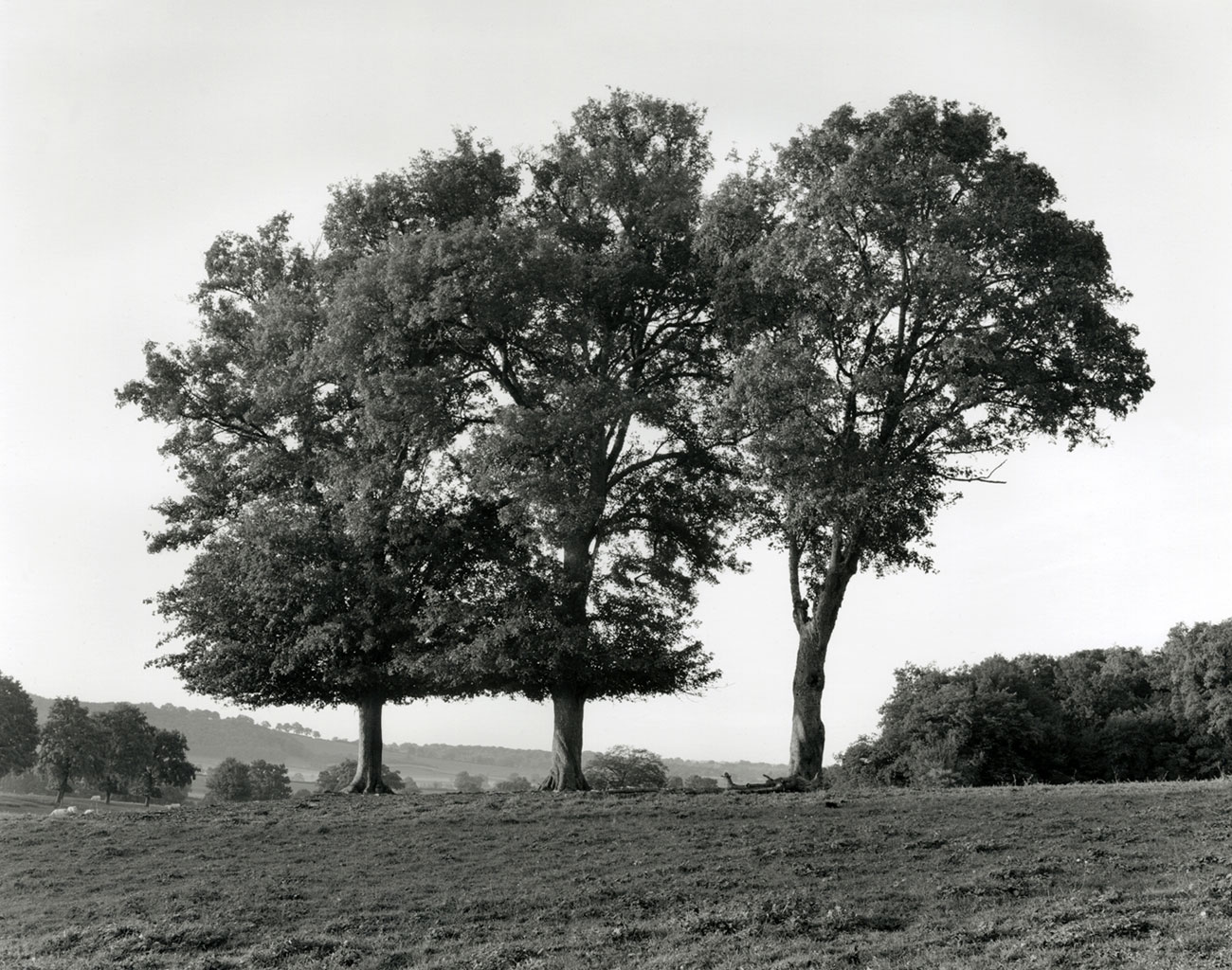
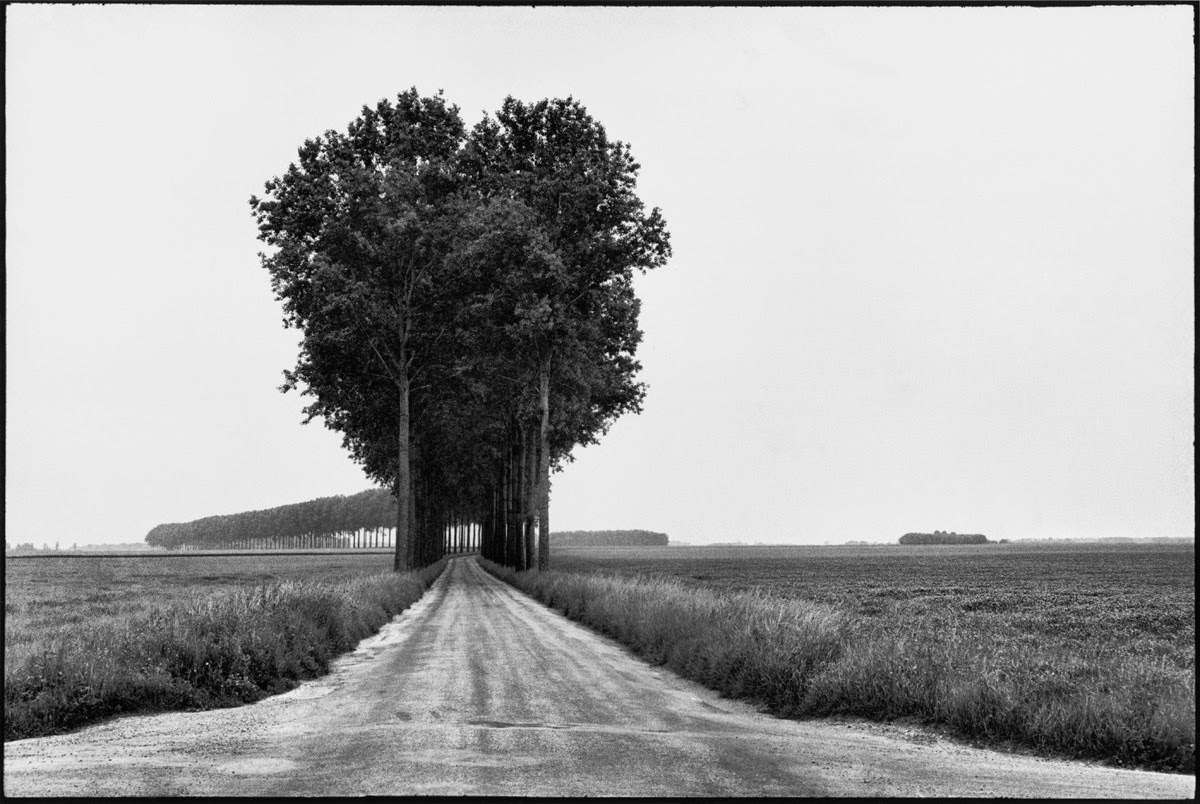
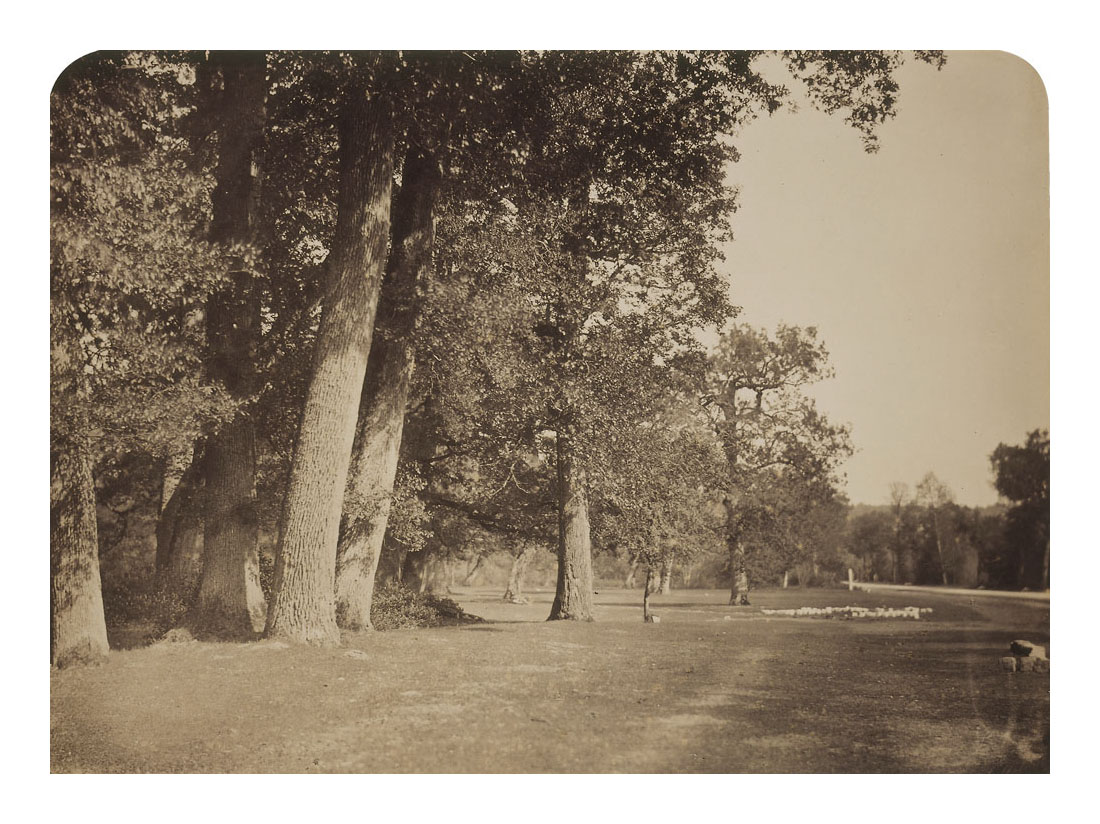
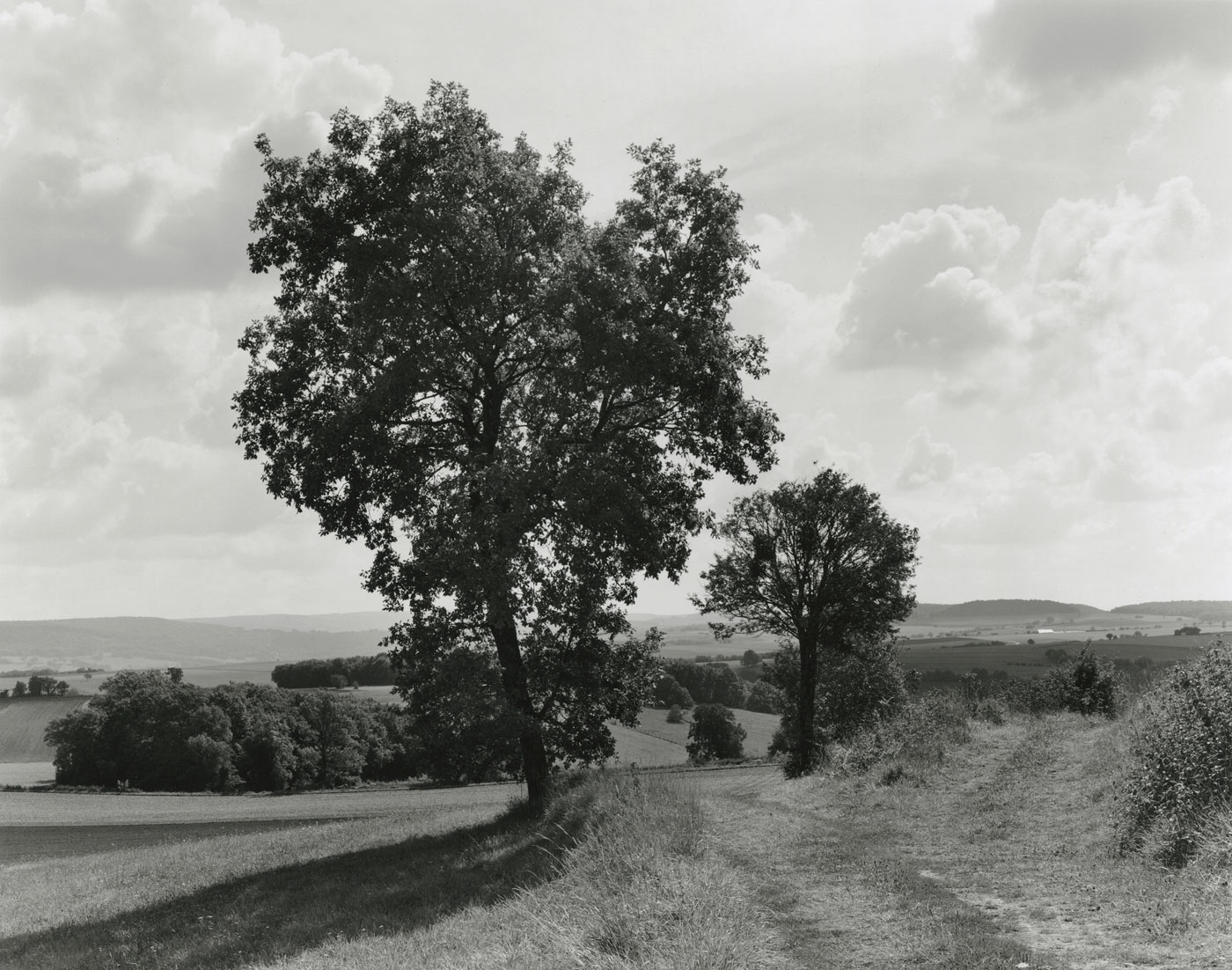
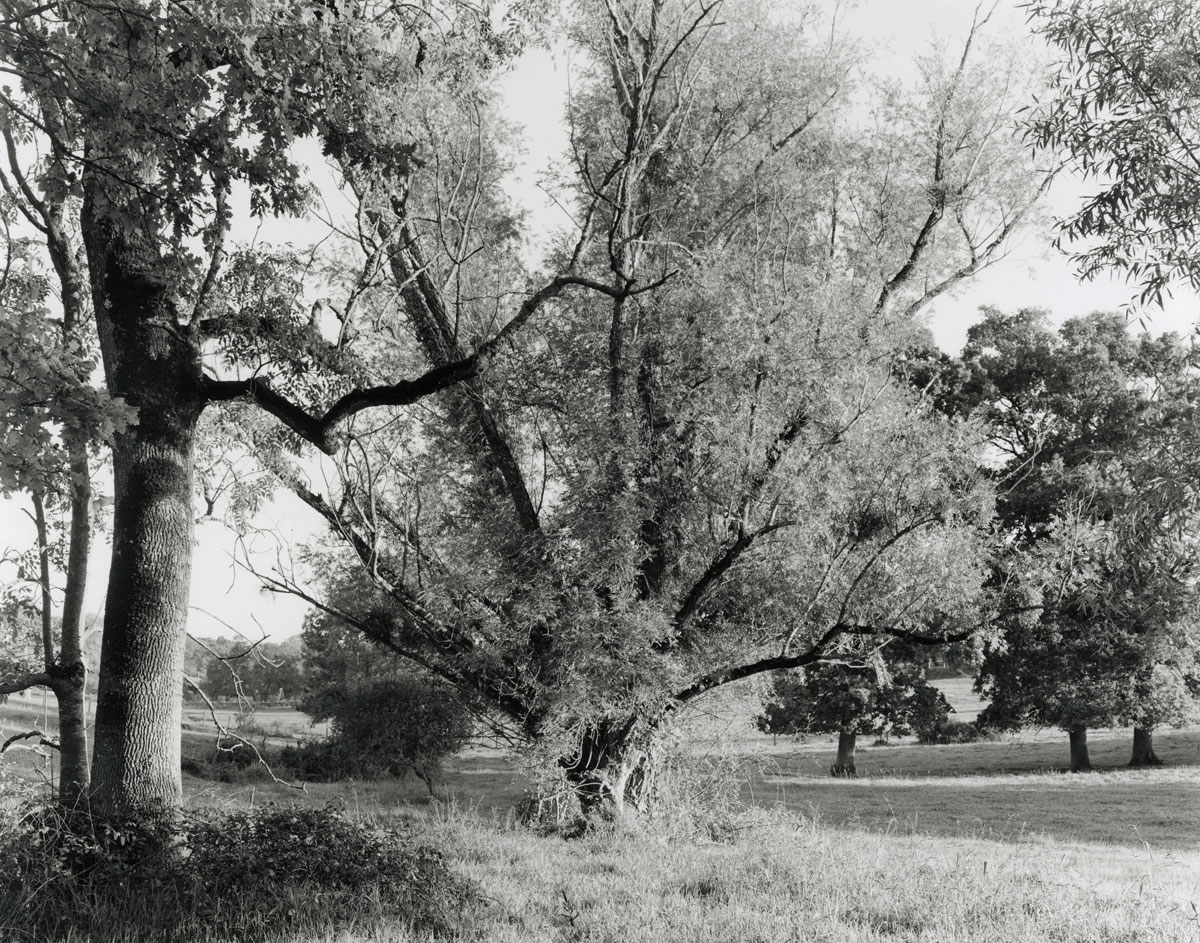
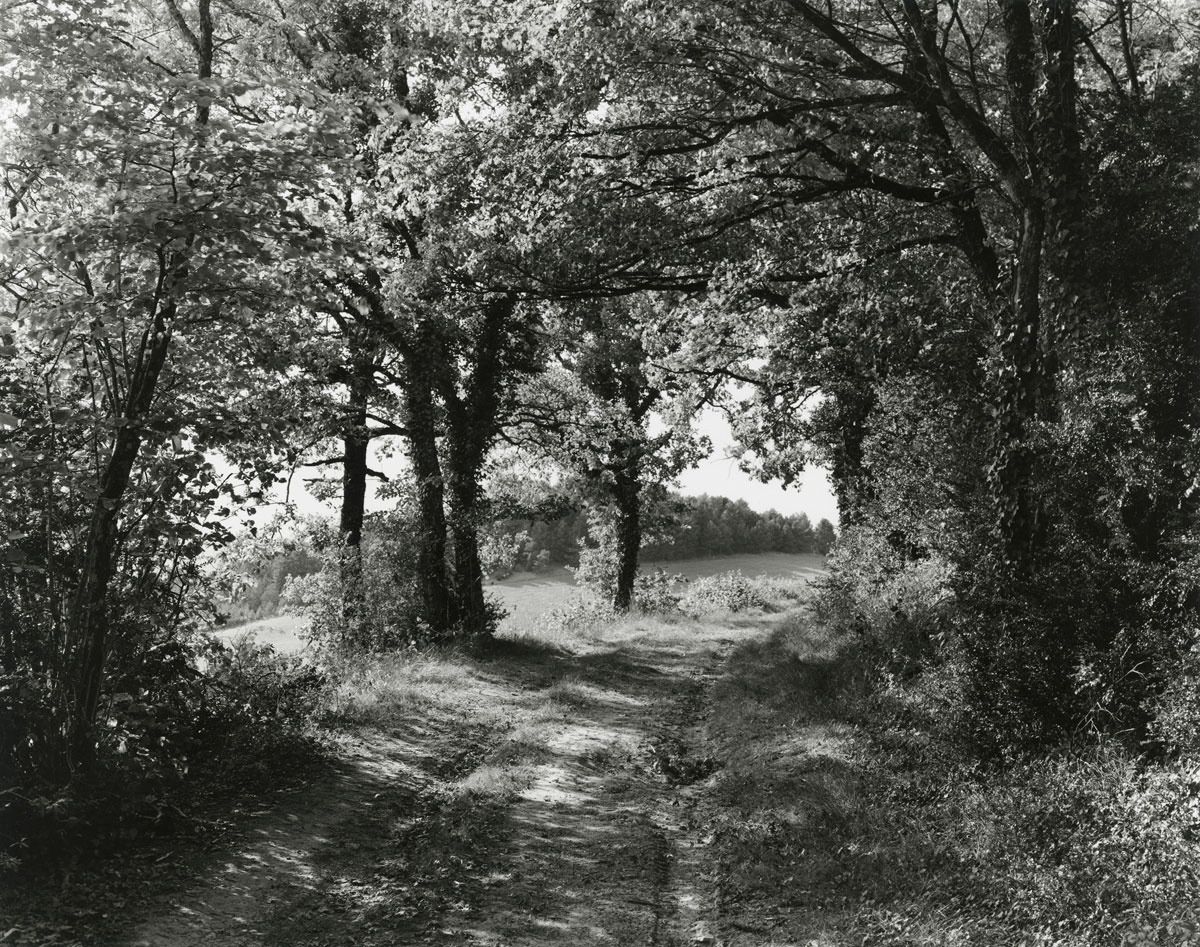
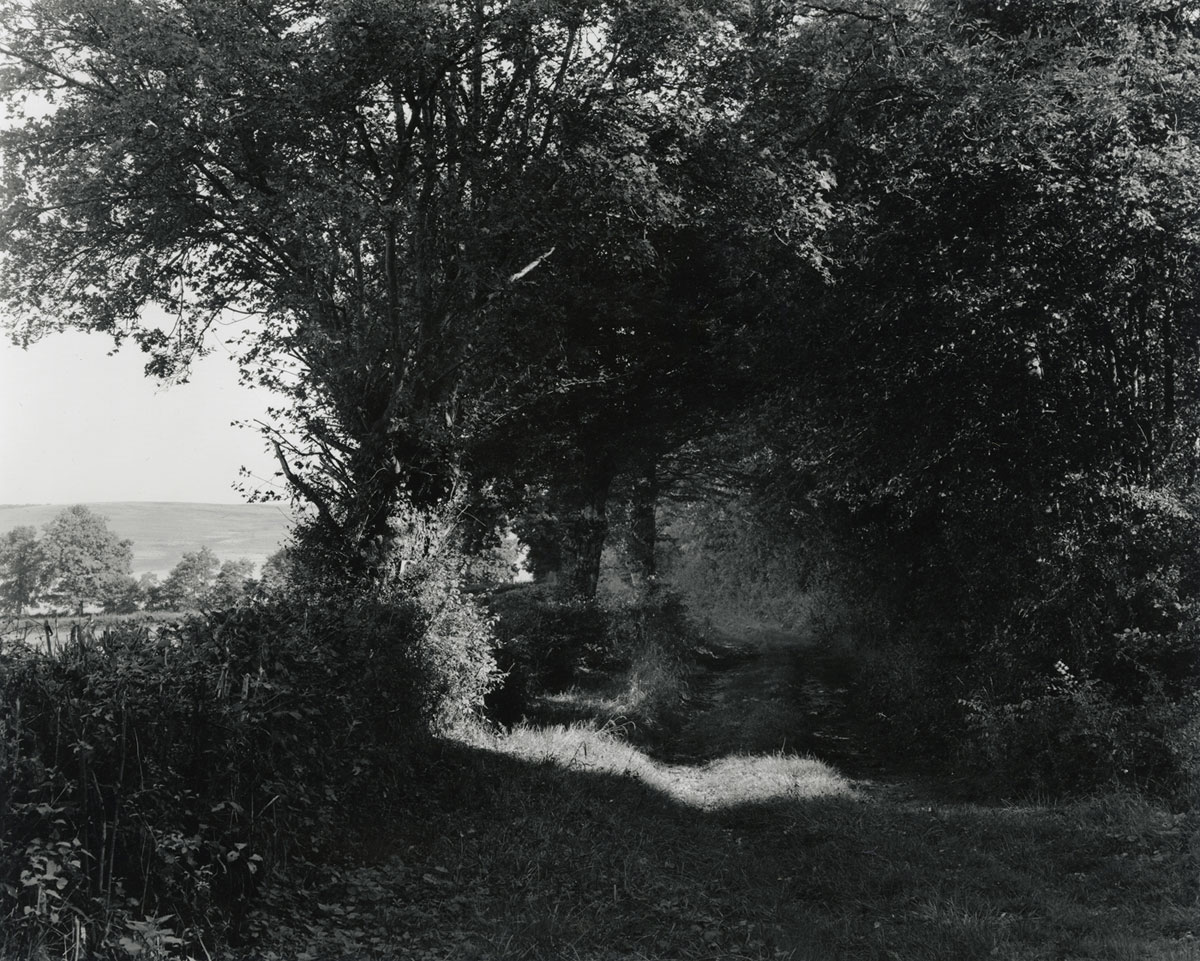
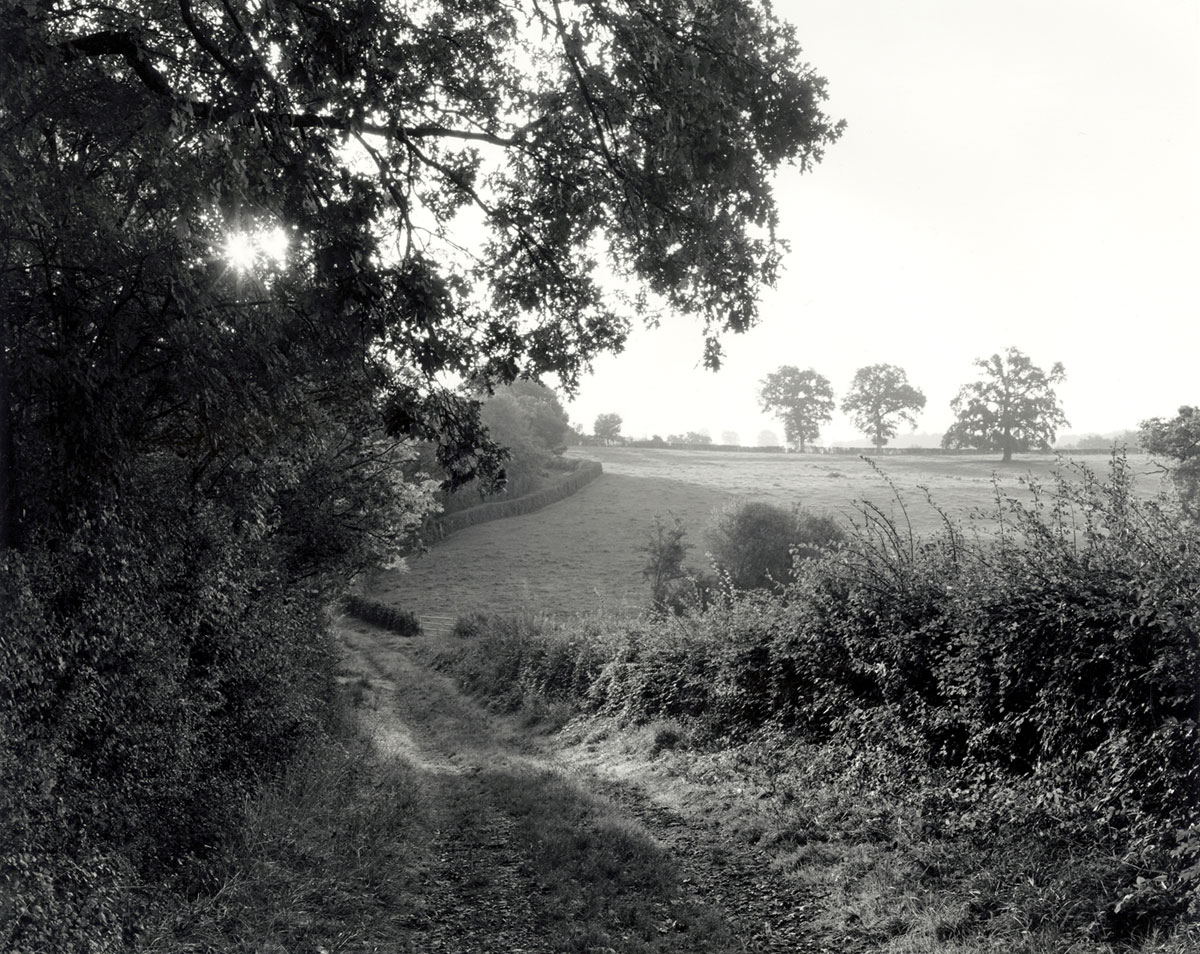
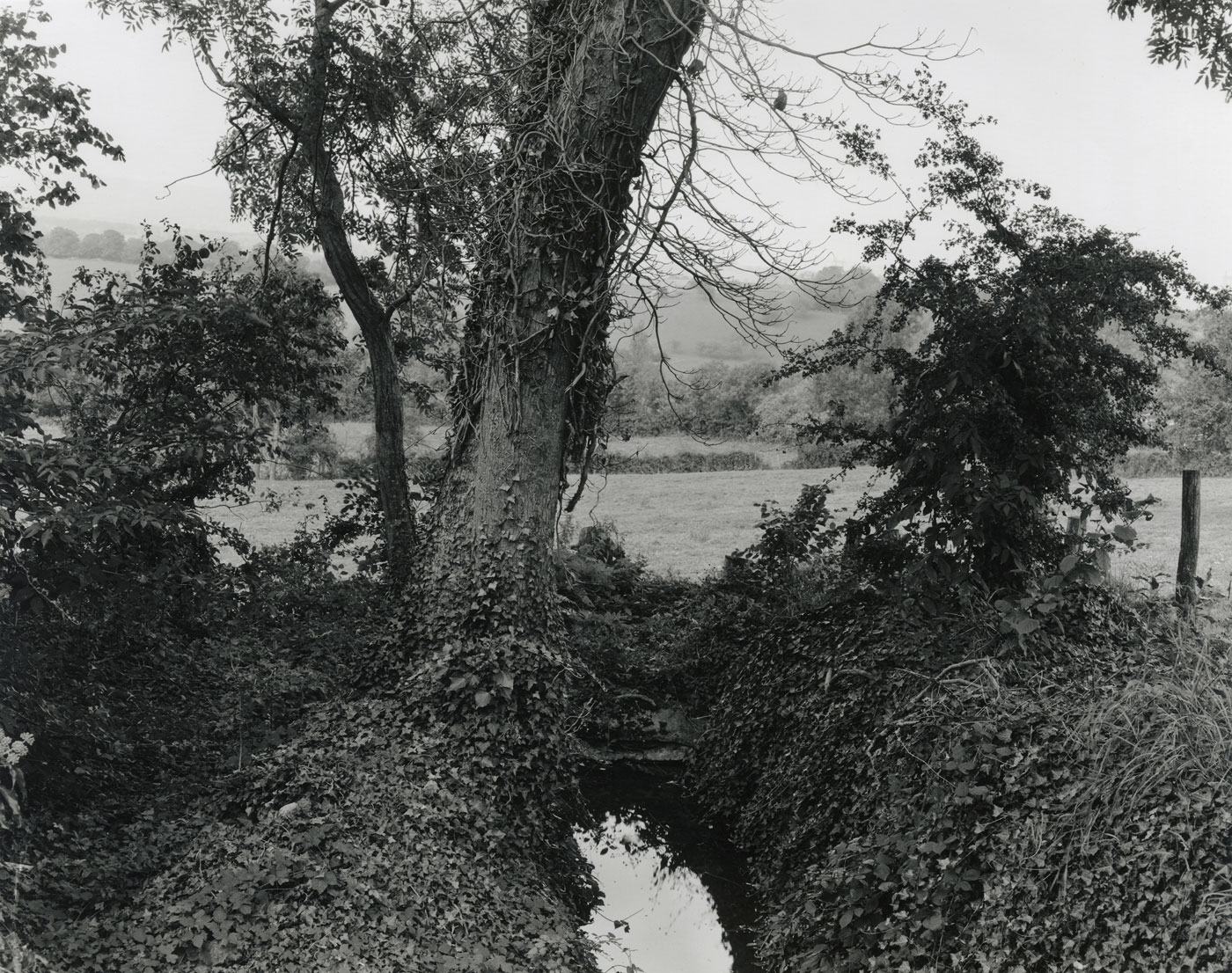
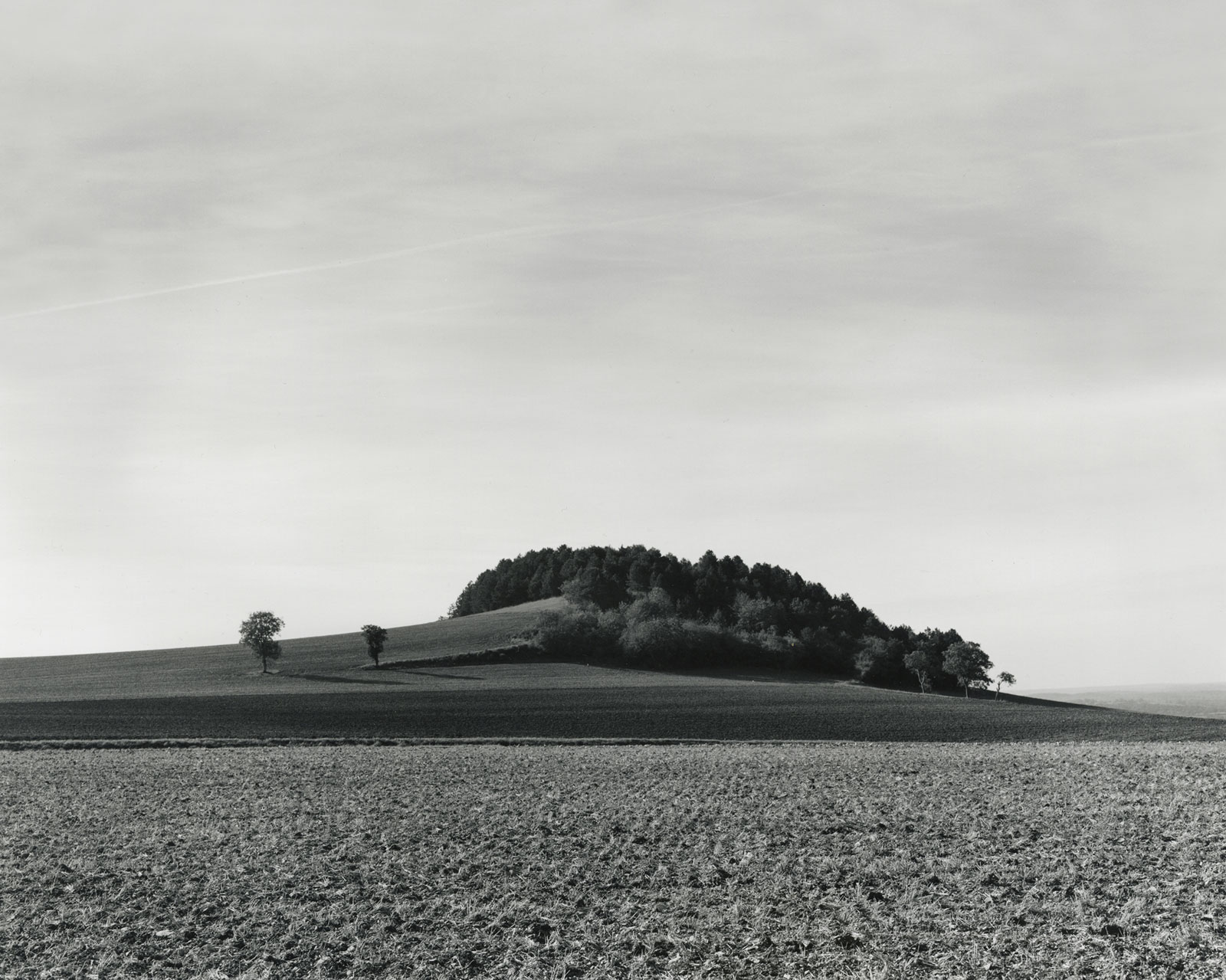
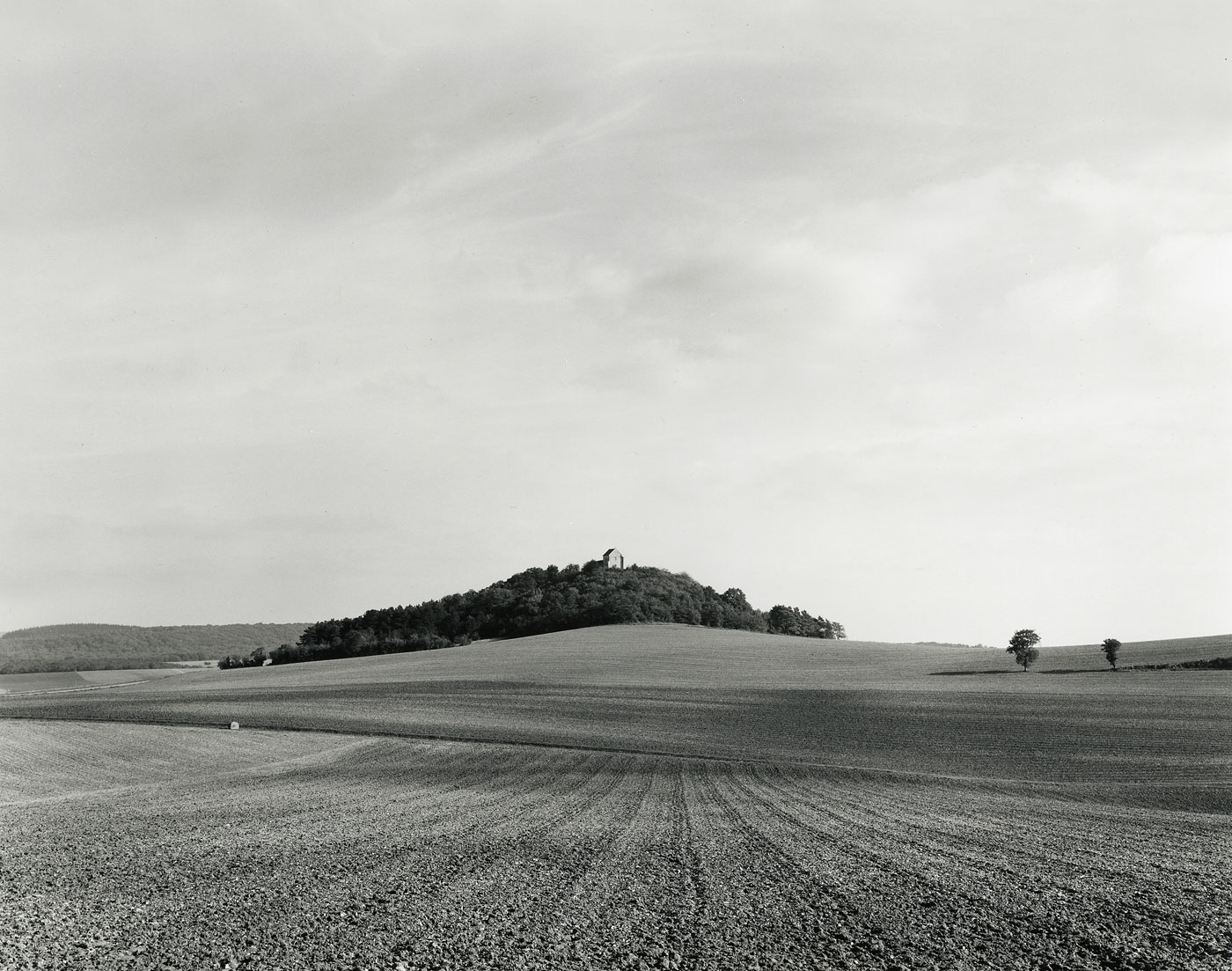
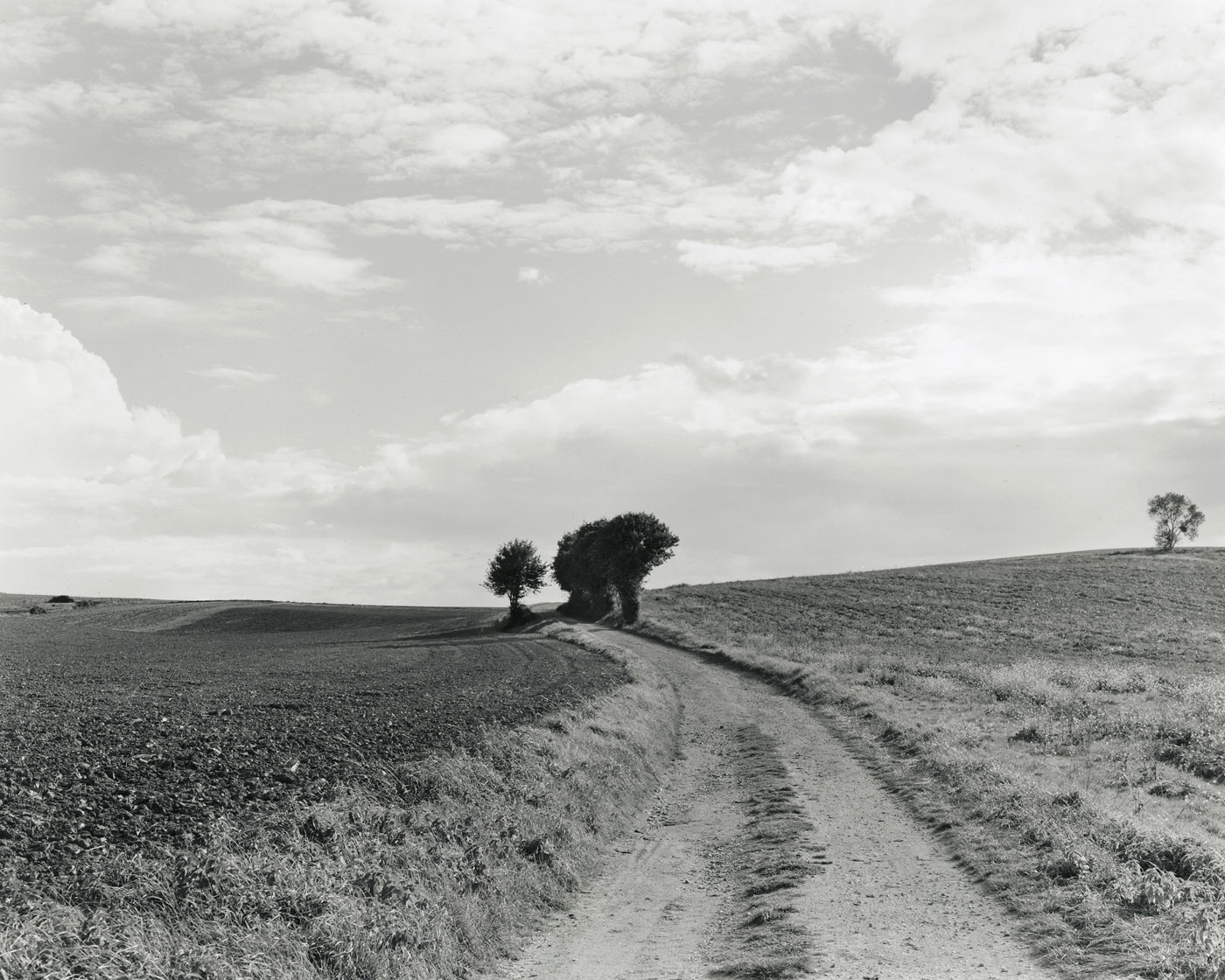
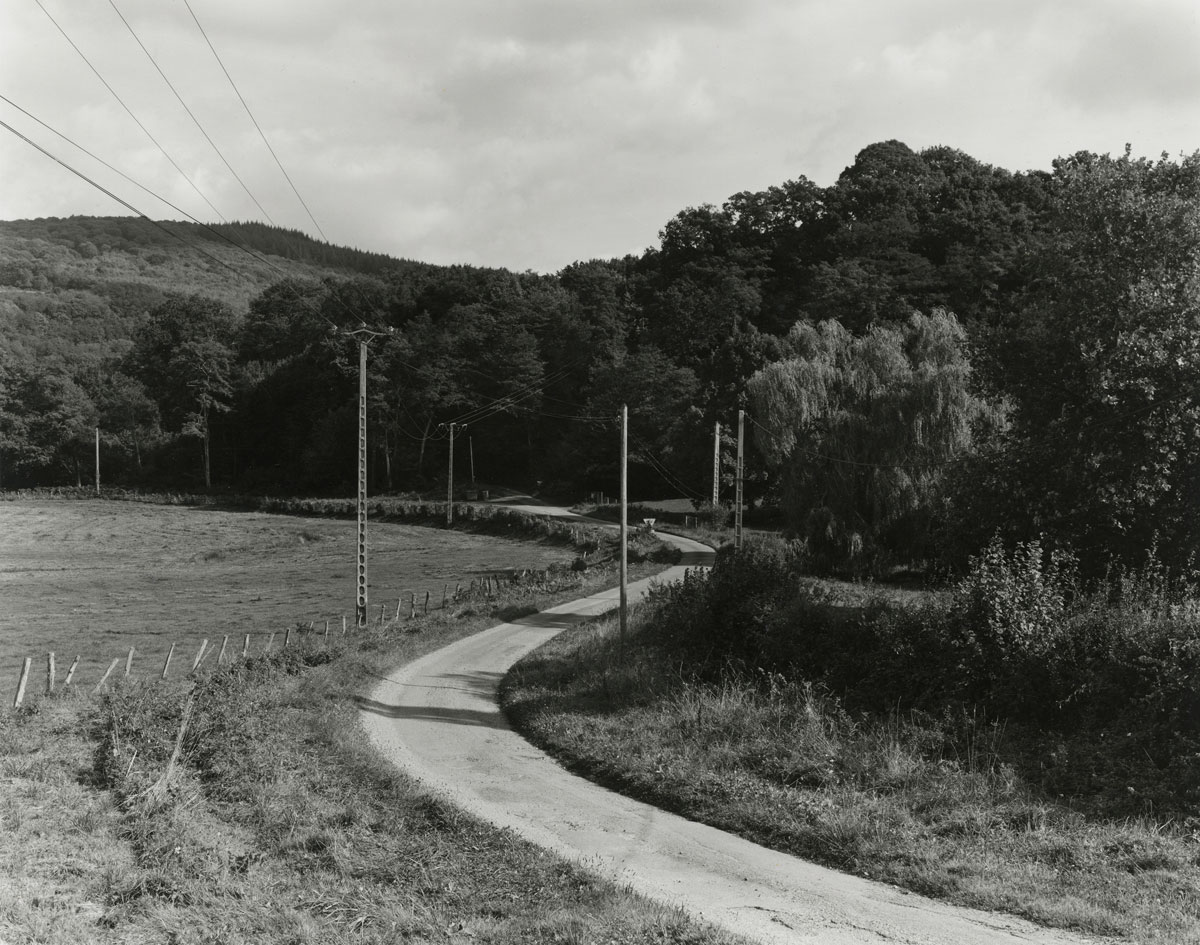
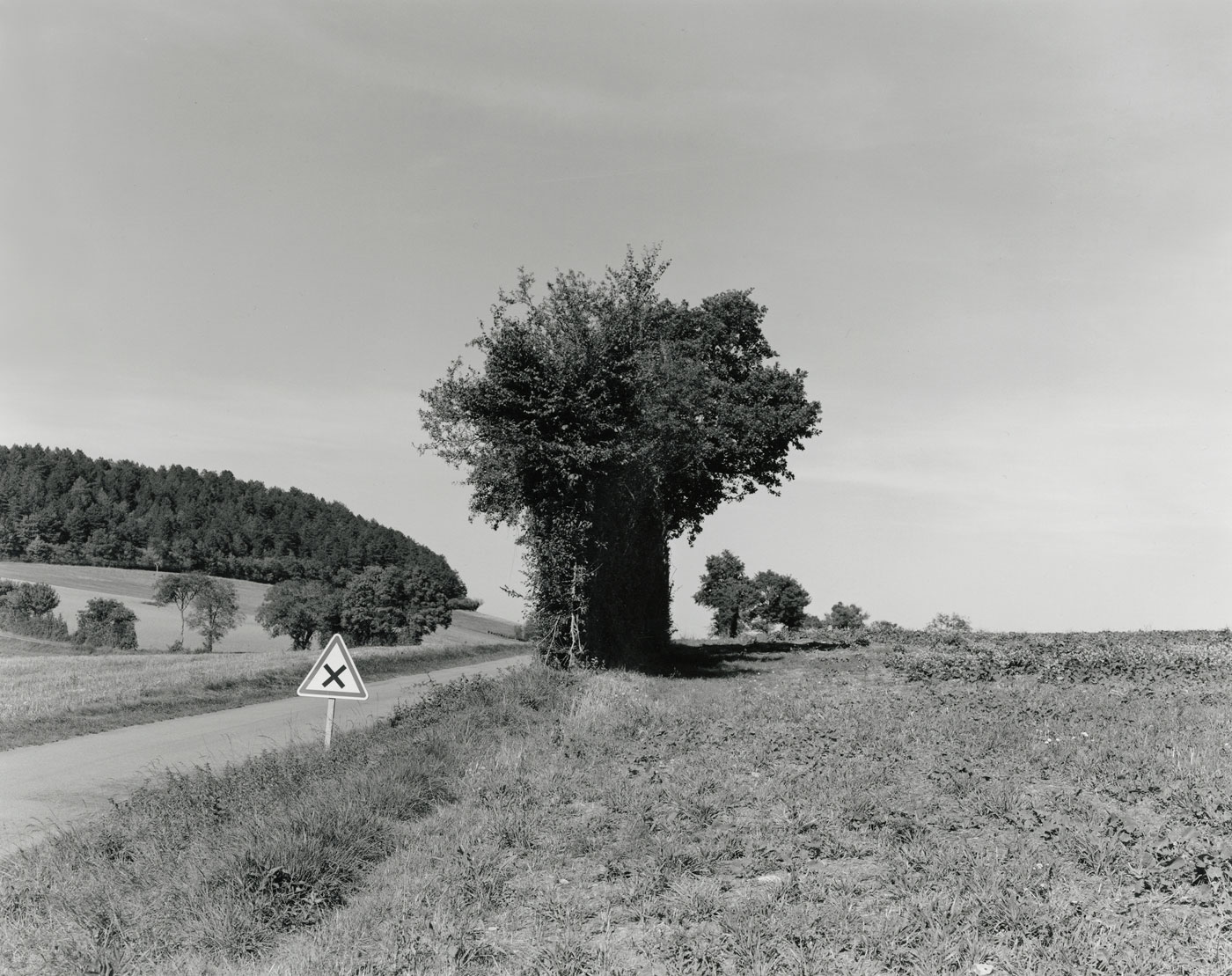


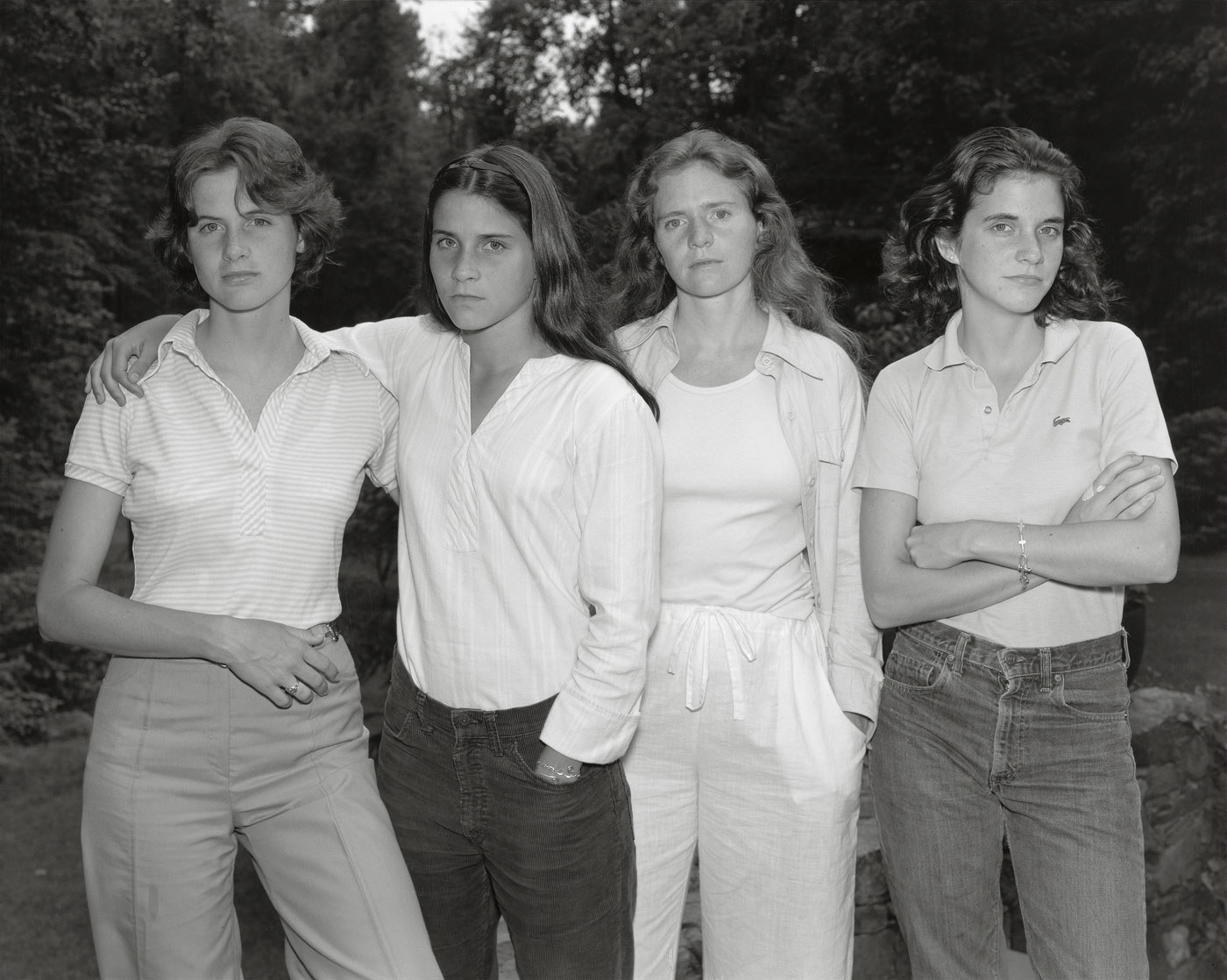


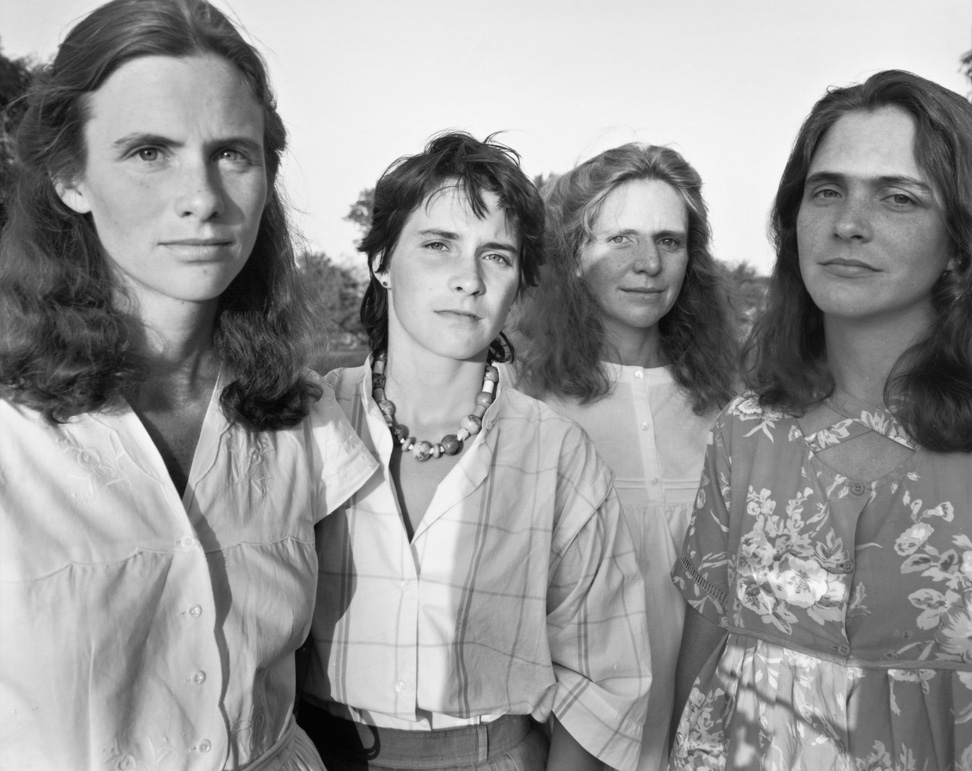

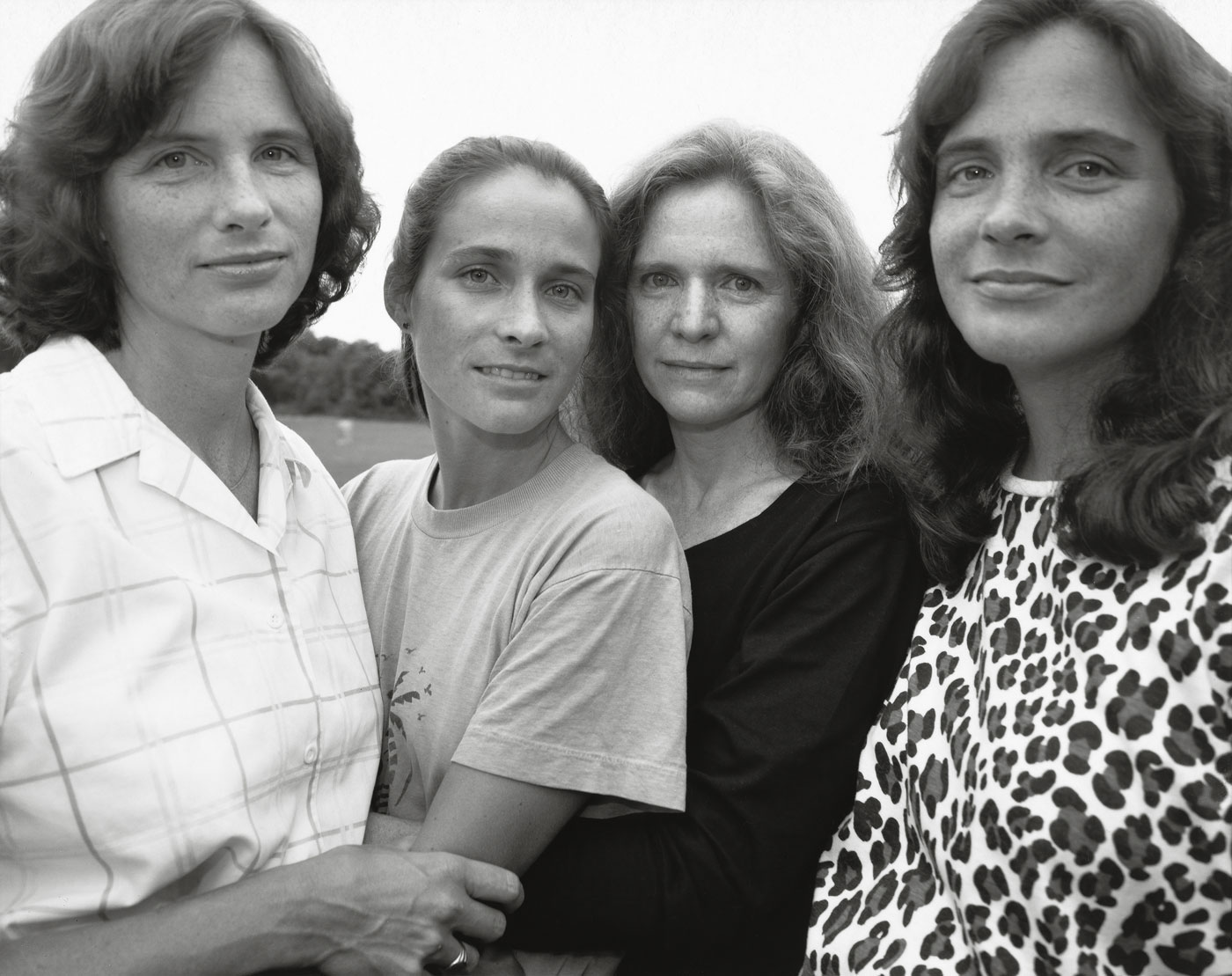
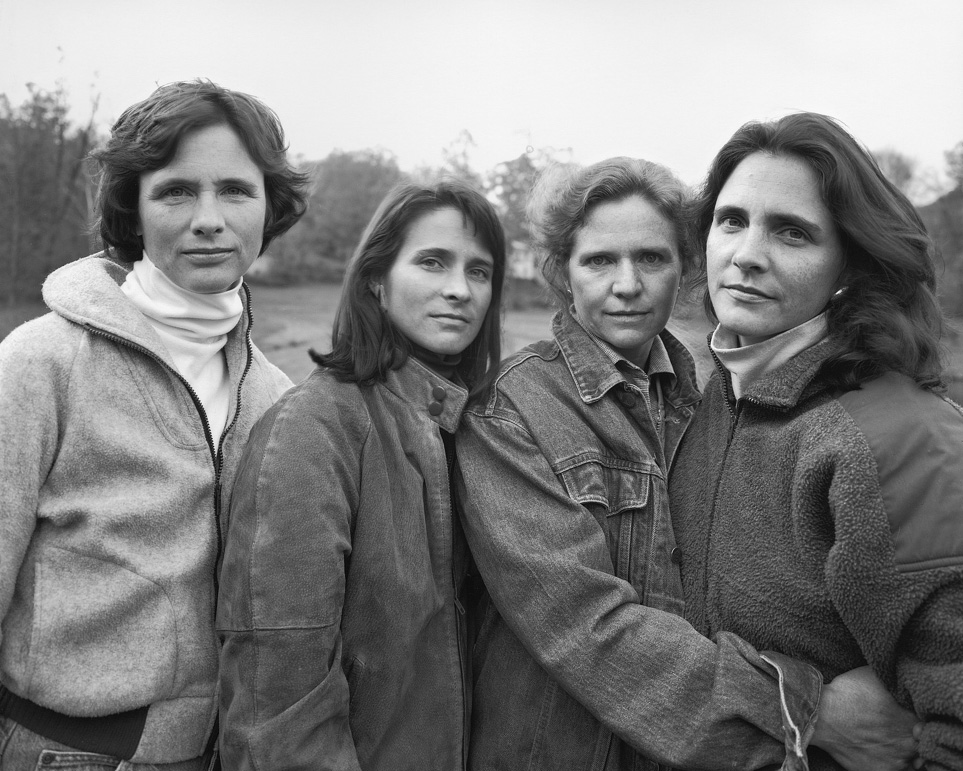


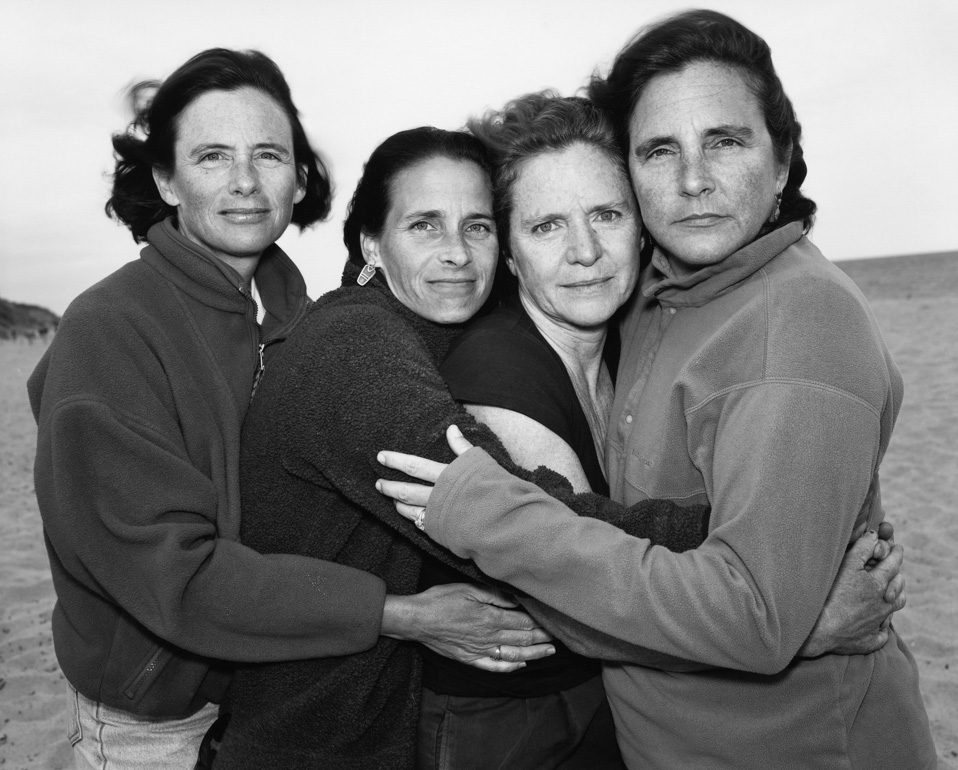


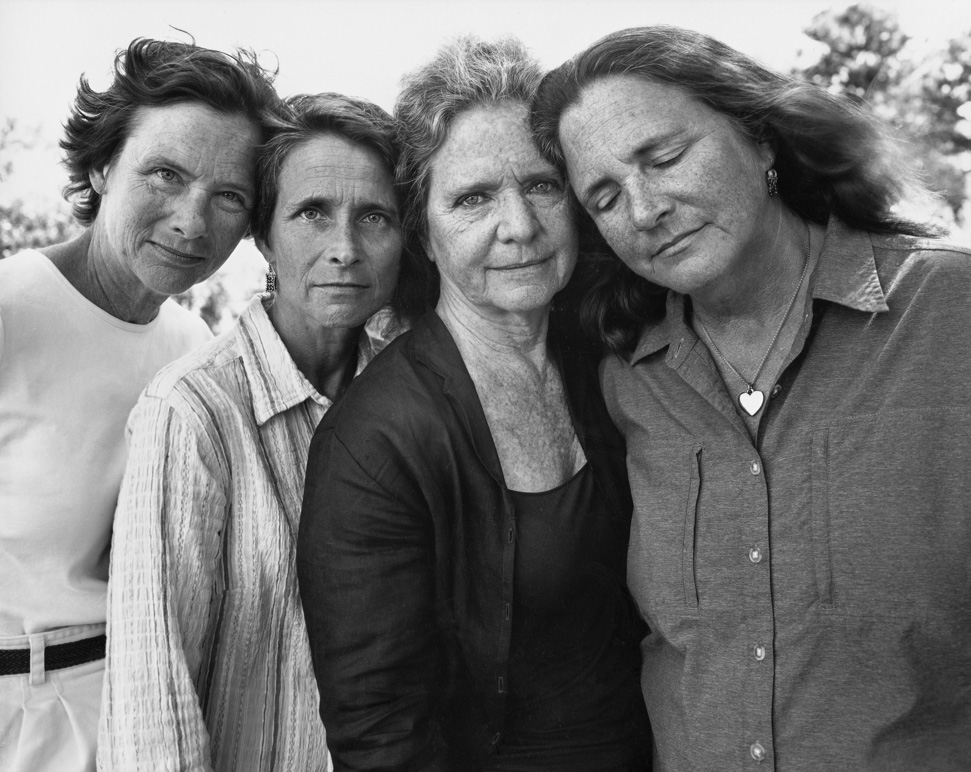
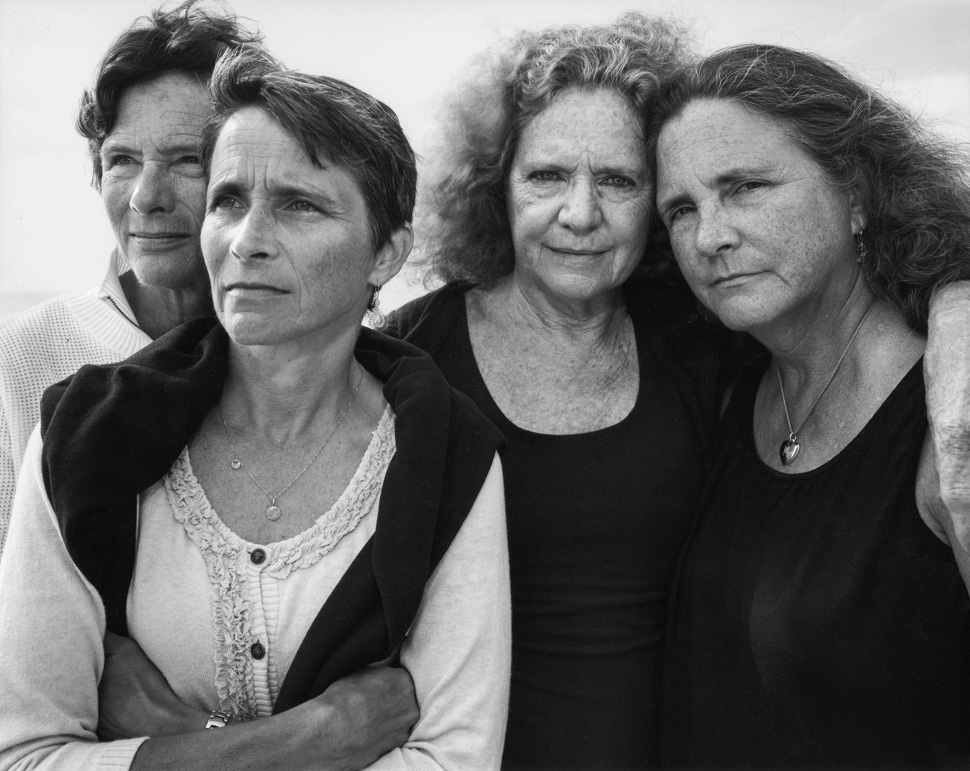


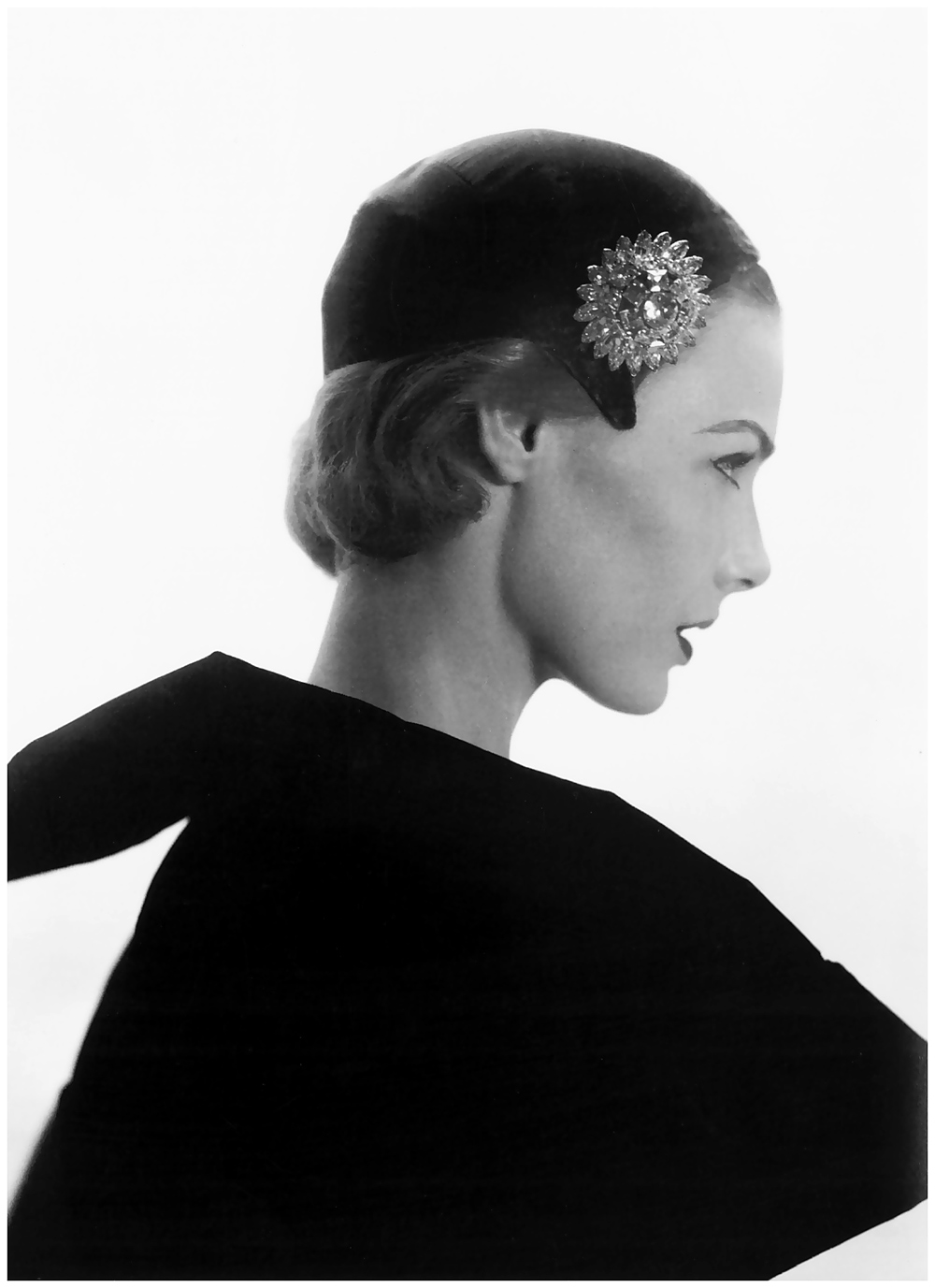
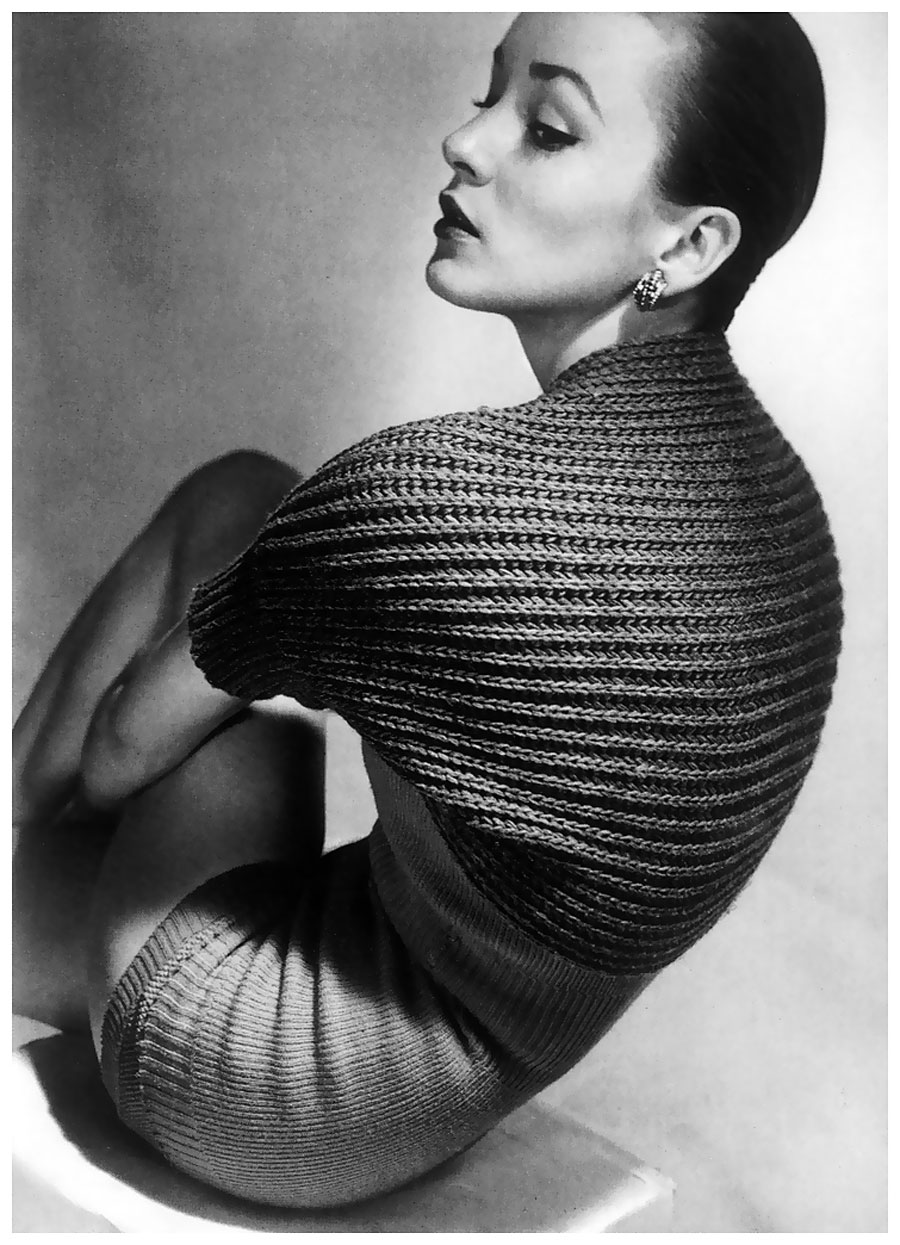

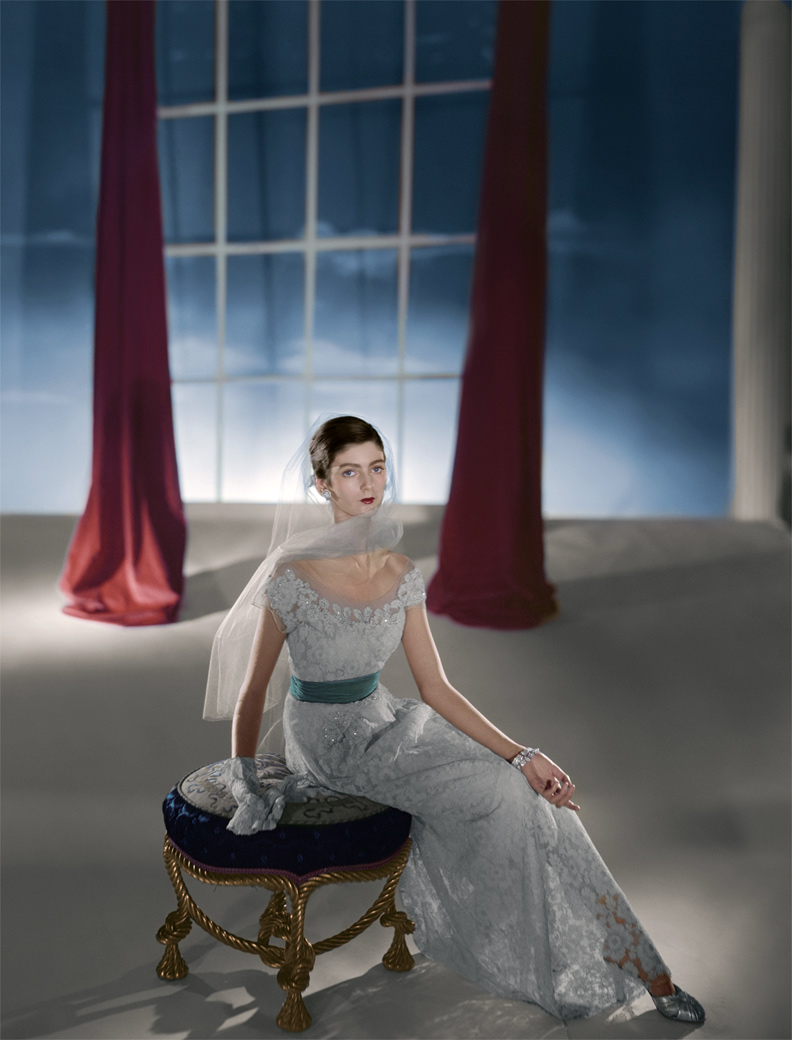


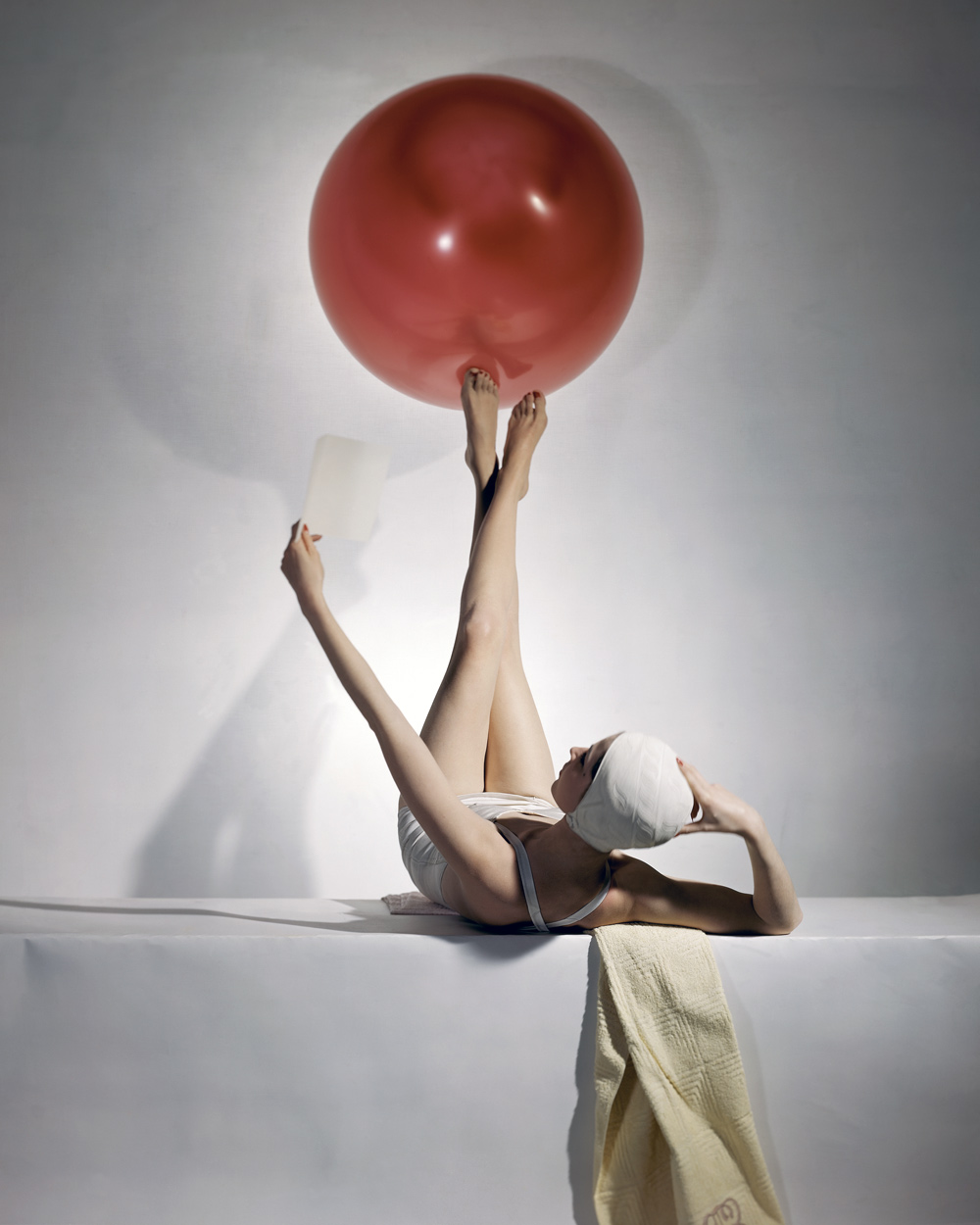
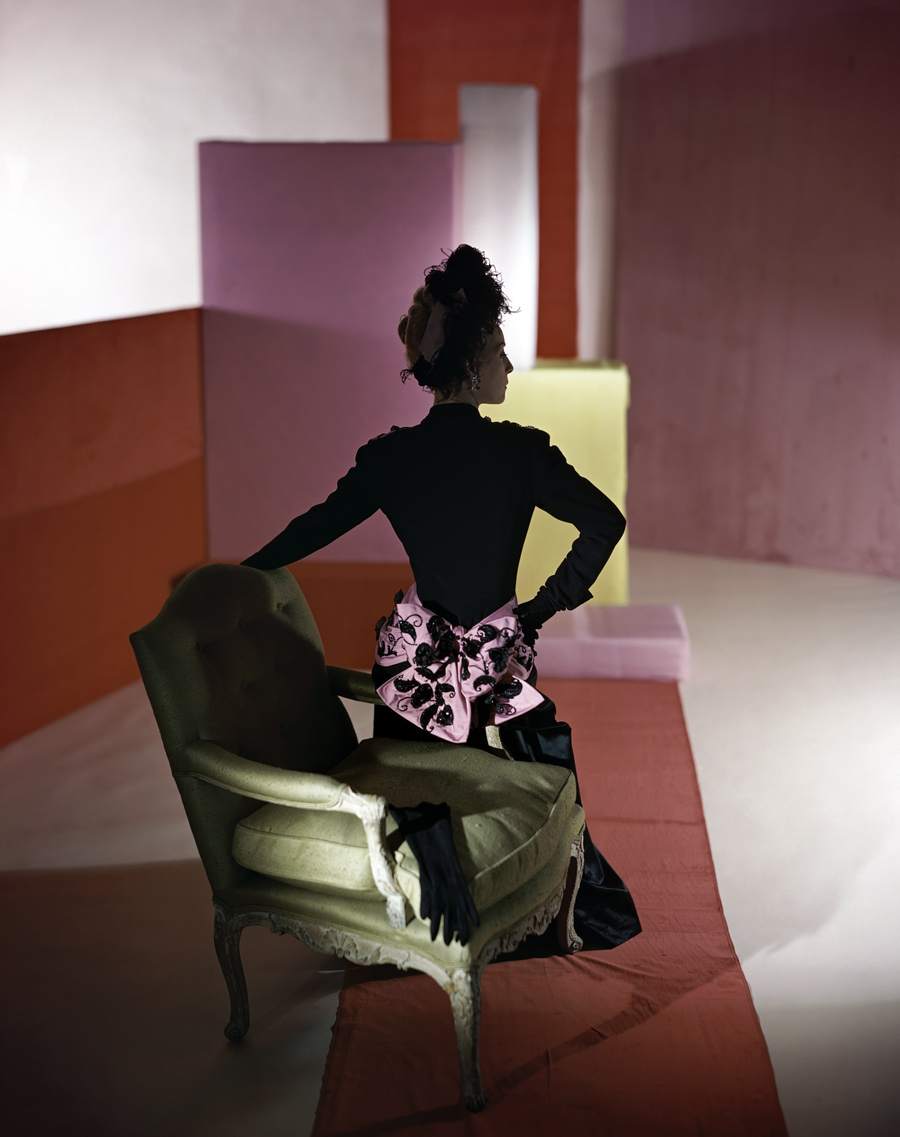


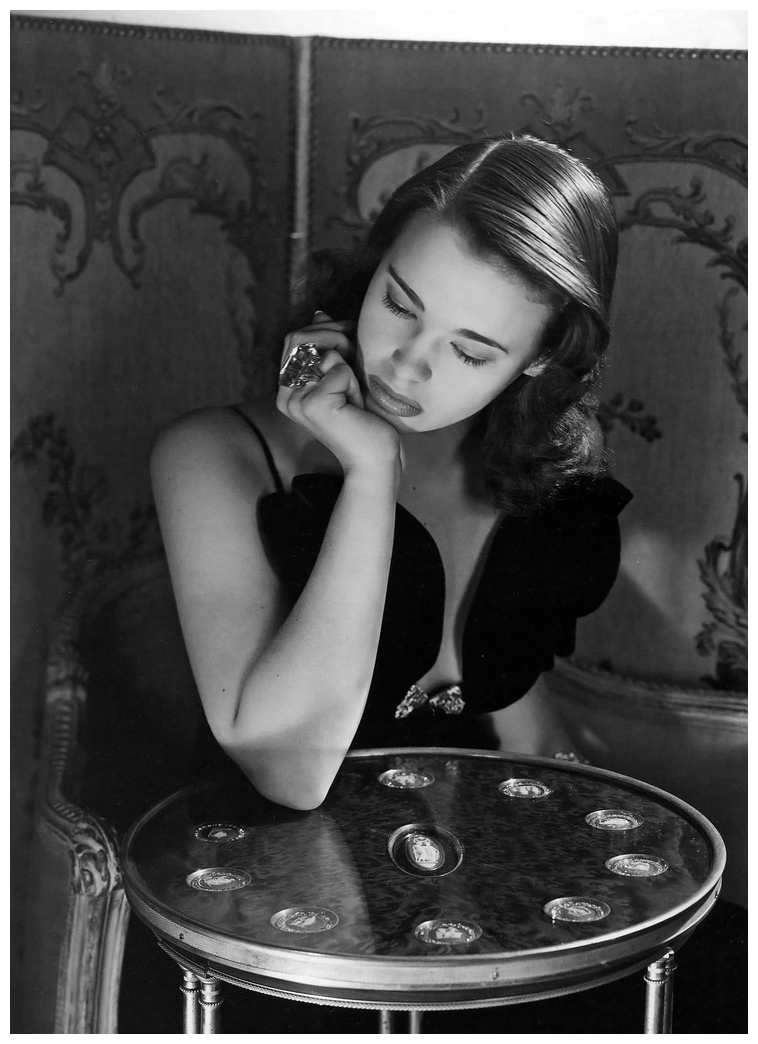


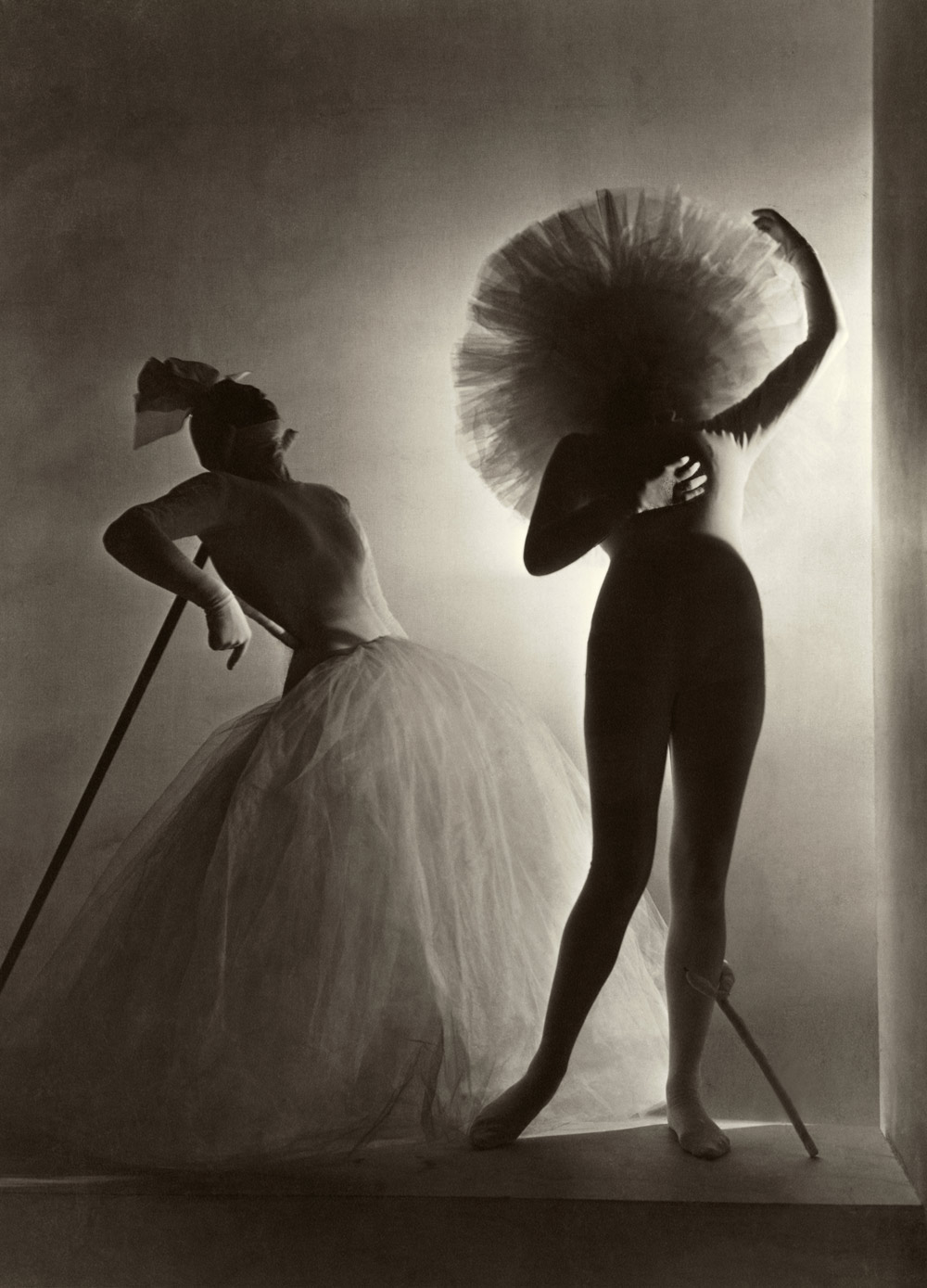


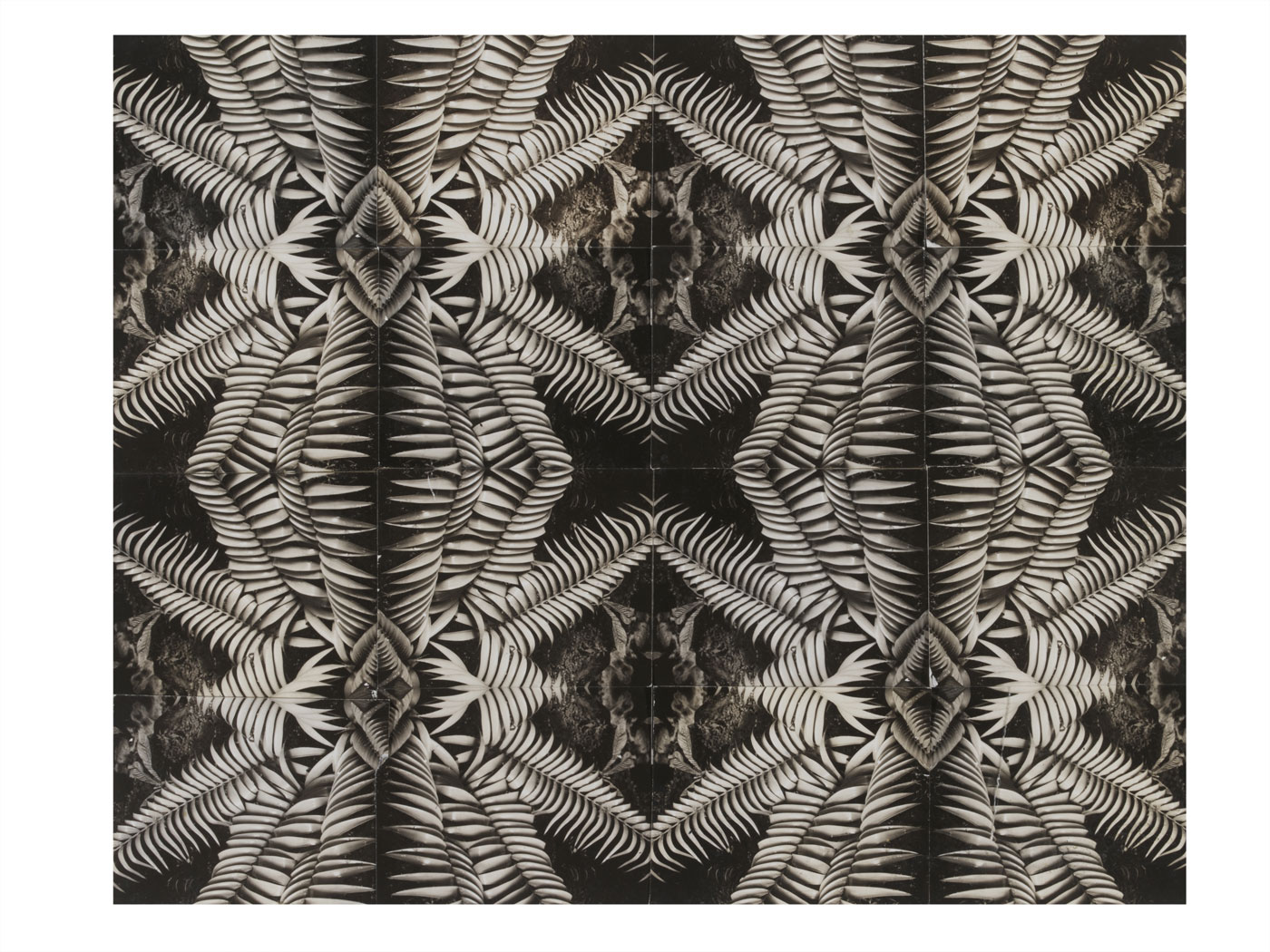


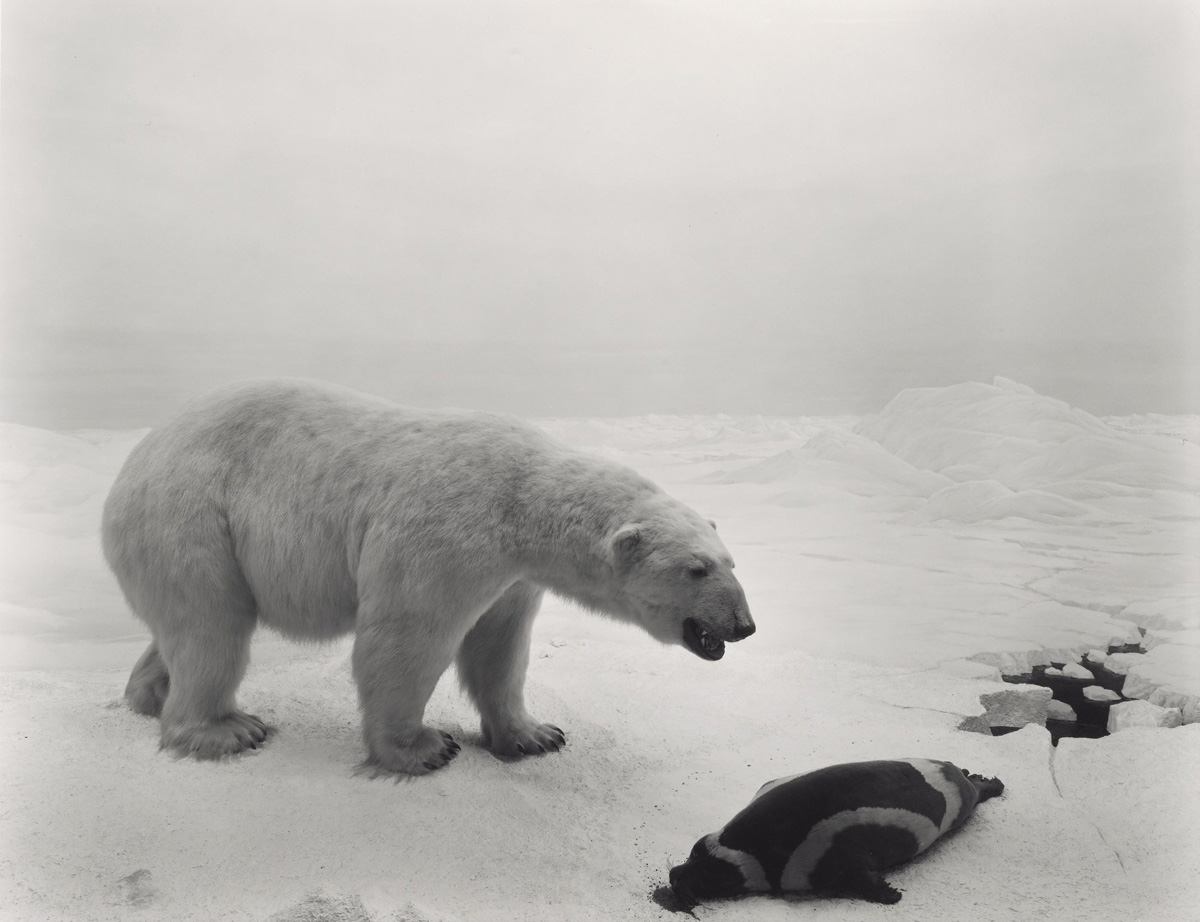


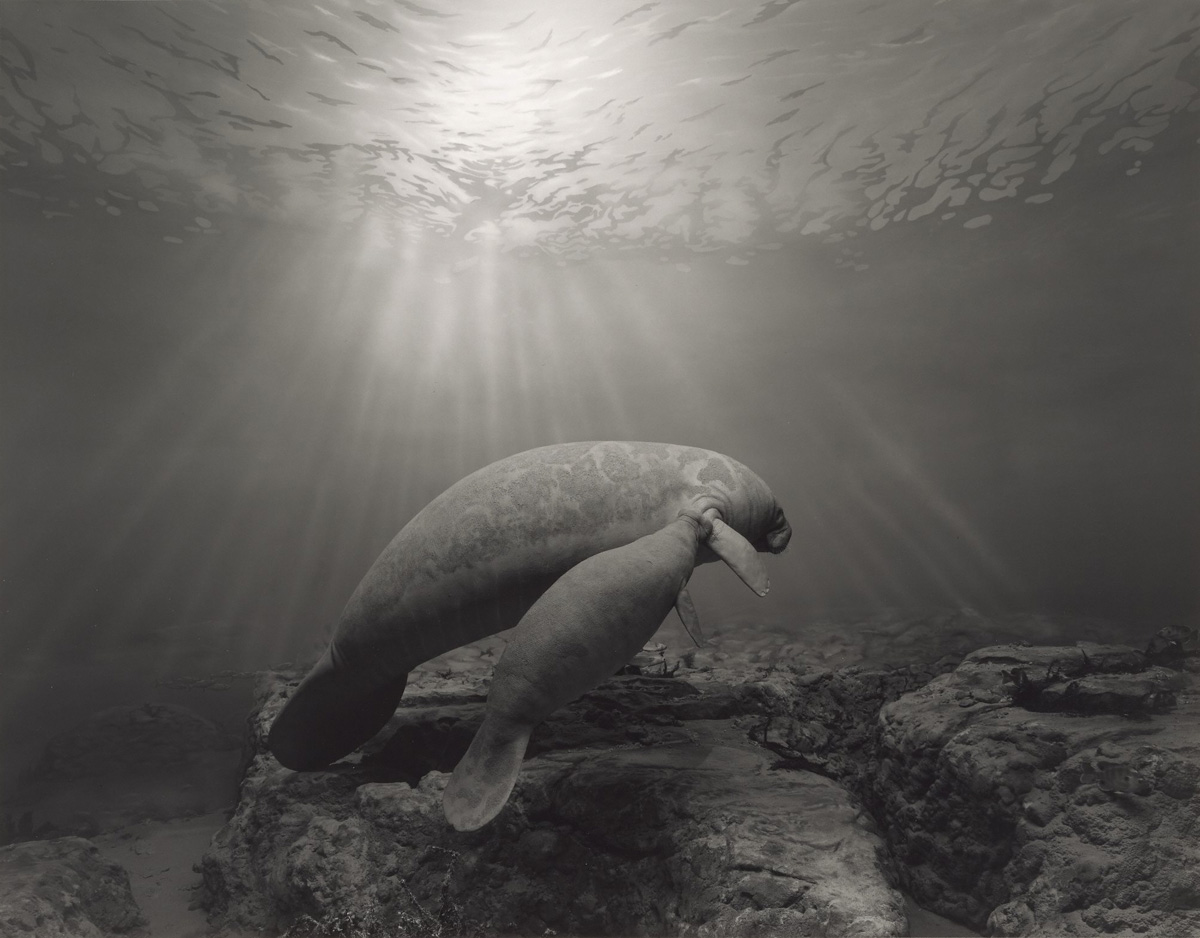
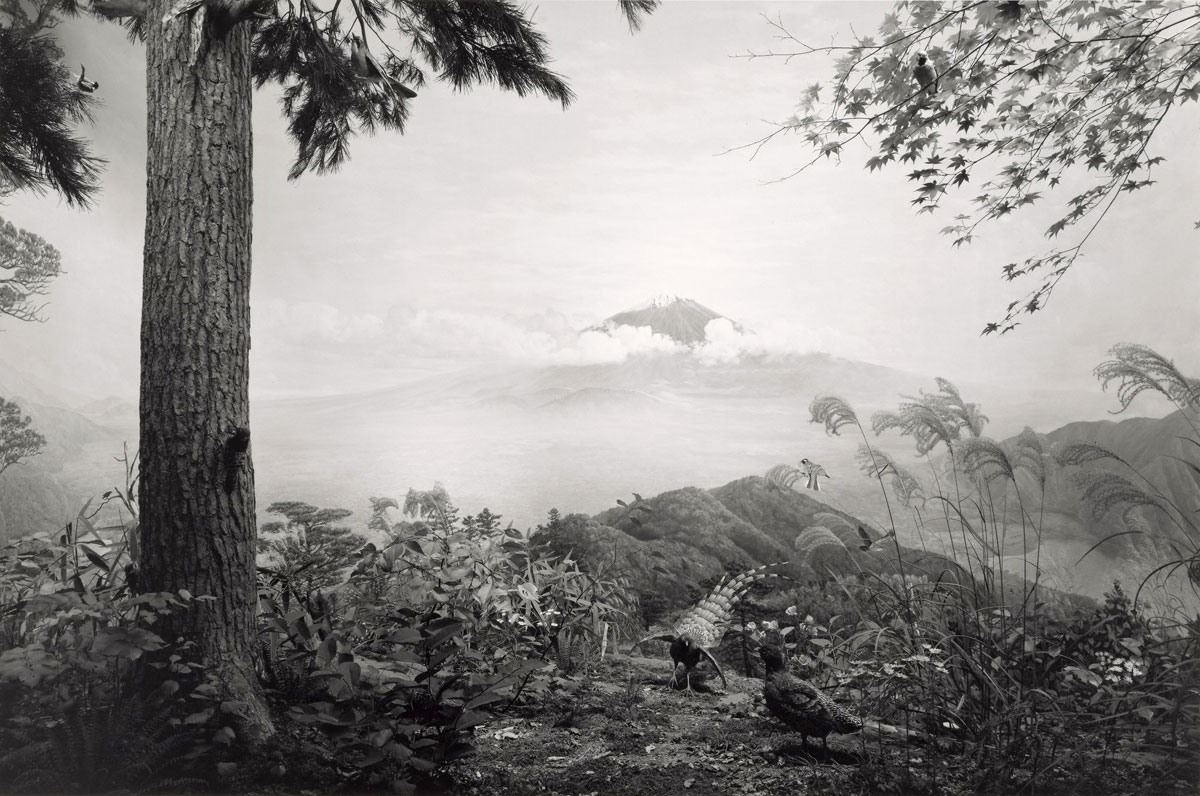


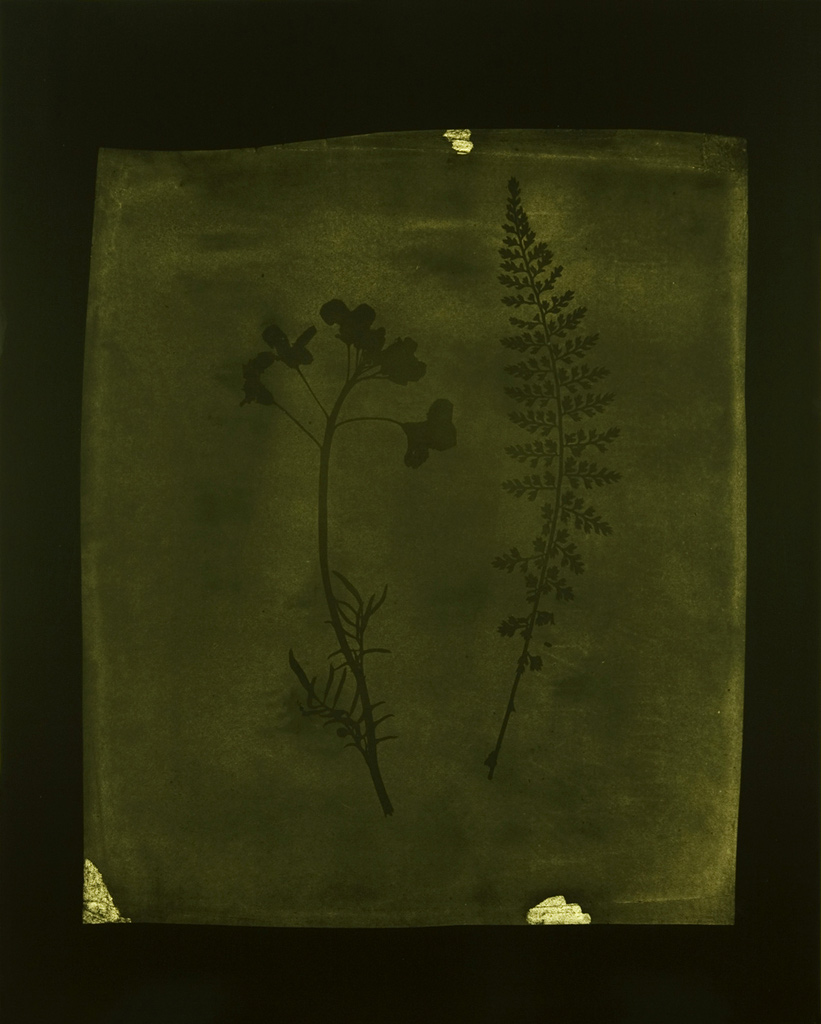

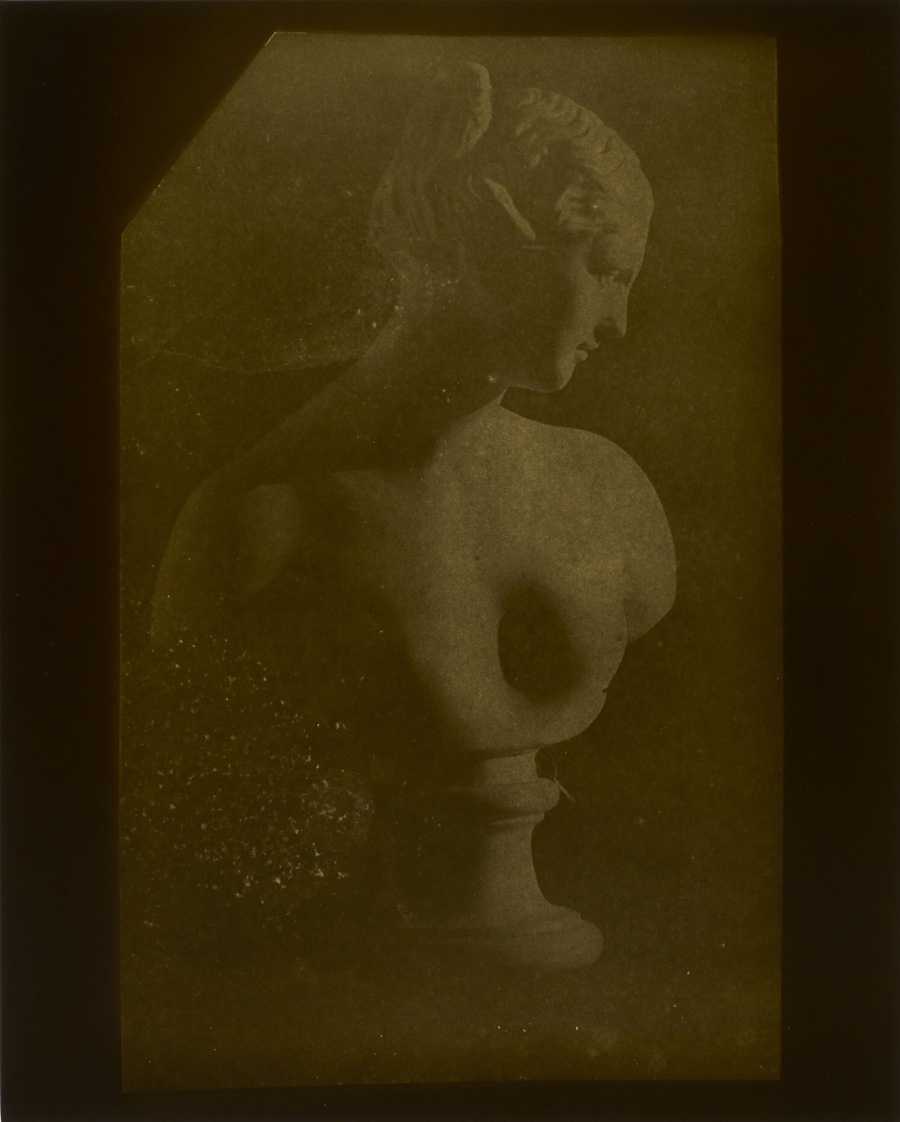


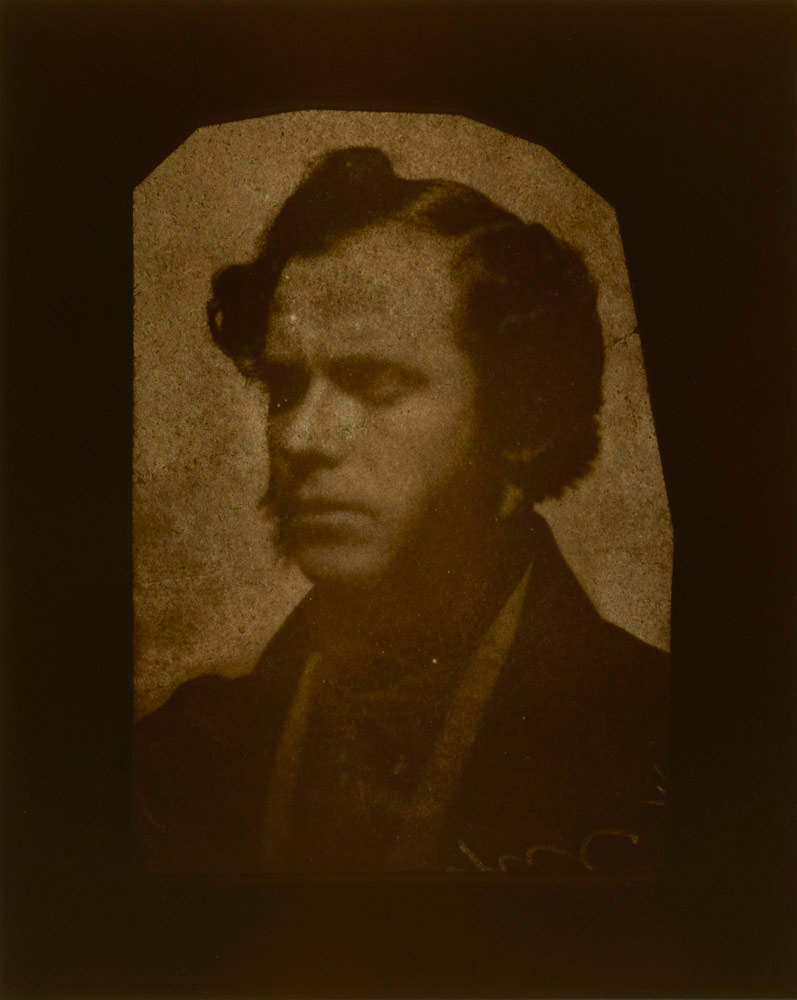

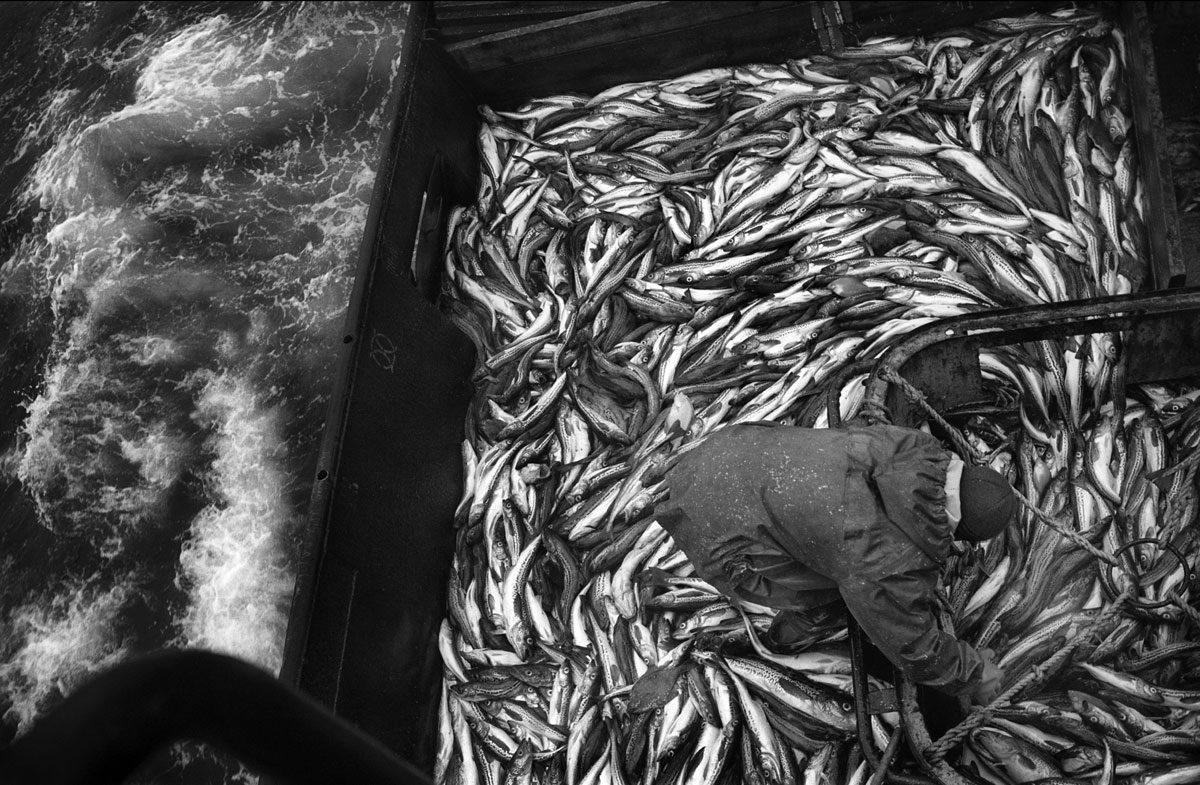


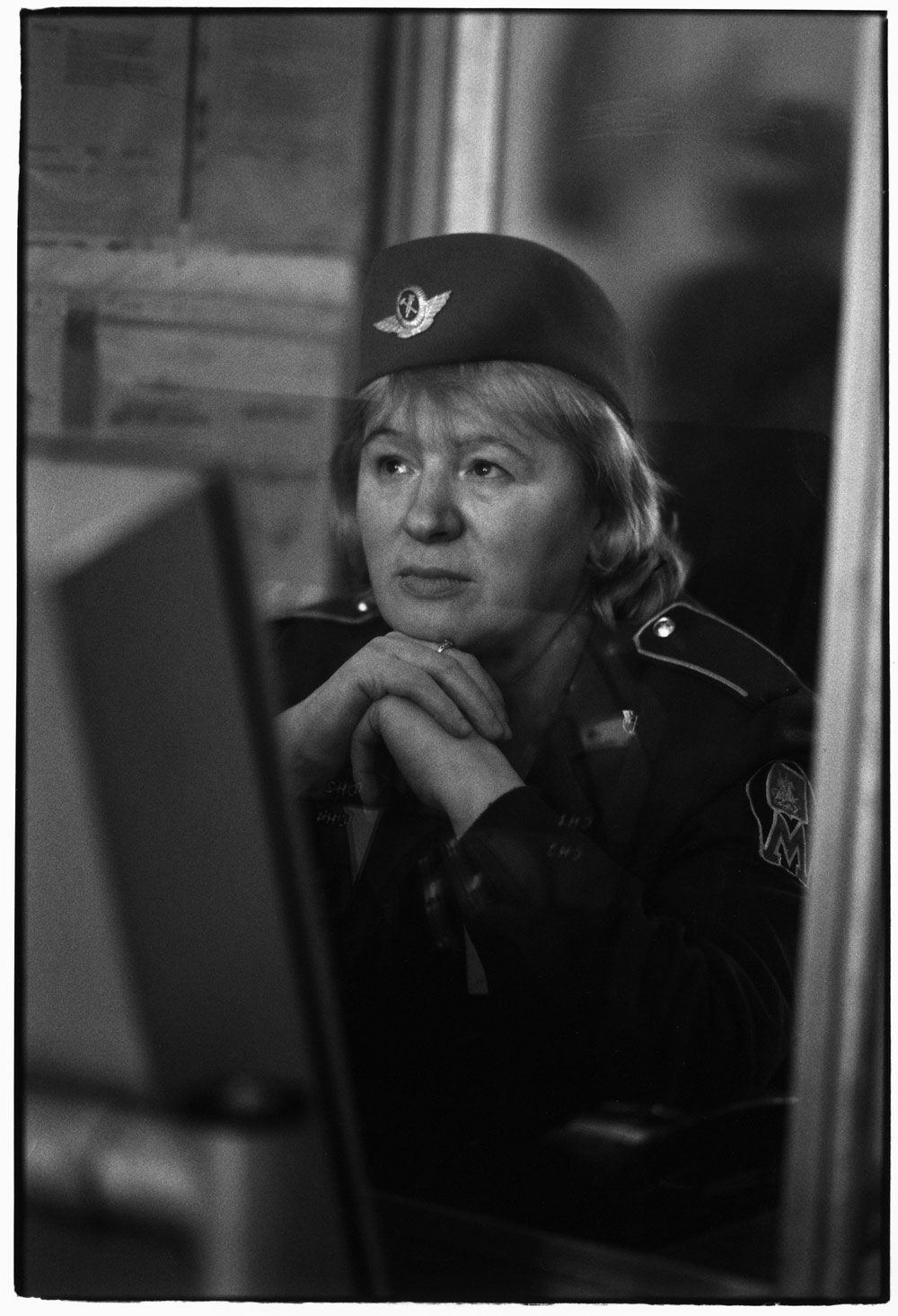
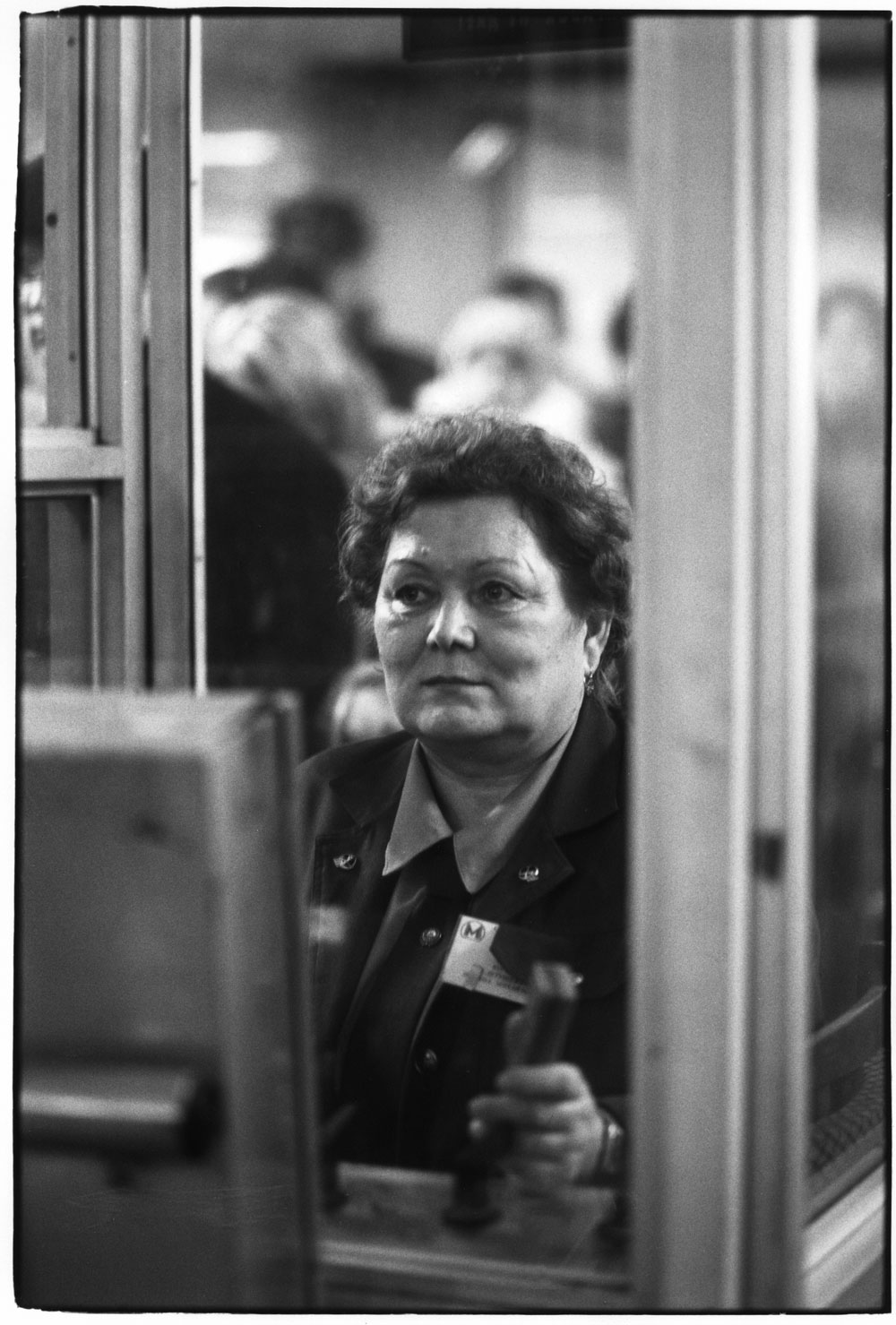
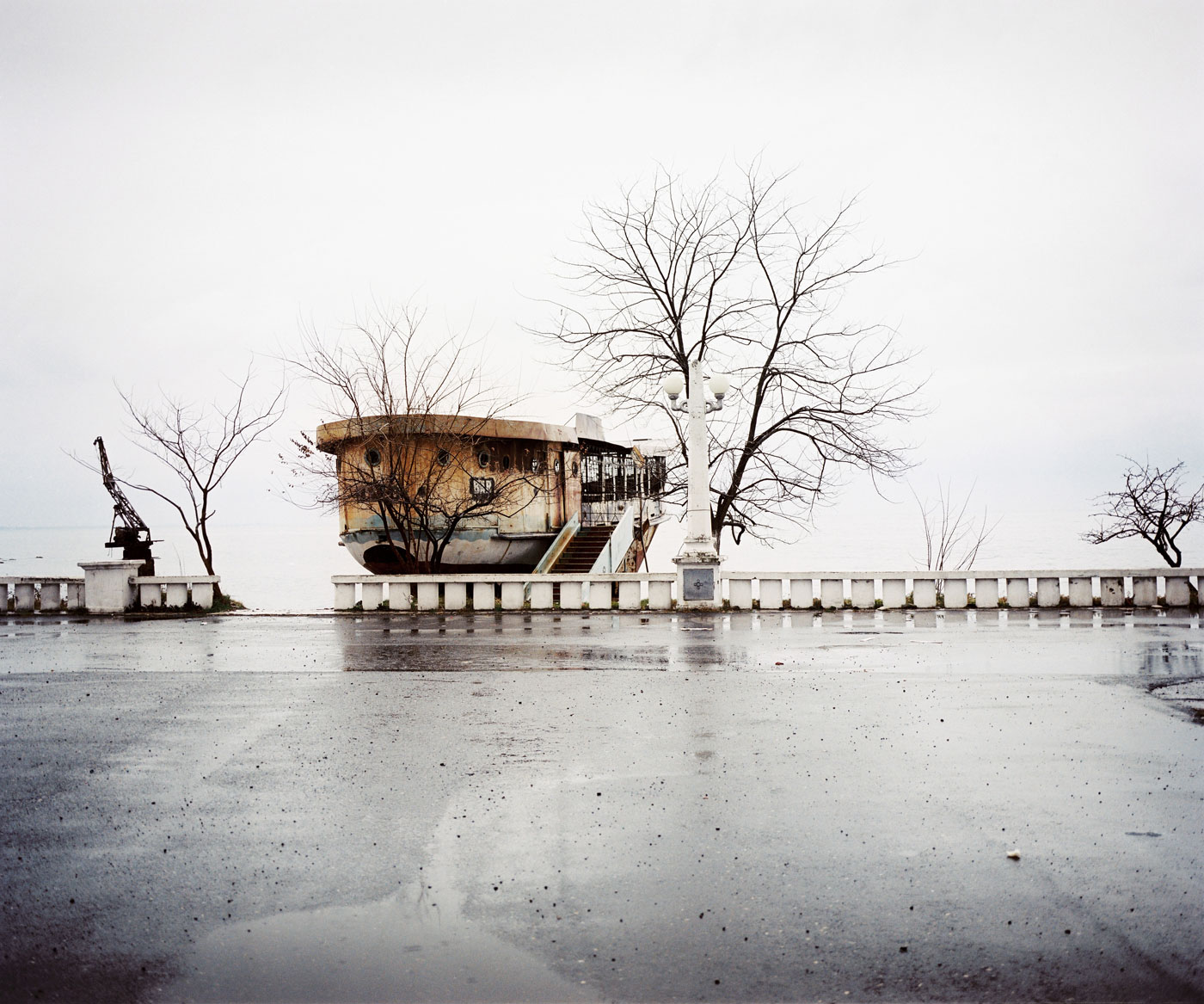

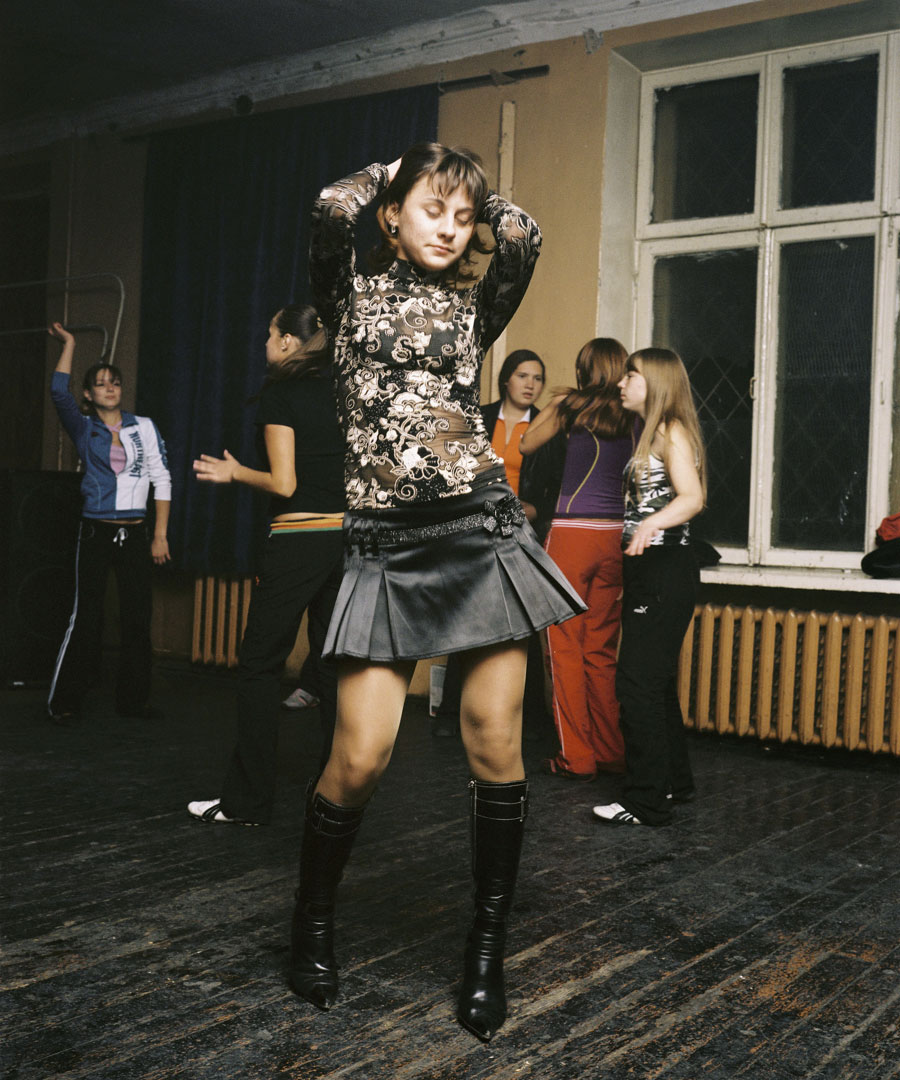
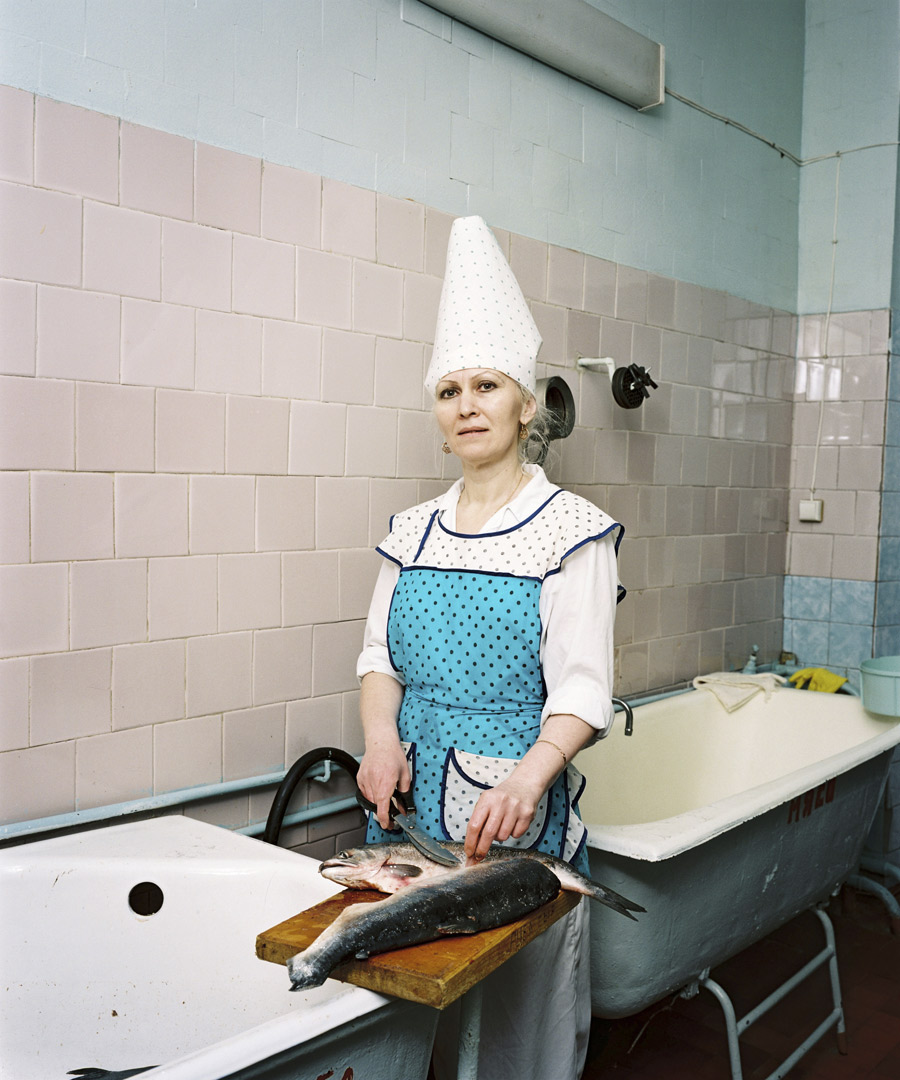

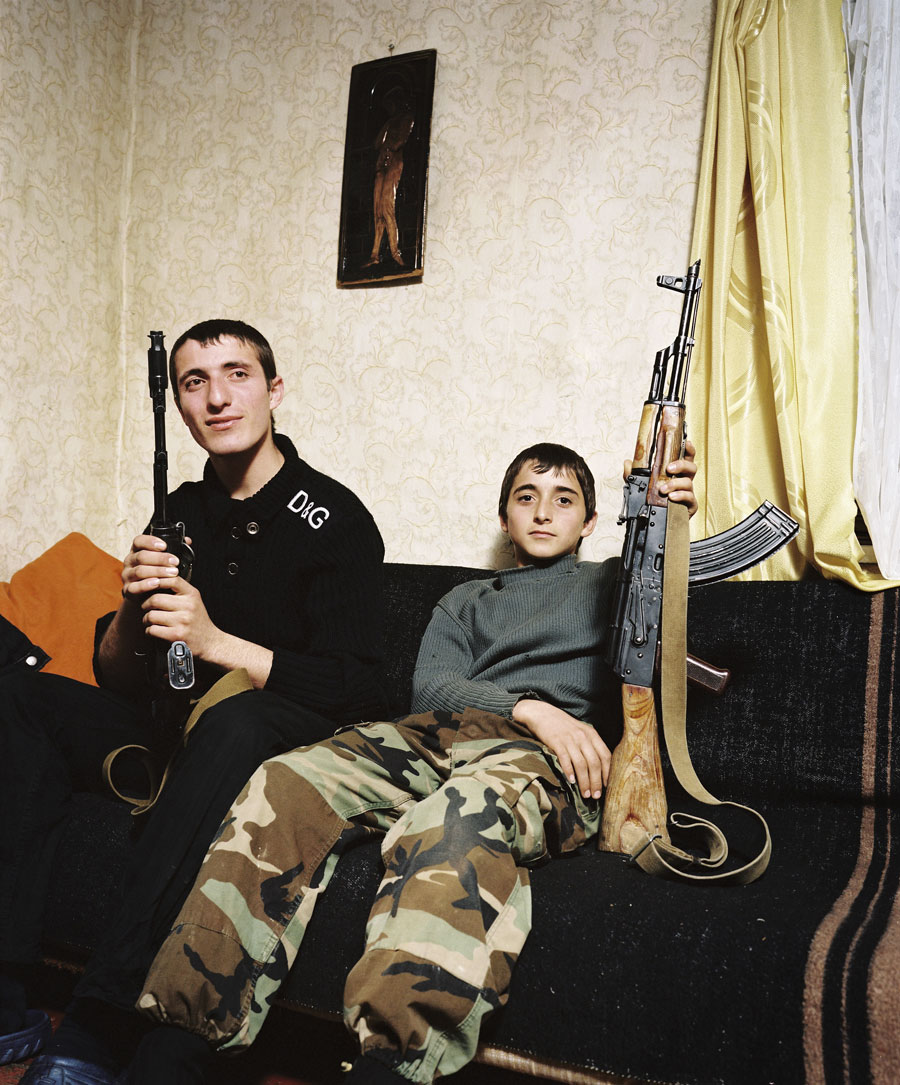
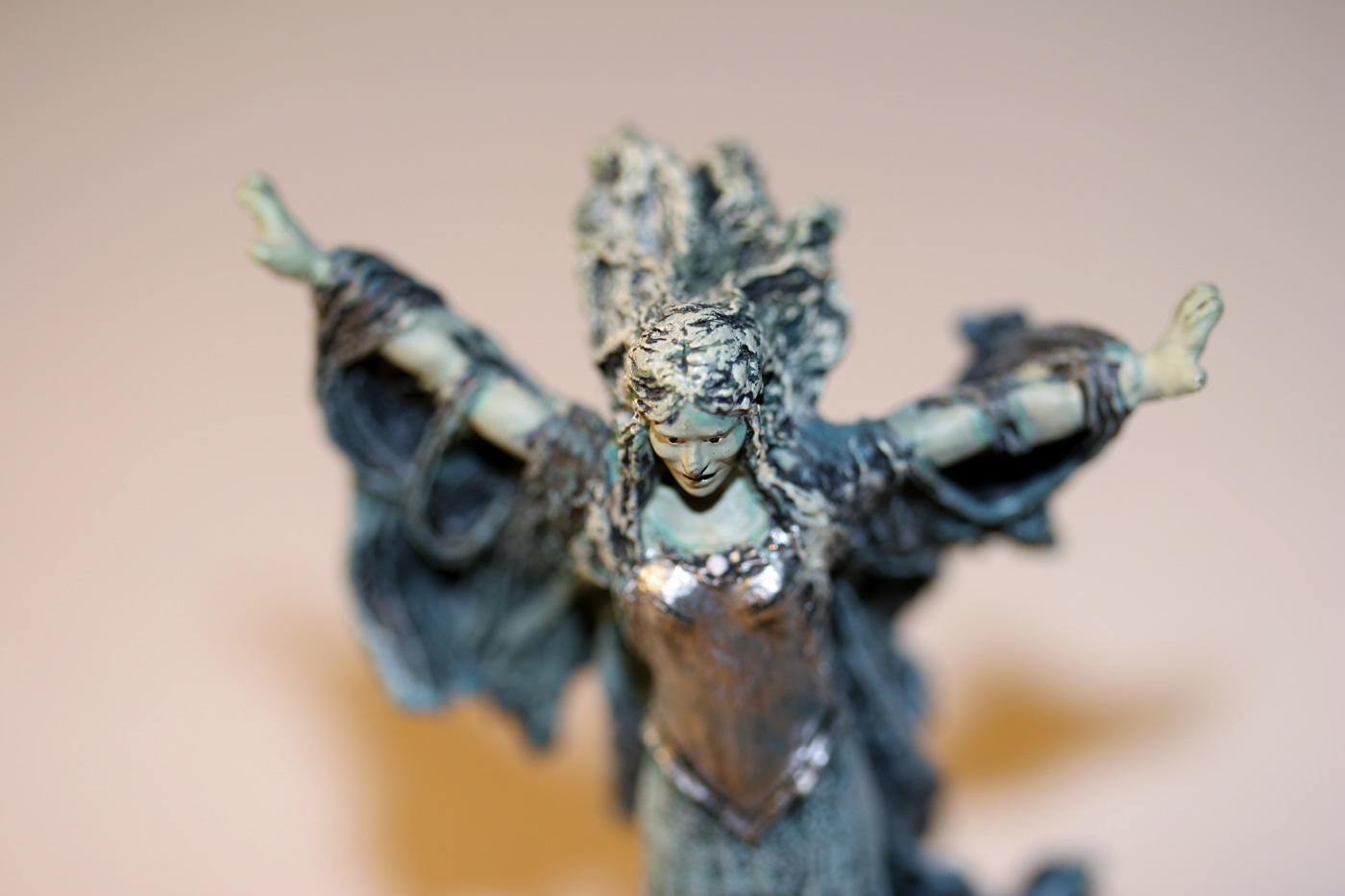


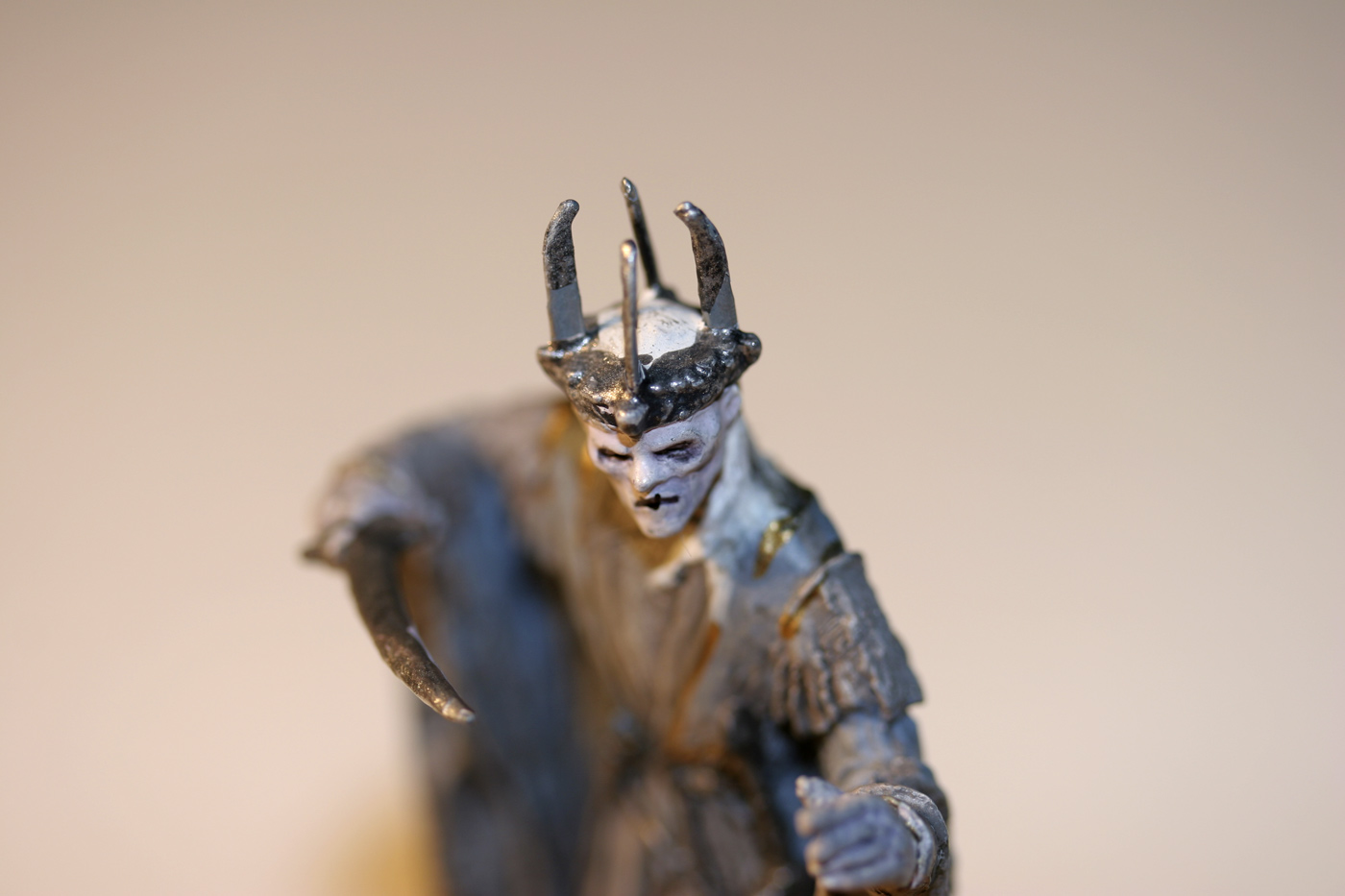


![Brett Weston (American, 1911-1993) '[Air vents, New York]' 1945 from the exhibition 'City of Abstractions: Brett Weston in New York, 1944-45' at 1285 Avenue of the Americas Art Gallery, New York, September 2013- January 2014](https://artblart.com/wp-content/uploads/2014/01/air-vents-web.jpg "Brett Weston (American, 1911-1993) '[Air vents, New York]' 1945 from the exhibition 'City of Abstractions: Brett Weston in New York, 1944-45' at 1285 Avenue of the Americas Art Gallery, New York, September 2013- January 2014")
![Brett Weston (American, 1911-1993) '[42nd Street at First Avenue, New York]' c. 1945 from the exhibition 'City of Abstractions: Brett Weston in New York, 1944-45' at 1285 Avenue of the Americas Art Gallery, New York, September 2013- January 2014](https://artblart.com/wp-content/uploads/2013/12/42nd-street-at-first-avenue-web.jpg "Brett Weston (American, 1911-1993) '[42nd Street at First Avenue, New York]' c. 1945 from the exhibition 'City of Abstractions: Brett Weston in New York, 1944-45' at 1285 Avenue of the Americas Art Gallery, New York, September 2013- January 2014")
![Brett Weston (American, 1911-1993) '[Oceano Dunes, California]' 1934](https://artblart.com/wp-content/uploads/2013/12/oceano-dunes-california-web.jpg "Brett Weston (American, 1911-1993) '[Oceano Dunes, California]' 1934")
![Brett Weston (American, 1911-1993) '[Stoop with broom, arrow, and pushcart, New York]' 1944](https://artblart.com/wp-content/uploads/2013/12/stoop-with-broom-web.jpg "Brett Weston (American, 1911-1993) '[Stoop with broom, arrow, and pushcart, New York]' 1944")
![Brett Weston (American, 1911-1993) '[Airshafts, New York]' c. 1945](https://artblart.com/wp-content/uploads/2014/01/airshafts-web.jpg "Brett Weston (American, 1911-1993) '[Airshafts, New York]' c. 1945")
![Brett Weston (American, 1911-1993) '[Courtyard, New York]' c. 1945](https://artblart.com/wp-content/uploads/2013/12/courtyard-web.jpg "Brett Weston (American, 1911-1993) '[Courtyard, New York]' c. 1945")
![Brett Weston (American, 1911-1993) '[House, Ewing Street, Staten Island, New York]' c. 1945](https://artblart.com/wp-content/uploads/2013/12/house-ewing-street-web.jpg "Brett Weston (American, 1911-1993) '[House, Ewing Street, Staten Island, New York]' c. 1945")
![Brett Weston (American, 1911-1993) '[Sutton Place, New York]' c. 1945](https://artblart.com/wp-content/uploads/2014/01/sutton-place-web.jpg "Brett Weston (American, 1911-1993) '[Sutton Place, New York]' c. 1945")
![Brett Weston (American, 1911-1993) '[Skylight and fences, Midtown, New York]' c. 1945](https://artblart.com/wp-content/uploads/2013/12/skylight-and-fences-web.jpg "Brett Weston (American, 1911-1993) '[Skylight and fences, Midtown, New York]' c. 1945")
![Brett Weston (American, 1911-1993) '[Wrought iron fence, New York]' c. 1945](https://artblart.com/wp-content/uploads/2013/12/wrought-iron-fence-web.jpg "Brett Weston (American, 1911-1993) '[Wrought iron fence, New York]' c. 1945")
![Brett Weston (American, 1911-1993) '[Church door, Bowery, New York]' c. 1945](https://artblart.com/wp-content/uploads/2013/12/church-door-web.jpg "Brett Weston (American, 1911-1993) '[Church door, Bowery, New York]' c. 1945")
![Brett Weston (American, 1911-1993) '[Pillars and tree, New York]' 1944](https://artblart.com/wp-content/uploads/2013/12/pillars-and-tree-web.jpg "Brett Weston (American, 1911-1993) '[Pillars and tree, New York]' 1944")
![Brett Weston (American, 1911-1993) '[St. Francis Grocery & Fruit, New York]' c. 1945](https://artblart.com/wp-content/uploads/2013/12/st-francis-grocery-and-fruit-web.jpg "Brett Weston (American, 1911-1993) '[St. Francis Grocery & Fruit, New York]' c. 1945")
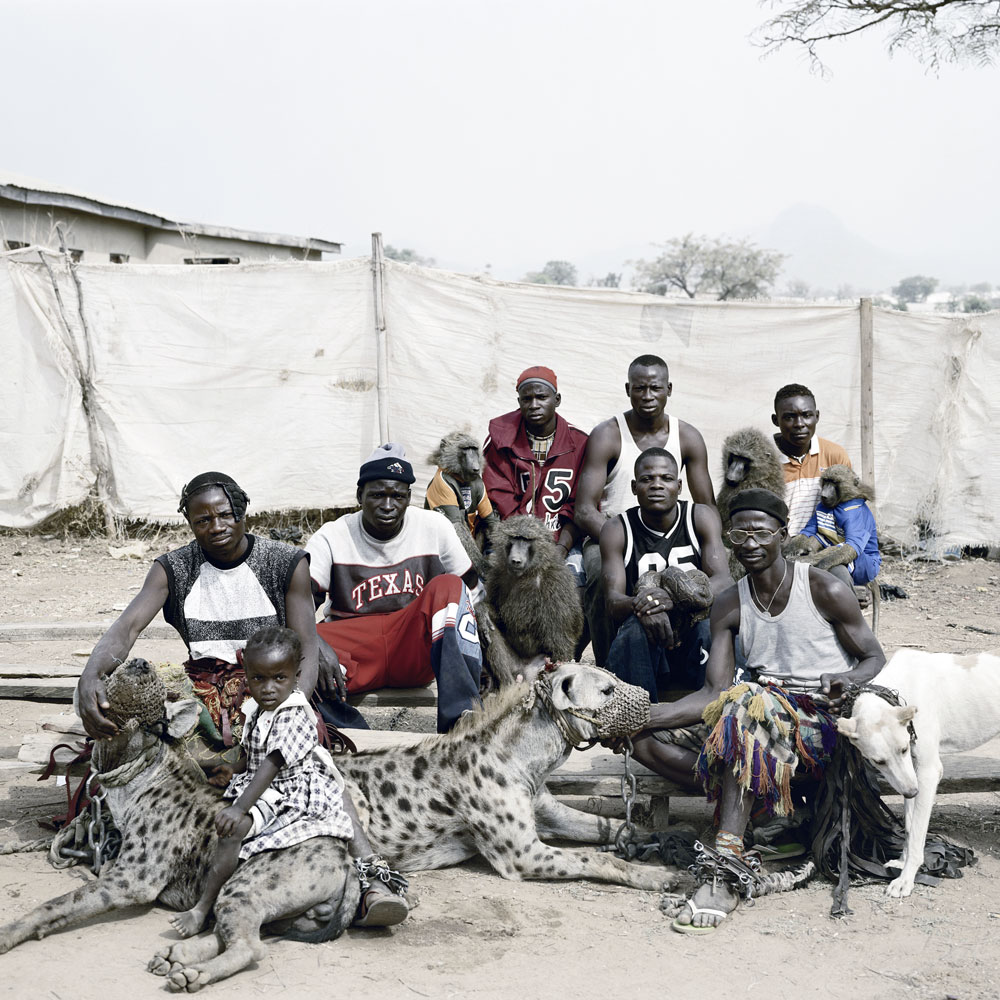
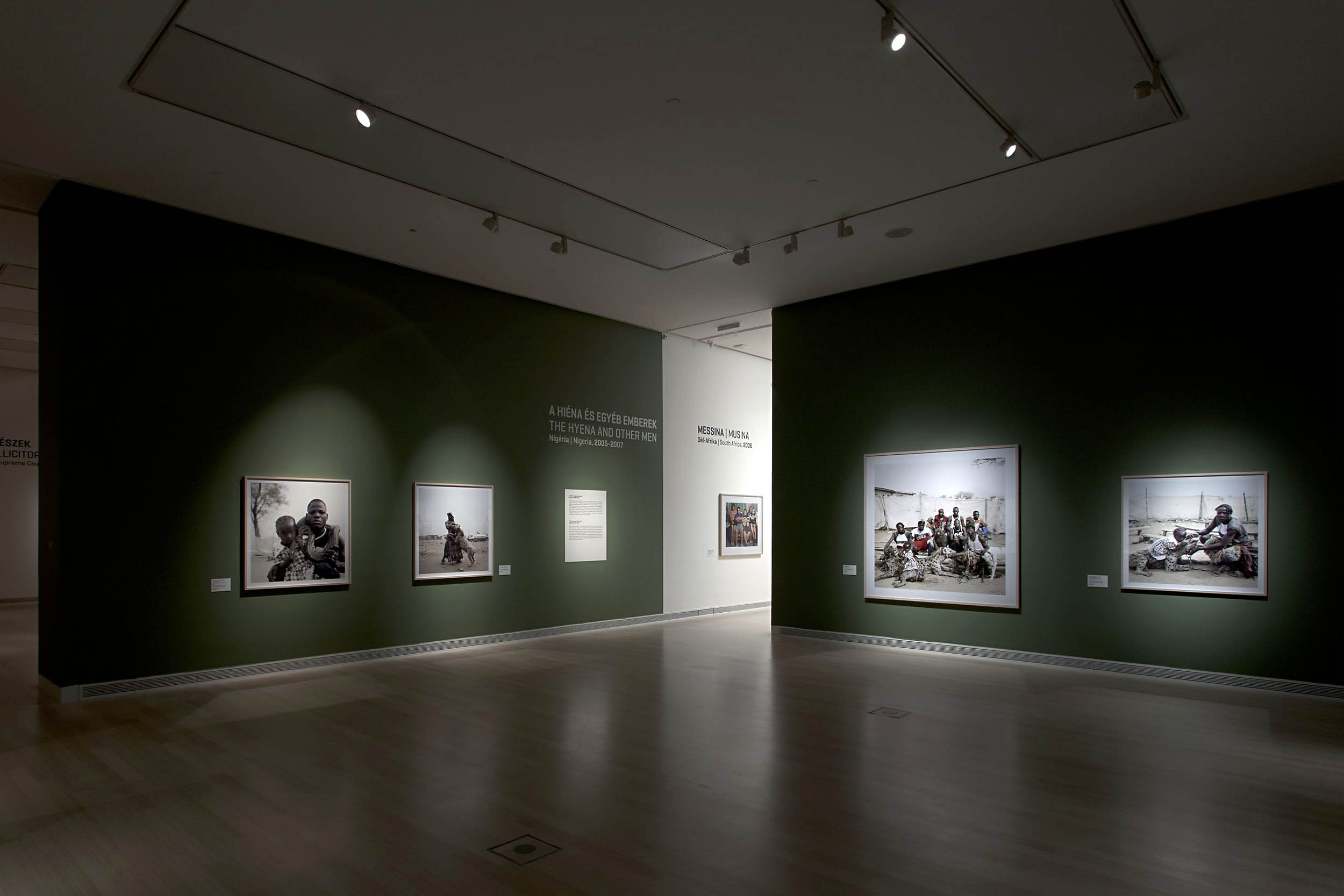
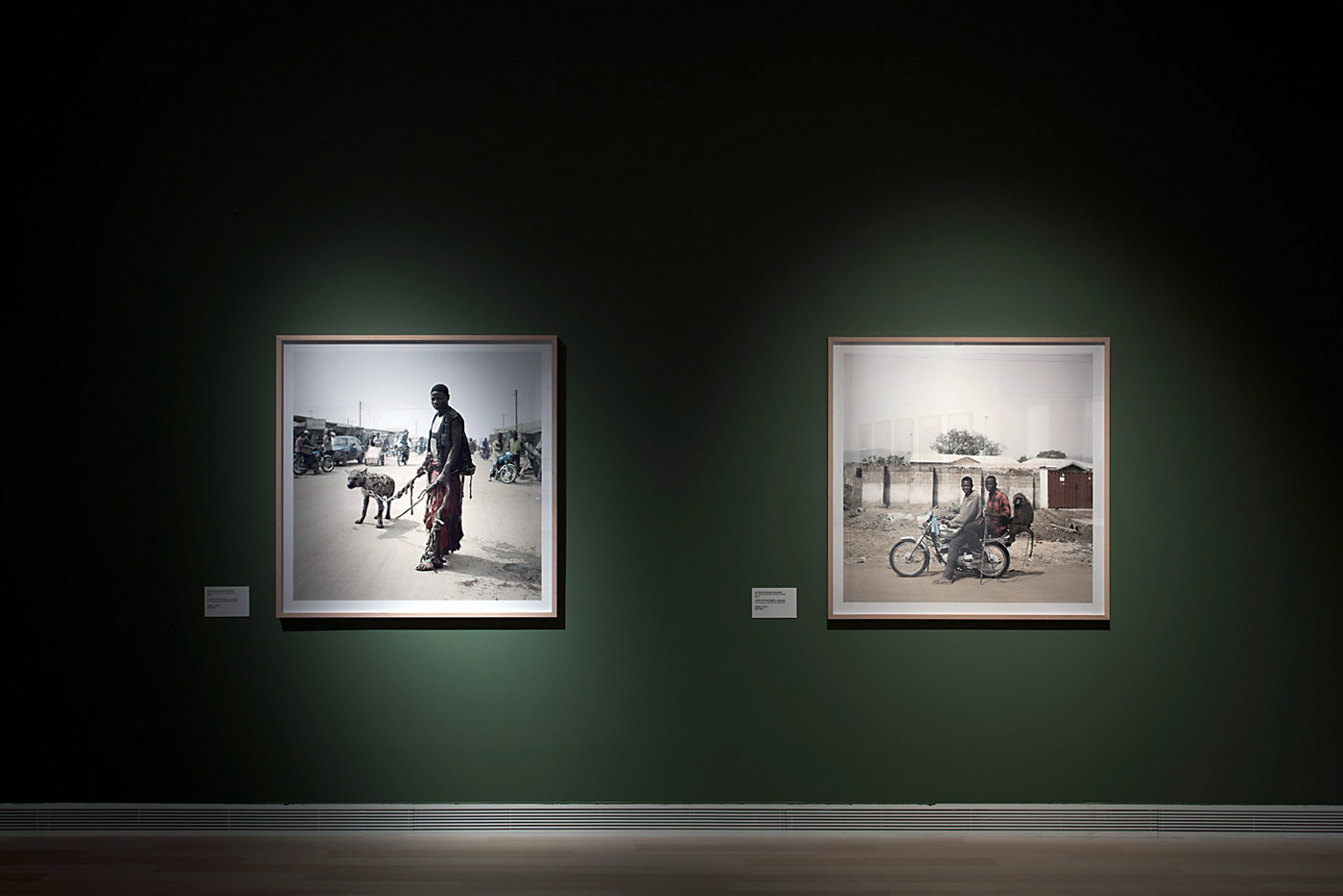
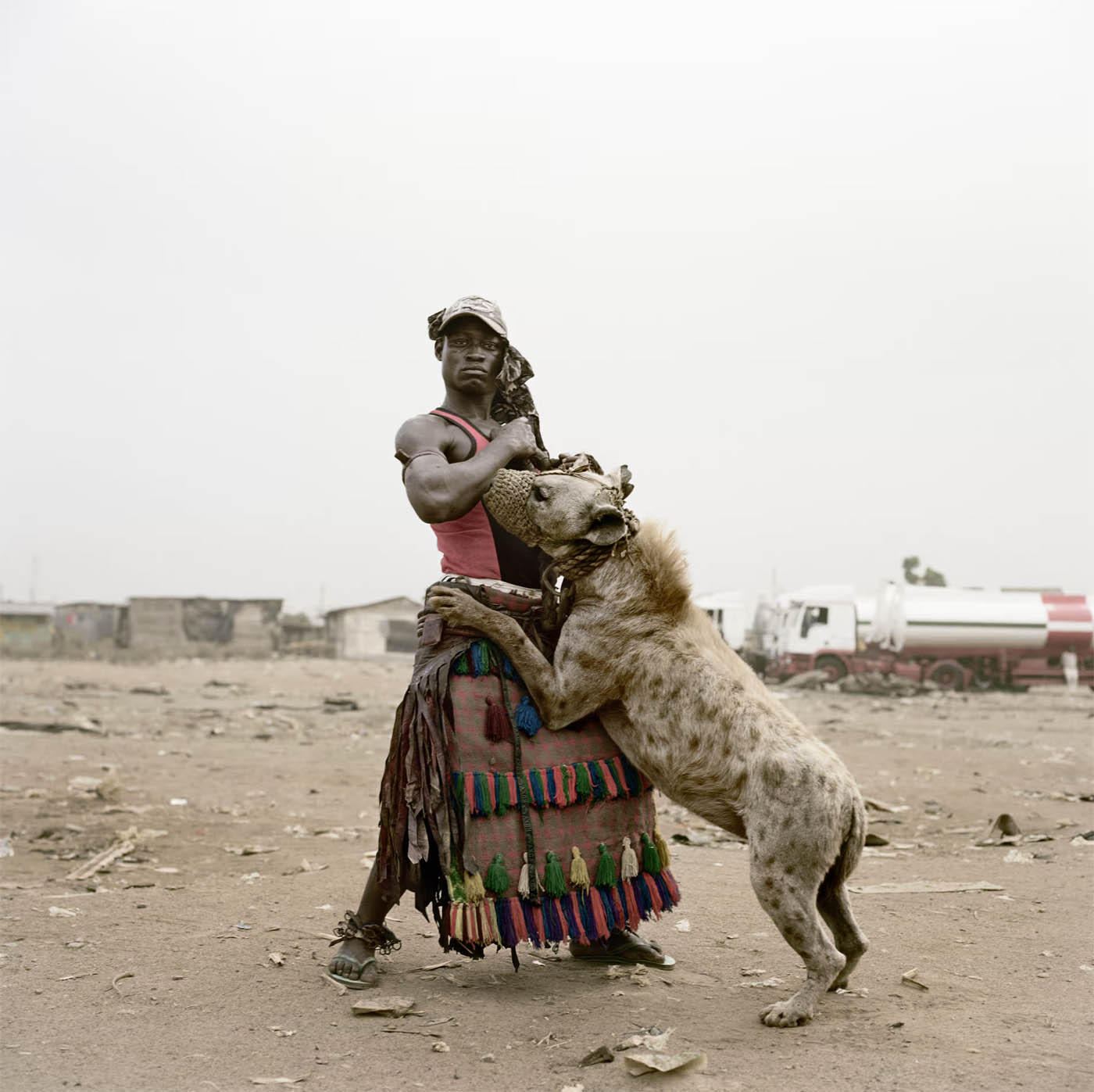
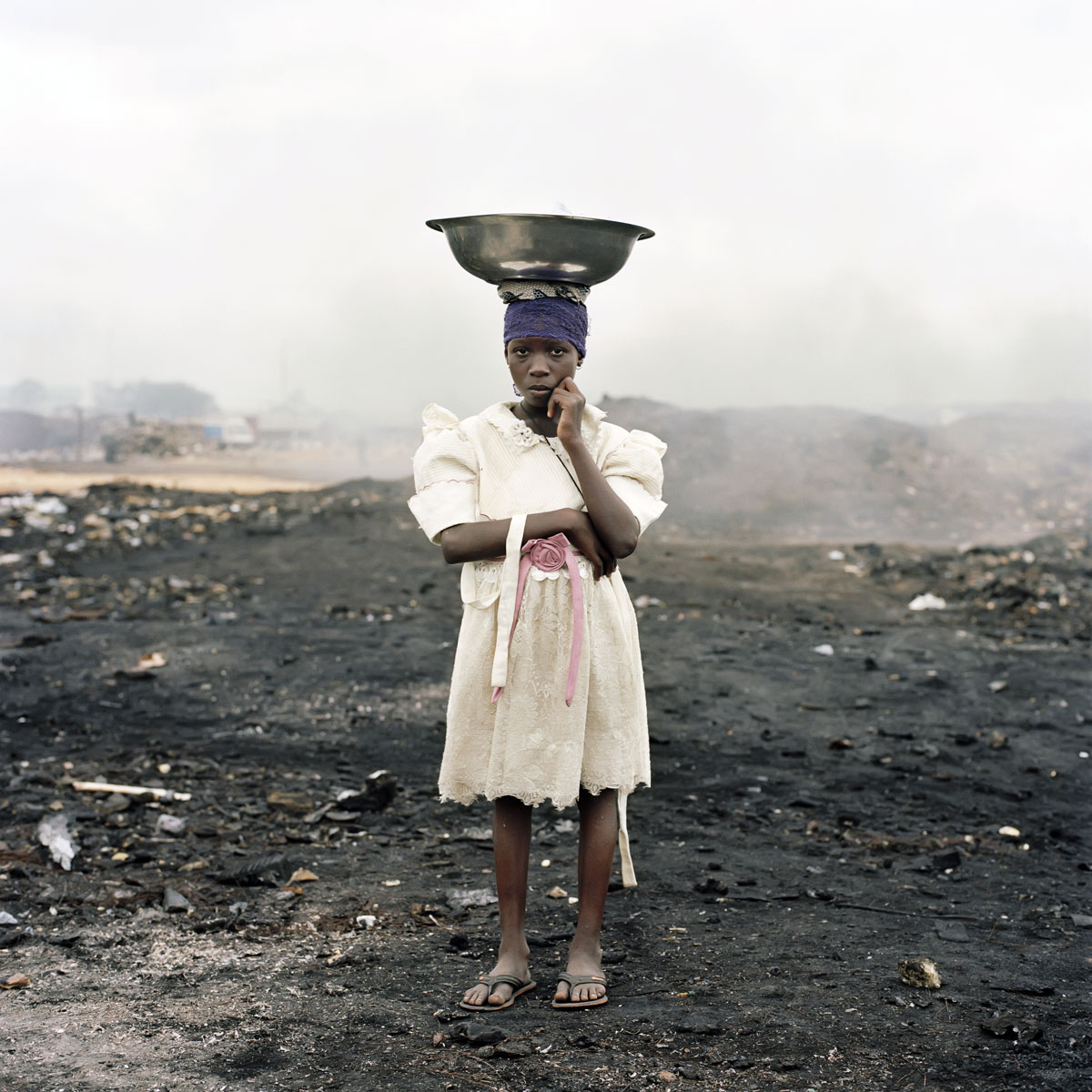
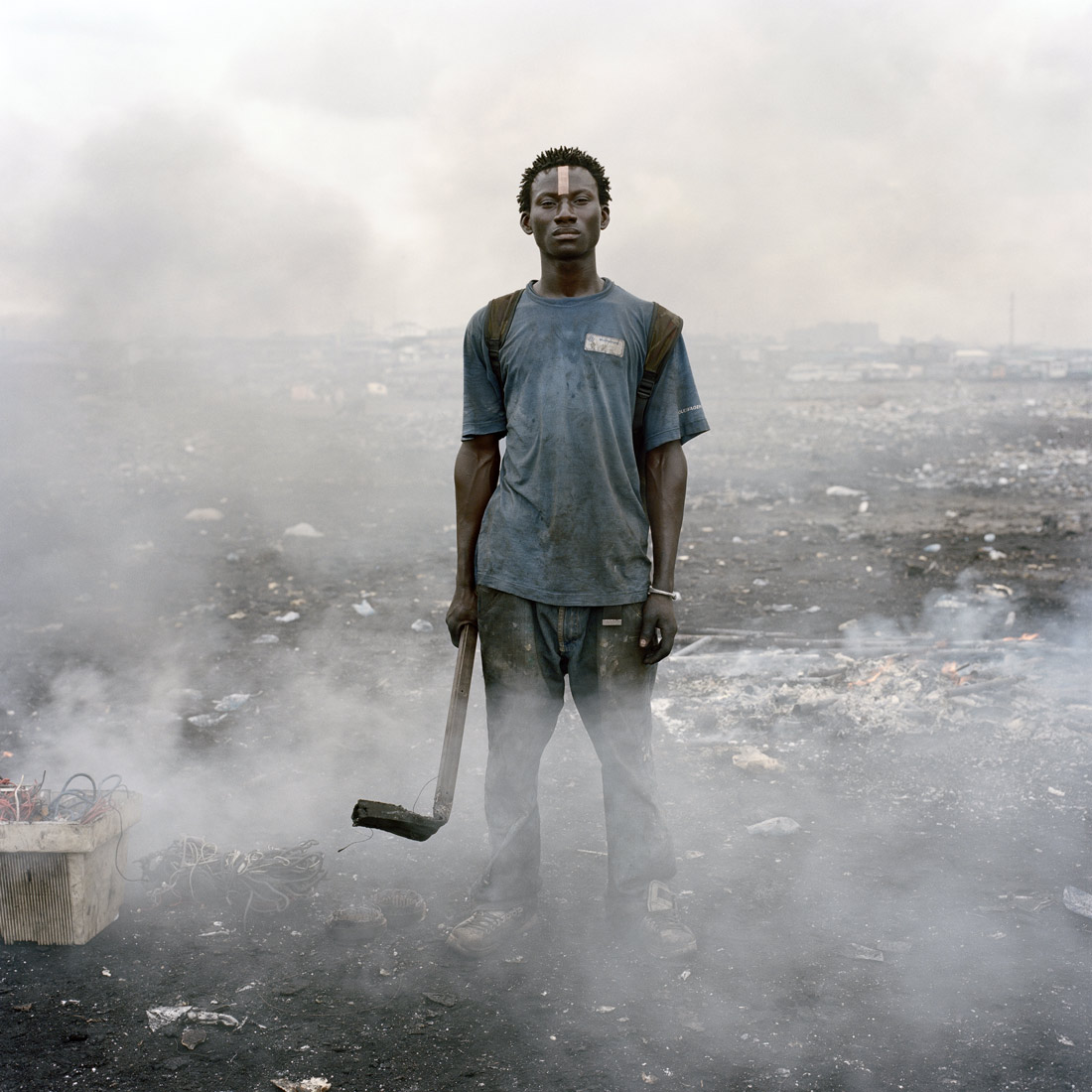
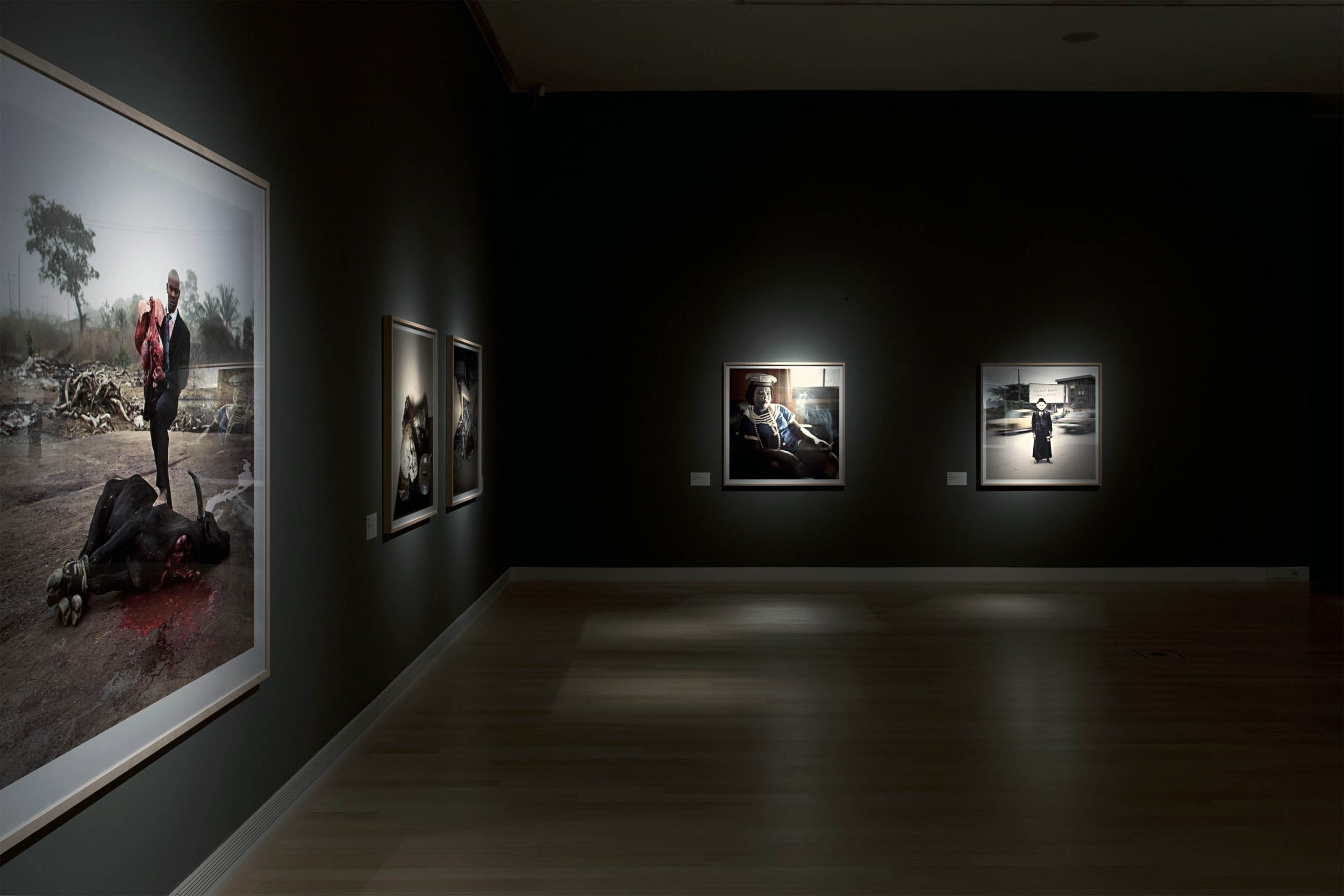
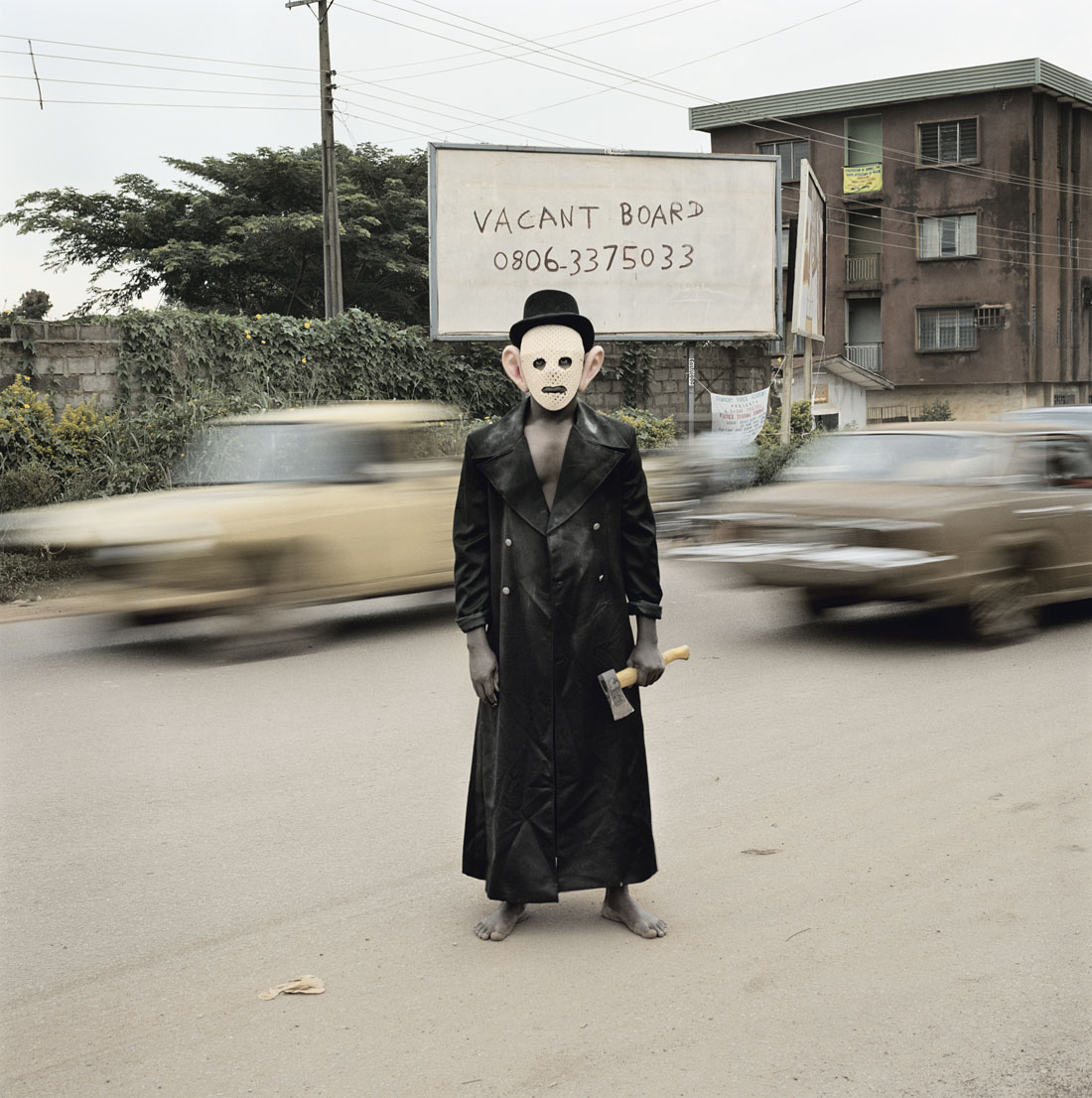
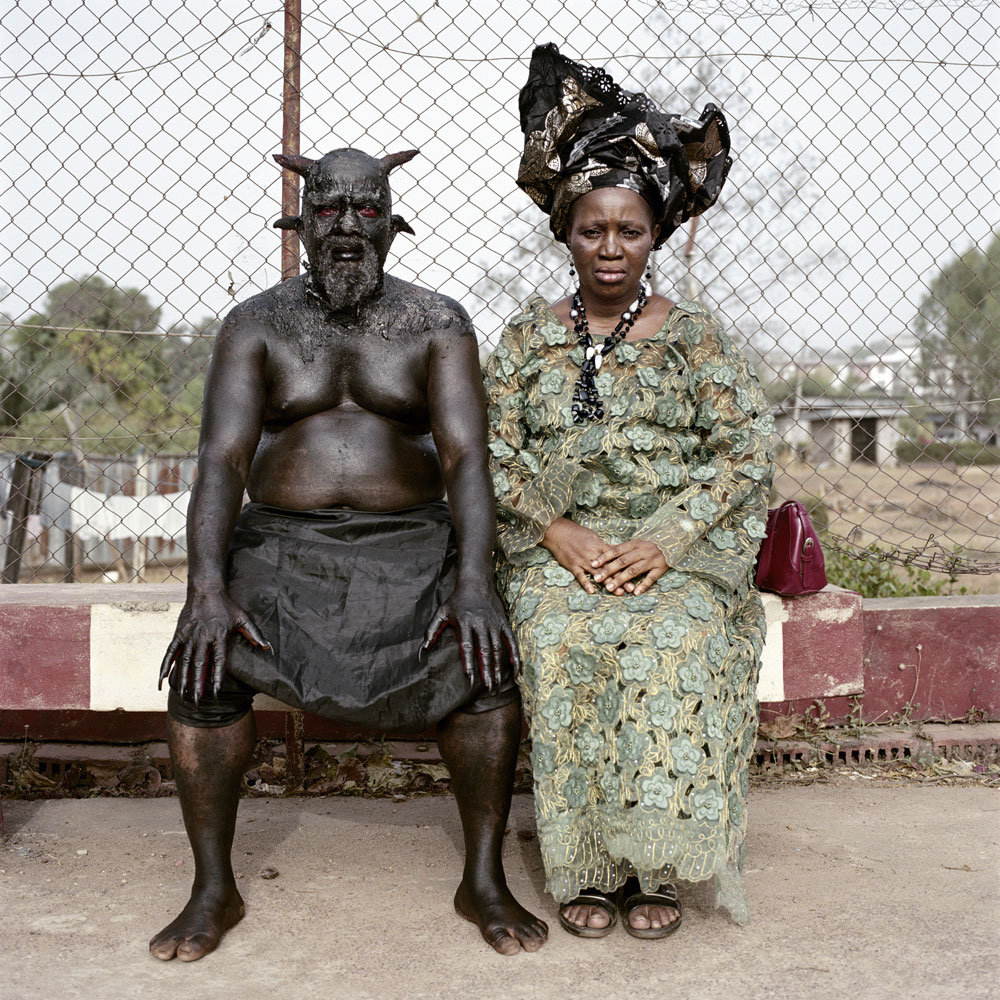
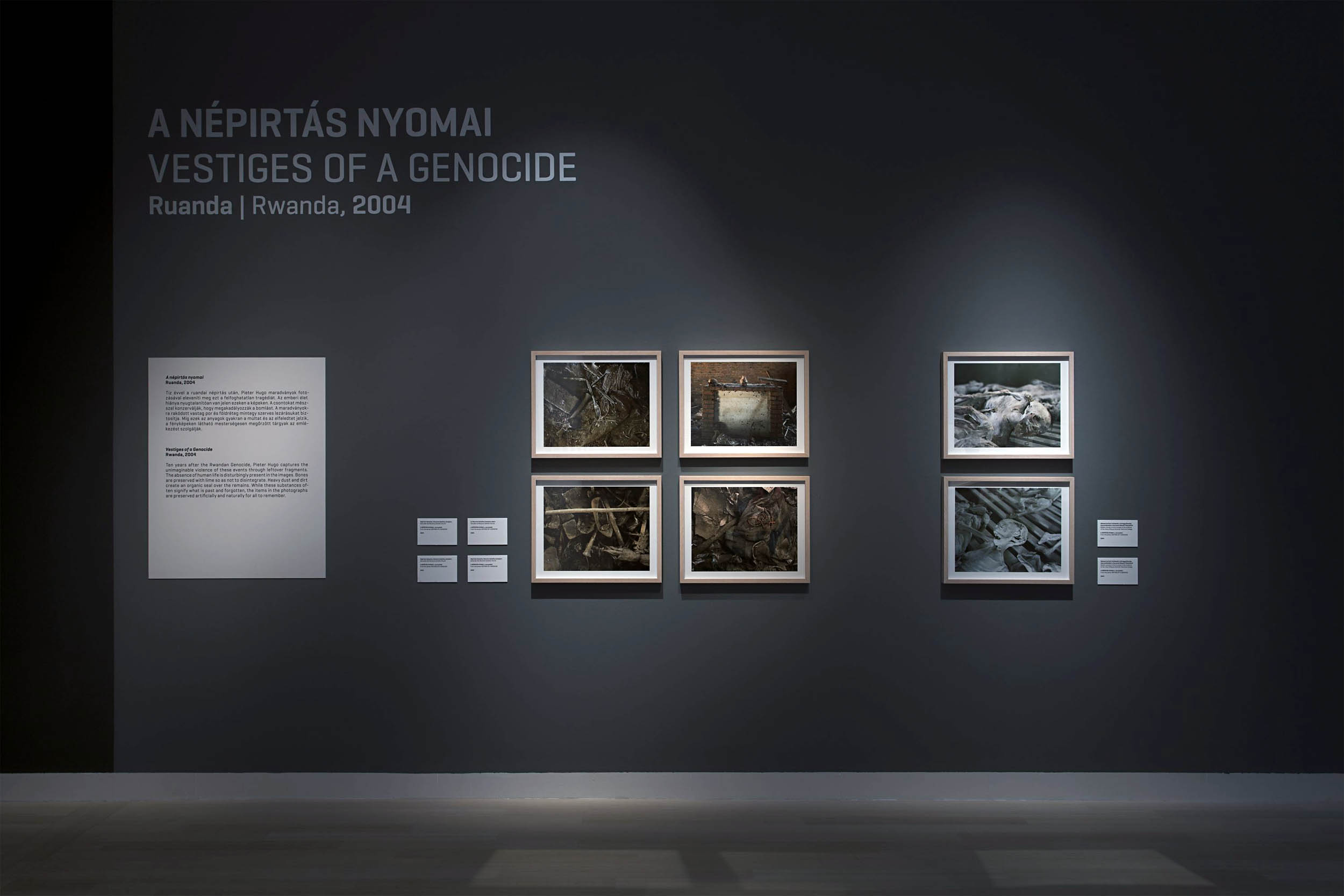
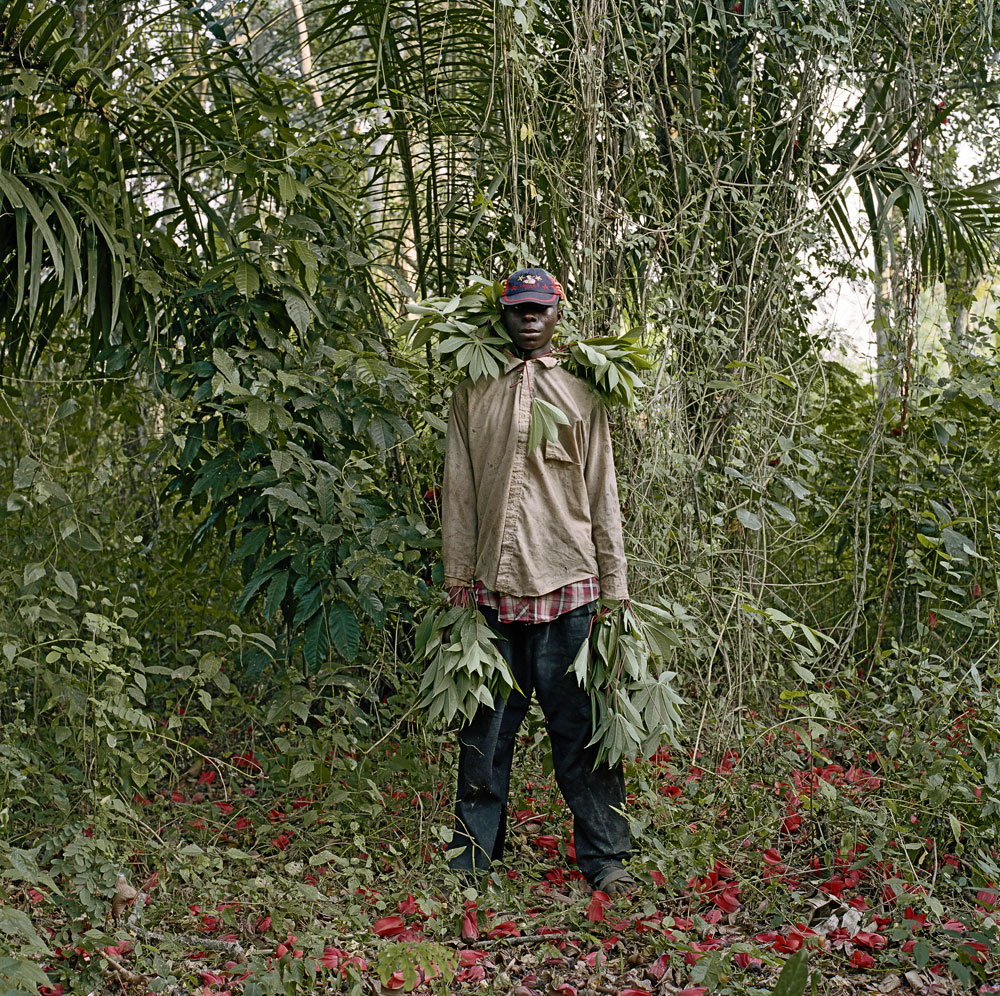
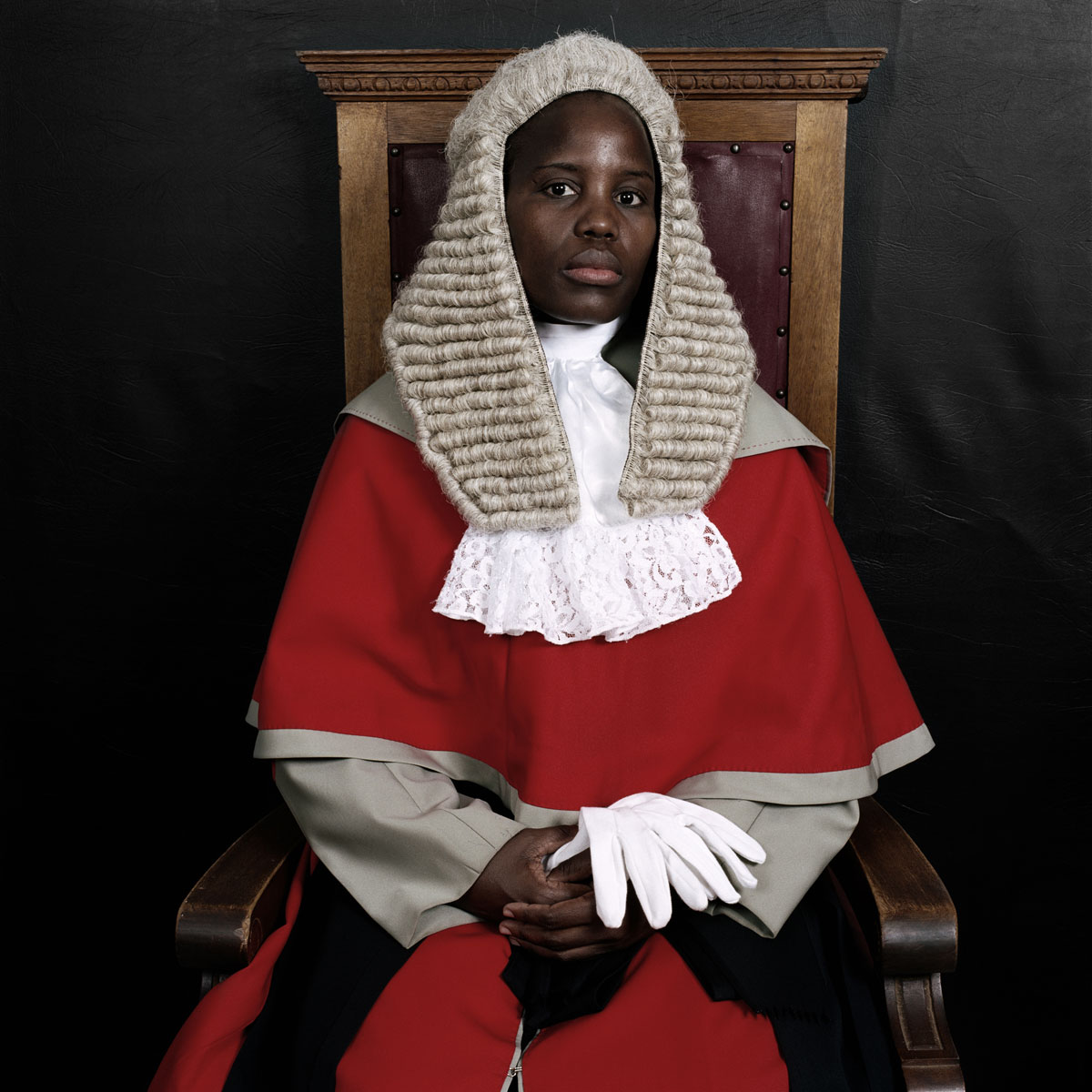
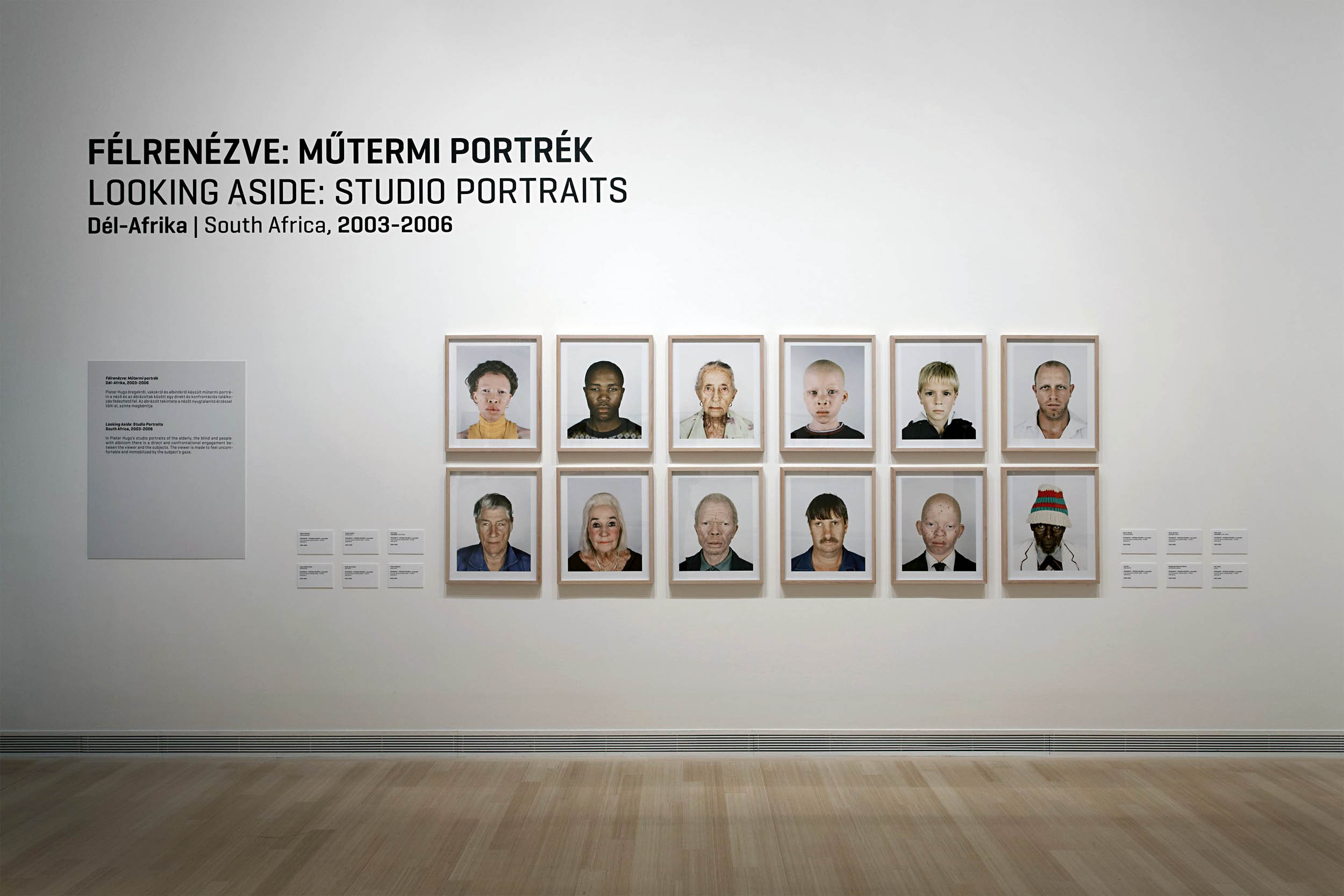
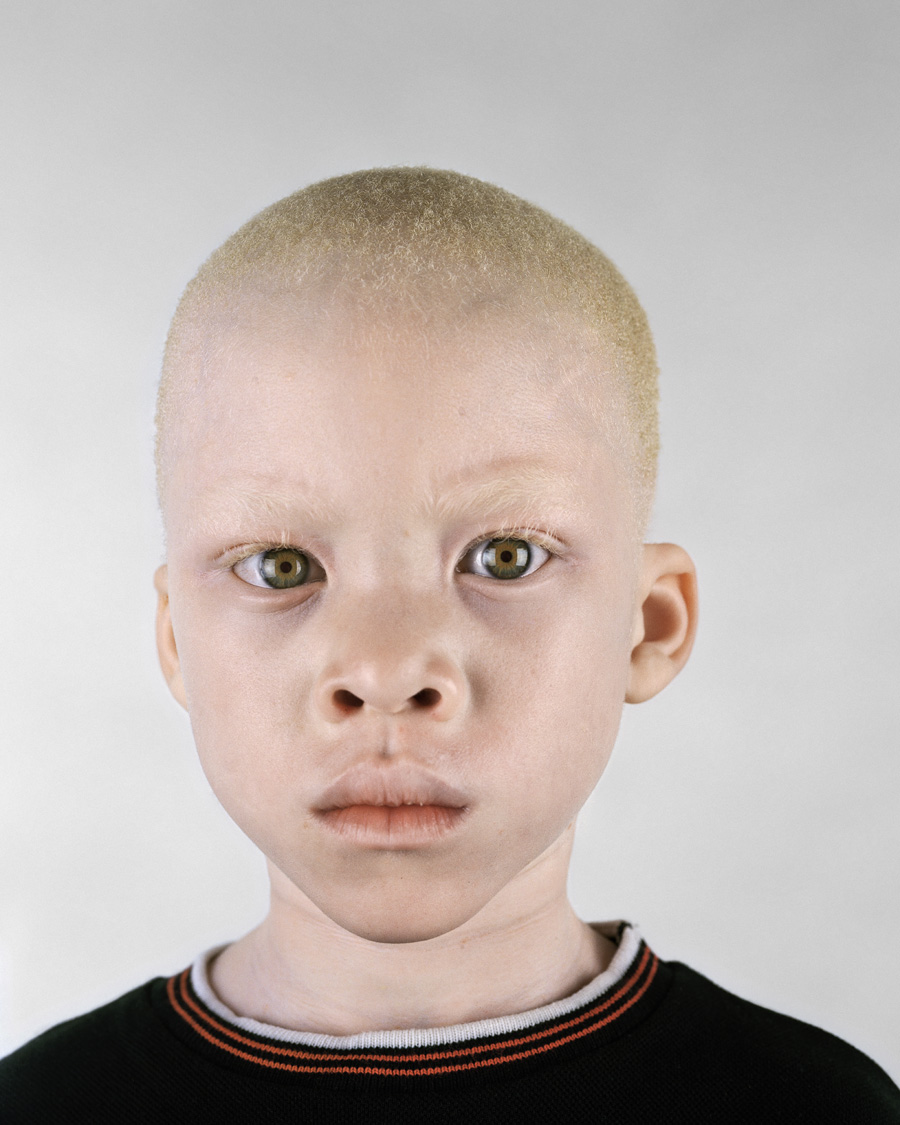

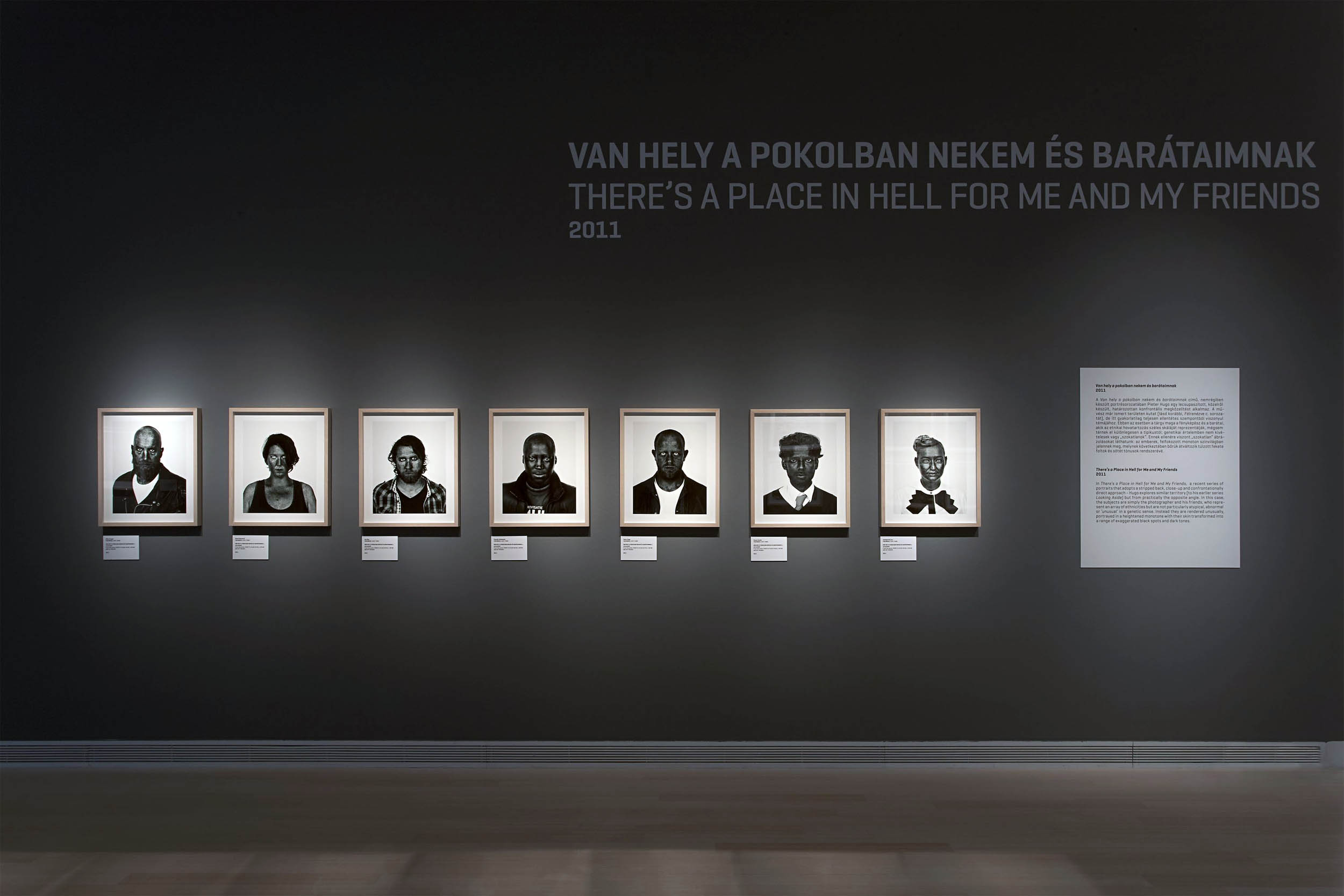
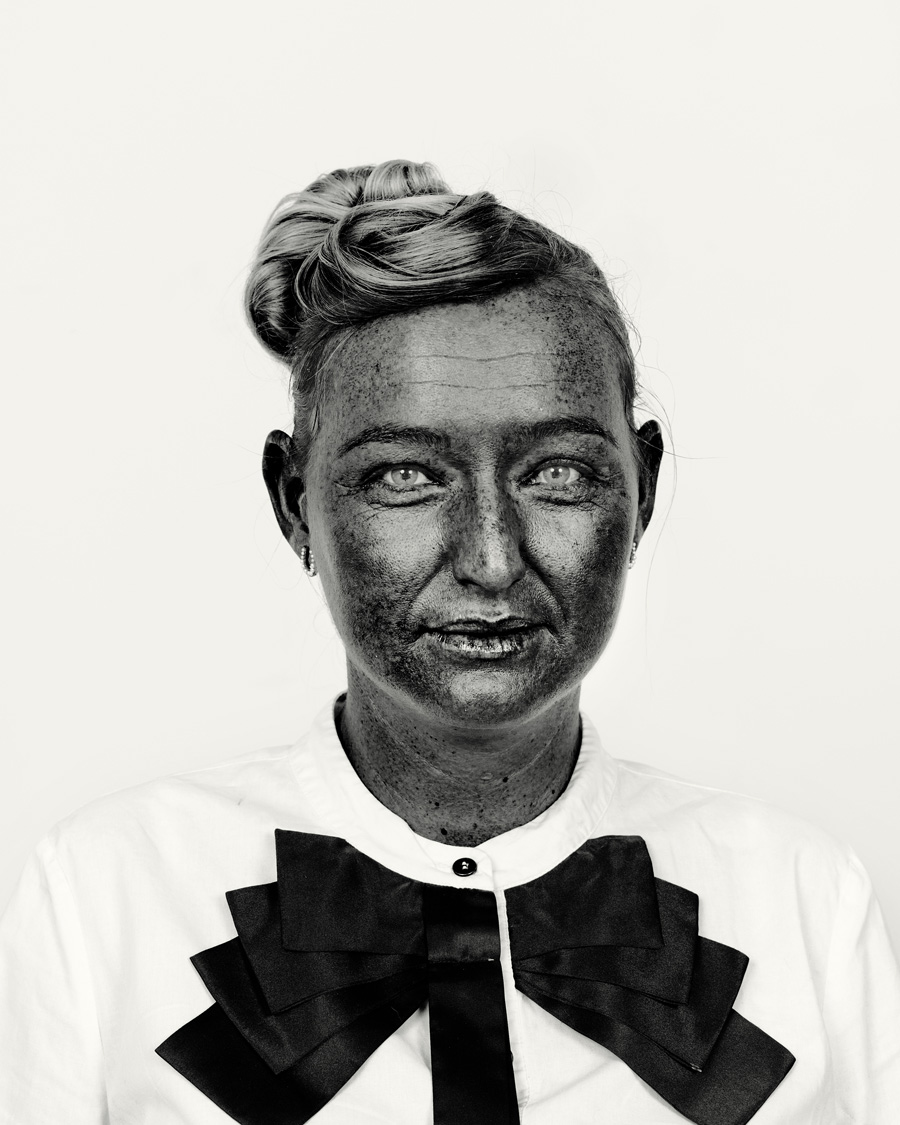








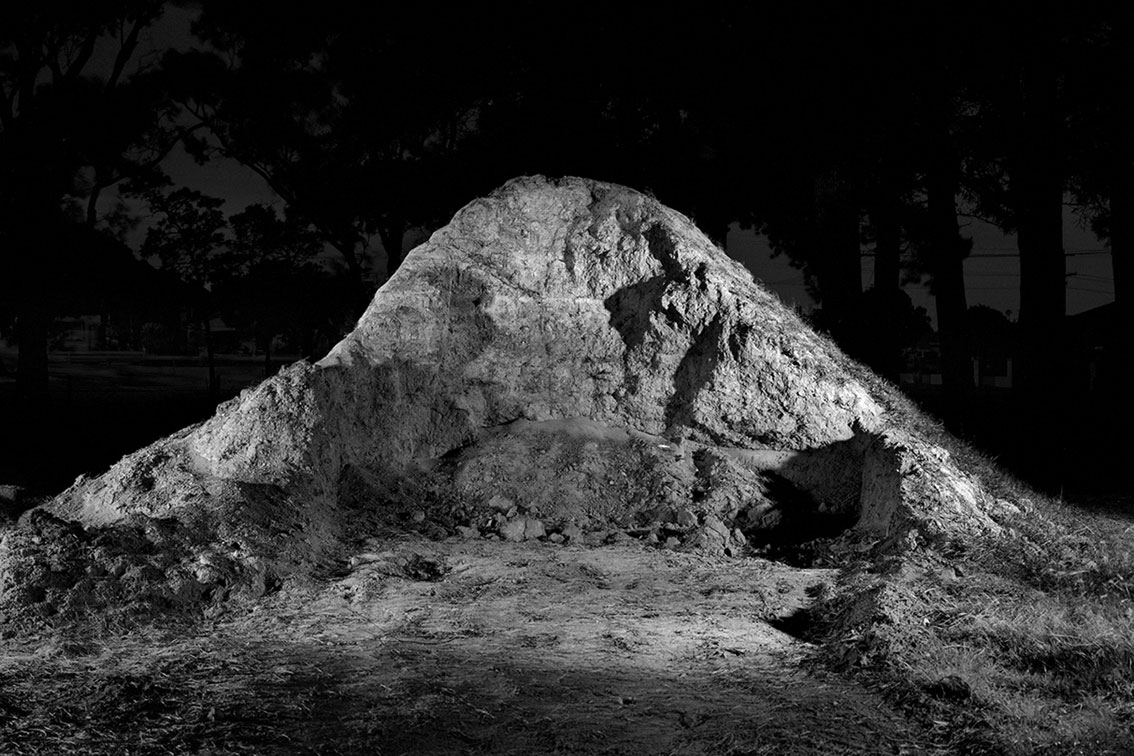
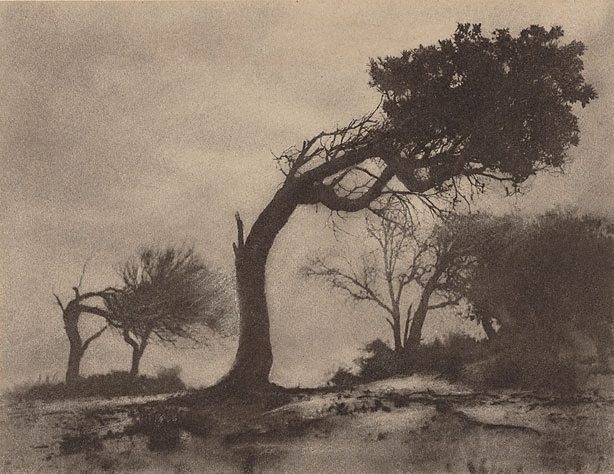

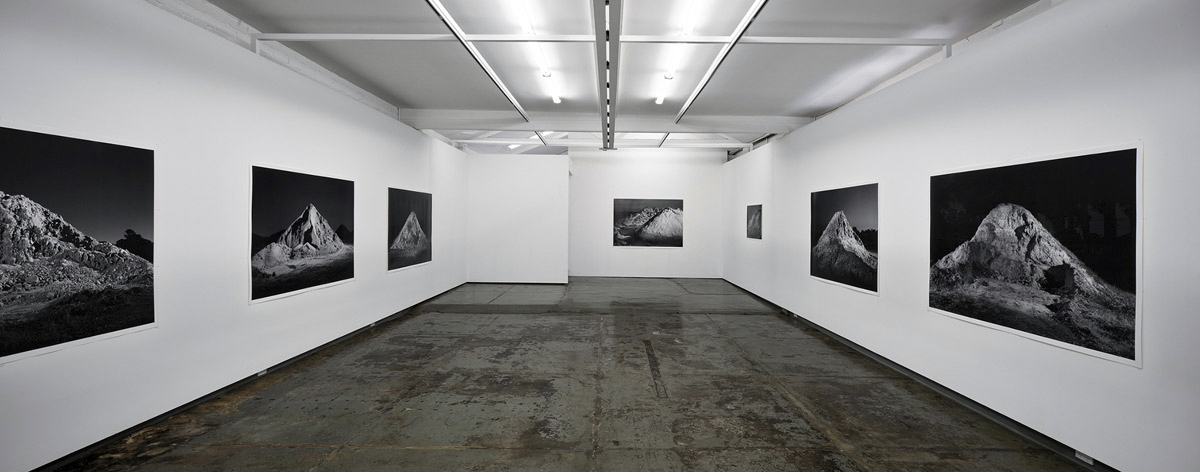
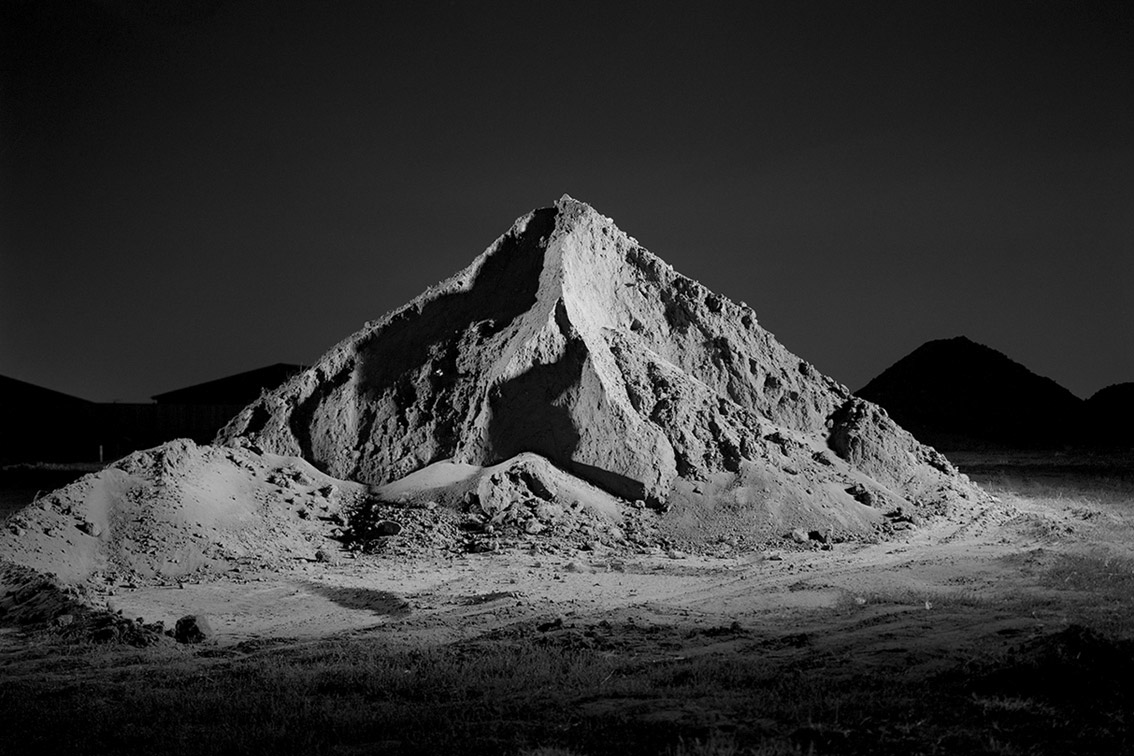


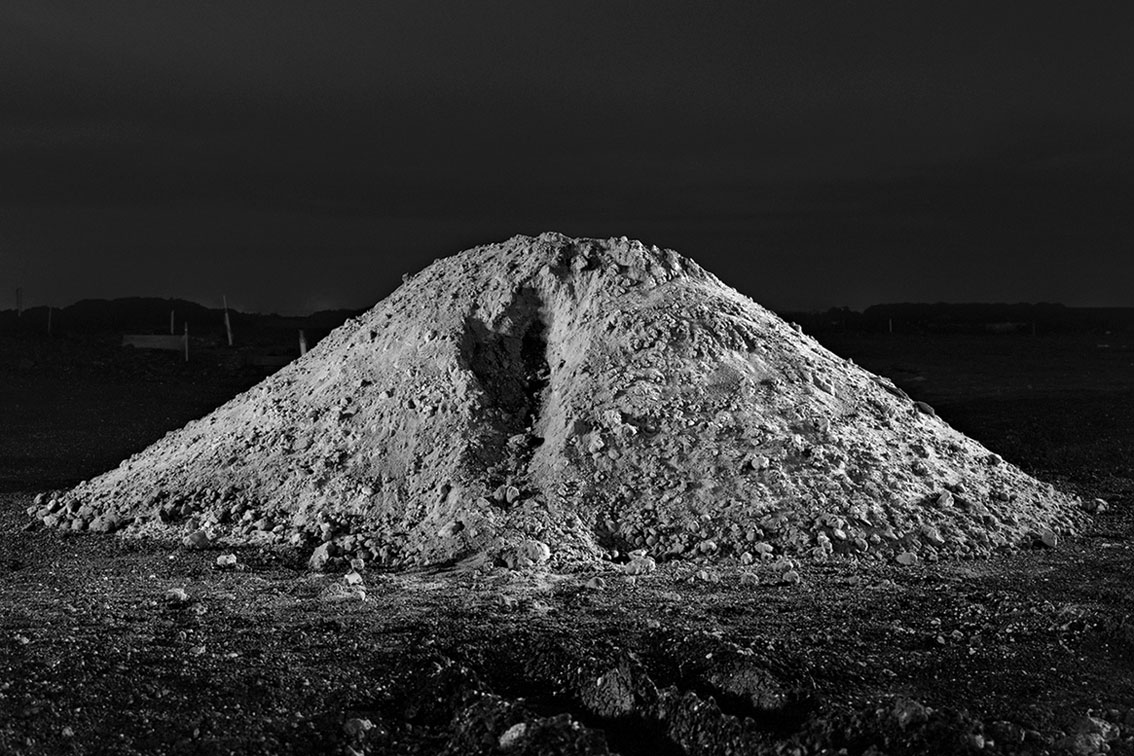

 Art Blart _ art and cultural memory archive
You must be logged in to post a comment.