Exhibition: ‘Photography’s New Vision: Experiments in Seeing’ at the High Museum of Art, Atlanta

Exhibition dates: 13th June, 2025 – 4th January, 2026

Curator: Maria L. Kelly, High Museum of Art assistant curator of photography
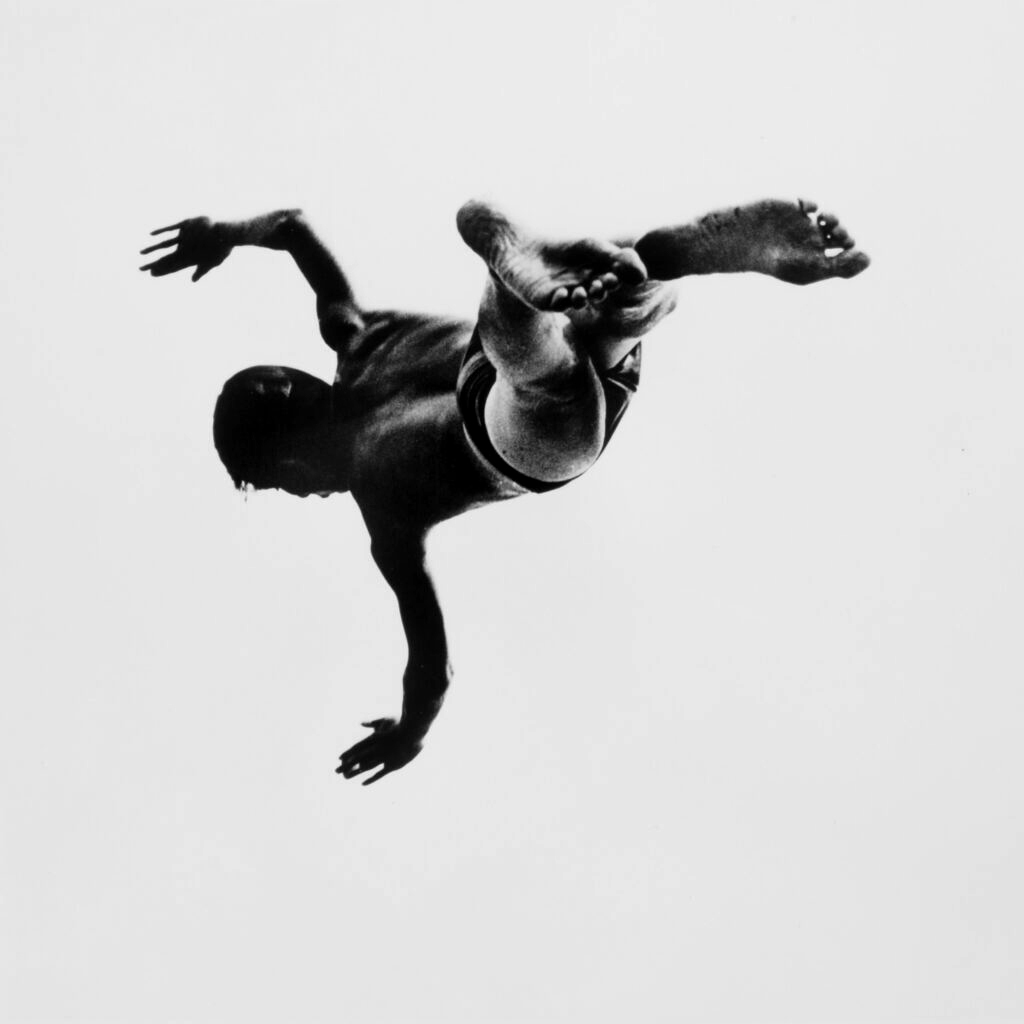
 

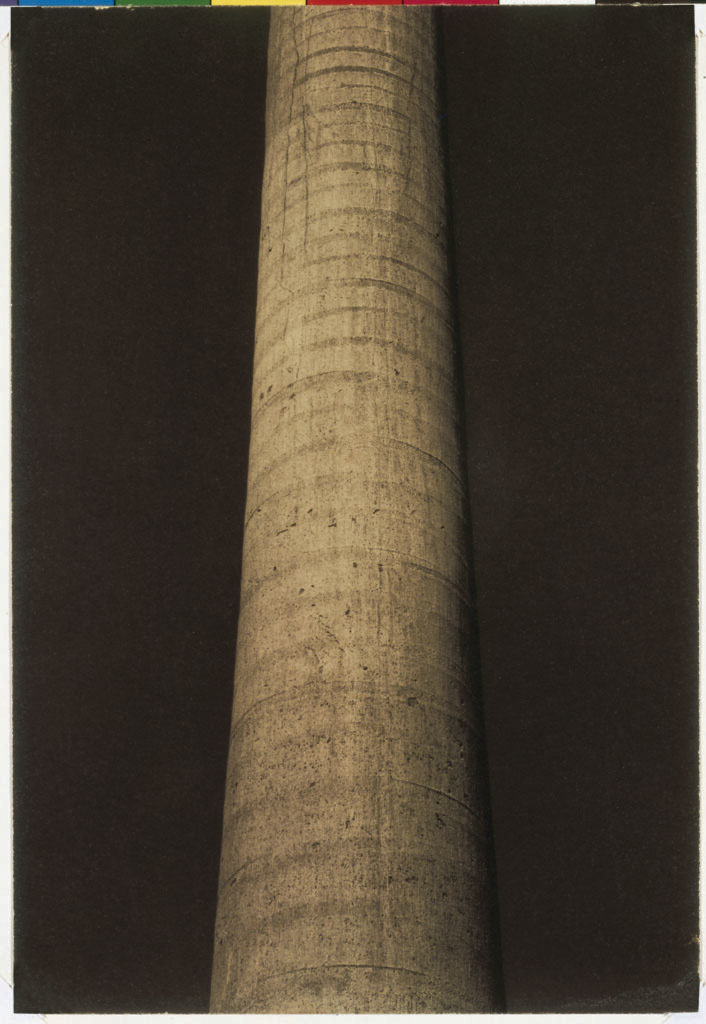
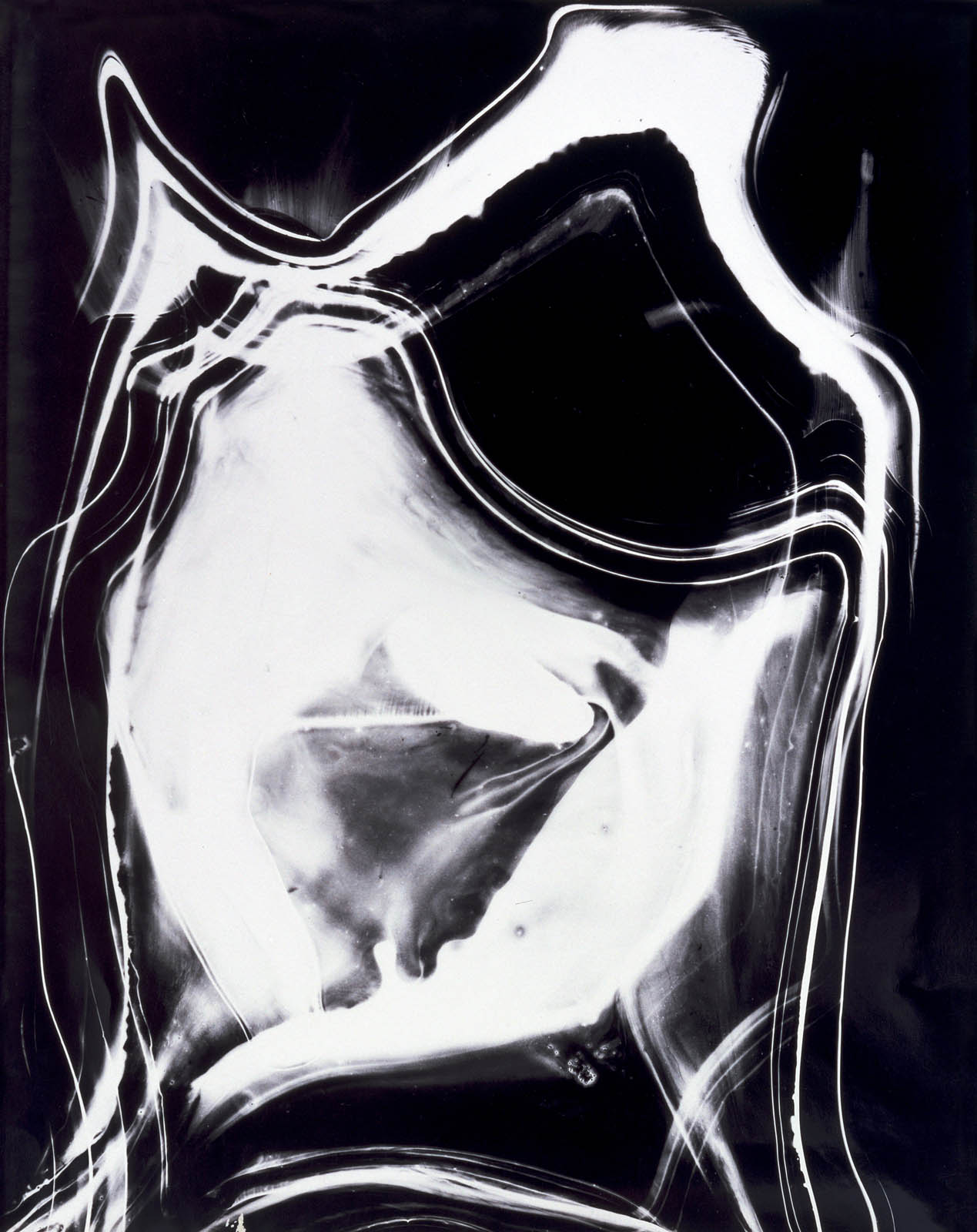
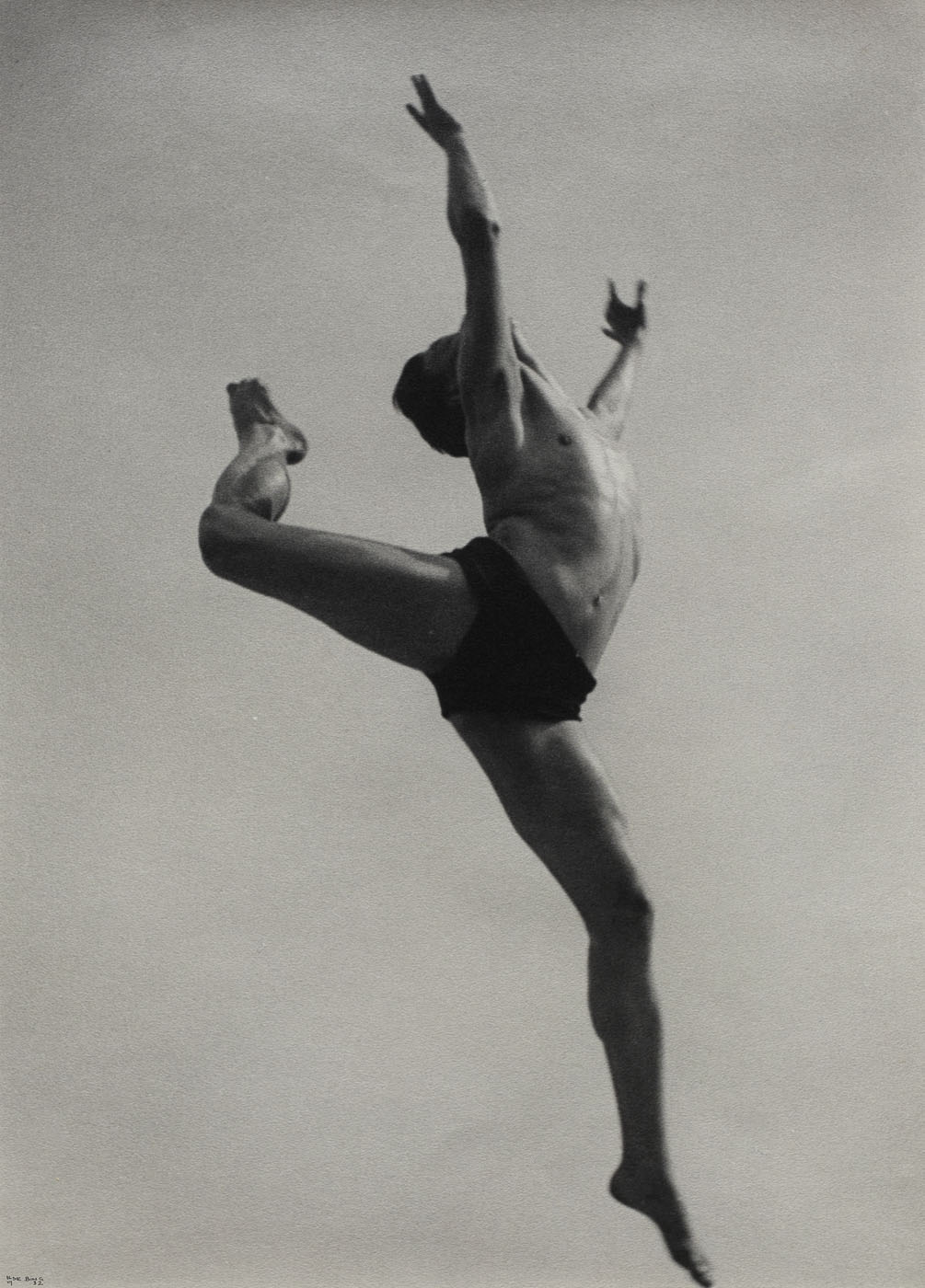
Aaron Siskind (American, 1903-1991) 'Pleasures and Terrors of Levitation #37' 1953


Aaron Siskind (American, 1903-1991)
Pleasures and Terrors of Levitation #37
1953
Gelatin silver print
High Museum of Art, Atlanta, gift of Adair and Joe B. Massey in honour of Gus Kayafas


Aaron Siskind was recognised for the ways he rendered his surroundings into often stark shapes and forms, which reflected his fascination with contemporary trends in abstract art. He was an influential teacher at Chicago’s Institute of Design, which was founded by László Moholy-Nagy as the New Bauhaus. This image of a person flying or falling comes from a series Siskind made of the contorted bodies of divers plunging into Lake Michigan. He masterfully created its disorienting effect through tight focus on the floating figure without contextual elements.

Text from the High Museum of Art website


While contemporarily AI-powered technologies are revolutionising the way we interact with and consume media, enabling us to “to process and analyse vast amounts of data quickly, making it easier to find and access the information we need” in the 1920s and 1930s there was also a revolution in the way artists (and their use of the camera) viewed and felt the world – one not based on information, image quality or duplicity in the veracity of the image but one based on the word, perspective – be that point of view, context, close ups, surreality, fragmentation, scale, concept, construction, colour, aesthetics, identity, gender, or radical experimentation.

In this departure from traditional photographic methods, “New Vision photographers foregrounded experimental techniques, including photograms, photomontages and compositions that favoured extreme angles and unusual viewpoints, and these extended to movements such as surrealism and constructivism.” (Press release)

To me, this New Vision is about experiencing different perspectives – experiencing, sensing, feeling and seeing the world in a new light. After the disasters and machine-ations, the destruction of a conservative way of life before the First World War, here was a way to grasp hold of (and picture) the speed of a new world order, the dreams of physiological analysis, the diversity of new identities, and the fluidity of rapidly evolving technological and social cultures.

While today this (r)evolution continues at an ever expanding pace with the consumption of huge amounts of information and images, I believe it may be advantageous to rest for a while on certain experiences and images … so that we let the daggers drop from our eyes, to ‘not make images’ in our minds eye but just to be present in the viewing of a photograph, so that we appreciate and understand every aspect of the great life spirit of this wondrous earth.

Then and now, new vision.

Dr Marcus Bunyan


Many thankx to the High Museum of Art for allowing me to publish the photographs in the posting. Please click on the photographs for a larger version of the image.


The New Vision movement of the 1920s and 1930s offered a revolutionary approach to seeing the world. It represented a rebellion against traditional photographic methods and an embrace of avant-garde experimentation and innovative techniques. László Moholy-Nagy, an artist and influential teacher at the Bauhaus in Germany, named this period of expansion the “New Vision.” Today, the term encompasses photographic developments that took place between the two World Wars in Europe, America, and beyond. New Vision photographers foregrounded inventive techniques, including photograms, photomontages, and light studies, and made photographs that favoured extreme angles and unusual viewpoints. These approaches – which also extended to more defined movements like Surrealism – spoke to a desire to find and see different perspectives in the wake of World War I.

Uniting more than one hundred works from the High’s photography collection, the exhibition traces the movement’s impact, from its origins in the 1920s to today, and demonstrates its long-standing effect on subsequent generations.

Text from the High Museum of Art website

Photography’s New Vision: Experiments in Seeing

Named by the influential German artist and teacher László Moholy-Nagy, the “New Vision” comprised an expansive variety of photographic exploration that took place in Europe, America, and beyond in the 1920s and 1930s. The movement was characterised by its departure from traditional photographic methods. New Vision photographers foregrounded experimental techniques, including photograms, photomontages, and light studies, and made photographs that favoured extreme angles and unusual viewpoints.

This exhibition, uniting more than one hundred works from the High’s robust photography collection, will trace the impact of the New Vision movement from its origins in the 1920s to today. Photographs from that era by Ilse Bing, Alexander Rodchenko, Imogen Cunningham, and Moholy-Nagy will be complemented by a multitude of works by modern and contemporary artists such as Barbara Kasten, Jerry Uelsmann, Hiroshi Sugimoto, and Abelardo Morell to demonstrate the long-standing impact of the movement on subsequent generations.

Text from the High Museum of Art website


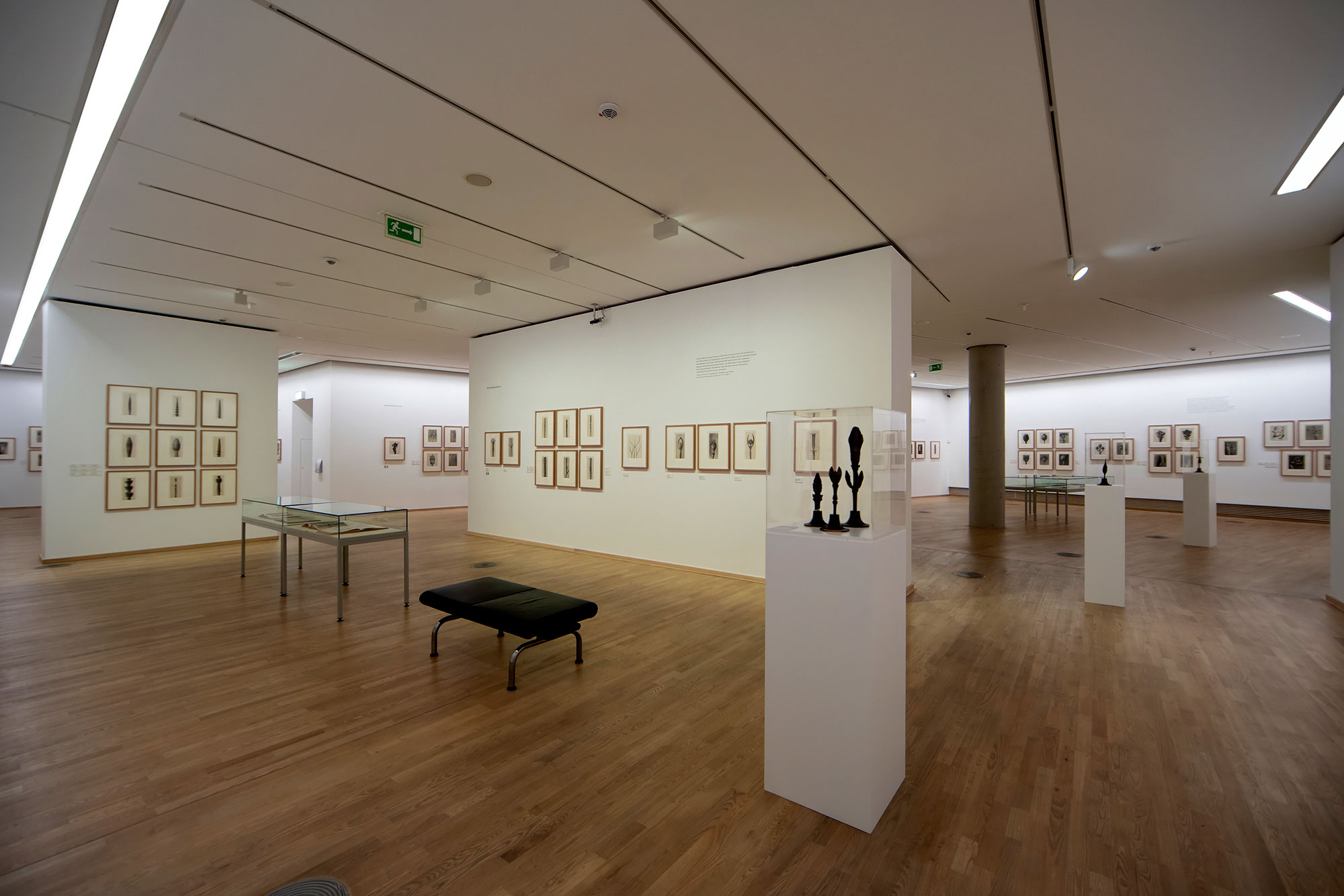
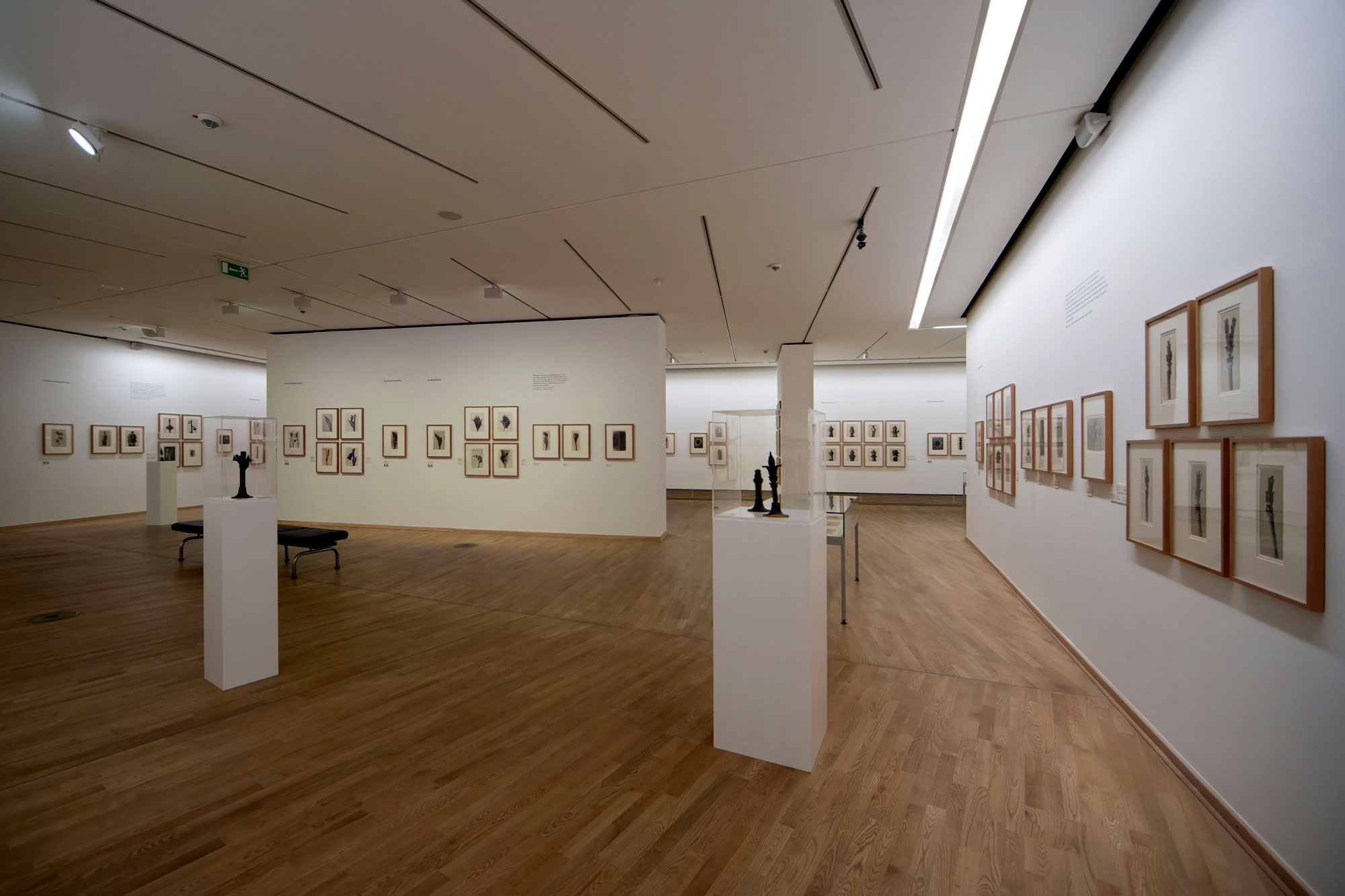
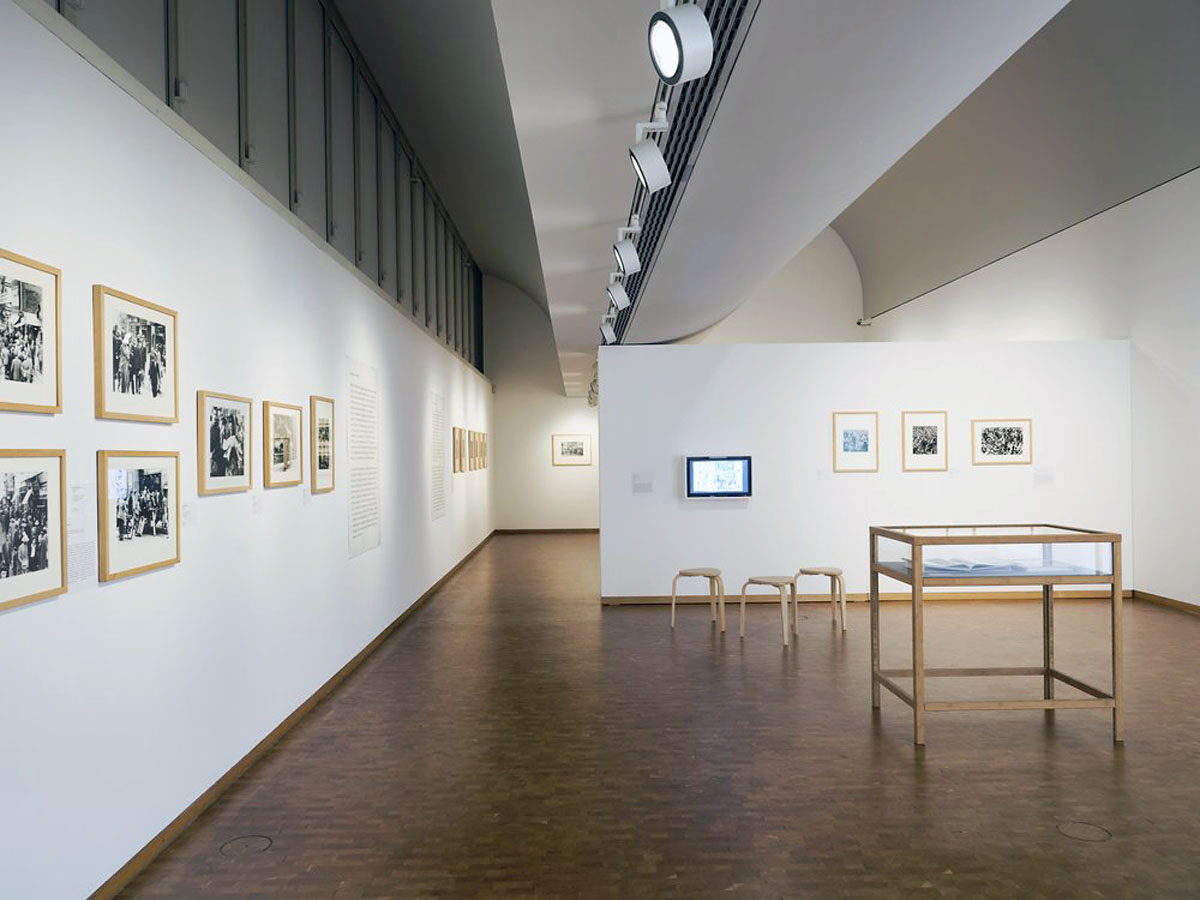
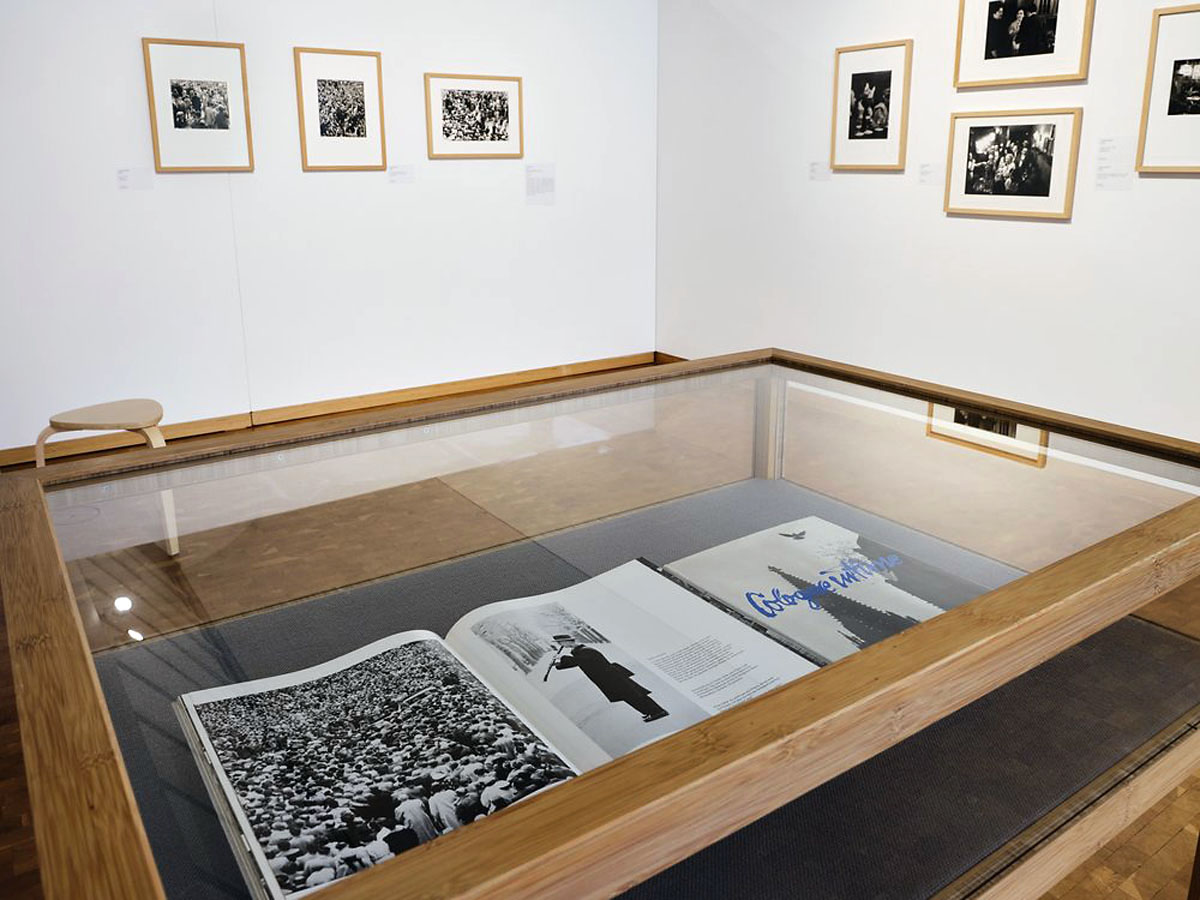
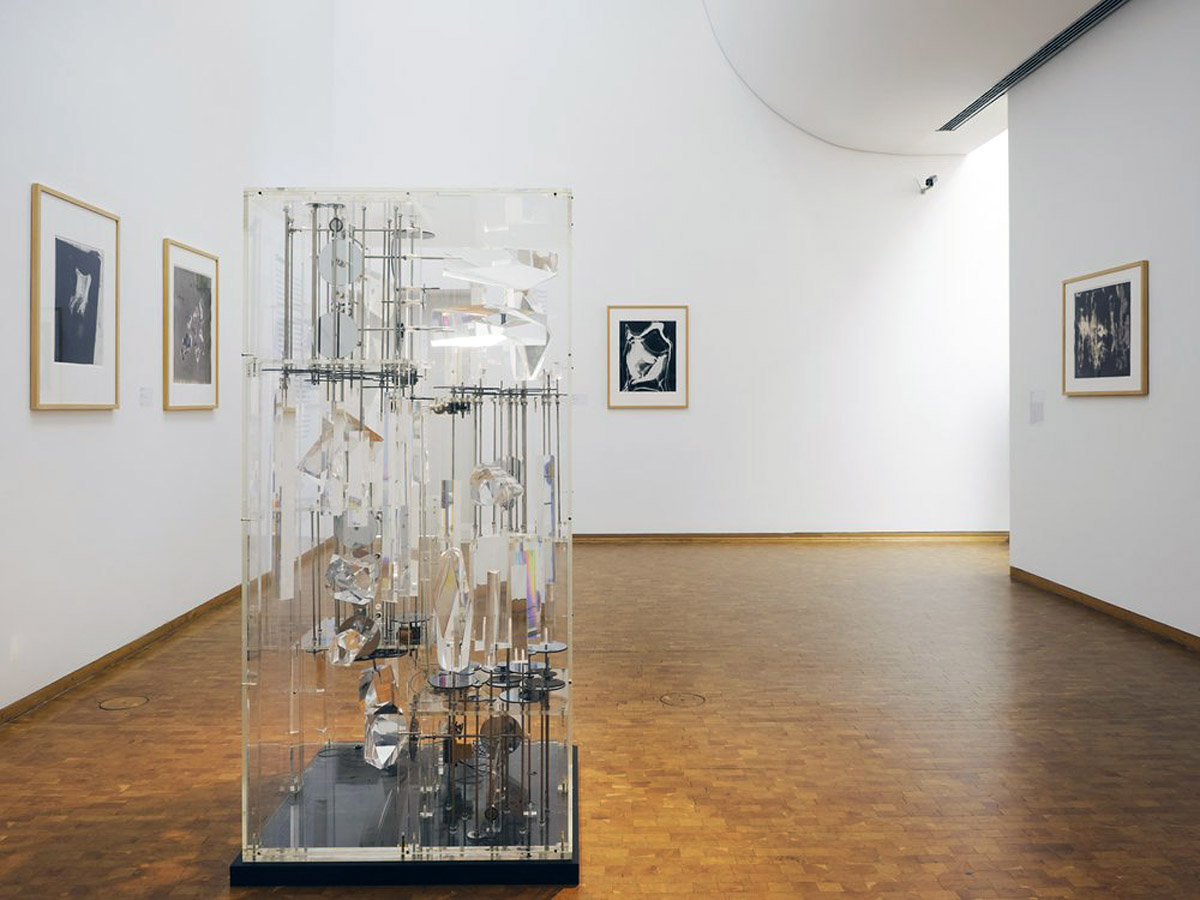
Installation view of the exhibition 'Photography's New Vision: Experiments in Seeing' at the High Museum of Art, Atlanta, June 2025 - January 2026


Installation views of the exhibition Photography’s New Vision: Experiments in Seeing at the High Museum of Art, Atlanta, June 2025 – January 2026
Photos: Mike Jensen


The High Museum of Art presents “Photography’s New Vision: Experiments in Seeing” (June 13, 2025 – Jan. 4, 2026), an exhibition uniting more than 100 works from the High’s robust photography collection to trace the impact of the New Vision movement from its origins in the 1920s to today. Works include century-old photographs exemplifying themes from the movement and modern and contemporary images that emphasise the relevance of current artistic and social practices as a response to the technological and cultural changes that occurred in the early 20th century.

“This exhibition provides an opportunity to illuminate photographers’ creativity and innovative practices, all inspired by the progression of the medium in the 1920s and 30s,” said High Museum of Art Director Rand Suffolk. “Many of the works are rarely on view, so it will be an exciting experience for visitors to see them and learn about photographers’ abilities as they reflect reality while experimenting with technique and perspective.” Named by the influential German artist and teacher László Moholy-Nagy, the “New Vision” comprised an expansive variety of photographic exploration that took place in Europe, America and beyond in the 1920s and 1930s. The movement was characterised by its departure from traditional photographic methods. New Vision photographers foregrounded experimental techniques, including photograms, photomontages and compositions that favoured extreme angles and unusual viewpoints, and these extended to movements such as surrealism and constructivism.

“Experiments in Seeing” features nearly 100 photographers. It also demonstrates how the New Vision movement revolutionised the medium of photography in the early 20th century in response to the great societal, economic and technological shifts spurred by the upheaval of the two World Wars. Photographs from that era by Ilse Bing, Alexander Rodchenko, Imogen Cunningham and Moholy-Nagy have been complemented by a multitude of photographs by modern and contemporary artists such as Barbara Kasten, Jerry Uelsmann, Hiroshi Sugimoto and Abelardo Morell to demonstrate the long-standing impact of the movement on subsequent generations.

The first section of the exhibition delves into experimental techniques that foreground the light-sensitive aspects of photography, followed by works created through in-camera manipulations or additions to the surfaces of the prints. Subsequent sections explore inventive methods of capturing unexpected views of the world articulated with radical angles or detailed close-ups. Other works showcase surreal approaches to subjects such as humanlike forms and bodies, the use of mirrors and doubling, and everyday scenes heightened by uncanny moments or distorted through the interplay of light, shadow and water.

“Not only does the early 20th century and its art movements continue to be influential, but that time also echoes our current moment – one that feels similarly consequential and innovative with the development of new emerging technologies and methods of communicating,” said Maria L. Kelly, the High’s assistant curator of photography. “The movements and happenings of a century ago are akin to those of today and those shown in the exhibition. There remains a desire for alternative ways to see and approach the world through art, and particularly through photography.”

“Photography’s New Vision: Experiments in Seeing” is on view in the Lucinda W. Bunnen Galleries for Photography located on the Lower Level of the High’s Wieland Pavilion.

Press release from the High Museum of Art


“Light was considered the medium that permits photography. But for me it became the main subject: the protagonist of my photography.”


Ilse Bing, c. 1920s


Light Experimentation

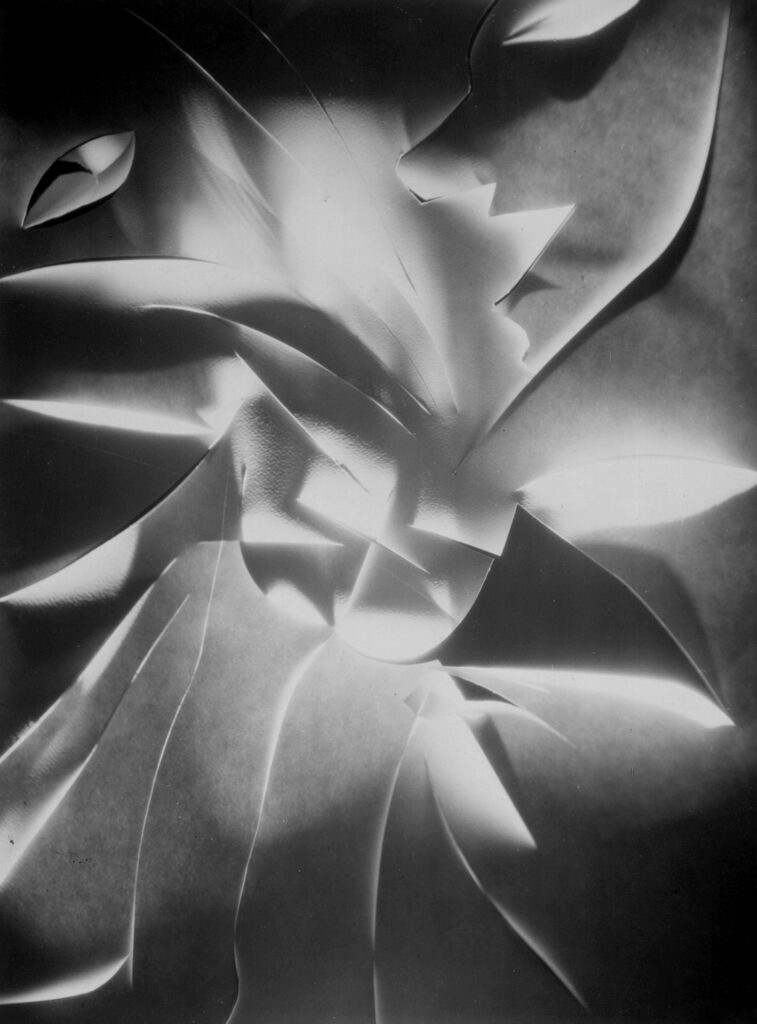
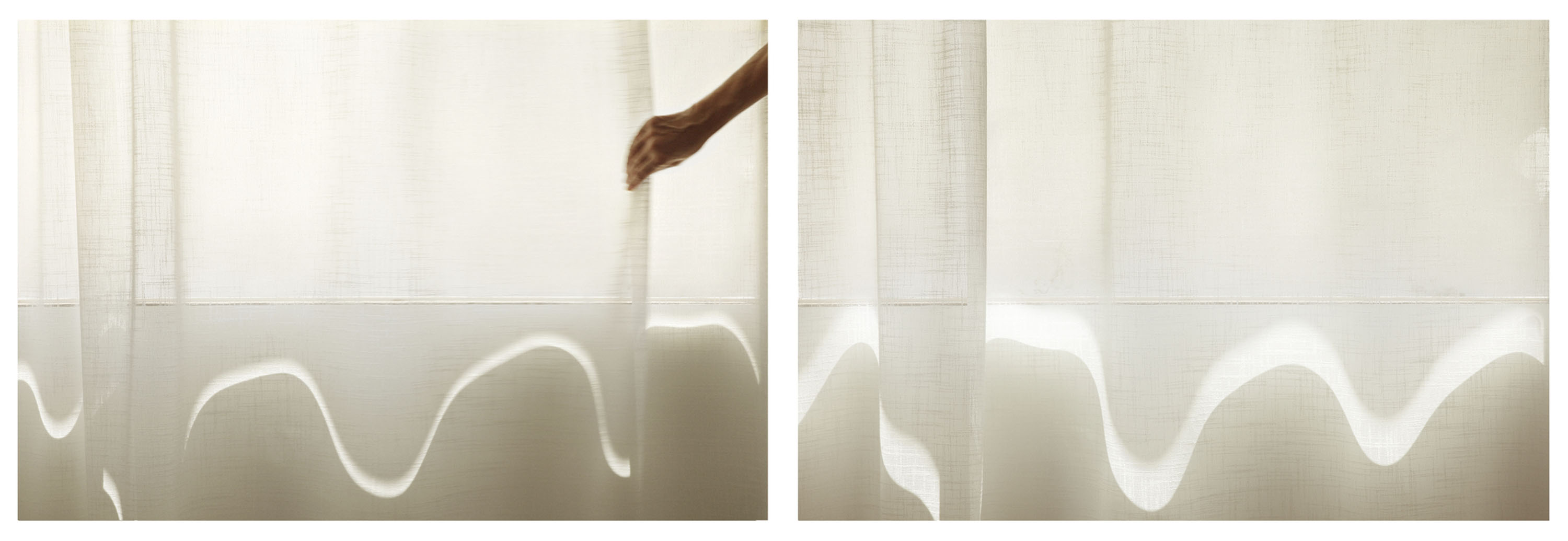
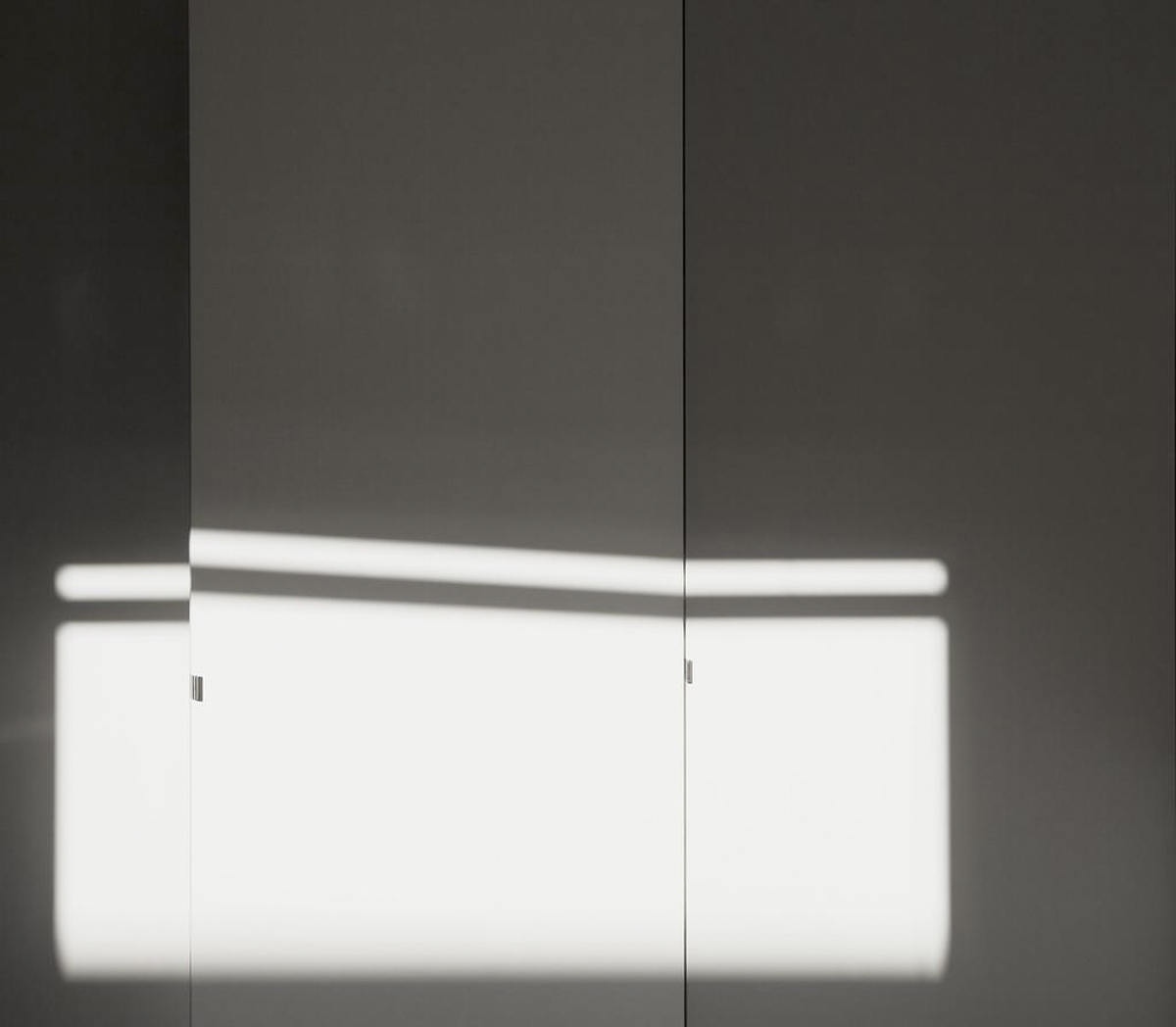
After the trauma of World War I, many artists felt compelled to reconsider conventional art making methods to better reflect and engage with the world. Some photographers turned their attention to the essential element of photography: light. Through innovative visual investigations, cameraless photographs were produced, viewes of the world altered, and scientific discoveries made.

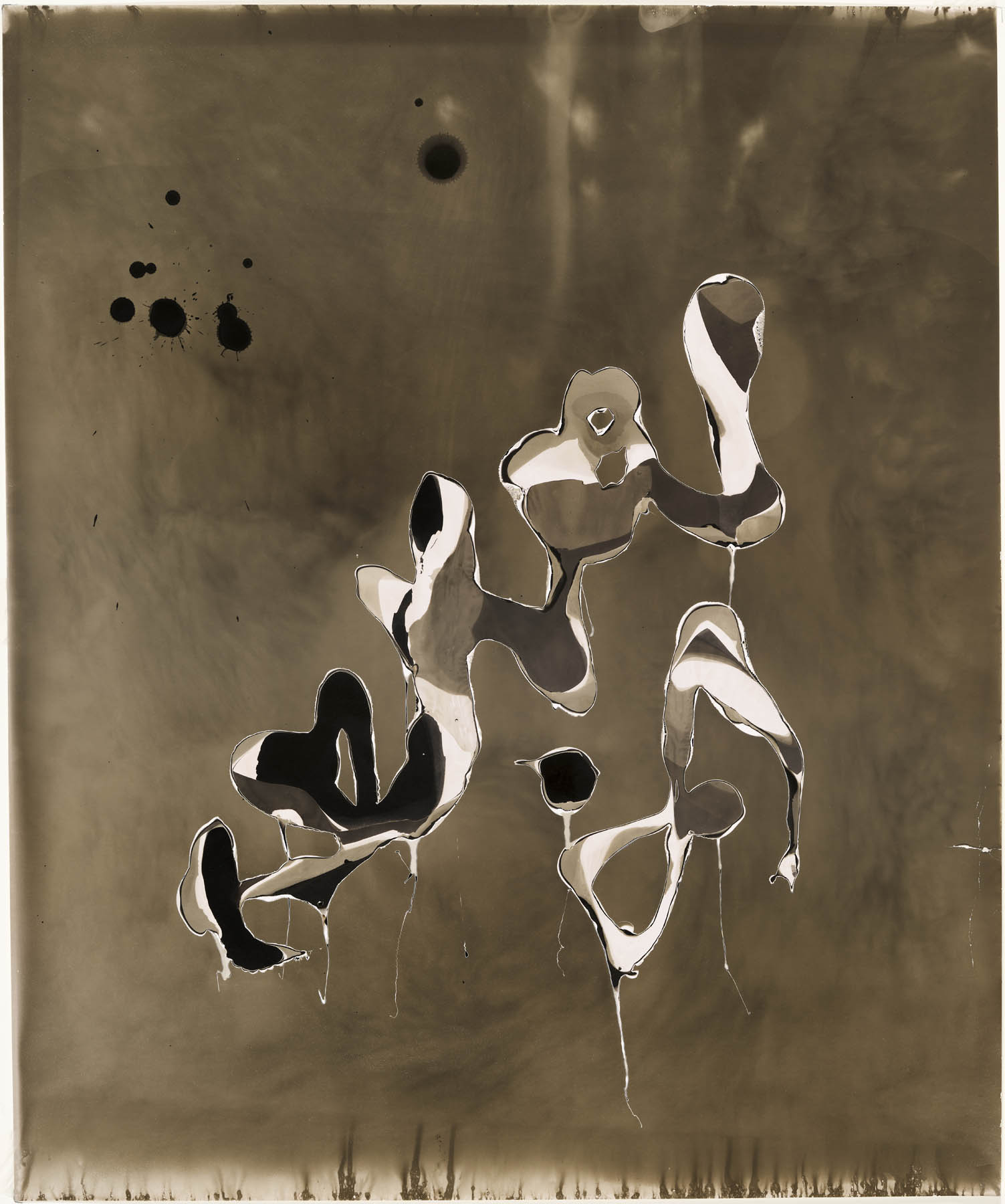
Experimentations with illumination and light-sensitive paper in the darkroom gave rise to photograms, enabling artists to pursue abstraction and to wield light as a sculptural element. The process of solarisation – reversing tones in a print using a flash of light during developing – provided an unconventional view of a subject. Early attempts to capture traces of light on film led to scientific innovations such as using strove lights to freeze movement, depicting magnetic fields, and tracing electrical currents on light sensitive paper.

These processes aim to reveal the invisible, with the elements of change as a constant companion. While artists can insert some control over the elements, the process ultimately shapes the final image. Many artworks in this section exist as unique prints, challenging the assumption of the reproducibility of photography, and emphasising the singularity of the creative moment.

Wall text from the exhibition


Francis Bruguière (American, 1879-1945) 'The Light That Never Was on Land or Sea' c. 1925


Francis Bruguière (American, 1879-1945)
The Light That Never Was on Land or Sea
c. 1925
Gelatin silver print
High Museum of Art, Atlanta, purchase with funds from Georgia-Pacific Corporation


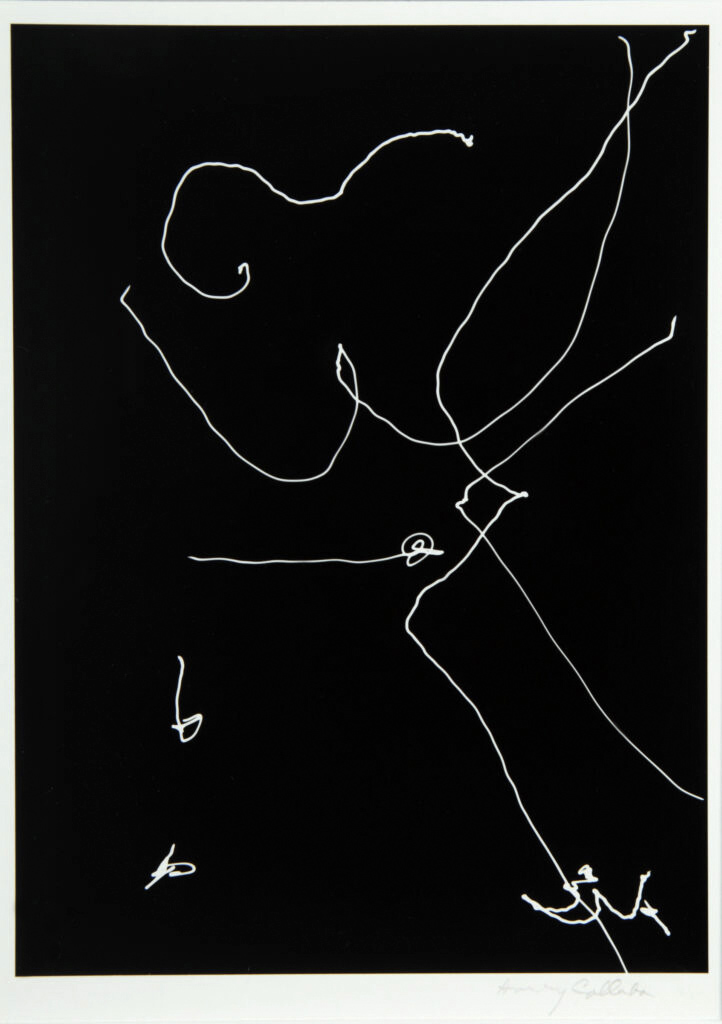
Nathan Lerner (American, 1913-1977) 'Light Drawing #8 (Smoke)' 1938-1939


Nathan Lerner (American, 1913-1977)
Light Drawing #8 (Smoke)
1938-1939
Gelatin silver print
High Museum of Art, Atlanta, gift of Hilary Leff and Elliot Groffman


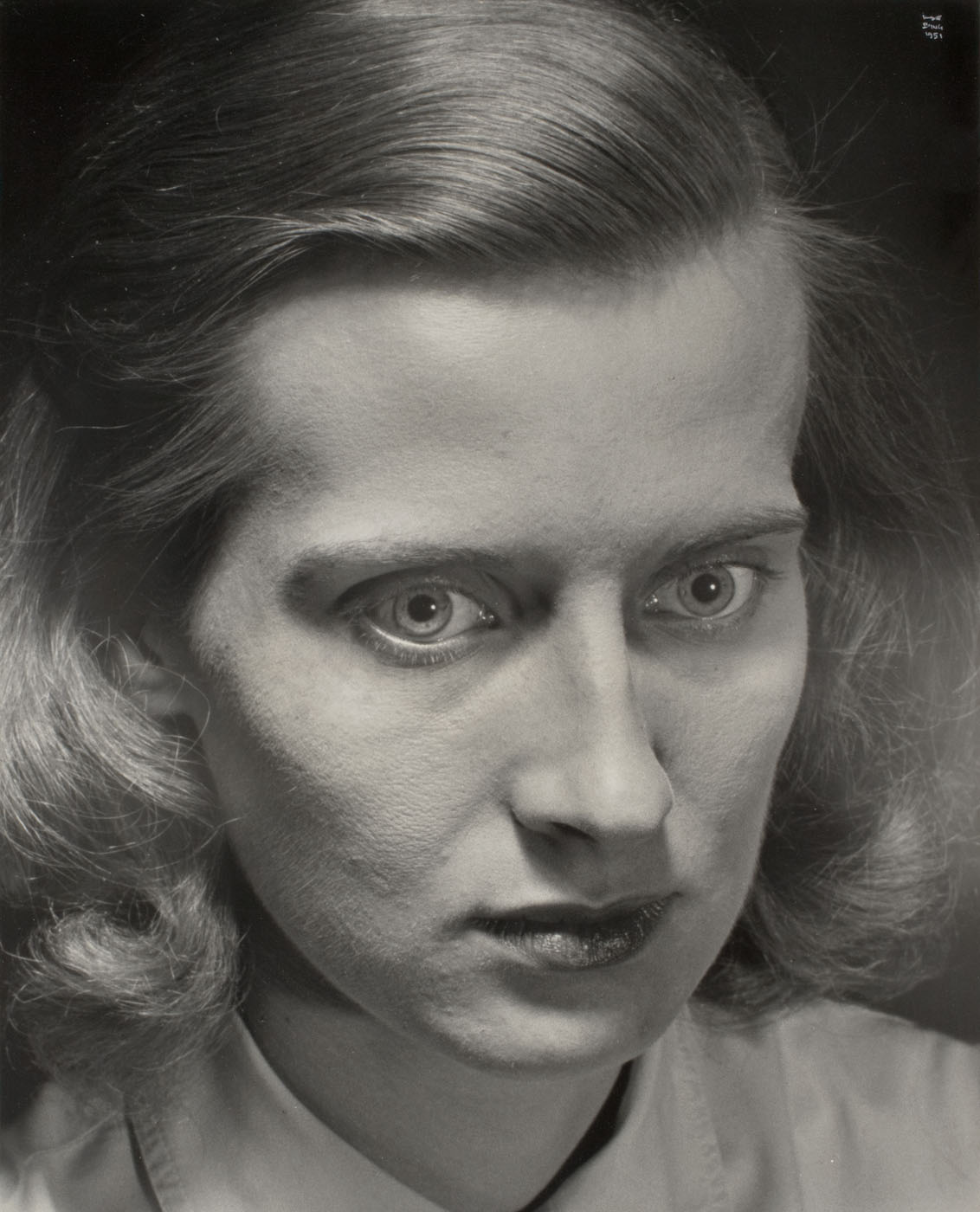
Ilse Bing (American born Germany, 1899-1998) 'Untitled [Seated Woman with Necklace, Solarized]' 1943


Ilse Bing (American born Germany, 1899-1998)
Untitled [Seated Woman with Necklace, Solarized]
1943
Gelatin silver print
High Museum of Art, Atlanta, gift of the Estate of Ilse Bing Wolff


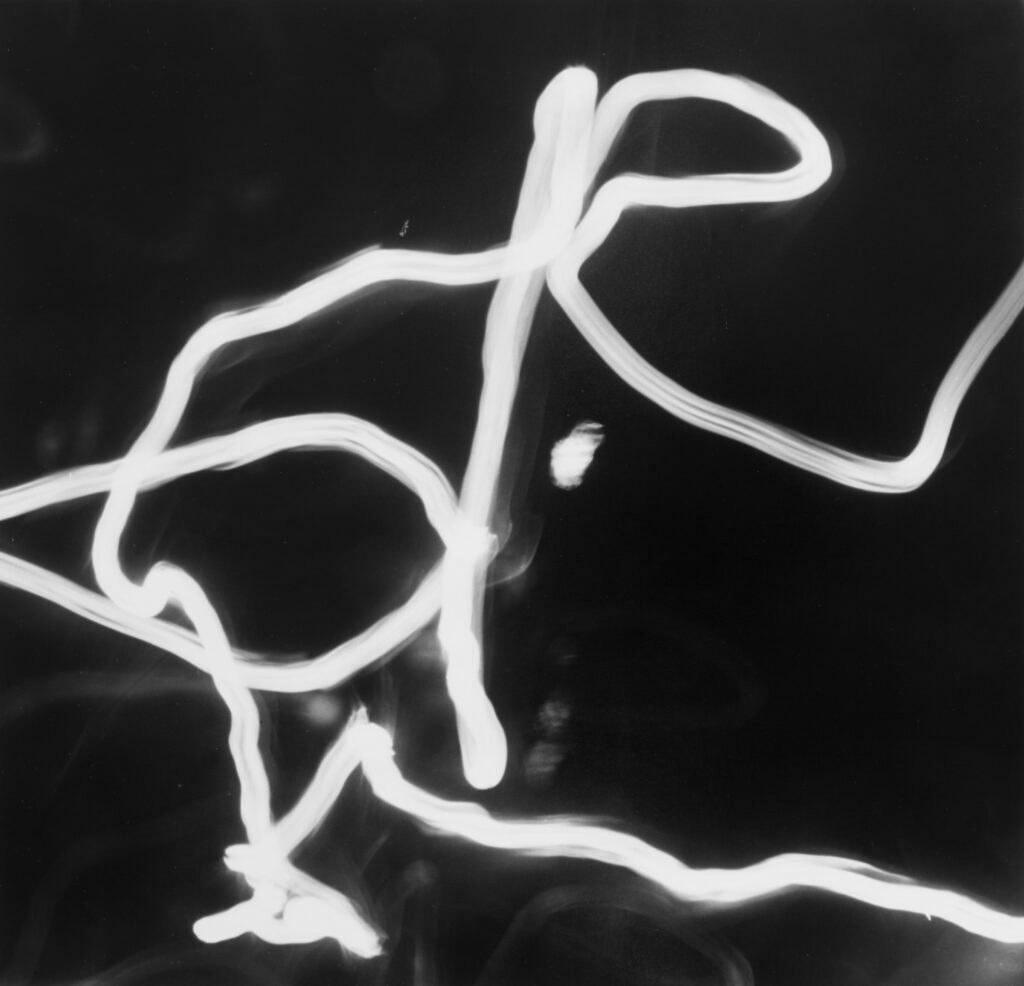
Harry Callahan (American, 1912-1999) 'Camera Movement on Flashlight, Chicago' c. 1949


Harry Callahan (American, 1912-1999)
Camera Movement on Flashlight, Chicago
c. 1949
Gelatin silver print
High Museum of Art, Atlanta, purchase with funds from the H. B. and Doris Massey Charitable Trust, Dr. Robert L. and Lucinda W. Bunnen, Collections Council Acquisition Fund, Jackson Fine Art, Powell, Goldstein, Frazer and Murphy, Jane and Clay Jackson, Beverly and John Baker, Roni and Sid Funk, Gloria and Paul Sternberg, and Jeffery L. Wigbels
© 2018 The Estate of Harry Callahan


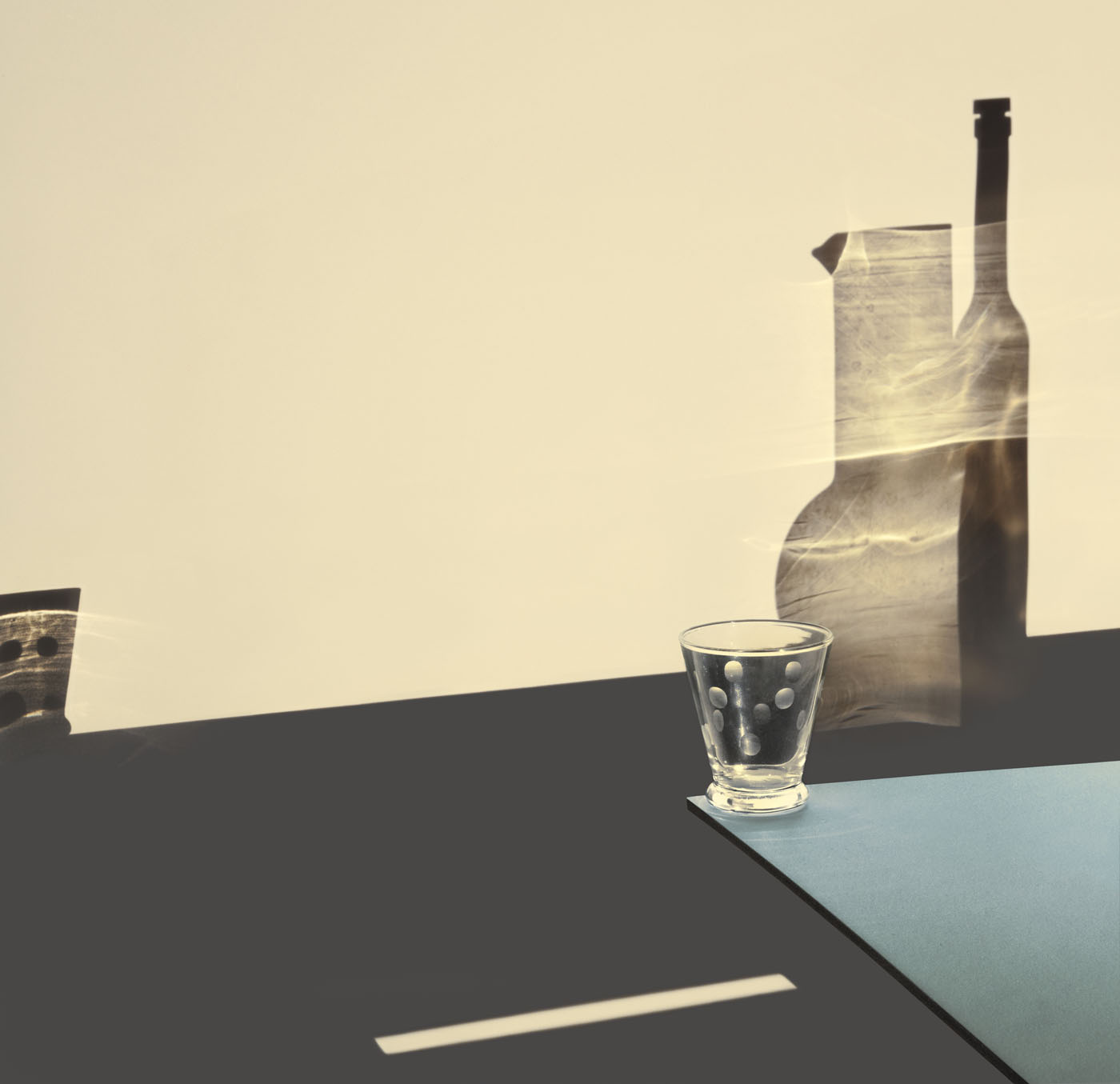
Abelardo Morell (American born Cuba, b. 1948) 'Still Life with Wine Glass: Photogram on 20" x 24" Film' 2006


Abelardo Morell (American born Cuba, b. 1948)
Still Life with Wine Glass: Photogram on 20″ x 24″ Film
2006
Gelatin silver print
High Museum of Art, Atlanta, purchase with funds from the Friends of Photography
© Abelardo Morell


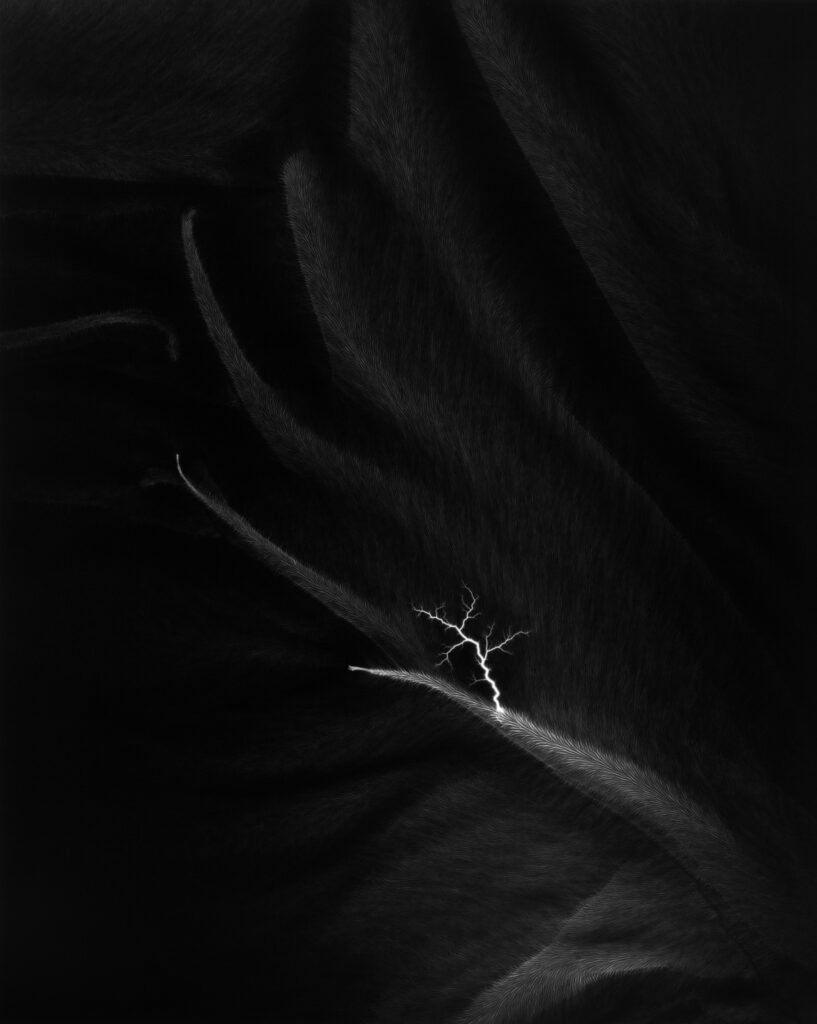
Hiroshi Sugimoto (Japanese, b. 1948) 'Lightning Fields 182' 2009


Hiroshi Sugimoto (Japanese, b. 1948)
Lightning Fields 182
2009
Gelatin silver print
High Museum of Art, Atlanta, purchase through funds provided by patrons of Collectors Evening 2012
© Hiroshi Sugimoto


Inspired by William Henry Fox Talbot, an inventor of photography who was fascinated with electromagnetic conduction, Hiroshi Sugimoto began applying charges of electricity directly to unexposed photographic film. After months of honing his technique in the darkroom, he managed to achieve remarkable results with a handheld wand charged by a generator. His Lightning Fields photographs are made without a camera or lens. Here, the abstract visual trace of an electric charge measuring over 400,000 volts sweeps across the composition, reading like the textures of a human hand, the upward tentacles of a fern, or the stark branches of a tree.

Text from the High Museum of Art website


Hans-Christian Schink (German, b. 1961) '2/26/2010, 7:54 am – 8:54 am, S36° 49.622' E 175° 47.340'' 2010


Hans-Christian Schink (German, b. 1961)
2/26/2010, 7:54 am – 8:54 am, S36° 49.622′ E 175° 47.340′
2010
From the series 1h
© Hans-Christian Schink


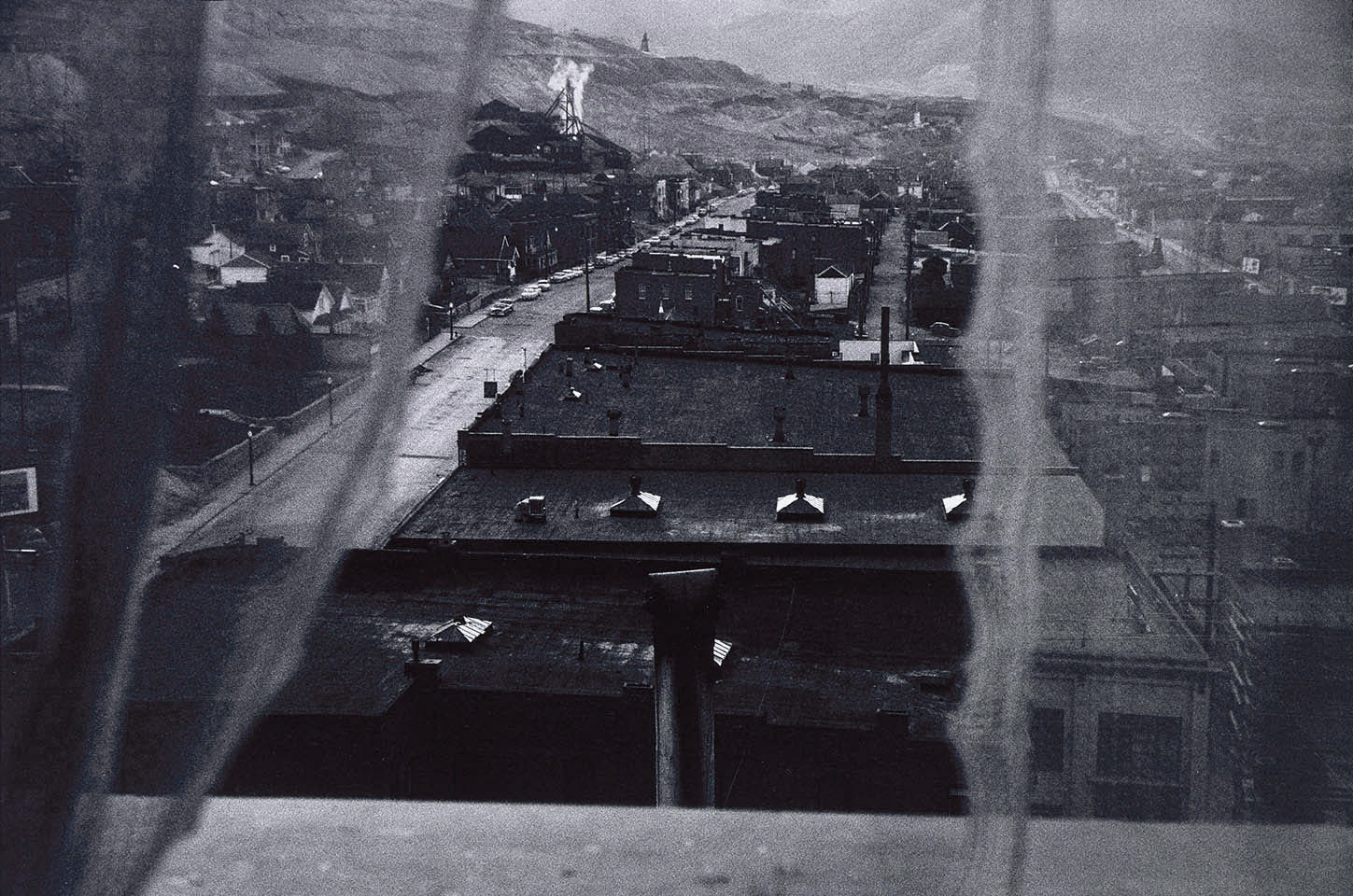
Abelardo Morell (American born Cuba, b. 1948) 'Camera Obscura: View of Philadelphia from Loews Hotel Room #3013 with Upside Down Bed, April 14th, 2014' 2014


Abelardo Morell (American born Cuba, b. 1948)
Camera Obscura: View of Philadelphia from Loews Hotel Room #3013 with Upside Down Bed, April 14th, 2014
2014
Pigmented inkjet print
High Museum of Art Atlanta, gift of Dr. Roger Hartl
© Abelardo Morell


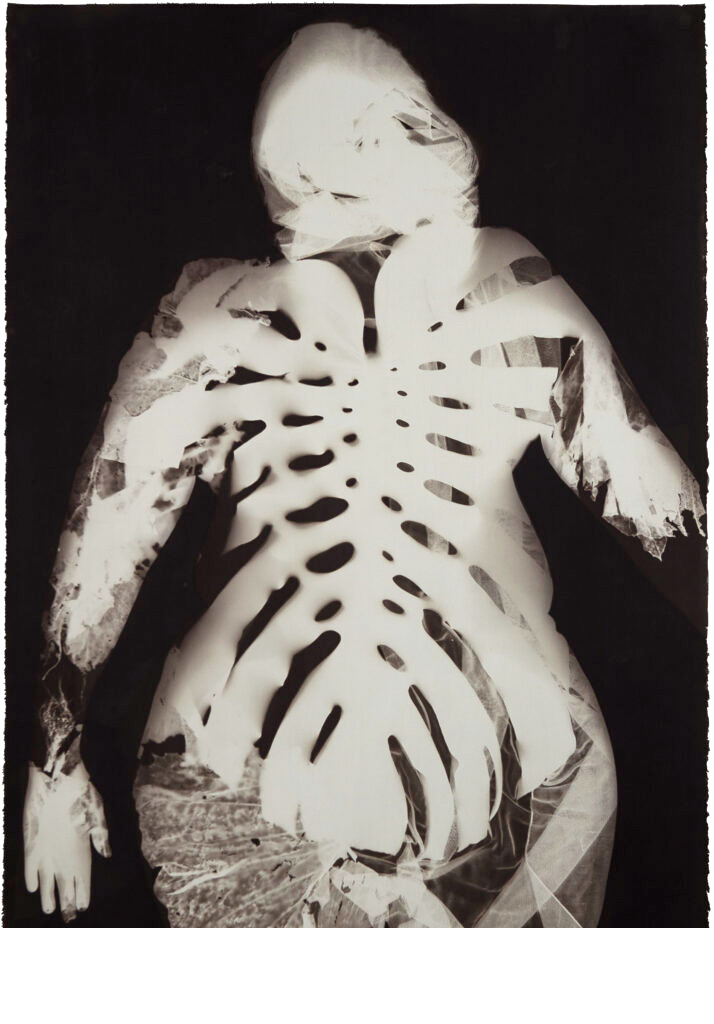
V. Elizabeth Turk (American, b. 1945) 'Calaeno' 2018


V. Elizabeth Turk (American, b. 1945)
Calaeno
2018
Van Dyke print
High Museum of Art, Atlanta, purchase with funds from Lucinda W. Bunnen for the Bunnen Collection
© Elizabeth Turk


V. Elizabeth Turk is an Atlanta-based photographer whose work explores the connections between the human body and the natural world. To make this print, Turk used an analog process from the 1800s that involves coating a large sheet of paper with light-sensitive chemicals. She then arranged her model on top of the sheet and exposed it to light, creating a ghostly silhouette, before repeating the exposure with plants. The resulting photogram is a unique image in which botanical forms intersect with the body, alluding to bones, veins, and skin and suggesting a visceral bond between humans and the environment. 

Text from the High Museum of Art website


“The limits of photography are incalculable; everything is so recent that even the mere act of searching may lead to creative results. […] The illiterate of the future will be the person ignorant of the use of the camera as well as of the pen.”


László Moholy-Nagy 1928


Radical Viewpoints

From photography’s inception in 1839, camera technology involved cumbersome equipment and time-consuming development processes until the advent of lightweight cameras in the 1920s. Photographers were then able to work more nimbly, transforming photography into a medium capable of capturing fleeting moments, unusual viewpoints, and multiple perspectives. The exploration of unexpected angles became a hallmark of New Vision photography. Sharp diagonals, extreme vantage points, and shortened perspectives opened novel pathways of perceiving otherwise commonplace environments.

Alexander Rodchenko, a pioneer in this method, championed the camera’s ability to reveal, stating, “in order to teach man to see from all viewpoints, it is necessary to photograph […] from completely unexpected viewpoints and in unexpected positions […] We don’t see what we are looking at. We don’t see marvellous perspectives.” This approach aimed to provide a fuller impression of subjects, prompting viewers to seek and appreciate what might otherwise be overlooked.

Though these early photographs may not appear groundbreaking today, their makers’ carefully considered methods transferred how photography is used. This is evident in photographers’ creative interpretations of their surroundings over the past century.

Wall text from the exhibition


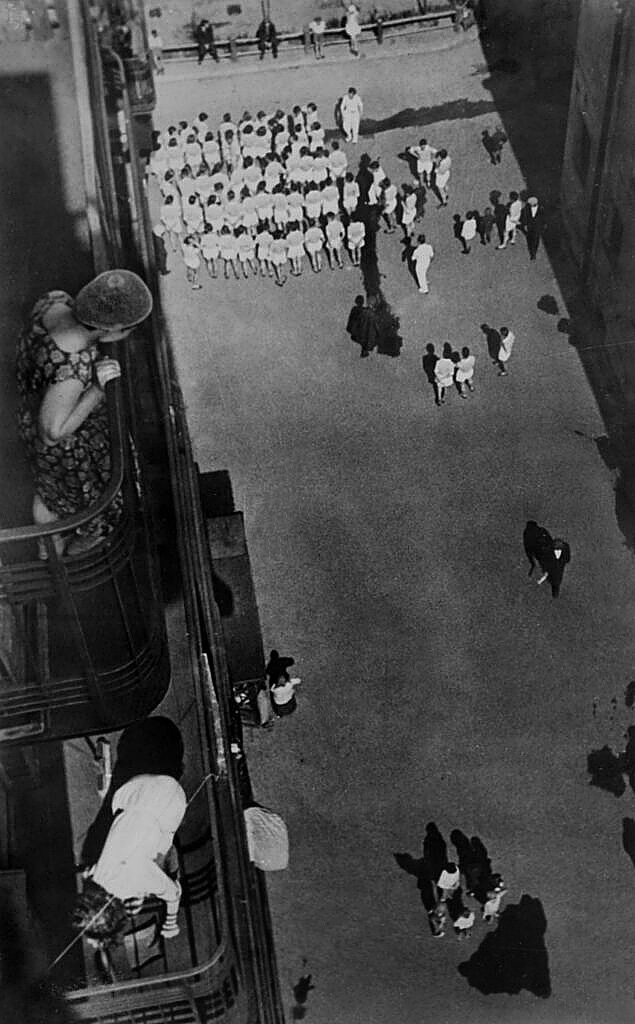
Alexander Rodchenko (Russian, 1891-1956) 'Sbor na demonstratsia' (Gathering for a Demonstration) 1928


Alexander Rodchenko (Russian, 1891-1956)
Sbor na demonstratsia (Gathering for a Demonstration)
1928
Gelatin silver print
High Museum of Art, Atlanta, gift of Joseph and Yolandra Alexander, Moscow/VAGA at Artists Rights Society (ARS), New York
© Estate of Alexander Rodchenko/RAO, Moscow/VAGA at Artists Rights Society (ARS), New York


Alexander Rodchenko was a key figure in the movements of New Vision and Constructivism – abstract and functional art that reflected an industrial society. Advocating “to achieve a revolution in our visual thought,” he explored various methods, such as photographing from unexpected angles, to capture dynamic views and expose new realities. With a new, lightweight 35 mm camera, he often photographed from his apartment balcony to create dramatic scenes of the street below. The perspective in this photograph flattens the building’s stories into one visual field, giving the image a theatrical quality as an onlooker peers over the railing.

Text from the High Museum of Art website


Walker Evans (American, 1903-1975) 'The Bridge' 1929


Walker Evans (American, 1903-1975)
The Bridge
1929
Gelatin silver print
High Museum of Art, Atlanta, gift of Arnold H. Crane
© Walker Evans Archive, The Metropolitan Museum of Art


A central figure among twentieth-century American photographers, Walker Evans created works in his early career that sample from the New Vision aesthetic, which he may have encountered while abroad in Paris in 1926. His photographs of New York City, made after he returned to the United States, feature dramatically angled or cropped scenes of architecture and city life. Evans made numerous photographic studies of the Brooklyn Bridge from both below and on the bridge, portraying it less as a recognisable landmark and more as a hulking expanse whose form fills each tight frame.

Text from the High Museum of Art website


László Moholy-Nagy (Hungarian 1895-1946) 'Stage Set for Madame Butterfly' 1931


László Moholy-Nagy (Hungarian 1895-1946)
Stage Set for Madame Butterfly
1931
Gelatin silver print
High Museum of Art, Atlanta, purchase with funds from Georgia-Pacific Corporation


Moholy-Nagy, a leader of the New Vision, had an expansive artistic practice that included painting, photography, sculpture, film, and more. As a teacher at the Bauhaus, which connected art and industry, he believed in technology’s potential to advance art and society. In 1929, he became set designer at the Kroll Opera House and created avant-garde sets with translucent and perforated materials, often making light itself a sculptural element. Lucia Moholy, a photographer, writer, teacher, and Moholy-Nagy’s first wife, was commissioned as Kroll’s stage photographer. In this image, which either artist may have made, the sharp angle shot from above complicates the set of Madame Butterfly, emphasising intersecting, moving elements and heightening areas of light and shadow.

Text from the High Museum of Art website


Lucas Foglia (American, b. 1983) 'Esme Swimming, Parkroyal on Pickering, Singapore' 2014


Lucas Foglia (American, b. 1983)
Esme Swimming, Parkroyal on Pickering, Singapore
2014
Pigmented inkjet print
High Museum of Art, Atlanta, gift of Irene Zhou
© Lucas Foglia


Close Ups

Similar to the practice of using unusual angles to offer unexpected perspectives, some photographers began capturing highly detailed, close-up views of objects. This approach affords a study of texture, pattern, and structure that may otherwise go unnoticed by the human eye. By eliminating surroundings that could offer a narrative, the physicality of the object becomes the primary focus, allowing it to transcend beyond its everyday existence.

Practitioners of straight photography in the United States and the concurrent New Objectivity movement in Germany shared a core desire to unearth a balance of the familiar and the foreign within intricate images of forms. While Imogen Cunningham and Edward Weston perfected carefully composed studies of plants and other natural matter, Albert Renger-Patzsch, Alexander Rodchenko, and Ralph Steiner explored scientific and industrial objects. Such images celebrated the technological advancements of the time and revealed how mechanical structures often mimic those found in nature, suggesting a shared framework, and a shared beauty, between humanmade and natural. The emphasis on detail and abstraction invites viewers to reconsider their perceptions of both the ordinary and the extraordinary in the world around them.

Wall text from the exhibition


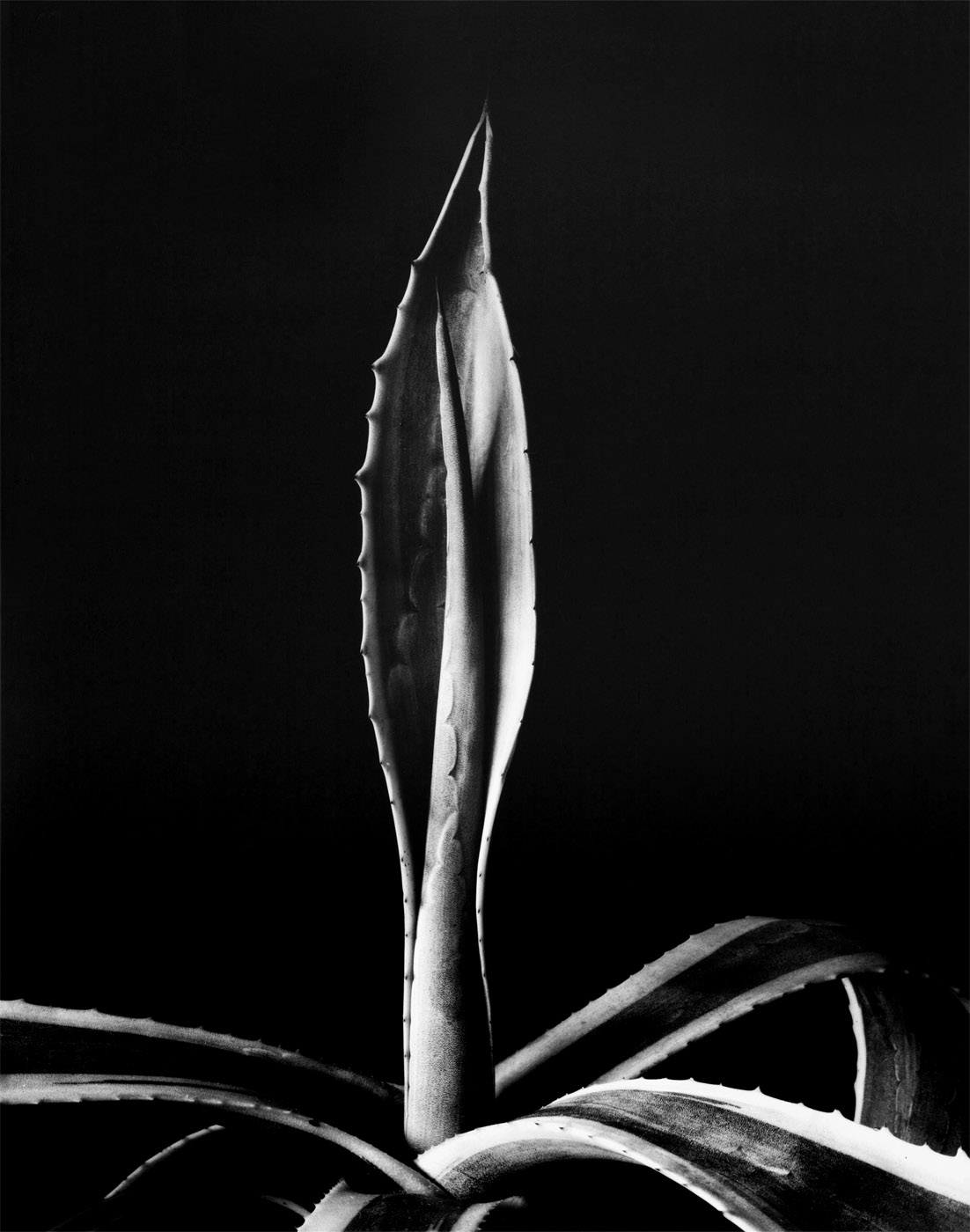
Imogen Cunningham (American, 1883-1976) 'Agave Americanus' 1929


Imogen Cunningham (American, 1883-1976)
Agave Americanus
1929
Gelatin silver print
High Museum of Art, Atlanta
© The Imogen Cunningham Trust


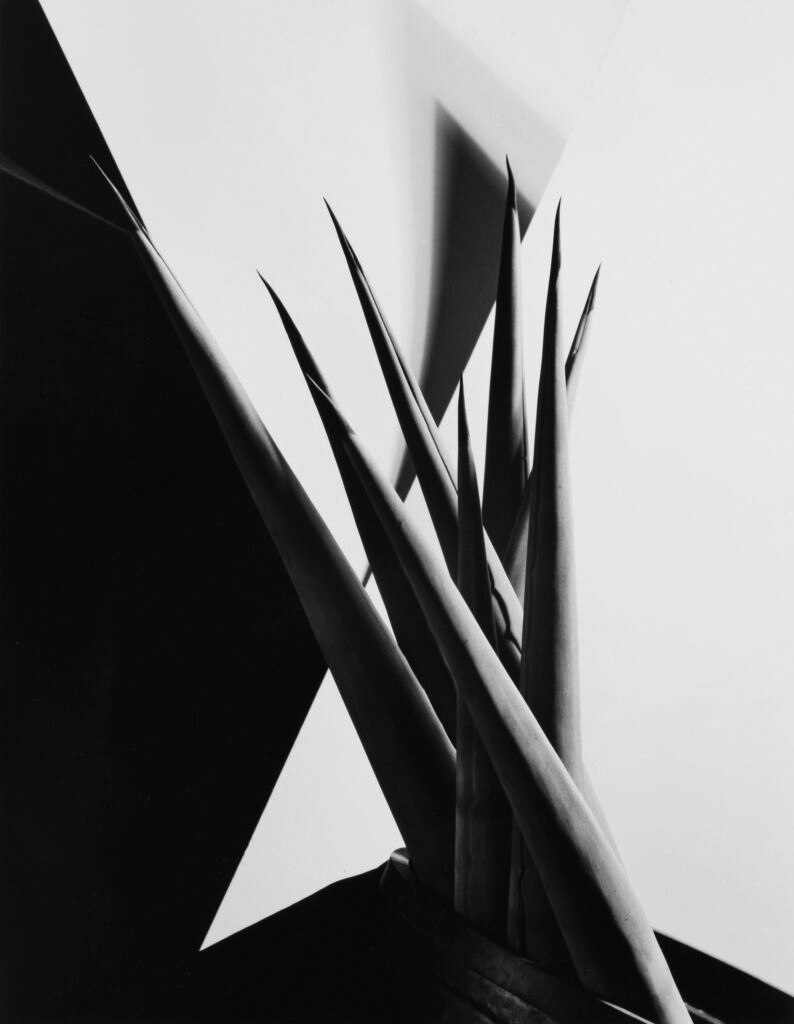
Imogen Cunningham (American, 1883-1976)
'Agave Design I' c. 1920


Imogen Cunningham (American, 1883-1976)
Agave Design I
c. 1920
Gelatin silver print
High Museum of Art, Atlanta, purchase with funds from Georgia-Pacific Corporation
© The Imogen Cunningham Trust


Edward Weston (American 1886-1958) 'Palma Cuernavaca II' 1925


Edward Weston (American 1886-1958)
Palma Cuernavaca II
1925
Palladium print
High Museum of Art, Atlanta, gift of Lucinda W. Bunnen for the Bunnen Collection to mark the retirement of Gudmund Vigtel
© Center for Creative Photography, Arizona Board of Regents


Ralph Steiner (American, 1899-1986) 'Electrical Switches' 1929


Ralph Steiner (American, 1899-1986)
Electrical Switches
1929
Gelatin silver print
8 x 10 5/16 inches
Purchase with funds from Georgia-Pacific Corporation


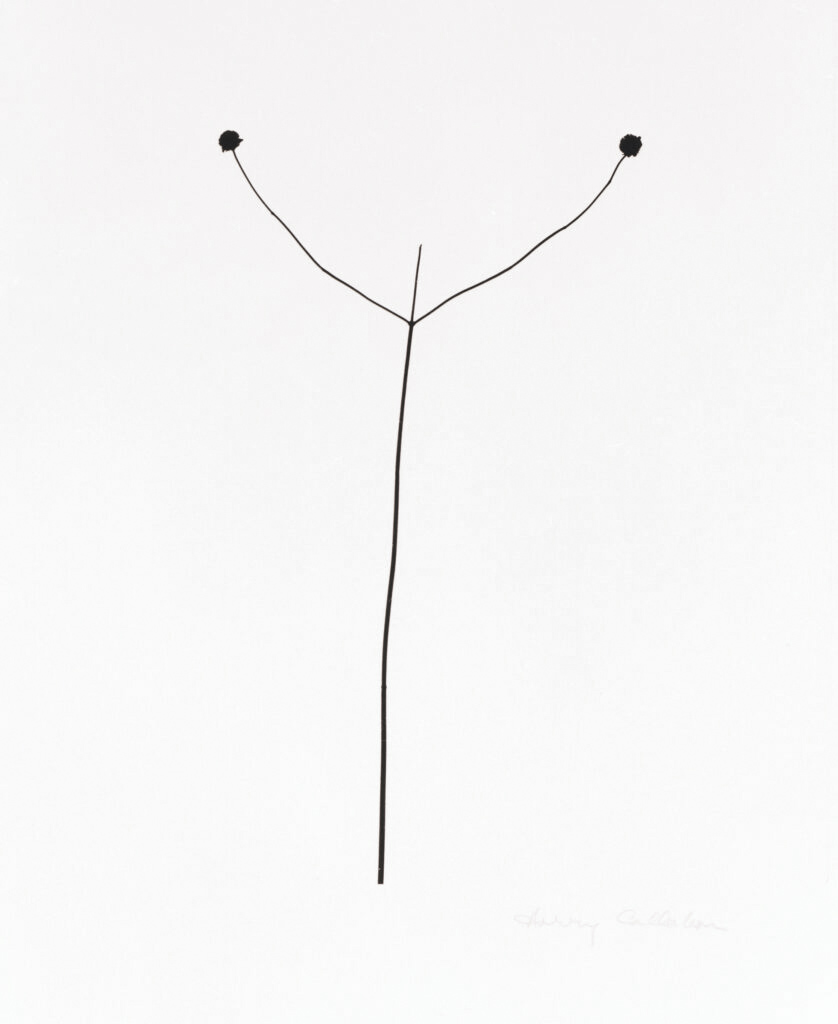
Harry Callahan (American, 1912-1999) 'Weed Against Sky, Detroit' 1948


Harry Callahan (American, 1912-1999)
Weed Against Sky, Detroit
1948
Gelatin silver print
High Museum of Art, Atlanta, gift of the Callahan and Hollinger Families
© 2018 The Estate of Harry Callahan


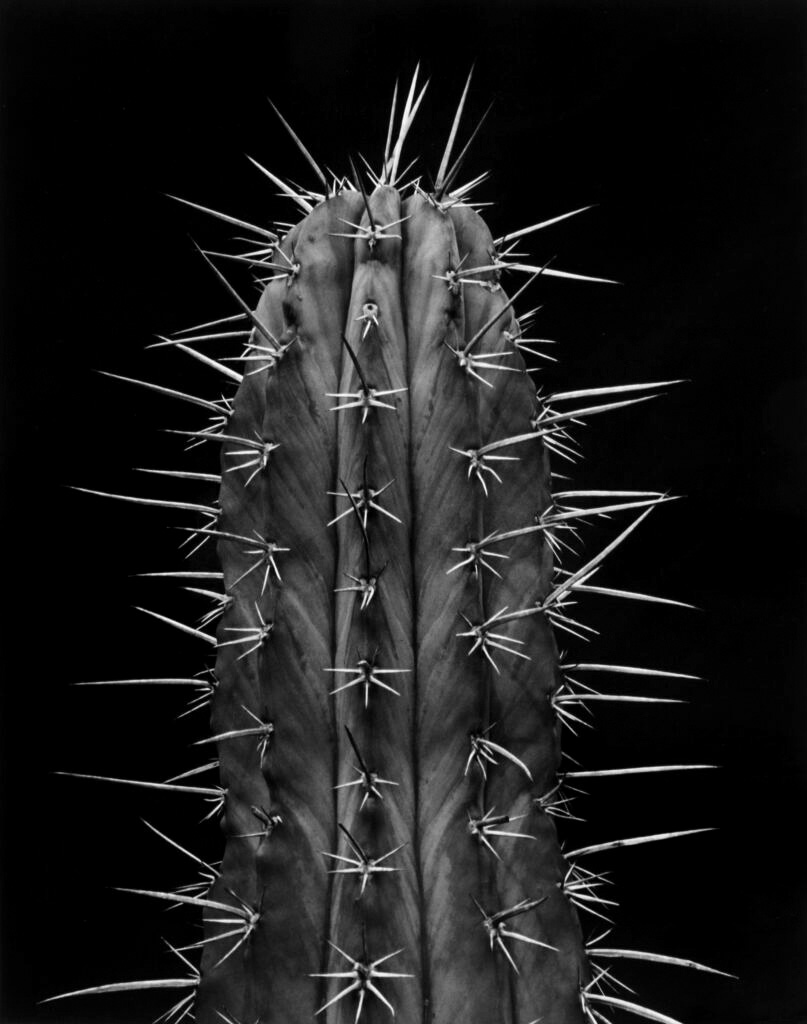
Eugenia de Olazabal (Mexican, b. 1936) 'Espinas' c. 1985


Eugenia de Olazabal (Mexican, b. 1936)
Espinas
c. 1985
Gelatin silver print
High Museum of Art, Atlanta, gift of the artist


“Surrealism lies at the heart of the photographic enterprise: in the very creation of a duplicate world, of a reality in the second degree, narrower but more dramatic than the one perceived by natural vision.”


Susan Sontag, 1973


Surreality

Surrealism emerged as an artistic movement in reaction to the horrors of World War I. The often disconcerting imagery and literature of the movement reflected a world that felt disorienting and chaotic and captured how the very foundations of reason and humanity were tested and questioned through the realities of war. In his Surrealist Manifesto (1924), French writer Andre Breton advocates for a rejection of rational ways of approaching the world in four of dreams and imagination as pathways to new creative expressions.

Photography played an important role in the Surrealist movement. Artists valued how the medium could capture spontaneous moments that reveal the unexpected, be manipulated to stage scenes, or be altered with darkroom processes. They harness photography in a multitude of ways to create dreamlike and unconscious associations with reality. In these galleries, artists explore uncanny moments and create links to the human psyche by focusing on humanlike forms and fragmented body parts, mirrored and doubled views, and the impact of light and shadows in space.

Wall text from the exhibition


Eugène Atget (French, 1857-1927) 'Men's Fashions (Avenue des Gobelins)' 1925, printed 1956


Eugène Atget (French, 1857-1927)
Men’s Fashions (Avenue des Gobelins)
1925, printed 1956
Gelatin silver print
Purchase


Eugène Atget was the great chronicler of Paris at the turn of the century. His vast photographic archive captures a city on the precipice of modernisation. Though his photographs of empty city streets were documentary in nature, the Surrealists admired their dreamlike quality and claimed Atget as one of their own despite his protestations. They believed any photograph could shed its original context and intent when viewed with a surrealist sensibility. Atget’s photograph of mannequins peering out of a shop window appealed to the movement by embodying the uncanny valley, where the human likeness of a nonhuman entity evokes both affinity and discomfort in viewers.

Text from the High Museum of Art website


Florence Henri (Swiss born United States, 1893-1982) 'Composition' 1932, printed 1972


Florence Henri (Swiss born United States, 1893-1982)
Composition
1932, printed 1972
Gelatin silver print
High Museum of Art, Atlanta, gift of Dr. Joe B. Massey in honor of Maria L. Kelly


Florence Henri is well known for her manipulations of light and form that create complex, surrealist scenes. She used angled mirrors to frame, obscure, and replicate portions of scenes to dissolve a sense of perspective and space, as seen in this still life comprising mirrors, pears, and an image of the sea. After only one semester studying under László Moholy-Nagy at the Bauhaus in 1927, Henri shifted her focus from painting to photography and began using various experimental techniques such as photomontage, multiple exposures, photograms, and negative printing.

Text from the High Museum of Art website


Barbara Kasten (American, b. 1936) 'Construct NYC' 1984


Barbara Kasten (American, b. 1936)
Construct NYC
1984
Dye destruction print
High Museum of Art, Atlanta, gift of Lucinda W. Bunnen for the Bunnen Collection
© Barbara Kasten


Barbara Kasten’s art is as much about the process of setting up innovative still life scenes as it is about the photographs she makes of them. Her Constructs series focuses on large-scale complex assemblages that she builds in her studio using a wide variety of materials, including painted wood, plaster, mirrors, screens, and fibers. Her work is not digitally altered; instead, she complicates the scene using mirrors and light, much in the tradition of Florence Henri, whose photograph is also on view in the exhibition.

Text from the High Museum of Art website


Manipulations

This final section features photographers from the New Vision period to the present day who experiment with physically manipulating photographs. Through approaches such as double exposure, photomontage, surface alteration, and multilayering, they challenge and expand our perceptions of reality. The artworks in this section prioritise the creative process through labour, intention, intervention, and theatricality.

Double exposures is the process of photographing multiple images with the same negative within the camera, resulting in layered images that often provide a frenetic, multifaceted view of a scene. In contrast to the in-camera process of double exposure, photomontage combines separate images in the darkroom to produce a final photograph that emphasises the image’s artifice and absurdity. Physically disrupting the surface of photographs with alterations such as adding unnatural colour, drawing connections, stitching into prints, or inscribing texts augments the visual experience and offers emotional and narrative depth. Finally, whether through ancient visual techniques like the camera obscure or new technologies like digital screens, these artists create enigmatic scenes by layering and physically transforming subject, composition, and image.

Wall text from the exhibition


Barbara Morgan (American, 1900-1992) 'Protest' 1940


Barbara Morgan (American, 1900-1992)
Protest
1940
Gelatin silver print
High Museum of Art, Atlanta, purchase


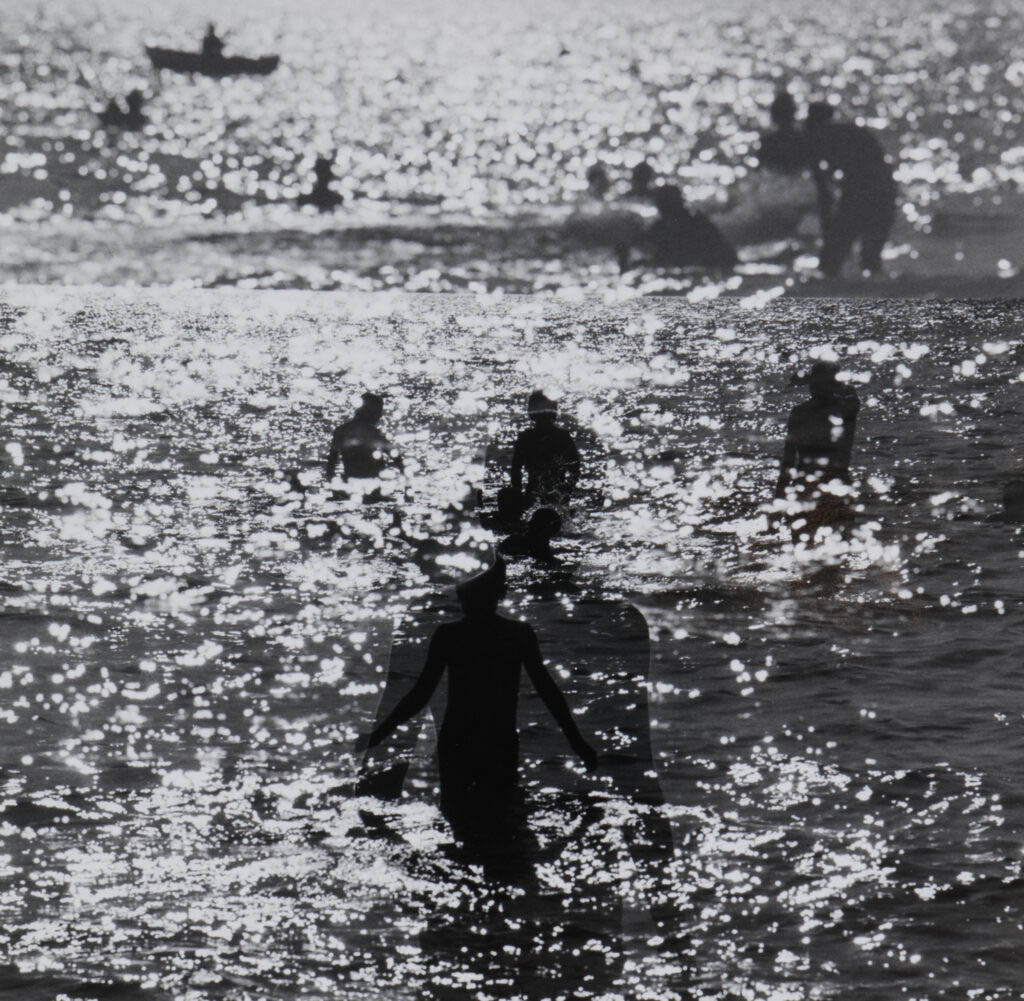
Charles Swedlund (American, b. 1935) '31 St. Beach' c. 1955


Charles Swedlund (American, b. 1935)
31 St. Beach
c. 1955
Gelatin silver print
High Museum of Art, Atlanta, gift of Steven Nordman
© Charles Swedlund


Jerry Uelsmann (American, 1934-2022) 'Untitled' 1964


Jerry Uelsmann (American, 1934-2022)
Untitled
1964
Gelatin silver print
High Museum of Art, Atlanta, purchase with funds from a friend of the Museum


Lucinda Bunnen (American, 1930-2022) 'Untitled' 1974


Lucinda Bunnen (American, 1930-2022)
Untitled
1974
Gelatin silver print
High Museum of Art, Atlanta, purchase with funds from the Lawrence and Alfred Fox Foundation for the Ralph K. Uhry Collection
© Lucinda Bunnen


Duane Michals (American, b. 1932)
'Untitled' 1989 From the 'Indomitable Spirit Portfolio'


Duane Michals (American, b. 1932)
Untitled
1989
From the Indomitable Spirit Portfolio
Gelatin silver print
High Museum of Art, Atlanta


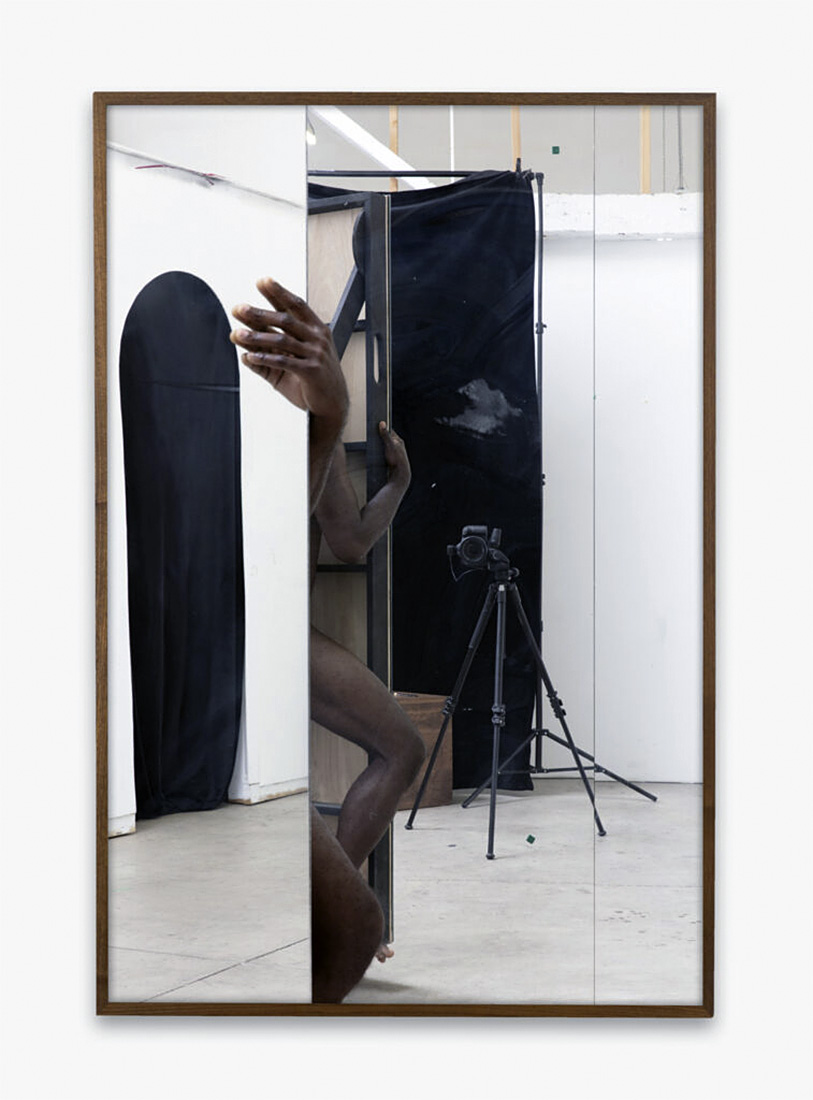
Paul Mpagi Sepuya (American, b. 1982) 'Studio (0X5A8180)' 2021


Paul Mpagi Sepuya (American, b. 1982)
Studio (0X5A8180)
2021
Archival pigment print
High Museum of Art, Atlanta, purchase with funds from the Donald and Marilyn Keough Family Foundation
© Paul Mpagi Sepuya


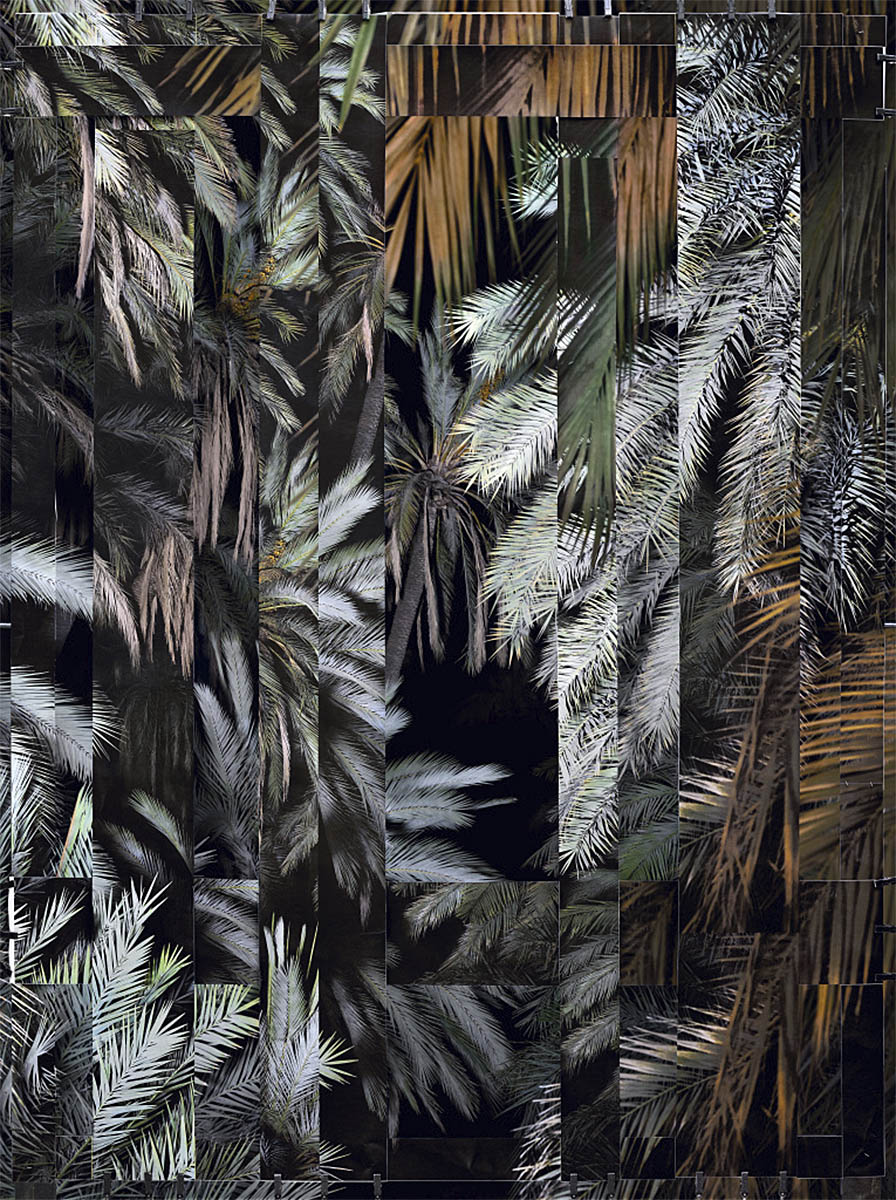
Noémie Goudal (French, b. 1984) 'Phoenix V' 2021


Noémie Goudal (French, b. 1984)
Phoenix V
2021
Dye coupler print
High Museum of Art, Atlanta, purchase through funds provided by patrons of Collectors Evening 2023


Noémie Goudal visualises “deep time” (geological history of the planet) and paleoclimatology (study of past climates) to challenge our perception of the world. Referring to the ancient continental split two billion years ago that formed South America and Africa, this image features the Phoenix atlantica, a palm tree that grows on both sides of the Atlantic. Goudal arranged strips of photographic prints of the palms made on one continent in front of the physical palms on the other and rephotographed the scene. The resulting image interweaves the two continents, creating a glitchy, kaleidoscopic view meant to unsettle our sense of stability and the constancy of the planet.

Text from the High Museum of Art website


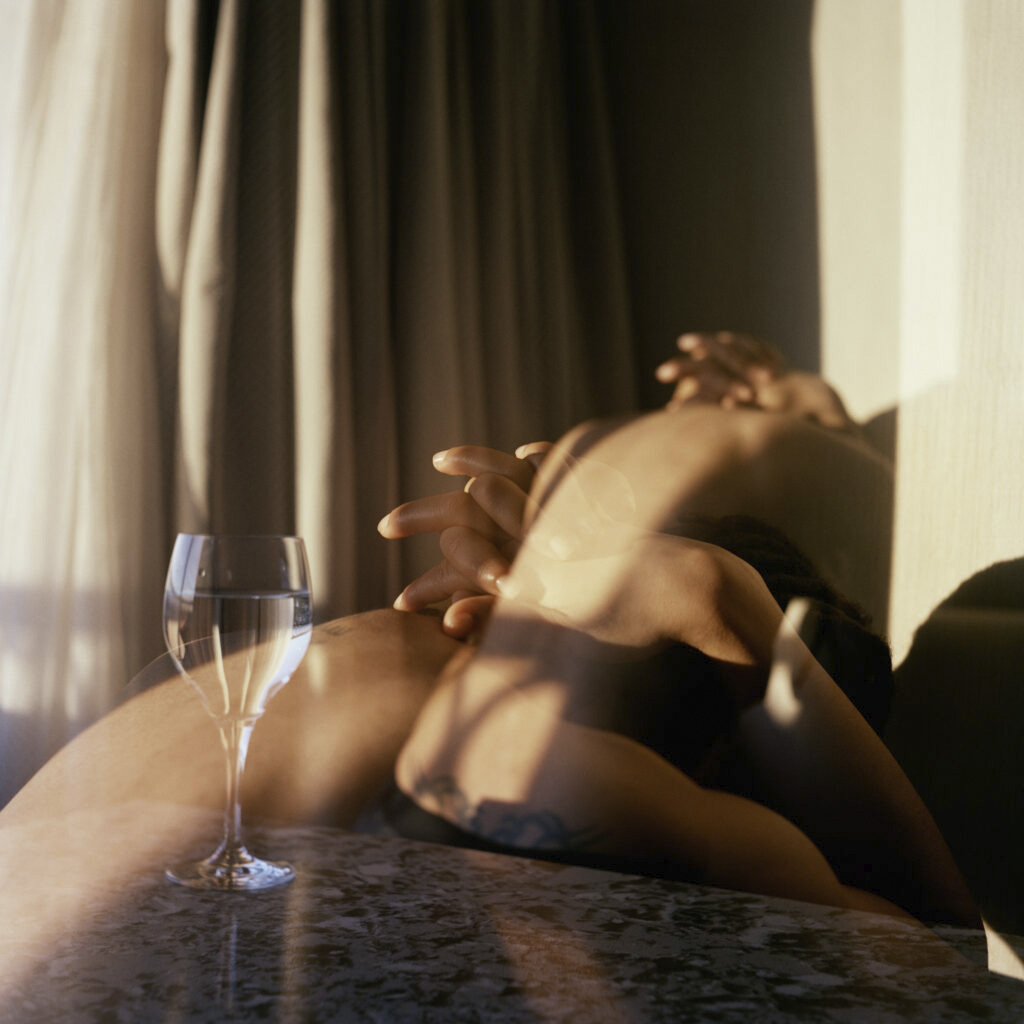
Naima Green (American, b. 1992) 'It Lingers Sweetly' 2022


Naima Green (American, b. 1992)
It Lingers Sweetly
2022
Pigmented inkjet print
High Museum of Art, Atlanta, purchase with funds from the LGBTQIA+ Photography Centennial Initiative


Naima Green’s practice centres connection and collaboration to cast a tender lens on her own queer community of colour. Her lyrical portraits take shape in intimate domestic spaces and airy outdoor environments that embody havens for the people in those spaces. Through double exposure and serial photographs, she provides what she calls “multiple entry points” into a moment in time, translating movements and emotions into a single image. She explains her interest in double exposure “as a means of capturing things that can’t be held in just one way … ,” allowing her to “play with loosening the narrative and letting go of some control.”

Text from the High Museum of Art website


The High Museum of Art
1280 Peachtree St NE
Atlanta, GA
30309

Opening hours:
Tuesday – Saturday 10am – 5pm
Sunday 12 – 5pm
Monday closed

The High Museum of Art website

LIKE ART BLART ON FACEBOOK

Back to top

Exhibition: ‘Typologien: Photography in 20th-century Germany’ at Fondazione Prada, Milan

Exhibition dates: 3rd April – 14th July, 2025

Curator: Susanne Pfeffer


Heinrich Riebesehl (German, 1938-2010) 'Menschen Im Fahrstuhl, 20.11.1969' [People in the Elevator, 20.11.1969] 1969 from the exhibition 'Typologien: Photography in 20th-century Germany' at Fondazione Prada, Milan, April - July, 2025


Heinrich Riebesehl (German, 1938-2010)
Menschen Im Fahrstuhl, 20.11.1969 [People in the Elevator, 20.11.1969]
1969
Gelatin silver print, printed 2007
Kicken Berlin
© Heinrich Riebesehl, by SIAE 2025


Once more, with feeling

“Typology remains a highly challenging and complex notion. It operates in a paradoxical regime: on the one hand, this approach can lead to a systematic recording of people and objects based on extreme objectivity; on the other hand, typology corresponds to an individual and arbitrary choice, revealing itself as a disturbing and potentially subversive act.” (Press release)

Objective / subjective
Pattern / randomness
Isolation / extinction
Morphology / mutation
Specific / anonymous
Repetition / difference
Same / other
Structure / creativity
Orientation / disorientation
Universal / individual
Reality / imagination
Documentation / disruption
Omnipresent / unique
Exact / imprecise
Composed / emotional
Staged / snapshot
Concept / feeling
Formal / intuitive
Ritual / subversion
Collaboration / resistance

Et cetera, et cetera…

Inherent in one is the other.

Every photo within a Becher grid contains its own difference.

Dr Marcus Bunyan


Many thankx to the Fondazione Prada for allowing me to publish the photographs in the posting. Please click on the photographs for a larger version of the image.


Let’s not beat around the bush. Despite protestations to the contrary (appeals to the objectivity of the image, eschewing entirely the aspects of beauty, emotion and opinion; the rigorous frontality of the individual images giving them the simplicity of diagrams, while their density of detail offers encyclopaedic richness) these are subjective images for all their objective desire. The paradox is the more a photographer strives for objectivity, the more ego drops away, the more the work becomes their own: subjective, beautiful, emotive.


Marcus Bunyan commenting on the exhibition Bernd and Hilla Becher: Mines and Mills – Industrial Landscapes at Fotomuseum Winterthur, Zurich, February, 2012


“What happens in the case of mutation? Consider the example of the genetic code. Mutation normally occurs when some random event (for example, a burst of radiation or a coding error) disrupts an existing pattern and something else is put in its place instead. Although mutation disrupts pattern, it also presupposes a morphological standard against which it can be measured and understood as mutation. We have seen that in electronic textuality, the possibility for mutation within the text are enhanced and heightened by long coding chains. We can now understand mutation in more fundamental terms. Mutation is critical because it names the bifurcation point at which the interplay between pattern and randomness causes the system to evolve in a new direction. It reveals the productive potential of randomness that is also recognized within information theory when uncertainty is seen as both antagonistic and intrinsic to information.

We are now in a position to understand mutation as a decisive event in the psycholinguistics of information. Mutation is the catastrophe in the pattern / randomness dialectic analogous to castration in the presence / absence dialectic. It marks a rupture of pattern so extreme that the expectation of continuous replication can in longer be sustained. But as with castration, this only appears to be a disruption located at a specific moment. The randomness to which mutation testifies is implicit in the very idea of pattern, for only against the background of nonpattern can pattern emerge. Randomness is the contrasting term that allows pattern to be understood as such.”


Hayles, Katherine. How We Became Posthuman: Virtual Bodies in Cybernetics, Literature, and Informatics. Chicago: University of Chicago Press, 1999, pp. 30-33


Heinrich Riebesehl (German, 1938-2010) 'Menschen Im Fahrstuhl, 20.11.1969' [People in the Elevator, 20.11.1969] 1969


Heinrich Riebesehl (German, 1938-2010)
Menschen Im Fahrstuhl, 20.11.1969 [People in the Elevator, 20.11.1969]
1969
Gelatin silver print, printed 2007
Kicken Berlin
© Heinrich Riebesehl, by SIAE 2025


In the series Menschen Im Fahrstuhl, 20.11.1969 (People in the elevator, 20.11.1969) shot in 1969, Heinrich Riebesehl conceptualised his interest in the photographic portrait. The portraits of the workers of the Hannoversche Presse (a daily newspaper in Hanover) – taken inside an elevator with a remotely operated small-format camera – are dated and numbered in sequential order: Riebesehl dispensed with a title or a more detailed description of the subjects portrayed. By omitting distinctive elements from the images, such as the profession or age of the subjects, he made the situation the key factor in the shots. In fact, the images are studies of the behaviors of people in that particular space, their body languages and gazes. Riebesehl knew that environment very well, because he had worked for a long time as a photojournalist, before turning to conceptual art photography.

Exhibition text from the Fondazione Prada by Cord Riechelmann


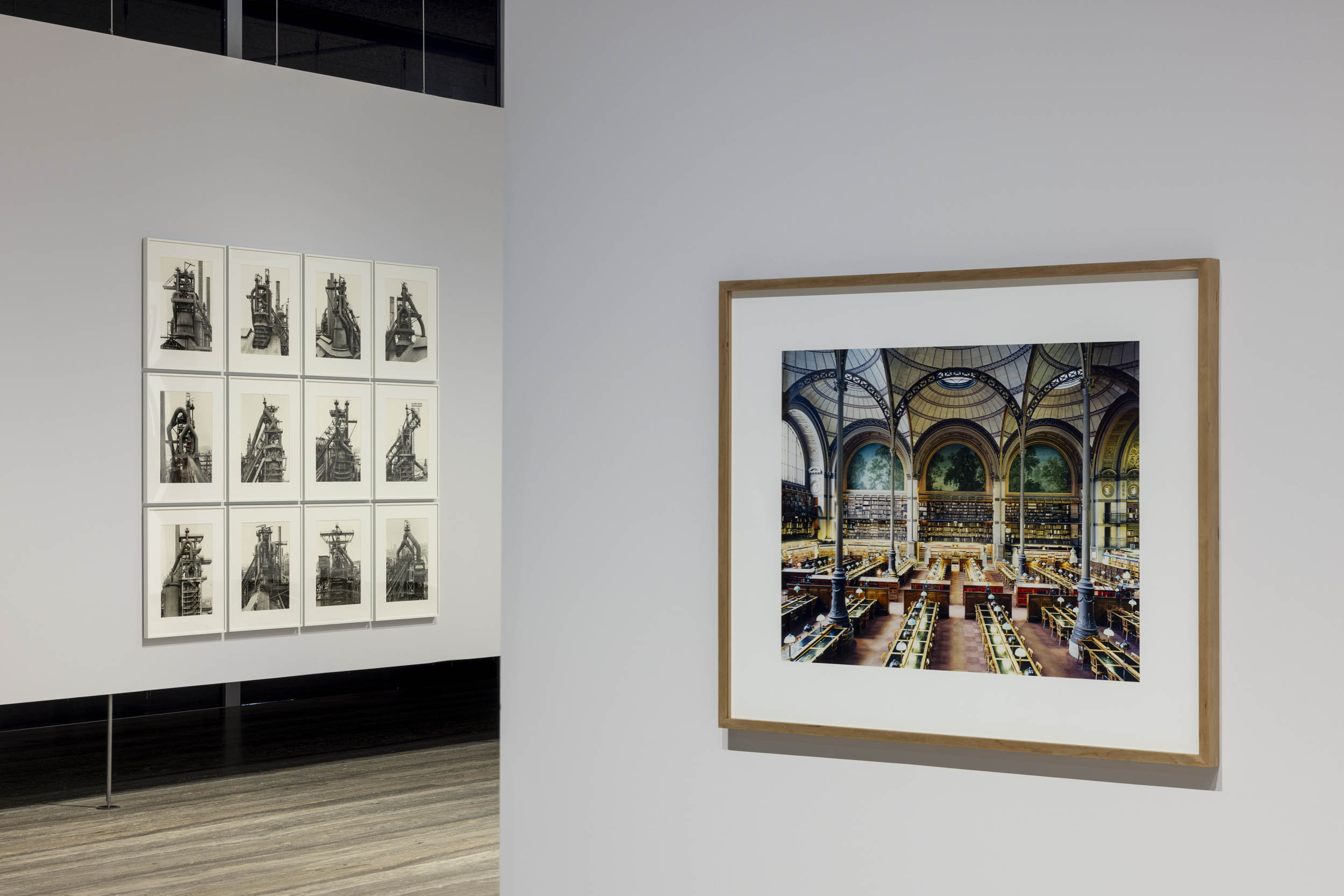
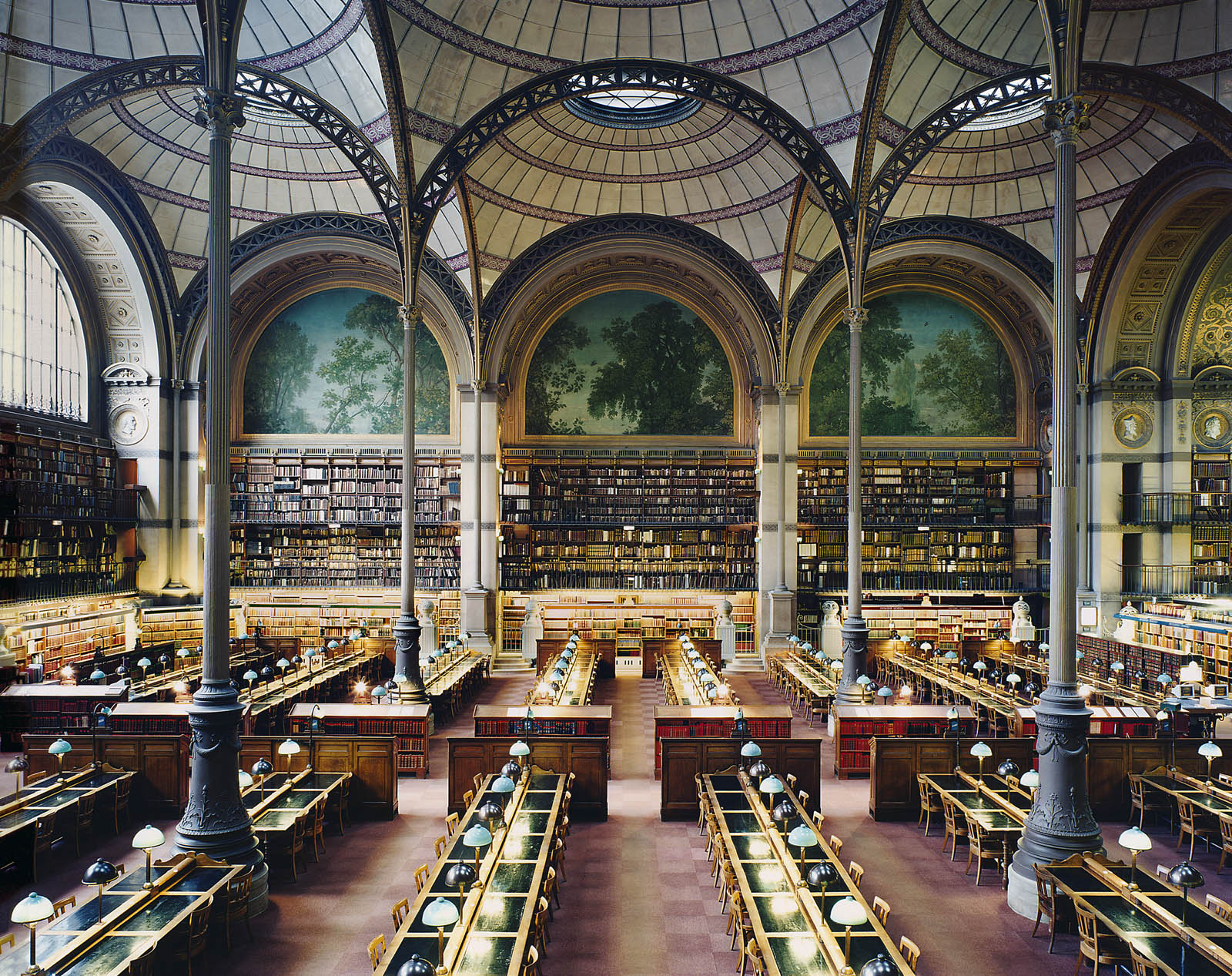
Installation view of the exhibition 'Typologien: Photography in 20th-century Germany' at Fondazione Prada, Milan showing at left Bernd and Hiller Becher's 'Hochöfen' (Blast furnaces) 1970-1989; and at right, Candida Höfer's 'Bibliotheque Nationale de France XXIII' 1997


Installation view of the exhibition Typologien: Photography in 20th-century Germany at Fondazione Prada, Milan showing at left Bernd and Hiller Becher’s Hochöfen (Blast furnaces) 1970-1989; and at right, Candida Höfer’s Bibliotheque Nationale de France XXIII 1997


Candida Höfer (German, b. 1944) 'Bibliotheque Nationale de France XXIII' 1997 from the exhibition 'Typologien: Photography in 20th-century Germany' at Fondazione Prada, Milan, April - July, 2025


Candida Höfer (German, b. 1944)
Bibliotheque Nationale de France XXIII
1997
Inkjet print
© Candida Höfer, Cologne


In the photographs of libraries in London, Paris, and New York, which at first glance appear to be technically scientific records, Candida Höfer manages to capture something that is not visible: ingenuity. The libraries’ rooms have high ceilings, and the rows of seats are neatly arranged. In their impressiveness, they reflect the architecture of the 19th-century conception of knowledge and science, typical of the dominant nations of the time because of their commercial and colonial power. The objective nature of the deserted spaces, precisely in how they seem to be neutral to the individual needs of the students, suggests something in the image that could hardly be less objective: the possibility for intellectual exchange that these spaces promise and deliver in Höfer’s photographs.

Exhibition text from the Fondazione Prada by Cord Riechelmann


Candida Höfer (German, b. 1944) 'Zoologischer Garten Washington DC IV' 1992


Candida Höfer (German, b. 1944)
Zoologischer Garten Washington DC IV
1992
Inkjet print
© Candida Höfer, by SIAE 2025/VG BildKunst, Bonn 2025


In Candida Höfer’s photographs shot in zoos, the animals document a specific form of loneliness in modern times. In these images, the lines of development of two disciplines collide. Not only in the photographs, but also in reality, they function independently of each other: modern architecture and behavioural research. Modern architecture has become established in zoological gardens but has never considered the animal and its needs. Based on the knowledge gained from behavioural research, by choosing to portray iconic large mammals such as giraffes, lions, and polar bears, Höfer has represented the dilemma of a world in which entire species are threatened with extinction and in which zoos see themselves as a kind of ‘Noah’s Ark.’

Exhibition text from the Fondazione Prada by Cord Riechelmann


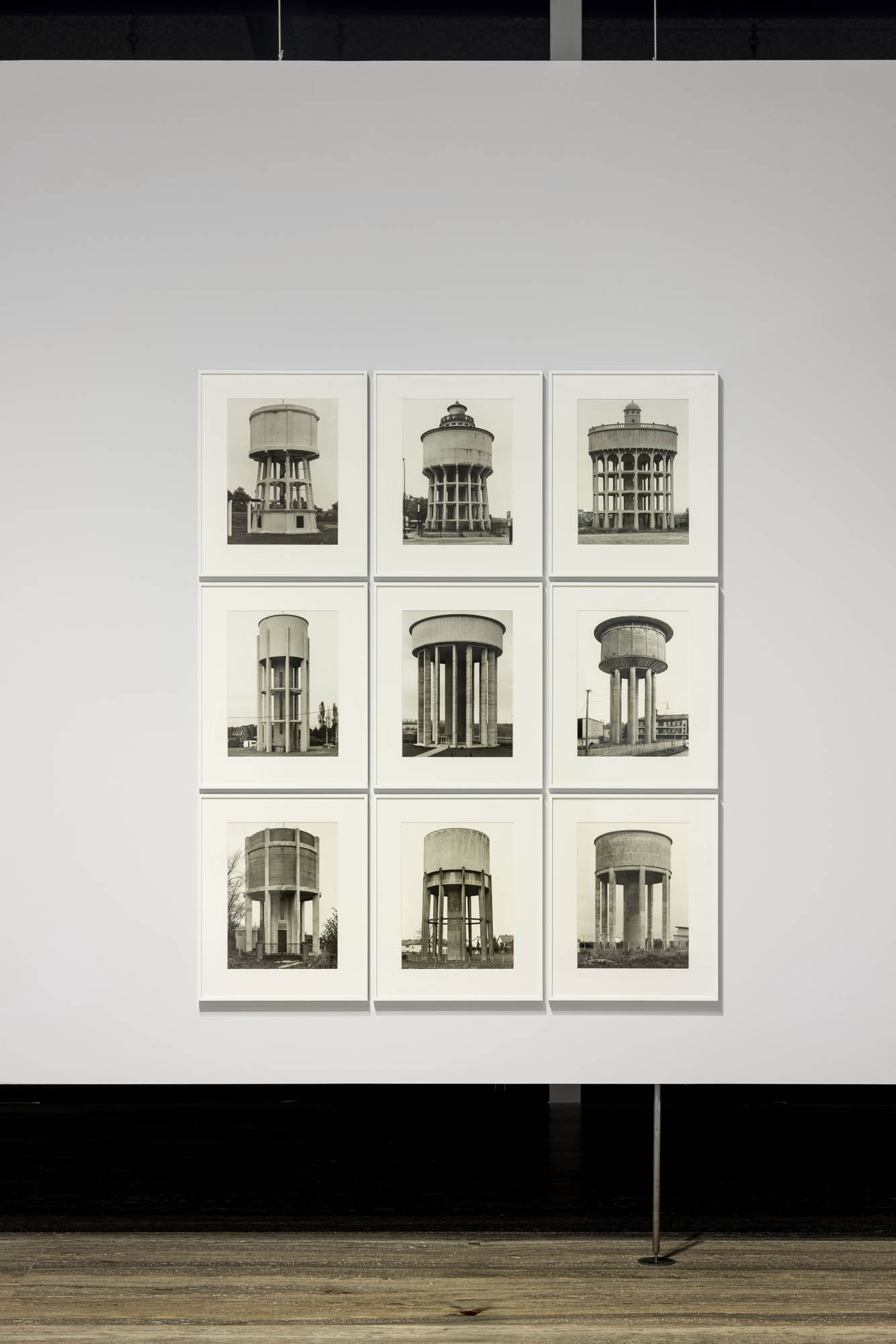
Installation view of the exhibition 'Typologien: Photography in 20th-century Germany' at Fondazione Prada, Milan showing Bernd and Hilla Becher's 'Wassertürme (Water towers)' 1966-1986


Installation view of the exhibition Typologien: Photography in 20th-century Germany at Fondazione Prada, Milan showing Bernd and Hilla Becher’s Wassertürme (Water towers) 1966-1986


Bernd and Hilla Becher (German) Bernd Becher (German, 1931-2007) Hilla Becher (German, 1934-2015) 'Wassertürme (Water towers)' 1966-1986 from the exhibition 'Typologien: Photography in 20th-century Germany' at Fondazione Prada, Milan, April - July, 2025


Bernd and Hilla Becher (German)
Bernd Becher (German, 1931-2007)
Hilla Becher (German, 1934-2015)
Wassertürme (Water towers)
1966-1986
Leeds, GB, 1966
Hasselt, B, 1985
Newton le Willows, GB, 1966
Beaufays/Liège, B, 1979
Kwaadmechelen, B, 1971
Padova, I, 1986
Outreau/Boulogne, F, 1973
Primasens, Saarland, D, 1980
Mesnil-Val, F, 1972
9 gelatin silver prints
© Estate Bernd & Hilla Becher, represented by Max Becher, courtesy of Die Photographische Sammlung/SK Stiftung Kultur – Bernd & Hilla Becher Archive, Cologne, 2025


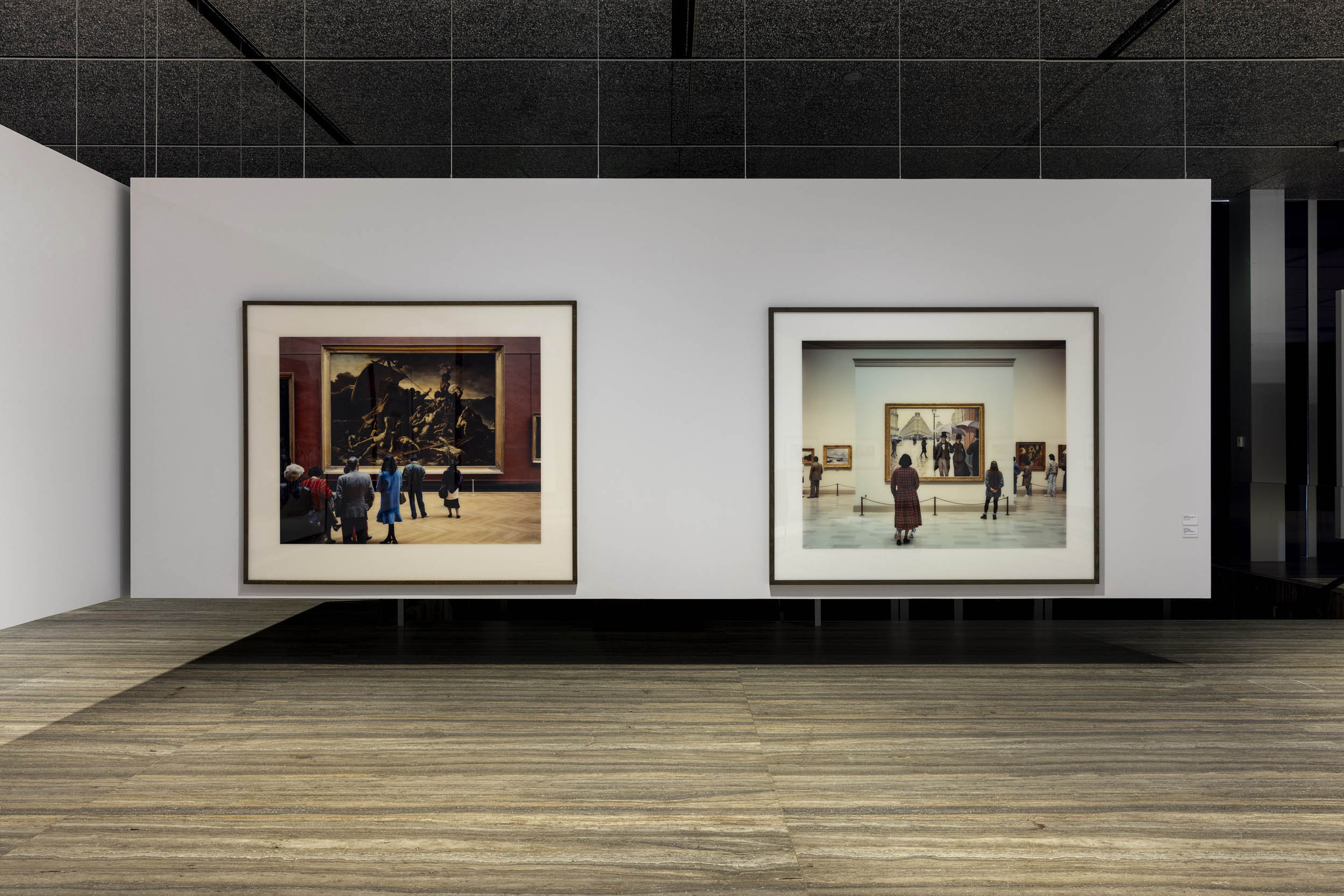
Installation view of the exhibition 'Typologien: Photography in 20th-century Germany' at Fondazione Prada, Milan showing the work of Thomas Struth


Installation view of the exhibition Typologien: Photography in 20th-century Germany at Fondazione Prada, Milan showing the work of Thomas Struth


Installation view of the exhibition 'Typologien: Photography in 20th-century Germany' at Fondazione Prada, Milan showing the work of Thomas Struth with at left, 'Musée du Louvre IV' Paris, 1989


Installation view of the exhibition Typologien: Photography in 20th-century Germany at Fondazione Prada, Milan showing the work of Thomas Struth with at left, Musée du Louvre IV Paris, 1989


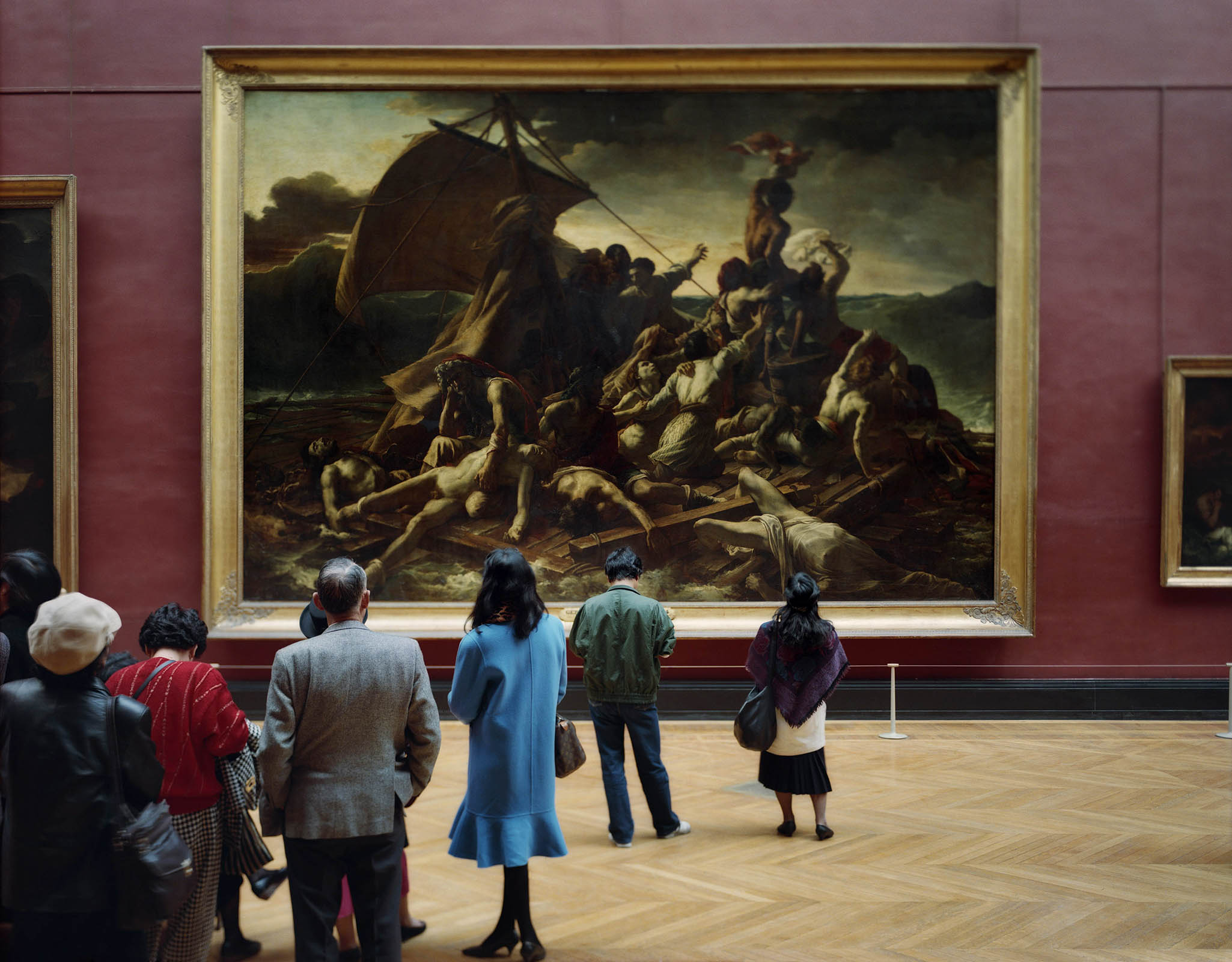
Thomas Struth (German, b. 1954) 'Musée du Louvre IV' Paris, 1989


Thomas Struth (German, b. 1954)
Musée du Louvre IV
Paris, 1989
Colour photograph on C-print
© Thomas Struth / Courtesy ZKM | Center for Art and Media Karlsruhe, Karlsruhe


In his practice, Thomas Struth demonstrates meticulous attention to the architectural environment, as well as to people and objects. In his large-format colour series Museum Photographs (1989-1992), Struth captures anonymous individuals and crowds gazing at artworks in museums. A significant example is Louvre 4, Paris 1989, in which the artist photographs from behind a group of viewers standing in front of Théodore Géricault’s The Raft of the Medusa (1819). Often made with a large-format camera, his images reflect what Struth calls “exact vision”: the framing must not conceal anything or suggest secret content, thus resulting in an enigmatic outcome.

Exhibition text from the Fondazione Prada by Cord Riechelmann


Installation view of the exhibition 'Typologien: Photography in 20th-century Germany' at Fondazione Prada, Milan showing Andreas Gursky's 'Paris, Montparnasse' 1993


Installation view of the exhibition Typologien: Photography in 20th-century Germany at Fondazione Prada, Milan showing Andreas Gursky’s Paris, Montparnasse 1993


Andreas Gursky’s large-format work, Paris, Montparnasse (1993) has become an iconic example of his work. It depicts the Maine-Montparnasse II block of flats, located on Rue Commandant-Mouchotte in Paris and built between 1959 and 1964 on a design by French architect Jean Dubuisson. This is one of the first images that Gursky created using digital post-production. In real life, the building does not look the way it appears in the image: using a digital editing process, Gursky transformed the façade into a game of differences and repetitions by processing the windows. In fact, by reiterating forms that are always identical, he produced a seemingly infinite number of them, with colour variations that are activated by a calculated dynamic.

Exhibition text from the Fondazione Prada by Cord Riechelmann


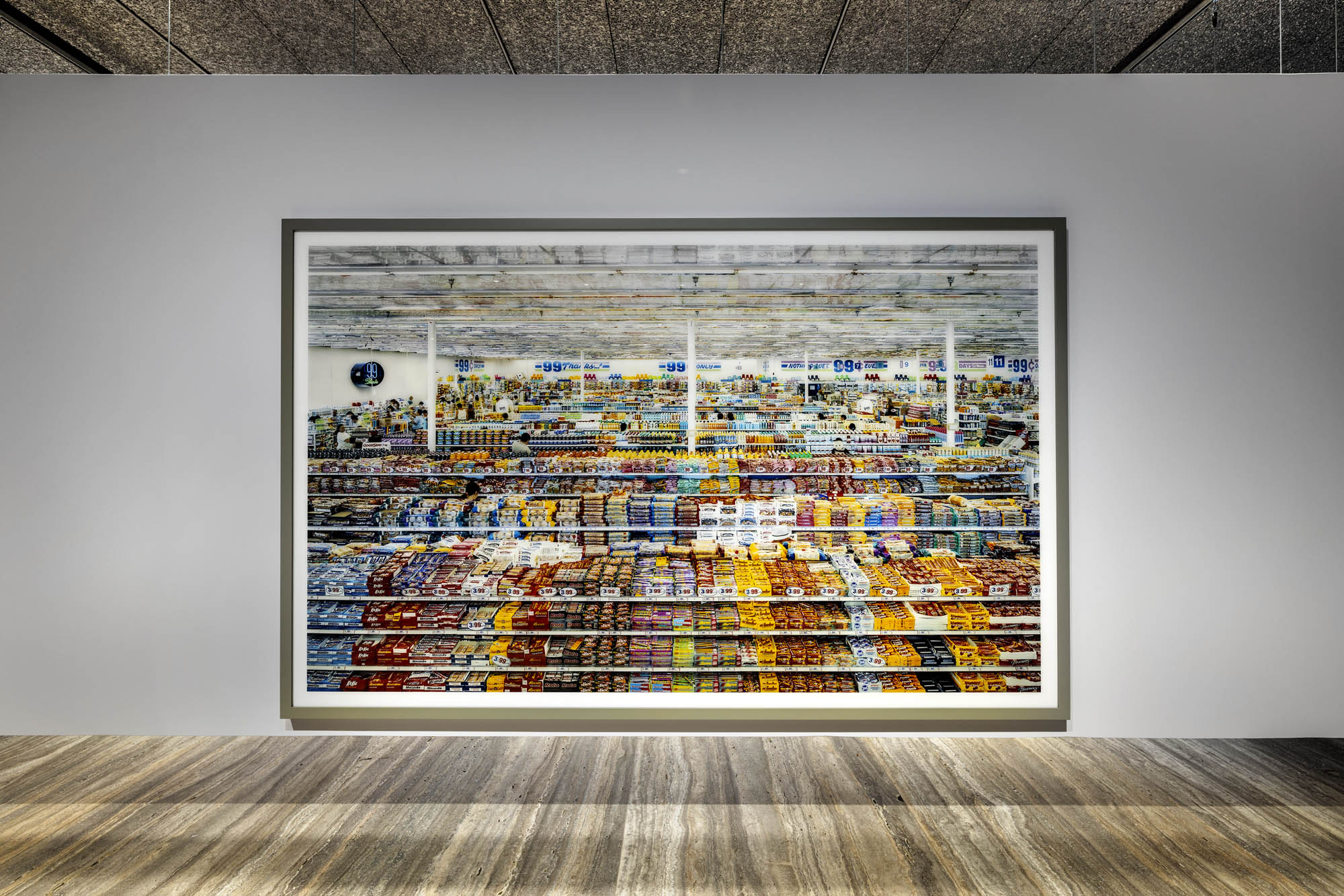
Installation view of the exhibition 'Typologien: Photography in 20th-century Germany' at Fondazione Prada, Milan showing Andreas Gursky's '99 Cent' 1999


Installation view of the exhibition Typologien: Photography in 20th-century Germany at Fondazione Prada, Milan showing Andreas Gursky’s 99 Cent 1999


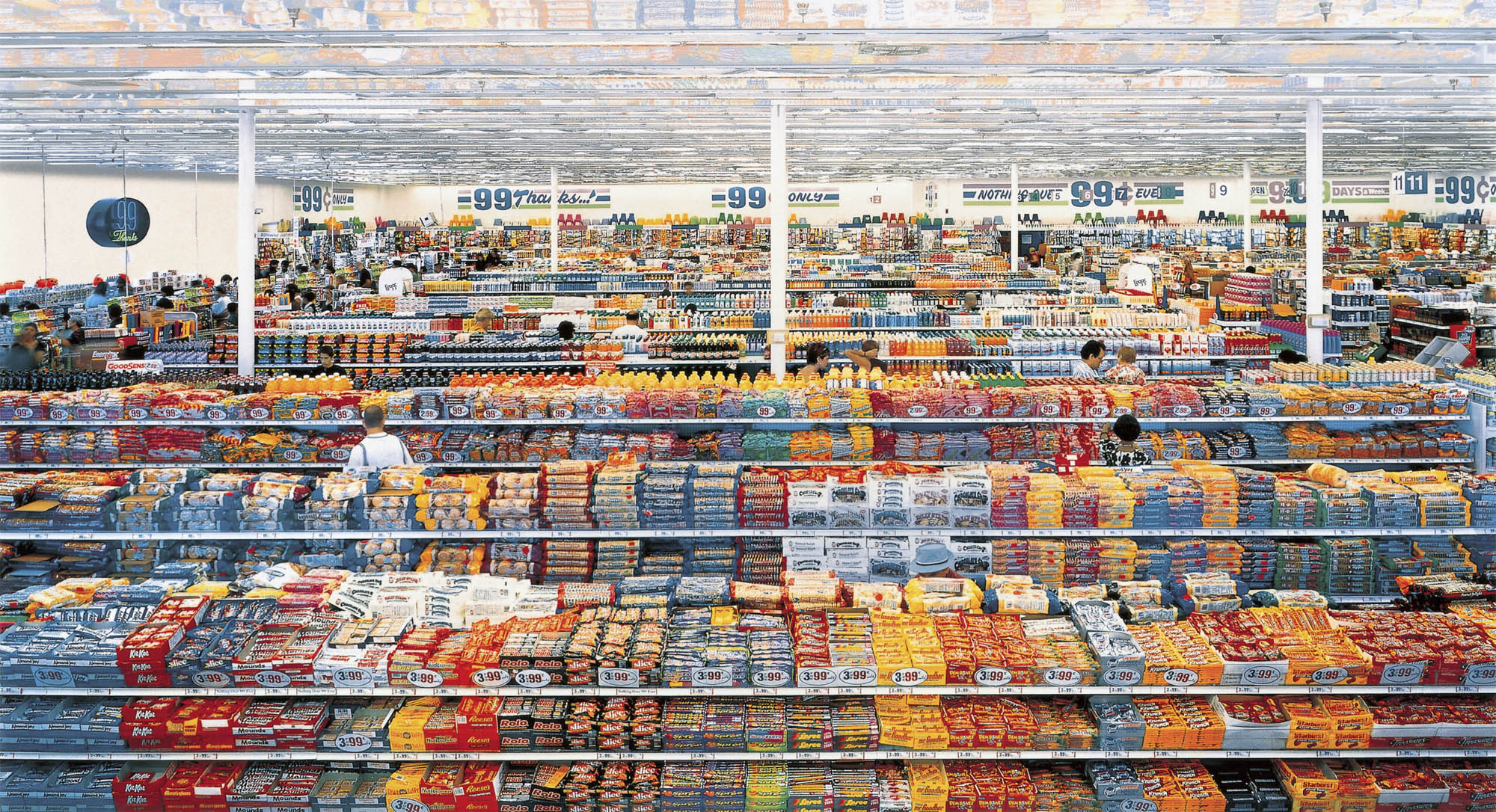
In 99 Cent (1999), Andreas Gursky photographed supermarket shelves using the same formal scheme used in Paris, Montparnasse (1993). The shelves crammed with everyday products such as detergents represent the inexhaustible flow of goods in the global system of production and distribution. Gursky’s work conveys a feeling of disorientation generated by the excessive stimuli and details typical of a shelf in a hypermarket.

Exhibition text from the Fondazione Prada by Cord Riechelmann


Andreas Gursky (German, b. 1955) '99 Cent' 1999


Andreas Gursky (German, b. 1955)
99 Cent
1999 (remastered 2009)
Inkjet print


“Typologien” is an extensive study dedicated to 20th-century German photography. The exhibition, hosted within Podium, the central building of the Milan headquarters, is curated by Susanne Pfeffer, art historian and director of the MUSEUM MMK FÜR MODERNE KUNST, Frankfurt. 

The project attempts to apply the principle of “typology,” which originated in 17th- and 18th-century botany to categorise and study plants, and appeared in photography in the early 1900s, affirming itself in Germany throughout the 20th century. Paradoxically, the given formal principle allows for unexpected convergences of German artists spanning different generations and the manifestation of their individual approaches. 

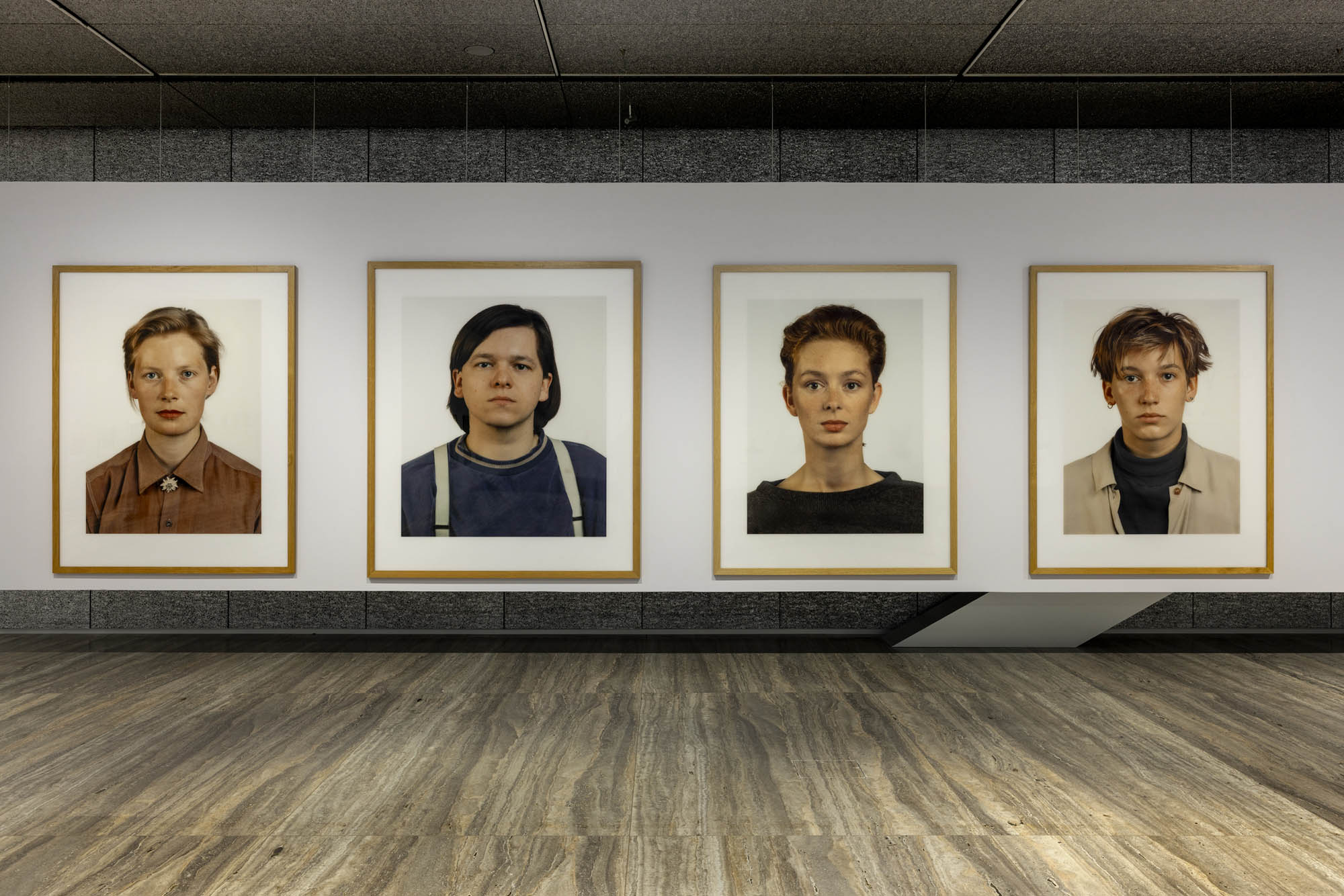
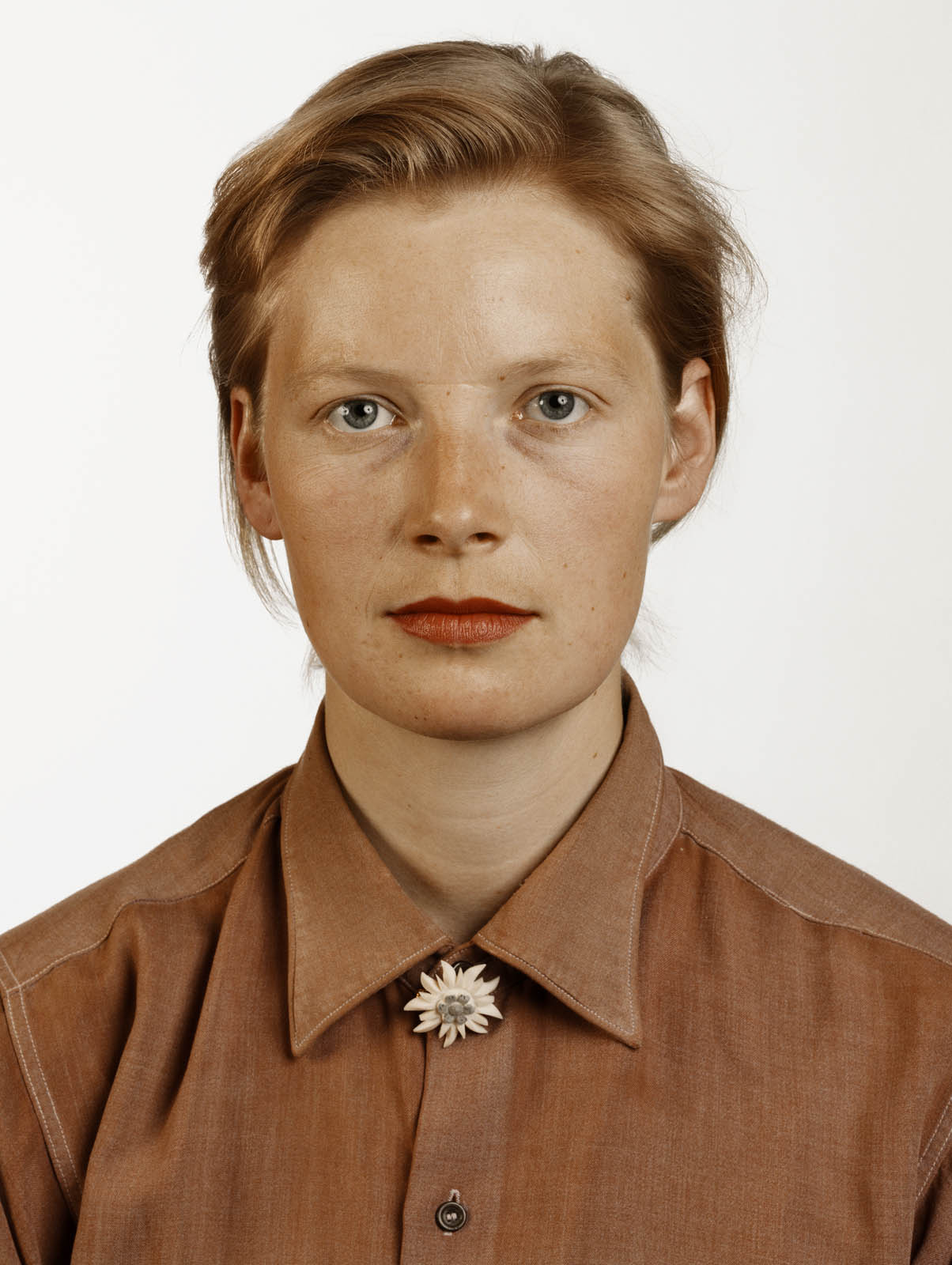
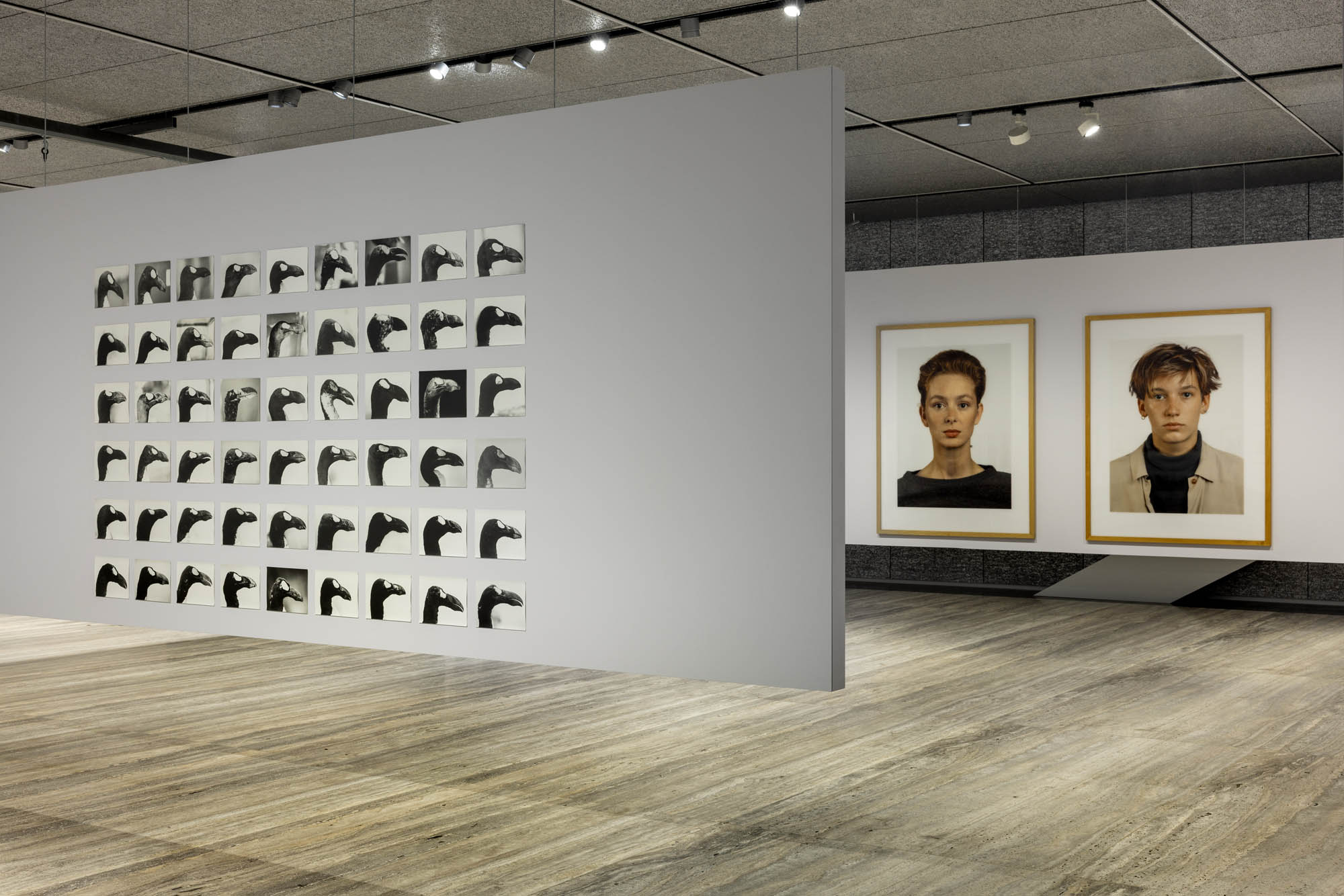
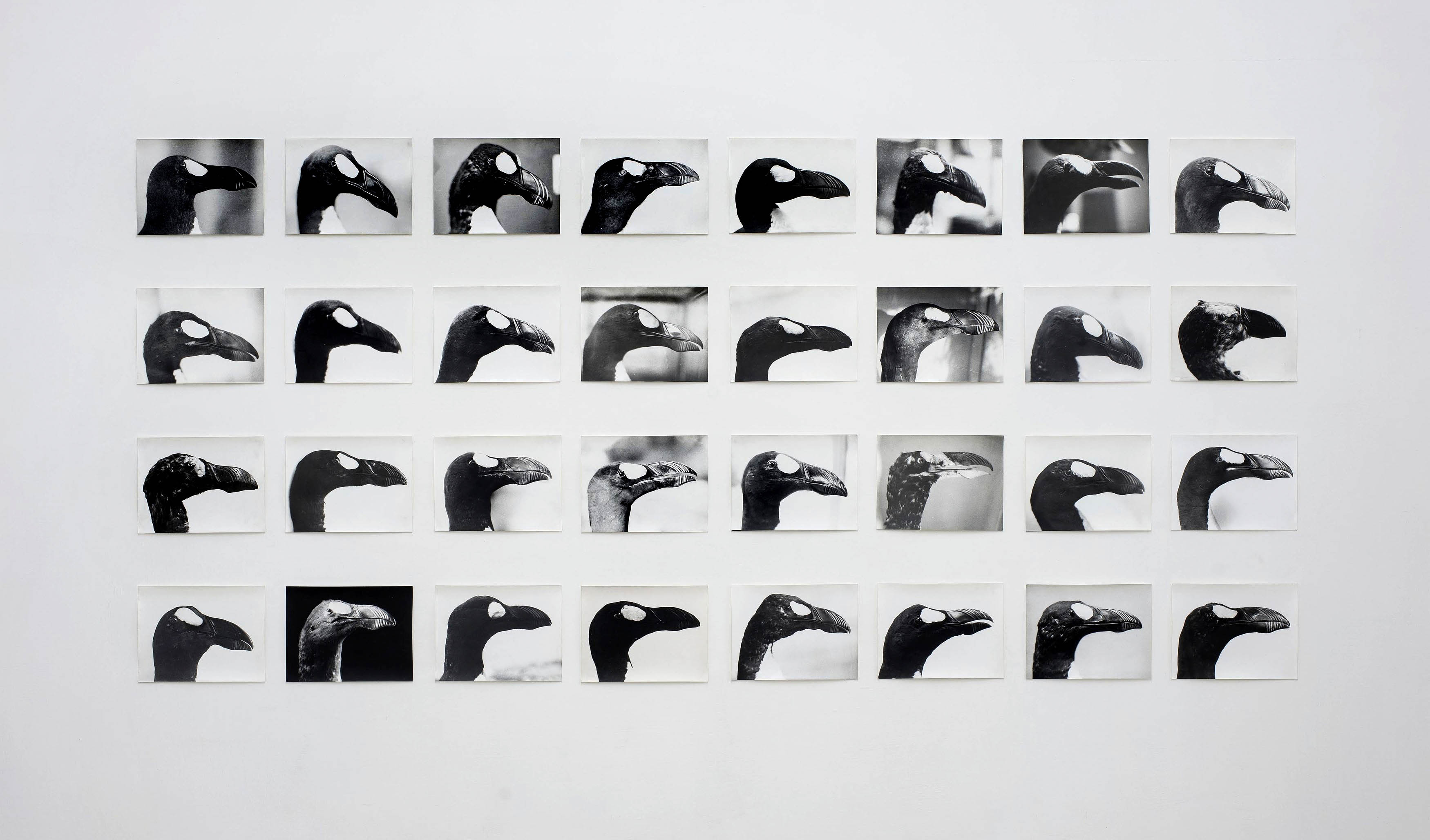
The exhibition path will follow a typological rather than a chronological order, bringing together more than 600 photographic works by 25 established and lesser-known artists essential for recounting a century of German photography, including Bernd and Hilla Becher, Sibylle Bergemann, Karl Blossfeldt, Ursula Böhmer, Christian Borchert, Margit Emmrich, Hans-Peter Feldmann, Isa Genzken, Andreas Gursky, Candida Höfer, Lotte Jacobi, Jochen Lempert, Simone Nieweg, Sigmar Polke, Gerhard Richter, Heinrich Riebesehl, Thomas Ruff, August Sander, Ursula Schulz-Dornburg, Thomas Struth, Wolfgang Tillmans, Rosemarie Trockel, Umbo (Otto Umbehr), and Marianne Wex. A system of suspended walls will create geometric partitions in the exhibition space, forming unexpected connections between artistic practices that differ from each other, but are united by a common principle or intention of classification.

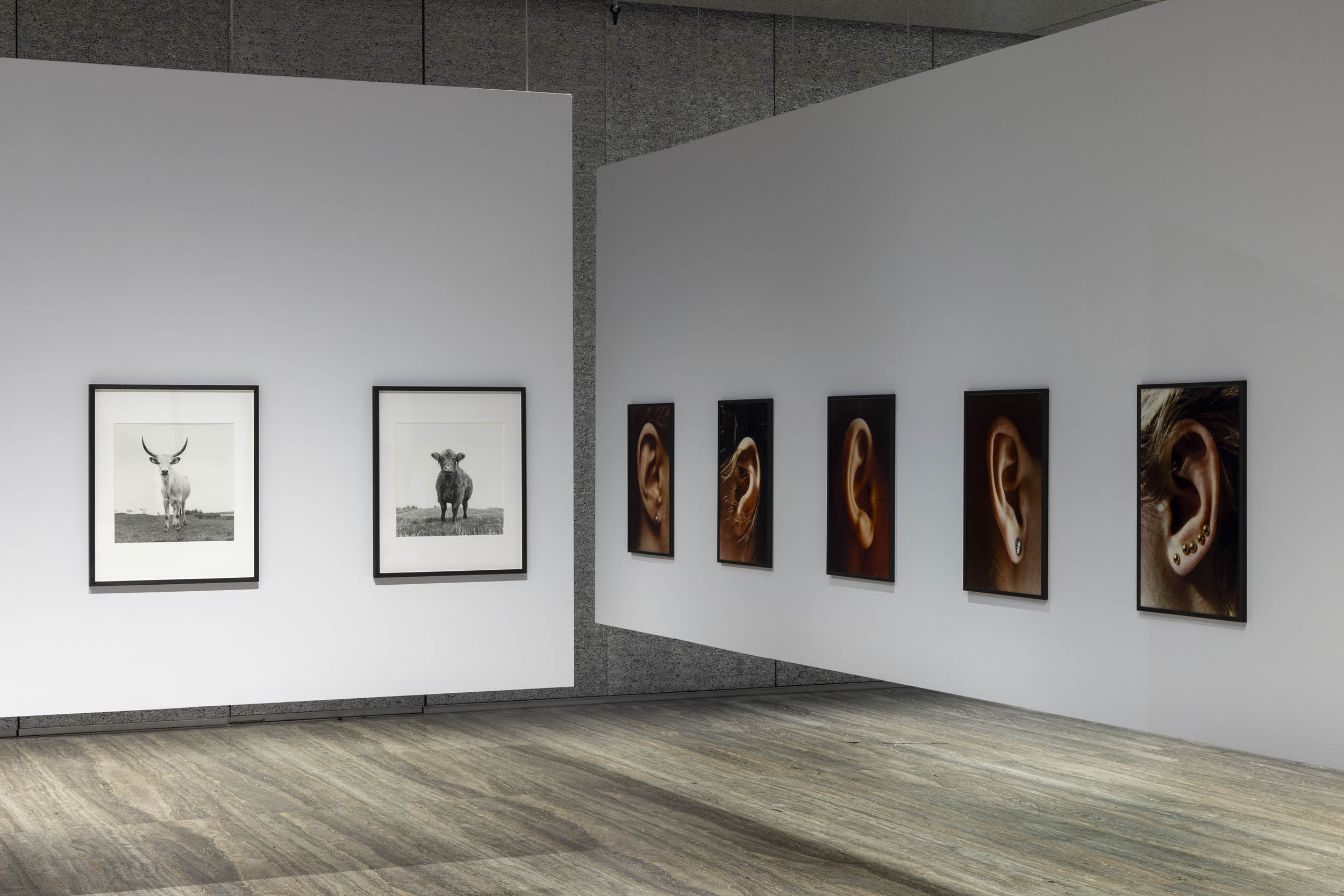
As stated by Susanne Pfeffer, “Only through juxtaposition and direct comparison is it possible to find out what is individual and what is universal, what is normative or real. Differences are evidence of the abundance of nature and the imagination of humans: the fern, the cow, the human being, the ear; the bus stop, the water tower, the stereo system, the museum. The typological comparison allows differences and similarities to emerge and the specifics to be grasped. Unknown or previously unperceived things about nature, the animal, or the object, about place and time become visible and recognisable.”

In photography, employing typologies means affirming an equivalence between images and the absence of hierarchies in terms of represented subjects, motifs, genres, and sources. Despite this, typology remains a highly challenging and complex notion. It operates in a paradoxical regime: on the one hand, this approach can lead to a systematic recording of people and objects based on extreme objectivity; on the other hand, typology corresponds to an individual and arbitrary choice, revealing itself as a disturbing and potentially subversive act.

The hypothesis that photography plays a key role not only in fixing distinctive phenomena but also in organising and classifying a plurality of visible manifestations remains a vital force in today’s artistic efforts to navigate the complexity of our social and cultural realities. With the spread of digital imagery and practices, the concept of typology continues to be questioned and re-defined by contemporary photographers and artists. 

As underlined by Susanne Pfeffer, “The unique, the individual, seems to have been absorbed into a global mass, the universality of things is omnipresent. The Internet allows typologies to be created in a matter of seconds. And yet this is precisely when it seems important – to artists – to take a closer look.” As further explained by Pfeffer, “When the present seems to have abandoned the future, we need to observe the past more closely. When everything seems to be shouting at you and becoming increasingly brutal, it is important to take a quiet pause and use the silence to see and think clearly. When differences are not seen as something other, but turned into something that divides us, it is crucial to notice what we have in common. Typologies allow us to identify remarkable similarities and subtle differences.”

Text from the Fondazione Prada website


Typologien | Fondazione Prada Milano

An extensive study dedicated to 20th-century German photography. “Typologien” attempts to apply the principle of “typology,” which originated in 17th- and 18th-century botany to categorise and study plants, and appeared in photography in the early 1900s, affirming itself in Germany throughout the 20th century.

The exhibition, hosted within Podium, the central building of the Milan headquarters, is curated by Susanne Pfeffer, art historian and director of the MUSEUM MMK FÜR MODERNE KUNST, Frankfurt.


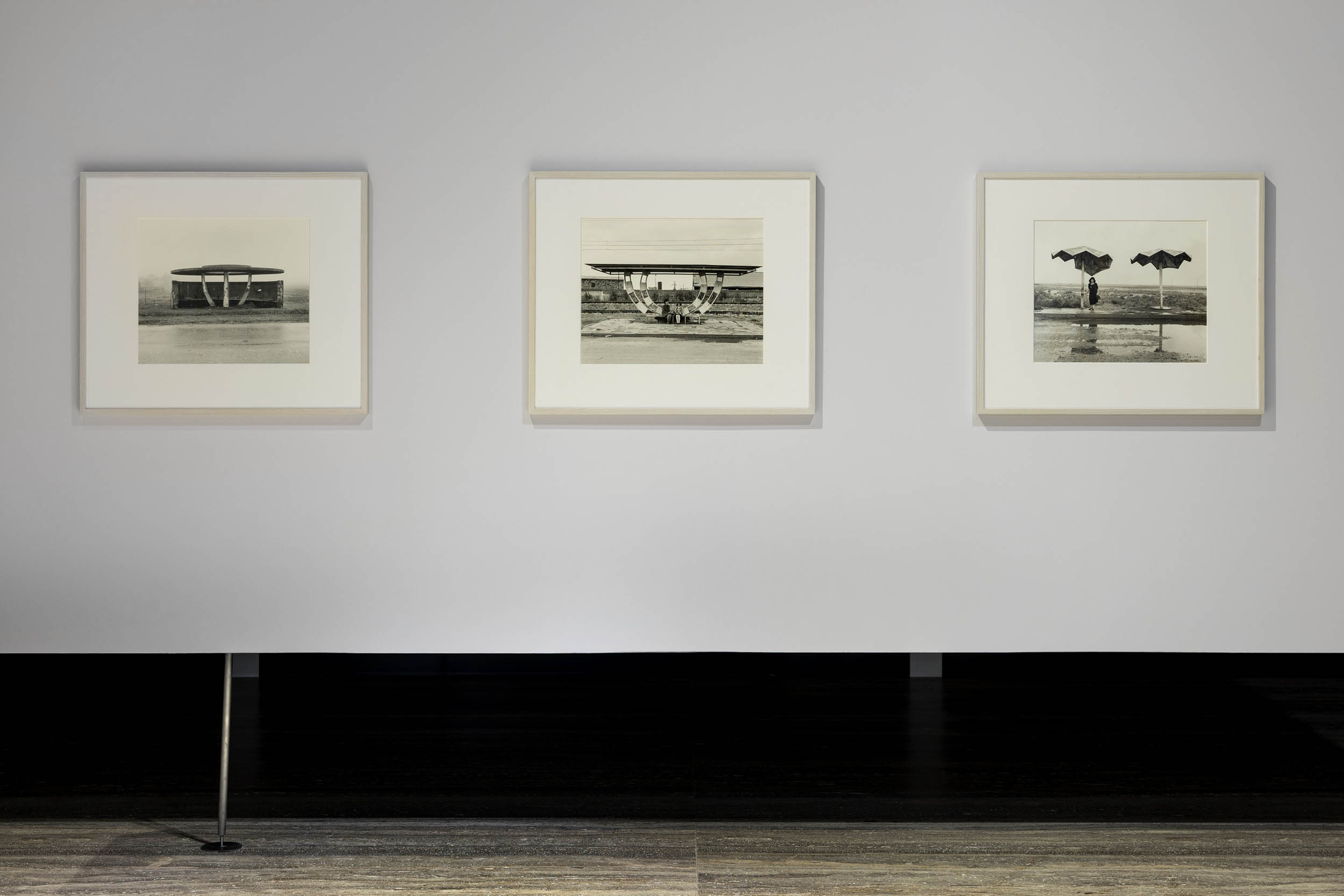
Installation view of the exhibition 'Typologien: Photography in 20th-century Germany' at Fondazione Prada, Milan showing the work of Ursula Schulz-Dornburg


Installation view of the exhibition Typologien: Photography in 20th-century Germany at Fondazione Prada, Milan showing the work of Ursula Schulz-Dornburg


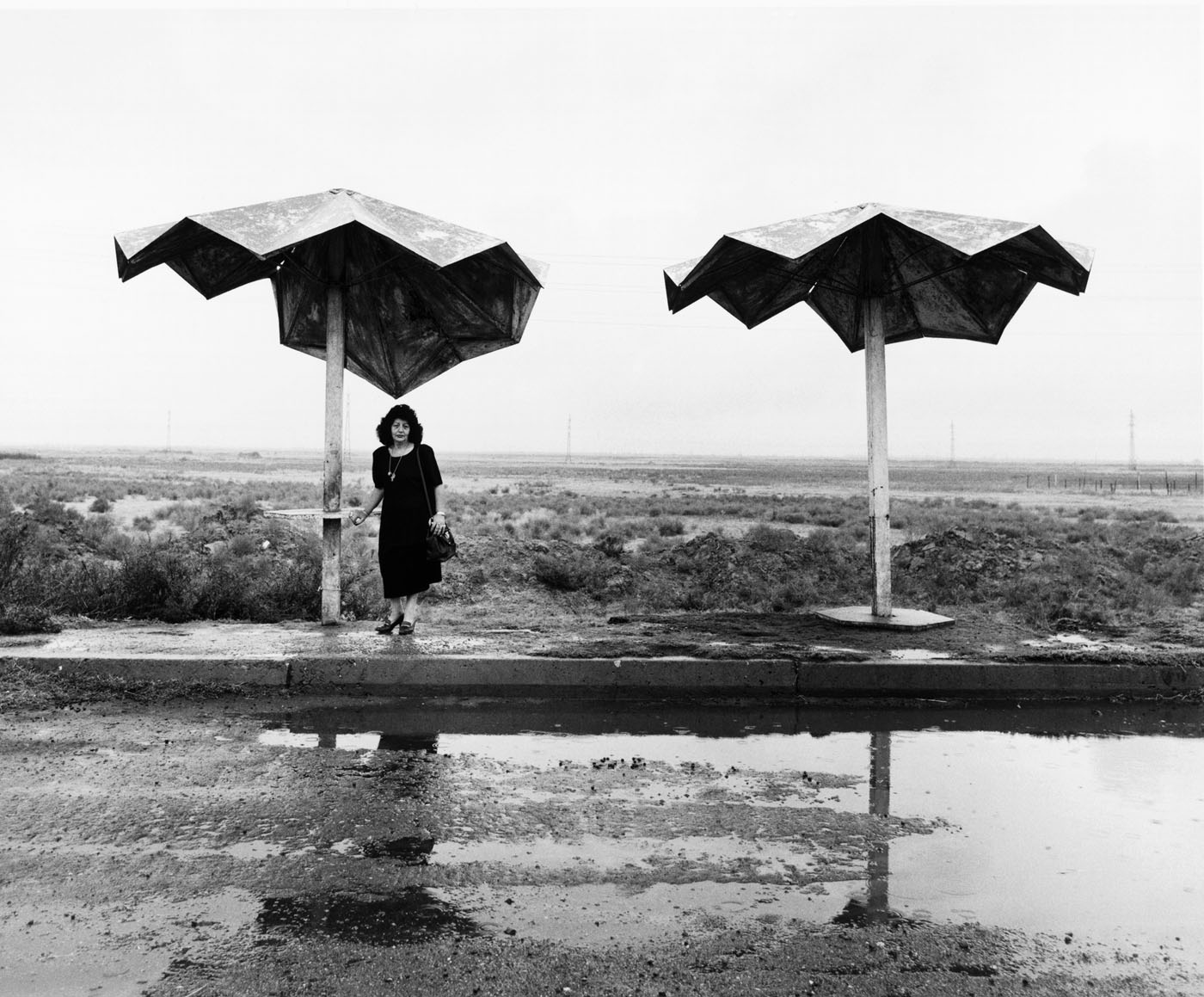
Ursula Schulz-Dornburg (German, b. 1938) 'Transit Sites-Armenia-Erevan-Ararat' 2001


Ursula Schulz-Dornburg (German, b. 1938)
Transit Sites-Armenia-Erevan-Ararat
2001
Gelatin silver print on Forte paper
© Ursula Schulz-Dornburg


Ursula Schulz-Dornburg was visiting convents and monasteries in Armenia when she happened to come across one of these unique bus stops, partly futuristic and partly surreal. From 1997 to 2011, she portrayed numerous bus stops, often in very remote locations. In a country that was experiencing a dramatic transition, from being part of the Soviet Union to its new status as an independent republic, these bus stops look like the remnants of a utopian socialism, which in Schulz-Dornburg’s images are kept alive mainly by women and children. The photographer said she was so impressed by the dignity of those women waiting at the bus stop, who even in the most extreme poverty looked as though they were on their way to the Opera, that she asked their permission to photograph them. What emerged was a document of a quiet life that manages with dignity to deal with even the harshest adversity.

Exhibition text from the Fondazione Prada by Cord Riechelmann


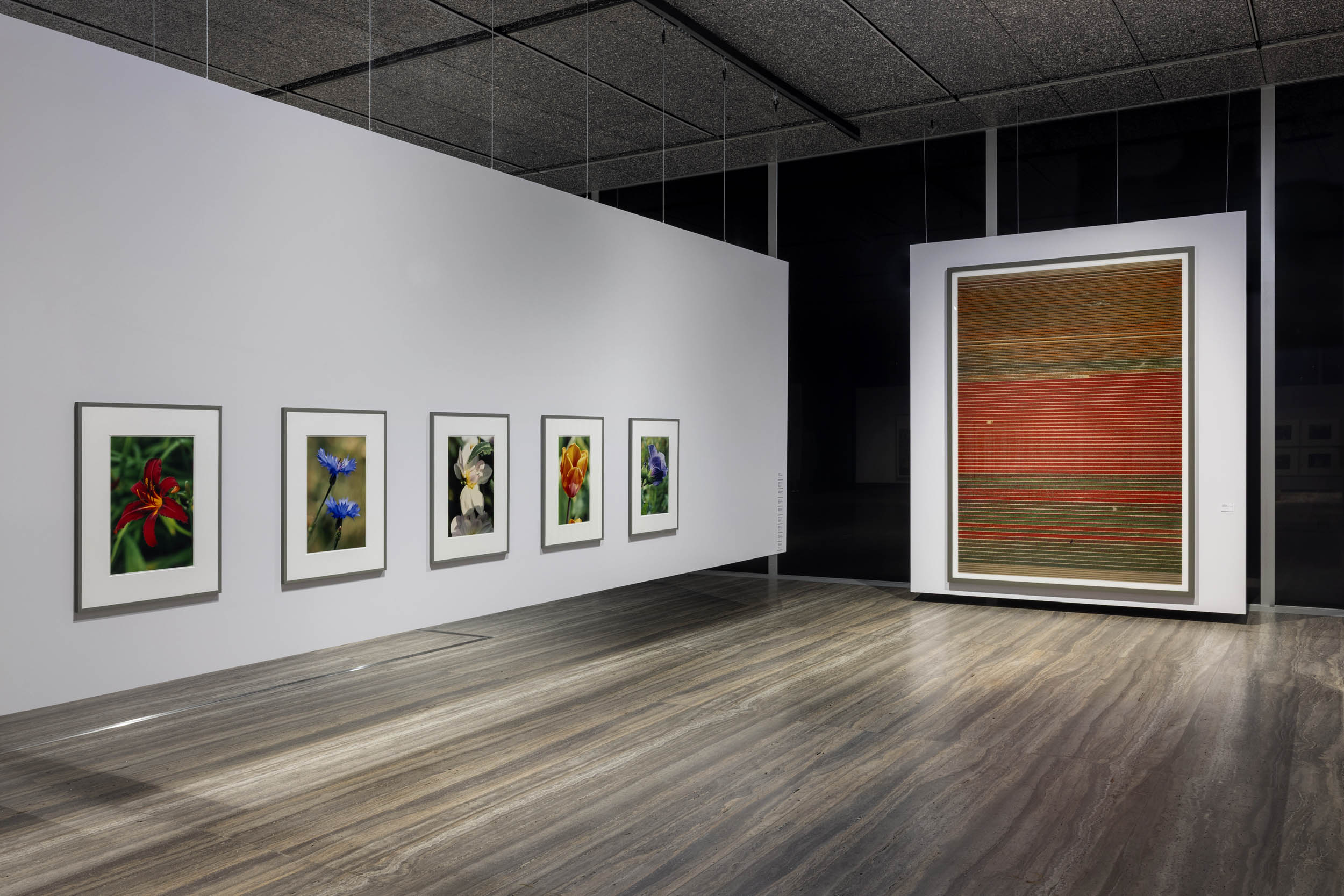
Installation view of the exhibition 'Typologien: Photography in 20th-century Germany' at Fondazione Prada, Milan showing at left, flower photographs by Thomas Struth; and at right, Andreas Gursky's 'Untitled XVIII' 2015


Installation view of the exhibition ‘Typologien: Photography in 20th-century Germany’ at Fondazione Prada, Milan showing at left, flower photographs by Thomas Struth; and at right, Andreas Gursky’s Untitled XVIII 2015 (below)


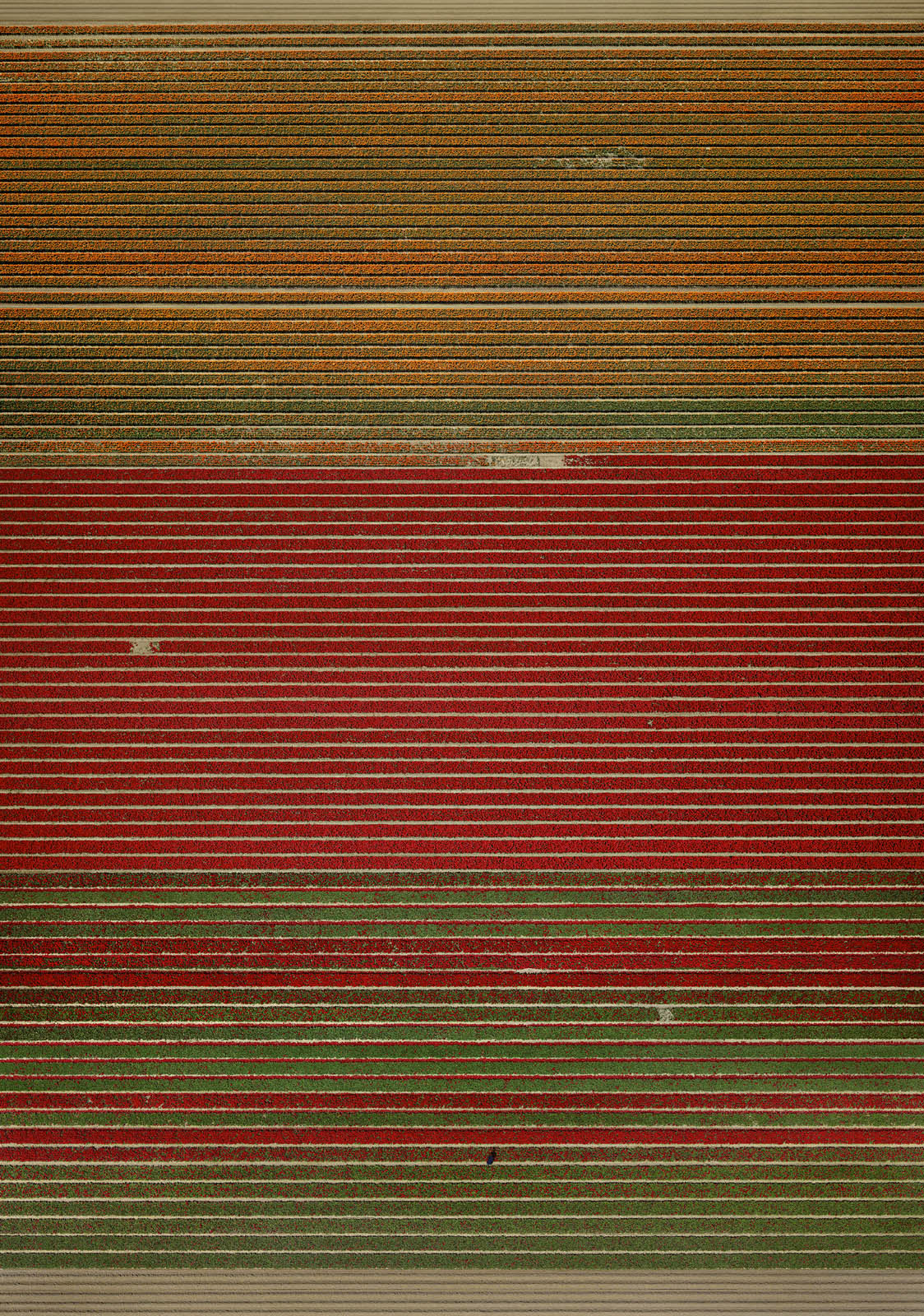
Andreas Gursky (German, b. 1955) 'Untitled XVIII' 2015


Andreas Gursky (German, b. 1955)
Untitled XVIII
2015
Inkjet print
Atelier Andreas Gursky


Unlike works such as Paris, Montparnasse (1993), in the Untitled series he produced between 2015 and 2016, Andreas Gursky depicted rows of tulips without providing a title or location for the pictures. Viewed from a distance, the photographs are reminiscent of Abstract Expressionist paintings, but even looking at them at close range, the lushly blooming flowers are undiscernible. Living in Düsseldorf, close to the Dutch border, Gursky is familiar with the intensively cultivated Dutch tulip crops, where no unwanted insect or worm would possibly be allowed to spoil the bulbs. The sterility of industrial flower production, far from being harmless and healthy, is captured by Gursky in images that, in turn, are neither reassuring nor pleasant.

Exhibition text from the Fondazione Prada by Cord Riechelmann


Installation view of the exhibition 'Typologien: Photography in 20th-century Germany' at Fondazione Prada, Milan showing the flower photographs of Thomas Struth with at left, 'Small Closed Sunflower, No. 18, Winterthur'
1992; and at third left, 'Single Red Lily - No. 51, Düsseldorf (Botanischer Garten)' 1993


Installation view of the exhibition Typologien: Photography in 20th-century Germany at Fondazione Prada, Milan showing the flower photographs of Thomas Struth with at left, Small Closed Sunflower, No. 18, Winterthur 1992 (below); and at third left, Single Red Lily – No. 51, Düsseldorf (Botanischer Garten) 1993 (below)


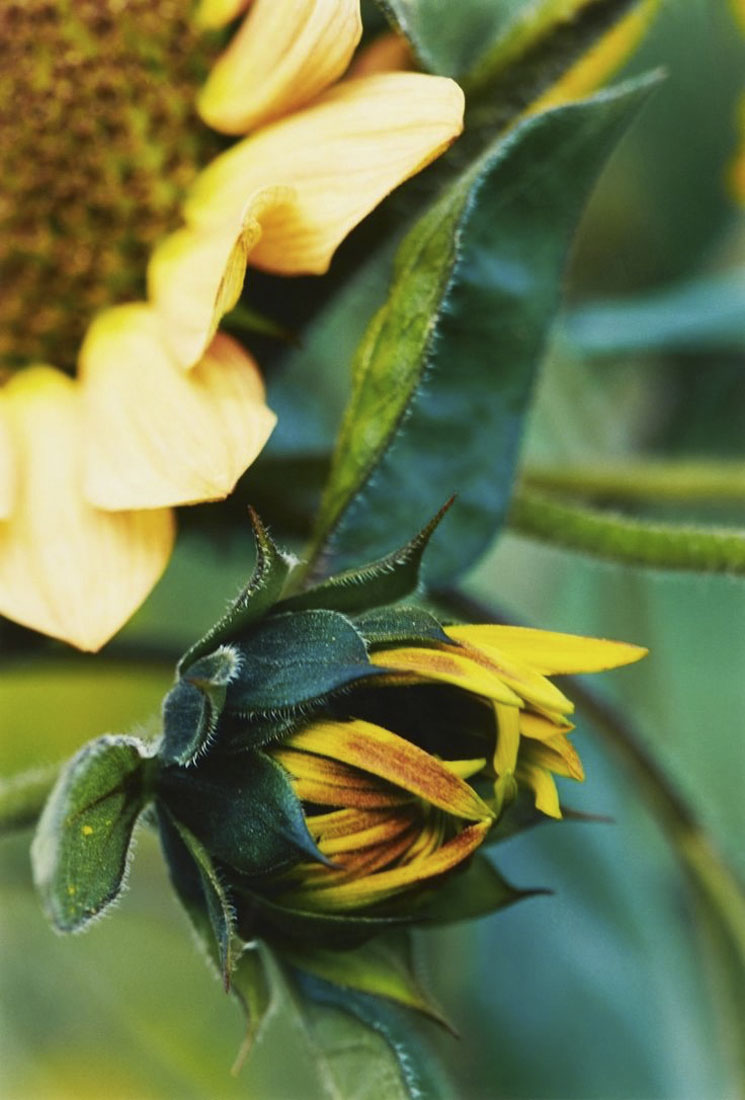
Thomas Struth (German, b. 1954) 'Small Closed Sunflower, No. 18, Winterthur' 1992


Thomas Struth (German, b. 1954)
Small Closed Sunflower, No. 18, Winterthur
1992
Colour photograph on C-print
© Thomas Struth / Courtesy ZKM | Center for Art and Media Karlsruhe, Karlsruhe


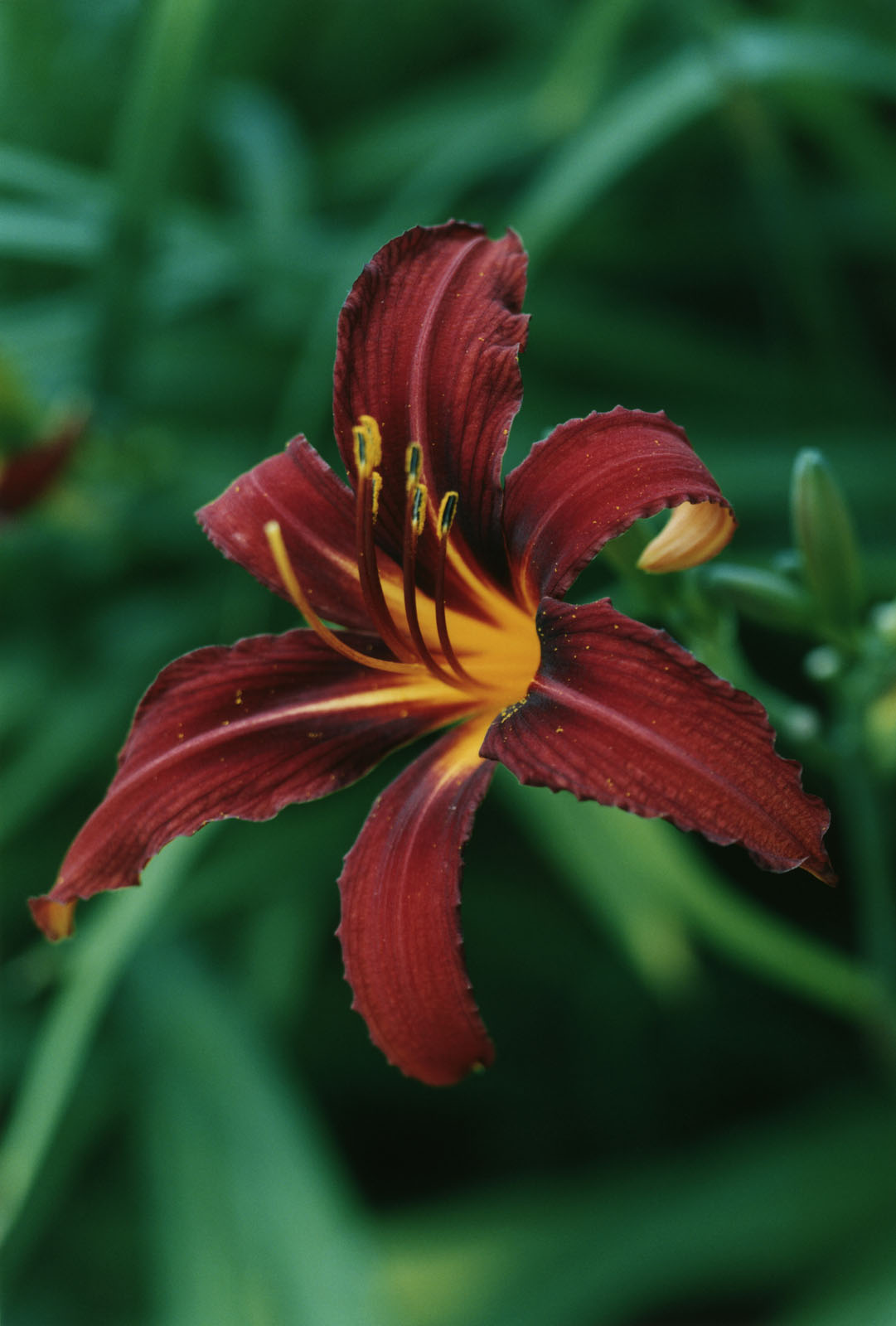
Thomas Struth (German, b. 1954) 'Single Red Lily - No. 51, Düsseldorf (Botanischer Garten)' 1993


Thomas Struth (German, b. 1954)
Single Red Lily – No. 51, Düsseldorf (Botanischer Garten)
1993
C-print
Viehof Collection
© Thomas Struth / Courtesy Viehof Collection, Mönchengladbach


A student of the artist Gerhard Richter and later of the photographer Bernd Becher at the Art Düsseldorf Academy from 1973 to 1980, Thomas Struth habitually works in thematic cycles centered around museums, flowers, and portraits of families and passers-by. The “exact vision” – the intention underpinning Struth’s photography – can be seen in both the portraits of two cornflowers shoot in Düsseldorf and the image of a red lily in the city’s Botanical Garden. Struth notes down the name or address of the site where he took the photograph, as in the case of the flower of a hollyhock portrayed in Düsseldorf’s Nordpark. This is to evoke the poetry of the place and provide an exact account of the plants’ origin, preserving the authenticity of the shots without digitally altering them.

Exhibition text from the Fondazione Prada by Cord Riechelmann


Installation view of the exhibition 'Typologien: Photography in 20th-century Germany' at Fondazione Prada, Milan showing the work of Hiller Becher


Installation view of the exhibition Typologien: Photography in 20th-century Germany at Fondazione Prada, Milan showing the work of Hiller Becher


Hilla Becher (German, 1934-2015) 'Eichenblatt [Oak Leaf]' 1965


Hilla Becher (German, 1934-2015)
Eichenblatt [Oak Leaf]
1965
Gelatin silver print
© Estate Bernd & Hilla Becher, represented by Max Becher, courtesy Die Photographische Sammlung/SK Stiftung Kultur – Bernd & Hilla Becher Archive, Cologne, 2025


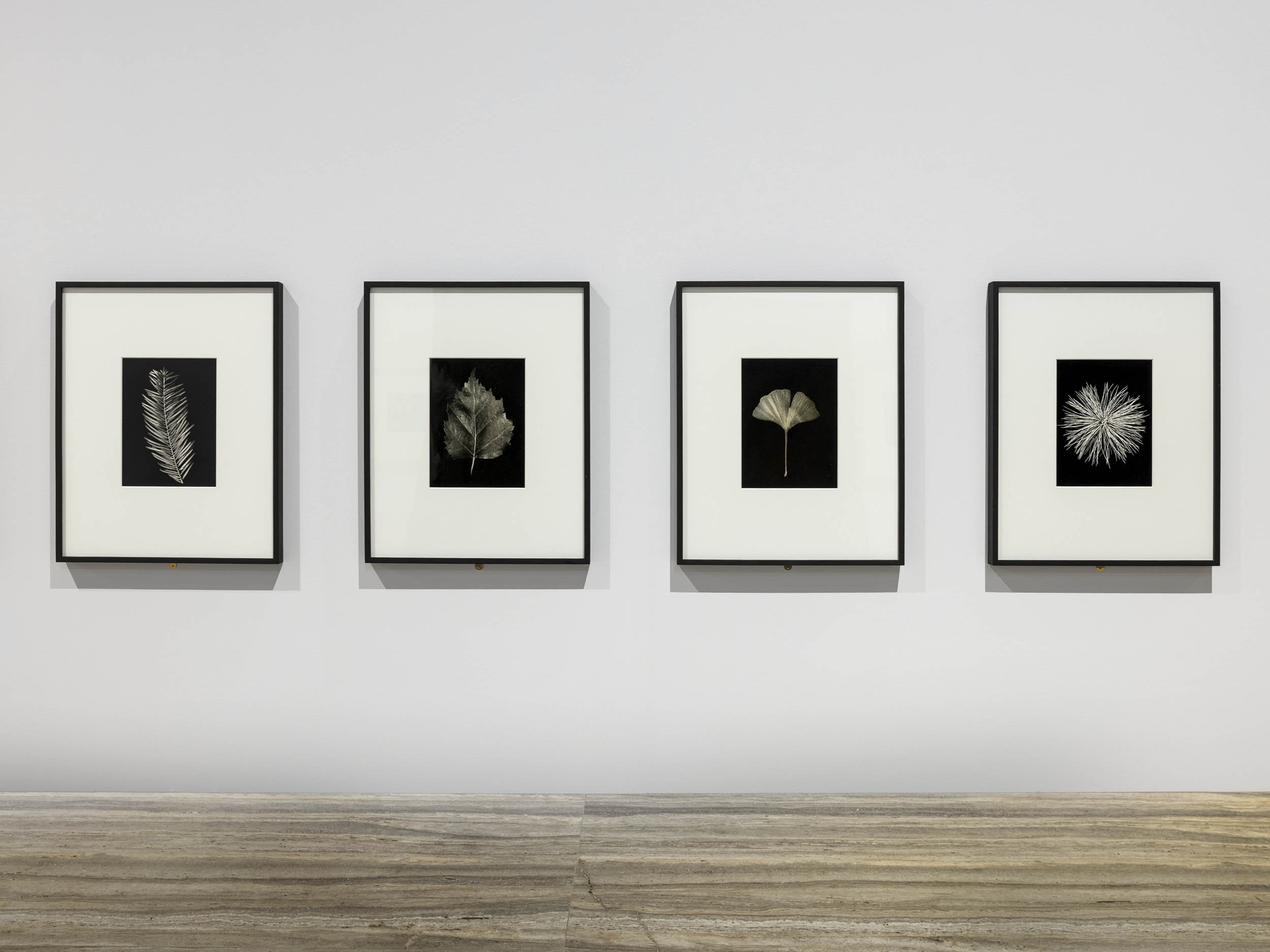
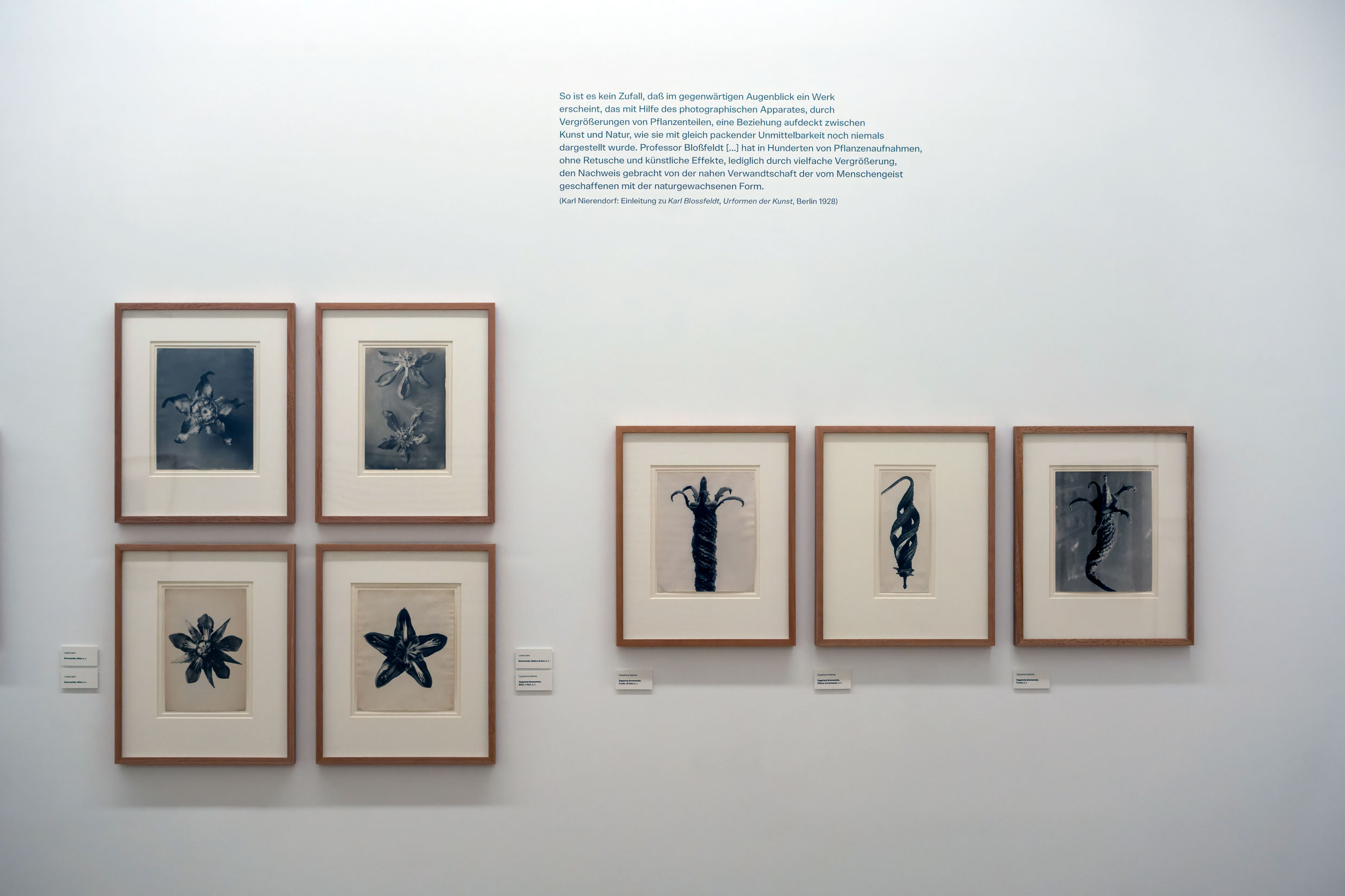
In terms of the objectivity of the approach, Hilla Becher’s 1965 photographic studies of an oak leaf, a cypress branch, and a ginkgo leaf are in keeping with the series on types of industrial buildings that she made with her husband Bernd Becher. Thematically, however, these studies represent a sort of return to the studies of branches and shoots made years earlier by Karl Blossfeldt. Unlike Blossfeldt’s images, the leaves, particularly the poplar leaves, are not uniformly lit. The shadowy areas cannot be clearly seen with the naked eye even on close and objective observation. One could say that nature has penetrated the technique, disappearing.

Exhibition text from the Fondazione Prada by Cord Riechelmann


Installation view of the exhibition 'Typologien: Photography in 20th-century Germany' at Fondazione Prada, Milan showing the work of Karl Blossfeldt


Installation view of the exhibition Typologien: Photography in 20th-century Germany at Fondazione Prada, Milan showing the work of Karl Blossfeldt


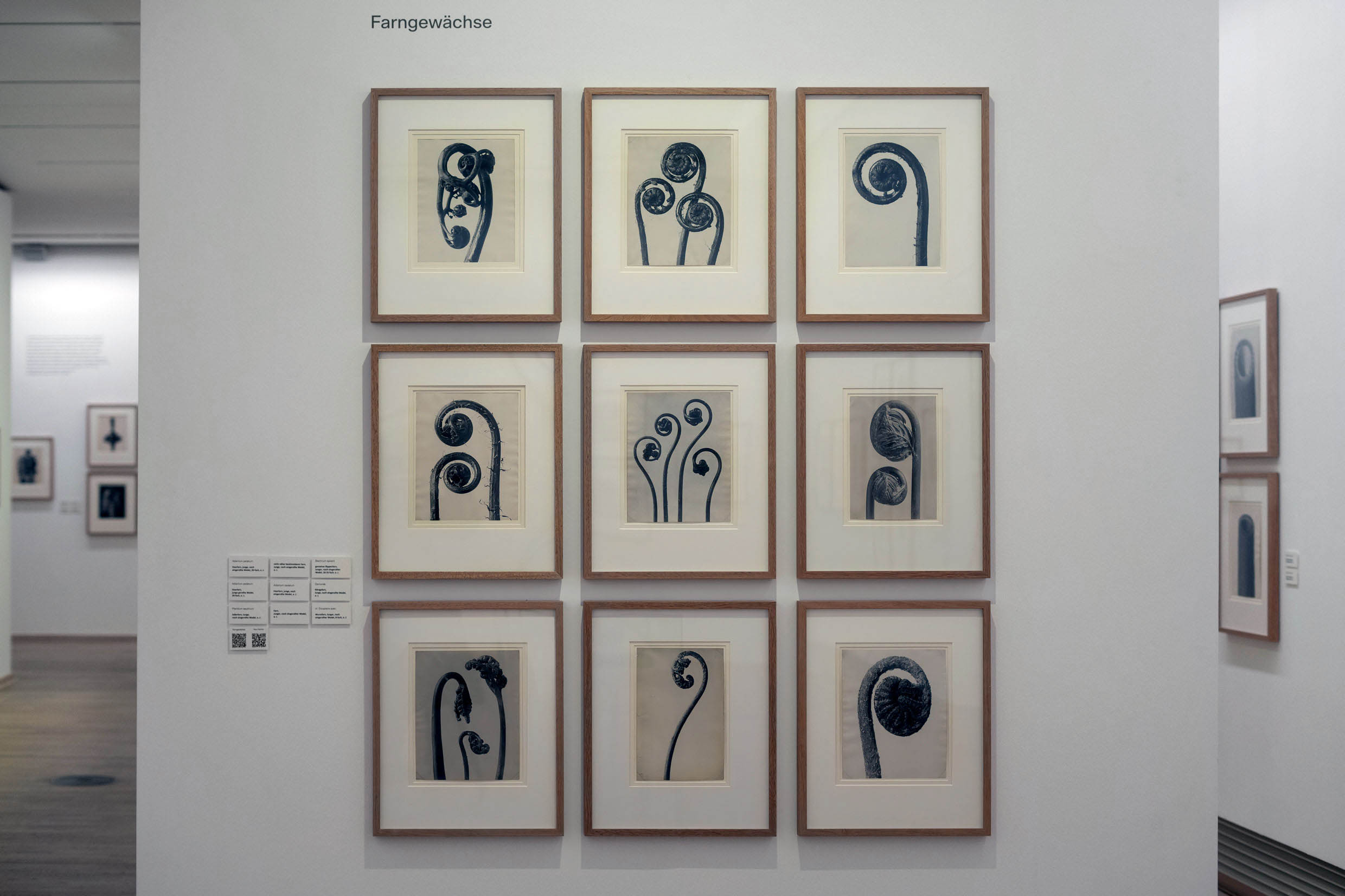
Karl Blossfeldt (German, 1865-1932) 'Adiantum pedatum, haarfarn, junge, noch eingerollte Wedel' [Maidenhair fern, young, still curled fronds] Nd


Karl Blossfeldt (German, 1865-1932)
Adiantum pedatum, haarfarn, junge, noch eingerollte Wedel [Maidenhair fern, young, still curled fronds]
Nd
Gelatin silver print
Courtesy Berlin University of Arts, Archive – Karl Blossfeldt Collection in cooperation with Die Photographische Sammlung/SK Stiftung Kultur, Cologne


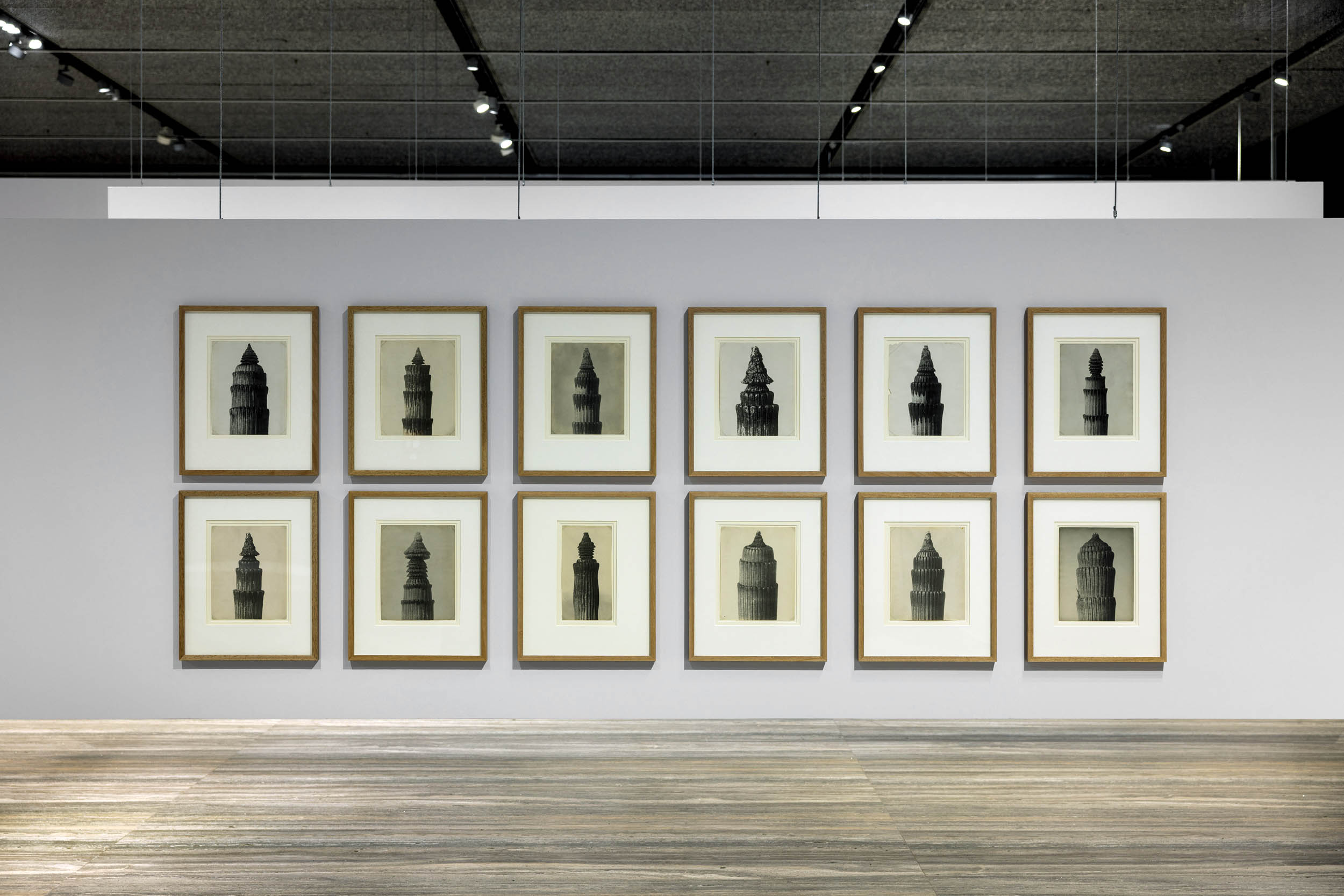
The young, still curling fronds of an ‘Unspecified fern’ are a kind of introduction to the themes that Karl Blossfeldt explored, and his working methods. Faced with a seemingly infinite variety of natural forms, the photographer tried to find an order by using tools borrowed from scientific botany. Blossfeldt collected plant samples tirelessly in and around Berlin, dried them, and enlarged those details not visible to the naked eye. However, the photographer was seeking something different from the aims of botanical research. This is already revealed by the title of the first volume, a publication of his photographs of plants – Urformen der Kunst (Art Forms in Plants, 1928). Right from the title, he explicitly refers to the model he used for the book’s conception: Ernst Haeckel’s Kunstformen in der Natur (Art Forms in Nature), published in 1924 and now a classic. Therefore, Blossfeldt sought archetypal formal models in nature, such as the fronds of the fern.

In his search for a primal form of nature that could then be shaped into art according to the natural model – as in the case of the curled fronds of
the fern – Karl Blossfeldt applied the systematic method specific to botany with a kind of exterior mimicry. He moved from the frond of an unidentified fern, in other words, not yet classified according to an order, to a fern that could at least be identified within a botanical classification. The frond of the order Polypodiales certainly has typological similarities to all the fronds photographed by Blossfeldt, but it remains a case apart in that it cannot be classified in any of the orders in which the other ferns are classified. However, this level of identification is a relevant indication: these very diverse plants in fact number about 9000 known species, and probably many more yet to be identified. Moreover, identifying their species is often only possible for a few specialists, and is even more difficult given the variety of forms that ferns take during their development.

The curled fronds of some ferns from the Osmundaceae family, royal ferns, with their botanical classification, confirm one of the fundamental intentions of Karl Blossfeldt’s studies: only by carefully analyzing the structure of a plant can one fully understand its natural form. He developed his approach opposite to that of the Jugendstil, the artistic movement – a variation of French Art Nouveau and Italian Liberty – that stylized plant forms and conceived of them primarily as ornamental elements. Blossfeldt was not interested in criticism or rejection of the ornamental, but in a radical reconfiguration of it. This could only be achieved by thoroughly studying natural forms.

Three still-curled fronds of a specimen of bracken fern – scientific name Hypolepidaceae – on the one hand, appear denaturalised, because Karl Blossfeldt focused his lens on the detail, leaving out the natural context. But on the other hand, they reveal a scrupulous observation of the plant world. By nature, in fact, fronds develop according to a strict formal principle – no natural form is purely random – and yet they eventually differ from one another. The fronds of ferns could appear as decalcomanias, given that in Blossfeldt’s representation they take on an almost mechanical quality for the observer. The emphasis on differences in resemblance, which Blossfeldt achieved more or less consciously by repeating the leaf motif in differently shaped ferns, can be considered one of the main aesthetic innovations of his photography.

Exhibition text from the Fondazione Prada by Cord Riechelmann


Installation view of the exhibition 'Typologien: Photography in 20th-century Germany' at Fondazione Prada, Milan showing the work of Marianne Wex with at left, 'Let's Take Back Our Space: 'Female' and 'Male' Body Language as a Result of Patriarchal Structures' 1977-2018; and at right, 'Arm and Leg Positions, Lying on the Ground' 1977/2018


Installation view of the exhibition Typologien: Photography in 20th-century Germany at Fondazione Prada, Milan showing the work of Marianne Wex with at left, Let’s Take Back Our Space: ‘Female’ and ‘Male’ Body Language as a Result of Patriarchal Structures 1977-2018 (below); and at right, Arm and Leg Positions, Lying on the Ground 1977/2018


With the photographic project Let’s Take Back our Space, which resulted in a book published in 1979 with the subtitle “‘Female’ and ‘Male’ Body Language as a Result of Patriarchal Structures,” Marianne Wex produced one of the seminal works in 1970s feminist art studies. Starting with a scrupulous observation of the body influenced by the method of structuralism, a scientific approach that studies a whole by breaking it down into elements and units, Wex took hundreds of photographs arranged in specific thematic sections devoted, for example, to specific leg and arm positions. Wex succeeded in showing how apparently natural body postures are actually the result of centuries of social and cultural structures, not a ‘natural’ or genetic predisposition. Her photographs capture movements, postures, and gestures, documenting habits of the body that have been taught and passed down for generations, shaping the behaviour of men and women according to patriarchal expectations.

Exhibition text from the Fondazione Prada by Cord Riechelmann


Marianne Wex (German, 1937-2020) 'Let's Take Back Our Space: 'Female' and 'Male' Body Language as a Result of Patriarchal Structures'
1977-2018


Marianne Wex (German, 1937-2020)
Let’s Take Back Our Space: ‘Female’ and ‘Male’ Body Language as a Result of Patriarchal Structures
1977-2018
Inkjet print


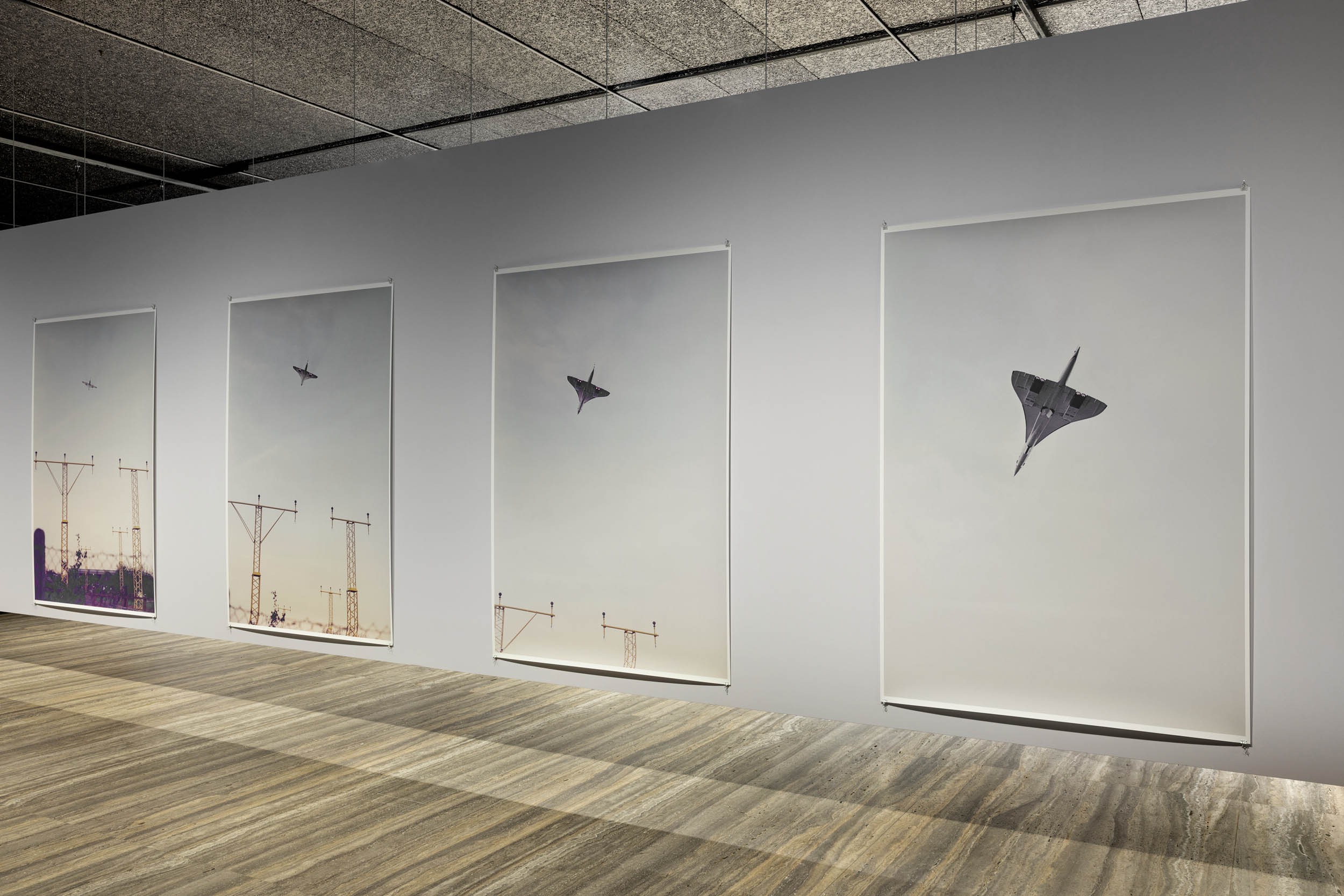
Installation view of the exhibition 'Typologien: Photography in 20th-century Germany' at Fondazione Prada, Milan showing photographs from Wolfgang Tillmans' series 'Concorde' 1997


Installation view of the exhibition Typologien: Photography in 20th-century Germany at Fondazione Prada, Milan showing photographs from Wolfgang Tillmans’ series Concorde 1997


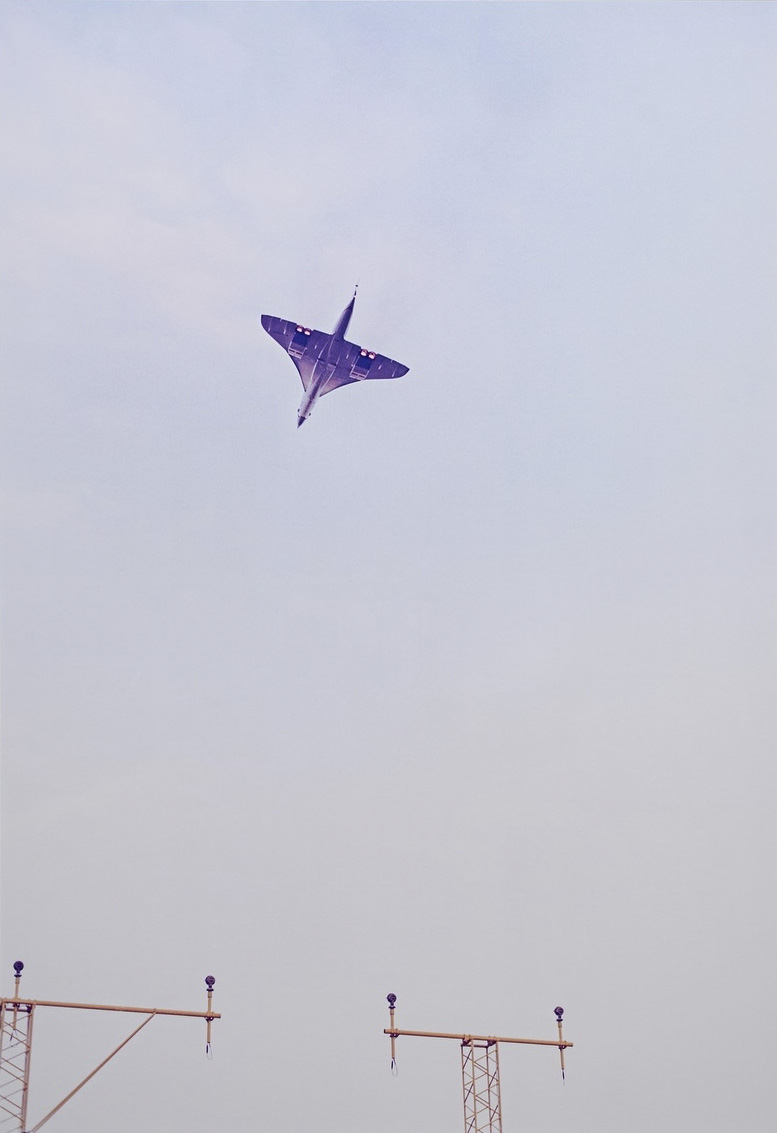
In 1997, Wolfgang Tillmans photographed the Concorde, a supersonic passenger plane, in flight during landing and take-off. For him, the plane represented one of the last remaining inventions of the 1960s technological utopia. With its futuristic shape, supersonic speed, and the formidable roar it made during take-off and landing, the plane fascinated generations of technology enthusiasts. Today, the Concorde is a thing of the past and, together with the Titanic, epitomises more of a technological shock than a promise in the history of technology. These photographs reveal one of the aspects that Tillmans wants to highlight: they are symbols of “a super-modern anachronism” that ultimately left nothing behind but air pollution and environmental destruction.

Exhibition text from the Fondazione Prada by Cord Riechelmann


Wolfgang Tillmans (German, b. 1968) 'Concorde L449-21' 1997


Wolfgang Tillmans (German, b. 1968)
Concorde L449-21
1997
Inkjet print
Courtesy of Galerie Buchholz


Fondazione Prada presents Typologien: Photography in 20th-century Germany, an extensive study dedicated to 20-century German photography, at its Milan venue from 3 April to 14 July 2025. The exhibition, hosted within Podium, the central building of the Milan headquarters, is curated by Susanne Pfeffer, art historian and director of the MUSEUM MMK FÜR MODERNE KUNST, Frankfurt.

The exhibition attempts to apply the principle of “typology,” which originated in 17th- and 18th-century botany to categorise and study plants, and appeared in photography in the early 1900s, affirming itself in Germany throughout the 20th century. Paradoxically, the given formal principle allows for unexpected convergences of German artists spanning different generations and the manifestation of their individual approaches.

The exhibition path follows a typological rather than a chronological order, bringing together more than 600 photographic works by 25 artists essential for recounting over a century of German photography. The exhibition features photographs by Bernd and Hilla Becher, Sibylle Bergemann, Karl Blossfeldt, Ursula Böhmer, Christian Borchert, Margit Emmrich, Hans-Peter Feldmann, Isa Genzken, Andreas Gursky, Candida Höfer, Lotte Jacobi, Jochen Lempert, Simone Nieweg, Sigmar Polke, Gerhard Richter, Heinrich Riebesehl, Thomas Ruff, August Sander, Ursula Schulz-Dornburg, Thomas Struth, Wolfgang Tillmans, Rosemarie Trockel, Umbo (Otto Umbehr), and Marianne Wex. The project forms unexpected connections between artistic practices that differ from each other but are united by a common principle or intention of classification.

As stated by Susanne Pfeffer, “Only through juxtaposition and direct comparison is it possible to find out what is individual and what is universal, what is normative or real. Differences are evidence of the abundance of nature and the imagination of humans: the fern, the cow, the human being, the ear; the bus stop, the water tower, the stereo system, the museum. The typological comparison allows differences and similarities to emerge and the specifics to be grasped. Unknown or previously unperceived things about nature, the animal, or the object, about place and time become visible and recognizable.”

In photography, employing typologies means affirming an equivalence between images and the absence of hierarchies in terms of represented subjects, motifs, genres, and sources.

Despite this, typology remains a highly challenging and complex notion. It operates in a paradoxical regime: on the one hand, this approach can lead to a systematic recording of people and objects based on extreme objectivity; on the other hand, typology corresponds to an individual and arbitrary choice, revealing itself as a disturbing and potentially subversive act.

The hypothesis that photography plays a key role not only in fixing distinctive phenomena but also in organizing and classifying a plurality of visible manifestations remains a vital force in today’s artistic efforts to navigate the complexity of our social and cultural realities. With the spread of digital imagery and practices, the concept of typology continues to be questioned and re-defined by contemporary photographers and artists.

As underlined by Susanne Pfeffer, “The unique, the individual, seems to have been absorbed into a global mass, the universality of things is omnipresent. The Internet allows typologies to be created in a matter of seconds. In this very precise moment – it seems even more important to follow the artists’ gaze and look closely.” As further explained by Pfeffer, “When the present seems to have abandoned the future, we need to look closer at the past. When everything seems to be shouting at you and becoming increasingly brutal, it is important to take a quiet pause and use the silence to see and think clearly. When differences are no longer perceived seen as something other but are transformed into elements of division, we have to recognize what we have in common. Typologies allow us to identify undeniable similarities and subtle differences.”

In the early 20th century, Karl Blossfeldt (1865-1932) was one of the first artists to transfer the classification system used in botanical studies to photography. His vast and detailed plant atlas represented a foundational moment for German Neue Sachlichkeit (New Objectivity). This artistic and photographic movement emerged in the 1920s during the Weimar Republic and promoted the importance of categories and distinctions and the remarkable ability of photography as a medium to explore the very idea of typology.

Another pioneering figure was August Sander (1876-1964), who published his photo book Antlitz der Zeit (Face of Our Time) in 1929, at the time excerpted from his landmark project Menschen des 20. Jahrhunderts (People of the 20th Century). Described by Walter Benjamin as a “training atlas” of physiognomic perception, Antlitz der Zeit was an ambitious attempt to portray the diversity and the structure of German society using class, gender, age, occupation, and social background as distinct categories of a rigid and neutral classification system.

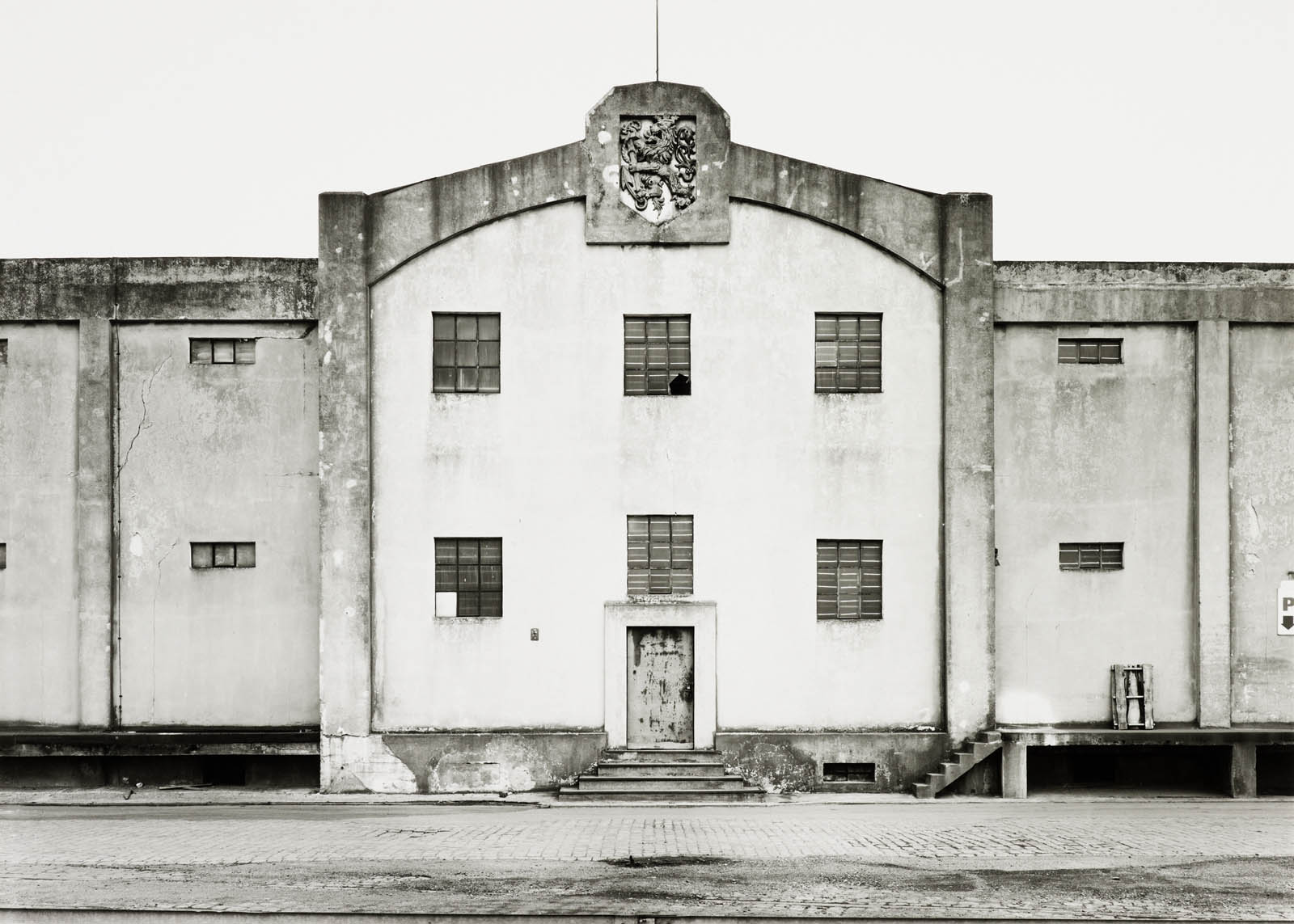
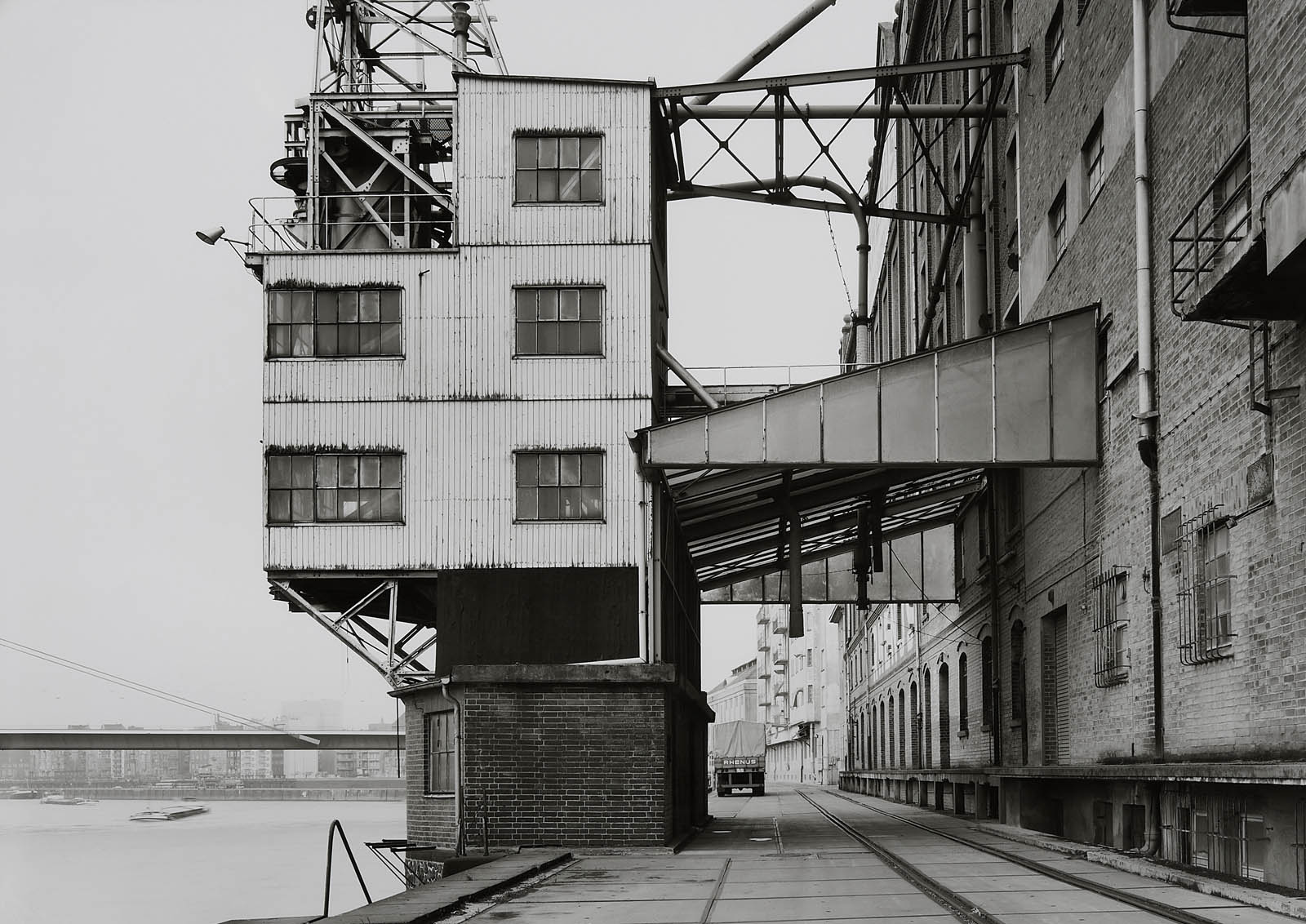
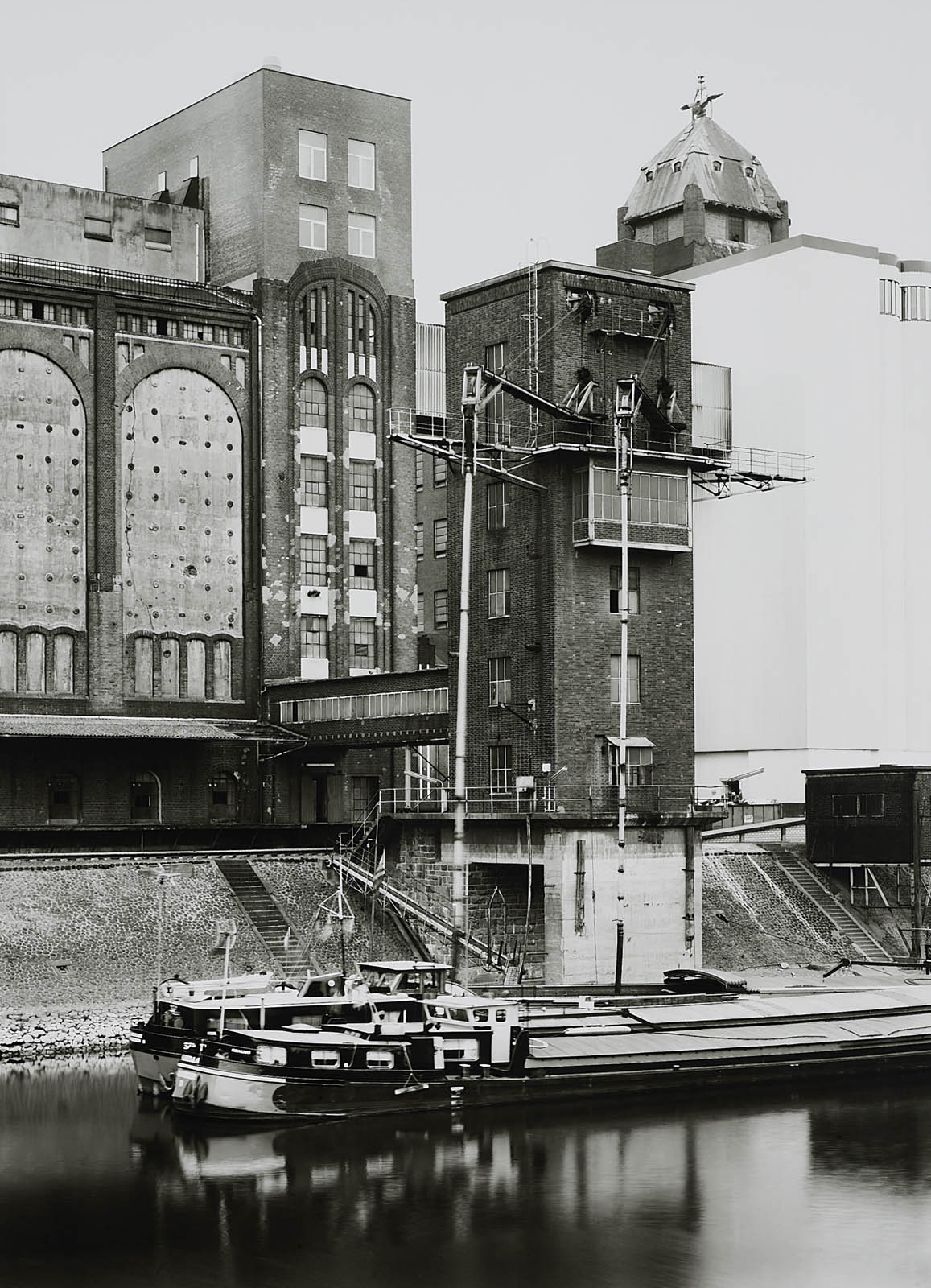
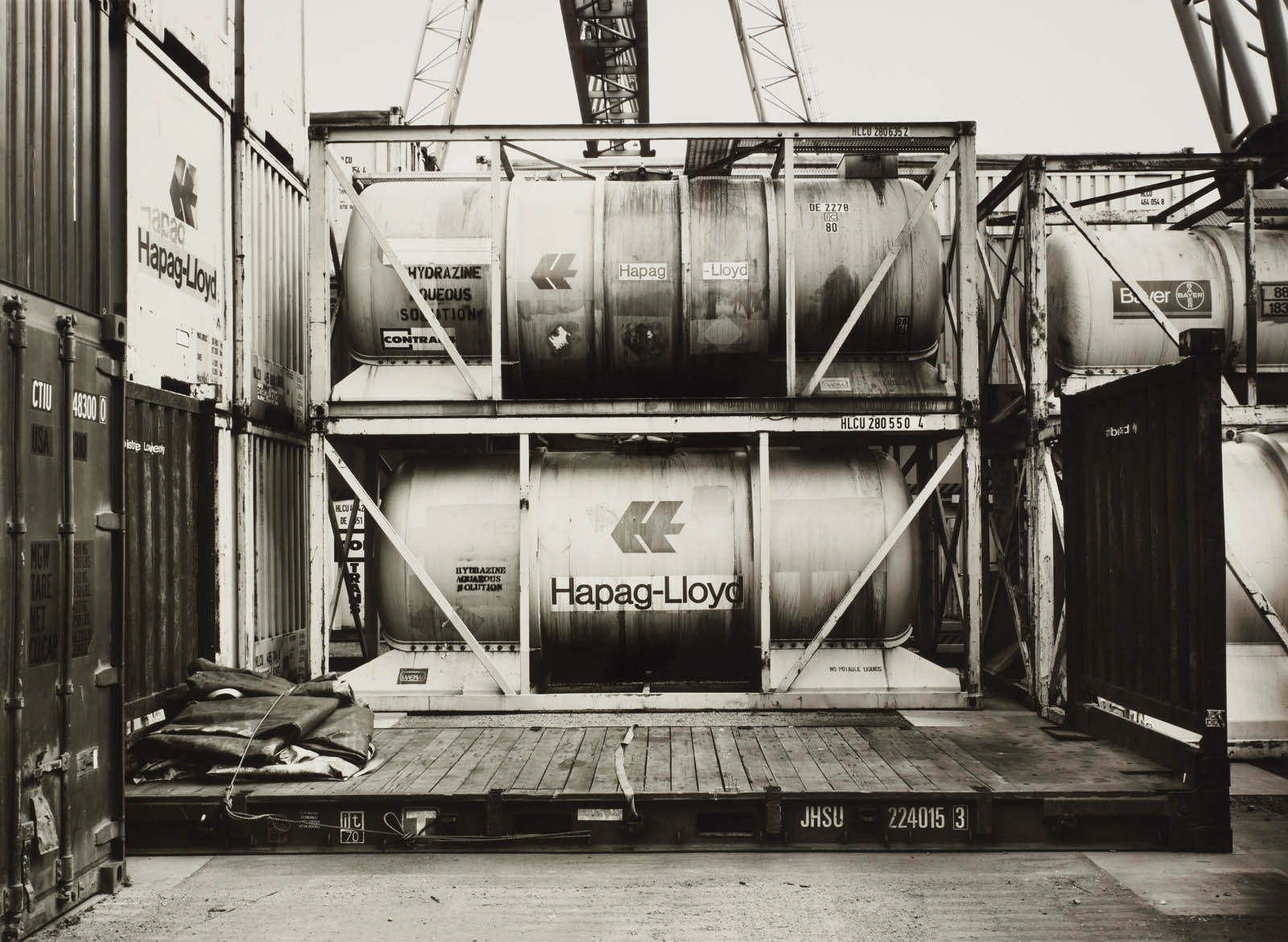
Both Karl Blossfeldt’s and August Sander’s typologies were fundamental for Bernd Becher (1931-2007) and Hilla Becher (1934-2015) when, at the end of the fifties, they began an enormous and lifelong documentation and preservation project of industrial architecture. In 1971, they described the “industrial constructions” as “objects, not motifs”. They stated that “the information we want to provide is only created through the sequence, through the juxtaposition of similar or different objects with the same function”. Their black-and-white monuments, or “anonymous sculptures”, isolated against a monochromatic sky, centered, framed in the same format and arranged in a block, became an essential reference for American and European Post-Minimalist and Conceptual artists. They also represented a rich heritage for younger generations of German artists and photographers, such as Andreas Gursky (b. 1955), Candida Höfer (b. 1944), Simone Nieweg (b. 1962), Thomas Ruff (b. 1958) and Thomas Struth (b. 1954), who studied at the Academy in Düsseldorf in the class led by Bernd and Hilla Becher from 1976.

Hans-Peter Feldmann (1941-2023), internationally recognised for his fundamental contribution to conceptual art, traced a complementary trajectory in German photography. In his works, he documented everyday objects and historical events and combined deadpan humor with a systematic approach to accumulating, cataloguing, and rearranging elements of contemporary visual culture. In his series, he invented personal yet very political typologies and adopted a deliberate snapshot approach with a commercial aesthetic. For his work Alle Kleider einer Frau (All the Clothes of a Woman, 1975), he took 35mm-format photographs of underwear, hosiery, T-shirts, dresses, trousers, skirts, socks, and shoes, all hanging on hangers on the wall or laid on dark fabric. With his project Die Toten 1967-1993 (The Dead 1967-1993, 1996-1998), he paid homage to individuals murdered in the context of the political and terroristic movements in Post-War Germany. As pointed out by Susanne Pfeffer, “With his typologies, he emphasised the equal value of all photographs, their image sources and motifs, and underscored the de-hierarchisation inherent in every typology.”

In his apparently random collection of found, personal or pornographic images, press clippings, and historical photos of Nazi concentration camps, the Red Army Faction and German reunification, a “private album” named Atlas (1962 – present), Gerhard Richter (b. 1932) seemed to deny or challenge the very idea of typology. Instead, he took the principle of equivalence between images and their trivialization process to the limits, creating a jarring contrast and an acute awareness of a repressed collective memory.

In the seventies and eighties, in a dialectic relationship with the artistic lessons of the Bechers, Gursky, Höfer, Ruff, and Struth progressively abandoned the radicalism and black- and-white purism of their professors. They explored the colorful dominance of banality in their series of individual or family portraits, monumental and detailed city views, and spectacular documentation of cultural or tourist sites, generating a plethora of contemporary and conflicting typologies.

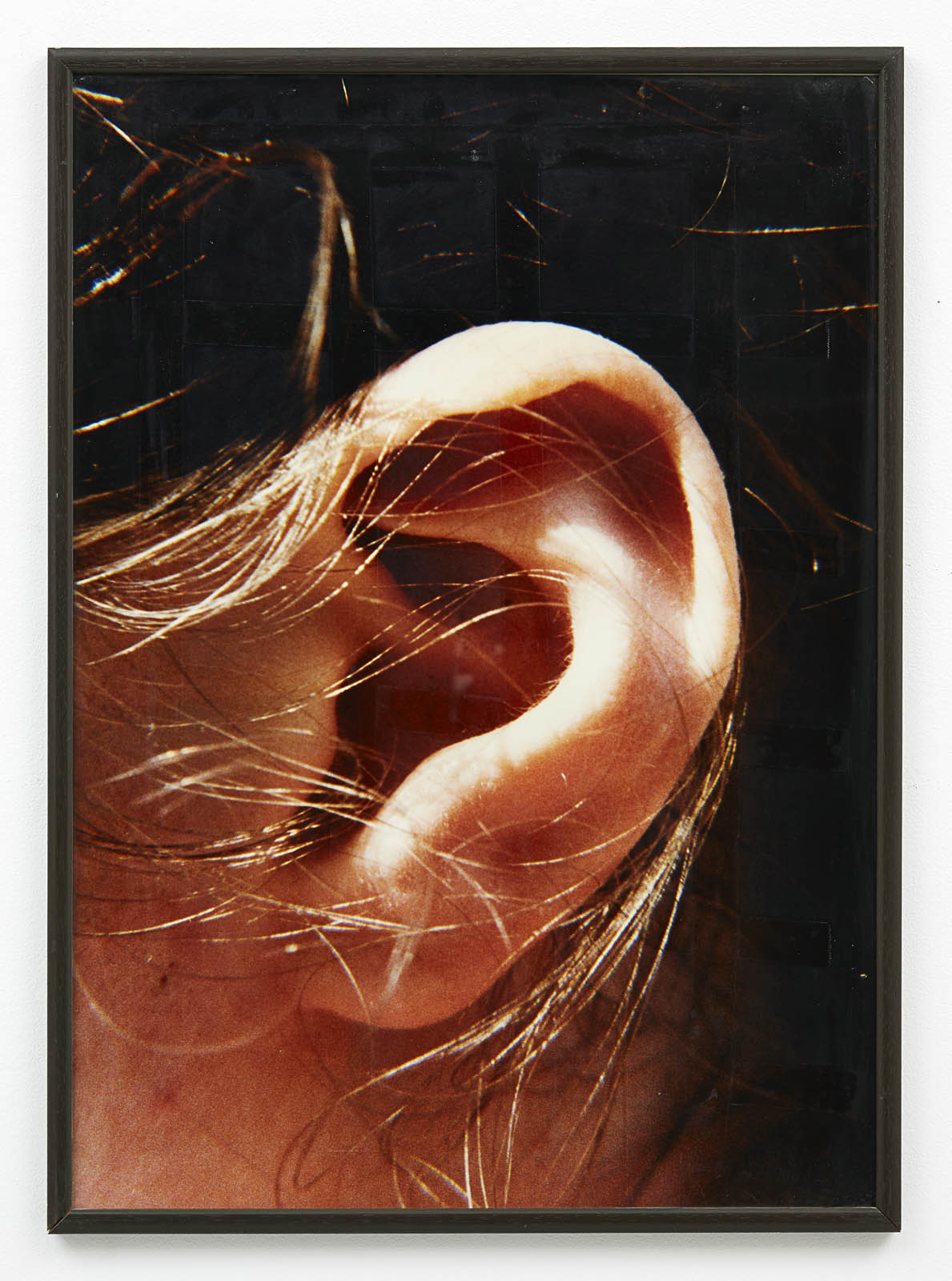
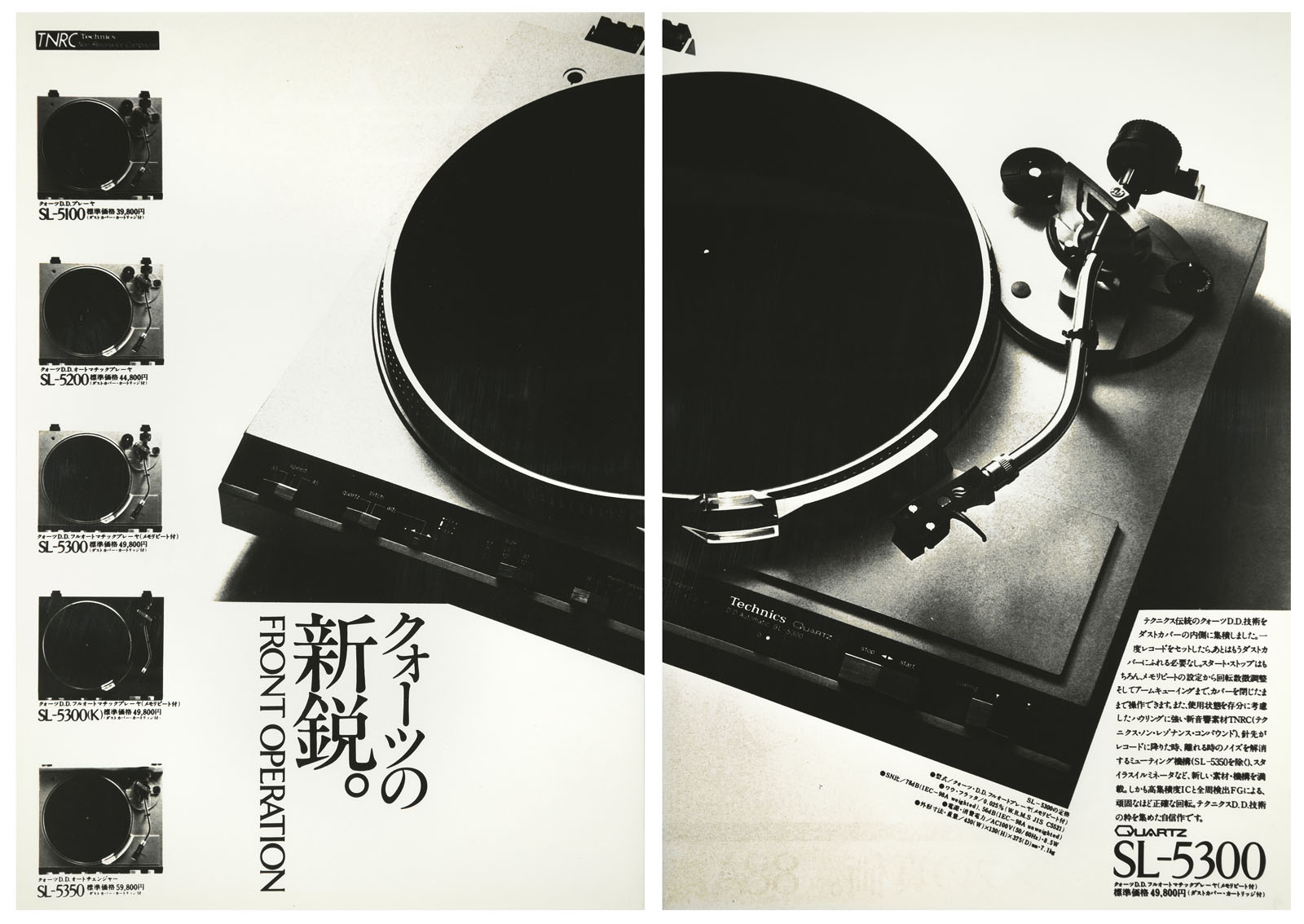
In the late seventies and early eighties, multimedia artist Isa Genzken (b. 1948) engaged in a direct dialogue with the photographic medium. In 1979, she created a series entitled Hi-Fi that featured advertisements of avant-garde Japanese stereo equipment, organising them in an imaginary commercial catalog. The second series entitled Ohr (Ear) (1980) depicted, in large-scale colour close-ups, the ears of random women Genzken photographed on the streets of New York City. She transferred the traditional portrait genre to physiognomic detail and ironically investigating the absolute singularity and infinite individual differentiation the photographic portrait can record.

An illustrated book, published by Fondazione Prada and designed by Zak Group, accompanies the exhibition “Typologien: Photography in 20th-century Germany”. It includes an introduction by Miuccia Prada, President and Director of Fondazione Prada, a text by the exhibition curator Susanne Pfeffer and three essays by renowned international art historians and curators Benjamin Buchloh, Tom Holert, and Renée Mussai.

Press release from Fondazione Prada


Installation view of the exhibition 'Typologien: Photography in 20th-century Germany' at Fondazione Prada, Milan showing the work of August Sander


Installation view of the exhibition Typologien: Photography in 20th-century Germany at Fondazione Prada, Milan showing the work of August Sander


August Sander (German, 1876-1964) 'Sekretärin beim Westdeutschen Rundfunk in Köln' [Secretary at West German Radio in Cologne] 1931-1950s


August Sander (German, 1876-1964)
Sekretärin beim Westdeutschen Rundfunk in Köln [Secretary at West German Radio in Cologne]
1931-1950s
Gelatin silver print
Die Photographische Sammlung/SK Stiftung Kultur, Cologne
© Die Photographische Sammlung/SK Stiftung Kultur – August Sander Archive, Cologne; SIAE, Roma, 2025


The series that August Sander dedicated to women is perhaps where the idea of categorising an archetype or social type shows the cracks most visibly. Whether it is an architect’s companion, an industrialist’s wife, or a high society lady, in Sander’s images the individuality of the female subject, in dress and posture, always prevails over type. And even when the subjects display characteristics that could be traced back to their class, origin, or occupation – such as the secretary who smokes – all the women depicted, from the sculptor to the photographer or the gym teacher, express ‘their own’ individuality. This is most evident when comparing the portraits of women with those of civil servants, whose gazes already show a serial uniformity associated with their positions.

Exhibition text from the Fondazione Prada by Cord Riechelmann


Erich Sander for August Sander's studio. 'Politischer Häftling' [Political Prisoner] 1941-1944 (print date late 1940s)


Erich Sander for August Sander’s studio
Politischer Häftling [Political Prisoner]
1941-1944 (print date late 1940s)
Menschen des 20. Jahrhunderts, 44a Politische Gefangene. [44a Political prisoners]
Gelatin silver print
Die Photographische Sammlung/SK Stiftung Kultur, Cologne
© Die Photographische Sammlung/SK Stiftung Kultur, Cologne – August Sander Archive, Cologne; SIAE, Roma, 2025


In 1935, Erich Sander, August Sander’s son, was sensationally put on trial and sentenced to ten years’ imprisonment for subversive activities. He served most of his sentence in Siegburg Prison, where he worked as the prison’s photographer. Determined to continue his resistance activities even in prison, he did not limit himself to taking ‘official’ photographs. He convinced his fellow prisoners to show him the scars of torture and have their portraits taken. Those photographs seemed to him to be in line with his father’s work. He had learned his trade from his father and worked with him before his imprisonment. He stayed in close contact with his parents during his ten years of imprisonment, and through them, managed to get many of those images out of the prison, leaving a valuable record of Nazi atrocities. Due to a misdiagnosis and lack of medical treatment during his imprisonment, Erich Sander died in 1944, six months before the end of his sentence.

Exhibition text from the Fondazione Prada by Cord Riechelmann


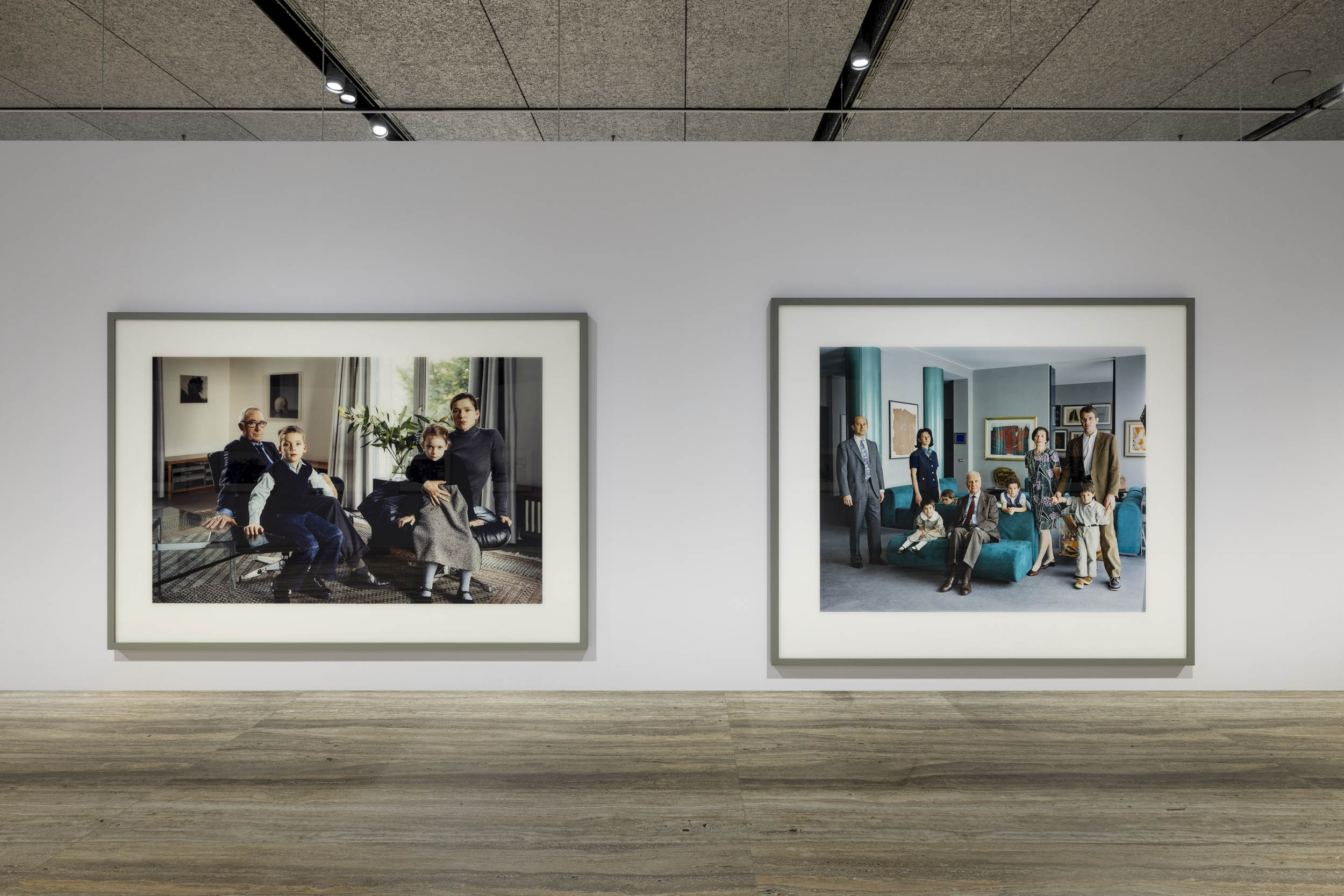
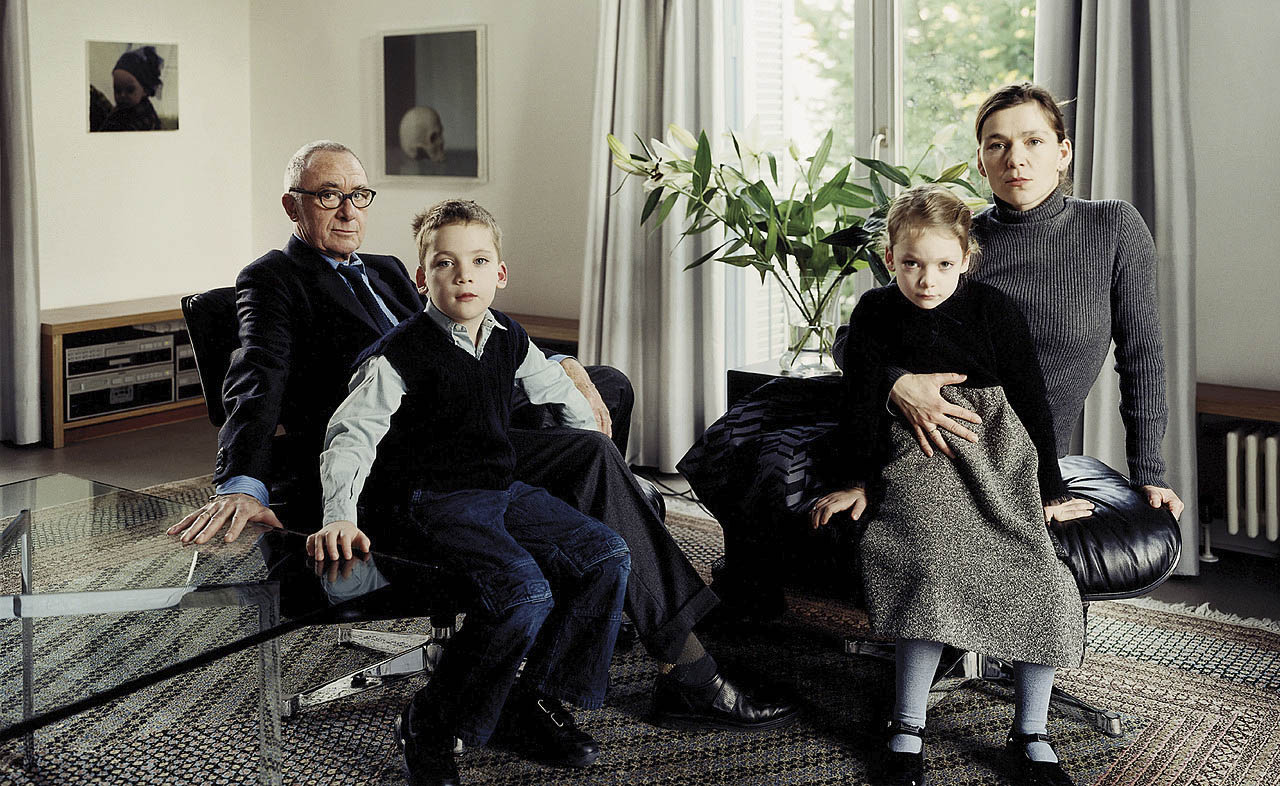
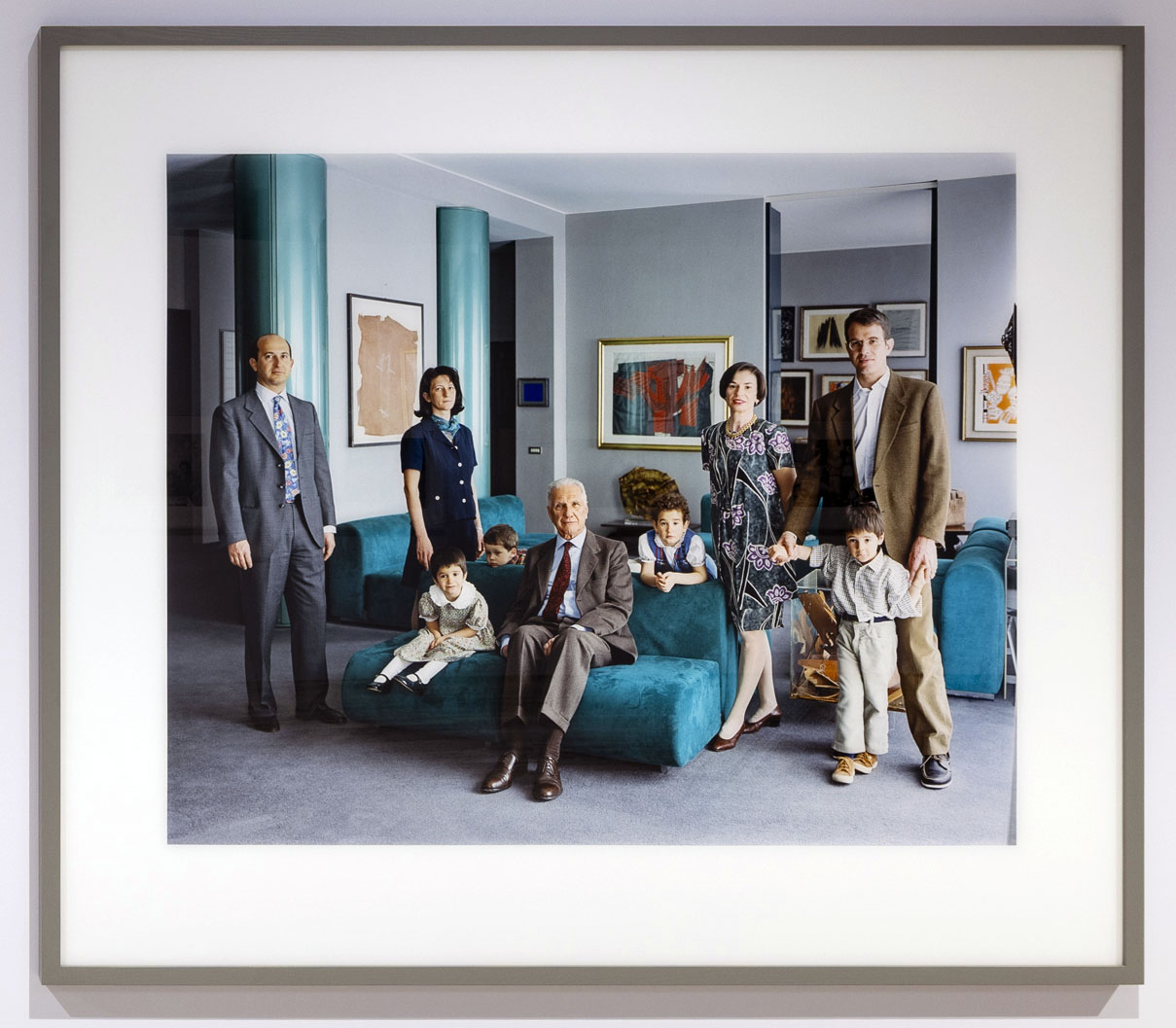
Installation view of the exhibition 'Typologien: Photography in 20th-century Germany' at Fondazione Prada, Milan showing photographs by Thomas Struth with at left, 'The Richter Family 1, Cologne' 2002; and at right, 'The Consolandi Family, Milan' 1996


Installation view of the exhibition Typologien: Photography in 20th-century Germany at Fondazione Prada, Milan showing photographs by Thomas Struth with at left, The Richter Family 1, Cologne 2002; and at right, The Consolandi Family, Milan 1996


Thomas Struth (German, b. 1954) 'The Richter Family 1, Cologne' 2002 (installation view)


Thomas Struth (German, b. 1954)
The Richter Family 1, Cologne (installation view)
2002
C-print
Courtesy of the artist


Thomas Struth (German, b. 1954) 'The Richter Family 1, Cologne' 2002


Thomas Struth (German, b. 1954)
The Richter Family 1, Cologne
2002
C-print
Courtesy of the artist


Thomas Struth (German, b. 1954) 'The Consolandi Family, Milan'  1996 (installation view)


Thomas Struth (German, b. 1954)
The Consolandi Family, Milan (installation view)
1996
C-print
Courtesy of the artist


Installation view of the exhibition 'Typologien: Photography in 20th-century Germany' at Fondazione Prada, Milan showing Thomas Ruff portraits


Installation view of the exhibition Typologien: Photography in 20th-century Germany at Fondazione Prada, Milan showing Thomas Ruff portraits


Thomas Ruff (German, b. 1958) 'Porträt (Pia Stadtbäumer)' 1988


Thomas Ruff (German, b. 1958)
Porträt (Pia Stadtbäumer)
1988
C-print laminated on acrylic glass
MUSEUM MMK FÜR MODERNE KUNST, Frankfurt
© Thomas Ruff, by SIAE 2025 Photo by Axel Schneider, Frankfurt am Main


Between 1977 and 1985, Thomas Ruff studied with Bernd Becher at the Art Academy in Düsseldorf, where he himself has been teaching photography since 2000. During the 1980s, he photographed people from his circle of acquaintances in a series of identically framed shots. With the subjects portrayed in a half-length pose against a neutral background, the images are striking for their unusually large size. Every detail, every pore, and every imperfection in the skin is visible in the faces of the subjects, whose names Ruff also provides. The strictness of the composition, the uniform lighting, and the impassive gaze of the people portrayed give the images an objective and neutral atmosphere. What formally appears detached and unemotional immediately raises questions about the subject portrayed: who is this person? What does he or she do in life? With this series, Ruff challenges the conventions of the traditional portrait, encouraging the viewer to question not only the identity of the subject, but also the role of the photographer and the meaning of the portrait itself.

Exhibition text from the Fondazione Prada by Cord Riechelmann


Thomas Ruff (German, b. 1958) 'Porträt (Simone Buch)' 1988


Thomas Ruff (German, b. 1958)
Porträt (Simone Buch)
1988
C-print laminated on acrylic glass
MUSEUM MMK FÜR MODERNE KUNST, Frankfurt
© Thomas Ruff, by SIAE 2025 Photo by Axel Schneider, Frankfurt am Main


Installation view of the exhibition 'Typologien: Photography in 20th-century Germany' at Fondazione Prada, Milan showing at left, Jochen Lempert's 'The Skins of Alca Impennis' 1992-2022; and at right, Thomas Ruff's 'Portrait of Pia Stadtbäumer' and 'Portrait of Simone Buch' both 1988


Installation view of the exhibition Typologien: Photography in 20th-century Germany at Fondazione Prada, Milan showing at left, Jochen Lempert’s The Skins of Alca Impennis 1992-2022; and at right, Thomas Ruff’s Portrait of Pia Stadtbäumer and Portrait of Simone Buch both 1988


Jochen Lempert (German, b. 1958) 'The Skins of Alca Impennis' 1992-2022 (detail)


Jochen Lempert (German, b. 1958)
The Skins of Alca Impennis (detail)
1992-2022
Gelatin silver prints on Bartya paper
54 parts
Courtesy of Jochen Lempert, BQ, Berlin, and ProjecteSD, Barcelona


The fifty-four profiles of the Alca impennis (the great auk), a large flightless bird that became extinct after its last sighting in 1852, are part of a project that took Jochen Lempert more than a decade to complete. Using the same methods, Lempert photographed the profiles of many of the seventy-eight specimens of the Alca impennis preserved in natural history collections. Having become increasingly rare due to hunting, the Alca impennis was increasingly coveted by collectors, so the skins of this species fetched very high prices. The presence of such a large number of stuffed specimens in collections was therefore one of the causes of this species’ extinction.

Lempert’s portraits also hint at a more significant phenomenon. Very marked individual variations can be found in the appearance of individual specimens of a species, testifying to the great degree of differentiation within the species. Therefore, the concept of species, or its depiction in a scientific classification book, provides something akin to an ‘ideal type,’ rather than a true representation of the actual variety found in real life.

Exhibition text from the Fondazione Prada by Cord Riechelmann


Installation view of the exhibition 'Typologien: Photography in 20th-century Germany' at Fondazione Prada, Milan showing the work of Rosemarie Trockel, 'Elena I & II', 1993/2025, 'Maculata I & II', 1993/2025, 'Mela I & II', 1993/2025


Installation view of the exhibition Typologien: Photography in 20th-century Germany at Fondazione Prada, Milan showing the work of Rosemarie Trockel, Elena I & II, 1993/2025, Maculata I & II, 1993/2025, Mela I & II, 1993/2025


The portraits of the dogs Mela, Elena, and Maculata grew out of Rosemarie Trockel’s interest in animals and the relationship between animals and humans, a subject she has been working with for a long time. From the drawings of monkeys, which represent a kind of monument to the profound melancholy of primates kept in captivity by humans, to A House for Pigs and People / Ein Haus føur Schweine und Menschen created with Carsten Höller for documenta X in 1997, Trockel’s exploration of the relationship between humans and animals involves various forms of expression and themes. However, in this case, the double portraits of the three dogs, photographed frontally and in profile, indicate a further correlation. If “every animal is an artist,” as Trockel has stated, these portraits seem to call these roles into question: who directs and who stages who? Does the artist portray the dogs or do the dogs direct the artist?

Exhibition text from the Fondazione Prada by Cord Riechelmann


Installation view of the exhibition 'Typologien: Photography in 20th-century Germany' at Fondazione Prada, Milan showing at left, the work of Ursula Böhmer and her series 'All Ladies – Cows in Europe', 1998-2011; and at right, the work of Isa Genzken and her series 'Ohr', 1980


Installation view of the exhibition Typologien: Photography in 20th-century Germany at Fondazione Prada, Milan showing at left, the work of Ursula Böhmer and her series All Ladies – Cows in Europe, 1998-2011; and at right, the work of Isa Genzken and her series Ohr, 1980


Ursula Böhmer (German, b. 1965) 'Highland Grampians / Scotland [All Ladies – Cows in Europe]' 2011


Ursula Böhmer (German, b. 1965)
Highland Grampians / Scotland
2011
From the series All Ladies – Cows in Europe, 1998-2011
Gelatin silver print on Baryta paper
© Ursula Böhmer


Getting a cow to stand still in a frontal pose and look towards the camera, as Ursula Böhmer managed to do with a Highlander in the Grampian Mountains, is certainly not an easy task, but one that requires patience and trust, one of the prerequisites for this project. Between 1998 and 2011, Böhmer visited 25 European countries to photograph specimens of cattle breeds in the places where their breeding history began. These breeds, many of them at risk of extinction, had to be portrayed in their own environments in order to illustrate how these environments had influenced their appearance. What emerged was a series of images of docile animals portrayed in often harsh landscapes, which at the same time document the ongoing conditioning by the environment on the forms of life also in breeding conditions.

Exhibition text from the Fondazione Prada by Cord Riechelmann


Isa Genzken (German, b. 1948) 'Ohr' 1980


Isa Genzken (German, b. 1948)
Ohr
1980
Colour C-print in artist’s frame
Galerie Buchholz Courtesy the artist and Galerie Buchholz
© Isa Genzken, by SIAE 2025


In 1980, Isa Genzken took a series of close-ups of the ears of women she encountered on the streets of New York. The typical portraiture approach used in the photographs exalts and enhances the characteristics of the represented subject, on the one hand, but at the same time, with the anonymity of the immortalized figure, creates a contrast. In the course of the evolution of the human species, the ear has lost its value in terms of expressive power. While in many animal species ears still play an important role in expressing emotions, in the human being they are stiffly positioned at the sides of the head and no longer react to emotional states along with the facial muscles. Georg Simmel, a sociologist of the senses, sees the ear as merely a passive appendage in the human appearance. For Simmel, the ear is the selfish organ par excellence, which simply takes without giving. Genzken contradicts this verdict, because the ears she photographs, with all the ornaments attached, eloquently express individual differences.

Exhibition text from the Fondazione Prada by Cord Riechelmann


Isa Genzken (German, b. 1948) 'Front Operation' 1979


Isa Genzken (German, b. 1948)
Front Operation
1979
B/w photograph
Generali Foundation Collection – Permanent Loan to the Museum der Moderne Salzburg
© Generali Foundation / Isa Genzken, by SIAE 2025


In her first institutional exhibition, presented at the Museum Haus Lange in Krefeld in 1979, alongside sculptures and drawings, Isa Genzken exhibited a photography series dedicated to the latest and most expensive Hi-Fi systems. She created it by cutting out ads for turntables and amplifiers from international magazines and then photographing them. As she told photographer Wolfgang Tillmans in an interview, those advertisements showcased some of the most advanced technology of the time, highlighting cutting-edge design. Genzken also stated that a sculpture should be at least as modern as those devices. Her photography series dedicated to Hi-Fi systems can therefore be interpreted as a conceptual and aesthetic investigation of whether or not her sculptures and works could be compared to the everyday beauty of a stereo system.

Exhibition text from the Fondazione Prada by Cord Riechelmann


Sigmar Polke (German, 1941-2010) 'Handschuhpalme (Glove palm tree)' 1966


Sigmar Polke (German, 1941-2010)
Handschuhpalme (Glove palm tree)
1966
From the series … Höhere Wesen Befehlen, 1968 (… Higher beings Command, 1968)
13 stampe offset su carta artistica / 13 offset prints on art paper
MUSEUM MMK FÜR MODERNE KUNST, Frankfurt am Main


Lotte Jacobi (American born Poland, 1896-1990) 'Folkwang-Auriga-Verlag, Orch 152. Neottia nidus avis. Vogel-Nestwurz, einzelne Blüte' [Bird's-nest orchid, single flower] c. 1930


Lotte Jacobi (American born Poland, 1896-1990)
Folkwang-Auriga-Verlag, Orch 152. Neottia nidus avis. Vogel-Nestwurz, einzelne Blüte [Bird’s-nest orchid, single flower]
c. 1930
Gelatin silver print
Berlinische Galerie – Museum of Modern Art, Photography and Architecture
© Lotte Jacobi


Lotte Jacobi, known for her portraits of intellectuals including Martin Buber and W.E.B du Bois, artists such as Marc Chagall, and poets including Robert Frost and Vladimir Mayakovsky, created a series of plant portraits in 1930. Apart from the individual flowers of the Orchis latifolia, the broad-leaved helleborine or orchid, and Neottia nidus avis, the bird’s nest, she photographed an orchid in its entirety. The names of the plants, which Jacobi, like Karl Blossfeldt, makes explicit in the titles of the photographs, are an integral part of the unique poetics of the subjects. With her plant portraits, Jacobi followed in the tradition of the 1920s workers’ movement’s vision of nature. In fact, Jacobi was a member of the Vereinigung der Arbeiterfotografen Deutschlands (Union of German Labor Photographers), an organisation of photographers who documented the social life and struggles of the German working class.

Exhibition text from the Fondazione Prada by Cord Riechelmann


Thomas Struth (German, b. 1954) 'People on the Street, Düsseldorf 1974-78' 1974-1978


Thomas Struth (German, b. 1954)
People on the Street, Düsseldorf 1974-78
1974-1978
Gelatin silver print
Atelier Thomas Struth, Berlin
© Thomas Struth


In his photography, Thomas Struth has always been interested in the streets, squares, and houses of cities that consciously or unconsciously shape our experience, as well as that of the passers-by who walk through them. The study People on the Street, Düsseldorf 1974-78 explores the movements and figures of individuals passing in front of the camera lens. The subjects are never shot at close range. While some facial features are blurred in movement, others are clearly visible. Even if they are differentiated by their jackets, coats, or bags, all the subjects have a directional gait in common. No one is simply ‘here’: they all have an intention, which each person pursues in their own way.

Exhibition text from the Fondazione Prada by Cord Riechelmann


Umbo (Otto Umbehr) (German, 1902-1980) 'Untitled (Kindergarten)' 1928


Umbo (Otto Umbehr) (German, 1902-1980)
Untitled (Kindergarten)
1928
Gelatin silver print
Berlinische Galerie – Museum of Modern Art, Photography and Architecture, Berlin
Permanent loan from the Federal Republic of Germany represented by the Government Commissioner for Culture and the Media


Umbo – born Otto Umbehr – found his expressive tool in the camera in 1926. In the early 1920s he studied at the Bauhaus with the intention of becoming a painter, until Walter Gropius, the director of the Institute, expelled him from the school for improper conduct. He then found in photography the medium that allowed him to work with his distinctive play of light and shadow. Photographs such as Unheimliche Straße (Eerie Street, 1928), Am Strand (auch Strandleben) (On the beach [also beach life], 1930) and Ohne Titel (Kindergarten) (Untitled [Kindergarten], 1930) epitomize his artistic innovations. There is nothing random in these images: everything has been composed. Umbo’s photographs are the opposite of snapshots or shots that capture the emotion of a moment; they express a formal intent without overpowering reality. Therefore, with all their poetry, they retain an abstract component. What clearly surfaces in this primacy of composition is his connection to the Bauhaus philosophy, which emphasised design and structure over emotion or spontaneity.

Exhibition text from the Fondazione Prada by Cord Riechelmann


Fondazione Prada Milan
Largo Isarco 2, within the Podium spaces
20139 MILAN
Phone: +39 02 5666 2611

Opening hours:
Mon-Sun, 10am – 7pm

Fondazione Prada Milan website

LIKE ART BLART ON FACEBOOK

Back to top

Exhibition: ‘Tata Ronkholz: Designed World. A Retrospective’ at the Die Photographische Sammlung/SK Stiftung Kultur, Cologne in collaboration with VAN HAM Art Estate and Stadtmuseum Düsseldorf

Exhibition dates: 14th March – 13th July, 2025

Curator: Gabriele Conrath-Scholl, Director of SK Stiftung Kultur


Tata Ronkholz (German, 1940-1997) 'Imbissstube Düsseldorf-Rath, Linienstraße 141 (Snack bar Düsseldorf-Rath, Linienstraße 141)' 1977


Tata Ronkholz (German, 1940-1997)
Imbissstube Düsseldorf-Rath, Linienstraße 141 (Snack bar Düsseldorf-Rath, Linienstraße 141)
1977
© VAN HAM Art Estate: Tata Ronkholz, 2025


The work of Tata Ronkholz belongs to the Düsseldorf School of Photography which refers to a group of photographers who studied at the Kunstakademie Düsseldorf in the mid 1970s with teachers Bernd and Hiller Becher – whose conceptual rationale for an objective excellence for art photography emerged from the German Neue Sachlichkeit (New Objectivity) modern realist movement of the 1920s.

“This [objective] conceptualisation opens up an expanded terrain of becoming for photography … The work of these artists is vital to an understanding of the place of photography within the observation, construction and taxonomy of contemporary culture and its pictorial representation.”1

Ronkholz’s photographs are images of infinite focus … where the attention of the photographer is tightly controlled as to the conceptualisation of the image and the constructed reality that is being re/presented.

Ronkholz was aware of the importance of these ephemeral structures, the importance of documenting them, these industrial gates, kiosks and small shops, which arise and then are gone. Here today, gone tomorrow (much like life itself). “These often small, sometimes freestanding structures, with their designs, surroundings, product offerings, and advertisements, serve as vivid testaments to everyday culture.”2

And testaments to the transitory nature of contemporary culture.

I love these photographs of everyday things for their clear seeing, their frontality, their directness, which allows the viewer to address a reality which might have passed them by as they walk the streets in a dream.

Look. Awake.

Dr Marcus Bunyan


1/ Marcus Bunyan commenting on the exhibition Photographs Become Pictures. The Becher Class at the Städel Museum, Frankfurt, April – August, 2017

2/ Text from the Die Photographische Sammlung/SK Stiftung Kultur, Cologne website


Many thankx to Die Photographische Sammlung/ SK Stiftung Kultur, Cologne for allowing me to publish the photographs in the posting. Please click on the photographs for a larger version of the image.


Tata Ronkholz (German, 1940-1997) 'Palazzo dei Vescovi (Museo dell'Antico), Pistoia' 1975


Tata Ronkholz (German, 1940-1997)
Palazzo dei Vescovi (Museo dell’Antico), Pistoia
1975
© VAN HAM Art Estate: Tata Ronkholz, 2025


Tata Ronkholz (German, 1940-1997) 'Santa Maria Assunta, Dom, Volterra' 1975


Tata Ronkholz (German, 1940-1997)
Santa Maria Assunta, Dom, Volterra
1975
© VAN HAM Art Estate: Tata Ronkholz, 2025


An exhibition by Die Photographische Sammlung/SK Stiftung Kultur in collaboration with the  Stadtmuseum Düsseldorf and VAN HAM Art Estate

The artist and photographer Tata Ronkholz (1940-1997) will be honoured in the spring with her first major retrospective. She is one of the first members of the class taught by Bernd Becher at the Kunstakademie Düsseldorf. Due to her early death Ronkholz’s work has long been recognised only partly even though her oeuvre reflects a profound and continuous engagement with multiple themes. Ronkholz is best known for her series of kiosks and small shops in the Rhineland and Ruhr area, which she began in 1977. These often small, sometimes freestanding structures, with their designs, surroundings, product offerings, and advertisements, serve as vivid testaments to everyday culture. Additionally, she created a photographic series documenting various industrial gates. Together with her fellow student Thomas Struth, she documented Düsseldorf’s Rheinhafen district from 1979 to 1981 before its transformation into the so-called “Medienhafen”.

The exhibition will also feature surprising insights into Ronkholz’s early works as a freelance product designer and photographs of architectural forms taken in Italy. An accompanying catalog will be published.

Text from the Die Photographische Sammlung/SK Stiftung Kultur, Cologne website


Tata Ronkholz (German, 1940-1997) 'ECT. Rotterdam / Prinses Beatrixhaven, Reeweg' 1977


Tata Ronkholz (German, 1940-1997)
ECT. Rotterdam / Prinses Beatrixhaven, Reeweg
1977
© VAN HAM Art Estate: Tata Ronkholz, 2025


Tata Ronkholz (German, 1940-1997) 'Trinkhalle, Ratingen, Volkardeyer Straße 25' 1977


Tata Ronkholz (German, 1940-1997)
Trinkhalle, Ratingen, Volkardeyer Straße 25
1977
© VAN HAM Art Estate: Tata Ronkholz, 2025


Tata Ronkholz (German, 1940-1997) 'Trinkhalle, Düsseldorf, Sankt-Franziskus-Straße 107' 1977


Tata Ronkholz (German, 1940-1997)
Trinkhalle, Düsseldorf, Sankt-Franziskus-Straße 107
1977
© VAN HAM Art Estate: Tata Ronkholz, 2025


Tata Ronkholz (German, 1940-1997) 'Imbissstube Köln-Mülheim, Berliner Straße 120 (Snack bar Cologne-Mülheim, Berliner Straße 120)' 1979


Tata Ronkholz (German, 1940-1997)
Imbissstube Köln-Mülheim, Berliner Straße 120 (Snack bar Cologne-Mülheim, Berliner Straße 120)
1979
© VAN HAM Art Estate: Tata Ronkholz, 2025


Thomas Struth (German, b. 1954) 'Rheinhafen (Berger Hafen v. d. VHS), Düsseldorf' 1979


Thomas Struth (German, b. 1954)
Rheinhafen (Berger Hafen v. d. VHS), Düsseldorf
1979
From the series Rheinhafen Düsseldorf 1979-1981
© Thomas Struth


Thomas Struth (German, b. 1954) 'Getreidespeicher, Rhenus seitlich (Grain silo, Rhenus side)' 1979


Thomas Struth (German, b. 1954)
Getreidespeicher, Rhenus seitlich (Grain silo, Rhenus side)
1979
From the series Rheinhafen Düsseldorf 1979-1981
© Thomas Struth


Thomas Struth (German, b. 1954) 'Zollhafen (Customs port)' 1979


Thomas Struth (German, b. 1954)
Zollhafen (Customs port)
1979
From the series Rheinhafen Düsseldorf 1979-1981
© Thomas Struth


Tata Ronkholz (German, 1940-1997) 'Lagerhalle mit Löwenwappen (Warehouse with lion crest)' 1979


Tata Ronkholz (German, 1940-1997)
Lagerhalle mit Löwenwappen (Warehouse with lion crest)
1979
From the series Rheinhafen Düsseldorf 1979-1981
© VAN HAM Art Estate: Tata Ronkholz, 2025


This retrospective is the first comprehensive tribute to the versatile work of Tata Ronkholz (born 1940 in Krefeld; died 1997 in Hürth-Kendenich, née Maria Juliana Roswitha Tölle). The exhibition features works by the photographer, product designer, and interior architect who was one of the early students of the Becher class at the Kunstakademie Düsseldorf. Among her fellow students were renowned artists such as Candida Höfer, Axel Hütte, Thomas Ruff, Thomas Struth, and Petra Wunderlich. Ronkholz’s estate, acquired in 2011 by VAN HAM Art Estate in Cologne, forms the basis of the exhibition alongside the holdings of Stadtmuseum Düsseldorf. Significant contributions have also been made from the in-house collections of Die Photographische Sammlung/ SK Stiftung Kultur and from other lenders.

The retrospective finds its stylistically fitting context in the Photographic Collection, with the on-site Bernd and Hilla Becher Archive. Ronkholz’s works follow in the tradition of objective, documentary photography – a tradition decisively shaped by the Bechers. Her work is characterised by clear compositions, a serial approach, and a documentary focus on architectural structures and everyday architectures. Using her large-format camera, she produced sharply defined and realistic photographs in which the subject matter, rather than the photographer’s personal signature, takes center stage. Her work is predominantly in black and white, although color images also appear, demonstrating her ambition to engage with the emerging artistic colour photography in Germany during the 1970s and 80s.

Tata Ronkholz became known for her appealing series of kiosks and small shops that capture typical moments of urban everyday culture. These were photographed between 1977 and 1985, particularly in neighborhoods of Cologne and Düsseldorf, in the Ruhr area, as well as in Leverkusen and Krefeld. For example, the kiosk in Cologne-Nippes – with its ice cream and newspaper advertisements and vending machines for chewing gum and cigarettes – is captured in a straightforward, unadorned manner that is as amusing and engaging as the boutique in Cologne-Mülheim on Berliner Straße 120, where, according to the store sign, alongside clothing, “Third World records” were also offered. Many details in the images evoke personal memories – perhaps a shopping trip to a Turkish grocery store or an ice cream sundae at Eiscafé Fortuna. The photographs illustrate the transformation of product offerings, decoration, and advertising in urban spaces. The depicted details remind viewers of their own surroundings and provide insight into the shopping habits of past decades.

In this way, the subjects in Tata Ronkholz’s work indirectly testify to social, cultural, and economic change while also revealing how the personal tastes of shop owners influenced the design of these small retail outlets. Viewed in this light, her images offer a vivid basis for a sociological examination of our own species, addressing fundamental societal questions: What needs did we have and do we have? What did we need and do we need to live? How do we shape our surroundings? What role do images play?

Another significant series is dedicated to industrial gates, photographed between 1977 and 1985. The simple black-and-white images of these gates, with their grids and frameworks, offer glimpses into the interiors of industrial areas, their graphic structure appearing almost abstract. In the photographs, the gates function as interfaces between private and public space, between interior and exterior, and between activity and calm. Their aesthetic, reminiscent of abstract artworks, imbues the everyday with a new significance.

A particularly impressive documentary series is the body of work on the Düsseldorf Rhine Harbor, which Ronkholz began in 1979 together with her then fellow student Thomas Struth. The project originated from the planned redevelopment of the historic harbor area – a site that, in its original form, was considered an industrial area of significant urban historical and architectural importance. Struth observed the initial changes from his studio and convinced Tata Ronkholz to join the project. Together, they set out to document the harbor in its entirety, capturing its historic buildings, technical installations, and operational structures. They recorded façades, interiors, silos, warehouses, crane structures, and harbor basins in carefully composed images, before these elements partially disappeared or were fundamentally altered during the restructuring. The photographs strikingly showcase the industrial architecture of the 19th and 20th centuries while simultaneously highlighting the transformation from a center of commerce and production to today’s media harbor. Overall, this critically composed documentation of the Düsseldorf Rhine Harbor stands as an exemplary case for the complex issues of urban redevelopment in other locations as well.

In addition, the exhibition presents works that highlight Ronkholz’s achievements as a product designer, including depictions of geometrically shaped furniture and lighting fixtures as well as designs for office and cafeteria furniture. Between 1961 and 1965, she studied at the Werkkunstschule Krefeld with a focus on furniture design and subsequently worked as a freelance designer until 1977. Her designs are characterised by clear forms and functional elegance, as exemplified by the “Spherical Light” developed in collaboration with Adolf Luther, featuring a convex glass element. Finally, the retrospective also presents early photographs of architectural forms created in 1975/76 in Italy and France. Even in these works, her strong affinity for the aspects of the designed world across various areas of life becomes apparent.

Accompanying the exhibition is the catalog Tata Ronkholz: Designed World. A Retrospective published by Schirmer / Mosel Verlag, featuring texts by renowned authors (ger/en). The exhibition is supported by the City of Düsseldorf and VAN HAM Cologne.

Press release from Die Photographische Sammlung/ SK Stiftung Kultur, Cologne


Tata Ronkholz (German, 1940-1997) 'Rheinhafen Düsseldorf, Technik und Kräne (Rhine port Düsseldorf, technology and cranes)' Undated


Tata Ronkholz (German, 1940-1997)
Rheinhafen Düsseldorf, Technik und Kräne (Rhine port Düsseldorf, technology and cranes)
Undated
From the series Rheinhafen Düsseldorf 1979-1981
© VAN HAM Art Estate: Tata Ronkholz, 2025


Tata Ronkholz (German, 1940-1997) 'Rheinhafen Düsseldorf, Technik und Kräne (Rhine port Düsseldorf, technology and cranes)' Undated


Tata Ronkholz (German, 1940-1997)
Rheinhafen Düsseldorf, Technik und Kräne (Rhine port Düsseldorf, technology and cranes)
Undated
From the series Rheinhafen Düsseldorf 1979-1981
© VAN HAM Art Estate: Tata Ronkholz, 2025


Tata Ronkholz (German, 1940-1997) 'Im Düsseldorfer Hafen (In Düsseldorf harbour)' Around 1980


Tata Ronkholz (German, 1940-1997)
Im Düsseldorfer Hafen (In Düsseldorf harbour)
Around 1980
From the series Rheinhafen Düsseldorf 1979-1981
© VAN HAM Art Estate: Tata Ronkholz, 2025


Tata Ronkholz (German, 1940-1997) 'Im Düsseldorfer Hafen (In Düsseldorf harbour)' Around 1980


Tata Ronkholz (German, 1940-1997)
Im Düsseldorfer Hafen (In Düsseldorf harbour)
Around 1980
From the series Rheinhafen Düsseldorf 1979-1981
© VAN HAM Art Estate: Tata Ronkholz, 2025


Tata Ronkholz (German, 1940-1997) 'Friseur, Köln-Ehrenfeld, Philippstraße 30 (Barber, Köln-Ehrenfeld, Philippstraße 30)' 1980


Tata Ronkholz (German, 1940-1997)
Friseur, Köln-Ehrenfeld, Philippstraße 30 (Barber, Köln-Ehrenfeld, Philippstraße 30)
1980
© VAN HAM Art Estate: Tata Ronkholz, 2025


Tata Ronkholz (German, 1940-1997) 'Boutique, Köln-Mülheim, Berliner Straße 120' 1980


Tata Ronkholz (German, 1940-1997)
Boutique, Köln-Mülheim, Berliner Straße 120
1980
© VAN HAM Art Estate: Tata Ronkholz, 2025


Tata Ronkholz (German, 1940-1997) 'Trinkhalle, Köln-Nippes, Merheimer Straße 294' 1983


Tata Ronkholz (German, 1940-1997)
Trinkhalle, Köln-Nippes, Merheimer Straße 294
1983
© VAN HAM Art Estate: Tata Ronkholz, 2025


Tata Ronkholz (German, 1940-1997) 'Firma Tromm, Tor Gleisanschluss, Köln-Niehl (Tromm Company, Gate Rail Connection, Cologne-Niehl)' 1983


Tata Ronkholz (German, 1940-1997)
Firma Tromm, Tor Gleisanschluss, Köln-Niehl (Tromm Company, Gate Rail Connection, Cologne-Niehl)
1983
© VAN HAM Art Estate: Tata Ronkholz, 2025


Tata Ronkholz (German, 1940-1997) 'Firma ROW, Hafen, Tor Nr. 0930, Wesseling-Godorf' 1984


Tata Ronkholz (German, 1940-1997)
Firma ROW, Hafen, Tor Nr. 0930, Wesseling-Godorf
1984
© VAN HAM Art Estate: Tata Ronkholz, 2025


Die Photographische Sammlung/SK Stiftung Kultur
Im Mediapark 7, 50670 Köln
Phone: +49 221/888 95

Opening hours:
The ongoing exhibitions are open daily from 2pm to 7pm. With the exception of being closed on Wednesdays.

Die Photographische Sammlung website

LIKE ART BLART ON FACEBOOK

Back to top

Exhibition: ‘Barbara Klemm. ­Light and Dark. Photographs from Germany’ at the Galerie für Zeitgenössische Kunst, Leipzig from ifa – Institut für Auslandsbeziehungen

Exhibition dates: 30th November, 2024 – 23rd March, 2025


Barbara Klemm (German, b. 1939) 'Offenbach' 1968


Barbara Klemm (German, b. 1939)
Offenbach
1968
Black and white photograph on baryta paper
300 × 400 mm
© Barbara Klemm, Institut für Auslandsbeziehungen e. V.


Apparently, “the exhibition presents photography by one of Germany’s most important artists.”

Until recently I had never heard of this artist and I have been studying photography for over 35 years.

Allegedly, “many of Klemm’s photographs have become “icons of contemporary history” and have shaped the cultural memory of several generations.”

What does that even mean – “icons of contemporary history” – it’s just art speak that means absolutely nothing!

If we actually look at the work there are some really strong photographs here that form a cohesive body of work which interrogates the reality of a country that was divided for decades, which examine the postwar formation of German culture and identity.

“[The exhibition] includes pictures from every sphere of society: from politics, culture and the economy, photos that capture unique and often tense moments as well as plain everyday life, photos of demonstrations, protests, and of immigrants, of cultural events, mass gatherings, and urban spaces.” (Text from ifa website)

While Klemm’s photographs combine the documentary and the artistic in German press photography, her artistic voice is not a lone voice in the wilderness documenting Germany before and after reunification. Variously (but not exclusively) we have from the 1930s onwards and reaching its social reality apotheosis in the 1970s-1980s artists such as Friedrich Seidenstücker, Benjamin Katz, Chargesheimer, Michael Schmidt, Helga Paris, Günter Zint, Wendelin Bottländer, Andreas Horlitz, Christa Mayer, Sibylle Bergemann, Tata Ronkholz, Thomas Struth, Wilhelm Schürmann, Volker Döhne, Elfriede Mejchar, Hildegard Heise, and Timm Rautert.

At their best Klemm’s photographs are essential – (in the sense ‘in the highest degree’): from late Latin essentialis, from Latin essentia (see essence) – which is, the intrinsic nature or indispensable quality of something … which determines its character. That is what Klemm so vibrantly and insightfully captures, the true essence of an event which is then marked down in history. “Her sure sense of the true essence of an event allows her to capture moments that tell stories far beyond what the pictures seem to show at first glance.” In the highest degree, Klemm’s photographs “offer an insight into the most significant aspects of social life in both the Federal Republic of Germany and the GDR”

But she is not alone in this endeavour and to argue that her photographs are “icons of history” and that she is one of Germany’s most important artists is pure hokum. Why curators and/or media people continue to write this stuff is beyond me…

Just let the artist tell her stories and the photographs will speak for themselves.

Strength, insight, essence.

Dr Marcus Bunyan


Many thankx to the Galerie für Zeitgenössische Kunst for allowing me to publish the photographs in the posting. Please click on the photographs for a larger version of the image.


Barbara Klemm (German, b. 1939) 'Friedrichstrasse, East Berlin' 1970


Barbara Klemm (German, b. 1939)
Friedrichstrasse, East Berlin
1970
Black and white photograph on baryta paper
300 × 400 mm
© Barbara Klemm, Institut für Auslandsbeziehungen e. V.


The exhibition presents photography by one of Germany’s most important artists. Barbara Klemm’s work, spanning forty years, bears witness to the historical development and present-day reality of a country that was divided for decades. Many of her pictures have become icons of contemporary history, shaping the cultural memory of several generations.

An exhibition by ifa – Institut für Auslandsbeziehungen e. V. ifa is funded by the German Federal Foreign Office, the state of Baden-Württemberg, and the city of Stuttgart.


Barbara Klemm (German, b. 1939) 'Leipzig' 1970


Barbara Klemm (German, b. 1939)
Leipzig
1970
Black and white photograph on baryta paper
300 × 400 mm
© Barbara Klemm, Institut für Auslandsbeziehungen e. V.


Barbara Klemm (German, b. 1939) 'Leipzig' 1970


Barbara Klemm (German, b. 1939)
Leipzig
1970
Black and white photograph on baryta paper
300 × 400 mm
© Barbara Klemm, Institut für Auslandsbeziehungen e. V.


Barbara Klemm (German, b. 1939) 'Leonid Brezhnev, Willy Brandt, Bonn' 1973


Barbara Klemm (German, b. 1939)
Leonid Brezhnev, Willy Brandt, Bonn
1973
Gelatin Silver Print
© Barbara Klemm, Institut für Auslandsbeziehungen e. V.


Barbara Klemm (German, b. 1939) 'Psychiatric Clinic, Bethel' 1973


Barbara Klemm (German, b. 1939)
Psychiatric Clinic, Bethel
1973
Gelatin Silver Print
© Barbara Klemm, Institut für Auslandsbeziehungen e. V.


Barbara Klemm (German, b. 1939) 'Rostock' 1974


Barbara Klemm (German, b. 1939)
Rostock
1974
Gelatin Silver Print
© Barbara Klemm, Institut für Auslandsbeziehungen e. V.


Barbara Klemm (German, b. 1939) 'Frankfurt am Main' 1974


Barbara Klemm (German, b. 1939)
Frankfurt am Main
1974
Black and white photograph on baryta paper
300 × 400 mm
© Barbara Klemm, Institut für Auslandsbeziehungen e. V.


Barbara Klemm (German, b. 1939) 'Frauendemonstration gegen § 218' / Women Demonstration against Abortion Laws, Frankfurt am Main 1974


Barbara Klemm (German, b. 1939)
Frauendemonstration gegen § 218 / Women Demonstration against Abortion Laws, Frankfurt am Main
1974
Black and white photograph on baryta paper
400 x 300 mm
© Barbara Klemm, Institut für Auslandsbeziehungen e. V.


Barbara Klemm’s works bear witness to the historical development and present-day reality of a country that was divided for decades. Many of her pictures have become icons of contemporary history, shaping the cultural memory of several generations. It is a body of photographic work that blends documentation and artistic inspiration in a way that is rarely encountered in the German press.

With the exhibition Barbara Klemm: Light and Dark. Photographs from Germany, the ifa – Institut für Auslandsbeziehungen presents photographs by one of Germany’s leading photographers. At GfZK, they will be shown in Germany for the first time in 15 years

Most of the photographs shown in the exhibition were taken for the Frankfurter Allgemeine Zeitung. Starting in 1959, Barbara Klemm began her career at this newspaper working as a laboratory assistant and in plate production. From 1970, she became an editorial photographer focusing primarily on political and feature photography. However, her photographs are far more than coverage photos taken for the moment. They offer an insight into the most significant aspects of social life in both the Federal Republic of Germany and the GDR. A central focus of the exhibition is on photographs taken in East and West Germany before and after reunification. These images portray diverse aspects of social life, including politics, culture, and business. They depict a wide range of social realities – precarious and everyday situations, demonstrations, protests, migrant life, as well as cultural events, mass gatherings and urban space.

With an unerring instinct for the essence of a situation, the photographer captures moments that reveal far more than what is portrayed on the surface. Her photographs, as Barbara Klemm herself describes, reveal the “distillation of an action” – and, in doing so, the distillation of history itself.

 Text from the GfZK website


Barbara Klemm (German, b. 1939) 'Stift Ehreshoven, Loope' 1977


Barbara Klemm (German, b. 1939)
Stift Ehreshoven, Loope
1977
Black and white photograph on baryta paper
300 × 400 mm
© Barbara Klemm, Institut für Auslandsbeziehungen e. V.


Barbara Klemm (German, b. 1939) 'Bayreuth' 1977


Barbara Klemm (German, b. 1939)
Bayreuth
1977
Black and white photograph on baryta paper
300 × 400 mm
© Barbara Klemm, Institut für Auslandsbeziehungen e. V.


Barbara Klemm (German, b. 1939) 'Ronald Reagan Visits, West Berlin' 1982


Barbara Klemm (German, b. 1939)
Ronald Reagan Visits, West Berlin
1982
Black and white photograph on baryta paper
300 × 400 mm
© Barbara Klemm, Institut für Auslandsbeziehungen e. V.


Barbara Klemm (German, b. 1939) 'Monument to Marx and Engels, East Berlin' 1987


Barbara Klemm (German, b. 1939)
Monument to Marx and Engels, East Berlin
1987
Black and white photograph on baryta paper
300 × 400 mm
© Barbara Klemm, Institut für Auslandsbeziehungen e. V.


Barbara Klemm (German, b. 1939) 'At the Reichstag, West Berlin' 1987


Barbara Klemm (German, b. 1939)
At the Reichstag, West Berlin
1987
Gelatin Silver Print
© Barbara Klemm, Institut für Auslandsbeziehungen e. V


Barbara Klemm (German, b. 1939) 'Hawangen' 1988


Barbara Klemm (German, b. 1939)
Hawangen
1988
Black and white photograph on baryta paper
300 × 400 mm
© Barbara Klemm, Institut für Auslandsbeziehungen e. V.


Barbara Klemm (German, b. 1939) 'The Fall of the Wall, Berlin, 10 November 1989' 1989


Barbara Klemm (German, b. 1939)
The Fall of the Wall, Berlin, 10 November 1989
1989
Gelatin Silver Print
© Barbara Klemm, Institut für Auslandsbeziehungen e. V


Photography as documentation and artistic inspiration

Many of Klemm’s photographs have become “icons of contemporary history” and have shaped the cultural memory of several generations. It is a photographic work that combines documentation and artistic inspiration in a way rarely found in the German press. Barbara Klemm adds her own perspective to the supposedly objective documentary and follows the design rules of art in her image compositions.

Although these photographs were mostly commissioned by the Frankfurter Allgemeine Zeitung – for which Barbara Klemm worked from 1959 as a laboratory assistant and in cliché production, and from 1970 as an editorial photographer specialising in politics and the arts section – they are far more than reportage images made for the day.

Social insights from East and West Germany before and after reunification

The images show the most important areas of social life in the Federal Republic of Germany and the GDR. A clear focus of the exhibition is on photographs taken in East and West Germany before and after reunification. There are pictures from all areas of social life – from politics, culture and the economy – of precarious and everyday situations of social reality, of demonstrations, protests and the lives of immigrants as well as of cultural events, mass events and urban spaces.

About the exhibition

Many of her pictures have become “icons of contemporary history”, shaping the cultural memory of several generations. She has created a body of photographs which combine the documentary and the artistic in a manner seldom encountered in German press photography. She adds her own perspective to the documentary genre, following artistic principles of composition. Although the majority of these photos were commissioned for the daily newspaper Frankfurter Allgemeine Zeitung they represent far more than coverage of the day’s events. Barbara Klemm first joined the newspaper in 1959, working in the photo lab and producing photographic plates, before becoming a photographer on the editorial board for art, culture and politics in 1970. Her commissioned work for the newspaper took her to many of the most important events and places in the Federal Republic of Germany, the German Democratic Republic and in numerous other countries. Photos of East and West Germany before and after unification are clearly the focus of this exhibition. It includes pictures from every sphere of society: from politics, culture and the economy, photos that capture unique and often tense moments as well as plain everyday life, photos of demonstrations, protests, and of immigrants, of cultural events, mass gatherings, and urban spaces. And again and again, Barbara Klemm portrays people in those rare moments of being that make life so special.

Barbara Klemm’s photographs stand for concrete social reality. Her sure sense of the true essence of an event allows her to capture moments that tell stories far beyond what the pictures seem to show at first glance. These photos are “action in condensed form”, as Klemm puts it, and thus also a condensed image of history. Her photos of the fall of the Berlin Wall are a dramatic climax to her own narrative of history, and in retrospect, her earlier photos from both sides of the Wall seem to be tracing the two Germanies on their path towards reunification, while her later photos closely observe the consequences of the new order.

Text from ifa – Institut für Auslandsbeziehungen website


Barbara Klemm (German, b. 1939) 'Braunkohleabbau bei Leipzig' / Lignite Mining near Leipzig 1990


Barbara Klemm (German, b. 1939)
Braunkohleabbau bei Leipzig / Lignite Mining near Leipzig
1990
Black and white photograph on baryta paper
300 × 400 mm
© Barbara Klemm, Institut für Auslandsbeziehungen e. V.


Barbara Klemm (German, b. 1939) 'Oderberg, Oderbruch' 1990


Barbara Klemm (German, b. 1939)
Oderberg, Oderbruch
1990
Black and white photograph on baryta paper
300 × 400 mm
© Barbara Klemm, Institut für Auslandsbeziehungen e. V.


Barbara Klemm (German, b. 1939) 'Remnants of the Wall near Lübars, Berlin' 1990


Barbara Klemm (German, b. 1939)
Remnants of the Wall near Lübars, Berlin
1990
Black and white photograph on baryta paper
300 × 400 mm
© Barbara Klemm, Institut für Auslandsbeziehungen e. V.


Barbara Klemm (German, b. 1939) 'Berlin-Marzahn' 1991


Barbara Klemm (German, b. 1939)
Berlin-Marzahn
1991
Black and white photograph on baryta paper
300 × 400 mm
© Barbara Klemm, Institut für Auslandsbeziehungen e. V.


Barbara Klemm (German, b. 1939) 'Frankfurt am Main' 1993


Barbara Klemm (German, b. 1939)
Frankfurt am Main
1993
Black and white photograph on baryta paper
300 × 400 mm
© Barbara Klemm, Institut für Auslandsbeziehungen e. V.


Barbara Klemm (German, b. 1939) 'Prenzlauer Berg, Berlin' 1994


Barbara Klemm (German, b. 1939)
Prenzlauer Berg, Berlin
1994
Black and white photograph on baryta paper
300 × 400 mm
© Barbara Klemm, Institut für Auslandsbeziehungen e. V.


Barbara Klemm (German, b. 1939) 'Oranienburger Straße, Berlin' 1994


Barbara Klemm (German, b. 1939)
Oranienburger Straße, Berlin
1994
Black and white photograph on baryta paper
300 × 400 mm
© Barbara Klemm, Institut für Auslandsbeziehungen e. V.


Barbara Klemm (German, b. 1939) 'West Wall, near Aachen' 1998


Barbara Klemm (German, b. 1939)
West Wall, near Aachen
1998
Black and white photograph on baryta paper
300 × 400 mm
© Barbara Klemm, Institut für Auslandsbeziehungen e. V.


Barbara Klemm (German, b. 1939) 'Berlin' 1998


Barbara Klemm (German, b. 1939)939)
Berlin
1998
Black and white photograph on baryta paper
300 × 400 mm
© Barbara Klemm, Institut für Auslandsbeziehungen e. V.


GfZK-Villa
Karl-Tauchnitz-Str. 11
04107 Leipzig

Opening hours:
Tue - Fri: 2pm – 7pm
Sat - Sun: 12am – 6pm

GfZK-Villa website

Arc One Gallery website

LIKE ART BLART ON FACEBOOK

Exhibition: ‘Karl Blossfeldt – Photography in the Light of Art’ at the Die Photographische Sammlung / SK Stiftung Kultur, Cologne

Exhibition dates: 6th September, 2024 – 2nd February, 2025


Karl Blossfeldt (German, 1865-1932) 'Lichtnelke' Before 1932 from the exhibition 'Karl Blossfeldt – Photography in the Light of Art' at the Die Photographische Sammlung / SK Stiftung Kultur, Cologne


Karl Blossfeldt (German, 1865-1932)
Lichtnelke
Before 1932
Gelatin silver print
Courtesy Universität der Künste, Berlin, Universitätsarchiv, in Zusammenarbeit mit der Photographischen Sammlung/SK Stiftung Kultur, Köln


Karl Blossfeldt’s photographs have been associated with Modernism, Surrealism and New Objectivity / New Vision.

“Hailed as a master for discovering a hitherto ‘unknown universe’ and for his exemplary technical feats as a photographer Blossfeldt’s work is, nevertheless, decidedly subjective as author Hanako Murata notes in her excellent essay on the artist Material Forms in Nature: The Photographs of Karl Blossfeldt (2014). “Not only did he carefully select, arrange, and in some cases physically modify his specimens, but his meticulous attention to detail and image refinement continued throughout each step of production, beginning with his negatives.” Blossfeldt uses the logic of the plant and the logic of his mind to achieve his final vision. A/symmetry as art form.” (MB 2015)

Love them or hate them there are still few photographs like them in the history of photography. Magnificent photographs.

Dr Marcus Bunyan


Many thankx to the Die Photographische Sammlung / SK Stiftung Kultur, Cologne for allowing me to publish the photographs in the posting. Please click on the photographs for a larger version of the image.


“In contrast to sketched enlargements, which always contain a subjective element, these images present pure nature, so they are likely to provide inspiring material for students. In many cases, these photographs were made by enlarging small details that students could not easily make out in evening light. This considerably facilitates projects. I probably have more than a thousand of such photographs, from which, however, I can only slowly make prints.” ~ Karl Blossfeldt

 This was written by Karl Blossfeldt in a letter dated April 11, 1906, to the administration of the educational institution of the art school where he taught from 1899 to 1930. The original letter is displayed in the current exhibition, along with other documents and publications, in a showcase. The quote provides insight into Blossfeldt’s pedagogical practice and highlights his appreciation for documentary photography and its potential for enlargement.


Press release from Die Photographische Sammlung


Installation view of the exhibition 'Karl Blossfeldt – Photography in the Light of Art' at the Die Photographische Sammlung / SK Stiftung Kultur, Cologne

Installation view of the exhibition 'Karl Blossfeldt – Photography in the Light of Art' at the Die Photographische Sammlung / SK Stiftung Kultur, Cologne

Installation view of the exhibition 'Karl Blossfeldt – Photography in the Light of Art' at the Die Photographische Sammlung / SK Stiftung Kultur, Cologne


Installation views of the exhibition Karl Blossfeldt – Photography in the Light of Art at the Die Photographische Sammlung / SK Stiftung Kultur, Cologne


Installation view of the exhibition 'Karl Blossfeldt – Photography in the Light of Art' at the Die Photographische Sammlung / SK Stiftung Kultur, Cologne

Installation view of the exhibition 'Karl Blossfeldt – Photography in the Light of Art' at the Die Photographische Sammlung / SK Stiftung Kultur, Cologne showing Farngewächse (Ferns)


Installation views of the exhibition Karl Blossfeldt – Photography in the Light of Art at the Die Photographische Sammlung / SK Stiftung Kultur, Cologne showing in the bottom image, Farngewächse (Ferns)


With 271 original prints, the oeuvre of Karl Blossfeldt (1865-1932) is being presented in this scope for the first time in two decades. A consistent photographic oeuvre unfolds impressively, which emerged in the context of art education and was only discovered as an independent artistic approach a few years before Blossfeldt’s death. Today it ranks among the classics of photographic history and is mentioned in the same breath as August Sander and Albert Renger-Patzsch. In terms of reception, Blossfeldt’s photographs are regarded above all as prototypical of the artistic movements of New Objectivity and New Vision.

The exhibition is based on the holdings of the Berlin University of the Arts, the institution at whose predecessor school Blossfeldt himself trained as a sculptor and where he taught the subject of “modelling from living plants” for three decades from 1899. It was there that he created his plant photographs, which he used as illustrative models to teach his students about the variety of forms and details of the botanical world. The precise observation and artistic realisation of the vegetal forms were to serve as creative inspiration for designs in the field of applied art and architecture. In addition to photographs, Blossfeldt also made bronze casts of plant forms as teaching aids – albeit in much smaller numbers – and used them in class. Exemplary pieces are included in the presentation as well as handwritten letters, which provide insights into school procedures and contain statements on the relationship between natural and artistic forms.

Photography was an elementary means of expression for Karl Blossfeldt, which he used specifically for his own purposes. He photographed the heavily processed plant material in multiple enlargements and against a neutral background of light or dark tones. The photographs are of great formal power and concentration, which, beyond their function as teaching pieces, formulate a pictorial language that departs from the representational and leads to abstraction. In particular, Blossfeldt’s two publications “Urformen der Kunst” (1928) and “Wundergarten der Natur” (1932), which appeared during his lifetime, illustrate his own artistic interest in the photographic image. They impressively show how intensively he researched his subject area and how much he appreciated the aesthetic expressive possibilities of the plant as well as its mysteriously magical aura.

A comprehensive catalog presenting the Berlin Blossfeldt collection will be published by Schirmer / Mosel. The publication and exhibition are based on many years of cooperation with the Photographische Sammlung / SK Stiftung Kultur.

Text from the Die Photographische Sammlung website


Karl Blossfeldt (German, 1865-1932) 'Osmundaceae - Königsfarngewächse' (Osmundaceae - Royal fern family) Nd 'Karl Blossfeldt – Photography in the Light of Art' at the Die Photographische Sammlung / SK Stiftung Kultur, Cologne


Karl Blossfeldt (German, 1865-1932)
Osmundaceae – Königsfarngewächse (Osmundaceae – Royal fern family)
Nd
Gelatin silver print
20.0 x 28.4cm
Courtesy Universität der Künste, Berlin, Universitätsarchiv, in Zusammenarbeit mit der Photographischen Sammlung/SK Stiftung Kultur, Köln


Karl Blossfeldt (German, 1865-1932) 'Adiantum pedatum' (Northern maidenhair fern – young rolled up fronds) Nd 'Karl Blossfeldt – Photography in the Light of Art' at the Die Photographische Sammlung / SK Stiftung Kultur, Cologne


Karl Blossfeldt (German, 1865-1932)
Adiantum pedatum (Northern maidenhair fern – young rolled up fronds)
Nd
Gelatin silver print
Courtesy Universität der Künste, Berlin, Universitätsarchiv, in Zusammenarbeit mit der Photographischen Sammlung/SK Stiftung Kultur, Köln


Karl Blossfeldt (German, 1865-1932) 'Haarfarn (Adiantum pedatum), Junge gerollte Wedel, 20-fach' (Hair fern (Adiantum pedatum), young rolled fronds, 20x) Nd 'Karl Blossfeldt – Photography in the Light of Art' at the Die Photographische Sammlung / SK Stiftung Kultur, Cologne


Karl Blossfeldt (German, 1865-1932)
Haarfarn (Adiantum pedatum), Junge gerollte Wedel, 20-fach (Hair fern (Adiantum pedatum), young rolled fronds, 20x)
Nd
Gelatin silver print
Courtesy Universität der Künste, Berlin, Universitätsarchiv, in Zusammenarbeit mit der Photographischen Sammlung/SK Stiftung Kultur, Köln


Karl Blossfeldt (German, 1865-1932) 'Akelei (Aquilegia chrysantha), Blüte' (Columbine (Aquilegia chrysantha), flower) Nd 'Karl Blossfeldt – Photography in the Light of Art' at the Die Photographische Sammlung / SK Stiftung Kultur, Cologne


Karl Blossfeldt (German, 1865-1932)
Akelei (Aquilegia chrysantha), Blüte (Columbine (Aquilegia chrysantha), flower)
Nd
Gelatin silver print
Courtesy Universität der Künste, Berlin, Universitätsarchiv, in Zusammenarbeit mit der Photographischen Sammlung/SK Stiftung Kultur, Köln


Karl Blossfeldt (German, 1865-1932) 'Ziegelrote Brennwinde (Cajophora lateritia), Frucht, 10-fach' (Brick-red morning glory (Cajophora lateritia), fruit, 10-fold) Nd 'Karl Blossfeldt – Photography in the Light of Art' at the Die Photographische Sammlung / SK Stiftung Kultur, Cologne


Karl Blossfeldt (German, 1865-1932)
Ziegelrote Brennwinde (Cajophora lateritia), Frucht, 10-fach (Brick-red morning glory (Cajophora lateritia), fruit, 10-fold)
Nd
Gelatin silver print
Courtesy Universität der Künste, Berlin, Universitätsarchiv, in Zusammenarbeit mit der Photographischen Sammlung/SK Stiftung Kultur, Köln


The exhibition features 271 original prints by Karl Blossfeldt and 13 corresponding bronzes, created in the context of his teaching at the educational institution of the Royal Museum of Applied Arts in Berlin. They come from a collection of over 600 original photographs from the archive of the Berlin University of the Arts, the predecessor of the named educational institution. Blossfeldt himself was trained as a sculptor there and later taught the subject “Modelling after Living Plants” at the same school. To familiarize his students with the diversity and details of the botanical world, he continuously developed new plant images. He chose his subjects based on his botanical and art historical knowledge, exploring the Berlin surroundings and the local botanical garden. The detailed observation of plant forms and their free artistic interpretation were intended to serve as inspiration for designs in applied arts and architecture.

Photography became an essential means of expression for Karl Blossfeldt, which he used with specifically crafted equipment for his purposes. He photographed the occasionally heavily modified plant material in multiple enlargements against a neutral light or dark background, producing images of great formal strength that vividly demonstrate the diversity of the plant world. Walter Benjamin’s insightful reaction to Blossfeldt’s photographs was correspondingly admiring: “The diversity of forms in nature is infinitely great. Of the approximately two billion people living on earth, there are no two who are completely alike. The same applies to the entire plant and animal world. Everywhere variations, everywhere mutations of a basic type.” (Walter Benjamin: “News from Flowers,” in: Die Literarische Welt, November 23, 1928)

Ultimately, Blossfeldt’s works have asserted themselves as independent artworks beyond their function as teaching aids. They start from the representational and lead to an abstract, typifying visual language that invites many associations. Particularly, the publications “Urformen der Kunst” (Art Forms in Nature), 1928, and “Wundergarten der Natur” (Wonders of Nature), 1932, which appeared during Blossfeldt’s lifetime, show how intensively he had explored his subject matter and how much he appreciated the aesthetic possibilities of plants and their mysteriously magical aura.

A comprehensive catalog presenting the Berlin Blossfeldt collection is published by Schirmer/Mosel Verlag (600 pages, 733 colour illustrations, €98, German/English, texts by Gabriele Conrath-Scholl, Angela Lammert, Norbert Palz, Dietmar Schenk, Claudia Schubert). The publication and exhibition are based on the long-standing cooperation between the Universität der Künste, Berlin (Berlin University of the Arts) and the Die Photographische Sammlung/SK Stiftung Kultur, Cologne.

Press release from Die Photographische Sammlung


Karl Blossfeldt (German, 1865-1932) 'Schönmalve (Abutilon), Samenkapseln, 6-fach' (Abutilon, seed capsules, 6-fold) Nd 'Karl Blossfeldt – Photography in the Light of Art' at the Die Photographische Sammlung / SK Stiftung Kultur, Cologne


Karl Blossfeldt (German, 1865-1932)
Schönmalve (Abutilon), Samenkapseln, 6-fach (Abutilon, seed capsules, 6-fold)
Nd
Gelatin silver print
Courtesy Universität der Künste, Berlin, Universitätsarchiv, in Zusammenarbeit mit der Photographischen Sammlung/SK Stiftung Kultur, Köln


Karl Blossfeldt (German, 1865-1932) 'Traubenholunder' (Elderberry) Nd 'Karl Blossfeldt – Photography in the Light of Art' at the Die Photographische Sammlung / SK Stiftung Kultur, Cologne


Karl Blossfeldt (German, 1865-1932)
Traubenholunder (Elderberry)
Nd
Gelatin silver print
Courtesy Universität der Künste, Berlin, Universitätsarchiv, in Zusammenarbeit mit der Photographischen Sammlung/SK Stiftung Kultur, Köln


Karl Blossfeldt (German, 1865-1932) 'Osterluzei' (Easter Lily) Before 1928 'Karl Blossfeldt – Photography in the Light of Art' at the Die Photographische Sammlung / SK Stiftung Kultur, Cologne


Karl Blossfeldt (German, 1865-1932)
Osterluzei (Easter Lily)
Before 1928
Gelatin silver print
Courtesy Universität der Künste, Berlin, Universitätsarchiv, in Zusammenarbeit mit der Photographischen Sammlung/SK Stiftung Kultur, Köln


Karl Blossfeldt (German, 1865-1932) 'Bohne (Phaseolus), Keimling' (Bean (Phaseolus), seedling) Nd 'Karl Blossfeldt – Photography in the Light of Art' at the Die Photographische Sammlung / SK Stiftung Kultur, Cologne


Karl Blossfeldt (German, 1865-1932)
Bohne (Phaseolus), Keimling (Bean (Phaseolus), seedling)
Nd
Gelatin silver print
Courtesy Universität der Künste, Berlin, Universitätsarchiv, in Zusammenarbeit mit der Photographischen Sammlung/SK Stiftung Kultur, Köln


Karl Blossfeldt (German, 1865-1932) 'Ackerschachtelhalm (Equisetum arvense), Sommertrieb' (Field horsetail (Equisetum arvense), summer shoot) Before 1926 'Karl Blossfeldt – Photography in the Light of Art' at the Die Photographische Sammlung / SK Stiftung Kultur, Cologne


Karl Blossfeldt (German, 1865-1932)
Ackerschachtelhalm (Equisetum arvense), Sommertrieb (Field horsetail (Equisetum arvense), summer shoot)
Before 1926
Gelatin silver print
Courtesy Universität der Künste, Berlin, Universitätsarchiv, in Zusammenarbeit mit der Photographischen Sammlung/SK Stiftung Kultur, Köln


Karl Blossfeldt (German, 1865-1932) 'Winterschachtelhalm' (Winter Horsetail) Before 1927 'Karl Blossfeldt – Photography in the Light of Art' at the Die Photographische Sammlung / SK Stiftung Kultur, Cologne


Karl Blossfeldt (German, 1865-1932)
Winterschachtelhalm (Winter Horsetail)
Before 1927
Gelatin silver print
Courtesy Universität der Künste, Berlin, Universitätsarchiv, in Zusammenarbeit mit der Photographischen Sammlung/SK Stiftung Kultur, Köln


Die Photographische Sammlung/SK Stiftung Kultur
Im Mediapark 7, 50670 Köln
Phone: +49 221/888 95

Opening hours:
The ongoing exhibitions are open daily from 2pm to 7pm. With the exception of being closed on Wednesdays.

Die Photographische Sammlung website

LIKE ART BLART ON FACEBOOK

Back to top

Exhibition: ‘Chargesheimer’ at Museum Ludwig, Cologne, Germany

Exhibition dates: 27th April – 10th November, 2024

Presentation in the Photography Room

Cu­ra­tor: Bar­bara En­gel­bach


Chargesheimer (Carl-Heinz Hargesheimer, German 1924-1971) '77. Deutscher Katholikentag, Köln' (German Catholic Day) 1956 from the exhibition 'Chargesheimer' at Museum Ludwig, Cologne, Germany


Chargesheimer (Carl-Heinz Hargesheimer, German 1924-1971)
77. Deutscher Katholikentag, Köln (German Catholic Day)
1956
Gelatin silver paper
29.6 x 39.6cm
Museum Ludwig, Cologne
Reproduction: Rheinisches Bildarchiv Köln


A special event in Cologne was the 77th Catholic Day in 1956. It attracted over 800,000 people to the closing rally. Konrad Adenauer gave a speech at the time as Chancellor of the Federal Republic of Germany. Chargesheimer does not show the reason for the crowd, but the mass that forms an uncanny formation when it raises its right hand in greeting. In other photographs, the crowd appears to consist of individual people in random constellations.


I was born in 1958. Britain was still recovering from the privations of the Second World War with rationing not ending until mid-1954. Germany was a divided country, West and East, with communism an ever present threat across the border. The Iron Curtain.

Chargesheimer’s objective street photographs picture a Germany which remembers (is embedded in) the horrors of the past even as it strives to create a new future. His images document the immediacy of this world of darkness and light in dystopian and utopian scenes… as though people are dreamt into strange, fractured cities.

In dystopian photographs such as Hinterhof, Cologne (Around 1957, below) and Unter Krahnenbäumen, Cologne (Before 1958, below), Chargesheimer “captured the mountains of rubble in expressionistic images; the bombed-out ruins of houses radiate a gloomy blackness. Dark backgrounds and harsh contrasts can also be found in his portrait photos.” Illicit, fleeting intimacies and remembrances stain the photographs.

In seemingly mundane utopian photographs, Chargesheimer’s charged eye observes the conflation of the everyday and the absurd: the conformity of suit, tie, dress and handbag in Cologne (Around 1957, below) or the shredded paper being spread by the woman for the celebration of Corpus Christi in Ohne Titel (Konfetti streuendes Mädchen) (c. 1956-1957, below) in an almost empty street, the vanishing point leading off into an interminable, indeterminate distance.

“Chargesheimer takes an interest in people and their lives. This is reflected in the long series of images of individual people and their situations. He photographs a boisterous woman in a top hat in a bar, a couple with a dog in an inn, people decorating the street with flowers and shredded paper for Corpus Christi. Chargesheimer’s careful selection and editing bring the photographs to life. You can immerse yourself in them like in a neo-realist film from the 1950s.” (Text from Museum Ludwig)

Chargesheimer’s documentary visual style (his everyday language of light and life) has a hard cutting edge, sharpened by Germany’s political and social situation – that macrocosmos reduced and intensified in the microcosmic theatre of the street. His photographs alter both spatial and temporal perceptions through their “topographic immediacy… plung[ing] viewers into the nearly real-time plight of believable and flawed protagonists.”1

The drama of the streets. Dark and light. Such is life.

Dr Marcus Bunyan


1/ Ara H. Merjian, Rhiannon Noel Welch. “It’s a Neorealist World,” on the Art In America website September 22, 2020 [Online] Cited 01/11/2024


Many thankx to Museum Ludwig for allowing me to publish the photographs in the posting. Please click on the photographs for a larger version of the image.


“Durch Straßen wie diese führte mein Schulweg, sieben Jahre lang; viele tausend Male bin ich durch solche Straßen gegangen, aber nie in sie eingedrungen; erst viel später – in der Erinnerung begriff ich, was Straßen wie diese bedeuten, ich begriff es, wie man plötzlich Träume begreift, wenn ich in fremden Städten stundenlang durch Straßen ging und eine wie diese suchte, aber nicht fand.”

“My way to school led through streets like these for seven years; I walked through such streets many thousands of times, but never entered them; only much later – in memory – did I understand what streets like these meant, I understood it in the way one suddenly understands dreams when I walked for hours through streets in strange cities and looked for one like this but did not find it.”


Heinrich Böll Streets Like These (1958) from Unter Krahnenbäumen. Bilder aus einer Straße. Mit einem Text von Heinrich Böll (Unter Krahnenbäumen. Pictures from a street. With a text by Heinrich Böll) (Google Translate of the German)


Intimate moments and the rough Rhineland: under the pseudonym Chargesheimer, Carl-Heinz Hargesheimer became a photography legend in post-war Cologne. The Museum Ludwig celebrates the 100th birthday of the former citizen.

He captured the mountains of rubble in expressionistic images; the bombed-out ruins of houses radiate a gloomy blackness. Dark backgrounds and harsh contrasts can also be found in his portrait photos. For example, on the famous “Spiegel” cover photo from 1956 with a portrait of Chancellor Konrad Adenauer, which for some was all too diabolical and therefore damaging to the election campaign. Romy Schneider and Jean-Paul Belmondo were later better off.

His early death remains a mystery to this day. Chargesheimer died on New Year’s Eve 1971, probably taking his own life. He was only 47 years old.


Installation view of the exhibition 'Chargesheimer', Museum Ludwig, Köln 27. 4. - 10.11.2024

Installation view of the exhibition 'Chargesheimer', Museum Ludwig, Köln 27. 4. - 10.11.2024

Installation view of the exhibition 'Chargesheimer', Museum Ludwig, Köln 27. 4. - 10.11.2024 showing Chargesheimer's 'Große Vitrine (Gebetsmühle)' (Large display case (prayer wheel)) Nd


Installation views of the exhibition Chargesheimer, Museum Ludwig, Köln 27. 4. – 10.11.2024 showing in the bottom image Chargesheimer’s Große Vitrine (Gebetsmühle) (Large display case (prayer wheel)) Nd
Photo: Rheinisches Bildarchiv Köln/Marc Weber


On May 19, 2024, Cologne pho­to­g­ra­pher Karl Heinz Hargesheimer, who was known as Chargesheimer (1924-1971), would have turned one hun­dred. To cele­brate the cen­te­nary of his birth, Museum Lud­wig will dis­play a se­lec­tion of around fif­ty of his works in the Pho­tog­ra­phy Room. Chargesheimer rose to fame with his pho­to books Cologne in­time and Un­ter Krah­nen­bäu­men, both of which fo­cus on ev­ery­day life in Cologne. The pre­sen­ta­tion in­cludes for­ty-three pic­tures tak­en within the con­text of th­ese two se­ries. Two videos allow vis­i­tors to ac­cess the con­tents of the pho­to books. In ad­di­tion, the presen­ta­tion in­cludes three of Chargesheimer’s lesser-known sculptures called Med­i­ta­tions­mühlen (Med­i­ta­tion Wheels) and six of his abstract photograph­ic ex­per­i­ments.

In 1957 Chargesheimer’s pho­to­graphs were pub­lished in Cologne in­time, a pho­to book or­ganised by Hans Sch­mitt-Rost, the then di­rec­tor of the Nachricht­e­namt, or news agen­cy, in Cologne. Chargesheimer was tasked with tak­ing rep­re­sen­ta­tive images of the re­con­struc­tion of the ci­ty, which had been re­duced to ruins in the war, as well as de­pict­ing the “typ­i­cal” residents of Cologne. The pho­to­graphs contribut­ed by Chargesheimer reflect his unu­su­al, di­rect view of ev­ery­day life. In his 1958 book, Un­ter Krah­nen­bäu­men, which he or­ganised him­self as an inde­pen­dent pro­ject, he jux­ta­posed sim­i­lar pho­to­graphs in stark­ly con­trast­ing se­ries of mo­tifs. This doc­u­men­ta­tion tells the un­var­nished truth while af­fec­tio­nate­ly ex­plor­ing the street in Cologne whose name is fea­tured in the book’s ti­tle. Chargesheimer shows life in the streets and in the bars of a live­ly Cologne neigh­bour­hood that was still in­tact. Ger­man writ­er Hein­rich Böll wrote in the fore­word to this publi­ca­tion, “Streets like this one are per­haps the on­ly places where peo­ple re­al­ly live.”

Chargesheimer pur­sued many in­ter­ests. Along­side his doc­u­men­tary studies, he in­vesti­gat­ed pho­tog­ra­phy as an im­age-pro­duc­ing medi­um. In the late 1940s, he be­gan ex­per­i­ment­ing with light graph­ics and pho­to­chem­i­cal process­es and cre­at­ing pho­to­graphs with­out a cam­era. Chargesheimer described his ex­per­i­ments with pho­to­graph­ic plates and neg­a­tives in a text ac­com­pany­ing his first ex­hi­bi­tion in Mi­lan in 1950: “Pan­n­ing, wip­ing, scrap­ing, cool­ing, burn­ing – ad­d­ing acids, bas­es, col­ours, and var­nish­es.” Th­ese ex­per­i­ments re­sult­ed in pain­ter­ly works in the style of Art In­formel that was pre­va­lent at the time.

In 1967 Chargesheimer be­gan cre­at­ing ki­net­ic works called Med­i­ta­tions­mühlen (Med­i­ta­tion Wheels) made of Plexi­glas. Three of th­ese works from the col­lec­tion of the Mu­se­um Lud­wig will be pre­sent­ed in the ex­hi­bi­tion for the first time in thir­ty years. Con­sist­ing of mul­ti­ple lev­els of crys­tal­line elements made of Plexi­glas, the dome-shaped con­struc­tions are put in­to motion through a com­plex sys­tem of gears. The be­wilder­ing va­ri­e­ty of light re­flex­es from Plexi­glas prisms cre­ates an unu­su­al con­trast to the pre­cise me­chan­ics of the gears. Chaos and con­trol seem to com­ple­ment one another here.

Chargesheimer

On May 19, 2024, the Cologne photographer Chargesheimer (1924-1971), born Karl Heinz Hargesheimer, would have celebrated his hundredth birthday. To mark the occasion, the Museum Ludwig is showing a selection of around fifty of his works. Chargesheimer rose to fame with his photobooks Cologne intime and Unter Krahnenbäumen, which are dedicated to the city of Cologne. In them, he casts a singular and incisive gaze on everyday events. These images convey the artist’s attentive and empathetic approach to photographing the day-to-day lives of people in the various neighbourhoods he documented.

Chargesheimer explored photography’s diverse possibilities. In addition to his documentary work, he utilised photography’s potential as a pictorial medium. In the late 1940s, he began experimenting with light graphics and photochemical processes to produce cameraless photographs. The resulting images are painterly and abstract. From 1967, Chargesheimer also created kinetic sculptures made of Plexiglas, which he called Meditation Wheels.

Press release from Museum Ludwig


Chargesheimer (Carl-Heinz Hargesheimer, German 1924-1971) 'Formlose Mitte' (Shapeless Center) 1949 'Chargesheimer' at Museum Ludwig, Cologne, Germany


Chargesheimer (Carl-Heinz Hargesheimer, German 1924-1971)
Formlose Mitte (Shapeless Center)
1949
Gelatin silver paper, light graphics
59.6 x 47.7cm
Museum Ludwig, Cologne
Reproduction: Rheinisches Bildarchiv Köln


Chargesheimer (Carl-Heinz Hargesheimer, German 1924-1971) 'Untitled' Around 1950


Chargesheimer (Carl-Heinz Hargesheimer, German 1924-1971)
Untitled
Around 1950
Gelatin silver paper, light graphics, mixed media
59.8 x 49.7cm
Museum Ludwig, Cologne
Reproduction: Rheinisches Bildarchiv Köln


Chargesheimer (Karl-Heinz Hargesheimer, German 1924-1971) 'Untitled (girl scattering confetti)' c. 1956-1957 'Chargesheimer' at Museum Ludwig, Cologne, Germany


Chargesheimer (Karl-Heinz Hargesheimer, German 1924-1971)
Ohne Titel (Konfetti streuendes Mädchen)
Untitled (girl scattering confetti)
c. 1956-1957
Museum Ludwig, Cologne


Chargesheimer (Karl-Heinz Hargesheimer, German 1924-1971) 'Fußballplatz' (Football field) 1957 'Chargesheimer' at Museum Ludwig, Cologne, Germany


Chargesheimer (Karl-Heinz Hargesheimer, German 1924-1971)
Fußballplatz (Football field)
1957
From: Im Ruhrgebiet (In the Ruhr area)
Museum Ludwig, Cologne
Reproduction: Rheinisches Bildarchiv, Köln


Cologne intime, 1957

In the mid-1950s, Chargesheimer photographed different views of Cologne for his photobook Cologne intime. Hans Schmitt-Rost, then head of the municipal news agency in Cologne, had commissioned him to document the successful reconstruction of the city. At the same time, he was to capture images of “typical” local residents. Chargesheimer photographed streets with empty properties cleared of rubble and the prominent new buildings in the city centre. His photographs show crowds of people on the main shopping streets, at the 77th Catholic Convention in Deutz in 1956, and at the Federal Garden Show in 1957. Chargesheimer enlarged details to show particular individuals going about their day. He focused on their distinctiveness, the quality that made them stand out in the crowd.

Hans Schmitt-Rost (1901-1978), who designed the book, uses his evaluative comments to dictate how the photographs should be read. He headed the Cologne City Intelligence Office from 1945 to 1966. In this role, he played a key role in shaping Cologne’s self-portrayal as a city removed from contemporary history, whose actual history is rooted in the Middle Ages. He excluded the Nazi era or relativized it as something foreign to the people of Cologne.

Text from Museum Ludwig


Chargesheimer (Carl-Heinz Hargesheimer, German 1924-1971) 'Schildergasse, Cologne' Before 1957 'Chargesheimer' at Museum Ludwig, Cologne, Germany


Chargesheimer (Carl-Heinz Hargesheimer, German 1924-1971)
Schildergasse, Cologne
Before 1957
Gelatin silver paper
29.8 x 39.7cm
Museum Ludwig, Cologne
Reproduction: Rheinisches Bildarchiv, Köln


Chargesheimer (Carl-Heinz Hargesheimer, German 1924-1971) 'Cologne' Before 1957


Chargesheimer (Carl-Heinz Hargesheimer, German 1924-1971)
Cologne
Before 1957
Gelatin silver paper
29.9 x 39.7cm
Museum Ludwig, Cologne
Reproduction: Rheinisches Bildarchiv, Köln


Chargesheimer (Carl-Heinz Hargesheimer, German 1924-1971) 'Hohe Straße, near Große Budengasse, Cologne' Before 1957


Chargesheimer (Carl-Heinz Hargesheimer, German 1924-1971)
Hohe Straße, near Große Budengasse, Cologne
Before 1957
Gelatin silver paper
Museum Ludwig, Cologne
Reproduction: Rheinisches Bildarchiv Köln


Chargesheimer captured Hohe Straße from a distance. But he wasn’t concerned with the distance to the action, because he highlighted individual people. They stand out in the crowd because they make eye contact with him or speak to him.

The Hohe Straße in Cologne is an important motif for the publication. The filled shop windows and the streams of passers-by represent the economic boom after the currency reform in 1948… The Hohe Straße was already an important shopping street at the end of the 19th century. The Tietz department store, built in 1895, was also famous. Its owner, Alfred Leonhard Tietz, was forced during the Nazi era to sell the department store chain to Commerzbank, Deutsche Bank and Dresdner Bank for well below market value. He was robbed of his assets and had to flee. The department store was renamed Westdeutsche Kaufhof AG and continued to operate under this name after 1945.

Text from Museum Ludwig


Chargesheimer (Carl-Heinz Hargesheimer, German 1924-1971) 'Kirmes Unter Krahnenbäumen' Before 1957


Chargesheimer (Carl-Heinz Hargesheimer, German 1924-1971)
Kirmes Unter Krahnenbäumen
Before 1957
Gelatin silver paper
26.3 x 39.8 cm
Museum Ludwig, Cologne
Reproduction: Rheinisches Bildarchiv Köln


Chargesheimer (Carl-Heinz Hargesheimer, German 1924-1971) 'Kirmes Unter Krahnenbäumen' Around 1957


Chargesheimer (Carl-Heinz Hargesheimer, German 1924-1971)
Kirmes Unter Krahnenbäumen
Around 1957
Gelatin silver paper
26.3 x 39.8cm
Museum Ludwig, Cologne
Reproduction: Rheinisches Bildarchiv, Köln


Chargesheimer (Carl-Heinz Hargesheimer, German 1924-1971) 'Autobahnzubringer im Rechtsrheinischen' (Motorway feeder road on the right bank of the Rhine) Around 1957


Chargesheimer (Carl-Heinz Hargesheimer, German 1924-1971)
Autobahnzubringer im Rechtsrheinischen (Motorway feeder road on the right bank of the Rhine)
Around 1957
Gelatin silver paper
39.7 x 29.8cm
Museum Ludwig, Cologne
Reproduction: Rheinisches Bildarchiv Köln


Chargesheimer (Carl-Heinz Hargesheimer, German 1924-1971) 'Hinterhof, Cologne' Around 1957


Chargesheimer (Carl-Heinz Hargesheimer, German 1924-1971)
Hinterhof, Cologne
Around 1957
Gelatin silver paper
24.7 x 19.6cm
Museum Ludwig, Cologne
Reproduction: Rheinisches Bildarchiv Köln


Away from the rebuilt city centre, Chargesheimer photographed intimate neighbourhoods for the photo book Cologne, which were characterised by old buildings, small shops and ruined properties. He also photographed Cologne’s nightlife in bars, workers’ pubs and restaurants with prostitutes without making any judgments.


Chargesheimer (Carl-Heinz Hargesheimer, German 1924-1971) 'Cologne' Around 1957


Chargesheimer (Carl-Heinz Hargesheimer, German 1924-1971)
Cologne
Around 1957
Gelatin silver paper
30.4 x 23.3cm
Museum Ludwig, Cologne
Reproduction: Rheinisches Bildarchiv Köln


Chargesheimer (Carl-Heinz Hargesheimer, German 1924-1971) 'Cologne' 1957


Chargesheimer (Carl-Heinz Hargesheimer, German 1924-1971)
Cologne
1957
Gelatin silver paper
30.4 x 23.3cm
Museum Ludwig, Cologne
Reproduction: Rheinisches Bildarchiv Köln


Chargesheimer (Carl-Heinz Hargesheimer, German 1924-1971) 'Unter Krahnenbäumen, Cologne' Before 1958


Chargesheimer (Carl-Heinz Hargesheimer, German 1924-1971)
Unter Krahnenbäumen, Cologne
Before 1958
Gelatin silver paper
Museum Ludwig, Cologne
Reproduction: Rheinisches Bildarchiv Köln


Unter Krahnenbäumen, 1958

A year after Cologne intime was published by Greven Verlag, they invited Chargesheimer to realise another photobook. This time, the selection and arrangement of the photographs were placed firmly in his hands. He dedicated the book to the small street of Unter Krahnenbäumen in Cologne. The opening pages present everyday life on the street, documenting people working or chatting with neighbours. These are followed by images of Carnival, which is celebrated on the street and in pubs until late into the night. Pages dedicated to children and the elderly mark a change in theme, while those devoted to the funfair or preparations for the Corpus Christi procession show a mix of generations. On the final pages, photographs of locals dancing and laughing on Unter Krahnenbäumen and inside its pubs reveal the year-round liveliness of the street.

Chargesheimer takes an interest in people and their lives. This is reflected in the long series of images of individual people and their situations. He photographs a boisterous woman in a top hat in a bar, a couple with a dog in an inn, people decorating the street with flowers and shredded paper for Corpus Christi. Chargesheimer’s careful selection and editing bring the photographs to life. You can immerse yourself in them like in a neo-realist film from the 1950s.

Text from Museum Ludwig


Chargesheimer (Carl-Heinz Hargesheimer, German 1924-1971) 'Unter Krahnenbäumen, Cologne' Before 1958


Chargesheimer (Carl-Heinz Hargesheimer, German 1924-1971)
Unter Krahnenbäumen, Cologne
Before 1958
Gelatin silver paper
Museum Ludwig, Cologne
Reproduction: Rheinisches Bildarchiv Köln


Chargesheimer (Carl-Heinz Hargesheimer, German 1924-1971) 'Unter Krahnenbäumen, Cologne' Before 1958


Chargesheimer (Carl-Heinz Hargesheimer, German 1924-1971)
Unter Krahnenbäumen, Cologne
Before 1958
Gelatin silver paper
Museum Ludwig, Cologne
Reproduction: Rheinisches Bildarchiv Köln


Chargesheimer (Carl-Heinz Hargesheimer, German 1924-1971) 'Unter Krahnenbäumen, Cologne' Around 1958


Chargesheimer (Carl-Heinz Hargesheimer, German 1924-1971)
Unter Krahnenbäumen, Cologne
Around 1958
Gelatin silver paper
24.7 x 21.3cm
Museum Ludwig, Cologne
Reproduction: Rheinisches Bildarchiv Köln


The Eigelsteinviertel was a lively and diverse neighbourhood in the 1920s. That changed under National Socialism, when the SA (Storm Division) and later the Gestapo (Secret State Police) persecuted communists. When the Nazis seized power, Jewish residents were expropriated, deported and murdered; Roma families living in Stavenhof, Unter Krahnenbäumen and on Gereonswall were deported to Auschwitz by the Cologne criminal police in the 1940s. After the war, the construction of the Nord-Süd-Fahrt marked a turning point in urban development. In 1957, the master plan for reconstruction came into force, which formed the basis of urban planning until the 1970s. He envisaged a 34-meter-wide lane for the north-south route across the district, which today also cuts through Unter Krahnenbäumen. The street had already been planned in this form during the National Socialist era. Even before the war began, the Nazi city administration had bought up land on both sides of the planned route.

Text from Museum Ludwig


Chargesheimer (Carl-Heinz Hargesheimer, German 1924-1971) 'Unter Krahnenbäumen, Cologne' Around 1958


Chargesheimer (Carl-Heinz Hargesheimer, German 1924-1971)
Unter Krahnenbäumen, Cologne
Around 1958
Gelatin silver paper
24.8 x 21.3cm
Museum Ludwig, Cologne
Reproduction: Rheinisches Bildarchiv Köln


Chargesheimer (Carl-Heinz Hargesheimer, German 1924-1971) 'Unter Krahnenbäumen, Cologne' Around 1958


Chargesheimer (Carl-Heinz Hargesheimer, German 1924-1971)
Unter Krahnenbäumen, Cologne
Around 1958
Gelatin silver paper
24.9 x 21.3cm
Museum Ludwig, Cologne
Reproduction: Rheinisches Bildarchiv Köln


Chargesheimer (Carl-Heinz Hargesheimer, German 1924-1971) 'Unter Krahnenbäumen, Cologne' 1958


Chargesheimer (Carl-Heinz Hargesheimer, German 1924-1971)
Unter Krahnenbäumen, Cologne
1958
Gelatin silver paper
17.9 x 29.8cm
Museum Ludwig, Cologne
Reproduction: Rheinisches Bildarchiv Köln


Chargesheimer’s work with the unwieldy large format camera Linhof Super Technika meant that he spent a while in each location. He became part of the situation because the residents turned to him and started talking to him. Many of the photos were taken on the Catholic holiday of Corpus Christi. The residents decorated the street with green leaves, house altars and shredded paper for the procession.


Chargesheimer (Carl-Heinz Hargesheimer, German 1924-1971) 'Kleine runde Meditationsmühle' (Small round meditation mill) 1968 /1969


Chargesheimer (Carl-Heinz Hargesheimer, German 1924-1971)
Kleine runde Meditationsmühle (Small round meditation mill)
1968 /1969
Acrylic, metal, machine part
Diameter: 34cm
Museum Ludwig, Cologne
Photo: Rheinisches Bildarchiv Köln


Gerd Sander (German, b. 1940) 'Portrait of Chargesheimer' 1969


Gerd Sander (German, b. 1940)
Portrait of Chargesheimer
1969
Gelatin silver paper
27 x 19cm
Museum Ludwig, Cologne
© Gerd Sander, courtesy of Galerie Julian Sander, Köln
Reproduction: Rheinisches Bildarchiv Köln


Museum Ludwig
Heinrich-Böll-Platz, 50667 Köln, Germany

Opening hours:
Tues­­day through Sun­­day: 10am – 6pm

Museum Ludwig website

LIKE ART BLART ON FACEBOOK

Back to top

Review: ‘Wanderings About History. The Photography of Ulrich Wüst’ at the RMIT Gallery, Melbourne

Exhibition dates: 1st March – 20th April, 2024

Curator: Matthias Flügge


Ulrich Wüst (German, b. 1949) 'Dodendorfer Straße' 1998 From the series 'Morgenstraße. Magdeburg 1998-2000'


Ulrich Wüst (German, b. 1949)
Dodendorfer Straße
1998
Aus der Serie: Morgenstraße. Magdeburg 1998-2000
From the series: Morgenstraße. Magdeburg 1998-2000
B/w archival pigment print
18 x 27cm
© Ulrich Wüst; ifa


Wondering through history


Wonder noun. a feeling of amazement and admiration, caused by something beautiful, remarkable, or unfamiliar.


As enunciated by Jake Wilson in The Age newspaper in a review of the film La Chimera, “ultimately, the problem dramatised here is the same one faced by any modern artist: how do you retain a meaningful link to your predecessors while shaping something new?”1

Further, my mentor and friend Ian Lobb would often challenge me to define what I was adding to the artistic dialogue of photography instead of repeating the language of a previous era, and I would spar with him asking him was it really necessary to constantly reinvent the wheel, was it not enough to see and feel with clarity and humour those precious moments that surround us, and insightfully photograph them. These are the questions that enliven life: is it always necessary to shape something new, or is it enough to be attentive to the moment – of your mind, heart and vision – to create spellbinding photographs that carry your own interpretation of a certain reality.

Such is the case with the stimulating, two-room exhibition of the German photographer Ulrich Wüst at RMIT Gallery, Melbourne.

Wüst’s photography shows great affinity with the work of Bernd and Hiller Becher and the Becher and Dusseldorf Schools of photography which would have been known in East Germany by the time Wüst shot the 1980s series Stadtbilder. 1979-1985 (Cityscapes. 1979-1985) that first brought Wüst to international attention (the border was very permeable to artistic ideas from the West reaching East Germany).2 Indeed, most of Wüst’s oeuvre has direct links to the aesthetic of the Bechers (with their attention to detail and “devotion to the 1920s German tradition of Neue Sachlichkeit (New Objectivity”) and photographers such as Thomas Ruff (with their surreal enlargement of scale and “fundamentally sceptical attitude towards photography’s claim to truth and documentation”).

I believe that referencing and riffing off that aesthetic as Wüst does is no bad thing … for it forms the basis for the photographer’s further take on reality. But there are plenty of other forces at play in his photographs. I observe traces of August Sander, Berenice Abbott, Robert Frank, Michael Schmidt and Eugène Atget among others, especially with the latter in the positioning of Wüst’s camera.

As he observes, “When shooting I often find that if I move just fraction away from the more customary perspective a subtle heightening of tension with take place within the image. It’s no accident that I and my camera frequently get suspicious looks when the angle of the lens shifts away from the perspective found in souvenirs and postcards.” (Wall text from the exhibition)

And this is exactly what Atget did, he moved his camera from the “normal” point of view ever so slightly so that there immediately becomes this tension within the image plane coupled to the possibility of a magical revelation of space, an ironic comment on construction, or a grotesque play of opposites. As Wüst says, his vision, his observation, contains “plenty that is comic, grotesque, ironic” which many people do not see.


If we think about the supposedly objective work of the Bechers, which they insisted was all about documenting the object and not about any type of emotion, we fail to consider, as Julia Curl opines, “that this “objectivity” is only surface-level – that the work is deeply personal, even if its apparent uniformity claims otherwise.”3 Personally, I have never bought into the cool objectification of the Becher’s work for the photographers made defined choices as to how they depicted their constructed realities, each iteration of a water tower, gravel plant or cooling tower different from the other (fragments of a whole). This was deeply personal vision of how the world is perceived.

The same can be said of the photographs of Ulrich Wüst. His photographs are entirely personal, fragmentary excavations of history. In Wüst’s works by series, his photographs – surreal, sculptural scenes absent of people, full of elemental beauty – are not just the flawed humanity of our creation / the creation of our flawed humanity … but the creation and imagination of the human mind captured by the eye of the camera. Wüst’s photographs challenge us to look closer at the reality around us not accepting the status quo, the postcard view, not walking the city as if unaware of the vistas around us, feeling the “traces, injuries, missing and empty spaces in the image, so that things begin to speak of themselves…”4

As the art historian Matthias Flügge states, Wüst’s photographs are “images of intellectual-spatial situations,” wholly a creation, an accretion, on existing forms of photography. Not something new, which is ultimately unnecessary, but a growth in “wondering” – not wandering – achieved through the gradual accumulation of additional layers of beauty, feeling, knowledge so that we are informed and fully aware of our (un)familiar surroundings.

The photographs tell a powerful story of Germany before and after the fall of communism whilst instilling in the viewer a wondering, an accumulation and visual nourishment for the senses.

Such is the photography of Ulrich Wüst.

Dr Marcus Bunyan

PS. The only down side to this exhibition is that all the black and white photographs are modern archival ink jet prints. Call me old fashioned but these pigment prints have no real “presence”. It’s like the difference between an LP and a CD, or a movie in Technicolor or 5K. One has “atmosphere”, one has mood and aura and the other just sits there in all its perfection like a dog with a bone waiting for you to go “oooh, ahhh”. There are people that say you can’t tell the difference between the two. Rubbish. Give me gelatin silver prints any day of the week.


1/ Jake Wilson. “Lost and Found while digging up the cinematic past,” in The Age newspaper, 11 April 2024, p. 24.

2/”Huyssen reveals the complexity of artistic development on both sides of the Wall and notes that “the borders between East and West became porous during the 1970s as a result of treaties between the GDR and the FRG.” His focus in this regard, however, is on those artists who left the East for the West and made an impact there, such as Georg Baselitz and Gerhard Richter; he does not acknowledge the extent to which ideas and influences went in both directions. … While it is true that West German artists showed little interest in exhibiting in the East or in the art that was created there, East German artists tended to be well informed about Western artistic developments…” p. 598

April A. Eisman. “East German Art and the Permeability of the Berlin Wall,” in German Studies Review, Vol. 38, No. 3 (October 2015), pp. 597-616. Published by The Johns Hopkins University Press on behalf of the German Studies Association

3/ Julia Curl. “Bernd and Hilla Becher’s Misunderstood Oeuvre,” on the Hyperallergic website November 2, 2022 [Online] Cited 11/04/2024

4/ Jacek Slaski. “Ulrich Wüst – Stadtbilder 1979–1985: Zwischen Kunst und Dokumentation,” on the tipBerlin website 03/02/2022 [Online] Cited 08/04/2024. Translated from the German by Google Translate


Many thankx to the RMIT Gallery and the ifa for allowing me to publish the photographs in the posting. Please click on the photographs for a larger version of the image.

An exhibition by ifa – Institut für Auslandsbeziehungen e.V., Stuttgart – in partnership with the Goethe-Institut. This project is an official exhibition of PHOTO 2024 International Festival of Photography.


“Most viewers, unfortunately, are so dreadfully serious when they look at the pictures. I have to “hammer it home” incredibly hard before anyone will allow themselves to laugh. In my works there is simply – perhaps a bit hidden – plenty that is comic, grotesque, ironic.”


~ Ulrich Wüst, wall text from the exhibition


“I’m sure I do give those power symbols the aesthetic treatment, otherwise it’s unlikely that I would have any desire or energy to photograph them. But it would also be unfair to say that these objects do not hold their own innate aesthetic fascination. All I can do is try to describe how I am torn between spontaneous fascination and rational rejection, aiming to convey that experience and make it understandable. When shooting I often find that if I move just fraction away from the more customary perspective a subtle heightening of tension with take place within the image. It’s no accident that I and my camera frequently get suspicious looks when the angle of the lens shifts away from the perspective found in souvenirs and postcards. People are very attuned to that sort of shift.”


~ Ulrich Wüst, wall text from the exhibition


Installation view, Ulrich Wüst, 'Flatland. Schönhof', 2013 (centre), 'The Pomp of Power', 1983-1990 (left) and 'Red October', 2018 (right) from the exhibition 'Wanderings About History. The Photography of Ulrich Wüst', RMIT Gallery, Melbourne, 2024


Installation view, Ulrich Wüst, Flatland. Schönhof, 2013 (centre), The Pomp of Power, 1983-1990 (left) and Red October, 2018 (right) from the exhibition Wanderings About History. The Photography of Ulrich Wüst, RMIT Gallery, Melbourne, 2024
Photo: Christian Capurro


Ulrich Wüst’s photographic work captures his wanderings through German history, portraying the social and urban transformations from the GDR and its disintegration, through the German reunification to the present day. Wüst revives the German history in a new static way, where the past and present clash in a dynamic and ever-changing environment.

Wanderings About History. The Photography of Ulrich Wüst shows a selection of nine suites taken between 1978 and 2019. Ulrich Wüst’s photographic work can be contemplated from different perspectives. While the observations captured here are rooted in Germany’s division and its mending, at the same time they always relate to universal phenomena of social change and its material manifestations. The seemingly terse images, extremely precise in their composition, are the fruits of lengthy visual wanderings through present sites of recent history.

Ulrich Wüst’s photographic œuvre, which explores Eastern Germany in the broader sense, is not confined to the sunken GDR. It might be described as a pictorial archaeology of our present day. These pictures reveal the finds from his “excavations” and are at the same time tools of their conservation. Wüst has an infallible feel for the graphic quality of everyday situations, objects and materials, but also for the deeper layers of significance associated with found images. Examples are the enlarged details from East German press products that demonstrate a manipulative use of photography.

Ulrich Wüst’s photographic work can be contemplated from different perspectives. While the observations captured here are essentially rooted in Germany’s division and its mending, at the same time they always relate to universal phenomena of social change and its material manifestations. The seemingly terse images, extremely precise in their composition, are the fruits of lengthy visual wanderings through present sites of recent history.


Installation view, Ulrich Wüst, 'Flatland. Schönhof', 2013, from the exhibition 'Wanderings About History. The Photography of Ulrich Wüst', RMIT Gallery, Melbourne, 2024


Installation view, Ulrich Wüst, Flatland. Schönhof, 2013, from the exhibition Wanderings About History. The Photography of Ulrich Wüst, RMIT Gallery, Melbourne, 2024
Photo: Christian Capurro


Ulrich Wüst (German, b. 1949) From the series 'Flatland. Schönhof' 2013


Ulrich Wüst (German, b. 1949)
Aus der Serie: Flatland. Schönhof
From the series: Flatland. Schönhof
2013
Colour photograph, archival pigment print
57 × 38cm
© Ulrich Wüst; ifa


Ulrich Wüst (German, b. 1949) From the series 'Flatland. Schönhof' 2013 (installation view)

Ulrich Wüst (German, b. 1949) From the series 'Flatland. Schönhof' 2013 (installation view)


Ulrich Wüst (German, b. 1949)
Aus der Serie: Flatland. Schönhof
From the series: Flatland. Schönhof (installation views)
2013
Colour photograph, archival pigment print
57 × 38cm
© Ulrich Wüst; ifa
Photos: Marcus Bunyan


“These photographs of newspapers and magazines were taken in the countryside, things that I found within a very small radius. Previously I had always done that urban stuff but then I would go looking for contrasts, because after a while your eye becomes tired.”


~ Ulrich Wüst, wall text from the exhibition


Installation view, Ulrich Wüst, 'Cityscapes, 1979-1985' (left) and 'Wiegmann Legacy. Bülowssiege, 1991-1992' (right) from the exhibition 'Wanderings About History. The Photography of Ulrich Wüst', RMIT Gallery, Melbourne, 2024


Installation view, Ulrich Wüst, Cityscapes 1979-1985 (left) and Wiegmann Legacy. Bülowssiege 1991-1992 (right) from the exhibition Wanderings About History. The Photography of Ulrich Wüst, RMIT Gallery, Melbourne, 2024
Photo: Christian Capurro


Ulrich Wüst’s photos are “images of mental-spatial situations”

In every city there are places that have been photographed thousands of times. From tourists, amateurs and professionals. Always captured on paper or the digital matrix. Big Ben, Eiffel Tower, Alexanderplatz in the heart of Berlin. Thousands, even millions of looks at the striking symbols of a metropolis that want to capture the essence of the city. Ulrich Wüst was far away from such direct concepts. His view of Alexanderplatz is almost shy, more of a cautious approach, and yet he gets a grip on the place. But it’s not primarily about Berlin. Wüst’s city images are less studies of specific cities than “images of intellectual-spatial situations,” as the art historian and rector of the Dresden University of Fine Arts Matthias Flügge states in his insightful text for the photo book Ulrich Wüst – Stadtbilder 1979-1985 (Ulrich Wüst – City Images 1979-1985).

If you read Flügge’s text, it becomes clear once again that a picture is not just a picture and that it requires more than a fleeting observation, especially with a subject like the cityscape. Because you could easily come to the conclusion that you immediately understand the motif at hand, after all, you yourself are a city dweller and are aware of your habitat. But a photograph is also a starting point for deeper reflections. Wüst’s photographs of prefabricated buildings in East Berlin, vacancies in Magdeburg, and the central square in Karl-Marx-Stadt are not unseen motifs. Rather, they are all too well known. Such urban constellations should not be foreign to anyone who lived in the GDR in the 1970s and 1980s, or even those born later or socialised in the West. …

“Determining the status quo of the constructed, shaped, printed or otherwise produced objective world with all its traces, injuries, missing and empty spaces in the image, so that things begin to speak of themselves,” is what Wüst does, writes Flügge.

Jacek Slaski. “Ulrich Wüst – Stadtbilder 1979–1985: Zwischen Kunst und Dokumentation,” on the tipBerlin website 03/02/2022 [Online] Cited 08/04/2024. Translated from the German by Google Translate


Ulrich Wüst (German, b. 1949) 'Berlin' 1982 From the series 'Cityscapes. 1979-1985'


Ulrich Wüst (German, b. 1949)
Berlin
1982
Aus der Serie: Stadtbilder. 1979-1985
From the series: Cityscapes. 1979-1985
B/w archival pigment print
16 x 24cm
© Ulrich Wüst; ifa


“For me it had always been about the built environment. […] And then I started on those rather dry Cityscapes, which always seems so objective, even though they never were and never tried to be. I wanted to take a concentrated, analytical look at the city. Back then I had a strong sense of mission; I really did want to achieve something. And the things I wanted to say about the city as space I also wanted to tell people who weren’t at all interested in photography or urban space. In some respects it was definitely intended to enlighten. Ultimately I wanted to provoke a debate about what we imagine a “city” to be and what this environment does to us.”


~ Ulrich Wüst, wall text from the exhibition


Axel Hütte (b. 1951) 'James Hammett House' 1982-1984


Axel Hütte (German, b. 1951)
James Hammett House
1982-1984
Silver gelatin print on baryte paper
66 x 80cm
Loan of the artist


Ulrich Wüst (German, b. 1949) From the series 'Cityscapes. 1979-1985' (installation view)

Ulrich Wüst (German, b. 1949) From the series 'Cityscapes. 1979-1985' (installation view)

Ulrich Wüst (German, b. 1949) From the series 'Cityscapes. 1979-1985' (installation view)


Ulrich Wüst (German, b. 1949)
Aus der Serie: Stadtbilder. 1979-1985
From the series: Cityscapes. 1979-1985 (installation views)
B/w archival pigment print
16 x 24cm
© Ulrich Wüst; ifa
Photos: Marcus Bunyan


The work of Ulrich Wüst might best be described as a pictorial archaeology of recent German history. With an unsentimental precision these photographic ‘excavations’ pivot around moments of social change; those points in history when the old and the new collide, when the seemingly endless cycle of destruction and construction can so easily relegate the present to the oblivion of the past.

Initially photographing life in the former East Germany, Wüst’s oeuvre grew to include the documentation of everyday situations, objects and materials; expanding further with the addition of found images, cropped and rephotographed by Wüst to reveal alternative readings.

In his sparse black and white Cityscapes, the 1980s series that first brought Wust to international attention, we find images of East German cities and towns still carrying scars from the Second World War – an environment formed through the combination of unchecked decay and Soviet-era reconstruction. With an interest in the absurd – those visual anomalies that arrive through accident or misguided intent – Wüst has forged a unique, non-ideological representation of that time. In a similar manner but on a different scale, Wüst’s Wiegmann Legacy. Bülowssiege (1991-1992) – a photo inventory of objects left behind by the former owner of his house – engages us with the incidental nature of history. Intimate and fragile, these ordinary objects are made monumental through Wüst’s lens, yet these discarded possessions have the same precariousness as the hastily built architecture of cities in perpetual change.

Ulrich Wüst’s photographic work exists as a registry of everyday images. It could be considered akin to the personal archive of a once divided country mending itself, wandering through time, settling upon moments and fragments that also speak to the wider, universal phenomena of social change and its material manifestations.

Wall text from the exhibition


Installation view, Ulrich Wüst, 'Cityscapes, 1979-1985' (right), 'Morgenstraße. Magdeburg, 1998-2000' (second right), 'Wiegmann Legacy. Bülowssiege, 1991-1992' (third right) and 'Red October', 2018 (left) from the exhibition 'Wanderings About History. The Photography of Ulrich Wüst', RMIT Gallery, Melbourne, 2024


Installation view, Ulrich Wüst, Cityscapes, 1979-1985 (right), Morgenstraße. Magdeburg, 1998-2000 (second right), Wiegmann Legacy. Bülowssiege, 1991-1992 (third right) and Red October, 2018 (left) from the exhibition Wanderings About History. The Photography of Ulrich Wüst, RMIT Gallery, Melbourne, 2024
Photo: Christian Capurro


Installation view, Ulrich Wüst, 'Morgenstraße. Magdeburg, 1998-2000' (right), 'Wiegmann Legacy. Bülowssiege, 1991-1992' (centre left) from the exhibition 'Wanderings About History. The Photography of Ulrich Wüst', RMIT Gallery, Melbourne, 2024


Installation view, Ulrich Wüst, Morgenstraße. Magdeburg, 1998-2000 (right), Wiegmann Legacy. Bülowssiege, 1991-1992 (centre left) from the exhibition Wanderings About History. The Photography of Ulrich Wüst, RMIT Gallery, Melbourne, 2024
Photo: Christian Capurro


Ulrich Wüst (German, b. 1949) From the series 'Morgenstraße. Magdeburg' 1998-2000 (installation view)

Ulrich Wüst (German, b. 1949) From the series 'Morgenstraße. Magdeburg' 1998-2000 (installation view)


Ulrich Wüst (German, b. 1949)
Aus der Serie: Morgenstraße. Magdeburg 1998-2000
From the series: Morgenstraße. Magdeburg 1998-2000 (installation views)
B/w archival pigment print
18 x 27cm
© Ulrich Wüst; ifa
Photos: Marcus Bunyan


“As soon as we see people in pictures, we focus on those people. We seem to be fixated on that somehow and we stare at the figures depicted, however small they may be. But as I wanted to steer attention to the built environment, to what we have built for ourselves, I quite simply decided to leave the people out. If there a no people in sight in the pictures, then for one thing nobody can look at them and for another the effect is disconcerting. Disconcertion is a good opening gambit.”


~ Ulrich Wüst, wall text from the exhibition


Berenice Abbott (American, 1898-1991) 'Fifth Avenue, Nos. 4, 6, 8, Manhattan' March 20, 1936


Berenice Abbott (American, 1898-1991)
Fifth Avenue, Nos. 4, 6, 8, Manhattan
March 20, 1936
Gelatin silver print


Ulrich Wüst (German, b. 1949) 'Kaffemühle' (Coffee grinder) From the series 'Wiegmann Legacy. Bülowssiege 1991-1992'


Ulrich Wüst (German, b. 1949)
Kaffemühle (Coffee grinder) 
Aus der Serie: Nachlass Wiegmann. Bülowssiege 1991-1992
From the series: Wiegmann Legacy. Bülowssiege 1991-1992
Colour photograph, archival pigment print
105 cm x 70cm
© Ulrich Wüst; ifa


“I make a point of calling myself a photographer, because then the art question usually no longer arises. But if others still want to see me as an artist, I can (happily) live with that. Personally I don’t want to think about that question. The only thing I do want to stress is that my work is not documentary. I use documentary technique as a form, as a means, and in certain works I am also looking for documentary precision.”


~ Ulrich Wüst, wall text from the exhibition


Installation view, Ulrich Wüst, 'Wiegmann Legacy. Bülowssiege, 1991-1992' from the exhibition 'Wanderings About History. The Photography of Ulrich Wüst', RMIT Gallery, Melbourne, 2024


Installation view, Ulrich Wüst, Wiegmann Legacy. Bülowssiege, 1991-1992 from the exhibition Wanderings About History. The Photography of Ulrich Wüst, RMIT Gallery, Melbourne, 2024
Photo: Christian Capurro


Ulrich Wüst (German, b. 1949) From the series 'Wiegmann Legacy. Bülowssiege 1991-1992' (installation view)


Ulrich Wüst (German, b. 1949)
Aus der Serie: Nachlass Wiegmann. Bülowssiege 1991-1992
From the series: Wiegmann Legacy. Bülowssiege 1991-1992 (installation view)
Colour photograph, archival pigment print
105 cm x 70cm
© Ulrich Wüst; ifa
Photo: Marcus Bunyan


Installation view, Ulrich Wüst, 'Cityscapes, 1979-1985' (left) and 'Wiegmann Legacy. Bülowssiege, 1991-1992' (right) from the exhibition 'Wanderings About History. The Photography of Ulrich Wüst', RMIT Gallery, Melbourne, 2024


Installation view, Ulrich Wüst, Cityscapes, 1979-1985 (left) and Wiegmann Legacy. Bülowssiege, 1991-1992 (right) from the exhibition Wanderings About History. The Photography of Ulrich Wüst, RMIT Gallery, Melbourne, 2024
Photo: Christian Capurro


Installation view, Ulrich Wüst, 'Wiegmann Legacy. Bülowssiege, 1991-1992' (left) and 'Notations 1984-1986' (right) from the exhibition 'Wanderings About History. The Photography of Ulrich Wüst', RMIT Gallery, Melbourne, 2024


Installation view, Ulrich Wüst, Wiegmann Legacy. Bülowssiege, 1991-1992 (left) and Notations 1984-1986 (right) from the exhibition Wanderings About History. The Photography of Ulrich Wüst, RMIT Gallery, Melbourne, 2024
Photo: Christian Capurro


Ulrich Wüst (German, b. 1949) 'Berlin, Pappelallee' September 1984 From the series 'Notations. 1984-1986'


Ulrich Wüst (German, b. 1949)
Berlin, Pappelallee
September 1984
Aus der Serie: Notizen. 1984-1986
From the series: Notations. 1984-1986
B/w archival pigment print
14 x 21cm
© Ulrich Wüst; ifa


Ulrich Wüst (German, b. 1949) From the series 'Notations. 1984-1986' (installation view)

Ulrich Wüst (German, b. 1949) From the series 'Notations. 1984-1986' (installation view)

Ulrich Wüst (German, b. 1949) From the series 'Notations. 1984-1986' (installation view)


Ulrich Wüst (German, b. 1949)
Aus der Serie: Notizen. 1984-1986
From the series: Notations. 1984-1986 (installation views)
B/w archival pigment print
14 x 21cm
© Ulrich Wüst; ifa
Photos: Marcus Bunyan


“While I was still busy fine-tuning my technical skills for Cityscapes, over in West Germany very small automatic rangefinders were coming onto the market. That was in the early 1980s. […] I got hold of one of those and suddenly I could carry a camera with me all the time, take it anywhere, and I started using it like an “extended eye”. The little camera allowed me to take more intimate, more “personal” works. For me that meant talking about my own life. That was the beginning of the series Notations, as I later called it. I focused on my circle of friends and my immediate environment. And so the Notations came about and that was what I wanted to achieve, as a conscious antithesis to other series like the Cityscapes.”


~ Ulrich Wüst, wall text from the exhibition


Installation view, Ulrich Wüst, 'Red October' 2018, from the exhibition Wanderings About History – The Photography of Ulrich Wüst, RMIT Gallery, Melbourne, 2024


Installation view, Ulrich Wüst, Red October 2018, from the exhibition Wanderings About History. The Photography of Ulrich Wüst, RMIT Gallery, Melbourne, 2024
Photo: Christian Capurro


Ulrich Wüst (German, b. 1949) 'Roter Oktober' (Red October) 2018


Ulrich Wüst (German, b. 1949)
Roter Oktober (Red October)
2018
Leporello with 45 b/w and colour photographs mounted on cardboard
14.8 × 21.0 × 2.0cm
© Ulrich Wüst; ifa


Michael Schmidt (German, 1945-2014) 'Müller-Ecke Seestrasse, Berlin-Wedding' (Berlin-Wedding) 1976-1978


Michael Schmidt (German, 1945-2014)
Müller-Ecke Seestrasse, Berlin-Wedding (Berlin-Wedding)
1976-1978
© Michael Schmidt, Foundation for Photography and Media Art with the Michael Schmidt Archive


Tata Ronkholz (1940-1997) 'Dusseldorf, Sankt-Franziskusstraße 107' 1977


Tata Ronkholz (German, 1940-1997)
Dusseldorf, Sankt-Franziskusstraße 107
1977
Silver gelatin print on baryta paper
41.2 × 51.2cm
Courtesy The Photographische Sammlung / SK Stiftung Kultur, Cologne / Permanent Loan of the Sparkasse KölnBonn


Ulrich Wüst (German, b. 1949) 'Roter Oktober' (Red October) 2018 (installation view)

Ulrich Wüst (German, b. 1949) 'Roter Oktober' (Red October) 2018 (installation view)


Ulrich Wüst (German, b. 1949)
Roter Oktober (Red October) (installation views)
2018
Leporello with 45 b/w and colour photographs mounted on cardboard
14.8 × 21.0 × 2.0cm
© Ulrich Wüst; ifa
Photos: Marcus Bunyan


“Photographers love to complain about the chaos they work in and how that prevents them from keeping tabs on what they do. At some point I realised that the concertinas were a fantastic tool for tracing and recoding the progress of my work. Above all, they enabled me to locate my negatives, because I used very simple but precise captions with the place and date of the picture. I always liked the versatility of the concertina. Now, whenever I need to find a negative, I take one of these booklets of the shelf and look for the photograph. They have become a means to communicate with myself about my work and I miss them when they are being exhibition and I haven’t got them at home.”


~ Ulrich Wüst, wall text from the exhibition


Installation view, Ulrich Wüst, 'The Pomp of Power. 1983-1990' from the exhibition 'Wanderings About History. The Photography of Ulrich Wüst', RMIT Gallery, Melbourne, 2024


Installation view, Ulrich Wüst, The Pomp of Power. 1983-1990, from the exhibition Wanderings About History. The Photography of Ulrich Wüst, RMIT Gallery, Melbourne, 2024
Photo by Christian Capurro


Ulrich Wüst (German, b. 1949) 'The Pomp of Power. 1983-1990'


Ulrich Wüst (German, b. 1949)
Die Pracht der Macht. 1983-1990
The Pomp of Power. 1983-1990
Leporello with 30 b/w photographs mounted on cardboard
14.8 × 21.0 × 1.5cm
© Ulrich Wüst; ifa


Ulrich Wüst (German, b. 1949) 'The Pomp of Power. 1983-1990' (installation view)

Ulrich Wüst (German, b. 1949) 'The Pomp of Power. 1983-1990' (installation view)


Ulrich Wüst (German, b. 1949)
Die Pracht der Macht. 1983-1990
The Pomp of Power. 1983-1990 (installation views)
Concertina booklet with 30 b/w photographs mounted on cardboard
14.8 × 21.0 × 1.5cm
© Ulrich Wüst; ifa
Photos: Marcus Bunyan


Clarity and compositional elegance

It may also have been his professional disposition that led him to pay particular attention to the GDR city. After all, he was an expert. Wüst was an expert in the field of urban development; he knew exactly what he was photographing. In the midst of the “leaden times” of the GDR, an era shortly before the collapse in which hardly anything seemed to be moving. Mid-1970s to mid-1980s. Urban and housing construction has long since said goodbye to the promising ideals of a better, because socialist, promise. The reality was pragmatic and merciless. Dilapidated old building and decaying substance on one side and serial prefabricated building on the other.

Wüst’s pictures, which sometimes develop a peculiar irony in their clarity and compositional elegance, can also be understood as political statements. “They searched for clues in a way that was unusual in the GDR as a way of ascertaining the real perceived state of the present,” writes Flügge about the photographer, who knew exactly what he wanted to find and capture. Even the depiction of reality could be considered subversive in the workers’ and farmers’ state. It wasn’t appropriate to show things as they were. Rather, you should show things as they should be. …

By “limiting the image section, he forces reality to formulate its own,” summarizes Flügge.

Jacek Slaski. “Ulrich Wüst – Stadtbilder 1979–1985: Zwischen Kunst und Dokumentation,” on the tipBerlin website 03/02/2022 [Online] Cited 08/04/2024. Translated from the German by Google Translate


Installation view, Ulrich Wüst, 'Village Edge. The Municipality of Nordwestuckermark, 2014-2019' from the exhibition 'Wanderings About History. The Photography of Ulrich Wüst', RMIT Gallery, Melbourne, 2024


Installation view, Ulrich Wüst, Village Edge. The Municipality of Nordwestuckermark, 2014-2019 from the exhibition Wanderings About History. The Photography of Ulrich Wüst, RMIT Gallery, Melbourne, 2024
Photo: Christian Capurro


Installation view, Ulrich Wüst, 'Book of the Years. 1978-2008' (right) and 'Mitte. Berlin 1994-1997' (left) from the exhibition 'Wanderings About History. The Photography of Ulrich Wüst', RMIT Gallery, Melbourne, 2024


Installation view, Ulrich Wüst, Book of the Years. 1978-2008 (right) and Mitte. Berlin, 1994-1997 (left) from the exhibition Wanderings About History. The Photography of Ulrich Wüst, RMIT Gallery, Melbourne, 2024
Photo: Christian Capurro


Ulrich Wüst (German, b. 1949) 'Schützenstraße / Jerusalemer Straße' 1996 From the series: 'Mitte. Berlin 1995-1997'


Ulrich Wüst (German, b. 1949)
Schützenstraße / Jerusalemer Straße
1996
Aus der Serie: Mitte. Berlin 1995-1997
From the series: Mitte. Berlin 1995-1997
B/w archival pigment print
18 x 27cm
© Ulrich Wüst; ifa


The different historical eras come together in his pictures. Relics from the pre-war period, often ruins, alongside the proud examples of Eastern Modernism from the post-war period, and finally the cheap and quickly built architecture of the present day. These photos are still important today, and not just for architectural historians and photography connoisseurs. Wüst’s pictures of the GDR city are visual findings about the condition of its residents, even if the people in them are absent. In his text, Flügge quotes from Alexander Mitscherlich’s book Die Unwirtlichkeit unserer Städte. Anstiftung zum Unfrieden (The inhospitability of our cities. Incitement to Discord), in which the doctor, psychoanalyst and writer examined the West German city as early as 1965: “This city shape is regressively shaping the character of its residents.” In his book, Mitscherlich hoped that the city would one day become a “biotope for free people”. It didn’t quite turn out that way, but in a certain sense Mitscherlich wasn’t entirely wrong either. The GDR would soon disappear and with it the GDR city.

Jacek Slaski. “Ulrich Wüst – Stadtbilder 1979–1985: Zwischen Kunst und Dokumentation,” on the tipBerlin website 03/02/2022 [Online] Cited 08/04/2024. Translated from the German by Google Translate


Ulrich Wüst (German, b. 1949) From the series 'Mitte. Berlin 1995-1997' (installation view)

Ulrich Wüst (German, b. 1949) From the series 'Mitte. Berlin 1995-1997' (installation view)

Ulrich Wüst (German, b. 1949) From the series 'Mitte. Berlin 1995-1997' (installation view)

Ulrich Wüst (German, b. 1949) From the series 'Mitte. Berlin 1995-1997' (installation view)

Ulrich Wüst (German, b. 1949) From the series 'Mitte. Berlin 1995-1997' (installation view)


Ulrich Wüst (German, b. 1949)
Aus der Serie: Mitte. Berlin 1995-1997
From the series: Mitte. Berlin 1995-1997 (installation views)
B/w archival pigment print
18 x 27cm
© Ulrich Wüst; ifa
Photos: Marcus Bunyan


I am well aware of how ambivalent photography is. And just because photographs have a documentary air about them, I find it to some extent dubious to slap a documentary label on them. If, ten centimetres from the edge of my picture, the whole content is counteracted by something completely different, then I can no longer claim to be doing serious documentary work. Documentation as a form, in my view, is just a way to explore a theme – a means. I only want to photograph and not distort things. It’s true that there is a documentary background, but what I do with it is always something of my own and totally subjective.


Ulrich Wüst, wall text from the exhibition


Installation view, Ulrich Wüst, 'Mitte. Berlin 1994-1997' (right) and 'Prentzlow. Prenzlau', 2018 (left) from the exhibition 'Wanderings About History. The Photography of Ulrich Wüst', RMIT Gallery, Melbourne, 2024


Installation view, Ulrich Wüst, Mitte. Berlin 1994-1997 (right) and Prenzlau, 2018 (left) from the exhibition Wanderings About History. The Photography of Ulrich Wüst, RMIT Gallery, Melbourne, 2024
Photo: Christian Capurro


Installation view, Ulrich Wüst, 'Prenzlau', 2018, from the exhibition 'Wanderings About History. The Photography of Ulrich Wüst', RMIT Gallery, Melbourne, 2024


Installation view, Ulrich Wüst, Prenzlau, 2018, from the exhibition Wanderings About History. The Photography of Ulrich Wüst, RMIT Gallery, Melbourne, 2024
Photo: Christian Capurro


Ulrich Wüst (German, b. 1949) From the series ‘Prenzlau’ 2018


Ulrich Wüst (German, b. 1949)
Aus der Serie: Prenzlau
From the series: Prenzlau
2018
Colour photograph, archival pigment print
45 × 30cm
© Ulrich Wüst; ifa


Ulrich Wüst (German, b. 1949) From the series 'Prenzlau' 2018 (installation view)

Ulrich Wüst (German, b. 1949) From the series 'Prenzlau' 2018 (installation view)

Ulrich Wüst (German, b. 1949) From the series 'Prenzlau' 2018 (installation view)


Ulrich Wüst (German, b. 1949)
Aus der Serie: Prenzlau
From the series: Prenzlau (installation views)
2018
Colour photograph, archival pigment print
45 × 30cm
© Ulrich Wüst; ifa
Photos: Marcus Bunyan


Installation view, Ulrich Wüst, 'Wiegmann Legacy. Bülowssiege 1991-1992' (right) and 'Book of the Years. 1978-2008' (left), from the exhibition 'Wanderings About History. The Photography of Ulrich Wüst', RMIT Gallery, Melbourne, 2024


Installation view, Ulrich Wüst, Wiegmann Legacy. Bülowssiege, 1991-1992 (right) and Book of the Years. 1978-2008 (left), from the exhibition Wanderings About History. The Photography of Ulrich Wüst, RMIT Gallery, Melbourne, 2024
Photo: Christian Capurro


Ulrich Wüst (German, b. 1949) 'Kreta' (Crete) 1997 From the series 'Book of the Years. 1978-2008'


Ulrich Wüst (German, b. 1949)
Kreta (Crete)
1997
Aus der Serie: Jahrebuch. 1978-2008
From the series: Book of the Years. 1978-2008
B/w archival pigment print
18 x 27cm
© Ulrich Wüst; ifa


Ulrich Wüst (German, b. 1949) From the series 'Book of the Years. 1978-2008' (installation view)

Ulrich Wüst (German, b. 1949) From the series 'Book of the Years. 1978-2008' (installation view)


Ulrich Wüst (German, b. 1949)
Aus der Serie: Jahrebuch. 1978-2008
From the series: Book of the Years. 1978-2008 (installation views)
B/w archival pigment print
18 x 27cm
© Ulrich Wüst; ifa
Photos: Marcus Bunyan


Robert Frank (Swiss-American, 1924-2019) 'London' 1951


Robert Frank (Swiss-American, 1924-2019)
London
1951
Gelatin silver print


Ulrich Wüst (German, b. 1949) From the series 'Book of the Years. 1978-2008' (installation view)


Ulrich Wüst (German, b. 1949)
Aus der Serie: Jahrebuch. 1978-2008
From the series: Book of the Years. 1978-2008 (installation view)
B/w archival pigment print
18 x 27cm
© Ulrich Wüst; ifa
Photo: Marcus Bunyan


August Sander (German, 1876-1964) 'Das Siebengebirge von der unteren Terrasse hin zur Löwenburg' 1922


August Sander (German, 1876-1964)
Das Siebengebirge von der unteren Terrasse hin zur Löwenburg
The Siebengebirge from the lower terrace towards the Löwenburg castle

1922
Gelatin silver print
© Die Photographische Sammlung/SK Sitftung Kultur – August Sander Archiv, Köln; VG Bild-Kunst, Bonn, 2022


Ulrich Wüst (German, b. 1949) From the series 'Book of the Years. 1978-2008' (installation view)


Ulrich Wüst (German, b. 1949)
Aus der Serie: Jahrebuch. 1978-2008
From the series: Book of the Years. 1978-2008 (installation view)
B/w archival pigment print
18 x 27cm
© Ulrich Wüst; ifa
Photo: Marcus Bunyan


A collection/compilation. A great deal of chance and responding to mood. The urban excursions, by contrast, followed a strict pattern. There it was about the grey cityscapes, grey “Mitte” and grey “Morgenstraße”. And yet all of them were taken in bright sunlight! Without the weather forecast promising a safe sunny day, I would probably never have been brave enough to set out on wanderings that did not augur much solace.

Most of the pictures in the book of the Years, on the other hand, really were taken in grey weather. They were done over a period of thirty years, mostly without any particular intention, straight from the experience. Later I gathered them into a kind of melancholy section through times and places. The pictures say: I was here. And I was in this or that mood. They are mood! And sometimes they flirt with the mood as well. That can happen.

~ Ulrich Wüst, wall text from the exhibition


Installation view, Ulrich Wüst, 'Mitte. Berlin 1994-1997' (right), 'Village Edge. The Municipality of Nordwestuckermark, 2014-2019' (left) and 'Prentzlow. Prenzlau', 2018 (centre) from the exhibition 'Wanderings About History. The Photography of Ulrich Wüst', RMIT Gallery, Melbourne, 2024


Installation view, Ulrich Wüst, Mitte. Berlin 1994-1997 (right), Village Edge. The Municipality of Nordwestuckermark, 2014-2019 (left) and Prentzlow. Prenzlau, 2018 (centre) from the exhibition Wanderings About History. The Photography of Ulrich Wüst, RMIT Gallery, Melbourne, 2024
Photo: Christian Capurro


Ulrich Wüst’s photographic work captures his wanderings through German history, portraying the social and urban transformations from the GDR and its disintegration, through the German reunification to the present day. Wüst revives the German history in a new static way, where the past and present clash in a dynamic and ever-changing environment.

Wanderings About History. The Photography of Ulrich Wüst shows a selection of nine suites taken between 1978 and 2019. Ulrich Wüst’s photographic work can be contemplated from different perspectives. While the observations captured here are rooted in Germany’s division and its mending, at the same time they always relate to universal phenomena of social change and its material manifestations. The seemingly terse images, extremely precise in their composition, are the fruits of lengthy visual wanderings through present sites of recent history.

An exhibition by ifa – Institut für Auslandsbeziehungen e.V., Stuttgart – in partnership with the Goethe-Institut. This project is an official exhibition of PHOTO 2024 International Festival of Photography.

Text from the RMIT Gallery website


Installation view, Ulrich Wüst, 'Wiegmann Legacy. Bülowssiege, 1991-1992' (left) and 'Village Edge. The Municipality of Nordwestuckermark, 2014-2019' (right) from the exhibition 'Wanderings About History. The Photography of Ulrich Wüst', RMIT Gallery, Melbourne, 2024


Installation view, Ulrich Wüst, Wiegmann Legacy. Bülowssiege, 1991-1992 (left) and Village Edge. The Municipality of Nordwestuckermark, 2014-2019 (right) from the exhibition Wanderings About History. The Photography of Ulrich Wüst, RMIT Gallery, Melbourne, 2024
Photo: Christian Capurro


Ulrich Wüst (German, b. 1949) From the series 'Village Edge. The Municipality of Nordwestuckermark 2014-2019' (installation view)


Ulrich Wüst (German, b. 1949)
Aus der Serie: Randlage. Die Gemeinde Nordwestuckermark 2014-2019
From the series: Village Edge. The Municipality of Nordwestuckermark 2014-2019 (installation view)
B/w archival pigment print
26 x 39cm
© Ulrich Wüst; ifa
Photo: Marcus Bunyan


Ulrich Wüst (German, b. 1949) 'Parmen' 2016 From the series 'Village Edge. The Municipality of Nordwestuckermark 2014-2019'


Ulrich Wüst (German, b. 1949)
Parmen
2016
Aus der Serie: Randlage. Die Gemeinde Nordwestuckermark 2014-2019
From the series: Village Edge. The Municipality of Nordwestuckermark 2014-2019
B/w archival pigment print
26 x 39cm
© Ulrich Wüst; ifa


“In the last few years I started taking pictures in the countryside again. The idea was to have photographs of villages and landscapes that were just as “dry” as my cityscape series, like Berlin, or Magdeburg. The resulting work is far removed from any sort of rural idyll, but equally as far removed from the affection I have from these landscapes. I chose not to give too much away.”


~ Ulrich Wüst, wall text from the exhibition


Ulrich Wüst (German, b. 1949) From the series 'Village Edge. The Municipality of Nordwestuckermark 2014-2019' (installation view)

Ulrich Wüst (German, b. 1949) From the series 'Village Edge. The Municipality of Nordwestuckermark 2014-2019' (installation view)


Ulrich Wüst (German, b. 1949)
Aus der Serie: Randlage. Die Gemeinde Nordwestuckermark 2014-2019
From the series: Village Edge. The Municipality of Nordwestuckermark 2014-2019 (installation views)
B/w archival pigment print
26 x 39cm
© Ulrich Wüst; ifa
Photos: Marcus Bunyan


RMIT Gallery
344 Swanston Street, Melbourne

Opening hours:
Tuesday to Friday 11am – 5pm
Saturday 12.30pm – 5pm

RMIT Gallery website

LIKE ART BLART ON FACEBOOK

Back to top

Exhibition: ‘Uta Barth: Peripheral Vision’ at the J. Paul Getty Museum, Los Angeles

Exhibition dates: 15th November, 2022 – 19th February, 2023


Uta Barth (German, b. 1958) 'Sundial (07.4)' 2007 from the exhibition 'Uta Barth: Peripheral Vision' at the J. Paul Getty Museum, Los Angeles, Nov 2022 - Feb 2023


Uta Barth (German, b. 1958)
Sundial (07.4)
2007
Chromogenic prints
Image (each): 76.2 x 71.7cm
Snite Museum of Art, University of Notre Dame, Humana Foundation Endowment for American Art
© Uta Barth


“Look beyond the facts
and you may discover,
there are new facts, that upon
careful examination
are not facts but assumptions.
The human eye is prejudiced.”

Drager Meurtant


Many thankx to the J. Paul Getty Museum for allowing me to publish the photographs in the posting. Please click on the photographs for a larger version of the image.


“To photograph in my home is a matter of convenience but it’s a way of saying that vision happens everywhere. Working with what’s around me all the time is to drive home that point and to get people to think about what is around them all the time, what is in the immediate environment.”


Uta Barth


“I consider the framing and mounting and display of the work to be a continuation of the work itself,” Barth says. “I look at the gallery space as a sculptural problem to solve. The space between pieces matters as much as the pieces themselves. Artwork, architecture and light – I want to give equal strength to all of those elements. From the beginning, I had to tell everyone [at the museum] this is not a collection of pictures. It’s an installation.” …

Barth unsettles the figure/ground relationship by assuming but omitting a clearly focused figure. What remains, and what Barth champions as plenty, is the ground. What conventionally would register as secondary becomes primary; the peripheral becomes all. These pictures aren’t out of focus, she has explained now for decades; rather, they are focused on the point unoccupied by that absent figure.


Utah Barth quoted in Leah Ollman. “For artist Uta Barth, learning to photograph is a way of learning to see,” on the Los Angeles Times website Dec 28, 2022 [Online] Cited 27/01/2023


Installation view of the exhibition 'Uta Barth: Peripheral Vision' at the J. Paul Getty Museum, Los Angeles showing from left to right, 'In the Light and Shadow of Morandi (17.12)', 2017; 'In the Light and Shadow of Morandi (17.03)', 2017; 'In the Light and Shadow of Morandi (17.06)'; 'Thinking about... In the Light and Shadow of Morandi', 2018; 'Untitled (17.01)', 2017


Installation view of the exhibition Uta Barth: Peripheral Vision at the J. Paul Getty Museum, Los Angeles

Left to right: In the Light and Shadow of Morandi (17.12), 2017. JPMorgan Chase Art Collection; In the Light and Shadow of Morandi (17.03), 2017. Courtesy of the artist; In the Light and Shadow of Morandi (17.06). Courtesy of the artist; 1301PE, Los Angeles; and Tanya Bonakdar Gallery, New York / Los Angeles; Thinking about… In the Light and Shadow of Morandi, 2018. Getty Museum; Untitled (17.01), 2017. Courtesy of the artist; 1301PE, Los Angeles; and Tanya Bonakdar Gallery, New York / Los Angeles. All works by and © Uta Barth


For more than forty years, Los Angeles-based artist Uta Barth (born in West Germany, 1958) has made photographs that investigate the act of looking. In her multipart works, she explores the ephemeral qualities of light and its ability to overwhelm and entirely destabilise human vision. In certain series, the repetition of motifs – including aspects of her home – creates a rhythm that suggests movement, carrying viewers from one image to the next. Barth also highlights photography’s abiding connection to the passage of time with her sequential images captured at intervals over a particular period.

This exhibition traces Barth’s career from her early experimentations as a student to later studies of the eye’s capabilities and the camera’s role in helping an artist translate visual information into a photograph. Barth’s most recent work is displayed here for the first time: a project commissioned in celebration of the Getty Center’s twentieth anniversary.


“Dated 1979-82 (2010), these small, square-format black and white prints are hung individually and in groups of up to sixteen sequenced images. They offer interesting and in some cases revelatory connections to aspects of Barth’s mature work, specifically her preoccupation with compositional framing and the behaviour of light, her depiction of everyday environments, and her use of the anonymous figure. For example, in the eleven-panel piece One Day, the artist documented a day’s progression of the shadow of an unnamed figure cast from light passing through a sliding glass door onto a vinyl floor. And, in the diptych Untitled #1, a figure stands adjacent to, then enters, a rectangle of shadow cast upon a white wall. While elements of the student work are echoed in to walk, they appear more overtly in other recent projects, such as Sundial (2007), which records the passage of light on an interior space as a temporally ambiguous series of perceptual shifts.”


Audrey Mandelbaum. “Uta Barth: …to walk without destination and see only to see,” X_TRA Winter 2010 Volume 13 Number 2 on the X_TRA website [Online] Cited 29/01/2023


Early Work

1978-1990

Works from the start of Barth’s career are multifaceted and experimental. They exemplify the fits and starts of a young artist trying to translate complex ideas into physical prints. At the University of California, Los Angeles (UCLA), where she earned her master’s degree in fine arts (1985), Barth was strongly influenced by theories of the “gaze,” or how the perceptions of individuals define power relations within social dynamics.

The artist’s body plays a central role in many of her works from the 1980s. In their exploration of the physical experience of being looked at or being blinded by light, some photographs are inherently confrontational. Others display words written directly on her skin that provoke questions or form the connective tissue of a sentence. By isolating these small elements of language, Barth rejected the possibility of creating a specific narrative, leaving us with an inscrutable fragmentary text. Devoid of greater context, the photographs appear to embrace the potential for ambiguity in both images and language.


Uta Barth (German, b. 1958) 'One Day' 1979, printed 2010
 from the exhibition 'Uta Barth: Peripheral Vision' at the J. Paul Getty Museum, Los Angeles, Nov 2022 - Feb 2023


Uta Barth (German, b. 1958)
One Day
1979, printed 2010
Pigment prints
Image (each): 26.7 x 21.6cm
Courtesy of the artist; 1301PE, Los Angeles; and Tanya Bonakdar Gallery, New York/Los Angeles
© Uta Barth


Uta Barth (German, b. 1958) 'Untitled #3' 1979-1982; printed 2010 from the exhibition 'Uta Barth: Peripheral Vision' at the J. Paul Getty Museum, Los Angeles, Nov 2022 - Feb 2023


Uta Barth (German, b. 1958)
Untitled #3
1979-1982; printed 2010
Pigment print
26.7 x 21.6cm
Courtesy of the artist; 1301PE, Los Angeles; and Tanya Bonakdar Gallery, New York/Los Angeles
© Uta Barth


Uta Barth (German, b. 1958) 'Untitled #5' 1979-1982; printed 2010


Uta Barth (German, b. 1958)
Untitled #5
1979-1982; printed 2010
Pigment print
26.7 x 21.6cm
Courtesy of the artist; 1301PE, Los Angeles; and Tanya Bonakdar Gallery, New York/Los Angeles
© Uta Barth


Uta Barth (German, b. 1958) 'Untitled' about 1990


Uta Barth (German, b. 1958)
Untitled
About 1990
Gelatin silver print
Courtesy of the artist; 1301PE, Los Angeles; and Tanya Bonakdar Gallery, New York/Los Angeles
© Uta Barth


“The principal reveal is that Barth belongs to a category all her own – one that begs definition but is cued by recalling that “camera” means “room”. Through a disciplined technique developed over years of training and teaching, Bart manipulates light and space to create rooms within rooms and, most interestingly, the illusion of a camera recording itself. Using for the most part her home as the world, with subjects extending from scattered or grouped household objects to clouds, branches and rooftops seen through a window, Barth has invented a new visual language – one that exercises an almost atrophied muscle, grown lazy by habit, which separately powers the eye and the brain to reveal how, not what the eye sees, and how the brain processes what is seen.

Her focus is neither on self (as with a portrait) nor on the object (as in a painting) but rather on how forms are perceived if the focus is shifted from the object to the surround. To achieve this skewed way of seeing – which the show titles (wrongly, I think) “peripheral vision” – Barth might focus her lens on an object placed where the viewer would stand, then remove it before shooting. The resulting blurry image doesn’t present as blurred (as do those of Gerhard Richter, William Klein and Rolf Sachs), but rather as the visual echo of a partially registered scene.” …

Random domestic items and studio ephemera slip out of the frame while registering what’s in it; the surround overtakes the centre; spaces are left for the viewer to complete; and although Barth’s serial works sequence from one image to the next, unlike film they resist narrative. The Getty’s photography curator Arpad Kovacs’s brilliant staging heeds her injunction to mount the work as an installation rather than a photography show to encourage the eye to focus separately on each image, and even the modestly scaled works to command their space. …

Such is the rigour of Barth’s technique, now fully adept at portraying the ground behind the subject, and adapted to the self-imposed limitations of portraying virtually nothing outside her living and workspace, that even the few literal images of domestic objects tweak perception, and even the longer series, though unavoidably filmic, are so charged with atmosphere as to resist narrative.

Most magical are the rhythmic forms seemingly sculpted with light into both waves and still-lives. In this sense, at her core, Barth is an environmentalist, creating a charged electrical field from light, shadow and her deceptive take on focus. …

The biggest takeaway is the revelation of what, in the hands of a master, the camera can do: namely, break the frame or create an artificial one; create the optical effect of an after-image left after looking into headlights; position the viewer both in front of and inside the scene, choreograph a lit surface to create rhythm, and, most radically, manipulate light to brain-shift perception. Realising Barth’s career goal of “how to get someone to think about thinking, not about what they’re looking at”, the blurred or serial images achieved with subtle interventions of light, camera angles and removing the focused-on object create palimpsests of the absent to produce a truly new way of seeing.

Jill Spalding. “Uta Barth: Peripheral Vision,” on the Studio International website 9th January 2023 [Online] Cited 27/01/2023


Perceptual Shift: Thoughts on the Photographs of Uta Barth

Los Angeles-based photographer Uta Barth has spent her career exploring subtle changes of light as it illuminates various surfaces, documenting the passage of time, and investigating the differences between how the human eye and the camera perceive the world. In this conversation, curators and critics Russell Ferguson and Jan Tumlir discuss major themes and motifs in Barth’s work and delve into the ways she approaches her artistic practice. Moderated by Getty curator Arpad Kovacs, the conversation also explores her most significant sources of inspiration and her years as an educator in Southern California.

Speakers

Russell Ferguson is a curator and a writer. Formerly a curator at the Museum of Contemporary Art, Los Angeles; chief curator at the Hammer Museum, Los Angeles; and a professor at the University of California, Los Angeles, he has organized many solo and group exhibitions.

Arpad Kovacs (moderator) is an assistant curator in the Department of Photographs at the Getty Museum. His exhibitions focus on 20th-century and contemporary photography, with a specific interest in conceptual practices.

Jan Tumlir is an art writer, teacher, and curator who lives in Los Angeles. He is a founding editor of the local art journal X-TRA and a regular contributor to Artforum.


Uta Barth’s Atmospheric Photographs

“The camera sort of teaches you to see in a really different way and to experience your environment in a different way, and to pay attention to the act of looking.”

Photographer Uta Barth’s photographs focus on the act of looking. She has long been interested in creating images in which there is no discernable subject, but rather the image or light itself is the subject. Barth’s conceptual photographs examine how we see and how we define foreground and background. Her series are often long-term engagements; she photographs the same place over many months, or even years, to understand how light changes a space over time. She recently completed a series at the Getty Center taken over the course of a year and comprising over 60,000 images. Barth has received fellowships from the National Endowment for the Arts, the Guggenheim Memorial Foundation, and the MacArthur Foundation.

In this episode, Barth discusses her approach to making images through several of her bodies of work including Ground, Figure, and her new Getty series. Her career will be the subject of a retrospective at the Getty Center in fall 2022.


Uta Barth

Modern Art Notes Podcast


Ground

1994-1997

In this series, Barth focused on an unoccupied plane in space, resulting in photographs that appear blurry and make ordinary places and objects appear elusive and ultimately hard to discern. Slivers of architectural details and furnishings are occasionally evident in the images of interior spaces from 1994, but these prints yield little narrative information.

A single photograph in the gallery, Ground #52, presents the central subject, the top of a sofa, in clear focus. Displayed amid prints that make use of blur, this work suggests that crisp detail invites quick glances, while images that are more difficult to understand slow the viewer down. By removing the traditional subject, the artist creates photographs that are more atmospheric than descriptive, encouraging us to consider the very act of looking.


Uta Barth (German, b. 1958) 'Ground #30' 1994


Uta Barth (German, b. 1958)
Ground #30
1994
Chromogenic print
55.7 x 45.6cm
Collection Lannan Foundation
© Uta Barth


Uta Barth (German, b. 1958) 'Ground #41' 1994


Uta Barth (German, b. 1958)
Ground #41
1994
Chromogenic print
Mount: 28.6 x 26.7 x 4.8cm
Burt and Jane Berman
© Uta Barth


Uta Barth (German, b. 1958) 'Ground #42' 1994


Uta Barth (German, b. 1958)
Ground #42
1994
Chromogenic print
Mount: 28.6 x 26.7 x 4.8cm
The Eileen Harris Norton Collection
© Uta Barth


“For an in-depth discussion of the phenomenological aspects of Barth’s work, see Pamela M. Lee’s “Uta Barth and the Medium of Perception,” in Pamela lee, Matthew Higgs, and Jeremy Gilbert-Rolfe, eds., Uta Barth (London: Phaidon Press, 2004), 36-97.”

Audrey Mandelbaum. “Uta Barth: …to walk without destination and see only to see,” on the X_TRA website Winter 2010 Volume 13 Number 2


phenomenological meaning:

relating to the science of phenomena as distinct from that of the nature of being.

denoting or relating to an approach that concentrates on the study of consciousness and the objects of direct experience.


Uta Barth (German, b. 1958) 'Ground #44' 1994


Uta Barth (German, b. 1958)
Ground #44
1994
Chromogenic print
99.7 x 121.9cm
The Museum of Contemporary Art, Los Angeles
Purchase with funds provided by Nancy Escher, Nowell J. Karten, Tom Peters, Pieter Jan Brugge and Anna Boorstin, Janice Miyahira and Duff Murphy, Joe Rosenberg, Bernard and Peggy Lewak, Patricia Marshall and an anonymous donor
© Uta Barth


Uta Barth (German, b. 1958) 'Ground #58' 1994


Uta Barth (German, b. 1958)
Ground #58
1994
Pigment print
24.1 x 30.5 x 4.4cm
The J. Paul Getty Museum, Los Angeles
© Uta Barth


Field

1995-1996

In the 1990s Barth deliberately blurred the focus of her camera to create images that destabilise the viewer’s expectation of a photograph.

The atmospheric urban scenes depicted in the Field series relate to film production stills like those used in storyboards. Barth has likened the works to location scouting, an activity closely associated with Los Angeles and the film industry. Rather than literal descriptions of specific places, these photographs are suggestive of a mood.


Uta Barth (German, b. 1958) 'Field #8' 1995


Uta Barth (German, b. 1958)
Field #8
1995
Chromogenic print
58.5 x 73cm
Magasin III Museum for Contemporary Art, Stockholm
© Uta Barth


Uta Barth (German, b. 1958) 'Field #9' 1995


Uta Barth (German, b. 1958)
Field #9
1995
Chromogenic print
58.4 x 73cm
The Museum of Contemporary Art, Los Angeles
Gift of Councilman Joel Wachs
© Uta Barth


Uta Barth (German, b. 1958) 'Field #19' 1996


Uta Barth (German, b. 1958)
Field #19
1996
Chromogenic print
58.5 x 73cm
Magasin III Museum for Contemporary Art, Stockholm
© Uta Barth


……………………in passing.”,

1995-1997

In the mid-1990s Barth made ……………………in passing.”, a portfolio of images torn from magazines that she cropped to isolate out-of-focus backgrounds, thereby pushing the figures to the edges of the frame. The results highlight backgrounds containing little discernible information, emphasising the importance of details along the periphery.


Uta Barth (German, b. 1958) '........................in passing.”,' 1995-1997


Uta Barth (German, b. 1958)
……………………in passing.”,
1995-1997
Lithographs
Sheet (each): 32.4 x 28.6cm
Collection UCLA Grunwald Center for the Graphic Arts, Hammer Museum
Gift of Randall and Jennifer Green
© Uta Barth


Uta Barth (German, b. 1958) '...............................in passing."' 1995-1997


Uta Barth (German, b. 1958)
………………………….in passing.”,
1995-1997
Lithograph
Sheet (each): 32.4 x 28.6cm
Collection UCLA Grunwald Center for the Graphic Arts, Hammer Museum
Gift of Randall and Jennifer Green
© Uta Barth


Uta Barth (German, b. 1958) '...............................in passing."' 1995-1997


Uta Barth (German, b. 1958)
………………………….in passing.”,
1995-1997
Lithograph
Sheet (each): 32.4 x 28.6cm
Collection UCLA Grunwald Center for the Graphic Arts, Hammer Museum
Gift of Randall and Jennifer Green
© Uta Barth


Uta Barth (German, b. 1958) '...............................in passing."' 1995-1997


Uta Barth (German, b. 1958)
………………………….in passing.”,
1995-1997
Lithograph
Sheet (each): 32.4 x 28.6cm
Collection UCLA Grunwald Center for the Graphic Arts, Hammer Museum
Gift of Randall and Jennifer Green
© Uta Barth


Untitled

1998

The untitled diptychs present an almost stereoscopic view of outdoor spaces. In this series Barth sought for the first time to render a delayed visual reaction through sequential images. The works represent the moment when we passively perceive the world and catch sight of a detail that briefly holds our interest, compelling us to look again. Barth’s second image, made minutes or even hours later, is never the same as the first.


Uta Barth (German, b. 1958) 'Untitled (98.2)' 1998


Uta Barth (German, b. 1958)
Untitled (98.2)
1998
Chromogenic prints
Image each: 114.3 x 144.8cm
Lent by The Metropolitan Museum of Art
Purchase, The Horace W. Goldsmith Foundation Gift, through Joyce and Robert Menschel
© Uta Barth


…and of time

2000

In 2000 the Getty Museum invited eleven artists to create works in response to art in the collection. Barth found inspiration in Claude Monet’s Wheatstacks, Snow Effect, Morning, 1891, a painting that demonstrates the role of light in altering the perception and appreciation of a subject. In a series of multipart photographs, she examined the daylight streaming through her living room window, producing variations on the scene of a sparsely appointed interior bathed in warm, soft light. The series underscores how prolonged observation, especially of our immediate surroundings, prompts a nuanced understanding of the mundane.


Uta Barth (German, b. 1958) '...and of time (aot 2)' 2000


Uta Barth (German, b. 1958)
…and of time (aot 2)
2000
Chromogenic prints
Image (each): 89.5 x 112.4cm
Collection Buffalo AKG Art Museum
Norman E. Boasberg Art Fund, 2001
© Uta Barth

Uta Barth (German, b. 1958) '...and of time (aot 4)' 2000


Uta Barth (German, b. 1958)
…and of time (aot 4)
2000
Chromogenic prints
Image (each): 88.9 x 114.3cm
J. Paul Getty Museum, Los Angeles
© Uta Barth


Uta Barth (German, b. 1958) '...and of time (aot 5)' 2000


Uta Barth (German, b. 1958)
…and of time (aot 5)
2000
Chromogenic prints
Image (each): 88.9 x 111.8cm
Yale University Art Gallery
Purchase with the Kanet and Simeon Braguin Fund and with a gift from The Walsh Charitable Fund of the Ayco Charitable Foundation
© Uta Barth


“A key point made in much writing about Barth’s work, including her own reflections, is the relative unimportance of the actual objects before her camera. In the suite white blind (bright red) (2002), for example, an image of tree branches against sky outside of Barth’s house is repeated multiple times. Each iteration represents a shift in perception that might occur over the course of a prolonged stare.”


Audrey Mandelbaum. “Uta Barth: …to walk without destination and see only to see,” X_TRA Winter 2010 Volume 13 Number 2 on the X_TRA website [Online] Cited 29/01/2023


white blind (bright red)

2002

During a period of bed rest following an illness, Barth found herself looking out the window at power lines and gnarled tree branches visible against a clear blue sky. The experience of prolonged staring at this dense network of interconnected lines resulted in optical fatigue. When she closed her eyes, the lingering afterimages captured her imagination.

Inspired by this experience, Barth rendered the subjects in a highly schematic manner, occasionally reducing individual limbs to thin linear forms. These photographs oscillate between faithful description and an intentionally distorted view that suggests the deterioration of vision.

By interspersing certain frames with planes of nearly solid colour and images in which tonalities are digitally inverted, Barth created a dreamlike state in which crisp details and bursts of colour are equally disorienting.


Uta Barth (German, b. 1958) 'white blind (bright red) (02.2)' 2002


Uta Barth (German, b. 1958)
white blind (bright red) (02.2)
2002
Chromogenic prints
Image (each): 54.2 x 66.4cm
Courtesy of the artist; 1301PE, Los Angeles; and Tanya Bonakdar Gallery, New York / Los Angeles
© Uta Barth


Uta Barth (German, b. 1958) 'white blind (bright red) (02.10)' 2002; printed 2006


Uta Barth (German, b. 1958)
white blind (bright red) (02.10)
2002; printed 2006
Pigment prints
Image (each): 54.2 x 67.3cm
Hans Nefkens H + F Collection
© Uta Barth


Uta Barth (German, b. 1958) 'white blind (bright red) (02.12)' 2002


Uta Barth (German, b. 1958)
white blind (bright red) (02.12)
2002
Chromogenic prints
Image (each): 54 x 66.4cm
Courtesy of the artist; 1301PE, Los Angeles; and Tanya Bonakdar Gallery, New York / Los Angeles
© Uta Barth


Uta Barth (German, b. 1958) 'white blind (bright red) (02.13)' 2002


Uta Barth (German, b. 1958)
white blind (bright red) (02.13)
2002
Chromogenic prints
Image (each): 54 x 67.3cm
Magasin III Museum for Contemporary Art, Stockholm
© Uta Barth


Sundial

2007

Observing the movement of shadows is a long-standing, universal method of tracking the sun’s progress across the sky. It is also an important way of situating oneself temporally and spatially. Exploring the passage of time in her immediate environment by photographing shadows has been a primary concern of Barth’s for over twenty years.

The photographs in Barth’s Sundial series were most often made at dusk, sometimes minutes apart. They capture the various qualities of fading light as it streamed through the windows of Barth’s home, bathing the interior in a warm glow. The palette alternates between soft, alluring colours and jarring inversions of hues. The transformed scenes suggest moments of visual disengagement and the afterimages that appear when we close our eyes yet continue to see a version of what we have just witnessed.


Uta Barth (German, b. 1958) 'Sundial (07.6)' 2007


Uta Barth (German, b. 1958)
Sundial (07.6)
2007
Chromogenic prints
Image (each): 76.2 x 95.3cm
Los Angeles County Museum of Art
Gift of John Baldessari with additional support provided by the Ralph M. Parsons Fund
© Uta Barth


…and to draw a bright white line with light

2011

In this series, Barth manipulated light to “draw” lines that she then photographed. After noticing a horizontal sliver of light on the diaphanous curtains in her bedroom, she began to manoeuvre the fabric, altering the shape of the beam, which grew in width in the waning hours of the day. By sequencing the panels to show ever-widening bands of light, she made the passage of time palpable.

The presence of Barth’s hand in one panel reintroduces the artist’s body into her work, after it had been largely absent for over twenty years


Uta Barth (German, b. 1958) '...and to draw a bright white line with light (11.2)' 2011; printed 2021


Uta Barth (German, b. 1958)
…and to draw a bright white line with light (11.2) (details)
2011; printed 2021
Pigment prints
Image (each): 96.5 x 143.5cm
J. Paul Getty Museum, Los Angeles
© Uta Barth


Uta Barth (German, b. 1958) '...and to draw a bright white line with light (11.2)' (detail) 2011; printed 2021


Uta Barth (German, b. 1958)
…and to draw a bright white line with light (11.2) (detail)
2011; printed 2021
Pigment prints
Image (each): 96.5 x 143.5cm
The J. Paul Getty Museum, Los Angeles
© Uta Barth


Compositions of Light on White

2011

In her home, Barth observed rectilinear shapes of light cast on a set of closet doors. She strategically opened and closed the window shades to manipulate blocks of light and shadow, organising them into a pictorial composition.

Over the last decade, Barth has repeatedly drawn inspiration from twentieth-century painters, with a specific interest in artists who continually returned to a motif or method of creation. This series shows the influence of geometric abstraction as developed by the Modernist Dutch painter Piet Mondrian (1872-1944).


Uta Barth (German, b. 1958) 'Compositions of Light on White (Composition #9)' 2011


Uta Barth (German, b. 1958)
Compositions of Light on White (Composition #9)
2011
Pigment print
Framed: 96.8 x 99.2cm
Courtesy of the artist; 1301PE, Los Angeles; and Tanya Bonakdar Gallery, New York / Los Angeles
© Uta Barth


Uta Barth (German, b. 1958) 'Compositions of Light on White (Composition #12)' 2011


Uta Barth (German, b. 1958)
Compositions of Light on White (Composition #12)
2011
Pigment print
45.4 x 52.1cm
Sharyn and Bruce Chamas
© Uta Barth


Untitled

2017

Each composition in this series is divided into three parts. At the top is a long, narrow band of windows, often reflecting fragments of tree branches or a cloudless sky. Along the bottom is a thin band of gravel. An expansive white surface in the centre reveals the uneven texture of the rough-hewn plaster wall of Barth’s studio, illuminated by Southern California’s peculiarly bright sunlight. The imperfections in this area chart the wall’s retention of moisture over an extended period of dry heat. The surfaces bring to mind the Minimalist canvases of the American painter Robert Ryman (1930-2019), whose career was dedicated primarily to exploring the sheer diversity of tone that could be achieved with white paint.


Uta Barth (German, b. 1958) 'Untitled (17.05)' 2017


Uta Barth (German, b. 1958)
Untitled (17.05)
2017
Pigment print
Framed: 192.4 x 164.8cm
Courtesy of the artist; 1301PE, Los Angeles; and Tanya Bonakdar Gallery, New York / Los Angeles
© Uta Barth


In the Light and Shadow of Morandi

2017

The prints in this series are awash with colourful refractions and stark shadows of glass vessels. As the title suggests, this body of work is an homage to the canvases of the Italian painter Giorgio Morandi (1890-1964), whose still lifes often feature humble domestic containers rendered in a manner that emphasises their sculptural forms.

To capture the shadow of the vessels without including her own silhouette in the frame, Barth positioned the camera at an extreme angle and later digitally corrected the distortion. The unconventional shape of these works is the result of parallax, which occurs when an object’s position appears to change depending on the vantage point of the viewer.


Uta Barth (German, b. 1958) 'In the Light and Shadow of Morandi (17.12)' 2017


Uta Barth (German, b. 1958)
In the Light and Shadow of Morandi (17.12)
2017
Pigment print
Framed: 123.8 x 134 x 5.1cm
JP Morgan Chase Art Collection
© Uta Barth


UB
This spring I will do a solo show with Galeria Elvira González in Madrid. Aside from that I have started on a project titled In the light and shadow of Morandi. I am fascinated by his work, by his relentless repetition of the same subject matter, in order to talk about composition and painting itself. I share this fascination and this use of repetition in much of my own work. So I am playing around with these repetitive still lifes, but I am only photographing the shadows they cast. I want the image to be deferred, and as in the recent projects, I want to draw with light, the refraction of light as it moves through glass and liquids, to draw with shadow, and again, to use light as the subject in and of itself.

SM
That makes me think of the series called From My Window by André Kertész … do you look at him at all?

UB
I think more about a Robert Frank photograph I love. It is part of The Americans and is a view from a window onto the rooftops of the town [View from hotel window – Butte, Montana, 1956 below]. He moved the camera back to include the curtains of the window he is looking out of and thereby moved the attention to himself as the onlooker, rather than just the scene itself. It is a small move, yet it totally changes the reading of the image. I have used that same move in much of my work.

Sabine Mirlesse. “Light, Looking: Uta Barth by Sabine Mirlesse,” on the BOMB website Mar 22, 2012 [Online] Cited 29/01/2023


Robert Frank (Swiss, 1924-2019) 'View from hotel window – Butte, Montana' 1956


Robert Frank (Swiss, 1924-2019)
View from hotel window – Butte, Montana
1956
Gelatin silver print


Uta Barth (German, b. 1958) 'In the Light and Shadow of Morandi (17.03)' 2017


Uta Barth (German, b. 1958)
In the Light and Shadow of Morandi (17.03)
2017
Pigment print
Framed: 123.8 x 134cm
Courtesy of the artist
© Uta Barth


Uta Barth (German, b. 1958) 'Thinking about... In the Light and Shadow of Morandi,' 2018


Uta Barth (German, b. 1958)
Thinking about… In the Light and Shadow of Morandi,
2018
Pigment print
Framed: 78.7 x 78.7cm
The J. Paul Getty Museum, Los Angeles
© Uta Barth


…from dawn to dusk.

2022

Commissioned to make a work in celebration of the Getty Center’s twentieth anniversary, Barth created a multi-panel project responding to the architect Richard Meier’s complex structure. Her tightly formed, gridded installation references the square panels that adorn the Center’s facade, while individual images capture the architecture’s way of amplifying light and casting shadows, which animates parts of the campus as the sun moves across the sky.

Twice a month for a year, the artist set up her camera to make exposures every five minutes from dawn until dusk. Alternating between clear representations of a specific location – an entrance to the Harold M. Williams Auditorium – and atmospheric renderings characterised by soft focus and inverted colours, the work reacts to the sense of overwhelming brightness reflected by the travertine and painted-aluminium surfaces of the site. Barth has described the intensity of this light, enhanced by the architect’s choice of materials, as “viscerally disorienting.” Prints with inverted colours evoke the experience of afterimages, the optical phenomenon of continuing to see a version of what you just witnessed after closing your eyes.

Press release from the J. Paul Getty Museum website


Uta Barth (German, b. 1958) '...from dawn to dusk (December)' 2022


Uta Barth (German, b. 1958)
…from dawn to dusk (December)
2022
Pigment print
Dimensions variable
Courtesy of the artist; 1301PE, Los Angeles; and Tanya Bonakdar Gallery, New York/Los Angeles
© Uta Barth


The J. Paul Getty Museum
1200 Getty Center Drive
Los Angeles, California 90049

Opening hours:
Daily 10am – 5pm

The J. Paul Getty Museum website

LIKE ART BLACK ON FACEBOOK

Back to top

Exhibition: ‘Ilse Bing’ at Fundación MAPFRE, Madrid

Exhibition dates: 23rd September 2022 – 8th January 2023

Curator: Juan Vicente Aliaga


Ilse Bing (American born Germany, 1899-1998) 'Scandale' 1947 from the exhibition 'Ilse Bing' at Fundación MAPFRE, Madrid, Sept, 2022 - Jan, 2023


Ilse Bing (American born Germany, 1899-1998)
Scandale
1947
Gelatin silver print
Victoria and Albert Museum, London
© Estate of Ilse Bing / Victoria and Albert Museum, London


The first exhibition for Art Blart in 2023!

The Art Blart archive has been going since November 2008. This is the first time I have posted on the avant-garde artist Isle Bing and her documentary humanism. Elements of Modernism, movement, New Vision, Bahuas, Surrealism, abstraction, form, geometry are all spontaneously and intuitively, precisely and poetically expressed in the artist’s work. Manipulation, solarisation, enlargement of fragments and cropping in the darkroom enhance the original negative.

“In addition to numerous portraits, Ilse Bing was primarily interested in urban motifs. They were fascinated by architectural elements and structures as well as urban hustle and bustle. Her way of working repeatedly explores the tracing of symmetry and rhythm in the experience of everyday situations.”1

“In Paris, Ilse Bing forged her style [using a Leica], combining poetry and realism, dreamlike enchantment and the clarity of modernity. She sought contrasts and original juxtapositions that transformed the banal reality of daily life into a new idea.”2

“Ilse Bing was once amongst the very first few women photographers to influentially master the avant-garde handheld Leica 35mm camera in the 1930s. She was also amongst the first to use solarisation, electronic flash and night photography, and established her own distinctive photographic style adoring romanticism, symbolism and dream imagery of surrealism.”3

“It was a time of exploration and discovery. … We wanted to show what the camera could do that no brush could do, and we broke every rule. We photographed into the light – even photographed the light, used distorted perspective, and showed movement as a blur. What we photographed was new, too – torn paper, dead leaves, puddles in the street – people thought it was garbage! But going against the rules opened the doors to new possibilities.” ~ Ilse Bing

Magnificent. Enjoy!

Dr Marcus Bunyan

PS. Many more works can be viewed on the MoMA website.


1/ Anonymous. “Ilse Bing,” on the Wikipedia website [Online] Cited 02/01/2023

2/ Anonymous. “Ilse Bing. Photographs 1928-1935,” on the Galerie Karsten Greve website [Online] Cited 02/01/2023

3/ Anonymous. “Ilse Bing: Paris and Beyond,” on the Exibart street website [Online] Cited 02/01/2023


Many thankx to Fundación MAPFRE for allowing me to publish the photographs in the posting. Please click on the photographs for a larger version of the image.


“I felt the camera grow as an extension of my eyes and move with me.”


Ilse Bing


Ilse Bing (American born Germany, 1899-1998) 'Dead Leaf and Tramway Ticket On Sidewalk, Frankfurt' 1929 from the exhibition 'Ilse Bing' at Fundación MAPFRE, Madrid, Sept, 2022 - Jan, 2023


Ilse Bing (American born Germany, 1899-1998)
Dead Leaf and Tramway Ticket On Sidewalk, Frankfurt
1929
Gelatin silver print
17.1 x 22.9cm
Galerie Karsten Greve, Saint Moritz / París / Colonia
© Estate of Ilse Bing


Ilse Bing (American born Germany, 1899-1998) 'Budgeheim' 1930 from the exhibition 'Ilse Bing' at Fundación MAPFRE, Madrid, Sept, 2022 - Jan, 2023


Ilse Bing (American born Germany, 1899-1998)
Budgeheim
1930
Gelatin silver print
27.9 x 21.9cm
Galerie Karsten Greve, Saint Moritz / París / Colonia
© Estate of Ilse Bing


Ilse Bing (Frankfurt, 1899 – New York, 1998) was born into a well-off Jewish family. Having discovered her true vocation while preparing the illustrations for her academic thesis, in 1929 she abandoned her university studies in order to focus entirely on photography. The medium would be her chosen form of expression for the following thirty years of her fascinating life and career.

In 1930 Bing moved to Paris where she combined photojournalism with her own more personal work, soon becoming one of the principal representatives of the modernising trends in photography which emerged in the cultural melting pot of Paris during those years. With the advance of the Nazi forces, in 1941 she and her husband, the pianist Konrad Wolff, went into exile in New York. Two decades later the sixty-year-old Bing gave up her photographic activities in order to channel her creativity into the visual arts and poetry until her death in 1998.

Bing’s work cannot be ascribed to any of the movements or tendencies that influenced her. She worked in almost all the artistic genres, from architectural photography to portraiture, self-portraits, images of everyday objects and landscapes. The diversity of styles which she employed reflect her significant and notably individual interpretation of the different cultural trends that she assimilated, from the German Bauhaus and New Objectivity to Parisian Surrealism and the ceaseless dynamism of New York.

Text from the Fundación MAPFRE website


Ilse Bing (American born Germany, 1899-1998) 'Laban Dance School, Frankfurt' 1929


Ilse Bing (American born Germany, 1899-1998)
Laban Dance School, Frankfurt
1929
Gelatin silver print
9.7 x 16.6cm
Edwynn Houk Gallery, New York
© Estate of Ilse Bing, courtesy Edwynn Houk Gallery, New York
Photograph: Jeffrey Sturges


Ilse Bing (American born Germany, 1899-1998) 'Orchestra Pit, Théâtre des Champs-Élysées, Paris' 1933


Ilse Bing (American born Germany, 1899-1998)
Orchestra Pit, Théâtre des Champs-Élysées, Paris
1933
27.9 × 35.6cm
Gelatin silver print
International Center of Photography, New York
Donation of Ilse Bing, 1991
© Estate of Ilse Bing


Ilse Bing (American born Germany, 1899-1998) 'Pommery Champagne Bottles' 1933


Ilse Bing (American born Germany, 1899-1998)
Pommery Champagne Bottles
1933
Gelatin silver print
27.9 × 19.7cm
Galerie Karsten Greve, Saint Moritz / París / Colonia
© Estate of Ilse Bing


Ilse Bing (American born Germany, 1899-1998) 'French Can-Can Dancer' 1931, printed 1941


Ilse Bing (American born Germany, 1899-1998)
French Can-Can Dancer
1931, printed 1941
Gelatin silver print
35.6 x 27.9cm
Galerie Karsten Greve, Saint Moritz / París / Colonia
© Estate of Ilse Bing


Ilse Bing (American born Germany, 1899-1998) 'Dancer Gerard Willem van Loon' 1932


Ilse Bing (American born Germany, 1899-1998)
Dancer Gerard Willem van Loon
1932
Gelatin silver print
49.2 x 34.6cm
Galerie Karsten Greve, Saint Moritz / París / Colonia
© Estate of Ilse Bing


Ilse Bing (American born Germany, 1899-1998) '"It was so Windy on the Eiffel Tower", Paris' 1931


Ilse Bing (American born Germany, 1899-1998)
“It was so Windy on the Eiffel Tower”, Paris
1931
Gelatin silver print
22.2 x 28.2cm
The Art Institute of Chicago, Julien Levy Collection
Donation of Jean and Julien Levy 1977
© Estate of Ilse Bing
© 2022 The Art Institute of Chicago / Art Resource, NY/ Scala, Florence


Ilse Bing’s photographic oeuvre, created between 1929 and the late 1950s, was influenced by the different cities where she lived and worked: Frankfurt prior to the 1930s, Paris in that decade and post-war New York where above all she experienced the situation of an enforced emigré. Her work cannot, however, be easily located within the photographic and cultural trends that she encountered, although it was certainly enriched by all of them. Bing’s output was influenced by Moholy-Nagy’s Das Neue Sehen (The New Vision) and the Weimar Bauhaus, by André Kertész and by the Surrealism of Man Ray, which she encountered when she moved to Paris in 1930. At the time of her arrival the French capital was a melting pot of artistic and intellectual trends and the setting for the emergence of a number of movements that would be crucial for the evolution of the avant-gardes. Surrealist echoes are evident in Bing’s photographs of objects and in her approach to the framing of her shots of chairs, streets and public spaces, images that transmit a sense of strangeness and almost of alienation.

The Bauhaus was an extremely important influence on Bing’s work via both El Lissitzky’s theories and those of Moholy-Nagy’s New Vision, which promoted the fusion of architecture and photography and the autonomy of photography as a medium in relation to painting. New Vision offered infinite possibilities and Bing took full advantage of them, employing some of them in her work, such as abstraction, close-ups, plunging viewpoints, di sotto in sù, photomontages and overprinting, all to be seen in the images on display in the exhibition.

Ilse Bing belonged to a generation of women photographers who achieved unprecedented visibility. It was not the norm that women should be artists in a field habitually occupied by men, who regarded their presence as active agents in the social and cultural realm with disdain and even hostility. Like many of her contemporaries – Germaine Krull, Florence Henri, Laure Albin-Guillot, Madame d’Ora, Berenice Abbott, Nora Dumas and Gisèle Freund – Bing’s camera became an essential tool of self determination and a means to confirm her own identity.

Ilse Bing was born in Frankfurt on 23 March 1899 to a middle-class Jewish family. She took her first photographs at the age of fourteen. Self-taught in this field, she realised that this would become her principal activity when she began photographing in order to illustrate her doctoral thesis. She studied mathematics and physics before opting for art history. In 1929 she gave up her university studies and, armed with her inseparable Leica, devoted herself to photography for the next thirty years. In 1930 she moved to Paris, where she continued active as a photojournalist while also producing her own more creative work, gradually becoming one of the leading representatives of modern French photography. In 1941 and with the advance of National Socialism, Bing moved to New York with her husband, the pianist Konrad Wolff. Two decades later, at the age of 60, she ceased taking photographs and focused her attention on making collages, abstract works, drawings and also poetry writing. Ilse Bing died in New York in 1998.

Text from the Fundación MAPFRE exhibition brochure


Ilse Bing (American born Germany, 1899-1998) 'Champ de Mars from the Eiffel Tower' 1931


Ilse Bing (American born Germany, 1899-1998)
Champ de Mars from the Eiffel Tower
1931
Gelatin silver print
19.3 x 28.2cm
Collection of Michael Mattis and Judith Hochberg, New York
© Estate of Ilse Bing
Photograph: Jeffrey Sturges


Ilse Bing. 'Eiffel Tower, Paris, 1931' 1931


Ilse Bing (American born Germany, 1899-1998)
Eiffel Tower, Paris
1931
Gelatin silver print
© Estate of Ilse Bing


Ilse Bing (American born Germany, 1899-1998) 'Poverty in Paris' 1931


Ilse Bing (American born Germany, 1899-1998)
Poverty in Paris
1931
Gelatin silver print
27.8 x 35.3cm
Galerie Berinson, Berlín
© Estate of Ilse Bing


Ilse Bing (American born Germany, 1899-1998) 'Three Men Sitting on the Steps by the Seine' 1931


Ilse Bing (American born Germany, 1899-1998)
Three Men Sitting on the Steps by the Seine
1931
Gelatin silver print
27.9 × 35.6 cm
International Center of Photography, Nueva York
Donation of Ilse Bing, 1991
© Estate of Ilse Bing


Ilse Bing (German, 1899-1998) 'French Can Can Dancers, Moulin Rouge' 1931


Ilse Bing (American born Germany, 1899-1998)
French Can Can Dancers, Moulin Rouge
1931
Gelatin silver print
6 1/4 × 9 in. (15.9 × 22.9cm)
Collection of Michael Mattis and Judith Hochberg
Courtesy Edwynn Houk Gallery, New York
© Estate of Ilse Bing


Ilse Bing (American born Germany, 1899-1998) 'Greta Garbo Poster, Paris' 1932


Ilse Bing (American born Germany, 1899-1998)
Greta Garbo Poster, Paris
1932
Gelatin silver print
22.3 × 30.5 cm
The Art Institute of Chicago
Donation of David C. and Sarajean Ruttenberg 1991
© Estate of Ilse Bing
© 2022 The Art Institute of Chicago / Art Resource, NY/ Scala, Florence


Overview

Ilse Bing (Frankfurt, 1899 – New York, 1998) was born into a well-off Jewish family. Having discovered her true vocation while preparing the illustrations for her academic thesis, in 1929 she abandoned her university studies in order to focus entirely on photography. The medium would be her chosen form of expression for the following thirty years of her fascinating life and career.

In 1930 Bing moved to Paris where she combined photojournalism with her own more personal work, soon becoming one of the principal representatives of the modernising trends in photography which emerged in the cultural melting pot of Paris during those years. With the advance of the Nazi forces, in 1941 she and her husband, the pianist Konrad Wolff, went into exile in New York. Two decades later the sixty-year-old Bing gave up her photographic activities in order to channel her creativity into the visual arts and poetry until her death in 1998.

Bing’s work cannot be ascribed to any of the movements or tendencies that influenced her. She worked in almost all the artistic genres, from architectural photography to portraiture, self-portraits, images of everyday objects and landscapes. The diversity of styles which she employed reflect her significant and notably individual interpretation of the different cultural trends that she assimilated, from the German Bauhaus and New Objectivity to Parisian Surrealism and the ceaseless dynamism of New York.

The exhibition

Featuring around 200 photographs and a range of documentary material, the exhibition presents a chronological and thematic survey of Ilse Bing’s career, divided into ten sections: “Discovering the world through a camera: the beginnings”, “The life of still lifes”, “The dancing body and its circumstances”, “Lights and shadows of modern architecture”, “The hustle and bustle of the street: the French years”, “The seduction of fashion”, “The United States in two phases”, “Self-image revelations”, “Portrait of time”, and “Live nature”.

Four keys

The Bauhaus. From 1910 onwards Frankfurt became the prototype of modern urban design thanks to the architect Ernst May, and the city’s medieval layout was gradually modified in a transformation based on its different societal requirements. This new architecture soon began to echo the ideas of El Lissitzky’s Constructivism, partly via the Dutch architect Mart Stam, a friend of Ilse Bing. Stam and the theories of the Bauhaus had a major influence on her works. László Moholy-Nagy, who taught at the Bauhaus, had promoted the union of architecture and photography as well as the independence of the latter in relation to painting. The possibilities of Das Neue Sehen (The New Vision) seemed endless and Bing applied some of its concepts and devices to her work: abstraction, immediate close-ups, plunging and di sotto in sù viewpoints, photo-montage and overprinting.

Surrealism, the spirit of an era. When Ilse Bing moved to Paris in 1930 the city was a melting pot of artistic and intellectual trends and the setting for the emergence of some of the key movements in the evolution of the avant-gardes. One of them – Surrealism – had a particular influence on her and its echoes are clearly discernible in her photographs of accessories taken for fashion magazines which reflect Surrealist theories on fetishism. It is also evident in the framing she chose for her images of chairs, streets and public spaces, which transmit a sense of strangeness and almost of alienation. Finally, this influence also arose from Bing’s relationship with prominent figures associated with the movement, such as Elsa Schiaparelli.

Movement. Despite her fascination with abstraction and pure compositions, evident in many of her photographs of architecture and her still lifes, Ilse Bing was also captivated by the dynamism and movement of life and changing reality. She expressed this in her photographs of the Moulin Rouge and its surrounding area and in her investigation of dance. Bing captured the dynamism of the dancers twirling their skirts but also the expressivity of their bodies as they moved, jumping into the air or doing the splits.

Woman photographer. Ilse Bing belonged to a generation of women photographers who achieved unprecedented visibility. It was not the norm that women should be artists in a field habitually occupied by men, who regarded their presence as active agents in the social and cultural realm with disdain and even hostility. Like many of her contemporaries – Germaine Krull, Florence Henri, Laure Albin-Guillot, Madame d’Ora, Berenice Abbott, Nora Dumas and Gisèle Freund – Bing’s camera became an essential tool of self-determination and a means to confirm her own identity.

Text from the Fundación MAPFRE website


Ilse Bing (American born Germany, 1899-1998) 'Prostitutes, Amsterdam' 1931


Ilse Bing (American born Germany, 1899-1998)
Prostitutes, Amsterdam
1931
Gelatin silver print
25.5 x 34cm
Collection of Michael Mattis and Judith Hochberg, New York
© Estate of Ilse Bing
Photograph: Jeffrey Sturges


Ilse Bing (American born Germany, 1899-1998) 'Self-portrait with Leica' 1931


Ilse Bing (American born Germany, 1899-1998)
Self-portrait with Leica
1931
Gelatin silver print
26.5 × 30.7cm
Collection of Michael Mattis and Judith Hochberg, New York
© Estate of Ilse Bing
Photograph: Jeffrey Sturges


Ilse Bing (American born Germany, 1899-1998) 'Pantaloons for Sale, Amsterdam' 1931


Ilse Bing (American born Germany, 1899-1998)
Pantaloons for Sale, Amsterdam
1931
Gelatin silver print
28 x 22cm
The Art Institute of Chicago, Julien Levy Collection
Donation of Jean and Julien Levy 1977
© Estate of Ilse Bing
© 2022 The Art Institute of Chicago / Art Resource, NY/ Scala, Florence


Ilse Bing (American born Germany, 1899-1998) 'Street Fair, Paris' 1933


Ilse Bing (American born Germany, 1899-1998)
Street Fair, Paris
1933
Gelatin silver print
28.2 × 22.3cm
National Gallery of Art, Washington D. C.
Donation of Ilse Bing Wolff
© Estate of Ilse Bing


Ilse Bing (American born Germany, 1899-1998) 'Equine butcher shop' 1933


Ilse Bing (American born Germany, 1899-1998)
Equine butcher shop
1933
Gelatin silver print
19.2 × 28.2cm
Galerie Berinson, Berlín
© Estate of Ilse Bing


Ilse Bing (American born Germany, 1899-1998) 'The Honorable Daisy Fellowes, Gloves by Dent in London for Harper's Bazaar' 1933


Ilse Bing (American born Germany, 1899-1998)
The Honorable Daisy Fellowes, Gloves by Dent in London for Harper’s Bazaar
1933
Gelatin silver print
27.9 × 35.6cm
International Center of Photography, New York
Donation of Ilse Bing 1991
© Estate of Ilse Bing


Ilse Bing (American born Germany, 1899-1998) 'Self-portrait' 1934


Ilse Bing (American born Germany, 1899-1998)
Self-portrait
1934
Gelatin silver print
27.9 × 21.6cm
Galerie Karsten Greve, Saint Moritz / París / Colonia
© Estate of Ilse Bing


Ilse Bing (German, 1899-1998) 'Study for "Salut de Schiaparelli" (Lily Perfume), Paris' 1934


Ilse Bing (American born Germany, 1899-1998)
Study for “Salut de Schiaparelli” (Lily Perfume), Paris
1934
Gelatin silver print
Overall: 28.2 x 22.3cm (11 1/8 x 8 3/4 in.)
Frame: 50.8 x 40.64cm (20 x 16 in.)
Frame (outer): 53.34 x 43.18cm (21 x 17 in.)
National Gallery of Art, Washington
Gift of Ilse Bing Wolff
© Estate of Ilse Bing


Ilse Bing (American born Germany, 1899-1998) 'Gold Lamé Evening Shoes' 1935


Ilse Bing (American born Germany, 1899-1998)
Gold Lamé Evening Shoes
1935
Gelatin silver print
22.2 × 27.9cm
Galerie Karsten Greve, Saint Moritz / París / Colonia
© Estate of Ilse Bing


Ilse Bing (American born Germany, 1899-1998) 'Between France and the USA (Seascapes)' 1936


Ilse Bing (American born Germany, 1899-1998)
Between France and the USA (Seascapes)
1936
Gelatin silver print
21 × 28.3 cm
Whitney Museum of American Art, New York
Legacy of Ilse Bing Wolff 2001
© Estate of Ilse Bing
© 2022 Digital image Whitney Museum of American Art / Licensed by Scala


Ilse Bing (American born Germany, 1899-1998) 'New York, the Elevated, and Me' 1936


Ilse Bing (American born Germany, 1899-1998)
New York, the Elevated, and Me
1936
Gelatin silver print
Galerie Le Minotaure, Paris
© Estate of Ilse Bing


Ilse Bing (American born Germany, 1899-1998) 'New York' 1936


Ilse Bing (American born Germany, 1899-1998)
New York
1936
Gelatin silver print
19.8 x 22.2cm
Galerie Berinson, Berlín
© Estate of Ilse Bing


The artistic career of Ilse Bing (Frankfurt, 1899-New York, 1998) can be located within a particularly complex temporal and socio-cultural context. This German photographer principally lived and worked in three places: in Frankfurt prior to the 1930s, in Paris in that decade and in post-war New York where she above all experienced the status of enforced emigré. Bing also visited other places, including Switzerland, Italy and Holland, but they never became decisive spaces that significantly influenced her way of working with regard to photography.

Analysed with the distance and perspective offered by the passing of time, Ilse Bing’s artistic corpus cannot easily be located within the various photographic trends she encountered during her lifetime, particularly in her initial German phase and the decade in Paris. While her work is charged with elements associated with both Das Neue Sehen (The New Vision) and the Bauhaus, which emerged during the Weimar Republic, as well as with the Surrealism she assimilated during her years in France, Bing’s position evades any strict norm or visual orthodoxy. In this sense it could be said that hers is a notably unique photographic gaze and approach in which modernity and formal innovation are indissolubly linked to a humanist approach involving a social conscience.

It is also important to emphasise that Ilse Bing’s career within the context of relatively difficult times was marked by a resolute determination to make her way in a world which viewed the presence of women as active agents in the social and thus the cultural realm with disdain or even hostility. Bing belonged to a generation of female photographers that achieved a previously unattainable visibility. The camera became for an essential tool of self-determination for numerous women artists, including figures such as Germaine Krull, Florence Henri, Laure Albin-Guillot, Madame d’Ora, Berenice Abbott, Nora Dumas and Gisèle Freund.

Juan Vicente Aliaga
Curator


Discovering the World Through A Camera: The Beginnings

With the exception of a few photographs of an amateur type, nothing indicated that Ilse Bing, who was born into a prosperous Jewish family in Frankfurt, would dedicate much of her life to the practice of photography. After an initial focus on scientific subjects and a period studying art history, Bing decided to illustrate her doctoral thesis with images taken in different museums. From that moment onwards and following a study trip to Switzerland when she discovered the work of Vincent van Gogh, she took the decision to focus her attention on photography. While she initially made use of a Voigtländer plate camera, she soon acquired a Leica which she would continue to use for much of her career. This was the camera she employed for the commissions she received from newspapers such as the Frankfurter Zeitung, work that gave her a degree of financial independence during the turbulent years of the Weimar Republic.

At the outset Bing covered a range of subjects, doing so with ease and formal audacity. Everything seemed to attract her attention: men at work, the spatial simplicity of a gallery, the organic lines of a roof, the leg and arm movements of the ballerinas of the Rudolf von Laban company, the modern architecture which she had discovered through her friend the Dutch architect Mart Stam, and more. Bing’s gaze sought out unusual angles, it looked upwards and downwards, at times encountering normally overlooked elements of no monetary value and ones brought together by chance, as in Dead Leaf and Tramway Ticket on Sidewalk, Frankfurt (1929).

The Life of Still Lifes

Objects from daily life are frequently present in modern art: a bottle, a newspaper, a letter, a collage-like fragment of a label, a jug, etc. Surrealism marked a revolution with regard to the representation of the object, which is never literal but rather filled with hidden aspects. The insertion of external objects into the visual space combined with other ones favours the emergence of the imaginary. By the time Ilse Bing arrived in Paris in 1930 she was already captivated by the chance encounter of often humble elements. Her French period served to accentuate her interest in a wide range of cast-off possessions and objects that seemed to allude to a universe in flux. Bing’s gaze always came to rest on real elements. The chairs she photographed existed but the framing she employed, the closeness or distance of the shot, the fact that the chairs are unoccupied and that the floor on which they stand has the silvery darkness of rain are all the result of her choices, adding an air of melancholy to the image.

Over the course of her career Bing used a range of different techniques in parallel while remaining constantly fascinated by inanimate objects. During her Paris years and despite financial difficulties her work is generally characterised by a poetic gaze in which the imagination moves towards undefined, almost dream-like realms. In contrast, in the period of exile in the United States a degree of coolness emerges, with the appearance of formal and symbolic traits such as a closing-in or enclosing of the depicted scene.

The Dancing Body and Its Circumstances

During her initial phase, in 1929 Ilse Bing established contacts with the dance and gymnastics school founded by Rudolf von Laban. She was struck by the way in which he aimed to draw a parallel between geometry and human movements and gestures.

Soon after arriving in Paris, Bing was commissioned to photograph the Moulin Rouge waxworks museum. The old Parisian dance hall where La Goulue and Toulouse-Lautrec had been leading attractions had lost much of its splendour. Bing spent time there and was attracted by numerous aspects of the place: its daily life on and off stage, including the couples who enjoyed a drink there, the boxing matches taking place, a dancer cheering up a weary boxer, the interesting nature of the clients, and the boredom of the doorman at the entrance to the cabaret. Aside from these aspects, what really caught the attention of the Paris photography world were Bing’s images of dancers in movement. Her restless eye was able to represent the vibration of the circular twists and turns, the complex, effortful open leg movements of a dancer captured in action, the troupe of dancers energetically waving their skirts, and more.

Another group of images of the troupe centres around the dancer Gerard Willem van Loon.

The third and last series of images focusing on dance was commissioned in relation to the ballet L’Errante, choreographed by the American George Balanchine and with set designs and libretto by the Russian painter Pavel Tchelitchew. Bing demonstrated her skill at capturing movement without making it seem frozen or trapped in time. Her eye translated the weightlessness of dreamlike fantasies to her images through the dynamic way in which she captured shadows.

Lights and Shadows of Modern Architecture

The architecture of Paris is generally reflected in Bing’s photography through images of middle- or working-class houses or walls and façades of dilapidated buildings. There was one notable exception, namely the Eiffel Tower. This emblematic work, constructed for the Universal Exhibition of 1889, was nothing less than a revelation for Bing. The Tower’s imposing metal structure had been captured by various photographers, including László Moholy-Nagy in 1925, followed by Erwin Blumenfeld, André Kertész, François Kollar and Germaine Krull.

Bing chose to locate herself inside the structure and take shots at different heights, the majority looking downwards. Using this method, the reality of the space occupied by passers-by becomes perfectly visible. In other words, the intention is not to emphasise the abstract core, pure geometry and beauty of the forms, girders, mainstays, braces and other constructional elements but rather to show that this architectural marvel was also located in a specific place, in this case the gardens of the Champ de Mars.

At a later date, New York’s modern architecture astonished Bing for its display of power expressed as imposing constructions. She translated her amazement into a group of images primarily characterised by a distanced and simultaneously critical gaze on the architectural spectacle before her eyes. Her position was not simply an uncritical and admiring one, as evident in various photographs of skyscrapers abutting on poor areas of the city. The thrust of the symbolic power of vertical architecture is called into question by being juxtaposed with humble spaces and buildings, as we see with Chrysler Building (1936).

The Hustle and Bustle of the Street: The French Years

When Ilse Bing arrived in Paris in late November 1930 the city’s cultural context was particularly favourable in terms of the number of illustrated publications that made use of images taken by a large group of male and female photographers. These publications included Vu, Voilà, Marianne, Regards, L’Art Vivant, Arts et Métiers Graphiques and Urbanisme.

One of the commissions that Bing received allowed her to delve into an evident reality: the existence of poverty in certain parts of a major capital such as Paris. She focused her work on portraying the soup kitchens where large numbers of destitute people gathered.

The artist revealed her abilities in Paris, rue de Valois (1932), an image that allows for a questioning of the supposedly objective truth habitually associated with photography. On an inner city street Bing’s gaze focuses on a puddle in which the roofs of an adjacent building are reflected. She shows us the paradox of something that is located above and high up appearing below, on the ground.

While Bing’s Parisian photography has a melancholy, even sombre tone to it, it also looked at areas of human activity characterised by lively bustle and social interaction, such as her images of a gingerbread fair.

These years in France provided the setting for a veritable laboratory of ideas in which the influence of Bing’s Frankfurt years is still evident. It was also a time when the emergence of Surrealism was occupying the Parisian cultural scene, with its exploration of the unconscious and of hidden desires. It can be detected in the ghostly feel of the solarised photographs that Bing took on the Place de la Concorde.

In this context, and thanks to an invitation from the Dutch-born Hendrick Willem van Loon, Bing discovered the Netherlands, visiting places such as Veere and Amsterdam and capturing different moments of daily life. The country’s nature as a terrain regained from the sea also led the artist to reflect this geographical reality in a number of snapshots.

The Seduction of Fashion

During her Paris years Bing experienced financial difficulties, a recurrent problem for her over the years, for which reason in November 1933 she began to contribute to the fashion magazine Harper’s Bazaar, an American publication noted for its modern style. She secured this work with a recommendation from the editor of the French edition, Daisy Fellowes, a fashion-world figure brought up in aristocratic circles. Some of Bing’s photographs are in fact of accessories that belonged to Fellowes, including the grey felt hat and an elegant pair of gloves. In these and other images Bing applied a highly innovative approach in which she brought out the texture of the objects and the sheen of the surfaces by cropping the frame in such a way that the various garments acquired a sensual touch as well as suggesting the attractiveness of a coveted object.

During these years Bing also met Elsa Schiaparelli, the celebrated Italian fashion designer with links to Surrealism. Bing took photographs as advertisements for perfumes such as Salut and Soucis, both of 1934. The aim of these images was to encourage the viewer to desire the product with all its sensual resonances without renouncing a modern aesthetic.

The United States in Two Stages

Bing’s experiences in New York can be divided into two quite distinct phases. The first was a visit in 1936 while the second came in 1941 with her forced departure from France following the Nazi occupation. She continued to live there until her death in 1998, although she brought her photographic activity to an end forty years earlier.

The first American trip lasted from April to June 1936. Bing was impressed by the colossal dimensions of the city’s architecture while her restless gaze also focused on other aspects of the metropolis: the harsh life of down-and-outs (Variation on Dead End), the dirtiness of the streets, a circus show with acrobats and animals, and more.

In these difficult circumstances and experiencing isolation, Bing transferred her sense of solitude to the reality that surrounded her, observing it attentively. The result is a number of desolate images in which her own feelings are transmuted into melancholy landscapes and objects: scrawny, leafless tree branches, picket fences enclosing plots, and a fire hydrant in a snowy landscape next to a fallen tree.

From 1941 onwards, still suffering from the effects of exile and in need of earning a living in a hostile environment, Bing turned her activities to various different jobs, taking passport photographs for immigrants, portrait photographs on commission and even working as a dog groomer, among other things. The illustrated magazine world clearly turned its back on her at this period.

Self-Image Revelations

In 1913 the teenage Bing took what she considered to be her first self-portrait. She poses in her bedroom in the family home in Frankfurt, sitting sideways at a desk and resting her feet on a chair. What we see in reality is her reflection in a cupboard mirror, which shows the young Ilse with her long hair. In front of a background of paintings, she looks out attentively and places her hand on the camera – a Kodak box model. She was unaware at the time that this device (albeit not this make) would become her principal working tool.

Throughout her life as an artist Bing repeated the exercise of portraying herself (usually indoors) with the aim of leaving a record of a specific moment of her existence. Through these self-portraits she forged her own identity as an emancipated and independent woman in times of enormous patriarchal pressure.

During her first visit to New York Bing conceived an image that is a clear indication of the sense of estrangement and alienation she felt at seeing herself so small before the immensity of the mecca of skyscrapers, as in New York, the Elevated, and Me (1936).

Bing would later make the representation of shadow a stark extension of her life and personality, frequently using it throughout her American years.

During the course of her lifetime Ilse Bing explored the transitory states of her own identity, sometimes presenting herself as firm and decided, at times as vulnerable and anxious and on other occasions as a fleeting shadow cast on a wall.

Portrait of Time

In addition to seeking out the intricacies of her subjectivity in her own image, from almost the outset Bing engaged in an intensive photographic activity in which she combined commissions for portraits, especially of children, with the desire to explore the human psyche.

With regard to childhood, Bing saw children as complete beings on the same level as adults, with their own internal struggles and issues. During her own childhood the prevailing view was that they were not fully formed but Bing was uncomfortable with this perception and over time she learned to see adulthood and childhood as two phases of life that had much more in common than was generally thought.

Similarly, she did not share the view that women should be conceived on the male model as if they were a mere accompaniment to their tune. She considered that “the human being can be represented and symbolised by women”, albeit without aiming to idealise them. These concepts, which clearly reflect an underlying feminist attitude, seem to allude to a holistic vision of existence devoid of hierarchies or fixed categories.

Bing went beyond merely capturing the moment, the temporal space in which her models pose. Rather, with both her child sitters and adults she aimed to show them engaged in an activity, extracting aspects of their character and personality from them.

Live Nature

Any assessment of Ilse Bing’s work must necessarily emphasise the impact on her career of her urban experiences in Frankfurt, Paris and New York. While this assertion seems indisputable, an analysis of her corpus would be diminished without a consideration of the close relationship she maintained with nature, both the untamed natural world and nature designed and organised by human hand, as in the case of the gardens of Versailles.

The natural world was also the locus in which Bing’s emotions and feelings took hold. The photographs taken on the banks of the Loire, for example, generally exude an air of calm and balance comparable to that which she felt in her own life at the time, contrasting strongly with the landscapes of wild and rugged places such as those she captured in the mountains of Colorado at a period of greater personal tension.

In 1959 Ilse Bing gave up photography for good. After three decades as a photographer and long before her work started to be recognised in museums in the United States, France and Germany, with exhibitions and publications of her work in Paris, New Orleans, Aachen and New York, the artist, who had proved herself able to represent the vibration of life, considered that she no longer had anything new to say or contribute in this medium.

Fundación MAPFRE exhibition texts


Ilse Bing (American born Germany, 1899-1998) 'Street Cleaner, Paris' 1947


Ilse Bing (American born Germany, 1899-1998)
Street Cleaner, Paris
1947
Gelatin silver print
© Estate of Ilse Bing


Ilse Bing (American born Germany, 1899-1998) 'Antigone with Teacher' 1950


Ilse Bing (American born Germany, 1899-1998)
Antigone with Teacher
1950
Gelatin silver print
33.7 × 26.7cm
International Center of Photography
Donation of Ilse Bing, 1991
© Estate of Ilse Bing


Ilse Bing (American born Germany, 1899-1998) 'Nancy Harris' 1951


Ilse Bing (American born Germany, 1899-1998)
Nancy Harris
1951
Gelatin silver print
50.3 × 40.3cm
National Gallery of Art, Washington D. C.
The Marvin Breckinridge Patterson Fund for Photography 2000
© Estate of Ilse Bing


Ilse Bing (American born Germany, 1899-1998) 'All of Paris in a Box' 1952


Ilse Bing (American born Germany, 1899-1998)
All of Paris in a Box
1952
Gelatin silver print
40.1 x 48.4cm
James Hyman Gallery, London
© Estate of Ilse Bing


Ilse Bing (American born Germany, 1899-1998) 'Picket Fence' 1953


Ilse Bing (American born Germany, 1899-1998)
Picket Fence
1953
Gelatin silver print
50.5 × 40.6cm
International Center of Photography, New York
Donation of Steven Schwartz 2013
© Estate of Ilse Bing


Ilse Bing (American born Germany, 1899-1998) 'Without Illusion, Flea Market, Paris' 1957


Ilse Bing (American born Germany, 1899-1998)
Without Illusion, Flea Market, Paris
1957
Gelatin silver print
49.5 x 40cm
Collection of Michael Mattis and Judith Hochberg, New York
© Estate of Ilse Bing
Photograph: Jeffrey Sturges


Fundación MAPFRE – Instituto de Cultura
Paseo de Recoletos, 23
28004 Madrid, Spain
Phone: +34 915 81 61 00

Opening hours:
Mondays (except holidays): 2 pm – 8 pm
Tuesday to Saturday: 11 am – 8 pm
Sunday and holidays: 11 am – 7 pm

Fundación MAPFRE website

LIKE ART BLART ON FACEBOOK

Back to top

Exhibition: ‘Wolfgang Tillmans: To look without fear’ at the Museum of Modern Art (MoMA), New York

Exhibition dates: 12th September, 2022 – 1st January, 2023


Installation view of 'Wolfgang Tillmans: To look without fear', on view at The Museum of Modern Art, New York from September 12, 2022 - January 1, 2023


Installation view of Wolfgang Tillmans: To look without fear, on view at The Museum of Modern Art, New York from September 12, 2022 – January 1, 2023 Photo: Emile Askey


There are so many exhibitions that finish before mid-January 2023 that I am going to post at odd times over the festive season and New Year so that I can fit them all in.

Another exhibition by this superb artist, this time his first museum survey in New York. ‘The decisive logic of his practice is a visual democracy, best summarised by his phrase “If one thing matters, everything matters.”‘

This relationship to the world, of living and loving in the world, of being an aware social and political artist, reminds me of a wonderful quote by that magical Irish poet Thomas Heaney:

“The watergaw, the faint rainbow glimmering in chittering light, provides a sort of epiphany, and MacDiarmid connects the shimmer and weakness and possible revelation in the light behind the drizzle with the indecipherable look he received from his father on his deathbed … Each expression, each cadence, each rhyme is as surely and reliably in place as a stone on a hillside.” ~ Seamus Heaney1

Each of Tillmans’ individual images offer the possibility of an epiphany … collectively, they propose a sure and reliable nonhierarchical nexus of relationships that is revelatory.

Dr Marcus Bunyan


1/ Heaney, Seamus. The Redress of Poetry. London: Faber and Faber, 1995, pp. 107-108.


Many thankx to the Museum of Modern Art for allowing me to publish the photographs in the posting. Please click on the photographs for a larger version of the image.

Download the Wolfgang Tillmans exhibition brochure (2.4Mb pdf)


Installation view of 'Wolfgang Tillmans: To look without fear', on view at The Museum of Modern Art, New York from September 12, 2022 - January 1, 2023


Installation view of Wolfgang Tillmans: To look without fear, on view at The Museum of Modern Art, New York from September 12, 2022 – January 1, 2023 shwoing at left, Tillmans Victoria Park (2007, below)
Photo: Emile Askey


The Museum of Modern Art will present Wolfgang Tillmans: To look without fear, the artist’s first museum survey in New York, from September 12, 2022 through January 1, 2023, in the Steven and Alexandra Cohen Center for Special Exhibitions. Unique groupings of approximately 350 of Tillmans’s photographs, videos, and multimedia installations will be displayed according to a loose chronology throughout the Museum’s sixth floor. Informed by new scholarship and eight years of dialogue with the artist, the exhibition will highlight how Tillmans’s profoundly inventive, philosophical, and creative approach is both informed by and designed to highlight the social and political causes for which he has been an advocate throughout his career.

From the outset of his career, Wolfgang Tillmans (b. 1968, Germany) has revolutionised the prevailing conventions of photographic presentation, making connections between his pictures in response to a given context and activating the space of the exhibition by hanging photographs in a corner, above a doorframe, on a free-standing column, or next to a fire extinguisher. In developing his own language for these overall installations, Tillmans’s practice verges into a sculptural dimension. The decisive logic of his practice is a visual democracy, best summarised by his phrase “If one thing matters, everything matters.”


Wolfgang Tillmans (German, b. 1968) 'Victoria Park' 2007 from the exhibition 'Wolfgang Tillmans: To look without fear' at the Museum of Modern Art (MoMA), New York, Sept 2022 - Jan 2023


Wolfgang Tillmans (German, b. 1968)
Victoria Park
2007
Image courtesy of the artist, David Zwirner, New York / Hong Kong, Galerie Buchholz, Berlin / Cologne, Maureen Paley, London


Installation view of 'Wolfgang Tillmans: To look without fear', on view at The Museum of Modern Art, New York from September 12, 2022 - January 1, 2023 showing at top left, Tillmans 'Lacanau (self)' (1986)


Installation view of Wolfgang Tillmans: To look without fear, on view at The Museum of Modern Art, New York from September 12, 2022 – January 1, 2023 showing at top left, Tillmans Lacanau (self) (1986, below)
Photo: Emile Askey


Wolfgang Tillmans (German, b. 1968) 'Lacanau (self)' 1986 from the exhibition 'Wolfgang Tillmans: To look without fear' at the Museum of Modern Art (MoMA), New York, Sept 2022 - Jan 2023


Wolfgang Tillmans (German, b. 1968)
Lacanau (self)
1986
Image courtesy of the artist, David Zwirner, New York / Hong Kong, Galerie Buchholz, Berlin / Cologne, Maureen Paley, London


Installation view of 'Wolfgang Tillmans: To look without fear', on view at The Museum of Modern Art, New York from September 12, 2022 - January 1, 2023

Installation view of 'Wolfgang Tillmans: To look without fear', on view at The Museum of Modern Art, New York from September 12, 2022 - January 1, 2023

Installation view of 'Wolfgang Tillmans: To look without fear', on view at The Museum of Modern Art, New York from September 12, 2022 - January 1, 2023

Installation view of 'Wolfgang Tillmans: To look without fear', on view at The Museum of Modern Art, New York from September 12, 2022 - January 1, 2023

Installation view of 'Wolfgang Tillmans: To look without fear', on view at The Museum of Modern Art, New York from September 12, 2022 - January 1, 2023 showing at right 'Smokin' Jo' (1995)


Installation views of Wolfgang Tillmans: To look without fear, on view at The Museum of Modern Art, New York from September 12, 2022 – January 1, 2023 showing in the bottom image at right, Smokin’ Jo (1995, below)
Photo: Emile Askey


Wolfgang Tillmans (German, b. 1968) 'Smokin' Jo' 1995


Wolfgang Tillmans (German, b. 1968)
Smokin’ Jo
1995
Image courtesy of the artist, David Zwirner, New York / Hong Kong, Galerie Buchholz, Berlin / Cologne, Maureen Paley, London


Wolfgang Tillmans. 'Arkadia I' 1996


Wolfgang Tillmans (German, b. 1968)
Arkadia I
1996


Installation view of 'Wolfgang Tillmans: To look without fear', on view at The Museum of Modern Art, New York from September 12, 2022 - January 1, 2023 showing at top right 'Arkadia I' (1996)

Installation view of 'Wolfgang Tillmans: To look without fear', on view at The Museum of Modern Art, New York from September 12, 2022 - January 1, 2023 showing at right Tillmans work 'Concorde Grid' (1997), a series of 56 colour photographs of equal dimensions


Installation views of Wolfgang Tillmans: To look without fear, on view at The Museum of Modern Art, New York from September 12, 2022 – January 1, 2023 showing at top right in the top image, Arkadia I (1996, above); and at right in the bottom image, Tillmans work Concorde Grid (1997), a series of 56 colour photographs of equal dimensions
Photos: Emile Askey


A series of fifty-six colour photographs of equal dimensions arranged in a grid four rows high and fourteen columns wide. The series was created in an edition of ten plus one artist’s proof. Tate’s copy is number four. The photographs were taken as part of a commission for the Chisenhale Gallery, London on the occasion of I Didn’t Inhale, Tillmans’ solo exhibition there in 1997. An artist’s book consisting of sixty-two Concorde images was produced to accompany the exhibition. It was published by Walther König, Cologne. Fifty-four of the images in the photographic edition are reproduced in the book. The photographs were taken at a number of sites in and around London, including close to the perimeter fence at Heathrow airport. Several photographs of the airplane landing and taking off from the airport were taken looking through the security fence, which is included in the image as a blurred outline. In another sequence, the jet is viewed taking off dramatically over an expanse of brilliant green grass, suggesting that the artist may have pushed his camera lens between the gaps in the fence so as not to include it in the frame. Further photographs were taken from such vantage points as suburban railway tracks, roads close to the airport, a yard containing parked trucks and an open common. The airplane is depicted in varying scales viewed from a wide variety of angles. At times it resembles a bird, at others (when it flies directly above the camera at close range) an air-borne sting-ray. In several images it is barely visible in the haze of distance and the afterburn of its engines. Tillmans’ project has the flavour of a birdwatcher’s obsessive tracking and recording. He has written:

“Concorde is perhaps the last example of a techno-utopian invention from the sixties still to be operating and fully functioning today. Its futuristic shape, speed and ear-numbing thunder grabs people’s imagination today as much as it did when it first took off in 1969. It’s an environmental nightmare conceived in 1962 when technology and progress was the answer to everything and the sky was no longer a limit … For the chosen few, flying Concorde is apparently a glamorous but cramped and slightly boring routine whilst to watch it in the air, landing or taking-off is a strange and free spectacle, a super modern anachronism and an image of the desire to overcome time and distance through technology.”

(Quoted on the inner sleeve of Concorde)

Elizabeth Manchester. “Concorde Grid,” on the Tate website January 2003 [Online] Cited November 2022


Installation view of 'Wolfgang Tillmans: To look without fear', on view at The Museum of Modern Art, New York from September 12, 2022 - January 1, 2023 showing at left Tillmans work 'Aufsicht (yellow)' (1999)

Installation view of 'Wolfgang Tillmans: To look without fear', on view at The Museum of Modern Art, New York from September 12, 2022 - January 1, 2023

Installation view of 'Wolfgang Tillmans: To look without fear', on view at The Museum of Modern Art, New York from September 12, 2022 - January 1, 2023 showing at right 'Icestorm' (2001)


Installation views of Wolfgang Tillmans: To look without fear, on view at The Museum of Modern Art, New York from September 12, 2022 – January 1, 2023 showing in the top image at left Tillmans work Aufsicht (yellow) (1999, below); and at right in the bottom image, Icestorm (2001, below)
Photos: Emile Askey


Wolfgang Tillmans (German, b. 1968) 'Aufsicht (yellow)' (View from Above [yellow]) 1999


Wolfgang Tillmans (German, b. 1968)
Aufsicht (yellow) (View from Above [yellow])
1999
Image courtesy of the artist, David Zwirner, New York/Hong Kong, Galerie Buchholz, Berlin/Cologne, Maureen Paley, London


Wolfgang Tillmans (German, b. 1968) 'Icestorm' 2001


Wolfgang Tillmans (German, b. 1968)
Icestorm
2001
Image courtesy of the artist, David Zwirner, New York / Hong Kong, Galerie Buchholz, Berlin / Cologne, Maureen Paley, London


Installation view of 'Wolfgang Tillmans: To look without fear', on view at The Museum of Modern Art, New York from September 12, 2022 - January 1, 2023

Installation view of 'Wolfgang Tillmans: To look without fear', on view at The Museum of Modern Art, New York from September 12, 2022 - January 1, 2023


Installation views of Wolfgang Tillmans: To look without fear, on view at The Museum of Modern Art, New York from September 12, 2022 – January 1, 2023
Photos: Emile Askey


“The viewer… should enter my work through their own eyes, and their own lives,” the photographer Wolfgang Tillmans has said. An incisive observer and a creator of dazzling pictures, Tillmans has experimented for over three decades with what it means to engage the world through photography. Presenting the full breadth and depth of the artist’s career, Wolfgang Tillmans: To look without fear invites us to experience the artist’s vision of what it feels like to live today.

From ecstatic images of nightlife to abstract images made without a camera, sensitive portraits to architectural slide projections, documents of social movements to windowsill still lifes, astronomical phenomena to intimate nudes, Tillmans has explored seemingly every imaginable genre of photography, continually experimenting with how to make new pictures. He considers the role of the artist to be that of “an amplifier” of social and political causes, and his approach is animated by a concern with the possibilities of forging connections and the idea of togetherness.

Tillmans has rejected the prevailing conventions of photographic presentation, continuously developing connections between his pictures and the social space of the exhibition. In his installations, unframed prints are taped to the walls or clipped and hung from pins, and framed photographs appear alongside magazine pages. Constellations of images are grouped on walls and tabletops as photocopies, colour or black-and-white photographs, and video projections, exemplifying the artist’s idea of visual democracy in action. “I see my installations as a reflection of the way I see, the way I perceive or want to perceive my environment,” Tillmans has said. “They’re also always a world that I want to live in.”

Following its presentation at MoMA, the exhibition will travel to the Art Gallery of Ontario and the San Francisco Museum of Modern Art.

Organised by Roxana Marcoci, The David Dechman Senior Curator, with Caitlin Ryan, Curatorial Assistant, and Phil Taylor, former Curatorial Assistant, Department of Photography.

Text from the MoMA website


Installation view of 'Wolfgang Tillmans: To look without fear', on view at The Museum of Modern Art, New York from September 12, 2022 - January 1, 2023

Installation view of 'Wolfgang Tillmans: To look without fear', on view at The Museum of Modern Art, New York from September 12, 2022 - January 1, 2023 showing at third left 'Venus, transit' (2004)

Installation view of 'Wolfgang Tillmans: To look without fear', on view at The Museum of Modern Art, New York from September 12, 2022 - January 1, 2023 showing at right Tillmans 'Freischwimmer 230' (Free Swimmer 230) (2012)


Installation views of Wolfgang Tillmans: To look without fear, on view at The Museum of Modern Art, New York from September 12, 2022 – January 1, 2023 showing at third left in the second image, Venus, transit (2004, below); and at right in the bottom image, Tillmans Freischwimmer 230 (Free Swimmer 230) (2012, below)
Photos: Emile Askey


Installation view of 'Wolfgang Tillmans: To look without fear', on view at The Museum of Modern Art, New York from September 12, 2022 - January 1, 2023 showing at left, 'Freischwimmer 230' (Free Swimmer 230) (2012)


Installation view of Wolfgang Tillmans: To look without fear, on view at The Museum of Modern Art, New York from September 12, 2022 – January 1, 2023 showing at left, Freischwimmer 230 (Free Swimmer 230) (2012, below)
Photo: Emile Askey


Wolfgang Tillmans. 'Venus, transit' 2004


Wolfgang Tillmans (German, b. 1968)
Venus transit
2004
Image courtesy of the artist, David Zwirner, New York / Hong Kong, Galerie Buchholz, Berlin / Cologne, Maureen Paley, London


Wolfgang Tillmans (German, b. 1968) 'Freischwimmer 230' (Free Swimmer 230) 2012


Wolfgang Tillmans (German, b. 1968)
Freischwimmer 230 (Free Swimmer 230)
2012
Image courtesy of the artist, David Zwirner, New York / Hong Kong, Galerie Buchholz, Berlin / Cologne, Maureen Paley, London


The Museum of Modern Art will present Wolfgang Tillmans: To look without fear, the artist’s first museum survey in New York, from September 12, 2022, through January 1, 2023, in the Steven and Alexandra Cohen Center for Special Exhibitions. Unique groupings of approximately 350 of Tillmans’s photographs, videos, and multimedia installations will be displayed according to a loose chronology throughout the Museum’s entire sixth floor. Shaped by new scholarship and eight years of dialogue with the artist, the exhibition will highlight how Tillmans’s profoundly inventive, philosophical, and creative approach is both informed by and designed to highlight the poetic possibilities and social and political causes for which he has been an advocate throughout his career. Wolfgang Tillmans: To look without fear is organised by Roxana Marcoci, The David Dechman Senior Curator of Photography, with Caitlin Ryan, Curatorial Assistant, and Phil Taylor, former Curatorial Assistant, Department of Photography.

Wolfgang Tillmans (b. 1968, Germany) has explored seemingly every genre of photography imaginable, continually experimenting with how to make pictures meaningful. Since the beginning of his career, Tillmans has revolutionised the prevailing conventions of photographic presentation, making connections between his pictures in response to a given context and activating the space of the exhibition. Spanning the artist’s production from the 1980s to the present, this survey will present iconic photographs alongside his rarely seen significant bodies of work, foregrounding the ways in which Tillmans’s concern with social themes, lived experiences, and the idea of togetherness are inextricable from this ongoing investigation of the medium.

“Social themes form a rich vein throughout his practice,” said Roxana Marcoci. “They motivate Tillmans’s exploration of the questions of how to see and how to communicate seeing.” His approach to art making emphasises the ideas of human connections, with his work reflecting a deep care for his subjects. Tillmans has pictured survival and loss amid the AIDS crisis, mined the media’s aestheticisation of military forces, given voice to LGBTQ+ communities around the world, and tracked the diffusion of globalism. To look without fear will present several different bodies of work and will reflect Tillmans’s distinct strategies of display. In his installations, unframed prints are taped to the walls or hung with clips, and framed photographs appear alongside magazine pages. Constellations of images – colour and black-and-white photographs and photocopies – grouped on walls and tabletops alongside video projections and sonic installations exemplify the artist’s idea of visual democracy in action. “I see my installations as a reflection of the way I see, the way I perceive or want to perceive my environment,” Tillmans has said.

The works that will be installed at the entrance to the exhibition exemplify Tillmans’s engagement with new forms of technology, which is traceable to his childhood passion for astronomy. It was through his early trials with the telescope, and later with the photocopier and video camera, that he ultimately arrived at his photographic practice. Victoria Park (2007), depicting two friends lounging in a park in East London, reflects his long-standing engagement with the laser photocopier, which he first happened upon as a teenager in a local print shop in 1986. Often enlarging images up to 400 percent, Tillmans aspired to expand the limits of photographic materials and techniques, an ambition that aligned with his near-contemporaneous experiments with electronic music. In the 2017 video untitled (leg), a single bare leg rotates slowly in rhythm, recalling 19th-century pre-cinematic motion studies, while its vertical aspect ratio evokes a 21st century-format: the smartphone screen.

In the exhibition’s first gallery, Tillmans’s early photocopies will be installed alongside images that brought him to prominence as a chronicler of youth subculture and nightlife, including Lutz & Alex sitting in the tree (1992) and Chemistry Squares (1992), which were both published in the British alternative magazine i-D in the early 1990s. The persistent presence of magazines in his exhibitions is indicative of how Tillmans harnesses the capacity of his pictures to amplify ideas when they are distributed across media platforms.

The second gallery will include early photographs that foreground Tillmans’s abiding interest in music and performance. His portrait, made for Interview magazine in 1995, of the legendary DJ Joanne Joseph – better known by her stage name, Smokin’ Jo – will be installed near wall of speakers (1992), made on a trip to Kingston, Jamaica, where Tillmans photographed the local ragga music scene. This photograph captures an outdoor festival’s precariously stacked sound system, depicting the structure as both a sculptural object and a means of experimentation capable of producing thunderous bass sounds.

The following gallery will include works that speak to Tillmans’s subversion of traditional art-historical subjects and genres. In the photographs he calls Faltenwurf (German for “drapery”), clothes hang drying on radiators, are crumpled into balls, or lie in heaps, alluding to drawn and painted studies of fabric. Beginning in the late 1990s, Tillmans became increasingly invested in the possibilities afforded by darkroom abstraction, experimenting with new techniques, such as applying coloured tints and using flashlights to manipulate a negative while it developed. In his monumental I don’t want to get over you (2000), a title inspired by the lyrics of a song by the Magnetic Fields, gestural green streaks and dark, thread-like lines fuse with the image of a vast, barren-looking, otherworldly landscape.

Tillmans’s video work – an under-recognised facet of his practice – brings together movement, electronic music, ambient sound, technology, and quotidian imagery. The fourth gallery will feature two such video works. Lights (Body) (2000-2002) focuses on the flashing lights in a busy nightclub, revealing the specks of dust rising off the ravers’ clothes and skin, accompanied by the hypnotic dance beat of Air’s “Don’t Be Light (The Hacker Remix).” Peas (2003), a three-minute study of a pot of boiling peas in close-up, shot in Tillmans’s former East London studio, depicts the mutual rhythm of the vegetables over audible sounds from a Pentecostal church across the street.

A fifth gallery is dedicated to Soldiers: The Nineties (1999), an installation of enlarged newspaper photographs exploring the geopolitical implications of visual culture. Throughout the 1990s, as Cold War tensions eased, the front pages of newspapers often featured images of soldiers engaged in acts of leisure, such as smoking, casually sitting, or playing chess, as thousands of military personnel were deployed to conflict-ridden nations to participate in peacekeeping missions sponsored by the United Nations. Tillmans was intrigued by the erotic undertones of these photographs of anonymous, occasionally bare-chested servicemen, informed by his previous attention to the ways that queer and techno subcultures had adopted camouflage and utility wear.

Gallery six will explore Tillmans’s work at the threshold of abstraction and representation, as well as his deep interest in the materiality of photographic paper. Tillmans first created a body of work called paper drops after he acquired an industrial-sized printer in 2001 and began experimenting with the optical effects of gravity, which allowed the paper to freely bend and curl. “For me, the photo has always been an object,” Tillmans has said. The manipulated colour fields of the Lighter (ongoing since 2005) works expand upon this dynamic. Made without a camera, the photographic paper is either folded in the darkroom or exposed to evoke the effects of folding, and then framed in plexiglass. The Silvers (ongoing since 1992) are also cameraless works made by feeding photographic paper through a developer that Tillmans has purposely not cleaned, allowing interferences of dirt and traces of silver salts be visible.

The centre space of the exhibition will include an iteration of Tillmans’s Truth Study Center, a type of structure first presented by Tillmans in 2005, in which unpretentious wooden tabletops serve as the display architecture for a mix of his own photographs, clippings, and printouts of newspaper and magazine articles. Tillmans introduced this tactic to question notions of absolutism – whether it be the Bush Administration’s claims of weapons of mass destruction to justify the war in Iraq, or religious dogma in any form – while also acknowledging the universal human desire to search for truth. Half of the tables in this room contain material from the early 2000s installations while the other half has been composed specifically for the MoMA exhibition using recent material.

Between 2008 and 2012, Tillmans embarked on a major new project that coincided with his adoption of the digital camera. Comprising portraiture, still life, landscape, street photography, and architectural studies, Neue Welt (“New World”) observes the flows of finance, commodities, and people around the world. Alongside these works, gallery seven will feature documents of social movements that bring to the fore the ethics of care at the heart of Tillmans’s practice. One such exemplary work is a 2014 photograph of dancing figures at one of St. Petersburg’s few gay clubs, the Blue Oyster Bar, taken a year after Vladimir Putin signed a bill outlawing the dissemination of “propaganda for non-traditional sexual relations.” Another notable example is Black Lives Matter protest, Union Square, b (2014), depicting an outstretched hand at a Black Lives Matter protest in the wake of widely publicised police killings of African Americans.

A highlight of To look without fear will be the first US museum presentation of an audiovisual listening room for Tillmans’s first full-length album, Moon in Earthlight (2021), a quintessential example of his unique style of “audio photography” As a musician and documentarian of music, Tillmans has long engaged with music, its cultural significance, and the shared experience of listening – from images of raves, clubs, and dance parties to videos of the artist himself dancing. Produced primarily during the pandemic, the 53-minute album incorporates spoken word, ambient field recordings, and pulsating electronic beats, emphasising the performative nature of music and its status as a preeminent force that brings people together.

This comprehensive exhibition will conclude with recent and never-before-seen portraits, landscape, and astrophotography, alongside older works. The platform just outside the sixth-floor exhibition space will feature Tillmans monumental collaboration with German sculptor Isa Genzken, Science Fiction / Hier und jetzt zufrieden sein (2001), a dizzying environment comprised of two irregularly gridded mirrored structures by Genzken and wake, the largest photograph Tillmans has ever made, depicting the aftermath of a party bidding farewell to his London studio. The installation’s title is partially drawn from the German phrase meaning “happy in the here and now,” evoking a contemplative mindfulness as visitors depart the exhibition.

Press release from MoMA


Installation view of 'Wolfgang Tillmans: To look without fear', on view at The Museum of Modern Art, New York from September 12, 2022 - January 1, 2023 showing at second right, 'The Spectrum Dagger' (2016); and at right, 'Sendeschluss / End of Broadcast I' (2014)


Installation view of Wolfgang Tillmans: To look without fear, on view at The Museum of Modern Art, New York from September 12, 2022 – January 1, 2023 showing at second right, The Spectrum Dagger (2016, below); and at right, Sendeschluss / End of Broadcast I (2014, below)
Photo: Emile Askey


Wolfgang Tillmans (German, born 1968) 'The Spectrum Dagger' 2016


Wolfgang Tillmans (German, b. 1968)
The Spectrum Dagger
2016


Wolfgang Tillmans (German, born 1968) 'Sendeschluss / End of Broadcast I' 2014


Wolfgang Tillmans (German, b. 1968)
Sendeschluss / End of Broadcast I
2014


Installation view of 'Wolfgang Tillmans: To look without fear', on view at The Museum of Modern Art, New York from September 12, 2022 - January 1, 2023

Installation view of 'Wolfgang Tillmans: To look without fear', on view at The Museum of Modern Art, New York from September 12, 2022 - January 1, 2023 showing at second left, Tillmans 'Lutz & Alex sitting in the trees' (1992)


Installation views of Wolfgang Tillmans: To look without fear, on view at The Museum of Modern Art, New York from September 12, 2022 – January 1, 2023 showing in the bottom image at second left, Tillmans Lutz & Alex sitting in the trees (1992, below)
Photos: Emile Askey


Wolfgang Tillmans (German, b. 1968) 'Lutz & Alex sitting in the trees' 1992


Wolfgang Tillmans (German, b. 1968)
Lutz & Alex sitting in the trees
1992
Image courtesy of the artist, David Zwirner, New York / Hong Kong, Galerie Buchholz, Berlin / Cologne, Maureen Paley, London


The Wandering Image

Roxana Marcoci
Sep 8, 2022

The potential of the “wandering image” – the migrant, incessantly decentralized image, which moves and performs across communication platforms – has been critical to Wolfgang Tillmans since the beginning of his artistic practice.1 The unfettered circulation of images plays an important role in his embrace of mobility, diversity, and the variety and mutability of sexual identity in the world. By transmitting, sharing, and setting images free, by multiplying their lives, he proposes a fully democratized experience of art.

Such a notion of photography’s potential role is not entirely new. As early as the mid-1930s, writer and politician André Malraux praised the medium’s capacity to encompass the globe (a forecast of the digital age). For Malraux, furthermore, photography offered a way to understand the human condition, enabled cross-cultural analysis, and democratized the experience of art by freeing original objects from their contexts and relocating them “closer” to the viewer. In his 1947 book Le musée imaginaire, he advocated for a pancultural “museum without walls,” postulating that art history has in fact become “the history of that which can be photographed.”2 His thesis, forward-thinking as it was, has been challenged recently by scholars who note that Malraux (a player in France’s political sphere in the 1950s and ’60s) indiscriminately brought together works of art from all periods and regions, ruthlessly deracinating them from their history and heritage and repurposing them in service to the ideological interests of colonialism.3

In his practice, Tillmans offers an alternative, even inverse proposition: he links the wandering image to a politics of equality and historical consciousness. The photograph’s reproducibility, its ubiquity across media, counters the aura attributed to the original – and to the ideals of uniqueness and specificity. Photography actualizes art’s potential itinerancy and multiplicity. Indeed, Tillmans’s work raises a number of questions: Might the mediated image at times be more impactful or enduring than a direct experience of the work? Might it be equally significant, even if different? How to see and how to communicate seeing are at the crux of photography’s capacity to articulate the world in relational terms – decentered, nonhierarchical, open to differences. Making connections between images seen for the first time or images looked at again in new configurations or across a spectrum of platforms as if for the first time – all this constitutes the evolving knowledge of the visible.

Tillmans has distributed his photographs and ideas across the pages of magazines and books, postcards and newspaper inserts, music videos and records, posters, billboards, nightclubs, architectural contexts, and the theatrical stage. “His various tactics of distribution,” critic Johanna Burton notes, “enable various permeations, recognizing that there are multiple kinds of cultural repositories, all with different logics and dimensions.”4 Yet each context also invests Tillmans’s peripatetic images with additional meanings. And – paradoxically, but perhaps inevitably – the artist brings light to these meanings through his attentive engagement with the singular image within each singular installation.

The most often used of his platforms is the gallery installation, but even in a familiar space such as this his unorthodox display strategies defamiliarize viewing habits. Sidestepping museological conventions of material, scale, and subject matter, he organizes his installations in relational montages inspired by the aesthetics of cinema and magazine layouts, eschewing a uniformly linear display logic. He activates the images’ latent effects through nonverbal yet resonant associations. Large inkjet prints, attached to the wall with binder clips, bowing slightly along the edges, are juxtaposed with postcard-sized images, photocopies, magazine pages, and glossy chromogenic prints fastened with Scotch Magic Tape. Tillmans organizes each part of the wall almost as though it were a page layout and makes full use of the architecture of the room, hanging photographs in a corner, above a doorframe in the vicinity of the exit sign, on a freestanding column, next to a fire extinguisher. There are also table-based configurations, and crumpled or folded monochrome pictures whose sculptural volumes are encased in acrylic frames. The decisive logic of his practice is the visual democracy he brings to each installation, best summarized by his phrase “If one thing matters, everything matters.”5

Entangled with humanist ideas, Tillmans’s value system revolves around some central questions: What can pictures make visible? What can one know at all? Who deserves attention? How can one connect with other people? How might we foster solidarity? In what do art’s political potential and its ethical worth reside? As he notes: “For me art was the area where I could oppose. Express difference.”6 This desire to observe the world with intention is matched by an empirical openness to nontraditional formats and alternative venues. Operating on the basic premise that all motifs and platforms are worth investigating, Tillmans subjects his own photographic vision to perpetual recontextualization.

This openness to a range of forms and spaces can be seen in his very earliest efforts. In February 1988 Tillmans had his first show, at Café Gnosa in Hamburg. There he presented Approaches (1987-1988), a group of photocopied triptychs made with a Canon laser photocopier, which he utilized like a stationary camera. His exercises with enlarging xerographic images up to 400 percent demonstrate his aspiration to expand the limits of materials and techniques used in making works, and are in a sense aligned with his near contemporaneous experiments with mechanically produced electronic music.

In September 1988 a second exhibition of Tillmans’s work took place, at the Fabrik Fotoforum in Hamburg, where he showed a new selection of Approaches: a sequence of progressive enlargements of vacation shots and newspaper images, together with photographs of video stills of closeup self-portraits he had made with a portable VHS camera. This body of work was featured again, later in the same year, at the Stadtteilbücherei RemscheidLennep.

Tillmans’s intensive observation and engagement with technology can be traced back to his childhood passion for astronomy. His earliest photographs (from 1978, when he was 10 years old) were of celestial bodies, captured by holding his father’s camera up to the eyepiece of his first telescope. Through these incipient trials with the telescope, and later the photocopier and video camera, he ultimately settled on photography. His route there took him through diverse modes of expression, from writing song lyrics to making clothes to painting and drawing to scientific studies and explorations.

In November 1992 Tillmans presented a large picture printed on fabric, Lutz & Alex sitting in the trees, at Maureen Paley’s Interim Art stand at the UnFair in Cologne, an event organized by young galleries in a disused factory an alternative to the city’s official art fair. In the same month, Lutz & Alex was published as part of an eight-page photo spread titled “like brother like sister” in i-D – a British magazine covering anti–high fashion, music, and youth culture – to which he had recently started contributing.7 Two months later, in early 1993, he had his first gallery exhibition, at Daniel Buchholz’s two spaces in Cologne. In the back of an antique bookshop run by Buchholz and his father, Tillmans mounted a completely nonhierarchical installation, interspersing handprinted chromogenic prints, magazine pages, and laser photocopies. Large-scale inkjet prints mounted on fabric were appended directly to the walls in Buchholz’s second space. In the bookshop itself he showed photocopies pegged on clotheslines among the antiquarian prints that were already hanging. The exhibition also included a display case holding four magazines from different countries, all featuring the same photograph by Tillmans, of two men kissing at a EuroPride rally in London, each printed with a slightly different tonality. In the shop window he stuck a grid of techno club pictures from 1991, made in Ghent, London, and Frankfurt, which had been published that year in i-D.

The wide ambit of Tillmans’s installations was thus established in his first exhibitions. As artist and curator Julie Ault observes: “Taken together the installations reflect the artist’s parallel tracks of interest in the singular self-sufficient image and in relationships between images and production types.”8 They also highlight Tillmans’s wide-eyed interest in image networks and the potentials of spatial dynamics. A pioneer of the photographic exhibition itself as spatial medium, he created the conditions with which to communicate his ideas about social and political realities while intensifying visitors’ viewing and sensory experiences.9

As we consider the many platforms, media, and display strategies Tillmans has engaged to articulate his work, the larger principles of his worldview become clear. His relationship to reality is, he points out, always “above all, more ethical than technical, or purely aesthetic.”10

Wolfgang Tillmans: To look without fear, organized by Roxana Marcoci, The David Dechman Senior Curator, with Caitlin Ryan, Curatorial Assistant, and Phil Taylor, former Curatorial Assistant, Department of Photography, is on view September 12, 2022 – January 1, 2023.


1/ The phrase “wandering image” is Tillmans’s own. See Wolfgang Tillmans, interview with Hans Ulrich Obrist, The Conversation Series, no. 6 (Cologne: Walther König, 2007), p. 76. See WT Reader, p. 138.

2/ André Malraux, Le musée imaginaire (1947); in English as Museum without Walls (London: Zwemmer, 1949). This was the first volume of a three-part compendium, La psychologie de l’art (The Psychology of Art), which Malraux subsequently expanded and reissued in a single book as Les voix du silence (The Voices of Silence, 1951).

3/ Scholar Hannah Feldman critiques Malraux’s “amnesiac aesthetics,” noting that his cultural policies before and during the time he served as France’s first Minister of Cultural Affairs (1959-1969), under President Charles de Gaulle, coincided with the country’s colonial wars first in Indochina and then in Algeria. See Feldman, From a Nation Torn: Decolonizing Art and Representation in France, 1945-1962 (Durham, NC: Duke University Press, 2014), p. 11.

4/ Johanna Burton, “Pictures in the Present Tense,” in Wolfgang Tillmans (London: Phaidon, exp. ed. 2014), p. 190. See also Mark Godfrey, “Worldview,” in Wolfgang Tillmans, ed. Chris Dercon and Helen Sainsbury with Wolfgang Tillmans (London: Tate Publishing, 2017).

5/ This was the title of Tillmans’s retrospective exhibition at Tate Britain (June 6 – September 4, 2003).

6/ Wolfgang Tillmans, interview with Shirley Read, “Oral History of British Photography,” British Library Sound & Moving Image Catalogue (Recording 4, May 4, 2015, 00:17:16, digital file name: 021AC0459X0220XX0004MO.mp3).

7/ Wolfgang Tillmans, “like brother like sister,” i-D, no. 110 (November 1992), pp. 80-87.

8/ Julie Ault, “The Subject Is Exhibition (2008): Installations as Possibility in the Practice of Wolfgang Tillmans,” in Wolfgang Tillmans: Lighter, ed. Daniel Birnbaum, Julie Ault, and Joachim Jäger (Ostfildern, Germany: Hatje Cantz, 2008), p. 15.

9/ In the 1920s and 1930s groundwork was laid for experimentation with spaces and media technologies in exhibition installations. Notable among these efforts: El Lissitzky’s psychoperceptual Demonstrationsräume (Demonstration Spaces), which marked the emergence of exhibition theory and the exhibition as a medium; Friedrich Kiesler’s exploratory Raumbühne (Space Stage, 1924), by which he proposed dispensing with the old proscenium frame of classical theaters and cinema houses and merging auditorium and stage into an interactive arena; Herbert Bayer’s 1935 spatial scheme for extending the viewing experience – a post-Bauhaus diagram consisting of rings of image panels installed at 360 degrees around the viewer to enhance sensorial agency; and László Moholy-Nagy and Lucia Moholy’s synthesis of typography, photography, sound recording, and film into a generative intermedia experience, in “ProduktionReproduktion,” De Stijl 5, no. 7 (July 1922), pp. 97-101.

10/ Wolfgang Tillmans, interview with Beatrix Ruf, “New World/Life Is Astronomical,” in Tillmans, Neue Welt (Cologne: Taschen, 2012), n.p. See WT Reader, p. 188.


Installation view of 'Wolfgang Tillmans: To look without fear', on view at The Museum of Modern Art, New York from September 12, 2022 - January 1, 2023 showing at second left top, Tillmans 'The Cock (kiss)' (2002); and at centre, 'Anders pulling splinter from his foot' (2004)


Installation view of Wolfgang Tillmans: To look without fear, on view at The Museum of Modern Art, New York from September 12, 2022 – January 1, 2023 showing at second left top, Tillmans The Cock (kiss) (2002, below); and at centre, Anders pulling splinter from his foot (2004, below)
Photo: Emile Askey


Wolfgang Tillmans (German, born 1968) 'The Cock (Kiss)' 2002


Wolfgang Tillmans (German, b. 1968)
The Cock (kiss)
2002
Image courtesy of the artist, David Zwirner, New York / Hong Kong, Galerie Buchholz, Berlin / Cologne, Maureen Paley, London


Wolfgang Tillmans. 'Anders pulling splinter from his foot' 2004


Wolfgang Tillmans (German, b. 1968)
Anders pulling splinter from his foot
2004


Installation view of 'Wolfgang Tillmans: To look without fear', on view at The Museum of Modern Art, New York from September 12, 2022 - January 1, 2023


Installation view of Wolfgang Tillmans: To look without fear, on view at The Museum of Modern Art, New York from September 12, 2022 – January 1, 2023
Photo: Emile Askey


Installation view of 'Wolfgang Tillmans: To look without fear', on view at The Museum of Modern Art, New York from September 12, 2022 - January 1, 2023 showing at centre, 'The Blue Oyster Bar, Saint Petersburg' (2014)

Installation view of 'Wolfgang Tillmans: To look without fear', on view at The Museum of Modern Art, New York from September 12, 2022 - January 1, 2023 showing at top right inner, 'NICE HERE but ever been to KRYGYZSTAN free Gender Expression WORLDWIDE' (2006); and at right, 'The Spectrum Dagger' (2016)


Installation views of Wolfgang Tillmans: To look without fear, on view at The Museum of Modern Art, New York from September 12, 2022 – January 1, 2023 showing in the top image at centre, The Blue Oyster Bar, Saint Petersburg (2014, below); in the bottom image at top right inner, NICE HERE but ever been to KRYGYZSTAN free Gender Expression WORLDWIDE (2006, below); and at right, The Spectrum Dagger (2016, above)
Photos: Emile Askey


Wolfgang Tillmans (German, born 1968) 'The Blue Oyster Bar, Saint Petersburg' 2014


Wolfgang Tillmans (German, b. 1968)
The Blue Oyster Bar, Saint Petersburg
2014


Wolfgang Tillmans (German, born 1968) 'NICE HERE but ever been to KRYGYZSTAN free Gender Expression WORLDWIDE' 2006


Wolfgang Tillmans (German, b. 1968)
NICE HERE but ever been to KRYGYZSTAN free Gender Expression WORLDWIDE
2006


Installation view of 'Wolfgang Tillmans: To look without fear', on view at The Museum of Modern Art, New York from September 12, 2022 - January 1, 2023

Installation view of 'Wolfgang Tillmans: To look without fear', on view at The Museum of Modern Art, New York from September 12, 2022 - January 1, 2023 showing at third left, 'Tukan' (2010); and at right, 'Headlight (f)' (2012); and at right, 'Weed' (2014)


Installation views of Wolfgang Tillmans: To look without fear, on view at The Museum of Modern Art, New York from September 12, 2022 – January 1, 2023 showing in the bottom image at third left, Tukan (2010, below); and at right, Headlight (f) (2012, below); and at right, Weed (2014, below)
Photos: Emile Askey


Wolfgang Tillmans (German, b. 1968) 'Tukan' (Toucan) 2010


Wolfgang Tillmans (German, b. 1968)
Tukan (Toucan)
2010
Image courtesy of the artist, David Zwirner, New York / Hong Kong, Galerie Buchholz, Berlin / Cologne, Maureen Paley, London


Wolfgang Tillmans (German, born 1968) 'Headlight (f)' 2012


Wolfgang Tillmans (German, b. 1968)
Headlight (f)
2012


Wolfgang Tillmans (German, born 1968) 'Weed' 2014


Wolfgang Tillmans (German, b. 1968)
Weed
2014


Wolfgang Tillmans: On the Limits of Seeing in a High-Definition World

Aimee Lin
Jan 11, 2022

Edited by Roxana Marcoci and Phil Taylor, the just-released Wolfgang Tillmans: A Reader (2021) is the first publication to present the artist’s contributions as a thinker and writer in a systematic manner, illuminating the breadth of his engagement with audiences across diverse platforms. The interview excerpt below is included in the reader.

Aimee Lin: In the catalogue [DZHK Book 2018] for your Hong Kong exhibition [at David Zwirner] you have reproduced an email conversation with a printing company you contacted in response to a spam email. How did that dialogue start?

Wolfgang Tillmans: It was just by chance. The email caught my eye because it was so unsophisticated and innocent. I thought that, rather than malicious phishers, these might be real people. So I wrote back, and their response was quite touching. They explained they were young and sending out random emails to find customers for their printing business. We think of it as spam, but it is no different from a leaflet through the letter-box. They really were trying to find clients, but I naturally assumed that it was some terrible virus or phishing scam.

Aimee Lin: Why did you want to include this in the catalogue? It’s a very beautiful story, very funny, even flirty.

Wolfgang Tillmans: I see this catalogue as an artist’s book. I like to explore different materialities in books, different ways of thinking. It’s not just a representation of images, it’s a book of poetry. When I was laying out the book, I thought of it as writing. I can’t tell you the story in words, but I feel it in the sequence of pictures. The book is about language, but not necessarily a verbal or literary language. Text is included in my recent pictures, including the works exhibited in this show. And I considered this exchange with the printer “Klaus” as a kind of concrete poetry.

Aimee Lin: The conversation reminded me of Manuel Puig’s 1976 novel Kiss of the Spider Woman. It’s about two inmates, a political prisoner and a thief, and in each chapter one of the guys tells the story of a film they’ve seen.

Wolfgang Tillmans: I never understood myself as speaking only through photography. I feel like I can say almost everything I want to with photography, and I still haven’t gotten tired of it, but on the other hand it is only one medium. More and more, I realize that language is something I care about and have developed as a medium in the shape of interviews and lectures. The lectures are like eighty-minute performances, with language, pictures, and silence. This performative element moved into video and finally back into music. Music is a lot about words being spoken and sung.

Aimee Lin: The exhibition at David Zwirner’s Hong Kong space will include images of Shenzhen, Macau, and Hong Kong, all of which are political and geographical borders inside China. I’m curious about why you chose to photograph those places.

Wolfgang Tillmans: The Macau picture is from 1993, which is the first time I was in Macau and the last time I was in Hong Kong, so there’s been twenty-five years between my two visits. Back then I wanted to see the border with China. I’m interested in understanding the difference across a border when the earth – the ground, the matter – is the same. I never took borders for granted, and I don’t necessarily want to tear them down, but I do want to understand them in their material reality. To feel them. Clothes also interest me, this thin layer of fabric that conceals plain human bodies that are pretty much the same. The putting on of clothes changes so much. A uniform creates authority and distance, which is in a way ridiculous, because it’s just a piece of fabric, it’s nothing. A pair of ripped jeans is seen by a parent as something that should be thrown away, and by a teenager as the most beloved piece of clothing.

Aimee Lin: Clothes are an artificial border against your natural body.

Wolfgang Tillmans: Yes. I acknowledge that there are borders between people, languages, and races. But I think that by looking at them, touching them, smelling them, feeling them, you can also see them for what they are. Strangely, that’s the visible medium of photography. It’s not a scientific way of looking deeper, but it does put me into situations where I can explore those limits, whether that’s being at a border or looking through an extremely large telescope. I spent a weekend in Chile at an observatory, looking at the border of the visible.

Aimee Lin: The far end of the universe.

Wolfgang Tillmans: Astronomy is located at the limit. Can I see something there? Is that a detail or is it just noise in the camera sensor? By going to the limits, to the borders, I find comfort in being in-between. I always felt held in-between the infinite smallness of subatomic space and the infinite largeness of the cosmos. It gives me comfort to feel infinity.

Aimee Lin: How does that experience, that feeling, relate to your high-resolution digital photographs, which are printed at a very large scale? Those images are so massive, contain so much detailed visual information, that they are overwhelming.

Wolfgang Tillmans: I wasn’t originally interested in super-sharp, large-format film, because I wanted my photographs to describe how it feels to look through my eyes. For that, 100 ASA [ISO] 35mm film is close enough to how I feel things look. But since 1995 I have also shown very large photographs, the largest of which is called wake (2001), recently shown at the Hamburger Bahnhof in Berlin. Those pictures were made with 35mm negatives, but in 2009 I started to work with a high-resolution digital camera. Suddenly I found myself with an instrument in my hand that was as powerful as a large-format camera. It took me three years to learn how to speak with this new language. By 2012, the whole world had become high-definition. Being able to zoom in on a huge print, and still see detail after detail, is how the world feels now, through my eyes. I’m grateful that I was able to make that development from film to high-resolution digital photography, because it opened up a new language in the history of art. One of the pictures, included in the Hong Kong exhibition, showing the texture of wood and an onion [Sections (2017)], is of such shocking clarity that you find yourself facing an idea of infinity. These pictures contain more information than you can ever remember. Only these large-format prints are able to display the full range of detail, color, and scale, and so digital has actually made the objects almost more unique. The object can only be experienced in the full depth of its presence and its material reality in that room at that time.

Aimee Lin: This material reality is only accessible through the picture. The eyes can’t process so much information in one go.

Wolfgang Tillmans: I find that miraculous. There’s something deeply philosophical in having to learn to let go of information. It’s an analogy for the information age, and the challenge of valuing things at the same time as being prepared to let them go. To understand everything as the same, and yet to decide that some things are more valuable than others. I choose to value certain things, and at the same time to understand that everything is materially equal, if we accept that things are infinite. That’s a strange opposition.

The full article was originally published as “Wolfgang Tillmans: On the Limits of Seeing in a High-Definition World,” by Aimee Lin. ArtReview Asia, Spring 2018, 64-65. Courtesy Aimee Lin and ArtReview Asia.


Installation view of 'Wolfgang Tillmans: To look without fear', on view at The Museum of Modern Art, New York from September 12, 2022 - January 1, 2023 showing at centre, 'Frank, in the shower' (2015); and at second right, 'blue self–portrait shadow' (2020)


Installation views of Wolfgang Tillmans: To look without fear, on view at The Museum of Modern Art, New York from September 12, 2022 – January 1, 2023 showing at centre, Frank, in the shower (2015, below); and at second right, blue self–portrait shadow (2020, below)
Photos: Emile Askey


Wolfgang Tillmans (German, b. 1968) 'Frank, in the shower' 2015


Wolfgang Tillmans (German, b. 1968)
Frank, in the shower
2015
Image courtesy of the artist, David Zwirner, New York / Hong Kong, Galerie Buchholz, Berlin / Cologne, Maureen Paley, London


Wolfgang Tillmans (German, b. 1968) 'blue self–portrait shadow' 2020


Wolfgang Tillmans (German, b. 1968)
blue self–portrait shadow
2020
Image courtesy of the artist, David Zwirner, New York / Hong Kong, Galerie Buchholz, Berlin / Cologne, Maureen Paley, London


Installation view of 'Wolfgang Tillmans: To look without fear', on view at The Museum of Modern Art, New York from September 12, 2022 - January 1, 2023 showing at second right, 'blue self–portrait shadow' (2020); and at right, 'Concrete Column III' (2021)

Installation view of 'Wolfgang Tillmans: To look without fear', on view at The Museum of Modern Art, New York from September 12, 2022 - January 1, 2023 showing at second right, 'blue self–portrait shadow' (2020); and at right, 'Concrete Column III' (2021)


Installation views of Wolfgang Tillmans: To look without fear, on view at The Museum of Modern Art, New York from September 12, 2022 – January 1, 2023 showing at second right, blue self–portrait shadow (2020, above); and at right, Concrete Column III (2021, below)
Photos: Emile Askey


Wolfgang Tillmans (German, b. 1968) 'Concrete Column III' 2021


Wolfgang Tillmans (German, b. 1968)
Concrete Column III
2021
Image courtesy of the artist, David Zwirner, New York / Hong Kong, Galerie Buchholz, Berlin / Cologne, Maureen Paley, London


Page spreads from "like brother like sister" 'i-D', no. 110 (November 1992)

Page spreads from "like brother like sister" 'i-D', no. 110 (November 1992)


Page spreads from “like brother like sister”
i-D, no. 110 (November 1992)
layout designed by Tillmans


Wolfgang Tillmans (German, b. 1968) 'still life, New York' 2001


Wolfgang Tillmans (German, b. 1968)
still life, New York
2001
Image courtesy of the artist, David Zwirner, New York / Hong Kong, Galerie Buchholz, Berlin / Cologne, Maureen Paley, London


Wolfgang Tillmans (German, b. 1968) 'wake' 2001


Wolfgang Tillmans (German, b. 1968)
wake
2001
Image courtesy of the artist, David Zwirner, New York / Hong Kong, Galerie Buchholz, Berlin / Cologne, Maureen Paley, London


Wolfgang Tillmans (German, b. 1968) 'Installation view, Panorama Bar, Berghain, Berlin' 2004


Wolfgang Tillmans (German, b. 1968)
Installation view, Panorama Bar, Berghain, Berlin
2004
Image courtesy of the artist, David Zwirner, New York/Hong Kong, Galerie Buchholz, Berlin/Cologne, Maureen Paley, London


Wolfgang Tillmans (German, b. 1968) 'August self portrait' 2005


Wolfgang Tillmans (German, b. 1968)
August self portrait
2005
Image courtesy of the artist, David Zwirner, New York / Hong Kong, Galerie Buchholz, Berlin / Cologne, Maureen Paley, London


Wolfgang Tillmans (German, b. 1968) 'Faltenwurf (skylight)' 2009


Wolfgang Tillmans (German, b. 1968)
Faltenwurf (skylight)
2009
Image courtesy of the artist, David Zwirner, New York / Hong Kong, Galerie Buchholz, Berlin / Cologne, Maureen Paley, London


Wolfgang Tillmans (German, b. 1968) 'Lighter, white convex I' 2009


Wolfgang Tillmans (German, b. 1968)
Lighter, white convex I
2009
Chromogenic print in acrylic hood
25 1/4 x 21 1/16 x 2 3/8″ (64.2 x 54.2 x 6cm)
Image courtesy of the artist, David Zwirner, New York / Hong Kong, Galerie Buchholz, Berlin / Cologne, Maureen Paley, London


Wolfgang Tillmans (German, b. 1968) 'in flight astro ii' 2010


Wolfgang Tillmans (German, b. 1968)
in flight astro ii
2010
© Wolfgang Tillmans, and courtesy the artist; David Zwirner, New York and Hong Kong; Galerie Buchholz, Berlin and Cologne; Maureen Paley, London


Wolfgang Tillmans (German, b. 1968) 'sensor flaws and dead pixels, ESO' 2012


Wolfgang Tillmans (German, b. 1968)
sensor flaws and dead pixels, ESO
2012
© Wolfgang Tillmans, and courtesy the artist; David Zwirner, New York and Hong Kong; Galerie Buchholz, Berlin and Cologne; Maureen Paley, London


Wolfgang Tillmans (German, b. 1968) 'Silver 152' 2013


Wolfgang Tillmans (German, b. 1968)
Silver 152
2013
Chromogenic print
21 5/16 × 25 1/4″ (54.2 × 64.2cm)
Image courtesy of the artist, David Zwirner, New York / Hong Kong, Galerie Buchholz, Berlin / Cologne, Maureen Paley, London


Wolfgang Tillmans (German, b. 1968) 'Playing cards, Hong Kong' 2018


Wolfgang Tillmans (German, b. 1968)
Playing cards, Hong Kong
2018
© Wolfgang Tillmans, and courtesy the artist; David Zwirner, New York and Hong Kong; Galerie Buchholz, Berlin and Cologne; Maureen Paley, London


'Wolfgang Tillmans: Fragile' Installation view, Contemporary Art Gallery, Yaoundé, Cameroon, 2019


Wolfgang Tillmans: Fragile
Installation view, Contemporary Art Gallery, Yaoundé, Cameroon, 2019
Image courtesy of the artist, David Zwirner, New York / Hong Kong, Galerie Buchholz, Berlin / Cologne, Maureen Paley, London


Wolfgang Tillmans (German, b. 1968) 'Lüneburg (self)' 2020


Wolfgang Tillmans (German, b. 1968)
Lüneburg (self)
2020
Image courtesy of the artist, David Zwirner, New York / Hong Kong, Galerie Buchholz, Berlin / Cologne, Maureen Paley, London


The Museum of Modern Art
11 West 53 Street
New York, NY 10019
Phone: (212) 708-9400

Opening hours:
10.30am – 5.30pm
Open seven days a week

MoMA website

LIKE ART BLART ON FACEBOOK

Back to top