Exhibition: ‘Photography’s New Vision: Experiments in Seeing’ at the High Museum of Art, Atlanta

Exhibition dates: 13th June, 2025 – 4th January, 2026

Curator: Maria L. Kelly, High Museum of Art assistant curator of photography


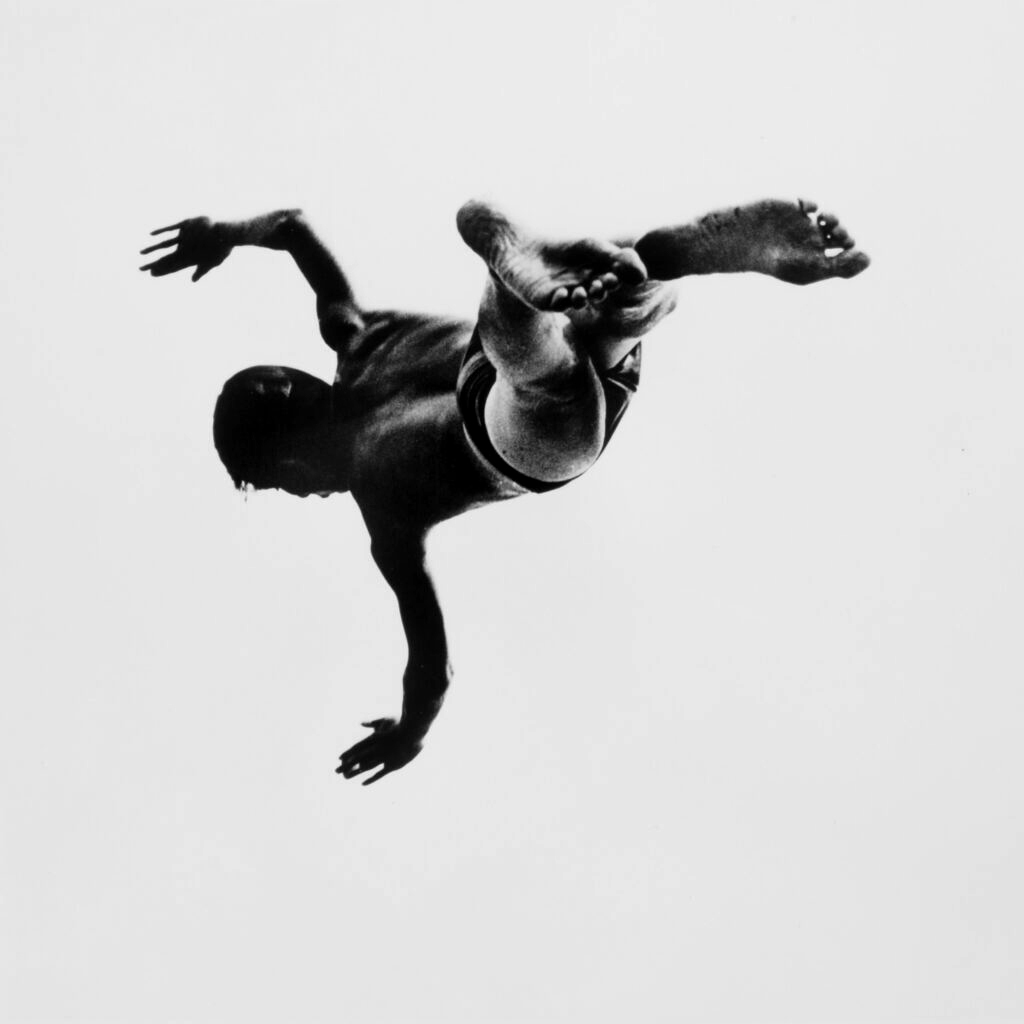
Aaron Siskind (American, 1903-1991) 'Pleasures and Terrors of Levitation #37' 1953


Aaron Siskind (American, 1903-1991)
Pleasures and Terrors of Levitation #37
1953
Gelatin silver print
High Museum of Art, Atlanta, gift of Adair and Joe B. Massey in honour of Gus Kayafas


Aaron Siskind was recognised for the ways he rendered his surroundings into often stark shapes and forms, which reflected his fascination with contemporary trends in abstract art. He was an influential teacher at Chicago’s Institute of Design, which was founded by László Moholy-Nagy as the New Bauhaus. This image of a person flying or falling comes from a series Siskind made of the contorted bodies of divers plunging into Lake Michigan. He masterfully created its disorienting effect through tight focus on the floating figure without contextual elements.

Text from the High Museum of Art website


While contemporarily AI-powered technologies are revolutionising the way we interact with and consume media, enabling us to “to process and analyse vast amounts of data quickly, making it easier to find and access the information we need” in the 1920s and 1930s there was also a revolution in the way artists (and their use of the camera) viewed and felt the world – one not based on information, image quality or duplicity in the veracity of the image but one based on the word, perspective – be that point of view, context, close ups, surreality, fragmentation, scale, concept, construction, colour, aesthetics, identity, gender, or radical experimentation.

In this departure from traditional photographic methods, “New Vision photographers foregrounded experimental techniques, including photograms, photomontages and compositions that favoured extreme angles and unusual viewpoints, and these extended to movements such as surrealism and constructivism.” (Press release)

To me, this New Vision is about experiencing different perspectives – experiencing, sensing, feeling and seeing the world in a new light. After the disasters and machine-ations, the destruction of a conservative way of life before the First World War, here was a way to grasp hold of (and picture) the speed of a new world order, the dreams of physiological analysis, the diversity of new identities, and the fluidity of rapidly evolving technological and social cultures.

While today this (r)evolution continues at an ever expanding pace with the consumption of huge amounts of information and images, I believe it may be advantageous to rest for a while on certain experiences and images … so that we let the daggers drop from our eyes, to ‘not make images’ in our minds eye but just to be present in the viewing of a photograph, so that we appreciate and understand every aspect of the great life spirit of this wondrous earth.

Then and now, new vision.

Dr Marcus Bunyan


Many thankx to the High Museum of Art for allowing me to publish the photographs in the posting. Please click on the photographs for a larger version of the image.


The New Vision movement of the 1920s and 1930s offered a revolutionary approach to seeing the world. It represented a rebellion against traditional photographic methods and an embrace of avant-garde experimentation and innovative techniques. László Moholy-Nagy, an artist and influential teacher at the Bauhaus in Germany, named this period of expansion the “New Vision.” Today, the term encompasses photographic developments that took place between the two World Wars in Europe, America, and beyond. New Vision photographers foregrounded inventive techniques, including photograms, photomontages, and light studies, and made photographs that favoured extreme angles and unusual viewpoints. These approaches – which also extended to more defined movements like Surrealism – spoke to a desire to find and see different perspectives in the wake of World War I.

Uniting more than one hundred works from the High’s photography collection, the exhibition traces the movement’s impact, from its origins in the 1920s to today, and demonstrates its long-standing effect on subsequent generations.

Text from the High Museum of Art website

Photography’s New Vision: Experiments in Seeing

Named by the influential German artist and teacher László Moholy-Nagy, the “New Vision” comprised an expansive variety of photographic exploration that took place in Europe, America, and beyond in the 1920s and 1930s. The movement was characterised by its departure from traditional photographic methods. New Vision photographers foregrounded experimental techniques, including photograms, photomontages, and light studies, and made photographs that favoured extreme angles and unusual viewpoints.

This exhibition, uniting more than one hundred works from the High’s robust photography collection, will trace the impact of the New Vision movement from its origins in the 1920s to today. Photographs from that era by Ilse Bing, Alexander Rodchenko, Imogen Cunningham, and Moholy-Nagy will be complemented by a multitude of works by modern and contemporary artists such as Barbara Kasten, Jerry Uelsmann, Hiroshi Sugimoto, and Abelardo Morell to demonstrate the long-standing impact of the movement on subsequent generations.

Text from the High Museum of Art website


Installation view of the exhibition 'Photography's New Vision: Experiments in Seeing' at the High Museum of Art, Atlanta, June 2025 - January 2026


Installation views of the exhibition Photography’s New Vision: Experiments in Seeing at the High Museum of Art, Atlanta, June 2025 – January 2026
Photos: Mike Jensen


The High Museum of Art presents “Photography’s New Vision: Experiments in Seeing” (June 13, 2025 – Jan. 4, 2026), an exhibition uniting more than 100 works from the High’s robust photography collection to trace the impact of the New Vision movement from its origins in the 1920s to today. Works include century-old photographs exemplifying themes from the movement and modern and contemporary images that emphasise the relevance of current artistic and social practices as a response to the technological and cultural changes that occurred in the early 20th century.

“This exhibition provides an opportunity to illuminate photographers’ creativity and innovative practices, all inspired by the progression of the medium in the 1920s and 30s,” said High Museum of Art Director Rand Suffolk. “Many of the works are rarely on view, so it will be an exciting experience for visitors to see them and learn about photographers’ abilities as they reflect reality while experimenting with technique and perspective.” Named by the influential German artist and teacher László Moholy-Nagy, the “New Vision” comprised an expansive variety of photographic exploration that took place in Europe, America and beyond in the 1920s and 1930s. The movement was characterised by its departure from traditional photographic methods. New Vision photographers foregrounded experimental techniques, including photograms, photomontages and compositions that favoured extreme angles and unusual viewpoints, and these extended to movements such as surrealism and constructivism.

“Experiments in Seeing” features nearly 100 photographers. It also demonstrates how the New Vision movement revolutionised the medium of photography in the early 20th century in response to the great societal, economic and technological shifts spurred by the upheaval of the two World Wars. Photographs from that era by Ilse Bing, Alexander Rodchenko, Imogen Cunningham and Moholy-Nagy have been complemented by a multitude of photographs by modern and contemporary artists such as Barbara Kasten, Jerry Uelsmann, Hiroshi Sugimoto and Abelardo Morell to demonstrate the long-standing impact of the movement on subsequent generations.

The first section of the exhibition delves into experimental techniques that foreground the light-sensitive aspects of photography, followed by works created through in-camera manipulations or additions to the surfaces of the prints. Subsequent sections explore inventive methods of capturing unexpected views of the world articulated with radical angles or detailed close-ups. Other works showcase surreal approaches to subjects such as humanlike forms and bodies, the use of mirrors and doubling, and everyday scenes heightened by uncanny moments or distorted through the interplay of light, shadow and water.

“Not only does the early 20th century and its art movements continue to be influential, but that time also echoes our current moment – one that feels similarly consequential and innovative with the development of new emerging technologies and methods of communicating,” said Maria L. Kelly, the High’s assistant curator of photography. “The movements and happenings of a century ago are akin to those of today and those shown in the exhibition. There remains a desire for alternative ways to see and approach the world through art, and particularly through photography.”

“Photography’s New Vision: Experiments in Seeing” is on view in the Lucinda W. Bunnen Galleries for Photography located on the Lower Level of the High’s Wieland Pavilion.

Press release from the High Museum of Art


“Light was considered the medium that permits photography. But for me it became the main subject: the protagonist of my photography.”


Ilse Bing, c. 1920s


Light Experimentation

After the trauma of World War I, many artists felt compelled to reconsider conventional art making methods to better reflect and engage with the world. Some photographers turned their attention to the essential element of photography: light. Through innovative visual investigations, cameraless photographs were produced, viewes of the world altered, and scientific discoveries made.

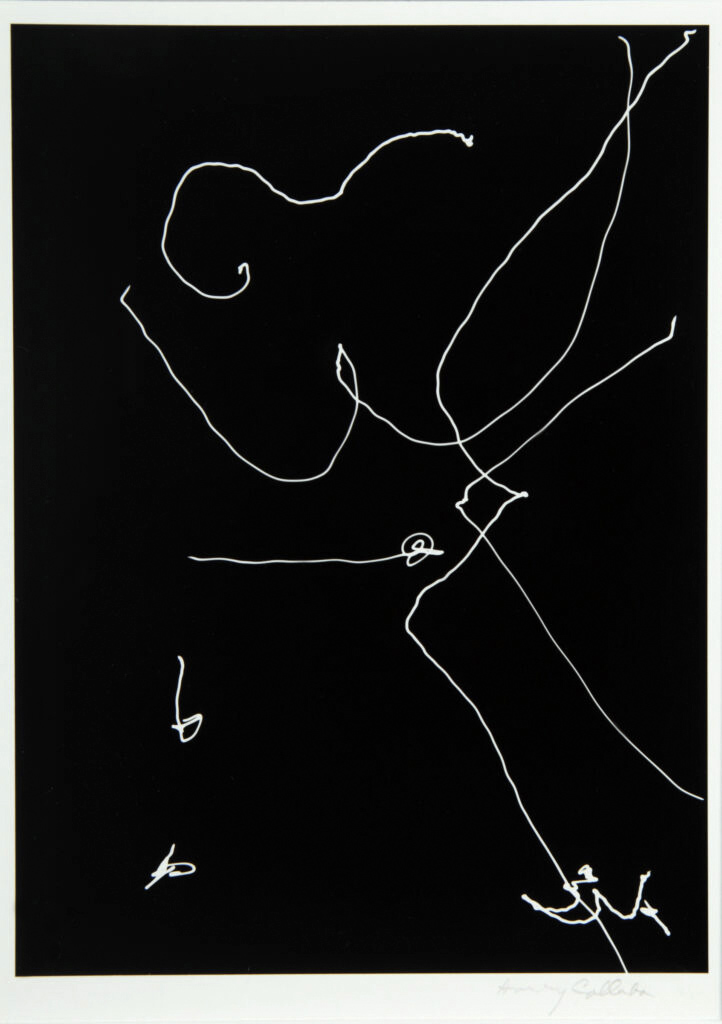
Experimentations with illumination and light-sensitive paper in the darkroom gave rise to photograms, enabling artists to pursue abstraction and to wield light as a sculptural element. The process of solarisation – reversing tones in a print using a flash of light during developing – provided an unconventional view of a subject. Early attempts to capture traces of light on film led to scientific innovations such as using strove lights to freeze movement, depicting magnetic fields, and tracing electrical currents on light sensitive paper.

These processes aim to reveal the invisible, with the elements of change as a constant companion. While artists can insert some control over the elements, the process ultimately shapes the final image. Many artworks in this section exist as unique prints, challenging the assumption of the reproducibility of photography, and emphasising the singularity of the creative moment.

Wall text from the exhibition


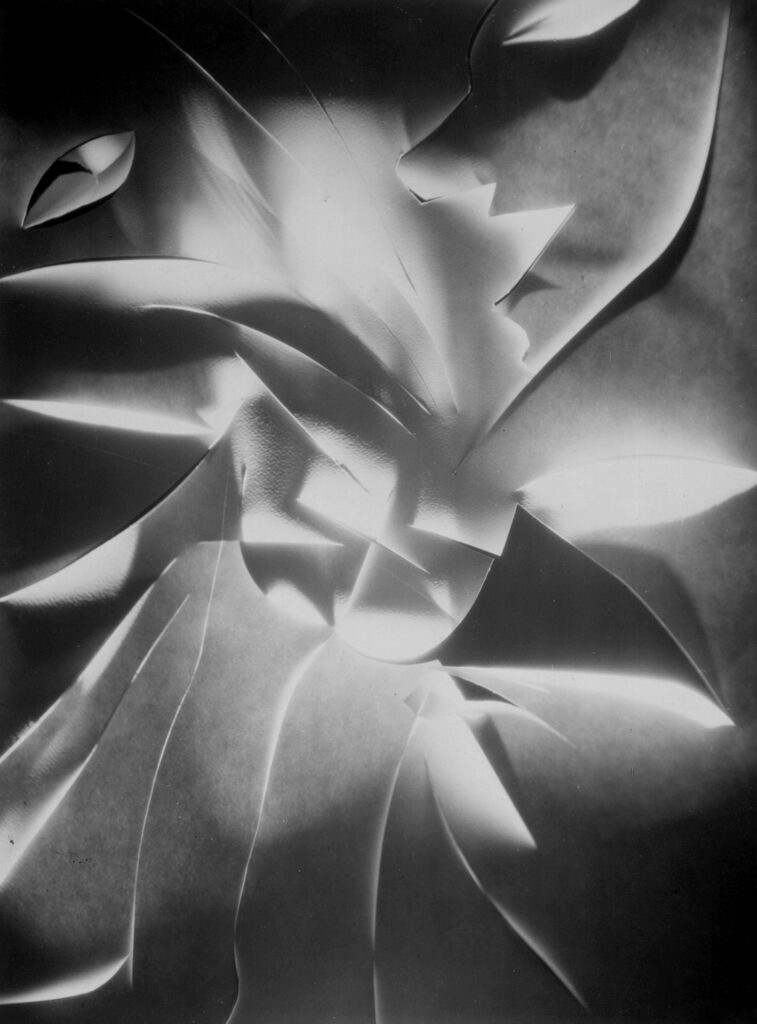
Francis Bruguière (American, 1879-1945) 'The Light That Never Was on Land or Sea' c. 1925


Francis Bruguière (American, 1879-1945)
The Light That Never Was on Land or Sea
c. 1925
Gelatin silver print
High Museum of Art, Atlanta, purchase with funds from Georgia-Pacific Corporation


Nathan Lerner (American, 1913-1977) 'Light Drawing #8 (Smoke)' 1938-1939


Nathan Lerner (American, 1913-1977)
Light Drawing #8 (Smoke)
1938-1939
Gelatin silver print
High Museum of Art, Atlanta, gift of Hilary Leff and Elliot Groffman


Ilse Bing (American born Germany, 1899-1998) 'Untitled [Seated Woman with Necklace, Solarized]' 1943


Ilse Bing (American born Germany, 1899-1998)
Untitled [Seated Woman with Necklace, Solarized]
1943
Gelatin silver print
High Museum of Art, Atlanta, gift of the Estate of Ilse Bing Wolff


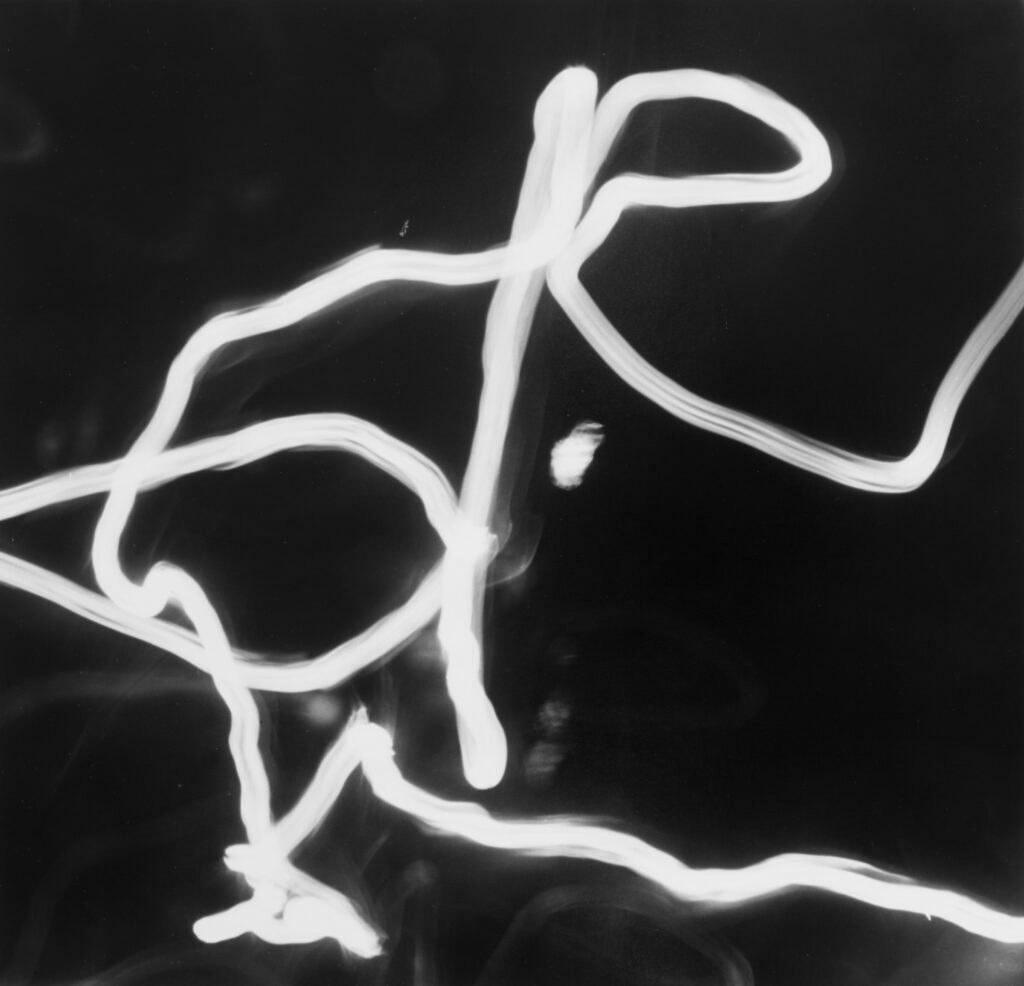
Harry Callahan (American, 1912-1999) 'Camera Movement on Flashlight, Chicago' c. 1949


Harry Callahan (American, 1912-1999)
Camera Movement on Flashlight, Chicago
c. 1949
Gelatin silver print
High Museum of Art, Atlanta, purchase with funds from the H. B. and Doris Massey Charitable Trust, Dr. Robert L. and Lucinda W. Bunnen, Collections Council Acquisition Fund, Jackson Fine Art, Powell, Goldstein, Frazer and Murphy, Jane and Clay Jackson, Beverly and John Baker, Roni and Sid Funk, Gloria and Paul Sternberg, and Jeffery L. Wigbels
© 2018 The Estate of Harry Callahan


Abelardo Morell (American born Cuba, b. 1948) 'Still Life with Wine Glass: Photogram on 20" x 24" Film' 2006


Abelardo Morell (American born Cuba, b. 1948)
Still Life with Wine Glass: Photogram on 20″ x 24″ Film
2006
Gelatin silver print
High Museum of Art, Atlanta, purchase with funds from the Friends of Photography
© Abelardo Morell


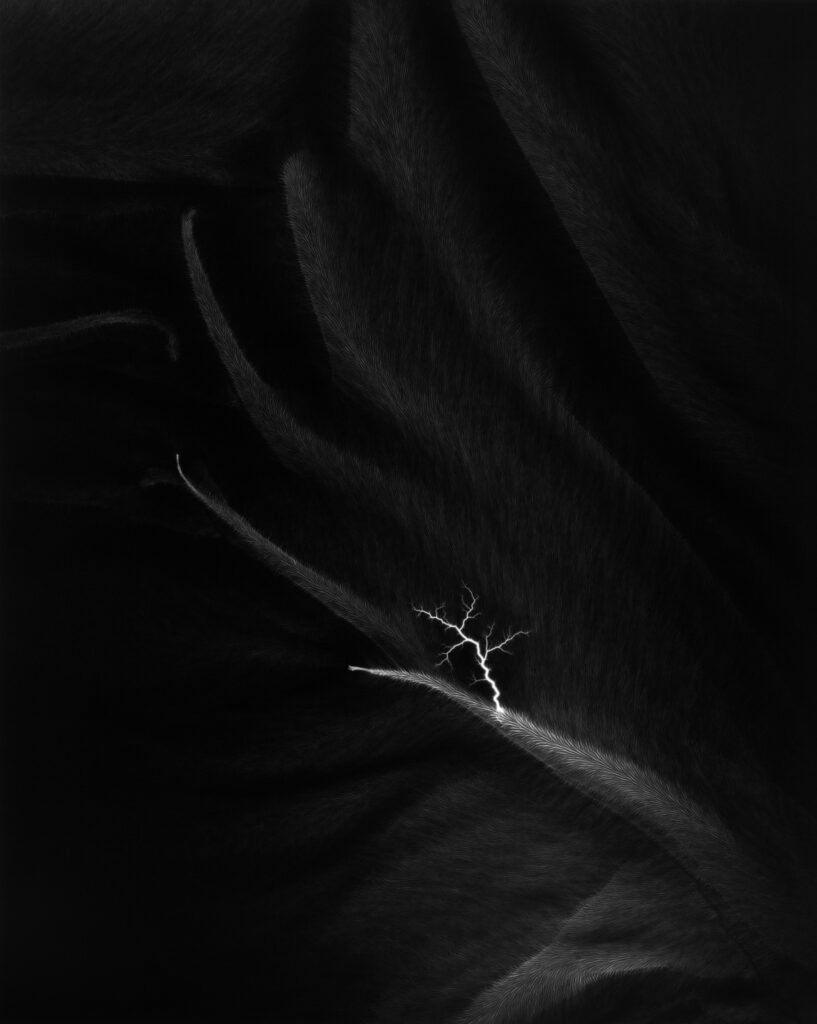
Hiroshi Sugimoto (Japanese, b. 1948) 'Lightning Fields 182' 2009


Hiroshi Sugimoto (Japanese, b. 1948)
Lightning Fields 182
2009
Gelatin silver print
High Museum of Art, Atlanta, purchase through funds provided by patrons of Collectors Evening 2012
© Hiroshi Sugimoto


Inspired by William Henry Fox Talbot, an inventor of photography who was fascinated with electromagnetic conduction, Hiroshi Sugimoto began applying charges of electricity directly to unexposed photographic film. After months of honing his technique in the darkroom, he managed to achieve remarkable results with a handheld wand charged by a generator. His Lightning Fields photographs are made without a camera or lens. Here, the abstract visual trace of an electric charge measuring over 400,000 volts sweeps across the composition, reading like the textures of a human hand, the upward tentacles of a fern, or the stark branches of a tree.

Text from the High Museum of Art website


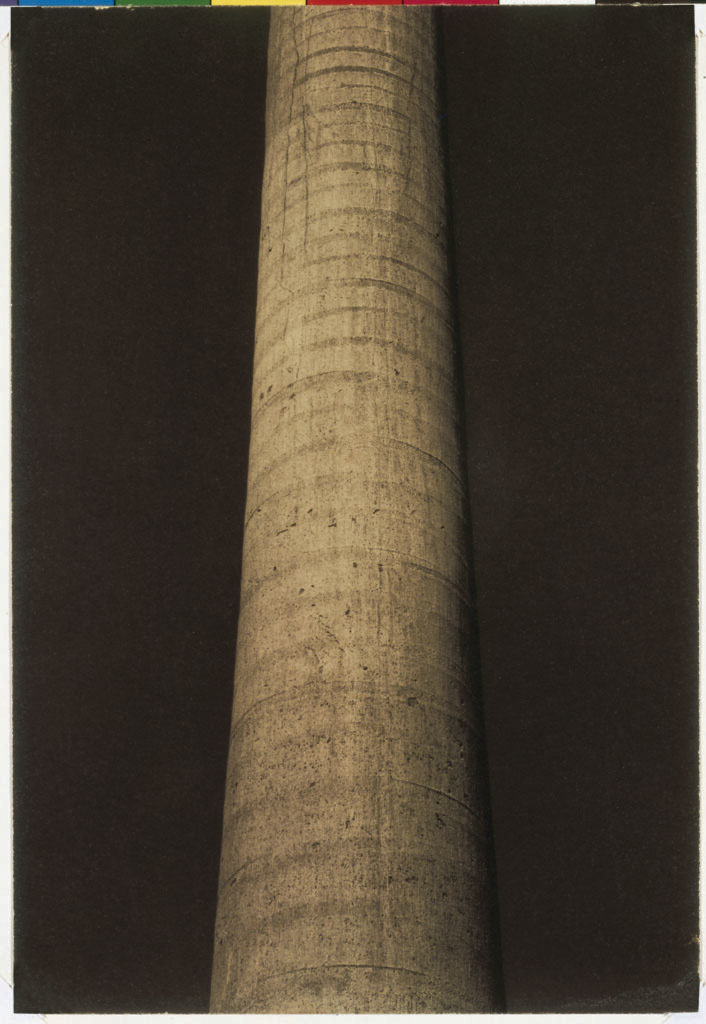
Hans-Christian Schink (German, b. 1961) '2/26/2010, 7:54 am – 8:54 am, S36° 49.622' E 175° 47.340'' 2010


Hans-Christian Schink (German, b. 1961)
2/26/2010, 7:54 am – 8:54 am, S36° 49.622′ E 175° 47.340′
2010
From the series 1h
© Hans-Christian Schink


Abelardo Morell (American born Cuba, b. 1948) 'Camera Obscura: View of Philadelphia from Loews Hotel Room #3013 with Upside Down Bed, April 14th, 2014' 2014


Abelardo Morell (American born Cuba, b. 1948)
Camera Obscura: View of Philadelphia from Loews Hotel Room #3013 with Upside Down Bed, April 14th, 2014
2014
Pigmented inkjet print
High Museum of Art Atlanta, gift of Dr. Roger Hartl
© Abelardo Morell


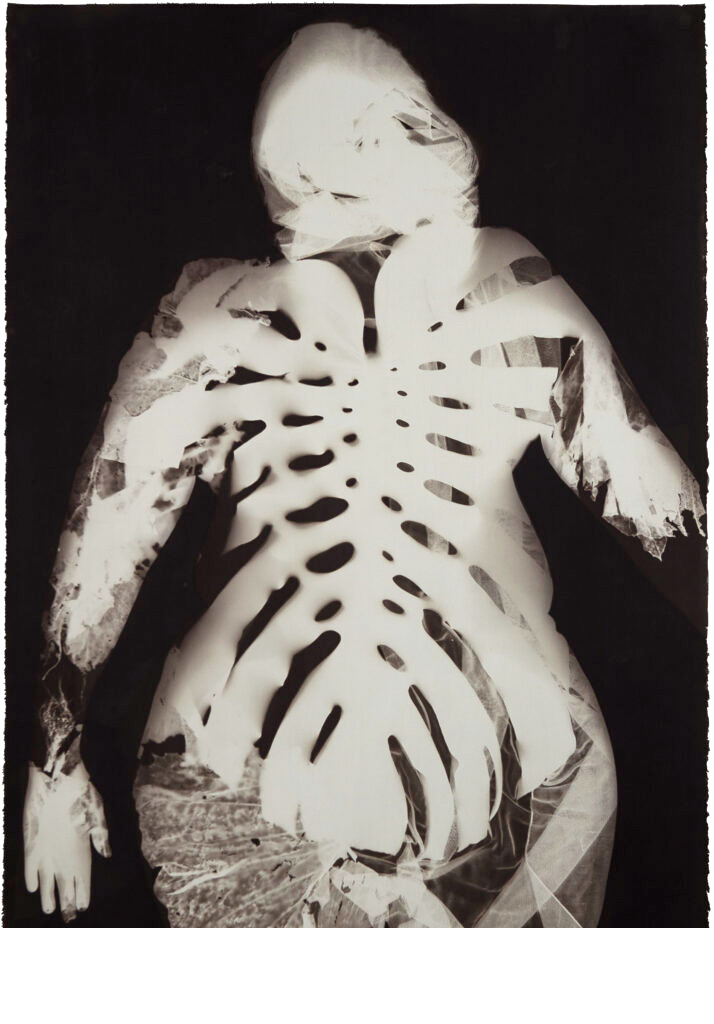
V. Elizabeth Turk (American, b. 1945) 'Calaeno' 2018


V. Elizabeth Turk (American, b. 1945)
Calaeno
2018
Van Dyke print
High Museum of Art, Atlanta, purchase with funds from Lucinda W. Bunnen for the Bunnen Collection
© Elizabeth Turk


V. Elizabeth Turk is an Atlanta-based photographer whose work explores the connections between the human body and the natural world. To make this print, Turk used an analog process from the 1800s that involves coating a large sheet of paper with light-sensitive chemicals. She then arranged her model on top of the sheet and exposed it to light, creating a ghostly silhouette, before repeating the exposure with plants. The resulting photogram is a unique image in which botanical forms intersect with the body, alluding to bones, veins, and skin and suggesting a visceral bond between humans and the environment. 

Text from the High Museum of Art website


“The limits of photography are incalculable; everything is so recent that even the mere act of searching may lead to creative results. […] The illiterate of the future will be the person ignorant of the use of the camera as well as of the pen.”


László Moholy-Nagy 1928


Radical Viewpoints

From photography’s inception in 1839, camera technology involved cumbersome equipment and time-consuming development processes until the advent of lightweight cameras in the 1920s. Photographers were then able to work more nimbly, transforming photography into a medium capable of capturing fleeting moments, unusual viewpoints, and multiple perspectives. The exploration of unexpected angles became a hallmark of New Vision photography. Sharp diagonals, extreme vantage points, and shortened perspectives opened novel pathways of perceiving otherwise commonplace environments.

Alexander Rodchenko, a pioneer in this method, championed the camera’s ability to reveal, stating, “in order to teach man to see from all viewpoints, it is necessary to photograph […] from completely unexpected viewpoints and in unexpected positions […] We don’t see what we are looking at. We don’t see marvellous perspectives.” This approach aimed to provide a fuller impression of subjects, prompting viewers to seek and appreciate what might otherwise be overlooked.

Though these early photographs may not appear groundbreaking today, their makers’ carefully considered methods transferred how photography is used. This is evident in photographers’ creative interpretations of their surroundings over the past century.

Wall text from the exhibition


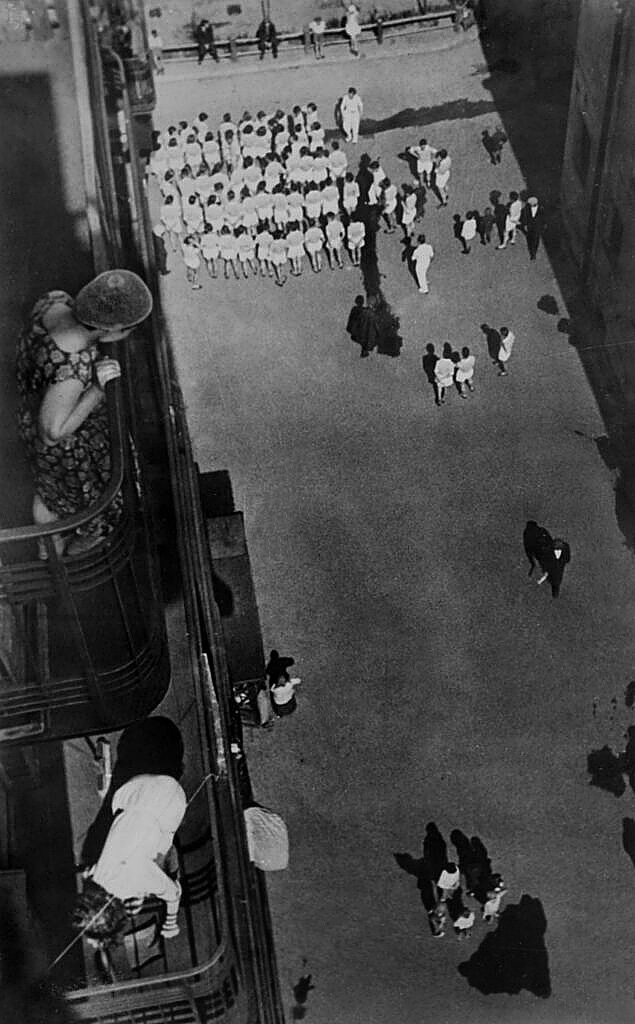
Alexander Rodchenko (Russian, 1891-1956) 'Sbor na demonstratsia' (Gathering for a Demonstration) 1928


Alexander Rodchenko (Russian, 1891-1956)
Sbor na demonstratsia (Gathering for a Demonstration)
1928
Gelatin silver print
High Museum of Art, Atlanta, gift of Joseph and Yolandra Alexander, Moscow/VAGA at Artists Rights Society (ARS), New York
© Estate of Alexander Rodchenko/RAO, Moscow/VAGA at Artists Rights Society (ARS), New York


Alexander Rodchenko was a key figure in the movements of New Vision and Constructivism – abstract and functional art that reflected an industrial society. Advocating “to achieve a revolution in our visual thought,” he explored various methods, such as photographing from unexpected angles, to capture dynamic views and expose new realities. With a new, lightweight 35 mm camera, he often photographed from his apartment balcony to create dramatic scenes of the street below. The perspective in this photograph flattens the building’s stories into one visual field, giving the image a theatrical quality as an onlooker peers over the railing.

Text from the High Museum of Art website


Walker Evans (American, 1903-1975) 'The Bridge' 1929


Walker Evans (American, 1903-1975)
The Bridge
1929
Gelatin silver print
High Museum of Art, Atlanta, gift of Arnold H. Crane
© Walker Evans Archive, The Metropolitan Museum of Art


A central figure among twentieth-century American photographers, Walker Evans created works in his early career that sample from the New Vision aesthetic, which he may have encountered while abroad in Paris in 1926. His photographs of New York City, made after he returned to the United States, feature dramatically angled or cropped scenes of architecture and city life. Evans made numerous photographic studies of the Brooklyn Bridge from both below and on the bridge, portraying it less as a recognisable landmark and more as a hulking expanse whose form fills each tight frame.

Text from the High Museum of Art website


László Moholy-Nagy (Hungarian 1895-1946) 'Stage Set for Madame Butterfly' 1931


László Moholy-Nagy (Hungarian 1895-1946)
Stage Set for Madame Butterfly
1931
Gelatin silver print
High Museum of Art, Atlanta, purchase with funds from Georgia-Pacific Corporation


Moholy-Nagy, a leader of the New Vision, had an expansive artistic practice that included painting, photography, sculpture, film, and more. As a teacher at the Bauhaus, which connected art and industry, he believed in technology’s potential to advance art and society. In 1929, he became set designer at the Kroll Opera House and created avant-garde sets with translucent and perforated materials, often making light itself a sculptural element. Lucia Moholy, a photographer, writer, teacher, and Moholy-Nagy’s first wife, was commissioned as Kroll’s stage photographer. In this image, which either artist may have made, the sharp angle shot from above complicates the set of Madame Butterfly, emphasising intersecting, moving elements and heightening areas of light and shadow.

Text from the High Museum of Art website


Lucas Foglia (American, b. 1983) 'Esme Swimming, Parkroyal on Pickering, Singapore' 2014


Lucas Foglia (American, b. 1983)
Esme Swimming, Parkroyal on Pickering, Singapore
2014
Pigmented inkjet print
High Museum of Art, Atlanta, gift of Irene Zhou
© Lucas Foglia


Close Ups

Similar to the practice of using unusual angles to offer unexpected perspectives, some photographers began capturing highly detailed, close-up views of objects. This approach affords a study of texture, pattern, and structure that may otherwise go unnoticed by the human eye. By eliminating surroundings that could offer a narrative, the physicality of the object becomes the primary focus, allowing it to transcend beyond its everyday existence.

Practitioners of straight photography in the United States and the concurrent New Objectivity movement in Germany shared a core desire to unearth a balance of the familiar and the foreign within intricate images of forms. While Imogen Cunningham and Edward Weston perfected carefully composed studies of plants and other natural matter, Albert Renger-Patzsch, Alexander Rodchenko, and Ralph Steiner explored scientific and industrial objects. Such images celebrated the technological advancements of the time and revealed how mechanical structures often mimic those found in nature, suggesting a shared framework, and a shared beauty, between humanmade and natural. The emphasis on detail and abstraction invites viewers to reconsider their perceptions of both the ordinary and the extraordinary in the world around them.

Wall text from the exhibition


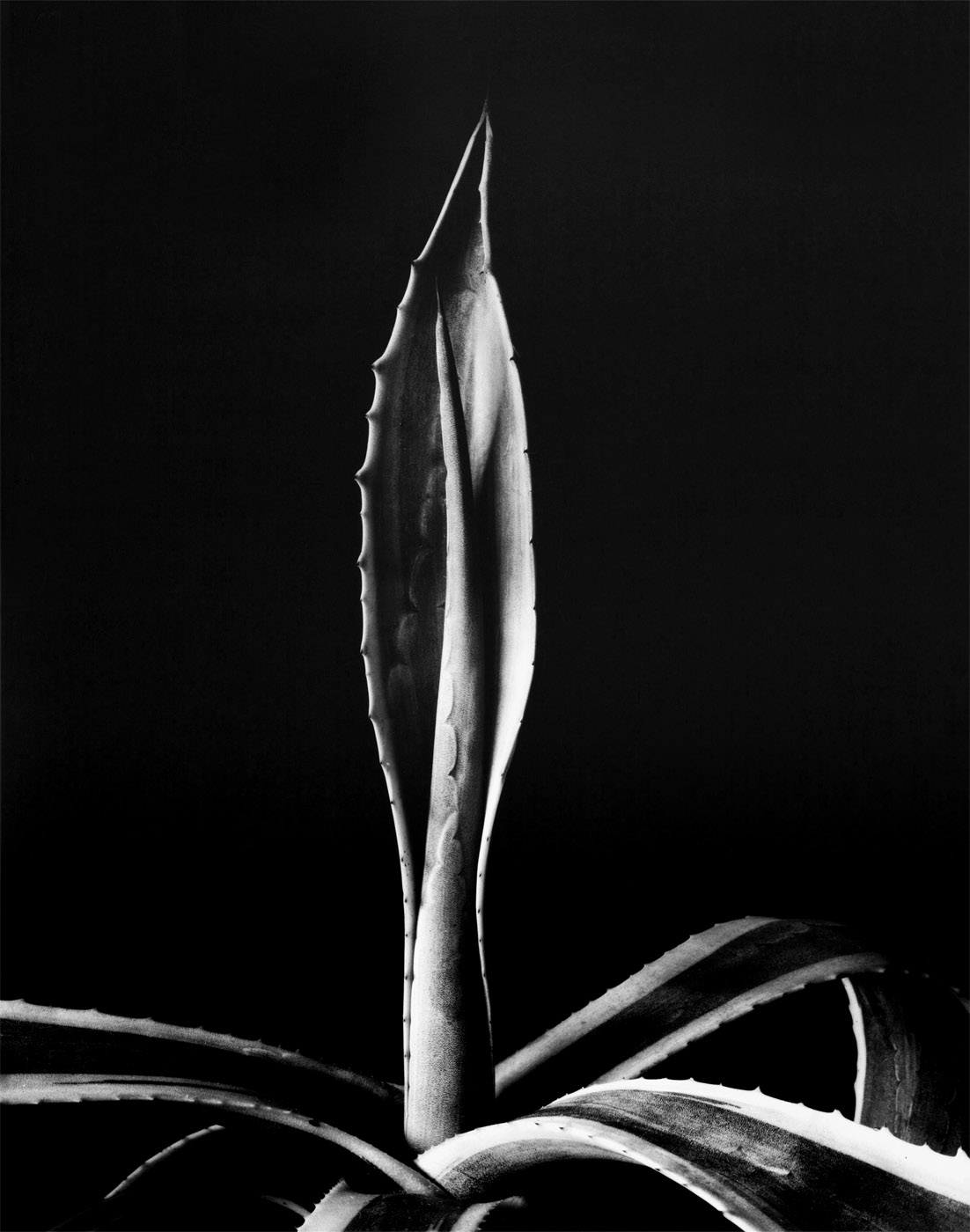
Imogen Cunningham (American, 1883-1976) 'Agave Americanus' 1929


Imogen Cunningham (American, 1883-1976)
Agave Americanus
1929
Gelatin silver print
High Museum of Art, Atlanta
© The Imogen Cunningham Trust


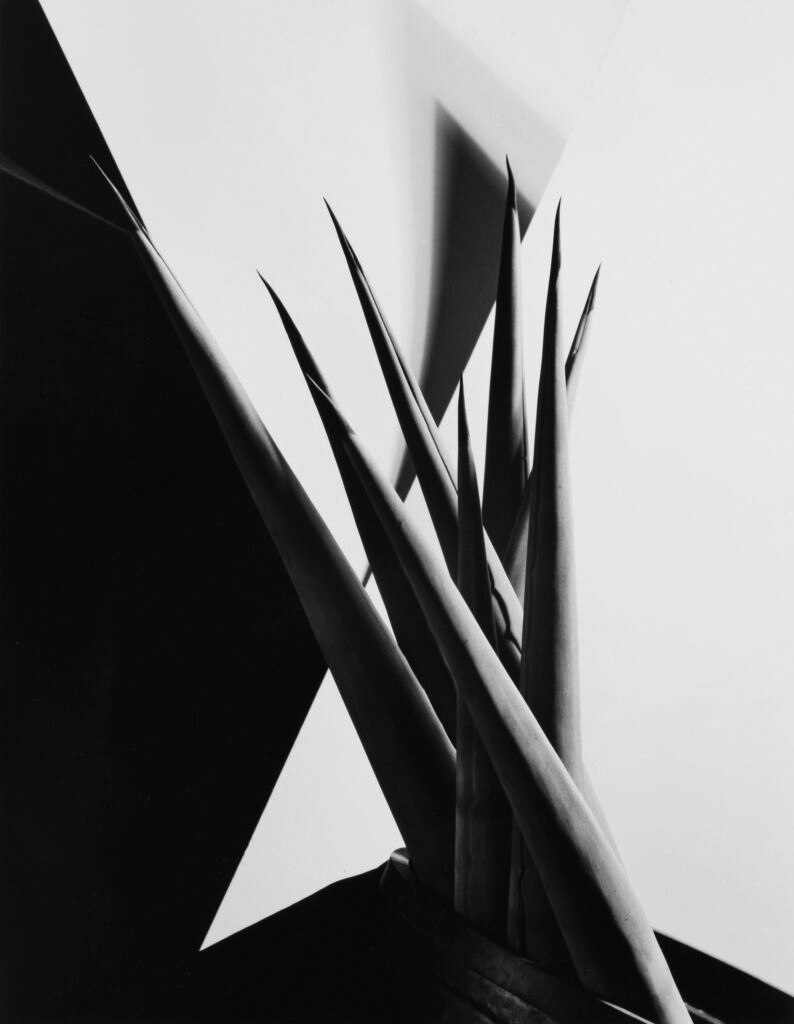
Imogen Cunningham (American, 1883-1976)
'Agave Design I' c. 1920


Imogen Cunningham (American, 1883-1976)
Agave Design I
c. 1920
Gelatin silver print
High Museum of Art, Atlanta, purchase with funds from Georgia-Pacific Corporation
© The Imogen Cunningham Trust


Edward Weston (American 1886-1958) 'Palma Cuernavaca II' 1925


Edward Weston (American 1886-1958)
Palma Cuernavaca II
1925
Palladium print
High Museum of Art, Atlanta, gift of Lucinda W. Bunnen for the Bunnen Collection to mark the retirement of Gudmund Vigtel
© Center for Creative Photography, Arizona Board of Regents


Ralph Steiner (American, 1899-1986) 'Electrical Switches' 1929


Ralph Steiner (American, 1899-1986)
Electrical Switches
1929
Gelatin silver print
8 x 10 5/16 inches
Purchase with funds from Georgia-Pacific Corporation


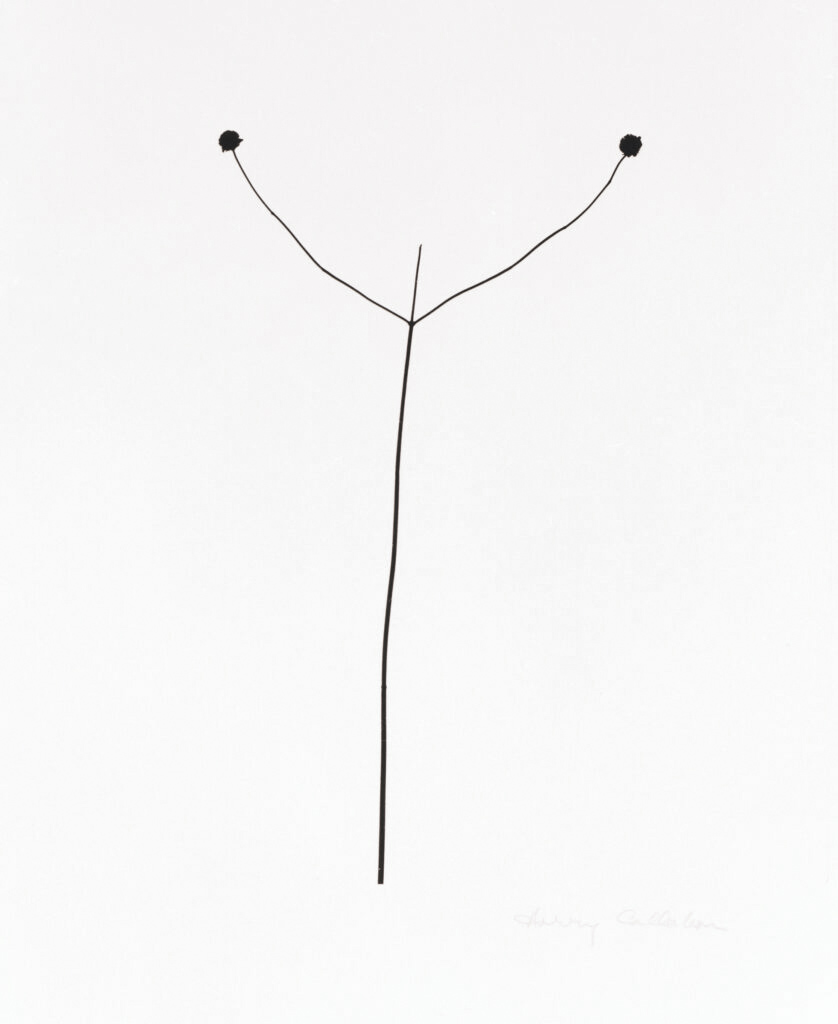
Harry Callahan (American, 1912-1999) 'Weed Against Sky, Detroit' 1948


Harry Callahan (American, 1912-1999)
Weed Against Sky, Detroit
1948
Gelatin silver print
High Museum of Art, Atlanta, gift of the Callahan and Hollinger Families
© 2018 The Estate of Harry Callahan


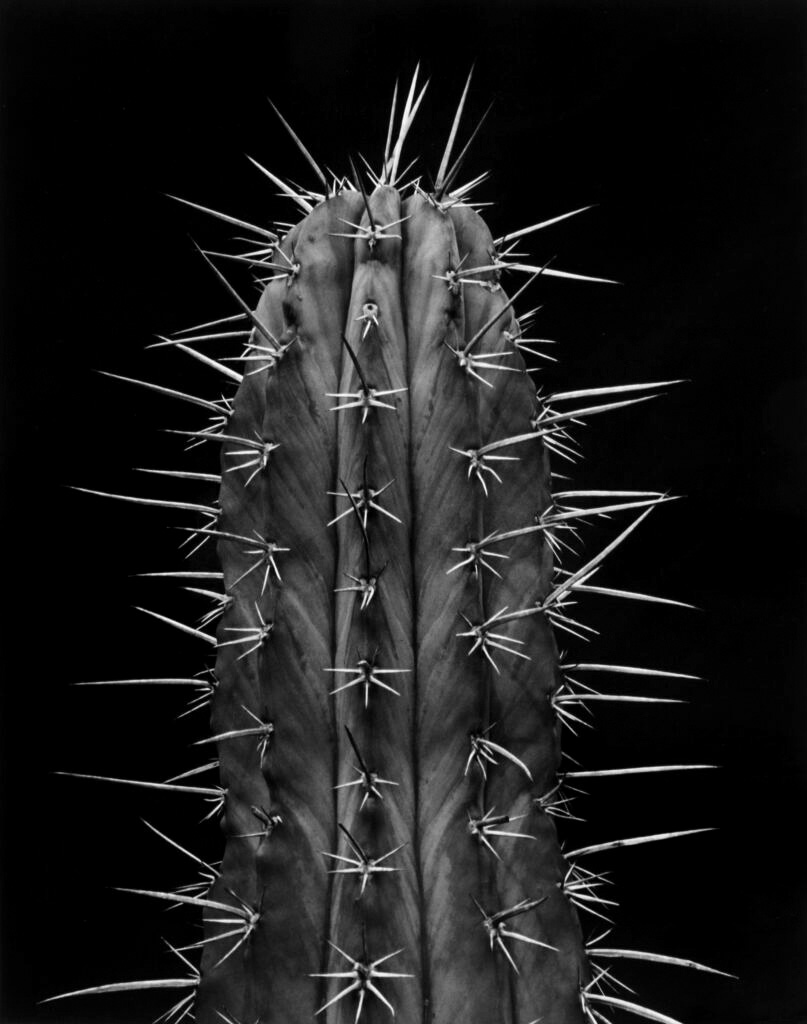
Eugenia de Olazabal (Mexican, b. 1936) 'Espinas' c. 1985


Eugenia de Olazabal (Mexican, b. 1936)
Espinas
c. 1985
Gelatin silver print
High Museum of Art, Atlanta, gift of the artist


“Surrealism lies at the heart of the photographic enterprise: in the very creation of a duplicate world, of a reality in the second degree, narrower but more dramatic than the one perceived by natural vision.”


Susan Sontag, 1973


Surreality

Surrealism emerged as an artistic movement in reaction to the horrors of World War I. The often disconcerting imagery and literature of the movement reflected a world that felt disorienting and chaotic and captured how the very foundations of reason and humanity were tested and questioned through the realities of war. In his Surrealist Manifesto (1924), French writer Andre Breton advocates for a rejection of rational ways of approaching the world in four of dreams and imagination as pathways to new creative expressions.

Photography played an important role in the Surrealist movement. Artists valued how the medium could capture spontaneous moments that reveal the unexpected, be manipulated to stage scenes, or be altered with darkroom processes. They harness photography in a multitude of ways to create dreamlike and unconscious associations with reality. In these galleries, artists explore uncanny moments and create links to the human psyche by focusing on humanlike forms and fragmented body parts, mirrored and doubled views, and the impact of light and shadows in space.

Wall text from the exhibition


Eugène Atget (French, 1857-1927) 'Men's Fashions (Avenue des Gobelins)' 1925, printed 1956


Eugène Atget (French, 1857-1927)
Men’s Fashions (Avenue des Gobelins)
1925, printed 1956
Gelatin silver print
Purchase


Eugène Atget was the great chronicler of Paris at the turn of the century. His vast photographic archive captures a city on the precipice of modernisation. Though his photographs of empty city streets were documentary in nature, the Surrealists admired their dreamlike quality and claimed Atget as one of their own despite his protestations. They believed any photograph could shed its original context and intent when viewed with a surrealist sensibility. Atget’s photograph of mannequins peering out of a shop window appealed to the movement by embodying the uncanny valley, where the human likeness of a nonhuman entity evokes both affinity and discomfort in viewers.

Text from the High Museum of Art website


Florence Henri (Swiss born United States, 1893-1982) 'Composition' 1932, printed 1972


Florence Henri (Swiss born United States, 1893-1982)
Composition
1932, printed 1972
Gelatin silver print
High Museum of Art, Atlanta, gift of Dr. Joe B. Massey in honor of Maria L. Kelly


Florence Henri is well known for her manipulations of light and form that create complex, surrealist scenes. She used angled mirrors to frame, obscure, and replicate portions of scenes to dissolve a sense of perspective and space, as seen in this still life comprising mirrors, pears, and an image of the sea. After only one semester studying under László Moholy-Nagy at the Bauhaus in 1927, Henri shifted her focus from painting to photography and began using various experimental techniques such as photomontage, multiple exposures, photograms, and negative printing.

Text from the High Museum of Art website


Barbara Kasten (American, b. 1936) 'Construct NYC' 1984


Barbara Kasten (American, b. 1936)
Construct NYC
1984
Dye destruction print
High Museum of Art, Atlanta, gift of Lucinda W. Bunnen for the Bunnen Collection
© Barbara Kasten


Barbara Kasten’s art is as much about the process of setting up innovative still life scenes as it is about the photographs she makes of them. Her Constructs series focuses on large-scale complex assemblages that she builds in her studio using a wide variety of materials, including painted wood, plaster, mirrors, screens, and fibers. Her work is not digitally altered; instead, she complicates the scene using mirrors and light, much in the tradition of Florence Henri, whose photograph is also on view in the exhibition.

Text from the High Museum of Art website


Manipulations

This final section features photographers from the New Vision period to the present day who experiment with physically manipulating photographs. Through approaches such as double exposure, photomontage, surface alteration, and multilayering, they challenge and expand our perceptions of reality. The artworks in this section prioritise the creative process through labour, intention, intervention, and theatricality.

Double exposures is the process of photographing multiple images with the same negative within the camera, resulting in layered images that often provide a frenetic, multifaceted view of a scene. In contrast to the in-camera process of double exposure, photomontage combines separate images in the darkroom to produce a final photograph that emphasises the image’s artifice and absurdity. Physically disrupting the surface of photographs with alterations such as adding unnatural colour, drawing connections, stitching into prints, or inscribing texts augments the visual experience and offers emotional and narrative depth. Finally, whether through ancient visual techniques like the camera obscure or new technologies like digital screens, these artists create enigmatic scenes by layering and physically transforming subject, composition, and image.

Wall text from the exhibition


Barbara Morgan (American, 1900-1992) 'Protest' 1940


Barbara Morgan (American, 1900-1992)
Protest
1940
Gelatin silver print
High Museum of Art, Atlanta, purchase


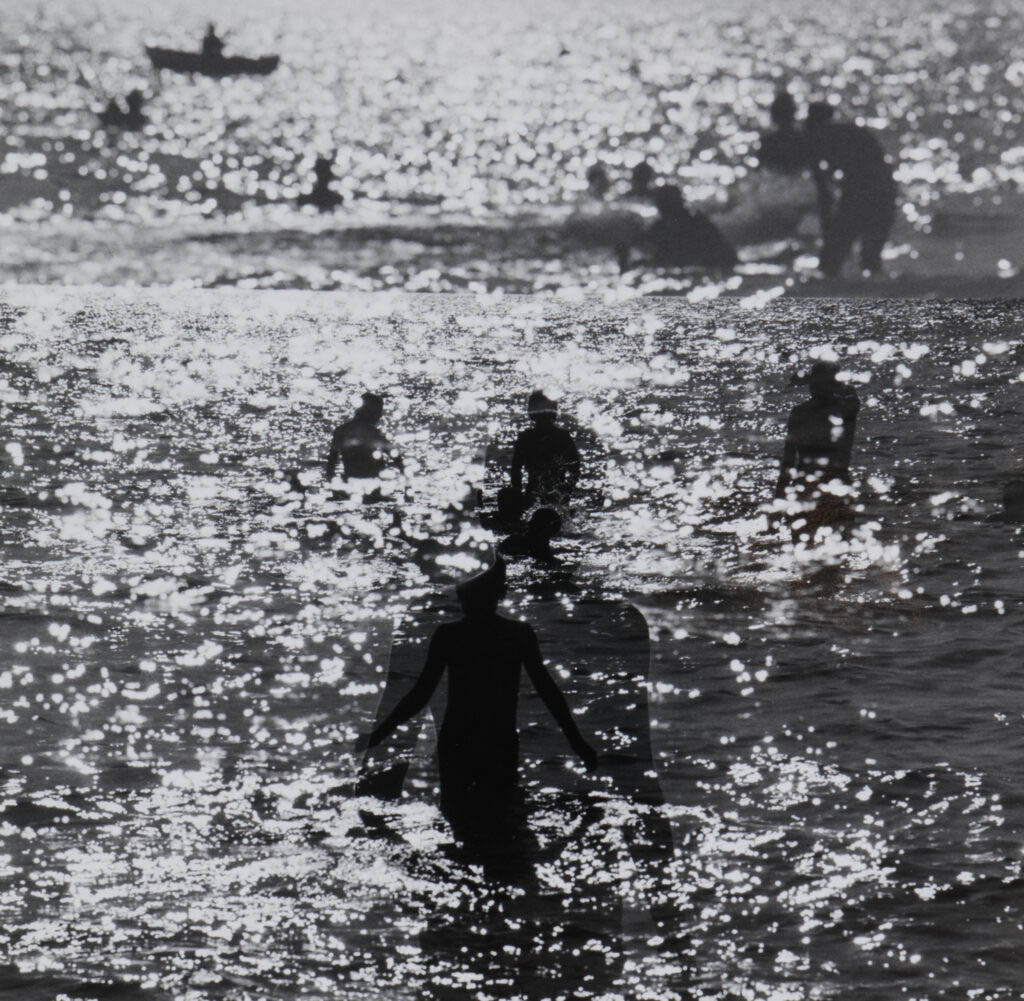
Charles Swedlund (American, b. 1935) '31 St. Beach' c. 1955


Charles Swedlund (American, b. 1935)
31 St. Beach
c. 1955
Gelatin silver print
High Museum of Art, Atlanta, gift of Steven Nordman
© Charles Swedlund


Jerry Uelsmann (American, 1934-2022) 'Untitled' 1964


Jerry Uelsmann (American, 1934-2022)
Untitled
1964
Gelatin silver print
High Museum of Art, Atlanta, purchase with funds from a friend of the Museum


Lucinda Bunnen (American, 1930-2022) 'Untitled' 1974


Lucinda Bunnen (American, 1930-2022)
Untitled
1974
Gelatin silver print
High Museum of Art, Atlanta, purchase with funds from the Lawrence and Alfred Fox Foundation for the Ralph K. Uhry Collection
© Lucinda Bunnen


Duane Michals (American, b. 1932)
'Untitled' 1989 From the 'Indomitable Spirit Portfolio'


Duane Michals (American, b. 1932)
Untitled
1989
From the Indomitable Spirit Portfolio
Gelatin silver print
High Museum of Art, Atlanta


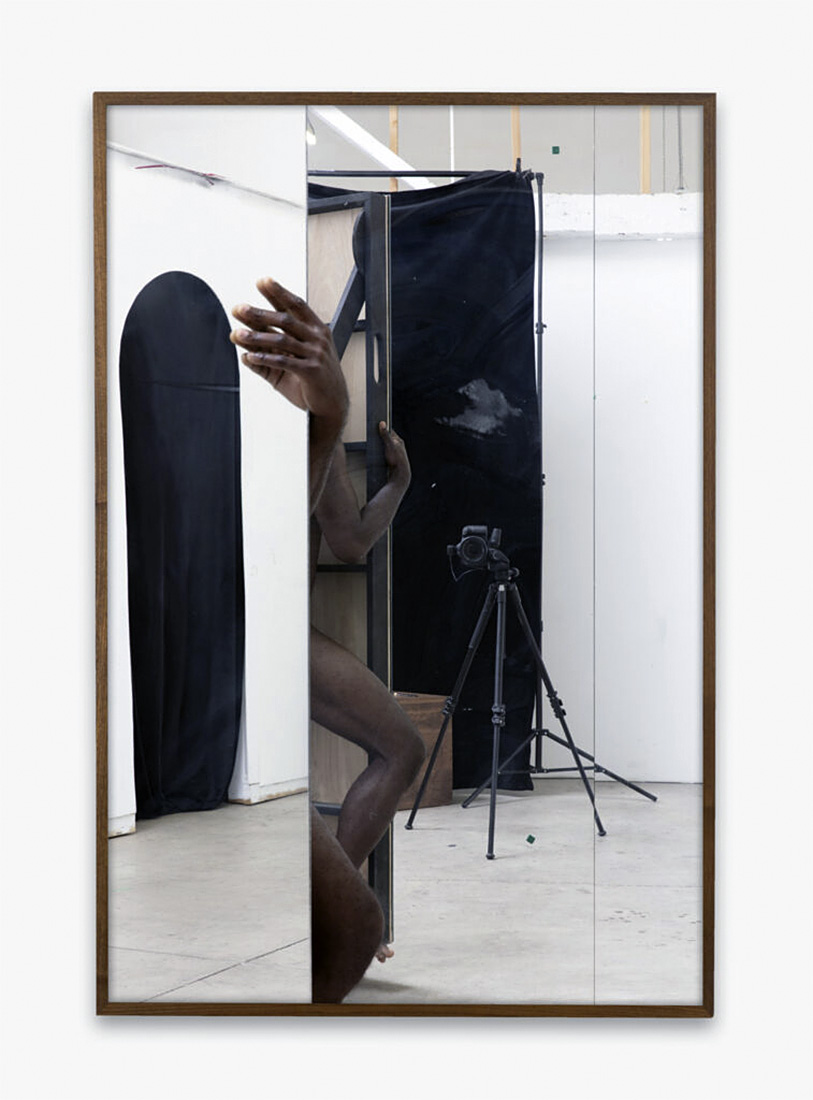
Paul Mpagi Sepuya (American, b. 1982) 'Studio (0X5A8180)' 2021


Paul Mpagi Sepuya (American, b. 1982)
Studio (0X5A8180)
2021
Archival pigment print
High Museum of Art, Atlanta, purchase with funds from the Donald and Marilyn Keough Family Foundation
© Paul Mpagi Sepuya


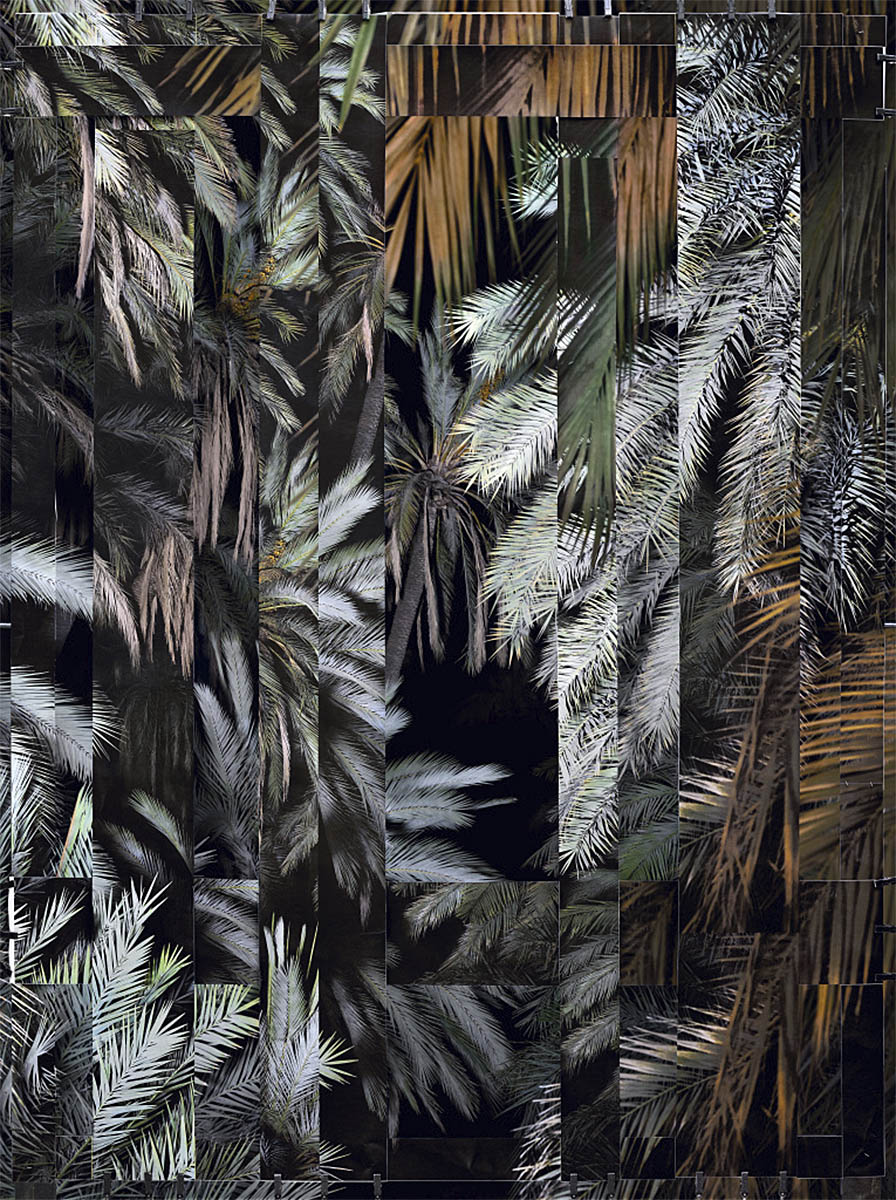
Noémie Goudal (French, b. 1984) 'Phoenix V' 2021


Noémie Goudal (French, b. 1984)
Phoenix V
2021
Dye coupler print
High Museum of Art, Atlanta, purchase through funds provided by patrons of Collectors Evening 2023


Noémie Goudal visualises “deep time” (geological history of the planet) and paleoclimatology (study of past climates) to challenge our perception of the world. Referring to the ancient continental split two billion years ago that formed South America and Africa, this image features the Phoenix atlantica, a palm tree that grows on both sides of the Atlantic. Goudal arranged strips of photographic prints of the palms made on one continent in front of the physical palms on the other and rephotographed the scene. The resulting image interweaves the two continents, creating a glitchy, kaleidoscopic view meant to unsettle our sense of stability and the constancy of the planet.

Text from the High Museum of Art website


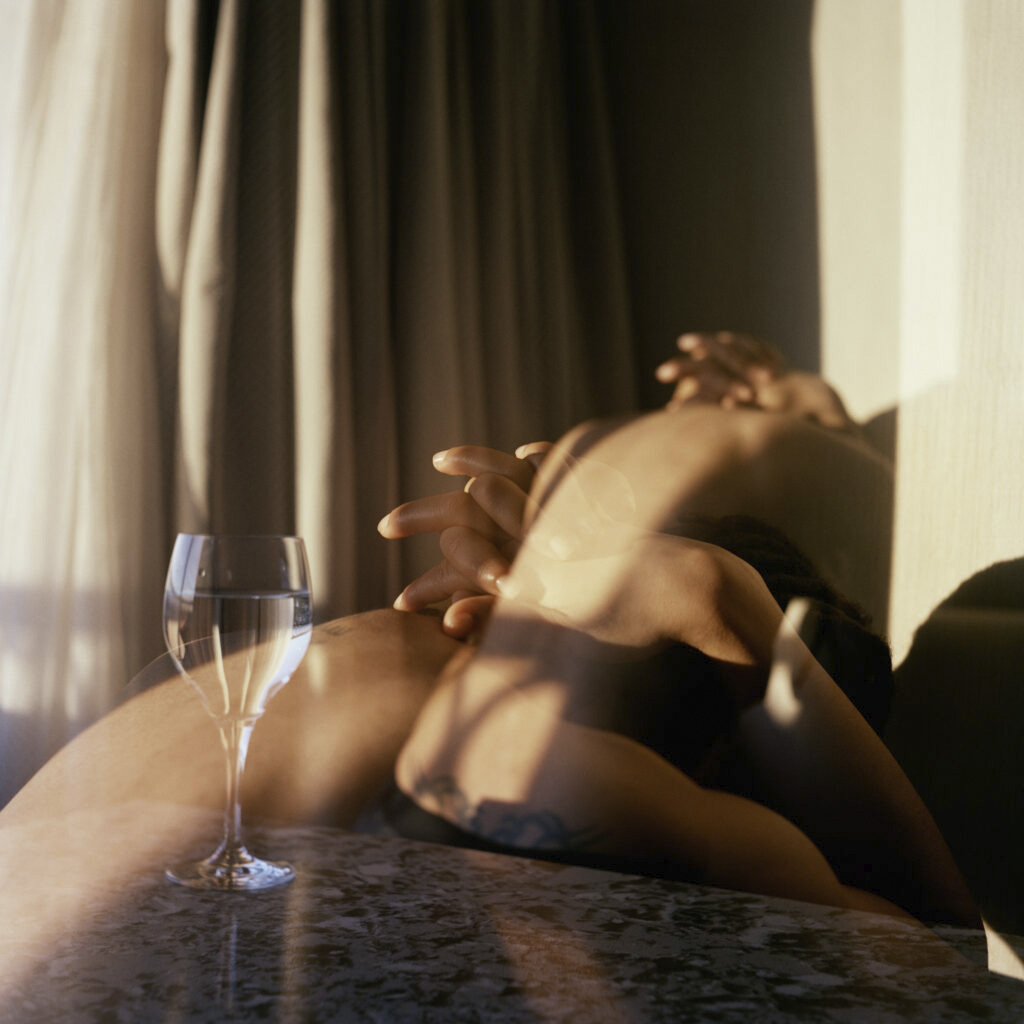
Naima Green (American, b. 1992) 'It Lingers Sweetly' 2022


Naima Green (American, b. 1992)
It Lingers Sweetly
2022
Pigmented inkjet print
High Museum of Art, Atlanta, purchase with funds from the LGBTQIA+ Photography Centennial Initiative


Naima Green’s practice centres connection and collaboration to cast a tender lens on her own queer community of colour. Her lyrical portraits take shape in intimate domestic spaces and airy outdoor environments that embody havens for the people in those spaces. Through double exposure and serial photographs, she provides what she calls “multiple entry points” into a moment in time, translating movements and emotions into a single image. She explains her interest in double exposure “as a means of capturing things that can’t be held in just one way … ,” allowing her to “play with loosening the narrative and letting go of some control.”

Text from the High Museum of Art website


The High Museum of Art
1280 Peachtree St NE
Atlanta, GA
30309

Opening hours:
Tuesday – Saturday 10am – 5pm
Sunday 12 – 5pm
Monday closed

The High Museum of Art website

LIKE ART BLART ON FACEBOOK

Back to top

Photos: ‘Album Horace Vernet’

November 2024


'Album Horace Vernet' front cover


Album Horace Vernet front cover
30 cartes des visite
16cm high x 11cm wide x 3.5cm deep


I purchased this small photo album from an op shop (charity shop) in Melbourne, Australia.

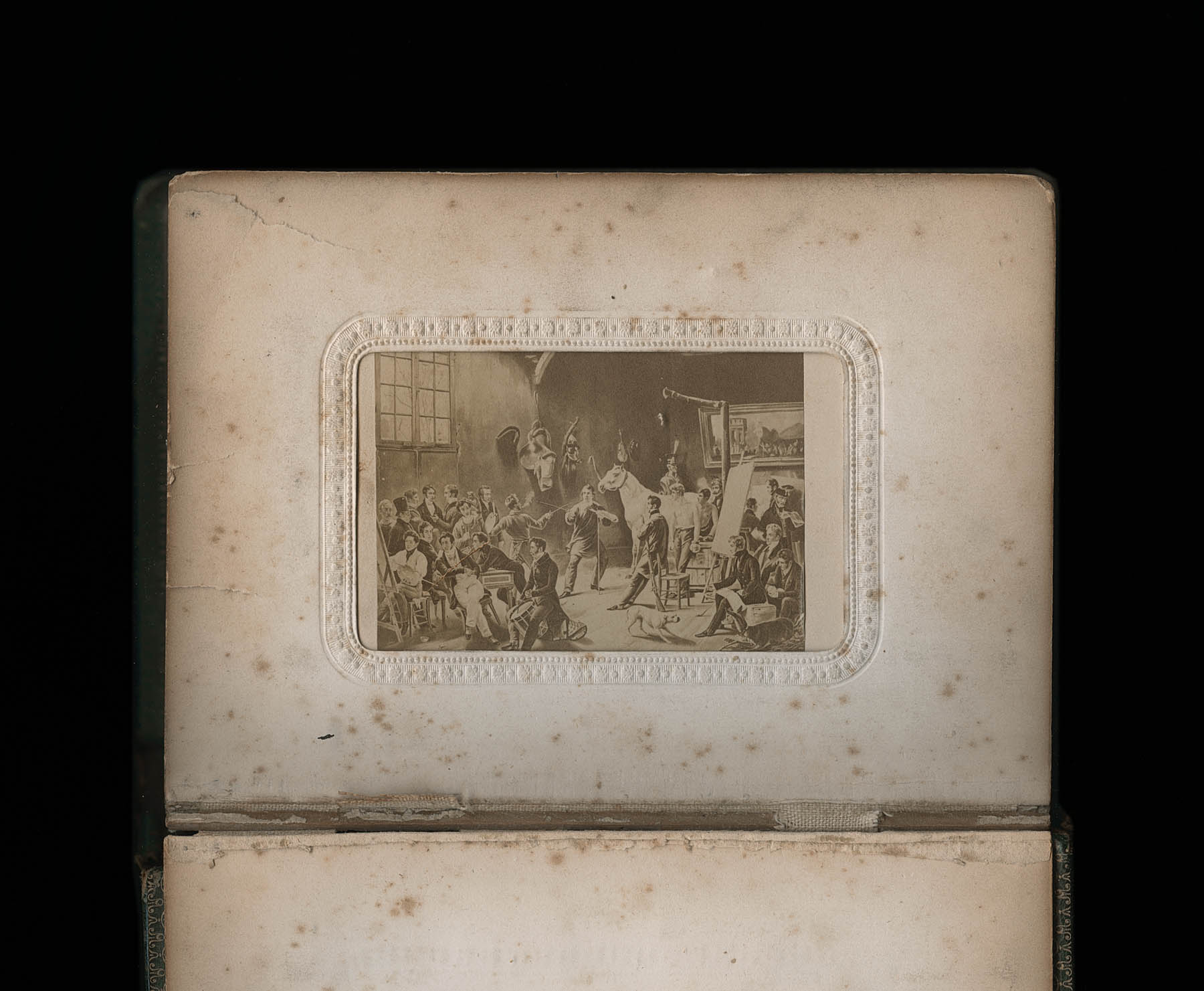
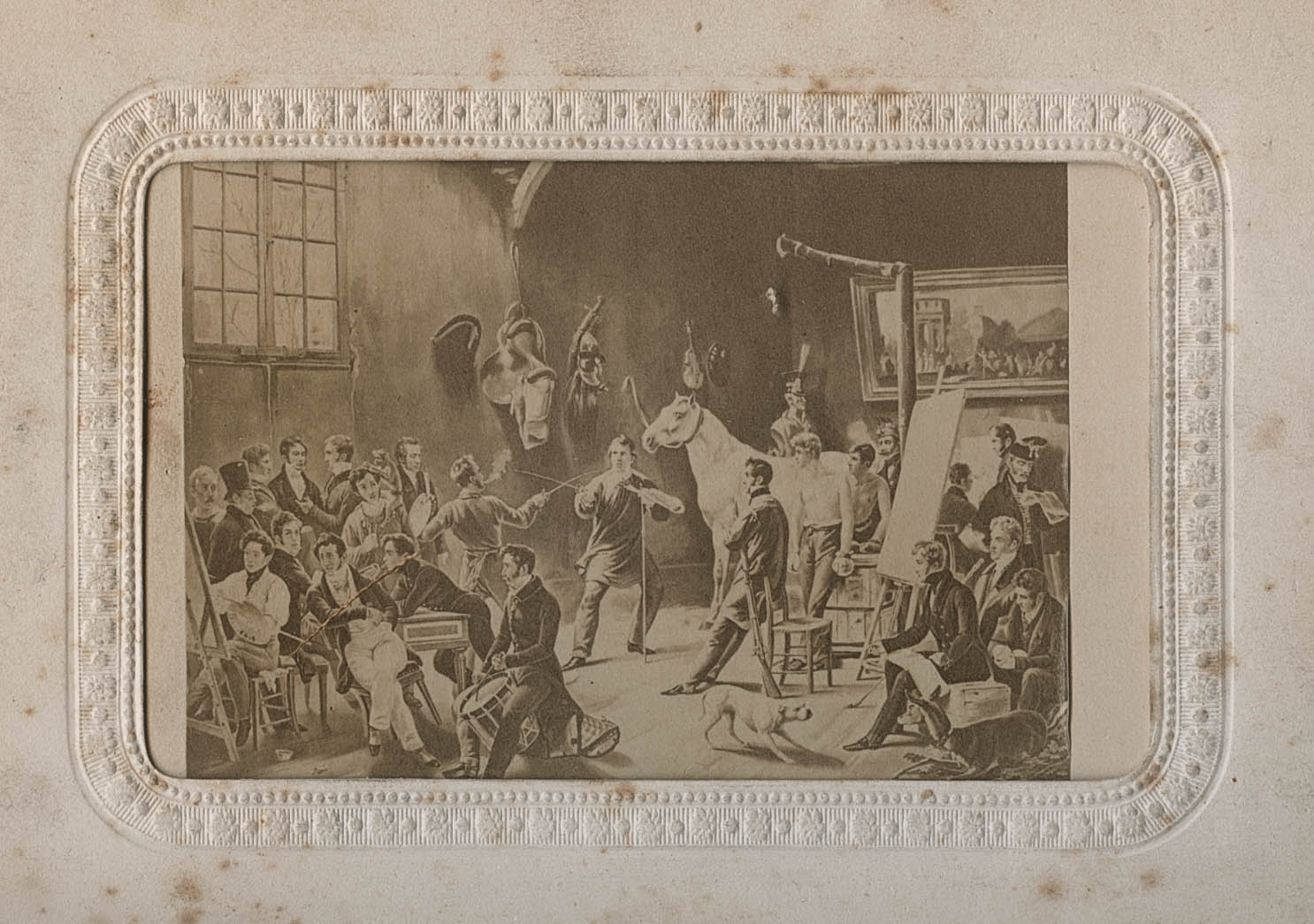
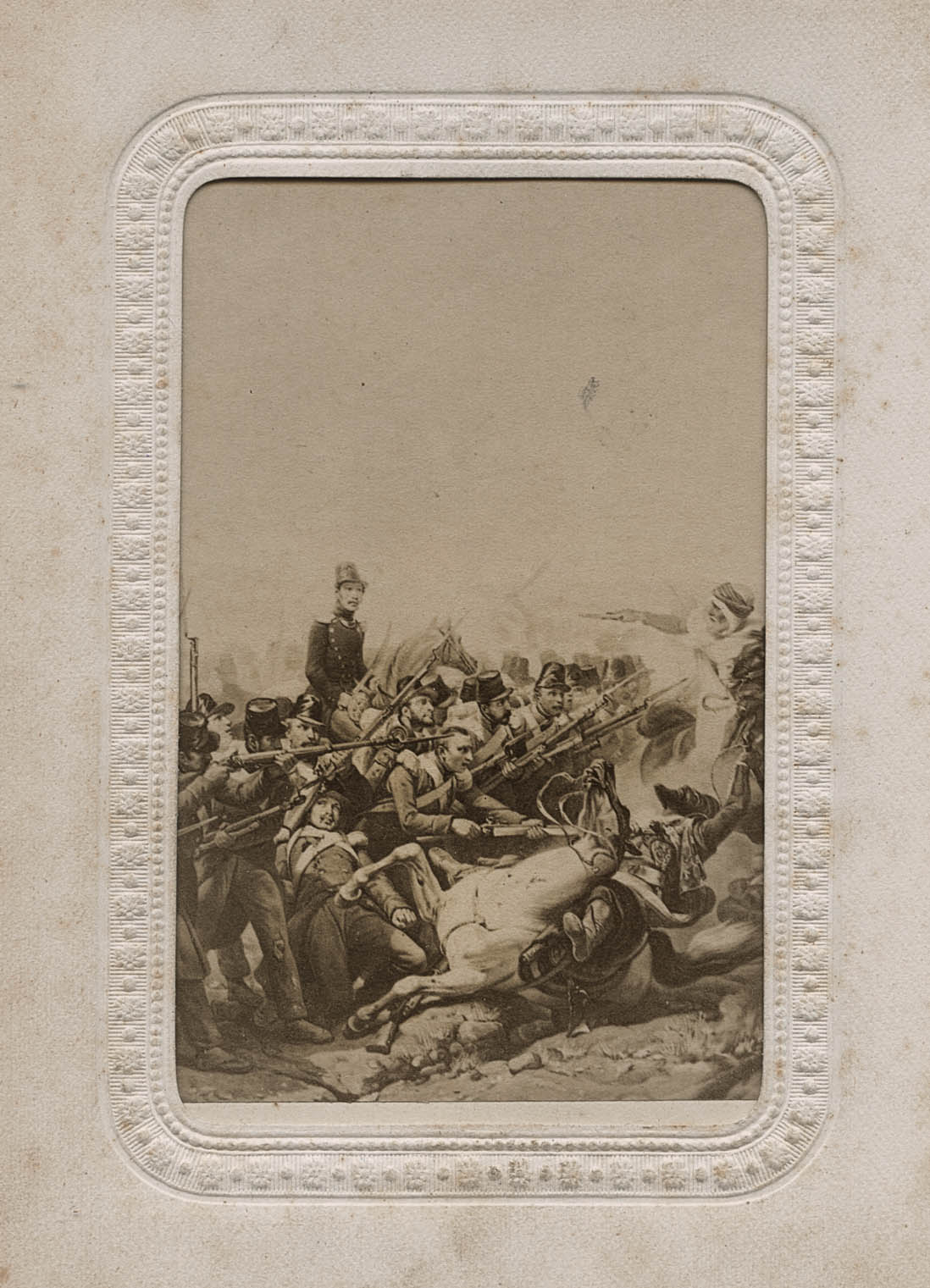
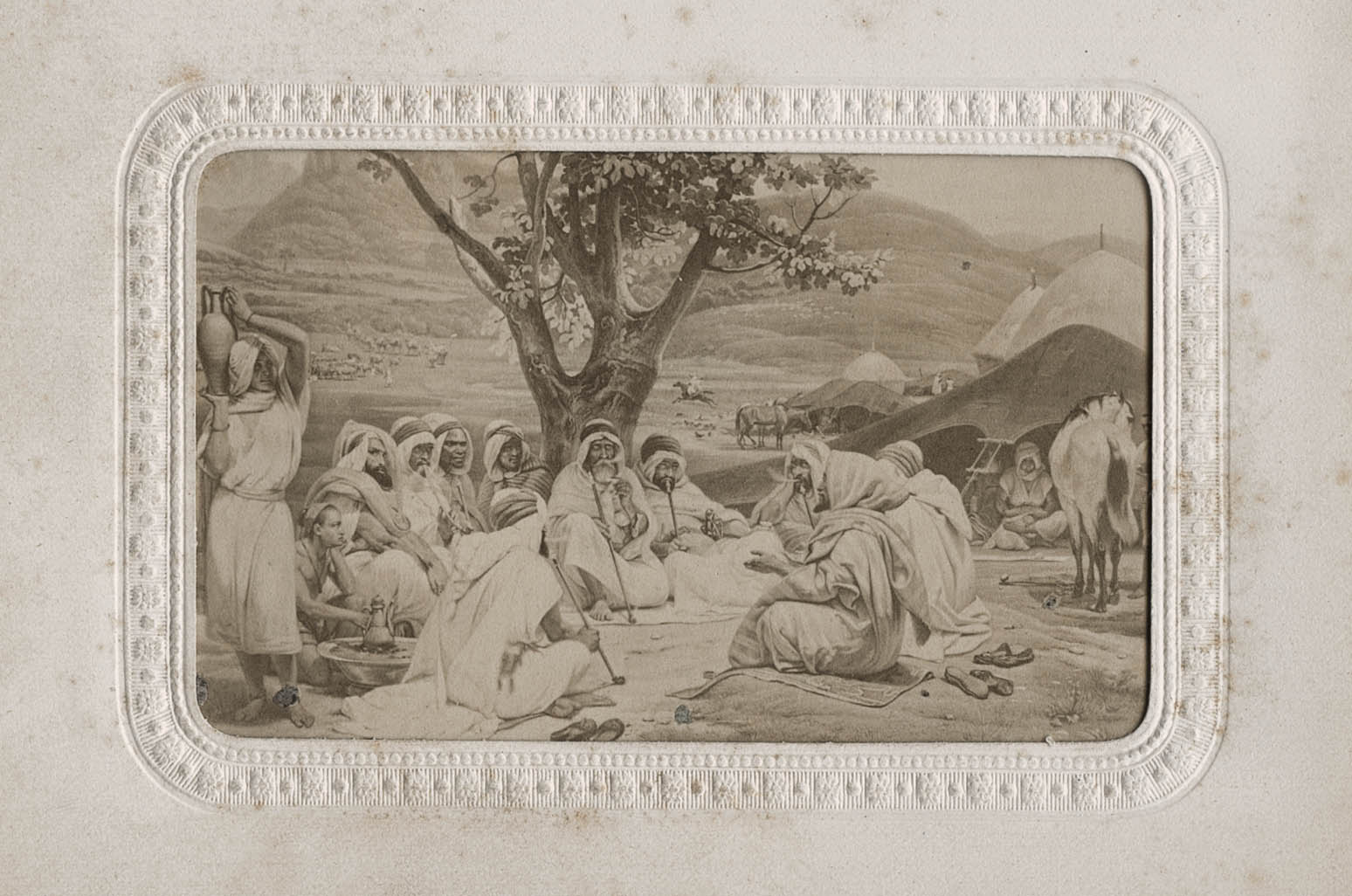
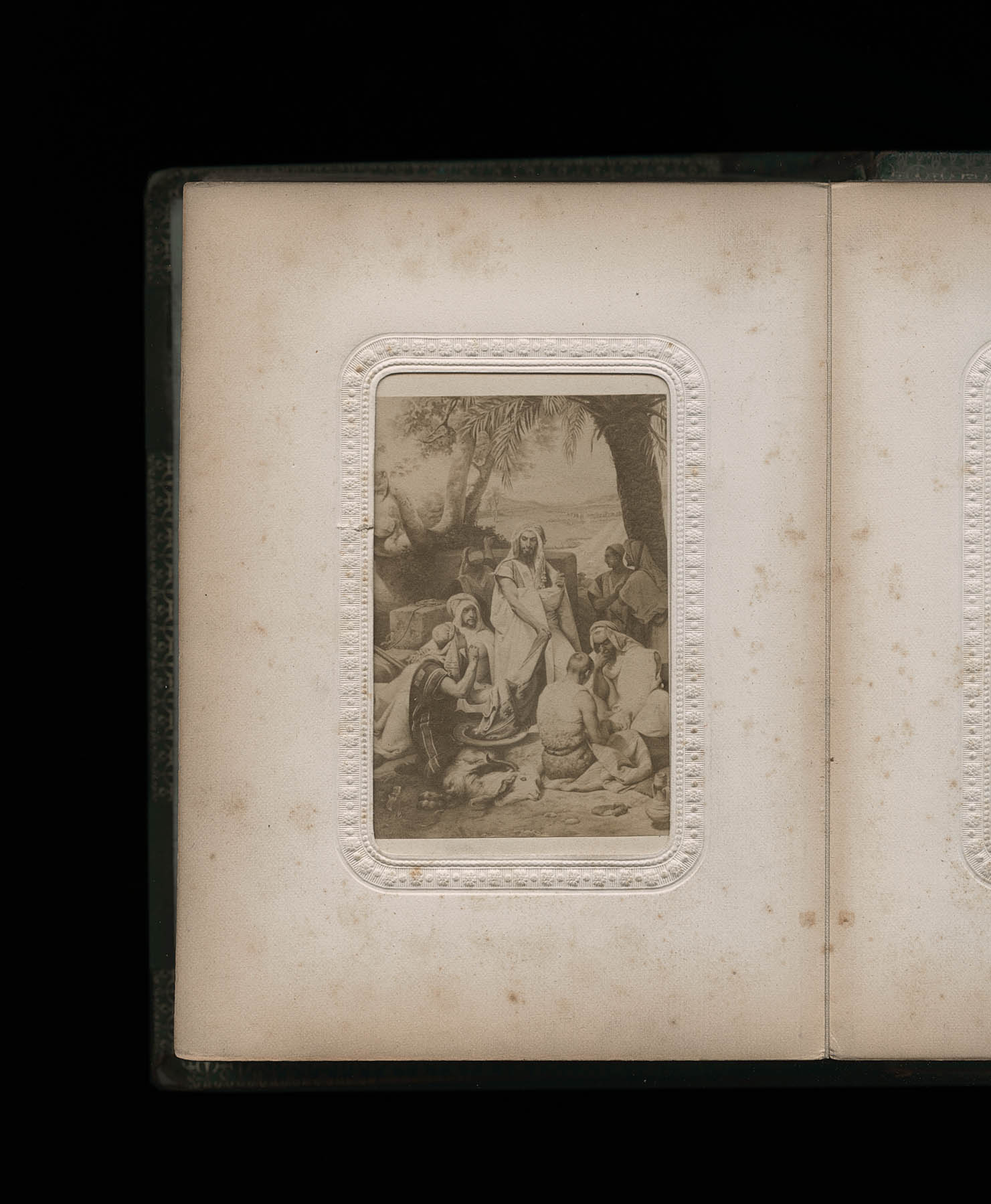
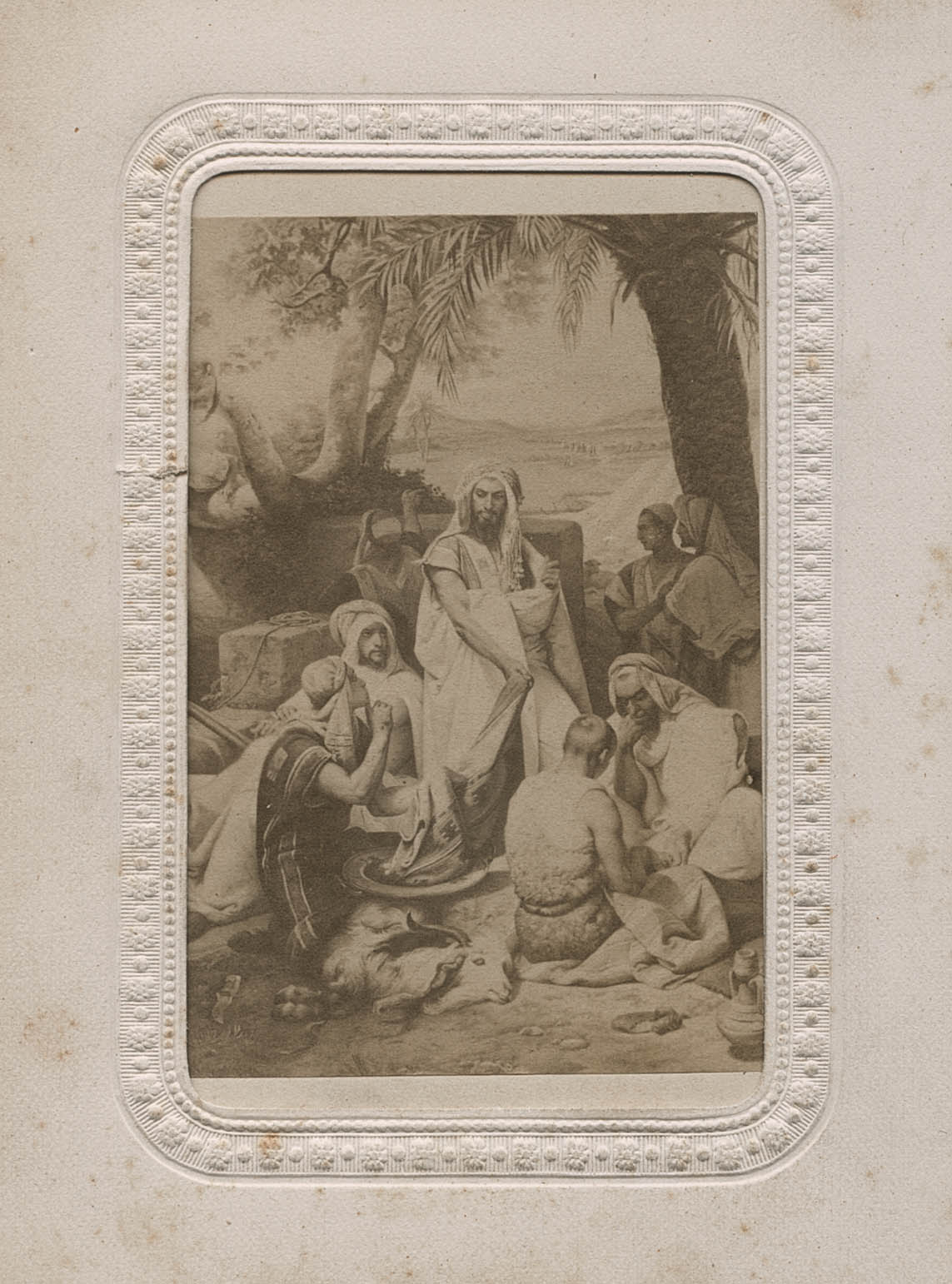
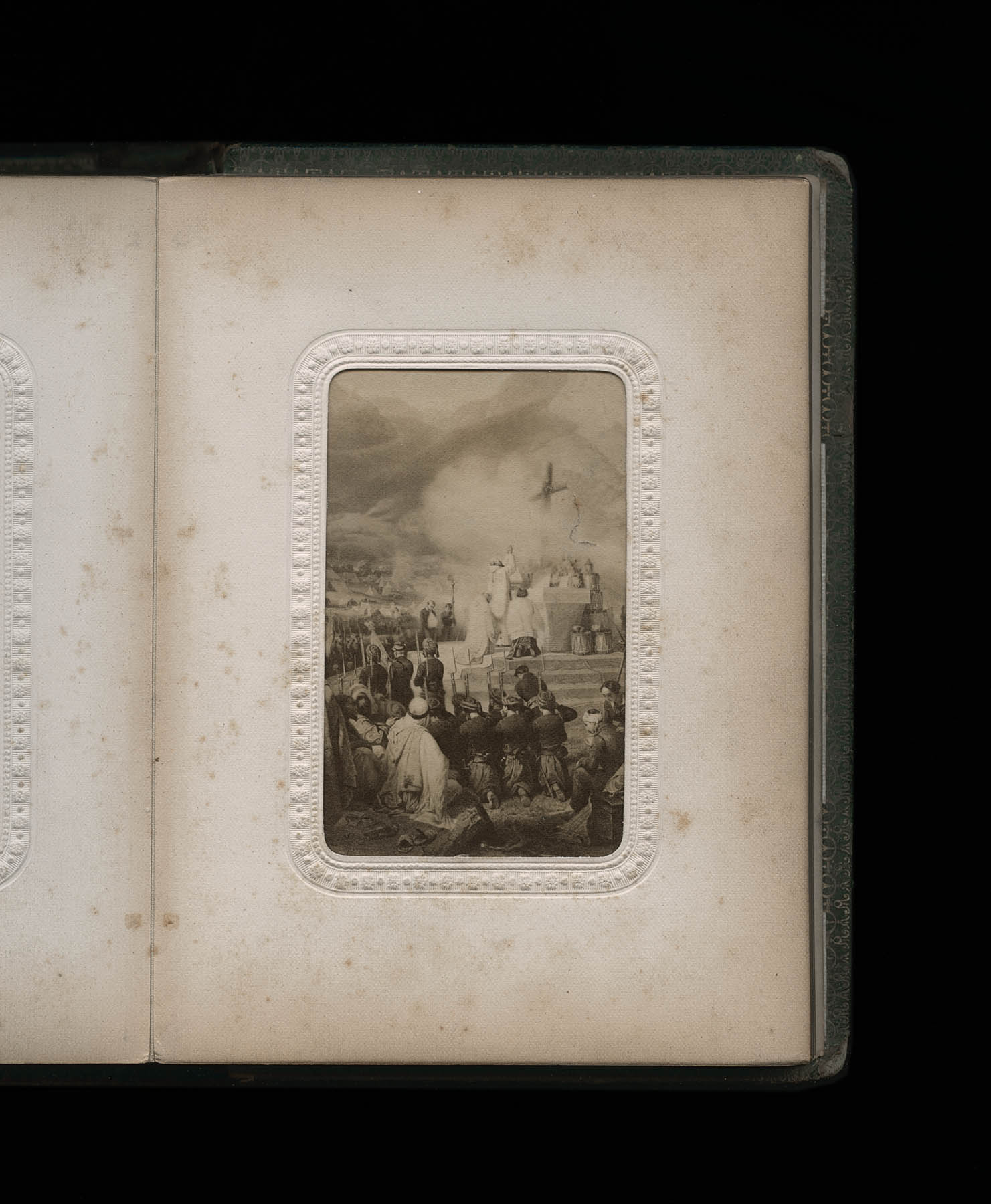
It features 29 carte de visite by the French firm Goupil & Cie of the paintings of the French history painter Horace Vernet (1789-1863) – painter of battles, portraits, and Orientalist and modern national subjects.

“The Universal Exposition of 1855, at which he was represented by twenty-four paintings, crowned his popular and official success. His reputation among artists and critics, on the other hand, was not uncontested. Baudelaire scathingly referred to him as “un militaire qui fait de la peinture,” and while his painstaking factuality and the sheer magnitude of his production commanded respect, the prosy shallowness of his realism, his stylistic banality, and the stridency of his chauvinism were early noted and contributed to the eventual neglect of his work. At the time of his death in 1863, Vernet, a member of thirty academies, was nevertheless France’s most famous artist, admired and imitated throughout Europe and deeply imbedded in popular culture.”1

The only photograph not by Goupil & Cie in the whole album is the second photograph in the album, a portrait of the painter by Bingham (Robert Jefferson Bingham, English 1825-1870). The photograph can be dated to between 1861 when Bingham’s photographic studio in Paris was at Rue de la Rochefoucauld and 1863 when Vernet died. This also helps date the compilation of the whole album.

Dr Marcus Bunyan

1/ Anonymous. “Horace Vernet,” on the National Gallery of Art website Nd [Online] Cited 13/10/2024

Please click on the photographs for a larger version of the image.

PLEASE NOTE: the photographs appear in the posting in the order they appear in the album.


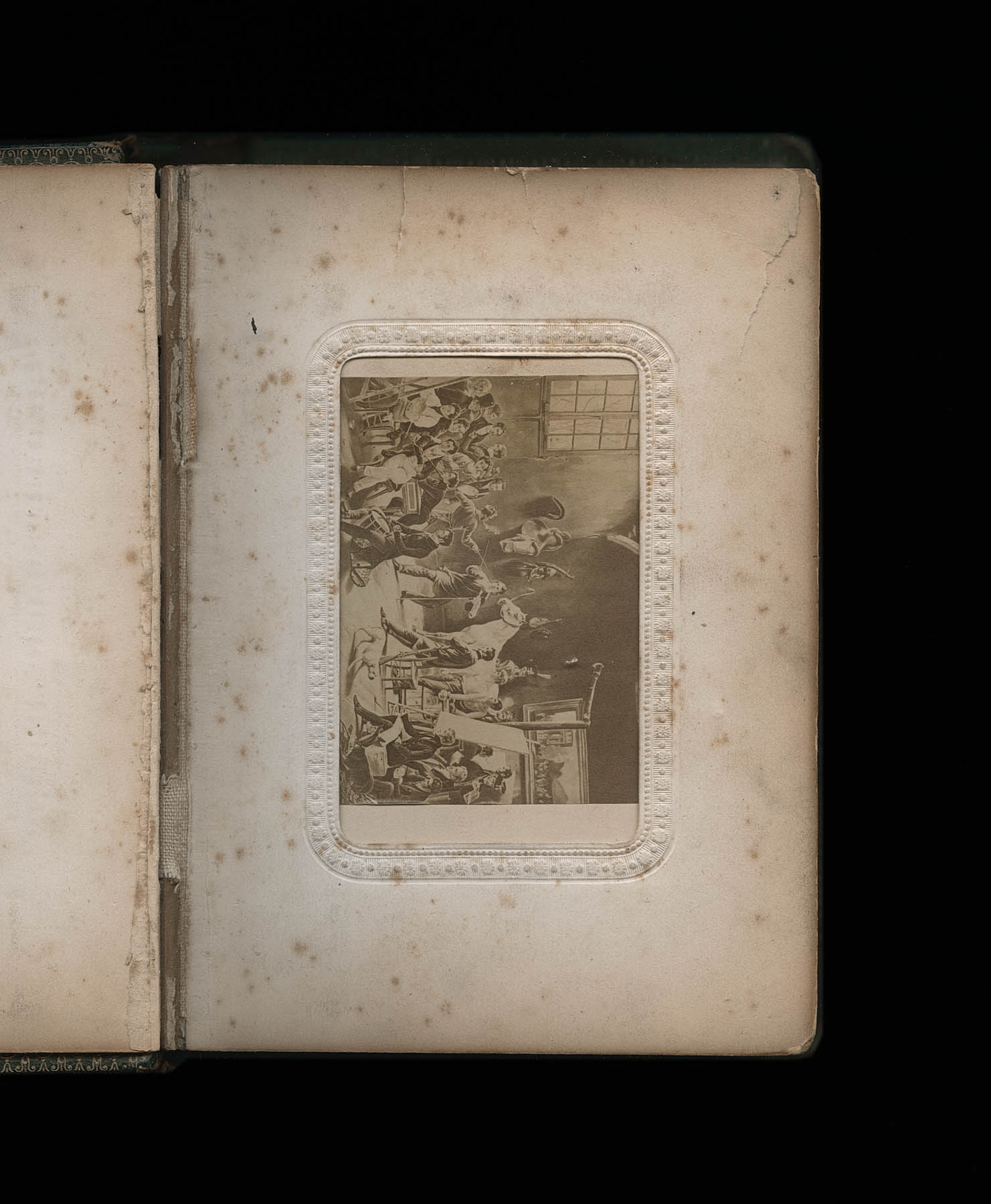
Goupil & Cie (photographer), Paris 19, Boulevard Montmartre. London, La Haye, Berlin, New York. 'After a painting by Horace Vernet (French, 1789-1863) The Studio of Horace Vernet (Interieur d un Atelier) 1824' c. 1860-1863

Goupil & Cie (photographer), Paris 19, Boulevard Montmartre. London, La Haye, Berlin, New York. 'After a painting by Horace Vernet (French, 1789-1863) The Studio of Horace Vernet (Interieur d un Atelier) 1824' c. 1860-1863

Goupil & Cie (photographer), Paris 19, Boulevard Montmartre. London, La Haye, Berlin, New York. 'After a painting by Horace Vernet (French, 1789-1863) The Studio of Horace Vernet (Interieur d un Atelier) 1824' c. 1860-1863


Goupil & Cie (photographer), Paris 19, Boulevard Montmartre
London, La Haye, Berlin, New York
After a painting by Horace Vernet (French, 1789-1863) The Studio of Horace Vernet (Interieur d un Atelier) 1824
c. 1860-1863
Carte de visite


Goupil & Cie was at Boulevard Montmartre between the 1850s-1880s


Bingham (photographer) Robert Jefferson Bingham (English, 1825-1870) Photographie De S.M. La Reine D’Angleterre. Medaille de 1ere Classe 1855. 58 Rue de Larochefoucualt, Paris. 'Portrait of Horace Vernet (French, 1789-1863)' 1861-1863

Bingham (photographer) Robert Jefferson Bingham (English, 1825-1870) Photographie De S.M. La Reine D'Angleterre. Medaille de 1ere Classe 1855. 58 Rue de Larochefoucualt, Paris. 'Portrait of Horace Vernet (French, 1789-1863)' 1861-1863


Bingham (photographer) Robert Jefferson Bingham (English, 1825-1870)
Photographie De S.M. La Reine D’Angleterre
Medaille de 1ere Classe 1855
58 Rue de Larochefoucualt, Paris
Portrait of Horace Vernet (French, 1789-1863)
1861-1863
Carte de visite


Operated at Rue de la Rochefoucauld, 58 from 1861 until 1870.


Born in 1825 near Leicester in England, Bingham had a background in chemistry. He was particularly interested in photographic processes, and published a treatise on this subject in 1848. He later became the first writer to outline the possible use of collodion in photographs and the self-proclaimed ‘Inventeur du procédé collodion’. Bingham first exhibited his photographs of landscapes and of copies of paintings in London at The Great Exhibition in 1851. In 1859 he established a photographic portrait studio in Paris, which thrived throughout the 1860s and continued under his name even after his death in Brussels in 1870.

Text from the National Portrait Gallery website


Bingham also made photographs of the Exposition Universelle of 1855 in Paris. His ability to take some 2500 photographs at relatively high speeds on this occasion encouraged other photographers to use the collodion process for their work as well, helping it become the most popular method from 1855 until about 1880. Henry Cole sent him at the same time to the Louvre to photograph the masterpieces of the museum collection. At some point in 1851 1855, or 1859, Bingham moved to Paris to work there as a photographer, at first together with the American Warren T. Thompson until Thompson returned to England in 1856. Bingham not only worked at the 1855 Exposition, but also displayed his own life-size portraits, for which he won a Medal First Class. Due to a lack of commercial success, however, he soon stopped producing these huge photographs and stuck to more standard formats.

His work at the Louvre inspired him to make photographic portraiture a commercial enterprise, and in 1857 he opened his new atelier in the Nouvelle Athènes quarter of Paris, one of the hotspots of artistic activity at the time. He became friends with many artists, photographing them and their works, and started on a new project, a photographic collection of the works of the recently deceased painter Paul Delaroche. Published in 1858, it was the first photographic catalogue raisonné. It was followed over the next few years by similar works about other artists, including one in 1860 on Ary Scheffer and another one with photographs of the major works of the 1860 Salon. Smaller works with only a handful of photographs were produced for particular collections and for the Napoleon Museum in Amiens.

Anonymous. “Robert Jefferson Bingham,” on the Wikipedia website


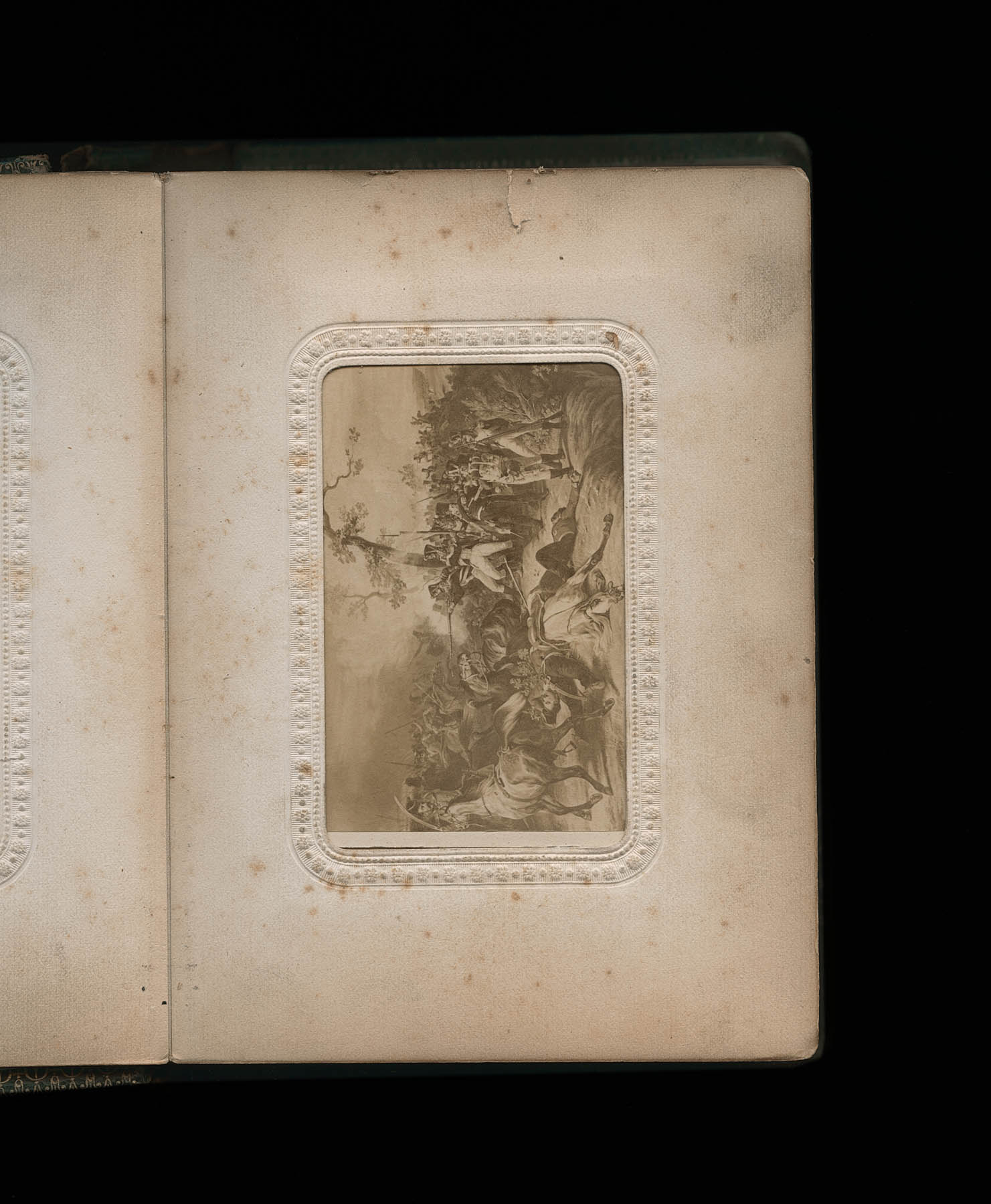
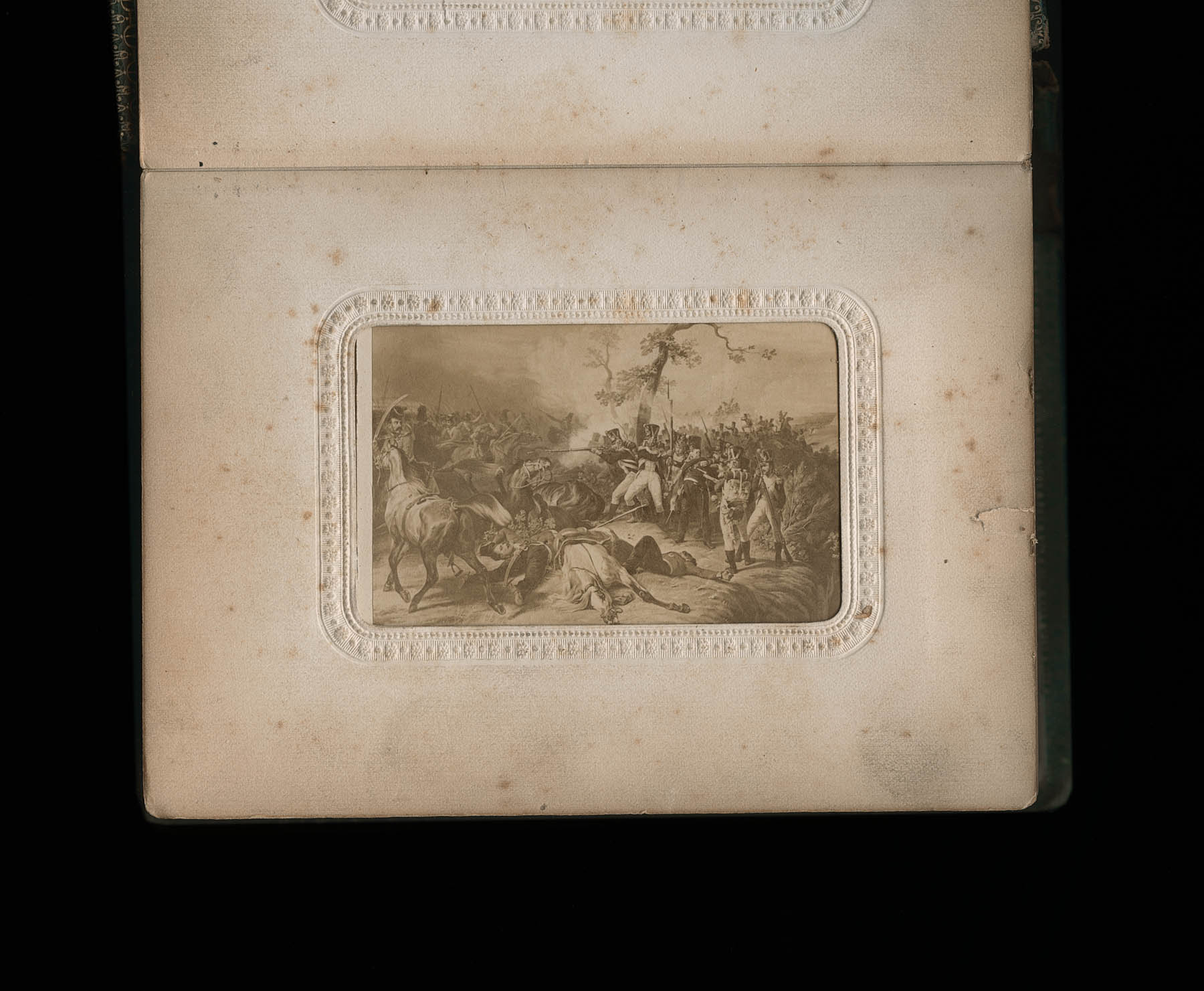
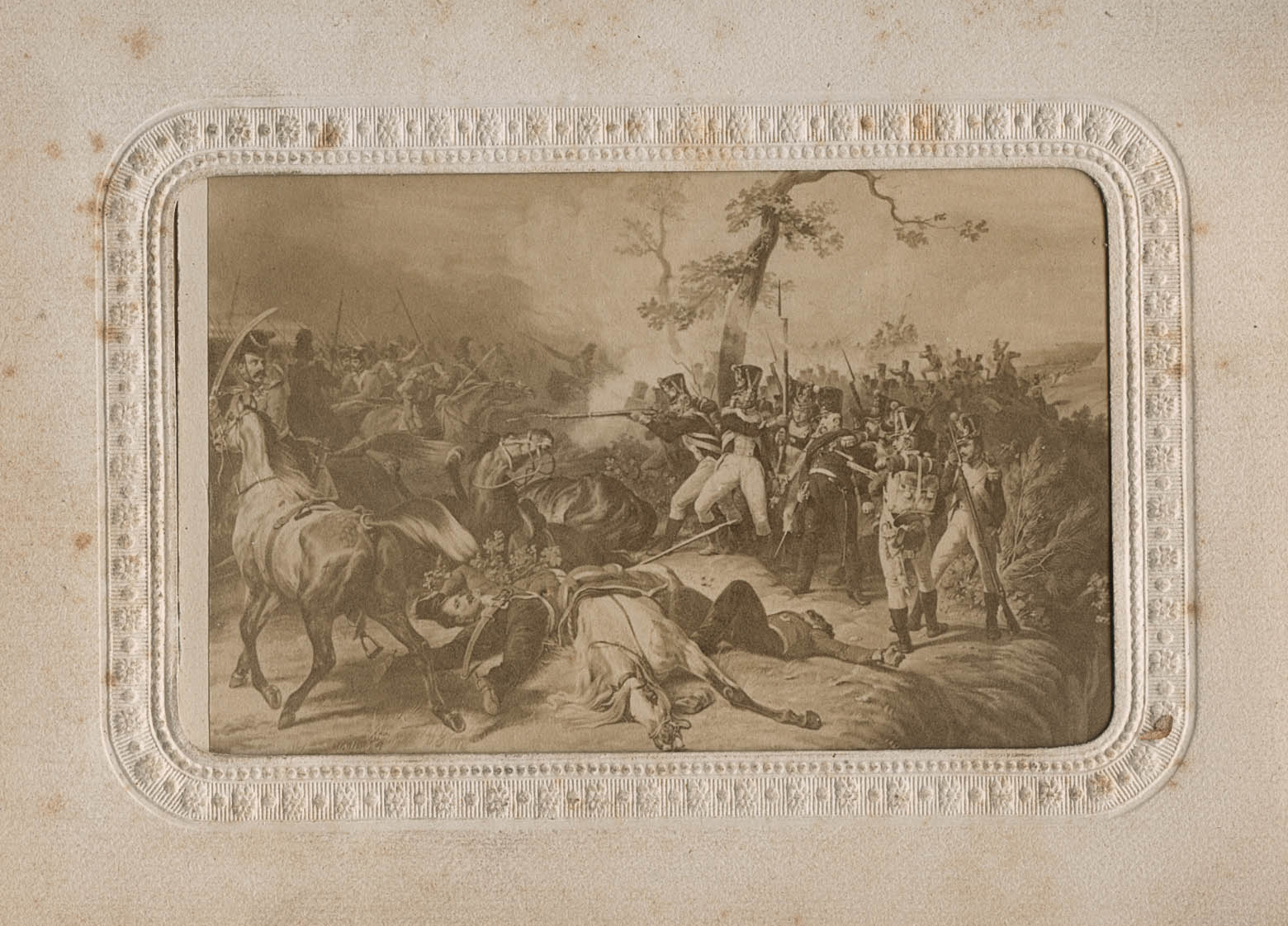
Goupil & Cie (photographer), Paris 19, Boulevard Montmartre. London, La Haye, Berlin, New York. 'After a painting by Horace Vernet (French, 1789-1863) Battle near Vitebsk 1812' c. 1860-1863

Goupil & Cie (photographer), Paris 19, Boulevard Montmartre. London, La Haye, Berlin, New York. 'After a painting by Horace Vernet (French, 1789-1863) Battle near Vitebsk 1812' c. 1860-1863

Goupil & Cie (photographer), Paris 19, Boulevard Montmartre. London, La Haye, Berlin, New York. 'After a painting by Horace Vernet (French, 1789-1863) Battle near Vitebsk 1812' c. 1860-1863


Goupil & Cie (photographer), Paris 19, Boulevard Montmartre
London, La Haye, Berlin, New York
After a painting by Horace Vernet (French, 1789-1863) Battle near Vitebsk 1812
c. 1860-1863
Carte de visite


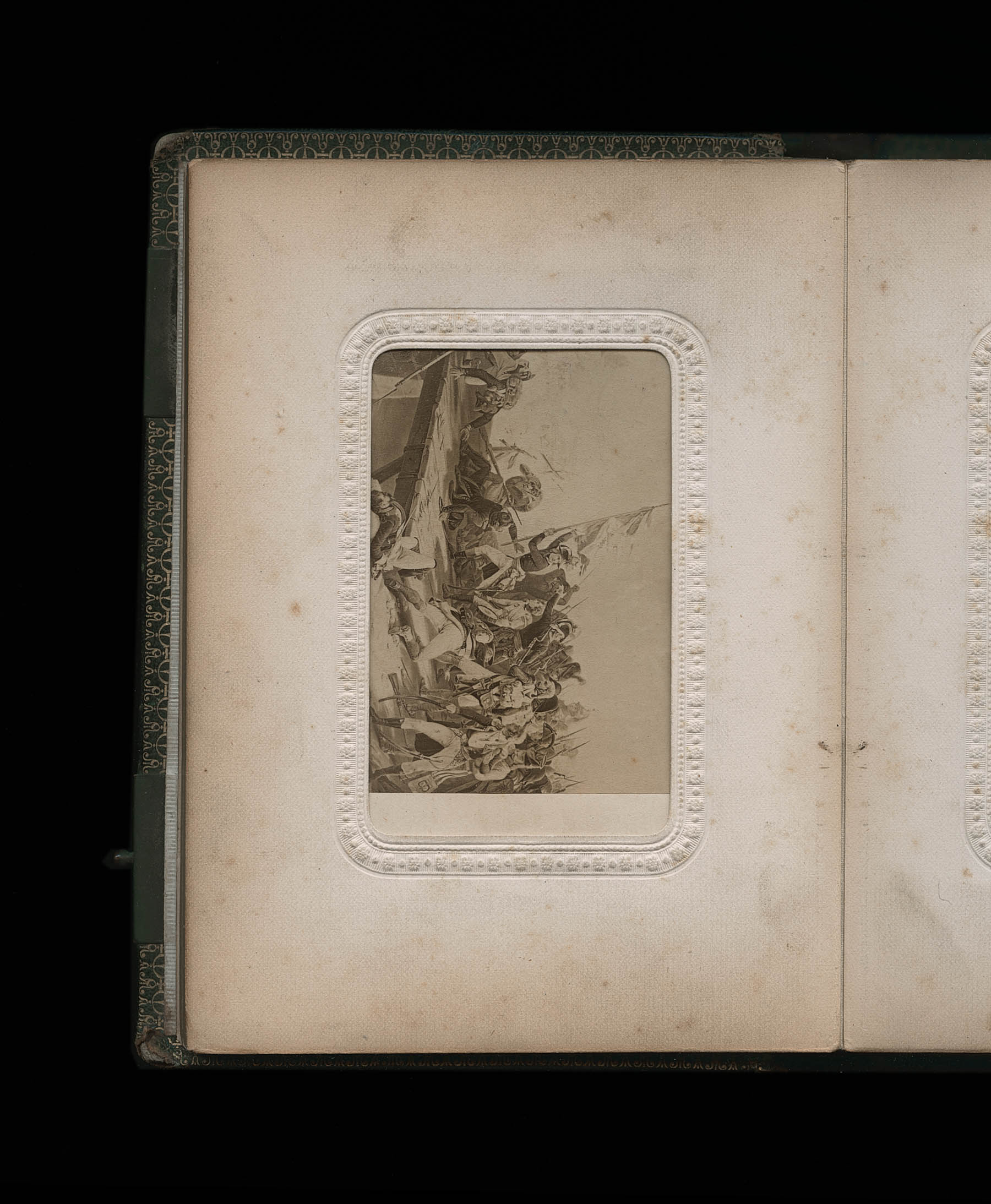
Goupil & Cie (photographer), Paris 19, Boulevard Montmartre. London, La Haye, Berlin, New York. 'After a painting by Horace Vernet (French, 1789-1863) Napoleon Bonaparte leading his troops over the bridge of Arcole 1826' c. 1860-1863

Goupil & Cie (photographer), Paris 19, Boulevard Montmartre. London, La Haye, Berlin, New York. 'After a painting by Horace Vernet (French, 1789-1863) Napoleon Bonaparte leading his troops over the bridge of Arcole 1826' c. 1860-1863

Goupil & Cie (photographer), Paris 19, Boulevard Montmartre. London, La Haye, Berlin, New York. 'After a painting by Horace Vernet (French, 1789-1863) Napoleon Bonaparte leading his troops over the bridge of Arcole 1826' c. 1860-1863


Goupil & Cie (photographer), Paris 19, Boulevard Montmartre
London, La Haye, Berlin, New York
After a painting by Horace Vernet (French, 1789-1863) Napoleon Bonaparte leading his troops over the bridge of Arcole 1826
c. 1860-1863
Carte de visite


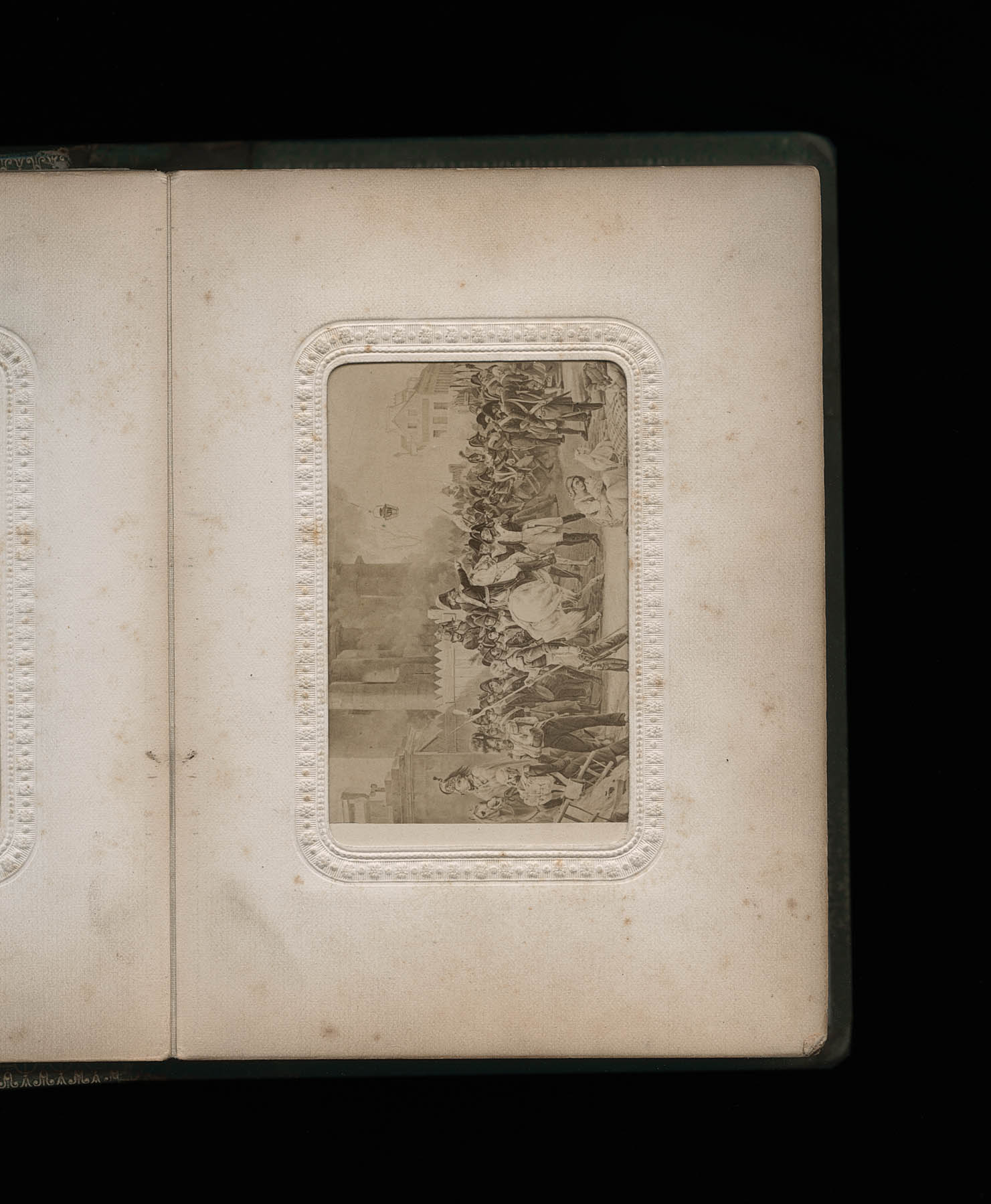
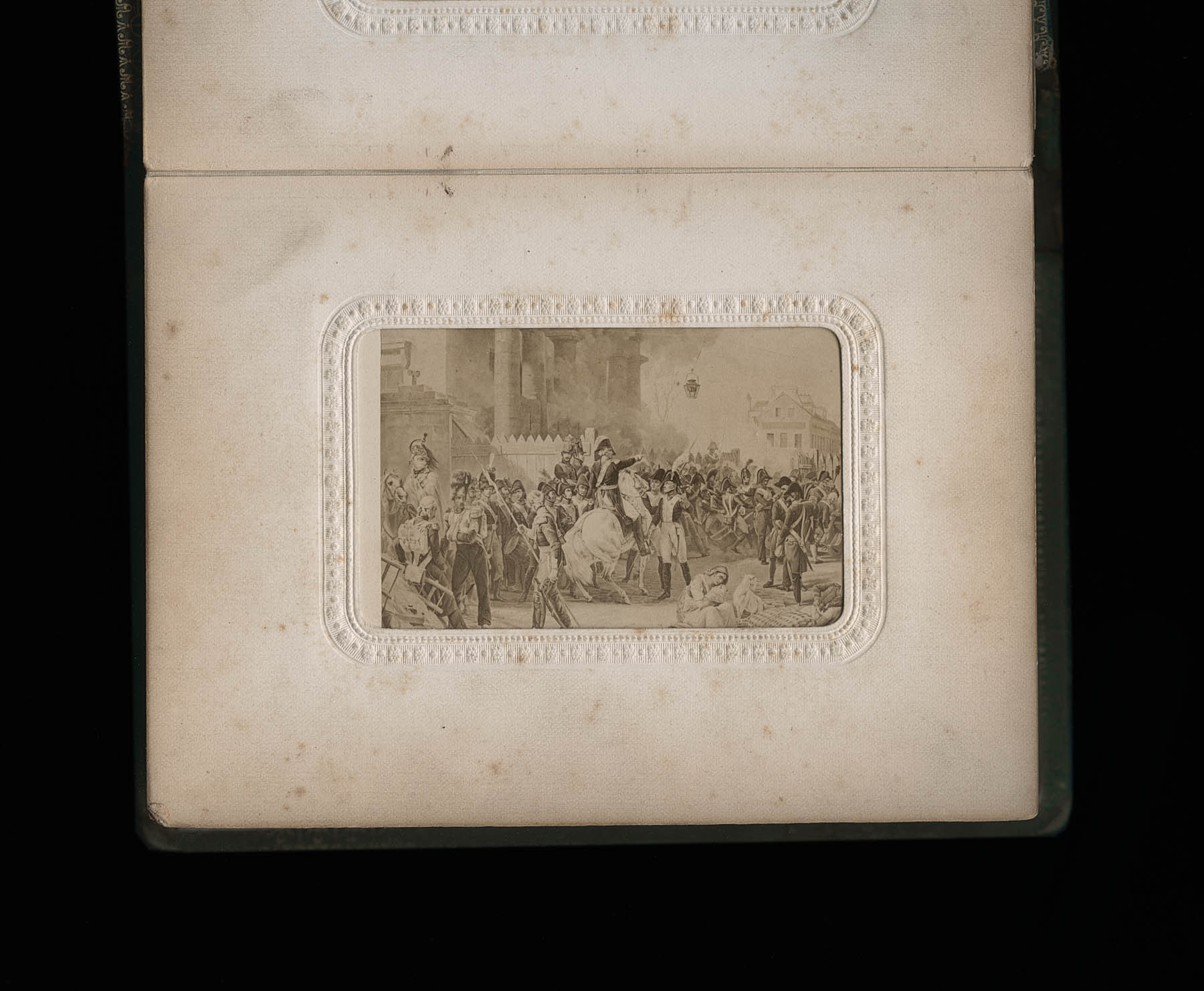
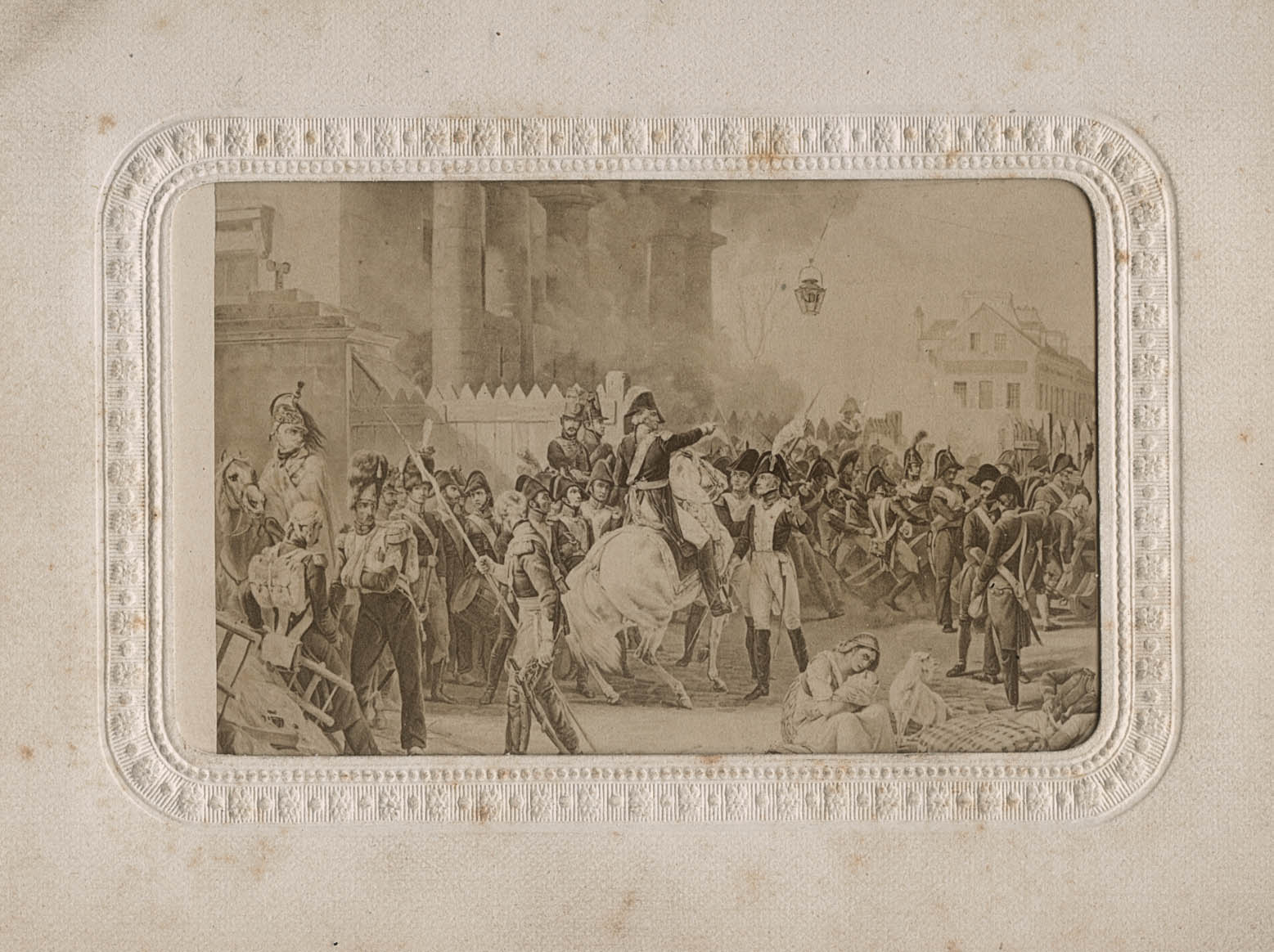
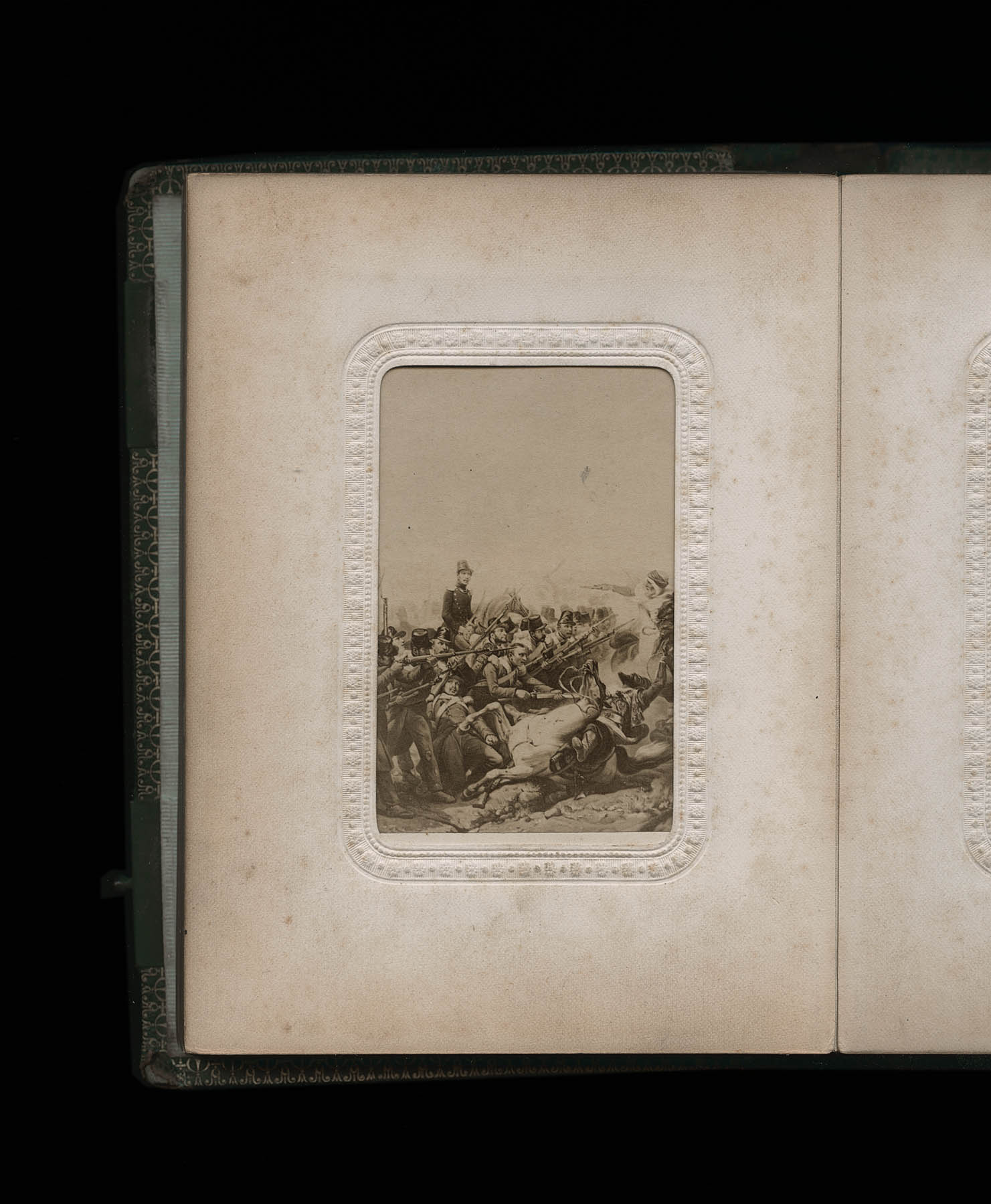
Goupil & Cie (photographer), Paris 19, Boulevard Montmartre. London, La Haye, Berlin, New York. 'After a painting by Horace Vernet (French, 1789-1863) La Barrière de Clichy. Défense de Paris, March 30, 1814' c. 1860-1863

Goupil & Cie (photographer), Paris 19, Boulevard Montmartre. London, La Haye, Berlin, New York. 'After a painting by Horace Vernet (French, 1789-1863) La Barrière de Clichy. Défense de Paris, March 30, 1814' c. 1860-1863

Goupil & Cie (photographer), Paris 19, Boulevard Montmartre. London, La Haye, Berlin, New York. 'After a painting by Horace Vernet (French, 1789-1863) La Barrière de Clichy. Défense de Paris, March 30, 1814' c. 1860-1863


Goupil & Cie (photographer), Paris 19, Boulevard Montmartre
London, La Haye, Berlin, New York
After a painting by Horace Vernet (French, 1789-1863) La Barrière de Clichy. Défense de Paris, March 30, 1814
c. 1860-1863
Carte de visite


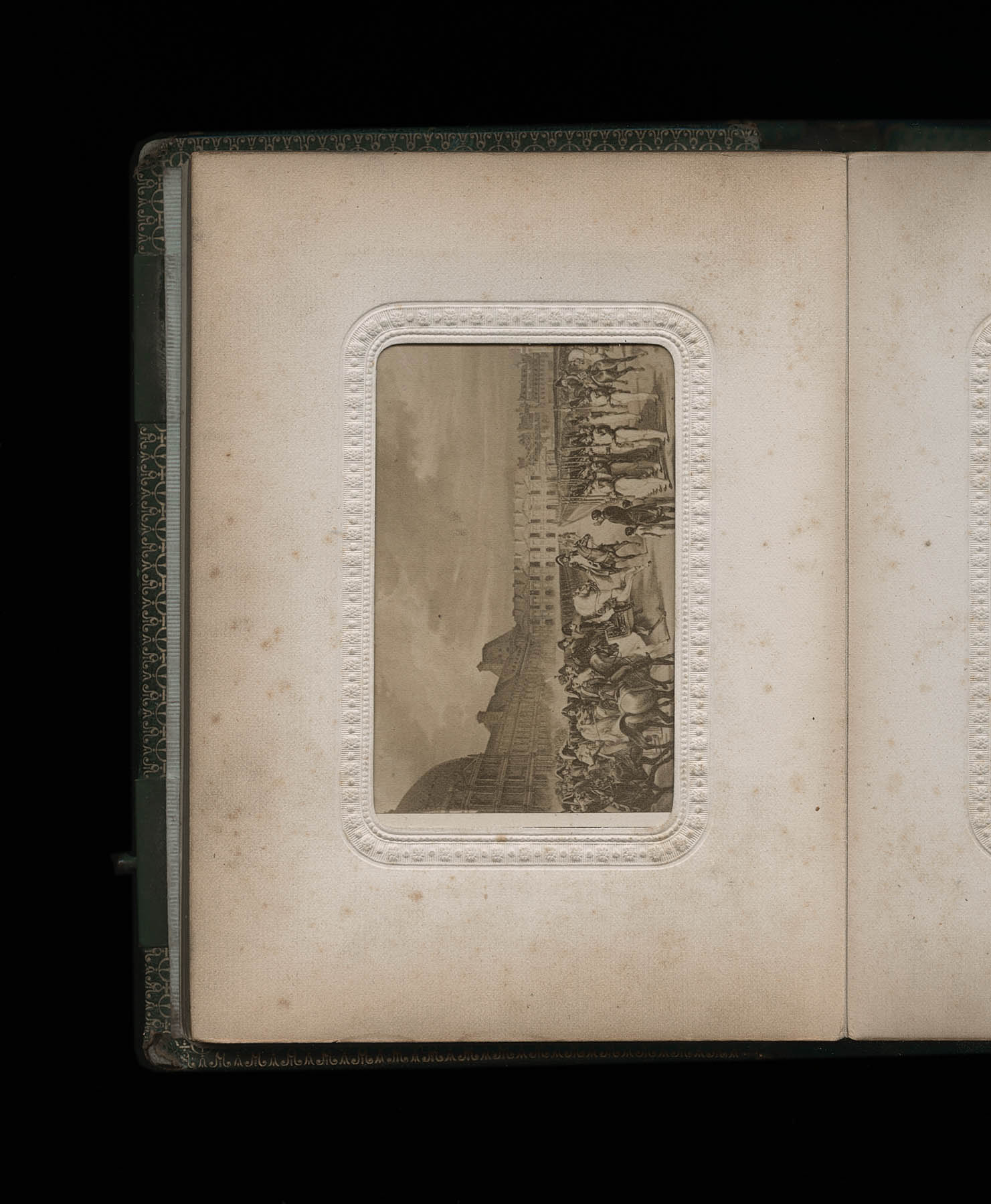
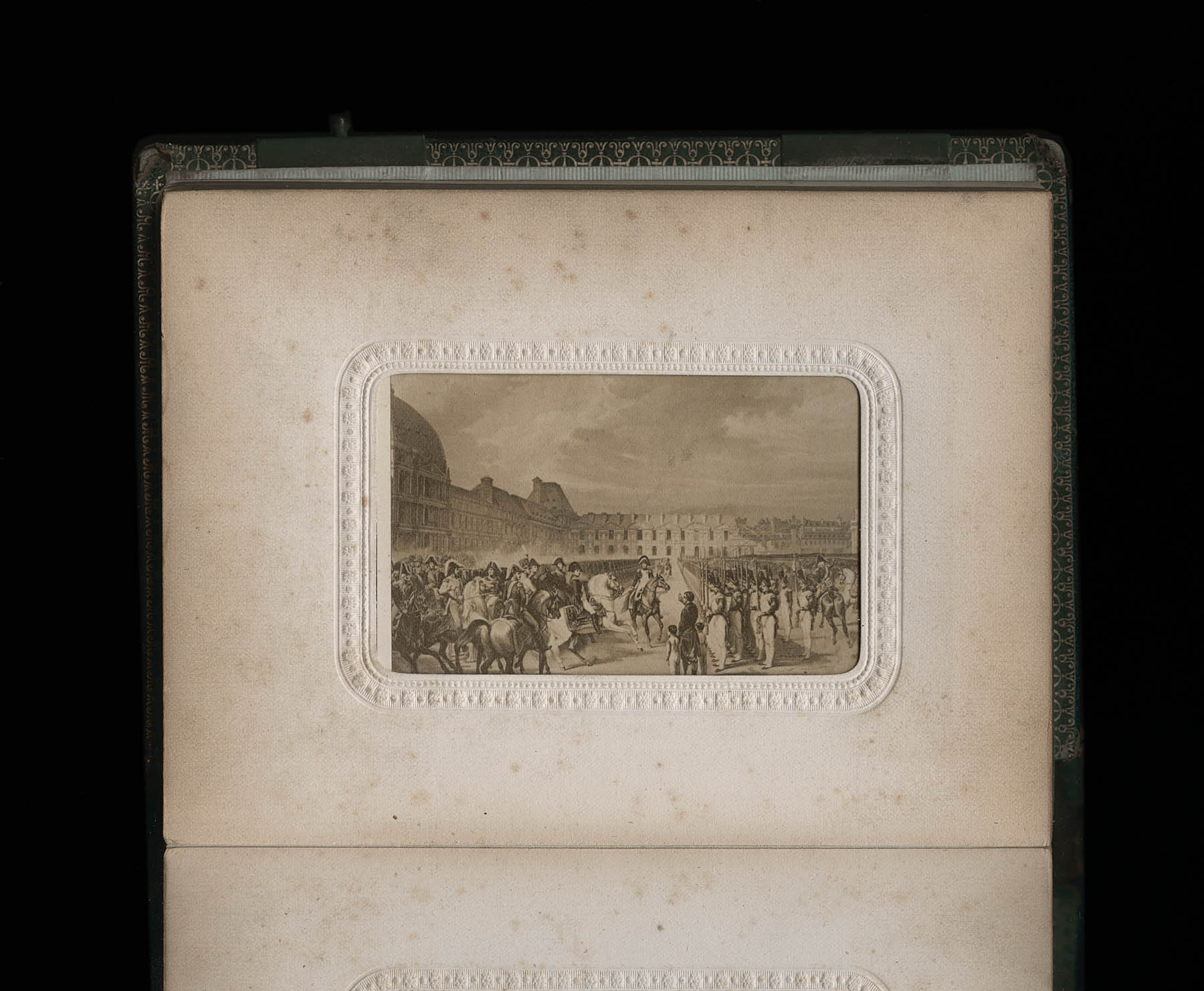
Goupil & Cie (photographer), Paris 19, Boulevard Montmartre. London, La Haye, Berlin, New York. 'After a painting by Horace Vernet (French, 1789-1863) Napoleon reviewing the Guard in the place du Carrousel, c. 1841-1842' c. 1860-1863

Goupil & Cie (photographer), Paris 19, Boulevard Montmartre. London, La Haye, Berlin, New York. 'After a painting by Horace Vernet (French, 1789-1863) Napoleon reviewing the Guard in the place du Carrousel, c. 1841-1842' c. 1860-1863


Goupil & Cie (photographer), Paris 19, Boulevard Montmartre
London, La Haye, Berlin, New York
After a painting by Horace Vernet (French, 1789-1863) Napoleon reviewing the Guard in the place du Carrousel, c. 1841-1842
c. 1860-1863
Carte de visite


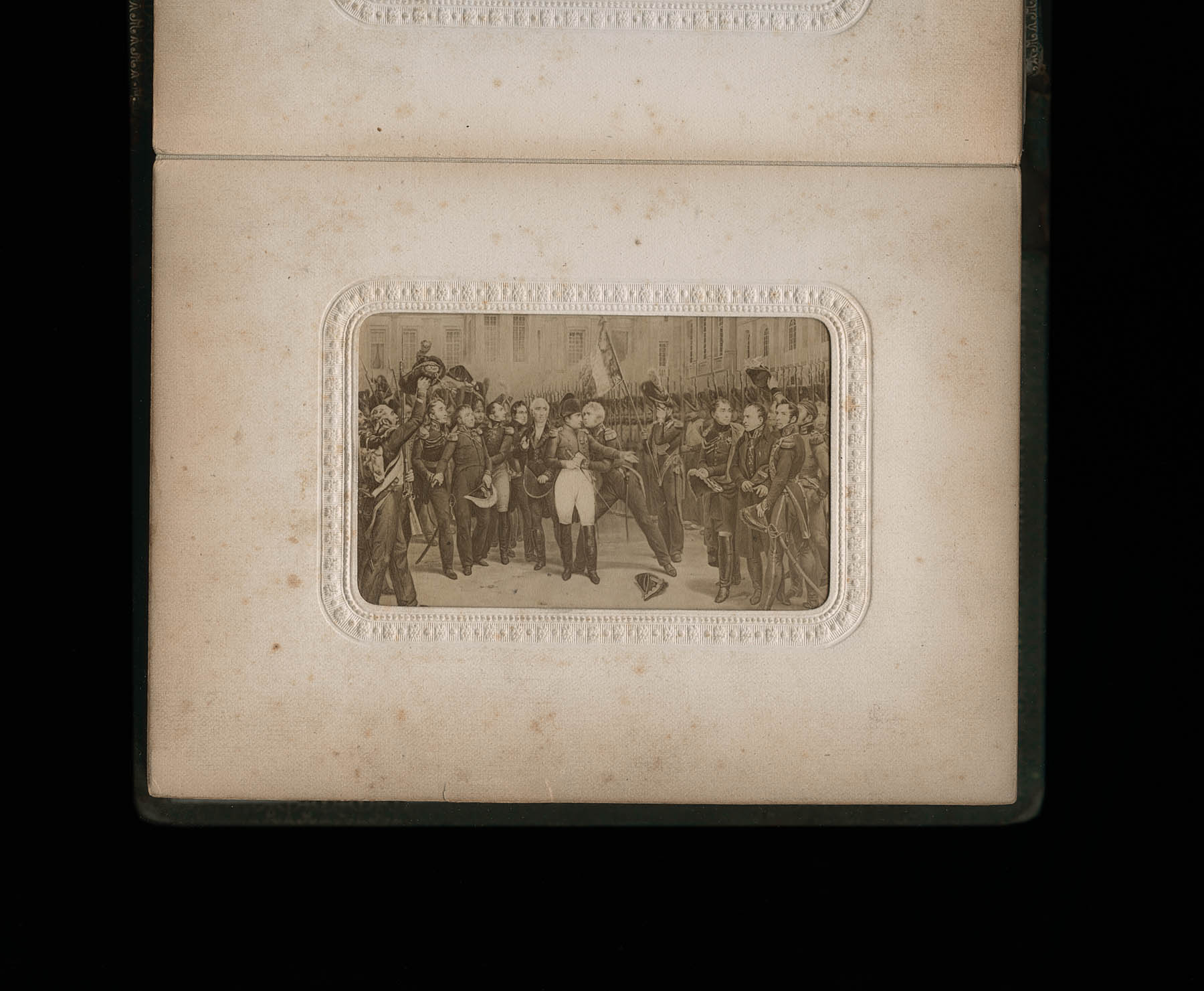
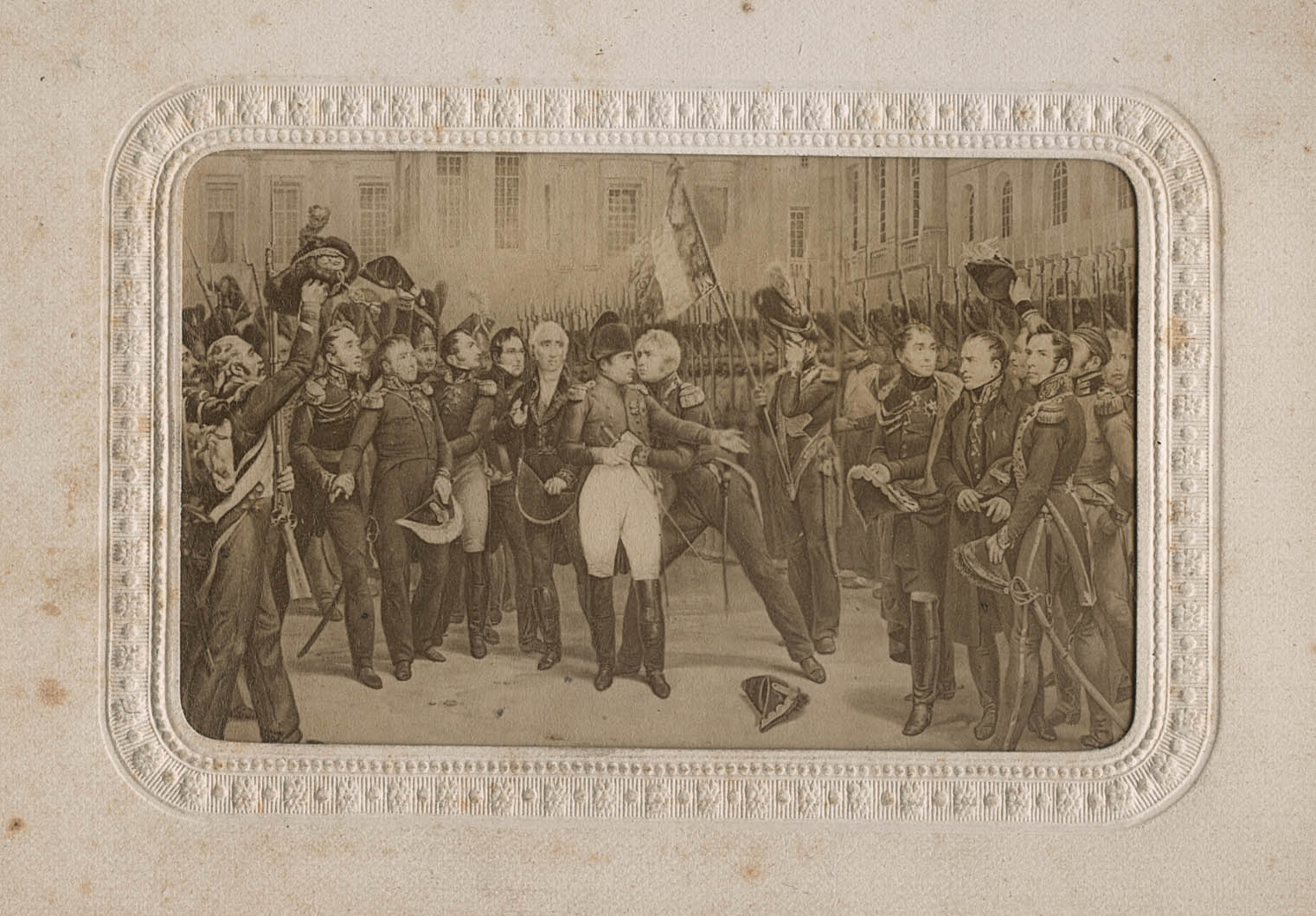
Goupil & Cie (photographer), Paris 19, Boulevard Montmartre. London, La Haye, Berlin, New York. 'After a painting by Horace Vernet (French, 1789-1863) Napoleon bids farewell to his Guard at Fontainebleau on 20 April 1814 (1824)' c. 1860-1863

Goupil & Cie (photographer), Paris 19, Boulevard Montmartre. London, La Haye, Berlin, New York. 'After a painting by Horace Vernet (French, 1789-1863) Napoleon bids farewell to his Guard at Fontainebleau on 20 April 1814 (1824)' c. 1860-1863

Goupil & Cie (photographer), Paris 19, Boulevard Montmartre. London, La Haye, Berlin, New York. 'After a painting by Horace Vernet (French, 1789-1863) Napoleon bids farewell to his Guard at Fontainebleau on 20 April 1814 (1824)' c. 1860-1863


Goupil & Cie (photographer), Paris 19, Boulevard Montmartre
London, La Haye, Berlin, New York
After a painting by Horace Vernet (French, 1789-1863) Napoleon bids farewell to his Guard at Fontainebleau on 20 April 1814 (1824)
c. 1860-1863
Carte de visite


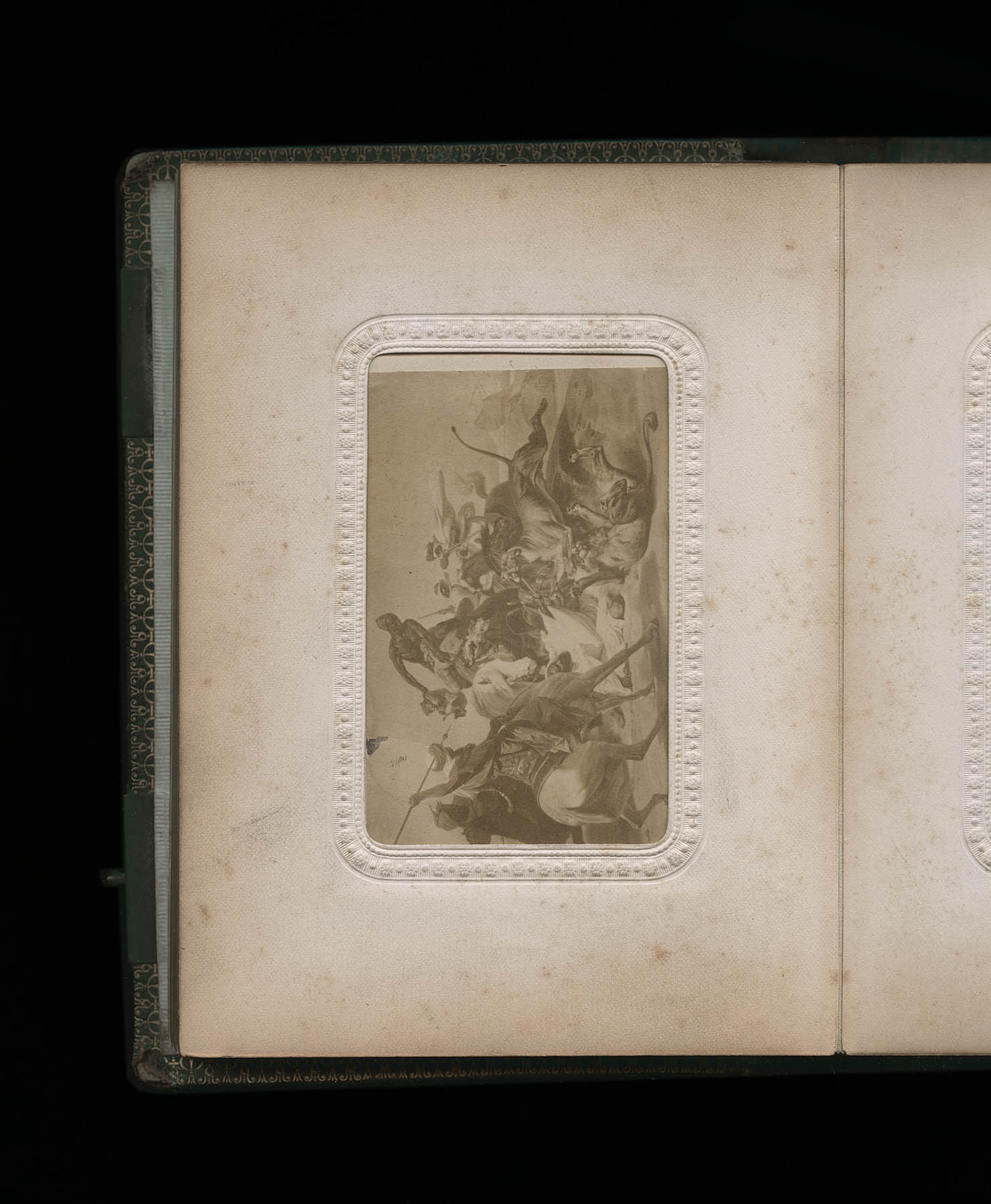
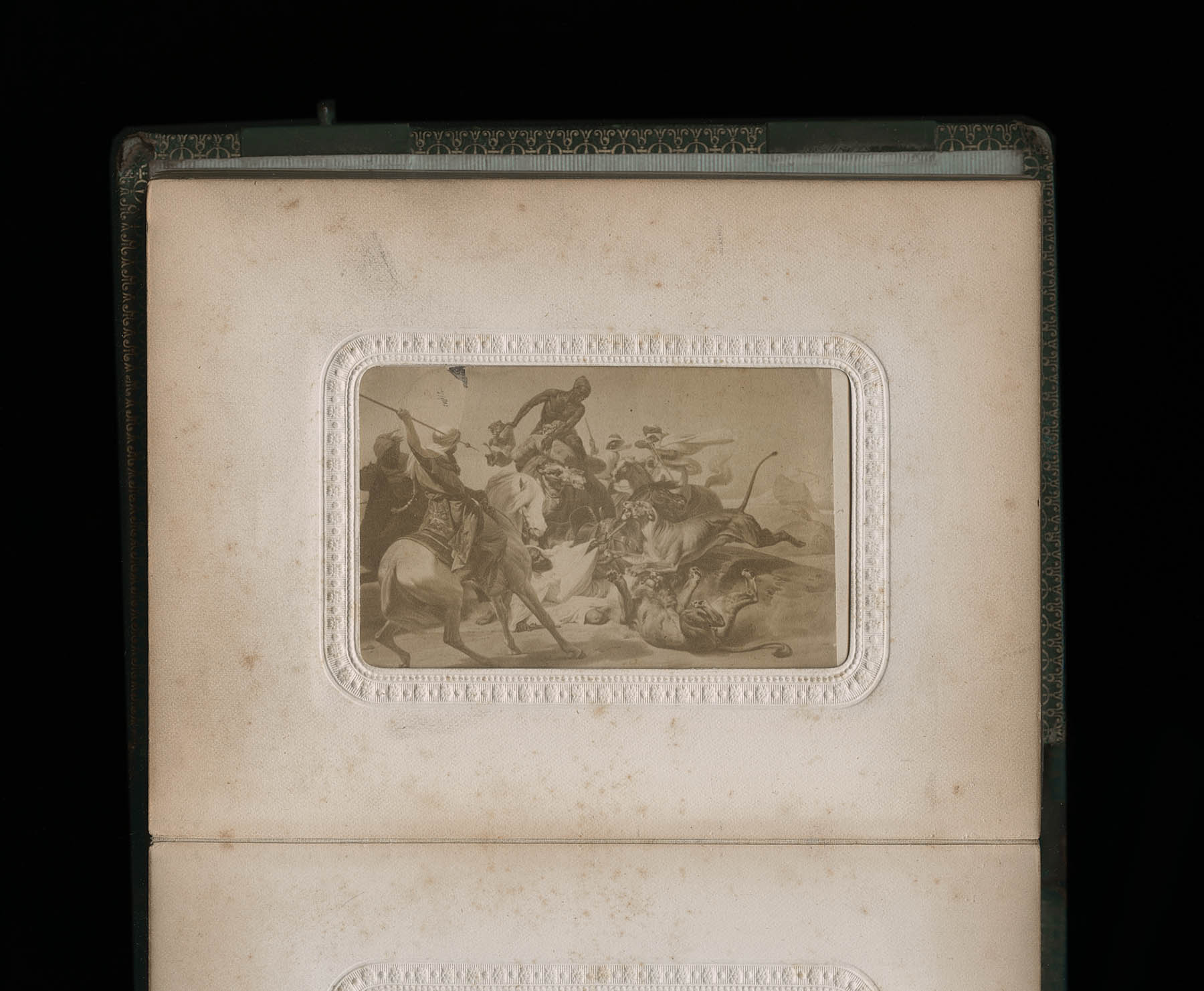
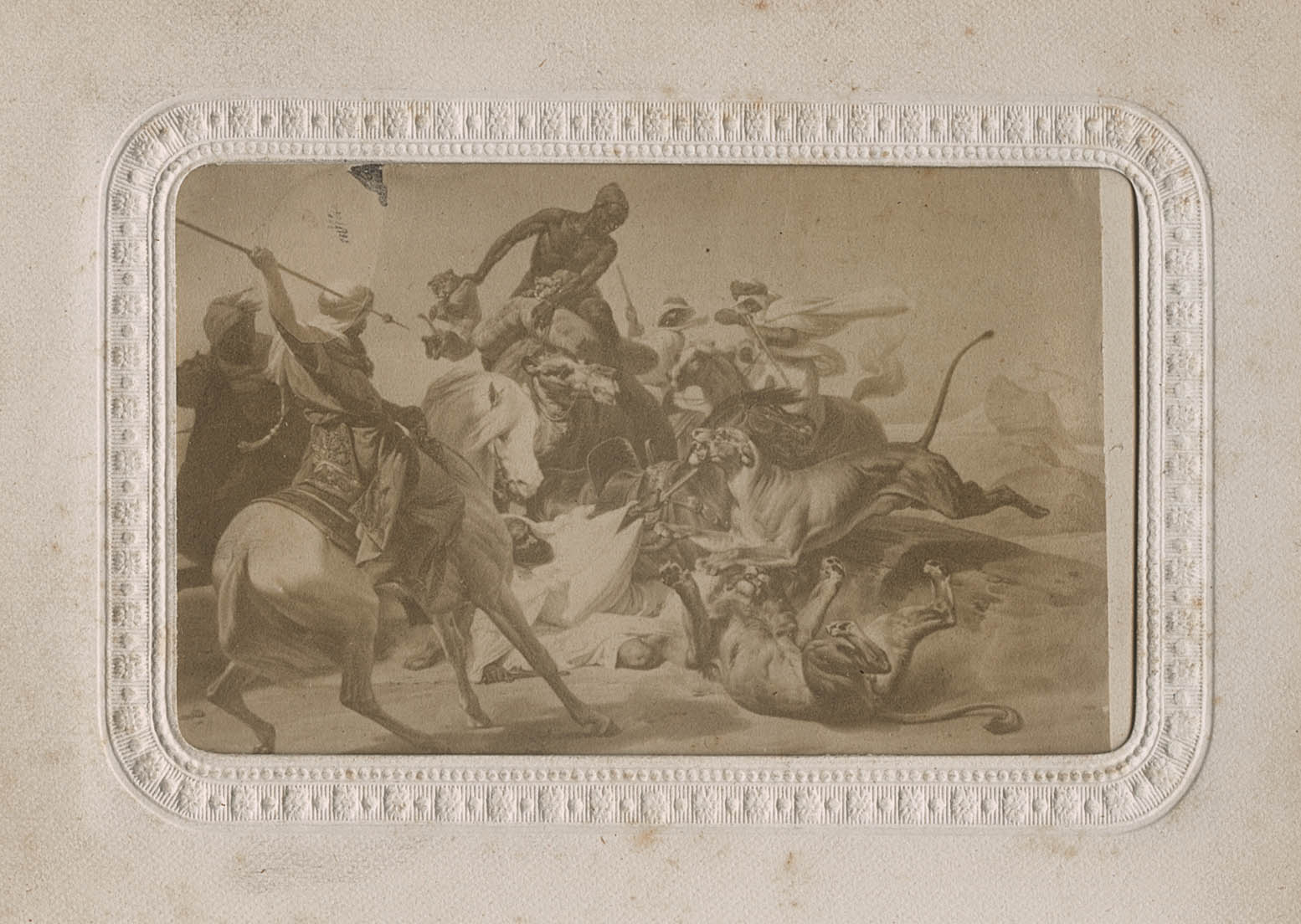
Goupil & Cie (photographer), Paris 19, Boulevard Montmartre. London, La Haye, Berlin, New York. 'After a painting by Horace Vernet (French, 1789-1863) The Lion Hunt 1836' c. 1860-1863

Goupil & Cie (photographer), Paris 19, Boulevard Montmartre. London, La Haye, Berlin, New York. 'After a painting by Horace Vernet (French, 1789-1863) The Lion Hunt 1836' c. 1860-1863

Goupil & Cie (photographer), Paris 19, Boulevard Montmartre. London, La Haye, Berlin, New York. 'After a painting by Horace Vernet (French, 1789-1863) The Lion Hunt 1836' c. 1860-1863


Goupil & Cie (photographer), Paris 19, Boulevard Montmartre
London, La Haye, Berlin, New York
After a painting by Horace Vernet (French, 1789-1863) The Lion Hunt 1836
c. 1860-1863
Carte de visite


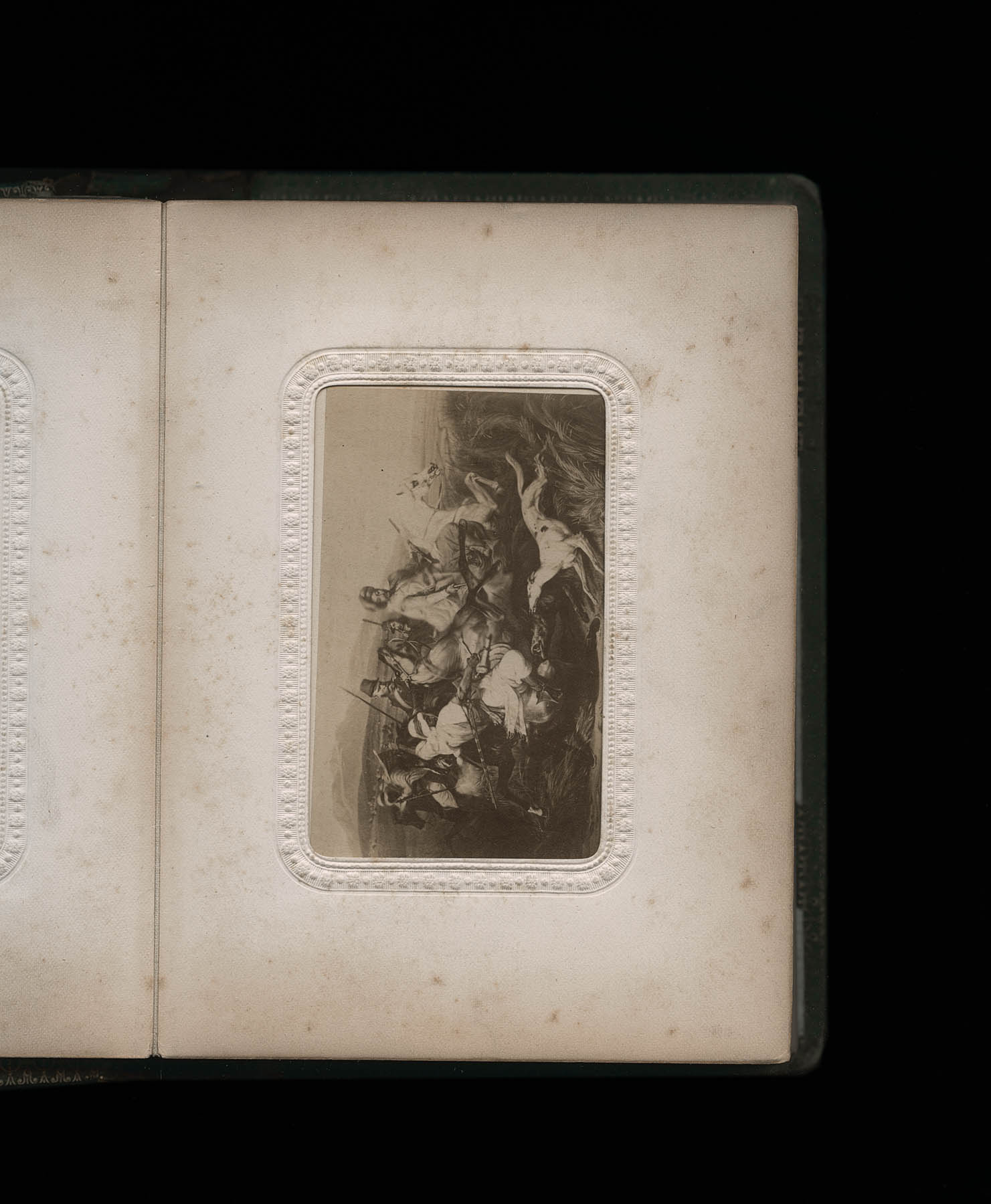
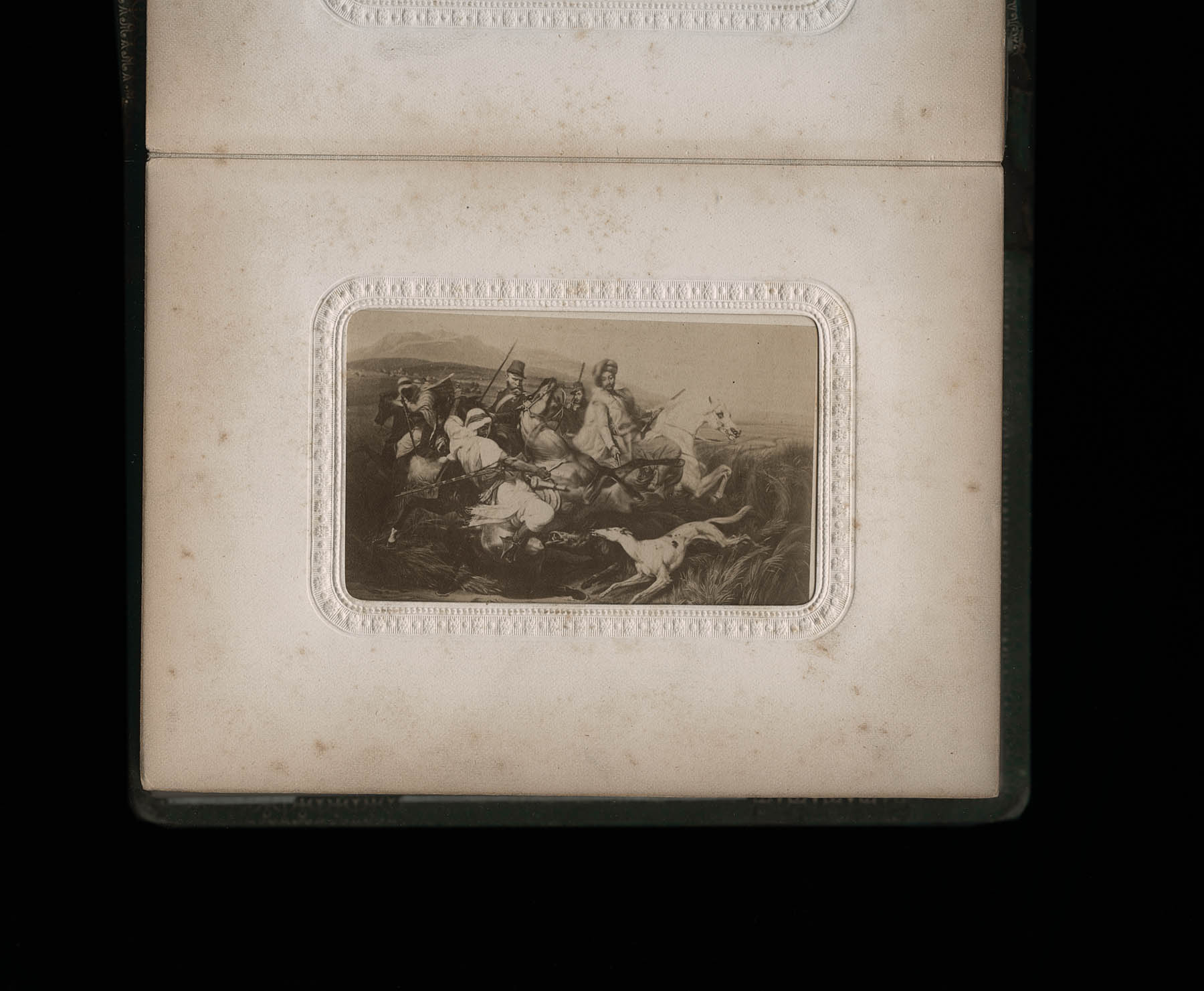
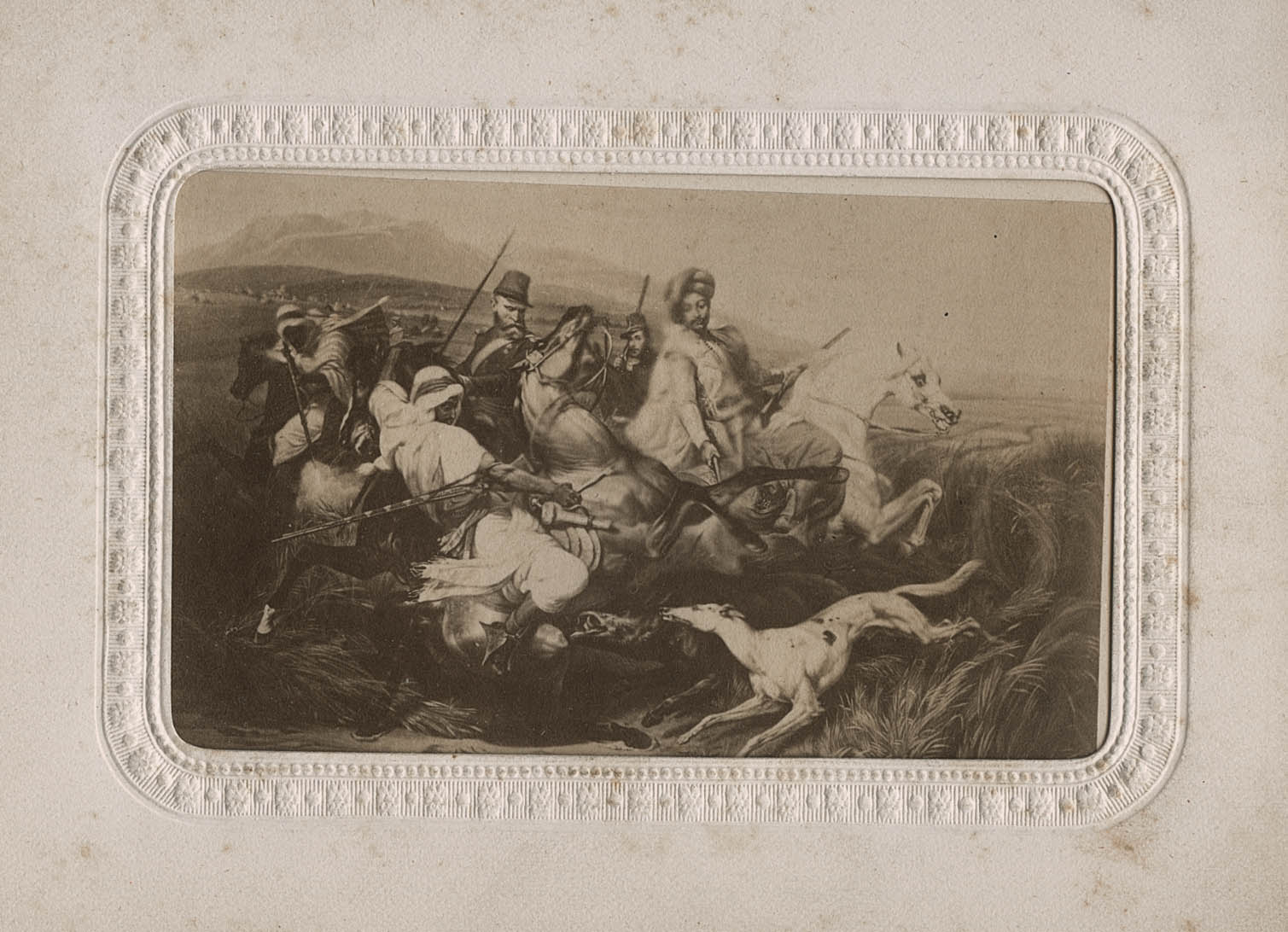
Goupil & Cie (photographer), Paris 19, Boulevard Montmartre. London, La Haye, Berlin, New York. 'After a painting by Horace Vernet (French, 1789–1863) Chasse Aux Sangliers dans la Plaine de Sahara (Wild Boar Hunting in the Sahara Plain) 1838' c. 1860-1863

Goupil & Cie (photographer), Paris 19, Boulevard Montmartre. London, La Haye, Berlin, New York. 'After a painting by Horace Vernet (French, 1789–1863) Chasse Aux Sangliers dans la Plaine de Sahara (Wild Boar Hunting in the Sahara Plain) 1838' c. 1860-1863

Goupil & Cie (photographer), Paris 19, Boulevard Montmartre. London, La Haye, Berlin, New York. 'After a painting by Horace Vernet (French, 1789–1863) Chasse Aux Sangliers dans la Plaine de Sahara (Wild Boar Hunting in the Sahara Plain) 1838' c. 1860-1863


Goupil & Cie (photographer), Paris 19, Boulevard Montmartre
London, La Haye, Berlin, New York
After a painting by Horace Vernet (French, 1789–1863) Chasse Aux Sangliers dans la Plaine de Sahara (Wild Boar Hunting in the Sahara Plain) 1838
c. 1860-1863


Goupil & Cie (photographer), Paris 19, Boulevard Montmartre. London, La Haye, Berlin, New York. 'After a painting by Horace Vernet (French, 1789–1863) Unknown title Nd' c. 1860-1863

Goupil & Cie (photographer), Paris 19, Boulevard Montmartre. London, La Haye, Berlin, New York. 'After a painting by Horace Vernet (French, 1789-1863) Unknown title Nd' c. 1860-1863


Goupil & Cie (photographer), Paris 19, Boulevard Montmartre
London, La Haye, Berlin, New York
After a painting by Horace Vernet (French, 1789-1863) Unknown title Nd
c. 1860-1863
Carte de visite


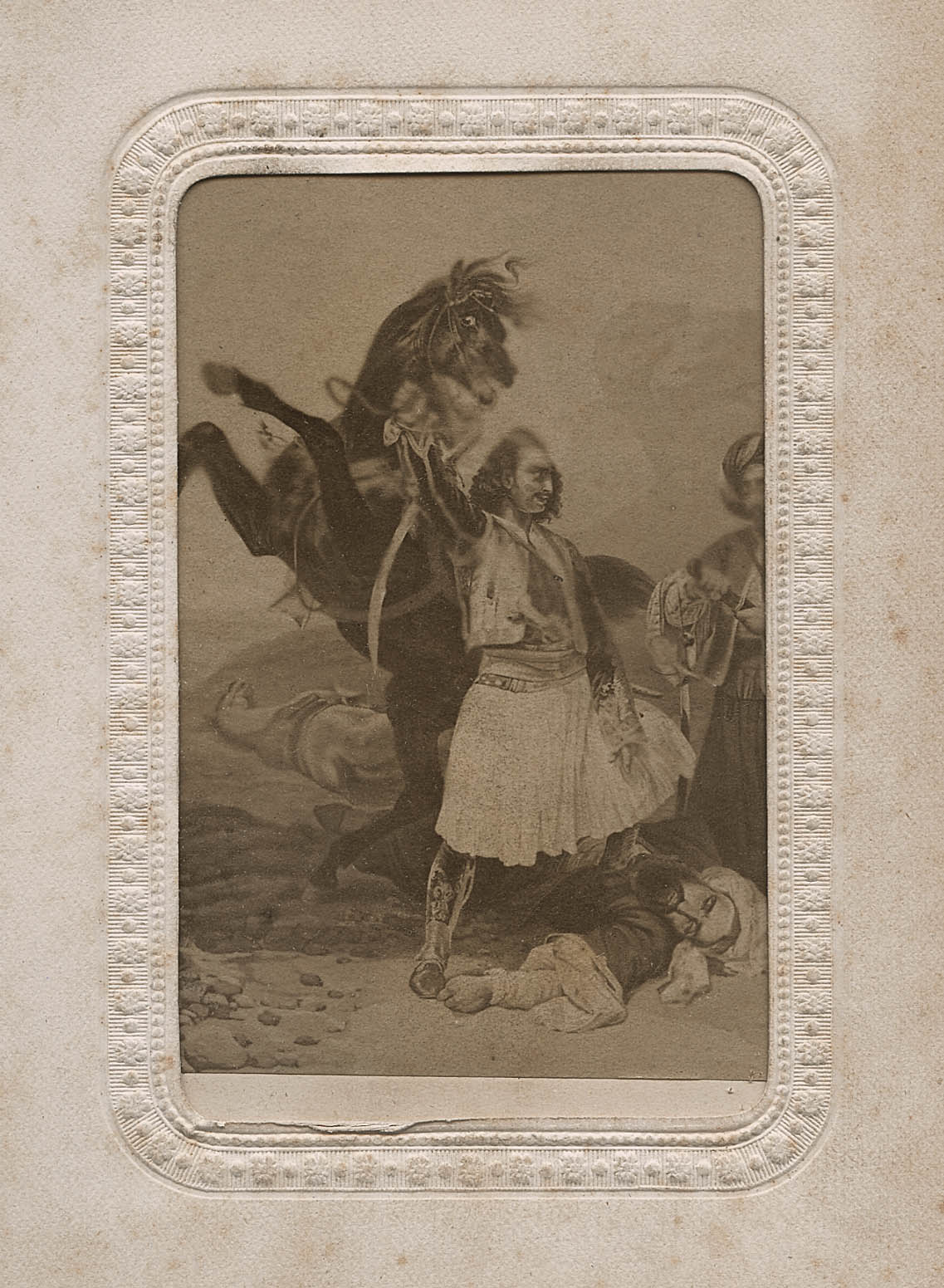
Goupil & Cie (photographer), Paris 19, Boulevard Montmartre. London, La Haye, Berlin, New York. 'After a painting by Horace Vernet (French, 1789–1863) Le Giaour, vainqueur d'Hassan (The Giaour conquers Hassan) c. 1827' c. 1860-1863

Goupil & Cie (photographer), Paris 19, Boulevard Montmartre. London, La Haye, Berlin, New York. 'After a painting by Horace Vernet (French, 1789–1863) Le Giaour, vainqueur d'Hassan (The Giaour conquers Hassan) c. 1827' c. 1860-1863


Goupil & Cie (photographer), Paris 19, Boulevard Montmartre
London, La Haye, Berlin, New York
After a painting by Horace Vernet (French, 1789–1863) Le Giaour, vainqueur d’Hassan (The Giaour conquers Hassan) c. 1827
c. 1860-1863
Carte de visite


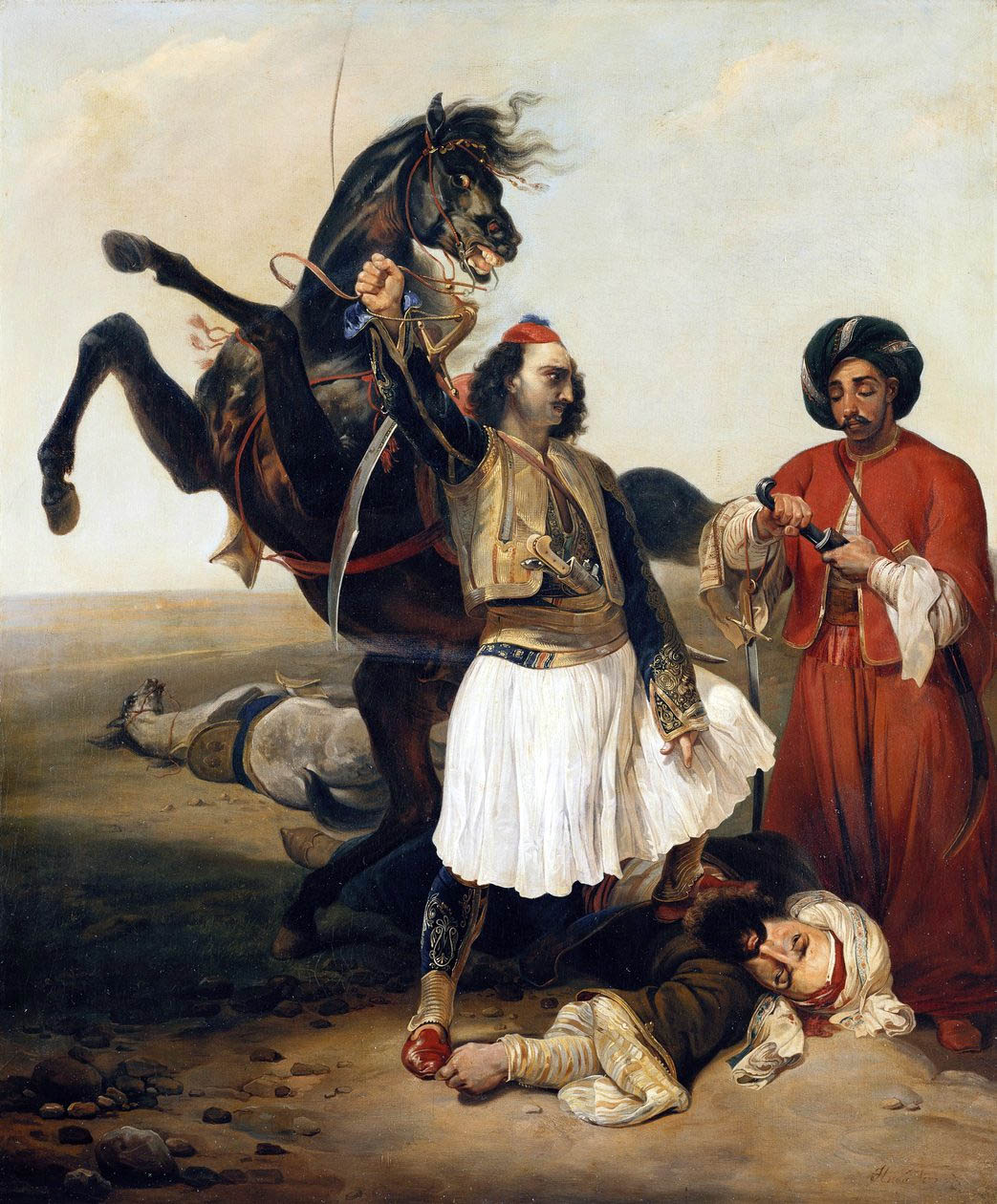
Horace Vernet (French, 1789-1863) 'Le Giaour, vainqueur d'Hassan' c. 1827


Horace Vernet (French, 1789-1863)
Le Giaour, vainqueur d’Hassan
c. 1827
Oil on canvas
25 5/8 x 21 in. (65 x 54cm)
Public domain


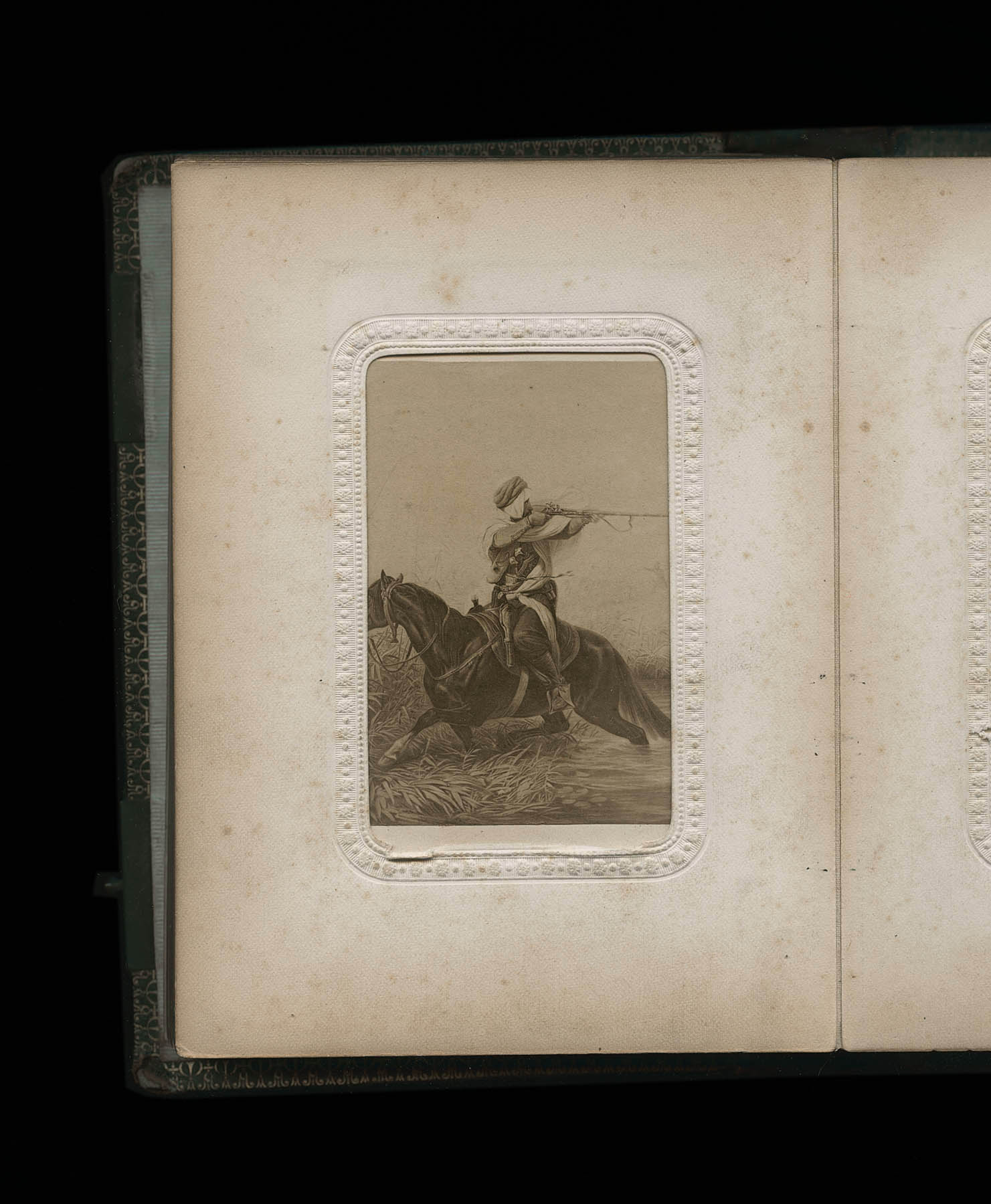
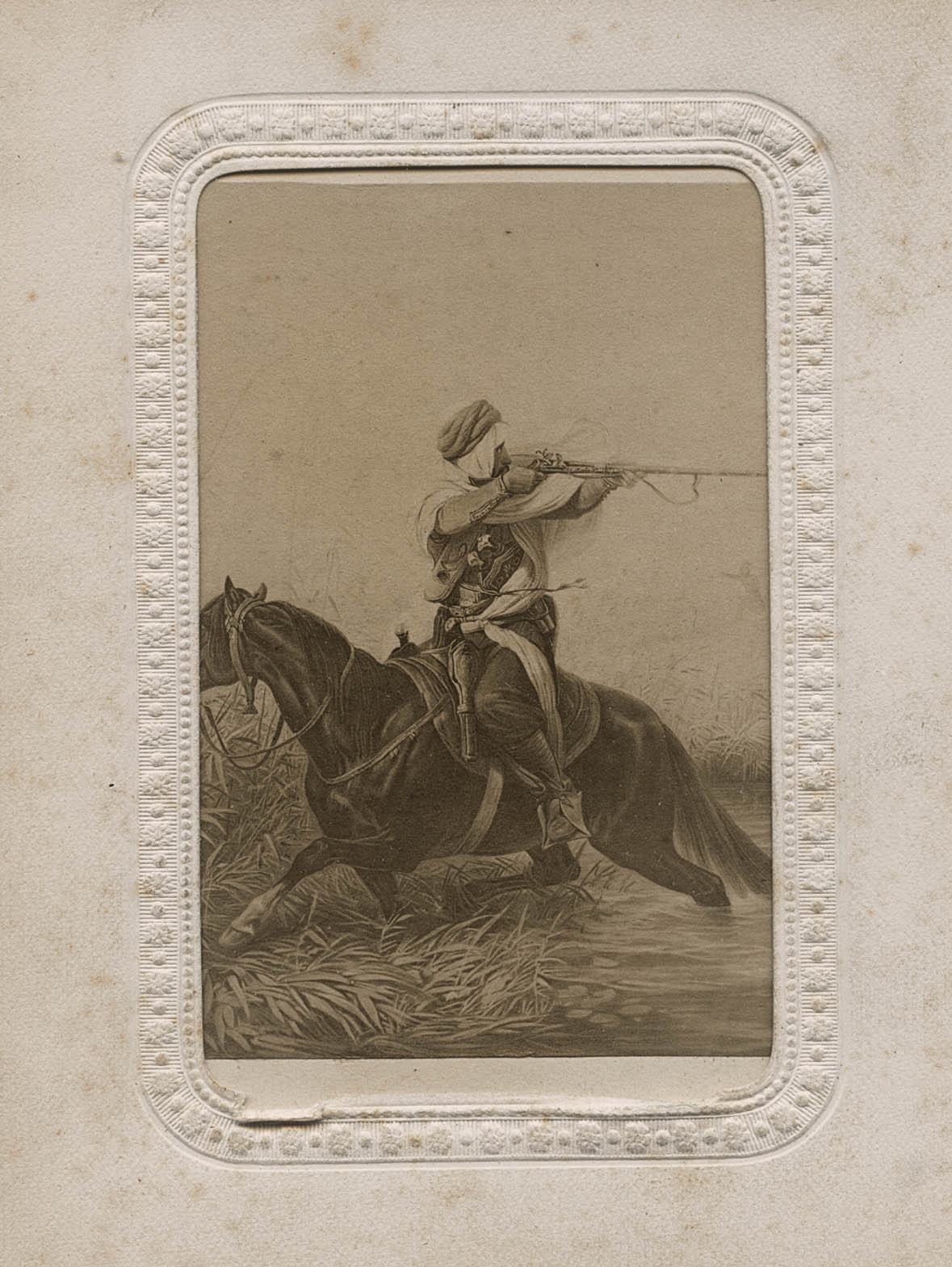
Goupil & Cie (photographer), Paris 19, Boulevard Montmartre. London, La Haye, Berlin, New York. 'After a painting by Horace Vernet (French, 1789-1863) Cavalier arabe, dit aussi 'La Retraite' (Arabian horseman, also called 'The Retreat’) 1839' c. 1860-1863

Goupil & Cie (photographer), Paris 19, Boulevard Montmartre. London, La Haye, Berlin, New York. 'After a painting by Horace Vernet (French, 1789-1863) Cavalier arabe, dit aussi 'La Retraite' (Arabian horseman, also called 'The Retreat’) 1839' c. 1860-1863


Goupil & Cie (photographer), Paris 19, Boulevard Montmartre
London, La Haye, Berlin, New York
After a painting by Horace Vernet (French, 1789-1863) Cavalier arabe, dit aussi ‘La Retraite’ (Arabian horseman, also called ‘The Retreat’) 1839
c. 1860-1863
Carte de visite


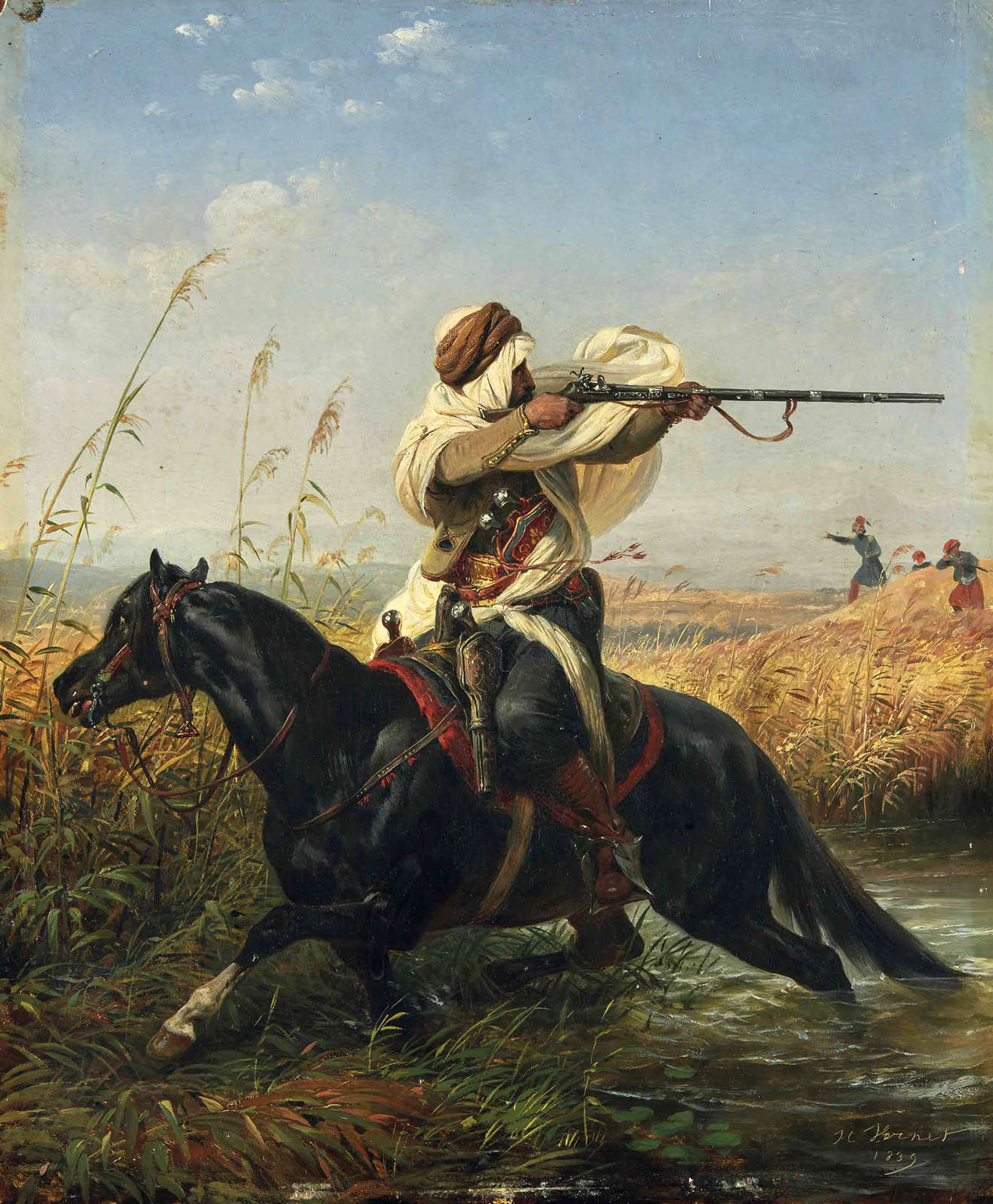
Horace Vernet (French, 1789-1863) 'Cavalier arabe, dit aussi 'La Retraite'' 1839


Horace Vernet (French, 1789-1863)
Cavalier arabe, dit aussi ‘La Retraite’
1839
Oil on panel
40.8 x 33.5cm (16 x 13 1/4 in.)
Purchased or commissioned by Baron Jean-Conrad Hottinguer (1803-1866) and paid by him to Vernet in 1840; then collection of Baroness Hottinguer, in 1874
Public domain


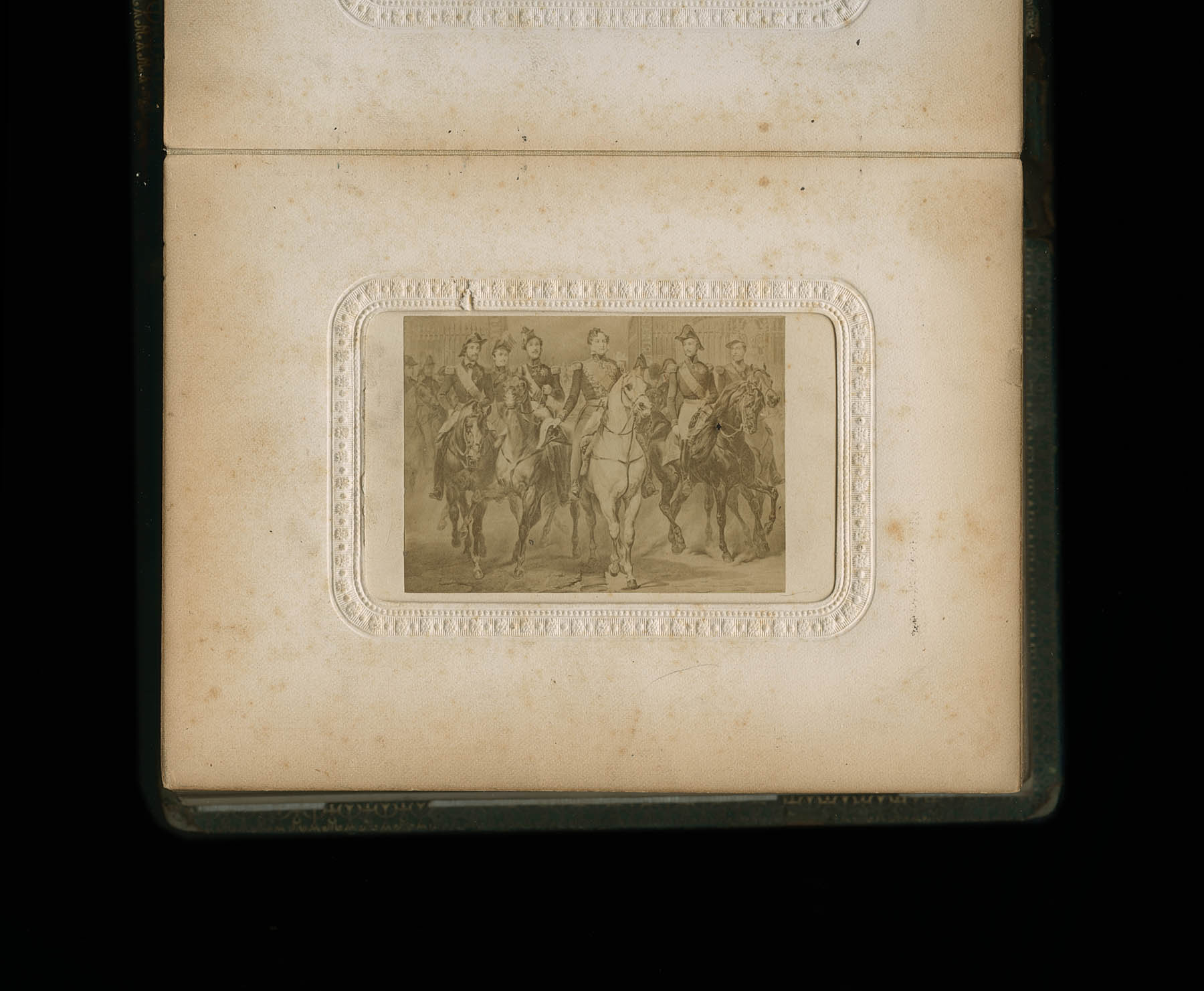
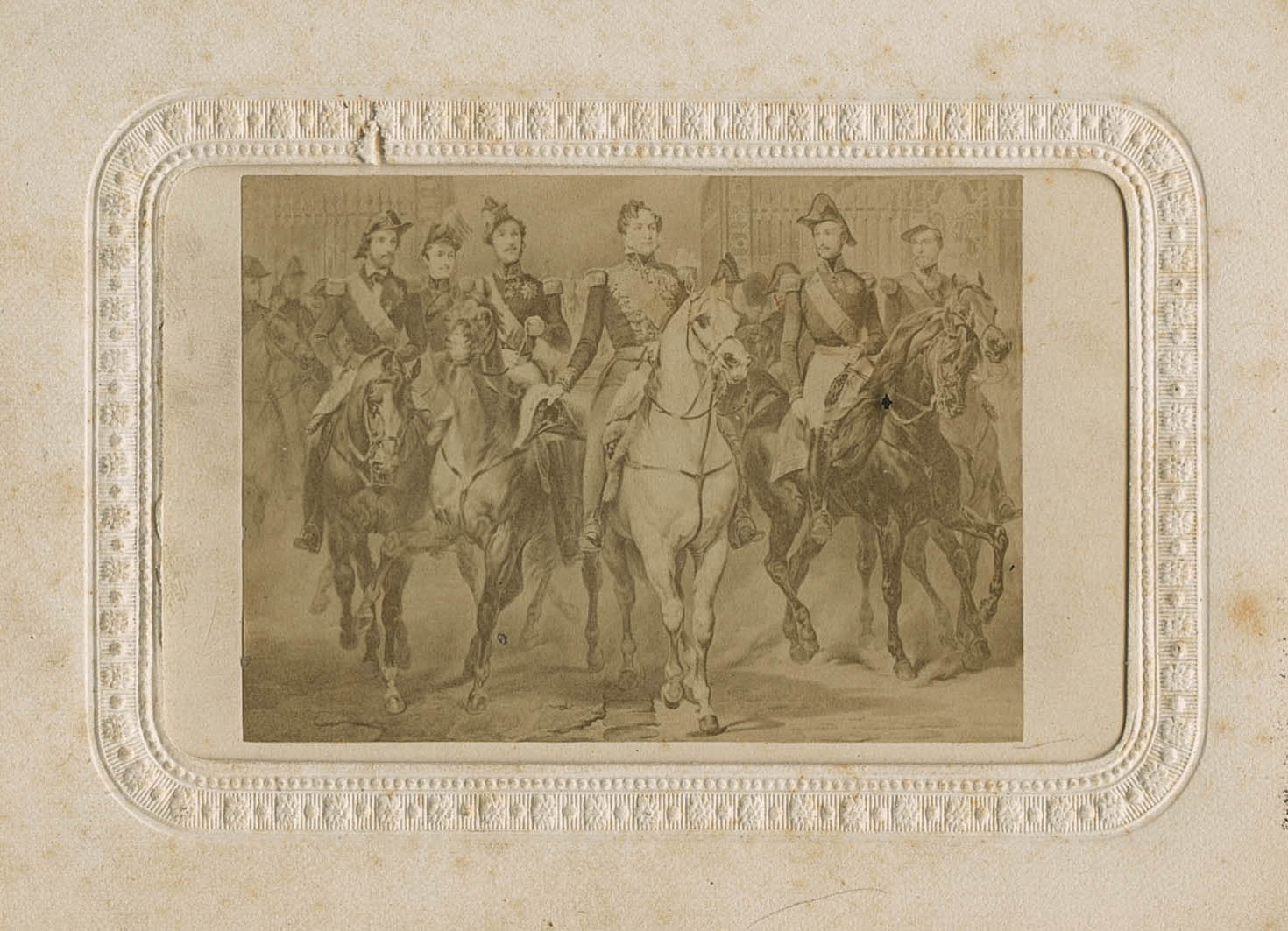
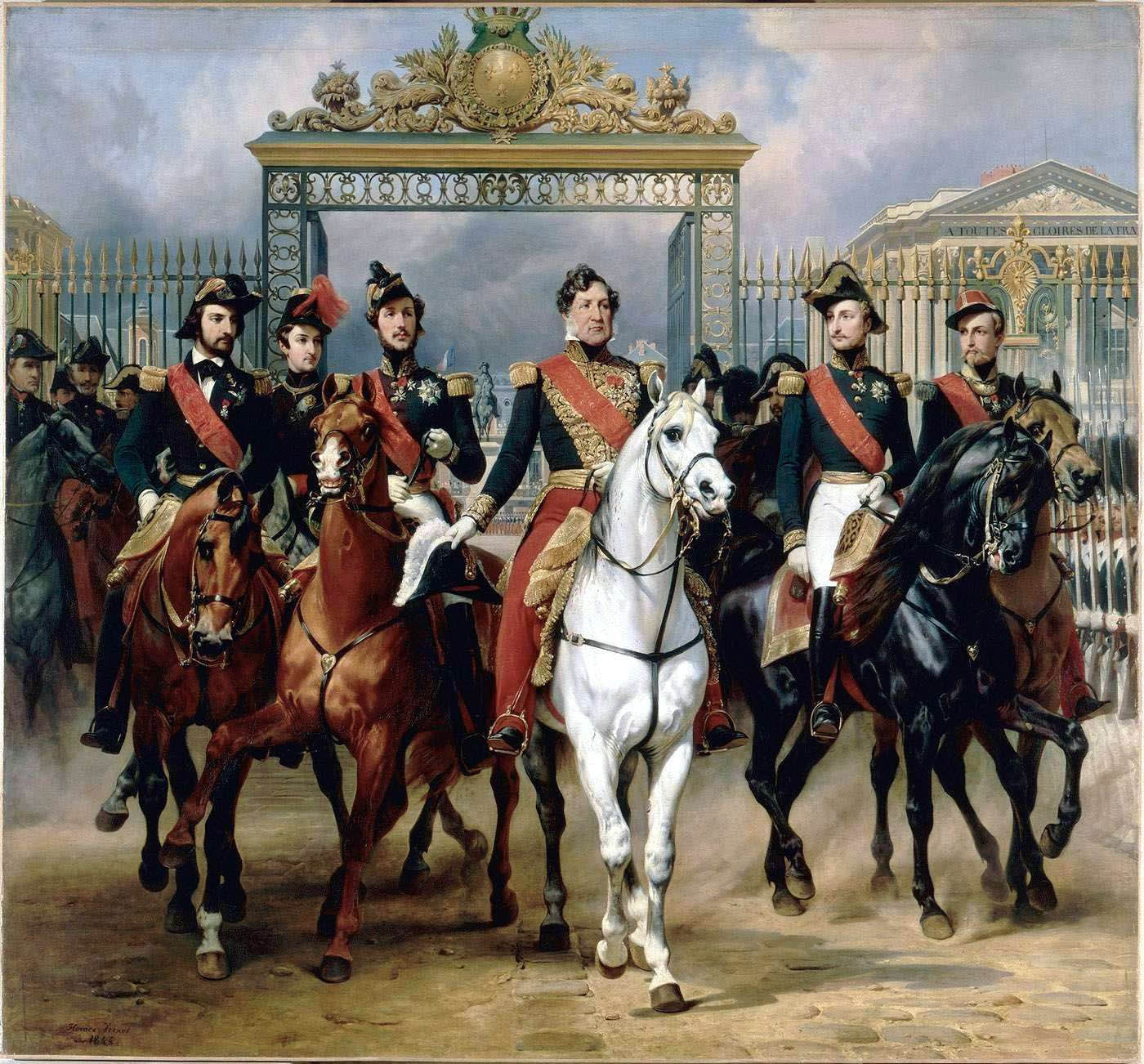
Goupil & Cie (photographer), Paris 19, Boulevard Montmartre. London, La Haye, Berlin, New York. 'After a painting by Horace Vernet (French, 1789-1863) Louis-Philippe, accompagné de ses fils, sortant à cheval du château de Versailles (King Louis-Philippe escorted by his sons leaving Versailles on June 10, 1837) 1846' c. 1860-1863

Goupil & Cie (photographer), Paris 19, Boulevard Montmartre. London, La Haye, Berlin, New York. 'After a painting by Horace Vernet (French, 1789-1863) Louis-Philippe, accompagné de ses fils, sortant à cheval du château de Versailles (King Louis-Philippe escorted by his sons leaving Versailles on June 10, 1837) 1846' c. 1860-1863

Goupil & Cie (photographer), Paris 19, Boulevard Montmartre. London, La Haye, Berlin, New York. 'After a painting by Horace Vernet (French, 1789-1863) Louis-Philippe, accompagné de ses fils, sortant à cheval du château de Versailles (King Louis-Philippe escorted by his sons leaving Versailles on June 10, 1837) 1846' c. 1860-1863


Goupil & Cie (photographer), Paris 19, Boulevard Montmartre
London, La Haye, Berlin, New York
After a painting by Horace Vernet (French, 1789-1863) Louis-Philippe, accompagné de ses fils, sortant à cheval du château de Versailles (King Louis-Philippe escorted by his sons leaving Versailles on June 10, 1837) 1846
c. 1860-1863
Carte de visit


Horace Vernet (French, 1789-1863) 'Louis-Philippe, accompagné de ses fils, sortant à cheval du château de Versailles (King Louis-Philippe escorted by his sons leaving Versailles on June 10, 1837)' 1846


Horace Vernet (French, 1789–1863)
Louis-Philippe, accompagné de ses fils, sortant à cheval du château de Versailles (King Louis-Philippe escorted by his sons leaving Versailles on June 10, 1837)
1846
Oil on canvas
Height: 368cm
Width: 397.5cm
Musée national du Château de Versailles
Public domain


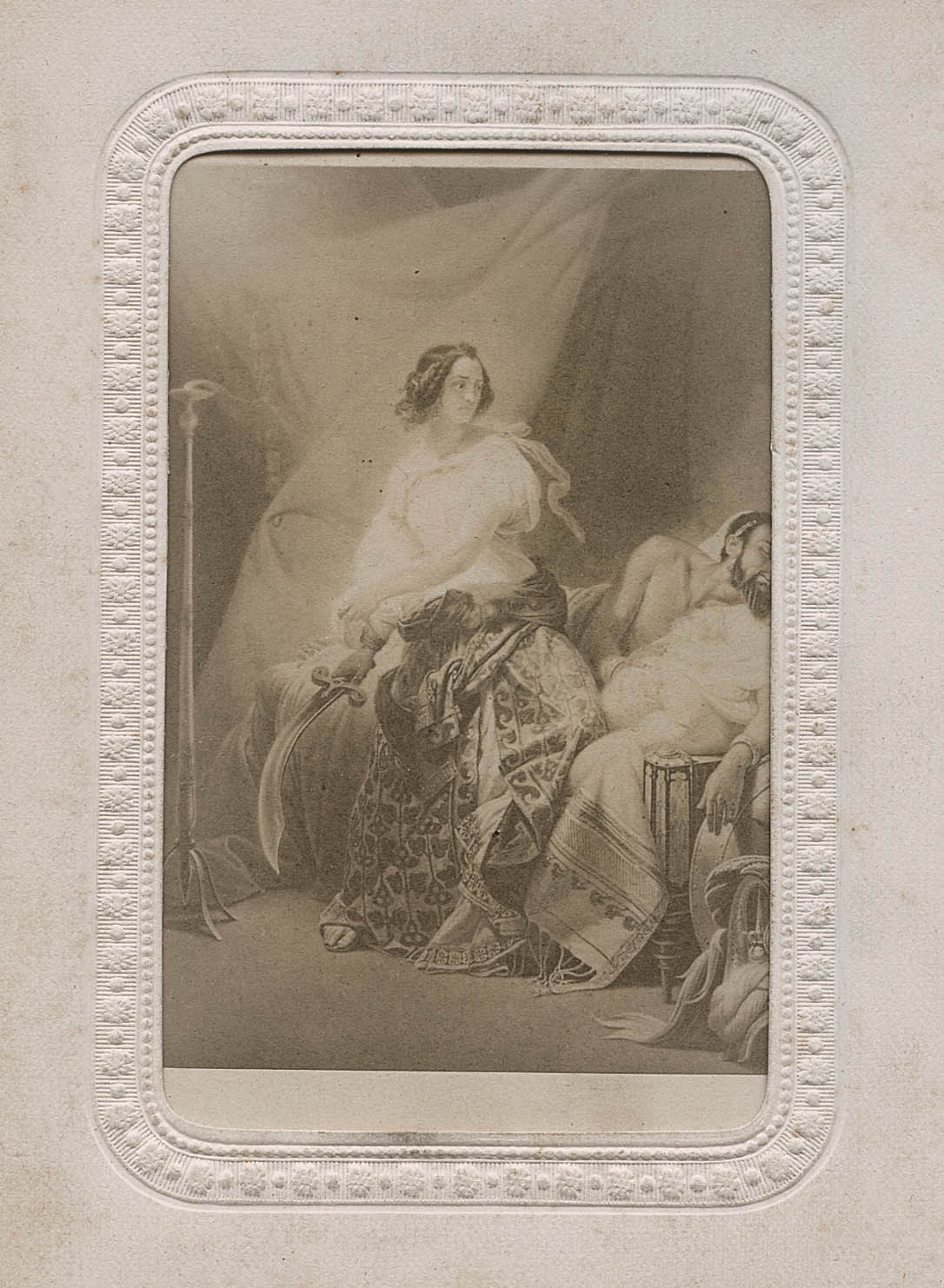
Goupil & Cie (photographer), Paris 19, Boulevard Montmartre. London, La Haye, Berlin, New York. 'After a painting by Horace Vernet (French, 1789-1863) Judith and Holofernes 1829' c. 1860-1863

Goupil & Cie (photographer), Paris 19, Boulevard Montmartre. London, La Haye, Berlin, New York. 'After a painting by Horace Vernet (French, 1789-1863) Judith and Holofernes 1829' c. 1860-1863


Goupil & Cie (photographer), Paris 19, Boulevard Montmartre
London, La Haye, Berlin, New York
After a painting by Horace Vernet (French, 1789-1863) Judith and Holofernes 1829
c. 1860-1863
Carte de visite


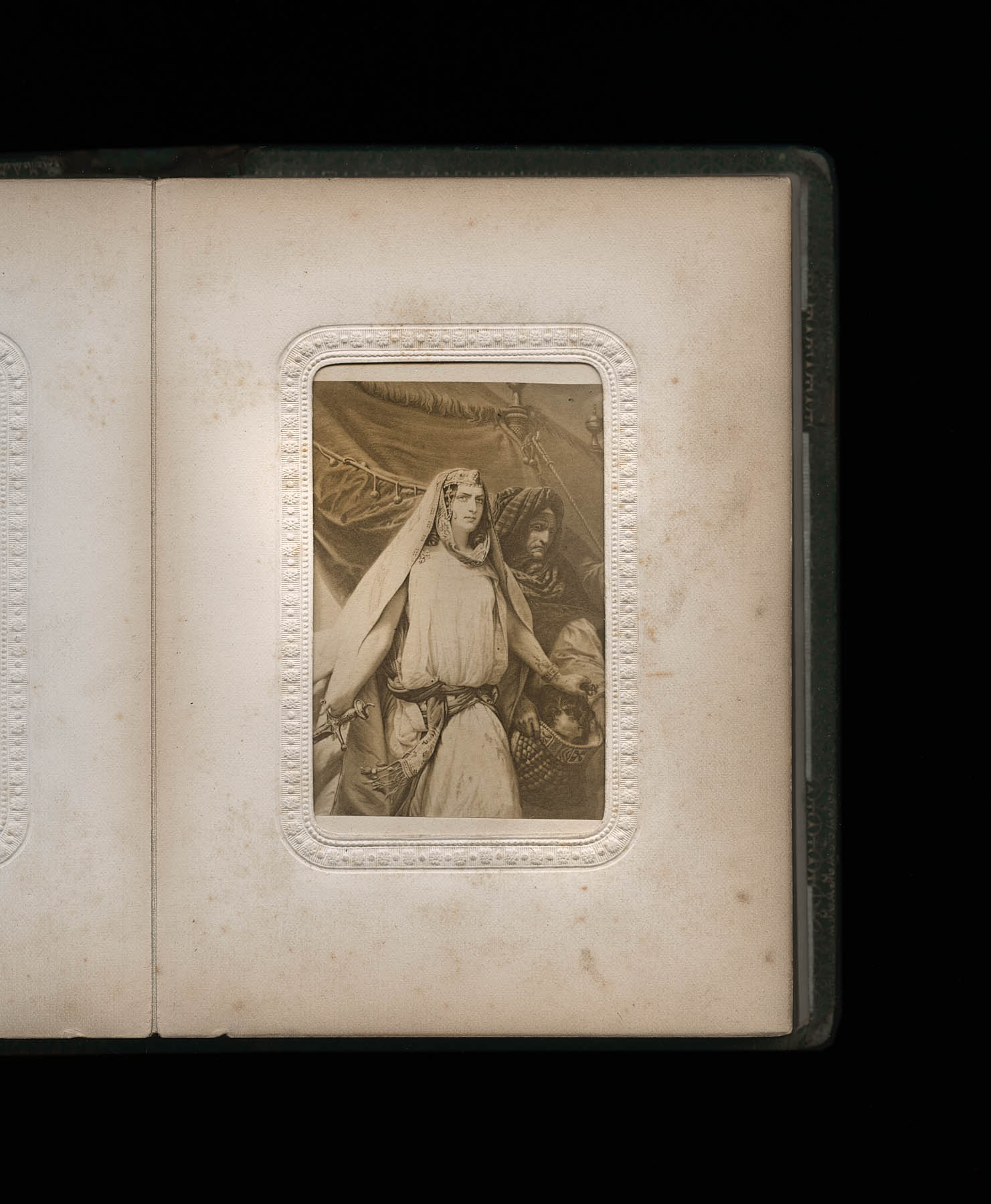
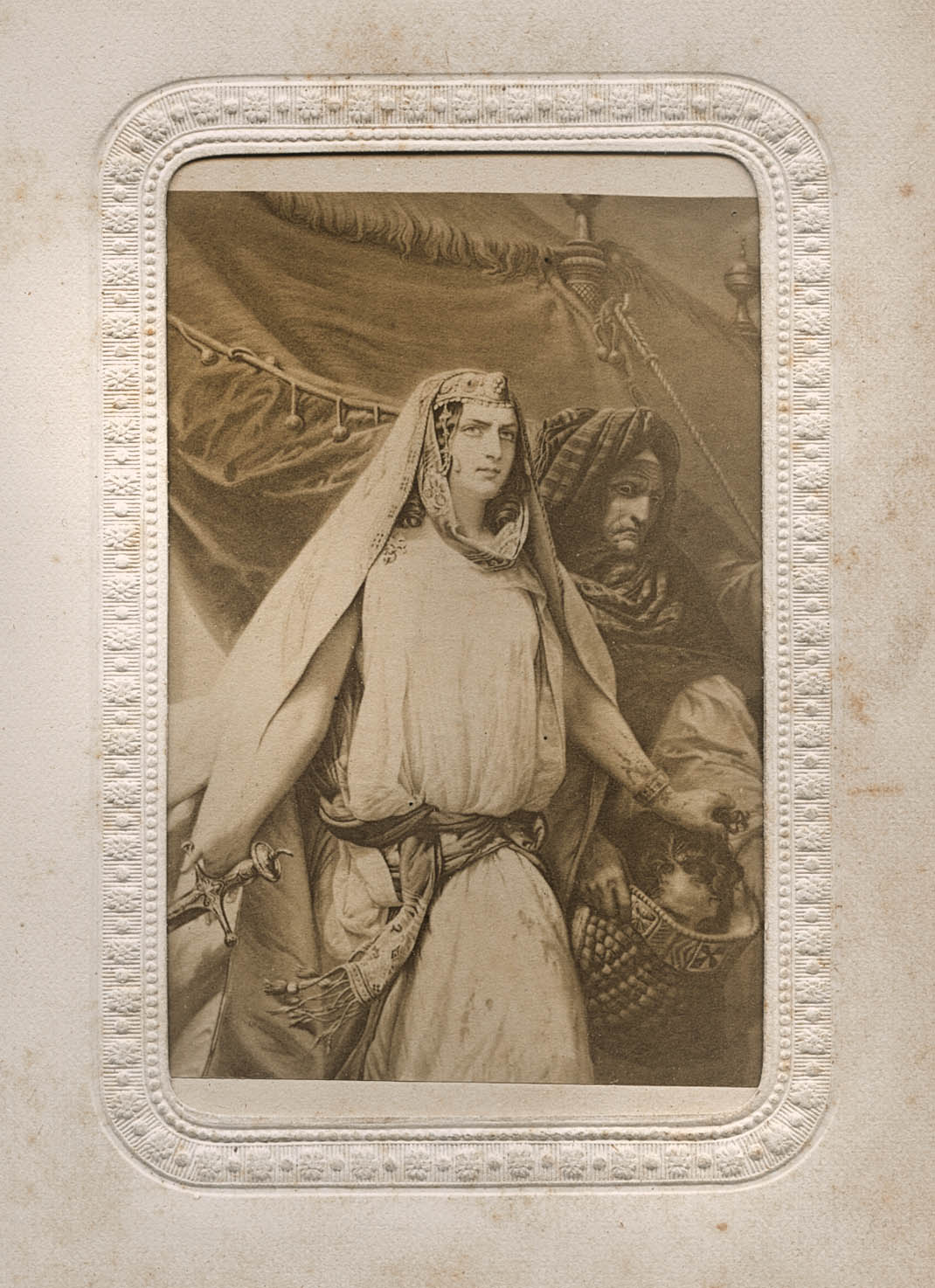
Goupil & Cie (photographer), Paris 19, Boulevard Montmartre. London, La Haye, Berlin, New York. 'After a painting by Horace Vernet (French, 1789-1863) Judith with the head of Holofernes Nd' c. 1860-1863

Goupil & Cie (photographer), Paris 19, Boulevard Montmartre. London, La Haye, Berlin, New York. 'After a painting by Horace Vernet (French, 1789-1863) Judith with the head of Holofernes Nd' c. 1860-1863


Goupil & Cie (photographer), Paris 19, Boulevard Montmartre
London, La Haye, Berlin, New York
After a painting by Horace Vernet (French, 1789-1863) Judith with the head of Holofernes Nd
c. 1860-1863
Carte de visite


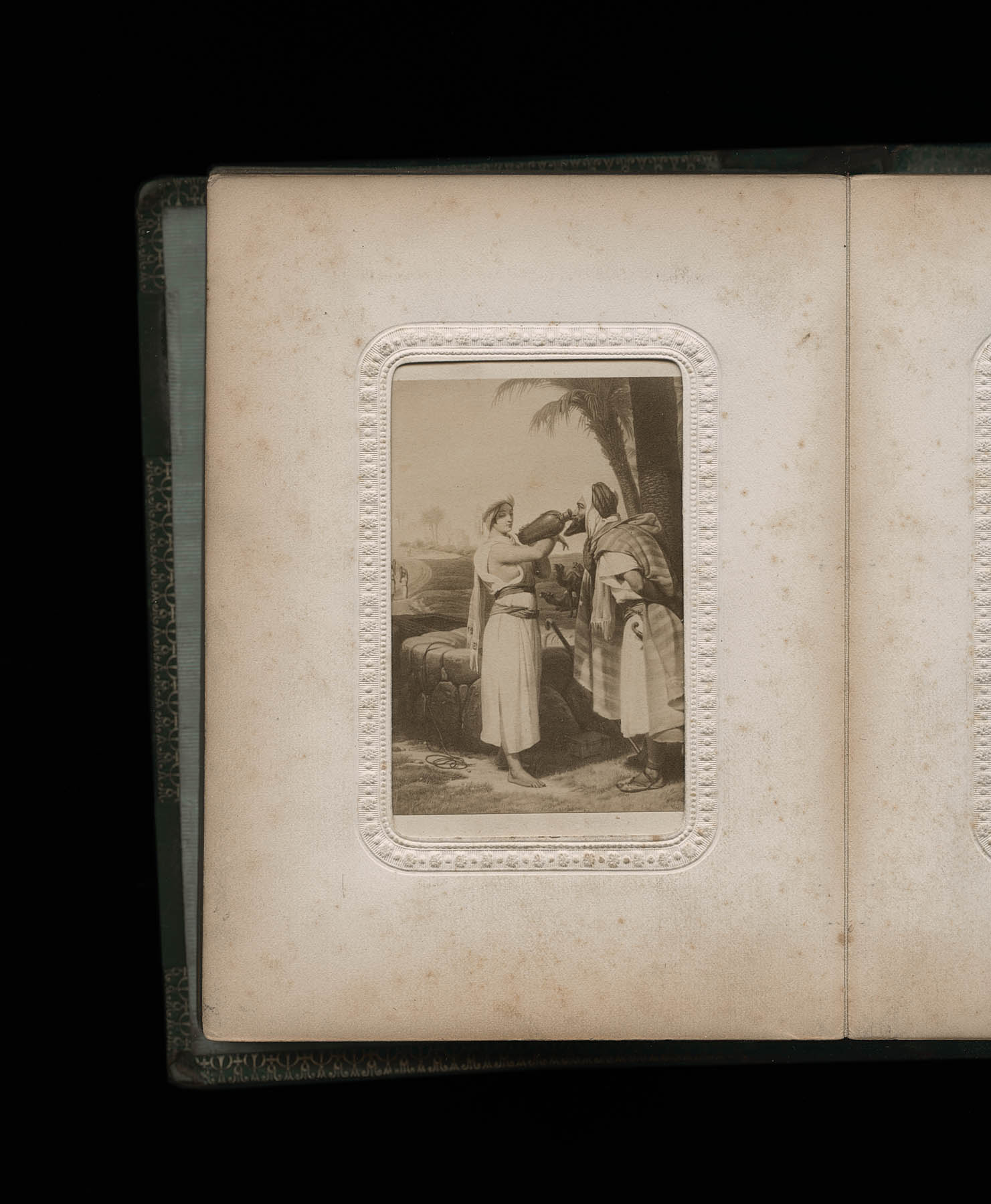
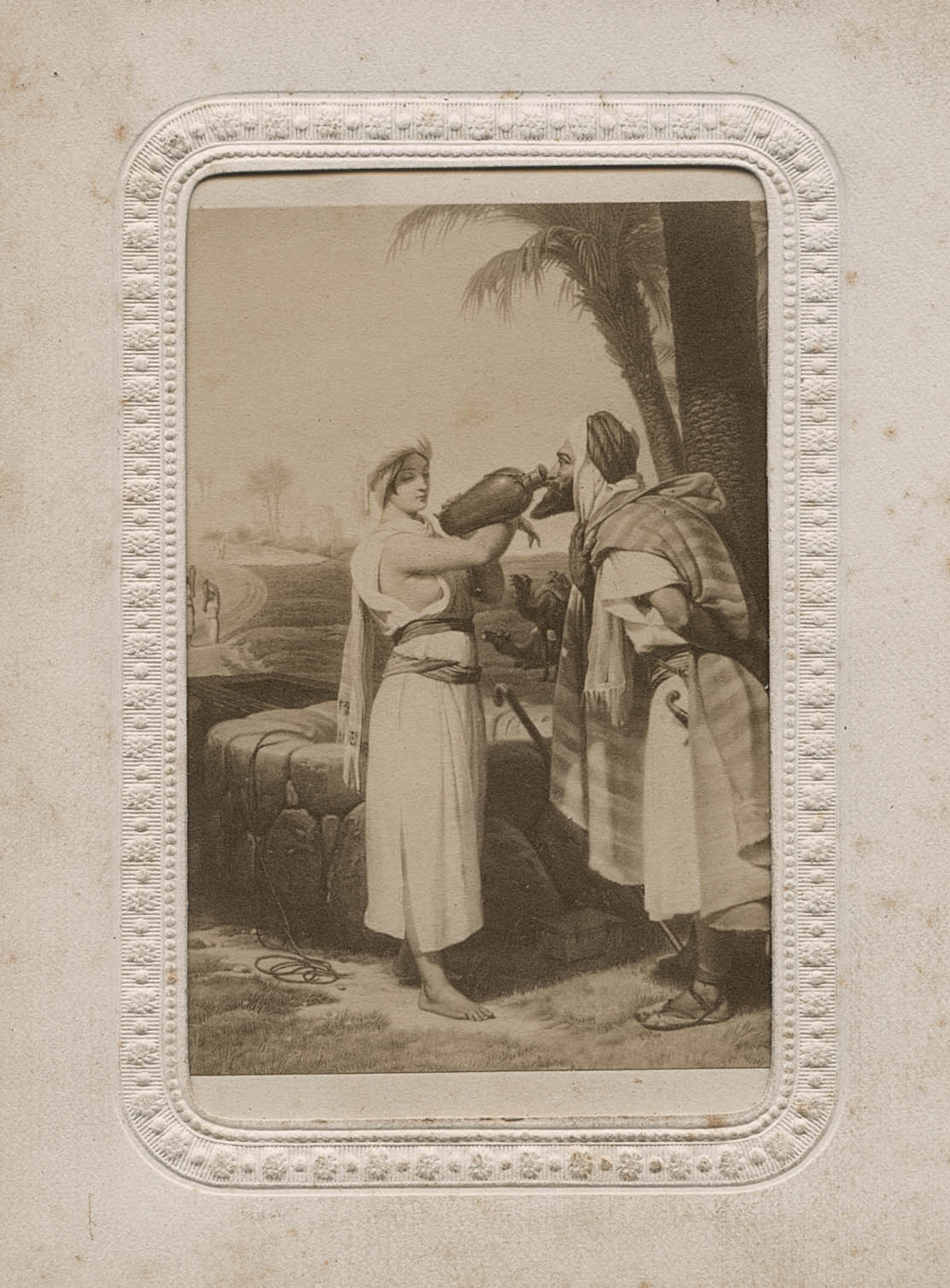
Goupil & Cie (photographer), Paris 19, Boulevard Montmartre. London, La Haye, Berlin, New York. 'After a painting by Horace Vernet (French, 1789-1863) Rebecca and Eleazar at the well (1835, now lost)' c. 1860-1863

Goupil & Cie (photographer), Paris 19, Boulevard Montmartre. London, La Haye, Berlin, New York. 'After a painting by Horace Vernet (French, 1789-1863) Rebecca and Eleazar at the well (1835, now lost)' c. 1860-1863


Goupil & Cie (photographer), Paris 19, Boulevard Montmartre
London, La Haye, Berlin, New York
After a painting by Horace Vernet (French, 1789-1863) Rebecca and Eleazar at the well (1835, now lost)
c. 1860-1863
Carte de visite


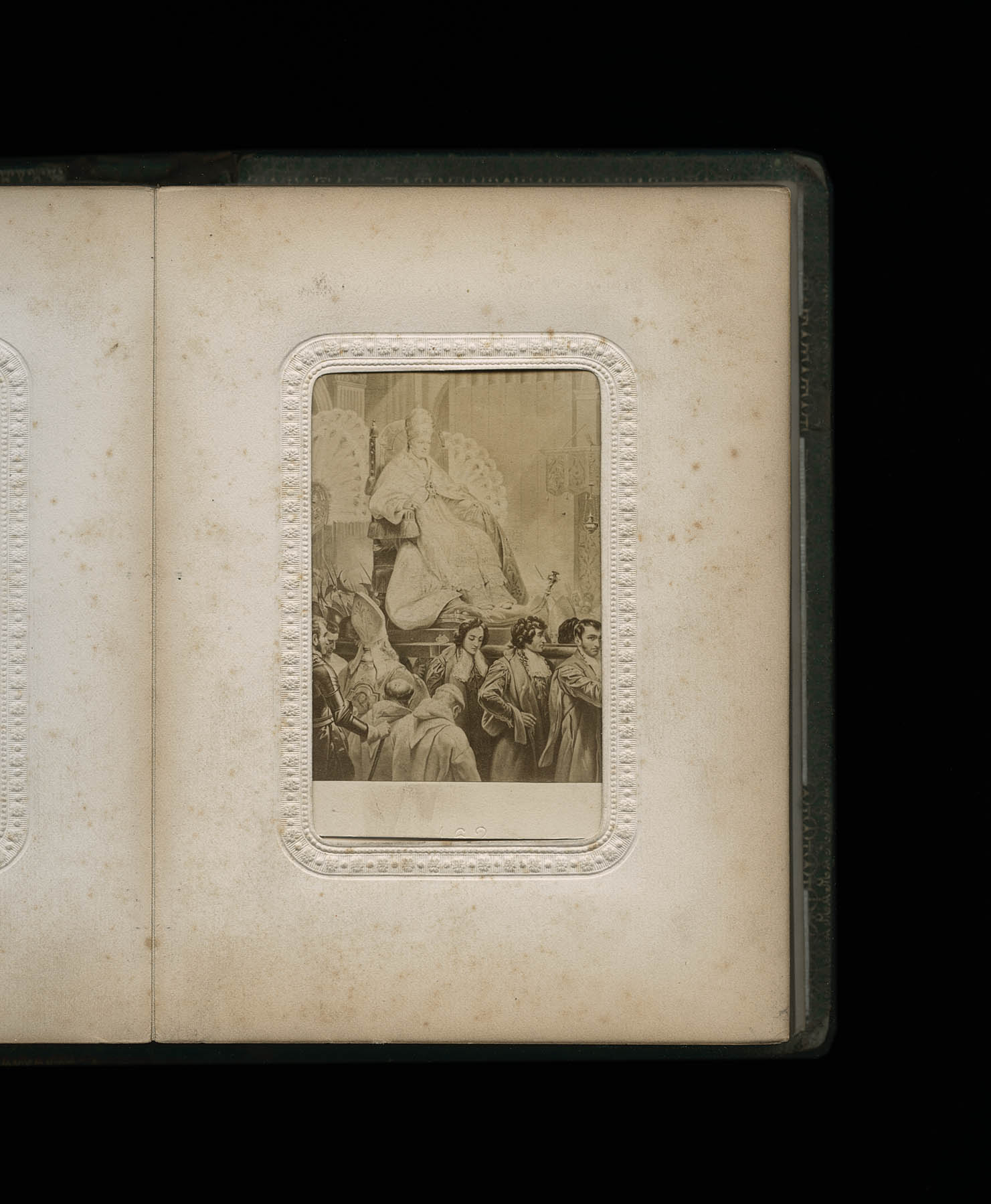
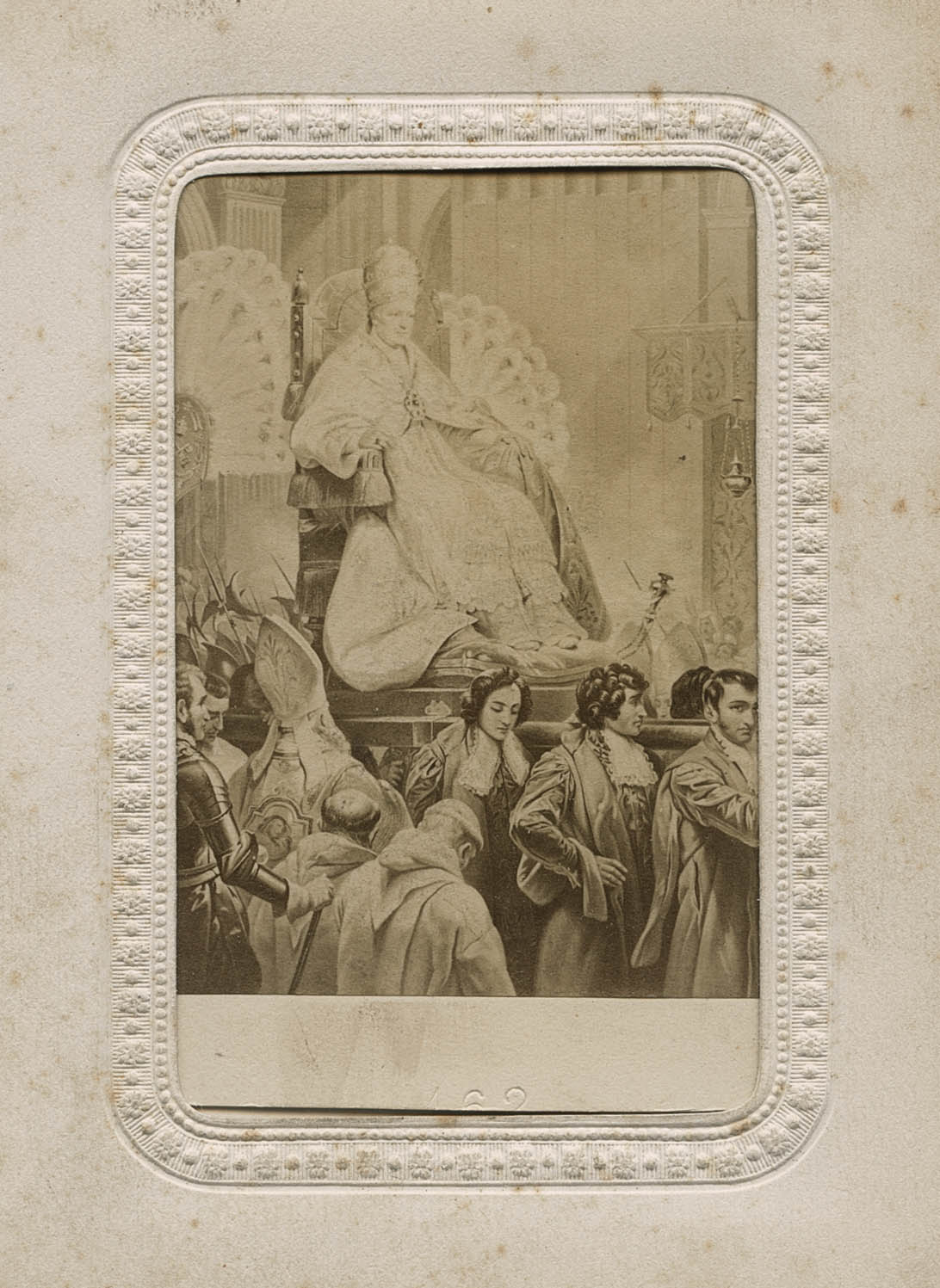
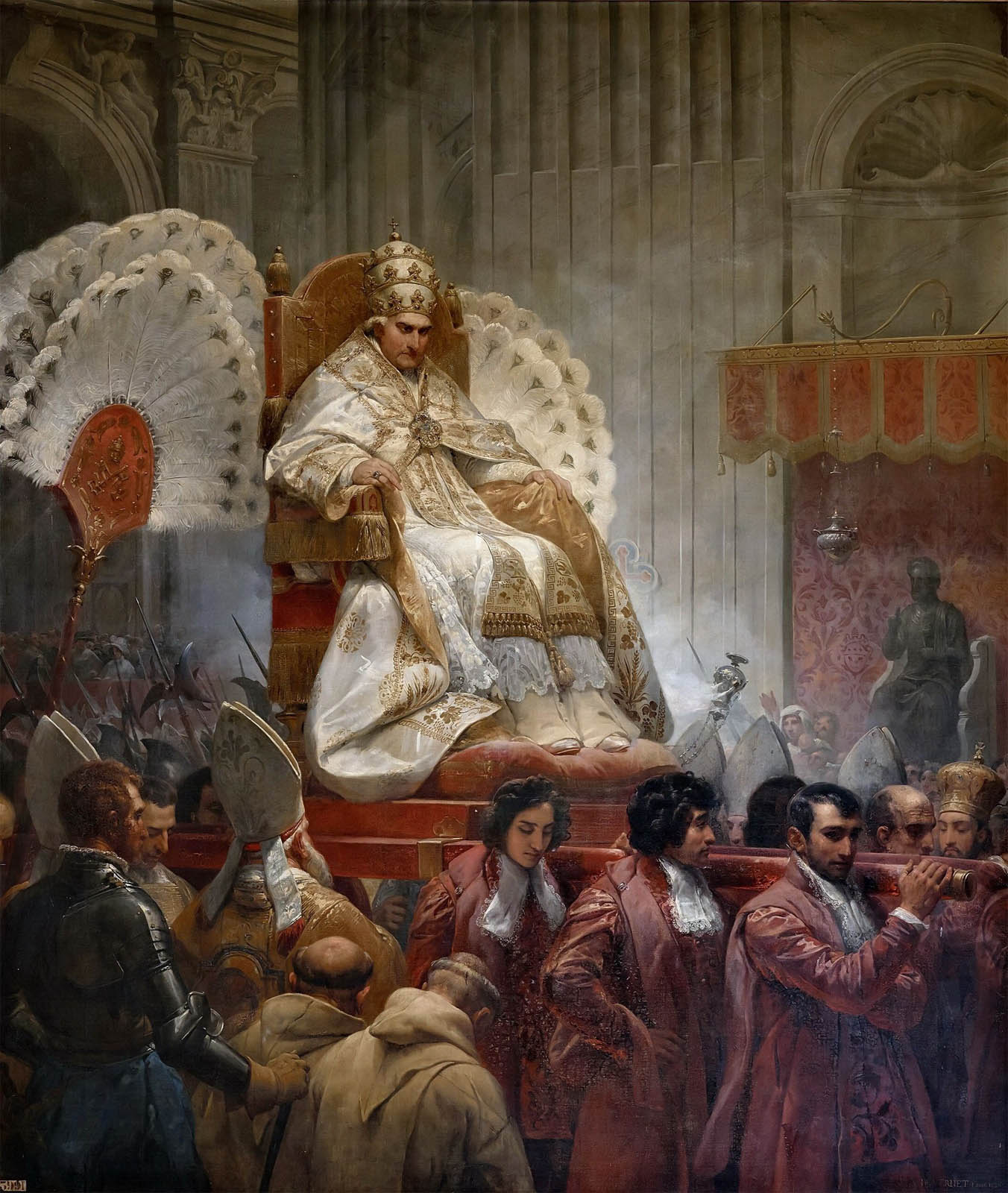
Goupil & Cie (photographer), Paris 19, Boulevard Montmartre. London, La Haye, Berlin, New York. 'After a painting by Horace Vernet (French, 1789-1863) Pie VIII porté dans la basilique de Saint-Pierre à Rome (Pius VIII brought to the Basilica of Saint Peter in Rome) 1829' c. 1860-1863

Goupil & Cie (photographer), Paris 19, Boulevard Montmartre. London, La Haye, Berlin, New York. 'After a painting by Horace Vernet (French, 1789-1863) Pie VIII porté dans la basilique de Saint-Pierre à Rome (Pius VIII brought to the Basilica of Saint Peter in Rome) 1829' c. 1860-1863


Goupil & Cie (photographer), Paris 19, Boulevard Montmartre
London, La Haye, Berlin, New York
After a painting by Horace Vernet (French, 1789-1863) Pie VIII porté dans la basilique de Saint-Pierre à Rome (Pius VIII brought to the Basilica of Saint Peter in Rome) 1829
c. 1860-1863
Carte de visite


Horace Vernet (French, 1789-1863) 'Pie VIII porté dans la basilique de Saint-Pierre à Rome (Pius VIII brought to the Basilica of Saint Peter in Rome)' 1829


Horace Vernet (French, 1789-1863)
Pie VIII porté dans la basilique de Saint-Pierre à Rome (Pius VIII brought to the Basilica of Saint Peter in Rome)
1829
Oil on canvas
Height: 385cm (12.6 ft)
Width: 329cm (10.7 ft)
Museum of the History of France
Public domain


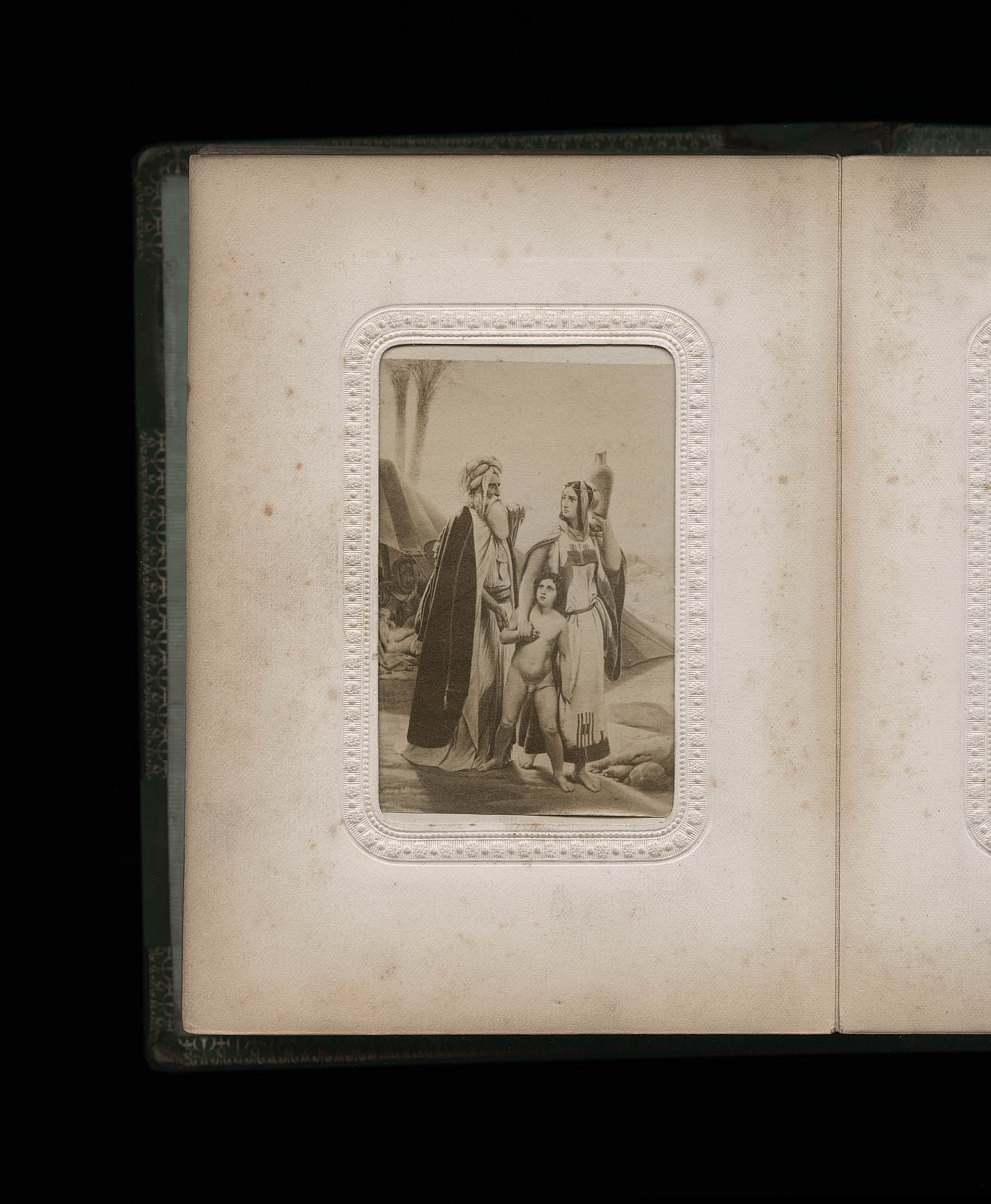
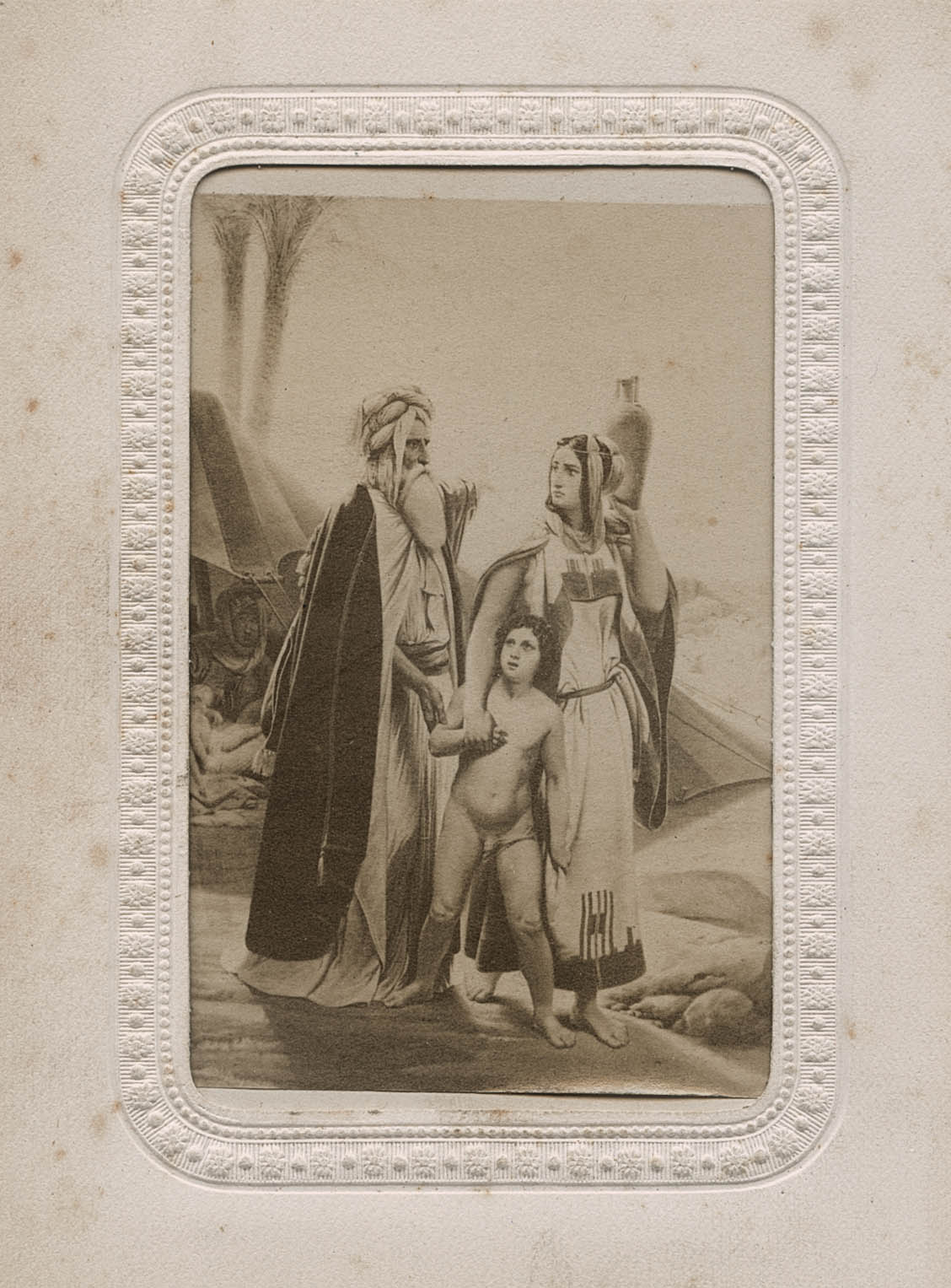
Goupil & Cie (photographer), Paris 19, Boulevard Montmartre. London, La Haye, Berlin, New York. 'After a painting by Horace Vernet (French, 1789-1863) Repudiation Of Hagar 1837' c. 1860-1863

Goupil & Cie (photographer), Paris 19, Boulevard Montmartre. London, La Haye, Berlin, New York. 'After a painting by Horace Vernet (French, 1789-1863) Repudiation Of Hagar 1837' c. 1860-1863


Goupil & Cie (photographer), Paris 19, Boulevard Montmartre
London, La Haye, Berlin, New York
After a painting by Horace Vernet (French, 1789-1863) Repudiation Of Hagar 1837
c. 1860-1863
Carte de visite


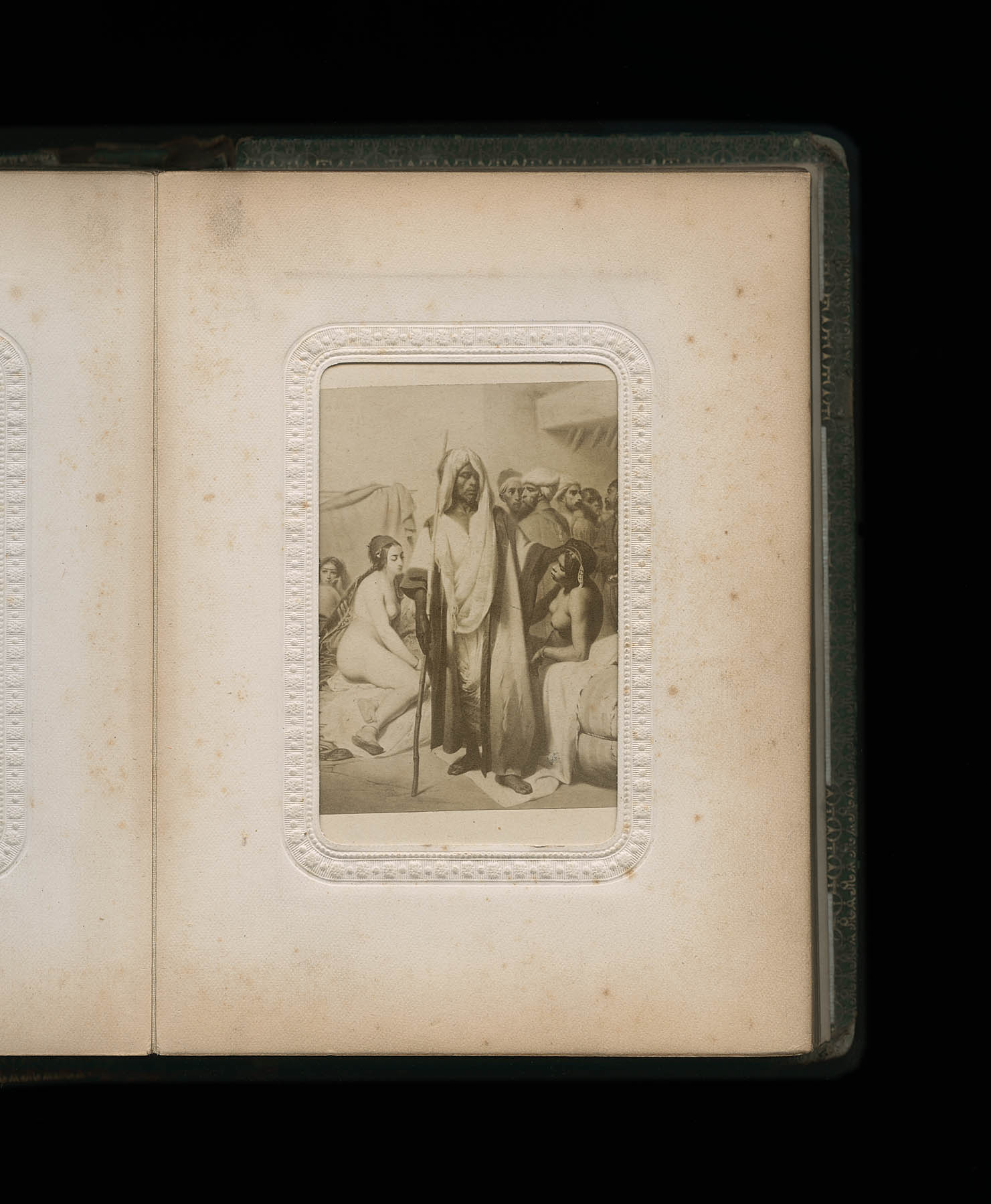
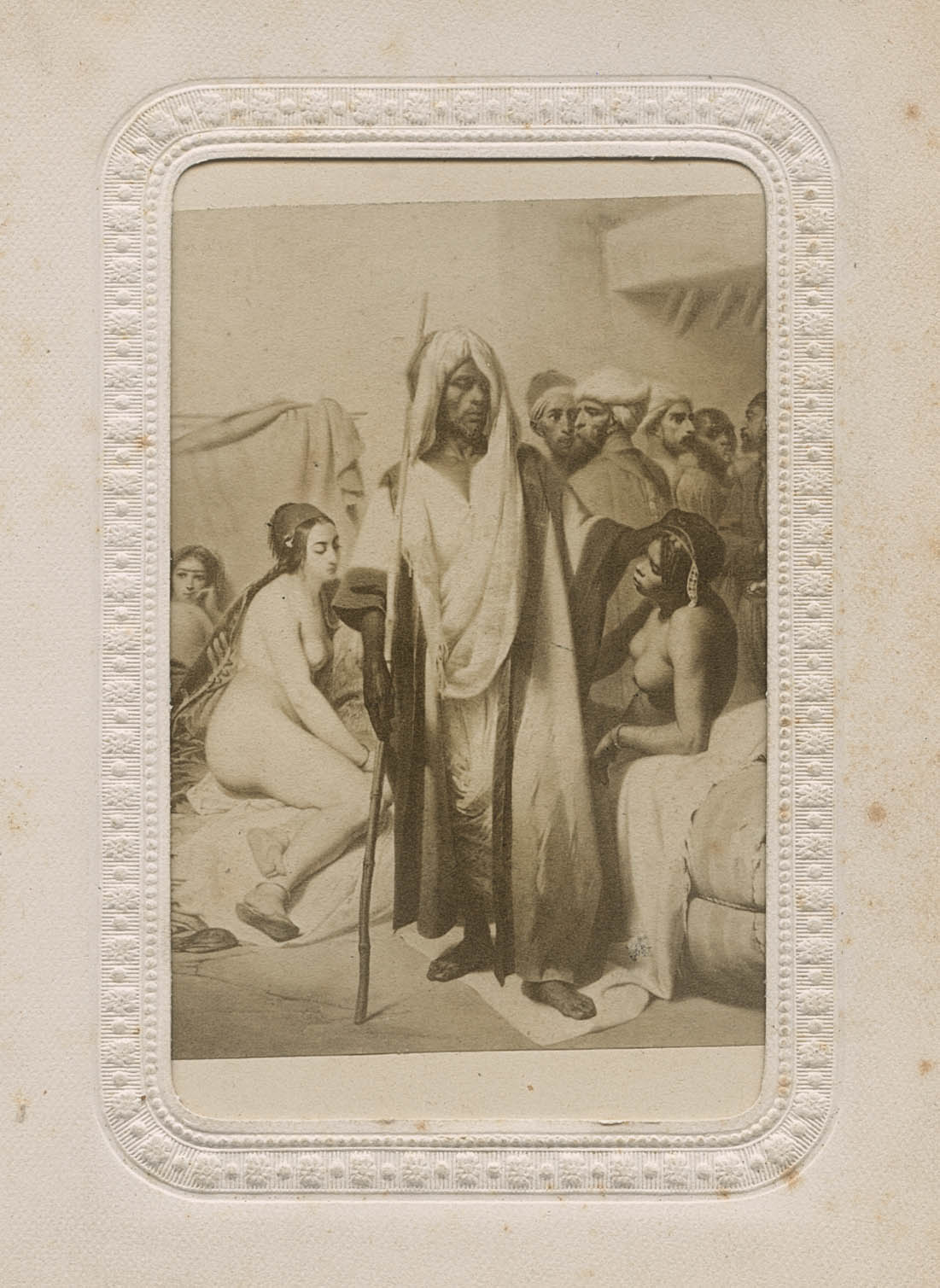
Goupil & Cie (photographer), Paris 19, Boulevard Montmartre. London, La Haye, Berlin, New York. 'After a painting by Horace Vernet (French, 1789-1863) Le Marché d'esclaves (Slave market) 1836' c. 1860-1863

Goupil & Cie (photographer), Paris 19, Boulevard Montmartre. London, La Haye, Berlin, New York. 'After a painting by Horace Vernet (French, 1789-1863) Le Marché d'esclaves (Slave market) 1836' c. 1860-1863


Goupil & Cie (photographer), Paris 19, Boulevard Montmartre
London, La Haye, Berlin, New York
After a painting by Horace Vernet (French, 1789-1863) Le Marché d’esclaves (Slave market) 1836
c. 1860-1863
Carte de visite


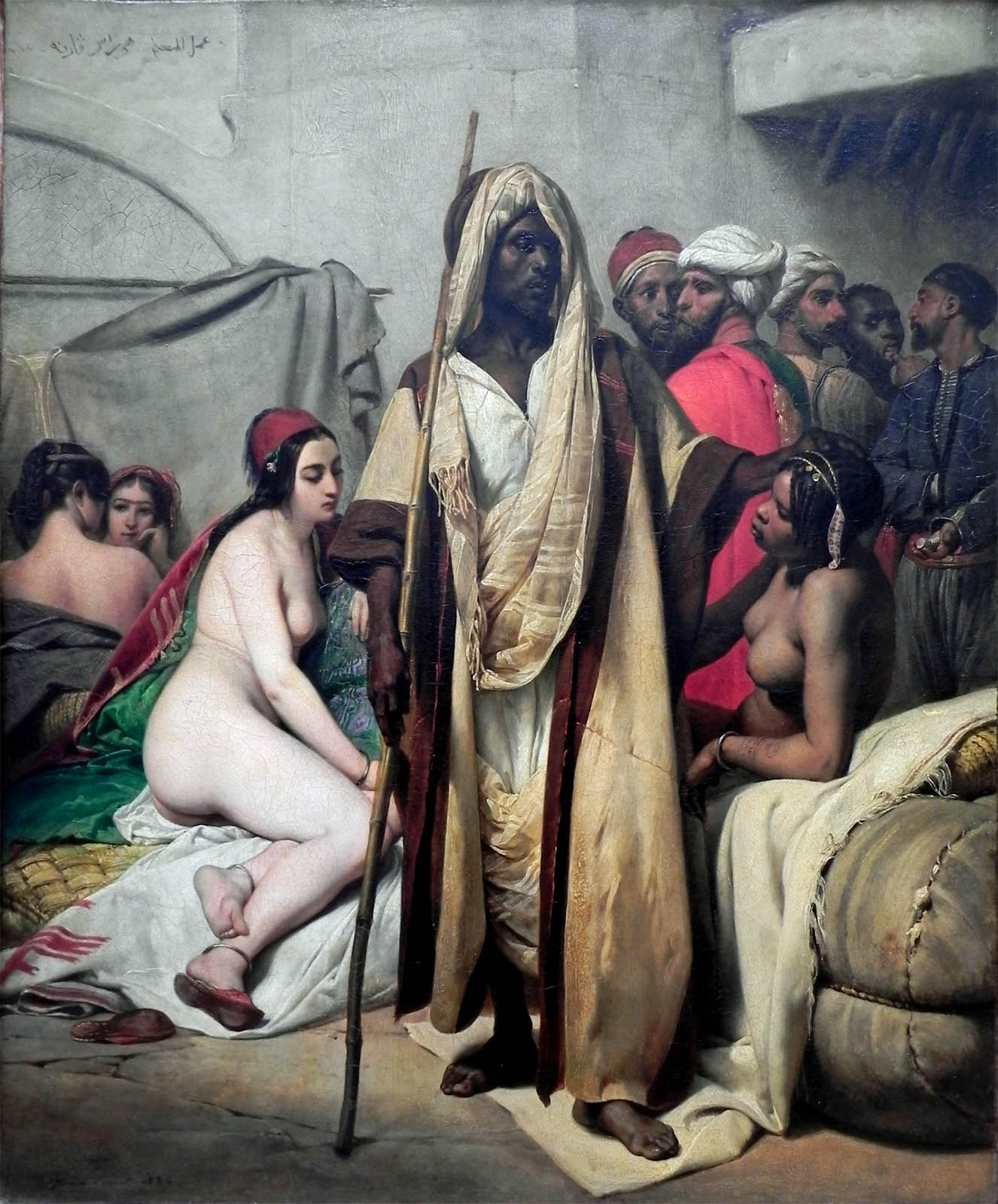
Horace Vernet (French, 1789-1863) 'Le Marché d'esclaves (Slave market)' 1836


Horace Vernet (French, 1789-1863)
Le Marché d’esclaves (Slave market)
1836
Oil on canvas
Height: 65cm (25.5 in)
Width: 54cm (21.2 in)
Alte Nationalgalerie
Public domain


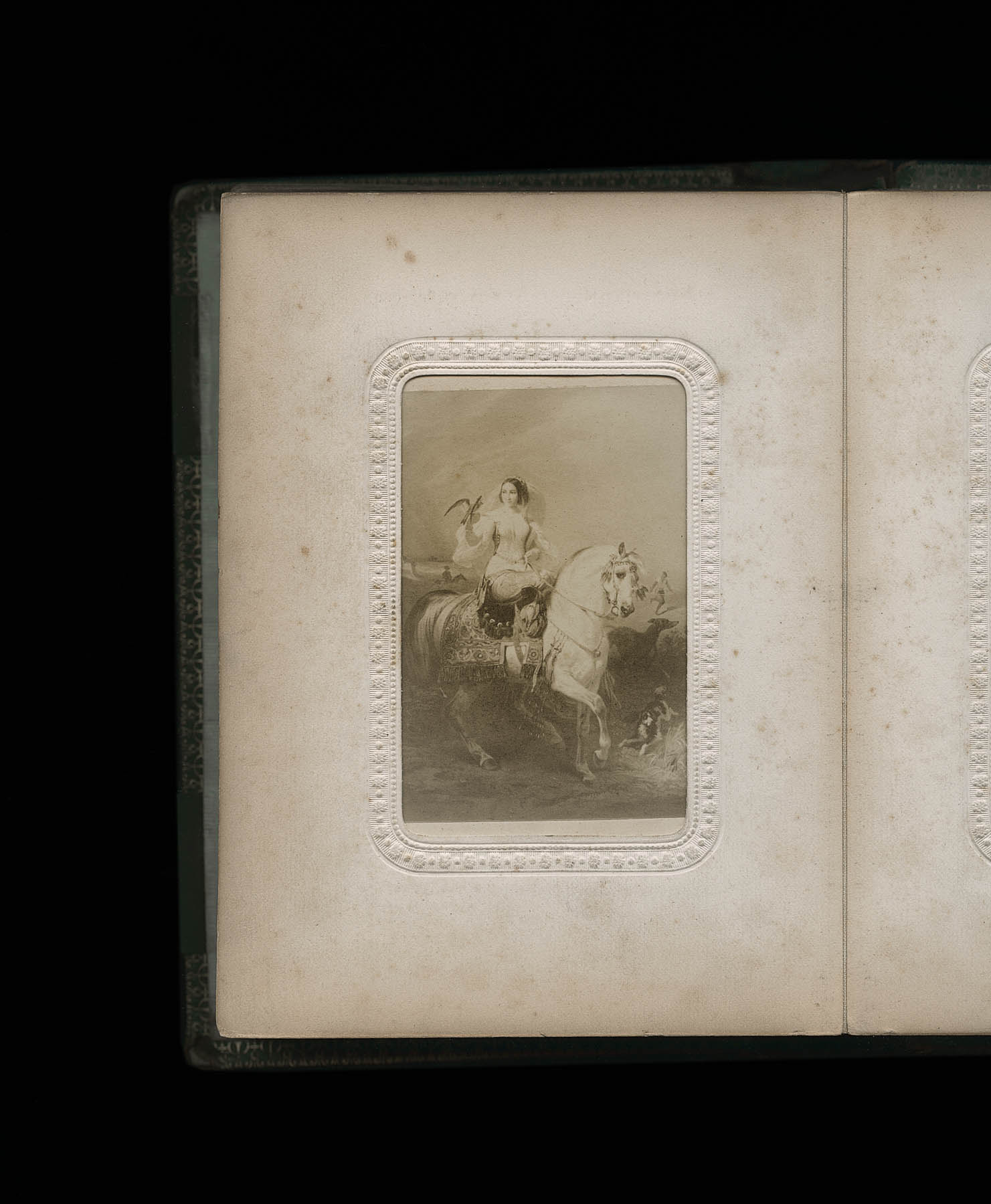
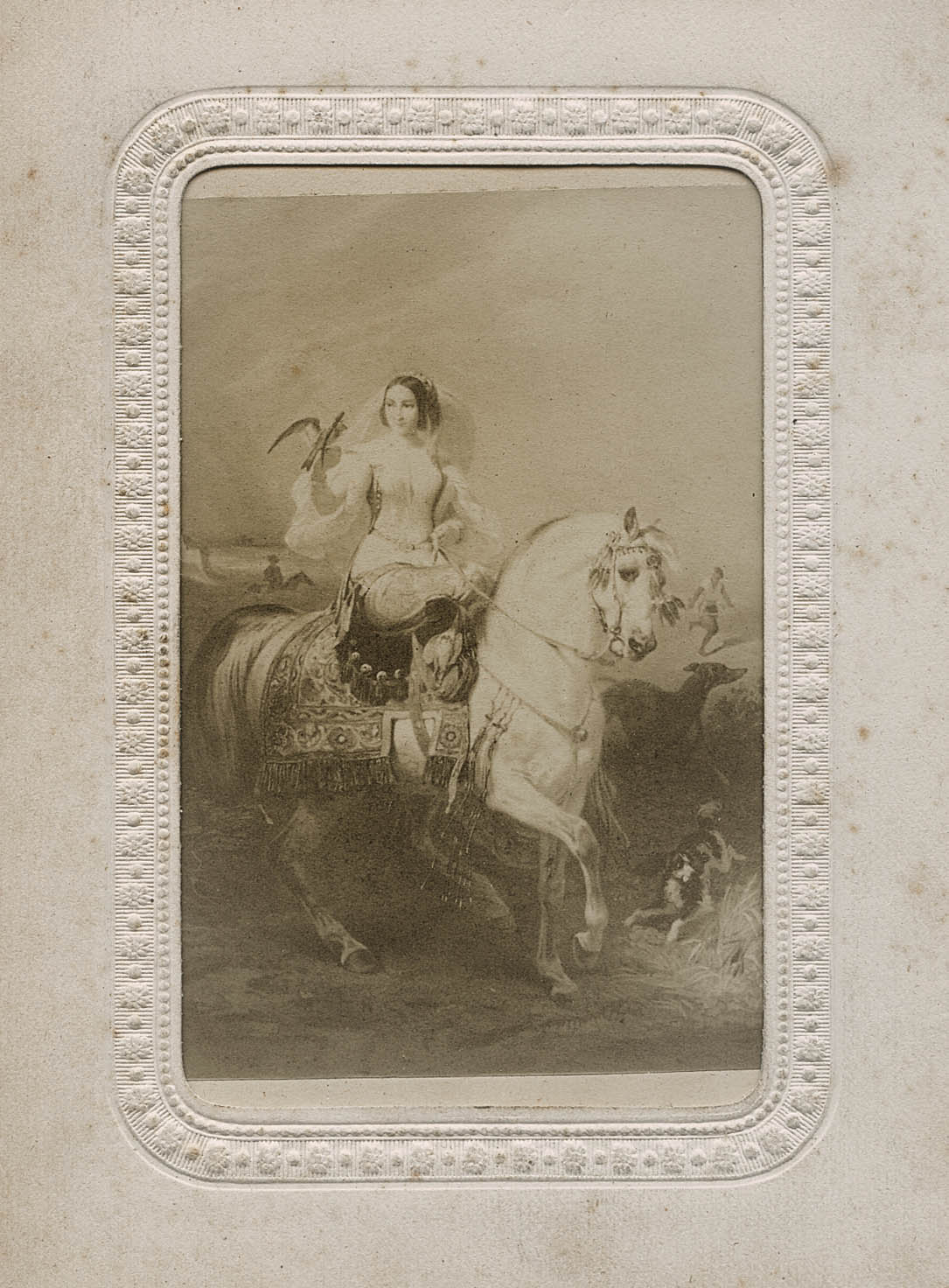
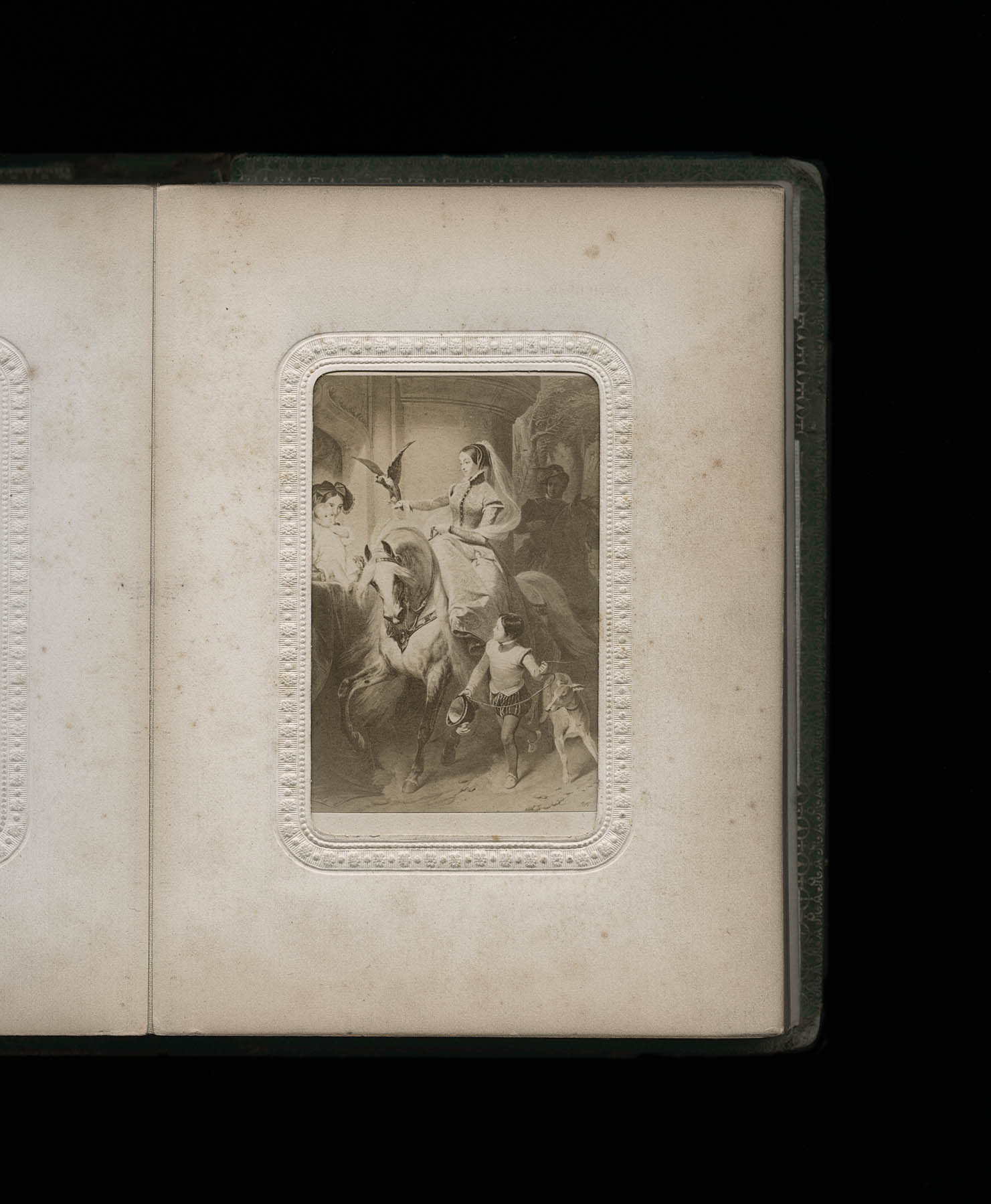
Goupil & Cie (photographer), Paris 19, Boulevard Montmartre. London, La Haye, Berlin, New York. 'After a painting by Horace Vernet (French, 1789-1863) An Algerian Lady Hawking 1839' c. 1860-1863

Goupil & Cie (photographer), Paris 19, Boulevard Montmartre. London, La Haye, Berlin, New York. 'After a painting by Horace Vernet (French, 1789-1863) An Algerian Lady Hawking 1839' c. 1860-1863


Goupil & Cie (photographer), Paris 19, Boulevard Montmartre
London, La Haye, Berlin, New York
After a painting by Horace Vernet (French, 1789-1863) An Algerian Lady Hawking 1839
c. 1860-1863
Carte de visite


Goupil & Cie (photographer), Paris 19, Boulevard Montmartre. London, La Haye, Berlin, New York. 'After a painting by Horace Vernet (French, 1789-1863) Châtelaine partant pour la chasse (Chatelaine leaving for the hunt) 1840' c. 1860-1863

Goupil & Cie (photographer), Paris 19, Boulevard Montmartre. London, La Haye, Berlin, New York. 'After a painting by Horace Vernet (French, 1789-1863) Châtelaine partant pour la chasse (Chatelaine leaving for the hunt) 1840' c. 1860-1863


Goupil & Cie (photographer), Paris 19, Boulevard Montmartre
London, La Haye, Berlin, New York
After a painting by Horace Vernet (French, 1789-1863) Châtelaine partant pour la chasse (Chatelaine leaving for the hunt) 1840
c. 1860-1863
Carte de visite


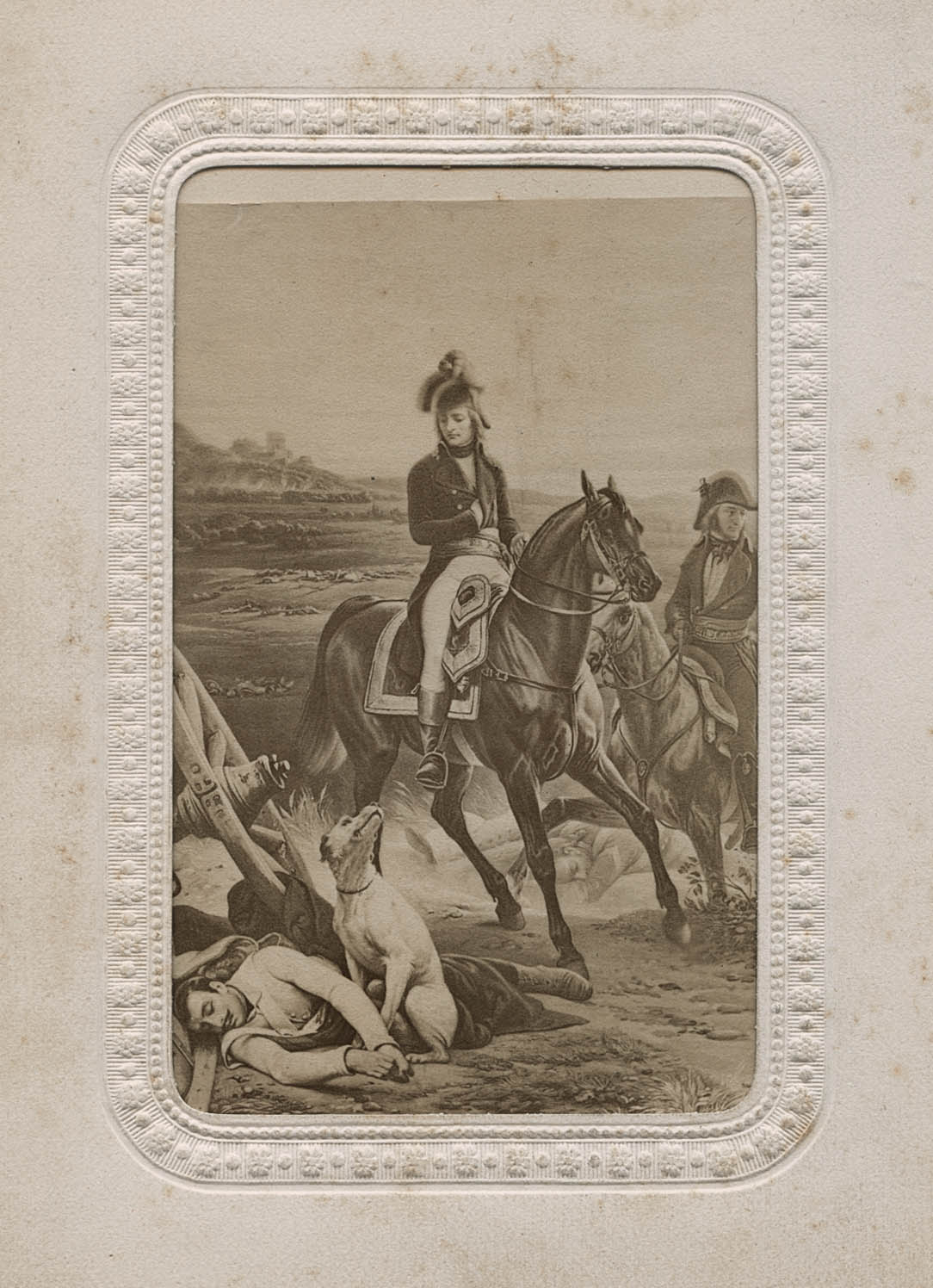
Goupil & Cie (photographer), Paris 19, Boulevard Montmartre. London, La Haye, Berlin, New York. 'After a painting by Horace Vernet (French, 1789-1863) Bonaparte after the Battle of Bassano 1848' c. 1860-1863

Goupil & Cie (photographer), Paris 19, Boulevard Montmartre. London, La Haye, Berlin, New York. 'After a painting by Horace Vernet (French, 1789-1863) Bonaparte after the Battle of Bassano 1848' c. 1860-1863


Goupil & Cie (photographer), Paris 19, Boulevard Montmartre
London, La Haye, Berlin, New York
After a painting by Horace Vernet (French, 1789-1863) Bonaparte after the Battle of Bassano 1848
c. 1860-1863
Carte de visite


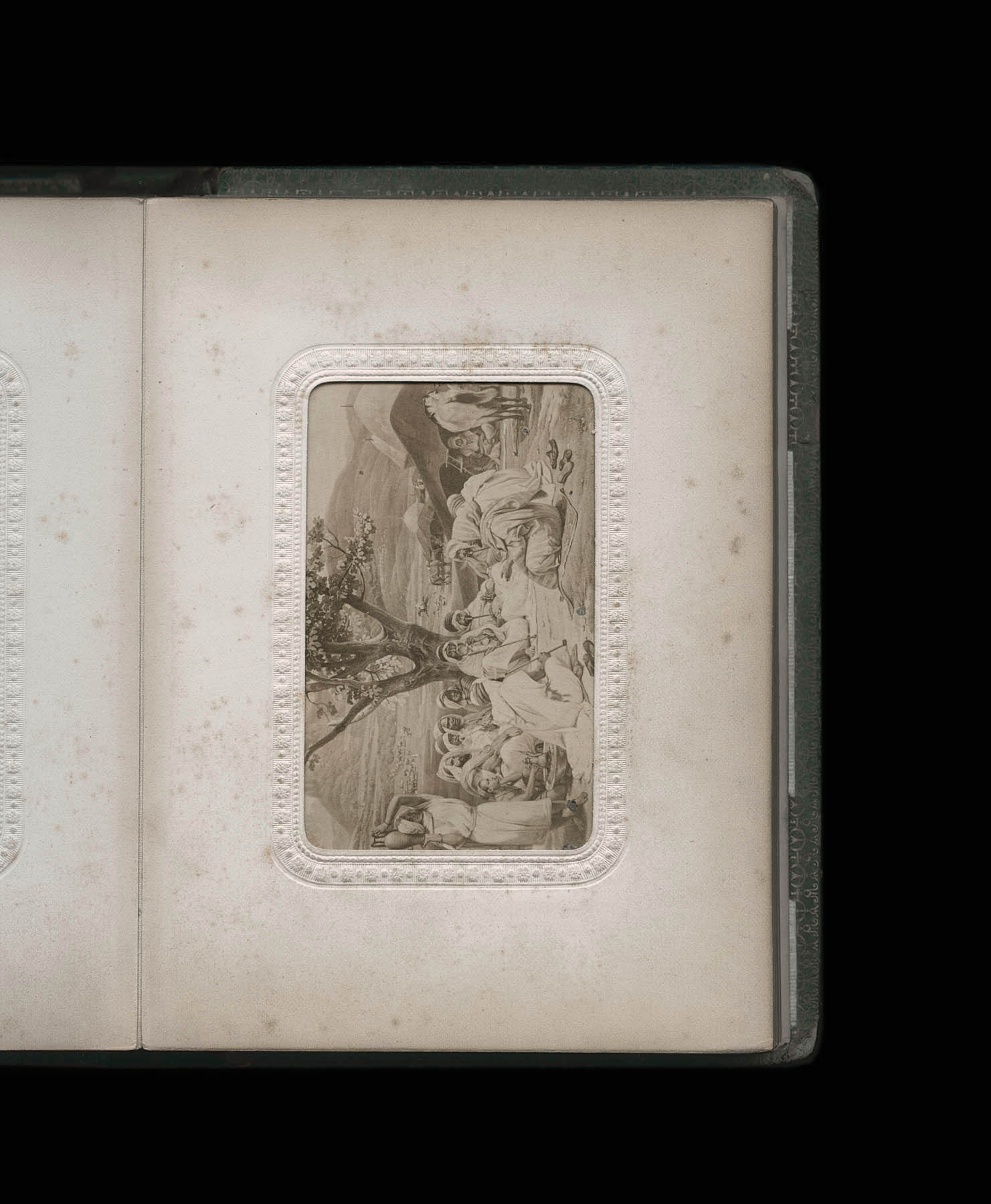
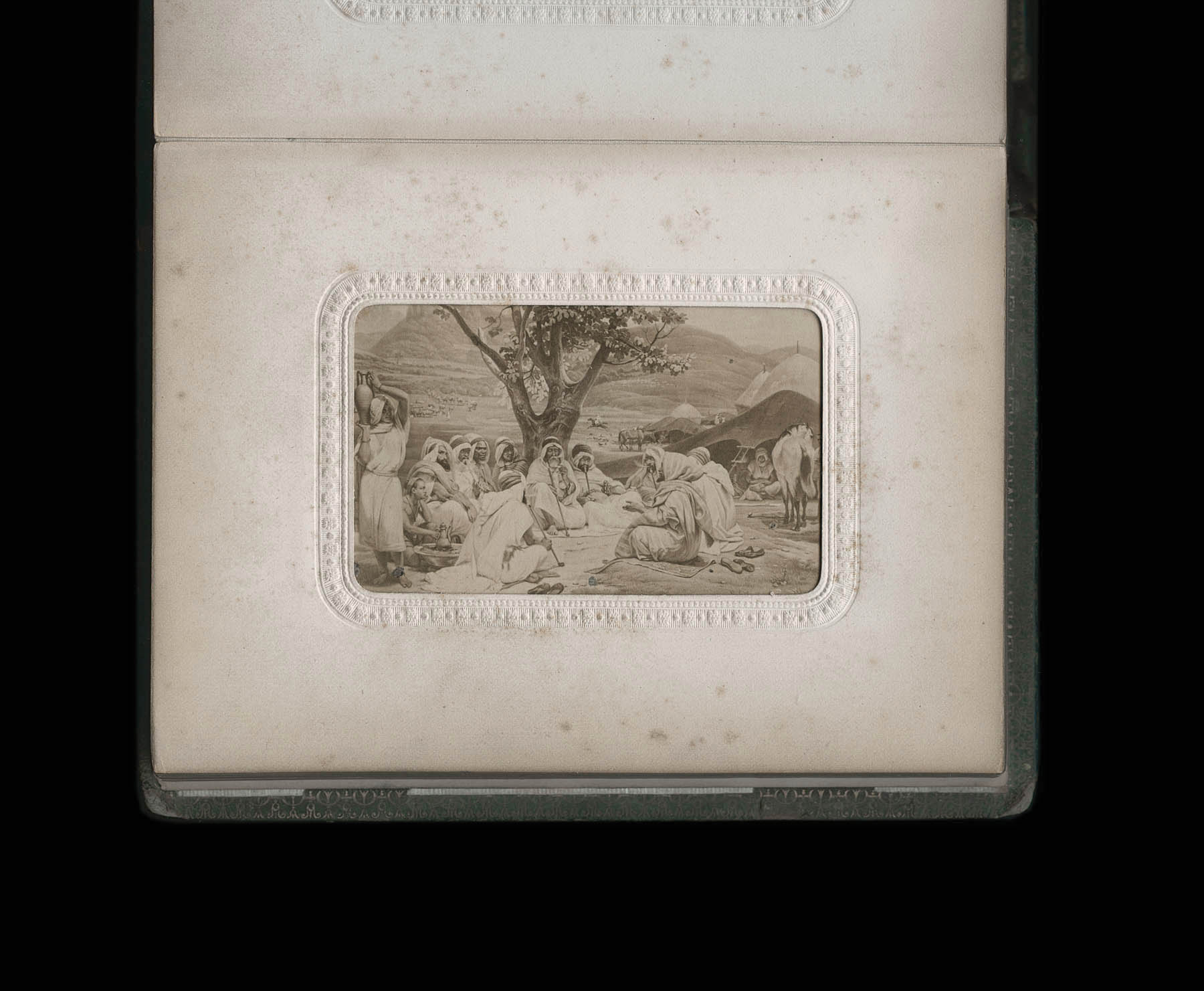
Goupil & Cie (photographer), Paris 19, Boulevard Montmartre. London, La Haye, Berlin, New York. 'After a painting by Horace Vernet (French, 1789-1863) The Arab Tale-teller 1833' c. 1860-1863

Goupil & Cie (photographer), Paris 19, Boulevard Montmartre. London, La Haye, Berlin, New York. 'After a painting by Horace Vernet (French, 1789-1863) The Arab Tale-teller 1833' c. 1860-1863

Goupil & Cie (photographer), Paris 19, Boulevard Montmartre. London, La Haye, Berlin, New York. 'After a painting by Horace Vernet (French, 1789-1863) The Arab Tale-teller 1833' c. 1860-1863


Goupil & Cie (photographer), Paris 19, Boulevard Montmartre
London, La Haye, Berlin, New York
After a painting by Horace Vernet (French, 1789-1863) The Arab Tale-teller 1833
c. 1860-1863
Carte de visite


Goupil & Cie (photographer), Paris 19, Boulevard Montmartre. London, La Haye, Berlin, New York. 'After a painting by Horace Vernet (French, 1789-1863) Joseph's Coat 1853' c. 1860-1863

Goupil & Cie (photographer), Paris 19, Boulevard Montmartre. London, La Haye, Berlin, New York. 'After a painting by Horace Vernet (French, 1789-1863) Joseph's Coat 1853' c. 1860-1863


Goupil & Cie (photographer), Paris 19, Boulevard Montmartre
London, La Haye, Berlin, New York
After a painting by Horace Vernet (French, 1789-1863) Joseph’s Coat 1853
c. 1860-1863
Carte de visite


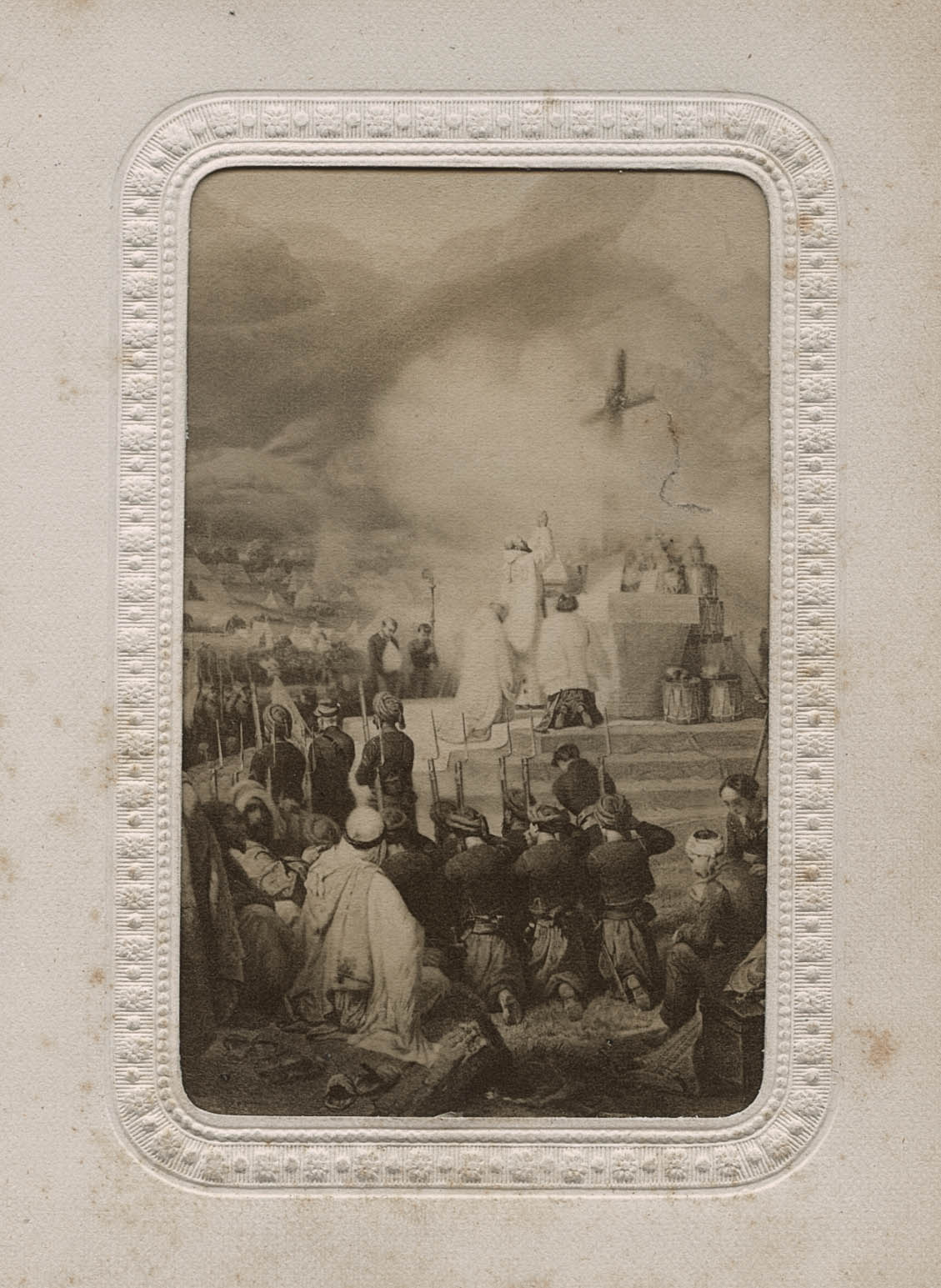
Goupil & Cie (photographer), Paris 19, Boulevard Montmartre. London, La Haye, Berlin, New York. 'After a painting by Horace Vernet (French, 1789-1863) Première messe en Kabylie (First mass in Kabylie) 1854' c. 1860-1863

Goupil & Cie (photographer), Paris 19, Boulevard Montmartre. London, La Haye, Berlin, New York. 'After a painting by Horace Vernet (French, 1789-1863) Première messe en Kabylie (First mass in Kabylie) 1854' c. 1860-1863


Goupil & Cie (photographer), Paris 19, Boulevard Montmartre
London, La Haye, Berlin, New York
After a painting by Horace Vernet (French, 1789-1863) Première messe en Kabylie (First mass in Kabylie) 1854
c. 1860-1863
Carte de visite


Horace Vernet (French, 1789-1863) 'Première messe en Kabylie (First mass in Kabylie)' 1854


Horace Vernet (French, 1789-1863)
Première messe en Kabylie (First mass in Kabylie)
1854
Oil on canvas
Cantonal Museum of Fine Arts
Public domain


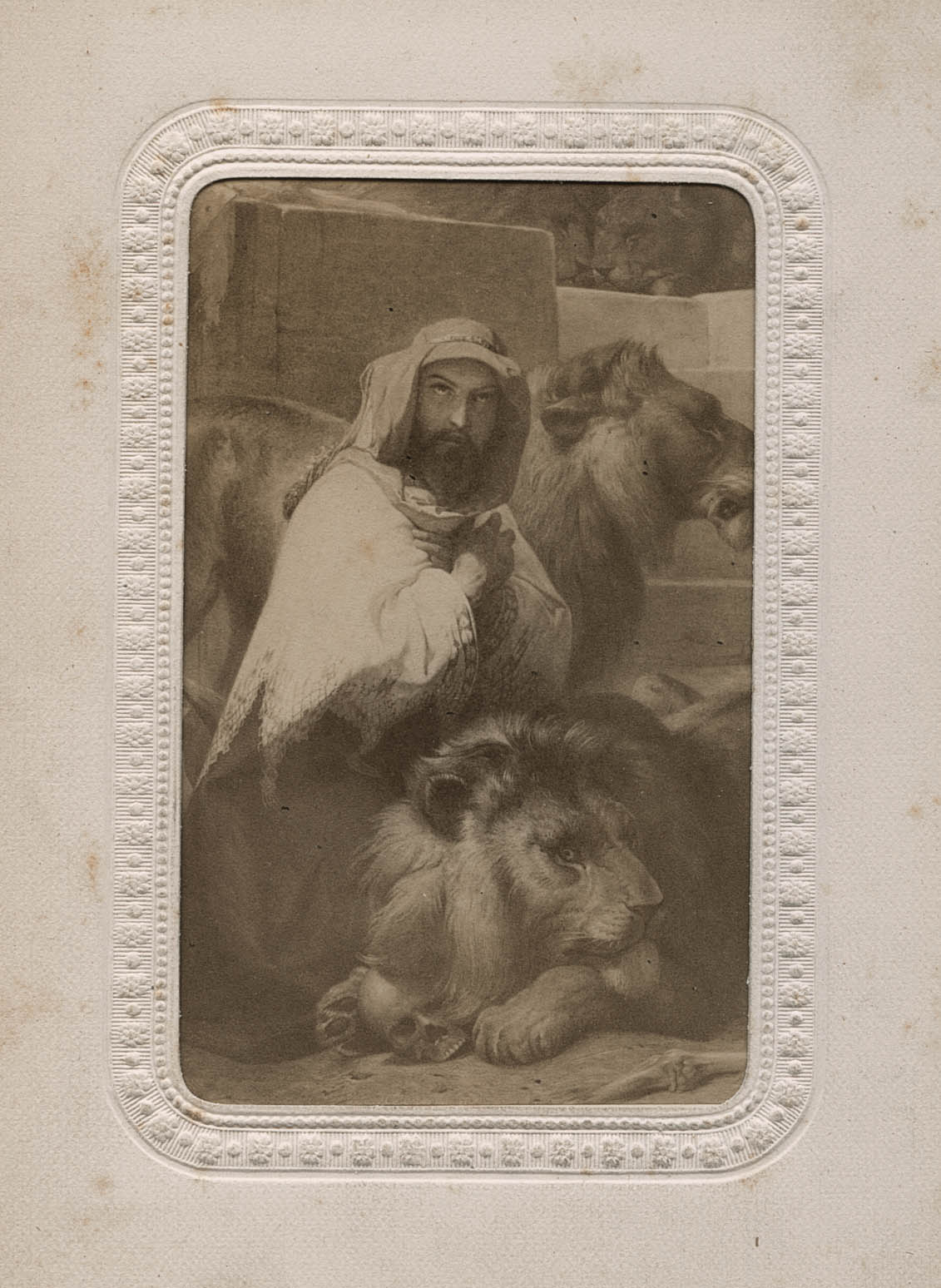
Goupil & Cie (photographer), Paris 19, Boulevard Montmartre. London, La Haye, Berlin, New York. 'After a painting by Horace Vernet (French, 1789-1863) Daniel dans la fosse aux lions (Daniel in the Lions' Den) 1857' c. 1860-1863

Goupil & Cie (photographer), Paris 19, Boulevard Montmartre. London, La Haye, Berlin, New York. 'After a painting by Horace Vernet (French, 1789-1863) Daniel dans la fosse aux lions (Daniel in the Lions' Den) 1857' c. 1860-1863


Goupil & Cie (photographer), Paris 19, Boulevard Montmartre
London, La Haye, Berlin, New York
After a painting by Horace Vernet (French, 1789-1863) Daniel dans la fosse aux lions (Daniel in the Lions’ Den) 1857
c. 1860-1863
Carte de visite


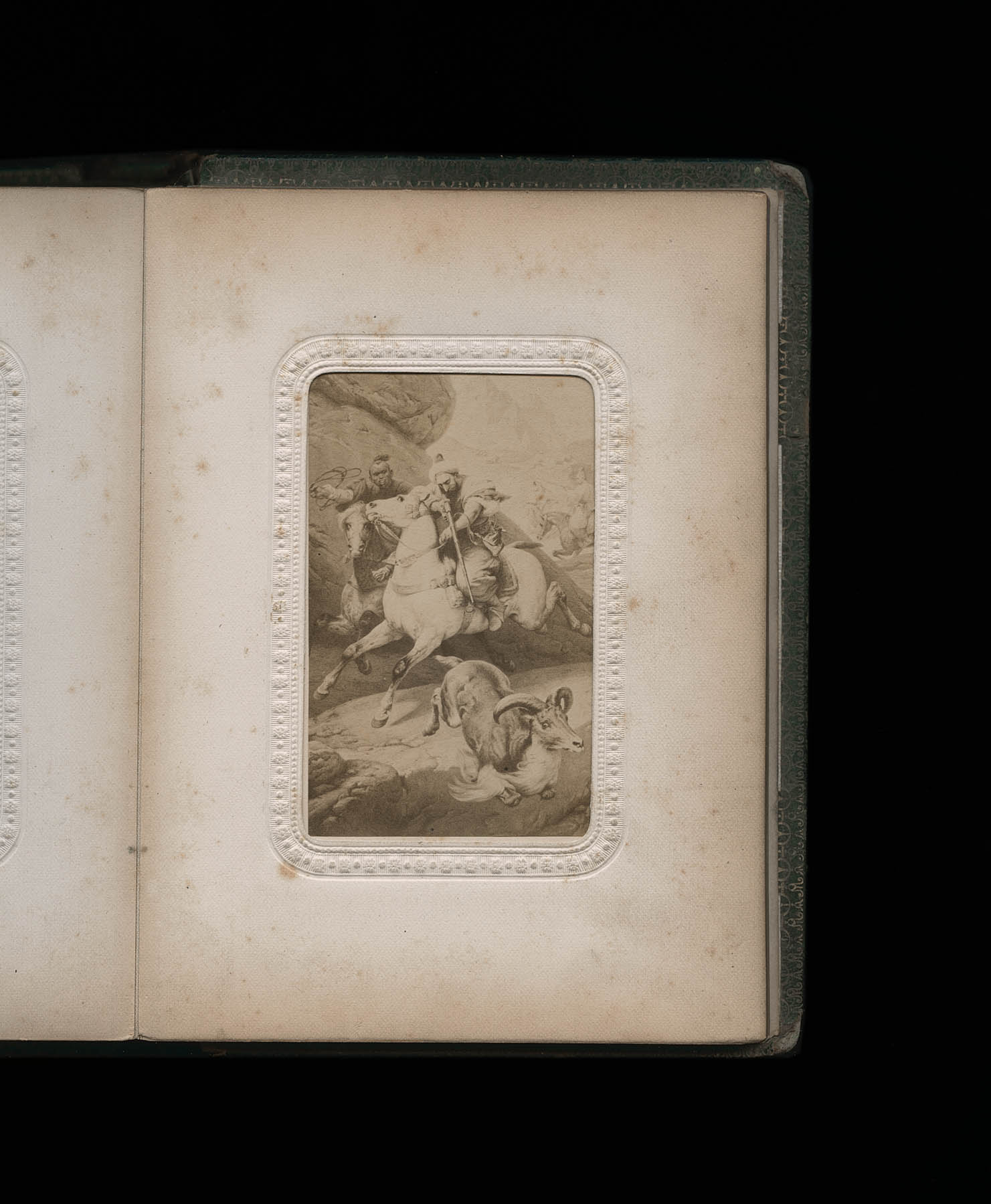
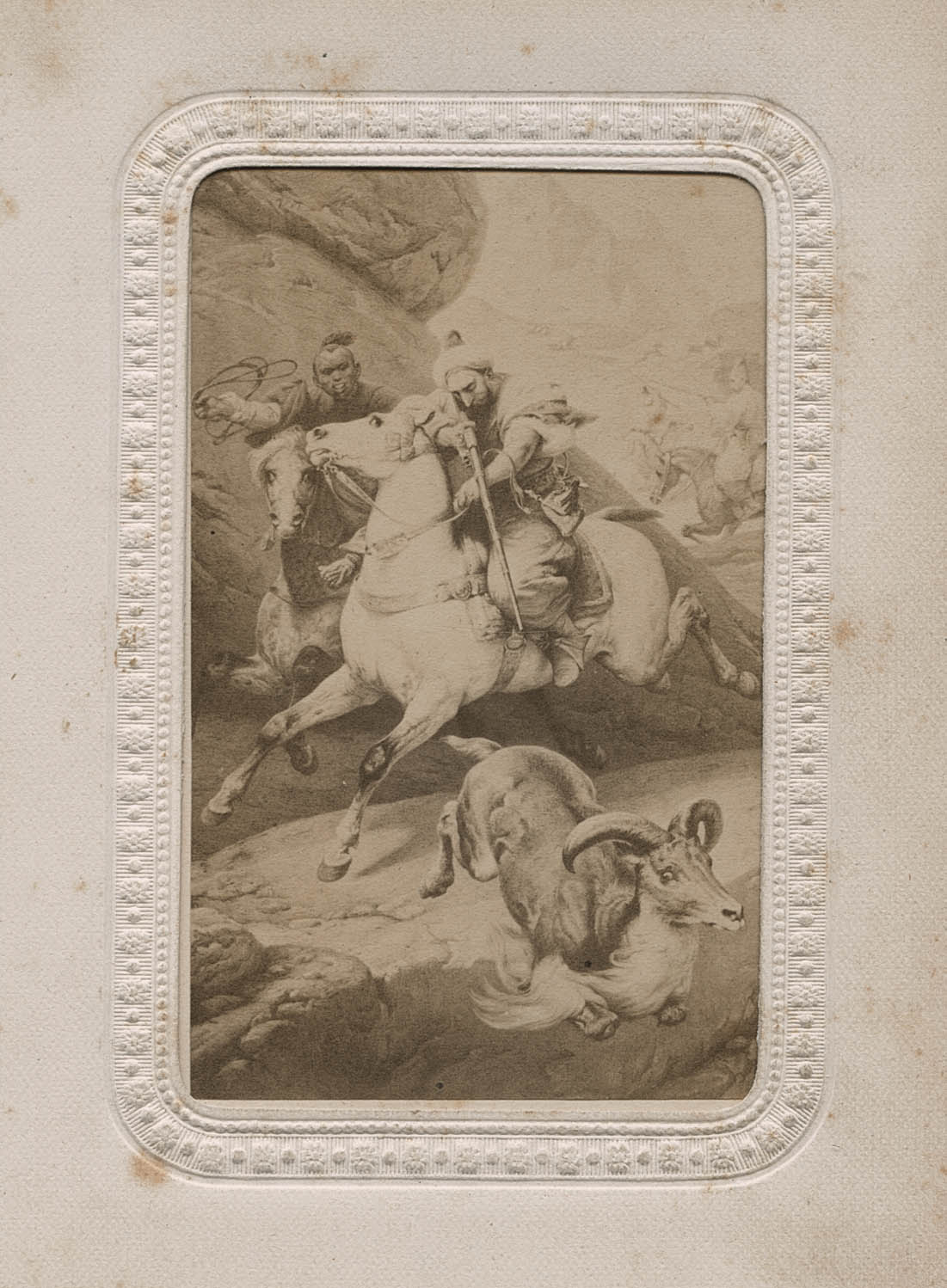
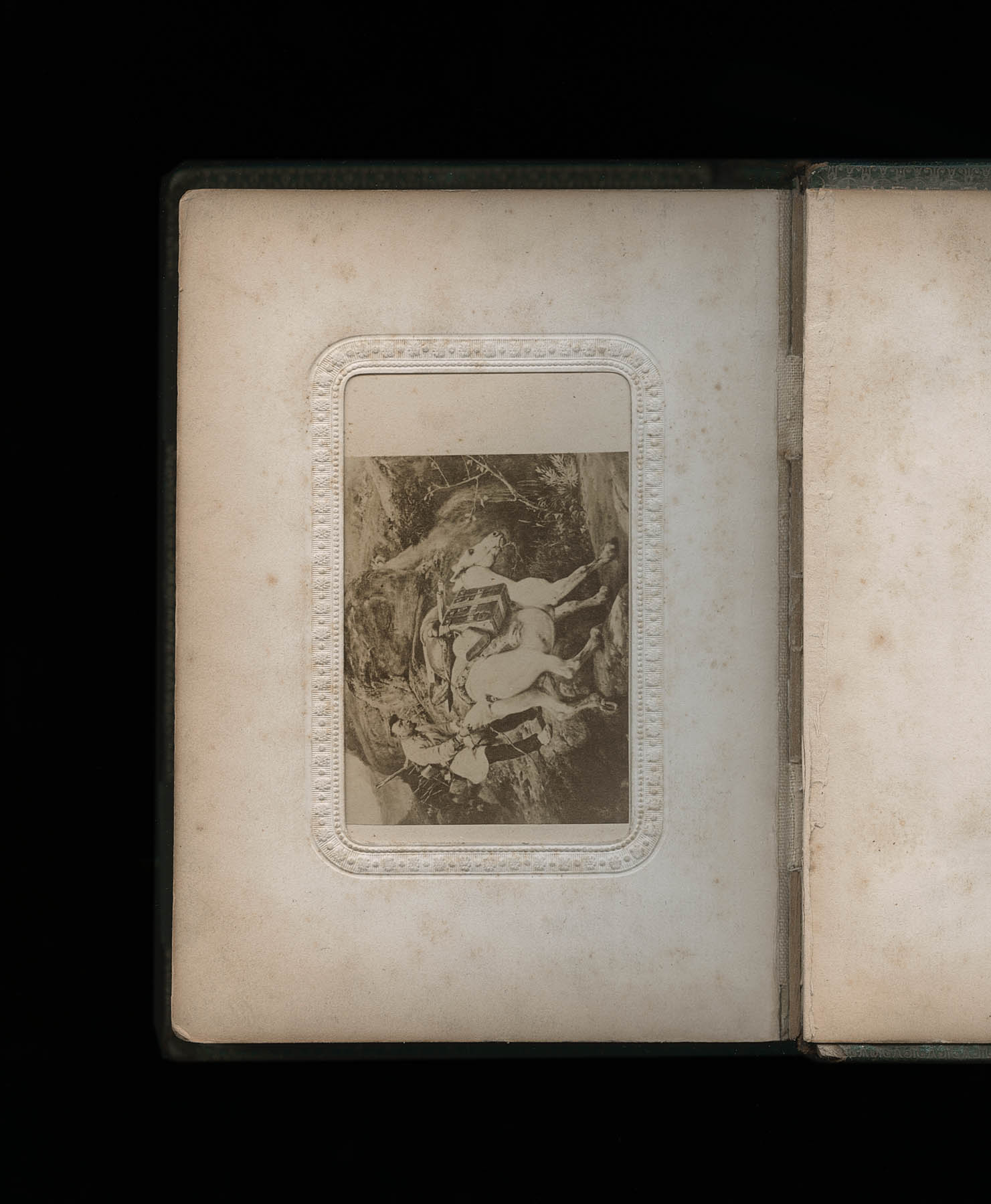
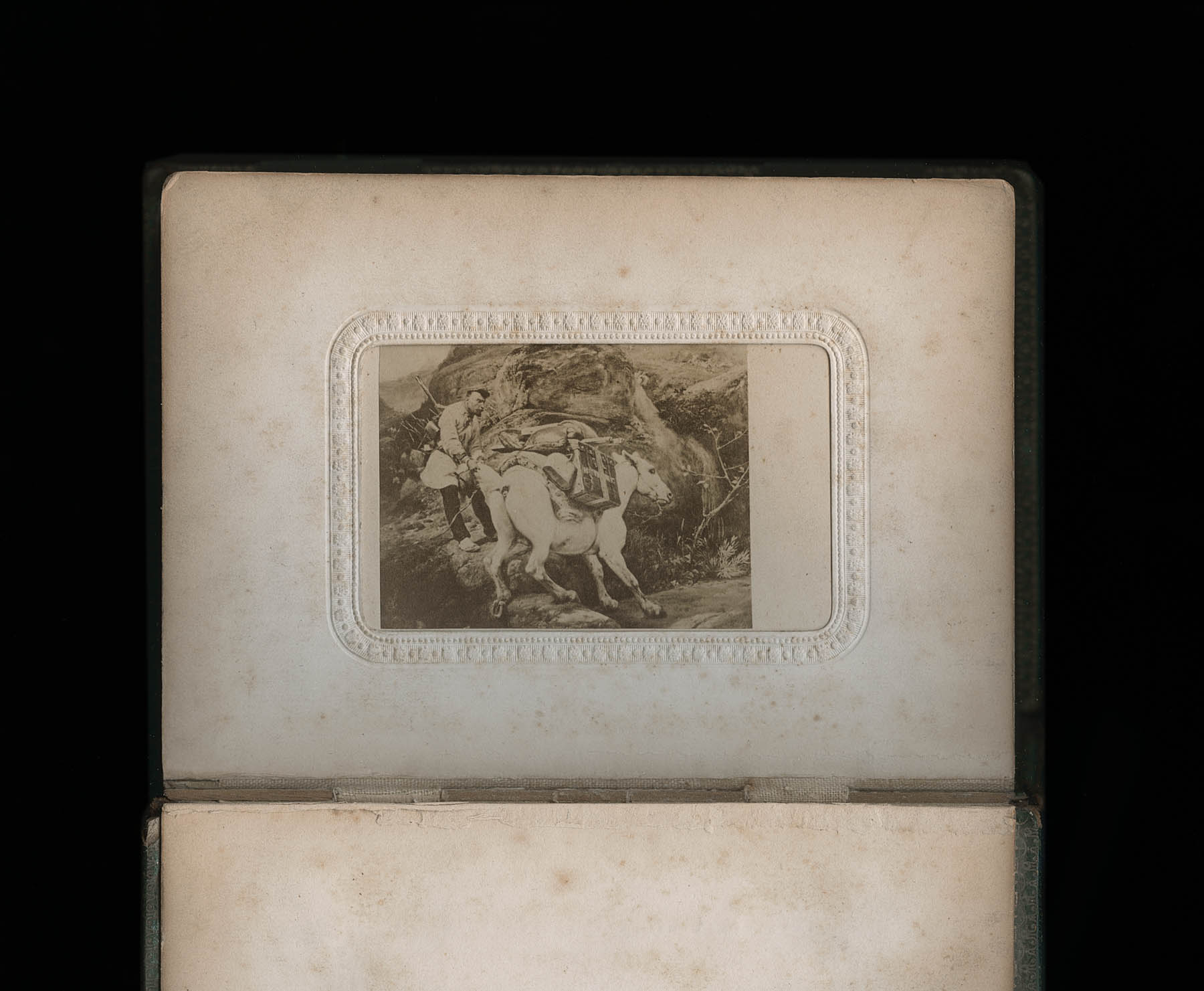
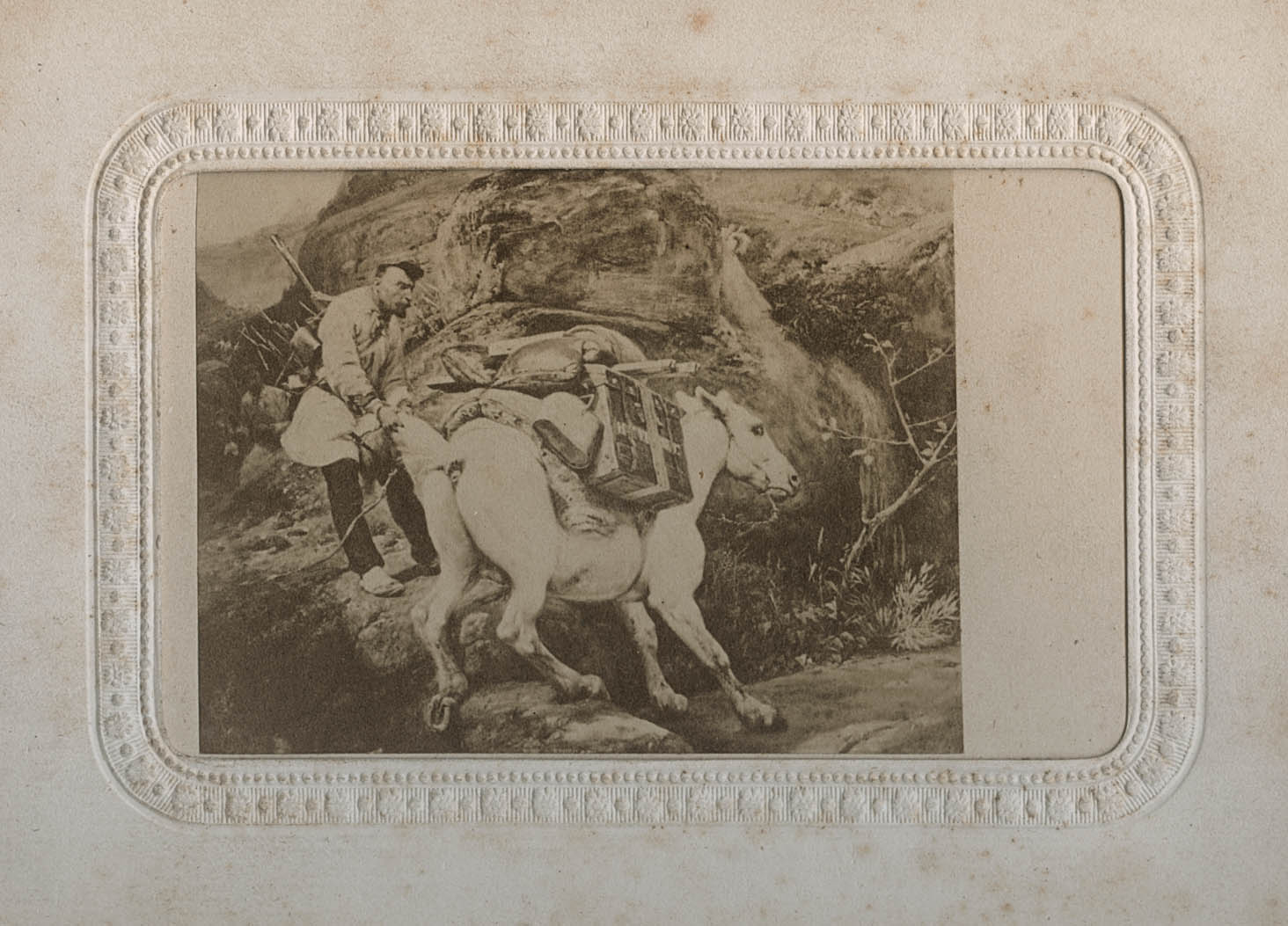
Goupil & Cie (photographer), Paris 19, Boulevard Montmartre. London, La Haye, Berlin, New York. 'After a painting by Horace Vernet (French, 1789-1863) Mountain Hunters Nd' c. 1860-1863

Goupil & Cie (photographer), Paris 19, Boulevard Montmartre. London, La Haye, Berlin, New York. 'After a painting by Horace Vernet (French, 1789-1863) Mountain Hunters Nd' c. 1860-1863


Goupil & Cie (photographer), Paris 19, Boulevard Montmartre
London, La Haye, Berlin, New York
After a painting by Horace Vernet (French, 1789-1863) Mountain Hunters Nd
c. 1860-1863
Carte de visite


Goupil & Cie (photographer), Paris 19, Boulevard Montmartre. London, La Haye, Berlin, New York. 'After a painting by Horace Vernet (French, 1789-1863) Le Zouave trappiste (The Trappist Zouave) 1856' c. 1860-1863

Goupil & Cie (photographer), Paris 19, Boulevard Montmartre. London, La Haye, Berlin, New York. 'After a painting by Horace Vernet (French, 1789-1863) Le Zouave trappiste (The Trappist Zouave) 1856' c. 1860-1863


Goupil & Cie (photographer), Paris 19, Boulevard Montmartre
London, La Haye, Berlin, New York
After a painting by Horace Vernet (French, 1789-1863) Le Zouave trappiste (The Trappist Zouave) 1856
c. 1860-1863
Carte de visite


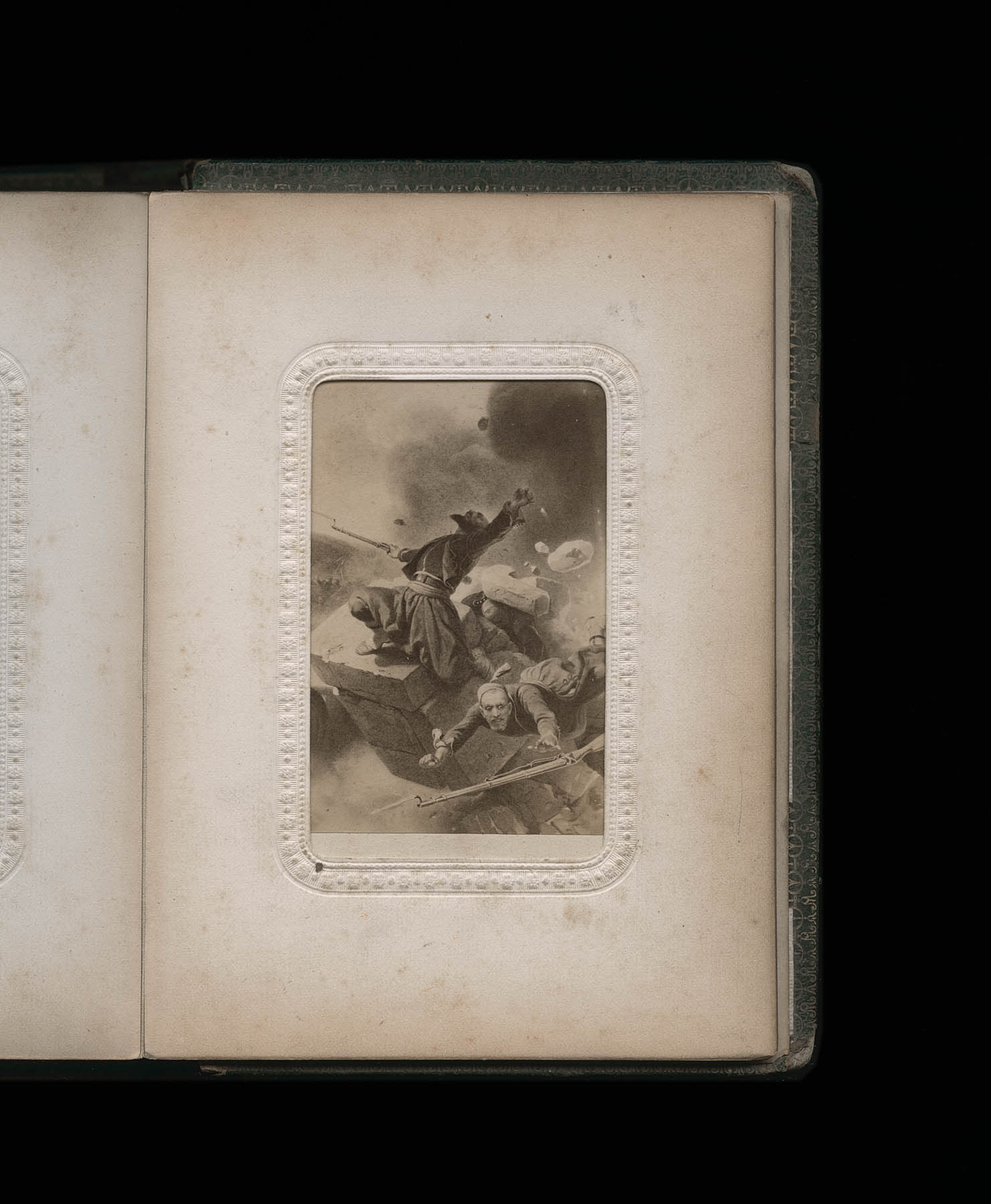
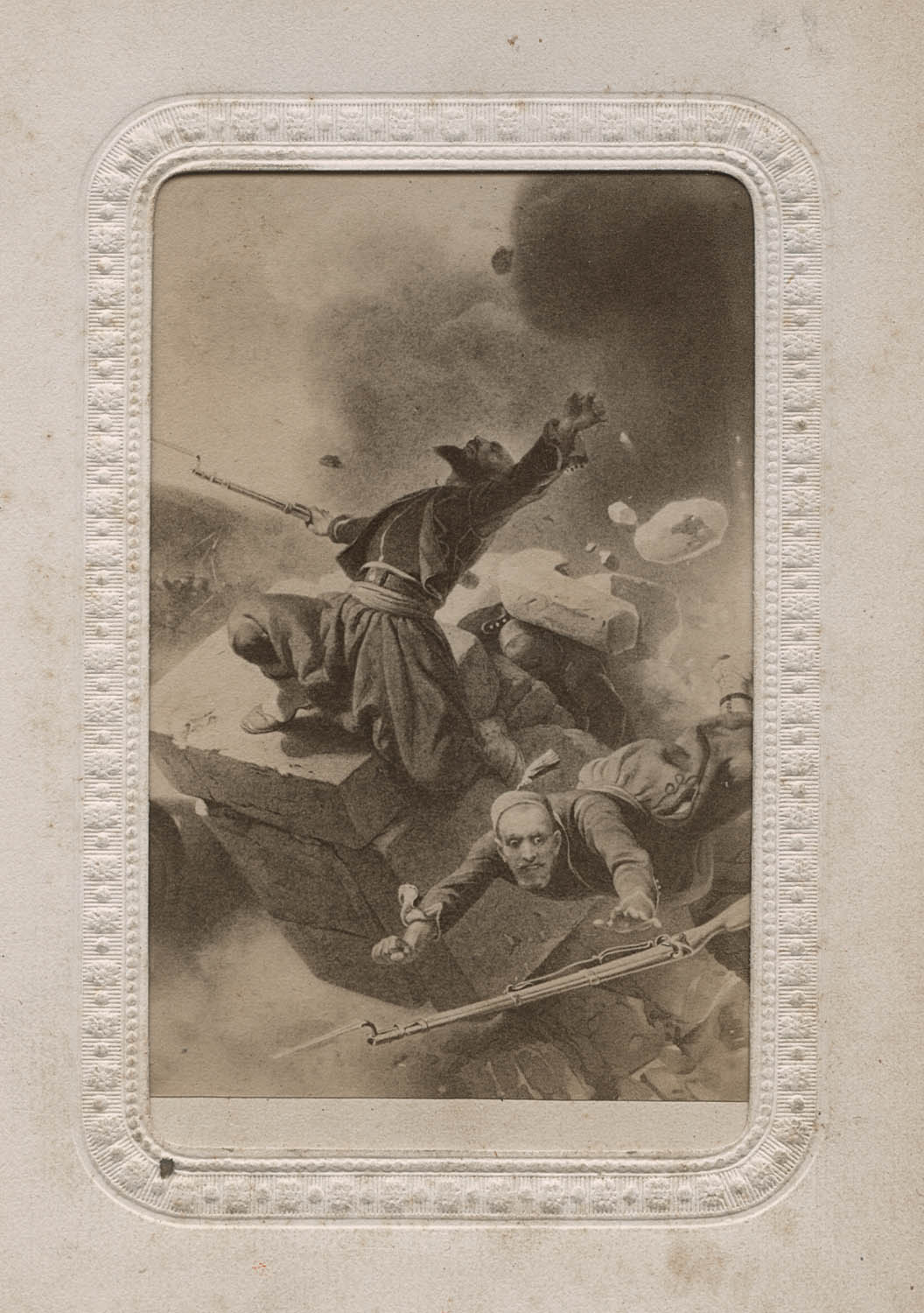
Goupil & Cie (photographer), Paris 19, Boulevard Montmartre. London, La Haye, Berlin, New York. 'After a painting by Horace Vernet (French, 1789-1863) Zouaves at the Malakoff 1856' c. 1860-1863

Goupil & Cie (photographer), Paris 19, Boulevard Montmartre. London, La Haye, Berlin, New York. 'After a painting by Horace Vernet (French, 1789-1863) Zouaves at the Malakoff 1856' c. 1860-1863


Goupil & Cie (photographer), Paris 19, Boulevard Montmartre
London, La Haye, Berlin, New York
After a painting by Horace Vernet (French, 1789-1863) Zouaves at the Malakoff 1856
c. 1860-1863
Carte de visite


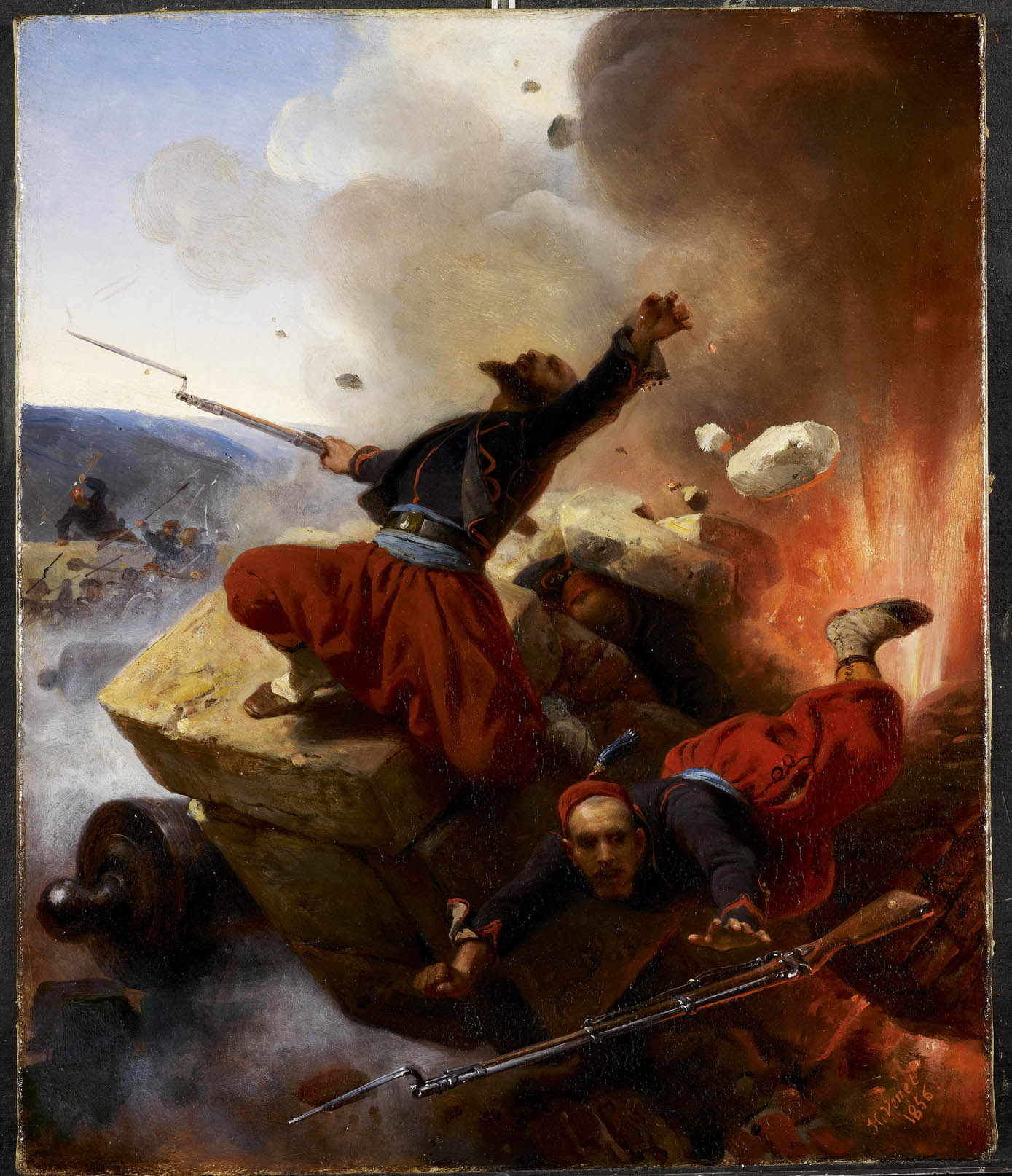
Horace Vernet (French, 1789-1863) 'Zouaves at the Malakoff' 1856


Horace Vernet (French, 1789-1863)
Zouaves at the Malakoff
1856
Oil on canvas
Height: 39.7cm (15.6 in)
Width: 33.9cm (13.3 in)
Royal Collection
Public domain


Goupil & Cie (photographer), Paris 19, Boulevard Montmartre. London, La Haye, Berlin, New York. 'After a painting by Horace Vernet (French, 1789-1863) The scene of war 1861' c. 1860-1863

Goupil & Cie (photographer), Paris 19, Boulevard Montmartre. London, La Haye, Berlin, New York. 'After a painting by Horace Vernet (French, 1789-1863) The scene of war 1861' c. 1860-1863

Goupil & Cie (photographer), Paris 19, Boulevard Montmartre. London, La Haye, Berlin, New York. 'After a painting by Horace Vernet (French, 1789-1863) The scene of war 1861' c. 1860-1863


Goupil & Cie (photographer), Paris 19, Boulevard Montmartre
London, La Haye, Berlin, New York
After a painting by Horace Vernet (French, 1789-1863) The scene of war 1861
c. 1860-1863
Carte de visite


'Album Horace Vernet' back cover


Album Horace Vernet back cover
30 cartes des visite
16cm high x 11cm wide x 3.5cm deep


LIKE ART BLART ON FACEBOOK

Back to top

Exhibition: ‘Hippolyte Bayard: A Persistent Pioneer’ at the J. Paul Getty Museum, Los Angeles

Exhibition dates: 9th April – 7th July 2024


Hippolyte Bayard (French, 1801-1887) William Henry Fox Talbot (English, 1800-1877) Samuel Buckle (British, 1808-1860) Nicolaas Henneman (British, 1813-1893) Reverend Calvert Jones (British, 1804-1877) David Kinnebrook (English, 1819-1865) M.H. Nevil Story-Maskelyne (British, 1823-1911) Unknown maker. 'Cover of Dessins photographiques sur Papier. Recueil No. 2. [The "Bayard Album"]' 1839-1855


Hippolyte Bayard (French, 1801-1887) William Henry Fox Talbot (English, 1800-1877) Samuel Buckle (British, 1808-1860) Nicolaas Henneman (British, 1813-1893) Reverend Calvert Jones (British, 1804-1877) David Kinnebrook (English, 1819-1865) M.H. Nevil Story-Maskelyne (British, 1823-1911) Unknown maker
Cover of Dessins photographiques sur Papier. Recueil No. 2. [The “Bayard Album”]
1839-1855
The J. Paul Getty Museum, Los Angeles
Public domain


Shock of the new

At the moment the archive is going through a veritable feast of wonderful exhibitions on 19th century photography, this exhibition at the Getty a companion to last week’s posting on the exhibition Nineteenth-Century Photography Now also at the J. Paul Getty Museum. What a delight!

This posting on the important photographer and inventor Hippolyte Bayard (French, 1801-1887) – one of the pioneers of photography who was finally acknowledged as such during his lifetime and received due recognition – offers the visitor the opportunity to view fragile photographs from the Getty’s treasured Bayard album, one of the first photographic albums ever created, before the leaves of the album are reassembled after restoration.

“The album includes 145 of Bayard’s experiments with different photographic processes on paper, primarily salted paper prints from paper negatives from about 1839 to the late 1840s… Bayard divided the album into four sections: still lifes, portraits, urban and rural landscapes, and an assortment of miscellaneous images. The inclusion of twenty-two photographs by British photographers, including William Henry Fox Talbot, provides evidence of Bayard’s interactions with his fellow pioneers across the English Channel. …

Inscriptions found on the Getty album pages and versos of its photographs support the theory that the artist himself – or someone with firsthand knowledge of the chemicals he used – compiled this volume. Thus, this treasure offers intriguing insights into Bayard’s practice, aesthetic choices, and strategies for presenting himself through the order and arrangement of the photographs.”1

The full album and layout can be viewed on the Getty’s website.

What I find delightful about this “album of experiments” – other than Bayard’s perceptive, inquisitive self-portraits and delicate, atmospheric cyanotype and salted paper print photograms – is the colour (including hand coloured), size and placement of the photographic prints on the pages of the album. Sometimes gridded, sometimes singular in grand isolation, sometimes asymmetrical with empty pages between images, the album seems to flow allow like a river… only for the viewer then to have to change orientation, as vertical images on one page are then abutted next to a page of images that need to be viewed in a horizontal format but turning the album through 90 degrees.

It’s as if the compiler of the album, probably Bayard himself, applied this prick of consciousness to the viewing of the album, to stop the viewer skimming over the images but forcing them to be attentive, to be aware, of the progression of the story that the artist was telling, to be aware of a certain “disposition” in the viewer in order to – a/ disrupt the tendency of something to act in a certain manner under given circumstances and b/ impinge on a person’s inherent quality of mind and character. To offer a new dispensation on reality.

In other words, the artist challenges the viewer as to how photographs are read and interpreted through changes to the perception and point of view said “reader”. I don’t think I have ever seen such an early photo book that proposes such a daring reorientation of consciousness as does this album.

New technologies, new aesthetics, new dispositions.

The shock of the new.

Dr Marcus Bunyan


1/ Carolyn Peter, J. Paul Getty Museum, Department of Photographs, 2024


Many thankx to the J. Paul Getty Museum for allowing me to publish the photographs in the posting. Please click on the photographs for a larger version of the image.


Parisian bureaucrat by day and tireless inventor after hours, Hippolyte Bayard (French, 1801-1887) was one of the most important, if lesser-known, pioneers of photography. During his thirty-year career, he invented the direct positive process and several other photographic techniques on paper. This exhibition presents an extraordinarily rare opportunity to view some of Bayard’s highly fragile photographs dating from the 1840s – the first decade of the new medium. The exhibition journeys back to the 19th century to unveil a collection of Bayard’s delicately crafted photographs, offering an extraordinarily rare glimpse into his unique processes, subjects, and persistent curiosity. He brought an artistic sensitivity into capturing the first staged self-portraits and set precedents for photography as we know it today. It highlights Getty’s treasured Bayard album, one of the first photographic albums ever created.

This exhibition is presented in English and Spanish.

Text from the J. Paul Getty Museum website


Hippolyte Bayard (French, 1801-1887) William Henry Fox Talbot (English, 1800-1877) Samuel Buckle (British, 1808-1860) Nicolaas Henneman (British, 1813-1893) Reverend Calvert Jones (British, 1804-1877) David Kinnebrook (English, 1819-1865) M.H. Nevil Story-Maskelyne (British, 1823-1911) Unknown maker. 'Title page of Dessins photographiques sur Papier. Recueil No. 2. [The "Bayard Album"] with Hippolyte Bayard 's [Self-Portrait in the Garden] June 1845' 1839-1855


Hippolyte Bayard (French, 1801-1887) William Henry Fox Talbot (English, 1800-1877) Samuel Buckle (British, 1808-1860) Nicolaas Henneman (British, 1813-1893) Reverend Calvert Jones (British, 1804-1877) David Kinnebrook (English, 1819-1865) M.H. Nevil Story-Maskelyne (British, 1823-1911) Unknown maker
Title page of Dessins photographiques sur Papier. Recueil No. 2. [The “Bayard Album”] with Hippolyte Bayard’s [Self-Portrait in the Garden] June 1845
1839-1855
The J. Paul Getty Museum, Los Angeles
Public domain

Text above the photograph: Bromure d’argent vapeurs de Mercure (Silver bromide Mercury vapors)


Hippolyte Bayard’s self-portrait at his garden gate [Self-Portrait in the Garden] introduces the contents of this 184-page album, one of the earliest photographic albums ever created…

Titled Dessins photographiques sur Papier. Receuil No. 2 [Photographic Drawings on Paper. Collection No. 2], the album includes 145 of Bayard’s experiments with different photographic processes on paper, primarily salted paper prints from paper negatives from about 1839 to the late 1840s. Twenty-two photographs by six of his British peers are also interspersed through the album. With its green-and-black marbled covers, it is similar in style to the other known album devoted to Bayard – Album d’essais [Album of Experiments] – owned by the Société française de photographie (SFP) in Paris. Inscriptions found on the Getty album pages and versos of its photographs support the theory that the artist himself – or someone with firsthand knowledge of the chemicals he used – compiled this volume. Thus, this treasure offers intriguing insights into Bayard’s practice, aesthetic choices, and strategies for presenting himself through the order and arrangement of the photographs.

Bayard divided the album into four sections: still lifes, portraits, urban and rural landscapes, and an assortment of miscellaneous images. The inclusion of twenty-two photographs by British photographers, including William Henry Fox Talbot, provides evidence of Bayard’s interactions with his fellow pioneers across the English Channel.

This album has passed through several owners over its 180-plus year life. While gaps still exist, we have traced much of its provenance, or history of ownership. Working back in time, the Getty Museum purchased the album in 1984 from the American collector Arnold Crane (1932-2014) as part of its foundational photography collection. Crane had acquired it in 1970 from Alain Brieux (1922-1985), a Parisian book dealer. By the early 1950s, the album was in the possession of the commune of Breteuil-sur-Noye, Bayard’s hometown, or its mayor, François Monnet (1890-1970). A member of Bayard’s extended family may have given or sold the album to Breteuil. Moving further back into the nineteenth century, Bayard’s family likely chose to keep the album at the time of his death in 1887. We believe that Bayard possessed the album from its creation until he passed away.

Over time different individuals have added inscriptions, numbering systems, correspondence, a biography, and a souvenir from a 1959-1960 exhibition on Bayard in Essen, Germany. At the top left corner of pages, an early inventory system notes the page number, the number of images on the page, and total number of photographs in the album up to that point. Numbers under each photograph represent a second system. At the bottom of the pages, Getty Museum staff and Crane each assigned an accession number to identify the album within their collections. Note that Getty numbers begin with “84.XO.968.” and Crane numbers with “A58.”.

With each change of hands, the album has adopted new meanings. It started as an artist’s notebook and portfolio. Upon Bayard’s death it became a family memento and then a symbol of a commune’s pride. Later in the twentieth century, it shifted from an antiquarian book dealer’s curious commodity to a collector’s treasure. Today it is a museum object valued for what it tells us about processes, subject matter, and sophisticated lines of communication between photographers during the earliest years of photography.

Carolyn Peter, J. Paul Getty Museum, Department of Photographs, 2024

For more information see:

~ Hellman, Karen and Carolyn Peter, eds. Hippolyte Bayard and the Invention of Photography. Los Angeles: J. Paul Getty Museum, 2024.
~ Peter, Carolyn. “The Many Lives of the Getty Bayard Album.” Getty Research Journal 15 (2022): 67-86.


Hippolyte Bayard (French, 1801-1887) William Henry Fox Talbot (English, 1800-1877) Samuel Buckle (British, 1808-1860) Nicolaas Henneman (British, 1813-1893) Reverend Calvert Jones (British, 1804-1877) David Kinnebrook (English, 1819-1865) M.H. Nevil Story-Maskelyne (British, 1823-1911) Unknown maker. 'Dessins photographiques sur Papier. Recueil No. 2. [The "Bayard Album"]' 1839-1855 showing at top left Hippolyte Bayard's '[Three Feathers]' about 1842-1843


Hippolyte Bayard (French, 1801-1887) William Henry Fox Talbot (English, 1800-1877) Samuel Buckle (British, 1808-1860) Nicolaas Henneman (British, 1813-1893) Reverend Calvert Jones (British, 1804-1877) David Kinnebrook (English, 1819-1865) M.H. Nevil Story-Maskelyne (British, 1823-1911) Unknown maker
Dessins photographiques sur Papier. Recueil No. 2. [The “Bayard Album”] showing at top left Hippolyte Bayard’s [Three Feathers] About 1842-1843 
1839-1855
The J. Paul Getty Museum, Los Angeles
Public domain


Hippolyte Bayard (French, 1801-1887) '[Three Feathers]' About 1842-1843


Hippolyte Bayard (French, 1801-1887)
[Three Feathers]
About 1842-1843
Part of Dessins photographiques sur Papier. Recueil No. 2. [The “Bayard Album”] 1839-1855
Cyanotype
13.8 x 11.1cm (5 7/16 x 4 3/8 in.)
The J. Paul Getty Museum, Los Angeles
Public domain


Hippolyte Bayard (French, 1801-1887) William Henry Fox Talbot (English, 1800-1877) Samuel Buckle (British, 1808-1860) Nicolaas Henneman (British, 1813-1893) Reverend Calvert Jones (British, 1804-1877) David Kinnebrook (English, 1819-1865) M.H. Nevil Story-Maskelyne (British, 1823-1911) Unknown maker. 'Dessins photographiques sur Papier. Recueil No. 2. [The "Bayard Album"]' 1839-1855 showing at top right, Hippolyte Bayard's 'Arrangement of Flowers' about 1839-1843


Hippolyte Bayard (French, 1801-1887) William Henry Fox Talbot (English, 1800-1877) Samuel Buckle (British, 1808-1860) Nicolaas Henneman (British, 1813-1893) Reverend Calvert Jones (British, 1804-1877) David Kinnebrook (English, 1819-1865) M.H. Nevil Story-Maskelyne (British, 1823-1911) Unknown maker
Dessins photographiques sur Papier. Recueil No. 2. [The “Bayard Album”] showing at top right, Hippolyte Bayard’s Arrangement of Flowers about 1839-1843
1839-1855
The J. Paul Getty Museum, Los Angeles
Public domain


Hippolyte Bayard (French, 1801-1887) 'Arrangement of Flowers' About 1839-1843


Hippolyte Bayard (French, 1801-1887)
Arrangement of Flowers
About 1839-1843
Part of Dessins photographiques sur Papier. Recueil No. 2. [The “Bayard Album”] 1839-1855
Salted paper print
17.5 × 21.3cm (6 7/8 × 8 3/8 in.)
The J. Paul Getty Museum, Los Angeles
Public domain


Hippolyte Bayard (French, 1801-1887) William Henry Fox Talbot (English, 1800-1877) Samuel Buckle (British, 1808-1860) Nicolaas Henneman (British, 1813-1893) Reverend Calvert Jones (British, 1804-1877) David Kinnebrook (English, 1819-1865) M.H. Nevil Story-Maskelyne (British, 1823-1911) Unknown maker. 'Dessins photographiques sur Papier. Recueil No. 2. [The "Bayard Album"] showing at bottom right, Hippolyte Bayard's [Portrait of a Man] 1843-1845' 1839-1855


Hippolyte Bayard (French, 1801-1887) William Henry Fox Talbot (English, 1800-1877) Samuel Buckle (British, 1808-1860) Nicolaas Henneman (British, 1813-1893) Reverend Calvert Jones (British, 1804-1877) David Kinnebrook (English, 1819-1865) M.H. Nevil Story-Maskelyne (British, 1823-1911) Unknown maker
Dessins photographiques sur Papier. Recueil No. 2. [The “Bayard Album”] showing at bottom right, Hippolyte Bayard’s [Portrait of a Man] 1843-1845
1839-1855
The J. Paul Getty Museum, Los Angeles
Public domain


Hippolyte Bayard (French, 1801-1887) '[Portrait of a Man]' 1843-1845


Hippolyte Bayard (French, 1801-1887)
[Portrait of a Man]
1843-1845
Part of Dessins photographiques sur Papier. Recueil No. 2. [The “Bayard Album”] 1839-1855
Salted paper print
Image: 15.3 × 11.6 cm (6 × 4 9/16 in.)
Sheet: 15.7 × 12 cm (6 3/16 × 4 3/4 in.)
The J. Paul Getty Museum, Los Angeles
Public domain


Hippolyte Bayard (French, 1801-1887) '[In Bayard's Studio]' About 1845


Hippolyte Bayard (French, 1801-1887)
[In Bayard’s Studio]
About 1845
Part of Dessins photographiques sur Papier. Recueil No. 2. [The “Bayard Album”] 1839-1855
Salted paper print
23.5 × 17.5cm (9 1/4 × 6 7/8 in.)
The J. Paul Getty Museum, Los Angeles
Public domain


Hippolyte Bayard is one of the earliest photographers to explore self-portraiture using a camera. The Getty Museum’s collection includes seven of Bayard’s self-portraits (see 84.XO.968.1, 84.XO.968.166, 84.XO.968.20).* While Bayard is not present in this image, it too can be considered a self-portrait of sorts as it offers the viewer a window onto his artistic world. The seemingly casual composition shows a make-shift photographic studio with wood doors leaning up against a brick wall to form the principal back wall. The floor is rough; it isn’t clear whether it is made of tile, wood, or simply dirt. Bayard featured the tools of his trade – glass bottles filled with chemicals, a beaker, a funnel, a dark canvas backdrop, and a light curtain or coverlet as well as some of his favourite subjects – three plaster casts and a porcelain vase. The Société française de photographie (SFP) collection in Paris has two versions of this image; one of them is hand-coloured. The overpainting with watercolour heightens the various patterns and adds colours that the photographic process was unable to capture.

Many of these same props can be found in a number of Bayard’s photographs. The vase with its elaborate floral design as well as the small figure with arms extended, the coverlet, backdrop, and bench are integral parts of Bayard’s most famous self-portrait, Le Noyé [The Drowned Man], now housed at the SFP.

*Four of the Getty’s Bayard self-portraits are part of a portfolio printed in 1965 by M. Gassmann and Son from Bayard’s original negatives that are housed in the SFP collection. (See: 84.XO.1166.1, 84.XO.1166.2, 84.XO.1166.8, and 84.XO.1166.25).

Carolyn Peter. J. Paul Getty Museum, Department of Photographs
2019


Hippolyte Bayard (French, 1801-1887) William Henry Fox Talbot (English, 1800-1877) Samuel Buckle (British, 1808-1860) Nicolaas Henneman (British, 1813-1893) Reverend Calvert Jones (British, 1804-1877) David Kinnebrook (English, 1819-1865) M.H. Nevil Story-Maskelyne (British, 1823-1911) Unknown maker. 'Dessins photographiques sur Papier. Recueil No. 2. [The "Bayard Album"] showing at bottom right, Hippolyte Bayard's [Galerie de la Madeleine with Scaffolding, Place de la Madeleine] 1843' 1839-1855


Hippolyte Bayard (French, 1801-1887) William Henry Fox Talbot (English, 1800-1877) Samuel Buckle (British, 1808-1860) Nicolaas Henneman (British, 1813-1893) Reverend Calvert Jones (British, 1804-1877) David Kinnebrook (English, 1819-1865) M.H. Nevil Story-Maskelyne (British, 1823-1911) Unknown maker
Dessins photographiques sur Papier. Recueil No. 2. [The “Bayard Album”] showing at bottom right, Hippolyte Bayard’s [Galerie de la Madeleine with Scaffolding, Place de la Madeleine] 1843
1839-1855
The J. Paul Getty Museum, Los Angeles
Public domain


Hippolyte Bayard (French, 1801-1887) '[Galerie de la Madeleine with Scaffolding, Place de la Madeleine]' 1843


Hippolyte Bayard (French, 1801-1887)
[Galerie de la Madeleine with Scaffolding, Place de la Madeleine]
1843
Part of Dessins photographiques sur Papier. Recueil No. 2. [The “Bayard Album”] 1839-1855
Salted paper print
Image: 16.5 × 22cm (6 1/2 × 8 11/16 in.)
Sheet: 16.8 × 22.3cm (6 5/8 × 8 3/4 in.)
The J. Paul Getty Museum, Los Angeles
Public domain


Hippolyte Bayard (French, 1801-1887) William Henry Fox Talbot (English, 1800-1877) Samuel Buckle (British, 1808-1860) Nicolaas Henneman (British, 1813-1893) Reverend Calvert Jones (British, 1804-1877) David Kinnebrook (English, 1819-1865) M.H. Nevil Story-Maskelyne (British, 1823-1911) Unknown maker. 'Dessins photographiques sur Papier. Recueil No. 2. [The "Bayard Album"] showing at top right, Hippolyte Bayard's [Rue des Batignolles] about 1845' 1839-1855


Hippolyte Bayard (French, 1801-1887) William Henry Fox Talbot (English, 1800-1877) Samuel Buckle (British, 1808-1860) Nicolaas Henneman (British, 1813-1893) Reverend Calvert Jones (British, 1804-1877) David Kinnebrook (English, 1819-1865) M.H. Nevil Story-Maskelyne (British, 1823-1911) Unknown maker
Dessins photographiques sur Papier. Recueil No. 2. [The “Bayard Album”] showing at top right, Hippolyte Bayard’s [Rue des Batignolles] about 1845
1839-1855
The J. Paul Getty Museum, Los Angeles
Public domain


Hippolyte Bayard (French, 1801-1887) '[Rue des Batignolles]' about 1845


Hippolyte Bayard (French, 1801-1887)
[Rue des Batignolles]
About 1845
Part of Dessins photographiques sur Papier. Recueil No. 2. [The “Bayard Album”] 1839-1855
Salted paper print
15.4 x 11 cm (6 1/16 x 4 5/16 in.)
The J. Paul Getty Museum, Los Angeles
Public domain


Hippolyte Bayard (French, 1801-1887) '[Bitch in profile]' about 1865


Hippolyte Bayard (French, 1801-1887)
[Bitch in profile]
About 1865
Part of Dessins photographiques sur Papier. Recueil No. 2. [The “Bayard Album”] 1839-1855
Albumen silver print
Mount: 10 x 6.1cm (3 15/16 x 2 3/8 in.)
J. Paul Getty Museum, Los Angeles
Public domain


Hippolyte Bayard (French, 1801-1887) '[Unidentified woman standing, leaning against a credenza]' about 1861


Hippolyte Bayard (French, 1801-1887)
[Unidentified woman standing, leaning against a credenza]
About 1861
Albumen silver print
Mount: 10.4 x 6.1 cm (4 1/8 * 2 3/8 in.)
The J. Paul Getty Museum, Los Angeles
Public domain


Hippolyte Bayard (French, 1801-1887) William Henry Fox Talbot (English, 1800-1877) Samuel Buckle (British, 1808-1860) Nicolaas Henneman (British, 1813-1893) Reverend Calvert Jones (British, 1804-1877) David Kinnebrook (English, 1819-1865) M.H. Nevil Story-Maskelyne (British, 1823-1911) Unknown maker. 'Dessins photographiques sur Papier. Recueil No. 2. [The "Bayard Album"]' 1839-1855


Hippolyte Bayard (French, 1801-1887) William Henry Fox Talbot (English, 1800-1877) Samuel Buckle (British, 1808-1860) Nicolaas Henneman (British, 1813-1893) Reverend Calvert Jones (British, 1804-1877) David Kinnebrook (English, 1819-1865) M.H. Nevil Story-Maskelyne (British, 1823-1911) Unknown maker
Dessins photographiques sur Papier. Recueil No. 2. [The “Bayard Album”]
1839-1855
The J. Paul Getty Museum, Los Angeles
Public domain


Hippolyte Bayard (French, 1801-1887) '[Two Men and a Girl in a Garden]' About 1847


Hippolyte Bayard (French, 1801-1887)
[Two Men and a Girl in a Garden]
About 1847
Part of Dessins photographiques sur Papier. Recueil No. 2. [The “Bayard Album”] 1839-1855
Albumenised salted paper print
12.9 x 15.6cm (5 1/16 x 6 1/8 in.)
The J. Paul Getty Museum, Los Angeles
Public domain


Hippolyte Bayard

Frenchman Hippolyte Bayard was one of the earliest experimenters in photography, though few will recognise his name today. While working as a civil servant in the Ministry of Finance in the late 1830s and early 1840s, he devoted much of his free time to inventing processes that captured and fixed images from nature on paper using a basic camera, chemicals, and light. The announcement of the inventions of his fellow countryman Louis-Jacques Mandé Daguerre’s daguerreotype on January 7, 1839, and Englishman William Henry Fox Talbot’s photogenic drawing soon after greatly diminished opportunities for recognition of Bayard’s contributions. He was most likely persuaded by François Arago, the head of the French Academy of Sciences, to keep quiet about his own distinct process until after the announcement of Daguerre’s process and subsequent celebration in August of 1839.

Bayard nonetheless continued his investigations and submitted letters detailing three photographic recipes to the Academy of Sciences. Though he exhibited examples of his work in what has been recognised as the first public exhibition of photography in July 1839 and presented his direct positive process at the Academy of Fine Arts in November of 1839, where it was lauded as an important tool for artists, he remained in the shadows of Daguerre and Talbot.

Bayard is best known today for his 1840 self-portrait as a drowned man, to which he added text protesting the lack of recognition for his invention. The humorous, yet biting text read:

The corpse of the gentleman you see here…. is that of Monsieur Bayard, inventor of the process that you have just seen…. As far as I know this ingenious and indefatigable experimenter has been occupied for about three years with perfecting his discovery…. The Government, who gave much to Monsieur Daguerre, has said it can do nothing for Monsieur Bayard, and the poor wretch has drowned himself. Oh! The precariousness of human affairs! …


In reality, of the three inventors, it was Bayard who actively continued to photograph the longest. He was a founding member in the 1850s of the Société héliographique and its successor, the Société française de photographie. He kept up with the latest developments in the world of photography and integrated new processes into his practice. He was one of only five photographers selected to be part of the Missions héliographiques in 1851, charged with the task of documenting France’s historic architecture for the Commission des Monuments historiques. He exhibited regularly in the universal expositions and, in the 1860s after his retirement from the Ministry of Finance, opened a photographic portrait studio in Paris with Charles Albert d’Arnoux, known as Bertall (1820-1882). During his lifetime, Bayard was described as the “Grandfather of Photography” by several commentators. The Légion d’honneur (still considered today the highest order of military and civil decoration in France) awarded him the first level of merit – Chevalier – in 1863. In the late 1860s he left Paris and moved to Nemours near his lifelong friend, the actor and painter Edmond Geffroy (1804-1895). Bayard died there in 1887.

Text from the J. Paul Getty Museum website


Hippolyte Bayard (French, 1801-1887) '[Self-Portrait in the Garden]' 1847


Hippolyte Bayard (French, 1801-1887)
[Self-Portrait in the Garden]
1847
Salted paper print
Image: 16.5 × 12.3cm (6 1/2 × 4 13/16 in.)
Sheet: 17.1 × 12.5cm (6 3/4 × 4 15/16 in.)
The J. Paul Getty Museum, Los Angeles
Public domain


By October 1840, a little over a year after several competing photographic processes had been made public, Hippolyte Bayard began staging elaborate self-portraits in his garden and other locations. His best known, Le Noyé [The Drowned Man], was made on October 18, 1840 (three variants are now part of the collection of the Société française de photographie in Paris).

The Getty Museum’s collection includes six other self-portraits by Bayard in addition to this 1847 Self-portrait in the Garden (See: 84.XO.968.1, 84.XO.968.166).* In five of the seven self-portraits, he placed himself in garden settings. This was, in part, a practical decision since natural light was required to make photographs at the time. However, his choice of setting also reflects his passion for plants. He came from a family of gardeners – his maternal grandfather worked in the extensive grounds of the abbey in Breteuil, the village where Bayard grew up. His father, a justice of the peace, was a passionate amateur gardener who grew peaches in an orchard attached to the family home. The garden(s) featured in Bayard’s self-portraits may indeed be part of the family property in Breteuil or his own home in Batignolles – an area that was just on the outskirts of Paris.

The setting becomes an integral aspect of these portraits; Bayard, the man, merges with his environment. In this particular image, he is surrounded by vegetation and is seated in a wooden chair whose arms and legs resemble vine branches. The lower portion of his legs merges into the darkened lower foreground as if he too is rooted in the earth and has sprouted from it. He shares the foreground with a tall leafy plant that bursts into blossoms at the top. The artist’s choice of clothing, including his cravat, brimmed cap, as well as his direct gaze, all combine to convey a sense of confidence.

Another image found mounted on a separate page in the same album in which this one appears offers a slightly more distant view of almost all the same elements. Bayard is no longer part of the composition, which instead features a watering can and an extra pot (See 84.XO.968.85). Perhaps this photograph was a study in preparation for this self-portrait.

*Four of the Getty’s Bayard self-portraits are part of a portfolio printed in 1965 by M. Gassmann and Son from Bayard’s original negatives that are housed in the SFP collection. (See: 84.XO.1166.1, 84.XO.1166.2, 84.XO.1166.8, and 84.XO.1166.25).

Carolyn Peter, J. Paul Getty Museum, Department of Photograph
2019


Hippolyte Bayard (French, 1801-1887) '[Self-Portrait in the Garden]' June 1845


Hippolyte Bayard (French, 1801-1887)
[Self-Portrait in the Garden]
June 1845
Hand-coloured
Salted paper print
12 1/4 × 9 13/16 in.
The J. Paul Getty Museum, Los Angeles
Public domain


The 19th-Century Selfie Pioneer

Before Instagram influencers, there was Hippolyte Bayard

More than 160 years before smartphones and selfie sticks allowed even the most inexperienced shutterbug to snap a photo of themselves, Hippolyte Bayard was turning his camera on himself.

The year was 1840. Several competing photographic processes had just been made public for the first time the year before, effectively introducing the medium of photography to the world. Bayard, a bureaucrat who worked at the Ministry of Finance in Paris and took pictures on weekends or his lunch hour, was one of the first photographers to practice the art of the self-portrait. Examples of these are on view in the new Getty Center exhibition Hippolyte Bayard: A Persistent Pioneer.

With himself as the subject, Bayard could experiment with new photographic processes, set a scene, and pose in front of the camera, creating images that represented his hobbies, frustrations, and achievements. Sound familiar?

“The earliest photographers wanted to capture people in photographs. Bayard was one of the first to actually succeed,” says Carolyn Peter, the exhibition’s co-curator. He also demonstrated that photography was a new art form. “The public was so taken by the realistic depictions of the world in photography, but he was saying that you can also make things up. You can stage things.”

Bayard in the Garden

Self-portraits were an appealing solution in those early days of photography largely because taking a picture required a long, labor-intensive process, explains Peter. Photographers had to set their cameras in front of their (motionless) subjects for anywhere between 20 minutes and three hours – a daunting ask for any human being – to expose the sensitised surface (metal, paper, or glass) to enough light to create the image.

“He probably didn’t want to subject others to this endurance test, but he still wanted to try and work on his photography techniques. Gradually, the amount of time it took to make a photo shortened, maybe down to around 10 minutes, and finally down to seconds,” Peter said.

In a series of self-portraits from the 1840s, Bayard posed himself in his or his family’s gardens, among plants and tools, emphasising his passion for horticulture. The outdoor setting was a necessity as it offered plenty of natural light. He adopted several different configurations of items and positions in each portrait. Notice how in one image (above left) he hid his feet behind greenery, as if he were planted in the earth.

“Today artists, along with the rest of us, still try a lot of different positions and poses with slight variations when we are making self-portraits,” Peter says.


Hippolyte Bayard (French, 1801-1887) '[Self-Portrait in the Garden]' About 1845-1849


Hippolyte Bayard (French, 1801-1887)
[Self-Portrait in the Garden]
About 1845-1849
Salted paper print
Image: 15.9 × 12.7 cm (6 1/4 × 5 in.)
Sheet: 16.3 × 13.1 cm (6 7/16 × 5 3/16 in.)
The J. Paul Getty Museum, Los Angeles
Public domain


Bayard as Dramatist

Perhaps Bayard’s best-known photo is his Drowned Man (1840), in which he slumps over, partially covered by a sheet, eyes closed, as if he had perished. Bayard created three versions of the image, changing the pose and props in each one, and eventually added this over-the-top lament to the back of the final version:

“The corpse of the gentleman that you see here… is that of M. Bayard, inventor of the process you have just seen…. To my knowledge, for about three years this ingenious and indefatigable researcher has been working to perfect his invention…. The Government, which has given so much to M. Daguerre, said it could do nothing for M. Bayard, and the unfortunate man drowned himself. Oh! The precariousness of human affairs!”


Clearly, Bayard had a few frustrations about his position in the photography world and about how little respect he felt he had been given in comparison to fellow photographer Louis Daguerre. This self-portrait allowed him to express his woes in a humorous and, yes, dramatic way, perhaps inspired by his connections to the theater.

“One of his very best friends from childhood on was Edmond Geffroy, a famous actor, so Bayard hung out with actors and theater people as well as fine artists and writers,” Peter says. “He had this connection to theatricality and theater. He attended a lot of plays. So I think that influenced him.”

A Special Effects Pioneer

In the 1860s, Bayard opened a portrait studio where customers could pay to have their pictures taken. Exposure times had been dramatically reduced, making it significantly easier for ordinary folks to sit for photographs. Bayard continued to experiment, using himself as a subject. Here he combined two negatives to make it look as though he is having a conversation with himself (or an imaginary identical twin?). This is 100 years before The Parent Trap was released!

“He’s just got this sense of humour and this desire to keep playing around,” says Peter.

A Self-Portrait of Pride

Bayard might have felt profoundly under acknowledged for his work in the 1840s, but it turns out he just needed to wait a little to get his due. In 1863 he was awarded the cross of the French Legion of Honor, a prestigious award bestowed in recognition of his contributions to photography. He took the portrait above while wearing the badge, showing off what must have been one of his proudest achievements. Bayard retired from photography soon after.

Bayard’s selfies are now more than 160 years old, but selfie-takers of today seem to be (unconsciously) following the same principles Bayard experimented with. He was one of the first to show that photography could represent not just the literal world but also how you wanted to present yourself. While selfies may appear to be a new phenomenon spawned by the reverse-camera button on smartphones, selfie aficionados should pay proper homage to Bayard for pioneering this art form.

“Today, selfies often include humour. Photographers invest a lot of strategic thought into how they want to present themselves. Selfies are performative and create something that isn’t fully realistic. Bayard was also conscious of the power of photography to visually imagine other worlds and invent different versions of himself.”

Erin Migdol. “The 19th-Century Selfie Pioneer,” on the J. Paul Getty Museum website Apr 09, 2024 [Online] Cited 12/04/2024


The J. Paul Getty Museum
1200 Getty Center Drive
Los Angeles, California 90049

Opening hours:
Daily 10am – 5pm

The J. Paul Getty Museum website

LIKE ART BLART ON FACEBOOK

Back to top

Exhibition: ‘Noir & Blanc: une esthétique de la photographie’ at the Bibliothèque nationale de France (BnF), François-Mitterrand, Paris

Exhibition dates: 17th October 2023 – 21st January 2024


Benjamin Brecknell Turner (English, 1815-1894) 'North Side of Quadrangle, Arundel Castle' 1852-1854


Benjamin Brecknell Turner (English, 1815-1894)
North Side of Quadrangle, Arundel Castle
1852-1854
Negative photograph on paper
29.7 x 39.6cm
BnF, department of Prints and Photography, RES PHOTO EI-6-BOITE FOL B (n° 3)
Gift of André and Marie-Thérèse Jammes, 1960


What a lovely exhibition to start the year 2024 on Art Blart.

My favourite photographs in the posting: three beautiful fashion photographs by Frères Séeberger; a stunning late Atget Parc de Sceaux, Duchess Alley (between 1925 and 1927, below) in which you can feel the crispness in the air of the early winter morning; and the glorious seascapes of Gustave Le Gray, probably the best (and most atmospheric) photographer of the sea in all time.

In this posting we observe how black and white photographs are never just black and white but full of different hues and colours. These colour variations tell us a lot about the perception of the image.

As the exhibition text notes: “The strength of the blacks and whites, the variations of hues influence our perception of the image: the more contrasted it is, the more readable it is for our eye saturated with absolute blacks and whites; the more nuanced it is, the more sensitive the distance of time becomes.”

As we enter a new year, another year further away from the origin of the light captured in these photographs, the sensitivity of early photographers and their ability to displace time continues to entrance the viewer.

Dr Marcus Bunyan


Many thankx to the Bibliothèque nationale de France (BnF) for allowing me to publish the photographs in the posting. Please click on the photographs for a larger version of the image.


Noir & Blanc: Une esthétique de la photographie

Black and white is inseparable from the history of photography: its developments, from the end of the 19th century to today, have revealed its plastic force. While the use of colour intensified from the 1970s, black and white reinvented itself as a means of assertive aesthetic expression emphasising graphics and material. Black and white photography remains less expensive and simpler, but its persistence to this day can be explained above all by the fact that it has come to embody the very essence of photography. It appears to carry a universal, timeless, even memorial dimension, where colour would be the sole translation of the contemporary world.

The National Library of France holds one of the richest photographic collections in the world with some six million prints, these are particularly representative of this abundant history of black and white photography.


Benjamin Brecknell Turner (English, 1815-1894) 'Arbre le long d'une clotûre' (Tree along a fence) 1852-1854


Benjamin Brecknell Turner (English, 1815-1894)
Arbre le long d’une clotûre (Tree along a fence)
1852-1854
Negative photograph on paper
23.5 x 27.3cm
BnF, department of Prints and Photography, RES PHOTO EI-6-BOITE FOL B (n° 3)
Gift of André and Marie-Thérèse Jammes, 1960


Photography on paper, with its speed and precision, revolutionised image production in the mid-19th century. The prerequisite is the production of a negative then of the same size as the print. The first negatives are on paper. Reversing the values of blacks and whites, they offer an unknown vision of the world. These oppositions, inverted or not, are the basis of the aesthetics of photography.


One of the earliest British amateur photographers, Benjamin Brecknell Turner (1815-1894) was experimenting with photography barely ten years after the invention of the medium. He exhibited widely during his lifetime and is best known for his beautiful photographs of 19th-century England, picturesque ruins and rural scenes.

A founder member of the Photographic Society of London, Turner contributed to the rapid technical and aesthetic development of photography in the 1850s. Our collection includes a unique album compiled by Turner, ‘Photographic Views from Nature’, containing some of the earliest photographs made in and around the counties of Worcestershire, Surrey, Sussex, Kent and Yorkshire, alongside the radical modern architecture of the Crystal Palace in London’s Hyde Park.

Text from the V&A website


The origins of black and white

Before the invention of colour photography by the Lumière brothers in 1903, one might believe that all photography was black and white. The reality is more complex: the early days were more those of a varied range of values where pure blacks and whites were the exception and so-called sepia tones were the most common. The negative / positive process patented by the Englishman Fox Talbot in 1841 makes it possible to multiply the prints on paper and therefore to vary the shades.

Certain subjects play on oppositions: the mountain views of the Bisson brothers, the Great Wave by Gustave Le Gray, the portraits of the prolific amateur Blancard.


Désiré Charnay (French, 1828-1915) 'Chichen Itza: Bas-relief des Tigres, Palais du Cirque' (Chichen Itza: Bas-relief of the Tigers, Circus Palace) 1859-1861


Désiré Charnay (French, 1828-1915)
Chichen Itza: Bas-relief des Tigres, Palais du Cirque (Chichen Itza: Bas-relief of the Tigers, Circus Palace)
1859-1861
Print on gold-toned albumen paper from a collodion glass negative
BnF, Department of Prints and Photography, RES PHOTO VZ-940-FT4


In 1861, Charnay gave Napoleon III a copy of the album American Ruins composed for the Emperor of expensive proofs on albumen paper toned with gold, in an exceptional format, the miraculous result of his Mexican epic. The shift to gold accentuates the vigour of the contrasts and brings a cold tone to the blacks.


Désiré Charnay (French, 1828-1915) 'Uxmal: détail de la façade dite de la couleuvre' (Uxmal: detail of the so-called snake facade) 1859-1861


Désiré Charnay (French, 1828-1915)
Uxmal: détail de la façade dite de la couleuvre (Uxmal: detail of the so-called snake facade)
1859-1861
From the album American Ruins
Print on gold-toned albumen paper from a collodion glass negative
59 x 78.2cm
BnF, Department of Prints and Photography, RES PHOTO VZ-940-FT4


The forty-nine views of the ruins of Yucatan, Chiapas, Tabasco and the province of Oaxaca constitute the first set of photographs entered into the collections of the Geographical Society, in 1861. During the general assembly of November 29 , Charnay presents his collection of photographs exhibited in the meeting room. The same day, at the Academy of Inscriptions and Belles Lettres, Jomard returns to the quality of Charnay’s photographs, which allow us to conclude that American art – the Egyptologist’s supreme tribute – “deserves a place alongside Assyrian art, and even alongside the art of the Egyptians.”


Bisson frères. Louis-Auguste (French, 1814-1876) and Auguste-Rosalie (French, 1826-1900) 'La crevasse (départ) sur le chemin du grand plateau, ascension du Mont-Blanc' (The crevasse (departure) on the way to the grand plateau, ascent of Mont-Blanc) 1862


Bisson frères. Louis-Auguste (French, 1814-1876) and Auguste-Rosalie (French, 1826-1900)
La crevasse (départ) sur le chemin du grand plateau, ascension du Mont-Blanc (The crevasse (departure) on the way to the grand plateau, ascent of Mont-Blanc)
1862
Print on albumen paper from a wet collodion glass negative
BnF, Department of Prints and Photography, EO-14 (3)-FOL


In 1861, the Bisson brothers managed to hoist their photographic equipment to the summit of Mont Blanc. Mountaineering feat, photographic feat: in these extreme conditions, the plate must be sensitised just before use and developed as soon as possible. The violence of the contrasts, when the brightness of the snow juxtaposes the black of the rocks, redoubles this technical challenge. This conquest of the limit is crowned by the harmony of the print, carried by a site with spectacular aesthetic qualities.


This exhibition brings together black and white masterpieces from the photographic collections of the National Library of France. Nadar, Man Ray, Ansel Adams, Willy Ronis, Helmut Newton, Diane Arbus, Mario Giacomelli, Robert Frank, William Klein, Daido Moriyama, Valérie Belin…: the big names in French and international photography are brought together in a journey which presents approximately 300 prints and embraces 150 years of history of black and white photography, from its origins in the 19th century to contemporary creation.

Black and white is inseparable from the history of photography: its developments, from the end of the 19th century to today, have revealed its plastic force. While the use of colour intensified from the 1970s, black and white reinvented itself as a means of assertive aesthetic expression emphasising graphics and material. Black and white photography remains less expensive and simpler, but its persistence to this day can be explained above all by the fact that it has come to embody the very essence of photography. It appears to carry a universal, timeless, even memorial dimension, where colour would be the sole translation of the contemporary world.


The exhibition in brief

The exhibition addresses the question of black and white from an aesthetic, formal and sensitive angle, emphasising the modes of image creation: plastic and graphic effects of contrasts, play of shadows and lights, rendering of materials in all the palette of values from black to white. The emphasis was placed on photographers who concentrated and systematised their artistic creation in black and white, experimented with its possibilities and limits or made it the very subject of their photography such as Man Ray, Ansel Adams, Ralph Gibson, Mario Giacomelli or Valérie Belin. Particular attention was paid to the quality of the prints, the variety of techniques and photographic papers, but also to the printing of black and white, books and magazines having long been the main relay to the public for photographic creation .

The exhibition thus shows the richness and extent of the BnF’s photographic collections. Among the richest in the world with some six million prints, these are particularly representative of this abundant history of black and white photography.

Exhibition co-organised with the Réunion des Musées Nationaux – Grand Palais


Commissariat

Sylvie Aubenas, director of the Prints and Photography department, BnF
Héloïse Conésa, head of the photography department, responsible for contemporary photography at the Department of Prints and Photography, BnF
Flora Triebel, curator in charge of 19th century photography at the Department of Prints and Photography, BnF
Dominique Versavel, curator in charge of modern photography at the Department of Prints and Photography, BnF

Text from the Bibliothèque nationale de France (BnF)


Hippolyte Blancard (French, 1843-1924) 'Mademoiselle L. Vulliemin, à mi-corps, la tête couverte d’un chapeau' (Miss L. Vulliemin, half-length, head covered with a hat) 1889


Hippolyte Blancard (French, 1843-1924)
Mademoiselle L. Vulliemin, à mi-corps, la tête couverte d’un chapeau (Miss L. Vulliemin, half-length, head covered with a hat)
1889
Platinum print from a gelatin-silver bromide glass negative
BnF, Department of Prints and Photography, EO-508-PET FOL
Gift of print dealer Maurice Rousseau, 1944


Amateur photographer, wealthy pharmacist enriched by the sale of digestive pills, Blancard creates a prolific and picturesque work in a superb contrast of black and white thanks to the use of platinum. This expensive process, patented in 1873, ensures stable prints with marked contrasts which do not stifle the rendering of halftones.


Émile Zola (French, 1840-1902) 'Denise et Jacques, les enfants d'Émile Zola' (Denise and Jacques, the children of Émile Zola) 1898 or 1899


Émile Zola (French, 1840-1902)
Denise et Jacques, les enfants d’Émile Zola (Denise and Jacques, the children of Émile Zola)
1898 or 1899
Gelatin aristotype, gelatin aristotype on matte velvety paper with toning, cyanotype, silver print, gelatin aristotype toned with gold, collodion aristotype with toning
BnF, Department of Prints and Photography, NZ-214-8
Purchase at public sale, 2017


From 1894, the novelist devoted himself with passion to photography, in an intimate vein. Here he tests the effects of his shooting by varying the papers, the processes, the tones based on the same negative on a glass plate. We see that black and white is a monochromy among others (brown, orange, blue). Very few of these test prints created in the privacy of the photographer’s laboratory have reached us; the collection of these six prints is exceptional.


Frères Séeberger. Jules, Louis and Henri Séeberger (French, 1872-1932; 1874-1946; 1876-1956) 'Untitled' 1909-1912


Frères Séeberger. Jules, Louis and Henri Séeberger (French, 1872-1932; 1874-1946; 1876-1956)
Untitled
1909-1912
Silver print on baryta paper
BnF, Department of Prints and Photography, OA-38 (1)-BOITE FOL
Acquisition-donation from the family, 1976


Frères Séeberger. Jules, Louis and Henri Séeberger (French, 1872-1932; 1874-1946; 1876-1956) 'Untitled' 1909-1912


Frères Séeberger. Jules, Louis and Henri Séeberger (French, 1872-1932; 1874-1946; 1876-1956)
Untitled
1909-1912
Silver print on baryta paper
BnF, Department of Prints and Photography, OA-38 (1)-BOITE FOL
Acquisition-donation from the family, 1976


For almost half a century, the Séeberger brothers, specialising in fashion reporting, captured elegant women in their natural settings, racecourses, palaces, upscale beaches. The print on baryta paper, used here, marks a technical breakthrough. A layer of pure white barium sulfate is now interposed between the print support and the binder layer, where the image is formed. Manufactured industrially from the 1890s, chemically developed baryta papers and their characteristic cold tone would dominate silver production until the 1970s.


Frères Séeberger. Jules, Louis and Henri Séeberger (French, 1872-1932; 1874-1946; 1876-1956) 'Untitled' 1909-1912


Frères Séeberger. Jules, Louis and Henri Séeberger (French, 1872-1932; 1874-1946; 1876-1956)
Untitled
1909-1912
Silver print on baryta paper
BnF, Department of Prints and Photography, OA-38 (1)-BOITE FOL
Acquisition-donation from the family, 1976


In Black and White

Entirely designed from the Library’s rich collections, Black & White: An aesthetic of photography presents more than 300 works from the 19th century to the present day which bear witness to the use black and white from more than 200 photographers from around the world.

Considering black and white photographic creation from the 19th century to the most contemporary works, the exhibition presented at the François-Mitterrand affirms an ambition commensurate with the historical and geographical scope of the BnF’s collections and their immense variety technical and stylistic. The Department of Prints and photography has been a high place of conservation and emulation for monochrome photographic expression, under the impetus in particular of Jean-Claude Lemagny. Recently deceased, this very first curator of photography contemporary, in office from 1968 to 1996, was a fervent defender of black and white aesthetics.

In the 19th century, the powerlessness of photography to reproduce colours do not reduce it only to black and white and the tonal variations (blue, sepia, etc.) are in fact multiple. The exhibition opens with a spectacular monochrome of prints by Émile Zola, alongside luxurious prints by Gustave Le Gray, by Désiré Charnay and the Bisson brothers. It is at the turn of the 20th century that black and white became the tonality of photography par excellence, with the generalisation of the gelatin-silver bromide process.


An artistic and aesthetic approach

The rest of the journey deliberately interweaves creations of the 20th and 21st centuries, without chronological consideration. According to a primarily artistic and aesthetic approach to black and white, works of authors, decades, styles, schools and various origins interact, in order to highlight visual constants and graphics observable in use by black and white by photographers from 37 countries. That the photographers either suffered lack of colour or – from the 1950s-1970s – preferred to it, black and white is appreciated by artists for its numerous graphic, material and symbolic, which allow them to obtain certain effects features.


Write in black and white

These are these different ways of writing in black and white that the exhibition shows, starting with the contrasts: prints by Imogen Cunningham and André Kertész at the sculptural portraits of black women by Valérie Belin, in passing through the photograms of Man Ray, the books of William Klein or the fashion photographs of Helmut Newton, the contrast is deliberately sought by certain artists. By accentuating blacks and whites, or even making them disappear to any intermediate shade of grey, they bring out the essential lines of their subjects, retrace the design of the world,
gain visual and graphic expressiveness.

The play of shadows and light, at the origins of the photographic act, forms another part of the exhibition highlights. Bringing together the works of photographers as varied as Brassaï, Alexandre Rodtchenko, Henri CartierBresson, Willy Ronis, Flor Garduño, Daido Moriyama, Arthur Tress or Ann Mandelbaum, this part emphasises the dazzling effects or shadows cast, explored by these artists in their portrait practice, of the street snapshot, of the nocturnal shooting or in their laboratory experiments.

The exhibition continues with a chart of tests deployed in ribbon, from the blackest to the whitest. These prints signed Jun Shiraoka, Emmanuel Sougez, Edward Weston, Barbara Crane or Israel Ariño recall the ability of black and white to render effects of matter by its infinite variations of grey or, conversely, suggest the overflow or disappearance of all matter.


A sensory experience

The journey ends with a paradox with the works of photographers who, like Patrick Tosani, Marina Gadonneix or Laurent Cammal, disturbing the visitor’s perception by using colour processes to represent a black and white subject – an ultimate game with codes inherited from their art. Designed to show the historical depth and the richness of the BnF collections, this exhibition is intended to be educational and sensitive: emphasising certain technical aspects linked to printing practices, while insisting also on the irreducible material part of this art. By the high quality of prints presented, the exhibition offers to the public a sensory experience that will make them perceive the nuances hidden behind this apparently monolithic notion black and white.

Flora Triebel and Dominique Versavel. “En Noir et Blanc,” in Une saison en photographie, Chroniques No. 98, BnF, September – December 2023


Eugène Atget (French, 1857-1927) 'Parc de Sceaux, Duchess Alley' Between 1925 and 1927


Eugène Atget (French, 1857-1927)
Parc de Sceaux, Duchess Alley
Between 1925 and 1927
Print on matte albumen paper from gelatin-bromide glass negative
BnF, Department of Prints and Photography, EO-109 (16)-BOITE FOL B


Eugène Atget claimed a humble, artisanal practice of photography. He used the same old camera and printing paper for decades. Only the disappearance of his usual supplies forced him to change. There is therefore no aesthetic research, yet these colour variations tell us a lot about the perception of the image.

The photographer artist can choose the colours of his prints by playing on the chemistry of the fixing baths or on the nature of the papers.

Gold toning, known since the 1850s, produces deep blacks but is very expensive. Baryta or platinum papers appeared at the end of the century and made it possible to further accentuate contrasts.


Gustave Le Gray (French, 1820-1884) 'Plage de Sainte-Adresse avec les bains Dumont' (Sainte-Adresse beach with Dumont baths) 1856


Gustave Le Gray (French, 1820-1884)
Plage de Sainte-Adresse avec les bains Dumont (Sainte-Adresse beach with Dumont baths)
1856
Print on albumen paper from a collodion glass negative
31.3 x 41.3cm
Former Alfred Armand collection
BnF, Department of Prints and Photography, RESERVE FOL-EO-13 (3)


The strength of the blacks and whites, the variations of hues influence our perception of the image: the more contrasted it is, the more readable it is for our eye saturated with absolute blacks and whites; the more nuanced it is, the more sensitive the distance of time becomes.

Provenance

This article was designed as part of the exhibition “Black & White – An aesthetic of photography” presented at the BnF from October 17, 2023 to January 21, 2024.


The marines of Le Gray

Gustave Le Gray (1820-1884) is a central figure in 19th century photography. A contemporary of photographers like Nadar, Charles Nègre and Henri Le Secq, he began his career by training as a painter. With great mastery of photographic technique, he developed two major inventions, the collodion glass negative in 1850 and the dry wax paper negative in 1851.

Le Gray’s seascapes mark not only a milestone in the history of photography, but also its true intrusion into a pictorial genre characteristic of the English school. Fixing the movement of the waves while the snapshot is still stammering, combining two negatives, one for the sky and one for the sea, Le Gray plays like a virtuoso with a complex technique in the service of a lyrical vision, which prefigures marine studies by Courbet in the 1860s-1870s. The success was immense in France and England: these “enchanted paintings” were acquired by crowned heads, aristocrats, artists and art collectors.


Gustave Le Gray (French, 1820-1884) 'Vapeur' (Steam) 1856-1857


Gustave Le Gray (French, 1820-1884)
Vapeur (Steam)
1856-1857
Print on albumen paper from a collodion glass negative
31.3 x 37.2cm
BnF, Department of Prints and Photography, ESERVE FOL-EO-13 (3)


Gustave Le Gray (French, 1820-1884) 'Groupe de navires - Sète - Méditerranée - No. 10' (Group of ships - Sète - Mediterranean - No. 10) 1857


Gustave Le Gray (French, 1820-1884)
Groupe de navires – Sète – Méditerranée – No. 10 (Group of ships – Sète – Mediterranean – No. 10)
1857
Print on albumen paper from a collodion glass negative
29.9 x 41.2cm
Former Alfred Armand collection
BnF, Department of Prints and Photography, RESERVE FOL-EO-13 (3)


Gustave Le Gray (French, 1820-1884) 'La Vague brisée. Mer Méditerranée No. 15' (The Broken Wave. Mediterranean Sea No. 15) 1857


Gustave Le Gray (French, 1820-1884)
La Vague brisée. Mer Méditerranée No. 15 (The Broken Wave. Mediterranean Sea No. 15)
1857
Photograph, albumen paper, collodion glass negative
41.7 x 32.5cm
BnF, Department of Prints and Photography, RESERVE FOL-EO-13 (3)


Gustave Le Gray (French, 1820-1884) 'La Grande vague - Sète - N° 17' (The Great Wave) 1857


Gustave Le Gray (French, 1820-1884)
La Grande vague – Sète – N° 17 (The Great Wave)
1857
Photograph, albumen paper, collodion glass negative
35.7 x 41.9 cm
BnF, Department of Prints and Photography, RESERVE FOL-EO-13 (3)


Gustave Le Gray (French, 1820-1884) 'Flotte franco-anglaise en rade de Cherbourg' (Franco-English fleet in Cherbourg harbour) August 4-8, 1858


Gustave Le Gray (French, 1820-1884)
Flotte franco-anglaise en rade de Cherbourg (Franco-English fleet in Cherbourg harbour)
August 4-8, 1858
Print on albumen paper from a collodion glass negative
31 x 39.8cm
Former Alfred Armand collection
BnF, Department of Prints and Photography, RESERVE FOL-EO-13 (3)


Félix Nadar (French, 1820-1910) 'La Princesse Marie Cantacuzène' (The Princesse Marie Cantacuzène) around 1855-1860


Félix Nadar (French, 1820-1910)
La Princesse Marie Cantacuzène (The Princesse Marie Cantacuzène)
around 1855-1860
Varnished salted paper print from a collodion glass negative
20.8 × 15.3cm
BnF, Department of Prints and Photography, EO-15 (2)-PET FOL


Nadar created two portraits of this classically beautiful young woman. It indicates on the back of one of the proofs that it is the Romanian princess, Marie Cantacuzène.


The portrait by Félix Nadar

Until the beginning of the 1880s, Félix Nadar’s portraits were distinguished by their neutral backgrounds.

The merit of Mr. Nadar’s portraits does not consist only in the skill of the pose, which is entirely artistic, there is a learned and reasoned arrangement of the light, which attenuates or increases the daylight depending on the character of the head. and the operator’s instinct. We also find in the printing of the proofs a delicate search for harmony and slightly faded tones which soften the edges of the contours with their darkness.


Félix Nadar (French, 1820-1910) 'Bakounine' About 1862


Félix Nadar (French, 1820-1910)
Bakounine
About 1862
Silver print from the original negative on collodion glass
27.1 × 20.6cm
BnF, Department of Prints and Photography, EO-15 (4)-FOL


The revolutionary, philosopher and theoretician of socialism Mikhail Bakunin is one of the immense personalities that Nadar photographed during his career and offered to clients in his constantly enriched portrait gallery. We see here a print from 1862, contemporary with the shooting, but there is also a print made twenty years later and finally a print around 1900, brought up to date after heavy retouching. Thus until the end of the activity of the Nadar workshop, the oldest portraits of celebrities were always offered to customers.


Félix Nadar (French, 1820-1910) 'Jean Journet (1799-1861)' 1857


Félix Nadar (French, 1820-1910)
Jean Journet (1799-1861)
1857
Salted paper print from collodion glass negative
27.4 x 21.8cm
BnF, Department of Prints and Photography, EO-15 (9)-PET FOL


Jean Journet, nicknamed the Apostle, was a picturesque and eccentric Parisian figure, often ridiculed by his contemporaries. Former carbonaro, pharmacist in Limoux, he discovered the philosophy of Fourier and decided to spread his doctrine by abandoning his family and taking his pilgrim’s staff. His humanitarian evangelism, advocating fraternity and association, led him to write numerous pamphlets which he distributed in an untimely manner: by throwing them from “paradise” into theatres or by laying siege to famous writers and editorial offices. Interned several times in Bicêtre, Journet found upon his death a defender in Nadar who published an article in Le Figaro on October 27, 1861, concluding: “Ah my dear fools! that I love you much better than all these wise men.”

Nadar draws inspiration from Spanish painting from the Golden Age to render “this dazzling head of Saint Peter”.


Félix Nadar (French, 1820-1910) 'Charles Asselineau (1820-1874)' Between 1854 and 1870


Félix Nadar (French, 1820-1910)
Charles Asselineau (1820-1874)
Between 1854 and 1870
Print on albumen paper from a collodion glass negative
23.8 x 18.1cm
BnF, Department of Prints and Photography, EO-15 (1)-PET FOL


Charles Asselineau is one of Nadar’s oldest friends. They became friends at the Collège Bourbon and were both close friends of Baudelaire. A fine scholar and supernumerary librarian at Mazarine, Charles Asselineau, author of, among other things, Paradis des gens de lettres and L’Enfer du Bibliophile, was close to the publisher Poulet-Malassis, nicknamed by Baudelaire “Coco-mal-perché”. He collaborated with Nadar on two short stories published in April and August 1846: “The Healed Dead” and “The Found Paradise”, reprinted in When I Was a Student. He belonged to the small circle of editors who documented the Pantheon-Nadar to which biographies of each character were originally to be annexed.

He was Nadar’s best man at his wedding… warned, however, two weeks after the ceremony. The groom explained this in a letter: “It’s quite funny that my first witness learned of my marriage 15 days after the consummation and through an announcement letter. This, my good friend, will be explained to you by me on our first trip. I will limit myself to telling you for the present that I went to your house the day before, a Sunday and that on Monday morning at noon time fixed for the ceremony I did not know at 11 o’clock if I was getting married.” (NAF 25007, fol. 8).


Alexandre Rodtchenko (Russian, 1891-1956) 'Jeune fille au Leica' (Young girl with Leica) 1934


Alexandre Rodtchenko (Russian, 1891-1956)
Jeune fille au Leica (Young girl with Leica)
1934
BnF, prints and photography


Piergiorgio Branzi (Italian, 1928-2022) 'Bar sur la plage, Adriatique' (Beach bar, Adriatic) 1957


Piergiorgio Branzi (Italian, 1928-2022)
Bar sur la plage, Adriatique (Beach bar, Adriatic)
1957
BnF, prints and photography


Willy Ronis (French, 1910-2009) 'Venise' (Venice) 1959


Willy Ronis (French, 1910-2009)
Venise (Venice)
1959
BnF, prints and photography


Ray K. Metzker (American, 1931-2014) 'Kayak, Frankfurt' 1961, printed around 1970


Ray K. Metzker (American, 1931-2014)
Kayak, Frankfurt
1961, printed around 1970
Silver gelatin print
20 x 25.1cm
BnF, Department of Prints and Photography, EP-91 (1)-FOL
Purchase from the author, 1970
Courtesy Howard Greenberg Gallery, New York
© Estate of Ray K. Metzker


A student of Harry Callahan and Aaron Siskind at the Institute of Design in Chicago, Metzker sublimates the formal particularities of this school through exceptional mastery black and white: he excels at stylising reality by constructing his images in direct opposition to dark and light flat areas.


Mario Giacomelli (Italian, 1925-2000) 'Je n'ai pas de main qui me caresse le visage' (I have no Hands caress my face) 1961-1963


Mario Giacomelli (Italian, 1925-2000)
Je n’ai pas de main qui me caresse le visage (I have no Hands caress my face)
1961-1963
BnF, prints and photography


Daido Moriyama (Japanese, b. 1938) 'Portrait d'acteur' (Actor portrait) 1968


Daido Moriyama (Japanese, b. 1938)
Portrait d’acteur (Actor portrait)
1968
From the series Japanese theatre
BnF, prints and photography


André Kertész (Hungarian, 1894-1985) '1er janvier 1972 à la Martinique' (January 1, 1972 in Martinique) 1972


André Kertész (Hungarian, 1894-1985)
1er janvier 1972 à la Martinique (January 1, 1972 in Martinique)
1972
BnF, prints and photography


Bernard Plossu (French, b. 1945) 'Paris' 1973


Bernard Plossu (French, b. 1945)
Paris
1973
BnF, prints and photography


Mary Ellen Mark (American, 1940-2015) 'Immigrants, Istanbul, Turkey' c. 1977


Mary Ellen Mark (American, 1940-2015)
Immigrants, Istanbul, Turkey
c. 1977
BnF, prints and photography


Koichi Kurita (Japanese, b. 1962) 'Melting Snow on a Rock, Nagano, Japan' 1988


Koichi Kurita (Japanese, b. 1962)
Melting Snow on a Rock, Nagano, Japan
1988
BnF, prints and photography


Flor Garduño (Mexican, b. 1957) 'Canasta de Luz' (Corbeille de lumière)(Basket of Light) 1989


Flor Garduño (Mexican, b. 1957)
Canasta de Luz (Corbeille de lumière)(Basket of Light)
1989
BnF, prints and photography


Laurence Leblanc (French, b. 1967) 'Chéa, Cambodge' (Chéa, Cambodia) 2000


Laurence Leblanc (French, b. 1967)
Chéa, Cambodge (Chéa, Cambodia)
2000
From the series Rithy Chéa Kim Sour and the others
BnF, prints and photography


Bibliothèque François-Mitterrand
Quai François Mauriac, 75706 Paris Cedex 13
Phone: +33(0)1 53 79 59 59

Opening hours:
Monday: 2pm – 8pm
Tuesday, Wednesday, Thursday, Friday, Saturday: 9am – 8pm
Sunday: 1pm – 7pm

Bibliothèque François-Mitterrand website

LIKE ART BLART ON FACEBOOK

Back to top

Photographs: Eugène Atget (French, 1857-1927)

November 2023


Eugène Atget (French, 1857-1927) 'Rue Saint-Médard, 5e arrondissement' 1899-1900


Eugène Atget (French, 1857-1927)
Rue Saint-Médard, 5e arrondissement
1899-1900
Albumen print


I am devastated at news of the loss of my very close friend and photographer Ian Lobb today.

An intelligent, compassionate, creative and spiritual man who was a guiding light during the last 33 years of my life.

He said of Atget, “You always have a sense of feeling self surprised at where his camera is.”

Atget was always an inspiration to us both.

Bless him for his wise counsel all these years.

A tribute will appear at a later time.

Dr Marcus Bunyan


Please click on the photographs for a larger version of the image.


Again

Why are the waves,
Coming straight at me?
Fold upon fold
Waves in wind –
And why is the wind
Becoming my breath,
And my breath, the wind?

So now you
Beautiful friend
Breathe my friend
Jump the wave,
Jump up, laughing
The sun right above you,
Here on the coast
Among waves and trees.

Enter your home
Like a nest
Beautiful friend,
Dear friend,
Read till you sleep –
Your breath on the pages
That tell of the road and
On that road where you meet
Those twilight lit:
One, two,
Then three   again.

Ian Lobb


“His prints are direct and emotionally clean records of a rare and subtle perception, and represent perhaps the earliest expression of true photographic art.”


Ansel Adams


“There is nothing I could ask for better than to roll myself between sheets of Atgets, each new one I find (and there are thousands) is a revelation.”


Julien Levy


“In looking at the work of Eugène Atget, a new world is opened up in the world of creative expression.”


Berenice Abbott


Eugène Atget (French, 1857-1927) 'Soleil' c. 1896


Eugène Atget (French, 1857-1927)
Soleil
c. 1896


Eugène Atget (French, 1857-1927) 'Fontaine Jarente – impasse Jarente' 1898


Eugène Atget (French, 1857-1927)
Fontaine Jarente – impasse Jarente (Fountain Jarente – Jarente dead end)
1898
Albumen print


Eugène Atget (French, 1857-1927) 'Fontaine Minerve, Institut' 1899


Eugène Atget (French, 1857-1927)
Fontaine Minerve, Institut (Minerva Fountain, Institute)
1899
Albumen print


Eugène Atget (French, 1857-1927) 'Hôtel de la Comtess de Verrue, rue du Regard' 1899


Eugène Atget (French, 1857-1927)
Hôtel de la Comtess de Verrue, rue du Regard
1899
Albumen print


Eugène Atget (French, 1857-1927) 'Avenue de l'Observatoire' 1899-1900


Eugène Atget (French, 1857-1927)
Avenue de l’Observatoire
1899-1900
Albumen print


Eugène Atget (French, 1857-1927) 'Hôtel de Gouffier, rue de Varenne 56' 1899-1900


Eugène Atget (French, 1857-1927)
Hôtel de Gouffier, rue de Varenne 56
1899-1900
Albumen print


Eugène Atget (French, 1857-1927) 'Cactus [Nice]' before 1900


Eugène Atget (French, 1857-1927)
Cactus [Nice]
Before 1900
Albumen print


Eugène Atget (French, 1857-1927) 'Cour, rue Saint-Jacques 346, disparu, 5e arrondissement' 1900


Eugène Atget (French, 1857-1927)
Cour, rue Saint-Jacques 346, disparu, 5e arrondissement (Court, rue Saint-Jacques 346)
1900
Albumen print


Eugène Atget (French, 1857-1927) 'Hôtel d'Argouges de Lyon, rue Séguier 16' 1900


Eugène Atget (French, 1857-1927)
Hôtel d’Argouges de Lyon, rue Séguier 16
1900
Albumen print


Eugène Atget (French, 1857-1927) 'Presbytère de Saint-Sulpice, rue de Vaugirard 50' 1900


Eugène Atget (French, 1857-1927)
Presbytère de Saint-Sulpice, rue de Vaugirard 50 (Presbytery of Saint-Sulpice)
1900
Albumen print


Eugène Atget (French, 1857-1927) 'Marché aux fleurs' c. 1900s


Eugène Atget (French, 1857-1927)
Marché aux fleurs (Flower market)
c. 1900s
Albumen print


Eugène Atget (French, 1857-1927) 'Cours d'Honneur, Versailles' 1901


Eugène Atget (French, 1857-1927)
Cours d’Honneur, Versailles (Gentilly – old castle, Versailles)
1901
Albumen print


Eugène Atget (French, 1857-1927) 'Gentilly – ancien château' 1901


Eugène Atget (French, 1857-1927)
Gentilly – ancien château
1901
Albumen print


Eugène Atget (French, 1857-1927) 'Hôtel Beauffremont, rue de Grenelle 87' 1901


Eugène Atget (French, 1857-1927)
Hôtel Beauffremont, rue de Grenelle 87
1901
Albumen print


Eugène Atget (French, 1857-1927) 'Hôtel du Maréchal de Tallard, rue des Archives 78' 1901-1902


Eugène Atget (French, 1857-1927)
Hôtel du Maréchal de Tallard, rue des Archives 78
1901-1902
Albumen print


Eugène Atget (French, 1857-1927) 'Grand Trianon Le Buffet' 1902


Eugène Atget (French, 1857-1927)
Grand Trianon Le Buffet
1902
Albumen print


Eugène Atget (French, 1857-1927) 'La Vénus accroupie, par Coysevox (Versailles)' 1902


Eugène Atget (French, 1857-1927)
La Vénus accroupie, par Coysevox (Versailles) (The Crouching Venus, by Coysevox, (Versailles))
1902
Albumen print


Eugène Atget (French, 1857-1927) 'Versailles – l'Orangerie' 1903


Eugène Atget (French, 1857-1927)
Versailles – l’Orangerie
1903
Albumen print


Eugène Atget (French, 1857-1927) 'Oratoire Marie de Médicis, Petit Luxembourg' 1903


Eugène Atget (French, 1857-1927)
Oratoire Marie de Médicis, Petit Luxembourg (Marie de Medici Oratory)
1903
Albumen print


Eugène Atget (French, 1857-1927) 'Fontaine du Marché Saint-Honoré' 1903


Eugène Atget (French, 1857-1927)
Fontaine du Marché Saint-Honoré (Saint-Honoré Market Fountain)
1903
Albumen print


Atget used a view camera with a bellows placed on a tripod, typical of the second half of the 19th century. He worked with 18 × 24 cm negative glass plates, oriented to obtain either a vertical or horizontal photograph. A tilt-shift technique was used to make perspective corrections. This resulted in vignetting (a circular shadow around the edges of the image), a phenomenon seen in a number of Atget’s photographs.

Atget always used gelatin-silver negative glass plates, 1.5mm thick. The plate was held in the camera in a wooden frame by clips that left characteristic marks on many of the prints. A long exposure time resulted in numerous blurs caused by the presence of moving people or objects. Atget developed the negatives himself and wrote the negative number directly onto the gelatin with a pointed stiletto.

Atget made all of his own photographic prints using a technique in which light-sensitive paper, in contact with the glass negative, was printed-out in natural light (never developed). The printing-out process proceeded until Atget determined that the image had the proper density. The photograph was then washed, gold toned, fixed and washed again. Atget’s prints are never black-and-white; their tone varies from deep sepia to violet-brown. Atget was capable of producing high-quality prints but there is great variation in these today depending on his printing and toning techniques and the way his photographs were preserved and exhibited. He never enlarged his photographs.


Atget’s paper

Atget used three types of paper:

Albumen

The light-sensitive emulsion was formed by silver chloride introduced into an albumen binder (beaten egg whites). The majority of Atget’s prints were on albumen paper. He turned to other processes after the First World War, when such paper could no longer be found on the market.

Matt albumen

After the war Atget used another kind of industrially produced printing-out paper with a matt surface.

Aristotype

Atget chose a commercially manufactured printing-out paper made with gelatin. Aesthetically similar to albumen prints, although thicker and with a glossier surface, the process was the same for toning and printing. Some of these prints have yellow stains from sulphuration due to poor processing of the image (such as the use of an exhausted fixing bath or insufficient washing).

Anonymous. “Atget’s technique,” on the Art Gallery of New South Wales website Nd [Online] Cited 03/10/2023


Eugène Atget (French, 1857-1927) 'Fontaine, rue Geoffrey Saint-Hilaire' 1905


Eugène Atget (French, 1857-1927)
Fontaine, rue Geoffrey Saint-Hilaire
1905
Albumen print


Eugène Atget (French, 1857-1927) 'Grand Trianon (escalier)' 1905


Eugène Atget (French, 1857-1927)
Grand Trianon (escalier) (Grand Trianon (staircase))
1905
Albumen print


Eugène Atget (French, 1857-1927) 'Saint-Severin – rue Saint Séverin' 1905-1906


Eugène Atget (French, 1857-1927)
Saint-Severin – rue Saint Séverin
1905-1906
Albumen print


Eugène Atget (French, 1857-1927) 'Grand Trianon – le Buffet' 1906


Eugène Atget (French, 1857-1927)
Grand Trianon – le Buffet
1906
Albumen print


Eugène Atget (French, 1857-1927) 'Maison, rue Saint-Romain [Rouen]' 1907


Eugène Atget (French, 1857-1927)
Maison, rue Saint-Romain [Rouen]
1907
Albumen print


Eugène Atget (French, 1857-1927) 'Nantes – fontaine et Mairie' 1907


Eugène Atget (French, 1857-1927)
Nantes – fontaine et Mairie (Nantes – fountain and town hall)
1907
Albumen print


Eugène Atget (French, 1857-1927) 'Tuileries – Coureuse par Coustou' 1907


Eugène Atget (French, 1857-1927)
Tuileries – Coureuse par Coustou (Tuileries – Runner by Coustou)
1907
Albumen print


Eugène Atget (French, 1857-1927) 'Hôtel d'Imbercourt, 15 rue de l'Universite' 1909


Eugène Atget (French, 1857-1927)
Hôtel d’Imbercourt, 15 rue de l’Universite
1909
Albumen print


Eugène Atget (French, 1857-1927) 'Folie Thoinard, 9 rue Coq-Héron' 1909


Eugène Atget (French, 1857-1927)
Folie Thoinard, 9 rue Coq-Héron
1909
Albumen print


Eugène Atget (French, 1857-1927) 'Façade Saint-Lazare, faubourg Saint-Denis 107' 1909


Eugène Atget (French, 1857-1927)
Façade Saint-Lazare, faubourg Saint-Denis 107
1909
Albumen print


Eugène Atget (French, 1857-1927) 'Hôtel de Vendôme, rue Béranger 3' 1909


Eugène Atget (French, 1857-1927)
Hôtel de Vendôme, rue Béranger 3
1909
Albumen print


Eugène Atget (French, 1857-1927) 'Pommiers [et blés]' 1910 or earlier


Eugène Atget (French, 1857-1927)
Pommiers [et blés] (Apple trees [and wheat])
1910 or earlier
Albumen print


Eugène Atget (French, 1857-1927) 'Sapin ([Petit] Trianon)' 1910 or earlier


Eugène Atget (French, 1857-1927)
Sapin ([Petit] Trianon)
1910 or earlier
Albumen print


Eugène Atget (French, 1857-1927) 'Colonne Moris (Place Saint Sulpice)' 1910


Eugène Atget (French, 1857-1927)
Colonne Moris (Place Saint Sulpice) (Morris Column (Place Saint Sulpice))
1910
Albumen print


Eugène Atget (French, 1857-1927) 'Hôtel de Canhillac, place des Vosges 14' 1911-1912


Eugène Atget (French, 1857-1927)
Hôtel de Canhillac, place des Vosges 14
1911-1912
Albumen print


Eugène Atget (French, 1857-1927) 'Fontaine, faubourg Saint-Martin' 1912


Eugène Atget (French, 1857-1927)
Fontaine, faubourg Saint-Martin (Fountain, Saint-Martin suburb)
1912
Albumen print


Eugène Atget (French, 1857-1927) 'Balcon, [15] rue du Petit Pont' 1913


Eugène Atget (French, 1857-1927)
Balcon, [15] rue du Petit Pont
1913
Albumen print


Eugène Atget (French, 1857-1927) 'Pavilion du Hanovre, boulevard des Capucines 33' 1913


Eugène Atget (French, 1857-1927)
Pavilion du Hanovre, boulevard des Capucines 33
1913
Albumen print


Eugène Atget (French, 1857-1927) 'Fête du Trône' 1914


Eugène Atget (French, 1857-1927)
Fête du Trône
1914
Albumen print


“My excitement at seeing these few photographs would not let me rest. Who was this man? I learned that Atget lived up the street from where I worked – at 17 bis rue Campagne Premiere, and that his prints were for sale. Perhaps I could own some. I wanted to see more, and lost no time in seeking him out. I mounted the four flights to his fifth floor apartment. On the door was a modest handmade sign, “Documents pour Artistes”. He ushered me into a room approximately fifteen feet long, the ordinary room of a small apartment, sparsely and simply furnished. Atget, slightly stooped, impressed me as being tired, sad, remote, appealing. He was not talkative. He did not try to “sell” anything. He showed me some albums, which he had made himself, and I selected as many prints as I could afford to pay for from my meager wages as a photographer’s assistant. I returned many times, and we became more friendly.” Several years passed and Berenice Abbott became a portrait photographer. “By that time I had become a portrait photographer on my own, and I persuaded Atget to come to my studio at 44 rue du Bac to sit for his portrait. To my surprise he arrived in a handsome overcoat. I had always seen him in his patched work clothes. It would have been desirable to photograph him in these too, since they were exquisitely photogenic, but time is a fickle unpredictable master and did not permit another sitting. After developing the portraits she took the images to show Atget. Abbott missed the sign and made one more flight of stairs to find the concierge.” She asked about Atget and was shocked to hear that he had died. “Youth is little equipped to accept or even anticipate the fact of death. And I had just finished his portraits.” Inquiring about his collection of photographs, she found that they had been left to Andre Calmette. It took months of correspondence and convincing, but she eventually acquired Atget’s entire collection. Abbott also wrote a book about Atget and published many of his prints. Many critics have attacked Atget’s work, saying Atget was merely a disappointed painter or actor, and a little ashamed of his medium. Claims have been made that Atget did not really know what he was doing, that reflections in his shop front windows were accidents which he did not even see. Berenice Abbott fiercely defended Atget and his work. Goethe had said, “there is no variety of Art that should be looked upon lightly. Each has delights which great talent can bring to fulfillment.” If Atget had not had this talent he would have been just another record producer of the travel guide variety – tourist fare. I believe the photographer’s eye develops to a more intense awareness than other people’s, as a dancer develops his muscles and limbs, and a musician his ear. The photographer’s act is to see the outside world precisely, with intelligence as well as sensuous insight. This act of seeing sharpens the eye to an unprecedented acuteness. He often sees swiftly an entire scene that most people would pass unnoticed. Capturing the city of Paris and its people was the photographic art of Atget. How one becomes a photographer, well-schooled or self-taught, does not matter. Ultimately, it is the test of time. As with many of the world’s great photographer’s, their images are timeless and still have the appeal as when first developed. Not only did Atget document a city; he also captured its essence.

Lori Oden. “Eugène Atget,” on the International Photography Hall of Fame and Museum website Nd [Online] Cited 03/10/2023


 Eugène Atget (French, 1857-1927) 'Plessis Piquet [Entrée pittoresque, Châtillon]' 1921


Eugène Atget (French, 1857-1927)
Plessis Piquet [Entrée pittoresque, Châtillon]
1921
Albumen print


Eugène Atget (French, 1857-1927) 'Porte, avenue de Paris (Versailles)' 1922


Eugène Atget (French, 1857-1927)
Porte, avenue de Paris (Versailles)
1922
Albumen print


Eugène Atget (French, 1857-1927) 'Fontaine Jarente, rue Jarente' 1922


Eugène Atget (French, 1857-1927)
Fontaine Jarente, rue Jarente
1922
Albumen print


Eugène Atget (French, 1857-1927) 'Coin, rue Norvins et des Saules' 1925


Eugène Atget (French, 1857-1927)
Coin, rue Norvins et des Saules (Corner, rue Norvins et des Saules)
1925
Albumen print


Eugène Atget (French, 1857-1927) 'Parc de Sceaux' 1925


Eugène Atget (French, 1857-1927)
Parc de Sceaux
1925
Albumen print


Eugène Atget (French, 1857-1927) 'Moulin Rouge [86 boulevard de Clichy]' 1926


Eugène Atget (French, 1857-1927)
Moulin Rouge [86 boulevard de Clichy]
1926
Albumen print


Eugène Atget (French, 1857-1927) 'Rue Lanneau' 1925


Eugène Atget (French, 1857-1927)
Rue Lanneau
1925
Albumen print


Eugène Atget (French, 1857-1927) 'Passage Moret, ruelle des Gobelins' 1926


Eugène Atget (French, 1857-1927)
Passage Moret, ruelle des Gobelins
1926
Albumen print


Eugène Atget (French, 1857-1927) 'Rue des Gobelins' 1926


Eugène Atget (French, 1857-1927)
Rue des Gobelins
1926
Albumen print


Eugène Atget (French, 1857-1927) 'Rue des Prêtres Saint-Séverin, au fond rue Boutebrie' 1926


Eugène Atget (French, 1857-1927)
Rue des Prêtres Saint-Séverin, au fond rue Boutebrie
1926
Albumen print


Eugène Atget (French, 1857-1927) 'Saint-Médard' 1926


Eugène Atget (French, 1857-1927)
Saint-Médard
1926
Albumen print


Eugène Atget (French, 1857-1927) 'Square Notre-Dame' 1926


Eugène Atget (French, 1857-1927)
Square Notre-Dame
1926
Albumen print


Eugène Atget (French, 1857-1927) 'Ruelle des Reculettes, Gobelins' 1926


Eugène Atget (French, 1857-1927)
Ruelle des Reculettes, Gobelins
1926
Albumen print


Eugène Atget (French, 1857-1927) 'Saint-Cloud [19h matin, mars 1926]' 1926


Eugène Atget (French, 1857-1927)
Saint-Cloud [19h matin, mars 1926]
1926
Albumen print


LIKE ART BLART ON FACEBOOK

Back to top

Exhibition: ‘Frank Horvat. 50-65’ at Jeu de Paume, Château de Tours

Exhibition dates: 17th June – 30th October, 2022

Curator: Virginia Chardin


Frank Horvat (Italian, 1928-2020) 'Muslim wedding, fiancé discovering his fiancée's face in a mirror, Pakistan' 1952 from the exhibition 'Frank Horvat. 50-65' at Jeu de Paume, Château de Tours, June - Oct, 2025


Frank Horvat (Italian, 1928-2020)
Muslim wedding, fiancé discovering his fiancée’s face in a mirror, Pakistan
1952
Modern silver print
© Studio Frank Horvat, Boulogne-Billancourt


Another male photographer, this time one who underlines the commonalities between his work as a photo-reporter and his work for fashion. But other than a few transcendent images (the Givenchy Hat duo in particular) I find his work to be very stylised, of the 1950s era, and not particularly memorable.

Can you imagine the artist Susan Meiselas in her work Carnival Strippers (1972-1975) taking an image of a naked female and then naming the work for themselves, “self-portrait”, Self-portrait with stripper, The Sphinx, Paris (1956, below) even as the photographer is obscured with the camera machine up to his face recording with the male gaze and the gaze of the camera the body of a anonymous woman? Just a stripper?

I know Meiselas’ work is from a later generation when feminism was rising but the objectification of the female body in Horvat’s work is unsavoury, even as the press release says he ensured the “complicit, amused and moving participation of the young women.” (To be complicit means to be involved with others in an activity that is unlawful or morally wrong)

From the look on the woman’s face, I don’t think so…

Dr Marcus Bunyan


Many thankx to the Jeu de Paume for allowing me to publish the photographs in the posting. Please click on the photographs for a larger version of the image.


“Thus, putting aside the notions of truth or deception in the representation of women, and in leaning instead on this concept that Griselda Pollock called the woman-as-image, it becomes possible to analyze the mechanisms of fetishism, voyeurism and objectification who form and inform the representation of women.”


Abigail Solomon-Godeau, “Representing Women: The Politics of representation of the self,” in Chair à canons. Photography, discourse, feminism, Paris, Textual, coll. “Photographic writing,” 2016, p. 234.


The Jeu de Paume pays tribute to the photographer Frank Horvat, who died on October 21, 2020 at the age of ninety-two, with an exhibition presented at the Château de Tours from June 17 to October 30, 2022. Accompanied by a monograph, it brings a renewed vision of the fiery activity of the photographer during his first fifteen years of career, from 1950 to 1965, a period during which he affirmed an extraordinary personality as author-reporter and fashion photographer.

Made from the archives kept by the author in his home-studio in Boulogne-Billancourt, the exhibition is based on period documents: vintage, publications, writings, in order to follow and explain the photographer’s approach, in the context of the evolution of the illustrated press at the time. He strives to discern the deep driving forces of the work and to bring out its strength and points of tension. He underlines the commonalities between his work as a photoreporter and his work for fashion. Fascination with beauty, the motif of the viewer-voyeur, attention to physical or amorous disorder, are some of the recurring themes of Frank Horvat, who appears above all as a photographer of the body and the intimate. It also reveals the melancholy facet of an independent and sometimes solitary author, living as an outsider despite his success as a fashion photographer.


The Jeu de Paume pays tribute to the photographer Frank Horvat, who died on October 21, 2020 at the age of ninety-two, with an exhibition presented at the Château de Tours from June 17 to October 30, 2022. Accompanied by a monograph, it brings a renewed vision of the fiery activity of the photographer during his first fifteen years of career, from 1950 to 1965, a period during which he asserted an extraordinary personality as author-reporter and fashion photographer.


Frank Horvat (Italian, 1928-2020) 'Howrah Bridge, Kolkata, India' 1953-1954 from the exhibition 'Frank Horvat. 50-65' at Jeu de Paume, Château de Tours, June - Oct, 2025


Frank Horvat (Italian, 1928-2020)
Howrah Bridge, Kolkata, India
1953-1954
vintage contact sheet


Frank Horvat (Italian, 1928-2020) 'Boxing fight between children, Cockney Borough of Lambeth, London, England' 1955 from the exhibition 'Frank Horvat. 50-65' at Jeu de Paume, Château de Tours, June - Oct, 2025


Frank Horvat (Italian, 1928-2020)
Boxing fight between children, Cockney Borough of Lambeth, London, England
1955
Modern silver print
© Studio Frank Horvat, Boulogne-Billancourt


Frank Horvat (Italian, 1928-2020) 'Prostitutes in the Bois de Boulogne, Paris' 1955


Frank Horvat (Italian, 1928-2020)
Prostitutes in the Bois de Boulogne, Paris
1955
Modern silver print
© Studio Frank Horvat, Boulogne-Billancourt


1/ The beginnings of a photo-reporter 1928-1954

Francesco Horvat was born on April 28, 1928 in Abbazia, Italy (today Opatija in Croatia). Around 1951, he decided to become photo-reporter, meets Henri Cartier-Bresson, buys a Leica then embarks on a trip to Pakistan and India from 1952 to 1954. His subjects earned him publications in the international press and one of his images is selected for the exhibition “The Family of Man”, presented at Museum of Modern Art (MoMA) in New York in 1955.

2/ London and Realities 1954-1959

In 1954, he moved to London for a few months, where the English inspire him with humorous images, even frankly ironic. Initiating new formal experiences,he crops his images for close-up effects, hardens his prints by accentuating the grain of the image and works his layouts. Settled in Paris at the end of 1955, Francesco, who now signs Frank Horvat, establishes ongoing relationships with the French monthly Réalités, for which he produced a report on pimping, then in 1959 social subjects on the Parisian suburbs, London or the Borinage.

3/ Telephoto Paris 1956

His wanderings in Paris led Frank Horvat to acquire a telephoto lens that he tests on the urban landscape. Intrigued by the effects he obtained from it, he experimented with high views, overlooking monuments and crossroads where crowds and vehicles intermingle. He is interested in graphic games drawn by the signs, the urban furniture, the roofs and the ubiquitous typography of the town. These images earned him significant recognition by international photography journals.

4/ Shows and spectators 1956-1958

In 1956, the author manages to get behind the scenes the Sphinx striptease cabaret, place Pigalle, and ensures the complicit, amused and moving participation of the young women. This series earned him orders from Jours de France for an “Evenings in Paris” section. The book I like striptease, published in 1962 by Rencontre à Lausanne with an amazing layout by the graphic designer Jacques Plancherel, initiator of the magazine Die Woche, brings together images from these series.

5/ Fashion on the street 1957-1961

In 1957, William Klein introduced Frank Horvat to Jacques Moutin, the artistic director of the magazine Jardin desModes, who offers to transpose the style of his views Parisians in fashion images. Taken with a Leica, without artificial light, the freshness of his images is a sensation, and other magazines appeal to him for his free and natural way to pose his models. He becomes the representative of a “reportage style” in fashion.

6/ Successful fashion photographer and muses 1960-1964

This room brings together some of the iconic images and sophisticated shots made by the photographer for British Vogue and Harper’s Bazaar. Most models represented are exceptional women who have experienced an unusual fate. Maggi Eckardt, Judy Dent, Simone d’Aillencourt, Benedetta Barzini, Deborah Dixon, Carol Lobravico, Vera Valdez, Iris Bianchi or China Machado are the heroines of this room. So many portraits of women only fashion images, these photographs demonstrate a collaborative complicity between the photographer and his models.

7/ A photographer’s world tour 1962-1963

In 1962, the German magazine Revue asked Frank Horvat to produce a report on large non-European cities. Staring games between men and women, fleeting intimacy between watched and watchers, the melancholy and solitude of bodies make this photographic essay one of the most personal of Frank Horvat. The gist of this report having never been published, the vintage prints presented in this room are therefore largely unpublished. Over there following years, Frank Horvat will hardly carry out any more reporting, apart from a few colour subjects for Réalités. This series thus ends his career as a photo-reporter for the press.


Frank Horvat (Italian, 1928-2020) 'Telephoto Paris, Strasbourg-Saint-Denis metro station, Paris' 1956


Frank Horvat (Italian, 1928-2020)
Telephoto Paris, Strasbourg-Saint-Denis metro station, Paris
1956
Vintage silver print
© Studio Frank Horvat, Boulogne-Billancourt


Frank Horvat (Italian, 1928-2020) 'Telephoto Paris, traffic in front of Saint-Lazare station, Paris' 1956


Frank Horvat (Italian, 1928-2020)
Telephoto Paris, traffic in front of Saint-Lazare station, Paris
1956
Vintage silver print
© Studio Frank Horvat, Boulogne-Billancourt


Frank Horvat (Italian, 1928-2020) 'Telephoto Paris, bus, Paris' 1956


Frank Horvat (Italian, 1928-2020)
Telephoto Paris, bus, Paris
1956
Modern silver print
© Studio Frank Horvat, Boulogne-Billancourt


Frank Horvat (Italian, 1928-2020) 'Telephoto Paris, Christmas at Galeries Lafayette' 1956


Frank Horvat (Italian, 1928-2020)
Telephoto Paris, Christmas at Galeries Lafayette
1956
Modern silver print
© Studio Frank Horvat, Boulogne-Billancourt


Frank Horvat (Italian, 1928-2020) 'Telephoto Paris, Christmas at Galeries Lafayette' 1956


Frank Horvat (Italian, 1928-2020)
Telephoto Paris, Christmas at Galeries Lafayette
1956
Modern silver print
© Studio Frank Horvat, Boulogne-Billancourt


Frank Horvat (Italian, 1928-2020) 'The Sphinx, Paris' 1956


Frank Horvat (Italian, 1928-2020)
The Sphinx, Paris
1956
Gelatin silver print
© Studio Frank Horvat, Boulogne-Billancourt


Frank Horvat (Italian, 1928-2020) 'Self-portrait with stripper, The Sphinx, Paris' 1956


Frank Horvat (Italian, 1928-2020)
Self-portrait with stripper, The Sphinx, Paris
1956
Gelatin silver print
© Studio Frank Horvat, Boulogne-Billancourt


Frank Horvat (Italian, 1928-2020) 'The Lido, Paris' 1956


Frank Horvat (Italian, 1928-2020)
The Lido, Paris
1956
Gelatin silver print
© Studio Frank Horvat, Boulogne-Billancourt


“If Horvat is a part, along with a few others, of a generation that has indeed renewed photography of fashion by desecrating the mannequin and mixing systematically life to artifice, he no doubt owes it to his training and his work as a photojournalist. This exhibition and this book, with largely unpublished content, focusing for the first time on its first fifteen years as a professional photographer who saw him go from fashionable reportage, precisely intend to reconcile the two sides of his work. On the one hand, his first works for the post-war European and then American press, in the lineage of its elders, Cartier-Bresson at the head, a time of trips that he himself called “the happiest period of his life”; on the other hand, fashion works and the intrusion of colour, which sometimes left him dissatisfied. However, in one case as in the other, the same attention, made of restraint, of empathy and a certain disenchanted sweetness, is brought to the world and, more particularly, to women and relations between the sexes, which are constants in his work – to which we will add, for fashion, a good dose of distance and humour.”

Quentin Bajac, “Foreword,” in Frank Horvat 50-65, Paris, Jeu de Paume / La Martiniere, 2022, p. 3.


The Jeu de Paume and the Château de Tours pay tribute to Frank Horvat who died on October 21, 2020. The exhibition focuses over his first fifteen years of work, during which he affirms an extraordinary personality of author-reporter and of a fashion photographer. Born in Italy in 1928, he started 1951 in Milan a career as a photojournalist which he pursues in Pakistan, India and England in the following years. His first images earned him numerous publications in the international press as well as participation in the famous “The Family of Man” exhibition presented at the Museum of Modern Art (MoMA) in New York in 1955.

Settled in Paris in 1955, he was quickly noticed by his telephoto photographs and his subjects on the Paris by night. Managing to capture close-up scenes of a rare intensity, he reveals himself as a photographer of the body and the intimate. This fascination will be found later in his images of fashion for Jardin des Modes, British Vogue or Harper’s Bazaar and in the hallucinatory vibrations of a world tour which he performed in 1962-1963, remained largely unknown. Game of glances, night shows, fragility of masks, complicity with the models, melancholy of the bodies and scintillation love troubles draw an introspective cartography of this photographer moved throughout his life by a inexhaustible quest for new experience.

Produced from the archives left by Horvat in his house-workshop in Boulogne-Billancourt, the exhibition includes over 170 vintage and modern prints. Accompanied publications and original documents, it provides a new light on the work of this major player in French and European photography and present, alongside emblematic images, sets of photographs less known or new. Are thus revealed the wealth and the singularity of a complex and multifaceted work, replaced in the context of the history of photography and the press illustrated post-war.

Exhibition curator: Virginia Chardin


“Photography, for me, was photo-reportage. My photos had to tell stories, like those that the editors of the Berliner Illustrierte, refugees in New York during the war, had taught editors to tell of Life, and that now all the magazines were trying to imitate. With a beginning, a middle, an end and a legend under each photo, so that readers still unaccustomed to this visual language can represent the world, whether magazines are sold and that their collaborators are adequately remunerated.”

Frank Horvat, “Autobiography,” undated manuscript, Boulogne-Billancourt, Studio Frank Horvat archives.


“When I first set foot there, Paris was for me the capital of the world. From fashion of course, but also those of painting, letters, shows and especially – from my perspective – photojournalism, because it was Magnum headquarters. I remember this month of July 1951 as of a triumphal progression: I attended the first Givenchy collection, at Fath’s ball (Dior’s rival), I was received in the editorial offices of Paris-Match and Réalités (which even kept some of my photos), I made the portrait of Maxime de la Falaise, muse of the Parisian intelligentsia, in her boudoir Île Saint-Louis. I told myself that this escalation could only end up at the office on Place Saint-Philippe du Roule, where Cartier-Bresson, every Wednesday at 10 a.m., received young photographers, and where he would certainly have invited me to join his pleiad.

It was a cold shower. “Do you work in 6 × 6? The good God didn’t put your eyes on your stomach! And use flash? This is an arbitrary intervention! And in colour? I would do, if I could have my own palette, but I will never use the Kodak one!” He turned over the pile of my prints, the top of the photos down, so that the expressions of the faces do not distract him from the analysis of the compositions, examined them one after the other, pointed out their faults and concludes: “You have understood nothing. Go to the Louvre and study the compositions of Poussin”.”

Frank Horvat, “Autobiography,” undated manuscript, Boulogne-Billancourt, Studio Frank Horvat archives.


“Following the advice of Henri Cartier-Bresson, Franco Horvat bought a Leica in Munich. He embarked in Trieste on a freighter bound for Karachi in the spring of 1952. This trip to Pakistan, which he will extend to India for two years following, allows him for the first time to give free rein to his imagination by looking for subjects to propose.

Most newspapers and agencies ask photographers to bring them complete reports, that is to say, successions of captioned images telling a story likely to be published on several pages. “The mould of the picture story imposed itself on all those who wanted to work for magazines, they could take advantage of it, a bit like the great filmmakers of Hollywood took advantage of box office constraints, or the Great Century playwrights of the rule of three units”. In Lahore, his intuition or his personal attractions lead him to the “red light district” of Hira Mandi (“market with diamonds”, in Urdu), place of prostitution but also of a annual party where exceptionally unveiled young girls and adorned dance and are exposed to the gaze of men, the latter obtaining at auction the right to converse with the families for a meeting or a marriage – a custom century against which the government is trying to fight. He also photographs opium and hashish smokers, a particular Muslim religious ceremony spectacular, and a wedding during which the fiancé discovers in a mirror the face of his bride. Formally, his images do not deviate from the framework imposed by the codes of the photojournalism of the time, but the choice of subjects reveals a intense fascination for the body and the intimate. The observed woman by men, the viewers themselves captured in their bewilderment, the play of looks between the two are motives that we will find in all of Horvat’s work. […]

Initially, Réalités commissioned a subject from him which going to fascinate him, on pimping in Paris. Remote or hidden behind the wheel of his car, he explores by night or day the streets and cafés of Pigalle, rue Saint-Denis, as well as the alleys of the Bois de Boulogne, in a sort of long tracking shot which is reminiscent of the world of cinema or the novel policeman. The magazine announces on the cover: “A document exceptional. Réalités denounces one of the biggest scandals in our time”. Frank Horvat’s archives keep period prints that he had made by Georges Fèvre, one of of the main printers of the Pictorial Service laboratory (Picto) created by Pierre Gassmann. The latter then has the exclusive Magnum prints and gathers around him many French and international authors. This report, which Anne by Mondenard and Michel Guerrin, authors of a book on this magazine, consider it “one of the most strong of Realities” testifying to the “tragic realism of Horvat”, is amazing. The theme of voyeurism captivates the photographer whom he follows for several weeks the thread of Paris by night: the Folies-Bergère, a premiere of the Lido to which assist Charlie Chaplin, Brigitte Bardot and Jean Cocteau, fairground booths for light shows, several boxes of striptease. In a masterful series on the Sphinx at Pigalle, the photographer manages to ensure, behind the scenes, the participation accomplice and moving strippers while leaving to their pathetic loneliness the spectators-voyeurs.”

Virginie Chardin, “Frank Horvat, the inner journey,” in Frank Horvat 50-65, Paris, Jeu de Paume / La Martinière, 2022, p. 13 and 17.


Frank Horvat (Italian, 1928-2020) 'Tan Arnold at The Smoking Dog, Paris, for Jardin des Modes' 1957


Frank Horvat (Italian, 1928-2020)
Tan Arnold at The Smoking Dog, Paris, for Jardin des Modes
1957
Modern silver print
© Studio Frank Horvat, Boulogne-Billancour


Frank Horvat (Italian, 1928-2020) 'Fashion at Les Invalides, Paris, pour Jardin des Modes' 1958


Frank Horvat (Italian, 1928-2020)
Fashion at Les Invalides, Paris, pour Jardin des Modes
1958
Gelatin silver print
© Studio Frank Horvat, Boulogne-Billancourt


Frank Horvat (Italian, 1928-2020) 'Givenchy Hat, Paris, for Jardin des Modes' 1958


Frank Horvat (Italian, 1928-2020)
Givenchy Hat, Paris, for Jardin des Modes
1958
Modern inkjet print
© Studio Frank Horvat, Boulogne-Billancourt


Frank Horvat. 'Givenchy Hat For Jardin des Modes' 1958


Frank Horvat (Italian, 1928-2020)
Givenchy Hat For Jardin des Modes
1958
Modern inkjet print
© Studio Frank Horvat, Boulogne-Billancourt


Frank Horvat (Italian, 1928-2020) 'Mode à Longchamp, Givenchy hat, Paris For Jardin des Modes' 1958


Frank Horvat (Italian, 1928-2020)
Mode à Longchamp, Givenchy hat, Paris For Jardin des Modes
1958
Vintage silver print
© Studio Frank Horvat, Boulogne-Billancourt


Frank Horvat (Italian, 1928-2020) 'Monique Dutto at the Metro exit, Paris, for Jours de France' 1959


Frank Horvat (Italian, 1928-2020)
Monique Dutto at the Metro exit, Paris, for Jours de France
1959
Modern silver print
© Studio Frank Horvat, Boulogne-Billancourt


Frank Horvat (Italian, 1928-2020) 'Commuter train hall, Saint-Lazare station, for Réalités, Femina-Illustration' 1959


Frank Horvat (Italian, 1928-2020)
Commuter train hall, Saint-Lazare station, for Réalités, Femina-Illustration
1959
Gelatin silver print
© Studio Frank Horvat, Boulogne-Billancourt


Frank Horvat (Italian, 1928-2020) 'City, London, England, for Realities' 1959


Frank Horvat (Italian, 1928-2020)
City, London, England, for Realities
1959
Modern silver print
© Studio Frank Horvat, Boulogne-Billancourt


“As far as I am concerned, I had not yet realized that I lived “in the century of the body” – as it was to be called, forty years later, an exhibition of photographs, where one of the present images was going to be in the right place – and I had no intention of investigating this theme. But I had just moved to Paris, the orders were not legion and it was difficult for me to refuse that of a “men’s magazine” of New York, which offered two hundred dollars for a report on “Parisian life”.

On the sidewalks of Pigalle, the braided doormen addressed me expressions of welcome, quickly transformed into pouts disdainful as soon as I expressed the wish to photograph behind the scenes. At two o’clock in the morning, having wiped the refusals of all the establishments of the square and the alleys neighbours, I decided to go to great lengths. I slipped a five thousand franc note – of the time – in the hand of the doorman of the Sphynx, although the neon lights of this place were a slightly bald and the man’s uniform not brand new. That has been perhaps these imperfections that decided him to pocket the money and to let me enter, without further ceremony, into the sanctuary for strippers.

These young ladies gave me a rather warm welcome, perhaps because that the audience that night was so gloomy that the mere fact that a paparazzo takes care of them gave them a little feeling important. For my part, I machine-gunned hastily, as sensing that my luck would not last. Effectively, at after four or five spools, one of them said to me: “What are you paying for?” The demand was not unjustified, but I I couldn’t satisfy her. I turned a deaf ear and, without waiting for the others to join in, beat a retreat. The next day, while going through the contacts, I realized that “I had a story” […].”

Frank Horvat, Strip-tease, Paris, Galerie Nina Verny, 2001, n. p.


“[…] for now, his work is leading him to acquire a telephoto lens, which he tests on the urban landscape. Intrigued by the effects he obtains from it, he then abandons the motif of cabarets and of the night to experience many views taken in height, on foot, and overlooking monuments and crossroads where crowds and vehicles intermingle. He is interested in games graphics drawn by the signs, the signage, the street furniture, rooftops and the ubiquitous typography in the city. Positioning himself in the middle of the crowd, he captures close-ups of faces or bends down to child’s height. The objectives of long focal length put on the market are then the subject of a real infatuation. Frank Horvat shows a selection of his images to Romeo Martinez, the editor-in-chief of Camera magazine who, enthusiastic, decides to devote an important article to them and to exhibit them at the first Biennale of photography in Venice. This recognition will be crucial for the rest of his career, although the technique and use the telephoto lens only interested him for a short time. It earned him interviews and portfolios in magazines international photography exhibitions and to be exhibited alongside authors like Peter Keetman or William Klein. The same moment, as the exhibition “The Family of Man” arrives at Paris and that Frank Horvat surveys the city with his telephoto lens, published by Editions du Seuil, the book on New York by William Klein, who won the Nadar Prize the following year. It’s a real stylistic revolution in the world of photography, which coincides with the end of the golden age of humanist photography and the decline of photojournalism, and which marks the beginning of a new era of the press, in close correlation with the explosion of the society of consumption.”

Virginie Chardin, “Frank Horvat, the inner journey,” in Frank Horvat 50-65, Paris, Jeu de Paume / La Martinière, 2022, p. 18-21.


“Models who take stereotypical expressions bore me. I forced them to become what I call naively “real women”. It was a war against a lot of people; I went against the preconceived image of editors, models, makeup artists and hairstylists… and even against the necessity of having to represent a illusion. Certainly, I understand the desire for idealization that exists in fashion photography. But I wanted to realize my ideal and not that of an era. I wish that the models do not look like models. I had at first introduces passers-by, dogs, characters into the street. And then I tried to find the same truth in the studio, using white backgrounds. Sometimes I was wrong. This form of democratization of fashion has been favored by political actions. But I arrived at the right time.”

Frank Horvat, “Photographing the relationship”, interview by Muriel Berthou Crestey, October 19, 2013 [Online] Cited 17/10/2022


“The greatest models of Horvat possess a beauty nonconformist, and their personality shines through the pages magazines. However, the woman in his photograph most famous remains an enigma. She stares at the lens, one eye visible under one flawless brow bone, the other obscured by the cascade of white silk flowers from her Givenchy hat. Unusually, it is not she who concentrates the attention of the other protagonists: around her, the men in top hats point their binoculars in the distance, to a horse race.”

Susanna Brown, “A beautiful chimera: Frank Horvat and fashion,” in Frank Horvat 50-65, Paris, Jeu de Paume / La Martinière, 2022, p. 38.


Frank Horvat (Italian, 1928-2020) 'Simone d'Aillencourt with designer Hardy Friends drinking tea, British high fashion, London, England, for British Vogue' 1961


Frank Horvat (Italian, 1928-2020)
Simone d’Aillencourt with designer Hardy Friends drinking tea, British high fashion, London, England, for British Vogue
1961
Gelatin silver print
© Studio Frank Horvat, Boulogne-Billancourt


Frank Horvat (Italian, 1928-2020) 'Deborah Dixon and Federico Fellini, Italian haute couture, for Harper's Bazaar, Rome, Italy' 1962


Frank Horvat (Italian, 1928-2020)
Deborah Dixon and Federico Fellini, Italian haute couture, for Harper’s Bazaar, Rome, Italy
1962
Modern silver print
© Studio Frank Horvat, Boulogne-Billancourt


Frank Horvat (Italian, 1928-2020) 'Iris Bianchi and Agnès Varda, Paris, French haute couture, for Harper's Bazaar' 1962


Frank Horvat (Italian, 1928-2020)
Iris Bianchi and Agnès Varda, Paris, French haute couture, for Harper’s Bazaar
1962
Modern inkjet print
© Studio Frank Horvat, Boulogne-Billancourt


Frank Horvat (Italian, 1928-2020) 'Deborah Dixon on the steps of Piazza di Spagna, Italian haute couture, Rome, Italy, for Harper's Bazaar' 1962


Frank Horvat (Italian, 1928-2020)
Deborah Dixon on the steps of Piazza di Spagna, Italian haute couture, Rome, Italy, for Harper’s Bazaar
1962
Modern silver print
© Studio Frank Horvat, Boulogne-Billancourt


Frank Horvat (Italian, 1928-2020) 'Deborah Dixon eating spaghetti with writer Antero Piletti, Italian haute couture, Rome, Italy, for Harper's Bazaar' 1962


Frank Horvat (Italian, 1928-2020)
Deborah Dixon eating spaghetti with writer Antero Piletti, Italian haute couture, Rome, Italy, for Harper’s Bazaar
1962
Gelatin silver print
© Studio Frank Horvat, Boulogne-Billancourt


Frank Horvat (Italian, 1928-2020) 'Carol Lobravico au café de Flore, haute couture française, Paris, pour Harper's Bazaar' 1962


Frank Horvat (Italian, 1928-2020)
Carol Lobravico au café de Flore, haute couture française, Paris, pour Harper’s Bazaar
1962
Gelatin silver print
© Studio Frank Horvat, Boulogne-Billancourt


Frank Horvat (Italian, 1928-2020) 'Carol Lobravico et Iris Bianchi au café de Flore, haute couture française, Paris, for Harper's Bazaar' 1962


Frank Horvat (Italian, 1928-2020)
Carol Lobravico et Iris Bianchi au café de Flore, haute couture française, Paris, for Harper’s Bazaar
1962
Gelatin silver print
© Studio Frank Horvat, Boulogne-Billancourt


“This photo [“Hat Givenchy, Paris, for Jardin des Modes,” 1958] would become my [most] iconic image, that is to say the one most often associated with my name. Maybe that’s why she’s not among the ones I prefer, to the point that I’m almost annoyed when it’s designate as my masterpiece. Another reason for my reluctance is that it was not really my idea, but the one of the artistic director, who even made, before the session, a sketch, which I was supposed to get as close as I could. I have never liked being directed, to the point that the concept of an “artistic direction” seems to me a contradiction in the terms: can we direct art? On the other hand, I have to admit that Jacques Moutin did not lack good ideas, and that this one was excellent. I owe him a big part of the success of this image and the benefits it has earned me.”

Frank Horvat, A look at the 60s, Paris, Loft Publications, Cyel editions, 2012, ill. 37.


“Thus, putting aside the notions of truth or deception in the representation of women, and in leaning instead on this concept that Griselda Pollock called the woman-as-image, it becomes possible to analyze the mechanisms of fetishism, voyeurism and objectification who form and inform the representation of women.”

Abigail Solomon-Godeau, “Representing Women: The Politics of representation of the self,” in Chair à canons. Photography, discourse, feminism, Paris, Textual, coll. “Photographic writing,” 2016, p. 234.


Life had finally arrived on newsstands, imitated in everything the “free world” by magazines of the same format, such as Match in Paris, Stern in Hamburg and Epoca in Milan. We admired the Magnum photographers – Cartier-Bresson, Capa, Seymour and Bischof – both artists and adventurers. Far from a stopgap measure, photojournalism appeared to me as a way to reach my ideal from a creative activity to my desire to travel the world.”

Frank Horvat, “Pre-history,” in Frank Horvat. Please don’t smile, Berlin, Hatje Cantz Verlag, 2015, p. 232.


“If I had to sum up the photogenicity of Paris in a few words, I would would say that it comes from its facets. We can realize that on any street corner, looking in any direction through a viewfinder: details accumulate in the frame and repeat themselves as in a game of mirrors, disparate but always granted between them […]. The effect can be enhanced by a focal length of telephoto lens, which crushes perspectives and tightens distances.”

Frank Horvat, “Cities and Languages,” in Frank Horvat, Paris-Londres, London-Paris, 1952-1962, Paris, Paris Museums, Carnavalet Museum, 1996, p. 6-7.


“The spectator is a recurring presence in the work of Frank Horvat, and we could interpret this male figure anonymous as a representation of the photographer himself. In his exploration of the dichotomy between manifest gaze and hidden gaze, he often uses reflective surfaces, exploiting the properties of the mirror which induce a disturbance of three-dimensional space and a fragmentation of the picture plane.”

Susanna Brown, “A beautiful chimera: Frank Horvat and fashion,” in Frank Horvat 50-65, Paris, Jeu de Paume / La Martiniere, p. 33.


“For the “continental” that I was, England in the 1950s was as exotic as India – my teenage dreams in less. Immigration and globalization not yet on the agenda, the male population was divided into two classes: those who wore a cap and who in the métro – the tube – read the Daily Mirror, and those who wore the bowler hat and read the Times (whose titles were inside, the first page being reserved for small advertisement). The social class of women was recognized less easily: most looked like faded flowers, wore little hats and knitted. The light of a sky of lead suited me almost better than that of the sheer sun, but I know my London pictures stayed closer caricature than miracle: I had neither the knowledge nor the imagination to superimpose on this universe another grid than that of an ironic look.

In Paris, where I transferred myself the following year, it was all contrary: the references jostled, to the point of seeming sometimes too easy. Montmartre stairs, children brandishing chopsticks, the street lamps in the fog and the fairgrounds inevitably reminded me of the movies of the 1930s, but also the so-called humanist photographers who were inspired by it and of which I did not share some tenderness. Other associations of ideas, however, were irresistible. The gaze of a passer-by as in The Flowers of Evil: “O you whom I had loved, oh you who knew it”. The ghosts of demolished houses, like in Malta Laurids Brigge: “…it wasn’t, so to speak, the first wall of the remaining houses, but the last wall of the old. We saw the inside. We could see on the different floors the walls where hangings had remained pasted, here and there the beginning of a floor or a ceiling…” And of course the Mirabeau d’Apollinaire bridge, the grand boulevards of novels by Balzac, the Quai des Orfèvres by Edgar Poe, coffee Flore de Sartre… To literary memories were added the seductions of shop windows, restaurant menus, posters theater, and of course and above all women, interviews and unapproachable behind car windows or disturbing by their availability on the sidewalks of rue Saint-Denis.

For me, these were not so much reporting themes, as I had found in India and England, only entries in the diary of my wonders, my desires, of my fears and my mistakes. As were, on other registers, the subjects of the images on the run from Cartier-Bresson and Boubat, for whom photojournalism was, in the end, only a pretext for their own quests – or simply a livelihood.”

Frank Horvat, “Autobiography,” undated manuscript, Boulogne-Billancourt, archives from Studio Frank Horvat.


Frank Horvat (Italian, 1928-2020) 'Christmas night, couple dancing in sailor bar, Calcutta, India' 1962


Frank Horvat (Italian, 1928-2020)
Christmas night, couple dancing in sailor bar, Calcutta, India
1962
Vintage silver print
© Studio Frank Horvat, Boulogne-Billancourt


Frank Horvat (Italian, 1928-2020) 'Department store, Tokyo, Japan' 1963


Frank Horvat (Italian, 1928-2020)
Department store, Tokyo, Japan
1963
Vintage silver print
© Studio Frank Horvat, Boulogne-Billancourt


Frank Horvat (Italian, 1928-2020) 'Couple dancing in a gafeira (popular ball), Rio de Janeiro, Brazil' 1963


Frank Horvat (Italian, 1928-2020)
Couple dancing in a gafeira (popular ball), Rio de Janeiro, Brazil
1963
Modern silver print
© Studio Frank Horvat, Boulogne-Billancourt


Frank Horvat (Italian, 1928-2020) '15th anniversary celebration, Rio de Janeiro, Brazil' 1963


Frank Horvat (Italian, 1928-2020)
15th anniversary celebration, Rio de Janeiro, Brazil
1963
Silver print
© Studio Frank Horvat, Boulogne-Billancourt


Frank Horvat (Italian, 1928-2020) 'Entrance to Luna Park, Sydney, Australia' 1963


Frank Horvat (Italian, 1928-2020)
Entrance to Luna Park, Sydney, Australia
1963
Vintage silver print
© Studio Frank Horvat, Boulogne-Billancourt


Frank Horvat (Italian, 1928-2020) 'Lovers, Sydney, Australia' 1963


Frank Horvat (Italian, 1928-2020)
Lovers, Sydney, Australia
1963
Vintage silver print
© Studio Frank Horvat, Boulogne-Billancourt


Frank Horvat Photography, 1955

Frank Horvat Photography, 1955

Frank Horvat Photography, 1955


Frank Horvat Photography, 1955


Frank Horvat Jardin des Modes, France, 1958

Frank Horvat Jardin des Modes, France, 1958


Frank Horvat Jardin des Modes, France, 1958


Jeu de Paume at the Château de Tours
25 avenue André Malraux, 37000 Tours
Phone: 02 47 70 88 46

Opening hours:
Tuesday – Sunday 2pm – 6pm
Closed on Monday

Jeu de Paume website

LIKE ART BLART ON FACEBOOK

Back to top

Exhibition: ‘The Paris of Brassaï. Photographs of the City Picasso Loved’ at the Museo Picasso Málaga

Exhibition dates: 19th October, 2021 – 3rd April, 2022


Brassaï (Hungarian-French, 1899-1984) 'Steps of Montmartre with a white dog, Paris' 1932 from the exhibition Exhibition: 'The Paris of Brassaï. Photographs of the City Picasso Loved' at the Museo Picasso Málaga, Oct, 2021 - April, 2022


Brassaï (Hungarian-French, 1899-1984)
Steps of Montmartre with a white dog, Paris
1932
Gelatin silver print
30 x 40cm
Estate Brassaï Succession, Paris
© Estate Brassaï Succession-Philippe Ribeyrolles


A quick text today as I’m still not well with bronchitis.

I really struggled to get images for this posting, the museum supplying 12 of the 21 photographs while I gathered the rest after seeing an installation image from the exhibition and deciphering further images from the preview to the catalogue of the exhibition on the Amazon website.

If you are interested in the subject matter – photographs of an environment where Picasso was in his element, a volcano at the epicentre of a vibrant, creative city – then I think the catalogue would be the way to go… but at close to $100 for just 152 pages the cost might seem a little excessive.

My favourite images in the posting are the two atmospheric photographs of Picasso’s sculptures in his studios.

Dr Marcus Bunyan


Many thankx to the Museo Picasso Málaga for allowing me to publish the photographs in the posting. Please click on the photographs for a larger version of the image.


Brassaï (Hungarian-French, 1899-1984) 'A chair in the Luxembourg Gardens, Paris' 1947 from the exhibition Exhibition: 'The Paris of Brassaï. Photographs of the City Picasso Loved' at the Museo Picasso Málaga, Oct, 2021 - April, 2022


Brassaï (Hungarian-French, 1899-1984)
A chair in the Luxembourg Gardens, Paris
1947
Gelatin silver print
23 x 17.5cm
Estate Brassaï Succession, Paris
© Estate Brassaï Succession-Philippe Ribeyrolles


Brassaï (Hungarian-French, 1899-1984) 'Luxembourg Gardens basin, Paris' 1930 from the exhibition Exhibition: 'The Paris of Brassaï. Photographs of the City Picasso Loved' at the Museo Picasso Málaga, Oct, 2021 - April, 2022


Brassaï (Hungarian-French, 1899-1984)
Luxembourg Gardens basin, Paris
1930
Gelatin silver print
29.6 x 22.3cm
Estate Brassaï Succession, Paris
© Estate Brassaï Succession-Philippe Ribeyrolles


Brassaï (Hungarian-French, 1899-1984) 'Au Cochon Limousin' 1935


Brassaï (Hungarian-French, 1899-1984)
‘Au cochon limousin’, rue Lecourbe, Paris
1935
Gelatin silver print, modern copy
29.8 x 22.9cm
Estate Brassaï Succession, Paris
© Estate Brassaï Succession-Philippe Ribeyrolles


Brassaï (Hungarian-French, 1899-1984) 'Fat Claude and her girlfriend at Le Monocle, Paris' c. 1932


Brassaï (Hungarian-French, 1899-1984)
Fat Claude and her girlfriend at Le Monocle, Paris
c. 1932
Gelatin silver print
27.6 x 22.1cm
Estate Brassaï Succession, Paris
© Estate Brassaï Succession-Philippe Ribeyrolles


Brassaï (Hungarian-French, 1899-1984) 'Kiki with her accordion player at the Cabaret des Fleurs, Rue de Montparnasse' c. 1932


Brassaï (Hungarian-French, 1899-1984)
Kiki with her accordion player at the Cabaret des Fleurs, Rue de Montparnasse
c. 1932
Gelatin silver print
© Estate Brassaï Succession-Philippe Ribeyrolles


Brassaï (Hungarian-French, 1899-1984) 'Trapeze artists, Medano Circus' 1932


Brassaï (Hungarian-French, 1899-1984)
Trapeze artists, Medano Circus
1932
Gelatin silver print
© Estate Brassaï Succession-Philippe Ribeyrolles


Brassaï (Hungarian-French, 1899-1984) 'Colonne Morris dans le Brouillard' 1933


Brassaï (Hungarian-French, 1899-1984)
Colonne Morris dans le Brouillard
1933
Gelatin silver print
© Estate Brassaï Succession-Philippe Ribeyrolles


Brassaï (Hungarian-French, 1899-1984) 'Self-portrait, Boulevard Saint-Jacques, Paris' 1930-1932


Brassaï (Hungarian-French, 1899-1984)
Self-portrait, Boulevard Saint-Jacques, Paris
1930-1932
Gelatin silver print
29.6 x 22.9cm
Estate Brassaï Succession, Paris
© Estate Brassaï Succession-Philippe Ribeyrolles


The exhibition The Paris of Brassaï. Photographs of the City Picasso Loved, presented by Museo Picasso Málaga, shows the work of one of the most famous European photographers of the first half of the 20th century. With his work, Brassaï helped to create the universal public image of Paris, the Eternal City. It is displayed here alongside works by Pablo Picasso, Pierre Bonnard, Georges Braque, Lucien Clergue, Fernand Léger, Dora Maar and Henri Michaux, and with period piece films, posters, sheet music and a large quantity of documentary material.

Brassaï’s photographs invite the viewer to wander through Paris, with its river Seine, Notre Dame, its brothels and its markets. His conjured up a superb depiction of society in his many shots of the intellectual, literary, and artistic scene of 1930s and 1940s Paris, ranging from Sartre to Beckett.

This exhibition has been organised with sponsorship from Fundación Unicaja and the special collaboration of Estate Brassaï succession, Paris; Institut Français, Seville, and Musée national Picasso-Paris. It sheds light on the professional relationship and friendship between Brassaï and Picasso, who considered Brassaï to be the best photographer of his work.


Brassaï arrived in Paris from Hungary in 1924. Little by little, he discovered the dynamic nature and the social idiosyncrasies of the great metropolis. While he initially explored the city’s nightlife, over time he began to create a precise X-ray of its architecture and its people. He joined the fascinating intellectual and artistic avant-garde community of which Picasso was a member, becoming one of its finest eyewitness photographers. But Brassaï was not just a photographer, he was also a versatile artist who drew, made sculptures, decorated, and made films.

As a photographer, Brassaï constructed a visual topography of the city of light (and shadows) in the 1930s and 40s, but this exhibition also aims to show him as a prolific creative artist. The Paris of Brassaï. Photographs of the City Picasso Loved features over 300 works, with photographs, drawings and sculptures that come mainly from the Brassaï family archives (Estate Brassaï Succession). Also on display are photographs and artworks by Pablo Picasso, alongside works by Pierre Bonnard, Georges Braque, Lucien Clergue, Fernand Léger, Dora Maar and Henri Michaux.

Films, posters, musical scores, theatre programmes and a large quantity of documentary material from the Paris of that period, make up an exhibition that takes the visitor back to an unforgettable city and time.

The structure of the exhibition comprises four sections that relate to film, the visual arts, literature, and music, based on the photographic work of one of the most famous photographers of the first half of the 20th century. The exhibition layout begins with Who is Brassaï? which displays artistic works whose main feature is their expressive freedom. Paris by Day features scenes from everyday life as if they were being shown for the first time: Paris by Night is a journey through a city of shadows that evokes the melancholy that emanated from the streets and characters. Conversations with Picasso brings together work by the two artists who enjoyed a long-lasting professional and personal relationship.

The Eye of Paris

Brassaï was the pseudonym of Gyula Halász (1899-1984), a Hungarian photographer who was best known for his work on Paris, the city where he made his career. When he was three years old, his family moved to the French capital, in the year that his father, a professor of literature, was teaching at the Sorbonne. As a young man, Brassaï studied painting and sculpture at the Academy of Fine Arts in Budapest, before joining the Cavalry of the Austro-Hungarian army during the First World War. In 1920, he went to live in Berlin to work as a journalist and to study at the University of the Arts. In 1924, he moved back to Paris, where he remained for the rest of his life. He soon made friends with writers Henry Miller (who described him in one of his books as “the eye of Paris”), León-Paul Fargue and Jacques Prévert. Inspired by his frequent night-time walks around Paris, Gyula Halász asked to borrow a camera to capture the beauty of the streets and gardens in the rain and fog. He used poetic metaphors in these pictures, leading more than one graphic reporter to describe him as a poet with a camera. He then began to sign his work with the pseudonym Brassaï. It means “the man from Brasso”, his birthplace, which is now part of Romania.

In the 1930s, Paris was by no means a feast. Various events were leaving their mark on a new age, with major financial and political repercussions. The decade began with one of the greatest financial crises the world had ever experienced: the Great Depression. This was to lead to the collapse of the financial system and to poverty for thousands of families. Europe was facing the possibility of new wars and uprisings that would lead to the rise of totalitarianism. Culture and art were not blind to these events, but art dealers and artists were irresistibly drawn to Paris, seeking in the City of Light a new artistic and personal life that matched their ideals, along with the necessary freedom to make them happen.

Brassaï’s photographic work during these years helped to construct the image we have today of the French capital, with its depictions of artistic, social and intellectual life. He took X-ray-like shots of the great city, during the day and at night, from its dark alleyways to it dazzling social and artistic scene. The exhibition The Paris of Brassaï. Photographs of the City Picasso Loved shows the modern, cosmopolitan city par excellence, in a Europe that bore the hallmarks of the great changes brought about by 19th-century industry and by the international exhibitions of the early 20th-century. It was a city that Brassaï loved, as did his colleague and friend, Pablo Picasso.

Night Walks

In 1932 he published his first photographic book, “Paris de Nuit”. It contained high-contrast night shots with full bleed and no margins that feature the play of light and shadow, taken on streets, squares, rooftops, street corners, gardens, buildings and monuments. During his nocturnal wanderings, smoking cigarette after cigarette, the gaslights, fog and car headlights lit up a unique Paris, transforming its rigorously classical architecture and capturing the strange beauty of the fleeting shadows. His negatives became black and white photographs with a strong sense of mystery. They are pictures that alter your perception of the familiar. “Paris de Nuit” was a cultural sensation and a well-deserved success that caught the attention of leading art magazines such as Minotaure, one of the most important cultural publications of the time.

Brassaï liked to say that his birthplace was very close to that of Count Dracula, and that, like him, he was a nocturnal creature. For this reason, in several of his unforgettable photobooks he showed an alternative Paris, with scenes in brothels and bars where young gay men, lesbians and transvestites are all seen having fun. They also contain scenes from the city’s social life, high society, and intellectual circles.

Portraying the Intellectual Circles

The photographer himself described 1932 and 1933 as the most important years of his life. It was during these years that he met the key figures of Parisian cultural life, many of whom were also foreigners, and he evolved alongside the intellectual milieu and the artistic avant-garde movements that were flourishing in Paris at the time.

His earliest works coincided with the rise of Surrealism in France. The movement believed that photography encouraged a division of the poetic personality simultaneously into subject and object. But although his pictures display the same attraction to the dreamworld expressed by the surrealists, and his series on graffiti indicates his interest in the wonder of random discovery and the primitive world, Brassaï always denied belonging to the movement. His photographs, based on the traditional realist style, are evocative images that condense the atmosphere of a brief moment, without becoming documentary photography.

Brassaï was part of the Paris intellectual circle, as was Picasso, at a time when art was flourishing. He took photographs of artists who were to become the sacred monsters of our age, many of whom were his friends: Pablo Picasso, Salvador Dalí, Alberto Giacometti, as well as leading writers of the time such as Jean Genet and Henri Michaux. His portraits reveal his great skill at capturing the personality of his sitters, creating a collective portrait of the intellectual circle.

On the Walls of Paris

Brassaï was the first person in the history of modern photography to intuitively consider the camera as a tool with which to dissect urban life. “The eye of Paris”, as Henry Miller dubbed him in one of his essays, also directed his gaze at the drawings, marks and doodles on Paris walls. He came across these popular anonymous signs and imprints on walls during his walks along Parisian alleyways: faces, symbols, animals, handprints, the scratched-on outlines of sketches… They were captivatingly primitive, and he elevated them to the status of “Art Maudit” or Damned Art because, for him, they were more than just ways for people to express themselves.

Over the years, Brassaï compiled a catalogue of the marks that the capital’s inhabitants left on its walls, with photos that no editor would publish, until at last they were collected together in a book, Graffiti (1961), after Edward Steichen declared his admiration for this work and his intention of organising an exhibition at MoMA in New York. When Brassaï immortalised these street pictures, the term graffiti had not yet been coined, and it was not until the 1980s that it finally became classified as Urban or Street Art.

Brassaï was a prolific creative artist who also produced drawings and sculptures, wrote numerous articles and published 17 books. His film Tant qu’il y aura des bêtes won the award for the best original short film at the Cannes Film Festival in 1956, and in 1978 he won France’s Grand Prix National de la Photographie.

Brassaï / Picasso. A Friendship

Photography constantly accompanied Picasso, not only as a testimony to his life, but often revealing his personality, work and inner circle. Of all the many relationships he struck up in Paris with writers, essayists, playwrights and visual artists, the Museo Picasso Málaga exhibition focuses on the close and prolific professional relationship between Brassaï and Pablo Picasso.

In December. 1932, the art critic Tériade invited Brassaï to take pictures of Picasso, his studio and his sculptures, to illustrate the first issue of Minotaure. This collaboration led to a long and sincere friendship that was sustained by mutual admiration. Brassaï was fascinated by Picasso’s personality, and Picasso admired the photographer’s unbiased gaze. The two friends were both foreigners in the big city: one of them was to become one of the great photographers of the 20th century, and the other, the great artist who changed the history of art. They shared an extraordinary gift for observation, as well as great curiosity. They both collected strange objects that had been thrown away and found again by chance, and they shared a keen interest in primitive art, art brut, bones, poetry and graffiti. They also had a common dislike of focussing on a single discipline, in their urge to explore other creative fields.

This obvious and very special complicity meant that Brassaï became an exceptional witness to Picasso’s private world: the places where he created art, the works themselves, his family life and his friends. Brassaï was one of the few people Picasso allowed free access to his studios, and he was the first to photograph his sculptures. The Málaga-born artist opened the doors of his studios to him in Boisgeloup, La Boétie and Grands Augustins, successively. Brassaï had a great sense of detail, he knew how to put order into disorder, and he composed his photographs in an almost architectural way, giving a new dimension to the works Picasso created and the objects and materials with which he surrounded himself.

One of the most important books in terms of getting to know Picasso, is Brassaï’s Conversations with Picasso (1964), a fascinating text that is outstanding for the immediacy and detail of a man who wrote in the same way he took pictures. This chronicle, which Brassaï illustrated with over 50 photographs, runs from September 1943 – eleven years after he first met Picasso – to September 1962. It provides us with two decades-worth of the artist’s story and, above all, of an environment where Picasso was the epicentre, while at the same time describing the history of art and the main events of those years. The relationship between Brassaï and Picasso remained intact until the Spaniard’s death in 1973. Brassaï died in the South of France in 1984 and was buried in Montparnasse cemetery, in the city that both he and Picasso loved.

For the occasion, Museo Picasso Málaga and La Fábrica have jointly published the photobook Brassaï (Paris & Picasso), which contains 105 full-page photographs and an excerpt from the text in which Henry Miller dubbed Brassaï “The eye of Paris”. This bi-lingual hardback edition is printed on coated paper, to highlight the photographs’ half-tones and nuances of light and shade. The book is now available to purchase from the Museo Picasso Málaga bookshop and is due to be distributed to Spanish, European and US bookshops.

Press release from the Museo Picasso Málaga


Brassaï (Hungarian-French, 1899-1984) 'The fireplace in Pablo Picasso's studio, Rue La Boétie' 1932


Brassaï (Hungarian-French, 1899-1984)
The fireplace in Pablo Picasso’s studio, Rue La Boétie
1932
Gelatin silver print
© Estate Brassaï Succession-Philippe Ribeyrolles


Brassaï (Hungarian-French, 1899-1984) 'Pablo Picasso in the studio on Rue la Boétie, in front of the portrait of Yadwigha by Henri Rousseau, Paris' 1932


Brassaï (Hungarian-French, 1899-1984)
Pablo Picasso in the studio on Rue la Boétie, in front of the portrait of Yadwigha by Henri Rousseau, Paris
1932
Gelatin silver print
28.1 x 21.8cm
Estate Brassaï Succession, Paris
© Estate Brassaï Succession-Philippe Ribeyrolles


“When I enter the studio, I leave my body at the door… I only allow my spirit to go in there and paint”


Pablo Picasso


Brassaï (Hungarian-French, 1899-1984) 'Plaster sculptures in Pablo Picasso's studio, Boisgeloup' December 1932


Brassaï (Hungarian-French, 1899-1984)
Plaster sculptures in Pablo Picasso’s studio, Boisgeloup
December 1932
Gelatin silver print
© Estate Brassaï Succession-Philippe Ribeyrolles


In 1930, Picasso acquires a house and land near Gisors, Normandy, with the aim of creating monumental sculptures. Of those he creates there, La femme au vase (Woman with Vase), a piece from 1933, stands out for its great symbolic weight, given that it is placed on the artist’s tomb in the Château of Vauvenargues. But it is above all the busts of Marie-Thérèse Walter, his young secret lover, who both Brassaï and Boris Kochno capture with their respective lenses in attempts to recreate the peculiar atmosphere of that country studio, inhabited by strange creatures. While Kochno’s report is that of an amateur, Brassaï’s is a commission for the first issue of Minotaure art magazine, from 1933, accompanying a text by André Breton, “Picasso dans son élément” (Picasso in his Element), which reveals Picasso as a sculptor, a facet of his work that was completely unknown until then.

Anonymous text from the Museo Picasso website Nd [Online] Cited 11/03/2022


Brassaï (Hungarian-French, 1899-1984) 'Weekend, Paris' 1936


Brassaï (Hungarian-French, 1899-1984)
Weekend, Paris
1936
Gelatin silver print
© Estate Brassaï Succession-Philippe Ribeyrolles


Brassaï (Hungarian-French, 1899-1984) 'Man with Ram (1943), Bust of Dora Maar (1941) and Seated Cat (1941-1943) by Pablo Picasso, Paris' 1943


Brassaï (Hungarian-French, 1899-1984)
Man with Ram (1943), Bust of Dora Maar (1941) and Seated Cat (1941-1943) by Pablo Picasso, Paris
1943
Gelatin silver print
30 x 20.7cm
Estate Brassaï Succession, Paris
© Estate Brassaï Succession-Philippe Ribeyrolles
© Sucesión Pablo Picasso, VEGAP, Málaga, 2021


Brassaï (Hungarian-French, 1899-1984) 'Pablo Picasso at the window of his studio on the Rue des Grands Augustins, Paris' 1939


Brassaï (Hungarian-French, 1899-1984)
Pablo Picasso at the window of his studio on the Rue des Grands Augustins, Paris
1939
Gelatin silver print
© Estate Brassaï Succession-Philippe Ribeyrolles


Pablo Picasso (Spanish, 1881-1973) 'Ile de la Cité – vue de Notre-Dame de Paris' Paris, 26 February 1945


Pablo Picasso (Spanish, 1881-1973)
Ile de la Cité – vue de Notre-Dame de Paris
Paris, 26 February 1945
Oil on canvas
80 x 120cm
Museum Ludwig, Cologne
© Rheinisches Bildarchiv Cologne
© Sucesión Pablo Picasso, VEGAP, Málaga, 2021


Brassaï (Hungarian-French, 1899-1984) 'Detail of the plaster sculpture Woman with Leaves (Pablo Picasso, 1934) in the studio on the rue des Grands- Augustins, Paris' 1943


Brassaï (Hungarian-French, 1899-1984)
Detail of the plaster sculpture Woman with Leaves (Pablo Picasso, 1934) in the studio on the rue des Grands Augustins, Paris
1943
Gelatin silver print
27.7 x 22.1cm
Estate Brassaï Succession, Paris
© Estate Brassaï Succession-Philippe Ribeyrolles
© Sucesión Pablo Picasso, VEGAP, Málaga, 2021


Pablo Picasso (Spanish, 1881-1973) 'Woman with Leaves, Boisgeloup' 1934


Pablo Picasso (Spanish, 1881-1973)
Woman with Leaves, Boisgeloup
1934
Original plaster varnished
38.5 x 27.5 x 21cm
Fundación Almine y Bernard Ruiz-Picasso para el Arte, Madrid
On temporary loan to the Museo Picasso Málaga
© Sucesión Pablo Picasso, VEGAP, Málaga, 2021


Brassaï (Hungarian-French, 1899-1984) 'Circumstantial Magic. Sprouting Potato' 1931


Brassaï (Hungarian-French, 1899-1984)
Circumstantial Magic. Sprouting Potato
1931
Gelatin silver print
© Estate Brassaï Succession-Philippe Ribeyrolles


Brassaï (Hungarian-French, 1899-1984) 'The Sun King, Paris' 1930-1950


Brassaï (Hungarian-French, 1899-1984)
The Sun King, Paris
1930-1950
From the Graffiti series
Gelatin silver print
40 x 29.5cm
Estate Brassaï Succession, Paris
© Estate Brassaï Succession-Philippe Ribeyrolles


Brassaï (Hungarian-French, 1899-1984) 'Le Poussin' 1955


Brassaï (Hungarian-French, 1899-1984)
Le Poussin
1955
From the Graffiti series
Gelatin silver print
© Estate Brassaï Succession-Philippe Ribeyrolles


Museo Picasso Málaga
Palacio de Buenavista C/ San Agustín, 8
29015 Málaga, Spain

Opening hours:
Daily 10am – 7pm

Museo Picasso Málaga website

LIKE ART BLART ON FACEBOOK

Back to top

Exhibition: ‘Eugène Atget, Voir Paris’ at the Fondation Henri Cartier-Bresson, Paris

Exhibition dates: 3rd June – 19th September, 2021

Curators: Anne de Mondenard, Head of the Photography and Digital Images Department, musée Carnavalet – Histoire de Paris Agnès Sire, Artistic director, Fondation HCB


Eugène Atget (French, 1857-1927) 'Parc Delessert, XVIe' 1914 from the exhibition 'Eugène Atget, Voir Paris' at the Fondation Henri Cartier-Bresson, Paris, June - Sept, 2021


Eugène Atget (French, 1857-1927)
Parc Delessert, XVIe
1914
Albumen print
© Paris Musées / musée Carnavalet – Histoire de Paris


The power of imagination


“Imagination is more important than knowledge. For knowledge is limited to all we know and understand, while imagination embraces the entire world, and all there ever will be to know and understand.”


Albert Einstein


Imagination, or Visualisation, may be simply defined as the formation of mental images or pictures. It helps us form images of the world – in the case of Atget, images of Old Paris – in which the viewer can value the experience of walking in the city, Paris, walking in the footsteps of history through the gaze of the artist, our gaze.

If we exercise our imagination we can resist, and subvert, our presumed reality – undermining the so-called reality of the world, a world in which we are rationally and relationally forced to understand how things are and how they work.

This is what artists do… they undermine the logic of the world through being exposed to the qualities instantiated in the physical world, and by then stepping aside from that world they exercise their imagination to create, to imagine, to expose themselves (much like a photographic plate) to the perceptions of an external physical world viewed from multiple perspectives.

Thus, “Imagination … plays a central role in empirical cognition by serving as the basis for both memory and the creative arts. In addition it also plays a kind of mediating role between the faculties of sensibility and understanding. Kant calls this mediating role a “transcendental function” of the imagination. It mediates and transcends by being tied in its functioning to both faculties. On one hand, it produces sensible representations, and is thus connected to sensibility. On the other hand, it is not a purely passive faculty but rather engages in the activity of bringing together various representations, as does memory, for example. Kant explicitly connects understanding with this kind of active mental processing.”1

How appropriate for the visualisations of Atget, purported documents for artists but in an alternative reality, poetic concepts (of his imagination) in which he “invites us to exercise our gaze, to consider the complexity of the world as the source of our faculty of imagination.”

You only have to look at one image to imagine Atget lugging his large plate camera to the Place du Tertre, Montmartre in 1922 (below); scouting the square in the 18th arrondissement of Paris near the Basilica of the Sacré Cœur; setting up the camera on its heavy tripod, throwing the dark cloth over his head and then focusing the composition on the ground glass – to then place a tree dissected by another tree directly in your eye line, and starting half way up the tree.2 Who would do that!

It gives you the shivers… the scene is just a little too real. It appears from the transcendental function of the imagination as surrealist “other”. It is un/real. Super real.

Dr Marcus Bunyan


1/ Colin McLear. “Kant: Philosophy of Mind,” on the Internet Encyclopaedia of Philosophy website [Online] Cited 20/06/2021.

2/ Also note how far the camera front has moved beyond the circle of light from the lens – so vertical parallels stay parallel.


Many thankx to the Fondation HCB for allowing me to publish the photographs in the posting. Please click on the photographs for a larger version of the image.


Eugène Atget gave up a career as an actor in order to pursue a relatively new art: photographic recording. From the most classical architecture to the most remote courtyards, Atget, more interested in the city, obsessively depicted a Paris marked by history, offering his prints to painters and libraries. Characters that show up in the frame blend into the background.

Atget said little to nothing about his own work. Reported statements served to define his project as essentially documentary, but it was his direct, poetic approach that fascinated many of his contemporaries. This produced contradictory commentary on his unusual oeuvre. He was fundamentally independent, a bit austere, and fostered neither intellectual concepts nor artistic principles as foundations from which to value experience. He invites us to exercise our gaze, to consider the complexity of the world as the source of our faculty of imagination.


Interview des commissaires de l’exposition Eugène Atget – Voir Paris


Eugène Atget (French, 1857-1927) 'Église Saint-Médard, Ve' 1900-1901 from the exhibition 'Eugène Atget, Voir Paris' at the Fondation Henri Cartier-Bresson, Paris, June - Sept, 2021


Eugène Atget (French, 1857-1927)
Église Saint-Médard, Ve (Church of Saint-Médard, Ve)
1900-1901
Albumen print
© Paris Musées / musée Carnavalet – Histoire de Paris


Eugène Atget (French, 1857-1927) 'Ambassade d'Autriche, 57, rue de Varenne, VIIe' 1905


Eugène Atget (French, 1857-1927)
Ambassade d’Autriche, 57, rue de Varenne, VIIe (Austrian embassy, 57, rue de Varenne, VIIe)
1905
Albumen print
© Paris Musées / musée Carnavalet – Histoire de Paris


Eugène Atget (French, 1857-1927) 'Un coin de l'entrepôt de Bercy, rue Léopold, XIIe' 1913


Eugène Atget (French, 1857-1927)
Un coin de l’entrepôt de Bercy, rue Léopold, XIIe (A corner of the Bercy warehouse, rue Léopold, XIIe)
1913
Albumen print
© Paris Musées / musée Carnavalet – Histoire de Paris


Eugène Atget (French, 1857-1927) 'Maison de Balzac, 24, rue Berton, XVIe' 1913


Eugène Atget (French, 1857-1927)
Maison de Balzac, 24, rue Berton, XVIe
1913
Albumen print
© Paris Musées / musée Carnavalet – Histoire de Paris


Eugène Atget (French, 1857-1927) 'Place du Tertre, Montmartre, XVIIIe' 1922


Eugène Atget (French, 1857-1927)
Place du Tertre, Montmartre, XVIIIe
1922
Albumen print
© Paris Musées / musée Carnavalet – Histoire de Paris


Eugène Atget (French, 1857-1927) 'Fortifications, porte de Sèvres, XVe' 1923


Eugène Atget (French, 1857-1927)
Fortifications, porte de Sèvres, XVe
1923
Albumen print
© Paris Musées / musée Carnavalet – Histoire de Paris


This exhibition, presented at the Fondation HCB, is the fruit of long research efforts jointly undertaken by the two institutions throughout the musée Carnavalet – Histoire de Paris’ collections. The result is an outstanding presentation of the oeuvre of Eugène Atget (1857-1927), a unique figure and photography pioneer. Above all an artisan, Atget’s prolific output of photographs was intended for artists and lovers of the old Paris; he rose to fame posthumously. A forerunner of modernity is seen in his work by art critics and photographers, among them Henri Cartier-Bresson, whose early work sought to imitate Atget. Paris’ place within the oeuvre of Cartier-Bresson is also the subject of an exhibition at the musée Carnavalet from June 15 to October 31, a project in partnership with the Fondation HCB.

First acknowledged in the United States and by the French surrealist scene before finding acclaim with succeeding generations of photographers, Atget still exerts unprecedented influence in the 21st century, though reception of his work remains mixed. Bearing a view camera and glass plates, he often captured his subject at dawn. For almost thirty years, he sought to make a collection of the Paris of his time. He also explored city limits, what is known as “the zone”. Today, his images of nearly‑deserted streets, store fronts, and courtyards evidence urban change at the turn of the 20th century.

Beyond its documentary aspects, Atget’s photography expresses a deep aesthetic sensibility, illustrating the incalculable contribution he made to the medium. As Paris changed, Atget’s work method evolved accordingly, becoming more and more sensitive to the light and to atmospheric effects. This devotion to detail (using a modest subject matter), in contrast to the triumphant pictorialism of the time, is also singularly modern, allowing a notion of pleasure to surface – one which is rarely mentioned in reference to Atget. The exhibition and its accompanying publication propose sharing this pleasure.

The exhibition is organised by the musée Carnavalet – Histoire de Paris, Paris-Musées and the Fondation Henri Cartier-Bresson. The musée Carnavalet – Histoire de Paris houses a collection of over 9,000 prints by Atget, the largest archive on the photographer. The exhibition Eugène Atget – Voir Paris presents a selection of around 150 of the artist’s original prints.

Biography

Eugène Atget was born in Libourne, France in 1857. He gave up a career as an actor and took up photography starting in 1888. He was self-taught. In 1890, he began producing material for use by artists: shots of plants, landscapes and diverse objects. In 1897, he started to take photographs of the Paris of his time systematically, attentive to scenes of urban life, architectural detail and the capital’s topography. Towards the end of his life, he met Man Ray’s assistant, Berenice Abbott, who took two portraits of him. He died in Paris in 1927. Abbott learned of his death just as she was planning to offer him the portraits. Along with gallerist Julien Levy and Atget’s executor, André Calmettes, Abbott aided in rescuing Atget’s studio archive, the recognition of his work through various publications, and the admission of the Abbott / Levy collection to the New York Museum of Modern Art’s collection in 1968.


Eugène Atget (French, 1857-1927) 'Cabaret de l'Homme armé, 25, rue des Blancs-Manteaux, IVe' September 1900


Eugène Atget (French, 1857-1927)
Cabaret de l’Homme armé, 25, rue des Blancs-Manteaux, IVe
September 1900
Albumen print
© Paris Musées / musée Carnavalet – Histoire de Paris


Eugène Atget (French, 1857-1927) 'Ancien hôtel Sully-Charost, 11, rue du Cherche-Midi, VIe' 1904


Eugène Atget (French, 1857-1927)
Ancien hôtel Sully-Charost, 11, rue du Cherche-Midi, VIe (Former Sully-Charost hotel, 11, rue du Cherche-Midi, VIe)
1904
Albumen print
© Paris Musées / musée Carnavalet – Histoire de Paris


Eugène Atget (French, 1857-1927) 'Vieille maison, 6, rue de Fourcy, IVe' 1910


Eugène Atget (French, 1857-1927)
Vieille maison, 6, rue de Fourcy, IVe (Old house, 6, rue de Fourcy, IVe)
1910
Albumen print
© Paris Musées / musée Carnavalet – Histoire de Paris


Eugène Atget (French, 1857-1927) 'Fontaine du passage des Singes, 6, rue des Guillemites, IVe' 1911


Eugène Atget (French, 1857-1927)
Fontaine du passage des Singes, 6, rue des Guillemites, IVe
1911
Albumen print
© Paris Musées / musée Carnavalet – Histoire de Paris


Eugène Atget (French, 1857-1927) 'Coin de la place Saint-André-des-Arts et de la rue Hautefeuille, VIe' 1912


Eugène Atget (French, 1857-1927)
Coin de la place Saint-André-des-Arts et de la rue Hautefeuille, VIe (Corner of Place Saint-André-des-Arts and Rue Hautefeuille, VIe)
1912
Albumen print
© Paris Musées / musée Carnavalet – Histoire de Paris


Eugène Atget (French, 1857-1927) 'Un coin du pont Marie, IVe' 1921


Eugène Atget (French, 1857-1927)
Un coin du pont Marie, IVe (A corner of Marie bridge, IVe)
1921
Albumen print
© Paris Musées / musée Carnavalet – Histoire de Paris


Eugène Atget (French, 1857-1927) 'Rue des Chantres, IVe' 1923


Eugène Atget (French, 1857-1927)
Rue des Chantres, IVe
1923
Albumen print
© Paris Musées / musée Carnavalet – Histoire de Paris


Fondation Henri Cartier-Bresson
79 rue des Archives
75003 Paris

Opening hours:
Tuesday – Sunday
11am – 7pm
Closed on Mondays

Fondation Henri Cartier-Bresson website

LIKE ART BLART ON FACEBOOK

Back to top

Photographs: ‘Early French aviator glass slides’ c. 1913-1914

August 2020


Unknown photographer. 'Untitled [Early French aviators]' c. 1913-1914 (detail)
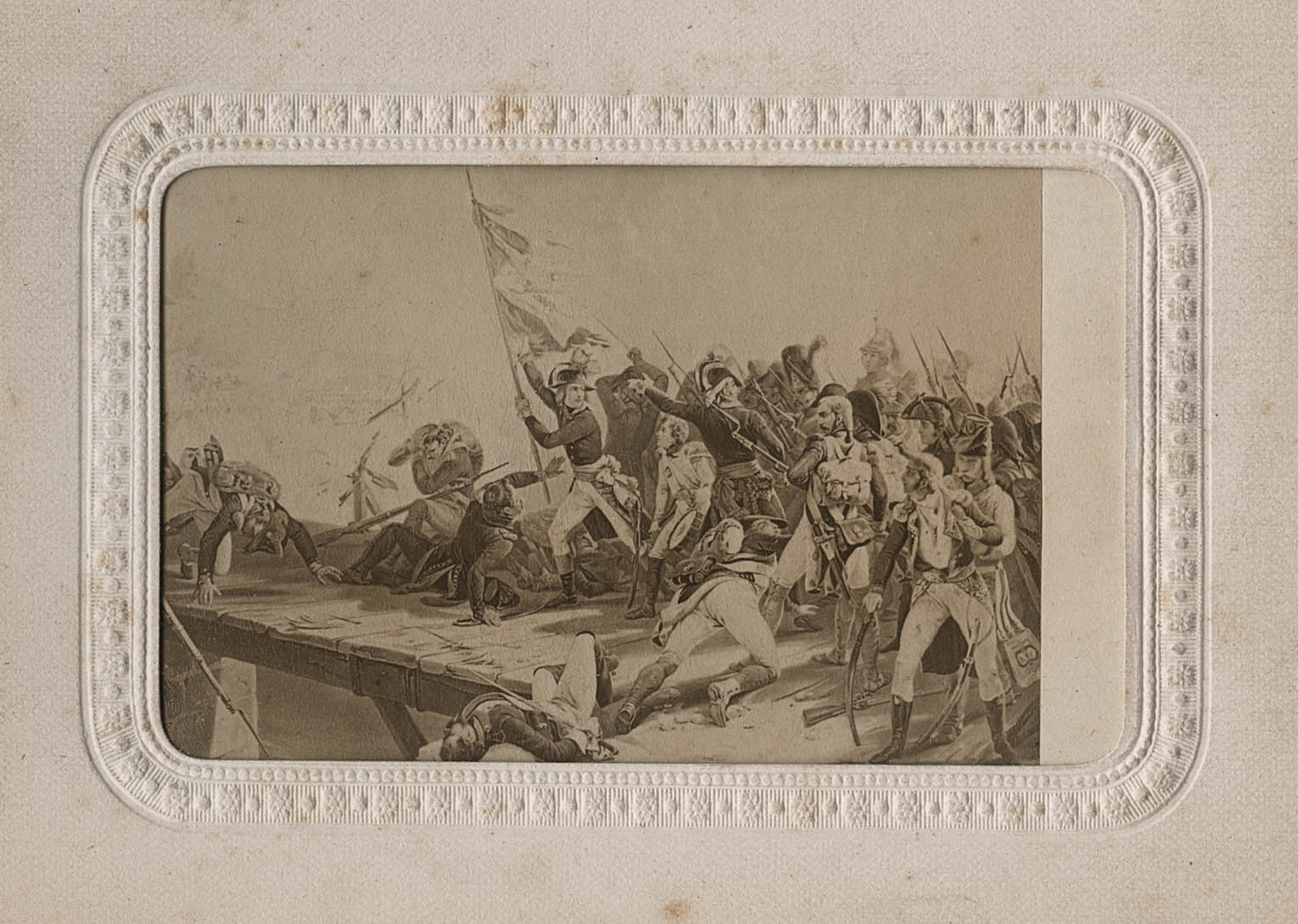
 

Unknown photographer (French)
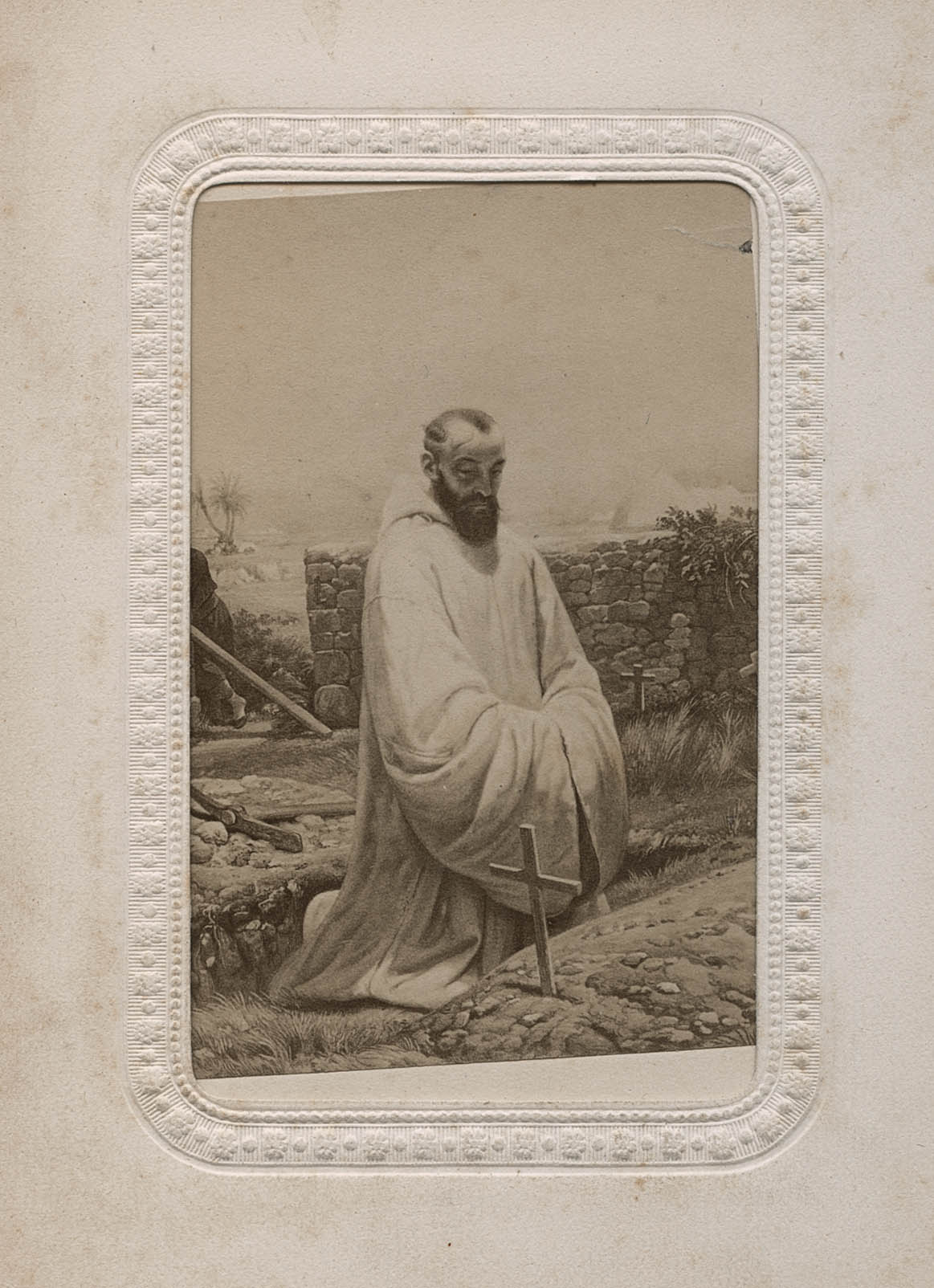
Untitled [Early French aviators] (detail)
c. 1913-1914
Positive from glass plate negative


Those daring young men in their war machines

I have always been fascinated with flight, and aeroplanes. When I was seventeen, I tried to enrol in the RAF as a fighter pilot, hence my own interest in the subject artistically over the last 10 years.

These fabulous and rare French large format glass slides were for sale on Ebay many moons ago, illustrated as negative images only. They fetched an enormous sum of money, far beyond the humble means I had at my disposal to purchase them. But I kept the negative jpg images, inverted them into positives, and I have cleaned them up as best I can. Not the best outcome, not the best quality, but better than nothing … and it means that other people can get to see them.

Taken in 1913, or possibly in 1914 the first year of the Great War – there are no guns present on the bomber, but this is not unusual for the early part of the war as can be seen in the photograph of Captain Maurice Happe in his bomber of 1915 below – I have spent a long time researching the make of the bomber and, with the help of the knowledgeable Jacques Crouille (thank you!), ascertaining the period uniforms that the men are wearing. The photographs seem to have been shot in one sitting, for the images contain the same wooden sheds, picket fence, and two bomber aircraft (one with wire wheels, one with solid wheels) of the “pusher” type, possibly a Farman MF.11 Shorthorn bomber. This means that the propellor is at the back of the aircraft pushing the plane along, instead of being placed in the front.
What I find fascinating are the attitudes of the men toward the camera, and the wonderful details present in the images. With their nonchalantly relaxed pose, arm on wing, clad in thick, buttoned flight suits trimmed at leg and neck with real fur to keep them warm up in the beyond, these daring young men stare straight at the camera. Their early leather helmets or “bone domes”, used in motor-racing and adopted by pilots as head protection, rest on the wing beside them. Some wear thick bezelled, large crowned aviation (a term coined in 1863) watches, which in the Great War were to be used to make coordinated attacks possible at a precise moment. As the men pose in front of their aircraft, what is also notable is the fragility of the machine: lashings of wood and canvas, wire wheels, and a huge amount of wire bracing, so much so it seems that the pilots are caught in a spiders web of the stuff as they stand there staring down the camera.

It must be winter, for snow and mud is on the ground, caking their short boots, knee length boots, and the wheels of the bombers. With slicked down hair, sometimes parted in the middle, sometimes paired with a moustache, the men’s waists are cinched with thick belts, their hands sheathed in leather gloves. Or. Clutching their gloves in bare hands. One handsome young man – possibly a mechanic wearing the dark blue uniform of the Chasseurs Alpins, his large beret carrying the yellow (daffodil) hunting horn insignia – is encased in the wonderfully titled “bandes molletières” (or puttees in English terminology), attire more regularly seen on infantry troops, and wears a ring on the fifth finger of his right hand. What is most amusing is the small doll attached to the front of bomber in the first photograph in the posting, like a carved figurehead on the bow of a ship (see above). A good luck charm?

These men would have needed it. Because of their slow speed (106km/h), bombers were particularly susceptible to German fighters (over 160km/h) and ground fire. No parachutes were issued to the crews of Allied “heavier-than-air” aircraft in World War 1, since it was thought that if a pilot had a parachute he would jump from the plane when hit rather than trying to save the aircraft (Wikipedia). The average life expectancy of a British Royal Flying Corp (RFC) pilot was just 18 airborne hours.

Dr Marcus Bunyan


These photographs are used under “fair use” conditions for the purpose of research and education. Please click on the photographs for a larger version of the image.


Unknown photographer. 'Untitled [Early French aviators]' c. 1913-1914


Unknown photographer (French)
Untitled [Early French aviators]
c. 1913-1914
Positive from glass plate negative


Unknown photographer. 'Captain Maurice Happe, rear seat, commander of French squadron MF 29, seated in his Farman MF.11 Shorthorn bomber with a Captain Berthaut' c. 1915


Unknown photographer
Captain Maurice Happe, rear seat, commander of French squadron MF 29, seated in his Farman MF.11 Shorthorn bomber with a Captain Berthaut. The plane bears the insignia of the first unit, a Croix de Guerre
c. 1915
Gelatin silver print
Library of Congress


Italian Army Photographers 1915-1918. 'World War 1 - Italian Army: Second Battle of the Isonzo - Farman MF.11 Shorthorn light bomber of the Italian air force' between 18 July - 3 August 1915


Italian Army Photographers 1915-1918
World War 1 – Italian Army: Second Battle of the Isonzo – Farman MF.11 Shorthorn light bomber of the Italian air force
between 18 July – 3 August 1915
Gelatin silver print
Italian Army Historic Photogallery
CC By 2.5


Farman MF.11 Shorthorn bomber

The Maurice Farman MF.11 Shorthorn is a French aircraft developed before World War I by the Farman Aviation Works. It was used as a reconnaissance and light bomber during the early part of World War I, later being relegated to training duties. …

A pusher configuration unequal-span biplane like the earlier Farman MF.7, the MF.11 differed in lacking the forward-mounted elevator, the replacement of the biplane horizontal tail surfaces with a single surface with a pair of rudders mounted above it, and the mounting of the nacelle containing crew and engine in the gap between the two wings. The aircraft was also fitted with a machine gun for the observer, whose position was changed from the rear seat to the front in order to give a clear field of fire. …

The MF.11 served in both the British and French air services on the Western Front in the early stages of the war. As a light bomber it flew the first bombing raid of the war when on 21 December 1914 an MF.11 of the Royal Naval Air Service attacked German artillery positions around Ostend, Belgium.

The MF.11 was withdrawn from front-line service on the Western Front in 1915, but continued to be used by the French in Macedonia and the Middle East, while the British also used it in the Dardanelles, and Africa. The Australian Flying Corps (AFC), provided with the MF.11 by the British Indian Army, operated it during the Mesopotamian campaign of 1915-16.

Text from the Wikipedia website


Farman MF 11, photo reconnaissance


Unknown photographer. 'Untitled [Early French aviator]' c. 1913-1914


Unknown photographer (French)
Untitled [Early French aviator]
c. 1913-1914
Positive from glass plate negative


Unknown photographer. 'Untitled [Early French aviator]' c. 1913-1914


Unknown photographer (French)
Untitled [Early French aviator]
c. 1913-1914
Positive from glass plate negative


Unknown photographer. 'Untitled [Early French aviator]' c. 1913-1914

Unknown photographer. 'Untitled [Early French aviator]' c. 1913-1914


Unknown photographer (French)
Untitled [Early French aviator] (details)
c. 1913-1914
Positive from glass plate negative


Unknown photographer. 'Untitled [Early French aviator]' c. 1913-1914


Unknown photographer (French)
Untitled [Early French aviator] (detail)
c. 1913-1914
Positive from glass plate negative


Unknown photographer. 'Untitled [Early French aviator]' c. 1913-1914

Unknown photographer. 'Untitled [Early French aviator]' c. 1913-1914


Unknown photographer (French)
Untitled [Early French aviator] (details)
c. 1913-1914
Positive from glass plate negative


Unknown photographer. 'Untitled [Early French aviator]' c. 1913-1914


Unknown photographer (French)
Untitled [Early French aviator]
c. 1913-1914
Positive from glass plate negative


The winged badge worn on the vaseure, probably blue, indicates that this man is WW1 French aviation. French pilots wore kepi. This is not the case here. This man wore a beret with a badge, a horn, from the “Chasseurs Alpins”. At least in the beginning, a member of French aviation wore equipment from their first assignment. Here, probably Chasseurs Alpins. He’s not a pilot nor an officer, maybe a mechanic? Chasseurs Alpins were, and still are, elite mountain troops based in The Alps.

Jacques Crouille


Chasseur

Chasseur, a French term for “hunter”, is the designation given to certain regiments of French and Belgian light infantry (chasseurs à pied) or light cavalry (chasseurs à cheval) to denote troops trained for rapid action.

Chasseurs Alpins

The Chasseurs Alpins (English: Alpine Hunters) are the elite mountain infantry of the French Army. They are trained to operate in mountainous terrain and in urban warfare. …

France created its own mountain corps in the late 19th century in order to oppose any Italian invasion through the Alps. In 1859-70 Italy became unified, forming a powerful state. The French army saw this geopolitical change as a potential threat to their Alpine border, especially as the Italian army was already creating troops specialised in mountain warfare (the Alpini). On December 24, 1888, the first troupes de montagne (“mountain troops”) corps were created from 12 of the 31 existing Chasseurs à pied (“Hunters on Foot'”/”Foot Rifles'”) battalions.

Initially these units were named bataillons alpins de chasseurs à pied (“Alpine Battalions of Hunters on Foot”/”Alpine Foot Rifle Battalions”). Later this was shortened to bataillons de chasseurs alpins (“Battalions of Alpine Hunters”). From their establishment the chasseurs Alpins wore a plain and practical uniform designed to be suitable for mountain service. This comprised a loose-fitting dark blue jacket and blue-grey breeches, together with a large beret carrying the yellow (daffodil) hunting horn insignia of the Chasseur branch. They are believed to have been the first regular military unit to have worn this form of headdress.

Text from the Wikipedia website


Unknown photographer. 'Untitled [Early French aviator]' c. 1913-1914

Unknown photographer. 'Untitled [Early French aviator]' c. 1913-1914


Unknown photographer (French)
Untitled [Early French aviator] (details)
c. 1913-1914
Positive from glass plate negative


Bandes molletières

The bottom photograph shows his “bandes molletières” (literally “bandages”, in English leggings or more usually puttees).

Bandes molletières is a ribbon of cloth that encloses the calves from the ankle to the knee, and which was worn by the military. It protects the leg and replaces high boots, avoiding the entry of dirt or mud when crawling, without aggravating the shortage of leather, the main raw material necessary for the manufacture of boots.

They are fast to set up (30 seconds for cross-mounting with a little training) and, when properly adjusted, their compression effect allows men to withstand long periods of standing. Nevertheless, they become sodden with water in wet ground and when it rains.

Puttees

Puttee, also spelled puttie, is the name, adapted from the Hindi paṭṭī, bandage (Skt. paṭṭa, strip of cloth), for a covering for the lower part of the leg from the ankle to the knee, alternatively known as: legwraps, leg bindings, winingas, or wickelbander. They consist of a long narrow piece of cloth wound tightly, and spirally round the leg, and serving to provide both support and protection. They were worn by both mounted and dismounted soldiers, generally taking the place of the leather or cloth gaiter.

Text from the Wikipedia website


Unknown photographer. 'Untitled [Early French aviator]' c. 1913-1914

Unknown photographer. 'Untitled [Early French aviator]' c. 1913-1914


Unknown photographer (French)
Untitled [Early French aviator] (details)
c. 1913-1914
Positive from glass plate negative


Unknown photographer. 'Untitled [Early French aviator]' c. 1913-1914


Unknown photographer (French)
Untitled [Early French aviator]
c. 1913-1914
Positive from glass plate negative


The winged badge worn on the vaseure, probably sand colour, says that this man is WW1 French aviation. He may be an observer / gunner as he is wearing a kepi, but not a good one. He has no wings on the collar, so he’s not an officer. The gloves and the watch may indicate he is member of the flight crew. Observer? Gunner? It’s hard to be precise as the French air force was at its beginning and uniforms came from different army corps. Aviation at that time was part of the Land Force.

Jacques Crouille

Kepi

The kepi is a cap with a flat circular top and a peak, or visor. Etymologically, the term is a loanword of the French képi, itself a re-spelled version of the Alemannic Käppi: a diminutive form of Kappe, meaning “cap”. In Europe, this headgear is most commonly associated with French military and police uniforms, though versions of it were widely worn by other armies during the late 19th and early 20th centuries.


Unknown photographer. 'Untitled [Early French aviator]' c. 1913-1914

Unknown photographer. 'Untitled [Early French aviator]' c. 1913-1914


Unknown photographer (French)
Untitled [Early French aviator] (details)
c. 1913-1914
Positive from glass plate negative


Kepi, French Air Service, Kiffin Rockwell, Lafayette Escadrille


Kepi, French Air Service, Kiffin Rockwell, Lafayette Escadrille

This kepi is an example of the type worn by Foreign Legion in the French Army during the First World War. This kepi was worn by Kiffin Rockwell in the French Air Service. It was not unusual for individuals that transferred to the air service to continue to use the uniform of their original service branch.

Kiffin Rockwell flew with the Lafayette Escadrille during World War I. Kiffin and his brother Paul went to France in August 1914 and joined the French Foreign Legion. Kiffin entered combat in the winter of 1915 and was severely wounded at Neuville-Saint-Vaast later that May. Following a lengthy convalescence, Kiffin obtained a transfer to the French Air Service and was one of the original members of the Escadrille Lafayette, a squadron of American pilots flying for France. Rockwell shot down his first of four German aircraft on May 18, 1916, in Alsace. On September 23, 1916, he was shot down over Verdun and buried at Luxiul. For his services to France, Rockwell was awarded the Medaille Miliataire and the Croix de Guerre with two palms.

Text and image from the National Air and Space Museum website [Online] Cited 12/03/2019. No longer available online


Unknown photographer. 'Untitled [Early French aviator]' c. 1913-1914

Unknown photographer. 'Untitled [Early French aviator]' c. 1913-1914


Unknown photographer (French)
Untitled [Early French aviator] (details)
c. 1913-1914
Positive from glass plate negative


Unknown photographer. 'Untitled [Early French aviator]' c. 1913-1914


Unknown photographer (French)
Untitled [Early French aviator]
c. 1913-1914
Positive from glass plate negative


Unknown photographer. 'Untitled [Early French aviator]' c. 1913-14


Unknown photographer (French?)
Untitled [Early French aviator]
c. 1913-1914
Positive from glass plate negative


Unknown photographer. 'Untitled [Early French aviator]' c. 1913-1914


Unknown photographer (French)
Untitled [Early French aviator] (detail)
c. 1913-1914
Positive from glass plate negative


German pilot helmet of World War I. Dated to 1910s


German pilot helmet of World War I
Dated to 1910s
Hat size 57
Made of Leather, wool, cotton/linen and metal
Height: 150 mm (5.9 in); Width: 210 mm (8.2 in); Depth: 225 mm (8.8 in)
Hamburg Museum
CC3.0


Unknown photographer. 'Untitled [Early French aviator]' c. 1913-1914


Unknown photographer (French)
Untitled [Early French aviator]
c. 1913-1914
Positive from glass plate negative


Unknown photographer. 'Untitled [Early French aviator]' c. 1913-1914

Unknown photographer. 'Untitled [Early French aviator]' c. 1913-1914


Unknown photographer (French)
Untitled [Early French aviator] (details)
c. 1913-1914
Positive from glass plate negative


Unknown photographer. 'Untitled [Early French aviator]' c. 1913-1914

Unknown photographer. 'Untitled [Early French aviator]' c. 1913-1914


Unknown photographer (French)
Untitled [Early French aviator] (details)
c. 1913-1914
Positive from glass plate negative


Unknown photographer. 'Untitled [Early French aviator]' c. 1913-1914


Unknown photographer (French)
Untitled [Early French aviator]
c. 1913-1914
Positive from glass plate negative


Unknown photographer. 'Untitled [Early French aviator]' c. 1913-1914

Unknown photographer. 'Untitled [Early French aviator]' c. 1913-1914


Unknown photographer (French)
Untitled [Early French aviator] (details)
c. 1913-1914
Positive from glass plate negative


Unknown photographer. 'Untitled [Early French aviator]' c. 1913-1914


Unknown photographer (French)
Untitled [Early French aviator]
c. 1913-1914
Positive from glass plate negative


Unknown photographer. 'Untitled [Early French aviator]' c. 1913-1914

Unknown photographer. 'Untitled [Early French aviator]' c. 1913-1914


Unknown photographer (French)
Untitled [Early French aviator] (details)
c. 1913-1914
Positive from glass plate negative


LIKE ART BLART ON FACEBOOK

Back to top

Text: “Atget’s shadow,” on his Paris photographs

August 2020


Eugène Atget (French, 1857-1927) 'Fontaine des Quatre-Parties-du-Monde, Jardin Marco Polo, Paris' 1907


Eugène Atget (French, 1857-1927)
Fontaine des Quatre-Parties-du-Monde, Jardin Marco Polo, Paris
1907
Albumen silver print


Atget’s shadow

A delicious posting on the work of the French photographer Eugène Atget (1857-1927). Atget’s photographs bridge the gap between subjective and objective representation – on the one hand extolling the subjective quality of art as an expression of the artist’s inner self; but on the other, providing a rejection of artistic consciousness, his objective “documents for artists” appealing to the Surrealists who used his images in publications such as Révolution Surréaliste.

In their presence, the photographs of Atget proffer an intimate in/tension (intention) – between representation and abstraction, documentary and modern, ordinary and dream. His photography, “which focussed on seemingly ordinary sights on the streets of Paris – a door knocker, a mannequin, a window rail – is seen as a forerunner of Surrealist and modern approaches to photography.”1

Further, “The critic and philosopher Walter Benjamin famously invoked crime scenes in discussing Atget’s photographs. He was pointing to their emptiness, their clinical attention to details of the urban landscape, their absolute rejection of the sentimental and the grandiose. … In Atget’s Paris, “the city is evacuated, like an apartment that hasn’t yet found its new tenant,” Benjamin wrote.”2

And yet, there is always something of the artist in every photograph, no matter how criminal the raping of time.

Thinking of my latest body of work “A Day in the Tiergarten”, my current research into parks and photographers, and then looking at Atget’s photographs of parks, I believe that the “park” with Atget takes some of its meaning from the ownership of the parks and the royalty / citizen system that was in place at the time AND what that might allow. Here is the photographer bearing his heavy camera like a tramp on the road, wandering in an empty domain owned by a higher power – and using its magnificence to discover more about the self searching vagabond.

Sometimes the question: “is there anyone here” is answered like Cocteau in Beauty and the Beast, and the answer is: “yes there is – yourself” says the (objective) camera. Sometimes, in other ways, the photographer goes nearly crazy with the possibilities of photography: what is the truth about my presence, the presence of a rock, or the sky? Yes, there is you, but in saying that it opens up all these other (subjective) possibilities. The options of inserting ourselves into representation, into what photography can hold, drives us crazy.

As Lee Friedlander observes, “The photographs of these places … are a hint, just a blink at a piece of the real world. At most, an aphrodisiac.”

Dr Marcus Bunyan


1/ “Surrealism did not always involve the strange and absurd. For example, the photography of Eugène Atget (1857-1927), which focussed on seemingly ordinary sights on the streets of Paris – a door knocker, a mannequin, a window rail – is seen as a forerunner of Surrealist and modern approaches to photography… Only a year before his death, in 1926, Atget was approached by Man Ray for approval to use his photograph, L’Eclipse – Avril 1912 for the front cover of the publication La Révolution Surréaliste. Despite protestations that, “these are simply documents I make”, Atget’s rejection of artistic self-consciousness combined with his pictures of an old, often hauntingly deserted Paris, appealed to Surrealists.”

Anonymous. “Surrealist photography,” on the V&A website [Online] Cited 07/08/2020

2/ Anonymous. “Atget’s Paris, 100 years later,” on the Art Daily website 31/05/2020


Please click on the photographs for a larger version of the image.


“The subject itself,” he wrote of landscape, “is simply perfect, and no matter how well you manage as a photographer, you will only ever give a hint as to how good the real thing is. We photographers don’t really make anything: we peck at the world and try to find something curious or wild or beautiful that might fit into what the medium of photography can hold.”

“The photographs of these places,” he added, “are a hint, just a blink at a piece of the real world. At most, an aphrodisiac.”


Lee Friedlander


Eugène Atget (French, 1857-1927) 'Ancien Hotel dit de Sartine – 21 rue du Cherche-Midi, Paris' 1906


Eugène Atget (French, 1857-1927)
Ancien Hotel dit de Sartine – 21 rue du Cherche-Midi, Paris
1906
Albumen silver print


Eugène Atget (French, 1857-1927) 'Ancien Monastère des Bénédictins Anglais, 269 rue Saint-Jacques. Paris 5' 1900


Eugène Atget (French, 1857-1927)
Ancien Monastère des Bénédictins Anglais, 269 rue Saint-Jacques. Paris 5
1900
Albumen silver print


Eugène Atget. 'Hôtel du Maréchal de Tallard, 78 rue des Archives' c. 1898-1905


Eugène Atget (French, 1857-1927)
Hôtel du Maréchal de Tallard, 78 rue des Archives
c. 1898-1905
Albumen silver print


Eugène Atget (French, 1857-1927) 'Grille de l'ancien pavillon de chasse de Philippe-Égalité (Hospice Debrousse), 148 rue de Bagnolet. Paris 20' 1900


Eugène Atget (French, 1857-1927)
Grille de l’ancien pavillon de chasse de Philippe-Égalité (Hospice Debrousse), 148 rue de Bagnolet. Paris 20
1900
Albumen silver print


Eugène Atget (French, 1857-1927) 'Heurtoir, 19bis Rue Tournefort' 1906


Eugène Atget (French, 1857-1927)
Heurtoir, 19bis Rue Tournefort
1906
Albumen silver print


Eugène Atget (French, 1857-1927) 'Heurtoir, St. Étienne du Mont (Cherub Door Knocker)' 1909


Eugène Atget (French, 1857-1927)
Heurtoir, St. Étienne du Mont (Cherub Door Knocker)
1909
Albumen silver print


Eugène Atget (France 1857-1927) 'Heurtoir, 6 rue du Parc Royal' c. 1901-1914


Eugène Atget (French, 1857-1927)
Heurtoir, 6 rue du Parc Royal
c. 1901-1914
Albumen silver print


Eugène Atget (French, 1857-1927) 'L'Oranger (with Shadow of Photographer and His Camera)' 1900


Eugène Atget (French, 1857-1927)
L’Oranger (with Shadow of Photographer and His Camera)
1900
Albumen silver print


Eugène Atget (French, 1857-1927) 'Le Portail de l'église Saint-Éliphe, Rampillon (Seine-et-Marne)' 1921


Eugène Atget (French, 1857-1927)
Le Portail de l’église Saint-Éliphe, Rampillon (Seine-et-Marne)
1921
Albumen silver print


Eugène Atget (French, 1857-1927) 'Le Portail de l'église Saint-Éliphe, Rampillon (Seine-et-Marne)' 1921


Eugène Atget (French, 1857-1927)
Le Portail de l’église Saint-Éliphe, Rampillon (Seine-et-Marne)
1921
Albumen silver print


Eugène Atget (French, 1857-1927) 'Le Portail de l'église Saint-Éliphe, Rampillon (Seine-et-Marne)' 1921


Eugène Atget (French, 1857-1927)
Le Portail de l’église Saint-Éliphe, Rampillon (Seine-et-Marne)
1921
Albumen silver print


Eugène Atget (French, 1857-1927) 'Le Portail de l'église Saint-Éliphe, Rampillon (Seine-et-Marne)' 1921


Eugène Atget (French, 1857-1927)
Le Portail de l’église Saint-Éliphe, Rampillon (Seine-et-Marne)
1921
Albumen silver print


Eugène Atget (French, 1857-1927) 'Le Portail de l'église Saint-Éliphe, Rampillon (Seine-et-Marne)' 1921


Eugène Atget (French, 1857-1927)
Le Portail de l’église Saint-Éliphe, Rampillon (Seine-et-Marne)
1921
Albumen silver print


The critic and philosopher Walter Benjamin famously invoked crime scenes in discussing Atget’s photographs. He was pointing to their emptiness, their clinical attention to details of the urban landscape, their absolute rejection of the sentimental and the grandiose.

As Benjamin observed, Atget established a beneficial “distance between man and his environment.” And Lima’s haunting updated recreations confirm the long-dead photographer’s disquieting insight – Paris doesn’t care about your presence. It is indifferent, and will certainly go on without you.

You can feel joy at standing on a Paris street, but the feeling is not reciprocated.

Atget, who was born in 1857, initially tried unsuccessfully at acting and painting. In 1890, he set up shop as a photographer, in order – as a sign over his door said – to provide “Documents for Artists.” He knew that painters needed images as models for their work, and he set about furnishing them.

For nearly three decades, he trudged through the city, bearing his heavy tripod and documenting a Paris of narrow streets and grime-covered low buildings that was already disappearing.

In 1920, Atget wrote: “I can say that I possess all of Old Paris.”

The world was mostly indifferent to Atget’s work until, several years before his death in 1927, he met a young American photographer, Berenice Abbott, who was working as an assistant to the artist Man Ray. She photographed him, wrote about him, acquired many of his prints and promoted him relentlessly for 50 years.

Today, Atget is recognised as a major figure in the history of photography.

The empty Paris of his prints looms out of the half-light of what seems like perpetual fog. His buildings are independent of people. They don’t even need them. Paris, the message seems to be, continues. It does not care about the individual presence. The city is not sentimental about humankind.

True, traces of humanity are ever-present in his pictures – torn advertising posters, artisanal shop signs, bins of vegetables, rows of boots. But these are only reminders that the city might once have been inhabited. And there are few people in the images to confirm this.

In Atget’s Paris, “the city is evacuated, like an apartment that hasn’t yet found its new tenant,” Benjamin wrote.

Compare that with the images from today. The occasional masked figures are incidental to the landscape. That they wear masks, hiding part of their faces, is a further denial of their humanity.

The “picturesque” – which Atget shunned, as Benjamin points out – is more difficult to avoid…”

Anonymous. “Atget’s Paris, 100 years later,” on the Art Daily website 31/05/2020


Eugène Atget (French, 1857-1927) 'Notre Dame (Stalles), Paris' 1905


Eugène Atget (French, 1857-1927)
Notre Dame (Stalles), Paris
1905
Albumen silver print


Eugène Atget (French, 1857-1927) 'Notre Dame, Paris' 1906


Eugène Atget (French, 1857-1927)
Notre Dame, Paris
1906
Albumen silver print


Eugène Atget (French, 1857-1927) 'Quai d'Anjou, Paris' 1910


Eugène Atget (French, 1857-1927)
Quai d’Anjou, Paris
1910
Albumen silver print


Eugène Atget. 'Saint-Cloud' 1926


Eugène Atget (French, 1857-1927)
Saint-Cloud
1926
Albumen silver print


Eugène Atget (French, 1857-1927) 'Rue des Lombards, Paris' 1910


Eugène Atget (French, 1857-1927)
Rue des Lombards, Paris
1910
Albumen silver print


Eugène Atget (French, 1857-1927) 'Tuileries Gardens' 1907


Eugène Atget (French, 1857-1927)
Tuileries Gardens
1907
Albumen silver print


Eugène Atget (French, 1857-1927) 'Tuileries Gardens' 1907


Eugène Atget (French, 1857-1927)
Tuileries Gardens
1907
Albumen silver print


Eugène Atget (French, 1857-1927) 'Tuileries Gardens' 1907


Eugène Atget (French, 1857-1927)
Tuileries Gardens
1907
Albumen silver print


Eugène Atget (French, 1857-1927) 'Tuileries Gardens' 1907


Eugène Atget (French, 1857-1927)
Tuileries Gardens
1907
Albumen silver print


Eugène Atget (French, 1857-1927) 'Tuileries Gardens' 1907


Eugène Atget (French, 1857-1927)
Tuileries Gardens
1907
Albumen silver print


Eugène Atget (French, 1857-1927) 'Vigne (Grape Vine)' 1920


Eugène Atget (French, 1857-1927)
Vigne (Grape Vine)
1920
Albumen silver print


LIKE ART BLART ON FACEBOOK

Back to top