Artists: Alan Constable, Lyndal Irons, Glenn Sloggett, Michelle Tran, David Wadelton
Curator: Madé Spencer-Castle
Lyndal Irons (Australian) Backstage before Parade of Champions 2015 From the series Physie Courtesy of the artist
Picturing themselves
This is another strong exhibition at the Centre for Contemporary Photography, Melbourne, principally due to the integrity of the work and not the investigation of the theme for the exhibition, why take pictures?
I have always loved Alan Constable’s tactile cameras every since I first saw them. Constable is legally blind. He holds photographs of old cameras up to his eyes, a couple of inches away, and scans the images, committing them to memory. He then creates these most wonderful evocations of a seeing machine, almost as though he is transferring his in/sight into these in/operable, beautifully glazed structures. He twists two dimensional, photographic reality into these lumpy, misshapen sculptures, evocations of his memory and imagination. I have three of these cameras in my own collection. I treasure them.
Glen Sloggett’s works is, well… Glen Slogett’s work. What I mean by the statement is that you can always recognise his photographs through his signature as an artist. There is a delicious irony and dark humour present in his work… the cat / dead. The rose / a brothel. The scree of concrete / solidified. Slogett’s insightfulness into our existential condition is evidenced through his unique view of the world, pictured in thought provoking photographs. Nothing is quite as it seems. He has a fantastic eye and aesthetic. I remember the image Cheaper and Deeper (1996) from a book I saw many years ago and it so resonated with me. Just the sensibility of looking at these spaces and contexts. He pokes around in the strangeness of the world and reflects what he sees back to us: life hidden in plain sight, revealed in all its intricacies, in all its mundanity and glory. I really like his work.
Another artist I have a great affection for is David Wadelton. Again, the signature of his work is striking. You know it’s a Wadelton image. What I admire about his work is the persistence of his vision. His intellectual vision, his photographic vision. He sets out on a project and he puts his whole mind and soul into the work, documenting the shifting and changing spaces and places of Melbourne’s suburbs since 1975. What a great eye! The black and white objective newsagents, all Becher frontality, with this seeming emotional detachment when in fact each image is so emotionally charged – through the signage, and through the knowledge that these newsagents are disappearing from our city landscape. And then the colour, some might say kitsch, Suburban Baroque living rooms which picture “mid-century suburban interiors of the formerly working-class northern areas that were the destination of choice for many post-war immigrants from Europe.” Here a different technique, photographed at an angle, off to one side, from above, sometimes central, letting the spaces and colours speak for themselves. Now vanishing, these habitats redolent with pathos and longing for the motherland.
And then Lyndal Irons, an artist whose work I have never seen before. Again, beautifully composed images, the use of a limited colour palette and rouge highlights in Grooming Routine being particularly effective. There is something unnerving about the entire scenario – the fake tans, the too bright lipstick, the fervent admiration, the ecstatic posing… the winners having their photograph taken with their trophies while off to the side others watch (enviously?); the lines of young competitors and a photograph with the instructions: ‘Ideas For Photo Poses’ and ‘Make Sure The Photographer Can See your Number’. The whole charade reminds me of the hideous child beauty pageants in the good ol’ US of A. I would have liked to have seen more photographs from this body of work.
Where the exhibition fails is in its investigation into the theme, why take pictures? The exhibition does not interrogate with any rigour, in fact does not really scratch the surface of why we humans are so obsessed with taking photographs. Through the few lines of text that accompanies the exhibition (below), it offers a few titbits as way of remediation, a few possible ideas to cling to so as to answer the question: perhaps desire, perhaps obsession, curiosity, nostalgia and information. It then throws the photographic work of these artists at us as an answer, but what we are actually looking at is just representation, the outcome of the desire to picture, not an examination of the act itself. What the exhibition really needed was a thoroughly insightful text that examined our impulse to take pictures.
Here is a controversial statement. Every photograph is a self-portrait. What do I mean by this?
When we think back to the cave paintings of the Neolithic period, human beings picture the world around them by painting in colour on the rock that is earth. They picture themselves in that scene by painting what they know of the world around them. Through their imagination and creativity they place themselves in the scene – physically as hunters in the scene, and metaphorically through their relationship to the animals that they know and the objects that they carve, pictured on the cave walls. Theirs is a conscious decision to picture themselves as an infinite presence.
The same with photographs. Every time we press the shutter of a camera, it is a conscious decision to picture our relationship with the world. Through our will (to power), though our imagination and our desire, we place ourselves metaphorically (and physically when actually appear in the photograph) in every photograph. We stand behind the camera but imagine ourselves in that environment, have placed ourselves there to take the photograph. Every photograph is a self-portrait, one that establishes our relationship to the world, our identity, our values, who we are and how we react in each and every context.
These photographs are not memories at the time of their taking, although they make be taken under an impulse to memorialise. They will become memories, as when looking at old photo albums. They are not simply documents either, a recording of this time and place, because there is always the personal, the subjective relationship to the objective. Look at David Wadelton’s photographs of living rooms. Why was he present in all of these spaces? Just to observe, to document, to capture? No… he was their, to imagine, to create, to place himself at the scene, in the scene. Human beings make conscious choices to take photographs for all different kinds of reasons. But the one reason that is never mentioned is that, in reality, they are always picturing themselves.
Dr Marcus Bunyan
Many thankx to the Centre for Contemporary Photography for allowing me to publish the photographs in the posting. Please click on the photographs to view a larger version of the image.
Installation views of the exhibition Why Make Pictures? at the Centre for Contemporary Photography, Melbourne Photographs: J. Forsyth
Why Take Pictures? returns to one of the fundamental questions in photography, to consider our desire-drive and obsession with taking photographs, the apparatus of the camera and diverse approaches of looking through, or at, the lens. Featuring work by Alan Constable (VIC), Michelle Tran (VIC), Lyndal Irons (NSW), Glenn Sloggett (VIC) and David Wadelton (VIC), Why Take Pictures? considers the divergent motivations and compulsions as to why we take images in the first place.
We all take pictures, leaving every one of us with an extensive collection of images, historically as physical artefacts, but now stored within our digital devices. These collections become vessels of information and nostalgia, desire and curiosity. Why Takes Pictures? interrogates how and why we build up these storehouses of images, as considered through the lens of five exceptional artists.
Traversing documentary, commercial, political and highly personal modes, Why Take Pictures? presents a broad cross-section of different approaches to making photographs. Whether documenting social environments in states of change, examining the discarded or overlooked, prying at the strange behaviour of humans; or through examining the obsession with the camera itself, the artists in Why Take Pictures? are driven to continue to take photographs, like an itch that can’t be scratched.
Press release from the Centre for Contemporary Photography 21/09/2019
Biographies
Alan Constable is a multi-disciplinary artist whose practice spans drawing, painting and ceramics. His ceramic sculptures, which he began developing in 2007, reflects his life-long fascination with old cameras, which started at the age of eight when he would make replicas from cardboard cereal boxes. Constable’s finger impressions can be seen clearly on the clay surface, leaving the mark of the maker as a lasting imprint. Constable has been a regular studio artist at Arts Project Australia since 1991. Alongside selection in group exhibitions throughout Australia (including the Museum of Old and New Art in 2017), Constable has presented in a number of solo exhibitions including Andrew Baker Art Dealer, Brisbane; Darren Knight Gallery, Sydney; South Willard (curated by Ricky Swallow), Los Angeles; Stills Gallery, Sydney; and Helen Gory Galerie, Melbourne. Alan Constable is represented by Arts Projects Australia, Melbourne; Darren Knight Gallery, Sydney; and DUTTON, New York.
Hand-built from slabs of clay, Alan Constable’s charing sculptural cameras and optical devices … evoke and absolute obsession with the photographic apparatus. Legally blind, Constable creates his work through appropriating photographs from old books and magazines, holding the images close to his face and committing them to memory. Through recall, Constable reinterprets these images, transforming them from high-precision consumer objects, to tactile sculptures imbued with vitality, personality and warmth. Elegantly clunky, anthropomorphic and on the edge of the surreal, Constable’s compelling works all have ‘fictional’ apertures or viewfinders that can be physically seen through. Asking us to consider the functionality of vision, Constable’s ceramics have a human touch and sensibility that connects us directly to the devices we often consider merely utilitarian.
Alan Constable (Australian, b. 1956) Not titled 2018 Earthenware and glaze 9 x 19 x 8cm Courtesy of the artist Alan Constable is represented by Arts Project Australia, Melbourne; Darren Knight, Sydney; Dutton, New York Image copyright the artist, courtesy Arts Projects Australia Photo: Andrew Barcham
Alan Constable (Australian, b. 1956) Not titled 2019 Earthenware and glaze Courtesy of the artist Alan Constable is represented by Arts Project Australia, Melbourne; Darren Knight, Sydney; Dutton, New York Image copyright the artist, courtesy Arts Projects Australia Photo: Andrew Barcham
Alan Constable (Australian, b. 1956) Not titled 2018 Earthenware and glaze Courtesy of the artist Alan Constable is represented by Arts Project Australia, Melbourne; Darren Knight, Sydney; Dutton, New York Image copyright the artist, courtesy Arts Projects Australia Photo: Andrew Barcham
Lyndal Irons (Australian) Mermaid Beach 2015 From the series Physie Archival inkjet print 37 x 55cm Courtesy the artist
Lyndal Irons is a Sydney-based photographer and writer focused on local reportage, who is interested in seeking out parts of Australian society that are familiar and accessible, yet not often closely encountered. By recording social histories and building legacies using photographs and words, her work encourages curiosity and a deeper connection to daily life. Irons has presented solo exhibitions at the State Library of New South Wales (2015), the Australian Centre for Photography (2014), and Elizabeth Street Gallery (2014). Lyndal has been a finalist in the National Photographic Portrait Prize (2017), the Bowness Prize (2015) and the Olive Cotton Award for Portraiture (2015). Lyndal Irons’ Physie series documents one of Australia’s oldest sporting institutions: physical culture (physie) and calisthenics.
Lyndal Irons (Australian) Fans 2015 From the series Physie Archival inkjet print 37 x 55cm Courtesy the artist
Lyndal Irons (Australian) Grooming Routine 2015 From the series Physie Archival inkjet print 37 x 55cm Courtesy the artist
Lyndal Irons (Australian) Junior National Repecharge 2015 From the series Physie Archival inkjet print 37 x 55cm Courtesy the artist
Lyndal Irons (Australian) Ideas for Photo Poses 2015 From the series Physie Archival inkjet print 37 x 55cm Courtesy the artist
Glenn Sloggett (Australian, b. 1964) Pawn shop 2018 C-type print 120 x 100cm Courtesy the artist
Glenn Sloggett has been exhibiting since the mid-90s. He won the prestigious Josephine Ulrick & Win Schubert Photography Award in 2008, and the inaugural John and Margaret Baker Memorial Fellowship for an Emerging Artist in 2001. He has held numerous solo exhibitions, including Cheaper and Deeper, a national touring show organised by the Australian Centre for Photography (2007). Sloggett’s work was featured on the ABC program The Art Life, and has been included in significant survey exhibitions of Australian art, including Australian Vernacular Photography, Art Gallery of New South Wales (2014); Melbourne Now, National Gallery of Victoria (2013-2014); internationally touring Photographica Australis (2002–2004); and nationally touring New Australiana, Australian Centre for Photography (2001). His work is held in numerous private and public collections including the Art Gallery of New South Wales, the National Gallery of Victoria and Monash Gallery of Art.
Interested in failure as a mechanism, Glenn Sloggett’s series of medium format photograph made with his twin-lens Rolleiflex could almost have been taken on a single walk around the neighbourhood on a strange, sunlit day. Wryly infused with dark humour and intermittent text punctuations such as “ICE IS A BAD THING” and “DO NOT LEAVE CHILDREN IN CARS”, Sloggett ask us to look beneath the surface of his documentary-style images. Why are people leaving their children in their cars? What precarious situation has driven someone to graffiti “is a bad thing” on this sign?
Sloggett’s work is at times bleak, and at others sublime. Looking closely, a cat that appears to be peacefully sunbaking has sunken eyes, an innocuous rose bush was taken in a brothel carpark. dumped concrete on the sidewalk looks like it has been churned up from a Friday night on the town.
Glenn Sloggett (Australian, b. 1964) Industrial dumping 2019 C-type print 120 x 100cm Courtesy the artist
Glenn Sloggett (Australian, b. 1964) Dead cat 2019 C-type print 120 x 100cm Courtesy the artist
Glenn Sloggett (Australian, b. 1964) Brothel car park 2019 C-type print 120 x 100 cm Courtesy the artist
Michelle Tran (Australian, b. 1985) Sachi 2019 Archival inkjet print 79 x 54cm Courtesy the artist and Hart & Co., Melbourne
Michelle Tran is a fashion and portrait photographer, born and raised in Melbourne by Vietnamese refugee parents. She began her photographic studies at the Victorian College of the Arts with an exploration into cultural identity through portraiture. Commercially, she has applied her interest in people to fashion, creating an approach that is both delicate and candid. Making a connection with her subjects, Michelle puts people at ease in front of the camera. Her portfolio includes portraits of celebrities such as Kendrick Lamar and Christian Louboutin, while her fashion and advertising work spans across brands including Adidas, MECCA, Amazon, Moroccan Oil, L’Oréal and Myer. Michelle lives in Melbourne with her partner, daughter and two rabbits. Michelle Tran is represented by Hart & Co., Melbourne.
Michelle Tran (Australian, b. 1985) Madison Shauna 2019 Archival inkjet print 79 x 54cm Courtesy the artist and Hart & Co., Melbourne
Michelle Tran (Australian, b. 1985) Sachi In Shadow 2019 Archival inkjet print 79 x 54cm Courtesy the artist and Hart & Co., Melbourne
Installation views of the exhibition Why Make Pictures? at the Centre for Contemporary Photography, Melbourne showing the work of David Wadelton and his series Living Rooms (top), Milk Bars (middle) and Small business (bottom)
David Wadelton is a Melbourne-based painter and photographer who has documented the changing face of Melbourne’s Northern suburbs since 1975. Wadelton has held over 20 solo exhibitions, including three career surveys: Pictorial Knowledge, Geelong Art Gallery (1998); Icons Of Suburbia, McClelland Gallery, Langwarrin (2011) and The Northcote Hysterical Society, Bundoora Homestead Gallery (2015). Wadelton’s work has been included in Vision In Disbelief, 4th Biennale of Sydney (1982); Australian Culture Now, National Gallery of Victoria (2004); Far-Famed City of Melbourne, Ian Potter Museum of Art (2013); Melbourne Now, National Gallery of Victoria (2014); Crossing paths with Vivian Maier, Centre for Contemporary Photography (2014); The Documentary Take, Centre for Contemporary Photography (2016); Romancing the Skull, Ballarat Art Gallery (2017) and Beyond boundaries – Discoveries in contemporary photography, Aperture Gallery, New York (2019).
David Wadelton (Australian, b. 1955) Coburg 2018 From the series Living Rooms Courtesy the artist
David Wadelton (Australian, b. 1955) Reservoir 2017-2019 From the series Living Rooms Courtesy the artist
David Wadelton (Australian, b. 1955) Pascoe Vale South 2018 From the series Living Rooms Courtesy the artist
David Wadelton (Australian, b. 1955) Reservoir 2017 From the series Living Rooms Courtesy the artist
David Wadelton (Australian, b. 1955) Reservoir 2017 From the series Living Rooms Courtesy the artist
David Wadelton (Australian, b. 1955) Glenferrie Road, Hawthorn 2018 From the series Newsagents Courtesy the artist
David Wadelton (Australian, b. 1955) Broadway, Reservoir 2019 From the series Newsagents Courtesy the artist
David Wadelton (Australian, b. 1955) Watsonia Road, Watsonia 2016 From the series Newsagents Courtesy the artist
Shea Kirk (Australian, b. 1985) Dale Robertson (left and right view) 2019 From the series Vantages Courtesy the artist
In Vantages, Kirk invites people to be photographed in the setting of his home studio, in front of simple, unadorned backdrops. Using dual large-format cameras, each portrait is exposed onto separate sheets of black-and-white film, capturing two images of the sitter from slightly different perspectives, emulating the viewpoints of each eye. In an explicitly contemporary take on traditional modes of portraiture, Kirk’s considered and methodical process facilitates an intimate exchange between photographer and subject, with the intention of creating a heightened sense of agency for each sitter. In this way, the series becomes an exercise for the sitter in representing themselves, defying the threat of reduction to a single vantage point.
Another impressive exhibition at the Centre for Contemporary Photography, this time by artist Shea Kirk in their first solo exhibition.
Photographed in a home-studio with plain backdrops (which remind me of photo-booth images and the white backgrounds of Richard Avedon) on dual large format cameras, I love the split screen vision of these stereoscopic portraits. The schism between left and right, as when you close and open your left and right eye to see something from a different point of view. I couldn’t get the stereoscopic viewer provided to work for me when looking through it… which is probably a good thing because I like the split between the images, those different vantage points, instead of the image being combined into a statuesque edifice.
(The definition of “vantage” is a point of view or position that is more superior or advantageous than another. Personally I don’t think any point of view, in terms of identity construction, should be superior to another.)
Where I think the exhibition is less successful is in the pose of some of the subjects. The press release states that the subjects “stare at us with a disarming self-awareness … presenting as though conscious of their own vulnerabilities – they are aware of what it means to represent themselves”, but all to often I get no sense of who these people really are, what their personality is, in their stillness and statuesqueness, in the time freeze snap of the camera shutter.
I am no great fan of dead pan photography, and here the subjects too often stare off into the distance, supposedly immersed in their own reverie, allowing the viewers eye to rove over their outer appearance, as though the edifice tells us all about who they are. This works well in the image of the nude women covered in tattoos, a magnificent image of strength and beauty but the technique falls flat in the image of Christiane D’Arc (2018, below) for example. I just don’t buy this vacant stare, or to put it another way, photography as mere representation.
The sitter might be aware of their own vulnerabilities and aware of what it means to represent themselves, but it’s not they who are engaged in deciphering the enigma. The best images give you more, for example the photographs of Dale Robertson (2019, above). Here, in the right hand side image, the subject stares straight at the camera engaging me directly, while the mystery of this human being is enhanced by the left hand portrait where he is staring away. What is he thinking, feeling? I get it, it works.
This is a fantastic exhibition for a first solo effort. What is going to be really interesting is to see how Kirk develops this work further. What direction will the work take, which pathways will the artist uncover on their journey of discovery. I would suggest reading the Robert Johnson books He, She and We if not already read. For any artist, these are exciting times!
Dr Marcus Bunyan
Many thankx to the Centre for Contemporary Photography for allowing me to publish the photographs in the posting. Please click on the photographs to view a larger version of the image.
Installation views of the exhibition Shea Kirk: Vantages at the Centre for Contemporary Photography, Melbourne Photographs: J. Forsyth
Vantages is an ongoing series of stereoscopic portraits by Melbourne-based artist Shea Kirk. Working with dual large-format cameras to simultaneously capture two images from different perspectives, Kirk invites subjects to be photographed in his humble home-studio. Each portrait is exposed onto black and white sheet film through a slow and methodical process, enabling an intimate exchange that highlights the agency between photographer and subject. When viewed through a stereoscope, these dual-portraits can be seen three-dimensionally, rendering the subject hauntingly statuesque.
Often in states of undress and portrayed standing or sitting in front of simple backdrops, the subjects in Vantages stare at us with a disarming self-awareness, perhaps only possible in the selfie-obsessed, smart-phone age. Subjects present as though conscious of their own vulnerabilities – they are aware of what it means to represent themselves – and through the very nature of this dual imaging process, they resist being reduced to a single vantage point.
Vantages references a rich history of photographic portraiture, with a freshness that is distinctly contemporary. Vantages considers the significance of portraiture now, through Kirk’s powerfully contemplative, and beautifully realised dual images.
Biography
Shea Kirk is a Melbourne-based visual artist working with traditional photographic methods and techniques. Shea Kirk has been a finalist in the Olive Cotton Award (2019); National Photographic Portrait Prize (2019) and the Head On Portrait Prize (2018), and has participated in a number of group exhibitions across Victoria.
Press release from the Centre for Contemporary Photography 21/09/2019
Shea Kirk (Australian, b. 1985) Mohini Hillyer (left and right view) 2017 From the series Vantages Courtesy the artist
Shea Kirk (Australian, b. 1985) Christiane D’Arc (left and right view) 2018 From the series Vantages Courtesy the artist
Shea Kirk (Australian, b. 1985) Jacob Coppedge (left and right view) 2019 From the series Vantages Courtesy the artist
Shea Kirk (Australian, b. 1985) Paul Stillen (left and right view) 2019 From the series Vantages Courtesy the artist
Shea Kirk (Australian, b. 1985) Joao Quintao Marcolla (left and right view) 2019 From the series Vantages Courtesy the artist
Sophie Gabrielle (Australian) Worry For The Fruit The Birds Won’t Eat #5 2017-2019
This is the first posting on three strong exhibitions at the Centre for Contemporary Photography, Melbourne… and my pick of the bunch.
I admire an artist who can tell a moving personal story using historic images. An artist who has the imagination, does the research, and works on the process to fulfil the conceptualisation of an idea… to tell that personal story in strong, emotive images that really engage the viewer. Sophie Gabrielle is one such artist.
Gabrielle moves these historic images into the present, and into contemporary relevance, through clear insight into the condition of their becoming. What I mean by that is, she knows her subject matter and she knows where she wants to go with the work. So much contemporary photography is so full of concept that the images are crap. They have no feeling, they have no emotion. Will they engage me a week down the track, or a month, or a year? Will they speak to me, will they reveal themselves to me over and over again? Probably not.
In these photographs Gabrielle combines sci-fi, Village of the Dammed photographs and images of botanicals (which are either medicinal or poisonous, a reflection of the alternate medicinal methods attributed to fighting cancer) with “traces” of her DNA, then re-photographing the image many times, and then degrading the emulsion of the negative in polluted water. In doing so, she pictures worlds in which people think that they are doing the right thing, only to later find that their world has been corrupted and has lost its moral certainty. In this case, Soviet era children blasted with ultraviolet light to cure vitamin D deficiency, or to rid them of freckles, inevitably leading to cancer down the track. The process is called heliotherapy, an archaic treatment for tuberculosis that involved UV light so the kids would produce vitamin D that would fight the bacteria. But as we now know in Australia, solarium and tanning beds have been banned because they significantly increase your risk of cancer.
And why would you want to cure someone of having freckles? Or to extrapolate further, for being left handed, or being gay, or having autism. To make them wear a yellow star or a pink triangle? According to the dictionary, a cure is a method or course of remedial treatment, as for disease. A means of correcting or relieving anything that is troublesome or detrimental. Troublesome or detrimental… or different!
Gabrielle describes Worry for the Fruit the Birds Won’t Eat as “an exploration into the world of the unseen through optics, chemical interactions, and the investigative processes used to photograph something invisible to the naked eye.” Cancer. The Big C. Death. Chemotherapy. Radiation treatment. Leukemia. Melanoma. On and on. Invisible but ever. Present. Here. Now. And then she shows us photographs that seek to dissolve, to dis-solve what is present – freckles, DNA, emulsion, reality – into light. To find an answer to, explanation for, or means of effectively dealing with (a problem or mystery). I’ll let you guess what that mystery might be.
Dr Marcus Bunyan
Many thankx to the Centre for Contemporary Photography for allowing me to publish the photographs in the posting. Please click on the photographs to view a larger version of the image.
Installation views of the exhibition Sophie Gabrielle: Worry For The Fruit The Birds Won’t Eat at the Centre for Contemporary Photography, Melbourne Photographs: J. Forsyth
Through channelling her interest in psychology, science and perception, Sophie Gabrielle creates poetically arresting images that reflect the fragility of the human body, psyche and experience. Combining archival imagery from MRI scans, brain synaptic structures and science experiments from the 1930s and 1940s, Gabrielle creates haunting narratives that interweave the personal and clinical.
Worry For The Fruit The Birds Won’t Eat is a dreamy and deeply personal exploration of the artists’ experiences with cancer, presenting medicinal botanicals and photographic portraits, alongside archival images from obscure medical research catalogues. Photographed through plates of glass to catch minute particles of her own skin – images are overlaid with the artists’ own DNA – creating interwoven, abstract self-portraits.
“Worry For The Fruit The Birds Won’t Eat is an exploration drawn from my experiences with cancer through optics and chemical interactions, and an investigative process to photograph that which is generally invisible to the naked eye.
This project started as a coping mechanism to address the impact cancer has had on my life over the past few years, after all the men in my family were diagnosed with stage four cancer. These works give a sense of the unsettled, fragile, daunting and overwhelming aspects that have culminated during this time in my life.”
~ Sophie Gabrielle, 2019
Biography
Sophie Gabrielle is a Melbourne based artist and curator working between analogue and digital photographic practices. Graduating from Photography Studies College in 2015, her work has been exhibited in Australia, Malaysia, New York, UK and Amsterdam. In 2018, Gabrielle was the first Australian chosen as a finalist for Foam Talent, Foam Fotografiemuseum, Amsterdam. In 2016, Gabrielle was a finalist for the Lensculture Emerging Talent Award.
Press release from the Centre for Contemporary Photography 21/09/2019
Sophie Gabrielle (Australian) Worry For The Fruit The Birds Won’t Eat 2017-2019
Sophie Gabrielle (Australian) Worry For The Fruit The Birds Won’t Eat #7 2017-2019
After discovering a number of her close family members were ill with the disease, she searched through physical and digital scientific archives connected to the various strains associated with each loved one. “I was interested in archives that were connected to my family’s own story of diagnosis, treatment, recovery and death,” she explains. The resulting images make up her body of work Worry for the Fruit the Birds Won’t Eat, which Gabrielle describes as “an exploration into the world of the unseen through optics, chemical interactions, and the investigative processes used to photograph something invisible to the naked eye.”
As Gabrielle worked through the archives, she also worked through her own personal trauma and confusion. “It was an all-consuming process, both physically and emotionally. The images I was most drawn to ran parallel to the events happening in the lives of my family members during that painful time.” Each archival discovery pointed Gabrielle in another direction, so that she eventually found major points of comparison across multiple sets of images from a variety of different sources. “My father’s diagnosis of stage four prostate cancer made me reflect on the surgical procedures in the images, and my grandfather’s diagnosis of lung cancer drew me to x-rays, especially after seeing the dark clustered patterns of abnormal cells in the imagery. Also, the collection of botanicals are either medicinal or poisonous – a reflection of the alternate medicinal methods attributed to fighting cancer.”
Upon selecting each archival image, Gabrielle used historical processes to involve her own photographic practice in the work. After leaving each image under a glass plate to collect floating particles of dust and hair, she re-photographed each piece multiple times, creating negatives that incorporate flecks of the environment’s natural disruptions. “There was something healing about getting lost within the process of creating these images, transforming their scientific purpose into something personal and poetic. I left them to collect dust in places that were significant to me and my family.”
After re-photographing the images, Gabrielle submerged her negatives in polluted water, allowing the emulsion’s degradation to further highlight the lyrical features of illness. “I actually did it while sitting on a jetty in Penang, Malaysia,” she explains. “I was thinking about the clear water that runs from taps, and how this re-enters nature to become ill and polluted. It was this unseen danger that intrigued me, and I wanted to incorporate that into the work. The microbes in the polluted water ate away at the film, leaving their own marks upon the negatives before I made the prints.”
This incorporation of intervention and decay into her photographic process soon became an integral part of Gabrielle’s own healing process, affording her a clear state of mind to work through a number of complex emotions.
Much as I love the grittiness and stark contrast of Japanese photography of the 1960-70s – its reaction against the pro-American optimism of The Family of Man exhibition that went to Tokyo in the 1950s, its rejection of journalistic illustration, its I-reality that is not a objective record but a personal story, “a poem composed in photography”, its spirit of ennui, a state of dissatisfaction with the status quo – there is also another, less edifying side to Japanese photography of this period.
Basically, it’s a male view of the world, any world, any reality, but always with the “I” at the front of it, the world of the male ego. A world where women are objectified, bound and gagged in pretty gruesome “erotic” sex scenes (not in this posting, but you can Google them online). No matter that the photographer had permission, these photographs are about male power and the male gaze. Nothing more, nothing less. A world where cameras pry on people having anonymous sex in the park in the dark. Let’s call it what it is, it’s misogynistic and voyeuristic.
The obverse of a concern for the sitter, or the landscape, or the object, can be observed (did you see what I did there… obverse / observe), in that there is a concern with the minutiae of life in extremis, rather than an empathy for it. Maybe that is the Japanese culture. Perhaps this microscopic analysis comes about because of the fast pace of their life, their mixture of state, religion, culture and capitalism, their violent history and the submissive place of women within that society (The traditional role of women in Japan has been defined as “three submissions”: young women submit to their fathers; married women submit to their husbands, and elderly women submit to their sons ~ Wikipedia)
There is something I cannot put my finger on about the power of the photograph to capture a dominance over women, the landscape, people, protests – a suppressed violence against the self?
I’m just thinking out loud here…
Dr Marcus Bunyan
Many thankx to the Museum der Moderne Salzburg for allowing me to publish the photographs in the posting. Please click on the photographs for a larger version of the image.
The collections of the Museum der Moderne Salzburg include an outstanding and sizeable ensemble of Japanese photographs from the 1960s and 1970s. These works will be on view for the first time in many years in a series of exhibitions. The opening presentation is dedicated to the depiction of humans and perceptions of postwar Japanese society in transformation. A future second exhibition will focus on images of city and countryside.
In the history of Japanese photography, the idea of the “I-photo” is a kind of photographic adaptation of the literary convention of first-person narrative. The photographic image is conceived and employed as a medium articulating the photographer’s self as well as an instrument with which to scrutinise reality. A pioneer of postwar photography, Masahisa Fukase in the late 1960s created photographic series mixing documentary and fictional elements. His central motifs and models were his wife Yoko and their family. Nobuyoshi Araki, the best-known, most prolific, and probably also most provocative Japanese photography artist, launched his career as a fashion and advertising photographer in 1963. The collection contains highly personal photographic notes by him and his wife Yoko, who died early. Fukase, Araki, and the other Japanese “I-photographers” such as Issei Suda, Shin Yanagisawa, and Daidõ Moriyama regard the “I-photo” as a blend of truth and falsification that can elicit an emotional response and disconcert. The aesthetic of the pictures is characterised by hard black-and-white contrasts and lacerated abstract structures. It signals the artists’ rejection of the tradition of classical art photography while also probing the potentials of the medium itself. The Japanese photography scene is highly controversial; the spectrum of themes ranges from erotic depictions of bodies to political statements.
Daidō Moriyama (Japanese, b. 1938) Untitled (l. a. r.) c. 1970 Lips from a Poster 1975 3 gelatin silver prints on Baryte paper Museum der Moderne Salzburg
Daidō Moriyama (Japanese, b. 1938) Stray Dog, Misawa (installation view at right) 1971 From the series Hunter Untitled c. 1970 9 gelatin silver prints on Baryte paper Museum der Moderne Salzburg
Daidō Moriyama is one of Japan’s leading contemporary photographers. He studied design and photography in Kōbe before moving to Tokyo in 1961 and deciding to focus entirely on photography. After a stint as Eikō Hosoe’s assistant, he went into business for himself as a photographer in 1964.
Like the art critic Kōji Taki and the photographers Yutaka Takanashi, Shōmei Tōmatsu, and Takuma Nakahira, Moriyama was a member of the group around the influential magazine Provoke (1968-1969). Although no more than three issues appeared in print, its importance in the history of the medium in Japan can hardly be overstated. The Provoke Manifesto declared that photography was capable of registering what could not be expressed in words. The visual style of the photographs Provoke would run was to be are-bure-boke, Japanese for “grainy, blurry, and out of focus” – a specification that still aptly describes Moriyama’s photographs; the same style is evident in his work for magazines such as Camera Mainichi, Asahi Journal, and Asahi Camera.
Moriyama’s inexhaustible signature theme is the city of Tokyo, but he has also worked elsewhere. In an interview, he once said: “For me cities are enormous bodies of people’s desire.” He still prowls the streets day after day, taking pictures of appealing or striking sights, never peering into his small compact camera’s viewfinder. Shots of traffic, of pedestrians and shop windows, of posters and details such as lips, eyes, or plants are recurrent motifs. Hard black-and-white contrasts lend his prints a strangely alien and otherworldly allure, but the depictions always remain anecdotal, as though from a dream. Moriyama’s photobooks may accordingly be read as photonovels of a sort. Japan A Photo Theater (1968) was the first book in this vein he published; his oeuvre has now grown to several hundred photobooks.
The Photographic Society of Japan, whose purpose is to promote photography in Japan, elected him its photographer of the year in 1983. In 2012, he received the Infinity Award for Lifetime Achievement of the International Center of Photography, New York, which honours outstanding accomplishments in photography and visual art.
Masahisa Fukase (Japanese, 1934-2012) Untitled 1971 From the series Yoko 9 gelatin silver prints on Baryte paper (Vintage prints) Museum der Moderne Salzburg
Masahisa Fukase completed a PhD at the Institute of Photography at Nihon University, Tokyo, in 1956. He worked as a photographer for advertising agencies and various publishing houses until 1968 and then as a freelance photographer until his death in 2012. His work was included in the 1974 group exhibition New Japanese Photography at the Museum of Modern Art, New York, followed by numerous solo and group shows all over the world. In 1976, he received the annual Ina Nobuo Award, which has been given out by the Nikon Salon in Tokyo since 1976. At the 1992 Higashikawa International Photo Festival, his exhibition Karasu (Ravens) earned him a Higashikawa Photography Award in the Special Award category.
In the 1960s, his photography is largely focused on his own life and that of his wife Yoko. She stars in pictures that show her in all sorts of situations in life, private as well as public. Fukase captures Yoko as his bride, in the nude, during sex, or as a tourist in the street. He is also interested in the passage of time and ageing in general. After separating from Yoko, Fukase started photographing ravens as symbols of loneliness and loss. The photobook Karasu (Ravens) became one of the most coveted works of its kind in postwar Japan; it was first reprinted just last year.
Bishin Jumonji (Japanese, b. 1947) Untitled 1971 3 gelatin silver prints on Baryte paper Museum der Moderne Salzburg
After studying at the Tokyo College of Photography, Bishin Jumonji became an assistant to the photographer Kishin Shinoyama, who had risen to renown with publications about Kabuki theater, erotic depictions in photography magazines, and work in unusual book formats such as flipbooks. Since 1971, Jumonji has worked both freelance and as an advertising photographer. This was also when he began to take pictures for the series on view, Untitled. Shot around Tokyo, the works portray families, day-trippers, a quartet of rock musicians, dancers, or bodybuilders – in short, representatives of modern Japan. The details are chosen so that the heads and faces do not appear in the prints. This underscores the subjective quality of photography as such while also conveying the anonymity of life in the megalopolis.
Otto Breicha had seen the series as early as 1974, when it was featured in New Japanese Photography, a group exhibition John Szarkowski organised at the MoMA in New York. Breicha decided to include it in Neue Fotografie aus Japan, the follow-up show he mounted in Graz in 1977.
In 1990, Jumonji receives the Domon Ken Award, one of the most important Japanese photography prizes. The work of the honourees is showcased at the Ginza Nikon Salon, Tokyo, and the Domon Ken Museum of Photography, Sakata, the first museum in Japan dedicated to photography. Some of Jumonji’s pictures are published in international magazines including the German newsweekly Stern.
Akihide Tamura (Japanese, b. 1947) Yokohama, 1966 (l.) Yokosuka, 1969 (r.) 7 gelatin silver prints on Baryte paper From the series Base Museum der Moderne Salzburg
Akihide Tamura studied at the Tokyo College of Photography and got his degree in 1967. Even before he graduated, the academy’s director, the photography critic Shigemori Koen, recognised his unusual approach. In 1974, the MoMA in New York featured Tamura’s House series in its group exhibition New Japanese Photography and acquired it for the museum’s collection. Taken over the course of a year – from July to July – the pictures show houses in abandoned landscapes. The alternation of day and night and the cycle of the seasons play a prominent part in the series.
Tamura’s life was defined by the wrenching changes Japan underwent after World War II. His work is an astute photographic record of these metamorphoses. For the series Base (1966-1970), he captured landscapes, people, and combat aircraft and other military planes at several American bases south of Tokyo. In retrospect, he wrote: “When I was a photography student, I knew that the military base existed in a territory that had been created due to the tensions between the United States and the Soviet Union and the possibility of a nuclear war. I was shaken by the incredibly beautiful and yet insane fighter jets before my eyes. The contradiction between my fear that the world would vanish in an instant if someone were to push the nuclear button and the exotic and eerie spell the military base cast over me left me perpetually torn.”
The works on view are part of the major cycle Erehwon – the title is the word “nowhere” read backwards – that Tamura worked on between 1967 and 1973. The series combines combat aircraft taking off and hurtling off into the sky, their engines a pair of glowing eyes, with ghostly portraits of children that gradually fade into the dark. The composition reflects the photographer’s mindset, a hard-to-pin-down blend of admiration and fear.
Diverse and controversial, sometimes mysterious and often at odds with stereotypical ideas about Japan: there is much to discover in Japanese photography from the 1960s and 1970s. The Museum der Moderne Salzburg now presents its extensive and singular collection in a two-part exhibition series.
For the first time in many years, the Museum der Moderne Salzburg puts its collection of c. 600 original prints of Japanese photography from the 1960s and 1970s, which was purchased in the museum’s early years, on display. The series of two shows begins with IPhoto. Japanese Photography 1960-1970 from the Collection, which presents works that focus on the depiction of the human being and the changes in postwar Japanese society.
“In this exhibition, my vigorous efforts to undertake a thorough review of our collections are bearing fruit, and so I am especially pleased that we are able to present our holdings of Japanese photography – a sizeable ensemble of outstanding works – which have not been seen by the public in a long time. The show also spotlights a chapter in the history of the museum, which started collecting and conserving photography early on. Otto Breicha, the museum’s first director, personally traveled to Japan to meet many of the artists and select works for the projected exhibition,” Sabine Breitwieser, Director of the Museum der Moderne Salzburg, observes. Curator of Photography and Media Art Christiane Kuhlmann emphasises that “this effort to champion Japanese culture and acquire Japanese art for the nascent collection constitutes a pioneering achievement.” “At the time, the primary media in which Japanese photographers presented their pictures were photobooks and magazines,” Kuhlmann notes, “so that vintage prints in the quality and form at our disposal are now hard or impossible to come by. Breicha’s initiative to build a centre for contemporary photography in Austria was in part motivated by his experiences in Japan.”
In the early 1960s, Japan enters a period of fast-paced economic growth, becoming a leading technology manufacturer. A quarter-century after the end of the war and the nuclear bombs over Hiroshima and Nagasaki, Japan hosts Expo’70, the first world’s fair to be held in an Asian country. Tokyo grows into an enormous megalopolis; construction on an international airport that will connect it to the entire world begins in 1971. These developments mark the definite end of the island nation’s decades-long isolation from the West, bringing rapid changes that affect Japanese society as well. In the 1960s, millions of Japanese citizens rally to protest against educational and land reforms and the security treaty with the former enemy, the United States of America. The Japanese photography scene devises a new and dynamic visual language that reflects the country’s more expansive self-image. Distinctive features include the reflection on perception, the quest for novel ways to express the self, and a revised definition of the photographic medium. Hard black-and-white contrasts and lacerated abstract structures are characteristic of the aesthetic of these pictures.
The idea of the “I-photo” is an adaptation of the term “I-novel,” which designates a genre of first-person narrative fiction in Japanese literature. Conceiving of themselves as authors, the photographers understand the “Iphoto” as the instrument of an exploration of reality. Japan’s photography scene is often highly controversial, with themes ranging from erotic depictions of bodies to political statements. Western observers are bound to find some pictures enigmatic and unsettling; they run counter to how Japan is generally imagined abroad. Yet it was Western art institutions that, in the 1970s, first included Japanese contemporary photography in their programming. Neue Fotografie aus Japan (New Photography from Japan) was the title of the first exhibition in Europe that Otto Breicha mounted in Graz in 1977; with I-Photo. Japanese Photography 1960-1970 from the Collection, the Museum der Moderne Salzburg brings back the exhibits from that historic show, though with different emphases. The presentation includes works by the photographers associated with the magazine Provoke (1968-1969) in which reality seems to be dismantled into its constituent elements, as well as by artists such as Nobuyoshi Araki and Masahisa Fukase who pursued their own highly individual creative agendas. Also on display are pictures by the members of the Kompora group, who sought to render a lucid and accurate portrait of everyday life in a clinical visual idiom.
Yoshihiro Tatsuki was born in 1937 in Tokushima, where his family had long run an established portrait studio. He studied at the Tokyo College of Photography (today’s Tokyo Polytechnic University) and graduated in 1958. Initially joining the advertising agency Adcenter in Tokyo as a photographer, Tatsuki went freelance in 1969, working for clients in the advertising, fashion, and publishing industries. In 1965, his series Just Friends and Fallen Angels, which had appeared in the photography magazine Camera Mainichi, earned him the emerging photographer’s award of the association of Japanese photography critics. The works garnered wide attention in Japan. Among his best-known creations are GIRL, EVES, Private Mariko Kaga, Aoi Toki, My America, and Portrait of Family.
Tatsuki has long focused on nude photography, combining traditional Japanese compositional templates with the characteristic poses of Western models. It is hard to tell whether he wants to debunk or cater to the – primarily Western – fantasy of the Geisha as concubine.
Nobuyoshi Araki (Japanese, b. 1940) Untitled 1971 From the series Sentimental Journey 7 gelatin silver prints on Baryte paper Museum der Moderne Salzburg
Nobuyoshi Araki studied photography and film studies at Chiba University from 1959 until 1963. After completing his degree, he joined an advertising agency; in the spare time left by his work as a commercial photographer, he started developing his own photographic ideas.
1970, the artist declared, would be “The First Year of Araki.” Increasingly dissatisfied with the status quo that prevailed in established photography, he launched a variety of creative experiments. The popular photography that dominated the market in Japan at the time, he thought, traded in illusions and dishonesty, and so he proposed to change the situation and create a new kind of photography that would reveal the true face of a society undergoing rapid change.
In 1971, he was married to Yoko. His documentation of their honeymoon was published as the small photobook Sentimental Journey. The travelogue – several pictures from it are in the Museum der Moderne Salzburg’s collection – opens with a portrait of Yoko on the train. The title and this picture are a reference to Doris Day’s 1945 worldwide hit. The series continues with shots of places, sights, and, again and again, pictures of Yoko, in the street, nude, or having sex. As Araki sees it, the book is a new form of reportage about life. Taking photographs and living, to his mind, are synonymous. In a statement accompanying Sentimental Journey, he writes: “The I-novel comes closer to photography.” The title of our exhibition, I-Photo, alludes to this Japanese literary genre, in which the author’s experiences, rendered in as much realistic detail as possible, form the material out of which a fictional story is wrought.
In 1992, Camera Austria, Graz, hosted Araki’s first solo exhibition in Europe. He is famous for his widely debated photographs of erotic bondage, but also for his photobooks, which now number almost six hundred.
Takashi (Lyu) Hanabusa was born in Osaka in 1949. After graduating from the Kuwasawa Design School, Tokyo, he joined the staff of the publishing house that produced the magazine Nippon Camera. In 1971, he became an assistant to the photographer Yutaka Takanashi, whose well-known series Tôshi-e (Towards the City) surveyed Tokyo as the Japanese began to embrace modern metropolitan life.
Hanabusa’s works build on this influence, documenting the city as a mysterious place defined by jarring contrasts between tradition and modernity, high tech and nature. His photographs are marked by deliberately ambiguous particulars, as when faces are obscured by shadows. The shots are framed so as to render bodies in fragments or bring out details in classic Japanese fabric patterns that European beholders cannot place.
Hanabusa has been a freelance photographer and member of the Japan Professional Photographers Society since 1973.
Masaaki Nakagawa completed his studies of Japanese literature at Kōnan University, Kōbe, in 1966. He then worked for various advertising agencies and created fashion shots and reportages for magazines. From 1969 until his death in 2005, he was a freelance photographer in Tokyo and taught at the Kuwasawa Design School.
Otto Breicha described Nakagawa as a storyteller and compared him to the American photographer Duane Michals, whose notion that “things are queer” seems to inform his Japanese colleague’s work as well. Created in series, Nakagawa’s sequences of pictures, rather than aiming for an obvious punch line, appear to move in circles. In the series Self-Portrait against Wall of My Home, the photographer’s shadow looms on the wall, as do things the title identifies as his possessions. Yet the pictures remain vague, almost ghostly, and it is not clear what the focus is on. In this respect, Nakagawa joins the ranks of those conceptual photographers who employ photography as a tool of pictorial analysis, scrutinising the medium’s intrinsic technical-visual potential.
Masaaki Nakagawa was one of the photographers who assisted Otto Breicha during his research in Japan in preparation for the exhibition Neue Fotografie aus Japan.
Issei Suda was trained at the Tokyo College of Photography, from which he graduated in 1962. From 1967 until 1970, he worked as a stage photographer for the avant-garde theater ensemble Tenjō Sajiki, which was led by the writer and filmmaker Shūji Terayama.
In the late 1960s, Suda and others opposed to the style championed by the magazine Provoke founded the group Kompora. The label is a typical Japanese compound, a contraction of the English terms “contemporary” and “photography.” The group’s key point of reference was Contemporary Photographers: Toward a Social Landscape, an exhibition held at the George Eastman House in Rochester, N.Y., in 1966. Their goal was to create lucid and accurate portrayals of everyday life in a clinical visual idiom. Despite the aspiration to cool objectivity, however, some of their pictures strike Western beholders as no less enigmatic and unsettling.
That is certainly the impression one gets from the works we present, a selection from the series Fûshi Kaden (1975-1976), which was published as a photobook – Suda’s first – by Asahi Sonorama in 1978. The series proposes a visual discourse on tradition and modernity. The enormous tension between Japan’s hyper-modern cities and the deep-rooted traditions lingering in rural areas is a theme that preoccupies Suda throughout his life. For Fûshi Kaden, he crisscrossed the country; many pictures were taken at the traditional festivals known as matsuri. The title is difficult to translate. It is a tribute to a theoretical disquisition on Nō theater penned in the early fifteenth century by one of its leading practitioners, the grand master Zeami Motokiyo. Sketching his vision of the beauty and style of drama, the author compares it to a flower that has not yet fully blossomed. But he also examines questions of inward perception and outward expression in theatrical performance. Issei Suda translates this vision into his mode of photography. The figures in his pictures sometimes seem to be involved in some kind of stage action and yet utterly unaware of it, as though only the photographer knew the director’s script.
Suda was a professor at the Osaka University of Arts and received the Domon Ken Award in 1997.
Shin Yanagisawa, who was born in Tokyo in 1936, was a member of the eminent generation of Japanese photographers who, in the 1960s and 1970s, saw contemporary life in their country with fresh eyes, discovering themes for photography that still inform how we imagine Japan between tradition and modernity. Yanagisawa studied at the Tokyo College of Photography in Shibuya and then worked as a freelance photographer.
He was interested in the changing face of the landscape and the raw reality of nature as well as the many facets of life in the big city. The series Traces of the City (1965-1970) reflects the worldview of an entire generation; as early as 1979, it was the subject of a solo presentation in Tokyo. Yanagisawa also contributed work to numerous group shows, including the famous 15 Photographers Exhibition at the Tokyo National Museum of Modern Art (1974), which featured work by Daidō Moriyama und Yutaka Takanashi as well.
The shots we present are a selection from the series In the Street (1972) and show a group of dancers and performers in costumes that would seem to fit in seamlessly with our vision of traditional Japanese culture. Upon closer inspection, however, dissonant notes creep in, especially when individuals turn to face the camera directly or a flashlight illuminates the situation. They reveal Yanagisawa’s presence as the photographer or, more properly, author of the picture. He has abandoned the position of the uninvolved observer, and although he is not visible in the picture as such, he becomes an active participant in the action before the camera. This approach may be regarded as characteristic of the principle of I-photography.
After concluding his active career as a photographer, Shin Yanagisawa wrote about various aspects of photography.
A grandson of the Japanese painter Kawai Gyokudō, Shunji Ōkura graduated from Dokkyo High School, Tokyo, in 1956. In 1958, he became an assistant to the photographer Akira Satō while also starting out as a freelance photographer, creating fashion shots for the magazines Fukuso, Wakai Josei, and So-en. Numerous photographs appeared in periodicals such as Camera Mainici, Hanashin No Tokushu, and Sunday Mainichi.
In the photographs in the Museum der Moderne Salzburg’s collection, Ōkura devotes himself to a classic subject of photography: the children’s portrait. These are situation-bound snapshots taken a playground; no posing was involved. It is interesting to note how the photographer embraces the way children see the world. Some parts of the scene are invisible in the low-angle shots or obscured by other objects, while Ōkura’s portraits suggest profound empathy; we feel we get a sense of these children’s fears and anxieties.
Museum der Moderne Salzburg Mönchsberg 32 5020 Salzburg Phone: +43 662 842220
Artists: Pamela Bain and Carolyn Lewens Curator:Stephanie Sacco
Installation view of gallery one at the exhibition Deeper Darker Brighter at Town Hall Gallery, Hawthorn Arts Centre, Melbourne Photo:Christian Capurro
It is a great pleasure to be able to post on my friend Carolyn Lewens’ joint exhibition with Pamela Bains, DEEPER DARKER BRIGHTER at Town Hall Gallery, Hawthorn Arts Centre, both Visiting Fellows at Swinburne University’s Centre for Astrophysics and Supercomputing.
I have known Carolyn since we were both studying photography at Brighton Tech under the tutelage of Peter Barker in 1989. Nearly 30 years later, we are both still making art and writing about art, which says a lot for our perseverance and perspicacity as both artists and human beings. There are not a lot of us left from those days, photographers who are still being creative, still following the path of enquiry with dedication and insight into the condition of (our) becoming.
In this latest iteration, an exhibition which investigates our place in the universe, Carolyn and Pamela offer a “creative response to an astrophysics program that is searching for the fastest explosions in the universe… an immersive and stimulating space wherein fresh awareness of the cosmos and science is mediated via aesthetic and conceptual means.” As the catalogue essay by Associate Professor Christopher Fluke observes, “Science and Art are both highly creative endeavours, that cannot succeed without research, experimentation, and an acceptance that some ideas will not work.” And so with this exhibition also. Some ideas work, some ideas do not.
The highlight for me in the first two galleries were the model telescopes, observatories and types of star made by research staff and postgraduate students in weekly workshops with the two artists. It was fascinating to see how modern astronomers see their own building blocks, fantastical human creations, architectural marvels made specifically to capture faint electromagnetic signals from the sky; and stars that can only be “captured” on photographic plates which record features invisible to the human eye. Akin to naive or “outsider” art (I hate that term but there is no better one at present to describe the work), these sculptures possess an essential presence in the “hands on” nature of their construction. Only in the darkened third gallery does the work of the two main artists coalesce, cosmogrify (I know that’s not a real word, but we are “out of this world”, as in cosmography, the branch of science which deals with the general features of the universe) into a satisfying whole. And what an out of this world gallery it is!
Pamela’s wondrous paintings, full of colour and paint splatters, transmogrify their earthly origins into music from the stars, while the paintings themselves are physically transformed and printed as digital photographs: in other words, there is a double transmogrification of concept and aesthetics going on here, moving from hand to universe and from analog to digital. As Fluke states, “The death event and the life giving properties shared between supernovae and our own physical outcome often reside in the subtext of Pam’s work, offering scope for the contemplation of ourselves as celestial entities.” These “creations” are illuminated by spotlights on one side of gallery three, and their multi-hued presence play off Carolyn’s blue cyanotype photogram images digitally printed on cotton rag on the other side of the long gallery – the exchange of constructed cosmos’ making for a truly immersive, quite moving experience.
Carolyn’s camera-less photograms use cyanotype photography, a process invented by astronomer Sir John Herschel in the early 1840s, so this process is entirely appropriate for her investigation into the “metaphors of light and the mysteries of shadows.” As Fluke notes, “The creations that emerge are a direct response to the presence or absence of light, generating a shadowy imprint of more complexity than we can perceive. Links to photosynthesis via the cyanotype process mean her work is more about life than death.” Carolyn uses objects and materials which are often dense – folded and layered – which she then over exposes in order to get detail in some areas of the image. The resultant cyanotypes are then digital remastered (but not manipulated) in Photoshop, so that the resultant prints do not loose that beautiful blue that is the signature of the cyanotype process. Here again, transmogrification becomes a happening concept – an idea, a concept uses photosynthesis, the light of the sun, to create images in an early photographic process which are then scientifically remastered into digital photographs.
In both artists work, there is evidence of the ineffable, the unknowable, which is what makes this exhibition so special. These works have been created out of the explosions of human imagination and creativity (like little big bangs) after observing light from stars millions of miles away, light that may no longer exist since it takes millions of years to reach us here on Earth. The light that these artists and astronomers observe may no longer exist, it is just an after image of a physical presence that may be long gone. To then create these universal emanations as intimations of the retina of the eye, being underwater, in the womb, or being a plant (think the tactile qualities of Karl Blossfeldt’s photographs); or cells of the brain and spermatozoa, is a special thing. The nexus between the works and the universe make these associations quite breathtaking.
Dr Marcus Bunyan
Many thankx to Pamela Bain, Carolyn Lewens and Town Hall Gallery for allowing me to publish the photographs in the posting. Please click on the photographs for a larger version of the image.
Conveying the wonder of science through art, Pamela Bain and Carolyn Lewens explore the universe with Swinburne University’s Centre for Astrophysics and Supercomputing, resulting in an odyssey of aesthetic and sensory experiences.
DEEPER DARKER BRIGHTER is a creative response to an astrophysics program that is searching for the fastest explosions in the universe. The artists, present for real-time space observations, were stimulated by bombardments of astronomical imagery, data and technology that inspired these new bodies of work. The exhibition offers an immersive and stimulating space wherein fresh awareness of the cosmos and science is mediated via aesthetic and conceptual means.
Carolyn Lewens in front of her work In the Photic Zone 2017 at the opening of the exhibition Photo:ImagePlay
Pamela Bain in front of her work Electric Cosmic 2018 at the opening of the exhibition Photo:ImagePlay
THG Artist Interview: Carolyn Lewens & Pamela Bain – DEEPER DARKER BRIGHTER, 12 May – 1 July 2018
Installation views of gallery one at the exhibition Deeper Darker Brighter at Town Hall Gallery, Hawthorn Arts Centre, Melbourne Photos:Christian Capurro
Installation view of Pamela Bain’s work Candidate Light Collective 2018 (watercolour on cotton rag) Photo:ImagePlay
Installation views of gallery two at the exhibition Deeper Darker Brighter at Town Hall Gallery, Hawthorn Arts Centre, Melbourne Photos:Christian Capurro
Augmented visions: the art of the dynamic universe
Associate Professor Christopher Fluke
The consistency of the night sky was important for the development of astronomy: a science of observation, record-keeping and prediction. Across human lifetimes, the stars maintained their positions with respect to an imagined celestial sphere. The planets – literally wandering stars – moved with respect to the fixed stars in their own regular cycles.
Much rarer, and sometimes a cause for alarm, were the unexpected events – an eclipse of the Sun or the sudden appearance of a new star in the immutable heavens. On 4 July 1054, Chinese astronomers recorded a bright light appearing in the constellation Taurus. So luminous that it was visible in the daylight for 20 days, it faded from view over the next two years. The cause of this transient celestial event was the explosion of a star 6500 light years away: a supernova event in our own Galaxy. Today, astronomers search the sky for other exploding stars – but in galaxies far beyond our own. Sophisticated telescopes capture the brief yet spectacular death throes of some of the biggest stars, revealing valuable information about the origin and evolution of all stars. The spark of inspiration for artists Pamela Bain and Carolyn Lewens was the Deeper Wider Faster project: a systematic search for short-lived, transient explosions. Led by Swinburne University of Technology’s Associate Professor Jeff Cooke and PhD student Igor Andreoni, Deeper Wider Faster requires the coordination of multiple observatories distributed around the Earth, all watching the same regions of the sky, waiting to catch a cosmic cataclysm.
While signalling the death of a star, a supernova is also a source of new life. At the heart of the explosion, nuclear processes create gold, silver, and other elements. Billions of years ago, supernovae created the elemental mixture that would collapse and coalesce into our Solar System: the raw materials for life. As Carl Sagan noted “we are made of star-stuff”.
The mutual composition shared by humans and the Universe has influenced Pamela’s work for some time. Her paintings capture the essence of the explosion and the aftermath. The interplay between light and dark and the shadowy in between also reveals a human presence via daubs of colour, paint splatters and brushstrokes amalgamating the artist with the Universe. While technical processes are later integrated, evidence of an organic origin remain. The death event and the life giving properties shared between supernovae and our own physical outcome often reside in the subtext of Pam’s work, offering scope for the contemplation of ourselves as celestial entities.
Many of the great astronomers of the Renaissance were also great artists, perhaps none more so than Galileo Galilei. Although not the first to draw the Moon through a telescope, Galileo’s sketches of the craters and shadows of the Moon were an essential step in overturning the conception that the Moon was a perfect object. Through drawing and illustration, astronomers could share, discuss and debate what was seen via the augmentation of lenses and mirrors. As telescopes grew in size, the increased level of detail they revealed challenged the skills of many astronomers. The quality of the interpretation was only as good as the talents of the astronomer-artist. During the 19th century, a move from subjectivity to objectivity in astronomical imaging took place. While not without their own challenges, photographic plates could record features invisible to the human eye, and the era of the astronomer-artist came to an end. The longer the exposure, the DEEPER and DARKER elements of the Universe could be seen.
The cyanotype photography used by Carolyn was invented by astronomer Sir John Herschel in the early 1840s. While Herschel created the process to make blueprint copies of his notes, Carolyn’s camera-less photograms allow her to “investigate the metaphors of light and the mysteries of shadows.”
Physical engagement with processes of light and materiality is central to Carolyn’s work. The creations that emerge are a direct response to the presence or absence of light, generating a shadowy imprint of more complexity than we can perceive. Links to photosynthesis via the cyanotype process mean her work is more about life than death. There has always been a close connection between art and astronomy. Depictions of the night sky, accompanied by stories of the origin of the Universe, appear throughout human history. Complex motions of the celestial objects were often encoded in architecture. In Peru, the Thirteen Towers of Chankillo encode the Sun’s motion on the horizon throughout the year.
Modern astronomers build architectural marvels to capture faint electromagnetic signals from the sky. Large white domes huddle together on the tops of mountains far from the light pollution of cities, holding mirrors with diameters measured in metres. Elsewhere, an enormous parabolic dish sits incongruously in the Australian countryside, surrounded by sheep and the occasional poisonous snake.
The orchestration of observatories at the heart of Deeper Wider Faster is depicted in an animation in the Gallery, conceived by Pamela and Carolyn, and animated by James Josephides. Connections are made between geographical locations of observatories and their place in the electromagnetic spectrum. Radio waves, X-rays, infrared, ultraviolet and visible light are all the same phenomena. Yet each holds its own secret about the transient, dynamic Universe.
In a return to astronomy’s artistic roots, Pamela and Carolyn led weekly workshops with research staff and postgraduate students from Swinburne’s Centre for Astrophysics & Supercomputing. The opportunity to make model telescopes with Carolyn or learn to paint supernova with Pamela was taken up enthusiastically. Science and Art are both highly creative endeavours, that cannot succeed without research, experimentation, and an acceptance that some ideas will not work. The creative outputs of Swinburne’s astronomers are shown alongside the primary works of the exhibition.
Science and Art are both iterative experiences – it can be hard to say when either has come to an end. DEEPER DARKER BRIGHTER is an aesthetic and sensory response by Pamela Bain and Carolyn Lewens to Deeper Wider Faster. It implores us to reconsider the nature of the Universe, the light and the dark, and the augmented visions that astronomers use to capture the art of the dynamic Universe. This is the era of transient astronomy: the heavens are immutable no more.
Installation views of gallery three at the exhibition Deeper Darker Brighter at Town Hall Gallery, Hawthorn Arts Centre, Melbourne Photos:Christian Capurro
Exhibition dates: 30th September – 12th November, 2017
Curators: Naomi Cass and Pippa Milne
Living artists include: Laurence Aberhart, Brook Andrew, Rushdi Anwar, Warwick Baker, Paul Batt, Robert Billington, Christian Boltanski, Pat Brassington, Jane Brown, Daniel Bushaway, Sophie Calle, Murray Cammick, Christian Capurro, Steve Carr, Mohini Chandra, Miriam Charlie, Maree Clarke, Michael Cook, Bill Culbert, Christopher Day, Luc Delahaye, Ian Dodd, William Eggleston, Joyce Evans, Cherine Fahd, Fiona Foley, Juno Gemes, Simryn Gill, John Gollings, Helen Grace, Janina Green, Andy Guérif, Siri Hayes, Andrew Hazewinkel, Lisa Hilli, Eliza Hutchison, Therese Keogh, Leah King-Smith, Katrin Koenning, O Philip Korczynski, Mac Lawrence, Kirsten Lyttle, Jack Mannix, Jesse Marlow, Georgie Mattingley, Tracey Moffatt, Daido Moriyama, Harry Nankin, Jan Nelson, Phuong Ngo.
Historic photographers: Hippolyte Bayard (French, 1801-1887), Charles Bayliss (Australian born England, 1850-1897), Bernd and Hilla Becher (German; Bernd Becher 1931-2007, Hilla Becher 1934-2015), Lisa Bellear (Australian / Goernpil, 1962-2006), James E. Bray (Australian, 1832-1891), Jeff Carter (Australian, 1928-2010), Harold Cazneaux (Australian, 1878-1953), Olive Cotton (Australian, 1911-2003), Peter Dombrovskis (Australian, 1995-1996), Max Dupain (Australian, 1911-1992), Joyce Evans (Australian, 1929-2019), Walker Evans (American, 1903-1975), Sue Ford (Australian, 1943-2009), Marti Friedlander (New Zealand born Britain, 1928-2016), Kate Gollings (Australian, 1943-2017), André Kertész (Hungarian, 1894-1985), J. W. Lindt (Australian born Germany, 1845-1926), W. H. Moffitt (Australian, 1888-1948), David Moore (Australian, 1927-2003), Michael Riley (Australian / Wiradjuri/Kamilaroi, 1960-2004), Robert Rooney (Australian, 1937-2017), Joe Rosenthal (American, 1911-2006), Mark Strizic (Australian, 1928 -2012), Ingeborg Tyssen (Australian, 1945-2002), Aby Warburg (German, 1866-1929), Charles Woolley (Australian, 1834-1922).
(1) J W Lindt (Australian, 1845-1926) Body of Joe Byrne, member of the Kelly Gang, hung up for photography, Benalla 1880 Courtesy State Library Victoria, Pictures Collection
Thought to be the first press photograph in Australia, this shows Joe Byrne, a member of the Kelly Gang, strung up for documentation days after his death, which followed the siege at Glenrowan. Byrne is displayed for an unknown photographer and the painter Julian Ashton who is standing to the left with possibly a sketchbook under his arm. Lindt’s photograph captures not only the spectacle of Byrne’s body but the contingent of documentarians who arrived from Melbourne to record and widely disseminate the event for public edification.
Double take
I was a curatorial interlocutor for this exhibition so it was very interesting to see this exhibition in the flesh.
An unorthodox flow of images is a strong exhibition, splendidly brought to fruition by curators Naomi Cass and Pippa Milne at the Centre for Contemporary Photography (CCP), Melbourne. To be able to bring so many themes, images, ideas and people together through a network of enabling, and a network of images, is an impressive achievement.
The exhibition explores the notion of connectivity between images in our media saturated world – across context, time and space. “With a nod to networked image viewing behaviour and image sharing – in one long line – the flow also impersonates the form of a sentence.” While the viewer makes their own flows through the works on view, they must interpret the interpolation of images (much like a remark interjected in a conversation) in order to understand their underlying patterns of connection. Like Deleuze and Guattari’s horizontal rhizome theory1 – where the viewer is offered a new way of seeing: that of infinite plateaus, nomadic thought and multiple choices – here the relationship between the photograph and its beholder as a confrontation between self and other, and the dynamic relation between time, subjectivity, memory and loss is investigated … with the viewer becoming an intermediary in an endless flow of non-hierarchical images/consciousness.
In this throng of dialects, the exhibition meanders through different “sections” which are undefined in terms of their beginning and end. The starting point for this flow is the public demonstration of trauma for the edification of society (the photographs of the aftermath of the siege of Ned Kelly and his gang at Glenrowan), notably what is thought to be the first press photograph in Australia, J W Lindt’s Body of Joe Byrne, member of the Kelly Gang, hung up for photography, Benalla (1880, above), and the flow then gathers its associations through concepts such as studio work, the gaze, disruption, truth, performance and traces, to name just a few. The exhibition ceaselessly establishes connections between semiotic chains, organisations of power and contextual circumstances, moving forward and backwards in time and space, jumping across the gallery walls, linking any point to any point if the beholder so desires. In this sense (that of an expanded way of thinking laterally to create a democracy of sight and understanding), the exhibition succeeds in fostering connections, offering multiple entryways into the flow of images that proposes a new cultural norm.
For Deleuze and Guattari these assemblages (of images in this case), “… are the processes by which various configurations of linked components function in an intersection with each other, a process that can be both productive and disruptive. Any such process involves a territorialization; there is a double movement where something accumulates meanings (re-territorialization), but does so co-extensively with a de-territorialization where the same thing is disinvested of meanings.”2 Now here’s the rub (or the trade-off if you like) of this exhibition, for everything in life is a trade-off: the accumulation of new meaning that such a flow of images creates is balanced by what has been lost. Both an accumulation and disinvestment of meaning.
I have a feeling that in such a flow of images the emotion and presence of the subject has been lost, subsumed into a networked, hypermedia flow where, “images become more and more layered until they are architectural in design, until their relationship to the context from which they have grown cannot be talked about through the simple models offered by referentiality, or by attributions of cause and effect.”3 The linear perspective developed during the Renaissance and its attendant evidence of truth / objective reality (the logic of immediacy) is disrupted. It is no longer about being there, about the desire for presence, but about a logic of hypermediacy that privileges fragmentation, process, and performance. Of course, immediacy / hypermediacy are part of a whole and are not exclusionary to each other. But here contemporary art, and in particular contemporary photography, keeps coming back to the surface, redefining conceptual and aesthetic spaces.
This is where I was plainly unmoved by the whole exhibition. Conceptually and intellectually the exhibition is very strong but sequentially and, more importantly, emotionally – the flow of images failed to engage me. The dissociative association proposed – like a dissociative identity disorder – ultimately becomes a form of ill/literation, in which the images seem drained of their passion, a degenerative illness in which all images loose their presence and power. In a media saturated world what does it mean to pluck these images from a variable spatio-temporal dimensionality and sequence them together and hope they give meaning to each other? Ultimately, it’s a mental exercise of identity organisation that is pure construct.
Further, this (re)iteration is a repetition that is supposed to bring you successively closer to the solution of a problem: what is the relevance of the stream of image consciousness in contemporary society? What happens to the referentiality and presence of the individual image?
With this in mind, let us return to the first image in the flow of images, J W Lindt’s Body of Joe Byrne, member of the Kelly Gang, hung up for photography, Benalla (1880, above). Here Byrne is displayed for an unknown photographer and the painter Julian Ashton who is standing to the left with possibly a sketchbook under his arm. Amongst other things, the image is by a photographer taking a photograph of another photographer taking a photograph of the body of Joe Byrne. Immediately, the triangular relationship of camera / subject / viewer (cause and effect) is disrupted with the addition of the second photographer. There is a doubling of space and time within this one image, as we imagine the image the photographer in the photograph would have taken. And then we can see two variations of that internal photograph: Photographer unknown Joe Byrne’s Body, Benalla Gaol, 29 June 1880 (below) and William J. Burman’s Joe Byrne’s Body, Benalla Gaol, 29 June 1880 (1880, below) which 1/ appears to solve who the “photographer unknown” is (unless Burman purchase the rights to use another’s photographers’ negatives); and 2/ is a more tightly framed image than the first iteration. If you look at the top of the head in the second image the hair goes over the metal hinge of the door behind… so the photographer (the same one) has moved closer and dropped the height of the camera, so that the camera looks up more, at the body.
Other details fascinate. The ring on the left finger of Joe Byrne; his stripped shirt; the rope under his arms used to help support his weight; the rope disappearing out of picture to help string him up; and questions such as, how did they get his left hand to stay in that position? This is also, “an image of an audience as much as a portrait of the deceased … Members of the public are also documented; children, men – trackers perhaps, bearing witness to the public display of retribution that was intended to restore social order.” To the left we have what is presumably the photographers’ coat hung on a tree; a man wiping his nose with his thumb; and Aboriginal man; and a boy looking at the camera. Through his silhouette the Aboriginal man can probably be identified as Tracker Johnny, one of five trackers who helped track Ned Kelly, and we can see a portrait of him in an albumen photograph held by the Queensland Police Museum (1880, below). A picture of the ‘Other’, both outsiders, the outlaw and the Aboriginal, detailing the social order. The blurred image of the boy looking at the camera shows the length of the time exposure for the glass plate, but it is his “Janus-faced” visage that I am fascinated with… as he both looks forwards and backwards in time. Whilst most images within An unorthodox flow of images are conceptually grounded, they also evidence only one direct meaning in relationship to themselves within that network, “each one connected to those on either side,” – from point to point to point. Conversely, in this image the interpretation is open-ended, WITHIN THE ONE IMAGE. It is a network all of its own. I also remember, emotionally, the other images of the burnt out Glenrowan Inn, the place where the rails were taken up (I was there!), the bodies in the coffins, the preparation for the photograph of the Kelly Gang Armour laid out in a muddy field for documentation, and the burnt to a cinder, charred remains rescued from the ashes of the Glenrowan Inn laid out on a piece of wood. There is a physicality to these photographs, and an emotional charge, that no other photograph in this exhibition matches. I think, then, not of Joe Bryne’s lifeless body and its/the photographs morbidity, but of him as a younger man – standing legs crossed, one hand on hip, the other resting on the surface of a table, imagining his touch on that table in reality – a son, an outlaw, a living being.
I wish the curators had been braver. I wish that they had given these images more chance to breathe. I wish they had cut the number of images and sequenced them so that the space between them (what Minor White calls ice/fire, that frisson of space between two images that adds to their juxtaposed meaning) provided opportunity for a more emotional engagement with what was being presented. Yes, this is a strong exhibition but it could have been so much more powerful if the flow had not just meandered through the sentence, but cried out, and declaimed, and was quiet. Where was the punctum? Where was the life blood of the party, if only disappearing in a contiguous flow of images.
Dr Marcus Bunyan
Word count: 1,642
Footnotes
1/ Deleuze, Gilles and Guattari, Felix. A Thousand Plateaus: Capitalism and Schizophrenia. Minneapolis and London: University of Minneapolis Press, 1987
2/ Wood, Aylish. “Fresh Kill: Information technologies as sites of resistance,” in Munt, Sally (ed.,). Technospaces: Inside the New Media. London: Continuum, 2001, p. 166
3/ Burnett, Ron. Cultures of Vision: Images, Media, & the Imaginary. Bloomington: Indiana University Press, 1995, pp. 137-138.
Many thankx to the CCP for allowing me to publish the photographs in the posting. Please click on the photographs for a larger version of the image. The numbers in brackets refer to the number of the image in the field guide. The text is taken from the field guide to the exhibition [Online] Cited 01/11/2017. No longer available online.
J W Lindt (Australian, 1845-1926) Body of Joe Byrne, member of the Kelly Gang, hung up for photography, Benalla (details) 1880 Courtesy State Library Victoria, Pictures Collection
An unorthodox flow of images commences with what is known as the first press photograph in Australia and unfurls through historic, press, portraiture, popular and art photography, some in their intended material form and others as reproductions. An unbroken thread connects this line of still and moving images, each tied to those on either side through visual, conceptual, temporal, material or circumstantial links.
This is a proposition about photography now. Relationships between images are sometimes real, and sometimes promiscuous. Unorthodox brings new contexts to existing artworks whilst celebrating the materiality of real photographs, in real time and critically, honouring the shared democratic experience of the public gallery space.
This image appears to the one of the images taken by the photographer in J. W. Lindt’s Body of Joe Byrne, member of the Kelly Gang, hung up for photography, Benalla 1880(above)
William J. Burman (Australian born England, 1814-1890) Joe Byrne’s Body, Benalla Gaol, 29 June 1880 1880 At 209 Bourke Street, East Melbourne 1878-1888 Albumen carte de visite 6.5 × 10.5cm
This image appears to the one of the images taken by the photographer in J. W. Lindt’s Body of Joe Byrne, member of the Kelly Gang, hung up for photography, Benalla 1880.
Unknown photographer Untitled [Portrait of Tracker Johnny from Maryborough District one of five trackers who helped track Ned Kelly] (detail, not in exhibition) c. 1880 Albumen photograph Queensland Police Museum Non-commercial – Share Alike (cc)
“As objects of contemplation, images of the atrocious can answer to several different needs. To steel oneself against weakness. To make oneself more numb. To acknowledge the existence of the incorrigible.”
~ Susan Sontag, Regarding the Pain of Others (2003)
In her comments on a related photograph by Bray, Helen Ennis writes, “What you see pictured, presumably as part of the official documentation are the thoroughly blackened remains of either Dan Kelly or Steve Hart… Relatives raked what remained of the bodies… from the ashes of the Glenrowan Inn. These were then photographed before family members took them home on horseback and buried them. … [These photographs] also underscore the brutality and barbarism of the post-mortem photographs – the violence physically enacted on the body in the first instance and then visually in terms of the photographic representation.”
Helen Ennis. “Portraiture in extremis” in Photogenic Essays / Photography / CCP 2000-2004, Daniel Palmer (ed.), 2005, CCP, pp. 23-39, p. 34
W. E. (William Edward) Barnes (Australian, 1841-1916) Steve Hart (1859-1880) (not in exhibition) c. 1878 Albumen carte de visite State Library of Victoria
(9) Piero della Francesca (Italian, 1415-1492) Flagellation of Christ 1455-1460 Oil and tempera on wood, reproduced as digital print on wallpaper 58.4 × 81.5 cm, reproduced at 20 × 30 cm
The meaning of della Francesca’s Flagellation and exact identity of the three foreground figures in fifteenth century dress, is widely contested. In the context of this flow of images, the painting represents the pubic display of suffering as punishment, for the edification of society. In both J.W. Lindt’s documentary photograph and the possibly allegorical Flagellation, the broken body of Joe Byrne and that of Christ are isolated from other figures and subject of conversation and debate by gathered figures. Other formal similarities include framing of the tableau into shallow and deep space the organising role of architecture in signifying the key subject.
(10) Joosep Martinson Police Hostage Situation Developing at the Lindt Café in Sydney 2014 Digital print on wallpaper 20 × 30cm
The scene outside the Lindt Cafe siege, caught by the photojournalist in a moment of public trauma. This bears formal resemblance to J.W. Lindt’s photograph of Joe Byrne, and even further back to Piero della Francesca.
(13) Tracey Moffatt (Australian, b. 1960) I made a camera 2003 photolithograph 38 × 43cm, edition 201 of 750 Private collection
Returning to J.W. Lindt’s photograph in particular the hooded central figure photographing Joe Byrne – Tracey Moffatt’s picturing of children role-playing calls to mind the colonial photographer’s anthropological gesture.
(14) Siri Hayes (Australian, b. 1977) In the far reaches of the familiar 2011 C-type print 88 × 70 cm, exhibition print Courtesy the artist
The photographer’s hood is the photographer.
(15) Janina Green (Australian born Germany, b. 1944) Self Portrait 1996 Digital version of a hand-coloured work in early Photoshop 44 × 60cm Courtesy the artist and M.33, Melbourne
(16) Georgie Mattingly Portrait IV (After Arthroplasty) 2016 Hand-tinted silver gelatin print 36 × 26cm Unique hand print Courtesy the artist
The photographer’s hood has become a meat-worker’s protective gear, tenderly hand-coloured. [And spattered with blood ~ Marcus]
(17) Lisa Hilli (Makurategete Vunatarai (clan) Gunantuna / Tolai People, Papua New Guinea) In a Bind 2015 Pigment print on cotton rag 76 × 51.5cm Courtesy the artist
‘The woven material that hoods the artist’s identity is a reference to collected Pacific artefacts, which are usually of a practical nature. Magimagi is a plaited coconut fibre used for reinforcing architectural structures and body adornment within the Pacific. Here it emphasises the artist’s feeling of being bound by derogatory Western and anthropological labels used by museums and the erasure of Pacific bodies and narratives within public displays of Pacific materiality.’ ~ Lisa Hilli 2017, in an email to the curator
In an era of ‘tumbling’ images, An unorthodox flow of images presents visual culture in a novel way: commencing with Australia’s first press photograph, 150 images unfurl in flowing, a-historical sequences throughout the gallery. Each work is connected to the one before through formal, conceptual or material links.
An unorthodox flow of images draws upon the photographic image in its many forms, from significant historical photographs by major Australian artists, such as J.W. Lindt, Olive Cotton and Max Dupain, through to contemporary international and Australian artists, such as Tracey Moffatt, Michael Parekowhai, Christian Boltanski and Daido Moriyama. This exhibition brings early career artists into the flow, including Georgie Mattingley, Jack Mannix and James Tylor.
Celebrating the breadth of photographic technologies from analogue through to digital, including hand made prints, a hand-held stereoscope, early use of Photoshop, iPhone videos and holography, An unorthodox flow of images propels the viewer through a novel encounter with technology, art, and the act of looking. Rather than a definitive narrative, this exhibition is a proposition about relationships between images: sometimes real and sometimes promiscuous, and is inevitably open to alternative readings. Contemporary culture necessitates quick, networked visual literacy. So viewers are invited to make their own readings of this unorthodox flow.
Akin to how images are experienced in our personal lives and perhaps to how artists are influenced by the multiverse of photography, this extraordinary gathering also includes spirited incursions from other kinds of images – rare prints of grizzly 19th century photojournalism abuts contemporary video first shared on Instagram, and surrealist French cinema nestles in with Australian image-makers.
This exhibition aims to bring new contexts to existing artworks to highlight networked image-viewing behaviour, whilst honouring the materiality of real photographs, in real time and critically, honouring the shared democratic experience of the public gallery space. An unorthodox flow of images is presented as part of the 2017 Melbourne Festival.
Press release from the CCP
(30)Siri Hayes (Australian, b. 1977) Plein air explorers 2008 C-type print 108 × 135cm, edition 4 of 6 Collection of Jason Smith
An artist’s studio in the landscape.
(31) Robyn Stacey (Australian, b. 1952) Wendy and Brett Whiteley’s Library 2016 From the series Dark Wonder C-type print 110 × 159cm, edition of 5 + 3 artist proofs Courtesy the artist and Jan Manton Gallery, Brisbane
The landscape brought into the studio by a camera obscura. Robyn Stacey captures the perfect moment of light and clarity, in this instance, also turning the egg-object into an orb of light.
(37) Pat Brassington (Australian, b. 1942) Vedette 2015 Pigment print 75 × 60cm, edition of 8, Courtesy the artist and ARC ONE Gallery, Melbourne and Bett Gallery, Hobart
Two orbs, a positive and a negative space.
(38) Anne Noble (New Zealand, b. 1954) Ruby’s Room 10 1998-2004 Courtesy the artist and Two Rooms Gallery Auckland
(43) Leah King-Smith (Australian / Bigambul, b. 1957) Untitled #3 1991 From the series Patterns of connection C-type print 102 × 102cm, edition 6 of 25 Private collection
‘I was seeing the old photographs as both sacred family documents on one hand, and testaments of the early brutal days of white settlement on the other. I was thus wrestling with anger, resentment, powerlessness and guilt while at the same time encountering a sense of deep connectedness, of belonging and power in working with images of my fellow Indigenous human beings.’ ~ L King-Smith, White apron, black hands, Brisbane City Hall Gallery, 1994, p. 7. In this series, the artist superimposes the colonial portrait onto images of the subject’s own landscape, returning the dispossessed to country.
Unorthodox: a field guide
We could have started anywhere. Perhaps every image ever made connects with another image in some way. But, we have begun with what is known as the first press photograph in Australia – a grisly depiction of Kelly Gang member Joe Byrne, strung up some days after his execution, for a group of onlookers, including a group of documentarians who came in by train to record the event: a painter and several photographers. This is an image of an audience as much as a portrait of the deceased. A hooded photographer bends to his tripod, and a painter waits in line. Perhaps a seminal moment between competing technologies of record, magnificently captured by colonial photographer, J. W. Lindt (1845-1926): this is as decisive a moment as current technology permitted. Members of the public are also documented; children, men – trackers perhaps, bearing witness to the public display of retribution that was intended to restore social order.
From here, Unorthodox draws a thread of images together, each one connected to those on either side, whether through visual, conceptual, temporal, material or circumstantial ties, or by something even more diffuse and smoky – some images just conjure others, without a concrete reason for their bond. Spanning the entire gallery space, nearly 150 images unfurl with links that move through historic, press, portraiture, popular and art photography.
You are invited to wander through CCPs nautilus galleries, and make what you will of this flow because unlike a chain of custody, there is no singular narrative or forensic link: you are invited to explore not just connections between works but to see individual works in a new light.
At the core of this exhibition is an attempt to lay bare the way that images inform and seep into everyday life, underpinning the way that we see, interpret and understand the world. With a nod to networked image viewing behaviour and image sharing – in one long line – the flow also impersonates the form of a sentence.
The act of looking. Looking is a process, informed by context – where and when we see something, and what surrounds it. Here, images are unbuckled from their original context, indeed there are no museum labels on the wall. But this is often the way when viewing images on the internet, or reproduced in books, referenced in ads, reenacted in fashion shoots, or reinterpreted by artists. The notion of reproductions within photography is slippery, made more so by the rapid circulation of images whereby we sometimes only know certain originals through their reproductions. In this exhibition, sometimes we have the original images, at others we proffer ‘reproductions’, setting out a swathe of contemporary and historical approaches to the craft of photography and video, unhampered by traditional constraints of what we can or cannot show within a non-collecting contemporary art space.
This exhibition moves through a number of notional chapters, for example visual connections can be made between orbs made by soap bubbles (no. 32, 34) and moons (no. 33); eyes (no. 40, 41, 42), gaping mouths (no. 37), the balletic body in space (no. 45); and light from orbs (no. 44, 46) and then moonlight on the ocean (no. 47), which tumbles into salty connections, with photographs exposed by the light of the moon through seawater (no. 48) connecting to an image of salt mines (no. 50), and on to salt prints (no. 51).
We have been influenced by observing how audiences view exhibitions, traversing the space, seemingly drawing connections, making their own flows through works on view. In spite of its indexicality to the world, photography is particularly open to multiple readings due to its reproducibility and its vulnerability to manipulation. A key to this permeability is the intention of the photographer, which can become opaque over time. For example, installation artist Christian Boltanski’s found photograph (no. 137) has been taken out of its time and context so as to mean something quite different from what the photographer intended.
Importantly, due to their multiple readings, many works could be equally effective if placed in other sections of the exhibition. For example, of the many places to position Leah King-Smith’s Untitled #3 (no. 43), we have elected to locate it amongst compositions that include orbs. However, it is also a staged work; a constructed or collaged photograph; it embodies an Indigenous artist returning the colonial gaze and, due to the age of her source photograph, it represents a deceased person. And, in her own words King-Smith is responding to the trauma of settlement. ‘I was thus wrestling with anger, resentment, powerlessness… while at the same time encountering a sense of deep connectedness, of belonging and power in working with images of my fellow Indigenous human beings.’
A curious process indeed, we have been open to many repositories of images while gathering this flow – from our work with artists at CCP; to childhood memories of images and personal encounters with photography and video; to our trawling of the Internet and books; as well as conversations with writers, artists and collectors. From these stores, we have also considered which works were available in their material form, as opposed to reproductions on wallpaper, postcards and record covers. While we exhibit a broad timespan and multiple technologies, our primary desire as a contemporary art space is to create new contexts for the exhibition of contemporary photography and video.
Unorthodox is a proposition about relationships between images: sometimes real and sometimes promiscuous, and is inevitably open to alternative readings. It brings new contexts to existing artworks whilst celebrating the materiality of real photographs, in real time and critically, honouring the shared democratic experience of the public gallery space.
Naomi Cass and Pippa Milne
(62) Brook Andrew (Australian, b. 1970) I Split Your Gaze 1997, printed 2005 Silver gelatin print 160 × 127cm Private collection Courtesy the artist and Tolarno Galleries, Melbourne; Roslyn Oxley9 Gallery, Sydney; and Galerie Nathalie Obadia, Paris and Brussels
(63) Brassaï (French, 1899-1984) Young couple wearing a two-in-one suit at Bal De La Montagne Saint-Genevieve c. 1931 Gelatin silver print Reproduced as digital print on wallpaper 23.2 × 15.9cm, reproduced at 24.5 × 19cm
(64) William Yang (Australian, b. 1943) Alter Ego 2000 from the series Self Portraits Inkjet print, edition 2 of 30 68 × 88cm Courtesy the artist
(65) Sue Ford (Australian, 1943-2009) Lyn and Carol 1961 Silver gelatin print, edition 3 of 5 44 × 38cm Courtesy Sue Ford Archive
(76) Harold Cazneaux (Australian, 1878-1953) Spirit of Endurance 1937 Silver gelatin print 16.8 × 20.4cm Private collection
In the following two works, a critical change of title by the artist reveals what, alone, the eye cannot see. This photograph had already achieved iconic status as a symbol of the noble Australian landscape when, following the loss of his son who died aged 21 at Tobruk in 1941, Cazneaux flipped the negative and presented the image under the new title Spirit of Endurance. The tree is now classified on the National Trust of South Australia’s Register of Significant Trees.
(77) Jeff Carter (Australian, 1928-2010) The Eunuch, Marree, South Australia 1964 Silver gelatin print 37.5 × 27.2cm Private collection
Changing a title can dramatically alter the meaning of an image. This work has had several titles:
Morning Break 1964; Dreaming in the sun at Marree, outside the towns single store 1966; At times there is not too much to do except just sit in the sun… 1968; ‘Pompey’ a well known resident of Marree; and finally The Eunuch, Marree, South Australia 2000
Under early titles, the photograph appeared to be a simple portrait of “Pompey”, a local Aboriginal man in Marree who worked at the town’s bakery. The final title draws viewers’ attention away from what might have seemed to be the man’s relaxed approach to life, and towards the violence enacted on Aboriginal communities in castrating young boys.
(82) Photographer undisclosed Persons Of Interest – ASIO surveillance images 1949 -1980 ‘Frank Hardy under awning Caption: Author Frank Hardy shelters under an awning, in the doorway of the Building Workers Industrial Union, 535 George St, Sydney, August 1955’ C-type prints 22 × 29cm each Private collection
The Australian Security and Intelligence Organisation (ASIO) employed photographers to spy on Australian citizens. The photographs which were annotated to indicate persons of interest, were retained by ASIO along with other forms of material gathered through espionage.
(85) Luc Delahaye (French, b. 1962) L’Autre (detail) 1999 Book published by Phaidon Press, London 17 × 22cm Private collection
In the footsteps of Walker Evans’ classic candid series, Rapid Transit 1956
(94) David Moore (Australian, 1927-2003) Migrants arriving in Sydney 1966 Silver gelatin print 35.7 × 47cm Private collection
In 2015, Judy Annear said of this famous photograph: “It’s great to consider that it’s not actually what it seems.” Years after the photo was published, it emerged that four of the passengers in it were not migrants but Sydneysiders returning home from holiday.
(95) Joe Rosenthal (American, 1911-2006) Raising the Flag on Iwo Jima 1945 Digital print on wallpaper, reproduced at 20 × 25cm
While not present at the the raising of the first flag over Iwo Jima, Rosenthal witnessed the raising of the replacement flag. Some maintain that this Pulitzer Prize winning photograph was staged, while others hold that it depicts the replacement of the first flag with a larger one.
(103) Charles Kerry (Australian, 1857-1928) Aboriginal Chief c. 1901-1907 Carte de visite 13.7 × 8.5 cm Private collection
No name or details are recorded of this sitter from Barron River, QLD. He was a member of the touring Wild West Aboriginal troupe, which staged corroborees, weapon skills and tableaux of notorious encounters between armed Native Police and unarmed local communities.
(104) Brook Andrew (Australian, b. 1970) Sexy and Dangerous 1996 Computer-generated colour transparency on transparent synthetic polymer resin, included here as postcard of artwork original 146.0 × 95.6cm, included here at 15.3 × 10.5cm The artist is represented by Tolarno Galleries, Melbourne; Roslyn Oxley9 Gallery, Sydney; and Galerie Nathalie Obadia, Paris and Brussels
(116) William Eggleston (American, b. 1939) Untitled (glass on plane) 1965-1974 C-type print 41 × 56cm Private collection
(117) Bill Culbert (New Zealand, b. 1935) Small glass pouring Light, France 1997 Silver gelatin print, edition of 25 40.5 × 40.5cm Courtesy the artist and Roslyn Oxley9 Gallery, Sydney and Hopkinson Mossman Gallery, Auckland
(118) Olive Cotton (Australian, 1911-2003) Teacup Ballet 1935 Silver gelatin print 35.5 × 28cm Courtesy Tony Lee
(119) David Moore (Australian, 1927-2003) Sisters of Charity 1956 Silver gelatin print 40.5 × 27.1cm Private collection
(123) Max Dupain (Australian, 1911-1992) Backyard, Forster, New South Wales 1940 Silver gelatin print 44 × 39cm Private collection
(138) Joyce Evans (Australian, 1929-2019) Budapest Festival 1949 Inkjet print 7.6 × 7.6cm Courtesy the artist
(145) Jeff Wall (Canadian, b. 1946) A sudden gust of wind (after Hokusai) 1993 Transparency on lightbox, included here as postcard of artwork 250 × 397 × 34cm, included here at 15.3 × 10.5cm Artist is represented by Marian Goodman Gallery; Gagosian; and White Cube Gallery
(147) Masayoshi Sukita (Japanese, b. 1938) David Bowie – Heroes 1977 Record cover 31 × 31cm
Sukita: In gesture and gaze, Sukita’s photograph for David Bowie’s 1977 cover harks back 60 years to Weimar Republic artist, Erich Heckel’s 1917 painting, Roquairol, which is in Bowie’s art collection.
(148) Francis Alÿs (Belgian based Mexico, b. 1959) Railings (Fitzroy square) London, 2004 4.03 min. Francis Alÿs website
We posit Fitzroy Square at this point; in honour of your journey through this unorthodox flow of images.
I missed the closing date for this exhibition due to the ongoing problems with my hand. However, I believe it is valuable to post these images because Louise Lawler is an always provocative, thoughtful and interesting artist. She shines a light or, more possibly, pokes a big stick at patriarchal systems of value in art – turning perceived points of view, ways of seeing, and “the cultural circumstances that support art’s production, circulation, and presentation” on their head.
“… behind Ms. Lawler’s shape-shifting works lies a poetic intelligence, a political sharpness and an understanding of the artwork as a form of value, but also as a source and an object of love.”
Well said.
Lawler possesses a unique understanding of the forms of culture embodied within images and also an intimate knowledge of the archetypal forms buried deep within their bones. Is the pattern immanent in the paper (the cosmos), or is the paper a blank slate to be written on by the creator?
Distorted, restaged, reframed and re-presented for the times…
Dr Marcus Bunyan
Many thankx to MoMA for allowing me to publish the photographs in posting. Please click on the photographs for a larger version of the image.
(Note on reproducing Lawler’s Adjusted to Fit works: Each time these images are reproduced, they should be stretched to the space given to the reproduction. The original file (un-stretched) is the origin point for anything that is then adjusted by the photo editor.)
Louise Lawler: WHY PICTURES NOW is the first major survey in New York of the artist Louise Lawler (American, b. 1947), spanning the 40-year creative output of one of the most influential artists working in the fields of image production and institutional critique. The exhibition takes its title from one of Lawler’s most iconic works, Why Pictures Now (1982), a black-and-white photograph showing a matchbook propped up in an ashtray. Reminiscent of an advertising photograph or a film noir still, it asks the viewer to consider why the work takes the form of a picture, and why the artist is making pictures now. Lawler came of age as part of the Pictures Generation, a loosely knit, highly independent group of artists named for an influential exhibition, Pictures, organised in 1977 by art historian Douglas Crimp at Artists Space in New York. These artists used photography and appropriation-driven strategies to examine the functions and codes of representation. Lawler’s signature style was established in the late 1970s and early 1980s, when she began taking pictures of other artists’ works displayed in collectors’ homes, museums, storage spaces, and auction houses to question the value, meaning, and use of art.
WHY PICTURES NOW is organised by Roxana Marcoci, Senior Curator, with Kelly Sidley, Curatorial Assistant, Department of Photography.
“Ms. Lawler and Roxana Marcoci, the exhibition’s curator, have devised something quite different: an open, airy survey with lots of room for roaming, some chairs for sitting and two conjoined, markedly different halves focusing on Ms. Lawler’s activities with pictures and then words. The first half is dominated by photographs in various shapes and guises, including mural-size images. The second, which seems almost empty at first, contains two large vitrines of ephemera that show off Ms. Lawler’s gifts for graphic design and for language, with displays of everything from matchbook covers and napkins to exhibition announcements and art books that she photo-edited. …
Ms. Lawler’s images have multiple lives, exposing the ceaseless flexibility of photographs. Constantly recycled, they go from framed and portable to paperweights to the wall-covering murals of her “adjusted to fit” series. In the show’s first half, four “adjusted” photos cover immense, staggered walls, looming like ocean liners sliding out of their docks. Their monumentality thrills but also chides the art world for its embrace of spectacle and the overblown. …
It is hard to know if these words [“Why Pictures Now”] proclaim the power, or the worthlessness, of pictures. Probably both. Either way, behind Ms. Lawler’s shape-shifting works lies a poetic intelligence, a political sharpness and an understanding of the artwork as a form of value, but also as a source and an object of love.”
Join us for a conversation with MoMA director Glenn Lowry and curator Roxana Marcoci on the opening of the exhibition, Louise Lawler: WHY PICTURES NOW. The first New York museum survey of the work of American artist Louise Lawler, this exhibition is an exploration of her creative output, which has inspired fellow artists and cultural thinkers alike for the past four decades.
Among the most intriguing aspects of Lawler’s working process is her continuous re-presentation, reframing, or restaging in the present, a strategy through which she revisits her own images by transferring them to different formats – from photographs to paperweights, tracings, and works she calls “adjusted to fit” (images stretched or expanded to fit the location of their display). Lawler’s critical strategies of reformatting existing content not only suggest the idea that pictures can have more than one life, but underpin the intentional, relational character of her farsighted art.
Louise Lawler | HOW TO SEE the artist with MoMA curator Roxana Marcoci
Can the exact same image have a completely different meaning if its title or medium is changed? Explore the work of one of today’s most influential female artists, Louise Lawler, in the new exhibition Louise Lawler: WHY PICTURES NOW.
MoMA curator Roxana Marcoci gives us a tour of the exhibition that charts Lawler’s continuous re-presentation, reframing, or restaging of the present, a strategy through which Lawler revisits her own images by transferring them to different formats – from photographs to paperweights, tracings, and works she calls “adjusted to fit” (images stretched or expanded to fit the location of their display).
Louise Lawler’s Birdcalls at MoMA
You’re not hearing things. For the duration of the Louise Lawler exhibition, a stroll through our Abby Aldrich Rockefeller Sculpture Garden places you squarely in the middle of Birdcalls, the artist’s defiant, humorous critique of the art world’s captivation with male artists. Find out what exhibition inspired Lawler’s sole sound piece with MoMA curator Roxana Marcoci.
Lawler’s study of art in its commercial context will be complemented by the display of a work by a younger artist that highlights a different kind of economy. The sculpture New York State Unified Court System (top photo), by artist Cameron Rowland, included in the artist’s knockout exhibition at Artists Space this winter, takes the form of four oak benches used in courtrooms and built using prison labour.
“Swimming among the show’s images are words and wordplay that can have a few layers. One of Ms. Lawler’s better-known photographs shows Jasper Johns’s creamy “White Flag” (1955) hanging above a bed with an equally creamy monogrammed satin spread. The image is sensibly titled “Monogram,” all the more fittingly since “Monogram” is also the title of one of Robert Rauschenberg’s combines from the 1950s, when he and Mr. Johns were lovers.
“Lawler’s suspicion of the image is nothing new. In WHY PICTURES NOW, her career survey currently on view at the Museum of Modern Art, the Pictures Generation artist is again and again engaged in taking the familiar – a famous work of art, different forms of banal ephemera – and making it abnormal through clever subversion. There is a timid jostling of her male peers, a slight nudge off the pedestal of reverence, which is evident in much of her work and makes it eminently appealing – even if some of its institutional critique is diminished under the museum’s glow of prestige. But what is often obscured in Lawler’s work is the way that it’s not only questioning the apparatus of making and displaying art, but also its reception – the formalised way that we, the spectators, are looking.”
The Museum of Modern Art announces Louise Lawler: WHY PICTURES NOW, the first major survey in New York of the artist Louise Lawler (American, b. 1947). Spanning the 40-year creative output of one of the most influential artists working in the fields of image production and institutional critique, the exhibition will be on view from April 30 to July 30, 2017, in The Joan and Preston Robert Tisch Exhibition Gallery, sixth floor, along with one sound work, Birdcalls (1972-1981), which will be installed in The Abby Aldrich Rockefeller Sculpture Garden. The exhibition takes its title from one of Lawler’s most iconic works, Why Pictures Now (1982), a black-and-white photograph showing a matchbook propped up in an ashtray. Reminiscent of an advertising photograph or a film noir still, it asks the viewer to consider why the work takes the form of a picture, and why the artist is making pictures at this moment. Lawler came of age as part of the Pictures Generation, a loosely knit, highly independent group of artists named for an influential exhibition, Pictures, organised in 1977 by art historian Douglas Crimp at Artists Space in New York. These artists used photography and appropriation-driven strategies to examine the functions and codes of representation. Lawler’s signature style was established in the late 1970s and early 1980s, when she began taking pictures of other artists’ works displayed in collectors’ homes, museums, storage spaces, and auction houses to question the value, meaning, and use of art. WHY PICTURES NOW is organised by Roxana Marcoci, Senior Curator, with Kelly Sidley, Curatorial Assistant, Department of Photography.
Lawler’s work offers a defiant, witty, and sustained feminist analysis of the strategies that inform art’s production and reception. In 1971, she was invited to assist several artists for independent curator Willoughby Sharp’s Pier 18, an exhibition that featured 27 male artists on an abandoned pier on the Hudson River. While walking home after leaving the pier one evening, Lawler began to mimic birdlike sounds in order to ward off any unwanted interactions, chanting “Willoughby! Willoughby!” This parody evolved into Birdcalls, a seven-minute audio piece in which Lawler squawks, chirps, and twitters the names of famous male artists, from Vito Acconci to Lawrence Weiner – an astute critique of the name recognition enjoyed by her male contemporaries. Birdcalls thematises Lawler’s strategy of resistance to the authoritative and the patronymic proper name. This work will be played throughout the course of the exhibition, in MoMA’s Abby Aldrich Rockefeller Sculpture Garden.
An intriguing aspect of Lawler’s practice is her process of continuous re-presentation, reframing, or restaging in the present: she revisits her own work by transferring her images to different formats, from a photograph to a tracing, and to works that she calls “adjusted to fit.” The “tracings” are large-format black-and-white line versions of her photographs that eliminate colour and detail, functioning instead as “ghosts” of the originals. “Adjusted to fit” images are stretched or expanded to fit the location of their display, not only suggesting the idea that pictures can have more than one life, but also underpinning the intentional, relational character of Lawler’s farsighted art.
The exhibition consists of a sequence of mural-scale, “adjusted to fit” images set in dynamic relation to non-linear groupings of photographs – of collectors’ homes, auction houses, and museum installations – distinctive of Lawler’s conceptual exercises. Additionally, a deceptively empty gallery presents black-and-white tracings of Lawler’s photographs that have been printed on vinyl and mounted directly on the wall. A display of the artist’s ephemera from the 1970s to today highlights the feminist and performative undercurrents of her art. Lawler’s long history of artistic collaborations, with Sherrie Levine, Allan McCollum, Andrea Fraser, Felix Gonzalez-Torres, Christopher d’Arcangelo, Peter Nadin, and Lawrence Weiner, among others, come full circle in the ephemera on display. Furthermore, on the platform outside the gallery space, two “adjusted to fit” images are shown together with Cameron Rowland’s work New York State Unified Court System. Comprised of four oak courtroom benches, it was included in Rowland’s exhibition 91020000, presented at Artists Space in 2016. Lawler and Rowland share an interest in examining the imbalances of exploitative economies, the use value and exchange value of art, the politics of space, and the interplay of power between human relations and larger institutional structures, including markets, museums, prisons, and governments. Additionally, Andrea Fraser will perform her work May I Help You? in the exhibition space. In foregrounding her work’s relationship to the economies of collaboration and exchange, Lawler shifts focus from the individual picture to the broader history of art. Her careful attention to artistic contexts, modes of presentation, and viewers’ receptions generates witty, affective situations that contribute to institutional transformation.
One of her most famous images, “Pollock and Tureen” (1984), shows a fragment of a painting by Jackson Pollock above an antique soup tureen. In the photograph, the colour relationships are clear, offering insight into the choices of the collectors who “arranged” (a favourite word of Lawler’s) the scene. The work is about class, capitalism, and domesticity, not to mention reality and fiction. But when all the site-specific context is removed [in the tracing] … all we’re left with is contemplating the original Lawler artwork’s role in art history and the market.
In Benjamin Buchloh’s essay for Lawler’s retrospective last year at the Museum Ludwig, one of his most cogent points is about the nature of melancholy in her original photographs. “[H]er images,” he writes, “leave equally little doubt that there is hardly a more melancholic space than that of a fulfilled and seemingly satisfied utopian aspiration, one that has, however, not quite lived up to the originary promises … “
If one thing matters, everything matters (A love letter to Wolfgang Tillmans)
I believe that Wolfgang Tillmans is the number one photo-media artist working today. I know it’s a big call, but that’s how I see it.
His whole body of work is akin to a working archive – of memories, places, contexts, identities, landscapes (both physical and imagined) and people. He experiments, engages, and imagines all different possibilities in and through art. As Adrian Searle observes in his review of the exhibition, “Tillmans’ work is all a kind of evidence – a sifting through material to find meaning.” And that meaning varies depending on the point of view one comes from, or adopts, in relation to the art. The viewer is allowed to make their own mind up, to dis/assemble or deepen relationships between things as they would like, or require, or not as the case may be. Tillmans is not didactic, but guides the viewer on that journey through intersections and nodal points of existence. The nexus of life.
Much as I admire the writing of art critic John McDonald, I disagree with his assessment of the work of Wolfgang Tillmans at Tate Modern (see quotation below). Personally, I find that there are many memorable photographs in this exhibition … as valuable and as valid a way of seeing the world in a contemporary sense, as Eggleston’s photographs are in a historic visualisation. I can recall Tillmans’ images just an intimately as I can Eggleston’s. But they are of a different nature, and this is where McDonald’s analysis is like comparing apples and pears. Eggleston’s classical modernist photographs depend on the centrality of composition where his images are perfectly self-contained, whether he is photographing a woman in a blue dress sitting on a kerb or an all green bathroom. They are of their time. Times have changed, and how we view the world has changed.
For Tillmans no subject matter is trivial (If One Thing Matters, Everything Matters – the title of a 2003 exhibition at Tate Britain), and how he approaches the subject is totally different from Eggleston. As he says of his work, his images are “calls to attentiveness.” What does he mean by this? Influenced by the work of the philosopher Jiddu Krishnamurti whom I have also studied, a call to attentiveness is a way of being open and responsive to the world around you, to its infinite inflections, and to not walk around as if in a dream, letting the world pass you by. To be open and receptive to the energies and connections of the world spirit by seeing clearly.
Krishnamurti insightfully observed that we do not need to make images out of every word, out of every vision and desire. We must be attentive to the clarity of not making images – of desire, of prejudice, of flattery – and then we might become aware of the world that surrounds us, just for what it is and nothing more.1 Then there would be less need for the absenting of self into the technological ether or the day dreams of foreign lands or the desire for a better life. But being aware is not enough, we must be attentive of that awareness and not make images just because we can or must. This is a very contemporary way of looking at the world. As Krishnamurti says,
“Now with that same attention I’m going to see that when you flatter me, or insult me, there is no image, because I’m tremendously attentive … I listen because the mind wants to find out if it is creating an image out of every word, out of every contact. I’m tremendously awake, therefore I find in myself a person who is inattentive, asleep, dull, who makes images and gets hurt – not an intelligent man. Have you understood it at least verbally? Now apply it. Then you are sensitive to every occasion, it brings its own right action. And if anybody says something to you, you are tremendously attentive, not to any prejudices, but you are attentive to your conditioning. Therefore you have established a relationship with him, which is entirely different from his relationship with you. Because if he is prejudiced, you are not; if he is unaware, you are aware. Therefore you will never create an image about him. You see the difference?”2
Then you are sensitive to every occasion, it brings its own right action. You are attentive and tremendously awake.
This is the essence of Tillmans work. He is tremendously attentive to the images he is making (“a representation of an unprivileged gaze or view” as he puts it) and to the associations that are possible between images, that we make as human beings. He is open and receptive to his conditioning and offers that gift to us through his art, if we recognise it and accept it for what it is. If you really look and understand what the artist is doing, these images are music, poetry and beauty – are time, place, belonging, voyeurism, affection, sex. They are archaic and shapeless and fluid and joy and magic and love…
They are the air between everything.
Dr Marcus Bunyan
1/ Krishnamurti. Beginnings of Learning. London: Penguin, 1975, p. 131 2/ Ibid., pp. 130-131
Many thankx to the Tate Modern for allowing me to publish the art work in the posting. Please click on the photographs for a larger version of the image.
“To look at Eggleston alongside those he has inspire [Wolfgang Tillmans and Juergen Teller for example] is to see a surprisingly old-fashioned artist. No matter how instinctive his approach or how trivial his subjects, Eggleston believes in the centrality of composition. His images are perfectly self-contained. They don’t depend on a splashy, messy installation or a political stance. …
In the current survey of Tillmans’s work at Tate Modern photos of every description are plastered across the walls in the most anarchic manner, with hardly a memorable composition. Yet this shapeless stuff is no longer reviled by the critics – it’s the height of fashion.”
John McDonald for The Sydney Morning Herald column. “William Eggleston: Portraits” on the John McDonald website June 1, 2017 [Online] Cited 17/12/2021
“For a long time in Britain, there was a deep suspicion of my work. People saw me as a commercial artist trying to get into the art world, and the work was dismissed as shallow or somehow lightweight. There are still many misconceptions about what I do – that my images are random and everyday, when they are actually neither. They are, in fact, the opposite. They are calls to attentiveness.”
The Tate show includes a room full of his “truth study centres”, which comprise often contradictory newspaper cuttings as well as photographs and pamphlets that aim to show how news is manipulated according to the political loyalties of those who produce it. As activists go, though, Tillmans is defiantly centre ground. “This is about strengthening the centre. I can understand left-wing politics from a passionate, idealistic point of view, but I do not think it is the solution to where we are now. The solution is good governance, moderation, agreement. Post-Brexit, post-Trump, the voices of reason need to be heard more than ever.”
The State We’re In, A, is part of Neue Welt [New World], the loose family of pictures I began at the end of the last decade. These had two points of departure: “What does the outside world look like to me 20 years after I began photographing?” and “What does it look like in particular with a new photographic medium?”
Wolfgang Tillmans
“This exhibition is not about politics, it’s about poetry, it’s about installation art. It’s about thinking about the world. I’ve never felt that l can be separated, because the political is only the accumulation of many people’s private lives, which constitute the body politics…”
“My work has always been motivated by talking about society, by talking about how we live together, by how we feel in our bodies. Sexuality, like beauty, is never un-political, because they relate to what’s accepted in society. Two men kissing, is that acceptable? These are all questions to do with beauty.”
“There is music. There is dancing. Bewilderment is part of the pleasure, as we move between images and photographic abstractions. Tillmans’ asks us to make connections of all kinds – formal, thematic, spatial, political. He asks what the limits of photography are. There are questions here about time, place, belonging, voyeurism, affection, sex. After a while it all starts to tumble through me.”
What are we to make of the world in which we find ourselves today? Contemporary artist Wolfgang Tillmans offers plenty of food for thought.
This is Wolfgang Tillmans’s first ever exhibition at Tate Modern and brings together works in an exciting variety of media – photographs, of course, but also video, digital slide projections, publications, curatorial projects and recorded music – all staged by the artist in characteristically innovative style. Alongside portraiture, landscape and intimate still lifes, Tillmans pushes the boundaries of the photographic form in abstract artworks that range from the sculptural to the immersive.
The year 2003 is the exhibition’s point of departure, representing for Tillmans the moment the world changed, with the invasion of Iraq and anti-war demonstrations. The social and political form a rich vein throughout the artist’s work. German-born, international in outlook and exhibited around the world, Tillmans spent many years in the UK and is currently based in Berlin. In 2000, he was the first photographer and first non-British artist to receive the Turner Prize.
Room one
Static interference typically appears on a television screen when an analogue signal is switched off. This can occur when a station’s official programme finishes for the night or if a broadcast is censored. In Tillmans’s Sendeschluss / End of Broadcast 2014 it represents the coexistence of two different generations of technology. The chaotic analogue static was displayed on a digital television, which allowed Tillmans’s high-resolution digital camera to record the pattern as it really appeared, something that would not have been possible with a traditional cathode ray tube television. This work shows Tillmans’s interest in questioning what we believe to be true: the seemingly black-and-white image turns out to be extremely colourful when viewed very close up.
Other works in this room reflect on digital printmaking and photography today. For example, the technical ability to photograph a nightscape from a moving vehicle without blurring, as in these images of Sunset Boulevard, is unprecedented. Itself the subject of many famous art photographs, this iconic roadway appears here littered with large format inkjet prints in the form of advertising billboards. In Double Exposure 2012-2013 Tillmans juxtaposes images of two trade fairs – one for digital printers, the other for fruit and vegetables. Encounter 2014 shows a different photo-sensitive process. A pot had been left on top of a planter preventing light from reaching the sprouts underneath and leaving them white, while the surrounding growths that caught the daylight turned green.
Television white noise that the artist photographed while in Russia. For Tillmans, the image signifies resistance on his part to making clear images, but without the text its ostensibly radical nature would not be known.
Installation view of room 1 (detail), with Sendeschluss / End of Broadcast I, 2014, at left
Tillmans spends much of his time in the studio, yet he only occasionally uses it as a set for taking portraits. Instead, it is where prints are made and exhibitions are planned in architectural models, and where he collects materials and generates ideas. Over the years this environment has become a subject for his photographs, presenting a radically different view of the artist’s studio to the more traditional depictions seen in paintings over the centuries.
These works made around the studio demonstrate Tillmans’s concern with the physical process of making photographs, from chemical darkroom processes and their potential to create abstract pictures without the camera, to digital technology that is vital to the production of contemporary images, and the paper onto which they are printed. Tillmans’s understanding of the material qualities of paper is fundamental to his work, and photographs can take on a sculptural quality in series such as Lighter, 2005-ongoing and paper drop, 2001-ongoing, seen later in the exhibition.
In CLC 800, dismantled 2011 Tillmans uses photography to record a temporary installation, the result of unfastening every single screw in his defunct colour photocopier. He prefers to photograph his three-dimensional staged scenarios rather than actually displaying them as sculptures. He has often described the core of his work as ‘translating the three dimensional world into two dimensional pictures’.
Perhaps as a continuation of his more textural photographs – depicting fabrics and still lifes so close up they become difficult to read – experiments in abstraction followed suit, many of them featuring what is perhaps his favourite motif: the fold, which, as the exhibition’s curator Chris Dercon kindly reminded us, was considered by the philosopher Leibniz as one of the most accurate ways to depict the complexities of the human soul.
Having spent the preceding decade working largely on conceptual and abstract photographs, in 2009 Tillmans embarked on the four-year project Neue Welt. Looking at the world with fresh eyes, he aimed to depict how it has changed since he first took up the camera in 1988. He travelled to five continents to find places unknown to him and visited familiar places as if experiencing them for the first time. Interested in the surface of things as they appeared in those lucid first days of being in a new environment, he immersed himself in each location for just a brief period. Now using a high resolution digital camera, Tillmans captured images in a depth of detail that is immediately compelling, but also suggests the excess of information that is often described as a condition of contemporary life.
Communal spaces, people, animals, and still-life studies of nature or food are just some of the subjects that feature in Neue Welt. Seen together, these images offer a deliberately fragmented view. Rather than making an overarching statement about the changing character of modern life, Tillmans sought only to record, and to create a more empathetic understanding of the world. Over the course of the project, however, some shrewd observations about contemporary worldviews did emerge. One related to the changing shape of car headlights, which he noted are now very angular in shape, giving them a predatory appearance that might reflect a more competitive climate.
In the mid-2000s, prompted by global events, such as the claim that Iraq had weapons of mass destruction, Tillmans became interested in the assertions made by individuals, groups or organisations around the world that their viewpoint represented the absolute truth about a number of political and ethical questions.
He began his wryly-named truth study center project in 2005. Photographs, clippings from newspapers and magazines, objects, drawings, and copies of his own images are laid out in deliberate – and often provocative – juxtapositions. These arrangements reflect the presentation of information by news outlets in print and online. They also draw attention to gaps in knowledge, or areas where there is room for doubt. For each installation, the material presented in the truth study centers is selected according to its topical and geographic context. In 2017, the subject of truth and fake news is at the heart of political discourse across the world. This iteration of the project focuses in particular on how constructions of truth work on a psychological and physiological level.
The Silver 1998-ongoing prints connect to reality in a different way. Made by passing monochromatically exposed photographic paper through a dirty photo-developing machine, they collect particles and residue from the rollers and liquids. This makes them, in effect, a record of the chemical and mechanical process from which they originate.
Tillmans has described how, as a photographer, he feels increasingly less obligated to reflect solely on the outside world through documentary images. In his abstract works, he looks inwards: exploring the rudiments of photographic processes and their potential to be used as a form of self-expression.
Like the Silver works in the previous room, the abstract Greifbar 2014-2015 images are made without a camera. Working in the darkroom, Tillmans traces light directly onto photographic paper. The vast swathes of colour are a record of the physical gestures involved in their construction, but also suggest aspects of the body such as hair, or pigmentation of the skin. This reference to the figurative is reflected in the title, which translates as ‘tangible’.
Tillmans has observed that even though these works are made by the artist’s hand, they look as though they could be ‘scientific’ evidence of natural processes. For him, this interpretation is important, because it disassociates the works from the traditional gestural technique of painting. That the image is read as a photographic record, and not the result of the artist’s brushstroke, is essential to its conceptual meaning.
Tillmans is interested in social life in its broadest sense, encompassing our participation in society. His photographs of individuals and groups are underpinned by his conviction that we are all vulnerable, and that our well-being depends upon knowing that we are not alone in the world.
Tillmans has observed that although cultural attitudes towards race, gender and sexuality have become more open over the three decades since he began his artistic practice, there is also greater policing of nightlife, and urban social spaces are closing down. His photographs taken in clubs, for example, testify to the importance of places where people can go today to feel safe, included, and free.
This concern with freedom also extends to the ways in which people organise themselves to make their voices heard. Images of political marches and protests draw attention to the cause for which they are fighting. They also form part of a wider study of what Tillmans describes as the recent ‘re-emergence’ of activism.
Playback Room is a space designed for listening to recorded music. The project first ran at Between Bridges, the non-profit exhibition space Tillmans opened in London in 2006 and has since transferred to Berlin. In three exhibition (‘Colourbox’, ‘American Producers’ ‘Bring Your Own’) that took place between September 2014 and February 2015, he invited visitors to come and listen to music at almost the same quality at which it was originally mastered.
Whereas live music can be enjoyed in concert halls and stadiums, and visual art can be enjoyed in museums, no comparable space exists for appreciating studio music. Musicians and producers spend months recording tracks at optimal quality, yet we often listen to the results through audio equipment and personal devices that are not fit for perfect sound reproduction. Playback Room is a response to this. An example of Tillmans’s curatorial practice, he has chosen to include it here to encourage others to think about how recorded music can be given prominence within the museum setting.
The three tracks you hear in this room are by Colourbox, an English band who were active between 1982 and 1987. Tillmans, a long-term fan of the band, chose their music for Playback Room because they never performed live, thus emphasising the importance of the studio recordings.
Room eight
Tillmans began experimenting with abstraction while in high school, using the powerful enlargement function of an early digital photocopier to copy and degrade his own photographs as well as those cut from newspapers. He describes the coexistence of chance and control involved in this process as an essential ingredient in most of his work.
Ever since then, he has found ways to resist the idea that the photograph is solely a direct record of reality. In 2011, this area of his practice was compiled for the first time in his book Abstract Pictures. For a special edition of 176 copies Tillmans manipulated the printing press, for example by running it without plates or pouring ink into the wrong compartments, to create random effects and overprinted pages.
Some of his abstract photographs are made with a camera and others without, through the manipulation of chemicals, light, or the paper itself. Importantly, however, Tillmans does not distinguish between the abstract and the representational. He is more interested in what they have in common. The relationship between photography, sculpture and the body, for example, is expressed in abstract photographs made by crumpling a sheet of photographic paper, but also in close-ups of draped and wrinkled clothing such as Faltenwurf (Pines) a, 2016 in Room 9.
Artist books, exhibition catalogues, newspaper supplements and magazine spreads, posters and leaflets are an integral part of Tillmans’s output. These various formats and the ways in which they are distributed or made visible in the public space allow him to present work and engage audiences in a completely different manner to exhibitions. For him the printed page is as valid a venue for artistic creation as the walls of a museum. Many such projects are vital platforms on which he can speak out about a political topic, or express his continued interest in subjects such as musicians, or portraiture in general.
Recently, the print layout has enabled Tillmans to share a more personal aspect of his visual archive. Originally designed as a sixty-six page spread for the Winter 2015/Spring 2016 edition of Arena Homme +, this grid of images looks back at Fragile, the name he gave as a teenager to his creative alter-ego. Spanning 1983 to 1989 – the year before he moved to England to study – the photographs and illustrations provide a sensitive insight into a formative period in Tillmans’s life, predating the time when he chose photography as his main medium of expression.
The layout is also an example of the intricate collaging technique that he has employed in printed matter since 2011, deliberately obscuring some images by overlapping others on top of them
An acute awareness of fragility endures across Tillmans’s practice in all of its different forms. Often this is expressed in his attentiveness to textures and surfaces. Collum 2011 is taken from Central Nervous System 2008-2013, a group of portraits featuring only one subject, where the focus on intimate details, such as the nape of the neck or the soft skin of the outer ear, both emphasises and celebrates the frailty of the human body.
Weed 2014, a four-metre tall photograph taken in the garden of the artist’s London home, invites us to consider the beauty and complexity of a plant usually seen as a nuisance. The dead leaf of a nearby fig tree appears as both a sculptural form and a memento mori. Dusty Vehicle 2012, photographed in Jeddah, Saudi Arabia, is highly specific in its depiction of texture, yet the reasons leading to this roadside arrangement remain a mystery.
The focus on a very few works in this room serves as an example of Tillmans’s varied approaches to exhibiting his prints. Though best known for installations comprising many pictures, he always places emphasis on the strength of the individual image. By pinning and taping work to the wall, as well as using frames, Tillmans draws attention to the edges of the print, encouraging the viewer to interact with the photograph as an object, rather than a conduit for an image.
In this room Tillmans highlights the coexistence of the personal, private, public, and political spheres in our lives. The simultaneity of a life lived as a sexual being as well as a political being, or in Tillmans’s case as a conceptual artist as well as a visually curious individual, plays out through the installation.
The entirely white view taken from the inside of a cloud, a word charged with multiple meanings, is presented alongside the close-up and matter-of-fact view of male buttocks and testicles. Like nackt, 2 2014, the small photograph The Air Between 2016 is the result of a lifelong interest in visually describing what it feels like to live in our bodies. Here the attention lies in photographing the air, the empty space between our skin and our clothes.
In still life, Calle Real II 2013, a severed agave chunk is placed on a German newspaper article describing the online depiction of atrocities by Islamic State. The image is as startling in its depiction of the finest green hues as it is in capturing how, simultaneously, we take in world events alongside details of our personal environment.
This room, which Tillmans considers as one work or installation in its entirety, is an example of his innovative use of different photographic prints and formats to reflect upon how we experience vastly different aspects of the world at the same time.
Tillmans has always been sensitive to the public side of his role as an artist, acknowledging that putting images out in the public world unavoidably places himself in the picture as well. His participation in activities such as lectures and interviews has been a platform for his voice from the beginning of his career.
Since 2014 he has also allowed performance to become a more prominent strand of his practice. Filmed in a hotel room in Los Angeles and an apartment in Tehran, Instrument 2015 is the first time that Tillmans has put himself in front of the camera for a video piece. Across a split screen, we see two separate occasions on which he has filmed himself dancing. The accompanying soundtrack was created by distorting the sound of his feet hitting the floor. In the absence of any other music, his body becomes an instrument.
On one side of the screen we see his body, on the other only his shadow. Referring to the shadow, New York Times critic Roberta Smith commented that:
“Disconcertingly, this insubstantial body is slightly out of sync with the fleshly one. It is a ghost, a shade, the specter that drives us all. The ease with which we want to believe that the two images are connected, even though they were filmed separately, might also act as a reminder to question what we assume to be true.”
Room thirteen
Portraiture has been central to Tillmans’s practice for three decades. For him, it is a collaborative act that he has described as ‘a good levelling instrument’. No matter who the sitter – a stranger or someone close to him, a public figure, an unknown individual, or even the artist himself – the process is characterised by the same dynamics: of vulnerability, exposure, honesty and always, to some extent, self-consciousness. Tillmans sees every portrait as resulting from the expectations and hopes of both sitter and photographer.
The portrait’s ability to highlight the relationship between appearance and identity is a recurring point of interest. In 2016, at HM Prison Reading, Tillmans took a distorted self-portrait in a damaged mirror once used by inmates. The disfigured result is the artist’s expression of the effects on the soul wrought by physical and psychological confinement and also censorship. Whoever looked into the reflective surface would gain a completely inaccurate impression of what they looked like, and how they are perceived by others.
“The image’s reference to both Dorian Gray and Francis Bacon is evident. This catapults a new association: perhaps Bacon was painting Gray all along. Insistently, fearlessly, longingly.
As with much of Bacon’s oeuvre, and the very particular picture of Dorian Gray, a distorted, forward-facing male figure intimidates the viewer with his unmade face. However, Tillsman’s piece is not a picture, it is a photograph. Here, the artist (as was the case with Bacon/Wilde) is not the one dissembling what’s inside the frame, subjecting it with his brush. No. In Tillsman’s image, a piece of thick glass distorts the artist. Here, the artist is no longer the lens that is able to affect his surroundings. Here, the surroundings distort the artist.
The message Tillsman delivers is clear: things have changed. The world disfigures the subject while the artist is trapped, forced to stand there and watch.”
Text by Ana Maria Caballero on The Drugstore Notebook website [Online] Cited 07/06/2017. No longer available online
Room fourteen
Symbol and allegory are artistic strategies Tillmans is usually keen to avoid. The State We’re In, A 2015 is a departure from this stance: the work’s title is a direct reference to current global political tensions. Depicting the Atlantic Ocean, a vast area that crosses time zones and national frontiers, it records the sea energised by opposing forces, but not yet breaking into waves. Differing energies collide, about to erupt into conflict.
The photographs in this room deal with borders and how they seem clear-cut but are actually fluid. In these images, borders are made tangible in the vapour between clouds, the horizon itself or the folds in the two Lighter photo-objects. The shipwreck left behind by refugees on the Italian island of Lampedusa, depicted in this photograph from 2008, is a reminder that borders, represented elsewhere in more poetic delineations, can mean a question of life and death.
The text and tables sculpture Time Mirrored 3 2017 represents Tillmans’s interest in connecting the time in which we live to a broader historical context. He always understands the ‘Now’ as the history of the future. Events perceived as having happened over a vast gulf of time between us and the past, become tangible when ‘mathematically mirrored’ and connected to more recent periods of time in our living memory.
In contrast to the epic themes of sea and time, the pictures of an apple tree outside the artist’s London front door, a subject he has photographed since 2002, suggest a day-to-day positive outlook.
Book for Architects 2014 is the culmination of Tillmans’s longstanding fascination with architecture. First presented at Rem Koolhaas’s 14th International Architecture Exhibition, Venice, 2013, it explores the contrast between the rationality and utopianism that inform design and the reality of how buildings and streets come to be constructed and inhabited.
In 450 images taken in 37 countries, across 5 continents, Tillmans hones in on the resourceful and ingenious ways in which people adapt their surroundings to fit their needs. These are individual and uncoordinated decisions that were not anticipated in architects’ plans, but still impact the contemporary built environment.
Across the double projection, we see examples of how buildings come to sit within a city plan, the ad-hoc ways in which they are modified, and the supposed ‘weaknesses’ of a space such as the corners where there are service doors, fire escapes, or alarm systems.
“He has said of his photographs that “they are a representation of an unprivileged gaze or view … In photography I like to assume exactly the unprivileged position, the position that everybody can take, that chooses to sit at an airplane window or chooses to climb a tower.”
Wolfgang Tillmans quoted in Peter Halley, Midori Matsui, Jan Verwoert, Wolfgang Tillmans, London 2002, p. 136
Wolfgang Tillmans has earned recognition as one of the most exciting and innovative artists working today. Tate Modern presents an exhibition concentrating on his production across different media since 2003. First rising to prominence in the 1990s for his photographs of everyday life and contemporary culture, Tillmans has gone on to work in an ever greater variety of media and has taken an increasingly innovative approach to staging exhibitions. Tate Modern brings this variety to the fore, offering a new focus on his photographs, video, digital slide projections, publications, curatorial projects and recorded music.
Social and political themes form a rich vein throughout Tillmans’s work. The destabilisation of the world has arisen as a recurring concern for the artist since 2003, an important year when he felt the world changed with the invasion of Iraq and anti-war demonstrations. In 2017, at a moment when the subject of truth and fake news is at the heart of political discourse, Tillmans presents a new configuration of his tabletop installation truth study center 2005-ongoing. This ongoing project uses an assembly of printed matter from pamphlets to newspaper cuttings to his own works on paper to highlight Tillmans’s continued interest in word events and how they are communicated in the media.
Wolfgang Tillmans: 2017 will particularly highlight the artist’s deeper engagement with abstraction, beginning with the important work Sendeschluss / End of Broadcast I 2014. Based on images the artist took of an analogue TV losing signal, this work combines two opposing technologies – the digital and the analogue. Other works such as the series Blushes 2000-ongoing, made without a camera by manipulating the effects of light directly on photographic paper, show how the artist’s work with abstraction continues to push the boundaries and definitions of the photographic form.
The exhibition includes portraiture, landscape and still lives. A nightclub scene might record the joy of a safe social space for people to be themselves, while large-scale images of the sea such as La Palma 2014 or The State We’re In, A 2015 document places where borders intersect and margins are ever shifting. At the same time, intimate portraits like Collum 2011 focus on the delicacy, fragility and beauty of the human body. In 2009, Tillmans began using digital photography and was struck by the expanded opportunities the technology offered him. He began to travel more extensively to capture images of the commonplace and the extraordinary, photographing people and places across the world for the series Neue Welt 2009-2012.
The importance of Tillmans’s interdisciplinary practice is showcased throughout the exhibition. His Playback Room project, first shown at his Berlin exhibition space Between Bridges, provides a space within the museum for visitors to experience popular music by Colourbox at the best possible quality. The video installation Instrument 2015 shows Tillmans dancing to a soundtrack made by manipulating the sound of his own footsteps, while in the Tanks Studio his slide projection Book for Architects 2014 is being shown for the first time in the UK. Featuring thirty-seven countries and five continents, it reveals the tension between architectural form and function. In March, Tillmans will also take over Tate Modern’s south Tank for ten days with a specially-commissioned installation featuring live music events.
Wolfgang Tillmans: 2017 is co-curated by Chris Dercon and Helen Sainsbury, Head of Programme Realisation, Tate Modern with Emma Lewis, Assistant Curator, Tate Modern. The exhibition is accompanied by a catalogue from Tate Publishing designed by Wolfgang Tillmans and a programme of talks and events in the gallery.
Press release from Tate Modern
Images from the exhibition
Installation view of the exhibition Wolfgang Tillmans: 2017 with at left, Sunset night drive (2014) and at centre right, Young Man, Jeddah (2012)
“Now the camera is staring into a big cardboard box, half-filled with pharmacist’s tubs and packages, 17 years’ supply of antiretroviral and other medications to treat HIV/AIDS. I imagine the sound that box would make if you shook it, what that sound might say about a human life, its vulnerability and value.”
I really, really don’t know what tales I can tell from this disparate group of media images illustrating (and that’s the key word) the exhibition.
Except to say that their stage managed, dead pan style, really, really doesn’t do it for me.
The sensation of loneliness, limited colour palette and total nihilism leaves me as cold as a corpse in a freezer.
The tale that nothing in the world has a real existence, or really matters.
If Norman Rockwell used photographs to compose his painted illustrations, then that is what these are … photographic illustrations.
A perfect example of this composite, stilted painterly overkill is Julie Blackmon’s New Chair (2014, below).
Everything is perfectly posed, poised and positioned in relation to each other: the boy behind the chair; the price on the chair; the pair of legs and two hands lifting the roller door; the children in the background; the blue dress of the child in the forground and her relationship to the horse, baseball, melting icy pole, football and young lad with head wrapped in bubble wrap while another piece lies on the ground. The ramp fills the space delightfully behind these artefacts with the hero splash of colour, the new chair, perched upon its upper reaches.
This, dear friends, is the state of contemporary narrative photography, where “telling tales” – to gossip about or reveal another person’s secrets or wrongdoings – is just this. Gossip about nothing.
Dr Marcus Bunyan
Many thankx to the McNay Art Museum for allowing me to publish the photographs in the posting. Please click on the photographs for a larger version of the image.
Telling Tales: Contemporary Narrative Photography, an introduction with Rene Barilleaux
René Paul Barilleaux, Chief Curator, gives an introduction to Telling Tales: Contemporary Narrative Photography exhibition. Featuring 17 artists, Telling Tales is the McNay’s first large scale photography exhibition. Works such as Nan Goldin’s landmark The Ballad of Sexual Dependency demonstrate some artists’ explorations of the politics of the day – in this case, the onset of the AIDS crisis – while other examples, including photographs by Tina Barney, Justine Kurland, and Paul Graham, investigate class differences, marginalised communities, and social justice. Primarily in colour and often large-scale, the photographs reference everything from classical painting and avant-garde cinema, to science fiction illustration and Alfred Hitchcock.
Telling Tales: Contemporary Narrative Photography is a survey of work by artists who record stories through pictures, whether real or imagined. Organised by the McNay’s Chief Curator and Curator of Contemporary Art, René Paul Barilleaux, the exhibition includes approximately fifty photographs from the late 1970s to the present by 17 ground-breaking photographers. Telling Tales is the McNay Art Museum’s first large-scale exhibition of photography and is accompanied by an 88-page illustrated book.
The exhibition presents work such as Nan Goldin’s landmark The Ballad of Sexual Dependency demonstrate some artists’ explorations of the politics of the day – in this case, the onset of the AIDS crisis – while other examples, including photographs by Tina Barney, Justine Kurland, and Paul Graham investigate class differences, marginalised communities, and social justice.
While some contemporary artists explore photographic imagery as it is filtered through and mediated by technology and the internet, others exploit photography’s ability to present a momentary, frozen narrative. Images are staged for the camera or highly manipulated through digital processes, yet they often resemble a casual snapshot or movie still. Primarily in colour and often large-scale, the photographs reference everything from classical painting and avant-garde cinema, to science fiction illustration and Alfred Hitchcock. The exhibition includes examples of these various approaches to image-making.
Telling Tales: Contemporary Narrative Photography features work by Tina Barney, Julie Blackmon, Gregory Crewdson, Philip-Lorca diCorcia, Mitch Epstein, Nan Goldin, Paul Graham, Jessica Todd Harper, Teresa Hubbard and Alexander Birchler, Anna Gaskell, Justine Kurland, Lori Nix, Erwin Olaf, Alex Prager, Alec Soth, and Jeff Wall.
“It all began with the drawings of Norman Rockwell. I like that sort of nostalgic feeling. Originally, I wanted to do something really happy, up-beat, after all the depression of my last series, Separation (2003). So the starting point was that everybody was going to be beautiful, and that I would ask the models to act funny. But then it somehow became terrible. I realised this was a world which has vanished. So instead, I radically simplified the images. Now, everybody is just waiting for nothing, it’s the moment after happiness. I suppose after Separation, comes the well of loneliness. It’s also been a difficult process because for the first time, I have worked without purposely using eroticism or any sexual jokes…
Dancing School is a dreary party which no one attends. The evening has been carefully mapped out, right down to the dance-steps printed on paper and placed neatly on the floor. Sheet music is open on the piano. It is just after six in the evening, but despite the party hats, this is an event reserved for eternal wall-flowers. The mood in this room is in sharp contrast to the antique print of dancing damsels at play, hanging on the wall behind the two isolated guests.”
Erwin Olaf quoted in Jonathan Turner. “Erwin Olaf: Rain,” on the M+B website Nd [Online] Cited 23/02/2023
Teresa Hubbard / Alexander Birchler (Swiss/Irish/American, b. 1965; Swiss, b. 1962) From the series Falling Down 1996 Chromogenic print Courtesy of the artists; Tanya Bonakdar Gallery, New York City; and Lora Reynolds Gallery, Austin, Texas
Teresa Hubbard / Alexander Birchler (Swiss/Irish/American, b. 1965; Swiss, b. 1962) From the series Falling Down 1996 Chromogenic print Courtesy of the artists; Tanya Bonakdar Gallery, New York City; and Lora Reynolds Gallery, Austin, Texas
“Telling Tales: Contemporary Narrative Photography features the work of seventeen artists who interpret stories through pictures, whether real or imagined. Spanning nearly four decades, this survey begins with the art of ground-breaking photographers who emerged during the 1970s and 1980s and continues through today. The images present a wide range of styles and themes – familiar, mysterious, humorous, perplexing – yet they are always compelling to view. Organised by the McNay, the exhibition presents over fifty photographs. Works such as Nan Goldin’s landmark The Ballad of Sexual Dependency demonstrate some artists’ explorations of the politics of the day – in this case, the onset of the AIDS crisis – while other examples, including photographs by Tina Barney, Justine Kurland, and Paul Graham investigate class differences, marginalised communities, and social justice.
“Since 2015 the McNay has focused its contemporary exhibitions on three areas our visitors had not had the opportunity to explore in depth: installation and performance art with Lesley Dill: Performance as Art and now narrative photography with Telling Tales” says René Paul Barilleaux, McNay Art Museum’s Chief Curator / Curator of Contemporary Art and the exhibition’s organiser. “This presentation is the first major contemporary photography exhibition at the McNay as well as the first to examine and expose recent developments in narrative photography.”
Many contemporary artists explore photographic imagery as it is filtered through and mediated by technology and the Internet; others exploit photography’s ability to present a momentary, frozen narrative. And even when the images are staged for the camera or are highly manipulated through digital processes, they often resemble a casual snapshot or movie still. Primarily in colour and frequently large-scale, references found in this work range from classical painting to avant-garde cinema, from science fiction illustration to the films of Alfred Hitchcock.
Quintessential American storyteller Norman Rockwell employed photographs, created in series, to compose his painted illustrations. He staged elaborate vignettes for the camera using detailed props, live models, and at times even himself. Rockwell used photography in his creative process; he did not present photographs as finished works. Many of the photographs in Telling Tales evoke Rockwell’s spirit, and, not surprisingly, several of the artists identify him as an inspiration.”
Jeff Wall (Canadian, b. 1946) In Front of a Nightclub 2006 Color transparency and light box, Edition 2 of 3 Collection of the Museum of Contemporary Art Chicago Gift of Katherine S. Schamberg by exchange
A magnificent installation from one of the world’s great photographers.
Why this artist is not having sell out retrospectives at MoMA New York, Centre Georges Pompidou Paris or the Tate in London is beyond me. Is it because of continuing cultural cringe, or the fact that he’s not as well known in Europe and America?
Their loss is our gain.
The darkened room contains only eight images beautifully lit to create a wondrous, enveloping atmosphere. Henson’s night photographs emit light as though a result of the excitation of atoms by energy – the energy of the mind transferred to the light of place. A luminescence of thought is imaged in the photograph through the emission of light … produced not so much by physiological or electromagnetic processes as much as by a culturally informed mind that seems to bring forth its own light. And behold there is light.
As that eminent photographer Minor White used to opine when asked for technical information on his photographs in the back of popular American photography monthlies: for technical information the camera was creatively used.
For me, these are not images of ethereal malevolence or Australian anxiety about our environment and the ominous ordinary. They do not possess that feeling at all. These pictures are about an understanding and contemplation of light and place, a process which is in balance one with the other. Yes, the transient nature of earthly existence but more than that. The soft details of flowers in the grass, or the spatter of rain on water, not noticed until you really look at the image; or the shadow of a truck on a bridge underpass. In my mind I know where this is, in Gipps Street, Abbottsford near the train bridge… or so I believe in my imagination. All of these photographs have a feeling of a subtle vibration of energy in the universe. There is no malevolence here.
My only criticism of this, the first photographic exhibition at Castlemaine Art Gallery, is that there is not enough of it. There needed to be more of the work. It just felt a little light on. Another gallery was needed to make the installation experience fully enveloping. Having said that, congratulations must go to the artist and to gallery who are putting on some amazing exhibitions in the heart of regional Victoria.
Bill Henson (Australian, b. 1955) Untitled #9 2005/2006 2005-2006 CL SH541 N2 Type C photograph 127 x 180cm (sheet) Courtesy of the artist and Roslyn Oxley9 Gallery, Sydney
Bill Henson (Australian, b. 1955) Untitled #9 2005/2006 (detail) 2005-2006 CL SH541 N2 Type C photograph 127 x 180cm (sheet) Courtesy of the artist and Roslyn Oxley9 Gallery, Sydney
Bill Henson (Australian, b. 1955) Untitled #21 2005-2006 (detail) 2005-2006 CL SH541 N2 Type C photograph 127 x 180cm
Bill Henson (Australian, b. 1955) Untitled 1999-2000 1999-2000 Type C photograph 103.8 x 154.0cm (image) 126.8 x 179.9cm (sheet) National Gallery of Victoria, Melbourne Purchased with funds from the Victorian Foundation for Living Australian Artists, 2005 (2005.501) Courtesy of the artist and Roslyn Oxley9 Gallery, Sydney
“Our current exhibition, Bill Henson: Landscapes captures the haunting convergence of opposites; two worlds, darkness and light.
These dreamlike pictures pursue the Romantic project by engulfing the viewer in the urban or semi-rural sublime. Through these landscapes, we are immersed in a realm which offers an otherworldly view of the transient nature of earthly existence. The inky depths of the encroaching natural environment suggest a dark abyss, an ethereal malevolence that relates to both the artistic conventions of Renaissance landscape painting and, a uniquely Australian anxiety about our environment and the ominous ordinary.”
Text from the Castlemaine Art Gallery Facebook page
Bill Henson (Australian, b. 1955) Untitled #28 (detail) 1998 Type C photograph 104 × 154cm
Bill Henson (Australian, b. 1955) Untitled #48 (detail) 1998/1999/2000 Type C photograph 127 × 180cm
Castlemaine Art Gallery and Historical Museum 14 Lyttleton Street (PO Box 248) Castlemaine, Vic 3450 Australia Phone: (03) 5472 2292 Email:info@castlemainegallery.com

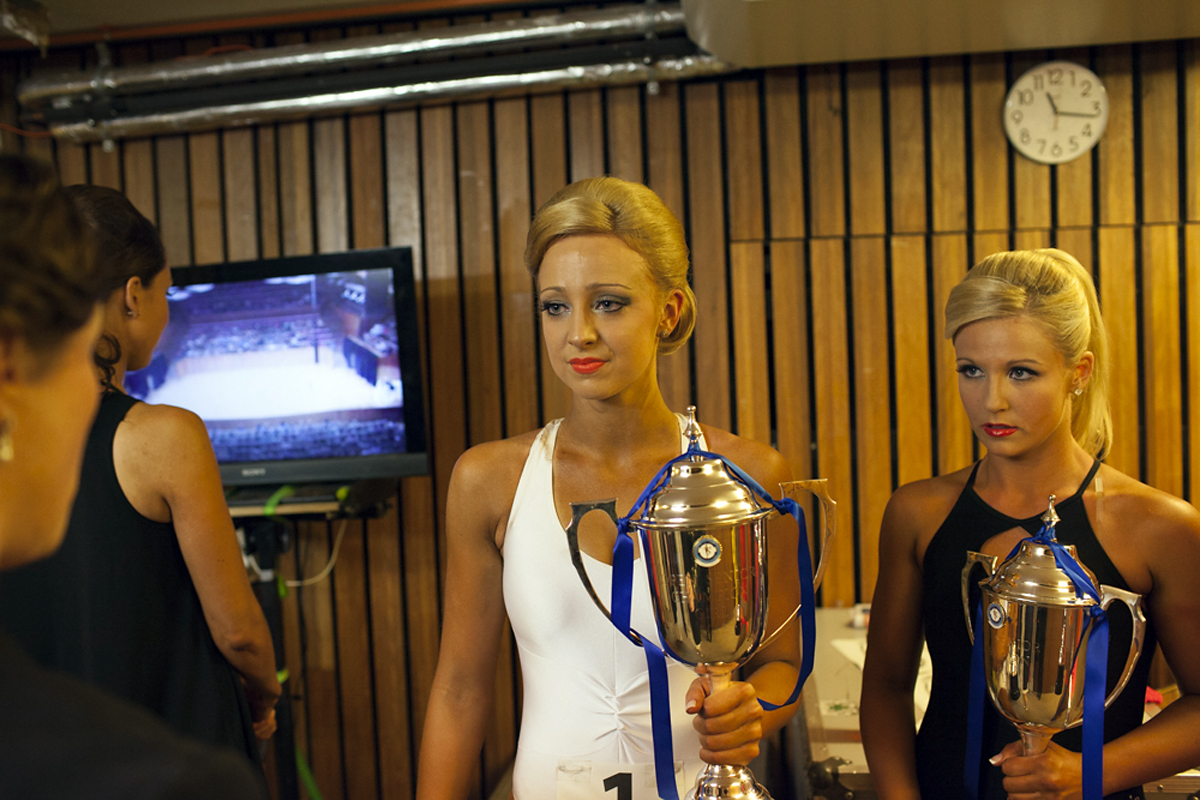
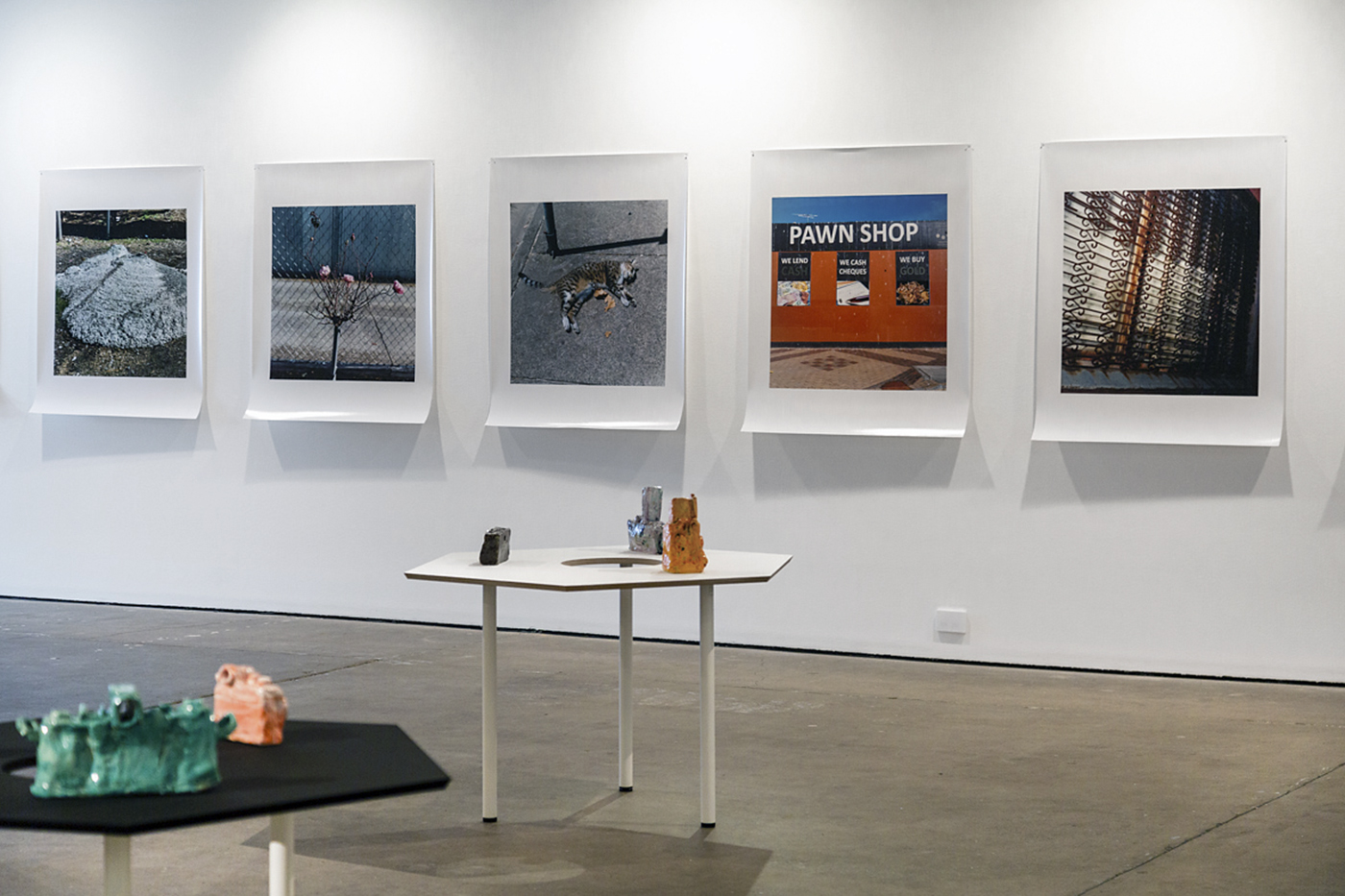
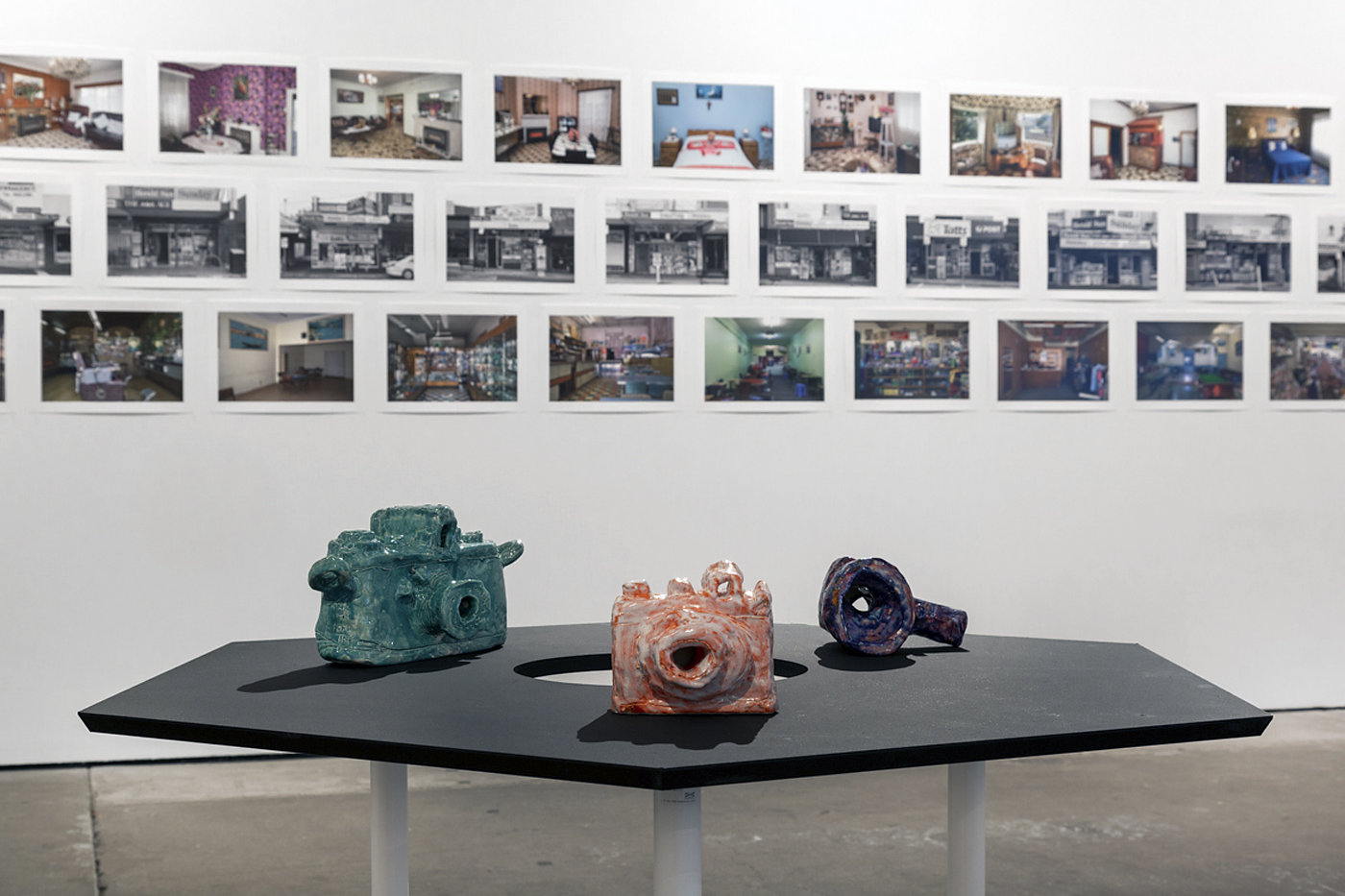
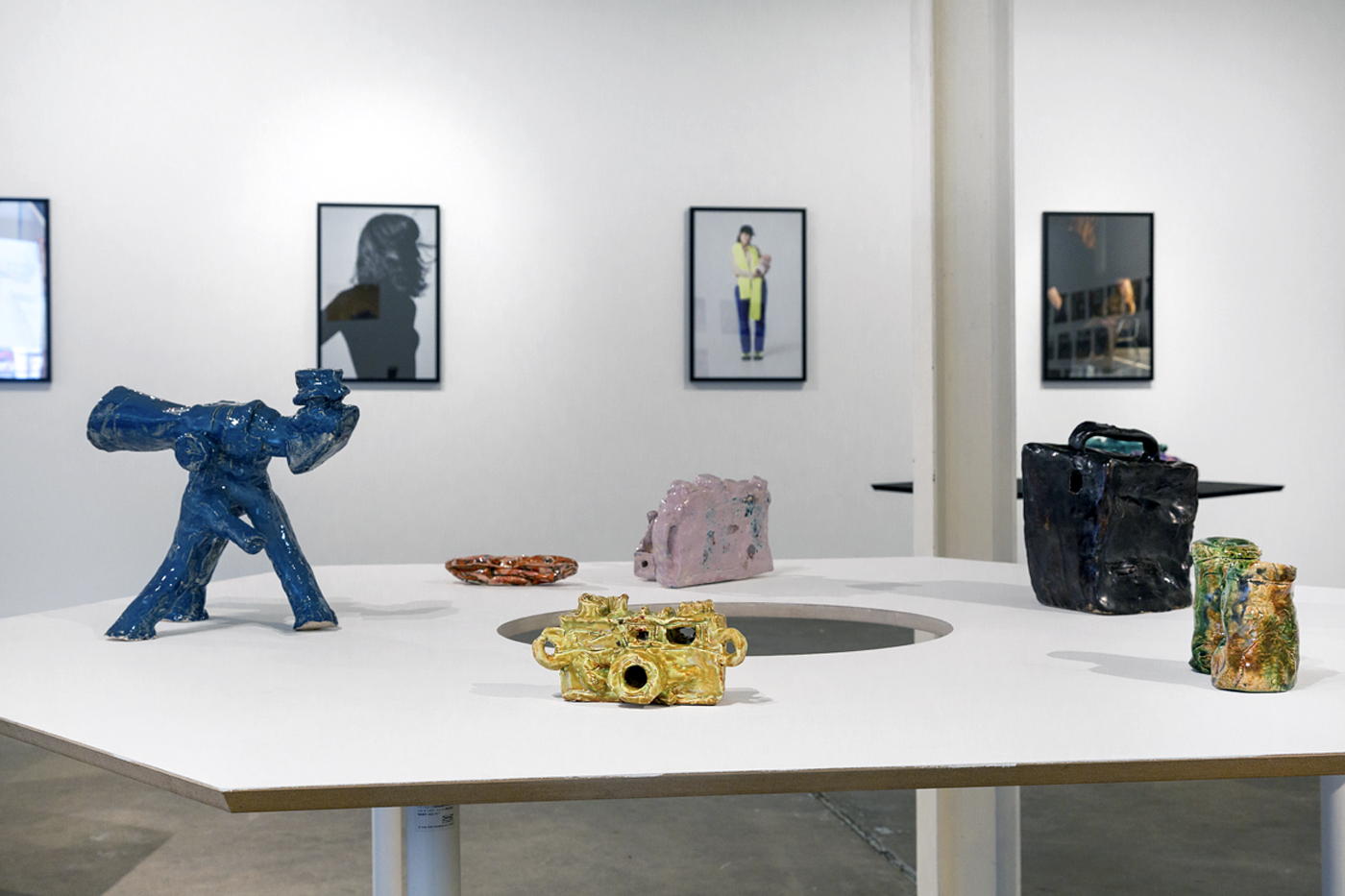
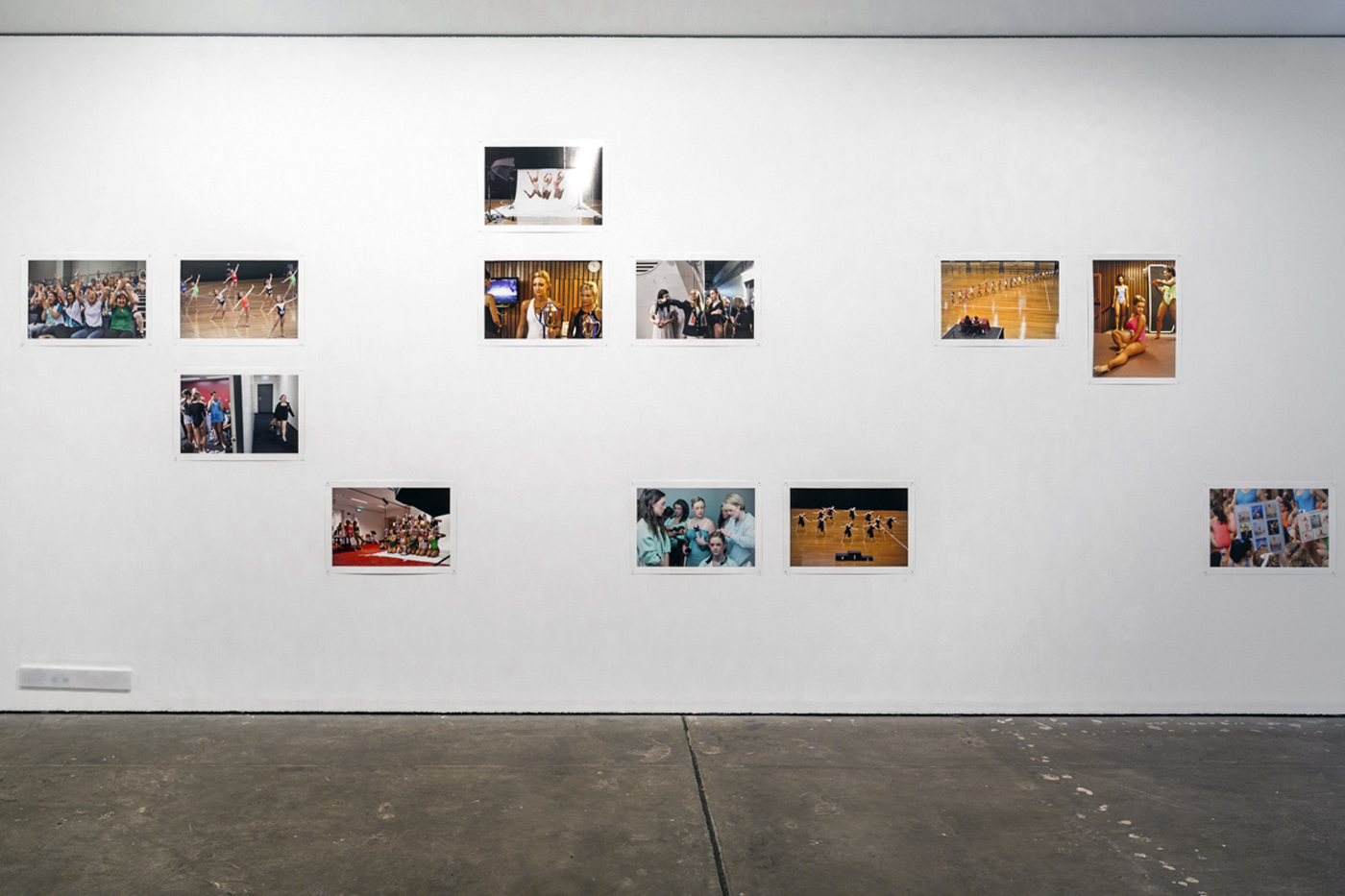
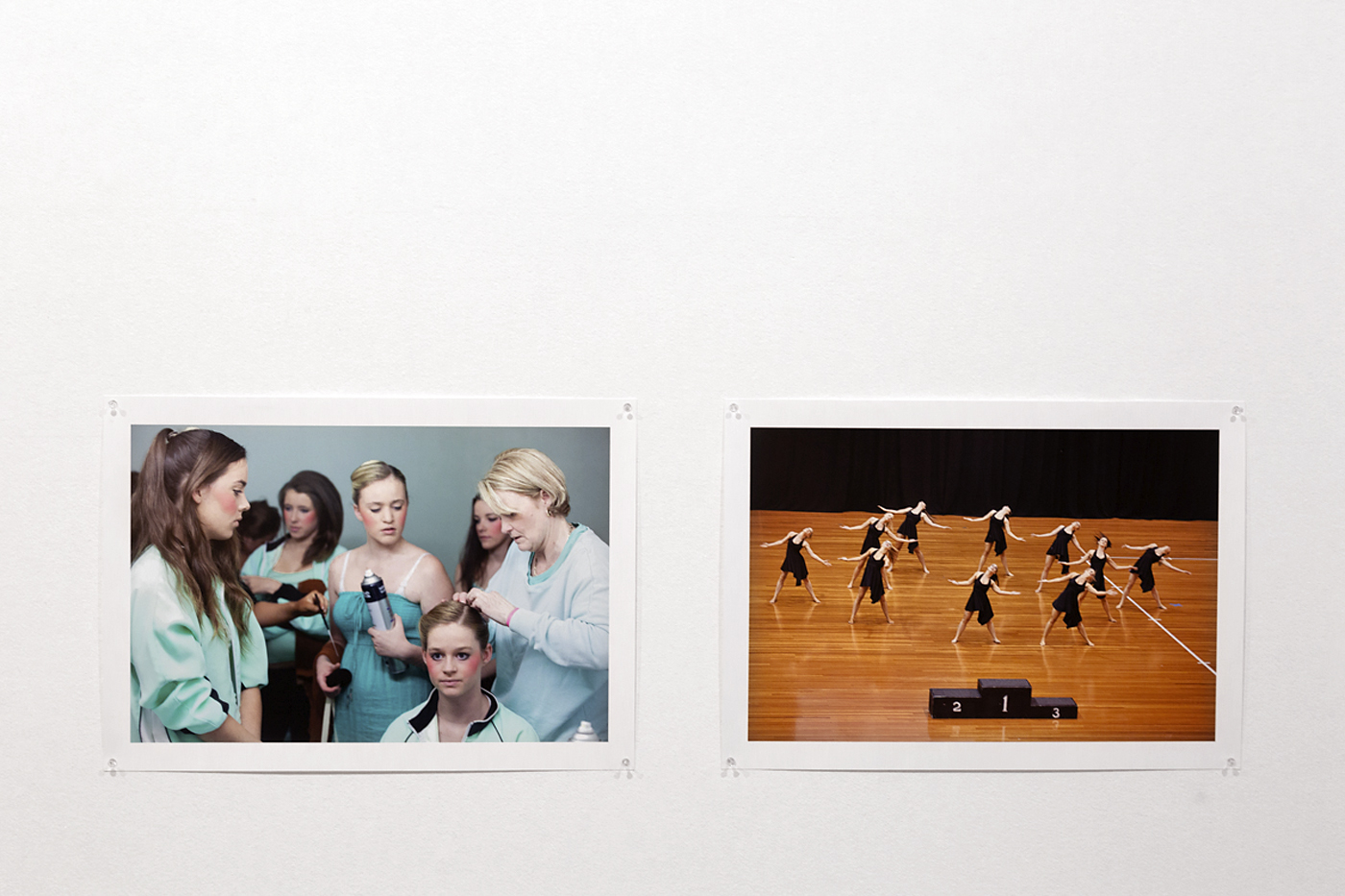
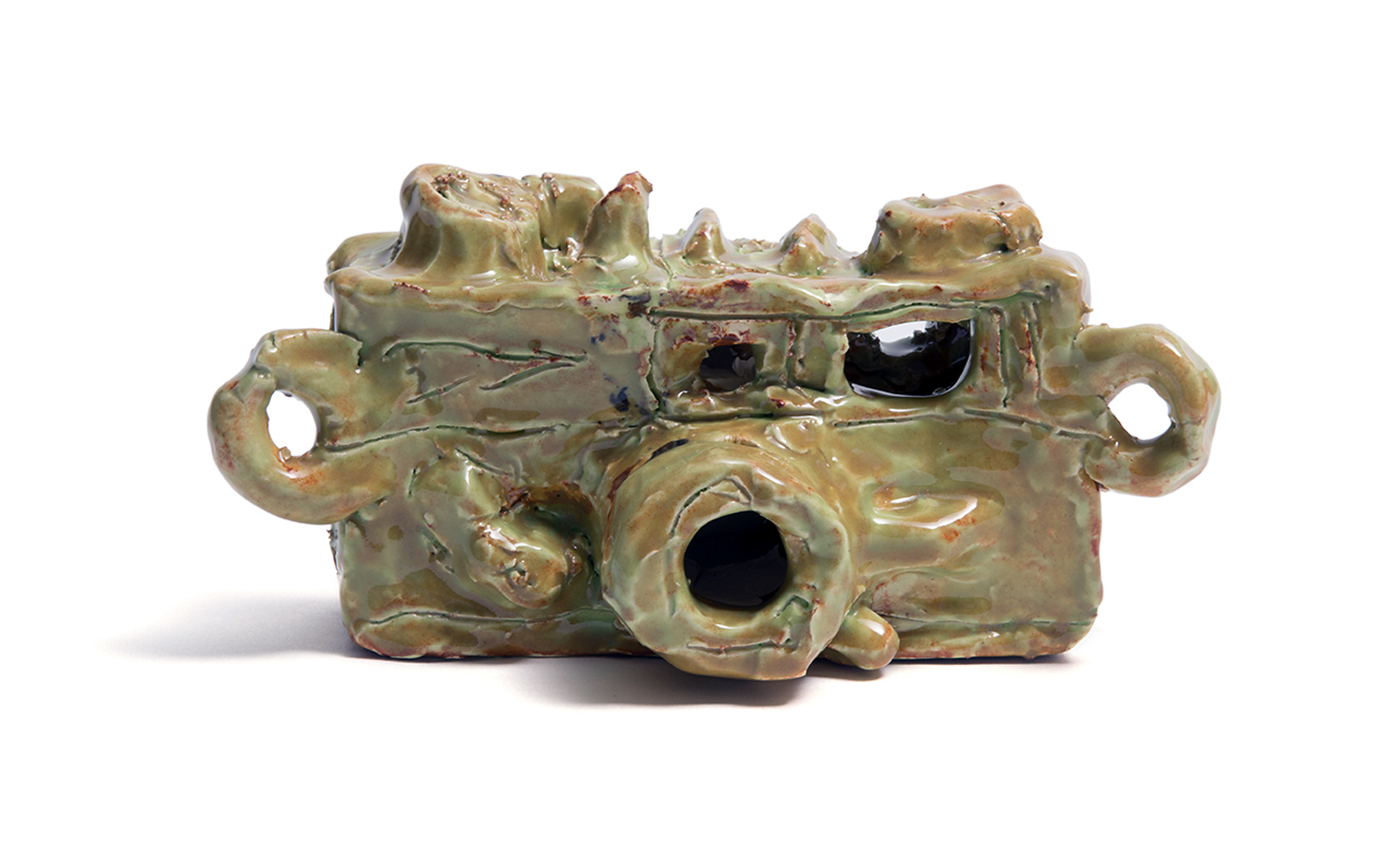
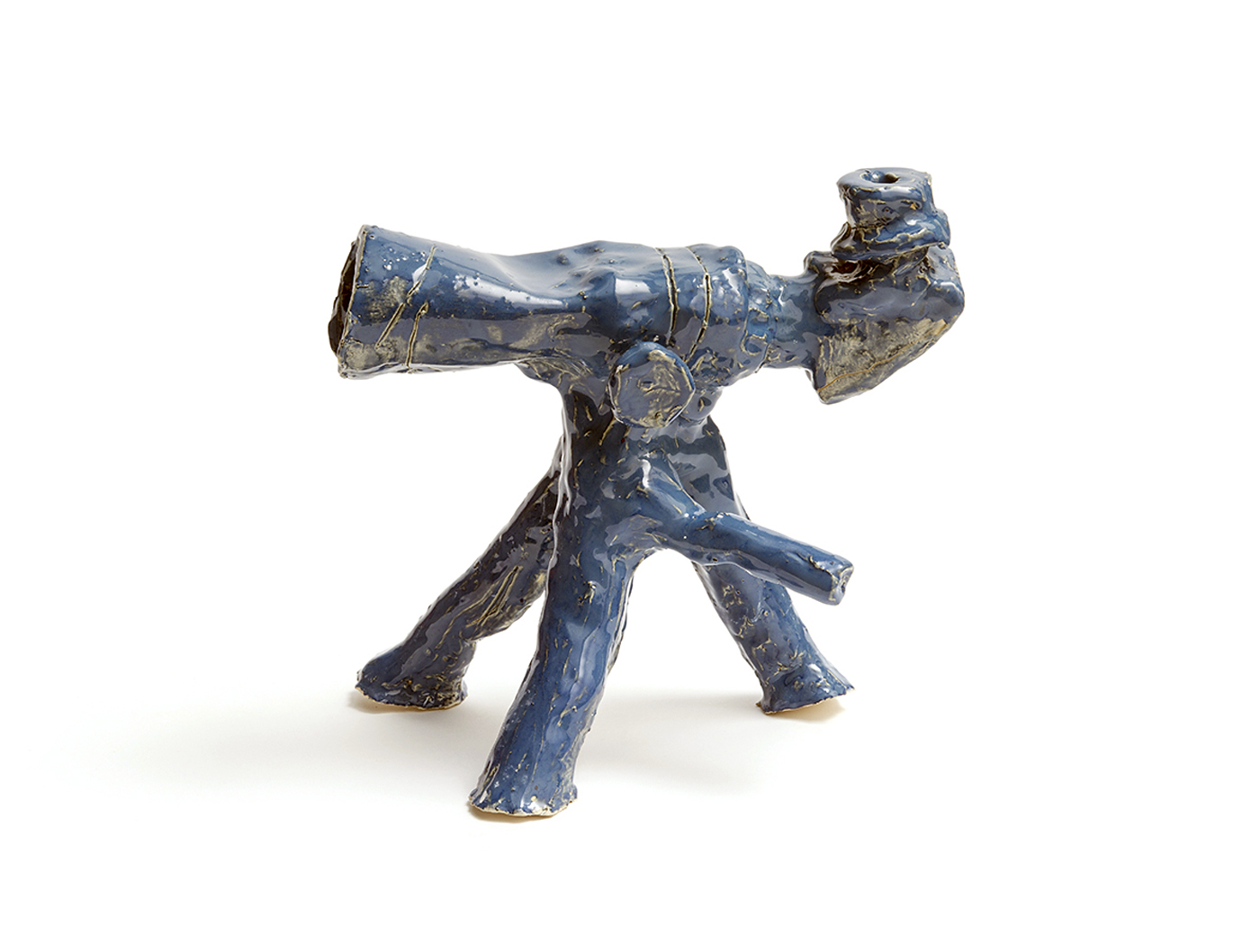
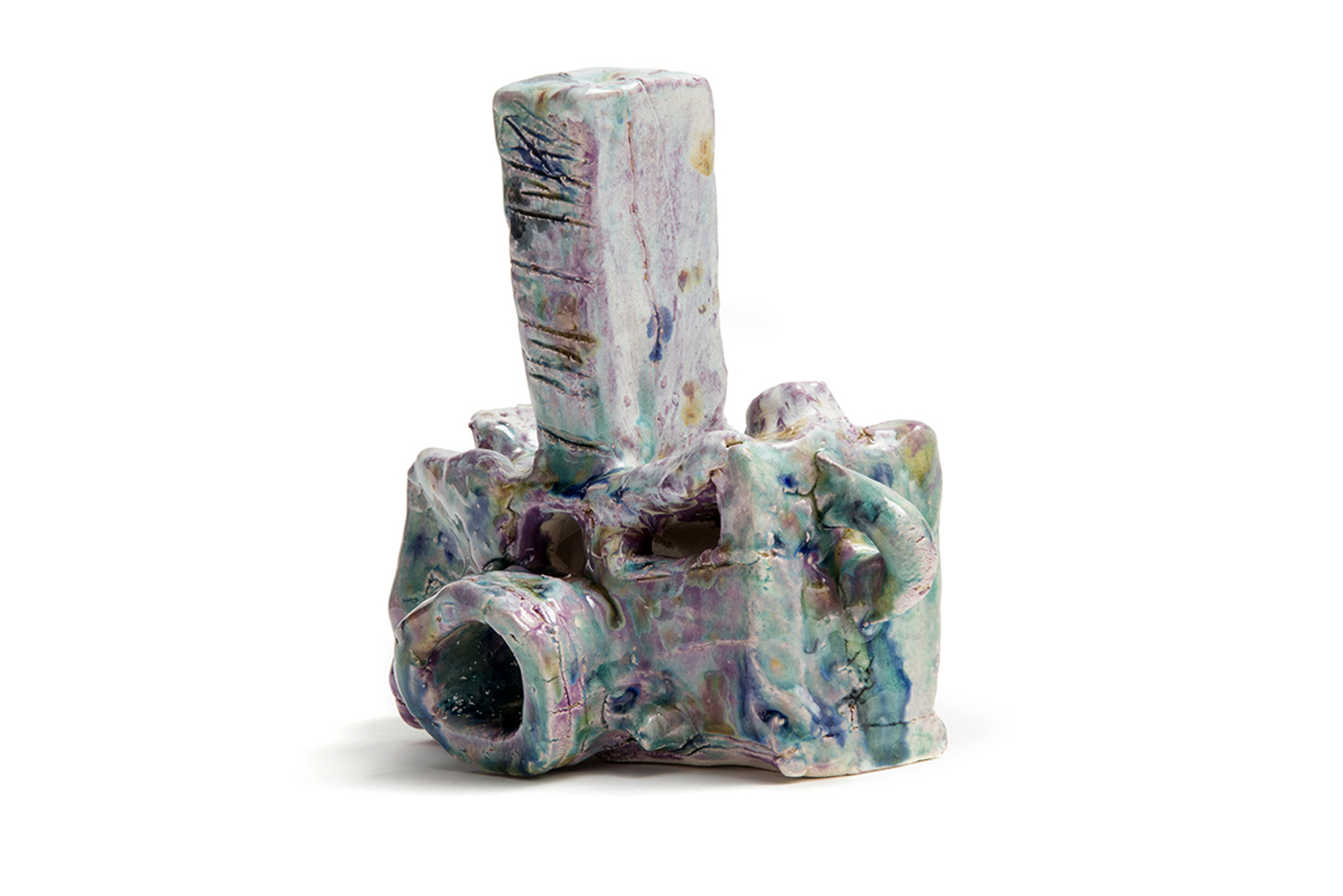


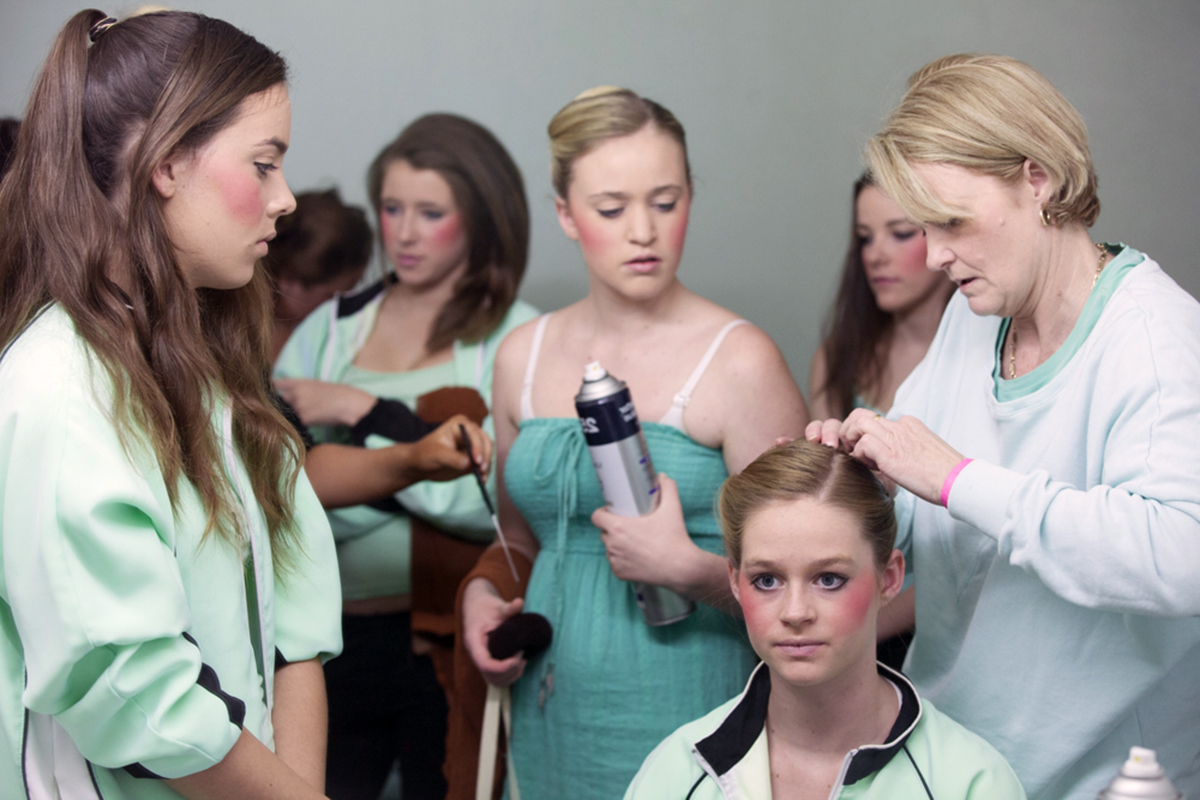
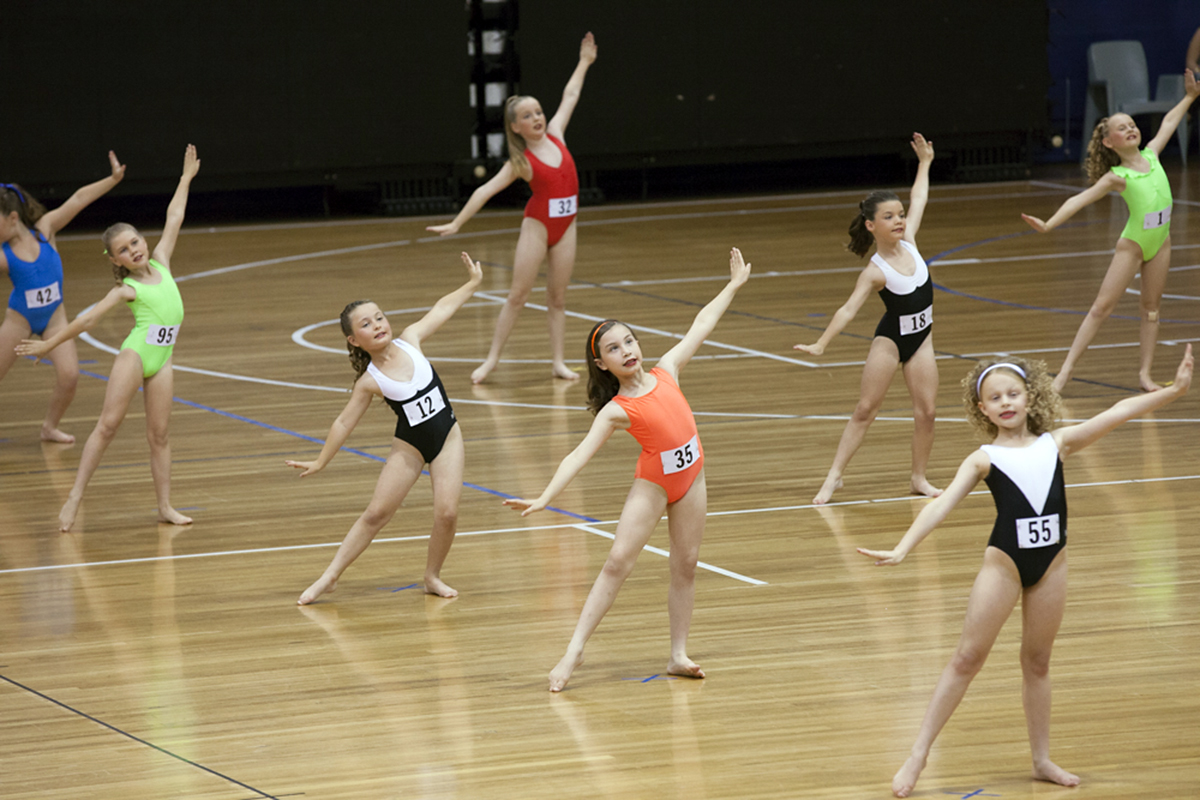
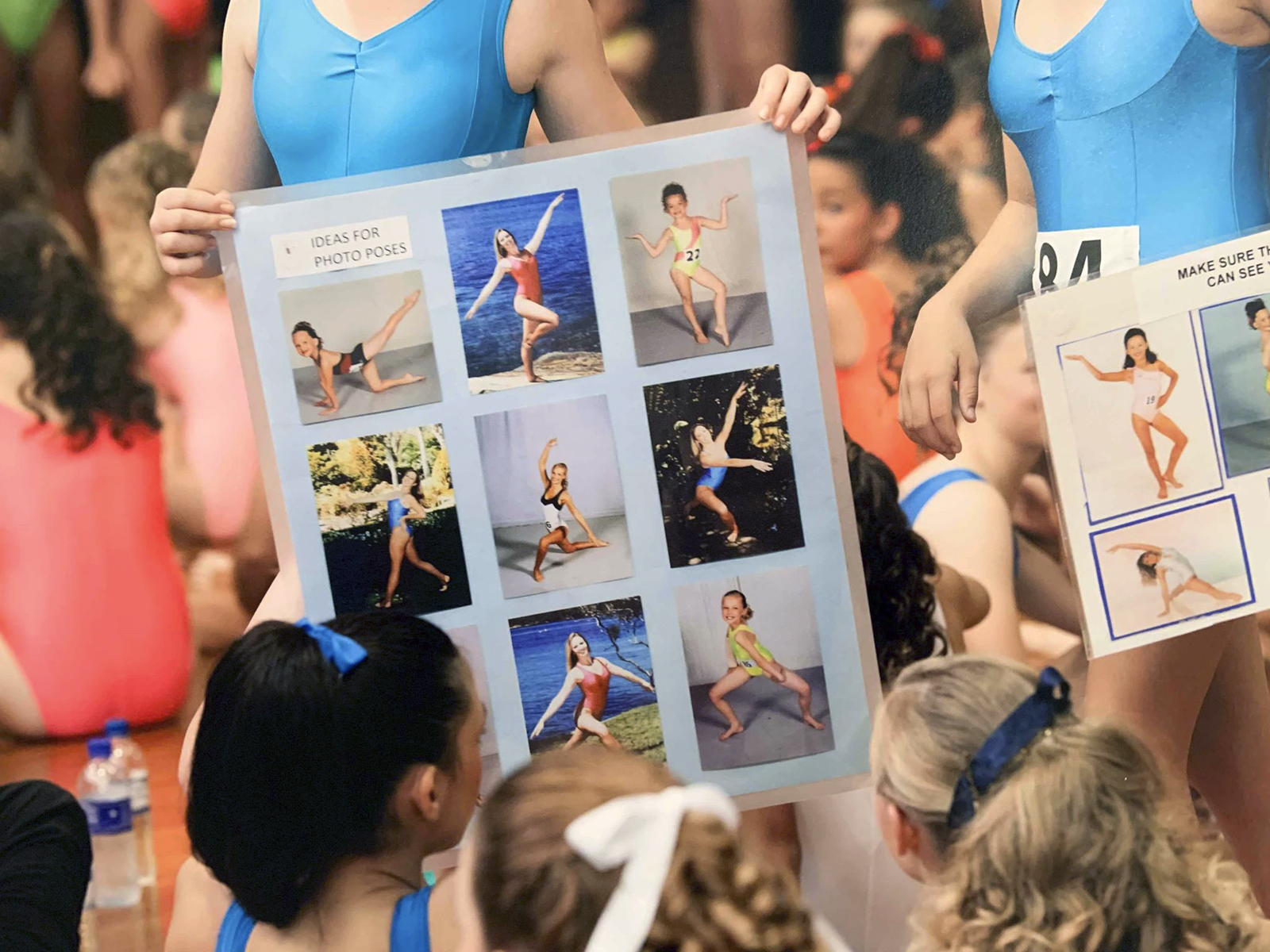
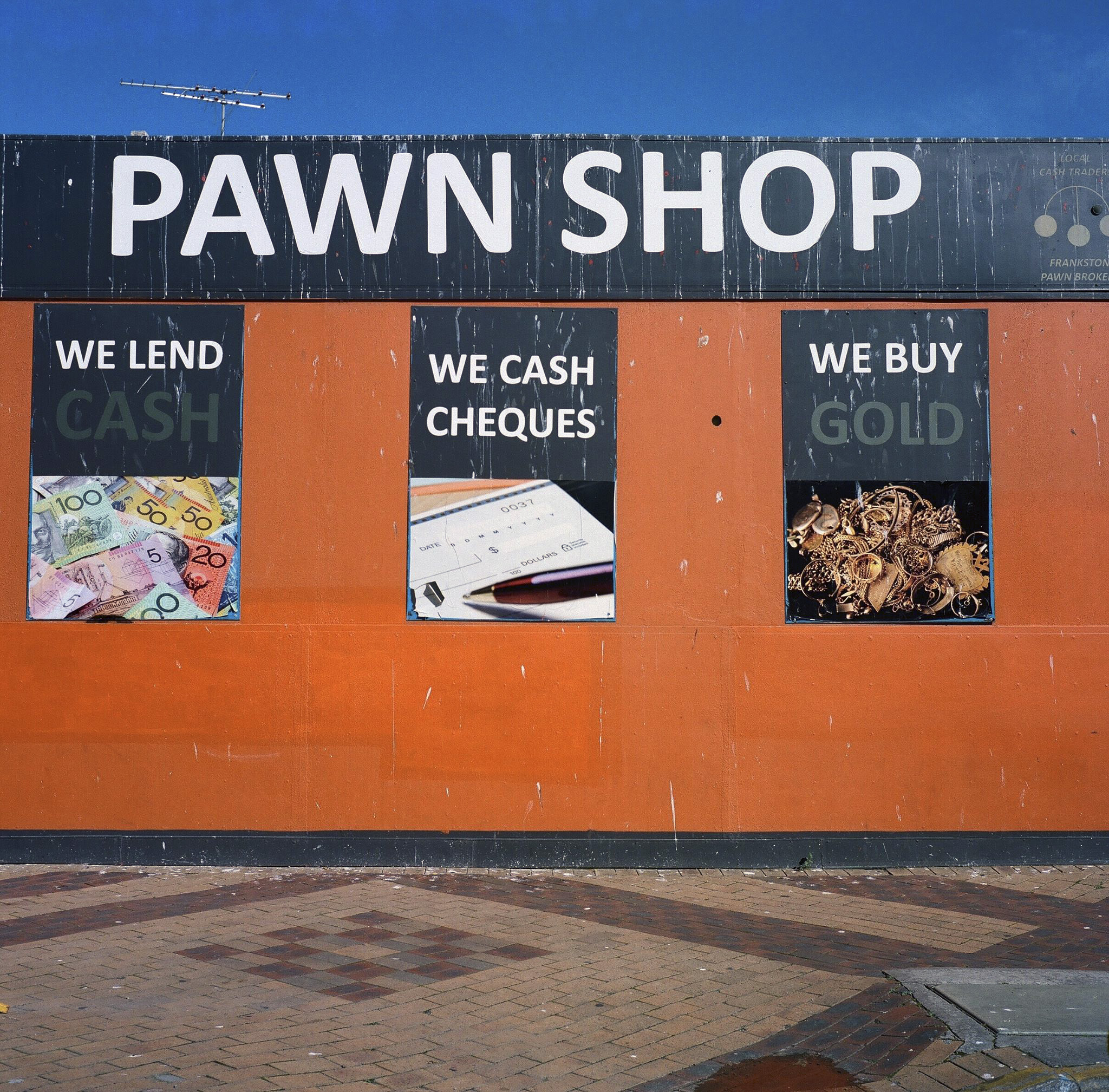

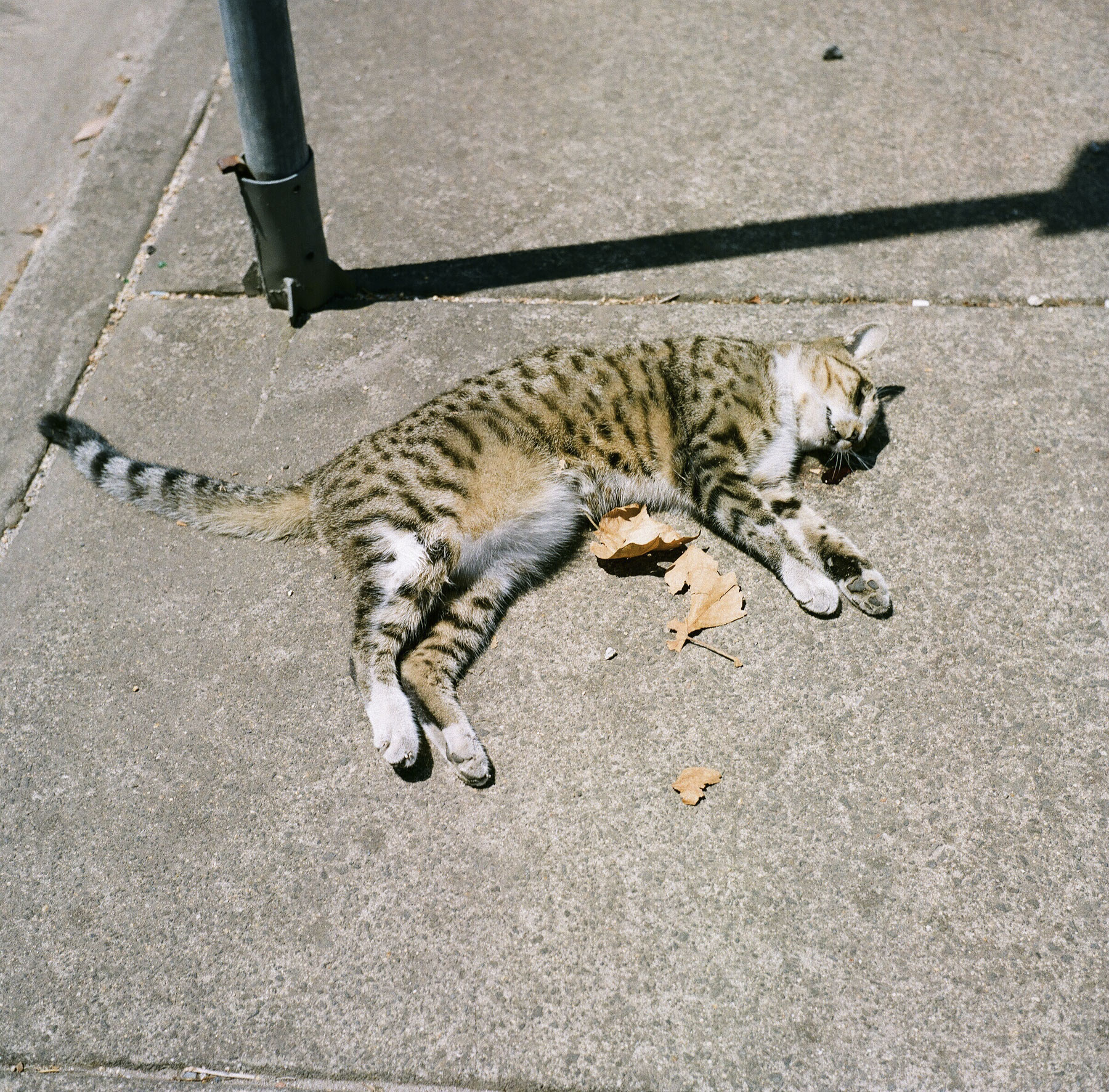
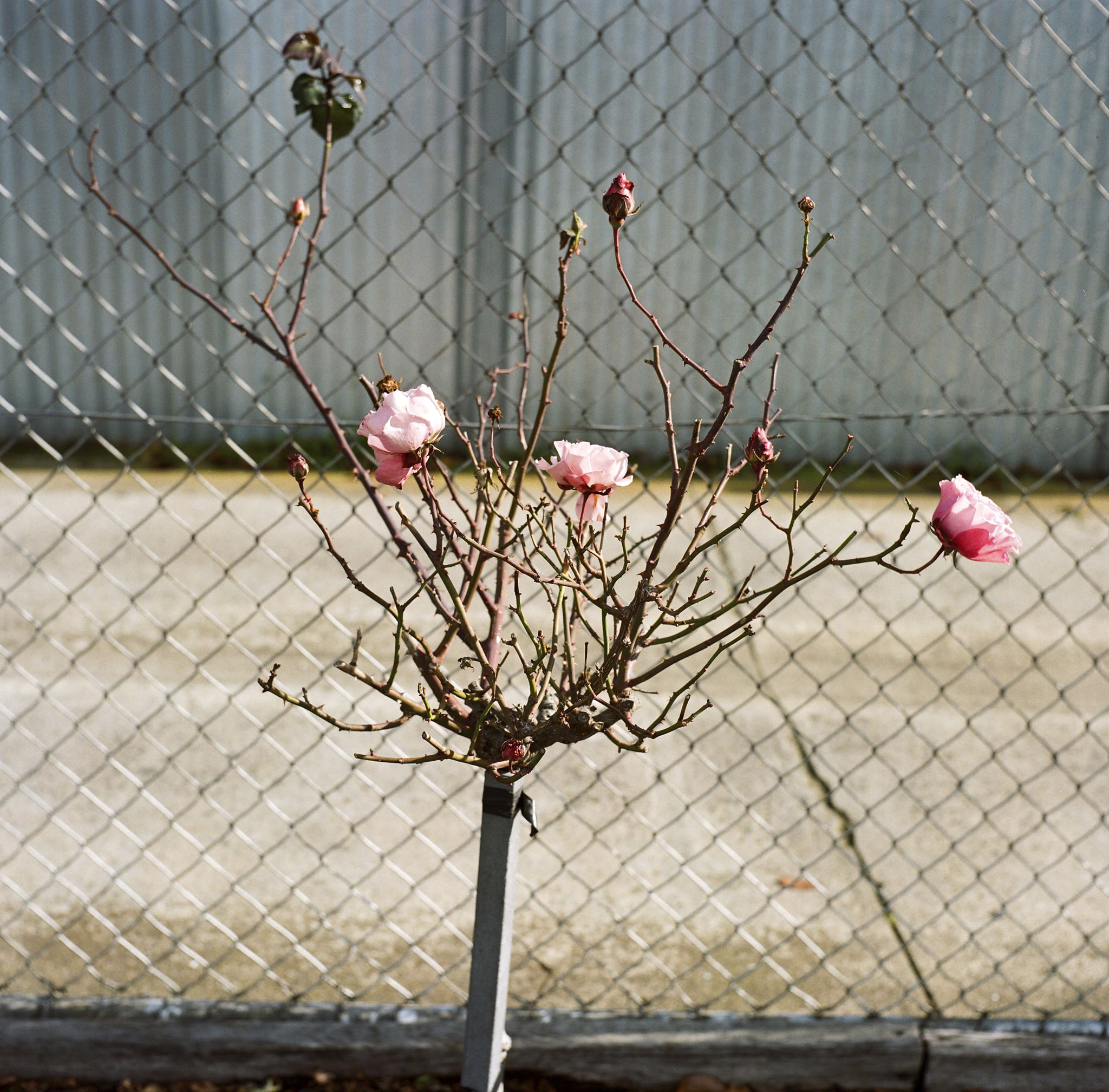

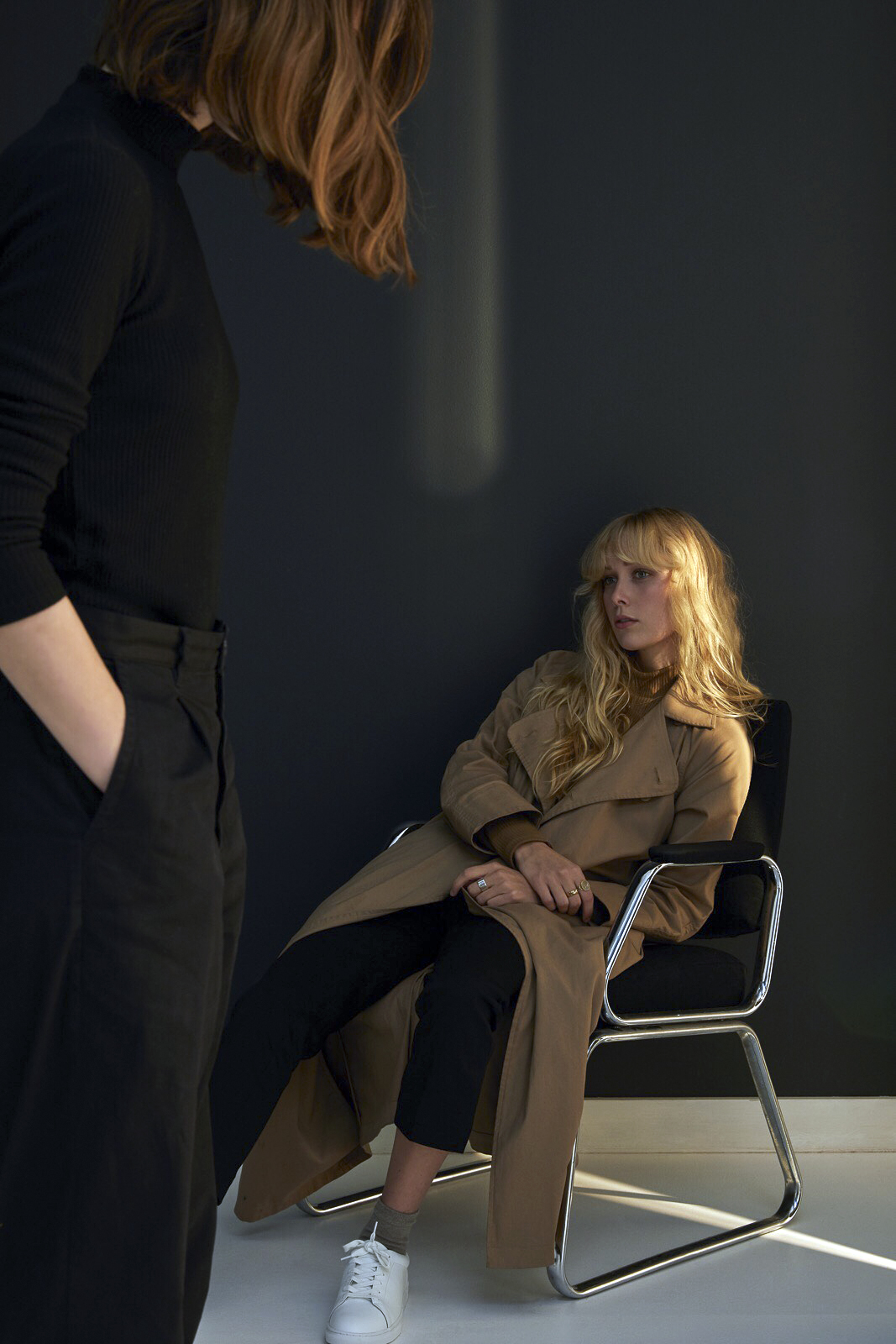
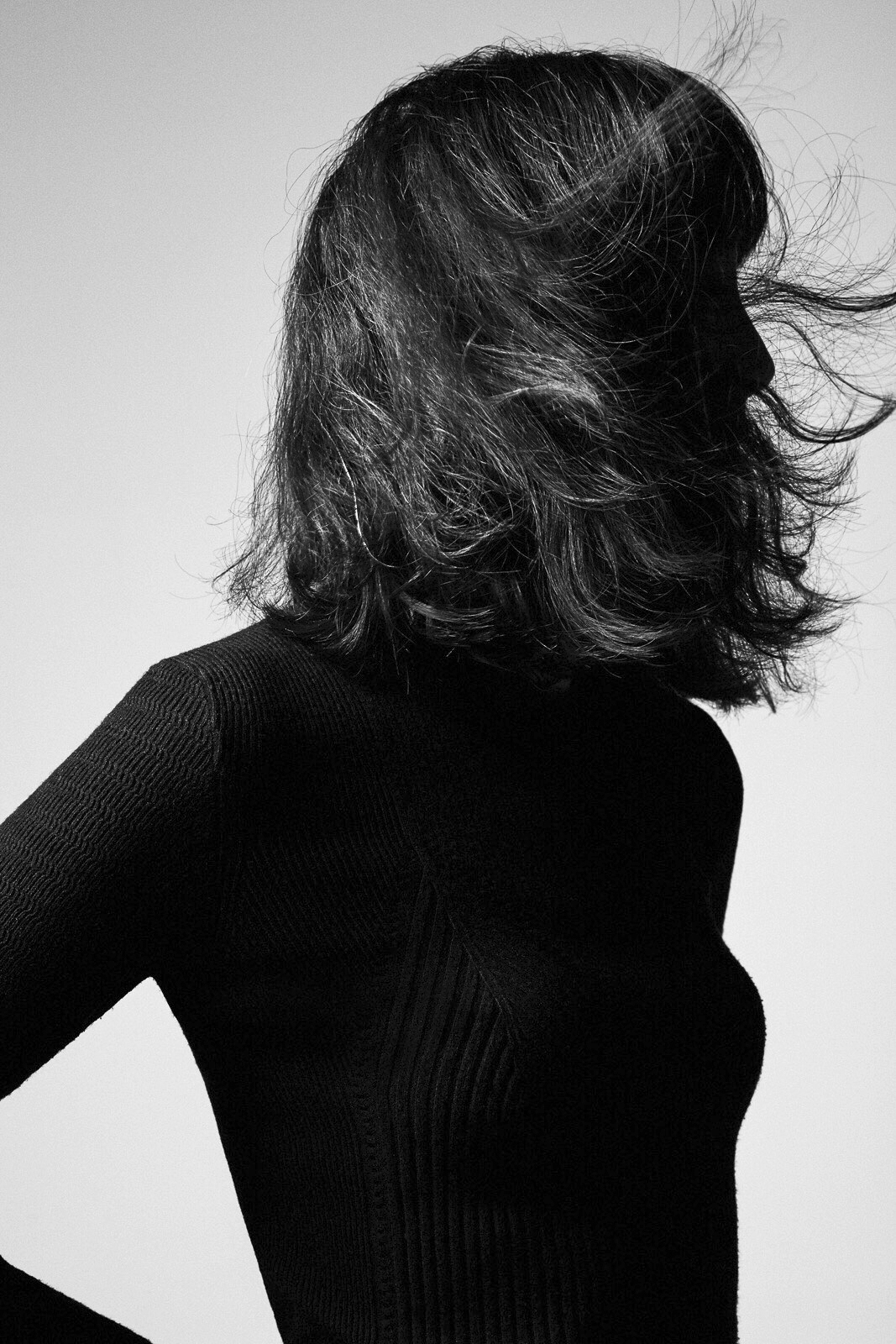
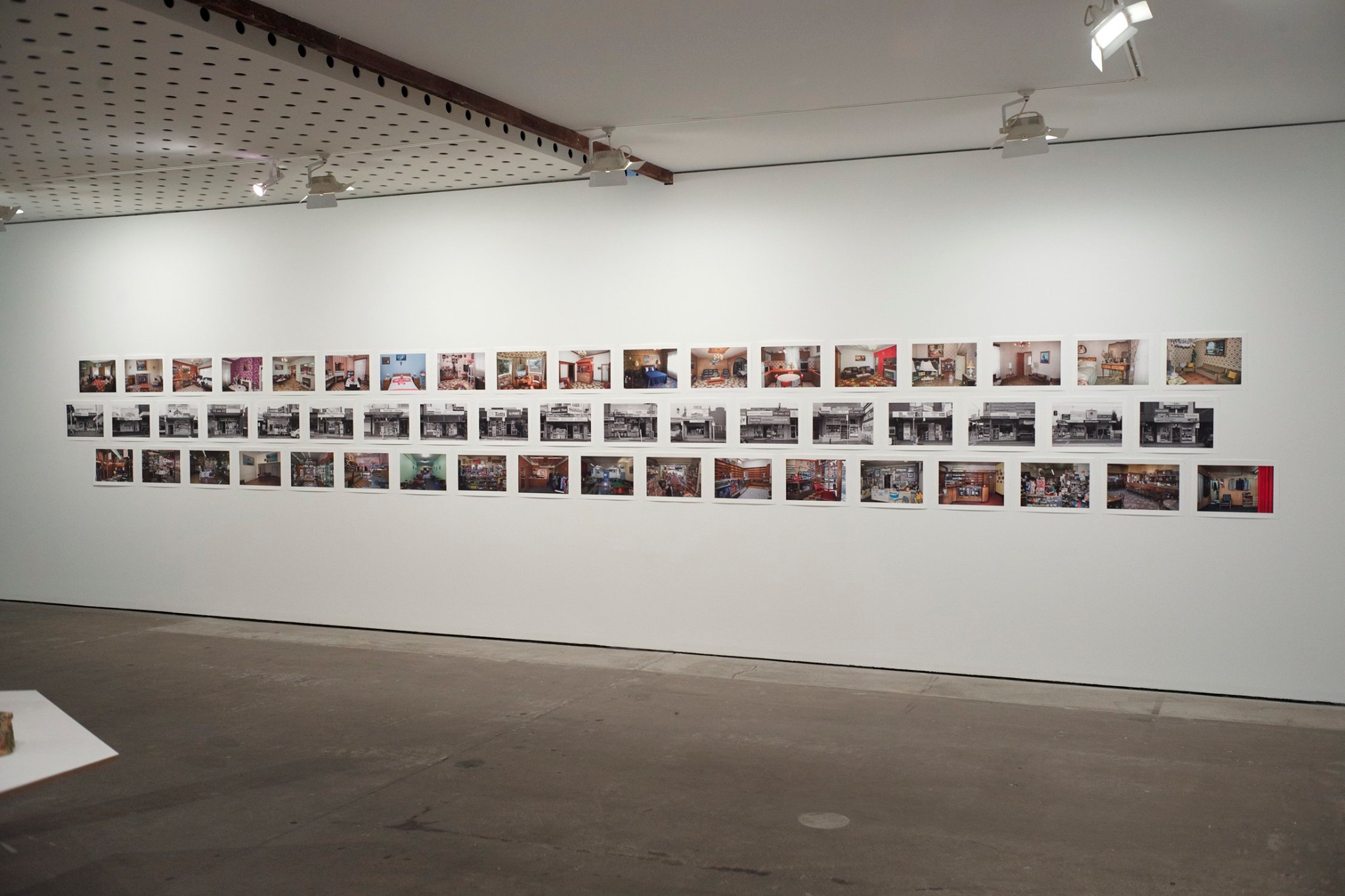
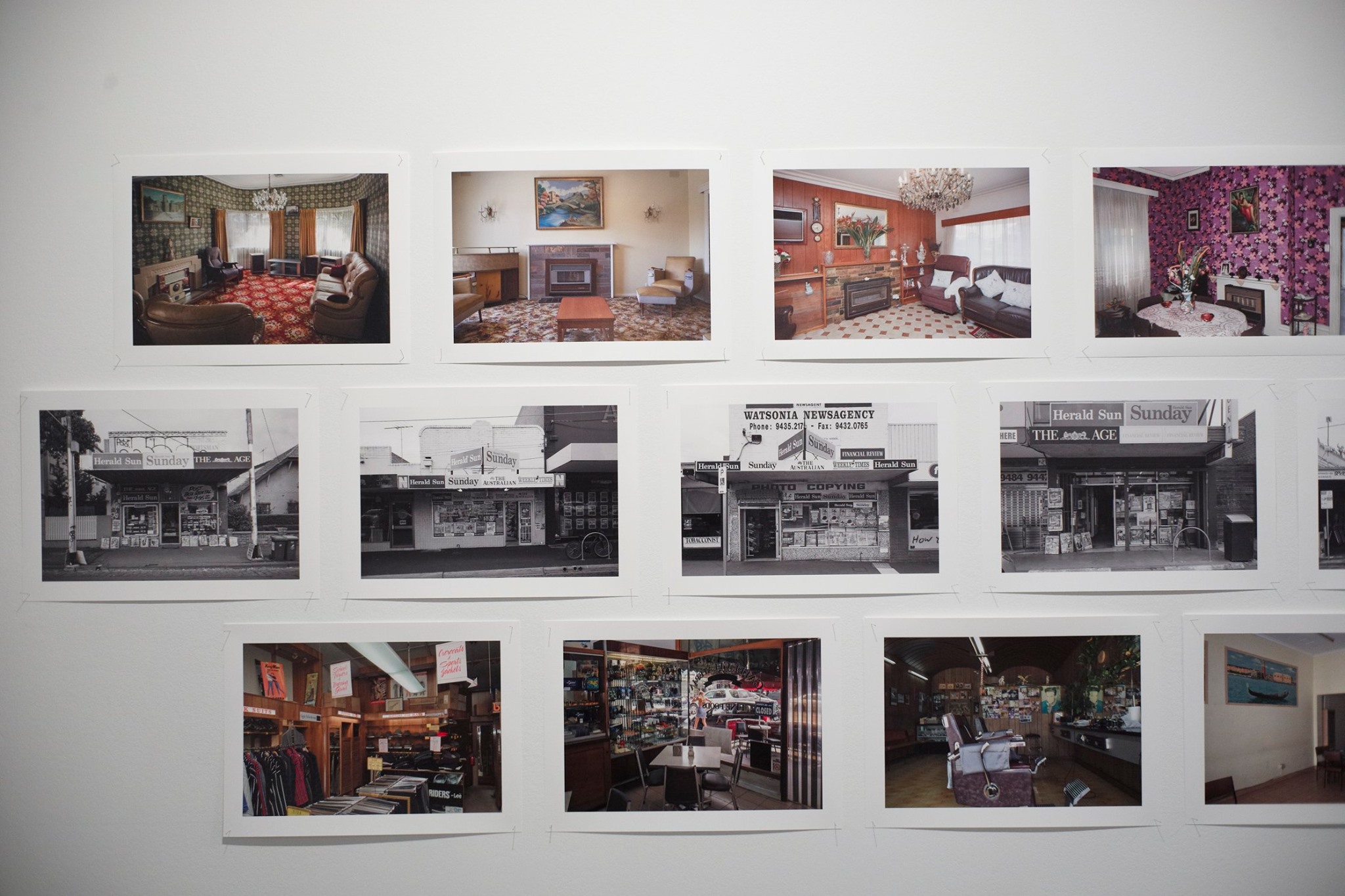
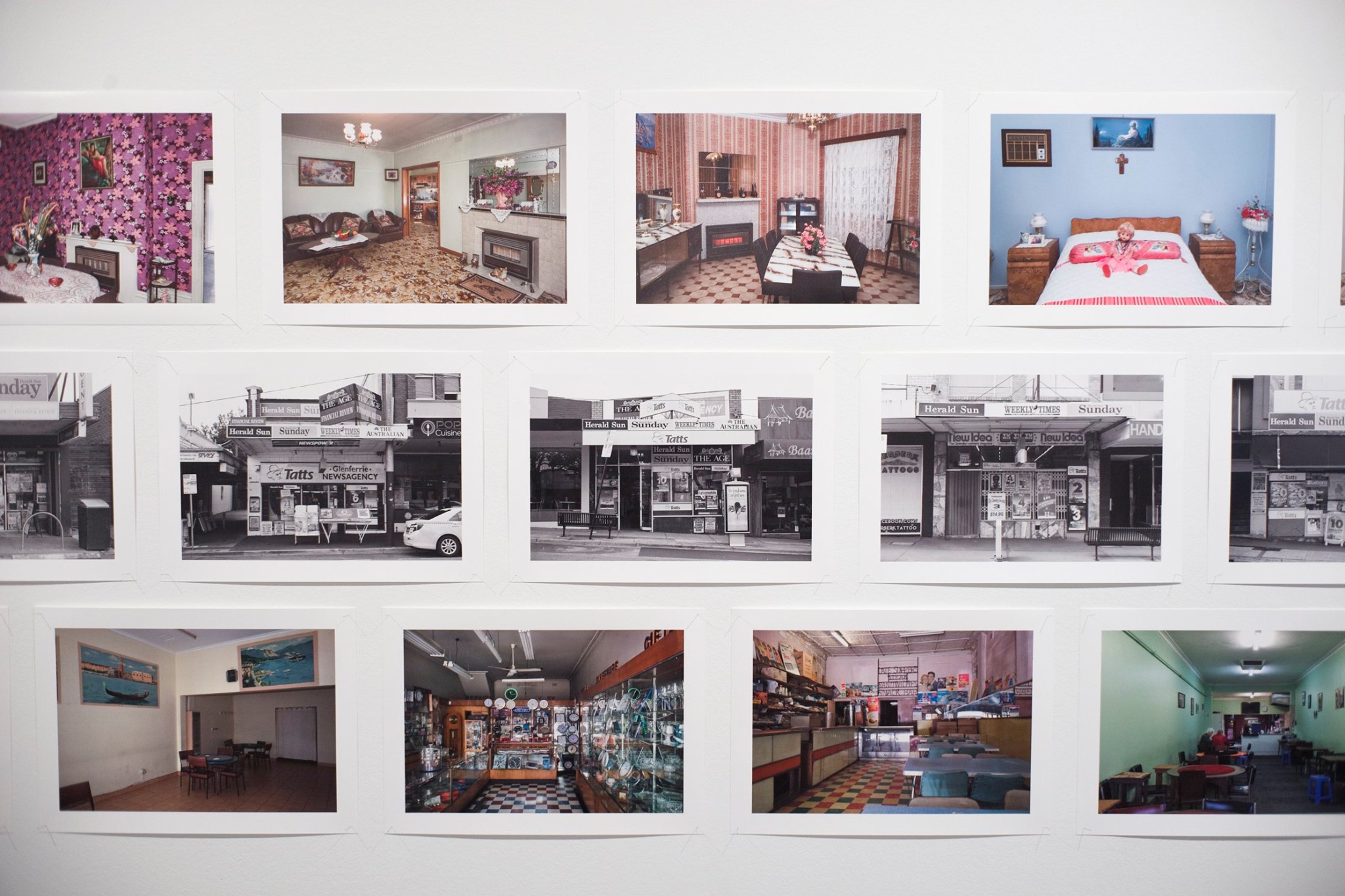
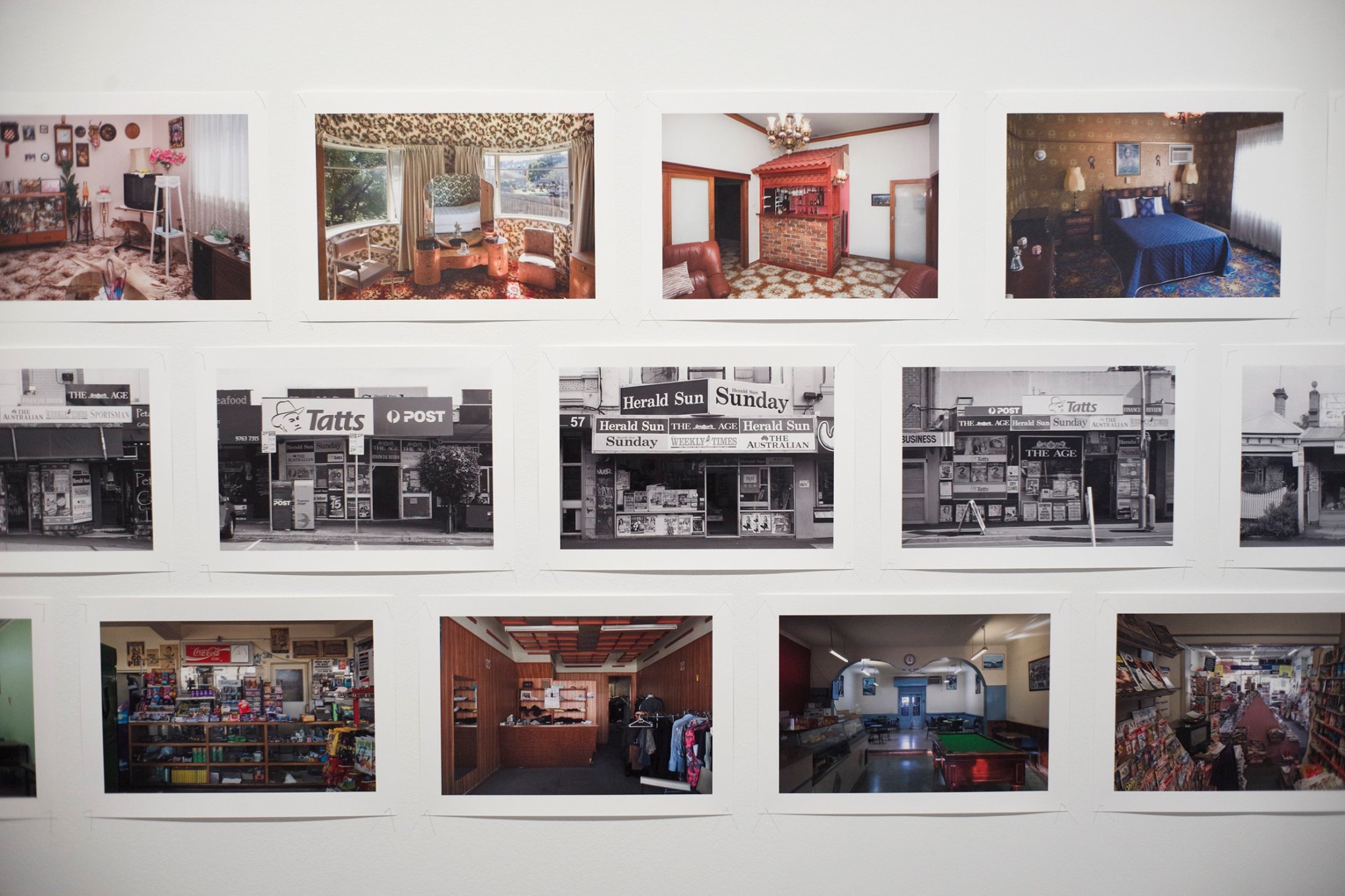
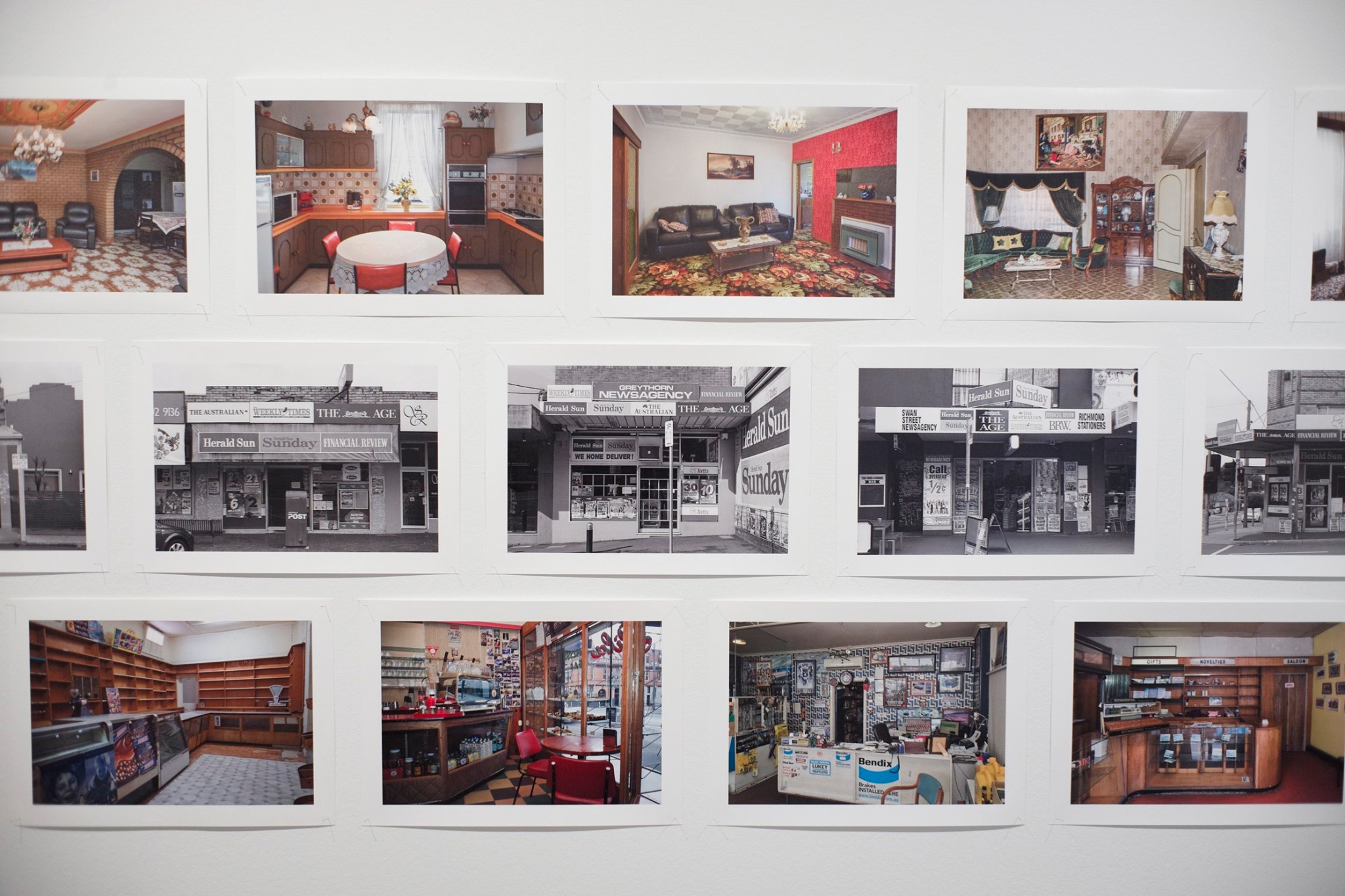
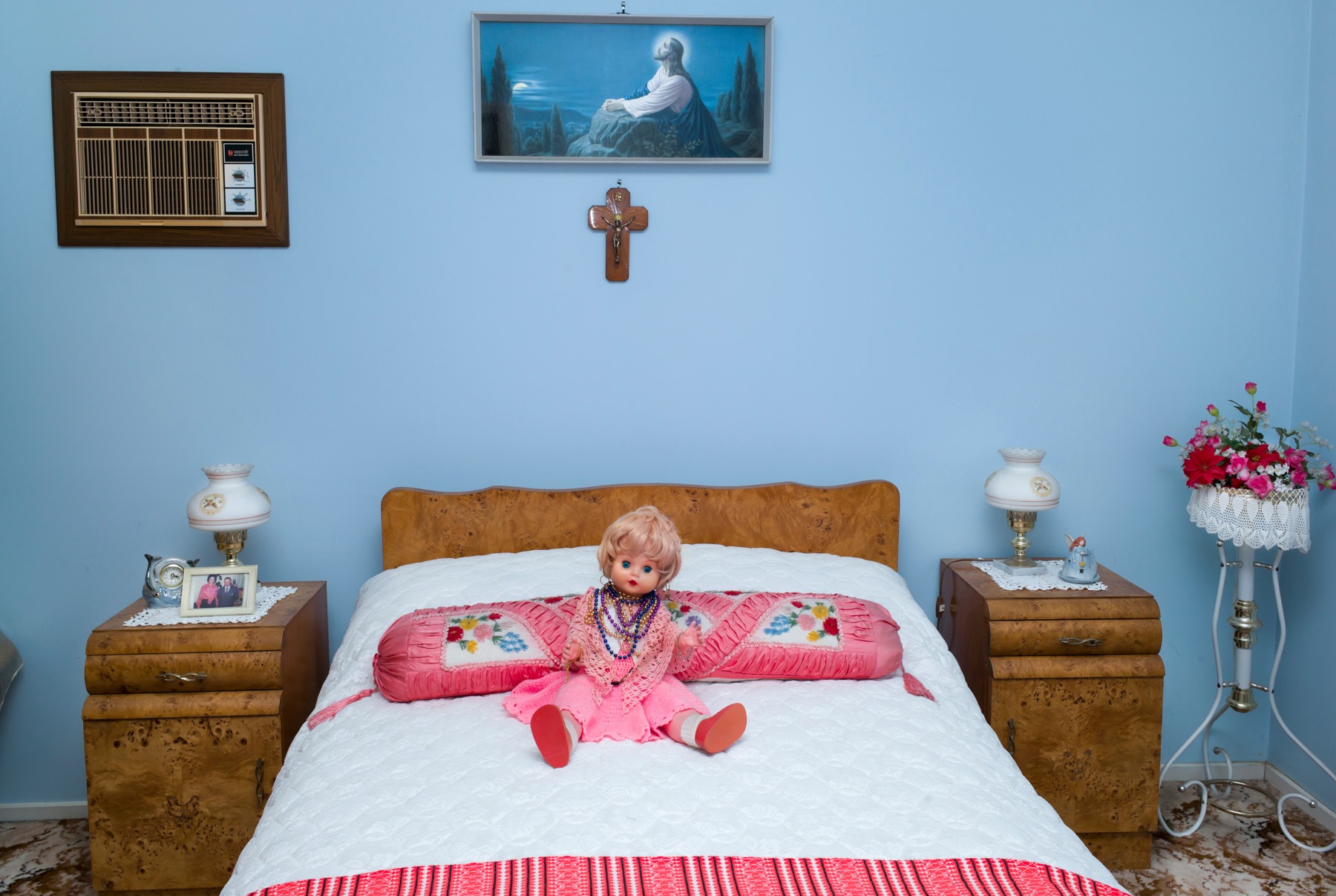
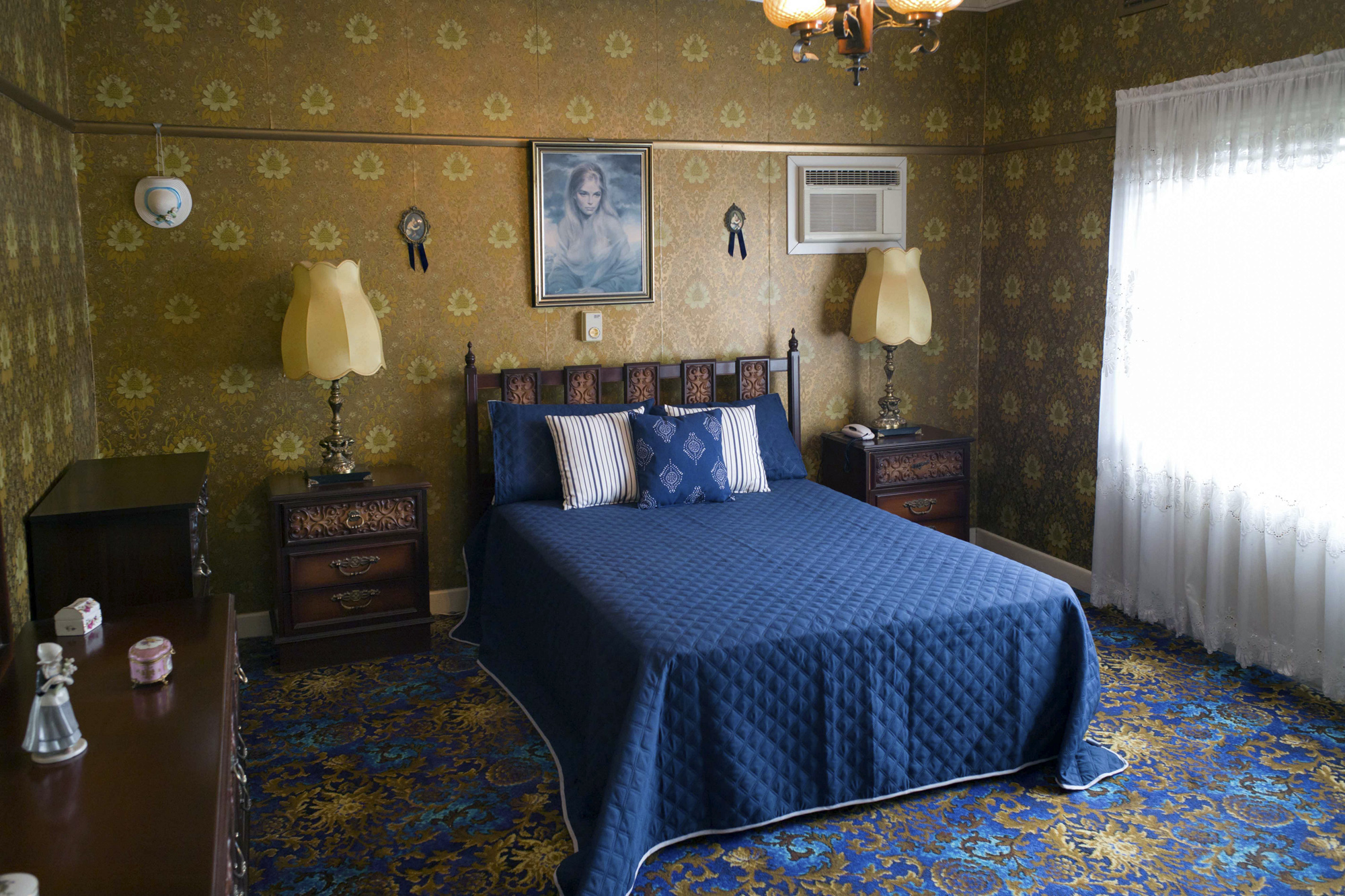
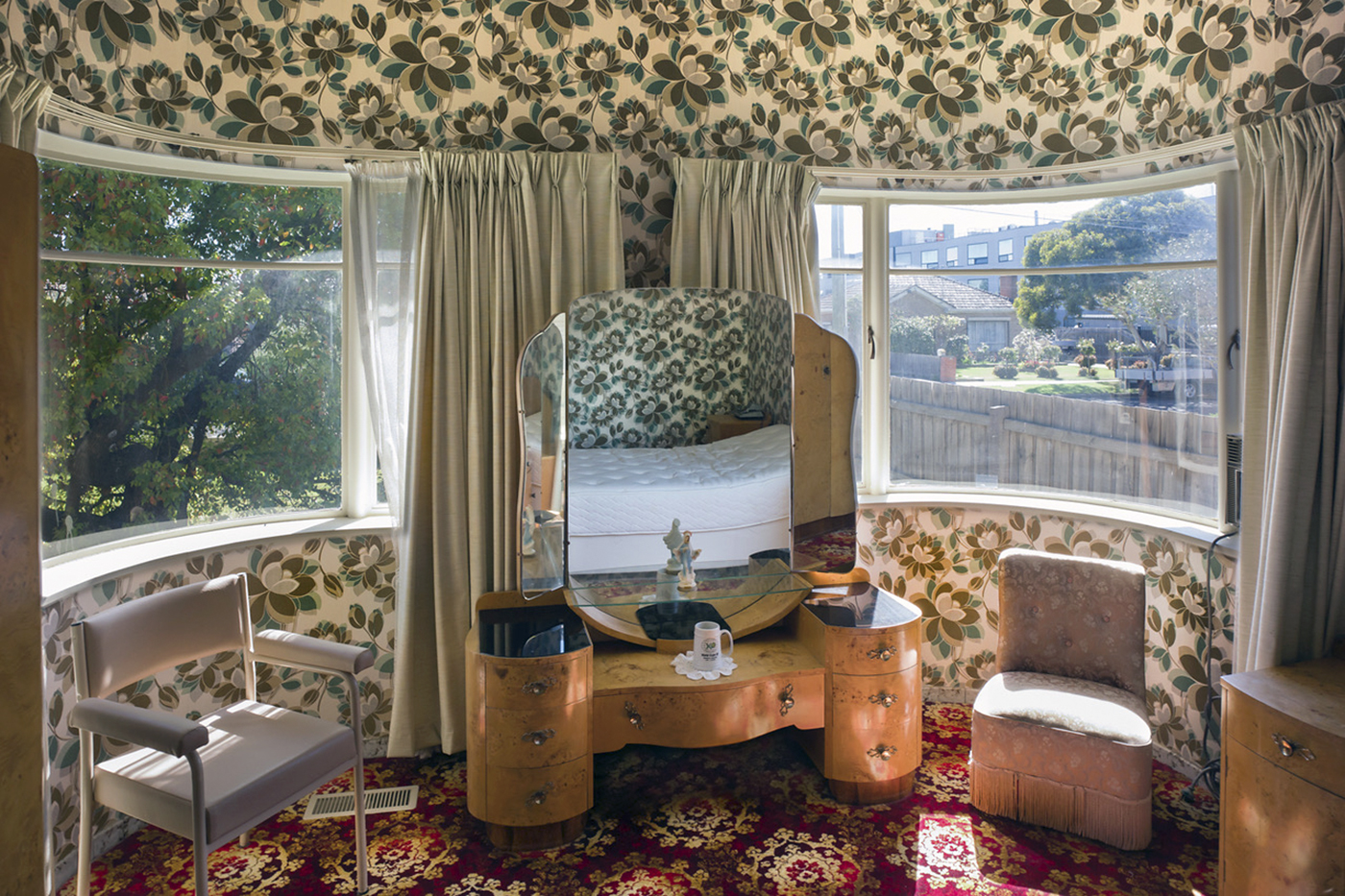
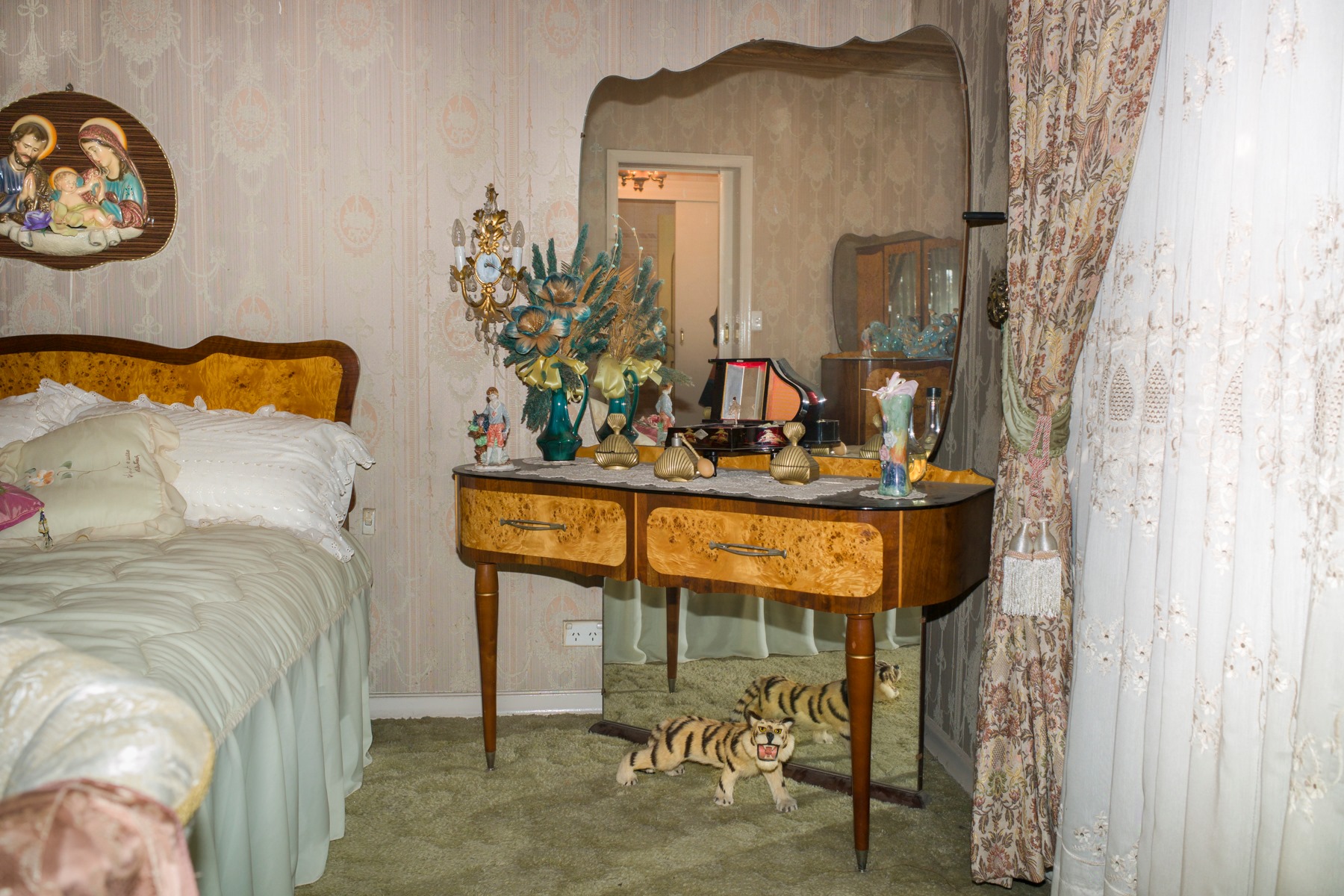
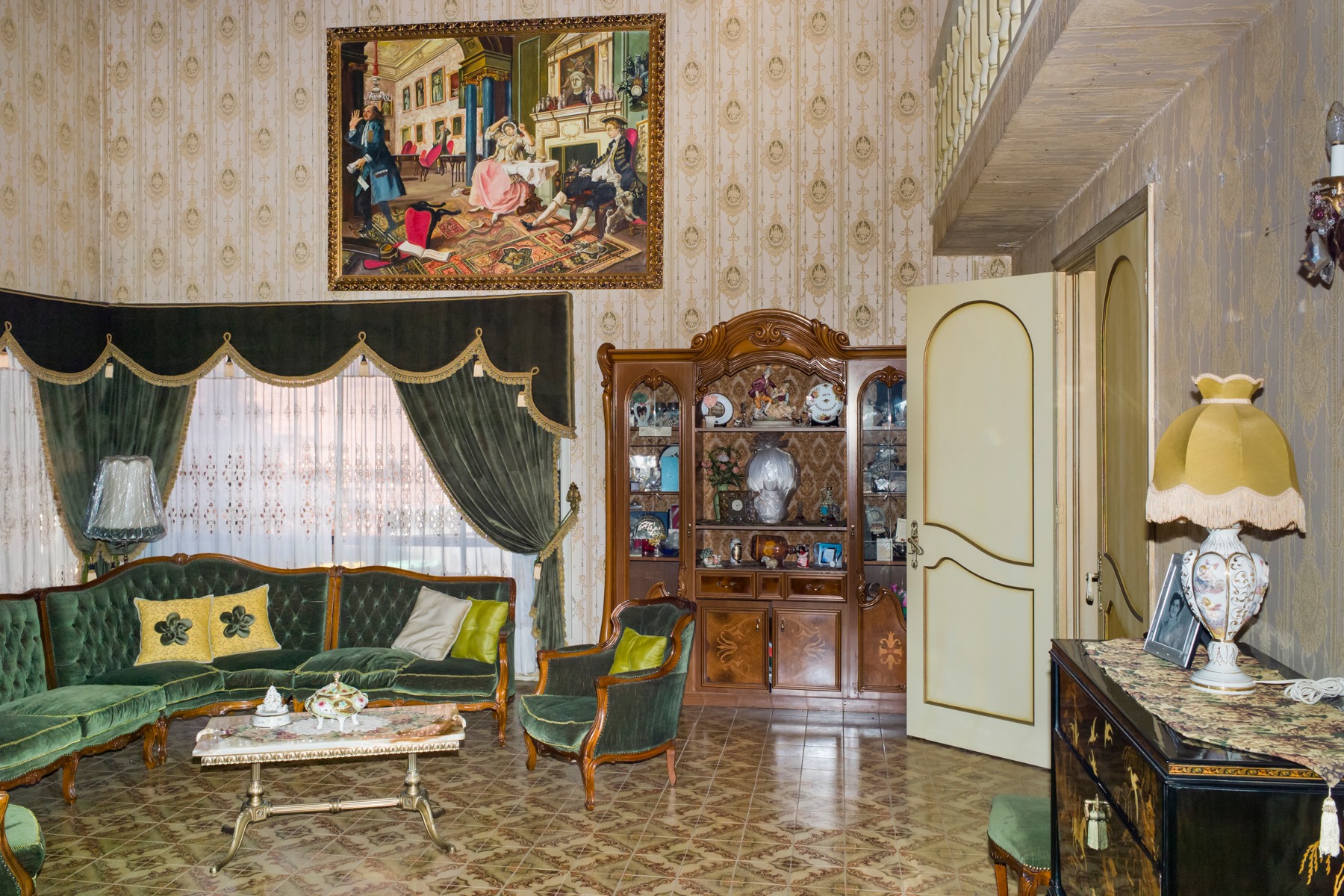

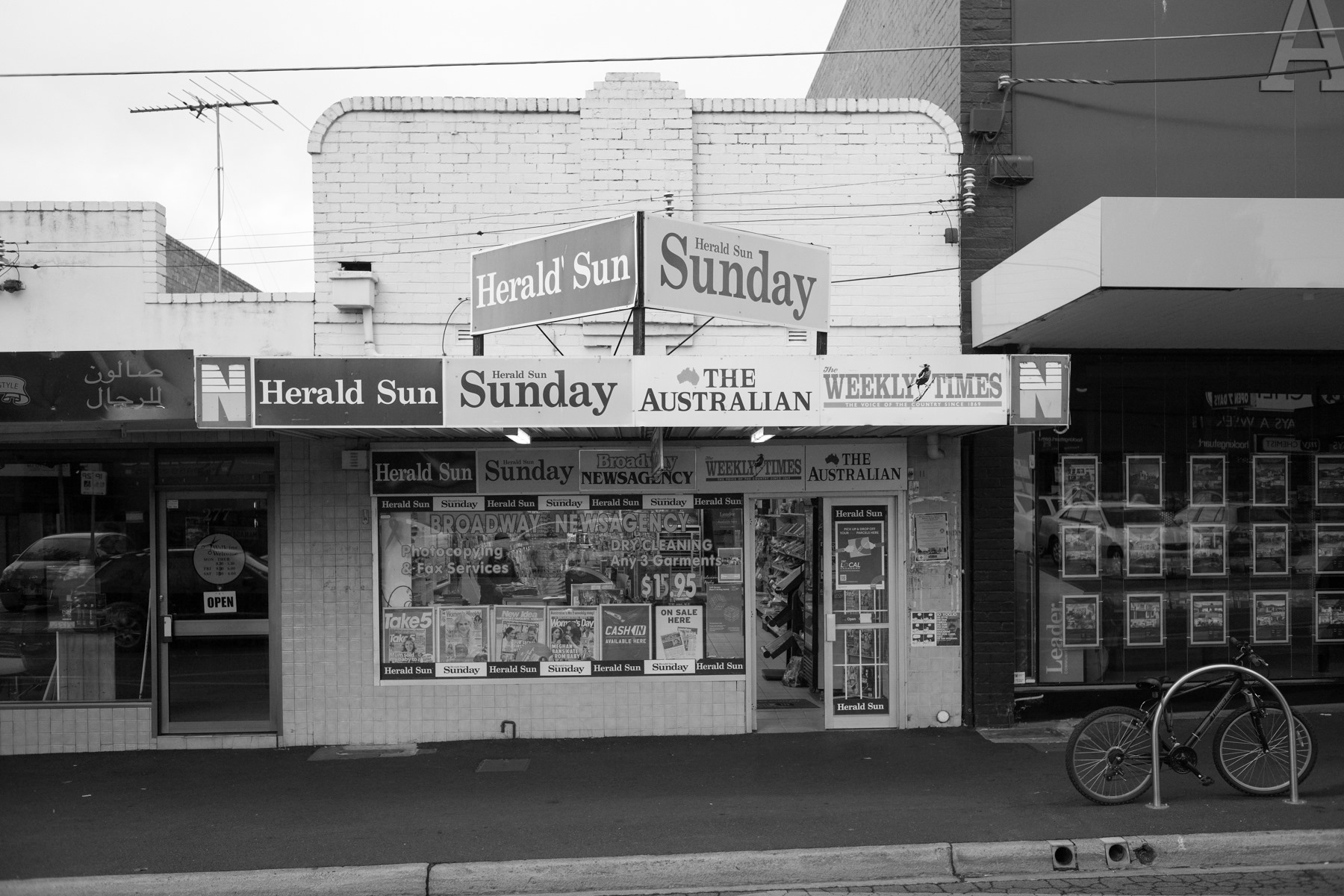
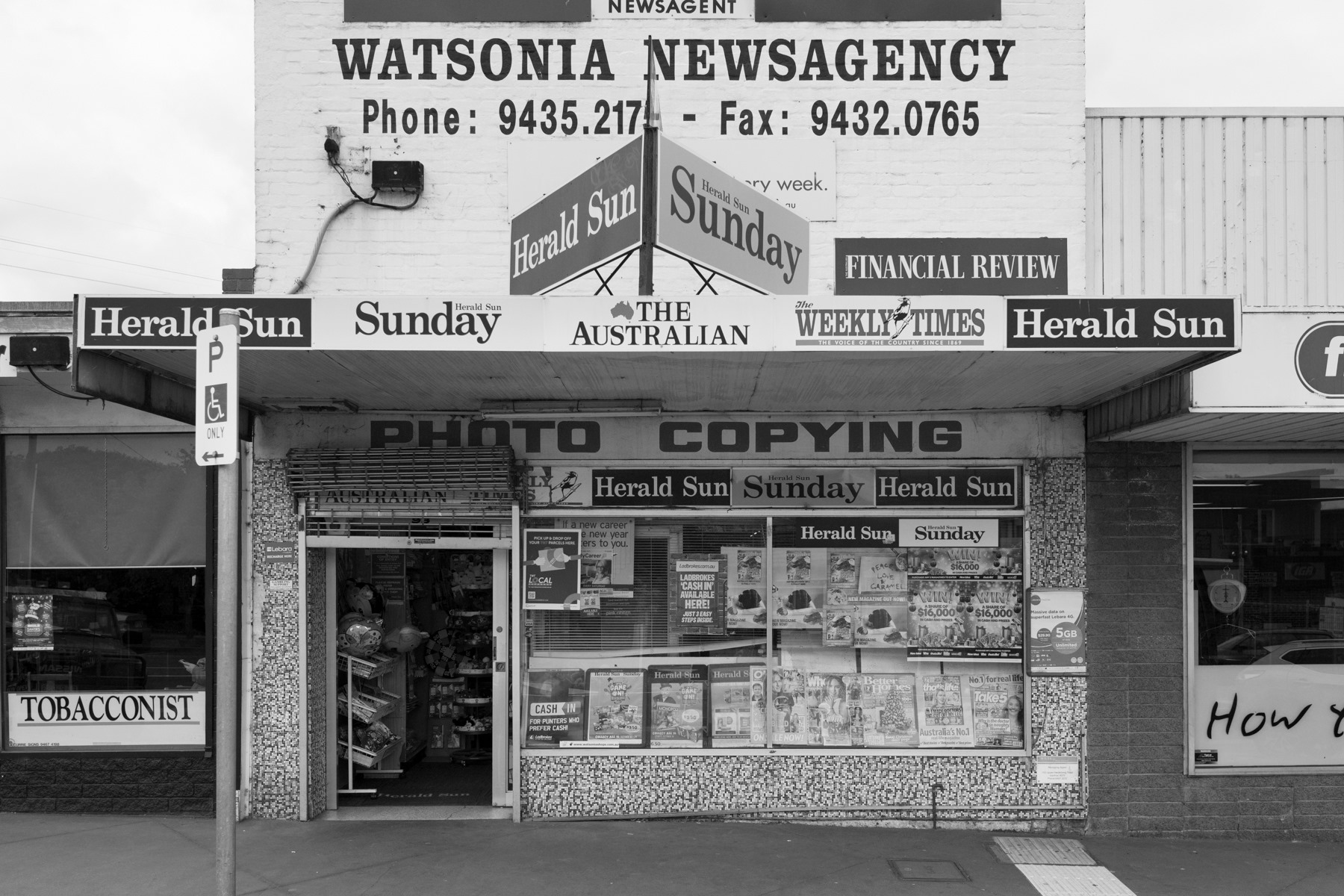
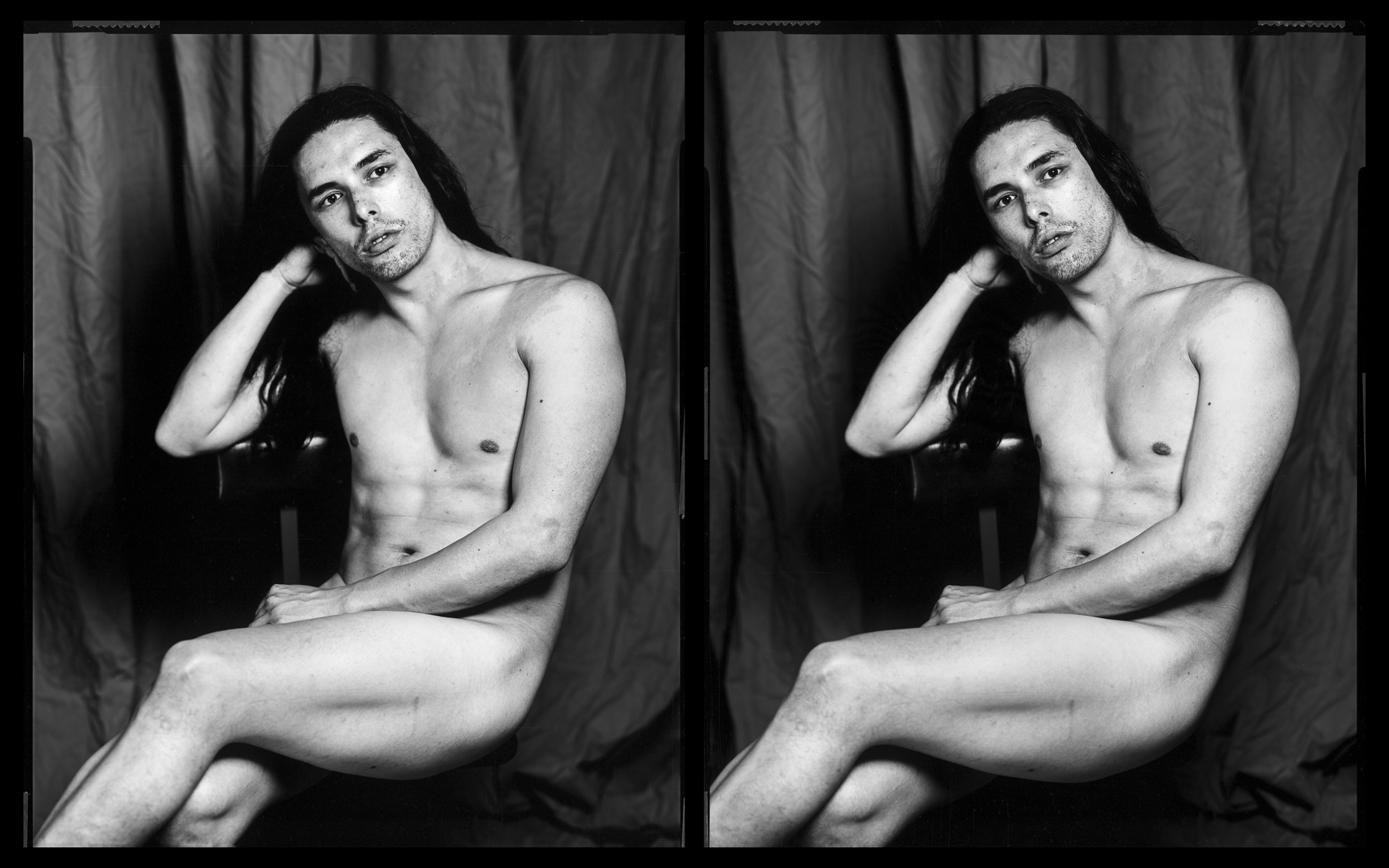


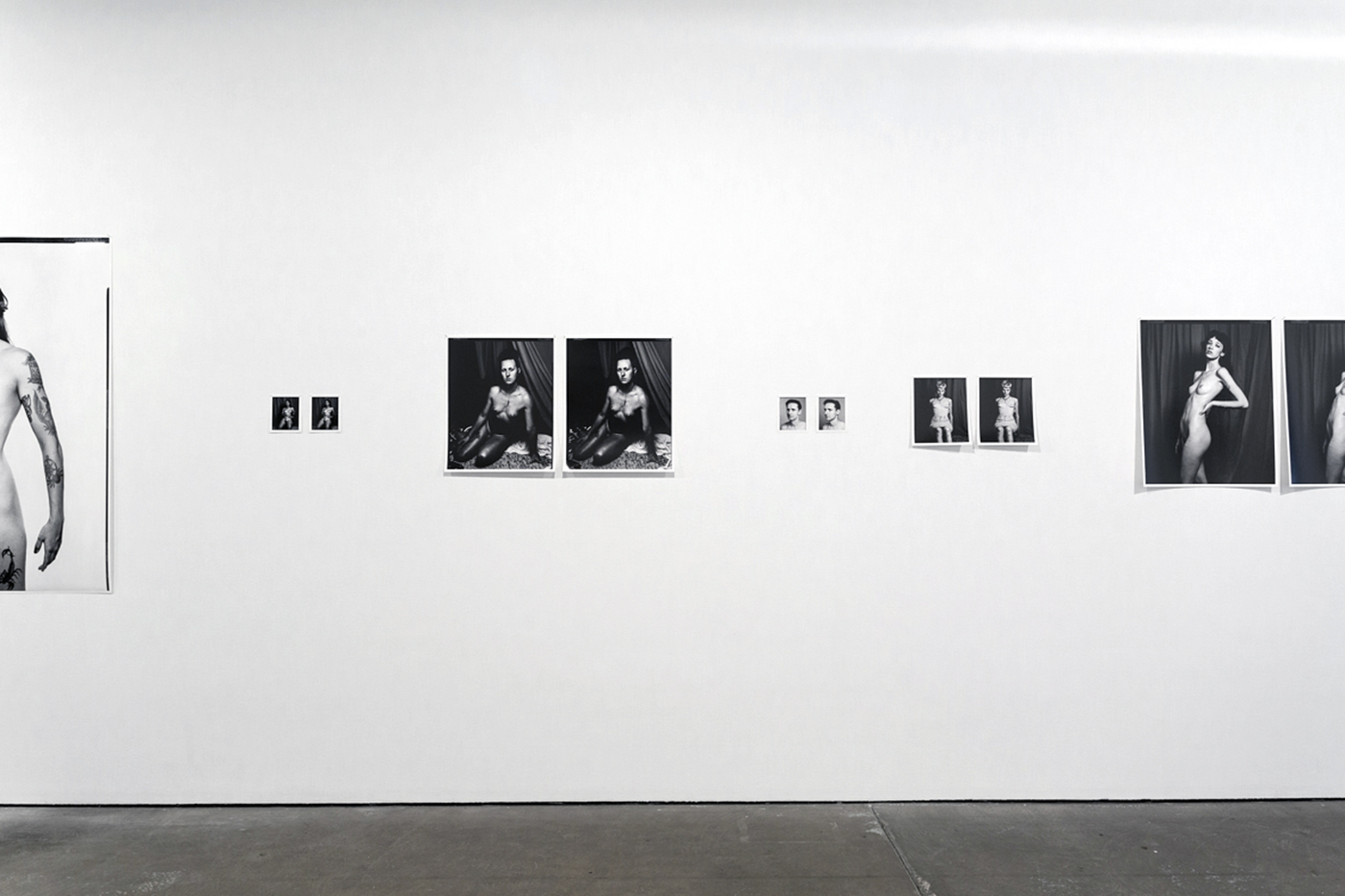


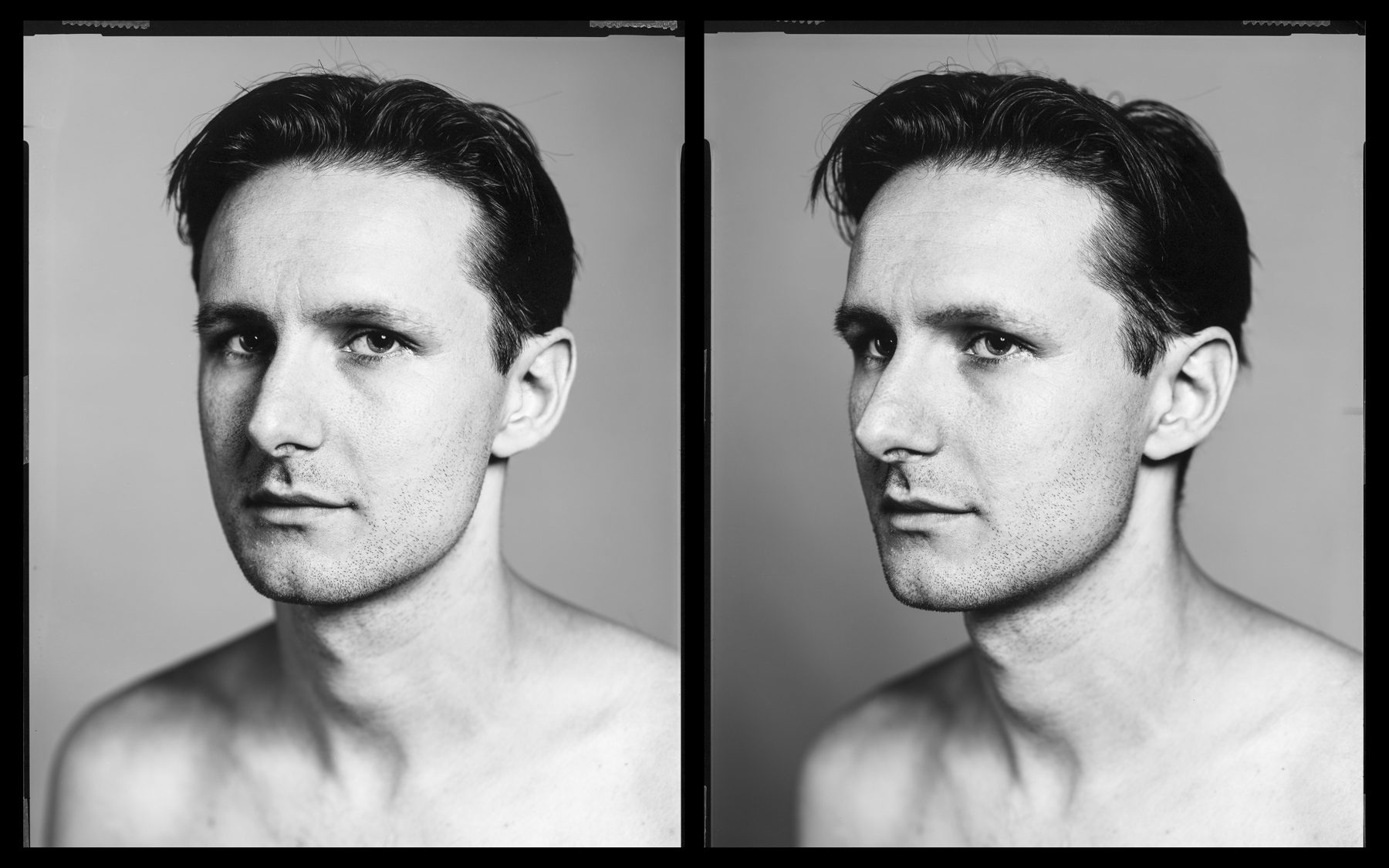

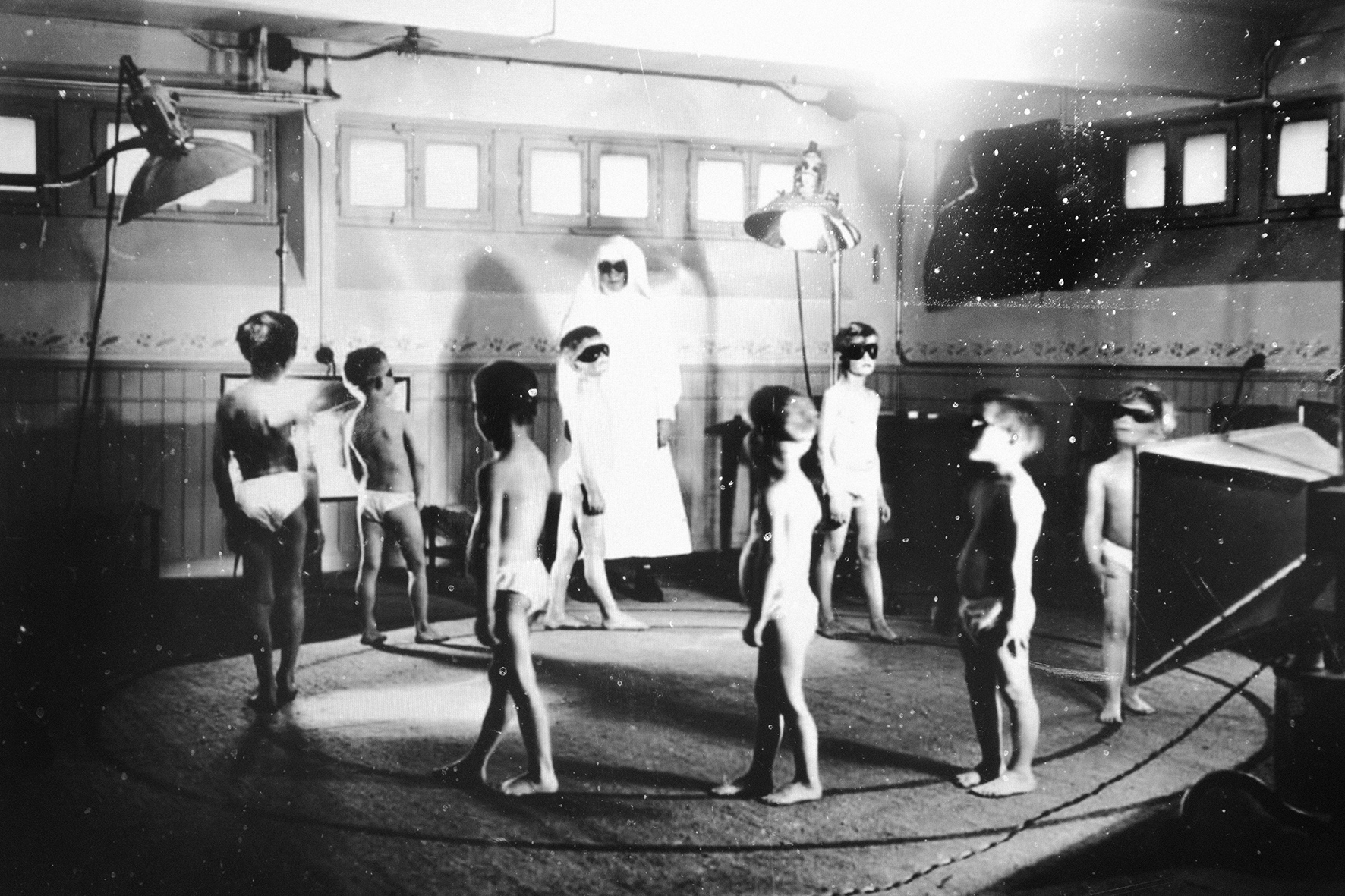
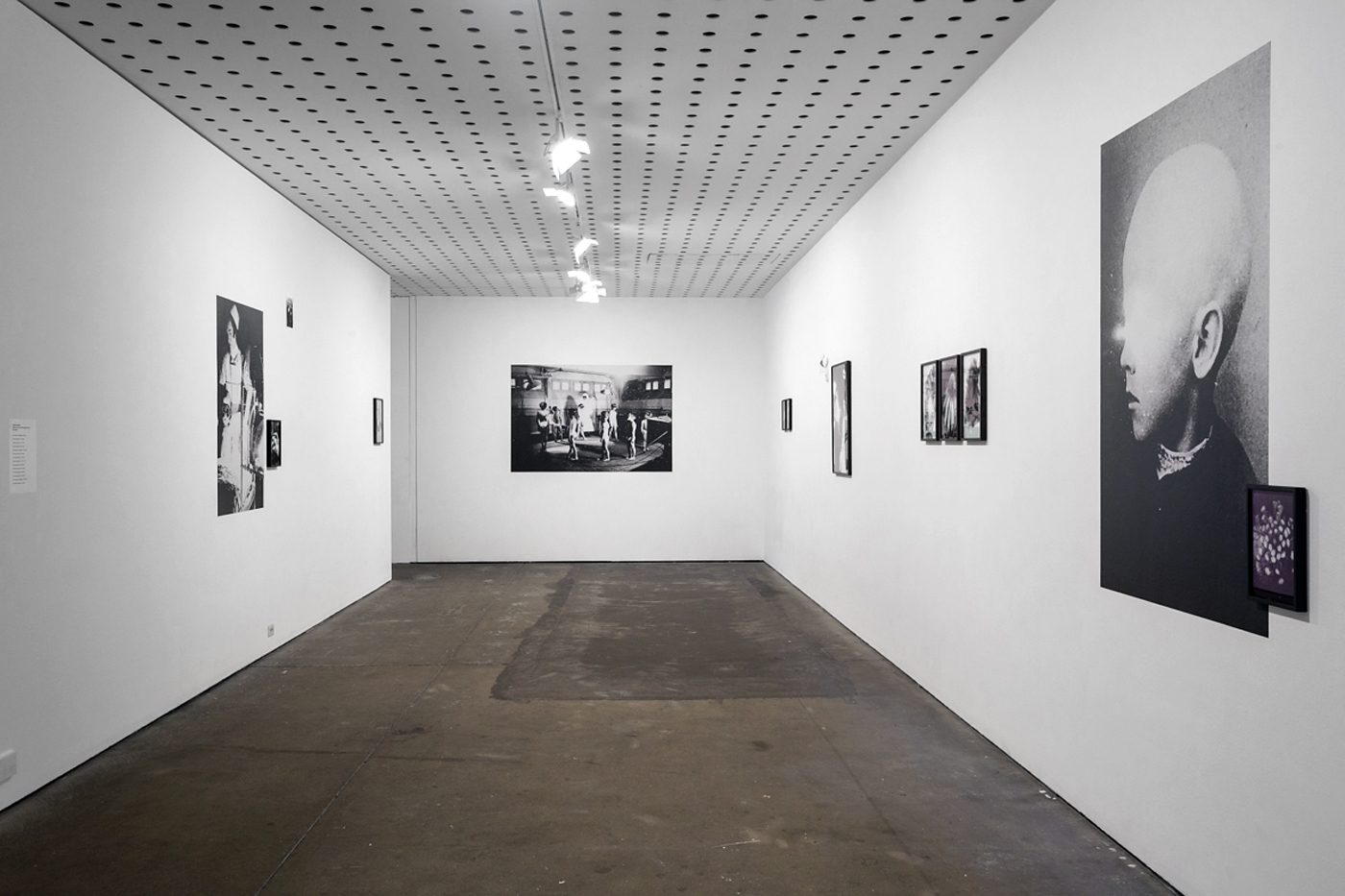
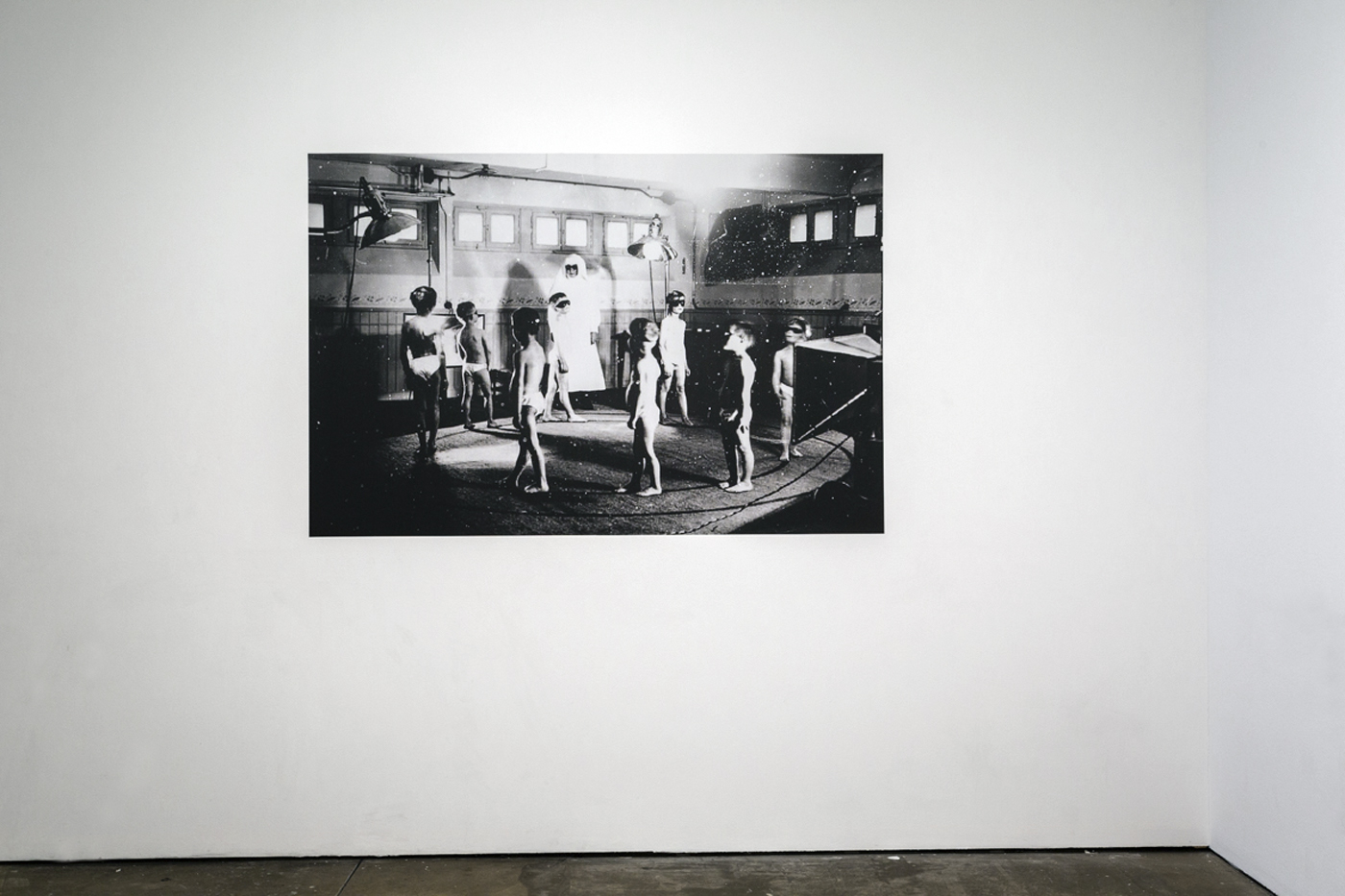


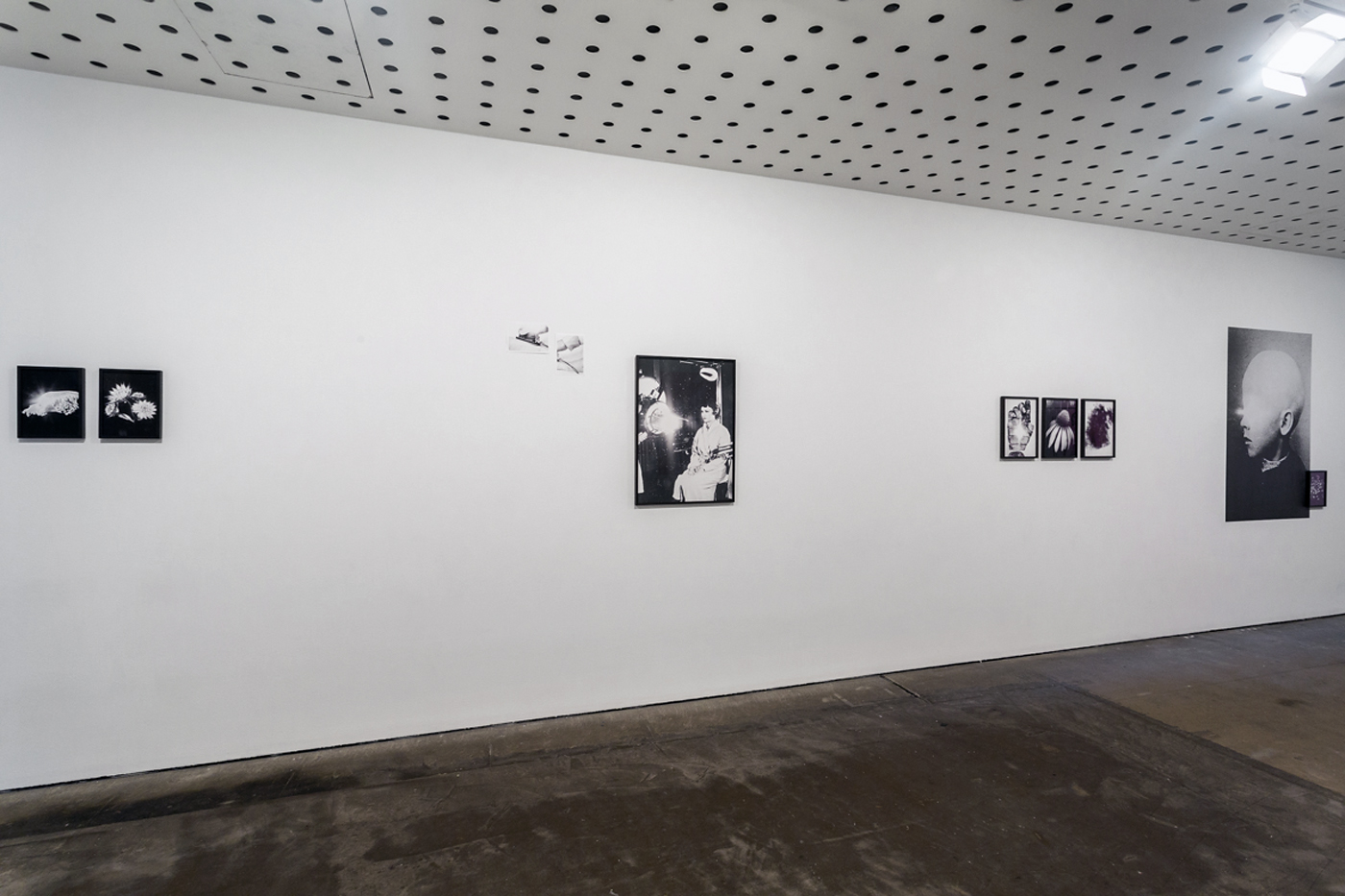
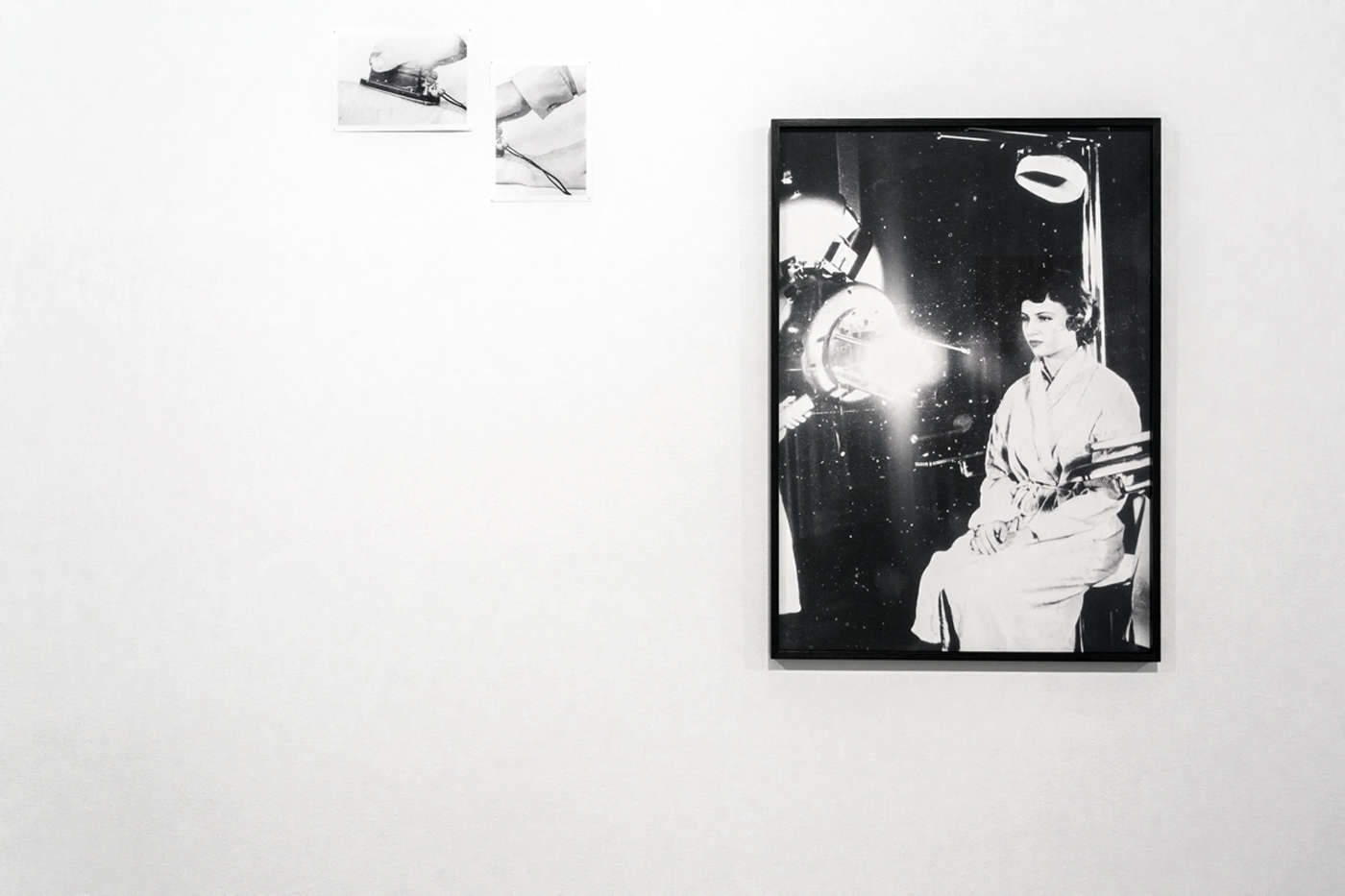


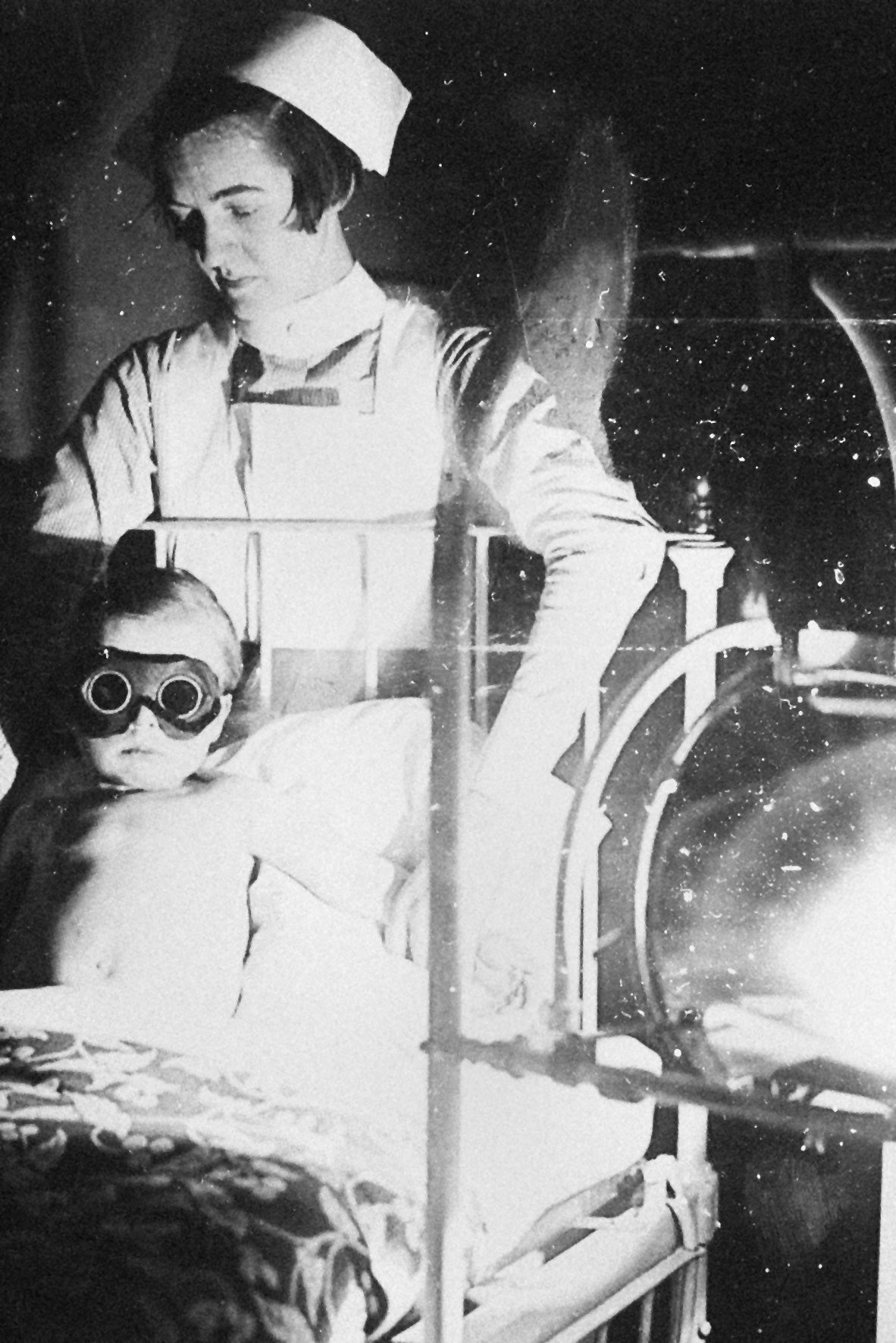
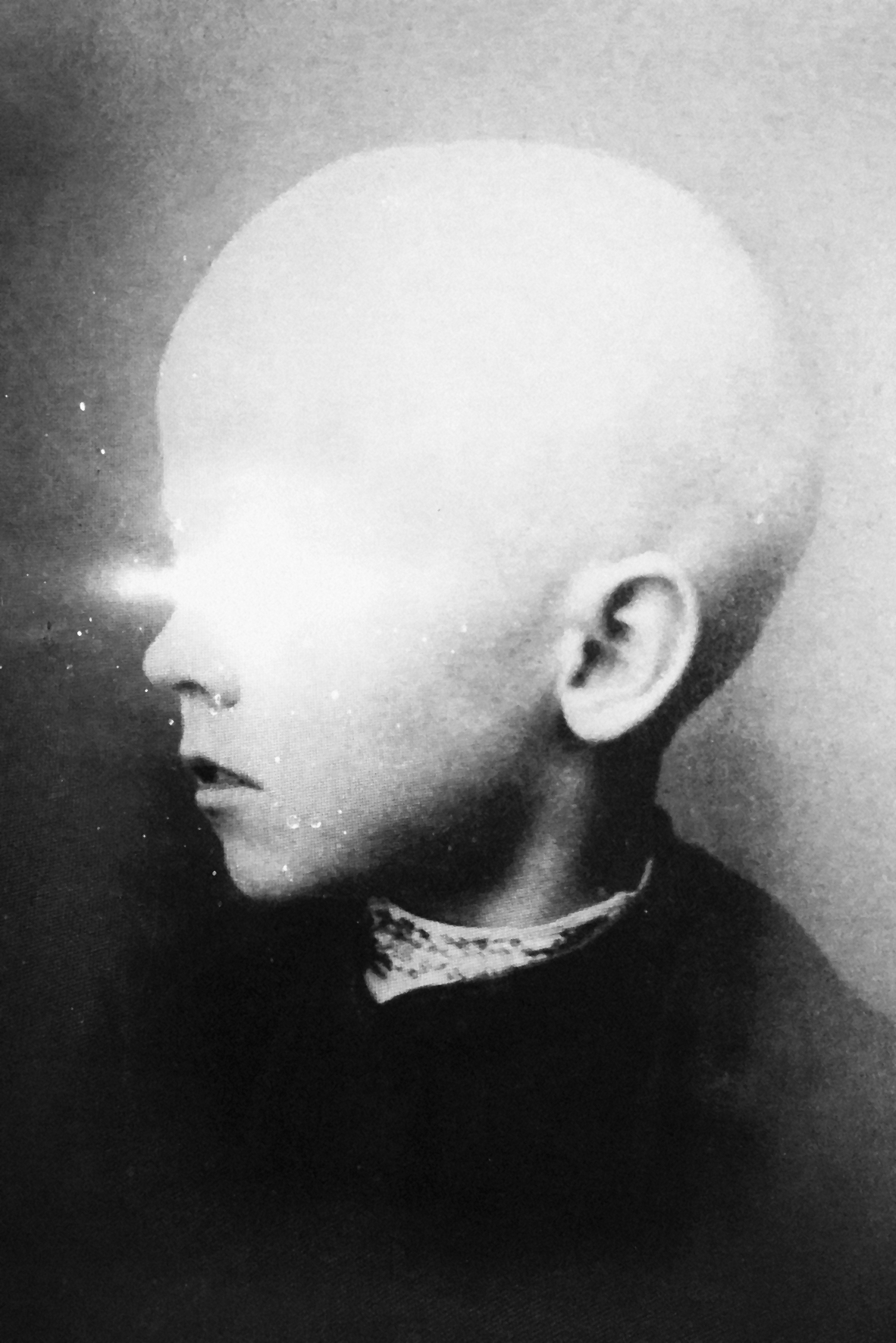
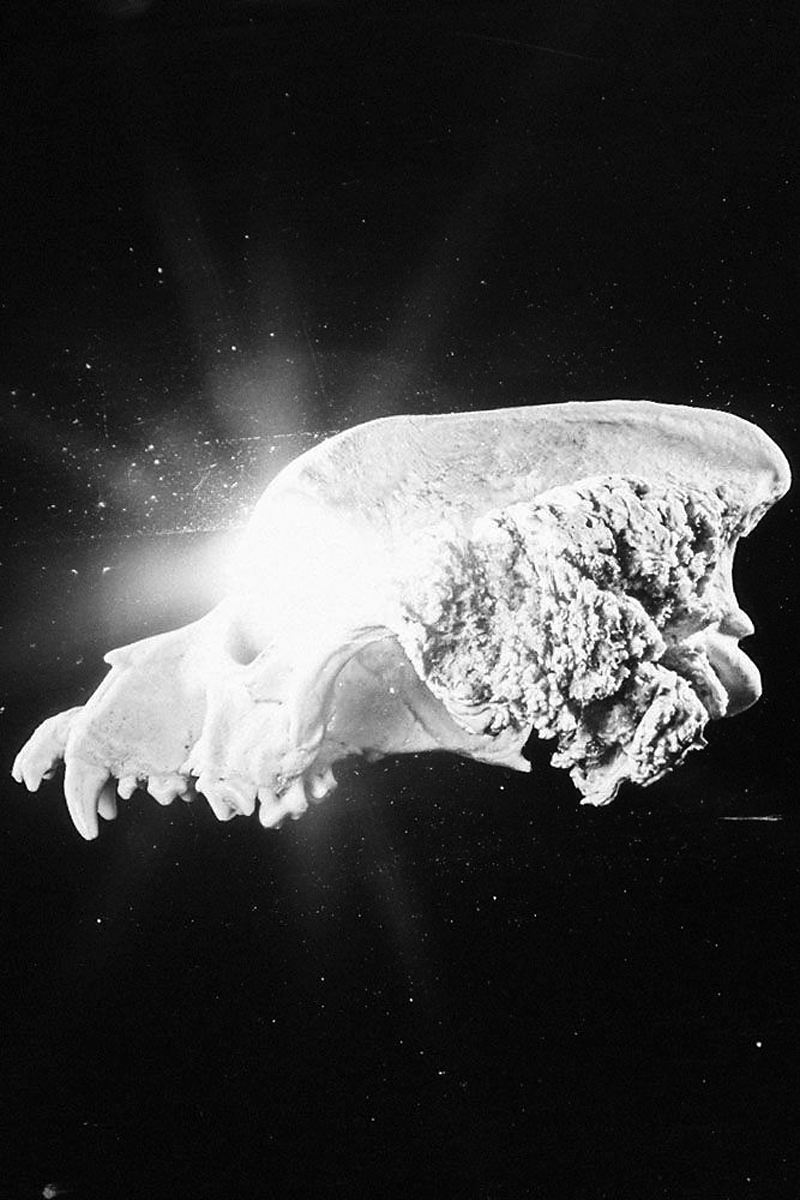
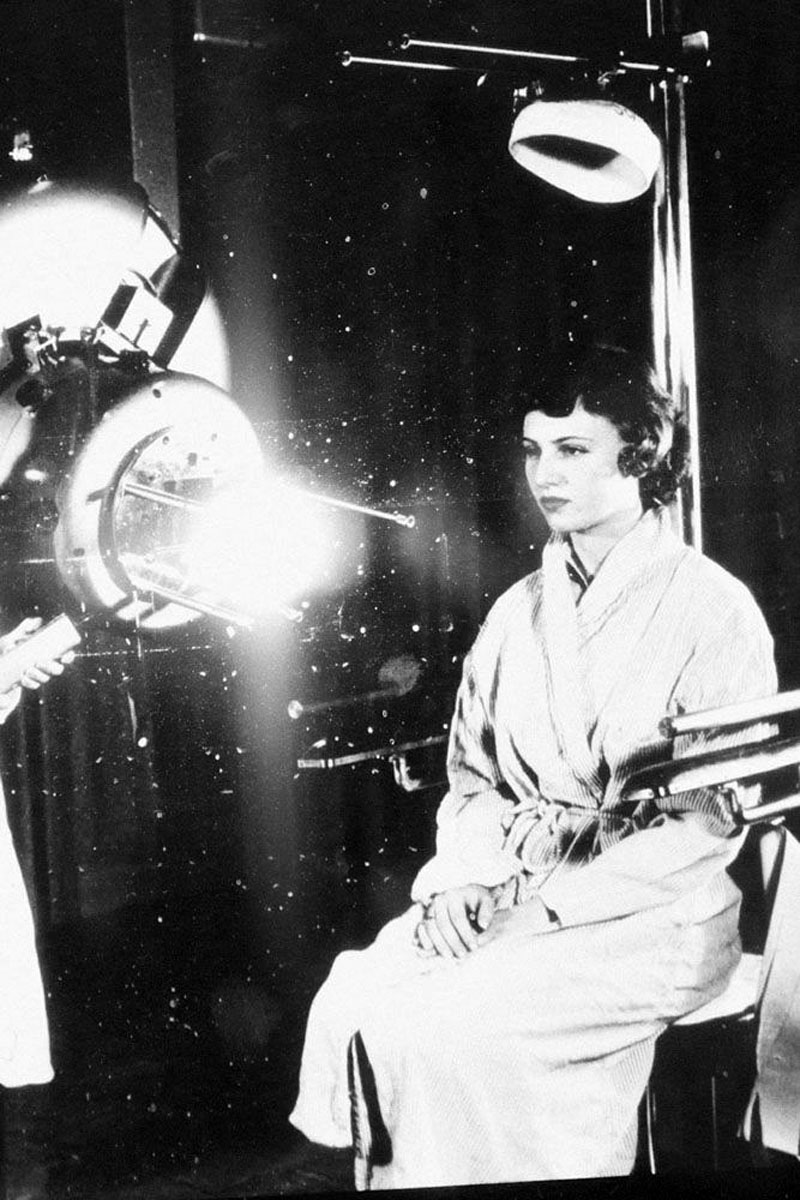


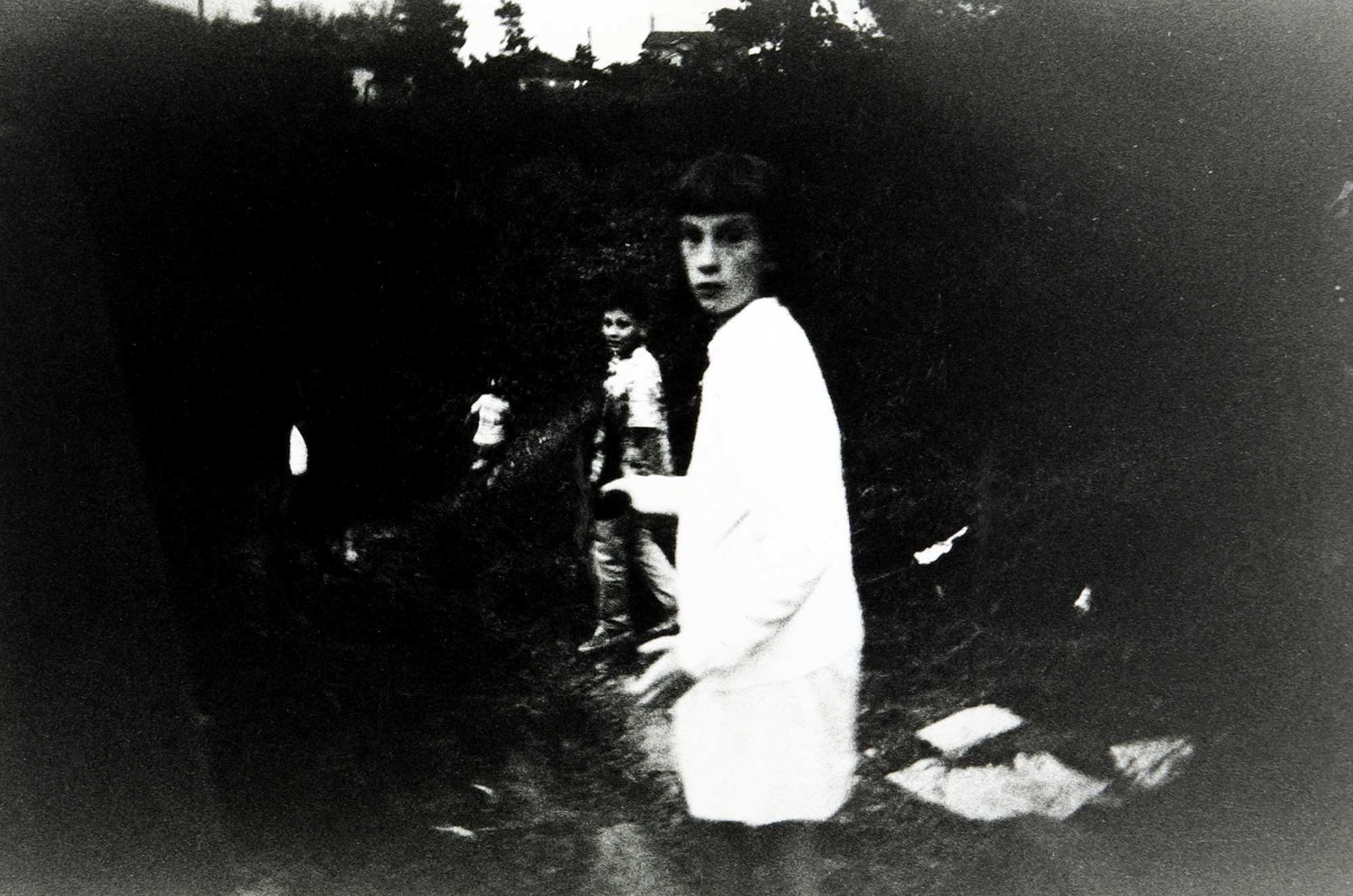


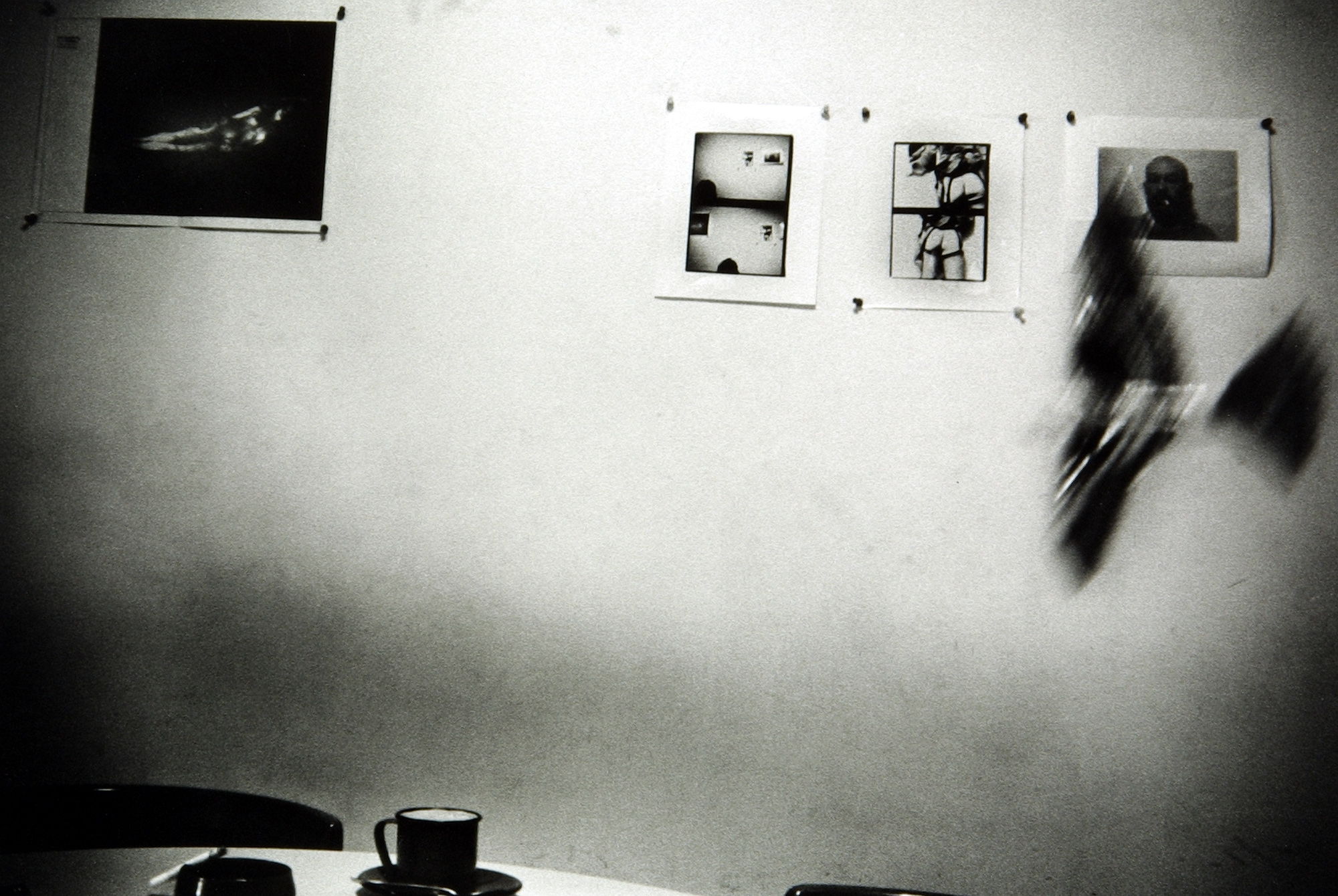
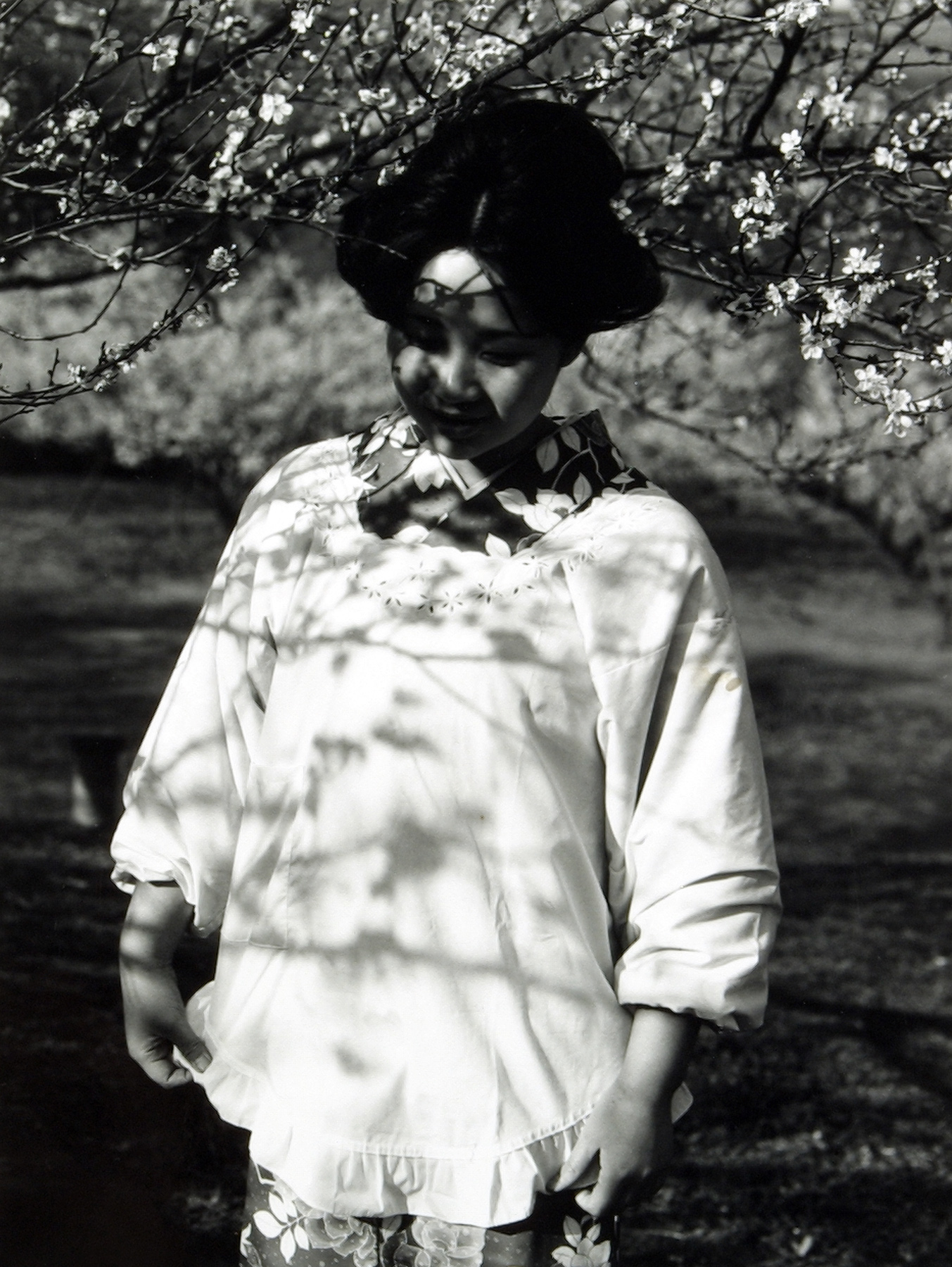


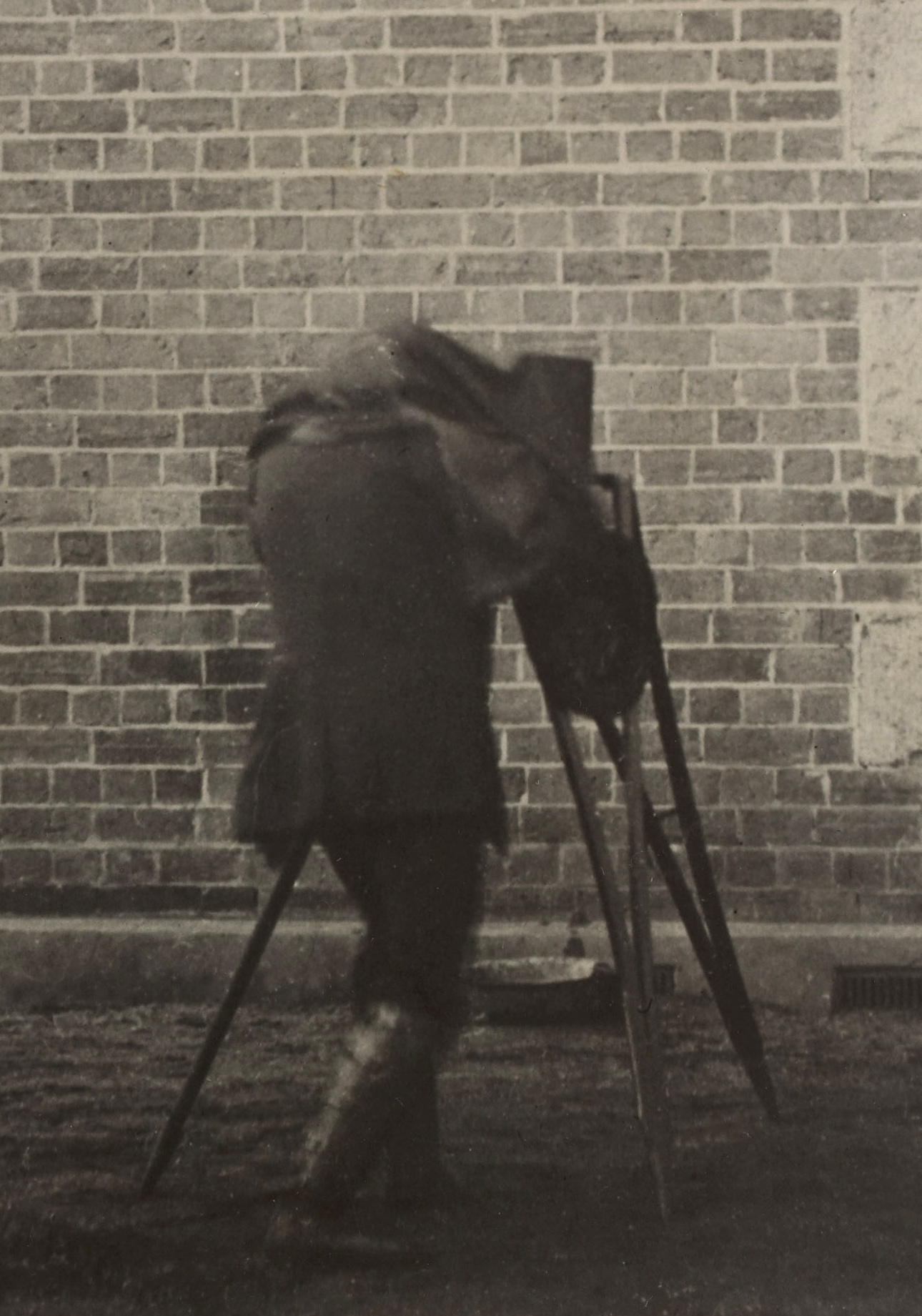

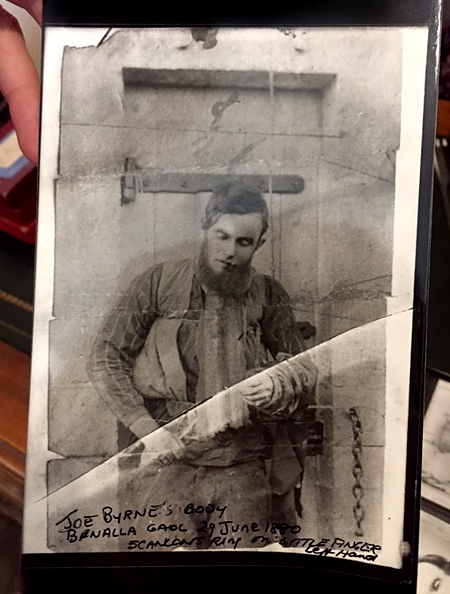

![Unknown photographer. 'Untitled [Portrait of Tracker Johnny from Maryborough District one of five trackers who helped track Ned Kelly]' c. 1880](https://artblart.com/wp-content/uploads/2017/10/portrait-of-tracker-johnny-from-maryborough-district-web.jpg "Unknown photographer. 'Untitled [Portrait of Tracker Johnny from Maryborough District one of five trackers who helped track Ned Kelly]' c. 1880")


![J. E. Bray (Australian, 1832-1891) 'Untitled ["McDonnell's Tavern opposite Railway Station, remains of Dan Kelly and Hart in coffins"]' 1880](https://artblart.com/wp-content/uploads/2017/10/bray-je-mcdonnells-railway-tavern-web.jpg "J. E. Bray (Australian, 1832-1891) 'Untitled [\"McDonnell's Tavern opposite Railway Station, remains of Dan Kelly and Hart in coffins\"]' 1880")
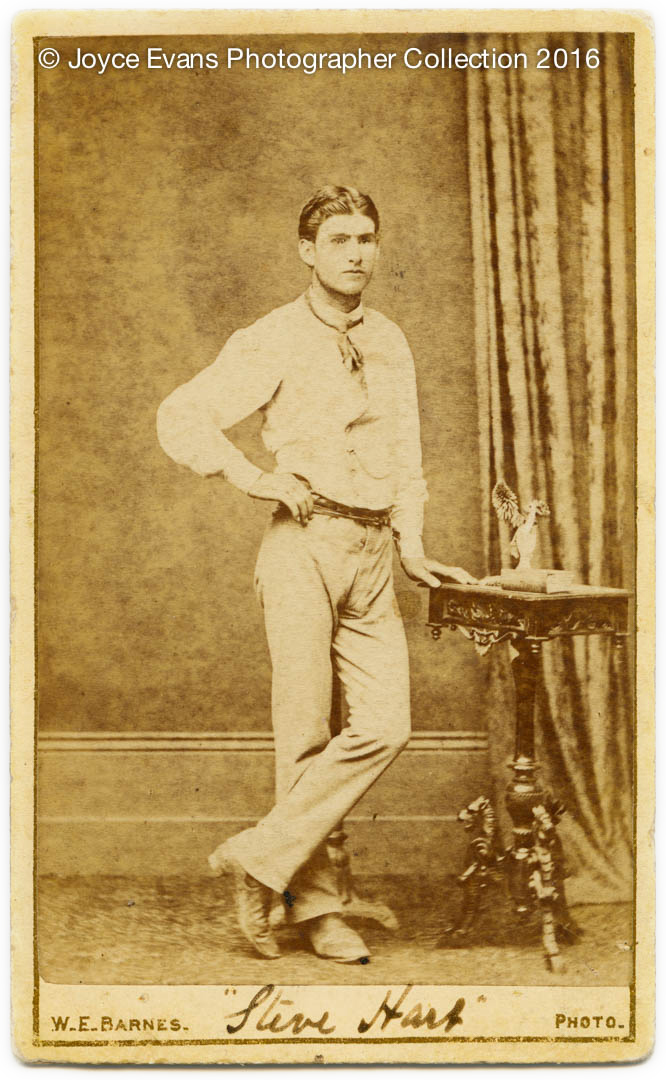


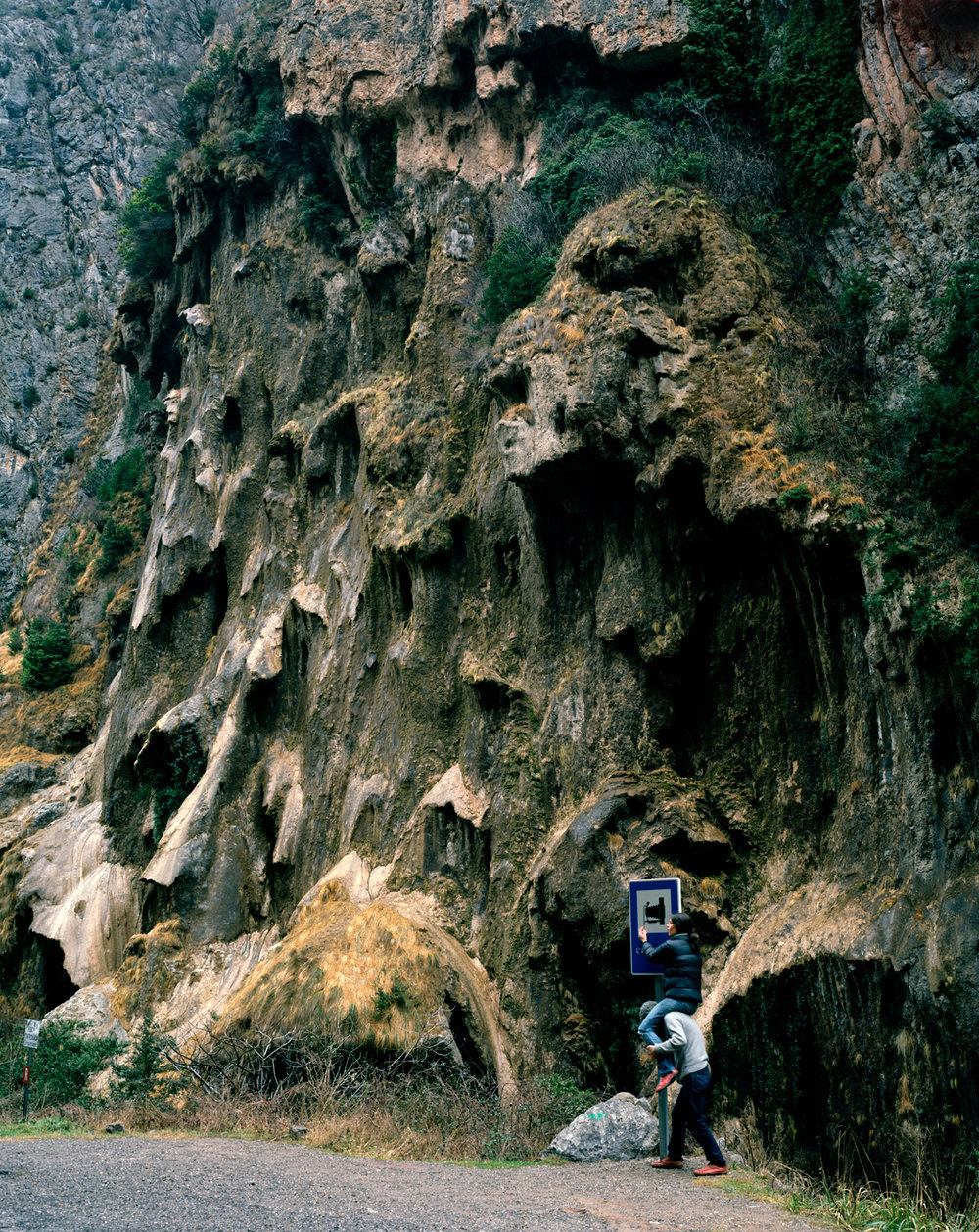


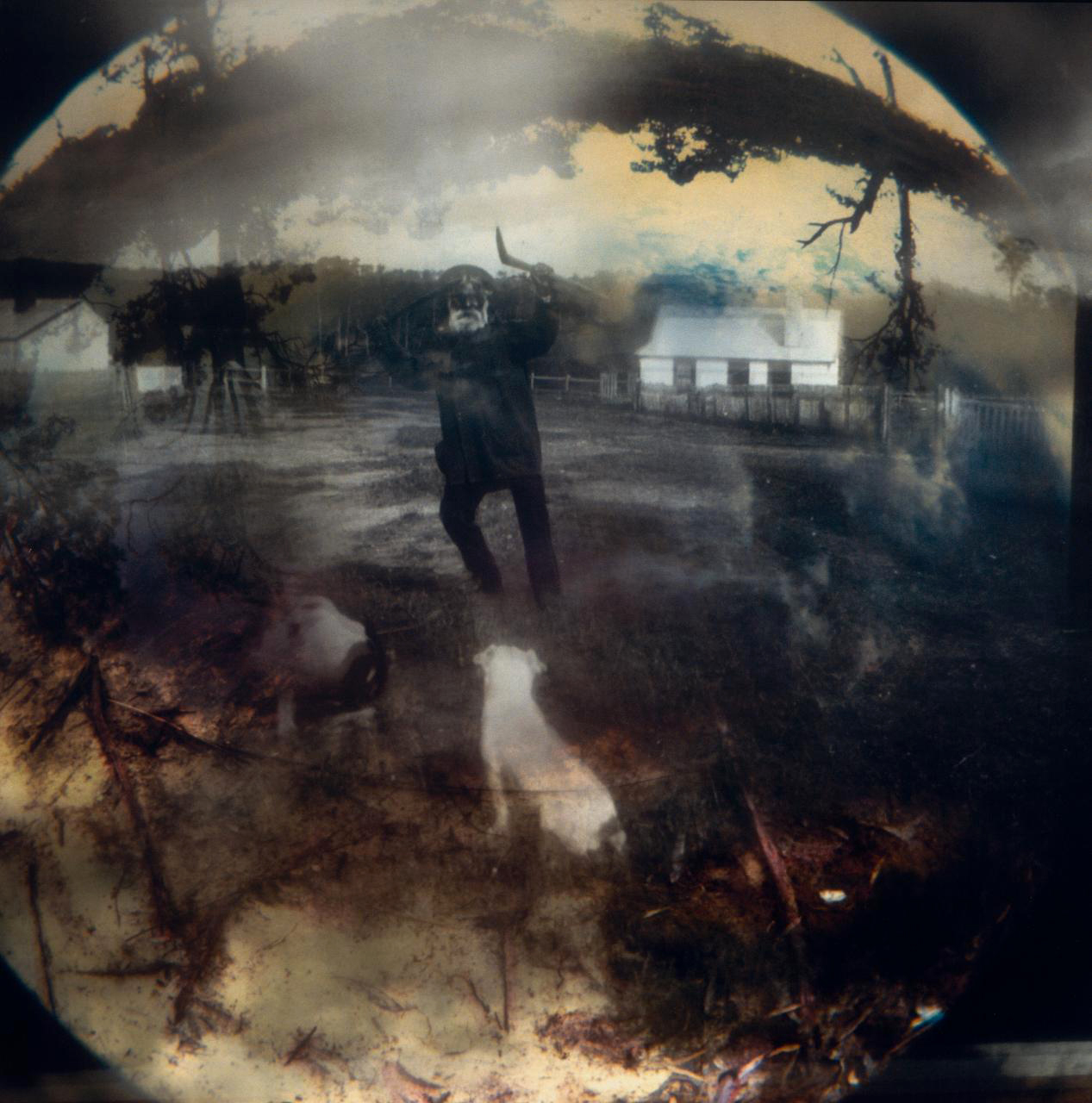

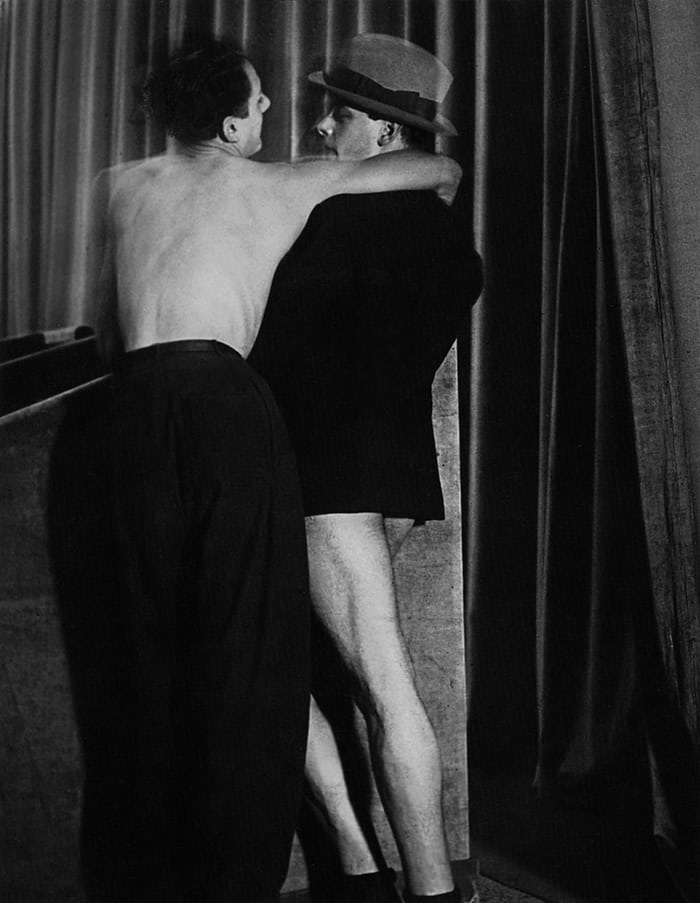


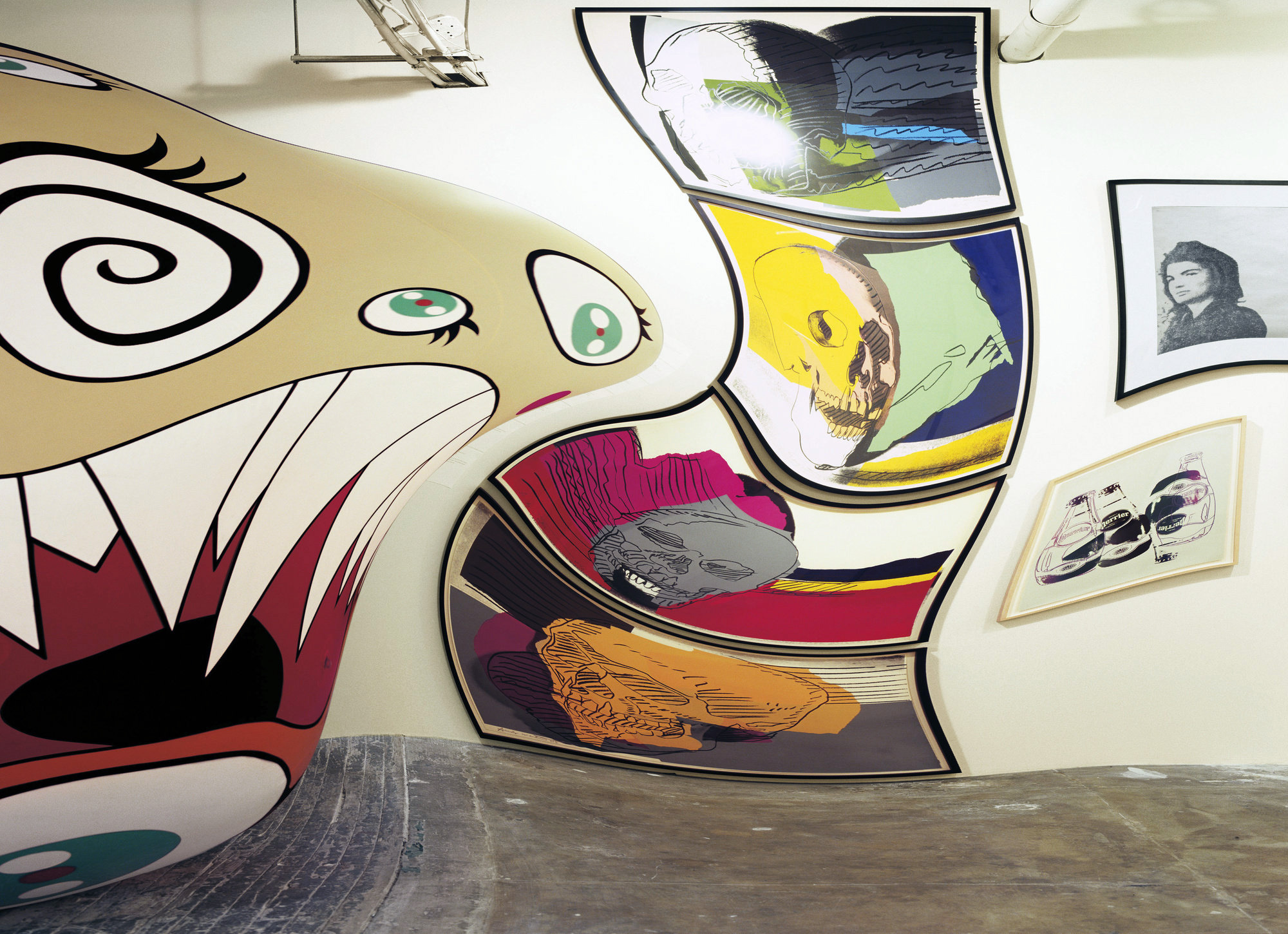

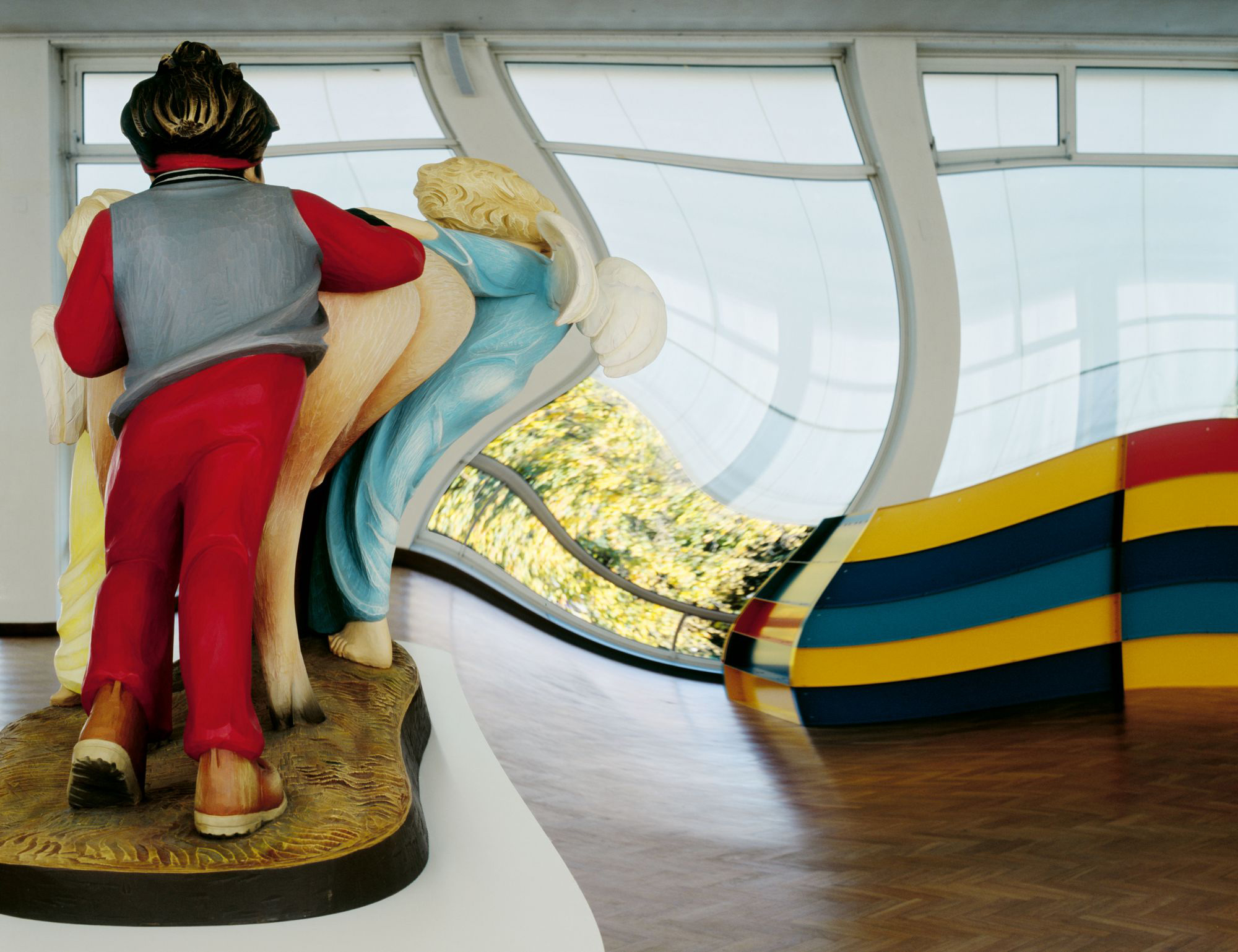
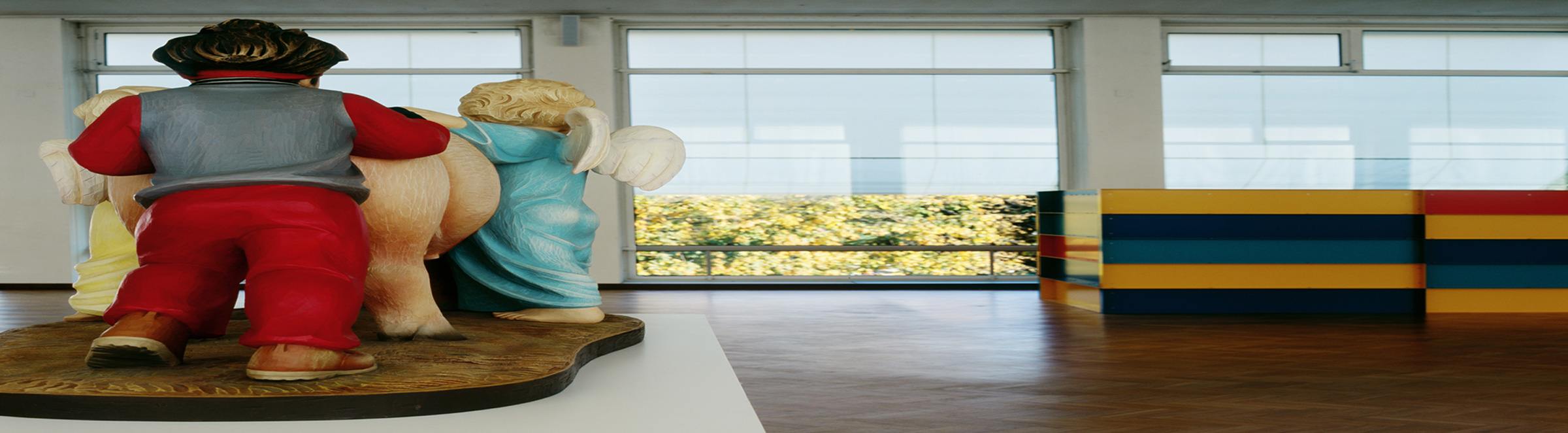
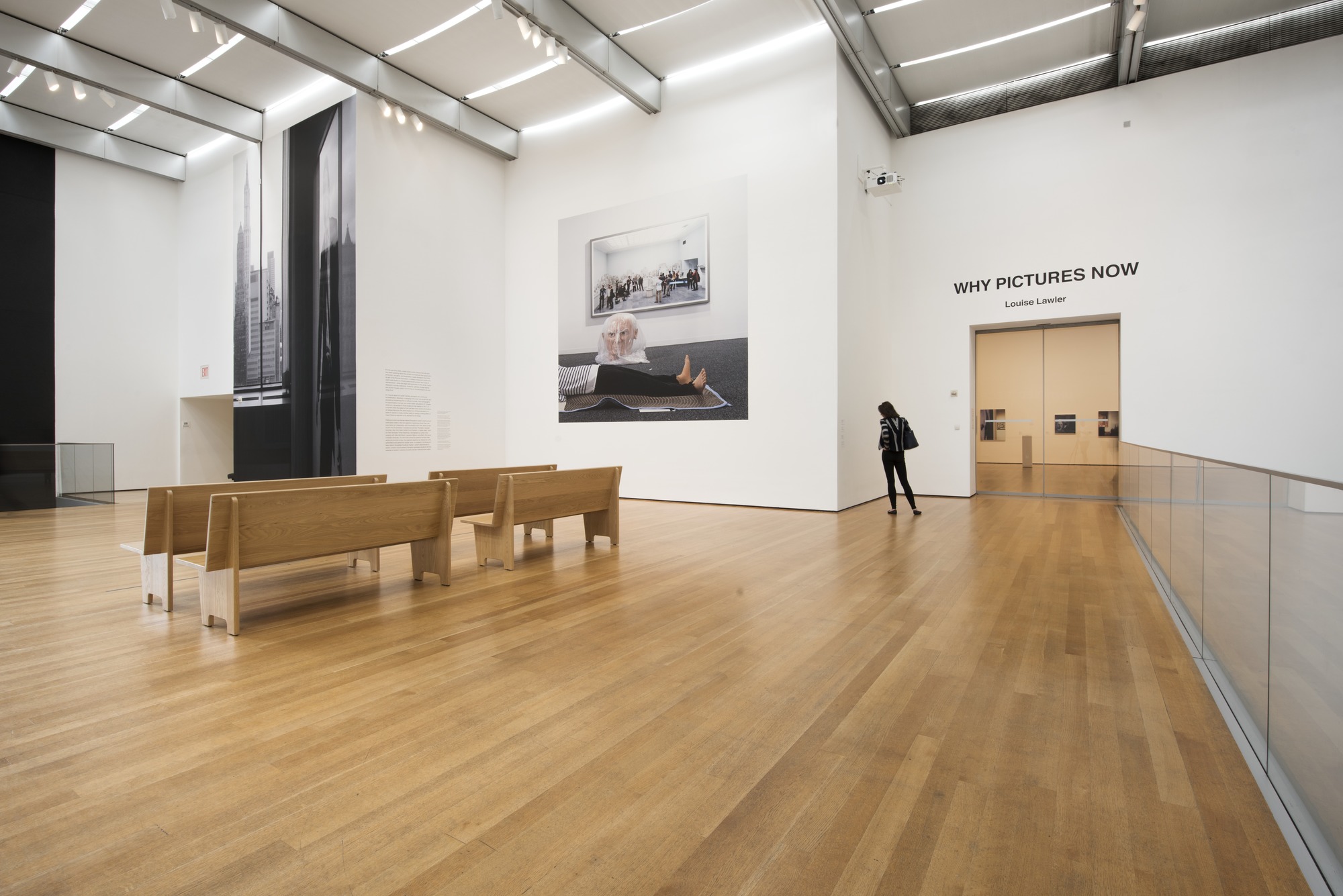
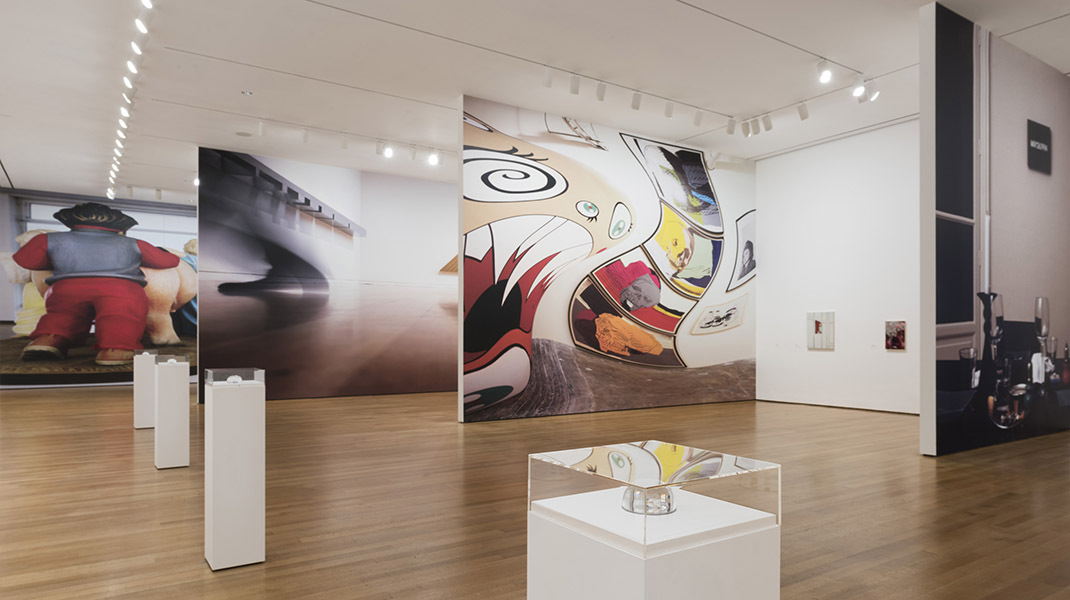
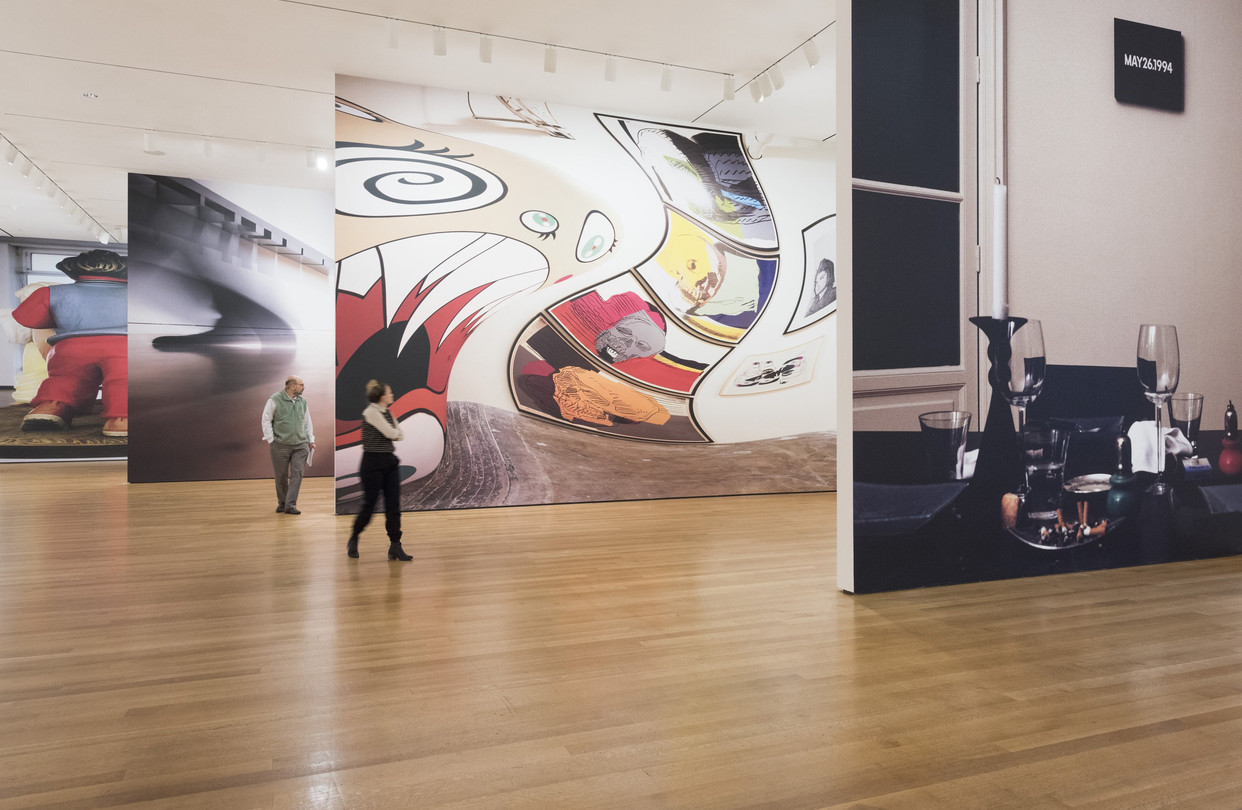
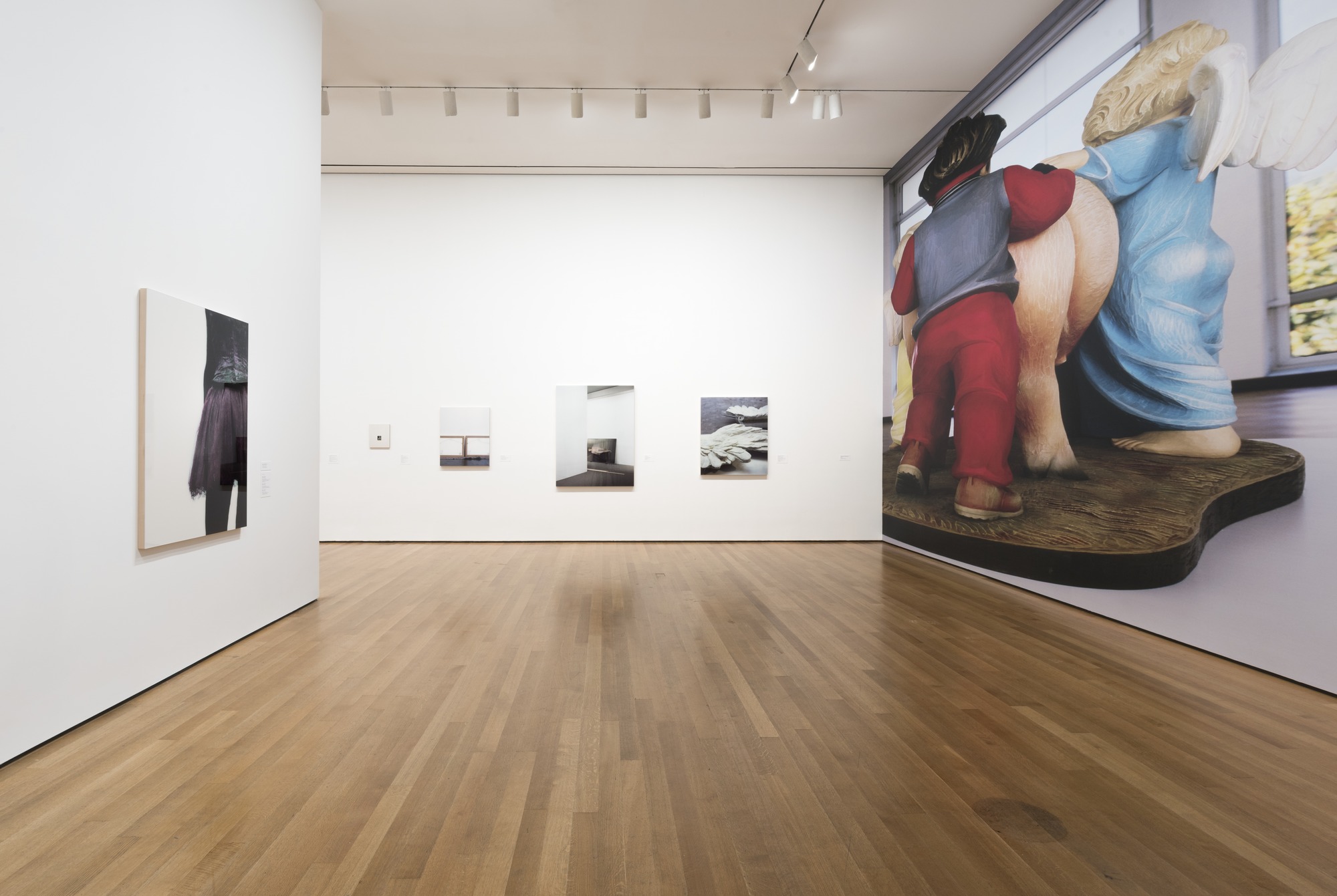
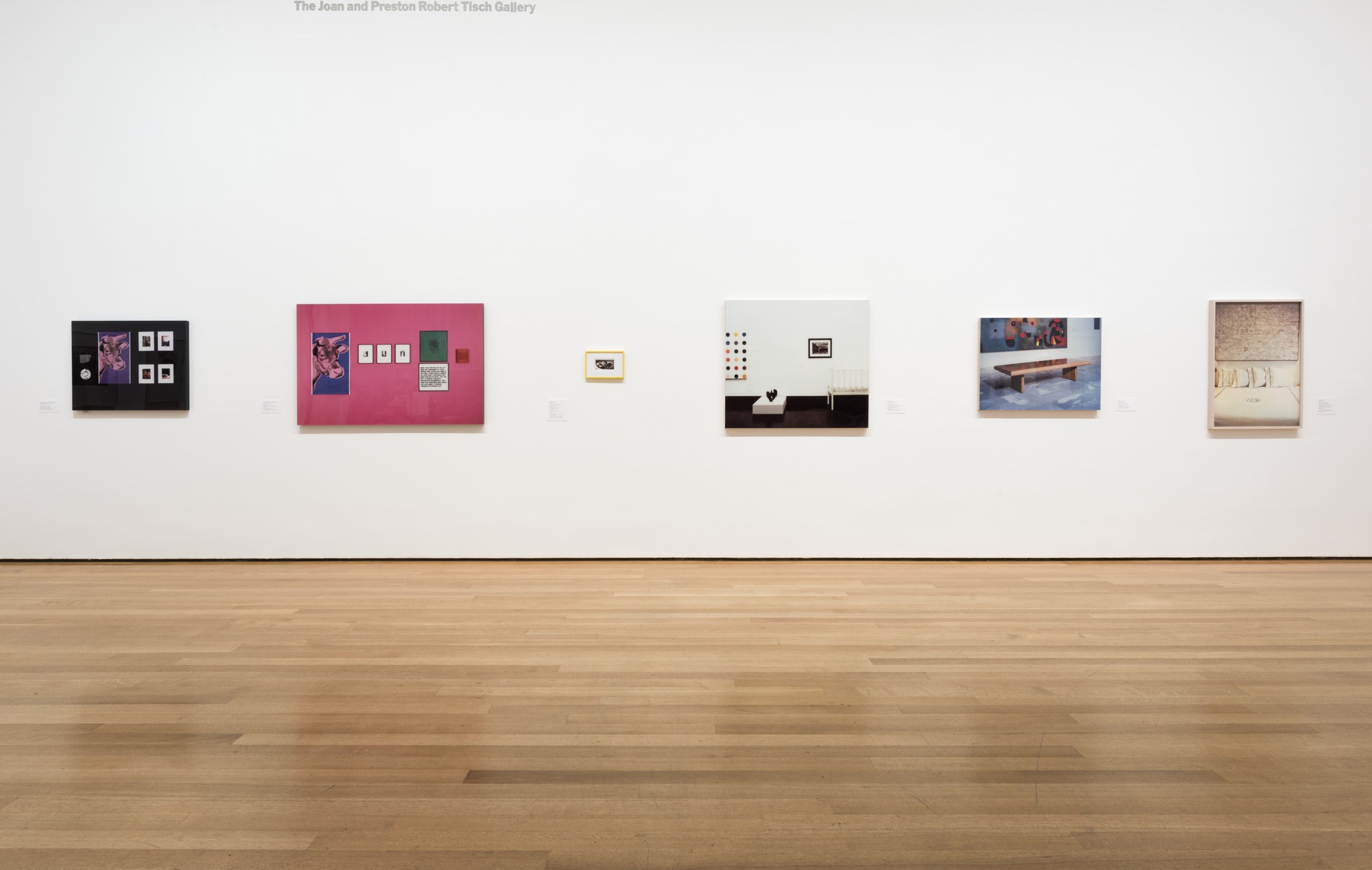
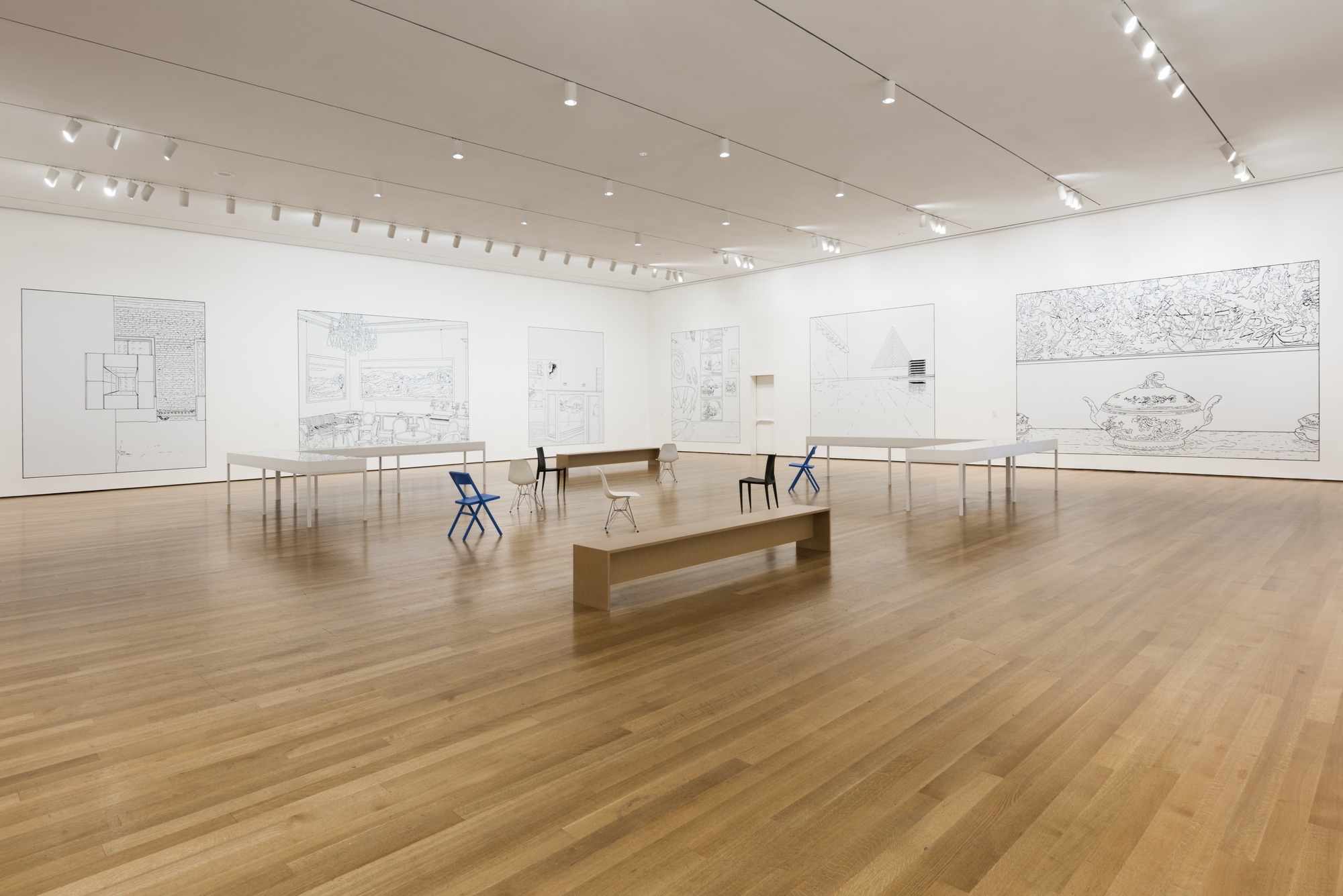
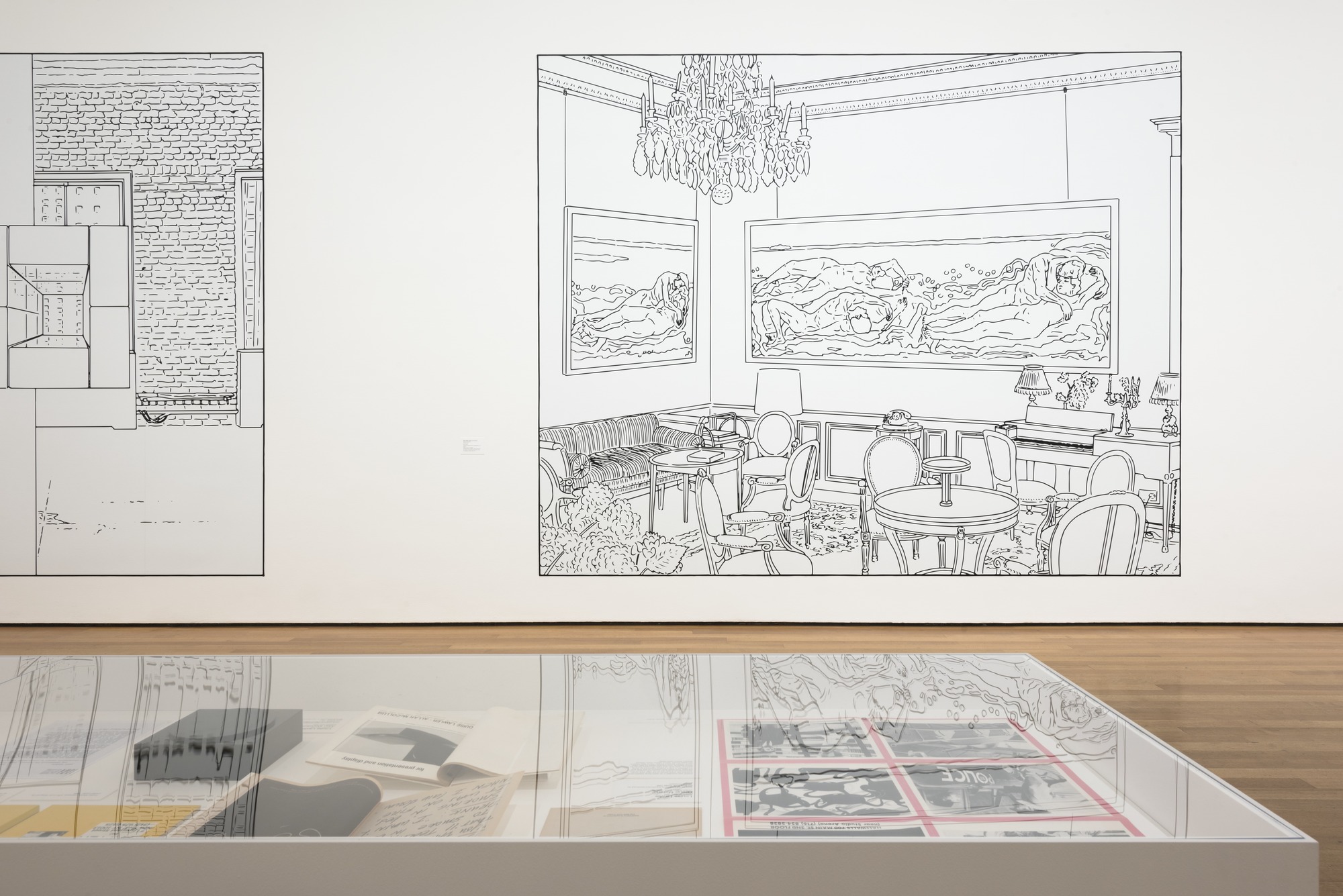
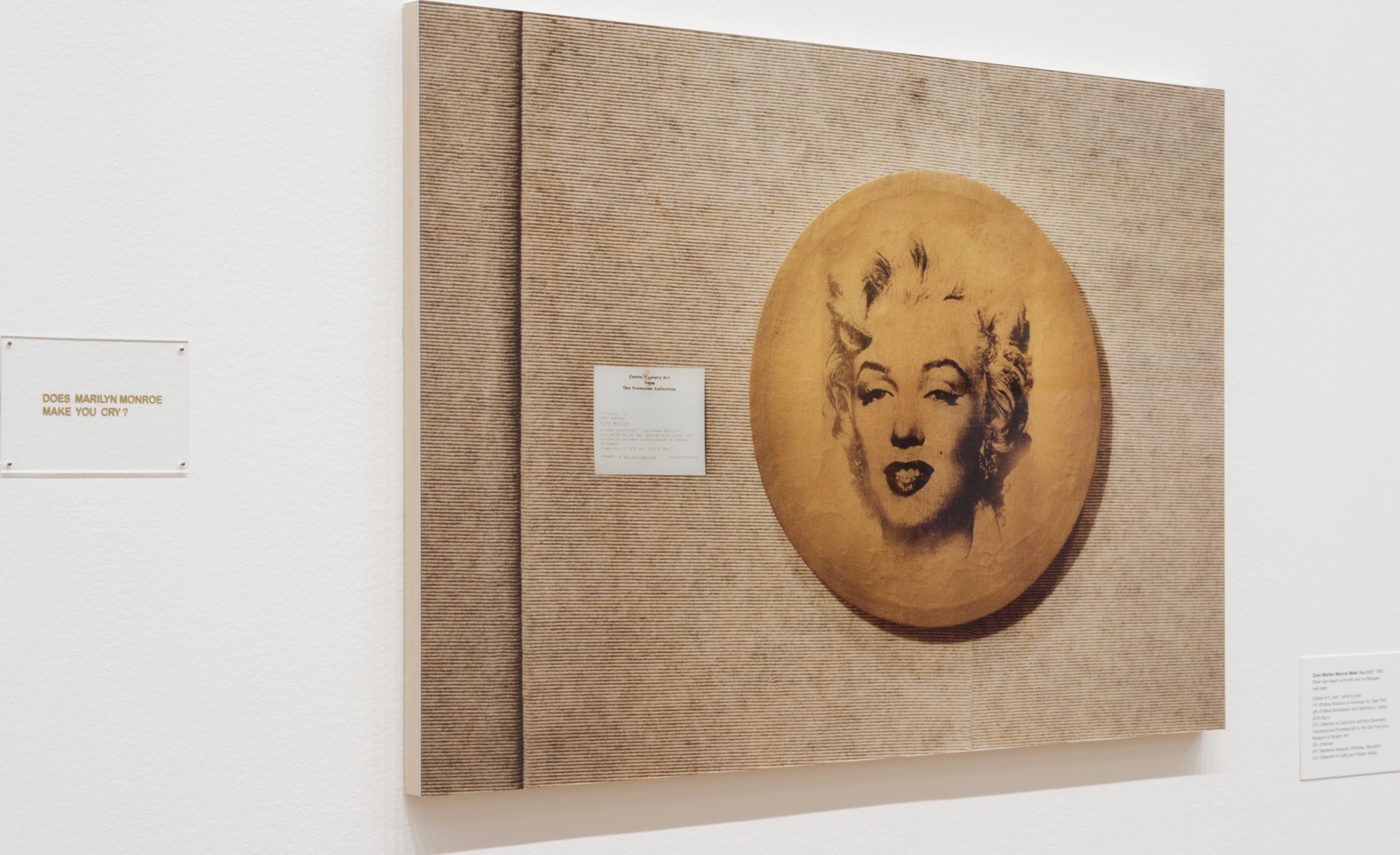
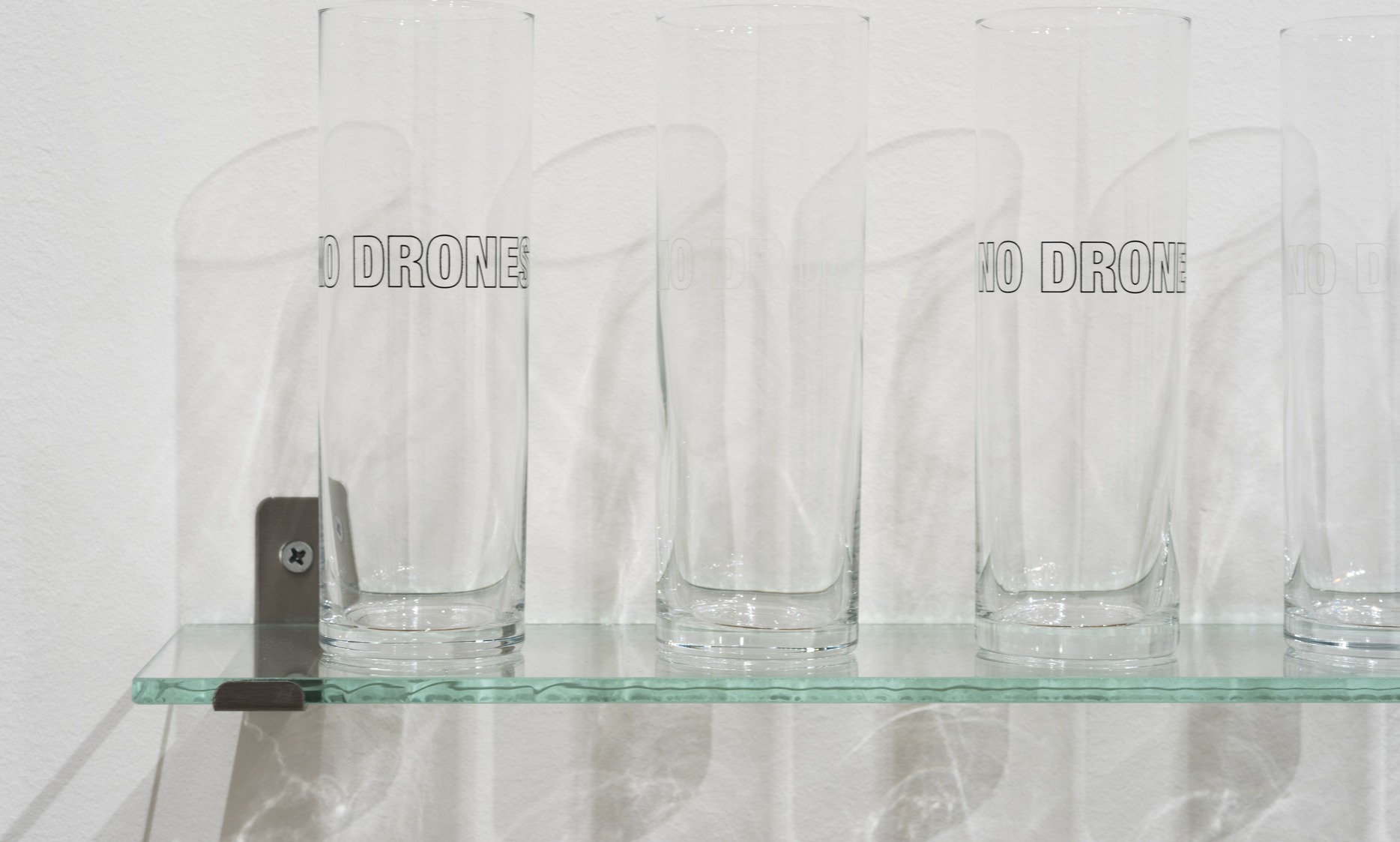
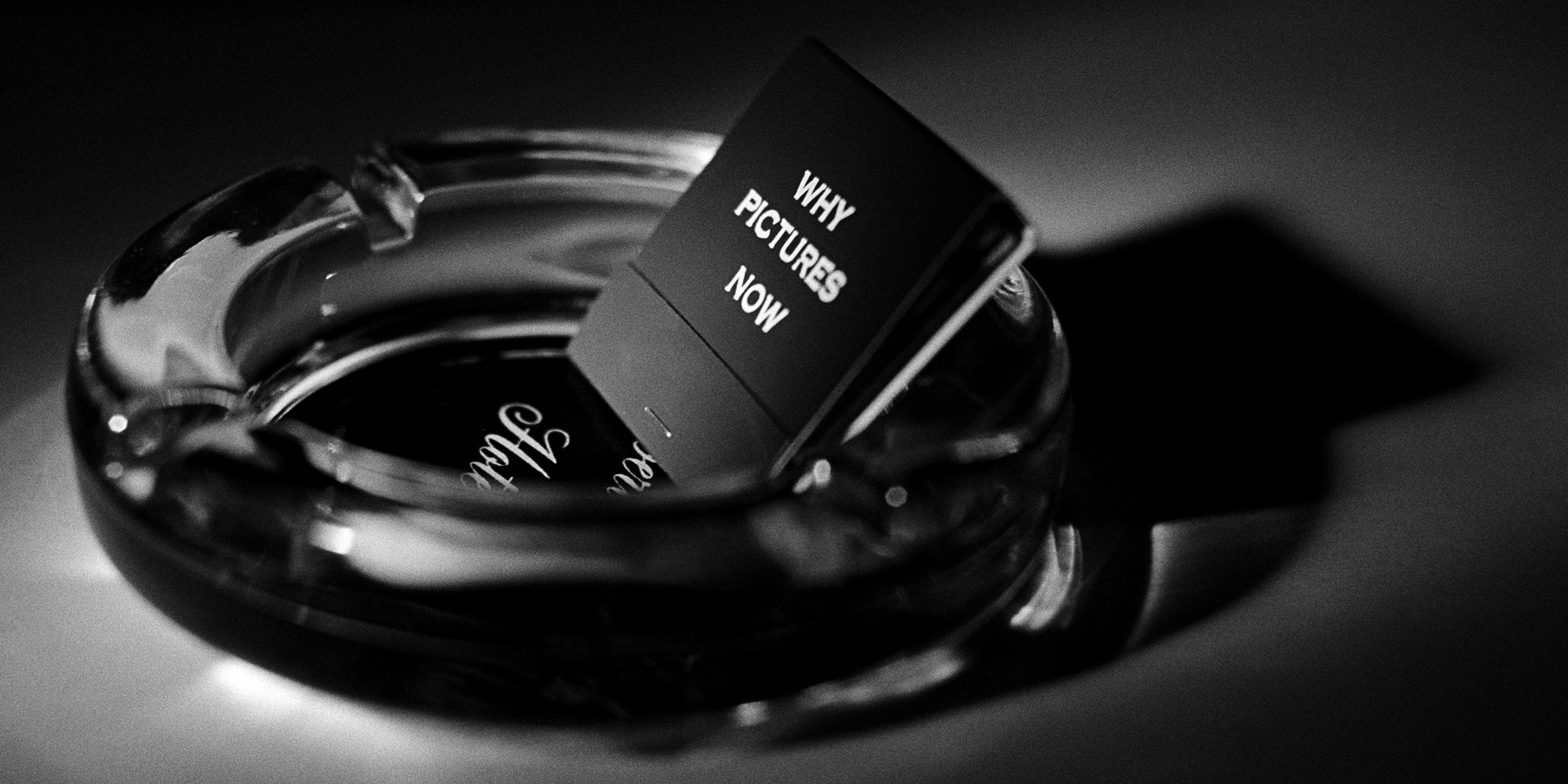
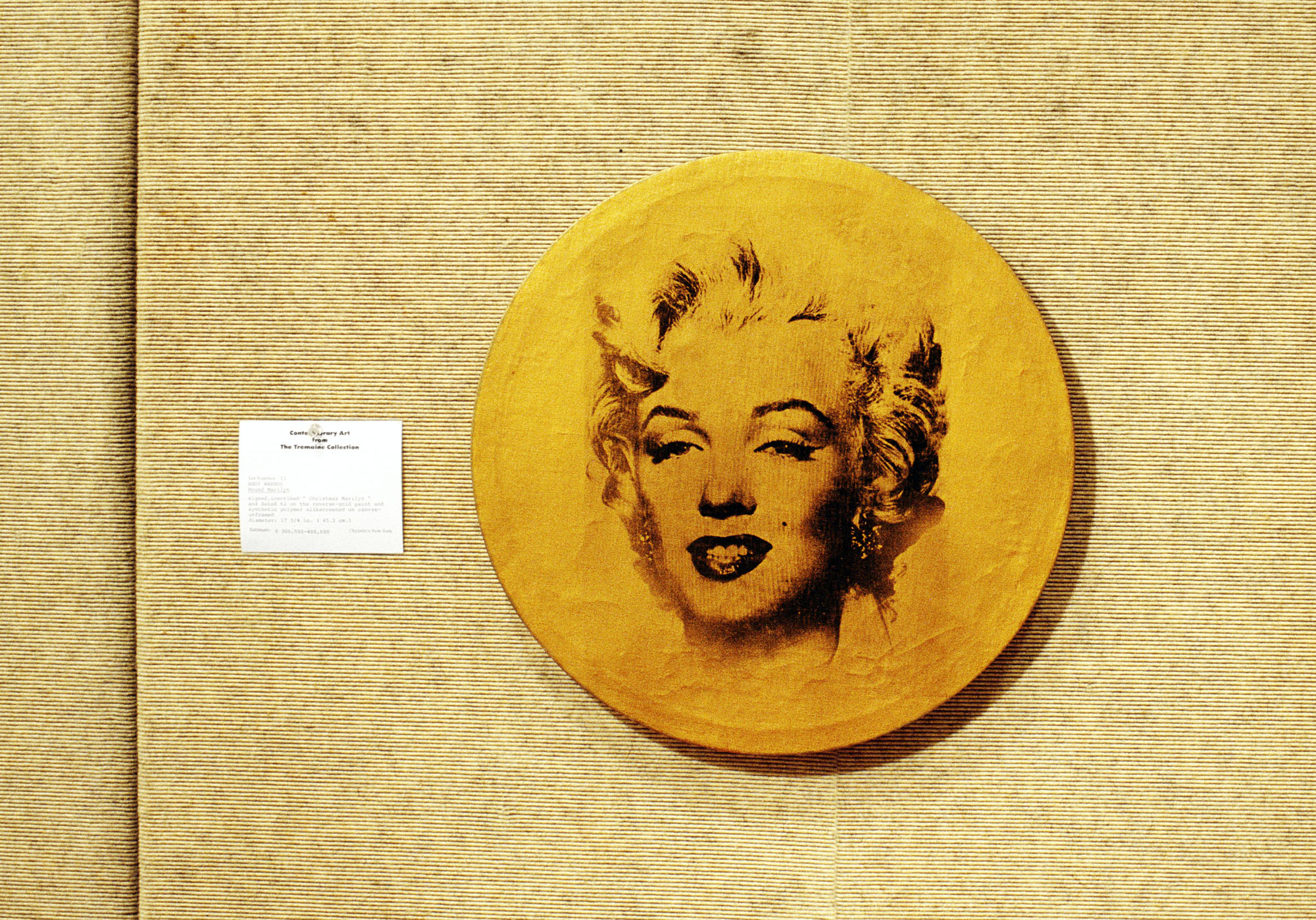
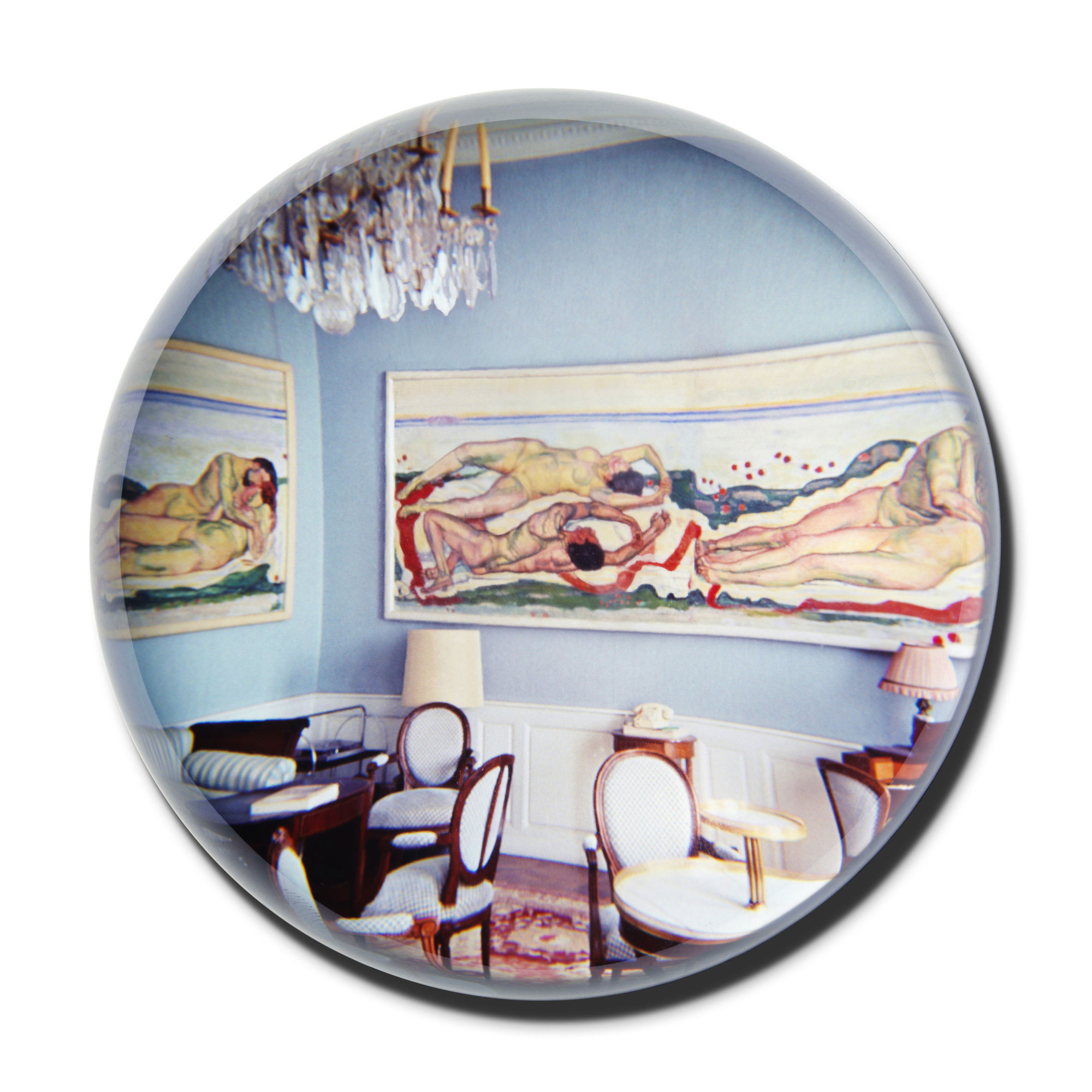
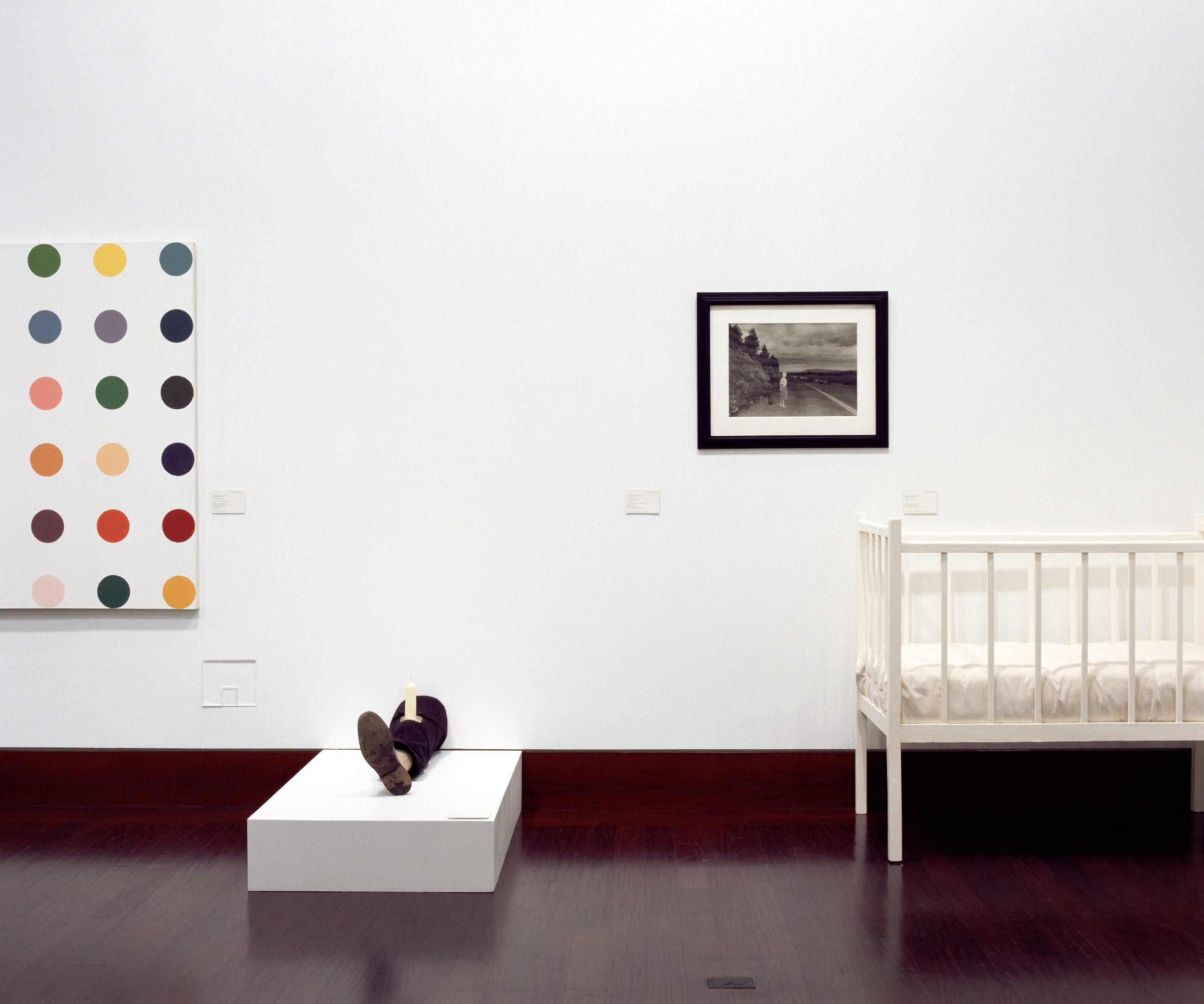
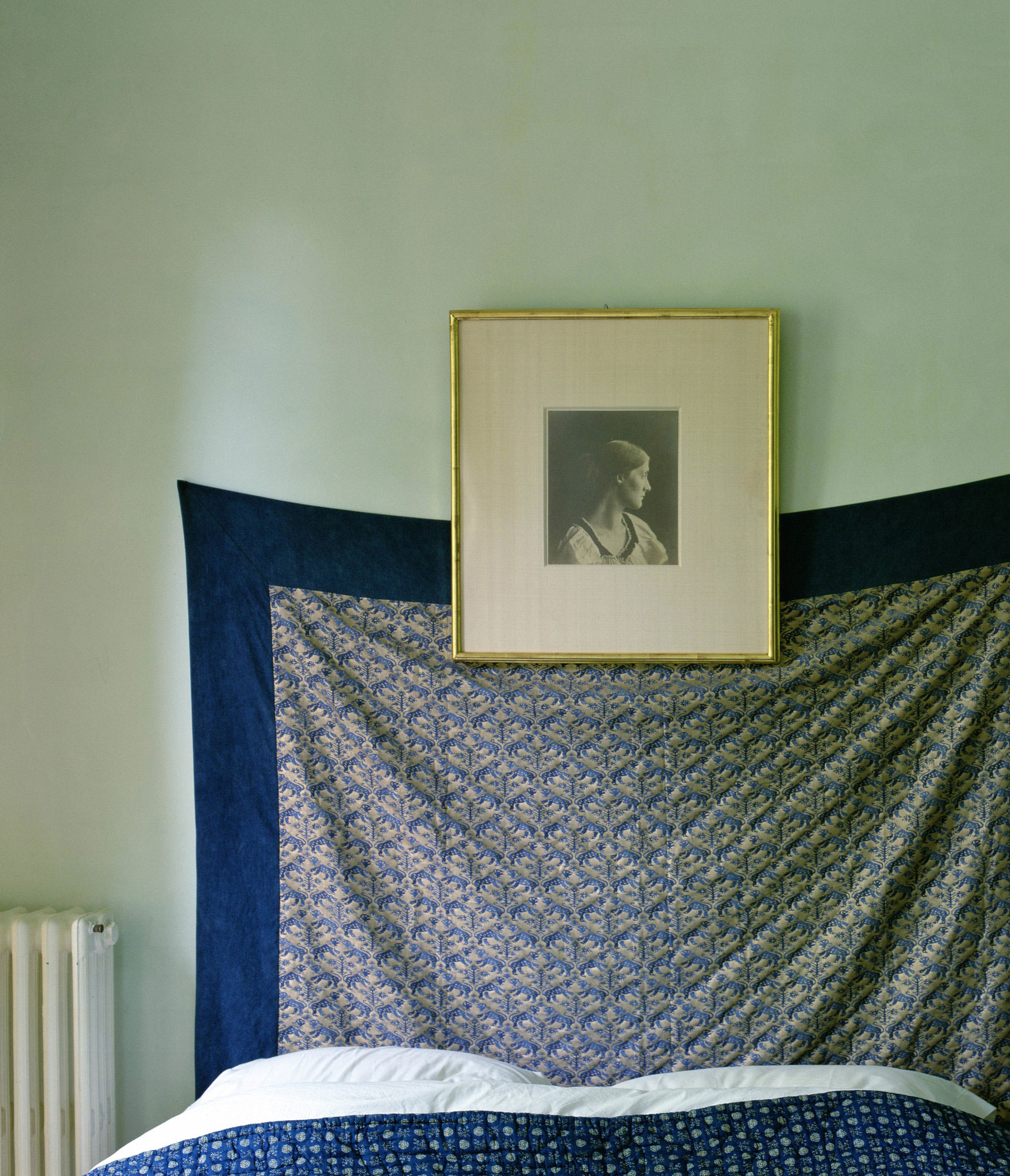

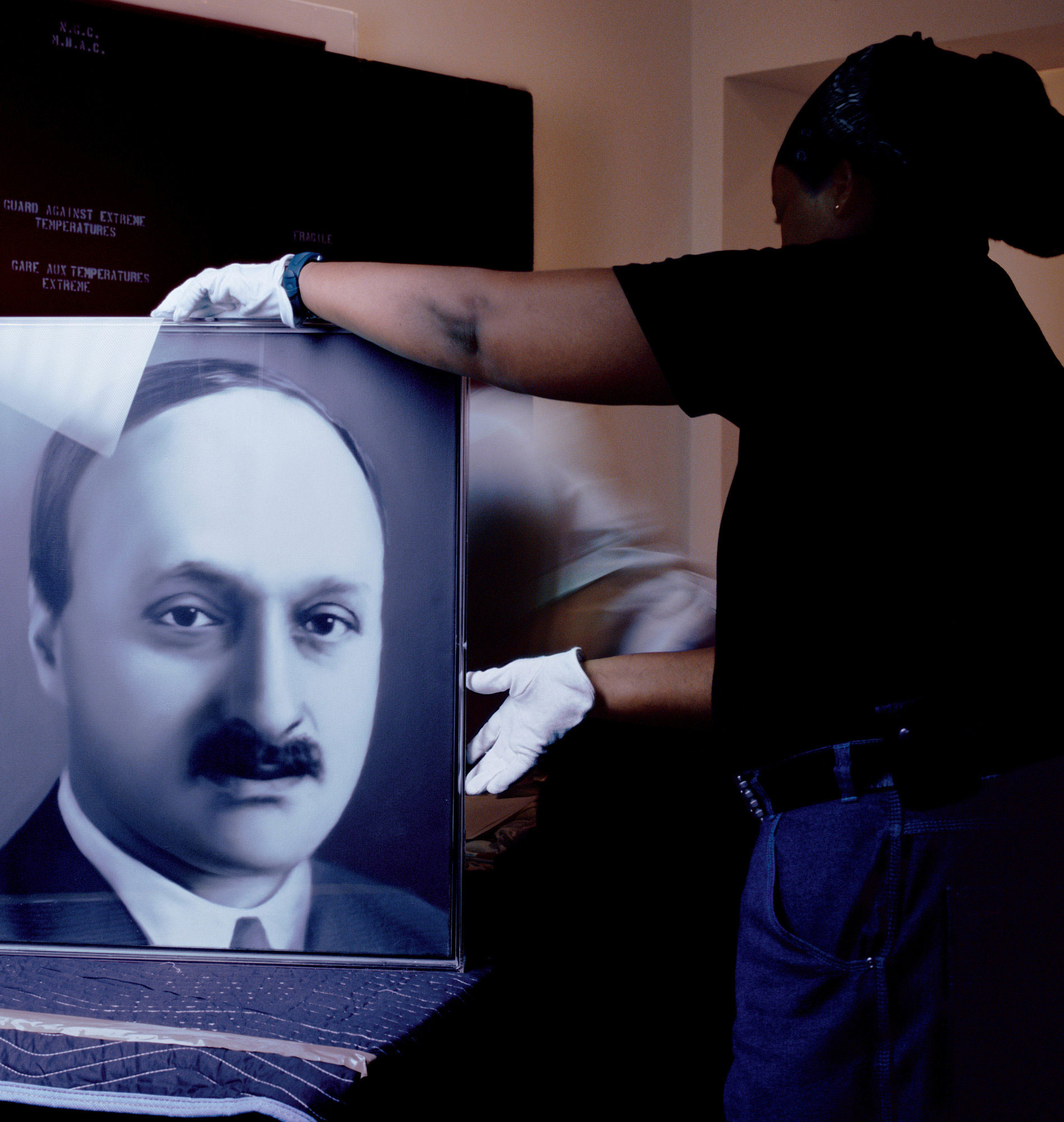

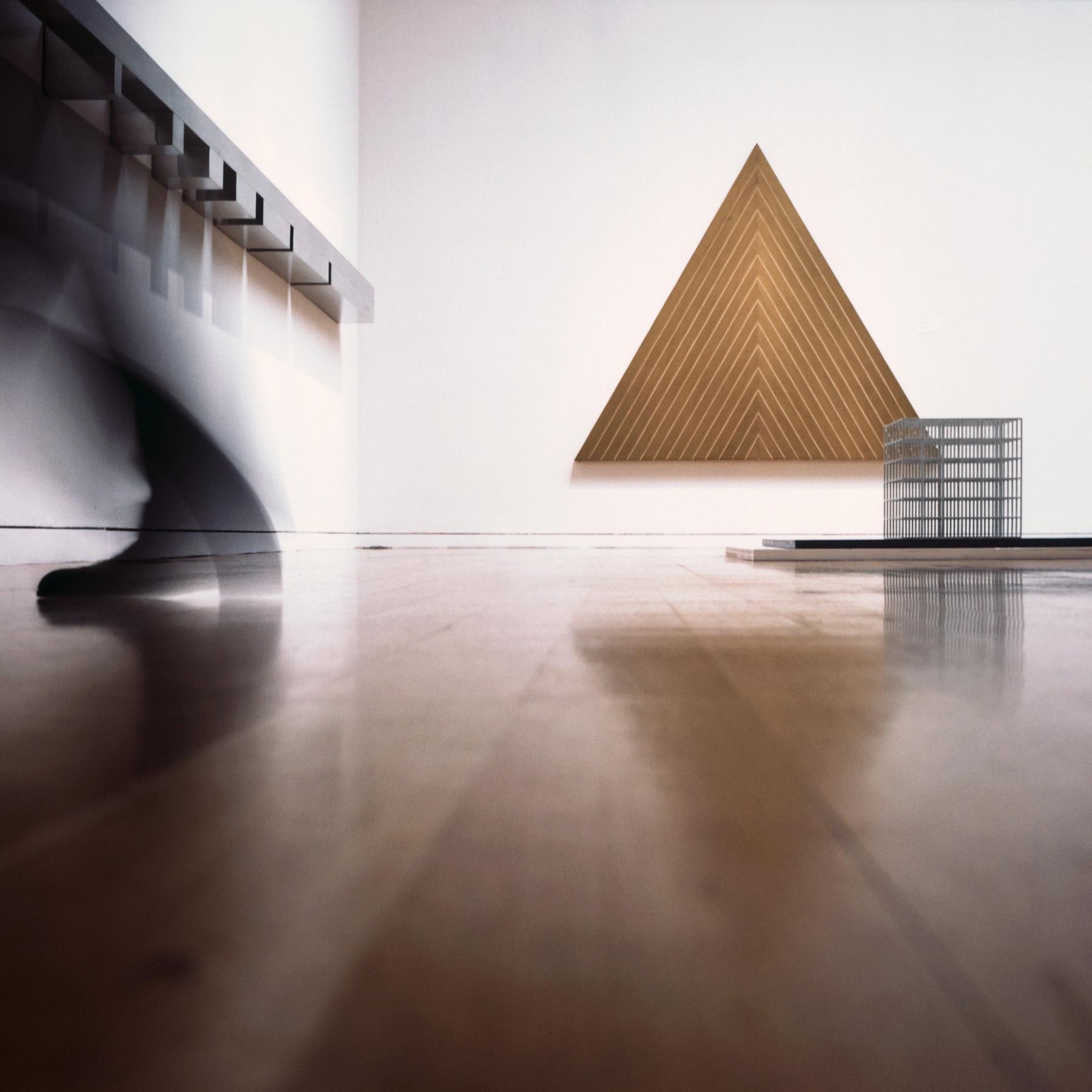

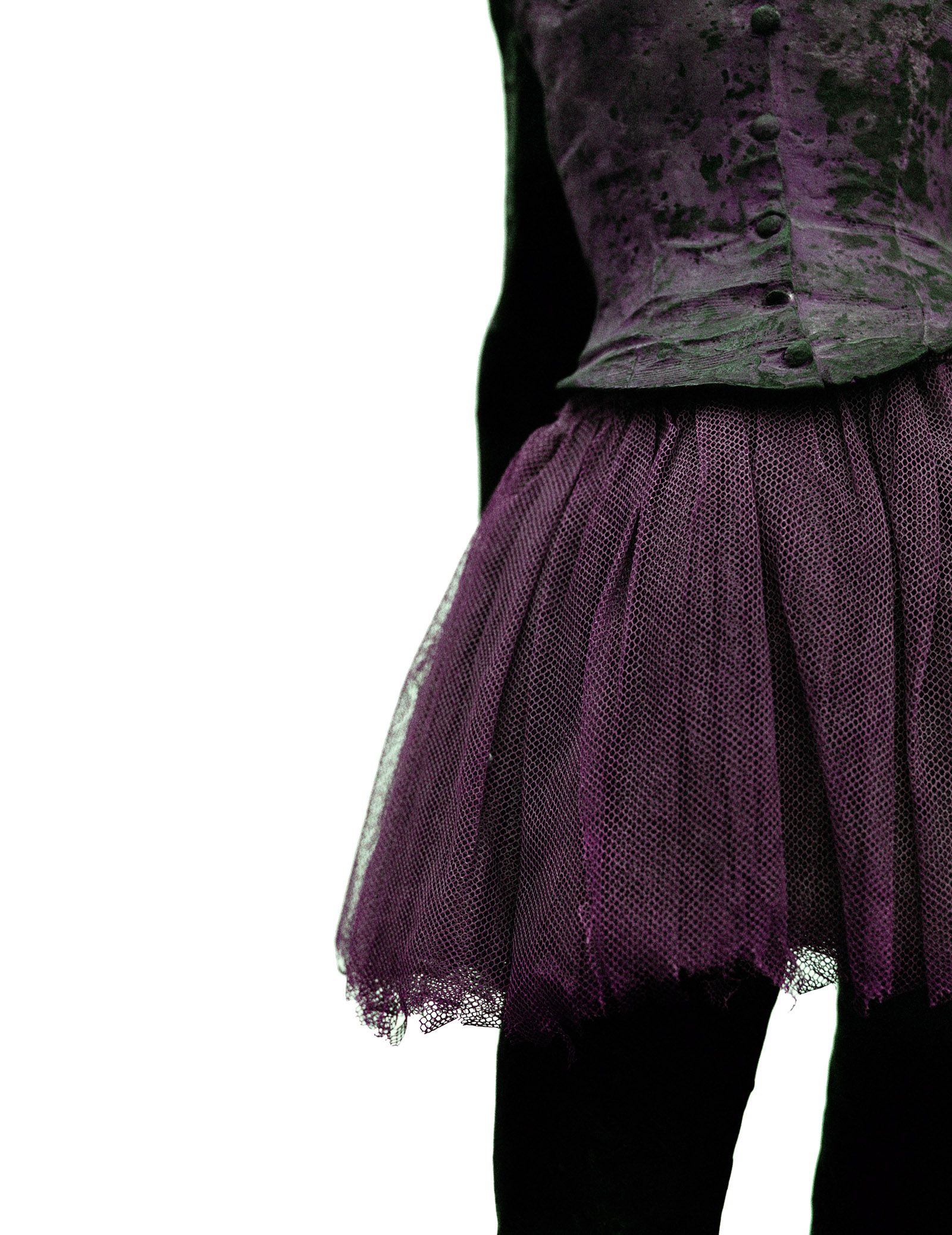


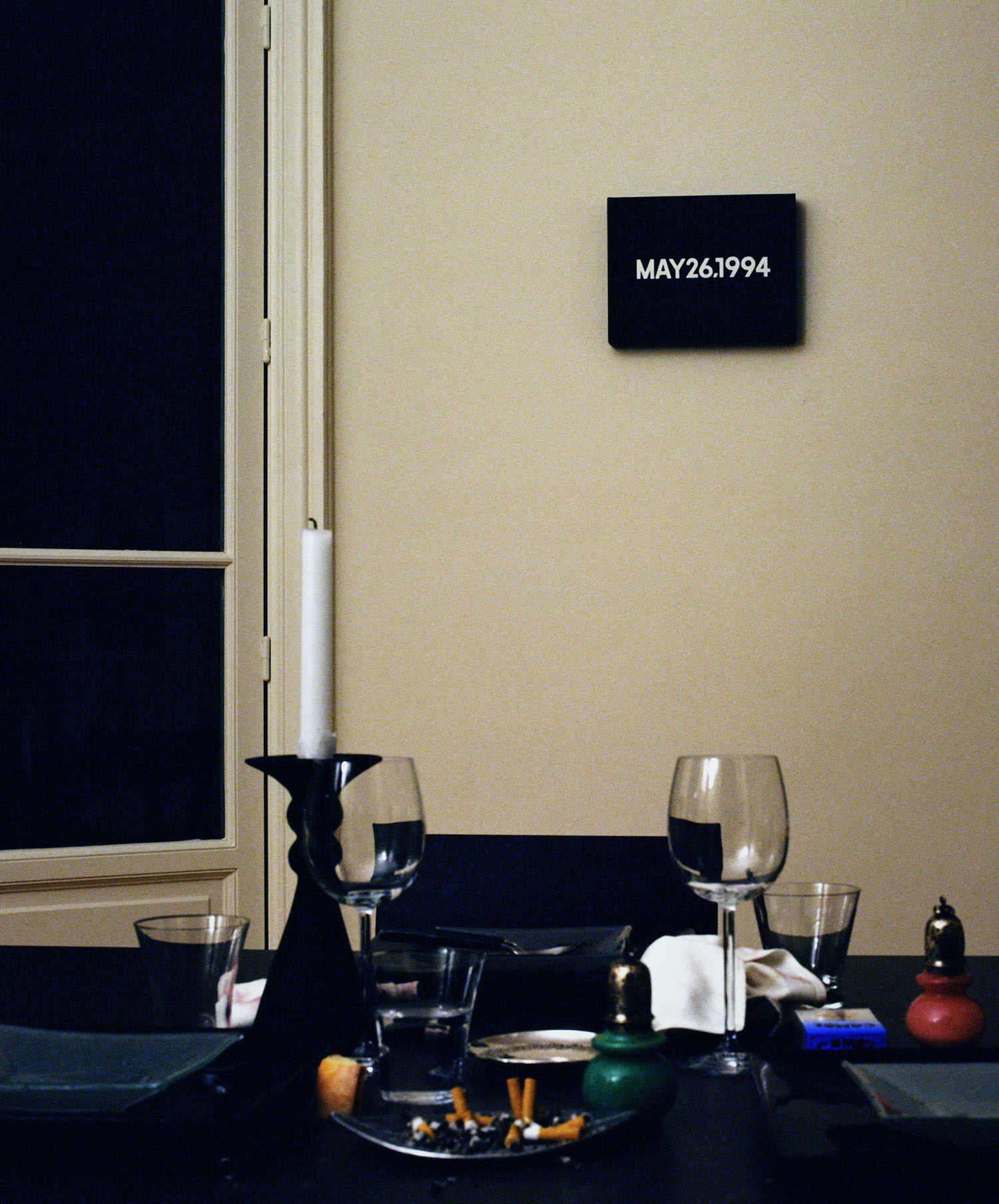
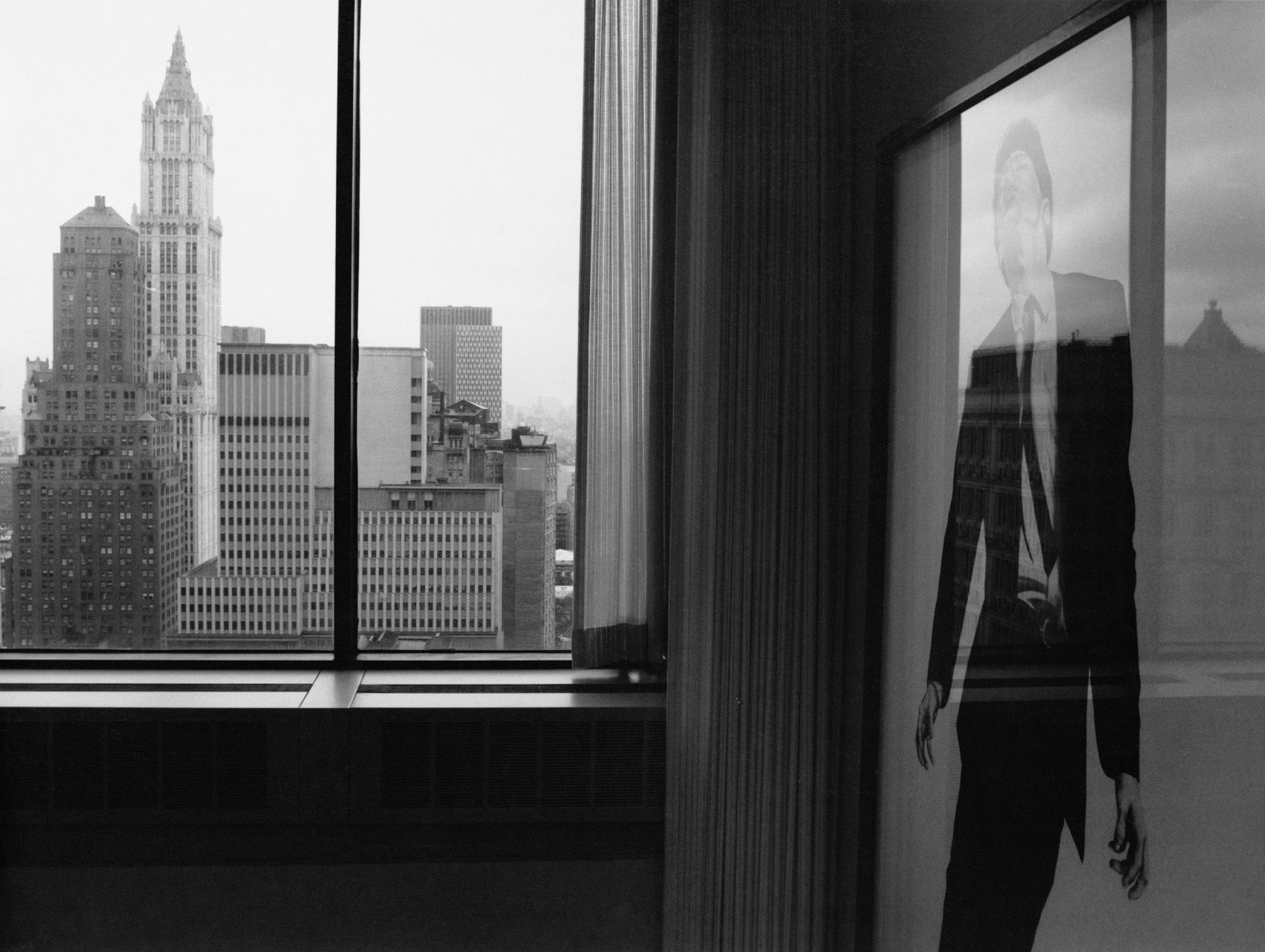


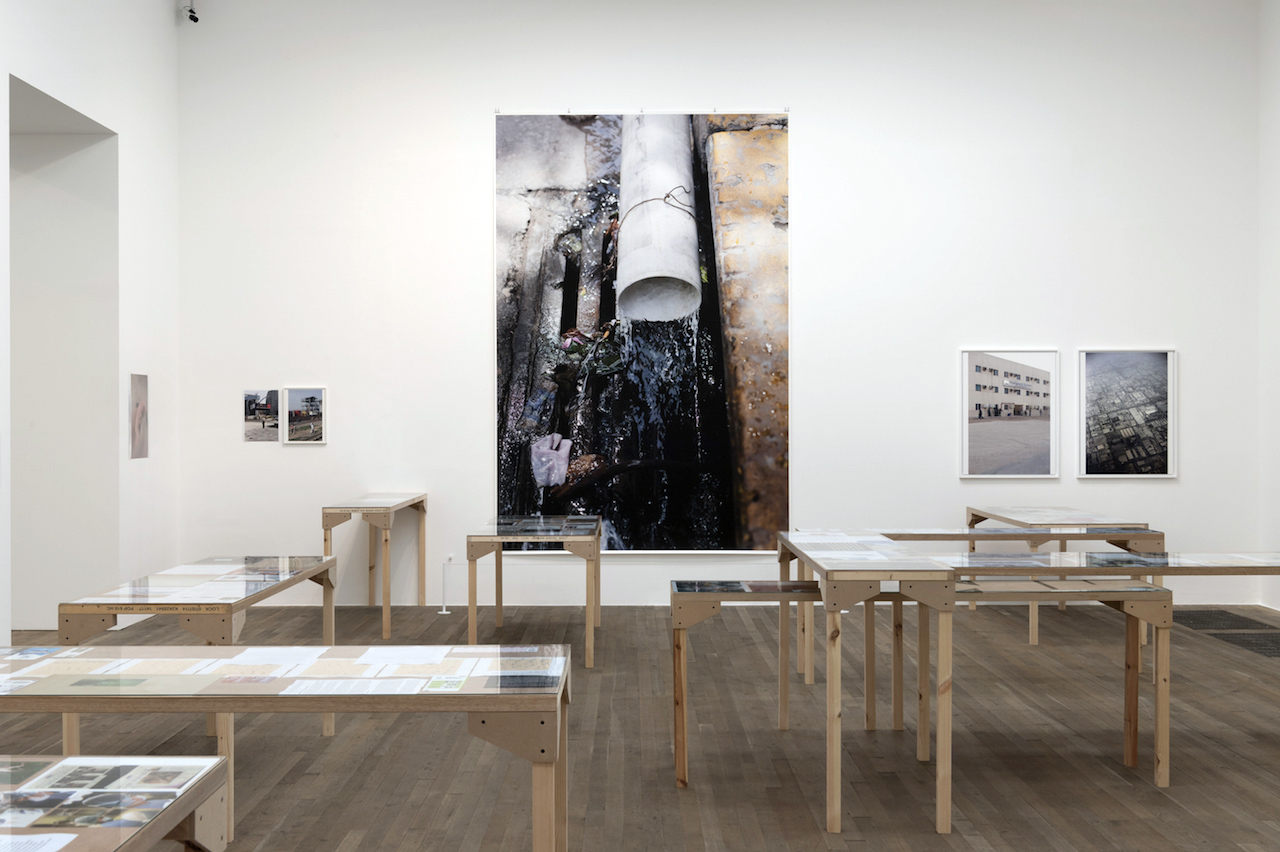
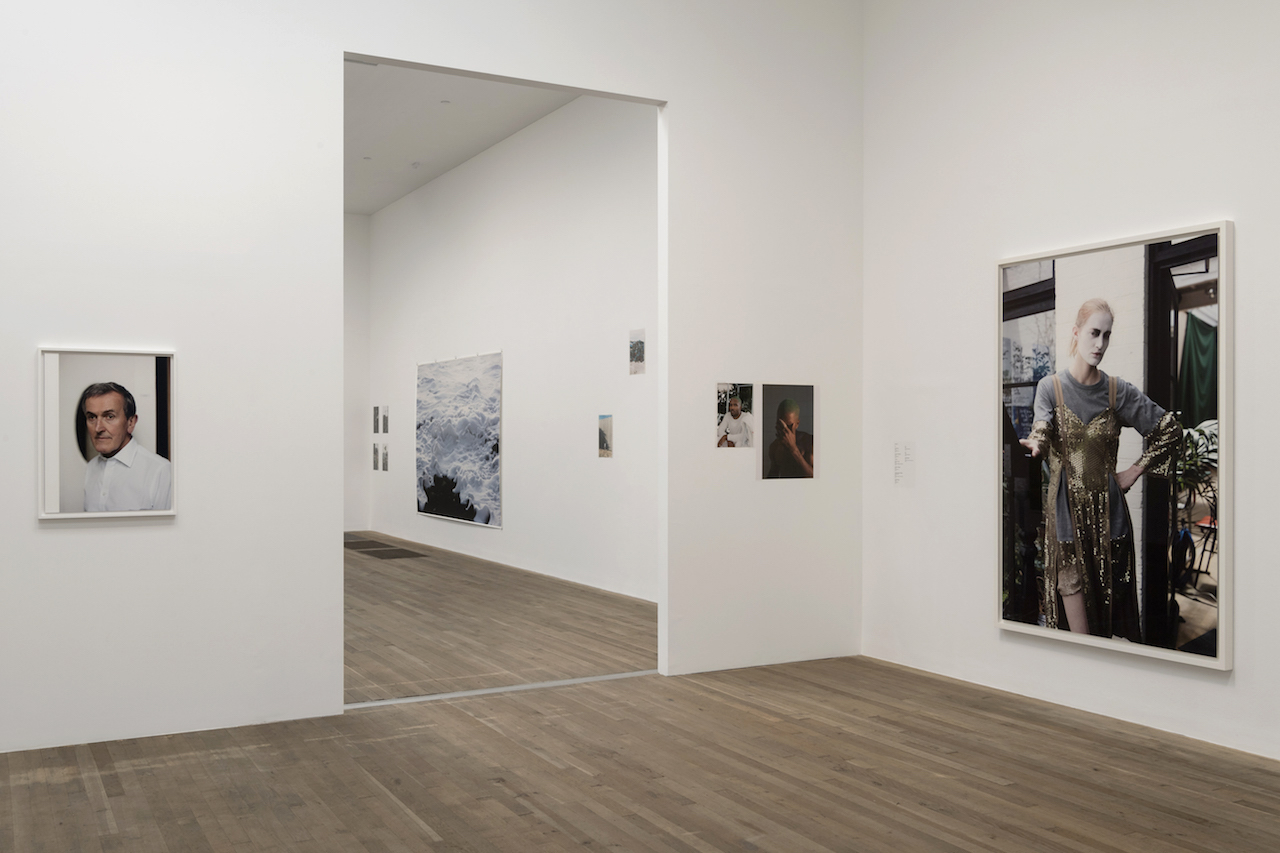




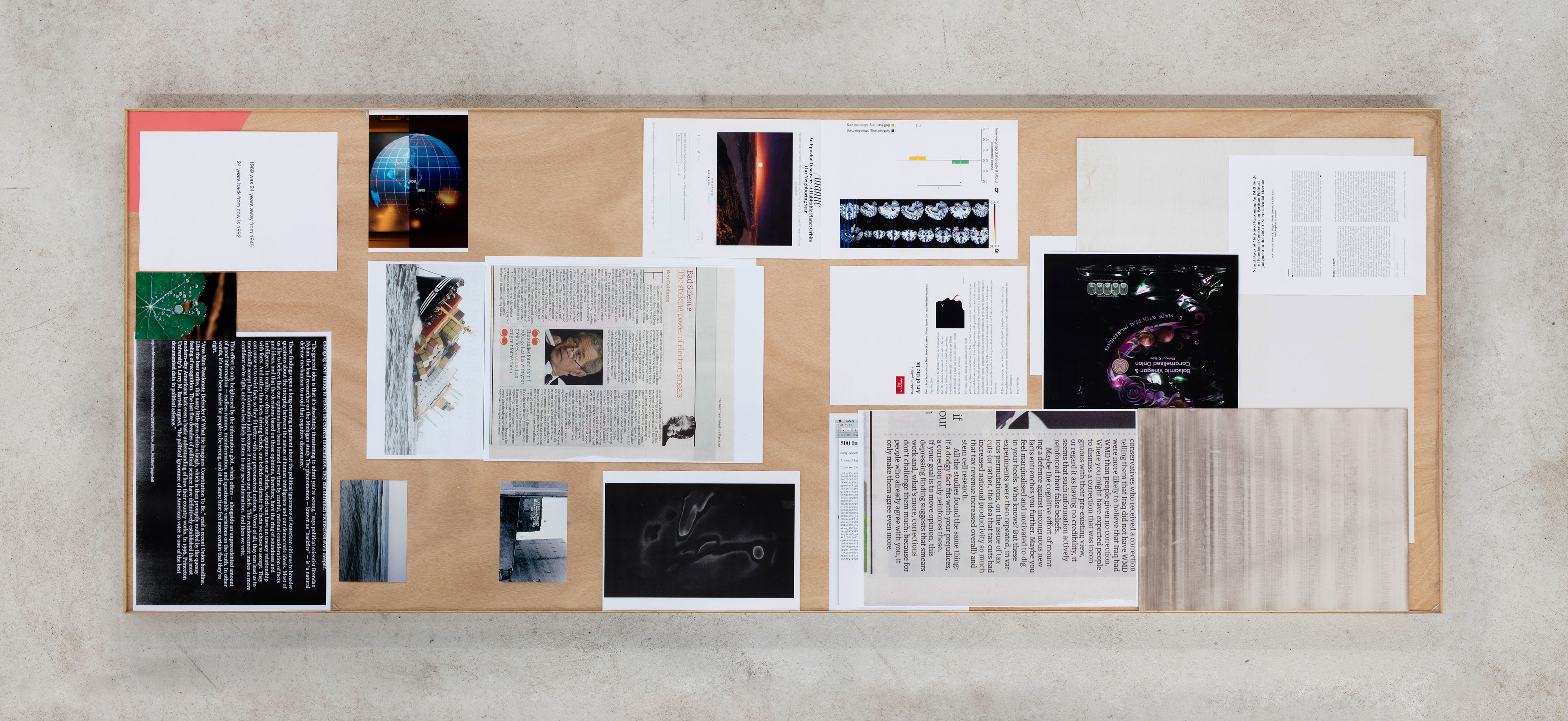


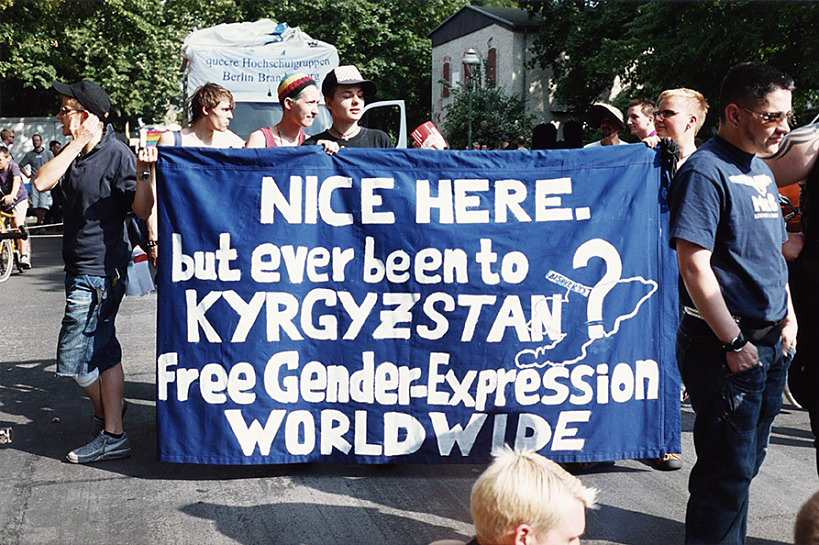






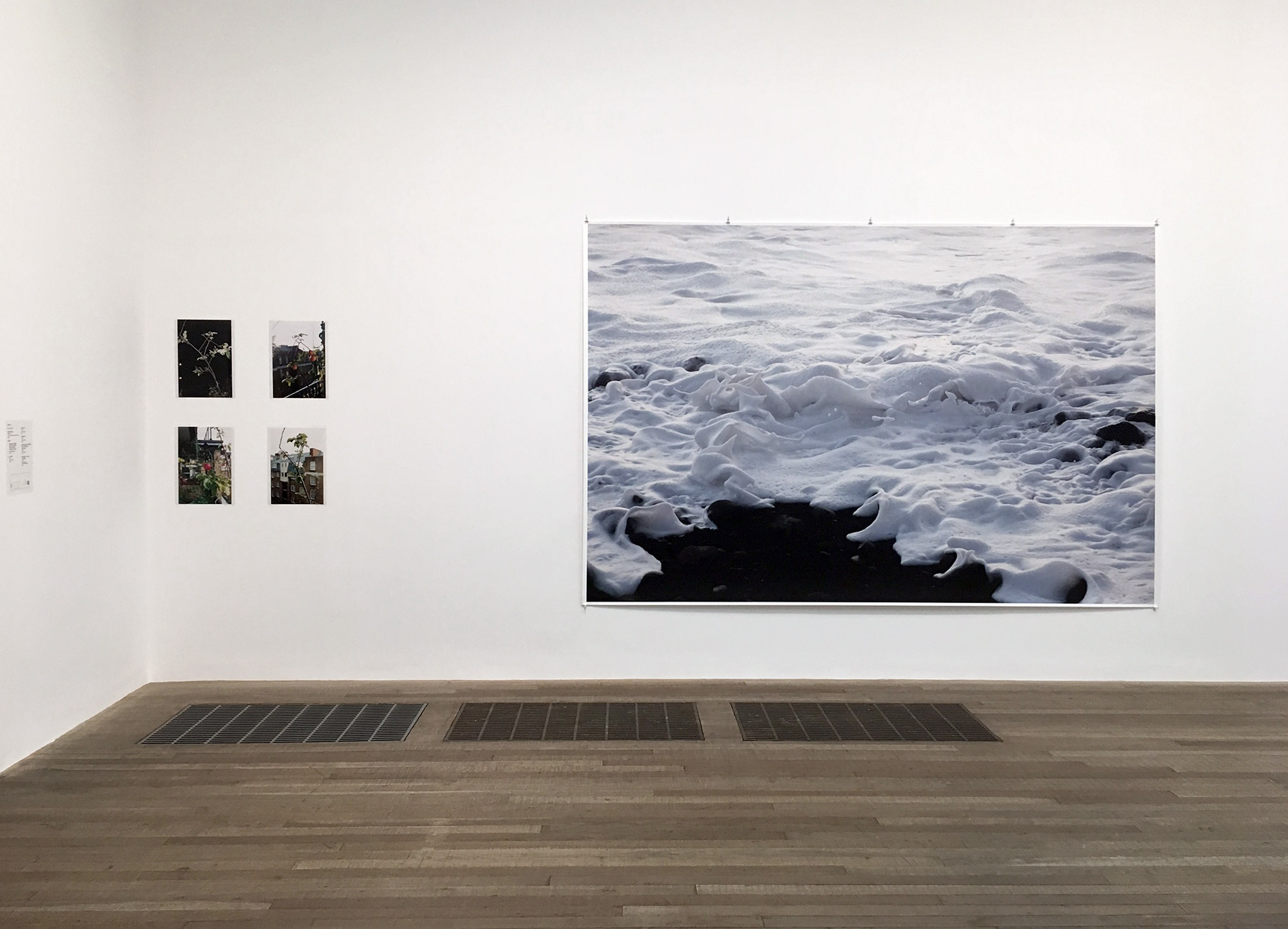


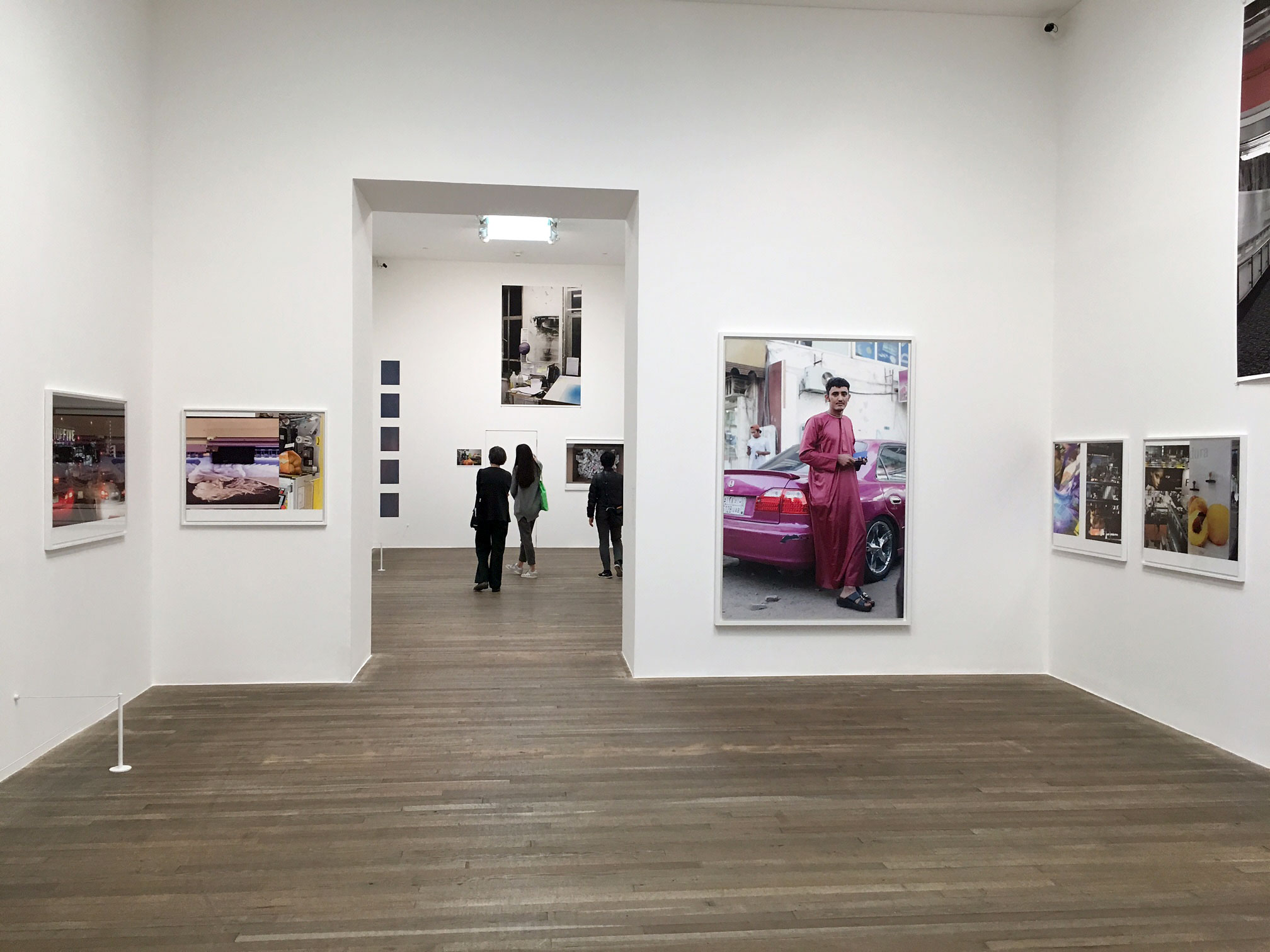
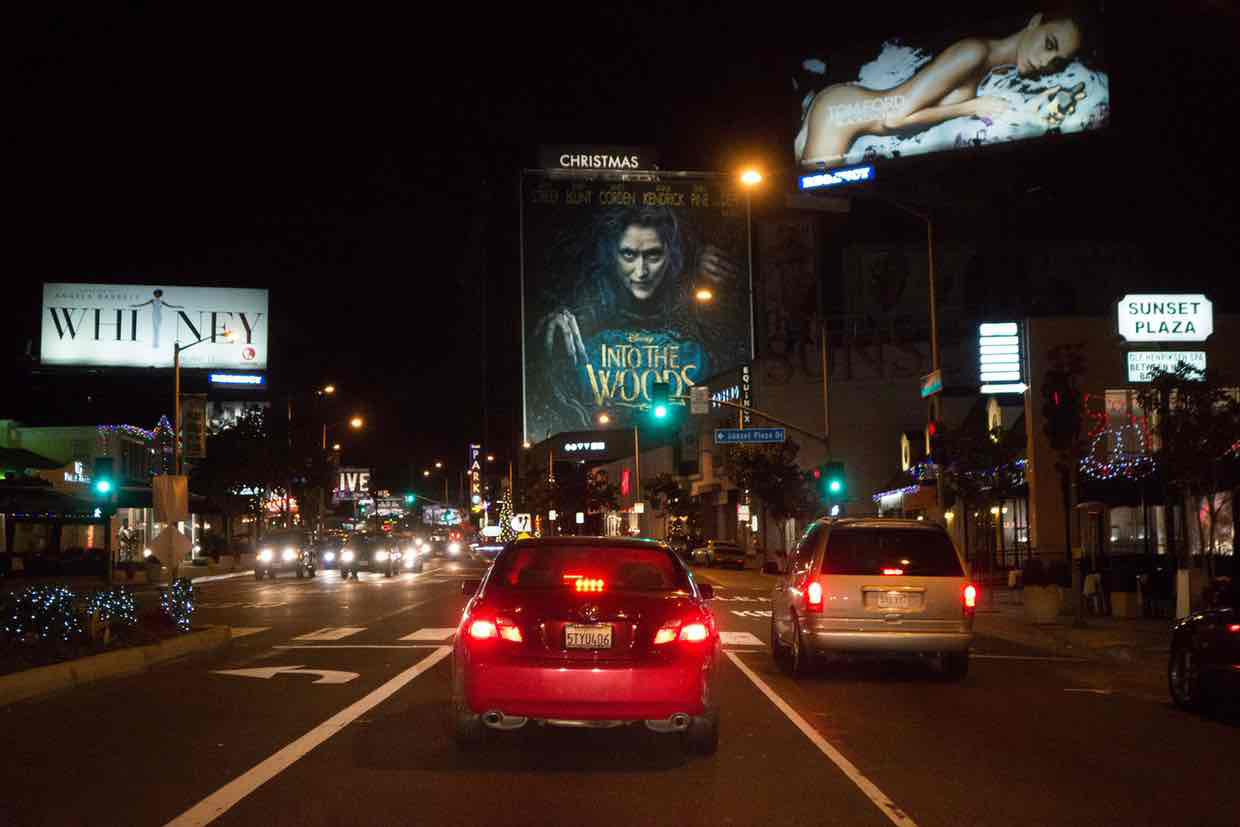

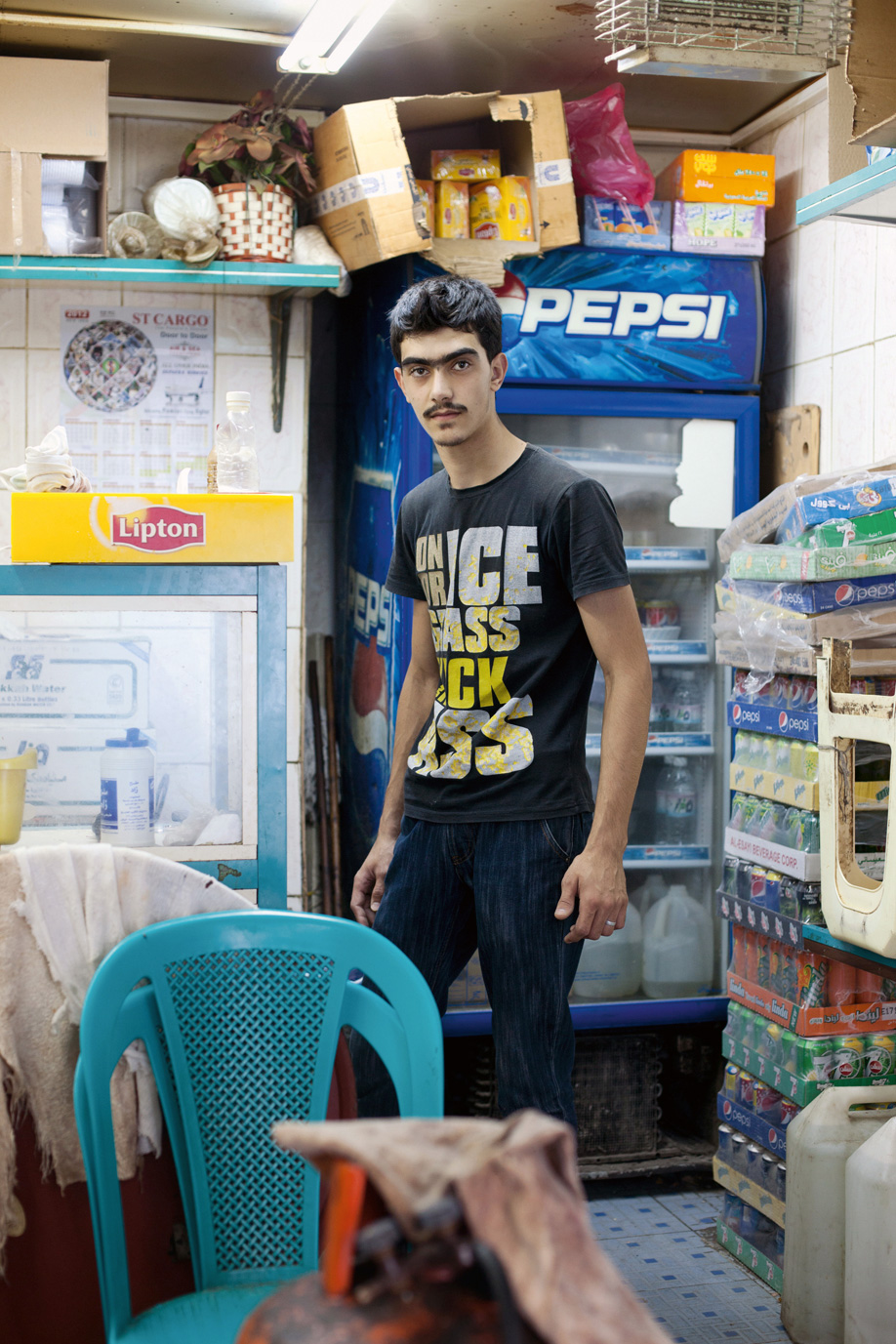


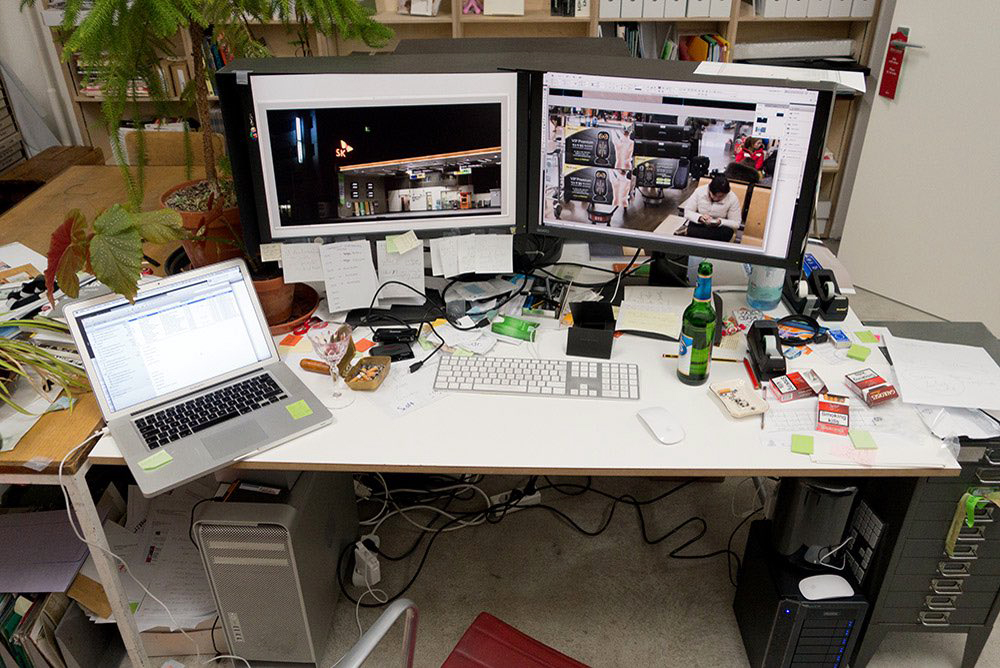

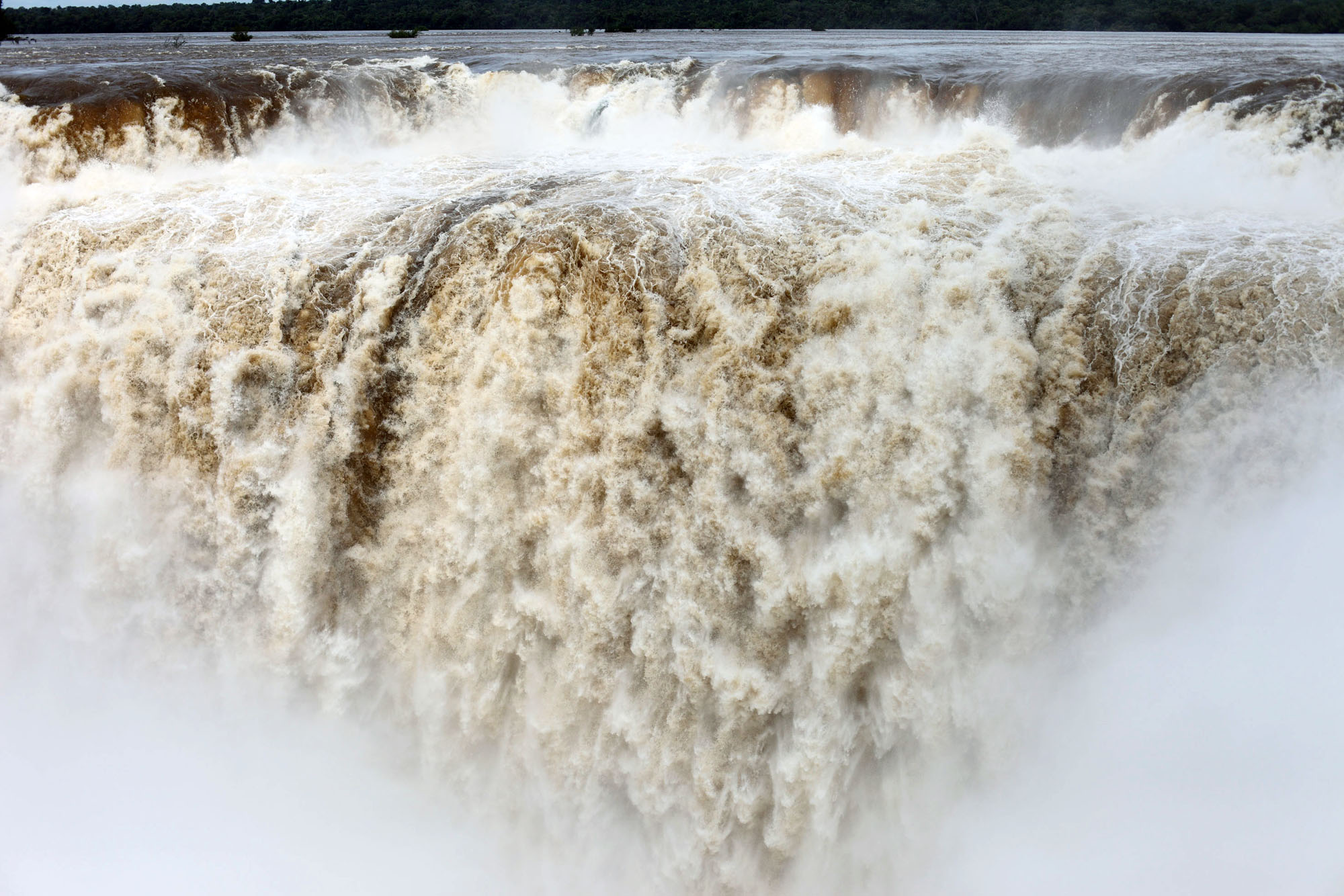


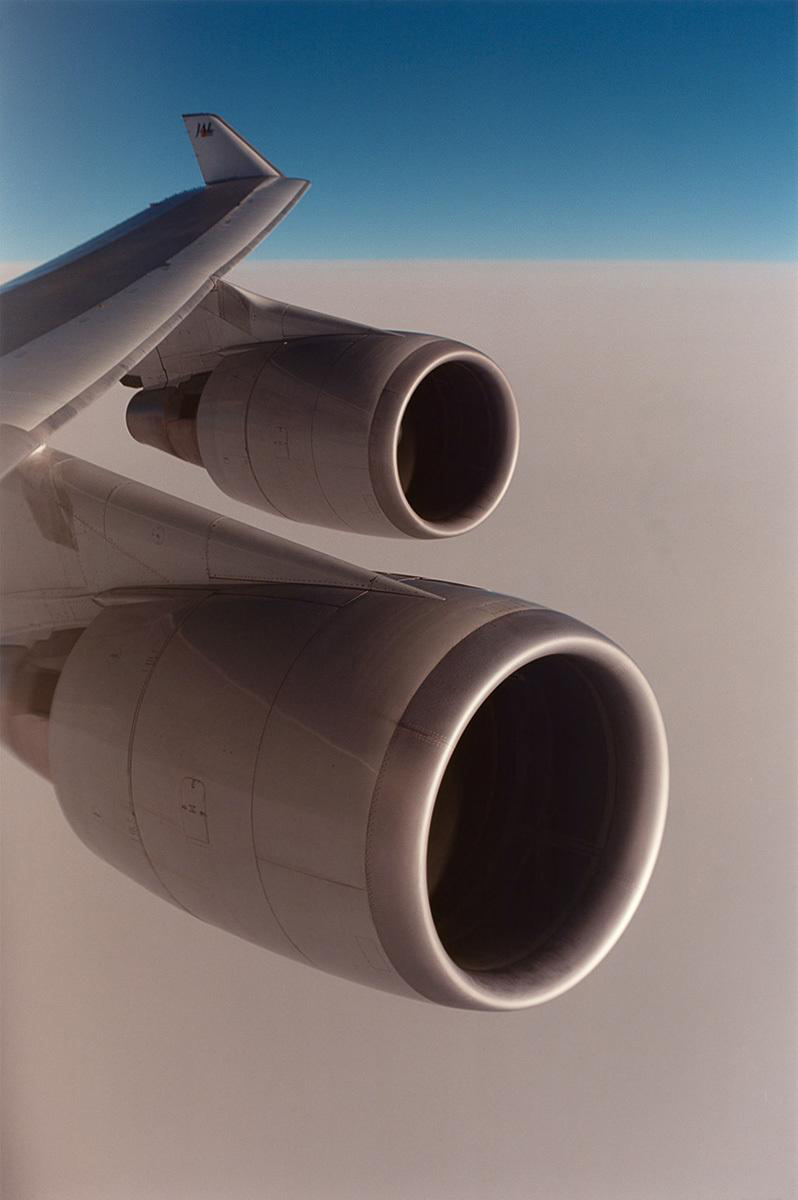
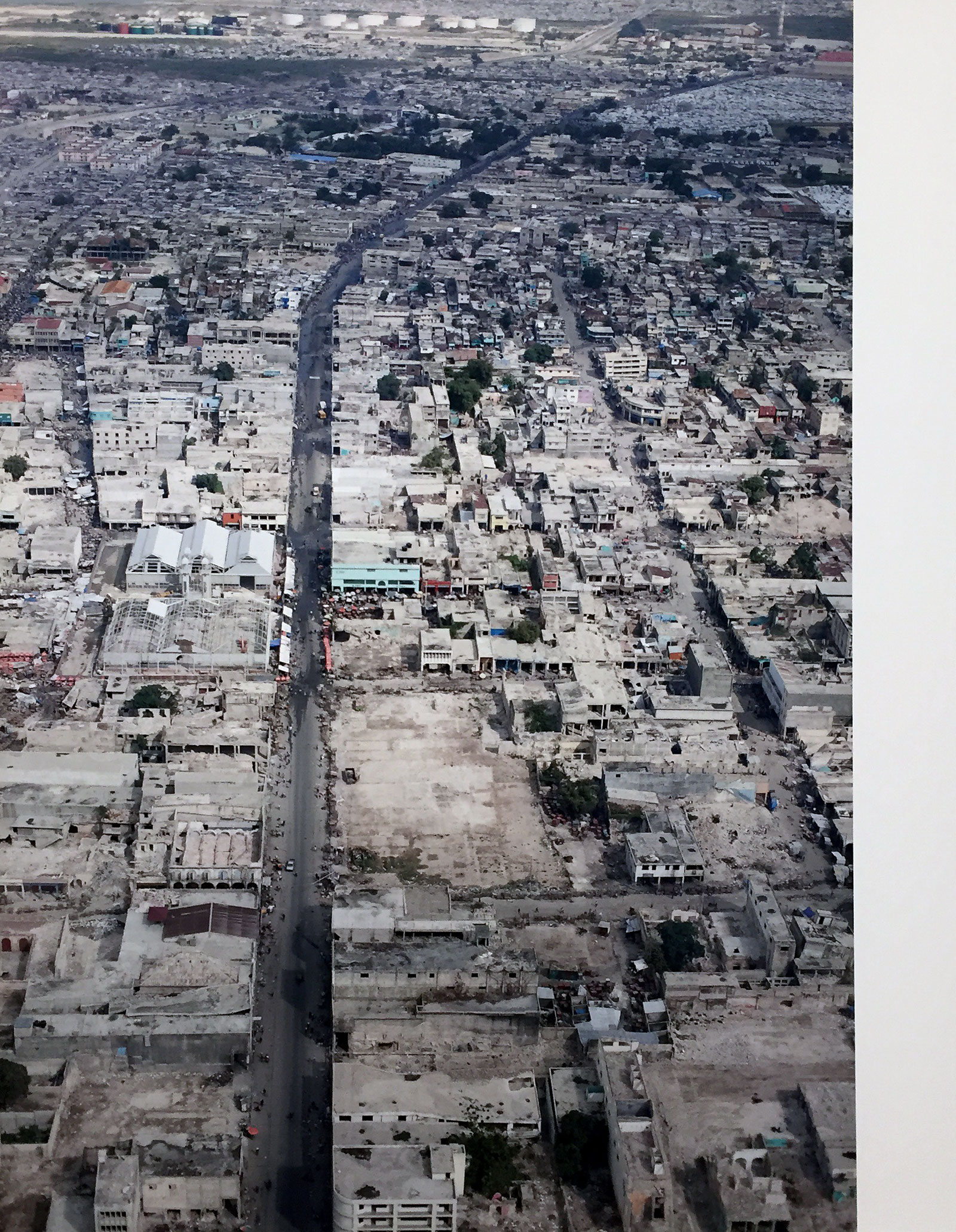


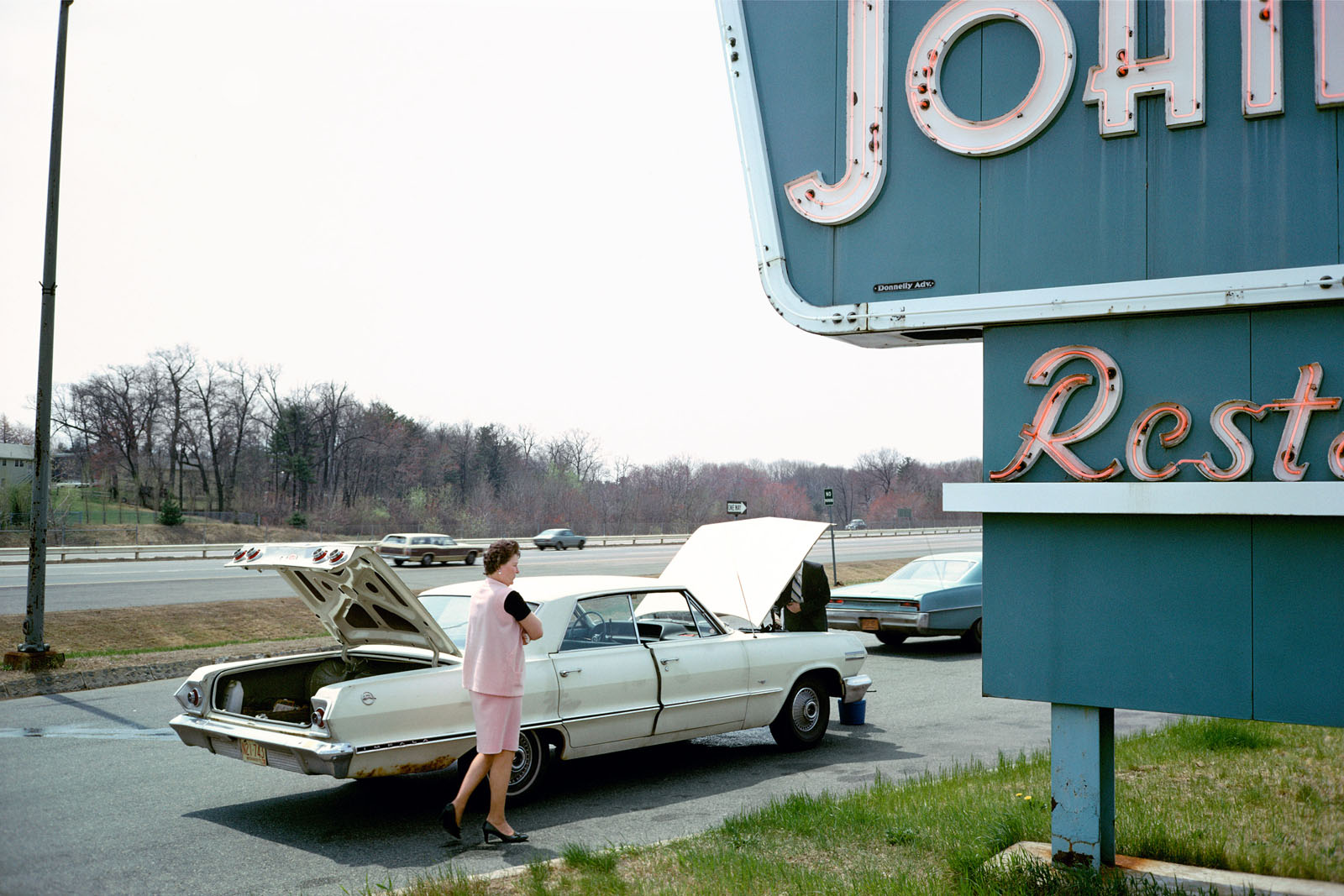

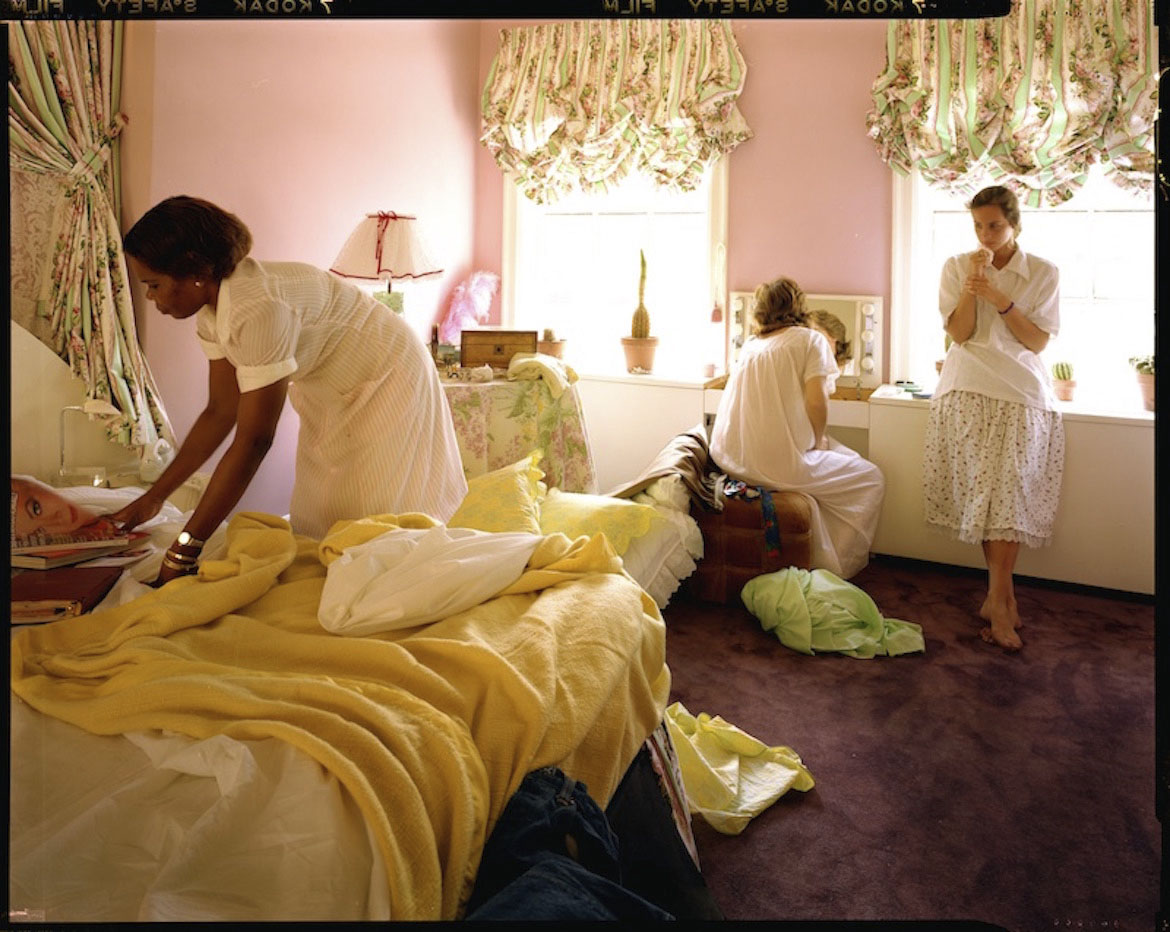

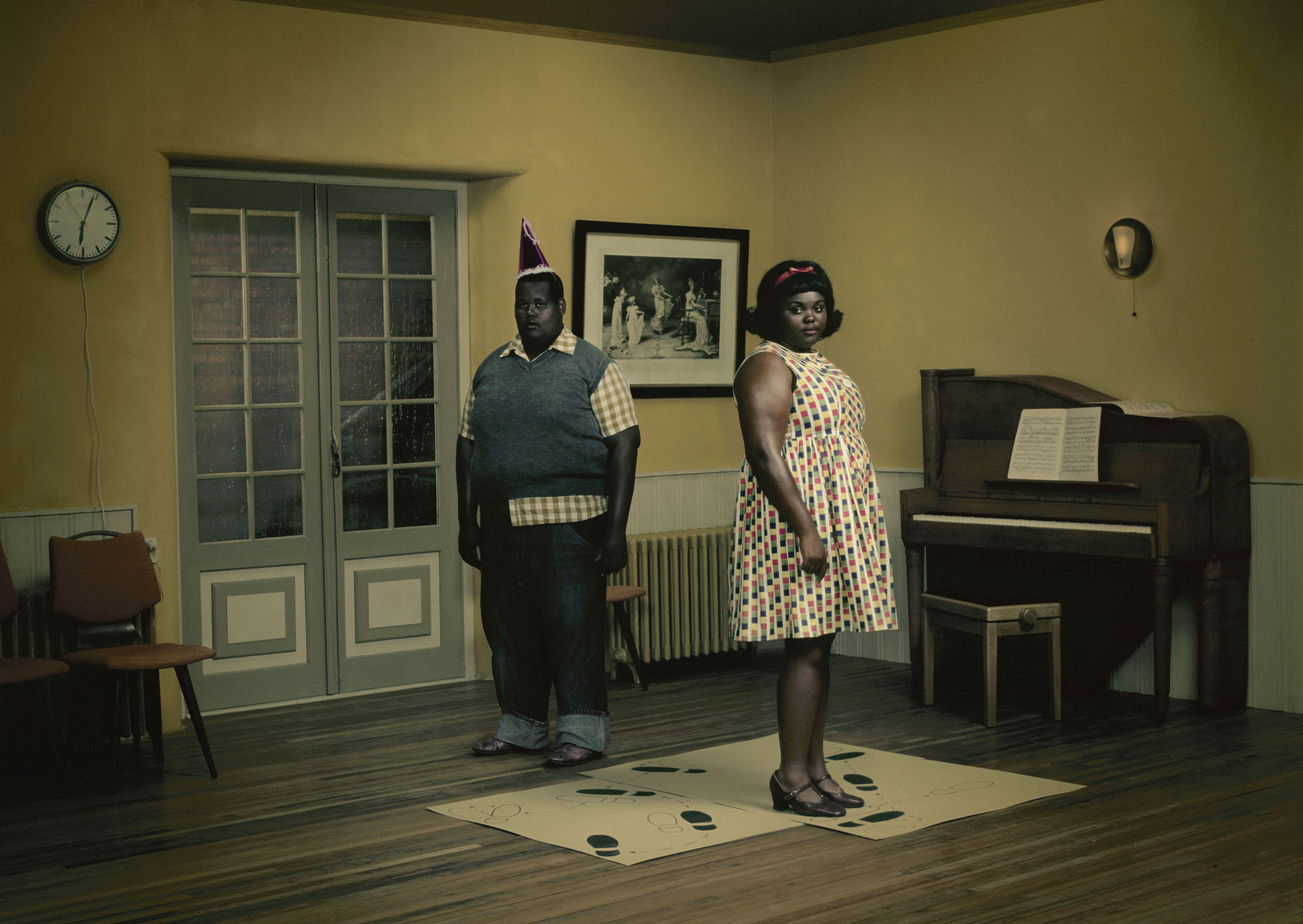
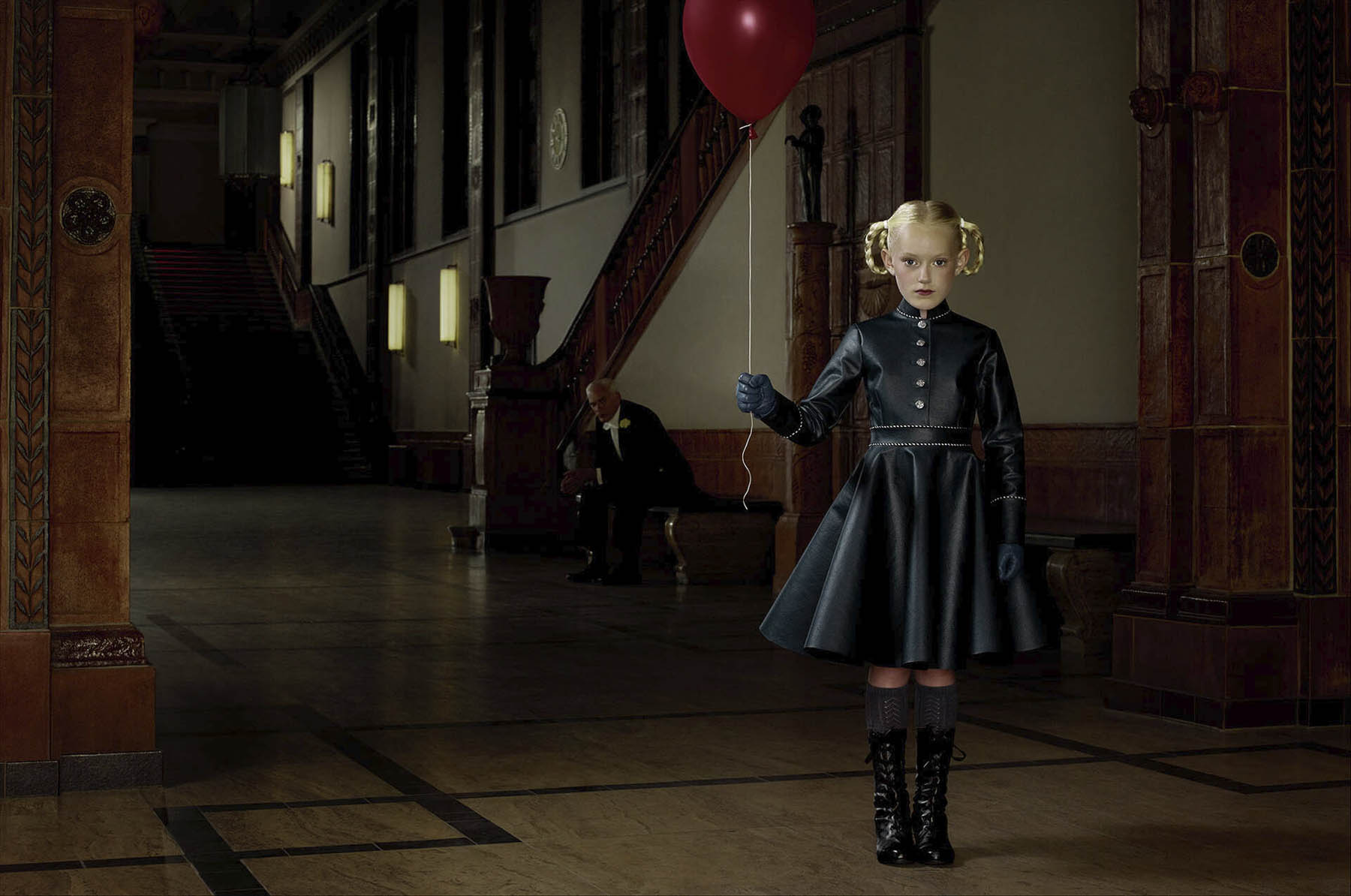

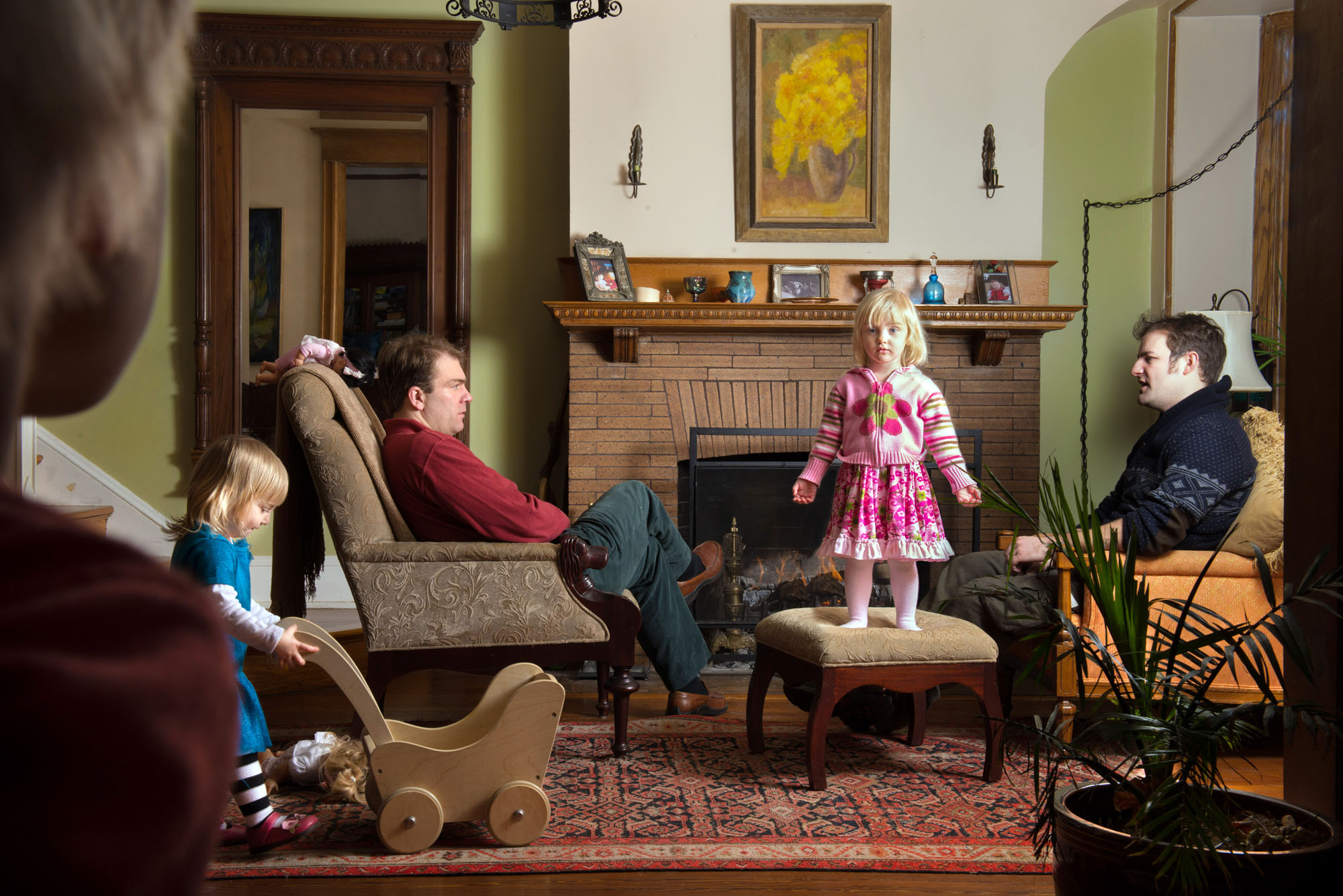

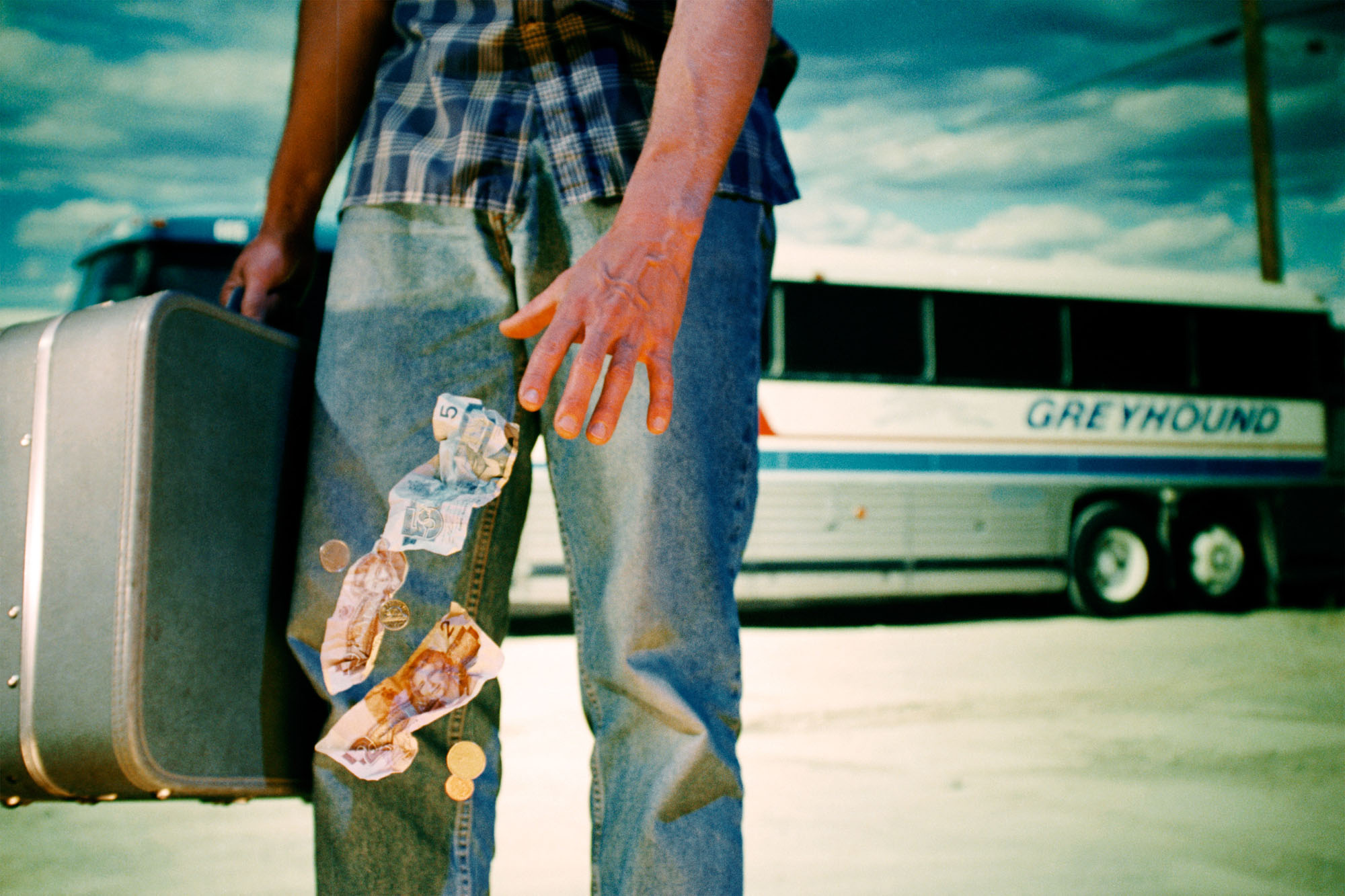


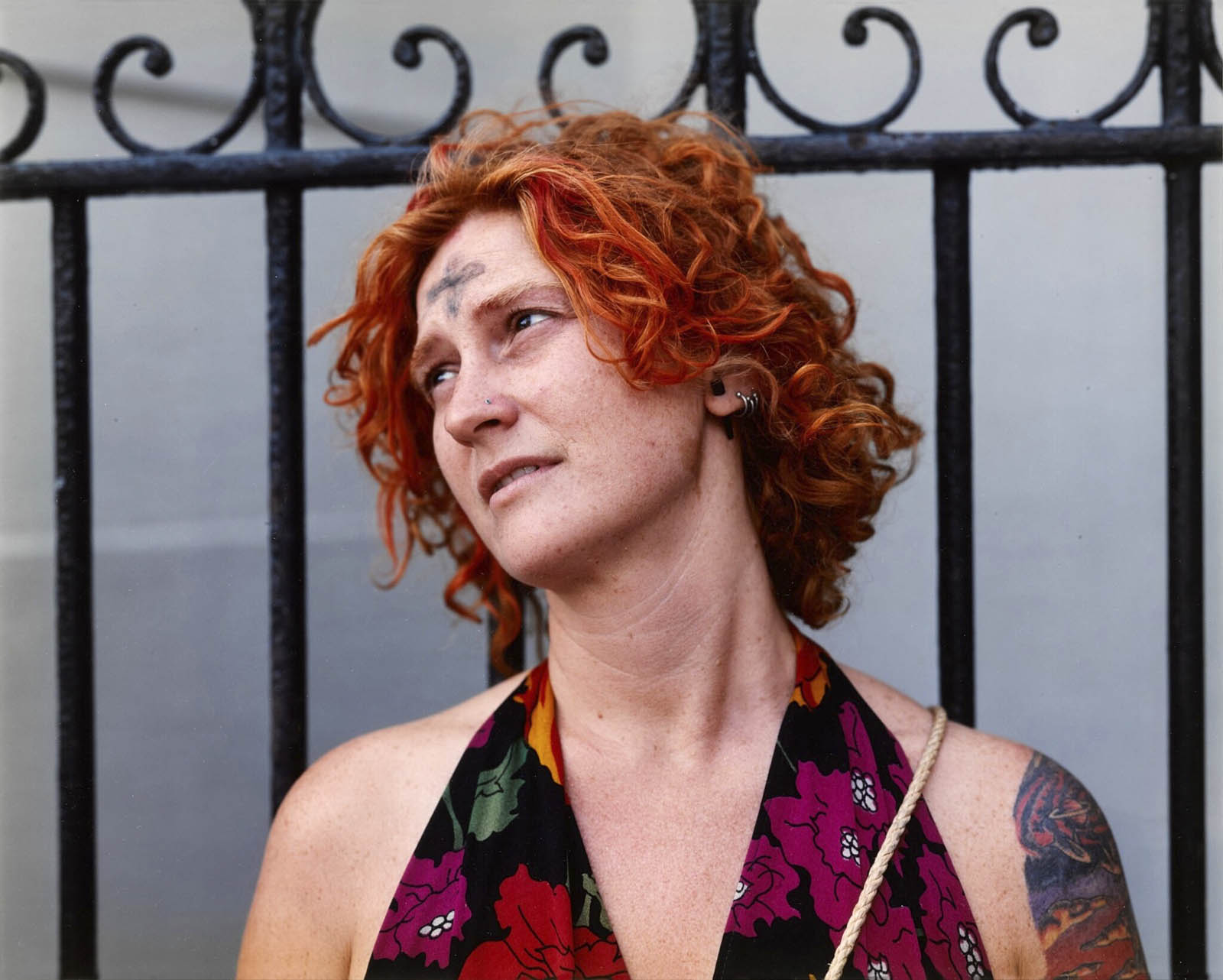
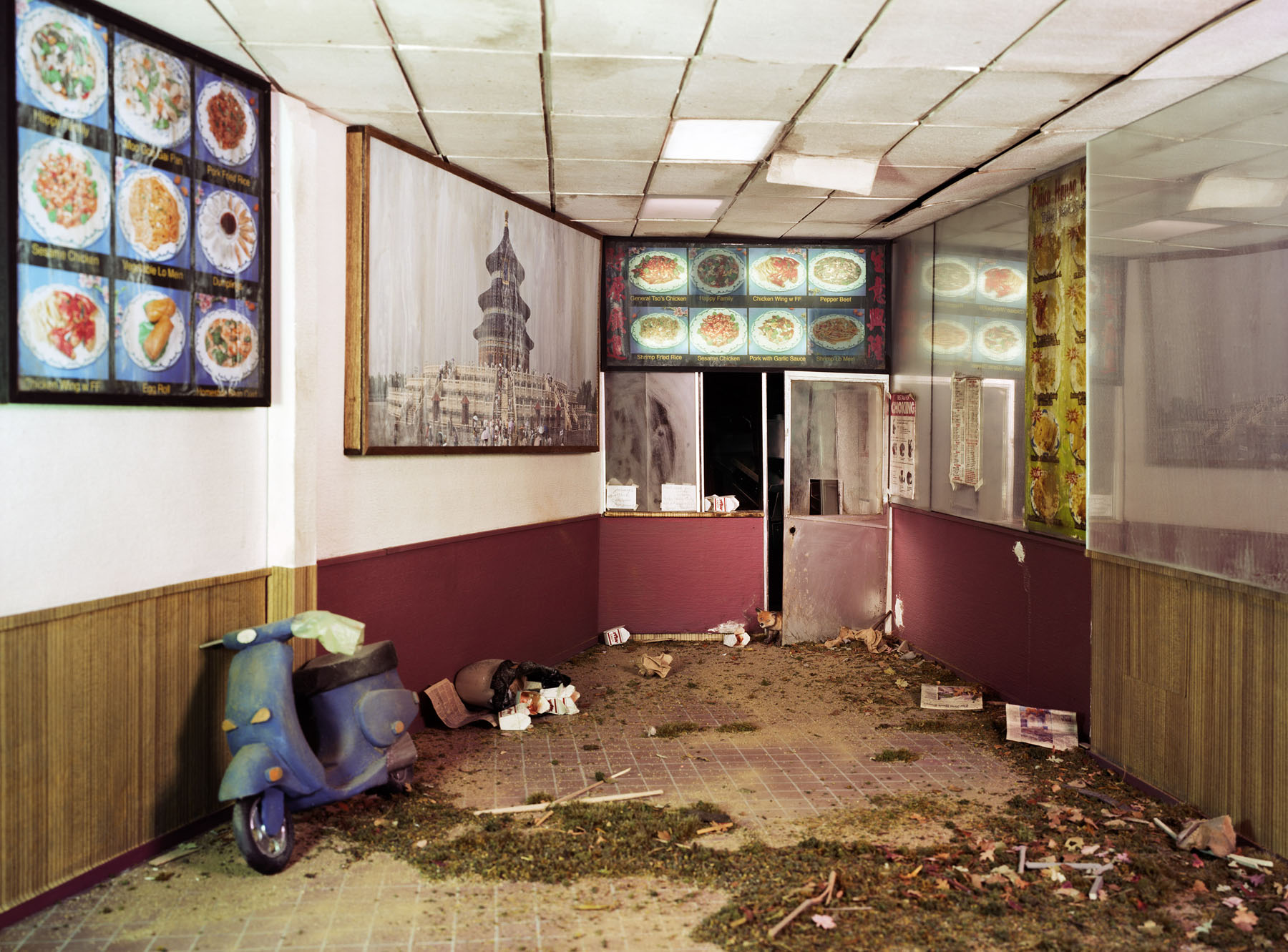
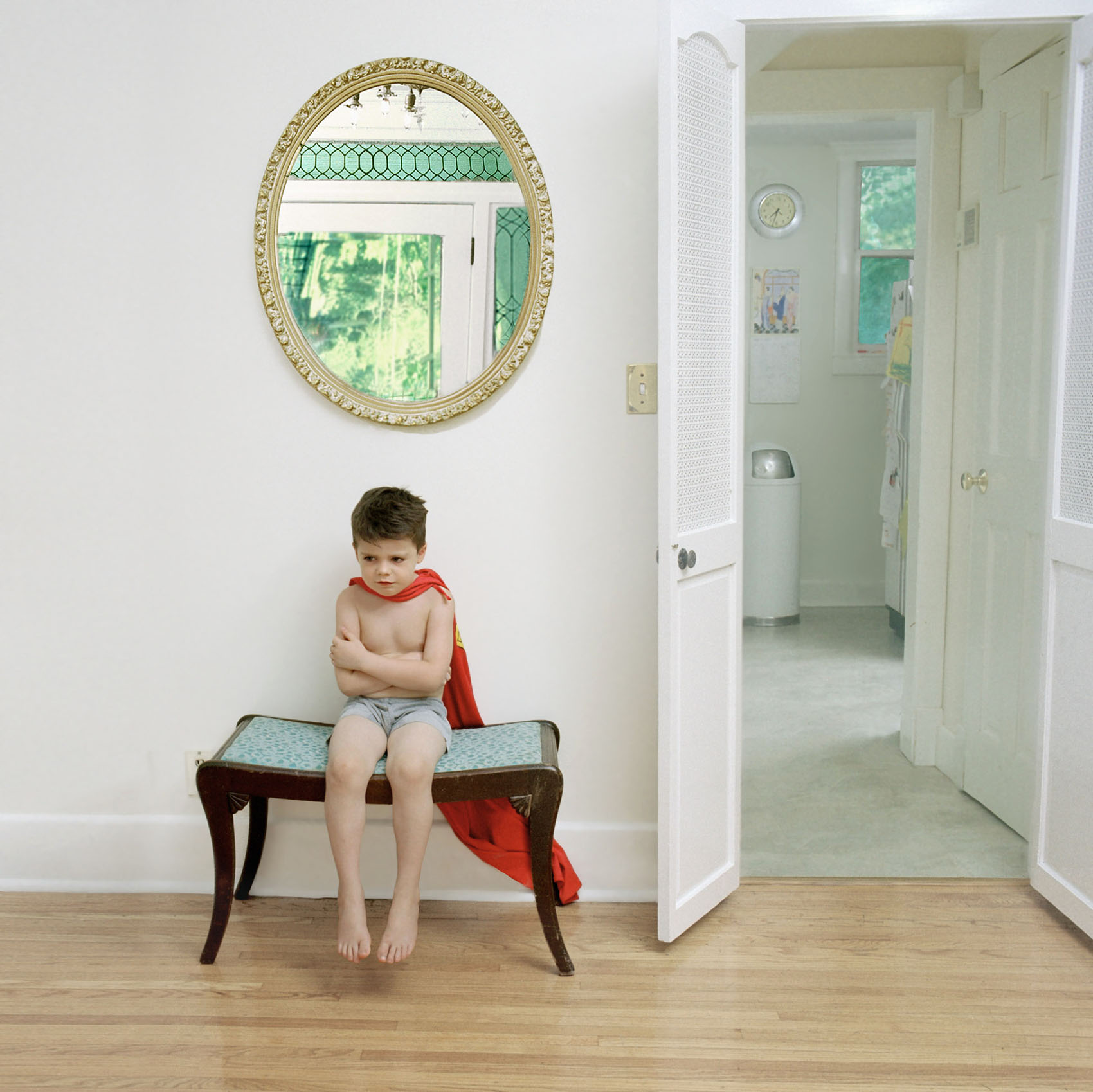
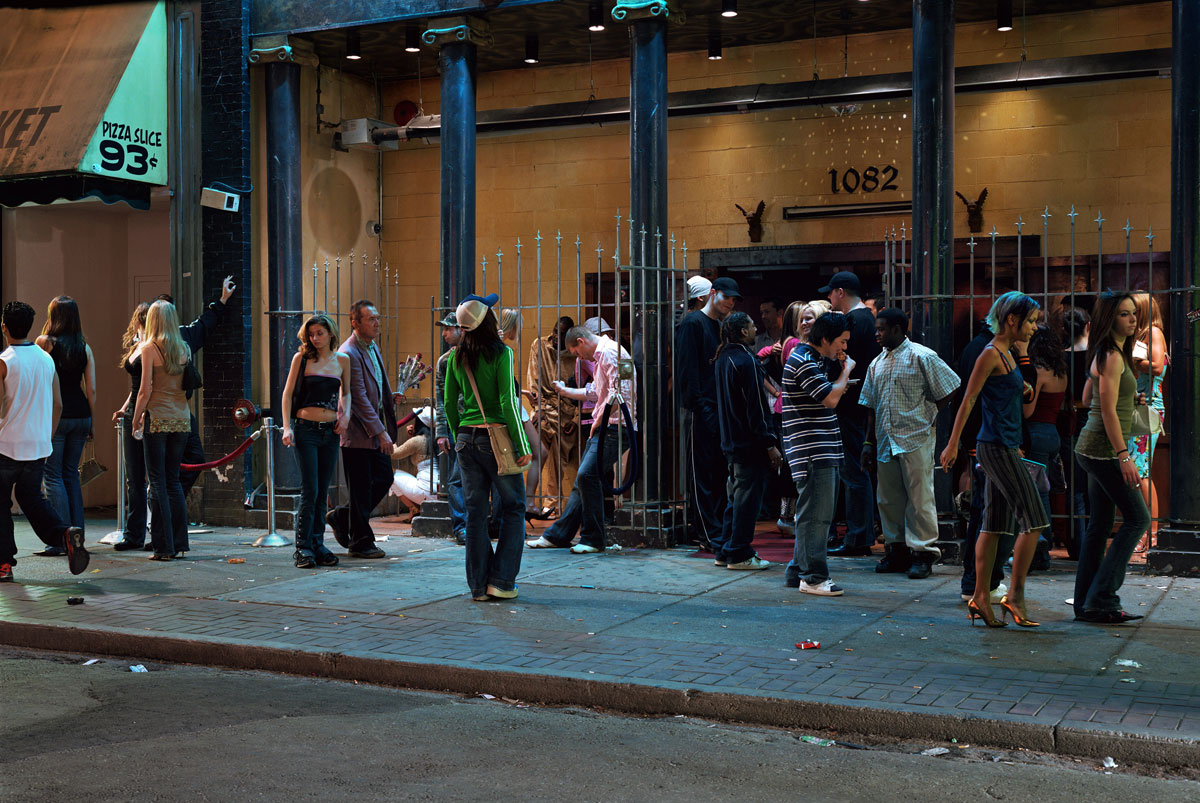

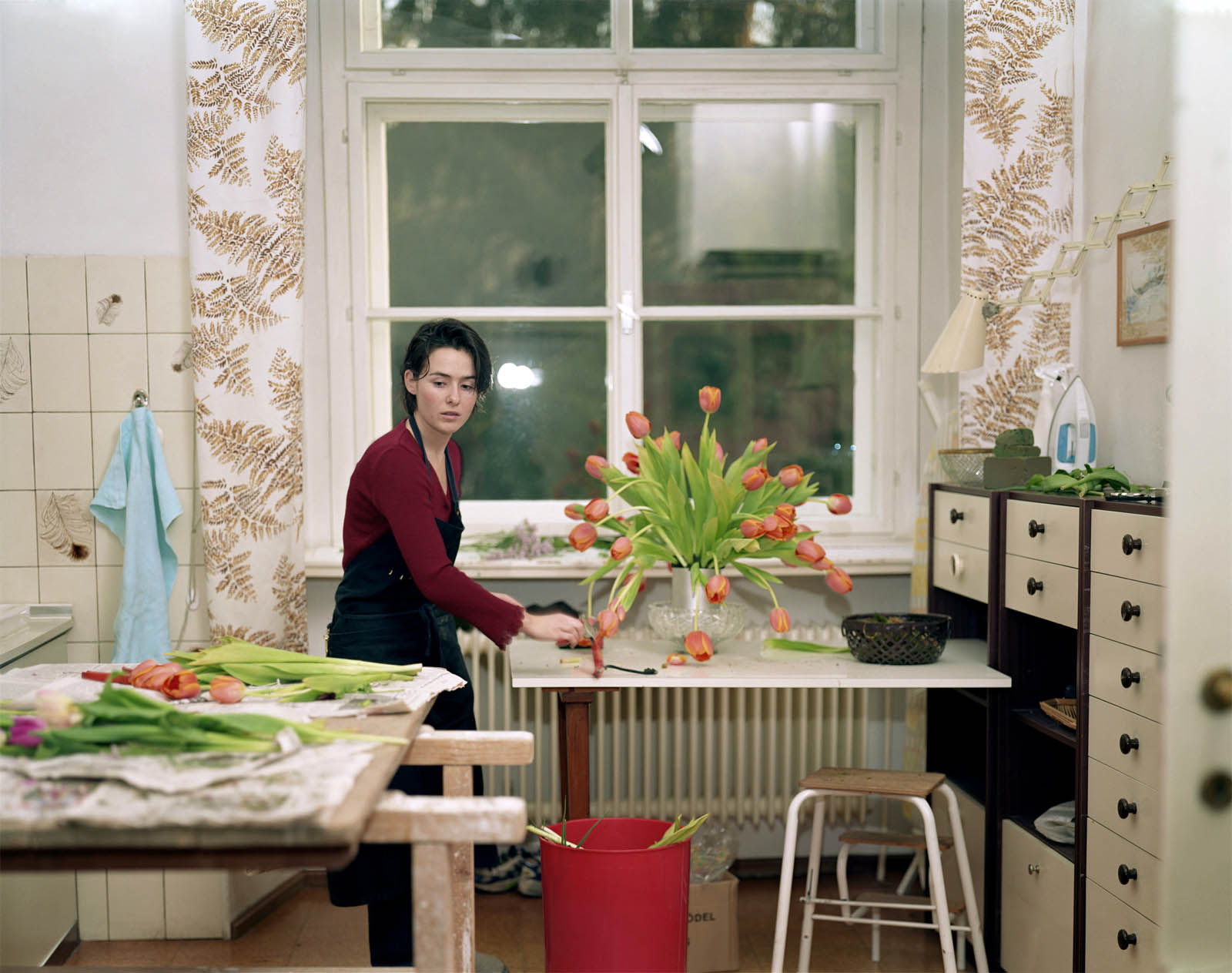


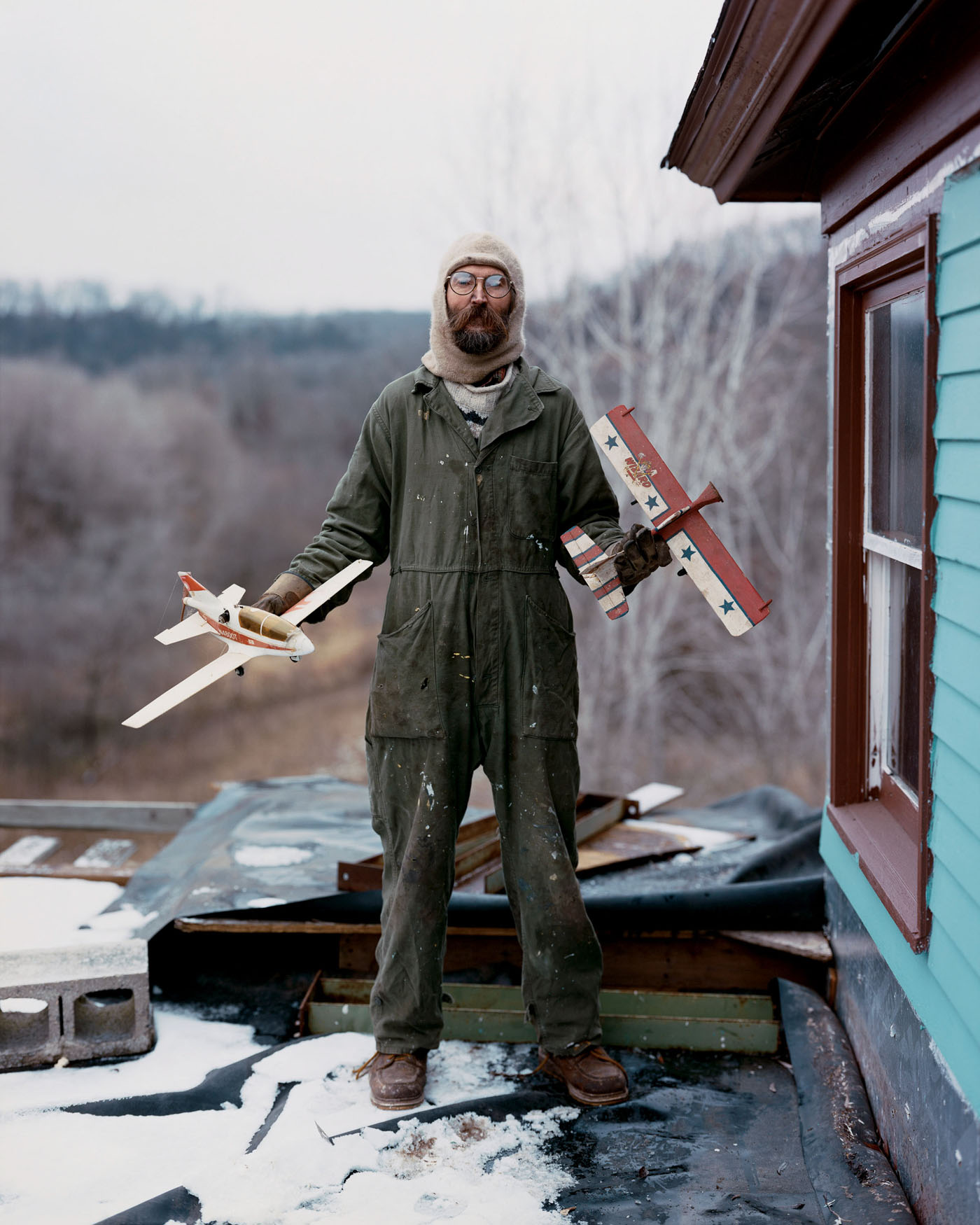


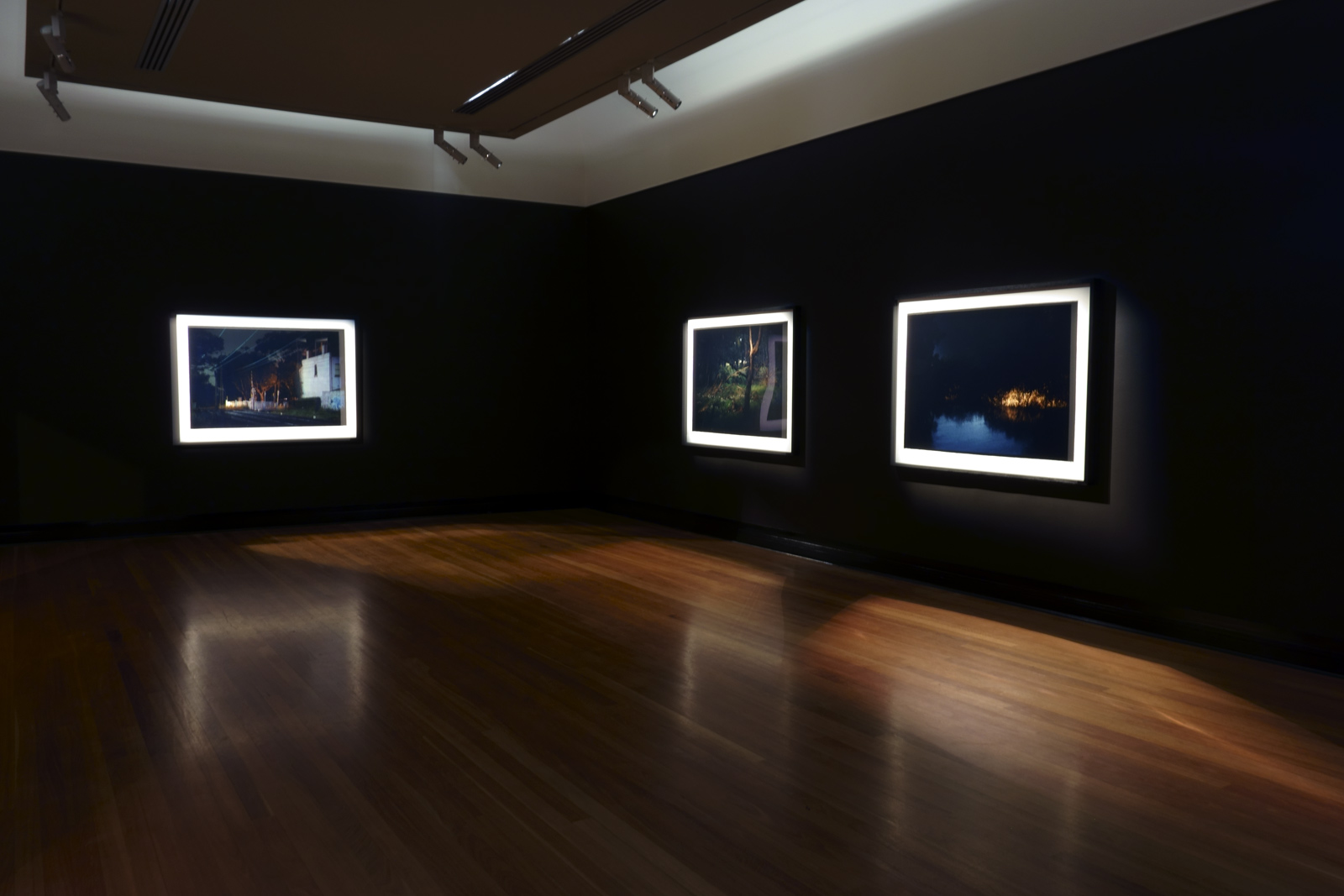
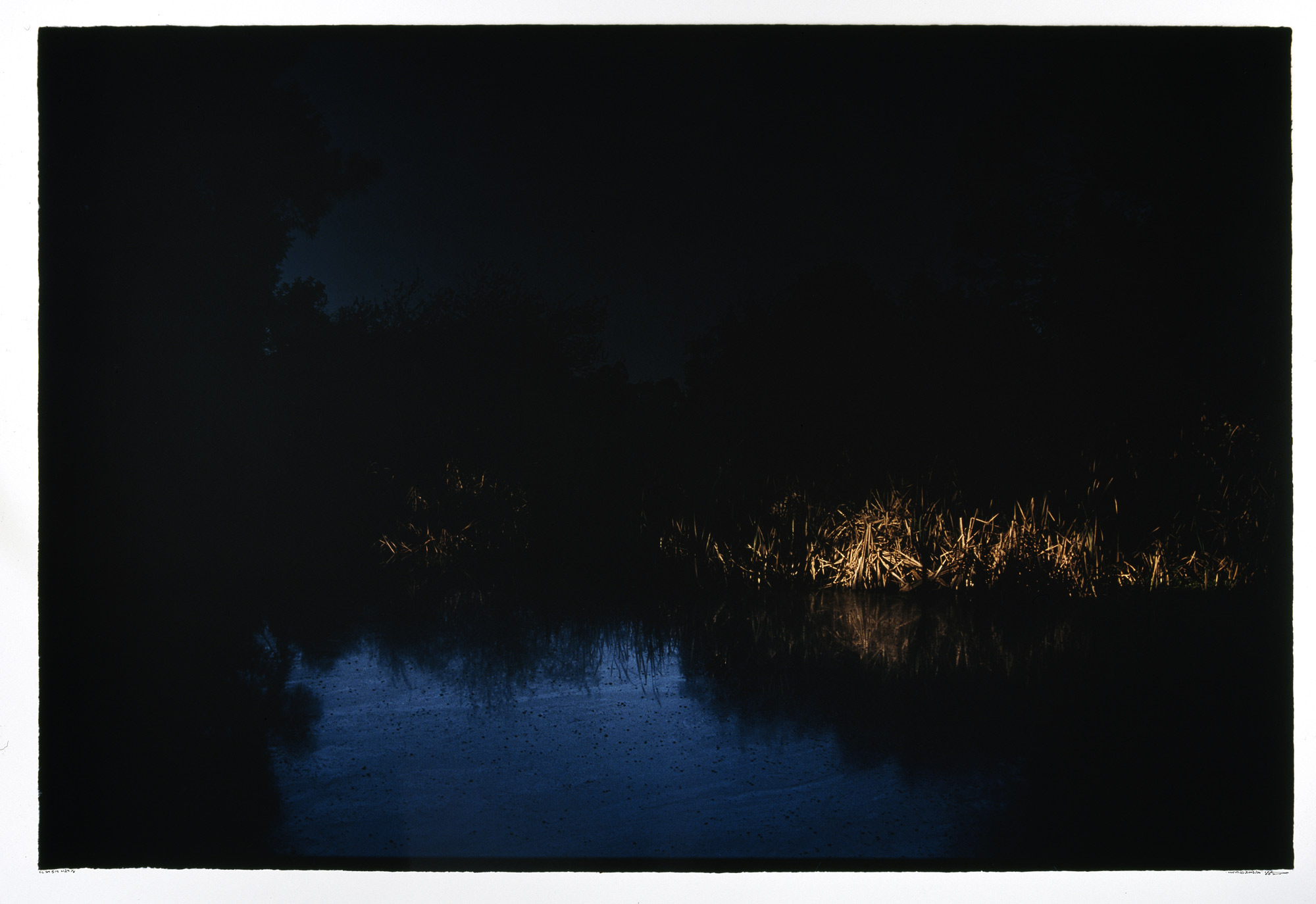


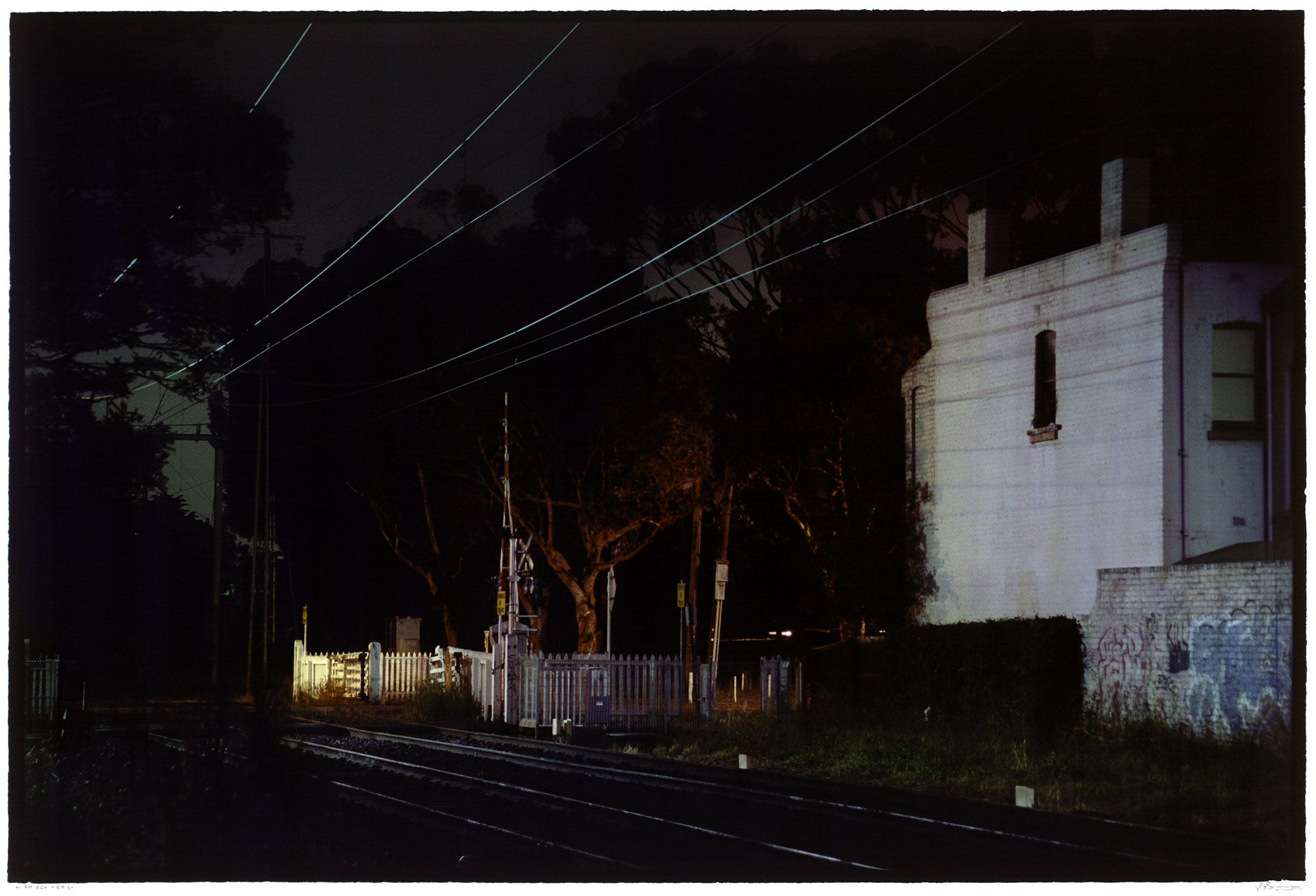


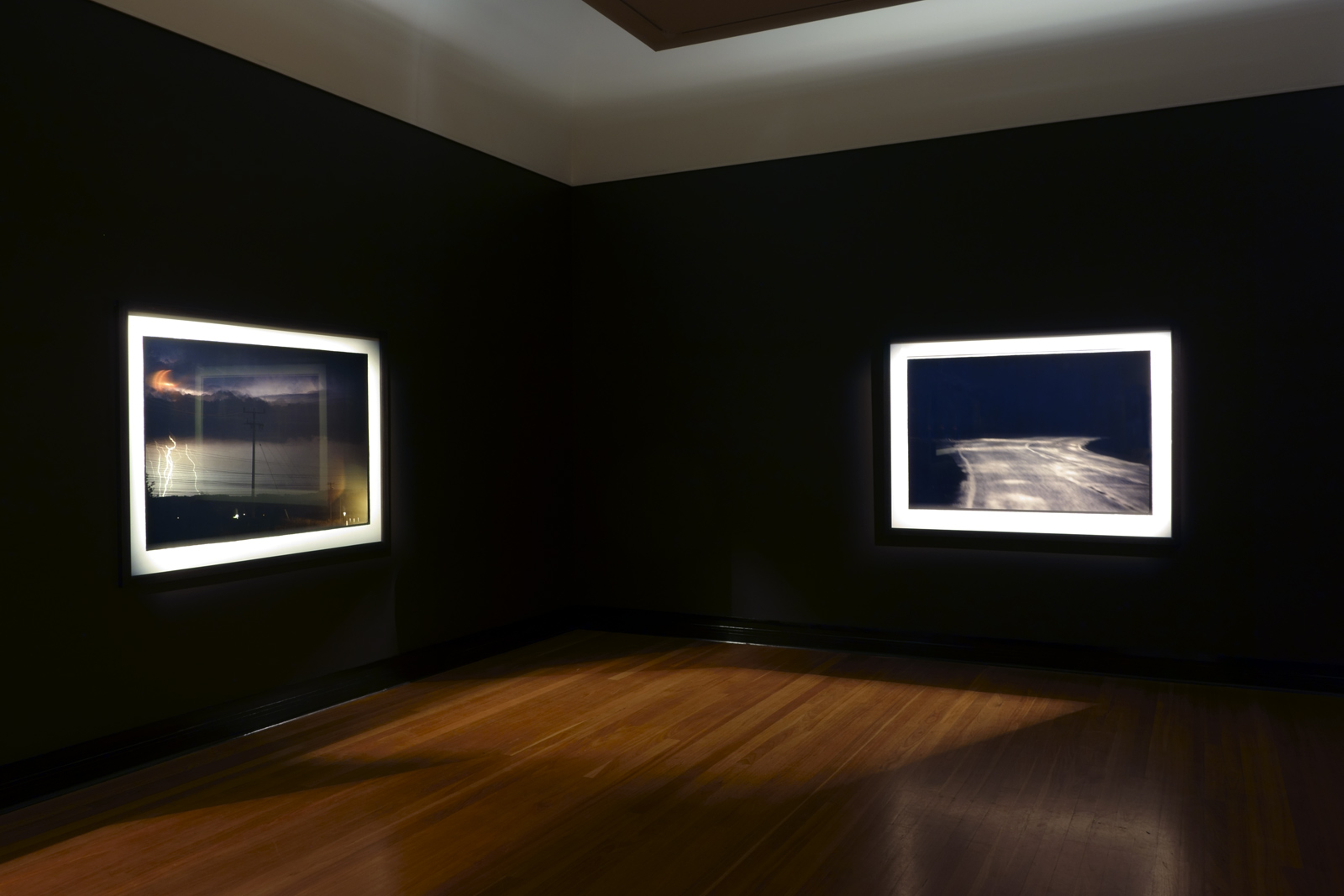
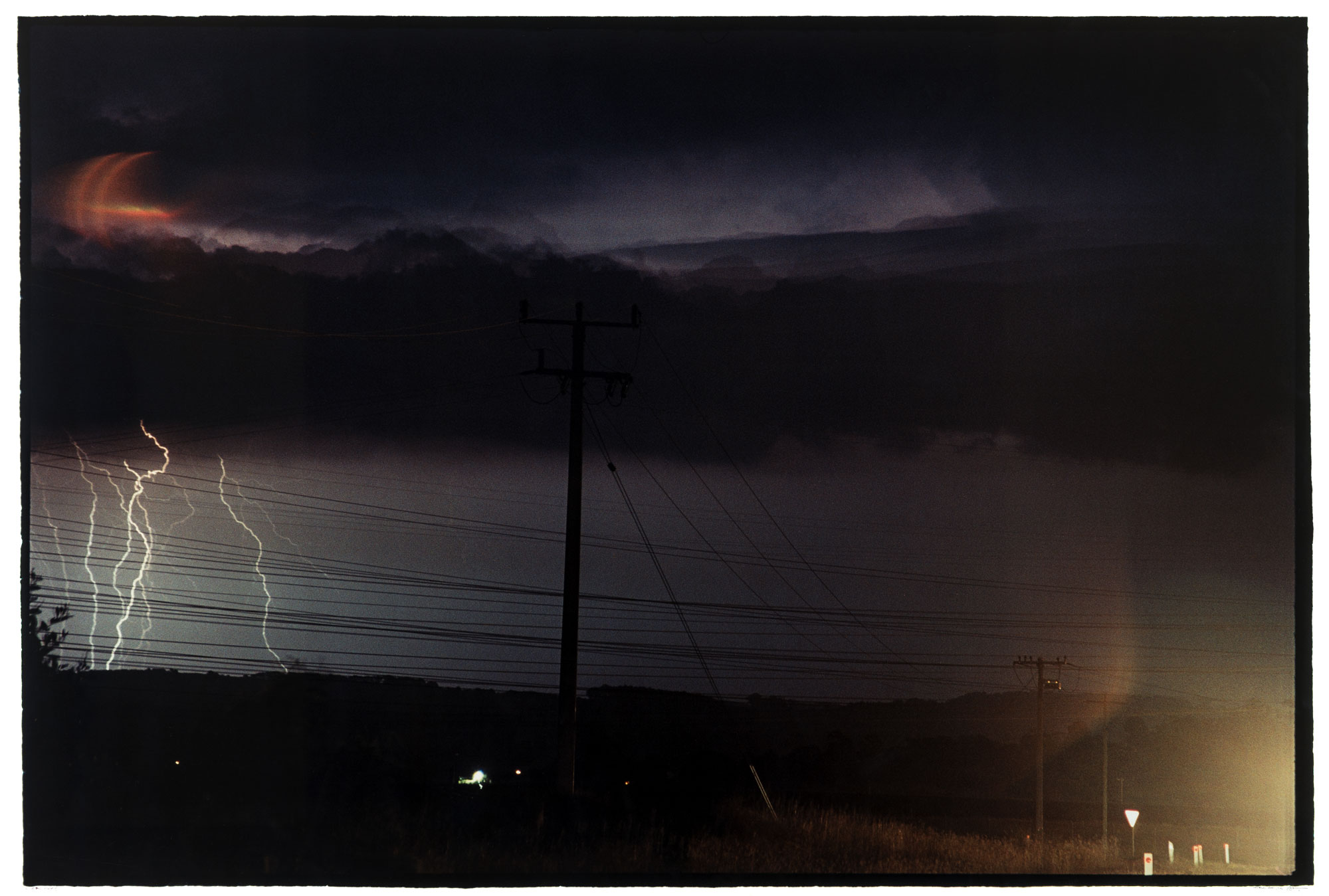


 Art Blart _ art and cultural memory archive
You must be logged in to post a comment.