Exhibition: ‘Everyday Epiphanies: Photography and Daily Life Since 1969’ at The Metropolitan Museum of Art, New York

Exhibition dates: 25th June 2013 – 26th January 2014


John Baldessari (American, 1931-2020) 'Hands Framing New York Harbor' 1971


John Baldessari (American, 1931-2020)
Hands Framing New York Harbor
1971
Gelatin silver print
25.4 x 18cm (10 x 7 1/16 in.)
Purchase, The Horace W. Goldsmith Foundation Gift, through Joyce and Robert Menschel, 1992
Shunk-Kender © Roy Lichtenstein Foundation


Epiphany: a moment in which you suddenly see or understand something in a new or very clear way.

Stephen Shore’s photographs seem the most insightful epiphanies in this posting, picturing as they do “what he ate, the rest stops he visited, the people he met.” In other words, the wor(l)d as he saw it.

Marcus

Many thankx to The Metropolitan Museum of Art, New York for allowing me to publish the photographs in the posting. Please click on the photographs for a larger version of the image.


“With the unspoken rules that exhibitions in the Met’s contemporary photography gallery must be drawn exclusively from the museum’s permanent collection and be organised as surveys of the period from the late 1960s to the present, it’s no wonder that these long running shows are often so broad that their themes seem to dissolve into edited collections of everything. The newest selection of images is tied up under the umbrella of “everyday epiphanies”, a construct that implies a delight in the ordinary, the quotidian, or the familiar, but in fact, reaches outward beyond these routine boundaries to works that have a wide variety of conceptual underpinnings and points of view. With some effort, it’s possible to follow the logic of why each piece has been included here, but when seen together, the diversity of the works on view diminishes the show’s ability to deliver any durable insights… The works that function best inside this theme are those that capture moments of unexpected, elemental elegance, often as a result of the way the camera sees the world.”


Loring Knoblauch. “Everyday Epiphanies: Photography and Daily Life Since 1969 @Met,” on the Collector Daily website August 14, 2013 [Online] Cited 20/01/2014


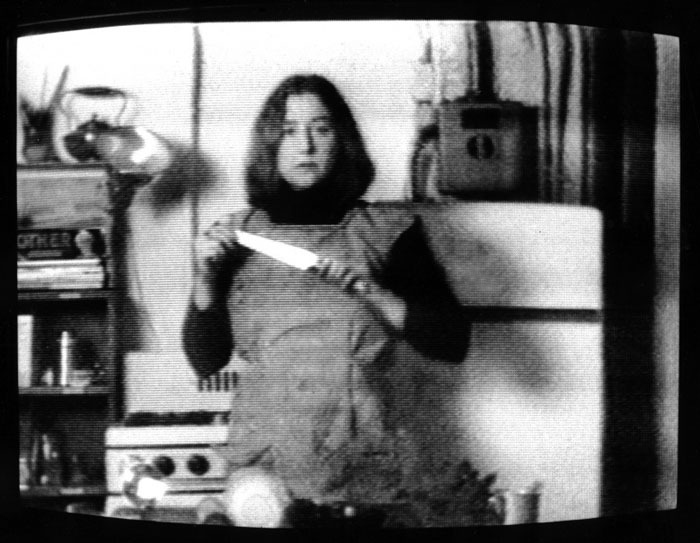
Martha Rosler (American, b. 1943) 'Semiotics of the Kitchen' 1975 (still)


Martha Rosler (American, b. 1943)
Semiotics of the Kitchen (still)
1975
Video
Purchase, Henry Nias Foundation Inc. Gift, 2010
Courtesy Electronic Arts Intermix (EAI), New York


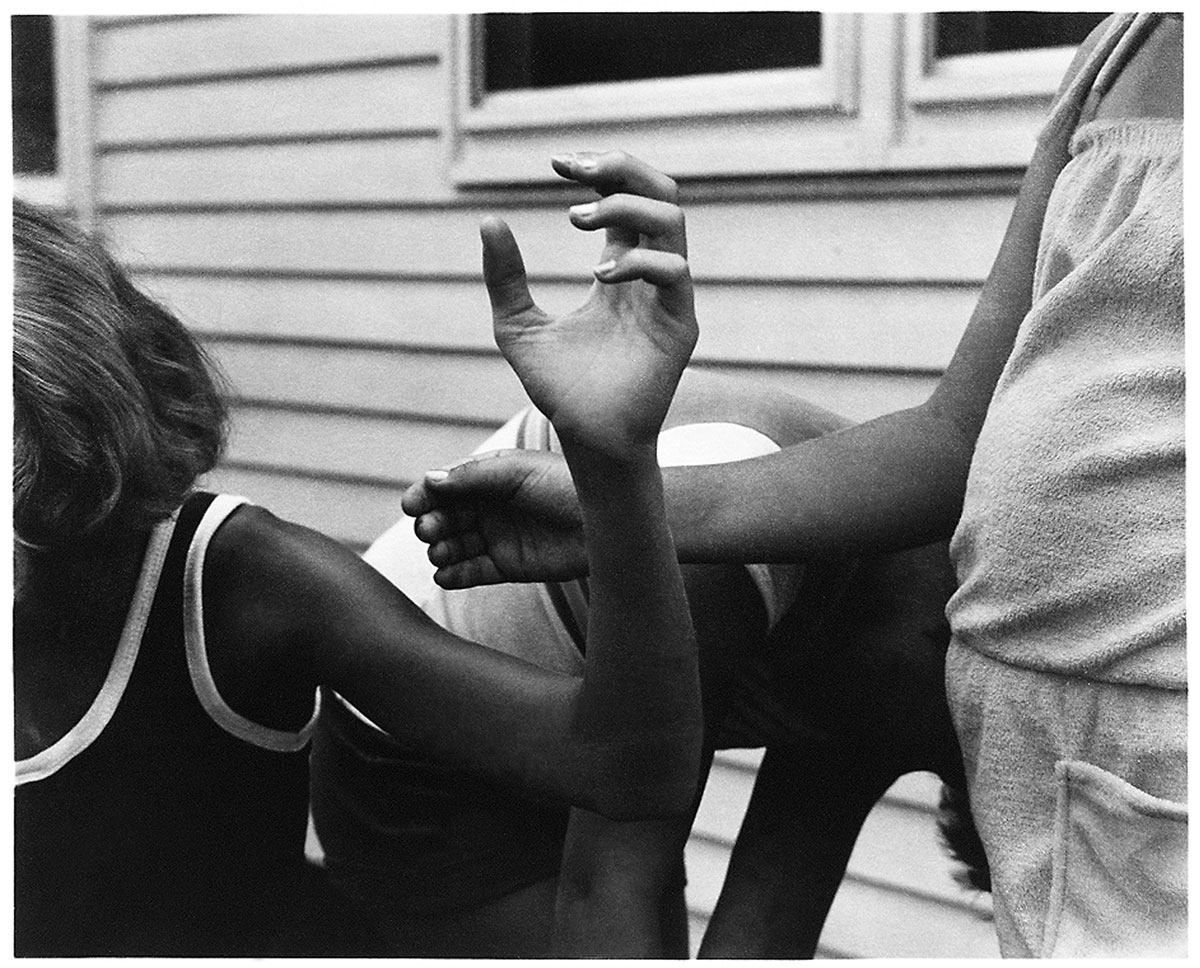
Jan Groover (American, 1943-2012) 'Untitled' 1980


Jan Groover (American, 1943-2012)
Untitled
1980
Platinum print
19 x 24cm (7 1/2 x 9 7/16 in.)
David Hunter McAlpin Fund, 1981
The Metropolitan Museum of Art
© Jan Groover


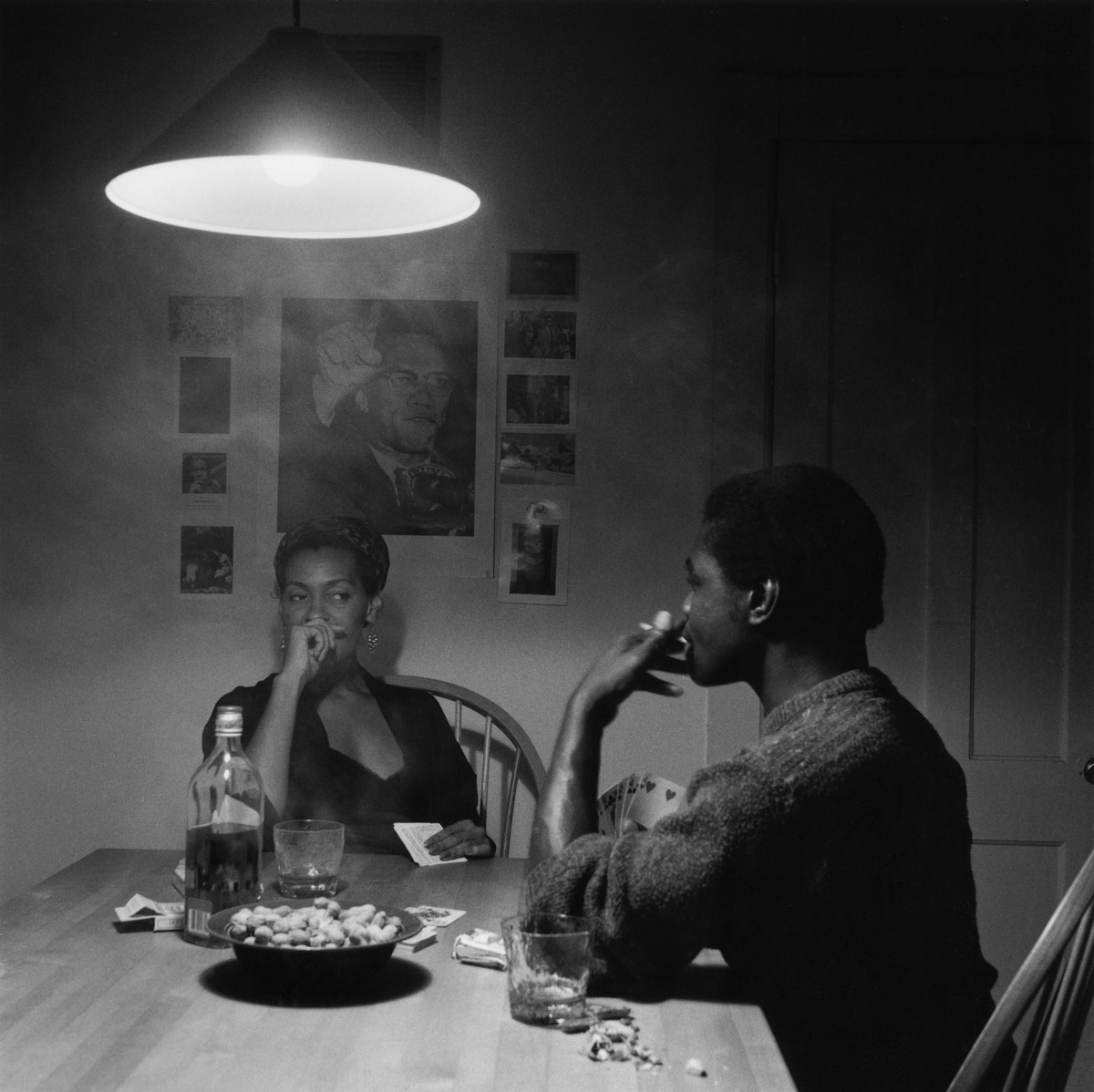
Carrie Mae Weems (American, b. 1953) 'Untitled (Man Smoking)' 1990


Carrie Mae Weems (American, b. 1953)
Untitled (Man Smoking)
1990
From the Kitchen Table Series
Gelatin silver print
Image: 71.8 × 71.8cm (28 1/4 × 28 1/4 in.)
Courtesy of the artist and Jack Shainman Gallery, New York


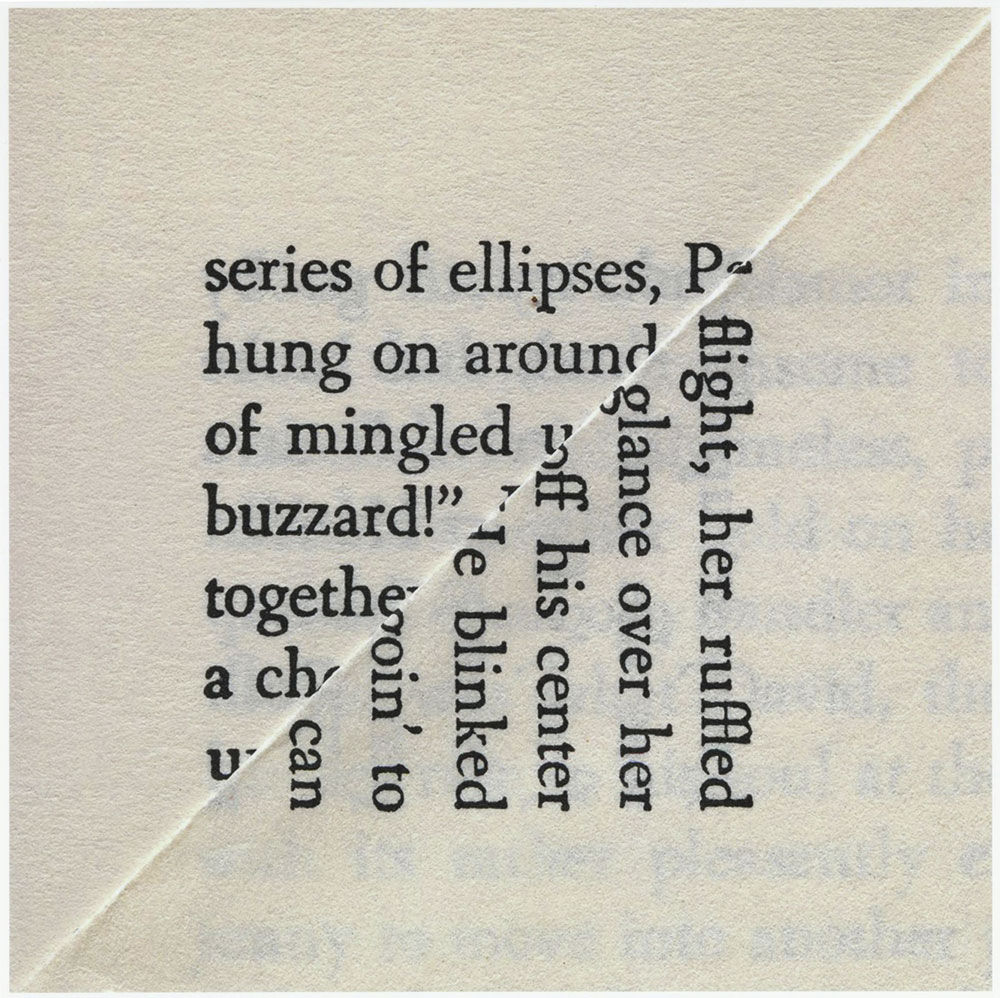
Erica Baum (American, b. 1961)  'Buzzard' 2009


Erica Baum (American, b. 1961) 
Buzzard
2009
Inkjet print
22.9 x 22.9cm (9 x 9 in.)
Purchase, Marian and James H. Cohen Gift, in memory of their son, Michael Harrison Cohen, 2012
The Metropolitan Museum of Art
© Erica Baum


Since the birth of photography in 1839, artists have used the medium to explore subjects close to home – the quotidian, intimate, and overlooked aspects of everyday existence. Everyday Epiphanies: Photography and Daily Life Since 1969, an exhibition of 40 works at The Metropolitan Museum of Art, presents photographs and videos from the last four decades that examine these ordinary moments. The exhibition features photographs by a wide range of artists including John Baldessari, Philip-Lorca diCorcia, Fischli & Weiss, Jan Groover, Robert Gober, Nan Goldin, Elizabeth McAlpine, Gabriel Orozco, David Salle, Robert Smithson, Stephen Shore, and William Wegman, as well as videos by Martha Rosler, Ilene Segalove, Brandon Lttu, and Svetlana and Igor Kopytiansky.

Daily life, as it had been lived in Western Europe and America since the 1950s, was called into question in the late 1960s by a counterculture that rebelled against the prior “cookie-cutter” lifestyle. Everything from feminism to psychedelic drugs to space exploration suggested a nearly infinite array of alternative ways to perceive reality; and artists and thinkers in the ’60s and ’70s proposed a “revolution of everyday life.” A four-part work by David Salle from 1973 exemplifies the artist’s flair for piquant juxtaposition at an early stage in his career. In depicting four women in bathrobes standing before their respective kitchen windows in contemplative states, Salle goes against the grain of feminist orthodoxy – revealing a penchant for courting controversy that he would expand in his later paintings; pasted underneath the black-and-white images of the women are brightly coloured labels of their preferred coffee brands, with the arbitrarily differentiated brands signifying an insufficient substitute for true freedom in the postwar era. Martha Rosler’s bracingly caustic video Semiotics of the Kitchen and Ilene Segalove’s wistfully funny The Mom Tapes complete a trio of works investigating the role of women in a rapidly changing society.

In the 1980s, artists’ renewed interest in conventions of narrative and genre led to often highly staged or produced images that hint at how even our deepest feelings are mediated by the images that surround us. In the wake of the economic crash of the late 1980s, photographers focused increasingly on what was swept under the carpet – the repressed and the taboo. Sally Mann’s Jesse at Five (1987) depicts the artist’s daughter as the central figure, half-dressed, dolled-up, and posed like an adult. Mann often created these frank images of her children and caused some controversy during the culture wars of the late 1980s and early 1990s. However, her photographs of her children are remarkable for the artist’s assured handling of a potentially explosive subject with equanimity and grace.

During the following decade, artists created photographs and videos that confused the real and the imaginary in ways that almost eerily predicted the epistemological quandaries posed by the digital revolution. Meanwhile, a trio of recently made works by Erica Baum, Elizabeth McAlpine, and Brandon Lattu combine process and product in novel ways to comment obliquely on the shifting sands of how we come to know the world in our digital age.

Press release from The Metropolitan Museum of Art website


Jean-Marc Bustamante (French, b. 1952) 'Untitled' 1997


Jean-Marc Bustamante (French, b. 1952) 
Untitled
1997
Chromogenic print
40 x 59cm (15 3/4 x 23 1/4 in.)
Purchase, The Horace W. Goldsmith Foundation Gift, through Joyce and Robert  Menschel, 1999
The Metropolitan Museum of Art
© Jean-Marc Bustamante


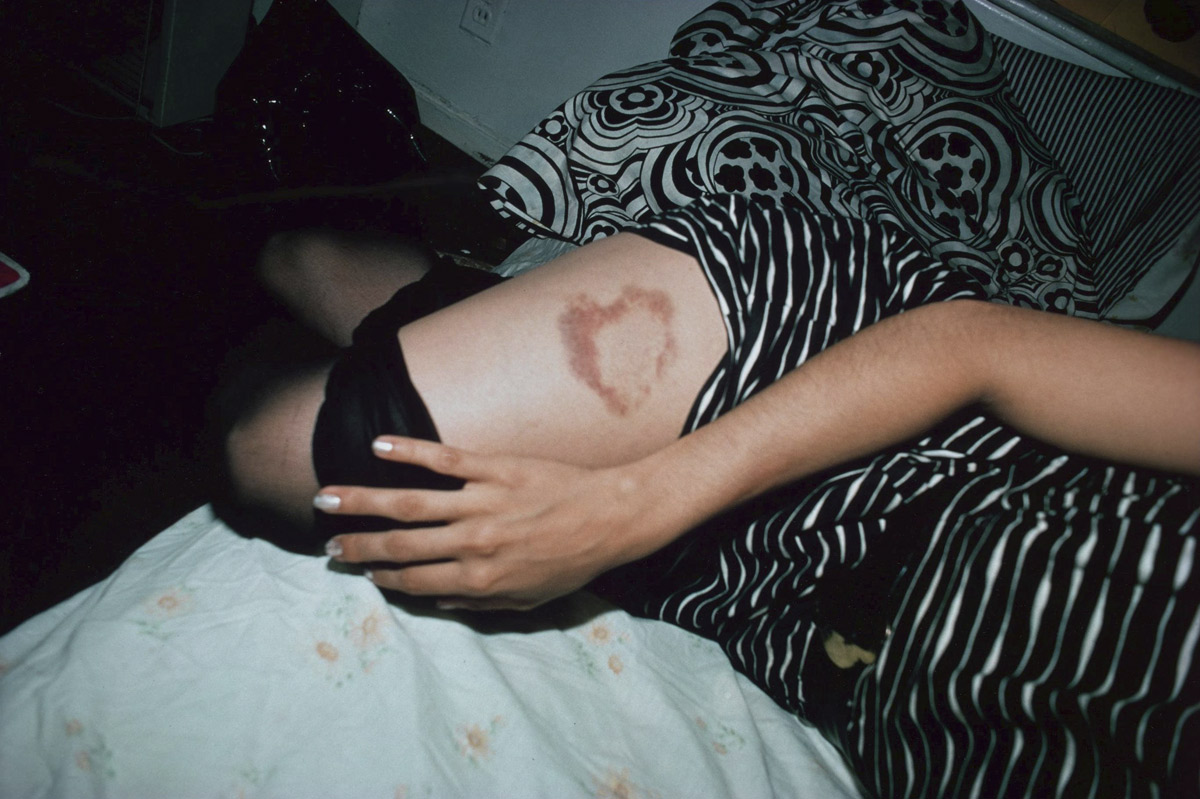
Nan Goldin (American, b. 1953) 'Heart-Shaped Bruise, NYC' 1980


Nan Goldin (American, b. 1953)
Heart-Shaped Bruise, NYC
1980
Silver dye bleach print
50.8 x 60.96cm (20 x 24 in.)
Purchase, The Horace W. Goldsmith Foundation Gift, through Joyce and Robert  Menschel, 2001
The Metropolitan Museum of Art
© Nan Goldin, Courtesy Matthew Marks Gallery, New York


Larry Sultan (American, 1946-2009) 'My Father Reading the Newspaper' 1989


Larry Sultan (American, 1946-2009)
My Father Reading the Newspaper
1989
Chromogenic print
Stewart S. MacDermott Fund, 1991
© Larry Sultan


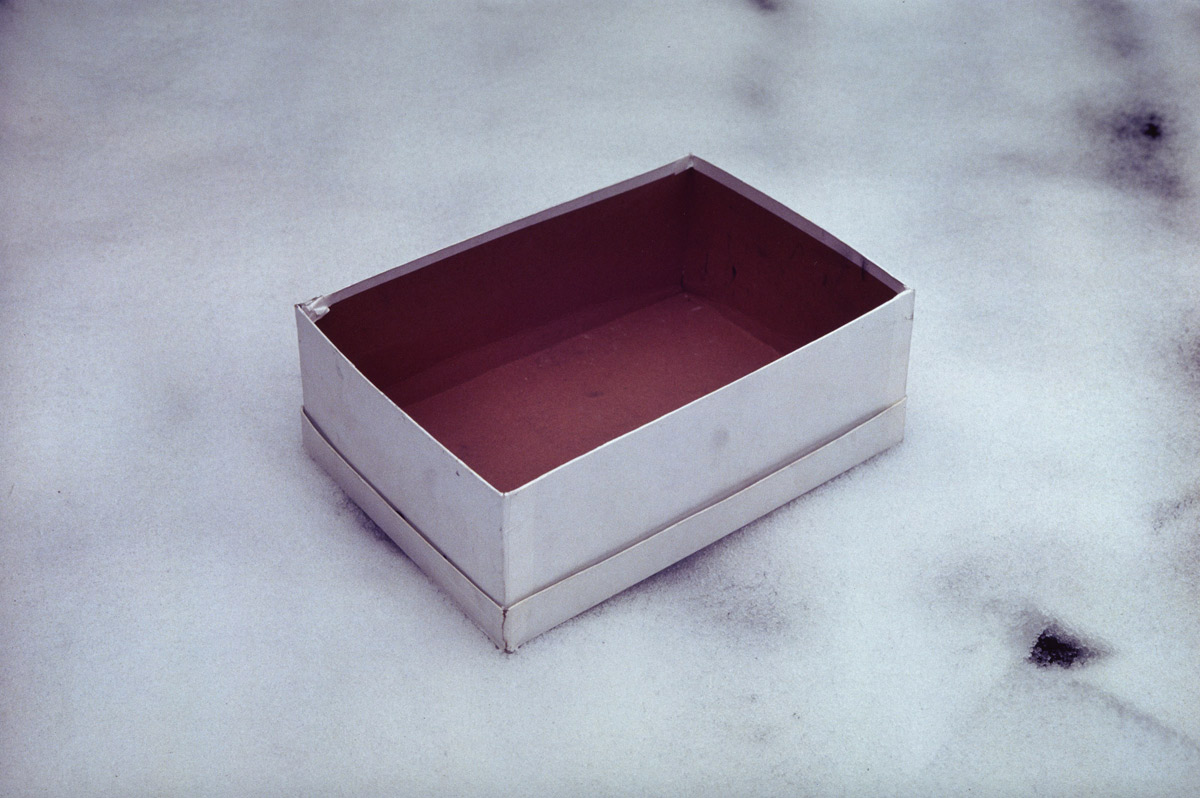
Gabriel Orozco (Mexican, b. 1962) 'Caja vacia de zapatos' (Empty shoebox) 1993


Gabriel Orozco (Mexican, b. 1962)
Caja vacia de zapatos (Empty shoebox)
1993
Silver dye bleach print
31.8 x 46.4cm (12 1/2 x 18 1/4 in.)
Gift of the artist, 1995
The Metropolitan Museum of Art
© Gabriel Orozco


Gabriel Orozco (Mexican born Jalapa Enriquez, b. 1962) 'Vitral' 1998


Gabriel Orozco (Mexican, born Jalapa Enriquez, b. 1962)
Vitral
1998
Silver dye bleach print
40.6 x 50.8cm (16 x 20 in.)
Purchase, The Judith Rothschild Foundation Gift, 1999
© Gabriel Orozco

.

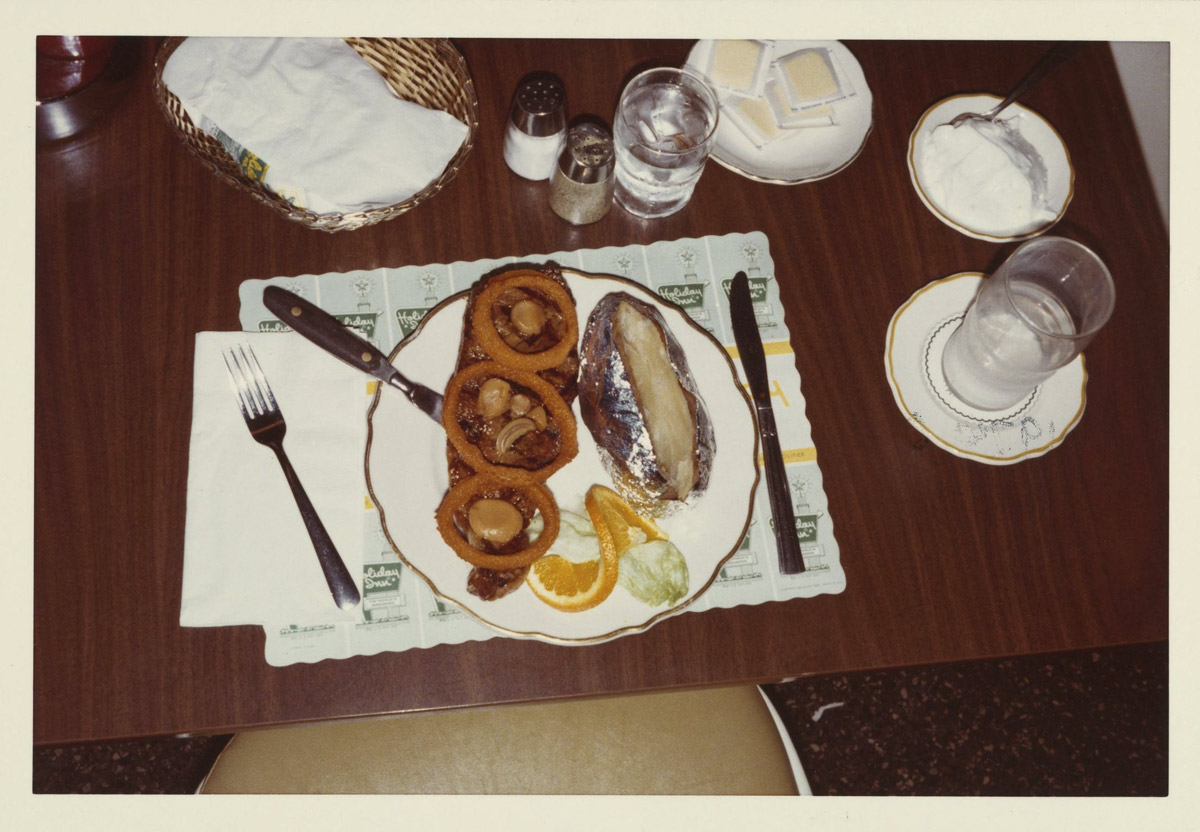
Stephen Shore (American, b. 1947) 'Oklahoma City, Oklahoma' July 9, 1972


Stephen Shore (American, b. 1947)
Oklahoma City, Oklahoma
July 9, 1972
From the series American Surfaces
Chromogenic print
Gift of Weston J. Naef, 1974
© Stephen Shore


As a teenager in the 1960s, Shore was one of two in-house photographers at Andy Warhol’s Factory. During his first cross-country photographic road trip, Shore adopted the catholic approach of his mentor, accepting into his art everything that came along – what he ate, the rest stops he visited, the people he met. He then processed his colour film as “drugstore prints”, the imprecise, colloquial term for the kind of amateur non-specialised snapshots that filled family photo albums. The entire series of 229 prints was shown for the first time in 1974 and acquired by the Metropolitan from that exhibition.


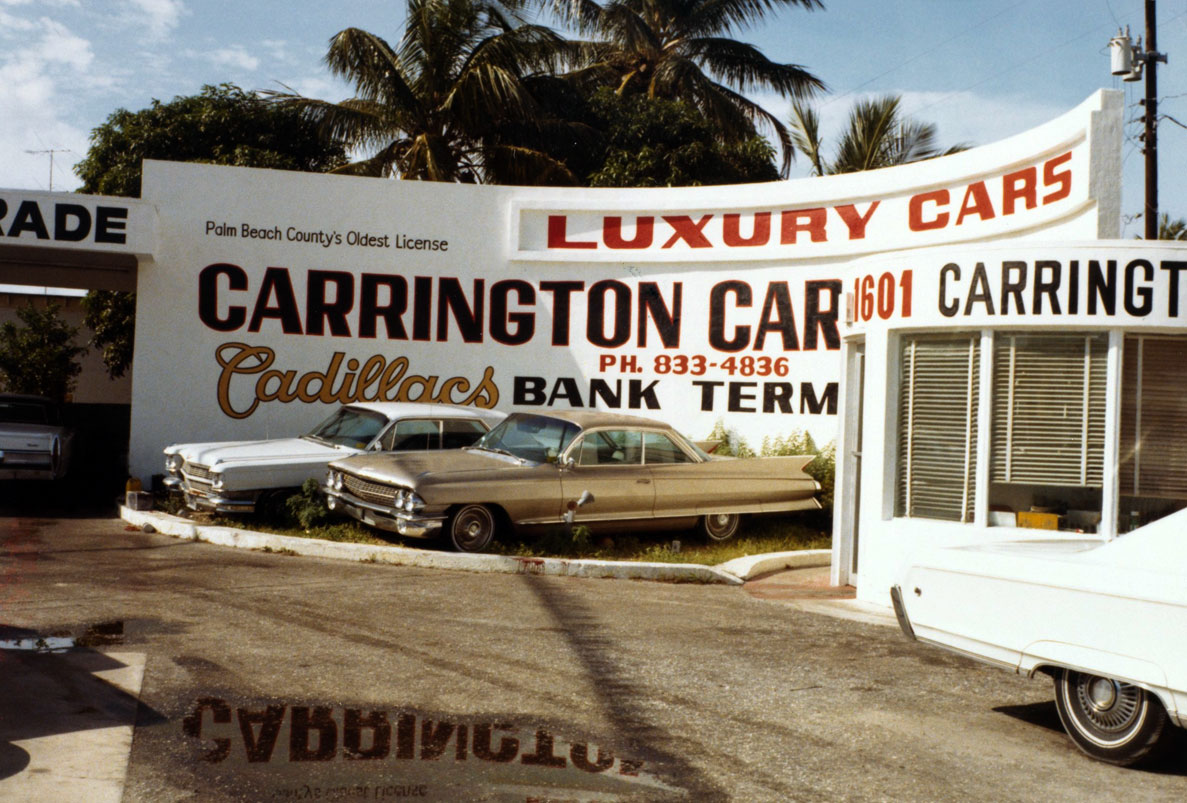
Stephen Shore (American, b. 1947) 'West Palm Beach, Florida' January 1973


Stephen Shore (American, b. 1947)
West Palm Beach, Florida
January 1973
From the series American Surfaces
Chromogenic print
Gift of Weston J. Naef, 1974
© Stephen Shore


Stephen Shore (American, b. 1947) 'Clovis, New Mexico' 1974


Stephen Shore (American, b. 1947)
Clovis, New Mexico
1974
From the series American Surfaces
Chromogenic print
Gift of Weston J. Naef, Jr., 1974
The Metropolitan Museum of Art
© Stephen Shore


The Metropolitan Museum of Art
1000 Fifth Avenue at 82nd Street
New York, New York 10028-0198
Phone: 212-535-7710

Opening hours:
Sunday – Tuesday and Thursday: 10am – 5pm
Friday and Saturday: 10am – 9pm
Closed Wednesday

The Metropolitan Museum of Art website

LIKE ART BLART ON FACEBOOK

Back to top

Essay: ‘Made ready: A Philosophy of Moments’ Dr Marcus Bunyan / Exhibition: ‘Reinventing the Wheel: the Readymade Century’ at the Monash University Museum of Art (MUMA), Melbourne

Exhibition dates: 3rd October – 14th December 2013

Presented by Monash University Museum of Art in association with Melbourne Festival


Marcel Duchamp (French-American, 1887-1968) 'Bicycle wheel' 1913 reconstructed 1964 (installation view detail with Dr Marcus Bunyan)


Marcel Duchamp (French-American, 1887-1968)
Bicycle wheel (installation view detail) (with Dr Marcus Bunyan)
1913 reconstructed 1964
Painted wooden stool and bicycle wheel
Stool: 50.4cm (h.); wheel: 64.8cm (diam.); overall: 126.5cm (h.)
Collection: National Gallery of Australia, Canberra
Photo: © Joyce Evans


Monash University Museum of Art (MUMA) is generating an enviable reputation for holding vibrant, intellectually stimulating group exhibitions on specific ideas, concepts and topics. This exhibition is no exception. It is one of the best exhibitions I have seen in Melbourne this year. Accompanied by a strong catalogue with three excellent essays by Thierry de Duve, Dr Rex Butler and Patrice Sharkey, this is a must see exhibition for any Melbourne art aficionado before it closes. My favourite pieces were Jeff Koons’ tactile Balloon dog (Red) (1995, below) and the coupling, copulating lights of Lou Hubbard’s Stretch (2007, below).

I am not going to critique the exhibition pieces per se but offer some thoughts about the nature of the readymade below.

Dr Marcus Bunyan


Many thankx to MUMA for allowing me to publish the photographs in the posting. Please click on the photographs for a larger version of the image. All photographs taken at the opening © Monash University Museum of Art and Dr Marcus Bunyan unless otherwise stated.

Download this essay as a pdf (9.8Mb pdf) Text © Dr Marcus Bunyan


“This transition is a flash, a boundary where this becomes that, not then, not that – falling in love, jumping of a bridge. Alive : dead; presence : absence; purpose : play; mastery : exhaustion; logos : silence; worldly : transcendent. Not this, not that. It is an impossible presence, present – a moment of unalienated production that we know exists but we cannot define it, place it. How can we know love? We can speak of it in a before and after sense but it is always a past moment that we recognise.


Dr Marcus Bunyan. Made Ready: A Philosophy of Moments. December 2013


Made ready: A Philosophy of Moments

Dr Marcus Bunyan

December 2013


The readymade is everywhere in the world (for the readymade can be made of anything); the readymade is nowhere in the world. This is the paradox of the readymade: it does not exist in the world as art until after the artist has named it. In this sense it can be argued that there is no such thing as a readymade. It only comes into being through the will and intention of the artist. The readymade may live unnamed in the world for years but it does not exist in the world as art until the artist has intentionally named it (or made it). As Marcel Duchamp observes,

“It’s not the visual aspect of the readymade that matters, it’s simply that fact that it exists… Visuality is no longer the question: the readymade is no longer visible, so to speak. It is completely grey matter. It is no longer retinal.”1

The readymade is (initially) a concept of the brain and not of the eye. It is a commodity made by man living in the world made ready for identification as art ‘already made’ by the recognition of the artist of its exchange value – the object as transitory metonym which “stands in” for another place of being through a change of name or purpose. It is the intention of the artist to impose an (alternate) order on the object, an order in which the readymade questions aesthetic criteria and categories such as taste, authorship and intentionality. As Dr Rex Butler notes, “The work is not simply intended – which is an obvious fact about any work of art – but about an intention that has come to replace, while entirely reproducing, that which is the very embodiment of the contingent and unpredictable.”2

According to Thierry de Duve, the choosing of the object is accompanied by three other acts: naming the object, signing it and devising some original presentation for it.3 There are the so called unassisted readymades (such as Duchamp’s Bottle dryer, 1914 reconstructed 1964 below) and there are also plain, aided, sick, unhappy, reciprocal and semi-readymades.4 In reality no readymade is unassisted as all are called into being by the mind of the artist. But the concept of the readymade “heralds the realisation that art can be made from anything whatsoever.”5 If this is the case then the readymade “makes of all aesthetic judgements something unconvincing, derivative, second-hand,”6 perhaps even deliberately “invoking” criticism before the artwork is even constructed. If the inherent structural and aesthetic function of all things is predetermined, as though fulfilling some underlying design, it is the artists intentionality in naming the object as art – a model of explanation “that abducts from external products to internal processes, from what is visible to what must be inferred”7 – that deliberately places and fixes these objects in a new moment in space and time.

Through appropriation, readymades “make their claim to the dignity of an art object through some unexpected presentation that decontextualises them and pulls them away from their daily use.”8 Through appropriation, artists laud everyday objects as art for all to see.9 Through appropriation, art institutes emphasise the power of the art institution, the readymade made taxidermied, stuffed object, placed on a stand, an everyday object lauded as art for all to see. In this scenario, the desire of manufacturing that wants consumer objects to be seen as useful, valuable is inverted as readymades become institutional objects of desire just out of reach of the audience (10,000 dollar coins just lying around on the floor!). The death of the object as an object and its reanimation “to the dignity of an art object” is completed “simply by its presence in the museum.”10 As Elizabeth Wilson states, “The only defence against transgressive desire is to turn either oneself or the object of desire to stone.”11 In this case it is the museum officials that turn the object of desire into stone (by lionising them as readymades). In actuality, these objects that artists imagine explore the dichotomy between presence and absence and the nature of transgressive desire.

Essentially, the concept of the readymade is both elastic (like the band that holds together the brick and book cover in Claire Fontaine’s witty La société du spectacle brickbat 2006, below) and fixed (like the brick itself), the readymade being both a performative act (ritualised play) and citational practice by which discourse produces the effects it names.12 Further, a link can be made to Bachelard’s theory of space and imagination which describes literary space as reflexive, resonant and moulded by consciousness.13 In their playfulness the spatial dynamics of readymades challenge and illuminate the human, sensory possibility. They examine how the reality of contemporary life is disguised and concealed from view, and how human beings are alienated from the very objects that they produce. For the French philosopher and sociologist Henri Lefebvre, “(The) critique of everyday life is … at once a rejection of the inauthentic and the alienated, and an unearthing of the human which still lies buried therein.”14

“One avenue for this unearthing is what Lefebvre describes as moments of presence – fleeting, sensate instants in which the “totality of possibilities contained in daily existence” were revealed. While destined to pass in an instant, it is through such moments that we are able to catch glimpses of the relation between the everyday and the social totality.”15 This philosophy or theory of moments was developed in opposition to Bergson’s understanding of time as a linear duration (duree) of separate instances and for Lefebvre, these “moments are “experiences of detachment from the everyday flow of time” which puncture the banality of everyday life…”16

“All the activities that constitute everyday life must then be rethought in terms of a dialectic of presence and absence and each moment is simultaneously an opportunity for alienation and disalienation.”17 The readymade, then, explores the politically radical potential that lies within the everyday through play and the intentionality of the artist. Through representation, readymades mediate between absence and presence; through poësis they begin to inhabit another time and space.

“In the poetic act, presence is the given. Lefebvre intends ‘poetic’ to cover unalienated production – the Greek poësis – as he explained in The Production of Space (1974)… Presence and poësis stand outside social relations of production. Flashes of inspiration, moments when one feels ‘all together’ and ‘in touch’, are not determined by economic relations, and cannot be prevented, even in a prison camp.”18

Readymades are a reaction against the linear production of industry, which is both functional and hierarchical. They are a reaction against the banality and repetition of the everyday – of the hegemony of capitalist production and the social relations of everyday life. In a culture of use and use by, the readymade “inscribes the work of art within a network of signs and pre-existing material.”19 Theses assemblages enable us to ask the question, what makes aesthetic judgement possible. They offer an alternative form of resistance to the imposition of linear repetition, through a form of mental and visual play. The moment of the representation encloses a transition (something transitory, something which ‘traverses’)20 – through a plethora of creative, emotive and imaginative practices – from something stable to un/stable.

This transition is a flash, a boundary where this becomes that, not then, not that – falling in love, jumping of a bridge. Alive : dead; presence : absence; purpose : play; mastery : exhaustion; logos : silence; worldly : transcendent. Not this, not that. It is an impossible presence, present – a moment of unalienated production that we know exists but we cannot define it, place it. How can we know love? We can speak of it in a before and after sense but it is always a past moment that we recognise.

It is the same with the readymade. The inscriptions on the early readymades (such as the bottle dryer and urinal) detailing authorship, dates, times, places can be seen as an attempt to ‘fix’ an individual artwork in the flow of time, to distinguish it from its unacknowledged neighbour – like “fixing” a photograph. It is telling that when the bottle rack was lost and remade in the 1960s the text that was originally on the lower metal ring was lost with the object itself.21 The text sought to fix these transitory moments of absence : presence.

Søren Kierkegaard calls this transition a “leap,” where a human being chooses an ethical life-view, one that resides in the actual and not in an ironic-aesthetic attitude.

“It is important to see that choice, as the characteristic of the ethical lifeview, forms a radical break with the ironic spiral of the aesthetic attitude. Kierkegaard sometimes calls the ethical choice a “leap,” a term that expresses the fundamental uncertainty of each commitment to actuality: contrary to aesthetic fantasy, which is “safely” self-contained, the outcome of the individual’s ethical choice is dependent on actuality and therefore not fully under the individual’s control. This is a decisive difference between aesthetic irony (including meta-irony) and the ethical leap: instead of merely rejecting all actuality, the latter takes responsibility for a certain actuality and tries to reshape it.”22

And tries to reshape it. Thus we can say that readymades are human beings taking responsibility for their actuality by choosing to name an object as art, creating objects that challenge aesthetic value judgements and an ironic-aesthetic lifeview through their very presence, by their very selfness. Remembering (ah memory!), that it is always a past moment that we recognise. The familiar is not necessarily the known – it has to be named.

Dr Marcus Bunyan


Endnotes

1/ Duchamp, Marcel. “Talking about Readymades,” Interview by Phillipe Collin, June 21, 1967, quoted in Girst, Thomas. “Duchamp for Everyone,” in The Indefinite Duchamp. Germany: Hatje Cantz, 2013, p. 55 quoted in Day, Charlotte. “Introduction,” in Reinventing the Wheel: The Readymade Century. Melbourne: Monash University Museum of Art (MUMA), 2013, p. 85

2/ Butler, Rex. “Two Snapshots of the Readymade Today,” in Reinventing the Wheel: The Readymade Century. Melbourne: Monash University Museum of Art (MUMA), 2013, p. 98

3/ Duve, Thierry de. “Readymade,” in Reinventing the Wheel: The Readymade Century. Melbourne: Monash University Museum of Art (MUMA), 2013, p. 92

4/ Ibid.,

5/ Ibid.,

6/ Butler, op. cit.,

7/ Danto, Arthur C. “Criticism, advocacy, and the end-of-art condition: a working paper,” on Artnet website [Online] Cited 01/12/2013. www.artnet.com/magazine_pre2000/features/danto/danto97-3-6.asp

8/ Duve, op. cit. p. 91

9/ “Still, appropriationism, which defines the end-of-art condition, is pretty much the defining principle of our moment, putting, as it does, everything and every combination of things at the service of art, even including bad drawing and bad painting, since these, being designated, tell us only what kind of point the artist who appropriates them intends, not what kind of artist she or he is.”
Danto op. cit.,

10/ Duchamp, Marcel. Definition of the readymade in the Dictionnaire abrégé du Surréalisme quoted in Duve, op. cit. p. 92

11/ Wilson, Elizabeth. “The Invisible Flaneur,” in Watson, Sophie and Gibson, Katherine (eds.,). Postmodern Cities and Spaces. Cambridge, Mass: Blackwell, 1995, p. 75

12/ Butler, Judith. Bodies That Matter. New York: Routledge, 1993, p. 1-2

13/ See Bachelard, Gaston. The Poetics of Space. Boston: Beacon Press, 1958 (1994)

14/ Trebitsch, M. “Preface,” in Lefebvre, Henri. Critique of everyday life Vol. I. London: Verso, 1991, pp.ix-xxviii quoted in Butler, Chris. Law and the Social Production of Space. August 2003, p.60 [Online] Cited 01/12/2013. No longer available online

15/ Harvey, D. “Afterword,” in Lefebvre, Henri. The production of space. Blackwell, Oxford, 1991, see note 1, at p. 429 quoted in Butler, Chris. Ibid., p. 60

16/ Shields, Rob. Lefebvre, love and struggle: spatial dialectics. London: Routledge, 1999, see note 4, at p. 61 quoted in Butler, Chris. Ibid., p. 61

17/ Shields, Rob. Lefebvre, love and struggle: spatial dialectics. London: Routledge, 1999, see note 4, at p. 70 quoted in Butler, Chris. Ibid., p. 61

18/ Shields, Rob. Lefebvre, love and struggle: spatial dialectics. London: Routledge, 1999, p. 99 [Online] Cited 01/12/2013. Google Books website.

19/ Sharkey, Patrice. “When Everything is already a Readymade,” in Reinventing the Wheel: The Readymade Century. Melbourne: Monash University Museum of Art (MUMA), 2013, p. 107

20/ Lefebvre, Henri. The production of space. Blackwell, Oxford, 1991, p. 213 quoted in Shields, Rob op. cit., p. 99

21/ Duve, op. cit. p. 91

22/ Dulk, Allard Den. “Beyond Endless “Aesthetic” Irony: A Comparison of the Irony Critique of Søren Kierkegaard and David Foster Wallace’s Infinite Jest,” in Studies in the Novel Vol. 44, No. 3. University of North Texas: Fall 2012, pp. 325-345


Man Ray (American, 1890-1976) 'Cadeau (Gift)' 1921 reconstructed 1970 (installation view)


Man Ray (American, 1890-1976)
Cadeau (Gift) (installation view)
1921 reconstructed 1970
Iron with brass tacks and wooden base
Overall: 19.0 x 14.9 x 14.9cm; iron & base: 17.9 x 14.9 x 14.9cm; glass cover: 19.0cm (h.)
Collection: National Gallery of Australia, Canberra
Photo: © Marcus Bunyan


Marcel Duchamp. 'Bicycle wheel' 1913 and 'Bottle dryer' 1914 (installation view)


Marcel Duchamp (French-American, 1887-1968)
Bicycle wheel (installation view)
1913 reconstructed 1964
Painted wooden stool and bicycle wheel
Stool: 50.4cm (h.); wheel: 64.8cm (diam.); overall: 126.5cm (h.)
Collection: National Gallery of Australia, Canberra

Marcel Duchamp (French-American, 1887-1968)
Bottle dryer (installation view)
1914 reconstructed 1964
Galvanised iron bottle dryer
65 x 44 x 43cm (overall); base: 37.5cm (diam.)
Collection: National Gallery of Australia, Canberra

Martin Creed (British, b. 1968)
Work no. 88 A sheet of A4 paper crumpled into a ball (installation view)
1995
A4 paper, ed. 625/Unlimited
Approx. 2 in / 5.1cm diameter
Courtesy of the artist and Hauser & Wirth, London

Aleks Danko (Australian, b. 1950)
Art stuffing (installation view)
1970
Synthetic polymer paint on paper-stuffed hessian bag
75 x 58 x 30cm
Collection: Art Gallery of New South Wales – John Kaldor Family Collection
Photos: © Marcus Bunyan


Barry Humphries (Australian, 1934-2023) 'Battle of the plate' 1958 (installation view)


Barry Humphries (Australian, 1934-2023)
Battle of the plate (installation view)
1958
Welded steel forks
28.5 x 87 x 26.5cm
Heide Museum of Modern Art, Melbourne
Bequest of Barrett Reid 2000
Photo: © Joyce Evans


Haim Steinbach (Israeli-American, b. 1944) 'Untitled (graters, Victorian iron banks)' 1990 (installation view)

Haim Steinbach (Israeli-American, b. 1944) 'Untitled (graters, Victorian iron banks)' 1990 (installation view detail)

Haim Steinbach (Israeli-American, b. 1944) 'Untitled (graters, Victorian iron banks)' 1990 (installation view detail)


Haim Steinbach (Israeli-American, b. 1944)
Untitled (graters, Victorian iron banks) (installation view details)
1990
Aluminium laminated wood shelf with glass display case and objects
150 x 150 x 62cm (overall installed)
Collection: Art Gallery of New South Wales
Photos: © Marcus Bunyan

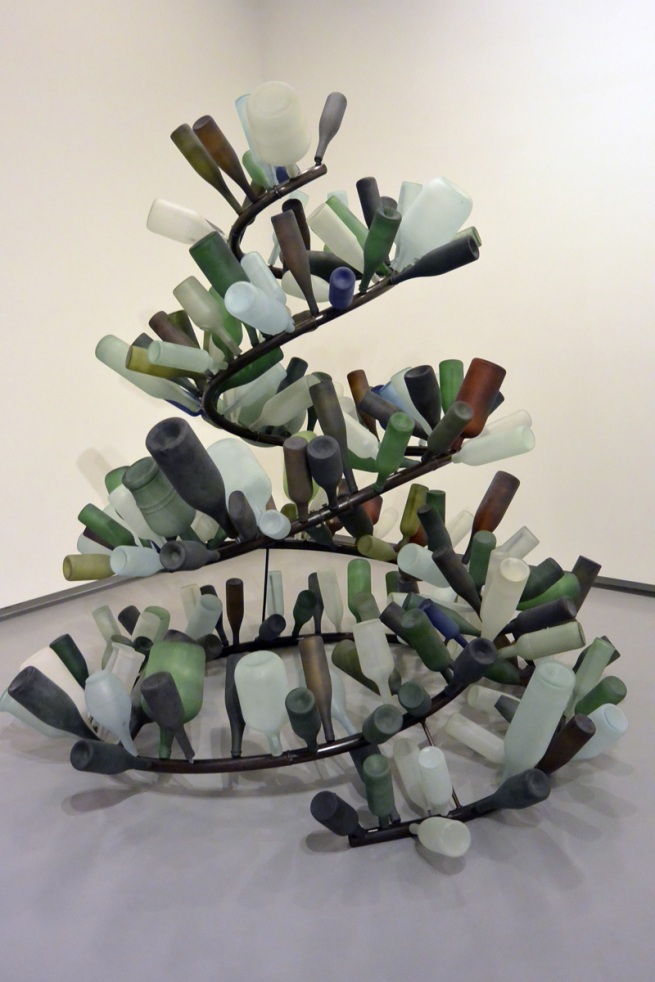
 

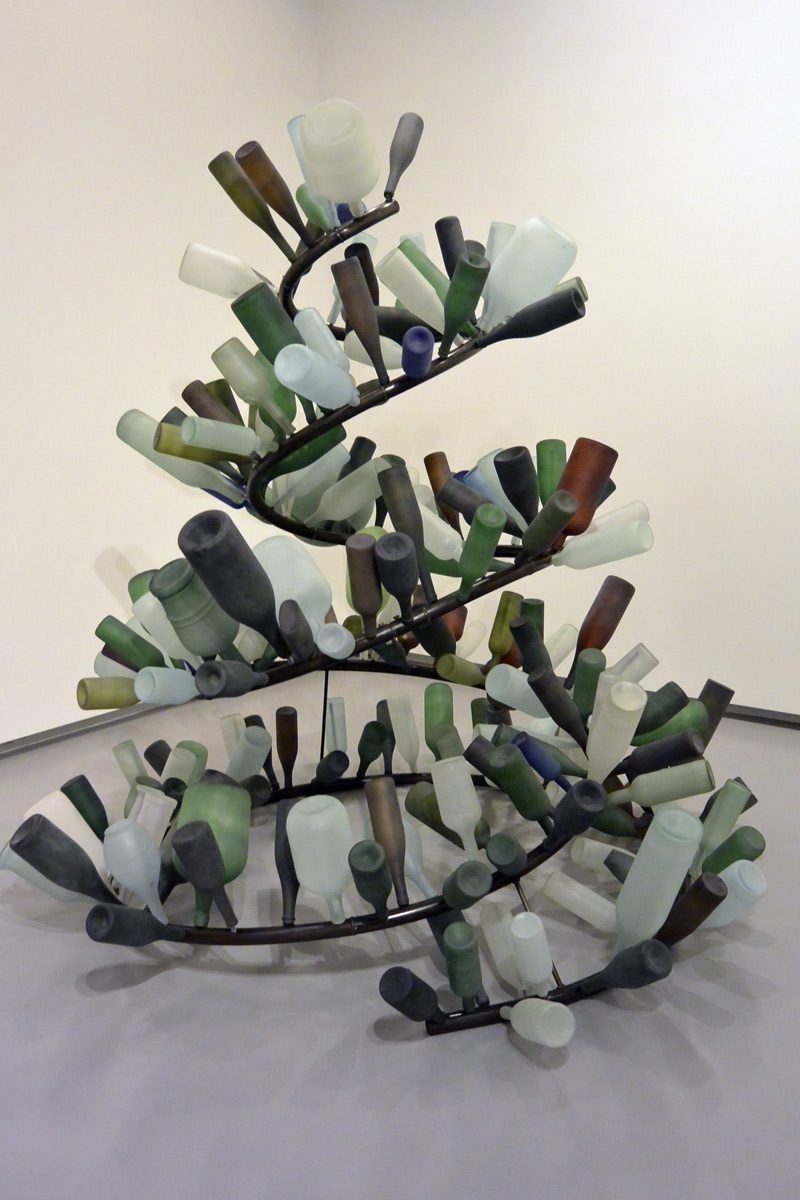
Tony Cragg (British, b. 1949) 'Spyrogyra' 1992 (installation view)

Tony Cragg (British, b. 1949) 'Spyrogyra' 1992 (installation view)


Tony Cragg (British, b. 1949)
Spyrogyra (installation views)
1992
Glass and steel
220.0 x 210.0cm
Collection: Art Gallery of New South Wales
Photo: © Marcus Bunyan


Tony Cragg (British, b. 1949) 'Spyrogyra' 1992 (installation view detail)


Tony Cragg (British, b. 1949)
Spyrogyra (installation detail)
1992
Glass and steel
220 x 210 cm
Collection: Art Gallery of New South Wales
Photo: © Marcus Bunyan


Arguably the most influential artistic development of the twentieth century, the readymade was set in motion one hundred years ago when Marcel Duchamp mounted an upturned bicycle wheel on a stool. Duchamp’s conversion of unadorned, everyday objects into fine art completely inverted how artistic practice was considered. Suddenly, art was capable of being everywhere and in everything. It was a revolutionary moment in modern art and the ripples from this epochal shift still resonate today.

Reinventing the Wheel: the Readymade Century pays tribute to Duchamp’s innovation, including two key examples of his work: Bicycle wheel 1913 and Bottle dryer 1914. Other important historical works that MUMA has borrowed for the exhibition reveal the readymade’s presence in Minimalism and Conceptual art as well as its echoes in Pop art. The exhibition traces some of the ways the readymade has been reinterpreted by subsequent artists in acts of homage to Duchamp or further expanding the possibilities the readymade has unfurled.

Among the various trajectories of the readymade, Reinventing the Wheel traces its elaborations in neo-dada practices, with a particular focus on everyday and vernacular contexts; the mysterious and libidinous potential of sculptural objects; institutional critique and nominal modes of artistic value. These discursive contexts also provide a foundation to explore more recent tendencies related to unmonumental and social sculpture, post-Fordism and other concerns, particularly among contemporary Australian artists. Bringing together works by over forty artists – from Duchamp and Man Ray to Andy Warhol and Martin Creed, along with some of Australia’s leading practitioners – this is a one-of-a-kind salute to an idea that continues to define the very nature of contemporary art.

“This is the most ambitious exhibition that MUMA has yet presented, including works that establish the historical moment of the readymade in Europe and its reception in the USA and in Australia. Most exciting is the opportunity for living artists to see their work as part of this ongoing history,” said Charlotte Day, Director of MUMA.

Press release from the MUMA website


Joseph Kosuth (American, b. 1945) 'One and three tables' 1965 (installation view)


Joseph Kosuth (American, b. 1945)
One and three tables (installation view)
1965
Wooden table, gelatin silver photograph, and photostat mounted on foamcore
Installation dimensions variable
Collection: Art Gallery of New South Wales
Photo: © Marcus Bunyan


Julian Dashper (New Zealand, b. 1960) 'Untitled (The Warriors)' 1998 (installation view)


Julian Dashper (New Zealand, b. 1960)
Untitled (The Warriors) (installation view)
1998
Vinyl on drumheads, drum kit
Dimensions variable
Courtesy of the Julian Dashper Estate and Michael Lett Auckland
Photo: © Marcus Bunyan


Masato Takasaka (Japanese Australian, b. 1977) 'Smile! Bauhaus babushka sundae boogie woogie (model for a prog rock SCULPTURE PARK)' 1999-2007/2013 (installation view detail)


Masato Takasaka (Japanese Australian, b. 1977)
Smile! Bauhaus babushka sundae boogie woogie (model for a prog rock SCULPTURE PARK) (installation view detail)
1999-2007/2013
MDF, vinyl, marker on foamcore, soft drink cans, acrylic, paper notepad from Bauhaus Museum giftshop, plastic wrapper, cardboard, polycarbonate sheeting, marker on paper, Metallica babushka dolls, toy guitar, sundae keyring
Dimensions variable
Courtesy of the artist and Studio Masatotectures, Melbourne
Photo: © Marcus Bunyan


Jeff Koons (American, b. 1955) 'Balloon dog (Red)' 1995 designed (installation view)


Jeff Koons (American, b. 1955)
Balloon dog (Red) (installation view)
1995 designed
Porcelain, ed. 1113/2300
11.3 x 26.3cm diameter
National Gallery of Victoria, Melbourne
Photo: © Marcus Bunyan


Lou Hubbard (Australian, b. 1957) 'Stretch' 2007 (installation view)


Lou Hubbard (Australian, b. 1957)
Stretch (installation view)
2007
Two ‘Studio K’ Planet lamps, fluorescent lights, MDF, acrylic paint and Perspex
108.3 x 251.8 x 29cm
Courtesy of the artist and Sarah Scout, Melbourne
Photo: © Marcus Bunyan


Andrew Liversidge (Australian, b. 1979) 'IN MY MIND I KNOW WHAT I THINK BUT THAT’S ONLY BASED ON MY EXPERIENCE' 2009 (installation view)


Andrew Liversidge (Australian, b. 1979)
IN MY MIND I KNOW WHAT I THINK BUT THAT’S ONLY BASED ON MY EXPERIENCE (installation view)
2009
10,000 $1 coins (AUD)
30 x 30 x 30cm
Courtesy of the artist and The Commercial Gallery, Sydney
Photo: © Marcus Bunyan
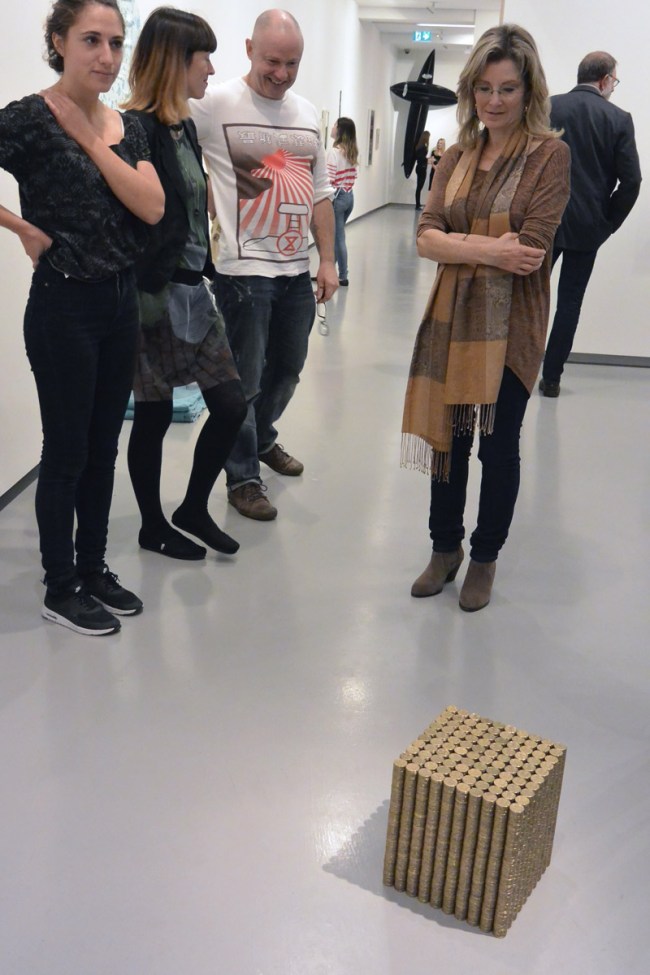
 

Andrew Liversidge (Australian, b. 1979) 'IN MY MIND I KNOW WHAT I THINK BUT THAT’S ONLY BASED ON MY EXPERIENCE' 2009 (installation view)


Andrew Liversidge (Australian, b. 1979)
IN MY MIND I KNOW WHAT I THINK BUT THAT’S ONLY BASED ON MY EXPERIENCE (installation view)
2009
10,000 $1 coins (AUD)
30 x 30 x 30cm
Courtesy of the artist and The Commercial Gallery, Sydney
Photo: © Joyce Evans


Callum Morton (Australian born Canada, b. 1965) 'Mayor' 2013 (installation view)


Callum Morton (Australian born Canada, b. 1965)
Mayor (installation view)
2013
Polyurethane resin, wood, fibreglass, synthetic polymer paint
290 x 200 x 26cm
City of Melbourne Art and Heritage Collection
Photo: © Marcus Bunyan
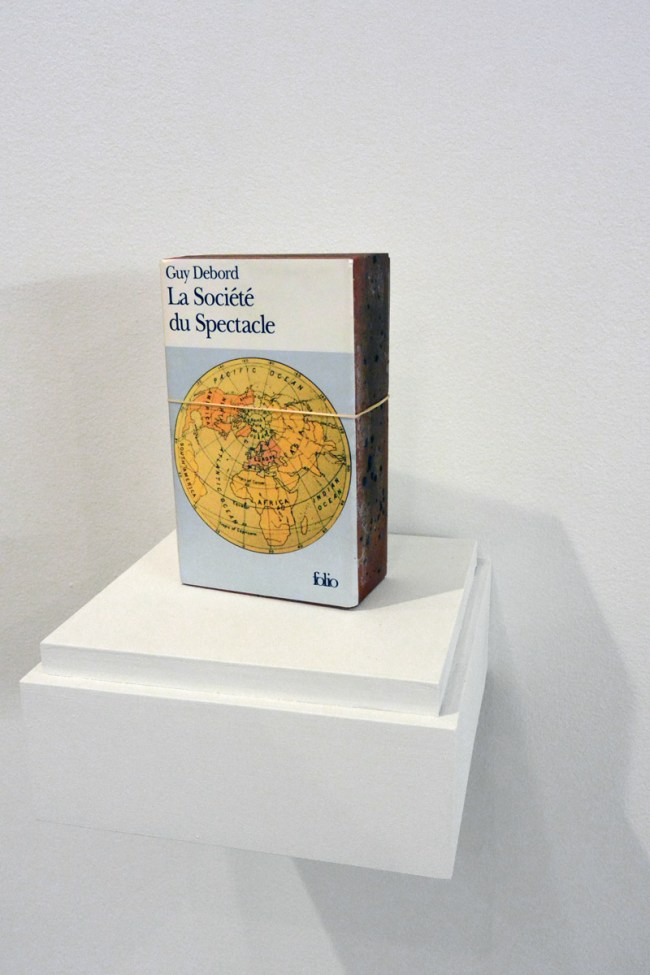
 

Claire Fontaine (Italian, b. 1975) 'La société du spectacle brickbat' 2006 (installation view)


Claire Fontaine (Italian, b. 1975)
La société du spectacle brickbat (installation view)
2006
Bricks and brick fragments, laser impression
178 x 108 x 58cm
Courtesy of the artist and Metro Pictures, New York
Photo: © Marcus Bunyan


Word History

The earliest sense of brickbat, first recorded in 1563, was “a piece of brick.” Such pieces of brick have not infrequently been thrown at others in the hope of injuring them; hence, the figurative brickbats (first recorded in 1929) that critics hurl at performances they dislike. The appearance of bat as the second part of this compound is explained by the fact that the word bat, “war club, cudgel,” developed in Middle English the sense “chunk, clod, wad,” and in the 16th century came to be used specifically for a piece of brick that was unbroken on one end.

1/ A piece of brick or similar material, esp one used as a weapon
2/ Blunt criticism the critic threw several brickbats at the singer


Monash University Museum of Art (MUMA)
Ground Floor, Building F.
Monash University Caulfield campus
900 Dandenong Road
Caulfield East, VIC 3145
Phone: 61 3 9905 4217

Opening hours:
Tuesday – Friday 10am – 5pm
Saturday 12 – 5pm
Closed Sunday and Monday

Monash University Museum of Art (MUMA) website

LIKE ART BLART ON FACEBOOK

Back to top

Exhibition: ‘Piero Manzoni. When Bodies Became Art’ at Städel Museum, Frankfurt

Exhibition dates: 26th June – 22nd September 2013


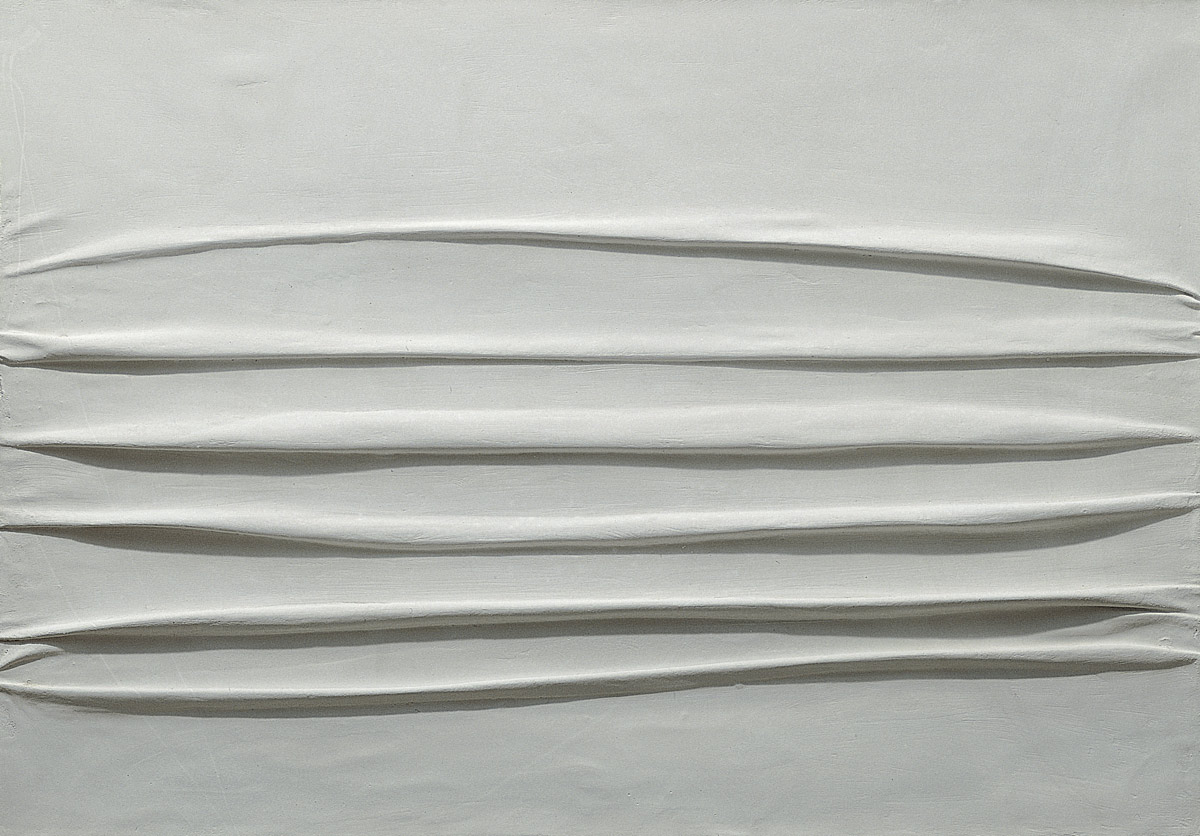
Piero Manzoni (Italian, 1933-1963) 'Achrome' 1958


Piero Manzoni (Italian, 1933-1963)
Achrome
1958
Kaolin on canvas
50 x 69.5cm
Fondazione Piero Manzoni, Milan, in collaboration with Gagosian Gallery
© Fondazione Piero Manzoni, Milano, by VG Bild-Kunst, Bonn 2013


A slight switch in gears for the next two postings. Conceptual, sculptural, minimal, monochromatic, corporeal, haptically varied surfaces that are absolutely fascinating…

Marcus


Many thankx to the Städel Museum for allowing me to publish the artwork in the posting. Please click on the photographs for a larger version of the art.


Piero Manzoni (Italian, 1933-1963) 'Achrome' 1957-1963


Piero Manzoni (Italian, 1933-1963)
Achrome
1957-1963
Kaolin on canvas
80 x 100cm
Städel Museum, Frankfurt am Main
© Fondazione Piero Manzoni, Milano, by VG Bild-Kunst, Bonn 2013


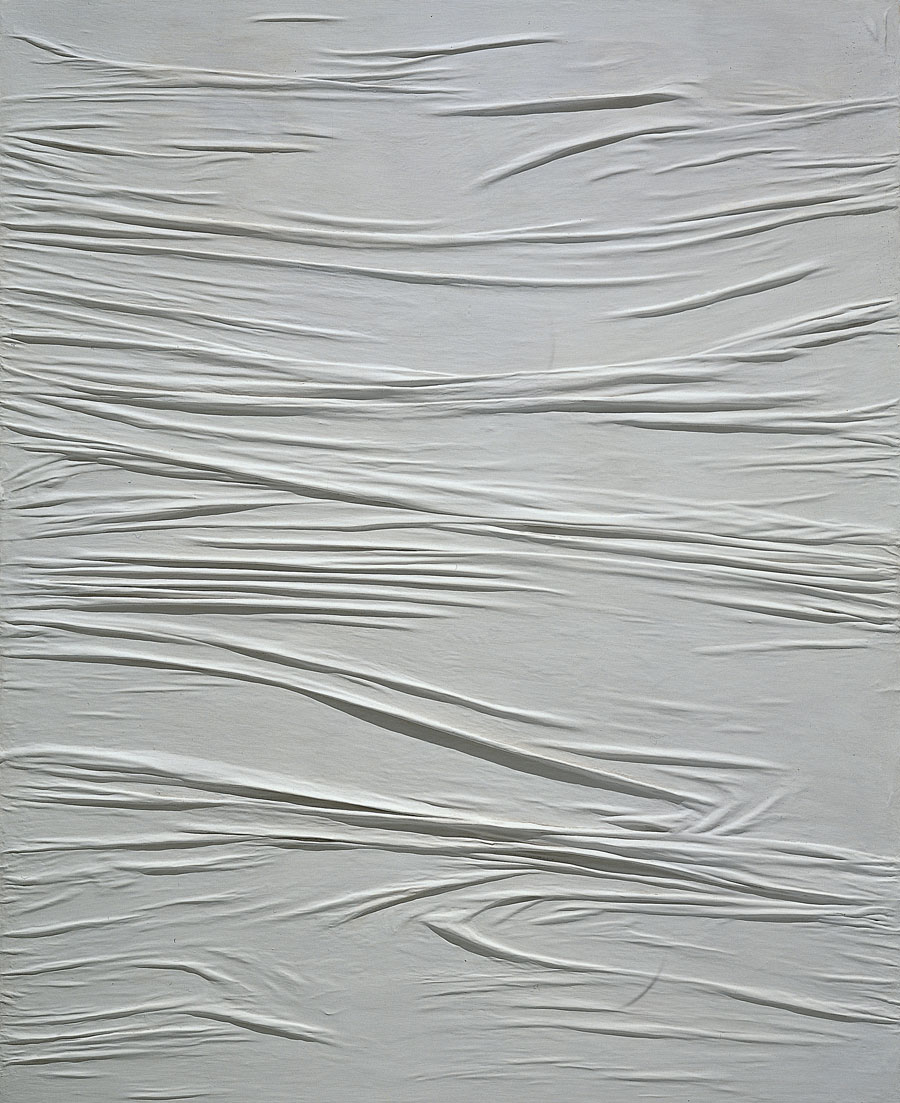
Piero Manzoni (Italian, 1933-1963) 'Achrome' 1958


Piero Manzoni (Italian, 1933-1963)
Achrome
1958
Kaolin on canvas
160 x 130cm
© Fondazione Piero Manzoni, Milano, by VG Bild-Kunst, Bonn 2013
Courtesy FaMa Gallery, Verona


Piero Manzoni (Italian, 1933-1963) 'Achrome' 1962


Piero Manzoni (Italian, 1933-1963)
Achrome
1962
Pebbles and kaolin on canvas
70 x 50cm
Fondazione Piero Manzoni, Milan, in collaboration with Gagosian Gallery
© Fondazione Piero Manzoni, Milano, by VG Bild-Kunst, Bonn 2013


Piero Manzoni (Italian, 1933-1963) 'Alfabeto' (Alphabet) 1959


Piero Manzoni (Italian, 1933-1963)
Alfabeto (Alphabet)
1959
Printed paper and pencil on cardboard
70 x 50cm
Neues Museum Weimar
© VG Bild-Kunst, Bonn 2013


Ennio Vicario (Italian, b. 1935) 'Manzoni in his studio in Via Fiori Oscuri' 1958


Ennio Vicario (Italian, b. 1935)
Manzoni in his studio in Via Fiori Oscuri
1958


Ennio Vicario (Italian, b. 1935) 'Manzoni in his studio in Via Fiori Oscuri' 1958


Ennio Vicario (Italian, b. 1935)
Manzoni in his studio in Via Fiori Oscuri
1958


Despite his short career, Piero Manzoni (Italian, 1933‒1963), who died an early death at the age of twenty-nine, is regarded as one of the most momentous representatives of Italian art after 1945. Manzoni would have celebrated his eightieth birthday on July 13, 2013. The Städel will pay tribute to this key figure of the European post-war avant-garde with a comprehensive survey to mark the occasion exactly fifty years after the artist’s death. Piero Manzoni. When Bodies Became Art will be the first Manzoni retrospective ever to be staged in the German-speaking world. The exhibition, on display from June 26 to September 22, 2013, will highlight the radical character of the artist’s multifaceted position: Manzoni not only submitted Duchamp’s concept of the ready-made to a far-reaching revision, but also thought central discourses of Modernism like monochromy through to the end and opened painting into the fields of the everyday world and commodity aesthetics. With works like Merda d’artista – (allegedly) 30 grams of artist’s shit in a strictly limited edition – or Socle du monde (Base of the World, 1961) – a pedestal elevating the world to an artwork – Manzoni created two icons within the more recent history of art. More than one hundred works from all phases of Manzoni’s productive career will offer complex insights into a still persuasive and influential oeuvre between Art Informel and the emergence of a new concept of art, Modernism and neo-avant-garde, art and the everyday world. Manzoni’s still unbroken influence on contemporary art production will be illustrated in the exhibition by works of the artists Erwin Wurm (b. 1954), Leni Hoffmann (b. 1962), and Bernard Bazile (b. 1952), which – offering an essayistic introduction to the show ‒explore central dimensions of Manzoni’s oeuvre regarding their relevance to the present.

“Though Piero Manzoni had a pivotal position in the cross-European ZERO network and, as a breathtaking innovator of the concept of art, strikes us hardly less avant­garde today, he is far less known than many of his ZERO colleagues in these parts. Fifty years after his sudden death, we want to change this situation with the first presentation of Manzoni’s work in a museum outside Italy for more than two decades,” says Max Hollein, Director of the Städel Museum.

“The exhibition is not only aimed at shedding light on the wide variety of Manzoni’s work produced within only a few years, but also at examining his enormous impact on the paradigm change in the art of the 1960s. Manzoni actually paved the way for today’s art, exercising an influence on Body Art and Performance Art, as well as on Conceptual Art and Land Art,” explains Dr. Martin Engler, Head of the Städel’s Contemporary Art Collection and curator of the show.

Piero Manzoni was born the son of Valeria Meroni and Egisto Manzoni, Count of Chiosca and Poggiolo, in Soncino, Lombardy, on July 13, 1933. He began to study law in 1951 and philosophy in 1955, when he also presented his first solo exhibition in Soncino. This was about the time he got to know artists of the CoBrA group, of the “Spatialist” movement around Lucio Fontana, and finally the “Arte Nucleare” group he joined in 1957. It was in Rotterdam where he presented his first solo show abroad in 1958. One year after, Manzoni founded the Azimut Gallery in Milan together with Enrico Castellani. The dato Gallery was the first to exhibit his work in Frankfurt in 1961. At the age of twenty-nine, Piero Manzoni died from a heart attack in his studio in Milan.

Piero Manzoni. When Bodies Became Art opens on the ground floor of the Städel’s Exhibition Building with early works by the artist, which oscillate between informal grounds and strongly abstracted figurativeness. Mirroring the agent provocateur and avant-gardist’s mediating role within the international ZERO network, his early oeuvre is displayed next to selected works by such contemporaries as Lucio Fontana, Alberto Burri, or Yves Klein, as well as by ZERO artists like Günther Uecker or Heinz Mack. Thus, the presentation conveys an idea of both Manzoni’s intricate network of relationships and the interaction and exchange with his closely affiliated colleagues in Düsseldorf, Amsterdam, Frankfurt am Main, Paris, or Copenhagen right from the beginning.

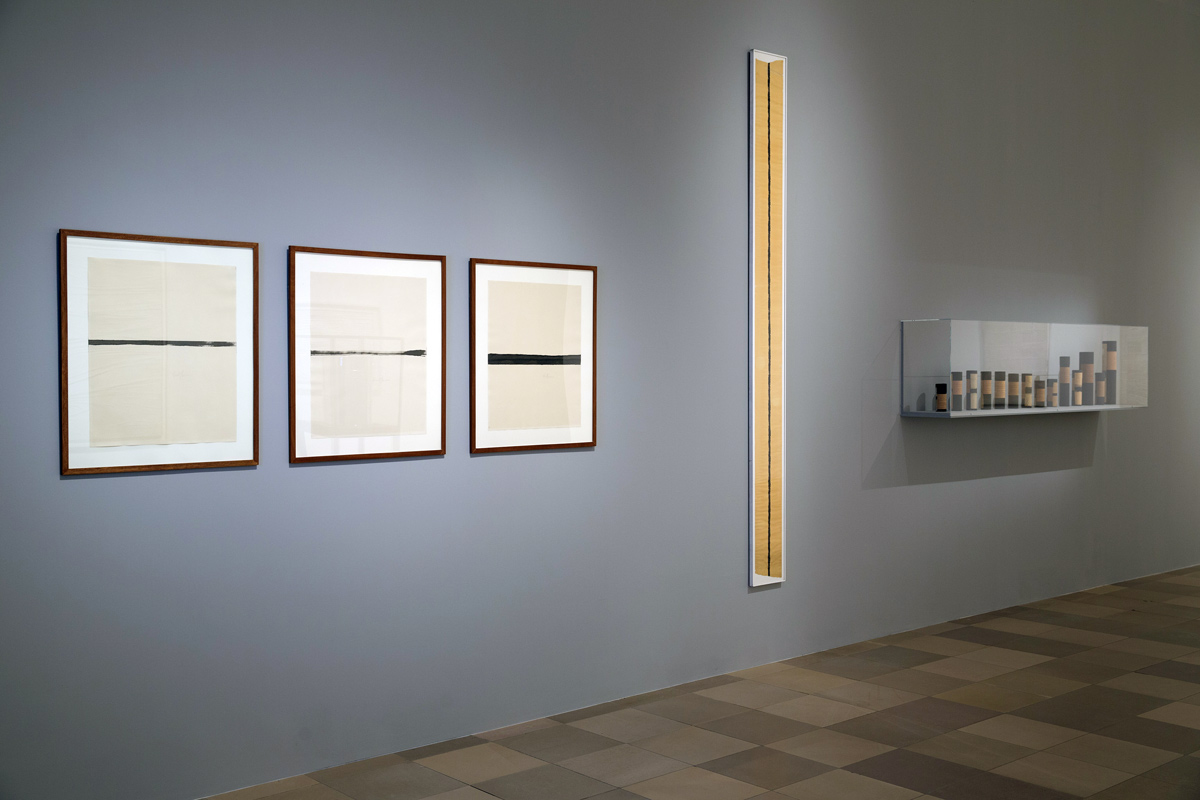
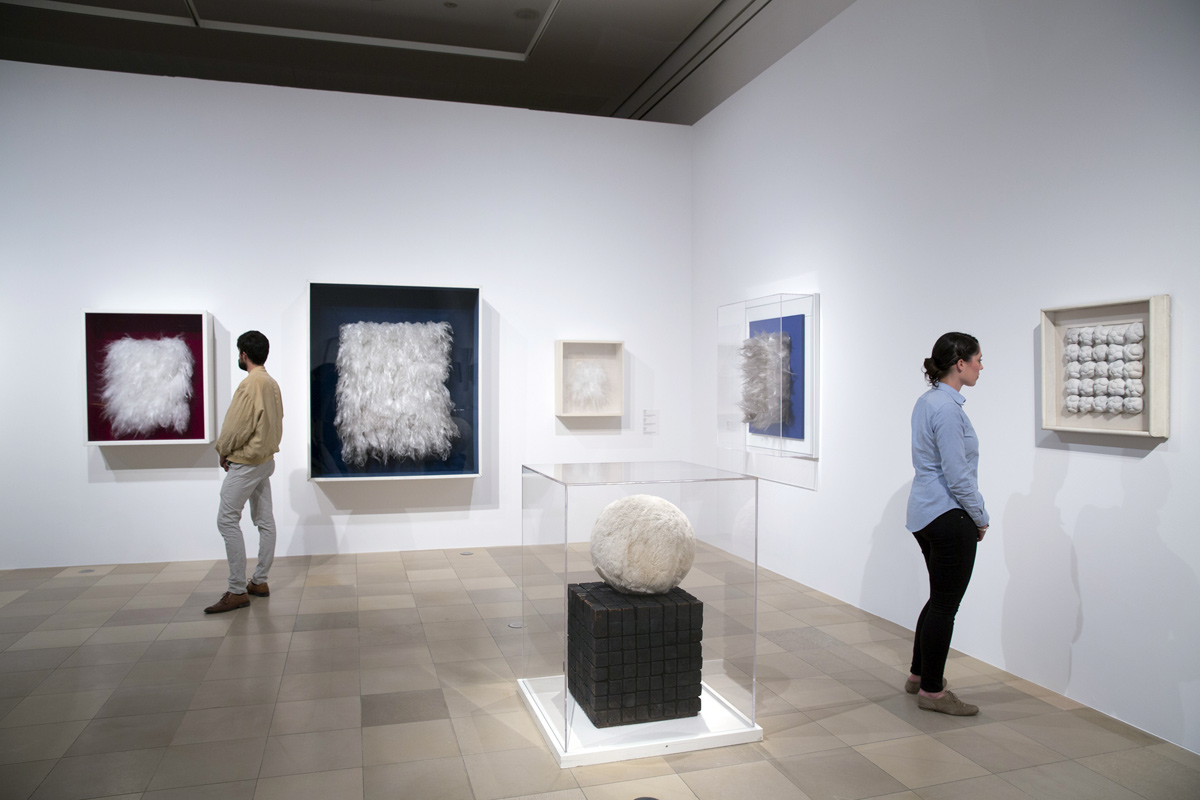
In the adjoining, completely open exhibition space, forty-three works of Manzoni’s central Achromes series provide the basis of the presentation ‒or rather interlock the artist’s different strands of production: a band running along all four outside walls unfolds a seamless chronology of this epochal group of works, which spans the entire exhibition. Between 1957 and his death in 1963, Manzoni produced about six-hundred of these paintings without colour, whose different forms of appearance made them a background of reference for his whole oeuvre. Thanks to the open exhibition architecture the Achromes enclose the artist’s performative, body-related workgroups presented in the centre of the hall with the help of a freestanding architectural display.

Manzoni did without any direct artistic gesture when creating his “colourless” works. His “white” painting, defined by the absence of colour – white or “achrome” meaning in the colour of the material for him – takes a special position in the context of the international ZERO movement and its turn toward monochromy: Manzoni saw his Achromes as paintings in spite of their ultimate reduction on the one hand, yet extended them by everyday elements like rolls or Styrofoam by body and space on the other. Employing materials such as plaster of Paris, kaolin, or synthetic fibres, he relied on means with sculptural qualities which initiated a transition process from the picture into a third, corporeal dimension. The velvety, satiny, shining and haptically varied surfaces show the conceptual severity that characterises the description of this aesthetic concept to be a lie.


Exhibition view of 'Piero Manzoni. When Bodies became Art' at the Städel Museum, Frankfurt

Exhibition view of 'Piero Manzoni. When Bodies became Art' at the Städel Museum, Frankfurt

Exhibition view of 'Piero Manzoni. When Bodies became Art' at the Städel Museum, Frankfurt

Exhibition view of 'Piero Manzoni. When Bodies became Art' at the Städel Museum, Frankfurt

Exhibition view of 'Piero Manzoni. When Bodies became Art' at the Städel Museum, Frankfurt

Exhibition view of 'Piero Manzoni. When Bodies became Art' at the Städel Museum, Frankfurt

Exhibition view of 'Piero Manzoni. When Bodies became Art' at the Städel Museum, Frankfurt


Exhibition views of Piero Manzoni. When Bodies became Art
Städel Museum, Frankfurt am Main, 2013
Photo: Alex Kraus
© Fondazione Piero Manzoni, Milano, by VG Bild-Kunst, Bonn 2013


After his reduction of colour, Manzoni also radically reduced its counterpart, the line, to the core of its essence. Starting in 1959, Manzoni produced more than one hundred and thirty conceptual works he categorised as Linee (Lines). This group confronts us with the idea of the isolated line as a reduced artistic gesture: the uniform horizontal lines drawn on long strips of paper were rolled up in cardboard tubes and thus hidden from the eye. The works are presented in their tubes positioned upright like figurines. The highlight of this series is definitely the line Manzoni drew at a newspaper’s printers in Herning, Denmark, in 1960: it was more than seven kilometres long and stored in a zinc cylinder.

Manzoni’s endeavours as an artist centred on the issue of the body, an issue consistently derived from the corporeality of his Achromes and Linee. From the late 1950s on, he also dedicated himself to two further series: Corpi d’aria (Bodies of Air) and Fiato d’artista (Artist’s Breath) ‒ works vacillating between object and biology, between body and concept. The exhibited balloons, formerly filled with their owners’ or Manzoni’s breath, related to a body discourse that anticipated the 1970s and was also reflected in other works by the artist like in the performance Consumazione dell’arte (Consumption of Art, 1960), in which he marked hard-boiled eggs with his thumbprint and offered them to the audience to eat. The thumbprint is to be read as Manzoni’s most reduced physical trace which becomes a sign of his identity as individual, body, and artist.

The provocative impact of Manzoni’s probably best known group of works, Merda d’artista (Artist’s Shit, 1961), is still unbroken even five decades after the artist’s death: thirty grams of artist’s shit in strictly limited compact cans, which were allegedly sold on the art market for the price of gold. This series may be understood as a logical continuation of Manzoni’s earlier art consumption performances: the artist’s body becomes the biological medium for the production of art, and Duchamp’s ready-made finds itself grounded in human biology. The exhibition comprises eleven cans of this series combining high and low, the spiritual and the abstract with the concrete and the physical and thus radically extends the traditional concept of art.

The resulting discourse of the body finds its culmination in the artist’s Sculture viventi (Living Sculptures, 1961) displayed in the show. Declaring bodies to be art by means of a pedestal, these works by Manzoni appropriate man as a living work of art: whoever steps onto the pedestal is elevated to a living sculpture and object of art for the time being. Going beyond the concept of the ready-made, Manzoni made the body the material of his art. His approach involved the viewer and opened the door for the Actionist Art of the 1960s and 1970s. The work Socle du monde (Base of the World, 1961), which is also among the Städel’s exhibits, focuses on the whole world at once: a plinth presumably placed upside down elevates the world, including man, to a work of art in an all-embracing manner.

The presentation of three contemporary positions – Erwin Wurm (b. 1954), Leni Hoffmann (b. 1962), and Bernard Bazile (b. 1952) – provides an essayistic introduction to the show in the foyer of the Exhibition Building, a foreword exploring central dimensions of Manzoni’s oeuvre regarding their relevance to the present. The Austrian artist Erwin Wurm will present the visitor as a living sculpture in one of his One Minute Sculptures he conceived especially for the show at the Städel. Leni Hoffmann’s re-edition of the longest line from Manzoni’s series Linee follows up the present reception of the artist’s work by realising a well-nigh endless line on the rotary press of a daily newspaper. The French artist Bernhard Bazile will show two of his works. In his film project Die Besitzer (The Owners) he interviews forty-nine collectors whose holdings comprise a sample of Manzoni’s Merda d’artista and, talking about the motives for their acquisition, reflect on the artist’s oeuvre far beyond the actual subject of the conversation. The show also comprises the Merda d’artista sample Bazile opened in 1989 and since then presents as his own work under the title Boîte ouverte de Piero Manzoni.

The exhibition Piero Manzoni. When Bodies Became Art highlights the achievements of an artist who, in a radically innovative way, succeeded in condensing issues of late Modernism into a differentiated oeuvre that would prove to be a landmark for contemporary art. Today, Manzoni’s works mark a key position that has given birth to a conceptual discourse of the body and become the yardstick for a new, extended understanding of art which still clearly informs today’s debates.

Press release from the Städel Museum website


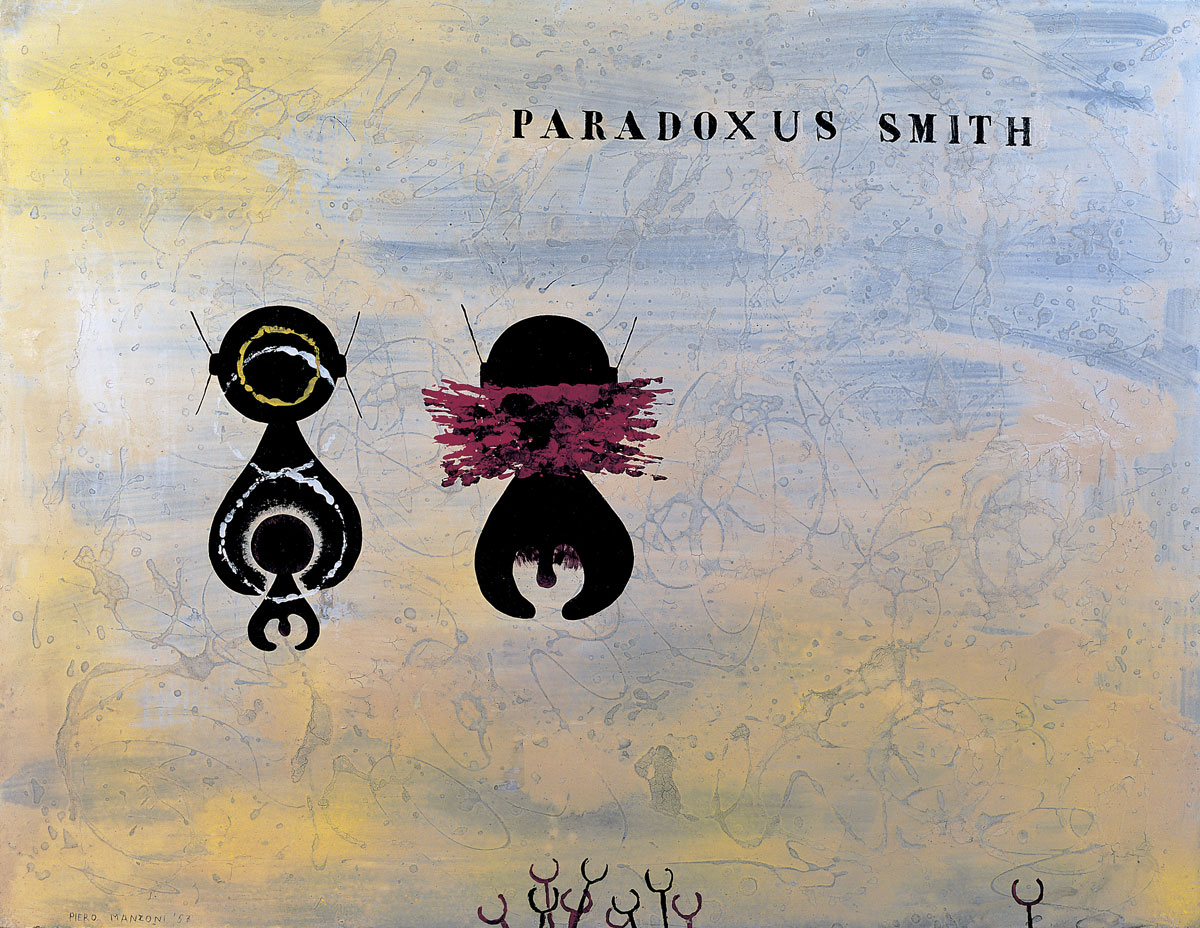
Piero Manzoni (Italian, 1933-1963) 'Paradoxus Smith' 1957


Piero Manzoni (Italian, 1933-1963)
Paradoxus Smith
1957
Oil on board
100 x 130cm
The Sander Collection
© VG Bild-Kunst, Bonn 2013


Piero Manzoni (Italian, 1933-1963) 'Milano et-mitologiaa' (Milan and mythology) 1956


Piero Manzoni (Italian, 1933-1963)
Milano et-mitologiaa (Milan and mythology)
1956
Oil on board
95 x 130cm
Private Collection Milan
© Fondazione Piero Manzoni, Milano, by VG Bild-Kunst, Bonn 2013


Piero Manzoni (Italian, 1933-1963) 'Socle du monde' (Base of the world) 1961


Piero Manzoni (Italian, 1933-1963)
Socle du monde (Base of the world)
1961
Iron, bronze
82 x 100 x 100cm
HEART – Herning Museum of Contemporary Art
© Fondazione Piero Manzoni, Milano, by VG Bild-Kunst, Bonn 2013


Piero Manzoni (Italian, 1933-1963) 'Base magica – Scultura vivente' (Magic Base – Living sculpture) 1961


Piero Manzoni (Italian, 1933-1963)
Base magica – Scultura vivente (Magic Base – Living sculpture)
1961
Wood, metal, felt
79.5 x 79.5 x 60cm
Fondazione Piero Manzoni, Milan, in collaboration with Gagosian Gallery
© Fondazione Piero Manzoni, Milano, by VG Bild-Kunst, Bonn 2013


Piero Manzoni (Italian, 1933-1963) 'Fiato d'artista' (Artist's breath) 1960


Piero Manzoni (Italian, 1933-1963)
Fiato d’artista (Artist’s breath)
1960
Rubber balloon, string, lead seal, brass, wood
18 x 18cm
Fondazione Piero Manzoni, Milan, in collaboration with Gagosian Gallery
© Fondazione Piero Manzoni, Milano, by VG Bild-Kunst, Bonn 2013


Piero Manzoni (Italian, 1933-1963) 'Merda d'artista N.° 038' (Artist's shit N.° 038) 1961


Piero Manzoni (Italian, 1933-1963)
Merda d’artista N.° 038 (Artist’s shit N.° 038)
1961
Artist’s shit, printed paper, tin can
Private collection
© Fondazione Piero Manzoni, Milano, by VG Bild-Kunst, Bonn 2013


Piero Manzoni (Italian, 1933-1963) 'Linea m 3,54' (Line 3.54 m) 1959


Piero Manzoni (Italian, 1933-1963)
Linea m 3,54 (Line 3.54 m)
1959
23 x 6 cm
Ink on paper, cardboard container
Consolandi Collection
© Fondazione Piero Manzoni, Milano, by VG Bild-Kunst, Bonn 2013


Städel Museum
Schaumainkai 63
60596 Frankfurt

Opening hours:
Tuesday – Wednesday, Friday – Sunday 10.00am – 6.00pm
Thursday 10.00am – 9.00pm
Closed Mondays

Städel Museum website

LIKE ART BLART ON FACEBOOK

Back to top

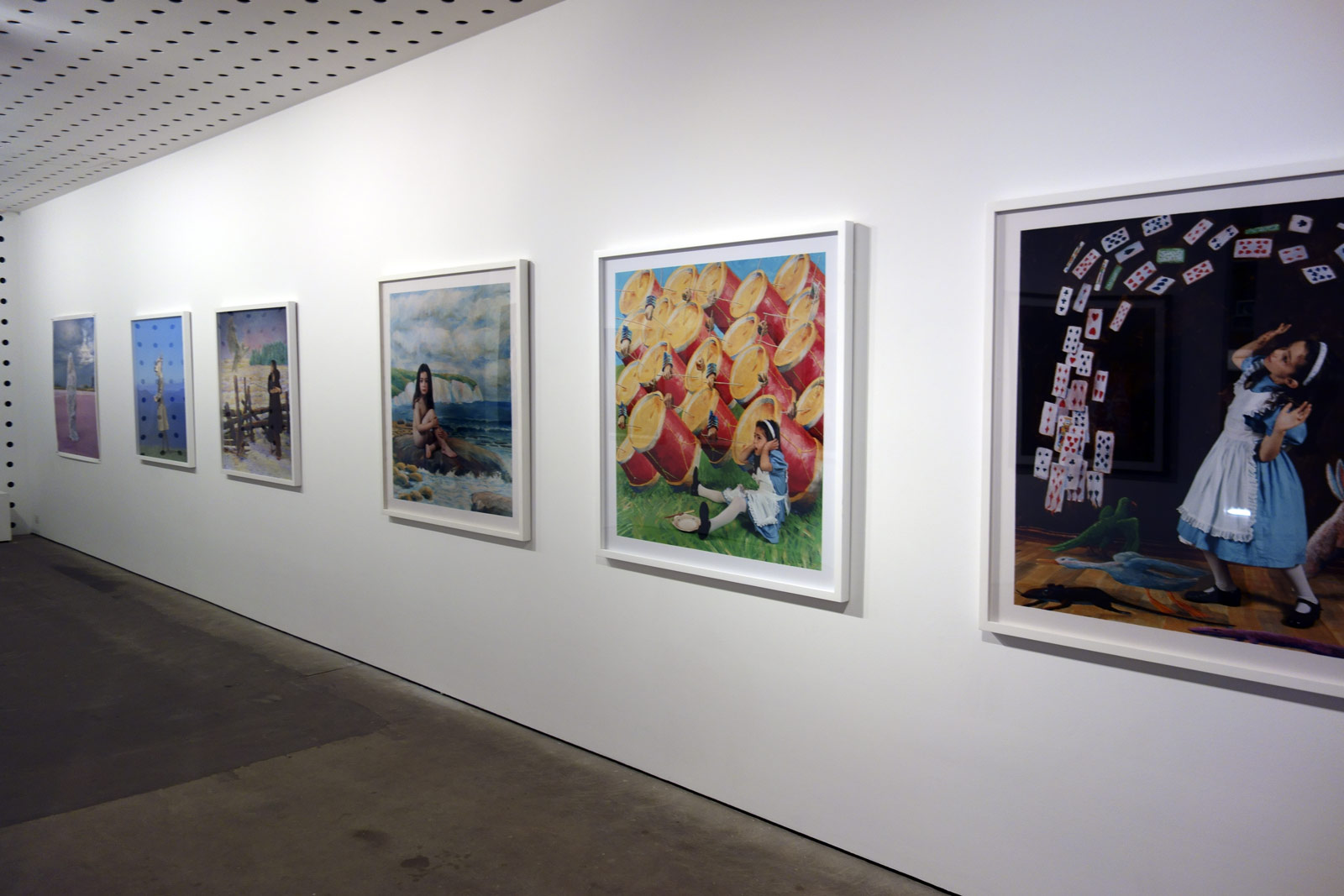
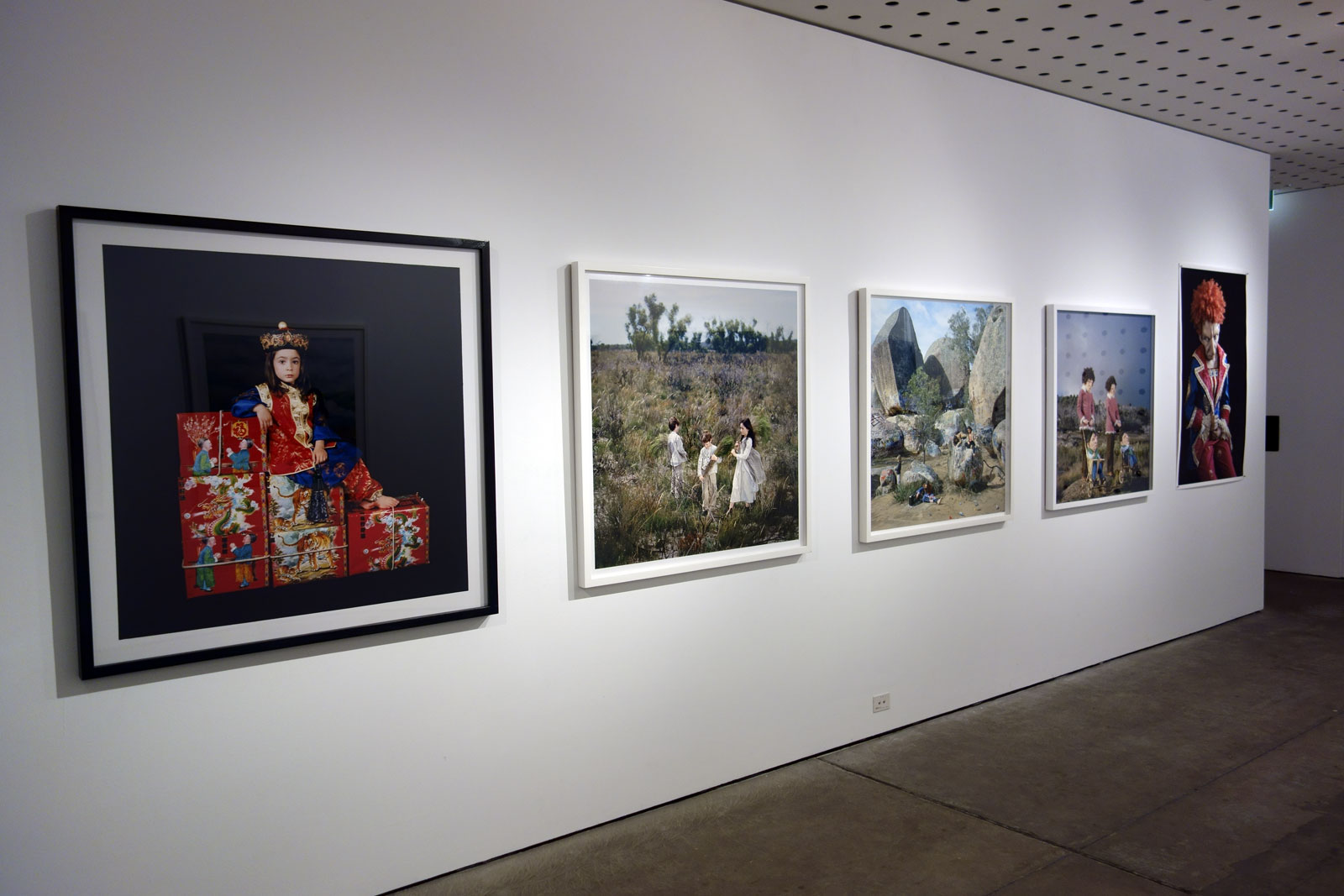
Review: Polixeni Papapetrou ‘A Performative Paradox’ and Daniel von Sturmer 
’After Images’ at the Centre for Contemporary Photography (CCP), Fitzroy, Melbourne

Exhibition dates: 24th May – 14th July 2013


Polixeni Papapetrou (Australian, 1960-2018) 'Drag queen wearing cut out dress' 1993


Polixeni Papapetrou (Australian, 1960-2018)
Drag queen wearing cut out dress
1993
Gelatin silver photograph
28.5 x 28.5cm
Courtesy the artist and Nellie Castan Gallery, Melbourne and Stills Gallery, Sydney


Two solid if not overly memorable exhibitions are presented at the Centre for Contemporary Photography.

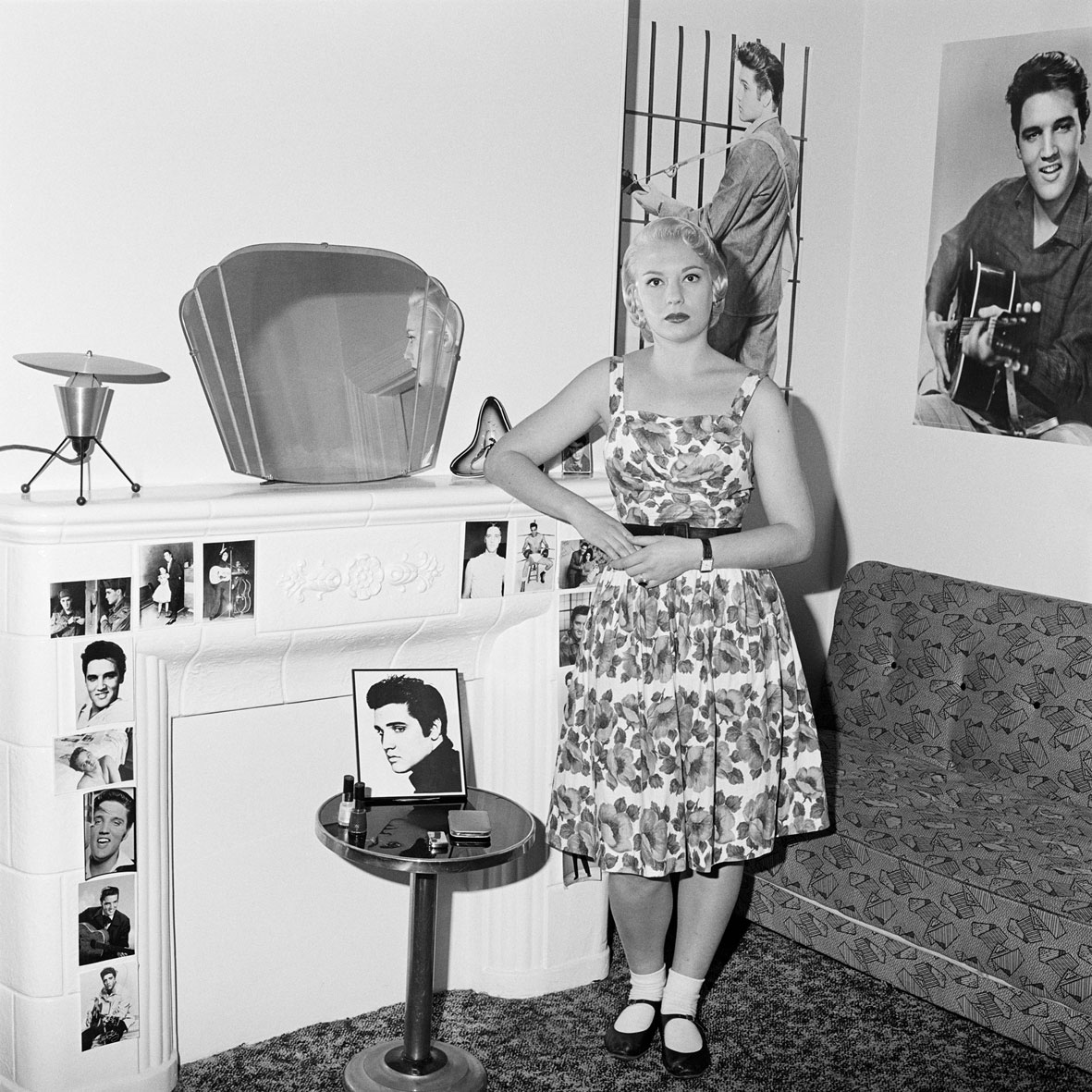
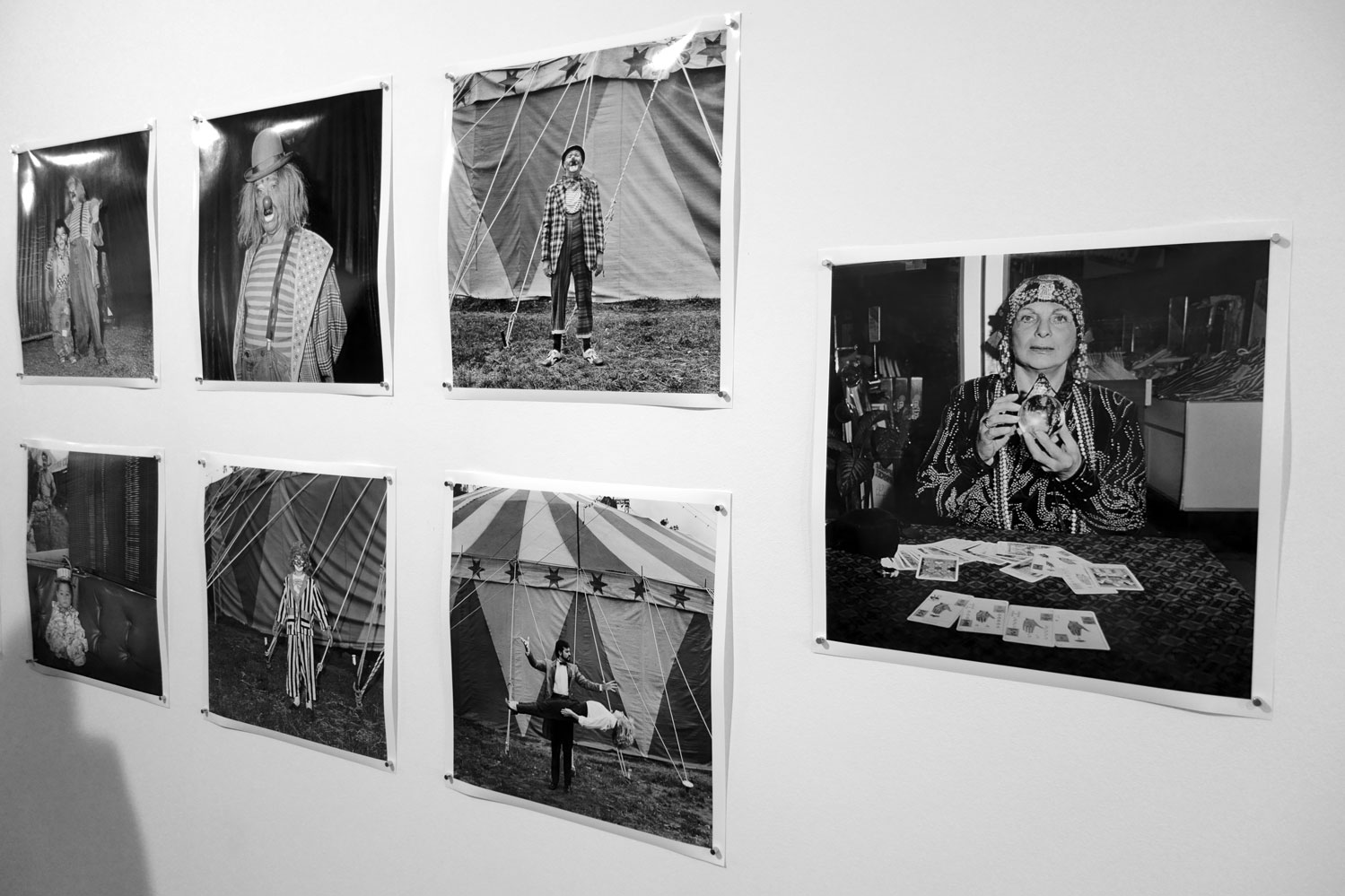
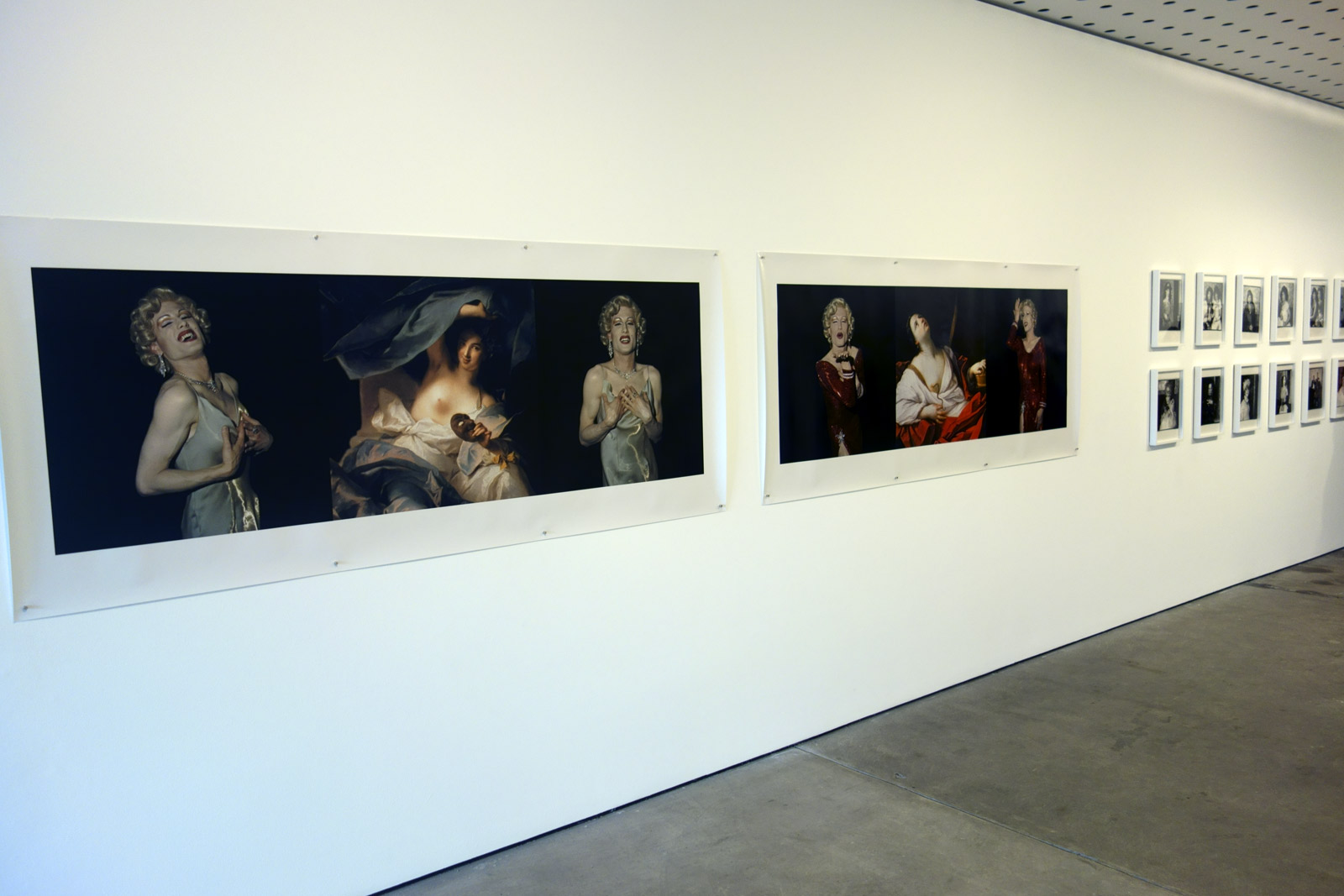
Polixeni Papapetrou A Performative Paradox is a bit of a dog’s breakfast. While it is wonderful to see early work by this artist – work that features Marilyn and Elvis impersonators, circus people, body builders and drag queens – too many bodies of work are crammed into too small a space with too few images. Some of the later series are represented by just one image giving a hotch potch feel to the whole exhibition ensemble. Perhaps it would have been better to concentrate solely on the early black-and-white images and colour images, work that is rarely seen and informs the staged work that followed. Having said that the black-and-white photographs are a joy to behold, documenting as they do performative identities. The photographs have an intangible presence. There are strong elements of the frontality of Diane Arbus in the photographs of circus performers and drag queens, coupled with a intrinsic understanding of light and texture. The photographs of drag queens are the highlight of both exhibitions and Drag queen wearing cut out dress (1993, below) reminded me of an early black-and-white photograph by Fiona Hall (Leura, New South Wales1974) in its use of patterned wallpaper. Let us hope there is a large retrospective of Polixeni’s work (at NGV or Heide for example) in the future, one that can do justice to the depth and complexity of her vision as an artist.

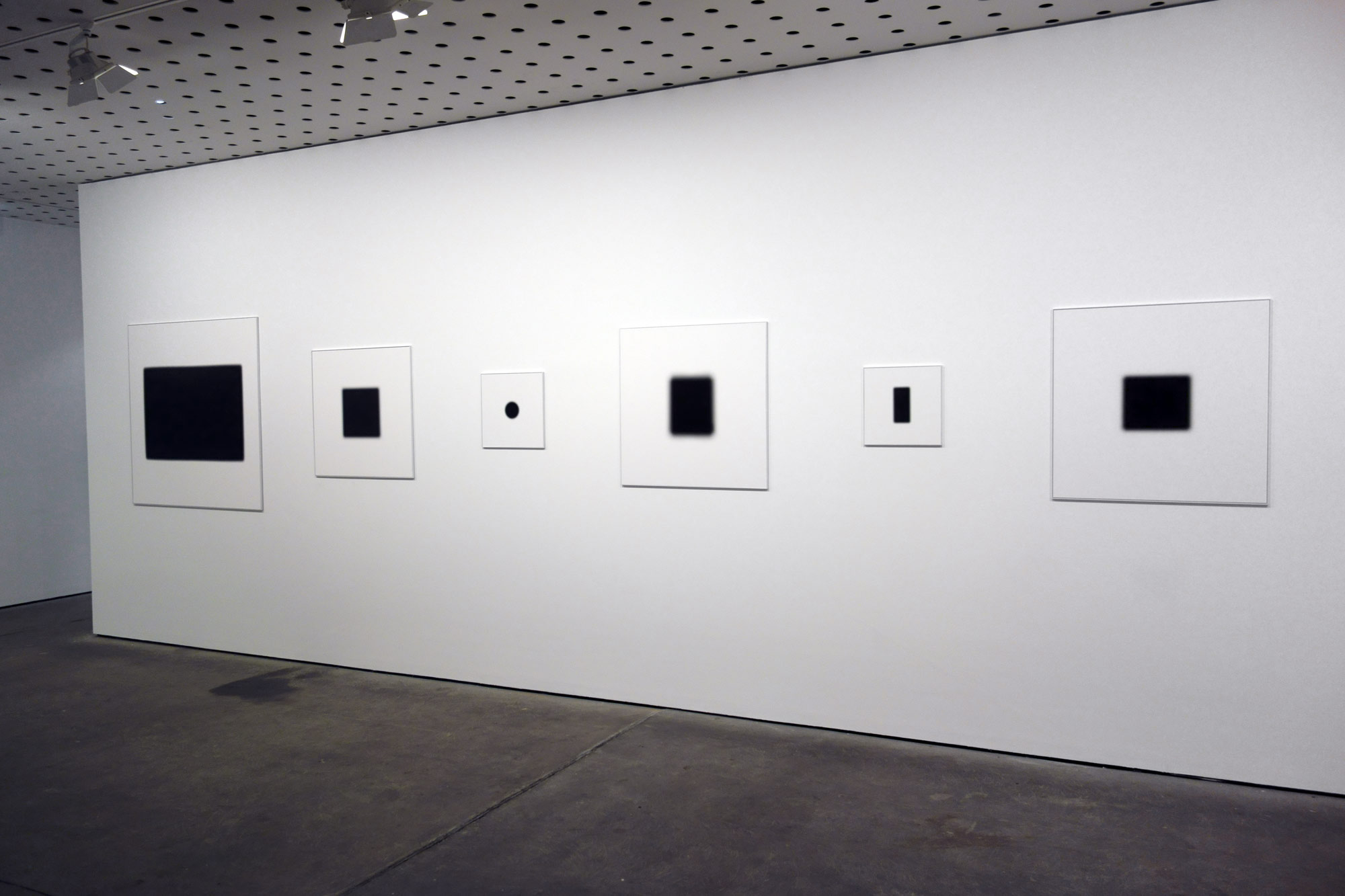
Daniel von Sturmer 
After Images is an interesting conceptual experiment, one that investigates the splitting of the image (shadow) from its referent (object). “The images propose a kind of transference; the object itself may be insignificant but its subjective meaning carries weight, and its shadow leaves a space the viewer fills with their own reading.” In their black-and-white fuzziness the work looks impressive when viewed in the gallery space (see installation views below) but upon close inspection the individual photographs fail to hold the viewers attention. Personally, I found it difficult to impart any great meaning to any of these works and the investigation certainly does not produce memorable images, ones that will stay with the viewer months and years later. For me the exhibition became an exercise in guessing what shadows were which objects, a game that grew quickly tiresome. The work then became an exercise in the importance of captioning an image, as I constantly looked around the room trying to match the titles of the works with the images themselves. As abstract images they imparted little metaphysical poetry as ghost images (an afterimage or ghost image is an optical illusion that refers to an image continuing to appear in one’s vision after the exposure to the original image has ceased). As images that investigate the link between text, object, shadow and language they started to become what the artist sought to enunciate: shadow objects bound to the realm of signification in some amorphous play, shadows that have the potential to become ‘Other’.

PS. As an analogy you could see these images as the equivalent of Jung’s human “shadow aspect” where, according to Jung, the shadow, in being instinctive and irrational, is prone to projection (as these shadows are projected by their objects). The shadow represents the entirety of the unconscious, ie. everything of which a person is not fully conscious, and is the seat of creativity. “Everyone carries a shadow,” Jung wrote, “and the less it is embodied in the individual’s conscious life, the blacker and denser it is.” (Jung, C.G. (1938). “Psychology and Religion.” In CW 11: Psychology and Religion: West and East. p. 131). Hence the potential halo/cination of these images.

Dr Marcus Bunyan


Many thankx to the CCP for allowing me to publish the photographs in the posting. Please click on the photographs for a larger version of the image. All installation photographs © Marcus Bunyan


Polixeni Papapetrou (Australian, 1960-2018) 'Suzie, Elvis fan at home, Melbourne' 1989


Polixeni Papapetrou (Australian, 1960-2018)
Suzie, Elvis fan at home, Melbourne
1989
Selenium toned gelatin silver photograph
40.7 x 40.7cm
Courtesy the artist and Nellie Castan Gallery, Melbourne and Stills Gallery, Sydney


Polixeni Papapetrou (Australian, 1960-2018) 'Indian Brave' 2002


Polixeni Papapetrou (Australian, 1960-2018)
Indian Brave
2002
Pigment ink print
85 x 85cm
Courtesy the artist and Nellie Castan Gallery, Melbourne and Stills Gallery, Sydney


Polixeni Papapetrou (Australian, 1960-2018) 'Three young men paying homage to Elvis on the 13th anniversary of Elvis' death, Elvis Memorial Melbourne' 1990


Polixeni Papapetrou (Australian, 1960-2018)
Three young men paying homage to Elvis on the 13th anniversary of Elvis’ death, Elvis Memorial Melbourne
1990
Selenium toned gelatin silver photograph
40.7 x 40.7cm
Courtesy the artist and Nellie Castan Gallery, Melbourne and Stills Gallery, Sydney


This exhibition focuses on the performative in the work of Polixeni Papapetrou, from her early documentary work through to her directorial work with her children since 2002, regarded internationally as some of the most powerful and provocative works in the field of perfomative photography. Papapetrou’s enduring interest is in how the ‘other’ is represented and how the ‘other’ performs in reinforcing our own identity.

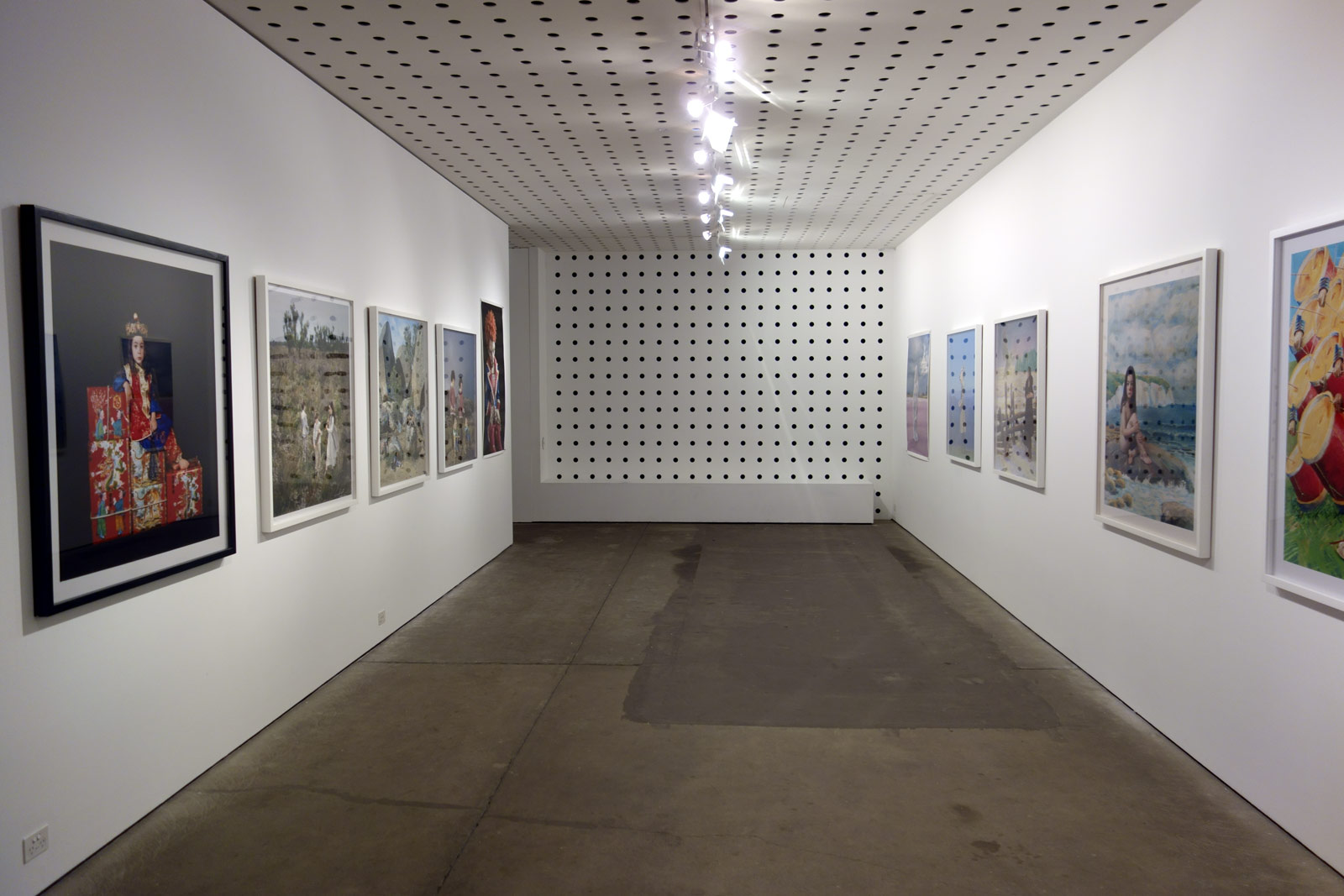
Polixeni Papapetrou is one of Australia’s leading contemporary photomedia artists. She has been exploring relationships between history, contemporary culture, landscape, identity and childhood through her photographic practice since the mid-eighties. In this exhibition, selected by Professor Anne Marsh in consultation with the artist, a particular thread has been selected across Papapetrou’s practice – that of the performative – from her early documentary work through to her directorial work with her children from 2002 to the present.

Her images are informed by her own experience as ‘other’, growing up as a Greek immigrant in a white, Anglo-Saxon, male-dominated culture in Australia in the 1960s and 1970s. Marilyn Monroe impersonators, Elvis Presley fans, body builders, circus performers and drag queens have all taken their turn in front of Papapetrou’s camera. All of these people are, one way or another, performing identities.

In 2002 Papapetrou turned her focus to the experience of childhood, using her children as the performers in her pictures. There is a challenging confusion between fantasy, mythology, archetype, animism and theatricality present in these works, ranging from the playful to the transgressive, wrangling with the question of identity and stressing the embodied nature of experience.

Text from the CCP website


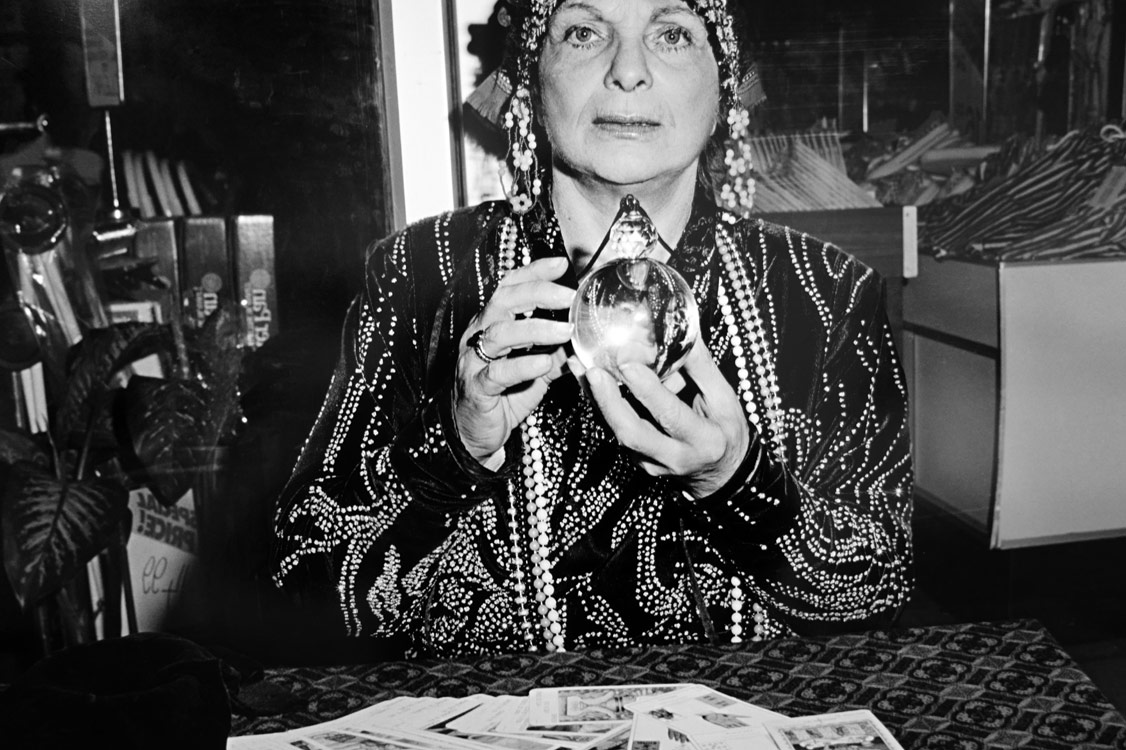
Polixeni Papapetrou (Australian, 1960-2018) 'Fortune teller' 1989 (detail)


Polixeni Papapetrou (Australian, 1960-2018)
Fortune teller (detail)
1989
From the series Ashton Circus, Silvers Circus 1989-1990


Polixeni Papapetrou. 'Levitation, Silvers Circus' 1989 (detail)


Polixeni Papapetrou (Australian, 1960-2018)
Levitation, Silvers Circus (detail)
1989
From the series Ashton Circus, Silvers Circus 1989-1990


Polixeni Papapetrou (Australian, 1960-2018) 'Ashton Circus, Silvers Circus' series 1989-1990 (installation view)


Polixeni Papapetrou (Australian, 1960-2018)
Ashton Circus, Silvers Circus series (installation view)
1989-1990
Photo: Marcus Bunyan


Installation view of Polixeni Papapetrou 'A Performative Paradox' at the Centre for Contemporary Photography (CCP)

Installation view of Polixeni Papapetrou 'A Performative Paradox' at the Centre for Contemporary Photography (CCP)

Installation view of Polixeni Papapetrou 'A Performative Paradox' at the Centre for Contemporary Photography (CCP)

Installation view of Polixeni Papapetrou 'A Performative Paradox' at the Centre for Contemporary Photography (CCP)

Installation view of Polixeni Papapetrou 'A Performative Paradox' at the Centre for Contemporary Photography (CCP)


Installation views of Polixeni Papapetrou A Performative Paradox at the Centre for Contemporary Photography (CCP)
Photos: Marcus Bunyan


Daniel von Sturmer (New Zealand, b. 1972) 'Production Still for After Images'


Daniel von Sturmer (New Zealand, b. 1972)
Production Still for After Images
Courtesy the artist and Anna Schwartz Gallery, Melbourne and Sydney


In After Images the shadows of a set of subjectively ‘important artefacts’ (a business card, a phone, a letter…) are presented alongside generic objects from the studio, for example: a bin, some tape, a ruler… Presented at 1:1 scale, the images propose a kind of transference; the object itself may be insignificant but its subjective meaning carries weight, and its shadow leaves a space the viewer fills with their own reading.

Photographed using a specially constructed ‘set’ to enable the separation of an object from its shadow, the resulting image stands alone, separated from its object yet inextricably bound to the realm of signification from which it has been cast.

Text from the CCP website


Installation view of Daniel von Sturmer 'After Images' at the Centre for Contemporary Photography (CCP)

Installation view of Daniel von Sturmer 'After Images' at the Centre for Contemporary Photography (CCP)

Installation view of Daniel von Sturmer 'After Images' at the Centre for Contemporary Photography (CCP)

Installation view of Daniel von Sturmer 'After Images' at the Centre for Contemporary Photography (CCP)

Installation view of Daniel von Sturmer 
'After Images' at the Centre for Contemporary Photography (CCP)


Installation views of Daniel von Sturmer 
After Images at the Centre for Contemporary Photography (CCP)
Photos: Marcus Bunyan


Centre for Contemporary Photography

No permanent exhibition space at the moment

Centre for Contemporary Photography website

LIKE ART BLART ON FACEBOOK

Back to top

Exhibition: ‘Ends of the Earth: Land Art to 1974’ at Haus der Kunst, Munich

Exhibition dates: 11th November 2012 – 20th January 2013


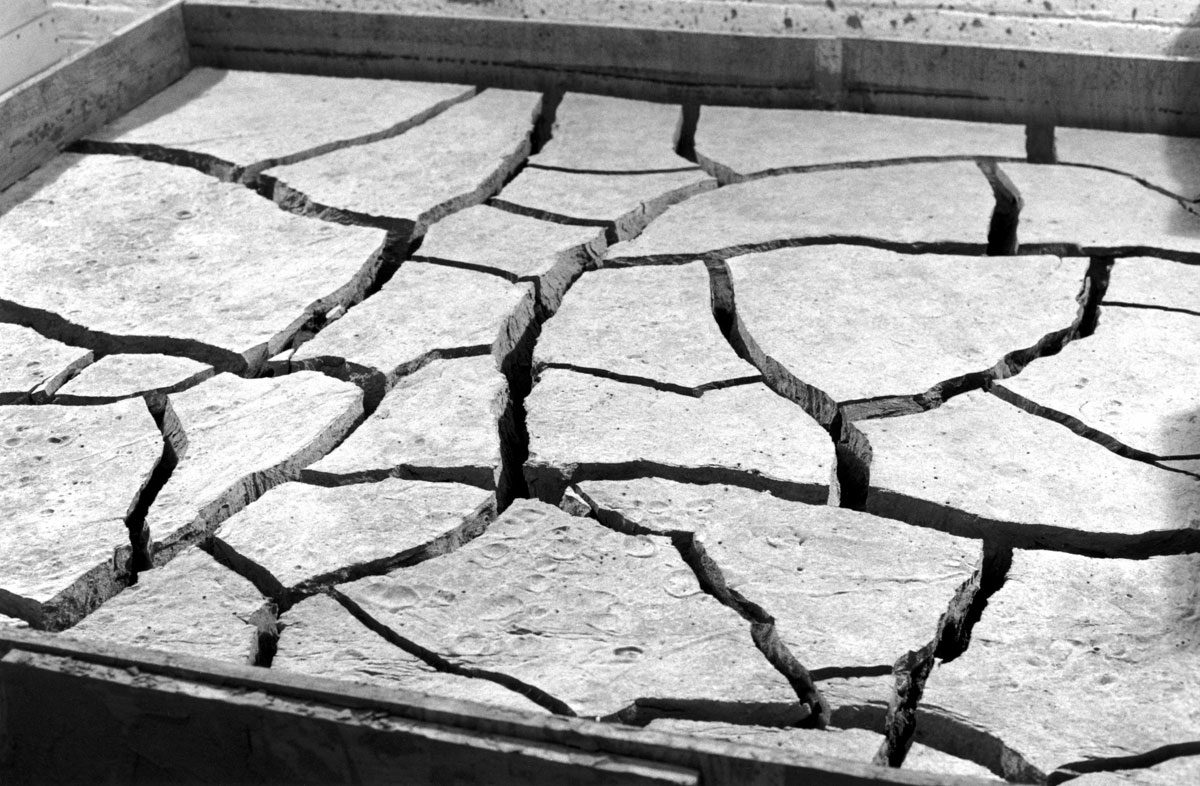
Alice Aycock (American, b. 1946) 'Clay #2' 1971/2012


Alice Aycock (American, b. 1946)
Clay #2
1971/2012
1,500 pounds of clay mixed with water in wood frame
Size: each 121.9 x 121.9 x 15.2cm
Courtesy of the artist


“Not taking Land art as a given the exhibition revisits various milieus and networks of heterogeneous practices around the world where the desire to engage the land or to work with the earth followed diverse artistic objectives and impulses. In researching this diversity, we found that the dominant art historical interpretation of Land art – as fundamentally an American sculptural phenomenon that developed out of Minimalism and Postminimalism, expanding into the “field” beyond art spaces to occupy or to become one with vast landscapes like the deserts of the Southwestern United States – accounts for only a limited number of artists’ works.”


Philipp Kaiser and Miwon Kwon. Ends of the Earth and Back catalogue essay, p. 18


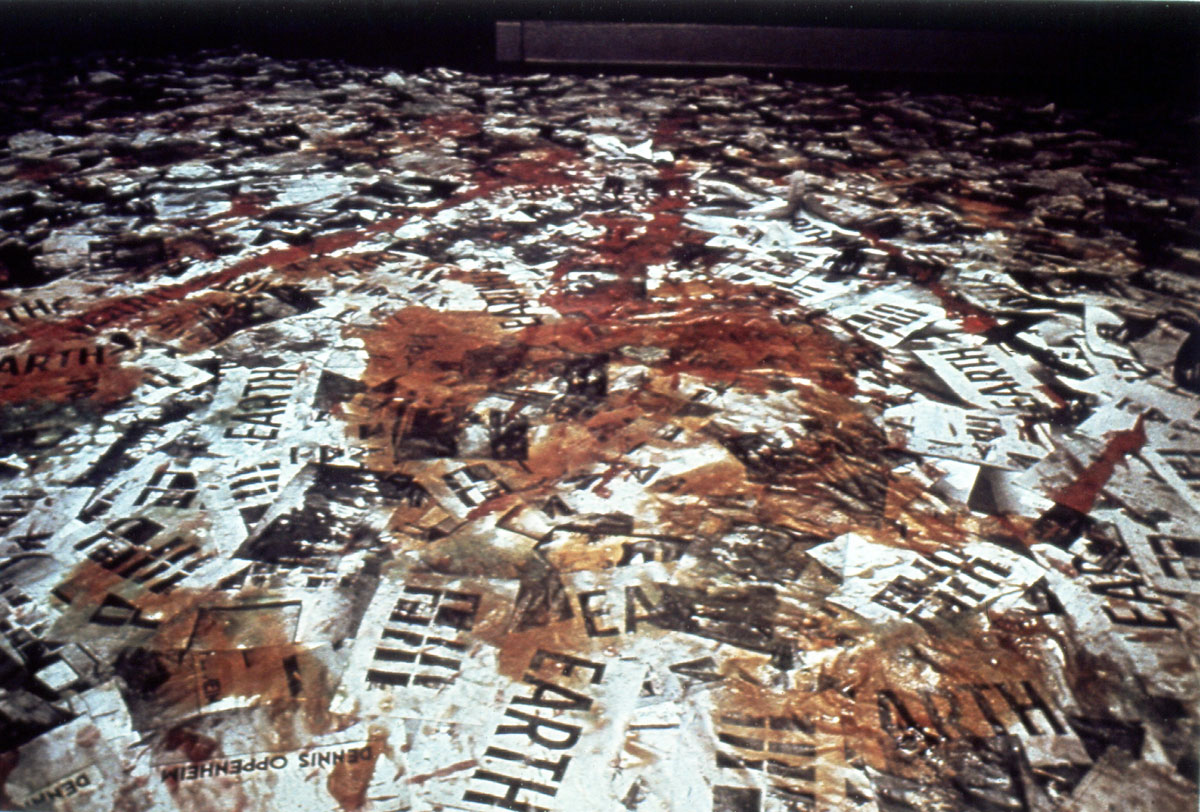
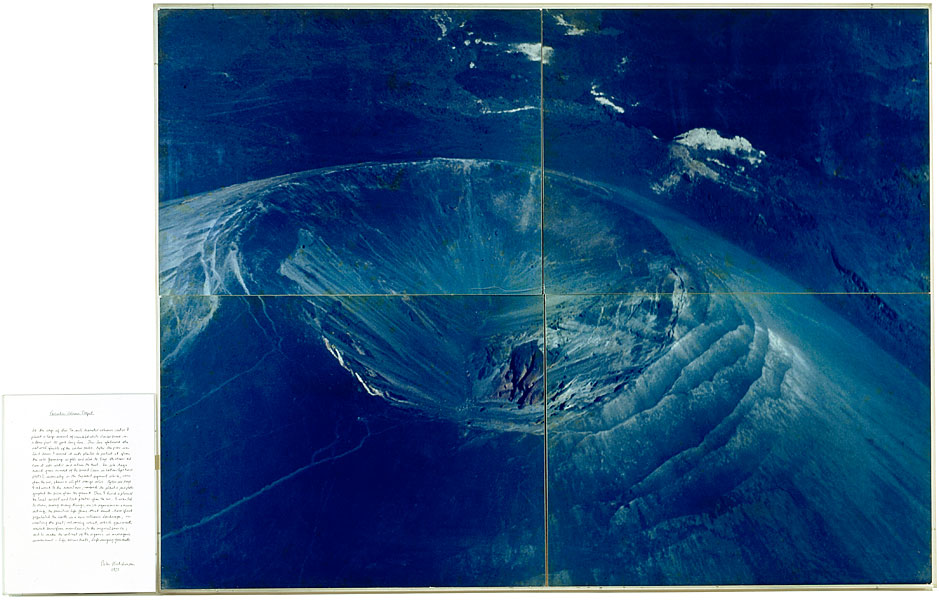
This posting continues the theme of land/(e)scape, combining as it does performance, site, nonsite, language, film and earth. It is such a pity that the documentation of these early Land Art events in the form of photographs tends to be so poor. The paucity and quality of the visual evidence adds to the ephemeral, transient nature of the art while undermining the works cultural significance. As Robert Smithson notes in his commentary on the piece Spiral Jetty (1970), if the work occupies a “site” and the essay and the film are Nonsites where language (the essay), photographic images (the film), and earth (the jetty) are viewed as material equals – in other words, each is given equal weight within the project – then on the evidence of these images as a lasting artefacts of an action, the photographs seem to me to be just shorthand notes, cursory artefacts like a smudged fingerprint at a crime scene.

Is it necessary that they be great art? No, because the art was not about ego it was about being there at the actual event. But, other than an overt ability to show the outcomes of the performance, what is necessary from these documentary photographs is that they engage the viewer on a higher level than just ocular observation. While Land Art must be extremely difficult to photograph there is nothing memorable here that will stick in my consciousness, that will trigger a memory of the photograph as “vision” (hallucination, simulation, projection?) of these amazing events, which is a great shame. Rendering shapes of things does not make for memorable art, even as that very (Land) art aimed to investigate higher concepts relating to “this tortured earth.”

Dr Marcus Bunyan


Many thankx to the Haus der Kunst, Munich for allowing me to publish the text and photographs in the posting. Please click on the photographs for a larger version of the image.

Please also read the accompanying essay, Ends of the Earth and Back by Philipp Kaiser and Miwon Kwon (615kb pdf).


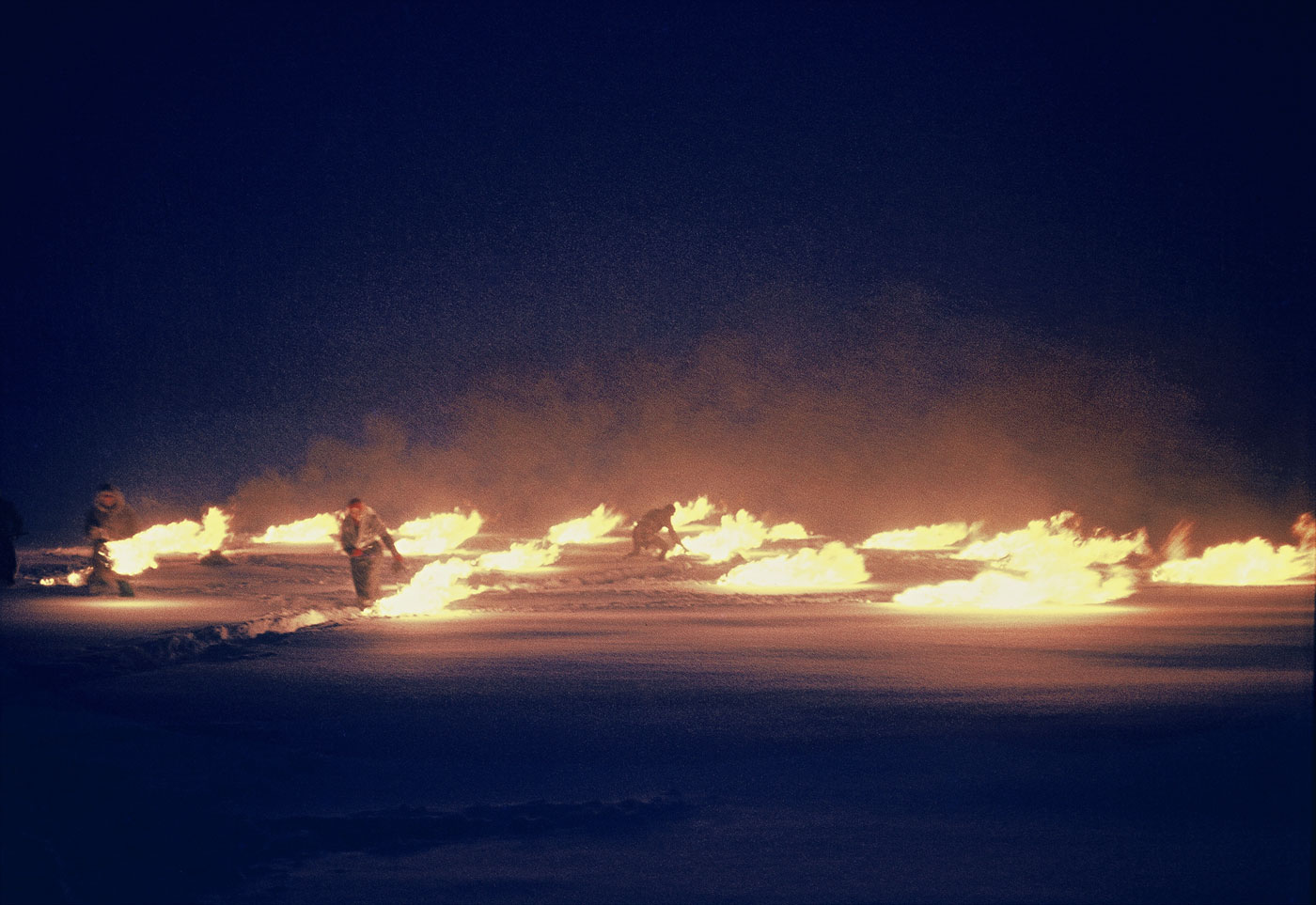
Zorka Ságlová (Czech, 1942-2003) 'Homage to Gustav Obermann' March 1970 (detail)


Zorka Ságlová (Czech, 1942-2003)
Homage to Gustav Obermann (detail)
March 1970
Six gelatin silver prints
15 3/4 × 23 5/8 in. (40 × 60cm) each
Collection of Jan Sagl; Courtesy Jan Sagl


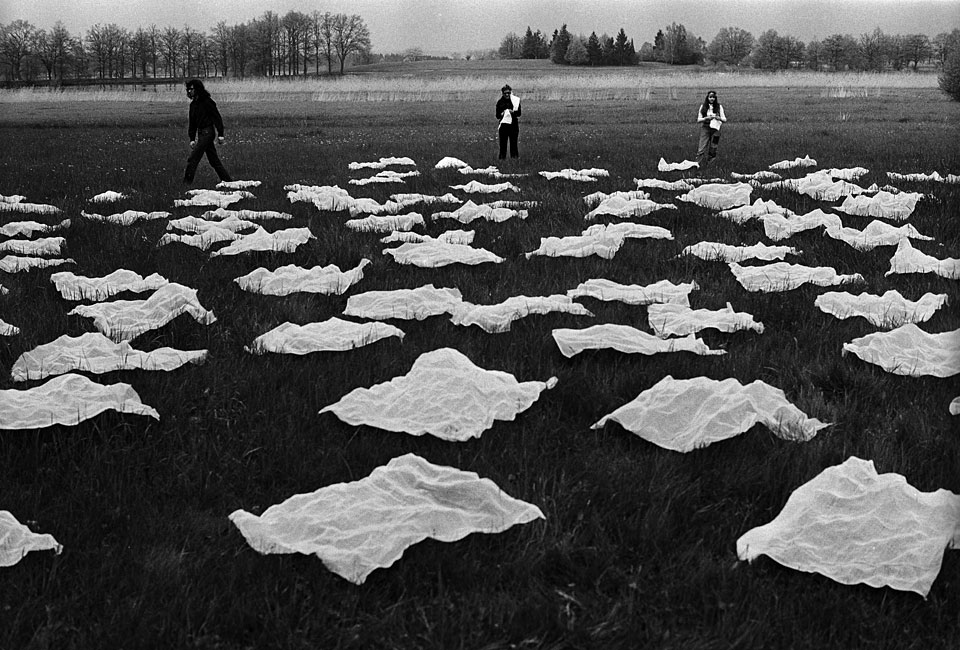
Beginning in the late 1960s, Ságlová was one of the first artists to work in the landscape outside Prague, carrying out actions with her friends, many of whom were part of the artistic underground in then-Communist Czechoslovakia. For Homage to Gustav Obermann, Ságlová arranged twenty-one plastic bags filled with jute and gasoline in Bransoudov (near Humpolec) in a circle during a snowstorm. The bags were set on fire at nightfall. This event was held in memory of a shoe-maker from the town who was said to have protested the German occupation during World War II by walking in the surrounding hills while spitting fire. Two months later, for Laying Napkins near Sudomer (below), the artist laid out approximately 700 napkins to form a triangle in a grass field near Sudomer, the site of a famous Hussite battle in 1420. The action referred to local folklore relating how Hussite women would spread pieces of cloth on a marshy field to snag the spurs of the Roman Catholic cavalrymen as they dismounted, making them easy targets for the Hussite warriors.


Zorka Ságlová (Czech, 1942-2003) 'Laying Napkins Near Sudomer' 1970


Zorka Ságlová (Czech, 1942-2003)
Laying Napkins Near Sudomer
1970
Six gelatin silver prints
15 3/4 × 23 5/8 in. (40 × 60cm) each
collection of Jan Sagl


For Laying Napkins near Sudomer, the artist laid out approximately 700 napkins to form a triangle in a grass field near Sudomer, the site of a famous Hussite battle in 1420. The action referred to local folklore relating how Hussite women would spread pieces of cloth on a marshy field to snag the spurs of the Roman Catholic cavalrymen as they dismounted, making them easy targets for the Hussite warriors.


Zorka Ságlová (1943-2003)

Zorka Ságlová was born in 1942 in the town of Humpolec. Her mother was a teacher and seamstress and her father was a financial clerk. Her brother, Ivan Martin “Magor” Jirous (1944-2011) went on to become a poet and artistic director of the dissident psychedelic rock band Plastic People of the Universe. Her cousin, the prominent Czech modern art historian Jifií Padrta, influenced her artistic interests from an early age.

After secondary school Ságlová took an apprenticeship as a weaver. From 1961 to 1966 she studied textile design at the Academy of Arts, Architecture and Design, Prague. In 1964 she married the photographer Jan Ságl. Their daughter Alenka was born in 1968 After graduating, she took up geometric painting and performance art. Her performances of the late 1960s and early 1970s combined happening and land art, and often occurred in open air settings. After the Prague Spring, she carried out more collective actions, often in rural areas. After “Hay-Straw” in 1969, she was persecuted by the media and sidelined by official art circles during the period of ‘Normalization’. After 1972, she retired from public life and returned to tapestry and painting, influenced by political pressure due to the persecution of her frequent collaborators in Plastic People of the Universe. She did not revisit performance until the late 1980s with small, more private happenings. Ságlová continued to work throughout the 1990s, and died in 2003.

Text from the Wikipedia website


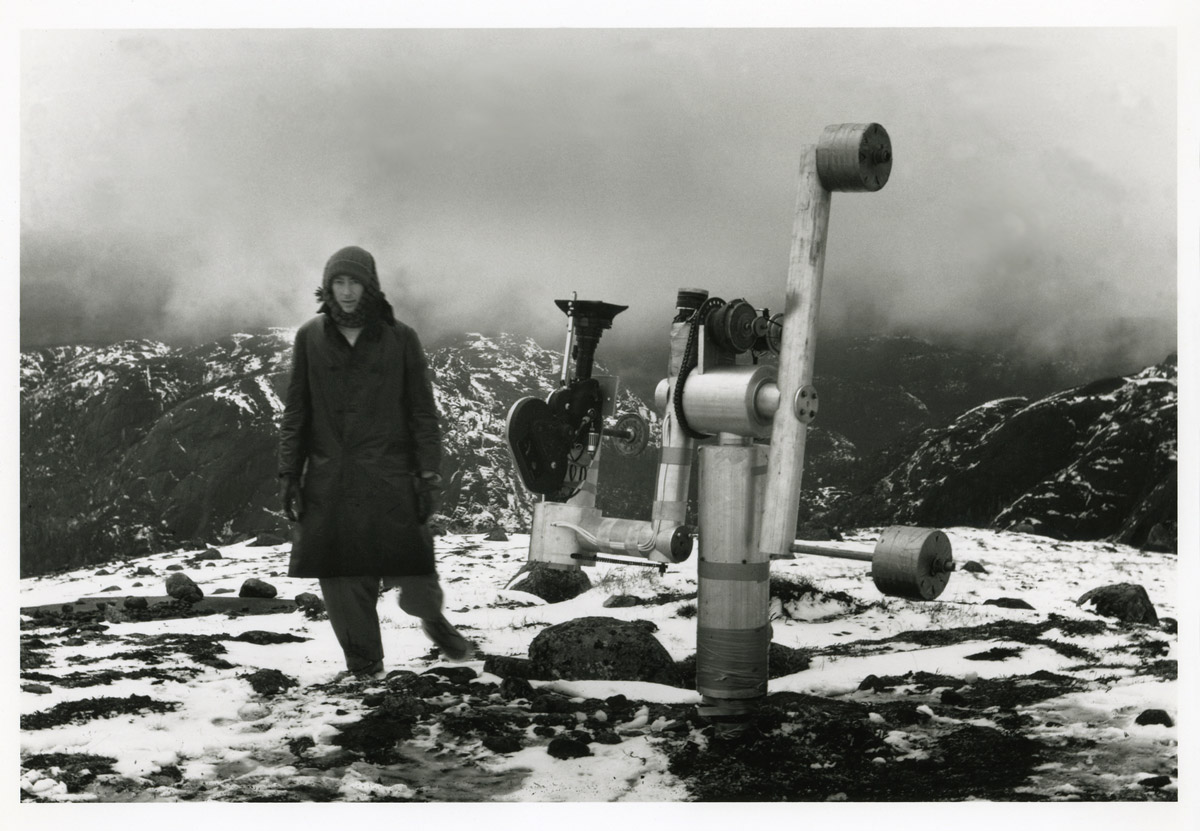
Michael Snow. 'La Région Centrale' 1971 (still)


Michael Snow (Canadian, 1928-2023)
La Région Centrale (still)
1971
16mm film transferred to DVD (blackbox projection), black-and-white, sound
191 min.
Courtesy of the artist


Michael Snow CC RCA (born December 10, 1928) was a Canadian artist working in a range of media including film, installation, sculpture, photography, and music. His best-known films are Wavelength (1967) and La Région Centrale (1971), with the former regarded as a milestone in avant-garde cinema.


Robert Kinmont (American, b. 1937) '8 Natural Handstands' 1969/2009


Robert Kinmont (American, b. 1937)
8 Natural Handstands
1969/2009
Nine gelatine silver prints
Size: each 21.5 x 21.5cm
Courtesy of Alexander and Bonin, New York


Utilising an amateur and handmade approach to both photography and sculpture, Kinmont illustrates the human scale and its relationship to one’s surroundings. Incorporating both irony and humor his work explores the systems and structures that continue to develop within this relationship.


Robert Kinmont (American, b. 1937) '8 Natural Handstands' 1969/2009 (detail)


Robert Kinmont (American, b. 1937)
8 Natural Handstands (detail)
1969/2009
Nine gelatine silver prints
Size: each 21.5 x 21.5cm
Courtesy of Alexander and Bonin, New York


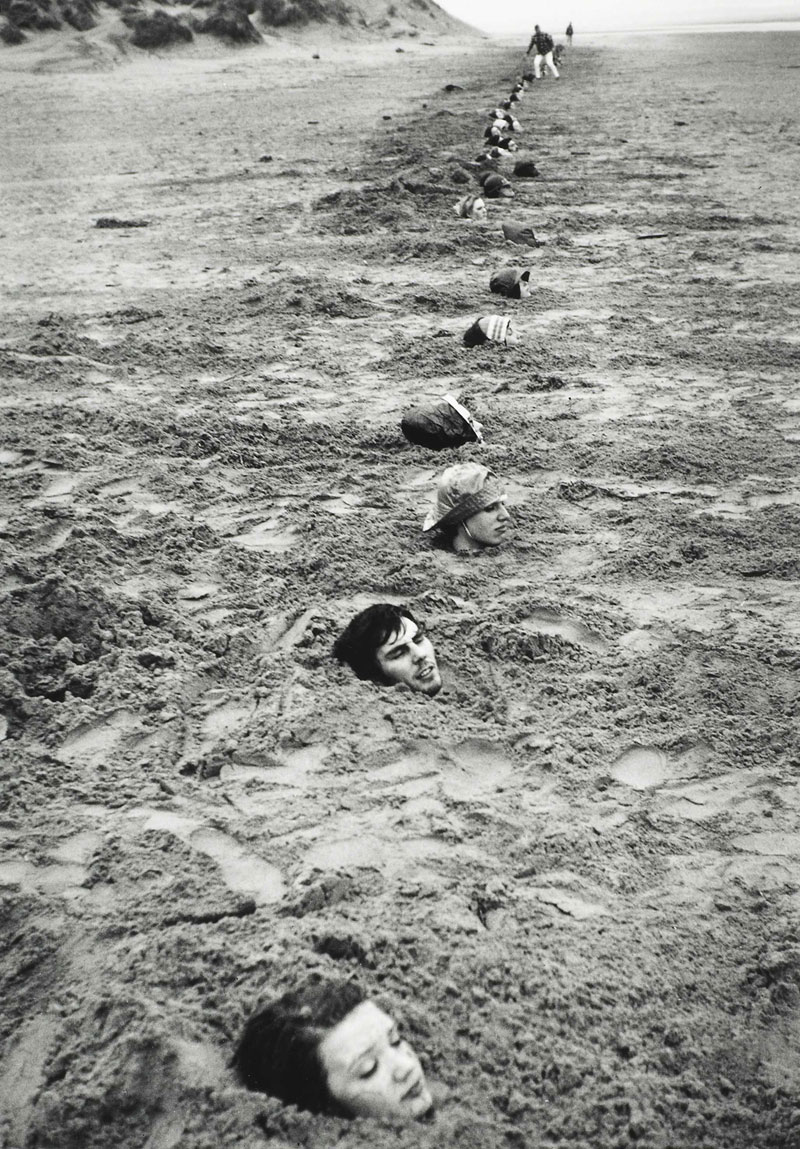
Keith Arnatt (British, 1930-2008) 'Liverpool Beach Burial' 1968


Keith Arnatt (British, 1930-2008)
Liverpool Beach Burial
1968
Gelatin silver print
Size: 40.6 x 50.8cm
Courtesy of the Keith Arnatt Estate and Maureen Paley, London


Liverpool Beach Burial, which the artist described as a “situational sculpture,” was realised by Arnatt with his students at the Manchester College of Art. It was first exhibited in Konzeption – Conception: Dokumentation einer heutigen Kunstrichtung / Documentation of Today’s Art Tendency at the Städtisches Museum, Leverkusen, Germany, in 1969. The artist recorded instructions for its making: “(1) Choosing a site and marking out a straight line. (2) Marking off 4-foot intervals. Each mark representing a digging position for each of the hundred-plus participants. (3) Each participant chose a site on the line and dug his / her own hole. (4) When the holes were deep enough the participants were ‘buried’ by nonparticipants.” (Lucy R. Lippard, Six Years: The Dematerialization of the Art Object from 1966 to 1972, Berkeley and Los Angeles: University of California Press, 1997, p. 50).


As the first major museum exhibition on Land Art, Ends of the Earth provides the most comprehensive historical overview of this art movement to date. Land Art used the earth as its material and the land as its medium, thereby creating works beyond the familiar spatial framework of the art system. The time period covered in Ends of the Earth spans the 1960s to 1974, when, in the context of Land Art, movements such as Conceptual Art, Minimal Art, Happenings, Performance Art, and Arte povera, became more distinct and began to diverge.

The nearly 200 works by more than 100 artists from Australia, Brazil, Canada, Germany, Great Britain, Iceland, Israel, Japan, the Netherlands, the Philippines and Switzerland demonstrate that Land Art was not a predominantly North American phenomenon. The exhibition presents works that are less well known than the canonical works Spiral Jetty, Lightning Field and Double Negative, thereby creating a shift in perspective. By including works of the then participating artists, the show refers to the earlier and pioneering exhibitions Earthworks and Earth Art (New York, 1968 and 1969). Michael Heizer and Walter De Maria are interested in realisations in outside and lend the mediated part within an exhibition only secondary importance. They are, therefore, not included in this presentation.

Even before the emergence of the movement in the 1960s, artists from the most varied locations around the globe were increasingly moved to claim the earth and use land as an artistic medium. In a basic sense, this also included the examination of the nature of the earth as a planet. Yves Klein, for instance, wondered what the earth looked like from space. In 1961, he transformed his vision that the dominant colour from this perspective would be blue, and that all man-made boundaries could be overcome with this colour, into his series Planetary Reliefs.

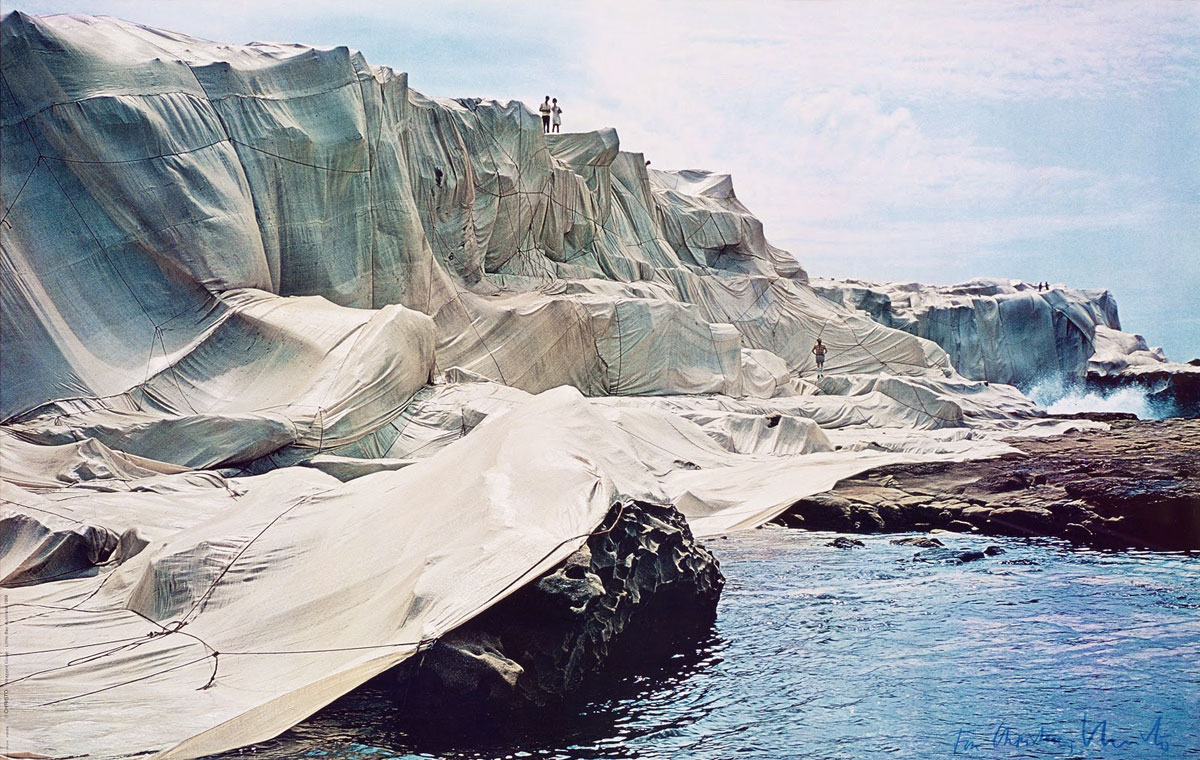
Land Art artists often worked under the open sky, making productive use of the fact that the great outdoors posed other conditions for a work’s lifespan than enclosed spaces did. Some works only existed for the short time of their creation, like Judy Chicago’s ephemeral works consisting of coloured flames and smoke, which served as references to religious ceremonies and the landscape as a deity. For ten weeks, the cliffs along Little Bay, Sydney, were packed in synthetic fabric and rope for Christo and Jeanne-Claude’s Wrapped Coast – One Million Square Feet, which, like many other works of Land Art, was enormous in scale. Another famous work of similar proportions was Spiral Jetty by Robert Smithson; on the Great Salt Lake in Utah, USA, the artist built a 1,500-foot long spiral-shaped jetty made of material found on site.

Land Art artists were fascinated by remote locations like deserts. Hreinn Fridfinnsson constructed a house on an uninhabited lava field near Reykjavik. The inside was made of corrugated sheet metal and the outside was covered in wall paper, because, as wall paper is intended to please the eye, “it is reasonable to have it on the outside, where more people can enjoy it.” Some artists transported the conditions of specific places into exhibition spaces: The Japanese artist group “i” moved four truckloads of gravel on a conveyor belt into an exhibition space and arranged it into a pile there. Alice Aycock fills a minimalistic grid with wet clay. This work will be recreated for the exhibition in Haus der Kunst; the clay will dry out during the run of the exhibition, will crack and gradually come to resemble the land in California’s Death Valley (Clay #2, 1971 / 2012). With Hog Pasture: Survival Piece #1 (1970-1971 / 2012), not only will new material – in this case a green pasture – make on selected occasions its way into the museum but a live domestic pig as well, which will pasture on the meadow from time to time.

From the earliest days of the movement, collectors, patrons, art dealers, and curators also explored sensitively which works of Land Art could be exhibited in museums and galleries, and how this should be done. In their own way, they helped establish Land Art as a legitimate artistic genre. In the case of Robert Smithson’s Spiral Jetty an art dealer helped funding the production of an accompanying film, and the work was executed in three equally valid versions: as the site-specific headland, as an eponymous essay and as a film.

In general, language, film, and photography played a central role in Land Art’s creation and development. Land Art artists and members of the media established close connections to one another. Magazines and television stations commissioned art works and were the first to publish these. Now legendary is Gerry Schum’s Fernsehgalerie, which was the first exhibition created for television and was broadcast by Sender Freies Berlin on 15 April 1969. For eight consecutive days in October of that same year, the WDR television network interrupted its regularly scheduled programs, at 8.15 pm and 9.15 pm, for a few seconds and presented the eight photographs of Keith Arnatt’s Self-Burial, which depicted the artist gradually sinking into the ground. The television station refrained from accompanying this with an introduction or commentary.

Following the presentation of Tinguely’s self-destructing sculpture Hommage à New York, the NBC television network commissioned the artist to create a work. In collaboration with Niki de Saint-Phalle, Tinguely made a large-scale kinetic sculpture out of waste material he had found in and around Las Vegas. The work was used in choreographed explosions that took place south-west of Las Vegas near a nuclear test site. Tinguely’s spectacle was presented in the same newscast as was a major report about the international nuclear talks, which took place that same week.

Many other works touched on the subject of “this tortured earth”, as Isamu Noguchi described it. Land Art artists examined the wounds and scars that humans inflict on the planet earth, whether by the war machinery (Robert Barry, Isamu Noguchi), dictatorships (Artur Barrio), nuclear testing (Heinz Mack, Jean Tinguely, Adrian Piper) or colonisation (Yitzhak Danziger). The media’s intensive coverage of Land Art activities led to unusual and complex contributions. Receptive to Land Art’s demand for a sensitive consciousness regarding the conditions of production, presentation and dissemination of art, they also gave expression to the technological, social and political conditions of the time.

Organised in collaboration with the Museum of Contemporary Art in Los Angeles.

Press release from the Haus der Kunst website


Charles Eames (American, 1907-1978)
Ray Eames 
(American, 1912-1988)
Powers of Ten
1977
© 1977 EAMES OFFICE LLC


Powers of Ten takes us on an adventure in magnitudes. Starting at a picnic by the lakeside in Chicago, this famous film transports us to the outer edges of the universe. Every ten seconds we view the starting point from ten times farther out until our own galaxy is visible only a s a speck of light among many others. Returning to Earth with breathtaking speed, we move inward – into the hand of the sleeping picnicker – with ten times more magnification every ten seconds. Our journey ends inside a proton of a carbon atom within a DNA molecule in a white blood cell.

This film was inspired by the 1957 book Cosmic View by Kees Boeke as well as by architect Eliel Saarinen’s statements about scale. It opens with an overhead shot of a man and a woman lying on a picnic blanket in a park in Chicago. In an effort to depict the scale of the couple, the planet Earth, and the galaxy relative to one another and to that of the universe, the camera zooms out at a distance of a factor of ten every two seconds, until the galaxy is seen as merely a speck of light among many others. The camera then zooms back in, with ten times the magnification every ten seconds, focusing in the end on the proton of an atom.


Charles Simonds (American, b. 1945) 'BodyEarth' 1974 (still)


Charles Simonds (American, b. 1945)
Body<—>Earth (still)
1974
16mm film transferred to DVD, colour
3 min.
Collection of the artist


Les Levine (American, b. 1935) 'Systems Burnoff X Residual Software' 1969/2012


Les Levine (American, b. 1935)
Systems Burnoff X Residual Software
1969/2012
Installation recreation 1,000 copies of 31 photographs (31,000 photographs total) taken by Levine at the March 1969 opening of EARTH ART exhibition in Ithaca, New York
Jello and chewing gum
Courtesy of the artist


Christo (Bulgaria, 1935-2020) and Jeanne-Claude (Bulgaria, 1935-2009) 'Wrapped Coast - One Million Square Feet' 1968-69


Christo (Bulgaria, 1935-2020) and Jeanne-Claude (Bulgaria, 1935-2009)
Wrapped Coast – One Million Square Feet
1968-1969
Collages, photographs, model, film
Collection of the artist


The largest single artwork ever made, Wrapped Coast was mounted in Little Bay, Sydney, Australia, on October 28, 1969, and remained on view for ten weeks. Christo and Jeanne-Claude, with the assistance of 125 students, teachers, professional climbers, and workers and under the supervision of Major Ninian Melville, retired from the Army Corps of Engineers, wrapped approximately one and a half miles of coast, including cliffs up to 85 feet high, using synthetic fabric and rope. This was the first work in the series of Kaldor Public Art Projects initiated by Australian collector John Kaldor. The project was financed by the sale of Christo’s preparatory drawings, collages, models, and lithographs. In the end, all materials used were removed from the bay and recycled. ABC Australia filmed a documentary of the project.


Peter Hutchinson (British, b. 1930) 'Paricutin Project' 1971


Peter Hutchinson (British, b. 1930)
Paricutin Project
1971
Photo and ink on cardboard and moulded bread in object-frame
40 x 55cm
Courtesy Galerie Bugdahn und Kaimer, Düsseldorf


Peter Arthur Hutchinson (born 1930) is a British-born artist living in the United States. Hutchinson is one of the pioneers of the Land Art movement.

The Paricutin Project was first shown in 1969 at John Gibson Gallery in New York as a model illustrating Hutchinson’s conception of an action to take place on Mt. Paricutin, a volcano in Michoacán, Mexico. A year later, Time magazine funded Hutchinson’s trip to the site to make the work in exchange for exclusive rights to publish the photographs. In an attempt to produce life in a place generally thought of as lifeless, the artist laid 450 pounds of bread crumbs in a line approximately 250 feet long around the rim of the volcano. Mould appeared after six days, in part because of the heat and steam rising from the earth. Two photographs of the project were published in the June 29, 1970, issue of Time. Later that same year, large-scale photographs of the work, along with text describing the trip, were shown at John Gibson Gallery.


Patricia Johanson (American, b. 1940) 'Stephen Long' 1968 (still)


Patricia Johanson (American, b. 1940)
Stephen Long (still)
1968
CBSTV 1968; edited by Joanna Alexander, WNET TV, New York, 1971
16mm film transferred to DVD, colour, sound
5 min.
Courtesy of the artist


Interested in the physical limitations of sight and in measuring how far the eye can see, Johanson created this 1,600-foot-long by 2-foot-wide sculpture made of plywood planks painted with yellow, red, and blue bands. Sited on a portion of the defunct Boston & Maine Railroad tracks from Buskirk, New York, to Bennington, Vermont, the work is named after Stephen Long, a military officer who became a railroad surveyor and engineer. Both the location of the work and its title emphasise the impact of rail transportation on modern perceptions and experience of the landscape. The work gained considerable local media attention, and John Lindsay, Mayor of New York, invited Johanson to permanently install the piece in the mall at Central Park. As the available space was only 1,300 feet long, the artist, unwilling to alter the work’s length, declined the invitation.


Kristjan Gudmundsson. 'Painting of the specific gravity of the planet Earth' 1972-73


Kristjan Gudmundsson (Icelandic, b. 1941)
Painting of the specific gravity of the planet Earth
1972-1973
Acrylic on metal
Size: 25.4 x 25.4cm
Sólveig Magnúsdóttir, Reykjavik


Kristján’s art reflects both prevailing traditions in late 20th century western art in general, and the dominance of abstract and conceptual art in the post-war art of Iceland in particular. He has said, “I am trying to work within the field of tension that exists between nothing and something”.


Judy Chicago (American, b. 1939) 'Atmospheres: Duration Performances' 1967-74


Judy Chicago (American, b. 1939)
Atmospheres: Duration Performances
1967-1974
16mm film transferred to DVD, colour, sound
14:12 min.
Courtesy of the artist


Heinz Mack (German, b. 1931) 'Tele-Mack' 1968


Heinz Mack (German, b. 1931)
Tele-Mack
1968
16mm film transferred on DVD, colour, sound
24:35 min.
Production of Saarländischer Rundfunk, author Professor Heinz Mack
Courtesy of Kunst und Ausstellungshalle der Bundesrepublik Deutschland GmbH


A founding member of Group Zero – an artist collective established in Düsseldorf in 1958 – Mack drafted the final version of his manifesto for Sahara Project in 1959. It was first published in Zero magazine in 1961, and subsequently republished and translated from German into French, Dutch, and English in 1967 for Mackazin, the artist’s journal-catalogue. Sahara Project, made in homage to Yves Klein, proposes placing large-scale sculptural works in remote areas of the world’s deserts, like mirages to be encountered by anyone coming upon them. One such location was the Sahara Desert, which was the main testing site for French nuclear weaponry after 1958. In 1967 Mack went on an expedition to the Sahara with the German public television station Westdeutscher Rundfunk (WDR), which led to two televised presentations of the project the following year – one for WDR and the other for Saarländischer Rundfunk. The popular weekly German magazine Stern presented the project in a feature spread in 1977.


Haus der Kunst
Prinzregentenstraße 1
80538 Munich
Germany
Phone: +49 89 21127 113

Opening hours:
Monday | Wednesday | Friday | Saturday | Sunday 10am – 8pm
Thursday 10am -10pm
Tuesday closed

Haus der Kunst website

LIKE ART BLART ON FACEBOOK

Back to top

Exhibition: ‘Light Years: Conceptual Art and the Photograph, 1964-1977’ at the Art Institute of Chicago

Exhibition dates: 13th December 2011 – 11th March 2012


Many thankx to the Art Institute of Chicago for allowing me to publish the photographs in the posting. Please click on the photographs for a larger version of the image.


Marcel Broodthaers (Belgian, 1924-1976) 'Portrait of Maria Gilissen with Tripod' 1967


Marcel Broodthaers (Belgian, 1924-1976)
Portrait of Maria Gilissen with Tripod
1967
Gelatin silver emulsion on canvas with tripod
Approx. 66 x 43 x 24 inches


Mel Bochner (American, b. 1940) 'Surface Dis/Tension' 1968


Mel Bochner (American, b. 1940)
Surface Dis/Tension
1968
Gelatin silver print on aluminum mount
48 x 46″


John Baldessari (American, born 1931). 'The California Map Project Part I: California', 1969, exhibition copy 2011


John Baldessari (American, 1931-2020)
The California Map Project Part I: California
1969, exhibition copy 2011
Twelve inkjet prints of images and a typewritten sheet
Each image, 20.3 x 25.4cm (8 x 10 in); sheet, 21.6 x 27.9cm (8 1/2 x 11 in)
Courtesy of the artist and Marian Goodman Gallery, New York and Paris
© John Baldessari


Lothar Baumgarten (German, 1944-2018) 'The Origin of Table Manners' 1971


Lothar Baumgarten (German, 1944-2018)
The Origin of Table Manners
1971
Chromogenic print
45 x 57.5cm
Collection Sanders, Amsterdam


One of Baumgarten’s early works, The Origin of Table Manners is a wry illustration of the way in which colonial conquerors conflated Western notions of civility with notions of the civilised as part of their alibi for domination. Inspired by a text of the same name by the structuralist anthropologist Claude Levi-Strauss, the work consists of a table draped in a crisp, white tablecloth and set with fine china, with porcupine quills and the feathers of large birds standing in for silverware. When it was first shown, it was installed in a tony French restaurant near Baumgarten’s Paris gallery.

Chris Wiley. “Exhibition Review – Lothar Baumgarten at Marian Goodman Gallery” Nd on the Daylight Books website [Online] Cited 07/11/2024


Eleanor Antin (American, born 1935) '100 Boots' 1971-73


Eleanor Antin (American, b. 1935)
100 Boots
1971-1973
Fifty-one photolithographic postcards
Each 11.1 x 17.8cm (4 3/8 x 7 in)
The Art Institute of Chicago, Margaret Fisher Endowment
Courtesy Ronald Fedlman Fine Arts, New York, NY
© Eleanore Antin


Eleanor Antin (American, born 1935) '100 Boots' 1971-1973


Eleanor Antin (American, b. 1935)
100 Boots
1971-1973
Fifty-one photolithographic postcards
Each 11.1 x 17.8cm (4 3/8 x 7 in)
The Art Institute of Chicago, Margaret Fisher Endowment
Courtesy Ronald Fedlman Fine Arts, New York, NY
© Eleanore Antin


Ger van Elk (Dutch, b. 1941) 'The Rose more Beautiful than Art, but Difficult, therefore Art is Splendid' 1972


Ger van Elk (Dutch, b. 1941)
The Rose more Beautiful than Art, but Difficult, therefore Art is Splendid
1972
Slide projection, elven chromogenic slides projected onto watercolour in wooden frame
9 4/5 × 12 2/5 in | 25 × 31.5cm
Courtesy of the artist


John Baldessari (American, b. 1931) 'Throwing Three Balls in the Air to Get a Straight Line (Best of Thirty-Six Attempts)' 1973


John Baldessari (American, 1931-2020)
Throwing Three Balls in the Air to Get a Straight Line (Best of Thirty-Six Attempts)
1973
Portfolio of fourteen photolithographs
Each 24.7 x 32.7cm (9 11/16 x 12 7/8 in)
Museum of Contemporary Photography at Columbia College Chicago
© John Baldessari


Anselm Kiefer (German, b. 1945) 'Ausbrennen des Landkreises Buchen' (The Burning of the Rural District of Buchen) 1974


Anselm Kiefer (German, b. 1945)
Ausbrennen des Landkreises Buchen (The Burning of the Rural District of Buchen)
1974
Bound gelatin silver prints with ferric oxide and oil on woodchip paper
62 x 45cm
Hall colleciton


The 1960s and 1970s are recognised as the defining era of the Conceptual Art movement, a period in which centuries held assumptions about the nature of art itself were questioned and dissolved. Until now, the pivotal role that photography played in this movement has never been fully examined. The Art Institute of Chicago has organised the first major survey of influential artists of this period who used photography in ways that went far beyond its traditional definitions as a medium – and succeeded thereby in breaking down the boundaries of all mediums in contemporary art. Light Years: Conceptual Art and the Photograph, 1964-1977  on view December 13, 2011 through March 11, 2012 – is the first exhibition to explore how artists of this era used photography as a hybrid image field that navigated among painting and sculpture, film, and book arts as well as between fine art and the mass media. More than 140 works by 57 artists will fill the Art Institute’s Regenstein Hall in this major exhibition that will be seen only in Chicago.

Bringing to the fore work from the Italian group Arte Povera as well as artists from Eastern Europe who are rarely shown in the United States, Light Years also includes many pieces that have not been on public display in decades by such major artists as Mel Bochner, Tony Conrad, Michael Heizer, Gordon Matta-Clark, and Emilio Prini. To open the exhibition, the Art Institute has arranged a special outdoor screening of Andy Warhol’s Empire, an eight-hour film of the Empire State Building. In a first for the United States, Warhol’s Empire will be projected from the Modern Wing’s third floor to be seen on the exterior of the Aon Center on Friday, December 9.

The acceptance of photography as fine art was an evolutionary process. Early 20th-century avant-garde movements such as Dada, Surrealism, and Constructivism articulated a new set of standards for art in which photography played a major role. By the 1930s, modernist photography found a small but influential niche in museum exhibitions and the art market, and vernacular forms such as photojournalism and amateur snapshots became a source of artistic inspiration. Engagement with mass media, exemplified in Pop Art, became prominent in the 1950s. Yet only with the advent of Conceptual Art did artists with training in painting, sculpture, and the graphic arts begin to make and exhibit their own photographs or photographic works as fine art.

Some Conceptual artists, such as Bruce Nauman, Ed Ruscha, and Valie Export took up photography seriously only for a few key months or years; others, like Eleanor Antin, John Baldessari, Jan Dibbets, and Annette Messager have worked in photography their entire careers. Photography showed the way forward from Minimal Art, Pop Art, and other movements in painting and sculpture. But it came with its own set of questions that these artists addressed with tremendous innovation. Questions of perspective, sequence, scale, and captioning which have a rich history in photography, were answered in entirely new ways and made into central concerns for art in general.

Photography in these artists’ hands was the antithesis of a separate and definable “medium.” It became instead “unfixed”: photobooks, photolithographs, photo canvases, photo grids, slide and film pieces, and even single prints all counted as valid creative forms. The variety of work showcased in Light Years is crucial to conveying the greatest contribution of the Conceptual era: to turn contemporary art into a field without a medium.

Light Years showcases a great number of works that have not been seen together – or at all – since the years around 1970. Victor Burgin’s Photopath, a life-size print of a 60-foot stretch of flooring placed directly on top of the floor that it records, has not been shown in more than 20 years and never in the United States. Likewise being shown for the first time in the U.S. are pieces by Italian artists Gilberto Zorio, Emilio Prini, Giulio Paolini, and others associated with the classic postwar movement Arte Povera. Paolini’s early photo-canvas Young Man Looking At Lorenzo Lotto (1967), an icon of European conceptualism, has only rarely been shown at all after entering a private collection in the early 1970s. Mel Bochner’s Surface Dis/Tension: Blowup (1969) has not been seen since its presentation at Marian Goodman Gallery in the now legendary 1970 exhibition Artists and Photographs, from which no visual documentation survives. Equally rare and important early works by Laurie Anderson, Marcel Broodthaers, Francesco Clemente, Tony Conrad, Gilbert & George, Dan Graham, Michael Heizer, and many others make the show a revelation for those interested in key figures of new art in the 1960s and ’70s. A special emphasis is placed on artists from Hungary, a centre for photoconceptual activity that has long been overlooked in Western Europe and the United States.

Press release from the Art Institute of Chicago


Alighiero Boetti (Italian, 1940-1994) 'AW:AB =L:MD (Andy Warhol: Alighiero Boetti = Leonardo: Marcel Duchamp)' 1967


Alighiero Boetti (Italian, 1940-1994)
AW:AB =L:MD (Andy Warhol: Alighiero Boetti = Leonardo: Marcel Duchamp)
1967
Silk screen print with graphite on paper
58.8 x 58.8cm (23 5/16 x 23 5/16 in)
Colombo Collection, Milan
© Artists Rights Society (ARS)


Alighiero Boetti (Italian, 1940-1994) 'Twins (Gemelli)' September 1968


Alighiero Boetti (Italian, 1940-1994)
Twins (Gemelli)
September 1968
Gelatin silver postcard
15.2 x 11.2cm (6 x 4 3/8 in)
Private Collection
© Artists Rights Society (ARS)


Bruce Nauman (American, b. 1941) 'Light Trap for Henry Moore No. 1' 1967


Bruce Nauman (American, b. 1941)
Light Trap for Henry Moore No. 1
1967
Gelatin silver print
157.5 x 105.7cm (62 x 41 5/8 in)
Glenstone
© Artists Rights Society (ARS).


Dennis Oppenheim (American, 1938-2011) 'Stage 1 and 2. Reading Position for 2nd Degree Burn Long Island. N.Y. Material... Solar Energy. Skin Exposure Time. 5 Hours June 1970' 1970


Dennis Oppenheim (American, 1938-2011)
Stage 1 and 2. Reading Position for 2nd Degree Burn Long Island. N.Y. Material… Solar Energy.  Skin Exposure Time. 5 Hours June 1970
1970
Two chromogenic photographic prints, plastic labelling tape, mounted together on green board with graphite annotations
Overall: 81 x 66cm (31 7/8 x 26 in)
Top photo: 20.1 x 25.8cm
Bottom photo: 20.2 x 25.5cm
Image/text area: 41.8 x 25.8cm
Dorothy and Herbert Vogel Collection
© Dennis Oppenheim Estate


The Art Institute of Chicago
111 South Michigan Avenue
Chicago, Illinois 60603-6404
Phone: (312) 443-3600

Opening hours:
Thursday – Monday 11am – 5pm
Closed Tuesdays and Wednesdays

The Art Institute of Chicago website

LIKE ART BLART ON FACEBOOK

Back to top

Exhibition: ‘Line and Space. American Drawings and Sculpture since 1960, from a private collection’ at Pinakothek de Moderne, Munich

Exhibition dates: 28th July – 25th September 2011


Many thankx to the Pinakothek der Moderne for allowing me to publish the art work in the posting. Please click on the art work for a larger version of the image.


Barry Le Va (American, 1941-2021) 'Untitled' 1977


Barry Le Va (American, 1941-2021)
Untitled
1977
Pencil, ink and ballpoint on graph paper
Private collection
Photo: Arne Schultz
© Barry Le Va 2011


Sol LeWitt (American, 1928-2007) 'A2' 1967


Sol LeWitt (American, 1928-2007)
A2
1967
Painted steel
Private collection
Photo: Arne Schultz
© VG Bild-Kunst, Bonn 2011


Donald Judd (American, 1928-1994) 'Untitled' 1962


Donald Judd (American, 1928-1994)
Untitled
1962
Woodcut on paper, trial proof
Private collection
Photo: Arne Schultz
© Art Judd Foundation, Licensed by VAGA, NY / VG Bild-Kunst, Bonn 2011


Gordon Matta-Clark (American, 1943-1978) 'Untitled (cut drawing)' 1974


Gordon Matta-Clark (American, 1943-1978)
Untitled (cut drawing)
1974
Cuts in paper
Private collection
Photo: Arne Schultz
© VG Bild-Kunst, Bonn 2011


The exhibition, part of the AMERICAN SUMMER project, features the predominantly American holdings of drawings and sculptures from a private collection, with most of the works going on public display for the first time. What comes to the fore in this exemplary selection of largely American artists from the sixties and seventies and their impressive groups of works is the relationship between the media of sculpture and drawing. At the heart of the show lies the subtle dialogue between the conceptual ideas of ‘disegno’ and their sensual transfer to the materiality of sculpture.

One of the private collection’s particular strengths is its focus on groups of works by individual artists. As a result, entire rooms have been dedicated to the artists Fred Sandback and Barry Le Va, while in addition larger groups of works by other artists, including Donald Judd or Gordon Matta-Clark, can be studied in detail.

The selection of exhibits creates a display of the art movements of the sixties and seventies: among them, Minimal Art, as represented by Carl Andre, Bill Bollinger, Donald Judd, Dan Flavin and Fred Sandback, Post-minimalism of Barry Le Va or Keith Sonnier, Conceptual Art, as represented by Sol LeWitt, and Land Art of such artists as Michael Heizer and Walter de Maria. The exhibition is enriched with works from the Staatliche Graphische Sammlung München and the Sammlung Moderne Kunst.

A fully illustrated catalogue accompanies the exhibition: Der Raum der Linie – Amerikanische Zeichnungen und Skulpturen, edited by Michael Semff, Corinna Thierolf and Alexander Klar, with assistance from Pia Gottschaller and Birgitta Heid (containing essays from Jörg Daur, Pia Gottschaller, Birgitta Heid, Christiane Meyer-Stoll, Michael Semff, a conversation with Peter Soriano and an interview with the collector).

Press release from the Pinakothek de Moderne


Barry Le Va (American, 1941-2021) 'Bearings Rolled' 1966


Barry Le Va (American, 1941-2021)
Bearings Rolled
1966
Ink on paper
Sheet from a series of 15 drawings
Private collection
Photo: Arne Schultz
© Barry Le Va 2011


Fred Sandback (American, 1943-2003) 'Untitled (Milanese Drawing)' c. 1971/72


Fred Sandback (American, 1943-2003)
Untitled (Milanese Drawing)
c. 1971/1972
Chalk on paper
Private collection
Photo: Arne Schultz
© Fred Sandback Archive 2011


Dan Flavin (American, 1933-1996) 'from August 5, 1964' 1966


Dan Flavin (American, 1933-1996)
from August 5, 1964
1966
Crayon on black paper
Private collection
Photo: Arne Schultz
© Estate of Dan Flavin / VG Bild-Kunst, Bonn 2011


Sol LeWitt (American, 1928-2007) 'Incomplete open cube drawing - ten & eleven part variations' undated (c. 1973/74)


Sol LeWitt (American, 1928-2007)
Incomplete open cube drawing – ten & eleven part variations
Undated (c. 1973/1974)
Pencil and ink on paper
Private collection
Photo: Staatliche Graphische Sammlung München
© VG Bild-Kunst, Bonn 2011


Robert Mangold (American, b. 1937) '104" Perimeter Series' 1969


Robert Mangold (American, b. 1937)
104″ Perimeter Series
1969
Pencil on paper
Private Collection
Photo: Arne Schultz
© VG Bild-Kunst, Bonn 2011


Pinakothek Der Moderne
Barer Strasse 40
Munich

Gallery Hours:
Daily except Monday 10am – 6pm
Thursday 10am – 8pm

Pinakothek der Moderne website

LIKE ART BLART ON FACEBOOK

Back to top

Exhibition: ‘Miroslav Tichý’ at Michael Hoppen Gallery, London

Exhibition dates: 28th April – 29th May 2010


A camera of Miroslav Tichy from the exhibition Exhibition: 'Miroslav Tichý' at Michael Hoppen Gallery, London, April - May, 2010


A camera of Miroslav Tichý


These are fascinating photographs (and in part, more than a little what? marginal, disturbing, poetic, beautiful, creepy, voyeuristic, misogynist).

Tichy’s camera is such an amazing construction (click on the image above to see a larger version).

Dr Marcus Bunyan


Many thankx to Jim Edwards and the Michael Hoppen Gallery for allowing me to publish the photographs in the posting.


“Women are just a motif to me. The figure – standing, bending, or sitting. The movement, walking. Nothing else Interests me. The erotic is just a dream anyway. The world is only an illusion, our illusion.”

“Everything is decided by the earth, which is turning. You can only live as long as the earth keeps turning. That is predetermined.

.
Miroslav Tichý


Miroslav Tichý (Czech, 1926-2011) 'Untitled' c. 1960s from the exhibition Exhibition: 'Miroslav Tichý' at Michael Hoppen Gallery, London, April - May, 2010


Miroslav Tichý (Czech, 1926-2011)
Untitled
c. 1960s
Unique Silver gelatin print
Courtesy Michael Hoppen Gallery
© Miroslav Tichy


Miroslav Tichý (Czech, 1926-2011) 'Untitled' c. 1960s from the exhibition Exhibition: 'Miroslav Tichý' at Michael Hoppen Gallery, London, April - May, 2010


Miroslav Tichý (Czech, 1926-2011)
Untitled
c. 1960s
Unique Silver gelatin print
Courtesy Michael Hoppen Gallery
© Miroslav Tichy


Miroslav Tichý (Czech, 1926-2011) 'Untitled' c. 1960s


Miroslav Tichý (Czech, 1926-2011)
Untitled
c. 1960s
Unique Silver gelatin print
Courtesy Michael Hoppen Gallery
© Miroslav Tichy


The recently unknown photographic work of Czech artist Miroslav Tichý has become a noteworthy presence in the worlds of photography and contemporary art over the last few years. Timeless and uncategorisable, Tichý’s work captures the women of Kijov, from the artist’s native city in Moravia. On 28 April 2010, the Michael Hoppen Gallery will bring together unique photographs, previously unseen in the UK, created in the 1960’s by Tichý with his makeshift cameras and enlargers.

Marginal and exceptionally voyeuristic, in his methods Tichý could be described as an “art brut photographer” yet he is marked by many classical influences. Though his images are produced with poor-quality equipment and carelessly shot, they offer an idiosyncratic and almost hallucinatory vision of a fantastical, eroticised reality. With his endless return to the same subject and the volume and regularity of his production, Tichý’s work draws many parallels to certain practices of conceptual art during the same period.

For thirty years Tichý took up to one hundred photographs each day, pursuing his artistic obsession with the female form. Dressed in rags and using a homemade camera, Tichy captured the universe of the people in the small town of Brno in the Czech Republic. This discovery of photography saved him from madness and the claustrophobia of political dictatorship. Though his work today is widely exhibited, Tichý worked for years as an unknown artist in complete isolation on the periphery of the art world.

A student at the Academy of Arts in Prague, Tichý left following the communist overthrow of 1948. Unwilling to subordinate to the political system he spent some eight years in prison and psychiatric wards for no reason, other than he was ‘different’ and considered subversive. Upon his release he became an outsider, occupying his time by obsessively taking photographs of the women of his home town, using homemade cameras constructed from tin cans, children’s spectacle lenses, rubber bands, scotch tape and other junk found on the streets.

He captured images of their ankles, faces and torsos whilst out strolling or sunbathing, shop-girls behind the counter, mothers pushing prams, and any others who caught his eye, sometimes finding himself in trouble with the police. These small objects of obsession, which might appear to the casual viewer to be simply voyeurism, are simultaneously melancholic and poetic.

Tichý’s work surfaced in July 2005, when he won the ‘New Discovery Award’ at Arles. Within a year he had already been featured in two solo museum exhibitions, at the Wintertaur in Zurich and the Rudolfinum, Prague, and his work has been purchased by the Victoria & Albert Museum here in London. Tichý has now exhibited in museums from Holland to Canada, Finland to Ireland and Tokyo. In 2009, a seminal show was held at the Centre Pompidou in Paris where it received rave reviews. Since then, Tichý’s work has recently been on show at ICP in New York where The New York Times reviewed his work as … ‘intensely fascinating’. American artist Richard Prince wrote an essay for the catalogue. In his signature smart-aleck, red-blooded-male persona, Prince links Tichý to Bettie Page, Swanson’s TV dinners and the short stories of John Cheever.
 Tichý’s work will also appear at Tate Modern later this year as part of their Voyerism, Surveillance and Camera exhibition in May 2010.

Press release from the Michael Hoppen Gallery website [Online] Cited 21/05/2010 no longer available online


Miroslav Tichý (Czech, 1926-2011) 'Untitled' c. 1960s


Miroslav Tichý (Czech, 1926-2011)
Untitled
c. 1960s
Unique Silver gelatin print
Courtesy Michael Hoppen Gallery
© Miroslav Tichy


Miroslav Tichý (Czech, 1926-2011) 'Untitled' c. 1960s


Miroslav Tichý (Czech, 1926-2011)
Untitled
c. 1960s
Unique Silver gelatin print
Courtesy Michael Hoppen Gallery
© Miroslav Tichy


Miroslav Tichý (Czech, 1926-2011) 'Untitled' c. 1960s


Miroslav Tichý (Czech, 1926-2011)
Untitled
c. 1960s
Unique Silver gelatin print
Courtesy Michael Hoppen Gallery
© Miroslav Tichy


Miroslav Tichý

Miroslav Tichý (Czech, November 20, 1926 – April 12, 2011) was a photographer who from the 1960s until 1985 took thousands of surreptitious pictures of women in his hometown of Kyjov in the Czech Republic, using homemade cameras constructed of cardboard tubes, tin cans and other at-hand materials. Most of his subjects were unaware that they were being photographed. A few struck beauty-pageant poses when they sighted Tichý, perhaps not realising that the parody of a camera he carried was real.

His soft focus, fleeting glimpses of the women of Kyjov are skewed, spotted and badly printed – flawed by the limitations of his primitive equipment and a series of deliberate processing mistakes meant to add poetic imperfections. Of his technical methods, Tichý has said, “First of all, you have to have a bad camera”, and, “If you want to be famous, you must do something more badly than anybody in the entire world.”

During the Communist regime in Czechoslovakia, Tichý was considered a dissident and was badly treated by the government. His photographs remained largely unknown until an exhibition was held for him in 2004. Tichý did not attend exhibitions, and lived a life of self-sufficiency and freedom from the standards of society. Tichý died on April 12, 2011 in Kyjov, Czech Republic. …

An essay in Artforum International describes Tichý as “practically reinventing photography from scratch”, rehabilitating the soft focus, manipulated pictorial photography of the late 1800s,

“… not as a distortion of the medium but as something like its essence. What counts for him is not only the image – just one moment in the photographic process – but also the chemical activity of the materials, which is never entirely stable or complete, and the delimitation of the results via cropping and framing.”

Director Radek Horacek of the Brno House of Art, which held an exhibition of Tichý’s photographs in 2006, describes them thus:

“They are all very careful observations of women from Kyjov and of everyday trivial activities. But soon you realise that these trivial situations such as someone sitting on a bench, women waiting for a bus, someone taking a T-shirt off at a swimming pool, are somehow extraordinary. Tichý managed to give this banality a feeling of exceptionality and rarity. Just part of a female body in his pictures can look very esoteric. There are so many magazines that offer much more nudity than Tichý but his photographs are different. A woman’s tights between a knee and a skirt or a swimming costume in his pictures look somehow mysterious.”

Text from the Wikipedia website


Miroslav Tichy – “Tarzan Retired”


Miroslav Tichý (Czech, 1926-2011) 'Untitled' c. 1960s


Miroslav Tichý (Czech, 1926-2011)
Untitled
c. 1960s
Unique Silver gelatin print
Courtesy Michael Hoppen Gallery
© Miroslav Tichy


Miroslav Tichý (Czech, 1926-2011) 'Untitled' c. 1960s


Miroslav Tichý (Czech, 1926-2011)
Untitled
c. 1960s
Unique Silver gelatin print
Courtesy Michael Hoppen Gallery
© Miroslav Tichy


Miroslav Tichý (Czech, 1926-2011) 'Untitled' c. 1960s


Miroslav Tichý (Czech, 1926-2011)
Untitled
c. 1960s
Unique Silver gelatin print
Courtesy Michael Hoppen Gallery
© Miroslav Tichy


Miroslav Tichý (Czech, 1926-2011) 'Untitled' c. 1960s


Miroslav Tichý (Czech, 1926-2011)
Untitled
c. 1960s
Unique Silver gelatin print
Courtesy Michael Hoppen Gallery
© Miroslav Tichy


Michael Hoppen Gallery
Unit 10, Pall Mall Deposit
124-128 Barlby Road
London W10 6BL
Phone: +44 (0)20 7352 3649

Opening hours:
By appointment only Monday – Friday 9.30am – 6.00pm

Michael Hoppen Gallery website

LIKE ART BLART ON FACEBOOK

Back to top

Exhibition: ‘Utopia: Qiu Anxiong’ at Arken Museum of Modern Art, Denmark

Exhibition dates: 6th February – 22nd November, 2009


Qui Anxiong (Chinese, b. 1972) 'Staring into Amnesia' 2008 (detail)


Qui Anxiong (Chinese, b. 1972)
Staring into Amnesia (detail)
2008


A dream has come true. ARKEN has opened the first of three contemporary art exhibitions under the heading UTOPIA.

The first UTOPIA artist is Chinese Qiu Anxiong (b. 1972). His work Staring into Amnesia (2008), an enormous original Chinese train carriage from the 1960s, is the principal work in ARKEN’s exhibition. Documentary video clips and poetic silhouettes have been added to the carriage taking us on a journey into China’s past, present and future.

In recent years Qiu Anxiong has received great international attention with his poetic and moving video works which span from big and complex installations to hand painted animated films. The exhibition is the first presentation of Qiu Anxiong’s works in Denmark.

Utopia and dystopia

Qiu Anxiong belongs to a new generation of Chinese artists who bridge Chinese culture and history and today’s globalised contemporary art. Cultures arise and perish, and the yearning for the perfect society is closely followed by the utopia’s antithesis: an oppressed, conflicted dystopia. In a poetic and sensual idiom Qiu Anxiong raises the issue of which new utopias may provide the clue for today’s globalised reality.

Text from the Arken Musem of Modern Art website


ARKEN Museum of Modern Art

Chinese artist Qiu Anxiong talks about his work Staring into Amnesia – the main part of ARKEN’s UTOPIA – exhibition.


Qui Anxiong (Chinese, b. 1972) 'Staring into Amnesia' 2008 (detail)


Qui Anxiong (Chinese, b. 1972)
Staring into Amnesia (detail)
2008


Qui Anxiong (Chinese, b. 1972) 'Staring into Amnesia' 2008 (detail)


Qui Anxiong (Chinese, b. 1972)
Staring into Amnesia (detail)
2008


A 25 metres long, 42 tons heavy Chinese train carriage stops in Arken Museum of Modern Art‘s unique exhibition space The Art Axis, ready to take the museum’s visitors on a journey unlike any other. A journey into China’s past, presence and future. Into deliberations of the good life and the good society. Of the dreams we have today – for ourselves and for the world.

In the 1960s and ’70s it ran in northeastern China. Ordinary Chinese people sat on the hard wooden seats and were transported to and from work, on family visits, tours and holidays. Now it stops in ARKEN’s Art Axis with the purpose of making Danish museum visitors think about the dreams and values that drive them and the world they live in.

The train carriage is the principal work of the first exhibition in the museum’s large-scale UTOPIA project. A project that is to raise the issue of the grand shared notion of the perfect society. Whatever happened to it? Does it still exist today? Have the international financial crisis and the American presidential election made it more topical? And if it does not exist, what has taken its place? Individual dreams of the good life, notions of globalisation, small enclaves of communities?

Opening on 6 February 2009, the UTOPIA exhibition is the first of three exhibitions of contemporary art shown in ARKEN’s Art Axis in the period 2009-2011 – one per year. Each exhibition presents a significant, international contemporary artist who explores art’s potential with regards to the notions of “the good life.” The first artist is the Chinese Qui Anxiong (b. 1972).

Qui Anxiong gave the train carriage an artistic makeover after it had ended its career as a means of public transportation, transforming it into the work Staring into Amnesia (2007). A work of art which invites us on a journey even though the carriage is motionless. A journey into China’s past, presence and future. For when the guests come aboard the train and sit down on the hard wooden seats, they journey through China’s history. Video clips of documentary and propaganda films from China from 1910 until today pass by the windows as fragments of memories alternating with silhouettes of everyday scenes: a girl waiting by a ventilator, two people playing chess, groups of people in processions, riots, struggles or celebration. What has been is juxtaposed with what is. And with the train as metaphor for movement in time, it raises the question of which destinations await us up ahead. Is the next stop Utopia? What do we hope will come, what do we dream of?

6,000 drawings – one movie – Staring into Amnesia is the chief work of the UTOPIA exhibition. It explores how humankind’s endeavours to create the perfect society through political and religious overall solutions, both historically and today, often result in the utopia’s antithesis: an oppressed, conflicted dystopia.

Another work in the exhibition is the animated film The New Book of Mountains and Seas (2006). The film consists of 6,000 drawings created by Qiu Anxiong in his small one bedroom apartment in Shanghai. It presents us with a mythologised version of the world today in which modern technology and nature merge: helicopters hover in the air like big birds, and black clad people fly like planes, crashing the Twin Towers in a drawn version of 9/11. In a poetic and dreamlike idiom, sharply contrasting with the depicted reality, the work explores the themes of religious and political conflicts characterising the global reality of our time. UTOPIA is supported by the Nordea Foundation.
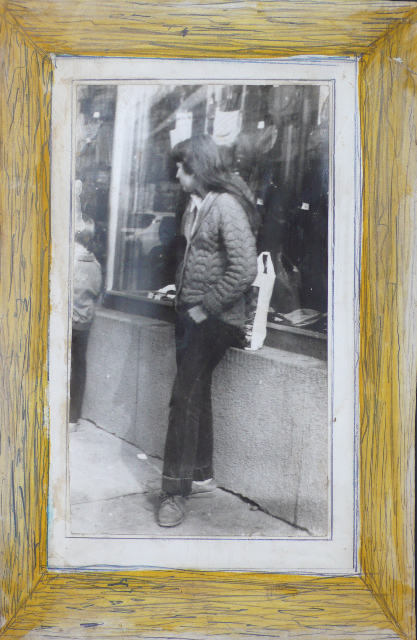
Text from the Artdaily.org website


Qui Anxiong (Chinese, b. 1972) 'Staring into Amnesia' 2008


Qui Anxiong (Chinese, b. 1972)
Staring into Amnesia
2008


Images courtesy of Boers-Li Gallery and ArtShortCut

Arken Museum of Modern Art
Skovvej 100, 2635 Ishøj
Phone: +45 43 54 02 22

Opening hours:
Tuesday – Sunday: 10am – 5pm
Monday: Closed

Arken Museum of Modern Art website

LIKE ART BLART ON FACEBOOK

Back to top

Opening: ‘Andreas Gursky’ at the National Gallery of Victoria International, Melbourne

Exhibition dates: 21st November, 2008 – 22nd February, 2009

Opening: Thursday 21st November 2008


Andreas Gursky banner at NGV International exhibition, Melbourne


Andreas Gursky banner at NGV International exhibition, Melbourne


A large but plain crowd assembled for the opening of the first exhibition by world renowned German photographer Andreas Gursky at the National Gallery of Victoria in St Kilda Road, Melbourne. After some lively conversation with friends and following the opening speeches we wandered into a large clean gallery space with minimal design elements. The use of space within the gallery allowed the work to speak for itself. It is a minimal hang and the exhibition works all the better for this.

As for the work itself 21 large photographs are presented ranging from landscapes to buildings, race tracks to formula 1 pits, Madonna concerts to the Tour de France. Most work successfully in building a hyperreal vision of the world. We are not sure what is ‘real’ or hyperreal, what is a straight photograph or what has been digitally manipulated and woven together. The colour and sharpness of the images is often intensified: in reproductions of the famous photograph of the 99c supermarket in America the colours seem flat but ‘in the flesh’ the colours are almost fluoro in their saturation and brightness.

Having said that the photographs are nearly always unemotional – as though seen from above in the third person, they observe with detachment. The intrigue for the viewer is in the detail, in working out what is going on, but these are not passionate photographs on the surface. It is beneath the surface that the photographs have their psychological effect: the best of the images work on the subconscious of the viewer. Like a fantastical dance the three very wide images of the Formula 1 pits feature pit crews practicing tyre changes, frozen in a choreographed ballet. People in the galleries above stare down; pit lane girls seem to have been inserted digitally into the images, standing at side or behind the pit crews in a seemingly surreal comment on these worlds. These are theatrical tableaux vivant, splashed with teams colours. Fantastic photographs.

In some of the images, such as the Madonna concert or the photograph of the Bahrain Formula 1 racetrack, space seems to have folded in on itself and the viewer is unsure of the structure of the image and of their vantage point in looking at them. Space also collapses in the photograph of the pyramid of Cheops (2006, below), where the depth of field from foreground to background of the image is negligible. Less successful are images of a Jackson Pollock painting and a green grass bank with running river (Rhein II 1996, below), intensified beyond belief so that the river seems almost to be made of liquid silver.

A wonderful exhibition in many aspects, well worth a visit to see one the worlds best photographers at work. The photographs tell detached but psychologically emotional stories about what human beings are doing to the world in which they live. These images are a commentary on the state of this relationship – images of repetition, pattern, construction, use, abuse and fantasy woven into hyperreal visions of an unnatural world.

Dr Marcus Bunyan


Many thankx to the National Gallery of Victoria for inviting me to the opening and for allowing me to publish the photographs in the posting. Please click on the photographs for a larger version of the image.


Andreas Gursky (German, b. 1955) 'Bahrain I' 2007 from the exhibition 'Andreas Gursky' at the National Gallery of Victoria International, Melbourne, November, 2008 - February, 2009


Andreas Gursky (German, b. 1955)
Bahrain I
2007
C Print
120 1/2 x 87 1/4 inches
© Andreas Gursky


Andreas Gursky (German, b. 1955) 'Tour de France' 2007 from the exhibition 'Andreas Gursky' at the National Gallery of Victoria International, Melbourne, November, 2008 - February, 2009


Andreas Gursky (German, b. 1955)
Tour de France
2007
C Print
© Andreas Gursky


Andreas Gursky (German, b. 1955) 'Cheops' 2006 from the exhibition 'Andreas Gursky' at the National Gallery of Victoria International, Melbourne, November, 2008 - February, 2009


Andreas Gursky (German, b. 1955)
Cheops
2006
C Print
307 x 217.1cm
© Andreas Gursky


Andreas Gursky (German, b. 1955) 'Madonna I' 2001


Andreas Gursky (German, b. 1955)
Madonna I
2001
C Print
282.26 x 207.01 x 6.35cm
© Andreas Gursky


Andreas Gursky (German, b. 1955) 'Pyongyang I' 2007


Andreas Gursky (German, b. 1955)
Pyongyang I
2007
C Print
307.0 x 215.5 x 6.2cm
© Andreas Gursky


For the first time in Australia, an exhibition by German contemporary photographer Andreas Gursky opened at the National Gallery of Victoria. From the Haus der Kunst in Munich, Andreas Gursky presents 21 major works for which the artist is internationally acclaimed. The photographs range from 1989 to 2007 and include seminal works such as Tokyo Stock Exchange and the diptych 99 cent store. Andreas Gursky is recognised as one of the world’s leading contemporary artists. On view through 22 February, 2009.

Well known for his large-scale (generally measuring an astounding four to five metres) and extraordinarily detailed photographs of contemporary life, Gursky continues the lineage of ‘new objectivity’ in German photography which was brought to contemporary attention by Bernd and Hilla Becher.

In the 1990s, Gursky became inspired by the various manifestations of global capitalism. His interest was piqued looking at a newspaper photograph of the crowded floor of the Tokyo Stock Exchange and he began to photograph its flurry of suited traders, somehow moving according to some inbuilt order.

Dr Gerard Vaughan, Director, NGV said the Andreas Gursky exhibition represented a significant coup for Melbourne: “The National Gallery of Victoria is the only Australian venue for this extraordinary show – the first major exhibition of Gursky’s work ever to be seen in this country. Generously organised by the Haus der Kunst Museum in Munich we are extremely fortunate to have had the works in this show selected for us by Andreas Gursky himself.”

Andreas Gursky was born in 1955 and grew up in Düsseldorf, Germany. In the early 1980s, he studied at the Kunstakademie Düsseldorf, Germany’s State Art Academy. Whilst there he was heavily influenced by his teachers Bernd and Hilla Becher, who were well known for their methodical black and white photographs of industrial machinery.

In 1984 Gursky began to move away from the Becher style, choosing instead to work in colour. Since then he has travelled across the world to cities such as Tokyo, Cairo, Hong Kong, Stockholm, Singapore and Los Angeles photographing factories, hotels and office buildings – places he considered to be symbols of contemporary culture. His world-view photographs during this period are considered amongst the most original achievements in contemporary photography.

Gursky has been the subject of numerous international exhibitions including the Internationale Foto-Triennale in Esslingen, Germany in 1989 and 1995, the Venice Biennale in 1990, and the Biennale of Sydney in 1996 and 2000. In 2001, Gursky was the subject of an exhibition at the Museum of Modern Art in New York.

Press release from the National Gallery of Victoria website


Andreas Gursky (German, b. 1955) 'F1 Boxenstopp 1' 2007


Andreas Gursky (German, b. 1955)
F1 Boxenstopp 1
2007
C Print
© Andreas Gursky


Andreas Gursky (German, b. 1955) 'Tokyo Stock Exchange' 1990


Andreas Gursky (German, b. 1955)
Tokyo Stock Exchange
1990
C Print
205.0 x 260.0 x 6.2cm
© Andreas Gursky


Andreas Gursky (German, b. 1955) 'diptych 99 cent store II' 2001


Andreas Gursky (German, b. 1955)
diptych 99 cent store II
2001
C Print
© Andreas Gursky


Andreas Gursky (German, b. 1955) 'Rhein II' 1996


Andreas Gursky (German, b. 1955)
Rhein II
1996
C print
© Andreas Gursky


NGV International
180 St Kilda Road
Melbourne
Phone: 03 8620 2222

Opening hours:
Daily 10am – 5pm

National Gallery of Victoria website

LIKE ART BLART ON FACEBOOK

Back to top