William Blackwood: ‘Panorama of Sydney & Harbour from Government House’ 1858

July 2016


William Blackwood (1824-1897) 'Panorama of Sydney & Harbour from Government House' 1858 front cover


Blackwood’s Panorama of Sydney & Harbour from Government House 1858 front cover


We can only imagine the impact viewing this immense panorama (over 3m long) of eleven imperial size, wet plate photographs had on the populace of Sydney. They would have seen little like it before, and of such clarity and quality.

I have included text, additional photographs and paintings to help the viewer and researcher position the panorama historically within the context of time and place.

For example, note how illustriously and romantically the artist captures every detail in a painting such as Conrad Martens Campbell’s Wharf (1857, below), then notice how rough and ready the sections of this photographic panorama are even as they pertain to the veracity of the occasion. The length of each exposure can be estimated by the movement of the large sailing ship in the centre of section 7 of the panorama – at a guess probably just under a minute.

While larger individual images of the panorama can be found on the State Library of New South Wales website, the whole panorama photograph on that site is very small and gives little idea of how the individual sections concertina out. Some of the images also seem denuded, drained of their colour, probably due to the poor condition of the images (notably sections 2, 8, 9 and 11) .

Hopefully these images – which can be reproduced without getting permission from institutions – more fully reflect the beauty and sensitivity of the panorama.

It was a great pleasure to meet collector Dennis Joachim, the owner of this panorama, up at Mossgreen in Armadale, Victoria recently. What a remarkable man and such great energy!

Dr Marcus Bunyan


Please click on the long small image below to see the full panorama. Click again to enlarge and scroll from left to right.


William Blackwood (Australian, 1824-1897) 'Panorama of Sydney & Harbour from Government House' 1858


William Blackwood (Australian, 1824-1897)
Panorama of Sydney & Harbour from Government House
1858
12 albumen photoprints (comprising 1 panorama in 11 sections – 1 photoprint) in a leather and gold embossed album
Images 19 x 29cm
Panorama length 324.5cm


Olaf William Blackwood, also known as William Blackwood, was a portrait painter of Swedish and Scottish descent. It was, however as a professional photographer of panoramic Sydney views that he achieved the greatest success. By 1858, he had established a photographic studio in Woolloomooloo and began photographing surrounding street scenes, using the collodion wet-plate process. He took eleven imperial size, wet plate photographs from the roof of Government House which he then combined to form a large scale Panorama of Sydney Harbour, the first and largest produced in the colony. His panoramic views were met with critical acclaim, and were praised by The Sydney Morning Herald as ‘faultless’, ‘super-excellent’ and the ‘largest yet seen’1

By August, his 180 degree panorama of Sydney Harbour was again praised as ‘superior to anything of the kind we have seen. Nothing dim or smoky appears … no muddled trees – no hazy outlines – no hard sheets of glaring white for water’2 This was the most sophisticated and extensive panorama photography ever produced in Australia. Blackwood published another album that same year consisting of some of the earliest Australian architectural studies, and photographs of Sydney’s nine banks. From a technical point of view, Blackwood’s albums were an extraordinary achievement.

Large format views required extreme skill on the part of the photographer, and he coated his plates and processed them while still wet. In the early 1860s Blackwood worked in partnership with Henry Goodes and they created eight photographic views which were submitted to the New South Wales section of the 1862 London International Exhibition. Between 1862 and 1864, Blackwood worked with James Walker at Walker’s Pitt Street studio. Despite his early, energetic and entrepreneurial projects, little is known of Blackwood’s output after 1859 and he seems to have left photography after 1864.

1/ Sydney Morning Herald, 26 March 1858
2/ Sydney Morning Herald, 4 August 1858

Text from the Mossgreen website [Online] Cited 01/07/2016. No longer available online
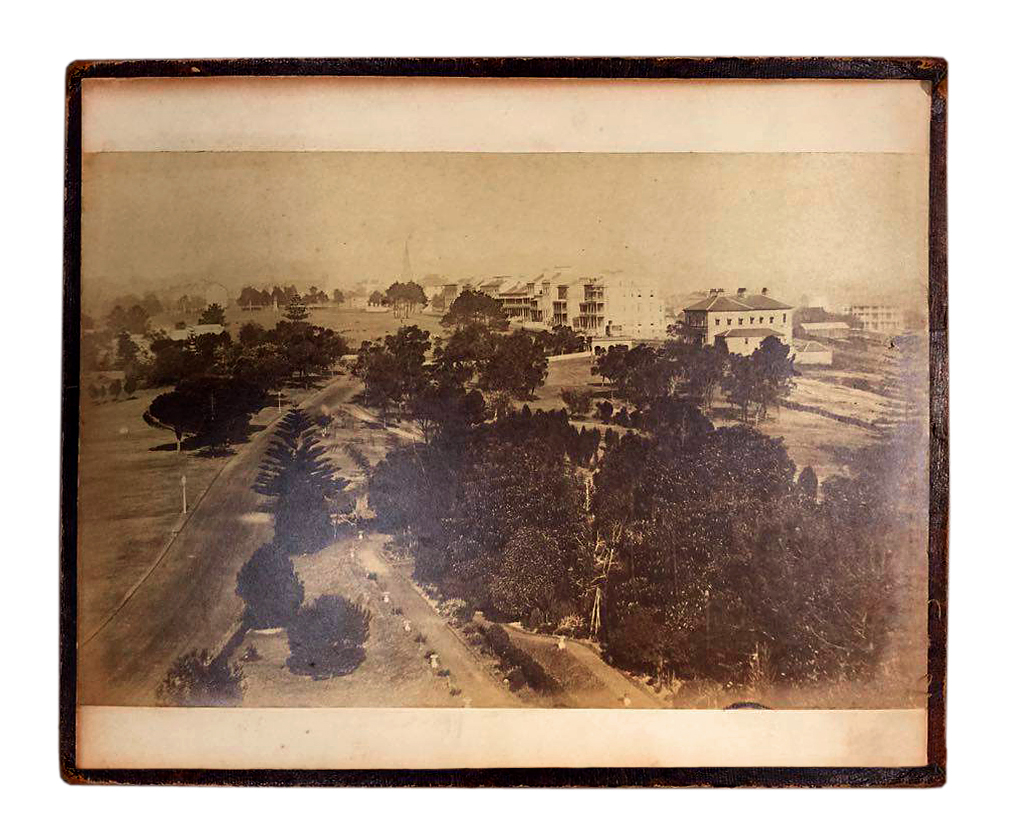
 

William Blackwood (Australian, 1824-1897) 'Panorama of Sydney & Harbour from Government House' 1858 section 1


Blackwood’s Panorama of Sydney & Harbour from Government House 1858 section 1

Entrance to Government House, Macquarie Street, city view including Customs House, Sydney Cove


William Blackwood (Australian, 1824-1897) 'Panorama of Sydney & Harbour from Government House' 1858 section 2


Blackwood’s Panorama of Sydney & Harbour from Government House 1858 section 2

Entrance to Government House, Macquarie Street, city view including Customs House, Sydney Cove.

(The Customs House is horizontally left of the tall ship’s mast with the row of double windows)


Charles Percy Pickering (Australian, 1825-1908) 'Customs House' 1872


Charles Percy Pickering (Australian, 1825-1908)
Customs House
1872
New South Wales. Government Printing Office
Collection of the State Library of New South Wales


Customs House

The Customs House is an historic Sydney landmark located in the city’s Circular Quay area. Constructed initially in 1844-1845, the building served as the headquarters of the Customs Service until 1990. The driving force behind the construction of the original sandstone edifice on Circular Quay was Colonel John George Nathaniel Gibbes, the Collector of Customs for New South Wales for a record term of 25 years from 1834 to 1859. Colonel Gibbes persuaded the Governor of New South Wales, Sir George Gipps, to begin construction of the Customs House in 1844 in response to Sydney’s growing volume of maritime trade. The building project also doubled as an unemployment relief measure for stonemasons and labourers during an economic depression which was afflicting the colony at the time.

The two-storey Georgian structure was designed by Mortimer Lewis and featured 13 large and expensive windows in the facade to afford a clear view of shipping activity in Sydney Cove. Colonel Gibbes, who dwelt opposite Circular Quay on Kirribilli Point, was able to watch progress on the Customs House’s construction from the verandah of his private residence, Wotonga House (now Admiralty House). The Customs House opened for business in 1845 and replaced cramped premises at The Rocks. It was partially dismantled and expanded to three levels under the supervision of the then Colonial Architect, James Barnet, in 1887. Various additions were made over the next century, particularly during the period of the First World War, but some significant vestiges of the original Gibbes-Lewis building remain.

Text from the Wikipedia website


Charles Percy Pickering (Australian, 1825-1908) 'Panorama of Sydney & Harbour from Government House' 1858 section 3


Blackwood’s Panorama of Sydney & Harbour from Government House 1858 section 3

City view, Sydney Cove, The Rocks, Campbell’s Wharf and Dawes Point


Conrad Martens (England 1801 - Australia 1878; Australia from 1835) 'Campbell's Wharf' 1857


Conrad Martens (England 1801 – Australia 1878; Australia from 1835)
Campbell’s Wharf
1857
Watercolour with highlights in gum arabic
Image: 46 x 66cm
National Gallery of Australia


Campbell’s Wharf

From his arrival in 1835 until his death in 1878, Conrad Martens was the most celebrated artist in Sydney. Although a skilled painter in oils, his greatest works were executed in watercolour, and Campbell’s Wharf is among his most ambitious compositions. Commissioned by John Campbell in 1857, the work portrays the income source of the Campbell family, whose eighteenth and nineteenth century business interests encompassed wharfing, storing and merchant shipping.

On the right is Campbell’s Wharf and warehouses that stretched along the west side of Sydney Cove. To their left are the old Campbell residence and the new Mariners Church. In the centre of the painting rises the four-storied Miles Building, and to its left juts the Cumberland Place buildings along the skyline. All this is viewed through a jumble of trading vessels, the source of the Campbell family wealth. The painting is, however, more than a depiction of maritime industry and family property. Martens was well acquainted with the work of the British painter JMW Turner, whose romantic landscapes are suffused with delicate evocations of light. Silhouetted against a soft pink sky, Martens transforms an industrial setting into a picturesque landscape awash with luminous colour.

Text © National Gallery of Australia, Canberra 2014


William Blackwood (Australian, 1824-1897) 'Panorama of Sydney & Harbour from Government House' 1858 section 4


Blackwood’s Panorama of Sydney & Harbour from Government House 1858 section 4

City view, Sydney Cove, The Rocks, Campbell’s Wharf & Dawes Point


Dawes Point, New South Wales

By the 1840s the people of Dawes Point and Millers Point were a maritime community in which rich and poor mixed more than elsewhere in Sydney. Wharf owners and traders lived and worked beside those who worked on the wharves and bond stores, as well as those who arrived and left on ships. Only two of the merchant houses, built by and for the early wharf owners, survive. One is Walker’s 50-foot wide villa built around 1825 and now part of Milton Terrace at 7-9 Lower Fort Street; the other is the home and offices of Edwards and Hunter, built in 1833 above their wharves which is where the Wharf Theatre now stands.

The fortunes of Dawes Point and Millers Point fluctuated more than elsewhere in Sydney. Mostly prosperous in its early years, the area was less desirable by the 1890s, and in 1900 there was a catastrophic event that led to a complete reshaping of Millers Point. At the beginning of the 20th century the government compulsorily acquired all private wharves, homes and commercial properties in the Rocks, Dawes Point and Millers Point. Modern and efficient wharves with dual level access were built, as well as new accommodation for workers, such as the Workers Flats of Lower Fort Street designed by Government Architect Vernon.

Most people still believe this redevelopment can be attributed entirely to an outbreak of plague in 1900, with the government acting benevolently as it demolished homes as well as wharves, and not for the last time decimated a community, while presenting their actions as ‘slum clearance’. In the 1960s and ’70s the government tried again to clear the area and build high-rise offices, but this was thwarted by the Green Bans, supported community and unions. In 2016, the NSW Government is again ‘relocating’ the long-term community of Dawes Point, Millers Point and The Rocks, and only a handful of these residents remain, while the majority of houses and flats along Lower Fort Street and Trinity Avenue are vacant.

Text from the Wikipedia website


William Blackwood (Australian, 1824-1897) 'Panorama of Sydney & Harbour from Government House' 1858 section 5


Blackwood’s Panorama of Sydney & Harbour from Government House 1858 section 5

Sydney Harbour, Fort Macquarie, views to the North Shore


North Shore

Before British settlement, the Lower North Shore was home to the Gorualgal (Mosman and southern Willoughby) and Cammeraygal (North Sydney and Eastern Lane Cove). After the establishment of Sydney in 1788, settlement of the North Shore of the harbour was quite limited. One of the first settlers was James Milson who lived in the vicinity of Jeffrey Street in Kirribilli, directly opposite Sydney Cove. The north shore was more rugged than the southern shore and western areas of the harbour and had limited agricultural potential. The early activities in the area included tree felling, boatbuilding and some orchard farming in the limited areas of good soil. The North Shore railway line was built in the 1890s. Access to the Sydney CBD, located on the southern shore of the harbour remained difficult until the completion of the Sydney Harbour Bridge in 1932. This led to commencement the development of suburbs on the North Shore.

Text from the Wikipedia website


William Blackwood (Australian, 1824-1897) 'Panorama of Sydney & Harbour from Government House' 1858 section 6


Blackwood’s Panorama of Sydney & Harbour from Government House 1858 section 6

Sydney Harbour, Fort Macquarie (Bennelong Point/Opera House), views to the North Shore


Fort Macquarie (Bennelong Point/Opera House)

Fort Macquarie was a square castellated battlement fort built at Bennelong Point, Sydney, New South Wales, Australia, where the Sydney Opera House now stands. A half moon battery on the east point of Bennelong Point was constructed in May 1798 when the ship HMS Supply was withdrawn from service, Lieutenant William Kent and crew were assigned to man the battery. The battery consisted of some of the guns taken from HMS Supply.

Governor Lachlan Macquarie directed that a fort be built between December 1817 to February 1821 under the direction of Francis Greenway. The fort was named after Governor Lachlan Macquarie. It was a square fort with circular bastions at each corner and a castellated square tower. The battery consisted of fifteen pieces of ordnance: ten 24-pounders and five 6-pounders. Three sides of the fort abutted Sydney Harbour. The two-storey tower in the middle of the fort, housed a guardroom and storehouse. The tower was 27.4 m (90 ft) in circumference. A powder magazine capable of storing 350 barrels of gunpowder was constructed underneath and the tower could provide accommodation for a small military detachment of 1 officer and 18 men, with stores for the battery. A drawbridge, on the landward side, over a small channel leading to a gate beneath the tower provided entry to the fort.

Fort Macquarie was demolished in 1901 to make way for new electric tramway sheds named Fort Macquarie Tram Depot.

Text from the Wikipedia website


Bennelong Point

The point was originally a small tidal island, Bennelong Island, that largely consisted of rocks with a small beach on the western side. The island was located on the tip of the eastern arm of Sydney Cove and was apparently separated from the mainland at high tide. For a brief period in 1788, this relatively isolated protrusion into Port Jackson (Sydney’s natural harbour) was called Cattle Point as it was used to confine the few cattle and horses that had been brought from Cape Town by Governor Phillip with the First Fleet.

The area at that time was also strewn with discarded oyster shells from many long years of gathering by the local aboriginal women. Those shells were regathered by the newly arrived convict women and burnt to make lime for cement mortar. The point was called Limeburners’ Point for that reason, though those shells only furnished enough lime to make a single building, the two-storey government house. In the early 1790s, the Aborigine Bennelong – employed as a cultural interlocutor by the British – persuaded New South Wales Governor Arthur Phillip to build a brick hut for him on the point, giving it its name.

In the period from 1818 to 1821, the tidal area between Bennelong Island and the mainland was filled with rocks excavated from the Bennelong Point peninsula. The entire area was levelled to create a low platform and to provide suitable stone for the construction of Fort Macquarie. While the fort was being built, a large portion of the rocky escarpment at Bennelong Point was also cut away to allow a road to be built around the point from Sydney Cove to Farm Cove. This was known as Tarpeian Way. The existence of the original tidal island and its rubble fill were largely forgotten until the late 1950s when both were rediscovered during the excavations related to the construction of the Sydney Opera House. Prior to the Opera House’s construction, Bennelong Point had housed Fort Macquarie Tram Depot.

Text from the Wikipedia website


Kerry & Co. 'Fort Macquarie' 1870


Kerry & Co.
Fort Macquarie
1870
Albumen photograph
From the collections of the Mitchell Library, State Library of New South Wales


Fort Macquarie was built on the end of Bennelong Point, where the Sydney Opera House now stands. Completed by convict labour in 1821 using stone from the Domain, the fort had 15 guns and housed a small garrison. The powder magazine beneath the tower was capable of storing 350 barrels of gunpowder. The fort was demolished in 1901 to make way for the tramway sheds that occupied the site until the construction of the Utzon masterpiece


Kerry & Co. 'Fort Macquarie' 1870


Kerry & Co.
Fort Macquarie
1870
Albumen photograph
From the collections of the Mitchell Library, State Library of New South Wales


Anonymous photographer. 'The tram shed at Bennelong Point before the Sydney Opera House was built' 1952


Anonymous photographer
The tram shed at Bennelong Point before the Sydney Opera House was built
1952

William Blackwood (Australian, 1824-1897) 'Panorama of Sydney & Harbour from Government House' 1858 section 7


Blackwood’s Panorama of Sydney & Harbour from Government House 1858 section 7

Sydney Harbour view, sailing ships, Fort Denison (to the far right in the distance), Garden Island, Lady Macquarie’s Chair


Anonymous photographer. 'SS Nieuw Holland passing Fort Denison, Sydney Harbour' c. 1930


Anonymous photographer
SS Nieuw Holland passing Fort Denison, Sydney Harbour
c. 1930
Australian National Maritime Museum collection


Fort Denison was built on an island that was known to Indigenous people in the area as Muddawahnyuh, meaning ‘rocky island’. After European settlement in 1788 the island was called Pinchgut by convicts who were marooned there with meagre rations of bread and water as punishment for serious breaches of the peace. The island was originally a 15 metre sandstone rock, but during the 1800s it was excavated to provide sandstone to build Circular Quay, at that time the centre of shipping in Sydney.
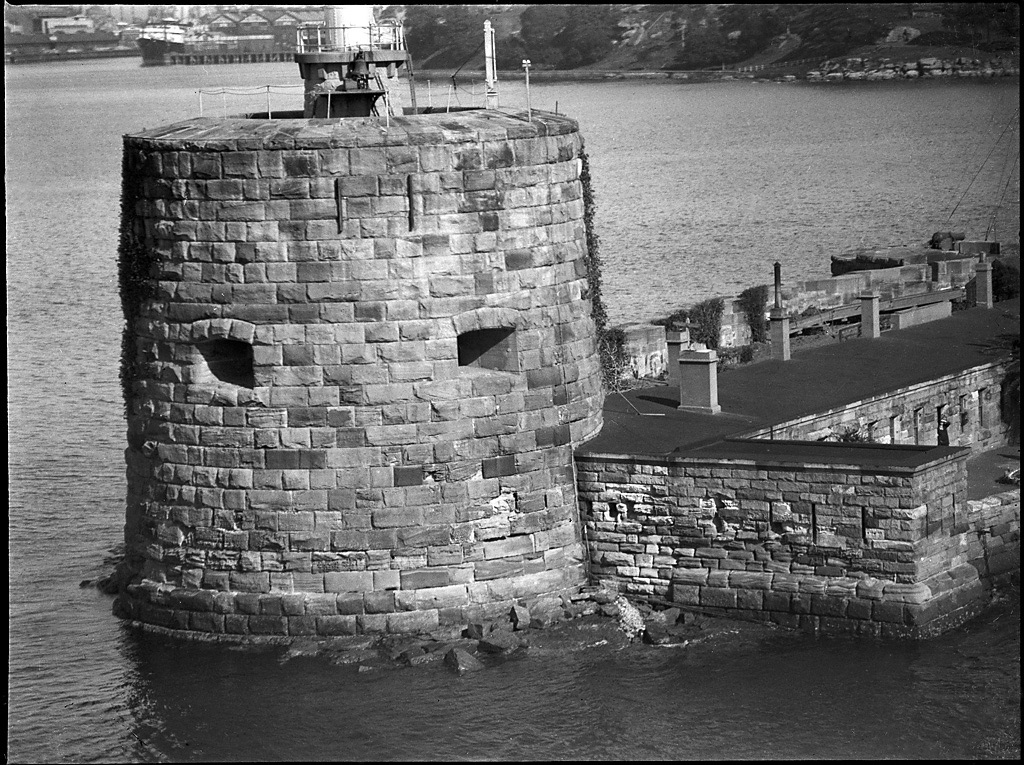
 

Anonymous photographer. 'Fort Denison' c. 1930


Anonymous photographer
Fort Denison
c. 1930
Glass negative, quarter plate
Tom Lennon Photographic Collection from the Powerhouse Museum


Fort Denison

In 1839, two American warships entered the harbour at night and circled Pinchgut Island. Concern with the threat of foreign attack caused the government to review the harbour’s inner defences. Barney, who had earlier reported that Sydney’s defences were inadequate, recommended that the government establish a fort on Pinchgut Island to help protect Sydney Harbour from attack by foreign vessels. Fortification of the island began in 1841 but was not completed. Construction resumed in 1855 because of fear of a Russian naval attack during the Crimean War, and was completed on 14 November 1857. The newly built fort then took its current name from Sir William Thomas Denison, the Governor of New South Wales from 1855 to 1861.

The fortress features a distinctive Martello tower, the only one ever built in Australia and the last one ever constructed in the British Empire. It was constructed using 8,000 tonnes (7,900 long tons) of sandstone from nearby Kurraba Point, Neutral Bay. The tower’s walls are between 3.3-6.7 metres (11-22 ft) thick at the base and 2.7 metres (8 ft 10 in) thick at the top. However, developments in artillery rendered the fort largely obsolete by the time it was completed. The tower itself had quarters for a garrison of 24 soldiers and one officer. Fort Denison’s armament included three 8-inch (200 mm) muzzle loaders in the tower, two 10-inch (250 mm) guns, one on a 360-degree traverse on the top of the tower and one in a bastion at the other end of the island, and twelve 32-pound (15 kg) cannons in a battery between the base of the tower and the flanking bastion. Eventually all the guns were removed, except for the three 8-inch (200 mm) muzzle-loading cannons in the gun room in the tower, which were installed before construction was complete.

Text from the Wikipedia website


George Roberts (Australian born United Kingdom, c. 1800-1865) '[Mrs Macquarie's chair]' c. 1843-1865


George Roberts (Australian born United Kingdom, c. 1800-1865)
[Mrs Macquarie’s chair]
c. 1843-1865
Watercolour
Mitchell Library, State Library of New South Wales


American & Australasian Photographic Company. 'Mrs Macquarie's Chair, Sydney' c. 1870-1875


American & Australasian Photographic Company
Mrs Macquarie’s Chair, Sydney (B. O. Holtermann seated at centre)
c. 1870-1875
State Library of New South Wales


Bernhardt Otto Holtermann (Australian born Germany, 1838-1885)

Bernhardt Otto Holtermann (29 April 1838 – 29 April 1885) was a successful gold miner, businessman, sponsor of photography for the encouragement of immigration and member of parliament. Perhaps his greatest claim to fame is his association with the Holtermann Nugget, the largest gold specimen ever found, 1.5 meters (59 inches) long, weighing 286 kg (630 pounds), in Hill End, near Bathurst, and with an estimated gold content of 3000 troy ounces (93 kg).

Holtermann financed and possibly participated in photographer Beaufoy Merlin’s project to photograph New South Wales and exhibit the results abroad to encourage immigration. The work was taken up after Merlin’s death in 1873 by his assistant, Charles Bayliss. In 1875, Holtermann and Bayliss produced the Holtermann panorama, a series of “23 albumen silver photographs which join together to form a continuous 978-centimetre view of Sydney Harbour and its suburbs.” Some of the photographs, including the panorama, were displayed at the Philadelphia Centennial Exhibition, where they won a bronze medal. The panorama was also displayed at the 1878 Exposition Universelle Internationale in Paris. 

Almost seventy years after Holtermann’s death, more than 3,000 of the glass negatives created by Merlin and Bayliss were retrieved from a garden shed in the Sydney suburb of Chatswood. The UNESCO-listed collection of negatives, known as The Holtermann Collection, is housed in the State Library of New South Wales.

Text from the Wikipedia website


Mrs Macquarie’s Chair

Mrs Macquarie’s Chair (also known as Lady Macquarie’s Chair) is an exposed sandstone rock cut into the shape of a bench, on a peninsula in Sydney Harbour, hand carved by convicts from sandstone in 1810 for Governor Macquarie’s wife Elizabeth. The peninsula itself is named Mrs Macquarie’s Point, and is part of the The Domain, near the Royal Botanic Gardens. Mrs Macquarie was the wife of Major-General Lachlan Macquarie, Governor of New South Wales from 1810 to 1821. Folklore has it that she used to sit on the rock and watch for ships from Great Britain sailing into the harbour. She was known to visit the area and sit enjoying the panoramic views of the harbour.

Above the chair is a stone inscription referring to Mrs Macquarie’s Road. That road was built between 1813 and 1818, and ran from the original Government House (now the Museum of Sydney) to Mrs Macquarie’s Point. It was built on the instruction of Governor Macquarie for the benefit of his wife. There is no remaining evidence of the original road, other than a culvert over which the road ran.

Text from the Wikipedia website


William Blackwood (Australian, 1824-1897) 'Panorama of Sydney & Harbour from Government House' 1858 section 8


Blackwood’s Panorama of Sydney & Harbour from Government House 1858 section 8

Sydney Harbour view, sailing ships, Fort Denison, Garden Island, Lady Macquarie’s Chair
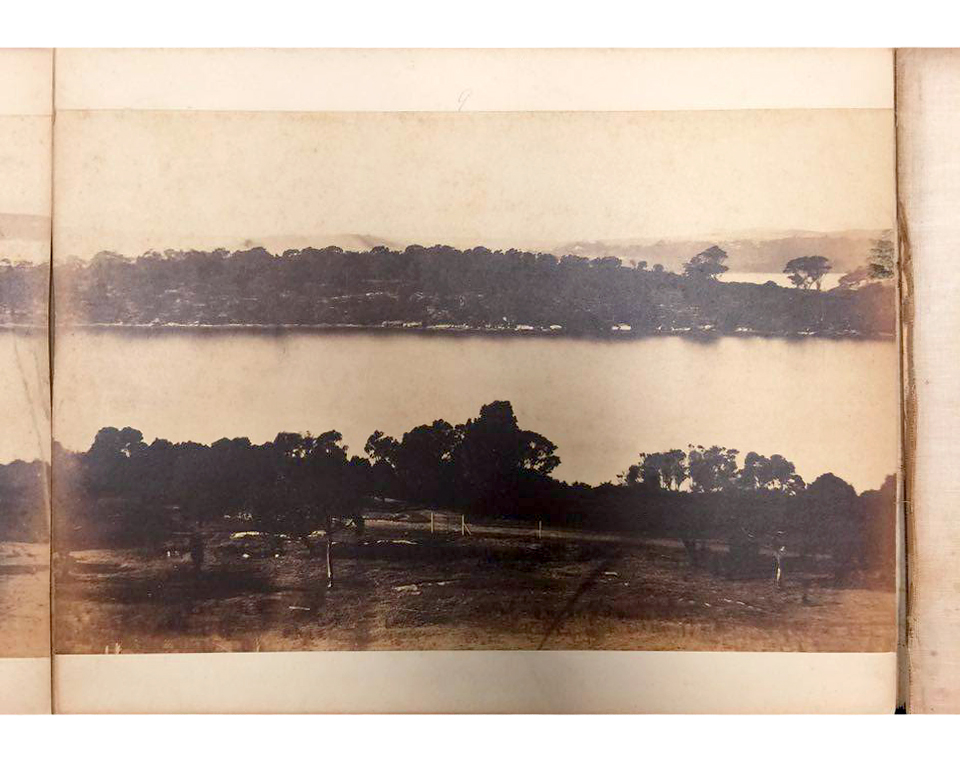
 

William Blackwood (Australian, 1824-1897) 'Panorama of Sydney & Harbour from Government House' 1858 section 9


Blackwood’s Panorama of Sydney & Harbour from Government House 1858 section 9

Farm Cove, views to Potts Point and Darlinghurst


William Blackwood (Australian, 1824-1897) 'Panorama of Sydney & Harbour from Government House' 1858 section 10


Blackwood’s Panorama of Sydney & Harbour from Government House 1858 section 10

Farm Cove, views to Potts Point and Darlinghurst


Potts Point

Potts Point is named for Joseph Hyde Potts, who was employed by the Bank of New South Wales. He purchased six-and-a-half acres of harbourside land in an area then known as Woolloomooloo Hill – which he renamed Potts Point. Much of the area that today comprises Potts Point and the adjacent suburb of Elizabeth Bay, originally constituted part of a land grant to Alexander Macleay, who was the New South Wales Colonial Secretary from 1826 to 1837, and for whom Macleay Street is named. NSW Judge Advocate, John Wylde (for whom Wylde Street is named) was another 19th-century public servant who owned land in the area.


William Blackwood (Australian, 1824-1897) 'Panorama of Sydney & Harbour from Government House' 1858 section 11


Blackwood’s Panorama of Sydney & Harbour from Government House 1858 section 11

The Government Domain, Government House Stables
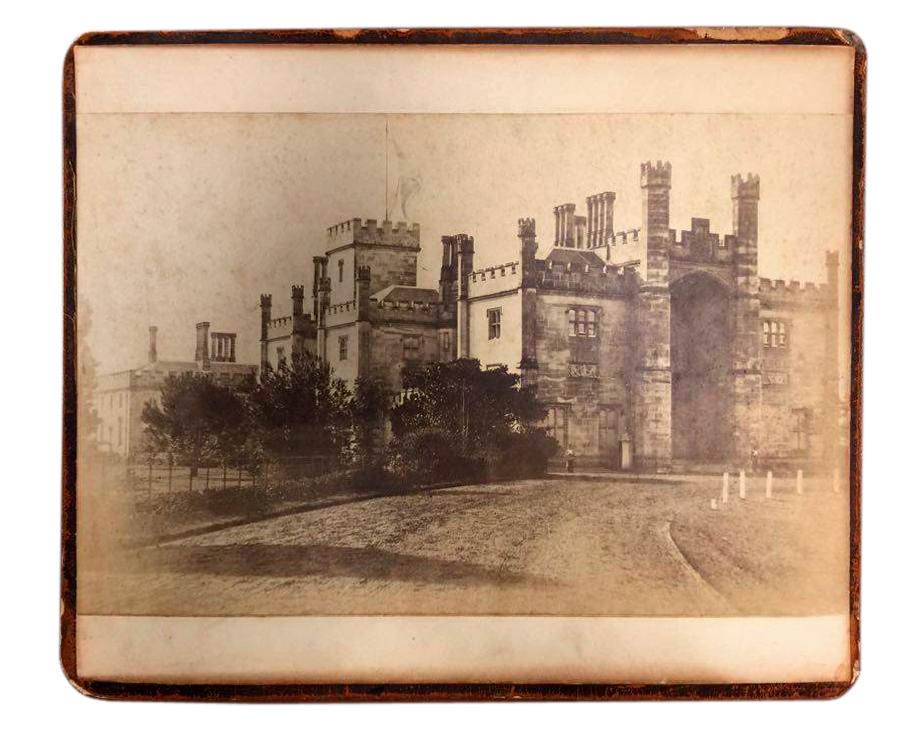
 

William Blackwood (Australian, 1824-1897) 'Panorama of Sydney & Harbour from Government House' 1858 Government House


Blackwood’s Panorama of Sydney & Harbour from Government House 1858

Government House with porte cochère


Government House

In 1845 the British government agreed that a new Government House in Sydney had become a necessity, and the royal architect, Edward Blore, was instructed to draw up plans. Construction commenced in 1837 and was supervised by colonial architect Mortimer Lewis and Colonel Barney of the Royal Engineers. Stone, cedar, and marble for the construction were obtained from various areas of New South Wales. A ball in honour of the birthday of Queen Victoria was held in the new building in 1843, although construction was not complete. The first resident, Governor George Gipps, did not move in until 1845.

Government House, with its setting on Sydney Harbour, has a garden area of 5 hectares and is located south of the Sydney Opera House, overlooking Farm Cove. It was designed in a romantic Gothic revival style – castellated, crenellated, turreted and is decorated with oil portraits and the coats of arms of its successive occupants. Additions have included a front portico in 1873, an eastern verandah in 1879 and extensions to the ballroom and governor’s study in 1900-01.

Text from Wikipedia website


Definition of porte cochère. 1: a passageway through a building or screen wall designed to let vehicles pass from the street to an interior courtyard. 2: a roofed structure extending from the entrance of a building over an adjacent driveway and sheltering those getting in or out of vehicles.


John Paine (Australian born England, 1833-1908) 'The entrance gates of Government House, Sydney' c. 1878


John Paine (Australian born England, 1833-1908)
The entrance gates of Government House, Sydney
c. 1878
Albumen print
15 x 20.4cm
Caroline Simpson Library & Research Collection


The Government House entrance gates and guardhouse, completed in 1848, are shown here in their original location on Macquarie Street. The elaborate iron gates were supported by six sandstone piers: in the centre was the ceremonial entrance, marked by metalwork lanterns complete with crowns, and this was flanked by two carriage gates and a pair of pedestrian gates. The design of the gates and guardhouse is attributed to the Colonial Architect Mortimer Lewis, the gatehouse being identical to the ‘Forest Gate Keeper’s Lodge’ illustrated in H B Zeigler’s ‘The Royal Lodges in Windsor Great Park’ (1839) The Gothic Revival guardhouse consisted of four rooms to accommodate the guard, with open verandahs on two sides, and it was to also serve the Treasury, completed on the opposite side of Macquarie Street c. 1850 (also designed by Lewis). The entrance gates and guardhouse, as a Gothic style entrance lodge, were consistent with Picturesque ideals for the entrance to a large estate and formed an appropriately imposing entrance to the vice regal residence.


William Blackwood (Australian, 1824-1897) 'Panorama of Sydney & Harbour from Government House' 1858 back cover


Blackwood’s Panorama of Sydney & Harbour from Government House 1858 back cover


LIKE ART BLART ON FACEBOOK

Back to top

Exhibition: ‘Bill Henson: Landscapes’ at Castlemaine Art Gallery and Historical Museum, Victoria

Exhibition dates: 30th April – 30th June, 2016


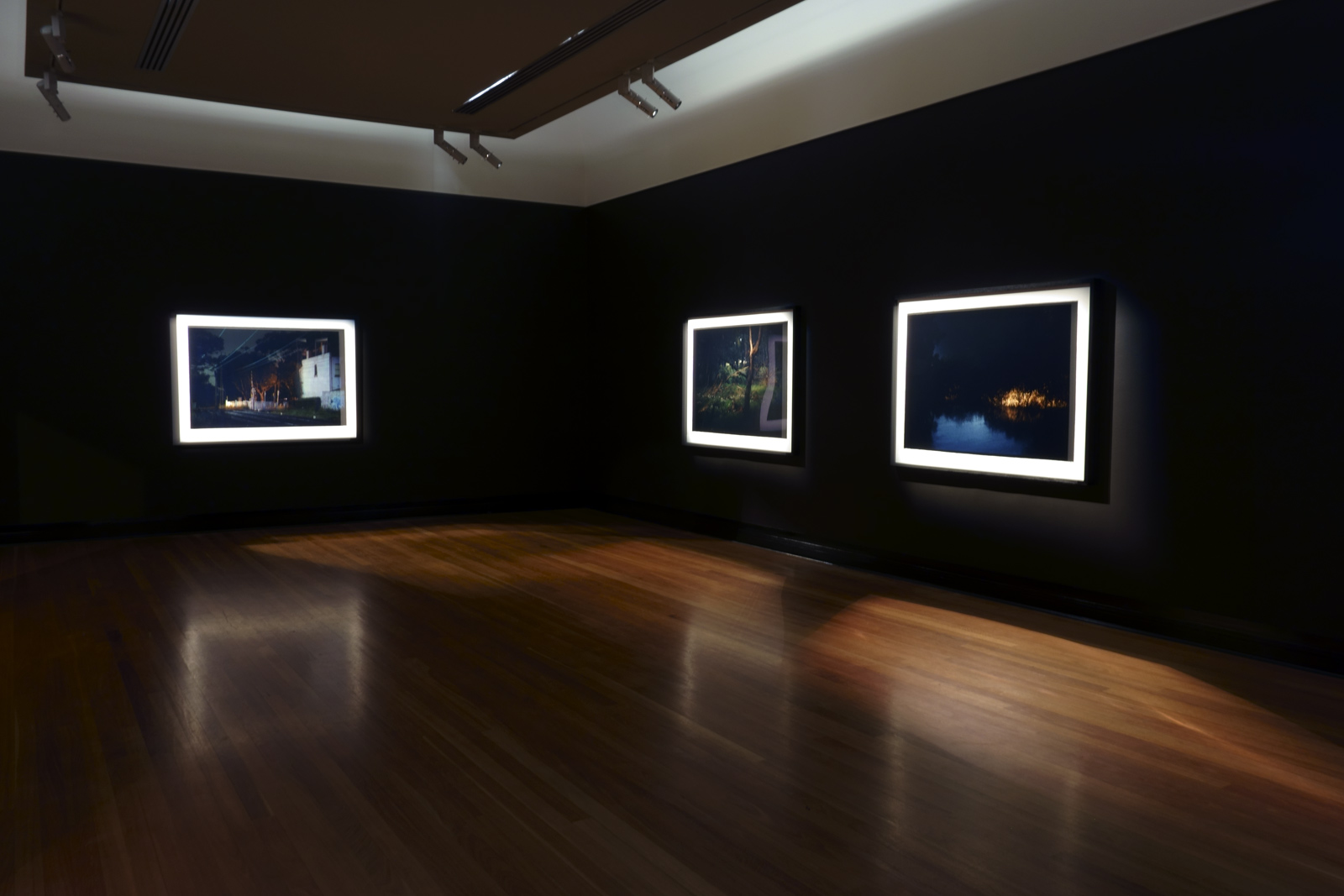
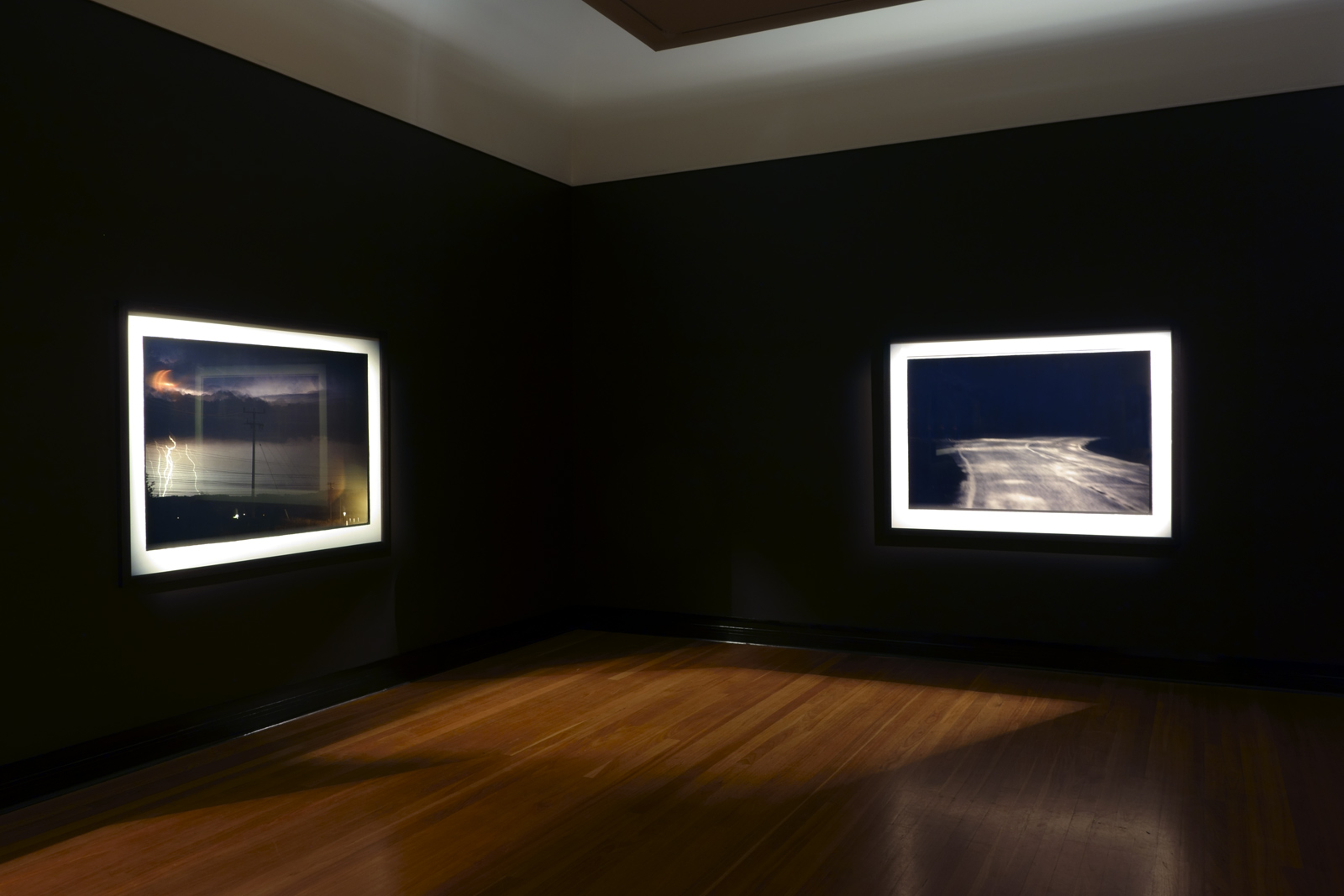
Installation photograph of the exhibition 'Bill Henson: Landscapes' at the Castlemaine Art Gallery and Historical Museum


Installation photograph of the exhibition Bill Henson: Landscapes at the  Castlemaine Art Gallery and Historical Museum
Photo: © Marcus Bunyan and the Castlemaine Art Gallery and Historical Museum


Drawing on light

A magnificent installation from one of the world’s great photographers.

Why this artist is not having sell out retrospectives at MoMA New York, Centre Georges Pompidou Paris or the Tate in London is beyond me. Is it because of continuing cultural cringe, or the fact that he’s not as well known in Europe and America?

Their loss is our gain.

The darkened room contains only eight images beautifully lit to create a wondrous, enveloping atmosphere. Henson’s night photographs emit light as though a result of the excitation of atoms by energy – the energy of the mind transferred to the light of place. A luminescence of thought is imaged in the photograph through the emission of light … produced not so much by physiological or electromagnetic processes as much as by a culturally informed mind that seems to bring forth its own light. And behold there is light.

As that eminent photographer Minor White used to opine when asked for technical information on his photographs in the back of popular American photography monthlies: for technical information the camera was creatively used.

For me, these are not images of ethereal malevolence or Australian anxiety about our environment and the ominous ordinary. They do not possess that feeling at all. These pictures are about an understanding and contemplation of light and place, a process which is in balance one with the other. Yes, the transient nature of earthly existence but more than that. The soft details of flowers in the grass, or the spatter of rain on water, not noticed until you really look at the image; or the shadow of a truck on a bridge underpass. In my mind I know where this is, in Gipps Street, Abbottsford near the train bridge… or so I believe in my imagination. All of these photographs have a feeling of a subtle vibration of energy in the universe. There is no malevolence here.

My only criticism of this, the first photographic exhibition at Castlemaine Art Gallery, is that there is not enough of it. There needed to be more of the work. It just felt a little light on. Another gallery was needed to make the installation experience fully enveloping. Having said that, congratulations must go to the artist and to gallery who are putting on some amazing exhibitions in the heart of regional Victoria.

Dr Marcus Bunyan


Many thankx to Castlemaine Art Gallery and Historical Museum for allowing me to publish the photographs in the posting. Please click on the photographs for a larger version of the image. All images © Marcus Bunyan and the Castlemaine Art Gallery and Historical Museum


Opening titles for the exhibition 'Bill Henson: Landscapes' at the Castlemaine Art Gallery and Historical Museum


Opening titles for the exhibition Bill Henson: Landscapes at the  Castlemaine Art Gallery and Historical Museum
Photo: © Marcus Bunyan and the Castlemaine Art Gallery and Historical Museum


Installation photograph of the exhibition 'Bill Henson: Landscapes' at the Castlemaine Art Gallery and Historical Museum


Installation photograph of the exhibition Bill Henson: Landscapes at the  Castlemaine Art Gallery and Historical Museum
Photo: © Marcus Bunyan and the Castlemaine Art Gallery and Historical Museum


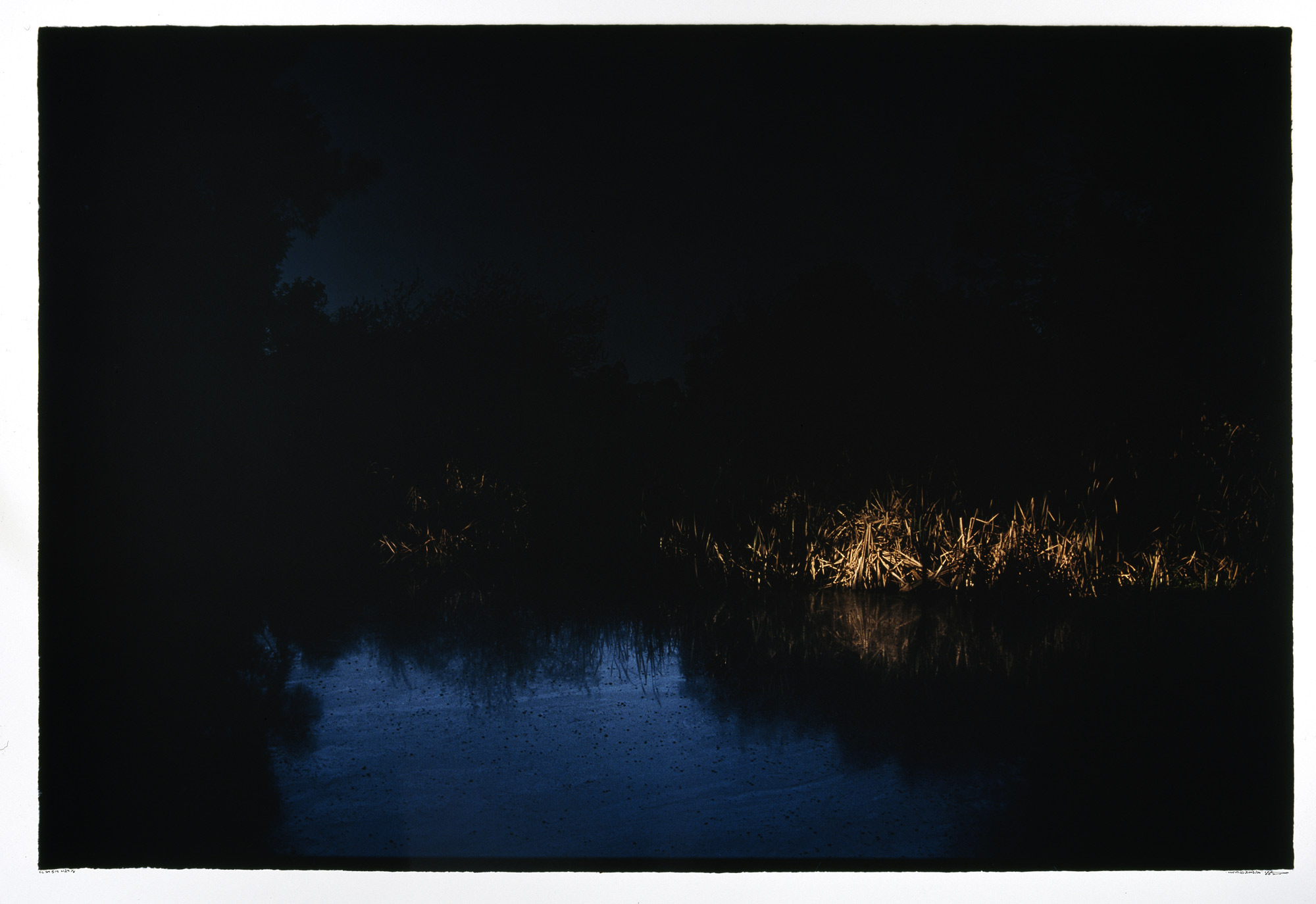
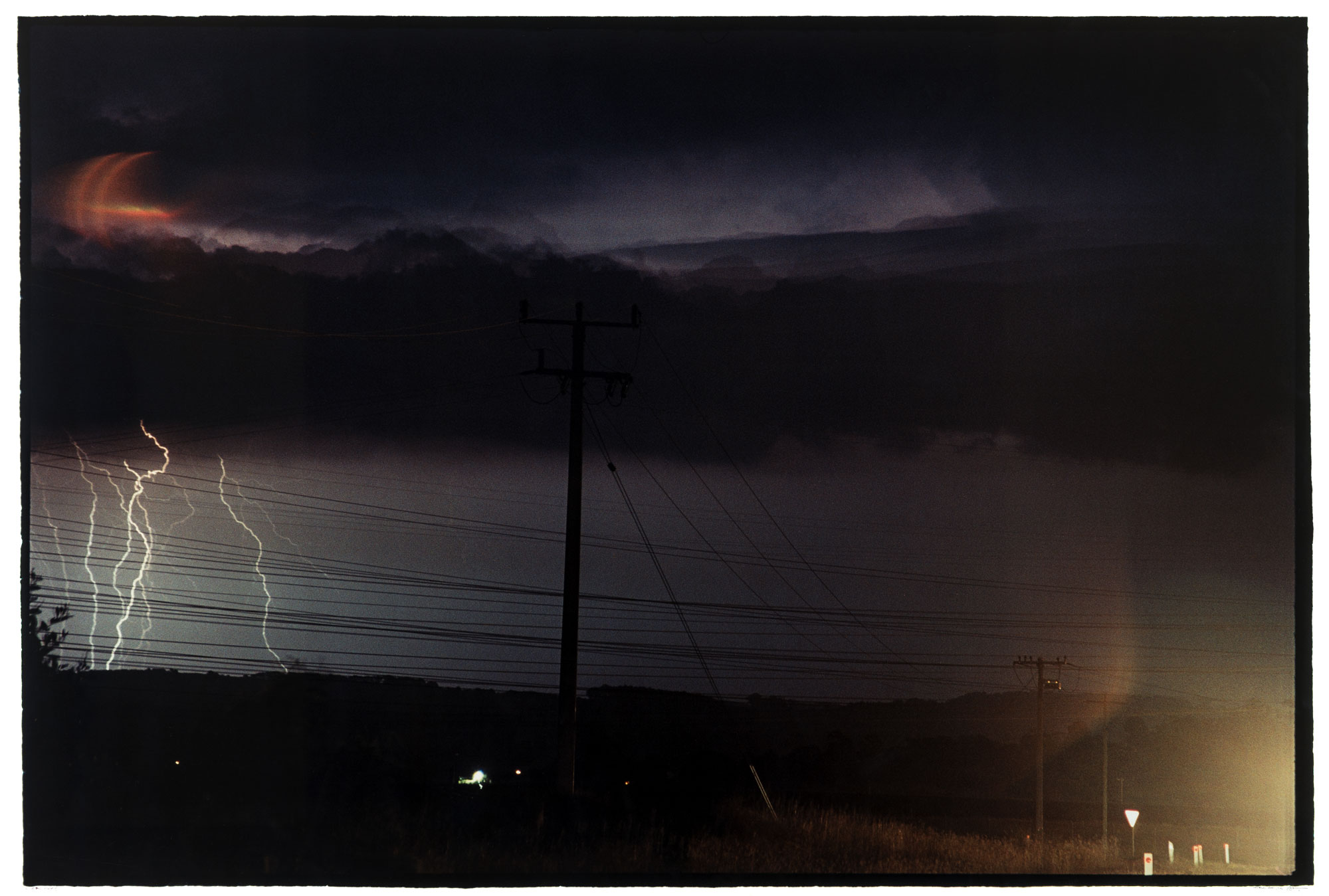
Bill Henson (Australian, b. 1955) 'Untitled #9 2005/2006' 2005-2006 from the exhibition 'Bill Henson: Landscapes' at Castlemaine Art Gallery and Historical Museum, Victoria, April - June, 2016


Bill Henson (Australian, b. 1955)
Untitled #9 2005/2006
2005-2006
CL SH541 N2
Type C photograph
127 x 180cm (sheet)
Courtesy of the artist and Roslyn Oxley9 Gallery, Sydney


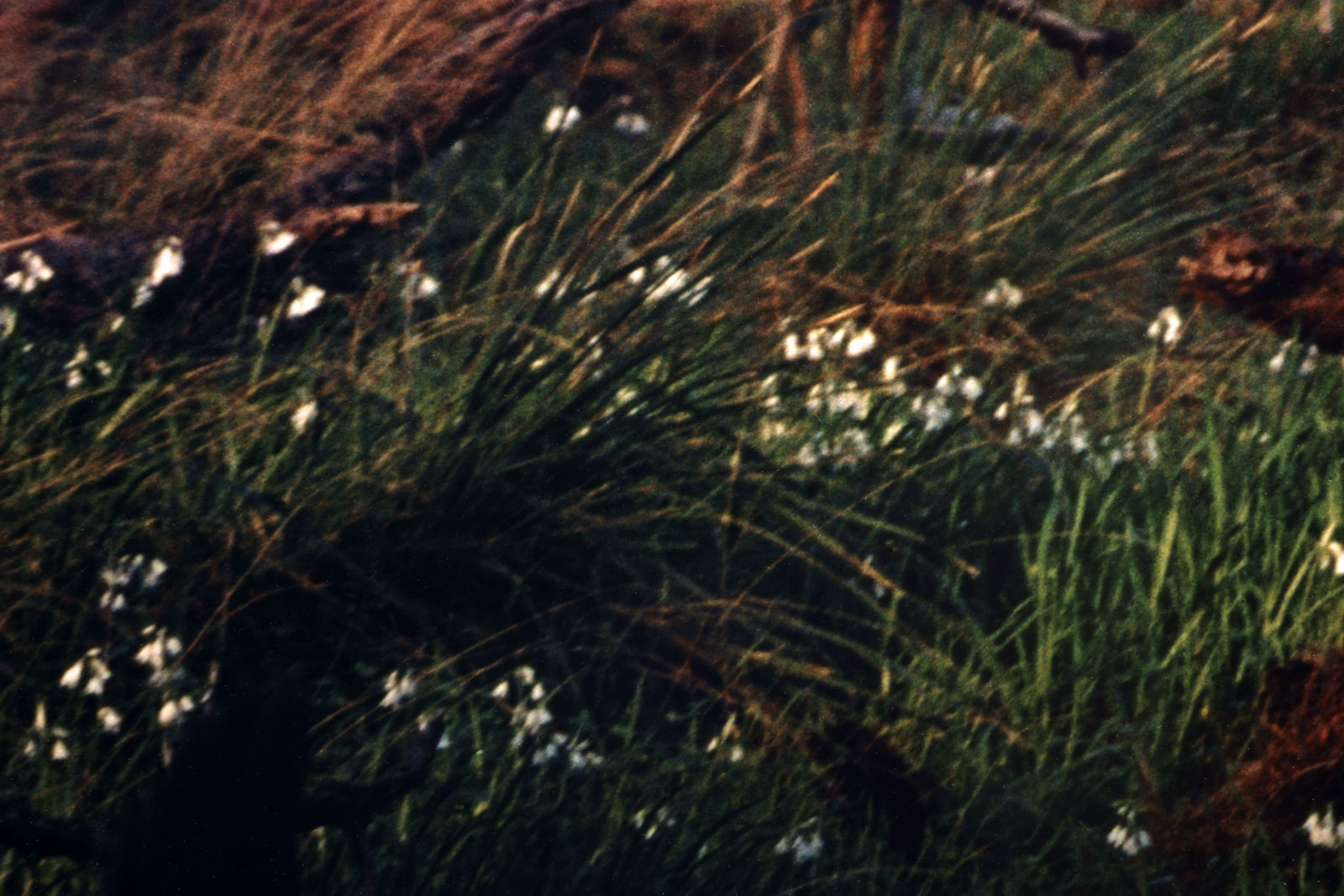
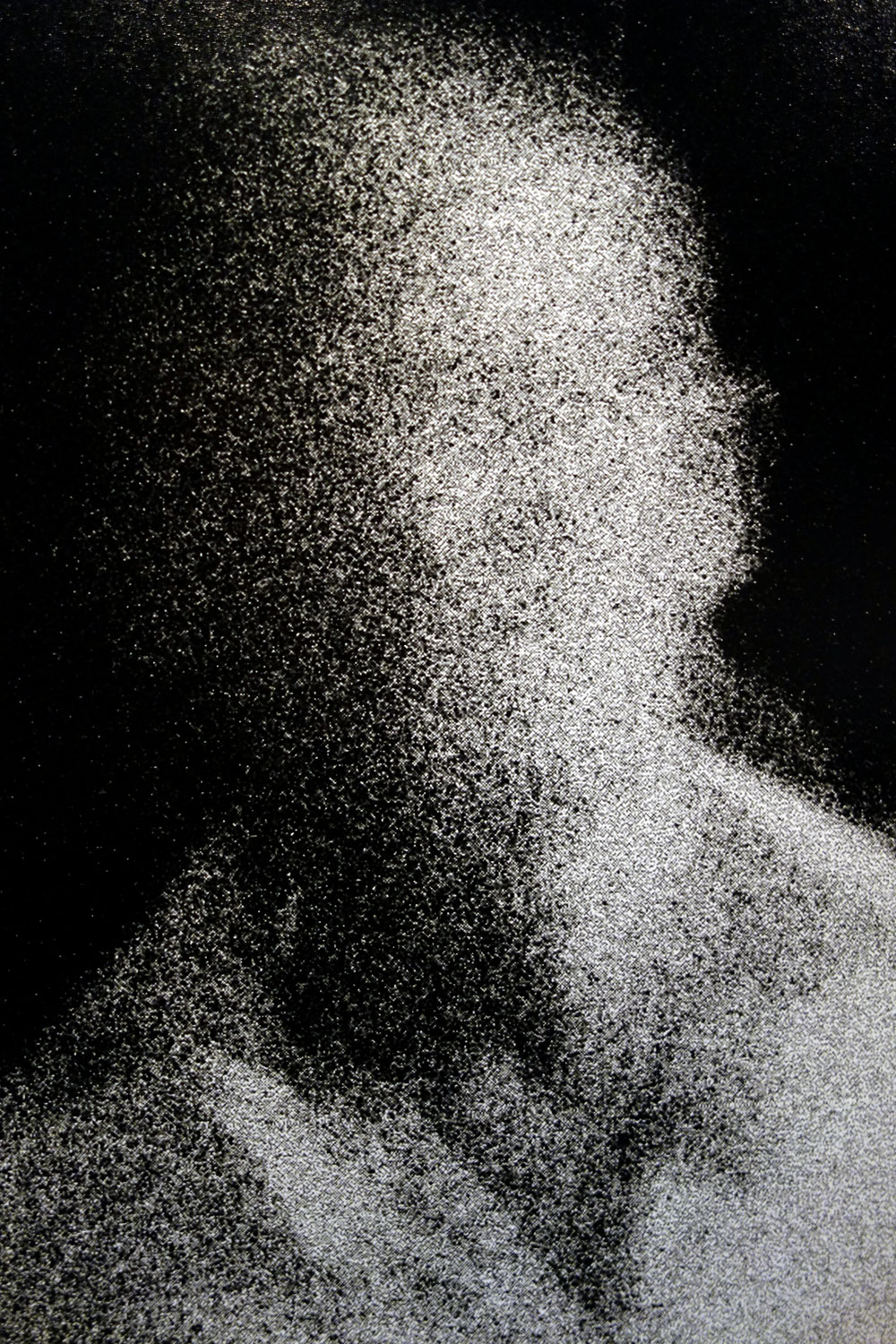
Bill Henson (Australian, b. 1955) 'Untitled #9 2005/2006' 2005-2006 (detail)


Bill Henson (Australian, b. 1955)
Untitled #9 2005/2006 (detail)
2005-2006
CL SH541 N2
Type C photograph
127 x 180cm (sheet)
Courtesy of the artist and Roslyn Oxley9 Gallery, Sydney


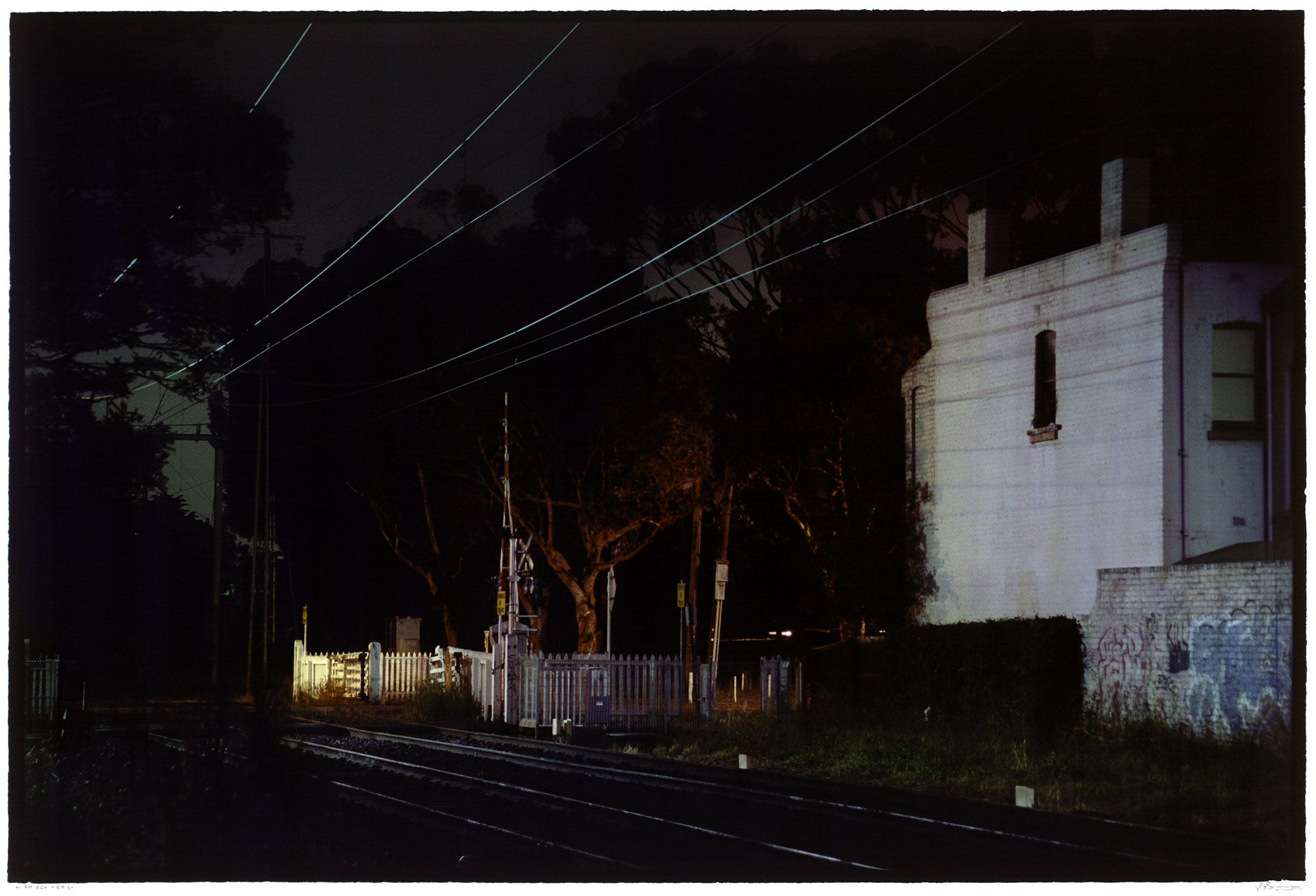
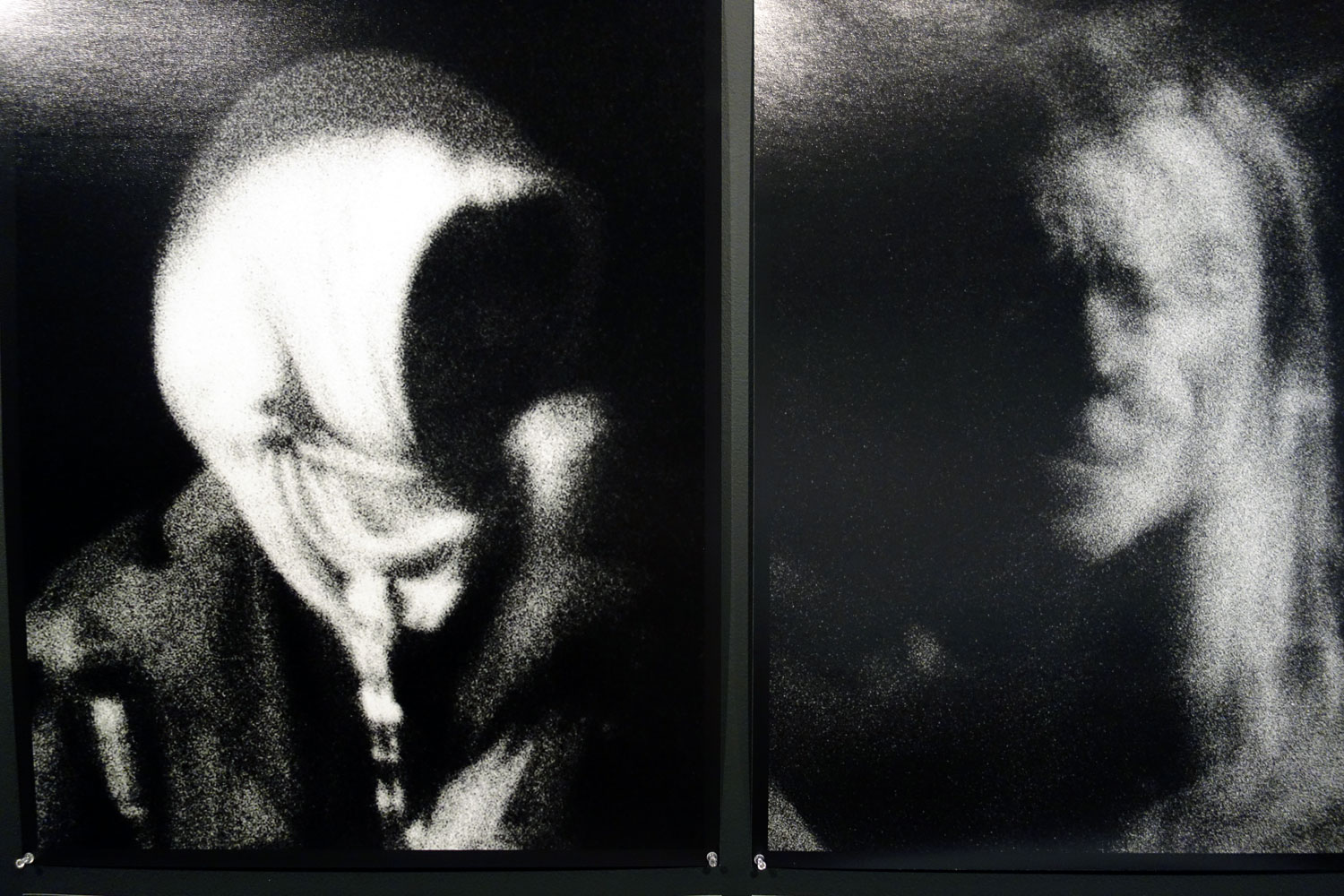
Installation photograph of the exhibition 'Bill Henson: Landscapes' at the Castlemaine Art Gallery and Historical Museum with 'Untitled #21 2005/2006' at left and 'Untitled #9 2005/2006' at right


Installation photograph of the exhibition Bill Henson: Landscapes at the  Castlemaine Art Gallery and Historical Museum with Untitled #21 2005/2006 at left and Untitled #9 2005/2006 at right
Photo: © Marcus Bunyan and the Castlemaine Art Gallery and Historical Museum


Bill Henson (Australian, b. 1955) 'Untitled #21 2005-2006' 2005-2006 (detail)


Bill Henson (Australian, b. 1955)
Untitled #21 2005-2006 (detail)
2005-2006
CL SH541 N2
Type C photograph
127 x 180cm


Bill Henson (Australian, b. 1955) 'Untitled 1999/2000' 1999-2000 from the exhibition 'Bill Henson: Landscapes' at Castlemaine Art Gallery and Historical Museum, Victoria, April - June, 2016


Bill Henson (Australian, b. 1955)
Untitled 1999-2000
1999-2000
Type C photograph
103.8 x 154.0cm (image) 126.8 x 179.9cm (sheet)
National Gallery of Victoria, Melbourne
Purchased with funds from the Victorian Foundation for Living Australian Artists, 2005 (2005.501)
Courtesy of the artist and Roslyn Oxley9 Gallery, Sydney


“Our current exhibition, Bill Henson: Landscapes captures the haunting convergence of opposites; two worlds, darkness and light.

These dreamlike pictures pursue the Romantic project by engulfing the viewer in the urban or semi-rural sublime. Through these landscapes, we are immersed in a realm which offers an otherworldly view of the transient nature of earthly existence. The inky depths of the encroaching natural environment suggest a dark abyss, an ethereal malevolence that relates to both the artistic conventions of Renaissance landscape painting and, a uniquely Australian anxiety about our environment and the ominous ordinary.”

Text from the Castlemaine Art Gallery Facebook page


Installation photograph of the exhibition 'Bill Henson: Landscapes' at the Castlemaine Art Gallery and Historical Museum

Installation photograph of the exhibition 'Bill Henson: Landscapes' at the Castlemaine Art Gallery and Historical Museum

Installation photograph of the exhibition 'Bill Henson: Landscapes' at the Castlemaine Art Gallery and Historical Museum with in the bottom image at left, 'Untitled' 2001-2002; and at right, 'Untitled #23' 1998/1999/2000


Installation photographs of the exhibition Bill Henson: Landscapes at the  Castlemaine Art Gallery and Historical Museum with in the bottom image at left, Untitled 2001-2002; and at right, Untitled #23 1998/1999/2000
Photos: © Marcus Bunyan and the Castlemaine Art Gallery and Historical Museum


Bill Henson (Australian, b. 1955) 'Untitled 2001-2002' 2001-2002


Bill Henson (Australian, b. 1955)
Untitled 2001-2002
2001-2002
Type C photograph
127 x 180cm (sheet)
Collection of Annabel and Rupert Myer


Bill Henson (Australian, b. 1955) 'Untitled 2001/02' 2001-2002 (detail)


Bill Henson (Australian, b. 1955)
Untitled 2001-2002 (detail)
2001-2002
Type C photograph
127 x 180cm (sheet)
Collection of Annabel and Rupert Myer


Installation photograph of the exhibition 'Bill Henson: Landscapes' at the Castlemaine Art Gallery and Historical Museum showing 'Untitled #28' 1998 at right


Installation photograph of the exhibition Bill Henson: Landscapes at the  Castlemaine Art Gallery and Historical Museum showing Untitled #28 1998 at right
Photo: © Marcus Bunyan and the Castlemaine Art Gallery and Historical Museum


Bill Henson (Australian, b. 1955) 'Untitled #28' 1998 (detail)


Bill Henson (Australian, b. 1955)
Untitled #28 (detail)
1998
Type C photograph
104 × 154cm


Bill Henson (Australian, b. 1955) 'Untitled #48' 1998/1999/2000 (detail)


Bill Henson (Australian, b. 1955)
Untitled #48 (detail)
1998/1999/2000
Type C photograph
127 × 180cm


Castlemaine Art Gallery and Historical Museum
14 Lyttleton Street (PO Box 248)
Castlemaine, Vic 3450 Australia
Phone: (03) 5472 2292
Email: info@castlemainegallery.com

Opening hours:
Thursday 12pm – 4pm
Friday 12pm – 6.30pm
Weekends 12pm – 4pm

Castlemaine Art Gallery and Historical Museum website

LIKE ART BLART ON FACEBOOK

Back to top

Marcus Bunyan black and white archive: England, 1994

June 2016


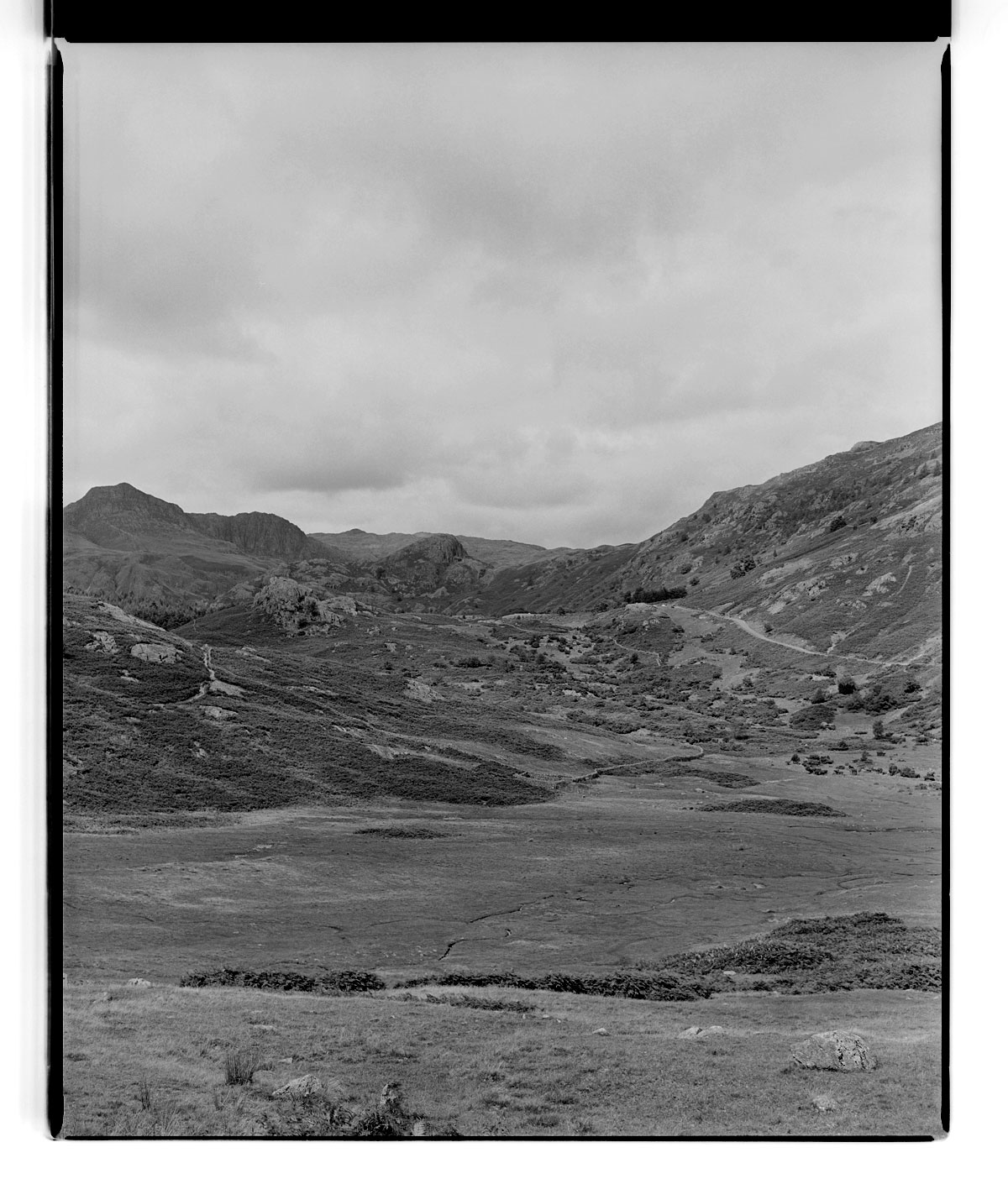
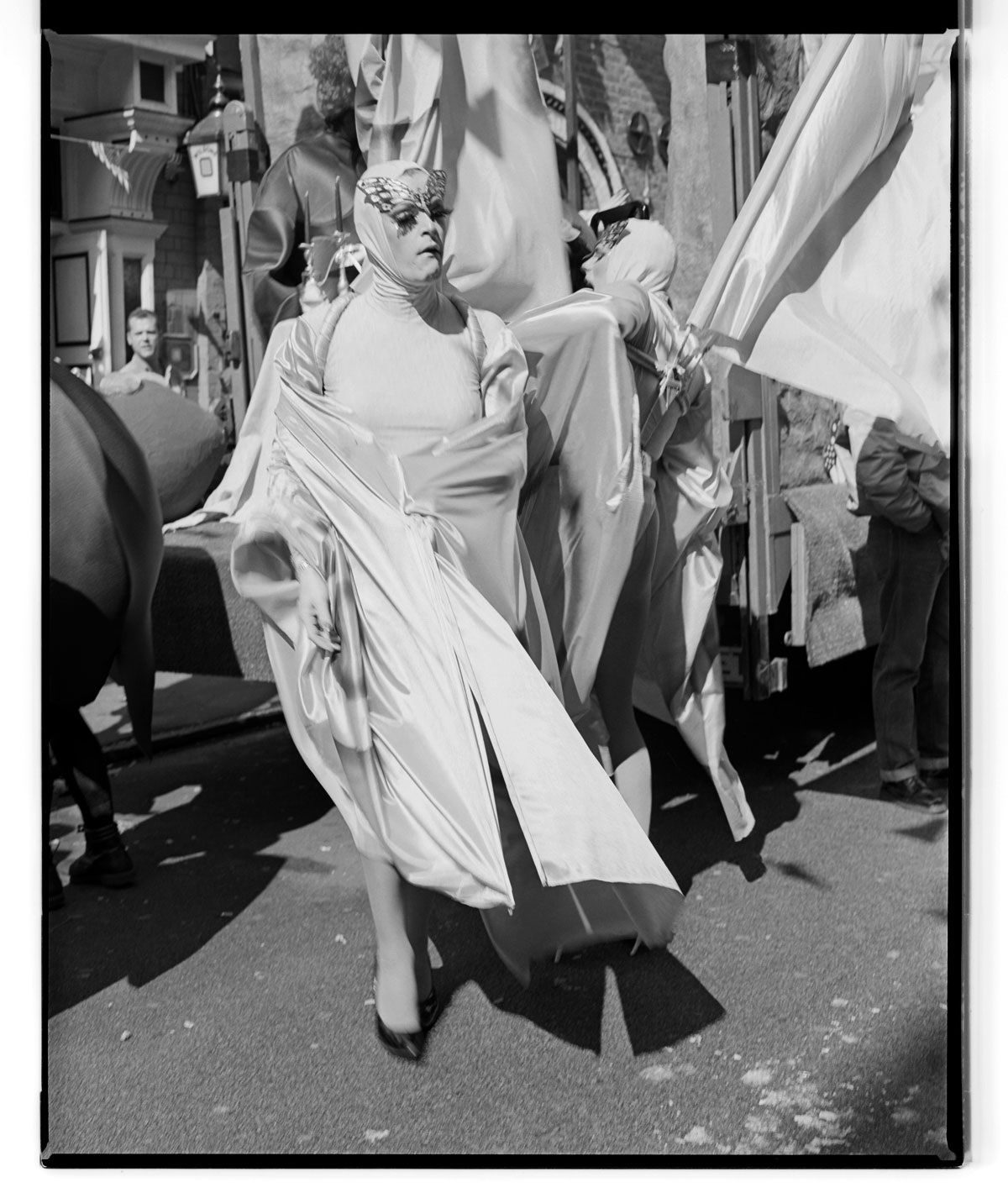
I finally got around to scanning some more of my black and white archive, this time further photographs from a trip to England in 1994 forming a new sequence. The photographs picture my now ageing mother (these were taken over 20 years ago), an English fair, medieval tiles and Highgate Cemetery, among other subjects.
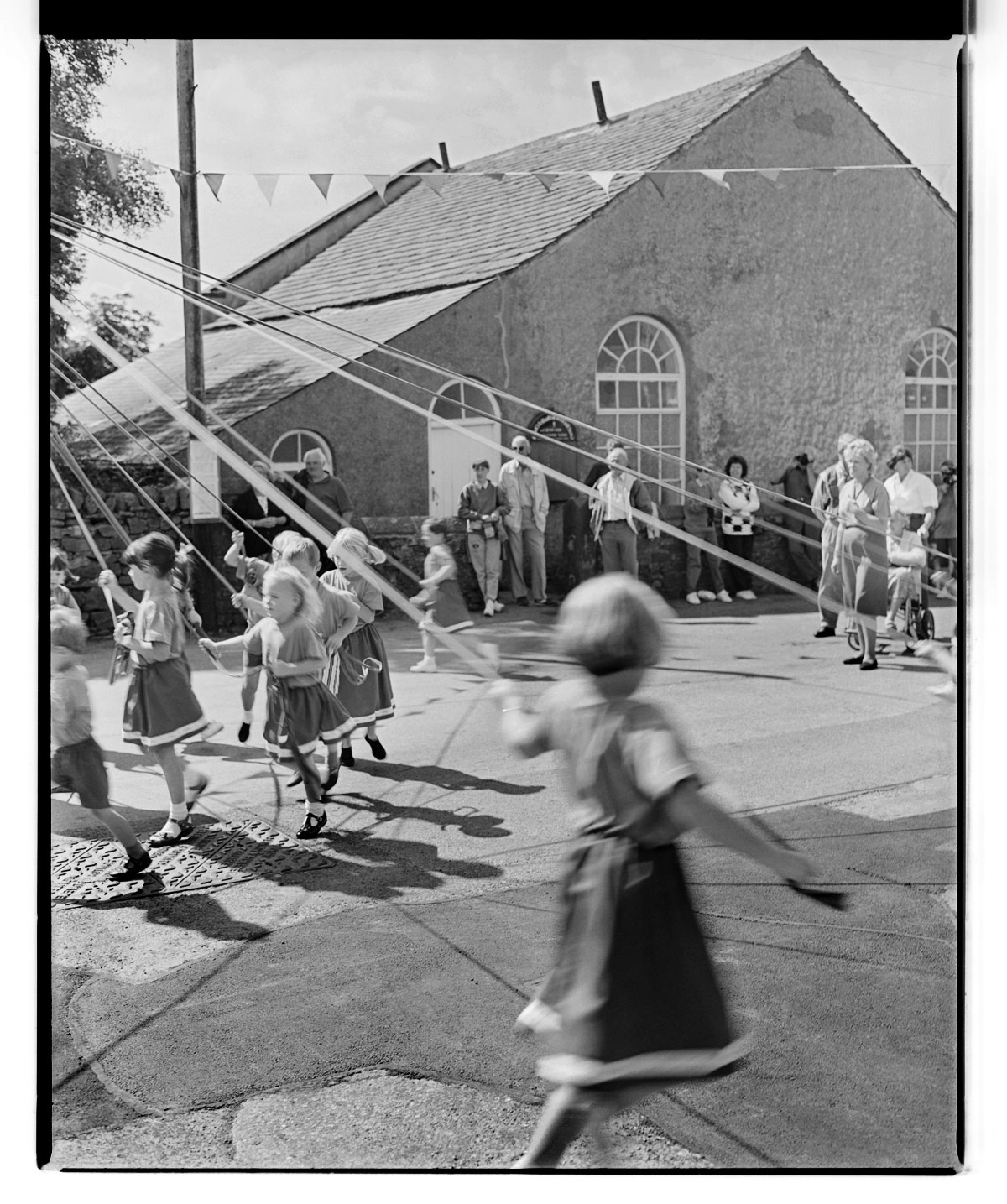
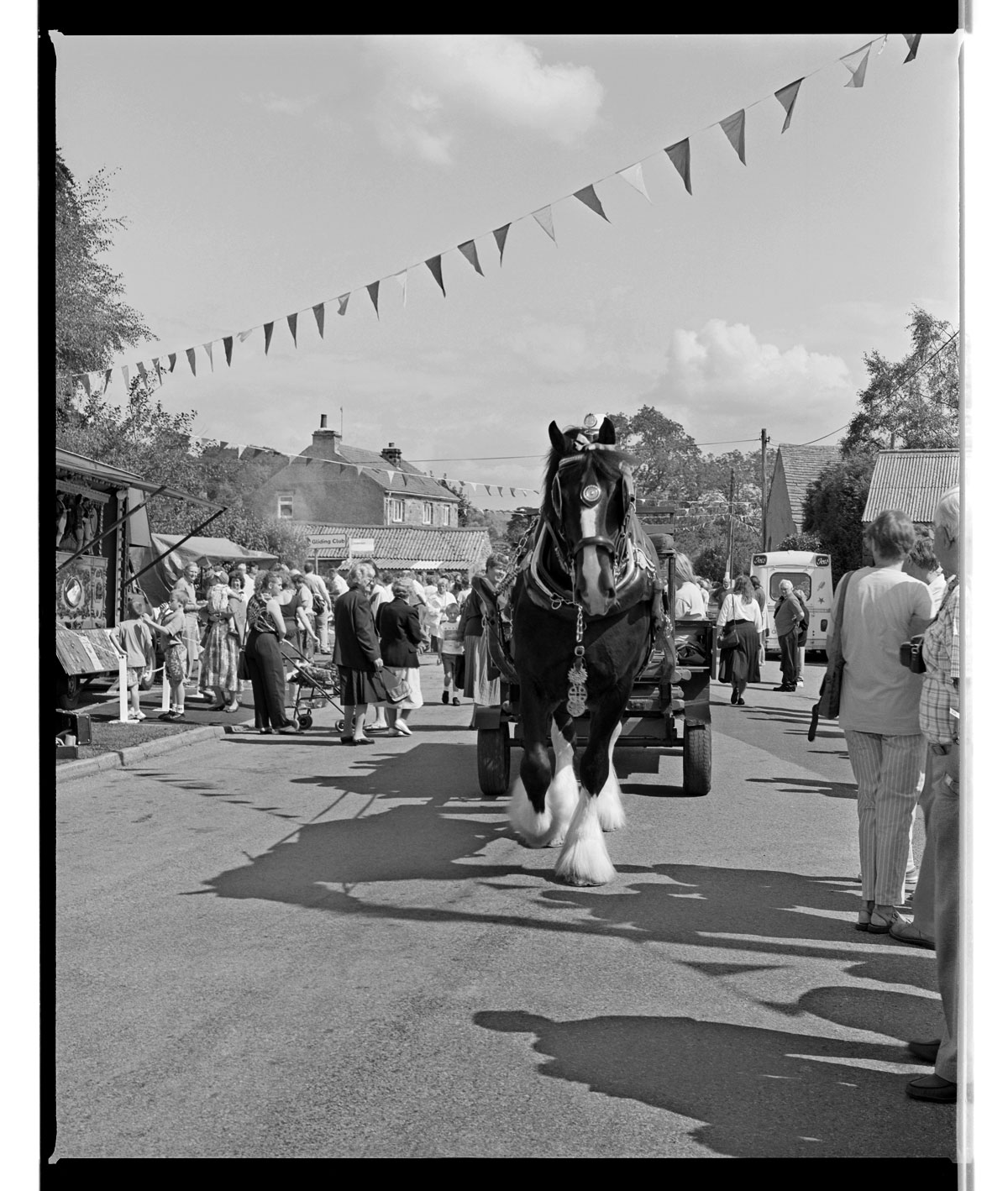
The image of  my mother plays off against a land that is noting an absence – maybe an absence of a certain type of yang force… even the “strong draught horse” seems to come from another time.

My friend and mentor Ian Lobb said of the sequence: “Wow – that is really good Marcus”. Praise I value highly indeed.

The photographs form a sequence and should be viewed horizontally. Please click on the long small image below to see them in this format, and then click again to enlarge the images.

Unfortunately, WordPress only allows vertical presentations of images in this blog format that I am using – but I have still presented them for you to see in the posting below in horizontal form.

Please click on the first image below to see the spacing of the sequence, and click again to enlarge the sequence.

Dr Marcus Bunyan


I am scanning my negatives made during the years 1991-1997 to preserve them in the form of an online archive as a process of active memory, so that the images are not lost forever. These photographs were images of my life and imagination at the time of their making, the ideas I was thinking about and the people and things that surrounded me.

All images © Marcus Bunyan. Please click the photographs for a larger version of the image. Please remember these are just straight scans of the prints, all full frame, no cropping !

Photographs are available from this series for purchase. As a guide, a vintage 8″ x 10″ silver gelatin print costs $700 plus tracked and insured shipping. For more information please see my store web page.
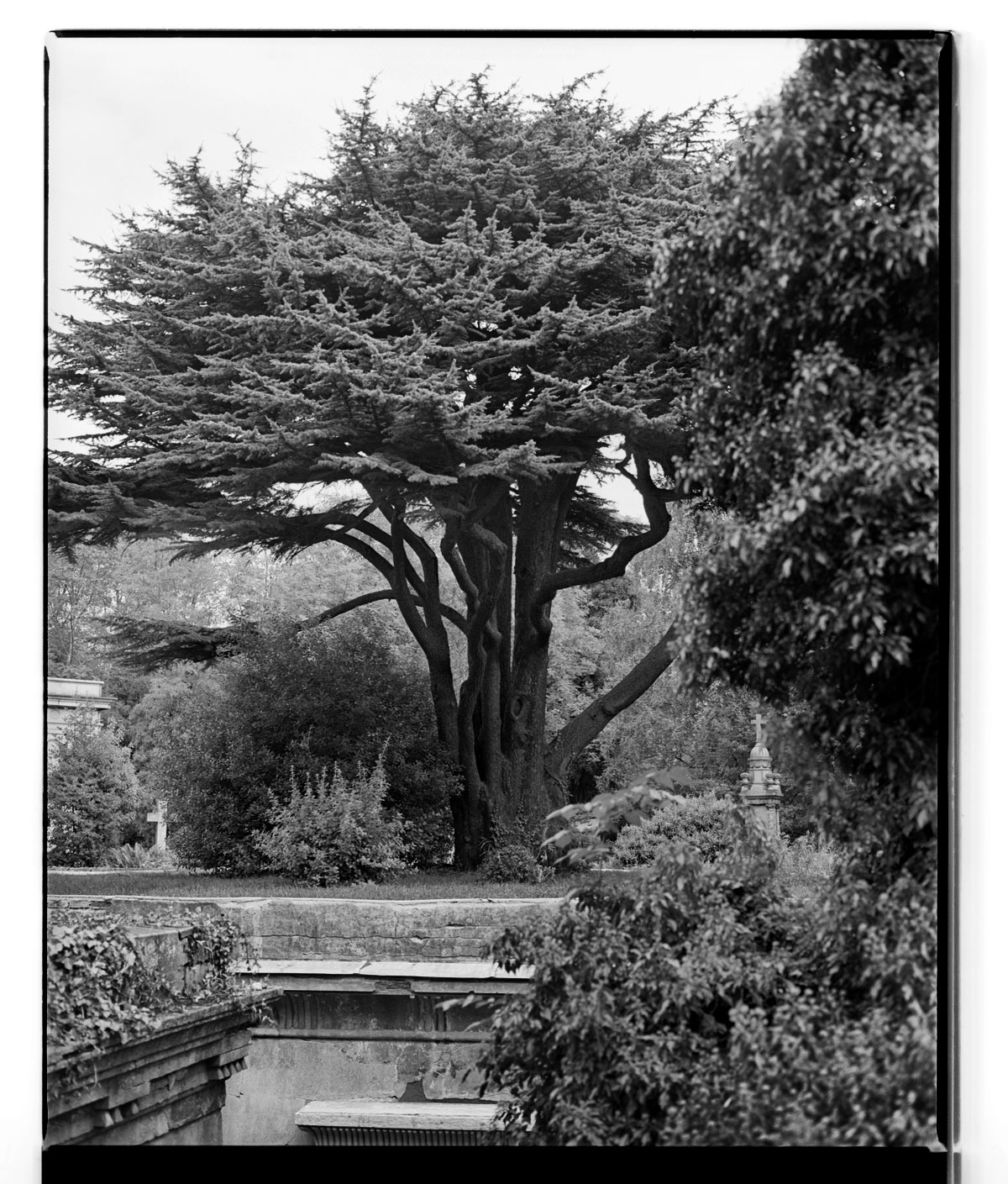


Marcus Bunyan (Australian, b. 1958) 'England 1994' second sequence


Marcus Bunyan (Australian, b. 1958)
England
1994
Second sequence


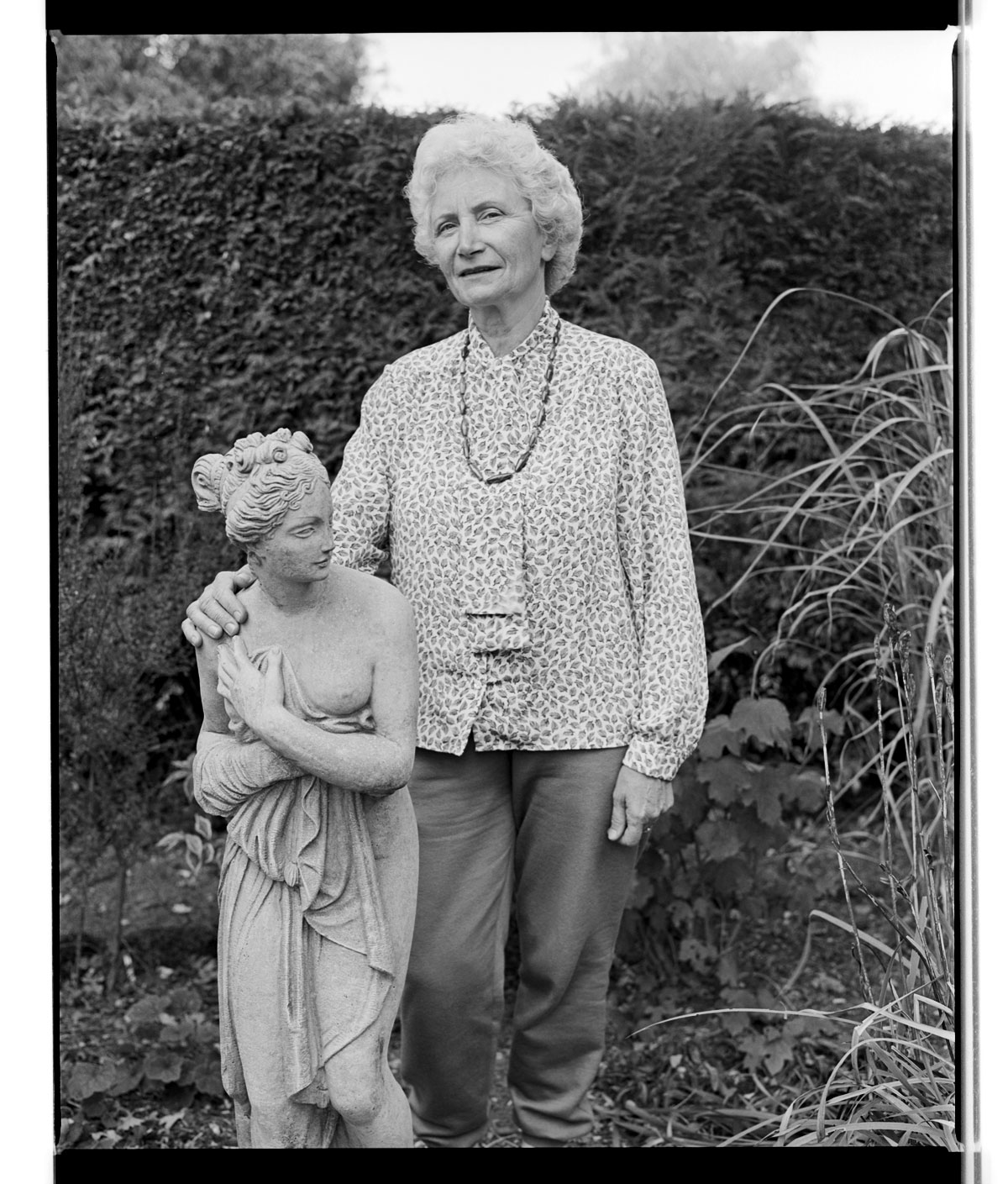
Marcus Bunyan (Australian, b. 1958) 'Maman' 1994


Marcus Bunyan (Australian, b. 1958)
Maman
1994
Gelatin silver print


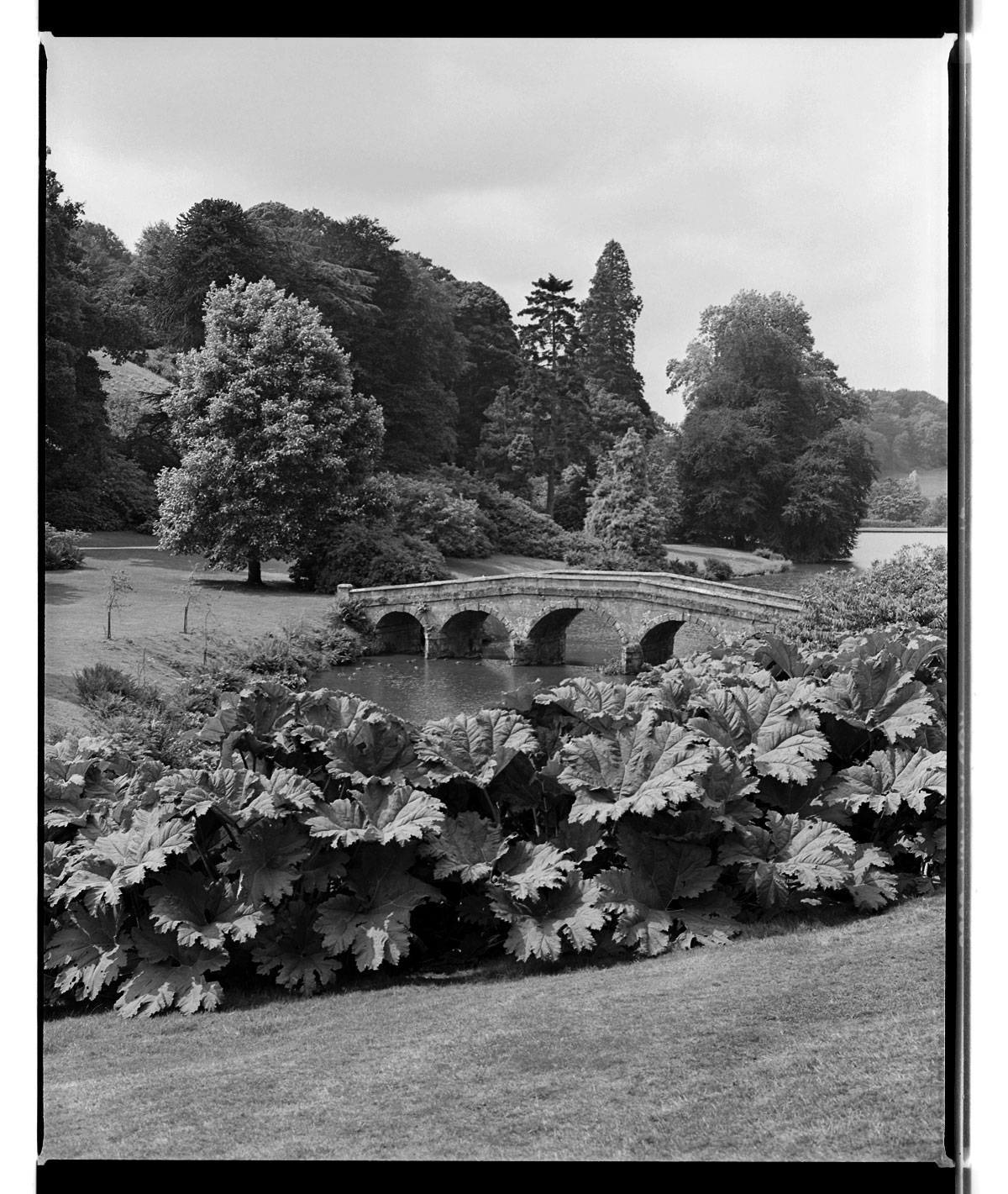
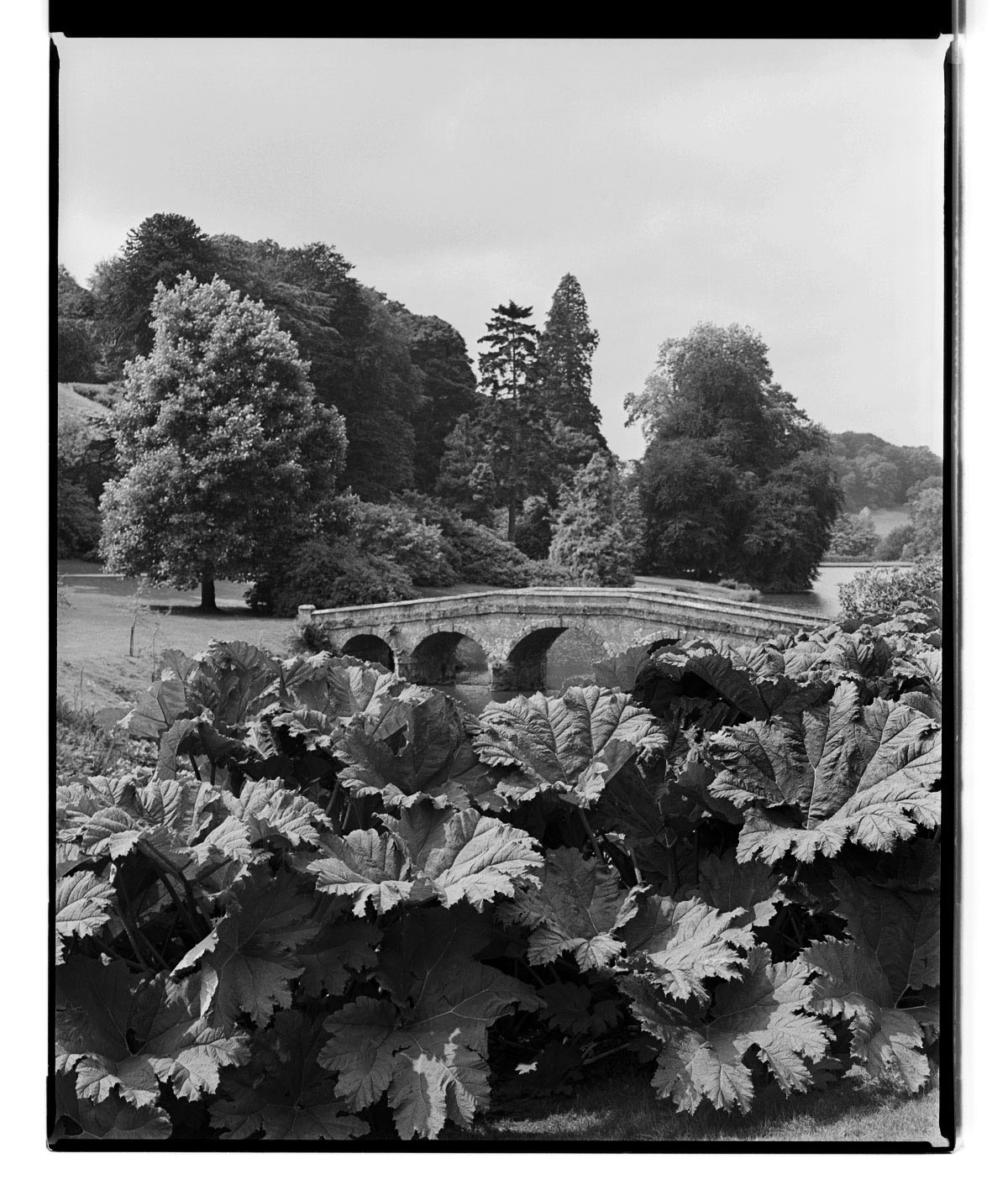
Marcus Bunyan (Australian, b. 1958) 'Bridge, Chatsworth House' 1994


Marcus Bunyan (Australian, b. 1958)
Bridge, Chatsworth House
1994
Gelatin silver print


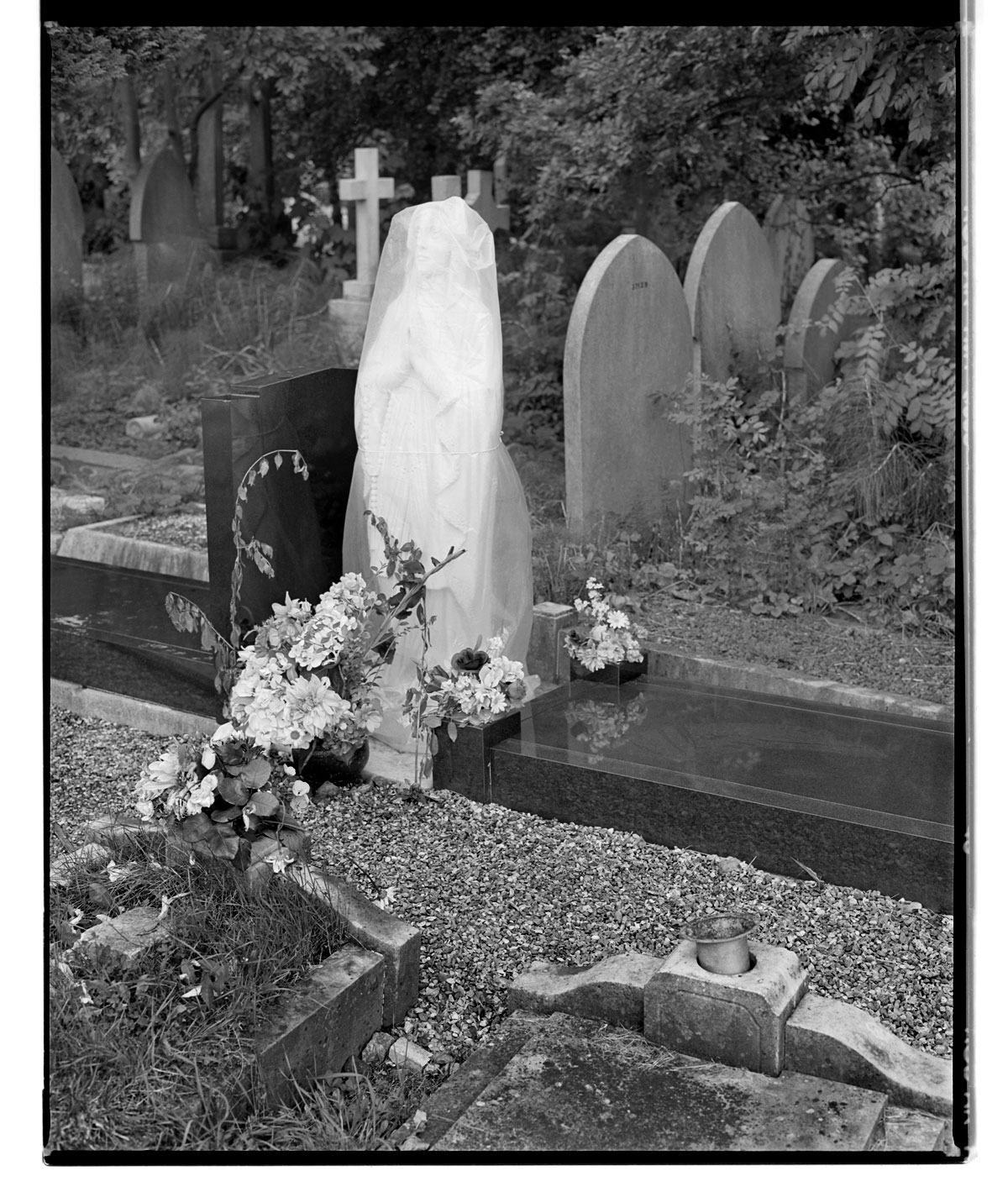
Marcus Bunyan (Australian, b. 1958) 'Covered figure with graves' 1994


Marcus Bunyan (Australian, b. 1958)
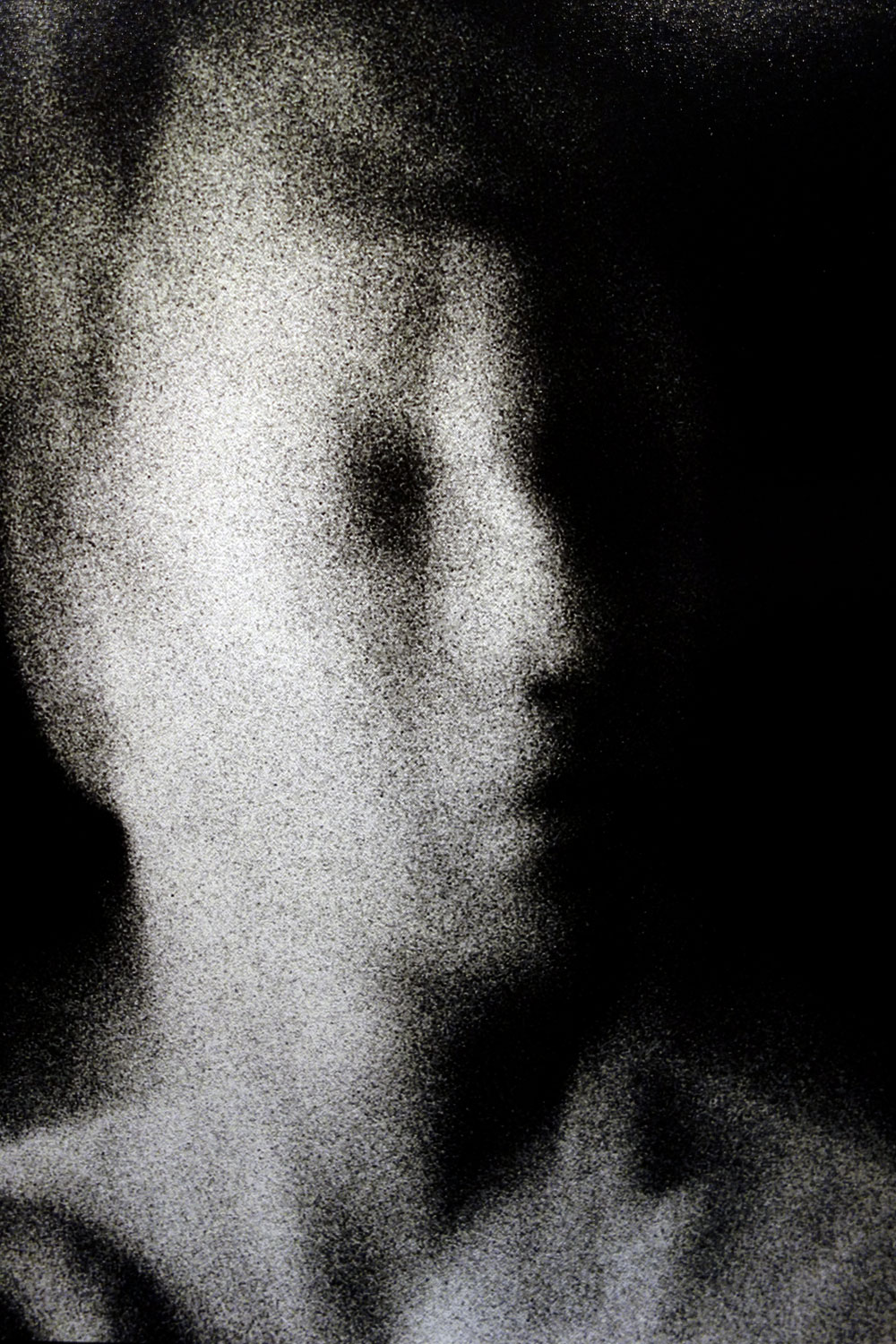
Covered figure with graves
1994
Gelatin silver print


Marcus Bunyan (Australian, b. 1958) 'IOTA, 1893, Napoli, Cantanese Domenico, age 14 with gravestones' 1994


Marcus Bunyan (Australian, b. 1958)
IOTA, 1893, Napoli, Cantanese Domenico, age 14 with gravestones
1994
Gelatin silver print


December 20th 1893, a mounted messenger galloped into Boscastle with news that a large ship was driving ashore, but by 4 pm the 1000-ton iron barque IOTA of Naples had crashed under the great Lye rock off Bossiney Cove. Her crew leapt for the rocks, but two fell and were crushed under the barque’s bilges, while Domenico Cantanese, aged fourteen, was swept away… Only the body of the young cabin boy was recovered from the sea, he’s buried in the windswept graveyard of St Materiana Church Tintagel, where a wooden cross and a lifebuoy bearing his name and ‘Iota, Napoli, 1893’ still marks his grave.


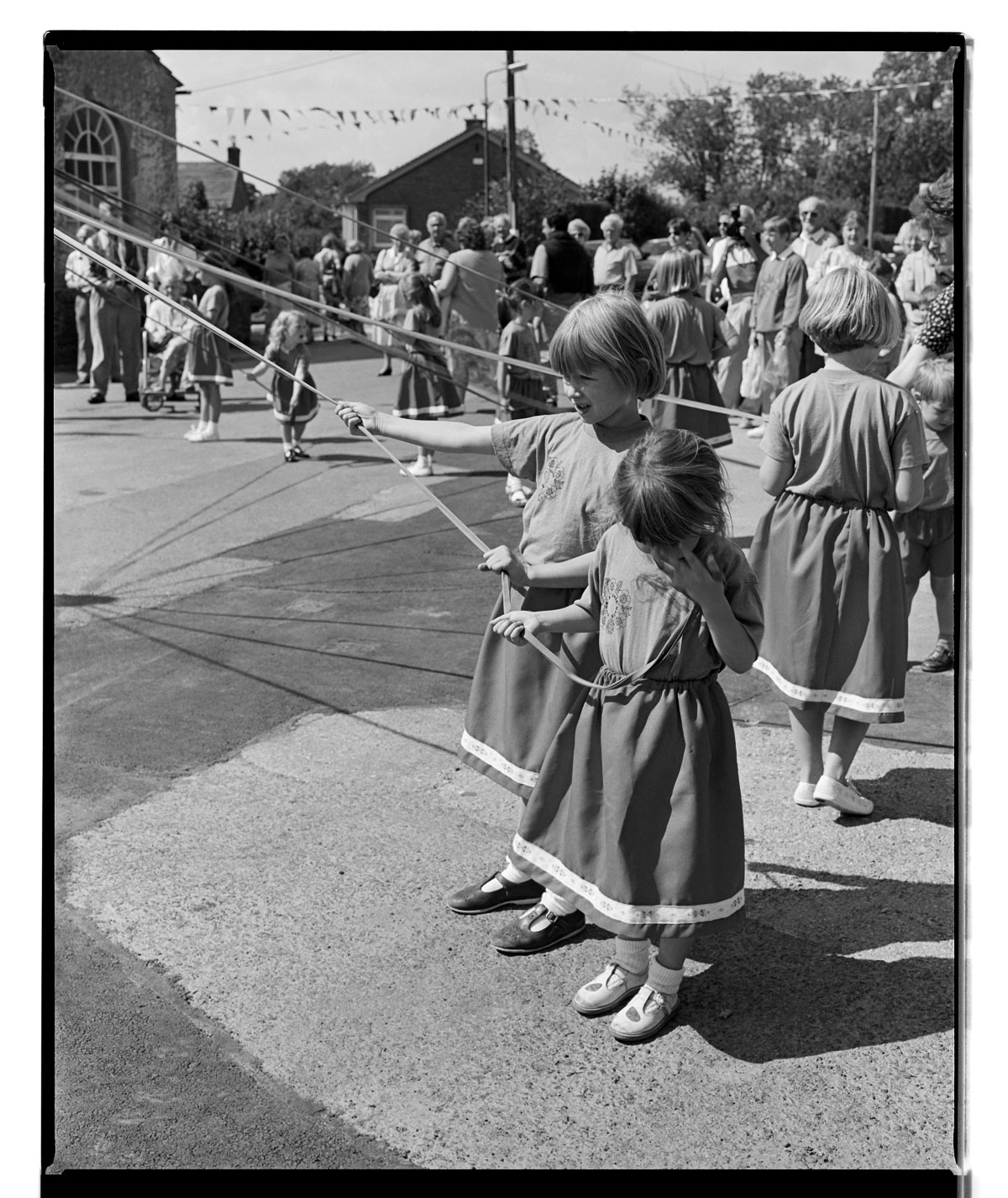
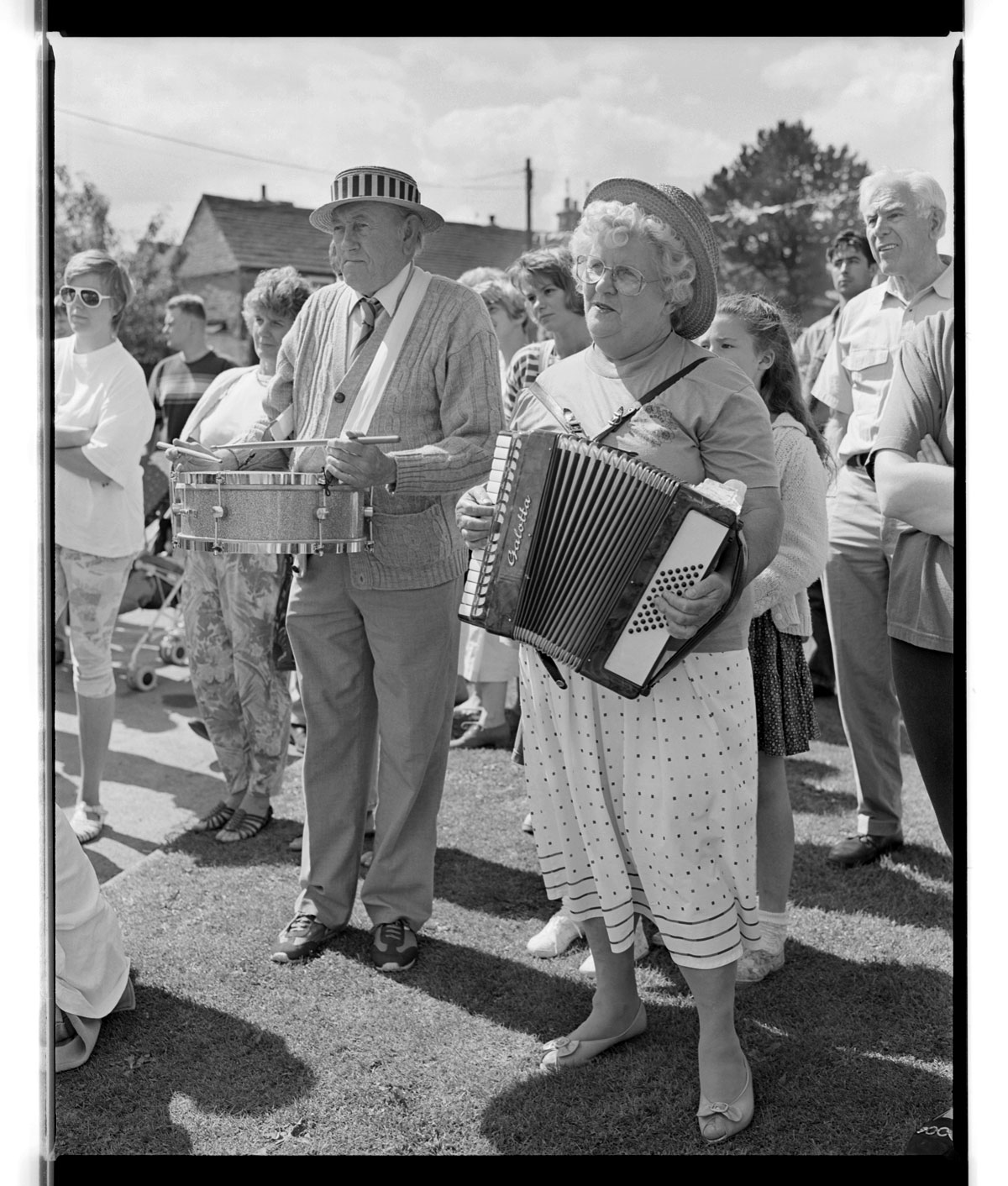
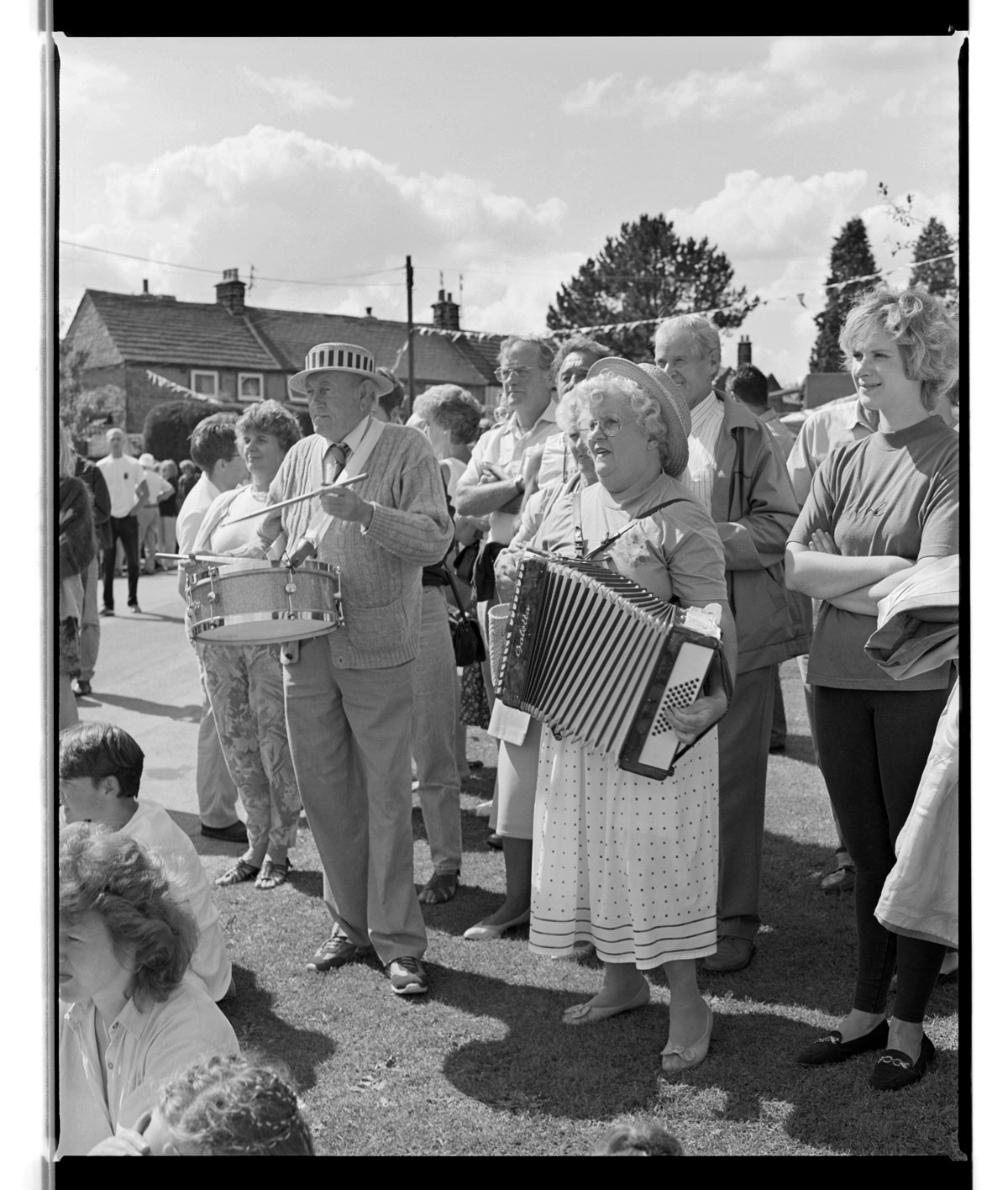
Marcus Bunyan (Australian, b. 1958) 'An English fair' 1994


Marcus Bunyan (Australian, b. 1958)
An English fair
1994
Gelatin silver print


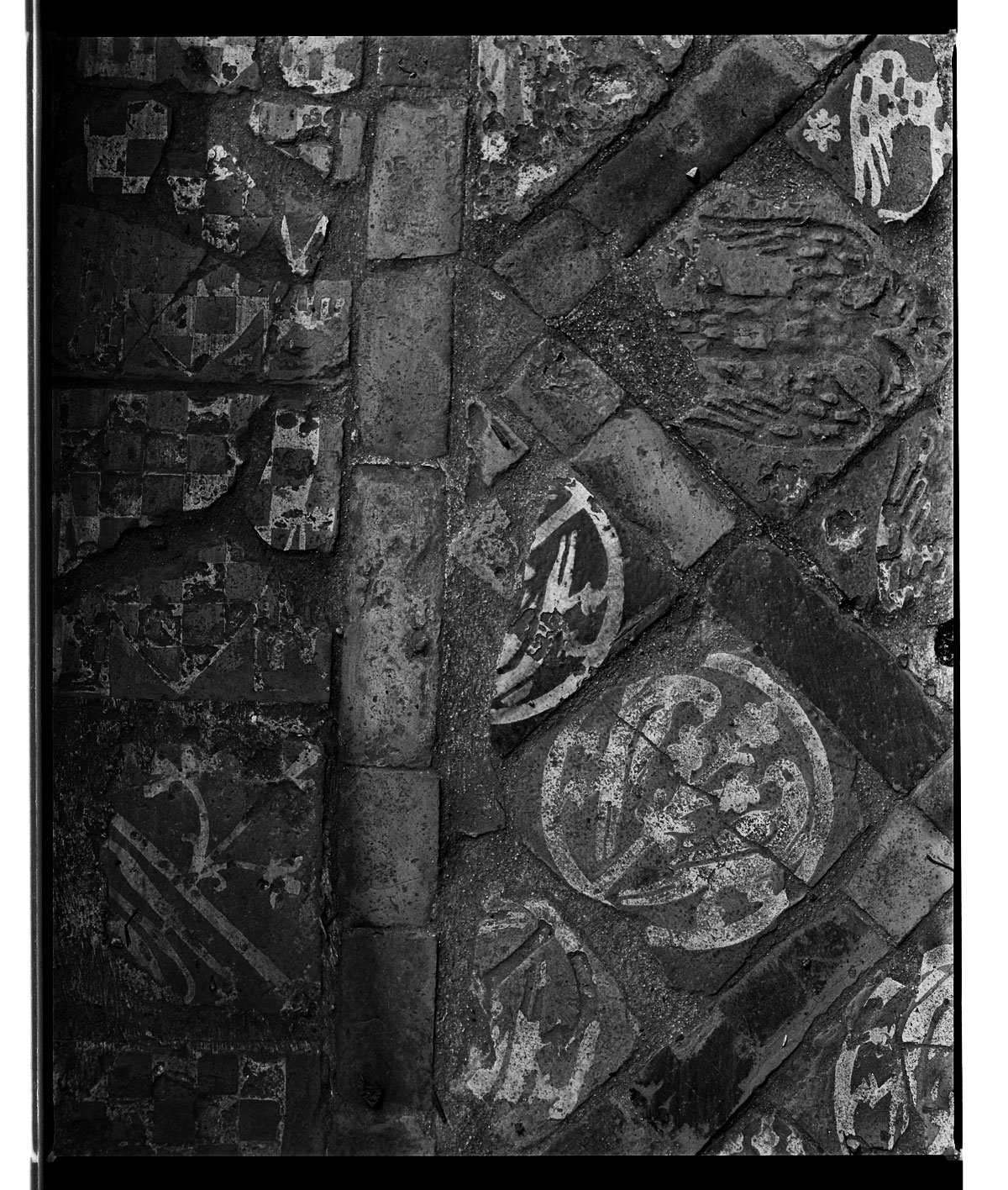
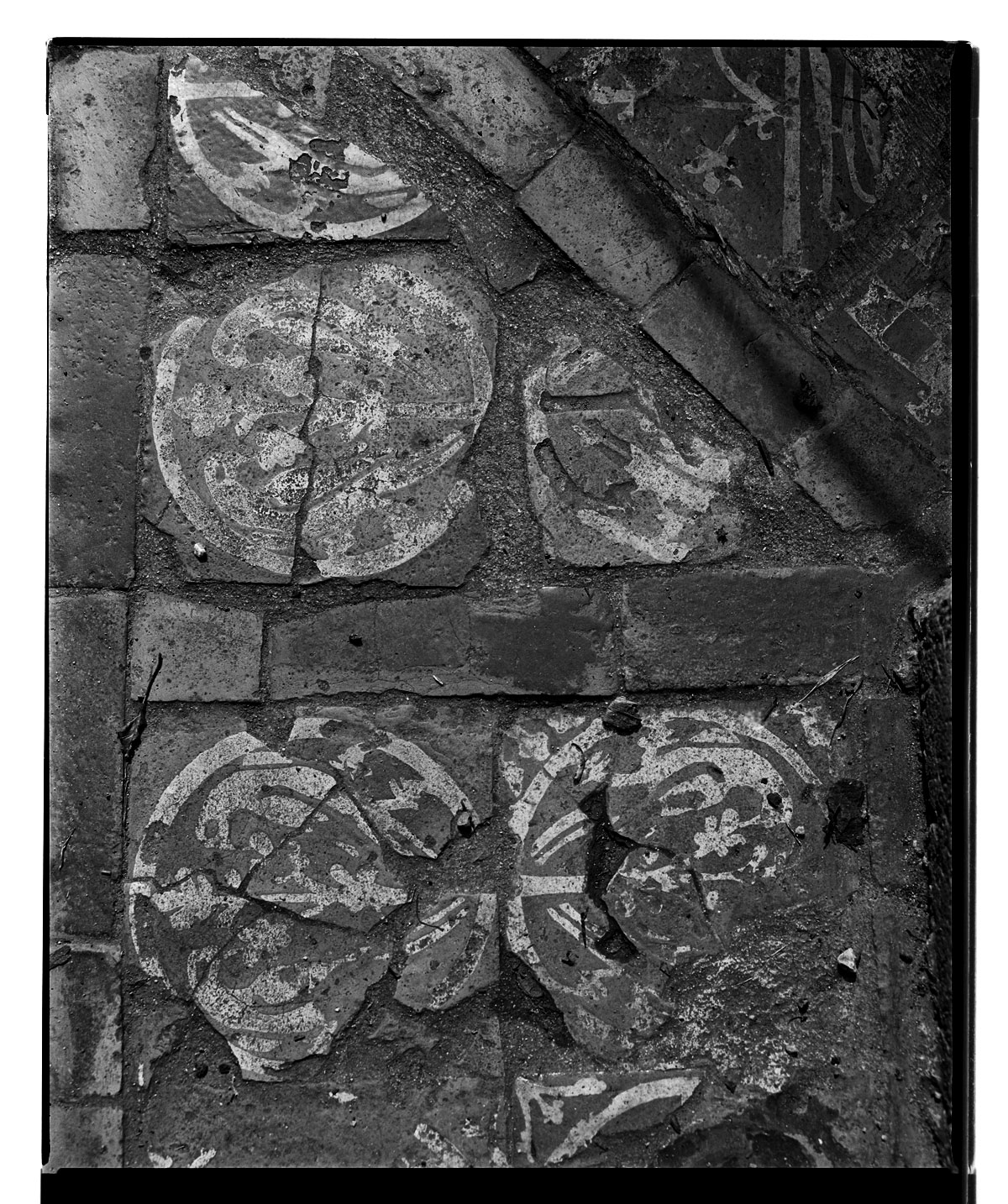
Marcus Bunyan (Australian, b. 1958) 'Medieval tiles' 1994


Marcus Bunyan (Australian, b. 1958)
Medieval tiles
1994
Gelatin silver print


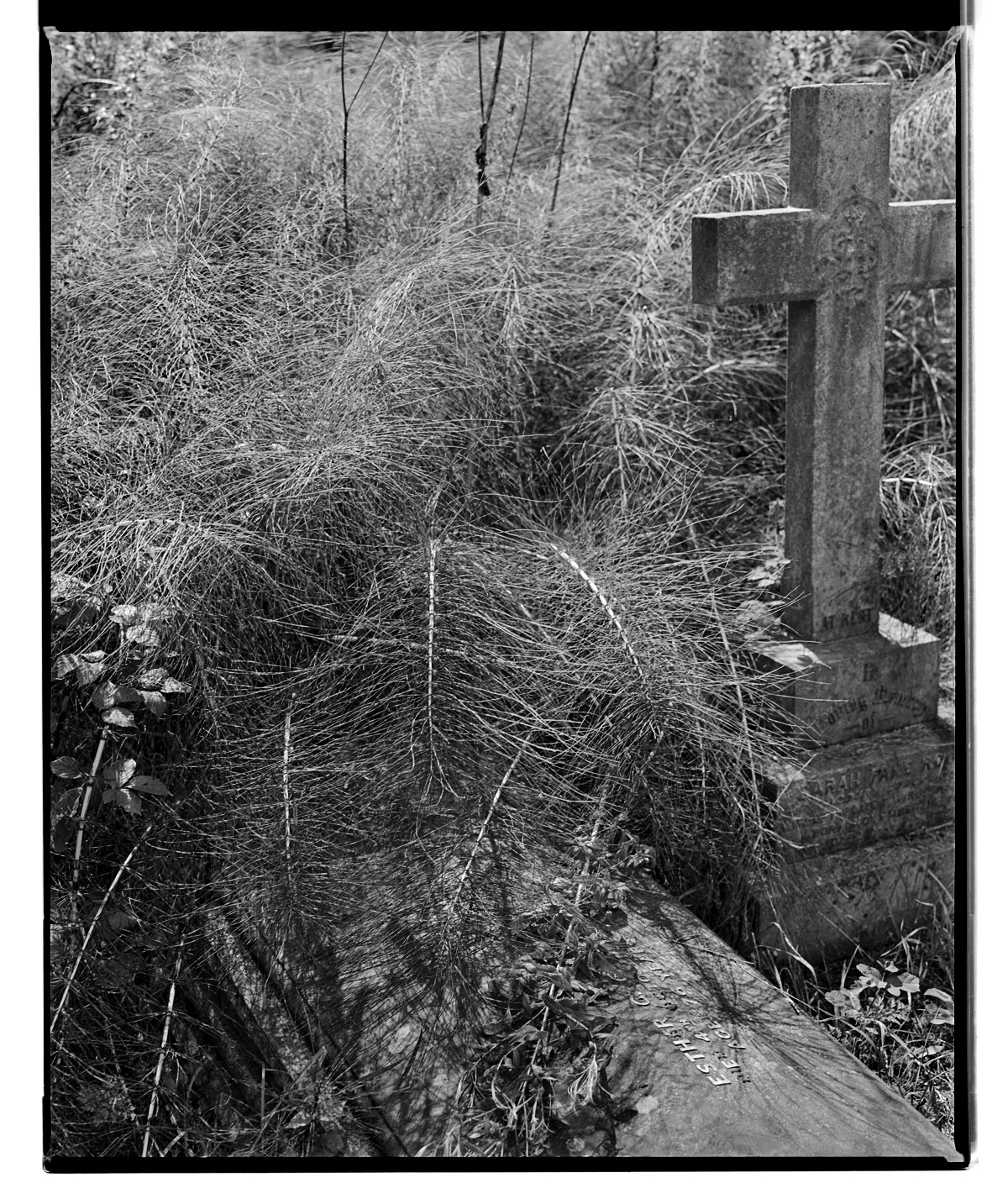
Marcus Bunyan (Australian, b. 1958) 'Esther' 1994


Marcus Bunyan (Australian, b. 1958)
Esther
1994
Gelatin silver print


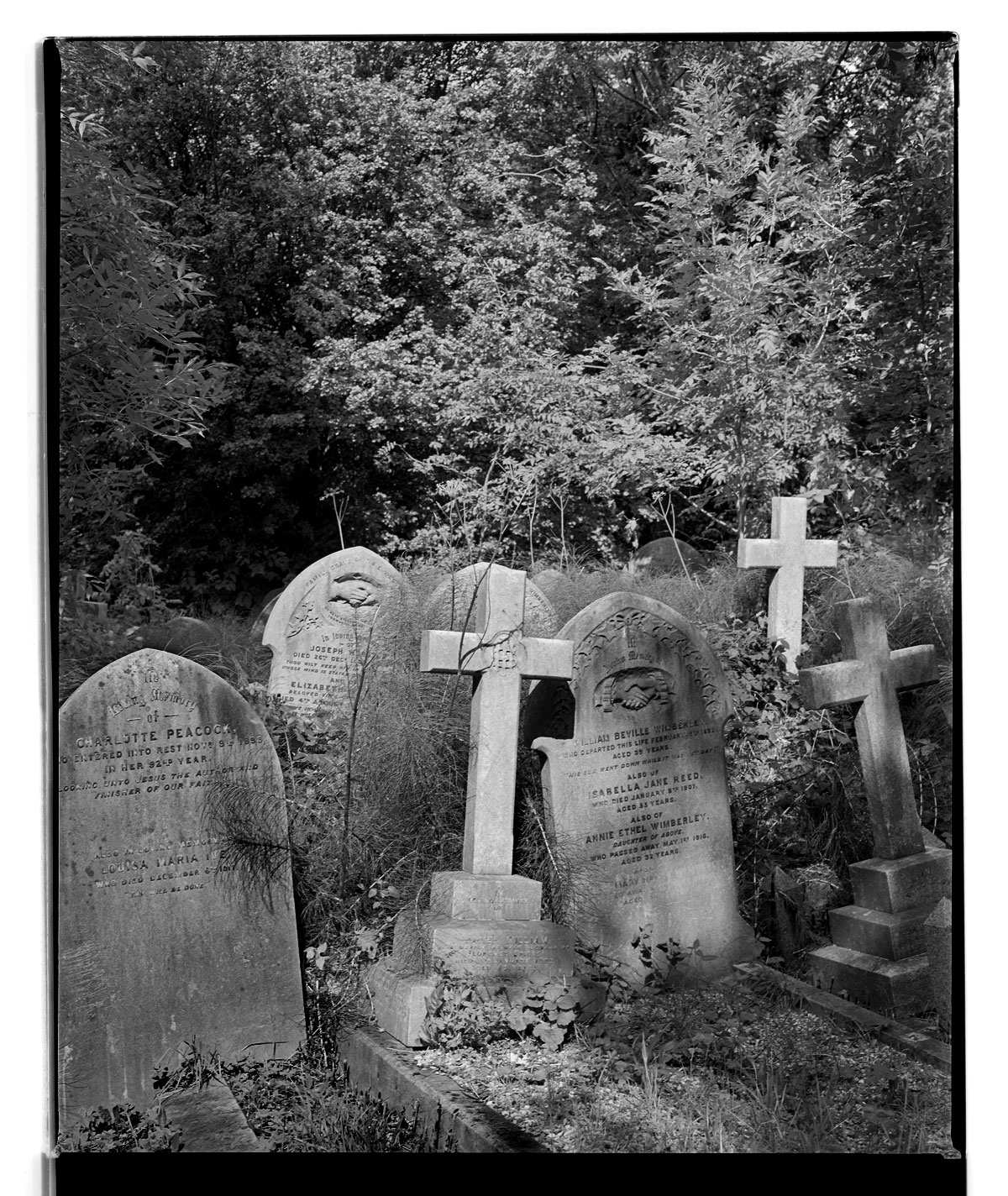
Marcus Bunyan (Australian, b. 1958) 'Three crosses four graves, Highgate Cemetery' 1994


Marcus Bunyan (Australian, b. 1958)
Three crosses four graves, Highgate Cemetery
1994
Gelatin silver print


Marcus Bunyan (Australian, b. 1958) 'An English fair' 1994


Marcus Bunyan (Australian, b. 1958)
An English fair
1994
Gelatin silver print


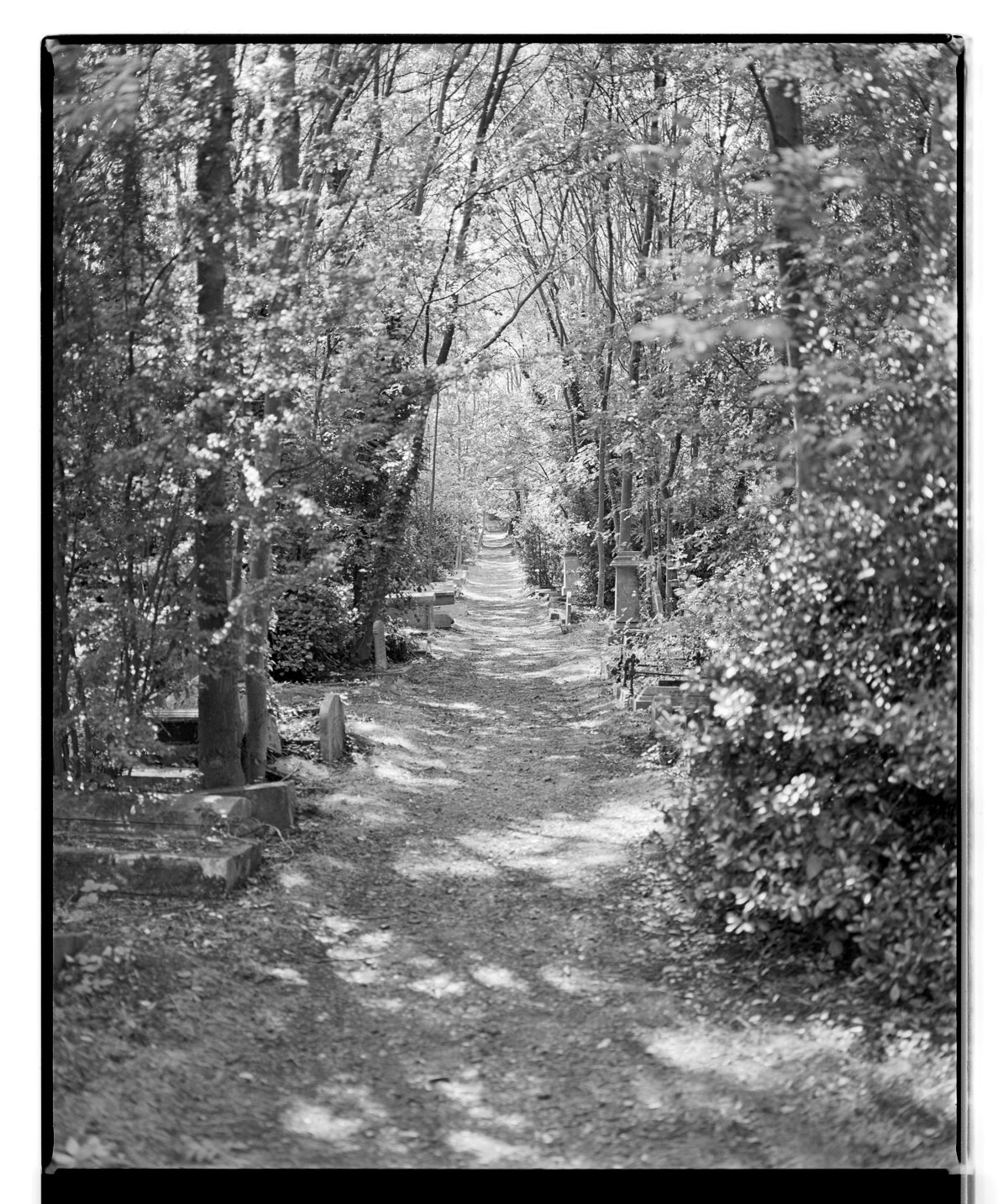
Marcus Bunyan (Australian, b. 1958) 'Death's pathway' 1994


Marcus Bunyan (Australian, b. 1958)
Death’s pathway
1994
Gelatin silver print


Marcus Bunyan (Australian, b. 1958) 'Descending' 1994


Marcus Bunyan (Australian, b. 1958)
Descending
1994
Gelatin silver print


Marcus Bunyan (Australian, b. 1958) 'Landscape, Chatsworth House' 1994


Marcus Bunyan (Australian, b. 1958)
Landscape, Chatsworth House
1994
Gelatin silver print


Marcus Bunyan (Australian, b. 1958) 'An English fair' 1994


Marcus Bunyan (Australian, b. 1958)
An English fair
1994
Gelatin silver print


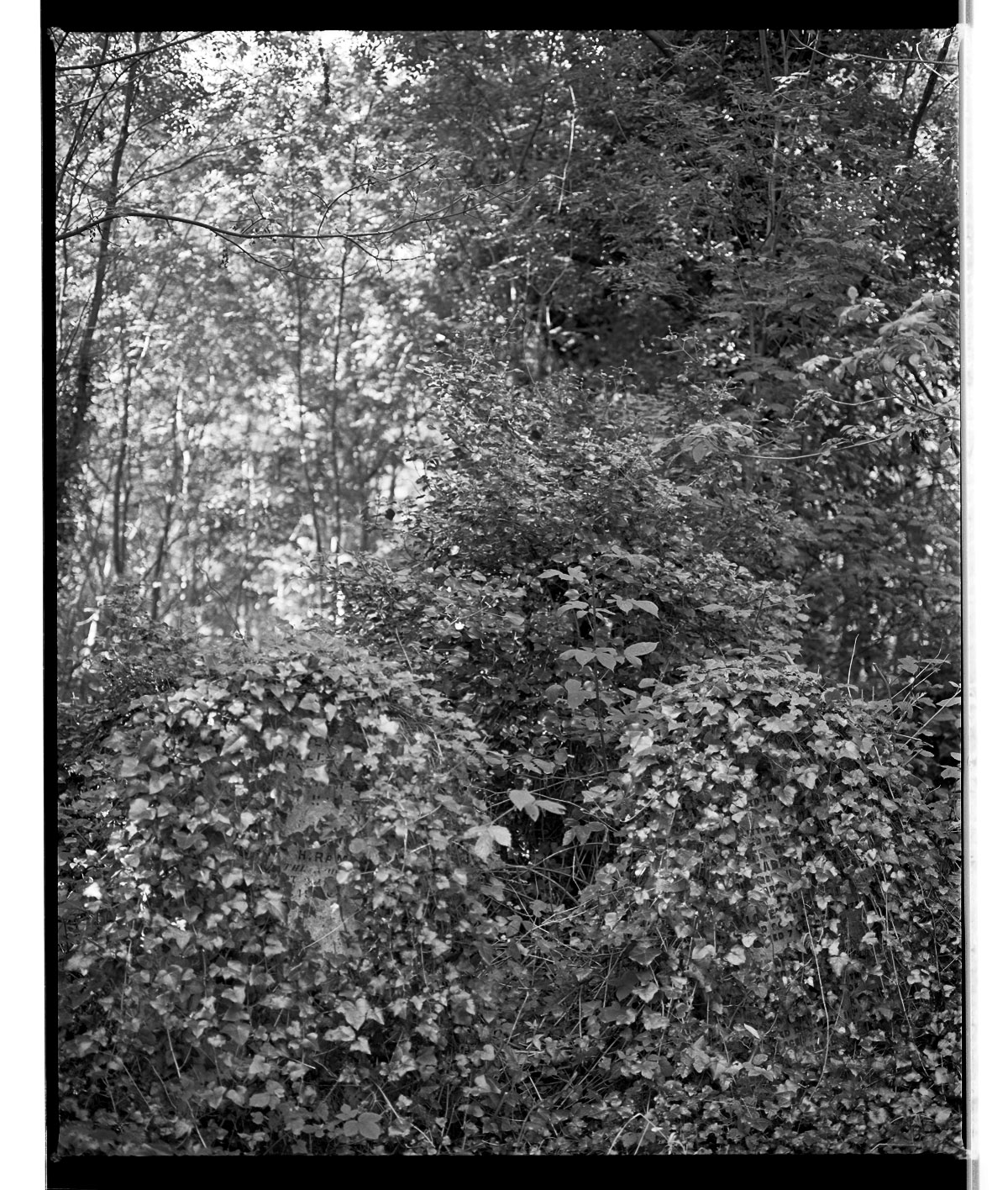
Marcus Bunyan (Australian, b. 1958) 'Two graves, Highgate Cemetery' 1994


Marcus Bunyan (Australian, b. 1958)
Two graves, Highgate Cemetery
1994
Gelatin silver print


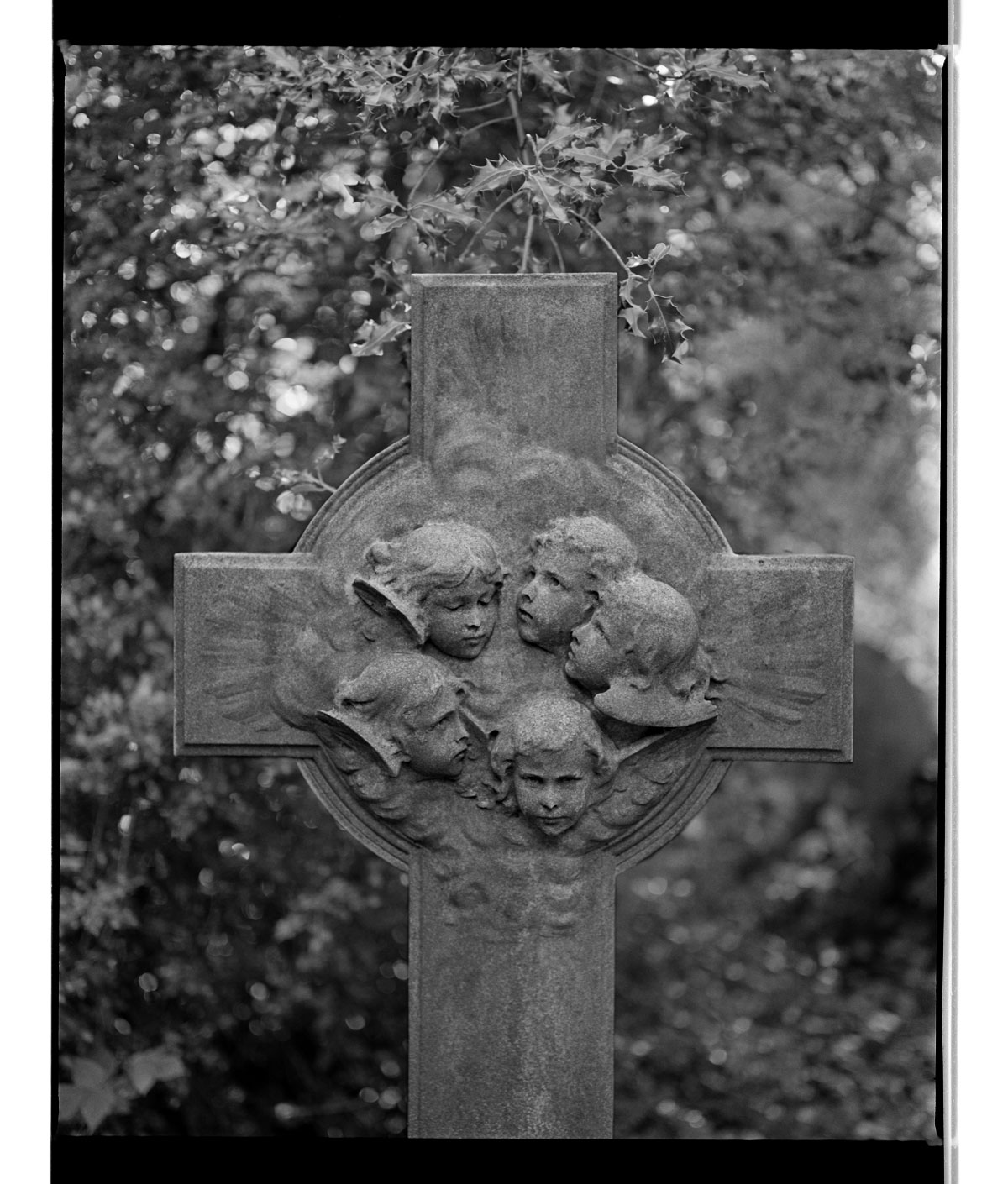
Marcus Bunyan (Australian, b. 1958) 'Five angels' 1994


Marcus Bunyan (Australian, b. 1958)
Five angels
1994
Gelatin silver print


Marcus Bunyan (Australian, b. 1958) 'An English fair' 1994


Marcus Bunyan (Australian, b. 1958)
An English fair
1994
Gelatin silver print


Marcus Bunyan (Australian, b. 1958) 'Medieval tiles' 1994


Marcus Bunyan (Australian, b. 1958)
Medieval tiles
1994
Gelatin silver print


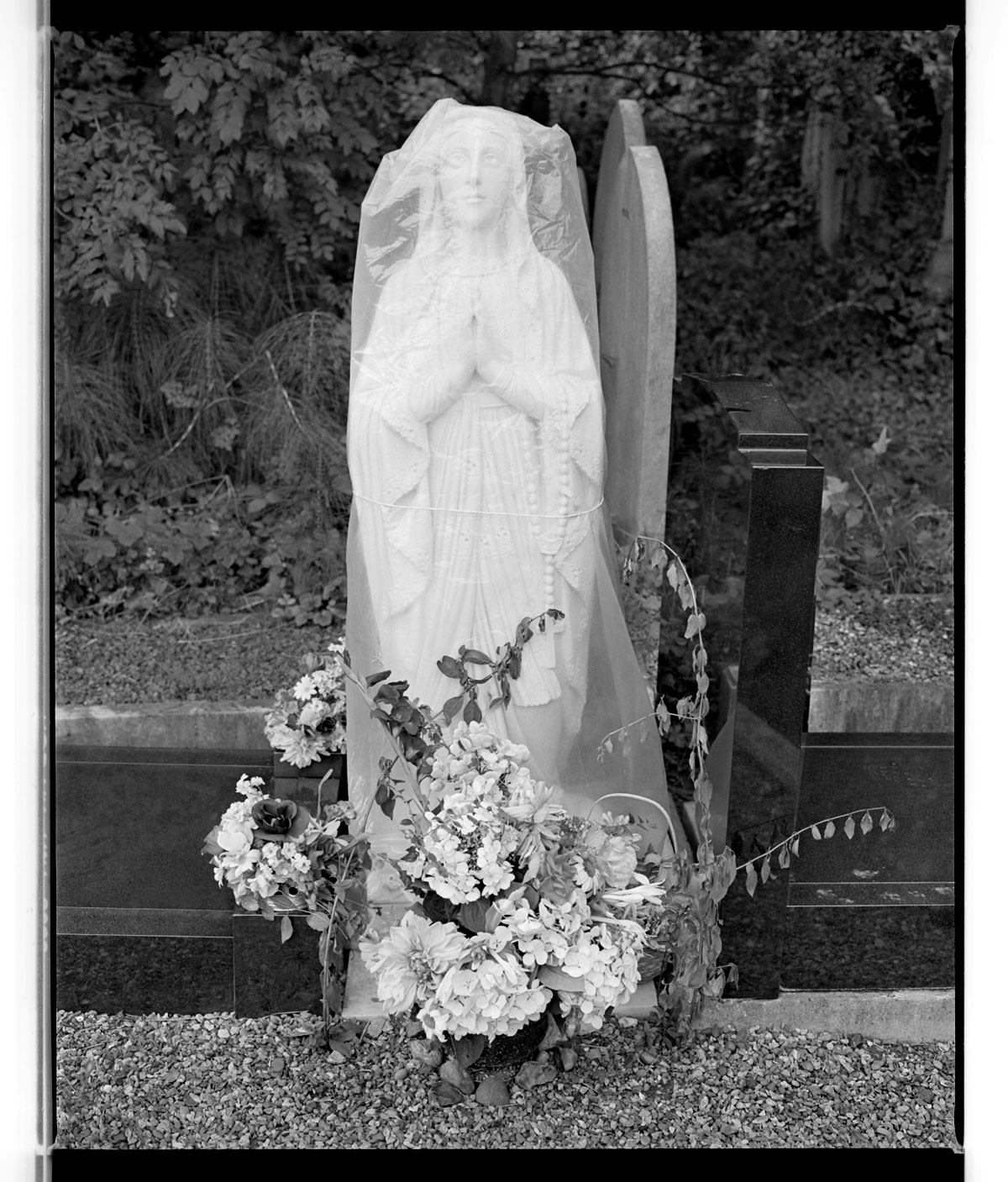
Marcus Bunyan (Australian, b. 1958) 'Covered figure with flowers' 1994


Marcus Bunyan (Australian, b. 1958)
Covered figure with flowers
1994
Gelatin silver print


Marcus Bunyan (Australian, b. 1958) 'An English fair' 1994


Marcus Bunyan (Australian, b. 1958)
An English fair
1994
Gelatin silver print


Marcus Bunyan (Australian, b. 1958) 'Tree, Highgate Cemetery' 1994


Marcus Bunyan (Australian, b. 1958)
Tree, Highgate Cemetery
1994
Gelatin silver print


Marcus Bunyan black and white archive page

LIKE ART BLART ON FACEBOOK

Back to top

Exhibition: ‘The world is beautiful: photographs from the collection’ at the National Gallery of Australia, Canberra

Exhibition dates: 4th December, 2015 – 10th April, 2016

Curators: Dr. Shaune Lakin, Senior Curator of Photography at NGA with collaborator Anne O’Hehir, Curator of Photography at NGA


Man Ray (United States of America 1890 - France 1976) 'No title (Woman with closed eyes)' c. 1928 from the exhibition 'The world is beautiful: photographs from the collection' at the National Gallery of Australia, Canberra, Dec 2015 - April 2016


Man Ray (United States of America 1890 – France 1976)
No title (Woman with closed eyes)
c. 1928
Gelatin silver photograph
Not signed, not dated. Stamp, verso, l.r., “Man Ray / 81 bis. Rue / Campagne Premiere / Paris / XIV”.
Image: 8.9 x 12.8cm
National Gallery of Australia, Canberra, purchased 1984


Despite a focus on the camera’s relationship to the beauty and pure form of the modern world – “the attraction and charm of the surface” – these photographs are more than just being skin deep. In their very straightforwardness the photographs propose a “rigorous sensitivity to form revealed patterns of beauty and order in the natural and man-made alike.” But more than the portrayal of something we would not see if it were not for the eye of the photographer, the lens of the camera, the speed of the film, the sensitivity of the paper, the design of the architect, the genetics of nature … is the mystery of life itself.

Modernist structures and mass-produced objects can never beat a good mystery. Just look at Man Ray’s Woman with closed eyes (c. 1928, above) or the look in the eyes of Robert Frank’s son, Pablo. You can never pin that down.

While form may be beauty, mystery will always be beautiful.

Dr Marcus Bunyan


Please click on the photographs to view a larger version of the image.


Walker Evans (United States of America, 1903-1975) 'Graveyard and steel mill, Bethlehem, Pennsylvania' 1935 from the exhibition 'The world is beautiful: photographs from the collection' at the National Gallery of Australia, Canberra, Dec 2015 - April 2016


Walker Evans (United States of America, 1903-1975)
Graveyard and steel mill, Bethlehem, Pennsylvania
1935
Gelatin silver photograph
Image: 19.1 h x 24.0cm
Sheet: 20.2 x 25.2cm
National Gallery of Australia, Canberra, purchased 1980


The world is beautiful is an exhibition of photographs taken over the last 100 years from the National Gallery of Australia’s magnificent photography collection, including work by Diane Arbus, Henri Cartier-Bresson, Max Dupain, Bill Henson, Robert Mapplethorpe, Man Ray, Cindy Sherman and many more.

It draws its title from one of the twentieth-century’s great photographic moments, the publication of Albert Renger-Patzsch’s book The world is beautiful in 1928. Renger-Patzsch’s approach embodied his belief that ‘one should surely proceed from the essence of the object and attempt to represent it with photographic means alone’.

Inspired by this confidence in the medium, the exhibition looks at the way the camera interacts with things in the world. One of photography’s fundamental attributes is its capacity to adopt a range of relationships with its subject, based on the camera’s physical proximity to it. Indeed, one of the most basic decisions that a photographer makes is simply where he or she places the camera. The pictures in this exhibition literally take you on a photographic trip, from interior worlds and microscopic detail to the cosmic: from near to far away.

Together, these photographs capture some of the delight photographers take in turning their cameras on the world and re-imaging it, making it beautiful through the power of their vision and their capacity to help us see the world in new ways.”

Text from the National Gallery of Australia website


Near

Close up, the world can be surprising. There is an undeniable intensity and focus that comes with getting up close to people and objects. It is rude to stare, but photography has no such scruples.

Pioneers of the medium attempted to photograph organic forms through a microscope, making once-hidden worlds accessible. The pleasure photographers take in getting up close to their subject has followed the medium’s progress. This was especially the case during the twentieth century, when advances in photographic technology and profound shifts in our relationship to space brought about by events such as war often turned our attention away from the outside world.

For many photographers, the camera’s capacity to subject people and objects to close scrutiny has provided a way of paring back vision to its essence, to view the world unencumbered by emotion and sentiment. For others, getting up close is not just about physical proximity; it is also about psychological and emotional states that are otherwise difficult to represent. Experiences such as intimacy, love and emotional connection, as well as disquiet, anxiety and hostility, can all be suggested through the use of the close-up. Photographers have also used it literally to turn inwards, escaping into the imagination to create dreamworlds. The camera-eye really can see what the human eye cannot.

Text from the National Gallery of Australia website


Albert Renger-Patzsch (German, 1897-1966) 'Mantelpavian [Hamadryas Baboon]' c. 1925 from the exhibition 'The world is beautiful: photographs from the collection' at the National Gallery of Australia, Canberra, Dec 2015 - April 2016


Albert Renger-Patzsch (German, 1897-1966)
Mantelpavian [Hamadryas Baboon]
c. 1925
Gelatin silver photograph
23.8 x 16.8cm
National Gallery of Australia, Canberra


“In photography one should surely proceed from the essence of the object and attempt to represent it with photographic terms alone.”

~ Albert Renger-Patzsch


Renger-Patzsch’s primary interest was in the object as a document, removed from its usual context and unencumbered with sentiment. Die Welt ist schön [The world is beautiful], published in Munich in 1928, is one of the great photographic books in the history of photography and its influence across the world was profound. It is an astounding study of the world, celebrating beauty wherever the photographer found it – in modernist structures and mass-produced objects or in plants and animals. The connection and continuity of industry to the natural world is conveyed by emphasising underlying structural and formal similarities. The Gallery has a major holding of works by Renger-Patzsch, including a copy of Die Welt ist schön and 121 vintage prints, most of which were reproduced in the book.

Renger-Patzsch was always firmly committed to the principle of the photograph as a document or record of an object. While the title for his most famous contribution to photography came from his publisher, he wanted his now-iconic 1928 book Die Welt ist schön (The world is beautiful) to be titled simply Die Dinge (Things). In 1937 he wrote that the images in his book, ‘consciously portray the attraction and charm of the surface’. Indeed, the power of these pictures resides in their straightforwardness.

Text © National Gallery of Australia, Canberra


“German photographer Albert Renger-Patzsch was a pioneering figure in the New Objectivity movement, which sought to engage with the world as clearly and precisely as possible.

Rejecting the sentimentality and idealism of a previous generation, Neue Sachlichkeit (New Objectivity) emerged as a tendency in German art, architecture and literature in the 1920s. Applying this attitude to the field of photography, Renger-Patzsch espoused the camera’s ability to produce a faithful recording of the world. ‘There must be an increase in the joy one takes in an object, and the photographer should be fully conscious of the splendid fidelity of reproduction made possible by his technique’, he wrote.

This selection reflects the range of subjects that Renger-Patzsch returned to throughout his career. It includes his early wildlife and botanical studies, images of traditional craftsmen, formal studies of mechanical equipment, commercial still lifes, and landscape and architectural studies. His images of the Ruhr region, where he moved in 1928, document the industrialisation of the area in almost encyclopaedic detail. All of his work demonstrates his sustained interest in the camera’s relationship to the beauty and complexity of the modern world.

In 1928 Renger-Patzsch published The World is Beautiful, a collection of one hundred photographs whose rigorous sensitivity to form revealed patterns of beauty and order in the natural and man-made alike. Embodying a new, distinctly modern way of looking at the world, the book established Renger-Patzsch as one of the most influential photographers of the twentieth century.”

Text by Emma Lewis on the Tate website [Online] Cited 01/04/2016. No longer available online


Edward Weston (American, 1886-1958) 'Guadalupe de Rivera, Mexico' 1924


Edward Weston (American, 1886-1958)
No title (Guadalupe, Mexico, 1924): from “Edward Weston fiftieth anniversary portfolio 1902-1952”
1924
Gelatin silver photograph
20.7 x 17.8cm
National Gallery of Australia, Canberra, purchased 1981


In 1923 Weston travelled from San Francisco to Mexico City with his son, Chandler and his model and lover, Tina Modotti. The photographs he made there represented a startling, revolutionary breakthrough. Everything got stripped down to its essence, with objects isolated against neutral backgrounds. For these heroic head shots, he moved out of the studio, photographing in direct sunlight, from below and with a hand-held camera. They are monumental but still full of life: Weston was excited by the idea of capturing momentary expressions, in people he found ‘intense and dramatic’.

Text © National Gallery of Australia, Canberra


Robert Frank (Swiss-American, 1924-2019) 'Pablo' 1959


Robert Frank (Swiss-American, 1924-2019)
Pablo
1959
Gelatin silver photograph
Image: 20.8 x 31.0cm
Sheet: 27.0 x 35.4cm
National Gallery of Australia, Canberra, purchased 1980


Frank set out on a two-year road trip across the States in 1955. The images he made of race and class divisions, poverty, alienated youth and loneliness expose America’s dark soul. Others, such as this haunting image of his son, Pablo, were more personal. A selection appeared in The Americans, published in Paris in 1958 and in the States the following year. Many saw it as a bitter indictment of the American Dream, others saw an evocative, melancholic vision of humanity that is deeply moving. As Jack Kerouac commented in his introduction to the American edition, Frank ‘sucked a sad, sweet, poem out of America’

Text © National Gallery of Australia, Canberra


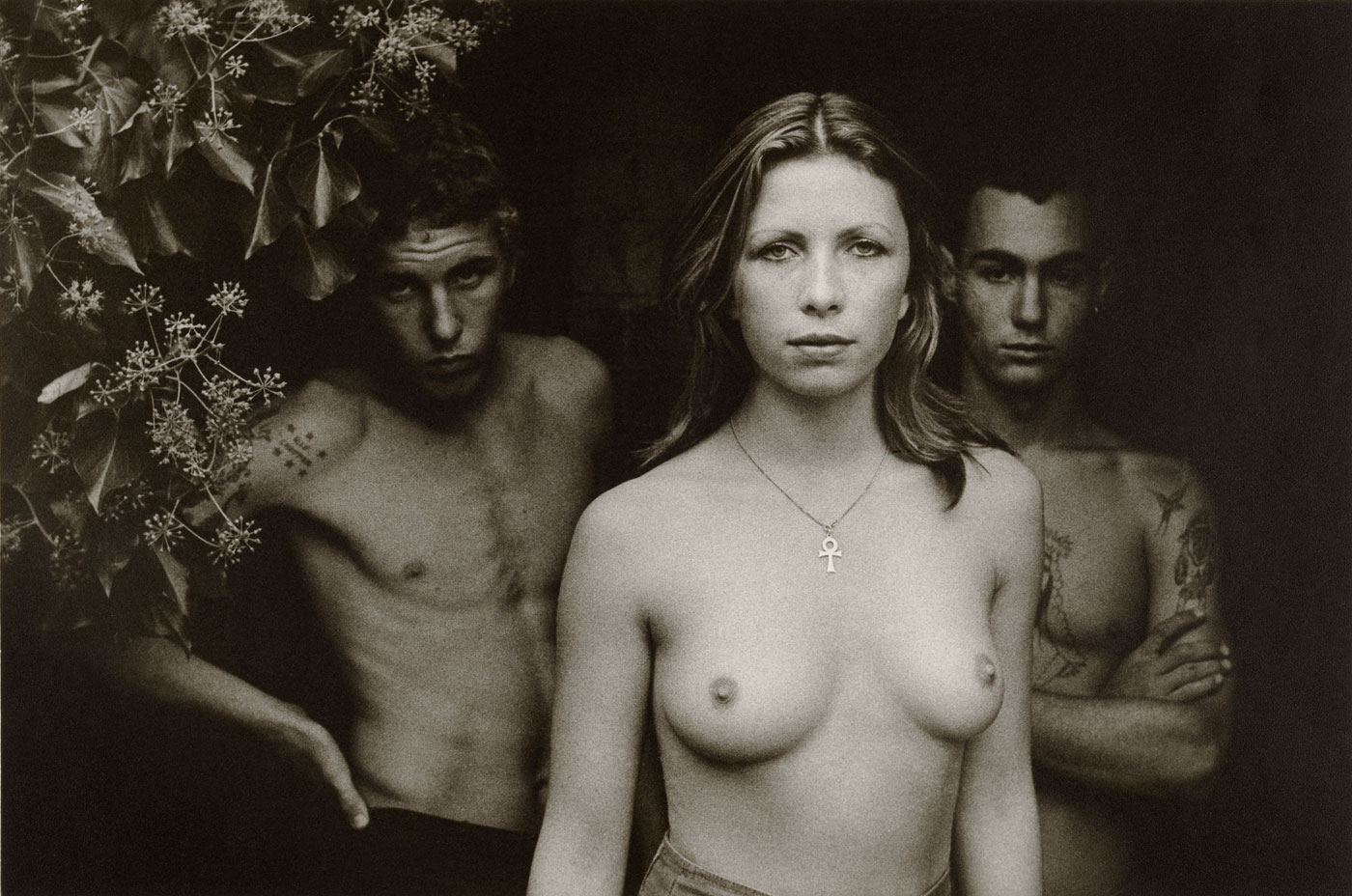
Carol Jerrems (Australian, 1949-1980) 'Vale Street' 1975


Carol Jerrems (Australian, 1949-1980)
Vale Street
1975
St Kilda, Melbourne, Victoria, Australia
Gelatin silver photograph
Image: 20.2 x 30.3cm
Sheet: 40.5 x 50.4cm
Gift of the Philip Morris Arts Grant 1982
© Ken Jerrems and the Estate of Lance Jerrems
National Gallery of Australia, Canberra


“I try to reveal something about people, because they are so separate, so isolated, maybe it’s a way of bringing people together I don’t want to exploit people. I care about them.”

~ Carol Jerrems, 1977


Carol Jerrems became prominent in the 1970s as part of a new wave of young photographers. Influenced by the counter-culture values of the 1960s, they used art to comment on social issues and engender social change. Jerrems photographed associates, actors and musicians, always collaborating with her subjects, thereby declaring her presence as the photographer. Vale Street raises interesting questions about what is artifice and what is real in photography. She deliberately set up this image, employing her aspiring actress friend and two young men from her art classes at Heidelberg Technical School. Vale Street has achieved an iconic status in Australian photography; the depiction of a confident young woman taking on the world is an unforgettable one. It is an intimate group portrait that is at once bold and vulnerable. In 1975 it was thought to be an affirmation of free love and sexual licence. The image also appears to be about liberation from society’s norms and taboos – ‘we are all three bare-chested, we have tattoos and so what?’

The implication that this scene is perfectly natural is reinforced by locating the figures in a landscape. The young woman is strong and unafraid of the judgement of the viewer. The necklace around her neck is an ankh – a symbol of the new spiritualty of the Age of Aquarius and a re-affirmation of the ancient powers of women.

Text © National Gallery of Australia, Canberra 2010
From: Anne Gray (ed.,). Australian art in the National Gallery of Australia. National Gallery of Australia, Canberra, 2002


Paul Outerbridge (United States of America, 1896-1958; Paris 1925-1928, Berlin and London 1928) 'Nude lying on a love seat' c. 1936


Paul Outerbridge (United States of America, 1896-1958; Paris 1925-1928, Berlin and London 1928)
Nude lying on a love seat
c. 1936
Carbro colour photograph
30.2 x 41cm
National Gallery of Australia, Canberra, purchased 1980


Like the Australian-born Anton Bruehl, Paul Outerbridge studied at the Clarence White School of Photography in New York. White was keen to see photography establish itself as a practical art that could be used in the service of the rapidly expanding picture magazine industry. Within a year of enrolling in the school, Outerbridge’s work was appearing in Vogue and Vanity Fair. During his lifetime, Outerbridge was known for his commercial work, particularly his elegant, stylish still-life compositions which show the influence of earlier studies in painting. He was also admired for the excellence of his pioneering colour work, which was achieved by means of a complicated tri-colour carbro process.

Much of Outerbridge’s fame now rests on work that he made following more private obsessions. His fetishistic nude photographs of women are influenced primarily by eighteenth-century French painters such as Ingres. Although the depiction of nudes was a genre pursued from the inception of photography, Outerbridge’s interest in breaking down taboos resulted in this material, if known at all, being passed over or vilified in his lifetime. Outerbridge sought to express what he described as an ‘inner craving for perfection and beauty’ through these often mysterious, languid and richly toned images.

Text © National Gallery of Australia, Canberra 2014


Cindy Sherman (American, b. 1954) 'Untitled #92' 1981


Cindy Sherman (American, b. 1954)
Untitled #92
1981
Type C colour photograph
61.5 x 123.4cm
National Gallery of Australia, Canberra, purchased 1983


This is one of 12 Centerfolds made by Sherman in 1981. The Centerfolds present Sherman posing in a range of situations, each suggesting heightened emotional states and violent narratives; these associations are augmented by the uncomfortably tight framing and the panoramic format used by Sherman across the series. Initially commissioned for the art magazine Artforum, the Centerfolds were never published because they were deemed, with their apparently voyeuristic points of view, to reaffirm misogynist views of women.

Text © National Gallery of Australia, Canberra


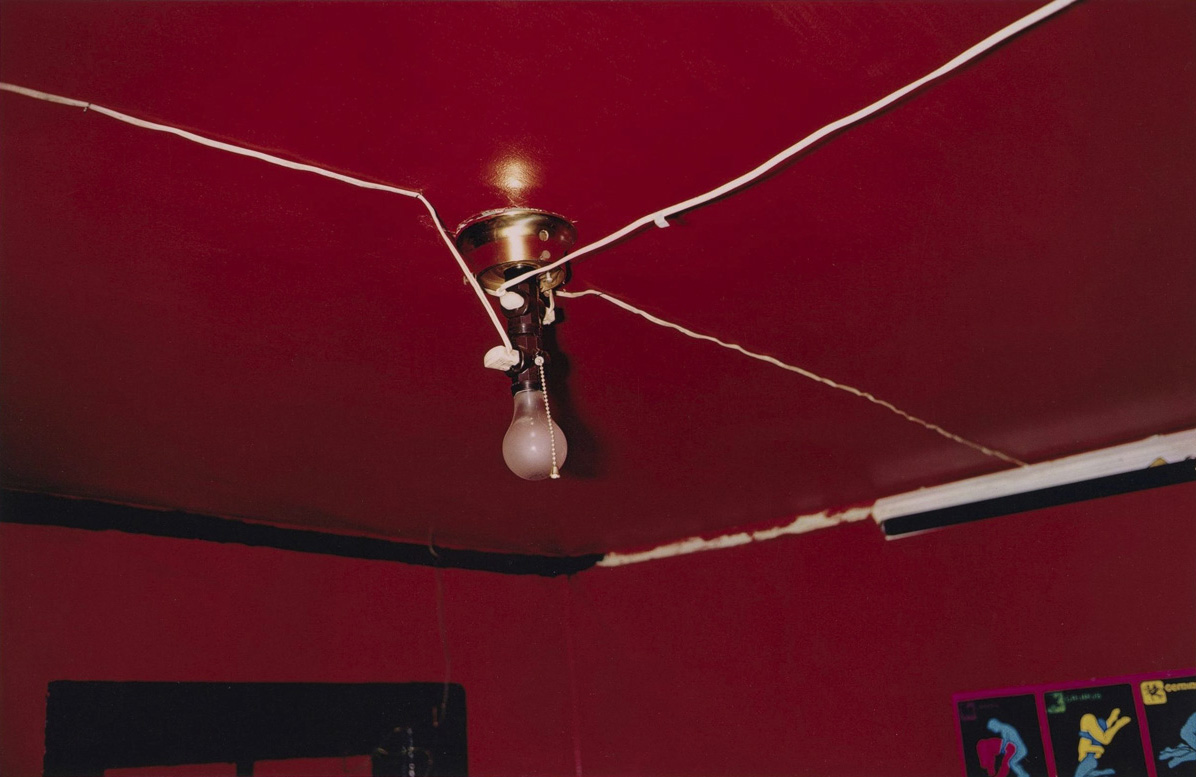
William Eggleston (American, b. 1939) 'Untitled (Greenwood, Mississippi)' 1980


William Eggleston (American, b. 1939)
Greenwood, Mississippi
1973, printed 1979
Dye transfer colour photograph
Image: 29.5 x 45.4cm
Sheet: 40.2 x 50.8cm
National Gallery of Australia, Canberra, purchased 1980


With its intense red, Eggleston’s picture of the spare room in a friend’s home is one of the most iconic of all colour photographs. Often called The red room, this photograph was intended to be shocking: Eggleston described the effect of the colour as like ‘red blood that is wet on the wall’. But the radicalness of the picture is not just in its juicy (and impossible to reproduce) redness; it is also found in the strange view it provides of a domestic interior, one that Eggleston has described as a ‘fly’s eye view’.

Text © National Gallery of Australia, Canberra


Imogen Cunningham (American, 1883-1976) 'Magnolia Blossom' 1925


Imogen Cunningham (American, 1883-1976)
Magnolia Blossom
1925
Gelatin silver photograph
Image: 17.1 x 34.6cm
Mount: 38.2 x 50.7cm
National Gallery of Australia, Canberra, purchased 1978


During the 1920s, raising three young sons, Cunningham began to focus on her immediate surroundings. This restricted environment encouraged Cunningham to develop a new way of working, as she began to place her camera closer to the subject: to zebras on a trip to the zoo, to snakes brought to her by her sons, and perhaps most famously to the magnolia blossoms and calla lilies she grew in her garden. Observing what she termed the ‘paradox of expansion via reduction’, the intensity and focus attendant to this way of seeing flooded her work with sensuality and reductive power.

Text © National Gallery of Australia, Canberra


Olive Cotton (Australian, 1911-2003) 'Skeleton Leaf' 1964


Olive Cotton (Australian, 1911-2003)
Skeleton leaf
1964
Gelatin silver photograph
Image: 50.4 x 40.8cm
Sheet: 57.8 x 47.6cm
National Gallery of Australia, Canberra, purchased 1987


This leaf skeleton – a leaf that has had its pulp removed with heat and soda – was probably photographed in front of a window in Cotton’s home near Cowra, NSW. Since the 1930s Cotton had been drawn to the close study of nature, and many of her best photographs feature close-ups of flowers, tufts of grass and foliage. This photograph is notable because it was taken in the studio, and reflects the austerity and simplicity that pervaded Cotton’s work in the decades after the Second World War.

Text © National Gallery of Australia, Canberra


Lee Friedlander (American, b. 1934) 'Nashville, 1963' 1963


Lee Friedlander (American, b. 1934)
Nashville, 1963
1963
Gelatin silver photograph
Image: 28.2 x 18.7cm
Sheet: 35.3 x 27.8cm
National Gallery of Australia, Canberra, purchased 1981


Middle distance

The further away we move from a subject, the more it and its story open up to us. While the close-up or compressed view tends to be very frontal (the camera presses up against the subject), the defining characteristic of much mid-century photography was its highly mobile relationship to space: its extraordinary capacity to survey and to organise the world.

The space between the camera and its subject can suggest impartiality and detachment. Documentary photographers and photojournalists, for example, open their cameras up to their subjects, as if to ‘let them speak’. But the depiction of the space between the camera and its subject, and the way that it is rendered through the camera’s depth of field, can also reflect decision making on the part of the photographer. By adjusting the camera’s settings, and thus choosing to render part of the subject in focus, the photographer can direct our focus and attention to certain parts of an image. In this way, photographers put forward an argument based on their world view. Photography can change the way we think about the world.

Text from the National Gallery of Australia website


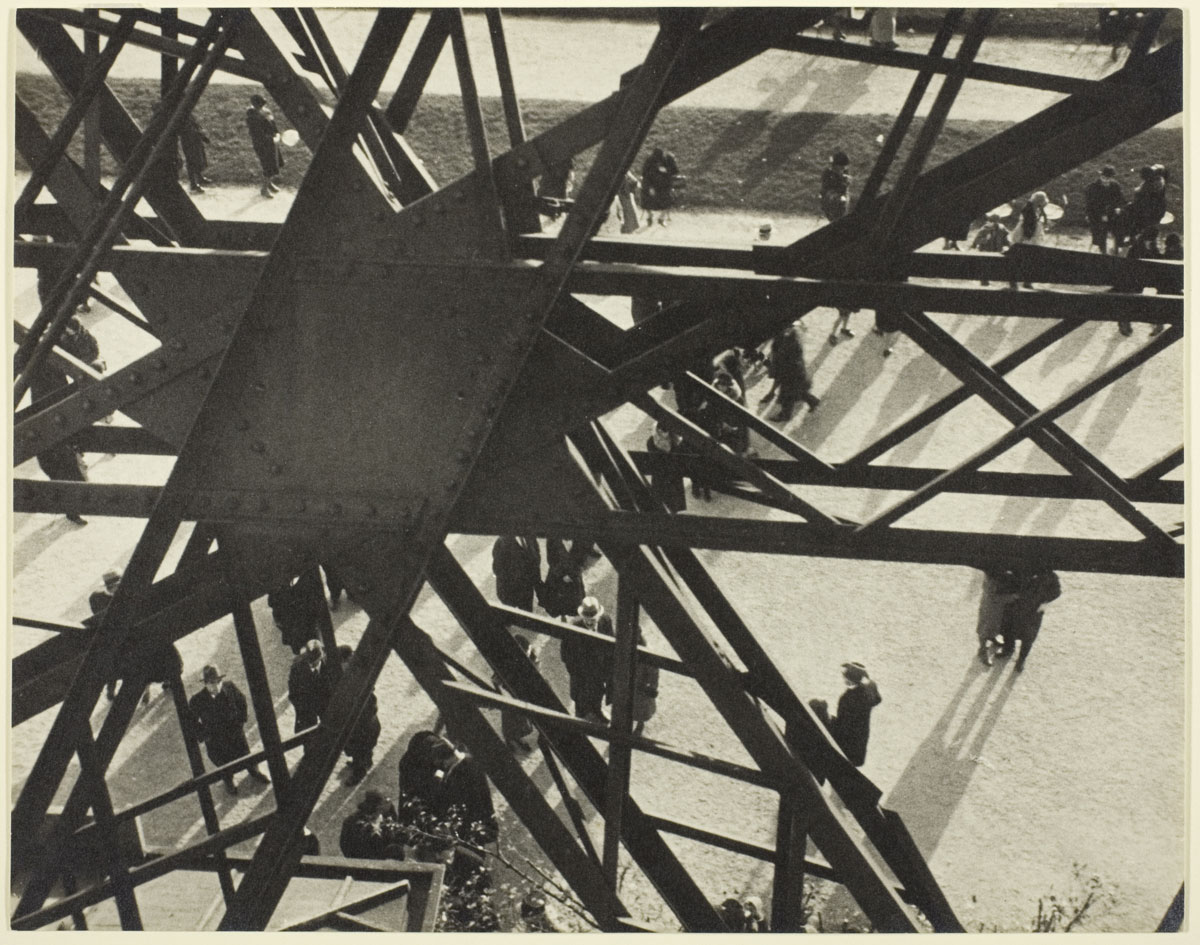
Ilse Bing (Germany 1899 - United States of America 1998; France 1930-1941 United States from 1941) 'Eiffel Tower, Paris, 1931' 1931


Ilse Bing (Germany 1899 – United States of America 1998; France 1930-1941 United States from 1941)
Eiffel Tower, Paris
1931
Gelatin silver photograph
Signed and dated recto, l.r., pen and ink “Ilse Bing/ 1931”
Image: 22.3 x 28.2cm
National Gallery of Australia, Canberra, purchased 1989


Bing took up photography in 1928 and quickly developed a reputation as a photojournalist and photographer of modernist architecture. Inspired by an exhibition of modern photography and the work of Paris-based photographer Florence Henri, Bing moved to Paris 1930 and quickly became associated with the city’s photographic avant-garde. Bing worked exclusively with the fledgling Leica 35mm-format camera; her interest in the pictorial possibilities of the hand-held Leica can clearly be seen in this striking view of the Eiffel Tower.

Text © National Gallery of Australia, Canberra


Garry Winogrand (American, 1928-1984) 'World´s Fair', New York, 1964


Garry Winogrand (American, 1928-1984)
World’s Fair, New York
1964
Gelatin silver photograph
Image: 21.8 x 32.7cm
Mount: 37.4 x 50.1cm
Image rights: © The Estate of Garry Winogrand, courtesy Fraenkel Gallery, San Francisco
National Gallery of Australia, Canberra, purchased 1978


Winogrand had a tremendous capacity to photograph people in public spaces completely unawares. This image records a group of visitors to the 1964 World’s Fair; it focuses on three young women – Ann Amy Shea, whispering into the ear of Janet Stanley, while their friend Karen Marcato Kiaer naps on Stanley’s bosom. The figures fill the space between the picture’s fore- and middle-grounds, to the extent of allowing the viewer to examine people’s expressions and interactions in close detail. This in turn allows us to encroach on the personal space of people we don’t know.

Text © National Gallery of Australia, Canberra


Diane Arbus (American, 1923-1971) 'Child with a toy hand grenade in Central Park, N.Y.C. 1962'


Diane Arbus (American, 1923-1971)
Child with toy hand grenade, in Central Park, New York City
1962
Gelatin silver photograph
Image: 20 x 17.2cm
Sheet: 32.8 x 27.6cm
National Gallery of Australia, Canberra, purchased 1980


During workshops with Lisette Model, Arbus was encouraged to develop a direct, uncompromising approach to her subjects. She did this using the square configuration of a medium-format camera which Arbus most usually printed full frame with no cropping. Model also convinced Arbus, who had been interested in myth and ritual, that the more specific her approach to her subjects, the more universal the message. In many ways this image of a boy caught hamming it up in Central Park, with his contorted body and grimacing face, captures and prefigures many of the anxieties of America during the sixties, a country caught in an unwinnable war in Vietnam and undergoing seismic social change.

Text © National Gallery of Australia, Canberra


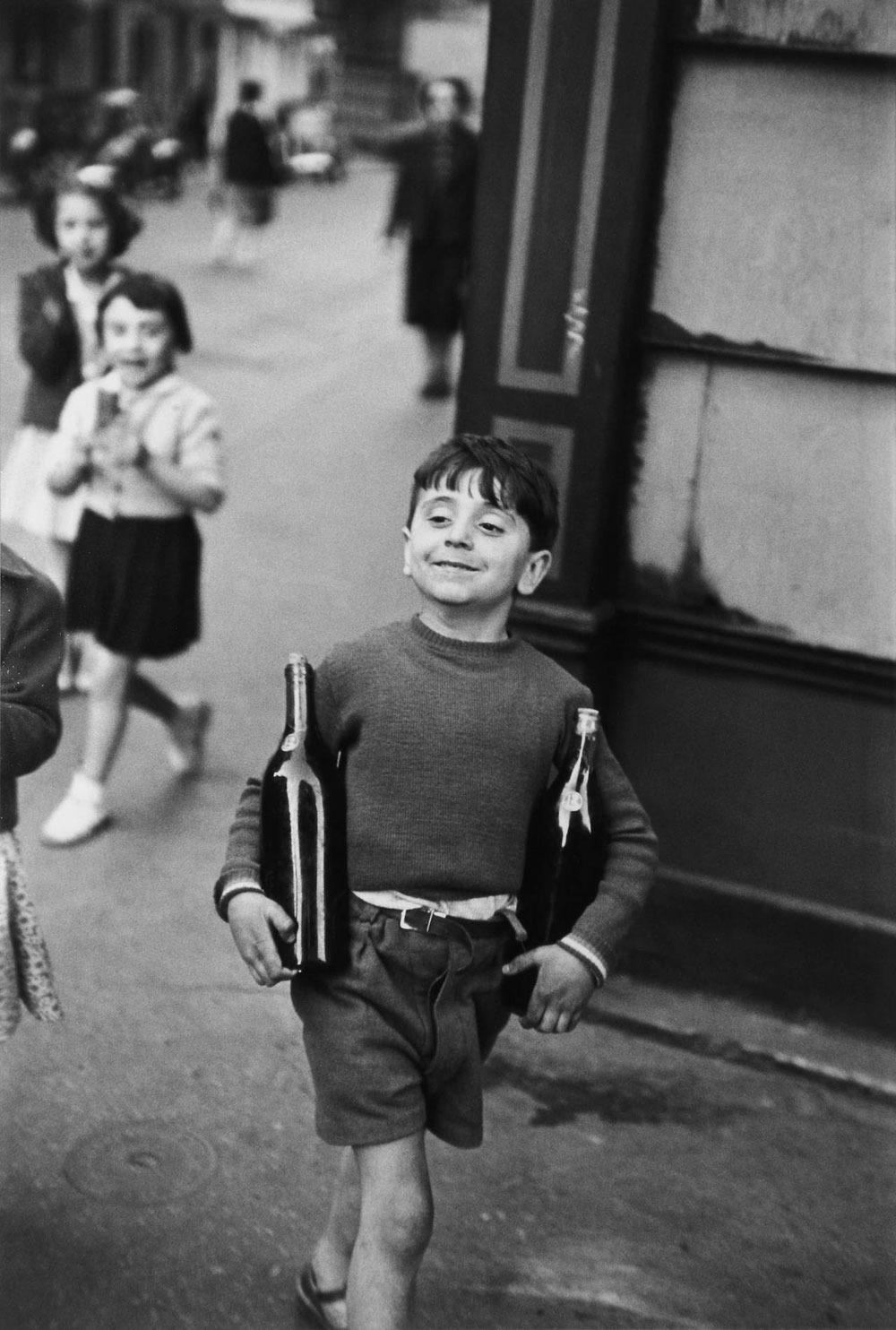
Henri Cartier-Bresson (French, 1908-2004) 'Rue Mouffetard, Paris' 1954 prtd c. 1980


Henri Cartier-Bresson (French, 1908-2004)
Rue Mouffetard, Paris
1954, printed c. 1980
Gelatin silver photograph
Image: 35.9 x 24.2cm
Sheet: 39.4 x 29.6cm
National Gallery of Australia, Canberra, purchased 1982


Helen Levitt (United States of America, 1913 - 2009) 'New York' 1972


Helen Levitt (United States of America, 1913 – 2009)
New York
1972
Dye transfer colour photograph
Image: 23.9 x 36.2cm
Sheet: 35.6 x 42.9cm
National Gallery of Australia, Canberra, purchased 1984


“The streets of the poor quarters of the great cities are, above all, a theatre and a battleground.”

~ Helen Levitt


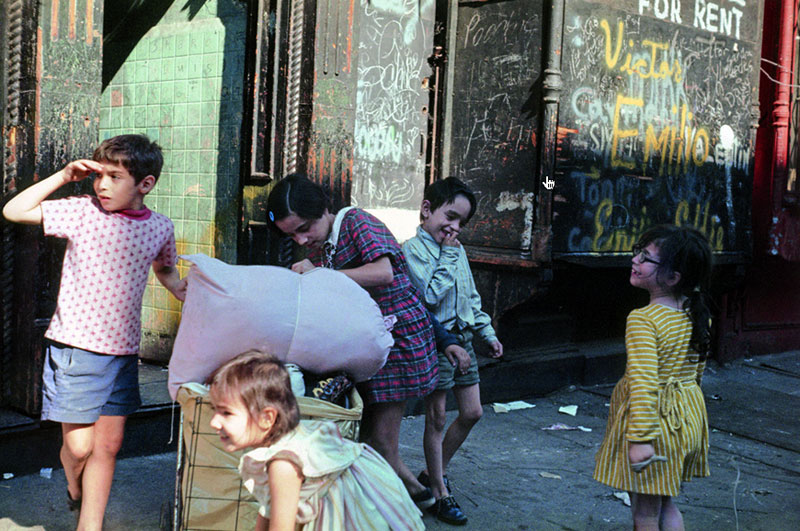
Inspired by seeing work by Walker Evans and Henri Cartier-Bresson in 1935, Levitt took to the streets. Children became her most enduring subject. Like Evans, Levitt was famously shy and self-effacing, seeking to shoot unobserved by fitting a prism finder on her Leica. Her approach eschews the sensational; instead she is interested in capturing small, idiosyncratic actions in the everyday. Her images were often shot through with a gentle, lyrical humour though a dark strangeness also surfaces at times.

Text © National Gallery of Australia, Canberra


Helen Levitt (American, 1913-2009) 'New York' c. 1972


Helen Levitt (American, 1913-2009)
New York
1972
Dye transfer colour photograph
Image: 23.4 x 35.6cm
Sheet: 35.4 x 42.9cm
National Gallery of Australia, Canberra, purchased 1984


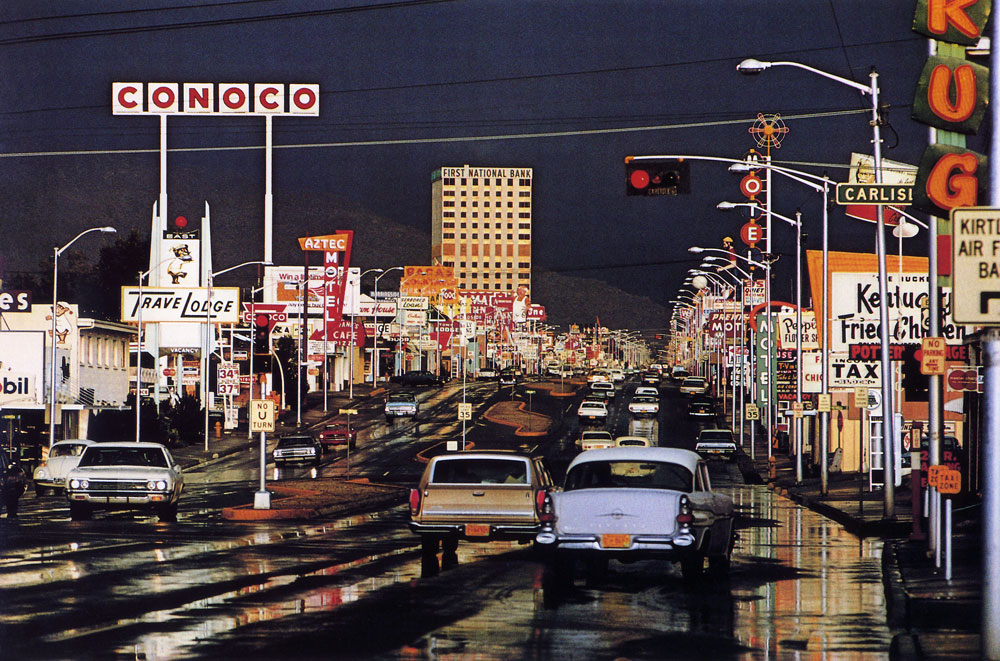
Ernst Haas (Austria 1921 - United States of America 1986; United States from 1951) 'Route 66, Albuquerque, New Mexico, USA' 1969


Ernst Haas (Austria 1921 – United States of America 1986; United States from 1951)
Albuquerque, New Mexico
1969
Dye transfer colour photograph
Image: 44.9 x 67.8cm
Sheet: 52.3 x 75.7cm
National Gallery of Australia, Canberra, purchased 2000


For Haas, colour photography represented the end of the grey and bitter war years and he started seriously working in the medium after moving to America in 1951. Work on his photoessay, Land of Enchantment and film stills assignments for The Misfits, The Bible and Little Big Man took Haas to the Southwest. The desert landscape of Albuquerque, located on Route 66, had been totally transformed by progress since the 1920s. Photographing the street after rain, Haas has signified that evolution by way of his distinctive ability to translate the world into shimmering energy.

Text © National Gallery of Australia, Canberra


Faraway

Photography has a long-standing interest in faraway places. In 1840, right in photography’s infancy, astronomical photography was launched when the first photograph of the moon was made. As photographic imaging technology has improved, so has the medium’s capacity to make faraway places accessible to us.

Photography can bring foreign places and people closer to home, or collect together images of places and structures that are located in different places. It can also attempt to give a picture to experiences that are otherwise difficult to grasp or represent, such as complex weather events or transcendental phenomena.

Against the odds, there are photographers who make images that are about what cannot be seen. Faraway is often used as a metaphor for thinking about the ineffable and the inexplicable. Science and spirit go hand-in-hand. ‘The most beautiful thing we can experience is the mysterious’, Albert Einstein believed. Photographers can take us to new worlds.

Text from the National Gallery of Australia website


Ansel Adams (American, 1902-1984) 'Moonrise, Hernandez, New Mexico' 1941


Ansel Adams (San Francisco, California, United States of America 1902 – Carmel, California, United States of America 1984)
Moonrise, Hernandez, New Mexico
1941
Ansel Adams Museum Set
Gelatin silver photograph
Image: 38.6 x 49cm
Mount: 55.6 x 71cm
National Gallery of Australia, Canberra, purchased 1980


Adams became the most famous landscape photographer in the world on the back of his images of America’s West. While mass tourism was invading these wilderness areas, Adams’s photographs show only untouched natural splendour. His landscapes are remarkable for their deep, clear space, distinguishable by an uncanny stillness and clarity. The story of Moonrise is legendary: driving through the Chama River Valley toward Española, Adams just managed by a few seconds to catch this fleeting moment before the dying sunlight stopped illuminating the crosses in the graveyard. Through hours of darkroom manipulation and wizardry, Adams created an image of almost mystical unworldliness.

Text © National Gallery of Australia, Canberra


Tracey Moffatt (Australian, b. 1960) 'Up in the sky' 1997


Tracey Moffatt (Australian, b. 1960)
Up in the sky [Up in the sky – a set of 25 photolithographs]
1997
No. 8 in a series of 25
Photolithograph
Image: 61.0 x 76.0cm
Sheet: 72.0 x 102.0cm
KODAK (Australasia) PTY LTD Fund 1997
National Gallery of Australia, Canberra


Up in the sky is unusual in Moffatt’s oeuvre for being shot out of doors on location. Her photomedia practice is informed by an upbringing watching television, fascinated by film and pop culture. This series takes many of its visual cues from Pier Paolo Pasolini’s Accattone of 1961 as well as the Mad Max series – the references, twisted and re-imagined, are like half-forgotten memories. She addresses race and violence, presenting a loose narrative set against the backdrop of an outback town. The sense of unease is palpable: Moffatt here is a masterful manipulator of mood.

Text © National Gallery of Australia, Canberra


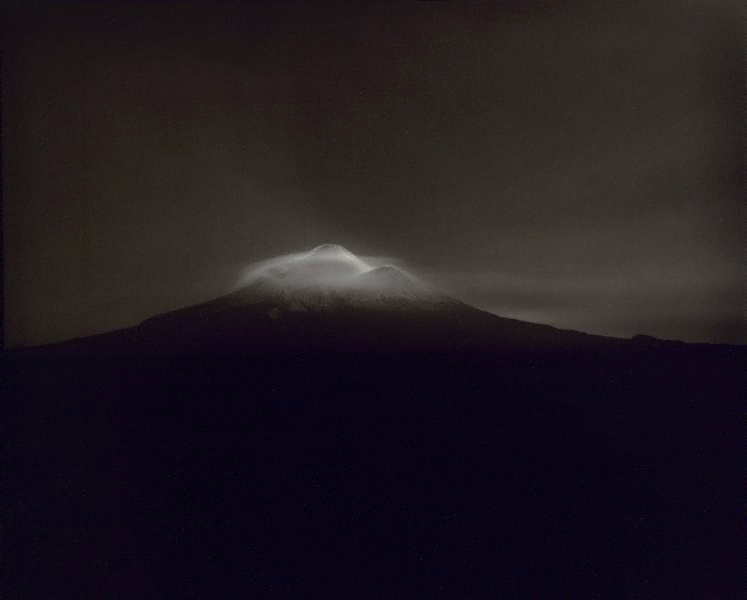
Laurence Aberhart (Aotearoa New Zealand, b. 1949) 'Taranaki, from Oeo Road, under moonlight, 27-28 September 1999' 1999


Laurence Aberhart (Aotearoa New Zealand, b. 1949)
Taranaki, from Oeo Road, under moonlight, 27-28 September 1999
1999
Gelatin silver photograph
19.4 x 24.3cm
Gift of Peter Fay 2005
National Gallery of Australia, Canberra


For four decades, Aberhart has photographed the Taranaki region of New Zealand’s North Island, including its settled landscape and its most distinctive feature, the sacred TeMounga (Mount) Taranaki. Using an 8 x 10-inch view camera, Aberhart has over time built up an important archive documenting the social geography and landscape of the Taranaki. Aberhart describes the conical mountain as a ‘great physical and spiritual entity’ and sees his photographs of it as a counterbalance to the countless images of the mountain that circulate on tea towels and postcards.

Text © National Gallery of Australia, Canberra


National Gallery of Australia
Parkes Place, Canberra
Australian Capital Territory 2600
Phone: (02) 6240 6411

Opening hours:
Open daily 10.00am – 5.00pm
(closed Christmas day)

National Gallery of Australia website

LIKE ART BLART ON FACEBOOK

Back to top

Exhibition: ‘Cutting edge: 21st-century photography’ at the Monash Gallery of Art, Wheelers Hill, Melbourne

Exhibition dates: 26th November, 2015 – 21st February, 2016

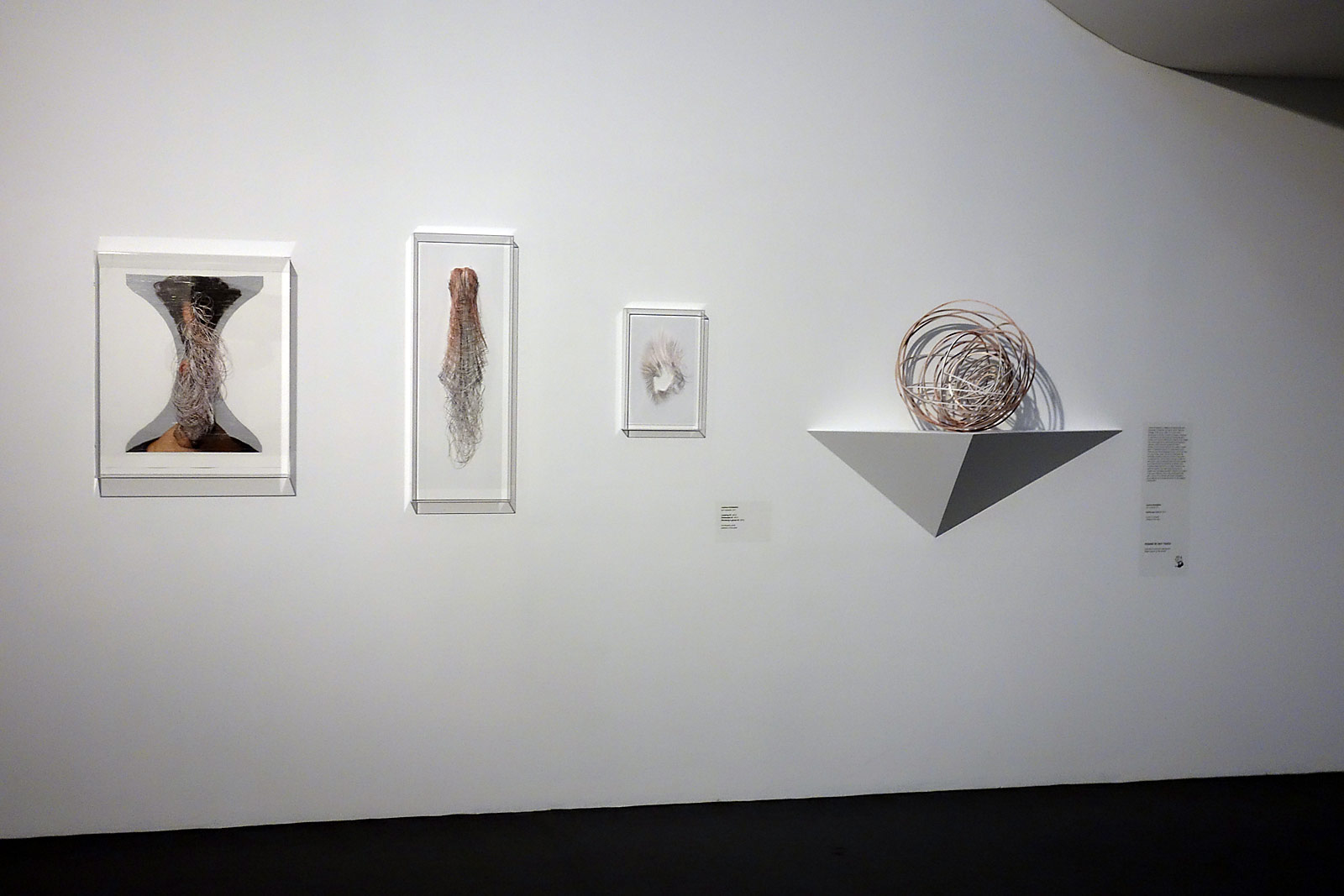
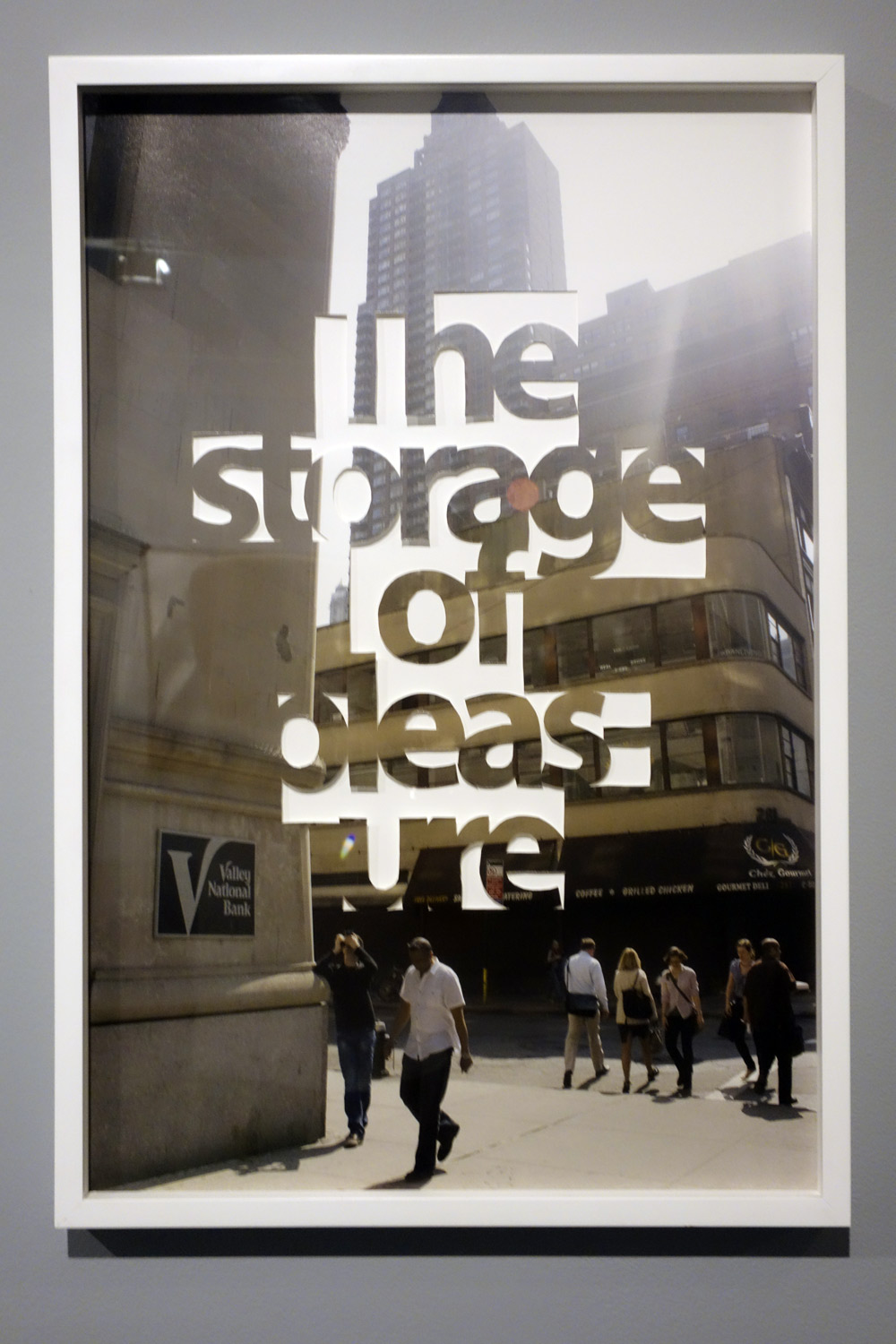
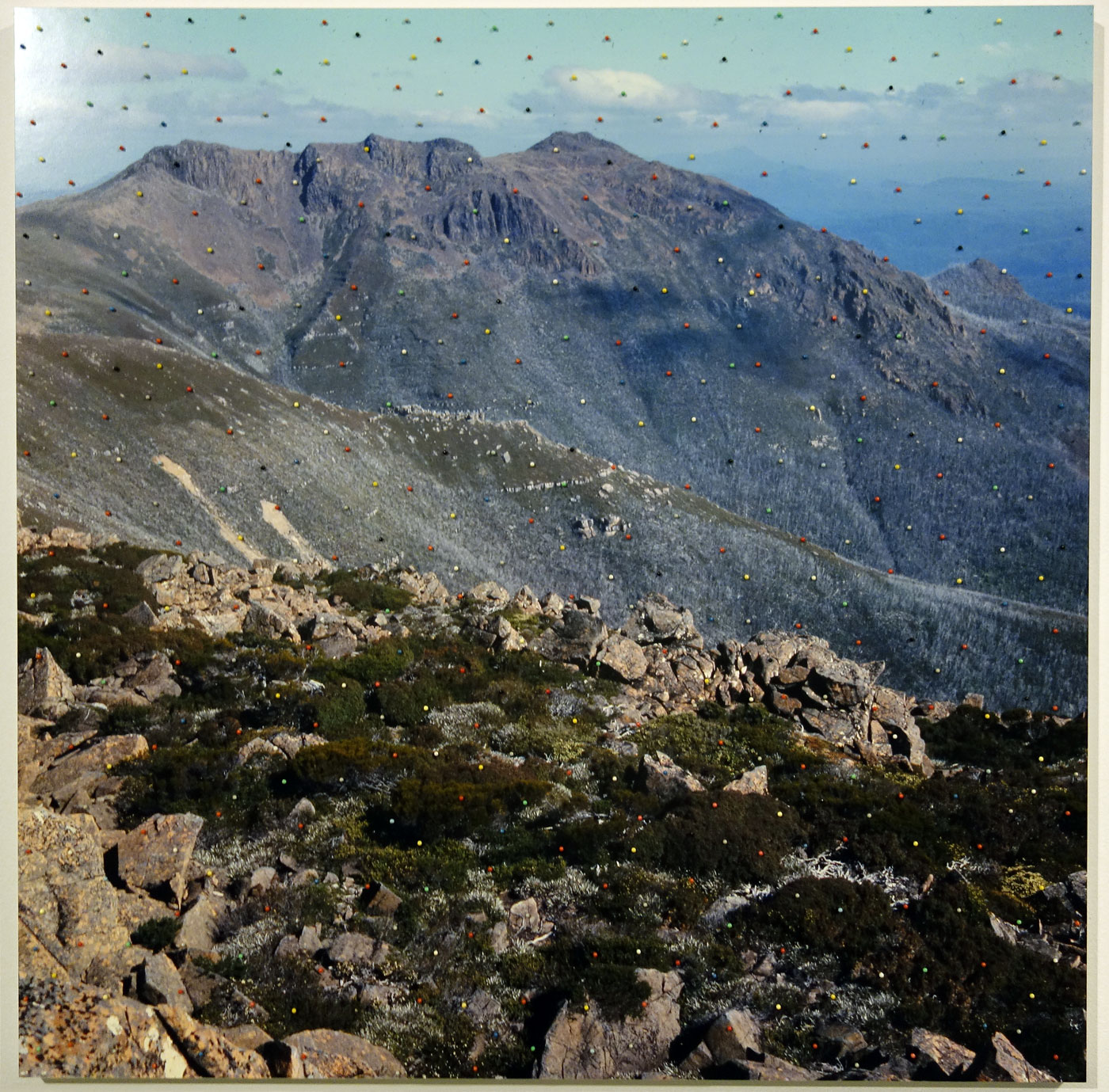
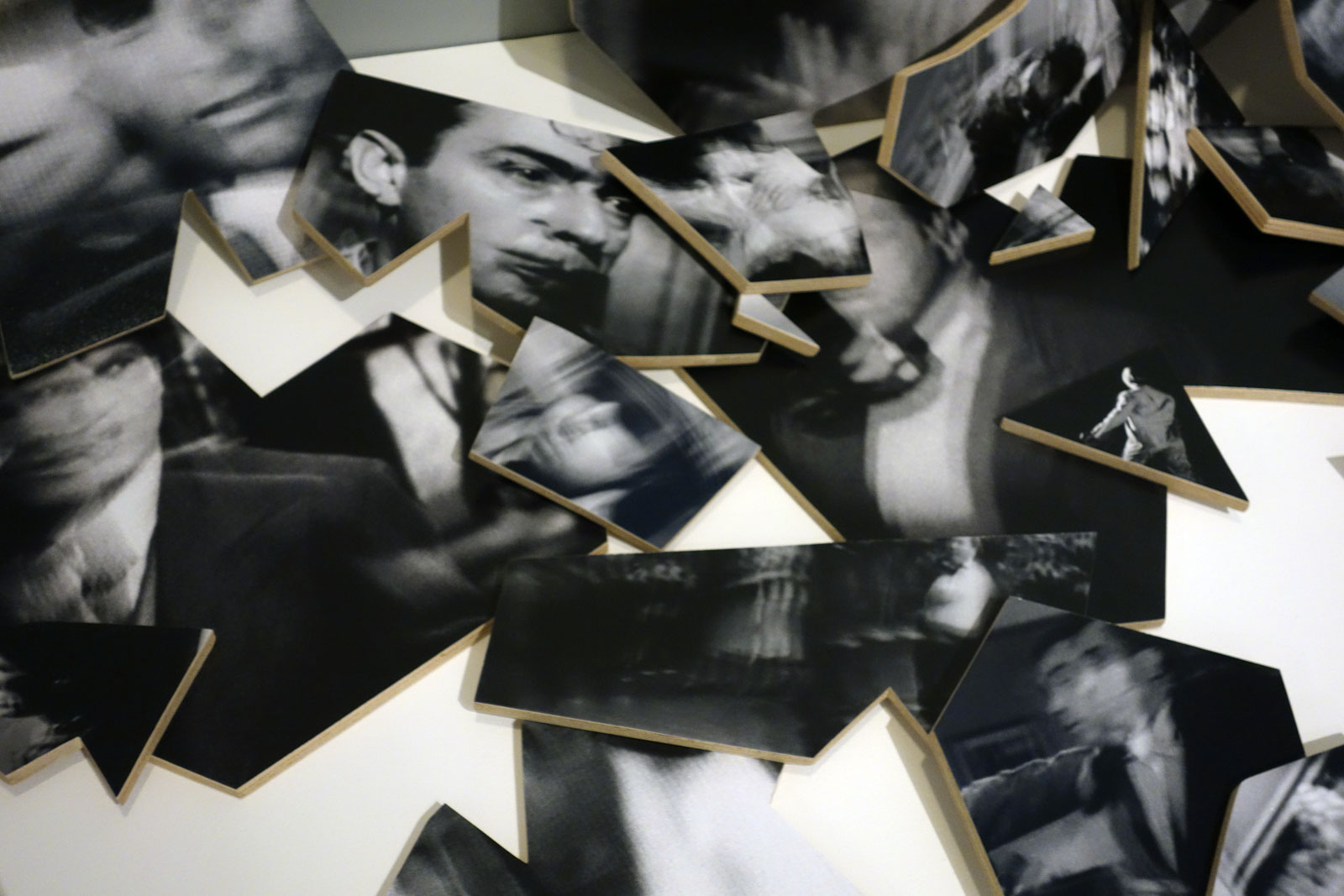
Artists: Danica Chappell, Peta Clancy, Eliza Hutchison, Megan Jenkinson, Justine Khamara, Paul Knight, Derek Kreckler, Luke Parker, Emidio Puglielli, David Rosetzky, Jo Scicluna, Martin Smith, Vivian Cooper Smith, James Tylor and Joshua Yeldham


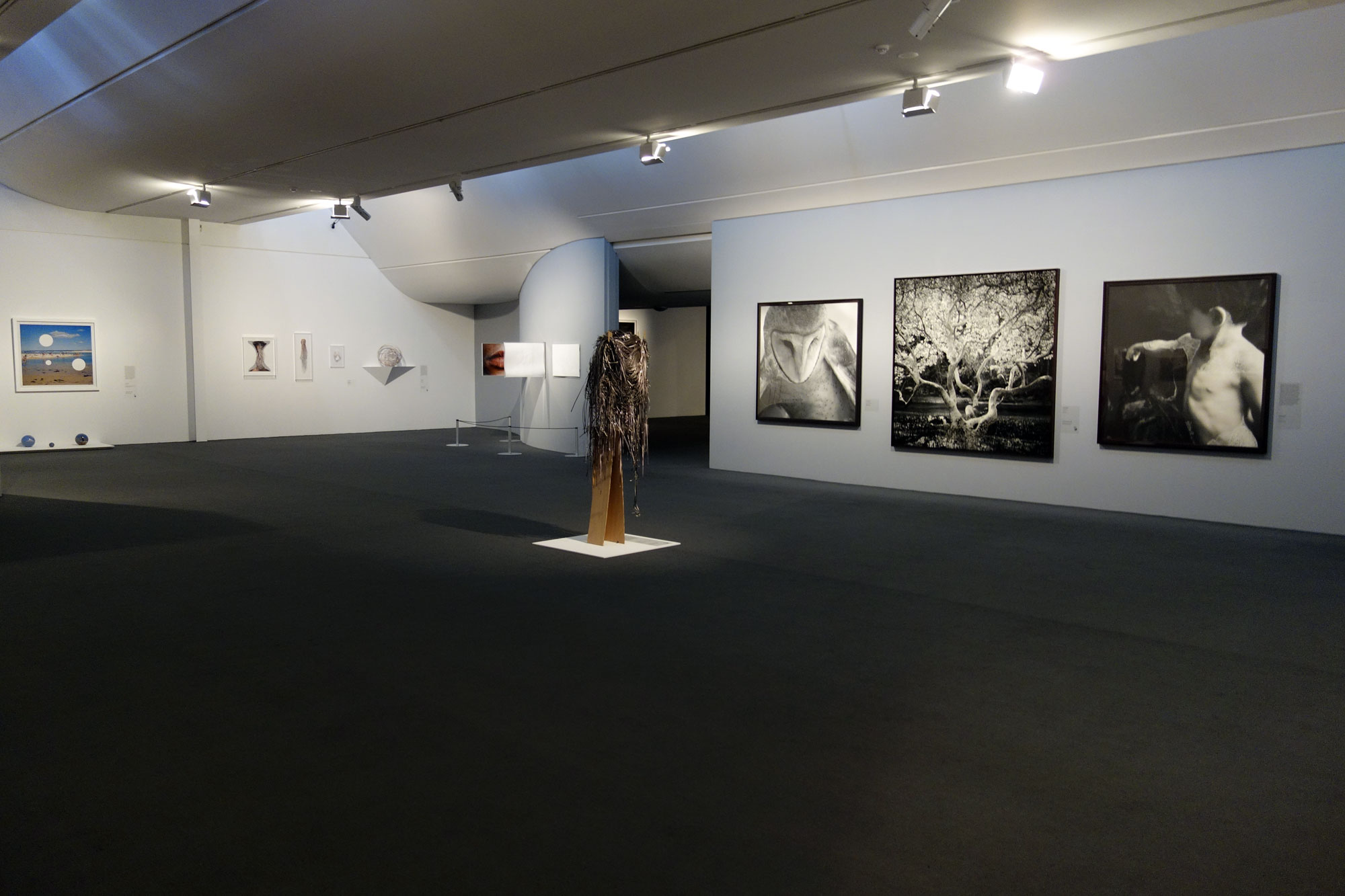
Installation photograph of the exhibition 'Cutting edge: 21st-century photography' at the Monash Gallery of Art


Installation photograph of the exhibition Cutting edge: 21st-century photography at the Monash Gallery of Art
Photo: © Marcus Bunyan and the Monash Gallery of Art


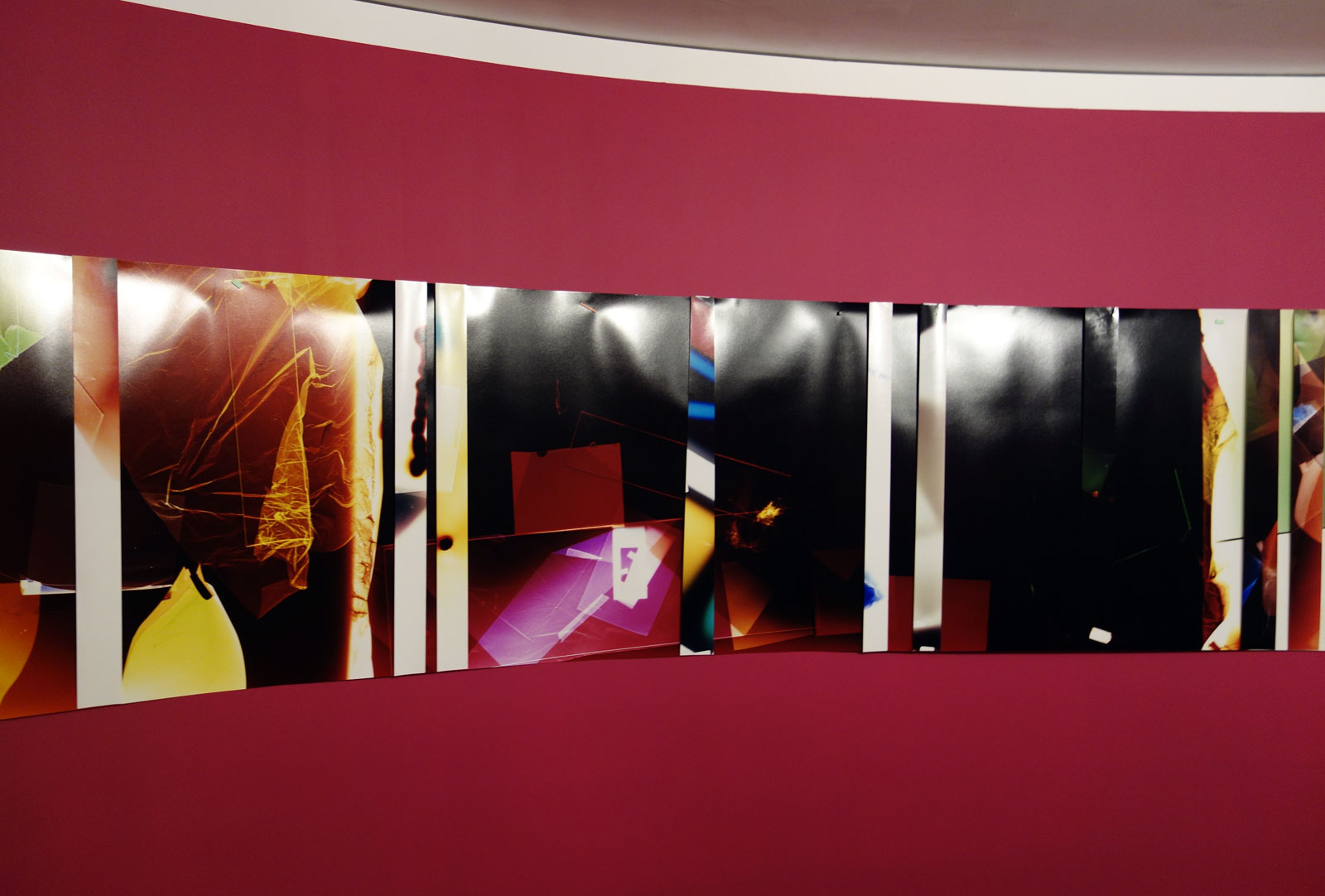
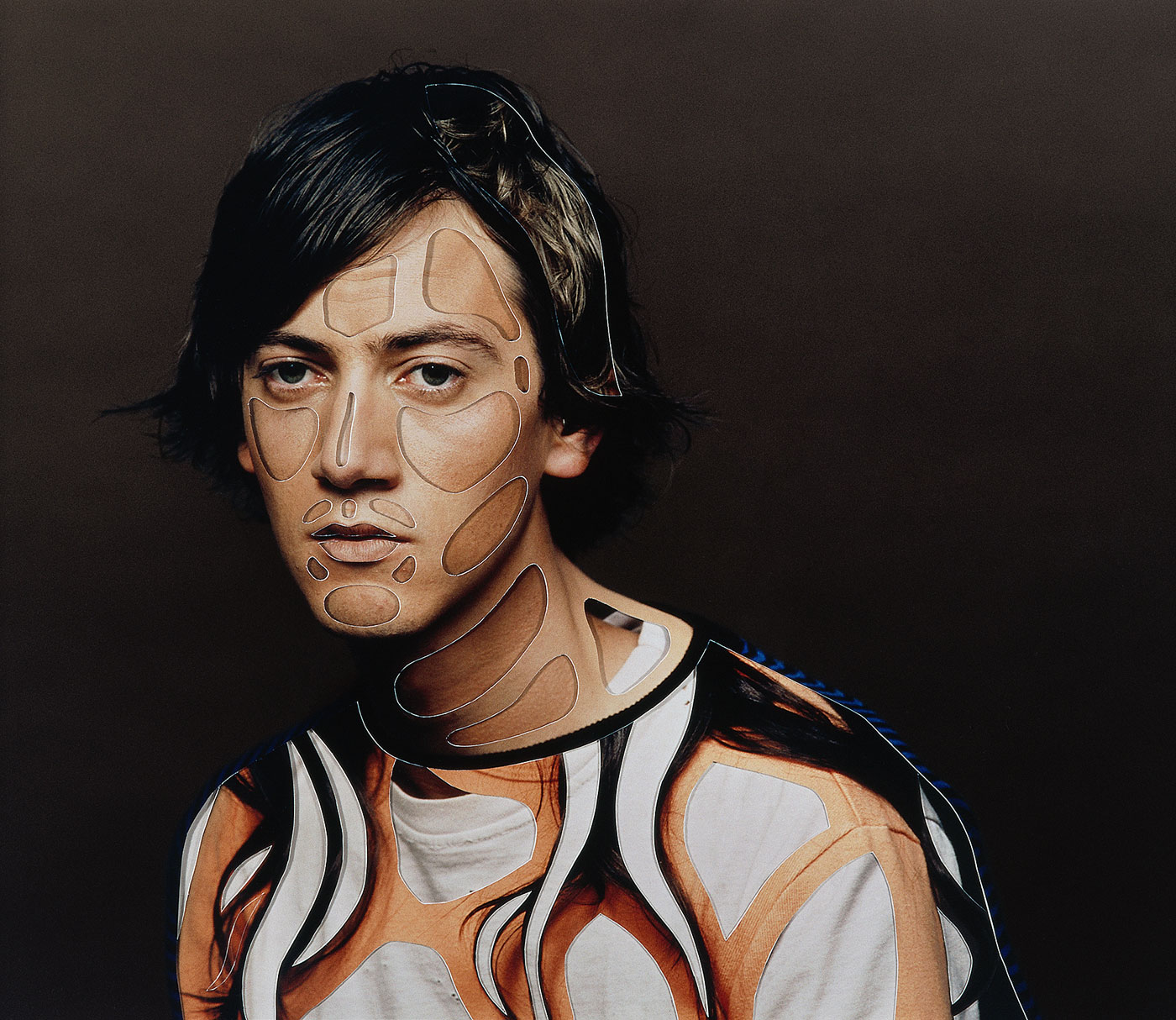
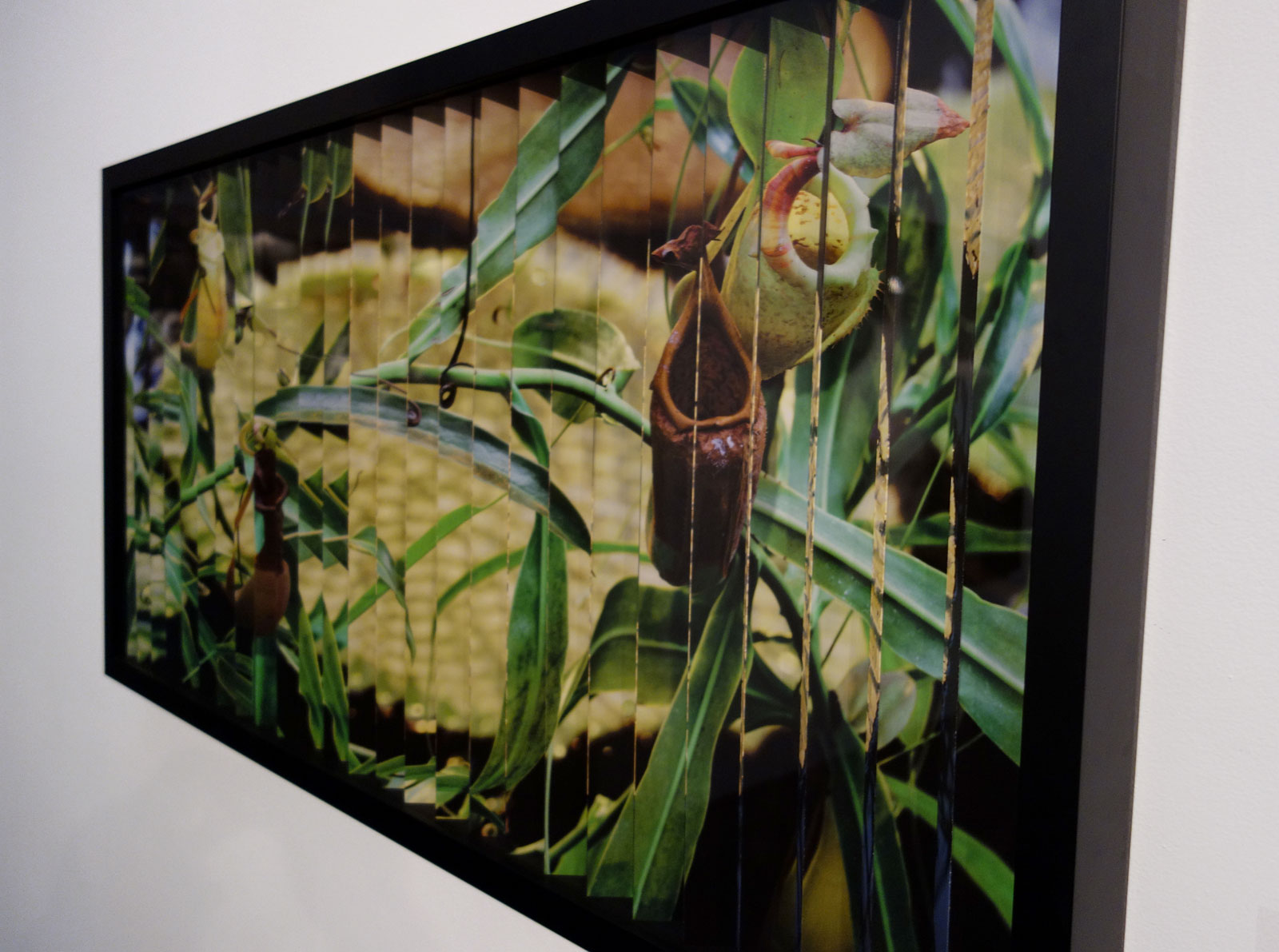
This is a solid if slightly dour exhibition at the Monash Gallery of Art which examines the phenomena of the deconstruction of the physicality of the photograph. It “features the work of contemporary artists who disrupt the seamless uniformity of screen-based photography by cutting, pinning, folding and puncturing photographic prints. These are photographs that need to be engaged with in physical space, rather than contemplated on a screen; this is an exhibition about making rather than taking photographs.”

Therein lies the rub. If you start such an exercise (the physical deformation of the surface of the print), without caring about the quality of the base image, then you are automatically starting from a bad position. It’s like printing a black and white print from an underexposed negative. Further, much as many of these works are interesting conceptual exercises, most of them lead to emotional dead ends.

A friend of mine, Ian Lobb, has a good analogy: imagine standing on a bridge with a fast running stream flowing underneath, and dropping a pebble off the bridge. And then another, and another. Unless they cluster around each other to form an ongoing enquiry by a group of people – such as Australian women’s hand-coloured photography of the 1970sINTO ONE IDEA (in the 1970s it was feminism and the urban environment), then they will be washed away. And this is the feeling I get from this exhibition: every idea possible is up for grabs (in an earnest kind of way), but nothing sticks memorably in the mind. That is the world in which we live today.

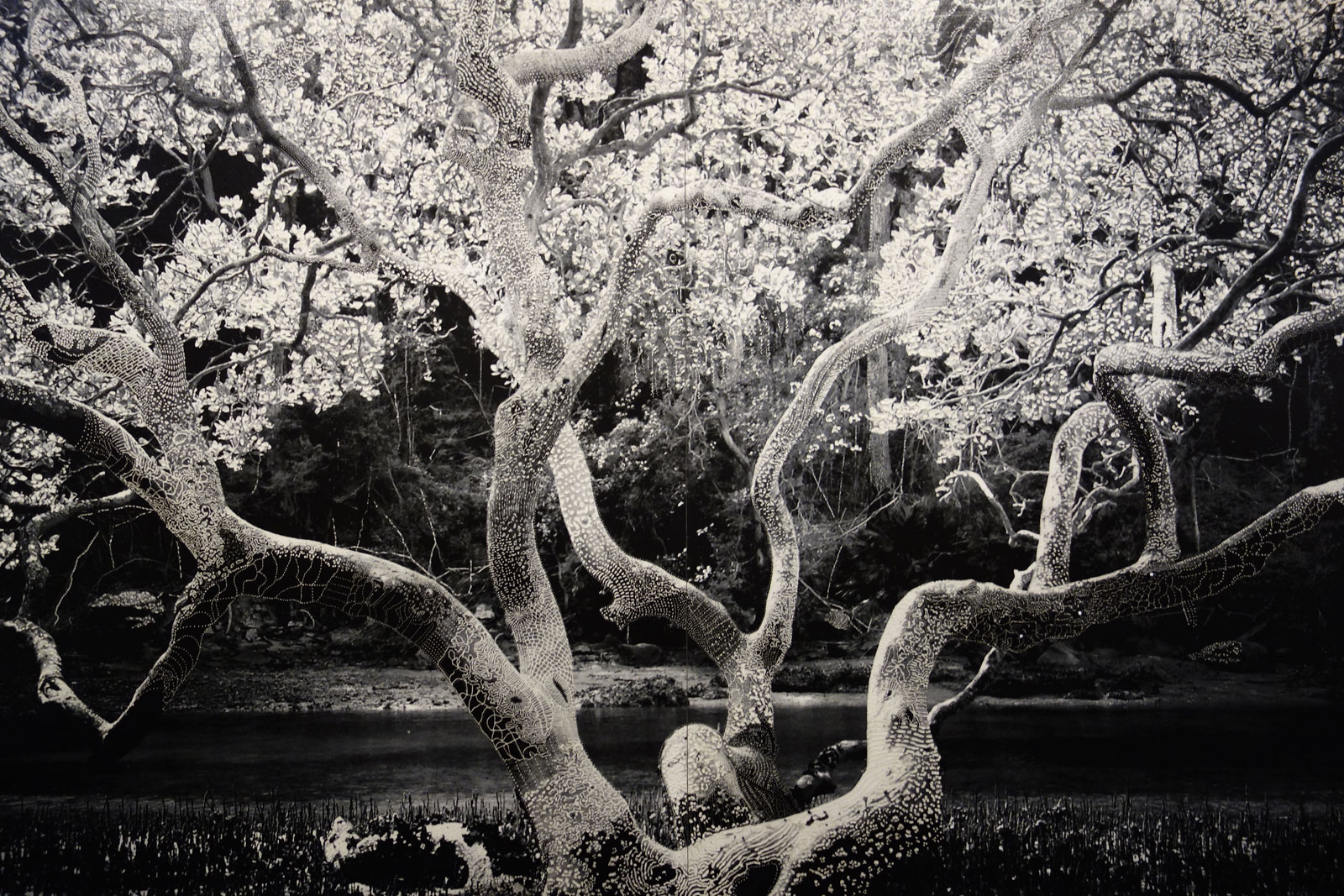
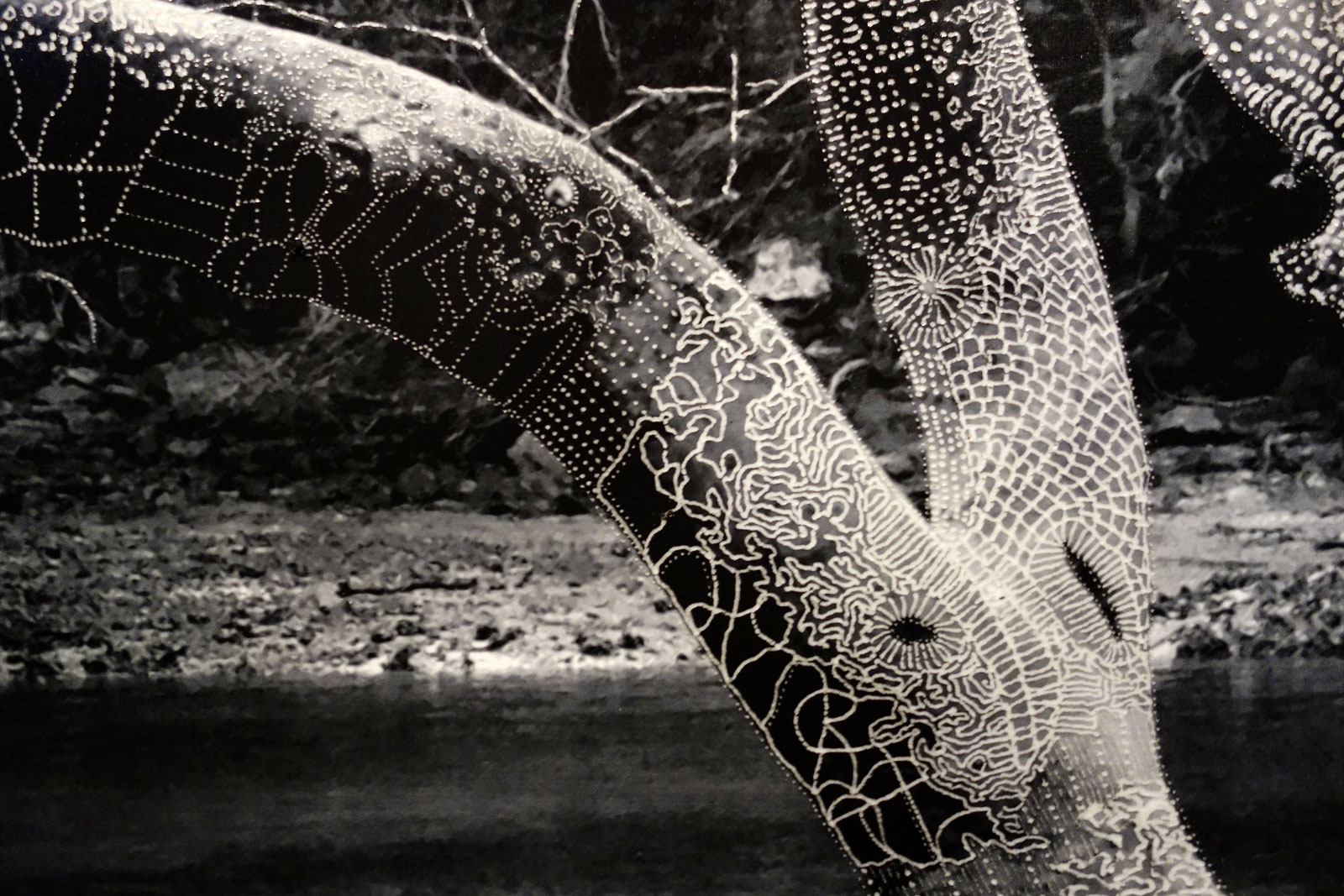
To my mind the best work in the exhibition is the simplest and most eloquent. Out of Joshua Yeldham’s trio of images, it is Owl of tranquillity (2015, below) which is the standout. The base image is beautiful and the careful incision work just adds to the magical resonance of the image. A truly knockout piece that would be a joy in any collection. The other two works suffer from the base image being taken on a mobile phone… the quality of the image is just not there to start with, and to then print and work the image at such great scale (see installation images below) means both images tend to loose cohesiveness. You can get away with it once, but not three times.

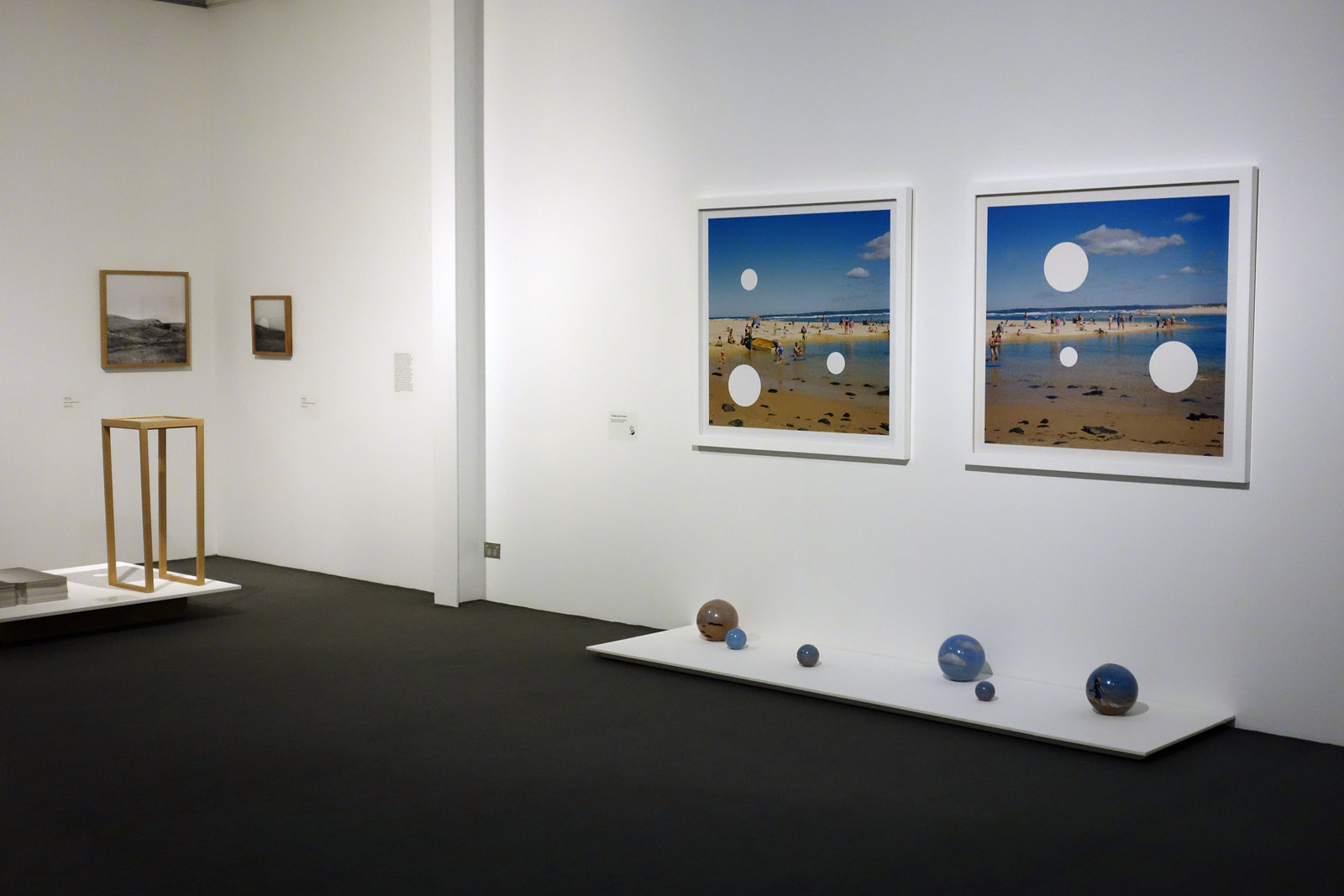
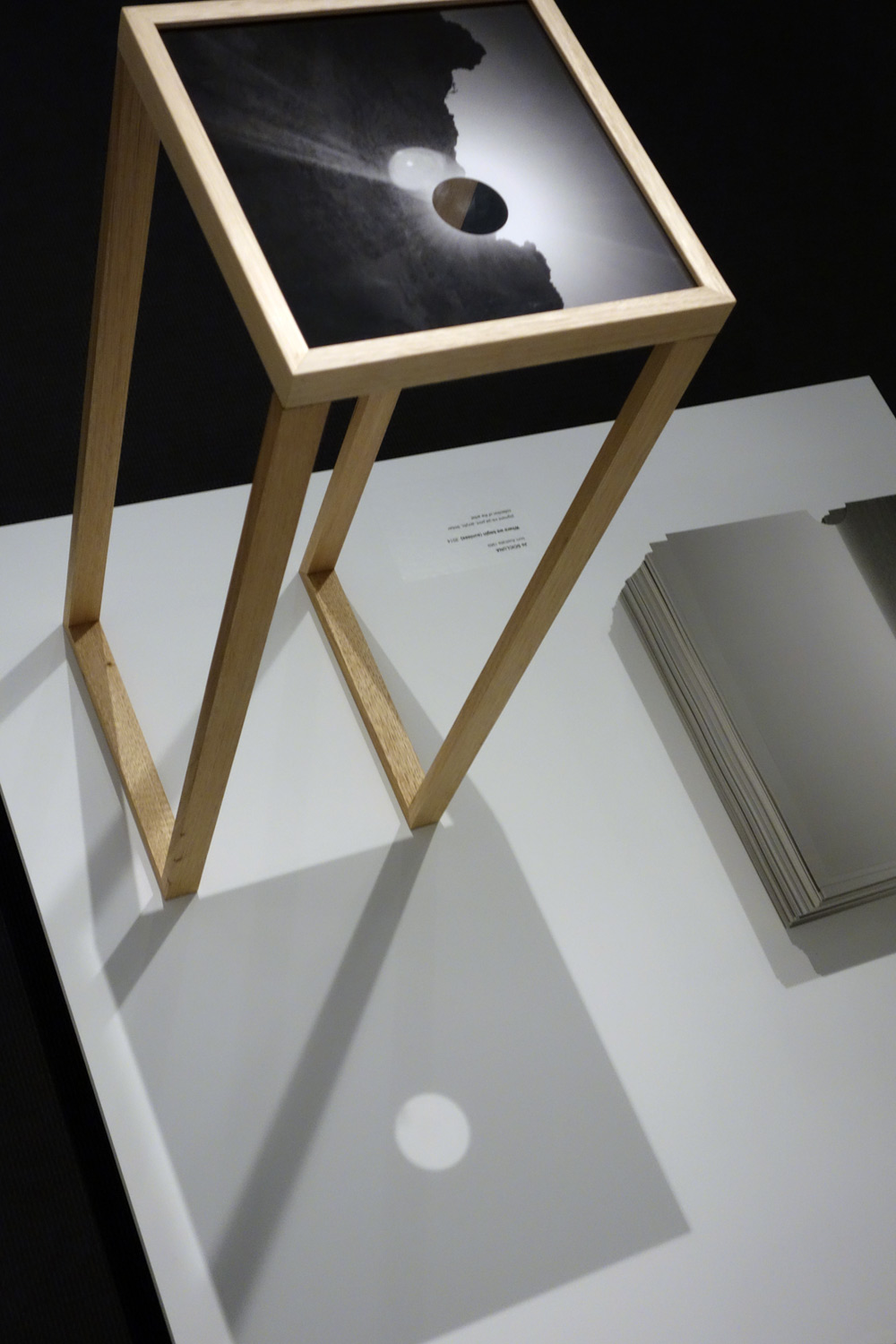
I also very much liked the concept and execution of the installation by Jo Scicluna (below). The photographs were well printed, the alterations intellectually and visually challenging, the framing and construction of the installation effective with the use of wood and shadow, and the whole had a wonderful resonance in the corner of the gallery. Plus you got a free poster of the work to take away with you!

Dr Marcus Bunyan


Many thankx to the Monash Gallery of Art for allowing me to publish the photographs in the posting. Please click on the photographs for a larger version of the image. All text from the Monash Gallery of Art. All installation photographs © Marcus Bunyan and the Monash Gallery of Art


Installation photograph of the exhibition 'Cutting edge: 21st-century photography' at the Monash Gallery of Art

Installation photograph of the exhibition 'Cutting edge: 21st-century photography' at the Monash Gallery of Art

Installation photograph of the exhibition 'Cutting edge: 21st-century photography' at the Monash Gallery of Art


Installation photographs of the exhibition Cutting edge: 21st-century photography at the Monash Gallery of Art
Photos: © Marcus Bunyan and the Monash Gallery of Art


In the early years of the 21st century many cultural commentators were excited by the prospect of photography becoming a truly global art form. With cameras, computers and printers all communicating seamlessly through digital networks, and with the internet providing a worldwide platform for sharing photographs, it looked like the photographic medium might transcend the specificities of both place and materials.

While global digital networks have clearly impacted photography generally, the work of many art photographers has taken a different turn. Instead of embracing the seamless space of digital production, or the expanded horizon of online galleries, artists working with photography have found a range of ways to ground their practices in the material world.

Cutting edge: 21st-century photography features the work of contemporary artists who disrupt the seamless uniformity of screen-based photography by cutting, pinning, folding and puncturing photographic prints. These are photographs that need to be engaged with in physical space, rather than contemplated on a screen; this is an exhibition about making rather than taking photographs.”

Text from the Monash Gallery of Art


Installation photograph of Danica CHAPPELL. 'Light shadow (5 days + 5 hrs in 8 parts + test strips)' 2012-2015 (detail)


Installation photograph of Danica Chappell. Light shadow (5 days + 5 hrs in 8 parts + test strips) 2012-2015 (detail)
Photo: © Marcus Bunyan and the Monash Gallery of Art


Danica Chappell‘s practice belongs to a long artistic tradition of visual abstraction, which rejects representation in favour of sensual and experimental processes. While this tradition is dominated by painters, Chappell employs the light-sensitive chemistry of traditional photography to generate her images. Even though Chappell’s practice can be described as ‘photographic’, she doesn’t use a camera to produce her work. This helps turn photography into something abstract, rather than representational, but it also allows Chappell to distance herself from the ‘instamatic moment’ and foreground an extended process of creative intuition with colour and form. The work being exhibited here, Light shadow (5 days + 5 hrs in 8 parts + test strips), was created in a colour darkroom over several hours. Approaching this as a type of unseeable performance, Chappell arranged and rearranged scraps of paper and other off-cuts on the light sensitive paper while exposing it to light for different periods of time. Chappell’s final installation of this work incorporates test strips, which have been placed at intervals over the print. The test strips, which were integral in the making of the work, interrupt the fl ow of the underlying print, adding an extra layer of abstraction and temporality.


Danica CHAPPELL. 'Light shadow (5 days + 5 hrs in 8 parts + test strips)' 2012-2015 (detail)

Danica CHAPPELL. 'Light shadow (5 days + 5 hrs in 8 parts + test strips)' 2012-2015 (detail)

Danica CHAPPELL. 'Light shadow (5 days + 5 hrs in 8 parts + test strips)' 2012-2015 (detail)

Danica CHAPPELL. 'Light shadow (5 days + 5 hrs in 8 parts + test strips)' 2012-2015 (detail)


Danica Chappell (Australian, b. 1972)
Light shadow (5 days + 5 hrs in 8 parts + test strips) (details)
2012-2015
Chromogenic prints
Collection of the artist
Photos: © Marcus Bunyan and the Monash Gallery of Art


Installation view of David ROSETZKY. 'Aaron I' 2004 'Hamish' 2004


Installation view of David Rosetzky. Aaron I 2004 and Hamish 2004
Photo: © Marcus Bunyan and the Monash Gallery of Art


David Rosetzky (Australian, b. 1970) 'Hamish' 2004


David Rosetzky (Australian, b. 1970)
Hamish
2004
Chromogenic prints
Courtesy of the artist and Sutton Gallery (Melbourne)
Monash Gallery of Art, City of Monash Collection acquired 2005


David Rosetzky‘s practice encompasses a range of media, including video and photography, and typically explores themes of identity and interpersonal relationships. Throughout his career, Rosetzky has created photographic series and has periodically returned to work on photographic cut-out and collaged portraits. To produce these images, Rosetzky creates cool studio portraits of young models, referencing the style of photography found in advertising and fashion magazines. He then layers as many as three photographic portraits on top of each other before hand cutting sections to reveal parts of the underlying prints (above). Through these works Rosetzky represents his subjects as being multi-layered and highlights the idea that identity is fragile, changeable and often concealed. The crumpled paper, represented in his more recent portraits (below), suggests that surfaces are dynamic thresholds rather than superficial masks. Used in a photographic context, the crumpled paper can also be seen as a reference to photography’s power to transform and elaborate a person’s social identity.


David Rosetzky (Australian, b. 1970) 'Pieces #1' 2015 (installation view)


David Rosetzky (Australian, b. 1970)
Pieces #1 (installation view)
2015
Chromogenic prints
Collection of Ten Cubed
Collection of the artist
Photo: © Marcus Bunyan and the Monash Gallery of Art


David Rosetzky (Australian, b. 1970) 'Pieces #2' 2015


David Rosetzky (Australian, b. 1970)
Pieces #2
2015
Chromogenic prints
Courtesy of the artist and Sutton Gallery (Melbourne)
Collection of Ten Cubed
Collection of the artist


Megan Jenkinson (New Zealand, b. 1958) 'meniscus' 2014 (installation view detail)


Megan Jenkinson (New Zealand, b. 1958)
meniscus (installation view detail)
2014
From the series Transfigurations
Pigment ink-jet print
Collection of the artist
Photo: © Marcus Bunyan and the Monash Gallery of Art


Megan Jenkinson began working with lenticular printing technologies in 2007. Lenticular printing combines multiple still images to give the impression of movement and three-dimensionality. The work on display here is from Jenkinson’s Transfigurations series, which employs a handmade form of lenticular photography to evoke the transience of the natural world. This large-scale image of water foliage is composed of two separate photographs that have been digitally spliced together and printed on a single sheet of paper. The artist has then hand-folded the photograph to create a concertinaed surface that can only be seen in its complete form when viewed from multiple angles. As a consequence, viewers need to physically interact with the photographic object, walking from side-to-side in order to experience the artwork. This form of photography disrupts traditional expectations of two-dimensional photography and introduces a tactile aspect to digital production.


Megan Jenkinson (New Zealand, b. 1958) 'meniscus' 2014 (installation view detail)

Megan Jenkinson (New Zealand, b. 1958) 'meniscus' 2014 (installation view detail)


Megan Jenkinson (New Zealand, b. 1958)
meniscus (installation view details)
2014
From the series Transfigurations
Pigment ink-jet print
Collection of the artist
Photos: © Marcus Bunyan and the Monash Gallery of Art


Installation view of works by Justine Khamara. 'Looping #3' 2014; 'Distended #2' 2013; 'Ghosting's ghost #2' 2010; 'Orbital spin trick #2' 2013


Installation view of works by Justine Khamara

Looping #3 2014
Distended #2 2013
Ghosting’s ghost #2 2010
Orbital spin trick #2 2013
Photo: © Marcus Bunyan and the Monash Gallery of Art


In a world where photographs are often viewed on screens, Justine Khamara is interested in the physicality of the photographic surface and how this affects the meaning of an image. Her works begin as two-dimensional photographic portraits, which she then sculpts into three-dimensional forms that protrude from walls or stand alone in exhibition spaces. To create these works, Khamara cuts her photographic prints, either by hand or using a laser cutter. She then manipulates the intricately shredded surfaces by hand to give them a sculptural form. This involves an array of different techniques, such as adhering part of the photograph to a backing board and allowing the filleted paper to hang loosely from the top. In other instances she pulls and weaves the segmented photograph to create more purposeful geometric shapes. By working in this way, Khamara invests the photographic still with a sense of movement and playful elaboration, which effaces the mechanical nature of photographic reproduction.


Justine Khamara (born Australia 1971) 'Orbital spin trick #2' 2013


Justine Khamara (born Australia 1971)
Orbital spin trick #2
2013
UV print on plywood
50.0 x 50.0 x 50.0cm
Reproduction courtesy of the artist and ARC ONE Gallery (Melbourne)
Collection of the artist


Justine Khamara (Australian, b. 1971) 'Orbital spin trick #2' 2013 (installation view detail)

Justine Khamara (Australian, b. 1971) 'Orbital spin trick #2' 2013 (installation view detail)

Justine Khamara (Australian, b. 1971) 'Orbital spin trick #2' 2013 (installation view detail)


Justine Khamara (Australian, b. 1971)
Orbital spin trick #2 (installation view details)
2013
UV print on plywood
Collection of the artist
Photos: © Marcus Bunyan and the Monash Gallery of Art


Justine Khamara (Australian, b. 1971) 'Looping #3' 2014 (installation view detail)

Justine Khamara (Australian, b. 1971) 'Looping #3' 2014 (installation view detail)


Justine Khamara (Australian, b. 1971)
Looping #3 (installation view details)
2014
Chromogenic prints
Collection of the artist
Photos: © Marcus Bunyan and the Monash Gallery of Art


Luke Parker (Australian, b. 1975) 'Screen memory' 2014 (installation view)


Luke Parker (Australian, b. 1975)
Screen memory (installation view)
2014
From the series Screen memory
Mixed media
Collection of Mikala Dwyer and David Corben
Collection of the artist
Photo: © Marcus Bunyan and the Monash Gallery of Art


Luke Parker works across a range of media, his practice is largely concerned with giving a sense of metaphysical weight to everyday events and chance encounters. The works on display here are made up of Parker’s own photographs combined with found images that he has collected over the past 20 years. To create these works, Parker categorised seemingly disparate images according to formal patterns and poetic associations. He then arranged the images onto a unifying background and used a needle and thread to stitch them into a type of artistic circuit board. Parker created this series as a way of making sense of his own image archive as well as the proliferation of images encountered in everyday life.

In a world where images are increasingly set adrift from specific economies of meaning, to circulate freely through digital networks, Parker’s works function as conceptual nets that encourage viewers to think about photographs rather than just watch them pass by.


Martin Smith (born Australia 1972) 'After seeing every episode twice' 2006 (installation view)

Martin Smith (born Australia 1972) 'After seeing every episode twice' 2006 (installation view)


Martin Smith (born Australia 1972)
After seeing every episode twice (installation views)
2006
Chromogenic print
Monash Gallery of Art, City of Monash Collection acquired 2008
Photos: © Marcus Bunyan and the Monash Gallery of Art


Martin Smith‘s practice revolves around the integration of photography and text. Using photographs that have been recovered from family albums or personal archives, Smith incorporates texts into the visual fi eld of the image. The texts, which have no obvious relationship with the content of the photographs, recall personal memories or lyrics from popular songs. To incorporate the texts, Smith hand-cuts letters out of the photographic prints, often leaving the letters scattered beneath the image. The disconnect between the text and the image is a deliberate attempt to combine two discrete methods of storytelling – image and text – while also emphasising the way memories of an event are usually different from the original experience. By cutting letters out of the photograph, Smith complicates the viewer’s ability to believe in either the text or the image, and opens up a space that encourages new interpretations.


Martin Smith (born Australia 1972) 'pleasure / storage' 2012 (installation view)

Martin Smith (born Australia 1972) 'pleasure / storage' 2012 (installation view)


Martin Smith (born Australia 1972)
pleasure / storage (installation views)
2012
Pigment ink-jet prints
Collection of the artist
Photos: © Marcus Bunyan and the Monash Gallery of Art


Installation view of Paul KNIGHT. 'Untitled (PK_10_05)' 2010 and 'Untitled (PK_10_02)' 2010


Installation view of Paul Knight. Untitled (PK_10_05) 2010 and Untitled (PK_10_02) 2010
Photo: © Marcus Bunyan and the Monash Gallery of Art


Paul Knight‘s style of his photographs is influenced by his background in commercial photography; they are technically proficient and almost illustrative in their documentary clarity. These cool formal qualities, however, are unsettled by the subject matter, which is often about private desires and passions. Knight’s 2010-11 untitled series of folded photographs document couples embracing in bed. The series reflects Knight’s broader interest in photographing moments of candour and intimacy between lovers, which remains a preoccupation of his practice. In this series, however, Knight has folded the photographic prints to frustrate any expectation we might have about a photograph’s capacity to show or reveal its subject. Instead of offering a crude, voyeuristic perspective, the intimacy documented in these images is obscured and concealed in the folds of the print.


Paul Knight (born Australia 1976) 'Untitled (PK_10_02)' 2010 (installation view)


Paul Knight (born Australia 1976)
Untitled (PK_10_02) (installation view)
2010
Chromogenic prints
Monash Gallery of Art, City of Monash Collection acquired 2010
Photo: © Marcus Bunyan and the Monash Gallery of Art


Emidio Puglielli (born Australia 1964) 'Colourful mountain disruption' 2009 (installation view)


Emidio Puglielli (born Australia 1964)
Colourful mountain disruption (installation view)
2009
Chromogenic print, pins
Collection of the artist
Photo: © Marcus Bunyan and the Monash Gallery of Art


Emidio Puglielli‘s work focuses on the relationship between the photograph as a material object and the photograph as an image. He is particularly interested in old photographs and their continued resonance in contemporary society. Puglielli finds and collects vernacular photography to use as the starting point for his works. He then highlights the materiality of the photographs by drawing attention to their surface and structure. To do this he employs strategies such as rubbing off the emulsion or piercing the surface with map pins. Puglielli is interested in the way such interventions alter the meaning of a photograph and offer new readings of images.

By damaging the smooth surface of the print, he is able to disrupt the illusion of the photographic image, but his interventions also embellish the photographs in sympathetic ways. This is particularly evident in Snow disruption, where the pins appear as snowflakes, and Shadow disruption where pins become eyeballs in the shadow of the unknown photographer. Puglielli’s works therefore seek to question the nature of photography and the way in which photographs are viewed and reinterpreted.


Installation view of Vivian Cooper SMITH. 'Timeless' 2013


Installation view of Vivian Cooper Smith. Timeless 2013
Photo: © Marcus Bunyan and the Monash Gallery of Art


Vivian Cooper Smith‘s artistic practice revolves around photography. Timeless (2013) explores identity and conceptions of self while also reflecting on the nature of photography. To create this work, Smith photographed film noir classics directly from an old television screen. He then printed the images and hand-cut them to fit pieces of irregularly shaped plywood. Smith created this work during a period of personal turmoil and felt that the film noir genre of the post-war period resonated with his own desire to remake himself after a relationship breakdown. As is common to his practice, Smith has interfered with the photograph’s smooth, seamless surface, in this case by dissecting it and creating a three dimensional sculpture. By focussing on the materiality of the photograph, Smith aims to highlight its artificial or constructed nature.


Vivian Cooper Smith (born New Zealand 1974; arrived Australia 1987) 'Timeless' 2013 (installation view detail)

Vivian Cooper Smith (born New Zealand 1974; arrived Australia 1987) 'Timeless' 2013 (installation view detail)


Vivian Cooper Smith (born New Zealand 1974; arrived Australia 1987)
Timeless (installation view details)
2013
Chromogenic prints
Collection of the artist
Photos: © Marcus Bunyan and the Monash Gallery of Art


Installation view of Derek KRECKLER. 'Holey 1' 2003


Installation view of Derek Kreckler. Holey 1 2003
Photo: © Marcus Bunyan and the Monash Gallery of Art


Derek Kreckler originally trained as a sculptor and established himself as a performance and sound artist during the 1990s, he has more recently concentrated on producing photographic and installation work. Kreckler’s Holey series consists of beach scenes and seascapes that have been punctured with circular apertures. The excised sections of the images have been transformed into spherical objects that sit in front of the two photographs, as if the photographs have spawned offspring from their holey orifices. This sculptural configuration challenges the notion that photography offers a straightforward document of time and place. Instead, the photograph has been turned into a type of puzzle that the viewer is encouraged to investigate and solve. To further deepen the viewing experience, Holey 1 is a diptych. The two photographs show the same location; the right side captured a short time after the left side. A number of the subjects in the photographs, beach goers on a summer’s day, are displaced by time. Some have remained static, some seem to have meandered between beach and sand, whilst others have disappeared from the scene altogether.


Derek Kreckler (Australian, b. 1952) 'Holey 1' 2003 (installation view)

Derek Kreckler (Australian, b. 1952) 'Holey 1' 2003 (installation view detail)

Derek Kreckler (Australian, b. 1952) 'Holey 1' 2003 (installation view detail)

Derek Kreckler (Australian, b. 1952) 'Holey 1' 2003 (installation view detail)


Derek Kreckler (Australian, b. 1952)
Holey 1 (installation view details)
2003
Chromogenic prints, spun aluminium spheres and cast vinyl
South Australian Government Grant 2004
Art Gallery of South Australia
Photos: © Marcus Bunyan and the Monash Gallery of Art


Installation view of the work of Jo Scicluna in the exhibition 'Cutting edge: 21st-century photography'


Installation view of the work of Jo Scicluna in the exhibition Cutting edge: 21st-century photography
Photo: © Marcus Bunyan and the Monash Gallery of Art


Jo Scicluna works with a range of media, including photography, video, sculpture and installation, often combining these art forms to bring photography into the space of lived experience. Dissatisfied with the way photography, as a documentary device, is almost always tied to past events, Scicluna encourages viewers to engage with the presence of photographic objects. By cutting into the smooth surface of a photographic print, she disrupts the notion that a photograph is a window into the past. She also elaborates conceptual relationships between different photographic objects in her installations. In doing this, Scicluna activates the space between the photographic print, the sculptural form and the phenomenology of a gallery space. For Scicluna, the experience of being in-between things is related to her personal experience of migration and geographic rupture. Scicluna is not interested in using photography to create documents of specific times and places but uses the medium in a conceptual way to evoke sensations that are not as easy to represent in a literal sense.


Jo Scicluna (born Australia 1969) 'Where I have always been an island #4' 2014 (installation view)


Jo Scicluna (born Australia 1969)
Where I have always been an island #4 (installation view)
2014
Pigment ink-jet prints
Collection of the artist
Photo: © Marcus Bunyan and the Monash Gallery of Art


Jo Scicluna (born Australia 1969) 'When our horizons meet' 2013


Jo Scicluna (born Australia 1969)
When our horizons meet
2013
Pigment ink-jet prints
60 x 60cm
Collection of the artist


Jo Scicluna (born Australia 1969) 'Where we begin (sunless)' 2014 (installation view detail)

Jo Scicluna (born Australia 1969) 'Where we begin (sunless)' 2014 (installation view detail)


Jo Scicluna (born Australia 1969)
Where we begin (sunless) (installation view details)
2014
Pigment ink-jet print, acrylic, timber
Collection of the artist
Photos: © Marcus Bunyan and the Monash Gallery of Art


Installation view of the work of Joshua Yeldham in the exhibition 'Cutting edge: 21st-century photography'

Installation view of the work of Joshua Yeldham in the exhibition 'Cutting edge: 21st-century photography'


Installation views of the work of Joshua Yeldham in the exhibition Cutting edge: 21st-century photography
Photos: © Marcus Bunyan and the Monash Gallery of Art


Joshua Yeldham uses a range of media, his practice is focused on exploring the landscape and elaborating spiritual and symbolic narratives around his engagement with the natural world. He captures photographic images on a smart phone before blowing them up and printing them on cotton paper. He then uses tools to physically carve into the paper, disrupting the smooth surface of the photographic image and adding a personal, handmade effect. It is as if the artist is tattooing his own map or story into the skin of the image. The intricate carving creates a textured pattern of lightness over his otherwise dark and mysterious photographs. The technique allows Yeldham to explore history and mythology in the landscape and imbue his works with elements of both the real and the imagined. It also allows him to reference the passing of time as well as the weather and destruction that the natural environment endures on a daily basis.


Joshua Yeldham (born Australia 1970) 'Owl of tranquillity' 2015 (installation view detail)


Joshua Yeldham (born Australia 1970)
Owl of tranquillity (installation view detail)
2015
Pigment ink-jet print
Collection of the artist
Photo: © Marcus Bunyan and the Monash Gallery of Art


Joshua Yeldham (born Australia 1970) 'Resonance' 2015 (installation view detail)

Joshua Yeldham (born Australia 1970) 'Resonance' 2015 (installation view detail)


Joshua Yeldham (born Australia 1970)
Resonance (installation view details)
2015
Mixed media
Collection of the artist
Photos: © Marcus Bunyan and the Monash Gallery of Art


Monash Gallery of Art
860 Ferntree Gully Road, Wheelers Hill
Victoria 3150 Australia
Phone: + 61 3 8544 0500

Opening hours:
Tue – Fri: 10am – 5pm
Sat – Sun: 10pm – 4pm
Mon/public holidays: closed

Monash Gallery of Art website

LIKE ART BLART ON FACEBOOK

Back to top

Review: ‘Trent Parke: The camera is god’ at the Monash Gallery of Art, Melbourne

Exhibition dates: 26th November, 2015 – 21st February, 2016

Curators: Angela Connor, MAPh Senior Curator working with Stella Loftus-Hills, MAPh Curator


Trent Parke (Australian, b. 1971) 'The camera is god (street portrait series)' 2013 (installation view)


Trent Parke (Australian, b. 1971)
The camera is god (street portrait series) (installation view)
2013
Pigment prints
Collection of the artist
Photo: © Marcus Bunyan and the Monash Gallery of Art


Ghost in the machine

This is a disappointing first solo exhibition in Victoria by internationally renowned Australian photojournalist Trent Parke, the main body of the exhibition made up of his “internationally celebrated series, consisting of anonymous portraits taken on the streets of Adelaide.” (Wall text from the exhibition)

Seriously, who writes this stuff?

Sure, Parke is Australia’s only member of the Magnum photo agency but I have been commenting on photography for many years now, and have never heard of this series before, neither locally and definitely not internationally.

From the ironic title, The camera is god, critiquing the all seeing eye of the camera, to the work itself – a large grid of black and white digital prints from film negatives, the images taken when Parke, “fixed his camera on a tripod and set it to take multiple shots (up to 30 shots in eight-second bursts) when the pedestrian lights changed.” Parke then extracted, “individual portraits from these photographs of street traffic, Parke allowed motion-blur and film grain to obscure the identity of his subjects” – the series feels like a university photography course exercise into the study of motion. While the installation works better from a distance, the gridded layout forming a holistic whole of ambiguous individuals, the closer you get the more the integrity of the images naturally falls apart with golf ball sized grain. Unfortunately, not all the grain is from the film negative. Some of it is digital noise, and the combination of film grain and digital pixellation does not sit well with the images. If you are going to shoot analogue film, why then destroy its characteristics by printing digitally, and introducing an entirely different element into the equation?

Photographs of anonymous people in the city have a long presence in the history of photography. They disavow what is known as the ‘civil contract of photography’1 that is, a relation between formally equal parties (the photographer and the sitter), whose equality lies in their shared participation in the act of being photographed, in what Ariella Azoulay terms, the community of ‘the governed’.2 As Daniel Palmer and Jessica Whyte note, “Photography is one of the ways in which we are able to establish a distance from power and observe its actions from a position that is not already marked as one of subjection.”3 In other words, the photographer can photograph from a position of freedom and not of surveillance and control (by state power). Of course, this does not negate the power of the photographer to choose what to photograph, who to make subjective to their whim and control… with or without permission (to photograph).

Early examples in this genre are works by Paul Strand taken between 1915-1917, close-up portraits of anonymous urban subjects. Next we have portraits of anonymous New York subway commuters taken by Walker Evans with a hidden camera between 1938-41 (see below). Other photographers include Harry Callahan and his Chicago series of 1950 and, in Australia, Bill Henson’s Untitled 1980/82 series of crowds, taken with a telephoto lens to flatten the pictorial plane.

Commenting on the work of Walker Evans, the author Max Kozloff observes in his highly recommended book, The Theatre of the Face: Portrait Photography Since 1900,

“From around 1938 to 1941 this ‘penitent spy and apologetic voyeur’, as he later styled himself, photographed passengers with a hidden camera, a cable release trailing down his coat sleeve to his itchy hand. This had been a devious, unsavoury thing to do, and he knew it; but the result was spectacular in its disclosure of the miscellaneous, anonymous, quotidian texture of metropolitan life, solemn or comic by turns. It was made up of figures whose collective presence he retroactively implied by experimentally sequencing his pictures, cropped and in grids. Evans did not see what his camera saw, and his subjects were oblivious to his design.”4

Sound familiar? sequencing his pictures, cropped and in grids…

The key here is an annunciation, a spiritual exposition, of the quotidian texture of metropolitan life through the photography of anonymous human beings. Human beings who have not given their permission to be photographed but who are captured anyway in the passions of life, the angst of existence, in a slightly devious way. Let’s get this straight: this series is not about the camera being god, it is about the photographer actively choosing to press the shutter release of the camera, the photographer choosing what to crop out of the image, about the photographer choosing what to print and how to arrange and sequence the work. It is about the photographer as (an absent) god … for he neither looks through the lens of the camera, nor is there at the exhibition. But he is an omnipresent, omni-prescient force, forever surveilling the field of view, dominating the subject and presenting his choice. The photograph is framed by the photographer’s (absent, but controlling) eye. It is about his ego, not the cameras, as to what is represented. Commenting on his own work, Walker Evans observes,

“A distinct point, though, is made in the lifting of these objects from their original settings. The point is that this lifting, is, in the raw, exactly what the photographer is doing with his machine, the camera, anyway, always. The photographer, the artist, “takes” a picture: symbolically he lifts an object or a combination of objects, and in so doing he makes a claim for that object or that composition, and a claim for his act of seeing in the first place. The claim is that he has rendered his object in some way transcendent, and that in each instance his vision has penetrating validity”5

Further, as Annete Kuhn notes, the eye of the camera is neutral, it sees the world as it is:

“Photographs are coded, but usually so as to appear uncoded. The truth / authenticity potential of photography is tied in with the idea that seeing is believing. Photography draws on an ideology of the visible as evidence. The eye of the camera is neutral, it sees the world as it is: we look at a photograph and see a slice of the world. To complete the circuit of recording, visibility and truth set up by the photograph, there has to be someone looking at it …”6 (My italics)

Caroline Blinder suggests that,

“… transcendental ethos is aligned with the camera’s ability to capture the real and the spiritual, the native and the universal simultaneously. Hence, Evans’s images of vernacular America, of regional architecture, objects, signs, and people become representative of a “moment of seeing” in which a secular vision of America is given sacred implications.

“The idea of reinserting a sacred purpose into the photographic project became part of the era’s [1930-40s] attempts to codify photography as a medium with far-reaching metaphoric, aesthetic, and cultural ramifications. In this context, the combination of a self-effacing aspect with a moment of total vision – “I am nothing; I see all” – in itself suggests a constant oscillation between positions behind and in front of a metaphorical camera; positions which, incidentally, also mimic and reflect the role of the critic vis-à-vis the subject of photography.”7

There is no penetrating validity to be seen here, for the series seems to have been codified (in absentia) as a form of post-human conceptualisation, undermining the 1930s attempt to codify the medium with a spiritual dimension. Unlike the photographs of Walker Evans, or Bill Henson, where I am fascinated with the object of the photographers attention (what were they thinking, where were they going, what was their life about?), in this case the object of the artist’s attention – “the transience of street life and the photographer’s own experience of being adrift in the world of light and movement” – does not carry me along for the journey, has not become existential, transcendent. It is not the ghost in the machine of the camera (its ability to capture things that humans cannot see) that is present, but the ghost in the machine of the human that becomes apparent in these images… that of an unresolved idea, a floating bit of code.

Personally, I found the rendered object not worth a second glance. The images did not, and will not, reveal themselves to you over weeks and years. Of much more interest was the single, whole image from which the detail is taken. If I had been surrounded by the light and energy of works such as the only complete image shown (see below) – say 15 of them in a darkened room – then I would have been excited, surprised, challenged and enlightened. Go with he source!

These images remain a promise unfulfilled. They could have been so much more “than the closed-off beings of our own mediations, of our own mirrors, our machines.”8

Dr Marcus Bunyan


Footnotes

1/ Azoulay, Ariella (2008), The Civil Contract of Photography (trans. Rela Mazali and Ruvik Danieli), New York: Zone Books.

2/ Palmer, Daniel and Whyte, Jessica. “‘No Credible Photographic Interest’: Photography restrictions and surveillance in a time of terror,” in Philosophy of Photography Volume 1 Number 2, Intellect Limited 2010, p. 178.

3/ Ibid., p. 179.

4/ Kozloff, Max. The Theatre of the Face: Portrait Photography Since 1900. London: Phaidon Press, 2007, p. 149.

5/ Walker Evans quoted in Thompson, J. L. (ed.,). Walker Evans at Work. London: Thames and Hudson, 1984, p. 229 in Caroline Blinder. “”The Transparent Eyeball”: On Emerson and Walker Evans,” in Mosaic : a Journal for the Interdisciplinary Study of Literature. Winnipeg: Dec 2004. Vol. 37, Iss. 4; pg. 149, 15 pgs.

6/ Kuhn, Annette. The Power of the Image: Essays on Representation and Sexuality. London: Routledge and Kegan Paul, 1985, pp. 27-28.

7/ Blinder, Caroline. “”The Transparent Eyeball”: On Emerson and Walker Evans,” in Mosaic : a Journal for the Interdisciplinary Study of Literature. Winnipeg: Dec 2004. Vol. 37, Iss. 4; pg. 149, 15 pgs.

8/ Kozloff, op. cit. p. 89.


Many thankx to the Monash Gallery of Art for allowing me to publish the photographs in the posting. Please click on the photographs for a larger version of the image. All photographs © Marcus Bunyan and the Monash Gallery of Art


“Walker Evans once wrote a friend: “Stare. It is the way to educate your eye, and more. Stare, pry, listen, eavesdrop. Die knowing something. You are not here long.” Evans’ insistence on staring as the main road to learning included making pictures of subway riders with a hidden camera, but he felt so guilty about being an unobserved observer that he withheld publication for years. This compunction still dogs many photographers but seldom stops them.”


Goldberg, Vicki. “Voyeurism, Exposed,” on the Artnet website [Online] Cited 06/02/2016


MGA provides Victorians with their first opportunity to see a significant exhibition of work by Trent Parke, the internationally renowned Australian photojournalist. Over the past two decades Parke has brought his highly poetic sensibility to traditional documentary photography. Alongside a range of Parke’s work recently purchased for the MGA collection this exhibition features his 2013 series, The camera is god (street portrait series), which puts a metaphysical spin on street photography.


Trent Parke (Australian, b. 1971) 'The camera is god (street portrait series)' 2013 (installation view)

Trent Parke (Australian, b. 1971) 'The camera is god (street portrait series)' 2013 (installation view)

Trent Parke (Australian, b. 1971) 'The camera is god (street portrait series)' 2013 (installation view)


Trent Parke (Australian, b. 1971)
The camera is god (street portrait series) (installation views)
2013
Pigment prints
Collection of the artist
Photos: © Marcus Bunyan and the Monash Gallery of Art


Trent Parke (Australian, b. 1971) 'The camera is god (street portrait series)' 2013 (installation view)


Trent Parke (Australian, b. 1971)
The camera is god (street portrait series)
2013
Pigment prints
Collection of the artist
Photo: © Marcus Bunyan and the Monash Gallery of Art


During the late 1990s Trent Parke turned away from his career as a press photographer to concentrate on using the visual language of documentary photography to explore personal interests. Continuing to work in the manner of a photojournalist – venturing into the world with a 35mm film camera hanging from his neck – Parke’s artistic practice is a type of existential journey.

Trent Parke: the camera is god is the first solo exhibition of Parke’s work in Victoria, and provides an opportunity to appreciate the trajectory of his practice over the last 15 years.

At the heart of this exhibition is Parke’s The camera is god (street portrait series) of 2014. This internationally celebrated series consists of anonymous portraits, taken on the streets of Adelaide. To capture these images Parke fixed his camera on a tripod and set it to take multiple shots (up to 30 shots in eight-second bursts) when the pedestrian lights changed. Extracting individual portraits from these photographs of street traffic, Parke allowed motion-blur and film grain to obscure the identity of his subjects. As such, this series is not really about individuals, but about the transience of street life and the photographer’s own experience of being adrift in the world of light and movement.

Wall text from the exhibition


Walker Evans (American, 1903-1975) 'Subway Passengers, New York' 1938


Walker Evans (American, 1903-1975)
Subway Passenger, New York
1938
Silver gelatin photograph


Walker Evans (American, 1903-1975) 'Subway Passengers, New York' 1938


Walker Evans (American, 1903-1975)
Subway Passenger, New York
1938
Silver gelatin photograph


Walker Evans (American, 1903-1975) 'Subway Passengers, New York' 1938


Walker Evans (American, 1903-1975)
Subway Passenger, New York
1938
Silver gelatin photograph


Walker Evans (American, 1903-1975) 'Subway Passenger, New York' 1938


Walker Evans (American, 1903-1975)
Subway Passenger, New York
1938
Silver gelatin photograph


Walker Evans (American, 1903-1975) 'Subway Passengers, New York' 1938


Walker Evans (American, 1903-1975)
Subway Passenger, New York
1938
Silver gelatin photograph


Walker Evans (American, 1903-1975) 'Subway Passengers, New York' 1938


Walker Evans (American, 1903-1975)
Subway Passenger, New York
1938
Silver gelatin photograph


Harry Callahan (American, 1912-1999) 'Chicago' 1950


Harry Callahan (American, 1912-1999)
Chicago
1950
Gelatin silver print
8 1/16 x 12 15/16 in. (20.48 x 32.86cm)


Harry Callahan (American, 1912-1999) 'Chicago' 1950


Harry Callahan (American, 1912-1999)
Chicago
1950
Gelatin silver print
8 3/8 x 12 3/8 in. (21.27 x 31.43cm)


Harry Callahan (American, 1912-1999) 'Chicago' 1950


Harry Callahan (American, 1912-1999)
Chicago
1950
Gelatin silver print
8 3/8 x 12 1/2 in. (21.27 x 31.75cm)


Harry Callahan (American, 1912-1999) 'Chicago' 1950


Harry Callahan (American, 1912-1999)
Chicago
1950
Gelatin silver print
7 7/8 x 12 3/4 in. (20 x 32.39cm)


Bill Henson (Australian, b. 1955) 'Untitled' 1980/82


Bill Henson (Australian, b. 1955)
Untitled 1980/82
Gelatin silver chlorobromide print
From a series of 220
57.5 × 53.4cm
Courtesy the artist and Roslyn Oxley9 Gallery, Sydney


Bill Henson (Australian, b. 1955) 'Untitled' 1980/82


Bill Henson (Australian, b. 1955)
Untitled 1980/82
Gelatin silver chlorobromide print
From a series of 220
57.5 × 53.4cm
Courtesy the artist and Roslyn Oxley9 Gallery, Sydney


Trent Parke (Australian, b. 1971) 'The camera is god (street portrait series)' 2013 (installation view detail)

Trent Parke (Australian, b. 1971) 'The camera is god (street portrait series)' 2013 (installation view detail)

Trent Parke (Australian, b. 1971) 'The camera is god (street portrait series)' 2013 (installation view detail)

Trent Parke (Australian, b. 1971) 'The camera is god (street portrait series)' 2013 (installation view detail)

Trent Parke (Australian, b. 1971) 'The camera is god (street portrait series)' 2013 (installation view detail)

Trent Parke (Australian, b. 1971) 'The camera is god (street portrait series)' 2013 (installation view detail)

Trent Parke (Australian, b. 1971) 'The camera is god (street portrait series)' 2013 (installation view detail)

Trent Parke (Australian, b. 1971) 'The camera is god (street portrait series)' 2013 (installation view detail)

Trent Parke (Australian, b. 1971) 'The camera is god (street portrait series)' 2013 (installation view detail)

Trent Parke (Australian, b. 1971) 'The camera is god (street portrait series)' 2013 (installation view detail)

Trent Parke (Australian, b. 1971) 'The camera is god (street portrait series)' 2013 (installation view detail)

Trent Parke (Australian, b. 1971) 'The camera is god (street portrait series)' 2013 (installation view detail)

Trent Parke (Australian, b. 1971) 'The camera is god (street portrait series)' 2013 (installation view detail)

Trent Parke (Australian, b. 1971) 'The camera is god (street portrait series)' 2013 (installation view detail)

Trent Parke (Australian, b. 1971) 'The camera is god (street portrait series)' 2013 (installation view detail)

Trent Parke (Australian, b. 1971) 'The camera is god (street portrait series)' 2013 (installation view detail)

Trent Parke (Australian, b. 1971) 'The camera is god (street portrait series)' 2013 (installation view detail)


Trent Parke (Australian, b. 1971)
The camera is god (street portrait series) (installation view details)
2013
Pigment prints
Collection of the artist
Photos: © Marcus Bunyan and the Monash Gallery of Art


Monash Gallery of Art
860 Ferntree Gully Road, Wheelers Hill
Victoria 3150 Australia
Phone: + 61 3 8544 0500

Opening hours:
Tue – Fri: 10am – 5pm
Sat – Sun: 10am – 4pm
Mon/public holidays: closed

Monash Gallery of Art website

LIKE ART BLART ON FACEBOOK

Back to top

Photographs: ‘Andrew Follows: Carmania’

February 2016


Andrew Follows (Australian, d. 2019) 'XB Faclon 500 coupe John Goss special 1975' 2016


Andrew Follows (Australian, d. 2019)
XB Faclon 500 coupe John Goss special 1975
2016
From the series Carmania
Digital photograph


Australian vernacular

Hats off to my photographer friend Andrew Follows for a stunning set of Australian automobile photographs.

These photographs, taken during daylight at the BP station before the West Gate Bridge in Melbourne, and at twilight on the opposite side of the freeway at the corresponding BP station after the cars have returned from their drive to Frankston, are superb.

Andrew and I have an intense passion for cars. Only through this true immersion and engagement can you get photographs that are so evocative of subject matter, that are so atmospheric of place, space and the cars themselves. These are some of the best car photographs I have seen in a very long time… a kind of Australian vehicular vernacular.

I have sequenced these photographs for Andrew so that they tell a story, a modernist story of light, form and design, interspersed with vibrations of energy (punctum) such as Buick 1956 or XA Ford Faclon coupe GT 1974 Faze 4. Look at the crack in the concrete of this image as it leads into the car which both crouches down and seems to float in the air. Then just look at the clean presence of XB Faclon 500 coupe John Goss special 1975 or the space and light in the image VE Valiant sedan with red Ford pick up truck. God I love them…

To then finish the sequence with that classic Aussie car, HDT Holden LH Torana L34 1978, captured in such an eloquent image of movement and light. Just sensational.

Andrew, you could make a living taking photographs of car art!

Marcus

** Please make sure you enlarge these images to see them to best advantage. **


Many thankx to Andrew Follows for allowing me to publish the photographs in the posting. Please click on the photographs for a larger version of the image. All images © Andrew Follows 2016.


Andrew Follows (Australian, d. 2019) 'Ford Falcon S Pack 1982' 2016


Andrew Follows (Australian, d. 2019)
Ford Falcon S Pack 1982
2016
From the series Carmania
Digital photograph


Andrew Follows (Australian, d. 2019) 'HQ Holden Monaro GTS 1972' 2016


Andrew Follows (Australian, d. 2019)
HQ Holden Monaro GTS 1972
2016
From the series Carmania
Digital photograph


Andrew Follows (Australian, d. 2019) 'VH Holden Commodore SL/E 1983' 2016


Andrew Follows (Australian, d. 2019)
VH Holden Commodore SL/E 1983
2016
From the series Carmania
Digital photograph


Andrew Follows (Australian, d. 2019) 'Ford XY Fairmont 1969' 2016


Andrew Follows (Australian, d. 2019)
Ford XY Fairmont 1969
2016
From the series Carmania
Digital photograph


Andrew Follows (Australian, d. 2019) 'XW GT Ford Falcon 1968' 2016


Andrew Follows (Australian, d. 2019)
XW GT Ford Falcon 1968
2016
From the series Carmania
Digital photograph


Andrew Follows (Australian, d. 2019) 'HK Holden Monaro GTS 127ci' 2016


Andrew Follows (Australian, d. 2019)
HK Holden Monaro GTS 127ci
2016
From the series Carmania
Digital photograph


Andrew Follows (Australian, d. 2019) 'Cadillac Coupe de Ville 1965' 2016


Andrew Follows (Australian, d. 2019)
Cadillac Coupe de Ville 1965
2016
From the series Carmania
Digital photograph


Andrew Follows (Australian, d. 2019) 'Ford Mustang Fastback 1966' 2016


Andrew Follows (Australian, d. 2019)
Ford Mustang Fastback 1966
2016
From the series Carmania
Digital photograph


Andrew Follows (Australian, d. 2019) 'Ford Mustang 302 Boss 1970' 2016


Andrew Follows (Australian, d. 2019)
Ford Mustang 302 Boss 1970
2016
From the series Carmania
Digital photograph


Andrew Follows (Australian, d. 2019) 'Ford Mustang 2 door hardtop' 2016


Andrew Follows (Australian, d. 2019)
Ford Mustang 2 door hardtop
2016
From the series Carmania
Digital photograph


Andrew Follows (Australian, d. 2019) 'Buick 1956' 2016


Andrew Follows (Australian, d. 2019)
Buick 1956
2016
From the series Carmania
Digital photograph


Andrew Follows (Australian, d. 2019) 'Black Ford pick up truck' 2016


Andrew Follows (Australian, d. 2019)
Black Ford pick up truck
2016
From the series Carmania
Digital photograph


Andrew Follows (Australian, d. 2019) 'VE Valiant sedan with red Ford pick up truck' 2016


Andrew Follows (Australian, d. 2019)
VE Valiant sedan with red Ford pick up truck
2016
From the series Carmania
Digital photograph


Andrew Follows (Australian, d. 2019) 'VF Valiant coupe 1969' 2016


Andrew Follows (Australian, d. 2019)
VF Valiant coupe 1969
2016
From the series Carmania
Digital photograph


Andrew Follows (Australian, d. 2019) 'VF Valiant coupe 1969' 2016


Andrew Follows (Australian, d. 2019)
VF Valiant coupe 1969
2016
From the series Carmania
Digital photograph


Andrew Follows (Australian, d. 2019) 'XA Ford Faclon coupe GT 1974 Faze 4' 2016


Andrew Follows (Australian, d. 2019)
XA Ford Faclon coupe GT 1974 Faze 4
2016
From the series Carmania
Digital photograph


Andrew Follows (Australian, d. 2019) 'HQ Holden Kingswood wagon 1972' 2016


Andrew Follows (Australian, d. 2019)
HQ Holden Kingswood wagon 1972
2016
From the series Carmania
Digital photograph


Andrew Follows (Australian, d. 2019) 'VK Chrysler Valiant 1976' 2016


Andrew Follows (Australian, d. 2019)
VK Chrysler Valiant 1976
2016
From the series Carmania
Digital photograph


Andrew Follows (Australian, d. 2019) 'HDT Holden LH Torana L34 1978' 2016


Andrew Follows (Australian, d. 2019)
HDT Holden LH Torana L34 1978
2016
From the series Carmania
Digital photograph


Andrew Follows Photographer website

LIKE ART BLART ON FACEBOOK

Back to top

Marcus Bunyan black and white archive: England, 1994

August 2015


Marcus Bunyan (Australian, b. 1958) 'Lake District, England' 1994


Marcus Bunyan (Australian, b. 1958)
Lake District, England
1994
Silver gelatin print


I finally got around to scanning some more of my black and white archive, this time from a trip to England in 1994. Beautiful, poignant and funny (people wearing their solidarity with people living with HIV/AIDS, with ribbons on their crotch), these images make me laugh and reflect at the same time. To all those that we have lost, we remember them.

Dr MarcusBunyan


I am scanning my negatives made during the years 1991-1997 to preserve them in the form of an online archive as a process of active memory, so that the images are not lost forever. These photographs were images of my life and imagination at the time of their making, the ideas I was thinking about and the people and things that surrounded me.

All images © Marcus Bunyan. Please click the photographs for a larger version of the image. Please remember these are just straight scans of the prints, all full frame, no cropping !

Photographs are available from this series for purchase. As a guide, a vintage 8″ x 10″ silver gelatin print costs $700 plus tracked and insured shipping. For more information please see my store web page.


Marcus Bunyan (Australian, b. 1958) 'Lake District, England' 1994


Marcus Bunyan (Australian, b. 1958)
Lake District, England
1994
Silver gelatin print


Marcus Bunyan (Australian, b. 1958) 'Lake District, England' 1994


Marcus Bunyan (Australian, b. 1958)
Lake District, England
1994
Silver gelatin print


Marcus Bunyan (Australian, b. 1958) 'Manchester Mardi Gras' 1994


Marcus Bunyan (Australian, b. 1958)
Manchester Mardi Gras
1994
Silver gelatin print


Marcus Bunyan (Australian, b. 1958) 'Manchester Mardi Gras' 1994


Marcus Bunyan (Australian, b. 1958)
Manchester Mardi Gras
1994
Silver gelatin print


Marcus Bunyan (Australian, b. 1958) 'Untitled' 1994


Marcus Bunyan (Australian, b. 1958)
Untitled
1994
Silver gelatin print


Marcus Bunyan (Australian, b. 1958) 'Lake District, England' 1994


Marcus Bunyan (Australian, b. 1958)
Lake District, England
1994
Silver gelatin print


Marcus Bunyan (Australian, b. 1958) 'Lake District, England' 1994


Marcus Bunyan (Australian, b. 1958)
Lake District, England
1994
Silver gelatin print


Marcus Bunyan (Australian, b. 1958) 'Untitled' 1994


Marcus Bunyan (Australian, b. 1958)
Untitled
1994
Silver gelatin print


Marcus Bunyan (Australian, b. 1958) 'Manchester Mardi Gras' 1994


Marcus Bunyan (Australian, b. 1958)
Manchester Mardi Gras
1994
Silver gelatin print


Marcus Bunyan (Australian, b. 1958) 'Manchester Mardi Gras' 1994


Marcus Bunyan (Australian, b. 1958)
Manchester Mardi Gras
1994
Silver gelatin print


Marcus Bunyan (Australian, b. 1958) 'Manchester Mardi Gras' 1994


Marcus Bunyan (Australian, b. 1958)
Manchester Mardi Gras
1994
Silver gelatin print


Marcus Bunyan (Australian, b. 1958) 'Manchester Mardi Gras' 1994


Marcus Bunyan (Australian, b. 1958)
Manchester Mardi Gras
1994
Silver gelatin print


Marcus Bunyan (Australian, b. 1958) 'Untitled' 1994


Marcus Bunyan (Australian, b. 1958)
Untitled
1994
Silver gelatin print


Marcus Bunyan (Australian, b. 1958) 'Manchester Mardi Gras' 1994


Marcus Bunyan (Australian, b. 1958)
Manchester Mardi Gras
1994
Silver gelatin print


Marcus Bunyan (Australian, b. 1958) 'Untitled' 1994


Marcus Bunyan (Australian, b. 1958)
Untitled
1994
Silver gelatin print


Marcus Bunyan (Australian, b. 1958) 'Manchester Mardi Gras' 1994


Marcus Bunyan (Australian, b. 1958)
Manchester Mardi Gras
1994
Silver gelatin print


Marcus Bunyan (Australian, b. 1958) 'Untitled' 1994


Marcus Bunyan (Australian, b. 1958)
Untitled
1994
Silver gelatin print


Marcus Bunyan (Australian, b. 1958) 'Lake District, England' 1994


Marcus Bunyan (Australian, b. 1958)
Lake District, England
1994
Silver gelatin print


Marcus Bunyan (Australian, b. 1958) 'Manchester Mardi Gras' 1994


Marcus Bunyan (Australian, b. 1958)
Manchester Mardi Gras
1994
Silver gelatin print


Marcus Bunyan black and white archive page

LIKE ART BLART ON FACEBOOK

Back to top

Exhibition: ‘Storm in a Teacup’ at the Mornington Peninsula Regional Art Gallery, Mornington

Exhibition dates: 24th July – 27th September, 2015

Curator: Wendy Garden


Hotham Street Ladies (est. Australia 2007) 'Dark tea' 2015 (installation view) from the exhibition 'Storm in a Teacup' at the Mornington Peninsula Regional Art Gallery, Mornington, July - Sept, 2015


Hotham Street Ladies (est. Australia 2007)
Dark tea (installation view)
2015
Royal icing, butter cream icing, fondant, food dye, found objects
Dimensions variable
Courtesy of the artists
Photo: Marcus Bunyan


This is the best thematic group exhibition I have seen in Melbourne and surrounds this year.

Every piece in the exhibition is visually stimulating and intelligently constructed, all works combining to make an engaging exhibition. Nothing is superfluous, every work having something interesting to say, whether it is about the ceremony of tea drinking, colonisation, global warming, Stolen Generations or social mores. Congratulations must go to the curators and artists for their efforts.

Particular favourites where the Hotham Street Ladies Dark Tea (2015, below) made of royal icing, butter cream icing, fondant, food dye, and found objects; the many sculptural objects which form the backbone of the exhibition, especially the work of Sharon West and Penny Byrne; and the wonderful vintage photographs that are displayed in the foyer of the gallery.

Accompanying this exhibition is another excellent exhibition, Ways to draw: A selection from the permanent collection by Betty Churcher, on till 27th September as well. If you want a day out from Melbourne with lunch in Mornington, some seriously good art and a drive along the coast, you could do no better than visit the gallery in the next week. Highly recommended.

Dr Marcus Bunyan


Many thankx to the Mornington Peninsula Regional Art Gallery for allowing me to publish the photographs in the posting. All installation photographs © Marcus Bunyan and the Mornington Peninsula Regional Art Gallery. Please click on the photographs for a larger version of the image.


Hotham Street Ladies (est. Australia 2007) 'Dark tea' 2015 (installation view detail)

Hotham Street Ladies (est. Australia 2007) 'Dark tea' 2015 (installation view detail)


Hotham Street Ladies (est. Australia 2007)
Dark tea (installation view details)
2015
Royal icing, butter cream icing, fondant, food dye, found objects
Dimensions variable
Courtesy of the artists
Photos: Marcus Bunyan


Charles Blackman (Australian, 1928-2018) 'Feet beneath the table' 1956 from the exhibition 'Storm in a Teacup' at the Mornington Peninsula Regional Art Gallery, Mornington, July - Sept, 2015


Charles Blackman (Australian, 1928-2018)
Feet beneath the table
1956
Tempera and oil on composition board
106.5 x 121.8cm
National Gallery of Victoria, Melbourne
Presented through the NGV Foundation by Barbara Blackman, Honorary Life Benefactor, 2005


Charles Blackman first encountered Lewis Caroll’s book, Alice in Wonderland, through a talking book for the blind which his wife, Barbara was listening to. Her developing blindness resulted in telescopic vision, spatial disorientation and a shrinking visual field. She was also pregnant with their first child and her distorted body image also had parallels with Alice’s experiences. By painting Alice at the Mad Hatter’s tea party Blackman could express his wife’s feeling of bewilderment and disorientation.


E. Phillips Fox (Australian, 1865-1915) 'The arbour' 1910 from the exhibition 'Storm in a Teacup' at the Mornington Peninsula Regional Art Gallery, Mornington, July - Sept, 2015


E. Phillips Fox (Australian, 1865-1915)
The arbour
1910
Oil on canvas
190.5 x 230.7cm
National Gallery of Victoria, Melbourne
Felton Bequest 1916


Melbourne born E. Phillips Fox, described as ‘one of the greatest of Australia’s Impressionist painters and the most gifted of her colourists’1 went to Paris in 1887 to study at the Ecole des Beaux Arts where he encountered the work of the French Impressionists. He remained in Paris for several years but made frequent trips back to Melbourne to visit his family. The Arbour was painted in Paris in Fox’s garden but is based upon observations of family life in his brother’s garden in Malvern. The depiction of an elegant family taking tea al fresco is a study of refined gentility. The Arbour was exhibited at both the Royal Academy and the Paris Salon exhibitions and was regarded by Fox as the finest thing he had done.2 At the time the painting was much admired for its ‘subtle lights ad shadow’3 and his exemplary ‘use of delicate colour and refined harmonies.’4

1/ Courier Mail, 12 May 1949
2/ Sydney Morning Herald, 13 October 1913
3/ Sydney Morning Herald, 13 October 1913
4/ Le Courrier Australien, Sydney, 15 April 1949


Clare Humphries (Australian, b. 1973) 'Some things were out in the open' 2007


Clare Humphries (Australian, b. 1973)
Some things were out in the open
2007
Pigment print on Hahnemühle photo rag paper (ed. 3/5)
63 x 62cm
Courtesy of the artist


Adam Hill (Blak Douglas) (Australian, b. 1970) 'Not everyone’s cup of tea' 2009


Adam Hill (Blak Douglas) (Australian, b. 1970)
Not everyone’s cup of tea
2009
Synthetic polymer paint on canvas
150 x 260cm
National Gallery of Australia, Canberra Purchased 2009


Kendal Murray (Australian, b. 1958) 'Exceed speed, mislead, concede' 2011


Kendal Murray (Australian, b. 1958)
Exceed speed, mislead, concede
2011
Mixed media assemblage
18 x 24 x 14cm
Courtesy of the artist and Arthouse Gallery, Sydney


Penny Byrne (Australian, b. 1965) 'Tea for two in Tuvalu' 2011


Penny Byrne (Australian, b. 1965)
Tea for two in Tuvalu
2011
Vintage porcelain figurine, vintage, Action man accessories, vintage coral, glass fish, epoxy resin, epoxy putty, retouching medium, powder pigments
15 x 19cm
Private Collection


Penny Byrne (Australian, b. 1965) 'Tea for two in Tuvalu' 2011 (installation view)


Penny Byrne (Australian, b. 1965)
Tea for two in Tuvalu (installation view)
2011
Vintage porcelain figurine, vintage, Action man accessories, vintage coral, glass fish, epoxy resin, epoxy putty, retouching medium, powder pigments
15 x 19cm
Private Collection
Photo: Marcus Bunyan


This piece was inspired by an underwater cabinet meeting held in 2009 by Maldives President Mohammed Nasheed in a campaign to raise awareness for activity on climate change. The thirty minute meeting was held six metres below sea level and was attended by eleven cabinet members calling upon all countries to cut their emissions to halt further temperature rises.

Polynesian island nation of Tuvalu, located in the Pacific Ocean midway between Hawaii and Australia, experienced a severe drought in 2011. A state of emergency was declared and rationing of fresh-water took place which restricted households on some of the islands to two buckets of fresh water per day. Tuvalu is also especially susceptible to changes in sea level and it is estimated that a sea level rise of 20 to 40 centimetres in the next 100 years could make Tuvalu uninhabitable.


Kate Bergin (Australian, b. 1968) 'The hunt for a room of one’s own' 2012


Kate Bergin (Australian, b. 1968)
The hunt for a room of one’s own
2012
Oil on canvas on board
75 x 101cm
Private Collection


Kate Bergin draws upon Dutch and Flemish seventeenth century tradition of still life painting to comment on our attitudes to animals. Bergin stages the scene on a crumpled white tablecloth upon which a large fox, based on a taxidermy fox she bought on eBay, regally sits centre stage. Meticulously rendered native birds, including a honeyeater, finch and triller, are based on photographs of specimens from the Melbourne Museum Collection. They flit about unperturbed by the introduced predator. Teaspoons, representing the impulse for collecting, entangle the fox and bird. Together with a teapot and cup, precariously placed, they contribute to the overarching sense of impending chaos.

Both afternoon tea and the fox represent English upper class social mores and were introduced into the colonies following British settlement. The fox arrived in 1855, brought in for recreational hunting, and has been a major cause of native bird extinctions. Fox numbers are increasing in some areas further threatening the precarious balance between wild life and introduced species.


Sharon West (Australian, b. 1963) 'Two Koori Tribesmen receive a gift of afternoon tea from local colonists' 2014 (installation view)


Sharon West (Australian, b. 1963)
Two Koori Tribesmen receive a gift of afternoon tea from local colonists (installation photo)
2014
Mixed media assemblage
15 x 46 x 30cm
Courtesy of the artist
Photo: Marcus Bunyan


Heather Shimmen (Australian, b. 1957) 'Tip me up' 2005 (installation view)


Heather Shimmen (Australian, b. 1957)
Tip me up (installation view)
2005
Linocut on paper and organza (ed. 7/30)
56 x 76cm
Courtesy of the artist and Australian Galleries, Melbourne and Sydney
Photo: Marcus Bunyan


Trent Jansen (Australian, b. 1981) 'Briggs family tea service' 2011 (installation view)


Trent Jansen (Australian, b. 1981)
Briggs family tea service (installation view)
2011
Slip cast porcelain, bull kelp, wallaby pelt, copper and brass
George (teapot) 22.5 x 20.5 x 13cm; Woretermoeteyenner (sugar bowl) 16 x 13.5 x 9cm; Dolly (milk jug) 12.5 x 12.5 x 8.5cm; John (teacup) 7 x 8.5 x 8cm; Eliza (teacup) 7.5 x 10.5 x 8cm; Mary (teacup) 10 x 9 x 6.5cm
Courtesy of Broached Commissions, Melbourne
Photo: Marcus Bunyan


The Briggs family tea service represents the marriage of George Briggs, a free settler, to Woretermoeteyenner of the Pairrebeenne people in Van Diemen’s Land and the four children they had together. Briggs arrived from Bedfordshire in 1791 and learned to speak the language of the local Pairrebeenne people, trading tea, flour and sugar fro kangaroo, wallaby and seal skins. It is understood that he became good friends with the leader of the Pairrebeenne people, Mannalargenna, and by 1810 he partnered his daughter Woretermoeteyenner. Their marriage meant she had to adapt to a way of life that merged her traditional cultural values with the ways of British settlers. The teapot and sugar bowl represent the parents while their first daughter, Doll Mountgarret Briggs is symbolised in the milk jug and the three cups each signify their other children John, Eliza and Mary.

The tea service is a hybrid design bringing together materials common to both cultures. To realise the set Jansen worked with Rod Bamford on the ceramic elements, Oliver Smith for the brass and copper and Vicki West, who uses the traditional methods of her Tasmanian Aboriginal ancestors, worked with the bull kelp components.


eX de Medici (Australian, b. 1959) 'Blue (Bower-Bauer)' 1998-2000 (installation view)


eX de Medici (Australian, b. 1959)
Blue (Bower-Bauer) (installation view)
1998-2000
Watercolour over black pencil on paper
114.0 x 152.8cm
National Gallery of Australia, Canberra Purchased 2004
Photo: Marcus Bunyan


eX de Medici (Australian, b. 1959) 'Blue (Bower-Bauer)' 1998-2000 (installation view detail)


eX de Medici (Australian, b. 1959)
Blue (Bower-Bauer) (installation view detail)
1998-2000
Watercolour over black pencil on paper
114.0 x 152.8cm
National Gallery of Australia, Canberra Purchased 2004
Photo: Marcus Bunyan


A turning point in eX de Medici’s career came in 1998 when she saw an exhibition of watercolours by Ferdinand Bauer comprising 2,000 rarely seen images of native flora and fauna made when Bauer was official artist on Matthew Flinder’s historic circumnavigation of Australia in 1801-1803. Previously working with tattoo imagery, Medici found the intricate works so compelling she decided to change course and ‘retrograde’ herself and explore watercolour as a medium.1

Referencing Australia’s Bower bird that adorns its nest with anything blue, Medici entangles the history of vanitas painting with commentary about the desire to seek permanence and affirmation in the accumulation of things. The broken willow pattern platter, upturned jugs and cups, amassed with so many other decorative and functional objects, are juxtaposed with skulls, fruit and flowers – symbols of mortality. A reaction to what she considered John Howard’s regressive politics at the time, the work ‘is a kind of a backhanded discussion about colonising our minds with retroactive ideas’.2

1/ Ted Gott. ‘eX deMedici an epic journey on a Lilliputian scale’ Art and Australia Vol. 40, No. 1, Spring 2002, p. 105
2/ eX deMedici in Paul Flynn. Artist Profile #5, March 2008, pp. 28-35.


Storm in a Teacup reflects upon tea drinking in Australia. Introduced by the British colonials, the afternoon tea party was an attempt to ‘civilise’ the land. Tea drinking became so popular in the colonies that by 1888 the amount of tea consumed per capita exceeded the amount consumed in England. Soon after, billy tea was to become an enduring symbol of the pioneering spirit, immortalised by Henry Lawson’s stories published under the title While the billy boils.

Beginning with elegant paintings of the afternoon tea table from E. Phillips Fox and Arthur Streeton, the exhibition goes on to explore the darker side of tea drinking and the social and environmental impacts of the humble cup of tea. Michael Cook’s Object (table), 2015, provides an alternative history to the narrative of colonialism while Sharon West and Adam Hill both use humour to subvert colonial understandings of the afternoon tea party as an occasion of refined gentility.

The humble cuppa has been around for thousands of years, but this exhibition explores how a popular beverage can impact on us culturally, socially, environmentally and politically. There is more to debate than just the proper way to make a cup of tea. Storm in a teacup explores far-reaching issues brewing from tea, including the imposition of one culture upon another – especially on the colonial frontier; the production of ceramics and the environmental impacts of porcelain and its production; gender stereotypes and socialisation through tea parties. The exhibition also reflects upon tea drinking ceremonies in Asia within a western Orientalist paradigm and tea drinking as an occasion for familial cohesiveness and disconnect.

Text from the Mornington Peninsula Regional Art Gallery


Mark James Daniel (Australian, 1867-1949) 'Verandah, "Harefield" – afternoon tea' Feb 1900


Mark James Daniel (Australian, 1867-1949)
Verandah, “Harefield” – afternoon tea
Feb 1900
Glass negative
8.5 x 11cm (quarter plate)
Collection of the State Library of Victoria


Michael J Drew (Australian, 1873-1943) 'Group taking tea in a garden' between 1890 and 1900


Michael J Drew (Australian, 1873-1943)
Group taking tea in a garden
between 1890 and 1900
Glass negative
12.2 x 16.5cm (half plate)
Collection of the State Library of Victoria


Rex Hazlewood (Australian, 1886-1968) '[Men drinking billy tea]' 1911-1927


Rex Hazlewood (Australian, 1886-1968)
[Men drinking billy tea]
1911-1927
Silver gelatin print
Collection of the State Library of New South Wales


Anonymous photographer. 'Afternoon tea at "Vivaleigh"' 1917


Anonymous photographer
Afternoon tea at “Vivaleigh”
1917
Gelatin silver print
12 x 16cm
Collection of the State Library of Victoria


James Fox Barnard (Australian, 1874-1945) 'Lawn, Arylie, Hobart' c. 1900


James Fox Barnard (Australian, 1874-1945)
Lawn, Arylie, Hobart
c. 1900
Glass negative
8.5 x 11cm (quarter plate)
Collection of the State Library of Victoria


James Fox Barnard (Australian, 1874-1945) '[Tea on the verandah]' c. 1900


James Fox Barnard (Australian, 1874-1945)
[Tea on the verandah]
c. 1900
Glass negative
8.5 x 11cm (quarter plate)
Collection of the State Library of Victoria


Installation photograph of the exhibition 'Storm in a Teacup' at the Mornington Peninsula Regional Art Gallery

Installation photograph of the exhibition 'Storm in a Teacup' at the Mornington Peninsula Regional Art Gallery

Installation photograph of the exhibition 'Storm in a Teacup' at the Mornington Peninsula Regional Art Gallery

Installation photograph of the exhibition 'Storm in a Teacup' at the Mornington Peninsula Regional Art Gallery

Installation photograph of the exhibition 'Storm in a Teacup' at the Mornington Peninsula Regional Art Gallery


Installation photograph of the exhibition Storm in a Teacup at the Mornington Peninsula Regional Art Gallery
Photos: Marcus Bunyan


Tea is the medium of many a complex and commonplace rituals. Adopted in a variety of ceremonies and customs across the globe, its unique and symbolic place in our lives is subtle and powerful. Whether a quick cuppa around the kitchen table or a lavish display of refined gentility; from billy tea to Asian tea-drinking ceremonies, tea has played an important role in international trade but more curiously in facilitating social cohesiveness.

Comprising approximately 50 works including painting, photography, sculpture and installation Storm in a Teacup features artists such as Chares Blackman, John Perceval, Emma Minnie Boyd, E. Phillips Fox and contemporary artists Stephen Bowers, Danie Mellor, Penny Byrne, Rosalie Gasgoigne, Matthew Sleeth, eX de Medici, Anne Zahalka, Polixeni Papapetrou and a mad tea party installation by Hotham Street Ladies.

Tea is said to have first been invented in China around 2700 BC, with the earliest records of tea consumption dating to 1000BC. Initially consumed as a medicinal drink, it became widely popular as a common beverage and traded across Asia and Europe during the 16th century. It was King Charles II’s wife Catherine of Portugal who is said to have brought the tea habit to Great Britain. Indeed, the afternoon tea party first became fashionable in the seventeenth century following Queen Catherine de Braganza’s fondness for serving the beverage at Whitehall in London. It wasn’t until the 18th century that it became widely consumed with tea smuggling bringing the tipple to the masses and later influenced the Boston Tea Party.

Tea drinking became a demonstration of social aspirations and grew in popularity giving rise to a subtle orchestration of manners, dress and serving paraphernalia which created new forms of commodity consumption. In the colonies of New South Wales and Victoria afternoon tea parties were a lavish display of settler understandings of refined gentility that were an attempt to signal allegiance to the values of the home country and ground the displaced community in their originating culture. In this respect the afternoon tea party expressed collective understandings of British identity and was a means of domesticating and civilising the alien terrain of the colonies.

Press release from the Mornington Peninsula Regional Art Gallery


Clare Humphries (Australian, b. 1973) 'Family confection II' 2015 (installation view)

Clare Humphries (Australian, b. 1973) 'Family confection II' 2015 (installation view)


Clare Humphries (Australian, b. 1973)
Family confection II (installation views)
2015
Sugar cubes stained with coffee and tea
Dimensions variable
Courtesy of the artist
Photos: Marcus Bunyan


Giuseppe Romeo (Australian, b. 1958) Subjective landscape, 'Of consequence rather than reason' 2015 (installation view)

Giuseppe Romeo (Australian, b. 1958) Subjective landscape, 'Of consequence rather than reason' 2015 (installation view)


Giuseppe Romeo (Australian, b. 1958)
Subjective landscape, ‘Of consequence rather than reason’ (installation views)
2015
Found discarded objects, bitumen, paint
80 x 100 x 60cm
Courtesy of the artist
Photos: Marcus Bunyan


Guiseppe Rome asks the simple question: ‘What are you going to do with it all?’

Romeo recalls the tea sets his mother and aunts possessed and the ‘good set’ kept for special occasions that were rarely used. In this work a silver platter is the support for a silver cake stand upon which a teapot, creamer, sugar bowl and various serving implements jostle with items required to clean up the mess. The bat, ball and stumps are a reference to playing cricket which ‘became an excuse for a big afternoon tea party in England’. A ribbon of wire holds it all together ‘like a dream from Alice in Wonderland when nothing is as it seems’, while a tinkling melody from a music box is a lullaby that sends us in to a contented sleep.

Romeo coats the sculpture in bitumen then paints it entirely in white. The effect is reminiscent of excavated items from an ancient ruin, as if we are peering upon the remains from a modern day Pompeii – artefacts that have been covered in lava and buried. This work alludes to the ways in which we deceive ourselves and ‘attempt to keep it all together through consumption but ultimately we can’t’.


Samantha Everton (Australian, b. 1971) 'Camellia' 2009


Samantha Everton (Australian, b. 1971)
Camellia
2009
From the series Vintage dolls 2009
Pigment print on rag paper (ed. AP2)
106 x 114cm
Courtesy of the artist and Anthea Polson Art, Queensland


Robyn Phelan (Australian, b. 1965) 'Porcelain wall – ode to an obsession' 2010-2015 (installation view)


Robyn Phelan (Australian, b. 1965)
Porcelain wall – ode to an obsession (installation view)
2010-2015
Porcelain, paper, clay, cobalt oxide, timber, pigment, Jingdezhen tissue transfer
240 x 122 x 42cm
Courtesy of the artist
Photo: Marcus Bunyan


Robyn Phelan (Australian, b. 1965) 'Porcelain wall – ode to an obsession' 2010-15 (installation view detail)


Robyn Phelan (Australian, b. 1965)
Porcelain wall – ode to an obsession (installation view detail)
2010-2015
Porcelain, paper, clay, cobalt oxide, timber, pigment, Jingdezhen tissue transfer
240 x 122 x 42cm
Courtesy of the artist


Robyn Phelan undertook a residency at the Pottery Workshop and Experimental Sculptural Factory of Jingdezhen, Jiangxi Province in China in 2008. Jingdezhen is known as the porcelain capital because it has been the centre of China’s ceramic production, beginning in the fourteenth century Yuan Dynasty, where fine porcelain was first exported all over the world.

Deposits of kaolinite, a clay found at Mt Kaolin nearby which can sustain very high firing temperatures produced a superior white porcelain of increased strength and translucency. Items made from kaolinite were fired with cobalt landscape designs and were highly sought after by European collectors. Over the centuries, because of excessive mining, the mountain’s deposits have become depleted. Phelan’s work is a lament to the desecration of the mountain and a reminder of the potential destructiveness of consumer desire.


Penny Byrne (Australian, b. 1965) '‘Let’s forget about global warming’ said Alice ‘and have a cup of tea instead!’' 2010 (installation view)


Penny Byrne (Australian, b. 1965)
‘Let’s forget about global warming’ said Alice ‘and have a cup of tea instead!’ (installation view)
2010
Vintage porcelain figurine, found toys, epoxy resin, epoxy putty, retouching medium, powder pigments
80 x 33cm
Williams Sinclair Collection
Photo: Marcus Bunyan


Penny Byrne (Australian, b. 1965) '‘Let’s forget about global warming’ said Alice ‘and have a cup of tea instead!’' 2010 (installation view detail)


Penny Byrne (Australian, b. 1965)
‘Let’s forget about global warming’ said Alice ‘and have a cup of tea instead!’ (installation view detail)
2010
Vintage porcelain figurine, found toys, epoxy resin, epoxy putty, retouching medium, powder pigments
80 x 33cm
Williams Sinclair Collection
Photo: Marcus Bunyan


Penny Byrne’s reworked porcelain conversation piece was motivated by Republican Vice-Presidential nominee Sarah Palin’s cry to ‘drill, baby, drill’ during her campaign in 2008. A call for increase off-shore drilling of petroleum, including sites such as the Arctic National Wildlife Refuge, Palin claimed ‘that’s what we hear all across the country in our rallies because people are so hungry for those domestic sources of energy to be tapped into’.1

In Byrne’s piece the patriotic figures gorge themselves, blithely overindulging without care to the wastage. The new Disney production of Alice in Wonderland directed by Tim Burton had just been released and this led Byrne to reflect upon the Mad Hatter’s tea party in which tea was drunk all day because time stood still and was stuck at tea-time.

1/ Transcript: The Vice-Presidential Debate, 2 October 2008. Reprinted in the New York Times, 23 May 2012.


Sharon West (Australian, b. 1963) 'Joseph Banks’ tea party for a Botany Bay tribesman is ruined by flies and spiders' 2014


Sharon West (Australian, b. 1963)
Joseph Banks’ tea party for a Botany Bay tribesman is ruined by flies and spiders
2014
Digital print on paper (ed. 2/5)
66 x 57cm (sheet)
Courtesy of the artist
Photo: Marcus Bunyan


Sharon West’s recreation of an afternoon tea party is set in the early days of first contact. Joseph Banks was the botanist who sailed with Captain Cook on the Endeavour on the first voyage of discovery which mapped the east coast of Australia between 1768 and 1771. While ashore he made an extensive collection of native flora and fauna which was sent back to natural history museums in England. Banks was also instrumental in the British government’s decision to colonise the New South Wales settlement.


Rosalie Gascoigne (b. New Zealand 1917; arr. Australia 1943; d. Canberra 1999) 'The tea party' 1980 (installation view)


Rosalie Gascoigne (b. New Zealand 1917; arr. Australia 1943; d. Canberra 1999)
The tea party (installation view)
1980
Painted wood, celluloid, plastic, enamelled metal, feathers
83 x 35 x 20cm
Private collection
Photo: Marcus Bunyan


Rosalie Gascoigne (b. New Zealand 1917; arr. Australia 1943; d. Canberra 1999) 'The tea party' 1980 (installation view detail)


Rosalie Gascoigne (b. New Zealand 1917; arr. Australia 1943; d. Canberra 1999)
The tea party (installation view detail)
1980
Painted wood, celluloid, plastic, enamelled metal, feathers
83 x 35 x 20cm
Private collection
Photo: Marcus Bunyan


Rosalie Gascoigne found the kewpie dolls amongst a large number of discarded things from an abandoned sideshow at the Bungendore dump in the summer of 1976. ‘I thought “Oh, those dollies, they’re having a … very joyful … picnic. They’re … in the paddock, they’ve got all these old things … they’ve sat down on the teapots and waved their wings around.”

For Gascoigne beauty existed in the most humble of objects and the wear and tear from use only added to the appeal. The enamel teapots were also found at various dumps and were a particular focus of her collecting.

‘I had a thing about enamelware because I see it as being elegant. People see the holes in it. I was collecting brown and white at the same time. To me it had a sort of elegance that a Dalmatian dog has, spotty, very elegant’.1

1/ Rosalie Gascoigne, excerpts from her correspondence, email communication with Martin Gascoigne, 13 March 2015


Julie Dowling (Australian, b. 1969) Badimaya people, Western Australia 'White with one' 2003


Julie Dowling (Australian, b. 1969)
Badimaya people, Western Australia
White with one
2003
Synthetic polymer paint and red ochre on canvas
121 x 100cm
Collection of Jane Kleimeyer and Anthony Stuart


Julie Dowling’s painting is a poignant reminder of the Stolen Generations and the plight of many young girls, forcibly removed from their families, who were brought up in government institutions and trained to be domestic servant to white families. Girls were targeted because women were considered the ‘uplifters’ or ‘civilisers’ of their communities and as future mothers their education into the values of white society was deemed essential to enable successful assimilation. Girls in service were supposed to receive a wage but often this was retained by their employer and not passed on. Dowling points out it is also a history of Stolen wages.


Michael Cook (Australian, b. 1968) Bidjara people, south-west Queensland 'Object (table)' 2015


Michael Cook (Australian, b. 1968)
Bidjara people, south-west Queensland
Object (table)
2015
Inkjet print on Hahnemühle cotton rag (ed. 2/4 + 2AP)
140 x 99cm
Courtesy of the artist and THIS IS NO FANTASY + dianne tanzer gallery, Melbourne


Michael Cook’s photographic tableau ‘turns the table’ on racism. By depicting the body of a white woman as a functional object in service to others, Cook considers the dehumanisation and objectification of one race of people by another in the history of slavery.

The double portrait on the back wall is by Johann Zoffany from 1778, and features Dido Elizabeth Belle (1761-1804) who was born into slavery in the West Indies. The daughter of an African mother, her father was an English naval officer who left her to the care of his uncle, Lord William Murray, where she was raised as an equal with Murray’s niece. Murray was instrumental in outlawing slavery in the United Kingdom in 1772. In the painting Zoffany depicts the two women standing together, the niece affectionately reaching out to Belle. Hence Cook’s afternoon tea is also a reminder that prejudice and racial inequality can be surmounted.


Yenny Huber (b. Austria 1980; arr. Australia 2000) 'Room No. 14' 2006


Yenny Huber (b. Austria 1980; arr. Australia 2000)
Room No. 14
2006
Digital print on aluminium panel (ed. 1/6)
27.2 x 27.2cm
Warrnambool Art Gallery, Victoria


Underpinned by the belief that any one person is comprised of diverse, fragmentary and often illusory selves, Yenny Huber explores the various ego states that reside within. This photograph is a self portrait taken in a hotel room, but it is also an impersonation of an identity available to women. Tea-drinking was once described as ‘an infallible sign of an old maid’1 and in this work Huber offers us an image of a good Catholic girl, knees together, elbows in, sitting demurely on the couch sipping tea. It is an image of femininity constrained by the dictates of religion and outdated socially sanctioned ideals of respectable female behaviour.

1/ The Horsham Times, Victoria, 26 April 1898


Anne Zahalka (Australian, b. 1957) 'Saturday 5.18 pm 1995' 1995 (printed 1997)


Anne Zahalka (Australian, b. 1957)
Saturday 5.18 pm 1995
1995 (printed 1997)
Type C photograph (ed AP)
125 x 162cm
Art Gallery of New South Wales, Sydney Gift of the artist, 2011
Donated through the Australian Government’s Cultural Gifts Program


Mornington Peninsula Regional Art Gallery
Civic Reserve, Dunns Road, Mornington

Opening hours:
Tuesday – Sunday 11am – 4pm

Mornington Peninsula Regional Art Gallery website

LIKE ART BLART ON FACEBOOK

Back to top