“In the meantime the landscape presents scenes of desolation which mark the memory of all who see it. Thousands of carcasses are strewn on the baked and cracked plains. There is a brooding air of almost Biblical intensity over millions of acres which bear no trace of surface waters. The dry astringent air extracts every drop of moisture from the grass, leaving it so brittle that it breaks under foot with the tinkling of thin glass.”
Sidney Nolan. Epic Drought in Australia 1952
“Peering into the pantry, which held a particular fascination for me, my eye was caught by several jars of preserved fruit that stood on the otherwise empty shelves and by a few dozen diminutive crimson apples on the sill of the window darkened by the yew tree outside. And as I looked on these apples which shone through the half-light … the quite outlandish thought crossed my mind that these things … had all outlasted me …”
W.G. Sebald. The Rings of Saturn 1988
This is a superb exhibition of 61 black and white photographs by Sidney Nolan. The photographs were shot using a medium format camera and are printed in square format from the original 1952 negatives. They were taken near the Birdsville Track in Queensland and were commissioned at the time by the Brisbane newspaper The Courier Mail. Although not intended to be studies for the later ‘Drought paintings’ they have become, were the beginning of, can be seen as, preparatory ideas pre sketching and painting.
There are two proof sets of the Drought Photographs (including the one displayed on the gallery wall) that are printed on a cool-toned Type C photographic paper (analogue to digital to analogue) at about 8″ square. These are the less successful of the prints for the “beauty is in the box.” The more impressive prints are the edition of 10 that is for sale, either as individual prints or as a whole folio, that are printed at approximately 10″ square on a slightly warm-toned Canson Infinity 310 gsm archival inkjet paper (analogue to digital). These are the knockout prints with lots of mid-toned hues – for the warm tone of the paper more closely matches the feel of the dusty Outback. They possess a very “inky” atmosphere and wonderful light. Make sure that you get the gallery staff to show you some of these prints!
The work itself is a joy to behold. The photographs hang together like a symphony, rising and falling, with shape emphasising aspects of form. The images flow from one to another. The formal composition of the mummified carcasses is exemplary, the resurrected animals (a horse, for example, propped up on a fifth leg) and emaciated corpses like contemporary sculpture. Here I am reminded of some of the work of Henry Moore.
The handling of the tenuous aspects of human existence in this uniquely Australian landscape is also a joy to behold. Through an intimate understanding of how to tension the space between objects within the frame Nolan’s seemingly simple but complex photographs of the landscape are previsualised by the artist in the mind’s eye before he even puts the camera to his face. Unfortunately I don’t have any photographs to show you of these works but for me they were one of the highlights of the exhibition, rivalling any of the work of the Farm Security Administration (FSA) photographers photographing in the American Dustbowl during the 1930s. Finally, some great Australian landscape photographs!!
As the curator Damian Smith notes of both strands, “Throughout the series emphasis shifts from detached observation to intimate contemplation – between the forces of the outer landscape to the darkness of the animals’ inner being.”
I would not say the landscapes are ‘detached observation’. Both forms require intimate contemplation.
Let us investigate the presence of these images further.
“Barthes mentions the apparently “universal” experiences of birth and death, experiences that, he points out, are in fact always mediated by historical and thus political circumstances. Echoing a famous remark by Bertolt Brecht, he contends that “the failure of photography seems to me to be flagrant in this connection: to reproduce death or birth tells us, literally, nothing.””1
“To reproduce death or birth tells us, literally, nothing.” Hence, you could argue, through an appeal to nostalgia for a mythology of the Australian bush we are held at the surface of an identity. Drought, desolation, despair, death. But these photographs go beyond the reproduction of death, go beyond mere nostalgia, by pushing the prick of consciousness, Barthes punctum, into a sense of spatial immediacy and temporal anteriority – an experience Barthes “sums up as the “having-been-there” that is the basis of every photograph’s sense of witness.”2
The new punctum becomes other than the detail – no longer of form but of intensity, of Time: conjuring past, present and future in a single image.3 We, the viewer, bring our own associations to the image, our knowledge of drought in this big land – the knowledge that this drought has happened, it did happen and it will happen again and again and again in the future, probably with more frequency than it does now. The photograph becomes an active, mental representation of the material world. It becomes the world’s ‘essence’.
The photographs stand for something else, some other state of being, much as this work can be seen as one small aspect of Nolan’s art that stands for the whole – a close examination of a small part of something that represents the whole, like a sail represents a yacht, a metonymic resonance. They tell us something through time, of life and death. As the great author W. G. Sebald eloquently observes in his quotation at the top of this posting these things outlast us – in our imagination.
Dr Marcus Bunyan
1/ Batchen, Geoffrey. “Palinode: An Introduction to Photography Degree Zero,” in Batchen, Geoffrey (ed.,). Photography Degree Zero: Reflections on Roland Barthes’s Camera Lucida. Cambridge, MA: MIT Press, 2009, p. 6 2/ Ibid., pp. 8-9 3/ Ibid., p. 13
Many thankx to Ingrid Oosterhuis (General Manager Melbourne) for her help and to Australian Galleries for allowing me to publish the text and the photographs in the posting. Please click on the photographs for a larger version of the image.
Sidney Nolan (Australian, 1917-1992) Untitled (calf carcass in tree) 1952 Archival inkjet print 23 x 23cm
In 1952 Sidney Nolan was commissioned by the Brisbane newspaper The Courier Mail to travel through far northern Queensland to record his impressions of one of the worst droughts in Australia’s history. Throughout this journey Nolan took numerous black and white photographs using a medium format camera, resulting in a host of startling and memorable images. Focusing on both the macabre spectre of the many animal carcasses strewn across the landscape and on the singular dwellings announcing a tenuous human presence, Nolan created numerous iconic images.
Having returned to Australia after an extended period traveling in Europe, Nolan commented that the animal carcasses reminded him of the petrified bodies he had seen at Pompeii. Throughout the series emphasis shifts from detached observation to intimate contemplation – between the forces of the outer landscape to the darkness of the animals’ inner being. With their carefully composed compositions the photographs represent a dramatic shift from the artist’s earlier photographic experiments. In place of a prior spontaneity, drought-stricken animal carcases are framed in formally rigorous compositions, the moment seemingly trapped in time.
For the first time this exhibition includes the complete and unabridged series of Sidney Nolan’s Drought Photographs, including images previously unavailable for public exhibition.
Damian Smith Archivist for the Nolan Estate 1996-1999
Australia has not a very long history, but it is long enough to indicate that she must expect a major drought once every decade. Even so the present drought which the north and west of the continent is enduring, is by far the worst in living memory.
Rivers which have not been dry for over a century are now beds of hot sand, and even the aborigines can find no parallel in their mythology for a drought of this magnitude.
To cattle raising areas, failure of the annual monsoonal rains spells near tragedy. Of a total of 11.4 million beef cattle 1.5million have already perished.
The position is complicated by the lack of a railway connecting the North-centre of Australia with the eastern seaboard. Had such a railway been in existence many thousands of cattle could have been shifted to agistment areas and saved. As it is, the cattle must survive journeys from 500 to 1500 miles on stock routes, and this is generally impossible owing to the weakened positions of the animals. Thus cattle men must face the prospect of watching their herds dwindle until at least the end of the year when there is the probability of early summer storms bringing relief.
In the meantime the landscape presents scenes of desolation which mark the memory of all who see it. Thousands of carcasses are strewn on the baked and cracked plains. There is a brooding air of almost Biblical intensity over millions of acres which bear no trace of surface waters. The dry astringent air extracts every drop of moisture from the grass, leaving it so brittle that it breaks under foot with the tinkling of thin glass.
Death takes on a curiously abstract patter under these arid conditions. Carcasses of animals are preserved in strange shapes which have often a kind of beauty, or even grim elegance.
Over the whole country there is a silence in which men and animals bring forth the qualities necessary for survival. Patience, endurance – and for many Australians, a bitter and salty attitude of irony.
Sidney Nolan, August 1952
Text from the Australian Galleries website [Online] Cited 18/03/2011 no longer available online
Sidney Nolan (Australian, 1917-1992) Untitled (cow in tree) 1952 Archival inkjet print 23 x 23cm
Sidney Nolan (Australian, 1917-1992) Untitled (Brian the stockman mounting dead horse) 1952 Archival inkjet print 23 x 23cm
Australian Galleries is delighted to present this fascinating exhibition of selected photographs by Sidney Nolan curated by Damian Smith, Archivist for the Nolan Estate 1996-1999.
Smith states in the accompanying exhibition catalogue:
“In 1952 Sidney Nolan was commissioned by the Brisbane newspaper The Courier Mail to travel through far northern Queensland to record his impressions of one of the worst droughts in Australia’s history. Throughout this journey Nolan took numerous black and white photographs using a medium format camera, resulting in a host of startling and memorable images. Focusing on both the macabre spectre of the many animal carcasses strewn across the landscape and on the singular dwellings announcing a tenuous human presence, Nolan created numerous iconic images. This exhibition includes the complete and unabridged series of Sidney Nolan’s Drought Photographs, including images previously unavailable for public exhibition.”
In his 1952 essay Epic Drought in Australia Sidney Nolan remarked on the poignancy of the images, noting the following:
“Death takes on a curiously abstract patter under these arid conditions. Carcasses of animals are preserved in strange shapes which have often a kind of beauty, or even grim elegance.”
To coincide with the exhibition Drought Photographs, Australian Galleries will be showing a selection of Drought Drawings by Sidney Nolan that include works previously exhibited at the National Gallery of Victoria, in it’s landmark survey of Nolan’s work Desert Drought in 2003.
Sidney Nolan Drought Photographs Curated by Damian Smith
In 2010 Damian Smith established Words For Art, a consultancy specialising in art writing and curatorial projects.
Damian has always had a strong interest in Nolan’s work, he was appointed the inaugural archivist for the estate of Sidney Nolan in 1996. Since that time he has curated numerous Nolan exhibitions including a major exhibition, Unmasked: Sidney Nolan and Ned Kelly 1950-1990 for the Heide Museum of Modern Art in 2006.
Building up to the Heide exhibition, Damian was based at Sidney Nolan’s home ‘The Rodd’ at Herefordshire, a 16th Century manor on the border of England and Wales. During that research period he developed an interest in Nolan’s life-long engagement with photography. He discovered vintage prints of Nolan’s photographs of outback Australia and the devastating drought in far northern Queensland, which were included in the landmark survey Sidney Nolan: Desert and Drought, at the National Gallery of Victoria in 2003. The exhibition included previously unseen photographic images from 1949 to 1952.
In the NGV exhibition, numerous small-scale contact prints showing Nolan’s ‘Drought animals’ were featured, as were larger black and white prints from the same series. Additional small-scale prints were sourced as well through Nolan’s step-daughter Jinx Nolan. Of note was Nolan’s now famous Untitled (Brian the stockman mounting a dead horse at Wave Hill Station), 1952, a startling image that first featured in the 1961 Thames & Hudson monograph Sidney Nolan, where it appeared titled Desert.
Having researched and written about these images, Damian recognised that Nolan had spent many hours studying the images, notating them and ultimately using them in the development of his now famous Drought paintings. Nolan offered the photographs to Life Magazine, New York in a bid to bring this extraordinary series to public attention. This bid was unsuccessful.
After all of the years since these photographs were taken, Damian made the decision to resurrect Nolan’s photographs working closely with Sidney Nolan’s widow Mary Nolan, nee Boyd. The result being this exhibition at Australian Galleries, Melbourne in 2011.
Keen to preserve the artist’s vision, the photographs have been produced to a scale consistent with the vintage prints and all are printed from the original negatives which were discovered at ‘The Rodd’.
Text from Australian Galleries Melbourne
Sidney Nolan (Australian, 1917-1992) Untitled (cow carcass and cow skull) 1952 Archival inkjet print 23 x 23cm
Sidney Nolan (Australian, 1917-1992) Untitled (cow and calf carcass covered in dirt I) 1952 Archival inkjet print 23 x 23cm
Australian Galleries 35 Derby Street [PO Box 1183] Collingwood 3066 Phone: +61 3 9417 4303
Rosemary Laing (Australian, b. 1959) Jim 2010 From the series Leak C Type photograph Large image size 110 x 238cm Framed size 127 x 255cm Edition of 8
You have just got to love these!
A wonderful suite of five panoramic photographs, framed in white, inhabit the beautiful space of Tolarno Galleries, Melbourne. The photographs, different angles of the same bleached bone inverted skeleton of a house that was constructed by five builders in the Australian landscape around Cooma, New South Wales (no Photoshop tricks here!) have a subdued colour palette of misty greys and greens – all except one that has a vibrant blue sky with clouds, a man with his sheep dogs and a flock of sheep. Two of the photographs are framed upside down, one photograph a closer study from the same angle.
The house on the hill is surrounded by wondrous light gently highlighting the wooden bones of the building embedded into the landscape in a context that is soon to become another suburban housing estate. The skeleton rises up (and falls into the sky) like a foundering ship amongst mysterious gum trees, surrounded by broken stumps and littered branches. The best photograph (top, below) has the effect of the bones being lit up like a giant puzzle.
Examining ‘the encroachment of suburban development and the socio-economic and environmental pressures on the Australian landscape’ these photographs, named after the characters from Patrick White’s novel The Twyborn Affair, are ecologically aware and politically astute, as well as being fine photographs. The title of the exhibition, leak, perfectly sums up the osmotic nature of the encroachment of human habitation upon the ‘natural’ environment, which is already a mediated landscape due to European farming techniques and clearance of the landscape. But this is not a one way discourse; what do we call the ‘new’ Australian bush? What if the humpy invaded suburbia and pushed back the tide?
I would love to see different types of houses in different contexts. I want to see more these are so good!
Rosemary Laing (Australian, b. 1959) Prowse 2010 From the series Leak C Type photograph Large image size 110 x 247cm Framed size 127 x 264cm Edition of 8
Rosemary Laing (Australian, b. 1959) Aristide 2010 From the series Leak C Type photograph 60 x 122cm Edition of 8
Rosemary Laing (Australian, b. 1959) Eddie 2010 From the series Leak Type C photograph Framed 127.0 x 274.6cm Edition of 8
Tolarno Galleries Level 4 104 Exhibition Street Melbourne VIC 3000 Australia Phone: 61 3 9654 6000
“It is this irreversibly modified world, from the polar caps to the equatorial forests, that is all the nature we have.”
Simon Schama. Landscape and Memory 1
“The term “landscape” can be ambiguous and is often used to describe a creative interpretation of the land by an artist and the terrain itself. But there is a clear distinction: the land is shaped by natural forces while the artist’s act of framing a piece of external reality involves exerting creative control. The terms of this ‘control’ have be theorised since the Renaissance and, while representations of nature have changed over the centuries, a landscape is essentially a mediated view of nature.”
Dr Isobel Crombie 2
“And, finally, what of the vexed, interrelated matter of non-Aboriginal Australians’ sense of belonging? While the Australian historian Manning Clark speculated that European settlers were eternal outsiders who could never know ‘heart’s ease in a foreign land, because … there live foreign ancestral spirits’, it now seems plausible that non-Aboriginal Australians are developing their own form of attachment, not to land as such, but to place. Indeed, it has recently been argued that for contemporary non-Aboriginal Australians, belonging may have no connection with land at all. Perhaps this is one of the reasons why art photographs of the natural landscape have lost their currency and are now far outnumbered by photographs of urban and suburban environments – after all, it is ‘here’ that most Australians live and ‘there’ that the tourist industry beckons them to escape.”
Helen Ennis. Photography and Australia 3
This review took a lot of research, reading, thinking and writing, all good stuff – I hope you enjoy it!
Heavy Weather: Photography and the Australian Land(e)scape
There is nothing fresh about the work in this exhibition. If feels like all the oxygen has been sucked out of the term ‘landscape’, the land itself gasping for air, for life. What the exhibition does evince is an “undercurrent of disruption and contradiction that suggests that all is not as it may appear” (wall text) – and on this evidence the process of photographing the Australian landscape seems to have become an escape from the land, a fragmented and dislocated scoping, mapping and photographing of mental aspects of the land that have little to do with the landscape itself. Landscape as a site of psychological performance. In this sense, the title Stormy Weather should perhaps have been Heavy Weather for contemporary photographic artists seem to make heavy going of photographing our sense of belonging to land, to place.
Is it the artists or the curators that seek to name this work ‘landscape photography’ for it is about everything but the landscape – an escape from the land, perhaps even a denial of it’s very existence. I believe it is the framing of landscape and its imaging in terms of another subject matter. While I am not going to critique individual works in the exhibition, what I am interested in is this framing of the work as ‘landscape photography’.
Since colonial settlement there has been a rich history of photographing the Australian landscape. In the early colonial period the emphasis was on documenting the building of new cities and communities through realist photography and later more picturesque and panoramic vistas of the Australian land as settlers sought comfort in familiar surroundings and a sense of ‘belonging’ to the land (for example day trippers and photographers travelling to the Blue Mountains). Photographers rarely accompanied expeditions into the interior, unlike the exploration and mapping of the land from the East Coast to the West Coast in the United States. Unlike America there has been little tradition of photographing sublime places in Australia because they are not of the same scale as in the USA. It is very difficult to photograph the vast horizon line of the Australian outback and make it sublime. Photographing the landscape then ventured through Pictorialism in the interwar years, Modernism after WWII through to the emergence of art photography in the 1970s (for example see my posting on Dr John Cato), wilderness and tourist photography. An excellent book to begin to understand the history of photography in Australia is Photography and Australia by Helen Ennis (London: Reaktion Books, 2007) that contains the chapter “Land and Landscape.” As Ennis comments in this chapter, “… landscape photography has been the practice of settler Australians and the expression of a settler-colonial culture … The viewpoint in landscape photography has therefore been almost exclusively European”4 although this culture has been changing in recent years with the emergence of Indigenous photographers.
Ennis observes that contemporary landscape photographers embrace internationalist styles, showing a distaste for totalising nationalist narratives and a rejection of essentialist or absolutist viewpoints, noting that an overarching framework like multiculturalism has lost its currency in favour of transnationalism (which is a social movement grown out of the heightened interconnectivity between people and the loosening of boundaries between countries) that does not disavow colonial inequalities and asymmetrical relations between countries and continents.5 Photographers have developed a “photographic language that allows for the expression of the contradictions inherent in contemporary settler Australians’ relations with the land,”6 whilst offering visual artists a “non-linear, non-didactic way of dealing with the complexities of Australia history and experience, and the relationship between past and present.”7
This much then is a given. Let us now look at the framing of the work in the exhibition as ‘landscape photography’.
Simon Schama in his erudite book Landscape and Memory (New York: Vintage, 1996) believes that there can never be a natural or neutral landscape (even the brilliant meadow-floor [at Yosemite] which suggested to its first eulogists a pristine Eden was in fact the result of regular fire-clearances by its Ahwahneechee Indian occupants) and that it is our shaping perception that makes the difference between raw matter and landscape. There was also a recognition that ‘nature’ was neither neutral nor beyond ideology during the 1970s-1980s. Hence there is a double mediation – by both nature and the artist.
Despite the rejection of essentialist or absolutist viewpoints by contemporary photographers and an acknowledgment of the mediated view by/of nature one can say that there is not a single photograph in this exhibition that is just a ‘landscape’. Even the most sublime photographs in the exhibition, David Stephenson’s (Self-portrait), Reflected moon, Tasmania (1985) is cut up into a grid, or Murray Fredericks Salt photographs (2005, see below) where the photographer has waited agonisingly for weeks for just the right weather conditions to take his photographs which the general public, when visiting Lake Eyre, would have no chance of ever seeing. Through this mediation there seems to have emerged an abrogation or denial of landscape by the artists and curators conceptualisation of it, as though they are performing a particular condition, a style; working out a plan of what to do and say. Is it just a denial or is it an artistic strategy?
I believe that these are strategies that limit artists, not strategies that enable them. The curators are equally implicated in these strategies by their naming of these works ‘landscapes’. What purpose does this naming serve, in terms of the development of a sense of place, not nation, that people living in Australia seek to have? We can ask the question: Where do you stand in relationship to the landscape both philosophically and geographically?
After Butler, we can also ask: What forms of cultural myth making are “embedded” in the framing of landscape by the curators, the naming of such work as ‘landscape photography’?
Rarely is the framing recognised for what it is, when it is the viewer interpreting the interpretation that has been imposed upon us, that limits the visual discourse, producing a view of Australian landscape as fragmented norms enacted through visual narrative frames – that in this case efface the representation of land and place. This conceptual framing of what the work is about limits the grounds for discourse for a frame excludes as much as it corrals. The curators form an interpretative matrix of what is seen (or not seen, or withheld), reinforcing notions of landscape photography, the ‘landscape photography’ “that requires a certain kind of subject that actually institutes that conceptual requirement as part of its description and diagnosis.”8 In other words the description ‘landscape photography’ established by the curators becomes a limiting, self-fulfilling prophecy.
Personally, I think the problem with a landscape exhibition is that this is virtually an inane topic. Somehow “documentary” works as a topic because it is about a mental discipline. But “landscape” is no longer really a topic – it used to be a topic when landscape painters wanted to show the landscape (!) but does anyone really want to show this today? Even when the landscape painters wanted to show the sublime, the landscape was always treated with deference. No-one thinks of Minor White as a landscape photographer for he was a metaphysical photographer. And that’s what this exhibition needs – another word to give sense to a photographers efforts.
This is difficult subject matter. While artists may reject essentialist or absolutist viewpoints what has been substituted in their place is a framing, a definition that is post-nature, that undermines any sense of belonging to land, to place. The dissolutive pendulum has swung too far the other way; we look to theory to be inclusive and sometimes stand on our heads to achieve this to our detriment.
As of this moment we are not at the point where we can look back with some certainty and see that we have reached the beginning of the path of understanding. What I would propose to any artist is a photography that is broadly based, cumulative, offering a layered body of work that builds and refers back to an original body of work, much like the photographs of Robert Adams – photographs that do not make claims but ask questions and hint at a more responsive engagement with the landscape.
My hope is that a more broadly based view of place and our sense of belonging to the land emerges, one that challenges our contemporary understanding of the landscape, a viewpoint and line of sight that calm our troubled sense of reality. Robert Adams has written eloquently about photography and the art of seeing. Here is a quote from his seminal book Why People Photograph (Aperture Foundation, 1994) that aptly concludes this review.
“At our best and most fortunate we make pictures because of what stands in front of the camera, to honor what is greater and more interesting than we are. We never accomplish this perfectly, though in return we are given something perfect – a sense of inclusion. Our subject thus redefines us, and is part of the biography by which we want to be known.”9
Dr Marcus Bunyan
Many thankx to Jemma Altmeier and the National Gallery of Victoria for allowing me to publish the photographs in the posting. Please click on the photographs for a larger version of the image.
Addendum
Further to my argument above there is a session ‘Australian Identity: Australian Bio-diversity and the Landscape of the Imagination’ at the Festival of Ideas, Friday June 17th 2011 at the University of Melbourne where, in the details of the upcoming session, Ian Burn has been quoted about the loss of the landscape:
Details of the session: ‘The connection between landscape and national identity figures prominently in discussions of Australian experience. Recently the pairing of the two has taken a melancholic turn; artist Ian Burn has remarked that ‘A commitment to representing the landscape has come to be about the “loss” of the landscape’. Has the landscape that once supported the Australian legend disappeared? The landscape is represented not only in art but also through science, law and commerce. Are new landscapes and new identities now being imagined and discovered?’
Quotation: “The idea of landscape does not just invoke rival institutional discourses, but today attracts wider and more urgent reflections. A commitment to representing the landscape has become about the ‘loss’ of landscape in the twentieth century … that is about its necessity and impossibility at the same time. Seeing a landscape means focusing on a picture, implicating language in our seeing of the landscape.”
Burn, Ian quoted in Stephen, Ann (ed.,). Artists think: the late works of Ian Burn. Sydney: Power Publications in association with Monash University Gallery, Melbourne, 1996, p. 8.
Footnotes
1/ Schama, Simon. Landscape and Memory. New York: Vintage, 1996, p. 7
2/ Crombie, Isobel. Stormy Weather. Contemporary Landscape Photography (exhibition catalogue). Melbourne: National Gallery of Victoria, 2010, p. 15
3/ Clark, Manning quoted by Peter Read in “A Haunted Land No Longer? Changing Relationships to a Spiritualised Australia,” in Australian Book Review CCLXV (October 2004) pp. 28-33 in Ennis, Helen. “Land and Landscape,” in Photography and Australia. London: Reaktion Books, 2007, pp. 71-72
4/ Ennis, Helen. “Land and Landscape,” in Photography and Australia. London: Reaktion Books, 2007, pp. 51-52
5/ Ennis, Helen. “Land and Landscape,” in Photography and Australia. London: Reaktion Books, 2007, p. 123, p. 133
6/ Ibid., “Land and Landscape,” pp. 71-72
7/ Ibid., “Localism and Internationalism,” p. 128
8/ Butler, Judith. Frames of War: When is Life Grievable? London: Verso, 2010, p. 161
9/ Adams, Robert. Why People Photograph. New York: Aperture Foundation, 1994, p. 179
The work of the contemporary Australian photographers highlighted in this exhibition comes from a profound engagement with the lived landscape around them. The quiet intensity of their work comes from their close and sustained relationship to particular environments. These photographers may use that lived observation to reveal the layers of history in a landscape; to provoke ecological concerns; as the place for site specific performances; or to use the specific poetics of light to reveal the beauty of a place. However for all of them, the real world is the starting point for images of particularity.
Photographers’ interest in the landscape has increased in the last few years. Perhaps as a result of heightened environmental awareness, or an evolution in our engagement with Australian history, practitioners are again turning to the natural world as a site for critical practice and inspiration.
Drawn from the permanent collection the National Gallery of Victoria, the selected photographers in this exhibition have a particular focus that comes from their active relationship to various environments. The artists displayed here reveal history in a landscape; provoke ecological concerns; use the landscape as a site of performance; or reveal the distinctive beauty of a place.
Frequently underpinning these works of quiet intensity and considerable beauty is an undercurrent of disruption and contradiction that suggests all is not as it may first appear.
Text from the National Gallery of Victoria website [Online] Cited 26/02/2011 no longer available online
This is a strange survey exhibition of photographs by Malaysian-born Australian artist Simryn Gill at the Centre for Contemporary Photography, Melbourne – photographs that form distinctive bodies of work that support the artist’s other conversations in art but do not form the main backbone to her practice. Perhaps this is part of the problem and part of the beauty of the work. While the work investigates the concepts of presence and absence, space, place and identity and the cultural inhabitation of nature there is a feeling that this is the work of an artist not used to putting images together in a sequence or body of work, not connecting the dots between ideas and image. Intrinsically there is nothing wrong with the conceptual ideas behind the photographs or the individual photographs themselves. The photographs don’t strike one as particularly memorable and they fail to mark the mind of the viewer in their multitudinous framings of reality.
In the series Forest (1996-1998, see photograph above and below) a selective vision of nature is invaded by cultural texts, torn pages of books mimicking natural forms such as roots, flowers and variegated leaves. The ‘natural’ context is inhabited by the cultural con-text to form a double inhabitation – “this strange hybrid nature before the paper rots away, suggestive of how nature is culturally inscribed and the futility of this attempt at containment.”1
This is a nice idea but the photographs fail to hold the attention of the viewer mainly because of the inability of the viewer to read the text that has been grafted onto the natural forms. I literally needed more from the work to hang my hat on and this is how I felt about much of this work presented here. This feeling persists with another series Vegetation (1999, see photographs below). Mundane landscapes are inhabited by faceless human beings, their absence/presence marking the landscape while at the same time nature marks them. A good idea that needed to be pushed much further.
The main body of work in the exhibition is the series Dalam (2001, see photographs below), a 258 strong series of colour photographs presented in the gallery space in gridded formation (Dalam, in Malay, can mean ‘inside’, ‘interior’ or ‘deep’). Featuring a photographic record of the interior of numerous Malaysian homes these clinical yet someone hobby-like photographs record the minutiae of domestica – the intimacy of the interior balanced by a sense of isolation and loneliness through the absence of human presence. Here, “the living room may be seen here as a cultural and social mask for its inhabitants. It’s the space into which others are welcomed on our own terms and onto which we project a portrayal of ourselves.”3 Although the work asks us “to rethink our concepts of spaces and domesticity in relation to various aspects such as socio-cultural identities, history and memory,” as presented in the gallery space the viewer is initially overwhelmed by the number, colour and construction of the interiors.
Personally I found that in the mundanity / individuality of the repetition I soon lost interest in looking intimately at the work. The photographs lack a certain spark, a certain clarity of vision in the actual taking of the images. None of the wonderful angles and intelligence of camera positioning of Eugene Atget here and maybe this is the point – the stifling ‘personality’ and banality of human habitation echoed in the photographs – but I would have rather have looked at a single monumentally intimate, magical image by Candida Hofer than all of these photographs put together!
Unfortunately in this survey exhibition there is only one photograph from what I regard as Simryn Gill’s best body of work, A small town at the turn of the century (1999-2000, see photograph below). Perhaps this was an oversight as this series would seem to bind the others more holistically together. Photographs of this excellent series can be viewed on the Roslyn Oxley9 Gallery website and their presence in this exhibition would have certainly raised the bar in terms of the artist’s vision of nature, place and identity. The square colour format, the interior/exterior of the environments and naturalness of the photographs and their the fruitful bodies really have an eloquent power that most of the work at the Centre for Contemporary Photography seems to lack. Other than the last body of work, Inland (2009, see photograph below) that is.
In the smallest most intimate space at the CCP are some of the most intimate images of Australian place that you will ever see. Spread out on a table in small stacks of jewel-like black and white and Cibachrome images the viewer is asked to done white gloves (ah, the delicious irony of white hands on the Australian land!) to view the empty interiors, landscapes and (hands holding) rocks of the interior. These are beautifully seen and resolved images. The rocks are most poignant.
Gill digs beneath the surface of this thing called Australian-ness and exposes not the vast horizons, decorous landscapes or rugged people (as Naomi Cass states below) but small intimacies of space and place, identity and memory. In the ability to shuffle the deck of cards, to reorder the photographs to make their own narrative the viewer becomes as much the author of the story being told as the artist herself – an open-ended intertextual narrative guided by the artist that investigates the very root of what it is to be Australian on a personal level. I enjoyed this reordering, this subjective experience very much.
Dr Marcus Bunyan
Many thankx to the CCP for allowing me to publish the photographs in the posting. Please click on the photographs for a larger version of the image.
2/ Gill, Simryn. “May 2006,” in Off the Edge, Merdeka 50 years issue no. 33, September 2007, p. 83
3/ Day, Kate. “After Image: Photography at the Fruit Market Gallery,” on Culture 24 website. [Online] Cited 6th December 2009 no longer available online
“Both populating and haunting the patches of now feral vegetation evoking a sense of foreign/alien source that has been strained, even lost in the act of transplantation. It also parodies the fear of rampant occupation that historically imbues aspects of Australian to Northern neighbours.”10
In Rampant Gill photographed outbursts of introduced plant species in the Australian landscape such as bamboo and sugar cane, which now grow wild and uncontrolled in subtropical northern New South Wales. Again Gill incorporates performative elements, interacting with nature through ‘dressing’ the plants in garments such as lungis and sarongs which were worn by immigrant workers who harvested these crops. Gill explores of the connections between botany, geography and the idea of plants as ‘humanised’ entities – seen in these strange single or groups of ‘figures’ appearing displaced within the Australian landscape.
Text from the education resource for the exhibition Simryn Gill: Inland at the Centre for Contemporary Photography, Fitzroy [Online] Cited 12/05/2019
Upon close inspection, this series of large scale black and white photographs of lush tropical plants reveal strips of paper and fragments of text which are embedded into tree trunks, covering leaf surfaces, transforming into aerial mangrove roots, weaving their way up walls and mimicking banana flowers.
The artist states: “I decided I needed to echo my situation in my art activities, and started making small interventions in the very rare wild places around where we lived, like gardens of unoccupied houses, roadside growths of tapioca and yam”.7
Returning from Australia to Singapore with her family, Gill went into overgrown gardens and open spaces she was familiar with to construct these site interventions, armed with glue and a range of books – some given to her by friends, others sourced from garage sales – including the colonial texts of Charles Darwin’s The Origin of Species and Daniel Defoe’s Robinson Crusoe, and an Indonesian version of the Hindu tale Ramayana. These works were explorations by Gill into her personal sense of place and history, as an outsider in Singapore. Works in the same series were created in other similar environments in countries such as Malaysia. Although they originate from specific locations, they can be read as anywhere in the tropics.
The process of entering these ‘little bits of jungle’ to construct these works was referred to by Gill as her ‘guerrilla activities’,8 and were temporary site specific interventions which she sought to document.
Her friend and fashion photographer Nicholas Leong, chose the camera and film which required long exposure, suiting Gill’s requirements to create large, dense flat tonal images. Together they documented the works before the paper was to rot away and return nature. This introduced Gill to analogue photography and its slow processing, which she values and continues to use.
Text from the education resource for the exhibition Simryn Gill: Inland at the Centre for Contemporary Photography, Fitzroy [Online] Cited 12/05/2019
… In these works which were begun at a residency at Artpace in Texas, Gill begins the process of masking and disguising, of naturalising human figures into the landscape (in this case herself) through obscuring their heads with fruit and vegetation, that was to be so important in her later bodies of work such as A small town at the turn of the century.
Curator Sharmini Pereira has written: “In this series of photographs, her self-portrait dominates but only as a stream of disguises involving plants in various geographic locations; tumbleweed and aloe in Texas, mangrove and black boy in Australia, and bird’s nest fern in Singapore. The images bear an uncanny resemblance to a sequence of B-movie stills, where vengeful alien-plant-people threaten to over run the planet. Many Hollywood films have of course played out such narratives as a projection of Cold War anxieties fearful about the threat of Communist contamination. But if Vegetation represents the future through some fear located in the past, it does so through a mimetic representation of the present… Vegetation parodies the camera’s framing of today’s culture contact.
Beyond their still pathos, the enchanting appeal of these photographs lies in their somersaulting between the mythical moment of first contact and its reversal, which the mimetic moment of secondary contact ushers forth. The artist, “unrecognisable” in her jeans and desert boots and wearing her new plant hairstyle, lampoons the power of mimicry as a means of being both alien and indigenous at one and the same time. In as much as Vegetation offers us the chance to poke fun at the natives, it is also an image of the new 21st-century native – able to deliver the laughs rather than be controlled by them. It is here that we observe the breadth of relief that resides in the welcome opportunity to view imitation as a way of moving beyond the imitated…”
in “Simryn Gill – Selected Work”, AGNSW, 2002
Text from the Art Gallery of New South Wales website [Online] Cited 12/05/2019
“Nature becomes just another clichéd signifier of place and of localness, which one may adopt while passing through a ‘strange’ place, or migrating to a new place, or indeed as a cover for invasion.”9
In these small framed photographs, Gill is now the subject within the natural environment. The series was started in San Antonia, Texas in 1999 and was part of a two-month residency during which time she produced a new body of work. Gill was wondering if – in this mimicry of nature – she actually could ‘disappear into the landscape’. On field trips she collected a range of desert plant matter, including aloe and tumble weed and took this back to the studio to construct headdresses. Again, using Nicholas Leong as the photographer, Gill then went back to the location to shoot the series. She continued to work on the series in Singapore using the mangrove and in Australia, the grass tree occasionally referred to as a ‘black boy’. The series is closely related to A small town at the turn of the century in its playfulness and parody of ethnographic portraits.
Text from the education resource for the exhibition Simryn Gill: Inland at the Centre for Contemporary Photography, Fitzroy [Online] Cited 12/05/2019
Simryn Gill: Inland is a survey of photography and takes place in a photography gallery. It is important to declare at the outset, that while photography forms a significant and wondrous part of her practice, Simryn Gill does not consider herself a photographer; “For me, the taking of photographs is another tool in my bag of strategies, in that awkward pursuit of coherence we sometimes call art.”2 Simryn Gill: Inland embraces this conundrum as an entry point for considering Gill’s photography, and how photography might function more broadly as a way of engaging with the world.
Seven major series wind almost chronologically through the gallery – in this first survey of Gill’s photography – following a path, quite literally, from outside to inside, from found in nature to found in culture and back. Commencing with three series located outdoors, Forest (1996-1998), Rampant (1999) and Vegetation (1999), the survey moves to Gill’s sweeping interior series Dalam (2001). On the cusp of outside and inside is Power station (2004), which makes a curious and visceral analogy between the interior of her childhood home in Port Dickson, Malaysia and the interior of an adjacent power station. Like a medieval Book of Hours, the hand-sized concertina work Distance (2003-2009) is an attempt by Gill to convey the interior of her home in Marrickville, Sydney to someone residing outside Australia.
Gill’s most recent work Inland (2009), commissioned for this survey and photographed during a road trip from northern New South Wales to South Australia and across the bight to Western Australia, is at the heart of the exhibition. Gill’s only moving image work, Vessel (2004), commissioned for SBS Television, closes the exhibition’s journey with the almost imperceptible passage of a small fishing vessel across the horizon. To ground the exhibition, or perhaps to oversee our journey, one image is selected from Gill’s highly regarded series, A small town at the turn of the century (1999-2000).
Seeking an understanding of the politics of place informs her recent series. Inland confounds what is normally expected from photographs of Australia’s interior and eschews decorous landscapes, vast horizons or smiling rugged people, for modest interiors of homes. Indeed there are no people present, only the houses they have inhabited as evidence of their subjectivity.
Inland consists in piles of small jewel-like Cibachrome and black and white prints sitting on a table for viewers to peruse, heightening the provisional nature of its description, leaving open-ended the question of what can be known through photographic representation.
Naomi Cass, Exhibition Curator and Director Centre for Contemporary Photography
Dalam (Malay for ‘deep’, or ‘within’) is a suite of 260 photographic images, the result of Malaysian artist Simryn Gill’s sojourn across her home country over an eight-week period. She went up to the homes of complete strangers and asked to photograph their living spaces. Dalam is an expansive yet uncannily intimate survey of Malaysia at the turn of the century, a mélange of disparate ethnicities, religions, ideologies and allegiances. The title itself alludes to the depiction of interior spaces as signifiers of the individual lives that inhabit and activate them, but, even more importantly, it suggests an exploration of the social fabric of contemporary Malaysia. As the artist observes: “In conceiving the work I had wondered what the ‘inside’ of a place might look like. Do lots of people held together by geography add up to the idea of a nation or single unified group?” Dalam questions what historian Benedict Anderson famously dubbed “the imagined community”, or the various divergent structures that shape the modern nation-state.
Text from the Singapore Art Museum website [Online] Cited 12/05/2019
Dalam (Malay for deep; inside; interior), is a series of two hundred and sixty colour photographs arranged in grid formation on the gallery walls.
“Gill deliberately began Dalam with the intention to document the living rooms of residents of the Malay peninsula, and her focus in each photograph is to capture the sense of place conveyed by the living room of the occupants.”11
Accompanied by a close friend, Gill took these over an eight-week period as they travelled across the Malaysian Peninsula. In towns mainly outside the city regions she knocked on the doors of strangers and asked if she could enter their houses to photograph their living rooms. Surprisingly, almost everyone agreed, and the resulting series gives a fascinating insight into the character of the Malaysian Peninsula, made up of a broad mix of people from diverse cultural backgrounds. Gill was again exploring her conflicting experience of being both insider and outsider; raised in Malaysia but also having lived outside for a very long time.
Text from the education resource for the exhibition Simryn Gill: Inland at the Centre for Contemporary Photography, Fitzroy [Online] Cited 12/05/2019
How We Are in the World: The Photography of Simryn Gill
Simryn Gill: Inland is a survey of photography and takes place in a photography gallery. It is important to declare at the outset, that while photography forms a significant and wondrous part of her practice, Simryn Gill does not consider herself a photographer; “For me, the taking of photographs is another tool in my bag of strategies, in that awkward pursuit of coherence we sometimes call art”.1 Simryn Gill: Inland embraces this conundrum as an entry point for considering Gill’s photography, and how photography might function more broadly as a way of engaging with the world.
Seven major series wind almost chronologically through the gallery – in this first survey of Gill’s photography – following a path, quite literally, from outside to inside, from found in nature to found in culture and back. Commencing with three series located outdoors, Forest (1996-1998), Rampant (1999) and Vegetation (1999), the survey moves to Gill’s sweeping interior series Dalam (2001). On the cusp of outside and inside is Power station (2004), which makes a curious and visceral analogy between the interior of her childhood home in Port Dickson, Malaysia and the interior of an adjacent power station. Like a medieval Book of Hours, the hand-sized concertina work Distance (2003-2008) is an attempt by Gill to convey the interior of her home in Marrickville, Sydney to someone residing outside Australia. Gill’s most recent work Inland (2009), commissioned for this survey and photographed during a road trip from northern New South Wales to South Australia and across the bight to Western Australia, is at the heart of the exhibition. Gill’s only moving image work, Vessel (2004), screened on SBS Television, closes the exhibition’s journey with the almost imperceptible passage of a small fishing vessel across the horizon. To ground the exhibition, or perhaps to oversee our journey, one image is selected from Gill’s highly regarded series, A small town at the turn of the century (1999-2000).
Gill’s photography takes place within a broader practice that curator Russell Storer describes as “… subjecting found objects, books, local materials and sites – each of which carry specific meanings and histories – to a range of processes including photographing, collecting, erasing, casting, tearing, arranging, stitching, rubbing, wrapping and engraving”.2 Gill takes humble things in the world and shifts them; rearranges them with seemingly endless patience, craft and grace, to communicate something about how the object has come into being. This is not a matter of changing context to appreciate formal qualities as might a connoisseur, but rather a quest for understanding place.
Always evident in the found object is some kind of story that, as Gill gathers the item, is folded into the meaning of her work. The constituent parts of her installations – be they items found on the shore or collected from around her studios in Port Dickson or Sydney, or indeed a particular site Gill photographs – are gathered for their ability to evoke a history. Movement across the globe, of people and vegetation, both enforced and deliberate, if not the subject of her work is certainly a link. While not a unique story, resettlement is part of Gill’s individual and familial history. Her parents originally moved from India to Malaya prompted by the range of human predicaments, from political and economic upheaval, through to adventure and marriage. The displacement of objects echoes the journeys of people.
Naomi Cass Exhibition Curator and Director Centre for Contemporary Photography, extract from catalogue essay [Online] Cited 12/05/2019
A small town at the turn of the century 1999-2000 is a series of 40 type C photographs taken by Gill in the town the artist grew up in. The documentation of the people and place of ones past could be highly nostalgic. Added to this is the moment at which Gill chose to document – the turn of the 20th into the 21st century. Such references to time and memory, the past and the present are potent but Gill has covered each of her subjects’ heads with tropical fruit. Rather than being absurd or ironical the head coverings move the images away from being portraits and into the broader realm of context. The context however is not necessarily as revealing as the viewer might wish. There are numerous variations on dress, interiors, exteriors, pose, and accoutrements that suggest activities (whether work or play). While it is usually clear that the environment is tropical (because of the fruit and foliage) the images provoke a complex set of reactions to the possible messages. Faceless, Gill’s subjects are ciphers constructed by external objects, presented with affection.
Text from the Art Gallery of New South Wales website [Online] Cited 12/05/2019
Simryn Gill (Australian born Singapore, 1959) Distance 2003-2008 Artist book Installation views, Centre for Contemporary Photography
Distance (2003-2008)
Distance, an artist’s book of small colour photographs is produced as a hand-sized concertina work in an edition of just five. This beautiful work is “like a medieval Book of Hours”12 and is displayed in an elegant museum-like cabinet with a protective perspex covering. Distance was produced after many conversations Gill had with friends and family overseas and is an attempt to show them what her home is like. She took one hundred and thirty photographs, using a medium format camera, of everything in the interior of her home in Marrickville, Sydney; however the results seemed to fail in producing a truthful representation of her home, as Gill says, “the final result is almost like an incoherence, it’s too close, there is too much information”.13. Naomi Cass wrote with reference to this, ‘While Distance fails to communicate the gestalt of home, it is remarkable in its details and beauty’.14
Text from the education resource for the exhibition Simryn Gill: Inland at the Centre for Contemporary Photography, Fitzroy [Online] Cited 12/05/2019
Simryn Gill (Australian born Singapore, 1959) Inland 2009 Cibachrome and silver gelatin photographs Photographs (quantity variable) 13 x 13cm (each)
Inland (2009)
“Through an extraordinary ability to engage with strangers, Gill and her fellow traveller Mary Maguire photographed the living rooms of eighty homes ranging in geographical location, socio-economic and cultural background.”15
Inland (2009) is a new series, which was commissioned for this exhibition. Using the same process to produce Dalam, Gill photographed this series on a road trip; however this time in Australia, from northern New South Wales to South Australia and across the bight to Western Australia. The photographs include views of the horizon, skyscapes, interior still life compositions and close ups of stones collected by Gill during her travels. Inland is at the heart of the exhibition and the mode of presentation differs to all other series in the exhibition, as these precious handmade small scale colour and black and white images are assembled on a table in piles for the visitor to examine, with white gloves.
Text from the education resource for the exhibition Simryn Gill: Inland at the Centre for Contemporary Photography, Fitzroy [Online] Cited 12/05/2019
Centre for Contemporary Photography Level 2, Perry St Building Collingwood Yards, Collingwood Victoria 3066
Sarah Amos (Australian, b. 1965) Red Walk 2009 Collagraph and Monoprint
An interesting exhibition of Collagraphs (a type of collage printmaking)1 and etchings is presented by Sarah Amos at Gallery 101, Melbourne, work that is full of delicate coloured layering, topographical mapping and nodal, rhizomic and Spirogyra-type structures.
The ‘flux’ of the work, it’s musical cadence if you like, is the fusion of palimpsestic markings as viewed from the air – the dotted contours, the ploughed fields, the beautiful spatial layering that has an almost Kandinsky-like effect – with the aesthetics of Japanese paper, matt black colour (that subtly glistens on close inspection) and the tactility of the surface of the work. These intersections produce images that have some outstanding resonances: vibrations of energy that ebb and flow around the gallery space. These works are captivating!
For me the simpler images were the more successful especially the series named Intersections with their muted tonalities, shifting colours and topographical structure. They also reminded me of the black and white aerial landscape photography of Emmet Gowin (see below).
While I am unsure of the validity of the ‘landscape’/’urban lens’ ‘urban temperature’ references (which I found unnecessary and slightly irrelevant) these works and their synaptic interfaces must be experienced. For the viewer they hold a strange attraction as you stand before them drawn, inexorably, into their penumbral spaces. Recommended.
Dr Marcus Bunyan
Many thankx to gallery 101 for allowing me to publish the art work in the posting. Please click on the photographs for a larger version of the image.
1/ “A Collagraph print is a collage printmaking technique and is a form of Intaglio printing. The collagraph plate is printed in the same way as etchings, but also include the basic principle of relief printing and can be printed either as intaglio or relief.
The term collagraph refer to a collage board where the materials are assembled on a flat base or plate (matrix) to form a relief block with different surface levels and textures.
Collagraph plates are created by sticking and gluing materials like textured paper or fabric onto the plate and then coat it with varnish or acrylic medium afterwards to protect the materials.
Anonymous. “Printmaking: Collagraphs/Collage Blocks,” on the ArtistTerms.com website [Online] Cited 03/08/2009. No longer available online
Sarah Amos (Australian, b. 1965) Storm Loading 2009 Etching and hand drawing on Shiramine Japanese paper
Installation views of Intersections by Sarah Amos at Gallery 101, Melbourne Photos: Marcus Bunyan
Emmet Gowin (American, b. 1941) Harvest traffic over agricultural pivot near Hermiston, Orgeon, 1991 1991 Gelatin silver print
Sarah Amos (Australian, b. 1965) Intersections 8 2009 Collagraph with gouache
“(Flux) – where a total electric or magnetic field passes through a surface.”
My work is a fusion of both land and cityscape. I am interested in interpreting spatially dynamic, real and half forgotten landscapes through an urban lens. New to this body of work is my interest in the visual graphics of scientific diagrams in which dynamic and informative landscapes are drafted into linear minimal lines. I have absorbed this distilled language, translating it into an architectural and organic landscape where the intersections of line, volume and space are constantly in flux. This obscure knowledge is pared down, simplified and ordered into a clean analysis ready for instant translation.
The Australian landscape is central to my work and influences my use of colour, idiosyncratic marks and open space. These works are personalised maps of accumulated information, like printed histories, that record the duelling intersections where the weathers of the landscape and the urban temperature have begun to take on new and vital immediacy.”
Sarah Amos, 2009
Text from the Gallery 101 website [Online] Cited 01/08/2009. No longer available online
Sarah Amos (Australian, b. 1965) Lute 2009 Collagraph
Anne Marie Graham (Australian born Austria, b. 1925) Jungle with Cassowary 2008 Oil on Linen 106 x 150cm National Museum for Women in Arts, Washington
I was walking around Anne Marie Graham’s new exhibition of painting at Gallery 101, Melbourne having read a review of her work on the gallery wall where the reviewer compared the structure of the work to the essentialness of the paintings of Giotto. A lady approached me and said, “You don’t want to believe everything that you read.”
And I said, “I don’t. I make up my own mind.”
This was the artist Anne Marie Graham.
We had a wonderful conversation about her work talking about space, colour and form. This is what Graham’s work is about. No conceptual arguments are needed. The work addresses the landscape in a magical way, drawing the viewer into the compositions like a piece of music. The viewer finds entrances and passageways, spaces through the images which open up a dialogue with the landscape.
Using repeated patterns and layered construction, from bottom to top, from front to back, the images subtly push and pull the viewer: space quietly recedes and comes towards the viewer. Complimentary bands of colours are muted except for stunning highlight colours – the red of flowers, the blue of leaves or the unexpected pink or yellow of a background. The forms and textures delight. Dr Sheridan Palmer is correct, these paintings have an almost hypnotic effect, meditative and peaceful. They make you feel good!
Their presence is undeniable. For such complex paintings, which on the surface seem very simple (a difficult task to accomplish); for such essential representations that address the heart of the matter… their affect is powerful.
Graham’s refined aesthetic allows the viewer to engage with the poetic spaces she creates, allowing them to appreciate the colour fields, plants and landscapes she orchestrates and to be subsumed into their fold. Here we come to understand the diverse empathy of an artist who lays it all ‘on the line’ and knows how to do so in a brilliant way.
A talented artist and a nice lady as well – what more can you ask for!
Dr Marcus Bunyan
Exotic Queensland: Recent Painting installation views at Gallery 101, Melbourne
These landscapes are inspired by the areas around Noosa, the Glasshouse Mountains and the Botanic Gardens in Cairns. Look at the bromeliads, those cousins of the pineapple that store pools of water in their depths. And the helliconias – they’re also called lobster-claw plants and you can see why! Look at the massive scarlet tassels set against tropical green – and not just the one green but the subtlest of shades and tones in combination.
‘If there’s a God, it must be there’, says Anne of the Cairns Botanical Gardens. ‘The inventiveness and colours, the lushness and tropical exuberance and shapes. I still can’t overcome this enthusiasm’. There is an analogy with Eugene von Guérard here. Like Ann, he was born in Vienna and was also a precisely scientific observer of nature, ever mindful that the world is a thing far greater than us: that the hand of God (for want of a better word) can be found in very leaf and every grain of sand.
How much further in both place and mood could Anne possibly have travelled from the order and long humanist traditions of her childhood home in Austria? In these Queensland paintings you’ll discover cockatoos, a water dragon, a fat goanna, ibises in the lotus pond, and the shy endangered cassowary almost hidden in the jungle. And look at the sky in that painting – the rosiest pink of a twilight had tells us tomorrow will be a perfect day.
Jane Clark Senior Research Curator, Museum of Old and New Art, Hobart
Extract from speech given at the opening of the exhibition Exotic Queensland, Gallery 101 Melbourne May 2009
Anne Marie Graham (Australian born Austria, b. 1925) Water Dragon with Banksias 2008
Anne Marie Graham (Australian born Austria, b. 1925) Heliconia No. 1 2008 Oil on Linen 106 x 150cm
Anne Marie Graham (Australian born Austria, b. 1925) Variations in Green and Mauve 2008 Oil on linen 106 x 150cm
“Anne Marie Graham’s painting career now spans more than six decades. Observed with a penetrating and affectionate gaze, her images are beautiful records of Australia’s vast landscape. Each work is an engagingly optimistic view, evoking the mystery and fragility of Australia’s rich environment. This survey of recent paintings concentrates on the tropical Queensland landscapes around Noosa and the Cairns Botanic Gardens.
As she casts he vision over mountains, rain forests and panoramic vistas or as she leads us into an intimate world of gardens, winding pathways and potted plants, we find ourselves amongst large succulents, variegated foliage, ferns and brilliant flowers, visually engaging at a Lilliputian level in her richly orchestrated fields and forests. In these locations she constructs marvellous labyrinthine worlds that reveal layers of muted colours, folding forms and textures that induce a most extraordinary hypnotic spell.”
Dr Sheridan Palmer, Art Curator, from the catalogue essay
Anne Marie Graham (Australian born Austria, b. 1925) Heliconia No. 2 2008
Rowan McNamara, Marissa Gibson, Mitjili Napanangka Gibson and Scott Thornton
Rowan McNamara as Samson and Marissa Gibson as Delilah
This is a tough nugget of a film, an absolute gem. It is a love story.
The deceptively simple narrative takes you into the dark side of Aboriginal life in the remote desert communities of central Australia. It pulls no punches taking the viewer on a empathetic ride into the lives of two young people struggling to find their reason for being on this earth. Here is violence, abuse, rape and addiction with the subtle hope of redemption.
Samson is addicted to petrol sniffing. Delilah tries to ignore him. She looks after her grandmother who is an artist, pushing her around in an wheelchair, feeding her medicine and taking her to the health clinic. Samson forces himself on Delilah, sleeping next to her but never with her. Then her grandmother dies and Delilah is blamed by the women elders of the community. Samson’s addiction escalates. He steals a car and with Delilah in tow they flee to Alice Springs to live under a flyover and sniff petrol, to be looked down upon by tourists in trendy cafes. Things get worse before they get (slightly) better.
That is the bare bones of the story. But I want to talk about other things.
The film is the traditional three acts but the narrative reads like an oral history only shown in images: themes are repeated over and again with subtle variations, like the arc of great music reiterating the flow of energy. There is little dialogue which intensifies the sounds of the desert, the band that plays on the verandah and the ringing of telephones. Every human seems to be alienated from the landscape. The Aborigines seem to be just floating on the surface of the land like everyone else, just struggling to survive. The landscape towers above the participants. Unlike our usual perception of Aboriginal people being in touch with the earth through the Dreamtime, here the director Warwick Thornton seems to suggest otherwise, until right at the end of the film.
Delilah is the strength in the film. It is her stoicism, her strength that helps Samson see it through. She ends up pushing Samson in the same wheelchair that she pushed her grandmother around in. His loss of strength is palpable, his addiction ongoing. You believe this story, the non-professional actors grounding you in the red dust of the desert.
There are several remarkable elements that lift this film to sublime places. Some of them are the most moving moments I have seen in a film in many a year:
The soundtrack, like a disjointed heartbeat, that accompanies their life under the flyover. The soundtrack of Samson’s rock and roll competing with Delilah’s music in her 4 wheel drive as one fades into the other.
Samson and Delilah sitting outside the health centre in white plastic chairs picking their feet off the ground so they won’t get bitten by ants.
Samson sitting in the wheelchair in the middle of the road at night, rocking back and forward on the wheels of the chair, so off his face that he is oblivious of the approaching 4 wheel drive until it is right upon him. Exceptional.
Delilah, towards the end of the film, washing the body of Samson with soap while he sits in a trough of water. More sensuality, more sexuality packed into 30 seconds than you will ever see in a full blown love scene. Amazing.
Samson, his head under a blanket under the flyover. The scene fades not to black as it does regularly in this film but to 80% of black and hovers there, just under the level of consciousness, before the sun rises again. This is masterful, poetic film making.
Samson, taking his ghetto blaster outside at night, dancing under the light of the verandah to rock and roll music watched by Delilah from her refuge in a 4 wheel drive. This scene is so beautiful, so genuine. The natural grace of Samson’s dancing opens Delilah’s eyes towards him. For the audience it is a revelatory, transcendent moment that crosses space and time as great cinema does. It grips you in an esoteric awareness: we are all human, we all live on the same earth. We all dance.
. Go and see this film. It is one of the finest ever made in Australia. Besides a beautiful love story it will take you to places and connect with your heart like no other. It’s not perfect by any means (in terms of some improbabilities in the narrative) but this can be forgiven in the arc of the story telling. It is harrowing there is no doubt, but in the almost timeless ebb and flow of the film, in the communion with the infinite, something that defines human existence, this film stands above all else.
This exhibition is a relatively small, muscular yet poetic evocation of the life and work of one of my favourite Australian artists, Rosalie Gascoigne. Perhaps I have an affinity with this artist that goes beyond words: being English I have grown to love the Australian landscape but to see the way Gascoigne visions it is a truly moving experience. I have also admired artists that can successfully combine images and sculptural elements visually in their work, language and memory impinging on consciousness (hence my infatuation with the work of Joseph Cornell).
As we enter the exhibition early constructions – wooden boxes – are presented dating from 1975-1984. These have a rough hewn, rustic charm to them, made as they are of weathered thick planks of wood. Less refined than the boxes of Joseph Cornell (see below) they nevertheless draw on the Australian vernacular in their use of objects. As with the Cornell boxes there is a strong element of childhood fun and games in these constructions. Dolly boxes (1976, below) for example contains innumerable plastic dollies of different sizes held inside wooden boxes; Black bird box (1976) is like a shooting gallery at a fun fair; other boxes feature birds and sea shells trapped in plastic bottles, printed images of moths, test tubes, candlesticks, metal teapots and children’s bicycle seats. Cloister (1977) below echoes the work of Joseph Cornell in it’s use of classical Renaissance imagery but with a rustic Australian charm. Unlike Cornell’s boxes which are enclosed dreamscapes that do not live in the world, Cascoigne’s boxes are made her own by being open and receptive to the landscape from which they merge, by being open to the world.
Forty acre block (1977, above) is a play on the great Aussie dream of owning your own 1/4 acre block. Inside the crate like tableaux we find cardboard parrots perched menacingly on rusted cylindrical metal tubes, two cardboard cut out cows with their white faces turned towards the viewer and at the rear of the box a sun-bleached picture of an orchard and three cows with human heads: a surreal vision of the Aussie landscape. Continuing the playfulness Parrot morning (1976, below) extends the theme, the bicycle wheel almost having elements of Duchamp’s readymades but given an Australian twist with the perching parrots.
Moving forward we find one of my favourite works, Feathered chairs (1978, below), a most beautiful evocation of technology and nature. Two red rusted 1950’s office chairs sit low on the floor, their seats, back and sides replaced by four rows of dark Commorant feathers held in place by wooden slats clamped together. Simple yet eloquent these surreal chairs have a poetic rhythm of place and space, speaking of the abandonment of technology and it’s re-habitation by a trapped but beautiful nature. Other work becomes simpler, more focused around this time (and especially from 1984 onwards) as though the artist was finding her singular voice, was confident of the ‘less is more’ rhythms of the music she was creating. The essence appears: of the land, artefacts and spaces. In Swell (1984) for example two convex forms of corrugated iron (one horizontal, one vertical) play off of each other, forming an opposing flow of energies like the swelling of the sea. Nothing else is needed.
In Step through (1980, below) fragments of floral linoleum floor are mounted on wooden blocks at differing heights allowing the viewer to visually wander across the space of the installation as their mind wanders to memories of the floors of Australian kitchens of the 1950’s – either seen in childhood or in photographs – their is a recognition from all ages, in all Australians. This theme is further developed in the gridded Inland sea (1986, below) patches of corrugated iron float above the ground like gently moving waves. Beautiful in it’s simplicity the colours, shapes and spaces evocatively reflect the undulating rise and fall of the landscape from which the iron has been rescued, the breath of air on the wind rippling the water.
The use of regularised block and grids start to appear in wall mounted vistas: of loopholes, of lovers, the metropolis and the fall, of beach houses and far views, of grasslands and medusas. Promised land (1986) offers a vision resplendent of a far away country – the promised land abstracted to Tarax, Dales, Cottee’s, Blue Bow home deliveries of a Sparkling Fruity Flavour! box ends, the 32 Fl. Oz weight weighing the vision of the Australian landscape in the balance.
The most effective work uses the yellow colour of Schweppes boxes. In Monaro (1989), one of my favourite works in the exhibition, the painted blocks of yellow wood with unreadable fragmented words on them become, from a distance, like the wafting waving dried grasses of the Monaro landscape around Gascoigne’s home. Liquid music of air and place.
“I like the gold of the Schweppes boxes. I think that gold is one of the classical colours. I don’t care if it has got Schweppes written all over it, people seem to think I care. I don’t care! I just like the black and yellow. When I started I had lots of off-cuts, little pieces too good to throw away. So I started joining them up in a sort of way, walking around them, adding a few more. I soon had a 6 x 4 foot panel. In the end I realised that I needed to have four panels to say what I wanted to say. As it grew so did I. I kept thinking of the Monaro grasslands, and I thought of David Campbell saying ‘the Monaro rolls on to the sea’.”
~ Graeme Sullivan, Seeing Australia – Views of artists and art writers, Piper Press, Annandale, New South Wales, 1994, p. 19.
Summer swarm(1995) features small yellow blocks of wood an assemblage of yellow bees; Grassfest (1999, below) like a stand of yellow grass under the Australian sun; Metropolis(1999, below) collaged and patched road signs are worked together overlaying spaces and language. In Plenty (1986) yellow wood bricks mounted in panels are held in place with rusted metal nails. if you move close to the work the effect is immersive – every inflection of colour, grain of the wood, knot, nail hole, rub, scuff, daub of paint becomes evident. Every block is same but different, an almost transcendental experience.
In this work there is a refining of the essence of her vision of the world, a paring back of all extraneous elements but conversely an expansion in the energy of the work. A mature artist at the peak of their power.
In the ‘white’ work Star chart (1995) and Milky way (1995), heaven and earth reflect each other, the grids and patterns linked in a cosmic dance. But mostly air (1994-1995) the large installation that closes the exhibition confirms this dance, containing as it does white blocks of wood (invisible air) with a row of weathered wooden posts propped up against the gallery wall and animal spirits made of wooden blocks: faces with wings and ears, gasping for breath, white animals on a white background hovering between here and there, between heaven and earth.
This is a wonderful exhibition. Gascoigne rightly commands a place in the pantheon of Australian stars. She has left us with a legacy of music that evokes the rhythms, the air, the spaces and colours of our country. As she herself said,
“Look at what we have: Space, skies. You can never have too much of nothing.”
Nothing more, nothing less.
Dr Marcus Bunyan
Many thankx to the NGV for allowing me to publish the photographs in the posting. Please click on the photographs for a larger version of the image.
Joseph Cornell (American, 1903-1972) Medici Princess 1948 Mixed media
Rosalie Gascoigne is one of Australia’s most acclaimed and respected visual artists. Her distinctive style is characterised by her recognition of beauty in the most humble of objects such as soft drink crates, linoleum, retro-reflective road signs, dried grasses and feathers. Collecting and arranging these items, often rescued from rubbish dumps, and scarred and faded by the ravages of weather, is an integral part of her practice. Like a magician she transforms these discarded materials into sculptures, wall pieces and assemblages, which create evocative visual poetry, capturing the essence of things or an experience rather than conveying a literal representation.
Gascoigne like Picasso realised later in life that one is not made an artist, one is born an artist. Some of her fondest memories as a child are of collecting shells on summer holidays at the beach, and the yellow china her grandmother owned. At the age of ten she won first prize for her entry in a table decoration competition that included yellow flowers, an unusual Indian brass vase and Indian brass bowls.
Her journey to becoming a professional artist was highly unconventional. She received no formal art education, openly declared that she could neither draw nor paint and was not officially recognised as part of the Australian art scene until she held her first critically acclaimed exhibition at the age of fifty-seven.
Gascoigne was born in New Zealand in 1917. She studied for a Bachelor of Arts degree, specialising in English and Latin, at the University of Auckland. During this time she got to know her future husband Ben Gascoigne. In 1943, following a short teaching career, she moved to Australia to marry Ben. They lived as part of a small isolated scientific community around Mt Stromlo Observatory outside Canberra, where Ben had taken up a position. The transition from the gentle, green landscape of her home to the hard, unforgiving, dry slopes of Mount Stromlo, bounded by seemingly endless space, was initially a tough and lonely experience. She didn’t fit into the mould of the happy domesticated wife expected of this era. The lack of stimulating conversation with the other wives on the establishment made her feel particularly alone. She befriended nature instead and as she brought up three children in these alien conditions she remembers:
“I’d push the children’s prams around that lonely mountain until I knew the shape of every stone and tree, the texture of every patch of dirt and grass, the colour of every leaf and weed. I’d gaze down at the valley below, a vastness of dry blond grass and grubby sheep and the sky used to hang, from there to there.”
~ Janet Hawley ‘A late developer’, Sydney Morning Herald, Good Weekend, 15 November 1997, p. 40.
She acclimatised to this new terrain and began to gather unusual natural forms. She displayed these found objects in her home, much to the bemusement of the conventional local community. Gascoigne began creating distinctive flower arrangements in the 1950s and won prizes for them in horticultural shows. When the family moved from Mount Stromlo to the Canberra suburb of Deakin in 1960, she studied ikebana, the Japanese art of flower arranging, under Norman Sparnon, a master of the Sogetsu School. Gascoigne appreciated the strict discipline of this form of arranging, which imposed a sense of order on her collected found objects. The emphasis on line, form and sculptural properties was to become a key part of her later practice.
When Gascoigne’s three children had grown up, she had increasing freedom to pursue her growing interest in art. She visited art galleries more often, looked at art books and met people in the art world who were to shape her future career, including James Mollison, who became the inaugural director of the Australian National Gallery (now National Gallery of Australia). Her discussions with those in the arts community taught her much about looking and thinking about art, and confirmed her sense of identity as an artist.
In the mid-1960s she began making assemblages of rusted iron, which were followed, from 1973, by assemblages in boxes. These miniature surreal and often humorous worlds, such as The colonel’s lady, 1976, employed rich patterning and repetition through the arrangement of man-made objects, including advertising symbols used on the packaging of products.
The eclectic mix of objects and surfaces in these early works gave way to her later wall-based works that were elegant compositions limited to one or two materials, and subtly evoke culture, nature, language and the landscape, particularly the country around Canberra, which she came to love. Scrub country, 1982, and Monaro, 1989, epitomise these works. They are made from soft-drink crates – weathered by the sun, rain, wind and time – dismantled, sawn into strips and reassembled.
Gascoigne reached meteoric heights in her career which spanned over two decades until her death in 1999 at the age of eighty-two. She was given a major survey show at the National Gallery of Victoria (NGV) in 1978, only four years after her first solo exhibition at Macquarie Galleries, Canberra. In 1982 she represented Australia with artist Peter Booth at the Venice Biennale. Her work is included in major public, corporate and private collections.
Despite their unusual appearance, this set of feathered chairs is not a departure from Rosalie Gascoigne’s usual practice. This work does not record, despite the reference to furniture in the title, a move to decorative arts – this feathered pair were never intended to function as seating – they are sculptures, conceived to fascinate the eye rather than conform to anyone’s behind.
Gascoigne collected the feathers for the chairs on the shores of Lake George, located about 35 kilometres from Canberra, on the road to Sydney.
“And then I came to this place,” she recalled in 1982, “where there were all these… black birds, you know, cormorants. And a shattering of black beautiful glossy [feathers] as if the birds had just undressed. … They’re beautiful feathers. They’re like the underside of mushrooms. You know… the quill.”
The feathers were assembled in racks similar to those used in Gasgoigne’s Feathered Fence 1979 (NGA Collection, Canberra) which used swan feathers also found at Lake George. Racks of feathers were displayed on two reddish metal chairs that she had found at the dump. Gascoigne aimed to create poetic, rather than literal interpretations of her work, aiming for a succinct ‘plastic metaphor’, where a melding of disparate objects and textures might produce unexpected allusions and tangential meanings. Nonetheless, the claw foot of the chair suggests the foot of a bird and the splayed feathers conjure up the pose of a cormorant with its spread wings drying off in the sun. Or did the sun-basking bird with its arm rest wings suggest a throne? Gascoigne was not an artist to routinely create figurative works and it’s just as likely that in this work she sought a tension between the earthbound weight of the metal and the airy, windborne feathers. She had a longtime fascination with birds and the Feathered Chairs suggest an evocation of flight and freedom; a joyous ability to see and read the story of our ancient land. Elated by exploration and discovery, Gascoigne willingly shares her delight with the armchair traveller.
Extract from Michael Desmond. “Rosalie Gascoigne,” on the Menzies website [Online] Cited 19/12/2018. No longer available online
After first exhibiting her work at the age of 57, Rosalie Gascoigne rapidly established a reputation as one of Australia’s foremost contemporary artists. Following her first exhibition in 1974, Gascoigne subsequently developed an impressive exhibition history that included her being honoured, in 1982, as the first female artist to represent Australia at the Venice Biennale.
This major exhibition of Rosalie Gascoigne’s work ranges from the boxlike assemblages of her early career through to large scale installations and her creation of master works constructed from Schweppes soft drink crates and retro-reflective road signs. The exhibition investigates the artist’s ability to draw creative inspiration from the discarded; her intrinsic response to her chosen materials, and her unique ability to evocatively convey the essence of nature and the transitory and captivating effects of light, air and space.
Rosalie Gascoigne is the first major retrospective exhibition of Gascoigne’s work to be seen in Melbourne and is accompanied by a comprehensive exhibition catalogue.
Extract from A Formal Focus – Art Elements and Principles
In Inland sea, 1986 (below), sixteen large sheets of corrugated tin hover above the floor in a loose grid arrangement. The grid format unifies the separate parts of the composition, and also enhances the expressive power of different visual elements through repetition. The shapes and lines repeated across the buckling sheets of tin create a powerful sense of the gentle movement of wind or water.
The strong visual rhythms and movement evident in Gascoigne’s compositions are often achieved through the repetition of different visual elements. Step through, 1980 (above), is made from fifteen separate parts, each made from a torn piece of brightly coloured, floral patterned linoleum mounted on a block of wood. The blocks sit at different angles creating different levels within the installation. The spaces between the different parts create a meandering path for the viewer to explore, highlighting the importance of movement through and across space in Gascoigne’s work.
“I was thinking about the unkempt empty blocks in built up city areas … usually covered in rank grasses and flowering weeds … rubble, old tins and bottles. One steps through them gingerly and, with possible snakes in mind, lifts one’s knees high.”
~ Vici MacDonald, Rosalie Gascoigne, Regaro Pty Ltd, Sydney, 1998, p. 48
…
Colour assumed a vital presence in Gascoigne’s work. In an overview of her work, as in the exhibition Rosalie Gascoigne (2008), the importance of particular colours is revealed in swathes and groupings of yellow, red, orange and white artworks, culminating in the grey, brown and ochre hues of the Earth series (1999), which were the artist’s last works. Individually, each work reveals something of the beauty of colour and its ability to suggest meaning; from sun-baked, muted yellows that remind us of vistas of dry grass, to soft pale greys and whites that murmur quietly of the open air and cloud.
Gascoigne was often drawn to particular materials because of the beauty of their colour and texture, and the associations or moods these suggested. The visual qualities and associations found in the textures of humble and / or discarded materials are clearly revealed in Gascoigne’s work – from the flaky layers of faded paint on weathered tin or wood that speak of both rural life and work, and the forces and seasons of nature, to the staccato flash of retro-reflective road signs that remind us of driving through the landscape.
Rosalie Gascoigne’s work is often referred to as visual poetry. Her training in literature and fascination for words infuse her work. She had a particular love of poetry. This included the modern Australian poets such as Peter Porter and David Campbell, who also evoked in his writing the landscape around Canberra. Just as a poet distils the essence of their subject with carefully chosen evocative words and phrases, so Gascoigne captures the spirit of a place, or the core of an idea with sensitive arrangements of visual elements. Instead of literary allusions, Gascoigne creates visual metaphors with materials such as corrugated iron in Inland sea, 1986, which evokes movement of air, while slivers of discarded, weathered timber in Monaro, 1989 suggest dried grassland. Repetition, ordering, fragmenting and editing out unnecessary materials are also part of her practice which echo the creation of poetry.
Gascoigne admired the English Romantic poets of the late eighteenth and early nineteenth centuries and often quoted William Wordsworth’s idea that: ‘Poetry is the spontaneous overflow of powerful feelings: it takes its origin from emotion recollected in tranquillity.’ She believed passionately that her work was intricately woven with glimpses of her past feelings and experiences. …
Other works studded with random words are more elusive and hark back to the poetry of Andre Bréton and the Surrealists, who scattered and re-arranged words cut from a newspaper.
Gascoigne frequently described her works as ‘stammering concrete poetry’ (Gregory O’Brien, 2004, p. 42), a reference to a style of poetry originating in the 1950s where the visual arrangement of words or letters suggests something about the subject of the poem. In All that jazz, 1989, for example, the artist has conjured up the pulsating chopped up rhythms of jazz with wooden strips of dazzling colour highlighted by splinters of black lettering. In contrast, the broken and fractured nature of the yellow and black road signs in Skylight, 1993, interspersed with ill-fitting patches of well-worn linoleum, sets up a tension that hints at both the tragedy of drought and the beauty of the Australian light in summer.
The evocative titles of Gascoigne’s works, which are selected after their completion and only after much contemplation, are chosen to be allusive and poetic rather than descriptive. They reveal an entry point but allow the viewer to experience their own intuitive response to the work.
Text from the NGV Rosalie Gascoigne Education Kit
Rosalie Gascoigne’s art comes from, is inspired by, and in turn reflects the spare countryside of the southern tablelands and the Monaro district, a unique natural environment that lies relatively close to Canberra, the artist’s home of more than fifty years. Gascoigne’s transformation and re-investment in her work of battered and weathered materials sourced in the landscape surrounding Canberra also highlights the importance of collecting to her oeuvre, as different materials appear in works from across the decades …
Gascoigne’s knowledge and love of language and of Romantic poetry is evident in many of her works as she aspired to make art that achieved ‘allusive and illusive’ qualities that she experienced in this form. Through the artist’s skill in making poetry of the commonplace and her intrinsic response to both her chosen materials and the particularities of the Australian landscape, we are able to witness her unique ability to evocatively capture and convey the essence of nature and the transitory and captivating effects of light, air and space.
Extract from Landscape – Place, Memory, Experience
The art of Rosalie Gascoigne has a unique place in the rich landscape tradition in Australian art. While painting has been the dominant artform in this tradition, Gascoigne worked in assemblage and installation, using natural and man-made materials collected from the landscape. Unlike many earlier artists, she was not interested in describing the visual reality, picturesque beauty or stories of the Australian landscape. Gascoigne’s artworks capture the essence of the landscape’s topography, space, air, vegetation; and the daily and seasonal natural rhythms of nature, in compositions that are often startling in their refined simplicity. …
In Scrub country, 1982 wooden slats from old soft-drink crates are arranged methodically in rows and columns, but their faded colours, worn surfaces and uneven edges reveal the impact of prolonged use and many hot summers. The medley of faded yellows and greens, and nearly naked wooden surfaces in Scrub country is punctuated by flashes of turquoise blues, evoking the patterns of dappled light and colour often found in the Australian bush.
“I called it Scrub country because to me it had the randomness and relaxed air and the quality of colour which I think is much more typical of the Australia I know than any of those ochres and oranges so often used. I have let air through because we see a lot of filtered light, random pattern and carelessness in the Australian landscape.”
~ Public Programs Department, Art Gallery of New South Wales Education Kit, Material as Landscape – Rosalie Gascoigne Education Kit, 1997
While a palette of ‘blue and gold’ colours was strongly associated with the paintings of the famous Australian landscape painter Arthur Streeton (1867-1943), Scrub country clearly breaks with the landscape conventions associated with Streeton and his generation. The repetition and ordering of elements in distinct rows and columns creates a strong formal structure and a flattened space that avoids literal landscape references. Sensations and moods more associated with memory and experience of the landscape are emphasised. Gascoigne’s focus on the formal qualities suggests some affinity between her landscape inspired artworks and those of her contemporary, Australian artist Fred Williams (1927-1982), who also broke with convention in representing the landscape.
Gascoigne worked intuitively with no preliminary drawings or plans. Her ideas, and the processes used to make each artwork, were inspired and determined by the look and feel of particular materials, and the visual and emotional associations they suggested. Depending on the materials used, many hundreds of hours would be spent on the labour intensive work of cutting, tearing, bending, scrubbing, sorting, grouping, arranging until the ‘right’ idea and visual effect crystallised. The process of transforming found materials into artworks was one of making the mood, experience and sensation of landscape visible.
“Your art has to come out of your daily life. I really believe that if anyone is born an artist they’ve only got to look at what’s round their feet and what’s available to them. They don’t have to be clever, they don’t have to go to art school, they don’t have to get the exotic stuff – make it with what’s there. People think art’s like you strike it lucky and you’re famous tomorrow, but it isn’t like that, it’s a search for honesty on your own terms. The journey to self-recognition took me decades.”
Vici MacDonald, Rosalie Gascoigne, Regaro Pty Ltd, Sydney, 1998, p. 9
“I look for the eternal truths in nature, the rhythms, cycles, seasons, shapes, regeneration, restorative powers, spirit. I’m showing what I believe to be interesting and beautiful.”
Janet Hawley. “A late developer”, Sydney Morning Herald, Good Weekend, 15 November 1997, p. 44
“I was hopeless at painting and drawing, and had no skills at making craftwork. At school, I envied people who could draw a perfect basket of apples. I regarded myself as totally non-artistic. My big love was, and remains, poetry; I always visualised every line of a poem as I read it.”
Janet Hawley. “A late developer”, Sydney Morning Herald, Good Weekend, 15 November 1997, p. 42
“My concerns are as much with my materials as with the work I make of it. They both have to satisfy me … I look for things that have been somewhere, done something. Second-hand materials aren’t deliberate; they have had sun and wind on them …”
Public Programs Department, Art Gallery of New South Wales, Material as Landscape, Rosalie Gascoigne Education Kit, 1997
“Once I’d started on my art journey I was in it with a vengeance. I needed it so badly. At last life was full of possibilities.”
Janet Hawley. “A late developer”, Sydney Morning Herald, Good Weekend, 15 November 1997, p. 41
“I have a real need to express elation at how interesting and beautiful things are and to see them arranged … I work with things I rather like and move them about until they recall the feeling of an actual moment in the landscape; then I’ve won.”
Rosalie Gascoigne interviewed by James Mollison and Steven Heath in Rosalie Gascoigne: Material as landscape (exh. cat), Deborah Edwards (ed.), Art Gallery of New South Wales, Sydney, 1997, p. 7
“My pieces can be looked at in many different ways. I try to provide a starting point from which people can let their imagination wander – what they will discover will be a product of their own experience as much as mine. My aim is to be allusive and elusive.”
Bob Weis, Judi Stack and Robert Lindsay, Survey 2 – Rosalie Gascoigne, video, colour, sound, 16 mins 50 secs, produced by the Media Resource Centre for the NGV, 1978
George Davison (English, 1854-1930) The Onion Field 1889
George Davison (19 September 1854 – 26 December 1930) was an English photographer, a proponent of impressionistic photography, a co-founder of the Linked Ring Brotherhood of British artists and a managing director of Kodak UK. He was also a millionaire, thanks to an early investment in Eastman Kodak.
Pictorialism was simultaneously a movement, a philosophy, an aesthetic, and a style, resulting in some of the most spectacular photographs in the history of the medium. This exhibition shows the rise of Pictorialism in the late 19th century from a desire to elevate photography to an art form equal to painting, drawing, and watercolour, and extends the historical period generally associated with it by including its influential precursors, its persistent practitioners, and its seminal effect on photographic Modernism.
With 130 masterworks from such well-known photographers as Alvin Langdon Coburn, Edward Steichen, Alfred Stieglitz, Robert Demachy, Frederick Evans, and F. Holland Day, this remarkable exhibition will illustrate the Pictorialism movement’s progression from its early influences to its lasting impact on photography and art.
Text from the George Eastman House website [Online] Cited 26/01/2009. No longer available online
Many thankx to George Eastman House for allowing me to publish the photographs in the posting. Please click on the photographs for a larger version of the image.
In this video, Phillips Collection curator Elsa Smithgall introduces special exhibition TruthBeauty: Pictorialism and the Photograph as Art, 1845-1945, on view at The Phillips Collection Oct. 9, 2010 through Jan. 9, 2011.
Julia Margaret Cameron (British born India, 1815-1879) Prayer 1866
Peter Henry Emerson (British, 1856-1936) Polling the Marsh Hay c. 1885
Henry Peach Robinson (English, 1830-1901) Carolling 1890
Fredrick Holland Day (American, 1864-1933) “I Thirst” 1898
Frederick Holland Day (American, 1864-1933) Ebony and Ivory 1899 Photogravure
Alfred Stieglitz (American, 1864-1946) Spring Showers 1901
Alfred Steiglitz (American, 1864-1946) Snapshot – In the New York Central Yards Negative 1903; Printed 1910 Photogravure
This photograph of a train departing from Grand Central Terminal was probably made from the 48th Street foot bridge, which crossed over the railroad yard.
Edward Steichen (American, 1879-1973) The Pond – Moonlight Negative 1904; print 1906 Photogravure
The Pond – Moonlight (also exhibited as The Pond – Moonrise) is a pictorialist photograph by Edward Steichen. The photograph was made in 1904 in Mamaroneck, New York, near the home of his friend art critic Charles Caffin. The photograph features a forest across a pond, with part of the moon appearing over the horizon in a gap in the trees. The Pond – Moonlight is an early photograph created by manually applying light-sensitive gums, giving the final print more than one colour. Only three known versions of The Pond – Moonlight are still in existence and, as a result of the hand-layering of the gums, each is unique.
Edward Steichen (American, 1879-1973) Grand Prix at Longchamp, After the Races 1907 Photogravure
About the Exhibition
Photographic Pictorialism, an international movement, a philosophy, and a style, developed toward the end of the 19th century. The introduction of the dry-plate process, in the late 1870s, and of the Kodak camera, in 1888, made taking photographs relatively easy, and photography became widely practiced. Pictorialist photographers set themselves apart from the ranks of new hobbyist photographers by demonstrating that photography was capable of far more than literal description of a subject. Through the efforts of Pictorialist organisations, publications, and exhibitions, photography came to be recognised as an art form, and the idea of the print as a carefully hand-crafted, unique object equal to a painting gained acceptance.
The forerunners of Pictorialism were early photographers like Henry Peach Robinson and Julia Margaret Cameron. Robinson found inspiration in genre painting; Cameron’s fuzzy portraits and allegories were inspired by literature. Like Robinson and Cameron, the Pictorialists made photographs that were more like paintings and drawings than the work of commercial portraitists or hobbyists. Pictorialist images were heavily dependent on the craft of nuanced printing. Some photographers, like Frederick H. Evans, a master of the platinum print, presented their work like drawings or watercolours, decorating their mounts with ruled borders filled with watercolour wash, or printing on textured watercolour paper, like Austrian photographer Heinrich Kühn. Kühn achieved painterly effects by using an artist’s brush to manipulate watercolour pigment, instead of silver or platinum, mixed with light-sensitised gum arabic.
The idea that the primary purpose of photography was personal expression lay behind Pictorialism’s “Secessionist” movement. Alfred Stieglitz’s “Photo-Secession” was the best-known secessionist group. Stieglitz and his magazine, Camera Work, with its high-quality photogravure illustrations, advocated for the acceptance of photography as a fine art.
Early in the 20th century, Pictorialism began losing ground to modernism: in 1911, Camera Work published drawings by Rodin and Picasso, and its final issue, in 1917, featured Paul Strand’s modernist photographs. Nevertheless, Pictorialism lived on. A second wave of Pictorialists included Clarence H. White, whose students included such photographers as Margaret Bourke-White, Paul Outerbridge, and Dorothy Lange. White’s colleague, Paul Anderson, continued the pictorial tradition until his death in 1956. Five prints of his Vine in Sunlight, 1944, display five different printing techniques, demonstrating how each process subtly shapes the viewer’s response to the image.
Organised by George Eastman House International Museum of Photography and Film, and Vancouver Art Gallery.
Alvin Langdon Coburn (British born United States of America, 1882-1966) Fifth Avenue from the St. Regis c. 1905 Gum bichromate and platinotype on paper
Alvin Langdon Coburn (British born United States of America, 1882-1966) Wapping 1904
Alvin Langdon Coburn (British born United States of America, 1882-1966) St. Paul’s and Other Spires 1908
Alvin Langdon Coburn (British born United States of America, 1882-1966) The Tunnel Builders 1908
Eva Watson Schutze (American, 1867-1935) Woman with Lilly 1905
Eva Watson-Schütze (American, 1867-1935)
Eva Watson-Schütze (1867-1935) was an American photographer and painter who was one of the founding members of the Photo-Secession. …
Around the 1890s Watson began to develop a passion for photography, and soon she decided to make it her career. Between 1894 and 1896 she shared a photographic studio with Amelia Van Buren another Academy alumna in Philadelphia, and the following year she opened her own portrait studio. She quickly became known for her Pictorialist style, and soon her studio was known as a gathering place for photographers who championed this aesthetic vision.
In 1897 she wrote to photographer Frances Benjamin Johnston about her belief in women’s future in photography: “There will be a new era, and women will fly into photography.”
In 1898 six of her photographs were chosen to be exhibited at the first Philadelphia Photographic Salon, where she exhibited under the name Eva Lawrence Watson. It was through this exhibition that she became acquainted with Alfred Stieglitz, who was one of the judges for the exhibit.
In 1899 she was elected as a member of the Photographic Society of Philadelphia. Photographer and critic Joseph Keiley praised the work she exhibited that year, saying she showed “delicate taste and artistic originality”.
The following year she was a member of the jury for the Philadelphia Photographic Salon. A sign of her stature as a photographer at that time may be seen by looking at the other members of the jury, who were Alfred Stieglitz, Gertrude Kasebier, Frank Eugene and Clarence H. White.
In 1900 Johnston asked her to submit work for a groundbreaking exhibition of American women photographers in Paris. Watson objected at first, saying “It has been one of my special hobbies – and one I have been very emphatic about, not to have my work represented as ‘women’s work’. I want [my work] judged by only one standard irrespective of sex.” Johnston persisted, however, and Watson had twelve prints – the largest number of any photographer – in the show that took place in 1901.
In 1901 she married Professor Martin Schütze, a German-born and -trained lawyer who had received his Ph.D. in German literature from the University of Pennsylvania in 1899. He took a teaching position in Chicago, where the couple soon moved.
That same year she was elected a member of The Linked Ring. She found the ability to correspond with some of the most progressive photographers of the day very invigorating, and she began to look for similar connections in the U.S.
In 1902 she suggested the idea of forming an association of independent and like-minded photographers to Alfred Stieglitz. They corresponded several times about this idea, and by the end of the year she joined Stieglitz as one of the founding members of the famous Photo-Secession.
About 1903 Watson-Schütze began to spend summers in Woodstock at the Byrdcliffe Colony in the Catskill Mountains of New York. She and her husband later bought land nearby and built a home they called “Hohenwiesen” (High Meadows) where she would spend most of her summer and autumn months from about 1910 until about 1925.
In 1905 Joseph Keiley wrote a lengthy article about her in Camera Work saying she was “one of the staunchest and sincerest upholders of the pictorial movement in America.
Eva Watson Schutze (American, 1867-1935) Young girl seated on bench c. 1910
Anne Brigman (American, 1869-1960) The Heart of the Storm 1902
Anne Brigman (American, 1869-1960) The Pine Sprite 1911
Frederick Evans (British, 1853-1943) York Minster: In Sure and Certain Hope 1903 Photogravure
Frederick H. Evans (British, 1853-1943)
Frederick H. Evans (26 June 1853, London – 24 June 1943, London) was a British photographer, primarily of architectural subjects. He is best known for his images of English and French cathedrals. Evans began his career as a bookseller, but retired from that to become a full-time photographer in 1898, when he adopted the platinotype technique for his photography. Platinotype images, with extensive and subtle tonal range, non glossy-images, and better resistance to deterioration than other methods available at the time, suited Evans’ subject matter. Almost as soon as he began, however, the cost of platinum – and consequently, the cost of platinum paper for his images – began to rise. Because of this cost, and because he was reluctant to adopt alternate methodologies, by 1915 Evans retired from photography altogether.
Evans’ ideal of straightforward, “perfect” photographic rendering – unretouched or modified in any way – as an ideal was well-suited to the architectural foci of his work: the ancient, historic, ornate and often quite large cathedrals, cloisters and other buildings of the English and French countryside. This perfectionism, along with his tendency to exhibit and write about his work frequently, earned for him international respect and much imitation. He ultimately became regarded as perhaps the finest architectural photographer of his, or any, era – though some professionals privately felt that the Evans’ philosophy favouring extremely literal images was restrictive of the creative expression rapidly becoming available within the growing technology of the photographic field.
Evans was also an able photographer of landscapes and portraits, and among the many notable friends and acquaintances he photographed was George Bernard Shaw, with whom he also often corresponded. Evans was a member of the Linked Ring photographic society.
Frederick Evans (British, 1853-1943) Kelmscott Manor: Attics c. 1896
Getrude Käsebier (American, 1852-1934) Woman seated under a tree c. 1910
The hauntingly beautiful works of the Pictorialist movement are among the most spectacular photographs ever created. Beginning in the late nineteenth century, Pictorialist artists sought to elevate photography – until then seen largely as a scientific tool for documentation – to an art form equal to painting. Adopting a soft-focus approach and utilizing dramatic effects of light, richly coloured tones and bold technical experimentation, they opened up a new world of vision expression in photography. More than a hundred years later, their aesthetic remains highly influential.
TruthBeauty contains 121 stunning works by the form’s renowned artists, including Julia Margaret Cameron, Alvin Langdon Coburn, Robert Demachy, Peter Henry Emerson, Gertrude Käsebier, Heinrich Kühn, Edward Steichen and Alfred Stieglitz. Together, the collected works trace the evolution of Pictorialism over the three decades in which it predominated.
This is the only collection of Pictorialist photographs by artists from North America, the United Kingdom, continental Europe, Japan and Australia in a single publication. Scholarly essays, and a selection of historic texts by Pictoralist artists, complete this rich overview of the first truly international art movement.
Text from the Amazon website Nd [Online] Cited 10/06/2022
Robert Demachy (French, 1859-1936) Une Balleteuse 1900 Gum bichromate print
Demachy was, with Émile Joachim Constant Puyo, the leader of the French Pictorial movement in France. His aesthetic sophistication and skill with the gum bichromate technique, which he revived in 1894 and pressed into the service of fine art photography, were internationally renowned. With the gum medium, he was able to achieve the appearance of a drawing or printmaking process-in this photograph, he has added marks characteristic of etching during intermediate stages of development-in order to advocate photography’s membership in the fine arts by revealing the intervention of the photographer’s hand in the printmaking stage of the photographic process. The result attested to Demachy’s mastery of his medium, but also proved his ability to unify a composition and select significant details from the myriad of facts available in his negatives. In this picture, Demachy has gently elided the background and erased the features of the left third of the image in order to emphasise the grace and delicacy of the ballet dancer that is its subject.
John Kauffmann (Australian, 1864-1942) Waterlily, Nymphaea Alba c. 1930 Gelatin silver print National Gallery of Australia
John Kauffmann was born in South Australia in 1865 and initially trained as an architect. In 1887 he travelled to Europe and became well connected to London’s artistic set, including the young Frank Brangwyn RA. In London and later Vienna, Kauffmann painted and learnt to take and print photographs, exhibiting in various salons and working with a number of important studios. In Austria, he became an enthusiast of Pictorialist photography and pursued studies in photographic chemistry. He returned to Adelaide in 1897 and was championed as the pioneer of Pictorialism in Australia. By 1914, Kauffmann had moved to Melbourne and established his own studio in Collins Street. Kauffmann died in South Yarra, Melbourne in 1942.
Text from the Monash Gallery of Art website
John Kauffmann (Australian, 1864-1942) The Silent Watcher Plate in in John Kauffmann, The Art of John Kauffmann Melbourne: Alexander McCubbin, 1919 tipped-in plate (halftone) National Gallery of Australia Research Library, Canberra
Pictorialism in Australia was established when photographic journals, such as the Australian Photographic Journal (APJ), launched in 1892, and the Australasian Photo-Review (APR), begun in 1894, appeared.1
In addition to providing technical advice the magazines covered the controversies in Britain and other centres over the new art photography. Articles on poetic picture making by British artists Henry Peach Robinson and Alfred Horsley Hinton, whose names were often cited by Australian Pictorialist photographers as major influences, were also included.
These magazines featured work by both professional and amateur photographers, and their editors took pride in the artistic quality of their reproductions; they also encouraged and supported the growth of new societies devoted to art photography.
The Photographic Society of New South Wales was duly established in Sydney in 1894, joining the older South Australian Photographic Society in Adelaide at the forefront of Pictorialism. The next decades saw a remarkable level of activity in the growing Pictorialist circles. …
In the years leading up to the war there was growing sentiment that Australian photographers were overly reliant on British models and had failed to advance the art of pictorial photography within an Australian context. A number of the more prominent Australian photographers and art commentators were also increasingly vocal about what they felt to be a decline in the quality of artistic practice despite the feverish activity of exhibitions and proliferation of camera clubs.
In 1916 a group of artists including Cazneaux, Cecil W. Bostock, a graphic artist who had recently set up a photography studio in Sydney, and James Stening formed the Sydney Camera Circle. They signed a pledge “to advance pictorial photography and to show our own Australia in terms of sunlight rather than those of greyness and dismal shadows.”10 …
Although it had largely waned in Europe and the United States by then, Pictorialism continued in Australia during the 1920s and 1930s. There was a new generation of artists showing their work alongside that of their more established colleagues in two large Pictorialist salons held in Sydney in 1924 and 1926 accompanied by catalogues called Cameragraphs (designed by Bostock). Perhaps because of the Depression, these salons did not continue.
Beginning in the 1920s Pictorialist and Modernist photography existed side by side with the professional photographers bridging both movements. Pictorialist photography would remain popular, particularly with the amateur members of the camera clubs up to the 1940s, ironically becoming increasingly conservative and backward looking in subject and execution.
However, the ascendancy of Modernist photography was now evident, even in the work of Cazneaux and Bostock, who would become active in the 1920s in commercial spheres.
Extract from Gael Newton. “Australian Pictorial Photography – Seeing The Light,” in TruthBeauty – Pictorialism and the Photograph as Art, 1845-1945. Essay originally published in the 2008 catalogue for the Vancouver Art Gallery exhibition [Online] Cited 12/06/2022
Cecil W. Bostock (Australian born England, 1884-1939) Nude Study c. 1916 Gelatin silver print
Cecil Westmoreland Bostock (1884-1939) was born in England. He emigrated to New South Wales, Australia, with his parents in 1888. His father, George Bostock, was a bookbinder who died a few years later in 1892.
Bostock had an important influence on the development of photography in Australia, initiating a response to the strong sunlight. He presided over the transition from Pictorialism to Modernism and was a mentor to several famous Australian photographers: notably Harold Cazneaux and Max Dupain.
The Sydney Camera Circle
On 28 November 1916, a group of six photographers met at Bostock’s ‘Little Studio in Phillip Street’ to form the Pictorialist “Sydney Camera Circle”. This initially included Cecil Bostock, James Stening, W. S. White, Malcolm McKinnon and James Paton, and they were later joined by Henri Mallard.
A “manifesto” was drawn up by Cecil and signed by all six attendees who pledged “to work and to advance pictorial photography and to show our own Australia in terms of sunlight rather than those of greyness and dismal shadows”. This established what was known as the ‘sunshine school’ of photography. The style of Pictorialism practiced by Australians was “concerned with the play of light, sunshine and shadow, and the attention to nature and the landscape, and had an affinity with the Heidelberg School of painters.”
Jack Cato (Australian, 1889-1971) Snorky 1924 Gelatin silver print
Jack Cato (1889-1971) was born in Tasmania and was introduced to photography by his cousin, renowned photographer John Watt Beattie. Cato trained and worked as a photographer in Launceston from 1901 to 1906 before establishing his own business in Hobart. He travelled to Europe in 1908 and worked in London as a theatre and society photographer from 1909 to 1914. He then spent six years photographing in South Africa. Cato received a fellowship at the Royal Photographic Society in 1917. He returned to Tasmania in 1920 and re-opened his portrait studio in Hobart. He moved his studio to Melbourne in 1927 and became known as a leader in Australian photography. Cato is particularly known for his pictorial portraits.
Olive Cotton (Australia 1911-2003) worked at Max Dupain’s Bond Street studio from 1934 to 1940. During this time she produced some of her best-known photographs. Her subjects ranged from nature to the built environment as well as still-life and portraiture. Cotton’s often geometric compositions reflect the modernist photographic styles of the time and illustrate her interest in light and shadow. She was included in the London Salon of Photography in 1935 and 1937, and in 1942 returned to the Bond Street studio as manager. She stayed until 1945 before moving to Koorawatha in country New South Wales where she raised her family. From 1964 to 1980, Cotton ran a small photographic studio in Cowra, New South Wales.
Text from the Monash Gallery of Art website
John B. Eaton (Australian born England, 1881-1966) Wet Day in Melbourne 1920 Gelatin silver print
John Eaton (b. 1881 England, arrived 1888 Australia, d. 1966) is the most prolific Pictorialist photographer to be based in Melbourne during the early twentieth century. He worked in his father’s picture framing business from a young age and expanded the family business to include fine art prints as his amateur interest in photography developed. He began exhibiting his work in 1917 and was frequently commended for his contributions to international photography exhibitions throughout his life. Eaton is most well-known for his ‘portraits’ of gum trees and his appreciation of the bucolic Victorian countryside.
Text from the Monash Gallery of Art website
John Bertram Eaton was born in England and migrated to Australia with his family eight years later. His father ran a small gallery and framing shop in Melbourne, where Eaton began work. In the early 1920s his photographs were included in local and international exhibitions and in 1921 he joined the Victorian Pictorial Workers Society. Four years later he held a solo exhibition of 124 photographs, nearly all of them landscapes. At this time Cazneaux called him ‘a fairly new man amongst the Pictorialists of today’.1 He became a foundation member of the Melbourne Camera Club and remained a prolific exhibitor into the late 1940s.
Jack Cato called Eaton ‘the Poet of the Australian landscape’.2 Among his contemporaries he was considered one of the most gifted interpreters of the landscape. When this photograph was exhibited at the Victorian Salon in 1936, the reviewer claimed that it already was a ‘picture too well known to need description’.3 Eaton’s reputation as an interpreter of the Australian landscape extended overseas, with one English reviewer noting, ‘when it comes to Australian landscape, we in England regard John B Eaton as its interpreter’.4 Like the painter Elioth Gruner, Eaton frequently depicts wide, expansive landscapes, denuded of trees, with low receding hills in the distance. He was very skilled at rendering atmosphere and it was probably his aerial, rather than linear, perspective – that sense of distance given by atmosphere which seems to veil and lighten certain parts of the landscape – which appealed so strongly to his admirers here and overseas.
1/ Cazneaux, H. 1925, ‘Review of the pictures’, in Harrington’s Photographic Journal, 1 Apr p. 20 2/ Cato, J. 1955, The story of the camera in Australia, Georgian House, Melbourne p. 156 3/ Baillot, L. A. 1936, ‘The sixth international exhibition of the Victorian Salon of Photography’, in Australasian Photo-Review, 1 May p. 226 4/ Dudley, Johnston J. 1936, ‘London news and doings’, in Australasian Photo-Review, 2 Nov p. 541
Harold Cazneaux (Australian born New Zealand, 1878-1953) Slag Dump, Newcastle (NSW) 1934 Gelatin silver print
Harold Cazneaux (b. New Zealand 1878; a. Australia 1889; d. 1953) was a key figure of the Pictorialist movement in Australia. His career began in photographic studios, first in Adelaide, then Sydney. In Sydney, Cazneaux exhibited in local photographic competitions and held his first solo exhibition in 1909. His photographs, which were mostly portraits, city views and landscapes, show his interest in natural light and reflect his belief that photography should be used as a form of artistic expression. He was a founding member of the Sydney Camera Circle and through his photography, writing and teaching made a significant contribution to Australian photography in the early twentieth century.
Text from the Monash Gallery of Art website
Harold Cazneaux (Australian born New Zealand, 1878-1953) The Orphan Sisters c. 1906 Gelatin silver print
May Moore (New Zealand, 1881-1931) and Mina Moore (New Zealand, 1882-1957) Portrait of an Actress (“Lily” Brayton) c. 1916 Gelatin silver print 19.9 x 15.2cm National Gallery of Australia Purchased 1989
May and Mina Moore were New Zealand-born photographers who made careers as professional photographers, first in Wellington, New Zealand, and later in Sydney and Melbourne, Australia. They are known for their Rembrandt-style portrait photography, and their subjects included famous artists, musicians, and writers of the era. …
In Australia
After only a few years, the sisters moved their business to Australia, running separate studios in Sydney (1910-1928) and Melbourne (1913-1918). May in Sydney continued to focus on studio portraits, while Mina in Melbourne moved into theatrical photography and portraits of interview subjects. Nonetheless, they continued to often cosign the work produced by their respective studios. Their photographs were frequently published in magazines such as Home and Triad.
Their styles were very consistent, and they used dramatic lighting to get the effect of making the subject’s face the centre of attention.
May in Sydney
In 1910, May took a holiday trip to Australia that resulted in her opening a new studio in Sydney. One of May’s notable images from the Sydney period was a portrait of cartoonist Livingston Hopkins.
May began writing articles for the Austral-Briton in 1916. In articles like “Photography for Women”, she encouraged more women to take up the medium. Her advocacy extended to her own business, where she mostly employed women. One exception to this rule was her husband, Henry Hammon Wilkes, a dentist whom she married on 13 July 1915 and who gave up his dental practice to help his wife with her photography business.
May was a member of the Lyceum Club, the Musical Association of New South Wales, the Society of Women Painters (Sydney), and the Professional Photographers’ Association of Australia.
Around 1928, May was forced into retirement by illness and turned her creative energies to painting landscapes. She died of cancer in her Pittwater home on 10 June 1931; her remains are at the Manly Cemetery. Six months after her death the Lyceum Club mounted a memorial exhibition of her work.
Mina in Melbourne
In 1913, Mina joined May in Australia, setting up shop in the Auditorium Building on Collins Street in downtown Melbourne and specialising in theatrical photography. Mina also formed an alliance with a freelance journalist, agreeing to photograph whomever the journalist planned to interview. These images were typically taken during the interview itself, affording a better opportunity to capture a subject’s natural expressions.
Mina married William Alexander Tainsh on 20 December 1916. When their daughter was born in 1918, Mina retired from professional photography. Her Auditorium Building studio was taken over by photographer Ruth Hollick. She came out of retirement briefly in 1927, when Shell commissioned her to do a series of portraits. At that point she was working out of a home darkroom and caring for an expanded family, so after the Shell series she decided against restarting her photography business.
Mina died in Croydon, Victoria on 30 January 1957. Her remains were cremated.
Elizabeth “Lily” Brayton (23 June 1876 – 30 April 1953) was an English actress and singer, known for her performances in Shakespeare plays and for her nearly 2,000 performances in the First World War hit musical Chu Chin Chow.
Mina and May Moore’s Actress Elizabeth ‘Lily’ Brayton [Mrs Oscar Asche]
Sisters Annie May (May) and Minnie Louise (Mina) Moore ran photographic studios, first in Wellington and then in Sydney and Melbourne. Their work was most often jointly stamped ‘May and Mina Moore’ and was remarkably consistent. They portrayed their subjects in head and shoulder shots, focusing attention exclusively on the face through the use of dramatic lighting and dark backgrounds.
From the 1880s until well after the turn of the century, women in photography were more commonly employed as retouchers and hand-colourists. The number of women running photographic studios, however, increased noticeably around 1910. This was an era in which the graceful and distant Edwardian ‘ladies’ shown in so many paintings of the late 19th and early 20th century were being replaced by the jazz age flappers and mass media celebrities. The Moore sisters were themselves typical ‘modern women’ of the 1910s-1930s in seeking their independence and social mobility through new types of careers in photography. They both mixed in artistic circles and May, in particular, was interested in the theatre. Their success surprised the critics even as late as the 1930s, when the Australian Worker in 1931 stated about May: ‘practically every artist, musician, critic, journalist, story-writer and poet of local celebrity was at some time or other a subject for her camera.’1
It is not clear which sister made this striking close-up of a stylish young woman (who may have been an actress or entertainer as the image was registered for copyright). She is shown in the recognisable Moore style but with particular verve as she stares straight into the camera, head slightly lowered in the femme fatale guise made popular in celebrity portraits and stills for the silent movies. Through the mass circulation of celebrity images everyone could have their favourite star for their wall.
Heide Museum of Modern Art has brought together nearly 100 pieces of work by the Australian artist Les Kossatz in an eclectic survey show, appropriately titled The Art of Existence. Featuring sculpture, painting and mixed media from the 1960s to the present the exhibition is appropriately titled because Kossatz’s work addresses certain archetypal themes that affect human existence:
“His life-long fascination with the natural world and desire to understand both its human and animal inhabitants; exploration of the systems of knowledge and codes of behaviour that structure individual and communal life; and his critical and playful reflections on contemporary behaviour and the mysteries of existence.”1
Strong symbolic paintings are the focus of the work in the 1960s, paintings that address the shocking brutality of war and its aftermath, when soldiers return home. To the observation that these are of the ‘pop-style’ school of painting suggested by the Heide website I feel these works are also influenced by the collage of Cubism, the boxes of Joseph Cornell and the dismembered bodies of Francis Bacon. They engage with the symbolism of war and remembrance: memory, myth, and the banality of heroism and sacrifice.
The key work in this series is the painting Diggers throne (1966). This is a powerful disturbing image, effervescent and unnerving at the same time. It features a disembodied arm on the hand of a throne, surrounded by a wonderful kaleidoscopic assemblage of pictorial planes, artefacts and memories – an English flag, the flag of St George, a crown, medals and the words RSL. The arm reminds me of the Francis Bacon painting Study after Velázquez’s Portrait of Pope Innocent X (1953) as it rests, roughly drawn in pencil on the arm of the throne, drawing the eye back up into nothingness.
The Diggers throne painting also features these prophetic words:
“throne slow to rot and twisted the memory becomes sacred. Bloody was the truth And this a chair.”
All other work in this period seems to flow through this painting – the other large paintings, the small canvases featuring individual medals and the less successful hanging banners. But it is to this work we return again and again as a viewer, trying to decipher and reconcile our inner conflicts about the painting.
As we move into the 1970s the work changes focus and direction. There emerges a concern with the desecration of the Australian landscape investigated in a series of large paintings and sculptures. In Packaged landscape 1 (1976) a steel suitcase with leather straps, slightly ajar, fulminates with artificial gum leaves trying to escape the strictures of the trap. In Caged landscape (1972) nature is again trapped behind steel wire, weighed in the balance on a set of miniature scales. The paintings feature trees that are surrounded by concrete and the rabbit becomes a powerful symbol for Kossatz – a suffering beast, strung up on fences, a plague in a pitted landscape of chopped down trees, erosion and empty holes.
Into this vernacular emerges the key symbol of the artist’s oeuvre – the sheep. In 1972 Kossatz began a series of sculptures of sheep, “initially inspired by the experience of nursing an injured ram.” For Kossatz “the sheep represent the hardship of pioneer existence, the grazing industries prosperity, environmental concerns and the sheep act as narrative devices, potent metaphors for human behaviour.”2
The first sheep presented ‘in show’ is Ram in Sling (1973, below). In this sculpture a metal bar is suspended in mid-air and from this bar heavy wire mesh drops to support the fleecy stomach and neck of the ram almost seeming to strangle it in the process, it’s metal feet just touching the ground. Again the scales of justice seem to weigh nature in the balance.
The themes life and death, order and chaos are further developed in the work Hard slide (1980, below) where a sheep emerges mid-air from a trapdoor, two more tumble down a wooden slide end over end and another disappears into the ground through a wooden trapdoor opening. Sacrifice seems to be a consistent theme with both the earlier paintings and the metallised sheep:
“The completed life cycle, down the trapdoor, down the chute, after sacrifice by shearing.” ~ Daniel Thomas 1994
Further sculptures of sheep, both small maquettes and large sculptures follow in the next room of the exhibition. This is the artist is full flow, featuring the inventive taking of 2D things into the round, investigating the key themes of his work: the contrast between nature and artifice, or humanity.
The small maquettes of sheep feature races, gantries, sluices, pens, trapdoors and paddocks. Sheep tumble in a cataclysmic maelstrom, falling with flailing legs into the darkness of the holding pen below. These are my favourite works – small, intimate, detailed, dark bronzes of serious intensity – the sheep becoming a theatre of the absurd, suspended, weighed and balancing in the performance of ritualised acts, a cacophony of flesh at once both intricate and unsettling. Their skins lay flayed and lifeless disappearing into the ‘unearth’ of the slated wooden floor of the shearing shed. The sheep “can be viewed metaphorically as a commentary of the existential situation of the individual and collective behaviour.”3 As Kossatz himself has noted, “It is hard to bring a piece of landscape inside and give it a living animated form. The sheep somehow gives me this quality of landscape.”
But we must also remember that this strictly a white man’s view of the Australian landscape. Nowhere does this work comment on the disenfranchisement of the native people’s of this land – the destruction of native habitats that the sheep brought about, the starvation that they caused to Aboriginal people just as they bought riches to the pastoralists and the country that mined the land with this amorphous mass of flesh.
Recent work in the exhibition returns to the earlier social themes of memory, war, remembrance, religion, shrines, atomic clouds and temples but it is the work of the late 1970s-1980s that is the most cogent. As Kossatz ponders the nature of existence on this planet he does not see a definitive answer but emphasises the journey we take, not the arrival. Here is something that we should all ponder, giving time to the nature of our personal journey in this life, on this earth.
Here also is an exhibition worthy our time and attention as part of that journey. Go visit!
Dr Marcus Bunyan
Word count: 1,074
1/ From the Heide website 2/ From wall notes to the exhibition 3/ From wall notes to the exhibition
Many thankx to Heide Museum of Modern Art for allowing me to publish the photographs in the posting. Please click on the photographs for a larger version of the image.
Postscript 2018
The late Les Kossatz (1943-2011) was a well known Melbourne-based artist and academic whose work is represented in many regional and state galleries and the National Gallery of Australia. He studied art at the Melbourne Teachers’ College and the RMIT, and went on to teach at the RMIT and Monash University. Kossatz’s first significant commission was for the stained glass windows at the Monash University Chapel in Melbourne. Later commissions included works for the Australian War Memorial, the High Court, the Ian Potter Foundation at the National Gallery of Victoria and the Darling Harbour Authority, Sydney. His sculpture, Ainslie’s Sheep, commissioned by Arts ACT in 2000, is a popular national capital landmark in the centre of Civic. A major retrospective of Kossatz’s work was held in 2009 at the Heide Park and Art Gallery, Melbourne.
The art of existence is the first exhibition to review Les Kossatz’s contribution to Australian art in a career that spans the 1960s to today. Kossatz’s consistently experimental approach to media and techniques is revealed in works that display a lifelong fascination with humanity and the interaction of man and nature. His paintings, sculptures and works on paper stimulate a questioning and exploration of such concerns, which form the basis of this artist’s practice.
Les Kossatz’s early works of the 1960s draw on his training and ability to work across a diversity of media, including painting, drawing, printmaking and glass. Early paintings and etchings on the theme of the emptiness of memorials to the Australian ‘digger’ or soldiers were succeeded by images and objects offering impressions of the world around the artist – the rural domain and interior life of St Andrews in Victoria where Kossatz lived and worked. Such works demonstrated his determination to pursue a figurative practice at a time when abstract art had been imported to Australia and was considered the avant garde.
Remaining a staunchly independent artist, at the start of the 1970s Kossatz painted images of rabbits and sheep from St Andrews. In addition, the practice of working in three dimensions was to become more significant. Kossatz continued to develop familiar themes in the creation of installations and cast objects. Although he has produced drawings and prints across his career, working with sculpture has, since the early 1970s, been his primary mode of art-making. Large scale cast and assembled objects show Kossatz pursuing related themes of caged and packaged landscapes, shrines to the harvest and the still life.
The art of existence surveys Kossatz’s monumental life-sized sheep sculptures, which he began making in 1972 from casts of animal parts, and for which he is best known. These include Hard slide (1980), his prize-winning commission in the collection of the National Gallery of Victoria. Kossatz has won numerous commissions for outdoor sculptures that employ the sheep as literal and metaphorical beings. Kossatz’s work across three decades reveals a number of ongoing engagements, such as his observations of human behaviour and at times its similar manifestation in animals; the beliefs that sustain individuals and communities (such as religion, music and politics); and the forms of the landscape and our understanding of these relationships.
Introduction to the exhibition written by Zara Stanhope, Guest Curator, Heide Museum of Modern Art, 2008
Les Kossatz (Australian, 1943-2011) Hard slide 1980 Sheepskins, aluminium, Douglas-fir (Pseudotsuga sp.), leather, steel 372.0 x 100.0 x 304.0cm (installation)
Les Kossatz (Australian, 1943-2011) Guggenheim spiral 1983
Heide Museum of Modern Art 7 Templestowe Road Bulleen Victoria 3105 Australia Phone: +61 3 9850 1500
Opening hours: (Heide II and Heide III) Tuesday to Sunday and public holidays, 10am – 5pm


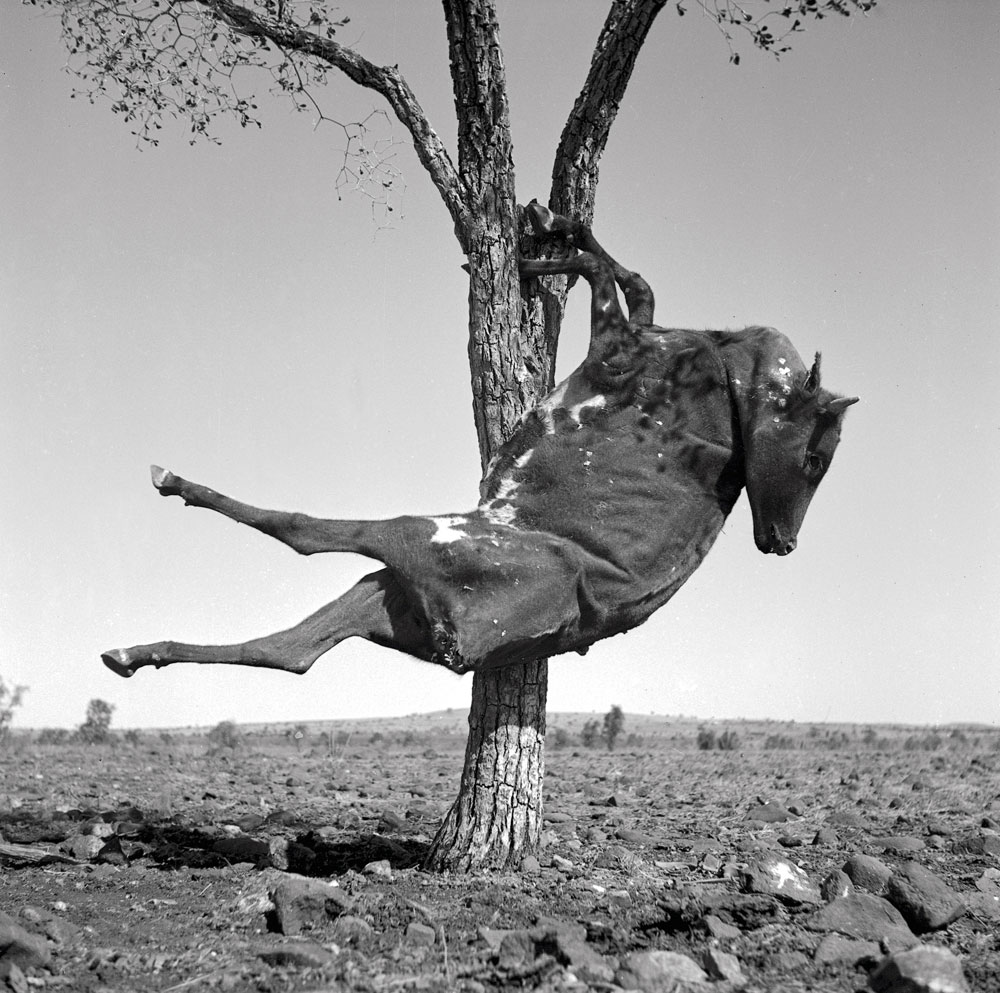


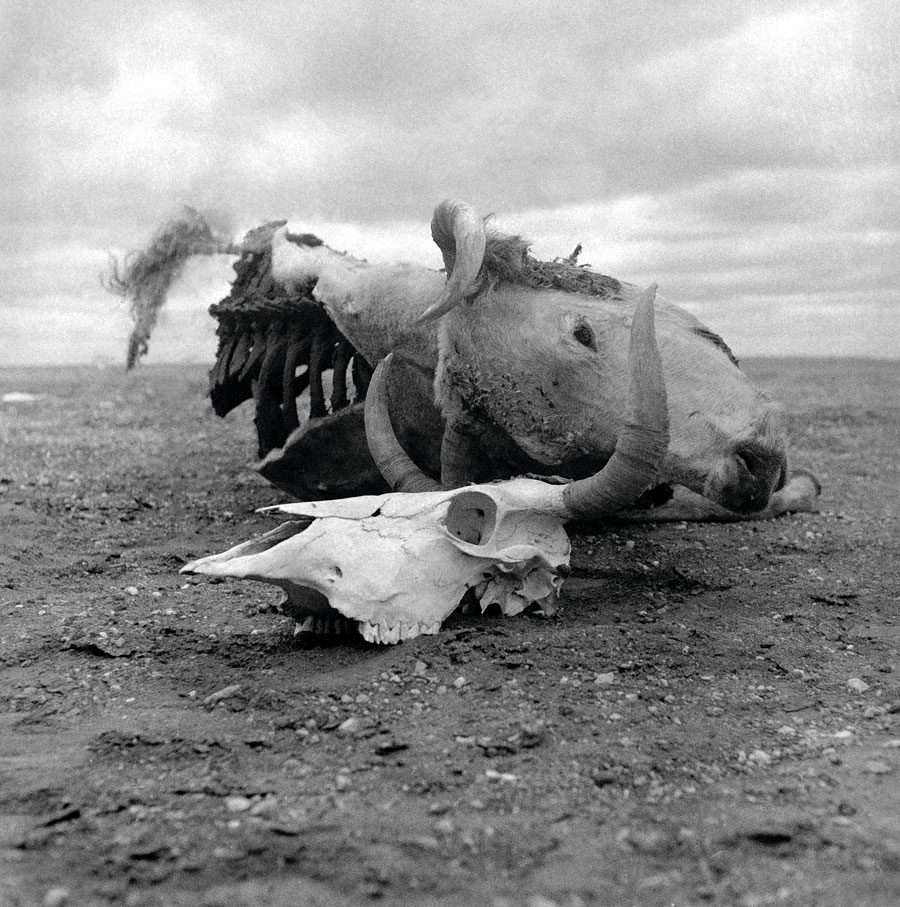
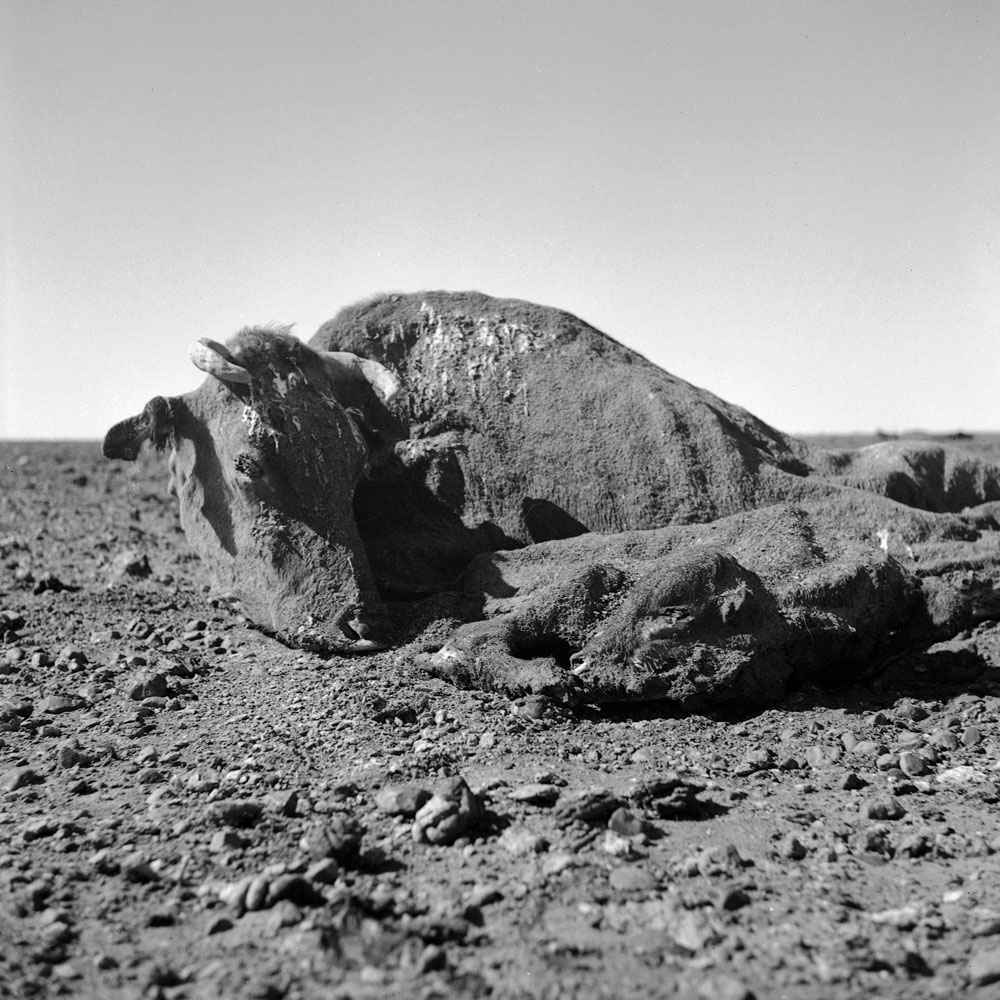
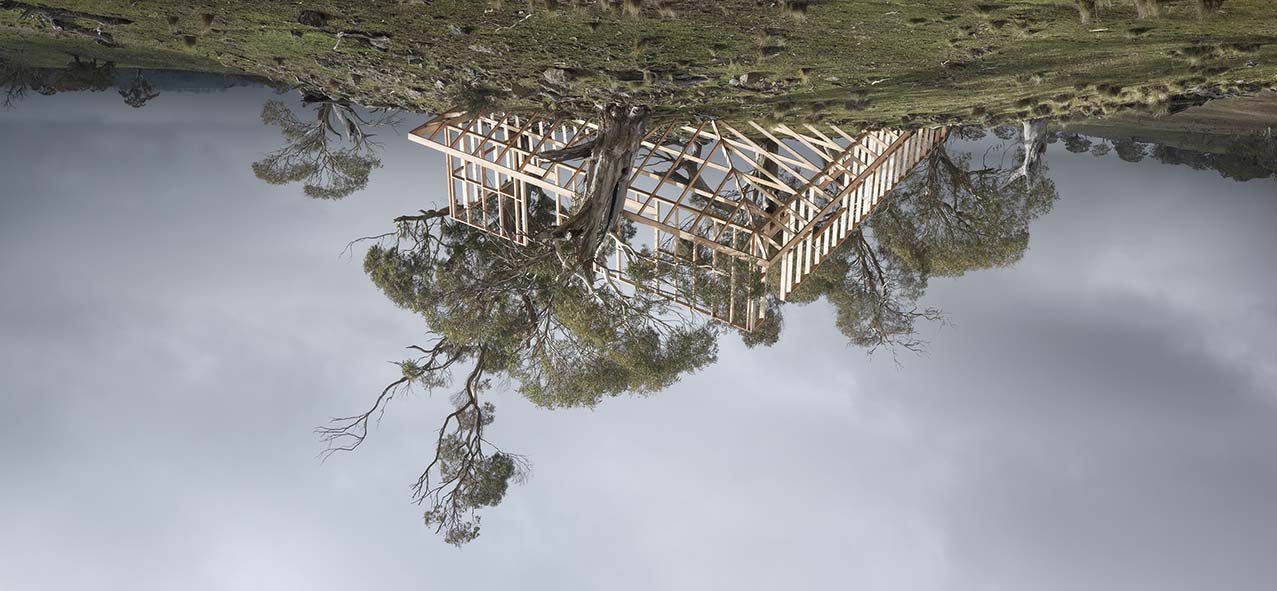
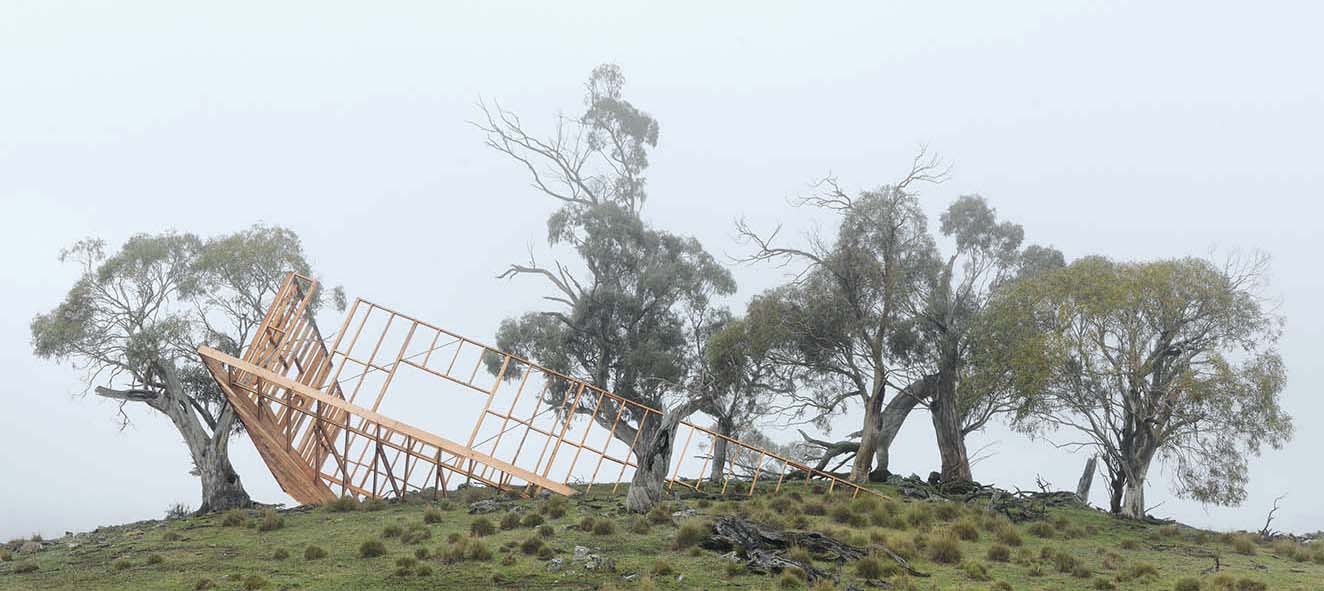
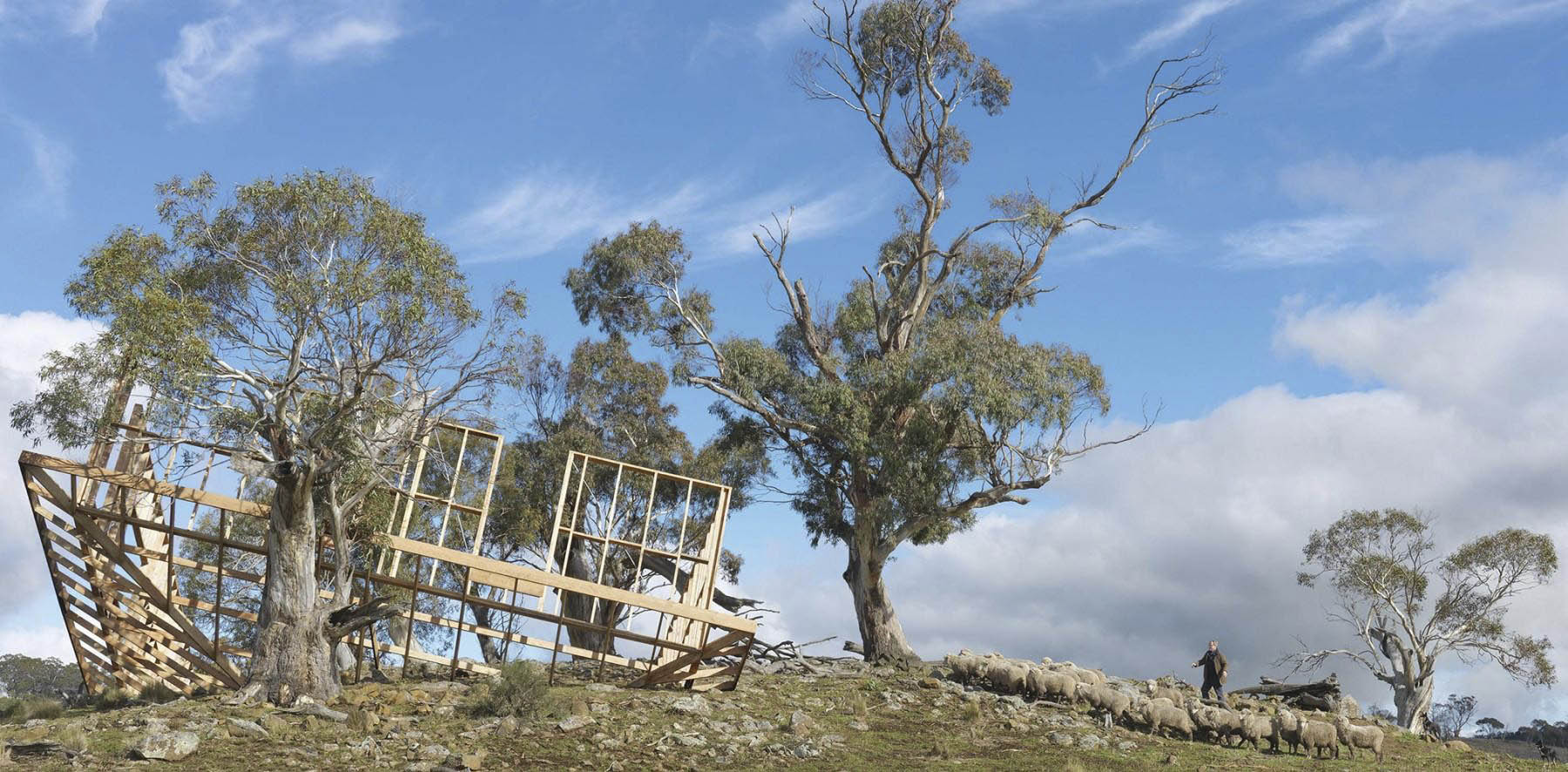


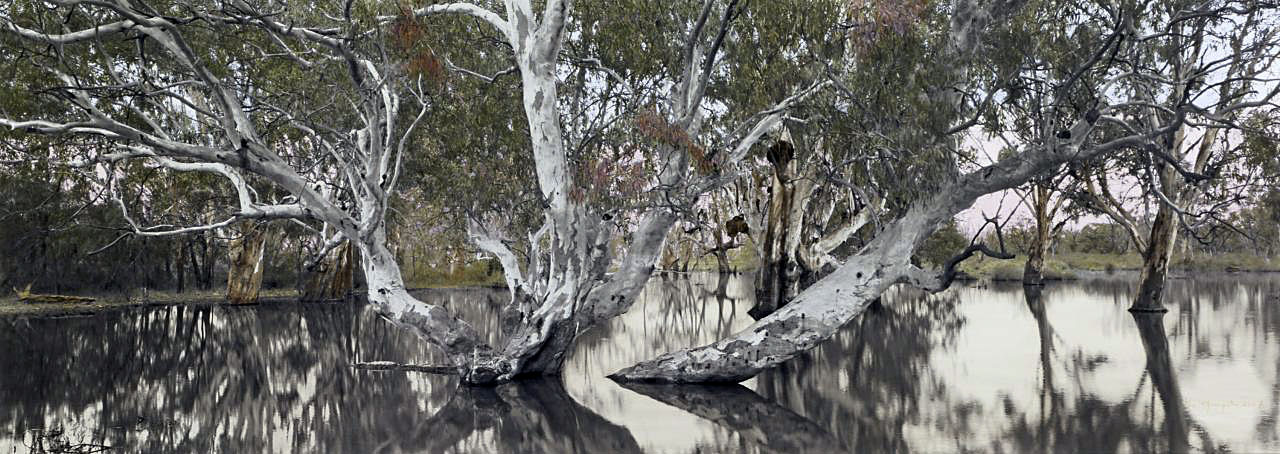
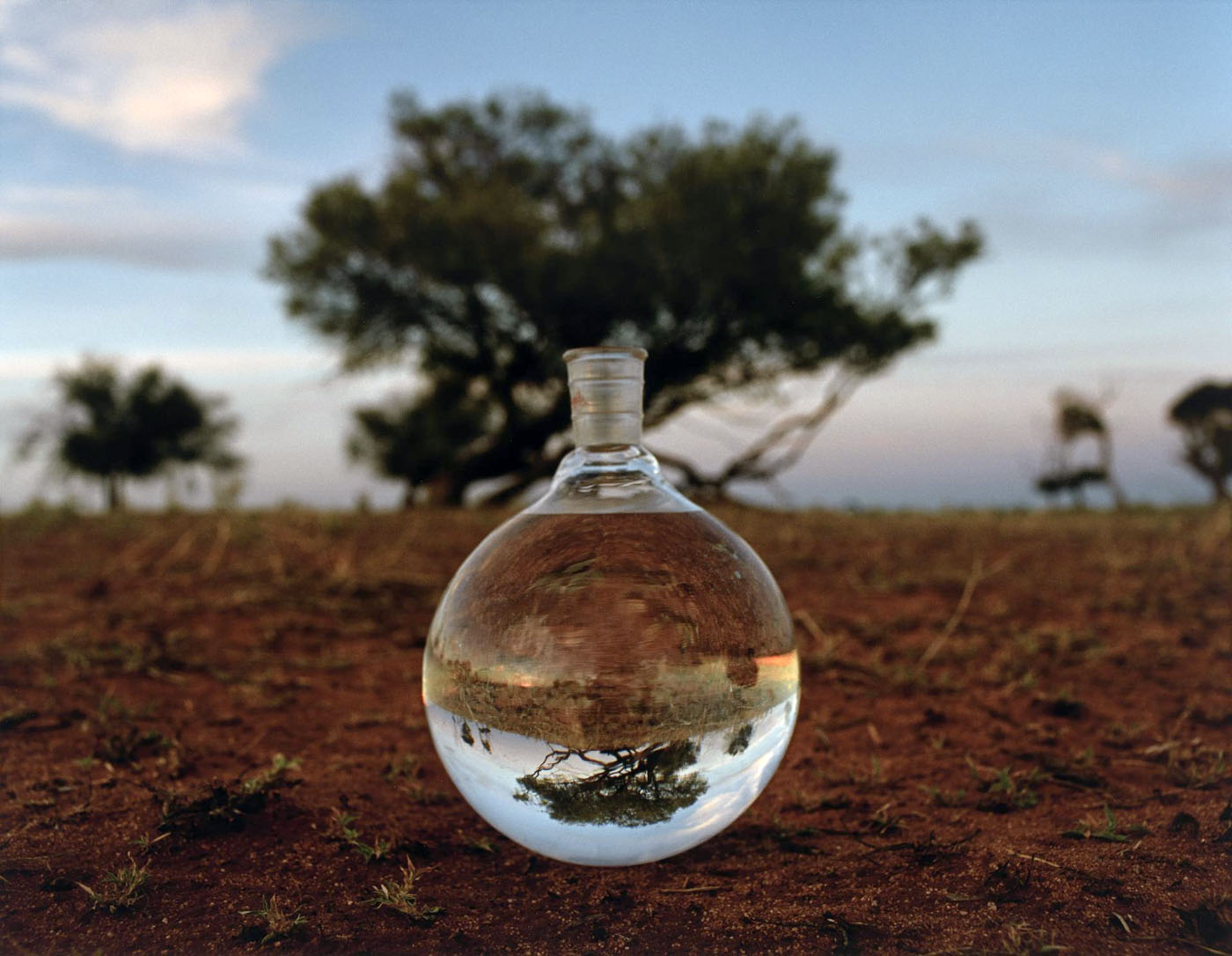
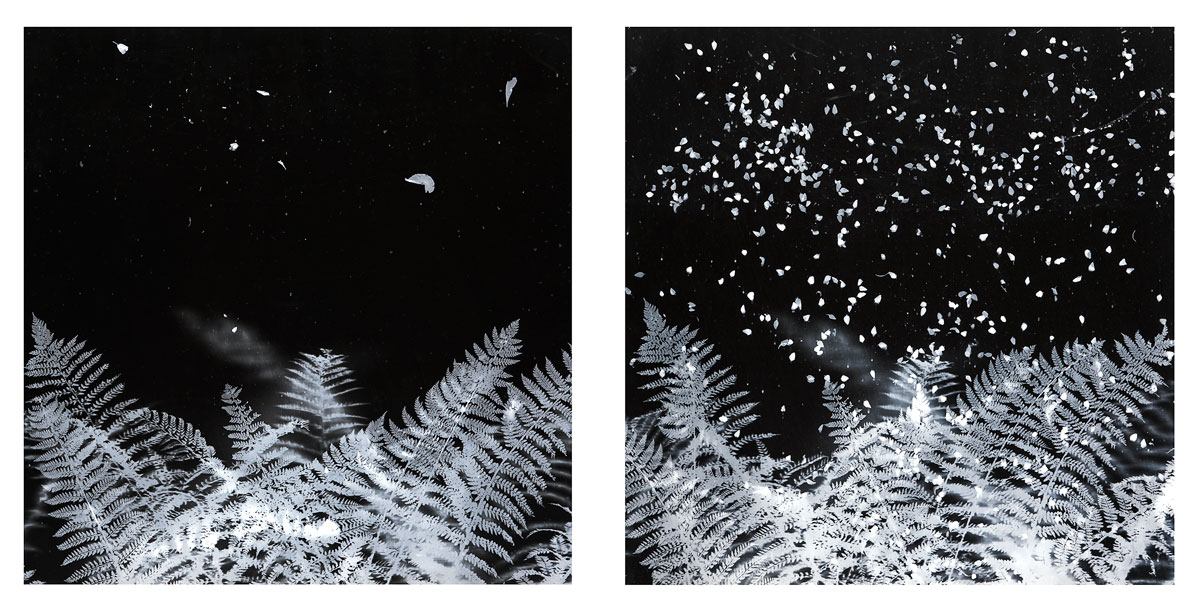

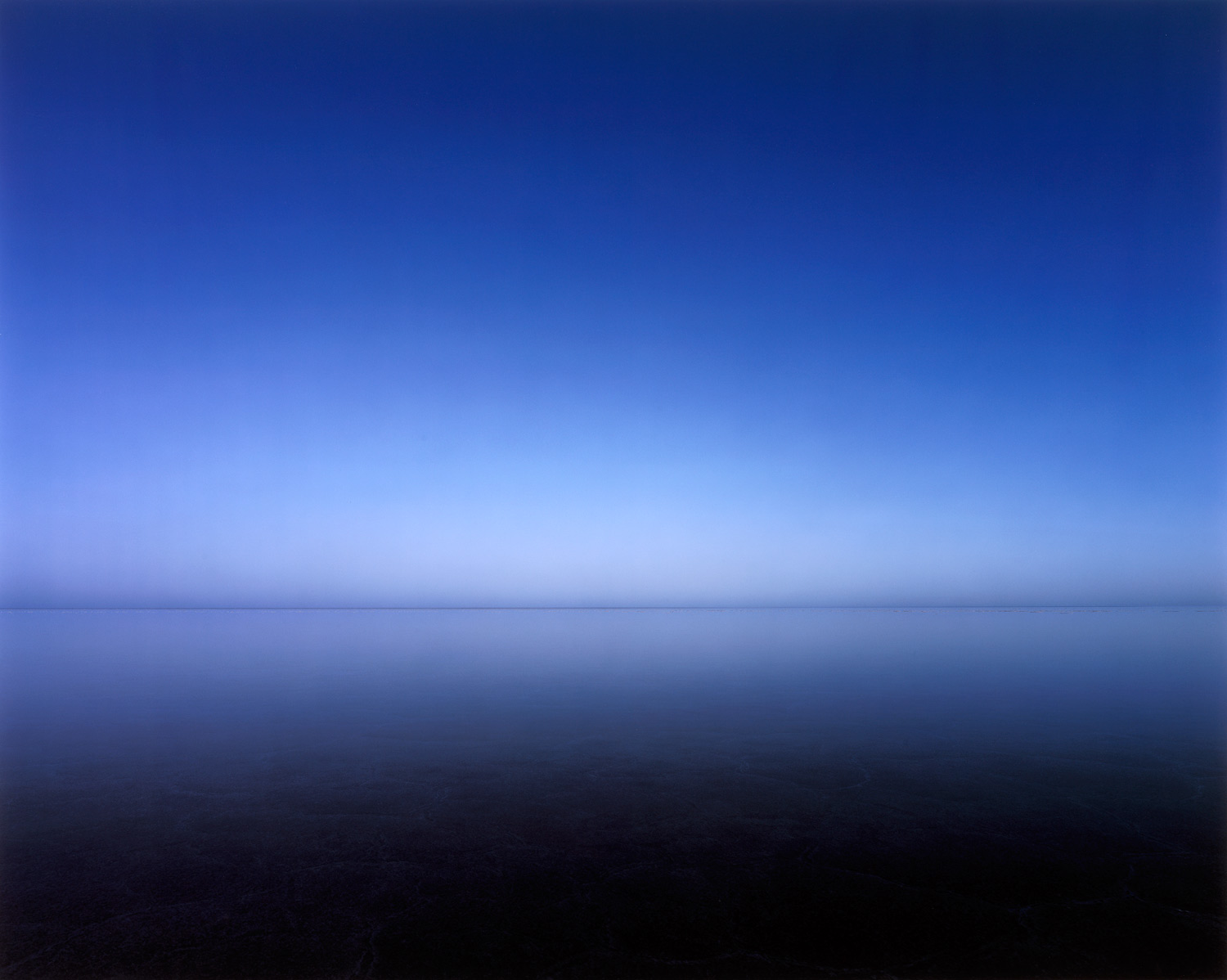


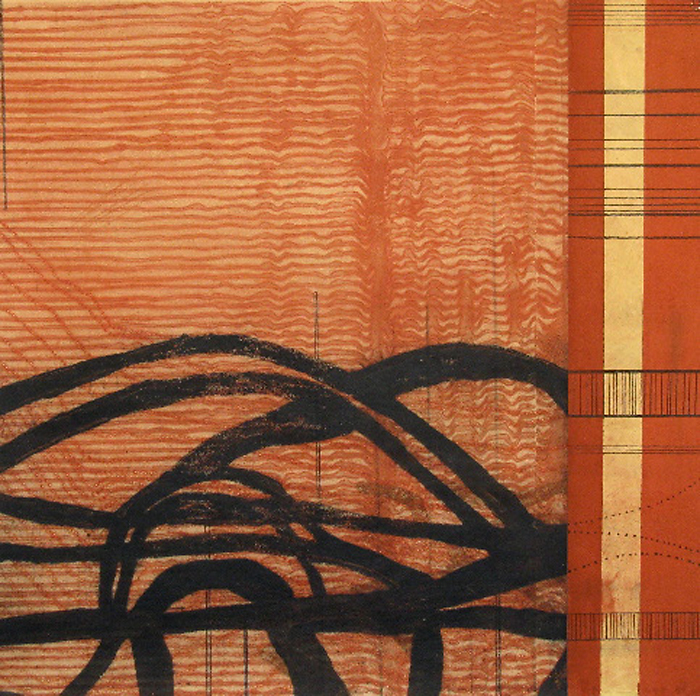
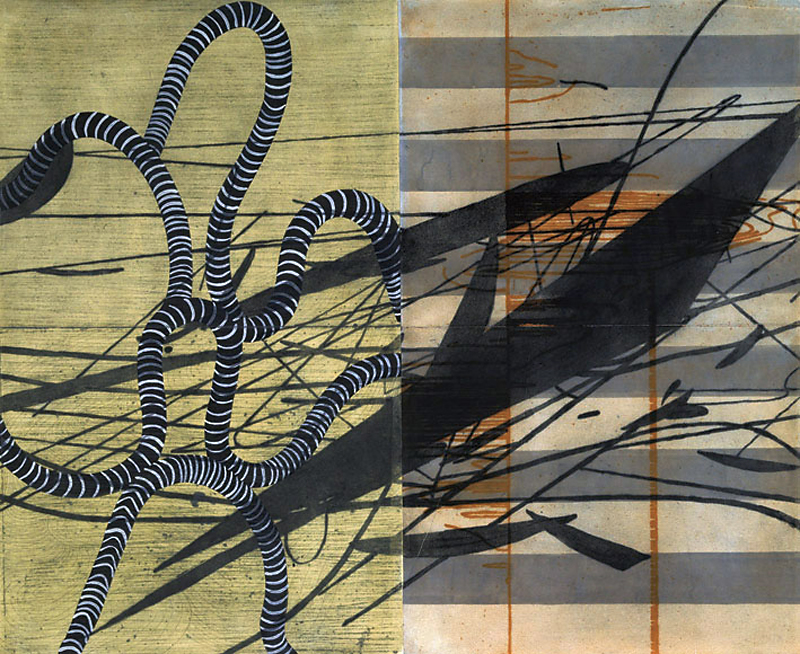
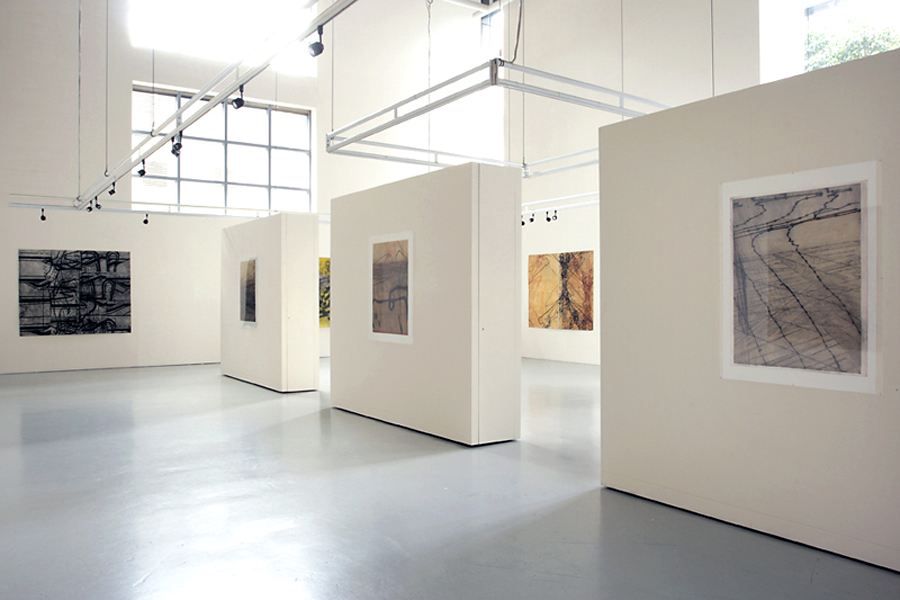
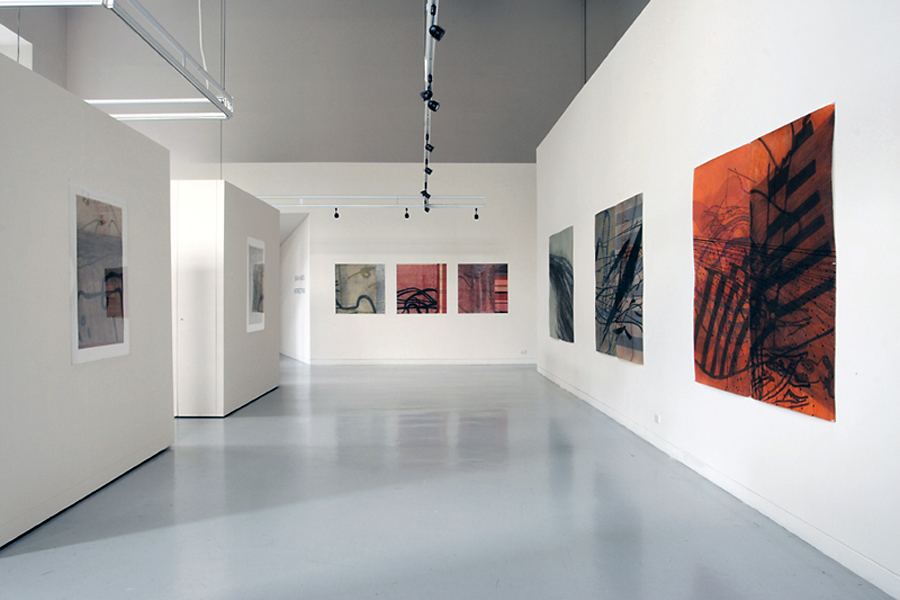
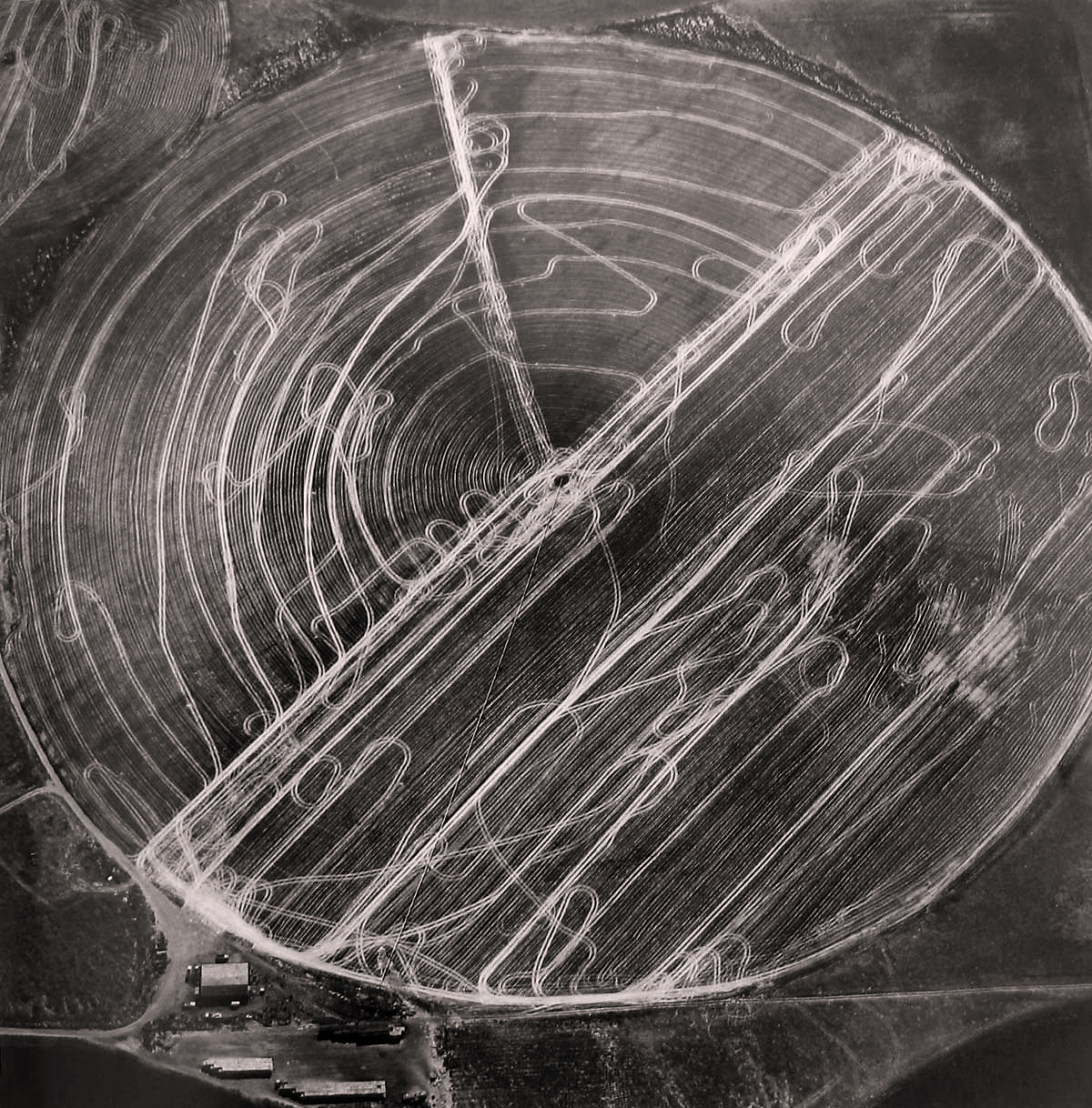
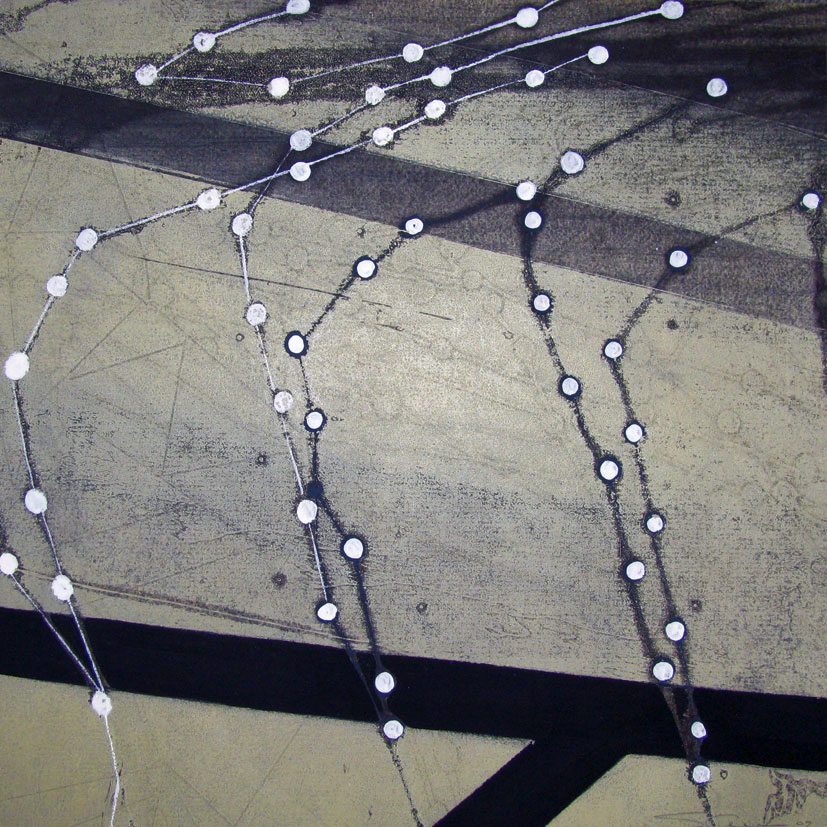
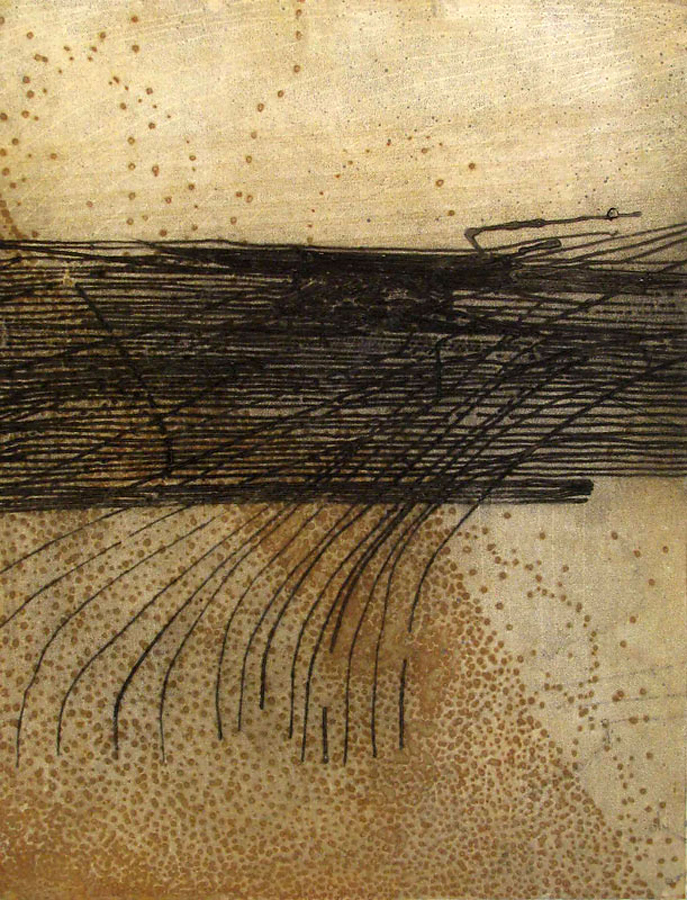
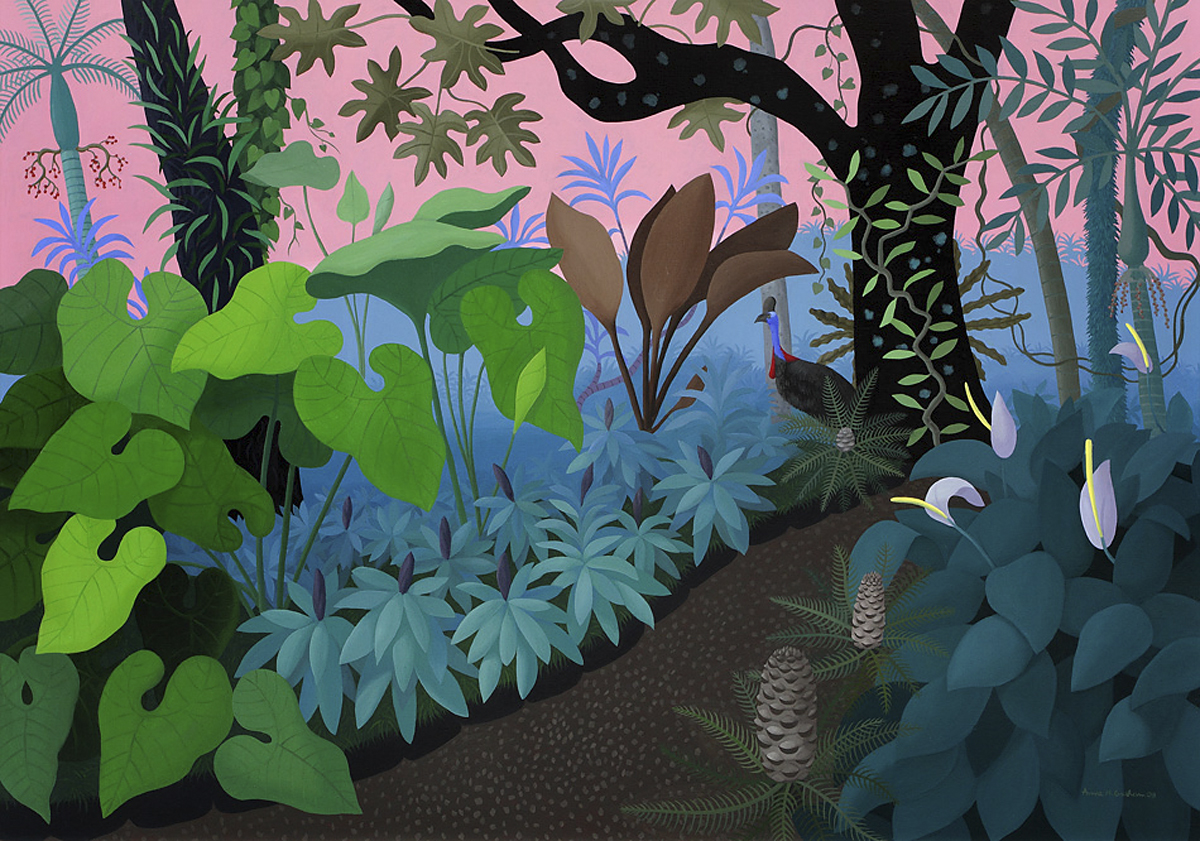
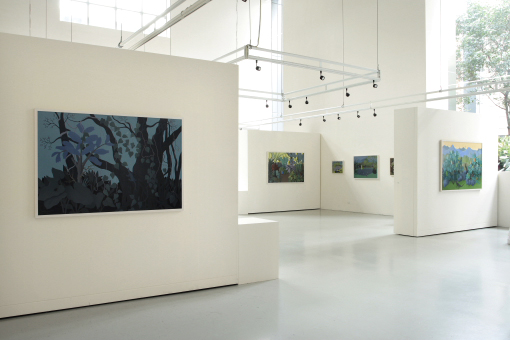


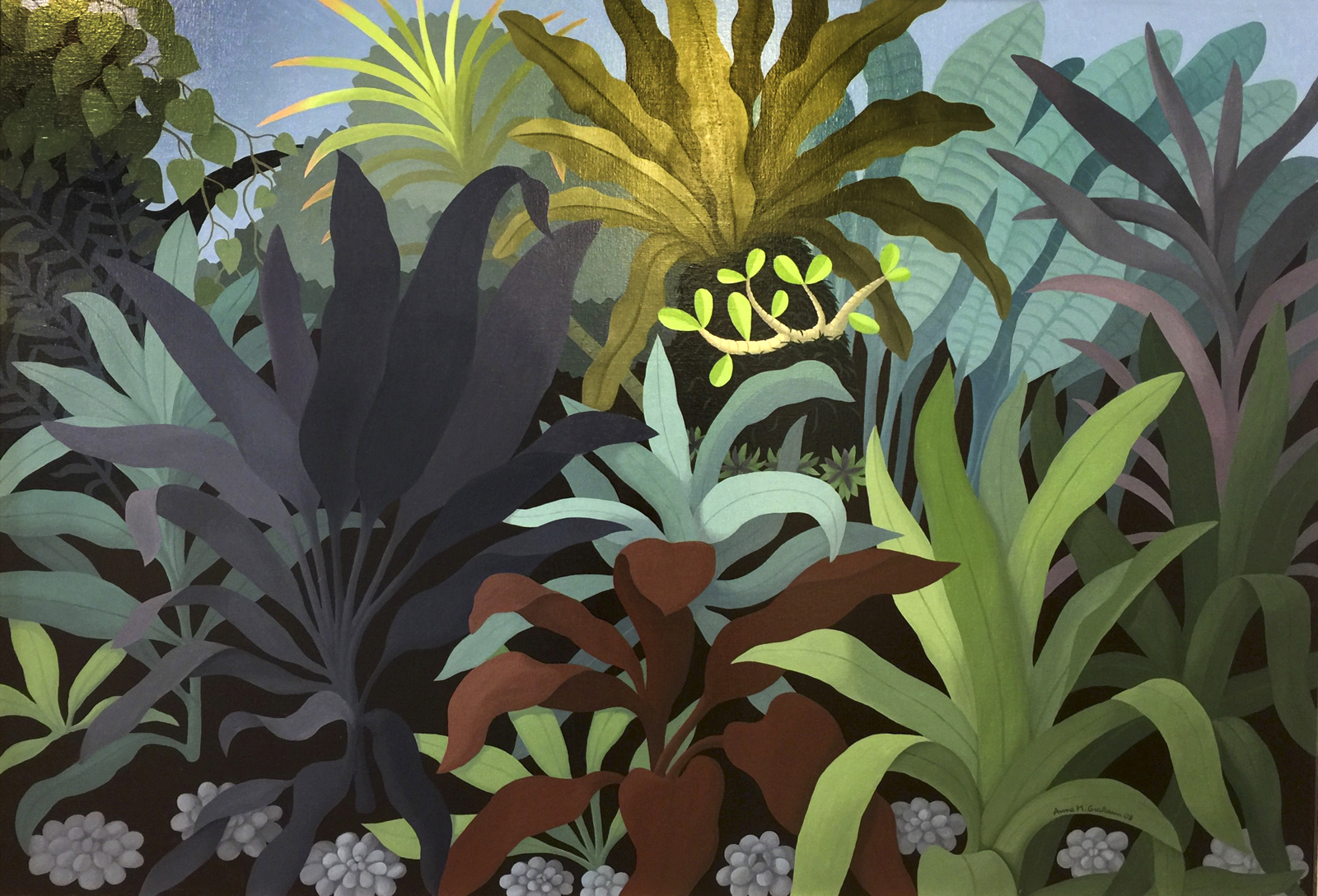
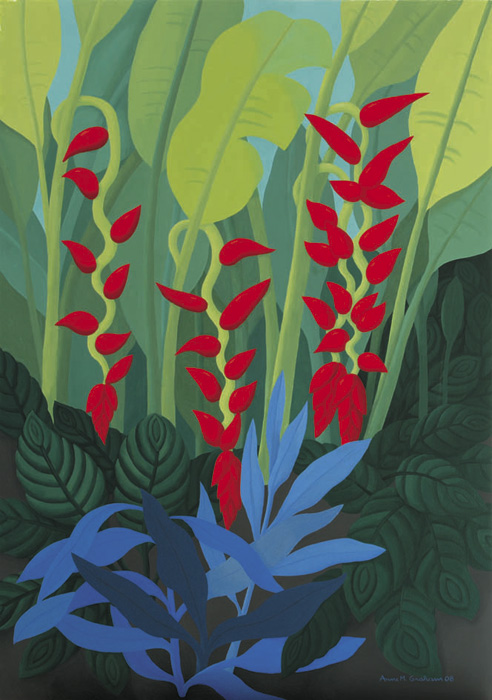

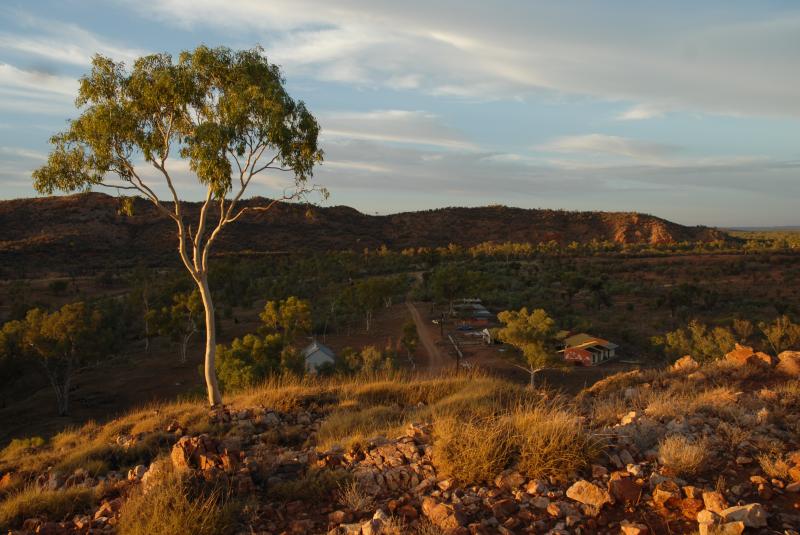
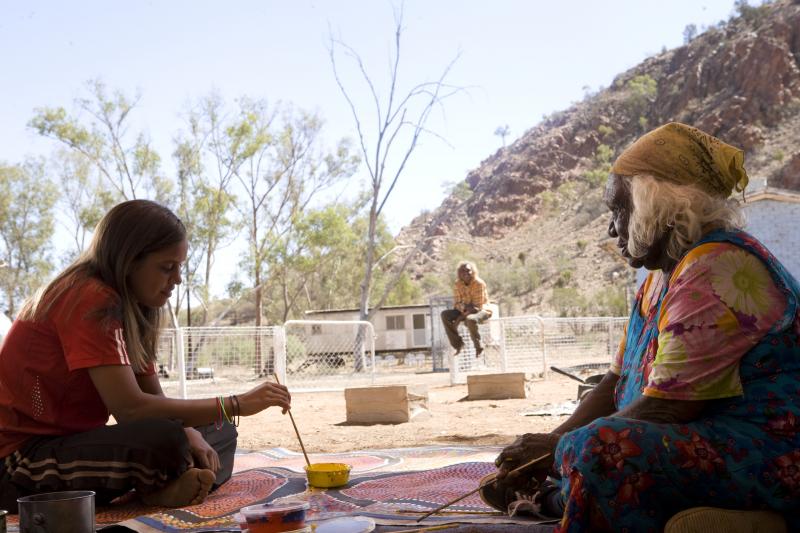


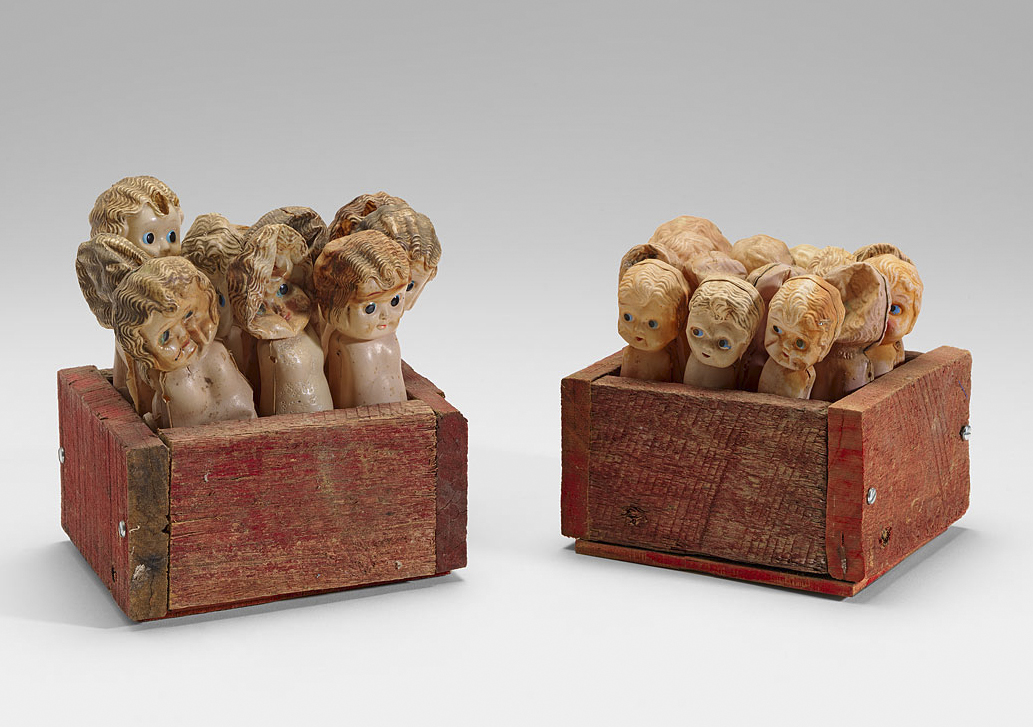


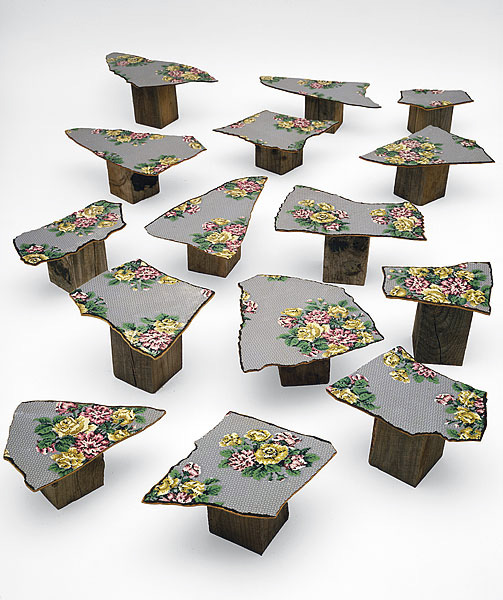
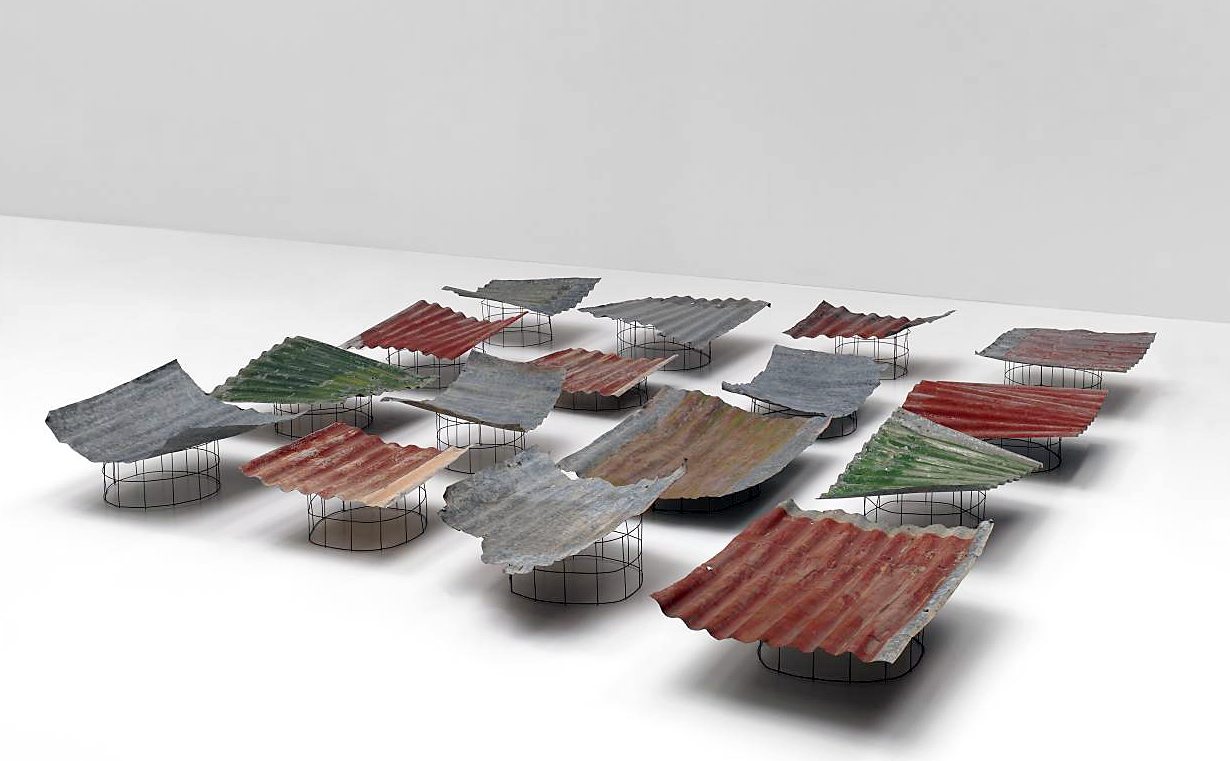
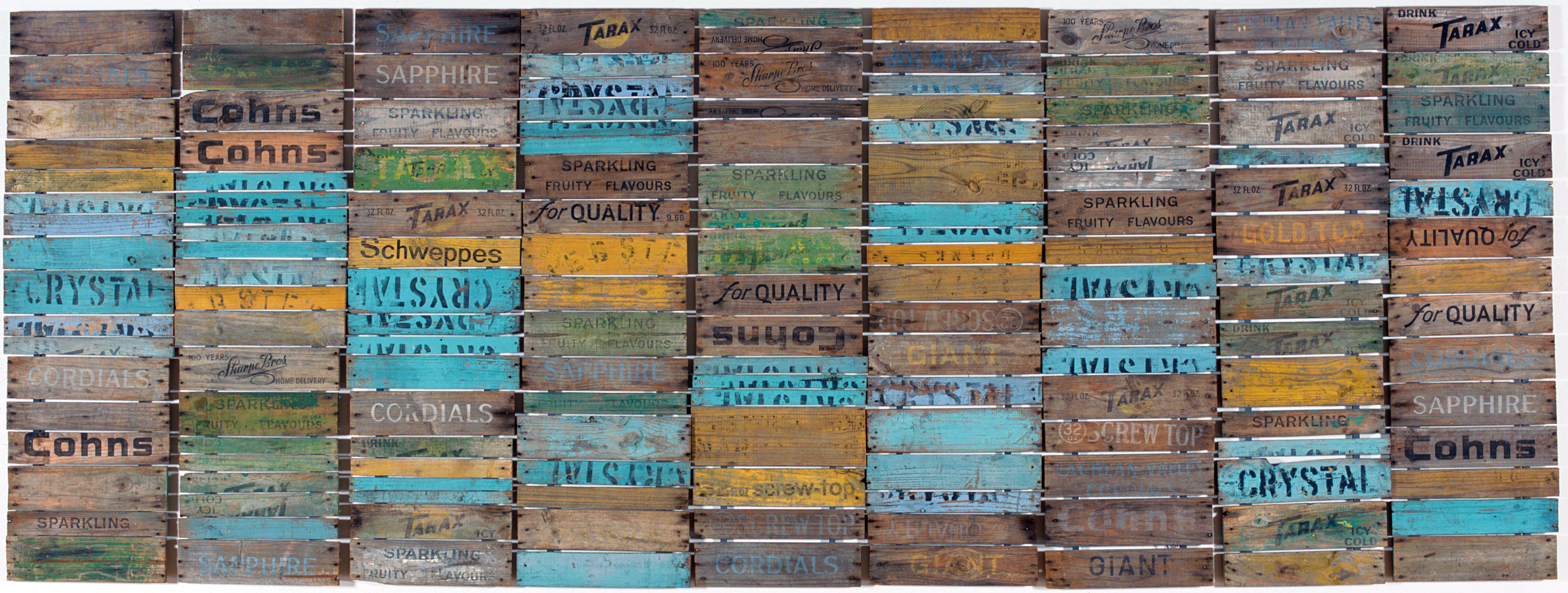


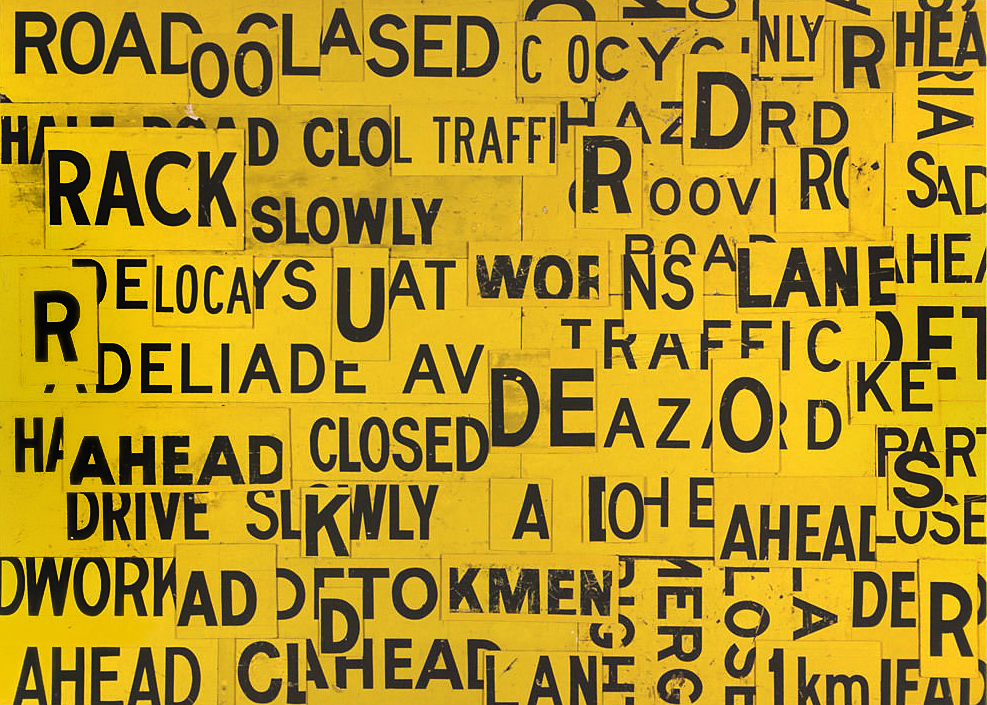













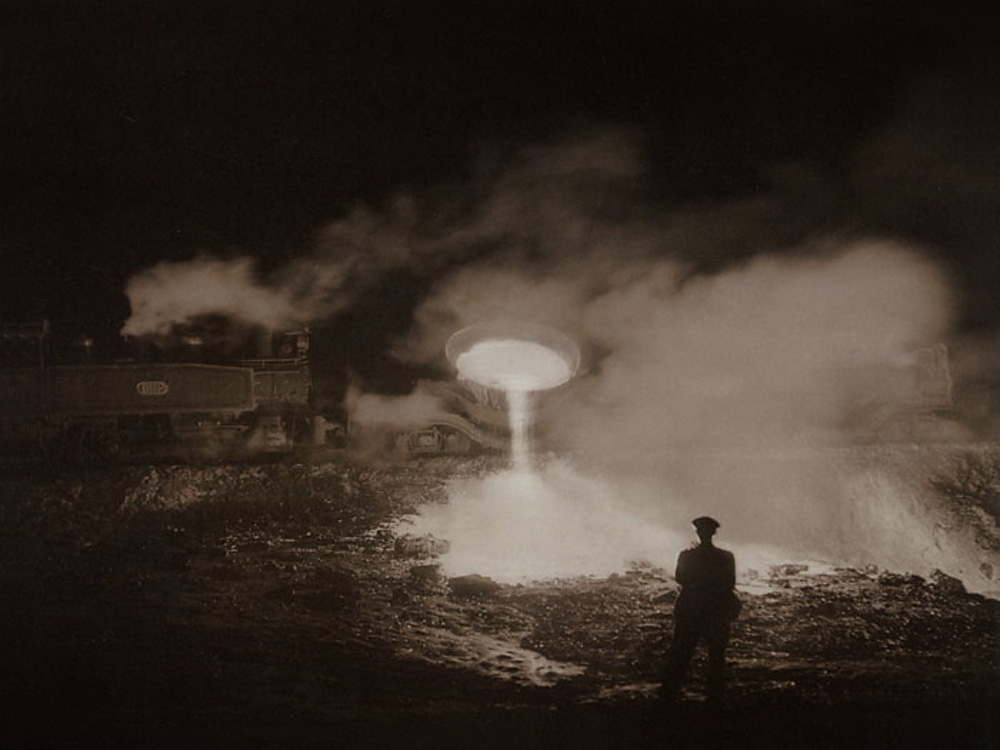
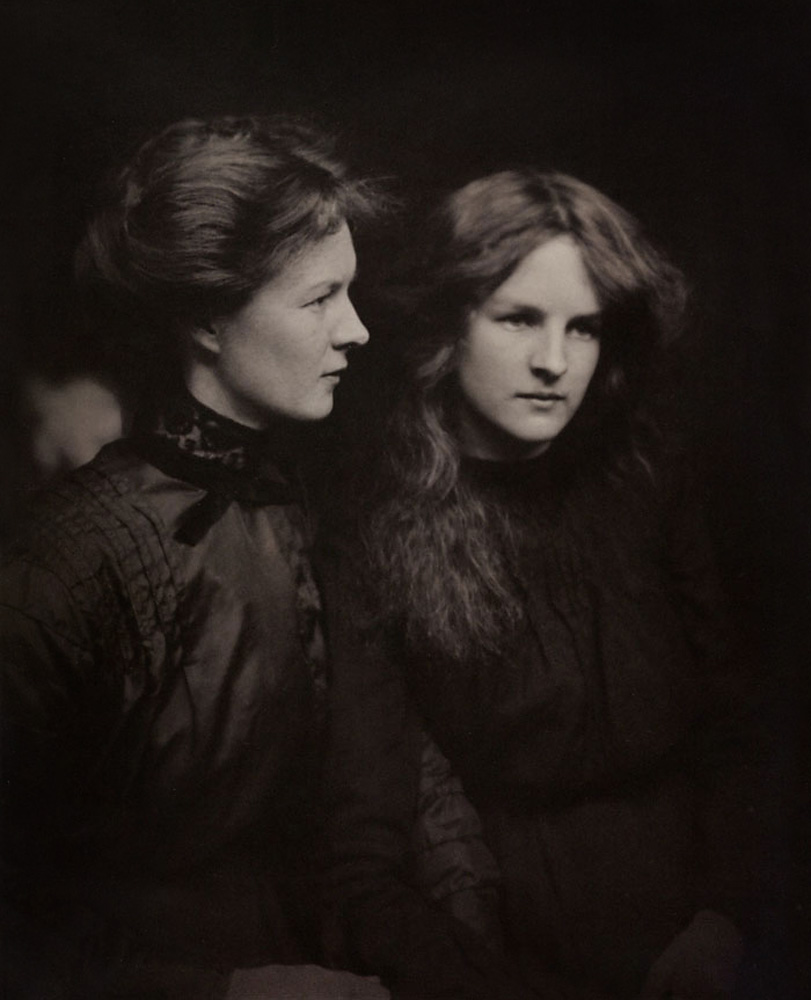


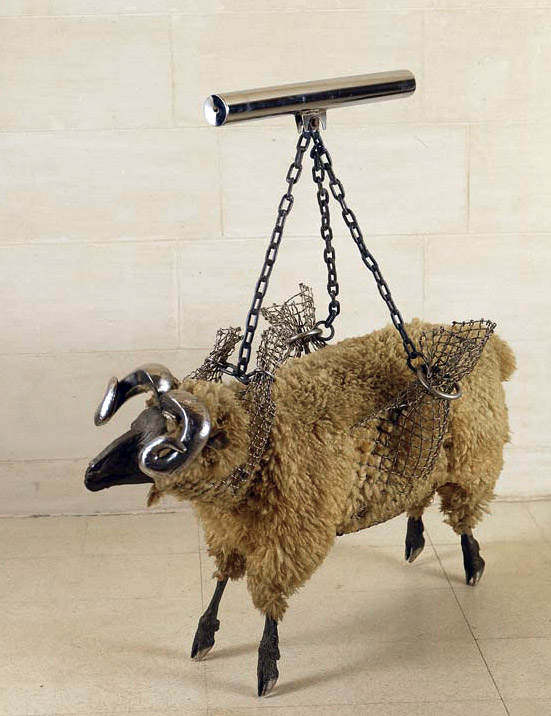
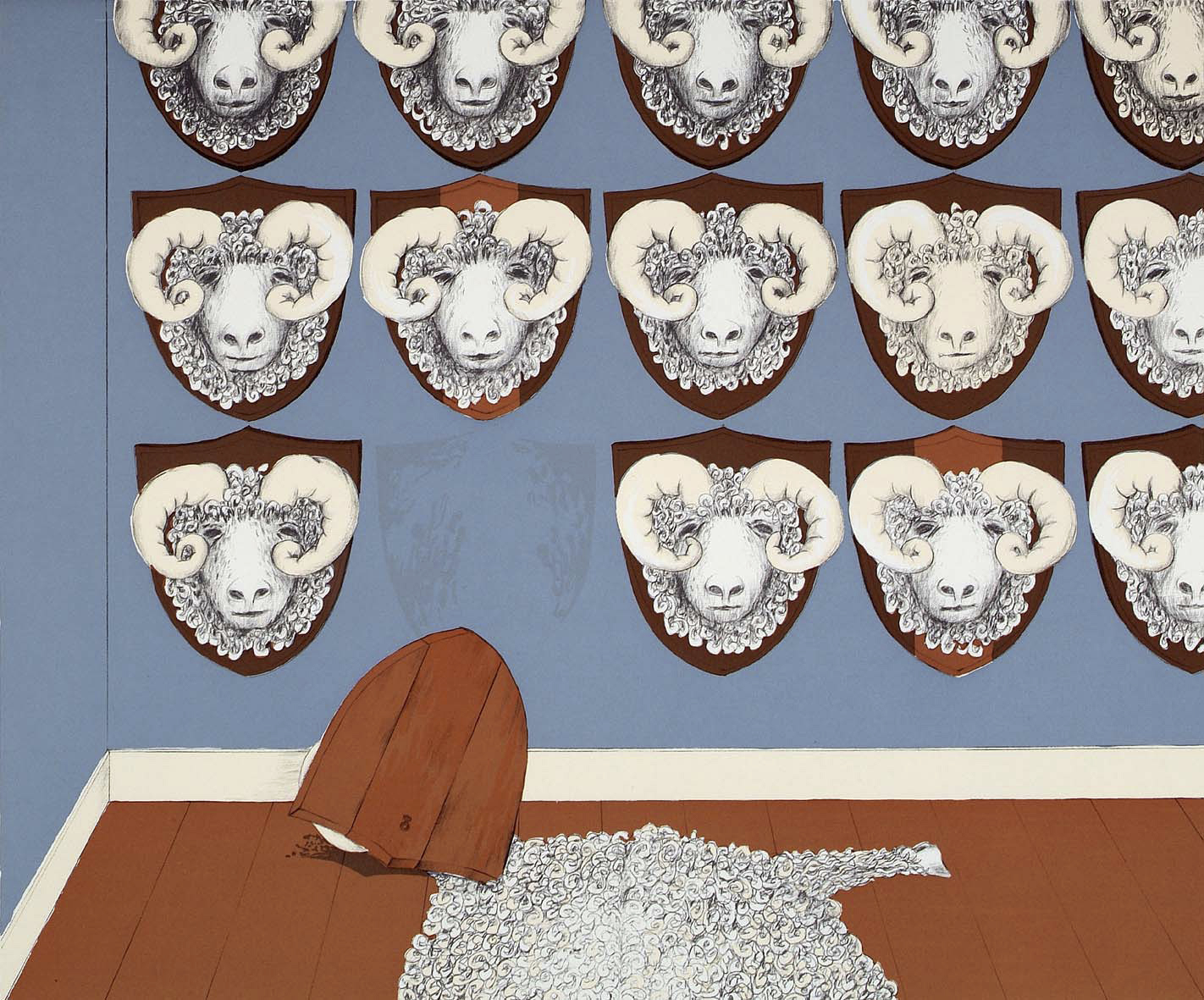


 Art Blart _ art and cultural memory archive
You must be logged in to post a comment.