Exhibition: ‘What’s in a face? aspects of portrait photography’ at the Art Gallery of New South Wales, Sydney

Exhibition dates: 24th September 2011 – 5th February 2012


Many thankx to the Art Gallery of New South Wales for allowing me to publish the photographs in the posting. Please click on the photographs for a larger version of the image.
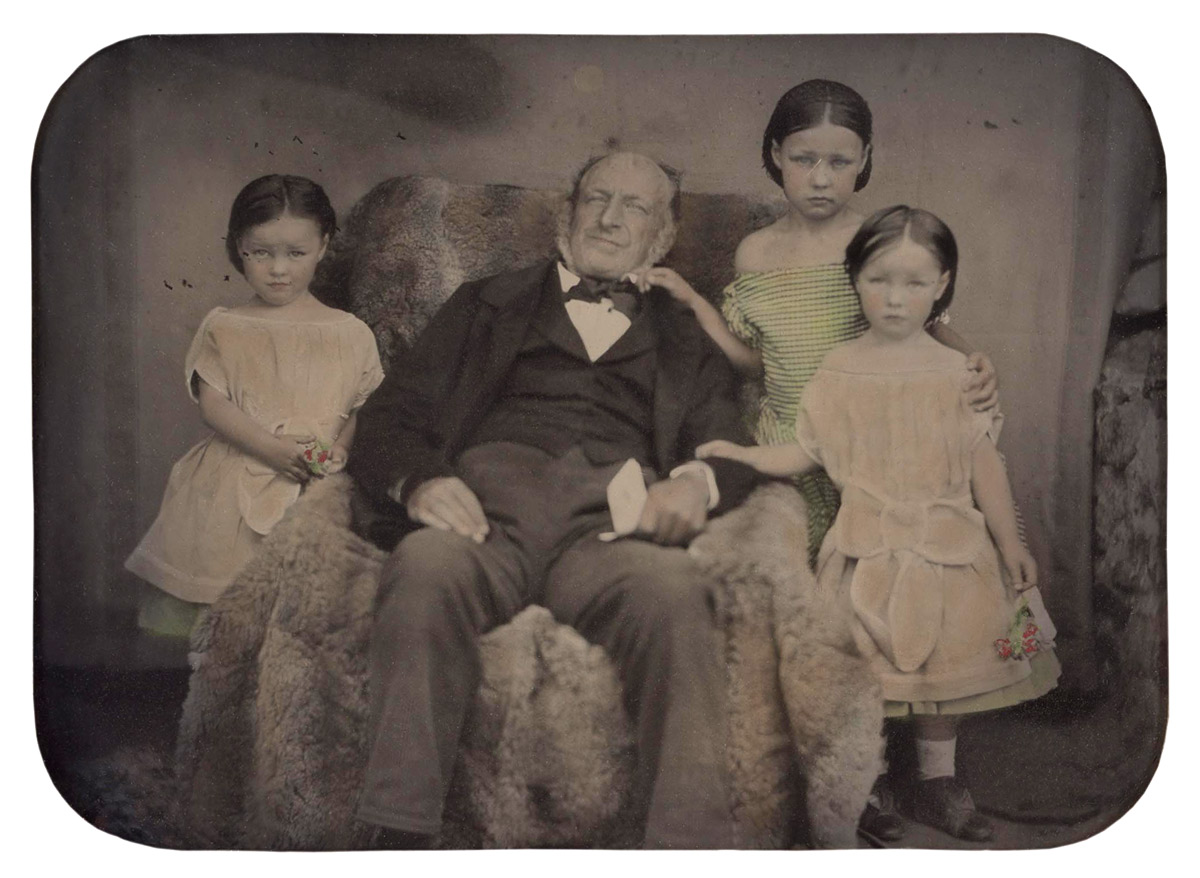
 

Glaister studio (Australia 1855-1870) 'Untitled (portrait of a man and three girls)' 1855-1870


Glaister studio (Australian, 1855-1870)
Untitled (portrait of a man and three girls)
1855-1870
Ambrotype, colour dyes
6.5 x 9cm sight; 9.3 x 11.9cm case
Purchased 1989


This charming ambrotype was thought to have been produced by one of Australia’s most important early photographers, Thomas Glaister, owning to the presence of the Glaister stamp on the case. However, superb varnish was one of Glaister’s hallmarks and this ambrotype is not varnished. In addition, the hand-colouring is not considered to be to Glaister’s standard. As such, it is possible that the ambrotype was inserted into this case at a later date, not least because there is no form of blackening behind the image. This was standard practice to prevent the viewer seeing through to the inside of the case. The Eichmeyer ‘book’ case, patented in 1855 by Henry A Eichmeyer of Philadelphia, were made of fine leather and beautifully put together. Glaister certainly used these but the ambrotype is probably not his specifically and could have been made by one of his sons in the 1860s when they worked as travelling photographers. Regardless of who took the image, it is a charming colonial portrait which in size is typical of the period – it can easily be held in the hand.

Ambrotypes were developed in the 1850s. They were faster and cheaper to make than daguerreotypes, yet were still unique objects.

1. 1989, ‘Masterpieces of Australian photography’, Josef Lebovic Gallery, Sydney p. 25

© Art Gallery of New South Wales Photography Collection Handbook, 2007
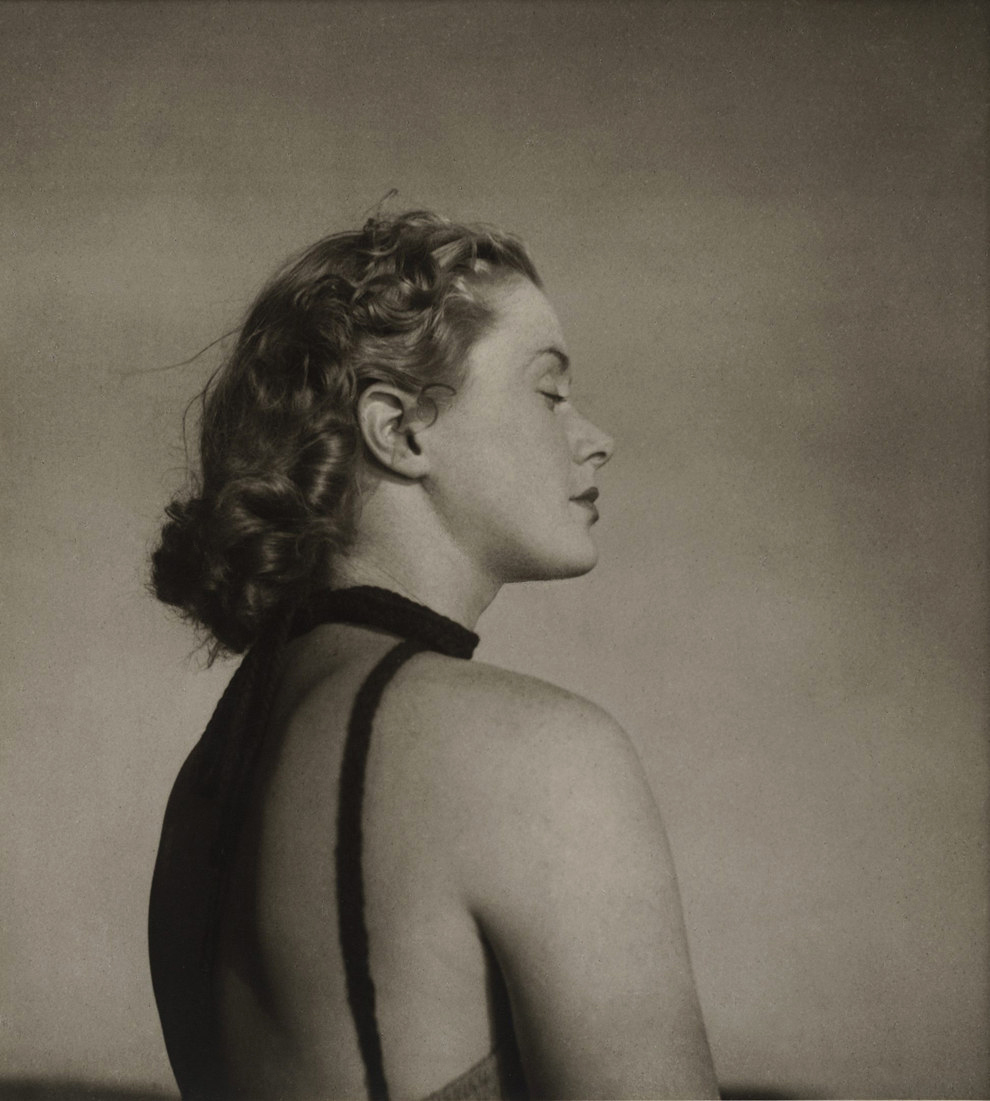
 

Olive Cotton (Australian, 1911-2003) 'Only to taste the warmth, the light, the wind' c. 1939


Olive Cotton (Australian, 1911-2003)
Only to taste the warmth, the light, the wind
c. 1939
Gelatin silver print
Image/sheet: 33.2 x 30.0cm
Purchased with funds provided by John Armati 2006
Art Gallery of NSW Collection


Only to taste the warmth, the light, the wind appears to have been the only print Cotton made of this image. It was found in the late 1990s and has been shown only once, in an exhibition at the AGNSW in 2000 where it was also used on the catalogue cover. It was unusual for Cotton to print so large, yet it is entirely fitting that this monumental head and shoulder shot of a beautiful young woman should be presented in this way. The subject was a model on a fashion shoot at which Cotton was probably assisting. Cotton often took her own photographs while on such shoots and used them for her private portfolio. The photograph transcends portraiture, fashion and time to become a remarkable image of harmony with the elements.

Cotton took the title for this photograph from an 1895 poem by English poet Laurence Binyon, ‘O summer sun’:

O summer sun, O moving trees!
O cheerful human noise, O busy glittering street!
What hour shall Fate in all the future find,
Or what delights, ever to equal these:
Only to taste the warmth, the light, the wind,
Only to be alive, and feel that life is sweet?1


A photographer whose work straddles pictorialism, modernism and documentary, Cotton maintained an independent vision throughout her working life, based on the close observation of nature. Her understanding of the medium of photography was not to do with capture, but rather ‘drawing with light’.

1/ 1915, ‘Poems of today’, English Association, London p. 96.

© Art Gallery of New South Wales Photography Collection Handbook, 2007


Destiny Deacon (Australian / Kuku/Erub, 1957-2024) 'Portrait: Janet Burchill & Jennifer McCamley, Artists' 1998


Destiny Deacon (Australian / Kuku/Erub, 1957-2024)
Portrait: Janet Burchill & Jennifer McCamley, Artists
1998
Colour bubble jet print from Polaroid photograph
57.9 x 71cm
Purchased 1998
© Destiny Deacon. Licensed by Viscopy, Sydney


Deacon is widely recognised for her staged photographs which employ various props, including souvenirs and kitsch, in satirical tableaus that critique notions of Aboriginality. Initially, in 1991, she employed dolls and since then they have become a signature motif. This use of non-living models informed her practice when she began to photograph people. As Deacon states, ‘I’ve never been one for “live action” shots… I’ve got to rule the roost. It’s no different dealing with inanimate objects or people, except with people I’m more terrified.’1

This method can be seen in Deacon’s Portrait: Janet Burchill & Jennifer McCamley, artists 1998. Burchill and McCamley, Melbourne and Mildura based collaborative artists, have been arranged in a re-enactment of Henri Matisse’s Conversation 1908-1912. The photograph echoes the deep blue background of the original painting. The two artists hold the stiff positions of Matisse and his seated wife gazing across at each other. This is one of a number of Deacon’s works that feature Australian writers, artists and other notable figures re-enacting iconic paintings. Other examples include artist Fiona Hall in a 2004 retake of Grace Cossington-Smith’s The sock knitter 1915 and a portrait of Gary Foley inspired by William Dobell’s The boy at the basin 1932.

1/ Destiny Deacon, ‘Interview with Virginia Fraser’ in Destiny Deacon: walk & don’t look blak, Museum of Contemporary Art, Sydney, 2004, p. 109.
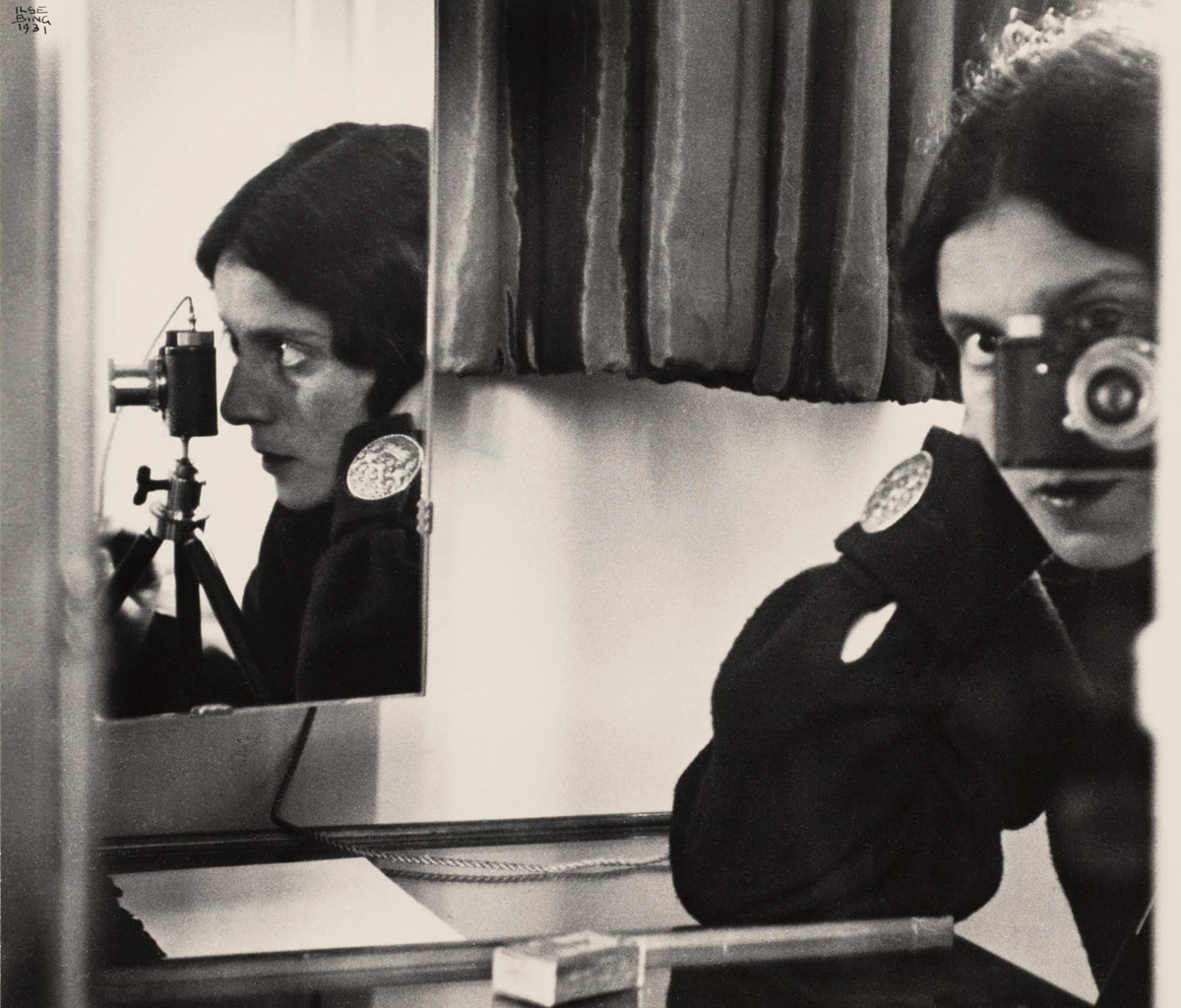
 

Ilse Bing (United States of America, Germany 1899-1998) 'Self portrait with Leica' 1931 printed 1941


Ilse Bing (United States of America/Germany, 1899-1998)
Self portrait with Leica
1931 printed 1941
Gelatin silver photograph
26.7 x 31.2cm
Alistair McAlpine Photography Fund 2005
© Ilse Bing Estate. Courtesy Edwynn Houk Gallery, New York


Self portrait with Leica is a complex image in which the artist has photographed herself and her trademark Leica in one mirror, while the profile of both is reflected in another. The large button on her cuff disturbs the play between full face and profile, while the objects at the bottom of the frame lend a certain informality to an otherwise highly contrived set-up. The soft velvety curtain behind introduces a further element of rich tactility. The play between black, white and shades of grey softens and enriches the overall image.

Although Bing avoided becoming part of any specific movement of the 1920s or 1930s – for example, constructivism, the Bauhaus or surrealism, describing herself as being ‘on the edge of the periphery of the Bauhaus’ only – she was fully cognisant of the range of experimentation which was taking place across Europe. She forged her own path, combining an abiding belief in the importance of intuition and poetry with rigorous composition and superb technical skills.

Inspired by the work of Florence Henri, and with increasing confidence in her ability to marry naturalism with geometric formalism, Bing worked extensively as a press, fashion, portrait and documentary photographer in Paris until she was interned as an enemy alien in 1940. Late in her life Bing wrote:

‘I didn’t choose photography; it chose me. I didn’t know it at the time. An artist doesn’t think first and then do it, he [sic] is driven. Now over fifty years later, I can look back and explain it. In a way, it was the trend of the time; it was the time when you started to see differently … And the camera, that was, in a way, the beginning of the mechanical device penetrating into the field of art.’1

1/ Barrett N C 1985, Ilse Bing: three decades of photography, New Orleans Museum of Art, New Orleans pp. 13-14.

© Art Gallery of New South Wales Photography Collection Handbook, 2007


Robert Rooney (Australian, 1937-2017) 'Portrait of Maria Kozic and Philip Brophy II' 1981


Robert Rooney (Australian, 1937-2017)
Portrait of Maria Kozic and Philip Brophy II
1981
Cibachrome photograph
Image/sheet: 20.1 x 30cm
Purchased 1996
© Robert Rooney


The four portraits in the Art Gallery of New South Wales collection reflect a particular period in Australian art, when the now established artists were beginning their careers. They depict members of the contemporary art scene of the late 1970s to mid 1980s associated with Art + Text, an Australian art magazine published from 1981-2000.

Philip Brophy formed the experimental group Tsk Tsk Tsk in 1977. The group produced experimental music, films, videos, and live theatrical performances. Brophy involved his friends in the group, including partner Maria Kozic on synthesiser. Kozic was also producing her own multimedia work. In this photograph, Kozic and Brophy are standing in a suburban backyard complete with Hills Hoist. This is reflective of Tsk Tsk Tsk’s suburban beginnings, based as it was at Clifton Hill’s Community Music Centre. After the group’s dissolution in the early 1980s, Brophy made several experimental films and curated numerous programs for the Melbourne international film festival as well as exhibitions such as Tezuka: the marvel of manga for the National Gallery of Victoria. Kozic moved to New York where she continued her artistic career. Her work has been exhibited widely throughout Australia and overseas and been collected by many museums including the Art Gallery of New South Wales.
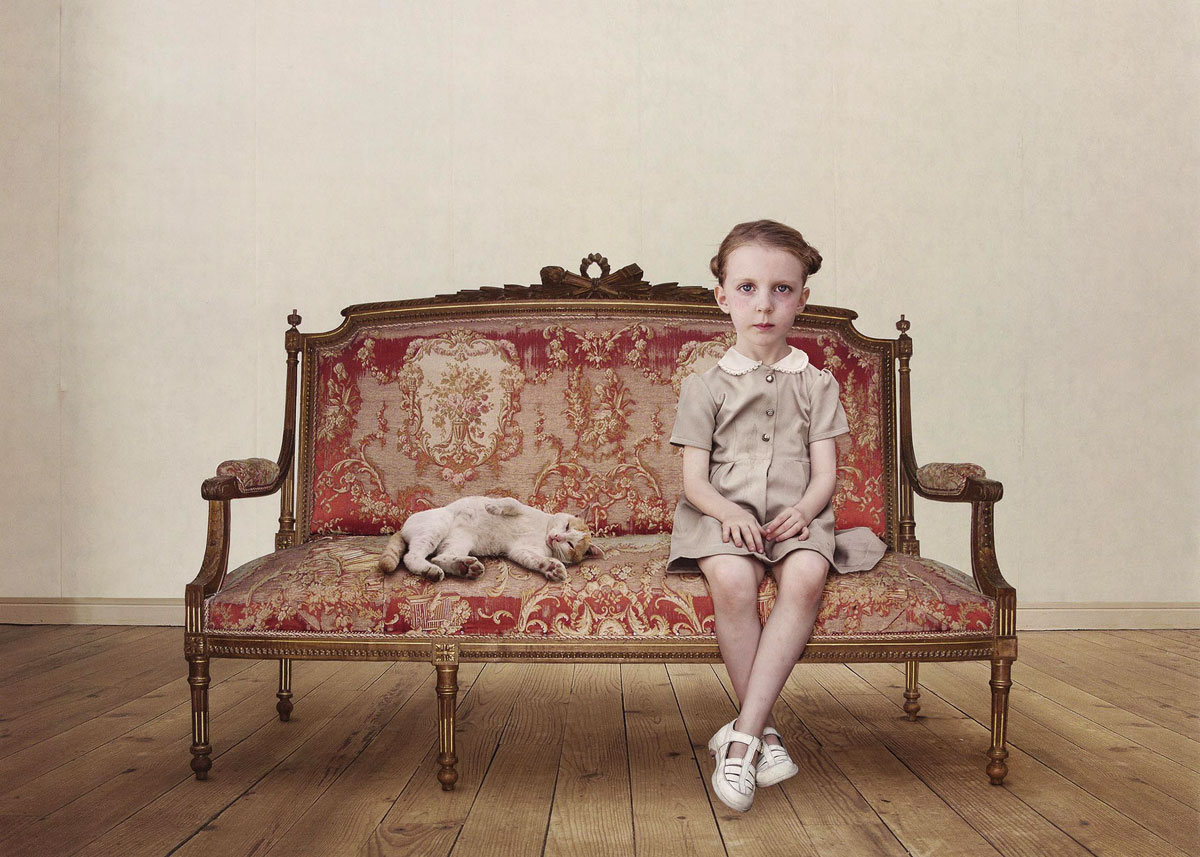
 

Loretta Lux (Germany b. 1969) 'The waiting girl' 2006


Loretta Lux (Germany, b. 1969)
The waiting girl
2006
Ilfochrome photograph
38 × 53cm
Purchased with funds provided by the Photography Collection Benefactors’ Program 2007
© Loretta Lux/Bild-Kunst. Licensed by Viscopy, Sydney


Lux’s portraits are by no means traditional, ‘I call them imaginary portraits. They are not really about the children that I photographed’, commented the artist in interview with Wim van Sinderen (Loretta Lux: new work 2004). In relation to The waiting girl, Lux has said: ‘It’s a picture about time, and timelessness. For me they are sitting on the sofa as if they are waiting for eternity.’ (The Guardian 23 November 06)

Through subtle digital manipulation of the body and facial features of her subjects, Lux creates eerie doll-like creatures with glazed eyes, porcelain smooth skin and subtly ill-proportioned forms. The resulting portraits contain an uncanny blend of mute childish innocence and the self-contained stoicism of adulthood.

Lux’s images of children recall those of the old masters, such as Veláquez, Runge and Bronzino whom she cites as main inspirations alongside German photographer August Sander. Lux has stated in an interview with Louise Baring for the Telegraph (UK) that she uses children ‘as a metaphor for a lost paradise’. Dressing her young models in past fashions (often of the era of her own childhood) suggests the child’s game of ‘dress ups’ in order to be an adult yet somehow played out in reverse. That is, Lux’s children do not seem like children at all, but rather like serious world-weary adults manifested in childish forms.


Spanning over a century, What’s in a face? aspects of portrait photography is an exhibition of 45 photographs from the Art Gallery of NSW collection. The exhibition focuses on crucial points in the history of photographic depictions of the human face ranging from studio portraiture in the late 19th century to contemporary practices today.

Works by Australian photographers, such as Paul Foelsche, Olive Cotton, Max Dupain, Carol Jerrems, Destiny Deacon, Patrina Hicks, Darren Sylvester and others, are placed in an international context, represented by Man Ray, Edward Weston, Iwao Yamawaki, Nan Goldin, Ben Cauchi and Loretta Lux, amongst others.

All portraits reveal something of the sitter, the photographer and also of us as viewers, but none reveal a whole and complete being. This is part of the enduring fascination with the photographic portrait which purports to be an exact likeness but operates more accurately as a metaphor for the self and how that self might exist in the world at a particular point in time.

Judy Annear, senior curator photographs, Art Gallery of NSW


Using photography to depict the face and figure was initially a time-consuming and expensive business. However, the drive to document all things in the world, and rapid technological advances, meant that by the 1880s most people, willing or not and regardless of the photographer’s or their own desires, were documented in some way.

Spurious 19th century ideas to do with what a face could represent exploded in the early 20th century when identity came to be seen as a psychological rather than social phenomenon. Theatricality and performing for the camera, which had existed in photography since its inception, also became much more evident in this period.

In the post-WWII era representations of the face and the body quickly acquired a political and socially aware edge. More recently the face has tended to stand less as an expression of personal experience and more a statement that may signify a set of ideas, whether about the individual, the group or the society at large. Many of these highly constructed images acknowledge and play upon the problematics of the photographic portrait.”

Text from the AGNSW website


Petrina Hicks (Australian, b. 1972) 'Shenae and Jade' 2005


Petrina Hicks (Australian, b. 1972)
Shenae and Jade
2005
From the series Untitled 2005
Lightjet print
85.5 x 80cm
Courtesy the artist and Michael Reid Gallery


Shenae and Jade is typical of Hicks’ unconventional portraits. The young model holds the budgie’s head in her mouth. It’s the kind of slightly dangerous behaviour which can be unnerving to observe. The freckled nose of the model is in tension with her smooth pale temples, heavily lashed closed eyes and soft white top. The luminescent background and generally pale colouration throw the headless body of the brightly coloured budgie into high relief.


Darren Sylvester (Australia, b. 1974) 'They return to you in song' 2001


Darren Sylvester (Australian, b. 1974)
They return to you in song
2001
Lambda print
Image/sheet: 100 x 100cm
Purchased with funds provided by the Photography Collection Benefactors’ Program 2002
© Darren Sylvester


Informed by the slick stylistic conventions of high-end consumer images, Darren Sylvester’s body of work suggests the existential dilemma of living in an overtly consumerist society – one that promises fulfilment but fails to truly satisfy even the most ardent consumer. Perpetually tantalised with glossy images of affluence, ‘must-have’ products and brochure living, our ‘real’ lives can at times seem unfulfilling by comparison, sometimes painful and often a little pathetic. Sylvester’s work seems to suggest that even in our most personal heartfelt moments, our lives are just like everybody else’s, not so special or unique. Our lives could equally be a series of advertising moments.

Yet the nature of this work is resolutely ambiguous, alternately offering intimacy and emotion with cool detachment. Photo-shopped clean of incidental detail and anomaly, and featuring youthful agency models, Sylvester’s evenly lit, tightly focused images still tap a nerve despite their polished finish. Perhaps this is because they are precisely ‘generic’ (and emotive) experiences to which we can all relate. The same principles underpin a good pop song and in Sylvester’s work this is no coincidence – he strives to produce images that carry the same directness and lasting impact. Commenting on the music of the Carpenters, ‘their lyrics were always sad and about emotional relationships but sealed beneath glossy west coast melodies’, Sylvester reveals the pop-music strategies he employs in his work.1

Based on short stories written by the artist prior to composing the scene, his images carry their own inherent narrative. Yet we don’t need to read Sylvester’s story to understand the drama, nor do we need to hear the tune to recognise the song – it’s an old one, and a shared one, that each of us remembers well.

1/ Colless E 2006, ‘Darren Sylvester: the right stuff’, Australian Art Collector, no 36, Apr-Jun p. 102.

© Art Gallery of New South Wales Photography Collection Handbook, 2007
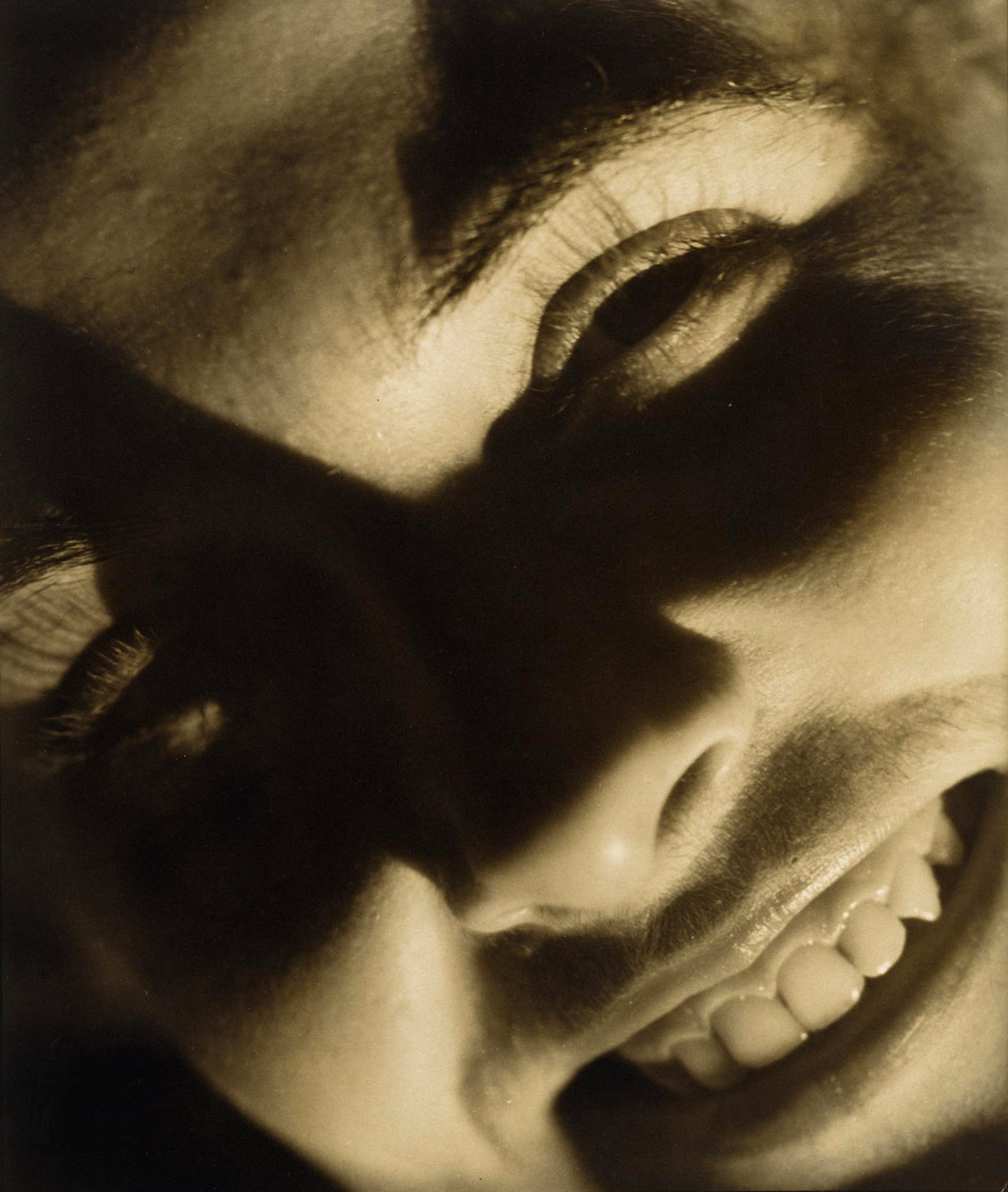
 

Hans Hasenpflug (Australia, Germany 1907-1977) 'Untitled (head of a woman)' 1940-1941


Hans Hasenpflug (Australia/Germany 1907-1977)
Untitled (head of a woman)
1940-1941
Gelatin silver photograph
Image: 28.8 x 24.3cm
Gift of Mr Christopher Hamilton, the artist’s son 1984


Hans Hasenpflug arrived in Australia in 1927 aged 20. He had been born into an educated Stuttgart family but it does not appear that he became involved in photography until 1932 when he was employed by Leica Photo Service, Sydney. Hasenpflug went on to work for prominent photographer Russell Roberts from 1935 to 1937 before moving to Melbourne and working with Athol Shmith and other Melbourne studios from 1937 to 1942. As an enemy alien Hasenpflug was not allowed to work on industrial assignments during World War Two but he was not interned and was naturalised in 1945. Hasenpflug exhibited in photography salons in the 1930s and his work appeared in the Sydney Morning Herald, Australian Woman’s Weekly and the Sunday Telegraph.

Hasenpflug was a versatile advertising photographer. He specialised in fashion and product advertising and some portraiture. Despite his apparent lack of photographic training until the 1930s, he seems to be have been strongly influenced by the European avant-garde. Many of his photographs, regardless of genre or subject matter, depend on diagonals through the picture plane and on raking light.

This is true of Untitled. Strong light has created deep shadows across the subject, a closely cropped image of a woman’s face. This, combined with the oblique camera angle, creates a vivid and disconcerting image. The woman is staring directly into the camera, yet a band of strong shadow across the centre of the image creates a blank eyed effect. The pupil free eyes seem inhuman; mask-like or alien. This is in stark contrast to the woman’s open smile that dominates the bottom of the work. The strong, full light on this area highlights her lips, gums and teeth to an almost hyper real extent. These contradictions create an image that on the surface seems friendly and intimate, yet contains an undertone of threat. The inherent strangeness of the image makes it unlikely that this was a commissioned photograph, but rather the artist’s experiment with his medium, and indeed is probably a portrait of his fiancee, Elizabeth Hamilton Crouch.


Edward Weston (American, 1886-1956) 'Guadalupe de Rivera, Mexico' 1924


Edward Weston (American, 1886-1956)
Guadalupe de Rivera, Mexico
1924, printed later
Gelatin silver photograph
20.7 × 17.8cm
Gift of Patsy W. Asch 2000
© Centre for Creative Photography, Arizona Board of Regents


Edward Weston’s Mexican years were of great importance to him and allowed for the maturing of his vision in relation to photography. Accompanied by Tina Modotti, whose own work developed at this time, Weston experimented with pure form through monumental portraits (of which Guadalupe de Rivera, Mexico is a classic example), images of landscapes and buildings, still-lifes and nudes.

Weston’s portraits of those he encountered in Mexico are uniformly compelling. Often taken with a hand-held camera against a plain background and with strong lighting, these images emphasise individuality, modernity and dynamism.

Guadalupe de Rivera was Diego Rivera’s wife at the time and both were among the group of people Weston and Modotti associated with. Weston described Guadalupe in his ‘Daybooks’ as ‘tall, proud of bearing, almost haughty; her walk like a panther’s, her complexion almost green, with eyes to match’.1 As he worked on the portrait, Weston wrote: ‘I am finishing the portrait of Lupe. It is a heroic head, the best I have done in Mexico; with the Graflex, in direct sunlight I caught her, mouth open, talking, and what could be more characteristic of Lupe! Singing or talking I must always remember her’.2

This later print by Weston emphasises, through the dramatic effect of light and shade, the strong lines of the face. The shape of the open mouth is echoed by the shadowed eye above and the jawline below. The diagonal of jaw to ear which runs in parallel to the nose also adds to the dynamism of this image. Outdoors, with the sun shining on her hair, this is a portrait of a remarkable woman.

1/ Newhall N ed 1981, ‘The daybooks of Edward Weston 1 Mexico’, Aperture, New York p. 26.
2/ Ibid p. 42.

© Art Gallery of New South Wales Photography Collection Handbook, 2007
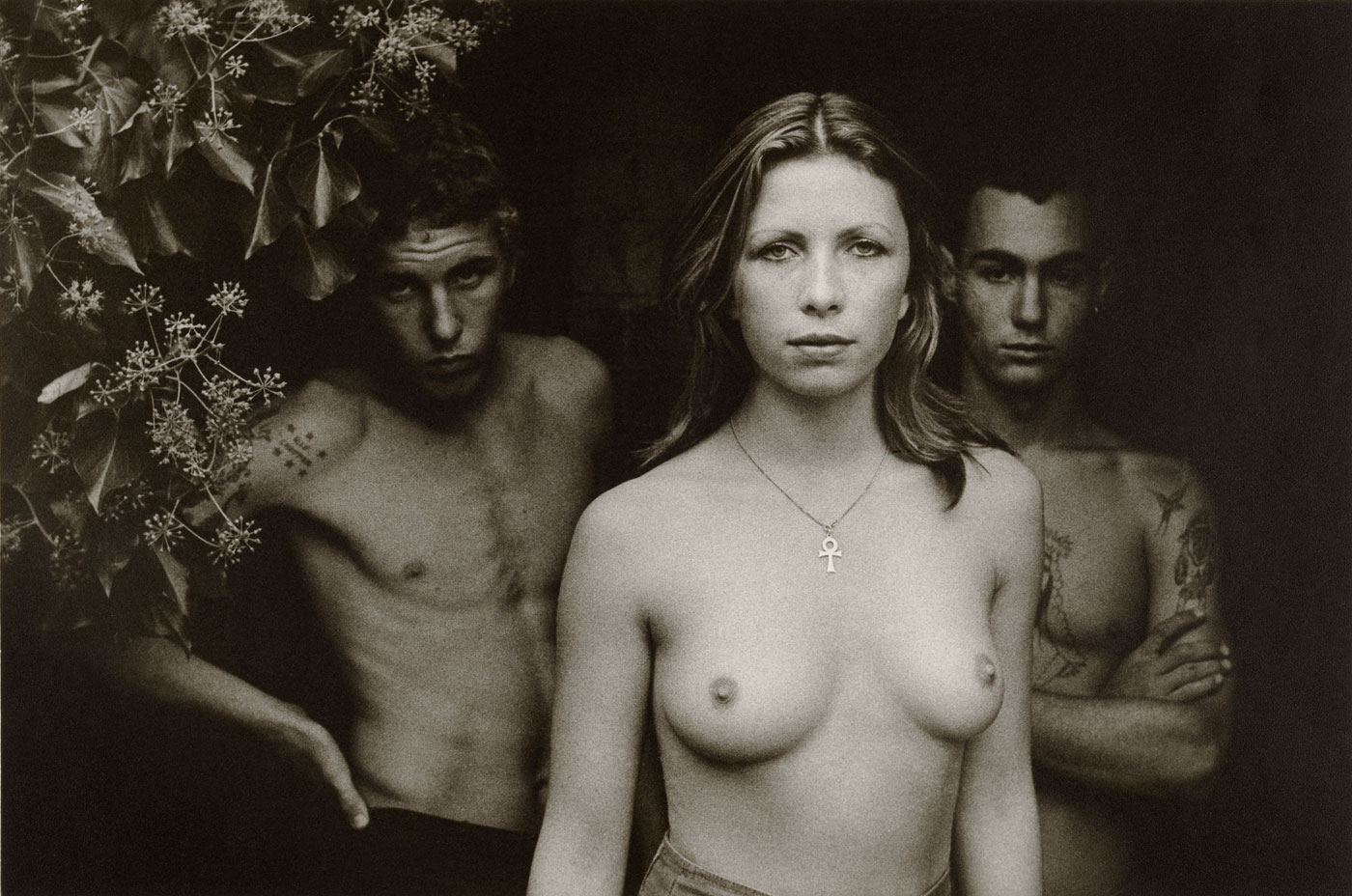
 

Carol Jerrems (Australian, 1949-1980) 'Vale Street' 1975


Carol Jerrems (Australian, 1949-1980)
Vale Street
1975
Gelatin silver print
20.1 x 30.4cm
Purchased 1979
© Ken and Lance Jerrems


A quintessential image of the 1970s, Vale Street has lost none of its capacity to enchant and disturb in the intervening years. In one sense it can be read as a sociological document; in another as a wholly subjective work of art. Like the mediumistic spirit-photographs of the nineteenth century, Jerrems’s photo seems to disclose the very souls of its subjects. As they respond, each in their individual fashion, to the regarding presence of the camera lens, the figures compose themselves, without theatrics, into telling attitudes. The prominence and bodily confidence of the open-faced young woman is set against the reticence of her boyish companions. As a portrait of relationships as well as individuals, Vale Street speaks of gender relations, adolescent sexuality, suburban mores and the photographer’s own subtly partisan demeanour in regard to these themes.

Art Gallery Handbook, 1999


Carol Jerrems (Australian, 1949-1980) 'Juliet Holding Vale Street' 1976


Carol Jerrems (Australian, 1949-1980)
Juliet Holding Vale Street
1976
Gelatin silver print
30.4 x 20.1cm
Purchased 1979
© Ken and Lance Jerrems


Carol Jerrems (Australian, 1949-1980) 'Lynn Gailey' 1976


Carol Jerrems (Australian, 1949-1980)
Lynn Gailey
1976
Gelatin silver print
30.3 x 20.1cm
Purchased 1979
© Ken and Lance Jerrems


Max Dupain (Australia 1911-1992) 'Untitled (self portrait)' 1930s


Max Dupain (Australia, 1911-1992)
Untitled (self portrait)
1930s
Gelatin silver photograph
19.3 x 14cm
Art Gallery of NSW Collection


This engaging self-portrait by Max Dupain was kept by the artist in an album of photographs from the 1930s. The album was possibly a workbook which would enable Dupain and his clients to review his career as a young modernist photographer. Dupain had opened his own studio in 1934 at the age of 23 having previously been apprenticed to Cecil Bostock and studying painting and drawing at the Julian Ashton Art School in Sydney. In his teens, through the Photographic Society of New South Wales, Dupain had also had contact with Harold Cazneaux whom he later described as ‘the father of modern Australian photography’.1 Both Cazneaux and Bostock provided Dupain with a solid technical and aesthetic base from which to work.

The young working photographer has chosen to depict himself in Untitled (self portrait) with rolled-up sleeves and a furrowed brow. The image is bisected into light in the upper half and dark below with the photographer’s right hand pressing the cable release. Looking away, in three-quarter profile, Dupain is engaged with something out of the frame. The dynamism of the image is further enhanced by the bent arms and the strong shadow of Dupain’s profile.

The 1930s was a period of intense experimentation for Dupain as he applied the lessons learned from Bostock and Cazneaux and absorbed the material in international publications. He mastered solarisation, montage, portraiture, interiors and advertising photography. His interest in form and composition matured. His dedication to his work is manifested in this image.

1/ Dupain M 1978, Cazneaux: photographs by Harold Cazneaux 1878-1953, National Library of Australia, Canberra p. xi.

© Art Gallery of New South Wales Photography Collection Handbook, 2007


Art Gallery of New South Wales
Art Gallery Road, The Domain
Sydney NSW 2000, Australia

Opening hours:
Open every day 10am – 5pm
except Christmas Day and Good Friday

Art Gallery of New South Wales website

LIKE ART BLART ON FACEBOOK

Back to top

marcus bunyan black and white archive: self-portraits and nudes, 1991-1992

January 2012


Marcus Bunyan (Australian, b. 1958) 'Self-portrait in Punk Jacket' 1991-1992


Marcus Bunyan (Australian, b. 1958)
Self-portrait in Punk Jacket
1991-1992
Silver gelatin print


I am scanning my negatives made during the years 1991-1997 to preserve them in the form of an online archive as a process of active memory, so that the images are not lost forever. These photographs were images of my life and imagination at the time of their making, the ideas I was thinking about and the people and things that surrounded me.

Dr Marcus Bunyan


All images © Marcus Bunyan. Please click the photographs for a larger version of the image; remember these are just straight scans of the negatives !

Photographs are available from this series for purchase. As a guide, a vintage 8″ x 10″ silver gelatin print costs $700 plus tracked and insured shipping. For more information please see my Store web page.


Marcus Bunyan (Australian, b. 1958) 'Marcus Sucking His Thumb' 1991-1992


Marcus Bunyan (Australian, b. 1958)
Marcus Sucking His Thumb
1991-1992
Silver gelatin print


Marcus Bunyan (Australian, b. 1958) 'Marcus in his Punk Jacket, Punt Road, South Yarra' 1991-1992


Marcus Bunyan (Australian, b. 1958)
Marcus in his Punk Jacket, Punt Road, South Yarra
1991-1992
Silver gelatin print


Marcus Bunyan (Australian, b. 1958) 'Marcus as The Fool (posing for the sculptor Fredrick White)' 1991-1992


Marcus Bunyan (Australian, b. 1958)
Marcus as The Fool (posing for the sculptor Fredrick White)
1991-1992
Silver gelatin print


Marcus Bunyan (Australian, b. 1958) 'Nude, in the Flat, Rear of Derelict House, 455, Punt Road, South Yarra' 1992


Marcus Bunyan (Australian, b. 1958)
Nude, in the Flat, Rear of Derelict House, 455, Punt Road, South Yarra
1992
Silver gelatin print


Marcus Bunyan (Australian, b. 1958) 'Self-portrait, nude with the mural 'Two boys on a car'' 1992


Marcus Bunyan (Australian, b. 1958)
Self-portrait, nude with the mural ‘Two boys on a car’
1992
Silver gelatin print


Marcus Bunyan (Australian, b. 1958) 'Nude on Floor (with Clifford Last)' 1992


Marcus Bunyan (Australian, b. 1958)
Nude on Floor (with Clifford Last)
1992
Silver gelatin print


Marcus Bunyan (Australian, b. 1958) 'Nude on Couch, Punt Road, South Yarra' 1992


Marcus Bunyan (Australian, b. 1958)
Nude on Couch, Punt Road, South Yarra
1992
Silver gelatin print


Marcus Bunyan (Australian, b. 1958) 'Nude on Couch, Punt Road, South Yarra' 1992


Marcus Bunyan (Australian, b. 1958)
Nude on Couch, Punt Road, South Yarra
1992
Silver gelatin print


Marcus Bunyan (Australian, b. 1958) 'Nude on Couch, Punt Road, South Yarra' 1992


Marcus Bunyan (Australian, b. 1958)
Nude on Couch, Punt Road, South Yarra
1992
Silver gelatin print


Marcus Bunyan (Australian, b. 1958) 'Nude on Couch, Punt Road, South Yarra' 1992


Marcus Bunyan (Australian, b. 1958)
Nude on Couch, Punt Road, South Yarra
1992
Silver gelatin print


Marcus Bunyan (Australian, b. 1958) 'Self-portrait, reflection' 1992


Marcus Bunyan (Australian, b. 1958)
Self-portrait, reflection
1992
Silver gelatin print


Marcus Bunyan black and white archive 1991-1997

LIKE ART BLART ON FACEBOOK

Back to top

Review: ‘Lionel Bawden: Pattern spill’ at Karen Woodbury Gallery, Richmond

Exhibition dates: 23rd November – 17th December 2011


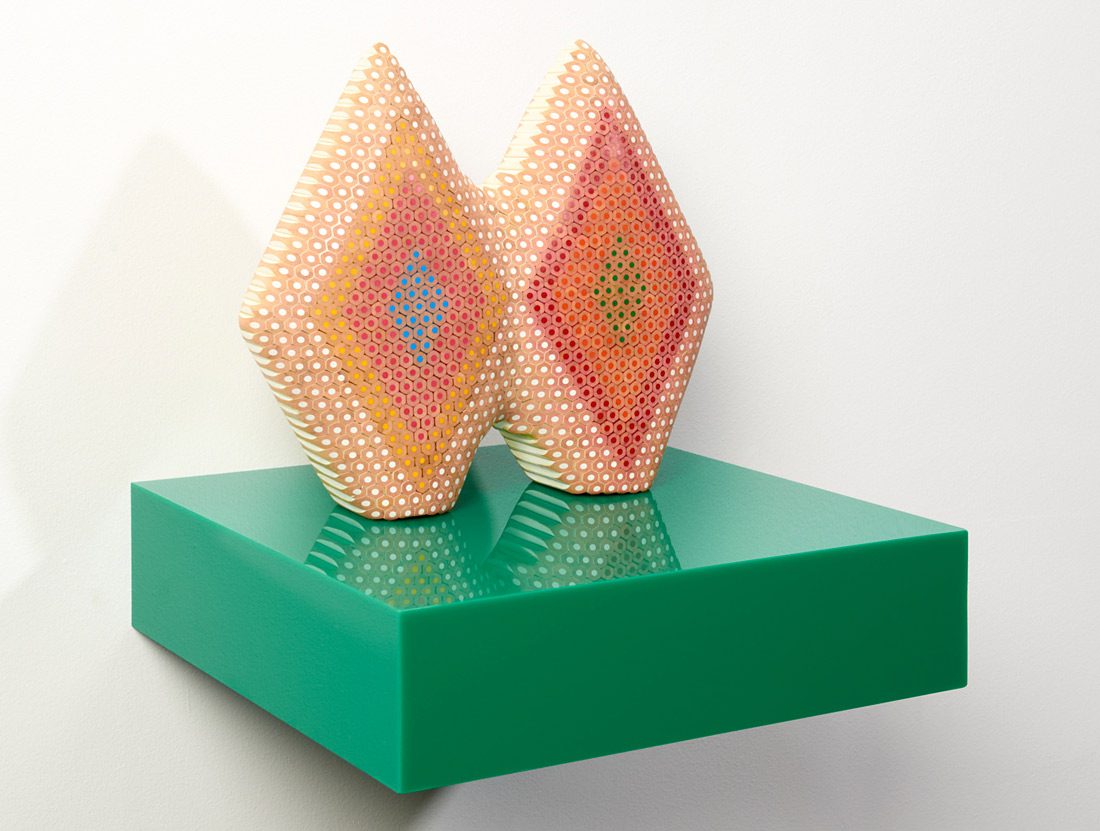
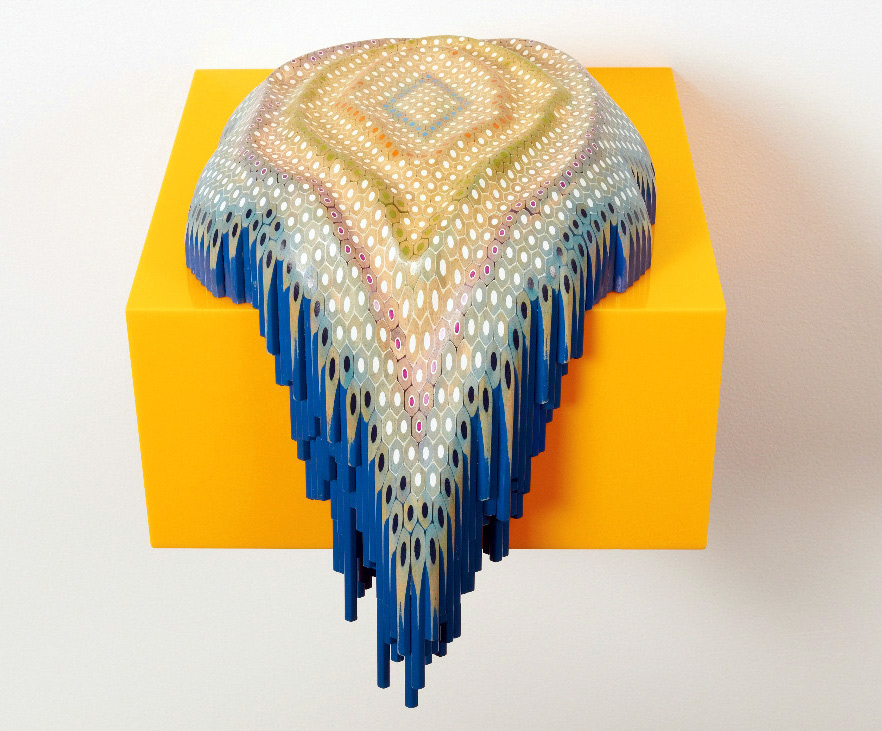
Lionel Bawden (Australian, b. 1974) 'Double Vision' 2011


Lionel Bawden (Australian, b. 1974)
Double Vision
2011
Coloured Staedtler pencils, epoxy, incralac on perspex shelf
Form: 23 x 26 x 7cm
Shelf: 7.5 x 30 x 30cm


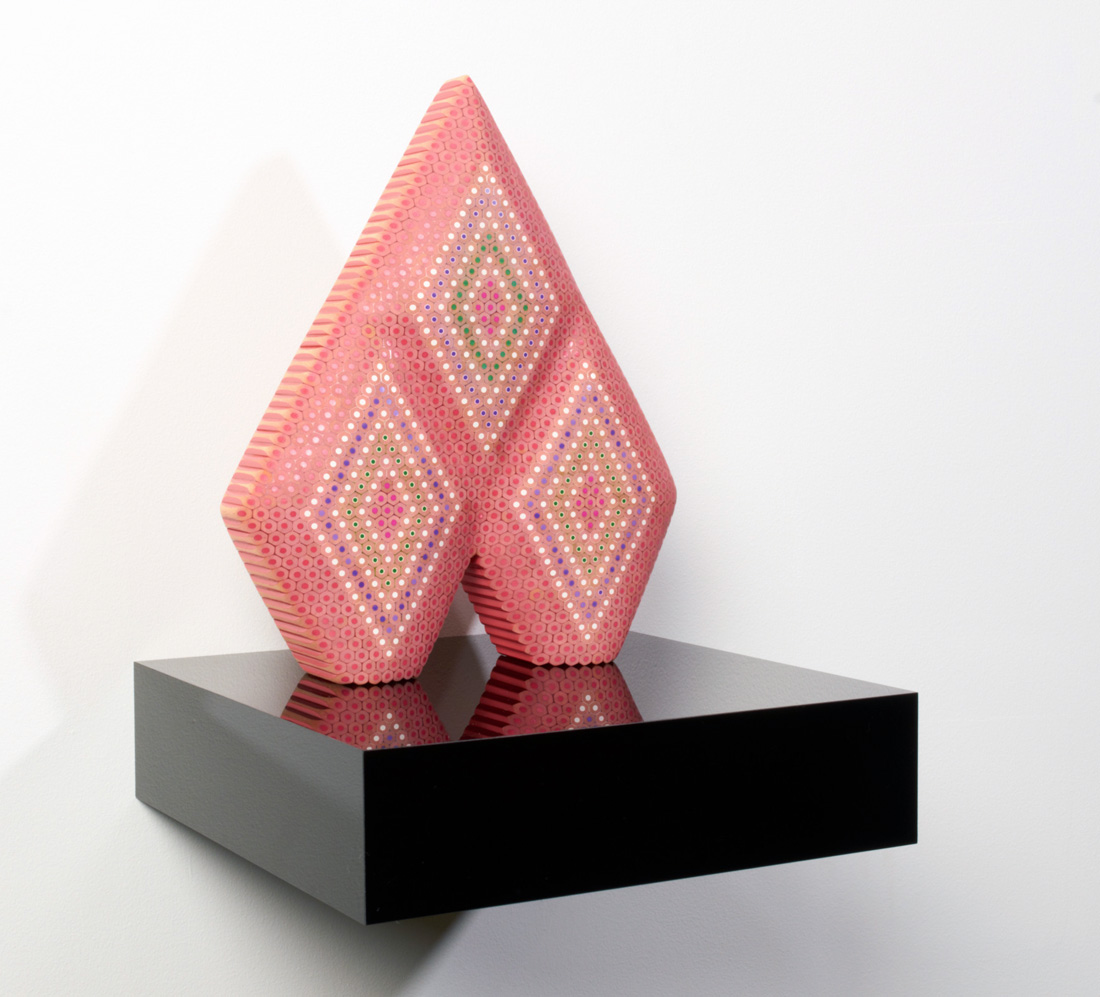
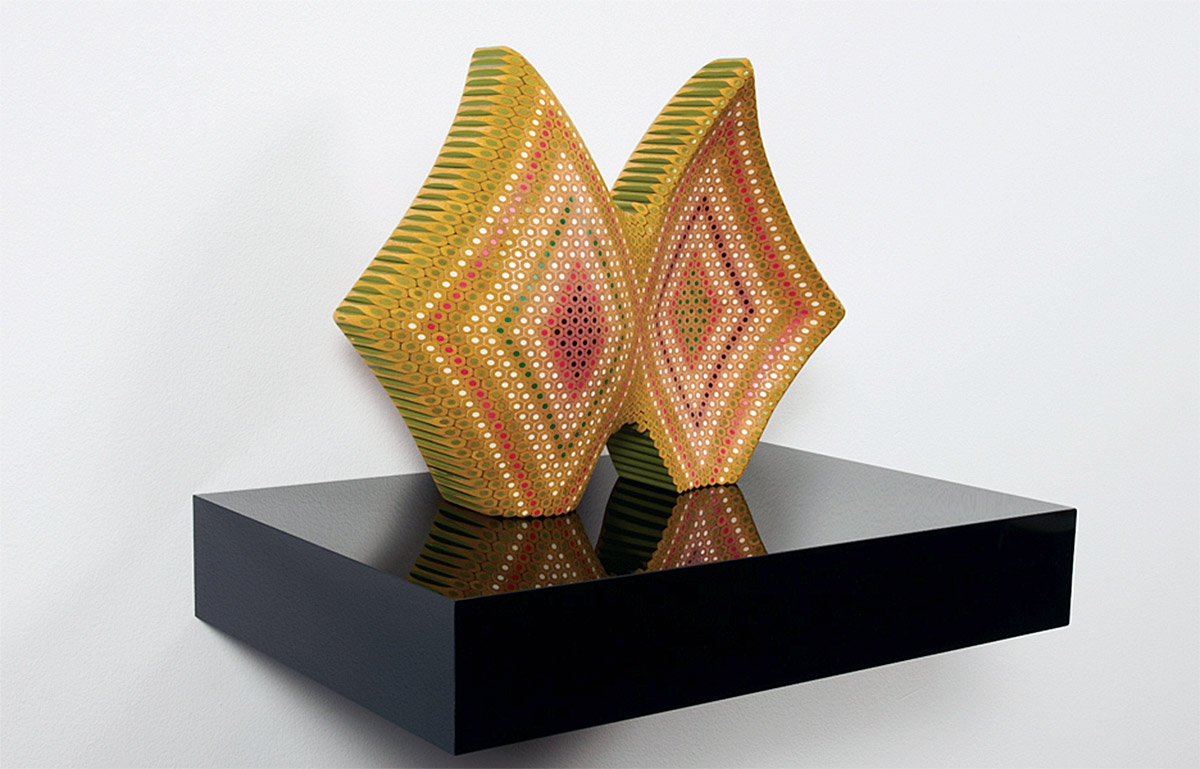
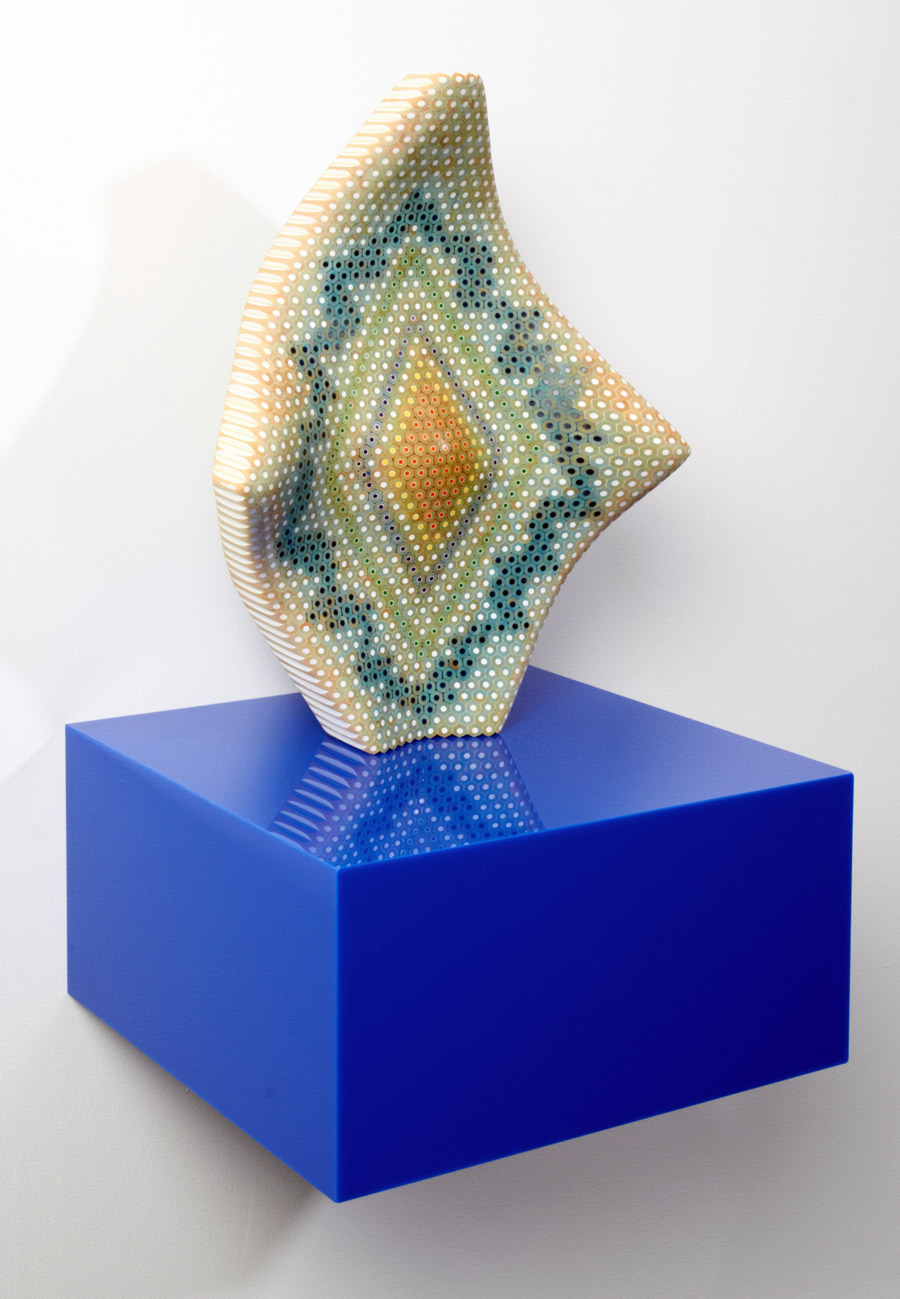
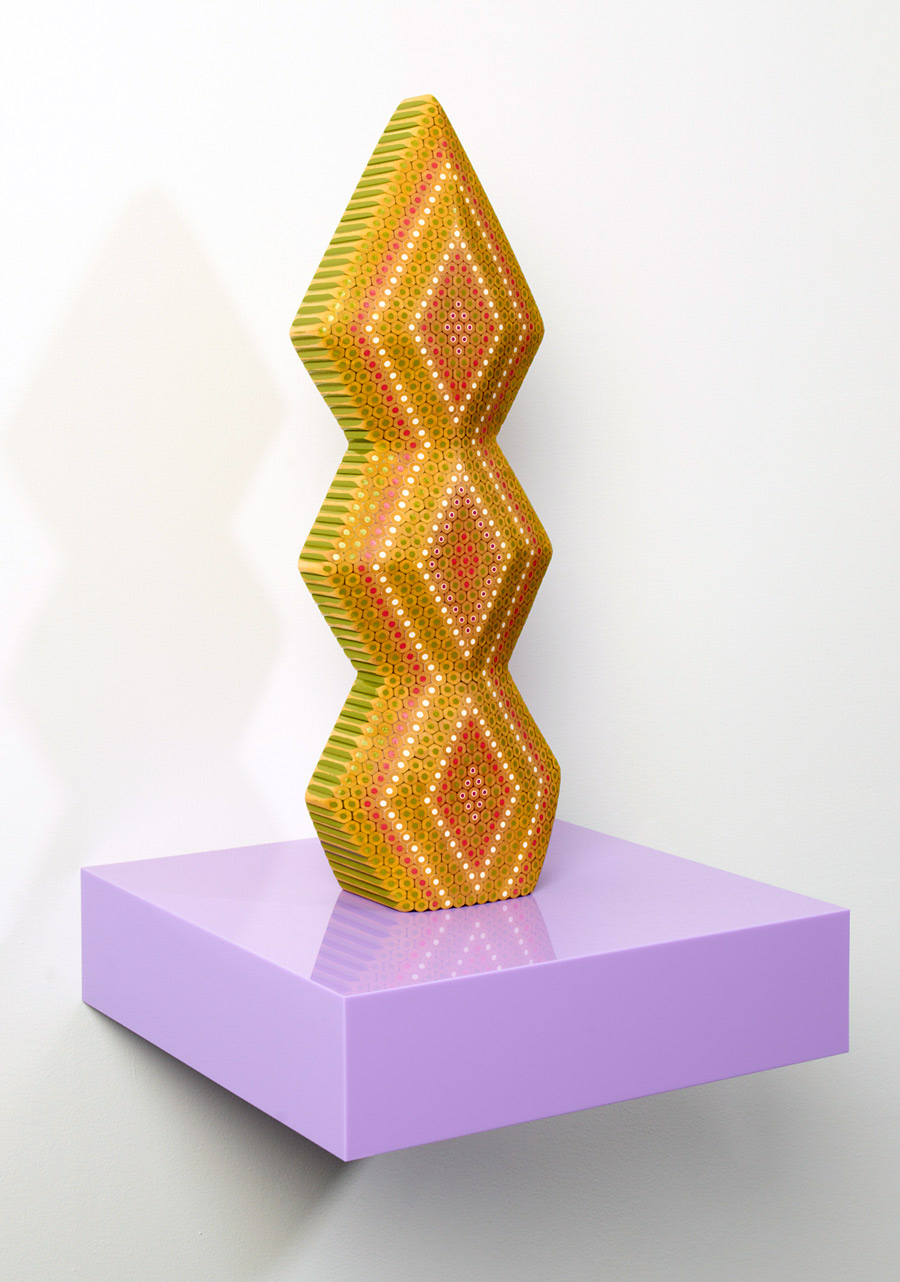
In the self contained world of commercial “art to go” galleries, this exhibition is the apotheosis of that form. The work is astonishingly beautiful, refined and self contained. Drawing on references to Islamic art, Brancusi (Endless Column), stalactites, wafting sea sponges and the changeable camouflage patterns of sea creatures, the sculptures are perfect in visualisation, creation, contemplation and containment.

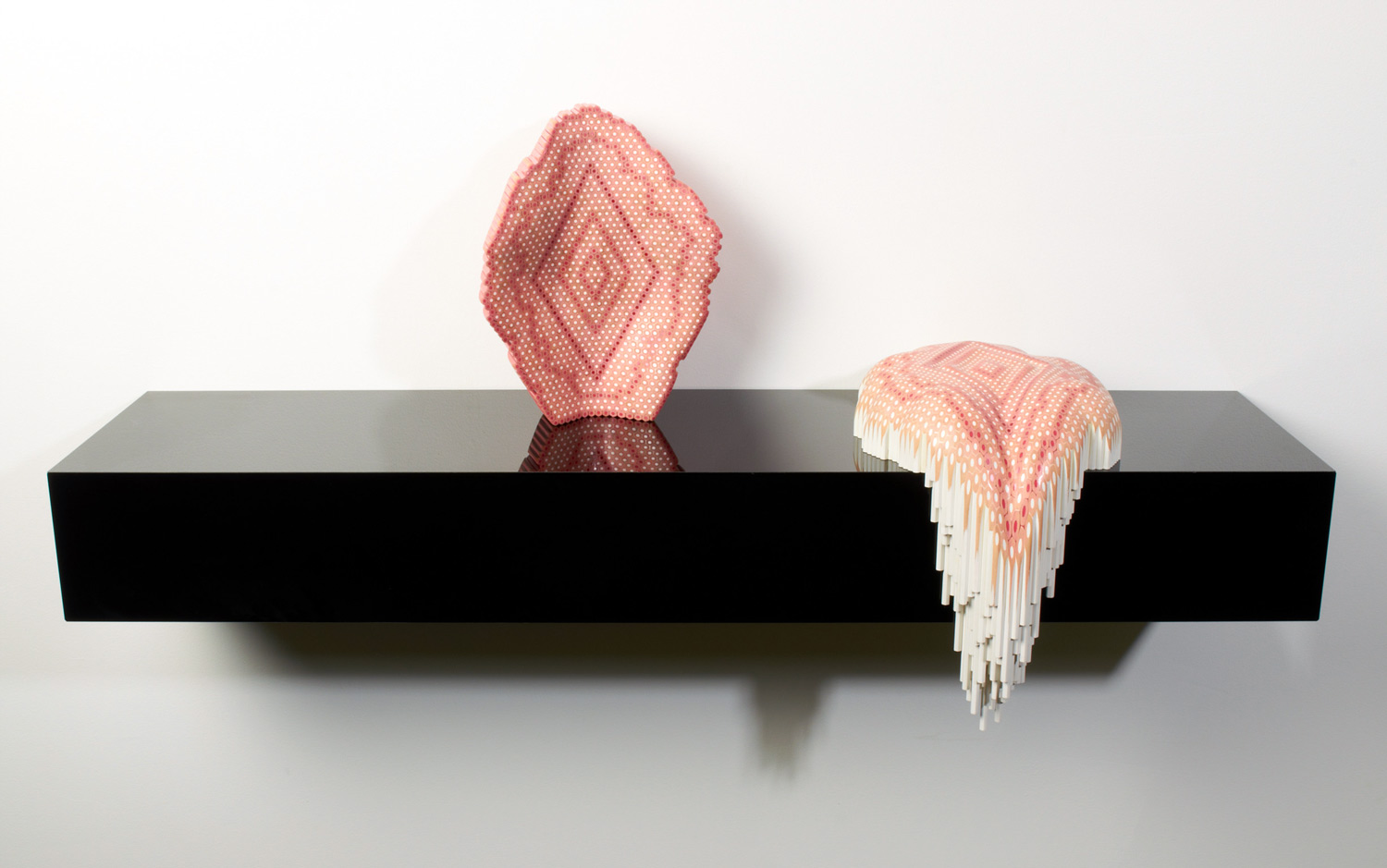
Sitting on coloured perspex shelves the patterns spills of coloured Staedtler pencils explore “themes of flux, transformation and repetition as preconditions to our experience of the physical world.” The titles of the work hint at such an exploration: Double VisionTrance-muterSecretionLosing Containment, Pattern Spill.

How I wish, long, crave to own one and I am not alone: on the opening night nearly all the sculptures were already sold! Obviously people recognise the uniqueness and beauty of this work.

And yet …


Part of               me

longs
for    a
      broken
pencil,
a
snapped           t/wig,
something
                                           out of place
that puts
pattern to
shame.


For only in mutation is pattern given relevance (and this is what the irregularity of ‘spill’ is supposed to be about). The flow of the Pattern Spill sculptures are the only ones that get close to this mutation and that in a pretty, ordered way.

“What happens in the case of mutation? Consider the example of the genetic code. Mutation normally occurs when some random event (for example, a burst of radiation or a coding error) disrupts an existing pattern and something else is put in its place instead. Although mutation disrupts pattern, it also presupposes a morphological standard against which it can be measured and understood as mutation … Mutation is critical because it names the bifurcation point at which the interplay between pattern and randomness causes the system to evolve in a new direction…

The randomness to which mutation testifies is implicit in the very idea of pattern, for only against the background of nonpattern can pattern emerge. Randomness is the contrasting term that allows pattern to be understood as such.”1


Instead of pattern “something else is put in its place instead.” I don’t get that here. Yes, these are beautiful, contemplative sculptures but one wonders how they will go on revealing themselves over months and years. I yearn for the prick of their imperfection.

Dr Marcus Bunyan


1/ Hayles, Katherine. How We Became Posthuman: Virtual Bodies in Cybernetics, Literature, and Informatics. Chicago: University of Chicago Press, 1999, pp.30-33.


Many thankx to Karen Woodbury Gallery for allowing me to publish the photographs in the posting. Please click on the photographs for a larger version of the image.


Lionel Bawden (Australian, b. 1974) 'Trance-muter' 2011


Lionel Bawden (Australian, b. 1974)
Trance-muter
2011
Coloured Staedtler pencils, epoxy, incralac on perspex shelf
Form: 32 x 26 x 7.5cm
Shelf: 7.5 x 30 x 30cm


Lionel Bawden (Australian, b. 1974) 'Secretion' 2011


Lionel Bawden (Australian, b. 1974)
Secretion
2011
Coloured Staedtler pencils, epoxy, incralac on perspex shelf
Form: 31 x 25 x 17cm
Shelf: 7.5 x 45 x 30cm


Lionel Bawden (Australian, b. 1974) 'Flipside' 2011


Lionel Bawden (Australian, b. 1974)
Flipside
2011
Coloured Staedtler pencils, epoxy and incralac on perspex shelf
28 x 33 x 13cm
Image courtesy Karen Woodbury Gallery and the artist


Lionel Bawden (Australian, b. 1974) 'Crossing the mirror' 2011


Lionel Bawden (Australian, b. 1974)
Crossing the mirror
2011
Coloured Staedtler pencils, epoxy and incralac on perspex shelf
29.8 x 24.7 x 16.5cm
Image courtesy Karen Woodbury Gallery and the artist


Lionel Bawden (Australian, b. 1974) 'Losing Containment' 2011


Lionel Bawden (Australian, b. 1974)
Losing Containment
2011
Coloured Staedtler pencils, epoxy, incralac on perspex shelf
Form 1: 31.5 x 24 x 12cm
Form 2: 33.5 x 33 x 26cm
Shelf: 15 x 120 x 30cm


Lionel Bawden (Australian, b. 1974) 'The caverns of temporal suspension (between two sites)' 2011


Lionel Bawden (Australian, b. 1974)
The caverns of temporal suspension (between two sites)
2011
White Staedtler pencils, epoxy and incralac
45.5 x 63.5 x 8.0cm
Image courtesy Karen Woodbury Gallery and the artist


Lionel Bawden’s exhibition Pattern Spill will comprise of a range of small-scale objects created from vibrantly coloured pencils that are fused and sculpted together. By working with hexagonal coloured pencils as a sculptural material, Bawden is able to reconfigure and carve a range of amorphous shapes that convey movement and process. Bawden explores themes of flux, transformation and repetition as preconditions to our experience of the physical world.

This new body of work deals with ideas of control and collapse, surface and interior and organic patterns and energies through static three-dimensional objects. Bawden’s sculptures explore larger ideas beyond the work and relate to societal and natural systems, cycles and structures. Through his work, Bawden communicates macro ideas through micro detail. The works in Pattern spill become vessels for contemplation.

Alongside the sculptures there will also be a range of small meticulous drawings of vast hexagonal cells included in the exhibition. These drawings will act as companions to the sculptures, assisting to convey Bawden’s oblique explorations and meditations of the human condition.

Text from the Karen Woodbury Gallery website


Lionel Bawden (Australian, b. 1974) 'Pattern spill' 2014


Lionel Bawden (Australian, b. 1974)
Pattern spill
2014
Coloured Staedtler pencils, epoxy and incralac on perspex shelf
34 x 27 x 29cm
Image courtesy Karen Woodbury Gallery and the artist


Lionel Bawden (Australian, b. 1974) 'Pattern Spill' 2011


Lionel Bawden (Australian, b. 1974)
Pattern Spill
2011
Coloured Staedtler pencils, epoxy, incralac on perspex shelf
Form: 30 x 23.5 x 33cm
Shelf: 15 x 30 x 30cm


Lionel Bawden (Australian, b. 1974) 'Patttern Spill III' 2011


Lionel Bawden (Australian, b. 1974)
Patttern Spill III
2011
Coloured Staedtler pencils, epoxy, incralac on perspex shelf
Form: 31 x 23 x 34cm
Shelf: 15 x 30 x 30cm


Lionel Bawden (Australian, b. 1974) 'Secretion III' 2011


Lionel Bawden (Australian, b. 1974)
Secretion III
2011
Coloured Staedtler pencils, epoxy, incralac on perspex shelf
Form: 35 x 26.5 x 15cm
Shelf: 15 x 30 x 30cm


Lionel Bawden (Australian, b. 1974) 'Elevation' 2011


Lionel Bawden (Australian, b. 1974)
Elevation
2011
Coloured Staedtler pencils, epoxy, incralac on perspex shelf
Form: 42.5 x 15 x 7cm
Shelf: 7.5 x 30 x 30cm


Karen Woodbury Gallery

This gallery has now closed.

LIKE ART BLART ON FACEBOOK

Exhibition: ‘Bill Henson: early work from the MGA collection’ at the Anne & Gordon Samstag Museum of Art, Adelaide

Exhibition dates: 14th October – 16th December 2011


Many thankx to the Anne & Gordon Samstag Museum of Art for allowing me to publish the photographs in the posting. Please click on the photographs for a larger version of the image.


Bill Henson (Australian, b. 1955) 'Untitled 1977/78' 1977-1978


Bill Henson (Australian, b. 1955)
Untitled 1977/78
1977-1978
From the Untitled sequence 1977/78 series 1977-1978
From a series of 16 gelatin silver print
Monash Gallery of Art, City of Monash Collection
Donated by James Mollison AO through the
Australian Government’s Cultural Gifts Program 2008


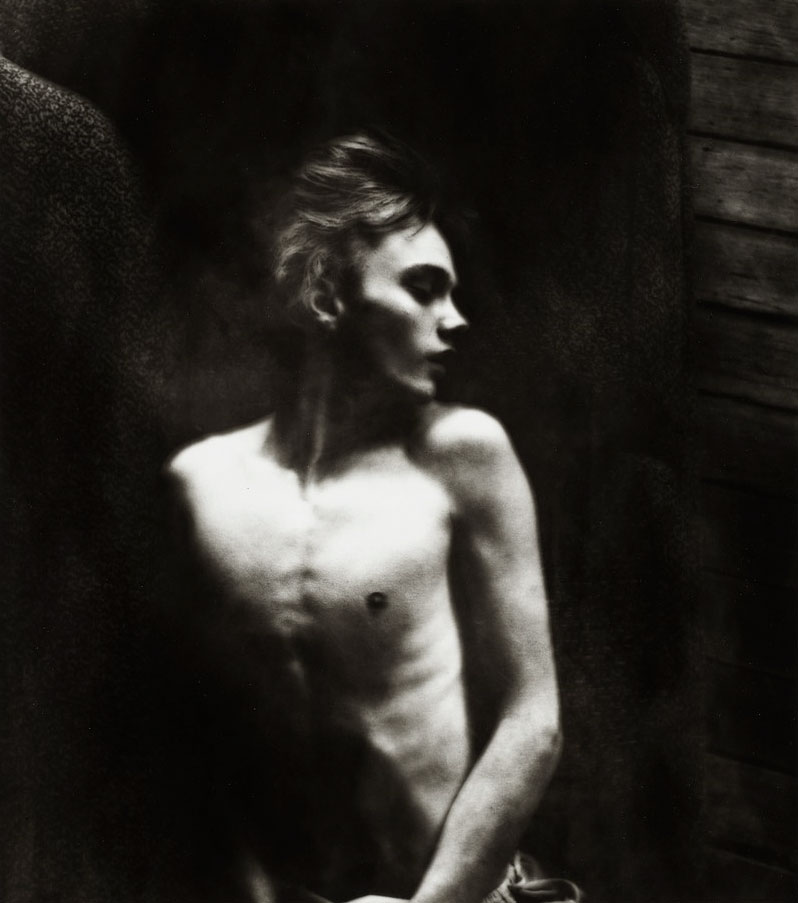
Untitled 1977 is a series of black-and-white photographs that depict a naked adolescent male seemingly lost in a state of private reverie.

This early series highlights Henson’s interest in states of existence that are
indeterminate or ambiguous, which has remained a central concern of his practice over the years. In this body of work, a slightly androgynous youth seems to float in and out of consciousness. In later work, Henson continues to explore borderline states between night and day, dream and reality, childhood and adulthood.

Henson’s interest in ambiguity is also apparent at a formal level, with his use of lighting. Shadows swallow the figure’s contours and highlights dissolve the details, giving the youth a ghostly quality.

Stephen Zagala and Stella Loftus-Hills. Bill Henson: early work from the MGA collection Education Resource,” on the University of South Australia website 2010 [Online] Cited 18/12/2024


Bill Henson (Australian, b. 1955) 'Untitled 1977/78' 1977-1978


Bill Henson (Australian, b. 1955)
Untitled 1977/78
1977-1978
From the Untitled sequence 1977/78 series 1977-1978
From a series of 16 gelatin silver print
Monash Gallery of Art, City of Monash Collection


Bill Henson (Australian, b. 1955) 'Untitled 1977/78' 1977-1978


Bill Henson (Australian, b. 1955)
Untitled 1977/78
1977-1978
From the Untitled sequence 1977/78 series 1977-1978
From a series of 16 gelatin silver print
Monash Gallery of Art, City of Monash Collection


Bill Henson (Australian, b. 1955) 'Untitled 1977/78' 1977-1978


Bill Henson (Australian, b. 1955)
Untitled 1977/78
1977-1978
From the Untitled sequence 1977/78 series 1977-1978
From a series of 16 gelatin silver print
Monash Gallery of Art, City of Monash Collection


Bill Henson (Australian, b. 1955) 'Untitled 1980/82' 1980-1982


Bill Henson (Australian, b. 1955)
Untitled 1980-82
1980-82
From a series of 220 gelatin silver print
Monash Gallery of Art, City of Monash Collection


These five works come from a series that includes a total of 220 photographs, which are printed at various sizes. When exhibiting the full series, Henson arranges the works into small groupings that create an overall effect of aberrant movement and fragmentation. From within these bustling clusters of images, individual faces emerge like spectres of
humanity that will once again dissolve into the crowd.

Henson shot this series over several years in different cities around the world, capturing images of individuals, crowds and architectural details, all apparently adrift in the flow of urban life. The people in these images have an anonymity that allows them to represent universal human experiences of alienation, mortality and fatigue. The views of buildings, however, are more specific. They were photographed in Dresden and East Berlin in the 1970s, when Henson travelled to Germany specifically for the purpose of
documenting these world-weary structures. Taken together, the images remind us of how tragically fleeting a sense of belonging can be.

Stephen Zagala and Stella Loftus-Hills. Bill Henson: early work from the MGA collection Education Resource,” on the University of South Australia website 2010 [Online] Cited 18/12/2024


Bill Henson (Australian, b. 1955) 'Untitled 1980/82' 1980-1982


Bill Henson (Australian, b. 1955)
Untitled 1980-82
1980-82
From a series of 220 gelatin silver print
Monash Gallery of Art, City of Monash Collection


Bill Henson (Australian, b. 1955) 'Untitled 1980/82' 1980-1982


Bill Henson (Australian, b. 1955)
Untitled 1980-82
1980-82
From a series of 220 gelatin silver print
Monash Gallery of Art, City of Monash Collection


Bill Henson (Australian, b. 1955) 'Untitled 1980/82' 1980-1982


Bill Henson (Australian, b. 1955)
Untitled 1980-82
1980-82
From a series of 220 gelatin silver print
Monash Gallery of Art, City of Monash Collection


Bill Henson: early work from the MGA collection draws on work from the Monash Gallery of Art, City of Monash Collection. MGA holds one of the largest collections of Bill Henson’s photography. With its concentration of work from 1977-92, the collection provides a significant survey of Henson’s early career.

Bill Henson is one of Australia’s best-known artists. Many of us have heard his name. Some of us may also be familiar with his photographs. For many, the experience of Henson’s extraordinary work has probably been through reproduction of it in the media. However, it is important to view Henson’s actual photographs. This offers a much richer visual experience, and a deeper appreciation of his art. Henson printed all of the work in this exhibition in the darkroom by hand, using chemicals and carefully chosen paper stock. The uneven surfaces of the early black-and-white photographs are a result of this wet-printing process, and give the photographs a mysterious, almost alchemic quality. The larger colour photographs display a richness of tone and palette that is an artefact of the artist’s meticulous approach to the printing process. These material properties are not evident in reproductions of Henson’s images.

The other aspect that is lost in reproduction is the physical difficulty of seeing Henson’s pictures clearly. The darkness of Henson’s photographs appeals to the artist’s romantic sensibility. He tends to let shadows obscure visual detail so that enigmas lurk at the threshold of perception. Publishers like to override this quality of Henson’s work by adjusting the contrast and brightness of the images for print. Viewers of this exhibition will find themselves drawn into an inscrutable visual space of shadows and deep, reflective blacks.

Born in 1955, Bill Henson grew up in Glen Waverley, a burgeoning suburb of
Melbourne. From the 1950s to the 1970s the area swelled beyond the termination of the Glen Waverley train line, urged on by the relative affordability, ease and comfort of car travel. Self-serve petrol stations appeared at major intersections, their brightly coloured signage adding their glow to the landscape.

The influence of expanding American suburbia on Australia continued with Glen Waverley becoming home to the first McDonalds restaurant in Victoria (1971). The 1980s saw an expansion of large international chains that offered ‘drive-thru’ services (from fast food to alcohol) favouring prominent roadside locations and large signage to stamp their corporate identities on the landscape.

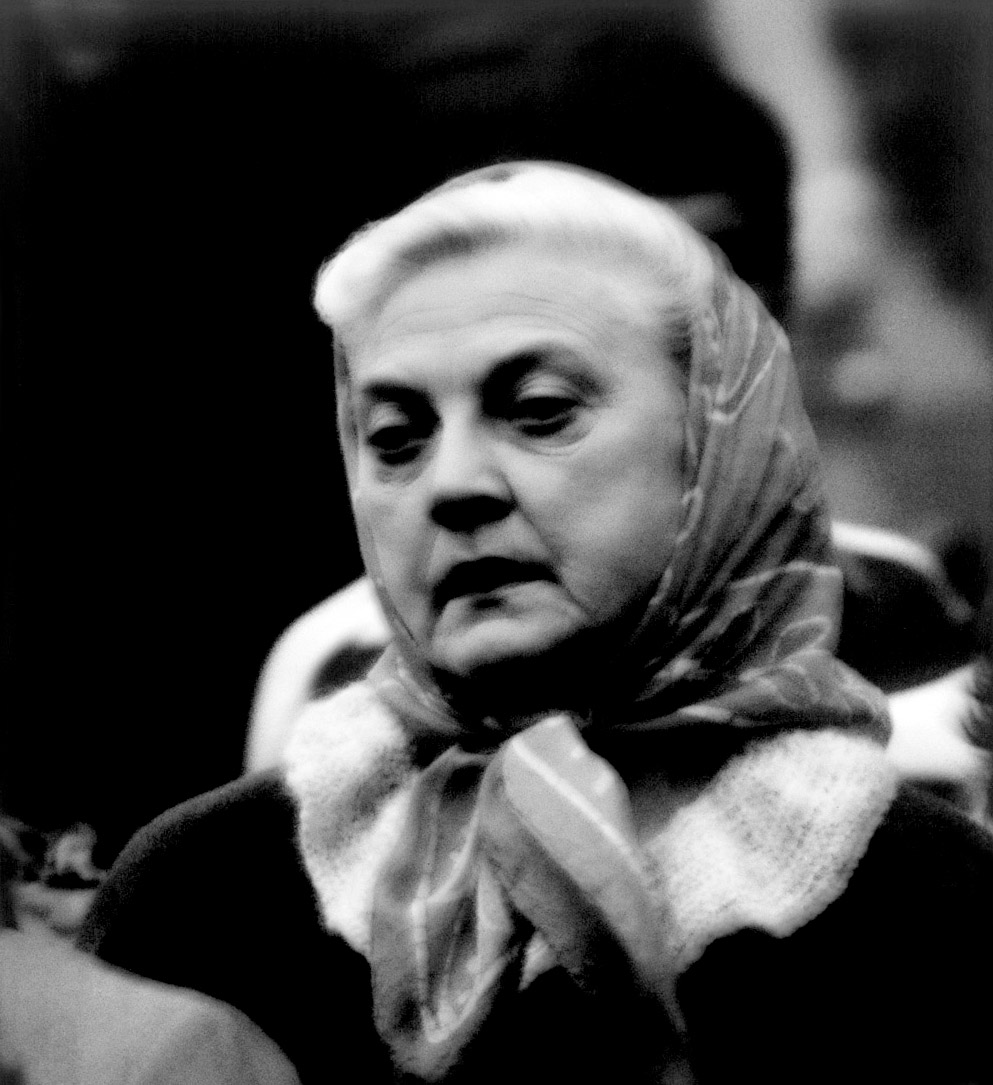
It is from within this ever changing and expanding landscape, between the end of the train line and country, that Henson’s vision was founded; a place where listless youth claim the vacant lots and preservations between estates as their own private worlds, lost in the evening shadows.

The youth that populate Henson’s images take on a strange, almost hollow look, their eyes becoming dark holes in their ghostly facades. Light and shadow compete to pull their bodies from one plane to the other, Henson seeks to capture this moment, the hovering between child and adult.

These liminal zones, the “intervals in the landscape”1 provided a backdrop for the developing artist. Bill Henson’s early work is undeniably – and perhaps unintentionally – a discussion of the changing landscape of suburbia and in turn the influence of international trends on what it meant to be growing up in Australia at that time. Henson’s early work is significant in Australian photography because of its depiction of this change in both this suburban landscape and the human condition.

1/ Bill Henson as quoted in Dominic Sidhu. “Nocturne: The photographs of Bill Henson (Interview with Bill Henson),” in EGO Magazine, New York, August 29, 2005. No longer available online.

Stephen Zagala and Stella Loftus-Hills. Bill Henson: early work from the MGA collection Education Resource,” on the University of South Australia website 2010 [Online] Cited 18/12/2024


Bill Henson (Australian, b. 1955) 'Untitled 57' 1985-1986


Bill Henson (Australian, b. 1955)
Untitled 57
1985-1986
From the series Untitled 1985-86
Chromogenic print
106 x 86cm
Monash Gallery of Art, City of Monash Collection
Courtesy of the artist and Roslyn Oxley9 Gallery, Sydney


Bill Henson (Australian, b. 1955) 'Untitled 61' 1985-1986


Bill Henson (Australian, b. 1955)
Untitled 61
1985-1986
From the series Untitled 1985-86
Chromogenic print
128 × 100cm
Monash Gallery of Art, City of Monash Collection
Courtesy of the artist and Roslyn Oxley9 Gallery, Sydney


Monash Gallery of Art (MGA) holds one of the largest collections of photographs by Bill Henson. With its concentration on work made between 1977 and 1992, the MGA collection represents a significant survey of Henson’s early career, from which twenty-nine works have been selected for the Bill Henson: early work from the MGA collection exhibition.

Henson has been described as a ‘passionate and visionary explorer’, and has been exhibited extensively nationally and internationally for over three decades, yet this is the first exhibition dedicated to this major artist’s work to be presented in Adelaide.

Passionate discussion about Henson’s work in the Australian media in recent times, has served to illuminate an important debate about the nature of art. But while many of us may be familiar with Henson’s images through reproduction, to view a museum exhibition of the artist’s photographs offers a much deeper appreciation of his art, and is a rare opportunity for audiences to themselves experience his work first hand.

The ‘in conversation’ event is a highlight to accompany a very special exhibition at the Samstag Museum from one of Australia’s most distinguished artists. Bill Henson: early work from the MGA Collection, with selected recent landscapes offers South Australians a unique opportunity to experience the power and beauty of the work of Bill Henson, Australia’s best-known contemporary photographer. This is the first exhibition dedicated to this major artist’s work ever to be presented in Adelaide.

The exhibition features twenty-nine iconic images from many of Henson’s major series from the 1970s through to the early 1990s, all drawn from the Monash Gallery of Art, who hold one of the largest collections of Henson’s work in the country.

For many, the experience of Henson’s extraordinary work has been through its reproduction in the media. However, it is important to view the actual photographs as this offers a much richer visual experience. All of the early work in the exhibition was printed by hand in the darkroom, and consequently the uneven surfaces of the black and white photographs have a mysterious, alchemic quality not present in reproductions of Henson’s images.

Alongside the MGA Collection exhibition, the Samstag Museum is presenting a selection of recent landscape photographs by Henson. These are works of compelling power and continue the artist’s fascination with a diverse range of subject matter. Through them we explore an island of rocky outcrops, monoliths rising dramatically from the ocean and waterfalls captured in a blaze of light.

Text and press release from the Anne and Gordon Samstag Museum of Art website


Bill Henson (Australian, b. 1955) 'Untitled 63' 1985-1986


Bill Henson (Australian, b. 1955)
Untitled 63
1985-1986
From the series Untitled 1985-86
Chromogenic print
106 x 86cm
Monash Gallery of Art, City of Monash Collection acquired 1991
Courtesy of the artist and Roslyn Oxley9 Gallery, Sydney


Bill Henson (Australian, b. 1955) 'Untitled 72' 1985-1986


Bill Henson (Australian, b. 1955)
Untitled 72
1985-1986
From the series Untitled 1985-86
Chromogenic print
106 x 86cm
Monash Gallery of Art, City of Monash Collection acquired 1991
Courtesy of the artist and Roslyn Oxley9 Gallery, Sydney


The series Untitled 1985-86 is constructed of 154 photographs that explore the psychological space of Henson’s youth. Henson grew up in Glen Waverley, in Melbourne’s South-east, and he has often spoken about the importance of maintaining a connection with the suburban environment that shaped his sensibilities. This series includes a range of specific references to the streetscapes of the area, often shot at night or dusk,
with fluorescent lights investing the darkness with a wistful glow.

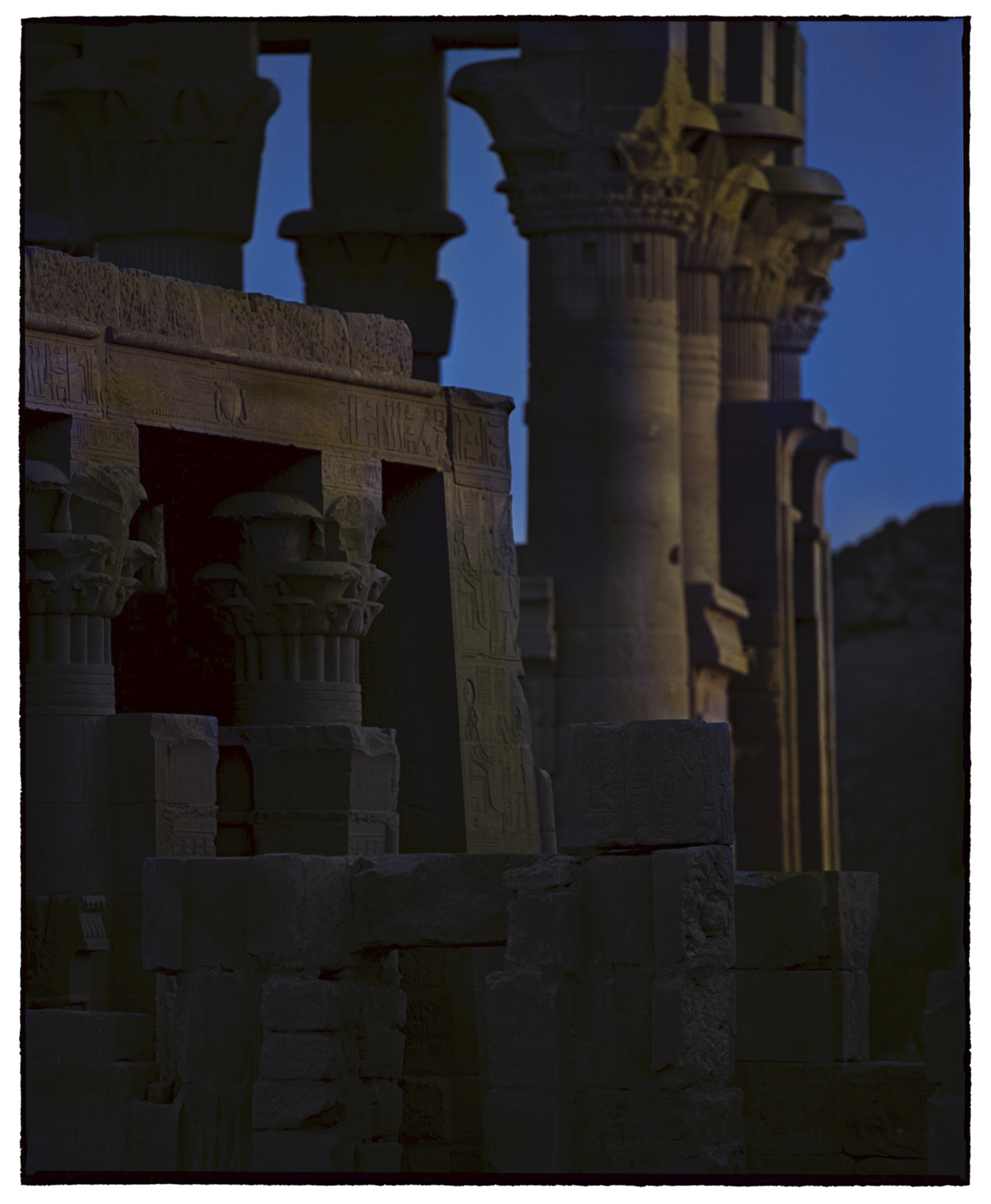
Henson’s emphasis on nocturnal life alludes to his interest in treating real landscape as if it is a dreamscape, an idea that is underscored by the use of sleeping figures in this series. And, by juxtaposing suburbia with photographs of summertime girls and Egyptian temples, Henson takes us into the dreamy imaginings of an adolescent boy living on the outskirts of the city.

Stephen Zagala and Stella Loftus-Hills. Bill Henson: early work from the MGA collection Education Resource,” on the University of South Australia website 2010 [Online] Cited 18/12/2024


Bill Henson (Australian, b. 1955) 'Untitled 73' 1985-1986


Bill Henson (Australian, b. 1955)
Untitled 73
1985-1986
From the series Untitled 1985-86
Chromogenic print
106 x 86cm
Monash Gallery of Art, City of Monash Collection
Donated by the artist 1989
Courtesy of the artist and Roslyn Oxley9 Gallery, Sydney


Bill Henson (Australian, b. 1955) 'Untitled 137' 1985-1986


Bill Henson (Australian, b. 1955)
Untitled 137
1985-1986
From the series Untitled 1985-86
Chromogenic print
106 x 86cm
Monash Gallery of Art, City of Monash Collection
Courtesy of the artist and Roslyn Oxley9 Gallery, Sydney


Bill Henson. 'Untitled' 1990-91


Bill Henson (Australian, b. 1955)
Untitled
1990-1991
From the series Paris Opera Project
Type C photograph
130 × 130cm
Monash Gallery of Art, City of Monash Collection
Courtesy of the artist and Roslyn Oxley9 Gallery, Sydney


In 1990 Bill Henson was commissioned to produce a body of work that responded to the world-renown Opéra de Paris. He decided to focus on the audience, and while at the Opéra photographed the faces of people while they sat enveloped in darkness, their features softly illuminated by the reflected glow of stage lighting. The photographs shot in Paris subsequently became Henson’s source material, as he restaged the portraits in his Melbourne studio to accentuate the mood and atmosphere of an evening at the opera.

When the subsequent series of fifty photographs was first exhibited in Melbourne during 1991, they were hung floor-to-ceiling as if to suggest an auditorium of spectators. With their far-away eyes, gazing off toward something that is not revealed in the photographs, these faces express the sublime sensuality of a musical experience. And the atmospheric cloudscapes that punctuate the series allude to the rich horizons being opened up in the imaginations of the audience.

Stephen Zagala and Stella Loftus-Hills. Bill Henson: early work from the MGA collection Education Resource,” on the University of South Australia website 2010 [Online] Cited 18/12/2024


Bill Henson (Australian, b. 1955) 'Untitled' 1990-1991


Bill Henson (Australian, b. 1955)
Untitled
1990-1991
From the series Paris Opera Project
Type C photograph
130 × 130cm
Monash Gallery of Art, City of Monash Collection
Courtesy of the artist and Roslyn Oxley9 Gallery, Sydney


Bill Henson (Australian, b. 1955) 'Untitled 1-5 B' 1990-1991


Bill Henson (Australian, b. 1955)
Untitled 1-5 B
1990-1991
From the series Paris Opera Project
Type C photograph
130 × 130cm
Monash Gallery of Art, City of Monash Collection
Courtesy of the artist and Roslyn Oxley9 Gallery, Sydney


Bill Henson (Australian, b. 1955) 'Untitled' 1990-1991


Bill Henson (Australian, b. 1955)
Untitled
1990-1991
From the series Paris Opera Project
Type C photograph
130 × 130cm
Monash Gallery of Art, City of Monash Collection
Courtesy of the artist and Roslyn Oxley9 Gallery, Sydney


Anne & Gordon Samstag Museum of Art
Hawke Building, City West campus
University of South Australia
55 North Terrace, Adelaide
Phone: (08) 8302 0870

Opening hours:
Tuesday – Saturday 10am – 5pm

Anne & Gordon Samstag Museum of Art website

LIKE ART BLART ON FACEBOOK

Back to top

Photographs: Marcus Bunyan. ‘Vertical’ 2011

December 2011


This slideshow requires JavaScript.


Vertical

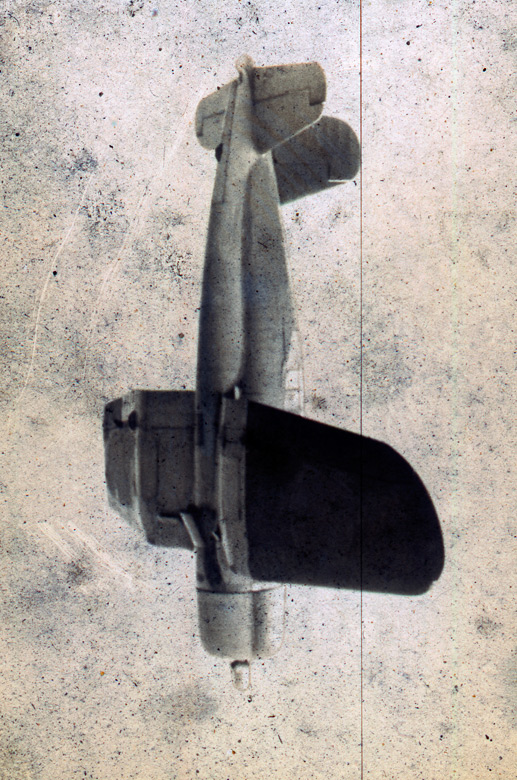
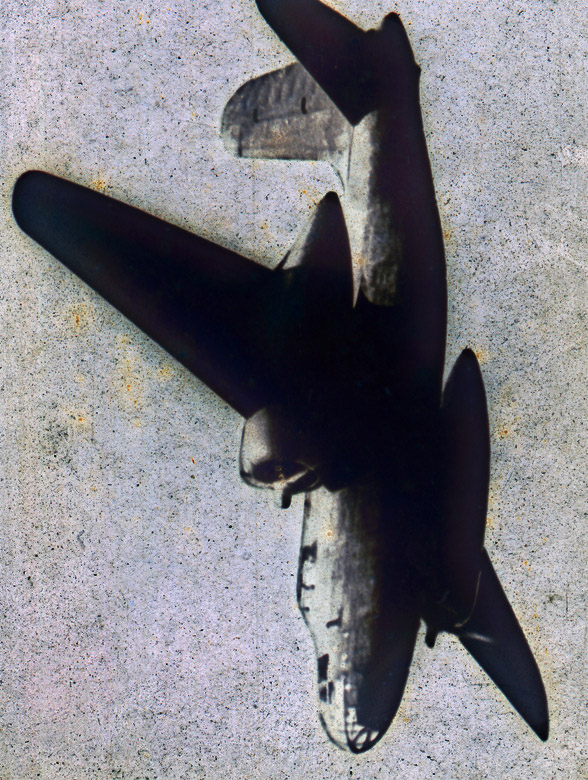
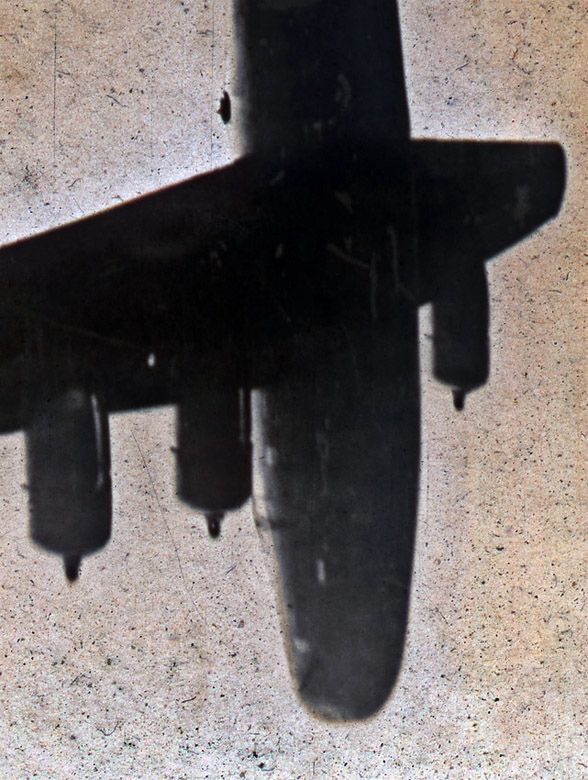
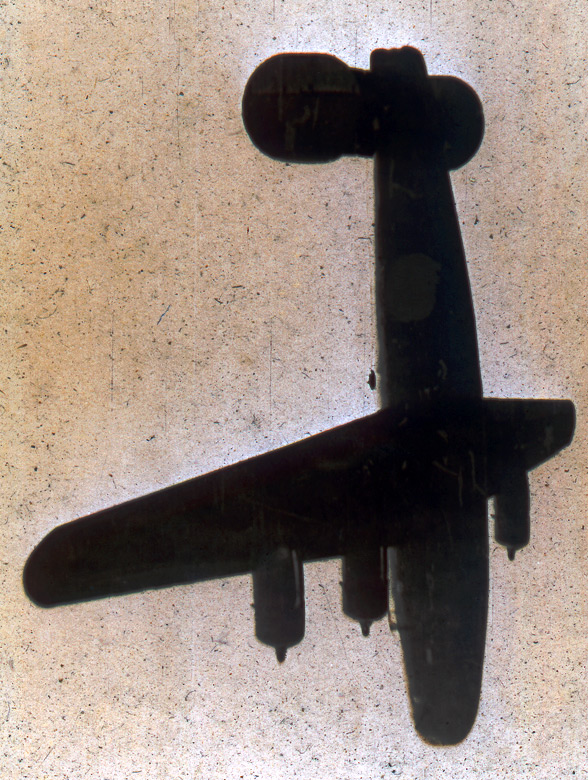
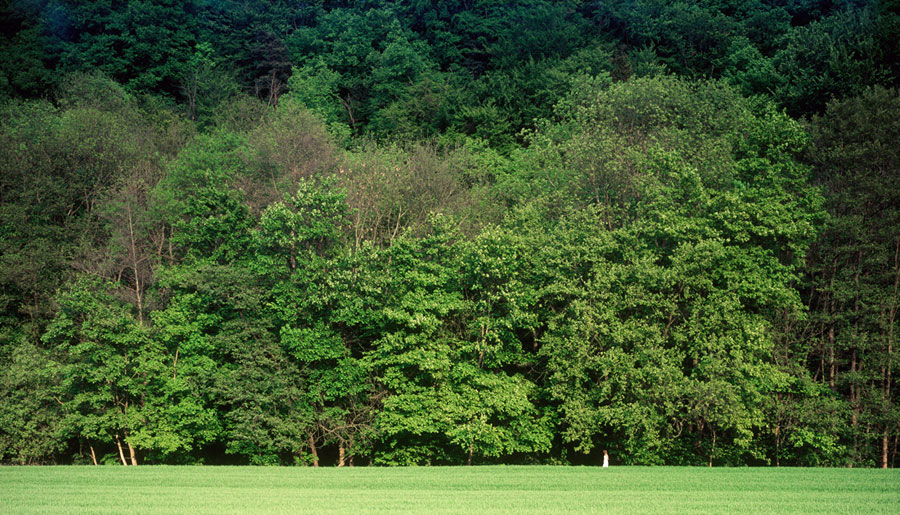
More planes, this time a series of work titled Vertical (2011). The series is now online on my website.

There are 22 images in the series formed as a sequence. Below is a selection of images from the series. I hope you like the work!

Marcus


Please click on the photographs for a larger version of the image.

Photographs are available from this series for purchase. As a guide, a digital colour 16″ x 20″ costs $1000 plus tracked and insured shipping. For more information please see my Store web page.


Marcus Bunyan (Australian, b. 1958) 'Untitled' from the series 'Vertical' 2011


Marcus Bunyan (Australian, b. 1958) 'Untitled' from the series 'Vertical' 2011


Marcus Bunyan (Australian, b. 1958) 'Untitled' from the series 'Vertical' 2011


Marcus Bunyan (Australian, b. 1958) 'Untitled' from the series 'Vertical' 2011


Marcus Bunyan (Australian, b. 1958) 'Untitled' from the series 'Vertical' 2011


Marcus Bunyan (Australian, b. 1958) 'Untitled' from the series 'Vertical' 2011


Marcus Bunyan (Australian, b. 1958) 'Untitled' from the series 'Vertical' 2011


Marcus Bunyan (Australian, b. 1958) 'Untitled' from the series 'Vertical' 2011


Marcus Bunyan (Australian, b. 1958)
Untitled
2011
From the series Vertical
Digital prints


Marcus Bunyan website

LIKE ART BLART ON FACEBOOK

Back to top

Exhibition: ‘Rückenfigur’ by David Ashley Kerr at Dear Patti Smith ARI, Fitzroy

Exhibition dates: 17th November – 27th November 2011


David Ashley Kerr (Australian, b. 1986) 'I hear the River
' 2009


David Ashley Kerr (Australian, b. 1986)
I hear the River

2009
Lightjet photographic print
80 x 140cm


Congratulations to David-Ashley Kerr on his first solo exhibition: the photographs and concept are very interesting.

Marcus


Many thankx to David for allowing me to publish the photographs in the posting. Please click on the photographs to see a larger version of the image.


David Ashley Kerr (Australian, b. 1986) 'I hear the Sea' 2010


David Ashley Kerr (Australian, b. 1986)
I hear the Sea
2010
Lightjet photographic print
80 x 140cm


David Ashley Kerr (Australian, b. 1986) 'I hear the Wind' 2010


David Ashley Kerr (Australian, b. 1986)
I hear the Wind
2010
Lightjet photographic print
80 x 140cm


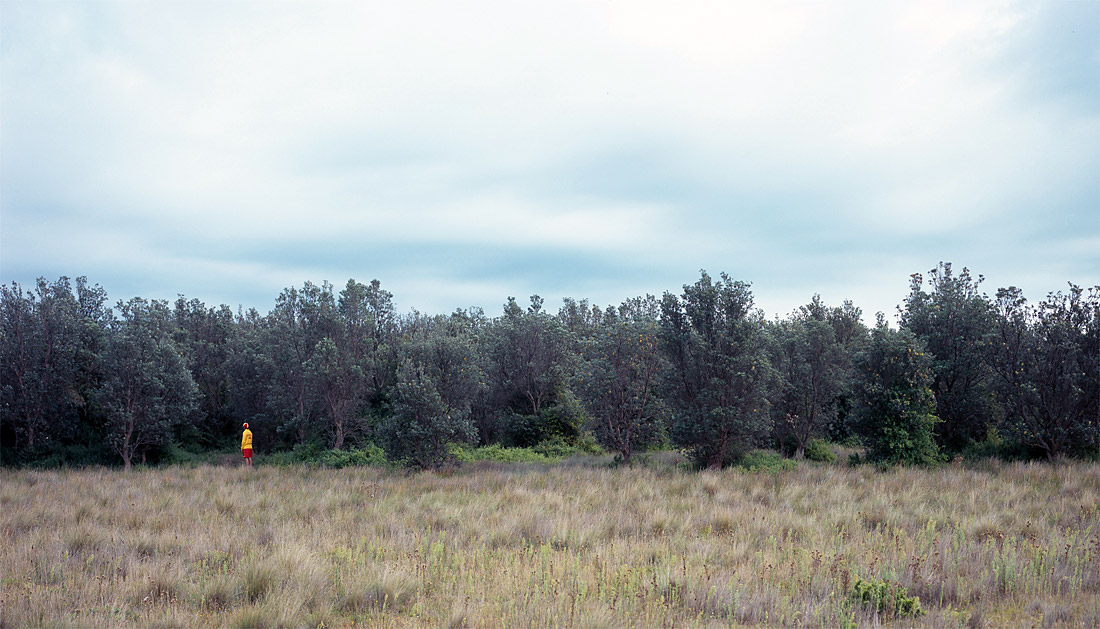
Although rückenfigur is popularly associated with the German romantic painter Caspar David Friedrich, its appearances in art very much pre-date his time. Early forms of it were attributed to Giotto but it became a more substantial style in the 15th century, creeping into the works of painters such as Jan van Eyck and later with Allaert van Everdingen and Jan Luiken.

Often these uses were simply to direct the viewer to behold the landscape in the scene. Friedrich’s approach transfigured this into a different concept, sometimes referred to as “the halted traveller”, where the lonely wanderer has appeared to have been “stopped” by the view of the landscape. This implies to us as a viewer that there is perhaps more to the landscape than we see, but those thoughts may remain unknown to us… privately contained in the mind of the rückenfigur in the scene.

It appears to me that in looking at rückenfigur art, there are two distinct thematic conveyances. The first is the aforementioned “halted traveller” lost in the contemplation of the landscape. In gazing upon the landscape, the rückenfigur is quite separate from the scene being viewed. Although s/he is anonymous and without identity, there is still a distinct identity from that of the landscape.

The second appears, to me at least, to be quite the opposite. Another form of rückenfigur seems to be where the figure(s) are distantly placed deep within the landscape itself. You’ve still got “back figures” in contemplation, but the composition makes them part of the landscape rather than separate. While we still identify with them as a viewer, the identity of the figures are very much subsumed into the grandeur of the landscape, maybe even biblically so.

Text by Christian Were, Melbourne


David Ashley Kerr (Australian, b. 1986) 'I hear Them' 2010


David Ashley Kerr (Australian, b. 1986)
I hear Them
2010
Lightjet photographic print
80 x 140cm


David Ashley Kerr (Australian, b. 1986) 'Territory' 2010


David Ashley Kerr (Australian, b. 1986)
Territory
2010
Lightjet photographic print
80 x 140cm


David Ashley Kerr is a Melbourne based visual artist working with large-format photography. This is his first Australian solo show, a selection of landscape studies completed since 2009 that began as a photographic investigation of the Rückenfigur, or back figure. This visual device is commonly associated with German Romantic painter Caspar David Friedrich. It involves depicting a human figure that does not engage the viewer, introspectively contemplating the natural world or landscape before them.

David Ashley Kerr’s photographic practice is a visual inquiry into the relationship between cultural identity and physical environment, site, or place. He currently investigates the use of a staged lone figure in contemporary landscape photography, attempting a symbolic representation of belonging to ‘place’ in a national context, in relation to both indigenous and non-indigenous Australian ownership and connection to land.

David Ashley Kerr completed a Bachelor of Contemporary Art at Deakin University (2009) and a Master of Fine Art at RMIT University (2010). He is currently undertaking a PhD at Monash University on an Australian Postgraduate Award Scholarship, his research inquiring into place theory through photography, investigating the visual relationship between Australian cultural identity and physical environment.

Text from the Dear Patti Smith website


David Ashley Kerr (Australian, b. 1986) 'Ore' 2010


David Ashley Kerr (Australian, b. 1986)
Ore
2010
Lightjet photographic print
80 x 140cm


David Ashley Kerr (Australian, b. 1986) 'Trash' 2010


David Ashley Kerr (Australian, b. 1986)
Trash
2010
Lightjet photographic print
80 x 140cm


David Ashley Kerr (Australian, b. 1986) 'Game' 2009


David Ashley Kerr (Australian, b. 1986)
Game
2009
Lightjet photographic print
80 x 140cm


Dear Patti Smith

This gallery has now closed.

David-Ashley Kerr website

LIKE ART BLART ON FACEBOOK

Back to top

Review: ‘Selina Ou: New York’ at Sophie Gannon Gallery, Richmond

Exhibition dates: 25th October – 19th November 2011


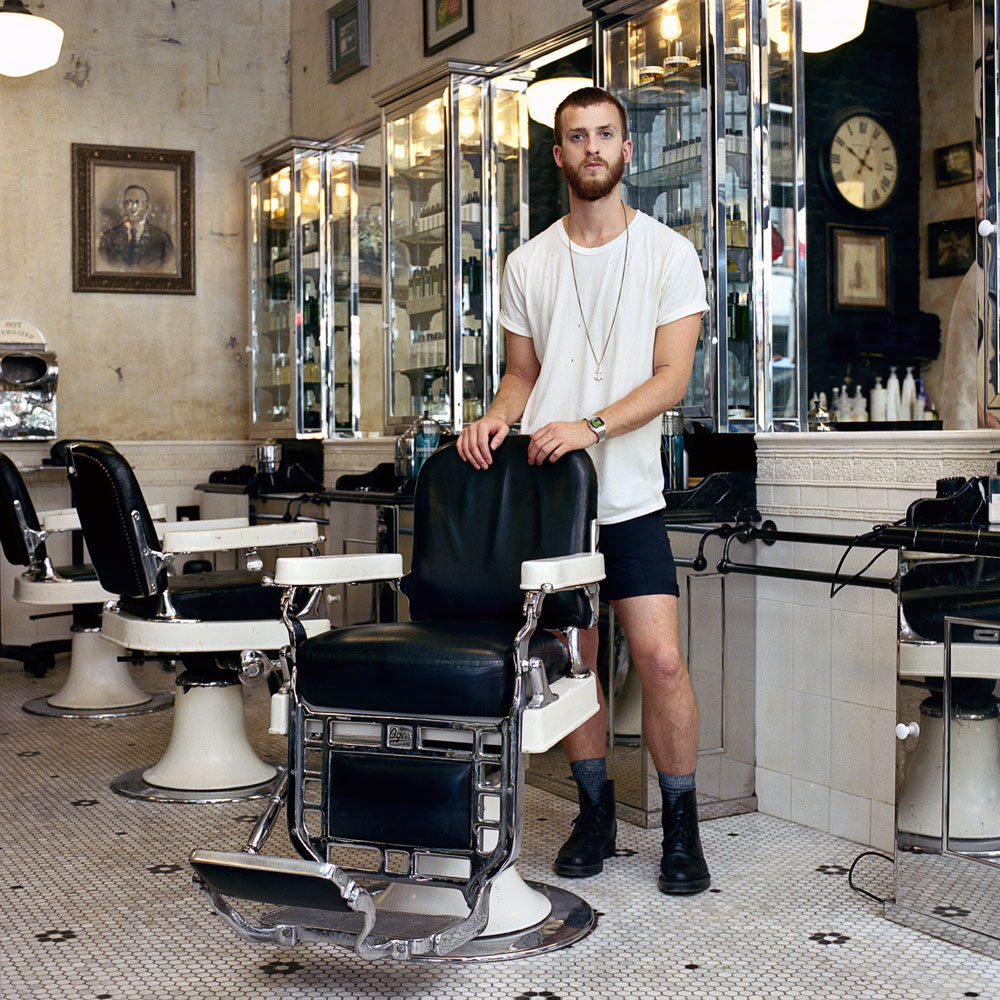
Selina Ou (Australian born Malaysia, b. 1977) 'Tim, Hair Stylist, Lower East Side, New York' 2011


Selina Ou (Australian born Malaysia, b. 1977)
Tim, Hair Stylist, Lower East Side, New York
2011
C-type print
100 x 100cm


A strong, nuanced body of work by Selina Au at Sophie Gannon Gallery in Richmond. In the flesh these large colour photographs have a wonderful, polyvocal presence. The solo portraits are stronger in terms of composition and intertextuality than the double portraits.

Derived from the Latin intertexto, meaning to intermingle while weaving, intertextuality is a term first introduced by French semiotician Julia Kristeva in the late sixties.1 Intertextuality “is always an iteration which is also a re-iteration, a re-writing which foregrounds the trace of the various texts it both knowingly and unknowingly places and dis-places.”2 Intertexuality is how a text is constituted. It fragments singular readings. The reader’s own previous readings, experiences and position within the cultural formation influences these re-inscriptions.

Reminding me of a contemporary redefinition of the work of Diane Arbus, Ou’s reconceptualisations of space “produce a plurality of meanings and signifying / interpretive gestures that escape the reduction of knowledge to fixed, monological re-presentations, or presences.”3 Through a process of materialisation, using the technique of assemblage, Ou weaves a lack of fixity into her photographs. She creates a kind of tapestry in the surfaces of her images, a play of pattern / randomness that redefines the significations of the body in the fold of inscription.

Take the first three portraits in this posting, for example. The photograph Tim, Hair Stylist, Lower East Side, New York weaves space, time and memory within the pictorial frame. The physical space between the portrait on the wall at rear, Tim and the clock at right is crucial to a reading of this photograph, as is the disjuncture between the appearance of the man in the framed photograph (in jacket and tie) and the casual attire of Tim. Just as important is the memorialisation of both men within the same space (where both presumably work/ed), the collapsing of past and present into a fluid space that is neither here nor there (the past of the man in the framed photograph, the moment of passing of Tim when the photograph was ‘taken’ and the present of the photograph being looked at). There is no fixed, monological representation here: the reading of this photograph hovers between past and present, between memory and reality and haunts the body of the subject, Tim.

Similarly, Raquel, Waitress and Fashion Designer, Nolita, New York and Jerome, Retail Assistant and Fashion Designer, Soho, New York offer radical re-iterations of space, this time with less temporal associations. In Raquel, two red chevrons at top left and right frame the face of the subject, playing off the colour-changing hair of the waitress/fashion designer, the title of the photograph an ironic comment on the intertextual nature of contemporary life: a waitress (low paid, menial labourer) and a fashion designer (famous, highly visible entrepreneur). The nonchalantly limp-wristed, ringed hand and over large glasses, coupled with the bedraggled threads of the black shorts – echoing the tousled nature of the subjects hair – also belies the statement “fashion designer.” The word Cervesas (beer) offers a dichotomy with the coloured bottles of flavoured water that surround the lower half of the subject while the reflection in the window behind Raquel provides a metaphorical vista into this distorted world view.

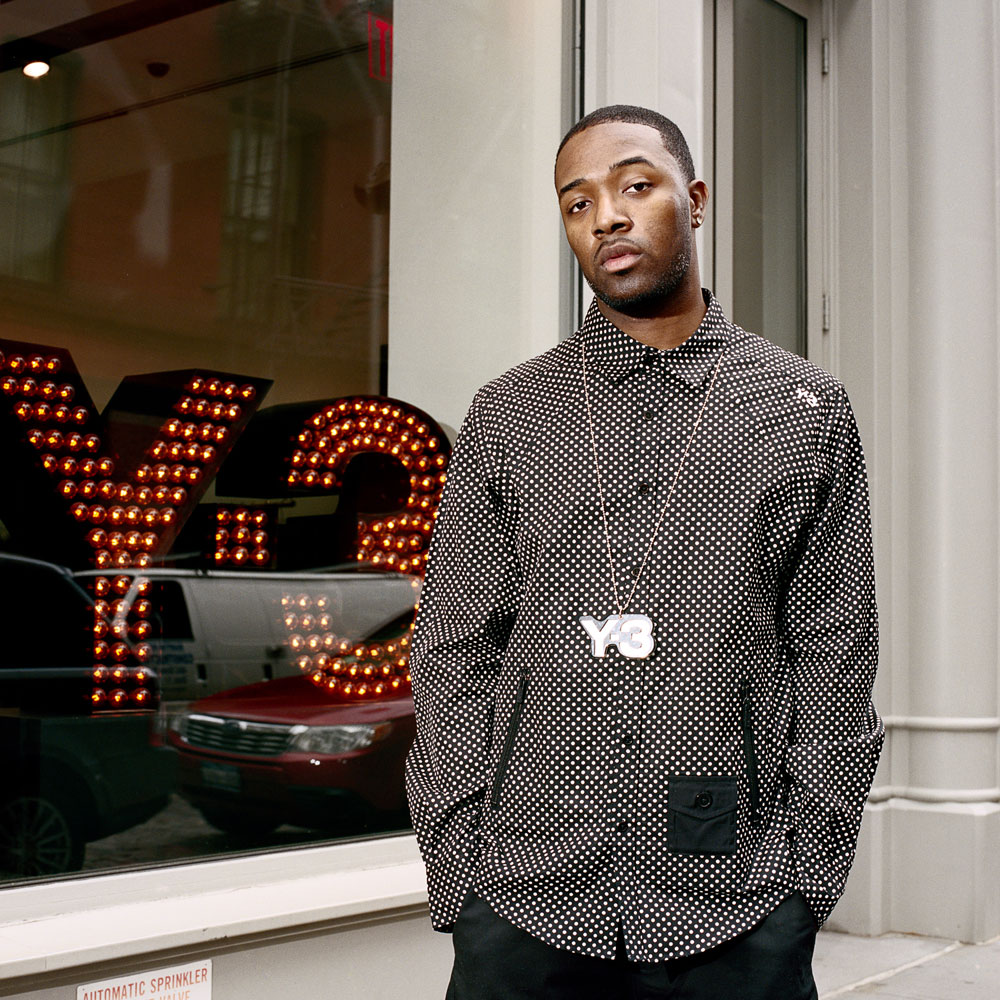
In Jerome, the same problem in a person’s relationship with self and others is evident: the context of Jerome as both a retail assistant (low paid, menial labourer) and a fashion designer (famous, highly visible entrepreneur). The narcissistic, self-importance of Jerome is beautifully portrayed by Ou as she balances the context of his body in space – his polka-dot shirt reflecting the dotted neon of the shops name, his logo emblazoned necklace doing the same, while the reflections in the shop window again hint at outside forces (the car and consumerism) and other worlds. The defiant, could not give a shit gaze of the subject into the camera lens hints at years of subjugation and unrequited ambition for this is not his shop, these are not his clothes despite the label “fashion designer.” He is just a retail assistant, the subject of his own con(text).

The strength of these photographs is that they blur the outlines of the fixed image dispersing an image of totality, “into an unbounded, illimitable tissue of connections and associations, paraphrases and fragments, texts and con-texts.”4 In this sense the solo portraits are much more successful than the rest of the work as Ou magically weaves the tapestry of life into her compositions, ready for the reader to bring their own experiences to these re-inscriptions. In a word these photographs are, literally, breath-taking.

Dr Marcus Bunyan


Many thankx to Sophie Gannon Gallery for allowing me to publish the photographs in the posting. Please click on the photographs for a larger version of the image.


Endnotes

1/ Keep, Christopher, McLaughlin, Tim and Parmar, Robin. “Intertextuality,” on The Electronic Labyrinth website [Online] Cited 13/11/2011. No longer available online

2/ Ibid.,

3/ Thumlert, Kurt. Intervisuality, Visual Culture, and Education. [Online] Cited 10/08/2006. No longer available online

4/ Keep Op cit.,


Selina Ou (Australian born Malaysia, b. 1977) 'Raquel, Waitress and Fashion Designer, Nolita, New York' 2011


Selina Ou (Australian born Malaysia, b. 1977)
Raquel, Waitress and Fashion Designer, Nolita, New York
2011
C-type print
100 x 100cm


Selina Ou (Australian born Malaysia, b. 1977) 'Jerome, Retail Assistant and Fashion Designer, Soho, New York' 2011


Selina Ou (Australian born Malaysia, b. 1977)
Jerome, Retail Assistant and Fashion Designer, Soho, New York
2011
C-type print
100 x 100cm


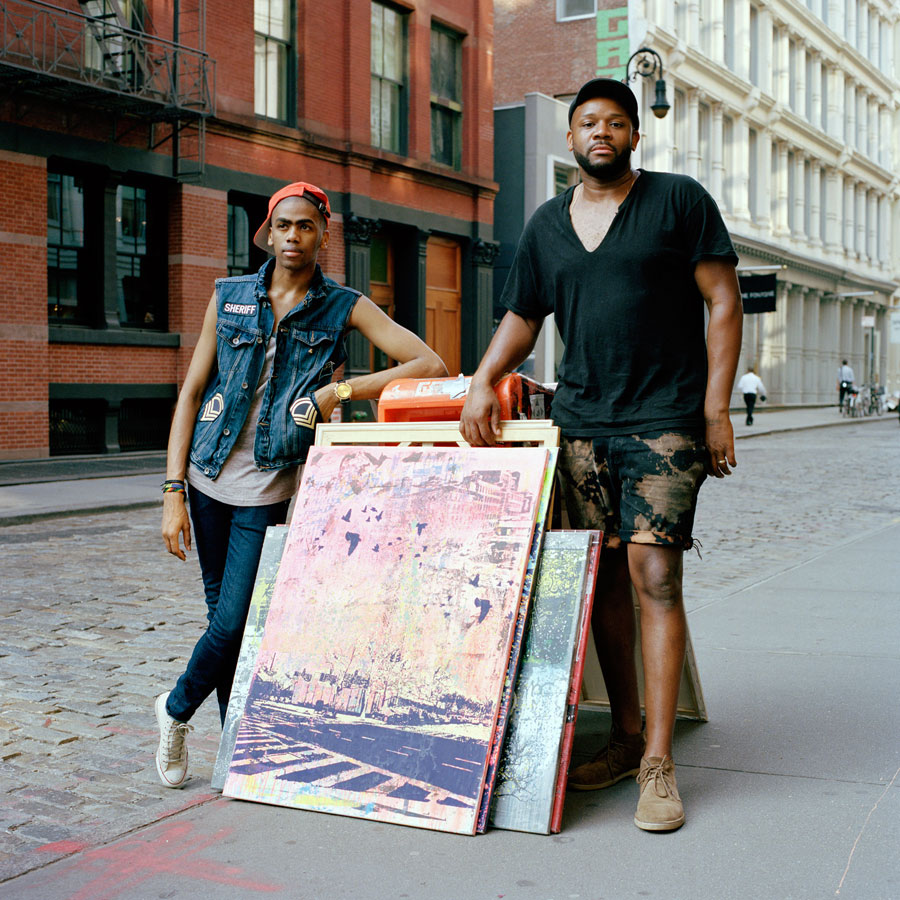
Selina Ou (Australian born Malaysia, b. 1977) 'Darren, Model and Carlito, Artist, Soho, New York' 2011


Selina Ou (Australian born Malaysia, b. 1977)
Darren, Model and Carlito, Artist, Soho, New York
2011
C-type print
100 x 100cm


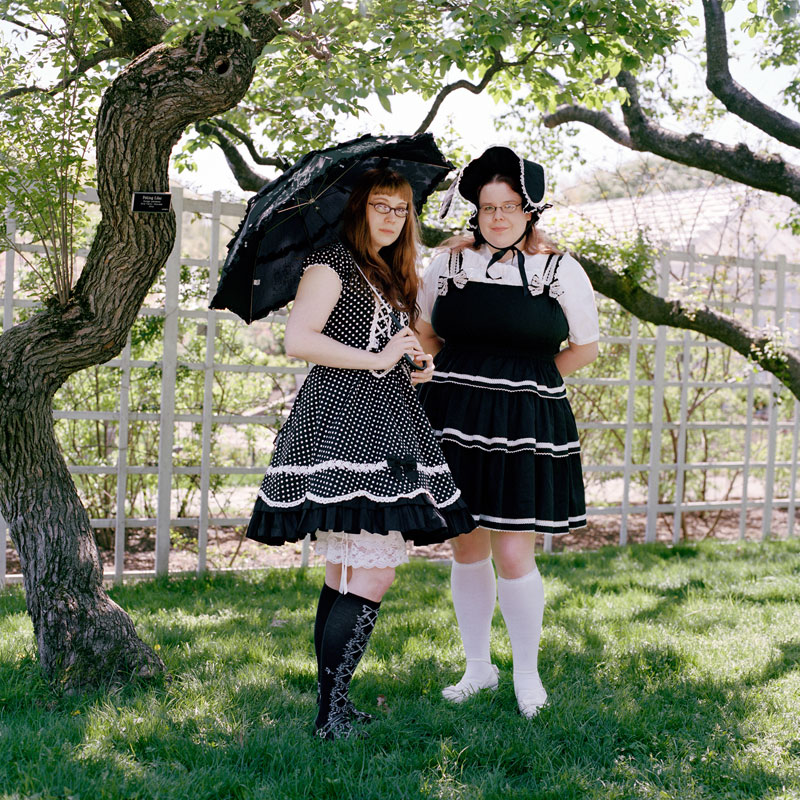
Selina Ou (Australian born Malaysia, b. 1977) 'Carolyn and Jane, Lolitas, Brooklyn Botanical Garden, New York' 2011


Selina Ou (Australian born Malaysia, b. 1977)
Carolyn and Jane, Lolitas, Brooklyn Botanical Garden, New York
2011
C-type print
100 x 100cm


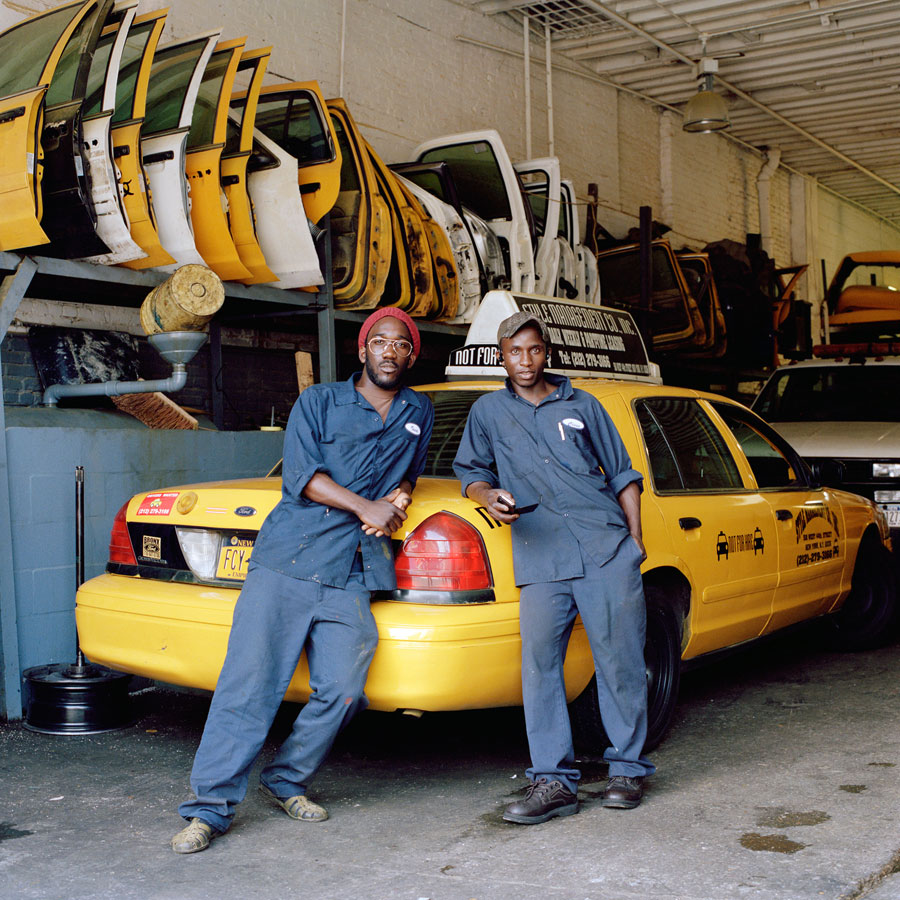
Selina Ou (Australian born Malaysia, b. 1977) 'Issa and Lamine, Taxi Mechanics, Upper West Side, New York' 2011


Selina Ou (Australian born Malaysia, b. 1977)
Issa and Lamine, Taxi Mechanics, Upper West Side, New York
2011
C-type print
100 x 100cm


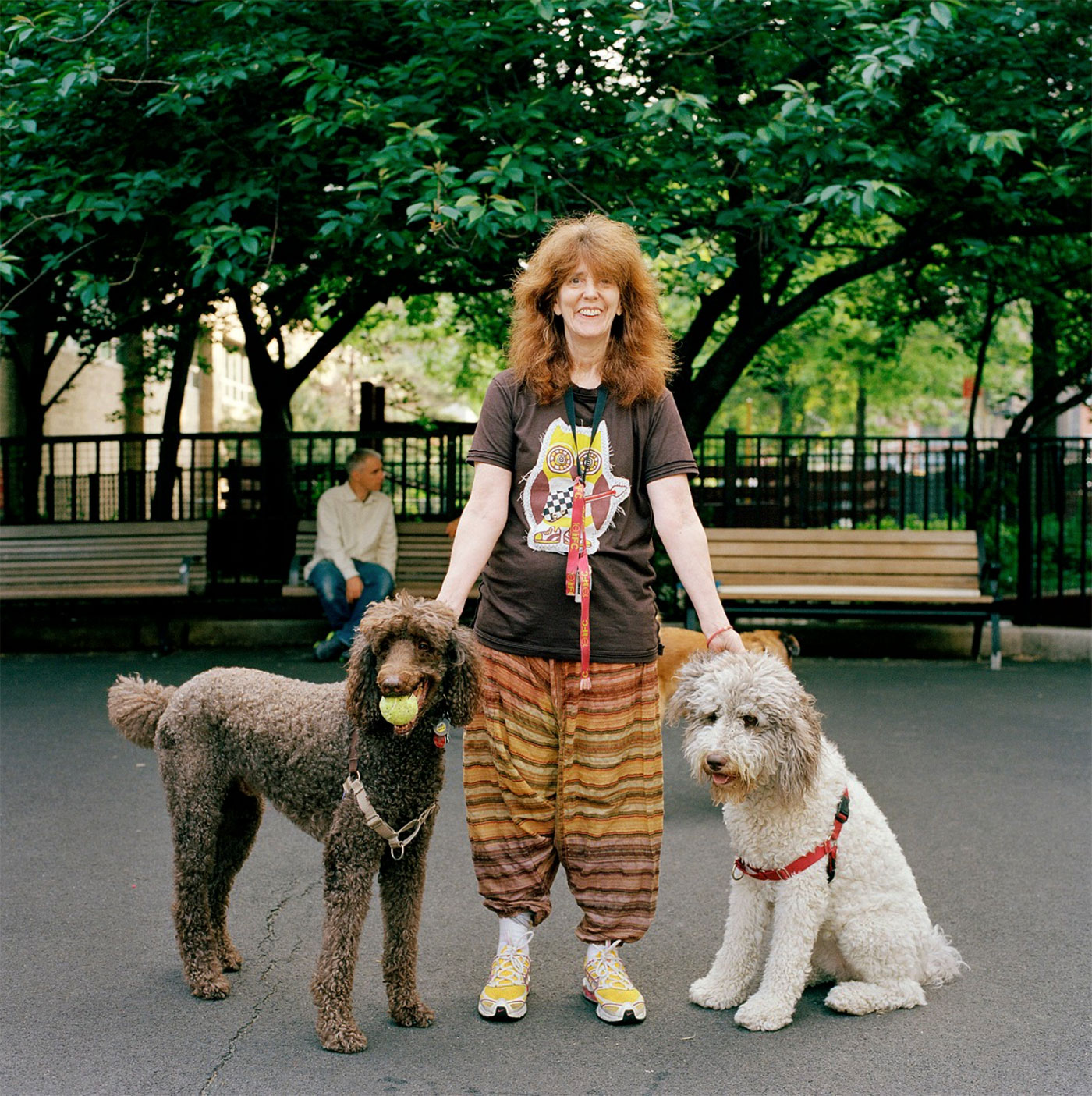
Selina Ou (Australian born Malaysia, b. 1977) 'Clementine, Liz and Billy Bob, Mercer-Houston Dog Run, Greenwich Village, New York' 2011


Selina Ou (Australian born Malaysia, b. 1977)
Clementine, Liz and Billy Bob, Mercer-Houston Dog Run, Greenwich Village, New York
2011
C-type print
100 x 100cm


Selina Ou (Australian born Malaysia, b. 1977) 'Derek, Student, Chrystie st, New York' 2011


Selina Ou (Australian born Malaysia, b. 1977)
Derek, Student, Chrystie st, New York
2011
Chromogenic photograph
100 x 100cm


Sophie Gannon Gallery
2, Albert Street
Richmond, Melbourne

Opening hours:
Tues – Saturday 11am – 5pm

Sophie Gannon Gallery website

LIKE ART BLART ON FACEBOOK

Back to top

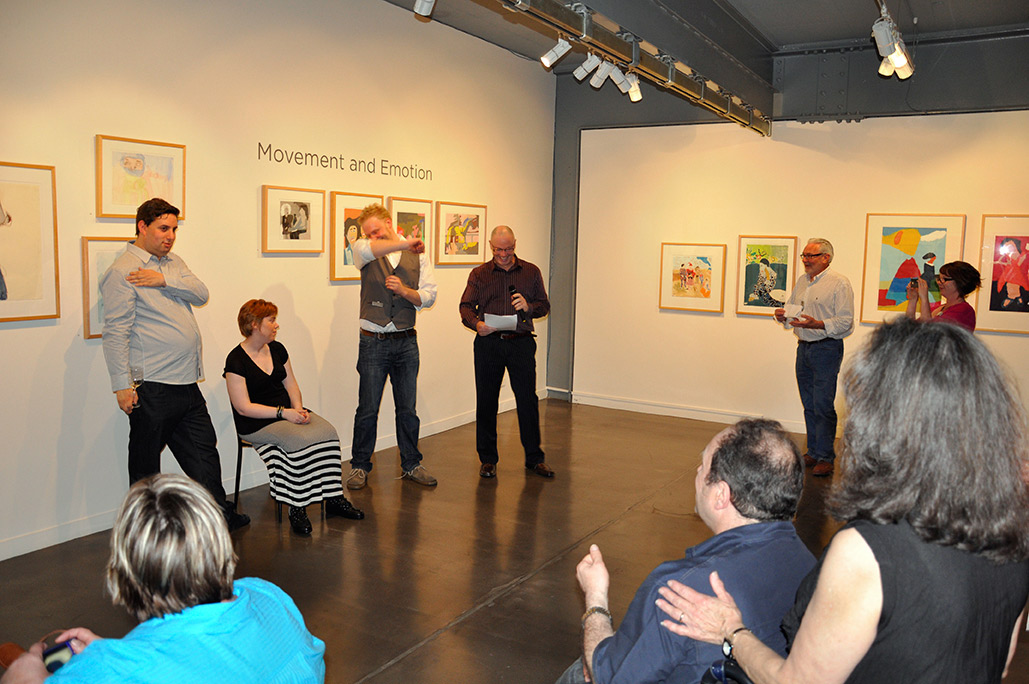
Artwork: Alan Constable camera. Opening night photographs: ‘Movement and Emotion’ at Arts Project Australia, Melbourne

Exhibition dates: 20th October – 26th November 2011


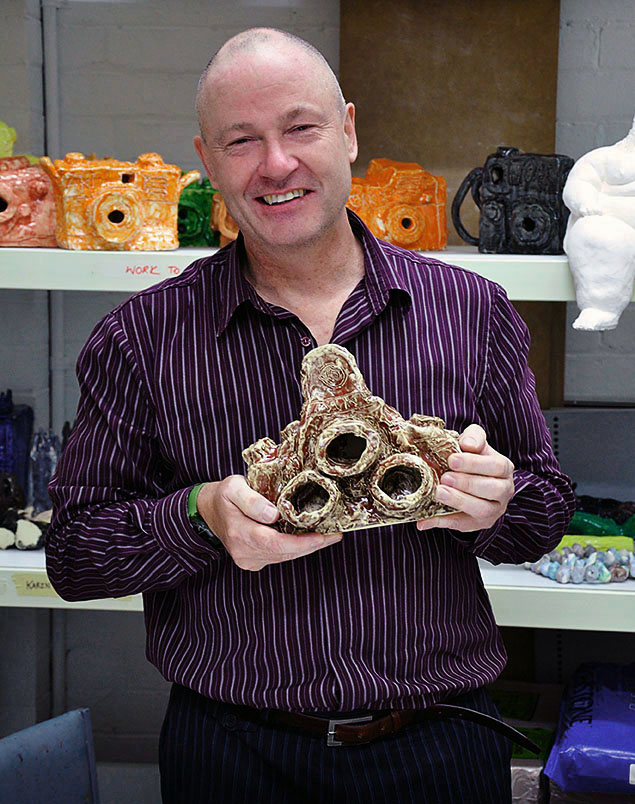
Dr Marcus Bunyan holdling his new Alan Constable camera at the opening of Movement and Emotion 2011. More of Alan's cameras can be seen behind.


Dr Marcus Bunyan holding his new Alan Constable camera at the opening of Movement and Emotion 2011.
More of Alan’s cameras can be seen behind.


I have added a new Alan Constable camera to my collection. Yah!

The one I have chosen is very unusual. The camera has a third eye and a stunning glaze. The exhibition features the work of three Arts Project Australia artists: Alan Constable, Chris O’Brien and Terry Williams. All three artists explore machine aesthetics within their practice.

I really do hope that the National Gallery of Victoria purchases some of these cameras. They are the most unusual and beautiful sculptural pieces I have seen in a long time.

Dr Marcus Bunyan


Many thankx to Art Project Australia for allowing me to publish the photographs in the posting. Please click on the photographs for a larger version of the image. See more images from the Movement and Emotion exhibition.


Alan Constable (Australian, b. 1956) 'Not titled (three lens red camera)' 2011


Alan Constable (Australian, b. 1956)
Not titled (three lens red camera)
2011


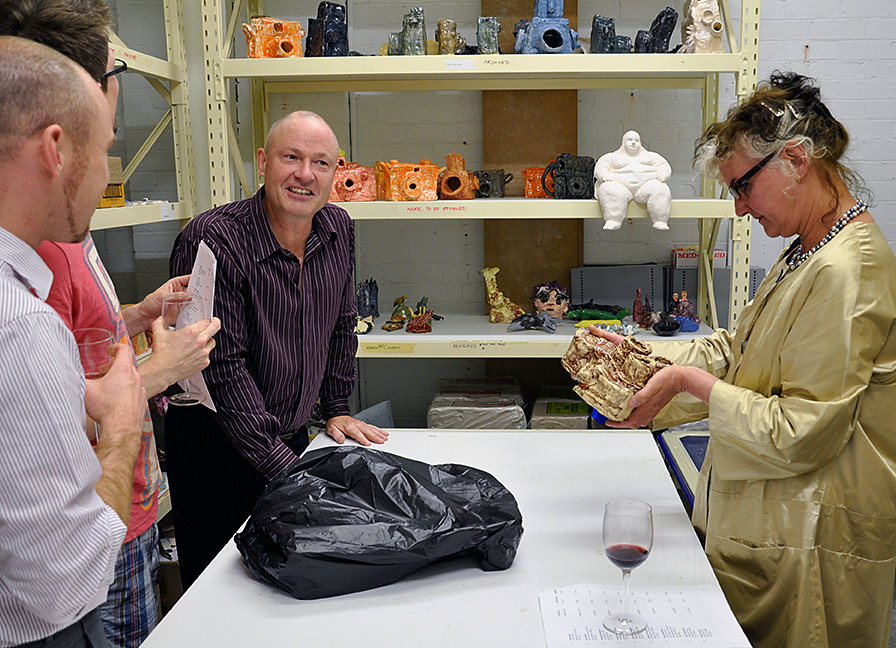
Marcus with jeweller Marianne Cseh at right looking at the Alan Constable camera


Marcus with jeweller Marianne Cseh at right looking at the Alan Constable camera


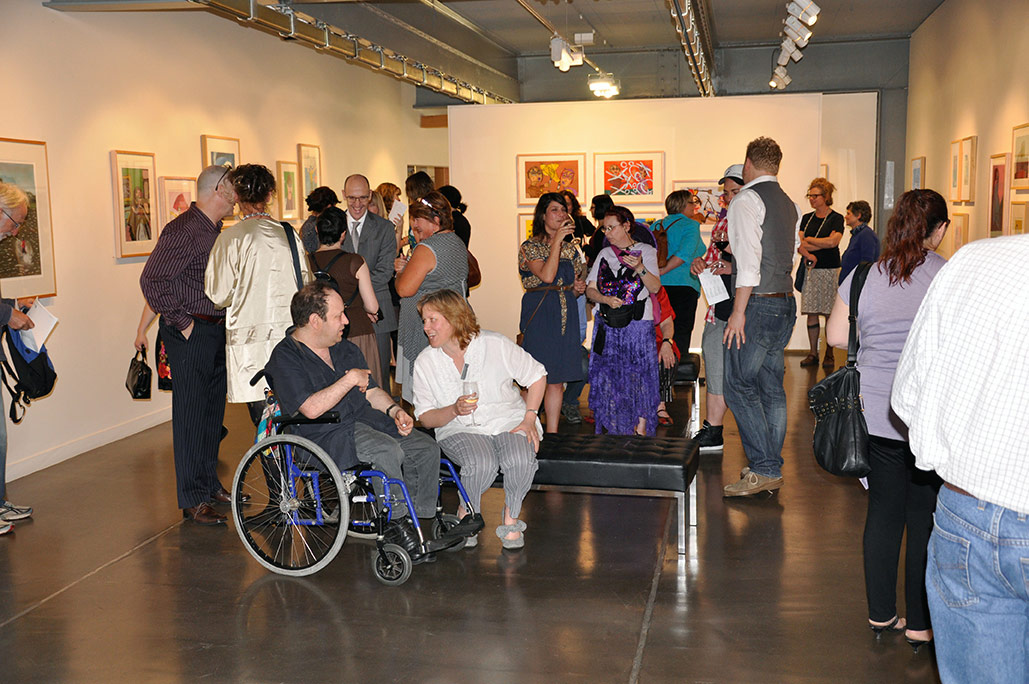
Opening night crowd at 'Movement and Emotion'


Opening night crowd at Movement and Emotion, Arts Project Australia


Opening night, with at left curator Paul Hodges, artist Jodie Noble (seated), myself and at right, Jonah Jones, President of the board of Arts Project Australia


Opening night, with at left curator and artist Paul Hodges, artist Jodie Noble (seated), myself and, at right, Jonah Jones, President of the board of Arts Project Australia


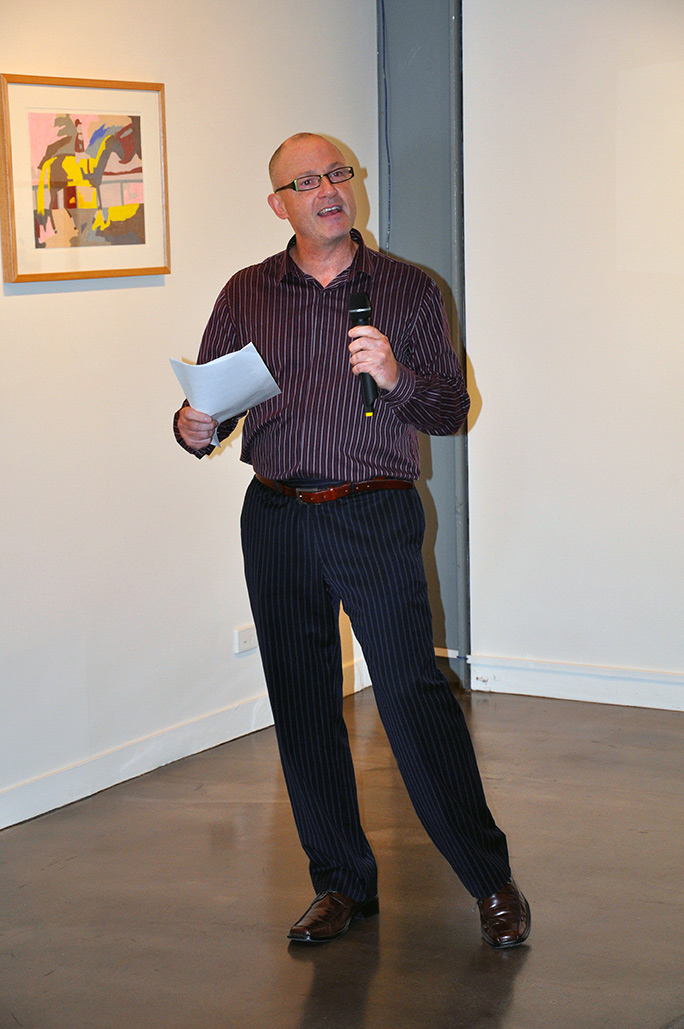
Dr Marcus Bunyan giving the opening night speech at the exhibition 'Movement and Emotion' at Arts Project Australia


Dr Marcus Bunyan giving the opening night speech for the exhibition Movement and Emotion. Read the opening night speech. I was so nervous my jeweller friend Marianne said she could see my hands shaking from where she was standing in the crowd!!


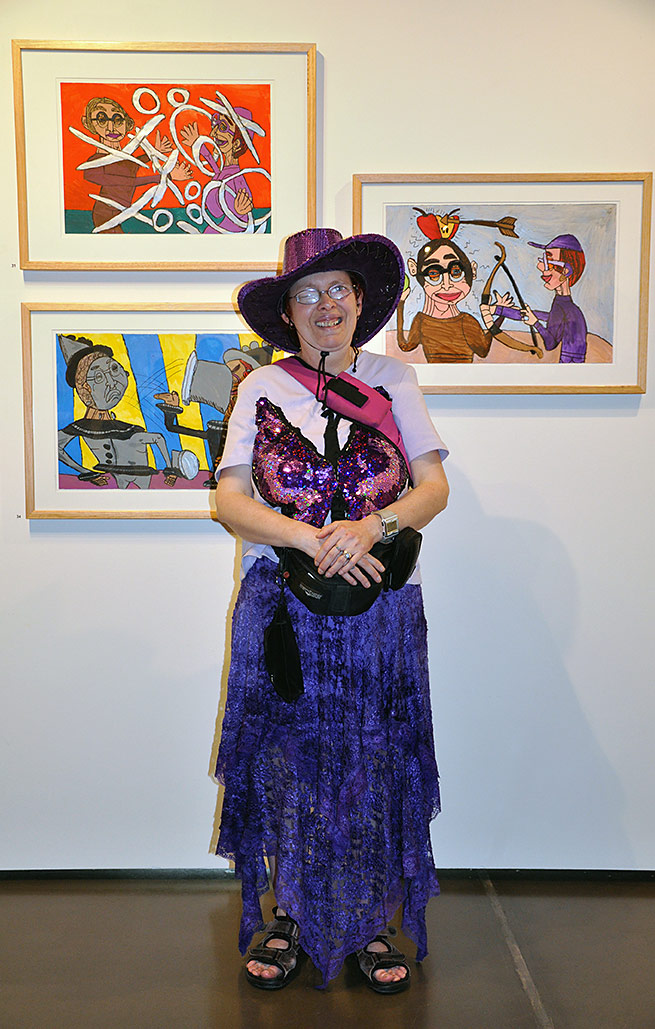
Artist Catherine Staughton standing in front of her work


Artist Catherine Staughton standing in front of her work


Arts Project Australia

Studio
24 High Street
Northcote Victoria 3070
Phone: + 61 3 9482 4484

Gallery
Level 1 Perry Street building
Collingwood Yards
Enter via 35 Johnson Street or 30 Perry Street, Collingwood
Phone: +61 477 211 699

Opening hours:
Wednesday – Friday 11am – 5pm
Saturday & Sunday 12 – 4pm
Arts Project Australia website

LIKE ART BLACK ON FACEBOOK

Back to top

Exhibition: ‘A Perfect Price For Donny’ by Martin Smith at Ryan Renshaw Gallery, Brisbane
Exhibition dates: 12th October – 12th November 2011


Martin Smith (Australian, b. 1971) 'My Father Doesn't Relate Well With Other Men' 2011


Martin Smith (Australian, b. 1971)
My Father Doesn’t Relate Well With Other Men
2011


Martin Smith is one of my favourite photo artists working in Australia at the moment. Smith produces consistently intriguing, stimulating art. Having had a particularly fractious relationship with my own father I appreciate the pathos and humour that Smith achieves in his work. Fantastic!

Marcus


Many thankx to Ryan Renshaw gallery for allowing me to publish the photographs in the posting. Please click on the photographs for a larger version of the image.


Martin Smith (Australian, b. 1971) 'My Father is a Deeply Flawed Human Being' 2011


Martin Smith (Australian, b. 1971)
My Father is a Deeply Flawed Human Being
2011


Martin Smith’s artwork focuses on those small moments that glance into a life. Tending to gather photographs as opposed to taking them, his works offer wry observations rather than grand statements. The loss or absence inherent in photographic images, which are suggestive of another time and place, is echoed in the physical loss of the words cut into the surface of the works. One story is inscribed on another; just like one memory is laid upon another or one version of a story embellishes another. The resulting works are replete with the same ambiguity, melancholy and richness as one’s memory.

‘The storytelling came from when I started looking at my old family photos and thinking about what goes with them,’ Smith explains. ‘You know when you’re looking at family photos, there are particular stories that go with them – that’s that person, that’s the time when your uncle turned up for Christmas, and so on.’

Smith’s stories that are painstakingly hand-cut into the photographic image give a whimsical and highly personal account of his life, like his ill-fated attempt to become an actor with the Sandgate Amateur Theatre Group or the time he worked in the cutlery crew at Australian Airlines, combining the text of these stories with photographs. The scarring of the photographic image with Smith’s scalpel blade ensures a unique artwork, a notion at odds with the reproducible aspects of photography.

Martin’s exhibition stems from his reflection of his experiences as an actor in Roger Fagan’s play A Perfect Price For Donny and questions the legacy of what we ‘leave behind’ for others to read.

‘Tanya was from the past of my amateur theatre days when I was 17 years old and possessed with deluded dreams of being an actor. We were both new members of the Sacred Heart Players and we both landed the leads in the production of A Perfect Price for Donny written by Roger Fagan. Roger was an elderly member of the group and had joined years earlier to gain practical experience so he could finish his play. The Perfect Price for Donny was his first and only play. Roger had worked at the Railways for 32 years and had been writing A Perfect Price for Donny on and off over the 32 years. He had not started another play, he hadn’t written any short stories, prose or even a Haiku. Since he had retired two years ago he was finally able to realise his dream of finishing A Perfect Price for Donny at the age of 68′.

‘The memories are left behind and then reconstituted and turned into other things, it’s a language constantly getting churned up. Memories are things that inform taking the photo,’ Smith says ‘and I’m bringing some of the intrinsic aspects of the photograph with me. Photography captures the classic moments of life, like your first day at school,’ he continues, ‘but it doesn’t capture the other parts of your life that are sometimes way more significant.’

People spend a lot of time in a Martin Smith exhibition reading the works and then laughing or sighing in recognition. The photographs are all of fairly impersonal exteriors, almost crime scenes, not postcards, not picturesque snaps but odd disregarded corners of the world. In some way they are reminiscent of album covers or slightly lame posters but are brought into the present by Smith’s honest and often very funny tales of modern living.

Press release from the Ryan Renshaw Gallery website


Martin Smith (Australian, b. 1971) 'My Father's Talents Will Never Make Me Wealthy' 2011


Martin Smith (Australian, b. 1971)
My Father’s Talents Will Never Make Me Wealthy
2011


Martin Smith (Australian, b. 1971) 'My Father Fails' 2011


Martin Smith (Australian, b. 1971)
My Father Fails
2011


Martin Smith (Australian, b. 1971) 'Revelation #2' 2011


Martin Smith (Australian, b. 1971)
Revelation #2
2011


Ryan Renshaw Gallery

This gallery has now closed.

LIKE ART BLART ON FACEBOOK

Back to top

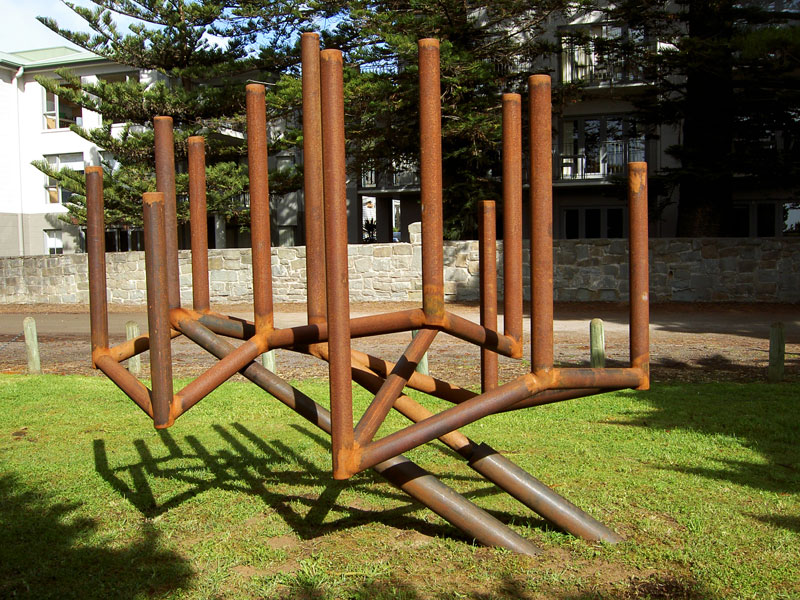
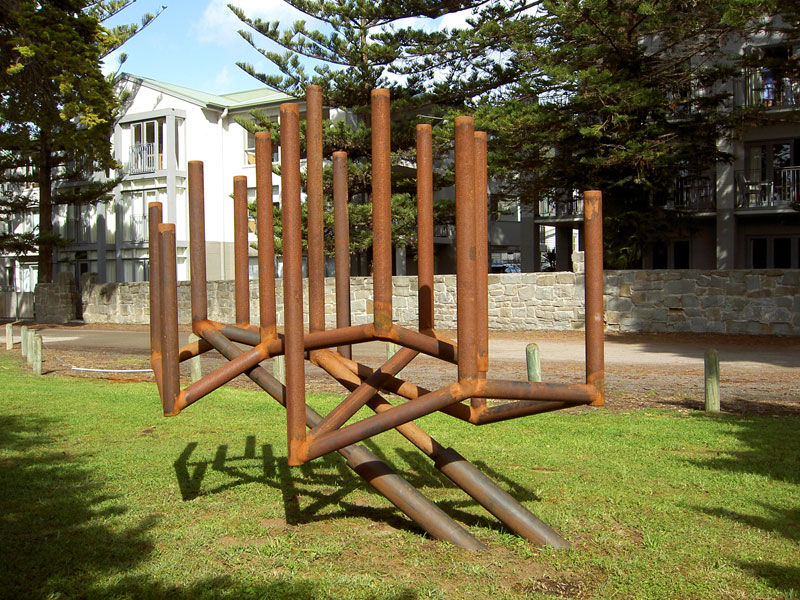
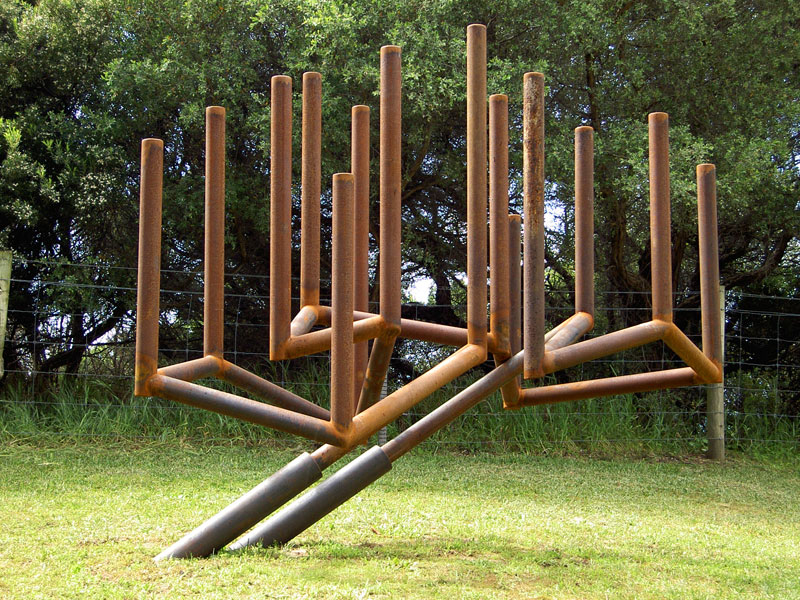
Sculpture: ‘Everything’ by Fredrick White, 2011

October 2012


Fredrick White. 'Everything' 2011


Fredrick White (Australian)
Everything
2011
steel
210 x 120 x 250cm


A new sculpture by Fredrick White is appearing in the Lorne Sculpture Prize (now Biennale) which opened on the 16th October and continues until 5th November, 2011. The work continues the artist’s exploration into the matrix of what is seen and not seen, what lies above and below.

Dr Marcus Bunyan


Please click on the photographs for a larger version of the image.


Fredrick White. 'Everything' 2011

Fredrick White. 'Everything' 2011


Fredrick White (Australian)
Everything
2011
steel
210 x 120 x 250cm


LIKE ART BLART ON FACEBOOK

Back to top