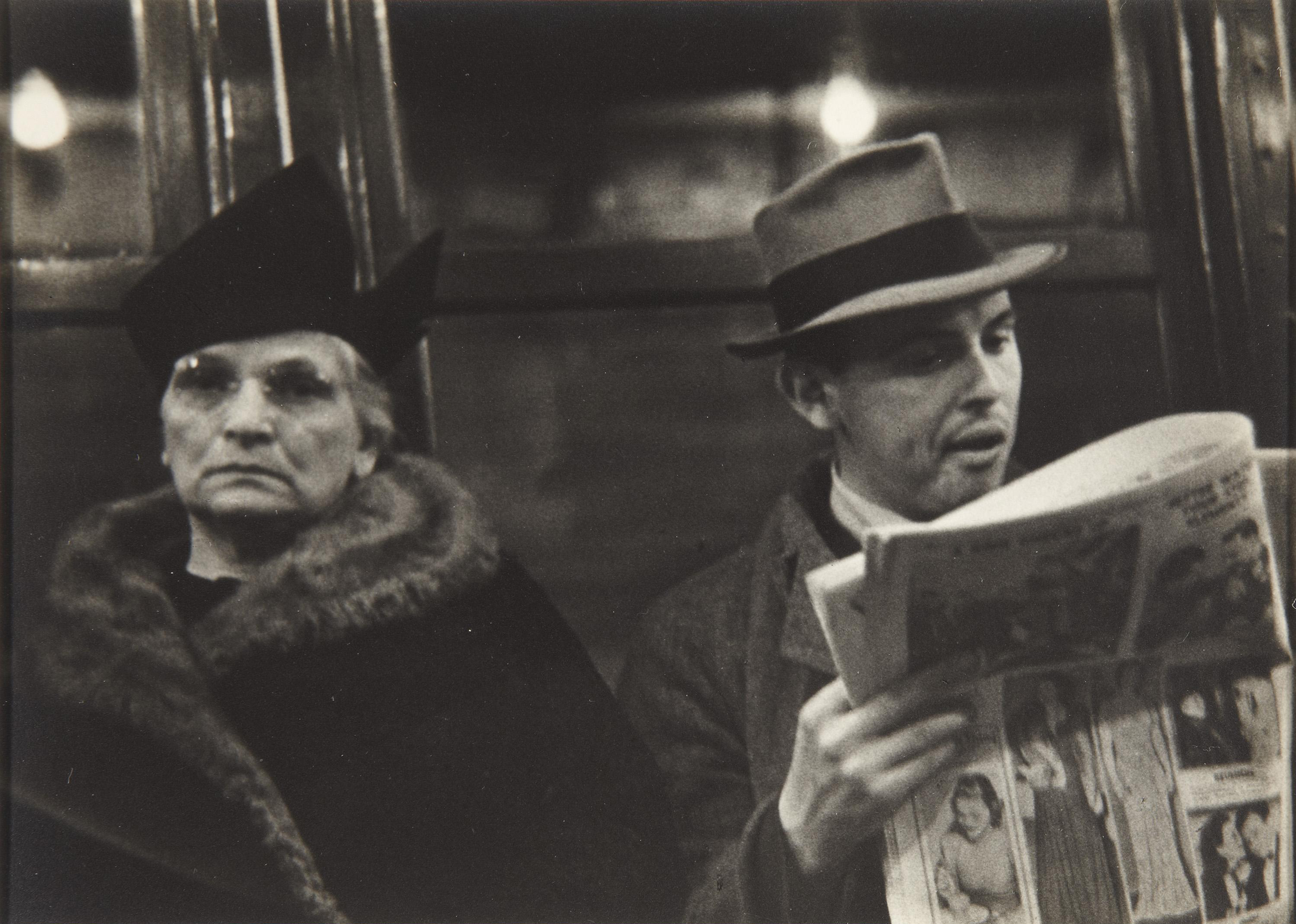
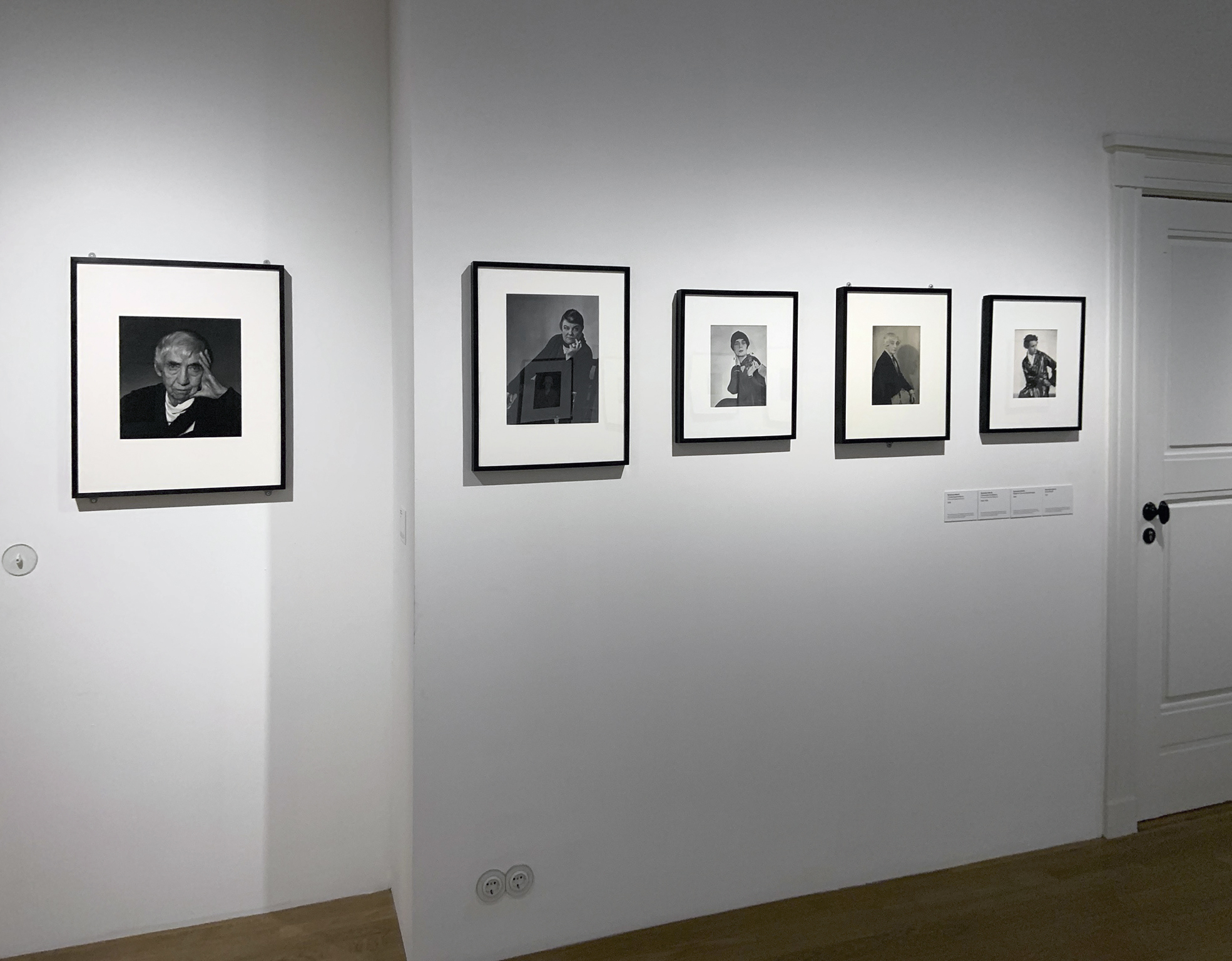
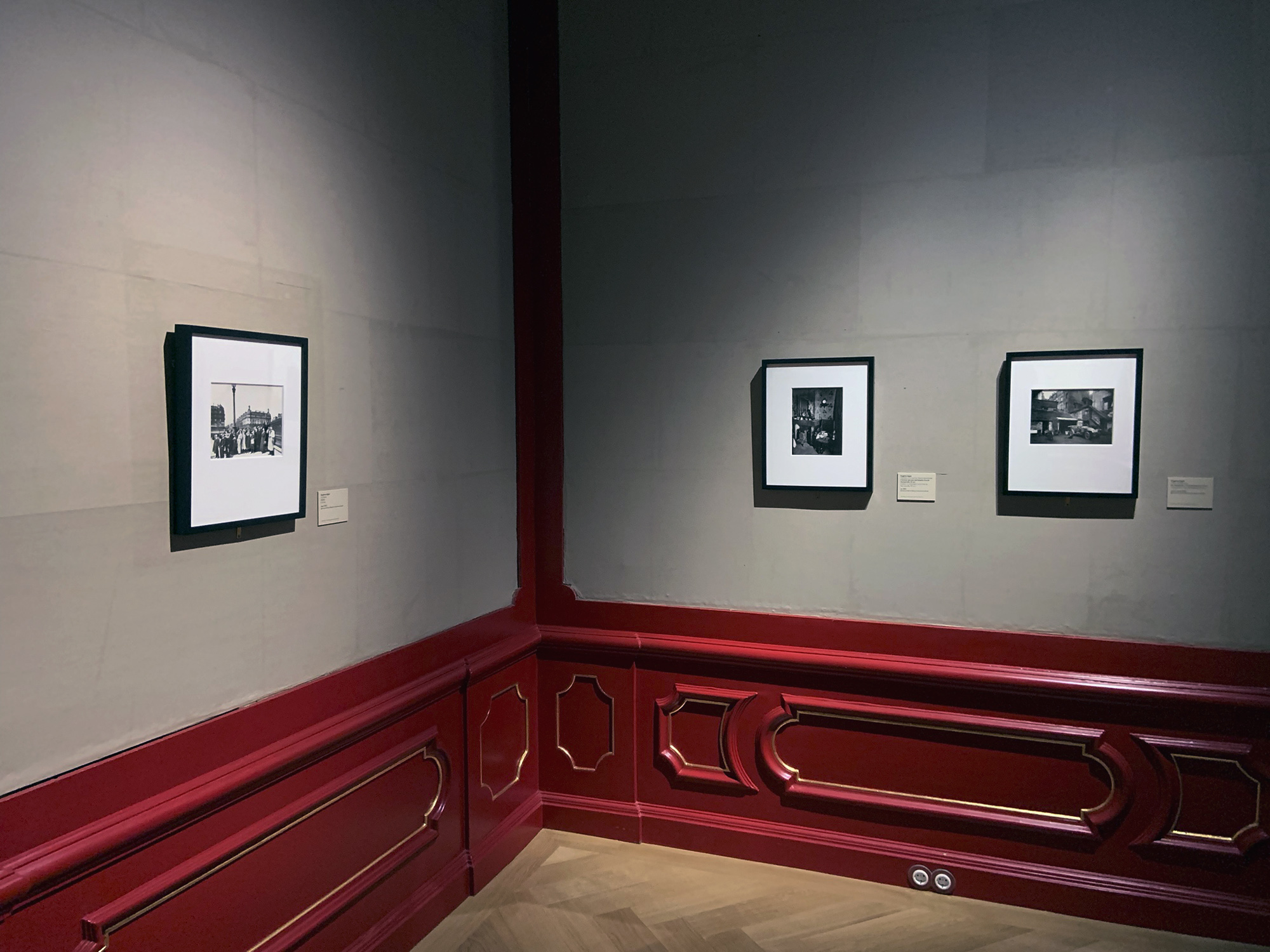
Exhibition: ‘Richard Benson: The World Is Smarter Than You Are’ at the Philadelphia Museum of Art

Exhibition dates: 3rd October, 2021 – 23rd January, 2022

Curator: Peter Barberie, Brodsky Curator of Photographs, Alfred Stieglitz Center

Field Galleries and Honickman Galleries 154-157
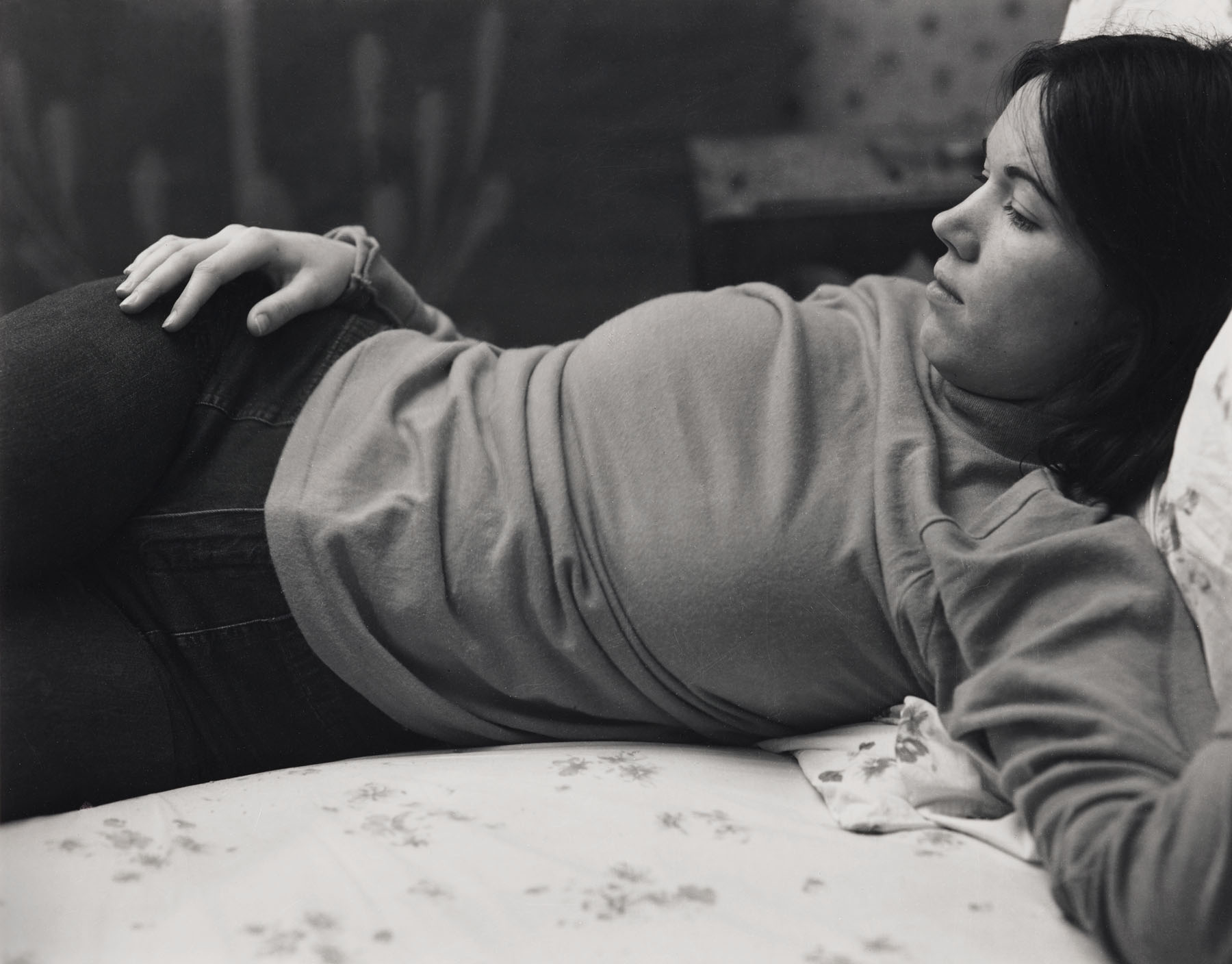
 

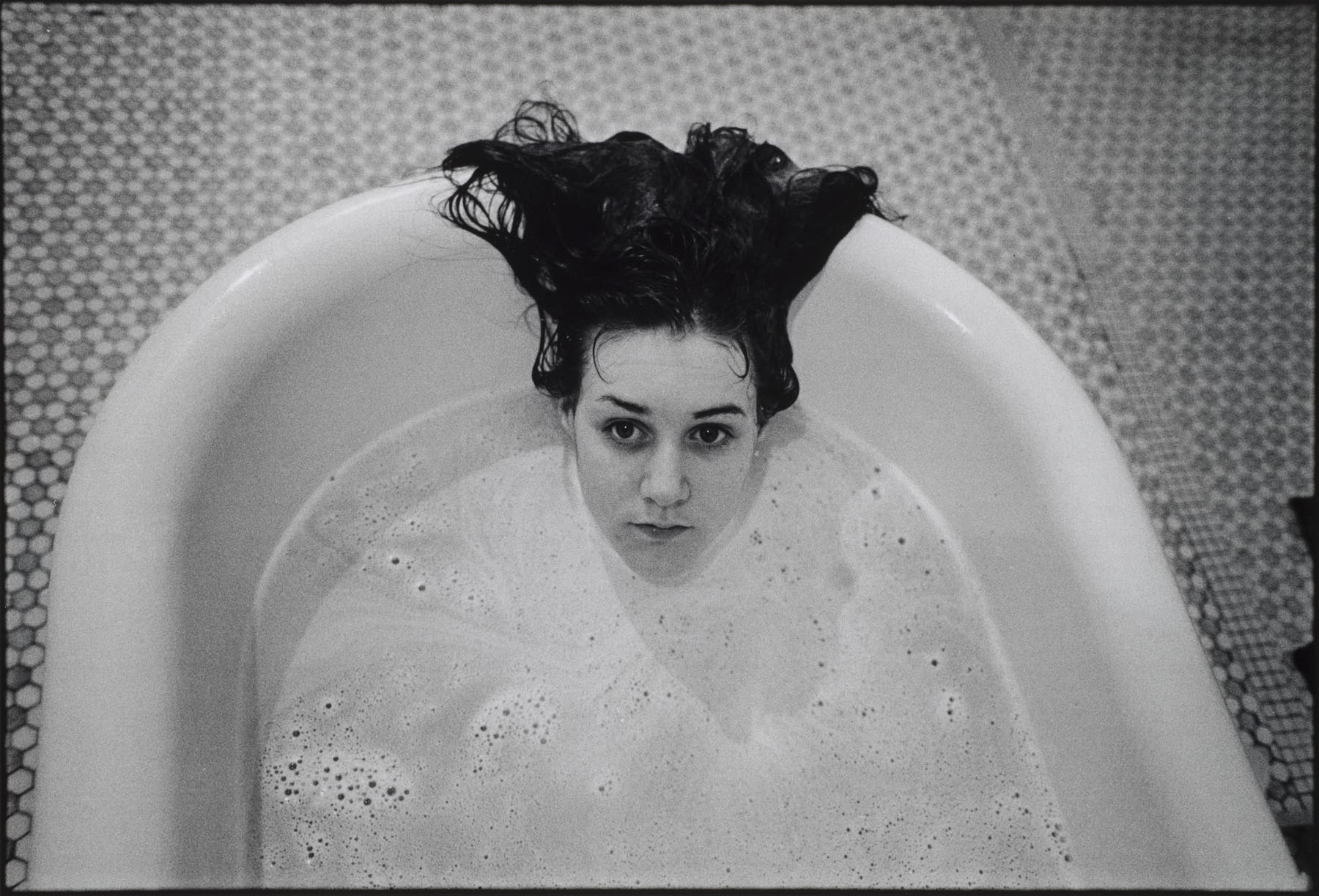
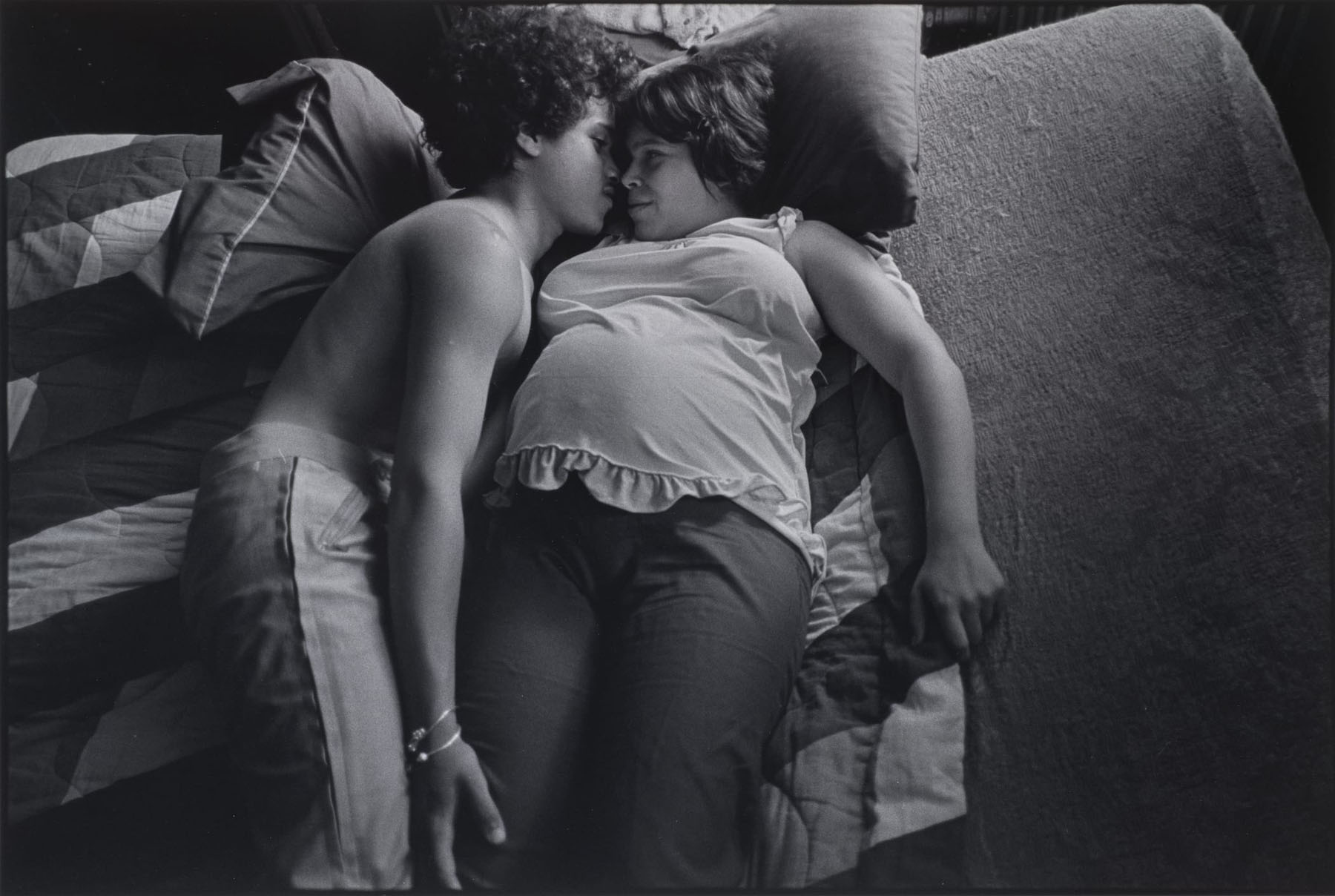
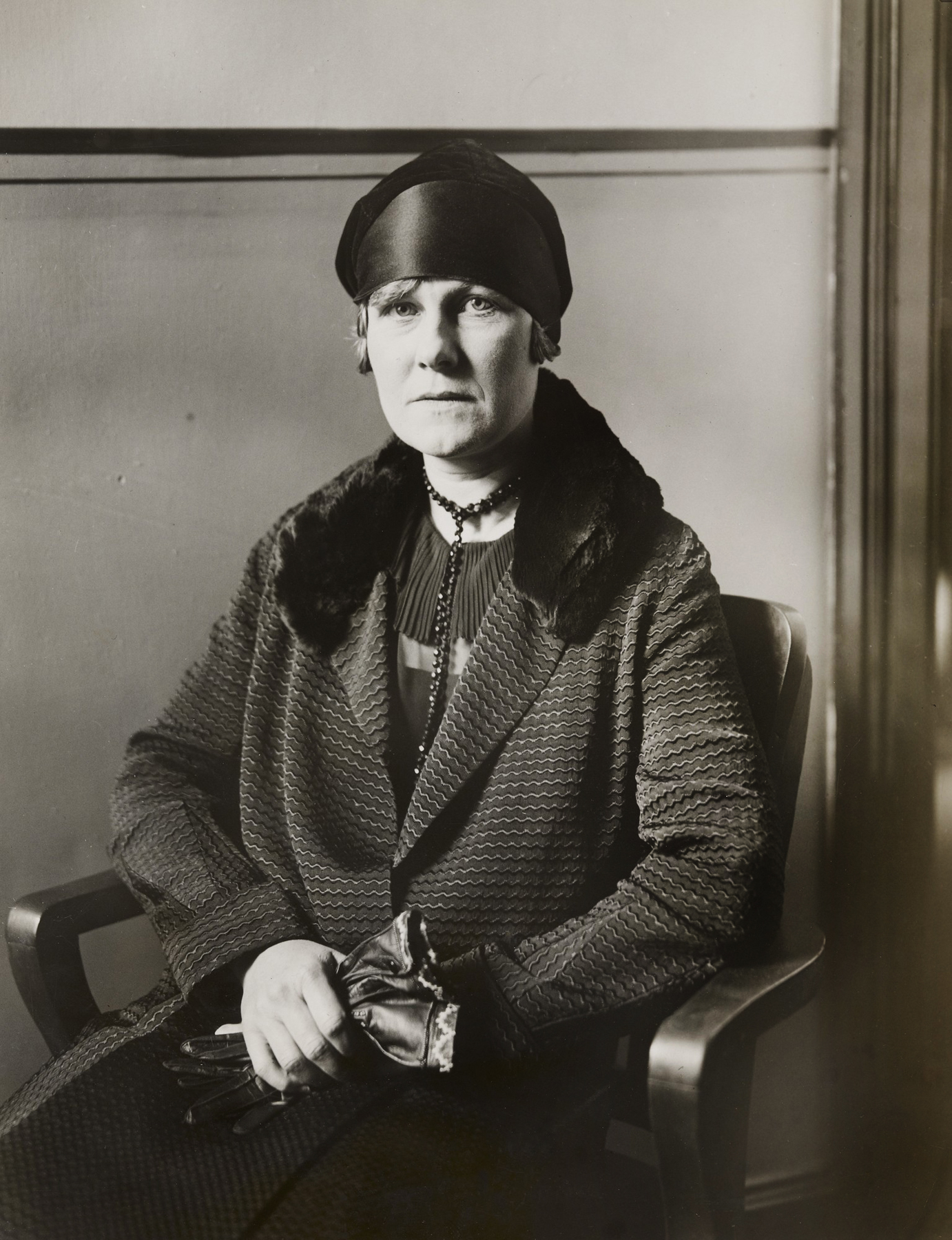
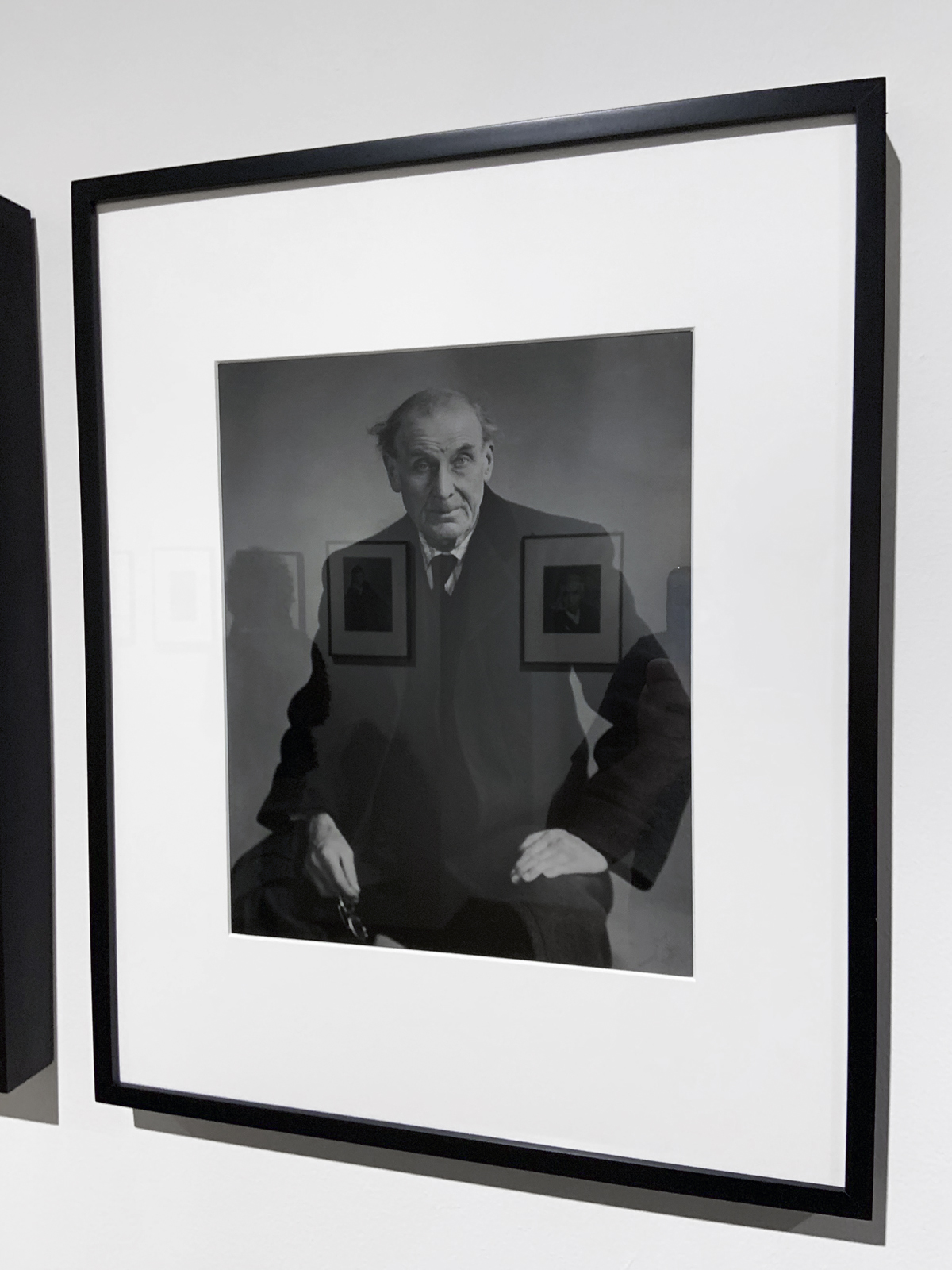
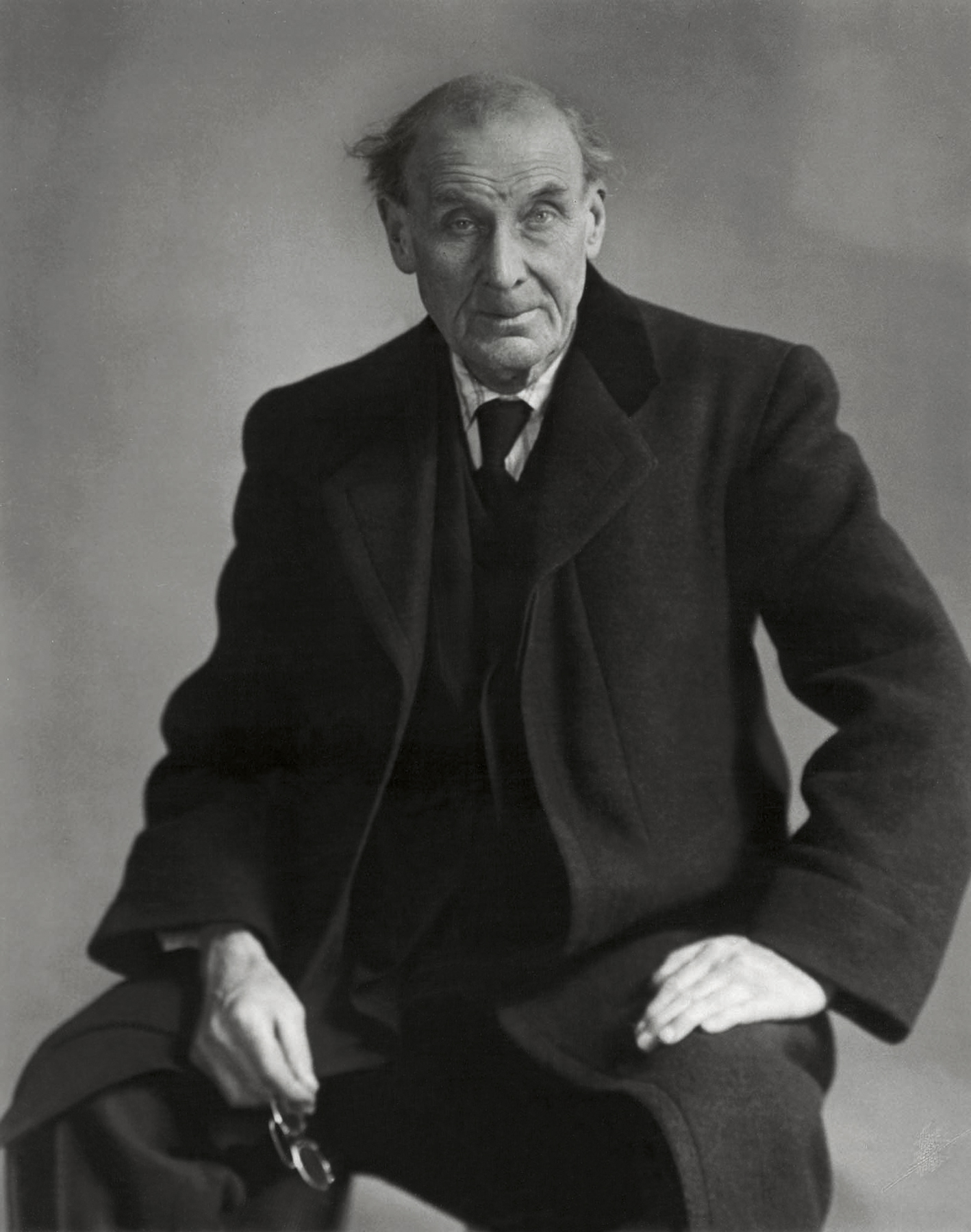
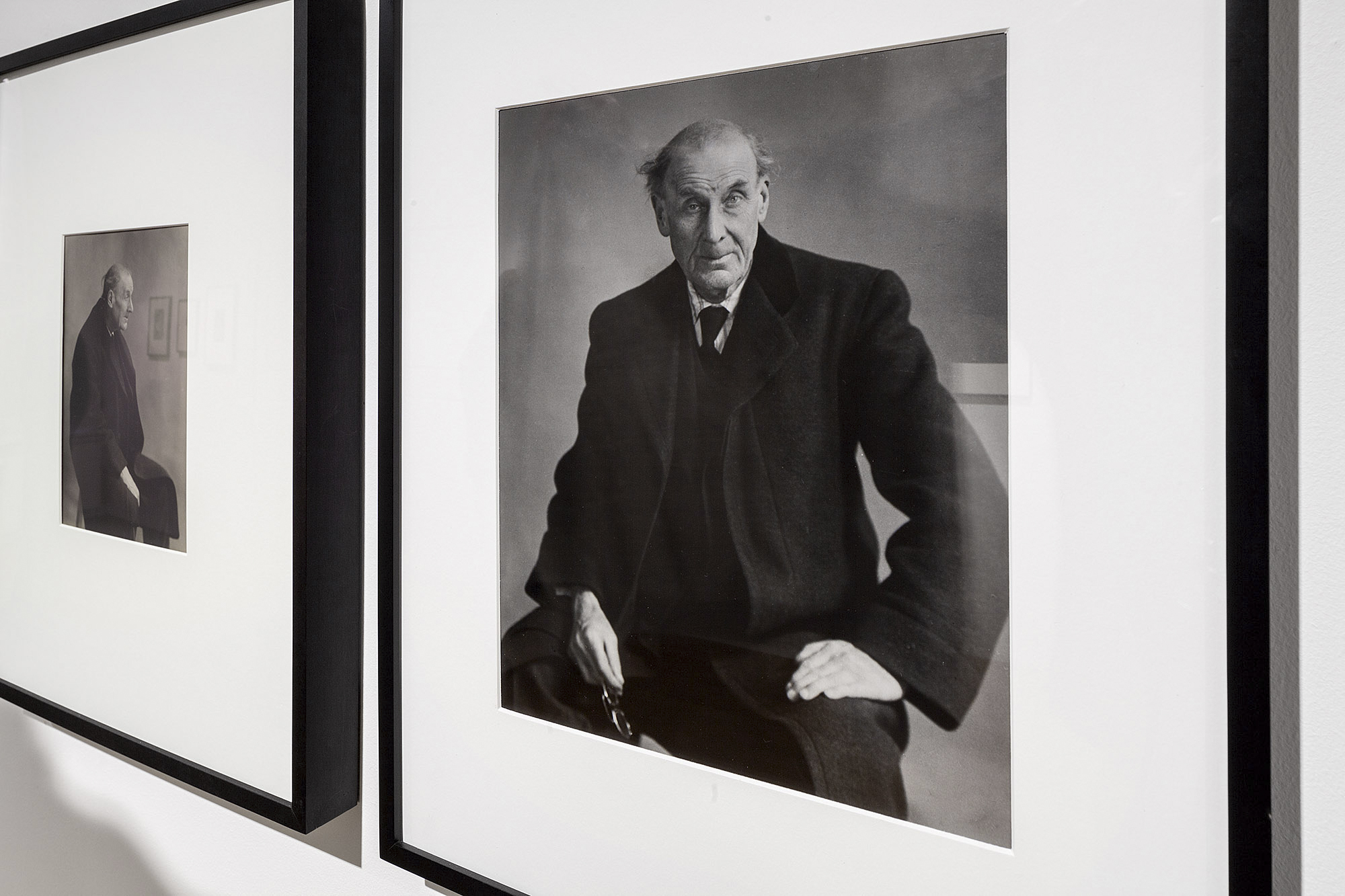
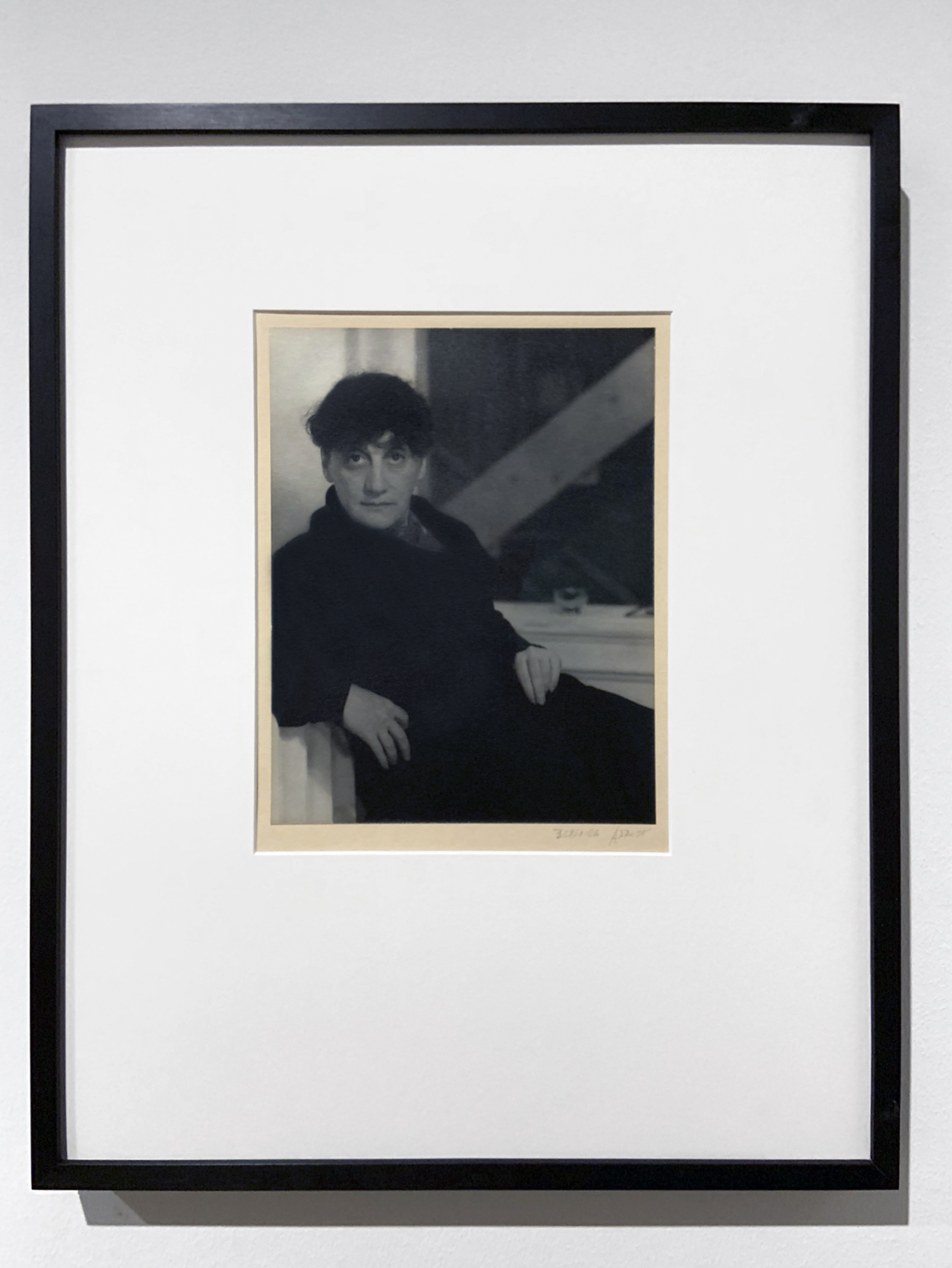
Richard Benson (American, 1943-2017) 'Barbara Benson' 1968 from the exhibition 'Richard Benson: The World Is Smarter Than You Are' at the Philadelphia Museum of Art, October 2021 - January 2022


Richard Benson (American, 1943-2017)
Barbara Benson
1968
Gelatin silver print
Image and sheet: 7 1/2 × 9 1/2 inches
Mount: 9 1/8 × 11 inches
© Estate of Richard M. A. Benson. Promised gift of William M. and Elizabeth Ann Kahane
Image courtesy Philadelphia Museum of Art, 2021


Welcome to the first posting on Art Blart for 2022 and a Happy New Year to you all.

We start with an exhibition by highly regarded photographic printer (including prints for Paul Strand and Walker Evans and books for Lee Friedlander and about Eugène Atget) and teacher Richard Benson. A master of the craft of photography, “Benson became devoted to the technical aspects of printing and reproducing photographs” … “thoroughly imbued with the tradition, science and artistry of photography.” Benson was also an artist and the exhibition includes prints from the late 1960s until shortly before Benson’s death in 2017, the exhibition tracing his quest for the perfect print.

And therein lies the rub. It feels to me as though Benson’s work is more about the aesthetic of the print than about a good photograph and here I am going to call it as I see it. It might be a little controversial or even sacrilegious to one held in so high esteem for his printing, but I don’t particularly like his photographic work. Why?

Benson’s subject matter (“ageing farm machinery, austerely utilitarian boats, derelict factories, and the frequent intersections of history, nature, and our built environments”) can be found throughout the history of American photography. In that sense he offers few new insights on the environment in which he operates. Further, his “unsentimental specificity” – “or what his friend and fellow photographer Garry Winogrand referred to as the mystery of “a fact clearly described” – leaves me feeling … well, nothing really. To me his photographs are emotionally dead photographic experiments become artefacts. What is the story that he is telling, what was his vision?

Benson went to extraordinary lengths to make the print look how the world looked, because he wanted things to look in a print the way things looked when he saw them. But, as Paul Turounet comments, “Craft and technical execution function to support the photographers’ vision and curiosity with visual engagement, and clarity of intention and purpose. It becomes a tremendous opportunity for the photographer to experience how all of photography’s materials and processes, analog, digital or an alternative / hybrid system, can be used to reveal a personal photographic vision and what pictures are going to be about.”1

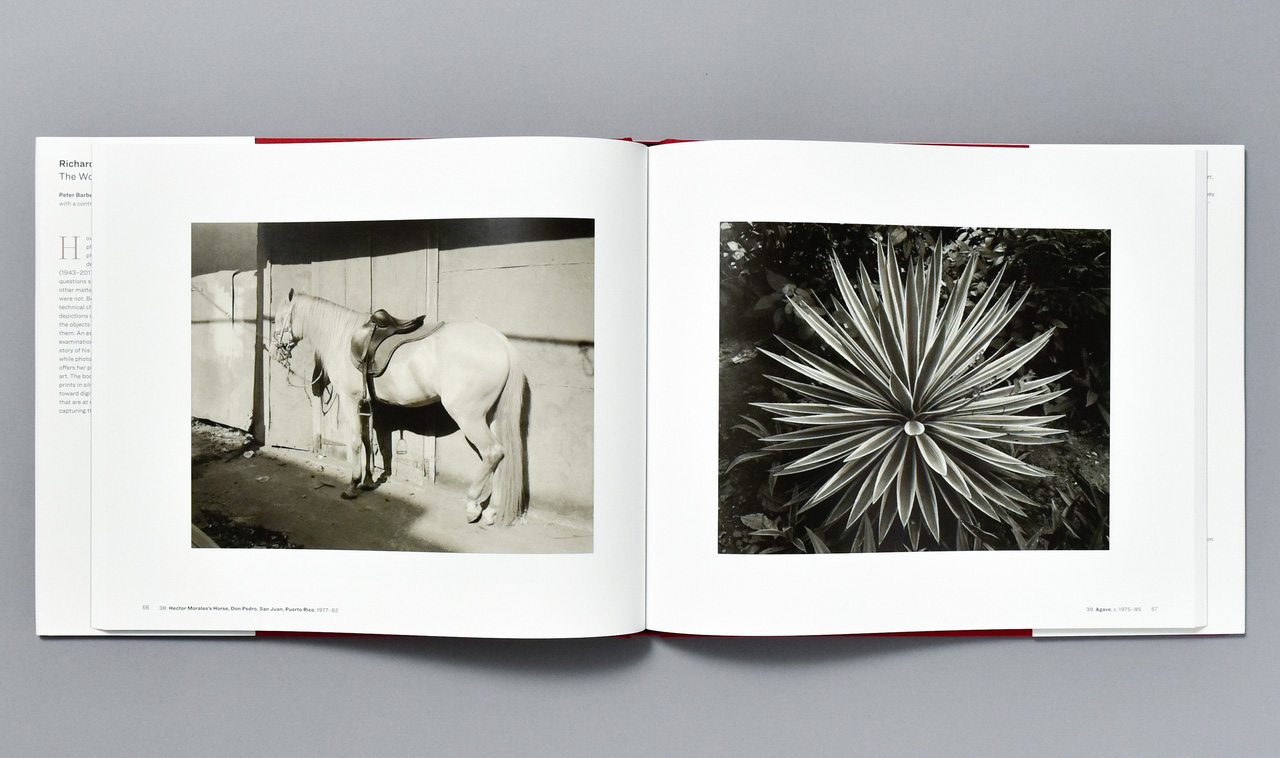
A personal photographic vision! What was that for Benson, for he has no signature style, his photographs being a mishmash of influences. As Arthur Lubow has observed, “In some of Benson’s black-and-white photographs of building interiors, like “65 Kenyon Street, Hartford, Connecticut” (1974), I thought of Walker Evans. Edward Weston floated into my consciousness as I looked at the organic semi-abstraction of “Agave” (c. 1975-85). And it was hard to avoid recalling Eggleston in viewing the colour jolts of the vintage red truck in “Wyoming” (2008), or the lime-green rowboat in “Newfoundland” (2006-8).”2 Quite so.

So we are left with what exactly. Beautiful but emotionally stilted representations of the world that offer small insight into the condition of its becoming.

Benson’s two statements, “Go out into the world with the camera and photograph and find out that the world is smarter than you are” and “When I make the picture, I’m seeing how I could make the print” are instructive here. Firstly, the world is not smarter than you are, it’s just more confusing. Nothing is ever as neat and tidy, as perfect as Benson would have us believe in his perfect prints. This is when the mystery of the fact clearly described is just that – a description and not a feeling. Secondly, when he’s taking a photograph he thinking about the print! He’s not thinking about resonances, vibrations of energy, time and space in the place itself but only what he sees as its perfect outcome. But Richard, there are many ways to make a print! You can print a mid-grey Zone V and as near black Zone 2, or use digital manipulation to intensive the feeling of an image. There is no single way to print a photographic image that is “correct” for there are many interpretations of a constructed reality. In my humble opinion Benson has his equation arse about tit. As Minor White in one of his Three Canons (1955) would say,

When the image mirrors the man
And the man mirrors the subject
Something might take over


Minor White elaborates further,

“To get from the tangible to the intangible (which mature artists in any medium claim as part of their task) a paradox of some kind has frequently been helpful. For the photographer to free himself of the tyranny of the visual facts upon which he is utterly dependent, a paradox is the only possible tool. And the talisman paradox for unique photography is to work “the mirror with a memory” as if it were a mirage, and the camera as a metamorphosing machine, and the photograph as if it were a metaphor… Once freed of the tyranny of surfaces and textures, substance and form [the photographer] can use the same to pursue poetic truth.”3


The critical observation is that craft and technical execution function to support the photographers’ vision and curiosity with visual engagement.

My friend and mentor Ian Lobb keeps saying to me, “the really good stuff is there, I KNOW its there” – but you have to dig really deep to find it. Perhaps p. 25 in the preview of Benson’s book North South East West gets as close as I have felt (a sense of mystery and subtle spirit) … but I remain a skeptic with regard not to Benson’s craft but to his artistic vision, for he seems to have never freed himself of the tyranny of visual facts bound to their reproduction in the perfect print.

Dr Marcus Bunyan


Footnotes

1/ Paul Turounet. “Well-Executed, Poorly Conceived Photographs,” on A Photo Teacher website Nd [Online] Cited 18/12/2021. No longer available online

2/ Arthur Lubow. “When a Master Printer Picks Up the Camera,” on The New York Times website December 30, 2021 [Online] Cited 02/01/2022

3/ Minor White quoted in Beaumont Newhall (ed.,). The History of Photography. Boston: Little, Brown, and Co., 1982, p. 281


Many thankx to the Philadelphia Museum of Art for allowing me to publish the photographs in the posting. Please click on the photographs for a larger version of the image.


The fundamental problem any artist faces in regard to craft is that it must be largely ignored. This seems to be an extreme statement, but it is surely true. Today we are experiencing a revival of sorts of non-silver, or alternative, systems for photographic printing, and the field is littered with well-executed, poorly conceived photographs. It seems to me that this has happened because all these photographers, or printers, are more interested in how they print their pictures than in what these pictures might be about.


Excerpt from the essay “Print Making” by Richard Benson in the book Paul Strand: Essays on His Life and Work. Aperture, 1991


“Isn’t that what we do as artists… don’t we try to create a surrogate that gives to the viewer something that was given to us when we saw the thing.

We get an inkling that there is something extraordinary there, we’ve stumbled on something extraordinary and the picture is our mechanism for understanding it.

When I make the picture, I’m seeing how I could make the print.”


Excerpts from a conversation with Richard Benson and Jay Maisel by George Jardine for Adobe Lightroom


“In black-and-white and color, in film and digital, in platinum prints, offset lithographs and inkjet prints, Benson mastered the procedures and, when he found them inadequate, invented his own. Like those sonically stunning LPs that were recorded to demonstrate the range of the first generation of stereos, Benson’s photographs often seem designed to mark the outer limits of what photography can practically achieve. …

Walking through the show, I saw the work of someone thoroughly imbued with the tradition, science and artistry of photography. But I was also reminded of a remark by Henry James, in a letter from 1888, about John Singer Sargent, who, similarly, could achieve with a brush anything he asked of it. “Yes, I have always thought Sargent a great painter,” James remarked. “He would be greater still if he had one or two little things he hasn’t – but he will do.””


Arthur Lubow. “When a Master Printer Picks Up the Camera,” on The New York Times website December 30, 2021 [Online] Cited 02/01/2022


Curators’ Talk on Richard Benson

Curator Peter Barberie and Sarah Meister of Aperture discuss the life and work of photographer Richard Benson.

Speakers

Peter Barberie is Brodsky Curator of Photographs, Alfred Stieglitz Center, at the Philadelphia Museum of Art.
Sarah Meister is Executive Director of Aperture, a not-for-profit foundation, multi-platform publisher, and center for the photo community.
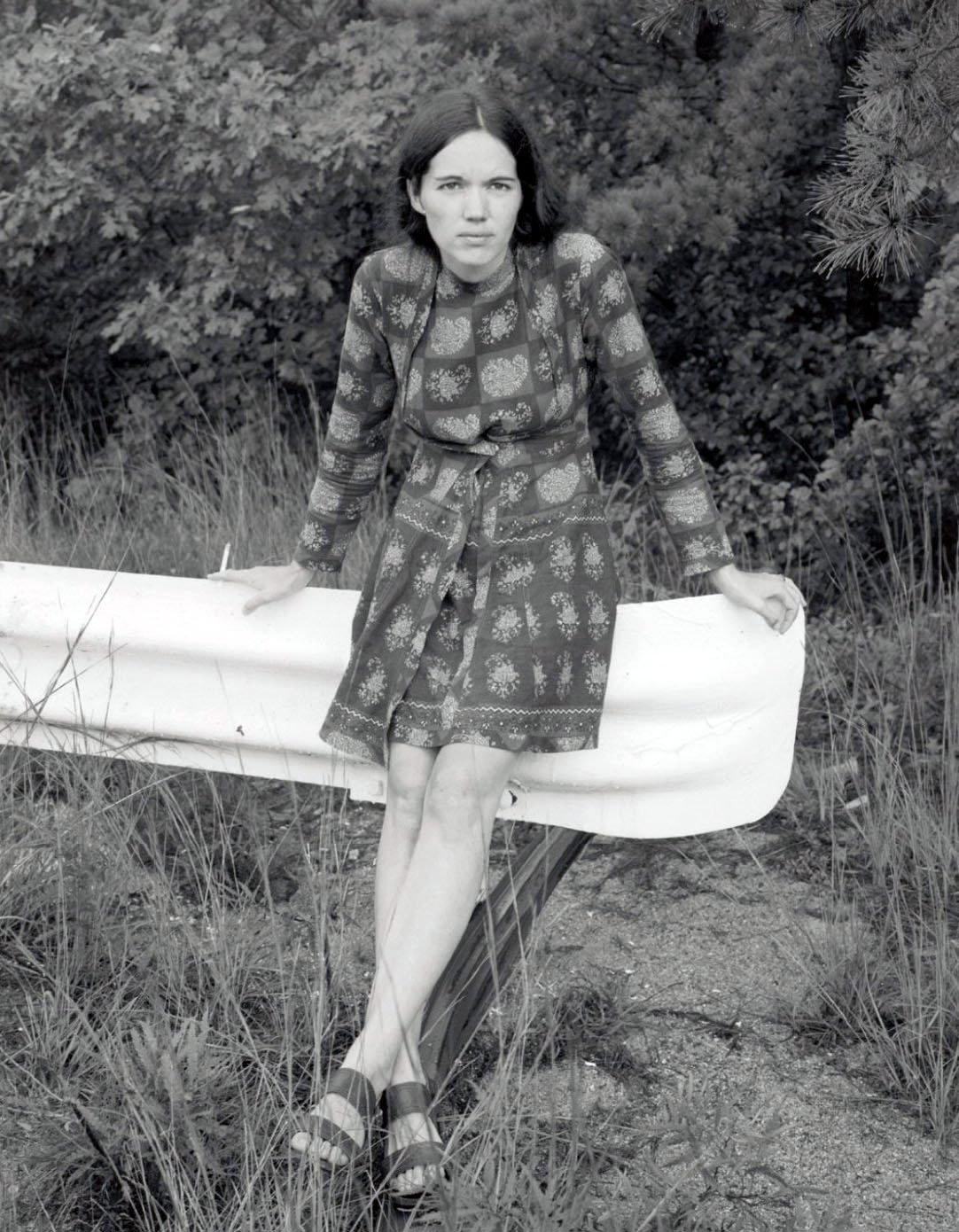
 

Richard Benson (American, 1943-2017) 'Barbara Benson (Young, Skinny, and Pissed Off)' 1970 (negative); 2005-2014 (print) from the exhibition 'Richard Benson: The World Is Smarter Than You Are' at the Philadelphia Museum of Art, October 2021 - January 2022


Richard Benson (American, 1943-2017)
Barbara Benson (Young, Skinny, and Pissed Off)
1970 (negative); 2005-2014 (print)
Inkjet print
Image: 17 3/16 × 13 3/8 inches (43.6 × 33.9cm)
Sheet: 19 1/16 × 15 5/16 inches (48.4 × 38.9cm)
© Estate of Richard M. A. Benson. Promised gift of William M. and Elizabeth Ann Kahane
Image courtesy Philadelphia Museum of Art, 2021
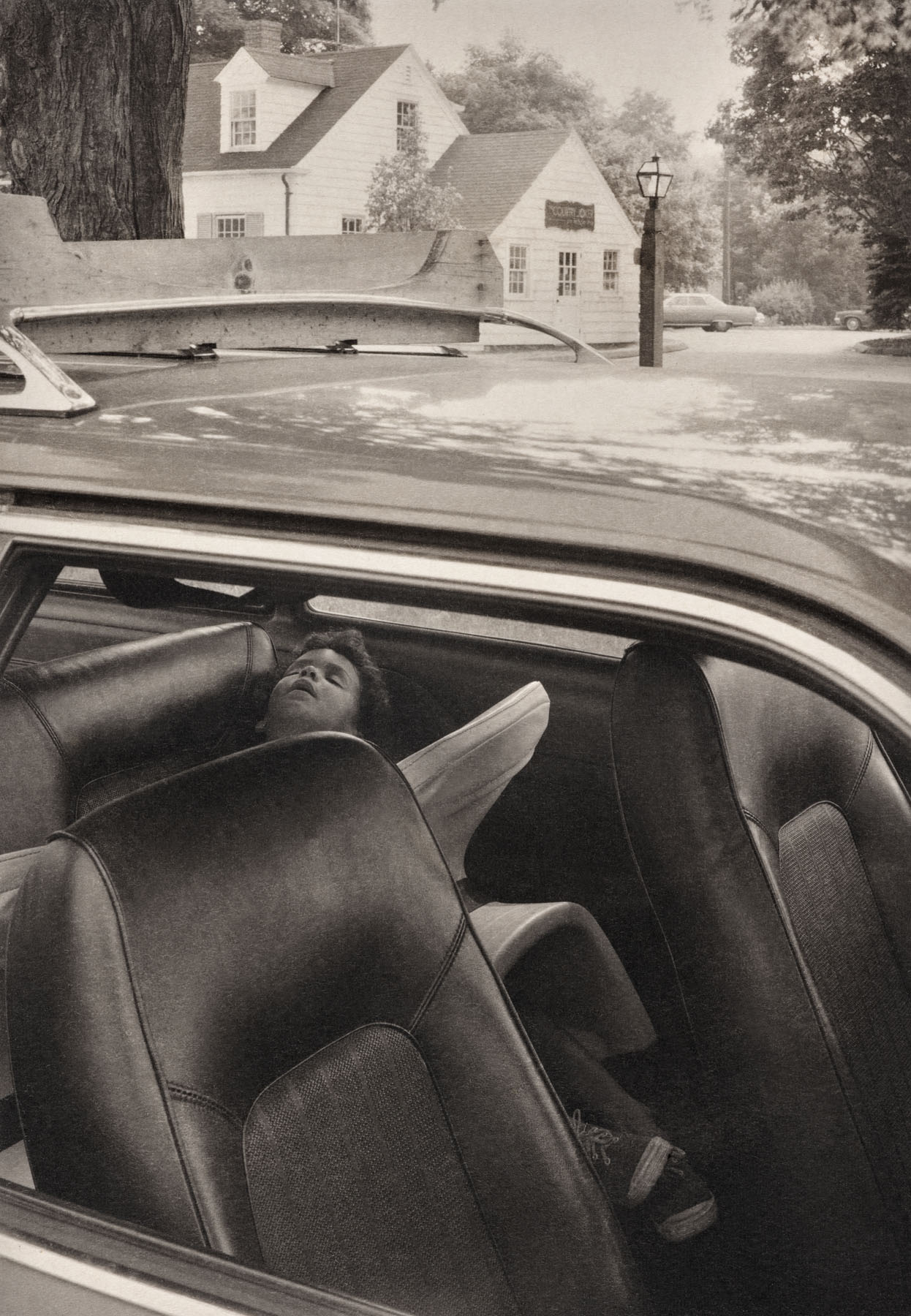
 

Richard Benson (American, 1943-2017) 'Sarah Benson' 1974 from the exhibition 'Richard Benson: The World Is Smarter Than You Are' at the Philadelphia Museum of Art, October 2021 - January 2022


Richard Benson (American, 1943-2017)
Sarah Benson
1974
Palladium print
Image: 6 1/2 × 4 5/8 inches
Sheet: 6 3/4 × 4 3/4 inches
Mount: 7 7/8 × 6 inches
© Estate of Richard M. A. Benson. Promised gift of William M. and Elizabeth Ann Kahane
Image courtesy Philadelphia Museum of Art, 2021


Richard Benson (American, 1943-2017) 'Christopher Benson' 1981-1982 (negative); 1985-1995 (print)


Richard Benson (American, 1943-2017)
Christopher Benson
1981-1982 (negative); 1985-1995 (print)
Offset lithograph
Image: 16 1/4 × 12 7/8 inches (41.2 × 32.7cm)
Sheet: 24 15/16 × 19 inches (63.4 × 48.2cm)
© Estate of Richard M. A. Benson. Promised gift of William M. and Elizabeth Ann Kahane
Image courtesy Philadelphia Museum of Art, 2021


Richard Benson (American, 1943-2017) 'Barbara and Daniel Benson' 1978-1979


Richard Benson (American, 1943-2017)
Barbara and Daniel Benson
1978-1979 (negative), 1985-1995 (print)
© Estate of Richard M. A. Benson. Promised gift of William M. and Elizabeth Ann Kahane
Image courtesy Philadelphia Museum of Art, 2021


It’s worth mentioning that this was the late 1980s, when everywhere you looked it appeared as if “art photography” needed big ideas more than it needed great photographs. Benson would shoot down our art-speak while sympathising with our ambitions and the obstacles we faced in wanting to break new ground. He reminded us that “an artist is a person who tends to be really good at one thing but spends most of their time trying to do something else.” For him, the revelations and the ideas in photographs were in the details, in the unsentimental specificity, or what his friend and fellow photographer Garry Winogrand referred to as the mystery of “a fact clearly described.”

Many of the subjects Benson photographed across decades will be instantly familiar to anyone who’s ever crossed the US by car or run a few errands via bicycle in coastal New England: ageing farm machinery, austerely utilitarian boats, derelict factories, and the frequent intersections of history, nature, and our built environments. Benson’s encyclopaedic knowledge of the Industrial Revolution only partly accounts for the complete absence of nostalgia in photographs that regularly describe remnants and artefacts sharing present-tense place and time within a single frame.

At certain moments in his work, Benson chose black-and-white film and inkjet printers. In others he found it necessary – and appropriate – to hack a twenty-first-century desktop printer with nineteenth-century brass registration pins. Or, frustrated with pre-Photoshop colour gamut limitations, he needed to invent a technique combining multiple halftone separations and layers upon layers of hand-applied house paint. It was the only way to produce colour prints from his large-format colour negatives that finally met his exacting standards.

If asked why he had gone to such lengths while others remained content with the latest readymade printer options from Kodak or Epson, Richard would simply offer: “Because that’s the way the world looks … and I want things to look in a print the way things looked when I saw them.”

As fascinating and impressive as many of Benson’s technical innovations may have been, none were intended to be more interesting than the photographs they made possible.

The building blocks of the medium (optics, resolution, inherent qualities of various printing methods) often served as dowsing rods to suggest where, what, or whom to photograph. For example, many of Benson’s photographs of his family are produced with and informed by the unique properties of the 8 x 10-inch view camera and black-and-white negative film. Photographing this way requires a mixture of emphatic care and authoritarian control. But in the course of Benson’s work, photographs of family and other closest-to-home subjects are entirely natural extensions of a larger inquiry into our designs, arrangements, purpose-driven work, civic progress, and looming fragilities written across a landscape without end.

Although Richard Benson’s working life ranged across disciplines (hand-tooled mechanical clockworks, steam and combustion-engine design and restoration, hand-ground lenses, and custom-built telescopes), the exhibition at the museum limits its scope to Benson’s photographs. For Benson, neither capital-A “Art” nor rigorous craft were virtues unto themselves. Yet the world described in these photographs, with their “just-the-facts” titles – places and dates without backstory or anecdote – tell us all we need to know about Benson’s omnivorous curiosity and his belief in the nature and purpose of photographic seeing.

Extract from John Pilson. “Richard Benson’s All-Seeing Eye,” on the Philadelphia Museum of Art website November 15, 2021 [Online] Cited 18/12/2021
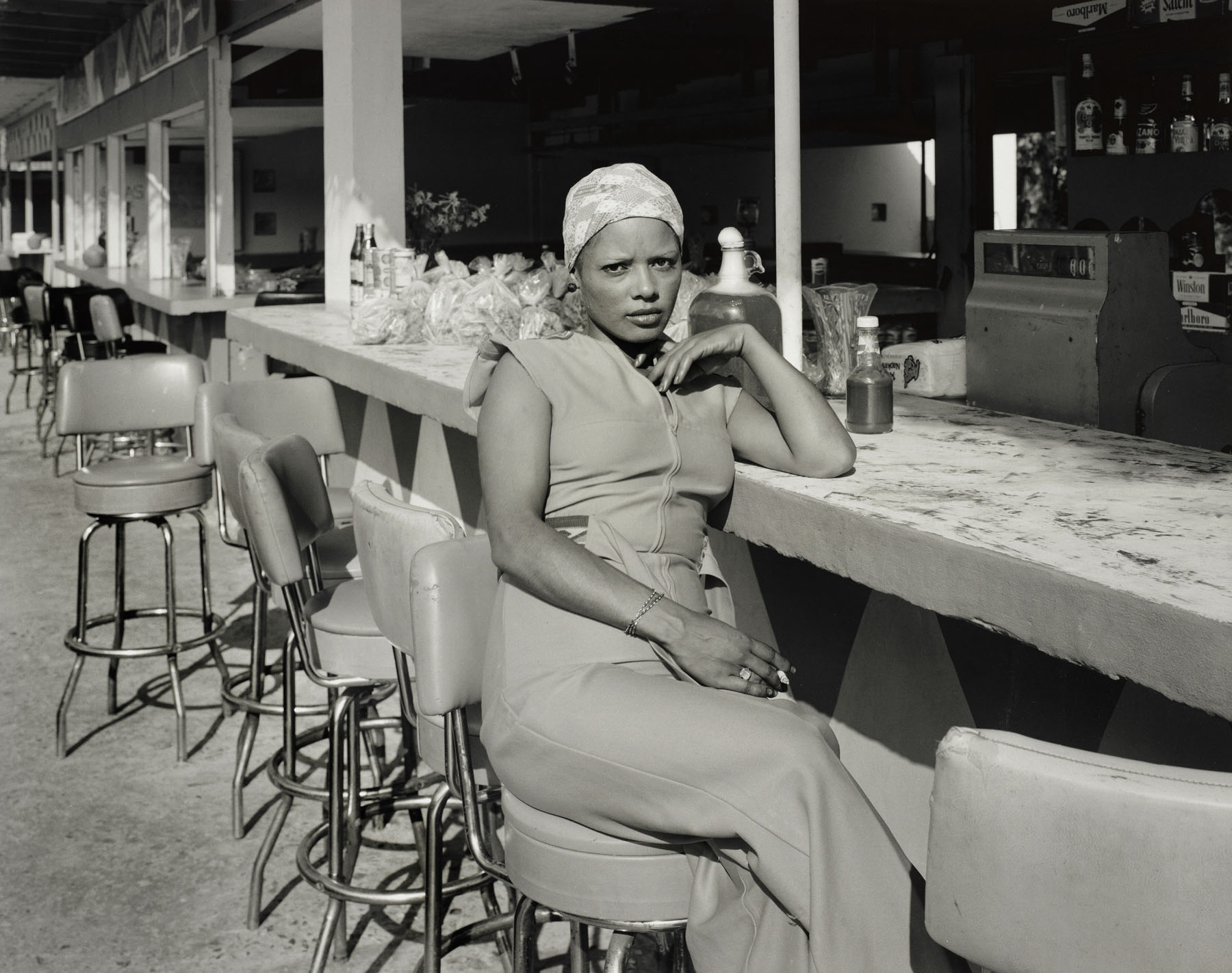
 

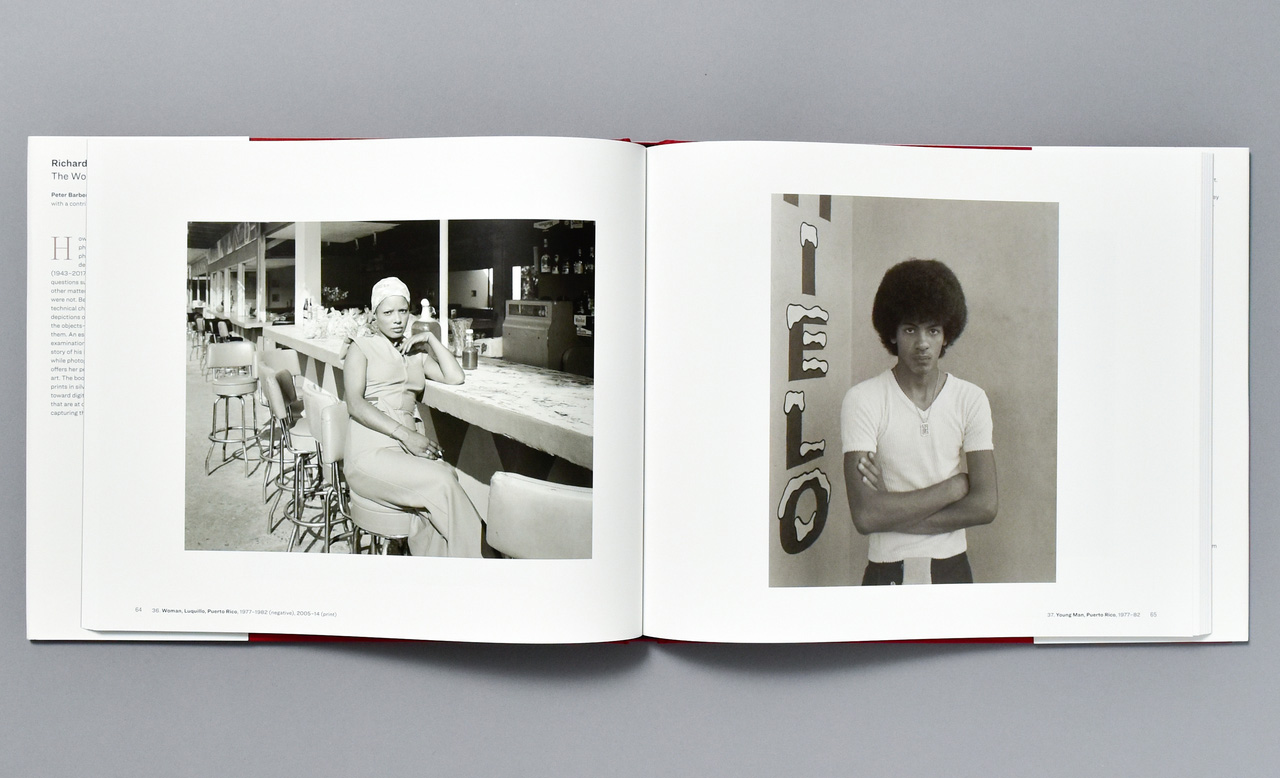
Richard Benson (American, 1943-2017) 'Luquillo Woman, Puerto Rico' c. 1980


Richard Benson (American, 1943-2017)
Luquillo Woman, Puerto Rico
c. 1980
Inkjet print
Image: 13 5/8 × 17 1/8 inches
Sheet: 15 1/2 × 18 7/8 inches
© Estate of Richard M. A. Benson. Promised gift of William M. and Elizabeth Ann Kahane
Image courtesy Philadelphia Museum of Art, 2021
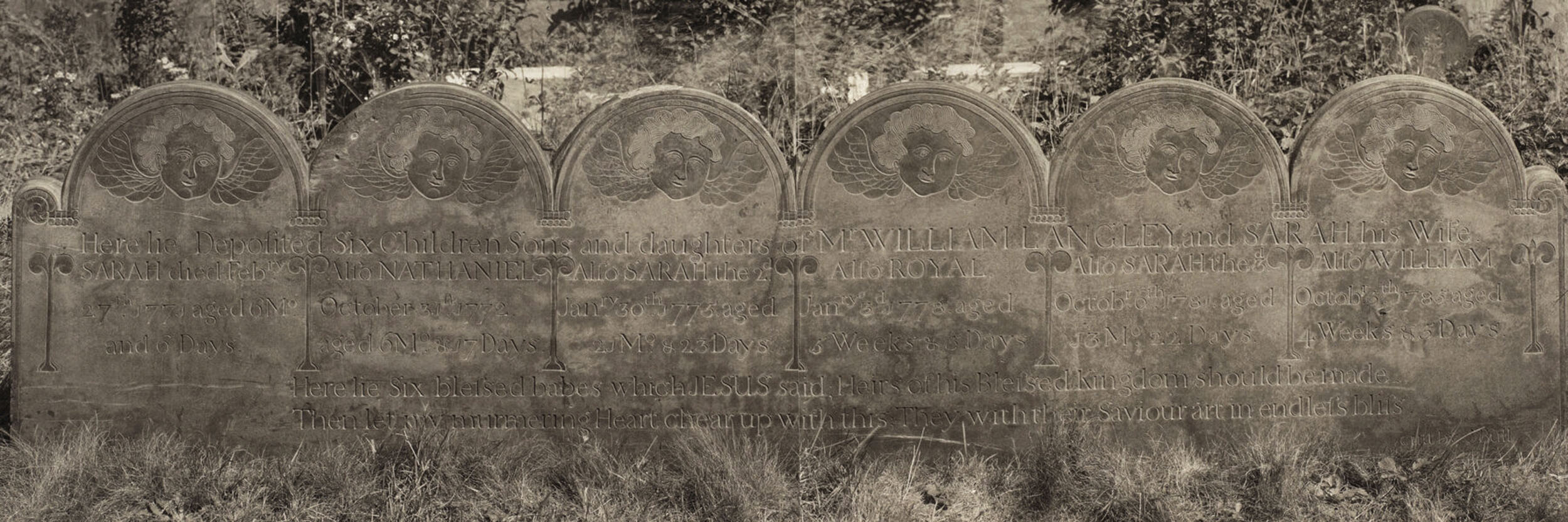
 

Richard Benson (American, 1943-2017) 'John Bull's Great Stone, Common Burying Ground, Newport, Rhode Island' 1973-1978


Richard Benson (American, 1943-2017)
John Bull’s Great Stone, Common Burying Ground, Newport, Rhode Island
1973-1978
© Estate of Richard M. A. Benson. Promised gift of William M. and Elizabeth Ann Kahane
Image courtesy Philadelphia Museum of Art, 2021


One of his early pictures, “John Bull’s Great Stone, Common Burying Ground, Newport, Rhode Island” (1973-78), was made with a large-format view camera and composed of two contact prints mounted side by side. It depicts a series of six headstones for babies in one family, each marker incised with the face of an angel. Benson descended from a family of Newport stone carvers that dated to Colonial times. This composition, framed with perfect symmetry and sharp as a scalpel, is almost palpable, an appreciative flourish across the centuries from one consummate craftsman to another.

Arthur Lubow. “When a Master Printer Picks Up the Camera,” on The New York Times website December 30, 2021 [Online] Cited 02/01/2022


Richard Benson (American, 1943-2017) 'John Bull's Great Stone, Common Burying Ground, Newport, Rhode Island' 1973-1978 (detail)


Richard Benson (American, 1943-2017)
John Bull’s Great Stone, Common Burying Ground, Newport, Rhode Island (detail)
1973-1978
© Estate of Richard M. A. Benson. Promised gift of William M. and Elizabeth Ann Kahane
Image courtesy Philadelphia Museum of Art, 2021
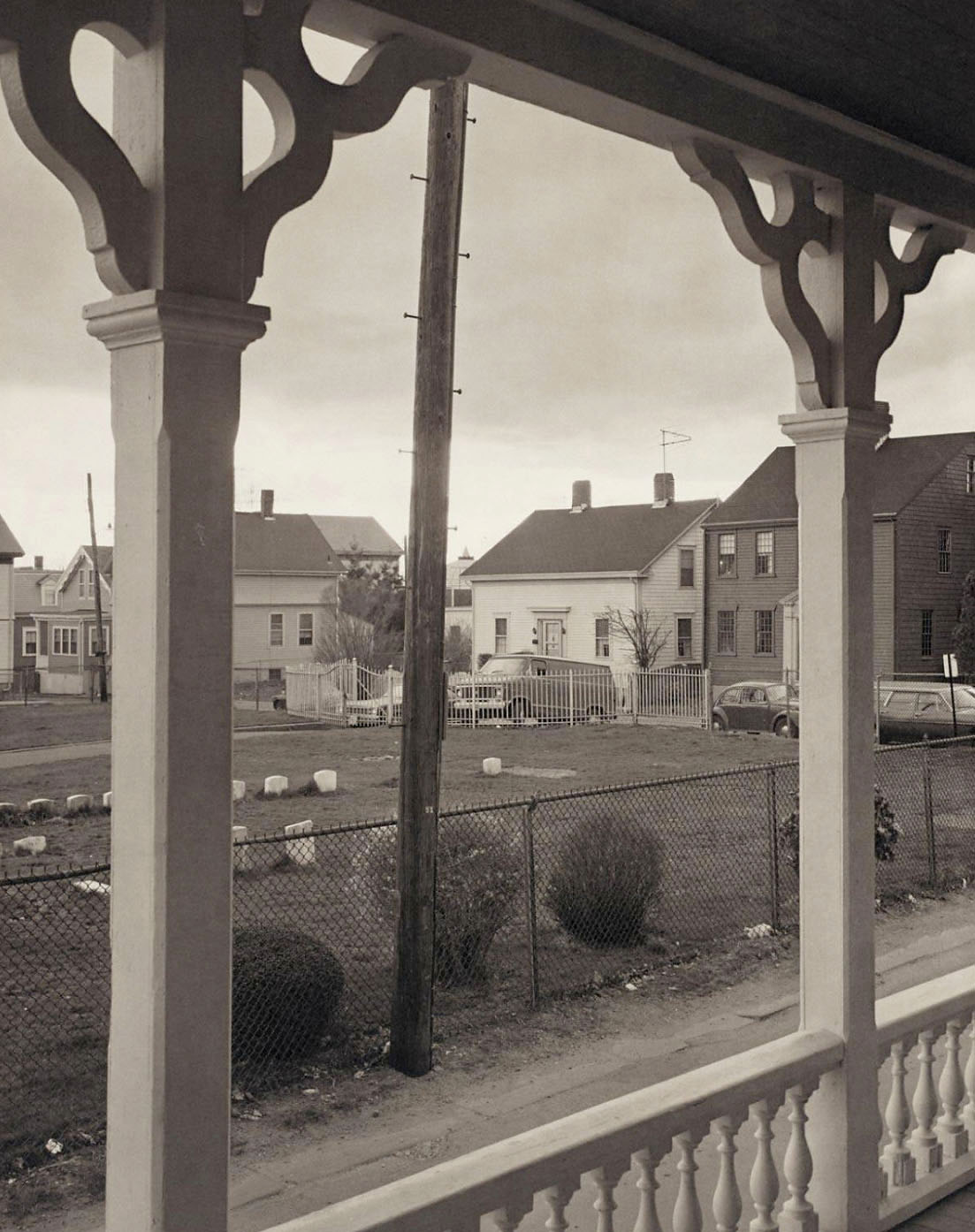
 

Richard Benson (American, 1943-2017) '53 Tilden Avenue Porch' Date unknown


Richard Benson (American, 1943-2017)
53 Tilden Avenue Porch
Date unknown
Offset lithograph
Image: 16 3/16 × 12 13/16 inches (41.1 × 32.5cm)
Sheet: 24 15/16 × 19 inches (63.3 × 48.2cm)
© Estate of Richard M. A. Benson. Promised gift of William M. and Elizabeth Ann Kahane
Image courtesy Philadelphia Museum of Art, 2021
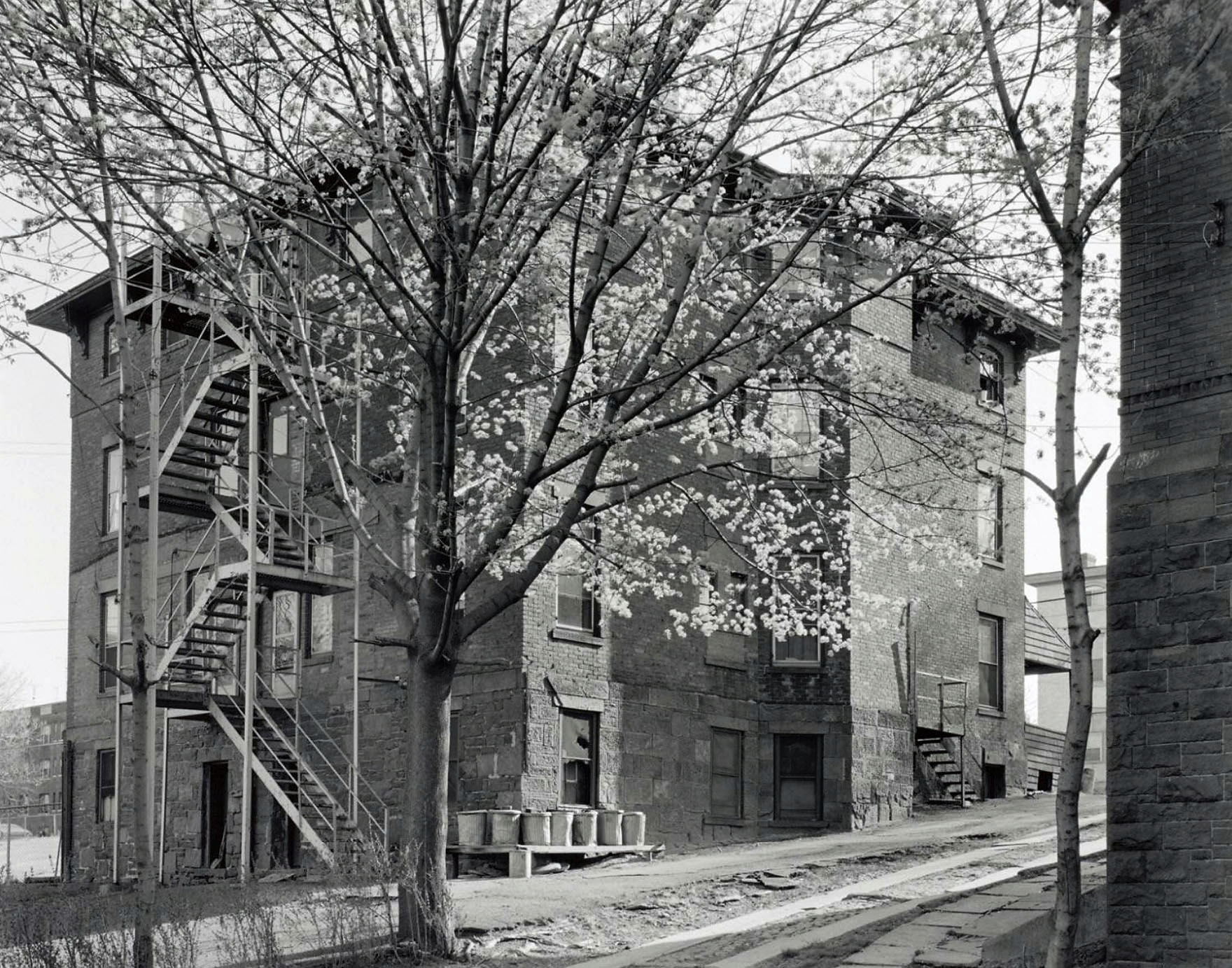
 

Richard Benson (American, 1943-2017) 'Harford, Connecticut' c. 1974 (negative); c. 2005-2011 (print)


Richard Benson (American, 1943-2017)
Harford, Connecticut
c. 1974 (negative); c. 2005-2011 (print)
Inkjet print
Image: 13 9/16 × 17 3/16 inches (34.5 × 43.6cm)
Sheet: 15 7/8 × 19 3/16 inches (40.4 × 48.8cm)
© Estate of Richard M. A. Benson. Promised gift of William M. and Elizabeth Ann Kahane
Image courtesy Philadelphia Museum of Art, 2021
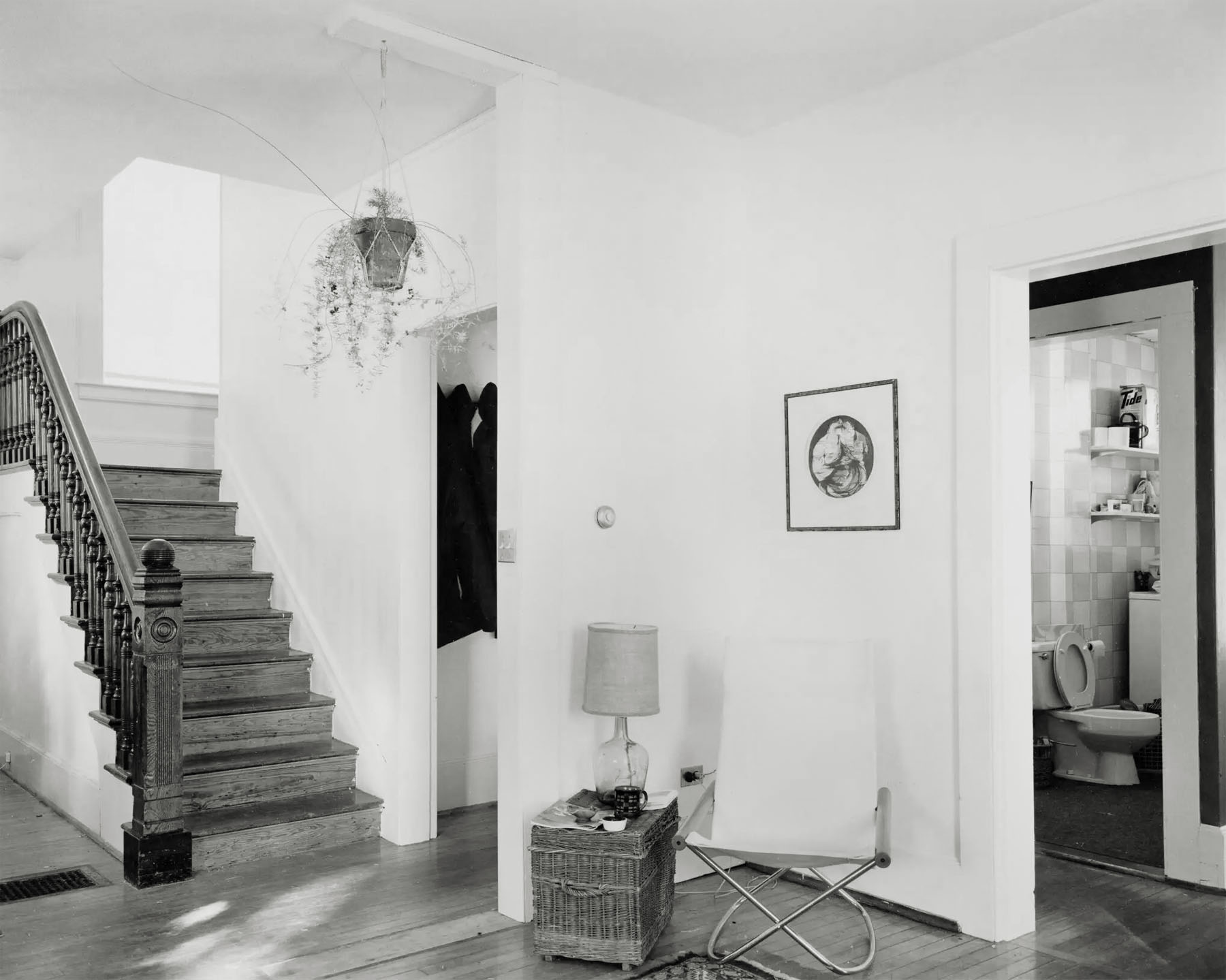
 

Richard Benson (American, 1943-2017) '65 Kenyon Street, Hartford, Connecticut' 1974


Richard Benson (American, 1943-2017)
65 Kenyon Street, Hartford, Connecticut
1974
© Estate of Richard M. A. Benson. Promised gift of William M. and Elizabeth Ann Kahane
Image courtesy Philadelphia Museum of Art, 2021
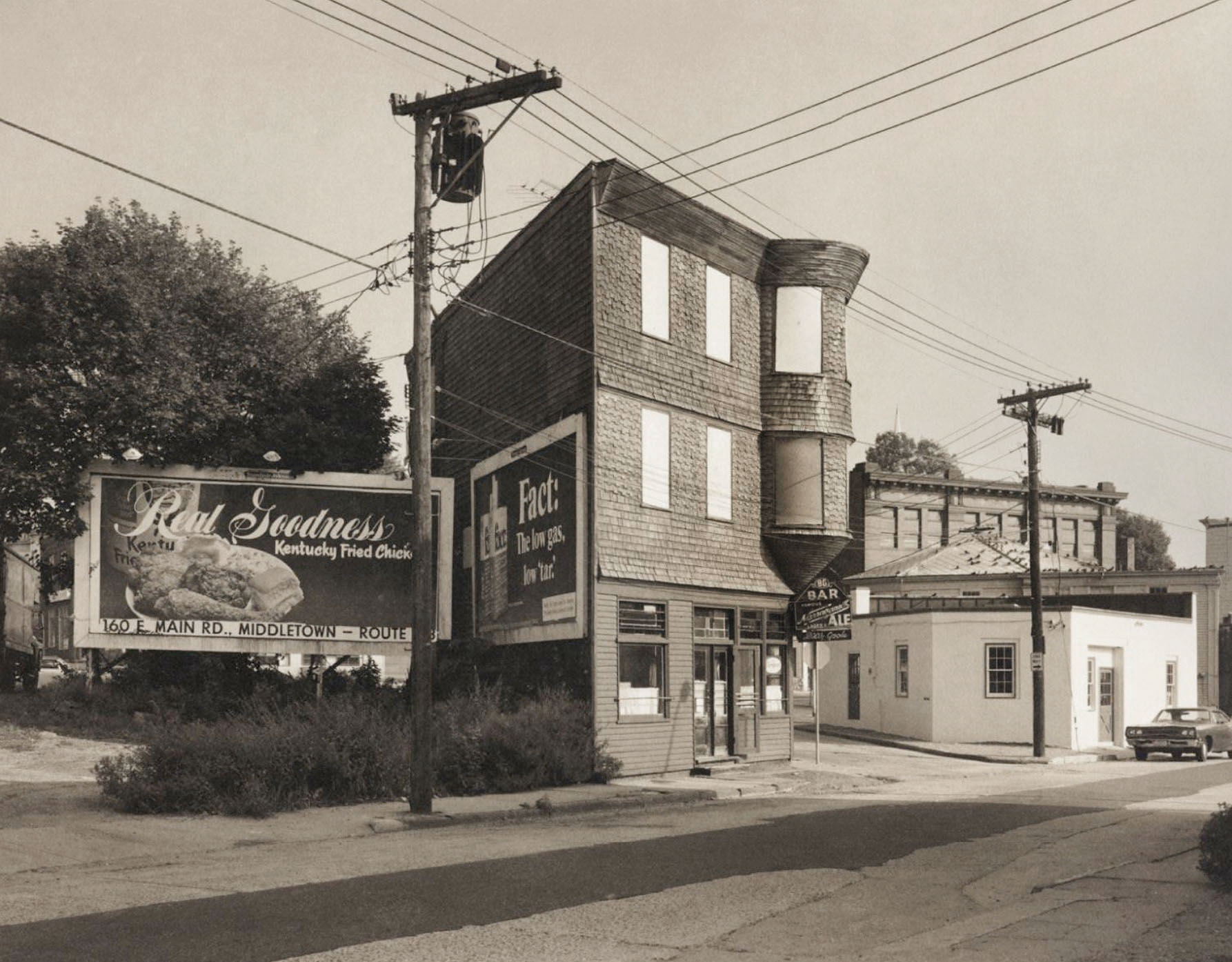
 

Richard Benson (American, 1943-2017) 'Billy Goode's, Newport, Rhode Island' 1976-1978


Richard Benson (American, 1943-2017)
Billy Goode’s, Newport, Rhode Island
1976-1978
Platinum/palladium print
Image: 7 7/16 × 9 7/16 inches (18.9 × 24cm)
Sheet: 8 7/16 × 10 7/8 inches (21.4 × 27.6cm)
© Estate of Richard M. A. Benson. Promised gift of William M. and Elizabeth Ann Kahane
Image courtesy Philadelphia Museum of Art, 2021
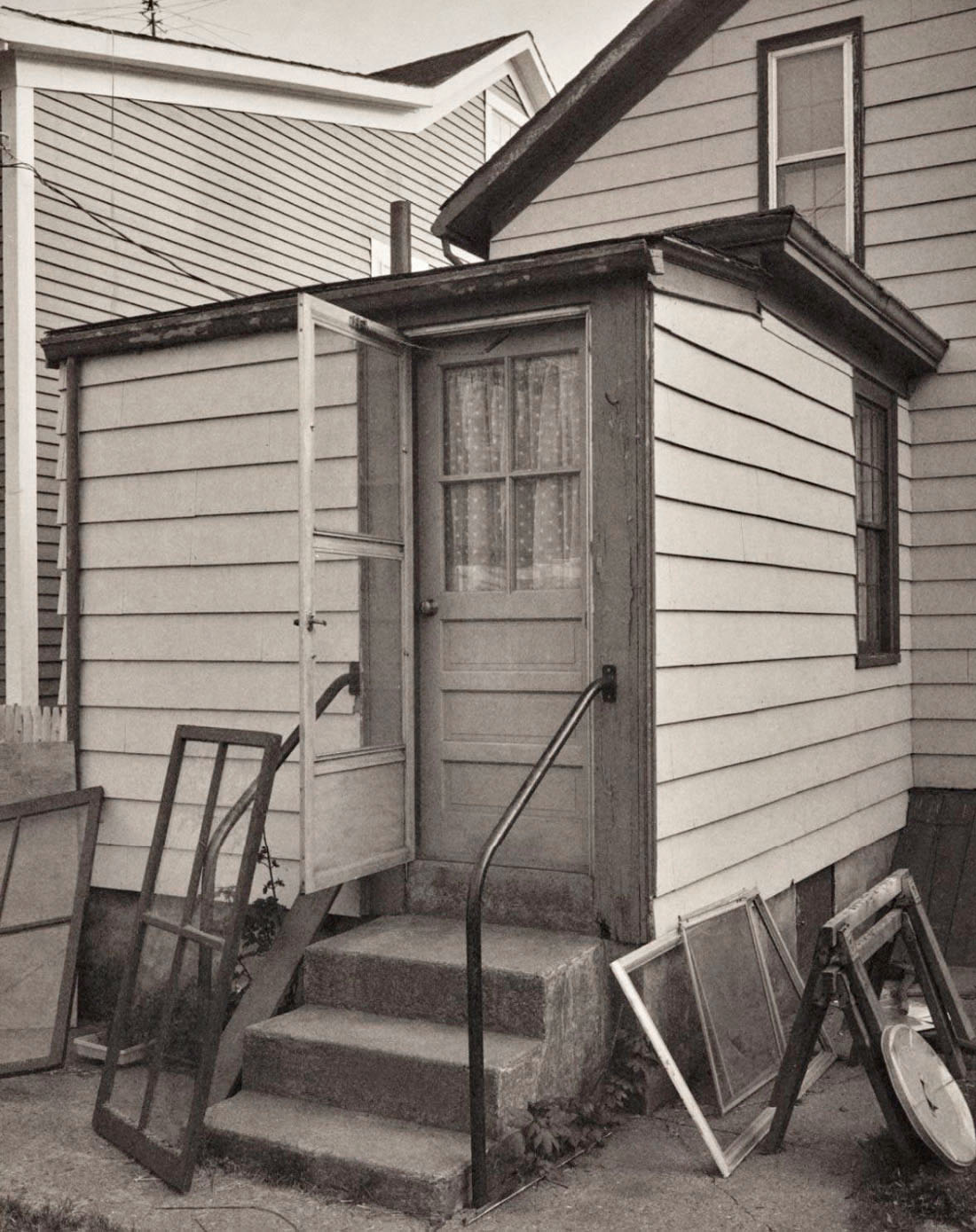
 

Richard Benson (American, 1943-2017) 'The Dark House (49 Tilden Avenue, Newport, Rhode Island)' c. 1975-1980


Richard Benson (American, 1943-2017)
The Dark House (49 Tilden Avenue, Newport, Rhode Island)
c. 1975-1980
Platinum/palladium print
Image: 9 7/16 × 7 7/16 inches (24 × 18.9cm)
Sheet: 9 13/16 × 7 13/16 inches (24.9 × 19.8cm)
© Estate of Richard M. A. Benson. Promised gift of William M. and Elizabeth Ann Kahane
Image courtesy Philadelphia Museum of Art, 2021
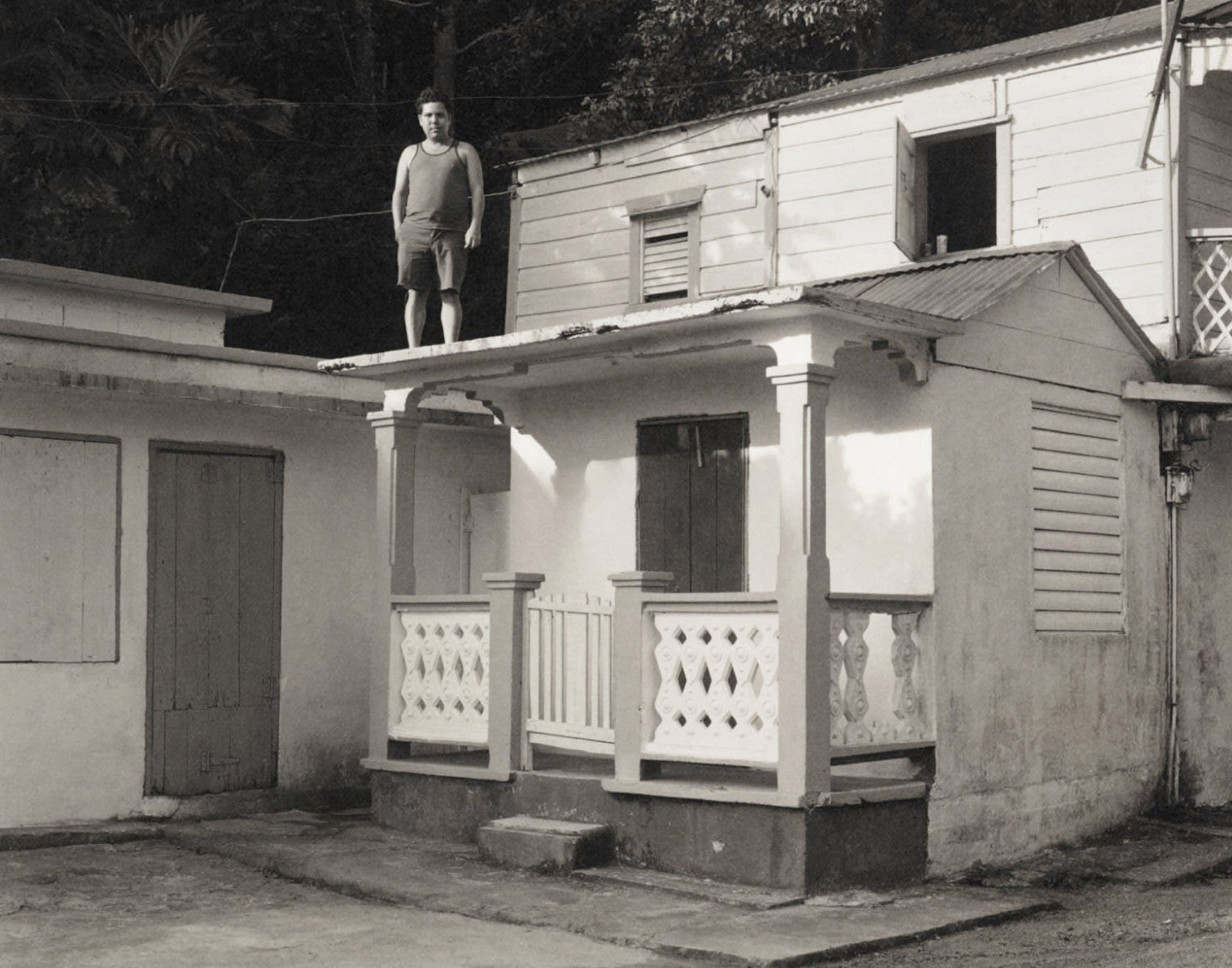
 

Richard Benson (American, 1943-2017) 'Puerto Rico' 1977-1985


Richard Benson (American, 1943-2017)
Puerto Rico
1977-1985
Platinum/palladium print
Image: 7 3/8 × 9 3/8 inches (18.7 × 23.8cm)
Sheet: 8 × 9 15/16 inches (20.3 × 25.2cm)
© Estate of Richard M. A. Benson. Promised gift of William M. and Elizabeth Ann Kahane
Image courtesy Philadelphia Museum of Art, 2021
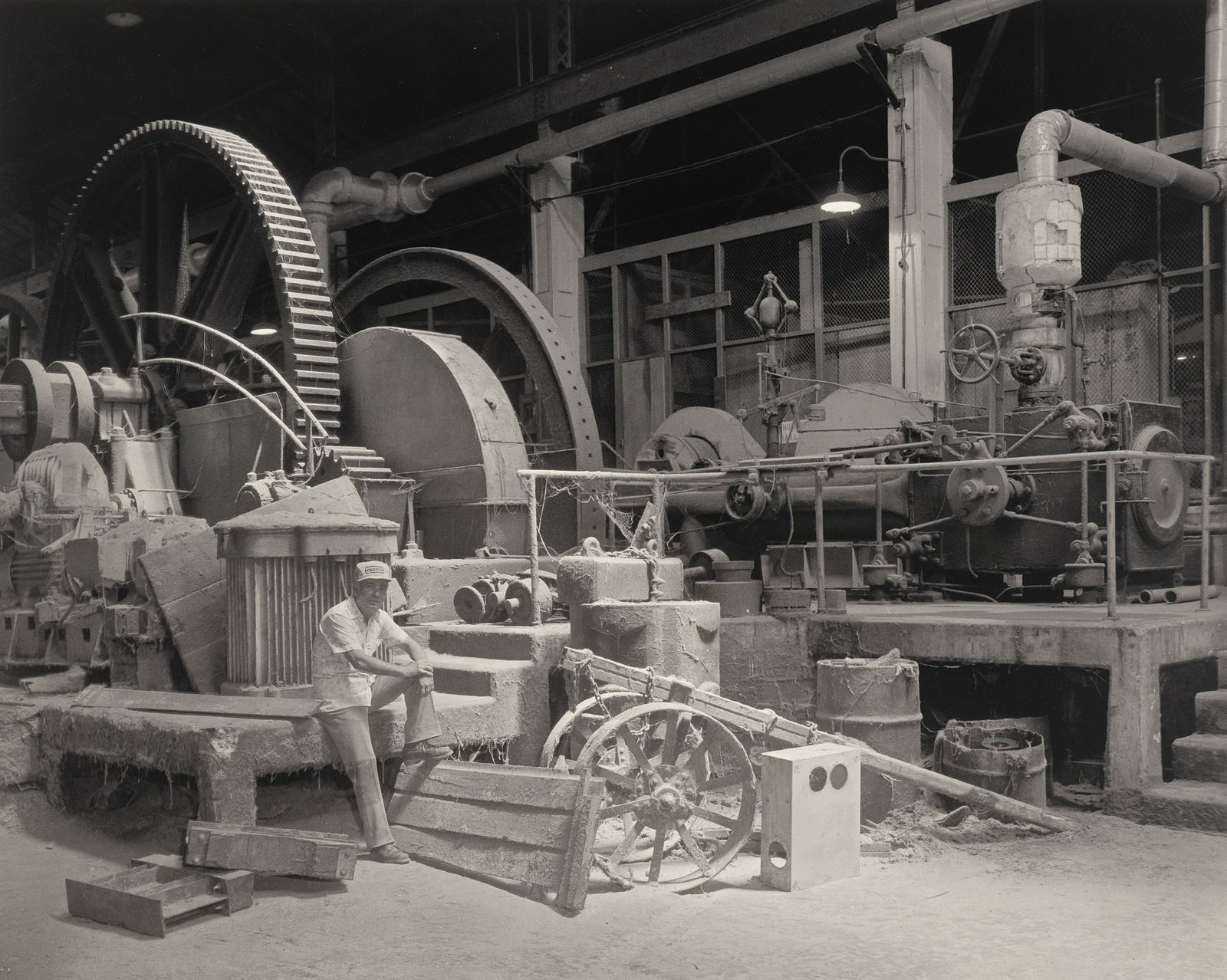
 

Richard Benson (American, 1943-2017) 'Sugar Mill at Aguirre, Puerto Rico' c. 1978-1985 (negative); 1985-1995 (print)


Richard Benson (American, 1943-2017)
Sugar Mill at Aguirre, Puerto Rico
c. 1978-1985 (negative); 1985-1995 (print)
Offset lithograph
Image: 12 3/16 × 15 5/16 inches (31 × 38.9cm)
Sheet: 19 1/8 × 25 inches (48.5 × 63.5cm)
© Estate of Richard M. A. Benson. Promised gift of William M. and Elizabeth Ann Kahane
Image courtesy Philadelphia Museum of Art, 2021


“Go out into the world with the camera and photograph and find out that the world is smarter than you are.”

With this exhortation, Richard Benson encouraged his students to explore one of photography’s core functions: recording things and events in the world. He wanted them to step out of their own mindsets and grapple with the many challenges – material, physical, and conceptual – encountered when making anything. It is precisely how Benson approached his own art. This exhibition surveys nearly fifty years of his photography, a wide-ranging body of work that reflects his humility and boundless curiosity about the world.

Renowned in photography circles for his acumen and inventiveness at printing and his far-ranging impact as a teacher and dean at the Yale University School of Art, Benson is best known today for the remarkable photography books he helped produce and the prints he made of other artists’ work. This exhibition puts his photography at the centre of these other achievements. It follows his continuous investigation of photographic processes and technologies and explores the dialogue between his pictures and other projects.

Benson’s subjects

Benson viewed human knowledge – particularly technology – as a cumulative, almost organic process, more a matter of continual adaptation and adjustment than of individual genius. This outlook is reflected in his photographic subjects. He recorded products of human ingenuity from stone carvings to steam engines and complex constructions of every sort. He also made straightforward and sensitive portraits of people and things he loved. And his subjects include the diverse spaces people create for themselves, which Benson viewed as “living rooms” that help us recover from the continuous disruptions of our technological age.
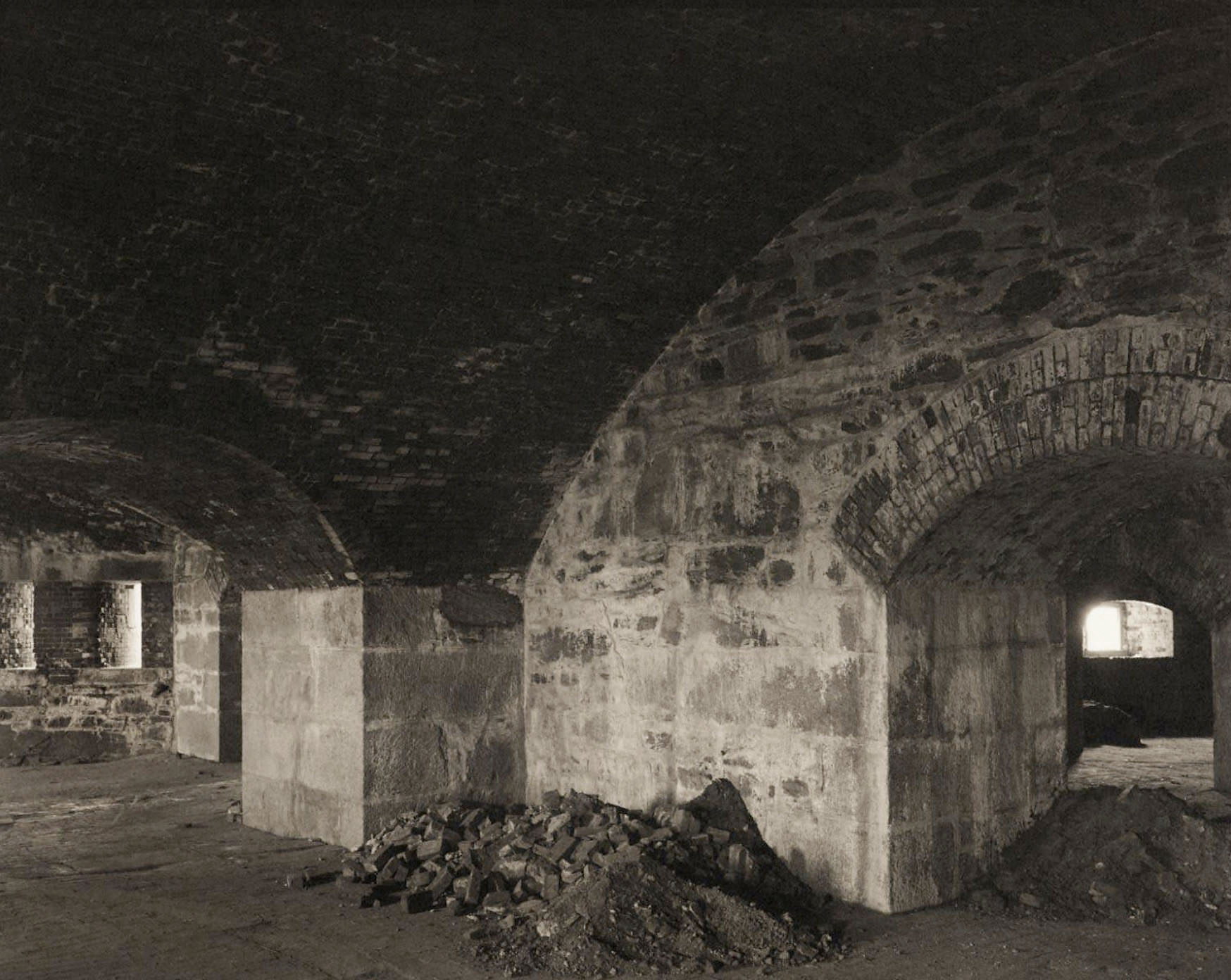
 

Richard Benson (American, 1943-2017) 'Fort Adams, Newport, Rhode Island' 1975 (negative); 1975 (print)


Richard Benson (American, 1943-2017)
Fort Adams, Newport, Rhode Island
1975 (negative); 1975 (print)
Platinum/palladium print
Image: 7 7/8 × 9 5/8 inches (20 × 24.4cm)
Sheet: 8 1/16 × 10 1/8 inches (20.5 × 25.7cm)
Mount: 8 7/8 × 11 inches (22.5 × 27.9cm)
© Estate of Richard M. A. Benson. Promised gift of William M. and Elizabeth Ann Kahane
Image courtesy Philadelphia Museum of Art, 2021
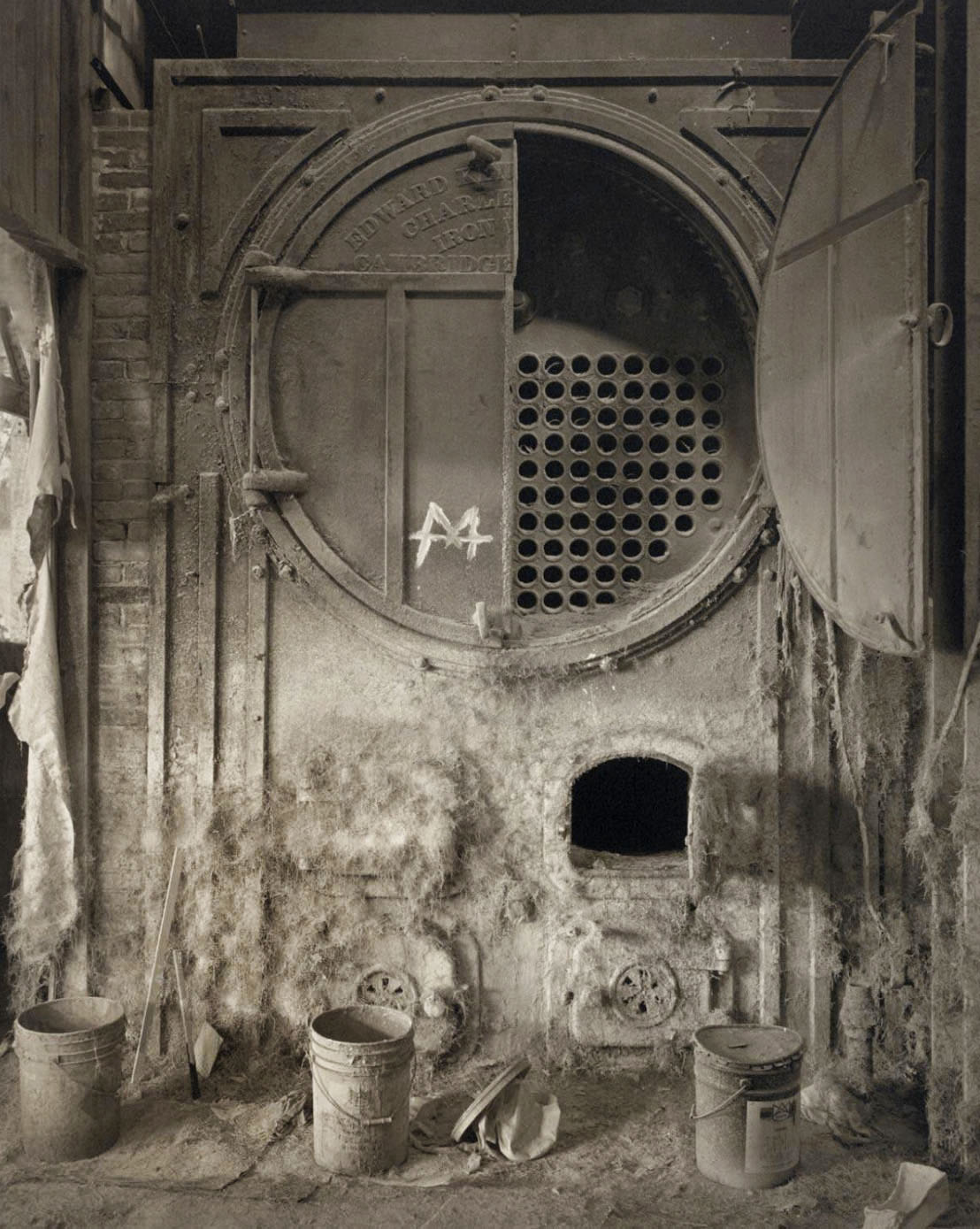
 

Richard Benson (American, 1943-2017) 'Fall River Boiler' 1978 (negative); 1985-1995 (print)


Richard Benson (American, 1943-2017)
Fall River Boiler
1978 (negative); 1985-1995 (print)
Offset lithograph
Image: 16 3/8 × 13 1/16 inches (41.6 × 33.1cm)
Sheet: 24 15/16 × 18 15/16 inches (63.3 × 48.1cm)
© Estate of Richard M. A. Benson. Promised gift of William M. and Elizabeth Ann Kahane
Image courtesy Philadelphia Museum of Art, 2021


For reproducing photographs in a 1985 book devoted to the extraordinary Gilman Paper Company Collection (later acquired by the Metropolitan Museum of Art), he amplified the duotone process, where ink is passed through a fine mesh screen to impart subtle shades of black, gray and even, for older photographs, purple and sepia. The technique also allowed him to enlarge a negative without sacrificing detail. “Fall River Boiler,” a black-and-white image that he photographed in 1978 and printed a decade or so later, is a nocturne of texture and tone: feathery asbestos, gloppy encrustations, circular black holes.

Arthur Lubow. “When a Master Printer Picks Up the Camera,” on The New York Times website December 30, 2021 [Online] Cited 02/01/2022
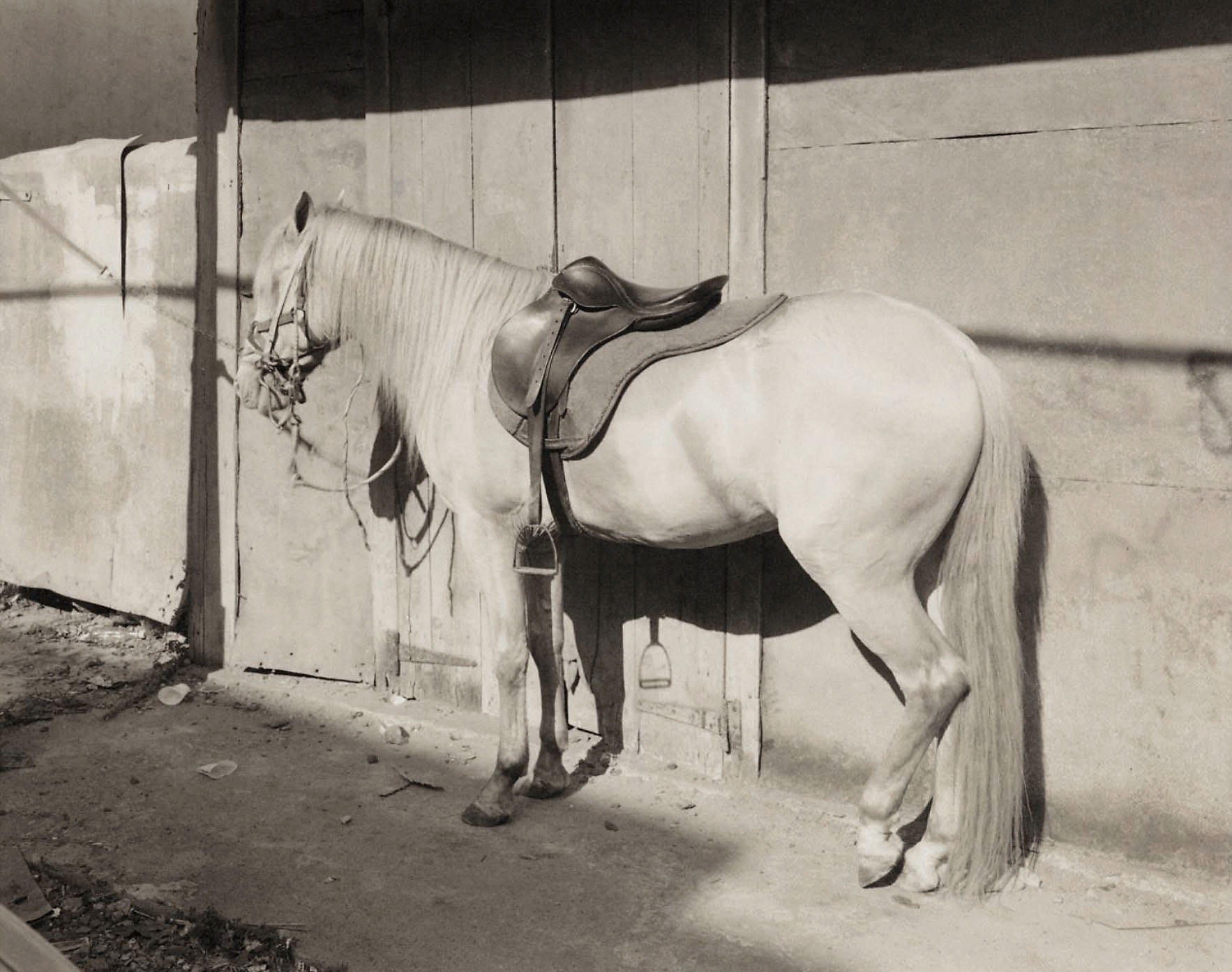
 

Richard Benson (American, 1943-2017) 'Hector Morales's Horse, Don Pedro, San Juan, Puerto Rico' 1977-1982


Richard Benson (American, 1943-2017)
Hector Morales’s Horse, Don Pedro, San Juan, Puerto Rico
1977-1982
Platinum/palladium print
Image: 7 5/8 × 9 1/2 inches (19.4 × 24.1cm)
Sheet: 8 × 10 1/8 inches (20.3 × 25.7cm)
© Estate of Richard M. A. Benson. Promised gift of William M. and Elizabeth Ann Kahane
Image courtesy Philadelphia Museum of Art, 2021
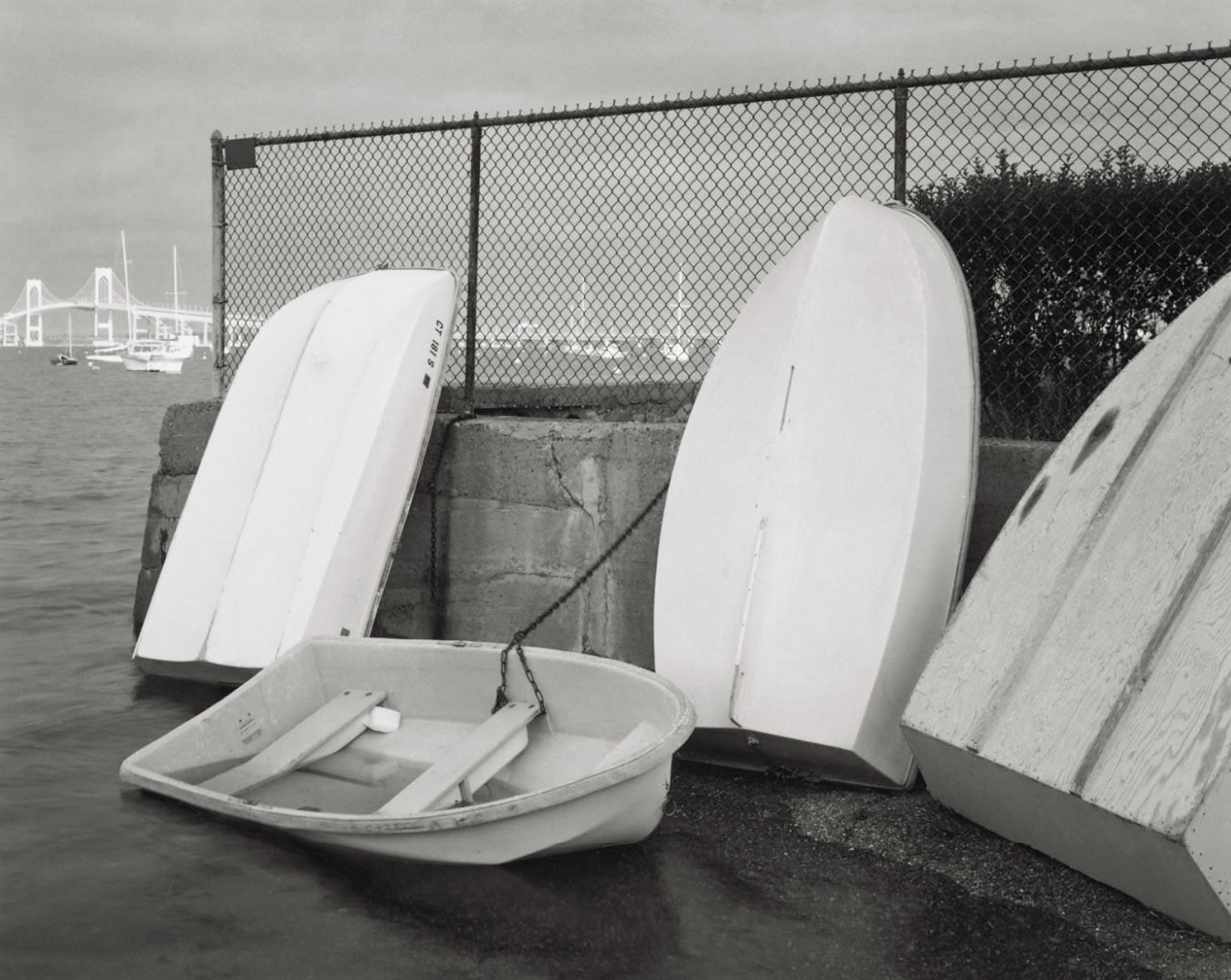
 

Richard Benson (American, 1943-2017) 'Poplar Street Driftway, Newport, Rhode Island' 1975-1985


Richard Benson (American, 1943-2017)
Poplar Street Driftway, Newport, Rhode Island
1975-1985
Gelatin silver print
Image and sheet: 7 1/2 × 9 1/2 inches (19.1 × 24.1cm)
Mount: 18 × 14 inches (45.7 × 35.6cm)
© Estate of Richard M. A. Benson. Promised gift of William M. and Elizabeth Ann Kahane
Image courtesy Philadelphia Museum of Art, 2021
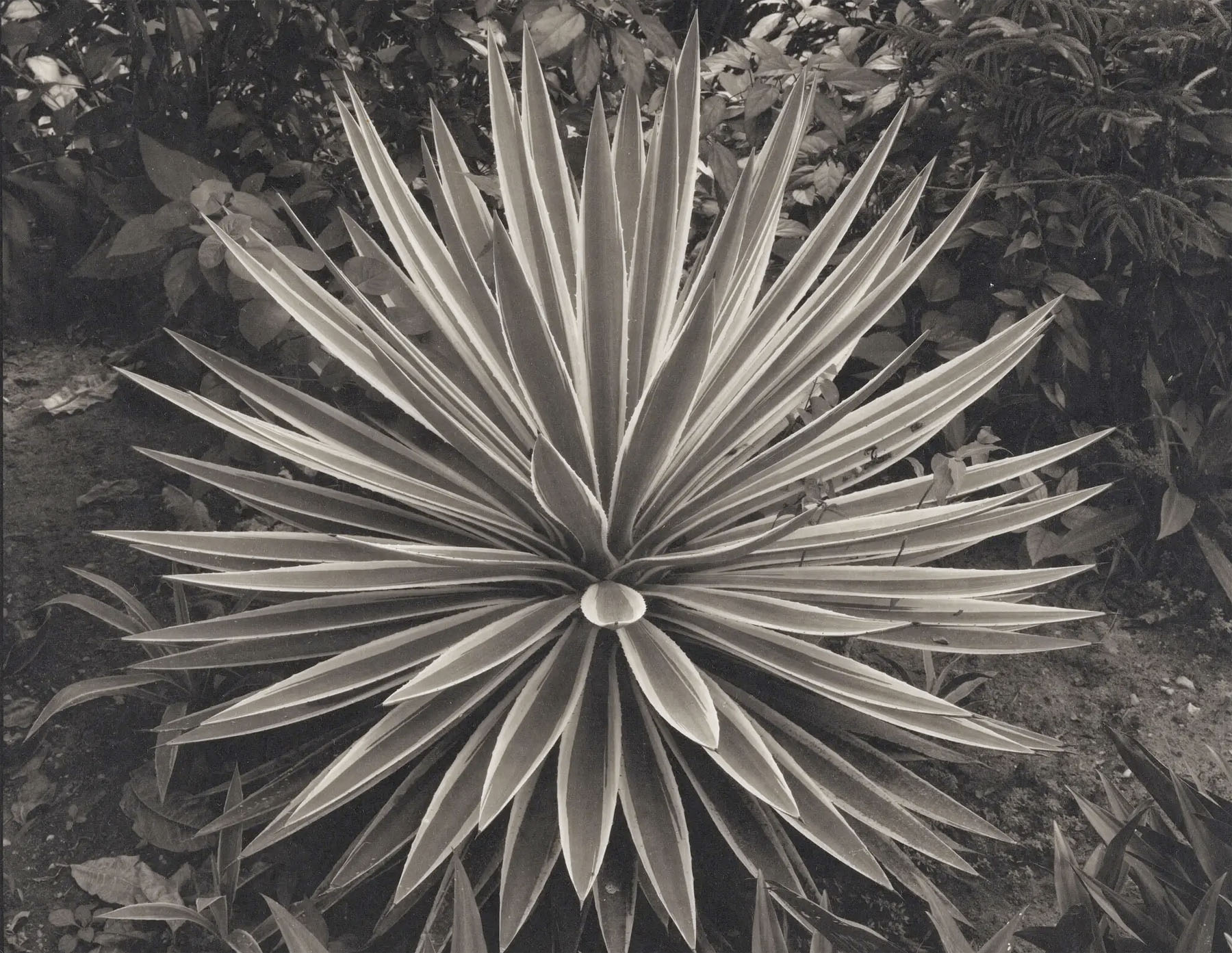
 

Richard Benson (American, 1943-2017) 'Agave plant' 1975-1985


Richard Benson (American, 1943-2017)
Agave plant
1975-1985
Collection of Barbara Benson
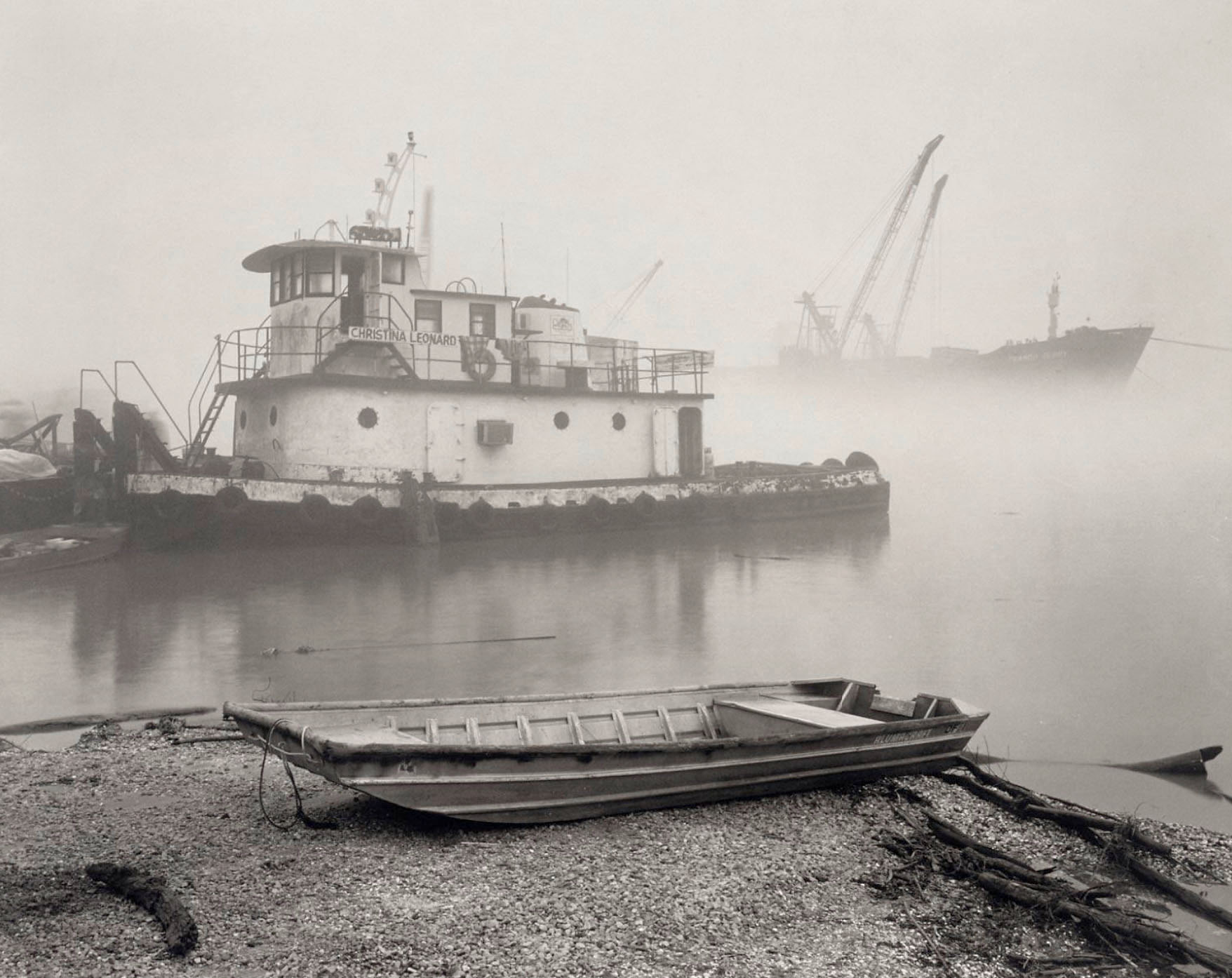
 

Richard Benson (American, 1943-2017) 'New Orleans Tugboat' Mid-1980s (negative); 1985-1995 (print)


Richard Benson (American, 1943-2017)
New Orleans Tugboat
Mid-1980s (negative); 1985-1995 (print)
Offset lithograph
Image: 12 15/16 × 16 1/4 inches (32.9 × 41.3cm)
Sheet: 19 1/16 × 25 inches (48.4 × 63.5cm)
© Estate of Richard M. A. Benson. Promised gift of William M. and Elizabeth Ann Kahane
Image courtesy Philadelphia Museum of Art, 2021
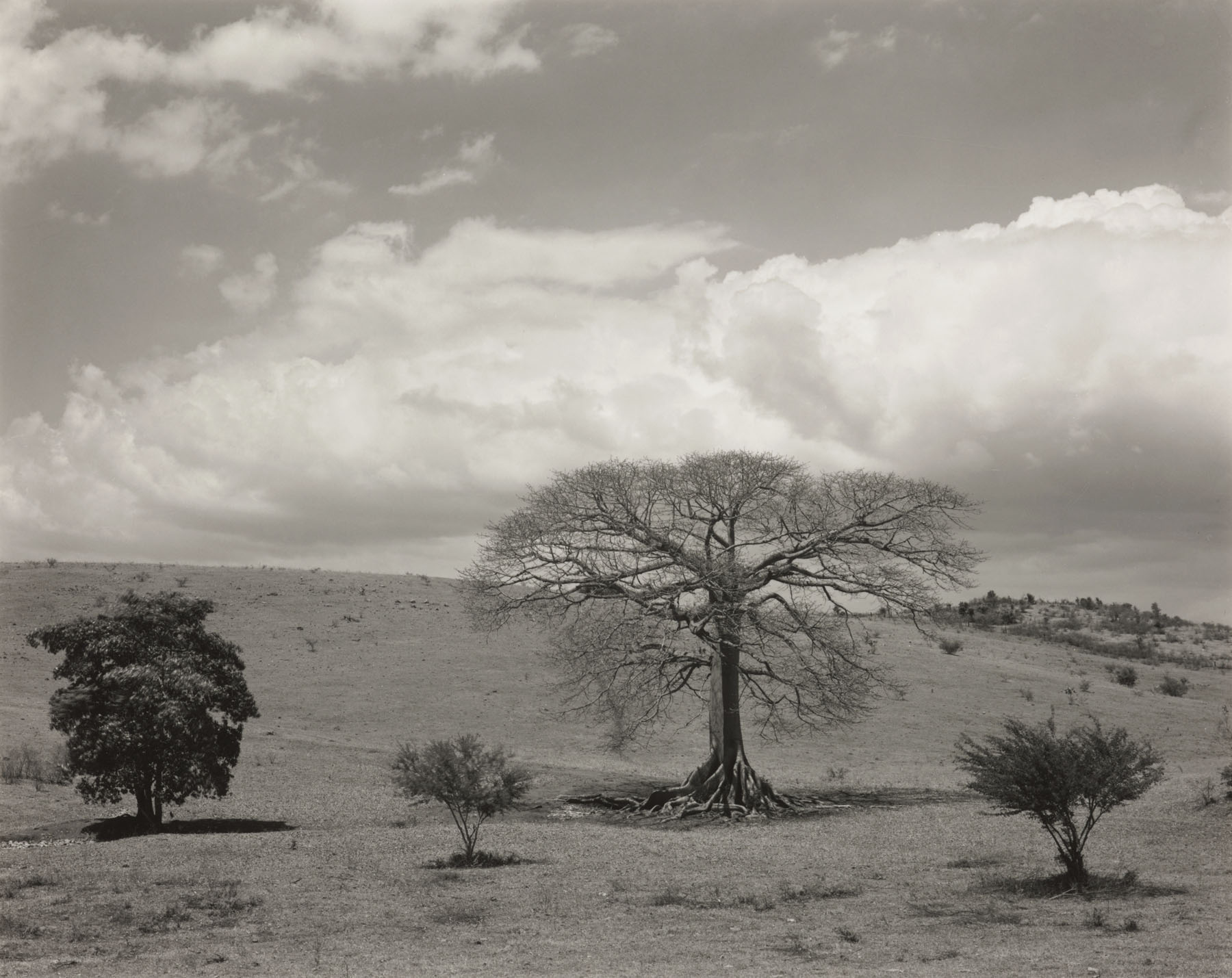
 

Richard Benson (American, 1943-2017) 'Puerto Rico Landscape' c. 1980


Richard Benson (American, 1943-2017)
Puerto Rico Landscape
c. 1980
Gelatin silver print
Image and sheet: 7 1/2 × 9 1/2 inches
Mount: 18 × 14 inches
© Estate of Richard M. A. Benson. Promised gift of William M. and Elizabeth Ann Kahane
Image courtesy Philadelphia Museum of Art, 2021
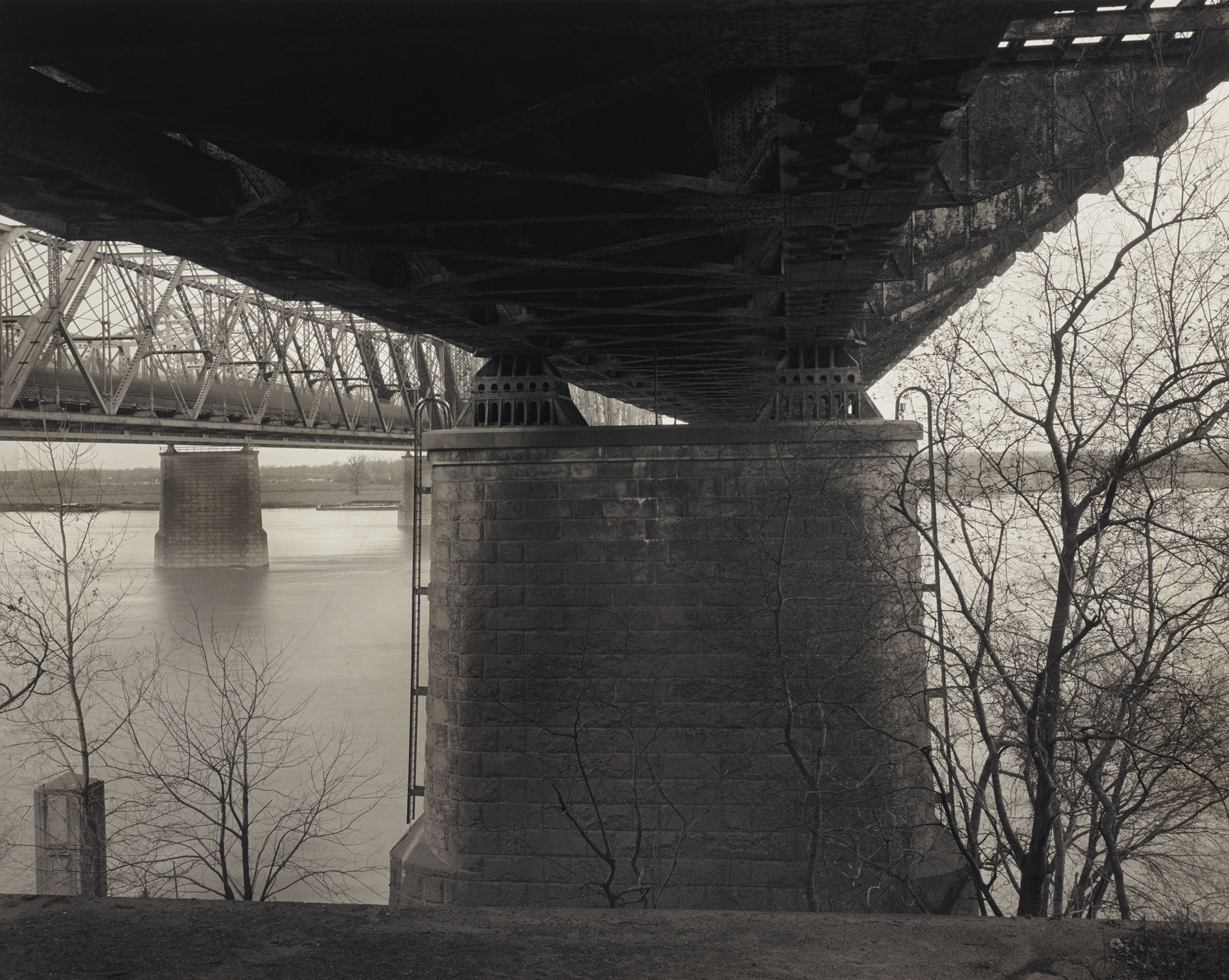
 

Richard Benson (American, 1943-2017) 'Memphis, TN' 1987


Richard Benson (American, 1943-2017)
Memphis, TN
1987
Offset lithograph
Image: 12 7/8 × 16 3/4 inches
Sheet: 16 × 19 3/8 inches
© Estate of Richard M. A. Benson. Promised gift of William M. and Elizabeth Ann Kahane
Image courtesy Philadelphia Museum of Art, 2021
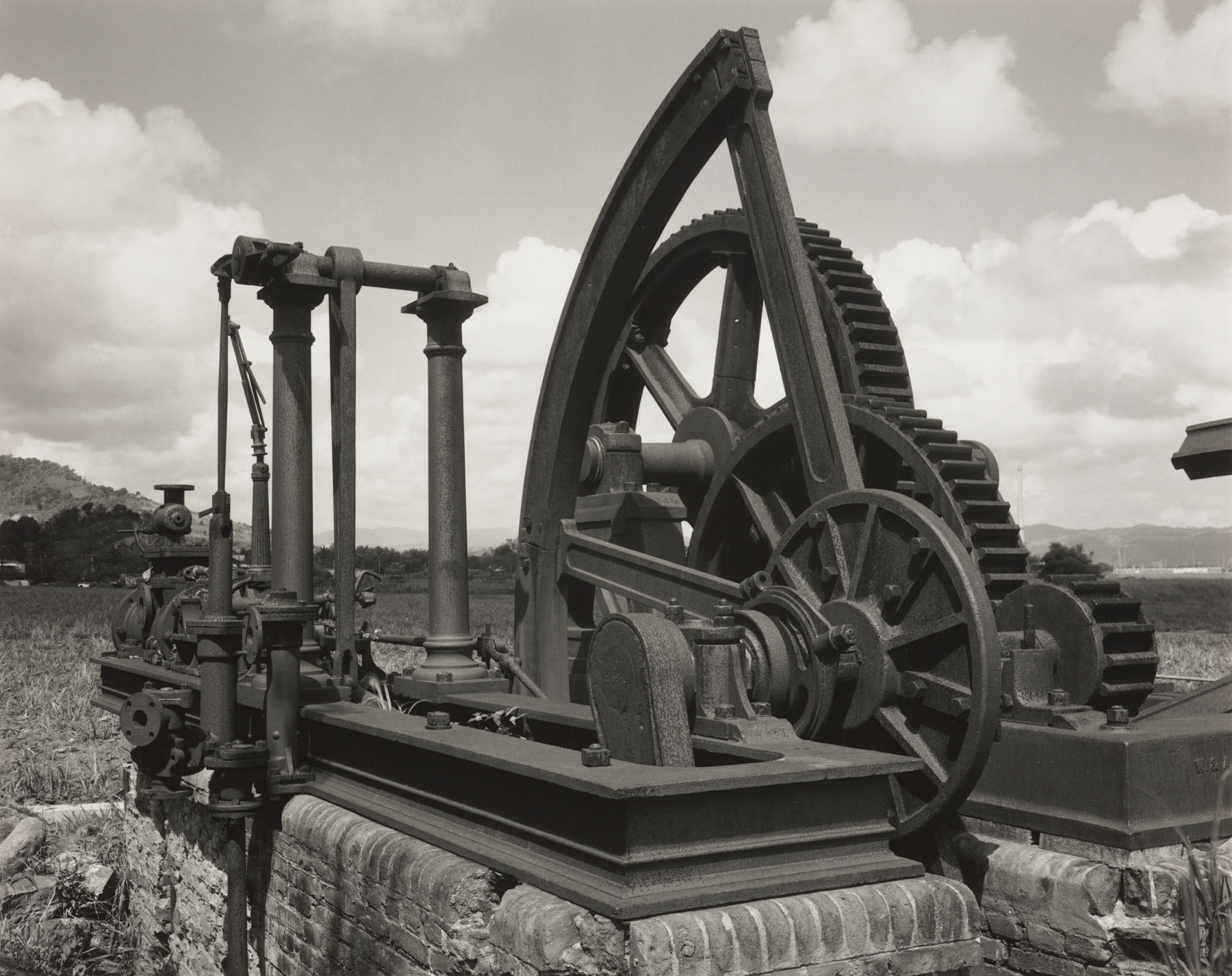
 

Richard Benson (American, 1943-2017) 'Scottish Engine, Puerto Rico' c. 1980


Richard Benson (American, 1943-2017)
Scottish Engine, Puerto Rico
c. 1980
Gelatin silver print
Image and sheet: 7 1/2 × 9 1/2 inches
Mount: 18 × 14 inches
© Estate of Richard M. A. Benson. Promised gift of William M. and Elizabeth Ann Kahane
Image courtesy Philadelphia Museum of Art, 2021
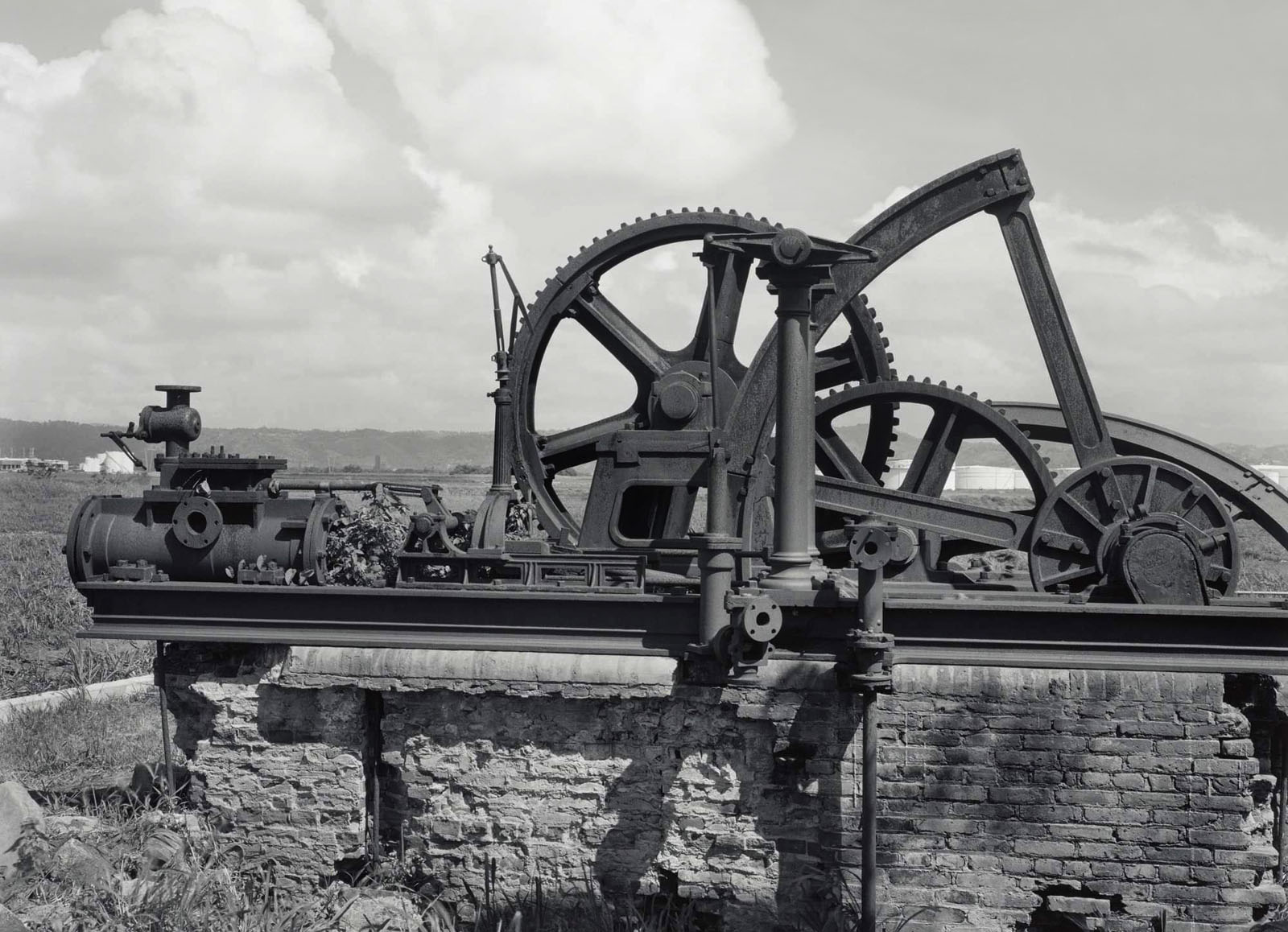
 

Richard Benson (American, 1943-2017) 'Scottish Engine, Puerto Rico' c. 1980


Richard Benson (American, 1943-2017)
Scottish Engine, Puerto Rico
c. 1980; 2005-2014 (print)
Gelatin silver print
Image: 13 9/16 × 17 3/16 inches
Sheet: 15 7/16 × 18 7/8 inches
© Estate of Richard M. A. Benson. Promised gift of William M. and Elizabeth Ann Kahane
Image courtesy Philadelphia Museum of Art, 2021


Steam engines were among Richard Benson’s many enthusiasms. He was particularly excited to come across this one in a field in Puerto Rico, recognising it as a version of the engine invented by Scottish engineer James Watt in 1776. Watt’s engine was one of the key developments of the Industrial Revolution. Benson surmised this example was a relic from one of the sugar plantations that existed on the island in the 1800s.
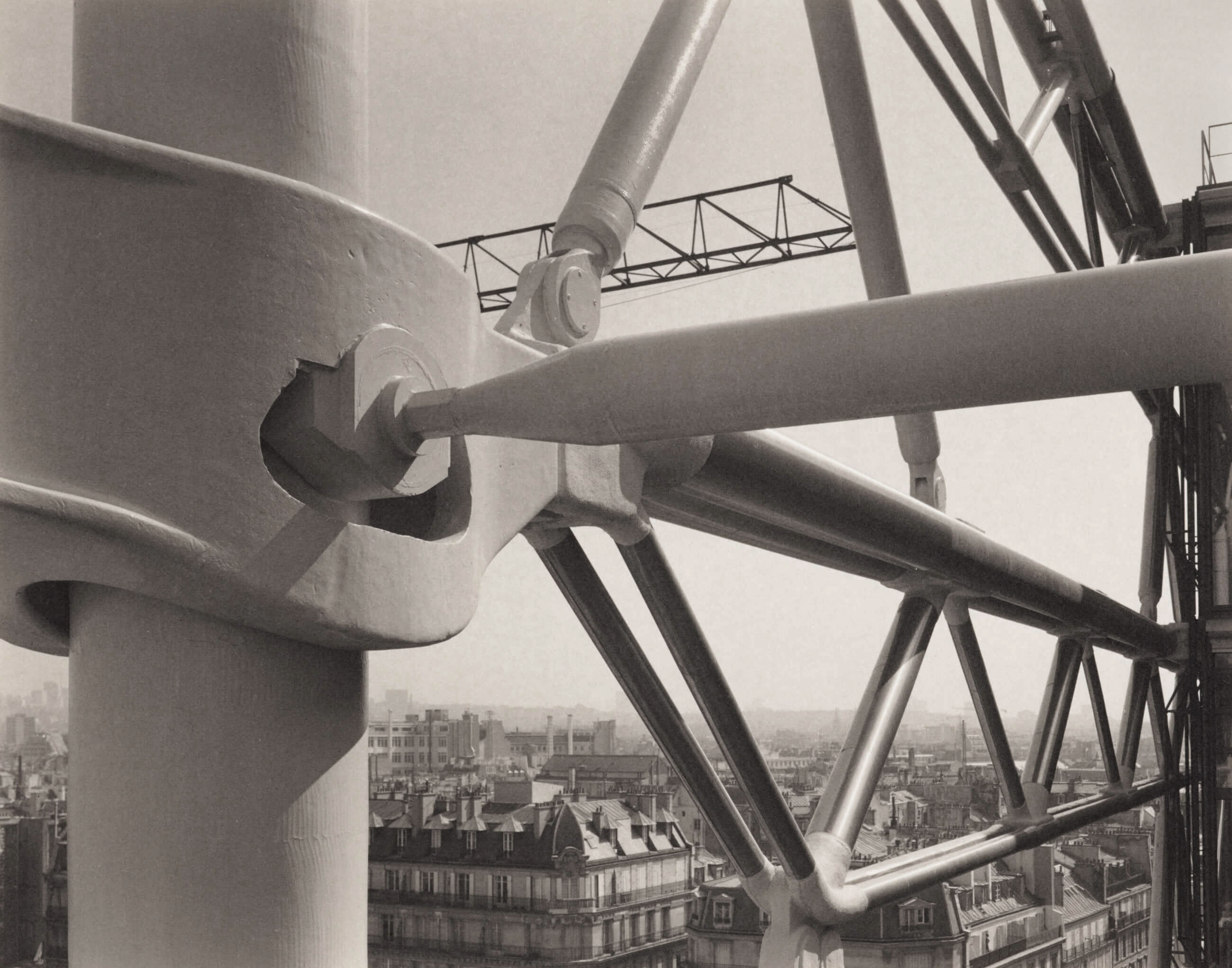
 

Richard Benson (American, 1943-2017) 'The Beaubourg, Paris, France' 1976


Richard Benson (American, 1943-2017)
The Beaubourg, Paris, France
1976
Platinum/palladium print
Image: 7 1/2 × 9 1/2 inches (19.1 × 24.1cm)
Sheet: 8 1/2 × 11 inches (21.6 × 27.9cm)
© Estate of Richard M. A. Benson. Promised gift of William M. and Elizabeth Ann Kahane
Image courtesy Philadelphia Museum of Art, 2021
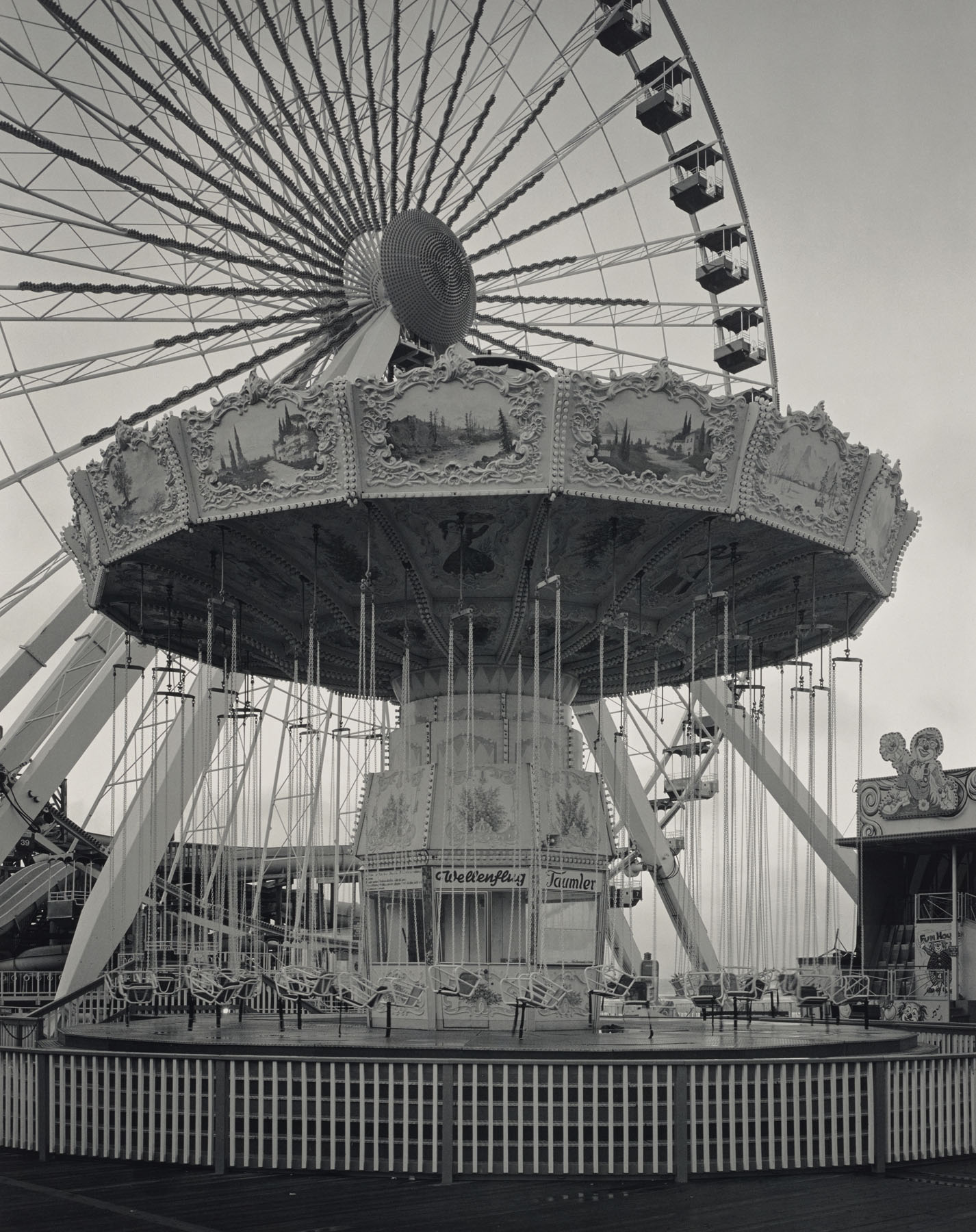
 

Richard Benson (American, 1943-2017) 'Wildwood, New Jersey' Date unknown


Richard Benson (American, 1943-2017)
Wildwood, New Jersey
Date unknown
Offset lithograph
Image: 16 3/8 × 13 1/16 inches
Sheet: 24 15/16 × 19 1/16 inches
© Estate of Richard M. A. Benson. Promised gift of William M. and Elizabeth Ann Kahane
Image courtesy Philadelphia Museum of Art, 2021


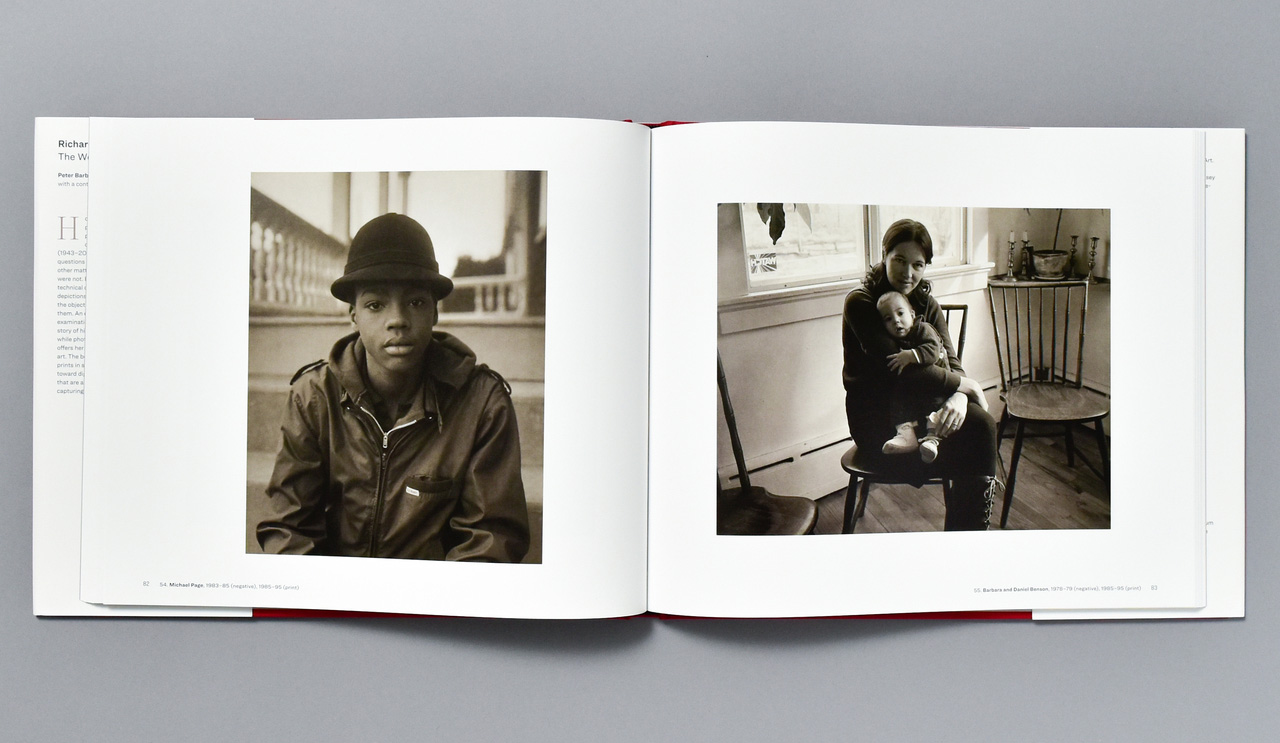
In October, the Philadelphia Museum of Art will present an exhibition dedicated to the late Richard Benson, who is most often celebrated as a virtuoso printer and gifted teacher and is perhaps best known for helping produce some of the most significant photography books of the past fifty years. The World Is Smarter Than You Are is the first in-depth survey of Benson’s own photography. This exhibition includes around 100 works that convey his pathfinding exploration of photographic processes, his embrace of technologies old and new, and his deep empathy for his human subjects and the objects and environments they have built. It celebrates an important promised gift of Benson’s art, assembled by the artist and offered to the museum by his close friends, collectors William H. and Elizabeth Ann Kahane. It is accompanied by a major publication of the same title.

Including prints from the late 1960s until shortly before Benson’s death in 2017, the exhibition traces his quest for the perfect print. This reflects both his abiding interest in improving traditional photo-making methods as well as his gradual embrace of digital photography and experiments in printing that yielded new directions for his artistic craft. It also explores his philosophical musings and writings, teaching materials and work as a printer, underscoring the deep connections between his intellectual, technical, and creative pursuits.

Benson’s interest in photography began with utilising this medium to document examples of fine craftsmanship and technological innovation, ranging from stone carving and antique buildings to machines such as steam engines or contemporary feats of engineering in steel and other modern materials. This breadth of interests can be seen in work from visits he made to France in the 1970s, when he recorded such sites as the Château de Maintenon and the recently completed Centre Pompidou. In another project of the 1970s, Benson photographed grave markers in the Common Burying Ground in his hometown of Newport, Rhode Island. He was the son and brother of celebrated stone carvers, and these pictures reflect his desire to document not only this antique art form, but also his developing ideas about the continual evolution of human technology which, in his thinking, comprised everything from language to microchips.

During this same decade Benson also made sensitive portraits of friends and family members – most notably his wife, Barbara Benson – and views of interiors and townscapes that often stand as indirect portraits of anonymous subjects. Numerous family portraits are presented throughout the exhibition and a concentrated grouping appears in the first galleries.

In the late ’70s and early ’80s, Benson made several trips to Puerto Rico. Included in the exhibition are his records of an antique steam engine he discovered on an old sugar plantation, Scottish Engine, Puerto Rico, c. 1980, and a variety of portraits and landscapes that represent the unique characteristics of the island. Luquillo Woman, Puerto Rico (c. 1980), is representative of the candid pictures he captured during these visits.

Benson embarked on his most ambitious book project in 1981, dedicated to the Gilman Paper Company Collection. It was considered to be one of the most important private photography collections ever assembled and included rare nineteenth-century prints in diverse processes as well as works by noted twentieth-century photographers such as Diane Arbus, Henri Cartier-Bresson, and Alfred Stieglitz, among others. Benson’s efforts to make the reproductions in this book by using offset lithography, printing each sheet up to six times in order to achieve specific print tonalities, remain unmatched. Spreads from the book, Photographs from the Collection of the Gilman Paper Company, will be on view in the exhibition. Displayed in cases are other notable books on which he worked including Lay This Laurel (Benson and Lincoln Kirstein); The American Monument (Lee Friedlander); The Face of Lincoln (James Mellon); O, Write My Name (a portfolio of Benson photogravures from Carl Van Vechten photographs); Paul Strand prints of Wall Street and Wild Iris, Maine; and three later Benson books, A Maritime Album, The Printed Picture, and North South East West.

As his reputation as an innovator in printing processes grew, so too did his influence. In 1986, following the success of the Gilman Paper Company Collection project, Benson was awarded both his second Guggenheim Fellowship and a MacArthur Fellowship. Seven years earlier, in 1979, Benson had begun teaching at Yale University, where he would become a professor and later Dean of the Art School. His idiosyncratic teaching style is described by the noted artist An-My Lê, who reflects in her essay: “His lectures were dazzling with information, but we were chided for taking notes. This was in line with this wanting us to think for ourselves and not passively absorb information that was thrown at us. As I have progressed in my work over the years, I have come to realise that one of Richard’s most important lessons was about humility.”

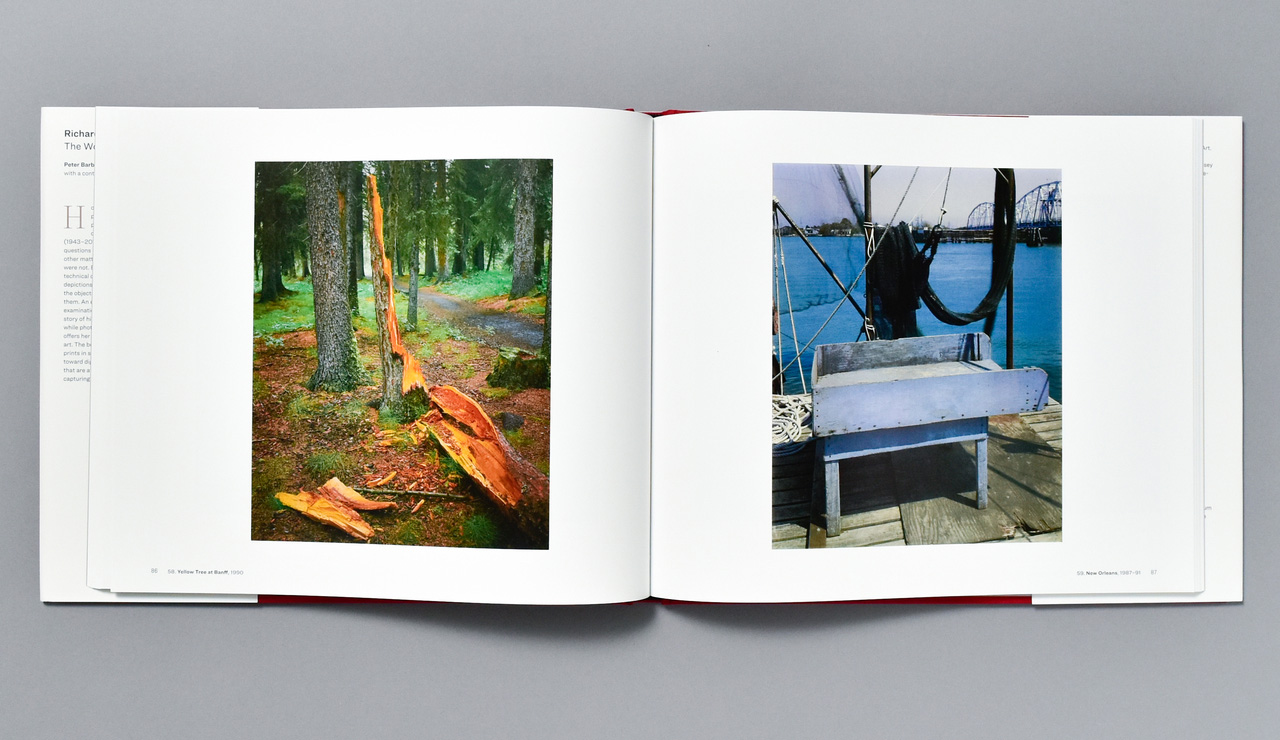
Another section of the exhibition will be devoted to his work in colour photography. Benson had avoided colour photography through much of his career, in part because of the unreliability of colour processes. But with the emergence of digital photography in the 1990s, he embraced working in colour, leading to the creation of an extraordinary body of pictures. Three works known as “photographs in paint” will be shown with two chromogenic prints from the 1990s to demonstrate his shift from offset lithography to inkjet printing. Moving into the early 2000s, Benson would fully deploy colour into his photographic practice. This shift can be seen in the examples of his pictures taken on the road in Georgia (2007), Texas (2008), Ohio (2009), and even Apples for John (2007).

The exhibition is organised by Peter Barberie, the Brodsky Curator of Photographs, Alfred Stieglitz Center, Philadelphia Museum of Art, who also edited the book that accompanies the exhibition. Barberie said: “In the photography world, Benson is highly regarded as a printer and teacher, but never before has there been an in-depth survey to explore his own photographs, which are challenging, difficult, and beautiful representations of everyday life. His free-thinking blend of traditional craftsmanship, cutting-edge technology, and human empathy resulted in a unique and powerful body of work, and I am gratified to bring his important contributions to photography to audiences in Philadelphia and beyond.”

Related publication

The first major survey of Benson’s photography, this volume features works from the gift complemented by important prints from other collections and comparative illustrations from several of the photography books Benson helped produce in his career. It includes a critical and historical essay about Benson’s photography by Peter Barberie. Artist An-My Lê has written an essay about her memories of her teacher and friend. Publication date: September 2021 (160 pages; $45.00).

About Richard Benson (1943-2017)

Richard Benson spent much of his life in Newport, Rhode Island, where he grew up. His father, John Howard Benson (1901-1956), was a noted stone carver and calligrapher who in 1927 acquired the John Stevens Shop, which had been in operation since 1705. It became under the elder Benson’s direction a nationally celebrated firm for monumental lettering. Known by his nickname “Chip,” Richard occupied a workshop at the back of their house, where he pursued his craft and tinkered with a variety of creative pursuits including antique vehicles.

In 1961 he enrolled at Brown University but left after one semester before serving for three years in the Navy, studying at its Optical Repair School. He also took courses at the Art Students League in New York City. In 1966, after marrying Barbara Murray, he obtained a job at Meriden Gravure, a printing company in Connecticut that would expose him to the highest levels of craft in printing and set the course for his career in books and photography.

Benson became devoted to the technical aspects of printing and reproducing photographs. He made fine prints for other artists, including Paul Strand and Walker Evans and helped produce many of the finest photography books of his generation, including Lee Friedlander’s American Monument (1976); The Work of Atget (4 vols., 1981-84); and Photographs from the Collection of the Gilman Paper Company (1985). During these years, he quietly pursued his own photography, working with a large camera and producing black-and-white prints in various processes.

In 1979 Benson began teaching at Yale University School of Art, where he eventually served as dean from 1996 to 2006. He mentored younger colleagues and a generation of art students, many of whom recall his teaching as a formative experience. The unique quality of his teaching is reflected in his book The Printed Picture (2008), a survey of the entire history of printing as seen in the teaching materials he assembled over forty years. …

In the 1990s Benson embraced digital photography and dove into colour. He experimented with inkjet printing and traveled broadly to make photographs, many of which were published in North South East West (2011), a collection of his pictures from the previous six years.

Benson’s work is represented in the collections of the Eakins Press Foundation, Los Angeles County Museum of Art, Metropolitan Museum of Art, San Francisco Museum of Art, Whitney Museum of American Art, and Yale University Art Gallery.

About the Promised Gift

In 2015, William H. and Elizabeth Ann Kahane, collectors and close friends of Richard Benson, pledged a promised gift of 180 of Benson’s works to the Philadelphia Museum of Art, which fulfilled a commitment they had made to the artist to keep a significant body of his work intact as a single collection. The exhibition and the publication have been six years in the making.
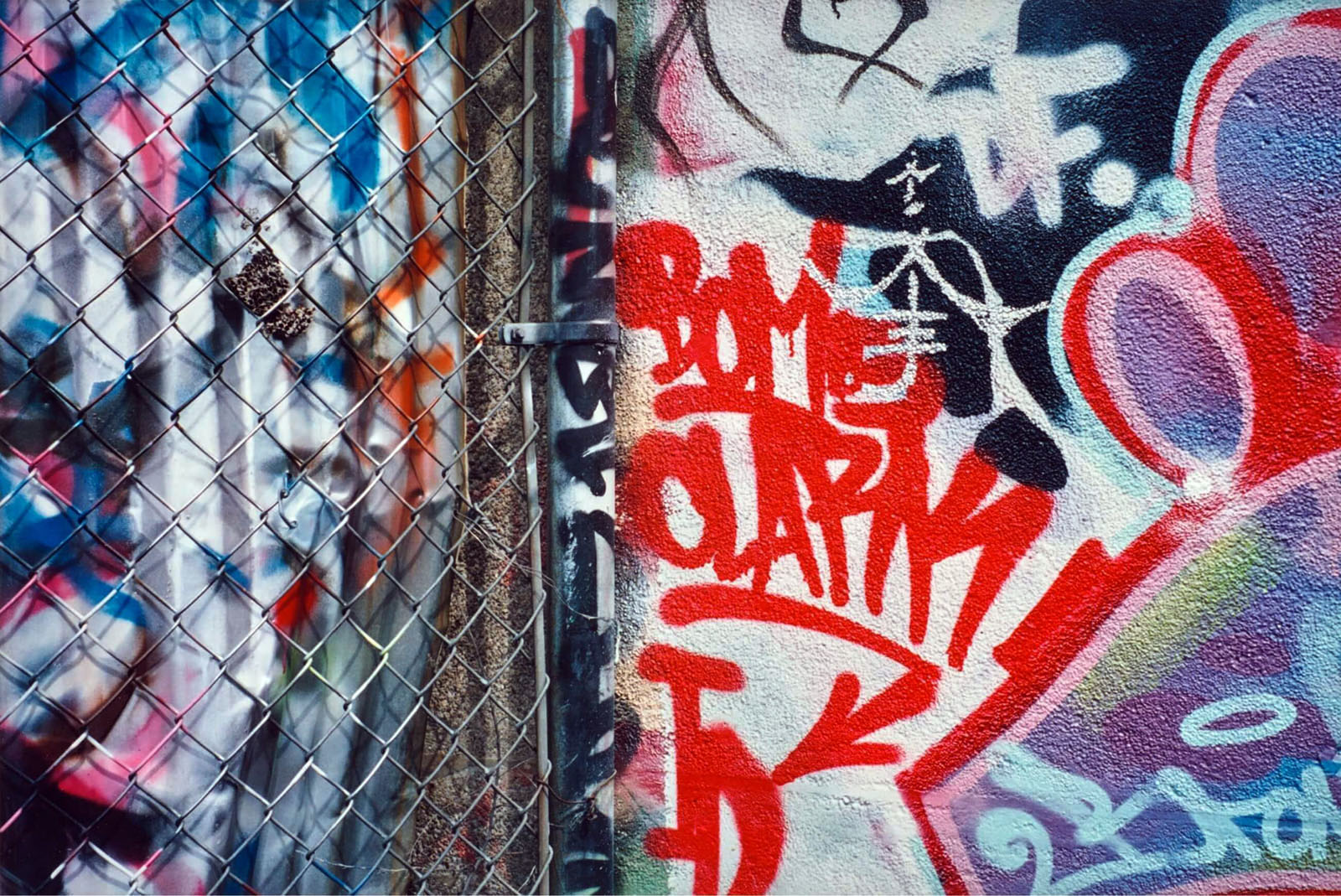
 

Richard Benson (American, 1943-2017) 'Manhattan Waterfront Project' c. 1992


Richard Benson (American, 1943-2017)
Manhattan Waterfront Project
c. 1992
Chromogenic print
Image: 8 3/8 × 12 5/8 inches (21.3 × 32.1cm)
Sheet: 10 7/8 × 14 inches (27.6 × 35.6cm)
© Estate of Richard M. A. Benson. Promised gift of William M. and Elizabeth Ann Kahane
Image courtesy Philadelphia Museum of Art, 2021
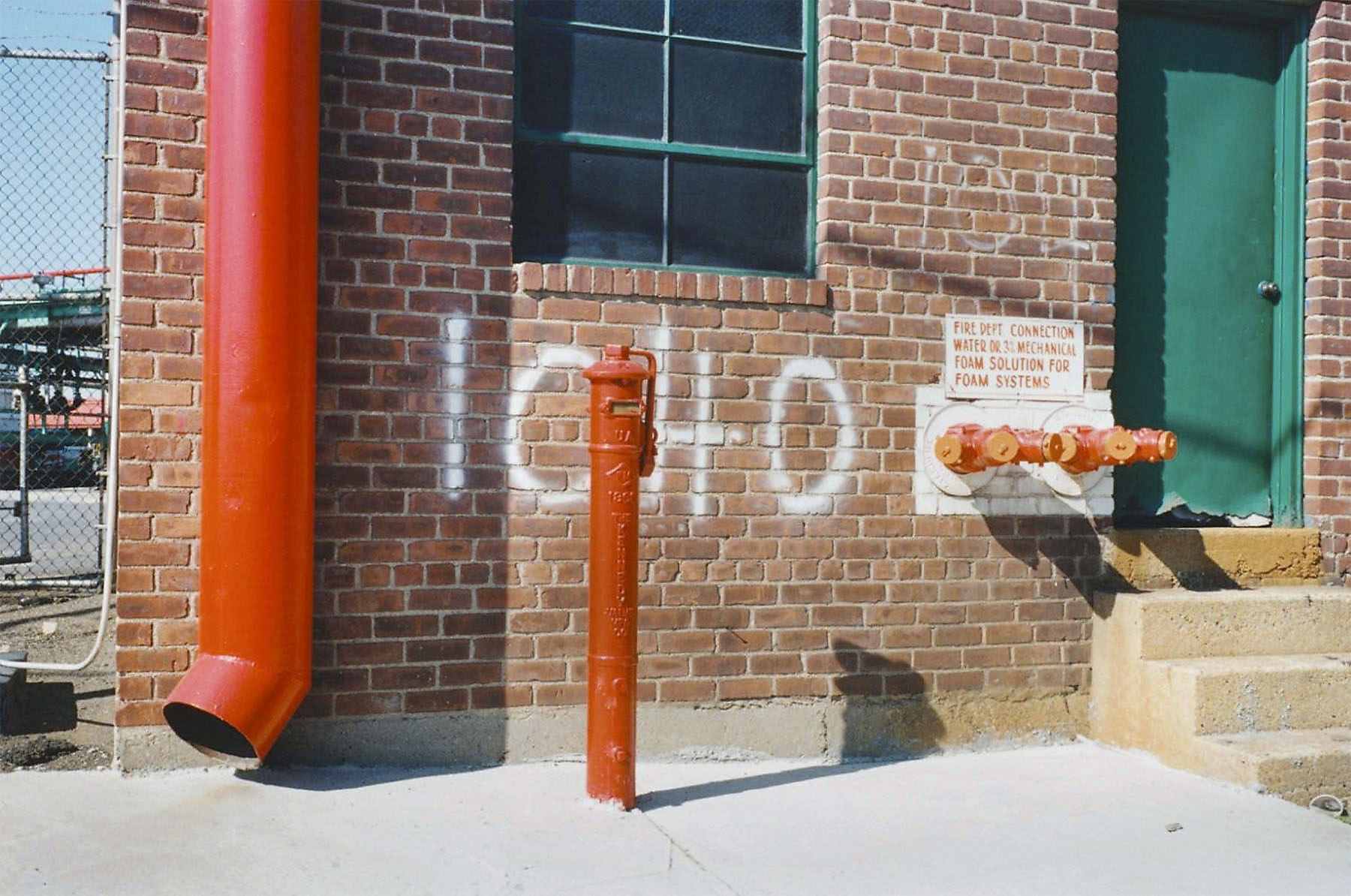
 

Richard Benson (American, 1943-2017) 'Manhattan Waterfront Project' c. 1992


Richard Benson (American, 1943-2017)
Manhattan Waterfront Project
c. 1992
Chromogenic print
Image: 8 3/8 × 12 5/8 inches (21.2 × 32cm)
Sheet: 10 15/16 × 13 15/16 inches (27.8 × 35.4cm)
© Estate of Richard M. A. Benson. Promised gift of William M. and Elizabeth Ann Kahane
Image courtesy Philadelphia Museum of Art, 2021
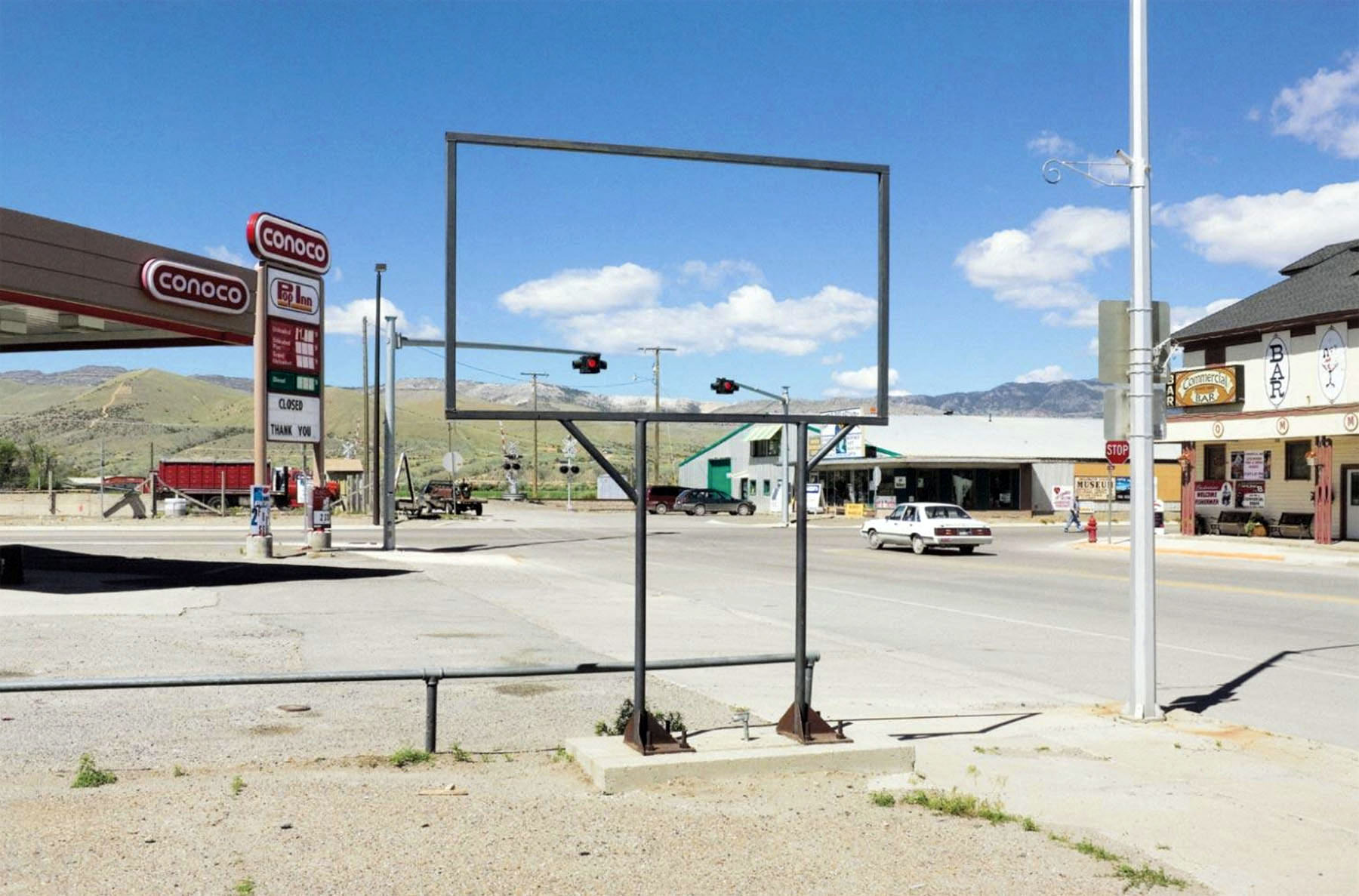
 

Richard Benson (American, 1943-2017) 'New Mexico' 2006


Richard Benson (American, 1943-2017)
New Mexico
2006
Pigment print
Image: 13 3/8 × 20 1/16 inches (34 × 51cm)
Sheet: 16 × 21 15/16 inches (40.7 × 55.8cm)
© Estate of Richard M. A. Benson. Promised gift of William M. and Elizabeth Ann Kahane
Image courtesy Philadelphia Museum of Art, 2021


Richard Benson (American, 1943-2017) 'Newfoundland (Green Boat)' c. 2006


Richard Benson (American, 1943-2017)
Newfoundland (Green Boat)
c. 2006
Multiple impression pigment print
Image: 11 9/16 × 17 3/8 inches
Sheet: 12 15/16 × 19 inches
© Estate of Richard M. A. Benson. Collection of Barbara Benson
Image courtesy Philadelphia Museum of Art, 2021
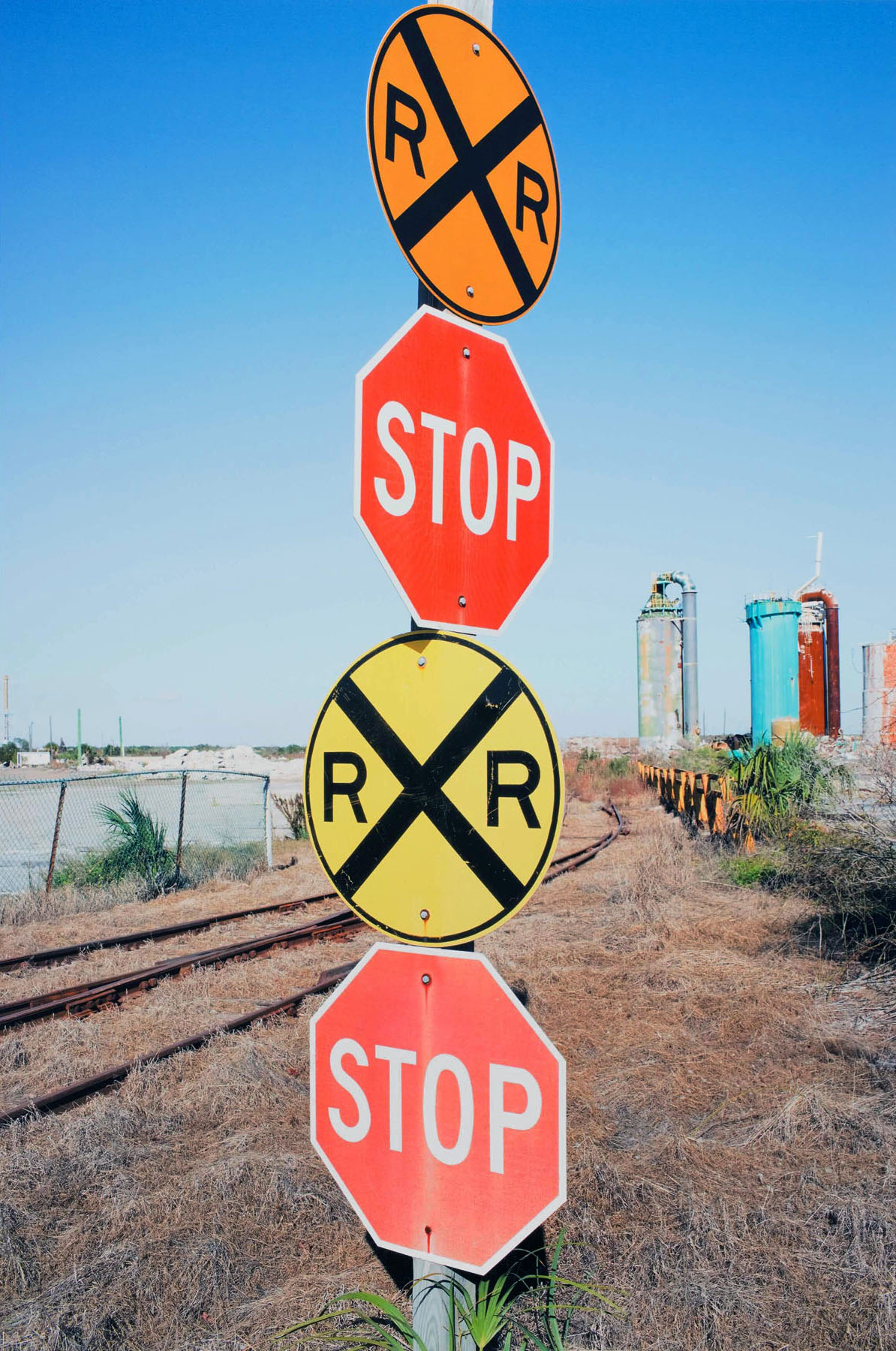
 

Richard Benson (American, 1943-2017) 'Georgia' 2007


Richard Benson (American, 1943-2017)
Georgia
2007
Pigment print
Image: 20 × 13 3/8 inches (50.8 × 34cm)
Sheet: 22 × 16 inches (55.9 × 40.6cm)
© Estate of Richard M. A. Benson. Promised gift of William M. and Elizabeth Ann Kahane
Image courtesy Philadelphia Museum of Art, 2021


“Georgia” (2007), which portrays a vertical array of four signs – two red octagonal stop signs, two circular railroad crossings, in yellow and orange – makes a visual counterpoint to three storage silos in the background that are painted red, blue and yellow-embellished silver. But the most virtuosic turn is the rendition of the sky, which is bleached out to a pale blue-gray at the horizon and gradually darkens to a full-throated cerulean at the top. If, as Willem de Kooning once remarked, flesh was the reason oil paint was created, Benson in his many crepuscular photographs makes the case that twilight skies were the reason color film was invented.

Arthur Lubow. “When a Master Printer Picks Up the Camera,” on The New York Times website December 30, 2021 [Online] Cited 02/01/2022
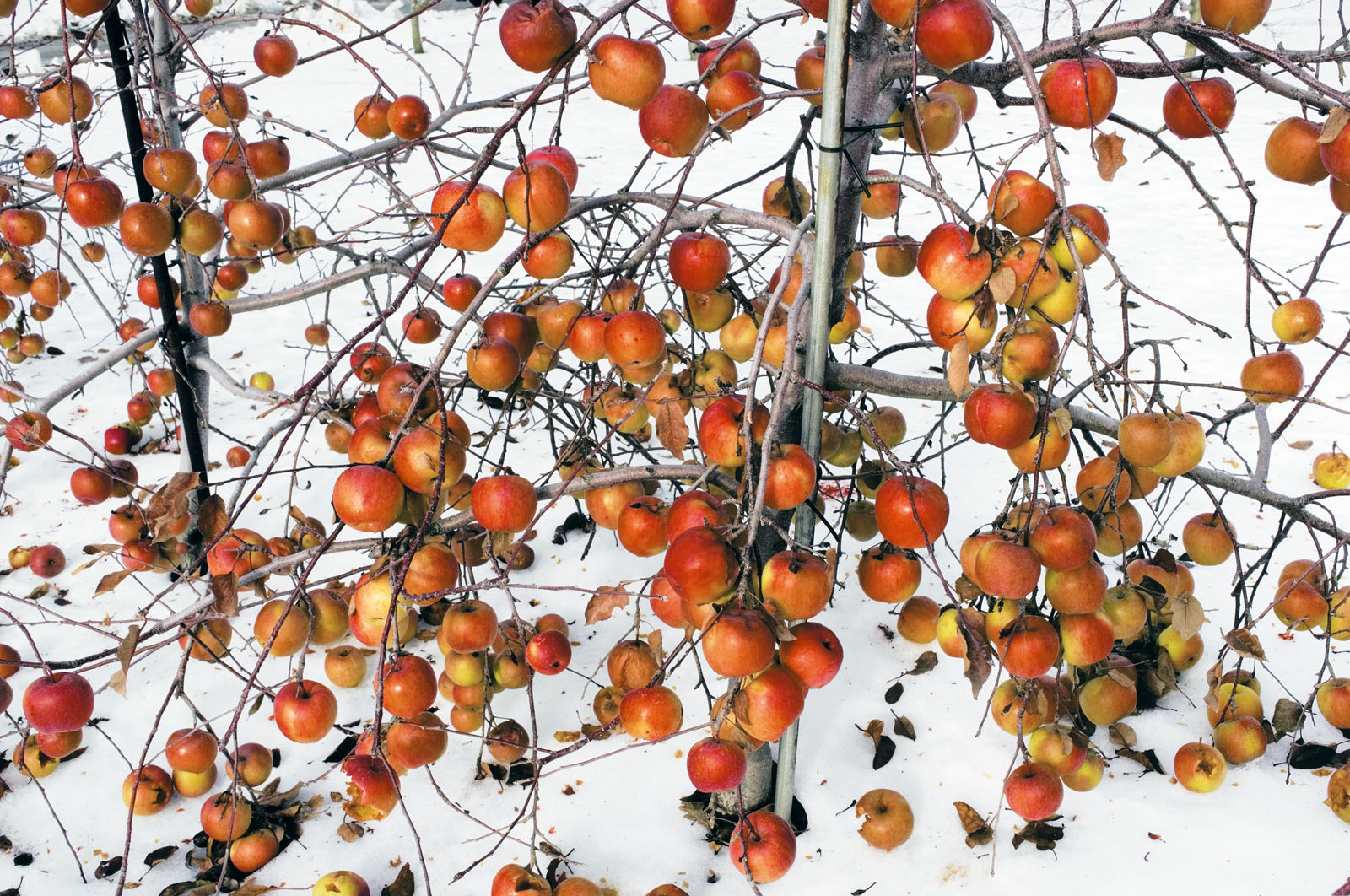
 

Richard Benson (American, 1943-2017) 'Apples for John' 2007


Richard Benson (American, 1943-2017)
Apples for John
2007
Pigment print
Image: 13 3/8 × 20 inches
Sheet: 15 7/8 × 22 inches
© Estate of Richard M. A. Benson. Promised gift of William M. and Elizabeth Ann Kahane
Image courtesy Philadelphia Museum of Art, 2021
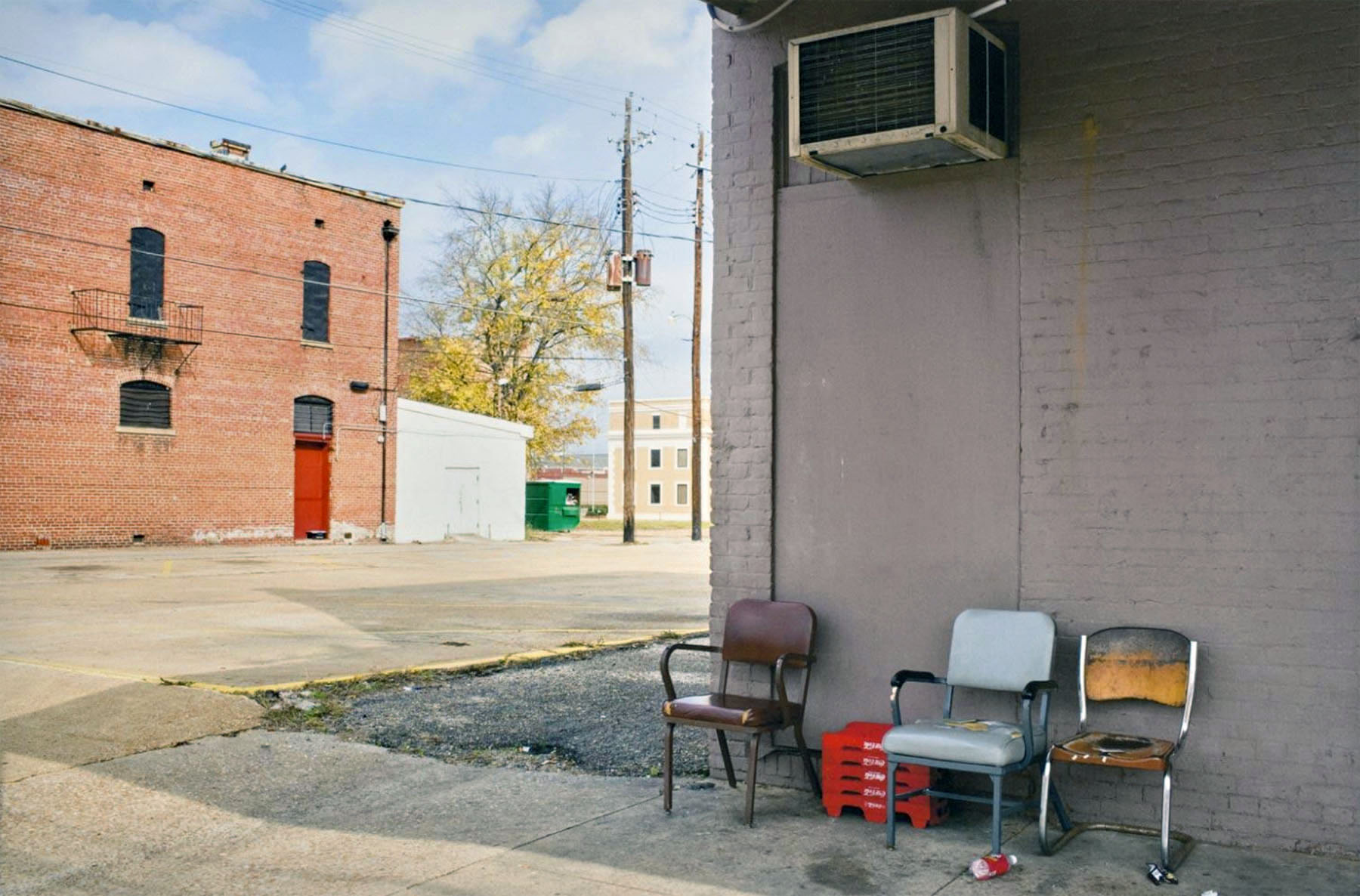
 

Richard Benson (American, 1943-2017) 'Selma, Alabama' 2007


Richard Benson (American, 1943-2017)
Selma, Alabama
2007
Pigment print
Image: 11 5/8 × 17 3/8 inches (29.5 × 44.1cm)
Sheet: 13 × 19 inches (33 × 48.3cm)
© Estate of Richard M. A. Benson. Promised gift of William M. and Elizabeth Ann Kahane
Image courtesy Philadelphia Museum of Art, 2021
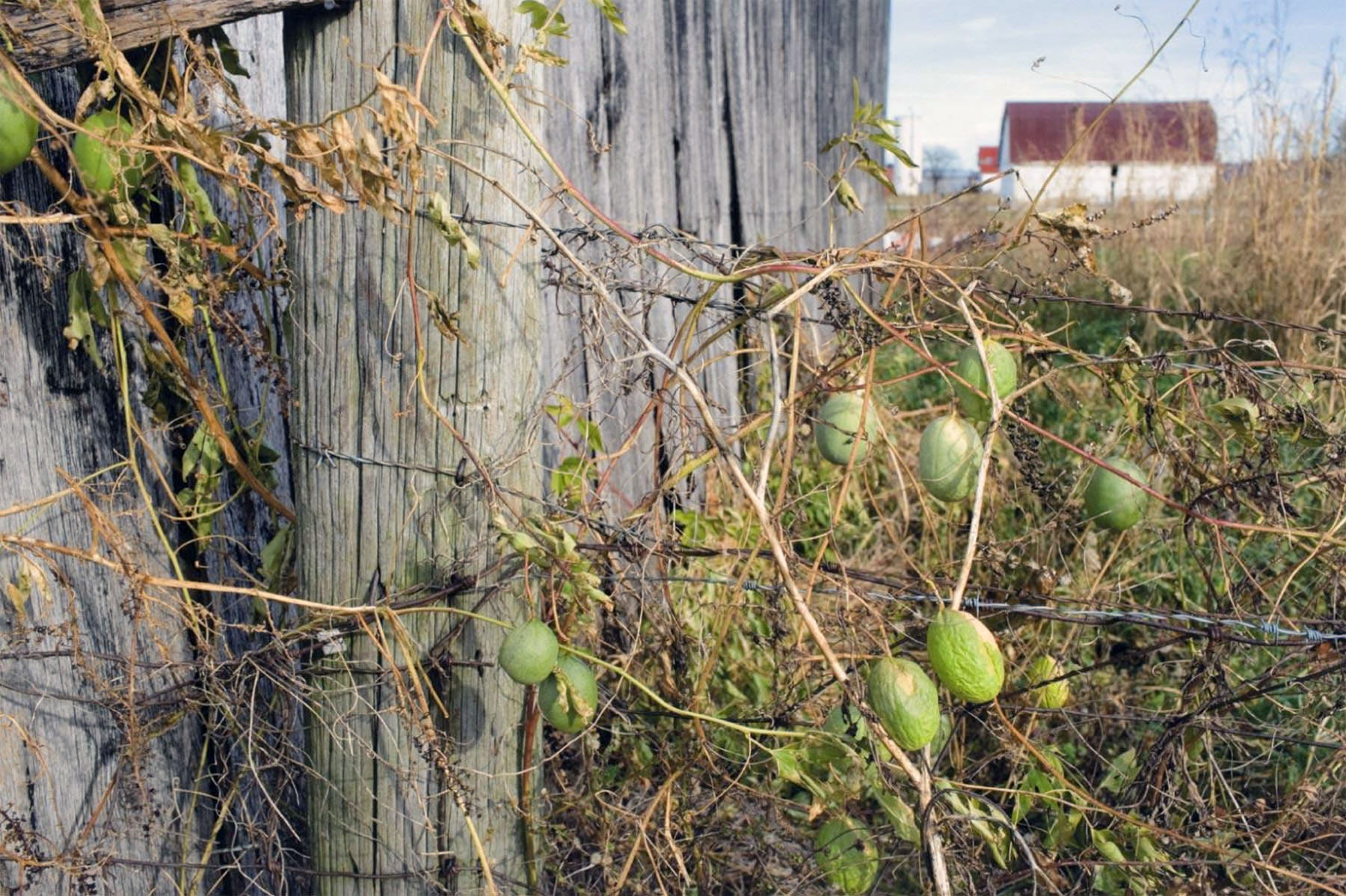
 

Richard Benson (American, 1943-2017) 'Kentucky' 2007


Richard Benson (American, 1943-2017)
Kentucky
2007
Pigment print
Image: 11 5/8 × 17 3/8 inches (29.5 × 44.2cm)
Sheet: 12 15/16 × 19 inches (32.8 × 48.2cm)
© Estate of Richard M. A. Benson. Promised gift of William M. and Elizabeth Ann Kahane
Image courtesy Philadelphia Museum of Art, 2021


Richard Benson (American, 1943-2017) 'Okeechobee, Florida' 2007


Richard Benson (American, 1943-2017)
Okeechobee, Florida
2007
Pigment print
© Estate of Richard M. A. Benson. Promised gift of William M. and Elizabeth Ann Kahane
Image courtesy Philadelphia Museum of Art, 2021
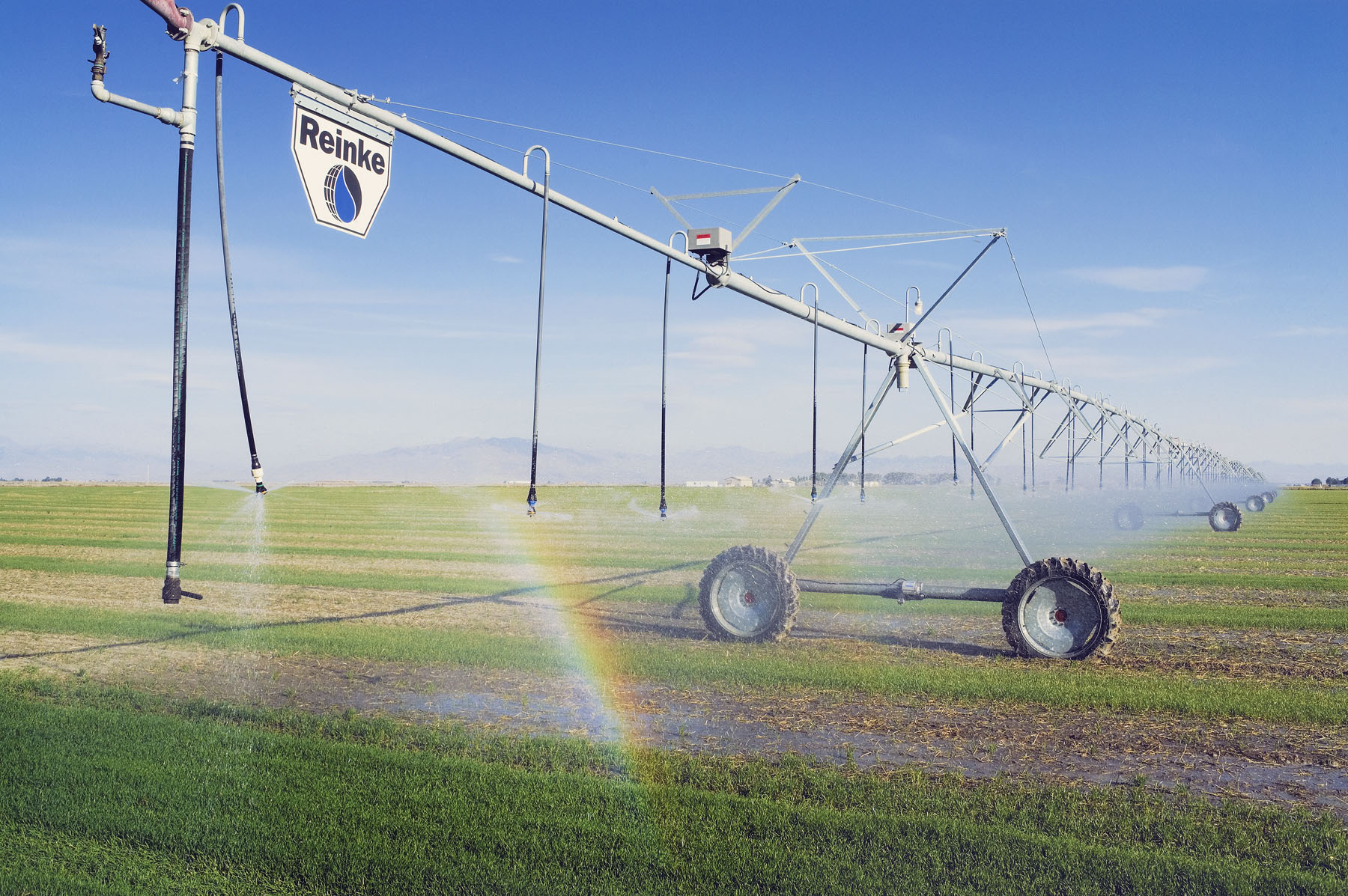
 

Richard Benson (American, 1943-2017) 'Wyoming (Reinke Sprinkler)' 2008


Richard Benson (American, 1943-2017)
Wyoming (Reinke Sprinkler)
2008
Multiple impression pigment print
Image: 13 3/8 × 20 1/8 inches
Sheet: 16 1/8 × 22 inches
© Estate of Richard M. A. Benson. Collection of Barbara Benson
Image courtesy Philadelphia Museum of Art, 2021
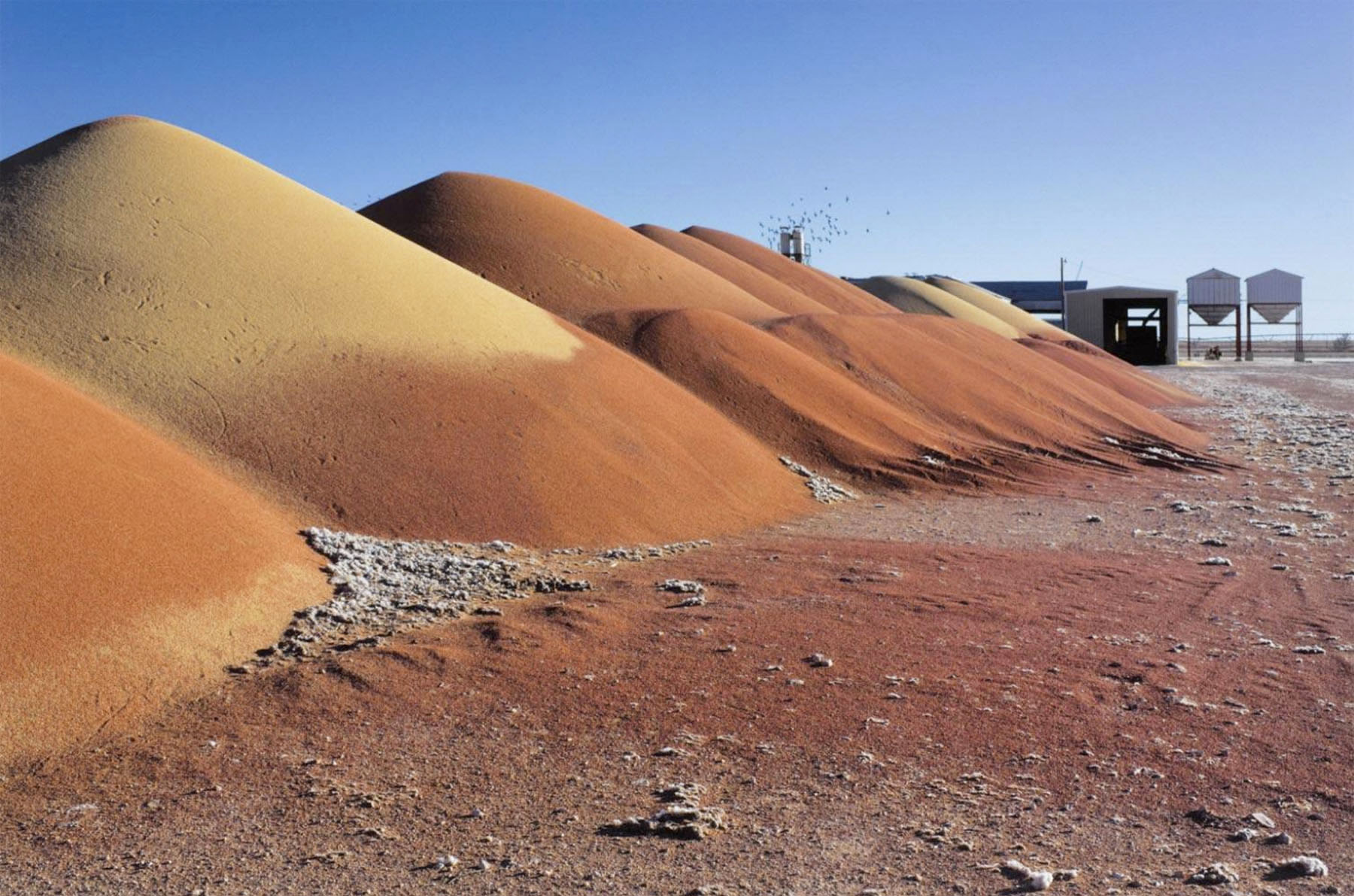
 

Richard Benson (American, 1943-2017) 'Untitled (Cotton Farm)' 2008


Richard Benson (American, 1943-2017)
Untitled (Cotton Farm)
2008
Pigment print
Image: 13 3/8 × 20 inches (34 × 50.8cm)
Sheet: 14 15/16 × 21 15/16 inches (38 × 55.8cm)
© Estate of Richard M. A. Benson. Promised gift of William M. and Elizabeth Ann Kahane
Image courtesy Philadelphia Museum of Art, 2021


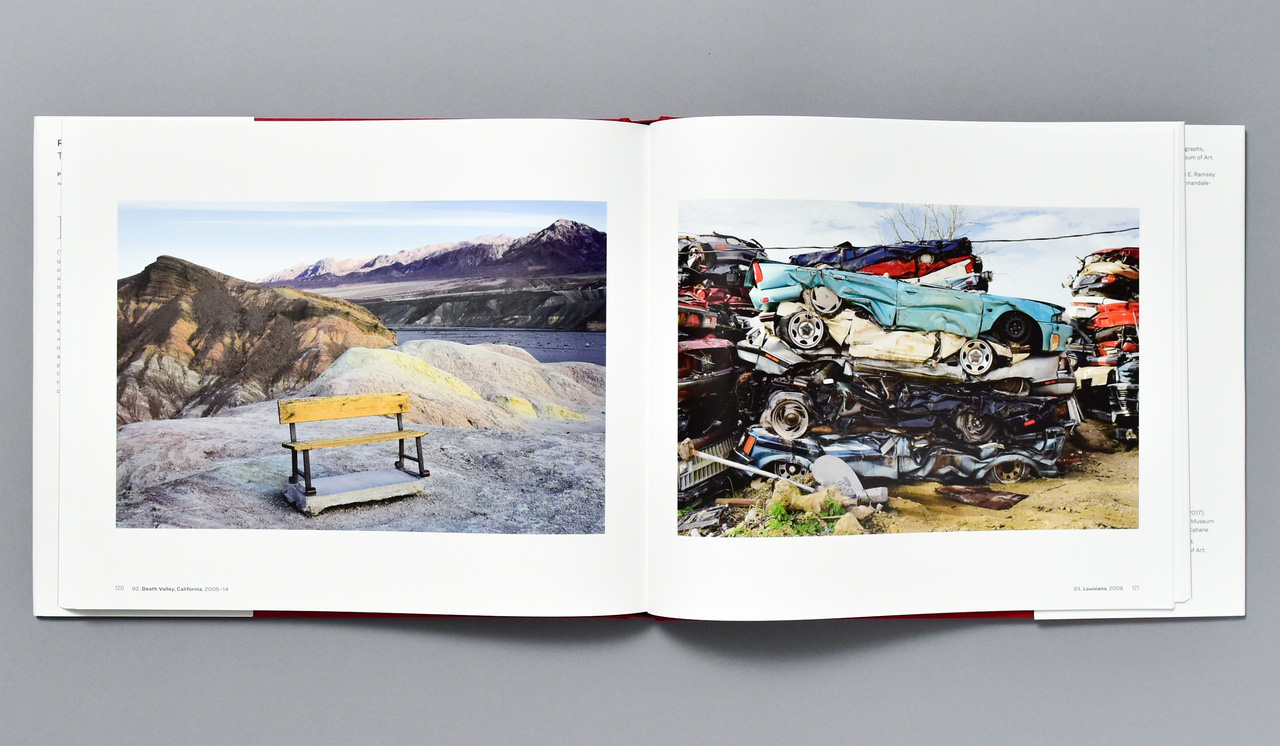
Richard Benson (American, 1943-2017) 'Louisiana' 2008


Richard Benson (American, 1943-2017)
Louisiana
2008
Pigment print
© Estate of Richard M. A. Benson. Promised gift of William M. and Elizabeth Ann Kahane
Image courtesy Philadelphia Museum of Art, 2021
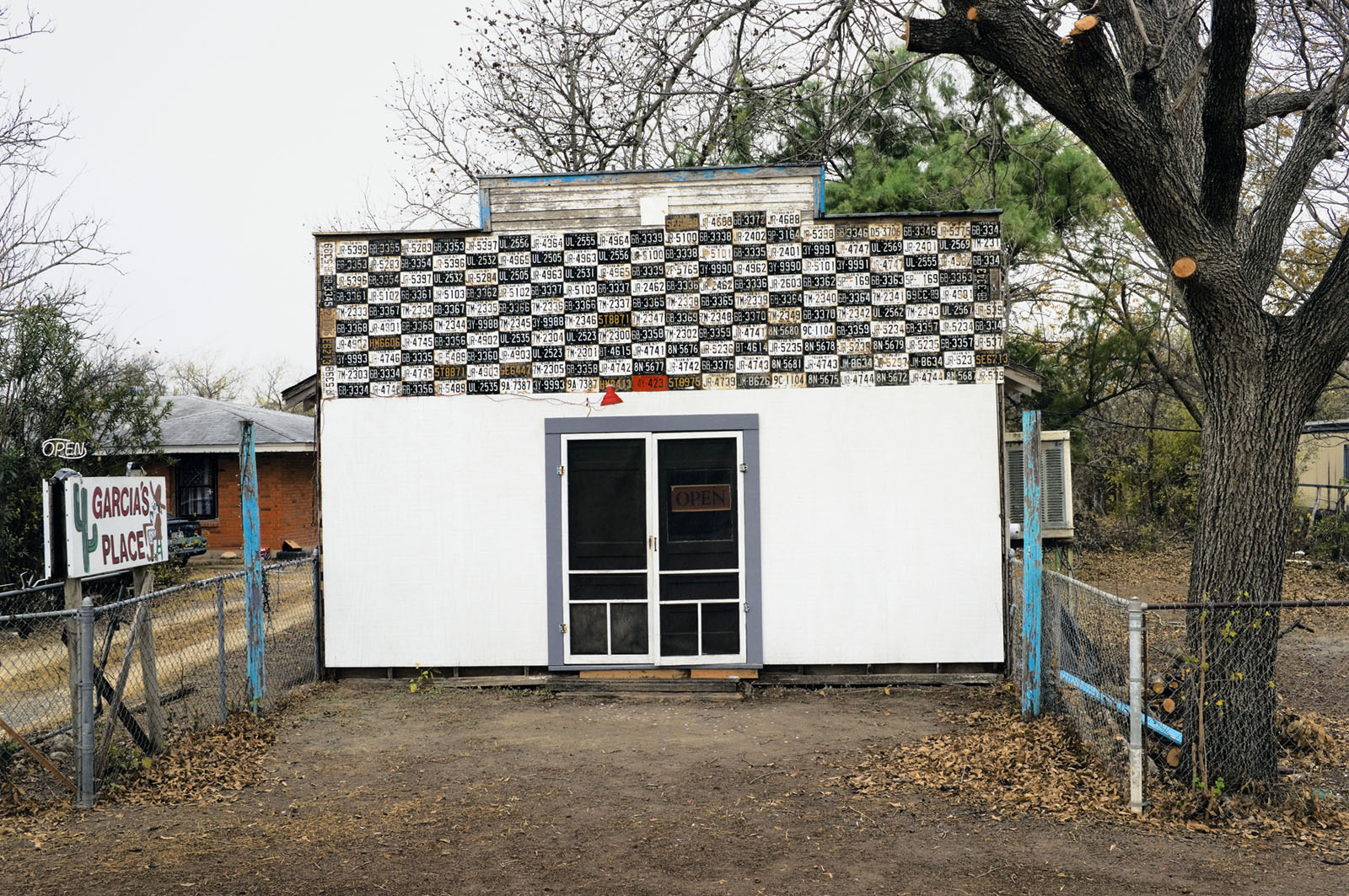
 

Richard Benson (American, 1943-2017) 'Texas' 2008


Richard Benson (American, 1943-2017)
Texas
2008
Pigment print
Image: 13 3/8 × 20 inches
Sheet: 15 9/16 × 22 inches
© Estate of Richard M. A. Benson. Promised gift of William M. and Elizabeth Ann Kahane
Image courtesy Philadelphia Museum of Art, 2021


Richard Benson (American, 1943-2017) 'Arizona' 2008


Richard Benson (American, 1943-2017)
Arizona
2008
Pigment print
Image: 13 3/8 × 20 inches (34 × 50.8cm)
Sheet: 14 15/16 × 21 15/16 inches (38 × 55.8cm)
© Estate of Richard M. A. Benson. Promised gift of William M. and Elizabeth Ann Kahane
Image courtesy Philadelphia Museum of Art, 2021


Richard Benson (American, 1943-2017) 'Ohio' 2009


Richard Benson (American, 1943-2017)
Ohio
2009
Pigment print
Image: 13 3/8 × 20 inches (34 × 50.8cm)
Sheet: 16 × 22 inches (40.6 × 55.9cm)
© Estate of Richard M. A. Benson. Promised gift of William M. and Elizabeth Ann Kahane
Image courtesy Philadelphia Museum of Art, 2021


Richard Benson (American, 1943-2017) 'Untitled (Celeryville field)' 2009 (negative); 2009 (print)


Richard Benson (American, 1943-2017)
Untitled (Celeryville field)
2009 (negative); 2009 (print)
Pigment print
Image: 13 3/8 × 20 inches (34 × 50.8cm)
Sheet: 14 15/16 × 21 15/16 inches (38 × 55.8cm)
© Estate of Richard M. A. Benson. Promised gift of William M. and Elizabeth Ann Kahane
Image courtesy Philadelphia Museum of Art, 2021


Publication

A wide-ranging retrospective that reveals a master printer’s own photographs to be technically brilliant work of remarkable breadth and complexity.

This book presents the first in-depth survey of photographs by Richard Benson (1943-2017), who approached photography as a thrilling set of technical challenges and used the medium to craft profound depictions of people, the spaces of their lives and work, and the products of their labor. An essay by curator Peter Barberie interweaves examination of Benson’s photographic practices with the story of his ideas, writing, and reproductive printing, while photographer An-My Lê, Benson’s former student, offers her perspective on his teaching, family life, and art. The book begins with his stunning darkroom prints in silver and platinum and follows his trajectory toward extraordinary digital photography, culminating in later colour prints that are at once elegant and garish, representing the contemporary world in vivid detail. Benson’s democratic eye also extended to human subjects: he photographed loved ones and strangers with extraordinary attention, and directed the same gaze to the buildings and landscapes entwined with individual lives.

Author: Peter Barberie
Hardcover
Publisher: Philadelphia Museum of Art, October 2021
152 pages, 11 3/4 x 9 3/4
134 color illustrations
ISBN: 9780876332016

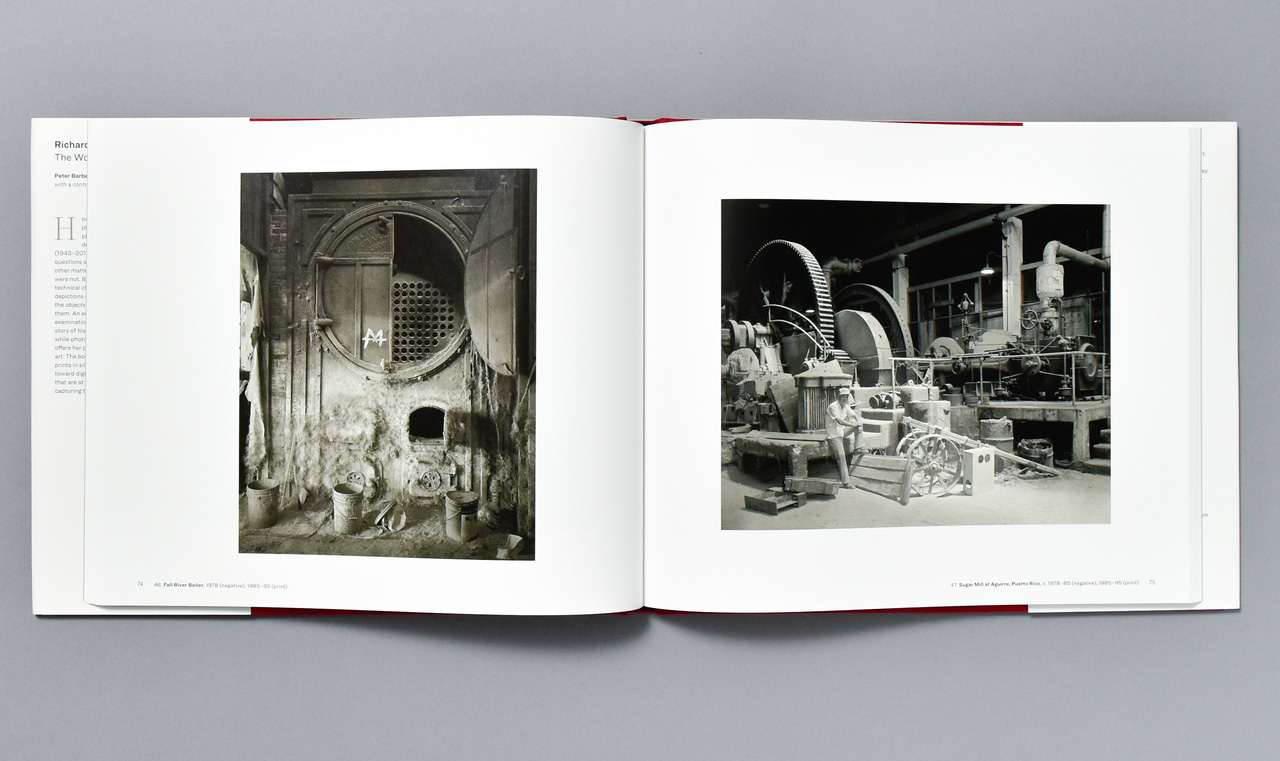
 

Richard Benson: The World Is Smarter Than You Are

Richard Benson: The World Is Smarter Than You Are

Richard Benson: The World Is Smarter Than You Are

Richard Benson: The World Is Smarter Than You Are

Richard Benson: The World Is Smarter Than You Are

Richard Benson: The World Is Smarter Than You Are

Richard Benson: The World Is Smarter Than You Are

Richard Benson: The World Is Smarter Than You Are


Richard Benson: The World Is Smarter Than You Are publication


Philadelphia Museum of Art
26th Street and the Benjamin Franklin Parkway
Philadelphia, PA 19130

Opening hours:
Thursday – Monday: 10am – 5pm
Closed Tuesday and Wednesday

Philadelphia Museum of Art website

LIKE ART BLART ON FACEBOOK

Back to top

Exhibition: ‘Dawoud Bey: An American Project’ at the Whitney Museum of American Art, New York

Exhibition dates: 17th April – 3rd October, 2021


Installation view of 'Dawoud Bey: An American Project' (Whitney Museum of American Art, New York, April 17-October 3, 2021)

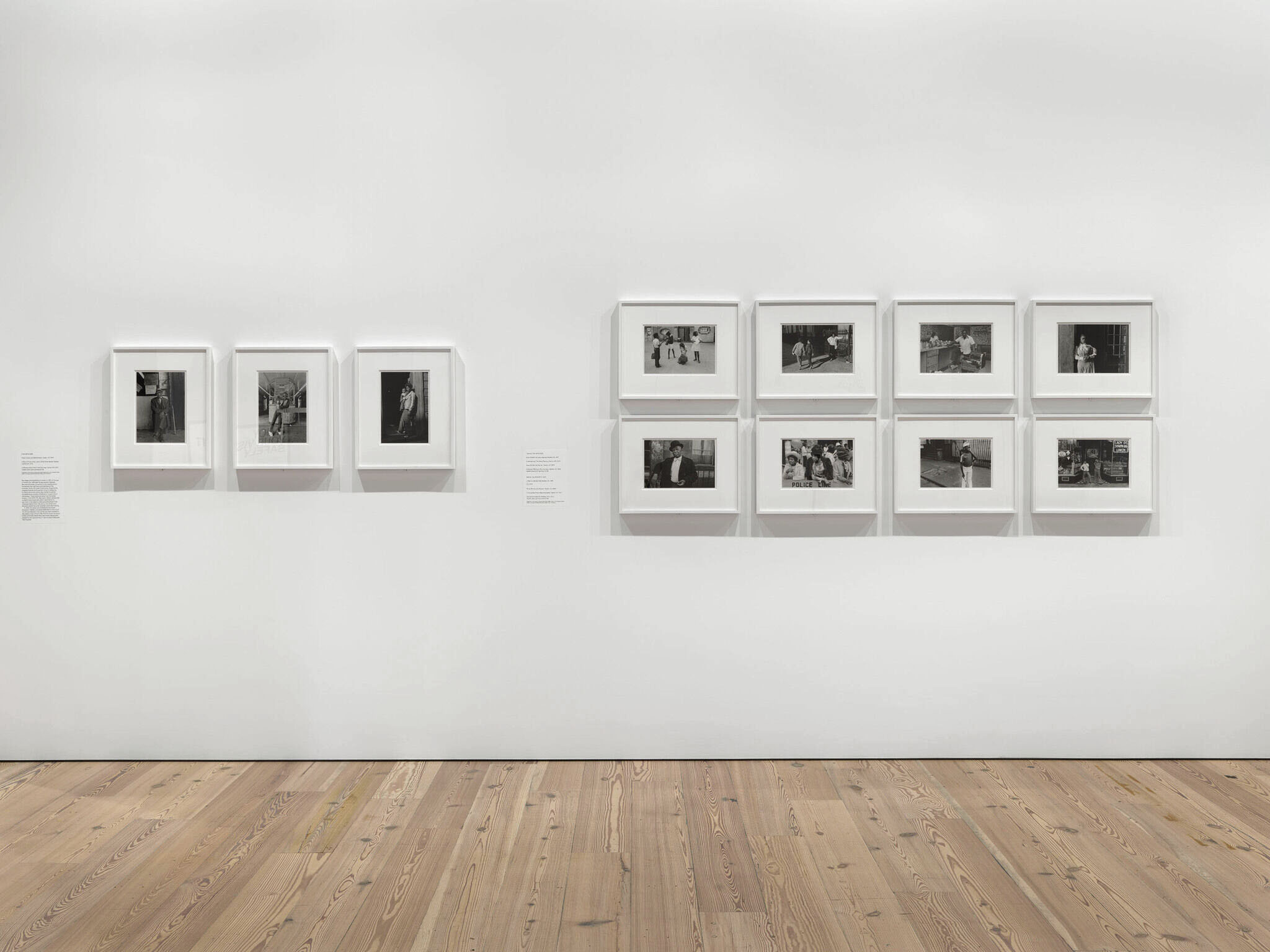
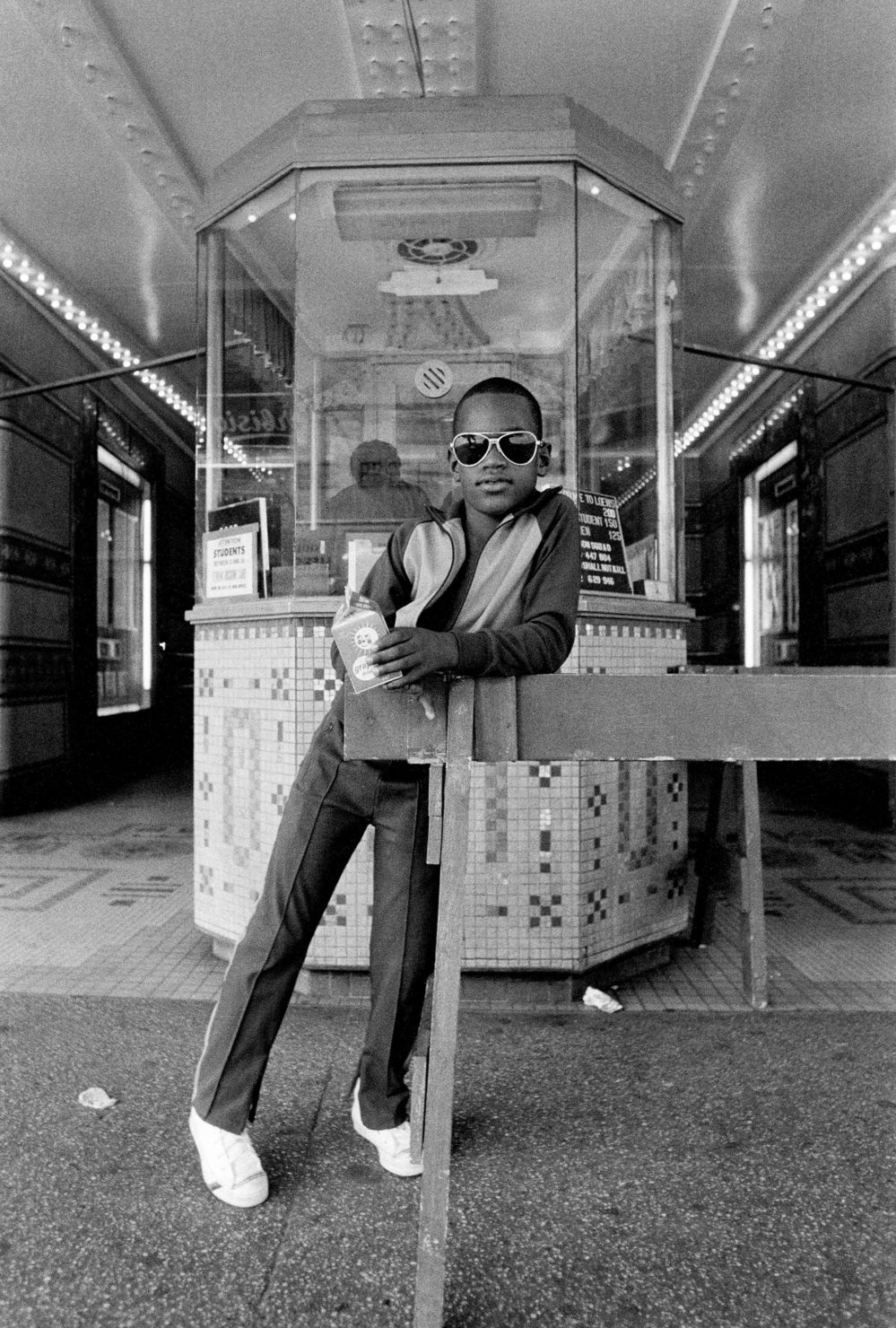
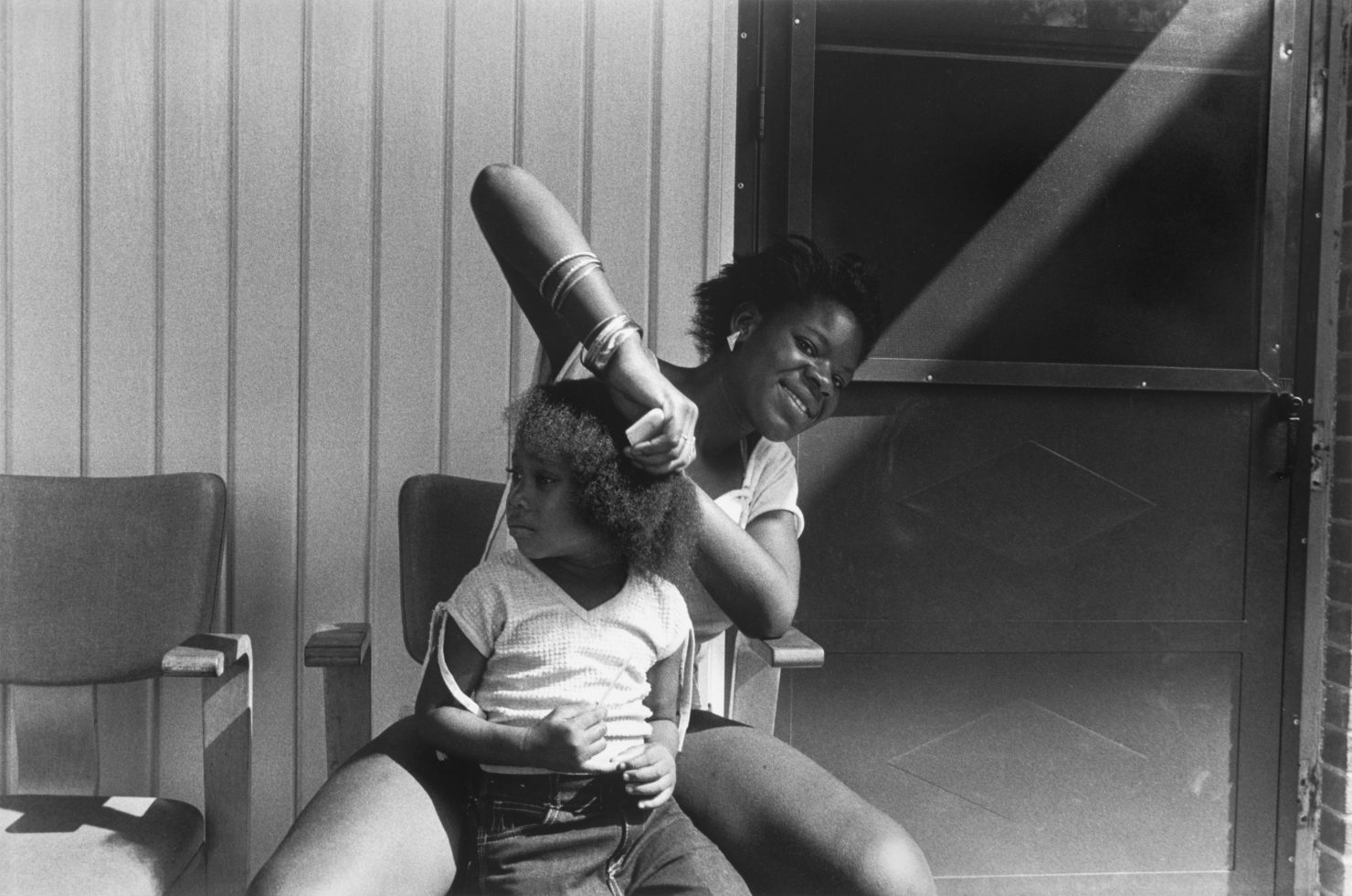
Installation view of 'Dawoud Bey: An American Project' (Whitney Museum of American Art, New York, April 17-October 3, 2021) showing from left to right: Fresh Coons and Wild Rabbits, Harlem, NY, 1975; A Boy in Front of the Loew's 125th Street Movie Theater, Harlem, NY, 1976; A Woman and a Child in the Doorway, Harlem, NY, 1975; Clockwise, from top left: Four Children at Lenox Avenue, Harlem, NY, 1977; A Woman and Two Boys Passing, Harlem, NY, 1978; Deas McNeil, the Barber, Harlem, NY, 1976; A Woman Waiting in the Doorway, Harlem, NY, 1976; Two Girls at Lady D's, Harlem, NY, c. 1976; A Young Boy from a Marching Band, Harlem, NY, 1977; Three Women at a Parade, Harlem, NY, 1978; A Man in a Bowler Hat, Harlem, NY, 1976


Installation view of Dawoud Bey: An American Project (Whitney Museum of American Art, New York, April 17 – October 3, 2021). From left to right: Fresh Coons and Wild Rabbits, Harlem, NY, 1975; A Boy in Front of the Loew’s 125th Street Movie Theater, Harlem, NY, 1976; A Woman and a Child in the Doorway, Harlem, NY, 1975; Clockwise, from top left: Four Children at Lenox Avenue, Harlem, NY, 1977; A Woman and Two Boys Passing, Harlem, NY, 1978; Deas McNeil, the Barber, Harlem, NY, 1976; A Woman Waiting in the Doorway, Harlem, NY, 1976; Two Girls at Lady D’s, Harlem, NY, c. 1976; A Young Boy from a Marching Band, Harlem, NY, 1977; Three Women at a Parade, Harlem, NY, 1978; A Man in a Bowler Hat, Harlem, NY, 1976. Photograph by Ron Amstutz


To fit it in with other exhibitions closing soon, a mid-week posting on this strong exhibition – Dawoud Bey: An American Project – this time at the Whitney Museum of American Art, with further media images, audio and installation photographs. The first posting with my comments about the exhibition was at the High Museum of Art.

Dr Marcus Bunyan


Many thankx to the Whitney Museum of American Art for allowing me to publish the photographs in the posting. Please click on the photographs for a larger version of the image.


Dawoud Bey: An American Project

Since the mid-1970s, Dawoud Bey (b. 1953) has worked to expand upon what photography can and should be. Insisting that it is an ethical practice requiring collaboration with his subjects, he creates poignant meditations on visibility, power, and race. Bey chronicles communities and histories that have been largely underrepresented or even unseen, and his work lends renewed urgency to an enduring conversation about what it means to represent America with a camera.

Spanning from his earliest street portraits in Harlem to his most recent series imagining an escape from slavery on the Underground Railroad, Dawoud Bey: An American Project attests to the artist’s profound engagement with the Black subject. He is deeply committed to the craft of photography, drawing on the medium’s specific tools, processes, and materials to amplify the formal, aesthetic, and conceptual goals of each body of work. Bey views photography not only as a form of personal expression but as an act of political responsibility, emphasising the necessary and ongoing work of artists and institutions to break down obstacles to access, convene communities, and open dialogues.

Dawoud Bey: An American Project is co-organised by the Whitney Museum of American Art and the San Francisco Museum of Modern Art. The exhibition is co-curated by Elisabeth Sherman, Assistant Curator at the Whitney, and Corey Keller, Curator of Photography at SFMOMA.


Room 800 Introduction


Dawoud Bey (American, b. 1953) 'Two Girls at Lady D's, Harlem, NY' c. 1976, printed 2019 from the exhibition Exhibition: 'Dawoud Bey: An American Project' at the Whitney Museum of American Art, New York, April - Oct, 2021


Dawoud Bey (American, b. 1953)
Two Girls at Lady D’s, Harlem, NY
c. 1976, printed 2019
From Harlem, U.S.A.
Gelatin silver print
11 × 14 in. (27.9 × 35.6cm)
Collection of the artist; courtesy the artist and Sean Kelly Gallery, New York; Stephen Daiter Gallery, Chicago; and Rena Bransten Gallery, San Francisco
Image courtesy the artist and Stephen Daiter Gallery, Chicago
© Dawoud Bey


Dawoud Bey (American, b. 1953) 'Four Children at Lenox Avenue, Harlem, NY' 1977, printed 2019 from the exhibition Exhibition: 'Dawoud Bey: An American Project' at the Whitney Museum of American Art, New York, April - Oct, 2021


Dawoud Bey (American, b. 1953)
Four Children at Lenox Avenue, Harlem, NY
1977, printed 2019
From Harlem, U.S.A.
Gelatin silver print
11 × 14 in. (27.9 × 35.6cm)
Collection of the artist; courtesy Sean Kelly Gallery, New York; Stephen Daiter Gallery, Chicago; and Rena Bransten Gallery, San Francisco
© Dawoud Bey


1

Harlem, U.S.A.

Bey began photographing in Harlem in 1975, at the age of twenty-two. Although he was raised in Queens, Bey was intimately connected to the neighbourhood: his parents had met there, and members of his extended family still made it their home. Drawn to the neighbourhood as both a symbol of and a wellspring for Black American culture, Bey wanted to portray its residents as complex individuals in images free of stereotype. These works all come from the series Harlem, U.S.A. (1975-1979).

Bey used a 35mm camera with a slightly wide-angle lens, which required him to get close to his subjects while grounding them in the cityscape behind them. His set-up was nimble and discreet, and let the artist carefully control the framing. In 1979, the series was exhibited at the Studio Museum in Harlem, a museum dedicated to the arts of the African diaspora. Even at this very early moment in his career, it was critical to Bey that the works be shown in the community where they were made, allowing the people he was representing to have access to the work they inspired.


Dawoud Bey (American, b. 1953) 'A Woman Waiting in the Doorway, Harlem, NY' 1977, printed 2019


Dawoud Bey (American, b. 1953)
A Woman Waiting in the Doorway, Harlem, NY
1977, printed 2019
From Harlem, U.S.A.
Gelatin silver print
14 × 11 in. overall (35.6 × 27.9cm)
Collection of the artist; courtesy Sean Kelly Gallery, New York; Stephen Daiter Gallery, Chicago; and Rena Bransten Gallery, San Francisco
© Dawoud Bey


Dawoud Bey (American, b. 1953) 'Four Teenagers after Church Service, Syracuse, NY' 1985, printed 2019


Dawoud Bey (American, b. 1953)
Four Teenagers after Church Service, Syracuse, NY
1985, printed 2019
Gelatin silver print
20 × 24 in. (50.8 × 61cm)
Collection of the artist; courtesy Sean Kelly Gallery, New York
Stephen Daiter Gallery, Chicago; and Rena Bransten Gallery, San Francisco
© Dawoud Bey


Installation view of 'Dawoud Bey: An American Project' (Whitney Museum of American Art, New York, April 17-October 3, 2021) showing clockwise, from top left: Two Boys, Syracuse, NY, 1985; A Young Man with a Bus Transfer, Syracuse, NY, 1985; Two Boys at a Syracuse Handball Court, Syracuse, NY, 1985; Car in Backyard, Syracuse, NY, 1985; A Young Woman Waiting for the Bus, Syracuse, NY, 1985; A Young Man at the Bus Stop, Syracuse, NY, 1985; Four Teenagers After Church Service, Syracuse, NY, 1985; Combing Hair, Syracuse, NY, 1986; Clothes Drying on the Line, Syracuse, NY, 1985; A Woman and Three Children, Syracuse, NY, 1985


Installation view of Dawoud Bey: An American Project (Whitney Museum of American Art, New York, April 17 – October 3, 2021). Clockwise, from top left: Two Boys, Syracuse, NY, 1985; A Young Man with a Bus Transfer, Syracuse, NY, 1985; Two Boys at a Syracuse Handball Court, Syracuse, NY, 1985; Car in Backyard, Syracuse, NY, 1985; A Young Woman Waiting for the Bus, Syracuse, NY, 1985; A Young Man at the Bus Stop, Syracuse, NY, 1985; Four Teenagers After Church Service, Syracuse, NY, 1985; Combing Hair, Syracuse, NY, 1986; Clothes Drying on the Line, Syracuse, NY, 1985; A Woman and Three Children, Syracuse, NY, 1985. Photograph by Ron Amstutz


Dawoud Bey (American, b. 1953) 'Clothes Drying on the Line, Syracuse, NY' 1985, printed 2019


Dawoud Bey (American, b. 1953)
Clothes Drying on the Line, Syracuse, NY
1985, printed 2019
Gelatin silver print
20 × 24 in. (50.8 × 61cm)
Collection of the artist; courtesy Sean Kelly Gallery, New York
Stephen Daiter Gallery, Chicago; and Rena Bransten Gallery, San Francisco
Image courtesy the artist and Stephen Daiter Gallery, Chicago
© Dawoud Bey


2

Syracuse, NY

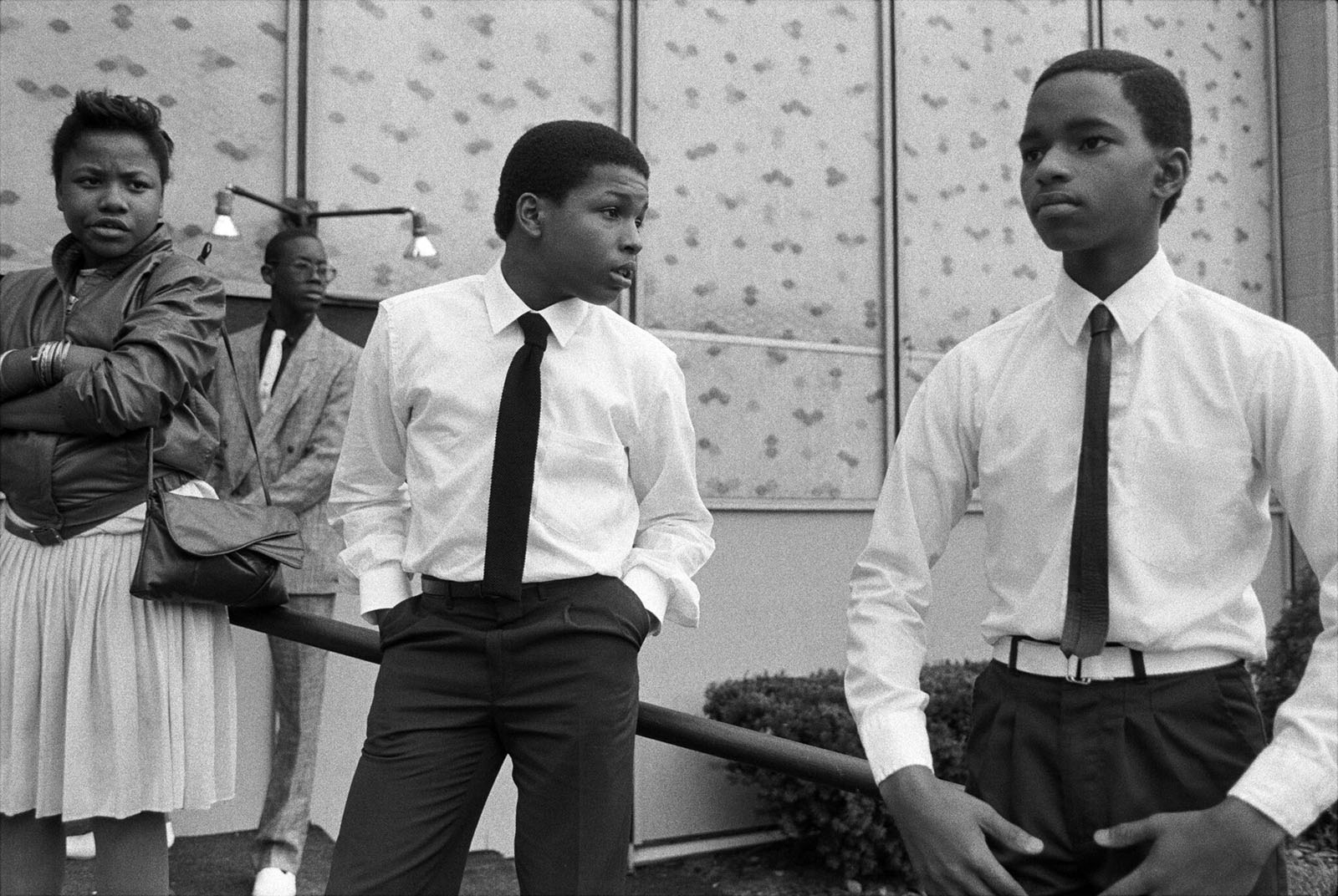
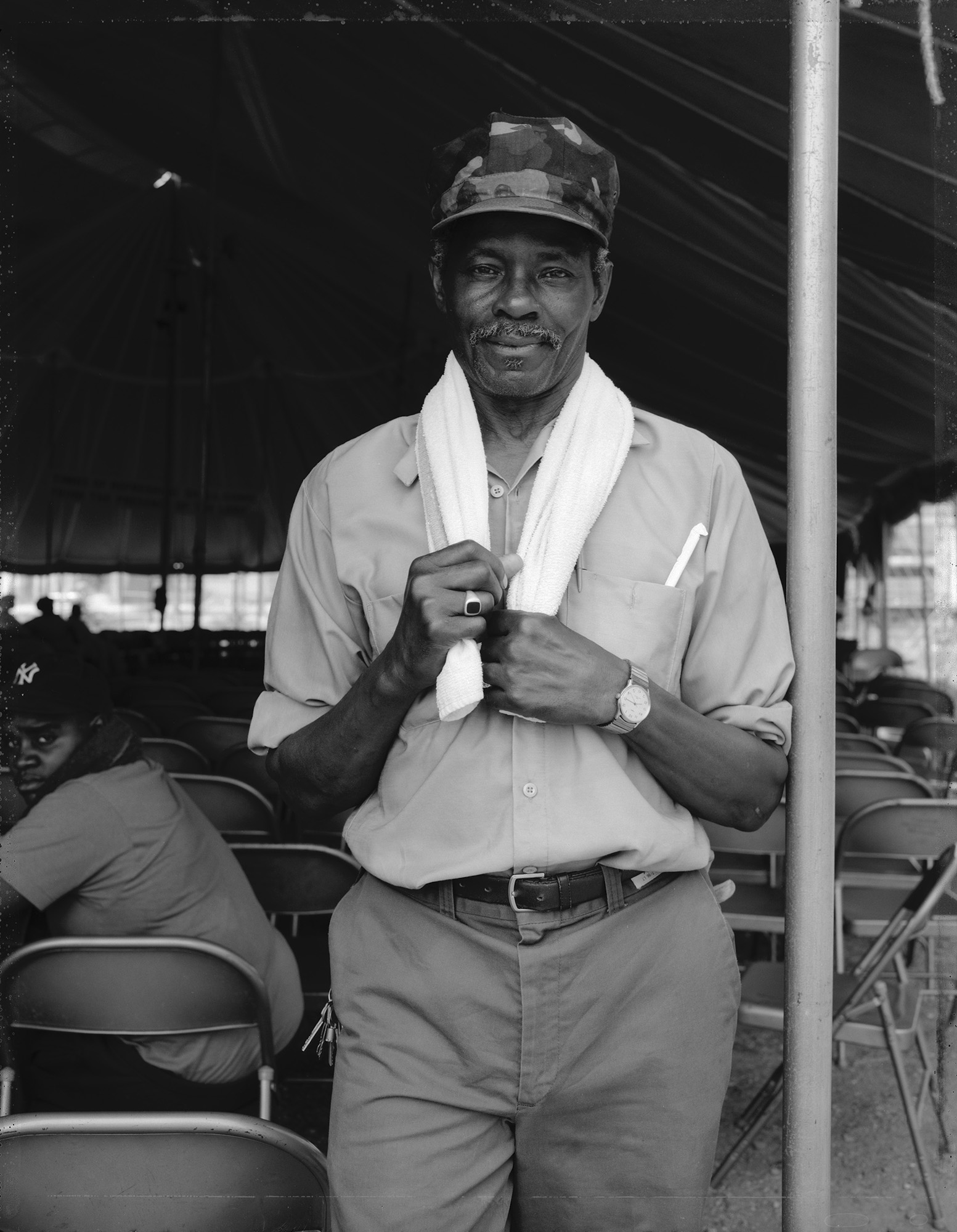
For much of the 1980s Bey continued to use the same slightly wide-angle lens and 35mm camera that he had used to make Harlem, U.S.A. Increasingly attuned to the formal and expressive geometries of the camera’s rectangular frame, he explored new ways to make use of shadow and light to help define a dynamic and improvisational composition. These aesthetic choices were deeply informed by the photographers he knew and studied, most importantly Roy DeCarava (1919-2009).

In 1985 Bey had a residency at Light Work in Syracuse, New York. Residencies and the projects that grew out of them would become a key aspect of his career, allowing him to focus on one place or organisation and incorporate that specificity into his work. In this series of photographs made in Syracuse, Bey portrays the city’s Black community. He noted: “It was a deliberate choice to foreground the Black subject in those photographs, giving them a place not only in my pictures … but on the wall[s] of galleries and museums when that work was exhibited.”


Dawoud Bey (American, b. 1953) 'A Young Woman Waiting for the Bus, Syracuse, NY' 1985, printed 2019


Dawoud Bey (American, b. 1953)
A Young Woman Waiting for the Bus, Syracuse, NY
1985, printed 2019
Gelatin silver print
20 × 24 in. (50.8 × 61cm)
Collection of the artist; courtesy Sean Kelly Gallery, New York; Stephen Daiter Gallery, Chicago; and Rena Bransten Gallery, San Francisco
© Dawoud Bey


Ask a Curator: Dawoud Bey: An American Project

Join assistant curator Elisabeth Sherman and curatorial assistant Ambika Trasi for an overview of the exhibition Dawoud Bey: An American Project. For more than four decades, Dawoud Bey has used the camera to create poignant meditations on visibility, power, and race, chronicling communities and histories that have largely been underrepresented or even unseen. The exhibition traces continuities across Bey’s major series, from his earliest street portraits in Harlem through his most recent project imagining an escape from slavery on the Underground Railroad.


Installation view of 'Dawoud Bey: An American Project' (Whitney Museum of American Art, New York, April 17-October 3, 2021) showing from left to right: A Couple in Prospect Park, Brooklyn, NY, 1990; A Woman at Fulton Street and Washington Avenue, Brooklyn, NY, 1988; A Man at Fulton Street and Cambridge Place, Brooklyn, NY, 1988; A Young Man Resting on an Exercise Bike, Amityville, NY, 1988; Max, Celia, Ramon, and Candida, New York, NY, 1992; Martina and Rhonda, Chicago, IL, 1993


Installation view of Dawoud Bey: An American Project (Whitney Museum of American Art, New York, April 17 – October 3, 2021). From left to right: A Couple in Prospect Park, Brooklyn, NY, 1990; A Woman at Fulton Street and Washington Avenue, Brooklyn, NY, 1988; A Man at Fulton Street and Cambridge Place, Brooklyn, NY, 1988; A Young Man Resting on an Exercise Bike, Amityville, NY, 1988; Max, Celia, Ramon, and Candida, New York, NY, 1992; Martina and Rhonda, Chicago, IL, 1993. Photograph by Ron Amstutz


Dawoud Bey (American, b. 1953) 'A Man at Fulton Street and Cambridge Place, Brooklyn, NY' 1988, printed 2019


Dawoud Bey (American, b. 1953)
A Man at Fulton Street and Cambridge Place, Brooklyn, NY
1988, printed 2019
Pigmented inkjet print
30 × 40 in. (76.2 × 101.6cm)
Collection of the artist; courtesy Sean Kelly Gallery, New York; Stephen Daiter Gallery, Chicago; and Rena Bransten Gallery, San Francisco
© Dawoud Bey


3

Type 55 Polaroid Street Portraits

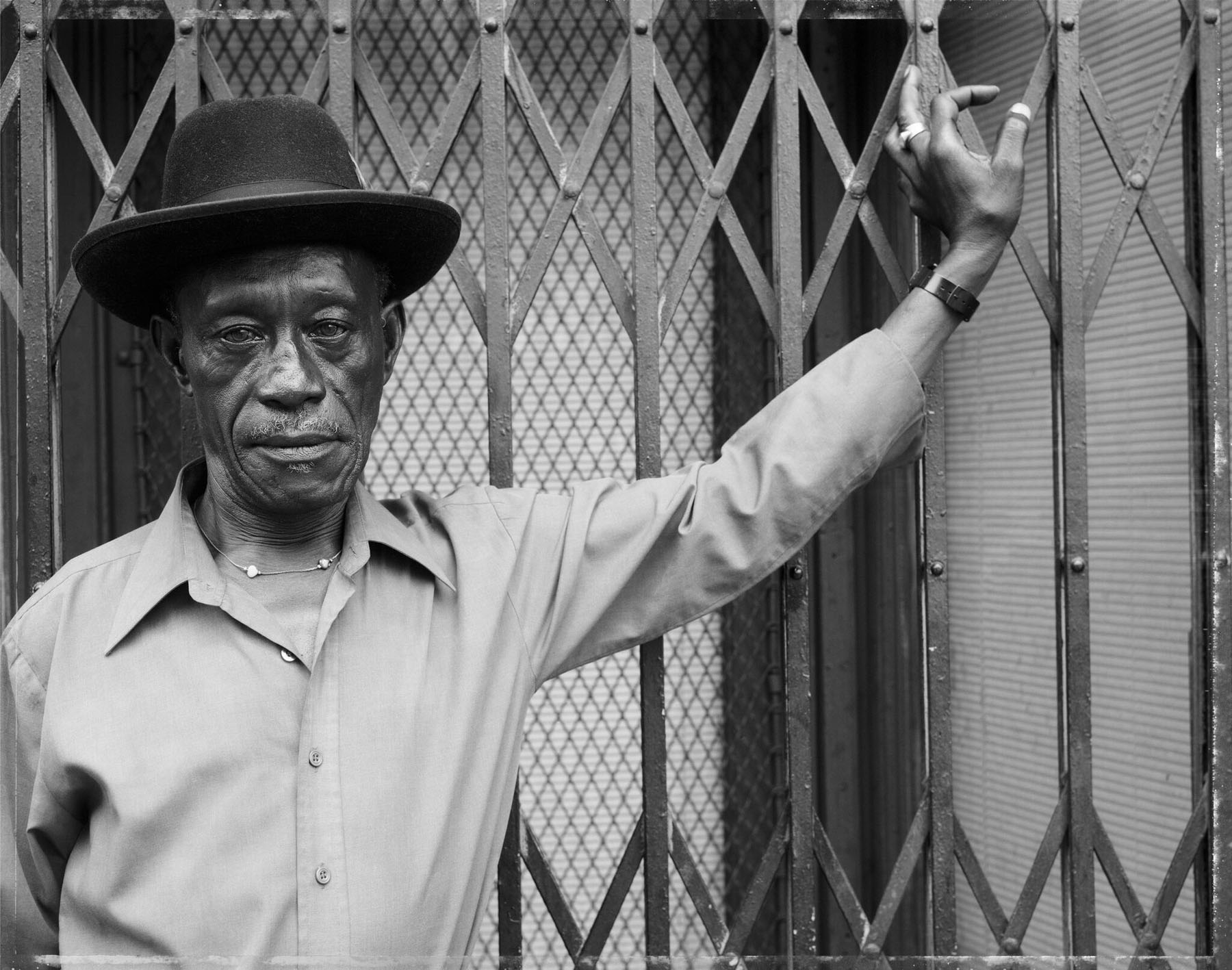
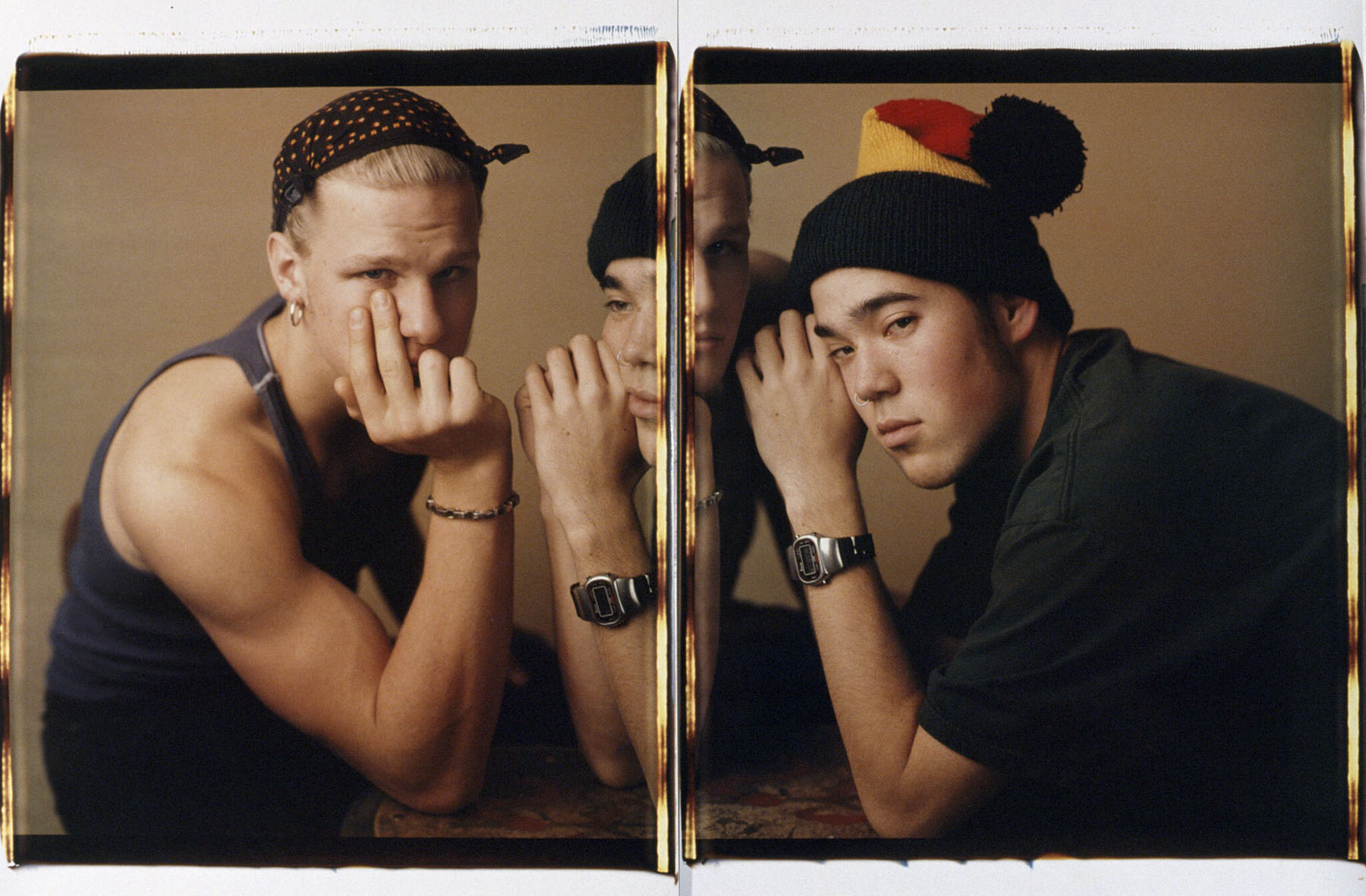
After more than a decade of using a handheld 35mm camera, in 1988 Bey chose to slow down his process, moving to a larger and more conspicuous tripod-mounted 4 × 5-inch-format camera to make this series of street portraits. Like many other photographers working at that time, Bey was increasingly concerned with the ethics of traditional street photography, “which privileged the photographer at the expense of the subject,” and sought more equitable, reciprocal relationships with his sitters.

He began openly approaching strangers he wished to photograph in order to give “the Black subjects [a space] to assert themselves and their presence in the world, with their gaze meeting the viewer’s on equal footing.” He used Polaroid Type 55 film, which produced both instant pictures that he gave to the sitters and negatives that could be used later to make additional prints. Printing technologies have advanced in the decades since Bey made the photographs; the images here have been reprinted at nearly life-size, realising his original intention of creating a more heightened encounter between subject and viewer.


Dawoud Bey (American, b. 1953) 'A Boy Eating a Foxy Pop, Brooklyn, NY' 1988, printed 2019


Dawoud Bey (American, b. 1953)
A Boy Eating a Foxy Pop, Brooklyn, NY
1988, printed 2019
Pigmented inkjet print
40 × 30 in. (101.6 × 76.2cm)
Collection of the artist; courtesy Sean Kelly Gallery, New York; Stephen Daiter Gallery, Chicago; and Rena Bransten Gallery, San Francisco
© Dawoud Bey


Room 803 Young Man at a Tent Revival, Brooklyn, NY


Dawoud Bey (American, b. 1953) 'Young Man at a Tent Revival, Brooklyn, NY' 1989, printed 2019


Dawoud Bey (American, b. 1953)
Young Man at a Tent Revival, Brooklyn, NY
1989, printed 2019
Pigmented inkjet print
40 × 30 in. (101.6 × 76.2cm)
Courtesy the artist and Sean Kelly Gallery, New York; Stephen Daiter Gallery, Chicago; and Rena Bransten Gallery, San Francisco
© Dawoud Bey


Installation view of 'Dawoud Bey: An American Project' (Whitney Museum of American Art, New York, April 17-October 3, 2021) showing from left to right: (clockwise, from top left) Two Boys, Syracuse, NY, 1985; A Young Man with a Bus Transfer, Syracuse, NY, 1985; Two Boys at a Syracuse Handball Court, Syracuse, NY, 1985; Car in Backyard, Syracuse, NY, 1985; A Young Woman Waiting for the Bus, Syracuse, NY, 1985; A Young Man at the Bus Stop, Syracuse, NY, 1985; Four Teenagers After Church Service, Syracuse, NY, 1985; Combing Hair, Syracuse, NY, 1986; Clothes Drying on the Line, Syracuse, NY, 1985; A Woman and Three Children, Syracuse, NY, 1985; Kenosha II, 1996; Hilary and Taro, Chicago, IL, 1992; A Girl with School Medals, Brooklyn, NY, 1988; A Boy Eating a Foxy Pop, Brooklyn, NY, 1988; A Girl with a Knife Nosepin, Brooklyn, NY, 1990


Installation view of Dawoud Bey: An American Project (Whitney Museum of American Art, New York, April 17 – October 3, 2021). From left to right: (clockwise, from top left) Two Boys, Syracuse, NY, 1985; A Young Man with a Bus Transfer, Syracuse, NY, 1985; Two Boys at a Syracuse Handball Court, Syracuse, NY, 1985; Car in Backyard, Syracuse, NY, 1985; A Young Woman Waiting for the Bus, Syracuse, NY, 1985; A Young Man at the Bus Stop, Syracuse, NY, 1985; Four Teenagers After Church Service, Syracuse, NY, 1985; Combing Hair, Syracuse, NY, 1986; Clothes Drying on the Line, Syracuse, NY, 1985; A Woman and Three Children, Syracuse, NY, 1985; Kenosha II, 1996; Hilary and Taro, Chicago, IL, 1992; A Girl with School Medals, Brooklyn, NY, 1988; A Boy Eating a Foxy Pop, Brooklyn, NY, 1988; A Girl with a Knife Nosepin, Brooklyn, NY, 1990. Photograph by Ron Amstutz


Dawoud Bey (American, b. 1953) 'Hilary and Taro, Chicago, IL' 1992


Dawoud Bey (American, b. 1953)
Hilary and Taro, Chicago, IL
1992
Two dye diffusion transfer prints (Polaroids)
30 1/8 × 44 in. overall (76.5 × 111.8cm)
Whitney Museum of American Art; purchase, with funds from the Photography Committee
© Dawoud Bey


Dawoud Bey (American, b. 1953) 'Max, Celia, Ramon and Candida, New York, NY' 1992


Dawoud Bey (American, b. 1953)
Max, Celia, Ramon and Candida, New York, NY
1992
Three dye diffusion transfer prints (Polaroid)
30 × 67 7/8 in. overall (76.2 × 167.64cm)
Collection of Candida Alvarez
© Dawoud Bey


4

20 × 24 Polaroids

In 1991, Bey began using the 20 × 24-inch camera that the Polaroid Corporation made available to artists through its Artist Support Program. The camera was gargantuan and cumbersome – more than two hundred pounds and over six feet tall and five feet wide – and required two people to operate it, the photographer and a technician. Unlike the chance, and often brief, encounters with his subjects outside when using a 35mm camera, the Polaroid camera studio sessions offered Bey the opportunity to orchestrate all the conditions of the image and to have a more contemplative and sustained engagement with each sitter.

His earliest subjects were his artist friends; later he photographed teenagers that he met through a series of residencies at high schools and museums around the country. Over the course of Bey’s eight-year engagement with the 20 × 24-inch Polaroid camera, he increasingly explored the possibilities of multi-panel portraiture as a way of conveying a sense of the length of a portrait session as well as acknowledging the reality that no one image can fully portray an individual’s complexity.


Room 804 Lorna, New York, NY


Dawoud Bey (American, b. 1953) 'Lorna, New York, NY' 1992


Dawoud Bey (American, b. 1953)
Lorna, New York, NY
1992
Two dye diffusion transfer prints (Polaroid)
30 × 44 in. overall (76.2 × 111.76cm)
Collection of Eileen Harris Norton
© Dawoud Bey


Dawoud Bey (American, b. 1953) 'Martina and Rhonda, Chicago, IL' 1993


Dawoud Bey (American, b. 1953)
Martina and Rhonda, Chicago, IL
1993
Six dye diffusion transfer prints (Polaroid)
48 × 60 in. overall (121.9 × 152.4cm)
Whitney Museum of American Art; gift of Eric Ceputis and David W. Williams
© Dawoud Bey


Reimagining History: Dawoud Bey in conversation with Jason Moran and Sarah M. Broom

On the occasion of the exhibition Dawoud Bey: An American Project, this conversation brings Dawoud Bey together with artist and musician Jason Moran and writer Sarah M. Broom to discuss their shared interest in specific histories and shared memories as the ground for their respective practices.

Inspired by Bey’s The Birmingham Project (2012) – a tribute to the victims of the 16th Street Baptist Church bombing in Birmingham, AL, in 1963 – and Night Coming Tenderly, Black (2019), which imagines the flight of enslaved Black Americans along the final leg of the Underground Railroad, the three speakers reflect on how an artwork can become an act of commemoration and radical reinvention.

Jason Moran is an interdisciplinary artist, musician, and composer who draws on and celebrates the history of Black music and musicians such as James Reese Europe, Thelonious Monk, and Fats Waller, among others.

Sarah M. Broom is the author of The Yellow House, a memoir that weaves the story of her family in New Orleans across multiple generations.


Installation view of 'Dawoud Bey: An American Project' (Whitney Museum of American Art, New York, April 17-October 3, 2021) showing from left to right, from Class Pictures: Kevin, Phillips Academy, Andover, MA, 2005; Simone, Kenwood Academy, Chicago, IL, 2003; Danny, Fashion Industries High School, New York, NY, 2006


Installation view of Dawoud Bey: An American Project (Whitney Museum of American Art, New York, April 17 – October 3, 2021). From left to right, from Class PicturesKevin, Phillips Academy, Andover, MA, 2005; Simone, Kenwood Academy, Chicago, IL, 2003; Danny, Fashion Industries High School, New York, NY, 2006. Photograph by Ron Amstutz


Dawoud Bey (American, b. 1953) 'Kevin, Phillips Academy, Andover, MA' 2005


Dawoud Bey (American, b. 1953)
Kevin, Phillips Academy, Andover, MA
2005
From Class Pictures
Pigmented inkjet print
40 × 32 in. (101.6 × 81.3cm)
Collection of the artist; courtesy Sean Kelly Gallery, New York; Stephen Daiter Gallery, Chicago; and Rena Bransten Gallery, San Francisco
© Dawoud Bey


5

Class Pictures

Bey has long understood that the act of representation – as well as the corollary act of being seen – is both powerful and political. In Class Pictures (1992-2006) he once again turned his attention to teenagers, a population he felt was underrepresented and misjudged, seen either as “socially problematic or as engines for a certain consumerism.” The series originated during a residency at the Smart Museum of Art in Chicago, where Bey began working with local high-school students; during residencies at other museums and schools around the country, he expanded the project to capture a geographically and socioeconomically diverse slice of American adolescence.

Working in empty classrooms between class periods, Bey made careful and tender formal colour portraits of teens. He then invited them to write brief autobiographical statements to accompany their images, giving his subjects voice as well as visibility. Many of the residencies also included a curatorial project with the students using works in the museums’ collections. While the photographs and texts are what remain of these projects, it is the collaborative undertaking that Bey considers the work of Class Pictures.


Dawoud Bey (American, b. 1953) 'Jordan, School of the Arts, San Francisco, CA' 2006


Dawoud Bey (American, b. 1953)
Jordan, School of the Arts, San Francisco, CA
2006
From Class Pictures
Pigmented inkjet print
40 × 32 in. (101.6 × 81.3cm)
Collection of the artist; courtesy Sean Kelly Gallery, New York; Stephen Daiter Gallery, Chicago; and Rena Bransten Gallery, San Francisco
© Dawoud Bey


Dawoud Bey (American, b. 1953) 'Omar, Phillips Academy, Andover, MA' 2005, printed 2019


Dawoud Bey (American, b. 1953)
Omar, Phillips Academy, Andover, MA
2005, printed 2019
From Class Pictures
Pigmented inkjet print
40 × 32 in. (101.6 × 81.3cm)
Collection of the artist; courtesy Sean Kelly Gallery, New York; Stephen Daiter Gallery, Chicago; and Rena Bransten Gallery, San Francisco
© Dawoud Bey


Room 805 Omar, Phillips Academy, Andover, MA


Dawoud Bey (American, b. 1953) 'Omar, Phillips Academy, Andover, MA' 2005, printed 2019


Dawoud Bey (American, b. 1953)
Omar, Phillips Academy, Andover, MA (detail)
2005, printed 2019
From Class Pictures
Pigmented inkjet print
40 × 32 in. (101.6 × 81.3cm)
Collection of the artist; courtesy Sean Kelly Gallery, New York; Stephen Daiter Gallery, Chicago; and Rena Bransten Gallery, San Francisco
© Dawoud Bey


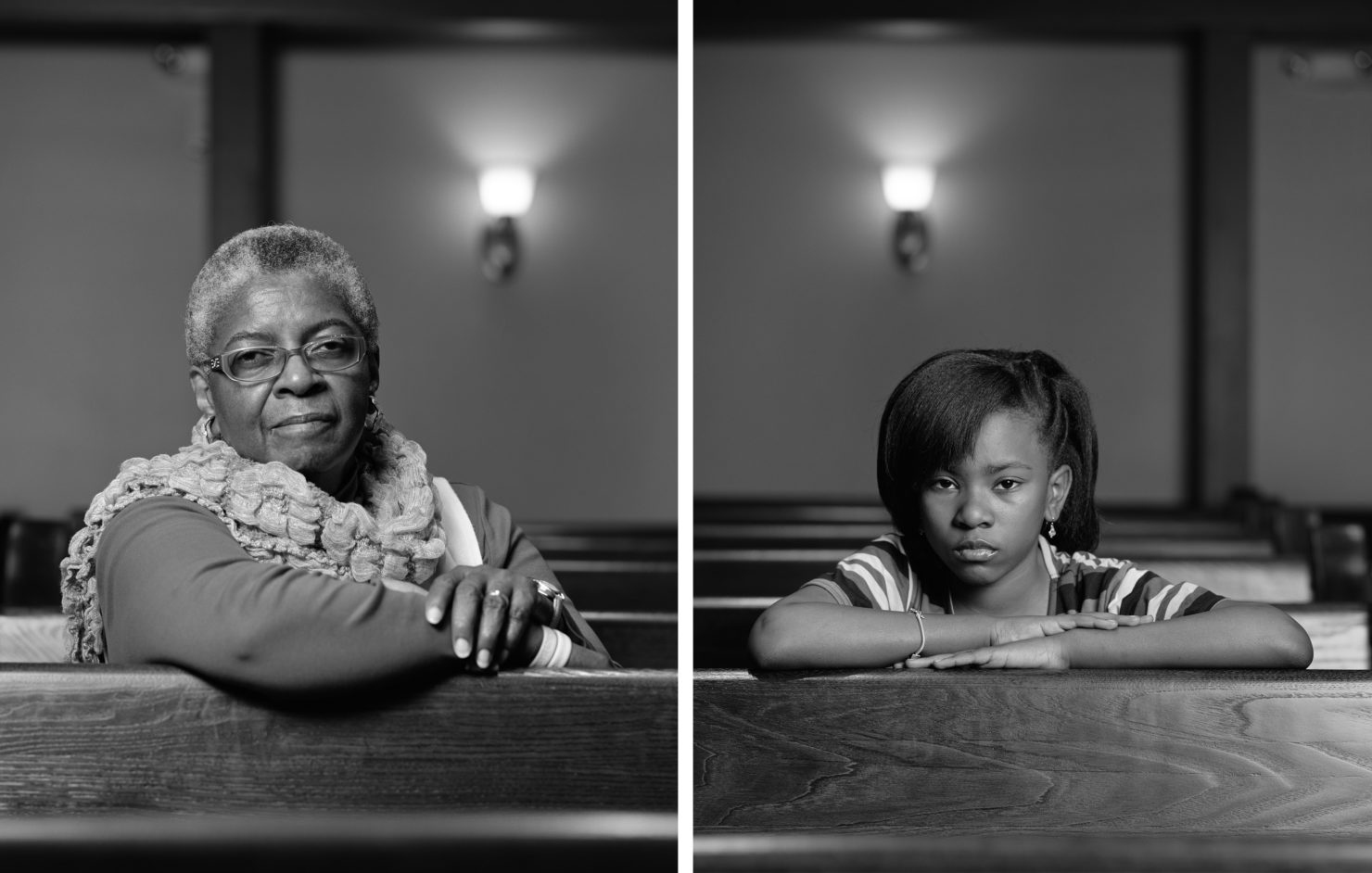
Dawoud Bey (American, b. 1953) 'Braxton McKinney and Lavone Thomas, Birmingham, AL' 2012


Dawoud Bey (American, b. 1953)
Braxton McKinney and Lavone Thomas, Birmingham, AL
2012
From The Birmingham Project
Pigmented inkjet prints
40 × 32 in. each (101.6 × 81.3cm each)
Rennie Collection, Vancouver
© Dawoud Bey


6

The Birmingham Project

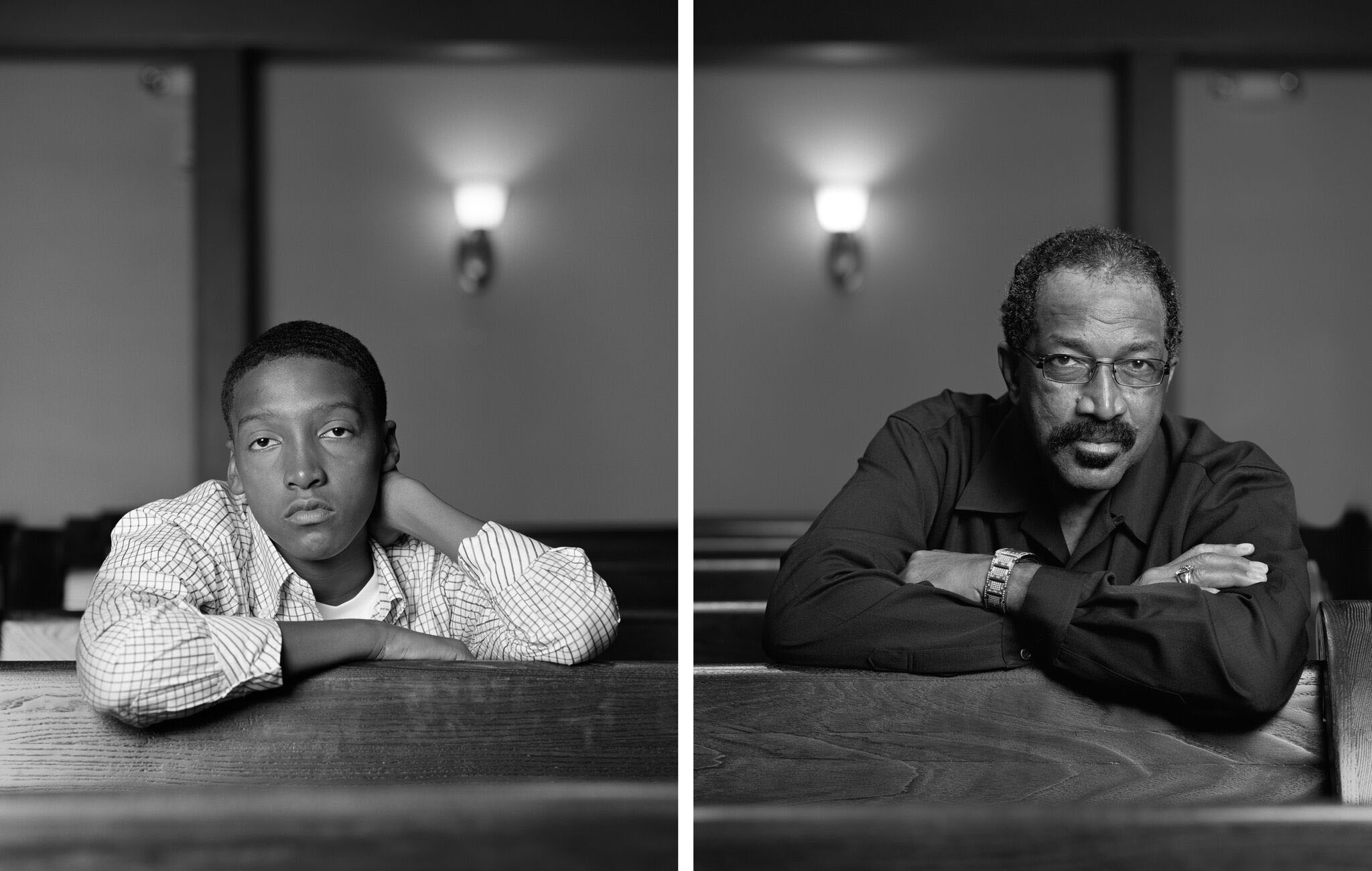
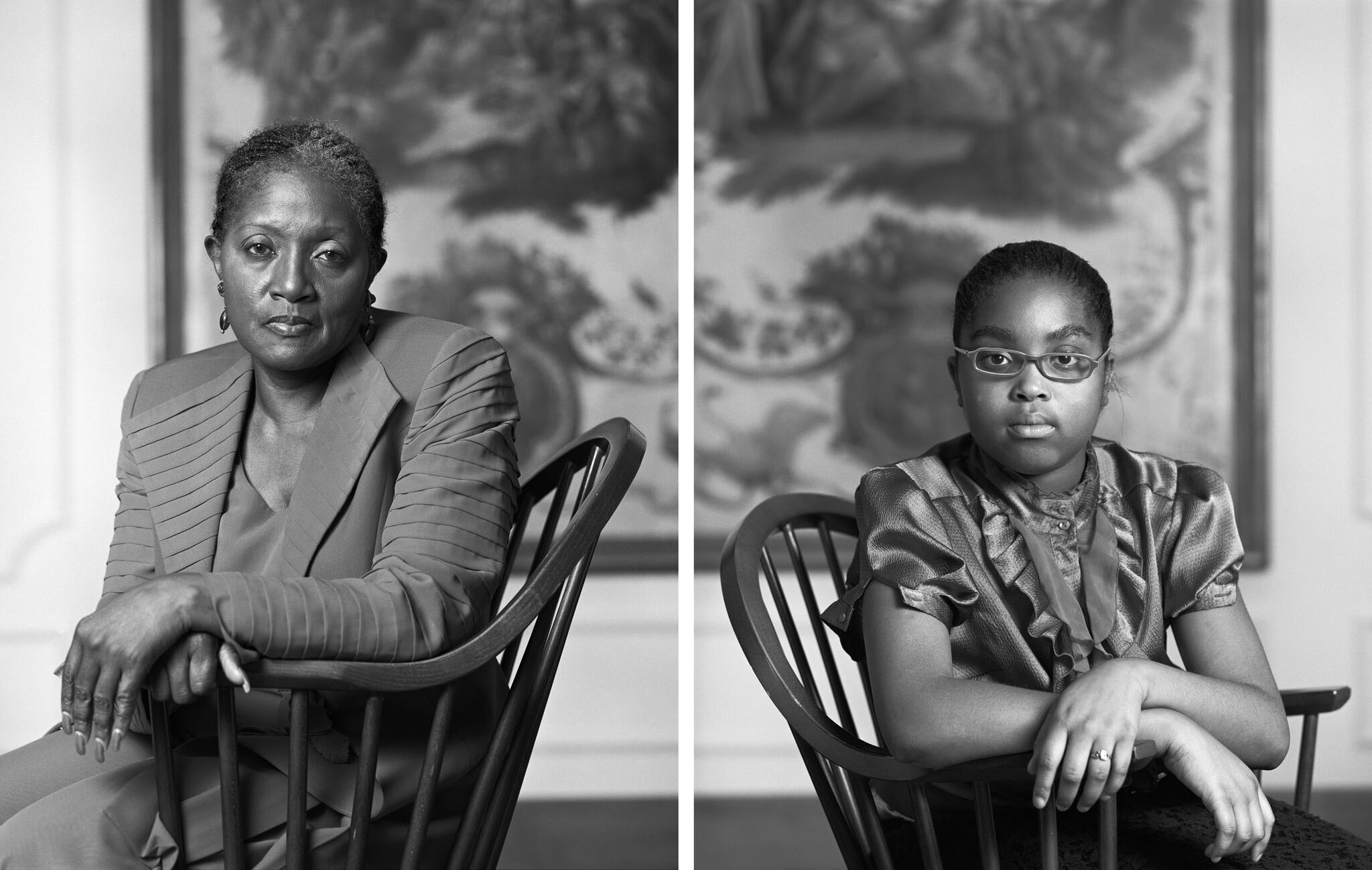
On September 15, 1963, the Ku Klux Klan bombed the 16th Street Baptist Church in Birmingham, Alabama, murdering four Black girls – Addie Mae Collins, Denise McNair, Carole Robertson, and Cynthia Wesley – inside. Two Black boys – Johnny Robinson and Virgil Ware – were also killed in racially motivated violence later that day. Bey’s series The Birmingham Project (2012) commemorated the fiftieth anniversary of this horrific event. The artist made formal portraits of Birmingham residents, pairing children the same ages as the victims with adults fifty years older – the ages the victims would have been had they lived.

Bey said of the experience making these works: “To think of someone striking such a young life down with impunity is a renewed horror each time a young person sits in front of my camera. To see the older men and women, having lived rich full lives, reminds me constantly of the tragically abbreviated lives of those six young people.” Bey made the portraits in two locations: Bethel Baptist Church, an early headquarters for the civil rights movement in Birmingham, and the Birmingham Museum of Art, which in 1963 was a segregated space that admitted Black visitors only one day a week. The resulting works both honour the tragic loss of the six children and make plain the continued impact of violence, trauma, and racism.


Dawoud Bey (American, b. 1953) 'Betty Selvage and Faith Speights, Birmingham, AL' 2012


Dawoud Bey (American, b. 1953)
Betty Selvage and Faith Speights, Birmingham, AL
2012
From The Birmingham Project
Pigmented inkjet prints
40 × 32 in. each (101.6 × 81.3cm each)
Rennie Collection, Vancouver
© Dawoud Bey


Installation view of 'Dawoud Bey: An American Project' (Whitney Museum of American Art, New York, April 17-October 3, 2021) showing grom left to right, from The Birmingham Project: Braxton McKinney and Lavon Thomas, 2012; Betty Selvage and Faith Speights, 2012; Jean Shamburger and Kyrian McDaniel, 2012


Installation view of Dawoud Bey: An American Project (Whitney Museum of American Art, New York, April 17 – October 3, 2021). From left to right, from The Birmingham Project: Braxton McKinney and Lavon Thomas, 2012; Betty Selvage and Faith Speights, 2012; Jean Shamburger and Kyrian McDaniel, 2012. Photograph by Ron Amstutz


Installation view of 'Dawoud Bey: An American Project' (Whitney Museum of American Art, New York, April 17-October 3, 2021) showing 'Mathis Menefee and Cassandra Griffin', from 'The Birmingham Project', 2012


Installation view of Dawoud Bey: An American Project (Whitney Museum of American Art, New York, April 17 – October 3, 2021). Mathis Menefee and Cassandra Griffin, from The Birmingham Project, 2012. Photograph by Ron Amstutz


Room 103 Mathis Menefee and Cassandra Griffin


Dawoud Bey (American, b. 1953) 'Mathis Menefee and Cassandra Griffin, Birmingham, AL' 2012


Dawoud Bey (American, b. 1953)
Mathis Menefee and Cassandra Griffin, Birmingham, AL
2012
From The Birmingham Project
Pigmented inkjet prints
40 × 64 in. each (101.6 × 162.56cm each)
Rennie Collection, Vancouver
© Dawoud Bey


Dawoud Bey (American, b. 1953) 'West 124th Street and Lenox Avenue, NY' 2016, printed 2019


Dawoud Bey (American, b. 1953)
West 124th Street and Lenox Avenue, NY
2016, printed 2019
From Harlem Redux
Pigmented inkjet print
40 3/8 × 48 1/4 × 2 in. overall (102.6 × 122.6 × 5.1cm)
Collection of the artist; courtesy Sean Kelly Gallery, New York; Stephen Daiter Gallery, Chicago; and Rena Bransten Gallery, San Francisco
© Dawoud Bey


7

Harlem Redux

In 2014, Bey began the series of which this work is a part, Harlem Redux. It marked a return to the neighbourhood, where four decades earlier he had made his first critically acclaimed body of work, Harlem, U.S.A. If the earlier series is a love letter to the historic epicentre of Black community and culture in the United States, Harlem Redux (2014-17) is an incisive and elegiac look at its recent, rapid transformation and gentrification. Bey used a medium-format camera and made the pictures large scale and in colour, techniques common to contemporary photography practices, in order to signal that these changes are taking place now, and not in a historical moment.

This series commemorates sites of cultural significance in Harlem – such as the legendary jazz club the Lenox Lounge, which was demolished not long after Bey’s photograph was made – and makes evident the impacts of otherwise invisible socioeconomic forces. In his words, Harlem is now a neighbourhood “increasingly defined by a sense of ‘erase and replace’, wherein pieces of social and cultural history, along with memory itself, are routinely discarded.”


Dawoud Bey (American, b. 1953) 'Young Man, West 127th Street, Harlem, NY' 2015, printed 2019


Dawoud Bey (American, b. 1953)
Young Man, West 127th Street, Harlem, NY
2015, printed 2019
From Harlem Redux
Pigmented inkjet print
40 3/8 × 48 1/4 × 2 in. overall (102.6 × 122.6 × 5.1cm)
Collection of the artist; courtesy Sean Kelly Gallery, New York; Stephen Daiter Gallery, Chicago; and Rena Bransten Gallery, San Francisco
© Dawoud Bey


Room 801 Girls, Ornaments, and Vacant Lot


Dawoud Bey (American, b. 1953) 'Girls, Ornaments, and Vacant Lot, NY' 2016, printed 2019


Dawoud Bey (American, b. 1953)
Girls, Ornaments, and Vacant Lot, NY
2016, printed 2019
From Harlem Redux
Pigmented inkjet print
40 3/8 × 48 1/4 × 2 in. (102.6 × 122.6 × 5.1cm)
Collection of the artist; courtesy Sean Kelly Gallery, New York; Stephen Daiter Gallery, Chicago; and Rena Bransten Gallery, San Francisco
© Dawoud Bey


Dawoud Bey (American, b. 1953) 'Untitled #21 (Farmhouse and Picket Fence II)' 2017


Dawoud Bey (American, b. 1953)
Untitled #21 (Farmhouse and Picket Fence II)
2017
from Night Coming Tenderly, Black
Gelatin silver print
44 × 54 5/8 in. (111.8 × 138.7cm)
Whitney Museum of American Art, New York; purchase, with funds from the Photography Committee, in honour of Sondra Gilman
© Dawoud Bey


8

Night Coming Tenderly, Black

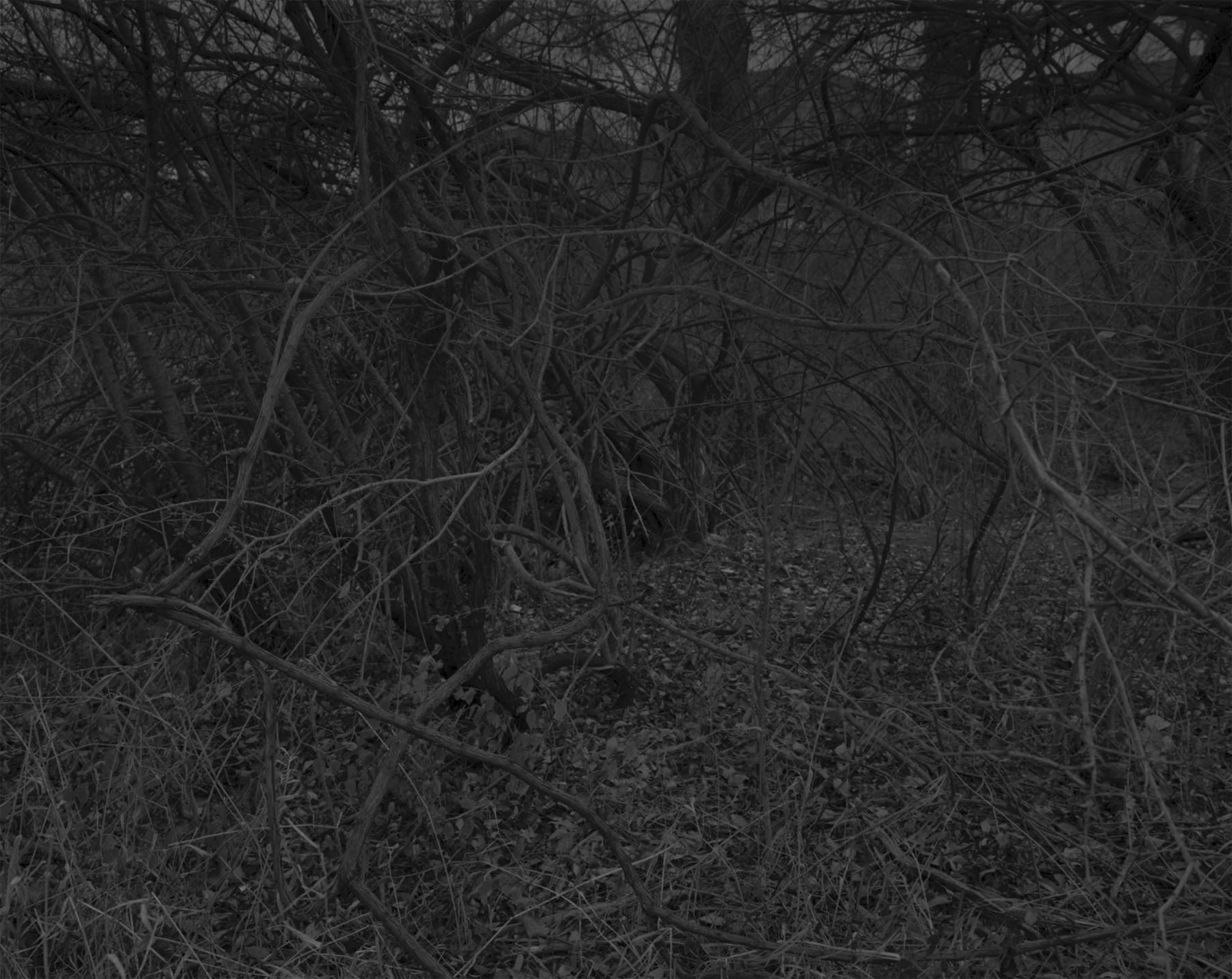
Bey’s most recent work imagines the flight of enslaved Black Americans along the leg of the Underground Railroad that operated in Ohio – the last fifty or so miles before they reached the vast expanse of Lake Erie, on the other side of which lay Canada, and freedom. As a covert network of safe houses and churches, the sites of the Underground Railroad were by necessity secret. Bey’s photographs suggest the experience of the journey and the landscapes and buildings that may have provided protection along the way. Night Coming Tenderly, Black (2017) marks the first time in his career that Bey turned completely to landscape photography, removing the presence of the figure entirely.

Nonetheless, the images imply the perspective of the individuals whose invisibility was requisite for their safety. Their large scale and rich black tones invite the viewer to engage their own body in the act of looking, taking time for their eyes to adjust and moving around to register the entirety of each image. The series pays homage to two Black American artists, the photographer Roy DeCarava and the poet Langston Hughes. DeCarava’s influence can be seen in the lush and protective darkness of the prints, while the project’s title is drawn from the final couplet of Hughes’s “Dream Variations”: “Night coming tenderly / Black like me.”


Dawoud Bey (American, b. 1953) 'Untitled #24 (At Lake Erie)' 2017


Dawoud Bey (American, b. 1953)
Untitled #24 (At Lake Erie)
2017
from Night Coming Tenderly, Black
Gelatin silver print
48 × 55 in. (121.9 × 139.7cm)
Whitney Museum of American Art, New York; purchase, with funds from the Photography Committee, in honour of Sondra Gilman
© Dawoud Bey


Room 806 Untitled #25 (Lake Erie and Sky)


Dawoud Bey (American, b. 1953) 'Untitled #25 (Lake Erie and Sky)' 2017


Dawoud Bey (American, b. 1953)
Untitled #25 (Lake Erie and Sky)
2017
From Night Coming Tenderly, Black
Gelatin silver print
44 × 55 in. (111.8 × 139.7cm)
San Francisco Museum of Modern Art; Accessions Committee Fund purchase
© Dawoud Bey


Whitney Museum of American Art
99 Gansevoort Street
New York, NY 10014
Phone: (212) 570-3600

Opening hours:
Mondays: 10.30am – 6pm
Tuesdays: Closed
Wednesdays, Thursdays, Saturdays and Sundays: 10.30am – 6pm
Friday: 10.30am – 10pm

Whitney Museum of American Art website

LIKE ART BLART ON FACEBOOK

Back to top

Exhibition: ‘Mary Ellen Mark: Girlhood’ at the National Museum of Women in the Arts, Washington

Exhibition dates: 3rd March – 8th August, 2021


Mary Ellen Mark (American, 1940-2015) 'Tashara and Tanesha Reese, Twins Days Festival, Twinsburg, Ohio' 1998 (printed later) from the exhibition 'Mary Ellen Mark: Girlhood' at the National Museum of Women in the Arts, Washington, March - August, 2021


Mary Ellen Mark (American, 1940-2015)
Tashara and Tanesha Reese, Twins Days Festival, Twinsburg, Ohio
1998 (printed later)
Gelatin silver print
20 x 24 in.
National Museum of Women in the Arts, Gift of Robert and Kathi Steinke; Photo by Lee Stalsworth
© Mary Ellen Mark / The Mary Ellen Mark Foundation


I have always liked Mary Ellen Mark’s work.

Photographing subjects living outside of mainstream society, there is something of the spirit of Diane Arbus present in her photographs (see Tashara and Tanesha Reese, Twins Days Festival, Twinsburg, Ohio 1998, above) but pushed further, photographed with more sensitivity and compassion for subject matter.

As a photographer Mark blends into the background leaving her subjects to speak for themselves. Intimate moments, abandoned youths, institutionalised patients and child prostitutes are all documented with a sensitive eye. She does not judge.

Her work is not about developing novels ways of representation. As an artist it is not always about being “fashionable” or “contemporary” or coming up with new ways to represent things. With her subjects comfortable in her presence and before her lens, she records what she sees. She lets her subjects tell their own stories.

Sumeja Tulic states that the photograph Falkland Road, Mumbai, India (1978, below) “leaves one uncomfortable at the sight of girls and women performing their sexuality before her lens.” I don’t feel uncomfortable, do you?

I understand the circumstances of the photograph, I feel sadness that this is happening, I feel anger that this girl has to sell her body to men to survive. I feel the injustice of the world. I want there to be fairness and equity in the world not men controlling women… and I feel the empathy of the photographer towards her subject.

“I don’t like to photograph children as children,” Mark said. “I like to see them as adults, as who they really are. I’m always looking for the side of who they might become.”

Through her vision we might be able to access some of the many paths that life may take: from teen runaway to sex worker, to drug addict, to mother of ten.

Unbounded steps on the precious path of life.

Dr Marcus Bunyan


Many thankx to the National Museum of Women in the Arts for allowing me to publish the photographs in the posting. Please click on the photographs for a larger version of the image.


Mary Ellen Mark (American, 1940-2015) 'Emine Dressed Up for Republic Day. Trabzon, Turkey' Nd from the exhibition 'Mary Ellen Mark: Girlhood' at the National Museum of Women in the Arts, Washington, March - August, 2021


Mary Ellen Mark (American, 1940-2015)
Emine Dressed Up for Republic Day. Trabzon, Turkey
Nd
Gelatin silver print
© Mary Ellen Mark/The Mary Ellen Mark Foundation


In 1965, Mark was awarded a Fulbright Scholarship to photograph in Turkey. She took this portrait in the courtyard of Emine’s home. Mark gave minimal direction, encouraging the girl to pose herself. With a hand on her hip, Emine mimics an older teen, but her unbuckled, dirt-stained shoes and hair loosening from its bow reveal markers of childhood. Calling this “the first strong photograph I made,” Mark captured a young girl’s eagerness to grow up.


Mary Ellen Mark (American, 1940-2015) 'Women and Children in a Doorway, Mexico' 1965


Mary Ellen Mark (American, 1940-2015)
Women and Children in a Doorway, Mexico
1965
Vintage gelatin silver print
11 x 14 in.
National Museum of Women in the Arts, Gift of Jill and Jeffrey Stern
© Mary Ellen Mark / The Mary Ellen Mark Foundation
Photo by Lee Stalsworth


Mary Ellen Mark (American, 1940-2015) 'Laurie in the Bathtub, Ward 81, Oregon State Hospital, Salem, Oregon' 1976 (printed later)


Mary Ellen Mark (American, 1940-2015)
Laurie in the Bathtub, Ward 81, Oregon State Hospital, Salem, Oregon
1976 (printed later)
Gelatin silver print
20 x 24 in.
National Museum of Women in the Arts, Gift of Susan and Earl Cohen
© Mary Ellen Mark / The Mary Ellen Mark Foundation
Photo by Lee Stalsworth


In 1975, Mark visited the hospital in which Milos Forman’s film One Flew Over the Cuckoo’s Next (1975) was being shot, on assignment for The Pennsylvania Gazette. The living conditions inside Women’s Ward 81 greatly affected Mark, and she returned a year later, living inside the facility for 36 days. During this time, she made a body of work about the institutionalised patients. The exhibition includes one of these photographs: a girl, Laurie, submerged in a bathtub [featured image]. Her hair rests on the bathtub’s rim, and her eyes gaze out at Mark. The photograph excludes the institutional surroundings, transforming the frame into a scene of deceptive domesticity.

Text from Sumeja Tulic. “Mary Ellen Mark’s distinct depictions of girlhood reflect the diverse realities of that word,” on the 1854 website March 2021 [Online] Cited 03/04/2021.


Mark approached her subjects with sensitivity and compassion. While photographing on the set of the film One Flew Over the Cuckoo’s Nest (1975), shot at the Oregon State Hospital, Mark encountered young women living in a high-security ward for patients considered dangerous to themselves or others. Interested in getting to know the residents, Mark gained temporary permission to live in an adjacent ward. Laurie’s open expression in this portrait reveals little of the institutional environment, as Mark strove to capture the women’s inner selves beyond their diagnoses.


Mary Ellen Mark (American, 1940-2015) 'Girl Jumping over a Wall, Central Park. New York City' Nd


Mary Ellen Mark (American, 1940-2015)
Girl Jumping over a Wall, Central Park. New York City
Nd
Gelatin silver print
© Mary Ellen Mark / The Mary Ellen Mark Foundation


Mary Ellen Mark (American, 1940-2015) 'Falkland Road, Mumbai, India' 1978


Mary Ellen Mark (American, 1940-2015)
Falkland Road, Mumbai, India
1978
Dye transfer print
20 x 24 in.
National Museum of Women in the Arts, Gift of Jean Rossall
© Mary Ellen Mark / The Mary Ellen Mark Foundation


Mark was not always successful in challenging stereotypes or developing novel ways of representation. An image depicting a woman applying lipstick to the lips of a girl sitting on a bed in a dimly-lit room is a jarring example of this. There is synchronicity between the unbuttoned buttons on the girl’s dress and her slightly open mouth. Mark’s caption states that she made the photograph in a brothel, where villagers brought the girl after her husband left her. The image is part of Falkland Road (1981), a book about sex workers in Bombay, India. Although Mark invested deeply in making the series, the work leaves one uncomfortable at the sight of girls and women performing their sexuality before her lens.

Text from Sumeja Tulic. “Mary Ellen Mark’s distinct depictions of girlhood reflect the diverse realities of that word,” on the 1854 website March 2021 [Online] Cited 03/04/2021.


Mark spent three months photographing the brothels that line Falkland Road in Mumbai, India. Though she typically worked in black and white, for this project she used colour film. The vibrant saturation of the jewel-toned walls, curtains, and clothing heightens the intensity of this somber scene in which a teenage sex worker is made up for a client. Mark portrayed each of her subjects with dignity and empathy. Her photographs called international attention to the injustices faced by these overlooked young women.


Mary Ellen Mark (American, 1940-2015) 'Jeanette and Victor, Brooklyn, New York' 1979 (printed later)


Mary Ellen Mark (American, 1940-2015)
Jeanette and Victor, Brooklyn, New York
1979 (printed later)
Gelatin silver print
16 x 20 in.
National Museum of Women in the Arts, Gift of Shaun Lucas
© Mary Ellen Mark / The Mary Ellen Mark Foundation
Photo by Lee Stalsworth


This portrait of Jeanette and her boyfriend, Victor, captures the tenderness of young love. Mark met fifteen-year-old Jeanette when she was five months pregnant. Several times a week for the remainder of the teen’s pregnancy, Mark visited and photographed the couple and their families in Brooklyn, eventually documenting the birth of their daughter. “Photographing Jeanette was a great learning experience for me,” Mark said. “I learned that you can capture more intimate moments by blending into the background.”


Mary Ellen Mark (American, 1940-2015) 'Runaway Girls on Pike Street, Seattle, Washington' 1983


Mary Ellen Mark (American, 1940-2015)
Runaway Girls on Pike Street, Seattle, Washington
1983
Vintage gelatin silver print
16 x 20 in.
National Museum of Women in the Arts, Gift of Robert and Kathi Steinke
© Mary Ellen Mark / The Mary Ellen Mark Foundation


In 1983, Mark traveled to Seattle to document runaway and abandoned youths living on the streets for Life magazine. That assignment became the basis for Streetwise, a photographic series and film documenting the challenges, complexities, and occasional joys in the lives of these children and teenagers. Many of the youths Mark photographed in Seattle fled violent homes or were forced to the streets by poverty. In this image, two girls rest against a graffitied wall on Pike Street, a popular gathering place for the city’s homeless youth.


An icon of modern photography, Mary Ellen Mark (American, 1940-2015) created compassionate and candid portraits of subjects living outside of mainstream society. From street children in Seattle to circus performers in India, Mark captured the lives and stories of individuals with empathy, humour, and candour. Through the lens of her camera, she cut through social and societal barriers to champion overlooked communities in the United States, India, Mexico, the former Soviet Union, and other countries.

Mary Ellen Mark: Girlhood examines Mark’s depictions of girls and young women living in a variety of circumstances around the globe. While Mark photographed people from all walks of life, she was particularly interested in children. “I don’t like to photograph children as children,” Mark said. “I like to see them as adults, as who they really are. I’m always looking for the side of who they might become.”

Made possible by a recent donation from the Photography Buyers Syndicate of more than 160 Mary Ellen Mark works, this presentation includes approximately 30 photographs that span the artist’s 50-year career – from her earliest work in Turkey in the 1960s to images taken on Polaroid film in the early 2000s. Mary Ellen Mark: Girlhood highlights some of the artist’s best-known series, including “Prom,” “Streetwise,” and “Twins,” offering viewers an intriguing glimpse into the artist’s wondrous and uncanny vision of girlhood.

Text from the National Museum of Women in the Arts website


Mary Ellen Mark (American, 1940-2015) 'Classroom, Kiev, Ukraine' 1987 (printed later)


Mary Ellen Mark (American, 1940-2015)
Classroom, Kiev, Ukraine
1987 (printed later)
Gelatin silver print
16 x 20 in.
National Museum of Women in the Arts, Gift of Robert and Kathi Steinke
© Mary Ellen Mark / The Mary Ellen Mark Foundation


Mary Ellen Mark (American, 1940-2015) 'Lakeisha, South Dallas' 1988 (printed later)


Mary Ellen Mark (American, 1940-2015)
Lakeisha, South Dallas
1988 (printed later)
Gelatin silver print
20 x 16 in.
National Museum of Women in the Arts, Gift of Robert and Kathi Steinke
© Mary Ellen Mark / The Mary Ellen Mark Foundation
Photo by Lee Stalsworth


Mary Ellen Mark (American, 1940-2015) 'Child Acrobat with Two Children in Peacock Costumes, Great Royal Circus, Himmatnagar, India' 1989 (printed later)


Mary Ellen Mark (American, 1940-2015)
Child Acrobat with Two Children in Peacock Costumes, Great Royal Circus, Himmatnagar, India
1989 (printed later)
Gelatin silver print
16 x 20 in.
National Museum of Women in the Arts, Gift of Jill and Jeffrey Stern
© Mary Ellen Mark / The Mary Ellen Mark Foundation


In 1968, during her first visit to India, Mark encountered the Indian circus. Her photographs of the events hint at strange and wondrous sights – including this fantastically costumed trio – but focus on the performers in their down time. Mark said, “I wanted to document the lives of the people when they weren’t performing… If I had photographed from the audience’s point of view, I would have just been a spectator.”


Mary Ellen Mark (American, 1940-2015) 'Batman and Little Barbies at the Toys "R" Us Holiday Parade, New York' 2002 (printed later)


Mary Ellen Mark (American, 1940-2015)
Batman and Little Barbies at the Toys “R” Us Holiday Parade, New York
2002 (printed later)
Gelatin silver print
20 x 16 in.
National Museum of Women in the Arts, Gift of Susan and Earl Cohen
© Mary Ellen Mark / The Mary Ellen Mark Foundation
Photo by Lee Stalsworth


Mary Ellen Mark (American, 1940-2015) 'Idesha and Mikayla Preston, 8 Years Old, Idesha Older by 10 Minutes, Twinsburg, Ohio' 2002


Mary Ellen Mark (American, 1940-2015)
Idesha and Mikayla Preston, 8 Years Old, Idesha Older by 10 Minutes, Twinsburg, Ohio
2002
Polaroid
28 1/4 x 22 in.
National Museum of Women in the Arts, Gift of Susan and Earl Cohen
© Mary Ellen Mark / The Mary Ellen Mark Foundation


Mary Ellen Mark (American, 1940-2015) 'Ursula Phillips and Gregg Whitlock Jr., Malcolm X Shabazz Prom' 2006


Mary Ellen Mark (American, 1940-2015)
Ursula Phillips and Gregg Whitlock Jr., Malcolm X Shabazz Prom
2006
Polaroid
28 1/4 x 22 in.
National Museum of Women in the Arts, Gift of Frieder K. Hofmann
© Mary Ellen Mark / The Mary Ellen Mark Foundation


Mary Ellen Mark (American, 1940-2015) 'Lucas Nathan and Grace Bush-Vineberg, Palisades Charter High School Prom, Los Angeles, California' 2008


Mary Ellen Mark (American, 1940-2015)
Lucas Nathan and Grace Bush-Vineberg, Palisades Charter High School Prom, Los Angeles, California
2008
Polaroid
28 1/4 x 22 in.
National Museum of Women in the Arts, Gift of Robert and Kathi Steinke
© Mary Ellen Mark / The Mary Ellen Mark Foundation


From 2006 to 2009, Mark traveled the United States documenting high school proms. A rite of passage for American teens, the prom symbolises an impending transition to adulthood. Mark’s subjects exhibit a range of reactions; some pose seriously with their dates, while others affect more playful mannerisms. Mark used a six-foot-high, 240-pound Polaroid 20 x 24 Land Camera for these portraits. As with the smaller, more familiar Polaroid instant cameras, each shot produces just one unique print with no negative.


Mary Ellen Mark (American, 1940-2015) 'J'Lisa Looks Through the Blinds, Streetwise Revisited' Nd


Mary Ellen Mark (American, 1940-2015)
J’Lisa Looks Through the Blinds, Streetwise Revisited
Nd
Gelatin silver print
© Mary Ellen Mark / The Mary Ellen Mark Foundation


The exhibition also includes one photograph, which Mark took the year before her death. In J’Lisa Looks Through the Blinds (2014), a child gazes through broken window blinds. The subject is the daughter of Erin Blackwell, better known as, Tiny. Mark first photographed Tiny in 1983 while working on her most influential body of work, Streetwise. When Mark met Tiny, she was a teen sex worker. By the end of Mark’s life, Tiny was a mother of 10 children and a recovered drug addict. Streetwise also became a film in 1984, documenting runaway children living on the streets of Seattle.

Text from Sumeja Tulic. “Mary Ellen Mark’s distinct depictions of girlhood reflect the diverse realities of that word,” on the 1854 website March 2021 [Online] Cited 03/04/2021.


Mark often took personal interest in those she met and photographed, and in some instances she formed lasting connections with her subjects. Mark’s involvement with Erin Blackwell (nicknamed “Tiny”) began in 1983 while filming the Streetwise (1984) documentary, when the girl was just thirteen. Over the next thirty-two years, Mark documented Tiny’s transition from teen runaway to sex worker, to drug addict, to mother of ten. In this image, Tiny’s daughter J’Lisa peers out of a window, her expression brimming with anticipation and skepticism.


National Museum of Women in the Arts
1250 New York Ave., NW
Washington, DC 20005

Opening hours:
Exhibition hours
Monday – Saturday 10am – 5pm
Sunday 12 – 5pm

National Museum of Women in the Arts website

LIKE ART BLART ON FACEBOOK

Back to top

Exhibition: ‘Dawoud Bey: An American Project’ at the High Museum of Art, Atlanta

Exhibition dates: 7th November, 2020 – 14th March, 2021

Curator: Sarah Kennel, the High’s Donald and Marilyn Keough Family curator of photography


Dawoud Bey (American, b. 1953) 'A Man in a Bowler Hat, Harlem, NY, 1976' 1976 from the exhibition 'Dawoud Bey: An American Project' at the High Museum of Art, Atlanta, Nov 2020 - March 2021


Dawoud Bey (American, b. 1953)
A Man in a Bowler Hat, Harlem, NY, 1976
1976
Gelatin silver print
© Dawoud Bey


Early in his career, Bey realised the importance of collaborating with his subjects to make a picture that would also serve as a dialogue between artist and subject: “I wanted to photograph this man in the bowler hat who was talking to a group of three friends and I had no idea how to interrupt their conversation in order to do so. This is when I first realised that it wasn’t just about the photograph; it was also about establishing a relationship out of which comes the photograph.”


I have always admired artists who have a social conscience, who investigate their subject matter with intelligence, empathy and insight.

I have always admired artist who examine their subject matter from different perspectives, turning the diamond of the world in light, to probe the moral and existential questions of existence.

I have always admired artists who develop their practice, never repeating for the sake of it the same constructs over and over – from a lack of imagination, to be successful, or to follow the money trail.

One such artist is Dawoud Bey.

From formal to informal portraiture, through conceptual “bodies”, Bey’s work visualises Black American history in the present moment, not by using the trope of reusing colonial photographs or memorabilia, but by presenting afresh the history of injustice enacted on a people and a culture, picturing their ongoing pain and disenfranchisement – in the here and now – through powerful and deeply political photographs. As the press release observes, Bey “has used his camera to create poignant meditations on visibility, race, place, and American history.”

“His art is grounded in the concept of citizenship, community and belonging, and especially in centring the experiences and histories of Black Americans at the forefront of our culture. His photographs actively work to provide space, voice and visibility for communities who have long been excluded from dominant narratives, especially in institutions like museums.”

From his early street photographs through the later large format Polaroid work and on to the conceptual series, Bey’s photographs have an engaging directness and candour to them. There are no photographic or subjective histrionics here, just immensely rich social documentary photographs that speak truth to subject. The subjects stare directly at the camera and reveal themselves with a poignant honesty.

The series that affected me most deeply was The Birmingham Project.

“On September 15, 1963, the Ku Klux Klan dynamited the 16th Street Baptist Church in Birmingham, Alabama, murdering four African American girls inside. Two Black boys were also killed later that same day in the violence that ensued. Bey’s series The Birmingham Project commemorated the fiftieth anniversary of this horrific event, rendering it painfully immediate. Bey made formal portraits of Birmingham children the same ages as the victims and adults fifty years older – the ages the victims would have been had they lived. He then paired the photographs in diptychs that both honour the community’s unthinkable loss and make tangible the continued impact of racism, violence, and trauma in the present.”

All the suffering, all the ongoing pain and misery of an unfair world was, to me, wrapped up in these unforgettable images. The violence against other human beings, against people of difference 50 years ago brought into the present. Thinking about what these people could have achieved in the world, what life they would have led, what they would have looked like. Photography transcending time and space, Bey intelligently bringing past into present future. As Bey says, “I wanted to give those young people a more tangible, less-mythic, palpable presence… I wanted to figure out how to show the passage of time and the tragic loss of possibility.”

In my imagination I try to construct this tragic loss of possibility through the agency of Bey’s photographs. They produce sadness, anger, and empathy in me. They bring the possibility of change to the forefront of my mind, and an acknowledgment that we can all do better, that the world must do better. And that experience is a powerful thing.

Dr Marcus Bunyan.


Many thankx to the High Museum of Art for allowing me to publish the photographs in the posting. Please click on the photographs for a larger version of the image.


“I’ve come to believe that the best works tend to result not from the imposition of an idea on a situation, but to be responsive to what’s going on once you get there.”

“How can one visualise African American history and make that history resonate in the contemporary moment?”


Dawoud Bey


“Dreams are spaces that do not yet exist, except by escape through an unknown night.”


Anna Mirzayan


“I Never Had White Folks That Was Good To Me, EVER… We all worked jest like dogs and had about half enough to eat and got whupped for everything. Our days was a constant misery to us… My old Master was Dave Giles, the meanest man that ever lived. He didn’t have many slaves, my mammy, and me, and my sister, Uncle Bill, and Truman. He had owned my grandma but he give her a bad whupping and she never did git over it and died. We all done as much work as a dozen niggers – we knowed we had to. I seen old Master git mad at Truman and he buckled him down across a barrel and whupped him till he cut the blood out of him and then he rubbed salt and pepper in the raw places. It looked like Truman would die it hurt so bad. I know that don’t sound reasonable that a white man in a Christian community would do such a thing but you can’t realise how heartless he was. People didn’t know about it and we dassent tell for we knowed he’d kill us if we did. You must remember he owned us body and soul and they wasn’t anything we could do about it. Old Mistress and her three girls was mean to us too. One time me and my sister was spinning and old Mistress went to the well-house and she found a chicken snake and killed it. She brought it back and she throwed it around my sister’s neck. She jest laughed and laughed about it. She thought it was a big joke. Old Master stayed drunk all the time. I reckon that is the reason he was so fetched mean. My, how we hated him! He finally killed hisself drinking and I remember Old Mistress called us in to look at him in his coffin. We all marched by him slow like and I jest happened to look up and caught my sister’s eye and we both jest natchelly laughed – Why shouldn’t we? We was glad he was dead. It’s a good thing we had our laugh fer old Mistress took us out and whupped us with a broomstick. She didn’t make us sorry though.”


Annie Hawkins, formerly enslaved Afrikan who was sold from Georgia to Texas. This interview was done in Colbert, Oklahoma where her and her family moved after emancipation. Interview, conducted Spring, 1937 with a date stamp of August 16, 1937. Ms. Hawkins was 90 years old at the time of the interview and what she relates occurred in Texas. Source: Library of Congress


Since the beginning of his career in the 1970s, Dawoud Bey (American, b. 1953) has used his camera to create poignant meditations on visibility, race, place, and American history. From early street portraits made in Harlem to a recent series imagining an escape from slavery on the Underground Railroad, Bey explores photography’s potential to reveal communities and stories that have been underrepresented or even unseen. Both a form of personal expression and an act of political responsibility, Bey’s art insists on the power of photography to transform stereotypes, convene communities, and create dialogue.

Dawoud Bey: An American Project traces these through lines across the forty-five years of Bey’s career and his profound engagement with the young Black subject and African American history. The title intentionally inserts his photographs into a long-running conversation about what it means to represent America with a camera. The questions of who is considered an American photographer, or simply an American, and whose story is an American story are particularly urgent today. Bey’s work offers a potent corrective to the gaps in our picture of American society and history – and an emphatic reminder of the ongoing impact of those omissions.


Dawoud Bey on visualising history

Photographer Dawoud Bey’s work grapples with history. The artist asks, “How can one visualise African American history and make that history resonate in the contemporary moment?” Here he discusses several series, sited from Harlem to Birmingham to the Underground Railroad routes of northeastern Ohio, each of which works to make histories visible.


Dawoud Bey: An American Project – Part 1


Dawoud Bey (American, b. 1953) 'A Boy in Front of the Loew's 125th Street Movie Theater, Harlem, NY, 1976' 1976 from the exhibition 'Dawoud Bey: An American Project' at the High Museum of Art, Atlanta, Nov 2020 - March 2021


Dawoud Bey (American, b. 1953)
A Boy in Front of the Loew’s 125th Street Movie Theater, Harlem, NY, 1976
1976
Gelatin silver print
© Dawoud Bey


The Street

Bey’s landmark black-and-white 1975-78 series “Harlem, USA” documents portraits and street scenes with locals of the historic neighbourhood in New York. As a young man growing up in Queens, Bey was intrigued by his family’s history in Harlem, where his parents met and where he visited family and friends throughout childhood. The series premiered at the Studio Museum in Harlem in 1979, when Bey was just 26.


Dawoud Bey (American, b. 1953) 'A Woman at Convent Avenue Baptist Church, Harlem, NY, 1977' 1977


Dawoud Bey (American, b. 1953)
A Woman at Convent Avenue Baptist Church, Harlem, NY, 1977
1977
Gelatin silver print
11 x 14 inches
Image courtesy of the artist and Stephen Daiter Gallery, Chicago
© Dawoud Bey


In his hands, portraiture conveys contradiction – diffident joy, resistant sorrow – and tells the truth.


Dawoud Bey (American, b. 1953) 'Three Women at a Parade, Harlem, NY, 1978' 1978


Dawoud Bey (American, b. 1953)
Three Women at a Parade, Harlem, NY, 1978
1978
Gelatin silver print
© Dawoud Bey


“His art is grounded in the concept of citizenship, community and belonging, and especially in centring the experiences and histories of Black Americans at the forefront of our culture. His photographs actively work to provide space, voice and visibility for communities who have long been excluded from dominant narratives, especially in institutions like museums.”


Dawoud Bey (American, b. 1953) 'Two Boys at a Handball Court, Syracuse, NY, 1985' 1985


Dawoud Bey (American, b. 1953)
Two Boys at a Handball Court, Syracuse, NY, 1985
1985
Gelatin silver print
© Dawoud Bey


Throughout the 1980s, Bey continued to use a handheld 35 mm camera. This lightweight apparatus allowed him to respond intuitively and quickly to whatever captivated his eye, and his photographs during this time reflect his knowledge of contemporary street photography and his growing interest in capturing flux, movement, and the play of light and shadow. Although he continued to photograph people, he moved away from formal portraiture, instead endeavouring to capture individuals in more spontaneous ways.


Dawoud Bey (American, b. 1953) 'Clothes Drying on the Line, Syracuse, NY, 1985' 1985


Dawoud Bey (American, b. 1953)
Clothes Drying on the Line, Syracuse, NY, 1985
1985
Gelatin silver print
20 x 24 inches
Image courtesy of the artist and Stephen Daiter Gallery, Chicago
© Dawoud Bey


Dawoud Bey (American, b. 1953) 'Combing Hair, Syracuse, NY, 1986' 1986


Dawoud Bey (American, b. 1953)
Combing Hair, Syracuse, NY, 1986
1986
Gelatin silver print
© Dawoud Bey


In 1985, during a residency at Light Work, a photography nonprofit affiliated with Syracuse University, New York, Bey photographed the city’s African American community. For him, it was both a political and aesthetic choice: “By then I felt that was part of my agenda: to make the African American subject a visible and resonant presence through my photographs […] it was as much about making a certain kind of photograph, and operating within a certain tradition, as it was a deliberate choice to foreground the black subject […] giving them a place … on the wall of galleries and museums.”


Dawoud Bey (American, b. 1953) 'A Woman at Fulton Street and Washington Avenue, Brooklyn, NY, 1988' 1988


Dawoud Bey (American, b. 1953)
A Woman at Fulton Street and Washington Avenue, Brooklyn, NY, 1988
1988
Gelatin silver print
© Dawoud Bey


By the end of the 1980s, Bey had thoroughly digested the lessons of working spontaneously with a small camera and desired to work in a way that would allow him to engage more directly with his subjects. He began to make formal “street portraits” with a large-format (4 × 5-inch) camera and Polaroid Type 55 film, which produced both instant pictures that he gave to the sitters and negatives that he used to make large-scale, highly detailed prints that could be enlarged to create monumental portraits. Bey was increasingly ambivalent about the ethics of traditional documentary photography and sought more equitable, reciprocal relationships with his sitters. He began to approach the strangers he wished to portray openly and deliberately, giving, as he writes, “the black subjects [a space] to assert themselves and their presence in the world, with their gaze meeting the viewer’s on equal footing.”


Dawoud Bey (American, b. 1953) 'A Young Man Resting on an Exercise Bike, Amityville, NY, 1988' 1988


Dawoud Bey (American, b. 1953)
A Young Man Resting on an Exercise Bike, Amityville, NY, 1988
1988
Gelatin silver print
© Dawoud Bey


Dawoud Bey (American, b. 1953) 'A Young Girl Striking A Pose, Brooklyn, NY, 1988' 1988


Dawoud Bey (American, b. 1953)
A Young Girl Striking A Pose, Brooklyn, NY, 1988
1988
Gelatin silver print
© Dawoud Bey


Dawoud Bey (American, b. 1953) 'A Young Man with Buttons Brooklyn NY 1988' 1988


Dawoud Bey (American, b. 1953)
A Young Man with Buttons Brooklyn NY 1988
1988
Gelatin silver print
© Dawoud Bey


Dawoud Bey (American, b. 1953) 'A Young Woman Coming from the Store, Rochester, NY 1989' 1989


Dawoud Bey (American, b. 1953)
A Young Woman Coming from the Store, Rochester, NY 1989
1989
Gelatin silver print
© Dawoud Bey


Dawoud Bey (American, b. 1953) 'A Young Man with His Hair Brush, Rochester, NY 1989' 1989


Dawoud Bey (American, b. 1953)
A Young Man with His Hair Brush, Rochester, NY 1989
1989
Gelatin silver print
© Dawoud Bey


Dawoud Bey (American, b. 1953) 'Alfonso, Washington, DC, 1989' 1989


Dawoud Bey (American, b. 1953)
Alfonso, Washington, DC, 1989
1989
Gelatin silver print
© Dawoud Bey


Dawoud Bey (American, b. 1953) 'A Woman Wearing Denim, Rochester, NY 1989' 1989


Dawoud Bey (American, b. 1953)
A Woman Wearing Denim, Rochester, NY 1989
1989
Gelatin silver print
© Dawoud Bey


Dawoud Bey (American, b. 1953) 'A Man with a Towel, Brooklyn, NY 1989' 1989


Dawoud Bey (American, b. 1953)
A Man with a Towel, Brooklyn, NY 1989
1989
Gelatin silver print
© Dawoud Bey


Dawoud Bey (American, b. 1953) 'Poppy Brooklyn, NY, 1989' 1989


Dawoud Bey (American, b. 1953)
Poppy, Brooklyn, NY, 1989
1989
Gelatin silver print
© Dawoud Bey


Dawoud Bey (American, b. 1953) 'A Girl Holding a Hotdog and Gum, Brooklyn, NY, 1989' 1989


Dawoud Bey (American, b. 1953)
A Girl Holding a Hotdog and Gum, Brooklyn, NY, 1989
1989
Gelatin silver print
© Dawoud Bey


Dawoud Bey (American, b. 1953) 'A Couple in Prospect Park, Brooklyn, NY, 1990' 1990


Dawoud Bey (American, b. 1953)
A Couple in Prospect Park, Brooklyn, NY, 1990
1990
Gelatin silver print
© Dawoud Bey


Few images of tenderness have such resounding power as this lush portrait of a young, stylish couple embracing in Brooklyn’s Prospect Park. Note how perfectly their bodies fit together as he relaxes his shoulders, allowing her to easily wrap her arms around him protectively, declaring with the upward tilt of her chin and her direct gaze at us that they are together, united in love. Pictures as openly intimate as this one emerged from Bey’s deep and abiding interest in “wanting to describe the Black subject in a way that’s as complex as the experiences of anyone else.”


Dawoud Bey (American, b. 1953) 'Two Girls from a Marching Band, Harlem, NY, 1990' 1990


Dawoud Bey (American, b. 1953)
Two Girls from a Marching Band, Harlem, NY, 1990
1990
Gelatin silver print
Courtesy of the artist, Sean Kelly Gallery, Stephen Daiter Gallery, and Rena Bransten Gallery
© Dawoud Bey


For more than four decades, renowned photographer Dawoud Bey has created powerful and tender photographs that portray underrepresented communities and explore African American history. From portraits in Harlem and classic street photography to nocturnal landscapes and large-scale studio portraits, his works combine an ethical imperative with an unparalleled mastery of his medium. The High Museum of Art celebrates his important contributions to photography as the exclusive Southeast venue for Dawoud Bey: An American Project, the artist’s first full career retrospective in 25 years.

Co-organised by the San Francisco Museum of Modern Art (SFMOMA) and the Whitney Museum of American Art, New York, the exhibition features approximately 80 works that span the breadth of Bey’s career, from his earliest street portraits made in Harlem in the 1970s to his most recent series reimagining sites of the Underground Railroad (2017).

The High has enjoyed a long and fruitful relationship with Bey, who was commissioned in 1996 for the Museum’s inaugural “Picturing the South” series, which asks noted photographers to turn their lens toward the American South. For his project, Bey collaborated with Atlanta high school students to create empathetic, larger-than-life portraits. Made with the monumental 20-by-24-inch Polaroid camera, these photographs explore the complexity of adolescence as a time of critical identity formation and expand the concept of portraiture. The High now holds more than 50 photographs by Bey, one of the most significant museum collections of his work.

“Bey’s portraits are remarkable for their keen sensitivity and for how they elicit and honour their subjects’ sense of self, which is partly an outcome of the artist’s collaborative practice,” remarked Sarah Kennel, the High’s Donald and Marilyn Keough Family curator of photography. “Given the museum’s long relationship with Bey and the strength of our holdings, we are thrilled to present this important retrospective. We look forward to sharing the artist’s photographs and his powerful and moving reflections on African American history and identity in their country with our visitors.”

Bey, born in 1953 in Queens, New York, began to develop an interest in photography as a teenager. He received his first camera as a gift from his godmother in 1968, and the next year, he saw the exhibition “Harlem on My Mind” at The Metropolitan Museum of Art. Widely criticised for its failure to include significant numbers of artworks by African Americans, the exhibition’s representation of Black subjects nonetheless made an impression on Bey and inspired him to develop his own documentary project about Harlem in 1975. Since that time, he has worked primarily in portraiture, making tender, psychologically rich and direct portrayals, often in collaboration with his subjects. More recently, he has explored seminal moments in African American history through both portraiture and landscape.

Dawoud Bey: An American Project includes work from the artist’s eight major series and is organised to reflect the development of Bey’s vision throughout his career and to highlight his enduring engagement with portraiture, place and history.

Press release from The High Museum of Art


Installation view of the exhibition 'Dawoud Bey: An American Project' at the High Museum of Art, Atlanta

Installation view of the exhibition 'Dawoud Bey: An American Project' at the High Museum of Art, Atlanta


Installation views of the exhibition Dawoud Bey: An American Project at the High Museum of Art, Atlanta.
Images courtesy of the artist and High Museum. Photos by Mike Jensen.


Dawoud Bey


Dawoud Bey
Photo: Sean Kelly Gallery


About Dawoud Bey

Dawoud Bey was born in Queens, New York, and began his career as a photographer in 1975 with a series of photographs, Harlem, USA, that were later exhibited in his first solo exhibition at the Studio Museum in Harlem in 1979.

Since then his work has been featured in exhibitions at numerous institutions worldwide, including the Addison Gallery of American Art, Andover, Massachusetts; the Art Institute of Chicago; the Brooklyn Museum; the Detroit Institute of Arts; the Fogg Museum, Harvard University; the High Museum of Art, Atlanta; the Museum of Contemporary Art, Chicago; the Museum of Contemporary Photography (MoCP), Chicago; the National Gallery of Art, Washington, D.C.; and the Walker Art Center, Minneapolis, among many others.

His photographs are represented in collections worldwide, and his critical writings on photography have appeared in numerous publications and exhibition catalogues. Bey received the prestigious MacArthur “Genius” fellowship in 2017 and is also the recipient of fellowships from the Guggenheim Foundation and the National Endowment for the Arts. He holds a Master of Fine Arts degree from Yale University and is currently Professor of Art and a Distinguished College Artist at Columbia College Chicago, where he has taught since 1998.


Dawoud Bey (American, b. 1953) 'Gerard, Edgewater High School, Orlando, FL, 2003' 2003


Dawoud Bey (American, b. 1953)
Gerard, Edgewater High School, Orlando, FL, 2003
2003
Inkjet print
© Dawoud Bey


Behind his Class Pictures series:

“It was a sort of snapshot of America through its young people at that particular moment. I started working in Chicago, then to New York, California and Florida. I wanted it to be geographically representative of the country. I’ve always been acutely aware that photographs tell you a lot less than what they do tell you. There’s certain things you would never know just from looking at them. You wouldn’t know from a portrait if someone is an only child, whether they have siblings, who their parents are. There’s a lot of information outside of a photograph. For Class Pictures, I thought that was important to bring that information into the construct of work and to create a space of self-representation. The young people who I photographed could give a sense of who they were.”

Summer Evans. “Photographer Dawoud Bey Shines A Light On America’s Underrepresented Communities,” on the WABE website Nov 18, 2020 [Online] Cited 01/03/2021


Dawoud Bey (American, b. 1953) 'Usha, Gateway High School, San Francisco, CA, 2006' 2006


Dawoud Bey (American, b. 1953)
Usha, Gateway High School, San Francisco, CA, 2006
2006
Inkjet print
© Dawoud Bey


Bey has long understood that the act of representation – as well as the corollary act of being seen – is both powerful and deeply political. In this series, he once again turned his attention to teenagers, a population he felt was underrepresented and misjudged, seen either as “socially problematic or as engines for a certain consumerism.” Class Pictures (2001-2006) originated during a residency at the Smart Museum of Art in Chicago, where Bey began working with local high school students. He later expanded it to capture a geographically and socioeconomically diverse slice of American adolescence.

Working in empty classrooms between class periods, Bey made formal colour portraits of teens that attend, carefully and tenderly, to their gestures and expressions. He also invited them to write brief autobiographical statements, giving his subjects visibility as well as voice. Class Pictures can also be understood as a play on words, for in several cases, Bey chose to photograph students at elite private schools as well as teens from nearby, poorer neighbourhoods, bringing together these subjects in a single space.


Dawoud Bey (American, b. 1953) 'Don Sledge and Moses Austin' 2012


Dawoud Bey (American, b. 1953)
Don Sledge and Moses Austin
2012
From The Birmingham Project
Inkjet prints
Rennie Collection, Vancouver
© Dawoud Bey


On September 15, 1963, the Ku Klux Klan dynamited the 16th Street Baptist Church in Birmingham, Alabama, murdering four African American girls inside. Two Black boys were also killed later that same day in the violence that ensued. Bey’s series The Birmingham Project commemorated the fiftieth anniversary of this horrific event, rendering it painfully immediate. Bey made formal portraits of Birmingham children the same ages as the victims and adults fifty years older – the ages the victims would have been had they lived. He then paired the photographs in diptychs that both honour the community’s unthinkable loss and make tangible the continued impact of racism, violence, and trauma in the present.


Dawoud Bey (American, b. 1953) 'Mary Parker and Caela Cowan' 2012


Dawoud Bey (American, b. 1953)
Mary Parker and Caela Cowan
2012
From The Birmingham Project
Inkjet prints
Rennie Collection, Vancouver
© Dawoud Bey


“Together the sitters for The Birmingham Project are simultaneously surrogates, mourners, witnesses, community, and agents of their own narratives. These subjects, then are not symbols but flesh and bone.”


In 2012, the project was created as a commission from the Birmingham Museum of Art. It memorialises the victims of the 1963 bombing of the 16th Street Baptist Church in Birmingham. Four African-American girls were killed in the bombing, and two boys were later killed in riots that followed.

“I decided to make portraits of young African-Americans in Birmingham who were the exact same ages as those six young people who had been killed that day. I wanted to give those young people a more tangible, less-mythic, palpable presence.” Bey continues, “It still felt somewhat complete. I wanted to figure out how to show the passage of time and the tragic loss of possibility. Then, I started thinking about making portraits of African-Americans in Birmingham who were the ages of the six young people would have been their age today. I begun pairing those portraits with those young people, which embodied 50 years.”

Summer Evans. “Photographer Dawoud Bey Shines A Light On America’s Underrepresented Communities,” on the WABE website Nov 18, 2020 [Online] Cited 01/03/2021


Night Coming Tenderly, Black

Dawoud Bey’s large-scale photographs dive into art and literary history while trying to re-create the experience of slaves fleeing on the Underground Railroad.

“I consider myself to be making photographs both in conversation with the history of photography and also the history of Black representation within photography. I wanted to use what I learned early on from looking at photographs by Irving Penn, Richard Avedon, Walker Evans and Mike Disfarmer – along with what I learned from Roy DeCarava, who was African American – and apply all of that to my own African American subjects as I began to build my vocabulary of picture-making. Because I’m African American myself, and because so few representations of African Americans are made from inside that experience, I set out to make that my space, to make work that operated at the level of those other photographs but with Black subjects, since those were the people I knew best. I also wanted to add something to the history of Black expressive culture. …

Night Coming Tenderly, Black continues my interest in visualising African American history by visualising the past in the contemporary moment. It takes as its conceptual touchstones the photographs of DeCarava, which are about the Black subject and often printed very darkly, some almost black. The blackness of his prints is a very beautiful and materially lush blackness. And the Black subjects inhabit this wonderful material darkness in a way that is not foreboding but is beautiful.” ~ Dawoud Bey


Dawoud Bey. ‘Untitled #1 (Picket Fence and Farmhouse)’ 2017


Dawoud Bey (American, b. 1953)
Untitled #1 (Picket Fence and Farmhouse)
2017
From the series Night Coming Tenderly, Black
Gelatin silver print
© Dawoud Bey


The photographs in this series are some of the most sensual and layered. These are sights that are at first confining then liberating when you understand them through the lens of history.

In their grandeur and mystery, they transform houses masked in darkness, bodies of water, and fields into an emblematic hope. A pristine fencepost and a homestead visible through the haze of the darkness; a wetland glistening in nightfall; a jungle thick with small trees; an image of Lake Erie, with the expansive sky and horizon forewarning the freedom that lies beyond.


The Underground Railroad

Night Coming Tenderly, Black contains 25 large-scale images of homesteads with wooded or grassy grounds that are believed to have formed the part of the said Underground Railroad. The Underground Railroad is an actual invisible web of routes and safe houses believed to have made the final way station for more than 100,000 fugitive slaves escaping to Canada. But according to the artist himself, some of the images may be of actual Underground Railroad.

The meaning of the title

This series is also a tribute to poet Langston Hughes (1901-1967) and photographer Roy DeCarava (1919-2009), who each played significant roles in addressing the experience of African Americans by representing what DeCarava described as a world shaped by blackness. Bey was inspired by DeCarava’s incredible ability to print a spectrum of dark hues, making him picture landscapes of twilight uncertainty.

On the other hand, Hughes Langston wrote a poem titled Dream Variations in 1926, in which he yearned for a time when the black American worker, extremely tired by the daily hustle of hard labor and prejudice, might be truly free. However, this freedom, he imagined, would not be obtained in the glare of daylight, but instead under the ominous, protective cover of the night.

Upending a dominant literary conceit, blackness, rather than whiteness, functioned as an allegory for hope and transcendence. A night coming tenderly, black like me, (Hughes poem), helped the fight for racial equality and justice. The metaphor in the poem is central to Dawoud Bey’s series Night Coming Tenderly, Black.

Influenced by Roy DeCarava

Bey has never stopped waxing lyrical on the influence of the two figures that inspired his artistic career, especially Roy DeCarava, who was one of the most prominent photographers of his generation. The images he took were visually rich and redolent, and they pushed the aesthetic limits of photography…

Dawoud Bey noted that DeCarava’s images were characteristically printed in dark and rich colour range. In this context, the dark prints served as a symbol for black subjects and experience. Bey says:

“DeCarava used blackness as an affirmative value, as a kind of beautiful blackness through which his subjects both moved and emerged. His work was formative to my own thinking early on, and these dark landscapes are a kind of material conversation with his work, using the darkness of the landscape and the photographic print as an evocative space of blackness through which the unseen and imaginary black fugitive subject is moving.” …

The artist printed these images in a large size to encase the viewer and deliberately dark to reveal his subject matter: He took the photos of the sites in and near Cleveland associated with the Underground Railroad that guided the slaves to liberation.

Anonymous. “Dawoud Bey’s somber ‘Night Coming Tenderly, Black’ project,” on the Public Delivery website  January 30, 2021 website [Online] Cited 02/03/2021


Dawoud Bey (American, b. 1953) 'Untitled #11 (Bent Branches)' 2017


Dawoud Bey (American, b. 1953)
Untitled #11 (Bent Branches)
2017
From the series Night Coming Tenderly, Black
Gelatin silver print
© Dawoud Bey


Dawoud Bey (American, b. 1953) 'Untitled #12 (The Marsh)' 2017


Dawoud Bey (American, b. 1953)
Untitled #12 (The Marsh)
2017
From the series Night Coming Tenderly, Black
Gelatin silver print
© Dawoud Bey


“I ranged far and wideout there since there were expansive rural landscapes that looked as they might have in the 18th and 19th centuries. The landscape and the history there have not been built over…

Some of the photographs, to the extent that we know, are actual Underground Railroad sites, and the majority of them are placed in the landscape that I identified in proximity to some of those locations, where I could make work that suggested the movement of fugitive slaves through the landscape…

I wanted the photographs to almost involuntarily pull you back to the experience of the landscape through which those fugitive black bodies were moving in the 19th century to escape slavery. So I had to learn, for the first time, how to make photographs in the kind of space…

It is a tender one, through which one moves. That is the space I imagined the fugitive black subjects moving through as they sought their self-liberation, moving through the dark landscape of America and Ohio toward freedom under cover of a munificent and blessed blackness.” ~ Dawoud Bey


Dawoud Bey (American, b. 1953) 'Untitled #14 (Site of John Brown's Tannery)' 2017


Dawoud Bey (American, b. 1953)
Untitled #14 (Site of John Brown’s Tannery)
2017
From the series Night Coming Tenderly, Black
Gelatin silver print
© Dawoud Bey


Dawoud Bey (American, b. 1953) 'Untitled #17 (Forest)' 2017


Dawoud Bey (American, b. 1953)
Untitled #17 (Forest)
2017
From the series Night Coming Tenderly, Black
Gelatin silver print
© Dawoud Bey


Bey’s most recent work imagines the flight of enslaved Black Americans along the leg of the Underground Railroad that operated in Ohio – the last fifty or so miles before they reached the vast expanse of Lake Erie, on the other side of which lay Canada, and freedom.


Dawoud Bey (American, b. 1953) 'Untitled #19 (Creek and Trees)' 2017


Dawoud Bey (American, b. 1953)
Untitled #19 (Creek and Trees)
2017
From the series Night Coming Tenderly, Black
Gelatin silver print
© Dawoud Bey


Behind his Night Coming Tenderly, Black series:

“The photographs are meant to imagine or reimagine the path of self-liberation in Northeastern Ohio along what is called the ‘Underground Railroad’. Formerly slaved Africans, and then African-Americans moved towards freedom by way of Lake Eerie in Ohio. I began to think about the fugitive moving through this tender space of blackness.”

Anonymous. “Dawoud Bey’s somber ‘Night Coming Tenderly, Black’ project,” on the Public Delivery website  January 30, 2021 website [Online] Cited 02/03/2021


Dawoud Bey (American, b. 1953) 'Untitled #20 (Picket Fence and Farmhouse I)' 2017


Dawoud Bey (American, b. 1953)
Untitled #20 (Picket Fence and Farmhouse I)
2017
From the series Night Coming Tenderly, Black
Gelatin silver print
© Dawoud Bey


The gelatin silver prints in Night Coming Tenderly, Black are moody and dim, overlaid with a sheen that is almost gritty in texture thanks to the coated paper they are printed on. The trees, fences, lakes, and buildings in the photos are initially obscured, purposefully made more difficult to see through Bey’s printing methods (which take advantage of the light sensitivity of silver particles as well as their ability to be chemically “toned” through the introduction of other substances). These images resist both reproduction and easy interpretation. That one also has to wait for one’s eyes to adjust to the darkness, before slowly traveling over the terrain of each picture, reminds the viewer that the formerly enslaved people who traversed these sites often did so under cover of darkness. Darkness here is multivalent: its obscuring power, which prevents viewers from immediately processing the whole of Bey’s photographs, aided formerly enslaved people in their escape. The Underground Railroad, as the artist has noted, occupies a semi-mythological place in American history, and some of the places Bey photographs are only cannot be confirmed to have been stops on the Railroad. Like the experience of slavery, these places are unrepresentable. They are half-shrouded locales that evade being captured on a map or in a photo.

Though these photographs are dark, they are shot in the daylight and processed in such a way as to make them initially appear to be taken at night. They bring to mind Hiroshi Sugimoto’s eerily beautiful “Seascapes” series (1980 – ongoing), which are shot at night, the film exposed for different lengths of time in order to reveal how light plays even after dark. Yet there is no analogous method for bringing night to the day. Bey may make his photos dark, but this is achieved through processing and glazing the finish image, which occurs after the initial act of taking the photograph. How can we account for Bey’s artificial night?

The philosopher François Laruelle’s 2011 book The Concept of Non-Photography suggests one answer to this question. In essence, Laruelle starts with the premise that works of art cannot and do not represent anything, be it objects, thoughts, concepts, or movements. He posits art as an entirely self-sufficient engagement with the world (which he calls the Real), independent even of viewer and creator. Art is a machine; the medium, processes, and even the artist are its materials. What art “shows,” Laurelle argues, is only the world according to itself – which he terms the world-in-painting, the world-in-photo, and so on. He turns to photography in part because of its connection to modern scientific advancement and its attempts literally to illuminate the world “objectively.” Non-photography aims to re-conceptualise the photographic flash, which Laruelle associates with the flash of logos or reason, as a form of potential insurrection against its traditional association with illumination, and against photography’s constant reproduction of the asymmetrical dichotomy between light and dark.

Anna Mirzayan. “”Artificial night”: on Dawoud Bey’s America,” on the Art Agenda website December 15 2020 [Online] Cited 01/03/2021


Dawoud Bey (American, b. 1953) 'Untitled #23 (Near Lake Erie)' 2017


Dawoud Bey (American, b. 1953)
Untitled #23 (Near Lake Erie)
2017
From the series Night Coming Tenderly, Black
Gelatin silver print
© Dawoud Bey


“I was thinking about this narrative of the Black subject — the unseen Black subject, in this case — a fugitive slave moving through the darkness of night,” Bey explains. “And that darkness of night being the kind of Black space that would lead to liberation.”


Dawoud Bey (American, b. 1953) 'Untitled #25 (Lake Erie and Sky)' 2017


Dawoud Bey (American, b. 1953)
Untitled #25 (Lake Erie and Sky)
2017
From the series Night Coming Tenderly, Black
Gelatin silver print
© Dawoud Bey


As a covert network of safe houses and churches, the sites of the Underground Railroad were by necessity secret, and Bey’s landscapes suggest, rather than document, the experience. Photographed by day but printed in shades of grey and black so deep they resemble nocturnes, the sensuous prints conjure a darkness at once ominous and lush. The series title, which is drawn from the last couplet of Langston Hughes’s poem “Dream Variations” (1926), suggests a black night that envelops the fugitives in a darkness that serves as a protective embrace: “Night coming tenderly / Black like me.”


The High Museum of Art
1280 Peachtree St NE
Atlanta, GA
30309

Opening hours:
Tuesday – Saturday 10am – 5pm
Sunday 12 – 5pm
Monday closed

The High Museum of Art website

LIKE ART BLART ON FACEBOOK

Back to top

Exhibition: Gordon Parks and “The Atmosphere of Crime” at the Museum of Modern Art (MoMA), New York

Collection 1940s-1970s, Room 409
From ‘New art from wall to wall’ ongoing

Please note: this posting contains disturbing images of murder and death. Please do not look if you are of a sensitive nature.


Gordon Parks (American, 1912-2006) 'Shooting Victim in Cook County Morgue, Chicago, Illinois' 1957 from the exhibition 'Gordon Parks and "The Atmosphere of Crime"' at the Museum of Modern Art (MoMA), New York, ongoing


Gordon Parks (American, 1912-2006)
Shooting Victim in Cook County Morgue, Chicago, Illinois
1957
Pigmented inkjet print, printed 2019
11 7/8 × 17 15/16″ (30.1 × 45.6cm)
The Museum of Modern Art, New York
The Family of Man Fund
© 2021 Gordon Parks Foundation


As you can imagine, with the tragic situation of the ongoing COVID-19 pandemic around the world at the moment, there are few photography exhibitions on view.

This selection of images comes from the collection 1940s-1970s at the Museum of Modern Art (MoMA) in an ongoing display. Please note that not all Gordon Parks photographs shown here are on display, but I include them to give the viewer an overview, a greater understanding of the breadth of photographs included in Parks’ cinematic photo-essay.

Can you imagine the fortitude of this man: “born into poverty and segregation in Fort Scott, Kansas, in 1912. An itinerant labourer, he worked as a brothel pianist and railcar porter, among other jobs, before buying a camera at a pawnshop, training himself and becoming a photographer. He evolved into a modern-day Renaissance man, finding success as a film director, writer and composer.” “The first Black member of the Farm Security Administration’s storied photo corps; the first Black photographer for the U.S. Office of War Information; the first Black photographer for Vogue; the first Black staff photographer at the weekly magazine Life; and, years later, the first Black filmmaker to direct a motion picture (Shaft) for a major Hollywood studio.” As a photographer he learnt his craft shooting dresses for department stores, taking portraits of society women in Chicago, and studying “the Depression-era images of photographers like Dorothea Lange”. Before joining them as a member of the FSA.

This body of work is remarkable for its non-judgemental gaze, a felt response to a subject which was an assignment for LIFE magazine: an objective reporter with a subjective heart as Parks proclaimed, one who had a certain kind of empathy, “expressing things for people who can’t speak for themselves… the underdogs… in that way I speak for myself.” Park’s photographic strategy was to use colour (rare and expensive in those days), and to close in on detail. Rarely if at all are there any mid to long shots in the photo-essay, placing the photograph in a particular location, the exception being the Untitled street scene under the Chicago “L” (short for “elevated”) rapid transit system and the night-time shot of an illuminated Alcatraz Island – remote, forbidding, isolated.

Photographed with candour – using low depth of field, silhouette, chiaroscuro, natural light, low light, night photography, no blur, little flash and challenging perspective, aesthetically a mixture of Dorothea Lange, Weegee and the colour images of Saul Leiter – other intimate images in the series create an “atmosphere” of everyday life on the streets and in the prisons, capturing how the disenfranchised, the desperate and the destitute are controlled and processed by force. “Parks coaxed his camera to record reality so vividly and compellingly that it would allow Life’s readers to see the complexity of these chronically oversimplified situations.” In Raiding Detectives, Chicago, Illinois (1957) we see two detectives of Italian descent raiding a dingy run-down tenement, busting the door open unannounced, guns drawn. In the photograph underneath in the posting, taken inside the oh so red room with floral curtains, one of the detectives questions a black suspect smoking a cigarette, while on the table covered with newspapers sits a burning candle probably providing the only illumination. Cowering in the shadows is a black women, almost unnoticed until you really look at the photograph. This is what abject poverty looks like. In another photograph, Untitled, New York, New York (1957), black and white men emerge from a police van – about the only time black and white men would have sat together in the segregated society of the time (other than being in prison). Can you imagine the atmosphere inside the paddy wagon, the looks, the conversation or lack of it?

Parks’ beautiful photographs, for they are that, include challenging depictions of death, drug use and nonchalantly displayed items such as guns and knuckledusters. Violence and the outcomes of it are an ever present theme in Parks’ documentation of the policing and criminalisation of marginalised people and communities. The photographs are frequently heartbreaking, such as the scars on the legs of a Black American; or devastating, such as the photograph Knifing Victim I (1957). Park’s compresses the space of the action, attacking the nitty gritty of the mise en scène but with no rush to judgement, just telling it how it is. As Sebastian Smee so eloquently observes, “If all of this were mere history – a series of episodes confined to the past – it would be one thing. But Parks’s photographs are alive to the many ways in which crime in the 1950s was a continuation of this legacy [of slavery, of lynching]. Sixty years after he took these photographs, it’s difficult to deny the conclusion that today’s crime-related inequities, from mass incarceration to police brutality, are likewise an extension of this racist legacy.”

And so it goes, both for the marginalised in America and for Indigenous Australians. “According to the U.S. Bureau of Justice Statistics (BJS) in 2018 Black males accounted for 34% of the total male prison population, white males 29%, and Hispanic males 24%” (Wikipedia) while the percentage of US population that is black is 14%. “As of September 2019, Aboriginal and Torres Strait Islander prisoners represented 28% of the total adult prisoner population, while accounting for 3.3% of the general population.” (Wikipedia)

Dr Marcus Bunyan


Many thankx to MoMA for allowing me to publish the photographs in posting. Please click on the photographs for a larger version of the image. All photographs are used for the purposes of education and research under fair use conditions.


“I’m an objective reporter with a subjective heart,” proclaimed Gordon Parks. “I can’t help but have a certain kind of empathy… It’s more or less expressing things for people who can’t speak for themselves… the underdogs… in that way I speak for myself.” For over half a century, from the 1940s to the 2000s, Gordon Parks captured American life with his powerful photographs. After getting his first camera at the age of 25, he used this “weapon of choice” to attack issues including racism, poverty, urban life, and injustice. He became the first African American staff photographer at Life magazine – an immensely influential platform in the golden age of photo-illustrated magazines that not only allowed his art to be seen by many but also brought a critical, nuanced and, importantly, a Black perspective to the stories and depictions that he shared. For a 1957 assignment, he crisscrossed the streets of New York, Chicago, Los Angeles, and San Francisco, producing vivid colour images addressing the perceived rise in crime in the US. This series, “The Atmosphere of Crime,” challenged stereotypical images of delinquency, drug use, and corruption.


Text from the Gordon Parks Foundation website


“I don’t know that there is any one thing called “the Black experience,” but the way ‘Life magazine’ used Gordon Parks’ photographs for me actually reinscribed some of those notions of Black pathology, such as a story about a gang member (who was actually a pretty normal young man) or extreme poverty and social disenfranchisement. Parks was a much more complex photographer than that, as we came to fully know after his death, but that’s how we came to know him through ‘Life magazine’.”


Dawoud Bey quoted in Gail O’Neill. “Q&A: How Dawoud Bey uses photography to amplify his voice in the world,” on the ‘ARTS ATL’ website November 6, 2020 [Online] Cited 01/03/2021


In 1957, Life staff photographer Gordon Parks traversed New York, Chicago, Los Angeles, and San Francisco capturing crime scenes, police precincts, and prisons for “The Atmosphere of Crime,” as his photo essay was titled when it appeared in the magazine. Rather than identify or label “the criminal,” Parks – a fierce advocate for civil rights and a firm believer in photography as a catalyst for change – documented the policing and criminalisation of marginalised people and communities.

Here, Parks’s series is presented in relation to a long history of picturing criminality. In the nineteenth century, mug shots relied on photography’s supposed objectivity as the basis of their value for identification and surveillance. In the twentieth, more sensational images of victims, raids, and arrests circulated in newspapers and tabloids. In contrast, Parks urges us to look beyond individual people and events, to consider the forces of state and police power that are inextricable from any history of crime – a lesson as essential now as ever.

Text from the MoMA website


Sarah Meister, curator in the Department of Photography, looks at images from Gordon Parks’s 1957 photo essay “The Atmosphere of Crime” (1957) and is moved by the power (and, sadly, continued relevance) of his ability to confront “the great social evils of his time” with an “incredible artistic sensibility.”


Gordon Parks (American, 1912-2006) 'Untitled, Chicago, Illinois' 1957 from the exhibition 'Gordon Parks and "The Atmosphere of Crime"' at the Museum of Modern Art (MoMA), New York, ongoing


Gordon Parks (American, 1912-2006)
Untitled, Chicago, Illinois
1957
Pigmented inkjet print, printed 2019
11 7/8 × 17 15/16″ (30.1 × 45.6cm)
The Museum of Modern Art, New York
The Family of Man Fund
© 2021 Gordon Parks Foundation


Closing in on a known criminal on Chicago’s South Side, police in a scout car check tensely by radio with headquarters. City lights rainbow the storm-splattered windshield as the car approaches the hideout.

Text from LIFE magazine, September 9, 1957, p. 46.


Gordon Parks (American, 1912-2006) 'Raiding Detectives, Chicago, Illinois' 1957


Gordon Parks (American, 1912-2006)
Raiding Detectives, Chicago, Illinois
1957
Pigmented inkjet print, printed 2019
11 7/8 × 17 15/16″ (30.1 × 45.6cm)
The Museum of Modern Art, New York
The Family of Man Fund
© The Gordon Parks Foundation


Gordon Parks (American, 1912-2006) 'Untitled, Chicago, Illinois' 1957


Gordon Parks (American, 1912-2006)
Untitled, Chicago, Illinois
1957
Pigmented inkjet print, printed 2019
11 7/8 × 17 15/16″ (30.1 × 45.6cm)
The Museum of Modern Art, New York
The Family of Man Fund
© 2021 Gordon Parks Foundation


Gordon Parks (American, 1912-2006) 'Drug Search, Chicago, Illinois' 1957


Gordon Parks (American, 1912-2006)
Drug Search, Chicago, Illinois
1957
Pigmented inkjet print, printed 2019
11 7/8 × 17 15/16″ (30.1 × 45.6cm)
The Museum of Modern Art, New York
The Family of Man Fund
© 2021 Gordon Parks Foundation


Gordon Parks (American, 1912-2006) 'Drug Search, Chicago, Illinois' 1957


Gordon Parks (American, 1912-2006)
Drug Search, Chicago, Illinois
1957
Pigmented inkjet print, printed 2019
11 7/8 × 17 15/16″ (30.1 × 45.6cm)
The Museum of Modern Art, New York
The Family of Man Fund
© 2021 Gordon Parks Foundation


Gordon Parks (American, 1912-2006) 'Untitled, Chicago, Illinois' 1957


Gordon Parks (American, 1912-2006)
Untitled, Chicago, Illinois
1957
Pigmented inkjet print, printed 2019
11 7/8 × 17 15/16″ (30.1 × 45.6cm)
The Museum of Modern Art, New York
The Family of Man Fund
© 2021 Gordon Parks Foundation


Gordon Parks (American, 1912-2006) 'Untitled, Chicago, Illinois' 1957


Gordon Parks (American, 1912-2006)
Untitled, Chicago, Illinois
1957
Pigmented inkjet print, printed 2019
13 3/4 × 21″ (35 × 53.3cm)
The Museum of Modern Art, New York
The Family of Man Fund
© 2021 Gordon Parks Foundation


Gordon Parks (American, 1912-2006) 'Untitled, Chicago, Illinois' 1957 (detail)


Gordon Parks (American, 1912-2006)
Untitled, Chicago, Illinois (detail)
1957
Pigmented inkjet print, printed 2019
13 3/4 × 21″ (35 × 53.3cm)
The Museum of Modern Art, New York
The Family of Man Fund
© 2021 Gordon Parks Foundation


Gordon Parks (American, 1912-2006) 'Untitled, Chicago, Illinois' 1957


Gordon Parks (American, 1912-2006)
Untitled, Chicago, Illinois
1957
Pigmented inkjet print, printed 2019
11 7/8 × 17 15/16″ (30.1 × 45.6cm)
The Museum of Modern Art, New York
The Family of Man Fund
© 2021 Gordon Parks Foundation


Gordon Parks (American, 1912-2006) 'Untitled, Chicago, Illinois' 1957


Gordon Parks (American, 1912-2006)
Untitled, Chicago, Illinois
1957
Pigmented inkjet print, printed 2019
11 7/8 × 17 15/16″ (30.1 × 45.6cm)
The Museum of Modern Art, New York
The Family of Man Fund
© 2021 Gordon Parks Foundation


Gordon Parks (American, 1912-2006) 'Untitled' 1957


Gordon Parks (American, 1912-2006)
Untitled, Chicago, Illinois
1957
Pigmented inkjet print, printed 2019
11 7/8 × 17 15/16″ (30.1 × 45.6cm)
The Museum of Modern Art, New York
The Family of Man Fund
© 2021 Gordon Parks Foundation


Gordon Parks (American, 1912-2006) 'Untitled, Chicago, Illinois' 1957


Gordon Parks (American, 1912-2006)
Untitled, Chicago, Illinois
1957
Pigmented inkjet print, printed 2019
11 7/8 × 17 15/16″ (30.1 × 45.6cm)
The Museum of Modern Art, New York
The Family of Man Fund
© 2021 Gordon Parks Foundation


Gordon Parks (American, 1912-2006) 'Narcotics Addict, Chicago, Illinois' 1957


Gordon Parks (American, 1912-2006)
Narcotics Addict, Chicago, Illinois
1957
Pigmented inkjet print, printed 2019
11 7/8 × 17 15/16″ (30.1 × 45.6cm)
The Museum of Modern Art, New York
The Family of Man Fund
© 2021 Gordon Parks Foundation


Gordon Parks (American, 1912-2006) 'Untitled, New York, New York' 1957


Gordon Parks (American, 1912-2006)
Untitled, New York, New York
1957
Pigmented inkjet print, printed 2019
13 3/4 × 21″ (35 × 53.3cm)
The Museum of Modern Art, New York
The Family of Man Fund
© 2021 Gordon Parks Foundation


Gordon Parks (American, 1912-2006) 'Untitled' 1957


Gordon Parks (American, 1912-2006)
Untitled
1957
Pigmented inkjet print, printed 2019
11 7/8 × 17 15/16″ (30.1 × 45.6cm)
The Museum of Modern Art, New York
The Family of Man Fund
© 2021 Gordon Parks Foundation


Gordon Parks (American, 1912-2006) 'San Quentin, California' 1957


Gordon Parks (American, 1912-2006)
San Quentin, California
1957
Pigmented inkjet print, printed 2019
11 7/8 × 17 15/16″ (30.1 × 45.6cm)
The Museum of Modern Art, New York
The Family of Man Fund
© 2021 Gordon Parks Foundation


Gordon Parks (American, 1912-2006) 'Untitled (Alcatraz Island), San Francisco, California' 1957


Gordon Parks (American, 1912-2006)
Untitled (Alcatraz Island), San Francisco, California
1957
Pigmented inkjet print, printed 2019
11 7/8 × 17 15/16″ (30.1 × 45.6cm)
The Museum of Modern Art, New York
The Family of Man Fund
© 2021 Gordon Parks Foundation


Gordon Parks: The Atmosphere of Crime 1957

Gordon Parks’ ethically complex depictions of crime in New York, Chicago, San Francisco, and Los Angeles, with previously unseen photographs.

When Life magazine asked Gordon Parks to illustrate a recurring series of articles on crime in the United States in 1957, he had already been a staff photographer for nearly a decade, the first African American to hold this position. Parks embarked on a six-week journey that took him and a reporter to the streets of New York, Chicago, San Francisco, and Los Angeles.

Unlike much of his prior work, the images made were in colour. The resulting eight-page photo-essay The Atmosphere of Crime was noteworthy not only for its bold aesthetic sophistication but also for how it challenged stereotypes about criminality then pervasive in the mainstream media. They provided a richly hued, cinematic portrayal of a largely hidden world: that of violence, police work and incarceration, seen with empathy and candour.

Parks rejected clichés of delinquency, drug use, and corruption, opting for a more nuanced view that reflected the social and economic factors tied to criminal behaviour and afforded a rare window into the working lives of those charged with preventing and prosecuting it. Transcending the romanticism of the gangster film, the suspense of the crime caper and the racially biased depictions of criminality then prevalent in American popular culture, Parks coaxed his camera to record reality so vividly and compellingly that it would allow Life‘s readers to see the complexity of these chronically oversimplified situations. The Atmosphere of Crime, 1957 includes an expansive selection of never-before-published photographs from Parks’ original reportage.

Anonymous. “Gordon Parks: The Atmosphere of Crime 1957,” on the Exibart Street website [Online] Cited 07/02/2021


Gordon Parks (American, 1912-2006) 'Crime Suspect with Gun, Chicago, Illinois' 1957


Gordon Parks (American, 1912-2006)
Crime Suspect with Gun, Chicago, Illinois
1957
Pigmented inkjet print, printed 2019
17 15/16 × 11 7/8″ (45.6 × 30.1cm)
The Museum of Modern Art, New York
The Family of Man Fund
© 2021 Gordon Parks Foundation


Gordon Parks (American, 1912-2006) 'Police Raid, Chicago, Illinois' 1957


Gordon Parks (American, 1912-2006)
Police Raid, Chicago, Illinois
1957
Pigmented inkjet print, printed 2019
17 15/16 × 11 7/8″ (45.6 × 30.1cm)
The Museum of Modern Art, New York
The Family of Man Fund
© 2021 Gordon Parks Foundation


Gordon Parks (American, 1912-2006) 'Untitled, Chicago, Illinois' 1957


Gordon Parks (American, 1912-2006)
Untitled, Chicago, Illinois
1957
Pigmented inkjet print, printed 2019
17 15/16 × 11 7/8″ (45.6 × 30.1cm)
The Museum of Modern Art, New York
The Family of Man Fund
© 2021 Gordon Parks Foundation


Gordon Parks (American, 1912-2006) 'Untitled' 1957


Gordon Parks (American, 1912-2006)
Untitled
1957
Pigmented inkjet print, printed 2019
17 15/16 × 11 7/8″ (45.6 × 30.1cm)
The Museum of Modern Art, New York
The Family of Man Fund
© 2021 Gordon Parks Foundation


Gordon Parks (American, 1912-2006) 'Untitled, New York, New York' 1957


Gordon Parks (American, 1912-2006)
Untitled, New York, New York
1957
Pigmented inkjet print, printed 2019
17 15/16 × 11 7/8″ (45.6 × 30.1cm)
The Museum of Modern Art, New York
The Family of Man Fund
© 2021 Gordon Parks Foundation


Gordon Parks (American, 1912-2006) 'Untitled, New York, New York' 1957


Gordon Parks (American, 1912-2006)
Untitled, New York, New York
1957
Pigmented inkjet print, printed 2019
11 7/8 × 17 15/16″ (30.1 × 45.6cm)
The Museum of Modern Art, New York
The Family of Man Fund
© 2021 Gordon Parks Foundation


Gordon Parks (American, 1912-2006) 'Untitled' 1957


Gordon Parks (American, 1912-2006)
Untitled
1957
Pigmented inkjet print, printed 2019
17 15/16 × 11 7/8″ (45.6 × 30.1cm)
The Museum of Modern Art, New York
The Family of Man Fund
© 2021 Gordon Parks Foundation


Gordon Parks (American, 1912-2006) 'Checking In Suspect, Chicago, Illinois' 1957


Gordon Parks (American, 1912-2006)
Checking In Suspect, Chicago, Illinois
1957
Pigmented inkjet print, printed 2019
17 15/16 × 11 7/8″ (45.6 × 30.1cm)
The Museum of Modern Art, New York
The Family of Man Fund
© 2021 Gordon Parks Foundation


Gordon Parks (American, 1912-2006) 'Detectives Grilling a Suspect, Chicago, Illinois' 1957


Gordon Parks (American, 1912-2006)
Detectives Grilling a Suspect, Chicago, Illinois
1957
Pigmented inkjet print, printed 2019
17 15/16 × 11 7/8″ (45.6 × 30.1cm)
The Museum of Modern Art, New York
The Family of Man Fund
© 2021 Gordon Parks Foundation


Gordon Parks (American, 1912-2006) 'Fingerprinting Addicts for Forging Prescription, Chicago, Illinois' 1957


Gordon Parks (American, 1912-2006)
Fingerprinting Addicts for Forging Prescription, Chicago, Illinois
1957
Pigmented inkjet print, printed 2019
17 15/16 × 11 7/8″ (45.6 × 30.1cm)
The Museum of Modern Art, New York
The Family of Man Fund
© 2021 Gordon Parks Foundation


Gordon Parks (American, 1912-2006) 'Untitled, Chicago, Illinois' 1957


Gordon Parks (American, 1912-2006)
Untitled, Chicago, Illinois
1957
Pigmented inkjet print, printed 2019
17 15/16 × 11 7/8″ (45.6 × 30.1cm)
The Museum of Modern Art, New York
The Family of Man Fund
© 2021 Gordon Parks Foundation


Gordon Parks (American, 1912-2006) 'Untitled' 1957


Gordon Parks (American, 1912-2006)
Untitled
1957
Pigmented inkjet print, printed 2019
The Museum of Modern Art, New York
The Family of Man Fund
© 2021 Gordon Parks Foundation


Gordon Parks (American, 1912-2006) 'Cops Bring In Knifing Victim, Chicago, Illinois' 1957


Gordon Parks (American, 1912-2006)
Cops Bring In Knifing Victim, Chicago, Illinois
1957
Pigmented inkjet print, printed 2019
21 × 13 3/4″ (53.3 × 35cm)
The Museum of Modern Art, New York
The Family of Man Fund
© 2021 Gordon Parks Foundation


A sidewalk puddle reflects a common tragedy. A police van drives up to a Chicago hospital’s emergency door with a knifing victim. Tired attendants, once compassionate, sit idly by.

Text from LIFE magazine, September 9, 1957


Gordon Parks (American, 1912-2006) 'Police Bring in Victim, Chicago, Illinois' 1957


Gordon Parks (American, 1912-2006)
Police Bring in Victim, Chicago, Illinois
1957
Pigmented inkjet print, printed 2019
The Museum of Modern Art, New York
The Family of Man Fund
© 2021 Gordon Parks Foundation


Gordon Parks (American, 1912-2006) 'Untitled, New York, New York' 1957


Gordon Parks (American, 1912-2006)
Untitled, New York, New York
1957
Pigmented inkjet print, printed 2019
21 × 13 3/4″ (53.3 × 35cm)
The Museum of Modern Art, New York
The Family of Man Fund
© 2021 Gordon Parks Foundation


Gordon Parks (American, 1912-2006) 'Untitled, New York, New York' 1957


Gordon Parks (American, 1912-2006)
Untitled, New York, New York
1957
Pigmented inkjet print, printed 2019
The Museum of Modern Art, New York
The Family of Man Fund
© 2021 Gordon Parks Foundation


A prowl car halts in a New York street, a youth comes nervously to its side. “You clean?” the cop asks. “We’re watching you.”

Text from “The Atmosphere of Crime” photographed for LIFE by Gordon Parks. LIFE magazine, September 9, 1957, p. 50.


Gordon Parks (American, 1912-2006) 'Knifing Victim I, Chicago, Illinois' 1957


Gordon Parks (American, 1912-2006)
Knifing Victim I, Chicago, Illinois
1957
Pigmented inkjet print, printed 2019
17 15/16 × 11 7/8″ (45.6 × 30.1cm)
The Museum of Modern Art, New York
The Family of Man Fund
© 2021 Gordon Parks Foundation


Gordon Parks (American, 1912-2006) 'Untitled, Chicago, Illinois' 1957


Gordon Parks (American, 1912-2006)
Untitled, Chicago, Illinois
1957
Pigmented inkjet print, printed 2019
17 15/16 × 11 7/8″ (45.6 × 30.1cm)
The Museum of Modern Art, New York
The Family of Man Fund
© 2021 Gordon Parks Foundation


Gordon Parks (American, 1912-2006) 'Untitled, Chicago, Illinois' 1957


Gordon Parks (American, 1912-2006)
Untitled, Chicago, Illinois
1957
Pigmented inkjet print, printed 2019
17 15/16 × 11 7/8″ (45.6 × 30.1cm)
The Museum of Modern Art, New York
The Family of Man Fund
© 2021 Gordon Parks Foundation


Gordon Parks (American, 1912-2006) 'Morgue Photos of Dope Peddler Killed by Cops, Chicago, Illinois' 1957


Gordon Parks (American, 1912-2006)
Morgue Photos of Dope Peddler Killed by Cops, Chicago, Illinois
1957
Pigmented inkjet print, printed 2019
17 15/16 × 11 7/8″ (45.6 × 30.1cm)
The Museum of Modern Art, New York
The Family of Man Fund
© 2021 Gordon Parks Foundation


Gordon Parks (American, 1912-2006) 'Untitled, San Quentin, California' 1957


Gordon Parks (American, 1912-2006)
Untitled, San Quentin, California [Pre-execution report]
1957
Pigmented inkjet print, printed 2019
17 15/16 × 11 7/8″ (45.6 × 30.1cm)
The Museum of Modern Art, New York
The Family of Man Fund
© 2021 Gordon Parks Foundation


Gordon Parks (American, 1912-2006) 'Untitled, Chicago, Illinois' 1957


Gordon Parks (American, 1912-2006)
Untitled, Chicago, Illinois
1957
Pigmented inkjet print
16 × 20″ (40.6 × 50.8 cm)
Gift of The Gordon Parks Foundation


The left hand of a man who knows the ropes nonchalantly dangles a cigaret through the bars of a Chicago prison. But the man’s right hand, grasping the bars below, betrays him: he is frustrated and locked in.

Text from LIFE magazine, September 9, 1957


MoMA acquires historic Gordon Parks series The Atmosphere of Crime

The photographs will go on view in the New York museum’s permanent collection galleries in May, along with a selection of works by other artists and a clip from the classic 1971 film Shaft

The Museum of Modern Art (MoMA) in New York has acquired a full set of photographs by Gordon Parks from The Atmosphere of Crime series, a photographic essay examining crime in America he created on assignment with Life magazine in 1957. Along with 55 modern colour inkjet prints created from Parks’s transparencies, selected and bought in consultation with the Gordon Parks Foundation, the foundation has gifted a vintage gelatin silver print that matches a work already in MoMA’s collection, given by the photographer in 1993. Around 15 pieces from the series will go on view in a dedicated gallery on the fourth floor in May, along with an excerpt from his classic 1971 film Shaft and works by other artists from the collection, as part of the next reinstallation of the permanent galleries.

The acquisition comes through years of conversations with the Gordon Parks Foundation, which has been organising in-depth exhibitions of the photographer’s work at major museums since his death in 2006. “When Sarah Meister [MoMA’s curator of photography] and I began speaking a few years ago about how the museum could make a major acquisition, it was about what body of work would really have the most impact to what’s going on in the current world,” says Peter Kunhardt, Jr, the foundation’s executive director. “And we both felt that The Atmosphere of Crime was so relevant, not only because so much hasn’t changed today in our criminal justice system and with police brutality and violence, but also because the work is in colour.”

Colour photography was prohibitively expensive to produce outside of commercial projects at the time Parks first shot the series, Meister explains, and only a selection of images from the series were printed in colour in Life. “The transparencies that Gordon Parks made have been held back for a number of years for the right institution to thoughtfully put together an exhibition and book,” Kunhardt adds. The catalogue, published by Steidl with essays by Meister, Bryan Stevenson, the founder of the Equal Justice Initiative, and the art historian Nicole Fleetwood, who also wrote Marking Time: Art in the Age of Mass Incarceration, includes all the images from the acquisition.

Extract from Helen Stoilas. “MoMA acquires historic Gordon Parks series The Atmosphere of Crime,” on The Art Newspaper website 11 February 2020 [Online] Cited 07/02/2021


Installation view of the Collection 1940s-1970s, Room 409: 'Gordon Parks and "The Atmosphere of Crime"' at the Museum of Modern Art (MoMA), New York

Installation view of the Collection 1940s-1970s, Room 409: 'Gordon Parks and "The Atmosphere of Crime"' at the Museum of Modern Art (MoMA), New York

Installation view of the Collection 1940s-1970s, Room 409: 'Gordon Parks and "The Atmosphere of Crime"' at the Museum of Modern Art (MoMA), New York

Installation view of the Collection 1940s-1970s, Room 409: 'Gordon Parks and "The Atmosphere of Crime"' at the Museum of Modern Art (MoMA), New York

Installation view of the Collection 1940s-1970s, Room 409: 'Gordon Parks and "The Atmosphere of Crime"' at the Museum of Modern Art (MoMA), New York

Installation view of the Collection 1940s-1970s, Room 409: 'Gordon Parks and "The Atmosphere of Crime"' at the Museum of Modern Art (MoMA), New York


Installation views of the Collection 1940s-1970s, Room 409: Gordon Parks and “The Atmosphere of Crime” at the Museum of Modern Art (MoMA), New York


None of these images is crude or cliched. A few, it’s true, are brutally direct, in the spirit of Robert Lowell (“Yet why not say what happened?”) or Walker Evans (“If the thing is there, why there it is.”). But others are oddly – and arrestingly – tentative. They’re optically blurred, obscured by visual impediments, as if filtered through the artist’s melancholy, his pity, his black-of-night bewilderment. Looking at them, you feel that something others might rush to – judgment, sentencing, finality – has been deliberately withheld. …

The presence of the word “atmosphere” in the title is apt. It captures both the cumulative impact of the imagery and the complexity of crime’s causes and effects. Park’s use of blur, his unexpected vantage points and his embrace of pooling darkness all elevate his feeling for complication and suffering over the usual simplistic story lines that crowd to the subject of crime. …

Between 1880 and 1950, lynchings were committed in open defiance of the law, terrorising a Black population that proceeded to escape to the ghettos of the North in massive numbers.

If all of this were mere history – a series of episodes confined to the past – it would be one thing. But Parks’s photographs are alive to the many ways in which crime in the 1950s was a continuation of this legacy. Sixty years after he took these photographs, it’s difficult to deny the conclusion that today’s crime-related inequities, from mass incarceration to police brutality, are likewise an extension of this racist legacy.

Big-city street crime has been in steady decline for three decades now. And yet the complexities and inequities of American crime still hinge on race and are still crudely narrated in the media.

Extract from Sebastian Smee. “With his camera, Gordon Parks humanized the Black people others saw as simply criminals,” on The Washington Post website August 5, 2020 [Online] Cited 07/02/2021


LIFE magazine, September 9, 1957


LIFE magazine, September 9, 1957 front cover


Robert Wallace. "Crime in the U.S." LIFE magazine, September 9, 1957, pp. 46-47.


Robert Wallace. “Crime in the U.S.” LIFE magazine, September 9, 1957, pp. 46-47. Photograph by Gordon Parks.


LIFE magazine 'Crime in the U.S.'

Robert Wallace. "Crime in the U.S." LIFE magazine, September 9, 1957

Robert Wallace. "Crime in the U.S." LIFE magazine, September 9, 1957


Robert Wallace. “Crime in the U.S.” LIFE magazine, September 9, 1957. Photographs by Gordon Parks.


Robert Wallace. "Crime in the U.S." LIFE magazine, September 9, 1957, pp. 68-69.


Robert Wallace. “Crime in the U.S.” LIFE magazine, September 9, 1957, pp. 68-69.


“BANDIT’S ROOST” in New York’s Mulberry Street in 1890s housed Italians who, like most economically exploited immigrant groups, had a high incidence of crime. As Sellin explains, this dropped as they prospered.

Unattributed photograph by Jacob Riis (see below).


Jacob Riis (Danish-American, 1849-1914) 'Bandit's Roost at 59½ Mulberry Street' 1888


Jacob Riis (American born Denmark, 1849-1914)
Bandit’s Roost at 59½ Mulberry Street
1888
From How the Other Half Lives


This image is Bandit’s Roost at 59½ Mulberry Street, considered the most crime-ridden, dangerous part of New York City.


Jacob Riis (American born Denmark, 1849-1914)

Jacob August Riis (1849-1914) was a Danish-American social reformer, “muckraking” journalist and social documentary photographer. He contributed significantly to the cause of urban reform in America at the turn of the twentieth century. He is known for using his photographic and journalistic talents to help the impoverished in New York City; those impoverished New Yorkers were the subject of most of his prolific writings and photography. He endorsed the implementation of “model tenements” in New York with the help of humanitarian Lawrence Veiller. Additionally, as one of the most famous proponents of the newly practicable casual photography, he is considered one of the fathers of photography due to his very early adoption of flash in photography.

While living in New York, Riis experienced poverty and became a police reporter writing about the quality of life in the slums. He attempted to alleviate the bad living conditions of poor people by exposing their living conditions to the middle and upper classes. …

Photography

Bandit’s Roost (1888) by Jacob Riis, from How the Other Half Lives. This image is Bandit’s Roost at 59½ Mulberry Street, considered the most crime-ridden, dangerous part of New York City. Riis had for some time been wondering how to show the squalor of which he wrote more vividly than his words could express. He tried sketching, but was incompetent at this. Camera lenses of the 1880s were slow as was the emulsion of photographic plates; photography thus did not seem to be of any use for reporting about conditions of life in dark interiors. In early 1887, however, Riis was startled to read that “a way had been discovered to take pictures by flashlight. The darkest corner might be photographed that way.” The German innovation, by Adolf Miethe and Johannes Gaedicke, flash powder was a mixture of magnesium with potassium chlorate and some antimony sulfide for added stability; the powder was used in a pistol-like device that fired cartridges. This was the introduction of flash photography.

Recognising the potential of the flash, Riis informed a friend, Dr. John Nagle, chief of the Bureau of Vital Statistics in the City Health Department who was also a keen amateur photographer. Nagle found two more photographer friends, Henry Piffard and Richard Hoe Lawrence, and the four of them began to photograph the slums. Their first report was published in the New York newspaper The Sun on February 12, 1888; it was an unsigned article by Riis which described its author as “an energetic gentleman, who combines in his person, though not in practice, the two dignities of deacon in a Long Island church and a police reporter in New York”. The “pictures of Gotham’s crime and misery by night and day” are described as “a foundation for a lecture called ‘The Other Half: How It Lives and Dies in New York.’ to give at church and Sunday school exhibitions, and the like.” The article was illustrated by twelve line drawings based on the photographs.

Riis and his photographers were among the first Americans to use flash photography. Pistol lamps were dangerous and looked threatening, and would soon be replaced by another method for which Riis lit magnesium powder on a frying pan. The process involved removing the lens cap, igniting the flash powder and replacing the lens cap; the time taken to ignite the flash powder sometimes allowed a visible image blurring created by the flash.

Riis’s first team soon tired of the late hours, and Riis had to find other help. Both his assistants were lazy and one was dishonest, selling plates for which Riis had paid. Riis sued him in court successfully. Nagle suggested that Riis should become self-sufficient, so in January 1888 Riis paid $25 for a 4×5 box camera, plate holders, a tripod and equipment for developing and printing. He took the equipment to the potter’s field cemetery on Hart Island to practice, making two exposures. The result was seriously overexposed but successful.

For three years, Riis combined his own photographs with others commissioned of professionals, donations by amateurs and purchased lantern slides, all of which formed the basis for his photographic archive.

Because of the nighttime work, he was able to photograph the worst elements of the New York slums, the dark streets, tenement apartments, and “stale-beer” dives, and documented the hardships faced by the poor and criminal, especially in the vicinity of notorious Mulberry Street. …

Social attitudes

Riis’s concern for the poor and destitute often caused people to assume he disliked the rich. However, Riis showed no sign of discomfort among the affluent, often asking them for their support. Although seldom involved with party politics, Riis was sufficiently disgusted by the corruption of Tammany Hall to change from being an endorser of the Democratic Party to endorse the Republican Party. The period just before the Spanish-American War was difficult for Riis. He was approached by liberals who suspected that protests of alleged Spanish mistreatment of the Cubans was merely a ruse intended to provide a pretext for US expansionism; perhaps to avoid offending his friend Roosevelt, Riis refused the offer of good payment to investigate this and made nationalist statements.

Riis emphatically supported the spread of wealth to lower classes through improved social programs and philanthropy, but his personal opinion of the natural causes for poor immigrants’ situations tended to display the trappings of a racist ideology. Several chapters of How the Other Half Lives, for example, open with Riis’ observations of the economic and social situations of different ethnic and racial groups via indictments of their perceived natural flaws; often prejudices that may well have been informed by scientific racism.

Criticism

Riis’s sincerity for social reform has seldom been questioned, but critics have questioned his right to interfere with the lives and choices of others. His audience comprised middle-class reformers, and critics say that he had no love for the traditional lifestyles of the people he portrayed. Stange (1989) argues that Riis “recoiled from workers and working-class culture” and appealed primarily to the anxieties and fears of his middle-class audience. Swienty (2008) says, “Riis was quite impatient with most of his fellow immigrants; he was quick to judge and condemn those who failed to assimilate, and he did not refrain from expressing his contempt.” Gurock (1981) says Riis was insensitive to the needs and fears of East European Jewish immigrants who flooded into New York at this time.

Libertarian economist Thomas Sowell (2001) argues that immigrants during Riis’s time were typically willing to live in cramped, unpleasant circumstances as a deliberate short-term strategy that allowed them to save more than half their earnings to help family members come to America, with every intention of relocating to more comfortable lodgings eventually. Many tenement renters physically resisted the well-intentioned relocation efforts of reformers like Riis, states Sowell, because other lodgings were too costly to allow for the high rate of savings possible in the tenements. Moreover, according to Sowell, Riis’s own personal experiences were the rule rather than the exception during his era: like most immigrants and low-income persons, he lived in the tenements only temporarily before gradually earning more income and relocating to different lodgings.

Riis’s depictions of various ethnic groups can be harsh. In Riis’s books, according to some historians, “The Jews are nervous and inquisitive, the Orientals are sinister, the Italians are unsanitary.”

Riis was also criticised for his depiction of African Americans. He was said to portray them as falsely happy with their lives in the “slums” of New York City. This criticism didn’t come until much later after Riis had died. His writing was overlooked because his photography was so revolutionary in his early books.

Text from the Wikipedia website


"The Atmosphere of Crime" photographed for LIFE by Gordon Parks. LIFE magazine, September 9, 1957, p. 50.


“The Atmosphere of Crime” photographed for LIFE by Gordon Parks. LIFE magazine, September 9, 1957, p. 50.


Gordon Parks' photo essay 'The Atmosphere of Crime' in 'Life Magazine', September 9, 1957


Gordon Parks’ photo essay “The Atmosphere of Crime” in Life Magazine, September 9, 1957, pp. 58-59.


Because this year marks the 50th anniversary of his groundbreaking 1971 film, “Shaft”; because two fine shows of his pioneering photojournalism are on view at the Jack Shainman galleries in Chelsea; because a suite from his influential 1957 series, “The Atmosphere of Crime,” is a highlight of “In and Around Harlem,” on view at the Museum of Modern Art; and because, somehow, despite the long shadow cast by a man widely considered the preeminent Black American photographer of the 20th century, he is too little known, the time seems right to revisit some elements of the remarkable life, style and undimmed relevance of Gordon Parks.


Last born of 15 children, he made a career of firsts

Born Gordon Roger Alexander Buchanan Parks in Fort Scott, Kansas, on Nov. 30, 1912, he attended segregated schools where he was prohibited from playing sports and was advised not to aim for college because higher education was pointless for people destined to be porters and maids.

Once, he was beaten up for walking with a light-skinned cousin. Once, he was tossed into the Marmaton River by three white boys fully aware that he could not swim. Once, he was thrown out of a brother-in-law’s house where he was sent to live after his mother’s death. This was in St. Paul, at Christmas. He rode a trolley all night to keep warm.

The road to fame had plenty of detours

At various points in his early years, Parks played the piano in a brothel, was a janitor in a flophouse and was a dining car waiter on the cross-country railroad. He survived these travails to become, following a route that was anything but direct, the first Black member of the Farm Security Administration’s storied photo corps; the first Black photographer for the U.S. Office of War Information; the first Black photographer for Vogue; the first Black staff photographer at the weekly magazine Life; and, years later, the first Black filmmaker to direct a motion picture for a major Hollywood studio. By the standards of a Jim Crow era, Parks’ perseverance rose to the level of the biblical.

He got his break shooting dresses

As passengers have done everywhere and always, those on the North Coast Limited between Chicago and Seattle tossed their onboard reading when they were done. Parks scavenged the well-thumbed magazines and, taking them home, discovered both the Depression-era images of photographers like Dorothea Lange and the exotic spheres depicted in Vogue.

He bought his first camera at a pawnshop in Seattle in 1937 and taught himself how to use it. Returning to the Minneapolis area where he had lived for a time, he scouted work shooting for local department stores. All except one rebuffed him.

This, as it happened, was Frank Murphy, the most fashionable boutique in the city, a shop with a running fountain, a resident parrot and a clientele that ran to women from the Pillsbury, Ordway and Dayton dynasties and who relied on the buyers there to supply them with things like “telephone dresses,” for those who considered it unseemly to take calls in dishabille.

By legend, it was the owner’s wife, Madeleine, who insisted that her husband hire the fledgling photographer despite his inexperience, for reasons never made clear. The bet paid off, though, since the images Parks produced promptly resulted in more work, a local exhibition and a telephone call from Marva Louis, then the wife of the world heavyweight boxing champion, Joe Louis, who encouraged him to relocate to Chicago, where he began taking portraits of society women. It was a career transit compressed in a sequence of events so implausible as to seem cinematic. Yet, for Parks, it was just a beginning.

“From the start, Parks knew how to make a beautiful picture,” photography critic Vince Aletti said. And it is true that, long after Parks established his reputation with unflinching photographic series on the civil rights movement, Harlem gangs, the Black Panthers, Malcolm X and the Nation of Islam, he continued to move easily between photojournalism and the fashion work for which he maintained a lifelong regard – and which, along with his access to elements of Black life largely invisible to white readers, was among the reasons he was hired in the first place by Life.

© 2021 The New York Times Company


Unknown photographer. 'Untitled (Pages from an album of mugshots)' 1870s-1880s


Unknown photographer
Untitled (Pages from an album of mugshots)
1870s-80s
Albumen silver prints
Each 9 1/8 × 4 7/16″ (23.2 × 11.2cm)


Times Wide World Photos. "Ms. Ruth Snyder as She Looks Today" April 1927


Times Wide World Photos
“Ms. Ruth Snyder as She Looks Today”
April 1927
Gelatin silver print
9 7/8 × 7 1/2″ (25.1 × 19.1cm)
The New York Times Collection
© 2021 Times Wide World Photos


Ruth Brown Snyder (March 27, 1895 – January 12, 1928) was an American murderer. Her execution in the electric chair at New York’s Sing Sing Prison in 1928 for the murder of her husband, Albert Snyder, was recorded in a well-publicised photograph.


Associated Press. "Mob Foiled in Attempted Lynching" 1934


Associated Press
“Mob Foiled in Attempted Lynching”
1934
Gelatin silver print
6 1/2 × 8 3/8″ (16.5 × 21.3cm)
The New York Times Collection
© 2021 Associated Press


Weegee (Arthur Fellig) (American, 1899-1968) 'Charles Sodokoff and Arthur Webber Use Their Top Hats to Hide Their Faces' 1942


Weegee (Arthur Fellig) (American, 1899-1968)
Charles Sodokoff and Arthur Webber Use Their Top Hats to Hide Their Faces
1942
Gelatin silver print
10 5/16 × 13 3/16″ (26.2 × 33.5cm)
The Family of Man Fund
© 2021 Weegee/ICP/Getty Images


Associated Press, Roger Higgins. 'Ethel and Julius Rosenberg on Their Way to Jail in New York' March 29, 1951


Associated Press, Roger Higgins
Ethel and Julius Rosenberg on Their Way to Jail in New York
March 29, 1951
Gelatin silver print
6 1/2 × 8 7/16″ (16.5 × 21.4cm)
The New York Times Collection
© 2021 Associated Press


Julius Rosenberg and Ethel Rosenberg were American citizens who were convicted of spying on behalf of the Soviet Union. The couple was accused of providing top-secret information about radar, sonar, jet propulsion engines, and valuable nuclear weapon designs; at that time the United States was the only country in the world with nuclear weapons. Convicted of espionage in 1951, they were executed by the federal government of the United States in 1953 in the Sing Sing correctional facility in Ossining, New York, becoming the first American civilians to be executed for such charges and the first to suffer that penalty during peacetime.

Other convicted co-conspirators were sentenced to prison, including Ethel’s brother, David Greenglass (who had made a plea agreement), Harry Gold, and Morton Sobell. Klaus Fuchs, a German scientist working in Los Alamos, was convicted in the United Kingdom.

For decades, the Rosenbergs’ sons (Michael and Robert Meeropol) and many other defenders maintained that Julius and Ethel were innocent of spying on their country and were victims of Cold War paranoia. After the fall of the Soviet Union, much information concerning them was declassified, including a trove of decoded Soviet cables (code-name: Venona), which detailed Julius’s role as a courier and recruiter for the Soviets. Ethel’s role was as an accessory who helped recruit her brother David into the spy ring and she worked in a secretarial manner typing up documents for her husband that were given to the Soviets. In 2008, the National Archives of the United States published most of the grand jury testimony related to the prosecution of the Rosenbergs.

Text from the Wikipedia website


Dorothea Lange (American, 1895-1965) 'Black Maria, Oakland' 1957


Dorothea Lange (American, 1895-1965)
Black Maria, Oakland
1957
Gelatin silver print
10 15/16 × 9 13/16″ (27.9 × 24.9cm)
Gift of the artist


Meyer Liebowitz (American, 1906-1976) / The New York Times. 'Umberto (Albert) Anastasia Shot to Death in Barber's Chair' October 25, 1957


Meyer Liebowitz (American, 1906-1976) / The New York Times
Umberto (Albert) Anastasia Shot to Death in Barber’s Chair
October 25, 1957
Gelatin silver print
7 5/8 × 8 7/16″ (19.4 × 21.4cm)
The New York Times Collection
© 2021 The New York Times


Umberto “Albert” Anastasia (1902-1957) was an Italian-American mobster, hitman, and crime boss. One of the founders of the modern American Mafia and a co-founder and later boss of the Murder, Inc. criminal collective, Anastasia eventually rose to the position of boss in what became the modern Gambino crime family. He was also in control of the New York waterfront for most of his criminal career, including the dockworker unions. He was murdered on October 25, 1957, on the orders of Vito Genovese and Carlo Gambino; Gambino subsequently became boss of the family.

Anastasia was one of the most ruthless and feared organised crime figures in American history; his reputation earned him the nicknames “The One-Man Army”, “Mad Hatter” and “Lord High Executioner”. …

Assassination

On the morning of October 25, 1957, Anastasia entered the barber shop of the Park Sheraton Hotel, at 56th Street and 7th Avenue in Midtown Manhattan. Anastasia’s driver parked the car in an underground garage and then took a walk outside, leaving him unprotected. As Anastasia relaxed in the barber’s chair, two men – scarves covering their faces – rushed in, shoved the barber out of the way, and fired at Anastasia. After the first volley of bullets, Anastasia reportedly lunged at his killers. However, the stunned Anastasia had actually attacked the gunmen’s reflections in the wall mirror of the barber shop. The gunmen continued firing until Anastasia finally fell dead on the floor.

The Anastasia homicide generated a tremendous amount of public interest and sparked a high-profile police investigation. Per The New York Times journalist and Five Families author Selwyn Raab, “The vivid image of a helpless victim swathed in white towels was stamped in the public memory”. However, no one was charged in the case. Speculation on who killed Anastasia has centred on Profaci crime family mobster Joe Gallo, the Patriarca crime family of Providence, Rhode Island, and certain drug dealers within the Gambino family. Initially, the NYPD concluded that Anastasia’s homicide had been arranged by Genovese and Gambino and that it was carried out by a crew led by Gallo. At one point, Gallo boasted to an associate of his part in the hit, “You can just call the five of us the barbershop quintet”. Elsewhere, Genovese had traditionally strong ties to Patriarca boss Raymond L. S. Patriarca.

Anastasia’s funeral service was conducted at a Brooklyn funeral home; the Roman Catholic Diocese of Brooklyn had refused to sanction a church burial. Anastasia was interred in Green-Wood Cemetery in Greenwood Heights, Brooklyn, attended by a handful of friends and relatives. It is marked “Anastasio”. In 1958, his family emigrated to Canada, and changed the name to “Anisio”.

Text from the Wikipedia website


Danny Lyon (American, b. 1942) 'Dominoes, Walls Unit, Texas' 1967-1969


Danny Lyon (American, b. 1942)
Dominoes, Walls Unit, Texas
1967-1969
Gelatin silver print
11 × 14″ (28 × 35.6cm)
Gift of Mr. and Mrs. James Hunter
© 2021 Danny Lyon


John Hubbard / Black Star Publishing Company. "Kennedy Car off Bridge to Chappaquiddick Island, Massachusetts" July 19, 1969


John Hubbard / Black Star Publishing Company
“Kennedy Car off Bridge to Chappaquiddick Island, Massachusetts”
July 19, 1969
Gelatin silver print
6 13/16 × 9 15/16″ (17.3 × 25.2cm)
The New York Times Collection
© 2021 John Hubbard/Black Star Publishing Co.


The Chappaquiddick incident (popularly known as Chappaquiddick) was a single-vehicle car crash that occurred on Chappaquiddick Island in Massachusetts some time around midnight between Friday, July 18, and Saturday, July 19, 1969. The crash was caused by Senator Edward M. (Ted) Kennedy’s negligence and resulted in the death of his 28-year-old passenger Mary Jo Kopechne, who was trapped inside the vehicle.

Kennedy left a party on Chappaquiddick at 11:15 p.m. Friday, with Kopechne. He maintained his intent was to immediately take Kopechne to a ferry landing and return to Edgartown, but that he accidentally made a wrong turn onto a dirt road leading to a one-lane bridge. After his car skidded off the bridge into Poucha Pond, Kennedy swam free, and maintained he tried to rescue Kopechne from the submerged car, but he could not. Kopechne’s death could have happened any time between about 11:30 p.m. Friday and 1 a.m. Saturday, as an off-duty deputy sheriff maintained he saw a car matching Kennedy’s at 12:40 a.m. Kennedy left the scene and did not report the crash to police until after 10 a.m. Saturday. Meanwhile, a diver recovered Kopechne’s body from Kennedy’s car shortly before 9 a.m. Saturday.

At a July 25, 1969, court hearing, Kennedy pled guilty to a charge of leaving the scene of an accident and received a two-month suspended jail sentence. In a televised statement that same evening, he said his conduct immediately after the crash “made no sense to me at all”, and that he regarded his failure to report the crash immediately as “indefensible”. A January 5, 1970, judicial inquest concluded Kennedy and Kopechne did not intend to take the ferry, and that Kennedy intentionally turned toward the bridge, operating his vehicle negligently, if not recklessly, at too high a rate of speed for the hazard which the bridge posed in the dark. The judge stopped short of recommending charges, and a grand jury convened on April 6, 1970, returning no indictments. On May 27, 1970, a Registry of Motor Vehicles hearing resulted in Kennedy’s driver’s license being suspended for a total of sixteen months after the crash.

The Chappaquiddick incident became national news that influenced Kennedy’s decision not to run for President in 1972 and 1976, and it was said to have undermined his chances of ever becoming President. Kennedy ultimately decided to enter the 1980 Democratic Party presidential primaries, but earned only 37.6% of the vote and lost the nomination to incumbent President Jimmy Carter.

Text from the Wikipedia website


Leonard Freed (American, 1929-2006) 'New York: Woman killed by her boyfriend at her place of employment' 1972


Leonard Freed (American, 1929-2006)
New York: Woman killed by her boyfriend at her place of employment
1972
Gelatin silver print
15 5/8 × 23 9/16″ (39.7 × 59.8cm)
Acquired through the generosity of Thomas L. Kempner, Jr.
© 2021 Leonard Freed/Magnum Photos


The Museum of Modern Art
11 West 53 Street
New York, NY 10019
Phone: (212) 708-9400

Opening hours:
10.30am – 5.30pm
Open seven days a week

MoMA website

LIKE ART BLART ON FACEBOOK

Back to top

Photographs: ‘Walker Evans – Subway portraits’ 1938-1941

January 2021


Walker Evans (American, 1903-1975) 'Subway portrait' 1938-1941


Walker Evans (American, 1903-1975)
Subway portrait
1938-1941
Gelatin silver print
© Walker Evans Archive, The Metropolitan Museum of Art
Public domain


Unguarded moments

“Tell those friends with cameras for eyes”


It’s going to be really hot in Melbourne for the next few days so I won’t be able to get into the computer room to work – so a posting today, Friday 22 January, and the next one on Wednesday next week.

These iconic Walker Evans New York subway portraits of anonymous travellers (both physically and mentally) are remarkably unprepossessing. They just are. They exist. Taken with a hidden 35mm camera, they picture human beings in (allegedly) unposed, unguarded moments, unaware that they are being photographed. But un/aware in another sense – un/aware of their surroundings, the person opposite them, or the time, un/aware of their dreams – of past, present and future. Engrossed in reading, staring vacantly into space, deep in thoughtful repose, or possessing a sadness beyond belief, now, they impinge on our consciousness through their very facticity.

You could make up stories about their lives: the boy above in his postal cap(?), gay, nervous, lonely in the big city; the man with the spectacles staring down at his paper, an accountant, or a watchmaker, working all his life to support his family. The black man with his immaculate dress, coat, scarf and Fedora battling for his place in society; and the two woman together, polar opposites, she, clasping her bag, possibly an immigrant arrived through Ellis Island from Eastern Europe, and she, fur edged coat and steepling hat, severe, dour, rich, matronly.

Here they are, this panoply of archetypes, clothed in complete protection for spiritual warfare. Unguarded moments to the photographer they may be, but the mask is definitely not off. In my observation, human beings on public transport are always un/guarded, always protecting themselves from the stranger next to them, the unknown threat, or wandering off in daydreams to another time and place, absenting themselves so that only the shell, the husk, is left. Here and there, present but absent, absent but present, these creatures of the underground still roam the corridors of human consciousness.

Dr Marcus Bunyan


All photographs are used under fair use conditions for the purpose of educational research and informed comment. Please click on the photographs for a larger version of the image.


“Although the setting was public, he found that his subjects, unposed and lost in their thoughts, displayed a constantly shifting medley of moods and expressions – by turns curious, bored, amused, despondent, dreamy, and dyspeptic. “The guard is down and the mask is off,” he remarked. “Even more than in lone bedrooms (where there are mirrors), people’s faces are in naked repose down in the subway.””

Anonymous text from the Metropolitan Museum of Art website [Online] Cited 22/01/2021


The Unguarded Moment  ~ The Church

So hard finding inspiration
I knew you’d find me crying
Tell those girls with rifles for minds
That their jokes don’t make me laugh
They only make me feel like dying
In an unguarded moment
So long, long between mirages
I knew you’d find me drinking
Tell those men with horses for hearts
That their jibes don’t make me bleed
They only make me feel like shrinking
In an unguarded moment
So deep, deep without a meaning
I knew you’d find me leaving
Tell those friends with cameras for eyes
That their hands don’t make me hang
They only make me feel like breathing
In an unguarded moment


Walker Evans (American, 1903-1975) '35mm negative strip of Subway Portraits' 1938-1941


Walker Evans (American, 1903-1975)
35mm negative strip of Subway Portraits
1938-1941


Walker Evans (American, 1903-1975) 'Subway portrait' 1938-1941


Walker Evans (American, 1903-1975)
Subway portrait
1938-1941
Gelatin silver print
© Walker Evans Archive, The Metropolitan Museum of Art
Public domain


Walker Evans (American, 1903-1975) 'Subway portrait' 1938-1941


Walker Evans (American, 1903-1975)
Subway portrait
1938-1941
Gelatin silver print
© Walker Evans Archive, The Metropolitan Museum of Art
Public domain


Walker Evans (American, 1903-1975) 'Subway portrait' 1938-1941


Walker Evans (American, 1903-1975)
Subway portrait
1938-1941
Gelatin silver print
© Walker Evans Archive, The Metropolitan Museum of Art
Public domain


Walker Evans (American, 1903-1975) 'Subway portrait' 1938-1941


Walker Evans (American, 1903-1975)
Subway portrait
1938-1941
Gelatin silver print
© Walker Evans Archive, The Metropolitan Museum of Art
Public domain


Walker Evans (American, 1903-1975) 'Subway portrait' 1938-1941


Walker Evans (American, 1903-1975)
Subway portrait
1938-1941
Gelatin silver print
© Walker Evans Archive, The Metropolitan Museum of Art
Public domain


Walker Evans (American, 1903-1975) 'Subway portrait' 1938-1941


Walker Evans (American, 1903-1975)
Subway portrait
1938-1941
Gelatin silver print
© Walker Evans Archive, The Metropolitan Museum of Art
Public domain


As photographic technology advanced – cameras became more portable and film more sensitive to light, requiring shorter exposure times – people were no longer required to stay still for pictures. Walker Evans was among the photographers who capitalised on this flexibility. Between 1938 and 1941, he took his camera underground, where he photographed subway riders in New York City. “The guard is down and the mask is off,” he wrote, “even more than when in lone bedrooms (where there are mirrors). People’s faces are in naked repose down in the subway.” (Walker Evans, quoted in Belinda Rathbone. Walker Evans. Boston: Houghton Mifflin, 1995, 170-71)

In order to discreetly capture these candid Subway Portraits, Evans came up with an undercover method of taking photographs. He concealed his 35-millimeter Contax camera by painting its shiny chrome parts black and hiding it under his topcoat, with only its lens peeking out between two buttons. He rigged its shutter to a cable release, whose chord snaked down his sleeve and into the palm of his hand, which he kept buried in his pocket. For extra assurance, he asked his friend and fellow photographer Helen Levitt to join him on his subway shoots, believing that his activities would be less noticeable if he was accompanied by someone. With these methods, Evans managed to capture people immersed in conversation, reading, or seemingly lost in their own thoughts and moods. His subjects’ faces display a range of emotions. He also succeeded in accomplishing a difficult challenge in making truly unposed portraits.

Anonymous text from the MoMA website [Online] Cited 22/01/2021


Walker Evans (American, 1903-1975) 'Subway portrait' 1938-1941


Walker Evans (American, 1903-1975)
Subway portrait
1938-1941
Gelatin silver print
© Walker Evans Archive, The Metropolitan Museum of Art
Public domain


Walker Evans (American, 1903-1975) 'Subway portrait' 1938-1941


Walker Evans (American, 1903-1975)
Subway portrait
1938-1941
Gelatin silver print
© Walker Evans Archive, The Metropolitan Museum of Art
Public domain


Walker Evans (American, 1903-1975) 'Subway portrait' 1938-1941


Walker Evans (American, 1903-1975)
Subway portrait
1938-1941
Gelatin silver print
© Walker Evans Archive, The Metropolitan Museum of Art
Public domain


Walker Evans (American, 1903-1975) 'Subway portrait' 1938-1941


Walker Evans (American, 1903-1975)
Subway portrait
1938-1941
Gelatin silver print
© Walker Evans Archive, The Metropolitan Museum of Art
Public domain


Walker Evans’ book Many Are Called is a three-year photographic study of people on the New York subway. Using a camera hidden in his jacket and a cable release running down his sleeve, Evans snapped unsuspecting passengers while they traveled through the city. Evans said that these photographs were his “idea of what a portrait ought to be,” he wrote, “anonymous and documentary and a straightforward picture of mankind.” As photographic technology advanced – cameras became more portable and film more sensitive to light, requiring shorter exposure times – people were no longer required to pose for pictures. In an effort to capture candid images of people in public places, Walker Evans affixed a right angle viewfinder to his camera to make it look as if he was pointing it off to the side rather than directly at his subjects. For his Subway Portraits, he went even further and concealed his camera by painting its shiny chrome parts black and hiding it under his topcoat, with only its lens peeking out between two buttons. He rigged its shutter to a cable release, whose chord snaked down his sleeve and into the palm of his hand, which he kept buried in his pocket. As a result, these portraits show people in unguarded moments.

Text from ‘Seeing Through Photographs’ online course, Coursera, 2016.


Walker Evans (American, 1903-1975) 'Subway Passengers, New York City' 1938-1941


Walker Evans (American, 1903-1975)
Subway Passengers, New York City
1938-1941
Gelatin silver print
© Walker Evans Archive, The Metropolitan Museum of Art
Public domain


Walker Evans (American, 1903-1975) 'Subway Passengers, New York City' 1938-1941


Walker Evans (American, 1903-1975)
Subway Passengers, New York City
1938-1941
Gelatin silver print
© Walker Evans Archive, The Metropolitan Museum of Art
Public domain


Walker Evans (American, 1903-1975) 'Subway Passengers, New York City' 1938-1941


Walker Evans (American, 1903-1975)
Subway Passengers, New York City
1938-1941
Gelatin silver print
© Walker Evans Archive, The Metropolitan Museum of Art
Public domain


Walker Evans (American, 1903-1975) 'Subway portrait' 1938-1941


Walker Evans (American, 1903-1975)
Subway portrait
1938-1941
Gelatin silver print
© Walker Evans Archive, The Metropolitan Museum of Art
Public domain


Walker Evans (American, 1903-1975) 'Subway Passengers, New York City' 1938-1941


Walker Evans (American, 1903-1975)
Subway Passengers, New York City
1938-1941
Gelatin silver print
© Walker Evans Archive, The Metropolitan Museum of Art
Public domain


Walker Evans (American, 1903-1975) 'Subway portrait' 1938-1941


Walker Evans (American, 1903-1975)
Subway portrait
1938-1941
Gelatin silver print
© Walker Evans Archive, The Metropolitan Museum of Art
Public domain


Walker Evans (American, 1903-1975) 'Subway Passengers, New York City' 1938-1941


Walker Evans (American, 1903-1975)
Subway Passengers, New York City
1938-1941
Gelatin silver print
© Walker Evans Archive, The Metropolitan Museum of Art
Public domain


Walker Evans (American, 1903-1975) 'Subway Passengers, New York City' 1938-1941


Walker Evans (American, 1903-1975)
Subway Passengers, New York City
1938-1941
Gelatin silver print
© Walker Evans Archive, The Metropolitan Museum of Art
Public domain


Walker Evans (American, 1903-1975) 'Subway Passengers, New York City' 1938-1941


Walker Evans (American, 1903-1975)
Subway Passengers, New York City
1938-1941
Gelatin silver print
© Walker Evans Archive, The Metropolitan Museum of Art
Public domain


Walker Evans (American, 1903-1975) 'View Down Subway Car with Accordionist Performing in Aisle, New York City' 1938-1941


Walker Evans (American, 1903-1975)
View Down Subway Car with Accordionist Performing in Aisle, New York City
1938-1941
Gelatin silver print
© Walker Evans Archive, The Metropolitan Museum of Art
Public domain


Walker Evans (American, 1903-1975) 'View Down Subway Car with Accordionist Performing in Aisle, New York City' 1938-1941


Walker Evans (American, 1903-1975)
View Down Subway Car with Accordionist Performing in Aisle, New York City
1938-1941
Gelatin silver print
© Walker Evans Archive, The Metropolitan Museum of Art
Public domain


LIKE ART BLART ON FACEBOOK

Back to top

European art research tour exhibition: ‘Cy Twombly: Sculpture’ at Gagosian, Grosvenor Hill, London

Exhibition dates: 30th September – 21st December, 2019, posted December 2020


Installation view of the exhibition 'Cy Twombly: Sculpture' at Gagosian, London


Installation view of the exhibition Cy Twombly: Sculpture at Gagosian, London
Photo: Marcus Bunyan


Recovered time

For my friend and mentor Ian Lobb, who is a Twombly aficionado. I posted him back three Twombly posters from the pop up shop…

“Twombly made his sculptures from found materials such as plaster, wood, and iron, as well as objects that he habitually used and handled in the studio. Often modest in scale, they embody his artistic language of handwritten glyphs and symbols, evoking narratives from antiquity and fragments of literature and poetry.”

“This thought, that within each piece there is an underlying poetry, an underlying history, to be uncovered, elucidates the potential within each sculpture.”

A Time To Remain, A Time To Go Away.

Marcus


All iPhone images © Marcus Bunyan. Please click on the photographs for a larger version of the image.


“I would like to think in the sculptures there is a tendency towards the fundamental principle in Homer’s world. That poetry belongs to the defeated and to the dead.”

“White paint is my marble.”


Cy Twombly


Installation view of the exhibition 'Cy Twombly: Sculpture' at Gagosian, London

Installation view of the exhibition 'Cy Twombly: Sculpture' at Gagosian, London

Installation view of the exhibition 'Cy Twombly: Sculpture' at Gagosian, London

Installation view of the exhibition 'Cy Twombly: Sculpture' at Gagosian, London


Installation views of the exhibition Cy Twombly: Sculpture at Gagosian, London
Photos: Marcus Bunyan


Gagosian is pleased to present an exhibition of Cy Twombly’s sculptures, in association with the Cy Twombly Foundation. The exhibition marks the publication of the second volume of the catalogue raisonné of sculptures, edited by Nicola Del Roscio, President of the Cy Twombly Foundation, and published by Schirmer/Mosel.

Twombly made his sculptures from found materials such as plaster, wood, and iron, as well as objects that he habitually used and handled in the studio. From 1946 onward, he created many assemblages, though they were rarely exhibited before the 1997 publication of the first volume of his catalogue raisonné. Often modest in scale, they embody his artistic language of handwritten glyphs and symbols, evoking narratives from antiquity and fragments of literature and poetry.

Many of Twombly’s sculptures are coated in white paint, which unifies and neutralises the assembled materials and renders the newly formed object into a coherent whole. In referring to white paint as his “marble,” Twombly recalls traditions of Egyptian, Greek, and Roman sculpture while also subverting marble’s classical connotation of perfection through his roughly painted surfaces. The intimate scale of these works, together with their textural coats of paint, underscores their fundamentally haptic nature.

Some of Twombly’s sculptures allude to architecture, geometry, and Egyptian and Mesopotamian statuary, as in the rectangular pedestals and circular structures of Untitled (1977) and Chariot of Triumph (1990-98). Untitled (In Memory of Álvaro de Campos) (2002) comprises a rounded wooden trough stacked with a rectangular box, an elongated mound, and a vertical wooden board – all accumulating into a form that resembles a headstone or cenotaph. Thickly daubed in white, the sculpture bears the titular inscription scrawled in the graffiti-like hand so typical of Twombly’s drawings and paintings, and below it, the words “to feel all things in all ways.” Drawn from a poem by Álvaro de Campos (one of Portuguese poet Fernando Pessoa’s pseudonyms), the inscription suggests the legibility of the sculpture itself, and positions the three-dimensional object as a surface to be worked on.

In 1979, Twombly began casting some of his assemblages in bronze. The first iteration of Untitled (2002), on view in this exhibition, was made in 1955, soon after his return to New York from Europe and North Africa. Like other works from this period, this sculpture makes reference to the ancient artefacts the artist encountered in his travels. Consisting of bundled sticks, it evokes an object of private devotion or fetish. By casting this work in bronze in 2002, Twombly literally and figuratively substantiated the small sculpture into something like an archeological treasure recovered from the past.

A fully illustrated catalogue will accompany this exhibition.

Press release from the Gagosian website [Online] Cited 08/11/2020


Twombly made his sculptures from found materials such as plaster, wood, and iron, as well as objects that he habitually used and handled in the studio. Often modest in scale, they embody his artistic language of handwritten glyphs and symbols, evoking narratives from antiquity and fragments of literature and poetry.


Cy Twombly (American, 1928-2011) 'Untitled (To Apollinaire)' 2009 (installation view)


Cy Twombly (American, 1928-2011)
Untitled (To Apollinaire) (installation view)
2009
Painted bronze
Photo: Marcus Bunyan


Cy Twombly (American, 1928-2011) 'Untitled (To Apollinaire)' 2009 (installation view)


Cy Twombly (American, 1928-2011)
Untitled (To Apollinaire) (installation view)
2009
Painted bronze
Photo: Marcus Bunyan


Cy Twombly (American, 1928-2011) 'Humul' 1986 (installation view) from the exhibition 'Cy Twombly: Sculpture' at Gagosian, Grosvenor Hill, London, Sept - Dec, 2019


Cy Twombly (American, 1928-2011)
Humul (installation view)
1986
Painted bronze
Photo: Marcus Bunyan


Cy Twombly (American, 1928-2011) 'Untitled' 2004 (installation view) from the exhibition 'Cy Twombly: Sculpture' at Gagosian, Grosvenor Hill, London, Sept - Dec, 2019


Cy Twombly (American, 1928-2011)
Untitled (installation view)
2004
Bronze, edition 4/6
31 7/8 × 15 1/4 × 11 5/8 inches (81 × 38.5 × 29.5cm)
Photo: Marcus Bunyan


Cy Twombly (American, 1928-2011) 'Untitled (In Memory Of Babur)' 2009 (installation view)


Cy Twombly (American, 1928-2011)
Untitled (In Memory Of Babur) (installation view)
2009
Bronze
Photo: Marcus Bunyan


Babur (14 February 1483 – 26 December 1530), born Zahīr ud-Dīn Muhammad, was the founder of the Mughal Empire and first Emperor of the Mughal dynasty (r. 1526-1530) in the Indian subcontinent. He was a descendant of Timur and Genghis Khan through his father and mother respectively.


Cy Twombly (American, 1928-2011) 'Turkish Delight' 2000 (installation view)


Cy Twombly (American, 1928-2011)
Turkish Delight (installation view)
2000
Wood, plaster, acrylic, and brass
45 1/2 × 18 × 16 1/2 inches (115.6 × 45.7 × 41.9cm)
Photo: Marcus Bunyan


Installation view of the exhibition 'Cy Twombly: Sculpture' at Gagosian, London


Installation view of the exhibition Cy Twombly: Sculpture at Gagosian, London showing from left to right, Herat (1998) and Batrachomyomachia (1998)
Photo: Marcus Bunyan


Cy Twombly (American, 1928-2011) 'Herat' 1998


Cy Twombly (American, 1928-2011)
Herat (installation view)
1998
Painted bronze
Photo: Marcus Bunyan


Herāt is the third-largest city of Afghanistan.


Cy Twombly (American, 1928-2011) 'Batrachomyomachia' 1998 (installation view)


Cy Twombly (American, 1928-2011)
Batrachomyomachia (installation view)
1998
Painted bronze
Photo: Marcus Bunyan


The Batrachomyomachia or Battle of the Frogs and Mice is a comic epic, or a parody of the Iliad, commonly attributed to Homer, although other authors have been proposed.


Cy Twombly (American, 1928-2011) 'Untitled' 1998 (installation view)


Cy Twombly (American, 1928-2011)
Untitled (installation view)
1998
Painted bronze
Photo: Marcus Bunyan


Cy Twombly (American, 1928-2011) 'A Time To Remain, A Time To Go Away' 1998-2001


Cy Twombly (American, 1928-2011)
A Time To Remain, A Time To Go Away (installation view)
1998-2001
Painted bronze
Photo: Marcus Bunyan


Cy Twombly (American, 1928-2011) 'A Time To Remain, A Time To Go Away' 1998-2001 (installation view detail)


Cy Twombly (American, 1928-2011)
A Time To Remain, A Time To Go Away (installation view detail)
1998-2001
Painted bronze
Photo: Marcus Bunyan


Cy Twombly (American, 1928-2011) 'Untitled (AOEDE)' Nd (installation view)


Cy Twombly (American, 1928-2011)
Untitled (AOEDE) (installation view)
Nd
Photo: Marcus Bunyan


Cy Twombly (American, 1928-2011) 'Untitled (AOEDE)' Nd (installation view detail)


Cy Twombly (American, 1928-2011)
Untitled (AOEDE) (installation view detail)
Nd
Photo: Marcus Bunyan


Aoede

In Greek mythology, Aoede was one of the three original Boeotian muses, which later grew to five before the Nine Olympian Muses were named. Her sisters were Melete and Mneme. She was the muse of voice and song. According to Greek mythology, she is the daughter of Zeus, the King of the Gods, and Mnemosyne, the goddess of memory.

She lends her name to the moon Jupiter XLI, also called Aoede, which orbits the planet Jupiter.

Text from the Wikipedia website


Installation view of the exhibition 'Cy Twombly: Sculpture' at Gagosian, London


Installation view of the exhibition Cy Twombly: Sculpture at Gagosian, London
Photo: Marcus Bunyan


Cy Twombly (American, 1928-2011) 'Chariot of Triumph' 1990-98 (installation view)


Cy Twombly (American, 1928-2011)
Chariot of Triumph (installation view)
1990-98
Wood, paint, cloth, and nails
42 1/2 × 20 7/8 × 74 3/8 inches (108 × 53 × 189cm)
Photo: Marcus Bunyan


Cy Twombly (American, 1928-2011) 'Untitled' 2005 (installation view)


Cy Twombly (American, 1928-2011)
Untitled (installation view)
2005
Photo: Marcus Bunyan


Cy Twombly (American, 1928-2011) 'Untitled' 2005 (installation view)


Cy Twombly (American, 1928-2011)
Untitled (installation view)
2005
Photo: Marcus Bunyan


Cy Twombly (American, 1928-2011) 'Untitled' 2009 (installation view)


Cy Twombly (American, 1928-2011)
Untitled
2009
Bronze, edition 2/3
94 3/4 × 15 7/8 × 12 3/8 inches (240.4 × 40.3 × 31.5cm)
Photo: Marcus Bunyan


Cy Twombly (American, 1928-2011) 'Untitled' 2009 (installation view detail)


Cy Twombly (American, 1928-2011)
Untitled (installation view detail)
2009
Bronze, edition 2/3
94 3/4 × 15 7/8 × 12 3/8 inches (240.4 × 40.3 × 31.5cm)
Photo: Marcus Bunyan


Cy Twombly Shop

Gagosian is pleased to announce a pop-up shop devoted to Cy Twombly at Gagosian, Davies Street, London, to open on the occasion of the exhibition Cy Twombly: Sculpture at Gagosian, Grosvenor Hill, London.

The shop will celebrate the newly published Cy Twombly: Catalogue Raisonne of the Sculpture, vol. 2, 1998-2011, and Cy Twombly: Homes & Studios, both from Schirmer / Mosel, and will feature an extensive selection of historically important reference books on the artist. Rare ephemera from many of Twombly’s exhibitions in Italy from the 1960s will also be included, alongside vintage and contemporary posters and a selection of prints and photographs by the artist.

Text from the Gagosian website [Online] Cited 08/11/2020


Cy Twombly shop


Cy Twombly Shop
Photo: Marcus Bunyan


Cy Twombly shop


Cy Twombly Shop
Photo: Marcus Bunyan


Cy Twombly Shop interior showing posters

Cy Twombly Shop interior showing posters


Cy Twombly Shop interior showing posters
Photo: Marcus Bunyan


Heiner Bastian (ed.,). 'Cy Twombly: The Printed Graphic Work Catalogue Raisonné' 2017 book cover (installation view)


Heiner Bastian (ed.,). Cy Twombly: The Printed Graphic Work Catalogue Raisonné 2017 book cover

Along with his celebrated drawings, paintings, sculptures, and photographs, Cy Twombly has left an imposing body of graphic work as well. As early as 1984, the Berlin-based art writer and Twombly expert, Heiner Bastian, compiled the first catalogue raisonné of the artist’s printed graphics which has been out of print for 18 years. Now back in print for the first time, this new edition of the catalogue raisonné has been updated and includes the graphic works Twombly created since 1984 until his death in 2011.

Cy Twombly’s graphic oeuvre is characterised by a variety of graphic and printing techniques. Along with monotypes, etchings, lithographs, and silkscreens, the artist tested his expertise using offset lithographs and the combination of various print and reproduction techniques.


Cy Twombly: Camino Real 2010 catalogue front cover (installation view)


Cy Twombly: Camino Real 2010 catalogue front cover

Published in 2010, on the occasion of the exhibition “Cy Twombly: Camino Real” at Gagosian Gallery Paris
Text by Marie-Laure Bernadac
10 7/8 x 13 1/2 inches (27.6 x 34.3cm); 32 pages; Fully illustrated
Designed by Graphic Thought Facility, London; Printed by Shapco Printing, Minneapolis, MN


Carlos Basualdo. 'Cy Twombly: Fifty Days at Iliam' 2018 book cover (installation view)


Carlos Basualdo. Cy Twombly: Fifty Days at Iliam, 2018 book cover.

This revelatory publication provides a comprehensive and multifaceted account of Cy Twombly’s masterpiece Fifty Days at Iliam (1978), a series of ten paintings based on Alexander Pope’s 18th-century translation of Homer’s Iliad. Essays by a team of both art historians and scholars of Greco-Roman studies explore topics including the paintings’ literary and cultural references to antiquity and Twombly’s broader engagement with the theme of the Trojan War, which first appeared in his work in the early 1960s and was a subject to which he would return throughout his career. Firsthand accounts of the artist at work complement the essays. Images of the canvases and related drawings and sculptures are joined by previously unpublished photographs showing Fifty Days at Iliam in the artist’s studio at the time of their completion.


Eva Keller and Heiner Bastian. 'Audible Silence: Cy Twombly at Daros' 2002 (installation view)

Eva Keller and Heiner Bastian. 'Audible Silence: Cy Twombly at Daros' 2002 (installation view)

Eva Keller and Heiner Bastian. 'Audible Silence: Cy Twombly at Daros' 2002 (installation view)

Eva Keller and Heiner Bastian. 'Audible Silence: Cy Twombly at Daros' 2002 (installation view)

Eva Keller and Heiner Bastian. 'Audible Silence: Cy Twombly at Daros' 2002 (installation view)

Eva Keller and Heiner Bastian. 'Audible Silence: Cy Twombly at Daros' 2002 (installation view)


Eva Keller and Heiner Bastian. Audible Silence: Cy Twombly at Daros 2002


Cy Twombly. 'Gaeta Sets' 1987 (installation view)

Cy Twombly. 'Gaeta Sets' 1987 (installation view)

Cy Twombly. 'Gaeta Sets' 1987 (installation view)


Cy Twombly
Gaeta Sets
1987
Hine Editions
28.2 x 23.8cm (11.1 x 9.4 in.)


Colour photolithographs throughout. (4to) original cream wrappers, slipcase. One of 1500 copies


Installation view of the exhibition 'Cy Twombly: Sculpture' at Gagosian, London

Installation view of the exhibition 'Cy Twombly: Sculpture' at Gagosian, London

Installation view of the exhibition 'Cy Twombly: Sculpture' at Gagosian, London

Installation view of the exhibition 'Cy Twombly: Sculpture' at Gagosian, London


Installation views of the Cy Twombly Shop at Gagosian, London
Photos: Marcus Bunyan


Edmund De Waal. 'Cy Twombly – Photographs. Gagosian Gallery' 2012 and Mary Jacobus. 'Cy Twombly – Photographs Volume II' Gagosian Gallery, 2015 (installation view)


Edmund De Waal. Cy Twombly – Photographs. Gagosian Gallery, 2012 and Mary Jacobus. Cy Twombly – Photographs Volume II. Gagosian Gallery, 2015 book covers


Cy Twombly. 'Fotografie di Gaeta'. Published by Fondazione Nicola Del Roscio, 2014; Vincent Katz. 'Cy Twombly: Photographs 1951-1999'. Schirmer Mosel, 2004; and Laszlo Glozer. 'Cy Twombly: Photographs 1951-2007'. Schirmer Mosel, 2008 book covers (installation view)


Cy Twombly. Fotografie di Gaeta. Published by Fondazione Nicola Del Roscio, 2014.

Published on the occasion of the exhibition Cy Twombly. Fotografie di Gaeta on view at the Museo Diocesano, Gaeta (July 5 – September 28, 2014)

Vincent Katz. Cy Twombly: Photographs 1951-1999. Schirmer Mosel, 2004.

This world premiere is an aesthetic sensation. Since his student days in the early 50s, American painter and sculptor Cy Twombly, one of the greatest artists alive today, has concerned himself with photography. In this volume, he presents his photographic work of 50 years to the public for the first time ever. Taking up 19th-century Pictorialist traditions, Twombly’s photographs are, just like his paintings, drawings and sculptures, documents of a profound personal poetry. Studio shots, details of his own statuary, sculptures from his collection, romantic landscapes, flowers, and portraits of friends constitute the cosmos of his photographic oeuvre. Printed with matte colours on matte paper, a special “dryprint” process lends these images a velvety, porous, almost grainy quality. On the stage of today’s art, they touch long-lost chords. Resonant of the concepts of fin de siècle art they are, yet, thoroughly contemporary in their minimalism, creating an aesthetic vision by the commonest means.

Laszlo Glozer. Cy Twombly: Photographs 1951-2007. Schirmer Mosel, 2008.

Ever since his student days, Cy Twombly has concerned himself with photography, but only in recent years has he turned it into a unique artistic concept – and an aesthetic sensation. Twombly’s photographic pieces are documents of a fascinatingly enigmatic and personal poetry. His studios in Lexington and Gaeta, details of his own sculptures and collected sculptural items, landscape motifs, fruits and flowers appear in a mysteriously transformed manner on these delicate sheets. Printed in matte colours on matte paper using a dry-print process that imbues them with velvet and an almost grainy hue, the images are vaguely reminiscent of the pictorialist tradition in fin de siecle photography. In their minimalist way, however, generating aesthetic visions by the simplest of means, they are utterly contemporary. Photographs 1951-2007 presents Twombly’s photographic works of over fifty years- full of surprises and breathtaking beauty.


Hubertus von Amelunxen. 'Cy Twombly: Photographs 1951-2010'. Schirmer Mosel, 2011 and Achim Hochdörfer. 'Cy Twombly Vol. IV: Unpublished Photographs 1951-2011'. Schirmer Mosel, 2013 book covers (installation view)


Hubertus von Amelunxen. Cy Twombly: Photographs 1951-2010. Schirmer Mosel, 2011.

Cy Twombly’s photographs are a late revelation. The painter, world-famous for his scribbled abstract paintings and his nervous drawings, has been a prolific photographer from his early student days. In this late stage of his career, he unveils his poetic treasures step by step. The new volume Photographs III brings together early works and combines them with flower studies and studio interiors. Most interesting are Twombly’s photographic studies on his own paintings and sculptures, casting a special light on the interpretation of these works. The book features some 130 hitherto unpublished photographs. It accompanies an exhibition that starts off in Munich in 2011 and will then travel through Europe. With an essay by art and photo historian Hubertus Von Amelunxen.

Achim Hochdörfer. Cy Twombly Vol. IV: Unpublished Photographs 1951-2011. Schirmer Mosel, 2013.

As his final creative surprise, Cy Twombly, one of the greatest 20th-century artists, has given to the world a huge body of photographic works emphasising his unique artistic vision. Contrary to his sharp and teeming drawings his photographs are not sharp at all. They are colourful, soft, and warm and generate a painterly impression. Their colouring is as unique as their fine sense of composition. The photographs reveal the artist’s vision embedded both in the world of objects and the nature that surrounds him. His own artistic creations and collection of art objects in his various homes are a favourite subject of his photographic studies. Twombly’s photographic work offers a new dimension for understanding the artist’s paintings, drawings, and sculptures. The new book features some 120 photographic prints from the Cy Twombly Estate in Gaeta, most of them previously unpublished.


Nicholas Cullinan et al. 'Le Temps Retrouvé: Cy Twombly photographe & artistes invites'. Collection Lambert en Avignon musée d'art contemporain. Actes Sud, 2012 book cover (installation view)


Nicholas Cullinan et al. Le Temps Retrouvé: Cy Twombly photographe & artistes invites. Collection Lambert en Avignon musée d’art contemporain. Actes Sud, 2012.

Although world-famous for his paintings and sculptures, Cy Twombly (1928-2011) was also a photographer, and his practice of photographing interiors, the sea and still lifes, as well as his paintings and sculptures, spanned the duration of his 60-year career. This massive two-volume catalogue gathers this lesser-known aspect of the artist’s output, contextualising it through an exhibition that Twombly himself curated at the Collection Lambert in Avignon. His selection of works was both original and revealing: Jacques Henri Lartigue’s albums, the marine horizons of Hiroshi Sugimoto, the serial photographs of Ed Ruscha and Sol Lewitt, and the portraits of Diane Arbus and his close friend Sally Mann. With this publication, Twombly also draws a direct lineage between himself and earlier photographer-artists such as Édouard Vuillard and Edgar Degas (a lineage that provides this catalogue’s Proustian subtitle). The two volumes are held together with a blue printed ribbon.


Gagosian
20 Grosvenor Hill
London w1k 3qd
Phone: +44 20 7495 1500

Opening hours:
Tuesday – Saturday 10am – 6pm by appointment only
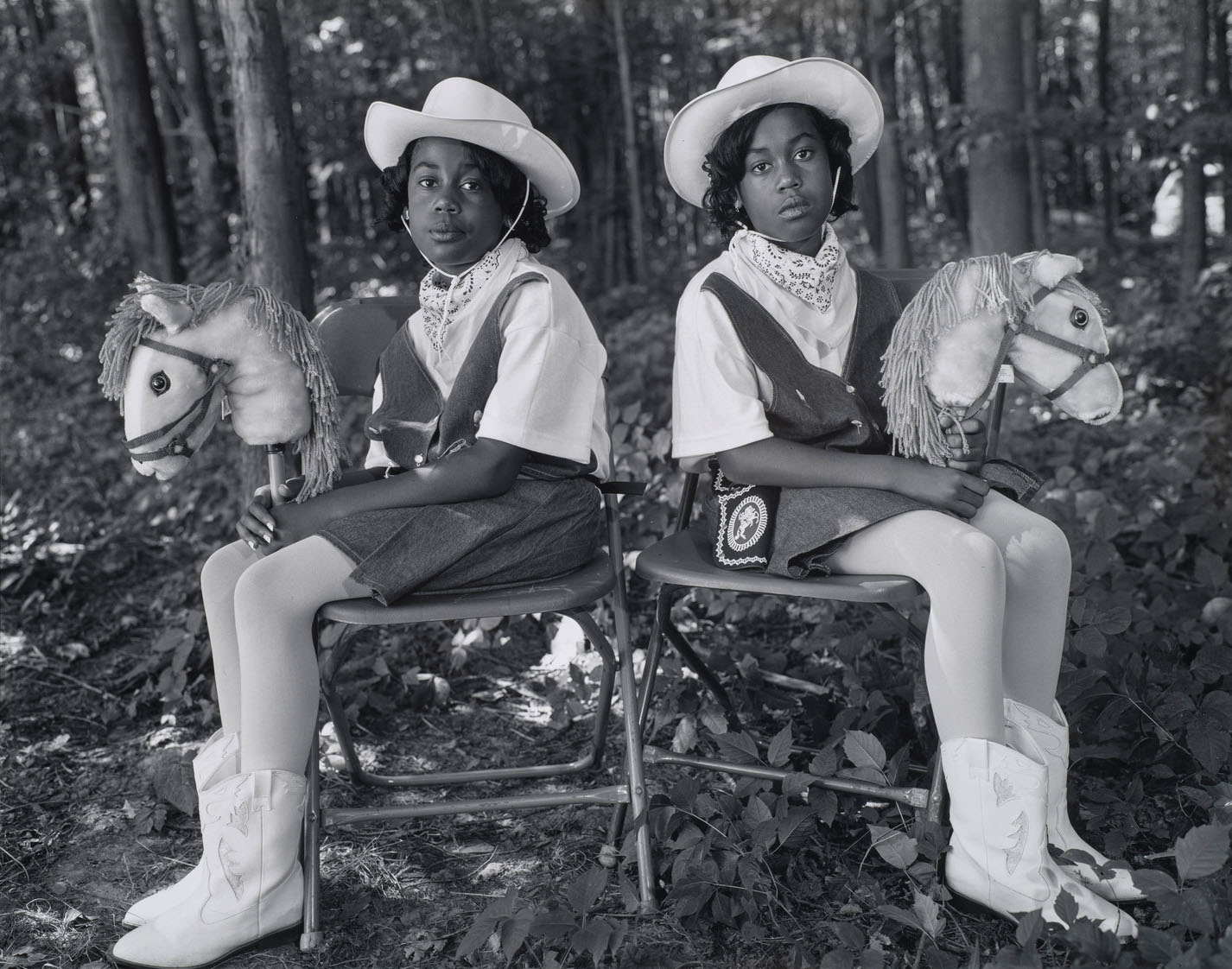
Gagosian website

LIKE ART BLART ON FACEBOOK

Back to top

European photographic research tour exhibition: ‘Berenice Abbott: Portraits of Modernity’ at Huis Marseille, Amsterdam Part 2

Exhibition dates: 7th September – 1st December, 2019

Visited September 2019 posted June 2020

Curator: Estrella de Diego, Professor of Modern Art at the Complutense University of Madrid


Installation view of the exhibition 'Berenice Abbott: Portraits of Modernity' at Huis Marseille, Amsterdam


Installation view of the exhibition Berenice Abbott: Portraits of Modernity at Huis Marseille, Amsterdam
Photo: Dr Marcus Bunyan


Old New York, new New York

This was an impressive exhibition from this powerhouse of a photographer in that most beautiful of galleries, Huis Marseille in Amsterdam. While her debt to that French master photographer Eugène Atget (1857-1927) is acknowledged through Abbott’s statement that she planned “to do for New York what Atget did for Paris,” Abbott’s photographs and her ‘point of view’ differ significantly to that of her Parisian hero.

Inflections of the influence of the Parisian master are present in the work, but in the project Changing New York Abbott develops a unique visual language through her representation of city life. Her photographs of shop fronts are more static and formal than that of Atget, more interested in the multiplicities of form than they are of reflections in glass, or ghostly people standing in doorways. Further, Atget would never have taken a photograph such as Gunsmith and Police Department, 6 Centre Market Place, Manhattan (1937, below) because the angle of the composition looking upwards is too severe, too modernist. Similarly, the placement by Abbott of the lamppost and U.S. Mail box in Old Law Tenements, 35-47 East 1st Street (1937, below) as the focus of attention, make this photograph uniquely her own.

Abbott photographs the co-mingled elements of old New York and new New York – the crowded tenements, rushing people, and “grand canyons” lined with monolithic skyscrapers of the bustling metropolis – as a city caught in the shadows of a piercing New York light. If you have been to New York you know that the city has that light, a hard, clinical light that bounces off surfaces until it sinks into the deepening shadows and recesses of overshadowed buildings. In her vital, still, intense, renditions of the cityscape Abbott’s photographs capture this light.

But what really changes her attitude (or altitude you might say) to the city is Abbott’s depiction of those edifices of modernism that are the crowning glory of New York: the skyscraper. Paraphrasing Karen Chambers from her article, “Paris to New York: Photographs by Eugène Atget and Berenice Abbott,” we can say that Abbott’s photographs of skyscrapers are different from the human scale of Atget’s photographs and of Abbott’s of a disappearing New York. Whether looking up from the bowls of the city (Canyon: Broadway and Exchange Place, 1936 below); across at the regimented forms of building (New York Telephone Company’s Lower Broadway Building, 1930-31 below); or down from a God-like perspective (Waterfront, from roof of Irving Trust Company Building, 1938 below), Abbott’s photographs of skyscrapers and the spaces they inhabit perfectly capture the layered forms and walls of isolation of the contemporary working metropolis, complete with Tempo of the City automatons.

Through the meritocracy of her talent, Abbott’s vision soars and plunges, meticulously, into the utopian / dystopian fabric of the city, Atget influences subsumed into American light, form and culture… the brooding hulks of towering skyscrapers; the skeletal form of bridges; and Abbott’s clear persistence of vision – seeing modernity clearly, with focus, in focus.

Dr Marcus Bunyan


All iPhone photographs by Dr Marcus Bunyan. Please click on the photographs for a larger version of the image. See Part 1 of the posting.


“When Abbott returned to New York in 1929, she planned “to do for New York what Atget did for Paris.” The project became known as ‘Changing New York’, and in her application for funding from the Federal Art Project (FAP), a part of the Farm Security Administration, best known for sending photographers, including Dorothea Lange and Walker Evans, into the American heartland to document rural poverty, she wrote that the purpose of the project was “to preserve for the future an accurate and faithful chronicle in photographs of the changing aspect of the world’s greatest metropolis”.”


Karen S. Chambers. “”Paris to New York: Photographs by Eugène Atget and Berenice Abbott,” Taft Museum of Art, through January 20, 2019,” on the AEQAI website October 28th, 2018 [Online] Cited 08/06/2020


Installation view of the exhibition Berenice Abbott: Portraits of Modernity at Huis Marseille, Amsterdam showing Abbott's 'Gunsmith and Police Department Headquarters' 1937


Installation view of the exhibition Berenice Abbott: Portraits of Modernity at Huis Marseille, Amsterdam showing Abbott’s Gunsmith and Police Department Headquarters 1937
Photo: Dr Marcus Bunyan


Berenice Abbott (American, 1898-1991) 'Gunsmith and Police Department Headquarters'  February 4, 1937 (installation view)


Berenice Abbott (American, 1898-1991)
Gunsmith and Police Department Headquarters (installation view)
February 4, 1937
Gelatin silver print
International Center of Photography
Photo: Dr Marcus Bunyan


Berenice Abbott (American, 1898-1991) 'Gunsmith and Police Department, 6 Centre Market Place, Manhattan'  February 4, 1937 from the exhibition 'Berenice Abbott: Portraits of Modernity' at Huis Marseille, Amsterdam, Sept - Dec, 2019


Berenice Abbott (American, 1898-1991)
Gunsmith and Police Department, 6 Centre Market Place, Manhattan 
February 4, 1937
Gelatin silver print
Wikipedia Commons, Public domain


Installation view of the exhibition 'Berenice Abbott: Portraits of Modernity' at Huis Marseille, Amsterdam

Installation view of the exhibition 'Berenice Abbott: Portraits of Modernity' at Huis Marseille, Amsterdam


Installation view of the exhibition Berenice Abbott: Portraits of Modernity at Huis Marseille, Amsterdam
Photos: Dr Marcus Bunyan


Berenice Abbott (American, 1898-1991) 'New York Harbour' 1938 (installation view)


Berenice Abbott (American, 1898-1991)
New York Harbour (installation view)
1938
Gelatin silver print
International Center of Photography
Photo: Dr Marcus Bunyan


Berenice Abbott (American, 1898-1991) 'Waterfront, from roof of Irving Trust Company Building' 1938 (installation view)


Berenice Abbott (American, 1898-1991)
Waterfront, from roof of Irving Trust Company Building (installation view)
1938
Gelatin silver print
The Miriam and Ira D. Wallach Division of Art, Prints and Photographs, Photography Collection
The New York Public Library, Astor, Lenox and Tilden Foundations
Photo: Dr Marcus Bunyan


Berenice Abbott (American, 1898-1991) 'Daily News Building, 42nd Street between 2nd and 3rd Avenues, Manhattan' 1935 (installation view)


Berenice Abbott (American, 1898-1991)
Daily News Building, 42nd Street between 2nd and 3rd Avenues, Manhattan
1935
Gelatin silver print
The Miriam and Ira D. Wallach Division of Art, Prints and Photographs, Photography Collection
The New York Public Library, Astor, Lenox and Tilden Foundations
Photo: Dr Marcus Bunyan


Berenice Abbott (American, 1898-1991) 'Daily News Building, 42nd Street between 2nd and 3rd Avenues, Manhattan' 1935 from the exhibition 'Berenice Abbott: Portraits of Modernity' at Huis Marseille, Amsterdam, Sept - Dec, 2019


Berenice Abbott (American, 1898-1991)
Daily News Building, 42nd Street between 2nd and 3rd Avenues, Manhattan
1935
Gelatin silver print
The Miriam and Ira D. Wallach Division of Art, Prints and Photographs, Photography Collection
The New York Public Library, Astor, Lenox and Tilden Foundations
Wikipedia Commons, Public domain


Berenice Abbott (American, 1898-1991) 'New York Telephone Company’s Lower Broadway Building' 1930-31 (installation view)


Berenice Abbott (American, 1898-1991)
New York Telephone Company’s Lower Broadway Building (installation view)
1930-1931
Gelatin silver print
Courtesy of Howard Greenberg Gallery
Photo: Dr Marcus Bunyan


Berenice Abbott (American, 1898-1991) 'New York Telephone Company Building, 140 West Street, Manhattan' 1936 (installation view)


Berenice Abbott (American, 1898-1991)
New York Telephone Company Building, 140 West Street, Manhattan (installation view)
1936
Gelatin silver print
The Miriam and Ira D. Wallach Division of Art, Prints and Photographs, Photography Collection
The New York Public Library, Astor, Lenox and Tilden Foundations
Photo: Dr Marcus Bunyan


Berenice Abbott (American, 1898-1991) 'Canyon: Broadway and Exchange Place' July 16, 1936


Berenice Abbott (American, 1898-1991)
Canyon: Broadway and Exchange Place
July 16, 1936
Gelatin silver print
The Miriam and Ira D. Wallach Division of Art, Prints and Photographs, Photography Collection
The New York Public Library, Astor, Lenox and Tilden Foundations
Photo: Dr Marcus Bunyan


Installation view of the exhibition 'Berenice Abbott: Portraits of Modernity' at Huis Marseille, Amsterdam

Installation view of the exhibition 'Berenice Abbott: Portraits of Modernity' at Huis Marseille, Amsterdam

Installation view of the exhibition 'Berenice Abbott: Portraits of Modernity' at Huis Marseille, Amsterdam


Installation views of the exhibition Berenice Abbott: Portraits of Modernity at Huis Marseille, Amsterdam
Photos: Dr Marcus Bunyan


Berenice Abbott (American, 1898-1991) 'R.C.A. building' c. 1932 (installation view)


Berenice Abbott (American, 1898-1991)
R.C.A. building (installation view)
c. 1932 (printed before 1950)
Gelatin silver print
Courtesy of Howard Greenberg Gallery
Photo: Dr Marcus Bunyan


Berenice Abbott (American, 1898-1991) 'Manhattan Skyline: I. South Street and Jones Lane' 1936 (installation view)

Berenice Abbott (American, 1898-1991) 'Manhattan Skyline: I. South Street and Jones Lane' 1936 (installation view)

Berenice Abbott (American, 1898-1991) 'Manhattan Skyline: I. South Street and Jones Lane' 1936 (installation view)


Berenice Abbott (American, 1898-1991)
Manhattan Skyline: I. South Street and Jones Lane (installation views)
1936
Gelatin silver print
The Miriam and Ira D. Wallach Division of Art, Prints and Photographs, Photography Collection
The New York Public Library, Astor, Lenox and Tilden Foundations
Photos: Dr Marcus Bunyan


Berenice Abbott (American, 1898-1991) 'Manhattan Skyline: I. South Street and Jones Lane' 1936


Berenice Abbott (American, 1898-1991)
Manhattan Skyline: I. South Street and Jones Lane
1936
Gelatin silver print
The Miriam and Ira D. Wallach Division of Art, Prints and Photographs, Photography Collection
The New York Public Library, Astor, Lenox and Tilden Foundations
Public domain


Berenice Abbott (American, 1898-1991) 'Old Law Tenements, 35-47 East 1st Street' February 11, 1937 (installation view)


Berenice Abbott (American, 1898-1991)
Old Law Tenements, 35-47 East 1st Street (installation view)
February 11, 1937
Gelatin silver print
Courtesy of Howard Greenberg Gallery
Photo: Dr Marcus Bunyan


Berenice Abbott (American, 1898-1991) 'Old Law Tenements, 35-47 East 1st Street' February 11, 1937


Berenice Abbott (American, 1898-1991)
Old Law Tenements, 35-47 East 1st Street
February 11, 1937
Gelatin silver print
Public domain


Berenice Abbott (American, 1898-1991) 'Shelter on the Waterfront, Coenties Slip, Pier 5, East River, Manhattan' 1938 (installation view)


Berenice Abbott (American, 1898-1991)
Shelter on the Waterfront, Coenties Slip, Pier 5, East River, Manhattan (installation view)
1938
Gelatin silver print
The Miriam and Ira D. Wallach Division of Art, Prints and Photographs, Photography Collection
The New York Public Library, Astor, Lenox and Tilden Foundations
Photo: Dr Marcus Bunyan


Berenice Abbott (American, 1898-1991) 'Provincetown Playhouse, 133 MacDougal Street, Manhattan' December 29, 1936 (installation view)

Berenice Abbott (American, 1898-1991) 'Provincetown Playhouse, 133 MacDougal Street, Manhattan' December 29, 1936 (installation view)


Berenice Abbott (American, 1898-1991)
Provincetown Playhouse, 133 MacDougal Street, Manhattan  (installation view)
December 29, 1936
Gelatin silver print
Courtesy of Howard Greenberg Gallery
Photos: Dr Marcus Bunyan


Berenice Abbott (American, 1898-1991) 'Country Store Interior' October 11, 1935 (installation view)

Berenice Abbott (American, 1898-1991) 'Country Store Interior' October 11, 1935 (installation view)


Berenice Abbott (American, 1898-1991)
Country Store Interior (installation view)
October 11, 1935
Gelatin silver print
Gift of the Metropolitan Museum of Art, 1948
Photo: Dr Marcus Bunyan


Berenice Abbott (American, 1898-1991) 'Country Store Interior' October 11, 1935


Berenice Abbott (American, 1898-1991)
Country Store Interior
October 11, 1935
Gelatin silver print
Public domain


Installation view of the exhibition 'Berenice Abbott: Portraits of Modernity' at Huis Marseille, Amsterdam

Installation view of the exhibition 'Berenice Abbott: Portraits of Modernity' at Huis Marseille, Amsterdam


Installation views of the exhibition Berenice Abbott: Portraits of Modernity at Huis Marseille, Amsterdam
Photos: Dr Marcus Bunyan


Berenice Abbott (American, 1898-1991) 'Charles Lane, between West and Washington Street' September 20, 1938 (installation view)


Berenice Abbott (American, 1898-1991)
Charles Lane, between West and Washington Street (installation view)
September 20, 1938
Gelatin silver print
The Miriam and Ira D. Wallach Division of Art, Prints and Photographs, Photography Collection
The New York Public Library, Astor, Lenox and Tilden Foundations
Photo: Dr Marcus Bunyan


Berenice Abbott (American, 1898-1991) 'Charles Lane, between West and Washington Street' September 20, 1938


Berenice Abbott (American, 1898-1991)
Charles Lane, between West and Washington Street
September 20, 1938
Gelatin silver print
The Miriam and Ira D. Wallach Division of Art, Prints and Photographs, Photography Collection
The New York Public Library, Astor, Lenox and Tilden Foundations
Public domain


Berenice Abbott (American, 1898-1991) 'Newsstand, 32nd Street and 3rd Avenue, Manhattan' 1935 (installation view)


Berenice Abbott (American, 1898-1991)
Newsstand, 32nd Street and 3rd Avenue, Manhattan (installation view)
1935
Gelatin silver print
The Miriam and Ira D. Wallach Division of Art, Prints and Photographs, Photography Collection
The New York Public Library, Astor, Lenox and Tilden Foundations
Photo: Dr Marcus Bunyan


Berenice Abbott (American, 1898-1991) 'Newsstand, 32nd Street and 3rd Avenue, Manhattan' 1935


Berenice Abbott (American, 1898-1991)
Newsstand, 32nd Street and 3rd Avenue, Manhattan
1935
Gelatin silver print
The Miriam and Ira D. Wallach Division of Art, Prints and Photographs, Photography Collection
The New York Public Library, Astor, Lenox and Tilden Foundations
Public domain


Berenice Abbott (American, 1898-1991) 'Cheese Store, 276 Bleecker Street, Manhattan' 1937 (installation view)


Berenice Abbott (American, 1898-1991)
Cheese Store, 276 Bleecker Street, Manhattan (installation view)
1937
Gelatin silver print
The Miriam and Ira D. Wallach Division of Art, Prints and Photographs, Photography Collection
The New York Public Library, Astor, Lenox and Tilden Foundations
Photo: Dr Marcus Bunyan


New York must have seem to Abbott extremely photogenic, with its skyscrapers and street vendors on Hester Street on the Lower East Side. It is a city of contrasts; of light and shade, and bustling squares; of all manner of shoes overflowing with bread, bric-a-brac, ricotta in Little Italy, rope, metal objects… Abbott depicts a city that heralds the consumer society and its abundance – its excess, even.


Berenice Abbott (American, 1898-1991) 'Cheese Store, 276 Bleecker Street, Manhattan' 1937


Berenice Abbott (American, 1898-1991)
Cheese Store, 276 Bleecker Street, Manhattan
1937
Gelatin silver print
The Miriam and Ira D. Wallach Division of Art, Prints and Photographs, Photography Collection
The New York Public Library, Astor, Lenox and Tilden Foundations
Public domain


Berenice Abbott (American, 1898-1991) 'A & P (Great Atlantic & Pacific Tea Co.), 246 3rd Avenue, Manhattan' 1936 (installation view)


Berenice Abbott (American, 1898-1991)
A & P (Great Atlantic & Pacific Tea Co.), 246 3rd Avenue, Manhattan (installation view)
1936
Gelatin silver print
The Miriam and Ira D. Wallach Division of Art, Prints and Photographs, Photography Collection
The New York Public Library, Astor, Lenox and Tilden Foundations
Photo: Dr Marcus Bunyan


Berenice Abbott (American, 1898-1991) 'Hardware Store, 316-318 Bowery' 1938 (installation view)


Berenice Abbott (American, 1898-1991)
Hardware Store, 316-318 Bowery (installation view)
1938
Gelatin silver print
Courtesy of Howard Greenberg Gallery
Photo: Dr Marcus Bunyan


Berenice Abbott (American, 1898-1991) 'Pingpank Barber Shop, 413 Bleecker Street, Manhattan' 1938 (installation view)


Berenice Abbott (American, 1898-1991)
Pingpank Barber Shop, 413 Bleecker Street, Manhattan (installation view)
1938
Gelatin silver print
The Miriam and Ira D. Wallach Division of Art, Prints and Photographs, Photography Collection
The New York Public Library, Astor, Lenox and Tilden Foundations
Photo: Dr Marcus Bunyan


Berenice Abbott (American, 1898-1991) 'Pingpank Barber Shop, 413 Bleecker Street, Manhattan' 1938


Berenice Abbott (American, 1898-1991)
Pingpank Barber Shop, 413 Bleecker Street, Manhattan
1938
Gelatin silver print
The Miriam and Ira D. Wallach Division of Art, Prints and Photographs, Photography Collection
The New York Public Library, Astor, Lenox and Tilden Foundations
Public domain


Berenice Abbott (American, 1898-1991) 'Sumner Healey Antique Shop, 942 3rd Avenue and 57th Street, Manhattan' 1936 (installation view)


Berenice Abbott (American, 1898-1991)
Sumner Healey Antique Shop, 942 3rd Avenue and 57th Street, Manhattan (installation view)
1936
Gelatin silver print
The Miriam and Ira D. Wallach Division of Art, Prints and Photographs, Photography Collection
The New York Public Library, Astor, Lenox and Tilden Foundations
Photo: Dr Marcus Bunyan


Berenice Abbott (American, 1898-1991) 'Sumner Healey Antique Shop, 942 3rd Avenue and 57th Street, Manhattan' 1936


Berenice Abbott (American, 1898-1991)
Sumner Healey Antique Shop, 942 3rd Avenue and 57th Street, Manhattan
1936
Gelatin silver print
The Miriam and Ira D. Wallach Division of Art, Prints and Photographs, Photography Collection
The New York Public Library, Astor, Lenox and Tilden Foundations
Public domain


Berenice Abbott (American, 1898-1991) 'Union Square, 14th Street and Broadway, Manhattan' 1936 (installation view)


Berenice Abbott (American, 1898-1991)
Union Square, 14th Street and Broadway, Manhattan (installation view)
1936
Gelatin silver print
The Miriam and Ira D. Wallach Division of Art, Prints and Photographs, Photography Collection
The New York Public Library, Astor, Lenox and Tilden Foundations
Photo: Dr Marcus Bunyan


Berenice Abbott (American, 1898-1991) 'Union Square' July 16, 1936


Berenice Abbott (American, 1898-1991)
Union Square
July 16, 1936
Gelatin silver photograph
6 7/8 x 8 7/8 in. (17.5 x 22.5cm)
Brooklyn Museum, Brooklyn Museum Collection
Public domain


Installation view of the exhibition 'Berenice Abbott: Portraits of Modernity' at Huis Marseille, Amsterdam

Installation view of the exhibition 'Berenice Abbott: Portraits of Modernity' at Huis Marseille, Amsterdam

Installation view of the exhibition 'Berenice Abbott: Portraits of Modernity' at Huis Marseille, Amsterdam

Installation view of the exhibition 'Berenice Abbott: Portraits of Modernity' at Huis Marseille, Amsterdam

Installation view of the exhibition 'Berenice Abbott: Portraits of Modernity' at Huis Marseille, Amsterdam

Installation view of the exhibition 'Berenice Abbott: Portraits of Modernity' at Huis Marseille, Amsterdam


Installation views of the exhibition Berenice Abbott: Portraits of Modernity at Huis Marseille, Amsterdam
Photos: Dr Marcus Bunyan


Berenice Abbott (American, 1898-1991) 'Lewis Hine' 1930 (Installation view)


Berenice Abbott (American, 1898-1991)
Lewis Hine (installation view)
1930
Gelatin silver photograph
International Centre of Photography
Purchase with funds provided by the Lois and Bruce Henkel purchase Fund, 1984
Photo: Dr Marcus Bunyan


Berenice Abbott (American, 1898-1991) 'Edward Hopper' 1949 (installation view)


Berenice Abbott (American, 1898-1991)
Edward Hopper (installation view)
1949
Gelatin silver photograph
International Centre of Photography
Gift of Jonathan A. Berg, 1984
Photo: Dr Marcus Bunyan


Installation view of the exhibition 'Berenice Abbott: Portraits of Modernity' at Huis Marseille, Amsterdam

Installation view of the exhibition 'Berenice Abbott: Portraits of Modernity' at Huis Marseille, Amsterdam

Installation view of the exhibition 'Berenice Abbott: Portraits of Modernity' at Huis Marseille, Amsterdam

Installation view of the exhibition 'Berenice Abbott: Portraits of Modernity' at Huis Marseille, Amsterdam


Installation views of the exhibition Berenice Abbott: Portraits of Modernity at Huis Marseille, Amsterdam
Photos: Dr Marcus Bunyan


Berenice Abbott (American, 1898-1991) 'Manhattan Bridge, Manhattan' 1935 (installation view)

Berenice Abbott (American, 1898-1991) 'Manhattan Bridge, Manhattan' 1935 (installation view)


Berenice Abbott (American, 1898-1991)
Manhattan Bridge, Manhattan (installation view)
1935
Gelatin silver print
The Miriam and Ira D. Wallach Division of Art, Prints and Photographs, Photography Collection
The New York Public Library, Astor, Lenox and Tilden Foundations
Photos: Dr Marcus Bunyan


Berenice Abbott (American, 1898-1991) 'Penn Station, Manhattan' 1935 (installation view)


Berenice Abbott (American, 1898-1991)
Penn Station, Manhattan (installation view)
1935
Gelatin silver print
The Miriam and Ira D. Wallach Division of Art, Prints and Photographs, Photography Collection
The New York Public Library, Astor, Lenox and Tilden Foundations
Photo: Dr Marcus Bunyan


Berenice Abbott (American, 1898-1991) 'El': 2nd & 3rd Avenue lines, looking W. from Second & Pearl St., Manhattan' 1936


Berenice Abbott (American, 1898-1991)
El’: 2nd & 3rd Avenue lines, looking W. from Second & Pearl St., Manhattan
1936
Gelatin silver print
The Miriam and Ira D. Wallach Division of Art, Prints and Photographs, Photography Collection
The New York Public Library, Astor, Lenox and Tilden Foundations
Public domain


Yousuf Karsh (Armenian-Canadian, 1908-2002) 'Portrait of Berenice Abbott, Monson, Maine' August 1989 (installation view)


Photography Collection, Miriam and Ira D. Wallach Division of Art, Prints and Photographs
The New York Public Library, Astor, Lenox and Tilden Foundations
Gift of the photographer


Huis Marseille
Keizersgracht 401
1016 EK Amsterdam
Phone: +31 20 531 89 89

Opening hours
Tue – Sun, 11 – 18 h

Huis Marseille website

LIKE ART BLART ON FACEBOOK

Back to top

European photographic research tour exhibition: ‘Berenice Abbott: Portraits of Modernity’ at Huis Marseille, Amsterdam Part 1

Exhibition dates: 7th September – 1st December, 2019

Visited September 2019 posted June 2020

Curator: Estrella de Diego, Professor of Modern Art at the Complutense University of Madrid


Berenice Abbott (American, 1898-1991) 'George Antheil' 1927 (installation view)


Berenice Abbott (American, 1898-1991)
George Antheil (installation view)
1927
Gelatin silver print
The Miriam and Ira D. Wallach Division of Art, Prints and Photographs, Photography Collection
The New York Public Library, Astor, Lenox and Tilden Foundations
Photo: Dr Marcus Bunyan


George Antheil was an American avant-garde composer, pianist, author, and inventor whose modernist musical compositions explored the modern sounds – musical, industrial, and mechanical – of the early 20th century.


This was one of the most memorable photography exhibitions of my European sojourn during August – October 2019, in the most beautiful of gallery spaces. I was so very lucky to complete my time in Europe before the current pandemic arrived.

I will comment more on the exhibition in Part 2 of the posting, but suffice to say it was a real pleasure to see the work of Berenice Abbott side by side with the photographs of Eugène Atget, an artist she did much to champion (including printing his photographs). Her portraits of Atget taken in the year of his death were magnificent. They provide a portal between old and new, between the artist looking back on his work (his life), and the 20th century artist realising that they have to accommodate Atget within their future kinēsis … and in so doing, Abbott pictures an artist whose spirit possessed all of Old Paris.

Dr Marcus Bunyan


All iPhone photographs by Dr Marcus Bunyan. Please click on the photographs for a larger version of the image. See Part 2 of the posting.


Berenice Abbott (American, 1898-1991) 'George Antheil' 1927 from the exhibition 'Berenice Abbott: Portraits of Modernity' at Huis Marseille, Amsterdam, Sept - Dec, 2019


Berenice Abbott (American, 1898-1991)
George Antheil
1927
Gelatin silver print
The Miriam and Ira D. Wallach Division of Art, Prints and Photographs, Photography Collection
The New York Public Library, Astor, Lenox and Tilden Foundations © Getty Images/Berenice Abbott


Installation view of the exhibition 'Berenice Abbott: Portraits of Modernity' at Huis Marseille, Amsterdam

Installation view of the exhibition 'Berenice Abbott: Portraits of Modernity' at Huis Marseille, Amsterdam


Installation views of the exhibition Berenice Abbott: Portraits of Modernity at Huis Marseille, Amsterdam
Photos: Dr Marcus Bunyan


This autumn Huis Marseille will present a large retrospective of the famous American photographer Berenice Abbott (1898-1991). This is the first time that an extensive selection of her work, held by important American collections, will be shown in the Netherlands. Abbott is one of the key figures in the history of 20th-century photography. Her legacy is not only an eclectic photographic oeuvre but also a strong opinion on the role of photography in society, to which she gave expression in numerous publications. Her work forms a bridge linking the artistic avant-garde in the ‘Old World’ with the emerging art scene of the 1920s and 1930s in New York.

Modernity

The idea of modernity pervades all of Berenice Abbott’s work: from her portraits of pioneering artists and intellectuals, and her astonishing views of the city of New York, to her photos of scientific themes, documenting the results of various physics experiments. Abbott’s oeuvre also reflects her own modernism, her constant desire to be on the front line, and her exceptional talent for not just noticing the changes that were going on around her but for depicting them to striking effect. Berenice Abbott was an enthusiastic proponent of modernism in photography, and was strongly opposed to pictoralism, the painterly style that dominated photography in the early 20th century. In her view a good photograph was shaped by the specific characteristics of photography itself, and not by those of painting.

Lost Generation

In 1918 Berenice Abbott left her birthplace Ohio and moved to New York to study sculpture, where she soon gravitated towards Greenwich Village, a hotbed of avant-garde and radical artists, bohemians, and others whose lifestyles put them outside the American mainstream. In 1921 she arrived in Paris and joined the artistic community of Montparnasse on the famous left bank of the Seine. Its writers and artists included many American expats who, disillusioned by the senseless violence of the First World War and by Prohibition in America, had taken refuge in Europe. The American writer Gertrude Stein called them the ‘lost generation’, a generation to which Abbott also belonged, which questioned traditional values and favoured an alternative kind of life. Abbott would go on to portray many of these writers, including Djuna Barnes and Edna St. Vincent Millay.

Portrait photographer

Abbott’s life as a photographer began in 1923, in the Parisian studio of the famous American photographer, Dadaist and Surrealist Man Ray. As his assistant she learned the technical, artistic and commercial aspects of portrait photography. In 1926, with financial support from the immensely rich American art collector Peggy Guggenheim, she opened her own Paris studio. Her clients were mostly expats, socialites, bohemians, writers, artists and the ‘new women’ who, like herself, were willing to live on the margins of society in order to be free. Many had broken ties with their origins and their gender, such as the journalist Janet Flanner, the publisher Jane Heap, and the writer Sylvia Beach. Abbott immortalised them in assertive, powerful portraits. Beach was also the publisher of James Joyce’ Ulysses (1922), a book that Abbott greatly admired, and she portrayed the writer, his wife and daughter on several occasions.

Eugène Atget

Through Man Ray in Paris Abbott met the photographer Eugène Atget, with whose work she felt an immediate visual and artistic affinity. For decades Atget had documented Paris in plain, unadorned images, and with a keen eye for seemingly unimportant details. After his death in 1927 Abbott looked after a large part of his oeuvre, promoting it tirelessly in America through exhibitions and books. The present exhibition therefore also includes a small selection of photos by Eugène Atget, which Abbott printed from the original negatives in 1956.

Changing New York

The heart of the exhibition is formed by Abbott’s photos of New York City. When she returned to New York in 1929 she felt an immediate urge to photograph the city itself, with its enormous contrasts and contradictions, a city that changed constantly and was never the same from moment to moment. In 1935 she received a substantial grant from the Federal Art Project, a government initiative that was intended to create jobs and boost the economy following the crisis years, and this allowed her to begin work in earnest. She called her project Changing New York; it was also published in book form in 1939, with texts by her partner Elizabeth McCausland. Her camera transformed New York into a living being, with an extraordinary character, which visitors can experience to this day as they move through its busy streets and stare amazed at the modern beauty of its skyscrapers. Shops, people, bridges, streets, interiors, construction sites, iconic buildings seen from outside or from above – everything comes together to create a portrait of the city.

Science

In the late 1930s Abbott became deeply interested in science, and saw that photography could play a role as spokesperson. The cerebral world of science needed the vitality and imaginative powers of photography to reach a wider audience. Moreover, the scientific interpretation of the world was not reserved for scientists alone; any citizen ought to be able to consider a scientific question, and photography could serve as an intermediary. With this goal in mind, for years Abbott did darkroom experiments with all kinds of camera techniques. In 1957 the Physical Science Study Committee of the renowned Massachusetts Institute of Technology hired her services to provide photographic illustrations for new and influential schoolbooks.

Curation

The exhibition was created in collaboration with Fundación MAPFRE, a Spanish non-profit organisation with which Huis Marseille has worked regularly over the last ten years – most recently in 2016 for the Stephen Shore retrospective in Huis Marseille. It was curated by Estrella de Diego, Professor of Modern Art at the Complutense University of Madrid, and has been shown in Barcelona and Madrid.

Loans

The exhibition comprises almost 200 vintage photographs generously loaned from the New York Public Library, the Museum of the City of New York, the International Center of Photography (NY), the George Eastman House (Rochester, NY), the Howard Greenberg Gallery (NY) and the MIT Museum (Cambridge, Massachusetts), together with a selection of Abbott’s publications on loan from the Rijksmuseum library and other collections.

Publication

Estrella de Diego, Julia van Haaften, Berenice Abbott: Portraits of Modernity, Madrid (Fundación Mapfre) 2019.

Text from the Huis Marseille website


Berenice Abbott (American, 1898-1991) 'Jean Cocteau' 1927 (installation view)

Berenice Abbott (American, 1898-1991) 'Jean Cocteau' 1927 (installation view)


Berenice Abbott (American, 1898-1991)
Jean Cocteau (installation views)
1927
Gelatin silver print
The Miriam and Ira D. Wallach Division of Art, Prints and Photographs, Photography Collection
The New York Public Library, Astor, Lenox and Tilden Foundations
Photos: Dr Marcus Bunyan


Jean Cocteau, the author of so many memorable films and works of literature, is shown embracing a sort of mask that perhaps alludes to the repeated play of mirrors that runs through his Orphic Trilogy. He represents the kind of masculinity that Abbott renders in her portraits of homosexual activists such as André Gide and Cocteau or the ‘new men’ who had ceased to be certain of their identity – like the characters in the novels of George Bernard Shaw or Thomas Hardy – and had adopted a less monolithic masculinity. This trait can also be found in D.H. Lawrence, and in James Joyce, who sat for Abbott in 1928.


Berenice Abbott (American, 1898-1991) 'Janet Flanner in Paris' 1927 (installation view)


Berenice Abbott (American, 1898-1991)
Janet Flanner in Paris (installation view)
1927
Gelatin silver print
The Miriam and Ira D. Wallach Division of Art, Prints and Photographs, Photography Collection
The New York Public Library, Astor, Lenox and Tilden Foundations
Photo: Dr Marcus Bunyan


Installation view of the exhibition 'Berenice Abbott: Portraits of Modernity' at Huis Marseille, Amsterdam showing at right the image 'Janet Flanner in Paris' 1927


Installation view of the exhibition Berenice Abbott: Portraits of Modernity at Huis Marseille, Amsterdam showing at right the image Janet Flanner in Paris, 1927
Photo: Eddo Hartmann


Berenice Abbott (American, 1898-1991) 'Janet Flanner in Paris' 1927 from the exhibition 'Berenice Abbott: Portraits of Modernity' at Huis Marseille, Amsterdam, Sept - Dec, 2019


Berenice Abbott (American, 1898-1991)
Janet Flanner in Paris
1927
Gelatin silver print
The Miriam and Ira D. Wallach Division of Art, Prints and Photographs, Photography Collection
The New York Public Library, Astor, Lenox and Tilden Foundations


Abbott’s portraits depict some of the modern intellectuals with whom she associated in New York’s Greenwich Village following her arrival there from the native Ohio. These included people who also had links with Paris, such as the writer and journalist Janet Flanner, a personal friend of the writer Djuna Barnes. Abbott gave Flanner an ambiguous aspect; with her cropped hair and masculine dress she is another representative of the strong ‘New Women’. Abbott photographed many of these New Women who were prepared to live on the margins of society in order to safeguard their freedom.


Installation view of the exhibition 'Berenice Abbott: Portraits of Modernity' at Huis Marseille, Amsterdam showing at left, the photograph of 'Janet Flanner' (1927); and at second left, 'Eugène Atget' (1927)

Installation view of the exhibition 'Berenice Abbott: Portraits of Modernity' at Huis Marseille, Amsterdam

Installation view of the exhibition 'Berenice Abbott: Portraits of Modernity' at Huis Marseille, Amsterdam

Installation view of the exhibition 'Berenice Abbott: Portraits of Modernity' at Huis Marseille, Amsterdam


Installation views of the exhibition Berenice Abbott: Portraits of Modernity at Huis Marseille, Amsterdam showing in the top image at left, the photograph of Janet Flanner (1927, above); and at second left, Eugène Atget (1927, below)
Photos: Dr Marcus Bunyan


Berenice Abbott (American, 1898-1991) 'Eugène Atget' 1927 (installation view)


Berenice Abbott (American, 1898-1991)
Eugène Atget (installation view)
1927
Gelatin silver print
The Miriam and Ira D. Wallach Division of Art, Prints and Photographs, Photography Collection
The New York Public Library, Astor, Lenox and Tilden Foundations
Photo: Dr Marcus Bunyan


Berenice Abbott (American, 1898-1991) 'Eugène Atget' 1927


Berenice Abbott (American, 1898-1991)
Eugène Atget
1927
Gelatin silver print
The Miriam and Ira D. Wallach Division of Art, Prints and Photographs, Photography Collection
The New York Public Library, Astor, Lenox and Tilden Foundations


Berenice Abbott (American, 1898-1991) 'Eugène Atget' 1927 (installation view)


Berenice Abbott (American, 1898-1991)
Eugène Atget (installation view)
1927
Gelatin silver print
International Center of Photography
Photo: Dr Marcus Bunyan


In 1927 Berenice Abbott produced two portraits, front-facing and in profile, of Eugène Atget, the photographer who was adored by the Surrealists and who captured the mood of late 19th-century Paris. The portraits, reminiscent of a documentary work – of police records, almost – highlight Abbott’s extraordinary skill as a portrait photographer. Atget provided the inspiration for Abbott’s wonderful portrait of New York City, Changing New York. She made generous efforts to promote the French photographer’s work, even acquiring his negatives after his death.


Berenice Abbott (American, 1898-1991) 'Eugène Atget' 1927


Berenice Abbott (American, 1898-1991)
Eugène Atget
1927
Gelatin silver print
International Center of Photography


Installation view of the exhibition 'Berenice Abbott: Portraits of Modernity' at Huis Marseille, Amsterdam showing Abbott's photographs of Eugène Atget showing Abbott's photographs of Eugène Atget


Installation view of the exhibition Berenice Abbott: Portraits of Modernity at Huis Marseille, Amsterdam showing Abbott’s photographs of Eugène Atget
Photo: Eddo Hartmann


Berenice Abbott (American, 1898-1991) James Joyce, Paris 1920 (installation view)


Berenice Abbott (American, 1898-1991)
James Joyce, Paris (installation view)
1920
Gelatin silver print
The Miriam and Ira D. Wallach Division of Art, Prints and Photographs, Photography Collection
The New York Public Library, Astor, Lenox and Tilden Foundations
Photo: Dr Marcus Bunyan


Berenice Abbott (American, 1898-1991) 'Audrey McMahon' 1925-1946 (installation view)


Berenice Abbott (American, 1898-1991)
Audrey McMahon (installation view)
1925-1946
Gelatin silver print
The Miriam and Ira D. Wallach Division of Art, Prints and Photographs, Photography Collection
The New York Public Library, Astor, Lenox and Tilden Foundations
Photo: Dr Marcus Bunyan


Audrey McMahon was the Director of the New York region of the Federal Art Project from 1935 to 1943; the region she oversaw included New York City, New Jersey, and Philadelphia. Born in New York City in 1898, she attended the Sorbonne, and she was the director of the College Art Association. …

Her approach to the administration of the Federal Art Project attempted to give the artists employed a great deal of freedom, and as she recalled later, “It is gratifying to note… that almost all of the painters, sculptors, graphic artists, and muralists who recall those days remember little or no artistic stricture.”

Text from the Wikipedia website


Berenice Abbott (American, 1898-1991) 'Jane Heap' 1929-1931 (installation view)


Berenice Abbott (American, 1898-1991)
Jane Heap (installation view)
1929-1931
Gelatin silver print
International Center of Photography
Photo: Dr Marcus Bunyan


Jane Heap (November 1, 1883 – June 18, 1964) was an American publisher and a significant figure in the development and promotion of literary modernism. Together with Margaret Anderson, her friend and business partner (who for some years was also her lover), she edited the celebrated literary magazine The Little Review, which published an extraordinary collection of modern American, English and Irish writers between 1914 and 1929. Heap herself has been called “one of the most neglected contributors to the transmission of modernism between America and Europe during the early twentieth century.”

Text from the Wikipedia website


Berenice Abbott (American, 1898-1991) 'Jane Heap' 1929-1931


Berenice Abbott (American, 1898-1991)
Jane Heap
1929-1931
Gelatin silver print
International Center of Photography
Photo: Dr Marcus Bunyan


Wall text from the exhibition 'Berenice Abbott: Portraits of Modernity' at Huis Marseille, Amsterdam

Installation view of the exhibition 'Berenice Abbott: Portraits of Modernity' at Huis Marseille, Amsterdam


Installation views of the exhibition Berenice Abbott: Portraits of Modernity at Huis Marseille, Amsterdam
Photos: Dr Marcus Bunyan


Installation view of the exhibition 'Berenice Abbott: Portraits of Modernity' at Huis Marseille, Amsterdam

Installation view of the exhibition 'Berenice Abbott: Portraits of Modernity' at Huis Marseille, Amsterdam showing at left, Eugène Atget's photo 'Eclipse, Paris' 1912


Installation views of the exhibition Berenice Abbott: Portraits of Modernity at Huis Marseille, Amsterdam with in the bottom image at left, Eugène Atget’s photo Eclipse, Paris 1912
Photos: Dr Marcus Bunyan


Eugène Atget (French, 1857-1927) 'L'éclipse' April 1912 (installation view)


Eugène Atget (French, 1857-1927)
L’éclipse (installation view)
April 1912
Printed in 1956 by Berenice Abbott
Gelatin silver print
Courtesy of George Eastman Museum
Photo: Dr Marcus Bunyan


Eugène Atget (French, 1857-1927) 'Pendant l'éclipse' 1912


Eugène Atget (French, 1857-1927)
Pendant l’éclipse
1912
Albumen print


Although the moon is not visible in this photograph by Eugène Atget, its presence and appeal are implied. The crowd gathered in Paris’s Place de la Bastille on April 17, 1912, was observing a solar eclipse through viewing apparatuses. Atget, rather than recording the astronomical event itself, turned his attention to its spectators. Though Atget made more than 8,500 pictures of Paris and its environs in a career that spanned over thirty years – most documenting the built environment – this photograph is an unusual example that focuses on a crowd of people.

Text from the MoMA website


Installation view of the exhibition 'Berenice Abbott: Portraits of Modernity' at Huis Marseille, Amsterdam showing the photographs of Eugène Atget with at second right 'Avenue des Gobelins' 1925


Installation views of the exhibition Berenice Abbott: Portraits of Modernity at Huis Marseille, Amsterdam showing the photographs of Eugène Atget with at second right Avenue des Gobelins, 1925
Photo: Dr Marcus Bunyan


Eugène Atget (French, 1857-1927) 'Avenue des Gobelins' 1925


Eugène Atget (French, 1857-1927)
Avenue des Gobelins
1925
Albumen print


Eugène Atget (French, 1857-1927) 'Interior of a worker's room, Rue de Romainville, 19th arr.' c. 1910 (installation view)


Eugène Atget (French, 1857-1927)
Interior of a worker’s room, Rue de Romainville, 19th arr. (installation view)
c. 1910
Printed in 1956 by Berenice Abbott
Gelatin silver print
Courtesy of George Eastman Museum
Photo: Dr Marcus Bunyan


Eugène Atget (French, 1857-1927) 'Courtyard, 7 Rue de Valence, 5th arr.' June 1922 (installation view)


Eugène Atget (French, 1857-1927)
Courtyard, 7 Rue de Valence, 5th arr. (installation view)
June 1922
Printed in 1956 by Berenice Abbott
Gelatin silver print
Courtesy of George Eastman Museum
Photo: Dr Marcus Bunyan


Eugène Atget (French, 1857-1927) 'Courtyard, 7 Rue de Valence, 5th arr.' June 1922


Eugène Atget (French, 1857-1927)
Courtyard, 7 Rue de Valence, 5th arr.
June 1922
Gelatin silver print
In portfolio: 20 photographs by Eugène Atget, 1856-1927. New York : Berenice Abbott, 1956, no. 13.
Library of Congress


Eugène Atget (French, 1857-1927) 'Rue St. Rustique' March 1922 (installation view)


Eugène Atget (French, 1857-1927)
Rue St. Rustique (installation view)
March 1922
Printed in 1956 by Berenice Abbott
Gelatin silver print
Courtesy of George Eastman Museum
Photo: Dr Marcus Bunyan


Eugène Atget (French, 1857-1927) 'Rue St. Rustique' March 1922


Eugène Atget (French, 1857-1927)
Rue St. Rustique
March 1922
Gelatin silver print
In portfolio: 20 photographs by Eugène Atget, 1856-1927. New York : Berenice Abbott, 1956, no. 9.
Library of Congress


Eugène Atget (French, 1857-1927) 'Ragpicker's Hut' 1910 (installation view)

Eugène Atget (French, 1857-1927) 'Ragpicker's Hut' 1910 (installation view)


Eugène Atget (French, 1857-1927)
Ragpicker’s Hut (installation views)
1910
Printed in 1956 by Berenice Abbott
Gelatin silver print
Courtesy of George Eastman Museum
Photos: Dr Marcus Bunyan


Eugène Atget (French, 1857-1927) 'Street diversions (or B organ)' 1898-1899


Eugène Atget (French, 1857-1927)
Street diversions (or B organ)
1898-1899
Gelatin silver print
In portfolio: 20 photographs by Eugène Atget, 1856-1927. New York : Berenice Abbott, 1956, no. 16
Library of Congress


Eugène Atget (French, 1857-1927) 'Street Pavers' 1899-1900 (installation view)

Eugène Atget (French, 1857-1927) 'Street Pavers' 1899-1900 (installation view)


Eugène Atget (French, 1857-1927)
Street Pavers (installation views)
1899-1900
Printed in 1956 by Berenice Abbott
Gelatin silver print
Courtesy of George Eastman Museum
Photos: Dr Marcus Bunyan


Eugène Atget (French, 1857-1927) 'Street Pavers' 1899-1900


Eugène Atget (French, 1857-1927)
Street Pavers
1899-1900
Gelatin silver print
In portfolio: 20 photographs by Eugène Atget, 1856-1927. New York : Berenice Abbott, 1956, no. 12
Library of Congress


Abbott saw in Eugène Atget a documentary photographer who revealed in his photographs of Paris a city frozen in time, a city that one might almost describe as antiheroic. Abbott understood that all documentary photography (and an photograph can be documentary, free from fault lines) contains a larger amount of autobiography, and Atget’s photography tells the story of a man and his camera traipsing around the city to seek out its nooks and crannies. To take a photo is to think with your eyes and with your brain. To observe is to be part of the scene.


Eugène Atget (French, 1857-1927) 'Butcher's shop, Rue Christine' c. 1923 (installation view)


Eugène Atget (French, 1857-1927)
Butcher’s shop, Rue Christine (installation view)
c. 1923
Printed in 1956 by Berenice Abbott
Gelatin silver print
Courtesy of George Eastman Museum
Photo: Dr Marcus Bunyan


Eugène Atget (French, 1857-1927) 'Butcher's shop, Rue Christine' c. 1923


Eugène Atget (French, 1857-1927)
Butcher’s shop, Rue Christine
c. 1923
Gelatin silver print
In portfolio: 20 photographs by Eugène Atget, 1856-1927. New York : Berenice Abbott, 1956, no. 17
Library of Congress


The surrealists were fascinated by Eugène Atget and his shifting play with Paris’s innermost structure, his phantasmagorias. In contrast with this, Abbott emphasises the documentary characteristics of Atget, at first glance a ‘realist’ photographer who captured the deserted landscapes of the city described by Albert Valentin in 1928 as “cerebral landscapes”. Atget photographed the everyday, the events in the house next door, expressing the sense of encountering the strange in the familiar and the familiar in the strange – rather like Abbott did, years later.


Eugène Atget (French, 1857-1927) 'Mannequin' 1926-27 (installation view)

Eugène Atget (French, 1857-1927) 'Mannequin' 1926-27 (installation view)


Eugène Atget (French, 1857-1927)
Mannequin (installation views)
1926-1927
Printed in 1956 by Berenice Abbott
Gelatin silver print
Courtesy of George Eastman Museum
Photos: Dr Marcus Bunyan


Eugène Atget (French, 1857-1927) 'Mannequin' 1926-1927


Eugène Atget (French, 1857-1927)
Mannequin
1926-1927
Gelatin silver print
In portfolio: 20 photographs by Eugène Atget, 1856-1927. New York : Berenice Abbott, 1956, no. 15.
Library of Congress


Eugène Atget (French, 1857-1927) 'Shop, Avenue des Gobelins' 1925 (installation view)


Eugène Atget (French, 1857-1927)
Shop, Avenue des Gobelins (installation view)
1925
Printed in 1956 by Berenice Abbott
Gelatin silver print
Courtesy of George Eastman Museum
Photo: Dr Marcus Bunyan


Eugène Atget (French, 1857-1927) 'Avenue des Gobelins' 1925


Eugène Atget (French, 1857-1927)
Shop, Avenue des Gobelins
1925
Albumen print


Eugène Atget (French, 1857-1927) 'Bar interior, 15 Rue Boyer, 20th arr.' 1900-1911


Eugène Atget (French, 1857-1927)
Bar interior, 15 Rue Boyer, 20th arr.
1900-1911
Albumen print


Wall text from the exhibition 'Berenice Abbott: Portraits of Modernity' at Huis Marseille, Amsterdam

Installation view of the exhibition 'Berenice Abbott: Portraits of Modernity' at Huis Marseille, Amsterdam

Installation view of the exhibition 'Berenice Abbott: Portraits of Modernity' at Huis Marseille, Amsterdam

Installation view of the exhibition 'Berenice Abbott: Portraits of Modernity' at Huis Marseille, Amsterdam


Installation view of the exhibition Berenice Abbott: Portraits of Modernity at Huis Marseille, Amsterdam showing Aerial View of New York by Night at centre and New York Stock Exchange at centre right
Photos: Dr Marcus Bunyan


Installation view of the exhibition 'Berenice Abbott: Portraits of Modernity' at Huis Marseille, Amsterdam showing at left, 'Aerial View of New York by Night' (1936)


Installation view of the exhibition Berenice Abbott: Portraits of Modernity at Huis Marseille, Amsterdam showing at left, Aerial View of New York by Night (1936, below)
Photo: Dr Marcus Bunyan


Bernice Abbott. 'Night View, New York City' 1932


Berenice Abbott (American, 1898-1991)
Aerial View of New York by Night
March 20, 1936
Gelatin silver print
International Center of Photography


The changes in points of view in [the book] Changing New York – which sometimes seem like a juggling act or a pirouette, ways of seeing form above and from outside – are what convert the most emblematic or familiar places into landscape seen for the first time. And then there is the beautiful photograph of New York at night, the image that offers a full view, the one captured whole by our gaze” an exercise in light that prefigures Abbott’s later photographs on scientific themes.


Installation view of the exhibition 'Berenice Abbott: Portraits of Modernity' at Huis Marseille, Amsterdam showing at right, Abbott's New York Stock Exchange (1933)

Installation view of the exhibition 'Berenice Abbott: Portraits of Modernity' at Huis Marseille, Amsterdam showing Abbott's New York Stock Exchange (1933)


Installation views of the exhibition Berenice Abbott: Portraits of Modernity at Huis Marseille, Amsterdam showing Abbott’s New York Stock Exchange (1933, below)
Photos: Dr Marcus Bunyan


Berenice Abbott (American, 1898-1991) 'New York Stock Exchange' 1933


Berenice Abbott (American, 1898-1991)
New York Stock Exchange
1933
Gelatin silver print
International Center of Photography


Berenice Abbott (American, 1898-1991) 'Washington Square, looking north' April 16, 1936 (installation view)

Berenice Abbott (American, 1898-1991) 'Washington Square, looking north' April 16, 1936 (installation view)


Berenice Abbott (American, 1898-1991)
Washington Square, looking north (installation views)
April 16, 1936
Gelatin silver print
Museum of the City of New York
Gift of the Metropolitan Museum of Art, 1949
Photos: Dr Marcus Bunyan


Berenice Abbott (American, 1898-1991) 'From Trinity Church Yard' March 1, 1938 (installation view)


Berenice Abbott (American, 1898-1991)
From Trinity Church Yard (installation view)
March 1, 1938
Gelatin silver print
International Center of Photography
Photo: Dr Marcus Bunyan


Berenice Abbott (American, 1898-1991) 'John Watts statue, from Trinity Churchyard looking toward One Wall Street, Manhattan' March 1, 1938


Berenice Abbott (American, 1898-1991)
John Watts statue, from Trinity Churchyard looking toward One Wall Street, Manhattan
March 1, 1938
Gelatin silver print
Wikipedia, Public domain


Berenice Abbott (American, 1898-1991) 'Broadway near Broome Street, Manhattan' 1935 (installation view)

Berenice Abbott (American, 1898-1991) 'Broadway near Broome Street, Manhattan' 1935 (installation view)


Berenice Abbott (American, 1898-1991)
Broadway near Broome Street, Manhattan (installation views)
1935
Gelatin silver print
The Miriam and Ira D. Wallach Division of Arts, Prints and Photographs, Photography Collection
The New York Public Library, Astor, Lenox and Tilden Foundations
Photos: Dr Marcus Bunyan


Installation view of the exhibition 'Berenice Abbott: Portraits of Modernity' at Huis Marseille, Amsterdam showing at bottom left, 'Lamport Export Company, 507-511 Broadway, Manhattan' October 7, 1935; and at top right, 'Broadway and Thomas Street' 1936


Installation view of the exhibition Berenice Abbott: Portraits of Modernity at Huis Marseille, Amsterdam showing at bottom left, Lamport Export Company, 507-511 Broadway, Manhattan October 7, 1935; and at top right, Broadway and Thomas Street 1936
Photo: Dr Marcus Bunyan


Berenice Abbott (American, 1898-1991) Broadway and Thomas Street 1936 (installation view)


Berenice Abbott (American, 1898-1991)
Broadway and Thomas Street (installation view)
1936
Gelatin silver print
The Miriam and Ira D. Wallach Division of Arts, Prints and Photographs, Photography Collection
The New York Public Library, Astor, Lenox and Tilden Foundations
Photo: Dr Marcus Bunyan


Installation view of the exhibition 'Berenice Abbott: Portraits of Modernity' at Huis Marseille, Amsterdam showing at third right, Abbott's '5th Avenue, No's 4, 6, 8' March 20, 1936


Installation view of the exhibition Berenice Abbott: Portraits of Modernity at Huis Marseille, Amsterdam showing at third right, Abbott’s 5th Avenue, No’s 4, 6, 8 March 20, 1936
Photo: Dr Marcus Bunyan


Installation view of the exhibition Berenice Abbott: Portraits of Modernity at Huis Marseille, Amsterdam


Installation view of the exhibition Berenice Abbott: Portraits of Modernity at Huis Marseille, Amsterdam showing Abbott’s 5th Avenue, No’s 4, 6, 8 March 20, 1936
Photo: Dr Marcus Bunyan


Berenice Abbott (1898-1991) '5th Avenue, No's 4, 6, 8' 1936


Berenice Abbott (American, 1898-1991)
5th Avenue, No’s 4, 6, 8
March 20, 1936
Gelatin silver print
International Center of Photography


Berenice Abbott (American, 1898-1991) 'Tempo of the City II, Fifth Avenue and 42nd Street looking west from Seymour Building, 503 Fifth Avenue' September 6, 1938


Berenice Abbott (American, 1898-1991)
Tempo of the City II, Fifth Avenue and 42nd Street looking west from Seymour Building, 503 Fifth Avenue
September 6, 1938
Gelatin silver print
The Miriam and Ira D. Wallach Division of Art, Prints and Photographs: Photography Collection
Wikipedia, Public domain


Berenice Abbott (American, 1898-1991) 'Allen Street, No's 55-57, Manhattan' 1937 (installation view)


Berenice Abbott (American, 1898-1991)
Allen Street, No’s 55-57, Manhattan (installation view)
1937
Gelatin silver print
The Miriam and Ira D. Wallach Division of Arts, Prints and Photographs, Photography Collection
The New York Public Library, Astor, Lenox and Tilden Foundations
Photo: Dr Marcus Bunyan


Huis Marseille
Keizersgracht 401
1016 EK Amsterdam
Phone: +31 20 531 89 89

Opening hours
Tuesday – Sunday, 11 – 18 h

Huis Marseille website

LIKE ART BLART ON FACEBOOK

Back to top

European photographic research tour: V&A Photography Centre, London

Visited October 2019 posted May 2020


Unknown photographer. 'Photograph of Allied War exhibition, Serbian Section, V&A' 1917 (installation view)


Unknown photographer
Photograph of Allied War exhibition, Serbian Section, V&A (installation view)
1917
Gelatin silver print
The Royal Photographic Society Collection at the V&A Museum
Photo: Marcus Bunyan


The older I grow, the more exponentially I appreciate and love these early photographs. Imagine having a collection like this!

Wonderful to see Edward Steichen’s Portrait – Lady H (1908, below) as I have a copy of Camera Work 22 in my collection.

Dr Marcus Bunyan


All iPhone images © Dr Marcus Bunyan. Please click on the photographs for a larger version of the image.


The V&A has been collecting photographs since 1856, the year the Museum was founded, and it was one of the first museums to present photography exhibitions. Since then the collection has grown to be one of the largest and most important in the world, comprising around 500,000 images. The V&A is now honoured to have added the Royal Photographic Society (RPS) collection to its holdings, which contains around 270,000 photographs, an extensive library, and 6,000 cameras and pieces of equipment associated with leading artists and photographic pioneers.

Take a behind-the-scenes look at our world class photography collection following the transfer of the Royal Photographic Society (RPS) Collection, which has enabled a dramatic reimagining of the way photography is presented at the V&A. The photographs curators introduce a series of five highlights that are on display in the new Photography Centre, which opened on 12th October 2018. The first phase of the centre will more than double the space dedicated to photography at the Museum.

Text from the V&A and YouTube websites


Unknown photographer. 'Photograph of Allied War exhibition, Serbian Section, V&A' 1917


Unknown photographer
Photograph of Allied War exhibition, Serbian Section, V&A (installation view)
1917
Gelatin silver print
The Royal Photographic Society Collection at the V&A Museum
Photo: Marcus Bunyan


The V&A has been collecting and exhibiting photographs since the 1850s. This image shows part o a photographic exhibition held over 100 years ago in the same galleries you are standing in today. The exhibition presented a densely packed display of images depicting the Allied Powers during the First World War.


Installation view of the V&A Photography Centre, London

Installation view of the V&A Photography Centre, London

Installation view of the V&A Photography Centre, London

Installation view of the V&A Photography Centre, London

Wall text from the V&A Photography Centre, London

Installation view of the V&A Photography Centre, London


Installation views of the V&A Photography Centre, London
Photos: Marcus Bunyan


Joseph Nicéphore Niépce (French, 1765-1833) 'Christ Carrying his Cross' 1827 (installation view)

Joseph Nicéphore Niépce (French, 1765-1833) 'Christ Carrying his Cross' 1827 (installation view)


Joseph Nicéphore Niépce (French, 1765-1833)
Christ Carrying his Cross (installation views)
1827
Heliograph on pewter plate
The Royal Photographic Society Collection at the V&A Museum
Photos: Marcus Bunyan


The French inventor Niépce made the earliest surviving photographic images, which he called ‘heliographs’ or ‘sun-writing’. Only 16 are thought to still exist. Although Niépce experimented with light-sensitive plates inside a camera, he made most of his images, including this one, by placing engravings of works by other artists directly onto a metal plate. He would probably have had the resulting heliographs coated in ink and printed.


Joseph Nicéphore Niépce (French, 1765-1833) 'Christ Carrying his Cross' 1827 (installation view)


Joseph Nicéphore Niépce (French, 1765-1833)
Christ Carrying his Cross (installation view)
1827
Heliograph on pewter plate
The Royal Photographic Society Collection at the V&A Museum
Photo: Marcus Bunyan


David Octavius Hill (Scottish, 1802-70) and Robert Adamson (Scottish, 1821-48) 'The Adamson Family' 1843-1845 (installation view)


David Octavius Hill (Scottish, 1802-1870) and Robert Adamson (Scottish, 1821-1848)
The Adamson Family (installation view)
1843-1845
Salted paper print
The Royal Photographic Society Collection at the V&A Museum
Photo: Marcus Bunyan


The partnership between Scottish painter Hill and chemist Adamson merged the art and science of photography. The pair initially intended to create preliminary studies for Hill’s paintings, but soon recognised photography’s artistic potential. With Hill’s knowledge of composition and lighting, and Adamson’s considerable sensitivity and dexterity in handling the camera, together they produced some of the most accomplished photographic portraits of their time.


William Henry Fox Talbot (British, 1800-77) 'The Haystack' 1844 from  the V&A Photography Centre, London 2019


William Henry Fox Talbot (British, 1800-1877)
The Haystack
1844
From The Pencil of Nature
Salted paper print
The Royal Photographic Society Collection at the V&A Museum


Benjamin Brecknell Turner (British, 1815-94) 'Hedgerow Trees, Clerkenleap' 1852-1854 (installation view)

Benjamin Brecknell Turner (British, 1815-94) 'Hedgerow Trees, Clerkenleap' 1852-1854 (installation view)


Benjamin Brecknell Turner (British, 1815-1894)
Hedgerow Trees, Clerkenleap (installation views)
1852-1854
Albumen print; Calotype negative
The Royal Photographic Society Collection at the V&A Museum
Photos: Marcus Bunyan


Turner took out a licence to practice ‘calotype’ photography from Talbot in 1848. He contact-printed positive images from paper negatives. The negative (below) and its corresponding positive (above) are reunited here to illustrate this process, but the pairing as you see them would not have been the photographer’s original intention for display. Although unique negatives were sometimes exhibited in their own right, only showing positive prints was the norm.


Benjamin Brecknell Turner (British, 1815-94) 'Hedgerow Trees, Clerkenleap' 1852-1854 (installation view)


Benjamin Brecknell Turner (British, 1815-1894)
Hedgerow Trees, Clerkenleap (installation view)
1852-1854
Albumen print; Calotype negative
The Royal Photographic Society Collection at the V&A Museum
Photo: Marcus Bunyan


Gustave Le Gray (French, 1820-84) 'The Road to Chailly, Forest of Fontainebleau' 1852 (installation view)


Gustave Le Gray (French, 1820-1884)
The Road to Chailly, Forest of Fontainebleau (installation view)
1852
Albumen print from a collodion glass negative
Bequeathed to the V&A by Chauncey Hare Townshend
Photo: Marcus Bunyan


Installation view of the V&A Photography Centre, London

Installation view of the V&A Photography Centre, London

Wall text from the V&A Photography Centre, London


Installation views of the V&A Photography Centre, London
Photos: Marcus Bunyan


Gustave Le Gray (French, 1820-84) 'The Marseillaise (The Departure of the Volunteers of 1792), by Francois Rude, 1833-35, Arc de Triomphe de l’Etoile, Paris' 1852 (installation view)


Gustave Le Gray (French, 1820-1884)
The Marseillaise (The Departure of the Volunteers of 1792), by Francois Rude, 1833-35, Arc de Triomphe de l’Etoile, Paris (installation view)
1852
Albumen print
Bequeathed to the V&A by Chauncey Hare Townshend
Photo: Marcus Bunyan


Gustave Le Gray (French, 1820-1884) 'The Marseillaise (The Departure of the Volunteers of 1792), by Francois Rude, 1833-1835, Arc de Triomphe de l’Etoile, Paris' 1852 (installation view)


Gustave Le Gray (French, 1820-1884)
The Marseillaise (The Departure of the Volunteers of 1792), by Francois Rude, 1833-35, Arc de Triomphe de l’Etoile, Paris (installation view)
1852
Albumen print
Bequeathed to the V&A by Chauncey Hare Townshend
Photo: Marcus Bunyan


Roger Fenton (British, 1819-1869) 'Parian Vase, Grapes and Silver Cup' 1860 (installation view)


Roger Fenton (British, 1819-1869)
Parian Vase, Grapes and Silver Cup (installation view)
1860
Albumen print
The Royal Photographic Society Collection at the V&A Museum
Photo: Marcus Bunyan


Fenton was one of the most versatile and technically brilliant photographers of the 19th century. He excelled at many subjects, including war photography, portraiture, architecture and landscape. He also made a series of lush still lives. Here, grapes, plums and peaches are rendered in exquisite detail, and the silver cup on the right reflects a camera tripod.


Roger Fenton (British, 1819-1869) 'Parian Vase, Grapes and Silver Cup' 1860 (installation view)


Roger Fenton (British, 1819-1869)
Parian Vase, Grapes and Silver Cup (installation view)
1860
Albumen print
The Royal Photographic Society Collection at the V&A Museum
Photo: Marcus Bunyan


Roger Fenton (British, 1819-1869) 'Parian Vase, Grapes and Silver Cup' 1860 (installation view)


Roger Fenton (British, 1819-1869)
Parian Vase, Grapes and Silver Cup (installation view)
1860
Albumen print
The Royal Photographic Society Collection at the V&A Museum
Photo: Marcus Bunyan


Roger Fenton (British, 1819-1869) 'Parian Vase, Grapes and Silver Cup' 1860 (installation view detail)


Roger Fenton (British, 1819-1869)
Parian Vase, Grapes and Silver Cup (installation view detail)
1860
Albumen print
The Royal Photographic Society Collection at the V&A Museum
Photo: Marcus Bunyan


Roger Fenton (British, 1819-1869) 'Still Life with Fruit and Decanter' 1860 from the V&A Photography Centre, London 2019


Roger Fenton (British, 1819-1869)
Still Life with Fruit and Decanter
1860
Albumen print
The Royal Photographic Society Collection at the V&A Museum


Oscar Gustaf Rejlander (British born Sweden, 1813-1875) 'Head of St John the Baptist on a Charger' c. 1856 (installation view)


Oscar Gustaf Rejlander (British born Sweden, 1813-1875)
Head of St John the Baptist on a Charger (installation view)
c. 1856
Albumen print
The Royal Photographic Society Collection at the V&A Museum
Photo: Marcus Bunyan


Rejlander probably intended this photograph to be part of a larger composition telling the biblical story of Salome, in which the severed head of John the Baptist was presented to her on a plate. Rejlander never made the full picture, however, and instead produced multiple prints of the head alone.


Oscar Gustaf Rejlander (British born Sweden, 1813-75) 'Head of St John the Baptist on a Charger' c. 1856 (installation view)


Oscar Gustaf Rejlander (British born Sweden, 1813-1875)
Head of St John the Baptist on a Charger (installation view)
c. 1856
Albumen print
The Royal Photographic Society Collection at the V&A Museum


Francis Frith (British, 1822-1898) 'Th', from Egypt, Sinai, and Jerusalem: A Series of Twenty Photographic Views by Francis Frith 1858 (published 1860 or 1862) (installation view)


Francis Frith (British, 1822-1898)
The Pyramids of Dahshoor [Dahshur], from the East, from Egypt, Sinai, and Jerusalem: A Series of Twenty Photographic Views by Francis Frith (installation view)
1858 (published 1860 or 1862)
Albumen print
The Royal Photographic Society Collection at the V&A Museum
Photo: Marcus Bunyan


Frith’s photographs were popular and circulated widely, both because of their architectural interest and because they often featured sites mentioned in the Bible. Photographs of places described in biblical stories brought a new level of realism to a Christian Victorian audience, previously only available through the interpretations of a painter or illustrator.


Francis Frith (British, 1822-1898) 'Th', from Egypt, Sinai, and Jerusalem: A Series of Twenty Photographic Views by Francis Frith 1858 (published 1860 or 1862) (installation view)


Francis Frith (British, 1822-1898)
The Pyramids of Dahshoor [Dahshur], from the East, from Egypt, Sinai, and Jerusalem: A Series of Twenty Photographic Views by Francis Frith (installation view)
1858 (published 1860 or 1862)
Albumen print
The Royal Photographic Society Collection at the V&A Museum
Photo: Marcus Bunyan


Francis Frith (British, 1822-98) 'The Pyramids of Dahshoor [Dahshur], from the East, from Egypt, Sinai, and Jerusalem: A Series of Twenty Photographic Views by Francis Frith' 1858 (published 1860 or 1862) from the V&A Photography Centre, London 2019


Francis Frith (British, 1822-1898)
The Pyramids of Dahshoor [Dahshur], from the East, from Egypt, Sinai, and Jerusalem: A Series of Twenty Photographic Views by Francis Frith
1858 (published 1860 or 1862)
Albumen print
The Royal Photographic Society Collection at the V&A Museum
Photo: Marcus Bunyan


Installation view of the V&A Photography Centre, London


Installation view of the V&A Photography Centre, London
Photo: Marcus Bunyan


Gustave Le Gray (French, 1820-1884) 'Solar Effect in the Clouds – Ocean' 1856-1859 (installation view)


Gustave Le Gray (French, 1820-1884)
Solar Effect in the Clouds – Ocean (installation view)
1856-1859
Albumen Print
Bequeathed to the V&A by Chauncey Hare Townshend
Photo: Marcus Bunyan


Gustave Le Gray (French, 1820-1884) 'Solar Effect in the Clouds – Ocean' 1856-1859


Gustave Le Gray (French, 1820-1884)
Solar Effect in the Clouds – Ocean
1856-1859
Albumen Print
Art Institute of Chicago
Creative Commons Zero (CC0)


Gustave Le Gray (French, 1820-1884) 'The Imperial Yacht, La Reine Hortense, Le Havre' 1856-1857 (installation view)


Gustave Le Gray (French, 1820-1884)
The Imperial Yacht, La Reine Hortense, Le Havre (installation view)
1856-1857
Albumen print
Bequeathed to the V&A by Chauncey Hare Townshend
Photo: Marcus Bunyan


Gustave Le Gray (French, 1820-1884) 'The Imperial Yacht, La Reine Hortense, Le Havre' 1856-1857 (installation view)


Gustave Le Gray (French, 1820-1884)
The Imperial Yacht, La Reine Hortense, Le Havre (installation view)
1856-1857
Albumen print
Bequeathed to the V&A by Chauncey Hare Townshend
Photo: Marcus Bunyan


Gustave Le Gray (French, 1820-1884) 'The Imperial Yacht, La Reine Hortense, Le Havre' 1856-1857


Gustave Le Gray (French, 1820-1884)
The Imperial Yacht, La Reine Hortense, Le Havre
1856-1857
Albumen print
The Metropolitan Museum of Art
Public domain


Gustave Le Gray (French, 1820-1884) 'Pavilion Richelieu, Louvre, Paris' 1857-1859 (installation view)


Gustave Le Gray (French, 1820-1884)
Pavilion Richelieu, Louvre, Paris (installation view)
1857-1859
Albumen print
Bequeathed to the V&A by Chauncey Hare Townshend
Photo: Marcus Bunyan


Gustave Le Gray (French, 1820-1884) 'Pavilion Richelieu, Louvre, Paris' 1857-1859 (installation view)


Gustave Le Gray (French, 1820-1884)
Pavilion Richelieu, Louvre, Paris (installation view)
1857-1859
Albumen print
Bequeathed to the V&A by Chauncey Hare Townshend
Photo: Marcus Bunyan


Roger Fenton (British, 1819-1869) 'Balaclava from Guard’s Hill, the Crimea' 1855 (installation view)


Roger Fenton (British, 1819-1869)
Balaclava from Guard’s Hill, the Crimea (installation view)
1855
Albumen print
Bequeathed to the V&A by Chauncey Hare Townshend
Photo: Marcus Bunyan


Roger Fenton (British, 1819-1869) 'Balaclava from Guard’s Hill, the Crimea' 1855 (installation view)


Roger Fenton (British, 1819-69)
Balaclava from Guard’s Hill, the Crimea (installation view)
1855
Albumen print
Bequeathed to the V&A by Chauncey Hare Townshend
Photo: Marcus Bunyan


Julia Margaret Cameron (British born India, 1815-1879) 'Lucia' 1864-1865 (installation view)


Julia Margaret Cameron (British, born India, 1815-1879)
Lucia (installation view)
1864-1865
Albumen print
The Royal Photographic Society Collection at the V&A Museum
Photo: Marcus Bunyan


Charles Lutwide Dodgson (also known as Lewis Carroll)(British, 1832-1898) 'Tea Merchant (On Duty)' and 'Tea Merchant (Off Duty)' 1873 (installation view)


Charles Lutwide Dodgson (also known as Lewis Carroll)(British, 1832-1898)
Tea Merchant (On Duty) and Tea Merchant (Off Duty) (installation view)
1873
Albumen prints
The Royal Photographic Society Collection at the V&A Museum
Photo: Marcus Bunyan


Lewis Carroll is best known as the author of Alice’s Adventures in Wonderland, but he was also an accomplished amateur photographer. Approximately half of his photographs are portraits of children, sometimes wearing foreign costumes or acting out scenes. Here, Alexandra ‘Xie’ Kitchen, his most frequent child sitter, poses in Chinese dress on a stack of tea chests.


Charles Lutwide Dodgson (also known as Lewis Carroll)(British, 1832-1898) 'Tea Merchant (On Duty)' 1873 (installation view)


Charles Lutwide Dodgson (also known as Lewis Carroll)(British, 1832-1898)
Tea Merchant (On Duty) (installation view)
1873
Albumen prints
The Royal Photographic Society Collection at the V&A Museum
Photo: Marcus Bunyan


Charles Lutwide Dodgson (also known as Lewis Carroll)(British, 1832-1898) 'Tea Merchant (Off Duty)' 1873 (installation view)


Charles Lutwide Dodgson (also known as Lewis Carroll)(British, 1832-1898)
Tea Merchant (Off Duty) (installation view)
1873
Albumen prints
The Royal Photographic Society Collection at the V&A Museum
Photo: Marcus Bunyan


Julia Margaret Cameron (British, born India, 1815-1879) 'Pomona' 1887 (installation view)


Julia Margaret Cameron (British, born India, 1815-1879)
Pomona (installation view)
1887
Albumen print
The Royal Photographic Society Collection at the V&A Museum
Photo: Marcus Bunyan


The South Kensington museum (now the V&A) was the only museum to collect and exhibit Julia Margaret Cameron’s during her lifetime. This is one of several studies she made of Alice Liddell, who as a child had modelled for the author and photographer Lewis Carroll and inspired his novel Alice’s Adventures in Wonderland. Cameron, Carroll and Liddell moved in overlapping artistic and intellectual circles. Here, surrounded by foliage, a grown-up Alice poses as the Roman goddess of orchards and gardens.


Julia Margaret Cameron (British, born India, 1815-1879) 'Pomona' 1887 (installation view)


Julia Margaret Cameron (British, born India, 1815-1879)
Pomona (installation view)
1887
Albumen print
The Royal Photographic Society Collection at the V&A Museum
Photo: Marcus Bunyan


Installation view of the V&A Photography Centre, London


Installation view of the V&A Photography Centre, London
Photo: Marcus Bunyan


Alvin Langdon Coburn (American 1882-1966) 'Frederick Holland Day' 1900 (installation view)


Alvin Langdon Coburn (American 1882-1966)
Frederick Holland Day (installation view)
1900
Gum platinum print
The Royal Photographic Society Collection at the V&A Museum
Photo: Marcus Bunyan


The British-American photographer Alvin Langdon Coburn enjoyed success on both sides of the Atlantic. Active in the early 20th century, he gained recognition from a young age as a talented photographer. His style ranged from the painterly softness of Pictorialism to the unusual vantage points and abstraction of Modernism. As well as being a practising photographer, Coburn was an avid collector. In 1930 he donated over 600 photographs to the Royal Photographic Society. The gift included examples of Coburn’s own work alongside that of his contemporaries, many of whom are now considered to be the most influential of their generation. Coburn also collected historic photographs, and was among the first in his time to rediscover and appreciate the work of 19th-century masters like Julia Margaret Cameron and Hill and Adamson.


Fredrick Holland Day (American, 1864-1933) 'Head of a Girl, Hampton, Virginia' 1905 (installation view)


Fredrick Holland Day (American, 1864-1933)
Head of a Girl, Hampton, Virginia (installation view)
1905
Gum platinum print
The Royal Photographic Society Collection at the V&A Museum
Photo: Marcus Bunyan


Day made this portrait when he visited the Hampton Institute in Virginia, which was founded after the American Civil War as a teacher-training school for freed slaves. The institute’s camera club invited Day to visit the school and critique the work of its students. Day’s friend and fellow photographer, Frederick Evans, donated this strikingly modern composition to the Royal Photographic Society in 1937.


Fredrick Holland Day (American, 1864-1933) 'Head of a Girl, Hampton, Virginia' 1905 (installation view)


Fredrick Holland Day (American, 1864-1933)
Head of a Girl, Hampton, Virginia (installation view)
1905
Gum platinum print
The Royal Photographic Society Collection at the V&A Museum
Photo: Marcus Bunyan


Fredrick Holland Day (American, 1864-1933) 'Head of a Girl, Hampton, Virginia' 1905 (installation view)


Fredrick Holland Day (American, 1864-1933)
Head of a Girl, Hampton, Virginia (installation view)
1905
Gum platinum print
The Royal Photographic Society Collection at the V&A Museum
Photo: Marcus Bunyan


Fredrick Holland Day (American, 1864-1933) 'Head of a Girl, Hampton, Virginia' 1905


Fredrick Holland Day (American, 1864-1933)
Head of a Girl, Hampton, Virginia
1905
Gum platinum print
The Royal Photographic Society Collection at the V&A Museum


Gertrude Käsebier (American, 1852-1934) 'The Letter' 1906


Gertrude Käsebier (American, 1852-1934)
The Letter
1906
Platinum print
The Royal Photographic Society Collection at the V&A Museum


Käsebier studied painting before opening a photography studio in New York. Her Pictorialist photographs often combine soft focus with experimental printing techniques. These sisters were dressed in historic costume for a ball, but their pose transforms a society portrait into a narrative picture. In a variant image, they turn to look at the framed silhouette on the wall.


Installation view of the V&A Photography Centre, London

Wall text from the V&A Photography Centre, London


Installation views of the V&A Photography Centre, London
Photo: Marcus Bunyan


Francis James Mortimer (British, 1874-1944) 'Alvin Langdon Coburn at the Opening of His One-Man Exhibition the Royal Photographic Society, London' 1906 (installation view)


Francis James Mortimer (British, 1874-1944)
Alvin Langdon Coburn at the Opening of His One-Man Exhibition the Royal Photographic Society, London (installation view)
1906
Carbon print
The Royal Photographic Society Collection at the V&A Museum
Photo: Marcus Bunyan


Annie Wardrope Brigman (American, 1869-1950) 'The Spirit of Photography' c. 1908


Annie Wardrope Brigman (American, 1869-1950)
The Spirit of Photography
c. 1908
Platinum print
The Royal Photographic Society Collection at the V&A Museum


Alvin Langdon Coburn (American 1882-1966) 'Kensington Gardens' 1910 (installation view)


Alvin Langdon Coburn (American 1882-1966)
Kensington Gardens (installation view)
1910
Platinum print
The Royal Photographic Society Collection at the V&A Museum
Photo: Marcus Bunyan


Cover of 'Camera Work'


Cover of Camera Work Number XXVI (installation view)
Photo: Marcus Bunyan


Edward Steichen (American, 1879-1973) 'Portrait – Lady H' 1908 from 'Camerwork 22'


Edward Steichen (American, 1879-1973)
Portrait – Lady H (installation view)
1908
Camera Work 22
1908
Photogravure
The Royal Photographic Society Collection at the V&A Museum
Photo: Marcus Bunyan


Edward Steichen (American, 1879-1973) 'Portrait – Lady H' 1908 from 'Camerwork 22'


Edward Steichen (American, 1879-1973)
Portrait – Lady H
1908
Camera Work 22
1908
Photogravure
The Royal Photographic Society Collection at the V&A Museum


Paul Strand (American, 1890-1976) 'New York' 1916 from 'Camerwork 48' (installation view)


Paul Strand (American, 1890-1976)
New York (installation view)
1916
Camera Work 48
1916
Photogravure
The Royal Photographic Society Collection at the V&A Museum
Photo: Marcus Bunyan


Alfred Stieglitz (American, 1864-1946) was an American photographer, publisher, writer and gallery owner. From 1903-1917, he published the quarterly journal Camera Work, which featured portfolios of exquisitely printed photogravures (a type of photograph printed in ink), alongside essays and reviews. Camera Work promoted photography as an art form, publishing the work of Pictorialist photographers who drew inspiration from painting, and reproducing 19th-century photographs. It also helped to introduce modern art to American audiences, including works by radical European painters such as Matisse and Picasso.


Alvin Langdon Coburn (American 1882-1966) 'Vortograph' 1917 (installation view)


Alvin Langdon Coburn (American 1882-1966)
Vortograph (installation view)
1917
Bromide print
The Royal Photographic Society Collection at the V&A Museum
Photo: Marcus Bunyan


Rudolph Koppitz. 'Movement Study' 1925


Rudolph Koppitz (American, 1884-1936)
Bewegungsstudie (Movement Study)
1926
Carbon print
The Royal Photographic Society Collection at the V&A Museum


Koppitz was a leading art photographer in Vienna between the two World Wars, as well as a master of complex printing processes, including the pigment, gum and broccoli process of transfer printing. Tis dynamic and sensual composition captures dancers from the Vienna State Opera Ballet frozen mid-movement.


Herbert Bayer (Austrian American, 1900-1985) 'Shortly Before Dawn' 1932-1939 (installation view)


Herbert Bayer (Austrian American, 1900-85)
Shortly Before Dawn (installation view)
1932-39
Gelatin silver print
The Royal Photographic Society Collection at the V&A Museum
Photo: Marcus Bunyan


Bayer had a varied and influential career as a designer, painter, photographer, sculptor, art director and architect. He taught at the Bauhaus school in Dessau, Germany, and later began to use photomontage, both in his artistic and advertising work. Using this process, he combined his photographs with found imagery, producing surreal or dreamlike pictures.


Herbert Bayer (Austrian American, 1900-1985) 'Shortly Before Dawn' 1932-1939 (installation view)


Herbert Bayer (Austrian American, 1900-85)
Shortly Before Dawn (installation view)
1932-39
Gelatin silver print
The Royal Photographic Society Collection at the V&A Museum
Photo: Marcus Bunyan


Bernard Eilers (Dutch, 1878-1951) 'Reguliersbreestraat, Amsterdam' 1934 (installation view)


Bernard Eilers (Dutch, 1878-1951)
Reguliersbreestraat, Amsterdam (installation view)
1934
Foto-choma Eilers
Given by Joan Luckhurst Eilers
Photo: Marcus Bunyan


In the 1930s, the Dutch photographer Bernard Eilers developed an experimental new photographic colour separation process known as ‘Foto-chroma Eilers’. Although the process was short-lived, Eilers successfully used this technique to produce prints like this of great intensity and depth of colour. Here, the misty reflections and neon lights create an atmospheric but modern view of a rain-soaked Amsterdam at night.


Bernard Eilers (Dutch, 1878-1951) 'Reguliersbreestraat, Amsterdam' 1934 (installation view)


Bernard Eilers (Dutch, 1878-1951)
Reguliersbreestraat, Amsterdam (installation view)
1934
Foto-choma Eilers
Given by Joan Luckhurst Eilers
Photo: Marcus Bunyan


Edward Weston (American, 1886-1958) 'Valentine to Charis' 1935 (installation view)


Edward Weston (American, 1886-1958)
Valentine to Charis (installation view)
1935
Gelatin silver print
The Royal Photographic Society Collection at the V&A Museum
Photo: Marcus Bunyan


When Weston met the model and writer Charis Wilson in 1934, he was immediately besotted. This valentine to her contains a cluster of objects arranged as a still life, including the photographer’s camera lens and spectacles. Some of the objects seem to hold a special significance that only the lovers could understand. The numbers on the right possibly refer to their ages – there were almost thirty years between them.


Horst P. Horst (German-American, 1906-1999) 'Portrait of Gabrielle ('Coco') Chanel' 1937 (installation view)


Horst P. Horst (German-American, 1906-1999)
Portrait of Gabrielle (‘Coco’) Chanel
1937
Gelatin silver print
The Royal Photographic Society Collection at the V&A Museum

Variant, American Vogue, 1 December 1937, p. 86: ‘Fashion: Mid-Season Prophecies’

Caption reads: Chanel in her fitted, three-quarters coat / Mademoiselle Chanel, in one of her new coats that are making the news – a three quarters coat buttoned tightly and trimmed with astrakham like her cap. 01/12/1937


Nickolas Muray (American, 1892-1965) 'Women with headscarf, 'McCall’s' Cover, July 1938' 1938 (installation view)


Nickolas Muray (American, 1892-1965)
Women with headscarf, McCall’s Cover, July 1938 (installation view)
1938
Tricolour carbro print
The Royal Photographic Society Collection at the V&A Museum


Berenice Abbott (American, 1898-1991) 'Hardware Store' 1938 (installation view)


Berenice Abbott (American, 1898-1991)
Hardware Store (installation view)
1938
Gelatin silver print
The Royal Photographic Society Collection at the V&A Museum
Photo: Marcus Bunyan


Between 1935 and 1939, the Federal Art Project emptied Abbott to make a series of photographs entitled Changing New York, documenting the rapid development and urban transformation of the city. This picture shows the facade of a downtown hardware store, its wares arranged in a densely-packed window display with extend onto the pavement.


Berenice Abbott (American, 1898-1991) 'Hardware Store' 1938 (installation view)


Berenice Abbott (American, 1898-1991)
Hardware Store (installation view)
1938
Gelatin silver print
The Royal Photographic Society Collection at the V&A Museum
Photo: Marcus Bunyan


Berenice Abbott (American, 1898-1991) 'Hardware Store' 1938


Berenice Abbott (American, 1898-1991)
Hardware Store
1938
Gelatin silver print
The Royal Photographic Society Collection at the V&A Museum


Walker Evans (American, 1903-1975) 'Photographs of African masks, from an exhibition entitled African Negro Art at the Museum of Modern Art, New York' 1935 (installation view)


Walker Evans (American, 1903-75)
Photographs of African masks, from an exhibition entitled African Negro Art at the Museum of Modern Art, New York (installation view)
1935
Gelatin silver prints
The Royal Photographic Society Collection at the V&A Museum
Photo: Marcus Bunyan


In 1935, the Museum of Modern Art commissioned Evans to photograph objects in its major exhibition of African art. Using his 8 x 10 inch view camera, he highlighted the artistry and detail of the objects, alternating between front, side and rear views. In total, Evans produced 477 images, and 17 complete sets of them were printed. Several of these sets were donated to colleges and libraries in America, and the V&A bought one set in 1936 to better represent African art in its collection.

The term ‘negro’ is given here in its original historical context.


Walker Evans (American, 1903-1975) 'Photograph of African mask, from an exhibition entitled African Negro Art at the Museum of Modern Art, New York' 1935 (installation view)


Walker Evans (American, 1903-75)
Photograph of African mask, from an exhibition entitled African Negro Art at the Museum of Modern Art, New York (installation view)
1935
Gelatin silver prints
The Royal Photographic Society Collection at the V&A Museum
Photo: Marcus Bunyan


Walker Evans (American, 1903-1975) 'Photograph of African mask, from an exhibition entitled African Negro Art at the Museum of Modern Art, New York' 1935 (installation view)


Walker Evans (American, 1903-75)
Photograph of African mask, from an exhibition entitled African Negro Art at the Museum of Modern Art, New York (installation view)
1935
Gelatin silver prints
The Royal Photographic Society Collection at the V&A Museum
Photo: Marcus Bunyan


Walker Evans (American, 1903-1975) 'Photograph of African mask, from an exhibition entitled African Negro Art at the Museum of Modern Art, New York' 1935 (installation view)


Walker Evans (American, 1903-75)
Photograph of African mask, from an exhibition entitled African Negro Art at the Museum of Modern Art, New York (installation view)
1935
Gelatin silver prints
The Royal Photographic Society Collection at the V&A Museum
Photo: Marcus Bunyan


Bill Brandt (British, 1904-1983) 'Dubuffet’s Right Eye, Alberto Giacometti’s Left Eye, Louise Nevelson’s Eye, Max Ernst’s Left Eye' 1960-1963 (installation view)


Bill Brandt (British, 1904-1983)
Dubuffet’s Right Eye
Alberto Giacometti’s Left Eye
Louise Nevelson’s Eye
Max Ernst’s Left Eye (installation view)
1960-1963
Gelatin silver print
The Royal Photographic Society Collection at the V&A Museum
Photo: Marcus Bunyan


Bill Brandt (British, 1904-1983) 'Dubuffet’s Right Eye' 1960-1963 (installation view)


Bill Brandt (British, 1904-83)
Dubuffet’s Right Eye (installation view)
1960-1963
Gelatin silver print
The Royal Photographic Society Collection at the V&A Museum
Photo: Marcus Bunyan


German-born Brandt moved to London in the 1930s. In his long and varied career, he made many compelling portraits of people including Ezra Pound, Dylan Thomas, the Sitwell family, Robert Graves and E.M. Forster. For this series he photographed the eyes of well-known artists over several years, creating a substantial collection of intense and unique portraits. The pictures play upon ideas of artistic vision and the camera lens, which acts as a photographer’s ‘mechanical eye’.


Josef Sudek (Czech, 1896-1976) 'Simple Still Life, Egg' 1950 (installation view)


Josef Sudek (Czech, 1896-1976)
Simple Still Life, Egg (installation view)
1950
Gelatin silver print
The Royal Photographic Society Collection at the V&A Museum
Photo: Marcus Bunyan


Throughout his career, Sudek used various photographic styles but always conveyed an intensely lyrical vision of the world. Here, his formal approach to a simple still life presents a poetic statement, and evokes an atmosphere of contemplation. Sudek’s motto and advice to his students – ‘hurry slowly’ – encapsulates his legendary patience and the sense of meditative stillness in his photographs.


Otto Steiner (German, 1915-1978) 'Luminogram' 1952 (installation view)


Otto Steiner (German, 1915-1978)
Luminogram (installation view)
1952
Gelatin silver print
The Royal Photographic Society Collection at the V&A Museum
Photo: Marcus Bunyan


Otto Steiner (German, 1915-1978) 'Luminogram' 1952 (installation view)


Otto Steiner (German, 1915-1978)
Luminogram (installation view)
1952
Gelatin silver print
The Royal Photographic Society Collection at the V&A Museum
Photo: Marcus Bunyan


Mark Cohen (American, b. 1943) 'True Color' 1974-1987 (installation view)

Mark Cohen (American, b. 1943) 'True Color' 1974-1987 (installation view)


Mark Cohen (American, b. 1943)
True Color (installation views)
1974-1987
Portfolio of thirty dye transfer prints, printed in 2007
American Friends of the V&A through the generosity of The Michael G. and C. Jane Wilson 2007 Trust
Photos: Marcus Bunyan


Known for his dynamic street photography, Cohen’s work presents a fragmented, sensory image of his hometown of Wiles-Barre, Pennsylvania. This set of pictures was taken at a time when colour photography was just beginning to be recognised as a fine art. Until the 1970s, colour had largely been associated with other advertising or family snapshots, and was not thought of as a legitimate medium for artists. Cohen and other photographers like William Eggleston transferred this perception using the dye-transfer printing process. Although complicated and time-consuming, the technique results in vibrant and high quality colour prints.


Mark Cohen (American, b. 1943) 'True Color' 1974-1987 (installation view detail)


Mark Cohen (American, b. 1943)
True Color (installation view detail)
1974-1987
Portfolio of thirty dye transfer prints, printed in 2007
American Friends of the V&A through the generosity of The Michael G. and C. Jane Wilson 2007 Trust
Photo: Marcus Bunyan


Mark Cohen (American, b. 1943) 'True Color' 1974-1987 (installation view detail)


Mark Cohen (American, b. 1943)
True Color (installation view detail)
1974-1987
Portfolio of thirty dye transfer prints, printed in 2007
American Friends of the V&A through the generosity of The Michael G. and C. Jane Wilson 2007 Trust
Photo: Marcus Bunyan


Graham Smith (British, b. 1947) 'What she wanted & who she got' 1982  (installation view)


Graham Smith (British, b. 1947)
What she wanted & who she got (installation view)
1982
Gelatin silver print
The Royal Photographic Society Collection at the V&A Museum
Photo: Marcus Bunyan


Since the 1980s, Graham Smith has been photographing his hometown of South Bank near Middlesbrough. His images convey his deep sensitivity towards the effects of changing working conditions on the former industrial north-east. In this photograph, despite the suggested humour of the title, we are left wondering who the couple are and what the nature of their relationship might be.


Jan Kempenaers (b. 1968) 'Spomenik #3' 2006


Jan Kempenaers (Belgian, b. 1968)
Spomenik #3
2006
C-type print


The Kosmaj monument in Serbia is dedicated to soldiers of the Kosmaj Partisan detachment from World War II.


Jan Kempenaers (b. 1968) 'Spomenik #4' 2007


Jan Kempenaers (Belgian, b. 1968)
Spomenik #4
2007
C-type print


This monument, authored by sculptor Miodrag Živković, commemorates the Battle of Sutjeska, one of the bloodiest battles of World War II in the former Yugoslavia.


Kempenaers toured the balkans photographing ‘Spomeniks’ – monuments built in former Yugoslavia in the 1960s and ’70s on the sites of Second World War battles and concentration camps. Some have been vandalised in outpourings of anger against the former regime, while others are well maintained. In Kempenaers’ photographs, the monuments appear otherworldly, as if dropped from outer space into a pristine landscape.


Installation view of the V&A Photography Centre, London


Installation view of the V&A Photography Centre, London
Photo: Marcus Bunyan


Victoria and Albert Museum
Cromwell Road
London
SW7 2RL
Phone: +44 (0)20 7942 2000

Opening hours:
Daily 10.00 – 17.45
Friday 10.00 – 22.00

V&A website

V&A Photography Centre website

LIKE ART BLART ON FACEBOOK

Back to top