Exhibition: ‘Christer Strömholm: Les Amies de Place Blanche’ at the International Centre of Photography (ICP), New York

Exhibition dates: 18th May – 2nd September 2012

Curator: Pauline Vermare, ICP Curatorial Assistant


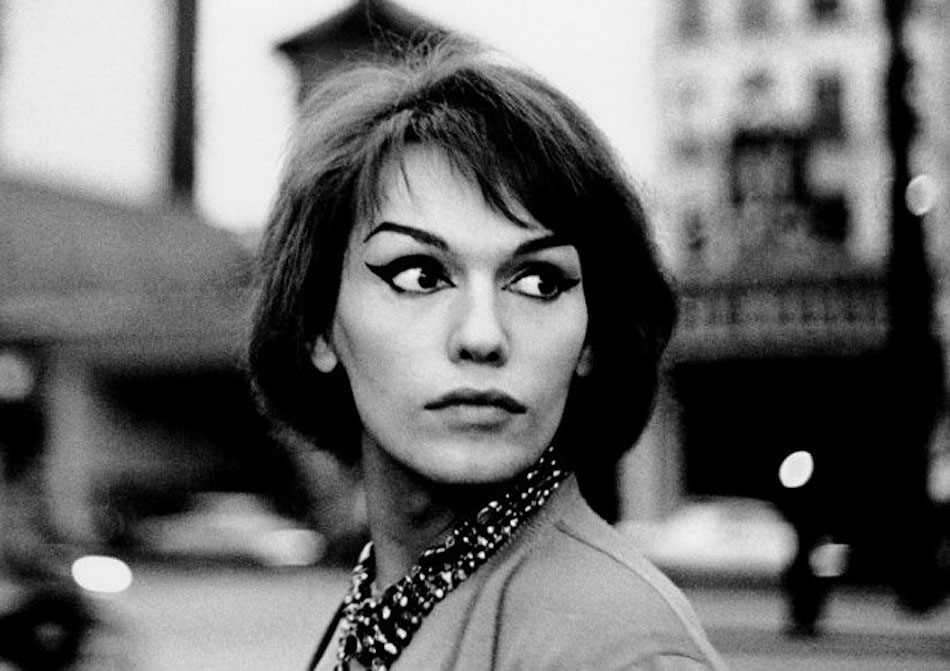
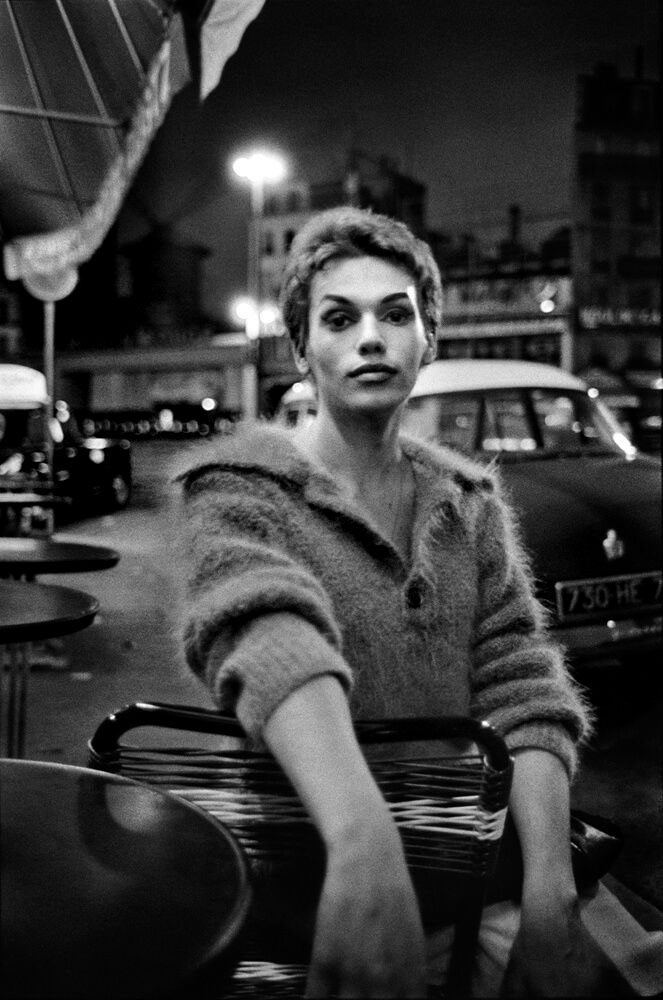
Christer Strömholm (Swedish, 1918-2002) 'Pepita' 1963


Christer Strömholm (Swedish, 1918-2002)
Pepita
1963
Gelatin silver print
© Christer Strömholm/Strömholm Estate


I am myself

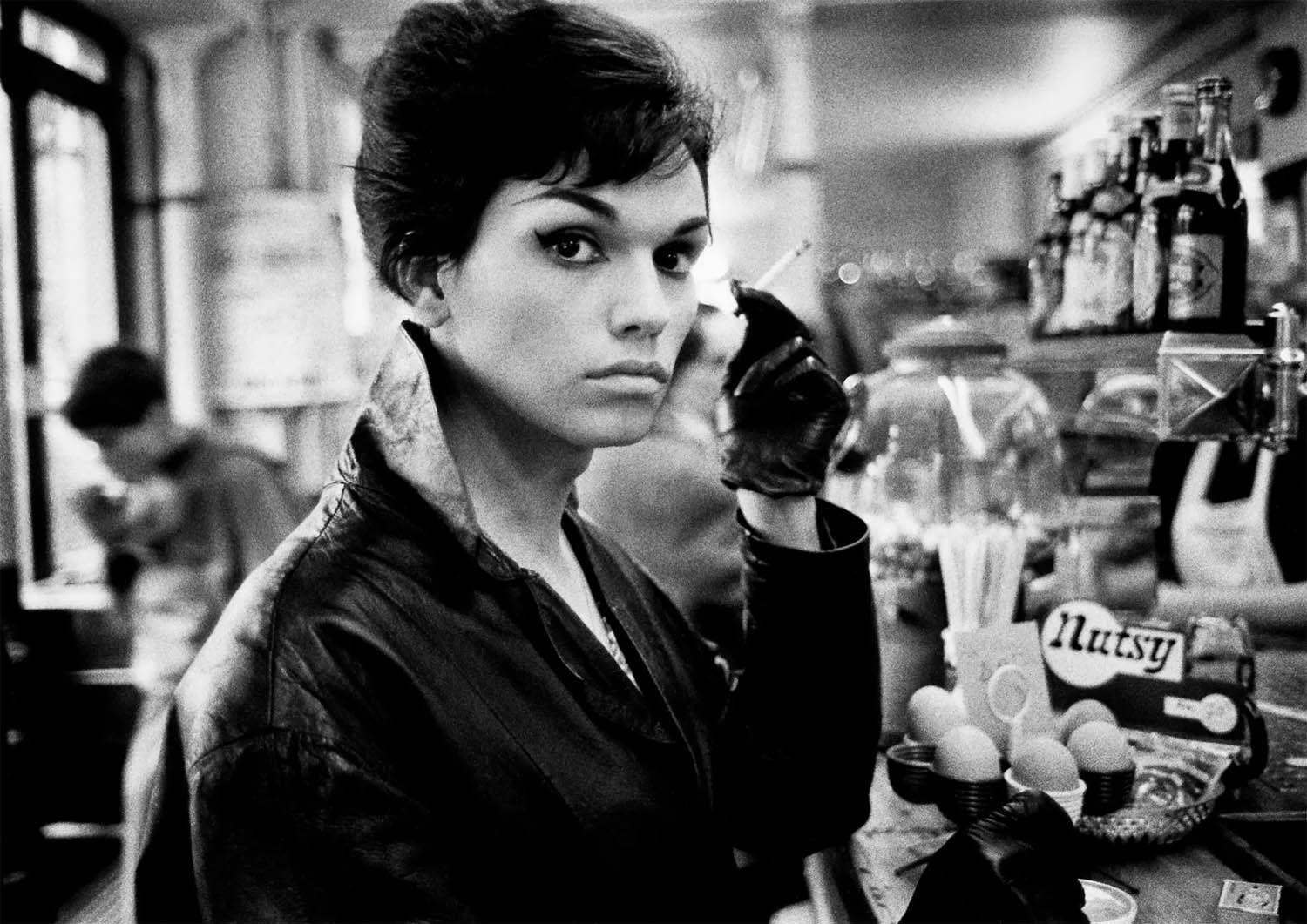
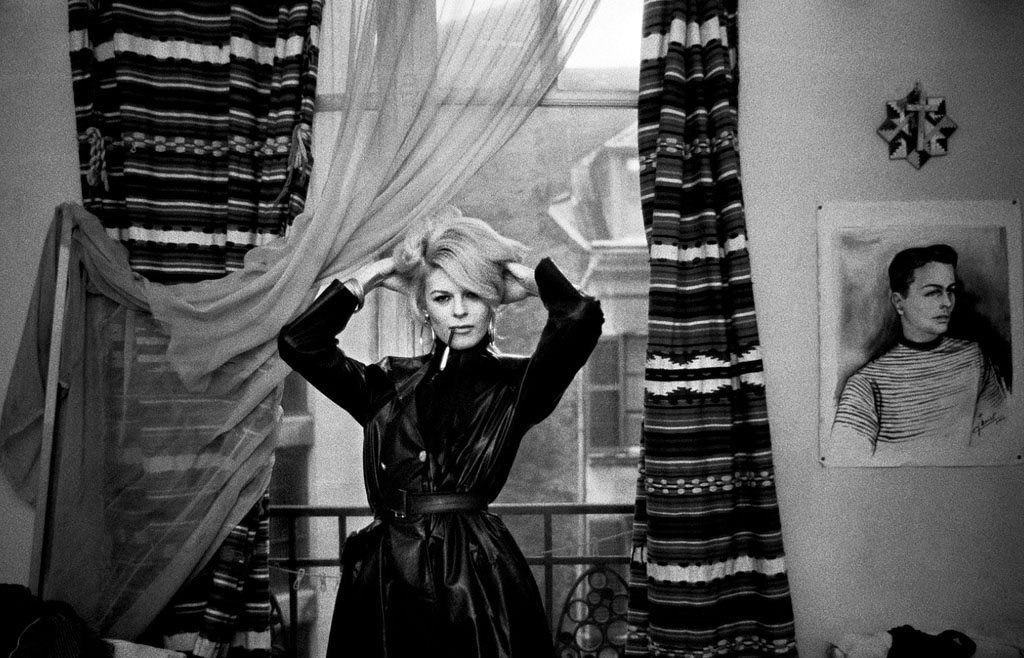
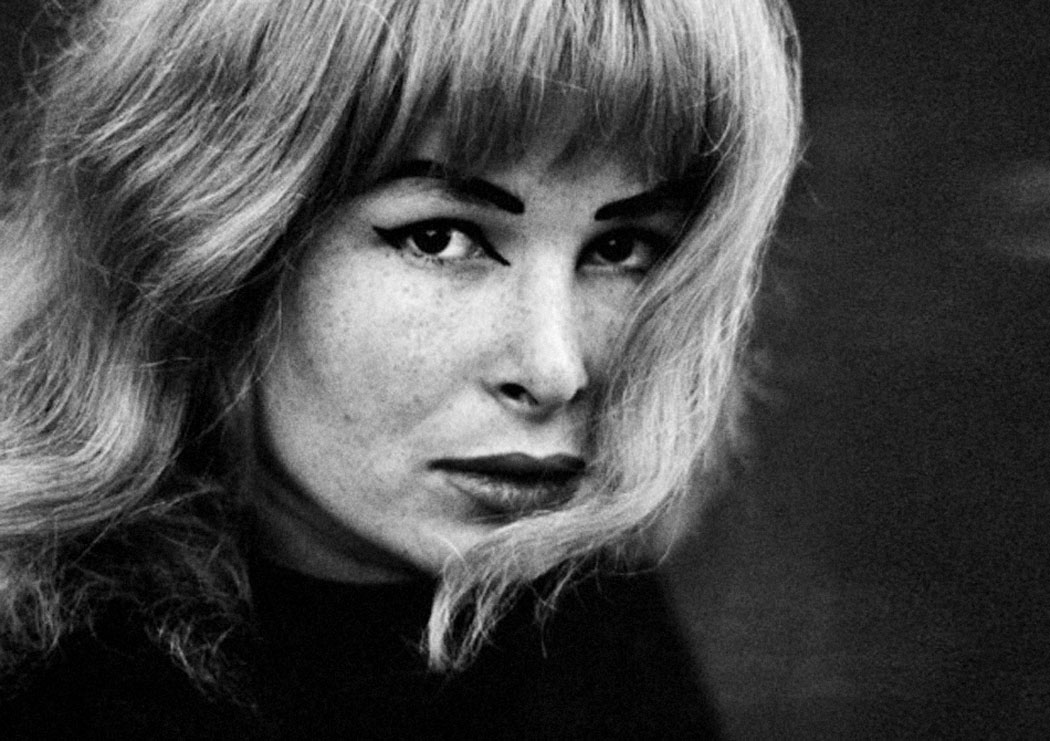
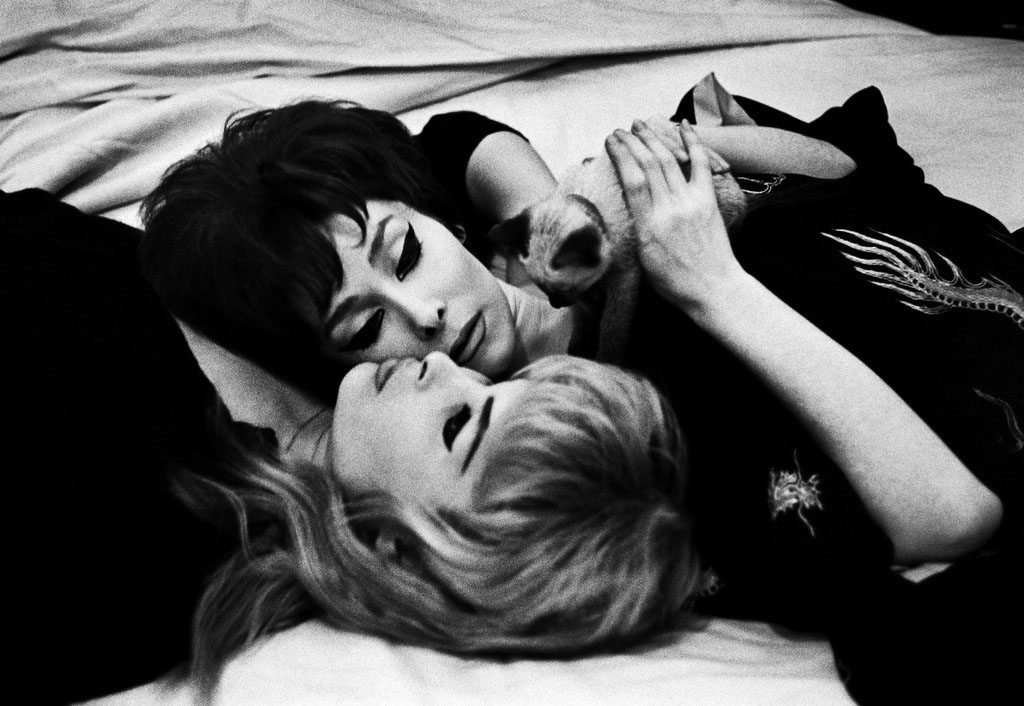
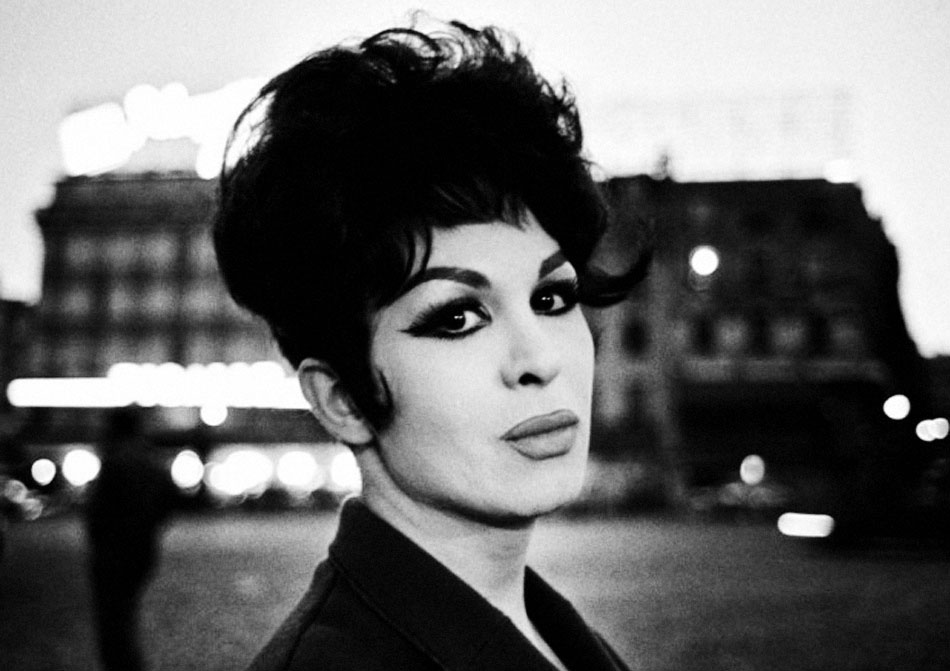
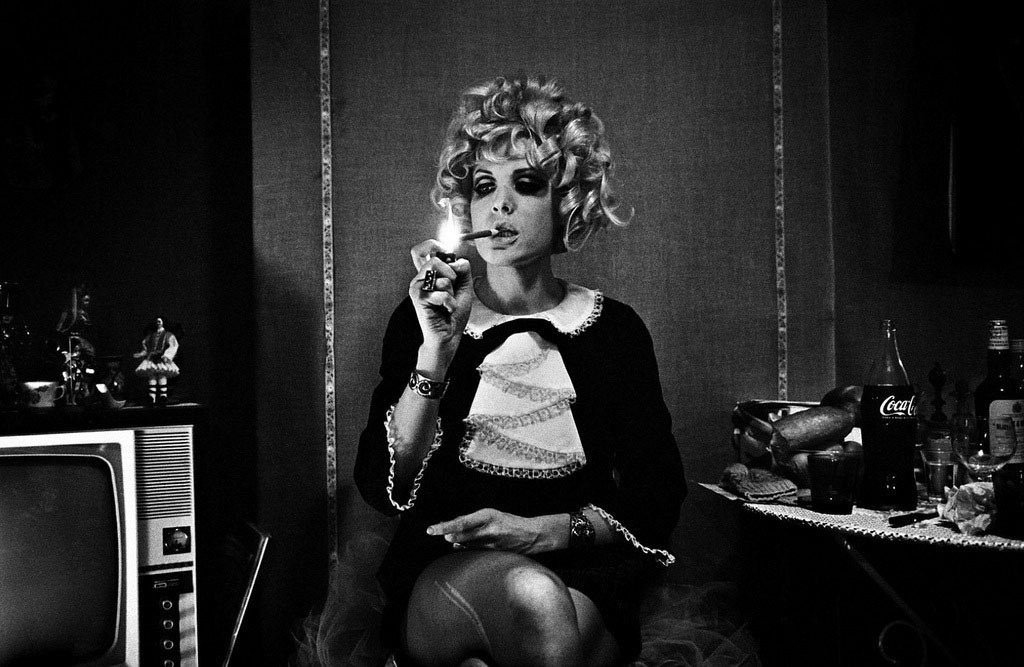
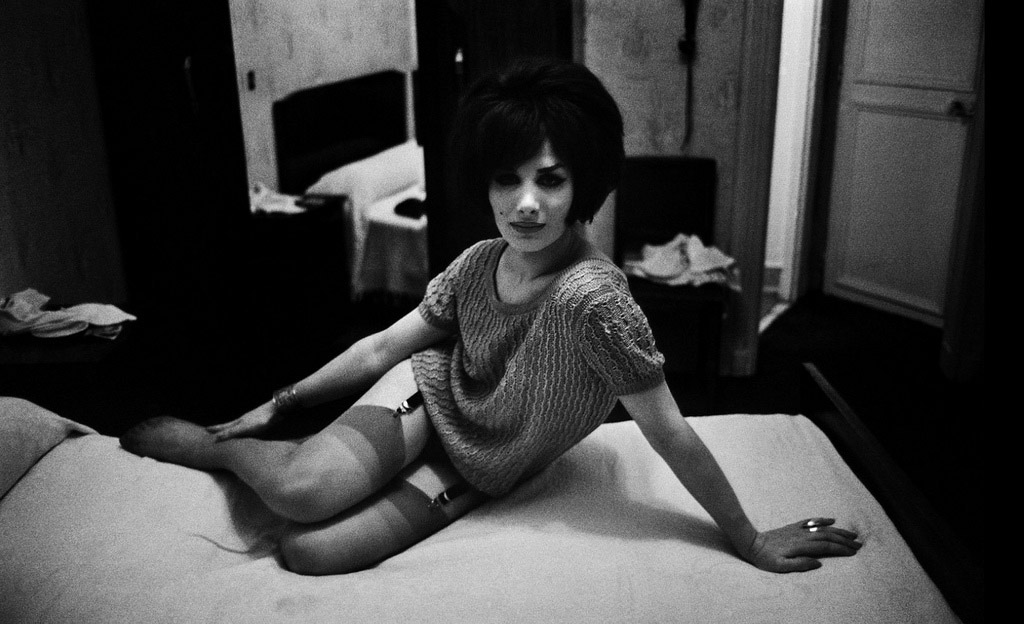
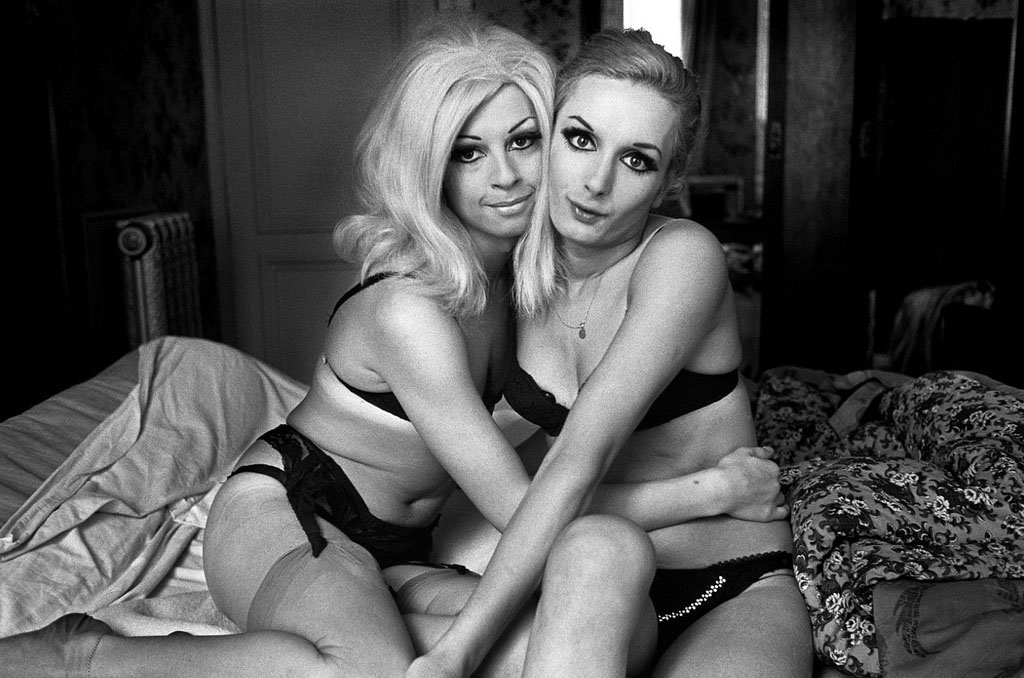
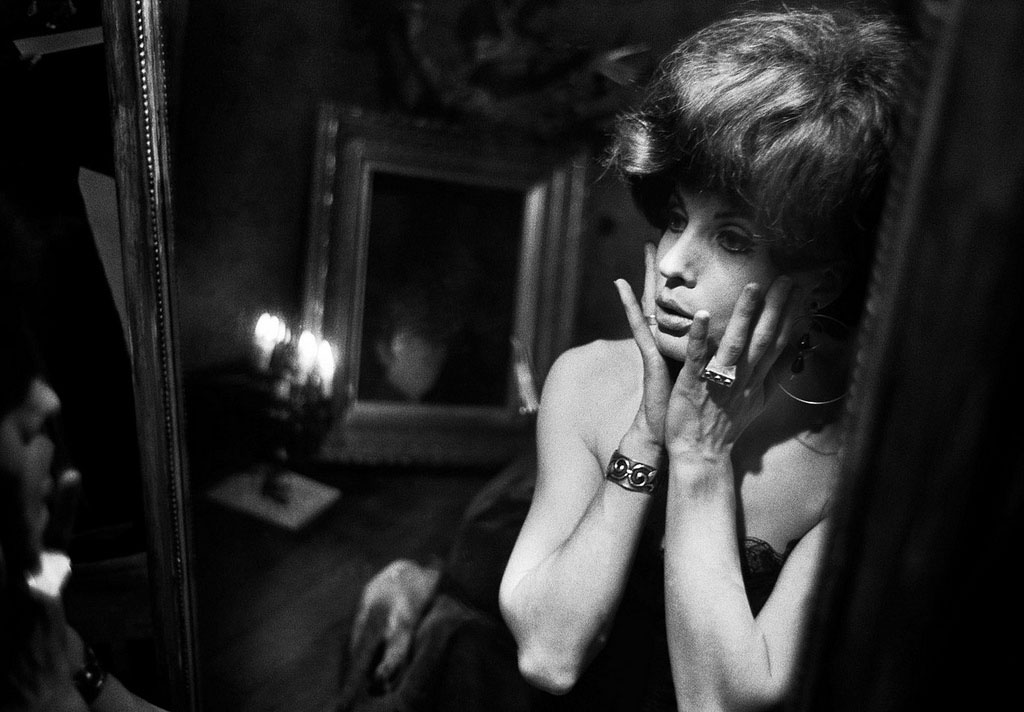
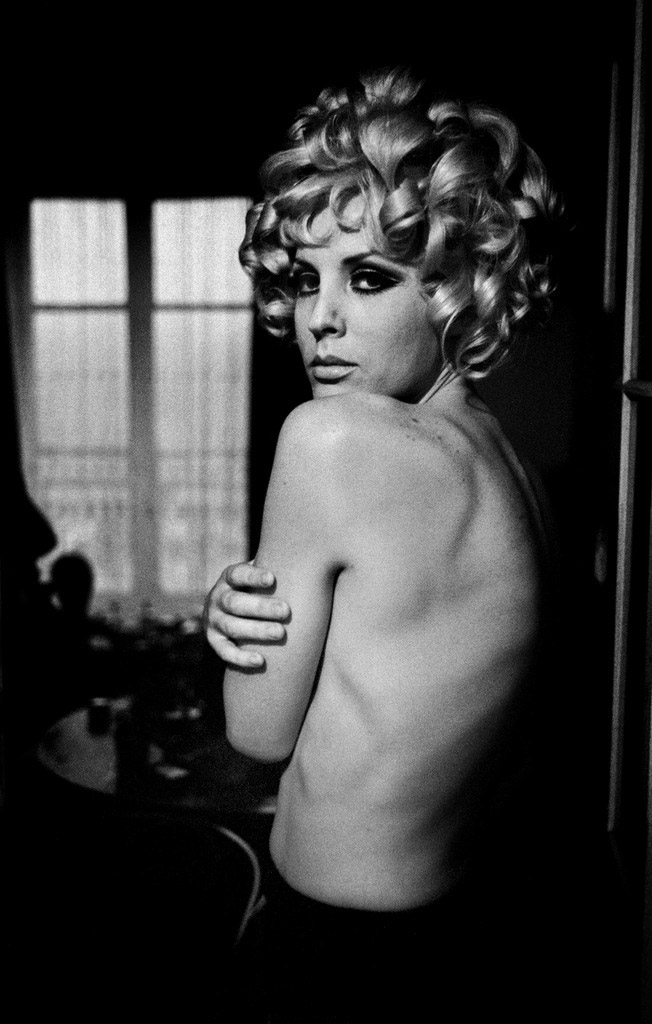
These are stunning photographs; they glow with an inner light and energy. With perfect composition and use of chiaroscuro the artist let’s the women speak for themselves – confident, self assured and happy in the life they are leading. Having come out as a gay man myself in 1975, six short years after the Stonewall Riots in New York, I can attest to how difficult and how much prejudice there was against gay men in the early 1970s. Imagine then, being a transexual living in Paris in the early to mid 1960s and the issues that these woman had to deal with.

And yet there is a joyous quality to these photographs, an intimate relationship between people (not just artist and subject), a sense of fondness, friendship and fraternity. There is an intimacy here that transcends documentation. The last photograph in the posting (Gina, 1963, below) is just this wonderful, happy photograph where you just can’t help smiling yourself. There is a lightness here that is at variance with Brassai’s heavy set Parisian nights, that is more sensitive to the subject than Diane Arbus’ thrusting camera and her depiction of transexuals.

As good as the quote by Strömholm is (below), it is not just the freedom to choose one’s own life and identity, it is the ability to make that choice an informed choice, where you can select from a variety of things, where your preference indicates that your choice is based on one’s values or predilections. Without being informed the decision you may make is not free; if you are uninformed you may be unaware. An informed choice is based upon a clear appreciation and understanding of the facts, implications, and future consequences of any action.

Despite the prejudice and pain these woman would have suffered living an everyday life in the 1960s they have made an informed choice. These are strong, courageous woman and their friend has captured their resolve beautifully.

Dr Marcus Bunyan


Many thankx to the International Centre of Photography for allowing me to publish the photographs in the posting. Please click on the photographs for a larger version of the image.


“It was then – and still is – about obtaining the freedom to choose one’s own life and identity.”


“It was because I didn’t understand it myself… as soon as you ask yourself why their lives are the way they are, it becomes difficult not to take pictures.”


“This is a book [Les Amies de Place Blanche] about insecurity. A portrayal of those living a different life in the big city of Paris, of people who endured the roughness of the streets. … This is a book about the quest for self-identity, about the right to live, about the right to own and control one’s own body.”


Christer Strömholm


Christer Strömholm: Les Amies de Place Blanche @ ICP

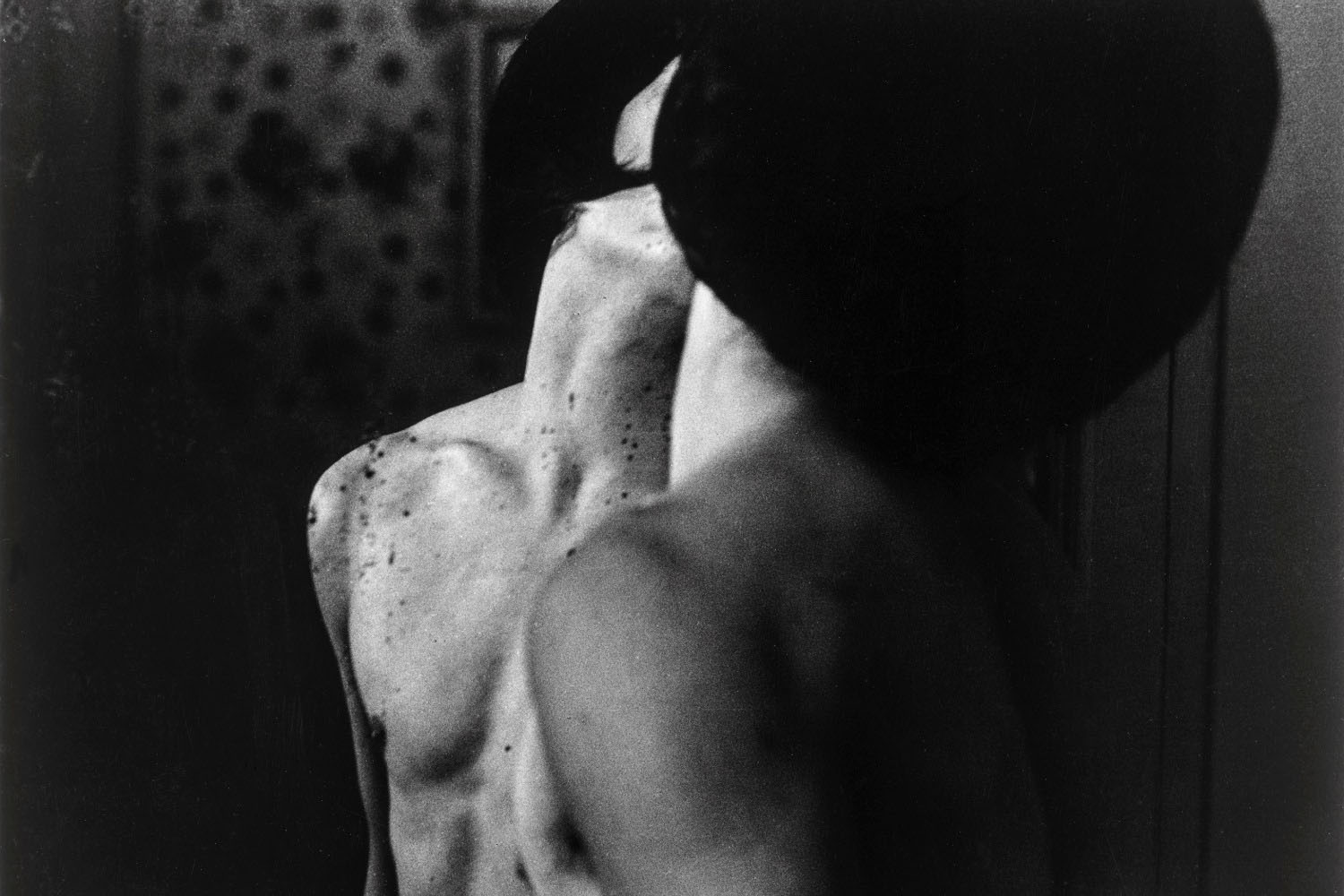
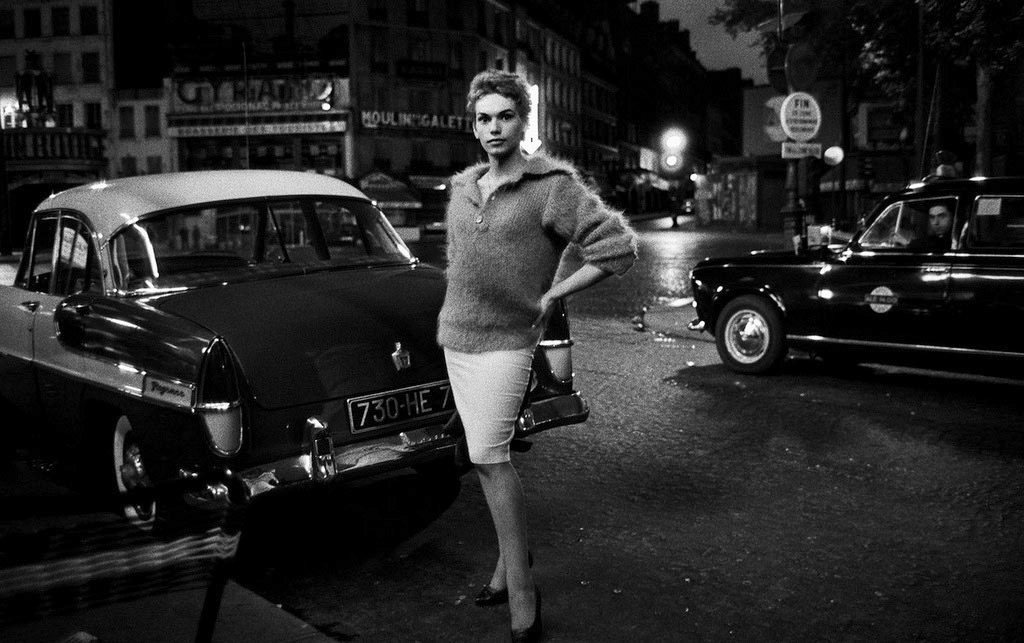
Christer Strömholm (1918-2002) was one of the great photographers of the 20th century, but he is little known outside of his native Sweden. This exhibition presents his most powerful and acclaimed body of work: Les Amies de Place Blanche, a documentation of transsexual “ladies of the night” in Paris in the 1960s. Arriving in Paris in the late 1950s, Strömholm settled in Place Blanche in the heart of the city’s red-light district. There, he befriended and photographed young transsexuals struggling to live as women and to raise money for sex-change operations. Strömholm’s surprisingly intimate portraits and lush Brassaï-like night scenes form a magnificent, dark, and at times quite moving photo album, a vibrant tribute to these girls, the “girlfriends of Place Blanche.” The photographs were first published in Sweden in 1983, and the book quickly sold out, becoming a cult classic; it is being reissued in French and English this year. Strömholm’s photo-essay raises profound issues about sexuality and gender; as he wrote in 1983, “It was then – and still is – about obtaining the freedom to choose one’s own life and identity.” This exhibition, the first presentation of Strömholm’s work in an American museum, is organised by ICP Curatorial Assistant Pauline Vermare


Christer Strömholm (Swedish, 1918-2002) 'At a fun fair, Paris' 1954-1955


Christer Strömholm (Swedish, 1918-2002)
At a fun fair, Paris
1954-1955
Gelatin silver print
© Christer Strömholm/Strömholm Estate


Christer Strömholm (Swedish, 1918-2002) '"Lady Leopard" at a fair, Paris' 1954-1955


Christer Strömholm (Swedish, 1918-2002)
“Lady Leopard” at a fair, Paris
1954-1955
Gelatin silver print
© Christer Strömholm/Strömholm Estate


Christer Strömholm (Swedish, 1918-2002) "Little Christer" 1955


Christer Strömholm (Swedish, 1918-2002)
“Little Christer”
1955
Gelatin silver print
© Christer Strömholm/Strömholm Estate


Christer Strömholm (Swedish, 1918-2002) 'Nana, Paris' 1959


Christer Strömholm (Swedish, 1918-2002)
Nana, Paris
1959
Gelatin silver print
© Christer Strömholm/Strömholm Estate


Christer Strömholm (Swedish, 1918-2002) 'Nana, Paris' 1959


Christer Strömholm (Swedish, 1918-2002)
Nana, Paris
1959
Gelatin silver print
© Christer Strömholm/Strömholm Estate


Christer Strömholm (Swedish, 1918-2002) 'Jacky' 1959


Christer Strömholm (Swedish, 1918-2002)
Jacky
1959
Gelatin silver print
© Christer Strömholm/Strömholm Estate


Christer Strömholm (Swedish, 1918-2002) 'Agnès Caprice' 1960s


Christer Strömholm (Swedish, 1918-2002)
Agnès Caprice
1960s
Gelatin silver print
© Christer Strömholm/Strömholm Estate


Agnès Caprice, showgirl of trans cabaret Le Carrousel and frequent subject of photo series Les Amies de La Place Blanche. She later partnered and had a child with an actress and performer of a butch lesbian cabaret. Caprice would pass at a young age due to addiction, after the devastating loss of 7 of her fellow Le Carrousel performers in a 1966 plane crash.

Text from the Genderoutlaws website


Christer Strömholm (Swedish, 1918-2002) 'Cobra and Caprice' 1961


Christer Strömholm (Swedish, 1918-2002)
Cobra and Caprice
1961
Gelatin silver print
© Christer Strömholm/Strömholm Estate


Christer Strömholm (Swedish, 1918-2002) 'Nana' 1963


Christer Strömholm (Swedish, 1918-2002)
Nana
1963
Gelatin silver print
© Christer Strömholm/Strömholm Estate


Christer Strömholm (Swedish, 1918-2002) 'Carmen, Pigalle, Paris' 1962


Christer Strömholm (Swedish, 1918-2002)
Carmen, Pigalle, Paris
1962
Gelatin silver print
© Christer Strömholm/Strömholm Estate


Christer Strömholm (Swedish, 1918-2002) 'Belinda' 1967


Christer Strömholm (Swedish, 1918-2002)
Belinda
1967
Gelatin silver print
© Christer Strömholm/Strömholm Estate


Christer Strömholm (Swedish, 1918-2002) 'Sabrina' 1967


Christer Strömholm (Swedish, 1918-2002)
Sabrina
1967
Gelatin silver print
© Christer Strömholm/Strömholm Estate


Christer Strömholm (Swedish, 1918-2002) 'Suzannah, Hôtel Pierrots' 1962


Christer Strömholm (Swedish, 1918-2002)
Suzannah, Hôtel Pierrots
1962
Gelatin silver print
© Christer Strömholm/Strömholm Estate


Christer Strömholm (Swedish, 1918-2002) 'Soraya and Sonia' 1962


Christer Strömholm (Swedish, 1918-2002)
Soraya and Sonia
1962
Gelatin silver print
© Christer Strömholm/Strömholm Estate


Christer Strömholm (Swedish, 1918-2002) 'Jacky' 1961


Christer Strömholm (Swedish, 1918-2002)
Jacky
1961
Gelatin silver print
© Christer Strömholm/Strömholm Estate


Christer Strömholm (Swedish, 1918-2002) 'Themis' 1963


Christer Strömholm (Swedish, 1918-2002)
Themis
1963
Gelatin silver print
© Christer Strömholm/Strömholm Estate


Christer Strömholm (Swedish, 1918-2002) 'Giulia and Carol' 1964


Christer Strömholm (Swedish, 1918-2002)
Giulia and Carol
1964
Gelatin silver print
© Christer Strömholm/Strömholm Estate


Christer Strömholm (Swedish, 1918-2002) 'Giulia and Carol, Pigalle, Paris' 1964


Christer Strömholm (Swedish, 1918-2002)
Giulia and Carol, Pigalle, Paris
1964
Gelatin silver print
© Christer Strömholm/Strömholm Estate


Christer Strömholm (Swedish, 1918-2002) 'Sabrina' 1967


Christer Strömholm (Swedish, 1918-2002)
Sabrina
1967
Gelatin silver print
© Christer Strömholm/Strömholm Estate


Christer Strömholm (Swedish, 1918-2002) 'Narcissus' 1968


Christer Strömholm (Swedish, 1918-2002)
Narcissus
1968
Gelatin silver print
© Christer Strömholm/Strömholm Estate


Raising profound issues about identity, sexuality, and gender, Christer Strömholm: Les Amies de Place Blanche, on view at the International Center of Photography (1133 Avenue of the Americas at 43rd Street) May 18 – September 2, 2012, presents 40 photographs, historical publications, and ephemera documenting young transgender males in the heart of Paris’ red-light district in the 1960s.

Arriving in Paris in the late 1950s, Christer Strömholm (Stockholm, 1918-2002) settled in Place Blanche, home of the famous Moulin Rouge. There, he befriended and photographed young transsexuals – “ladies of the night” – struggling to live as women and to raise money for sex-change operations. In General Charles de Gaulle’s ultra-conservative France, transvestites were outlaws, regularly abused and arrested by the police for being “men dressed as women outside the period of carnival.” Some of these women had tragic fates. Others, like “Nana” and “Jacky,” eventually fulfilled their destiny and led happy lives as women. Living alongside them for 10 years, Strömholm photographed his subjects in their hotel rooms, in bars, and in the streets of Paris.

“These intimate portraits and Brassaï-like lush night scenes form a magnificent, dark, and moving photo album, a vibrant tribute to these girls,” said ICP Curatorial Assistant Pauline Vermare, who organised the exhibition. These photographs were first published in Sweden in 1983, and the book Vännerna från Place Blanche (“The Girlfriends of Place Blanche”) – which will be reissued this year in French and English – quickly sold out, becoming a cult classic and solidifying Strömholm as one of the great photographers of the 20th century. The work for this exhibition is provided by the Strömholm Estate in Stockholm, the Marvelli Gallery in New York, and from the collection of Alice Zimet.

As Strömholm wrote in 1983: “These are images of people whose lives I shared and whom I think I understood. These are images of women – biologically born as men – that we call ‘transsexuals.’ As for me, I call them ‘my friends of Place Blanche.’ It was then – and still is – about obtaining the freedom to choose one’s own life and identity.”

Christer Strömholm is a lesser known artist, but may well be the father figure of Scandinavian photography. A prominent artist and winner of the prestigious Hasselblad Award in 1997, he was also an influential teacher and the mentor to some of today’s leading Swedish photographers including J.H. Engström, Anders Petersen, and Lars Tunbjörk. Highly revered in his native Sweden since the 1980s, he is still little known outside of Europe. This exhibition is the first presentation of Strömholm’s work in an American museum, and features his most powerful and acclaimed body of work.

Press release from the International Centre of Photography website


Christer Strömholm (Swedish, 1918-2002) 'Nana with cars' 1959


Christer Strömholm (Swedish, 1918-2002)
Nana with cars
1959
Gelatin silver print
© Christer Strömholm/Strömholm Estate


Christer Strömholm (Swedish, 1918-2002) 'Nana' 1959


Christer Strömholm (Swedish, 1918-2002)
Nana
1959
Gelatin silver print
© Christer Strömholm/Strömholm Estate


Christer Strömholm (Swedish, 1918-2002) 'Nana' 1959


Christer Strömholm (Swedish, 1918-2002)
Nana
1959
Gelatin silver print
© Christer Strömholm/Strömholm Estate


Christer Strömholm (Swedish, 1918-2002) 'Gina and Nana' 1960


Christer Strömholm (Swedish, 1918-2002)
Gina and Nana
1960
Gelatin silver print
© Christer Strömholm/Strömholm Estate


Christer Strömholm (Swedish, 1918-2002) 'Carole and Nana' 1960


Christer Strömholm (Swedish, 1918-2002)
Carole and Nana
1960
Gelatin silver print
© Christer Strömholm/Strömholm Estate


Christer Strömholm (Swedish, 1918-2002) 'Suzannah and Sylvia' 1962


Christer Strömholm (Swedish, 1918-2002)
Suzannah and Sylvia
1962
Gelatin silver print
© Christer Strömholm/Strömholm Estate


Christer Strömholm (Swedish, 1918-2002) 'Suzannah and Sylvia' 1962


Christer Strömholm (Swedish, 1918-2002)
Suzannah and Sylvia
1962
Gelatin silver print
© Christer Strömholm/Strömholm Estate


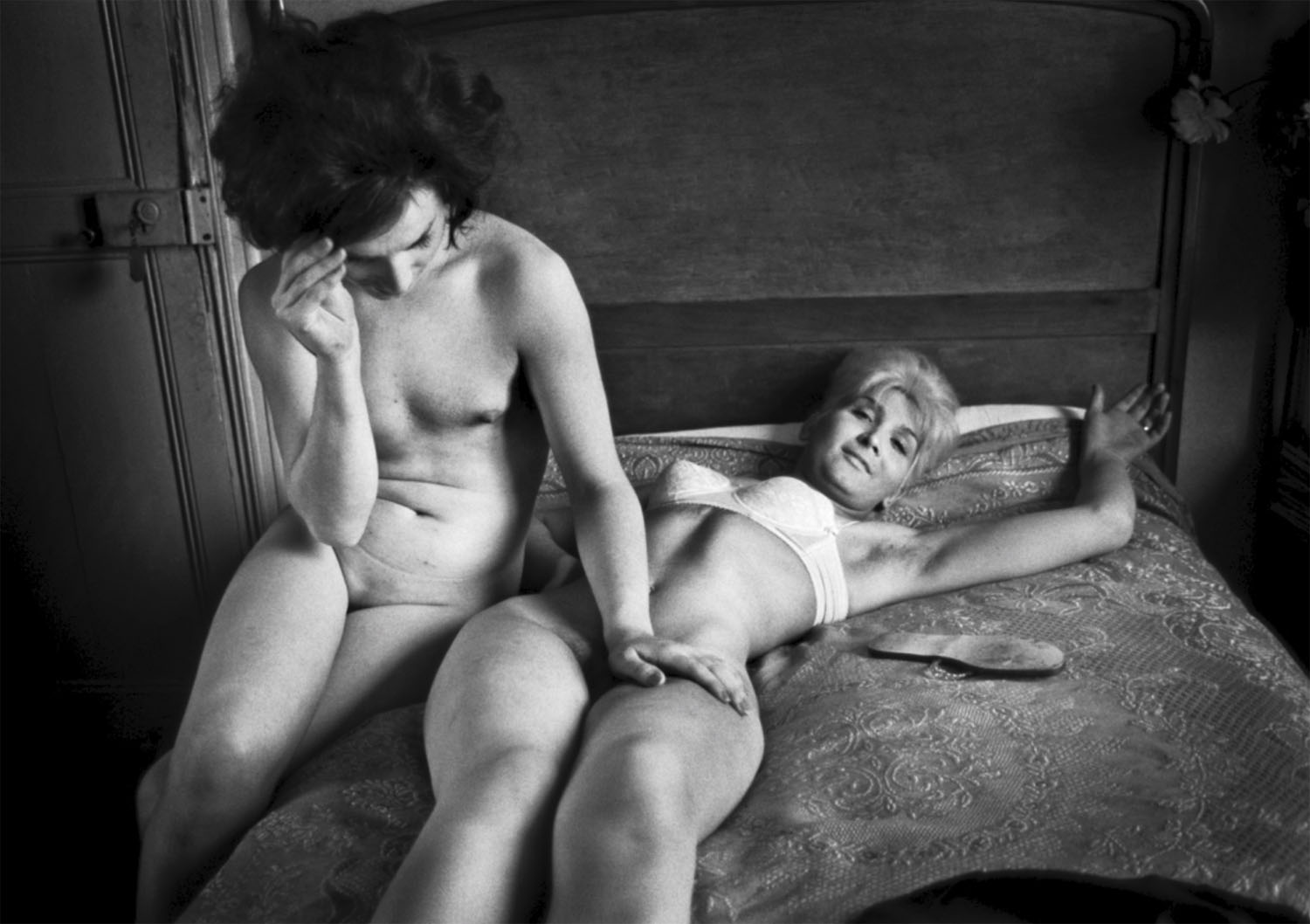
Under the strict Catholic social regime of Charles de Gaulle, transsexuals in Paris at this time were forced to confine their identities to within their hotel rooms, fearing the brutality of the police and imprisonment. Against this political backdrop Strömholm delved into the harsh world of sex work; Strömholm pervades this intimate and world of prostitution and deconstructs the division between private and public. The image of Susannah and Mimosa pictured below provides an insight into their private lives; the playful depiction of the women contrasts heavily with our contextual understanding of the photograph, of the hard life transsexuals endured in Paris. Strömholm reveals a dynamic sense of sorority between Suzanne and Mimosa in this portrait, personal interactions emerge which portrays the women as vibrant characters, a contrast against the grim reality of prostitution in Paris. Strömholm reveals a close bond between the women which goes beyond simplistic definitions of the women solely as exploited sex workers. Whilst Strömholm’s work can be viewed as a social commentary of the transgender women of Paris and the struggles they faced in daily life, there is a rather more emotive and delicate edge to Strömholm’s work which is a stark departure from the work of social documentary photographers.

Anonymous. “Christer Strömholm Exhibition Review: ‘Les Amies de Place Blanche’,” on the Camera History website 23rd January 2013 [Online] Cited 19/09/2024


Christer Strömholm (Swedish, 1918-2002) 'Sonia, Hôtel Pierrots' 1962


Christer Strömholm (Swedish, 1918-2002)
Sonia, Hôtel Pierrots
1962
Gelatin silver print
© Christer Strömholm/Strömholm Estate


“This is a book about the quest for self-identity, about the right to live, about the right to own and control one’s body. These are images of people whose lives I shared and whom I think I understood. This is where I arrived in 1959. This is where I settled and started to tell of the life I shared with the transsexuals. They soon became ‘the friends of Place Blanche’. …

After the sun had set, the air cooled down. At the time when shadows stretched, we could catch glimpses of prostitutes walking out of alleys. Big and beautiful women. Some of them exceeded in height their hope-swollen clients. Surrounded by circuses, freaks and snakes, the prostitutes stood there in the buildings’ shadows, keeping a constant eye on the boulevard, the shows and the clients.

Midway through January, when the fairground people set off again, the boulevard went back to normal – the party was over. On the boulevard and in the alleys surrounding place Pigalle and place Blanche, the prostitutes – both male and female, lesbians, transsexuals, transvestites or in other words: the usual group – took back their old spots.

Prostitution was as active as it used to be at the end of the 19th century. Organised prostitution happened all year long. A desperate fight, both to earn the daily bread and, for transsexuals, to see their identitarian dreams come true.

These beautiful ladies dreamt of travelling to Casablanca to undergo surgery. The outcome of a transformation started a long time ago. These women were biologically born as men. They lived here, in the place Blanche neighbourhood. They worked in cabarets, sang, did stripteases. They were outspoken and they answered back immediately to the public, it was a typical Parisian tradition. A cocky and saucy sense of humour.

They earned 60 French francs a day, enough to pay for the food and the hotel room but not enough to afford the 40,000 francs surgery. The streets were their only solution. Some of them had loyal customers, others stood in the same place on the street. Here, prostitution was part of the neighbourhood life. A way to survive.

At the time of the Commune, there already were transvestites on the place Blanche. But it was in the late 50s that the word ‘transsexual’ began to be used. It was also at that time that it became possible for a man to physically become a woman thanks to hormones and surgery. But hormone therapy has also been the cause of tragedies. Often they were denied the help of a doctor. So they had to fend for themselves.

My friends lived together in a world apart, a world of shadows and loneliness, anxiety, hopelessness and alienation. The only thing they demanded was to have the right to be themselves, not to be forced to deny or repress their feelings, to have the right to live their own lives, to be responsible, to be at ease with themselves.

Nothing more. It was then – and still is – about attaining the right to own one’s own life and identity.

Christer Strömholm from his 1983 book Les Amies de Place Blanche


Christer Strömholm (Swedish, 1918-2002) 'Sabrina' 1967


Christer Strömholm (Swedish, 1918-2002)
Sabrina
1967
Gelatin silver print
© Christer Strömholm/Strömholm Estate


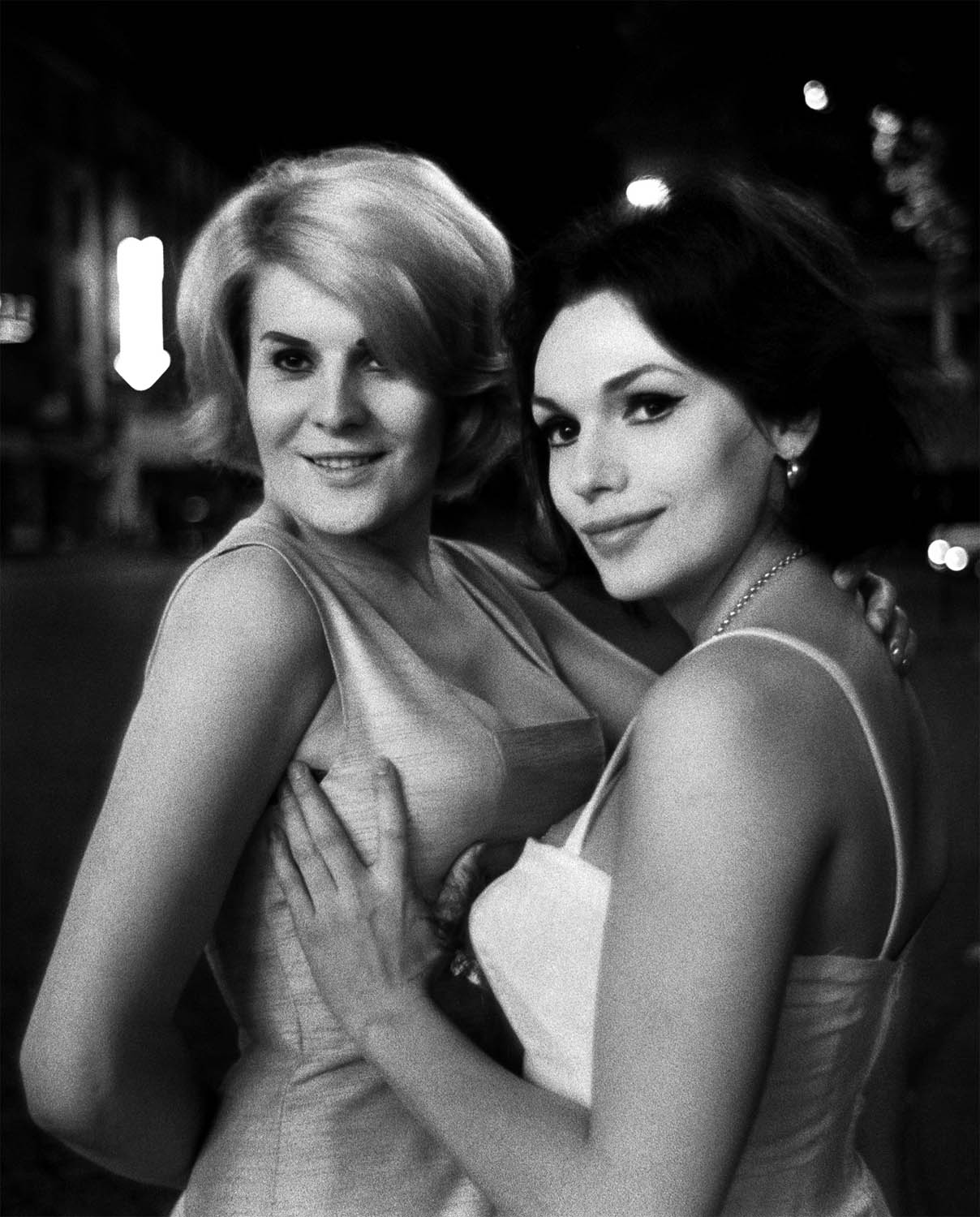
Christer Strömholm (Swedish, 1918-2002) 'Gina' 1963


Christer Strömholm (Swedish, 1918-2002)
Gina
1963
Gelatin silver print
© Christer Strömholm/Strömholm Estate


International Center of Photography
1133 Avenue of the Americas at 43rd Street
New York NY 10036
Phone: 212 857 0045

Opening hours:
Wednesday – Monday 11am – 7pm
Closed Tuesdays

International Center of Photography website

LIKE ART BLART ON FACEBOOK

Back to top

Exhibition: ‘Photography in Mexico: Selected Works from the Collections of SFMOMA and Daniel Greenberg and Susan Steinhauser’ at the San Francisco Museum of Modern Art (SFMOMA)

Exhibition dates: 10th March – 8th July 2012

List of Photographers Included: Katya Brailovsky, Lola Alvarez Bravo, Manuel Alvarez Bravo, Manuel Carrillo, Alejandro Cartagena, Eduardo del Valle and Mirta Gomez, Pia Elizondo, Dave Gatley, Oscar Fernando Gomez, Héctor Garcia, Lourdes Grobet, Graciela Iturbide, Geoffrey James, Mark Klett, Pablo Lopez Luz, Elsa Medina, Susan Meiselas, Enrique Metinides, Pedro Meyer, Tina Modotti, Rodrigo Moya, Pablo Ortiz Monasterio, Paolo Pellegrin, Antonio Reynoso, Daniela Rossell, Mark Ruwedel, Victoria Sambunaris, Alec Soth, Paul Strand, Yvonne Venegas, Brett Weston, Edward Weston, and Mariana Yampolsky.


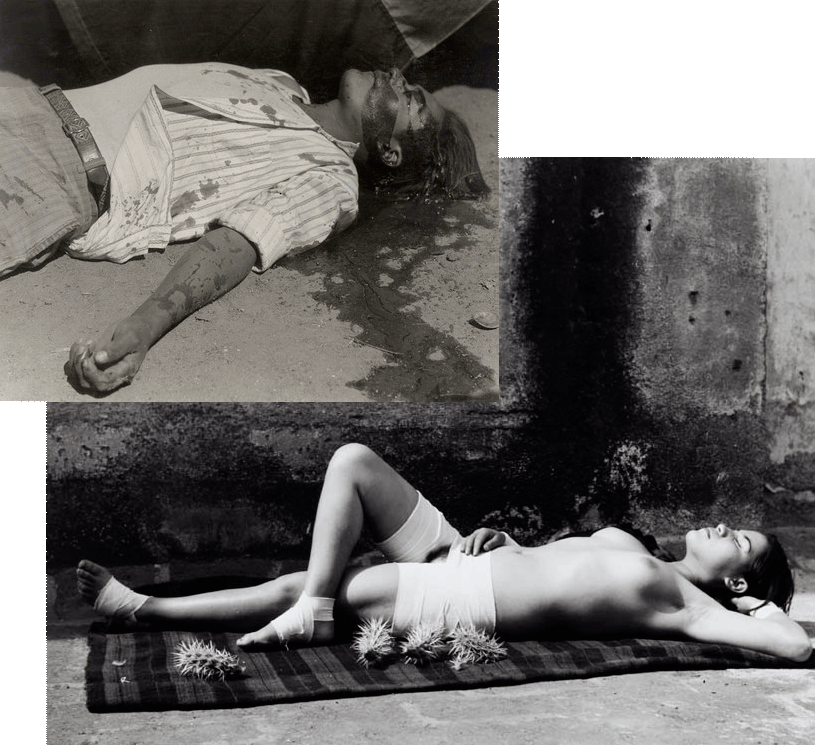
Manuel Alvarez Bravo (Mexican, 1902-2002) 'Obrero en huelga, asesinado' (Striking Worker, Assassinated) 1934 and 'La buena fama durmiendo' (The Good Reputation Sleeping) 1939


Manuel Alvarez Bravo (Mexican, 1902-2002)
Obrero en huelga, asesinado (Striking Worker, Assassinated)
1934
Gelatin silver print
19.2 x 23.8cm

Manuel Alvarez Bravo (Mexican, 1902-2002)
La buena fama durmiendo (The Good Reputation Sleeping)
1939
Gelatin silver print
20.3 x 25.4cm

Compilation by Dr Marcus Bunyan


“There is no one ‘Mexican photography,’ but one strand that runs throughout is a synthesis of aesthetics and politics. We see that with Manuel Alvarez Bravo, and we still see it in work made decades later.”


Jessica S. McDonald


One of my early heroes in photography was Manuel Alvarez Bravo whom I rate as one of the best photographers that has ever lived, up there with Atget and Sudek. His photograph Parabola optica (Optical Parable, 1931, below) lays the foundation for an inherent language of Mexican photography: that of a parable, a short allegorical story designed to illustrate or teach some truth, religious principle, or moral lesson. Many Mexican photographs tell such stories based on the mythology of the country: there are elements of the absurd, surrealism, macabre, revolution, political and socio-economic issues, also of death, violence, beauty, youth, sexuality and religion to name but a few – a search for national identity that is balanced in the photographs of Bravo by a sense of inner peace and redemption. This potent mix of issues and emotions is what makes Mexican photography so powerful and substantive. In the “presence” (or present, the awareness of the here and now) of Mexican photography there is a definite calligraphy of the body in space in most of the work. This handwriting is idiosyncratic and emotive; it draws the viewer into an intimate narrative embrace.

Two famous photographs by Bravo illustrate some of these themes (Apollonian / Dionysian; utopian / dystopian). When placed together they seem to have a strange attraction one to the other (see photographs above).

Unlike most Australian documentary photography where there is an observational distance present in the photographs – a physical space between the camera/photographer and the subject – Mexican documentary photography is imbued with a revolutionary spirit and validated by the investment of the photographer in the subject itself, as though the image is the country is the photographer. There is an essence and energy to the Mexican photographs that seems to turn narrative on its head, unlike the closed loop present in the tradition of Australian story telling. The intimate, swirling narratives of Mexican photography could almost be termed lyrical socio-realist. The halo of the golden child of Yvonne Venegas’ Nirvana (2006, below) menaced by the upturned forks is a perfect example.

Some of the themes mentioned above are evidenced in the photographs in this posting. Not the placid nude or heroic pyramid of Weston but the howl of the masked animal and surrealism of Our Lady of the Iguanas demands our close engagement. I only wish Australian photographers could be as forthright in their investigation of the morals and ethics of this country and our seemingly never ending search for a national identity (other than war, mateship, the beach, sport and the appropriation of Aboriginal painting exported as the Australian art “identity”).

Dr Marcus Bunyan


Many thankx to SFMoMA for allowing me to publish the photographs in the posting. Please click on the photographs for a larger version of the image.


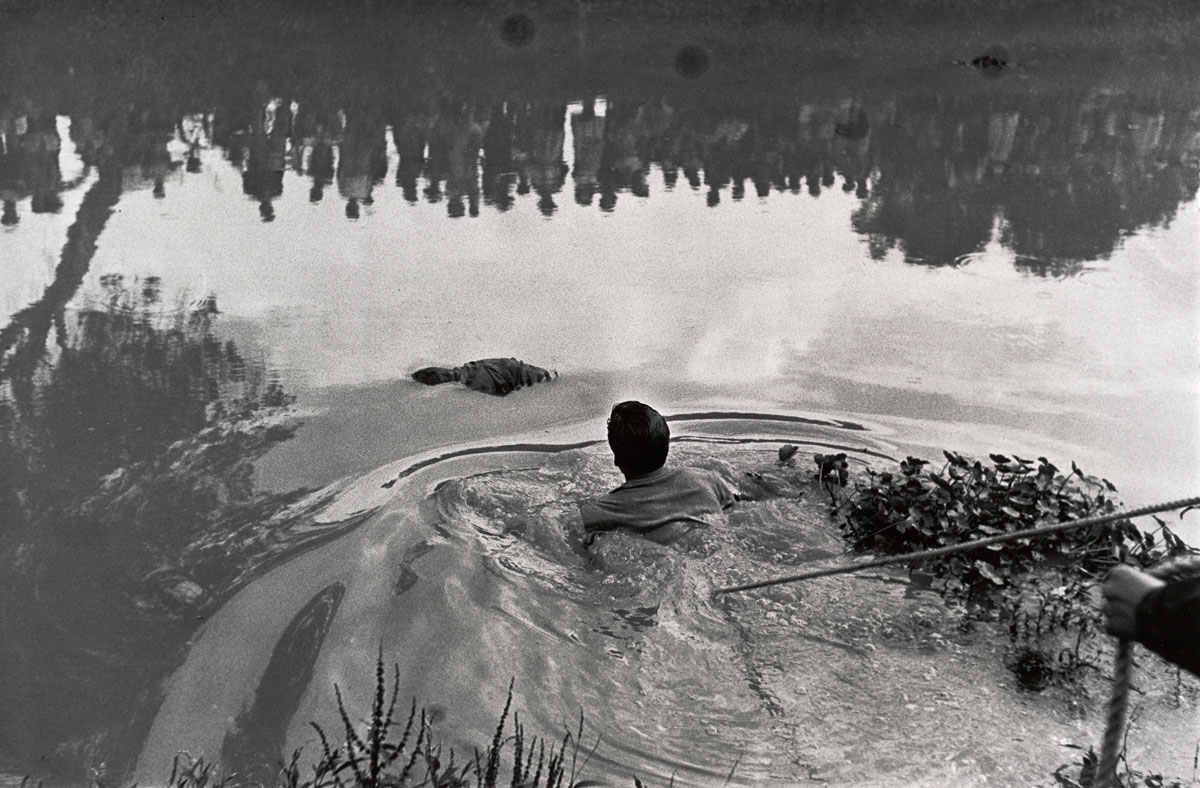
Enrique Metinides (Mexican, 1934-2022) 'Retrieval of a drowned body from Lake Xochimilco with the public reflected in the water' 1960


Enrique Metinides (Mexican, 1934-2022)
Rescate de un ahogado en Xochimilco con público reflejado en el agua (Retrieval of a drowned body from Lake Xochimilco with the public reflected in the water)
1960
Gelatin silver print
13 3/4 x 20 3/4 in
San Francisco Museum of Modern Art, Anonymous Fund purchase
© Enrique Metinides


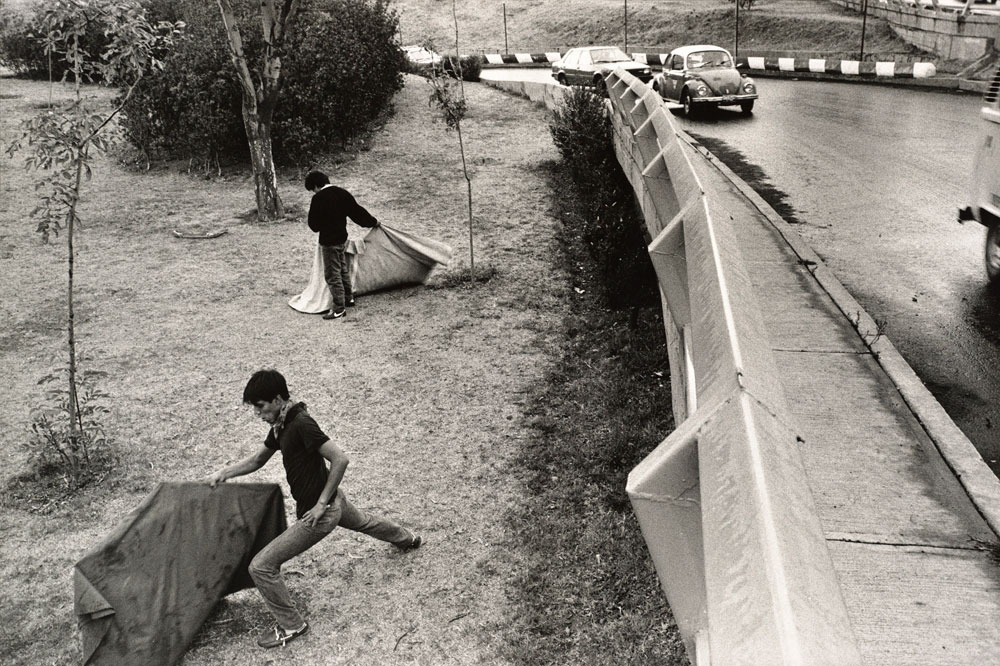
Pablo Ortiz Monasterio (Mexican, b. 1952) 'Y es plata, cemento o brisa' c. 1985


Pablo Ortiz Monasterio (Mexican, b. 1952)
Y es plata, cemento o brisa
c. 1985
Gelatin silver print
8 9/16 x 12 3/4 in (21.75 cm x 32.39cm)
Collection of Daniel Greenberg and Susan Steinhauser
© Pablo Ortiz Monasterio

Yvonne Venegas (American, b. 1970) 'Nirvana' from the series 'Maria Elvia De Hank' 2006


Yvonne Venegas (American, b. 1970)
Nirvana from the series Maria Elvia De Hank
2006
Inkjet print
19 1/2 x 24 in (49.53 cm x 60.96cm)
Collection of the San Francisco Museum of Modern Art
© Yvonne Venegas


Oscar Fernando Gómez (Mexican, b. 1970) 'Untitled' from 'The Windows Series' 2008-2010


Oscar Fernando Gómez (Mexican, b. 1970)
Untitled from the series The Windows
2008-2010
Inkjet print
17 1/4 x 24 in (43.82 cm x 60.96cm)
Collection of the San Francisco Museum of Modern Art
© Oscar Fernando Gómez


Paolo Pellegrin (Italian, b. 1964) 'USA. El Paso, Texas. May 17, 2011. Two men, who illegally attempted to enter the U.S., run across the dry Rio Grande river back to Juarez, Mexico after being spotted by the US Border Patrol' 2011


Paolo Pellegrin (Italian, b. 1964)
USA. El Paso, Texas. May 17, 2011. Two men, who illegally attempted to enter the U.S., run across the dry Rio Grande river back to Juarez, Mexico after being spotted by the US Border Patrol
2011
Inkjet print
15 3/16 x 22 3/4 in (38.58 cm x 57.79cm)
Collection of the San Francisco Museum of Modern Art
© Paolo Pellegrin


From March 10 through July 8, 2012, the San Francisco Museum of Modern Art (SFMOMA) will present the exhibition Photography in Mexico: Selected Works from the Collections of SFMOMA and Daniel Greenberg and Susan Steinhauser. Exploring the distinctively rich and diverse tradition of photography in Mexico from the 1920s to the present, the exhibition showcases works by important Mexican photographers as well as major American and European artists who found Mexico to be a place of great artistic inspiration.

Organised by SFMOMA Assistant Curator of Photography Jessica S. McDonald, the selection of more than 150 works draws from SFMOMA’s world-class photography holdings and highlights recent major gifts and loans from collectors Daniel Greenberg and Susan Steinhauser. The presentation reflects the collections’ particular strengths, featuring photographs made in Mexico by Tina Modotti, Paul Strand, and Edward Weston, along with works by key Mexican photographers including Lola Alvarez Bravo, Manuel Alvarez Bravo, Manuel Carrillo, Héctor Garcia, Lourdes Grobet, Graciela Iturbide, Enrique Metinides, Pedro Meyer, Pablo Ortiz Monasterio, and Mariana Yampolsky.

The exhibition begins with the first artistic flowering of photography in Mexico after the Mexican Revolution (1910-1920) and goes on to look at the explosion of the illustrated press at midcentury; the documentary investigations of cultural traditions and urban politics that emerged in the 1970s and 1980s; and more recent considerations of urban life, globalisation, and issues particular to the U.S.-Mexico border region. Rather than attempting to define a national style, the exhibition considers the range of approaches and concerns that photographers in Mexico have pursued over time. As McDonald notes, “There is no one ‘Mexican photography,’ but one strand that runs throughout is a synthesis of aesthetics and politics. We see that with Manuel Alvarez Bravo, and we still see it in work made decades later.”

As arts and culture flourished in Mexico after the Revolution, many European and American artists were drawn to the country. Among them were Edward Weston and Tina Modotti, who arrived in Mexico in 1923. Inspired by what they saw there, Weston and Modotti in turn motivated Mexican photographers to pursue the medium’s artistic possibilities; their influence helped “give Mexican photographers confidence that art photography was a viable path,” says McDonald. Hence, the exhibition opens with a selection of works made in Mexico by Modotti, Weston, his son Brett Weston, and Paul Strand during the 1920s and 1930s.

One of the Mexican photographers encouraged by Modotti and Weston was Manuel Alvarez Bravo, who went on to become one of the most influential photographers and teachers in the country’s history as well as a key figure in the broader international history of the medium. The exhibition features a substantial number of major works by the photographer, many of them donated or loaned to SFMOMA by Daniel Greenberg and Susan Steinhauser. In considering Alvarez Bravo’s career, the exhibition illuminates the birth and development of a tradition of art photography in Mexico. The presentation also includes a selection of works by Alvarez Bravo’s first wife, Lola Alvarez Bravo, an important photographer in her own right who established a successful commercial and artistic practice.

In mid-20th-century Mexico, as in the United States and Europe, earning an adequate income as an art photographer was an unlikely proposition. Instead, many photographers made a living through photojournalism, contributing to the numerous illustrated publications in circulation during this period. In the decades following the Revolution, there was great interest in traditional ways of life and in defining what it meant to be Mexican. Some photographers, such as Manuel Carrillo, created images documenting the nation’s traditions and celebrating its common people. Others, like Hector Garcia and Rodrigo Moya, rejected this sentimental approach, focusing instead on contemporary concerns and the political and social turbulence that continued to influence post-revolutionary Mexican life.

The late 1960s and 1970s saw the rise of critical theory and a new interest in investigating the nature of photography as a medium; in Mexico as elsewhere, there were more opportunities to study photography and to pursue noncommercial projects. A number of Mexican photographers, such as Lourdes Grobet, Graciela Iturbide, Pedro Meyer, and Pablo Ortiz Monasterio, created extended documentary series. Iturbide lived among indigenous people and recorded the details of their daily lives; Grobet focused on wrestling and the cultural concept of the mask; Ortiz Monasterio captured gritty, dystopian views of Mexico City. The exhibition draws extensively on gifts from Daniel Greenberg and Susan Steinhauser to represent directions in Mexican photography of the 1970s and 1980s.

Since the 1990s, the attention of many Mexican photographers has turned away from cultural traditions and rural landscapes and toward the cities and suburbs where many Mexicans now live. Works by Katya Brailovsky, Alejandro Cartagena, Pablo Lopez Luz, Daniela Rossell, and Yvonne Venegas reflect this interest in the changing social landscape, looking at issues of wealth and class, urbanization and land use, and the effects of the globalised economy. The exhibition closes with contemporary international photographers’ perspectives on U.S.-Mexico border issues. Images by Mark Klett, Victoria Sambunaris, and Alec Soth consider the border as landscape, while works by Elsa Medina, Susan Meiselas, and Paolo Pellegrin document the experiences of migrant workers and people trying, successfully or unsuccessfully, to cross into the United States.

About Daniel Greenberg and Susan Steinhauser

Based in Los Angeles, Daniel Greenberg and Susan Steinhauser have a deep and longstanding interest in Mexican photography, which they have been collecting since 1995. The photography department at SFMOMA has benefited greatly from their generosity: they have donated more than 175 works to the museum over the last six years. Their recent major gift of Mexican work, including over 50 photographs by Manuel Alvarez Bravo, Graciela Iturbide, and others, has created an ideal opportunity for SFMOMA to present this exhibition exploring photography in Mexico.

Press release from SFMOMA website


Edward Weston (American, 1886-1958) 'Pirámide del Sol, Teotihuacán' 1923


Edward Weston (American, 1886-1958)
Pirámide del Sol, Teotihuacán
1923
Gelatin silver print
7 9/16 x 9 1/2 in
San Francisco Museum of Modern art, gift of Brett Weston
© 1981 Center for Creative Photography, Arizona Board of Regents


Edward Weston (American, 1886-1958) 'Tina Modotti, Half-Nude in Kimono' 1924


Edward Weston (American, 1886-1958)
Tina Modotti, Half-Nude in Kimono
1924
Gelatin silver print
9 5/8 x 4 11/16 in
San Francisco Museum of Modern Art, Albert M. Bender Collection, Albert M. Bender Bequest Fund purchase
© 1981 Center for Creative Photography, Arizona Board of Regents


Manuel Alvarez Bravo (Mexican, 1902-2002) 'Parabola optica (Optical Parable)' 1931


Manuel Alvarez Bravo (Mexican, 1902-2002)
Parabola optica (Optical Parable)
1931
Gelatin silver print
9 3/4 x 7 1/4 in. (24.77 x 18.42cm)
Collection of Daniel Greenberg and Susan Steinhauser
© Colette Urbajtel / Asociación Manuel Álvarez Bravo


Lola Álvarez Bravo (Mexican, 1907-1993) 'Los gorrones' c. 1955


Lola Álvarez Bravo (Mexican, 1907-1993)
Los gorrones
c. 1955, printed later
Gelatin silver print
9 5/8 x 11 3/4 in (24.45 cm x 29.85cm)
Collection of Daniel Greenberg and Susan Steinhauser
© 1995 Center for Creative Photography, The University of Arizona Foundation


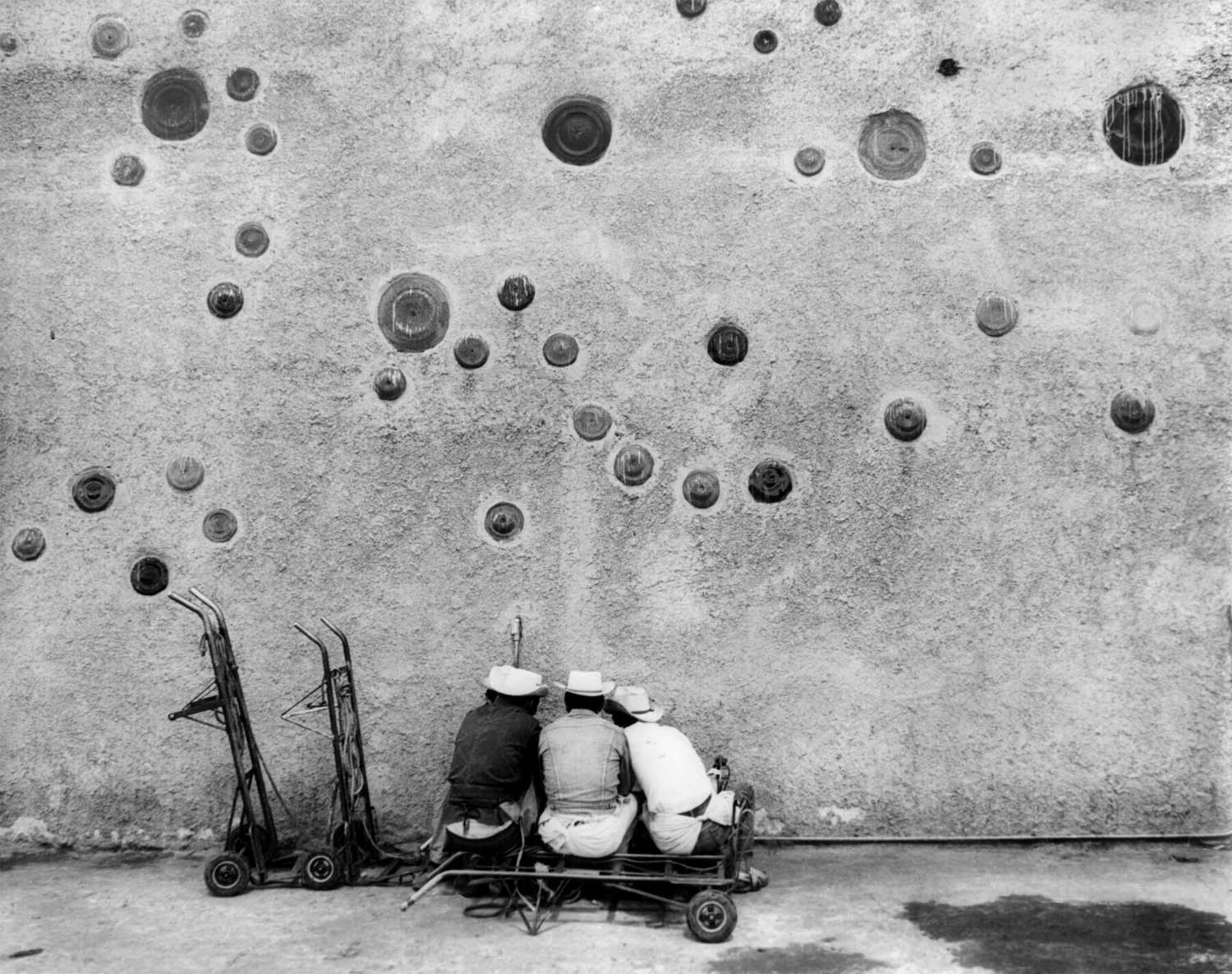
Hector Garcia (Mexican, 1923-2012) 'Aquelarre Cargadores con Diablos' 1971


Hector Garcia (Mexican, 1923-2012)
Aquelarre Cargadores con Diablos
1971
Gelatin silver print


Hector Garcia Cobo (August 23, 1923 – June 2, 2012) was a Mexican photographer and photojournalist who had a sixty-year career chronicling Mexico’s social classes, Mexico City and various events of the 20th century, such as the 1968 student uprising. He was born poor but discovered photography in his teens and early 20s, deciding to study it seriously after his attempt to photograph the death of a co-worker failed. He was sent to the Academia Mexicana de Artes y Ciencias Cinematográficas by magazine director Edmundo Valdés who recognised García’s talent. Most of García’s career was related to photojournalism, working with publications both inside and outside of Mexico. However, a substantial amount of his work had more artistic and critical qualities. Many of these were exhibited in galleries and museums, with sixty five individual exhibitions during his lifetime. This not only included portraits of artists and intellectuals (including a famous portrait of David Alfaro Siqueiros at Lecumberri Prison) but also portraits of common and poor people. He was also the first photojournalist to explicitly criticise Mexico’s elite, either making fun of them or contrasting them to the very poor.

Text from the Wikipedia website


Lourdes Grobet (Mexican, 1940-2022) 'Ponzoña, Arena Coliseo' c. 1983


Lourdes Grobet (Mexican, 1940-2022)
Ponzoña, Arena Coliseo
c. 1983
Gelatin silver print
14 x 11 in
San Francisco Museum of Modern Art, gift of Jane and Larry Reed
© Lourdes Grobet


Lourdes Grobet Argüelles (1940-2022)

Lourdes Grobet Argüelles (25 July 1940 – 15 July 2022) was a Mexican contemporary photographer, known for her photographs of Mexican lucha libre wrestlers.

Grobet spent some time as a painter before focussing on photography. Her photography led her to explore lucha libre, and she spent a lot of time getting to know the luchadores (wrestlers). Grobet did some theatre and video, and published several books. Grobet’s work has been the subject of numerous exhibitions, and she received many grants and awards for her work.

Career

Kati Horna introduced Grobet to the world of photography, though the main influences in her early career were Mathias Goeritz, Gilberto Aceves Navarro, El Santo and others. Grobet studied as a painter in Mexico for some time and then took a trip to Paris in 1968; it changed her life and the way that she viewed the art world.

While she was in Paris, Grobet visited many art galleries and discovered kinetic art; because of this, she liked working with multimedia. She spent some time working at a jazz concert, controlling lighting and kinetic projections. When Grobet returned to Mexico, she decided that she wanted to focus on photography; after she got back home, she decided to burn all of her old work and start over.

In 1981 Grobet released her first set of photographs. At the beginning of her career in photography, she was part of a group called Consejo Mexicano de Fotografía (Mexican Council of Photography), formed by Pedro Meyer in 1977. With her participation in this group, she was able to revitalise photography in Mexico,[citation needed] which led to a movement called the Grupos. Grobet was focused on establishing a community-based perspective.

Grobet spent some time with indigenous people during a time of great struggle for them. She took the time to learn more about them and photograph them in a theatrical way. She wanted to relate to indigenous people using her artistic initiative, so they made costumes and scenery of their own and she then took their photos. Later on, Grobet took interest in the Mayan culture. Wanting to learn more about the Mayans she went to the suburbs; while this was not a common thing to do, she wanted to steer clear of any tourists. She wanted to get accurate information about the people she documented and explore an area less traveled. She discovered temples that were made by an unknown civilisation and she decided they were to be called the Olmayazetec.

After her education and her travels, Grobet came back to México City. She once again started to explore her childhood interest of luchadores. She found that there was very little information pertaining to the luchadores, and so she decided that she wanted to make them more known to the world.

Grobet spent thirty years devoted to taking pictures of the luchadores and studying their way of life. She spent time photographing lucha libre wrestlers inside and outside of the ring, both in their masks, but also in their own homes. Grobet wanted to show that they lived normal lives, just like everyone else. She got very close with well known Lucha Libre wrestlers such as: El Santo, Blue Demon, Mil Mascaras, Sagrada, Octagon, Misioneros de la Muerte, Los Perros del Mal, and Los Brazos. Influenced greatly by Mathias Goeritz, the Polish sculptor from Gdańsk, and by Gilberto Aceves Navarro, a Mexican master of art murals, who were her teachers, Grobet worked on pictures of El Santo, one of the most important Mexican wrestlers, and a hero of lucha libre who starred in more than 50 films. Since 1975, she has published more than 11,000 photographs of the sport, including those on the sport in the United States since the 1930s, and as an important part of Mexican popular culture, adopting a sociological attitude. The sport involves many costumes and masks, leading it to a sport-carnival air which is much appreciated by Mexicans.

She also ventured into cinema. In her 2013 movie Bering. Balance and Resistance, Grobet questions the political separation between the Big Diomede Island (Russia) and the Little Diomede Island (USA) in the Bering Strait, a border between the United States and Russia. Showing the consequences of the separation between both Islands. After the American-Soviet conflict of the 21st century, the Beringia region was divided in two, which caused the separation of complete Nanook families and also, paradoxically, separated the place where the first human beings that populated the American continent crossed.

Grobet has had over one hundred exhibitions of her photographs, both group and solo exhibitions. She had her work exhibited at the London Mexfest festival in 2012. She won an award at the Second Biennal in Fine Art Photography. In 1975, for the exhibition Hora y media, she transformed a gallery into a photographic laboratory. She developed the photographs, but without fixing them, and displayed them on three walls. While the public looked at the photographs, the lights from the gallery made it look like they disappeared.

In 1977, Grobet presented Travelling, an exhibition of photography on an escalator. Among her other works were Paisajes pintados, Teatro campesino, Strip Tease.

Text from the Wikipedia website


Graciela Iturbide (Mexican, b. 1942) 'La Nuestra Senora de las Iguanas, Juchitan, Oaxaca, Mexico' (Our Lady of the Iguanas, Juchitan, Oxaca, Mexico) 1979


Graciela Iturbide (Mexican, b. 1942)
La Nuestra Senora de las Iguanas, Juchitan, Oaxaca, Mexico (Our Lady of the Iguanas, Juchitan, Oxaca, Mexico)
1979
Gelatin silver print
17 5/16 x 14 7/16 in
San Francisco Museum of Modern Art, gift of the artist
© Graciela Iturbide


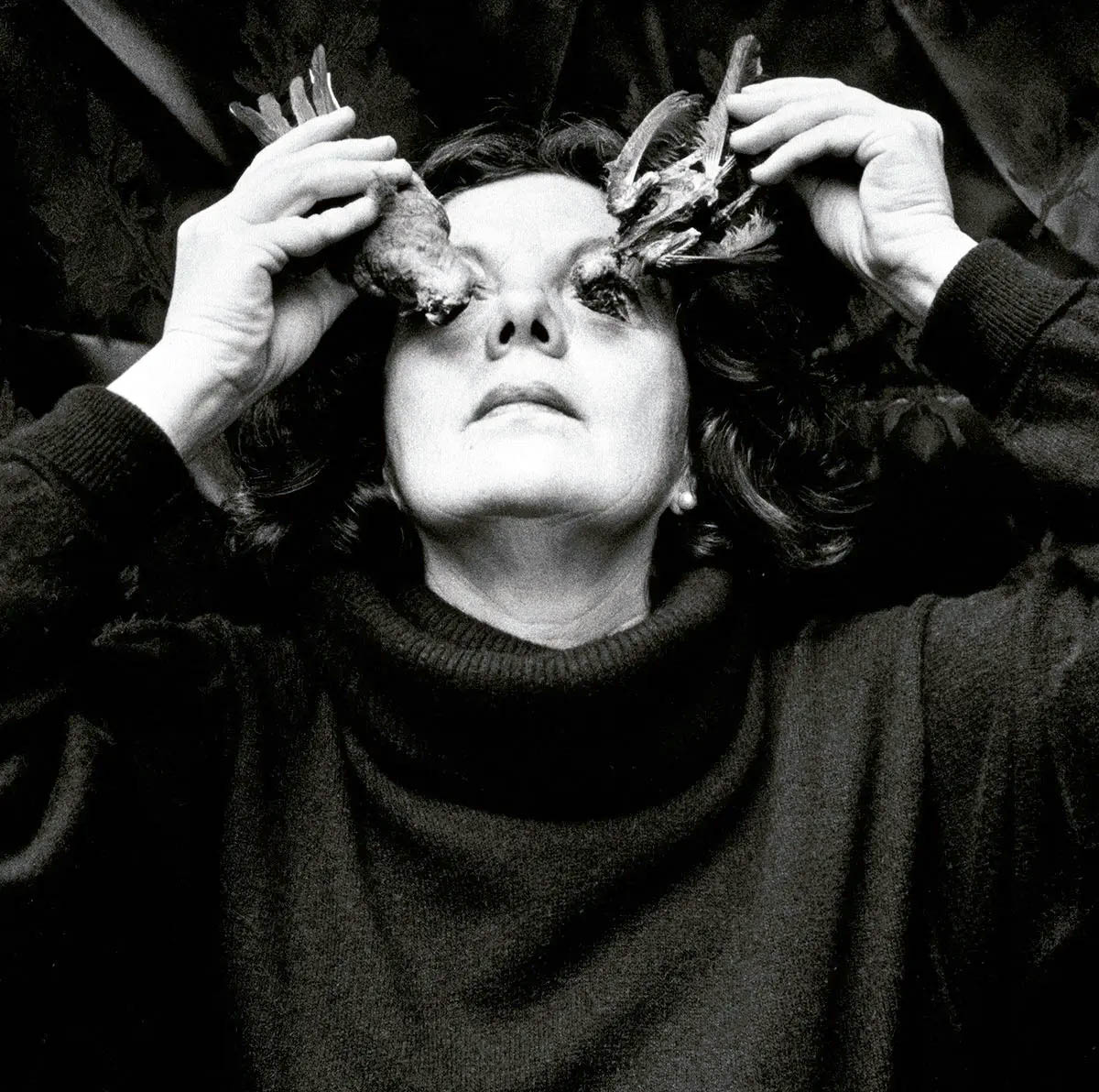
Graciela Iturbide (Mexican, b. 1942) '¿Ojos para volar?, Coyoacán, Ciudad de México' (Eyes to Fly With?, Coyoacan, Mexico City) 1991


Graciela Iturbide (Mexican, b. 1942)
¿Ojos para volar?, Coyoacán, Ciudad de México (Eyes to Fly With?, Coyoacan, Mexico City)
1991
Platinum print
19.5 × 19.5cm
© Graciela Iturbide


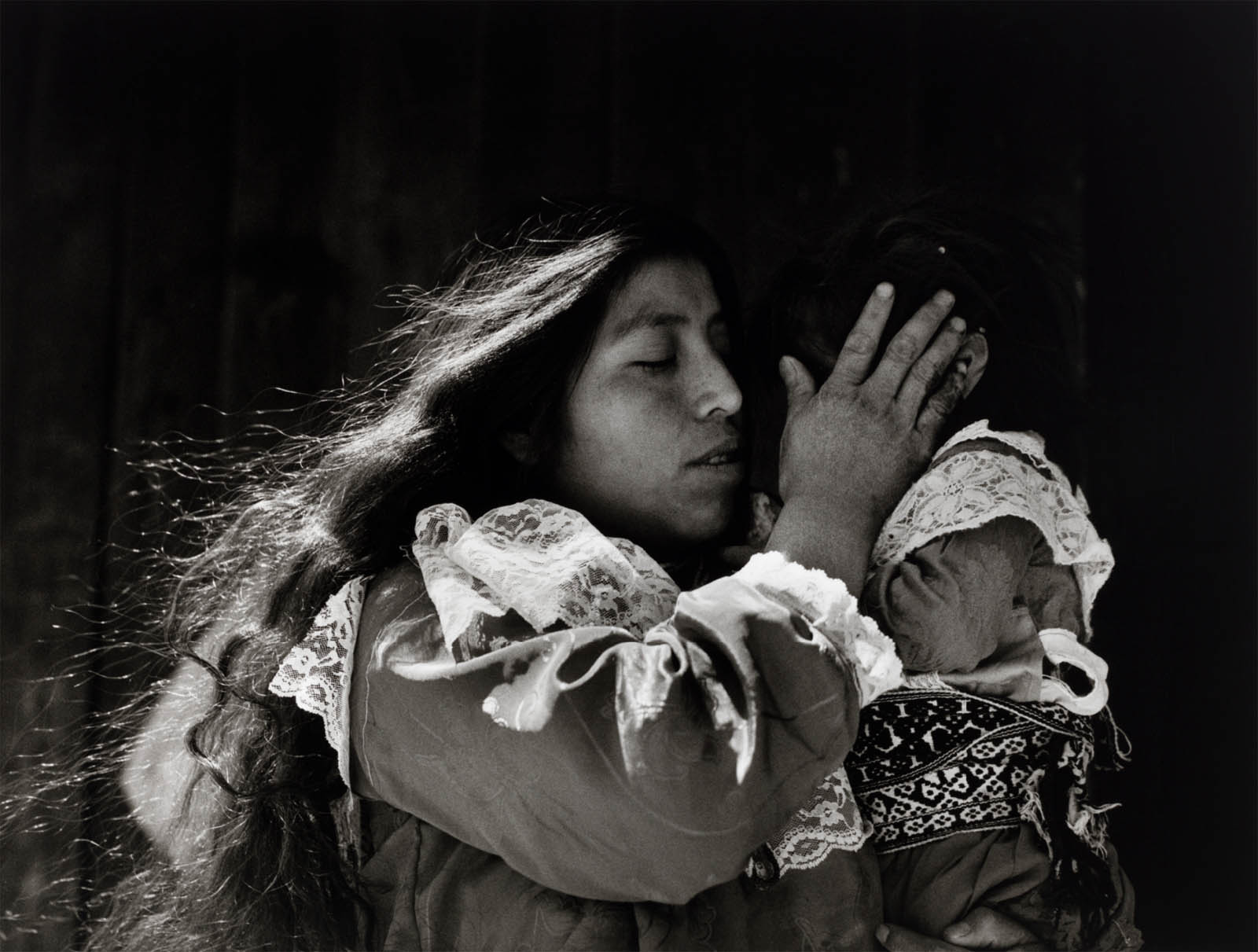
Mariana Yampolsky (Mexican, 1925–2002) 'Caricia' (Caress) 1989


Mariana Yampolsky (Mexican, 1925–2002)
Caricia (Caress)
1989
Gelatin silver print
13 3/8 × 17 1/2 in (34 × 44.5cm)
San Francisco Museum of Modern Art


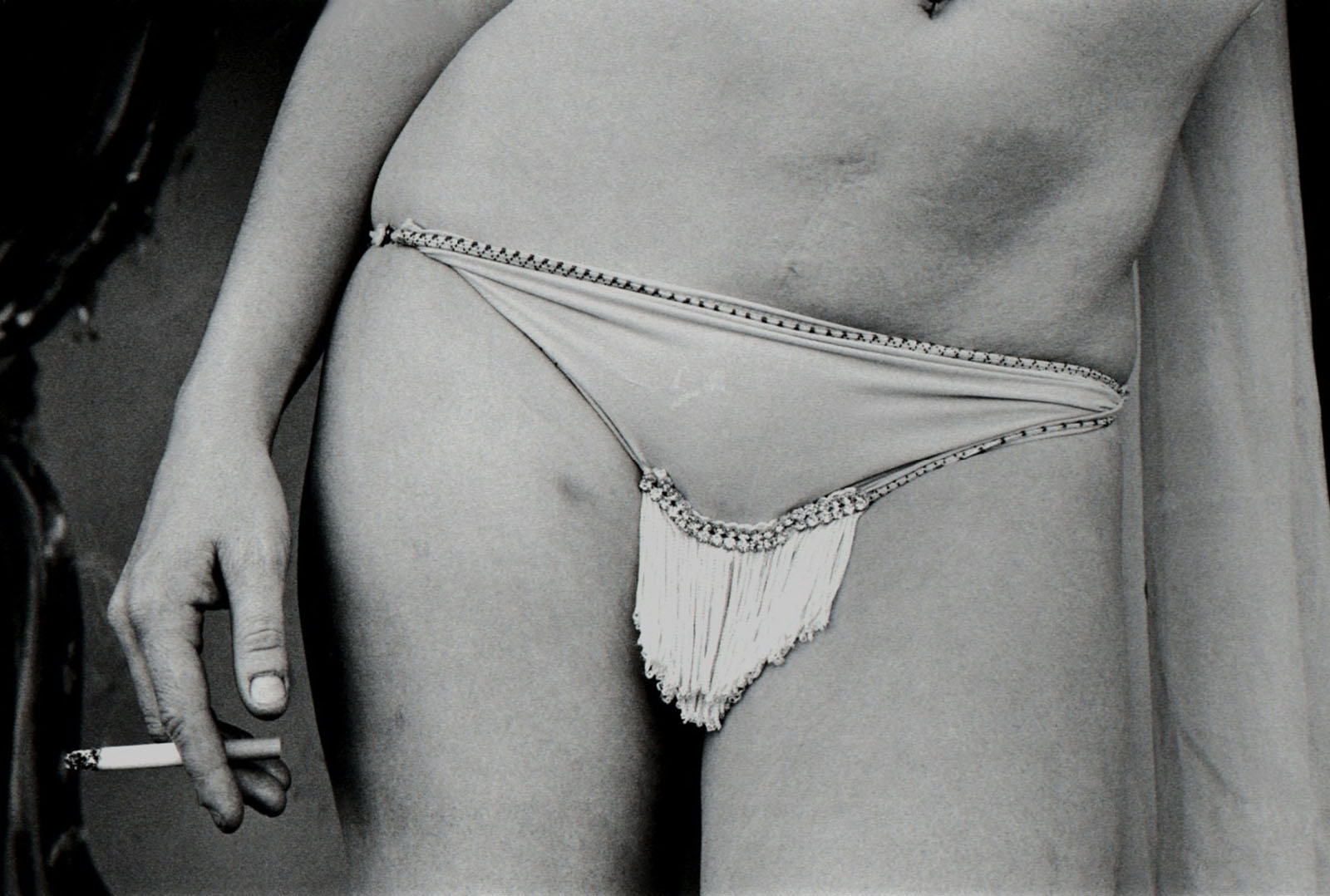
Susan Meiselas (American, b. 1948) 'Shortie on the Bally, Barton, VT' 1974


Susan Meiselas (American, b. 1948)
Shortie on the Bally, Barton, VT
1974
Gelatin silver print


The exhibition closes with contemporary international photographers’ perspectives on U.S.-Mexico border issues. Images by Mark Klett, Victoria Sambunaris, and Alec Soth consider the border as landscape, while works by Elsa Medina, Susan Meiselas, and Paolo Pellegrin document the experiences of migrant workers and people trying, successfully or unsuccessfully, to cross into the United States.

Anonymous. “Major Mexican Photographers at the SFMOMA,” on the Literal, Latin American Voices magazine website 15th November 2011 [Online] Cited 18/09/2024


Alejandro Cartagena (Mexican, b. 1977) 'Fragmented Cities, Juarez #2' from the series 'Suburbia Mexicana' 2007


Alejandro Cartagena (Mexican, b. 1977)
Fragmented Cities, Juarez #2
2007
From the series Suburbia Mexicana
Inkjet print
20 x 24 in
San Francisco Museum of Modern Art, Accessions Committee Fund purchase
© Alejandro Cartagena


San Francisco Museum of Modern Art (SFMOMA)
151 Third Street (between Mission + Howard)
San Francisco CA 94103

Opening hours:
Monday – Tuesday: 10am – 5pm
Wednesday: Closed
Thursday: 1 – 8pm
Fri – Sun: 10am – 5pm

San Francisco Museum of Modern Art website

LIKE ART BLART ON FACEBOOK

Back to top

Exhibition: ‘Eugène Atget: As Paris Was’ at Ticho House, the Museum of Israel, Jerusalem

Exhibition dates: 23rd March – 30th June 2012


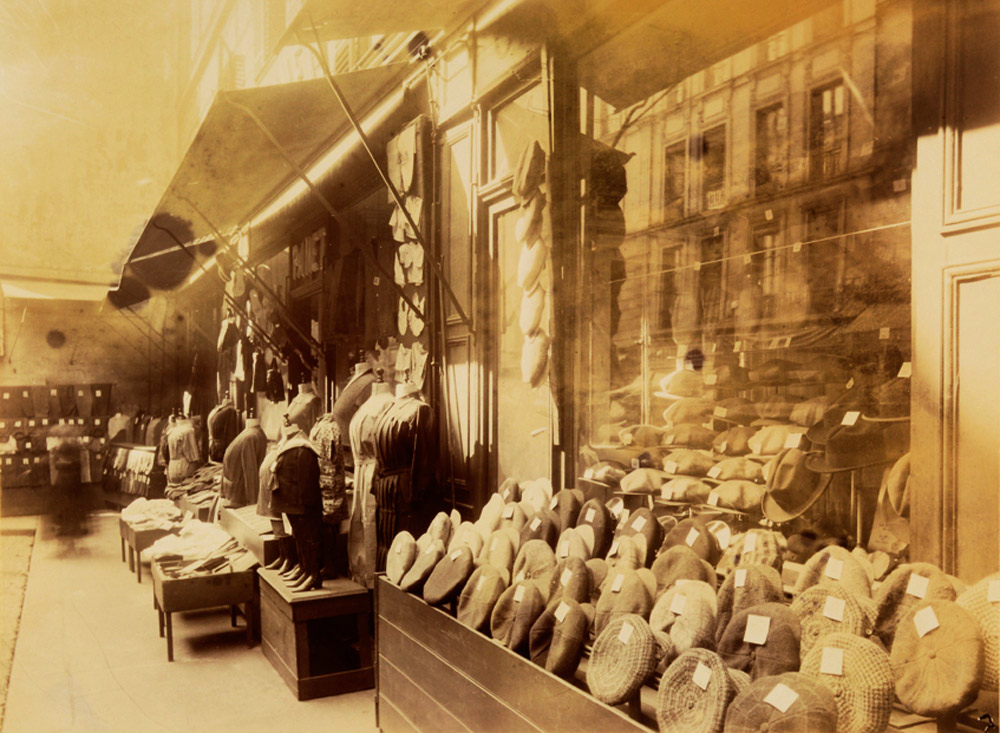
Eugène Atget (French, 1857-1927) 'Saint-Cloud' Nd


Eugène Atget (French, 1857-1927)
Saint-Cloud
Nd
Albumen print


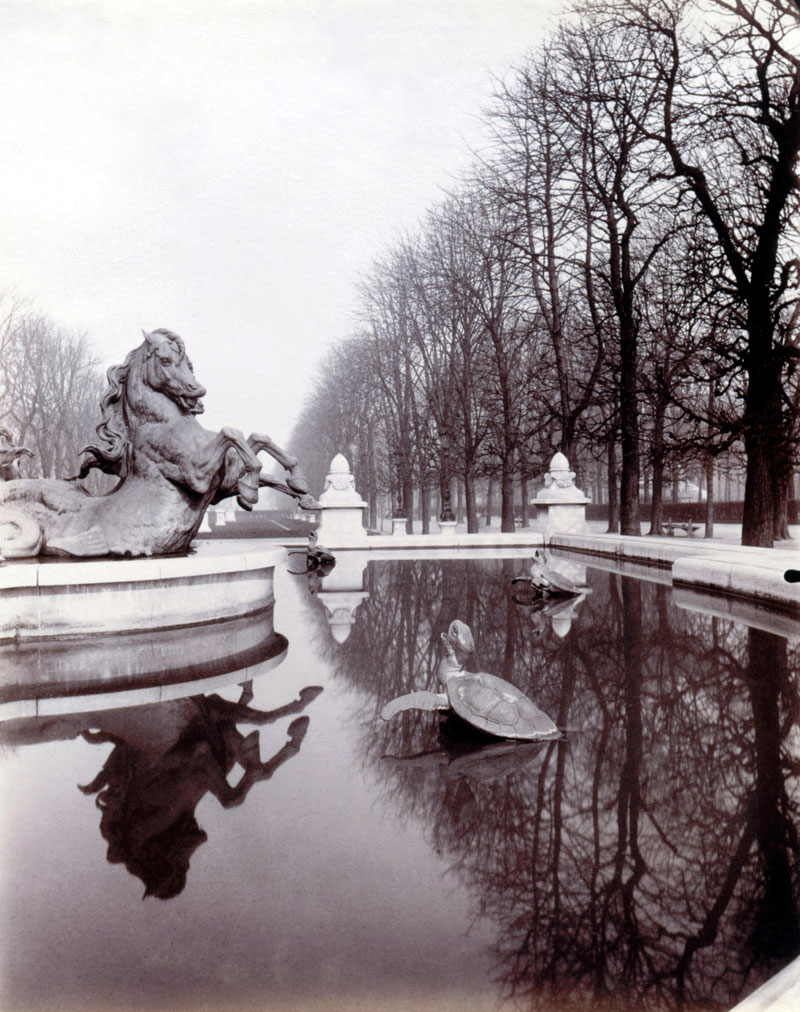
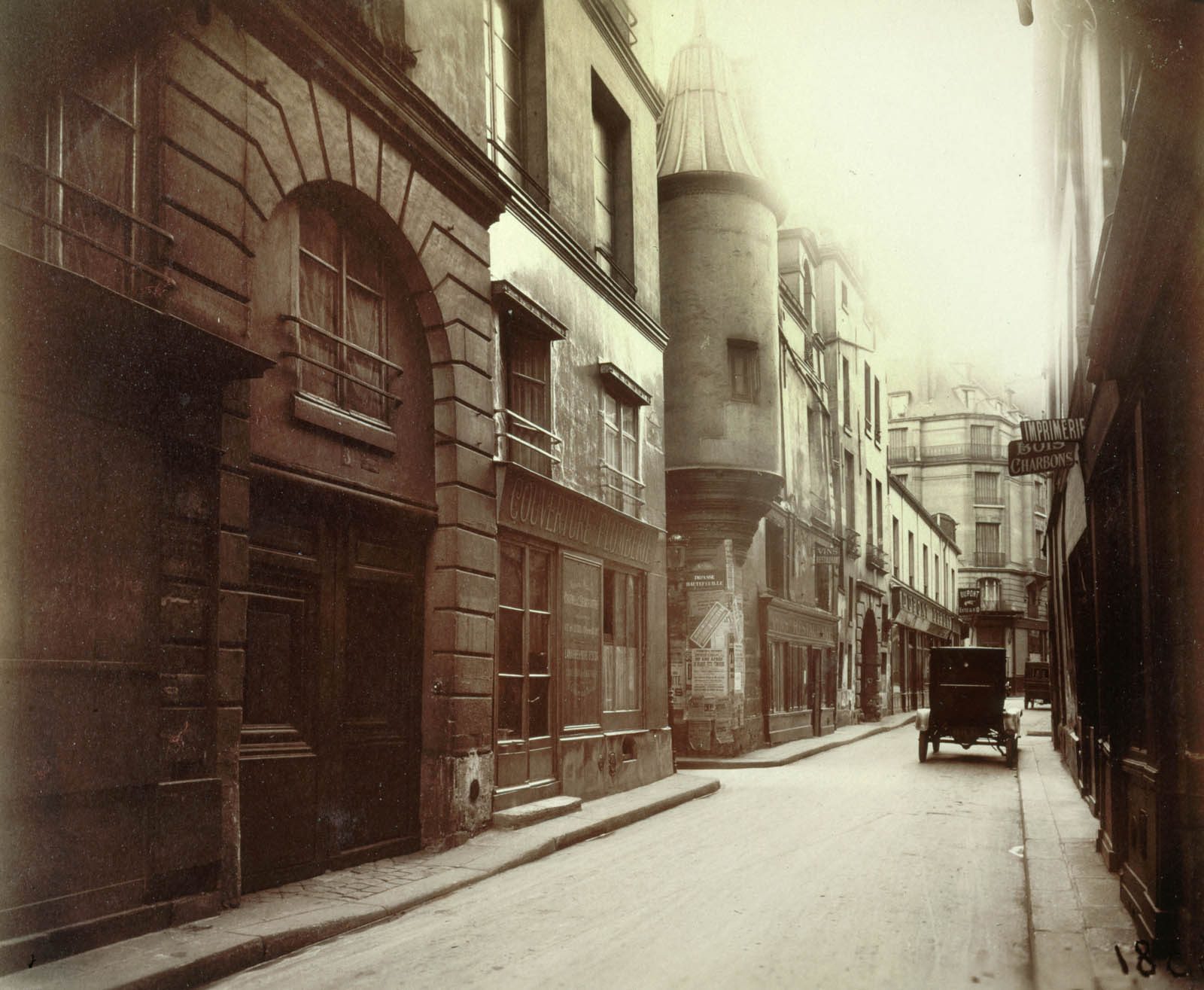
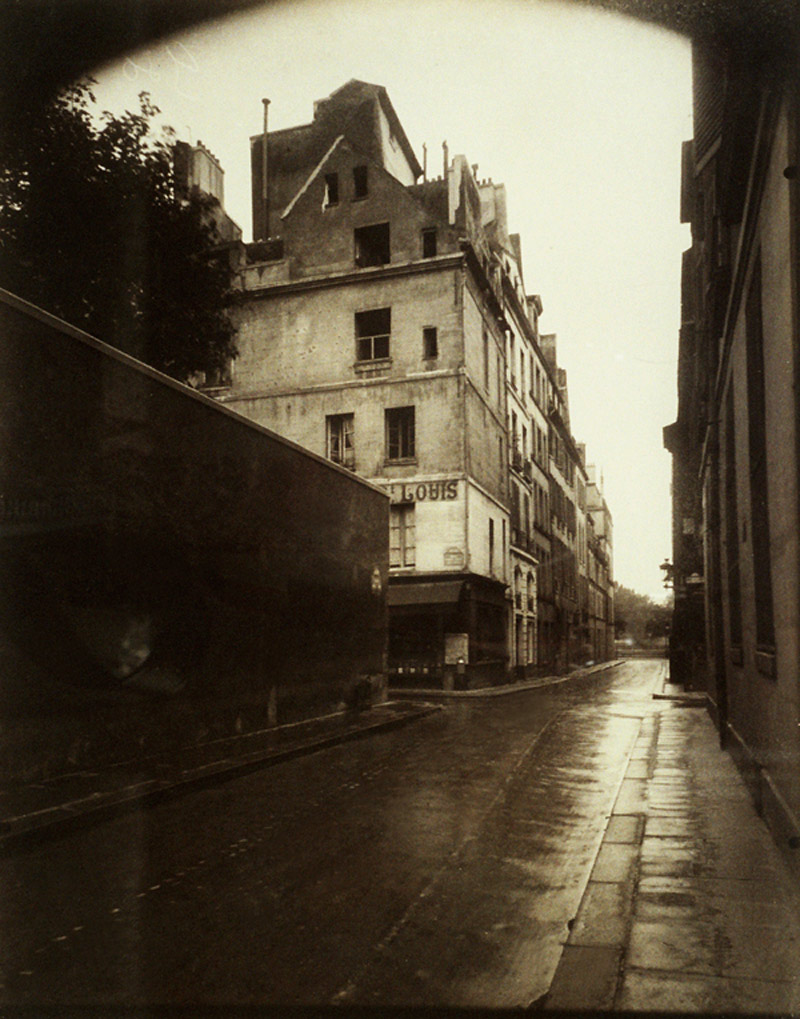
Some Atget photographs that I have never seen before makes this posting all the more pleasurable. The pendulous nature of the sea monster, like a leg hanging over the edge of a table (can’t u just feel the weight of it!); the oppressive solidity of the wall on the left hand side of Coin des rues Poulletier et Saint-Louis-en-l’île (c. 1915); and the two undated photographs of Saint-Cloud: the dark, spidery presence of the tree in winter and the absolute recognition of the visual escape point in the reflection of trees in pond. Magnificent.

Marcus


Many thankx to the Museum of Israel for allowing me to publish the photographs in the posting. Please click on the photographs for a larger version of the image.


Eugène Atget (French, 1857-1927) 'Saint-Cloud' Nd


Eugène Atget (French, 1857-1927)
Saint-Cloud
Nd
Albumen print


Eugène Atget (French, 1857-1927) 'Bagatelle' 1926


Eugène Atget (French, 1857-1927)
Bagatelle
1926
Albumen print


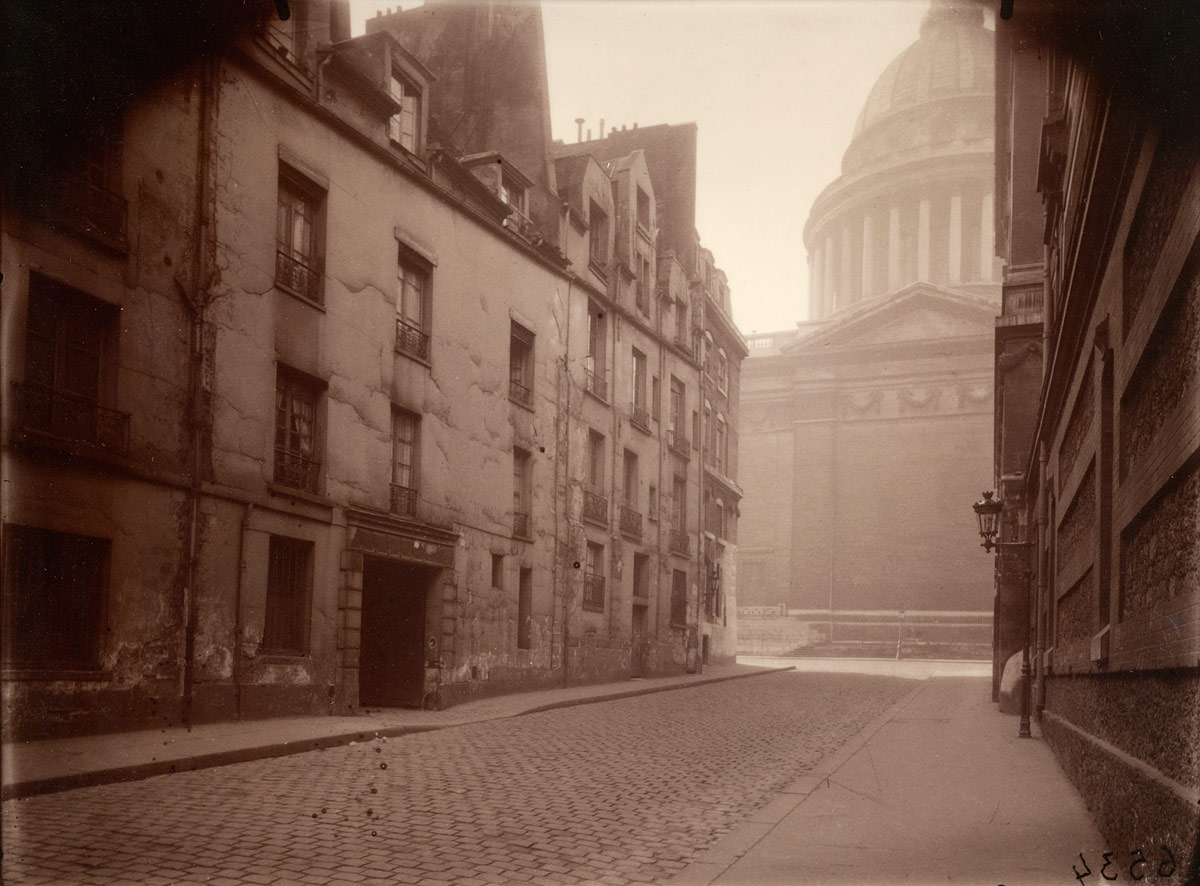
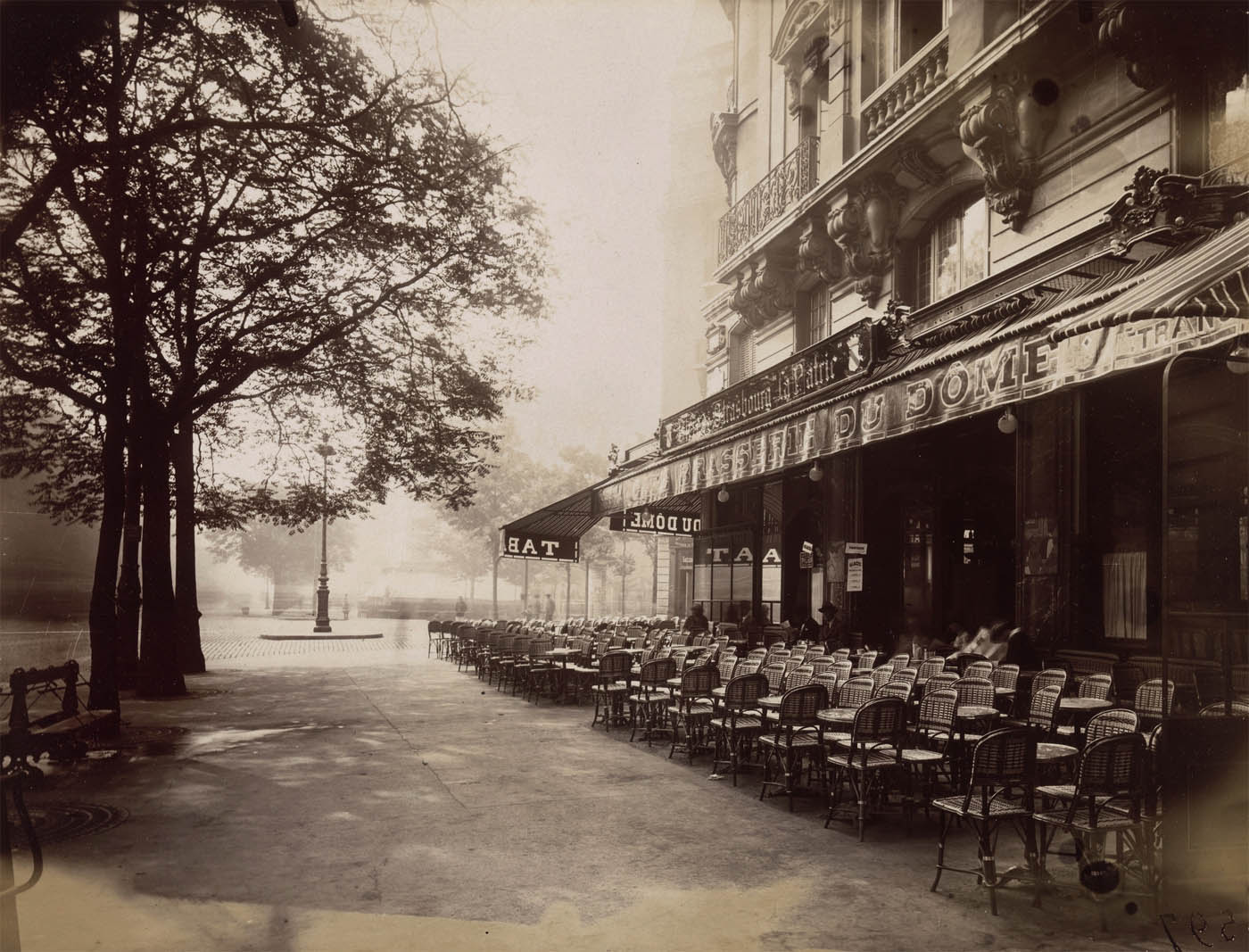
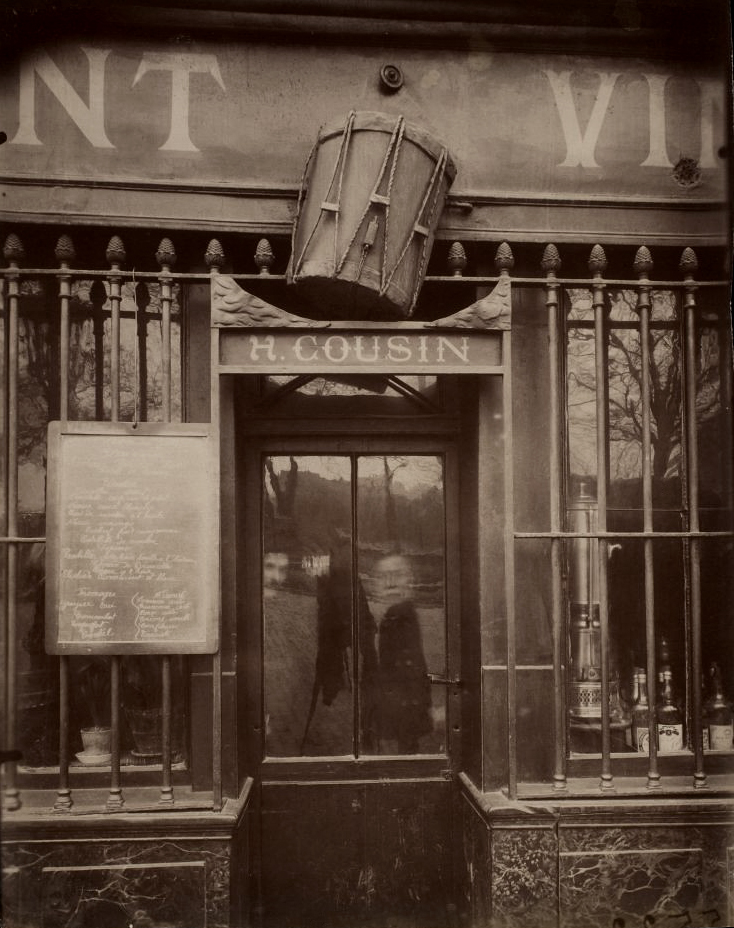
The photographic oeuvre of Eugène Atget (1857-1927) has become a landmark in the history of the medium, and his works are recognised as an integral part of the canon of documentary photography. His subject matter was Paris with its houses, streets, parks, and castles – interior and exterior details of architecture being transformed by modernity. His fame came decades later; however his enduring legacy in the field is still discernible worldwide. This exhibition of Atget’s photographs of Paris, the first ever in Israel.

The Israel Museum, Jerusalem has announced  the acquisition of 200 photographs by the pioneering French documentary photographer Eugène Atget, gifted by Pamela and George Rohr, New York, and an anonymous donor, New York. These works add an important new dimension to the Museum’s exceptional photography holdings, encompassing over 55,000 works from the earliest days of photography to contemporary times.

Seventy of these newly gifted works will be presented in Eugène Atget: As Paris Was, an exhibition at Ticho House, the Israel Museum’s historic venue in downtown Jerusalem, featuring Atget’s images of Paris from the mid-1890s until 1927. Marking the first ever presentation of the photographer’s work in Israel, the exhibition is curated by Nissan Perez, Horace and Grace Goldsmith Senior Curator in the Museum’s Noel and Harriette Levine Department of Photography.

French photographer Eugène Atget is recognised internationally for his integral role in the canon of documentary photography. After working as a sailor, actor, and painter for almost thirty years, he embarked on a self-assigned mission to document French life, culture, and history in and around Paris. He chose houses, streets, parks, and castles as his subjects, capturing interior and exterior details of architecture being transformed by modernity. Without any official recognition, this enterprise yielded a massive visual compendium of nearly 10,000 photographs that Atget loosely designated as “documents pour artistes” (documents for artists), created by means of anachronistic technology and an antiquated camera.

“We are deeply grateful to our donors for this generous gift of so important a trove of works by Eugène Atget, a pivotal figure in the history of photography,” said James S. Snyder, Anne and Jerome Fisher Director of the Israel Museum. “We are proud to be sharing Atget’s unique vision with Israeli audiences for the first time and in the resonant setting of our historic Ticho House, which also juxtaposes turn-of-the-last century Jerusalem with its encroaching modernity.”

“Atget’s photographs of Paris, including those featured in Eugène Atget: As Paris Was, do not depict the city as a bustling modern metropolis,” said exhibition curator Nissan Perez. “He trained his lens on the older, often decaying buildings and parks. The scenes he captured, mostly devoid of human presence, express desolation and solitude, reminiscent of an empty stage awaiting the actors’ entrance.”

Press release from the Museum of Israel, Jerusalem website


Eugène Atget (French, 1857-1927) 'Gargouille, cour du Louvre' 1902


Eugène Atget (French, 1857-1927)
Gargouille, cour du Louvre
1902
Albumen print


Eugène Atget (French, 1857-1927) 'Poupées, 63 rue de Sèvres' 1910-1911


Eugène Atget (French, 1857-1927)
Poupées, 63 rue de Sèvres
1910-1911
Albumen print


Eugène Atget (French, 1857-1927) 'Hôtel, 1 rue des Prouvaires et 54 rue Saint-Honoré' 1912


Eugène Atget (French, 1857-1927)
Hôtel, 1 rue des Prouvaires et 54 rue Saint-Honoré
1912
Albumen print


Eugène Atget (French, 1857-1927) 'Coin des rues Poulletier et Saint-Louis-en-l'île' c. 1915


Eugène Atget (French, 1857-1927)
Coin des rues Poulletier et Saint-Louis-en-l’île
c. 1915
Albumen print


Eugène Atget (French, 1857-1927) 'Place Pigalle' 1925


Eugène Atget (French, 1857-1927)
Place Pigalle
1925
Gelatin silver chloride printing-out paper print
17.8 × 22.9cm (7 × 9 in.)


When photographing this newly remodelled nightclub in the Place Pigalle section of Montmartre, Eugène Atget deviated from his usual subject matter, Paris’s historic architecture. Atget may have chosen to photograph this building to illustrate the sharp contrast between its flat, comparatively windowless planes and the colonnaded buildings that surround it.

Although this structure is new, the Place Pigalle had been a centre of bawdy nightlife since at least the 1870s, when artists and writers frequented its bohemian cafes and music halls. Despite the Place Pigalle’s colourful history, Atget seems not to have photographed here until 1925, when he made this picture. Today’s tourists still frequent the area’s strip joints, drag shows, and discotheques.

Text from the Google Arts & Culture website


Ticho House
10 HaRav Agan Street, Jerusalem
(near Zion Square)
Phone: 02-645-3746

Ticho House hours:
Wednesday: 12 – 8pm
Thursday: 12 – 8pm
Friday: 10am – 2pm

Ticho Museum website

LIKE ART BLART ON FACEBOOK

Back to top

Exhibition: ‘Gillian Wearing’ at Whitechapel Gallery, London

Exhibition dates: 28th March – 17th June 2012

Galleries 1, 8 and Victor Petitgas Gallery


Many thankx to the Whitechapel Gallery for allowing me to publish the photographs in the posting. Please click on the photographs for a larger version of the image.


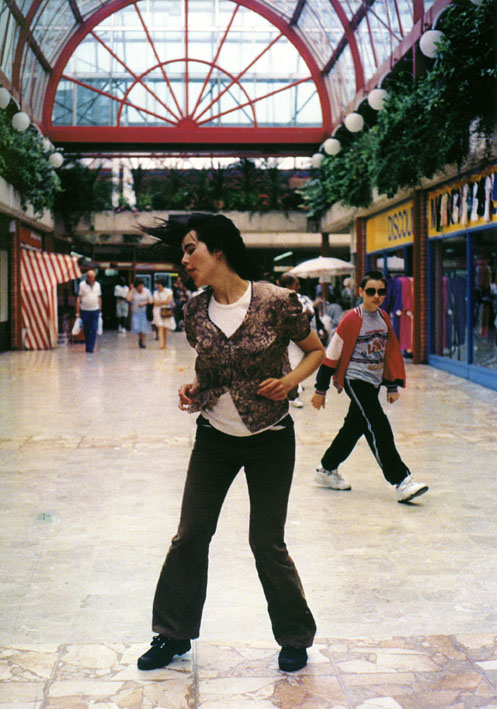
Gillian Wearing (English, b. 1963) 'Dancing in Peckham' 1994


Gillian Wearing (English, b. 1963)
Dancing in Peckham
1994
Colour video with sound
25 minutes
© the artist
Courtesy Maureen Paley, London


Gillian Wearing (English, b. 1963) 'Self Portrait at 17 Years Old' 2003


Gillian Wearing (English, b. 1963)
Self Portrait at 17 Years Old
2003
Framed C-type print
115.5 x 92 cm
© the artist
Courtesy Maureen Paley, London


The films and photographs of British artist Gillian Wearing (b. Birmingham, 1963) explore our public personas and private lives. This Turner Prize winner’s remarkable works draw on fly-on-the-wall documentaries, reality TV and the techniques of theatre, to explore how we present ourselves to the world.

Wearing’s portraits and mini-dramas reveal a paradox, given the chance to dress up, put on a mask or act out a role, the liberation of anonymity allows us to be more truly ourselves.

The exhibition begins with the artist herself, dancing in a shopping mall, blissfully unaware of her bemused audience. The idea of performance continues with works including Wearing’s 1997 masterpiece, 10–16. Adults lip synch the voices and act out the physical tics of seven children in a captivating film which moves from the breathless excitement of a ten year old to the existential angst of an adolescent.

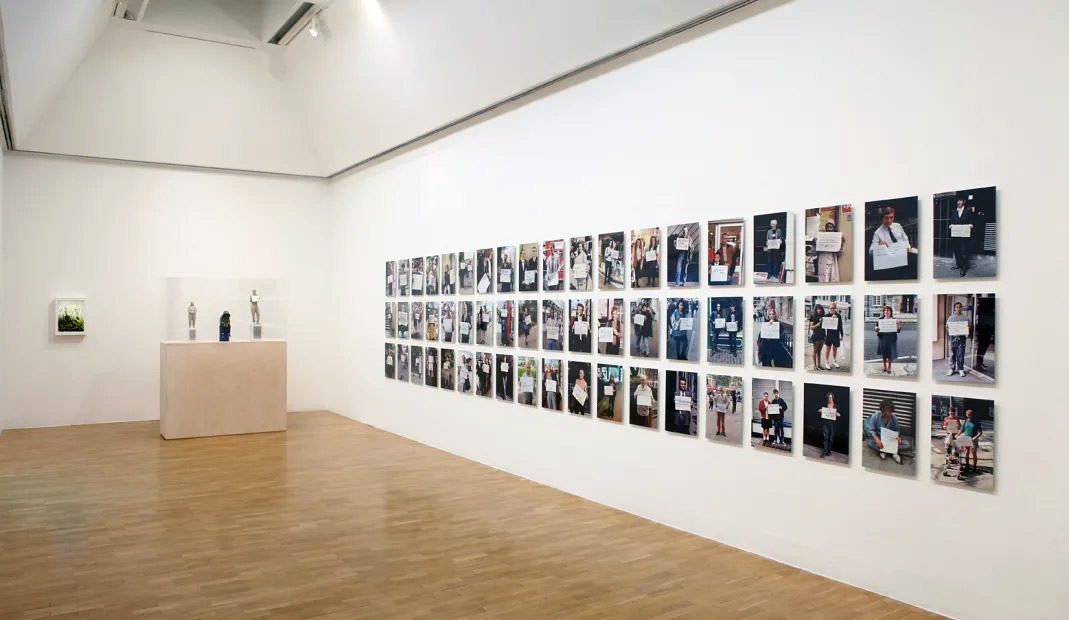
Other highlights include Wearing’s iconic 1992 series, Signs that say what you want them to say, and not Signs that say what someone else wants you to say where strangers are offered paper and pen to communicate their message. In the upper galleries we enter the inner world of subjectivity. An advert – Confess All On Video. Don’t Worry, You Will Be In Disguise. Intrigued? Call Gillian… (1994) attracted a series of disturbing disclosures. Wearing jettisons her own identity to adopt the guise of family members or artists such as Diane Arbus or Andy Warhol, so revealing her own background and influence.

This comprehensive survey, which also premieres new films and sculptures, shows how Wearing is both political – often focusing on the dispossessed or the traumatised – and poetic, finding the extraordinary in us all.

Text from the Whitechapel Gallery website


Curator Introduction to Gillian Wearing

Curator Daniel Hermann introduces the Gillian Wearing exhibition at the Whitechapel Gallery from 28 March – 17 June 2012.


Installation view of the exhibition 'Gillian Wearing' at Whitechapel Gallery, London showing work from her series 'Signs that say what you want them to say and not Signs that say what someone else wants you to say'


Installation view of the exhibition Gillian Wearing at Whitechapel Gallery, London showing work from her series Signs that say what you want them to say and not Signs that say what someone else wants you to say


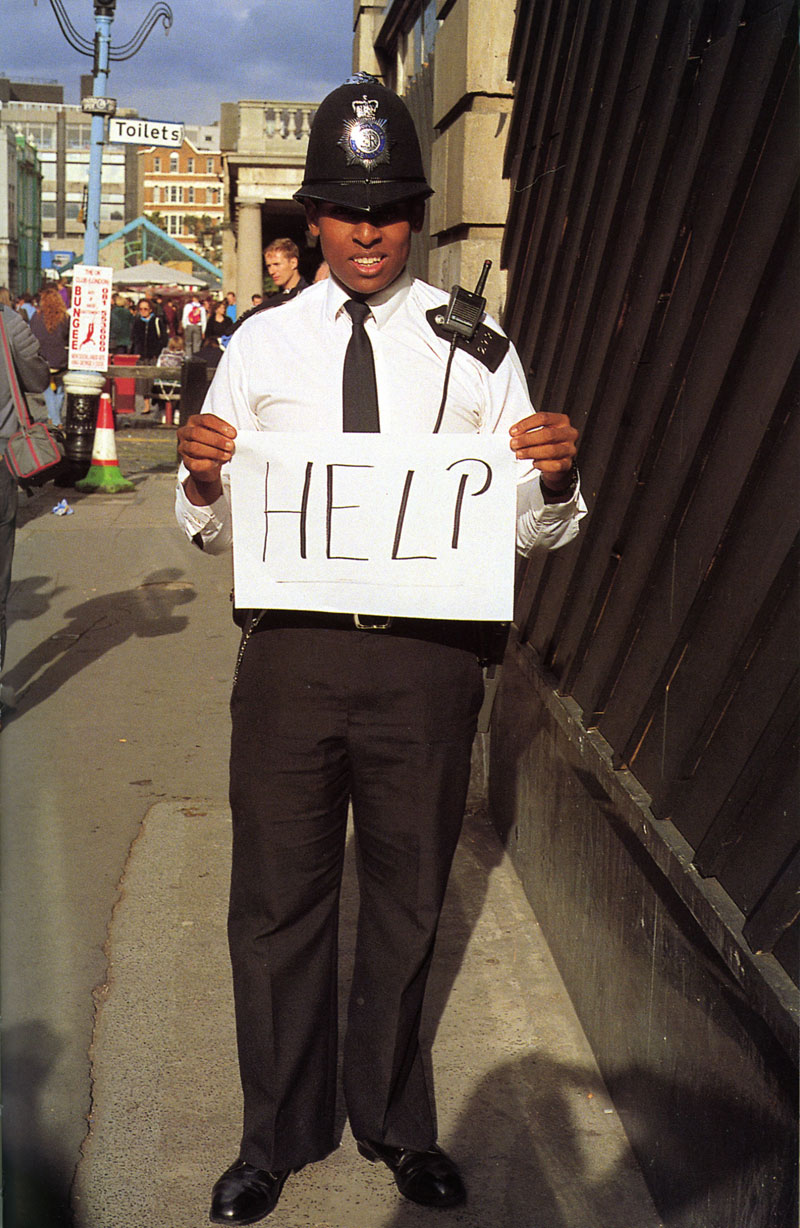
Gillian Wearing (English, b. 1963) 'HELP' 1992-1993


Gillian Wearing (English, b. 1963)
HELP
1992-1993
From the series Signs that say what you want them to say and not Signs that say what someone else wants you to say
C-type print mounted on aluminium
Dimensions variable
© the artist
Courtesy Maureen Paley, London


Gillian Wearing (English, b. 1963) 'I'M DESPERATE' 1992-1993


Gillian Wearing (English, b. 1963)
I’M DESPERATE 
1992-3
From the series Signs that say what you want them to say and not Signs that say what someone else wants you to say
C-type print mounted on aluminium
Dimensions variable
© the artist
Courtesy Maureen Paley, London


Gillian Wearing (English, b. 1963) 'WILL BRITAIN GET THROUGH THIS RECESSION?' 1992-1993


Gillian Wearing (English, b. 1963)
WILL BRITAIN GET THROUGH THIS RECESSION?
1992-3
From the series Signs that say what you want them to say and not Signs that say what someone else wants you to say
C-type print mounted on aluminium
Dimensions variable
© the artist
Courtesy Maureen Paley, London


The Whitechapel Gallery presents the first major international survey of Turner Prize-winning British artist Gillian Wearing’s photographs and films which explore the public and private lives of ordinary people. Fascinated by how people present themselves in front of the camera in fly-on-the-wall documentaries and reality TV, Gillian Wearing explores ideas of personal identity through often masking her subjects and using theatre’s staging techniques.

This major exhibition surveys Wearing’s work from the early photographs Signs that Say What You Want Them to Say and Not Signs that Say What Someone Else Wants You to Say (1992-3) to her latest video Bully (2010) and also includes several new photographs made specially for the Whitechapel Gallery exhibition.

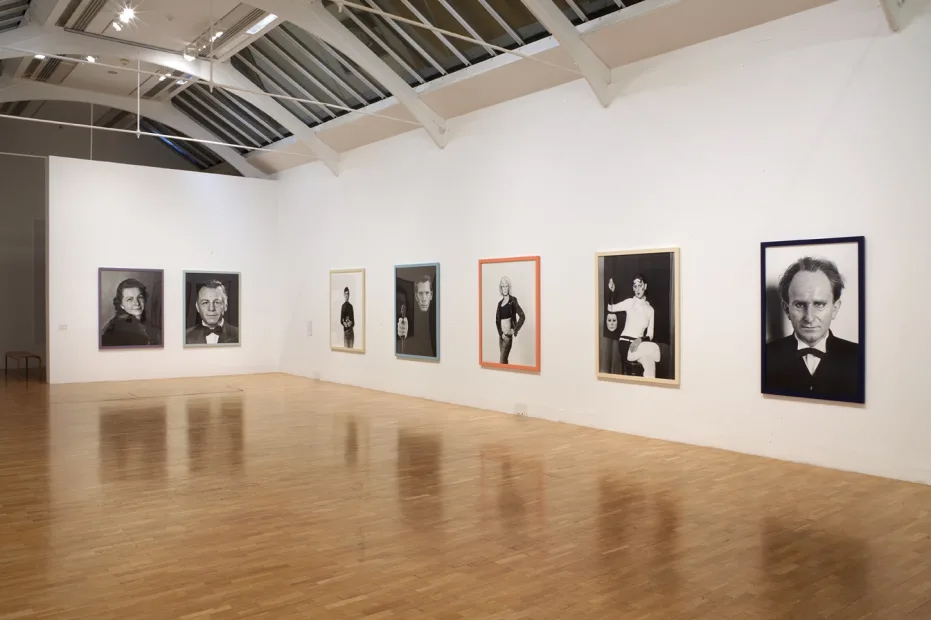
Visitors to the exhibition enter a film set-style installation showcasing photographs and films in ‘front and back stage’ areas. Highlights include a striking photograph of the artist posing as her younger self, Self-Portrait at 17 Years Old (2003), Dancing in Peckham (1994), a film which blurs the boundaries between public space and private expression as Wearing dances in the middle of a shopping mall, and the UK premiere of recent film Bully (2010). New photographic works shown for the first time include two portraits of Wearing as artists August Sander and Claude Cahun as part of her ongoing series of iconic photographers, as well as still lives of flowers, looking back to the rich symbolism of the great age of 17th century Dutch painting.

A gallery is dedicated to Wearing’s well-known photographs giving people the chance to write what they were thinking at that moment, titled Signs that Say What You Want Them to Say and Not Signs that Say What Someone Else Wants You to Say (1992-3). The series includes a city worker holding a sign saying, ‘I’m Desperate’, a policeman holding ‘Help!’ and another person’s sign ‘Will Britain ever get through this recession’.

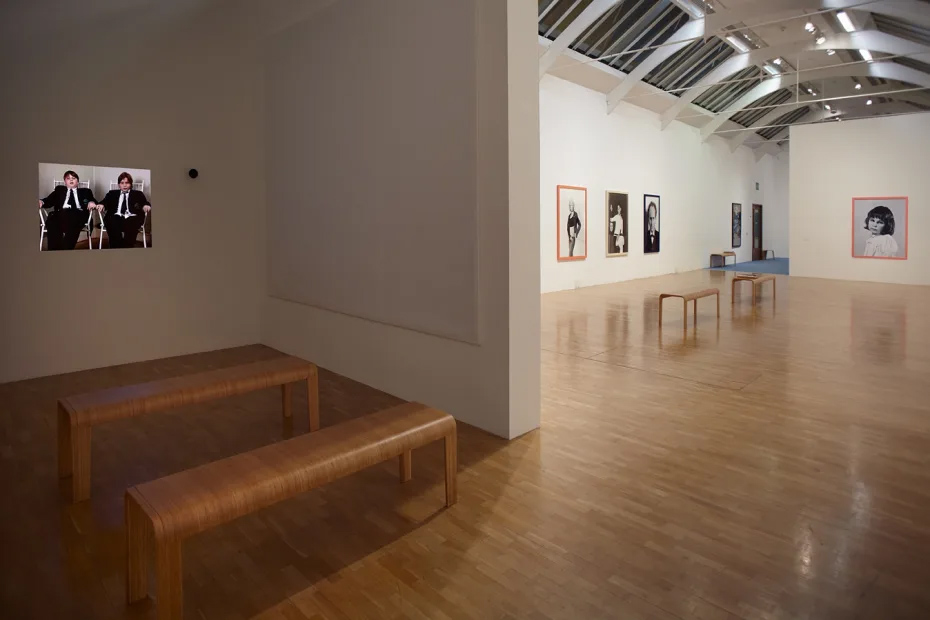
The exhibition also includes a series of private viewing booths for three confessional videos shown together for the first time and in which Gillian Wearing asked people to describe intensely personal experiences. These include Trauma (2000) where sitters describe childhood traumas while wearing a mask. As well as the powerful videos Secrets and Lies (2000) and Confess All On Video. Don’t Worry, You Will Be In Disguise. Intrigued? Call Gillian… (1994). Alongside these works the video 2 into 1 (1997) sees a mother lip synching the voices of her twin sons and vice versa as they describe their relationship.

Press release from Whitechapel Gallery website


Gillian Wearing: Self Made, 2010 Trailer

Gillian Wearing’s debut feature film introduces a cast of untrained actors to a Method acting teacher. Drawing upon their own experiences, each participant creates and stars in their own mini-film.


Gillian Wearing (English, b. 1963) 'Bully' 2010


Gillian Wearing (English, b. 1963)
Bully
2010
Colour video for projection with sound
7 minutes 55 seconds
© the artist
Courtesy Maureen Paley, London


Installation view of the exhibition 'Gillian Wearing' at Whitechapel Gallery, London showing at left a still from the video '2 into 1' (1997)


Installation view of the exhibition Gillian Wearing at Whitechapel Gallery, London showing at left a still from the video 2 into 1 (1997, below)


Gillian Wearing (English, b. 1963) '2 into 1' 1997


Gillian Wearing (English, b. 1963)
2 into 1
1997
Colour video for monitor with sound
4 minutes 30 seconds
© the artist
Courtesy Maureen Paley, London


Gillian Wearing (English, b. 1963) 'Trauma' 2000


Gillian Wearing (English, b. 1963)
Trauma
2000
Colour video for monitor with sound
30 minutes
© the artist
Courtesy Maureen Paley, London


Gillian Wearing (English, b. 1963) 'Me as Cahun Holding a Mask of My Face' 2012


Gillian Wearing (English, b. 1963)
Me as Cahun Holding a Mask of My Face
2012
Framed bromide print
149 x 120.5 cm
© the artist
Courtesy Maureen Paley, London


Installation view of the exhibition 'Gillian Wearing' at Whitechapel Gallery, London showing work from a series of iconic photographers


Installation view of the exhibition Gillian Wearing at Whitechapel Gallery, London showing work from a series of iconic photographers


Gillian Wearing (English, b. 1963) 'Me as Sander' 2012


Gillian Wearing (English, b. 1963)
Me as Sander
2012
Framed bromide print
149 x 98.8cm
© the artist
Courtesy Maureen Paley, London


Whitechapel Gallery
77 – 82 Whitechapel High Street
London E1 7QX
Phone: + 44 (0) 20 7522 7888

Opening hours:
Tuesday – Sunday 11am – 6pm
Thursdays and Fridays 11am  9pm
Closed Monday

Whitechapel Gallery website

LIKE ART BLART ON FACEBOOK

Back to top

Exhibition: ‘Cindy Sherman’ at the Museum of Modern Art (MoMA), New York

Exhibition dates: 26th February – 11th June 2012


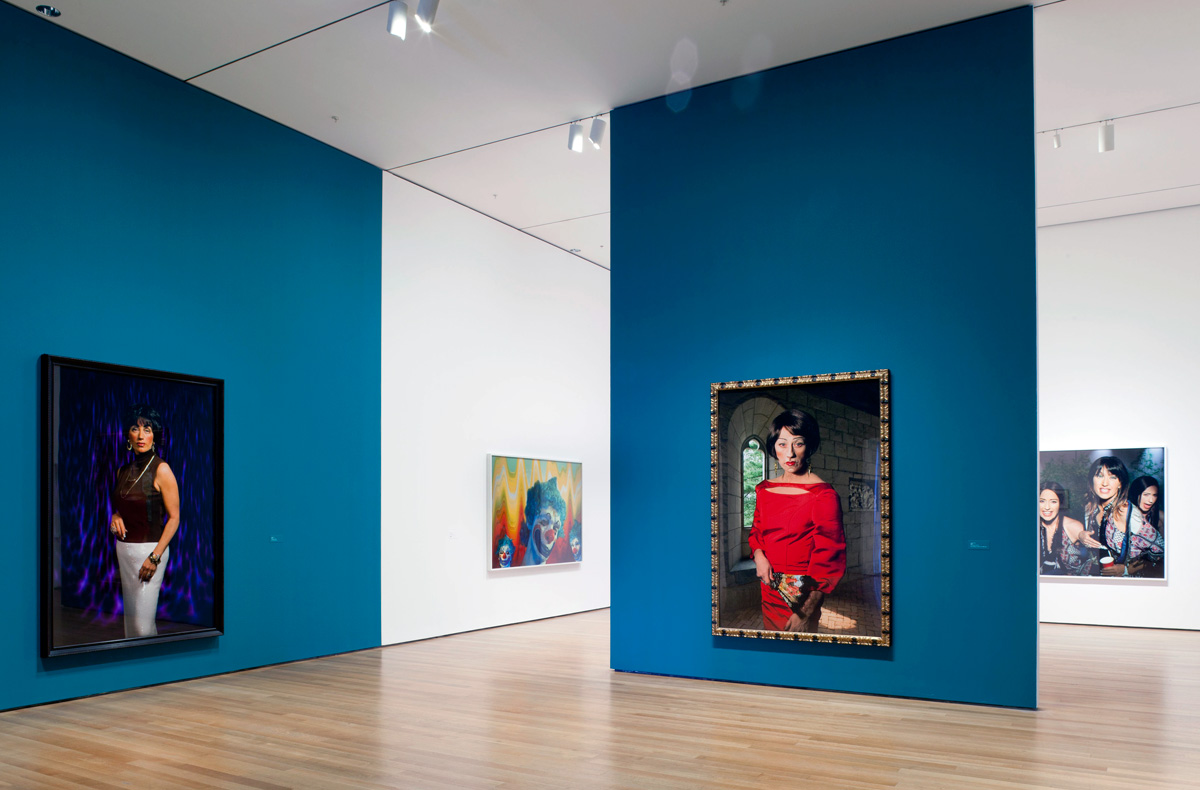
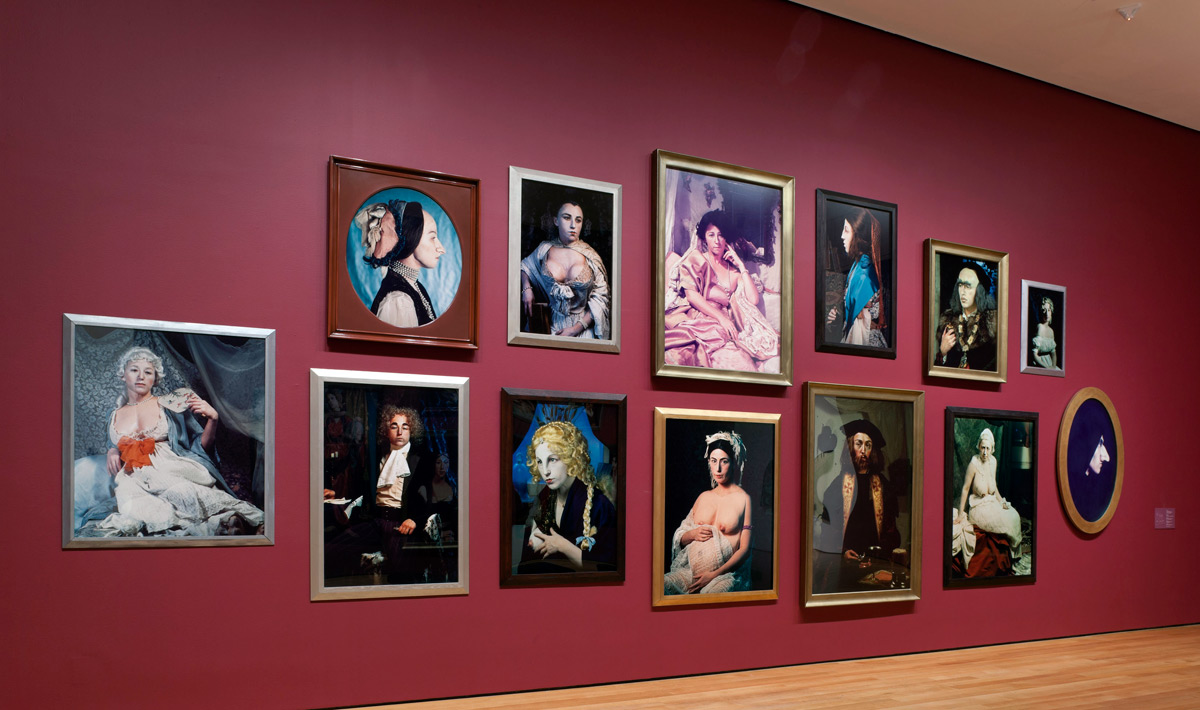
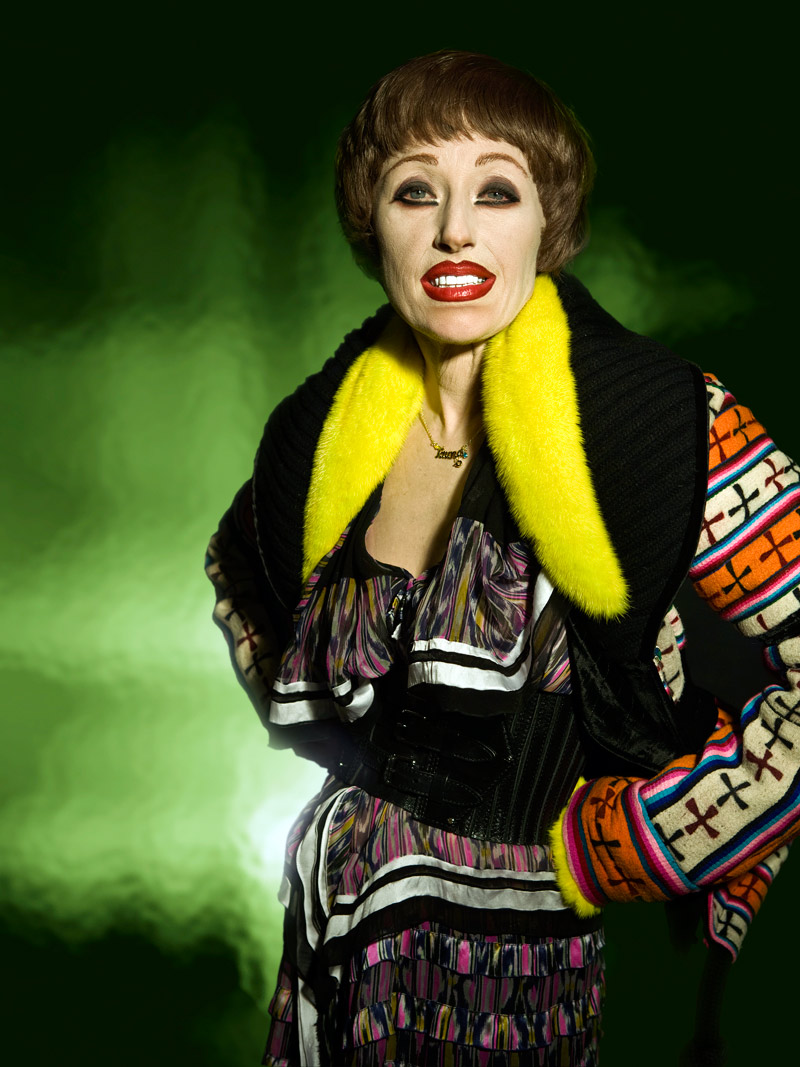
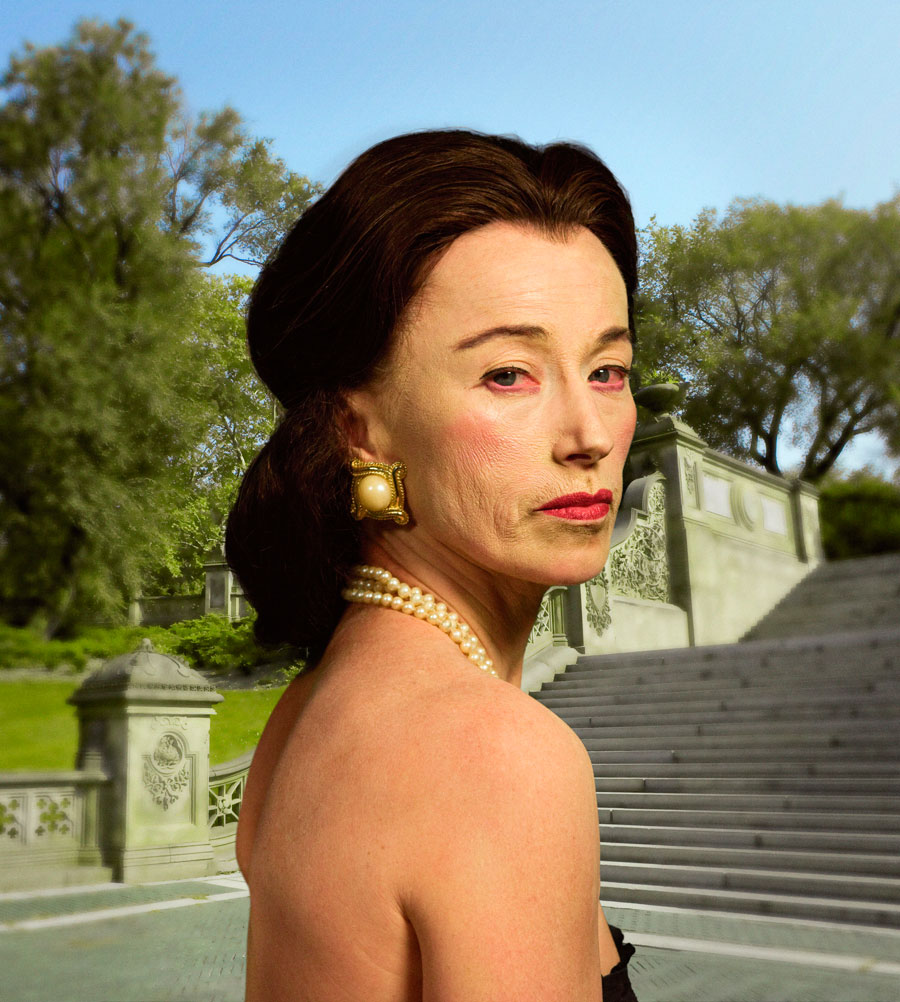
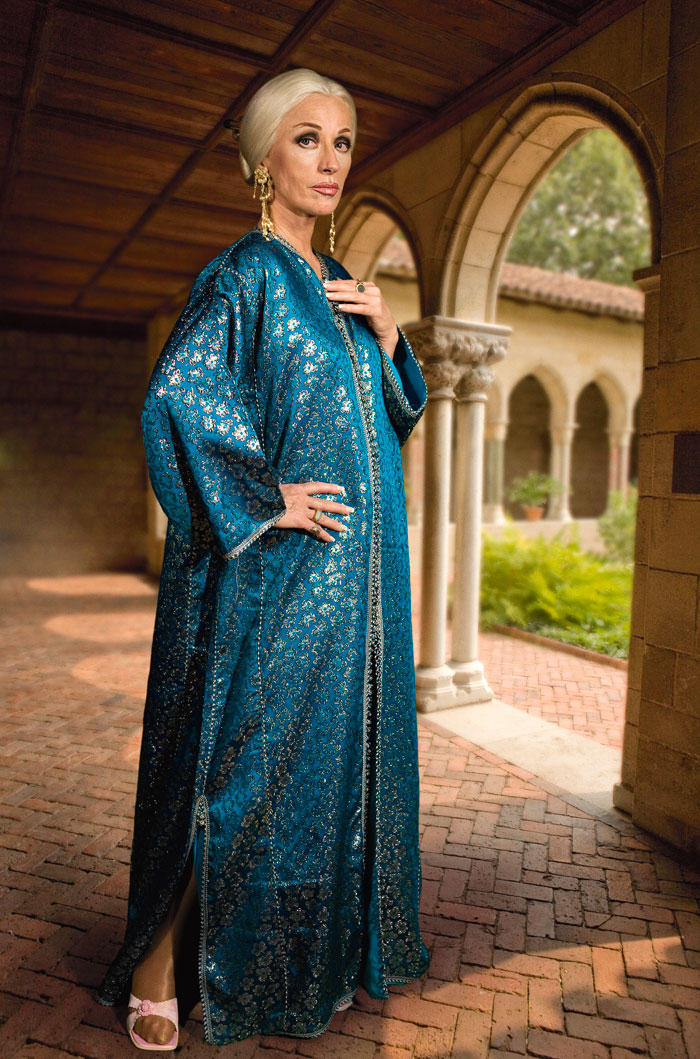
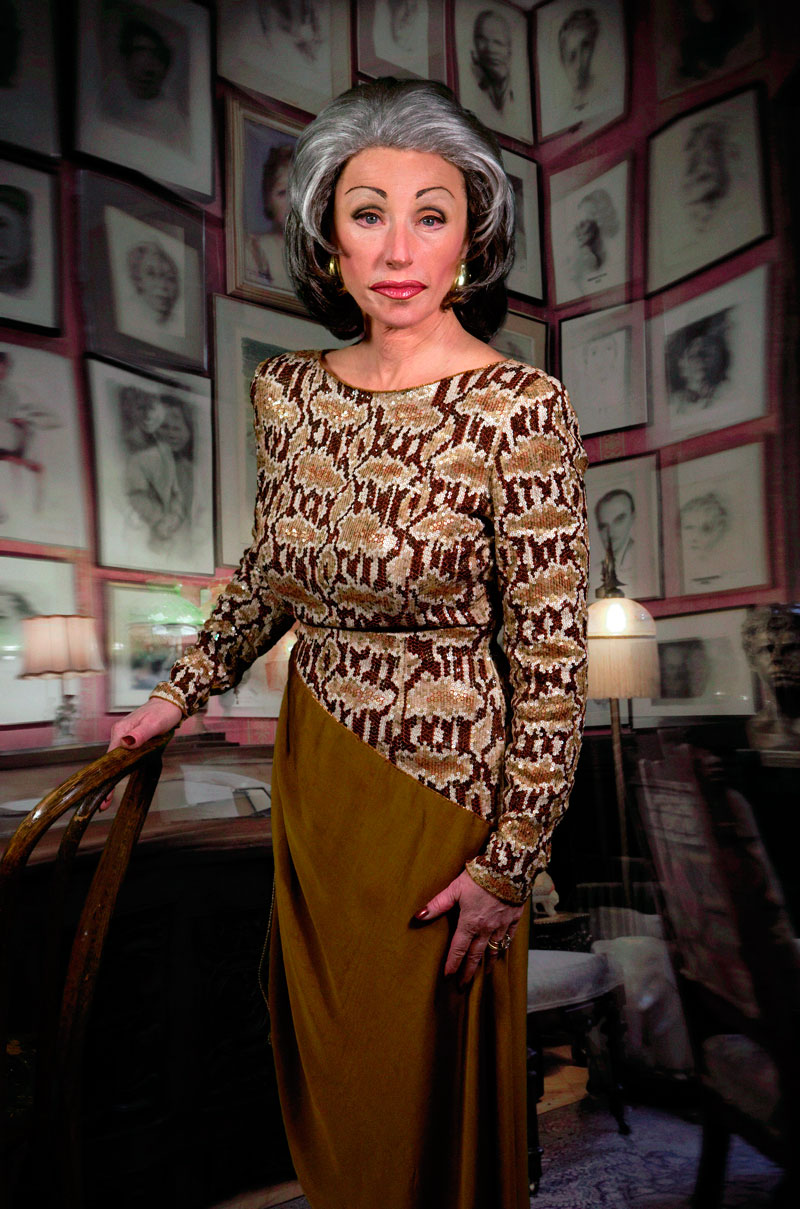
Installation view of the exhibition 'Cindy Sherman' at MoMA, New York showing at left and centre, 'Cindy Sherman society portraits' (2008)


Installation view of the exhibition Cindy Sherman at MoMA, New York showing at left and centre, Cindy Sherman society portraits (2008)


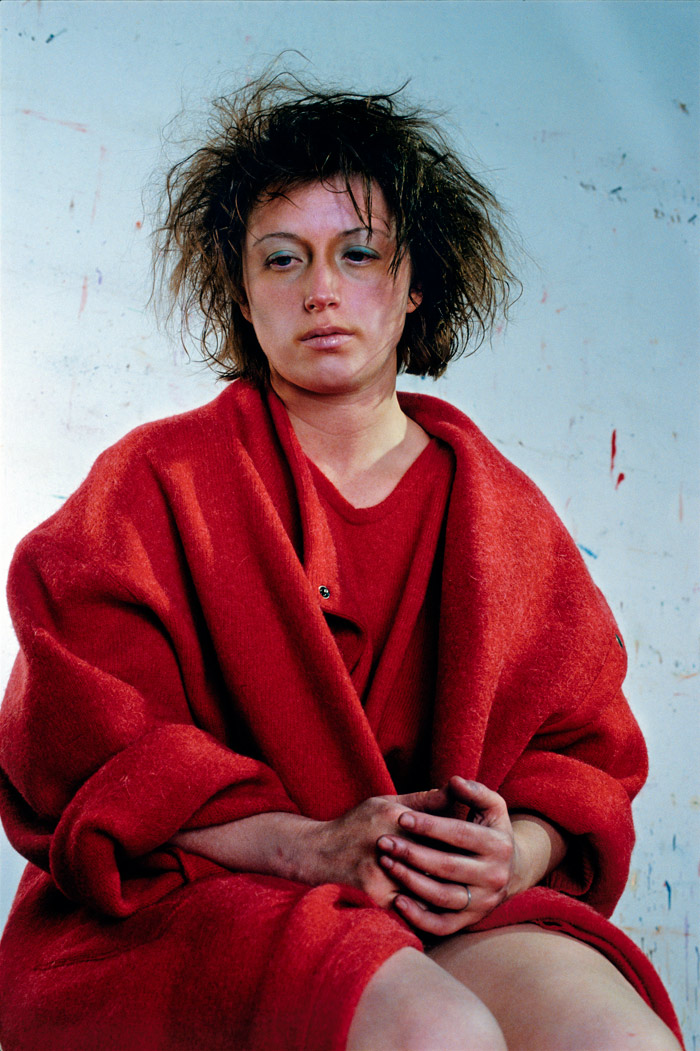
Ceaselessly inventive, the bodies (literally) of work of Cindy Sherman are a wonder to behold. From film stills to head shots, from history portrait to society portraits, Sherman constantly reinvents herself, her variations of identity exploring “the complexity of representation in a world saturated with images,” her iterations into the construction of femininity and masculinity constantly “provocative, disparaging, empathetic, and mysterious.”

Where to next? Her recent series of digitally altered landscapes and portraits (Cindy Sherman at Metro Pictures, New York, April – June 2012) seem less resolved than her earlier work, becoming almost a pastiche of themselves. Despite their massive size they seem to lack resolution, the great female impersonator of our time relying for effect on Self as feminine earth (m)Other, tricked up in dubious, quasi-ethnic regalia. Sherman is almost sacrosanct with regard to criticism but it’s about time someone said it: these images are pretty awful.

After so many simulacra, so many layerings and expositions of identity isn’t it about time Sherman got back to basics and ditched these grandiose notions of identity sublime. The sublimation (an unconscious defence mechanism by which consciously unacceptable instinctual drives are expressed in personally and socially acceptable channels) of her/Self, her actual body, the energy of her (non) presence is finally starting to wear thin. Will the real Cindy Sherman (if ever there is such a thing) please stand up and tell us: what do you really stand for, where as a human being, is your spirit really at?

Dr Marcus Bunyan


Many thankx to MoMA for allowing me to publish the photographs in the posting. Please click on the photographs for a larger version of the image.


Installation view of the exhibition 'Cindy Sherman' at MoMA, New York showing 'Cindy Sherman history portraits' (1988-1990)


Installation view of the exhibition Cindy Sherman at MoMA, New York showing Cindy Sherman history portraits (1988-1990)


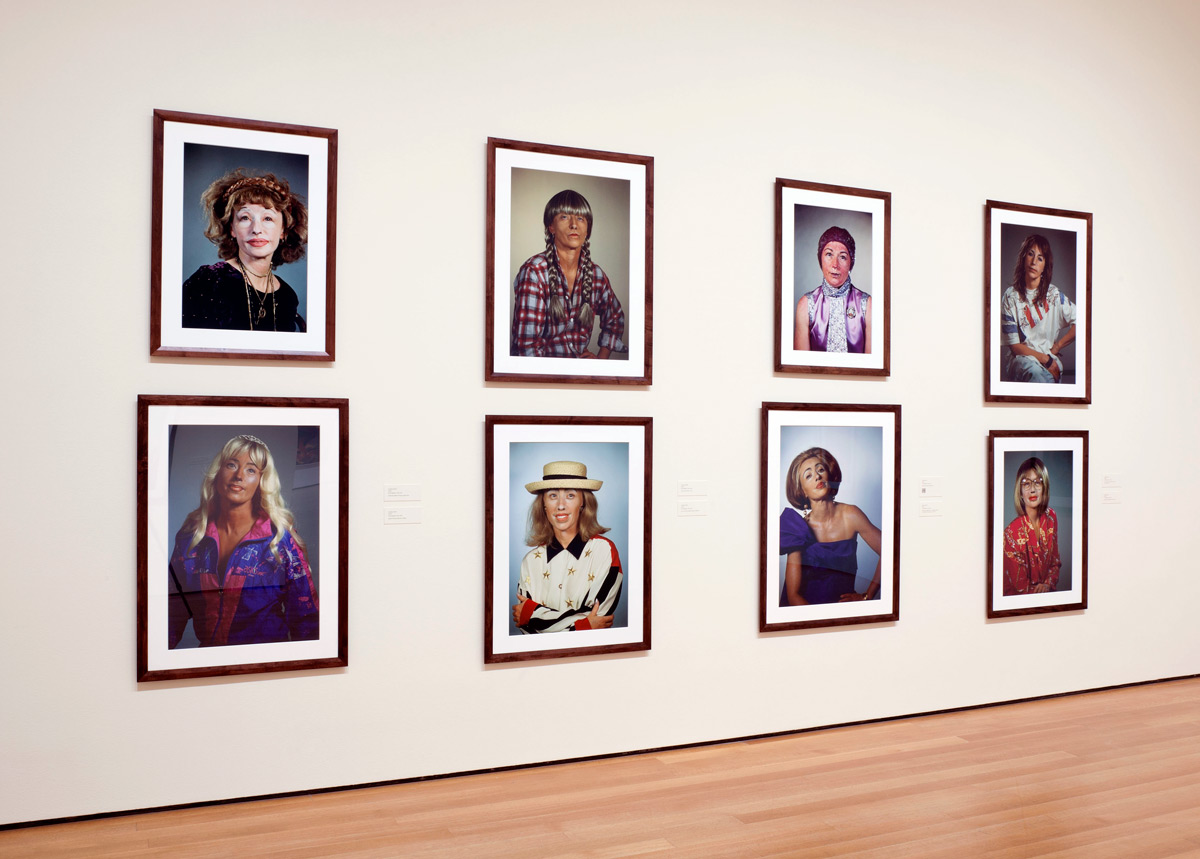
Installation view of the exhibition 'Cindy Sherman' at MoMA, New York showing 'Cindy Sherman headshots' (2000-2002)


Installation view of the exhibition Cindy Sherman at MoMA, New York showing Cindy Sherman headshots (2000-2002)


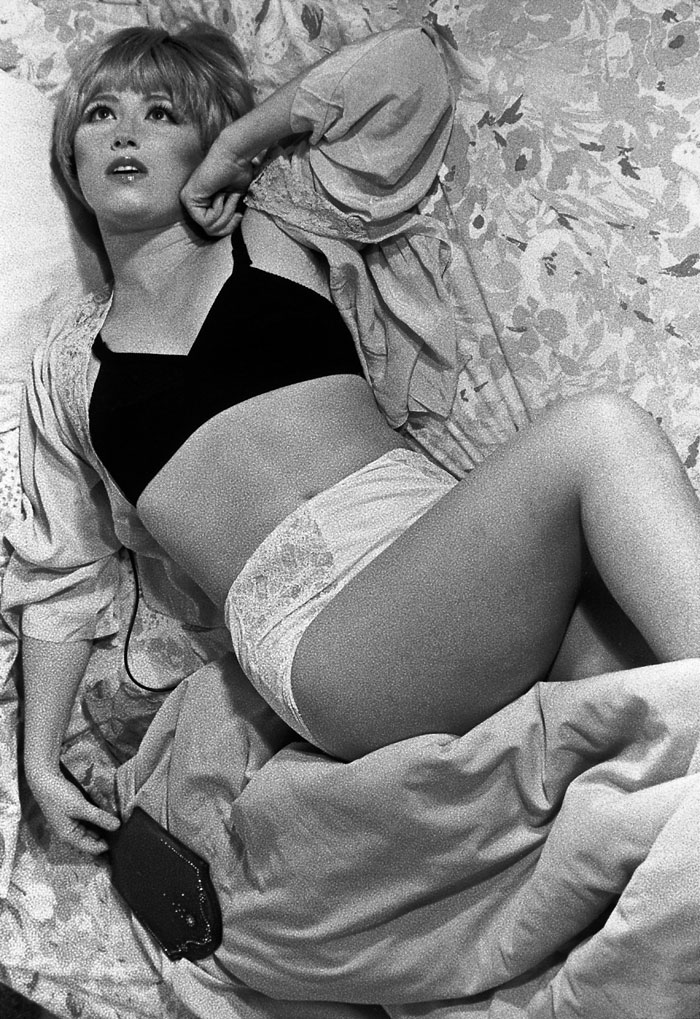
Cindy Sherman (American, b. 1954) 'Untitled Film Still #21' 1978


Cindy Sherman (American, b. 1954)
Untitled Film Still #21 
1978
Gelatin silver print
7 1/2 x 9 1/2″ (19.1 x 24.1cm)
The Museum of Modern Art, New York. Horace W. Goldsmith Fund through Robert B. Menschel


Cindy Sherman (American, b. 1954) 'Untitled Film Still #6' 1977


Cindy Sherman (American, b. 1954)
Untitled Film Still #6 
1977
Gelatin silver print
9 7/16 x 6 1/2″ (24 x 16.5cm)
The Museum of Modern Art, New York
Acquired through the generosity of Jo Carole and Ronald S. Lauder in memory of Eugene M. Schwartz


Cindy Sherman (American, b. 1954) 'Untitled Film Still #56' 1980


Cindy Sherman (American, b. 1954)
Untitled Film Still #56 
1980
Gelatin silver print
6 3/8 x 9 7/16″ (16.2 x 24cm)
The Museum of Modern Art, New York
Acquired through the generosity of Jo Carole and Ronald S. Lauder in memory of Mrs. John D. Rockefeller 3rd


Gallery 2

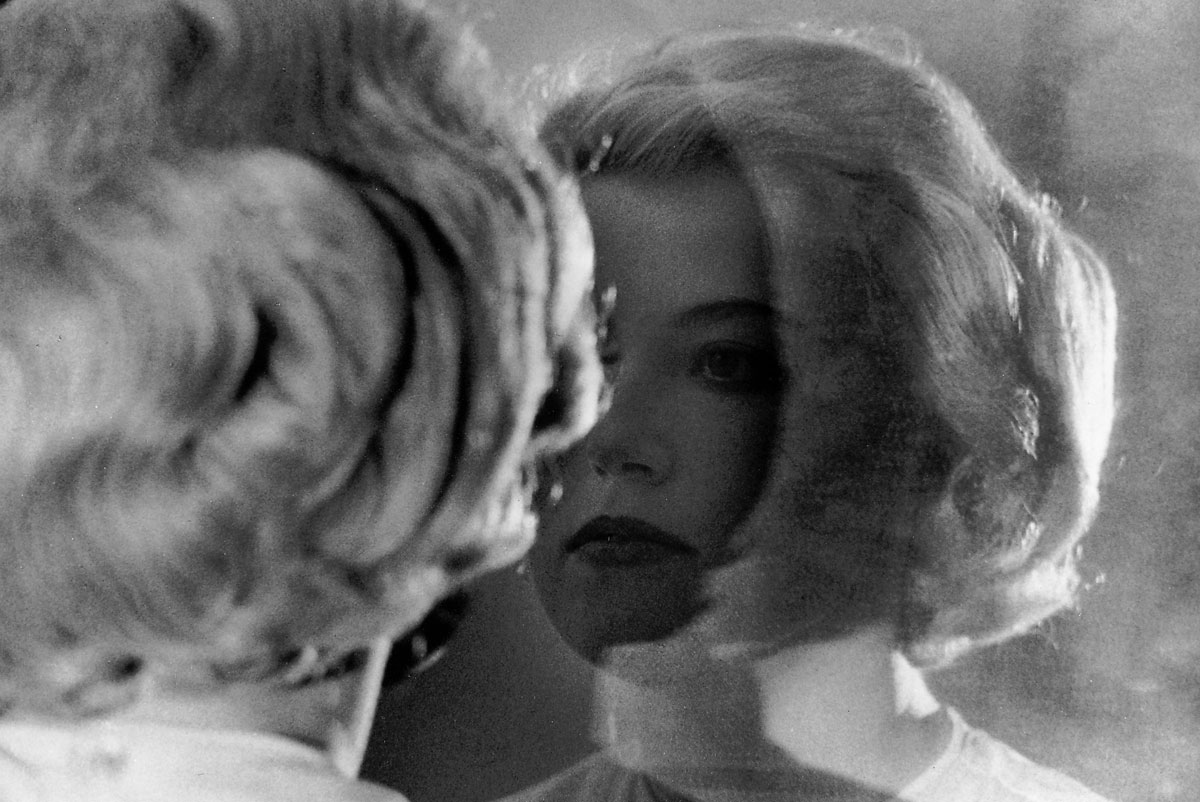
In fall 1977, Sherman began making pictures that would eventually become her groundbreaking Untitled Film Stills. Over three years, the series (presented here in its entirety) grew to comprise a total of seventy black-and-white photographs. Taken as a whole, the Untitled Film Stills – resembling publicity pictures made on movie sets – read like an encyclopaedic roster of stereotypical female roles inspired by 1950s and 1960s Hollywood, film noir, B movies, and European art-house films. But while the characters and scenarios may seem familiar, Sherman’s Stills are entirely fictitious; they represent clichés (career girl, bombshell, girl on the run, vamp, housewife, and so on) that are deeply embedded in the cultural imagination. While the pictures can be appreciated individually, much of their significance comes in the endless variation of identities from one photograph to the next. As a group they explore the complexity of representation in a world saturated with images, and refer to the cultural filter of images (moving and still) through which we see the world.

Wall text from the exhibition


Cindy Sherman (American, b. 1954) 'Untitled #137' 1984


Cindy Sherman (American, b. 1954)
Untitled #137 
1984
Chromogenic colour print
70 1/2 x 47 3/4″ (179.1 x 121.3cm)
Philadelphia Museum of Art
Purchased with the Alice Newton Osborn Fund, 1985


Cindy Sherman (American, b. 1954) 'Untitled #458' 2007-2008


Cindy Sherman (American, b. 1954)
Untitled #458 
2007-08
Chromogenic colour print
6′ 5 3/8″ x 58 1/4″ (196.5 x 148cm)
Glenstone


Gallery 3

Fashion – a daily form of masquerade that communicates culture, gender, and class – has been a constant source of inspiration for Sherman and a leading ingredient in the creation of her work. Throughout her career the artist has completed a number of commissions for fashion designers and magazines, and this gallery gathers many of these works. Sherman’s fashion pictures challenge the industry’s conventions of beauty and grace. Her first such commission, made in 1983, parodies typical fashion photography. Rather than projecting glamour, sex, or wealth, the pictures feature characters that are far from desirable – whether goofy, hysterical, angry, or slightly mad. Later commissions resulted in more extreme images of characters with bloodshot eyes, bruises, and scars. These exaggerated figures reached ostentatious heights in a 2007-08 commission, in which fashion victims – including steely fashion editors, PR mavens, assistant buyers, and wannabe fashionistas – wear clothing designed by Balenciaga and ham it up for the camera. Sherman’s interest in the construction of femininity and the mass circulation of images informs much of her work; the projects that take fashion as their subject illustrate the artist’s fascination with fashion images but also her critique of what they represent.

Wall text from the exhibition


Cindy Sherman (American, b. 1954) 'Untitled #424' 2004


Cindy Sherman (American, b. 1954)
Untitled #424 
2004
Chromogenic colour print
53 3/4 x 54 3/4″ (136.5 x 139.1cm)
Holzer Family Collection


Gallery 5

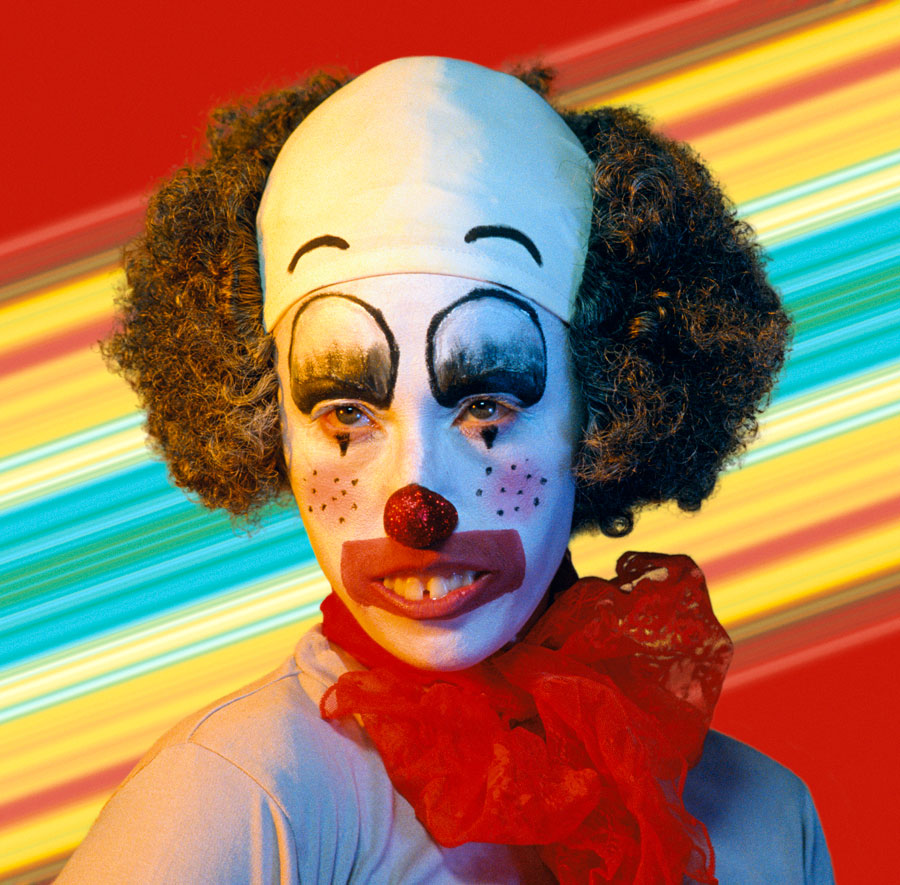
Sherman, who photographs alone in her studio, has used a variety of techniques to suggest different locations and imaginary (sometimes impossible) spaces, extending the narrative possibilities of her images. In her first foray into colour, in 1980, the artist photographed herself in front of rear-screen projections of various cityscapes and landscapes, evoking films from the 1950s and 1960s that used similar techniques to create the illusion of a change in location. In later series, such as the head shots (2000-2002), clowns (2003-04), and society portraits (2008), the artist used digital tools to create a variety of environments. The garish fluorescent colours in a clown picture contribute to the disturbing quality of the portrait, while a fairy tale forest provides a dreamy backdrop for a well-to-do lady.

Wall text from the exhibition


The Museum of Modern Art presents the exhibition Cindy Sherman, a retrospective tracing the groundbreaking artist’s career from the mid-1970s to the present, from February 26 to June 11, 2012. The exhibition brings together 171 key photographs from the artist’s significant series – including the complete Untitled Film Stills (1977-80), the critically acclaimed centerfolds (1981), and the celebrated history portraits (1988-90) – plus examples from all of her most important bodies of work, ranging from her fashion photography of the early 1980s to the breakthrough sex pictures of 1992 to her 2003-04 clowns and monumental society portraits from 2008. In addition, the exhibition features the American premiere of her 2010 photographic mural. An exhibition of films drawn from MoMA’s collection selected by Sherman will also be presented in the Museum’s theatres in April. Cindy Sherman is organised by Eva Respini, Associate Curator, with Lucy Gallun, Curatorial Assistant, Department of Photography, The Museum of Modern Art.

Cindy Sherman is widely considered to be one of the most important and influential artists of our time and her work is the unchallenged cornerstone of post-modern photography. Masquerading as a myriad of characters in front of her own camera, Sherman creates invented personas and tableaus that examine the construction of identity, the nature of representation, and the artifice of photography. Her works speak to an increasingly image-saturated world, drawing on the unlimited supply of visual material provided by movies, television, magazines, the Internet, and art history.

Ms. Respini says, “To create her photographs, Sherman works unassisted in her studio and assumes multiple roles as photographer, model, art director, make-up artist, hairdresser, and stylist. Whether portraying a career girl or a blond bombshell, a fashion victim or a clown, a French aristocrat or a society lady of a certain age, for over 35 years this relentlessly adventurous artist has created an eloquent and provocative body of work that resonates deeply with our visual culture.”

The American premiere of Sherman’s recent photographic mural (2010) will be installed outside the galleries on the sixth floor. The mural represents the artist’s first foray into transforming space through site-specific fictive environments. In the mural Sherman transforms her face via digital means, exaggerating her features through Photoshop by elongating her nose, narrowing her eyes, or creating smaller lips. The characters, who sport an odd mix of costumes and are taken from daily life, are elevated to larger-than-life status and tower over the viewer. Set against a decorative toile backdrop, her characters seem like protagonists from their own carnivalesque worlds, where fantasy and reality merge. The emphasis on new work presents an opportunity for reassessment in light of the latest developments in Sherman’s oeuvre.

Entering the galleries, the exhibition strays from a chronological narrative typical of retrospectives, and groups photographs thematically to create new and surprising juxtapositions and to suggest common threads across several series. A gallery devoted to her work made for the fashion industry brings together commissions from 1983 to 2011. Sherman’s interest in the construction of femininity and mass circulation of images informs much of the work that takes fashion as its subject, illustrating not only a fascination with fashion images but also a critical stance against what they represent. A gallery exploring themes of the grotesque focuses on bodies of work from the mid-1980s through the mid-1990s, including disasters (1986-89) and sex pictures (1992). Sherman’s investigation of macabre narratives followed a trajectory of the physical disintegration of the body, and features prosthetic parts as a stand-in for the human body. A gallery devoted to Sherman’s exploration of myth, carnival, and fairy tales pairs works from her 2003 clowns with her 1985 fairy tales series. These theatrical pictures revel in their own artificiality, with menacing characters and fantastical narratives.

Galleries devoted to single bodies of work are interspersed among the thematic rooms. Sherman’s seminal series the Untitled Film Stills, comprising 70 black-and-white photographs made between 1977 and 1980, are presented in their entirety (the complete series is in MoMA’s collection). Made to look like publicity pictures taken on movie sets, the Untitled Film Stills read like an encyclopaedic roster of female roles inspired by 1950s and 1960s Hollywood, film noir, B movies, and European art-house films. While the characters and scenarios may seem familiar, Sherman’s Stills are entirely fictitious. Her characters represent deeply embedded clichés (career girl, bombshell, girl on the run, housewife, and so on) and rely on the persistence of recognisable manufactured stereotypes that loom large in the cultural imagination.

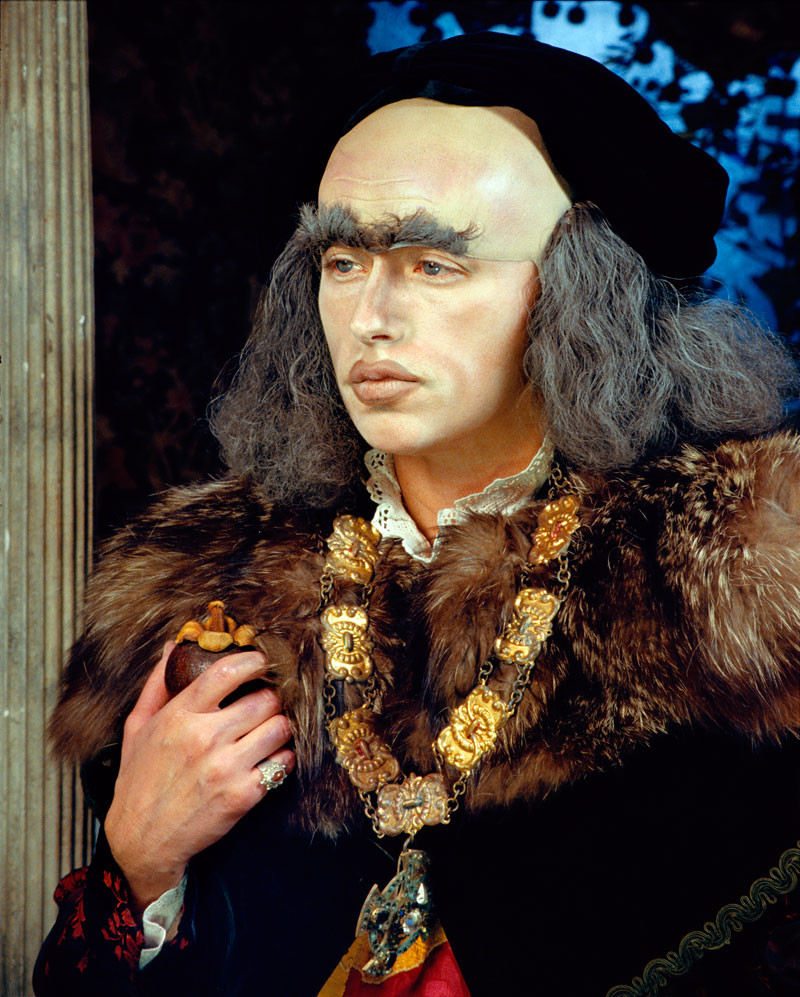
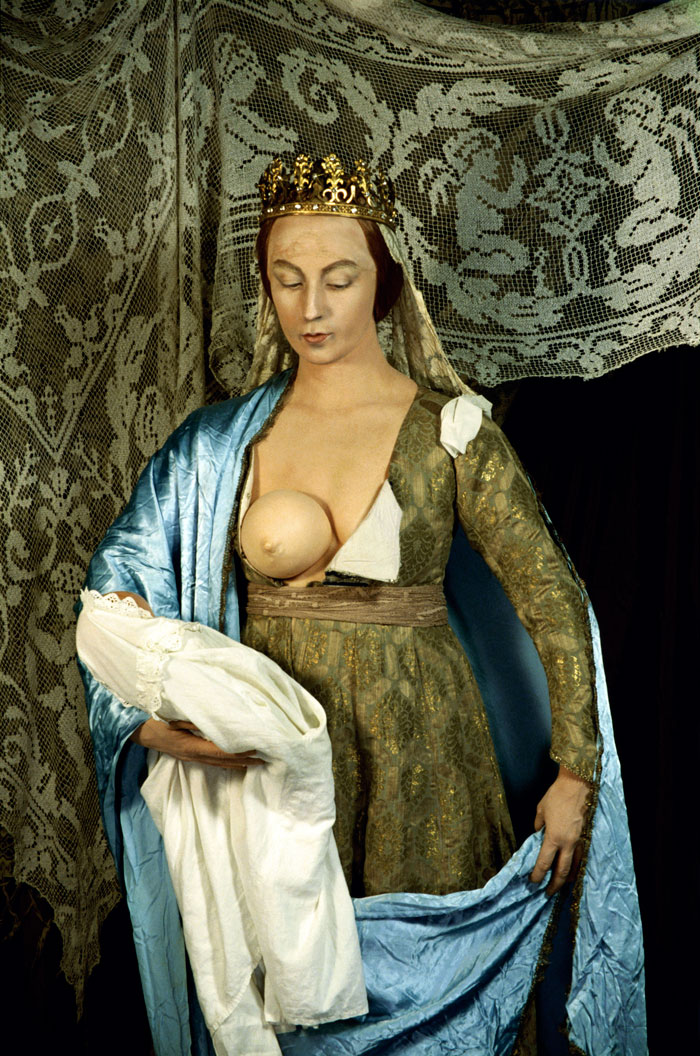
Other series presented in depth include Sherman’s 1981 series of 12-colour photographs known as the centerfolds. Originally commissioned by Artforum magazine, these send-ups of men’s erotic magazine centerfolds depict characters in a variety of emotional states, ranging from terrified to heartbroken to melancholic. With this series, Sherman plays into the male conditioning of looking at photographs of exposed women, but she turns this on its head by taking on the roles of both (assumed) male photographer and female pinup. The history portraits investigate the relationships between painter and model, and are featured in depth in the exhibition. These theatrical portraits borrow from a number of art historical periods, from Renaissance, Baroque, Rococo, and Neoclassical. This free-association sampling creates an illusion of familiarity, but not with any one specific era or style (just as the Untitled Film Stills evoke generic types, not particular films). The subjects (for the first time, many are men) include aristocrats, Madonna and child, clergymen, women of leisure, and milkmaids, who pose with props, elaborate costumes, and obvious prostheses.

Sherman has explored the experience of ageing in a youth- and status-obsessed society with several bodies of work made since 2000. For her headshots from 2000-2002 (sometimes called Hollywood / Hamptons), the artist conceived a cast of characters of would-be or has-been actors (in reality secretaries, housewives, or gardeners) posing for head shots to get an acting job. With this series, Sherman underscores the transformative qualities of makeup, hair, expression, and pose, and the recognition of certain stereotypes as powerful transmitters of cultural clichés. Her monumental 2008 society portraits feature women “of a certain age” from the top echelons of society who struggle with today’s impossible standards of beauty. The psychological weight of these pictures comes through in the unrelenting honesty of the description of ageing and the small details that belie the attempt to project a certain appearance. In the infinite possibilities of the mutability of identity, these pictures stand out for their ability to be at once provocative, disparaging, empathetic, and mysterious.

Press release from the MoMA website


Cindy Sherman (American, b. 1954) 'Untitled #193' 1989


Cindy Sherman (American, b. 1954)
Untitled #193 
1989
Chromogenic colour print
48 7/8 x 41 15/16″ (124.1 x 106.5cm)
The Doris and Donald Fisher Collection


Cindy Sherman (American, b. 1954) 'Untitled #213' 1989


Cindy Sherman (American, b. 1954)
Untitled #213 
1989
Chromogenic colour print
41 1/2 x 33″ (105.4 x 83.8cm)
Courtesy the artist and Metro Pictures, New York


Cindy Sherman (American, b. 1954) 'Untitled #216' 1989


Cindy Sherman (American, b. 1954)
Untitled #216 
1989
Chromogenic colour print
7′ 3 1/8″ x 56 1/8″ (221.3 x 142.5cm)
The Museum of Modern Art, New York. Gift of Werner and Elaine Dannheisser


Gallery 7

Sherman’s history portraits (1988-90) investigate modes of representation in art history and the relationship between painter and model. These classically composed portraits borrow from a number of art-historical periods – Renaissance, baroque, rococo, Neoclassical – and make allusions to paintings by Raphael, Caravaggio, Fragonard, and Ingres (who, like all the Old Masters, were men). This free-association sampling creates a sense of familiarity, but not of any one specific era or style. The subjects (for the first time for Sherman, many are men) include aristocrats, Madonnas with child, clergymen, women of leisure, and milk-maids, who pose with props, costumes, and obvious prostheses. Theatrical and artificial – full of large noses, bulging bellies, squirting breasts, warts, and unibrows – the history portraits are poised between humorous parody and grotesque caricature.

A handful of Sherman’s portraits were inspired by actual paintings. Untitled #224 was made after Caravaggio’s Sick Bacchus (c. 1593), which is commonly believed to be a self-portrait of the artist as the Roman god of wine. In Sherman’s reinterpretation, the numerous layers of representation – a female artist impersonating a male artist impersonating a pagan divinity – create a sense of remove, pastiche, and criticality. Even where Sherman’s pictures offer a gleam of art-historical recognition, she has inserted her own interpretation of the canonised paintings, creating contemporary artefacts of a bygone era.

Wall text from the exhibition


Cindy Sherman (American, b. 1954) 'Untitled #359' 2000


Cindy Sherman (American, b. 1954)
Untitled #359 
2000
Chromogenic color print
30 x 20″ (76.2 x 50.8cm)
Collection Metro Pictures, New York


Gallery 8

After almost a decade of staging still lifes with dolls and props, in her 2000-2002 head-shots series Sherman returned to a more intimate scale and to using herself as a model. The format recalls ID pictures, head shots, or vanity portraits made in garden-variety portrait studios by professional photographers. First exhibited in Beverly Hills, the series explores the cycle of desire and failed ambition that permeates Hollywood. Sherman conceived a cast of would-be or has-been female actors posing for head shots in order to get acting jobs; later, for an exhibition in New York, she added East Coast types. Whichever part of the country they’re from, we’ve seen these women before – on reality television, in soap operas, or at a PTA meeting. With these pictures, Sherman underscores the transformative qualities of makeup, hair, expression, and pose, and the power of stereotypes as transmitters of cultural clichés. She projects well-drawn personas: the enormous pouting lips of the woman in Untitled #360 suggest a yearning for youth, while the glittery makeup and purple iridescent dress worn by the character in Untitled #400 indicate an aspiration to reach a certain social status. In her role as both sitter and photographer, Sherman has disrupted the usual power dynamic between model and photographer and created new avenues through which to explore the very apparatus of portrait photography itself.


Cindy Sherman (American, b. 1954) 'Untitled #465' 2008


Cindy Sherman (American, b. 1954)
Untitled #465 
2008
Chromogenic colour print
63 3/4 x 57 1/4″ (161.9 x 145.4cm)
Whitney Museum of American Art, New York
Purchase, with funds from the Painting and Sculpture Committee and the Photography Committee, 2009


Cindy Sherman (American, b. 1954) 'Untitled #466' 2008


Cindy Sherman (American, b. 1954)
Untitled #466
2008
Chromogenic colour print


Cindy Sherman (American, b. 1954) 'Untitled #474' 2008


Cindy Sherman (American, b. 1954)
Untitled #474 
2008
Chromogenic colour print
7′ 7″ x 60 1/4″ (231.1 x 153cm)
The Museum of Modern Art, New York
Acquired through the generosity of an anonymous donor, Michael Lynne, Charles Heilbronn, and the Carol and David Appel Family Fund


Gallery 10

Set against opulent backdrops and presented in ornate frames, the characters in Sherman’s 2008 society portraits seem at once tragic and vulgar. The figures are not based on specific women, but the artist has made them look entirely familiar in their struggle with the impossible standards of beauty that prevail in a youth – and status – obsessed culture. At this large scale, it is easy to decipher the characters’ vulnerability behind the makeup, clothes, and jewellery. The psychological weight of these pictures comes through the unrelenting honesty of their description of ageing, the tell-tale signs of cosmetic alteration, and the small details that belie the characters’ attempts to project a polished and elegant appearance. Upon careful viewing, they reveal a dark reality lurking beneath the glossy surface of perfection. As with much of her work, in her society portraits Sherman has demonstrated a remarkable capacity to channel the zeitgeist. These well-heeled divas presaged the financial collapse of 2008, the end of an era of opulence – the size of the photographs alone seems a commentary on an age of excess. Among the numerous iterations of contemporary identity, these pictures stand out as at once provocative, disparaging, empathetic, and mysterious.

Wall text from the exhibition


Cindy Sherman (American, b. 1954) 'Untitled #475' 2008


Cindy Sherman (American, b. 1954)
Untitled #475 
2008
Chromogenic colour print
7′ 2 3/8″ x 71 1/2″ (219.4 x 181.6cm)
The Broad Art Foundation, Santa Monica


Gallery 11

Because the majority of Sherman’s pictures feature the artist as model, they showcase a single character. In the 1970s Sherman experimented with cutouts of multiple figures, in her whimsical 1975 stop-motion animated short film Doll Clothes and her rarely seen 1976 collages, which were achieved through a labor-intensive process of cutting and pasting multiple photographs. When Sherman began working digitally in the early 2000s, she was able to more easily incorporate multiple figures in one frame, allowing for a variety of new narrative possibilities. Where the early works chart the movements and gestures of a single character through space, the multiple figures in recent works interact with one another to create tableaus.

Wall text from the exhibition


The Museum of Modern Art
11 West 53 Street
New York, NY 10019
Phone: (212) 708-9400

Opening hours:
10.30am – 5.30pm
Open seven days a week

MoMA website

LIKE ART BLART ON FACEBOOK

Back to top

Exhibition: ‘Arthur Tress: San Francisco 1964’ at the de Young Museum, San Francisco

Exhibition dates:  3rd March – 3rd June 2012


Arthur Tress (American, b. 1940) 'Untitled (Van Ness at Geary Boulevard)' 1964


Arthur Tress (American, b. 1940)
Untitled (Van Ness at Geary Boulevard)
1964, printed 2010-2011
Selenium-toned silver gelatin print
Fine Arts Museums of San Francisco
© 2012 Arthur Tress


These early figurative urbanscapes by Arthur Tress show the beginnings of his later Surrealist pictorial style (do a Google images search on Tress to see what I mean). From the Eggleston-esque tricycle in Untitled (Ocean Beach), the three spooky faces in Untitled (Coit Tower)* to the most prescient, the photograph Untitled (Legion of Honor Museum), there is a direct thematic link to the later, more famous 1970s work. What a beautiful and disturbing photograph Legion of Honor Museum is.

Dr Marcus Bunyan

*Notice the low vantage point of the camera at knee level (as the photographer crouched down) that imparts a monumental, robo-human feel to the sculptures.

Many thankx to the de Young Museum for allowing me to publish the photographs in the posting. Please click on the photographs for a larger version of the image.


Arthur Tress (American, b. 1940) 'Untitled (City Hall)' 1964


Arthur Tress (American, b. 1940)
Untitled (City Hall)
1964, printed 2010-2011
Selenium-toned silver gelatin print
Fine Arts Museums of San Francisco
© 2012 Arthur Tress


Arthur Tress (American, b. 1940) 'Untitled (Coit Tower)' 1964


Arthur Tress (American, b. 1940)
Untitled (Coit Tower)
1964, printed 2010-2011
Selenium-toned silver gelatin print
Fine Arts Museums of San Francisco
© 2012 Arthur Tress


Arthur Tress (American, b. 1940) 'Untitled (Ocean Beach)' 1964


Arthur Tress (American, b. 1940)
Untitled (Ocean Beach)
1964, printed 2010-2011
Selenium-toned silver gelatin print
Fine Arts Museums of San Francisco
© 2012 Arthur Tress


Arthur Tress (American, b. 1940) 'Untitled (Fisherman's Wharf)' 1964


Arthur Tress (American, b. 1940)
Untitled (Fisherman’s Wharf)
1964, printed 2010-2011
Selenium-toned silver gelatin print
Fine Arts Museums of San Francisco
© 2012 Arthur Tress


In the summer of 1964, San Francisco was ground zero for a historic culture clash as the site of both the 28th Republican National Convention (the “Goldwater Convention”) and the launch of the Beatles’ first North American tour. The young photographer Arthur Tress arrived at this opportune moment in the city’s history and found himself in the midst of large-scale civil rights demonstrations and chaotic political pageantry. With a unique sensibility perfectly attuned to this quirky metropolis, he set about to capture the odd spectacle of San Francisco.

Over 70 photographs included in Arthur Tress: San Francisco 1964 range from public gatherings to impromptu street portraits, views of the peculiar contents of shop windows and commercial signs. This is the first museum exhibition of a virtually unknown body of Tress’s early work. Curator James Ganz explains, “This exhibition offers an evocative time capsule of the City by the Bay and makes a fascinating contribution to the region’s rich photographic legacy.” The exhibition runs March 3 to June 3, 2012 at the de Young Museum.

The subject matter of Arthur Tress: San Francisco 1964 breaks down into three broad categories: public gatherings, including civil rights and political rallies; portrait studies of San Franciscans; and views of shop windows, commercial signs and architectural fragments. Often these categories overlap. In photographing events such as the Auto Row demonstrations, Tress was interested in recording passive bystanders, as well as active participants. His candid images of spectators lining the streets of San Francisco, whether isolated or in groups, capture the distinctive fashions, expressions and body language of the era. The frequent incursions of commercial logos and signage add to the contemporary flavour of the photographs, effectively fixing time and place. The exhibition captures the flavour of San Francisco without featuring its most familiar monuments. Tress’s approach to the city was idiosyncratic, generally avoiding popular tourist sites such as the Golden Gate Bridge and Chinatown, while favouring mundane locales like laundromats and coffee shops. Ganz observes, “Tress is a photographer of people rather than landmarks. Given the option of pointing his lens at an attraction like Coit Tower or at a tourist observing the monument, he will always favour the human element over the architectural setting.”

Brief biography

Born in 1940, Arthur Tress was raised in Brooklyn and started experimenting with photography in his teens. After graduating from Bard College in 1962, Tress traveled internationally for four years as an ethnographic and documentary photographer. It was during this international tour that he spent the summer of 1964 in San Francisco focusing his lens on city life. Tress developed his San Francisco negatives in a communal darkroom in the Castro District and mounted two small exhibitions in North Bay galleries that summer. He went on to pursue a long and accomplished career in photography that continues to this day.

Press release from the de Young Museum website


Arthur Tress (American, b. 1940) 'Untitled (Legion of Honor Museum)' 1964


Arthur Tress (American, b. 1940)
Untitled (Legion of Honor Museum)
1964, printed 2010-2011
Selenium-toned silver gelatin print
Fine Arts Museums of San Francisco
© 2012 Arthur Tress


Arthur Tress (American, b. 1940) 'Untitled (Powell Street)' 1964


Arthur Tress (American, b. 1940)
Untitled (Powell Street)
1964, printed 2010-2011
Selenium-toned silver gelatin print
Fine Arts Museums of San Francisco
© 2012 Arthur Tress


Arthur Tress (American, b. 1940) 'Untitled (Union Square)' 1964


Arthur Tress (American, b. 1940)
Untitled (Union Square)
1964, printed 2010-2011
Selenium-toned silver gelatin print
Fine Arts Museums of San Francisco
© 2012 Arthur Tress


Shooting with a large Rolleiflex camera, Tress set out to make a mosaic of the city. He photographed civil rights demonstrations and surreal shop-window displays, Beatles fans and Barry Goldwater supporters, matrons in mink, bikers in black leather, Felliniesque crowd scenes (replete with clowns), signs for doughnuts and foot-long hot dogs.

“Even though I didn’t know it, these were prescient of my later dream images,” says Tress, 71, a small, soft-spoken gent with white hair and amused blue eyes. “You can arrange spaces and tones and textures so they become theatrical in a way, and it becomes a moment that leaps out of the quotidian flow of time.” …

One picture shows a pair of old ladies, wearing hats, glasses and white gloves, casting disdainful glances at a guy on a motorcycle in a Brando-like leather jacket, tight white jeans and black gloves. His hands are crossed just like theirs, repeating the rhythm.

“This is very much within the tradition of street photography, where you contrast different classes and types of people,” Tress says.

That’s what he did in July of ’64, when the Republican National Convention was held at the Cow Palace, a month before the Beatles began their first American tour there. A crowd supporting William Scranton – the Pennsylvania governor drafted as a moderate alternative to Goldwater – held a rally in Union Square. It was disrupted by an unexpected mob of teenage girls carrying “Ringo for President” signs. Tress captured the cultural dissonance, the press of Ringo fans and plume-hatted marching band musicians. …

Like most of these images, it had never been printed or shown. Tress had all but forgotten them until he found them in some boxes in his sister’s home after she died in 2009.

“I realized there was something good here. They were really strong images,” says Tress, who had shown about 25 of them at the old Tides bookstore in Sausalito. “I think these photographs have aged well, because of their formal, slightly dreamlike quality. They transcend their time.”

He took the prints and negatives to Ganz, the curator of the Fine Arts Museums’ Achenbach Foundation for Graphic Arts, which owns a couple of Tress’ better-known surrealist pictures. Ganz was jazzed by what he saw. Tress had new contact sheets made from the negatives, and he and Ganz picked the images that were printed for the show and the accompanying book.

Jesse Hamlin. “‘Arthur Tress: San Francisco 1964’ at the de Young,” on the SFGate website March 22, 2012 [Online] Cited 07/10/2024


Arthur Tress (American, b. 1940) 'Untitled (City Hall)' 1964


Arthur Tress (American, b. 1940)
Untitled (City Hall)
1964, printed 2010-2011
Selenium-toned silver gelatin print
Fine Arts Museums of San Francisco
© 2012 Arthur Tress


Arthur Tress (American, b. 1940) 'Untitled (5th and Market)' 1964


Arthur Tress (American, b. 1940)
Untitled (5th and Market)
1964, printed 2010-2011
Selenium-toned silver gelatin print
Fine Arts Museums of San Francisco
© 2012 Arthur Tress


Arthur Tress (American, b. 1940) 'Untitled' 1964


Arthur Tress (American, b. 1940)
Untitled
1964, printed 2010-2011
Selenium-toned silver gelatin print
Fine Arts Museums of San Francisco
© 2012 Arthur Tress


Arthur Tress (American, b. 1940) 'San Francisco' 1964


Arthur Tress (American, b. 1940)
San Francisco
1964
Selenium-toned silver gelatin print
Fine Arts Museums of San Francisco
© 2012 Arthur Tress


Arthur Tress (American, b. 1940) 'San Francisco' 1964


Arthur Tress (American, b. 1940)
San Francisco
1964
Selenium-toned silver gelatin print
Fine Arts Museums of San Francisco
© 2012 Arthur Tress


Arthur Tress (American, b. 1940) 'San Francisco' 1964


Arthur Tress (American, b. 1940)
San Francisco
1964
Selenium-toned silver gelatin print
Fine Arts Museums of San Francisco
© 2012 Arthur Tress


Arthur Tress (American, b. 1940) 'San Francisco' 1964


Arthur Tress (American, b. 1940)
San Francisco
1964
Selenium-toned silver gelatin print
Fine Arts Museums of San Francisco
© 2012 Arthur Tress


Arthur Tress (American, b. 1940) 'San Francisco' 1964


Arthur Tress (American, b. 1940)
San Francisco
1964
Selenium-toned silver gelatin print
Fine Arts Museums of San Francisco
© 2012 Arthur Tress


Cover of the exhibition catalogue 'Arthur Tress: San Francisco 1964'


Cover of the exhibition catalogue Arthur Tress: San Francisco 1964


Back cover of the exhibition catalogue 'Arthur Tress: San Francisco 1964'


Back cover of the exhibition catalogue Arthur Tress: San Francisco 1964


The de Young Museum
50 Hagiwara Tea Garden Drive
Golden Gate Park
San Francisco

Opening hours:
Tuesday – Sunday 9.30am – 5.15pm
Monday Closed

The de Young Museum website

LIKE ART BLART ON FACEBOOK

Back to top

Exhibition: ‘Pieter Hugo: This must be the place’ at The Hague Museum of Photography, The Netherlands

Exhibition dates: 3rd March – 20th May 2012


Pieter Hugo (South African, b. 1976) 'Mallam Mantari Lamal with Mainasara, Abuja' From the series 'The Hyena & Other Men' 2005-2007


Pieter Hugo (South African, b. 1976)
Mallam Mantari Lamal with Mainasara, Abuja
2005-2007 
From the series The Hyena & Other Men
© Courtesy of Stevenson Gallery, Kaapstad / Yossi Milo, New York


Sexy, scary and very sad.

The hand of the monkey Clear on the thigh of Dayaba Usman (see second photograph below) – and the look on his face – makes one wonder who is really in chains.

Marcus


Many thankx to the Hague Museum of Photography for allowing me to publish the photographs in the posting. Please click on the photographs for a larger version of the image.


Pieter Hugo (South African, b. 1976) 'Dayaba Usman with the monkey Clear, Abuja' From the series 'The Hyena & Other Men' 2005-2007


Pieter Hugo (South African, b. 1976)
Dayaba Usman with the monkey Clear, Abuja
2005-2007
From the series The Hyena & Other Men
© Courtesy of Stevenson Gallery, Kaapstad / Yossi Milo, New York


Pieter Hugo (South African, b. 1976) 'Mummy Ahmadu and a snake charmer with a rock python, Abuja' From the series 'The Hyena & Other Men' 2005-2007


Pieter Hugo (South African, b. 1976)
Mummy Ahmadu and  a snake charmer with a rock python, Abuja
2005-2007
From the series The Hyena & Other Men
© Courtesy of Stevenson Gallery, Kaapstad / Yossi Milo, New York


The South African photographer Pieter Hugo’s (1976) monumental photographs, centred around contemporary Africa, are now well known around the world. He has already won numerous awards including the KLM Paul Huf award in 2008 and was recently nominated for the Deutsche Börse Photography Prize 2012. The Hague Museum of Photography will be the first museum to exhibit a comprehensive survey of Hugo’s work from 2002-2011. Together with many previously unseen works, the exhibition will include a curated selection of his most well-known series: The Hyena & Other Men, the bizarre Nollywood and the striking Permanent Error. His impressive portraits tell personal stories about recurring themes throughout his oeuvre, namely those people who inhabit the margins of society in Sub-Saharan Africa. 

The differences between the West and Africa, rich and poor, white and black are confronted in Hugo’s vivid compositions. Many of his series are prompted by newspaper articles, or radio and television pieces, which he finds compelling. He came in contact, for instance with the group of men who travel around Nigeria with hyenas and pythons, through an image sent via cell phone camera by a friend. He decided to accompany the group on their travels, and the outcome of this experience is The Hyena & Other Men (2005-2007), a series of portraits from a travelling group of street performers, who together with their – sometimes forcefully – tamed animals earn money to continue travelling.

In the series Permanent Error (2009-2010) he offers portraits of young men and woman who live amidst an immense waste dump of broken computers, mother boards and keyboards. To earn money these young people burn the computers dumped here as a means to extract valuable metals. The dangerous and poisonous vapours produce a hell on earth, where the quality of life is already challenging. The people who pose for Hugo stand in front of the camera with a defiant self-confidence.

From a different perspective comes his series about Nollywood (2008-2009) in Nigeria, the biggest film industry in the world after Hollywood and Bollywood. Here, stories that have for centuries been part of an oral tradition are told in dramatic films in which a central role is reserved for themes such as romance, witchcraft, bribery and prostitution. It is this world, where the everyday and the surreal exist simultaneously, that Hugo finds fascinating. In this series Hugo depicts actors and assistants posing in the role of movie characters. The result is an absurd tableau such as a photo of a half-naked woman sitting on a bed with a bloody knife stuck between her breasts. All the while she stares blankly at the camera. In another image, a woman well-dressed in Nigerian clothing sits completely unfazed by the man next to her made-up as the devil.

Press release from The Hague Museum of Photography website


Pieter Hugo (South African, b. 1976) 'Escort Kama, Enugu' From the series 'Nollywood' 2008-2009


Pieter Hugo (South African, b. 1976)
Escort Kama, Enugu
2008-2009
From the series Nollywood
© Courtesy of Stevenson Gallery, Kaapstad / Yossi Milo, New York


Pieter Hugo (South African, b. 1976) 'Obechukwu Nwoye, Enugu' From the series 'Nollywood' 2008-2009


Pieter Hugo (South African, b. 1976)
Obechukwu Nwoye, Enugu
2008-2009
From the series Nollywood
© Courtesy of Stevenson Gallery, Kaapstad / Yossi Milo, New York


Pieter Hugo (South African, b. 1976) 'Abdulai Yahaya, Agbogbloshie Market, Accra' From the series 'Permanent Error', 2009-2010


Pieter Hugo (South African, b. 1976)
Abdulai Yahaya, Agbogbloshie Market, Accra
2009-2010
From the series Permanent Error
© Courtesy of Stevenson Gallery, Kaapstad / Yossi Milo, New York


Pieter Hugo (South African, b. 1976) 'Abdulai Yahaya, Agbogbloshie Market, Accra' 2009-2010 From the series 'Permanent Error'


Pieter Hugo (South African, b. 1976)
Abdulai Yahaya, Agbogbloshie Market, Accra
2009-2010
From the series Permanent Error
© Courtesy of Stevenson Gallery, Kaapstad / Yossi Milo, New York


Pieter Hugo (South African, b. 1976) 'David Akore, Agbogbloshie Market, Accra' 2009-2010 From the series 'Permanent Error'


Pieter Hugo (South African, b. 1976)
David Akore, Agbogbloshie Market, Accra
2009-2010
From the series Permanent Error
© Courtesy of Stevenson Gallery, Kaapstad / Yossi Milo, New York


The Hague Museum of Photography
Stadhouderslaan 43
2517 HV Den Haag
Phone: 31 (0)70 – 33 811 44

Opening hours:
Tuesday – Sunday, 11am – 5pm
Closed Mondays

The Hague Museum of Photography website

LIKE ART BLART ON FACEBOOK

Back to top

Exhibition: ‘In Focus: Los Angeles, 1945-1980’ at the J. Paul Getty Museum, Los Angeles

Exhibition dates: 20th December 2011 – 6th May 2012


Anthony Friedkin (American, b. 1949) 'Clockwork Malibu' 1978


Anthony Friedkin (American, b. 1949)
Clockwork Malibu
1978
Gelatin silver print
11 15/16 x 18 5/16 in
The J. Paul Getty Museum, Los Angeles
Gift of Sue and Albert Dorskind
© Anthony Friedkin


While Anthony Friedkin has documented subjects as diverse as the marginalised gay community of San Francisco, convicts at Folsom Prison, and brothels in New York, it is the Southern California coastline that has remained a recurrent theme throughout his forty-five-year career. The Los Angeles native took up photography about the same time he learned to surf. His images of waves deftly communicate the primordial power and elusive mysteries that he ascribes to the ocean. This photograph of surfer Rick Dano on an early morning drive up the coast conveys a mood of quiet, anticipatory harmony.

Text from Pacific Standard Time at the Getty


I have never particularly liked Los Angeles as a city. There seems to be something unappealing about the place, some energy lurking just beneath the surface that you can’t quite put your finger on. Maybe it is the comparison with the vivacious San Francisco just up the coast, the awful public transport or, more spookily, the lack of people on the street. People never walk anywhere in LA, it’s a car town. When I did walk on the street I felt vulnerable and surveyed with suspicion by people in cars, like a rabbit caught in the headlights.

These photographs confirm this feeling. Unlike the visual acoustics of the architectural photographs of Julius Shulman (photographs that mythologised this urban metropolis and then exported that idealised presence and Californian mid-century design to the rest of the world) these photographs have an unbelievably desolatory nature to them. They seem to be joyless and sorrowful, devoid of warmth, comfort, or hope – as though the human and the city were separated, as if we are separated from a loved one.

The row after row of tinderbox houses, the ubiquitous cars, the sense of emptiness, hopelessness and menace (see Gary Winogrand Los Angeles 1964, below – if looks could kill this would be it, the bandaged broken nose just perfect for the photograph) all paint a picture of despair. Even the supposedly quiet, anticipatory harmony of the photograph of surfer Rick Dano by Anthony Friedkin (1978, below top) is, to me, full of unresolved tension. The mist in the background hanging over the rocks, blocking out the view, the filthy hands and the bandaged little finger of the right hand, the downcast eyes, the impossibly long cigarette handing from his lips and most importantly the empty distance between the figure and the safety of the automobile. The tension in that distance and the downcast eyes says nothing to me of harmony but of isolation, sadness and regret.

Los Angeles is not my favourite city but it is a fascinating place none the less, as these photographs do attest.

Dr Marcus Bunyan


Many thankx to the J. Paul Getty Museum for allowing me to publish the photographs in the posting. Please click on the photographs for a larger version of the image.


Max Yavno (American, 1911-1985) 'High School Beach' 1945


Max Yavno (American, 1911-1985)
High School Beach
1945
Gelatin silver print
22.1 x 34.4cm
The J. Paul Getty Museum, Los Angeles
Gift of Marjorie and Leonard Vernon
© 1988 Centre for Creative Photography, The University of Arizona Foundation


Anthony Hernandez (American, b. 1947) 'Automotive Landscapes #5, Los Angeles' 1978


Anthony Hernandez (American, b. 1947)
Automotive Landscapes #5: Los Angeles
1978
Gelatin silver print
11 3/4 x 17 1/8 in
The J. Paul Getty Museum, Los Angeles
Purchased in part with funds provided by the Photographs Council of the J. Paul Getty Museum
© Anthony Hernandez


Hernandez started photographing what he refers to as “automotive landscapes” in 1977, using a 35mm camera until he realised that a large-format camera loaded with 5 x 7-inch negative film would provide the detail he desired. Taken from a slightly elevated vantage point, Hernandez’s image of an immobilised truck and its lone mechanic in front of a repair shop presents a sobering view of Los Angeles’s car-dominant culture.

Text from Pacific Standard Time at the Getty


Gary Winogrand (American, 1928-1984) 'Los Angeles' 1964


Gary Winogrand (American, 1928-1984)
Los Angeles
1964
Gelatin silver print
9 x 13 7/16 in
The J. Paul Getty Museum, Los Angeles
© 1984 The Estate of Gary Winogrand


This image of a couple seated in a parked convertible in front of a nightclub on Sunset Boulevard simultaneously captures the glamour and seediness associated with Hollywood. Evoking a 1940s or ’50s film noir crime drama, a seeming tough guy and femme fatale continue their heated conversation, apparently oblivious to the traffic around them – and to the photographer observing them. A native of New York City, Winogrand studied painting at Columbia University and photography at the New School for Social Research before doing freelance commercial work. He photographed incessantly, using a 35mm camera to create wide-angled or tilted shots that are densely composed and layered with meaning. More than 2,500 rolls of film remained undeveloped at the time of his death in 1984.

Text from Pacific Standard Time at the Getty


As part of the region-wide Pacific Standard Time: Art in L.A., 1945-1980 initiative, The J. Paul Getty Museum presents In Focus: Los Angeles, 1945-1980, an exhibition of photographs from the permanent collection made by artists whose time in Los Angeles inspired them to create memorable images of the city, on view at the Getty Center from December 20, 2011 – May 6, 2012.

This exhibition features both iconic and relatively unknown work by artists whose careers are defined by their association with Los Angeles, who may have lived in the city for a few influential years, or who might have visited only briefly,” said Virginia Heckert, curator, Department of Photographs, the J. Paul Getty Museum, and curator of the exhibition.

The photographs are loosely grouped around the themes of experimentation, street photography, architectural depictions, and the film and entertainment industry. Works featured in the exhibition are from artists such as Jo Ann Callis, Robert Cumming, Joe Deal, Judy Fiskin, Anthony Friedkin, Robert Heinecken, Anthony Hernandez, Man Ray, Edmund Teske, William Wegman, Garry Winogrand, and Max Yavno. Two of the works in the exhibition by Anthony Hernandez and Henry Wessel Jr. were acquired with funds from the Getty Museum Photographs Council. Drawn from the Museum’s permanent collection, including several recent acquisitions inspired by the Pacific Standard Time initiative, the exhibition offers visitors the opportunity to familiarise themselves with a broad range of approaches to the city of Los Angeles as a subject and to the photographic medium itself.

One of the most well-known works in the exhibition is Garry Winogrand’s photograph of two women walking towards the landmark theme building designed by Charles Luckman and William Pereira that has come to symbolise both Los Angeles International Airport and mid-century modern architecture in popular culture. Though a quintessential New Yorker, Winogrand made some of his most memorable photographs in Los Angeles, where he chose to settle in the final years of his life. Also included in the exhibition is Diane Arbus’ dreamily lit photograph of Sleeping Beauty Castle at Disneyland park in Anaheim. Although technically not located in either the city or the county of Los Angeles, Disneyland – and Arbus’ photograph – continues to capture the notion of entertainment and fantasy that has come to be so intrinsically associated with the city.

Other photographers in the In Focus: Los Angeles exhibition who produced the majority of their most creative work in the city include Edmund Teske, with his experimentation in the darkroom and his complex double solarisation process; Robert Heinecken, with images that are equally complex but often incorporate existing printed materials, such as negatives; Anthony Hernandez, whose portraits of Angelenos on the street emphasise the isolation of the individual in an urban environment; and Anthony Friedkin, who combines his passions for surfing and the Southland beaches in his photographs. The inclusion of three photographs from Judy Fiskin’s earliest photographic series, Stucco (1973-1976), provided the impetus for a monographic presentation of the artist’s complete photographic work by Getty Publications. Entitled Some Aesthetic Decisions: The Photographs of Judy Fiskin and featuring an introductory essay by curator Virginia Heckert, the book will be published concurrently with this exhibition.

Press release from the J. Paul Getty Museum website


Man Ray (Emmanuel Radnitsky)(American, 1890-1976) 'Juliet with Mud Mask' 1945


Man Ray (Emmanuel Radnitsky)(American, 1890-1976)
Juliet with Mud Mask
1945
Gelatin silver print
35.6 x 27.1cm
The J. Paul Getty Museum, Los Angeles
© Man Ray Trust


William Garnett (American, 1916-2006) 'Foundations and Slabs, Lakewood, California' 1950


William Garnett (American, 1916-2006)
Foundations and Slabs, Lakewood, California
1950
Gelatin silver print
18.9 x 23.8cm
The J. Paul Getty Museum, Los Angeles
© Estate of William A. Garnett


William Garnett (American, 1916-2006) 'Framing, Lakewood, California' 1950


William Garnett (American, 1916-2006)
Framing, Lakewood, California
1950
Gelatin silver print
18.4 x 24.1cm
The J. Paul Getty Museum, Los Angeles
© Estate of William A. Garnett


William Garnett (American, 1916-2006) 'Plaster and Roofing, Lakewood, California' 1950


William Garnett (American, 1916-2006)
Plaster and Roofing, Lakewood, California
1950
Gelatin silver print
18.4 x 24.1cm
The J. Paul Getty Museum, Los Angeles
© Estate of William A. Garnett


William A. Garnett (American, 1916-2006) 'Finished Housing, Lakewood, California' 1950


William A. Garnett (American, 1916-2006)
Finished Housing, Lakewood, California
1950
Gelatin silver print
7 3/8 x 9 7/16 in
The J. Paul Getty Museum, Los Angeles
© Estate of William A. Garnett


The reduced scale and regular spacing of shapes lend a toy-like quality to Garnett’s suite of prints depicting construction phases of tract housing in the Los Angeles County suburb of Lakewood. The deep shadows, overall patterning, and dramatic diagonals that slice through each composition introduce a sophisticated sense of design and abstraction. After studying photography at Art Center College of Design and military service during World War II, William Garnett learned to fly so that he could photograph his subjects from his Cessna 170-B airplane. Although he was hired by developers to document the construction of 17,500 affordable single-family residences in Lakewood, the majority of his aerial photographs depict the beauty of America’s landscape.

Text from Pacific Standard Time at the Getty


Diane Arbus (American, 1923-1971) 'A Castle in Disneyland' Negative, 1962; print, 1973


Diane Arbus (American, 1923-1971)
A Castle in Disneyland
Negative, 1962; print, 1973
Gelatin silver print
24 x 24cm
The J. Paul Getty Museum, Los Angeles
© Estate of Diane Arbus


Grant Mudford (Australian, b. 1944) 'Los Angeles (US 257/10a)' negative, 1976; print, 1980


Grant Mudford (Australian, b. 1944)
Los Angeles (US 257/10a)
Negative, 1976; print, 1980
Gelatin silver print
19 1/4 x 13 1/8 in
© Grant Mudford


After working for ten years as a commercial photographer, Sydney native Grant Mudford received funding from the Australia Council for the Arts, enabling him to travel throughout the United States to pursue personal work. Mudford’s love of architecture – particularly the vernacular, often anonymous structures of urban America – is evident in the photographs he produced. His head-on depictions of the façades of simple commercial buildings are enlivened by signage, the play of light and shade, the placement of doors and windows, or, as in this image, the rich variety of textures.

Text from Pacific Standard Time at the Getty


Joe Deal (American, 1947-2010) 'Backyard, Diamond Bar, California' 1980


Joe Deal (American, 1947-2010)
Backyard, Diamond Bar, California
1980
Gelatin silver print
11 3/16 x 11 1/4 in
The J. Paul Getty Museum, Los Angeles
© Joe Deal


Joe Deal rose to prominence in the mid-1970s when work he made as a graduate student at the University of New Mexico was included in the exhibition New Topographics: Photographs of a Man-Altered Landscape (1975). From 1976 to 1989, he taught photography at the University of California, Riverside, where he was instrumental in establishing a photography program and developing the university-affiliated California Museum of Photography. His photographs of Diamond Bar feature backyards of this primarily residential suburb located at the junction of the Pomona and Orange freeways in eastern Los Angeles County. Deal’s implementation of a slightly elevated perspective that eliminates the horizon line and provides a view into neighbouring yards effectively conveys the close quarters of life in a master-planned community.

Text from Pacific Standard Time at the Getty


Robert Heineken (American, 1931-2006) 'Untitled (Studies #7)' 1970


Robert Heineken (American, 1931-2006)
Untitled (Studies #7)
1970
Gelatin silver print
9 15/16 x 7 15/16 in.
The J. Paul Getty Museum, Los Angeles
© The Estate of Robert Heineken


Garry Winogrand (American, 1928-1984) 'Los Angeles International Airport' 1964


Garry Winogrand (American, 1928-1984)
Los Angeles International Airport
1964
Gelatin silver print
The J. Paul Getty Museum, Los Angeles
© 1984 The Estate of Garry Winogrand


“It is immediately apparent that no city has ever been produced by such an extraordinary mixture of geography, climate, economics, demography, mechanics and culture; nor is it likely that an even remotely similar mixture will ever occur again.” ~ Reyner Banham, Los Angeles: The Architecture of Four Ecologies, 1971

This exhibition features photographs – made between 1945 and 1980 – from the Museum’s collection that represent diverse responses to the city of Los Angeles as a subject and to photography as a medium for documentary and creative expression. It is loosely grouped around the themes of experimental photography, vernacular architecture, car culture, and fantasy and the film industry.

Both iconic and relatively unknown works are included. One of the best known is Garry Winogrand’s image of two women walking towards the Theme Building at L.A. International Airport (see image above). Though a quintessential New Yorker, Winogrand settled in Los Angeles near the end of his life.

Experimental Photography

With its reclining figure set against a patterned background, Robert Heineken’s image recalls the odalisques of French painter Henri Matisse (see image above). To Heineken, however, traditional subjects and techniques were of little interest. He created this camera-less photograph by using a page torn from a magazine as the negative. This allowed light to pass through and merge depictions on both sides of the page into a single image with reversed tones.

In 1963, Heineken founded the photography program at the University of California, Los Angeles. He forged new directions in photography, utilising strategies of manipulation and appropriation to address themes of consumer culture and sexual politics.

Vernacular Architecture

Judy Fiskin’s propensity to backlight her subjects makes it difficult to read the details in the modest examples of vernacular architecture found in Westside neighbourhoods of Los Angeles that she photographed for her Stucco series. Viewers may be inclined to squint against the harsh light of Southern California that Fiskin makes so palpable. Nevertheless, the small scale of her images, contained by the black edges of the negative, encourages close viewing.

After completing graduate studies in art history at UCLA, Fiskin joined the faculty of the California Institute of Arts in 1977.

Car Culture

A native of Los Angeles, following two years of study at East Los Angeles College and two years of service in the U.S. Army, Anthony Hernandez took up photography in earnest around 1970.

For this image, Hernandez preset his 35mm camera so that objects within a specific range would be in focus. Then, while walking the streets of downtown Los Angeles, he swung the camera to his eye for a fraction of a second to capture fellow pedestrians as well as the ambient mood of a city more typically experienced from the driver’s seat (see image below).

Fantasy and the Film Industry

Los Angeles native Anthony Friedkin took up photography about the same time he learned to surf, and was already an accomplished photographer by age 16. He then studied at Art Center College of Design and the University of California, Los Angeles.

Friedkin began working as a still photographer for motion pictures in 1975. His depiction of row after row of film cans might be viewed as a historical document of a medium that has been replaced by new technology (see image below).

Anonymous. “In Focus: Los Angeles, 1945-1980,” on the J. Paul Getty Museum website Nd [Online] Cited 18/10/2024


Anthony Hernandez (American, b. 1947) 'Los Angeles #3' 1971


Anthony Hernandez (American, b. 1947)
Los Angeles #3
1971
Gelatin silver print
7 3/4 x 11 13/16 in
The J. Paul Getty Museum, Los Angeles
Purchased in part with funds provided by the Photographs Council
© Anthony Hernandez


Following two years of study at East Los Angeles College and two years of service in the U.S. Army, Anthony Hernandez took up photography in earnest around 1970. For this image, he preset his 35mm camera so that objects within a specific range would be in focus. Then, while walking the streets of downtown Los Angeles, he swung the camera to his eye for a fraction of a second to capture fellow pedestrians as well as the ambient mood of a city more typically experienced from the driver’s seat. A native of Los Angeles, Hernandez has continued to photograph the city, addressing issues of community, shelter, and survival in his work.

Text from Pacific Standard Time at the Getty


Anthony Friedkin (American, b. 1949) 'Film Can Library, Universal Studios' 1978


Anthony Friedkin (American, b. 1949)
Film Can Library, Universal Studios
1978
Gelatin silver print
12 x 17 11/16 in
The J. Paul Getty Museum, Los Angeles
Gift of Sue and Albert Dorskind
© Anthony Friedkin


Anthony Friedkin began taking photographs at a young age and had already published his work by the time he was 16. He nonetheless found it important to study photography seriously and did so at Art Center College of Design and the University of California, Los Angeles. Employment as a still photographer for motion pictures beginning in 1975 undoubtedly prepared him to create a portfolio of images of Universal Studios a few years later. His depiction of row after row of film cans might be viewed as a historical document of a medium that has been replaced by new technology. Friedkin’s continued commitment to shooting black-and-white film that he develops and prints in his own darkroom has become increasingly rare.

Text from Pacific Standard Time at the Getty


Darryl J. Curran (American, b. 1935) 'Cocktails with Heinecken' about 1974


Darryl J. Curran (American, b. 1935)
Cocktails with Heinecken
about 1974
Gelatin silver print
9 1/4 x 14 in
The J. Paul Getty Museum, Los Angeles
Gift of Darryl J. Curran
© Darryl J. Curran


After completing his undergraduate degree in design at the University of California, Los Angeles, Darryl Curran entered the school’s newly established photography program, studying with Robert Heinecken, who is positioned toward the center of this image in a black turtleneck. The repeated printing of two frames is typical of Curran’s approach to the photographic medium and the ease with which he employs techniques and strategies derived from his background in printmaking and design. Another form of “mirroring” occurs in the placement of a Heineken beer bottle opposite Heinecken the artist. Curran founded the Department of Photography at California State University, Fullerton, where he taught from 1967 to 2001.

Text from Pacific Standard Time at the Getty


Henry Wessel Jr. (American, 1942-2018) 'Los Angeles' 1971


Henry Wessel Jr. (American, 1942-2018)
Los Angeles
1971
Gelatin silver on Dupont Veragam paper print
7 15/16 x 11 7/8 in
The J. Paul Getty Museum, Los Angeles
Purchased with funds provided by the Photographs Council of the J. Paul Getty Museum
© Henry Wessel


Henry Wessel began taking photographs while majoring in psychology at Pennsylvania State University in the mid-1960s. Travel throughout the United States in subsequent years led him to direct his gaze increasingly to details of human interaction with the natural and man-made environment. Wessel’s move to the West Coast in the early 1970s inspired him to incorporate light and climate into his work. His inclusion in the seminal exhibition New Topographics: Photographs of a Man-Altered Landscape, organised in 1975 by the George Eastman House in Rochester, New York, solidified his reputation as a keen observer of the American topography. In this image, electrical and telephone lines tether a row of modest residences to a single utility pole.

Text from Pacific Standard Time at the Getty


The J. Paul Getty Museum
1200 Getty Center Drive
Los Angeles, California 90049

Opening hours:
Daily 10am – 5pm

The J. Paul Getty Museum website

LIKE ART BLART ON FACEBOOK

Back to top

Exhibition: ‘Berenice Abbott (1898-1991), Photographs’ at Jeu de Paume, Paris

Exhibition dates: 21st February – 29th April 2012

Curator: Gaëlle Morel


Berenice Abbott (American, 1898-1991) 'New York Stock Exchange, New York City' 1933


Berenice Abbott (American, 1898-1991)
New York Stock Exchange, New York City
1933
Gelatin silver print
24 x 19cm
Ronald Kurtz / Commerce Graphics
© Berenice Abbott / Commerce Graphics Ltd, Inc.


It is not her portraits or the road trip photographs, nor her scientific work for which Berenice Abbott will be remembered. Firstly, she will always be remembered as the person who photographed Eugene Atget in 1927 just before he died and who bought the remainder of his negatives (after the French government had bought over 2,000 in 1920 and another 2,000 had been sold after his death). She then tirelessly promoted Atget’s work helping him gain international recognition until her sale of the archive to the Museum of Modern Art in 1968. Secondly, she is remembered for her magnificent photographs of New York City and its urban environs, photographs that show the influence of Atget in their attention to detail and understanding of the placement of the camera, and imaging of old and new parts of the city (much as Atget had photographed old Paris before it was destroyed). However, these photographs are uniquely her own, with their modernist New Vision aesthetic, bold perspectives and use of deep chiaroscuro to enhance form within the photograph. Abbott’s best known project, Changing New York (1935-1939) eventually consisted of 305 photographs that document the buildings of Manhattan, some of which are now destroyed. As the text on Wikipedia insightfully notes:

“Abbott’s project was primarily a sociological study imbedded within modernist aesthetic practices. She sought to create a broadly inclusive collection of photographs that together suggest a vital interaction between three aspects of urban life: the diverse people of the city; the places they live, work and play; and their daily activities. It was intended to empower people by making them realise that their environment was a consequence of their collective behaviour (and vice versa). Moreover, she avoided the merely pretty in favour of what she described as “fantastic” contrasts between the old and the new, and chose her camera angles and lenses to create compositions that either stabilised a subject (if she approved of it), or destabilised it (if she scorned it).”


In the text below Gaëlle Morel observes, “Rather than the kind of nostalgic approach often brought to bear on a city’s landmarks and typical sites, this ensemble offers an exploration of the nature of modernity and focuses on the ways in which the past and future are temporarily linked together. Seeking to reinvent the forms and functions of photography in relation to the practice of documentary, Abbott sets out to capture the “disappearance of the moment” by juxtaposing motifs from a city subject to an unprecedented process of demolition and reconstruction.”

While Abbott’s photographs are definitely modernist in nature I believe that today they can also be seen as deeply nostalgic, emerging as they do in the period after the Great Depression when the economy was on the move again, a peaceful time before the oncoming armageddon of the Second World War, closely followed by the fear of nuclear annihilation and the threat of communist indoctrination. They are timeless portraits of a de/reconstructed city. The images seem to float in the air, breathe in the shadows. This is the disappearance of the moment into the enigma of past, present, future – where the photograph becomes eternal, where the best work of both Atget and Abbott resides.

Dr Marcus Bunyan


Many thankx to Jeu de Paume for allowing me to publish the photographs in the posting. Please click on the photographs for a larger version of the image.


Berenice Abbott (American, 1898-1991) 'Treasury Building, New York City' 1933


Berenice Abbott (American, 1898-1991)
Treasury Building, New York City
1933
Gelatin silver print
51 x 40.5cm
Ronald Kurtz / Commerce Graphics
© Berenice Abbott / Commerce Graphics Ltd, Inc.


Architecture

“The tempo of the city is not that of eternity, nor that of time, but that of the ephemeral. That is why recording it is so important, in both documentary and artistic terms.”

“All the photographs of New York took a long time to make, because the camera had to be carefully positioned. There is nothing fortuitous about these photographs.”


The exhibition features a substantial collection from Abbott’s best known project, Changing New York (1935-1939). Commissioned by the Roosevelt administration as part of its response to the nationwide economic crisis, Abbott saw this piece of work as both a way of documenting the City and as a personal work of art. Eighty of the 305 photographs taken by Abbott are on show here, along with various documents providing insight into the background of this major photographic undertaking, including posters and views of the exhibition organised by the Museum of the City of New York in 1937, sketches and historical notes made by the team of journalists working with Abbott on the project, and proofs and dummies of the layout made by the photographer before she started work.

Abbott homes in on the contrasts between old and new elements in the City’s structure. Her images alternate between a New Vision aesthetic, characterised by an emphasis on details and bold perspectives, and a more documentary style that is frontal and neutral. Rather than the kind of nostalgic approach often brought to bear on a city’s landmarks and typical sites, this ensemble offers an exploration of the nature of modernity and focuses on the ways in which the past and future are temporarily linked together. Seeking to reinvent the forms and functions of photography in relation to the practice of documentary, Abbott sets out to capture the “disappearance of the moment” by juxtaposing motifs from a city subject to an unprecedented process of demolition and reconstruction.

In 1938, hoping to take advantage of the fifty million visitors expected at the New York World’s Fair of 1939, the publisher, E.P. Dutton, offered to bring out a selection of one hundred images from the project accompanied by a text by the renowned art critic Elizabeth McCausland, who also happened to be Abbott’s companion and staunch supporter. Going against the women’s original ideas for an art book, Dutton produced a more standard tourist guide, breaking the City down into a series of tours, from south to north and from the centre outwards. The text, too, was shorn of its poetic and pedagogical dimensions, leaving only informative entries about the buildings in the pictures.

In the exhibition, this set of architectural photographs is rounded out by a selection of pictures of vernacular architecture taken by Abbott during a journey in the southern states of the US in the 1930s and when she was travelling along Route 1 in the 1950s. Here, portraits of farmers and wooden houses alternate with pictures of streets and local events.

Berenice Abbott Petit Journal

With over 120 photographs, plus a selection of books and documents never shown before, this is the first exhibition in France to cover the many different facets of the American photographer Berenice Abbott (1898-1991), who is also famous for her international advocacy of Eugène Atget. She came to Paris in 1921 where she learnt her craft from Man Ray before opening her own studio and embarking on a successful career as a portraitist. Returning to New York City in 1929, she conceived what remains her best‑known project, Changing New York (1935-1939). This was financed by the Works Progress Administration as part of its response to the economic crisis sweeping the country. The photographs she took in 1954 when travelling along the US East Coast on Route 1 (the exhibition presents a previously unseen selection of these images) reflect her ambition to represent the whole of what she called the “American scene.” Furthermore, in the 1950s, she also worked on a set of images for the Massachusetts Institute of Technology (MIT) designed to illustrate the principles of mechanics and light for educational purposes.

A committed member of the avant‑garde from the early 1920s, and a staunch opponent of Pictorialism and the school of Alfred Stieglitz, Abbott spent the whole of her career exploring the limits and nature of documentary photography and photographic realism. This exhibition shows the rich array of her interests and conveys both the unity and diversity of her work.

Portraits

Berenice Abbott moved to New York City in the early 1920s and went about becoming a sculptor. Mixing in the bohemian circles of Greenwich Village, she met writers and artists such as Djuna Barnes, Sadakichi Hartmann and Marcel Duchamp. She also posed for Man Ray. Economic hardship at home and the allure of what then seemed the cultural Eldorado of Europe impelled several of these artists to try their luck in Paris, and Abbott herself joined this group of American expatriates in 1921.

In 1923 she became the assistant of Man Ray, who had opened a portrait studio shortly after his arrival in France in 1921. While a fair portion of the studio’s clients were American tourists, Abbott found herself at the heart of the avant-garde scene – especially that of the Surrealists. Between 1923 and 1926 she thus learnt about darkroom techniques and portrait photography while at the same time picking up a broader intellectual and artistic education. She produced her portraits in Man Ray’s studio before opening her own in 1926. Success soon followed. Her clientele was a mixture of French cultural figures and American expatriates, of bourgeois, bohemians and literary types. Her portraits were on occasion manifestly influenced by Surrealism, and more generally show an interest in masquerade, play and disguise, but sometimes even in their use of overprinting and distortion.

The female models express a kind of sexual ambiguity, notably by their masculine haircut or clothes, deliberately exuding a sense of uncertainty with regard to their identity. In composing her portraits, Abbott developed a distinctive aesthetic, far removed from the usual commercial conventions. The absence of a set, with the background usually no more than a plain wall, helped to focus on the sitter and their posture, the position of their body and their facial expression. The use of a tripod and long-focus lenses placed at eye-height allowed her to avoid distortions and thus heighten the physical presence of the models. In early 1929 Abbott left Paris for New York City. Back in America she continued with the same activities, opening a new portrait studio and taking part in exhibitions of modernist photography, while also promoting the work of Eugène Atget, having bought part of his estate in 1928.

New York City

In the early 1930s, Abbott set about her project for a great documentary portrait of the City of New York, but had no luck when she approached institutions such as the Museum of the City of New York and the New York Historical Society for funding. She assembled her first efforts in an album (eight pages of which are exhibited here) in order to convey the scale of her ambitious undertaking, and in 1934 exhibited her photographs of the City at the Museum of the City of New York in the hope of attracting sponsors. In 1935, support was at last forthcoming from the Federal Art Project, a programme set up to aid artists by the Works Progress Administration as part of the New Deal; she now had the support of a team of researchers who produced an information pack with text and drawings to accompany each image. Entitled Changing New York, she conceived this commission as both a vast documentary record of the City and a personal work of art. Eighty of the 305 photographs constituting this project have been selected for the exhibition. These are accompanied by documents – a poster, exhibition views, sketches and historical notes, proofs, pages from the preparatory album and original editions – that help to convey the concerns and ambitions behind this major photographic undertaking.

Abbott focused on the contrasts and links between old and new in the City’s structure. Her images alternate between a New Vision aesthetic, characterised by an emphasis on details and bold perspectives, and a more documentary style that is frontal and neutral. Rather than the kind of nostalgic approach often brought to bear on a city’s landmarks and typical sites, this ensemble offers an exploration of the nature of modernity and focuses on the ways in which the past and future are temporarily linked together. Seeking to reinvent the forms and functions of photography in relation to the practice of documentary, Abbott sets out to capture the “vanishing instant” by juxtaposing motifs from a city subject to an unprecedented process of demolition and reconstruction.

The upshot of all this work was the publication of a book, Changing New York, in 1939. But there was considerable tension between the publisher, whose concerns were commercial, and the photographer, with her artistic ambitions. In 1938, hoping to take advantage of the fifty million visitors expected at the New York World’s Fair of 1939, the publishing house E.P. Dutton proposed to bring out a selection of one hundred images from the project accompanied by a text from the renowned art critic Elizabeth McCausland, who also happened to be Abbott’s companion and unfailing supporter. Straying far from the project originally envisaged by the two women, Dutton changed the presentation of the photographs and produced what was a standard tourist guide, breaking the City down into a series of tours, from south to north and from the centre outwards. The text, too, was shorn of its poetic and pedagogical dimensions, leaving only information about the buildings in the pictures.

The “American scene”

This set of architectural images is completed by a selection of vernacular photographs. In the summer of 1935, Berenice Abbott went on a road trip down to the Southern US in order to create a portrait of a rural world in crisis. Choosing the kind of documentary style that would be the hallmark of the photographic survey launched by the Farm Security Administration (FSA) that same year, she focused on the modest wooden houses and the farmers. Driving around these states with Elizabeth McCausland, Abbott took some two hundred photographs which the two women saw as part of an ambitious photographic portrait of America in book form, although in the end this was never published. A similar fate befell Abbott’s piece on the small towns and villages along Route 1, which she travelled in 1954. Covering approximately 6,500  kilometres as she followed this road along the East Coast of the US, she took some 2,400 photographs, taking in stalls, shops, portraits of farmers, diners and bars and dance halls. Her photography alternated between the documentary aesthetic and Street Photography. With Route 1, Abbott continued to pursue her ambition of representing the whole of the “American scene.”

Science

Abbott started photographing scientific phenomena in 1939. In 1944 she was recruited by the journal Science Illustrated, where she published some of her own pictures, as head of its photography department. Abbott took a committed, pedagogical approach, seeing her images as a vital bridge between modern science and the general public. In 1957, as a result of the anxiety about national science stirred by the Soviet launch of the Sputnik into outer space, at the height of the Cold War, the National Science Foundation set up a Physical Science Study Committee at Massachusetts Institute of Technology. Its role was to develop new textbooks for the teaching of science in schools and to use innovative photographs to illustrate the principles of quantum mechanics. Abbott was hired by MIT to produce photographs for the popularisation and teaching of the sciences. Using abstract forms to visually express complex mechanical concepts and invisible mechanical laws, she used black grounds to reveal principles such as gravity and light waves. The exhibition features a score of Abbott’s scientific and experimental images, as well as some of the books for which they were used. Harking back to the experiments of the avant-gardes, and in particular the Rayogram technique, she was able to produce visually attractive and surprising images that were also rich in discovery, thus combining documentary information with a sense of wonder.”

Text by Gaëlle Morel, curator of the exhibition, on the Jeu de Paume website


Presentation of the exhibition Berenice Abbott

The exhibition “Berenice Abbott (1898-1991), photographies” reveals for the first time in France the different stages of the career of this American photographer. This retrospective offers more than 120 photographs, original works and a series of unpublished documents. By presenting portraits, architectural photographs and scientific shots, the exhibition shows the multiple facets of a work often reduced to a few images.


Berenice Abbott (American, 1898-1991) 'Triborough Bridge, East 125th Street Approach, New York City, June 29, 1937'


Berenice Abbott (American, 1898-1991)
Triborough Bridge, East 125th Street Approach, New York City, June 29, 1937
1937
Gelatin silver print
24.5 x 19cm
Museum of the City of New York. Gift of the Metropolitan Museum of Art
© Berenice Abbott / Commerce Graphics Ltd, Inc.


Berenice Abbott (American, 1898-1991) 'Broadway to the Battery, New York City, May 4, 1938' 1938


Berenice Abbott (American, 1898-1991)
Broadway to the Battery, New York City, May 4, 1938
1938 
Gelatin silver print
17.5 x 24cm
Museum of the City of New York
Museum Purchase with funds from the Mrs. Elon Hooker Acquisition Fund
© Berenice Abbott / Commerce Graphics Ltd, Inc.


Berenice Abbott (American, 1898-1991) 'Flat Iron Building, Broadway and Fifth Avenue, New York City' 1938


Berenice Abbott (American, 1898-1991)
Flat Iron Building, Broadway and Fifth Avenue, New York City
1938
Gelatin silver print
101.5 x 76cm
Ronald Kurtz / Commerce Graphics
© Berenice Abbott / Commerce Graphics Ltd, Inc.


Berenice Abbott (American, 1898-1991) 'Blossom Restaurant, 103 Bowery, New York City, October 24, 1935' 1935


Berenice Abbott (American, 1898-1991)
Blossom Restaurant, 103 Bowery, New York City, October 24, 1935
1935
Gelatin silver print
19 x 24.5cm
Museum of the City of New York
Gift of the Metropolitan Museum of Art
© Berenice Abbott / Commerce Graphics Ltd, Inc.


Berenice Abbott (American, 1898-1991) 'Sunoco Station, Trenton, New Jersey' 1954


Berenice Abbott (American, 1898-1991)
Sunoco Station, Trenton, New Jersey
1954
Gelatin silver print
19 x 24.5cm
Ronald Kurtz / Commerce Graphics
© Berenice Abbott / Commerce Graphics Ltd, Inc.


Berenice Abbott (American, 1898-1991) 'Park Avenue and 39th Street, New York' 1936


Berenice Abbott (American, 1898-1991)
Park Avenue and 39th Street, New York
1936
Gelatin silver print
19 x 24.5cm
© Berenice Abbott / Commerce Graphics Ltd, Inc.


Berenice Abbott (American, 1898-1991) 'Gunsmith and Police Department Headquarters, 6 Centre Market Place and 240 Centre Street, New York City, February 4, 1937' 1937


Berenice Abbott (American, 1898-1991)
Gunsmith and Police Department Headquarters, 6 Centre Market Place and 240 Centre Street, New York City, February 4, 1937
1937 
Gelatin silver print
19 x 24.5cm
Museum of the City of New York
Gift of the Metropolitan Museum of Art
© Berenice Abbott / Commerce Graphics Ltd, Inc.


Berenice Abbott (American, 1898-1991) 'Happy's Refreshment Stand, Daytona Beach, Florida' 1954


Berenice Abbott (American, 1898-1991)
Happy’s Refreshment Stand, Daytona Beach, Florida
1954
Gelatin silver print
29.5 x 28cm
Ronald Kurtz / Commerce Graphics
© Berenice Abbott / Commerce Graphics Ltd, Inc.


Berenice Abbott. 'Miner, Greenview, West Virginia' 1935


Berenice Abbott (American, 1898-1991)
Miner, Greenview, West Virginia
1935
Gelatin silver print
25 x 19cm
Ronald Kurtz / Commerce Graphics
© Berenice Abbott / Commerce Graphics Ltd, Inc.


Berenice Abbott (American, 1898-1991) 'Jean Cocteau with a revolver' 1926


Berenice Abbott (American, 1898-1991)
Jean Cocteau with a revolver
1926
Gelatin silver print
35.5 x 28cm
Ronald Kurtz / Commerce Graphics.
© Berenice Abbott / Commerce Graphics Ltd, Inc.


Berenice Abbott (American, 1898-1991) 'Eugène Atget' 1927


Berenice Abbott (American, 1898-1991)
Eugène Atget
Paris, 1927
Gelatin silver print
© Berenice Abbott/Commerce Graphics.


Jeu de Paume
1, place de la Concorde
75008 Paris
métro Concorde
Phone: 01 47 03 12 50

Opening hours:
Tuesday – Friday: 12am – 8pm
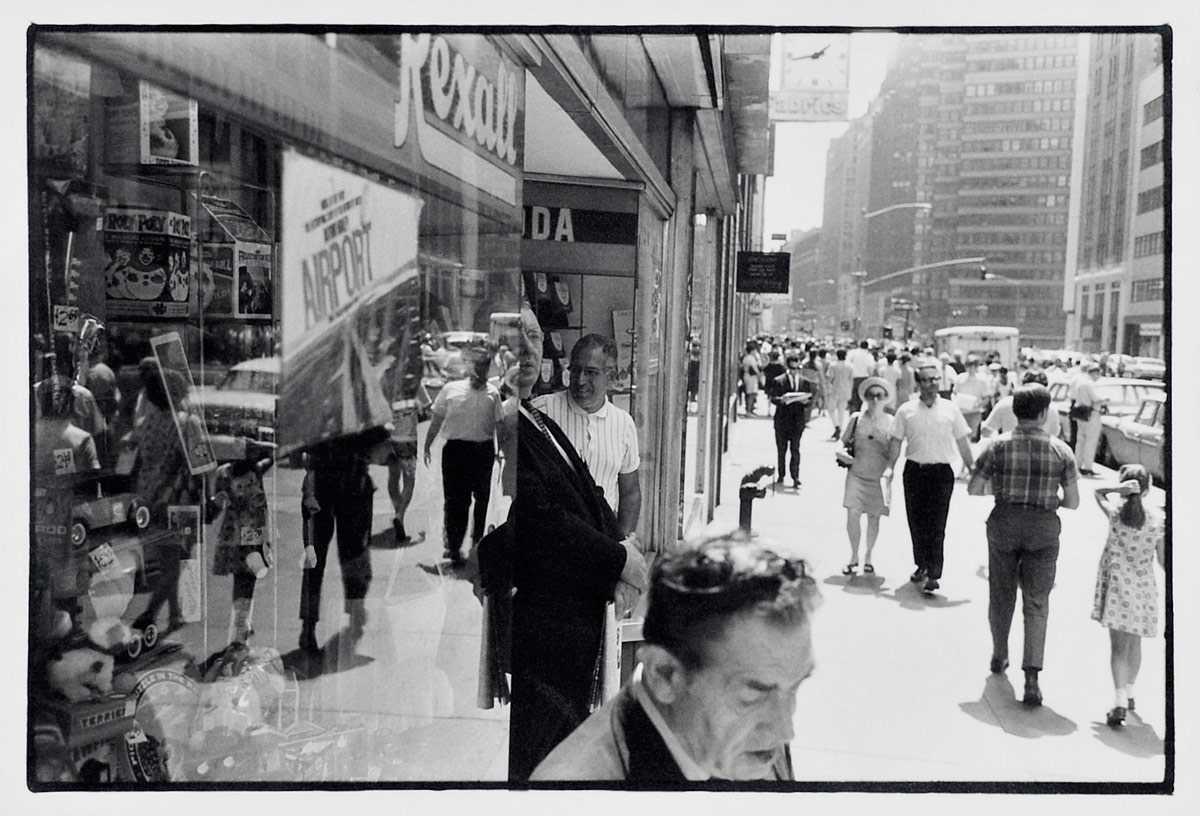
Saturday and Sunday: 11am – 7pm
Closed Monday

Jeu de Paume website

LIKE ART BLART ON FACEBOOK

Back to top

Exhibition: ‘Ladies and Gentlemen: The Camera as a Mirror’ at the Moderna Museet, Malmö, Sweden

Exhibition dates: 18th February 2012 – 22nd April 2012

Curator: Magnus af Petersens

Many thankx to the Moderna Museet for allowing me to publish the photographs in the posting. Please click on the photographs for a larger version of the image.


Cindy Sherman (American, b. 1954) 'Untitled Film Still #56' 1980
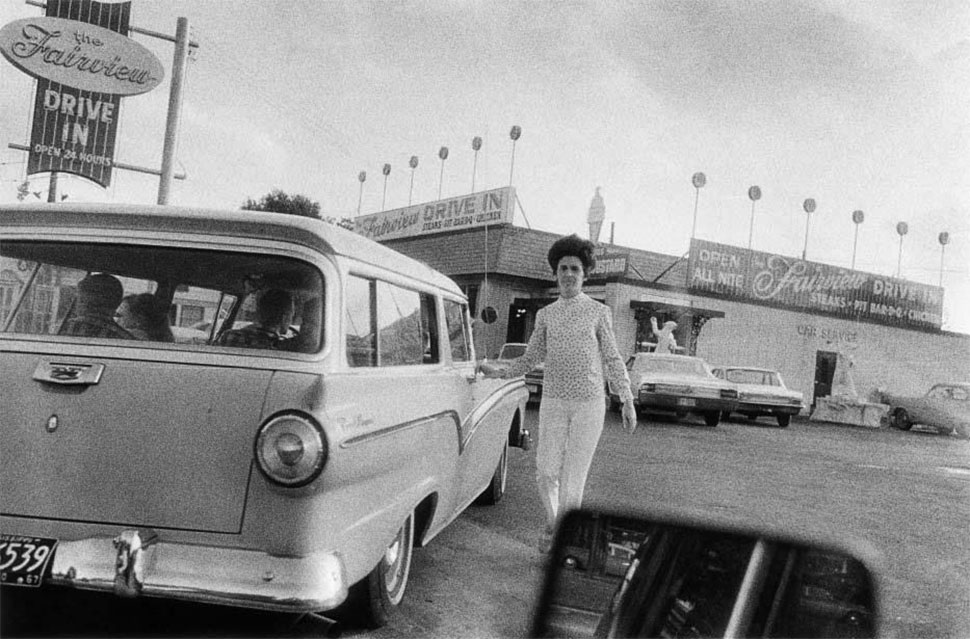
 

Cindy Sherman (American, b. 1954)
Untitled Film Still #56
1980
© Cindy Sherman. Courtesy of the Artist and Metro Pictures


Tracey Moffatt (Australian, b. 1960) 'Something More #1' 1997


Tracey Moffatt (Australian, b. 1960)
Something More #1
1997
Cibachrome print
© Tracey Moffatt/BUS 2012


Samuel Fosso (Cameroon, b. 1962) 'Sans titre. De la série Années 70' 1970-1980


Samuel Fosso (Cameroon, b. 1962)
Sans titre. De la série Années 70
1970-1980
Gelatin silver print
© Samuel Fosso, Courtesy JM Patras/Paris


Robert Mapplethorpe (American, 1946-1989) 'Patti Smith' 1979


Robert Mapplethorpe (American, 1946-1989)
Patti Smith
1979
Gelatin silver print
© Robert Mapplethorpe Foundation


Robert Mapplethorpe (American, 1946-1989) 'Self Portrait' 1980


Robert Mapplethorpe (American, 1946-1989)
Self Portrait
1980
Gelatin silver print
© Robert Mapplethorpe Foundation


Malick Sidibé (Malian, 1936-2016) 'Danser le Twist' (Dance the Twist) 1965 


Malick Sidibé (Malian, 1936-2016)
Danser le Twist (Dance the Twist)
1965
Gelatin silver print


Seydou Keïta (Mali, 1921-2001) 'Untitled #419' 1950-1952


Seydou Keïta (Mali, 1921-2001)
Untitled #419
1950-1952
Gelatin silver print
© Seydou Keïta / SKPEAC


Seydou Keïta (Mali, 1921-2001) 'Untitled #420' 1950-1952


Seydou Keïta (Mali, 1921-2001)
Untitled #420
1950-1952
© Seydou Keïta / SKPEAC


This spring we will be showing more than forty photographs from the period 1950-90 taken by leading artists such as Andy Warhol, Cindy Sherman, Robert Mapplethorpe, Samuel Fosso, Tracey Moffatt, and Elina Brotherus. The exhibition focuses on the art of portrait photography and how the artist in his or her studio creates images that depict people not just as they actually are, but also as they would like to appear.

Moderna Museet’s collection of photography is among the foremost in Europe, it includes some of the most prominent figures in the history of photography. Andy Warhol, Cindy Sherman, and Robert Mapplethorpe are all big names in photography, artists whose work often revolves around concepts of identity, sexuality, and performativity. The photography studio is a place for masquerades and manipulations, a stage where various identities and roles can be tested. It therefore problematises the idea that a portrait is meant to convey some truth about the subject’s inner life. How do we distinguish a staged scene from reality? Is it even possible to make such a distinction? How free are we to form our own identity? If it’s a matter of choosing a role, what roles are available to us?

Andy Warhol’s Polaroid pictures, whose title, Ladies and Gentlemen, has also provided the name for the exhibition, are examples of his interest in – or rather his obsession with – celebrities. From industrial magnates to movie stars, from rock musicians to the “superstar” friends who hung out around the Factory, his fabled studio. In the world of pop art and popular culture, surface is everything. Robert Mapplethorpe’s photographs are instead classically composed – stylised and aesthetically formed. In the controlled environment and lighting of the photo studio, he strives not for realism but for beauty. Here role-play becomes a part of the picture’s constructed character.

In Cindy Sherman’s suite of images called Untitled Film Stills (1977-1980), she plays with film clichés. The scenes and characters in her photographs seem familiar, but in fact it’s always Sherman herself we see in the leading role. Using the camera as a mirror, she takes on and explores various roles. It’s a game of trying on identities that is familiar to teenagers in particular the world over, a game we play in an attempt to find ourselves, or rather to construct an individual identity. One of the many ways in which Sherman’s pictures have been interpreted is as a feminist critique of the limited number of roles available to women.

This exhibition also presents several works by Seydou Keïta, Malick Sidibé, and Samuel Fosso, studio photographers who work primarily with portrait photography. Keïta’s studio was next-door to a movie theater in Bamako, the capitol city of Mali. Sidibé takes pictures not just in his studio but also at weddings and other parties. His photographs from Bamako in the 1960s reflect the great hope that came with liberation from French colonial power. Fosso opened his studio in Bangui, in the Central African Republic, when he was still a teenager. He is best known for a series of self-portraits in which he dons a variety of outfits to assume different roles.

Press release from the Moderna Museet website


Elina Brotherus (Finnish, b. 1972) 'Honeymoon' 1997 (detail)


Elina Brotherus (Finnish, b. 1972)
Honeymoon (detail)
1997
© Elina Brotherus


Francesco Vezzoli (Italian, b. 1971) 'Portrait of H.R.H The Princess of Hanover (Before & After Salvador Dalí)' 2009


Francesco Vezzoli (Italian, b. 1971)
Portrait of H.R.H The Princess of Hanover (Before & After Salvador Dalí)
2009
© Francesco Vezzoli/BUS 2012


Andy Warhol (American, 1928-1987) 'Gianni Agnelli' 1972


Andy Warhol (American, 1928-1987)
Gianni Agnelli
1972
© Andy Warhol/BUS 2012


Andy Warhol (American, 1928-1987) 'John Chamberlain and Lorraine' 1978


Andy Warhol (American, 1928-1987)
John Chamberlain and Lorraine
1978
© Andy Warhol/BUS2012


Andy Warhol (American, 1928-1987) 'Ladies and Gentlemen (Wilhelmina Ross)' 1974


Andy Warhol (American, 1928-1987)
Ladies and Gentlemen (Wilhelmina Ross)
1974
© Andy Warhol/BUS 2012


Cindy Sherman. 'Untitled' 2008


Cindy Sherman (American, b. 1954)
Untitled
2008
© Cindy Sherman. Courtesy the Artist and Metro Pictures


Moderna Museet Malmö
Gasverksgatan 22 in Malmö

Moderna Museet Malmö is located in the city centre of Malmö. Ten minutes walk from the Central station, five minutes walk from Gustav Adolfs torg and Stortorget.

Opening hours:
Tuesday – Sunday 11 – 17
Mondays closed

Moderna Museet Malmö website

LIKE ART BLART ON FACEBOOK

Back to top